JP3750749B2 - Method for producing organic fluorine compound - Google Patents
Method for producing organic fluorine compound Download PDFInfo
- Publication number
- JP3750749B2 JP3750749B2 JP02477895A JP2477895A JP3750749B2 JP 3750749 B2 JP3750749 B2 JP 3750749B2 JP 02477895 A JP02477895 A JP 02477895A JP 2477895 A JP2477895 A JP 2477895A JP 3750749 B2 JP3750749 B2 JP 3750749B2
- Authority
- JP
- Japan
- Prior art keywords
- group
- general formula
- alkaline earth
- alkali metal
- halogen atom
- Prior art date
- Legal status (The legal status is an assumption and is not a legal conclusion. Google has not performed a legal analysis and makes no representation as to the accuracy of the status listed.)
- Expired - Lifetime
Links
Classifications
-
- C—CHEMISTRY; METALLURGY
- C07—ORGANIC CHEMISTRY
- C07C—ACYCLIC OR CARBOCYCLIC COMPOUNDS
- C07C17/00—Preparation of halogenated hydrocarbons
- C07C17/093—Preparation of halogenated hydrocarbons by replacement by halogens
- C07C17/10—Preparation of halogenated hydrocarbons by replacement by halogens of hydrogen atoms
Landscapes
- Chemical & Material Sciences (AREA)
- Organic Chemistry (AREA)
- Organic Low-Molecular-Weight Compounds And Preparation Thereof (AREA)
Description
【0001】
【産業上の利用分野】
本発明は炭素−炭素不飽和化合物あるいはシクロプロパン化合物を出発原料として用いる有機フッ素化合物の製造方法に関するものである。
【0002】
【従来の技術】
有機フッ素化合物は高分子材料、冷媒、医薬、農薬等、工業的に幅広く用いられている。炭素−炭素不飽和化合物あるいはシクロプロパン化合物にフッ化水素を付加する反応は有機化合物にフッ素を導入する最も基本的かつ代表的な手法の一つであり、この方法で製造された有機フッ素化合物は高分子モノマー、冷媒、医薬、農薬等、あるいはそれらの中間生成物として有用である。
【0003】
いくつか例を挙げると、本発明の対象とする後記一般式(V)で表される有機フッ素化合物のうち、R5=R6=Hのもの(CH3CHF2)から、フッ素樹脂のモノマーであるフッ化ビニル(CH2CHF)やフッ化ビニリデン(CH2CF2)を製造することができる(フッ素の化合物、講談社、第4章、1979年)。また、本発明の対象とする後記一般式(IV)で表される有機フッ素化合物のうち、R1=H、R2=R3=R4=Fのもの(CF3CH2F、HFC−134a)はフロン代替物として用いられている(フロンの環境化学と対策技術、季刊化学総説、11、第6章、1991年)。さらに、本発明の対象とする後記一般式(VI)で表される有機フッ素化合物のうち、R7=R11=H、R8=Br、R9=R10=R12=Fのもの(CH2BrCF2CHF2)は麻酔作用をもつ(Chem.Tech.,753(1974))。
【0004】
従来、炭素−炭素不飽和化合物あるいはシクロプロパン化合物からフッ化水素を付加反応させて有機フッ素化合物を合成する方法としては、無水フッ化水素を用いる方法と、有機アミン−フッ化水素付加体を用いる方法が知られている(Tetrahedron,47,5329(1991))。
【0005】
しかしながら、前者の無水フッ化水素は安価であるが毒性が高く、取り扱いが難しい。しかも、基質の重合が起こり易く選択性が低いという問題点を有している(日本化学会誌、1951(1985))。また、後者の有機アミン−フッ化水素付加体を用いる方法では、例えばメラミン−フッ化水素付加体を用いる方法(Chem.Lett.,1135(1983))などが知られているが、このメラミン−フッ化水素付加体の場合では特定のフッ化水素含有量(81%)に反応の極大点を有することから、反応進行に伴う組成変動を最小限にするために、腐食性あるフッ素化剤を基質に対して大過剰に用いなければならず、その為に反応時の取り扱いが困難であったり、また、これら大量のフッ化水素付加体が液体、または有機層に溶解する為に反応後の目的物の精製などにおいて多大な労力を要する等の欠点を有していた。
【0006】
【発明が解決しようとする課題】
本発明者らは、上記事情に鑑み選択性に優れ且つ取り扱いが容易なフッ素化剤を目的に鋭意検討を重ねた結果、フッ化ナトリウム、フッ化カリウムなどにフッ化水素を付加させた安定な無機−水素フッ化物塩が、炭素−炭素不飽和結合あるいはシクロプロパン構造に対して選択的なフッ素化能を有し、しかも、これらの無機フッ素化剤が固体状且つ反応層に溶解しない為に、反応操作および反応後の分離操作などが容易である等の利点を有すること、そしてこれらの水素フッ化物塩のフッ素化能が四フッ化ケイ素を併用することで格段に向上し、少量のフッ素化剤量でも充分な目的化合物の収率が得られることを見出し、本発明を完成するに至った。
【0007】
【課題を解決するための手段】
かくして、本発明によれば、
〔1〕以下の一般式(I):
【化13】
【化14】
〔2〕以下の一般式(II):
【化15】
【化16】
〔3〕以下の一般式(III):
【化17】
【化18】
〔4〕以下の一般式(I):
【化19】
【化20】
〔5〕以下の一般式(II):
【化21】
【化22】
〔6〕以下の一般式(III):
【化23】
【化24】
が提供される。
【0008】
本発明に使用される基質化合物としては、分子中に少なくとも一つの炭素−炭素不飽和結合を有するもの、あるいは分子中に少なくとも一つのシクロプロパン環構造を有するものであれば特に制限はなく、例えばアルケン類、アルキン類、シクロプロパン誘導体などが例示される。これら基質化合物の炭素数は、特に制限はないが、通常30個以下、好ましくは2〜20個、さらに好ましくは3〜15個の範囲である。具体的には、例えば一般式(I)
【化1】
【化2】
【化3】
【0009】
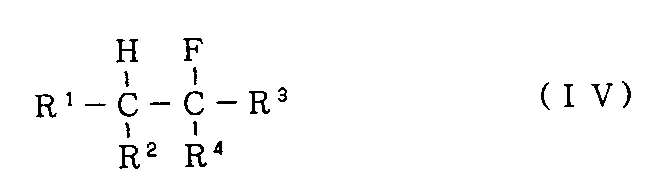
これらの基質から製造される有機フッ素化合物としては、それぞれ、一般式(IV)
【化4】
【化5】
【化6】
【0010】
上記一般式中のR1〜R12は、水素原子、ハロゲン原子、置換されてもよいアルキル基、アリール基またはアラルキル基を示し、好ましくは水素原子、ハロゲン原子、アルキル基などであり、さらに好ましくは水素原子またはアルキル基である。
【0011】
ハロゲン原子としては、例えばフッ素原子、塩素原子、臭素原子などが挙げられる。アルキル基としては、特に制限はなく、直鎖状あるいは分岐状のアルキル基が用いられるが、その炭素数は通常20個以下、好ましくは2〜15個、更に好ましくは3〜10個の範囲である。具体的には、例えば、メチル基、エチル基、n−プロピル基、イソプロピル基、n−ブチル基、イソブチル基、sec−ブチル、t−ブチル基、n−ペンチル基、イソペンチル基、2−メチルブチル基、1−メチルブチル基、n−ヘキシル基、イソヘキシル基、3−メチルペンチル基、2−メチルペンチル基、1−メチルペンチル基、ヘプチル基、オクチル基、イソオクチル基、2−エチルヘキシル基、ノニル基、デシル基、ウンデシル基、ドデシル基、テトラデシル基、ヘキサデシル基、オクタデシル基、エイコシル基などの鎖状アルキル基、シクロペンチル基、シクロヘキシル基、アダマンチル基などの環状アルキル基などを挙げられる。アリール基またはアラルキル基としては、特に制限はないが、通常炭素数が20個以下、好ましくは6〜15個、さらに好ましくは6〜10個の範囲である。具体的には、フェニル基、ナフチル基、ベンジル基、トリル基、キシリル基などが例示される。
【0012】
アルキル基、アリール基およびアラルキル基の置換基としては、本反応に関与しないものであれば特に制限はなく、例えばヒドロキシル基、カルボキシル基、アルコキシ基、アルコキシカルボニル基、アシル基、アシルオキシ基、アルキルまたはアリールスルホニル基、ニトロ基、ハロゲンなどが例示される。また、一般式(I)および(IV)におけるR1とR2、R1とR3、R2とR4およびR3とR4は、結合して環を形成してもよく、例えば炭素数が10個以下、好ましくは1〜8個、さらに好ましくは2〜6個の分岐してもよいアルキレン基などとして示すことができる。このようなアルケン類としては、シクロペンテン、シクロヘキセン、シクロヘプテン、1−メチル−1−シクロヘキセンなどを例示することができる。
【0013】
本発明で使用される水素フッ化物塩としては、一般式M1Fm(HF)nまたはM2Fm(HF)nで表されるものが用いられる。式中のM1は、アンモニウム(NH4)基、アルカリ金属またはアルカリ土類金属で、好ましくはアンモニウム基またはアルカリ金属である。式中のM2は、少なくとも1つの水素原子が窒素原子に結合した第4級アンモニウム基、アルカリ金属またはアルカリ土類金属で、好ましくはアンモニウム基、アルカリ金属、アルカリ土類金属などで、さらに好ましくはアンモニウム基、アルカリ金属などである。mは、M(M1、M2)が第4級アンモニウム基またはアルカリ金属の場合は1、アルカリ土類金属の場合は2である。nは、1〜10、好ましくは1〜6、さらに好ましくは1〜4の範囲である。
【0014】
アルカリ金属としては、リチウム、ナトリウム、カリウム、ルビジウム、セシウムなどが例示され、好ましくはナトリウム、カリウムなどである。アルカリ土類金属としては、ベリリウム、マグネシウム、カルシウム、ストロンチウム、バリウムなどが例示され、好ましくはカルシウム、バリウムなどである。
【0015】
少なくとも1つの水素原子が窒素原子に結合した第4級アンモニウム基としては、例えば一般式NHR3で表される。式中のRは、水素原子またはアルキル基を示し、アルキル基としては前記R1のアルキル基と同様である。かかる第4級アンモニウム基の具体例としては、メチルアンモニウム基、エチルアンモニウム基、ジメチルアンモニウム基、ジエチルアンモニウム基、ジイソプロピルエチルアンモニウム基、トリメチルアンモニウム基、トリエチルアンモニウム基、トリプロピルアンモニウム基、トリイソプロピルアンモニウム基、トリブチルアンモニウム基、トリイソブチルアンモニウム基、ピロリジニウム基、ピペリジニウム基、ピリジニウム基、ジメチルアミノピリジニウム基、ルチジニウム基およびアンモニウム(NH4)基などが例示される。これらの中で、第4級アンモニウム基がアンモニウム基である場合の水素フッ化物塩は、反応系に溶解せず、反応終了後の分離が容易となり好ましい。
【0016】
水素フッ化物塩の具体例としては、例えば一水素二フッ化ナトリウム、二水素三フッ化ナトリウム、三水素四フッ化ナトリウム、四水素五フッ化ナトリウムなどのナトリウム水素フッ化物塩、一水素二フッ化カリウム、二水素三フッ化カリウム、三水素四フッ化カリウム、四水素五フッ化カリウムなどのカリウム水素フッ化物塩、一水素二フッ化ルビジウム、二水素三フッ化ルビジウム、三水素四フッ化ルビジウムなどのルビジウム水素フッ化物塩、一水素二フッ化セシウム、二水素三フッ化セシウム、三水素四フッ化セシウムなどのセシウム水素フッ化物塩などのアルカリ金属水素フッ化物塩、一水素三フッ化カルシウム、二水素四フッ化カルシウムなどのカルシウム水素フッ化物塩、一水素三フッ化ストロンチウム、二水素四フッ化ストロンチウムなどのストロンチウム水素フッ化物塩、一水素三フッ化バリウム、二水素四フッ化バリウム、四水素六フッ化バリウム、六水素八フッ化バリウムなどのバリウム水素フッ化物塩などのアルカリ土類金属水素フッ化物塩、一水素二フッ化アンモニウムなどのアンモニウム水素フッ化物塩などの無機−水素フッ化物塩、およびトリエチルアミン−フッ化水素、メラミン−フッ化水素などの有機アミン−水素フッ化物などを挙げることができ、好ましくは無機−水素フッ化物塩などであり、その中でもアルカリ金属水素フッ化物塩、アンモニウム水素フッ化物塩など、とりわけナトリウム水素フッ化物塩、カリウム水素フッ化物塩、アンモニウム水素フッ化物塩などが好ましい。これらは、単独、または2種以上を併用して使用することができる。
【0017】
かかる水素フッ化物塩は、常法に従って製造される。例えば、対応するMFmと無水フッ化水素を混合するだけで簡便に調製され、前記一般式中のnは混合するフッ化水素量を加減することで調製できる。調製温度は、特に制限はないが、通常−50〜100℃、好ましくは−20〜50℃の範囲である。
【0018】
水素フッ化物塩の使用量は、基質に対して、通常当量以上、好ましくは1〜30当量、さらに好ましくは2〜10当量の範囲である。
【0019】
本発明においては、基質と上記M1Fm(HF)nの水素フッ化物塩を反応させて有機フッ素化合物を製造することができる。M1Fm(HF)nは、フリーのフッ化水素が遊離し難い為に取り扱いが容易で、しかも反応後も固体である為、反応終了後の目的物の分離が容易である。このことから、反応、生成物分離、反応、生成物分離などの繰り返し操作も容易に行うことができる。
【0020】
また、本発明においては、上記M2Fm(HF)nに四フッ化ケイ素を併用することで反応性を著しく向上させることができる。四フッ化ケイ素は、通常ガラス等のSiO2を含む安価な化合物にフッ化水素を加えることで簡便に発生することができ、有機ケイ素化合物の合成原料として一般に使用するものを用いることが出来る。
【0021】
四フッ化ケイ素の使用量は、特に制限はないが、基質に対して通常0.1〜20当量、好ましくは0.5〜10当量、さらに好ましくは1〜5当量の範囲である。
【0022】
反応に際しては溶媒を存在させることができる。溶媒としては反応に不活性であるものであれば特に限定されず、例えばn−ペンタン、n−ヘキサンなどの脂肪族炭化水素類、シクロペンタン、シクロヘキサンなどの脂環式炭化水素類、ベンゼン、トルエンなどの芳香族炭化水素類、ジクロロメタン、ジクロロエタンなどのハロゲン化炭化水素類などが例示される。
【0023】
反応条件は、溶媒の有無、基質の種類などによって適宜選択されるが、反応温度が通常−30〜100℃、好ましくは0〜60℃、さらに好ましくは15〜50℃の範囲で、反応時間が通常1〜40時間、好ましくは5〜30時間、さらに好ましくは10〜20時間の範囲である。
【0024】
反応終了後、過剰のフッ素化剤などをろ過等により分離した後、有機層に溶存している酸性成分を中和後、有機層を濃縮するなどにより生成物が容易に単離できる。フッ素化剤が有機アミン−水素フッ化物の場合は、フッ素化剤が液体なので、過剰のフッ素化剤を中和後、有機層を蒸留等することにより有機アミンとの分離を行い生成物を単離することができる。
【0025】
以下に、好ましい態様を示す。
(1)分子中に少なくとも一つの炭素−炭素不飽和結合を有するあるいは分子中に少なくとも一つのシクロプロパン構造を有する基質化合物と一般式M1Fm(HF)n(式中、M1はアンモニウム基、アルカリ金属またはアルカリ土類金属を示し、mはM1がアンモニウム基またはアルカリ金属の場合は1、アルカリ土類金属の場合は2、nは1〜10の数を示す。)で表される水素フッ化物塩を反応させることを特徴とする有機フッ素化合物の製造方法。
(2)分子中に少なくとも一つの炭素−炭素不飽和結合を有するあるいは少なくとも一つのシクロプロパン構造を有する基質化合物と一般式M2Fm(HF)n(式中、M2は少なくとも1つの水素原子が窒素原子に結合した第4級アンモニウム基、アルカリ金属またはアルカリ土類金属を示し、mはM2が第4級アンモニウム基またはアルカリ金属の場合は1、アルカリ土類金属の場合は2、nは1〜10の数を示す。)で表される水素フッ化物塩及び四フッ化ケイ素を反応させることを特徴とする有機フッ素化合物の製造方法。
(3)基質化合物がアルケン類、アルキン類またはシクロプロパン誘導体である。
(4)基質化合物の炭素数が30個以下、好ましくは2〜20個、さらに好ましくは3〜15個の範囲である。
(5)基質化合物が一般式(I)
【化7】
【化8】
(6)基質化合物が一般式(II)
【化9】
【化10】
(7)基質化合物が一般式(III)
【化11】
【化12】
(8)アルキル基の炭素数が20個以下、好ましくは2〜15個、さらに好ましくは3〜10個の範囲でる。
(9)アリール基およびアラルキル基の炭素数が20個以下、好ましくは2〜15個、さらに好ましくは3〜10個の範囲でる。
(10)水素フッ化物塩がM1Fm(HF)nまたはM2Fm(HF)nである。
(11)nが1〜6、さらに好ましくは1〜4の範囲である。
(12)M1がアンモニウム基またはアルカリ金属である。
(13)M2がアンモニウム基、アルカリ金属またはアルカリ土類金属であり、さらに好ましくはアンモニウム基またはアルカリ金属である。
(14)アルカリ金属がナトリウムまたはカリウムである。
(15)水素フッ化物塩の使用量が、基質に対して1当量以上、好ましくは1〜30当量、さらに好ましくは2〜10当量の範囲である。
(16)四フッ化ケイ素の使用量が、基質に対して0.1〜20当量、好ましくは0.5〜10当量、さらに好ましくは1〜5当量の範囲である。
【0026】
【実施例】
次に本発明を実施例によりさらに詳細に説明する。尚、生成物の収率は、基質化合物に対するモル%を示した。
【0027】
実施例1
ストップバルブとステンレススチール反応管よりなる反応容器に一水素二フッ化カリウム(KHF2)(471mg、6.0mmol)をいれ、次いで真空ラインを用いてシクロヘキセン(2.0mmol)と四フッ化ケイ素(SiF4)(4.0mmol)を加え、室温で16時間振とうした。揮発成分を、フッ化ナトリウム(0.9g、21mmol)をいれた反応容器に移し、さらに室温で1.5時間振とうしたのち、高真空下(10-3〜10-4mmHg)、−20℃、−60℃、−196℃でトラップ・ツー・トラップ精製蒸留を行い、−60℃でトラップされるフルオロシクロヘキサン(1.45mmol、収率73%)を単離した。生成物は1H−NMRスペクトル、19F−NMRスペクトル、およびIRスペクトルにより同定した。
【0028】
IR:2949、2870、1460、1372、1065、1027、963、954 cm-1
【0029】
1H−NMR(CDCl3、TMS) δ:1.3−2.0(m、10H)、4.57(dm、J2=48.8Hz、1H)
【0030】
19F−NMR(CDCl3、CFCl3) φ:173.3(br)
【0031】
実施例2
基質としてシクロヘキセンの代わりにプロペン(1.0mmol)を用いる以外は実施例1と同様に反応を行った。トラップ・ツー・トラップの精製蒸留は、高真空下(10-3〜10-4mmHg)、−60℃、−134℃、−196℃で行い、−134℃でトラップされる2−フルオロプロパン(0.51mmol、収率51%)を得た。生成物は1H−NMRスペクトル、19F−NMRスペクトル、およびIRスペクトルにより同定した。
【0032】
IR:2989、2934、1456、1395、1384、1138、943、819cm-1
【0033】
1H−NMR(CDCl3、TMS) δ:1.33(dd、J=6.1、23.6Hz、6H)、4.83(d・sept、J2=48.5、J7=6.1Hz、1H)
【0034】
19F−NMR(CDCl3、CFCl3) φ:165.9(d・sept、J2=47.2、J7=23.6Hz)
【0035】
実施例3
基質としてシクロヘキセンの代わりに2,3−ジメチル−2−ブテン(2.0mmol)を用いる以外は実施例1と同様に反応を行った。トラップ・ツー・トラップの精製蒸留は、高真空下(10-3〜10-4mmHg)、−60℃、−97℃、−196℃で行い、−97℃でトラップされる2−フルオロ−2,3−ジメチルブタン(1.82mmol、収率91%)を得た。生成物は1H−NMRスペクトル、19F−NMRスペクトル、およびIRスペクトルにより同定した。
【0036】
IR:2988、2904、1473、1385、1165、1104、904、851cm-1
【0037】
1H−NMR(CDCl3、TMS) δ:0.93(d、J=6.9Hz、6H)、1.28(d、J=22.1Hz、6H)、1.86(d・sept、J2=11.9、J7=6.9Hz、1H)
【0038】
19F−NMR(CDCl3、CFCl3) φ:140.3(d・sept、J2=12.9、J7=22.1Hz)
【0039】
実施例4
ストップバルブとステンレススチール反応管よりなる反応容器にKHF2(473mg、6.1mmol)をいれ、次いで真空ラインを用いて2−ブチン(1.0mmol)とSiF4(4.0mmol)を加え、室温で17時間振とうした。揮発成分を、フッ化ナトリウム(0.9g、21mmol)をいれた反応容器に移し、さらに室温で1.5時間振とうしたのち、高真空下(10-3〜10-4mmHg)、−60℃、−134℃、−196℃でトラップ・ツー・トラップ精製蒸留を行い、−134℃でトラップされる2,2−ジフルオロブタン(0.61mmol、収率61%)を得た。生成物は1H−NMRスペクトル、19F−NMRスペクトル、およびIRスペクトルにより同定した。
【0040】
IR:2995、2960、2902、1474、1398、1358、1246、1201、1044、924cm-1
【0041】
1H−NMR(CDCl3、TMS) δ:1.02(t、J=7.6Hz、3H)、1.57(t、J=18.3Hz、3H)、1.86(tq、J3=15.7、J7=7.6Hz、2H)
【0042】
19F−NMR(CDCl3、CFCl3) φ:93.1(tq、J3=15.7、J4=18.4Hz)
【0043】
実施例5
ストップバルブとステンレススチール反応管よりなる反応容器にKHF2(473mg、6.1mmol)をいれ、次いで真空ラインを用いてシクロプロパン(2.0mmol)とSiF4(4.0mmol)を加え、室温で16時間振とうした。揮発成分を、フッ化ナトリウム(0.8g、20mmol)をいれた反応容器に移し、室温で1.5時間振とうしたのち、高真空下(10-3〜10-4mmHg)、−60℃、−123℃、−196でトラップ・ツー・トラップ精製蒸留を行い、−123℃でトラップされる1−フルオロプロパン(1.90mmol、収率95%)を得た。生成物は1H−NMRスペクトル、19F−NMRスペクトル、およびIRスペクトルにより同定した。
【0044】
IR:2977、2963、1474、1399、1060、966cm-1
【0045】
1H−NMR(CDCl3、TMS) δ:0.98(t、J=7.4Hz、3H)、1.72(dtq、J2=24.4、J3=6.3、J4=7.4Hz、2H)、2.40(dt、J2=47.5、J3=6.3Hz、2H)
【0046】
19F−NMR(CDCl3、CFCl3) φ:219.0(tt、J=23.7、47.3Hz)
【0047】
実施例6
ストップバルブとステンレススチール反応管よりなる反応容器に一水素二フッ化ナトリウム(375mg、6.1mmol)をいれ、次いで真空ラインを用いてシクロヘキセン(2.0mmol)とSiF4(4.0mmol)を加え、室温で16時間振とうした。反応混合物から四塩化炭素で生成物を抽出し、無水炭酸ナトリウムで乾燥した。この溶液の1H−NMRスペクトル、および19F−NMRスペクトルを測定したところ、フルオロシクロヘキサンが生成しており、その収率は33%であることがわかった。この収率はベンゾトリフルオリドを内部標準として19F−NMRスペクトルから決定した。
【0048】
実施例7
水素フッ化物塩として一水素二フッ化ナトリウムの代わりに一水素二フッ化アンモニウム(6.2mmol)を用いる以外は実施例6と同様に行い、フルオロヘキサン(収率74%)を得た。
【0049】
実施例8
ストップバルブとポリクロロトリフルオロエチレン製反応管よりなる反応容器に四水素五フッ化カリウム(KH4F5)(1.43g、10.4mmol)をいれ、次いで真空ラインを用いて2−ブチン(2.9mmol)とSiF4(3.0mmol)を加え、室温で16時間振とうした。揮発成分を、フッ化ナトリウム(1.77g、42mmol)をいれた反応容器に移し、さらに室温で0.5時間振とうしたのち、実施例4と同様の精製蒸留を行い、2,2−ジフルオロブタン(収率58%)を得た。
【0050】
実施例9
ストップバルブとポリクロロトリフルオロエチレン製反応管よりなる反応容器にKH4F5(1.22g、8.8mmol)を入れ、次いで真空ラインを用いて2−ブチン(2.9mmol)を加え、室温で16時間振とうした。揮発成分を、フッ化ナトリウム(1.56g、87mmol)をいれた反応容器に移し、さらに室温で1.6時間振とうしたのち、高真空下(10-3〜10-4mmHg)で精製蒸留を行い、2,2−ジフルオロブタン(収率5%)を得た。この収率はトリクロロフルオロメタンを内部標準として19F−NMRスペクトルから決定した。
【0051】
【発明の効果】
本発明を実施することにより、安価で、取り扱いの容易なフッ素化剤を用いて、炭素−炭素不飽和化合物あるいはシクロプロパン化合物から炭素陽イオンがより安定に生成する位置にフッ素原子を選択的に導入した有機フッ素化合物、例えば、1−アルケンからは2−フルオロ化合物を、1−アルキンからは2,2−ジフルオロ化合物を製造することができる。特に、フッ素化剤として一水素二フッ化素カリウム、一水素二フッ化アンモニウムなどの無機−水素フッ化物塩を用いる場合は、無機−水素フッ化物塩が固体状態で反応層に溶解しない為に、反応後の反応混合物からの分離が容易で、その後の反応生成物の単離が容易となる。また、フッ素化剤に加えて四フッ化ケイ素を併用することで、フッ素化能が格段に向上し、フッ素化剤の少量の使用量でも充分に高い収率で目的化合物を得ることができる。これら得られる有機フッ素化合物は、高分子モノマー、冷媒、医薬、農薬等、あるいはそれらの中間生成物として有用である。[0001]
[Industrial application fields]
The present invention relates to a method for producing an organic fluorine compound using a carbon-carbon unsaturated compound or a cyclopropane compound as a starting material.
[0002]
[Prior art]
Organic fluorine compounds are widely used industrially for polymer materials, refrigerants, medicines, agricultural chemicals and the like. The reaction of adding hydrogen fluoride to a carbon-carbon unsaturated compound or cyclopropane compound is one of the most basic and representative methods for introducing fluorine into an organic compound. The organic fluorine compound produced by this method is It is useful as a polymer monomer, refrigerant, medicine, agricultural chemical, etc., or an intermediate product thereof.
[0003]
To name a few examples, among the organic fluorine compounds represented by the general formula (V) described below, which is the subject of the present invention, RFive= R6= H (CHThreeCHF2) To vinyl fluoride (CH) which is a monomer of fluororesin2CHF) and vinylidene fluoride (CH2CF2(Fluorine compounds, Kodansha, Chapter 4, 1979). In addition, among the organic fluorine compounds represented by the general formula (IV) described later, which is the subject of the present invention, R1= H, R2= RThree= RFour= F (CFThreeCH2F, HFC-134a) is used as a substitute for CFCs (CFC environmental chemistry and countermeasure technology, quarterly chemistry review,11, Chapter 6, 1991). Furthermore, among the organic fluorine compounds represented by the following general formula (VI) as the subject of the present invention, R7= R11= H, R8= Br, R9= RTen= R12= F's (CH2BrCF2CHF2) Has an anesthetic action (Chem. Tech., 753 (1974)).
[0004]
Conventionally, as a method for synthesizing an organic fluorine compound by adding hydrogen fluoride from a carbon-carbon unsaturated compound or a cyclopropane compound, a method using anhydrous hydrogen fluoride and an organic amine-hydrogen fluoride adduct are used. Methods are known (Tetrahedron,47, 5329 (1991)).
[0005]
However, the former anhydrous hydrogen fluoride is inexpensive but highly toxic and difficult to handle. Moreover, there is a problem that the substrate is easily polymerized and the selectivity is low (The Chemical Society of Japan, 1951 (1985)). As the latter method using an organic amine-hydrogen fluoride adduct, for example, a method using a melamine-hydrogen fluoride adduct (Chem. Lett., 1135 (1983)) is known. In the case of a hydrogen fluoride adduct, since the reaction has a maximum point at a specific hydrogen fluoride content (81%), a corrosive fluorinating agent is used in order to minimize composition fluctuations as the reaction proceeds. It must be used in a large excess with respect to the substrate, which makes it difficult to handle during the reaction, and since these large amounts of hydrogen fluoride adducts dissolve in the liquid or organic layer, It has the disadvantage that much labor is required for purification of the target product.
[0006]
[Problems to be solved by the invention]
In light of the above circumstances, the present inventors have conducted extensive studies for the purpose of a fluorinating agent that is excellent in selectivity and easy to handle, and as a result, stable hydrogen fluoride added to sodium fluoride, potassium fluoride, etc. Inorganic-hydrogen fluoride salts have a selective fluorination ability for carbon-carbon unsaturated bonds or cyclopropane structures, and these inorganic fluorinating agents are solid and do not dissolve in the reaction layer. The reaction operation and the separation operation after the reaction are advantageous, and the fluorination ability of these hydrogen fluoride salts is greatly improved by using silicon tetrafluoride together with a small amount of fluorine. It has been found that a sufficient yield of the target compound can be obtained even with an amount of the agent, and the present invention has been completed.
[0007]
[Means for Solving the Problems]
Thus, according to the present invention,
[1] The following general formula (I):
Embedded image
Embedded image
[2] The following general formula (II):
Embedded image
Embedded image
[3] The following general formula (III):
Embedded image
Embedded image
[4] The following general formula (I):
Embedded image
Embedded image
[5] The following general formula (II):
Embedded image
Embedded image
[6] The following general formula (III):
Embedded image
Embedded image
Is provided.
[0008]
The substrate compound used in the present invention is not particularly limited as long as it has at least one carbon-carbon unsaturated bond in the molecule, or has at least one cyclopropane ring structure in the molecule. Alkenes, alkynes, cyclopropane derivatives and the like are exemplified. The carbon number of these substrate compounds is not particularly limited, but is usually 30 or less, preferably 2 to 20, more preferably 3 to 15. Specifically, for example, the general formula (I)
[Chemical 1]
[Chemical formula 2]
[Chemical Formula 3]
[0009]
Examples of the organic fluorine compound produced from these substrates include the general formula (IV), respectively.
[Formula 4]
[Chemical formula 5]
[Chemical 6]
[0010]
R in the above general formula1~ R12Represents a hydrogen atom, a halogen atom, an optionally substituted alkyl group, an aryl group or an aralkyl group, preferably a hydrogen atom, a halogen atom or an alkyl group, more preferably a hydrogen atom or an alkyl group.
[0011]
Examples of the halogen atom include a fluorine atom, a chlorine atom, and a bromine atom. The alkyl group is not particularly limited, and a linear or branched alkyl group is used, and the number of carbon atoms is usually 20 or less, preferably 2 to 15, more preferably 3 to 10. is there. Specifically, for example, methyl group, ethyl group, n-propyl group, isopropyl group, n-butyl group, isobutyl group, sec-butyl, t-butyl group, n-pentyl group, isopentyl group, 2-methylbutyl group 1-methylbutyl group, n-hexyl group, isohexyl group, 3-methylpentyl group, 2-methylpentyl group, 1-methylpentyl group, heptyl group, octyl group, isooctyl group, 2-ethylhexyl group, nonyl group, decyl And a chain alkyl group such as a group, undecyl group, dodecyl group, tetradecyl group, hexadecyl group, octadecyl group and eicosyl group, and a cyclic alkyl group such as cyclopentyl group, cyclohexyl group and adamantyl group. Although there is no restriction | limiting in particular as an aryl group or an aralkyl group, Usually, carbon number is 20 or less, Preferably it is 6-15, More preferably, it is the range of 6-10. Specific examples include a phenyl group, a naphthyl group, a benzyl group, a tolyl group, and a xylyl group.
[0012]
The substituent for the alkyl group, aryl group and aralkyl group is not particularly limited as long as it does not participate in this reaction. For example, hydroxyl group, carboxyl group, alkoxy group, alkoxycarbonyl group, acyl group, acyloxy group, alkyl or Examples include arylsulfonyl group, nitro group, halogen and the like. R in general formulas (I) and (IV)1And R2, R1And RThree, R2And RFourAnd RThreeAnd RFourMay be bonded to form a ring, for example, an alkylene group having 10 or less carbon atoms, preferably 1 to 8 carbon atoms, more preferably 2 to 6 carbon atoms which may be branched. Examples of such alkenes include cyclopentene, cyclohexene, cycloheptene, 1-methyl-1-cyclohexene and the like.
[0013]
The hydrogen fluoride salt used in the present invention includes a general formula M1Fm(HF)nOr M2Fm(HF)nIs used. M in the formula1Is ammonium (NHFour) Group, alkali metal or alkaline earth metal, preferably ammonium group or alkali metal. M in the formula2Is a quaternary ammonium group in which at least one hydrogen atom is bonded to a nitrogen atom, an alkali metal or an alkaline earth metal, preferably an ammonium group, an alkali metal, an alkaline earth metal, etc., more preferably an ammonium group, an alkali Metal etc. m is M (M1, M2) Is a quaternary ammonium group or an alkali metal, and 1 is an alkaline earth metal. n is in the range of 1-10, preferably 1-6, more preferably 1-4.
[0014]
Examples of the alkali metal include lithium, sodium, potassium, rubidium, cesium and the like, preferably sodium, potassium and the like. Examples of the alkaline earth metal include beryllium, magnesium, calcium, strontium, barium and the like, preferably calcium, barium and the like.
[0015]
Examples of the quaternary ammonium group in which at least one hydrogen atom is bonded to a nitrogen atom include, for example, the general formula NHR.ThreeIt is represented by R in the formula represents a hydrogen atom or an alkyl group.1It is the same as the alkyl group. Specific examples of the quaternary ammonium group include methylammonium group, ethylammonium group, dimethylammonium group, diethylammonium group, diisopropylethylammonium group, trimethylammonium group, triethylammonium group, tripropylammonium group, triisopropylammonium group. , Tributylammonium group, triisobutylammonium group, pyrrolidinium group, piperidinium group, pyridinium group, dimethylaminopyridinium group, lutidinium group and ammonium (NHFour) Group and the like. Among these, a hydrogen fluoride salt in the case where the quaternary ammonium group is an ammonium group is preferable because it does not dissolve in the reaction system and can be easily separated after completion of the reaction.
[0016]
Specific examples of the hydrogen fluoride salt include sodium hydrogen fluoride salts such as sodium monohydrogen difluoride, sodium dihydrogen trifluoride, sodium trihydrogen tetrafluoride, sodium tetrahydrogen pentafluoride, dihydrogen monofluoride, and the like. Potassium hydrogen fluoride salts such as potassium hydride, potassium dihydrogen trifluoride, potassium trihydrogen tetrafluoride, potassium tetrahydrogen pentafluoride, rubidium monofluoride, rubidium dihydrogen trifluoride, tetrafluoride trihydrogen Rubidium hydrogen fluoride salts such as rubidium, alkali metal hydrogen fluoride salts such as cesium hydrogen fluoride salts such as cesium monohydrogen difluoride, cesium dihydrogen trifluoride, cesium trifluoride cesium tetrafluoride, monohydrogen trifluoride Calcium hydrogen fluoride salts such as calcium and dihydrogen tetrafluoride, strontium trifluoride, and dihydrogen tetrafluoride Alkaline earth metal hydrogen such as strontium hydrogen fluoride salts such as indium and barium hydrogen fluoride salts such as barium monohydrogen trifluoride, barium dihydrogen tetrafluoride, barium tetrahydrogen hexafluoride and barium hexahydrogen octafluoride Inorganic-hydrogen fluoride salts such as fluoride salts, ammonium hydrogen fluoride salts such as ammonium hydrogen difluoride, and organic amine-hydrogen fluorides such as triethylamine-hydrogen fluoride, melamine-hydrogen fluoride, etc. And preferably inorganic-hydrogen fluoride salts, among them alkali metal hydrogen fluoride salts, ammonium hydrogen fluoride salts, etc., especially sodium hydrogen fluoride salts, potassium hydrogen fluoride salts, ammonium hydrogen fluoride salts, etc. Is preferred. These can be used alone or in combination of two or more.
[0017]
Such a hydrogen fluoride salt is produced according to a conventional method. For example, the corresponding MFmAnd n in the above general formula can be prepared by adjusting the amount of hydrogen fluoride to be mixed. The preparation temperature is not particularly limited, but is usually in the range of −50 to 100 ° C., preferably −20 to 50 ° C.
[0018]
The usage-amount of hydrogen fluoride salt is a normal amount or more normally with respect to a substrate, Preferably it is 1-30 equivalent, More preferably, it is the range of 2-10 equivalent.
[0019]
In the present invention, the substrate and the above M1Fm(HF)nIt is possible to produce an organic fluorine compound by reacting the hydrogen fluoride salt. M1Fm(HF)nIs easy to handle because it is difficult to liberate free hydrogen fluoride, and since it is a solid after the reaction, the target product can be easily separated after the reaction. Thus, repeated operations such as reaction, product separation, reaction, and product separation can be easily performed.
[0020]
In the present invention, the above M2Fm(HF)nThe reactivity can be remarkably improved by using silicon tetrafluoride together. Silicon tetrafluoride is usually SiO such as glass.2It can be easily generated by adding hydrogen fluoride to an inexpensive compound containing, and those generally used as raw materials for synthesizing organosilicon compounds can be used.
[0021]
The amount of silicon tetrafluoride used is not particularly limited, but is usually in the range of 0.1 to 20 equivalents, preferably 0.5 to 10 equivalents, and more preferably 1 to 5 equivalents with respect to the substrate.
[0022]
A solvent can be present during the reaction. The solvent is not particularly limited as long as it is inert to the reaction. For example, aliphatic hydrocarbons such as n-pentane and n-hexane, alicyclic hydrocarbons such as cyclopentane and cyclohexane, benzene, toluene And aromatic hydrocarbons such as dichloromethane and halogenated hydrocarbons such as dichloromethane and dichloroethane.
[0023]
The reaction conditions are appropriately selected depending on the presence or absence of a solvent, the type of substrate, etc., but the reaction temperature is usually in the range of −30 to 100 ° C., preferably 0 to 60 ° C., more preferably 15 to 50 ° C., and the reaction time. Usually, it is in the range of 1 to 40 hours, preferably 5 to 30 hours, more preferably 10 to 20 hours.
[0024]
After completion of the reaction, an excess fluorinating agent and the like are separated by filtration or the like, and then the product can be easily isolated by neutralizing the acidic component dissolved in the organic layer and then concentrating the organic layer. When the fluorinating agent is an organic amine-hydrogen fluoride, the fluorinating agent is liquid, so after neutralizing the excess fluorinating agent, the organic layer is separated from the organic amine by distillation, etc. Can be separated.
[0025]
The preferred embodiments are shown below.
(1) a substrate compound having at least one carbon-carbon unsaturated bond in the molecule or having at least one cyclopropane structure in the molecule;1Fm(HF)n(Where M1Represents an ammonium group, an alkali metal or an alkaline earth metal, and m is M11 is an ammonium group or an alkali metal, 2 is an alkaline earth metal, and n is a number from 1 to 10. And a hydrogen fluoride salt represented by the following formula:
(2) a substrate compound having at least one carbon-carbon unsaturated bond in the molecule or having at least one cyclopropane structure;2Fm(HF)n(Where M2Represents a quaternary ammonium group in which at least one hydrogen atom is bonded to a nitrogen atom, an alkali metal or an alkaline earth metal, and m is M2Is a quaternary ammonium group or an alkali metal, 1 is an alkaline earth metal, and n is a number from 1 to 10. A method for producing an organic fluorine compound, comprising reacting a hydrogen fluoride salt represented by formula (II) and silicon tetrafluoride.
(3) The substrate compound is an alkene, alkyne or cyclopropane derivative.
(4) The number of carbon atoms of the substrate compound is 30 or less, preferably 2 to 20, and more preferably 3 to 15.
(5) The substrate compound is represented by the general formula (I)
[Chemical 7]
[Chemical 8]
(6) The substrate compound is represented by the general formula (II)
[Chemical 9]
Embedded image
(7) The substrate compound is represented by the general formula (III)
Embedded image
Embedded image
(8) The alkyl group has 20 or less carbon atoms, preferably 2 to 15 carbon atoms, more preferably 3 to 10 carbon atoms.
(9) The aryl group and aralkyl group have 20 or less carbon atoms, preferably 2 to 15 carbon atoms, more preferably 3 to 10 carbon atoms.
(10) Hydrogen fluoride salt is M1Fm(HF)nOr M2Fm(HF)nIt is.
(11) n is in the range of 1-6, more preferably 1-4.
(12) M1Is an ammonium group or an alkali metal.
(13) M2Is an ammonium group, an alkali metal or an alkaline earth metal, more preferably an ammonium group or an alkali metal.
(14) The alkali metal is sodium or potassium.
(15) The amount of hydrogen fluoride salt used is in the range of 1 equivalent or more, preferably 1 to 30 equivalents, more preferably 2 to 10 equivalents, relative to the substrate.
(16) The amount of silicon tetrafluoride used is in the range of 0.1 to 20 equivalents, preferably 0.5 to 10 equivalents, more preferably 1 to 5 equivalents, relative to the substrate.
[0026]
【Example】
Next, the present invention will be described in more detail with reference to examples. In addition, the yield of the product showed mol% with respect to the substrate compound.
[0027]
Example 1
Potassium monohydrogen difluoride (KHF) in a reaction vessel consisting of a stop valve and a stainless steel reaction tube2) (471 mg, 6.0 mmol) and then using a vacuum line, cyclohexene (2.0 mmol) and silicon tetrafluoride (SiFFour) (4.0 mmol) was added and shaken at room temperature for 16 hours. Volatile components were transferred to a reaction vessel containing sodium fluoride (0.9 g, 21 mmol), shaken at room temperature for 1.5 hours, and then subjected to high vacuum (10-3-10-FourmmHg), -20 ° C., −60 ° C., and −196 ° C. were subjected to trap-to-trap purification distillation to isolate fluorocyclohexane (1.45 mmol, yield 73%) trapped at −60 ° C. The product is1H-NMR spectrum,19The product was identified by F-NMR spectrum and IR spectrum.
[0028]
IR: 2949, 2870, 1460, 1372, 1065, 1027, 963, 954 cm-1
[0029]
1H-NMR (CDClThree, TMS) δ: 1.3-2.0 (m, 10H), 4.57 (dm, J2= 48.8Hz, 1H)
[0030]
19F-NMR (CDClThree, CFClThree) Φ: 173.3 (br)
[0031]
Example 2
The reaction was performed in the same manner as in Example 1 except that propene (1.0 mmol) was used instead of cyclohexene as a substrate. Trap-to-trap purification distillation is performed under high vacuum (10-3-10-FourmmHg), −60 ° C., −134 ° C., and −196 ° C. to obtain 2-fluoropropane (0.51 mmol, yield 51%) trapped at −134 ° C. The product is1H-NMR spectrum,19The product was identified by F-NMR spectrum and IR spectrum.
[0032]
IR: 2989, 2934, 1456, 1395, 1384, 1138, 943, 819 cm-1
[0033]
1H-NMR (CDClThree, TMS) δ: 1.33 (dd, J = 6.1, 23.6 Hz, 6H), 4.83 (d · sept, J2= 48.5, J7= 6.1Hz, 1H)
[0034]
19F-NMR (CDClThree, CFClThree) Φ: 165.9 (d · sept, J2= 47.2, J7= 23.6Hz)
[0035]
Example 3
The reaction was performed in the same manner as in Example 1 except that 2,3-dimethyl-2-butene (2.0 mmol) was used instead of cyclohexene as a substrate. Trap-to-trap purification distillation is performed under high vacuum (10-3-10-FourmmHg), −60 ° C., −97 ° C., and −196 ° C. to obtain 2-fluoro-2,3-dimethylbutane (1.82 mmol, yield 91%) trapped at −97 ° C. The product is1H-NMR spectrum,19The product was identified by F-NMR spectrum and IR spectrum.
[0036]
IR: 2988, 2904, 1473, 1385, 1165, 1104, 904, 851 cm-1
[0037]
1H-NMR (CDClThree, TMS) δ: 0.93 (d, J = 6.9 Hz, 6H), 1.28 (d, J = 22.1 Hz, 6H), 1.86 (d · sept, J2= 11.9, J7= 6.9Hz, 1H)
[0038]
19F-NMR (CDClThree, CFClThree) Φ: 140.3 (d · sept, J2= 12.9, J7= 22.1Hz)
[0039]
Example 4
KHF in reaction vessel consisting of stop valve and stainless steel reaction tube2(473 mg, 6.1 mmol) and then using a vacuum line, 2-butyne (1.0 mmol) and SiFFour(4.0 mmol) was added and shaken at room temperature for 17 hours. Volatile components were transferred to a reaction vessel containing sodium fluoride (0.9 g, 21 mmol), shaken at room temperature for 1.5 hours, and then subjected to high vacuum (10-3-10-FourmmHg), trap-to-trap purification distillation at −60 ° C., −134 ° C., and −196 ° C. to obtain 2,2-difluorobutane (0.61 mmol, 61% yield) trapped at −134 ° C. It was. The product is1H-NMR spectrum,19The product was identified by F-NMR spectrum and IR spectrum.
[0040]
IR: 2995, 2960, 2902, 1474, 1398, 1358, 1246, 1201, 1044, 924 cm-1
[0041]
1H-NMR (CDClThree, TMS) δ: 1.02 (t, J = 7.6 Hz, 3H), 1.57 (t, J = 18.3 Hz, 3H), 1.86 (tq, JThree= 15.7, J7= 7.6Hz, 2H)
[0042]
19F-NMR (CDClThree, CFClThree) Φ: 93.1 (tq, JThree= 15.7, JFour= 18.4Hz)
[0043]
Example 5
KHF in reaction vessel consisting of stop valve and stainless steel reaction tube2(473 mg, 6.1 mmol) and then using a vacuum line cyclopropane (2.0 mmol) and SiFFour(4.0 mmol) was added and shaken at room temperature for 16 hours. Volatile components were transferred to a reaction vessel containing sodium fluoride (0.8 g, 20 mmol), shaken at room temperature for 1.5 hours, and then subjected to high vacuum (10-3-10-FourmmHg), −60 ° C., −123 ° C., and −196 were subjected to trap-to-trap purification distillation to obtain 1-fluoropropane (1.90 mmol, yield 95%) trapped at −123 ° C. The product is1H-NMR spectrum,19The product was identified by F-NMR spectrum and IR spectrum.
[0044]
IR: 2977, 2963, 1474, 1399, 1060, 966 cm-1
[0045]
1H-NMR (CDClThree, TMS) δ: 0.98 (t, J = 7.4 Hz, 3H), 1.72 (dtq, J2= 24.4, JThree= 6.3, JFour= 7.4 Hz, 2H), 2.40 (dt, J2= 47.5, JThree= 6.3Hz, 2H)
[0046]
19F-NMR (CDClThree, CFClThree) Φ: 219.0 (tt, J = 23.7, 47.3 Hz)
[0047]
Example 6
Sodium monofluoride difluoride (375 mg, 6.1 mmol) was placed in a reaction vessel consisting of a stop valve and a stainless steel reaction tube, and then cyclohexene (2.0 mmol) and SiF using a vacuum line.Four(4.0 mmol) was added and shaken at room temperature for 16 hours. The product was extracted from the reaction mixture with carbon tetrachloride and dried over anhydrous sodium carbonate. Of this solution1H-NMR spectrum, and19When the F-NMR spectrum was measured, it was found that fluorocyclohexane was produced and the yield was 33%. This yield is based on benzotrifluoride as an internal standard.19Determined from F-NMR spectrum.
[0048]
Example 7
Fluorohexane (yield 74%) was obtained in the same manner as in Example 6 except that ammonium hydrogen difluoride (6.2 mmol) was used as the hydrogen fluoride salt instead of sodium hydrogen difluoride.
[0049]
Example 8
Potassium tetrahydrogen pentafluoride (KH) in a reaction vessel consisting of a stop valve and a polychlorotrifluoroethylene reaction tubeFourFFive) (1.43 g, 10.4 mmol) and then using a vacuum line, 2-butyne (2.9 mmol) and SiFFour(3.0 mmol) was added and shaken at room temperature for 16 hours. The volatile component was transferred to a reaction vessel containing sodium fluoride (1.77 g, 42 mmol), further shaken at room temperature for 0.5 hour, and then purified and distilled in the same manner as in Example 4 to obtain 2,2-difluoro. Butane (58% yield) was obtained.
[0050]
Example 9
A reaction vessel consisting of a stop valve and a polychlorotrifluoroethylene reaction tubeFourFFive(1.22 g, 8.8 mmol) was added, then 2-butyne (2.9 mmol) was added using a vacuum line and shaken at room temperature for 16 hours. Volatile components were transferred to a reaction vessel containing sodium fluoride (1.56 g, 87 mmol), shaken at room temperature for 1.6 hours, and then subjected to high vacuum (10-3-10-FourmmHg) and purified distillation to obtain 2,2-difluorobutane (yield 5%). This yield is obtained using trichlorofluoromethane as an internal standard.19Determined from F-NMR spectrum.
[0051]
【The invention's effect】
By carrying out the present invention, a fluorine atom can be selectively formed at a position where a carbon cation is more stably generated from a carbon-carbon unsaturated compound or a cyclopropane compound by using an inexpensive and easy-to-handle fluorinating agent. A 2-fluoro compound can be produced from the introduced organic fluorine compound, for example, 1-alkene, and a 2,2-difluoro compound can be produced from 1-alkyne. In particular, when an inorganic-hydrogen fluoride salt such as potassium monohydrogen difluoride or ammonium monohydrogen difluoride is used as the fluorinating agent, the inorganic-hydrogen fluoride salt does not dissolve in the reaction layer in the solid state. , Separation from the reaction mixture after the reaction is easy, and the subsequent reaction product is easily isolated. Further, by using silicon tetrafluoride in combination with the fluorinating agent, the fluorination ability is remarkably improved, and the target compound can be obtained in a sufficiently high yield even with a small amount of the fluorinating agent used. These obtained organic fluorine compounds are useful as polymer monomers, refrigerants, medicines, agricultural chemicals, etc., or intermediate products thereof.
Claims (6)
Priority Applications (1)
| Application Number | Priority Date | Filing Date | Title |
|---|---|---|---|
| JP02477895A JP3750749B2 (en) | 1995-01-19 | 1995-01-19 | Method for producing organic fluorine compound |
Applications Claiming Priority (1)
| Application Number | Priority Date | Filing Date | Title |
|---|---|---|---|
| JP02477895A JP3750749B2 (en) | 1995-01-19 | 1995-01-19 | Method for producing organic fluorine compound |
Publications (2)
| Publication Number | Publication Date |
|---|---|
| JPH08198784A JPH08198784A (en) | 1996-08-06 |
| JP3750749B2 true JP3750749B2 (en) | 2006-03-01 |
Family
ID=12147647
Family Applications (1)
| Application Number | Title | Priority Date | Filing Date |
|---|---|---|---|
| JP02477895A Expired - Lifetime JP3750749B2 (en) | 1995-01-19 | 1995-01-19 | Method for producing organic fluorine compound |
Country Status (1)
| Country | Link |
|---|---|
| JP (1) | JP3750749B2 (en) |
Families Citing this family (1)
| Publication number | Priority date | Publication date | Assignee | Title |
|---|---|---|---|---|
| JP2014185111A (en) * | 2013-03-25 | 2014-10-02 | Nippon Zeon Co Ltd | High-purity 2,2-difluorobutane |
-
1995
- 1995-01-19 JP JP02477895A patent/JP3750749B2/en not_active Expired - Lifetime
Also Published As
| Publication number | Publication date |
|---|---|
| JPH08198784A (en) | 1996-08-06 |
Similar Documents
| Publication | Publication Date | Title |
|---|---|---|
| Wilkinson | Recent advances in the selective formation of the carbon-fluorine bond | |
| US8357828B2 (en) | Processes for producing 1,1-dichloro-2,3,3,3-tetrafluoropropene and 2,3,3,3-tetrafluoropropene | |
| JPS6366308B2 (en) | ||
| JP3315222B2 (en) | Method for producing α-fluoro-β-dicarbonyl compound | |
| JP3750749B2 (en) | Method for producing organic fluorine compound | |
| US6903230B2 (en) | Process for producing a fluorine-containing compound | |
| Dyatkin et al. | The addition of nitrosyl fluoride to fluoro-olefines: The reaction mechanism | |
| US7592486B2 (en) | Anhydrous fluoride salts and reagents and methods for their production | |
| JPH0273049A (en) | Common prodoction of 3- dialkylaminopropionitrile, bis-(2-cyanoethyl) ether and, if desired, ethylene cyanohidrin | |
| JP2797626B2 (en) | Method for producing perfluoroalkyl bromide | |
| JP3777408B2 (en) | Method for producing carboxylic acid derivative | |
| KR870000981B1 (en) | Process for production of -haloalkylamides | |
| JP4684401B2 (en) | Method for producing perfluoroalkadiene | |
| JP3523115B2 (en) | Method for producing 1,1,1-trifluoroacetone | |
| JP2001322955A (en) | Method for producing 2-bromo-3,3,3-trifluoropropene | |
| JP3435522B2 (en) | Process for producing difluorobenzodioxole and chlorofluorobenzodioxole | |
| Babler et al. | A facile method for the conversion of primary alkyl chlorides to the corresponding bromides | |
| JP2708845B2 (en) | Method for producing propane having difluoromethylene group | |
| JP4182300B2 (en) | Method for separating cis / trans isomer mixture of 2-fluorocyclopropanecarboxylic acid | |
| Pattison et al. | Organometallic Reactions of ι-Fluoroalkyl Halides. I. 1 Preparation of ι-Fluoroalkylmagnesium Halides | |
| US3116337A (en) | Process for the preparation of fluorinated olefins | |
| JP3142025B2 (en) | Fluorination method | |
| Zajc | Application of xenon difluoride in synthesis | |
| JPH08325179A (en) | Method for producing 2-trifluoromethyl-3,3,3-trifluoropropionic acid and method for producing 1,1,3,3,3-pentafluoropropane | |
| JPH0791201B2 (en) | Method for producing trifluorohydrocarbon compound |
Legal Events
| Date | Code | Title | Description |
|---|---|---|---|
| A977 | Report on retrieval |
Free format text: JAPANESE INTERMEDIATE CODE: A971007 Effective date: 20050825 |
|
| A131 | Notification of reasons for refusal |
Free format text: JAPANESE INTERMEDIATE CODE: A131 Effective date: 20050831 |
|
| A521 | Written amendment |
Free format text: JAPANESE INTERMEDIATE CODE: A523 Effective date: 20051028 |
|
| TRDD | Decision of grant or rejection written | ||
| A01 | Written decision to grant a patent or to grant a registration (utility model) |
Free format text: JAPANESE INTERMEDIATE CODE: A01 Effective date: 20051130 |
|
| A61 | First payment of annual fees (during grant procedure) |
Free format text: JAPANESE INTERMEDIATE CODE: A61 Effective date: 20051130 |
|
| R150 | Certificate of patent or registration of utility model |
Free format text: JAPANESE INTERMEDIATE CODE: R150 |
|
| FPAY | Renewal fee payment (event date is renewal date of database) |
Free format text: PAYMENT UNTIL: 20081216 Year of fee payment: 3 |
|
| FPAY | Renewal fee payment (event date is renewal date of database) |
Free format text: PAYMENT UNTIL: 20091216 Year of fee payment: 4 |
|
| FPAY | Renewal fee payment (event date is renewal date of database) |
Free format text: PAYMENT UNTIL: 20091216 Year of fee payment: 4 |
|
| FPAY | Renewal fee payment (event date is renewal date of database) |
Free format text: PAYMENT UNTIL: 20101216 Year of fee payment: 5 |
|
| FPAY | Renewal fee payment (event date is renewal date of database) |
Free format text: PAYMENT UNTIL: 20101216 Year of fee payment: 5 |
|
| S111 | Request for change of ownership or part of ownership |
Free format text: JAPANESE INTERMEDIATE CODE: R313117 |
|
| FPAY | Renewal fee payment (event date is renewal date of database) |
Free format text: PAYMENT UNTIL: 20101216 Year of fee payment: 5 |
|
| R350 | Written notification of registration of transfer |
Free format text: JAPANESE INTERMEDIATE CODE: R350 |
|
| EXPY | Cancellation because of completion of term |