JP2025024062A - Methods and processes for the non-invasive assessment of chromosomal alterations - Patents.com - Google Patents
Methods and processes for the non-invasive assessment of chromosomal alterations - Patents.com Download PDFInfo
- Publication number
- JP2025024062A JP2025024062A JP2024196803A JP2024196803A JP2025024062A JP 2025024062 A JP2025024062 A JP 2025024062A JP 2024196803 A JP2024196803 A JP 2024196803A JP 2024196803 A JP2024196803 A JP 2024196803A JP 2025024062 A JP2025024062 A JP 2025024062A
- Authority
- JP
- Japan
- Prior art keywords
- reads
- nucleic acid
- sequence
- read
- sample
- Prior art date
- Legal status (The legal status is an assumption and is not a legal conclusion. Google has not performed a legal analysis and makes no representation as to the accuracy of the status listed.)
- Pending
Links
Images


Classifications
-
- G—PHYSICS
- G16—INFORMATION AND COMMUNICATION TECHNOLOGY [ICT] SPECIALLY ADAPTED FOR SPECIFIC APPLICATION FIELDS
- G16B—BIOINFORMATICS, i.e. INFORMATION AND COMMUNICATION TECHNOLOGY [ICT] SPECIALLY ADAPTED FOR GENETIC OR PROTEIN-RELATED DATA PROCESSING IN COMPUTATIONAL MOLECULAR BIOLOGY
- G16B20/00—ICT specially adapted for functional genomics or proteomics, e.g. genotype-phenotype associations
-
- G—PHYSICS
- G16—INFORMATION AND COMMUNICATION TECHNOLOGY [ICT] SPECIALLY ADAPTED FOR SPECIFIC APPLICATION FIELDS
- G16B—BIOINFORMATICS, i.e. INFORMATION AND COMMUNICATION TECHNOLOGY [ICT] SPECIALLY ADAPTED FOR GENETIC OR PROTEIN-RELATED DATA PROCESSING IN COMPUTATIONAL MOLECULAR BIOLOGY
- G16B20/00—ICT specially adapted for functional genomics or proteomics, e.g. genotype-phenotype associations
- G16B20/10—Ploidy or copy number detection
-
- G—PHYSICS
- G16—INFORMATION AND COMMUNICATION TECHNOLOGY [ICT] SPECIALLY ADAPTED FOR SPECIFIC APPLICATION FIELDS
- G16B—BIOINFORMATICS, i.e. INFORMATION AND COMMUNICATION TECHNOLOGY [ICT] SPECIALLY ADAPTED FOR GENETIC OR PROTEIN-RELATED DATA PROCESSING IN COMPUTATIONAL MOLECULAR BIOLOGY
- G16B20/00—ICT specially adapted for functional genomics or proteomics, e.g. genotype-phenotype associations
- G16B20/20—Allele or variant detection, e.g. single nucleotide polymorphism [SNP] detection
-
- G—PHYSICS
- G16—INFORMATION AND COMMUNICATION TECHNOLOGY [ICT] SPECIALLY ADAPTED FOR SPECIFIC APPLICATION FIELDS
- G16B—BIOINFORMATICS, i.e. INFORMATION AND COMMUNICATION TECHNOLOGY [ICT] SPECIALLY ADAPTED FOR GENETIC OR PROTEIN-RELATED DATA PROCESSING IN COMPUTATIONAL MOLECULAR BIOLOGY
- G16B30/00—ICT specially adapted for sequence analysis involving nucleotides or amino acids
-
- G—PHYSICS
- G16—INFORMATION AND COMMUNICATION TECHNOLOGY [ICT] SPECIALLY ADAPTED FOR SPECIFIC APPLICATION FIELDS
- G16B—BIOINFORMATICS, i.e. INFORMATION AND COMMUNICATION TECHNOLOGY [ICT] SPECIALLY ADAPTED FOR GENETIC OR PROTEIN-RELATED DATA PROCESSING IN COMPUTATIONAL MOLECULAR BIOLOGY
- G16B30/00—ICT specially adapted for sequence analysis involving nucleotides or amino acids
- G16B30/10—Sequence alignment; Homology search
-
- G—PHYSICS
- G16—INFORMATION AND COMMUNICATION TECHNOLOGY [ICT] SPECIALLY ADAPTED FOR SPECIFIC APPLICATION FIELDS
- G16B—BIOINFORMATICS, i.e. INFORMATION AND COMMUNICATION TECHNOLOGY [ICT] SPECIALLY ADAPTED FOR GENETIC OR PROTEIN-RELATED DATA PROCESSING IN COMPUTATIONAL MOLECULAR BIOLOGY
- G16B30/00—ICT specially adapted for sequence analysis involving nucleotides or amino acids
- G16B30/20—Sequence assembly
Landscapes
- Life Sciences & Earth Sciences (AREA)
- Physics & Mathematics (AREA)
- Bioinformatics & Cheminformatics (AREA)
- Health & Medical Sciences (AREA)
- Engineering & Computer Science (AREA)
- Proteomics, Peptides & Aminoacids (AREA)
- Medical Informatics (AREA)
- Biophysics (AREA)
- Theoretical Computer Science (AREA)
- Spectroscopy & Molecular Physics (AREA)
- Chemical & Material Sciences (AREA)
- Bioinformatics & Computational Biology (AREA)
- Biotechnology (AREA)
- Evolutionary Biology (AREA)
- General Health & Medical Sciences (AREA)
- Analytical Chemistry (AREA)
- Molecular Biology (AREA)
- Genetics & Genomics (AREA)
- Measuring Or Testing Involving Enzymes Or Micro-Organisms (AREA)
- Apparatus Associated With Microorganisms And Enzymes (AREA)
Abstract
Description
関連出願
本特許出願は、発明者がSung Kim、Taylor Jacob JensenおよびMathias Ehrichで
あって、代理人文書番号SEQ-6074-PVが割り当てられた「METHODS AND PROCESSES FOR
NON-INVASIVE ASSESSMENT OF CHROMOSOME ALTERATIONS」との表題の2013年1
0月7日に出願された米国仮特許出願第61/887,801号の利益を主張する。前述の出願の内容は全て、そのすべてのテキスト、表および図面を含め、本明細書中に参考として援用される。
RELATED APPLICATIONS This patent application is filed on the basis of a patent application entitled "METHODS AND PROCESSES FOR
NON-INVASIVE ASSESSMENT OF CHROMOSOME ALTERATIONS"
This application claims the benefit of U.S. Provisional Patent Application No. 61/887,801, filed on Oct. 7, 2007. The entire contents of the aforementioned application are incorporated herein by reference, including all text, tables and drawings thereof.
分野
本明細書で提供される技術は、部分的に、染色体変化の非侵襲的評価のための方法、プロセス、マシン、および装置に関する。
FIELD The technology provided herein relates, in part, to methods, processes, machines, and apparatus for the non-invasive assessment of chromosomal alterations.
背景
生物(例えば、動物、植物、および微生物)の遺伝情報、および遺伝情報を複製する他の形態(例えば、ウイルス)は、デオキシリボ核酸(DNA)内またはリボ核酸(RNA)内にコードされる。遺伝情報とは、化学的または仮説的核酸の一次構造を表すヌクレオチドまたは修飾ヌクレオチドの連なりである。ヒトでは、完全ゲノムは、24の染色体上に配置された、約30,000の遺伝子を含有する(「The Human Genome」、T. Strachan、BIOS Scientific Publishers、1992年を参照されたい)。各遺伝子は、転写および翻訳を介する発現の後で、生細胞内で特異的な生化学的機能を果たす、特異的なタンパク質をコードする。
BACKGROUND The genetic information of living organisms (e.g., animals, plants, and microorganisms), and other forms that replicate genetic information (e.g., viruses), is encoded in deoxyribonucleic acid (DNA) or ribonucleic acid (RNA). Genetic information is a sequence of nucleotides or modified nucleotides that represents a chemical or hypothetical primary structure of nucleic acid. In humans, the complete genome contains about 30,000 genes arranged on 24 chromosomes (see "The Human Genome", T. Strachan, BIOS Scientific Publishers, 1992). Each gene codes for a specific protein that, after expression via transcription and translation, performs a specific biochemical function within the living cell.
1種またはそれより多くの種の染色体変化を同定することにより、特定の医学的状態についての診断、またはこれに対する素因の決定を下すことができる。染色体変化を同定することにより、医学的確定の容易化および/または有用な医療手順の援用を結果としてもたらすことができる。ある特定の実施形態では、1種またはそれより多くの種の染色体変化の同定は、無細胞DNAの分析を伴う。無細胞DNA(CF-DNA)は、細胞死に由来し、末梢血中を循環するDNA断片からなる。高濃度のCF-DNAは、がん、外傷、火傷、心筋梗塞、脳卒中、敗血症、感染、および他の疾病など、ある特定の臨床状態を示しうる。加えて、無細胞胎児DNA(CFF-DNA)は、母体血流中でも検出することができ、多様な非侵襲的出産前診断法に使用することができる。 Identification of one or more chromosomal alterations can result in a diagnosis of, or a predisposition to, a particular medical condition. Identification of chromosomal alterations can result in an easier medical diagnosis and/or the initiation of a useful medical procedure. In certain embodiments, identification of one or more chromosomal alterations involves analysis of cell-free DNA. Cell-free DNA (CF-DNA) consists of DNA fragments derived from cell death and circulating in peripheral blood. High concentrations of CF-DNA can indicate certain clinical conditions, such as cancer, trauma, burns, myocardial infarction, stroke, sepsis, infection, and other diseases. In addition, cell-free fetal DNA (CFF-DNA) can be detected in the maternal bloodstream and can be used in a variety of non-invasive prenatal diagnostic methods.
母体の血漿中の胎児核酸の存在は、母体の血液試料の分析を介する、非侵襲的な出産前診断を可能とする。例えば、母体の血漿中の胎児DNAの定量的異常は、胎児の染色体変化と関連する、多数の妊娠関連障害および遺伝子疾患と関連しうる。よって、母体血漿中の胎児核酸の分析は、胎児-母体の福利をモニタリングするのに有用な機構でありうる。 The presence of fetal nucleic acid in maternal plasma allows for non-invasive prenatal diagnosis through analysis of maternal blood samples. For example, quantitative abnormalities in fetal DNA in maternal plasma may be associated with a number of pregnancy-related disorders and genetic diseases that are associated with fetal chromosomal alterations. Thus, analysis of fetal nucleic acid in maternal plasma may be a useful mechanism for monitoring fetal-maternal well-being.
概要
本明細書のある特定の態様では、メモリおよび1つまたはそれより多くのマイクロプロセッサーを含むシステムであって、メモリが、命令を含み、1つまたはそれより多くのマイクロプロセッサーが、命令に従い、試料核酸中の1種またはそれより多くの種の染色体変化の存在または非存在を決定するためのプロセスを実施するように構成されており、プロセスが、(a)複数の配列リード部分配列のマッピング可能性(mappability)を、配
列リードについて特徴付けるステップであって、各配列リードについて、多数の配列リード部分配列が存在し、各配列リードについての配列リード部分配列は、長さが異なり、配列リードが、試料核酸の配列リードであるステップと、(b)1つまたはそれより多くの部分配列のマッピング可能性の変化が存在する配列リードのサブセットを同定するステップと、(c)(i)(b)で試料から同定されたサブセット内の配列リードの各々の数を、(ii)(b)で基準から同定されたサブセット内の配列リードの各々の数と比較し、これにより、比較を生成するステップと、(d)(c)における比較に従い、試料について、1種またはそれより多くの種の染色体変化の存在または非存在を決定するステップとを含むシステムが提供される。
SUMMARY In certain aspects herein, a system is provided that includes a memory and one or more microprocessors, wherein the memory includes instructions, and the one or more microprocessors are configured to perform a process for determining the presence or absence of one or more chromosomal alterations in a sample nucleic acid in accordance with the instructions, the process including the steps of: (a) characterizing the mappability of a plurality of sequence read subsequences for sequence reads, wherein for each sequence read, there are a number of sequence read subsequences, and the sequence read subsequences for each sequence read vary in length, and the sequence reads are sequence reads of the sample nucleic acid; (b) identifying a subset of sequence reads in which there is an alteration in the mappability of one or more subsequences; (c) comparing the number of each of the sequence reads in the subset identified from the sample in (i)(b) with the number of each of the sequence reads in the subset identified from the reference in (ii)(b), thereby generating a comparison; and (d) determining the presence or absence of one or more chromosomal alterations for the sample according to the comparison in (c).
本明細書のある特定の態様ではまた、メモリおよび1つまたはそれより多くのマイクロプロセッサーを含む方法であって、メモリが、命令を含み、1つまたはそれより多くのマイクロプロセッサーが、命令に従い、試料核酸中の1種またはそれより多くの種の染色体変化の存在または非存在を決定するためのプロセスを実施するように構成されており、プロセスが、(a)複数の配列リード部分配列のマッピング可能性を、配列リードについて特徴付けるステップであって、各配列リードについて、多数の配列リード部分配列が存在し、各配列リードについての配列リード部分配列は、長さが異なり、配列リードが、試料核酸の配列リードであるステップと、(b)1つまたはそれより多くの部分配列のマッピング可能性の変化が存在する配列リードのサブセットを同定するステップと、(c)(i)(b)で試料から同定されたサブセット内の配列リードの各々の数を、(ii)(b)で基準から同定されたサブセット内の配列リードの各々の数と比較し、これにより、比較を生成するステップと、(d)(c)における比較に従い、試料について、1種またはそれより多くの種の染色体変化の存在または非存在を決定するステップとを含む方法も提供される。 Also provided in certain aspects herein is a method including a memory and one or more microprocessors, the memory including instructions, and the one or more microprocessors configured to perform a process for determining the presence or absence of one or more chromosomal alterations in a sample nucleic acid according to the instructions, the process including: (a) characterizing the mappability of a plurality of sequence read subsequences for the sequence reads, where for each sequence read, there are a number of sequence read subsequences, the sequence read subsequences for each sequence read are of different lengths, and the sequence reads are sequence reads of the sample nucleic acid; (b) identifying a subset of sequence reads in which there is an alteration in the mappability of one or more subsequences; (c) comparing the number of each of the sequence reads in the subset identified from the sample in (i)(b) with the number of each of the sequence reads in the subset identified from the reference in (ii)(b), thereby generating a comparison; and (d) determining the presence or absence of one or more chromosomal alterations for the sample according to the comparison in (c).
本明細書のある特定の態様ではまた、実行可能なプログラムをその上に保存した、非一過性のコンピュータ読取り型記憶メディアであって、プログラムが、マイクロプロセッサーに、(a)複数の配列リード部分配列のマッピング可能性を、配列リードについて特徴付け、この場合、各配列リードについて、多数の配列リード部分配列が存在し、各配列リードについての配列リード部分配列は、長さが異なり、配列リードが、試料核酸の配列リードであり、(b)1つまたはそれより多くの部分配列のマッピング可能性の変化が存在する配列リードのサブセットを同定し、(c)(i)(b)で試料から同定されたサブセット内の配列リードの各々の数を、(ii)(b)で基準から同定されたサブセット内の配列リードの各々の数と比較し、これにより、比較を生成し、(d)(c)における比較に従い、試料について、1種またはそれより多くの種の染色体変化の存在または非存在を決定することを命令するように構成された記憶メディアも提供される。 Also provided in certain aspects of the present specification is a non-transitory computer-readable storage medium having an executable program stored thereon, the program being configured to instruct a microprocessor to: (a) characterize the mappability of a plurality of sequence read subsequences for a sequence read, where for each sequence read, there are multiple sequence read subsequences, the sequence read subsequences for each sequence read vary in length, and the sequence reads are sequence reads of a sample nucleic acid; (b) identify a subset of sequence reads in which one or more subsequence mappability variations exist; (c) compare the number of each of the sequence reads in the subset identified from the sample in (i)(b) with the number of each of the sequence reads in the subset identified from the reference in (ii)(b), thereby generating a comparison; and (d) determine the presence or absence of one or more chromosomal alterations for the sample according to the comparison in (c).
本明細書のある特定の態様では、例えば以下の項目が提供される:
(項目1)
試料核酸中の1種またはそれより多くの種の染色体変化の存在または非存在を決定するための方法であって、
(a)複数の配列リード部分配列のマッピング可能性を、配列リードについて特徴付けるステップであって、
各配列リードについて、多数の配列リード部分配列が存在し、
各配列リードについての該配列リード部分配列は、長さが異なり、
該配列リードが、該試料核酸の配列リードである
ステップと、
(b)1つまたはそれより多くの部分配列のマッピング可能性の変化が存在する配列リードのサブセットを同定するステップと、
(c)(i)(b)で該試料から同定された該サブセット内の該配列リードの各々の数を、(ii)(b)で基準から同定された該サブセット内の該配列リードの各々の数と比較し、これにより、比較を生成するステップと、
(d)(c)における該比較に従い、該試料について、1種またはそれより多くの種の染色体変化の存在または非存在を決定するステップと
を含む方法。
(項目2)
メモリおよび1つまたはそれより多くのマイクロプロセッサーを含む方法であって、該メモリが、命令を含み、該1つまたはそれより多くのマイクロプロセッサーが、該命令に従い、試料核酸中の1種またはそれより多くの種の染色体変化の存在または非存在を決定するためのプロセスを実施するように構成されており、該プロセスが、
(a)複数の配列リード部分配列のマッピング可能性を、配列リードについて特徴付けるステップであって、
各配列リードについて、多数の配列リード部分配列が存在し、
各配列リードについての該配列リード部分配列は、長さが異なり、
該配列リードが、該試料核酸の配列リードである
ステップと、
(b)1つまたはそれより多くの部分配列のマッピング可能性の変化が存在する配列リードのサブセットを同定するステップと、
(c)(i)(b)で該試料から同定された該サブセット内の該配列リードの各々の数を、(ii)(b)で基準から同定された該サブセット内の該配列リードの各々の数と比較し、これにより、比較を生成するステップと、
(d)(c)における該比較に従い、該試料について、1種またはそれより多くの種の染色体変化の存在または非存在を決定するステップと
を含む方法。
(項目3)
試料核酸中の1種またはそれより多くの種の染色体変化の存在または非存在を決定する方法であって、
シーケンシング装置に、被験試料に由来する循環無細胞核酸をロードするか、または該シーケンシング装置に、該核酸の改変変異体をロードするステップであって、該シーケンシング装置により、該核酸のヌクレオチド塩基に対応するシグナルが生成されるステップと、
任意選択で、該シグナルを、1つまたはそれより多くの演算装置を含むシステムへと移した後で、このシステムにより、該核酸の該シグナルから、配列リードを生成するステップであって、該システム内の該1つまたはそれより多くの演算装置が、メモリおよび1または複数のプロセッサーを含むステップと、
該試料核酸中の1種またはそれより多くの種の染色体変化の存在または非存在を、該システムにより決定するステップであって、該システム内の1つの演算装置または演算装置の組合せが、該配列リードを基準ゲノムに対してアラインさせ、
(a)複数の配列リード部分配列のマッピング可能性を、該配列リードについて特徴付け、この場合、
各配列リードについて、多数の配列リード部分配列が存在し、
各配列リードについての該配列リード部分配列は、長さが異なり、
該配列リードが、該試料核酸の配列リードであり、
(b)1つまたはそれより多くの部分配列のマッピング可能性の変化が存在する配列リードのサブセットを同定し、
(c)(i)(b)で該試料から同定された該サブセット内の該配列リードの各々の数を、(ii)(b)で基準から同定された該サブセット内の該配列リードの各々の数と比較し、これにより、比較を生成し、
(d)(c)における該比較に従い、該試料について、1種またはそれより多くの種の染色体変化の存在または非存在を決定する
ように構成されるステップと
を含む方法。
(項目4)
前記配列リードが、循環無細胞核酸の配列リードである、項目1、2、または3に記載の方法。
(項目5)
前記試料核酸中のポリヌクレオチドの平均長が、約300塩基対未満である、項目1から4のいずれか一項に記載の方法。
(項目6)
前記循環無細胞核酸が、血清または血漿に由来する、項目4または5に記載の方法。
(項目7)
前記配列リードが、基準ゲノムまたはその部分に対してマッピングされている、項目1から6のいずれか一項に記載の方法。
(項目8)
(a)の前に、前記基準ゲノムまたはその部分とアラインしない全ての塩基について、配列リードのサブセットを同定するステップと、前記サブセットについて、(a)、(b)、(c)、および(d)を実施するステップとを含む、項目7に記載の方法。
(項目9)
前記配列リードが、シングルエンドの配列リードである、項目1から8のいずれか一項に記載の方法。
(項目10)
前記配列リードが、不一致リードである、項目1から9のいずれか一項に記載の方法。(項目11)
マッピング可能性の変化を、前記不一致リードについて決定する、項目10に記載の方法。
(項目12)
前記配列リードが、ペアドエンドの配列リードである、項目1から8のいずれか一項に記載の方法。
(項目13)
前記配列リードが、不一致リード対である、項目12に記載の方法。
(項目14)
不一致リード対を同定し、これにより、不一致リードメイトを提供するステップを含む、項目1から13のいずれか一項に記載の方法。
(項目15)
マッピング可能性の変化を、前記不一致リードメイトについて決定する、項目14に記載のシステム。
(項目16)
キメラリード対を、(a)の前に同定しない、項目1から15のいずれか一項に記載の方法。
(項目17)
(c)における前記比較するステップの前に、前記サブセット内の各配列リードについて、候補切断点を同定するステップを含む、項目1から16のいずれか一項に記載の方法。
(項目18)
各配列リードについての前記候補切断点を、前記マッピング可能性の変化に従い同定する、項目17に記載の方法。
(項目19)
(c)における前記比較するステップが、(i)(b)で前記候補切断点と関連する前記試料から同定された前記サブセット内の前記配列リードの各々の数を、(ii)(b)で該候補切断点と関連する基準から同定された前記サブセット内の前記配列リードの各々の数と比較することを含む、項目17または18に記載の方法。
(項目20)
(b)で同定される前記サブセット内の前記配列リードが、約32連続塩基の最小の長さを有する、項目1から19のいずれか一項に記載の方法。
(項目21)
(b)で同定される前記サブセット内の前記配列リードの各々の中の前記候補切断点の各々の側に、少なくとも約15連続塩基~約20連続塩基が存在する、項目17から20のいずれか一項に記載の方法。
(項目22)
前記配列リードが、約20塩基~約500塩基の平均の長さ、平均値の長さ、中央値の長さ、または最大の長さを有する核酸断片の配列リードである、項目1から21のいずれか一項に記載の方法。
(項目23)
前記配列リードが、約40塩基~約500塩基の平均の長さ、平均値の長さ、中央値の長さ、または最大の長さを有する核酸断片の配列リードである、項目22に記載の方法。(項目24)
前記1種またはそれより多くの種の染色体変化が、染色体転座を含む、項目1から23のいずれか一項に記載の方法。
(項目25)
前記1種またはそれより多くの種の染色体変化が、平衡染色体転座を含む、項目1から24のいずれか一項に記載の方法。
(項目26)
前記1種またはそれより多くの種の染色体変化が、染色体欠失を含む、項目1から23のいずれか一項に記載の方法。
(項目27)
前記1種またはそれより多くの種の染色体変化が、染色体逆位を含む、項目1から23のいずれか一項に記載の方法。
(項目28)
前記1種またはそれより多くの種の染色体変化が、異種挿入を含む、項目1から23のいずれか一項に記載の方法。
(項目29)
(d)で前記1種またはそれより多くの種の染色体変化の存在を決定する場合に、1または複数の切断点の位置を提供するステップを含む、項目1から28のいずれか一項に記載の方法。
(項目30)
前記1または複数の切断点の各々の位置を、1塩基対の分解能で提供する、項目29に記載の方法。
(項目31)
(b)における前記同定するステップが、前記リードの各々の前記配列リード部分配列の各々についての前記マッピング可能性と、前記長さとの間で、当てはめ関係を生成することを含む、項目1から30のいずれか一項に記載の方法。
(項目32)
マッピング可能性の変化を、前記関係の傾きから決定する、項目31に記載の方法。
(項目33)
長さが増大した配列リード部分配列の第1の染色体に対するアラインメントがあり、その後第2の染色体に対するアラインメントがあり、次いでその後該第1の染色体に対するアラインメントがある配列リードを、(b)で同定される前記サブセット内に含めない、項目1から32のいずれか一項に記載の方法。
(項目34)
長さが増大した配列リード部分配列の第1の染色体に対するアラインメントがあり、その後第2の染色体に対するアラインメントがある配列リードを、(b)で同定される前記サブセット内に含める、項目1から33のいずれか一項に記載の方法。
(項目35)
(c)における前記比較を、(c)(i)における配列リードの数と、(c)(ii)における配列リードの数との間のzスコアに従い決定する、項目1から34のいずれか一項に記載の方法。
(項目36)
(b)で同定される前記サブセット内の前記配列リードの各々が、実質的に類似する候補切断点を含む、項目17から35のいずれか一項に記載の方法。
(項目37)
各リードの前記配列リード部分配列の各々が、2番目に大きな断片または該リードより約5塩基またはこれ未満だけ短い、項目1から36のいずれか一項に記載の方法。
(項目38)
各リードの前記配列リード部分配列の各々が、2番目に大きな断片または該リードより1塩基または2塩基だけ短い、項目37に記載の方法。
(項目39)
各リードの前記配列リード部分配列の各々が、2番目に大きな断片または該リードより漸次的に短い、項目38に記載の方法。
(項目40)
各リードの前記配列リード部分配列の各々が、2番目に大きな断片または該リードより約1塩基ずつ漸次的に短い、項目39に記載の方法。
(項目41)
複数の配列リード部分配列の前記マッピング可能性を前記特徴付けるステップが、前記当てはめ関係の傾きを決定することを含む、項目31から40のいずれか一項に記載の方法。
(項目42)
(b)における前記同定するステップが、マッピング可能性の閾値に従う、項目1から41のいずれか一項に記載の方法。
(項目43)
リードをフィルタリングするステップを含む、項目1から42のいずれか一項に記載の方法。
(項目44)
前記フィルタリングするステップが、前記不一致リードメイトの一方または両方を除外することを含む、項目43に記載の方法。
(項目45)
前記フィルタリングするステップが、(i)低品質のリードを除外すること、(ii)一致リードを除外すること、(iii)PCRで複製されたリードを除外すること、(iv)ミトコンドリアDNAに対してマッピングされるリードを除外すること、(v)反復エレメントに対してマッピングされるリードを除外すること、(vi)マッピング不可能なリードを除外すること、(vi)段階的な多重アラインメントを含むリードを除外すること、および(vii)セントロメアに対してマッピングされるリードを除外することのうちの1つまたはそれより多くから選択される、項目43または44に記載の方法。
(項目46)
前記フィルタリングするステップが、1種またはそれより多くの種のシングルトンイベントを除外することを含む、項目43から45のいずれか一項に記載の方法。
(項目47)
前記フィルタリングするステップが、前記試料に由来する前記サブセット内の前記配列リードの各々の数が、前記基準に由来する前記サブセット内の前記配列リードの各々の数と実質的に類似する場合に、(b)で同定されるリードの前記サブセットを除外することを含む、項目43から46のいずれか一項に記載の方法。
(項目48)
前記候補切断点の場所を、単一塩基の分解能で同定する、項目36から47のいずれか一項に記載の方法。
(項目49)
(d)で、平衡転座の存在を決定する、項目1から48のいずれか一項に記載の方法。(項目50)
(d)で、非平衡転座の存在を決定する、項目1から49のいずれか一項に記載の方法。
(項目51)
(d)で前記染色体変化の存在を決定するステップが、(c)の前記比較において、前記試料から、前記基準と比較して実質的に多数の配列リードを同定することを含む、項目1から50のいずれか一項に記載の方法。
(項目52)
切断点を、(c)における前記比較に従い同定する、項目1から51のいずれか一項に記載の方法。
(項目53)
第1の切断点および第2の切断点を、(c)における前記比較に従い同定する、項目1から52のいずれか一項に記載の方法。
(項目54)
(d)で、染色体変化の存在を、前記第1の切断点および前記第2の切断点に従い同定する、項目53に記載の方法。
(項目55)
(c)における前記比較が、信頼水準を決定することを含む、項目1から54のいずれか一項に記載の方法。
(項目56)
前記信頼水準を決定することが、p値を決定することを含む、項目55に記載の方法。(項目57)
前記信頼水準を決定することが、Zスコアを決定することを含む、項目55に記載の方法。
(項目58)
前記メモリが、前記配列リード、前記複数の配列リード部分配列、前記不一致リード対、リードの前記サブセット、前記候補切断点、またはこれらの組合せのうちの1種またはそれより多くの種を含む、項目2から57のいずれか一項に記載の方法。
(項目59)
(a)の前に、前記配列リードを、前記循環無細胞核酸をシーケンシングすることにより決定するステップを含む、項目4から58のいずれか一項に記載の方法。
(項目60)
試料核酸中の1種またはそれより多くの種の染色体変化の存在または非存在を決定する方法であって、
(a)不一致リード対をペアドエンドの配列リードから同定するステップであって、該ペアドエンドの配列リードが、被験被験体試料に由来する循環無細胞核酸のリードであり、これにより、不一致リードメイトを同定するステップと、
(b)基準ゲノムに対してアラインされる、各不一致リードメイトの、複数の配列リード部分配列のマッピング可能性を特徴付けるステップであって、各不一致リードメイトの、該配列リード部分配列の各々の長さが異なるステップと、
(c)該不一致リードメイトのサブセットを、マッピング可能性の変化に従い選択するステップであって、該サブセットが、候補切断点を含むリードを含むステップと、
(d)(i)候補切断点と関連し、任意選択で、1つまたはそれより多くの実質的に類似する切断点と関連する該試料に由来する不一致リードメイトの数を、(ii)該候補切断点と関連し、任意選択で、該1つまたはそれより多くの実質的に類似する切断点と関連する基準に由来する不一致リードメイトの数と、(c)で選択された該サブセット内の該不一致リードメイトについて比較し、これにより、比較を生成するステップと、
(e)(d)における該比較に従い、該試料について、1種またはそれより多くの種の染色体変化の存在または非存在を決定するステップと
を含む方法。
(項目61)
試料核酸中の1種またはそれより多くの種の染色体変化の存在または非存在を決定する方法であって、
シーケンシング装置に、被験試料に由来する循環無細胞核酸をロードするか、または該シーケンシング装置に、該核酸の改変変異体をロードするステップであって、該シーケンシング装置により、該核酸のヌクレオチド塩基に対応するシグナルが生成されるステップと、
任意選択で、該シグナルを、1つまたはそれより多くの演算装置を含むシステムへと移した後で、このシステムにより、該核酸の該シグナルから、ペアドエンドの配列リードを生成するステップであって、該システム内の該1つまたはそれより多くの演算装置が、メモリおよび1または複数のプロセッサーを含むステップと、
該試料核酸中の1種またはそれより多くの種の染色体変化の存在または非存在を、該システムにより決定するステップであって、該システム内の1つの演算装置または演算装置の組合せが、該配列リードを基準ゲノムに対してアラインさせ、
(a)不一致リード対を、該ペアドエンドの配列リードから同定し、これにより、不一致リードメイトを同定し、
(b)基準ゲノムに対してアラインされる、各不一致リードメイトの、複数の配列リード部分配列のマッピング可能性を特徴付け、この場合、各不一致リードメイトの該配列リード部分配列の各々の長さが異なり、
(c)該不一致リードメイトのサブセットを、マッピング可能性の変化に従い選択し、この場合、該サブセットが、候補切断点を含むリードを含み、
(d)(i)候補切断点と関連し、任意選択で、1つまたはそれより多くの実質的に類似する切断点と関連する該試料に由来する不一致リードメイトの数を、(ii)該候補切断点と関連し、任意選択で、該1つまたはそれより多くの実質的に類似する切断点と関連する基準に由来する不一致リードメイトの数と、(c)で選択された該サブセット内の該不一致リードメイトについて比較し、これにより、比較を生成し、
(e)(d)における該比較に従い、該試料について、1種またはそれより多くの種の染色体変化の存在または非存在を決定する
ように構成されるステップと
を含む方法。
(項目62)
前記1種またはそれより多くの種の染色体変化が、染色体転座を含む、項目60または61に記載の方法。
(項目63)
前記1種またはそれより多くの種の染色体変化が、染色体欠失を含む、項目60または61に記載の方法。
(項目64)
前記1種またはそれより多くの種の染色体変化が、染色体逆位を含む、項目60または61に記載の方法。
(項目65)
前記1種またはそれより多くの種の染色体変化が、異種挿入を含む、項目60または61に記載の方法。
(項目66)
1つまたはそれより多くの候補切断点の位置を決定するステップを含む、項目60から65のいずれか一項に記載の方法。
(項目67)
(b)における前記特徴付けるステップが、各不一致リードメイトの、前記配列リード部分配列の各々についての前記マッピング可能性と、前記長さとの間で、当てはめ関係を生成することを含む、項目60から66のいずれか一項に記載の方法。
(項目68)
各不一致リードメイトの、前記配列リード部分配列の各々が、2番目に大きな断片または前記リードメイトより約5塩基またはこれ未満だけ短い、項目60から67のいずれか一項に記載の方法。
(項目69)
各不一致リードメイトの、前記配列リード部分配列の各々が、2番目に大きな断片または前記リードメイトより1塩基または2塩基だけ短い、項目68に記載の方法。
(項目70)
各不一致リードメイトの、前記配列リード部分配列の各々が、2番目に大きな断片または前記リードメイトより漸次的に短い、項目68に記載の方法。
(項目71)
各不一致リードメイトの、前記配列リード部分配列の各々が、2番目に大きな断片または前記リードメイトより約1塩基ずつ漸次的に短い、項目70に記載の方法。
(項目72)
マッピング可能性の変化を、前記当てはめ関係の傾きから決定する、項目67から71のいずれか一項に記載の方法。
(項目73)
(c)における前記選択するステップが、マッピング可能性の閾値に従う、項目60から72のいずれか一項に記載の方法。
(項目74)
前記不一致リードメイトをフィルタリングするステップを含む、項目60から73のいずれか一項に記載の方法。
(項目75)
前記フィルタリングするステップが、前記不一致リードメイトの一方または両方を除外することを含む、項目74に記載の方法。
(項目76)
前記フィルタリングするステップが、(i)低品質のリードを除外すること、(ii)一致リードを除外すること、(iii)PCRで複製されたリードを除外すること、(iv)ミトコンドリアDNAに対してマッピングされるリードを除外すること、(v)反復エレメントに対してマッピングされるリードを除外すること、(vi)マッピング不可能なリードを除外すること、(vii)段階的な多重アラインメントを含むリードを除外すること、および(viii)セントロメアに対してマッピングされるリードを除外することのうちの1つまたはそれより多くから選択される、項目74または75に記載の方法。(項目77)
前記フィルタリングするステップが、1種またはそれより多くの種のシングルトンイベントを除外することを含む、項目74から76のいずれか一項に記載の方法。
(項目78)
前記フィルタリングするステップが、前記実質的に類似する切断点が、前記基準内に存在する場合に、不一致リードメイトを除外することを含む、項目74から76のいずれか一項に記載の方法。
(項目79)
前記切断点の場所を、単一塩基の分解能で同定する、項目60から78のいずれか一項に記載の方法。
(項目80)
(e)で、平衡転座の存在を決定する、項目60から79のいずれか一項に記載の方法。
(項目81)
(e)で、非平衡転座の存在を決定する、項目60から80のいずれか一項に記載の方法。
(項目82)
(e)で前記染色体変化の存在を決定するステップが、(d)の前記比較において、前記試料から、前記基準と比較して実質的に多数の配列リードを同定することを含む、項目60から81のいずれか一項に記載の方法。
(項目83)
第1の切断点および第2の切断点を、(d)における前記比較に従い同定する、項目60から82のいずれか一項に記載の方法。
(項目84)
(e)で、染色体変化の存在を、前記第1の切断点および前記第2の切断点に従い同定する、項目83に記載の方法。
(項目85)
(c)における前記選択するステップもしくは(d)における前記比較するステップ、または(c)における前記選択するステップおよび(d)における前記比較するステップが、クラスタリング分析を実施することを含まない、項目60から84のいずれか一項に記載の方法。
(項目86)
(d)における前記比較が、信頼水準を決定することを含む、項目60から85のいずれか一項に記載の方法。
(項目87)
前記信頼水準を決定することが、p値を決定することを含む、項目86に記載の方法。(項目88)
前記信頼水準を決定することが、Zスコアを決定することを含む、項目86に記載の方法。
(項目89)
1つまたはそれより多くのマシンの使用を含む、項目60から88のいずれか一項に記載の方法。
(項目90)
前記配列リードを生成するように構成されたシーケンシングマシンの使用を含む、項目89に記載の方法。
(項目91)
1つのマシンに具体化される、項目89または90に記載の方法。
(項目92)
前記配列リードを得るステップ、前記不一致リード対を得るステップ、不一致リードメイトの前記サブセットを得るステップ、マッピング可能性の変化を得るステップ、前記切断点を得るステップ、またはこれらの組合せを含む、項目60から91のいずれか一項に記載の方法。
(項目93)
前記試料核酸が、胎児を宿す妊婦に由来する循環無細胞核酸である、項目1から92のいずれか一項に記載の方法。
(項目94)
前記試料核酸が、細胞増殖性障害を有するか、またはこれを有することが疑われる被験体に由来する循環無細胞核酸である、項目1から92のいずれか一項に記載の方法。
(項目95)
前記細胞増殖性障害が、がんである、項目94に記載の方法。
(項目96)
1種またはそれより多くの種の染色体変化の存在または非存在を、少数核酸種について決定する、項目1から95のいずれか一項に記載の方法。
(項目97)
前記少数核酸種が、胎児核酸を含む、項目96に記載の方法。
(項目98)
前記少数核酸種が、がん細胞に由来する核酸を含む、項目96に記載の方法。
技術のある特定の態様および実施形態について、以下の記載、実施例、特許請求の範囲、および図面でさらに記載する。
In certain aspects of the present specification, for example, the following items are provided:
(Item 1)
1. A method for determining the presence or absence of one or more chromosomal alterations in a sample nucleic acid, comprising:
(a) characterizing mappability of a plurality of sequence read subsequences for sequence reads, comprising:
For each sequence read, there are a number of sequence read subsequences;
the sequence read subsequences for each sequence read vary in length;
the sequence reads are sequence reads of the sample nucleic acid;
(b) identifying a subset of sequence reads for which there is an alteration in mappability of one or more subsequences;
(c) comparing the number of each of the sequence reads in the subset identified from the sample in (i)(b) with the number of each of the sequence reads in the subset identified from a reference in (ii)(b), thereby generating a comparison;
(d) determining the presence or absence of one or more chromosomal alterations for said sample according to said comparison in (c).
(Item 2)
A method comprising a memory and one or more microprocessors, the memory comprising instructions, the one or more microprocessors configured to follow the instructions and carry out a process for determining the presence or absence of one or more chromosomal alterations in a sample nucleic acid, the process comprising:
(a) characterizing mappability of a plurality of sequence read subsequences for sequence reads, comprising:
For each sequence read, there are a number of sequence read subsequences;
the sequence read subsequences for each sequence read vary in length;
the sequence reads are sequence reads of the sample nucleic acid;
(b) identifying a subset of sequence reads for which there is an alteration in mappability of one or more subsequences;
(c) comparing the number of each of the sequence reads in the subset identified from the sample in (i)(b) with the number of each of the sequence reads in the subset identified from a reference in (ii)(b), thereby generating a comparison;
(d) determining the presence or absence of one or more chromosomal alterations for said sample according to said comparison in (c).
(Item 3)
1. A method for determining the presence or absence of one or more chromosomal alterations in a sample nucleic acid, comprising:
loading a sequencing device with circulating cell-free nucleic acid from a test sample, or loading an engineered variant of said nucleic acid onto said sequencing device, wherein said sequencing device generates signals corresponding to nucleotide bases of said nucleic acid;
Optionally, generating sequence reads from the signals of the nucleic acids by a system comprising one or more computing devices after transferring the signals to the system comprising one or more computing devices, the one or more computing devices in the system comprising a memory and one or more processors;
determining the presence or absence of one or more chromosomal alterations in the sample nucleic acid by the system, wherein a computing device or combination of computing devices in the system aligns the sequence reads to a reference genome;
(a) characterizing the mappability of subsequences of a plurality of sequence reads for the sequence reads, where
For each sequence read, there are a number of sequence read subsequences;
the sequence read subsequences for each sequence read vary in length;
the sequence read is a sequence read of the sample nucleic acid;
(b) identifying a subset of sequence reads for which there is a change in mappability of one or more subsequences;
(c) comparing the number of each of the sequence reads in the subset identified from the sample in (i)(b) to the number of each of the sequence reads in the subset identified from the reference in (ii)(b), thereby generating a comparison;
(d) determining the presence or absence of one or more chromosomal alterations for the sample according to the comparison in (c).
(Item 4)
4. The method of claim 1, wherein the sequence reads are sequence reads of circulating cell-free nucleic acid.
(Item 5)
5. The method of any one of items 1 to 4, wherein the average length of the polynucleotides in the sample nucleic acid is less than about 300 base pairs.
(Item 6)
6. The method of claim 4 or 5, wherein the circulating cell-free nucleic acid is derived from serum or plasma.
(Item 7)
7. The method of any one of items 1 to 6, wherein the sequence reads are mapped to a reference genome or a portion thereof.
(Item 8)
8. The method of claim 7, comprising prior to (a), identifying a subset of sequence reads for all bases that do not align to the reference genome or portion thereof, and performing (a), (b), (c), and (d) on the subset.
(Item 9)
9. The method of any one of items 1 to 8, wherein the sequence reads are single-end sequence reads.
(Item 10)
11. The method of any one of claims 1 to 9, wherein the sequence reads are mismatched reads.
11. The method of
(Item 12)
9. The method of any one of items 1 to 8, wherein the sequence reads are paired-end sequence reads.
(Item 13)
13. The method of claim 12, wherein the sequence reads are mismatched read pairs.
(Item 14)
14. The method of any one of claims 1 to 13, comprising identifying mismatched read pairs, thereby providing mismatched read mates.
(Item 15)
15. The system of claim 14, further comprising determining a change in mappability for the non-matching readmates.
(Item 16)
16. The method of any one of items 1 to 15, wherein no chimeric read pairs are identified prior to (a).
(Item 17)
17. The method of any one of items 1 to 16, comprising, prior to the comparing step in (c), identifying candidate breakpoints for each sequence read in the subset.
(Item 18)
20. The method of claim 17, wherein the candidate breakpoints for each sequence read are identified according to a change in mappability.
(Item 19)
19. The method of claim 17 or 18, wherein the comparing step in (c) comprises comparing the number of each of the sequence reads in the subset identified from the sample associated with the candidate breakpoint in (i)(b) to the number of each of the sequence reads in the subset identified from the reference associated with the candidate breakpoint in (ii)(b).
(Item 20)
20. The method of any one of items 1 to 19, wherein the sequence reads in the subset identified in (b) have a minimum length of about 32 contiguous bases.
(Item 21)
21. The method of any one of items 17 to 20, wherein there are at least about 15 to about 20 contiguous bases on each side of the candidate breakpoint in each of the sequence reads in the subset identified in (b).
(Item 22)
22. The method of any one of items 1 to 21, wherein the sequence reads are sequence reads of nucleic acid fragments having an average, mean, median, or maximum length of about 20 bases to about 500 bases.
(Item 23)
24. The method of claim 22, wherein the sequence reads are sequence reads of nucleic acid fragments having an average, mean, median, or maximum length of about 40 bases to about 500 bases.
24. The method of any one of items 1 to 23, wherein the one or more chromosomal alterations comprise a chromosomal translocation.
(Item 25)
25. The method of any one of items 1 to 24, wherein the one or more chromosomal alterations comprise a balanced chromosomal translocation.
(Item 26)
24. The method of any one of items 1 to 23, wherein the one or more chromosomal alterations comprise a chromosomal deletion.
(Item 27)
24. The method of any one of items 1 to 23, wherein the one or more chromosomal alterations comprise a chromosomal inversion.
(Item 28)
24. The method of any one of items 1 to 23, wherein the one or more chromosomal alterations comprise a heterologous insertion.
(Item 29)
29. The method of any one of items 1 to 28, comprising the step of providing the location of one or more breakpoints when determining the presence of the one or more chromosomal alterations in (d).
(Item 30)
30. The method of claim 29, wherein the position of each of the one or more breakpoints is provided with a resolution of one base pair.
(Item 31)
31. The method of any one of items 1 to 30, wherein the identifying step in (b) comprises generating a fit relationship between the mappability and the length for each of the sequence read subsequences of each of the reads.
(Item 32)
32. The method of claim 31, wherein a change in mappability is determined from the slope of the relationship.
(Item 33)
33. The method of any one of items 1 to 32, wherein sequence reads having an increased length sequence read subsequence aligned to a first chromosome, then aligned to a second chromosome, and then aligned to the first chromosome, are not included in the subset identified in (b).
(Item 34)
34. The method of any one of items 1 to 33, wherein sequence reads having an alignment of an increased length sequence read subsequence to a first chromosome and then to a second chromosome are included in the subset identified in (b).
(Item 35)
35. The method of any one of items 1 to 34, wherein the comparison in (c) is determined according to a z-score between the number of sequence reads in (c)(i) and the number of sequence reads in (c)(ii).
(Item 36)
36. The method of any one of items 17 to 35, wherein each of the sequence reads in the subset identified in (b) comprises substantially similar candidate breakpoints.
(Item 37)
37. The method of any one of items 1 to 36, wherein each of the sequence read subsequences of each read is about 5 bases or less shorter than the next largest fragment or read.
(Item 38)
38. The method of claim 37, wherein each of the sequence read subsequences of each read is one or two bases shorter than the next largest fragment or read.
(Item 39)
40. The method of claim 38, wherein each of the sequence read subsequences of each read is progressively shorter than the second largest fragment or read.
(Item 40)
40. The method of claim 39, wherein each of the sequence read subsequences of each read is progressively shorter than the next largest fragment or read by about one base.
(Item 41)
41. The method of any one of claims 31 to 40, wherein the characterizing the mappability of a plurality of sequence read subsequences comprises determining a slope of the fitting relationship.
(Item 42)
42. The method of any one of the preceding claims, wherein the identifying step in (b) is according to a mappability threshold.
(Item 43)
43. The method of any one of claims 1 to 42, comprising filtering the leads.
(Item 44)
44. The method of claim 43, wherein the filtering step comprises filtering out one or both of the mismatched readmates.
(Item 45)
45. The method of claim 43 or 44, wherein the filtering step is selected from one or more of: (i) filtering out low quality reads, (ii) filtering out matched reads, (iii) filtering out PCR duplicated reads, (iv) filtering out reads that map to mitochondrial DNA, (v) filtering out reads that map to repetitive elements, (vi) filtering out unmappable reads, (vi) filtering out reads containing stepwise multiple alignments, and (vii) filtering out reads that map to centromeres.
(Item 46)
46. The method of any one of claims 43 to 45, wherein the filtering step comprises excluding one or more singleton events.
(Item 47)
47. The method of any one of claims 43 to 46, wherein the filtering step comprises excluding the subset of reads identified in (b) if the number of each of the sequence reads in the subset derived from the sample is substantially similar to the number of each of the sequence reads in the subset derived from the reference.
(Item 48)
48. The method of any one of items 36 to 47, wherein the locations of the candidate breakpoints are identified with single base resolution.
(Item 49)
50. The method of any one of claims 1 to 48, wherein in (d), the presence of a balanced translocation is determined.
50. The method of any one of items 1 to 49, wherein in (d), the presence of an unbalanced translocation is determined.
(Item 51)
51. The method of any one of items 1 to 50, wherein determining the presence of the chromosomal alteration in (d) comprises identifying a substantially greater number of sequence reads from the sample compared to the reference in the comparison of (c).
(Item 52)
52. The method of any one of the preceding claims, wherein breakpoints are identified according to said comparison in (c).
(Item 53)
53. The method of any one of the preceding claims, wherein the first breakpoint and the second breakpoint are identified according to said comparison in (c).
(Item 54)
54. The method of claim 53, wherein in (d), the presence of a chromosomal alteration is identified according to the first breakpoint and the second breakpoint.
(Item 55)
55. The method of any one of the preceding claims, wherein the comparing in (c) comprises determining a confidence level.
(Item 56)
56. The method of claim 55, wherein determining the confidence level comprises determining a p-value.
56. The method of claim 55, wherein determining the confidence level comprises determining a Z-score.
(Item 58)
58. The method of any one of
(Item 59)
59. The method of any one of items 4 to 58, comprising prior to (a), determining the sequence reads by sequencing the circulating cell-free nucleic acid.
(Item 60)
1. A method for determining the presence or absence of one or more chromosomal alterations in a sample nucleic acid, comprising:
(a) identifying mismatched read pairs from paired-end sequence reads, the paired-end sequence reads being reads of circulating cell-free nucleic acid from a test subject sample, thereby identifying mismatched read mates;
(b) characterizing the mappability of a plurality of sequence read subsequences for each mismatched readmate aligned to a reference genome, wherein each of the sequence read subsequences for each mismatched readmate differs in length;
(c) selecting a subset of the mismatched readmates according to change in mappability, the subset including reads that include candidate breakpoints;
(d) comparing (i) a number of mismatched readmates from the sample associated with the candidate breakpoint, and optionally associated with one or more substantially similar breakpoints, with (ii) a number of mismatched readmates from a reference associated with the candidate breakpoint, and optionally associated with the one or more substantially similar breakpoints, for the mismatched readmates in the subset selected in (c), thereby generating a comparison;
(e) determining the presence or absence of one or more chromosomal alterations for said sample according to said comparison in (d).
(Item 61)
1. A method for determining the presence or absence of one or more chromosomal alterations in a sample nucleic acid, comprising:
loading a sequencing device with circulating cell-free nucleic acid from a test sample, or loading an engineered variant of said nucleic acid onto said sequencing device, wherein said sequencing device generates signals corresponding to nucleotide bases of said nucleic acid;
Optionally, generating paired-end sequence reads from the signals of the nucleic acids by a system comprising one or more computing devices after transferring the signals to the system comprising one or more computing devices, the one or more computing devices in the system comprising a memory and one or more processors;
determining the presence or absence of one or more chromosomal alterations in the sample nucleic acid by the system, wherein a computing device or combination of computing devices in the system aligns the sequence reads to a reference genome;
(a) identifying mismatched read pairs from the paired-end sequence reads, thereby identifying mismatched read mates;
(b) characterizing the mappability of a plurality of sequence read subsequences of each mismatched readmate aligned to the reference genome, where each of the sequence read subsequences of each mismatched readmate differs in length;
(c) selecting a subset of the mismatched readmates according to change in mappability, where the subset includes reads that include the candidate breakpoint;
(d) comparing (i) a number of mismatched readmates from the sample associated with the candidate breakpoint, and optionally associated with one or more substantially similar breakpoints, with (ii) a number of mismatched readmates from a reference associated with the candidate breakpoint, and optionally associated with the one or more substantially similar breakpoints, for the mismatched readmates in the subset selected in (c), thereby generating a comparison;
(e) determining the presence or absence of one or more chromosomal alterations for the sample according to the comparison in (d).
(Item 62)
62. The method of
(Item 63)
62. The method of
(Item 64)
62. The method of
(Item 65)
62. The method of
(Item 66)
66. The method of any one of
(Item 67)
67. The method of any one of
(Item 68)
68. The method of any one of
(Item 69)
70. The method of claim 68, wherein each of the sequence read subsequences of each mismatched readmate is one or two bases shorter than the next largest fragment or readmate.
(Item 70)
70. The method of claim 68, wherein each of the sequence read subsequences of each mismatched readmate is progressively shorter than the next largest fragment or readmate.
(Item 71)
71. The method of
(Item 72)
72. The method of any one of claims 67 to 71, wherein the change in mappability is determined from the slope of the fitting relationship.
(Item 73)
73. The method of any one of
(Item 74)
74. The method of any one of
(Item 75)
75. The method of claim 74, wherein the filtering step comprises filtering out one or both of the mismatched readmates.
(Item 76)
76. The method of claim 74 or 75, wherein the filtering step is selected from one or more of: (i) filtering out low quality reads, (ii) filtering out matched reads, (iii) filtering out PCR duplicated reads, (iv) filtering out reads that map to mitochondrial DNA, (v) filtering out reads that map to repetitive elements, (vi) filtering out unmappable reads, (vii) filtering out reads that contain stepwise multiple alignments, and (viii) filtering out reads that map to centromeres.
77. The method of any one of claims 74 to 76, wherein the filtering step comprises excluding one or more singleton events.
(Item 78)
77. The method of any one of claims 74 to 76, wherein the filtering step comprises filtering out mismatched readmates if the substantially similar breakpoints are within the criteria.
(Item 79)
79. The method of any one of
(Item 80)
80. The method of any one of
(Item 81)
81. The method of any one of
(Item 82)
82. The method of any one of
(Item 83)
83. The method of any one of
(Item 84)
84. The method of claim 83, wherein in (e) the presence of a chromosomal alteration is identified according to the first breakpoint and the second breakpoint.
(Item 85)
85. The method of any one of
(Item 86)
86. The method of any one of
(Item 87)
87. The method of claim 86, wherein determining the confidence level comprises determining a p-value.
87. The method of claim 86, wherein determining the confidence level comprises determining a Z-score.
(Item 89)
89. The method of any one of
(Item 90)
90. The method of claim 89, comprising the use of a sequencing machine configured to generate the sequence reads.
(Item 91)
91. The method according to item 89 or 90, embodied in one machine.
(Item 92)
92. The method of any one of
(Item 93)
93. The method of any one of the preceding claims, wherein the sample nucleic acid is circulating cell-free nucleic acid from a pregnant woman carrying a fetus.
(Item 94)
93. The method of any one of the preceding claims, wherein the sample nucleic acid is circulating cell-free nucleic acid from a subject having or suspected of having a cell proliferative disorder.
(Item 95)
95. The method of claim 94, wherein the cell proliferative disorder is cancer.
(Item 96)
96. The method of any one of items 1 to 95, wherein the presence or absence of one or more chromosomal alterations is determined for minority nucleic acid species.
(Item 97)
97. The method of claim 96, wherein the minority nucleic acid species comprises fetal nucleic acids.
(Item 98)
97. The method of claim 96, wherein the minority nucleic acid species comprises nucleic acid derived from a cancer cell.
Certain aspects and embodiments of the technology are further described in the following description, examples, claims, and figures.
図面は、技術の実施形態を例示するものであり、限定的なものではない。例示の明確さおよび容易さのために、図面は、実寸で作成されるものではなく、場合によって、特定の実施形態の理解を容易とするように、多様な態様を、誇張または拡大して示す可能性がある。 The drawings are illustrative of embodiments of the technology and are not limiting. For clarity and ease of illustration, the drawings have not been made to scale and in some cases may show various aspects exaggerated or enlarged to facilitate an understanding of particular embodiments.
詳細な説明
本明細書では、核酸混合物中のポリヌクレオチドを分析するためのシステムおよび方法であって、例えば、染色体変化(例えば、転座、欠失、逆位、挿入)の存在または非存在を決定するための方法を含む、システムおよび方法が提供される。染色体変化は、集団内で広範にわたり、集団内の表現型の変異に寄与する。ある特定の染色体変化は、多様な疾患(例えば、がん)、障害(例えば、構造的奇形、受胎障害)、および機能障害(例えば、精神機能障害)の発症および進行において役割を果たす可能性がある。本明細書では、染色体変化を位置特定および/または同定するのに有用であり、ある特定の染色体変化と関連する、疾患、障害、および機能障害を診断および処置するのに有用な、システム、方法、および製品が提供される。
DETAILED DESCRIPTION Provided herein are systems and methods for analyzing polynucleotides in a nucleic acid mixture, including, for example, methods for determining the presence or absence of chromosomal alterations (e.g., translocations, deletions, inversions, insertions). Chromosomal alterations are widespread in populations and contribute to phenotypic variation in populations. Certain chromosomal alterations may play a role in the development and progression of a variety of diseases (e.g., cancer), disorders (e.g., structural malformations, fertility disorders), and dysfunctions (e.g., mental dysfunction). Provided herein are systems, methods, and products that are useful for localizing and/or identifying chromosomal alterations and for diagnosing and treating diseases, disorders, and dysfunctions associated with certain chromosomal alterations.
次世代シーケンシングは、従来のシーケンシング法より迅速で廉価な方法により、核酸を、ゲノムワイドスケールでシーケンシングすることを可能とする。本明細書で提供される方法、システム、および製品では、先進的なシーケンシング技術を活用して、染色体変化ならびに/または関連する疾患および障害を位置特定および同定することができる。本明細書で提供される方法、システム、および製品では、血液試料またはその一部を使用して、被験体ゲノム(例えば、胎児ゲノム)についての非侵襲的評価を下しうることが多く、侵襲的な技法(例えば、羊水穿刺、生検)より安全、迅速であり、かつ/または廉価であることが多い。本明細書の一部の実施形態では、試料中に存在する配列リード(本明細書ではまた、「シーケンシングリード」とも言及される)核酸であって、基準配列に対してマッピングされることが多い配列リード核酸を得るステップと、配列リードの選択されたサブセットのある特定のマッピング特徴を同定するステップと、染色体変化の存在または非存在を決定するステップとを部分的に含む方法が提供される。本明細書の一部の実施形態ではまた、本明細書で記載される方法を実行する、システム、マシン、装置、製品、およびモジュールも提供される。 Next generation sequencing allows nucleic acids to be sequenced on a genome-wide scale in a manner that is faster and less expensive than traditional sequencing methods. Methods, systems, and products provided herein can utilize advanced sequencing technology to localize and identify chromosomal alterations and/or associated diseases and disorders. Methods, systems, and products provided herein can often use a blood sample or a portion thereof to provide a non-invasive assessment of a subject's genome (e.g., fetal genome), which is often safer, faster, and/or less expensive than invasive techniques (e.g., amniocentesis, biopsy). Some embodiments herein provide a method that includes, in part, obtaining sequence reads (also referred to herein as "sequencing reads") nucleic acids present in a sample, which are often mapped to a reference sequence, identifying certain mapping features of a selected subset of the sequence reads, and determining the presence or absence of a chromosomal alteration. Some embodiments herein also provide systems, machines, devices, products, and modules that perform the methods described herein.
染色体変化
本明細書では、1種またはそれより多くの種の染色体変化の存在または非存在を同定するための方法およびシステムが提供される。本明細書で使用される「染色体変化」とは、1種またはそれより多くの種のヒト染色体内の遺伝物質の、任意の挿入、欠失(例えば、喪失)、転座、逆位、および/または融合を指す。本明細書で使用される「遺伝物質」という用語は、1種またはそれより多くの種のポリヌクレオチドを指す。染色体変化は、それらの非限定的な例が、少なくとも10bp、少なくとも20bp、少なくとも50bp、少なくとも100bp、少なくとも500bp、少なくとも1000bp、少なくとも2500bp、少なくとも5000bp、少なくとも10,000bp、少なくとも50,000bp、少なくとも100,000bp、少なくとも500,000bp、少なくとも1メガ塩基対(Mbp)、少なくとも5Mbp、少なくとも10Mbp、少なくとも20Mbp、少なくとも50Mbp、少なくとも100Mbp、および少なくとも150Mbpのポリヌクレオチドを含む、任意の長さのポリヌクレオチドの挿入、欠失、および/もしくは転座を含むことが可能であるか、またはポリヌクレオチドの挿入、欠失、および/もしくは転座である。一部の実施形態では、染色体変化は、約10bp~約200Mbp、約20bp~約200Mbp、約50bp~約200Mbp、約100bp~約200Mbp、約500bp~約200Mbp、約1000bp~約200Mbp、約2500bp~約200Mbp、約5000bp~約200Mbp、約10,000bp~約200Mbp、約50,000bp~約200Mbp、約100,000bp~約200Mbp、約500,000bp~約200Mbp、約1Mbp~約200Mbp、約5Mbp~約200Mbp、約10Mbp~約200Mbp、約20Mbp~約200Mbp、約50Mbp~約200Mbp、約100Mbp~約200Mbp、または約150Mbp~約200Mbpのポリヌクレオチドの挿入、欠失、または転座を含む。一部の実施形態では、染色体変化は、染色体のうちの約1%もしくはこれ超、染色体のうちの約2%もしくはこれ超、染色体のうちの約3%もしくはこれ超、染色体のうちの約4%もしくはこれ超、染色体のうちの約5%もしくはこれ超、染色体のうちの約10%もしくはこれ超、染色体のうちの約15%もしくはこれ超、染色体のうちの約20%もしくはこれ超、染色体のうちの約25%もしくはこれ超、または染色体のうちの約30%もしくはこれ超の挿入、欠失、および/または転座を含む。本明細書で記載される方法および/またはシステムにより検出しうる染色体変化の非限定的な例については、本明細書でより詳細に記載され、表1(後出で提供される)に提示される。
Chromosomal Alterations Provided herein are methods and systems for identifying the presence or absence of one or more chromosomal alterations. As used herein, "chromosomal alterations" refers to any insertion, deletion (e.g., loss), translocation, inversion, and/or fusion of genetic material in one or more human chromosomes. As used herein, the term "genetic material" refers to one or more polynucleotides. Chromosomal alterations can include or are polynucleotide insertions, deletions, and/or translocations of any length, including non-limiting examples of polynucleotides of at least 10 bp, at least 20 bp, at least 50 bp, at least 100 bp, at least 500 bp, at least 1000 bp, at least 2500 bp, at least 5000 bp, at least 10,000 bp, at least 50,000 bp, at least 100,000 bp, at least 500,000 bp, at least 1 megabase pair (Mbp), at least 5 Mbp, at least 10 Mbp, at least 20 Mbp, at least 50 Mbp, at least 100 Mbp, and at least 150 Mbp. In some embodiments, the chromosomal alteration is from about 10 bp to about 200 Mbp, from about 20 bp to about 200 Mbp, from about 50 bp to about 200 Mbp, from about 100 bp to about 200 Mbp, from about 500 bp to about 200 Mbp, from about 1000 bp to about 200 Mbp, from about 2500 bp to about 200 Mbp, from about 5000 bp to about 200 Mbp, from about 10,000 bp to about 200 Mbp, from about 50,000 bp to about 200 Mbp. p, about 100,000 bp to about 200 Mbp, about 500,000 bp to about 200 Mbp, about 1 Mbp to about 200 Mbp, about 5 Mbp to about 200 Mbp, about 10 Mbp to about 200 Mbp, about 20 Mbp to about 200 Mbp, about 50 Mbp to about 200 Mbp, about 100 Mbp to about 200 Mbp, or about 150 Mbp to about 200 Mbp. In some embodiments, the chromosomal alterations include insertions, deletions, and/or translocations in about 1% or more of the chromosomes, about 2% or more of the chromosomes, about 3% or more of the chromosomes, about 4% or more of the chromosomes, about 5% or more of the chromosomes, about 10% or more of the chromosomes, about 15% or more of the chromosomes, about 20% or more of the chromosomes, about 25% or more of the chromosomes, or about 30% or more of the chromosomes. Non-limiting examples of chromosomal alterations that may be detected by the methods and/or systems described herein are described in more detail herein and presented in Table 1 (provided below).
染色体変化は、場合によって、同種の遺伝物質の挿入、欠失、および/もしくは転座を含むか、または同種の遺伝物質の挿入、欠失、および/もしくは転座である。同種の遺伝物質は、ヒト基準ゲノムまたはその部分と同種の、任意の適切なポリヌクレオチドを含むことが多い。一部の実施形態では、染色体変化は、異種の遺伝物質の挿入、欠失、および/または転座を含む。本明細書で使用される「異種の遺伝物質」とは、任意の非ヒト種に由来する遺伝物質を指す。異種の遺伝物質は、場合によって、任意の非ヒト種のゲノムまたはその部分と高度に同種のポリヌクレオチドを含む。異種の遺伝物質の例は、ウイルスゲノムまたはその部分を含む。異種の遺伝物質に寄与しうるウイルスの属、科、群、および種の非限定的な例は、ヘルペスウイルス科、アデノウイルス科、パポバウイルス科、アネロウイルス科、シルコウイルス科、パルボウイルス科、レオウイルス科、アルファレトロウイルス、ベータレトロウイルス、ガンマレトロウイルス、デルタレトロウイルス、イプシロンレトロウイルス、レンチウイルス、プーマウイルス、パルボウイルス、ボルナウイルス、シルコウイルス、およびポリオーマウイルスを含む。 The chromosomal alteration optionally includes or is an insertion, deletion, and/or translocation of homologous genetic material. Homologous genetic material often includes any suitable polynucleotide that is homologous to a human reference genome or portion thereof. In some embodiments, the chromosomal alteration includes an insertion, deletion, and/or translocation of heterologous genetic material. As used herein, "heterologous genetic material" refers to genetic material derived from any non-human species. Heterologous genetic material optionally includes polynucleotides that are highly homologous to the genome or portion thereof of any non-human species. Examples of heterologous genetic material include viral genomes or portions thereof. Non-limiting examples of viral genera, families, groups, and species that may contribute heterologous genetic material include Herpesviridae, Adenoviridae, Papovaviridae, Anelloviridae, Circoviridae, Parvoviridae, Reoviridae, alpharetrovirus, betaretrovirus, gammaretrovirus, deltaretrovirus, epsilonretrovirus, lentivirus, pumavirus, parvovirus, bornavirus, circovirus, and polyomavirus.
一部の実施形態では、遺伝子変化は、転座を含むか、または転座である。本明細書で使用される「転座」という用語は、染色体の突然変異であって、染色体のセグメントが、位置を変化させる突然変異を指す。転座は、非相互転座の場合もあり、相互転座の場合もある。非相互転座は、ゲノムの1つのセグメントであって、遺伝物質が欠失するかまたはコピーされるセグメントから、ゲノムの別のセグメントであって、遺伝物質が挿入されるセグメントへの遺伝物質の移動を含む。相互転座は、ゲノムの1つのセグメントに由来する遺伝物質の、ゲノムの別のセグメントとの交換を含む。転座は、染色体内で生じる(例えば、染色体内転座)場合もあり、染色体間で生じる(例えば、染色体間転座)場合もある。遺伝物質の交換が、遺伝物質の喪失または獲得を伴わない場合、転座は、平衡転座でありうる。例えば、平衡転座は、セグメントxとセグメントyとの交換であって、交換において、セグメントxおよびyの長さおよび完全性(例えば、配列)が保持され、遺伝物質が、セグメントxおよび/またはyに加えて付加または除去されない交換であることが多い。ある特定の実施形態では、平衡転座とは、ゲノムのセグメントは挿入されるが、インサート以外のさらなる遺伝物質は挿入部位に付加または除去されない非相互転座である。一部の実施形態では、平衡転座において交換されるポリヌクレオチドの一方または両方は、基準ゲノムとの比較において決定される、1種またはそれより多くの種の遺伝子変異(例えば、SNP、マイクロ挿入、マイクロ欠失)を含む。このような遺伝子変異は、転座したポリヌクレオチドに対して内部に位置特定される(例えば、切断点またはその近傍には位置特定されない)ことが多く、このような遺伝子変異は、転座イベントの結果でないことが多い。一部の実施形態では、転座とは、セグメントxとセグメントyとの交換が、遺伝物質の、xおよび/またはyからの喪失を含む、非平衡転座である。一部の実施形態では、非平衡転座は、セグメントxとセグメントyとの交換であって、遺伝物質が、xおよび/またはyへと付加される交換(例えば、複製、挿入)を含む。非平衡転座は、転座したポリヌクレオチドの末端における(例えば、いずれかのセグメントの切断点またはその近傍における)、遺伝物質の獲得または喪失を含むことが多い。転座の存在または非存在、および転座切断点の位置は、本明細書で記載される方法またはシステムにより決定することができる。転座の存在または非存在を決定することは、挿入され、欠失し、かつ/または交換された遺伝物質(例えば、ポリヌクレオチド)の存在または非存在を決定することを含むことが多い。一部の実施形態では、転座の存在または非存在を、本明細書で記載される方法および/またはシステムにより決定する。 In some embodiments, the genetic change includes or is a translocation. The term "translocation" as used herein refers to a chromosomal mutation in which a segment of a chromosome changes position. A translocation can be a non-reciprocal or a reciprocal translocation. A non-reciprocal translocation involves the movement of genetic material from one segment of the genome, where the genetic material is deleted or copied, to another segment of the genome, where the genetic material is inserted. A reciprocal translocation involves the exchange of genetic material from one segment of the genome with another segment of the genome. A translocation can occur within a chromosome (e.g., an intrachromosomal translocation) or between chromosomes (e.g., an interchromosomal translocation). If the exchange of genetic material does not involve the loss or gain of genetic material, the translocation can be a balanced translocation. For example, a balanced translocation is often an exchange of segment x with segment y in which the length and integrity (e.g., sequence) of segments x and y are maintained and no genetic material is added or removed in addition to segments x and/or y. In certain embodiments, a balanced translocation is a non-reciprocal translocation in which a segment of a genome is inserted, but no additional genetic material is added or removed at the insertion site other than the insert. In some embodiments, one or both of the polynucleotides exchanged in a balanced translocation contain one or more genetic variations (e.g., SNPs, microinsertions, microdeletions) as determined in comparison to a reference genome. Such genetic variations are often located internally to the translocated polynucleotide (e.g., not located at or near the breakpoint), and such genetic variations are often not the result of a translocation event. In some embodiments, a translocation is an unbalanced translocation in which an exchange of segment x with segment y involves a loss of genetic material from x and/or y. In some embodiments, an unbalanced translocation involves an exchange of segment x with segment y in which genetic material is added (e.g., duplication, insertion) to x and/or y. An unbalanced translocation often involves a gain or loss of genetic material at the ends of the translocated polynucleotide (e.g., at or near the breakpoint of either segment). The presence or absence of a translocation, and the location of the translocation breakpoint, can be determined by the methods or systems described herein. Determining the presence or absence of a translocation often includes determining the presence or absence of inserted, deleted, and/or replaced genetic material (e.g., polynucleotides). In some embodiments, the presence or absence of a translocation is determined by the methods and/or systems described herein.
ある特定の実施形態では、転座は、逆位を含むか、または逆位である。本明細書では、場合によって、逆位を、「染色体逆位」と称する。ある特定の実施形態では、逆位とは、染色体のセグメントが、除去され、同じ染色体と逆の配向性で(例えば、5’→3’DNA鎖に照らして)再接合される場合である。逆位の一部の実施形態では、セグメントは、それが除去された部位とほぼ同じ部位において、染色体に再接合される。逆位のある特定の実施形態では、セグメントは、それが除去された部位と異なる部位において、染色体に再接合される。ある特定の実施形態では、逆位が生じる場合、遺伝物質は、喪失もせず、付加もされないが、場合によって、逆位の切断点が遺伝子内または遺伝子の発現を制御する領域内で生じる場合は、表現型上の帰結が認められうる。逆位の一部の実施形態では、遺伝物質は、喪失するかまたは付加され、本明細書で記載される方法により検出することができる。 In certain embodiments, a translocation includes or is an inversion. Inversions are sometimes referred to herein as "chromosomal inversions." In certain embodiments, an inversion is when a segment of a chromosome is removed and rejoined in the opposite orientation (e.g., with respect to the 5' to 3' DNA strand) to the same chromosome. In some embodiments of an inversion, the segment is rejoined to the chromosome at approximately the same site from which it was removed. In certain embodiments of an inversion, the segment is rejoined to the chromosome at a different site from which it was removed. In certain embodiments, when an inversion occurs, no genetic material is lost or added, although in some cases, phenotypic consequences can be seen if the breakpoint of the inversion occurs within a gene or within a region that controls the expression of a gene. In some embodiments of an inversion, genetic material is lost or added and can be detected by the methods described herein.
一部の実施形態では、染色体変化は、挿入を含むか、または挿入である。本明細書では、場合によって、挿入を、「染色体の挿入」と称する。挿入とは、場合によって、1種またはそれより多くのヌクレオチド塩基対またはポリヌクレオチドの、ゲノムまたはそのセグメント(例えば、染色体)への付加である。一部の実施形態では、挿入とは、大きな配列の、染色体への挿入であって、減数分裂時の不等交差に起因して生じることが多い挿入を指す。挿入とは、場合によって、転座またはその一部を指す。例えば、非相互転座では、ポリヌクレオチドは、1つの部位では欠失し(欠失)、別の部位では挿入される(例えば、挿入)。一部の実施形態では、挿入は、転座から独立している(例えば、ウイルスDNAの挿入を含む挿入)。一部の実施形態では、挿入は、転座ではない。挿入は、転座を随伴することが多い。例えば、場合によって、挿入は、非平衡転座時に付加される、さらなる遺伝物質を含む。非平衡転座を随伴する挿入は、染色体切断点と、転座したポリヌクレオチドの一方または両方の端部との間に付加されることが多い。本明細書では、非平衡転座を随伴する挿入を、「マイクロインサート」と称する。マイクロインサートまたはその部分は、同種の遺伝物質および/または異種の遺伝物質を含みうる。一部の実施形態では、マイクロインサートまたはその部分は、由来および/または相同性が未知の核酸またはポリヌクレオチドを含む。挿入の存在または非存在を決定することは、マイクロインサートおよび/または転座(例えば、転座したポリヌクレオチドの存在)の存在または非存在を決定することを含むことが多い。 In some embodiments, the chromosomal change includes or is an insertion. An insertion is sometimes referred to herein as a "chromosomal insertion." An insertion is sometimes the addition of one or more nucleotide base pairs or polynucleotides to a genome or a segment thereof (e.g., a chromosome). In some embodiments, an insertion refers to the insertion of a large sequence into a chromosome, which often results from unequal crossing over during meiosis. An insertion sometimes refers to a translocation or a portion thereof. For example, in a non-reciprocal translocation, a polynucleotide is deleted (deleted) at one site and inserted (e.g., an insertion) at another site. In some embodiments, an insertion is independent of a translocation (e.g., an insertion including the insertion of viral DNA). In some embodiments, an insertion is not a translocation. An insertion often accompanies a translocation. For example, an insertion sometimes includes additional genetic material that is added during an unbalanced translocation. An insertion associated with an unbalanced translocation is often added between a chromosomal breakpoint and one or both ends of the translocated polynucleotide. An insertion associated with an unbalanced translocation is referred to herein as a "microinsert." The microinsert, or portions thereof, may contain homologous and/or heterologous genetic material. In some embodiments, the microinsert, or portions thereof, contains a nucleic acid or polynucleotide of unknown origin and/or homology. Determining the presence or absence of an insertion often includes determining the presence or absence of a microinsert and/or a translocation (e.g., the presence of a translocated polynucleotide).
一部の実施形態では、マイクロインサートは、約1bp~約10,000bp、約1bp~約5000bp、約1bp~約1000bp、約1bp~約500bp、約1bp~約250bp、約1bp~約100bp、約1bp~約50bp、または約1bp~約30bpである。一部の実施形態では、ポリヌクレオチドインサートは、1、2、3、4、5、6、7、8、9、10、11、12、13、14、15、16、17、18、19、20、21、22、23、24、25、26、27、28、29、または30bpの長さである。 In some embodiments, the microinsert is from about 1 bp to about 10,000 bp, from about 1 bp to about 5000 bp, from about 1 bp to about 1000 bp, from about 1 bp to about 500 bp, from about 1 bp to about 250 bp, from about 1 bp to about 100 bp, from about 1 bp to about 50 bp, or from about 1 bp to about 30 bp. In some embodiments, the polynucleotide insert is 1, 2, 3, 4, 5, 6, 7, 8, 9, 10, 11, 12, 13, 14, 15, 16, 17, 18, 19, 20, 21, 22, 23, 24, 25, 26, 27, 28, 29, or 30 bp in length.
一部の実施形態では、染色体変化は、欠失を含むか、または欠失である。本明細書では、場合によって、欠失を、染色体欠失と称する。本明細書で使用される欠失とは、基準ゲノムによれば、ゲノムの特定の場所(例えば、部位)において、またはゲノムの特定の配列について予測される遺伝物質(例えば、1または複数のヌクレオチド配列、ポリヌクレオチド配列)の非存在および/または喪失を指す。一部の実施形態では、欠失とは、連続的な核酸(例えば、ポリヌクレオチド)鎖の喪失を指す。一部の実施形態では、欠失により、ゲノムからの遺伝物質の喪失がもたらされる。欠失とは、場合によって、非相互転座またはその一部を指す。例えば、非相互転座では、ポリヌクレオチドは、1つの部位では欠失し(欠失)、別の部位では挿入される。一部の実施形態では、欠失は、転座ではない。場合によって、欠失は、転座から独立している。欠失は、転座を随伴することが多い。例えば、場合によって、欠失は、非平衡転座時に喪失した遺伝物質を含む。本明細書では、非平衡転座を随伴する欠失に起因して、非存在であり、かつ/または喪失していると決定される遺伝物質を、マイクロ欠失と称する。非平衡転座を随伴するマイクロ欠失は、転座したポリヌクレオチドの一方または両方の端部から喪失しうる。一部の実施形態では、非平衡転座を随伴するマイクロ欠失は、挿入部位の一方または両方の端部から喪失する。マイクロ欠失は、切断点の一方または両方の端部における遺伝物質の喪失を含みうる。一部の実施形態では、マイクロ欠失の存在を決定することは、遺伝物質の非存在および/または転座の存在(例えば、転座したポリヌクレオチドの存在)を決定することを含むことが多い。 In some embodiments, the chromosomal change includes or is a deletion. In some embodiments, the deletion is referred to herein as a chromosomal deletion. As used herein, a deletion refers to the absence and/or loss of genetic material (e.g., one or more nucleotide sequences, polynucleotide sequences) at a particular location (e.g., site) of a genome or for a particular sequence of a genome according to a reference genome. In some embodiments, a deletion refers to the loss of a continuous nucleic acid (e.g., polynucleotide) strand. In some embodiments, a deletion results in the loss of genetic material from a genome. A deletion sometimes refers to a non-reciprocal translocation or a portion thereof. For example, in a non-reciprocal translocation, a polynucleotide is deleted (deleted) at one site and inserted at another site. In some embodiments, a deletion is not a translocation. In some cases, a deletion is independent of a translocation. A deletion is often associated with a translocation. For example, in some cases, a deletion includes genetic material lost during an unbalanced translocation. Genetic material determined to be absent and/or missing due to a deletion associated with an unbalanced translocation is referred to herein as a microdeletion. A microdeletion associated with an unbalanced translocation may be missing from one or both ends of a translocated polynucleotide. In some embodiments, a microdeletion associated with an unbalanced translocation is missing from one or both ends of an insertion site. A microdeletion may include loss of genetic material at one or both ends of a breakpoint. In some embodiments, determining the presence of a microdeletion often includes determining the absence of genetic material and/or the presence of a translocation (e.g., the presence of a translocated polynucleotide).
一部の実施形態では、マイクロ欠失の長さは、約1bp~約10,000bp、約1bp~約5000bp、約1bp~約1000bp、約1bp~約500bp、約1bp~約250bp、約1bp~約100bp、約1bp~約50bp、または約1bp~約30bpである。一部の実施形態では、マイクロ欠失は、1、2、3、4、5、6、7、8、9、10、11、12、13、14、15、16、17,18、19、20、21、22、23、24、25、26、27、28、29、または30bpの喪失を含む。 In some embodiments, the length of the microdeletion is from about 1 bp to about 10,000 bp, from about 1 bp to about 5000 bp, from about 1 bp to about 1000 bp, from about 1 bp to about 500 bp, from about 1 bp to about 250 bp, from about 1 bp to about 100 bp, from about 1 bp to about 50 bp, or from about 1 bp to about 30 bp. In some embodiments, the microdeletion comprises a loss of 1, 2, 3, 4, 5, 6, 7, 8, 9, 10, 11, 12, 13, 14, 15, 16, 17, 18, 19, 20, 21, 22, 23, 24, 25, 26, 27, 28, 29, or 30 bp.
試料
本明細書では、核酸を分析するためのシステム、方法、および製品が提供される。一部の実施形態では、核酸断片の混合物中の核酸断片について分析する。核酸の混合物は、2つまたはこれを超える核酸断片種であって、ヌクレオチド配列が異なるか、断片長が異なるか、由来(例えば、ゲノムの由来、母体由来と対比した胎児由来、細胞由来または組織由来、非がん由来と対比したがん由来、非腫瘍由来と対比した腫瘍由来、試料由来、被験体由来など)が異なるか、またはこれらの組合せである核酸断片種を含みうる。
Samples Provided herein are systems, methods and products for analyzing nucleic acid. In some embodiments, nucleic acid fragments in a mixture of nucleic acid fragments are analyzed. A mixture of nucleic acid can include two or more nucleic acid fragment species that differ in nucleotide sequence, differ in fragment length, differ in origin (e.g., genomic origin, fetal origin vs. maternal origin, cell origin or tissue origin, cancer origin vs. non-cancer origin, tumor origin vs. non-tumor origin, sample origin, subject origin, etc.), or combinations thereof.
本明細書で記載されるシステム、方法、および製品において活用される核酸または核酸混合物は、被験体から得られる試料から単離されることが多い。被験体は、ヒト、非ヒト動物、植物、細菌、真菌、または原生生物を含むがこれらに限定されない、任意の生物または非生物でありうる。哺乳動物、爬虫類、鳥類、両生動物、魚類、有蹄動物、反芻動物、ウシ科動物(例えば、ウシ)、ウマ科動物(例えば、ウマ)、ヤギ科動物およびヒツジ科動物(例えば、ヒツジ、ヤギ)、ブタ科動物(例えば、ブタ)、ラクダ科動物(例えば、ラクダ、ラマ、アルパカ)、サル、類人猿(例えば、ゴリラ、チンパンジー)、クマ科動物(例えば、クマ)、家禽、イヌ、ネコ、マウス、ラット、魚類、イルカ、クジラ、およびサメを含むがこれらに限定されない、任意のヒトまたは非ヒト動物を選択することができる。被験体は、男性の場合もあり、女性(例えば、婦人、妊婦)の場合もある。被験体は、任意の年齢(例えば、胚、胎児、幼児、小児、成人)でありうる。 Nucleic acids or mixtures of nucleic acids utilized in the systems, methods, and products described herein are often isolated from samples obtained from a subject. The subject can be any living or non-living organism, including, but not limited to, humans, non-human animals, plants, bacteria, fungi, or protists. Any human or non-human animal can be selected, including, but not limited to, mammals, reptiles, birds, amphibians, fish, ungulates, ruminants, bovines (e.g., cows), equines (e.g., horses), caprines and ovines (e.g., sheep, goats), porcines (e.g., pigs), camelids (e.g., camels, llamas, alpacas), monkeys, apes (e.g., gorillas, chimpanzees), ursidae (e.g., bears), poultry, dogs, cats, mice, rats, fish, dolphins, whales, and sharks. The subject can be male or female (e.g., women, pregnant women). The subject can be of any age (e.g., embryo, fetus, infant, child, adult).
核酸は、任意の種類の適切な生物学的検体または生物学的試料(例えば、被験試料)から単離することができる。試料または被験試料は、被験体(例えば、ヒト被験体、妊婦、胎児)またはその一部から単離されるか、または得られる、任意の検体でありうる。検体の非限定的な例は、被験体に由来する体液または組織であって、限定せずに述べると、血液または血液生成物(例えば、血清、血漿など)、臍帯血、絨毛膜絨毛、羊水、脳脊髄液、脊髄液、洗浄液(例えば、気管支肺胞洗浄液、胃洗浄液、腹膜洗浄液、乳管洗浄液、耳洗浄液、関節鏡洗浄液)、生検試料(例えば、着床前胚に由来する生検;がん生検)、腹腔穿刺試料、細胞(血液細胞、胎盤細胞、胚細胞または胎児細胞、胎児有核細胞または胎児細胞の残存物)またはこれらの一部(例えば、ミトコンドリア、核、抽出物など)、女性生殖管の洗浄物、尿、糞便、痰、唾液、鼻腔内粘液、前立腺液、洗浄液、精液、リンパ液、胆汁、涙液、汗、母乳、乳腺液など、またはこれらの組合せを含む、体液または組織を含む。一部の実施形態では、生物学的試料は、被験体に由来する子宮頚部のスワブである。一部の実施形態では、生物学的試料は、血液であることが可能であり、場合によって、血漿または血清でありうる。本明細書で使用される「血液」という用語は、妊娠の可能性について検査される妊婦または婦人に由来する血液試料または調製物を指す。用語は、全血液、血液生成物、または、従来規定される通り、血清、血漿、軟膜など、任意の血液画分を包含する。血液またはその画分は、ヌクレオソーム(例えば、母体ヌクレオソームおよび/または胎児ヌクレオソーム)を含むことが多い。ヌクレオソームは、核酸を含み、場合によって、無細胞核酸または細胞内核酸である。血液はまた、軟膜も含む。軟膜は、場合によって、ficoll勾配を活用することにより単離する。軟膜は、白血球(white blood cell)(例えば、白血球(leukocyte)、T細胞、B細胞、血小板など)を含みうる。ある特定の実施形態では、軟膜は、母体核酸および/または胎児核酸を含む。血漿とは、抗凝固剤で処理された血液の遠心分離から生じる全血液の画分を指す。血清とは、血液試料を凝固させた後で残存する流体の水様部分を指す。体液試料または組織試料は、病院または診療所が一般に従う標準的なプロトコールに従い回収することが多い。血液では、適量の末梢血(例えば、3~40ミリリットルの間)は、調製の前に、または調製の後で、標準的な手順に従い回収し、保存しうることが多い。核酸が抽出される体液試料または組織試料は、無細胞(acellular)(例えば、無細胞(cell-free))試料でありうる。一部の実施形態では、体液試料または組織試料は、細胞成分または細胞の残存物を含有しうる。一部の実施形態では、胎児細胞またはがん細胞は、試料中に含まれうる。 Nucleic acids can be isolated from any type of suitable biological specimen or biological sample (e.g., a test sample). A sample or test sample can be any specimen isolated or obtained from a subject (e.g., a human subject, a pregnant woman, a fetus) or a portion thereof. Non-limiting examples of specimens include bodily fluids or tissues from a subject, including, but not limited to, blood or blood products (e.g., serum, plasma, etc.), umbilical cord blood, chorionic villi, amniotic fluid, cerebrospinal fluid, spinal fluid, lavage fluids (e.g., bronchoalveolar lavage fluid, gastric lavage fluid, peritoneal lavage fluid, mammary lavage fluid, ear lavage fluid, arthroscopic lavage fluid), biopsy samples (e.g., biopsies from preimplantation embryos; cancer biopsies), peritoneal aspirate samples, cells (blood cells, placental cells, embryonic or fetal cells, fetal nucleated cells or remnants of fetal cells) or portions thereof (e.g., mitochondria, nuclei, extracts, etc.), washings of the female reproductive tract, urine, feces, sputum, saliva, nasal mucus, prostatic fluid, lavage fluids, semen, lymph, bile, tears, sweat, breast milk, mammary fluid, etc., or combinations thereof. In some embodiments, the biological sample is a cervical swab from the subject. In some embodiments, the biological sample can be blood, and optionally plasma or serum. The term "blood" as used herein refers to a blood sample or preparation derived from a pregnant woman or woman being tested for possible pregnancy. The term encompasses whole blood, blood products, or any blood fraction, such as serum, plasma, buffy coat, as conventionally defined. Blood or fractions thereof often contain nucleosomes (e.g., maternal and/or fetal nucleosomes). Nucleosomes contain nucleic acids, and optionally are cell-free or intracellular nucleic acids. Blood also includes buffy coats. Buffy coats are optionally isolated by utilizing a ficoll gradient. Buffy coats can contain white blood cells (e.g., leukocytes, T cells, B cells, platelets, etc.). In certain embodiments, buffy coats contain maternal and/or fetal nucleic acids. Plasma refers to the fraction of whole blood resulting from centrifugation of blood that has been treated with an anticoagulant. Serum refers to the aqueous portion of the fluid remaining after a blood sample has been allowed to clot. The bodily fluid or tissue sample is often collected according to standard protocols that are typically followed by a hospital or clinic. For blood, a suitable amount of peripheral blood (e.g., between 3-40 milliliters) can often be collected and stored according to standard procedures before or after preparation. The bodily fluid or tissue sample from which nucleic acid is extracted can be an acellular (e.g., cell-free) sample. In some embodiments, the bodily fluid or tissue sample can contain cellular components or remnants of cells. In some embodiments, fetal cells or cancer cells can be included in the sample.
試料は、液体試料でありうる。液体試料は、細胞外核酸(例えば、循環無細胞DNA)を含みうる。液体試料の非限定的な例は、血液または血液生成物(例えば、血清、血漿など)、臍帯血、羊水、脳脊髄液、脊髄液、洗浄液(例えば、気管支肺胞、胃、腹膜、乳管、耳、関節鏡)、生検試料(例えば、がんを検出するための液体生検)、腹腔穿刺試料、女性生殖管の洗浄物、尿、痰、唾液、鼻腔内粘液、前立腺液、洗浄液、精液、リンパ液、胆汁、涙液、汗、母乳、乳腺液など、またはこれらの組合せを含む。ある特定の実施形態では、試料は、被験体に由来する液体試料の、疾患(例えば、がん)の存在、非存在、進行、または寛解についての評価を一般に指す、液体生検である。液体生検は、固体生検(例えば、腫瘍生検)と共に、またはこれに対する代替法として使用することができる。ある特定の場合には、細胞外核酸は、液体生検中で分析される。 The sample may be a liquid sample. The liquid sample may include extracellular nucleic acid (e.g., circulating cell-free DNA). Non-limiting examples of liquid samples include blood or blood products (e.g., serum, plasma, etc.), umbilical cord blood, amniotic fluid, cerebrospinal fluid, spinal fluid, lavage fluid (e.g., bronchoalveolar, gastric, peritoneal, mammary ductal, ear, arthroscope), biopsy samples (e.g., liquid biopsy for detecting cancer), abdominal paracentesis samples, washings of the female genital tract, urine, sputum, saliva, nasal mucus, prostatic fluid, lavage fluid, semen, lymph, bile, tears, sweat, breast milk, mammary fluid, etc., or combinations thereof. In certain embodiments, the sample is a liquid biopsy, which generally refers to the evaluation of a liquid sample from a subject for the presence, absence, progression, or remission of a disease (e.g., cancer). Liquid biopsies can be used in conjunction with or as an alternative to solid biopsies (e.g., tumor biopsies). In certain cases, extracellular nucleic acids are analyzed in liquid biopsies.
試料は、異種であることが多いが、これは、1つを超える種類の核酸種が、試料中に存在することを意味する。例えば、異種核酸は、(i)がん核酸および非がん核酸、(ii)病原体核酸および宿主核酸、(iii)胎児由来核酸および母体由来核酸、ならびに/または、より一般に、(iv)突然変異核酸および野生型核酸を含みうるがこれらに限定されない。試料は、胎児細胞および母体細胞、がん細胞および非がん細胞、または病原性細胞および宿主細胞など、1つを超える細胞型が存在するために、異種でありうる。一部の実施形態では、少数核酸種および多数核酸種が存在する。 Samples are often heterogeneous, meaning that more than one type of nucleic acid species is present in the sample. For example, heterogeneous nucleic acids may include, but are not limited to, (i) cancer and non-cancer nucleic acids, (ii) pathogen and host nucleic acids, (iii) fetal and maternal nucleic acids, and/or, more commonly, (iv) mutant and wild-type nucleic acids. Samples may be heterogeneous due to the presence of more than one cell type, such as fetal and maternal cells, cancer and non-cancer cells, or pathogenic and host cells. In some embodiments, minority and majority nucleic acid species are present.
本明細書で記載される技術の出産前適用では、体液試料または組織試料は、検査に適する妊娠期間の女性から回収することもでき、妊娠の可能性について検査される女性から回収することもできる。適切な妊娠期間は、実施される出産前検査に応じて変化しうる。ある特定の実施形態では、妊婦被験体は、場合によって、妊娠初期(first trimester of
pregnancy)にあるか、時に、妊娠中期(second trimester of pregnancy)にある
か、または、場合によって、妊娠後期(third trimester of pregnancy)にある。あ
る特定の実施形態では、体液または組織は、妊婦から、妊娠約1~約45週の間(例えば、妊娠1~4、4~8、8~12、12~16、16~20、20~24、24~28、28~32、32~36、36~40、または40~44週)であり、場合によって、妊娠約5~約28週の間に(例えば、妊娠6、7、8、9,10、11、12、13、14、15、16、17、18、19、20、21、22、23、24、25、26、または27週に)回収する。ある特定の実施形態では、体液試料または組織試料は、妊婦から、出産(例えば、経腟出産または非経腟出産(例えば、手術分娩))時に、またはこの直後に(例えば、出産の0~72時間後に)回収する。
In prenatal applications of the technology described herein, bodily fluid or tissue samples can be collected from women of a suitable gestational age for testing, or from women who are to be tested for possible pregnancy. The appropriate gestational age can vary depending on the prenatal testing being performed. In certain embodiments, the pregnant subject is optionally in the first trimester of pregnancy.
In certain embodiments, the bodily fluid or tissue is collected from a pregnant woman between about 1 and about 45 weeks of pregnancy (e.g., between 1-4, 4-8, 8-12, 12-16, 16-20, 20-24, 24-28, 28-32, 32-36, 36-40, or 40-44 weeks of pregnancy), and optionally between about 5 and about 28 weeks of pregnancy (e.g., at 6, 7, 8, 9, 10, 11, 12, 13, 14, 15, 16, 17, 18, 19, 20, 21, 22, 23, 24, 25, 26, or 27 weeks of pregnancy). In certain embodiments, bodily fluid or tissue samples are collected from a pregnant woman at the time of or shortly after delivery (e.g., vaginal or non-vaginal delivery (e.g., operative delivery)).
血液試料の収集およびDNAの抽出
一部の実施形態では、本明細書の方法は、被験体の血液中に見出されるDNAを分離するステップ、濃縮するステップ、シーケンシングするステップ、および/または分析するステップを、被験体のゲノム内の染色体変化の存在または非存在を検出し、かつ/または被験体の健康をモニタリングする非侵襲的手段として含む。
Blood Sample Collection and DNA Extraction In some embodiments, the methods herein involve isolating, concentrating, sequencing, and/or analyzing DNA found in a subject's blood as a non-invasive means of detecting the presence or absence of chromosomal alterations in the subject's genome and/or monitoring the subject's health.
血液試料の収集
血液試料は、任意の年齢の被験体(例えば、男性被験体または女性被験体)から、本技術の方法を使用して得ることができる。血液試料は、妊婦から、本技術の方法を使用する検査に適する妊娠期間において得ることができる。適切な妊娠期間は、下記で論じられる通り、検査される障害に応じて変化しうる。被験体(例えば、妊婦)からの血液の回収は、病院または診療所が一般に従う標準的なプロトコールに従い実施することが多い。例えば、典型的に、5~50mlの間である、適量の末梢血は、さらなる調製の前に、標準的な手順に従い回収し、保存しうることが多い。血液試料は、試料中に存在する核酸の分解またはその品質を最小化するように、回収、保存、または輸送することができる。
Collection of Blood Samples Blood samples can be obtained from subjects of any age (e.g., male or female subjects) using the methods of the present technology. Blood samples can be obtained from pregnant women at a gestational age suitable for testing using the methods of the present technology. The appropriate gestational age may vary depending on the disorder being tested, as discussed below. Collection of blood from subjects (e.g., pregnant women) is often performed according to standard protocols commonly followed by hospitals or clinics. For example, a suitable amount of peripheral blood, typically between 5-50 ml, can often be collected and stored according to standard procedures prior to further preparation. Blood samples can be collected, stored, or transported in a manner that minimizes degradation of nucleic acids present in the sample or its quality.
血液試料の調製
被験体血液中で見出されるDNAについての分析は、例えば、全血液、血清、または血漿を使用して実施することができる。母体血液中で見出される胎児DNAについての分析は、例えば、全血液、血清、または血漿を使用して実施することができる。血清または血漿を、被験体(例えば、母体被験体)から得られた血液から調製するための方法は、公知である。例えば、被験体の血液(例えば、妊婦の血液)は、EDTAを含有する試験管内、またはVacutainer SST(Becton Dickinson、Franklin Lakes、N.J.)など、専用の市販品内に入れて、血液の凝固を防止し、次いで、血漿を、遠心分離により、全血液から得ることができる。血清は、遠心分離を伴って得ることもでき、遠心分離を伴わずに得ることもできる(血液を凝固させた後で)。遠心分離を使用する場合、必ずではないが、適切な速度、例えば、1,500~3,000×gで実行することが典型的である。血漿または血清は、DNAを抽出するために、未使用の試験管へと移す前に、さらなる遠心分離ステップにかけることができる。
Preparation of Blood Samples Analysis for DNA found in subject blood can be performed using, for example, whole blood, serum, or plasma. Analysis for fetal DNA found in maternal blood can be performed using, for example, whole blood, serum, or plasma. Methods for preparing serum or plasma from blood obtained from a subject (e.g., a maternal subject) are known. For example, the subject's blood (e.g., the blood of a pregnant woman) can be placed in a test tube containing EDTA or in a dedicated commercial product such as Vacutainer SST (Becton Dickinson, Franklin Lakes, N.J.) to prevent clotting of the blood, and plasma can then be obtained from the whole blood by centrifugation. Serum can be obtained with or without centrifugation (after the blood is allowed to clot). When centrifugation is used, it is typically, but not necessarily, performed at a suitable speed, e.g., 1,500-3,000×g. The plasma or serum may be subjected to an additional centrifugation step before being transferred to a fresh tube to extract the DNA.
全血液のうちの無細胞部分に加えて、DNAはまた、婦人に由来する全血液試料を遠心分離し、血漿を除去した後で得ることができる、軟膜部分に富む細胞画分からも回収することができる。 In addition to the cell-free portion of whole blood, DNA can also be recovered from the buffy coat-enriched cell fraction, which can be obtained after centrifuging a whole blood sample from a woman and removing the plasma.
DNAの抽出
血液を含む生物学的試料から、DNAを抽出するための多数の方法が公知である。DNAを調製する一般的な方法(例えば、SambrookおよびRussell、「Molecular Cloning: A Laboratory Manual」、3版、2001年により記載されている)に従うことができ
;Qiagen製のQIAamp Circulating Nucleic Acid
Kit、QiaAamp DNA Mini KitまたはQiaAmp DNA Blood Mini Kit(Qiagen、Hilden、Germany)、GenomicPrep(商標)Blood DNA Isolation Kit(Promega、Madison、Wis.)、およびGFX(商標)Genomic Blood DNA Purification Kit(Amersham、Piscataway、N.J.)など、多様な市販の試薬またはキットもまた、被験体に由来する血液試料からDNAを得るのに使用することができる。また、これらの方法のうちの1つを超える組合せも使用することができる。
Extraction of DNA Numerous methods are known for extracting DNA from biological samples, including blood. General methods for preparing DNA (e.g., as described by Sambrook and Russell, "Molecular Cloning: A Laboratory Manual", 3rd Edition, 2001) can be followed;
A variety of commercially available reagents or kits can also be used to obtain DNA from a blood sample derived from a subject, such as the QiaAmp DNA Mini Kit or QiaAmp DNA Blood Mini Kit (Qiagen, Hilden, Germany), GenomicPrep™ Blood DNA Isolation Kit (Promega, Madison, Wis.), and GFX™ Genomic Blood DNA Purification Kit (Amersham, Piscataway, N.J.). A combination of more than one of these methods can also be used.
一部の実施形態では、妊婦被験体から得られた試料はまず、1種またはそれより多くの種の方法により、胎児核酸について、濃縮するか、またはある程度濃縮することができる。例えば、胎児DNAと母体DNAとの弁別は、本技術の組成物およびプロセスを、単独で使用して実施することもでき、他の弁別因子と組み合わせて実施することもできる。これらの因子の例は、X染色体とY染色体との単一ヌクレオチドの差異、Y染色体特異的配列、ゲノム内の他の場所に位置特定される多型、胎児DNAと母体DNAとのサイズの差異、および母体組織と胎児組織とのメチル化パターンの差異を含むがこれらに限定されない。 In some embodiments, a sample obtained from a pregnant subject may first be enriched or partially enriched for fetal nucleic acids by one or more methods. For example, differentiation between fetal and maternal DNA may be performed using the compositions and processes of the present technology alone or in combination with other differentiation factors. Examples of these factors include, but are not limited to, single nucleotide differences between the X and Y chromosomes, Y chromosome-specific sequences, polymorphisms located elsewhere in the genome, size differences between fetal and maternal DNA, and differences in methylation patterns between maternal and fetal tissues.
試料を、特定の核酸種について濃縮するための他の方法は、それらの全てが、参照により本明細書に組み込まれる、2007年5月30日に出願された、PCT特許出願第PCT/US07/69991号、2007年6月15日に出願された、PCT特許出願第PCT/US2007/071232号、米国仮出願第60/968,876号、および同第60/968,878号(本出願者へと譲渡されている)(2005年11月28日に出願された、PCT特許出願第PCT/EP05/012707号)において記載されている。ある特定の実施形態では、母体核酸を、試料から選択的に(部分的に、実質的に、ほぼ完全に、または完全に)除去する。 Other methods for enriching a sample for specific nucleic acid species are described in PCT Patent Application No. PCT/US07/69991, filed May 30, 2007, PCT Patent Application No. PCT/US2007/071232, filed June 15, 2007, U.S. Provisional Application No. 60/968,876, and U.S. Provisional Application No. 60/968,878 (assigned to the present applicant) (PCT Patent Application No. PCT/EP05/012707, filed November 28, 2005), all of which are incorporated herein by reference. In certain embodiments, the parent nucleic acid is selectively removed (partially, substantially, nearly completely, or completely) from the sample.
「核酸」および「核酸分子」という用語は、本開示を通して互換的に使用されうる。用語は、それらの全てが、一本鎖形態の場合もあり、二本鎖形態の場合もあり、それ以外の点で限定されない限りにおいて、天然ヌクレオチドの公知の類似体であって、自然発生のヌクレオチドと同様の形で機能しうる類似体を包含しうる、DNA(例えば、相補性DNA(cDNA)、ゲノムDNA(gDNA)など)、RNA(例えば、メッセンジャーRNA(mRNA)、短鎖阻害性RNA(siRNA)、リボソームRNA(rRNA)、tRNA、マイクロRNA、胎児または胎盤が高度に発現させるRNAなど)、および/またはDNA類似体もしくはRNA類似体(例えば、塩基類似体、糖類似体、および/または非天然骨格などを含有する)、RNA/DNAハイブリッド、ならびにペプチド核酸(PNA)などに由来する、任意の組成の核酸を指す。核酸は、ある特定の実施形態では、in vitroで複製するか、または宿主細胞内、細胞内、細胞核内、もしくは細胞のサイトプラズム内で複製させることが可能な、プラスミド、ファージ、ウイルス、自律複製配列(ARS)、セントロメア、人工染色体、染色体、または他の核酸の場合もあり、これらに由来する場合もある。一部の実施形態では、鋳型核酸は、単一の染色体に由来しうる(例えば、核酸試料は、二倍体生物から得られた試料の1つの染色体に由来しうる)。具体的に限定されない限りにおいて、用語は、天然ヌクレオチドの公知の類似体であって、基準核酸と同様の結合特性を有し、自然発生のヌクレオチドと同様の形で代謝される類似体を含有する核酸を包含する。そうでないことが指し示されない限りにおいて、特定の核酸配列はまた暗黙に、保存的に改変されたその変異体(例えば、縮重コドン置換)、対立遺伝子、オルソログ、一塩基多型(SNP)、および相補性配列のほか、明示的に指し示される配列も包含する。具体的に、縮重コドン置換は、1種またはそれより多くの種の選択された(または全ての)コドンの第3の位置を、混合塩基および/またはデオキシイノシン残基で置換した配列を作り出すことにより、達成することができる。核酸という用語は、遺伝子によりコードされる、遺伝子座、遺伝子、cDNA、およびmRNAと互換的に使用される。用語はまた、同等物として、ヌクレオチド類似体、一本鎖(「センス」または「アンチセンス」、「プラス」鎖または「マイナス」鎖、「フォワード」リーディングフレームまたは「リバース」リーディングフレーム)ポリヌクレオチド、および二本鎖ポリヌクレオチドから合成される、RNAまたはDNAの誘導体、変異体、および類似体も含みうる。「遺伝子」という用語は、ポリペプチド鎖の産生に関与するDNAのセグメントを意味し、コード領域に前置される領域およびコード領域に後続する領域(リーダーおよびトレーラー)であって、遺伝子産物の転写/翻訳、および転写/翻訳の調節に関与する領域、ならびに個々のコードセグメント(エクソン)の間の介在配列(イントロン)を含む。 The terms "nucleic acid" and "nucleic acid molecule" may be used interchangeably throughout this disclosure. The terms refer to nucleic acids of any composition, including DNA (e.g., complementary DNA (cDNA), genomic DNA (gDNA)), RNA (e.g., messenger RNA (mRNA), short inhibitory RNA (siRNA), ribosomal RNA (rRNA), tRNA, microRNA, RNA highly expressed by the fetus or placenta, etc.), all of which may be in single-stranded or double-stranded form and, unless otherwise limited, may include known analogs of natural nucleotides that can function in a manner similar to naturally occurring nucleotides, and/or DNA or RNA analogs (e.g., containing base analogs, sugar analogs, and/or non-natural backbones, etc.), RNA/DNA hybrids, and peptide nucleic acids (PNAs). In certain embodiments, the nucleic acid may be or may be derived from a plasmid, phage, virus, autonomously replicating sequence (ARS), centromere, artificial chromosome, chromosome, or other nucleic acid that can be replicated in vitro or within a host cell, cell, cell nucleus, or cell cytoplasm. In some embodiments, the template nucleic acid may be derived from a single chromosome (e.g., a nucleic acid sample may be derived from one chromosome of a sample obtained from a diploid organism). Unless specifically limited, the term encompasses nucleic acids that contain known analogs of natural nucleotides that have similar binding properties as the reference nucleic acid and are metabolized in a manner similar to naturally occurring nucleotides. Unless otherwise indicated, a particular nucleic acid sequence also implicitly encompasses its conservatively modified variants (e.g., degenerate codon substitutions), alleles, orthologs, single nucleotide polymorphisms (SNPs), and complementary sequences, as well as sequences that are explicitly indicated. Specifically, degenerate codon substitutions can be achieved by creating sequences in which the third position of one or more selected (or all) codons is substituted with mixed bases and/or deoxyinosine residues. The term nucleic acid is used interchangeably with locus, gene, cDNA, and mRNA encoded by a gene. The term may also include, as equivalents, RNA or DNA derivatives, variants, and analogs synthesized from nucleotide analogs, single-stranded ("sense" or "antisense", "plus" or "minus" strands, "forward" or "reverse" reading frames), and double-stranded polynucleotides. The term "gene" refers to a segment of DNA involved in the production of a polypeptide chain, including the regions preceding and following the coding region (leader and trailer) involved in the transcription/translation of the gene product and the regulation of transcription/translation, as well as the intervening sequences (introns) between individual coding segments (exons).
デオキシリボヌクレオチドは、デオキシアデノシン、デオキシシチジン、デオキシグアノシン、およびデオキシチミジンを含む。RNAでは、シトシン塩基を、ウラシルで置き換える。鋳型核酸は、被験体から鋳型として得られた核酸を使用して調製することができる。 Deoxyribonucleotides include deoxyadenosine, deoxycytidine, deoxyguanosine, and deoxythymidine. In RNA, cytosine bases are replaced with uracil. Template nucleic acids can be prepared using nucleic acids obtained from the subject as templates.
核酸の単離および処理
核酸は、当技術分野で公知の方法により、1種またはそれより多くの種の供給源(例えば、細胞、血清、血漿、軟膜、リンパ液、皮膚、土壌など)から導出することができる。それらの非限定的な例が、DNA調製法(例えば、SambrookおよびRussell、「Molecular
Cloning: A Laboratory Manual」、3版、2001年により記載されている)、多
様な市販の試薬またはキットであって、Qiagen製のQIAamp Circulating Nucleic Acid Kit、QiaAmp DNA Mini KitまたはQiaAmp DNA Blood Mini Kit(Qiagen、Hilden、Germany)、GenomicPrep(商標)Blood DNA Isolation Kit(Promega、Madison、Wis.)、およびGFX(商標)Genomic Blood DNA Purification Kit(Amersham、Piscataway、N.J.)など、またはこれらの組合せなどの試薬またはキットを含む、任意の適切な方法を、生物学的試料から(例えば、血液または血液生成物から)DNAを単離、抽出、および/または精製するために使用することができる。
Nucleic Acid Isolation and Processing Nucleic acid can be derived from one or more sources (e.g., cells, serum, plasma, buffy coat, lymph, skin, soil, etc.) by methods known in the art. Non-limiting examples of these include DNA preparation methods (e.g., Sambrook and Russell, "Molecular
("Cloning: A Laboratory Manual," 3rd ed., 2001), various commercially available reagents or kits, such as QIAamp Circulating Nucleic Acid Kit, QiaAmp DNA Mini Kit or QiaAmp DNA Blood Mini Kit from Qiagen (Qiagen, Hilden, Germany), GenomicPrep™ Blood DNA Isolation Kit (Promega, Madison, Wis.), and GFX™ Genomic Blood DNA Purification Kit (Promega, Madison, Wis.). Any suitable method can be used to isolate, extract, and/or purify DNA from a biological sample (e.g., from blood or blood products), including reagents or kits such as the ELISA Kit (Amersham, Piscataway, N.J.), or combinations thereof.
細胞溶解手順および細胞溶解試薬は、当技術分野で公知であり、一般に、化学的(例えば、洗浄剤、低張性溶液、酵素的手順など、またはこれらの組合せ)溶解法により実施することもでき、物理的(例えば、フレンチプレス、超音波処理など)溶解法により実施することもでき、電解による溶解法により実施することもできる。任意の適切な溶解手順を活用することができる。例えば、化学的方法では一般に、溶解剤を援用して、細胞を破壊し、核酸を細胞から抽出するのに続き、カオトロピック塩で処理する。また、凍結/融解に続く破砕、細胞プレスの使用などの物理的方法も有用である。また、高濃度の塩による溶解手順も一般に使用される。例えば、アルカリによる溶解手順を活用することができる。後者の手順では従来、フェノール-クロロホルム溶液の使用を組み込むが、3つの溶液を伴う、代替的なフェノール-クロロホルム非含有手順も活用することができる。後者の手順では、1つの溶液は、15mMのトリス、pH8.0を含有することが可能であり、10mMのEDTAおよび100μg/mlのRnaseA;第2の溶液は、0.2NのNaOH、および1%のSDSを含有することが可能であり、第3の溶液は、3MのKOAc、pH5.5を含有しうる。これらの手順は、その全体において本明細書に組み込まれる、「Current Protocols in Molecular Biology」、John Wiley & Sons、N.Y
、6.3.1~6.3.6節(1989年)において見出すことができる。
Cell lysis procedures and cell lysis reagents are known in the art and can generally be performed by chemical (e.g., detergents, hypotonic solutions, enzymatic procedures, etc., or combinations thereof), physical (e.g., French press, sonication, etc.), or electrolytic lysis methods. Any suitable lysis procedure can be utilized. For example, chemical methods generally employ a lysis agent to disrupt the cells and extract nucleic acids from the cells, followed by treatment with chaotropic salts. Physical methods such as freeze/thaw followed by crushing, use of a cell press, etc. are also useful. High salt lysis procedures are also commonly used. For example, alkaline lysis procedures can be utilized. The latter procedures traditionally incorporate the use of phenol-chloroform solutions, but alternative phenol-chloroform-free procedures involving three solutions can also be utilized. In the latter procedure, one solution may contain 15 mM Tris, pH 8.0, 10 mM EDTA, and 100 μg/ml Rnase A; a second solution may contain 0.2 N NaOH, and 1% SDS, and a third solution may contain 3 M KOAc, pH 5.5. These procedures are described in Current Protocols in Molecular Biology, John Wiley & Sons, NY, incorporated herein in their entirety.
, Sections 6.3.1 to 6.3.6 (1989).
核酸は、別の核酸と比較して、異なる時点において単離することができ、この場合、試料の各々は、同じ供給源または異なる供給源に由来する。核酸は、例えば、cDNAライブラリーまたはRNAライブラリーなど、核酸ライブラリーに由来しうる。核酸は、試料からの核酸の精製もしくは単離および/または核酸分子の増幅の結果でありうる。本明細書で記載されるプロセスのために準備される核酸は、1つの試料または2つもしくはこれを超える試料に由来する(例えば、1つもしくはこれを超えるか、2つもしくはこれを超えるか、3つもしくはこれを超えるか、4つもしくはこれを超えるか、5つもしくはこれを超えるか、6つもしくはこれを超えるか、7つもしくはこれを超えるか、8つもしくはこれを超えるか、9つもしくはこれを超えるか、10もしくはこれを超えるか、11もしくはこれを超えるか、12もしくはこれを超えるか、13もしくはこれを超えるか、14もしくはこれを超えるか、15もしくはこれを超えるか、16もしくはこれを超えるか、17もしくはこれを超えるか、18もしくはこれを超えるか、19もしくはこれを超えるか、または20もしくはこれを超える試料に由来する)核酸を含有しうる。 A nucleic acid can be isolated at a different time compared to another nucleic acid, where each of the samples is from the same source or from a different source. The nucleic acid can be from a nucleic acid library, such as, for example, a cDNA library or an RNA library. The nucleic acid can be the result of purification or isolation of a nucleic acid from a sample and/or amplification of a nucleic acid molecule. Nucleic acids prepared for the processes described herein may contain nucleic acids from one sample or from two or more samples (e.g., from one or more, two or more, three or more, four or more, five or more, six or more, seven or more, eight or more, nine or more, ten or more, eleven or more, twelve or more, thirteen or more, fourteen or more, fifteen or more, sixteen or more, seventeen or more, eighteen or more, nineteen or more, or twenty or more samples).
ある特定の実施形態では、核酸は、細胞外核酸を含みうる。本明細書で使用される「細胞外核酸」という用語は、細胞を実質的に有さない供給源から単離された核酸を指す場合があり、また、「無細胞」核酸、「循環無細胞核酸」(例えば、CCF断片、ccf DNA)、および/または「無細胞循環核酸」とも称する。細胞外核酸は、血液中に存在することが可能であり、血液から(例えば、ヒトの血液から、例えば、妊婦の血液から)得ることができる。細胞外核酸は、検出可能な細胞を含まないことが多く、細胞成分または細胞の残存物を含有しうる。細胞外核酸のための無細胞供給源の非限定的な例は、血液、血漿、血清、および尿である。本明細書で使用される「無細胞循環試料核酸を得る」という用語は、試料を直接得ること(例えば、試料、例えば、被験試料を回収すること)、または試料を回収した別の者から試料を得ることを含む。理論に限定されることなく述べると、細胞外核酸は、細胞のアポトーシスおよび細胞の破壊の産物であって、あるスペクトルにわたる一連の長さ(例えば、「ラダー」)を有することが多い細胞外核酸のための基盤をもたらす産物でありうる。 In certain embodiments, the nucleic acid may include extracellular nucleic acid. As used herein, the term "extracellular nucleic acid" may refer to nucleic acid isolated from a source that is substantially free of cells, and may also be referred to as "cell-free" nucleic acid, "circulating cell-free nucleic acid" (e.g., CCF fragments, ccf DNA), and/or "cell-free circulating nucleic acid". Extracellular nucleic acid may be present in blood and may be obtained from blood (e.g., from human blood, e.g., from the blood of a pregnant woman). Extracellular nucleic acid is often free of detectable cells and may contain cellular components or remnants of cells. Non-limiting examples of cell-free sources for extracellular nucleic acid are blood, plasma, serum, and urine. As used herein, the term "obtaining cell-free circulating sample nucleic acid" includes obtaining a sample directly (e.g., collecting a sample, e.g., a test sample) or obtaining a sample from another person who collected the sample. Without being limited by theory, extracellular nucleic acid may be a product of cellular apoptosis and destruction of cells, providing a basis for extracellular nucleic acids that often have a series of lengths (e.g., a "ladder") across a spectrum.
細胞外核酸は、異なる核酸種を含むことが可能であり、このため、本明細書のある特定の実施形態では、「異種」と称する。例えば、がんを有する患者に由来する血清または血漿は、がん細胞に由来する核酸および非がん細胞に由来する核酸を含みうる。別の例では、妊婦に由来する血清または血漿は、母体核酸および胎児核酸を含みうる。一部の場合、胎児核酸は、場合によって、全核酸のうちの約5%~約50%である(例えば、全核酸のうちの約4、5、6、7、8、9、10、11、12、13、14、15、16、17、18、19、20、21、22、23、24、25、26、27、28、29、30、31、32、33、34、35、36、37、38、39、40、41、42、43、44、45、46、47、48、または49%は、胎児核酸である)。一部の実施形態では、核酸中の胎児核酸の大半は、約500塩基対またはこれ未満の長さである(例えば、胎児核酸のうちの約80、85、90、91、92、93、94、95、96、97、98、99、または100%は、約500塩基対またはこれ未満の長さである)。一部の実施形態では、核酸中の胎児核酸の大半は、約250塩基対またはこれ未満の長さである(例えば、胎児核酸のうちの約80、85、90、91、92、93、94、95、96、97、98、99、または100%は、約250塩基対またはこれ未満の長さである)。一部の実施形態では、核酸中の胎児核酸の大半は、約200塩基対またはこれ未満の長さである(例えば、胎児核酸のうちの約80、85、90、91、92、93、94、95、96、97、98、99、または100%は、約200塩基対またはこれ未満の長さである)。一部の実施形態では、核酸中の胎児核酸の大半は、約150塩基対またはこれ未満の長さである(例えば、胎児核酸のうちの約80、85、90、91、92、93、94、95、96、97、98、99、または100%は、約150塩基対またはこれ未満の長さである)。一部の実施形態では、核酸中の胎児核酸の大半は、約100塩基対またはこれ未満の長さである(例えば、胎児核酸のうちの約80、85、90、91、92、93、94、95、96、97、98、99、または100%は、約100塩基対またはこれ未満の長さである)。一部の実施形態では、核酸中の胎児核酸の大半は、約50塩基対またはこれ未満の長さである(例えば、胎児核酸のうちの約80、85、90、91、92、93、94、95、96、97、98、99、または100%は、約50塩基対またはこれ未満の長さである)。一部の実施形態では、核酸中の胎児核酸の大半は、約25塩基対またはこれ未満の長さである(例えば、胎児核酸のうちの約80、85、90、91、92、93、94、95、96、97、98、99、または100%は、約25塩基対またはこれ未満の長さである)。 Extracellular nucleic acid can include different nucleic acid species, and is therefore referred to as "heterogeneous" in certain embodiments herein. For example, serum or plasma from a patient with cancer can include nucleic acid from cancer cells and nucleic acid from non-cancer cells. In another example, serum or plasma from a pregnant woman can include maternal and fetal nucleic acid. In some cases, fetal nucleic acid is about 5% to about 50% of the total nucleic acid, as the case may be (e.g., about 4, 5, 6, 7, 8, 9, 10, 11, 12, 13, 14, 15, 16, 17, 18, 19, 20, 21, 22, 23, 24, 25, 26, 27, 28, 29, 30, 31, 32, 33, 34, 35, 36, 37, 38, 39, 40, 41, 42, 43, 44, 45, 46, 47, 48, or 49% of the total nucleic acid is fetal nucleic acid). In some embodiments, the majority of the fetal nucleic acids in the nucleic acid are about 500 base pairs or less in length (e.g., about 80, 85, 90, 91, 92, 93, 94, 95, 96, 97, 98, 99, or 100% of the fetal nucleic acids are about 500 base pairs or less in length). In some embodiments, the majority of the fetal nucleic acids in the nucleic acid are about 250 base pairs or less in length (e.g., about 80, 85, 90, 91, 92, 93, 94, 95, 96, 97, 98, 99, or 100% of the fetal nucleic acids are about 250 base pairs or less in length). In some embodiments, the majority of the fetal nucleic acids in the nucleic acid are about 200 base pairs or less in length (e.g., about 80, 85, 90, 91, 92, 93, 94, 95, 96, 97, 98, 99, or 100% of the fetal nucleic acids are about 200 base pairs or less in length). In some embodiments, the majority of the fetal nucleic acids in the nucleic acid are about 150 base pairs or less in length (e.g., about 80, 85, 90, 91, 92, 93, 94, 95, 96, 97, 98, 99, or 100% of the fetal nucleic acids are about 150 base pairs or less in length). In some embodiments, the majority of the fetal nucleic acids in the nucleic acid are about 100 base pairs or less in length (e.g., about 80, 85, 90, 91, 92, 93, 94, 95, 96, 97, 98, 99, or 100% of the fetal nucleic acids are about 100 base pairs or less in length). In some embodiments, the majority of the fetal nucleic acids in the nucleic acid are about 50 base pairs or less in length (e.g., about 80, 85, 90, 91, 92, 93, 94, 95, 96, 97, 98, 99, or 100% of the fetal nucleic acids are about 50 base pairs or less in length). In some embodiments, the majority of the fetal nucleic acids in the nucleic acid are about 25 base pairs or less in length (e.g., about 80, 85, 90, 91, 92, 93, 94, 95, 96, 97, 98, 99, or 100% of the fetal nucleic acids are about 25 base pairs or less in length).
ある特定の実施形態では、核酸は、核酸を含有する試料の処理を伴わずに、本明細書で記載される方法を実行して準備することができる。一部の実施形態では、核酸は、核酸を含有する試料の処理の後で、本明細書で記載される方法を実行して準備される。例えば、核酸は、試料から、抽出、単離、精製、部分的に精製、または増幅することができる。本明細書で使用される「単離」という用語は、その元の環境から(例えば、自然発生の場合は、天然環境から、または、外因的に発現させる場合は、宿主細胞から)取り出された核酸を指し、したがって、ヒトの介入(例えば、「人為」)により、その元の環境から変化している。本明細書で使用される「単離核酸」という用語は、被験体(例えば、ヒト被験体)から取り出された核酸を指す場合がある。単離核酸は、供給源試料中に存在する成分の量より少ない非核酸成分(例えば、タンパク質、脂質)を伴って準備することができる。単離核酸を含む組成物は、約50%~99%を超えて、非核酸成分非含有でありうる。単離核酸を含む組成物は、約90%、91%、92%、93%、94%、95%、96%、97%、98%、99%、または99%を超えて、非核酸成分非含有でありうる。本明細書で使用される「精製」という用語は、核酸を精製手順にかける前に存在する非核酸成分の量より少ない非核酸成分(例えば、タンパク質、脂質、炭水化物)を含有するように準備される核酸を指す場合がある。精製核酸を含む組成物は、約80%、81%、82%、83%、84%、85%、86%、87%、88%、89%、90%、91%、92%、93%、94%、95%、96%、97%、98%、99%、または99%を超えて、他の非核酸成分が非含有でありうる。本明細書で使用される「精製」という用語は、核酸が由来する試料供給源中より少ない核酸種を含有するように準備される核酸を指す場合がある。精製核酸を含む組成物は、約90%、91%、92%、93%、94%、95%、96%、97%、98%、99%、または99%を超えて、他の核酸種が非含有でありうる。例えば、胎児核酸は、母体核酸と胎児核酸とを含む混合物から精製することができる。ある特定の例では、胎児核酸の小型断片(例えば、30~500bpの断片)は、胎児核酸断片および母体核酸断片の両方を含む混合物から精製または部分精製することができる。ある特定の例では、胎児核酸の小型断片を含むヌクレオソームは、母体核酸の大型断片を含む大きなヌクレオソーム複合体の混合物から精製することができる。ある特定の例では、がん細胞核酸は、がん細胞核酸と非がん細胞核酸とを含む混合物から精製することができる。ある特定の例では、がん細胞核酸の小型断片を含むヌクレオソームは、非がん核酸の大型断片を含む大きなヌクレオソーム複合体の混合物から精製することができる。 In certain embodiments, the nucleic acid can be prepared by performing the methods described herein without processing a sample containing the nucleic acid. In some embodiments, the nucleic acid is prepared by performing the methods described herein after processing a sample containing the nucleic acid. For example, the nucleic acid can be extracted, isolated, purified, partially purified, or amplified from the sample. The term "isolated" as used herein refers to a nucleic acid that has been removed from its original environment (e.g., from the natural environment if naturally occurring, or from a host cell if exogenously expressed) and thus has been altered from its original environment by human intervention (e.g., "artificial"). The term "isolated nucleic acid" as used herein may refer to a nucleic acid that has been removed from a subject (e.g., a human subject). An isolated nucleic acid can be prepared with less non-nucleic acid components (e.g., proteins, lipids) than the amount of components present in the source sample. A composition that includes an isolated nucleic acid can be about 50% to greater than 99% free of non-nucleic acid components. A composition comprising an isolated nucleic acid may be about 90%, 91%, 92%, 93%, 94%, 95%, 96%, 97%, 98%, 99%, or greater than 99% free of non-nucleic acid components. As used herein, the term "purified" may refer to a nucleic acid that is prepared to contain less non-nucleic acid components (e.g., proteins, lipids, carbohydrates) than the amount of non-nucleic acid components present before the nucleic acid is subjected to a purification procedure. A composition comprising a purified nucleic acid may be about 80%, 81%, 82%, 83%, 84%, 85%, 86%, 87%, 88%, 89%, 90%, 91%, 92%, 93%, 94%, 95%, 96%, 97%, 98%, 99%, or greater than 99% free of other non-nucleic acid components. As used herein, the term "purified" may refer to a nucleic acid that is prepared to contain fewer nucleic acid species than in the sample source from which the nucleic acid is derived. A composition comprising purified nucleic acid can be about 90%, 91%, 92%, 93%, 94%, 95%, 96%, 97%, 98%, 99%, or greater than 99% free of other nucleic acid species. For example, fetal nucleic acid can be purified from a mixture comprising maternal and fetal nucleic acid. In certain examples, small fragments of fetal nucleic acid (e.g., fragments between 30-500 bp) can be purified or partially purified from a mixture comprising both fetal and maternal nucleic acid fragments. In certain examples, nucleosomes comprising small fragments of fetal nucleic acid can be purified from a mixture of large nucleosome complexes comprising large fragments of maternal nucleic acid. In certain examples, cancer cell nucleic acid can be purified from a mixture comprising cancer cell and non-cancer cell nucleic acid. In certain examples, nucleosomes comprising small fragments of cancer cell nucleic acid can be purified from a mixture of large nucleosome complexes comprising large fragments of non-cancer nucleic acid.
一部の実施形態では、核酸を、本明細書で記載される方法の前に、本明細書で記載される方法において、またはこの後でせん断または切断する。せん断または切断された核酸の名目長、平均長、または平均値長は、約5~約10,000塩基対、約100~約1,000塩基対、約100~約500塩基対または約10、15、20、25、30、35、40、45、50、55、60、65、70、75、80、85、90、95、100、200、300、400、500、600、700、800、900、1000、2000、3000、4000、5000、6000、7000、8000、または9000塩基対でありうる。せん断または切断された核酸は、当技術分野で公知の適切な方法により作り出すことができ、結果として得られる核酸断片の平均長、平均値長、または名目長は、適切な断片作製法を選択することにより制御することができる。 In some embodiments, the nucleic acid is sheared or cleaved prior to, during, or after the methods described herein. The nominal, average, or mean length of the sheared or cleaved nucleic acid can be about 5 to about 10,000 base pairs, about 100 to about 1,000 base pairs, about 100 to about 500 base pairs, or about 10, 15, 20, 25, 30, 35, 40, 45, 50, 55, 60, 65, 70, 75, 80, 85, 90, 95, 100, 200, 300, 400, 500, 600, 700, 800, 900, 1000, 2000, 3000, 4000, 5000, 6000, 7000, 8000, or 9000 base pairs. Sheared or cleaved nucleic acids can be produced by any suitable method known in the art, and the average, mean, or nominal length of the resulting nucleic acid fragments can be controlled by selecting the appropriate fragment generation method.
一部の実施形態では、核酸を、それらの非限定的な例が、物理的方法(例えば、せん断法、例えば、超音波処理、フレンチプレス、加熱、UV照射など)、酵素的プロセス(例えば、酵素切断剤(例えば、適切なヌクレアーゼ、適切な制限酵素、適切なメチル化感受性制限酵素))、化学的方法(例えば、アルキル化、DMS、ピペリジン、酸による加水分解、塩基による加水分解、加熱など、またはこれらの組合せ)、米国特許出願公開第20050112590号において記載されているプロセスなど、またはこれらの組合せを含む適切な方法により、せん断または切断する。 In some embodiments, the nucleic acid is sheared or cleaved by a suitable method, non-limiting examples of which include physical methods (e.g., shearing methods, e.g., sonication, French press, heating, UV irradiation, etc.), enzymatic processes (e.g., enzymatic cleavage agents (e.g., suitable nucleases, suitable restriction enzymes, suitable methylation-sensitive restriction enzymes)), chemical methods (e.g., alkylation, DMS, piperidine, acid hydrolysis, base hydrolysis, heating, etc., or combinations thereof), processes described in U.S. Patent Application Publication No. 20050112590, etc., or combinations thereof.
本明細書で使用される「せん断」または「切断(cleavage)」とは、核酸鋳型遺伝子分子またはその増幅産物などの核酸分子を、2つまたはこれを超える小さな核酸分子へと切断(severed)しうる手順または条件を指す。このようなせん断または切断は、配列特異的な場合もあり、塩基特異的な場合もあり、非特異的なな場合もあり、例えば、化学的せん断、酵素的せん断、物理的せん断(例えば、物理的断片化)を含む、様々な方法、試薬、または条件のうちのいずれかにより達成することができる。本明細書で使用される「切断産物」、「切断された産物」、またはこれらの文法的変化形は、核酸またはその増幅産物のせん断または切断から生じる核酸分子を指す。 As used herein, "shearing" or "cleavage" refers to a procedure or condition that can severe a nucleic acid molecule, such as a nucleic acid template gene molecule or an amplification product thereof, into two or more smaller nucleic acid molecules. Such shearing or cleavage can be sequence-specific, base-specific, or non-specific, and can be accomplished by any of a variety of methods, reagents, or conditions, including, for example, chemical shearing, enzymatic shearing, and physical shearing (e.g., physical fragmentation). As used herein, "cleavage product," "cleaved product," or grammatical variations thereof, refer to a nucleic acid molecule that results from shearing or cleaving a nucleic acid or an amplification product thereof.
本明細書で使用される「増幅」という用語は、試料中の標的核酸を、標的核酸またはそのセグメントと同じであるかまたは実質的に同じヌクレオチド配列を有する単位複製配列核酸を直線的または指数関数的に作り出すプロセスにかけることを指す。ある特定の実施形態では、「増幅」という用語は、ポリメラーゼ連鎖反応(PCR)を含む方法を指す。例えば、増幅産物は、核酸鋳型配列の、増幅されるヌクレオチド領域を超える、1または複数のヌクレオチドを含有しうる(例えば、プライマーは、核酸鋳型遺伝子分子と相補的なヌクレオチドに加えて、転写開始配列など、「さらなる」ヌクレオチドを含有することが可能であり、「さらなる」ヌクレオチド、または核酸鋳型遺伝子分子の、増幅されるヌクレオチド領域に対応しないヌクレオチドを含有する増幅産物を結果としてもたらしうる)。 As used herein, the term "amplification" refers to subjecting a target nucleic acid in a sample to a process that linearly or exponentially produces amplicon nucleic acids having the same or substantially the same nucleotide sequence as the target nucleic acid or a segment thereof. In certain embodiments, the term "amplification" refers to a method that includes the polymerase chain reaction (PCR). For example, an amplification product may contain one or more nucleotides beyond the nucleotide region of the nucleic acid template sequence that is being amplified (e.g., a primer may contain "additional" nucleotides, such as a transcription initiation sequence, in addition to nucleotides complementary to the nucleic acid template gene molecule, resulting in an amplification product that contains "additional" nucleotides, or nucleotides that do not correspond to the nucleotide region of the nucleic acid template gene molecule that is being amplified).
本明細書で使用される「相補的切断反応」という用語は、同じ標的核酸もしくは基準核酸または標的タンパク質もしくは基準タンパク質の交互の切断パターンを生成するように、異なる切断試薬を使用して、または同じ切断試薬の切断特異性を変化させることにより、同じ核酸上で実行される切断反応を指す。ある特定の実施形態では、核酸は、1つまたはそれより多くの反応容器内で、1種またはそれより多くの種の特異的切断剤(例えば、1種、2種、3種、4種、5種、6種、7種、8種、9種、10種もしくはこれを超える特異的切断剤)により処理することができる(例えば、核酸は、個別の容器内で、各特異的切断剤により処理する)。本明細書で使用される「特異的切断剤」という用語は、薬剤、場合によって、1つまたはそれより多くの特異的部位で核酸を切断しうる化学物質または酵素を指す。 As used herein, the term "complementary cleavage reactions" refers to cleavage reactions carried out on the same nucleic acid using different cleavage reagents or by varying the cleavage specificity of the same cleavage reagent to generate alternating cleavage patterns of the same target or reference nucleic acid or target or reference protein. In certain embodiments, the nucleic acid can be treated with one or more specific cleavage agents (e.g., 1, 2, 3, 4, 5, 6, 7, 8, 9, 10 or more specific cleavage agents) in one or more reaction vessels (e.g., the nucleic acid is treated with each specific cleavage agent in a separate vessel). As used herein, the term "specific cleavage agent" refers to an agent, optionally a chemical or enzyme, that can cleave the nucleic acid at one or more specific sites.
核酸はまた、本明細書で記載される方法のための核酸を準備する前に、核酸内のある特定のヌクレオチドを修飾するプロセスへと曝露することもできる。例えば、その中のヌクレオチドのメチル化状態に基づき、核酸を選択的に修飾するプロセスを、核酸へと適用することができる。加えて、高温、紫外線、x線などの条件により、核酸分子の配列の変化を誘導することもできる。核酸は、適切な配列分析を実行するのに有用な、任意の適切な形態で準備することができる。 The nucleic acid can also be exposed to a process that modifies certain nucleotides within the nucleic acid prior to preparing the nucleic acid for the methods described herein. For example, a process can be applied to the nucleic acid that selectively modifies the nucleic acid based on the methylation state of the nucleotides therein. In addition, conditions such as high temperature, ultraviolet light, x-rays, etc. can induce changes in the sequence of the nucleic acid molecule. The nucleic acid can be prepared in any suitable form useful for performing the appropriate sequence analysis.
核酸は、一本鎖の場合もあり、二本鎖の場合もある。例えば、一本鎖DNAは、例えば、加熱またはアルカリによる処置を介して、二本鎖DNAを変性させることにより作り出すことができる。ある特定の実施形態では、核酸は、二重鎖DNA分子に対する、オリゴヌクレオチドまたはペプチド核酸(PNA)などのDNA様分子による鎖侵入を介して形成されるDループ構造である。Dループの形成は、E.ColiのRecAタンパク質を添加することにより容易とすることもでき、かつ/または例えば、当技術分野で公知の方法を使用して、塩濃度を変化させることにより容易とすることもできる。 Nucleic acids can be single-stranded or double-stranded. For example, single-stranded DNA can be created by denaturing double-stranded DNA, e.g., via heating or treatment with alkali. In certain embodiments, the nucleic acid is a D-loop structure formed via strand invasion of a double-stranded DNA molecule by an oligonucleotide or a DNA-like molecule, such as a peptide nucleic acid (PNA). Formation of the D-loop can be facilitated by adding the RecA protein of E. coli and/or by altering salt concentration, e.g., using methods known in the art.
少数種と多数種との対比
細胞外(例えば、循環無細胞)核酸内には、少なくとも2つの異なる核酸種が、異なる量で存在することが可能であり、場合によって、少数種および多数種と称する。ある特定の場合には、少数核酸種は、罹患細胞型(例えば、がん細胞、消耗性細胞、免疫系により攻撃される細胞)に由来する。ある特定の実施形態では、染色体変化を、少数核酸種について決定する。ある特定の実施形態では、染色体変化を、多数核酸種について決定する。本明細書で使用される通り、「少数」または「多数」という用語は、いかなる点においてであれ、厳密に規定ことを意図するものではない。一態様では、「少数」と考えられる核酸の存在度は、例えば、試料中の全核酸のうちの少なくとも約0.1%~試料中の全核酸のうちの50%未満でありうる。一部の実施形態では、少数核酸の存在度は、試料中の全核酸のうちの少なくとも約1%~試料中の全核酸のうちの約40%でありうる。一部の実施形態では、少数核酸の存在度は、試料中の全核酸のうちの少なくとも約2%~試料中の全核酸のうちの約30%でありうる。一部の実施形態では、少数核酸の存在度は、試料中の全核酸のうちの少なくとも約3%~試料中の全核酸のうちの約25%でありうる。例えば、少数核酸の存在度は、試料中の全核酸のうちの約1%、2%、3%、4%、5%、6%、7%、8%、9%、10%、11%、12%、13%、14%、15%、16%、17%、18%、19%、20%、21%、22%、23%、24%、25%、26%、27%、28%、29%、または30%でありうる。一部の場合、細胞外核酸のうちの少数種は、場合によって、全核酸のうちの約1%~約40%である(例えば、核酸のうちの約1、2、3、4、5、6、7、8、9、10、11、12、13、14、15、16、17、18、19、20、21、22、23、24、25、26、27、28、29、30、31、32、33、34、35、36、37、38、39、または40%は、少数種の核酸である)。一部の実施形態では、少数核酸は、細胞外DNAである。一部の実施形態では、少数核酸は、アポトーシス組織に由来する細胞外DNAである。一部の実施形態では、少数核酸は、細胞増殖性障害に罹患した組織に由来する細胞外DNAである。一部の実施形態では、少数核酸は、腫瘍細胞に由来する細胞外DNAである。一部の実施形態では、少数核酸は、細胞外胎児DNAである。
Minority vs. Majority There can be at least two different nucleic acid species present in different amounts within extracellular (e.g., circulating cell-free) nucleic acid, sometimes referred to as minority and majority. In certain cases, the minority nucleic acid species originates from a diseased cell type (e.g., cancer cells, wasted cells, cells attacked by the immune system). In certain embodiments, chromosomal changes are determined for the minority nucleic acid species. In certain embodiments, chromosomal changes are determined for the majority nucleic acid species. As used herein, the terms "minority" or "majority" are not intended to be rigidly defined in any way. In one aspect, the abundance of a nucleic acid considered to be "minority" can be, for example, at least about 0.1% of the total nucleic acid in the sample to less than 50% of the total nucleic acid in the sample. In some embodiments, the abundance of a minority nucleic acid can be at least about 1% of the total nucleic acid in the sample to about 40% of the total nucleic acid in the sample. In some embodiments, the abundance of a minority nucleic acid can be at least about 2% of the total nucleic acid in the sample to about 30% of the total nucleic acid in the sample. In some embodiments, the abundance of the minority nucleic acid may be at least about 3% of the total nucleic acids in the sample to about 25% of the total nucleic acids in the sample. For example, the abundance of the minority nucleic acid may be about 1%, 2%, 3%, 4%, 5%, 6%, 7%, 8%, 9%, 10%, 11%, 12%, 13%, 14%, 15%, 16%, 17%, 18%, 19%, 20%, 21%, 22%, 23%, 24%, 25%, 26%, 27%, 28%, 29%, or 30% of the total nucleic acids in the sample. In some cases, the minority species of extracellular nucleic acids is optionally about 1% to about 40% of the total nucleic acids (e.g., about 1, 2, 3, 4, 5, 6, 7, 8, 9, 10, 11, 12, 13, 14, 15, 16, 17, 18, 19, 20, 21, 22, 23, 24, 25, 26, 27, 28, 29, 30, 31, 32, 33, 34, 35, 36, 37, 38, 39, or 40% of the nucleic acids are minority species of nucleic acids). In some embodiments, the minority nucleic acid is extracellular DNA. In some embodiments, the minority nucleic acid is extracellular DNA derived from apoptotic tissue. In some embodiments, the minority nucleic acid is extracellular DNA derived from tissue affected by a cell proliferative disorder. In some embodiments, the minority nucleic acid is extracellular DNA derived from tumor cells. In some embodiments, the minority nucleic acid is extracellular fetal DNA.
別の態様では、「多数」と考えられる核酸の存在度は、例えば、試料中の全核酸のうちの50%超~試料中の全核酸のうちの約99.9%でありうる。一部の実施形態では、多数核酸の存在度は、試料中の全核酸のうちの少なくとも約60%~試料中の全核酸のうちの約99%でありうる。一部の実施形態では、多数核酸の存在度は、試料中の全核酸のうちの少なくとも約70%~試料中の全核酸のうちの約98%でありうる。一部の実施形態では、多数核酸の存在度は、試料中の全核酸のうちの少なくとも約75%~試料中の全核酸のうちの約97%でありうる。例えば、多数核酸の存在度は、試料中の全核酸のうちの少なくとも約70%、71%、72%、73%、74%、75%、76%、77%、78%、79%、80%、81%、82%、83%、84%、85%、86%、87%、88%、89%、90%、91%、92%、93%、94%、95%、96%、97%、98%、または99%でありうる。一部の実施形態では、多数核酸は、細胞外DNAである。一部の実施形態では、多数核酸は、細胞外母体DNAである。一部の実施形態では、多数核酸は、健常組織に由来するDNAである。一部の実施形態では、多数核酸は、非腫瘍細胞に由来するDNAである。 In another aspect, the abundance of a nucleic acid considered to be "major" can be, for example, greater than 50% of the total nucleic acids in the sample to about 99.9% of the total nucleic acids in the sample. In some embodiments, the abundance of the majority nucleic acid can be at least about 60% of the total nucleic acids in the sample to about 99% of the total nucleic acids in the sample. In some embodiments, the abundance of the majority nucleic acid can be at least about 70% of the total nucleic acids in the sample to about 98% of the total nucleic acids in the sample. In some embodiments, the abundance of the majority nucleic acid can be at least about 75% of the total nucleic acids in the sample to about 97% of the total nucleic acids in the sample. For example, the abundance of the majority nucleic acid may be at least about 70%, 71%, 72%, 73%, 74%, 75%, 76%, 77%, 78%, 79%, 80%, 81%, 82%, 83%, 84%, 85%, 86%, 87%, 88%, 89%, 90%, 91%, 92%, 93%, 94%, 95%, 96%, 97%, 98%, or 99% of the total nucleic acids in the sample. In some embodiments, the majority nucleic acid is extracellular DNA. In some embodiments, the majority nucleic acid is extracellular maternal DNA. In some embodiments, the majority nucleic acid is DNA derived from healthy tissue. In some embodiments, the majority nucleic acid is DNA derived from non-tumor cells.
一部の実施形態では、細胞外核酸のうちの少数種は、約500塩基対またはこれ未満の長さである(例えば、少数種の核酸のうちの約80、85、90、91、92、93、94、95、96、97、98、99、または100%は、約500塩基対またはこれ未満の長さである)。一部の実施形態では、細胞外核酸のうちの少数種は、約300塩基対またはこれ未満の長さである(例えば、少数種の核酸のうちの約80、85、90、91、92、93、94、95、96、97、98、99、または100%は、約300塩基対またはこれ未満の長さである)。一部の実施形態では、細胞外核酸のうちの少数種は、約200塩基対またはこれ未満の長さである(例えば、少数種の核酸のうちの約80、85、90、91、92、93、94、95、96、97、98、99、または100%は、約200塩基対またはこれ未満の長さである)。一部の実施形態では、細胞外核酸のうちの少数種は、約150塩基対またはこれ未満の長さである(例えば、少数種の核酸のうちの約80、85、90、91、92、93、94、95、96、97、98、99、または100%は、約150塩基対またはこれ未満の長さである)。 In some embodiments, a minority of the extracellular nucleic acids are about 500 base pairs or less in length (e.g., about 80, 85, 90, 91, 92, 93, 94, 95, 96, 97, 98, 99, or 100% of the minority of the nucleic acids are about 500 base pairs or less in length). In some embodiments, a minority of the extracellular nucleic acids are about 300 base pairs or less in length (e.g., about 80, 85, 90, 91, 92, 93, 94, 95, 96, 97, 98, 99, or 100% of the minority of the nucleic acids are about 300 base pairs or less in length). In some embodiments, a minority of the extracellular nucleic acids are about 200 base pairs or less in length (e.g., about 80, 85, 90, 91, 92, 93, 94, 95, 96, 97, 98, 99, or 100% of the minority of the nucleic acids are about 200 base pairs or less in length). In some embodiments, a minority of the extracellular nucleic acids are about 150 base pairs or less in length (e.g., about 80, 85, 90, 91, 92, 93, 94, 95, 96, 97, 98, 99, or 100% of the minority of the nucleic acids are about 150 base pairs or less in length).
細胞型
本明細書で使用される「細胞型」とは、別の細胞の種類と識別されうる細胞の種類を指す。細胞外核酸は、複数の異なる細胞型に由来する核酸を含みうる。循環無細胞核酸に核酸を寄与しうる細胞型の非限定的な例は、肝臓細胞(例えば、肝細胞)、肺細胞、脾臓細胞、膵細胞、結腸細胞、皮膚細胞、膀胱細胞、眼細胞、脳細胞、食道細胞、頭部細胞、頸部細胞、卵巣細胞、精巣細胞、前立腺細胞、胎盤細胞、上皮細胞、内皮細胞、脂肪細胞、腎臓/腎細胞、心細胞、筋細胞、血液細胞(例えば、白血球)、中枢神経系(CNS)細胞など、および前出の組合せを含む。一部の実施形態では、分析される循環無細胞核酸に核酸を寄与する細胞型は、白血球、内皮細胞、および肝細胞、肝臓細胞を含む。異なる細胞型は、本明細書でさらに詳細に記載される通り、それについてのマーカー状態が、医学的状態を有する被験体における細胞型と、医学的状態を有さない被験体における細胞型とで、同じであるか、または実質的に同じである核酸遺伝子座を同定および選択することの一部としてスクリーニングすることができる。
Cell type As used herein, "cell type" refers to a type of cell that can be distinguished from another cell type. Extracellular nucleic acid can include nucleic acid from multiple different cell types. Non-limiting examples of cell types that can contribute nucleic acid to circulating cell-free nucleic acid include liver cells (e.g., hepatocytes), lung cells, spleen cells, pancreatic cells, colon cells, skin cells, bladder cells, eye cells, brain cells, esophageal cells, head cells, cervical cells, ovarian cells, testicular cells, prostate cells, placental cells, epithelial cells, endothelial cells, adipocytes, kidney/kidney cells, heart cells, muscle cells, blood cells (e.g., white blood cells), central nervous system (CNS) cells, and the like, and combinations of the foregoing. In some embodiments, cell types that contribute nucleic acid to the circulating cell-free nucleic acid analyzed include white blood cells, endothelial cells, and hepatocytes, liver cells. The different cell types can be screened as part of identifying and selecting nucleic acid loci for which the marker status is the same, or substantially the same, in cell types in subjects with and without a medical condition, as described in further detail herein.
特定の細胞型は、場合によって、医学的状態を有する被験体における細胞型と、医学的状態を有さない被験体における細胞型とで、同じであるか、または実質的に同じままである。非限定的な例では、特定の細胞型の生存または生細胞の数は、細胞変性状態において低減される場合もあるが、生存している生細胞は、医学的状態を有する被験体においても、改変されないか、または著明には改変されない。 A particular cell type may be the same or remain substantially the same in a subject with a medical condition as in a subject without a medical condition. In a non-limiting example, the survival or number of viable cells of a particular cell type may be reduced in a cytopathic condition, but the surviving viable cells are not altered or are not significantly altered in a subject with a medical condition.
特定の細胞型は、場合によって、医学的状態の一部として改変され、その元の状態とは異なる、1種またはそれより多くの種の特性を有する。非限定的な例では、特定の細胞型は、正常な速度より大きな速度で増殖する可能性があり、異なる形状を有する細胞へとを変換する可能性があり、1種またはそれより多くの種の異なる細胞表面マーカーを発現させる細胞へとを変換する可能性があり、かつ/またはがん状態の一部としての腫瘍の一部となりうる。特定の細胞型(すなわち、前駆細胞)が、医学的状態の一部として改変される実施形態では、マーカー状態は、アッセイされる1種またはそれより多くの種のマーカーの各々について、医学的状態を有する被験体における特定の細胞型と、医学的状態を有さない被験体における特定の細胞型とで、同じであるか、または実質的に同じであることが多い。したがって、「細胞型」という用語は、場合によって、医学的状態を有さない被験体における細胞の種類と、医学的状態を有する被験体における細胞の改変バージョンとに関する。一部の実施形態では、「細胞型」とは、前駆細胞だけであり、前駆細胞から生じる改変バージョンではない。「細胞型」は、場合によって、前駆細胞と、前駆細胞から生じる改変細胞とに関する。このような実施形態では、分析されるマーカーについてのマーカー状態は、医学的状態を有する被験体における細胞型と、医学的状態を有さない被験体における細胞型とで、同じであるか、または実質的に同じであることが多い。 A particular cell type may be altered as part of a medical condition to have one or more characteristics that are different from its original state. In non-limiting examples, a particular cell type may proliferate at a rate greater than normal, may convert to a cell having a different shape, may convert to a cell that expresses one or more different cell surface markers, and/or may become part of a tumor as part of a cancerous condition. In embodiments where a particular cell type (i.e., a progenitor cell) is altered as part of a medical condition, the marker state is often the same or substantially the same for a particular cell type in a subject with a medical condition and a particular cell type in a subject without a medical condition for each of the one or more markers assayed. Thus, the term "cell type" may refer to a type of cell in a subject without a medical condition and an altered version of the cell in a subject with a medical condition, as the case may be. In some embodiments, the "cell type" refers only to progenitor cells, not altered versions arising from progenitor cells. "Cell type" sometimes refers to progenitor cells and modified cells that arise from progenitor cells. In such embodiments, the marker state for the marker being analyzed is often the same or substantially the same in the cell type in a subject with a medical condition and in a subject without a medical condition.
ある特定の実施形態では、細胞型は、がん細胞である。ある特定のがん細胞型は、例えば、白血病細胞(例えば、急性骨髄性白血病、急性リンパ芽球性白血病、慢性骨髄性白血病、慢性リンパ芽球性白血病);がん性腎臓/腎細胞(例えば、腎細胞がん(明細胞型腎細胞がん、乳頭1型腎細胞がん、乳頭2型腎細胞がん、嫌色素型腎細胞がん、オンコサイトーマ、集合管がん)、腎腺がん、副腎腫、ウィルムス腫瘍、移行上皮癌);脳腫瘍細胞(例えば、聴神経腫瘍、星状細胞腫(悪性度I:毛様細胞性星状細胞腫、悪性度II:低悪性度星状細胞腫、悪性度III:退形成性星状細胞腫、悪性度IV:神経膠芽腫(GBM))、脊索種、cnsリンパ腫、頭蓋咽頭腫、神経膠腫(脳幹神経膠腫、上衣腫、混合型神経膠腫、視神経膠腫、上衣下腫)、髄芽腫、髄膜腫、転移性脳腫瘍、希突起神経膠腫、下垂体腫瘍、未分化神経外胚葉性腫瘍(PNET)、シュワン細胞腫、若年性毛様細胞性星状細胞腫(JPA)、松果体腫瘍、ラブドイド腫瘍)を含む。
In certain embodiments, the cell type is a cancer cell. Certain cancer cell types include, for example, leukemia cells (e.g., acute myeloid leukemia, acute lymphoblastic leukemia, chronic myeloid leukemia, chronic lymphoblastic leukemia); cancerous kidney/renal cells (e.g., renal cell carcinoma (clear cell renal cell carcinoma, papillary 1 renal cell carcinoma,
異なる細胞型は、限定せずに述べると、1種またはそれより多くの種の異なる細胞表面マーカー、1種またはそれより多くの種の異なる形状特徴、1種またはそれより多くの種の異なる機能、1種またはそれより多くの種のタンパク質(例えば、ヒストン)修飾、および1種またはそれより多くの種の異なる核酸マーカーを含む、任意の適切な特徴により識別することができる。核酸マーカーの非限定的な例は、一塩基多型(SNP)、核酸遺伝子座のメチル化状態、短いタンデムリピート、挿入(例えば、マイクロインサート)、欠失(マイクロ欠失)など、およびこれらの組合せを含む。タンパク質(例えば、ヒストン)修飾の非限定的な例は、アセチル化、メチル化、ユビキチン化、リン酸化、SUMO化(sumoylation)など、およびこれらの組合せを含む。 Different cell types can be distinguished by any suitable characteristic, including, without limitation, one or more different cell surface markers, one or more different morphological features, one or more different functions, one or more protein (e.g., histone) modifications, and one or more different nucleic acid markers. Non-limiting examples of nucleic acid markers include single nucleotide polymorphisms (SNPs), methylation status of nucleic acid loci, short tandem repeats, insertions (e.g., microinserts), deletions (microdeletions), and the like, and combinations thereof. Non-limiting examples of protein (e.g., histone) modifications include acetylation, methylation, ubiquitination, phosphorylation, sumoylation, and the like, and combinations thereof.
本明細書で使用される「類縁の細胞型」という用語は、複数の特徴を別の細胞型と共有する細胞型を指す。類縁の細胞型では、場合によって、75%、またはこれを超える細胞表面マーカーが、細胞型同士で共通する(例えば、細胞表面マーカーのうちの約80%、85%、90%、または95%またはこれ超が、類縁の細胞型と共通する)。 As used herein, the term "related cell type" refers to a cell type that shares multiple characteristics with another cell type. In related cell types, the cell types sometimes have 75% or more cell surface markers in common (e.g., about 80%, 85%, 90%, or 95% or more of the cell surface markers in common with the related cell type).
核酸の亜集団の濃縮および分離
一部の実施形態では、核酸(例えば、細胞外核酸)を、亜集団または核酸種について、濃縮するか、またはある程度濃縮する。核酸の亜集団は、例えば、胎児核酸、母体核酸、特定の長さもしくは長さの範囲の断片を含む核酸、または特定のゲノム領域(例えば、単一の染色体、染色体のセット、および/またはある特定の染色体領域)に由来する核酸を含みうる。このような濃縮試料は、本明細書で提供される方法と共に使用することができる。本明細書の方法は、場合によって、母体血液中で見出される胎児DNAを分離するステップと、これを濃縮するステップと、これを分析するステップとを、母体および/または胎児における染色体変化の存在または非存在を検出する非侵襲的手段として含む。したがって、ある特定の実施形態では、本技術の方法は、例えば、胎児核酸など、試料中の核酸亜集団について、さらに濃縮するステップを含む。ある特定の実施形態では、本明細書で記載される、胎児画分を決定するための方法はまた、胎児核酸について濃縮するのにも使用することができる。ある特定の実施形態では、母体核酸を、試料から選択的に(部分的に、実質的に、ほぼ完全に、または完全に)除去する。ある特定の実施形態では、特定の低コピー数種の核酸(例えば、胎児核酸)について濃縮することにより、定量感度を改善することができる。試料を、特定の核酸種について濃縮するための方法については、例えば、それらの全てが参照により本明細書に組み込まれる、米国特許第6,927,028号、国際特許出願公開第WO2007/140417号、国際特許出願公開第WO2007/147063号、国際特許出願公開第WO2009/032779号、国際特許出願公開第WO2009/032781号、国際特許出願公開第WO2010/033639号、国際特許出願公開第WO2011/034631号、国際特許出願公開第WO2006/056480号、および国際特許出願公開第WO2011/143659号において記載されている。
Enrichment and Separation of Nucleic Acid Subpopulations In some embodiments, nucleic acids (e.g., extracellular nucleic acids) are enriched or partially enriched for subpopulations or nucleic acid species. Subpopulations of nucleic acids may include, for example, fetal nucleic acids, maternal nucleic acids, nucleic acids containing fragments of a particular length or length range, or nucleic acids derived from a particular genomic region (e.g., a single chromosome, a set of chromosomes, and/or a particular chromosomal region). Such enriched samples can be used with the methods provided herein. The methods herein optionally include isolating, enriching, and analyzing fetal DNA found in maternal blood as a non-invasive means of detecting the presence or absence of chromosomal alterations in the mother and/or fetus. Thus, in certain embodiments, the methods of the present technology include further enriching for nucleic acid subpopulations in the sample, such as, for example, fetal nucleic acids. In certain embodiments, the methods described herein for determining the fetal fraction can also be used to enrich for fetal nucleic acids. In certain embodiments, maternal nucleic acids are selectively removed (partially, substantially, nearly completely, or completely) from the sample. In certain embodiments, enrichment for specific low copy number nucleic acids (e.g., fetal nucleic acids) can improve quantitative sensitivity.Methods for enriching samples for specific nucleic acid species are described, for example, in U.S. Patent No. 6,927,028, International Patent Application Publication No. WO2007/140417, International Patent Application Publication No. WO2007/147063, International Patent Application Publication No. WO2009/032779, International Patent Application Publication No. WO2009/032781, International Patent Application Publication No. WO2010/033639, International Patent Application Publication No. WO2011/034631, International Patent Application Publication No. WO2006/056480, and International Patent Application Publication No. WO2011/143659, all of which are incorporated herein by reference.
ある特定の実施形態では、核酸断片のサブセットは、シーケンシングの前に選択する。ある特定の実施形態では、ハイブリダイゼーションベースの技法(例えば、オリゴヌクレオチドアレイを使用する)を使用して、ある特定の染色体(例えば、性染色体および/または染色体変化を含むことが疑われる染色体)に由来する核酸配列についてまず選択することができる。一部の実施形態では、核酸は、サイズにより(例えば、ゲル電気泳動、サイズ除外クロマトグラフィー、またはマイクロ流体ベースの手法により)分画することができ、ある特定の場合、胎児核酸は、低分子量(例えば、300塩基対未満、200塩基対未満、150塩基対未満、100塩基対未満)の核酸について選択することにより濃縮することができる。一部の実施形態では、胎児核酸は、ホルムアルデヒドの添加などを介して、母体バックグラウンド核酸を抑制することにより濃縮することができる。一部の実施形態では、あらかじめ選択された核酸断片のセットの部分またはサブセットを、ランダムにシーケンシングする。一部の実施形態では、核酸は、シーケンシングの前に増幅する。一部の実施形態では、核酸の部分またはサブセットは、シーケンシングの前に増幅する。 In certain embodiments, a subset of nucleic acid fragments is selected prior to sequencing. In certain embodiments, a hybridization-based technique (e.g., using oligonucleotide arrays) can be used to first select for nucleic acid sequences derived from certain chromosomes (e.g., sex chromosomes and/or chromosomes suspected of containing chromosomal alterations). In some embodiments, the nucleic acids can be fractionated by size (e.g., by gel electrophoresis, size exclusion chromatography, or microfluidics-based techniques), and in certain cases, fetal nucleic acids can be enriched by selecting for nucleic acids of low molecular weight (e.g., less than 300 base pairs, less than 200 base pairs, less than 150 base pairs, less than 100 base pairs). In some embodiments, fetal nucleic acids can be enriched by suppressing maternal background nucleic acids, such as through the addition of formaldehyde. In some embodiments, a portion or subset of the preselected set of nucleic acid fragments is randomly sequenced. In some embodiments, the nucleic acids are amplified prior to sequencing. In some embodiments, a portion or subset of the nucleic acids is amplified prior to sequencing.
核酸ライブラリー
一部の実施形態では、核酸ライブラリーは、それらの非限定的な例が、固相(例えば、固体支持体、例えば、フローセル、ビーズ)上の固定化、濃縮、増幅、クローニング、検出、かつ/または核酸シーケンシングを含む、特異的なプロセスのために、調製され、アセンブルされ、かつ/または改変された複数のポリヌクレオチド分子(例えば、核酸の試料)である。ある特定の実施形態では、核酸ライブラリーを、シーケンシングプロセスの前に、またはシーケンシングプロセスにおいて調製する。核酸ライブラリー(例えば、シーケンシングライブラリー)は、当技術分野で公知の適切な方法により調製することができる。核酸ライブラリーは、ターゲティング調製プロセスにより調製することもでき、非ターゲティング調製プロセスにより調製することもできる。
Nucleic acid library In some embodiments, a nucleic acid library is a plurality of polynucleotide molecules (e.g., a sample of nucleic acids) that are prepared, assembled, and/or modified for a specific process, non-limiting examples of which include immobilization on a solid phase (e.g., a solid support, e.g., a flow cell, a bead), enrichment, amplification, cloning, detection, and/or nucleic acid sequencing. In certain embodiments, the nucleic acid library is prepared before or during the sequencing process. The nucleic acid library (e.g., a sequencing library) can be prepared by any suitable method known in the art. The nucleic acid library can be prepared by a targeting preparation process or a non-targeting preparation process.
一部の実施形態では、核酸ライブラリーを、核酸を固体支持体へと固定化するために構成された化学的部分(例えば、官能基)を含むように修飾する。一部の実施形態では、核酸ライブラリーを、ライブラリーを固体支持体へと固定化するために構成された生体分子(例えば、官能基)および/または結合対のメンバーであって、それらの非限定的な例が、サイロキシン(thyroxin)結合性グロブリン、ステロイド結合性タンパク質、抗体、抗原、ハプテン、酵素、レクチン、核酸、抑制因子、プロテインA、プロテインG、アビジン、ストレプトアビジン、ビオチン、補体成分C1q、核酸結合性タンパク質、受容体、炭水化物、オリゴヌクレオチド、ポリヌクレオチド、相補性核酸配列など、およびこれらの組合せを含む、生体分子および/または結合対のメンバーを含むように修飾する。特異的結合対の一部の例は、限定せずに述べると、アビジン部分およびビオチン部分;抗原性エピトープおよび抗体またはその免疫反応性断片;抗体およびハプテン;ジゴキシゲニン部分および抗ジゴキシゲニン抗体;フルオレセイン部分および抗フルオレセイン抗体;作動因子および抑制因子;ヌクレアーゼおよびヌクレオチド;レクチンおよび多糖;ステロイドおよびステロイド結合性タンパク質;活性化合物および活性化合物受容体;ホルモンおよびホルモン受容体;酵素および基質;免疫グロブリンおよびプロテインA;オリゴヌクレオチドまたはポリヌクレオチドおよびその対応する相補体など、またはこれらの組合せを含む。 In some embodiments, the nucleic acid library is modified to include chemical moieties (e.g., functional groups) configured to immobilize the nucleic acid to a solid support. In some embodiments, the nucleic acid library is modified to include biomolecules (e.g., functional groups) and/or binding pair members configured to immobilize the library to a solid support, non-limiting examples of which include thyroxin-binding globulin, steroid binding proteins, antibodies, antigens, haptens, enzymes, lectins, nucleic acids, inhibitors, protein A, protein G, avidin, streptavidin, biotin, complement component C1q, nucleic acid binding proteins, receptors, carbohydrates, oligonucleotides, polynucleotides, complementary nucleic acid sequences, and the like, and combinations thereof. Some examples of specific binding pairs include, but are not limited to, an avidin moiety and a biotin moiety; an antigenic epitope and an antibody or immunoreactive fragment thereof; an antibody and a hapten; a digoxigenin moiety and an anti-digoxigenin antibody; a fluorescein moiety and an anti-fluorescein antibody; an agonist and an inhibitor; a nuclease and a nucleotide; a lectin and a polysaccharide; a steroid and a steroid binding protein; an active compound and an active compound receptor; a hormone and a hormone receptor; an enzyme and a substrate; an immunoglobulin and protein A; an oligonucleotide or a polynucleotide and its corresponding complement, and the like, or a combination thereof.
一部の実施形態では、核酸ライブラリーは、それらの非限定的な例が、識別子(例えば、タグ、指示タグ)、捕捉配列、標識、アダプター、制限酵素部位、プロモーター、エンハンサー、複製起点、ステムループ、相補配列(例えば、プライマー結合性部位、アニール部位)、適切な組込み部位(例えば、トランスポゾン、ウイルス性組込み部位)、修飾ヌクレオチドなど、またはこれらの組合せを含む、組成が公知の1種またはそれより多くの種のポリヌクレオチドを含むように修飾する。配列が公知のポリヌクレオチドは、適切な位置に、例えば、5’末端上、3’末端上、または核酸配列内に付加することができる。配列が公知のポリヌクレオチドは、同じ配列の場合もあり、異なる配列の場合もある。一部の実施形態では、配列が公知のポリヌクレオチドは、表面(例えば、フローセル内の表面)上に固定化された1種またはそれより多くの種のオリゴヌクレオチドとハイブリダイズするように構成する。例えば、公知の5’配列を含む核酸分子を、第1の複数のオリゴヌクレオチドとハイブリダイズさせうるのに対し、公知の3’配列は、第2の複数のオリゴヌクレオチドとハイブリダイズさせることができる。一部の実施形態では、核酸ライブラリーは、染色体特異的タグ、捕捉配列、標識、および/またはアダプターを含みうる。一部の実施形態では、核酸ライブラリーは、1種またはそれより多くの種の検出用標識を含む。一部の実施形態では、1種またはそれより多くの種の検出用標識は、核酸ライブラリーへと、5’末端において、3’末端において、かつ/またはライブラリー内の核酸内の任意のヌクレオチド位置において組み込むことができる。一部の実施形態では、核酸ライブラリーは、ハイブリダイズさせたオリゴヌクレオチドを含む。ある特定の実施形態では、ハイブリダイズさせたオリゴヌクレオチドは、標識されたプローブである。一部の実施形態では、核酸ライブラリーは、固相上の固定化の前にハイブリダイズさせたオリゴヌクレオチドプローブを含む。 In some embodiments, the nucleic acid library is modified to include one or more species of polynucleotides of known composition, non-limiting examples of which include identifiers (e.g., tags, indicator tags), capture sequences, labels, adapters, restriction enzyme sites, promoters, enhancers, origins of replication, stem loops, complementary sequences (e.g., primer binding sites, annealing sites), suitable integration sites (e.g., transposons, viral integration sites), modified nucleotides, etc., or combinations thereof. The polynucleotides of known sequence can be added at any suitable location, for example, on the 5' end, on the 3' end, or within the nucleic acid sequence. The polynucleotides of known sequence can be of the same sequence or of different sequences. In some embodiments, the polynucleotides of known sequence are configured to hybridize with one or more species of oligonucleotides immobilized on a surface (e.g., a surface in a flow cell). For example, a nucleic acid molecule containing a known 5' sequence can be hybridized with a first plurality of oligonucleotides, while the known 3' sequence can be hybridized with a second plurality of oligonucleotides. In some embodiments, the nucleic acid library may include chromosome-specific tags, capture sequences, labels, and/or adapters. In some embodiments, the nucleic acid library includes one or more types of detection labels. In some embodiments, one or more types of detection labels can be incorporated into the nucleic acid library at the 5' end, at the 3' end, and/or at any nucleotide position within the nucleic acids in the library. In some embodiments, the nucleic acid library includes hybridized oligonucleotides. In certain embodiments, the hybridized oligonucleotides are labeled probes. In some embodiments, the nucleic acid library includes hybridized oligonucleotide probes prior to immobilization on the solid phase.
一部の実施形態では、配列が公知のポリヌクレオチドは、ユニバーサル配列を含む。ユニバーサル配列とは、2つもしくはこれを超える核酸分子、または核酸分子の2つもしくはこれを超えるサブセットへと組み込まれた特異的な核酸配列であり、この場合、ユニバーサル配列は、それが組み込まれる全ての分子または分子のサブセットについて同じである。ユニバーサル配列は、ユニバーサル配列と相補的な単一のユニバーサルプライマーを使用して、複数の異なる配列とハイブリダイズし、かつ/またはこれらを増幅するようにデザインされることが多い。一部の実施形態では、2つ(例えば、対)またはこれを超えるユニバーサル配列および/またはユニバーサルプライマーを使用する。ユニバーサルプライマーは、ユニバーサル配列を含むことが多い。一部の実施形態では、アダプター(例えば、ユニバーサルアダプター)は、ユニバーサル配列を含む。一部の実施形態では、1種またはそれより多くの種のユニバーサル配列を使用して、核酸の複数の種またはサブセットを捕捉、同定、および/または検出する。 In some embodiments, the polynucleotide of known sequence comprises a universal sequence. A universal sequence is a specific nucleic acid sequence incorporated into two or more nucleic acid molecules, or into two or more subsets of nucleic acid molecules, where the universal sequence is the same for all molecules or subsets of molecules into which it is incorporated. A universal sequence is often designed to hybridize and/or amplify multiple different sequences using a single universal primer that is complementary to the universal sequence. In some embodiments, two (e.g., pairs) or more universal sequences and/or universal primers are used. The universal primer often comprises a universal sequence. In some embodiments, an adapter (e.g., a universal adapter) comprises a universal sequence. In some embodiments, one or more species of universal sequences are used to capture, identify, and/or detect multiple species or subsets of nucleic acids.
核酸ライブラリーを調製する(例えば、合成手順を介するある特定のシーケンシングにおいて)、ある特定の実施形態では、核酸は、数百塩基対またはこれ未満の長さへと選択および/または断片化されたサイズ(例えば、ライブラリーを作り出すための調製において)である。一部の実施形態では、ライブラリーの調製は、断片化を伴わずに(例えば、ccfDNAを使用する場合)実施する。 In preparing a nucleic acid library (e.g., in certain sequencing via synthesis procedures), in certain embodiments, the nucleic acids are size selected and/or fragmented (e.g., in preparation to create a library) to lengths of a few hundred base pairs or less. In some embodiments, library preparation is performed without fragmentation (e.g., when using ccfDNA).
ある特定の実施形態では、ライゲーションベースのライブラリー調製法を使用する。ライゲーションベースのライブラリー調製法およびキットの非限定的な例は、TRUSEQまたはScriptMiner、Illumina、San Diego CA;KAPAライブラリー調製キット、KAPA Biosystems,Inc.、Woburn、MA;NEBNext、New England Biolabs、Ipswich、MA;MuSeek、Thermo Fisher Scientific、Waltham、MA;NxSeq(登録商標)DNA Sample Prep Kits、Lucigen Corp.、Middleton、WI;PureGenome、EMD Millipore、Billerica、MAなど)を含む。ライゲーションベースのライブラリー調製法では、初期のライゲーションステップにおいてインデックス配列を組み込むことが可能であり、シングルリードシーケンシング、ペアドエンドシーケンシング、およびマルチプレックス化シーケンシングのための試料を調製するのにしばしば使用しうる、アダプターデザインを使用することが多い。例えば、場合によって、核酸(例えば、断片化核酸またはccfDNA)は、充填反応、エクソヌクレアーゼ反応、またはこれらの組合せにより末端修復する。一部の実施形態では、結果として得られる、平滑末端修復核酸を、次いで、アダプター/プライマーの3’末端上の単一ヌクレオチド突出と相補的な単一ヌクレオチドにより伸長させる。任意のヌクレオチドを、伸長/突出ヌクレオチドに使用することができる。一部の実施形態では、核酸ライブラリーの調製は、アダプターオリゴヌクレオチドをライゲーションすることを含む。アダプターオリゴヌクレオチドは、フローセルアンカーと相補的であることが多く、場合によって、核酸ライブラリーを、例えば、フローセルの内部表面などの固体支持体へと固定化するのに活用される。一部の実施形態では、アダプターオリゴヌクレオチドは、識別子、1つまたはそれより多くのシーケンシングプライマーのハイブリダイゼーション部位(例えば、ユニバーサルシーケンシングプライマー、シングルエンドシーケンシングプライマー、ペアドエンドシーケンシングプライマー、マルチプレックス化シーケンシングプライマーなどと相補的な配列)、またはこれらの組合せ(例えば、アダプター/シーケンシング、アダプター/識別子、アダプター/識別子/シーケンシング)を含む。 In certain embodiments, ligation-based library preparation methods are used. Non-limiting examples of ligation-based library preparation methods and kits include TRUSEQ or ScriptMiner, Illumina, San Diego CA; KAPA Library Preparation Kits, KAPA Biosystems, Inc., Woburn, MA; NEBNext, New England Biolabs, Ipswich, MA; MuSeek, Thermo Fisher Scientific, Waltham, MA; NxSeq® DNA Sample Prep Kits, Lucigen Corp. Ligation-based library preparation methods include those using blunt end repair nucleic acid sequences (e.g., Sigma-Aldrich, Middleton, WI; PureGenome, EMD Millipore, Billerica, MA, etc.). Ligation-based library preparation methods often use adapter designs that can incorporate index sequences in the initial ligation step and can often be used to prepare samples for single-read sequencing, paired-end sequencing, and multiplexed sequencing. For example, in some cases, nucleic acids (e.g., fragmented nucleic acids or ccfDNA) are end-repaired by a fill-in reaction, an exonuclease reaction, or a combination thereof. In some embodiments, the resulting blunt end repaired nucleic acid is then extended with a single nucleotide complementary to the single nucleotide overhang on the 3' end of the adapter/primer. Any nucleotide can be used for the extension/overhang nucleotide. In some embodiments, the preparation of a nucleic acid library includes ligating an adapter oligonucleotide. The adapter oligonucleotide is often complementary to a flow cell anchor and is optionally utilized to immobilize a nucleic acid library to a solid support, such as, for example, the interior surface of a flow cell. In some embodiments, the adapter oligonucleotide comprises an identifier, a hybridization site for one or more sequencing primers (e.g., a sequence complementary to a universal sequencing primer, a single-end sequencing primer, a paired-end sequencing primer, a multiplexed sequencing primer, etc.), or a combination thereof (e.g., adapter/sequencing, adapter/identifier, adapter/identifier/sequencing).
識別子は、識別子を含む核酸の検出および/または同定を可能とする核酸(例えば、ポリヌクレオチド)へと組み込まれるか、または接合させた、適切な検出用標識でありうる。一部の実施形態では、識別子は、シーケンシング法(例えば、ポリメラーゼを介する)において、核酸へと組み込むか、または接合させる。識別子の非限定的な例は、核酸タグ、核酸インデックス、またはバーコード、放射性標識(例えば、同位元素)、金属標識、蛍光標識、化学発光標識、リン光標識、フルオロフォア消光剤、色素、タンパク質(例えば、酵素、抗体またはその一部、リンカー、結合対のメンバー)など、またはこれらの組合せを含む。一部の実施形態では、識別子(例えば、核酸インデックスまたはバーコード)は、ヌクレオチドまたはヌクレオチド類似体のユニーク配列、公知の配列、および/または識別可能な配列である。一部の実施形態では、識別子は、6つまたはこれを超える連続ヌクレオチドである。多数のフルオロフォアが、様々な異なる励起スペクトルおよび発光スペクトルで利用可能である。任意の適切な種類および/または数のフルオロフォアを、識別子として使用することができる。一部の実施形態では、1つもしくはこれを超えるか、2つもしくはこれを超えるか、3つもしくはこれを超えるか、4つもしくはこれを超えるか、5つもしくはこれを超えるか、6つもしくはこれを超えるか、7つもしくはこれを超えるか、8つもしくはこれを超えるか、9つもしくはこれを超えるか、10もしくはこれを超えるか、20もしくはこれを超えるか、30もしくはこれを超えるか、または50もしくはこれを超える異なる識別子を、本明細書で記載される方法(例えば、核酸検出法および/または核酸シーケンシング法)において活用する。一部の実施形態では、1種類または2種類の識別子(例えば、蛍光標識)を、ライブラリー内の各核酸へと連結する。識別子の検出および/または定量化は、それらの非限定的な例が、フローサイトメトリー、定量的ポリメラーゼ連鎖反応(qPCR)、ゲル電気泳動、照度計、蛍光光度計、分光光度計、適切な遺伝子チップ分析またはマイクロアレイ分析、ウェスタンブロット、質量分析、クロマトグラフィー、細胞蛍光分析、蛍光顕微鏡法、適切な蛍光イメージング法またはディジタルイメージング法、共焦点レーザー走査顕微鏡法、レーザー走査サイトメトリー、アフィニティークロマトグラフィー、手動一括方式の分離、電界懸濁法、適切な核酸シーケンシング法および/または核酸シーケンシング装置(例えば、シーケンシングマシン、例えば、シークエンサー)など、およびこれらの組合せを含む、適切な方法、装置、またはマシンにより実施することができる。 The identifier can be a suitable detection label incorporated or conjugated to a nucleic acid (e.g., a polynucleotide) that allows for detection and/or identification of the nucleic acid containing the identifier. In some embodiments, the identifier is incorporated or conjugated to a nucleic acid in a sequencing method (e.g., via a polymerase). Non-limiting examples of identifiers include nucleic acid tags, nucleic acid indexes, or barcodes, radioactive labels (e.g., isotopes), metal labels, fluorescent labels, chemiluminescent labels, phosphorescent labels, fluorophore quenchers, dyes, proteins (e.g., enzymes, antibodies or portions thereof, linkers, members of binding pairs), and the like, or combinations thereof. In some embodiments, the identifier (e.g., nucleic acid index or barcode) is a unique, known, and/or identifiable sequence of nucleotides or nucleotide analogs. In some embodiments, the identifier is six or more consecutive nucleotides. A large number of fluorophores are available with a variety of different excitation and emission spectra. Any suitable type and/or number of fluorophores can be used as identifiers. In some embodiments, one or more, two or more, three or more, four or more, five or more, six or more, seven or more, eight or more, nine or more, ten or more, twenty or more, thirty or more, or fifty or more different identifiers are utilized in the methods described herein (e.g., nucleic acid detection and/or sequencing methods). In some embodiments, one or two types of identifiers (e.g., fluorescent labels) are linked to each nucleic acid in the library. Detection and/or quantification of the identifiers can be performed by any suitable method, device, or machine, non-limiting examples of which include flow cytometry, quantitative polymerase chain reaction (qPCR), gel electrophoresis, luminometer, fluorometer, spectrophotometer, suitable gene chip or microarray analysis, Western blot, mass spectrometry, chromatography, cytofluorometry, fluorescence microscopy, suitable fluorescence or digital imaging methods, confocal laser scanning microscopy, laser scanning cytometry, affinity chromatography, manual batch separation, electrostatic suspension, suitable nucleic acid sequencing methods and/or nucleic acid sequencing devices (e.g., sequencing machines, e.g., sequencers), and the like, and combinations thereof.
一部の実施形態では、トランスポゾンベースのライブラリー調製法(例えば、EPICENTRE NEXTERA、Epicentre、Madison WI)を使用する。トランスポゾンベースの方法では、単一試験管反応(プラットフォーム特異的タグおよび任意選択のバーコードの組込みを可能とすることが多い)における、断片DNAおよびタグDNAへの、in vitroにおける同時の転位を使用し、シークエンサー用のライブラリーを調製することが典型的である。 In some embodiments, transposon-based library preparation methods (e.g., EPICENTRE NEXTERA, Epicentre, Madison WI) are used. Transposon-based methods typically use simultaneous in vitro transposition into fragment and tag DNA in a single-tube reaction (often allowing for the incorporation of platform-specific tags and optional barcodes) to prepare libraries for sequencing.
一部の実施形態では、核酸ライブラリーまたはその一部を増幅する(例えば、PCRベースの方法により増幅する)。一部の実施形態では、シーケンシング法は、核酸ライブラリーの増幅を含む。核酸ライブラリーは、固体支持体(例えば、フローセル内の固体支持体)上の固定化の前に、またはこの後で増幅することができる。核酸の増幅は、鋳型および/またはその相補体の1つまたはそれより多くのコピーをもたらすことにより、存在する核酸鋳型および/またはその相補体(例えば、核酸ライブラリー内に)の数を増幅するかまたは増大させるプロセスを含む。増幅は、適切な方法により実行することができる。核酸ライブラリーは、サーモサイクリング法により増幅することもでき、等温増幅法により増幅することもできる。一部の実施形態では、ローリングサークル増幅法を使用する。一部の実施形態では、増幅は、核酸ライブラリーまたはその部分を固定化した固体支持体上で(例えば、フローセル内で)行う。ある特定のシーケンシング法では、核酸ライブラリーを、フローセルへと添加し、適切な条件下で、ハイブリダイゼーションにより、アンカーへと固定化する。この種類の核酸の増幅は、固相増幅と称することが多い。固相増幅の一部の実施形態では、増幅産物の全部または一部を、固定化されたプライマーから始まる伸長により合成する。固相増幅反応は、増幅オリゴヌクレオチド(例えば、プライマー)のうちの少なくとも1つを固体支持体上に固定化することを除き、標準的な液相増幅と類似する。 In some embodiments, the nucleic acid library or a portion thereof is amplified (e.g., amplified by a PCR-based method). In some embodiments, the sequencing method includes amplification of the nucleic acid library. The nucleic acid library can be amplified before or after immobilization on a solid support (e.g., a solid support in a flow cell). Amplification of nucleic acids includes a process that amplifies or increases the number of nucleic acid templates and/or their complements present (e.g., in a nucleic acid library) by providing one or more copies of the template and/or its complement. Amplification can be performed by any suitable method. The nucleic acid library can be amplified by thermocycling or isothermal amplification methods. In some embodiments, rolling circle amplification is used. In some embodiments, amplification is performed on a solid support (e.g., in a flow cell) on which the nucleic acid library or a portion thereof is immobilized. In certain sequencing methods, the nucleic acid library is added to a flow cell and immobilized to the anchor by hybridization under suitable conditions. This type of nucleic acid amplification is often referred to as solid-phase amplification. In some embodiments of solid-phase amplification, all or part of the amplification product is synthesized by extension starting from an immobilized primer. Solid-phase amplification reactions are similar to standard liquid-phase amplification, except that at least one of the amplification oligonucleotides (e.g., primers) is immobilized on a solid support.
一部の実施形態では、固相増幅は、表面へと固定化されたただ1つのオリゴヌクレオチドプライマーの種を含む核酸増幅反応を含む。ある特定の実施形態では、固相増幅は、複数の異なる、固定化されたオリゴヌクレオチドプライマー種を含む。一部の実施形態では、固相増幅は、固体表面上に固定化された1つのオリゴヌクレオチドプライマー種と、溶液中の第2の異なるオリゴヌクレオチドプライマー種とを含む核酸増幅反応を含みうる。複数の異なる種の固定化されたプライマーまたは溶液ベースのプライマーを使用することができる。固相核酸増幅反応の非限定的な例は、界面増幅、架橋増幅、エマルジョンPCR、WildFire増幅(例えば、米国特許公開第US20130012399号)など、またはこれらの組合せを含む。 In some embodiments, solid-phase amplification includes a nucleic acid amplification reaction that includes only one oligonucleotide primer species immobilized to a surface. In certain embodiments, solid-phase amplification includes multiple, different, immobilized oligonucleotide primer species. In some embodiments, solid-phase amplification can include a nucleic acid amplification reaction that includes one oligonucleotide primer species immobilized on a solid surface and a second, different oligonucleotide primer species in solution. Multiple different species of immobilized primers or solution-based primers can be used. Non-limiting examples of solid-phase nucleic acid amplification reactions include interface amplification, bridge amplification, emulsion PCR, WildFire amplification (e.g., U.S. Patent Publication No. US20130012399), and the like, or combinations thereof.
シーケンシング
一部の実施形態では、核酸(例えば、核酸断片、試料核酸、無細胞核酸)をシーケンシングすることができる。一部の実施形態では、全長配列または実質的な全長配列を得、場合によっては、部分配列を得る。シーケンシング、マッピング、および類縁の分析法については、本明細書で記載され、当技術分野でも公知である(例えば、参照により組み込まれる、米国特許出願公開第US2009/0029377号)。このようなプロセスのある特定の態様については、本明細書の下記で記載される。
Sequencing In some embodiments, nucleic acids (e.g., nucleic acid fragments, sample nucleic acids, cell-free nucleic acids) can be sequenced. In some embodiments, full-length or substantially full-length sequences are obtained, and in some cases partial sequences are obtained. Methods for sequencing, mapping, and affinity analysis are described herein and known in the art (e.g., U.S. Patent Application Publication No. US2009/0029377, which is incorporated by reference). Certain aspects of such processes are described herein below.
核酸をシーケンシングする任意の適切な方法であって、それらの非限定的な例が、マキシム-ギルバート法、鎖終結法、合成によるシーケンシング、ライゲーションによるシーケンシング、質量分析によるシーケンシング、顕微鏡法ベースの技法など、またはこれらの組合せを含む方法を使用することができる。一部の実施形態では、例えば、マイクロ流体サンガーシーケンシングを含む、自動式サンガーシーケンシング法を含む、サンガーシーケンシング法など、第1世代の技術を、本明細書で提供される方法において使用することができる。一部の実施形態では、核酸イメージング技術(例えば、透過電子顕微鏡法(TEM)および原子間力顕微鏡法(AFM))の使用を含む、シーケンシング技術を使用することができる。一部の実施形態では、ハイスループットシーケンシング法を使用する。ハイスループットシーケンシング法は一般に、クローン増幅されたDNA鋳型または単一のDNA分子を伴い、これらを、場合によって、フローセル内で、超並列式でシーケンシングする。本明細書で記載される方法では、DNAを超並列式でシーケンシングすることが可能な、次世代(例えば、第2世代および第3世代)シーケンシング法を使用することができ、本明細書ではまとめて、「超並列シーケンシング」(MPS)と称する。一部の実施形態では、MPSシーケンシング法で、配列リードを、目的の、特異的な染色体、遺伝子、または領域から作り出すターゲティング法を活用する。本明細書では、場合によって、目的の、特異的な染色体、遺伝子、または領域を、ターゲティングされるゲノム領域と称する。ある特定の実施形態では、試料中の大半の核酸断片または全ての核酸断片(例えば、ccf断片、ccf DNA、ポリヌクレオチド)を、ランダムにシーケンシング、増幅、および/または捕捉する、非ターゲティング法を使用する。 Any suitable method of sequencing nucleic acids can be used, non-limiting examples of which include Maxim-Gilbert, chain termination, sequencing by synthesis, sequencing by ligation, sequencing by mass spectrometry, microscopy-based techniques, and the like, or combinations thereof. In some embodiments, first generation techniques, such as Sanger sequencing, including automated Sanger sequencing, including microfluidic Sanger sequencing, can be used in the methods provided herein. In some embodiments, sequencing techniques can be used, including the use of nucleic acid imaging techniques (e.g., transmission electron microscopy (TEM) and atomic force microscopy (AFM)). In some embodiments, high throughput sequencing methods are used. High throughput sequencing methods generally involve clonally amplified DNA templates or single DNA molecules, which are sequenced in a massively parallel manner, optionally in a flow cell. The methods described herein can use next-generation (e.g., second and third generation) sequencing methods capable of sequencing DNA in a massively parallel manner, collectively referred to herein as "massively parallel sequencing" (MPS). In some embodiments, MPS sequencing methods utilize targeting methods in which sequence reads are generated from specific chromosomes, genes, or regions of interest. In some cases, the specific chromosomes, genes, or regions of interest are referred to herein as targeted genomic regions. In certain embodiments, non-targeting methods are used in which most or all of the nucleic acid fragments (e.g., ccf fragments, ccf DNA, polynucleotides) in a sample are randomly sequenced, amplified, and/or captured.
MPSシーケンシングでは、場合によって、合成によるシーケンシングおよびある特定のイメージングプロセスを使用する。本明細書で記載される方法で使用しうる核酸シーケンシング技術は、合成によるシーケンシングおよび可逆的ターミネーターベースのシーケンシング(例えば、Illumina製のGenome Analyzer;Genome Analyzer II;HISEQ 2000;HISEQ 2500(Illumina、San Diego CA))である。この技術では、数百万の核酸(例えば、DNA)断片を、並列的にシーケンシングすることができる。この種類のシーケンシング技術の1つの例では、その表面上にオリゴヌクレオチドアンカー(例えば、アダプタープライマー)を結合させた、8つの個別のレーンを伴う光学的に透明なスライドを含有するフローセルを使用する。 MPS sequencing optionally uses sequencing by synthesis and certain imaging processes. Nucleic acid sequencing technologies that may be used in the methods described herein are sequencing by synthesis and reversible terminator-based sequencing (e.g., Genome Analyzer from Illumina; Genome Analyzer II; HISEQ 2000; HISEQ 2500 (Illumina, San Diego Calif.)). This technology allows millions of nucleic acid (e.g., DNA) fragments to be sequenced in parallel. One example of this type of sequencing technology uses a flow cell containing an optically clear slide with eight individual lanes with oligonucleotide anchors (e.g., adapter primers) attached to its surface.
一部の実施形態では、合成によるシーケンシングは、ヌクレオチドを、プライマーまたは既存の核酸鎖へと、鋳型指向的に反復的に付加すること(例えば、共有結合的付加により)を含む。ヌクレオチドの各反復的付加を検出し、プロセスを、核酸鎖の配列を得るまで、複数回にわたり繰り返す。得られる配列の長さは部分的に、実施される付加ステップおよび検出ステップの回数に依存する。合成によるシーケンシングについての一部の実施形態では、1つ、2つ、3つ、またはこれを超えるか、同じ種類のヌクレオチド(例えば、A、G、C、またはT)を、1ラウンドのヌクレオチド付加で、付加および検出する。ヌクレオチドは、任意の適切な方法により(例えば、酵素的に、または化学的に)付加することができる。例えば、一部の実施形態では、ポリメラーゼまたはリガーゼにより、ヌクレオチドを、プライマーまたは既存の核酸鎖へと、鋳型指向的に付加する。合成によるシーケンシングについての一部の実施形態では、異なる種類のヌクレオチド、ヌクレオチド類似体、および/または識別子を使用する。一部の実施形態では、可逆的ターミネーターおよび/または除去可能な(例えば、切断型)識別子を使用する。一部の実施形態では、蛍光標識されたヌクレオチドおよび/またはヌクレオチド類似体を使用する。ある特定の実施形態では、合成によるシーケンシングは、切断(例えば、識別子の切断および除去)ステップおよび/または洗浄ステップを含む。一部の実施形態では、1または複数のヌクレオチドの付加を、本明細書で記載されるか、または当技術分野で公知の適切な方法であって、それらの非限定的な例が、任意の適切なイメージング装置、またはイメージングマシン、適切なカメラ、ディジタルカメラ、CCD(電荷結合素子)ベースのイメージング装置(例えば、CCDカメラ)、CMOS(相補型金属酸化物シリコン)ベースのイメージング装置(例えば、CMOSカメラ)、光ダイオード(例えば、光電子倍増管)、電子顕微鏡法、電界効果トランジスター(例えば、DNA電界効果トランジスター)、ISFETイオンセンサー(例えば、CHEMFETセンサー)など、またはこれらの組合せを含む方法により検出する。本明細書の方法を実行するのに使用しうる、他のシーケンシング法は、ディジタルPCRおよびハイブリダイゼーションによるシーケンシングを含む。 In some embodiments, sequencing by synthesis involves iteratively adding nucleotides (e.g., by covalent addition) to a primer or an existing nucleic acid strand in a template-directed manner. Each iterative addition of a nucleotide is detected, and the process is repeated multiple times until the sequence of the nucleic acid strand is obtained. The length of the resulting sequence depends in part on the number of addition and detection steps performed. In some embodiments of sequencing by synthesis, one, two, three, or more nucleotides of the same type (e.g., A, G, C, or T) are added and detected in one round of nucleotide addition. Nucleotides can be added by any suitable method (e.g., enzymatically or chemically). For example, in some embodiments, nucleotides are added to a primer or an existing nucleic acid strand in a template-directed manner by a polymerase or ligase. In some embodiments of sequencing by synthesis, different types of nucleotides, nucleotide analogs, and/or identifiers are used. In some embodiments, reversible terminators and/or removable (e.g., cleavable) identifiers are used. In some embodiments, fluorescently labeled nucleotides and/or nucleotide analogs are used. In certain embodiments, sequencing by synthesis includes a cleavage (e.g., cleavage and removal of the identifier) step and/or a washing step. In some embodiments, the addition of one or more nucleotides is detected by a suitable method described herein or known in the art, non-limiting examples of which include any suitable imaging device or imaging machine, a suitable camera, a digital camera, a CCD (charge-coupled device)-based imaging device (e.g., a CCD camera), a CMOS (complementary metal oxide silicon)-based imaging device (e.g., a CMOS camera), a photodiode (e.g., a photomultiplier tube), electron microscopy, a field effect transistor (e.g., a DNA field effect transistor), an ISFET ion sensor (e.g., a CHEMFET sensor), or the like, or a combination thereof. Other sequencing methods that can be used to perform the methods herein include digital PCR and sequencing by hybridization.
本明細書で記載される方法を実行するのに適するMPS法、MPSシステム、またはMPS技術プラットフォームを使用して、核酸シーケンシングリードを得ることができる。MPSプラットフォームの非限定的な例は、Illumina/Solex/HiSeq(例えば、Illumina製のGenome Analyzer;Genome Analyzer II;HISEQ 2000;HISEQ)、SOLiD、Roche/454、PACBIO、および/またはSMRT、Helicos True Single Molecule Sequencing、Ion TorrentおよびIon
semiconductorベースのシーケンシング(例えば、Life Technologiesにより開発されている)、WildFire、5500、5500xl W、および/または5500xl W Genetic Analyzerベースの技術(例えば、Life Technologiesにより開発および販売されている;米国特許公開第US20130012399号);ポロニーシーケンシング、ピロシーケンシング、超並列シグネチャーシーケンシング(MPSS)、RNAポリメラーゼ(RNAP)シーケンシング、LaserGenシステムおよびLaserGen法、ナノポアベースのプラットフォーム、化学物質感受性電界効果トランジスター(CHEMFET)アレイ、電子顕微鏡法ベースのシーケンシング(例えば、ZS Genetics、Halcyon Molecularにより開発された)、ナノボールシーケンシングなどを含む。
Nucleic acid sequencing reads can be obtained using any MPS method, system, or technology platform suitable for carrying out the methods described herein. Non-limiting examples of MPS platforms include Illumina/Solex/HiSeq (e.g., Illumina's Genome Analyzer; Genome Analyzer II; HISEQ 2000; HISEQ), SOLiD, Roche/454, PACBIO, and/or SMRT, Helicos True Single Molecule Sequencing, Ion Torrent and Ion
Semiconductor-based sequencing (e.g., developed by Life Technologies), WildFire, 5500, 5500xl W, and/or 5500xl W Genetic Analyzer-based technologies (e.g., developed and sold by Life Technologies; U.S. Patent Publication No. US20130012399); polony sequencing, pyrosequencing, massively parallel signature sequencing (MPSS), RNA polymerase (RNAP) sequencing, LaserGen systems and methods, nanopore-based platforms, chemical sensitive field effect transistor (CHEMFET) arrays, electron microscopy-based sequencing (e.g., developed by ZS Genetics, Halcyon Molecular), nanoball sequencing, and the like.
本明細書の方法を実行するのに使用しうる、他のシーケンシング法は、ディジタルPCRおよびハイブリダイゼーションによるシーケンシングを含む。ディジタルポリメラーゼ連鎖反応(ディジタルPCRまたはdPCR)を使用して、試料中の核酸を直接同定および定量化することができる。一部の実施形態では、ディジタルPCRは、エマルジョン中で実施することができる。例えば、個々の核酸を、例えば、マイクロ流体チャンバーデバイス内で分離し、各核酸を、PCRにより個別に増幅する。核酸は、ウェル1つ当たり1つを超える核酸が存在しないように分離することができる。一部の実施形態では、異なるプローブを使用して、多様な対立遺伝子(例えば、胎児対立遺伝子および母体対立遺伝子)を識別することができる。対立遺伝子を数え上げて、コピー数を決定することができる。 Other sequencing methods that may be used to perform the methods herein include digital PCR and sequencing by hybridization. Digital polymerase chain reaction (digital PCR or dPCR) can be used to directly identify and quantify nucleic acids in a sample. In some embodiments, digital PCR can be performed in an emulsion. For example, individual nucleic acids are separated, for example, in a microfluidic chamber device, and each nucleic acid is amplified separately by PCR. Nucleic acids can be separated such that there is no more than one nucleic acid per well. In some embodiments, different probes can be used to distinguish between various alleles (e.g., fetal and maternal alleles). Alleles can be enumerated to determine copy number.
ある特定の実施形態では、ハイブリダイゼーションによるシーケンシングを使用することができる。方法は、複数のポリヌクレオチド配列を、複数のポリヌクレオチドプローブと接触させるステップを伴い、この場合、複数のポリヌクレオチドプローブの各々を、任意選択で、基質へとテザリングすることができる。一部の実施形態では、基質は、公知のヌクレオチド配列のアレイを伴う平面でありうる。アレイへのハイブリダイゼーションのパターンを使用して、試料中に存在するポリヌクレオチド配列を決定することができる。一部の実施形態では、各プローブを、ビーズ、例えば、磁気ビーズなどへとテザリングする。ビーズへのハイブリダイゼーションは、同定することができ、試料中の複数のポリヌクレオチド配列を同定するのに使用することができる。 In certain embodiments, sequencing by hybridization can be used. The method involves contacting a plurality of polynucleotide sequences with a plurality of polynucleotide probes, where each of the plurality of polynucleotide probes can optionally be tethered to a substrate. In some embodiments, the substrate can be a flat surface with an array of known nucleotide sequences. The pattern of hybridization to the array can be used to determine the polynucleotide sequences present in the sample. In some embodiments, each probe is tethered to a bead, such as a magnetic bead. Hybridization to the beads can be identified and used to identify the plurality of polynucleotide sequences in the sample.
一部の実施形態では、ナノポアシーケンシングを、本明細書で記載される方法において使用することができる。ナノポアシーケンシングとは、単一の核酸分子(例えば、DNA)を、ナノポアを通過するときに直接シーケンシングする、一分子シーケンシング技術である。 In some embodiments, nanopore sequencing can be used in the methods described herein. Nanopore sequencing is a single-molecule sequencing technique that directly sequences a single nucleic acid molecule (e.g., DNA) as it passes through a nanopore.
一部の実施形態では、染色体特異的シーケンシングを実施する。一部の実施形態では、染色体特異的シーケンシングは、DANSR(選択領域のディジタル分析)を活用して実施する。選択された領域についてのディジタル分析は、2つの遺伝子座特異的オリゴヌクレオチドの、介在する「架橋」オリゴヌクレオチドを介する、cfDNA依存性鎖状連結であって、PCR鋳型を形成する鎖状連結により、数百の遺伝子座の同時的な定量化を可能とする。一部の実施形態では、染色体特異的シーケンシングは、染色体特異的配列に富むライブラリーを作り出すことにより実施する。一部の実施形態では、配列リードを、選択された染色体のセットだけについて得る。一部の実施形態では、配列リードを、第21染色体、第18染色体、および第13染色体だけについて得る。 In some embodiments, chromosome-specific sequencing is performed. In some embodiments, chromosome-specific sequencing is performed utilizing DANSR (digital analysis of selected regions). Digital analysis of selected regions allows simultaneous quantification of hundreds of loci by cfDNA-dependent concatenation of two locus-specific oligonucleotides via an intervening "bridge" oligonucleotide to form a PCR template. In some embodiments, chromosome-specific sequencing is performed by creating a library enriched for chromosome-specific sequences. In some embodiments, sequence reads are obtained only for a selected set of chromosomes. In some embodiments, sequence reads are obtained only for chromosomes 21, 18, and 13.
一部の実施形態では、配列モジュールにより、配列リードを得、生成し、集め、アセンブルし、操作し、変換し、処理し、変換し、かつ/または移す。配列モジュールにより、当技術分野で公知のシーケンシング技術を活用して、核酸の配列を決定することができる。一部の実施形態では、配列モジュールにより、配列リードをアラインさせ、アセンブルし、断片化し、相補体を作製し、逆相補体を作製し、エラーを点検し、エラーを補正することもできる。一部の実施形態では、配列モジュールにより、配列リードを、マッピングモジュールまたは他の任意の適切なモジュールへと提供する。 In some embodiments, the sequence module obtains, generates, collects, assembles, manipulates, converts, processes, converts, and/or transfers sequence reads. The sequence module can utilize sequencing techniques known in the art to determine the sequence of the nucleic acid. In some embodiments, the sequence module can also align, assemble, fragment, create complements, create reverse complements, check for errors, and correct errors in the sequence reads. In some embodiments, the sequence module provides the sequence reads to a mapping module or any other suitable module.
シーケンシングリード
本明細書で使用される「リード」(すなわち、「リード」、「配列リード」)は、本明細書で記載されるか、または当技術分野で公知の、任意のシーケンシングプロセスにより生成される短いヌクレオチド配列である。リードは、ポリヌクレオチド断片の一方の末端から生成することができ(「シングルエンドリード」)、場合によって、ポリヌクレオチド断片の両方の末端から生成することもできる(例えば、ペアドエンドリード、ダブルエンドリード)。
Sequencing Reads As used herein, a "read" (i.e., a "read", "sequence read") is a short nucleotide sequence generated by any sequencing process described herein or known in the art. A read can be generated from one end of a polynucleotide fragment (a "single-end read"), or in some cases, from both ends of a polynucleotide fragment (e.g., paired-end reads, double-end reads).
配列リードの長さは、特定のシーケンシング技術と関連することが多い。ハイスループット法は、例えば、サイズが数十~数百塩基対(bp)で変化しうる配列リードをもたらす。ナノポアシーケンシングは、例えば、サイズが数十~数百~数千塩基対で変化しうる配列リードをもたらしうる。一部の実施形態では、配列リードの平均値長、中央値長、平均長、または絶対長は、約15bp~約900bpの長さである。ある特定の実施形態では、配列リードの平均値長、中央値長、平均長、または絶対長は、約1000bpまたはこれを超える。 The length of the sequence reads is often associated with a particular sequencing technology. High throughput methods, for example, can result in sequence reads that can vary in size from tens to hundreds of base pairs (bp). Nanopore sequencing, for example, can result in sequence reads that can vary in size from tens to hundreds to thousands of base pairs. In some embodiments, the mean, median, average, or absolute length of the sequence reads is about 15 bp to about 900 bp in length. In certain embodiments, the mean, median, average, or absolute length of the sequence reads is about 1000 bp or more.
シングルエンドリードは、任意の適切な長さでありうる。一部の実施形態では、シングルエンドリードの名目長、平均長、平均値長、または絶対長は、場合によって、約10ヌクレオチド~約1000連続ヌクレオチド、約10ヌクレオチド~約500連続ヌクレオチド、約10ヌクレオチド~約250連続ヌクレオチド、約10ヌクレオチド~約200連続ヌクレオチド、約10ヌクレオチド~約150連続ヌクレオチド、約15連続ヌクレオチド~約100連続ヌクレオチド、約20連続ヌクレオチド~約75連続ヌクレオチド、または約30連続ヌクレオチドまたは約50連続ヌクレオチドである。ある特定の実施形態では、シングルエンドリードの名目長、平均長、平均値長、または絶対長は、約5、6、7、8、9、10、11、12、13、14、15、16、17、18、19、20、21、22、23、24、25、26、27、28、29、30、31、32、33、34、35、36、37、38、39、40、41、42、43、44、45、46、47、48、49、または50ヌクレオチドであるか、またはこれを超える長さである。 A single-end read may be of any suitable length. In some embodiments, the nominal, average, mean, or absolute length of a single-end read is, as the case may be, about 10 nucleotides to about 1000 contiguous nucleotides, about 10 nucleotides to about 500 contiguous nucleotides, about 10 nucleotides to about 250 contiguous nucleotides, about 10 nucleotides to about 200 contiguous nucleotides, about 10 nucleotides to about 150 contiguous nucleotides, about 15 contiguous nucleotides to about 100 contiguous nucleotides, about 20 contiguous nucleotides to about 75 contiguous nucleotides, or about 30 contiguous nucleotides or about 50 contiguous nucleotides. In certain embodiments, the nominal, average, mean, or absolute length of the single-end reads is about or greater than 5, 6, 7, 8, 9, 10, 11, 12, 13, 14, 15, 16, 17, 18, 19, 20, 21, 22, 23, 24, 25, 26, 27, 28, 29, 30, 31, 32, 33, 34, 35, 36, 37, 38, 39, 40, 41, 42, 43, 44, 45, 46, 47, 48, 49, or 50 nucleotides in length.
ペアドエンドリードは、任意の適切な長さでありうる。ある特定の実施形態では、両方の末端を、各リード(例えば、断片鋳型の両方の末端のリード)を、基準ゲノムに対してマッピングするのに十分な、適切なリード長でシーケンシングする。ある特定の実施形態では、ペアドエンドリードの名目長、平均長、平均値長、または絶対長は、約10連続ヌクレオチド~約100連続ヌクレオチド、約10連続ヌクレオチド~約75連続ヌクレオチド、約10連続ヌクレオチド~約50連続ヌクレオチド、約15連続ヌクレオチド~約50連続ヌクレオチド、約15連続ヌクレオチド~約40連続ヌクレオチド、約15連続ヌクレオチド~約30連続ヌクレオチド、または約15連続ヌクレオチド~約20連続ヌクレオチドである。ある特定の実施形態では、ペアドエンドリードの名目長、平均長、平均値長、または絶対長は、約10、11、12、13、14、15、16、17、18、19、20、21、22、23、24、25、26、27、28、29、30、35、40、45、50、55、60、65、70、75、80ヌクレオチドであるか、またはこれを超える。 The paired-end reads can be of any suitable length. In certain embodiments, both ends are sequenced with a suitable read length sufficient to map each read (e.g., reads at both ends of a fragment template) to a reference genome. In certain embodiments, the nominal, average, mean, or absolute length of the paired-end reads is from about 10 contiguous nucleotides to about 100 contiguous nucleotides, from about 10 contiguous nucleotides to about 75 contiguous nucleotides, from about 10 contiguous nucleotides to about 50 contiguous nucleotides, from about 15 contiguous nucleotides to about 50 contiguous nucleotides, from about 15 contiguous nucleotides to about 40 contiguous nucleotides, from about 15 contiguous nucleotides to about 30 contiguous nucleotides, or from about 15 contiguous nucleotides to about 20 contiguous nucleotides. In certain embodiments, the nominal, average, mean, or absolute length of the paired-end reads is about or greater than 10, 11, 12, 13, 14, 15, 16, 17, 18, 19, 20, 21, 22, 23, 24, 25, 26, 27, 28, 29, 30, 35, 40, 45, 50, 55, 60, 65, 70, 75, 80 nucleotides.
リードは一般に、物理的核酸内のヌクレオチド配列についての表示である。例えば、配列についてATGCの記号表示を含有するリード内で、「A」は、物理的核酸内のアデニンヌクレオチドを表示し、「T」は、チミンヌクレオチドを表示し、「G」は、グアニンヌクレオチドを表示し、「C」は、シトシンヌクレオチドを表示する。配列リードは、胎児を宿す妊婦に由来する核酸試料から得ることが多い。胎児を宿す妊婦に由来する核酸試料から得られる配列リードは、胎児および/または胎児の母体(例えば、妊婦被験体)を表示する配列リードであることが多い。 A read is generally a representation of a nucleotide sequence within a physical nucleic acid. For example, in a read that contains the ATGC designation for a sequence, "A" represents an adenine nucleotide, "T" represents a thymine nucleotide, "G" represents a guanine nucleotide, and "C" represents a cytosine nucleotide within the physical nucleic acid. Sequence reads are often obtained from a nucleic acid sample derived from a pregnant woman carrying a fetus. Sequence reads obtained from a nucleic acid sample derived from a pregnant woman carrying a fetus are often sequence reads representative of the fetus and/or the mother of the fetus (e.g., the pregnant subject).
妊婦の血液から得られる配列リードは、胎児核酸と母体核酸との混合物に由来するリードでありうる。比較的短いリードの混合物は、本明細書で記載されるプロセスにより、妊婦および/または胎児において存在するゲノム核酸についての表示へと変換することができる。比較的短いリードの混合物は、例えば、染色体変化についての表示へと変換することができる。母体核酸および胎児核酸の混合物のリードは、母体染色体および胎児染色体のうちの一方または両方の特徴を含む、複合染色体またはそのセグメントについての表示へと変換することができる。ある特定の実施形態では、被験体に由来する試料についての核酸配列リード「を得ること」、および/または1もしくは複数の基準患者に由来する生物学的検体についての核酸配列リード「を得ること」は、核酸を直接シーケンシングして、配列情報を得ることを伴いうる。一部の実施形態では、「~を得ること」は、別の分析者により核酸から直接得られた配列情報を受信することを伴いうる。 The sequence reads obtained from the blood of the pregnant woman may be reads derived from a mixture of fetal and maternal nucleic acids. The mixture of relatively short reads may be converted by the processes described herein into an indication of genomic nucleic acids present in the pregnant woman and/or fetus. The mixture of relatively short reads may be converted into an indication of, for example, chromosomal alterations. The reads of the mixture of maternal and fetal nucleic acids may be converted into an indication of a composite chromosome or segment thereof that includes features of one or both of the maternal and fetal chromosomes. In certain embodiments, "obtaining" a nucleic acid sequence read for a sample derived from a subject and/or "obtaining" a nucleic acid sequence read for a biological specimen derived from one or more reference patients may involve directly sequencing the nucleic acid to obtain sequence information. In some embodiments, "obtaining" may involve receiving sequence information obtained directly from the nucleic acid by another analyst.
妊婦から得られる循環無細胞核酸断片(CCF断片)は一般に、胎児細胞に由来する核酸断片(すなわち、胎児断片)と、母体細胞に由来する核酸断片(すなわち、母体断片)とを含むことが観察されている。本明細書では、胎児に由来する、CCF断片に由来する配列リードを、「胎児リード」と称する。本明細書では、胎児を宿す妊婦(例えば、母体)のゲノムに由来する、CCF断片に由来する配列リードを、「母体リード」と称する。本明細書では、胎児リードがそこから得られるCCF断片を、胎児鋳型と称し、母体リードがそこから得られるCCF断片を、母体鋳型と称する。 Circulating cell-free nucleic acid fragments (CCF fragments) obtained from a pregnant woman are generally observed to contain nucleic acid fragments derived from fetal cells (i.e., fetal fragments) and nucleic acid fragments derived from maternal cells (i.e., maternal fragments). Sequence reads derived from CCF fragments derived from a fetus are referred to herein as "fetal reads." Sequence reads derived from CCF fragments derived from the genome of a pregnant woman (e.g., mother) carrying a fetus are referred to herein as "maternal reads." The CCF fragments from which fetal reads are derived are referred to herein as fetal templates, and the CCF fragments from which maternal reads are derived are referred to herein as maternal templates.
一部の実施形態では、ポリヌクレオチド断片(例えば、ポリヌクレオチド鋳型)の長さを決定する。試料中のポリヌクレオチド断片の長さ、またはポリヌクレオチド断片の平均長もしくは平均値長は、適切な方法により推定および/または決定することができる。一部の実施形態では、試料中のポリヌクレオチド断片の長さ、またはポリヌクレオチド断片の平均長もしくは平均値長は、シーケンシング法を使用して決定する。一部の実施形態では、断片長は、ペアドエンドシーケンシングプラットフォームを使用して決定する。場合によって、断片鋳型の長さは、ペアドエンドリードの、マッピングされた各リードへと割り当てられたゲノム座標の間の差異を計算することにより決定する。一部の実施形態では、断片長は、完全なヌクレオチド配列または実質的に完全なヌクレオチド配列を断片について得るシーケンシングプロセスを使用して決定することができる。このようなシーケンシングプロセスは、比較的長いリード長を生成するプラットフォーム(例えば、Roche 454、Ion Torrent技術、一分子(Pacific Biosciences)技術、リアルタイムSMRT技術など)を含む。 In some embodiments, the length of the polynucleotide fragment (e.g., polynucleotide template) is determined. The length of the polynucleotide fragment in a sample, or the average or mean length of the polynucleotide fragments, can be estimated and/or determined by a suitable method. In some embodiments, the length of the polynucleotide fragment in a sample, or the average or mean length of the polynucleotide fragments, is determined using a sequencing method. In some embodiments, the fragment length is determined using a paired-end sequencing platform. In some cases, the length of the fragment template is determined by calculating the difference between the genomic coordinates assigned to each mapped read of the paired-end read. In some embodiments, the fragment length can be determined using a sequencing process that obtains a complete or substantially complete nucleotide sequence for the fragment. Such sequencing processes include platforms that generate relatively long read lengths (e.g., Roche 454, Ion Torrent technology, one molecule (Pacific Biosciences) technology, real-time SMRT technology, etc.).
一部の実施形態では、リードのサブセットを、分析のために選択し、場合によって、リードのある特定の部分を、分析から除外する。ある特定の場合には、リードのサブセットの選択により、核酸種(例えば、胎児核酸)について濃縮することができる。胎児核酸に由来するリードの濃縮により、例えば、本明細書で記載される方法(例えば、染色体変化の検出)の精度が増大することが多い。しかし、リードの選択および分析からの除外により、本明細書で記載される方法の精度が低下することも多い(例えば、変動の増大に起因して)。したがって、理論に限定されずに述べると、一般に、胎児リードの濃縮と関連する精度の増大と、方法におけるリード量の低減であって、リードの選択および/または除外(例えば、特定のサイズ範囲内の断片に由来する)を含む低減と関連する精度の低下との間には、トレードオフが見られる。一部の実施形態では、方法は、方法の精度を著明に低下させずに、胎児核酸に由来するリードについて濃縮されたリードのサブセットを選択するステップを含む。この見かけのトレードオフにも拘らず、本明細書で記載される通り、ヌクレオチド配列リード(例えば、比較的短い断片に由来するリード)のサブセットを活用することにより、胎児遺伝子分析の精度を改善または維持しうることが決定されている。例えば、ある特定の実施形態では、このようなヌクレオチド配列リードを棄却しない、同等の方法についての値と同様の感度値および特異度値を維持しながら、ヌクレオチド配列リードのうちの約80%またはこれ超を棄却することができる。 In some embodiments, a subset of reads is selected for analysis, and in some cases, a certain portion of the reads are excluded from the analysis. In certain cases, the selection of a subset of reads can enrich for a nucleic acid species (e.g., fetal nucleic acid). Enrichment of reads derived from fetal nucleic acid often increases the accuracy of the methods described herein (e.g., detection of chromosomal changes), for example. However, selection and exclusion of reads from analysis often reduces the accuracy of the methods described herein (e.g., due to increased variability). Thus, without being limited by theory, there is generally a trade-off between increased accuracy associated with enrichment of fetal reads and decreased accuracy associated with reduction in the amount of reads in the method, including selection and/or exclusion of reads (e.g., from fragments within a particular size range). In some embodiments, the method includes selecting a subset of reads enriched for reads derived from fetal nucleic acid without significantly reducing the accuracy of the method. Despite this apparent trade-off, it has been determined that, as described herein, the accuracy of fetal genetic analysis may be improved or maintained by utilizing a subset of nucleotide sequence reads (e.g., reads derived from relatively short fragments). For example, in certain embodiments, about 80% or more of the nucleotide sequence reads may be rejected while maintaining similar sensitivity and specificity values as for a comparable method that does not reject such nucleotide sequence reads.
一部の実施形態では、試料中の一部または全部の核酸を、シーケンシングの前に、またはシーケンシング時に濃縮および/または増幅する(例えば、非特異的に、例えば、PCRベースの方法により)。ある特定の実施形態では、試料中の特異的な核酸部分または核酸サブセットを、シーケンシングの前に、またはシーケンシング時に濃縮および/または増幅する。一部の実施形態では、あらかじめ選択された核酸のプールの部分またはサブセットを、ランダムにシーケンシングする。一部の実施形態では、試料中の核酸を、シーケンシングの前に、またはシーケンシング時に濃縮および/または増幅しない。 In some embodiments, some or all of the nucleic acids in a sample are enriched and/or amplified (e.g., non-specifically, e.g., by PCR-based methods) prior to or during sequencing. In certain embodiments, specific nucleic acid portions or subsets of nucleic acids in a sample are enriched and/or amplified prior to or during sequencing. In some embodiments, portions or subsets of preselected pools of nucleic acids are randomly sequenced. In some embodiments, nucleic acids in a sample are not enriched and/or amplified prior to or during sequencing.
一部の実施形態では、ターゲティング濃縮法、ターゲティング増幅法、および/またはターゲティングシーケンシング法を使用する。ターゲティング法では、配列特異的オリゴヌクレオチドの使用によるさらなる処理のために、試料中の核酸のサブセット(例えば、ターゲティングされるゲノム領域)を単離、選択、および/または濃縮することが多い。一部の実施形態では、ターゲティングされるゲノム領域は、転座、挿入、付加、欠失、および/または逆位を含むがこれらに限定されない染色体変化と関連する。一部の実施形態では、複数のターゲティングされるゲノム領域に由来する核酸断片を、シーケンシングおよび/またはアッセイする。任意の適切な染色体、その一部、または染色体の組合せに由来するポリヌクレオチド(例えば、ccf DNA)は、本明細書で記載される方法またはシステムを使用して、ターゲティング法によりシーケンシングおよび/または分析することもでき、または非ターゲティング法によりシーケンシングおよび/または分析することもできる。本明細書で記載される方法またはシステムにより分析されうる染色体の非限定的な例は、第1染色体、第2染色体、第3染色体、第4染色体、第5染色体、第6染色体、第7染色体、第8染色体、第9染色体、第10染色体、第11染色体、第12染色体、第13染色体、第14染色体、第15染色体、第16染色体、第17染色体、第18染色体、第19染色体、第20染色体、第21染色体、第22染色体、X染色体、およびY染色体を含む。一部の実施形態では、試料中の核酸の1種またはそれより多くの種のセットをターゲティングする(例えば、これらとハイブリダイズする)ように、配列特異的オリゴヌクレオチドのライブラリーを活用する。配列特異的オリゴヌクレオチドおよび/またはプライマーは、目的の、1つまたはそれより多くの染色体内、遺伝子内、エクソン内、イントロン内、および/または調節領域内に存在する特定の配列(例えば、ユニーク核酸配列)について選択的であることが多い。任意の適切な方法または方法の組合せを、ターゲティングされる核酸の1種またはそれより多くの種のサブセットを濃縮、増幅、および/またはシーケンシングするために使用することができる。一部の実施形態では、1種またはそれより多くの種の配列特異的アンカーを使用して、ターゲティングされる配列を、固相(例えば、フローセル、ビーズ)へと捕捉することにより、単離および/または濃縮する。一部の実施形態では、配列特異的プライマーおよび/または配列特異的プライマーセットを使用して、ターゲティングされる配列を、ポリメラーゼベースの方法(例えば、任意の適切なポリメラーゼベースの伸長を介する、PCRベースの方法)により、濃縮および/または増幅する。配列特異的アンカーは、配列特異的プライマーとして使用しうることが多い。
In some embodiments, targeted enrichment, targeted amplification, and/or targeted sequencing methods are used. Targeting methods often isolate, select, and/or enrich a subset of nucleic acids (e.g., targeted genomic regions) in a sample for further processing by using sequence-specific oligonucleotides. In some embodiments, the targeted genomic regions are associated with chromosomal alterations, including but not limited to translocations, insertions, additions, deletions, and/or inversions. In some embodiments, nucleic acid fragments from multiple targeted genomic regions are sequenced and/or assayed. Polynucleotides (e.g., ccf DNA) from any suitable chromosome, portion thereof, or combination of chromosomes can be sequenced and/or analyzed by targeted methods or non-targeted methods using the methods or systems described herein. Non-limiting examples of chromosomes that may be analyzed by the methods or systems described herein include chromosome 1,
一部の実施形態では、ゲノムの画分であって、場合によって、決定されるヌクレオチド配列によりカバーされるゲノムの量(例えば、1未満のカバレッジ「倍数」)で表される画分をシーケンシングする。ゲノムを、約1倍のカバレッジでシーケンシングする場合、ゲノムのヌクレオチド配列のうちのほぼ100%が、リードにより表示される。ゲノムはまた、冗長性を伴ってシーケンシングすることもでき、この場合、ゲノムの所与の領域は、2つまたはこれを超えるリードまたは重複リード(例えば、1を超えるカバレッジ「倍数」)でカバーすることができる。一部の実施形態では、ゲノムを、約0.01倍~約100倍のカバレッジ、約0.2倍~20倍のカバレッジ、または約0.2倍~約1倍のカバレッジ(例えば、約0.02倍、0.03倍、0.04倍、0.05倍、0.06倍、0.07倍、0.08、0.09倍、0.1倍、0.2倍、0.3倍、0.4倍、0.5倍、0.6倍、0.7倍、0.8倍、0.9倍、1倍、2倍、3倍、4倍、5倍、6倍、7倍、8倍、9倍、10倍、15倍、20倍、30倍、40倍、50倍、60倍、70倍、80倍、90倍のカバレッジ)でシーケンシングする。 In some embodiments, a fraction of the genome is sequenced, optionally represented by the amount of the genome covered by the determined nucleotide sequence (e.g., a coverage "fold" less than 1). When a genome is sequenced at about 1-fold coverage, nearly 100% of the genome's nucleotide sequence is represented by the reads. Genomes can also be sequenced with redundancy, where a given region of the genome can be covered by two or more reads or overlapping reads (e.g., a coverage "fold" greater than 1). In some embodiments, the genome is sequenced at about 0.01x to about 100x coverage, about 0.2x to 20x coverage, or about 0.2x to about 1x coverage (e.g., about 0.02x, 0.03x, 0.04x, 0.05x, 0.06x, 0.07x, 0.08x, 0.09x, 0.1x, 0.2x, 0.3x, 0.4x, 0.5x, 0.6x, 0.7x, 0.8x, 0.9x, 1x, 2x, 3x, 4x, 5x, 6x, 7x, 8x, 9x, 10x, 15x, 20x, 30x, 40x, 50x, 60x, 70x, 80x, 90x coverage).
一部の実施形態では、配列カバレッジを、本明細書で記載される方法の精度(例えば、感度および/または特異度)の低下をそれほど結果としてもたらさずに低減する。精度の著明な低下は、配列リードカウントの低減を使用しない方法と比較して、約1%~約20%の精度の低下でありうる。例えば、精度の著明な低下は、約2%、3%、4%、5%、6%、7%、8%、9%、10%、15%、またはこれを超える低下でありうる。一部の実施形態では、配列カバレッジおよび/または配列リードカウントを、約50%またはこれを超えて低減する。例えば、配列カバレッジおよび/または配列リードカウントは、約55%、60%、65%、70%、75%、80%、85%、90%、95%、またはこれを超えて低減することができる。一部の実施形態では、配列カバレッジおよび/または配列リードカウントを、約60%~約85%低減する。例えば、配列カバレッジおよび/または配列リードカウントは、約61%、62%、63%、64%、65%、66%、67%、68%、69%、70%、71%、72%、73%、74%、75%、76%、77%、78%、79%、80%、81%、82%、83%、または84%低減することができる。一部の実施形態では、配列カバレッジおよび/または配列リードカウントは、ある特定の配列リードを除外することにより低減することができる。一部の場合、特定の長さより長い断片(例えば、約160塩基より長い断片)に由来する配列リードを除外する。 In some embodiments, the sequence coverage is reduced without significantly resulting in a decrease in the accuracy (e.g., sensitivity and/or specificity) of the methods described herein. A significant decrease in accuracy can be about 1% to about 20% decrease in accuracy compared to a method not using a reduction in sequence read count. For example, a significant decrease in accuracy can be about 2%, 3%, 4%, 5%, 6%, 7%, 8%, 9%, 10%, 15%, or more decrease. In some embodiments, the sequence coverage and/or sequence read count is reduced by about 50% or more. For example, the sequence coverage and/or sequence read count can be reduced by about 55%, 60%, 65%, 70%, 75%, 80%, 85%, 90%, 95%, or more decrease. In some embodiments, the sequence coverage and/or sequence read count is reduced by about 60% to about 85%. For example, the sequence coverage and/or sequence read count can be reduced by about 61%, 62%, 63%, 64%, 65%, 66%, 67%, 68%, 69%, 70%, 71%, 72%, 73%, 74%, 75%, 76%, 77%, 78%, 79%, 80%, 81%, 82%, 83%, or 84%. In some embodiments, the sequence coverage and/or sequence read count can be reduced by excluding certain sequence reads. In some cases, sequence reads derived from fragments longer than a certain length (e.g., fragments longer than about 160 bases) are excluded.
一部の実施形態では、1つまたはそれより多くの試料を、1つのシーケンシングランでシーケンシングする。異なる試料に由来する核酸は、1種またはそれより多くの種のユニークな識別子または同定タグにより同定することが多い。シーケンシング法では、シーケンシングプロセス内のシーケンシング反応のマルチプレックス化を可能とする識別子を活用することが多い。シーケンシングプロセスは、任意の適切な数の試料および/またはユニークな識別子(例えば、4、8、12、24、48、96、またはこれを超える)を使用して実施することができる。 In some embodiments, one or more samples are sequenced in a single sequencing run. Nucleic acids from different samples are often identified by one or more unique identifiers or identification tags. Sequencing methods often utilize identifiers that allow for multiplexing of sequencing reactions within the sequencing process. The sequencing process can be performed using any suitable number of samples and/or unique identifiers (e.g., 4, 8, 12, 24, 48, 96, or more).
シーケンシングプロセスでは、場合によって、固相を使用し、場合によって、固相は、その上にライブラリーに由来する核酸を接合させうるフローセルを含み、試薬を流動させ、接合させた核酸と接触させることができる。フローセルは、場合によって、フローセルレーンを含み、識別子の使用により、各レーン内の、多数の試料の分析を容易とすることができる。フローセルは、試薬溶液の、結合させた分析物上の、順序に従う通過を保持し、かつ/または可能とするように構成しうる固体支持体であることが多い。フローセルは、平面形であり、光学的に透明であることがしばしばであり、一般に、ミリメートルまたはミリメートル未満のスケールであり、分析物/試薬間の相互作用が生じるチャネルまたはレーンを有することが多い。一部の実施形態では、所与のフローセルレーン内で分析される試料の数は、ライブラリーの調製時および/またはプローブのデザイン時に活用されるユニークな識別子の数に依存する。例えば、12の識別子を使用するマルチプレックス化は、8レーンのフローセル内の96例の試料(例えば、96ウェルのマイクロウェルプレート内のウェルの数と等しい)の同時的な分析を可能とする。同様に、例えば、48の識別子を使用するマルチプレックス化は、8レーンのフローセル内の384例の試料(例えば、384ウェルのマイクロウェルプレート内のウェルの数と等しい)の同時的な分析を可能とする。市販のマルチプレックスシーケンシングキットの非限定的な例は、Illumina製のマルチプレックス化試料調製オリゴヌクレオチドキットおよびマルチプレックス化シーケンシングプライマー、ならびにPhiXコントロールキット(例えば、Illumina製の型番:それぞれ、PE-400-1001およびPE-400-1002)を含む。 The sequencing process optionally uses a solid phase, optionally including a flow cell onto which nucleic acids from a library can be attached, and allows reagents to flow and contact the attached nucleic acids. The flow cell optionally includes flow cell lanes, and the use of identifiers can facilitate the analysis of multiple samples in each lane. Flow cells are often solid supports that can be configured to hold and/or allow the ordered passage of reagent solutions over the bound analytes. Flow cells are often planar, often optically transparent, typically on the millimeter or sub-millimeter scale, and often have channels or lanes through which analyte/reagent interactions occur. In some embodiments, the number of samples analyzed in a given flow cell lane depends on the number of unique identifiers utilized during library preparation and/or probe design. For example, multiplexing using 12 identifiers allows for the simultaneous analysis of 96 samples (e.g., equal to the number of wells in a 96-well microwell plate) in an 8-lane flow cell. Similarly, multiplexing using, for example, 48 identifiers allows for the simultaneous analysis of 384 samples (e.g., equal to the number of wells in a 384-well microwell plate) in an 8-lane flow cell. Non-limiting examples of commercially available multiplex sequencing kits include Illumina's multiplexed sample preparation oligonucleotide kit and multiplexed sequencing primers, as well as the PhiX control kit (e.g., Illumina model numbers PE-400-1001 and PE-400-1002, respectively).
リードのマッピング
配列リードまたはこれらの一部(例えば、配列リード部分配列)は、適切な方法により、基準配列(例えば、基準ゲノム)に対してマッピングし、かつ/またはこれに対してアラインさせることができる。本明細書では、1または複数のリードを、基準ゲノムに対してアラインさせるプロセスを、「マッピング」と称する。場合によって、指定された核酸領域(例えば、染色体、その部分、またはそのセグメント)に対してマッピングされる配列リードの数は、定量化することができる。任意の適切なマッピング法(例えば、プロセス、アルゴリズム、プログラム、ソフトウェア、モジュールなど、またはこれらの組合せ)を使用することができる。マッピングプロセスのある特定の態様については、本明細書の下記で記載される。
Mapping of reads Sequence reads or portions thereof (e.g., sequence read subsequences) can be mapped and/or aligned to a reference sequence (e.g., a reference genome) by suitable methods. The process of aligning one or more reads to a reference genome is referred to herein as "mapping". In some cases, the number of sequence reads that are mapped to a specified nucleic acid region (e.g., a chromosome, a portion thereof, or a segment thereof) can be quantified. Any suitable mapping method (e.g., a process, an algorithm, a program, software, a module, etc., or a combination thereof) can be used. Certain aspects of the mapping process are described herein below.
ヌクレオチド配列リード(すなわち、そのゲノム上の物理的な位置が未知である断片に由来する配列情報)のマッピングは、多数の様式で実施することができ、得られた配列リードの、基準ゲノム内のマッチ配列とのアラインメントを含むことが多い。このようなアラインメントでは、配列リードは一般に、基準配列に対してアラインされ、アラインされるリードを、「マッピングされる」、「マッピングされる配列リード」、または「マッピングされるリード」と称する。 Mapping of nucleotide sequence reads (i.e., sequence information derived from fragments whose physical location in the genome is unknown) can be performed in a number of ways and often involves alignment of the resulting sequence reads with matching sequences in a reference genome. In such an alignment, the sequence reads are generally aligned to a reference sequence, and the aligned reads are referred to as "mapped," "mapped sequence reads," or "mapped reads."
本明細書で使用される「アラインされた」、「アラインメント」、または「アラインさせること」という用語は、2つまたはこれを超える核酸配列であって、マッチ(例えば、100%の同一性)または部分的マッチとして同定しうる核酸配列を指す。アラインメントは、手作業で(例えば、目視により)行うこともでき、それらの非限定的な例が、Illumina Genomics Analysisパイプラインの一部として販売されている、Efficient Local Alignment of Nucleotide Data(ELAND)コンピュータプログラムを含む、コンピュータ(例えば、ソフトウェア、プログラム、モジュール、またはアルゴリズム)により行うこともできる。配列リードのアラインメントは、100%の配列マッチでありうる。場合によって、アラインメントは、100%未満の配列マッチ(すなわち、完全でないマッチ、部分的マッチ、部分的アラインメント)である。一部の実施形態では、アラインメントは、約99%、98%、97%、96%、95%、94%、93%、92%、91%、90%、89%、88%、87%、86%、85%、84%、83%、82%、81%、80%、79%、78%、77%、76%、または75%のマッチである。一部の実施形態では、アラインメントは、ミスマッチを含む。一部の実施形態では、アラインメントは、1、2、3、4、または5カ所のミスマッチを含む。2つまたはこれを超える配列は、いずれかの鎖を使用してアラインさせることができる。ある特定の実施形態では、核酸配列は、別の核酸配列の逆相補体とアラインさせる。 As used herein, the terms "aligned," "alignment," or "aligning" refer to two or more nucleic acid sequences that can be identified as a match (e.g., 100% identity) or a partial match. Alignment can be performed manually (e.g., by eye) or by computer (e.g., software, programs, modules, or algorithms), non-limiting examples of which include the Efficient Local Alignment of Nucleotide Data (ELAND) computer program, sold as part of the Illumina Genomics Analysis pipeline. Alignment of sequence reads can be a 100% sequence match. In some cases, alignment is less than 100% sequence match (i.e., a non-perfect match, a partial match, a partial alignment). In some embodiments, the alignment is about 99%, 98%, 97%, 96%, 95%, 94%, 93%, 92%, 91%, 90%, 89%, 88%, 87%, 86%, 85%, 84%, 83%, 82%, 81%, 80%, 79%, 78%, 77%, 76%, or 75% match. In some embodiments, the alignment includes mismatches. In some embodiments, the alignment includes 1, 2, 3, 4, or 5 mismatches. Two or more sequences can be aligned using either strand. In certain embodiments, a nucleic acid sequence is aligned with the reverse complement of another nucleic acid sequence.
多様なコンピュータ法を使用して、各配列リードを、部分に対してマッピングすることができる。配列をアラインさせるのに使用しうるコンピュータアルゴリズムの非限定的な例は、限定なしに述べると、BLAST、BLITZ、FASTA、BOWTIE 1、BOWTIE 2、ELAND、MAQ、PROBEMATCH、SOAP、もしくはSEQMAP、またはこれらの変化形、あるいはこれらの組合せを含む。一部の実施形態では、配列リードまたはこれらの一部は、基準ゲノム内の配列とアラインさせることができる。一部の実施形態では、配列リードは、当技術分野で公知の核酸データベースであって、例えば、GenBank、dbEST、dbSTS、EMBL(European Molecular Biology Laboratory)、およびDDBJ(DNA
Databank of Japan)を含む核酸データベース内の配列により見出し、かつ/またはそれとアラインさせることができる。BLASTまたは類似のツールを使用して、配列データベースに照らして、同定される配列を検索することができる。
A variety of computational methods can be used to map each sequence read to a portion. Non-limiting examples of computer algorithms that can be used to align sequences include, without limitation, BLAST, BLITZ, FASTA, BOWTIE 1,
The sequences can be found and/or aligned with sequences in nucleic acid databases, including the Nucleic Acid Database of Japan (NDBJ). BLAST or a similar tool can be used to search the identified sequences against the sequence database.
一部の実施形態では、リードは、基準ゲノムへと、ユニークにマッピングされる場合もあり、非ユニークにマッピングされる場合もある。リードは、単一の基準ゲノム内の配列とアラインする場合、「ユニークにマッピングされる」と考えられる。リードは、2つまたはこれを超える基準ゲノム内の配列とアラインする場合、「非ユニークにマッピングされる」と考えられる。一部の実施形態では、非ユニークにマッピングされたリードは、さらなる分析から排除する(例えば、フィルター法により除外する)。ある特定の実施形態では、ある特定の、低度のミスマッチ(0~1カ所)は、基準ゲノムとマッピングされる個々の試料に由来するリードとの間に存在しうる一塩基多型を構成することを許容されうる。一部の実施形態では、基準配列に対してマッピングされるリードについては、いかなるミスマッチも許容されない。 In some embodiments, reads may be uniquely or non-uniquely mapped to a reference genome. A read is considered to be "uniquely mapped" if it aligns with a sequence in a single reference genome. A read is considered to be "non-uniquely mapped" if it aligns with a sequence in two or more reference genomes. In some embodiments, non-uniquely mapped reads are excluded (e.g., filtered out) from further analysis. In certain embodiments, certain low-level mismatches (0-1) may be allowed to account for single nucleotide polymorphisms that may exist between the reference genome and the reads derived from the individual samples being mapped. In some embodiments, no mismatches are allowed for reads that are mapped to a reference sequence.
本明細書で使用される「基準ゲノム」という用語は、任意の特定の公知の、部分的にであれ、完全にであれ、シーケンシングされるか、または特徴付けられた、任意の生物またはウイルスのゲノムまたはその部分であって、被験体に由来する、同定される配列の基準とするのに使用しうるゲノムまたはその部分を指す場合がある。例えば、ヒト被験体、細菌、寄生虫、ウイルス、および他の多くの生物の基準ゲノムは、ワールドワイドウェブのURL:ncbi.nlm.nih.govの、National Center for Biotechnology Informationにおいて見出すことができる。一部の実施形態では、基準ゲノムは、基準試料または基準試料のセットから得る。「ゲノム」とは、核酸配列内で発現する、生物またはウイルスの完全な遺伝情報を指す。本明細書で使用される「基準配列」とは、基準ゲノムまたはその部分(例えば、染色体、遺伝子、保存的領域、マッピング可能性の高い領域)を指す場合がある。基準配列は、場合によって、基準ゲノムまたはその部分である。本明細書で使用される基準ゲノムとは、1個またはそれより多くの個体からアセンブルされたゲノム配列または部分的にアセンブルされたゲノム配列であることが多い。一部の実施形態では、基準ゲノムとは、1人またはそれより多くのヒト個体からアセンブルされたゲノム配列または部分的にアセンブルされたゲノム配列である。一部の実施形態では、基準ゲノムは、染色体へと割り当てられた配列を含む。一部の実施形態では、基準ゲノムとは、ウイルスゲノムまたはその部分である。一部の実施形態では、1種またはそれより多くの種のウイルスの基準ゲノムを使用して、ヒト被験体(例えば、ヒト試料)から得られた核酸(例えば、配列リード)をアラインおよび/またはマッピングする。 The term "reference genome" as used herein may refer to any particular known, partially or completely sequenced or characterized genome or portion thereof of any organism or virus that may be used to reference sequences to be identified from a subject. For example, reference genomes of human subjects, bacteria, parasites, viruses, and many other organisms can be found at the National Center for Biotechnology Information on the World Wide Web at the URL: ncbi.nlm.nih.gov. In some embodiments, the reference genome is obtained from a reference sample or set of reference samples. "Genome" refers to the complete genetic information of an organism or virus, as expressed in a nucleic acid sequence. "Reference sequence" as used herein may refer to a reference genome or portion thereof (e.g., chromosome, gene, conserved region, highly mappable region). A reference sequence is optionally a reference genome or portion thereof. A reference genome, as used herein, is often an assembled or partially assembled genomic sequence from one or more individuals. In some embodiments, a reference genome is an assembled or partially assembled genomic sequence from one or more human individuals. In some embodiments, a reference genome comprises sequences assigned to chromosomes. In some embodiments, a reference genome is a viral genome or a portion thereof. In some embodiments, a reference genome of one or more viruses is used to align and/or map nucleic acids (e.g., sequence reads) obtained from a human subject (e.g., a human sample).
ある特定の実施形態では、試料核酸が妊婦に由来する場合、基準配列は、場合によって、胎児、胎児の母体、または胎児の父体に由来せず、本明細書では、「外部基準」と称する。一部の実施形態では、母体基準を、調製および使用することができる。妊婦に由来する基準(「母体基準配列」)を、外部基準に基づいて調製する場合、胎児DNAを実質的に含有しない妊婦のDNAに由来するリードは、外部基準配列に対してマッピングされ、アセンブルされることが多い。ある特定の実施形態では、外部基準は、人種が妊婦と実質的に同じ個体のDNAに由来する。母体基準配列は、母体ゲノムDNAを完全にはカバーしない場合があり(例えば、母体ゲノムDNAのうちの約50%、60%、70%、80%、90%、またはこれ超をカバーすることが可能であり)、母体基準は、母体ゲノムDNA配列に完全にはマッチしない場合がある(例えば、母体基準配列は、複数のミスマッチを含みうる)。 In certain embodiments, when the sample nucleic acid is derived from a pregnant woman, the reference sequence is not derived from the fetus, the mother of the fetus, or the father of the fetus, as the case may be, and is referred to herein as an "external reference." In some embodiments, a maternal reference can be prepared and used. When a reference derived from a pregnant woman ("maternal reference sequence") is prepared based on an external reference, reads derived from the DNA of the pregnant woman that is substantially free of fetal DNA are often mapped and assembled against the external reference sequence. In certain embodiments, the external reference is derived from the DNA of an individual of substantially the same race as the pregnant woman. The maternal reference sequence may not completely cover the maternal genomic DNA (e.g., it may cover about 50%, 60%, 70%, 80%, 90%, or more of the maternal genomic DNA), and the maternal reference may not completely match the maternal genomic DNA sequence (e.g., the maternal reference sequence may include multiple mismatches).
配列リードは、マッピングモジュールまたはマッピングモジュールを含むマシンによりマッピングすることができ、一般に、このマッピングモジュールにより、リードは、基準ゲノムまたはそのセグメントに対してマッピングされる。マッピングモジュールにより、当技術分野で公知であるか、または本明細書で記載される適切な方法を介して、シーケンシングリードをマッピングすることができる。一部の実施形態では、マッピングモジュールまたはマッピングモジュールを含むマシンは、マッピングされた配列リードを提供するのに要求される。マッピングモジュールは、適切なマッピングプログラムもしくはマッピングアルゴリズムおよび/またはアラインメントプログラムもしくはアラインメントアルゴリズムを含むことが多い。 The sequence reads can be mapped by a mapping module or a machine including a mapping module, which typically maps the reads to a reference genome or a segment thereof. The mapping module can map the sequencing reads via suitable methods known in the art or described herein. In some embodiments, a mapping module or a machine including a mapping module is required to provide the mapped sequence reads. The mapping module often includes a suitable mapping program or algorithm and/or alignment program or algorithm.
不一致リード
本明細書では、染色体変化の存在または非存在を決定する方法が提示され、一部の実施形態では、染色体変化と関連する切断点を同定する方法が提示される。ある特定の実施形態では、切断点および/または染色体変化を同定する方法は、不一致である配列リードを同定するステップを含む。一部の実施形態では、方法は、配列、シーケンシングリード、および/またはシーケンシングリード対(例えば、リードメイト対)について、不一致状態を同定するステップを含む。本明細書で使用される「不一致」という用語は、(i)第1のリードまたはその部分が、基準ゲノムの第1の場所に対してマッピングされ、(ii)第2のリード、その部分、または第1のリードの第2の部分が、マッピング不可能であり、低度のマッピング可能性スコアを含み、かつ/または基準ゲノムの第2の場所に対してマッピングされる状態であって、基準ゲノムの第1の場所および第2の場所が、非連続であり、かつ/または配列リードのうちの1種またはそれより多くの種のが得られた鋳型ポリヌクレオチド断片のサイズより長い距離で隔てられている状態を指す。一部の実施形態では、不一致とは、シーケンシングリード対(例えば、リードメイト対)のうちの両方のリードが、マッピング不可能である状態を指す。不一致配列リードおよび/または不一致配列リード対は、不一致を含むことが多い。不一致は、ポリヌクレオチド配列、配列リード、シングルエンドリード、およびダブルエンドリード(例えば、ペアドエンドリード)について決定することができる。一部の実施形態では、方法は、不一致リードおよび/または不一致リード対を同定するステップを含む。不一致リードおよび/または不一致リード対は、任意の適切なシーケンシング法を使用して同定することができる。一部の実施形態では、不一致リード対を、ペアドエンドシーケンシングリードから同定する。本明細書では、「ペアドエンドシーケンシングリード」および「ペアドエンドリード」という用語は、同義に使用され、対の各メンバーが、ポリヌクレオチド断片の相補鎖をシーケンシングすることから導出される、シーケンシングリード対を指す。本明細書では、ペアドエンドリードの各リードを、「リードメイト」と称する。
Mismatched reads Herein, a method for determining the presence or absence of a chromosomal alteration is provided, and in some embodiments, a method for identifying a breakpoint associated with a chromosomal alteration is provided. In certain embodiments, the method for identifying a breakpoint and/or a chromosomal alteration comprises identifying sequence reads that are mismatched. In some embodiments, the method comprises identifying a mismatched state for a sequence, a sequencing read, and/or a sequencing read pair (e.g., a readmate pair). As used herein, the term "mismatched" refers to a state in which (i) a first read or a portion thereof is mapped to a first location of a reference genome, and (ii) a second read, a portion thereof, or a second portion of the first read is unmappable, comprises a low mappability score, and/or is mapped to a second location of a reference genome, where the first location and the second location of the reference genome are non-contiguous and/or are separated by a distance greater than the size of the template polynucleotide fragment from which one or more of the sequence reads are obtained. In some embodiments, mismatch refers to a state in which both reads of a sequencing read pair (e.g., a read mate pair) are not mappable. Mismatched sequence reads and/or mismatched sequence read pairs often include mismatches. Mismatches can be determined for polynucleotide sequences, sequence reads, single-end reads, and double-end reads (e.g., paired-end reads). In some embodiments, the method includes identifying mismatched reads and/or mismatched read pairs. Mismatched reads and/or mismatched read pairs can be identified using any suitable sequencing method. In some embodiments, the mismatched read pairs are identified from paired-end sequencing reads. As used herein, the terms "paired-end sequencing read" and "paired-end read" are used interchangeably and refer to a sequencing read pair in which each member of the pair is derived from sequencing complementary strands of a polynucleotide fragment. As used herein, each read of a paired-end read is referred to as a "read mate."
配列リードおよび/またはペアドエンドリードは、それらの非限定的な例が、BWA(Li H.およびDurbin R.(2009年)、Bioinformatics、25巻、1754~60頁)、Novoalign[Novocraft(2010年)]、Bowtie(Langmead Bら(2009年)、Genome Biol、10巻:R25頁)、SOAP2(Li Rら(2009年)
、Bioinformatics、25巻、1966~67頁)、BFAST(Homer Nら(2009年)、PLoS ONE、4巻、e7767頁)、GASSST(Rizk, G.およびLavenier, D.
(2010年)、Bioinformatics、26巻、2534~2540頁)、およびMPscan(Rivals E.ら(2009年)、Lecture Notes in Computer Science、5724
巻、246~260頁)などを含む、適切なマッピングプログラムおよび/またはアラインメントプログラムを使用することにより、基準ゲノムに対してマッピングされることが多い。配列リードおよび/またはペアドエンドリードは、適切な短いリードアラインメントプログラムを使用して、マッピングおよび/またはアラインすることができる。短いリードアラインメントプログラムの非限定的な例は、BarraCUDA、BFAST、BLASTN、BLAT、Bowtie、BWA、CASHX、CUDA-EC、CUSHAW、CUSHAW2、drFAST、ELAND、ERNE、GNUMAP、GEM、GensearchNGS、GMAP、Geneious Assembler、iSAAC、LAST、MAQ、mrFAST、mrsFAST、MOSAIK、MPscan、Novoalign、NovoalignCS、Novocraft、NextGENe、Omixon、PALMapper、Partek、PASS、PerM、QPalma、RazerS、REAL、cREAL、RMAP、rNA、RTG、Segemehl、SeqMap、Shrec、SHRiMP、SLIDER、SOAP、SOAP2、SOAP3、SOCS、SSAHA、SSAHA2、Stampy、SToRM、Subread、Subjunc、Taipan、UGENE、VelociMapper、TimeLogic、XpressAlign、ZOOMなど、またはこれらの組合せである。ペアドエンドリードは、基準ゲノムに照らして同じポリヌクレオチド断片の反対側の末端に対してマッピングされることが多い。一部の実施形態では、配列リードは、独立にマッピングされる。一部の実施形態では、リードメイトは、独立にマッピングされる。一部の実施形態では、両方の配列リードに由来する(すなわち、各末端に由来する)情報は、マッピングプロセスにおいて織り込まれる。基準ゲノムは、ペアドエンドリードメイトの間に位置特定された核酸の配列を決定および/または推定するのに使用されることが多い。本明細書で使用される「不一致リード対」という用語は、リードメイト対を含むペアドエンドリードであって、一方または両方のリードメイトが、連続ヌクレオチドのセグメントにより部分的に規定される基準ゲノムの同じ領域へと一義的にマッピングされないペアドエンドリードを指す。一部の実施形態では、不一致リード対は、基準ゲノムの予測外の場所に対してマッピングされる、ペアドエンドリードメイトである。基準ゲノムの予測外の場所の非限定的な例は、(i)2つの異なる染色体、(ii)所定の断片サイズを超えて(例えば、300bpを超えるか、500bpを超えるか、1000bpを超えるか、5000bpを超えるか、または10,000bpを超えて)隔てられた場所、(iii)基準配列と合致しない配向性(例えば、逆の配向性)など、またはこれらの組合せを含む。一部の実施形態では、2つの異なる染色体に対してマッピングされ、かつ/またはこれらに対してアラインされるリードメイトを、不一致リードメイトとして同定する。本明細書では、2つの異なる染色体に対してマッピングされ、かつ/またはこれらに対してアラインされるリードメイトを、「キメラリード対」と称する。一部の実施形態では、不一致リード対は、第1のリードメイトが、第1の染色体に対してマッピングされ、第2のリードメイトが、第2の染色体に対してマッピングされ、第1の染色体が、第2の染色体と異なる染色体であるリードメイト対を含まない。一部の実施形態では、不一致リード対は、基準ゲノムの第1のセグメント(例えば、第1の染色体)に対してマッピングされる第1のリードメイトと、基準ゲノムの第1のセグメント(例えば、第1の染色体)に対して部分的にマッピングされる第2のリードメイトとを含む。本明細書で使用される「部分的にマッピングされる」という用語において使用される「部分的に」という用語は、リードのヌクレオチドのうちの、90%もしくはこれ未満、80%もしくはこれ未満、60%もしくはこれ未満、50%もしくはこれ未満、40%もしくはこれ未満、30%もしくはこれ未満、25%もしくはこれ未満、20%もしくはこれ未満、15%もしくはこれ未満、10%もしくはこれ未満、または5%もしくはこれ未満を指す。一部の実施形態では、不一致リード対は、基準ゲノムの第1のセグメント(例えば、第1の染色体)に対してマッピングされる第1のリードメイトと、マッピング不可能である第2のリードメイトとを含み、かつ/または低度のマッピング可能性(例えば、低度のマッピング可能性スコア)を含む。一部の実施形態では、不一致リード対は、基準ゲノムの第1のセグメント(例えば、第1の染色体)に対してマッピングされる第1のリードメイトと、第2のリードメイトとを含み、この場合、第2のリードメイトまたはその部分のマッピング可能性は、決定されない。一部の実施形態では、不一致リード対は、基準ゲノムの第1のセグメント(例えば、第1の染色体)に対してマッピングされる第1のリードメイトと、基準ゲノムの第2のセグメント(例えば、第2の染色体)に対して部分的にマッピングされる第2のリードメイトとを含み、この場合、第1のセグメントと第2のセグメントとは、異なるセグメント(例えば、異なる染色体)である。一部の実施形態では、不一致リード対のサブセット(例えば、コレクション)は、異なる染色体に対してマッピングされる、第1のリードメイトおよび第2のリードメイト、ならびに一方または両方のリードメイトが、マッピング不可能であり、かつ/または同じ染色体もしくは異なる染色体に対して部分的にマッピングされる、第1のリードメイトおよび第2のリードメイトを含む。一部の実施形態では、不一致リードメイトを、試料中の鋳型ポリヌクレオチド断片の長さ(例えば、平均長、所定の断片サイズ)または予測長に従い同定する。例えば、試料中のポリヌクレオチド断片の平均長または予測長を超えて隔てられた場所に対してマッピングされるリードメイトは、場合によって、不一致リード対として同定する。逆の配向性でマッピングされるリード対は、場合によって、リードのうちの一方の逆相補体を取り、基準配列の同じ鎖を使用して、両方のリードのアラインメントを比較することにより決定する。不一致リード対は、当技術分野で公知であるか、または本明細書で記載される、任意の適切な方法および/またはアルゴリズムにより同定することができる。不一致リード対は、不一致リード同定モジュールまたは不一致リード同定モジュールを含むマシンにより同定することができ、不一致リード同定モジュールとは一般に、不一致リード対を同定するモジュールである。不一致リード同定モジュールの非限定的な例は、SVDetect、Lumpy、BreakDancer、BreakDancerMax、CREST、DELLYなど、またはこれらの組合せを含む。一部の実施形態では、不一致リード対を、異なる染色体に対してマッピングされるか、またはこれに対してアラインされるリードメイトだけを同定するアルゴリズムによっては同定しない。ある特定の実施形態では、不一致リード対を、異なる染色体に対してマッピングされるか、またはこれに対してアラインされるペアドエンドリードメイトと、一方または両方のリードメイトが、マッピング不可能であり、かつ/または同じ染色体もしくは異なる染色体に対して部分的にマッピングされるペアドエンドリードメイトとを含むコレクションを同定するアルゴリズムにより同定する。一部の実施形態では、不一致リード同定モジュールまたは不一致リード同定モジュールを含むマシンは、不一致リード対を提供するのに要求される。
Sequence reads and/or paired-end reads may be generated using any of a variety of algorithms, including, but not limited to, BWA (Li H. and Durbin R. (2009) Bioinformatics, 25:1754-60), Novoalign [Novocraft (2010)], Bowtie (Langmead B et al. (2009) Genome Biol, 10:R25), SOAP2 (Li R et al. (2009)
, Bioinformatics, vol. 25, pp. 1966-67), BFAST (Homer N et al. (2009), PLoS ONE, vol. 4, p. e7767), GASSST (Rizk, G. and Lavenier, D.
(2010), Bioinformatics, vol. 26, pp. 2534-2540), and MPscan (Rivals E. et al. (2009), Lecture Notes in Computer Science, 5724
Sequence reads and/or paired-end reads can be mapped and/or aligned using a suitable short read alignment program. Non-limiting examples of short read alignment programs include BarraCUDA, BFAST, BLASTN, BLAT, Bowtie, BWA, CASHX, CUDA-EC, CUSHAW, CUSHAW2, drFAST, ELAND, ERNE, GNUMAP, GEM, GensearchNGS, GMAP, Geneious, etc. Assembler, iSAAC, LAST, MAQ, mrFAST, mrsFAST, MOSAIK, MPscan, Novoalign, NovoalignCS, Novocraf t, NextGENe, Omixon, PALMapper, Partek, PASS, PerM, QPalma, RazerS, REAL, cREAL, RMAP, rNA, RTG, S The reference genome may be an egemehl, SeqMap, Shrec, SHRiMP, SLIDER, SOAP, SOAP2, SOAP3, SOCS, SSAHA, SSAHA2, Stampy, SToRM, Subread, Subjunc, Taipei, UGENE, VelociMapper, TimeLogic, XpressAlign, ZOOM, or a combination thereof. Paired-end reads are often mapped to opposite ends of the same polynucleotide fragment in relation to a reference genome. In some embodiments, sequence reads are independently mapped. In some embodiments, readmates are independently mapped. In some embodiments, information from both sequence reads (i.e., from each end) is interwoven in the mapping process. A reference genome is often used to determine and/or infer the sequence of the nucleic acid located between the paired-end readmates. The term "mismatched read pair" as used herein refers to a paired-end read that includes a readmate pair, where one or both readmates do not map uniquely to the same region of a reference genome defined in part by a segment of consecutive nucleotides. In some embodiments, the mismatched read pair is a paired-end readmate that maps to an unexpected location of the reference genome. Non-limiting examples of unexpected locations of the reference genome include (i) two different chromosomes, (ii) locations separated by more than a predetermined fragment size (e.g., more than 300 bp, more than 500 bp, more than 1000 bp, more than 5000 bp, or more than 10,000 bp), (iii) orientation that does not match the reference sequence (e.g., reverse orientation), etc., or combinations thereof. In some embodiments, readmates that map to and/or align to two different chromosomes are identified as mismatched readmates. Readmates that are mapped to and/or aligned to two different chromosomes are referred to herein as "chimeric read pairs." In some embodiments, a mismatched read pair does not include a readmate pair in which a first readmate is mapped to a first chromosome and a second readmate is mapped to a second chromosome, where the first chromosome is a different chromosome than the second chromosome. In some embodiments, a mismatched read pair includes a first readmate that is mapped to a first segment of a reference genome (e.g., a first chromosome) and a second readmate that is partially mapped to the first segment of a reference genome (e.g., a first chromosome). The term "partially" as used in the term "partially mapped" as used herein refers to 90% or less, 80% or less, 60% or less, 50% or less, 40% or less, 30% or less, 25% or less, 20% or less, 15% or less, 10% or less, or 5% or less of the nucleotides of the read. In some embodiments, the mismatched read pair includes a first read mate that is mapped to a first segment (e.g., a first chromosome) of a reference genome and a second read mate that is unmappable and/or has a low mappability (e.g., a low mappability score). In some embodiments, the mismatched read pair includes a first read mate that is mapped to a first segment (e.g., a first chromosome) of a reference genome and a second read mate, where the mappability of the second read mate or a portion thereof is not determined. In some embodiments, the mismatched read pairs include a first readmate that maps to a first segment (e.g., a first chromosome) of a reference genome and a second readmate that partially maps to a second segment (e.g., a second chromosome) of the reference genome, where the first and second segments are different segments (e.g., different chromosomes). In some embodiments, a subset (e.g., a collection) of mismatched read pairs includes a first readmate and a second readmate that map to different chromosomes, and a first readmate and a second readmate where one or both readmates are unmappable and/or partially map to the same or different chromosomes. In some embodiments, the mismatched readmates are identified according to the length (e.g., average length, predetermined fragment size) or expected length of the template polynucleotide fragments in the sample. For example, readmates that map to locations that are separated by more than the average or expected length of the polynucleotide fragments in the sample are optionally identified as mismatched read pairs. Read pairs that are mapped in reverse orientation are determined by, in some cases, taking the reverse complement of one of the reads and comparing the alignment of both reads using the same strand of the reference sequence. Mismatched read pairs can be identified by any suitable method and/or algorithm known in the art or described herein. Mismatched read pairs can be identified by a machine that includes a mismatched read identification module or a mismatched read identification module, which is generally a module that identifies mismatched read pairs. Non-limiting examples of mismatched read identification modules include SVDetect, Lumpy, BreakDancer, BreakDancerMax, CREST, DELLY, and the like, or combinations thereof. In some embodiments, mismatched read pairs are not identified by an algorithm that only identifies readmates that are mapped to or aligned to different chromosomes. In certain embodiments, the mismatched read pairs are identified by an algorithm that identifies a collection that includes paired end read mates that are mapped or aligned to different chromosomes and paired end read mates where one or both read mates are unmappable and/or partially mapped to the same or different chromosomes. In some embodiments, a mismatched read identification module or a machine including a mismatched read identification module is required to provide the mismatched read pairs.
一部の実施形態では、不一致リード対を、クラスタリングしたり、クラスタリング分析にかけたりしない。本明細書で言及されるクラスタリング分析とは、ペアドエンドリードを、ゲノム内の、一方または両方のリードメイトがマッピングされる場所に従い群分けするプロセスを意味する。一部の実施形態では、クラスタリング分析は、ペアドリードのサブセットであって、各リード対の一方のリードメイトが、第1の染色体に対してマッピングされ、各リード対の他方のリードメイトが、第2の染色体に対してマッピングされ、第1の染色体が、第2の染色体と異なる染色体であるサブセットを生成することを含む。 In some embodiments, the mismatched read pairs are not clustered or subjected to clustering analysis. Clustering analysis as referred to herein refers to a process of grouping paired end reads according to where in the genome one or both readmates are mapped to. In some embodiments, the clustering analysis includes generating a subset of paired reads, where one readmate of each read pair is mapped to a first chromosome and the other readmate of each read pair is mapped to a second chromosome, and the first chromosome is a different chromosome than the second chromosome.
本明細書で使用される「不一致リード」という用語は、リードの第1の部分が、基準ゲノムの、リードの第2の部分と同じ領域へと一義的にマッピングされない配列リードを指し、この場合、基準ゲノムの同じ領域とは、部分的に、連続ヌクレオチドのセグメントと規定される。一部の実施形態では、不一致リードは、基準ゲノムの予測外の場所に対してマッピングされる、第1の部分および第2の部分を含む。一部の実施形態では、不一致リードは、第1の染色体に対してマッピングされる第1の部分と、第2の染色体に対してマッピングされる第2の部分とを含み、この場合、第1の染色体が、第2の染色体と異なる染色体である。一部の実施形態では、不一致リードは、基準ゲノムの第1のセグメント(例えば、第1の染色体)に対して部分的にマッピングされる部分を含む。一部の実施形態では、不一致リードは、基準ゲノムの第1のセグメント(例えば、第1の染色体)に対してマッピングされる第1の部分と、マッピング不可能である第2の部分とを含み、かつ/または低度のマッピング可能性(例えば、低度のマッピング可能性スコア)を含む。一部の実施形態では、不一致リードは、基準ゲノムの第1のセグメント(例えば、第1の染色体)に対してマッピングされる第1の部分と、第2の部分またはその一部のマッピング可能性が決定されない第2の部分とを含む。一部の実施形態では、不一致リードは、基準ゲノムの第1のセグメント(例えば、第1の染色体)に対してマッピングされる第1の部分と、基準ゲノムの第2のセグメント(例えば、第2の染色体)に対して部分的にマッピングされる第2の部分とを含み、この場合、第1のセグメントと第2のセグメントとは、異なるセグメント(例えば、異なる染色体)である。不一致リードは、当技術分野で公知であるか、または本明細書で記載される適切な方法および/またはアルゴリズムにより同定することができる。不一致リードは、場合によって、リードを特徴付けるプロセスにより同定する。不一致リードは、不一致リード同定モジュールまたは不一致リード同定モジュールを含むマシンにより同定することができ、不一致リード同定モジュールとは一般に、不一致リードを同定するモジュールである。ある特定の実施形態では、不一致リードを、不一致リードのサブセットまたはコレクションを同定するアルゴリズムにより同定する。一部の実施形態では、不一致リード同定モジュールまたは不一致リード同定モジュールを含むマシンは、不一致リードを提供するのに要求される。 As used herein, the term "mismatched read" refers to a sequence read in which a first portion of the read does not map univocally to the same region of the reference genome as a second portion of the read, where the same region of the reference genome is defined, in part, as a segment of consecutive nucleotides. In some embodiments, the mismatched read includes a first portion and a second portion that map to an unexpected location of the reference genome. In some embodiments, the mismatched read includes a first portion that maps to a first chromosome and a second portion that maps to a second chromosome, where the first chromosome is a different chromosome from the second chromosome. In some embodiments, the mismatched read includes a portion that maps partially to a first segment of the reference genome (e.g., a first chromosome). In some embodiments, the mismatched read includes a first portion that maps to a first segment of the reference genome (e.g., a first chromosome) and a second portion that is unmappable and/or includes a low mappability (e.g., a low mappability score). In some embodiments, the mismatched reads include a first portion that is mapped to a first segment (e.g., a first chromosome) of the reference genome and a second portion where the mappability of the second portion or part thereof is not determined. In some embodiments, the mismatched reads include a first portion that is mapped to a first segment (e.g., a first chromosome) of the reference genome and a second portion that is partially mapped to a second segment (e.g., a second chromosome) of the reference genome, where the first segment and the second segment are different segments (e.g., different chromosomes). The mismatched reads can be identified by suitable methods and/or algorithms known in the art or described herein. The mismatched reads are optionally identified by a process of characterizing the reads. The mismatched reads can be identified by a mismatched read identification module or a machine that includes a mismatched read identification module, which is generally a module that identifies mismatched reads. In certain embodiments, the mismatched reads are identified by an algorithm that identifies a subset or collection of mismatched reads. In some embodiments, a mismatched lead identification module or a machine including a mismatched lead identification module is required to provide the mismatched lead.
マッピング可能性の変化
一部の実施形態では、1または複数のリードのマッピング可能性を特徴付ける。一部の実施形態では、リードのマッピング可能性を特徴付けることは、複数の配列リード部分配列のマッピング可能性を特徴付けることを含む。本明細書の「複数の配列リード部分配列のリードのマッピング可能性を特徴付けること」という用語は、場合によって、「リードを特徴付けること」を指す。リードを特徴付けることは、場合によって、リードの複数の配列リード部分配列を生成することと、配列リード部分配列の各々を、基準ゲノムに対してマッピングすることとを含む。一部の実施形態では、配列リード部分配列を、不一致リード対の両方のリードメイトについて生成する。本明細書では、場合によって、配列リード部分配列を、シュードリードと称する。配列リード部分配列は、任意の適切な方法により生成することができる。配列リード部分配列は、in silicoのプロセスを介して生成されることが多い。一部の実施形態では、配列リード部分配列を、以下の方法:(i)リードをマッピングし、(ii)in silicoのプロセスを介して、マッピングされたリードの末端から、1つまたはそれより多くの塩基を除外し、(iii)結果として得られる、短縮されたリード(すなわち、配列リード部分配列)をマッピングし、(v)(ii)および(iii)を繰り返す方法により、生成およびマッピングする。一部の実施形態では、ステップ(ii)および(iii)は、リードの末端に到達するまで繰り返す。ある特定の実施形態では、ステップ(ii)および(iii)は、結果として得られる、短縮されたリードが、もはやマッピング可能でなくなるまで繰り返す。配列リード部分配列は、1つまたはそれより多くの塩基を、3’リードの末端または5’リードの末端から、累進的および/または漸次的に除外することにより生成することができる。配列リード部分配列は、塩基をリードの末端から、一度に1つ、一度に2つ、一度に3つ、一度に4つ、一度に5つ除外する(例えば、ステップ(ii)において)ことにより、またはこれらの組合せにより生成することができる。一部の実施形態では、リードについて生成される各配列リード部分配列は、異なる長さである。一部の実施形態では、リードについての各配列リード部分配列は、リードに由来する連続ヌクレオチドの部分配列である。一部の実施形態では、リードの配列リード部分配列の各々は、全長リードより短く、場合によって、最も長い配列リード部分配列は、リードより約1塩基、約2塩基もしくはこれ未満、約3塩基もしくはこれ未満、約4塩基もしくはこれ未満、約5塩基もしくはこれ未満、約6塩基もしくはこれ未満、約7塩基もしくはこれ未満、約8塩基もしくはこれ未満、約9塩基もしくはこれ未満、または約10塩基もしくはこれ未満だけ短い。一部の実施形態では、リードの配列リード部分配列の各々は、2番目に大きな配列リード部分配列またはリードより約1塩基、約2塩基もしくはこれ未満、約3塩基もしくはこれ未満、約4塩基もしくはこれ未満、約5塩基もしくはこれ未満、約6塩基もしくはこれ未満、約7塩基もしくはこれ未満、約8塩基もしくはこれ未満、約9塩基もしくはこれ未満、または約10塩基もしくはこれ未満だけ短い。一部の実施形態では、各不一致リードメイトの配列リード部分配列は、2番目に大きな部分配列またはリードメイトより約1塩基、約2塩基もしくはこれ未満、約3塩基もしくはこれ未満、約4塩基もしくはこれ未満、約5塩基もしくはこれ未満、約6塩基もしくはこれ未満、約7塩基もしくはこれ未満、約8塩基もしくはこれ未満、約9塩基もしくはこれ未満、約10塩基もしくはこれ未満、またはこれらの組合せだけ漸次的に短い。本明細書で使用される「配列リード部分配列」という用語は、本明細書で記載される方法により、リードについてin silicoで生成されたポリヌクレオチド断片のセットを指す。本明細書で使用される「配列リード部分配列」という用語はまた、1または複数のリードについてin silicoで生成されたポリヌクレオチド断片の1または複数のセットも指す場合がある。本明細書で使用される「配列リード部分配列」という用語はまた、そこから配列リード部分配列のセットが生成される全長リードも指し、かつ/またはこれも含む。本明細書では、場合によって、配列リード部分配列を、「部分配列」と称する。本明細書において、単数形で使用される「配列リード部分配列」および/または「部分配列」という用語は、リードについてin silicoで生成されたポリヌクレオチド断片のセットのメンバーを指す。
Mappability Changes In some embodiments, the mappability of one or more reads is characterized. In some embodiments, characterizing the mappability of a read comprises characterizing the mappability of a plurality of sequence read subsequences. The term "characterizing the mappability of a read of a plurality of sequence read subsequences" herein sometimes refers to "characterizing a read". Characterizing a read sometimes comprises generating a plurality of sequence read subsequences of a read and mapping each of the sequence read subsequences to a reference genome. In some embodiments, sequence read subsequences are generated for both read mates of a mismatched read pair. The sequence read subsequences are sometimes referred to herein as pseudoreads. The sequence read subsequences can be generated by any suitable method. The sequence read subsequences are often generated via an in silico process. In some embodiments, sequence read subsequences are generated and mapped by the following method: (i) mapping the reads, (ii) excluding one or more bases from the ends of the mapped reads via an in silico process, (iii) mapping the resulting truncated reads (i.e., sequence read subsequences), and (v) repeating (ii) and (iii). In some embodiments, steps (ii) and (iii) are repeated until the end of the read is reached. In certain embodiments, steps (ii) and (iii) are repeated until the resulting truncated reads are no longer mappable. Sequence read subsequences can be generated by progressively and/or incrementally excluding one or more bases from the 3' end of the read or the 5' end of the read. The sequence read subsequences can be generated by excluding bases from the end of the read one at a time, two at a time, three at a time, four at a time, five at a time (e.g., in step (ii)), or combinations thereof. In some embodiments, each sequence read subsequence generated for a read is a different length. In some embodiments, each sequence read subsequence for a read is a subsequence of contiguous nucleotides derived from the read. In some embodiments, each of the sequence read subsequences for a read is shorter than the full length read, and optionally the longest sequence read subsequence is about 1 base, about 2 bases or less, about 3 bases or less, about 4 bases or less, about 5 bases or less, about 6 bases or less, about 7 bases or less, about 8 bases or less, about 9 bases or less, or about 10 bases or less shorter than the read. In some embodiments, each of the sequence read subsequences of a read is about 1 base, about 2 bases or less, about 3 bases or less, about 4 bases or less, about 5 bases or less, about 6 bases or less, about 7 bases or less, about 8 bases or less, about 9 bases or less, or about 10 bases or less shorter than the next largest sequence read subsequence or read. In some embodiments, the sequence read subsequence of each mismatched readmate is progressively shorter than the next largest subsequence or readmate by about 1 base, about 2 bases or less, about 3 bases or less, about 4 bases or less, about 5 bases or less, about 6 bases or less, about 7 bases or less, about 8 bases or less, about 9 bases or less, about 10 bases or less, or a combination thereof. As used herein, the term "sequence read subsequence" refers to a set of polynucleotide fragments generated in silico for a read by the methods described herein. As used herein, the term "sequence read subsequence" may also refer to one or more sets of polynucleotide fragments generated in silico for one or more reads. As used herein, the term "sequence read subsequence" also refers to and/or includes a full length read from which a set of sequence read subsequences is generated. In some cases, a sequence read subsequence is referred to herein as a "subsequence." As used herein, the terms "sequence read subsequence" and/or "subsequence" in the singular form refer to a member of a set of polynucleotide fragments generated in silico for a read.
配列リード部分配列は、適切なモジュール、プログラム、または方法により生成することができる。ある特定の実施形態では、配列リード部分配列を、断片化モジュールにより生成する。配列リード部分配列は、それらの非限定的な例が、BWA(Li H.およびDurbin R.(2009年)、Bioinformatics、25巻、1754~60頁)、Novoalign[Novocraft(2010年)]、Bowtie(Langmead Bら(2009年)、Genome Biol、10巻:R25頁)、SOAP2(Li Rら(2009年)、Bioinformatics
、25巻、1966~67頁)、BFAST(Homer Nら(2009年)、PLoS ONE、
4巻、e7767頁)、GASSST(Rizk, G.およびLavenier, D.(2010年)、Bioinformatics、26巻、2534~2540頁)、およびMPscan(Rivals E.ら(2009年)、Lecture Notes in Computer Science、5724巻、246~26
0頁)などを含む、適切なマッピングモジュール、マッピングプログラム、またはマッピング法によりマッピングすることができる。
The sequence read subsequences can be generated by any suitable module, program, or method. In certain embodiments, the sequence read subsequences are generated by a fragmentation module. The sequence read subsequences can be generated by any suitable module, program, or method, non-limiting examples of which include BWA (Li H. and Durbin R. (2009) Bioinformatics 25:1754-60), Novoalign [Novocraft (2010)], Bowtie (Langmead B et al. (2009) Genome Biol 10:R25), SOAP2 (Li R et al. (2009) Bioinformatics
, vol. 25, pp. 1966-67), BFAST (Homer N et al. (2009), PLoS ONE,
4, e7767), GASSST (Rizk, G. and Lavenier, D. (2010), Bioinformatics, 26, 2534-2540), and MPscan (Rivals E. et al. (2009), Lecture Notes in Computer Science, 5724, 246-26
The mapping may be performed by any suitable mapping module, program, or method, including any of the methods described above, including those described in detail above, such as those described in the above sections on
一部の実施形態では、試料について生成された、一部または全部の配列リード部分配列を、基準ゲノムに対してマッピングする。一部の実施形態では、リードの配列リード部分配列を、1または複数の基準ゲノムの組合せに対してマッピングする。1または複数のリードの部分配列は、ヒト基準ゲノムに対してマッピングされることが多い。一部の実施形態では、部分配列を、ヒトゲノムおよび/またはウイルスゲノムに対してマッピングする。一部の実施形態では、一部または全部のリードの配列リード部分配列のマッピング可能性を決定する。「マッピング可能性」という用語は、ポリヌクレオチド断片が、基準ゲノムへと、どのくらい良好にマッピングされるかについての尺度を指す。場合によって、マッピング可能性は、マッピング可能性スコアまたはマッピング可能性値を含む。場合によって、マッピング可能性スコアまたはマッピング可能性値を、リードの各配列リード部分配列(例えば、リードメイト)について決定する。任意の適切なマッピング可能性スコアまたはマッピング可能性値は、配列リード部分配列について決定することができる。マッピング可能性スコアは、公知であるかまたは本明細書で記載される、マッピングモジュール、マッピングプログラム、またはマッピング法など、またはこれらの組合せにより生成される、任意の適切なスコアでありうる。例えば、一部の実施形態では、マッピング可能性スコアは、MAPQスコアでありうる。一部の実施形態では、マッピング可能性スコアは、アラインメントスコアを含む。例えば、アラインメントスコアは、適切なローカルアラインメントアルゴリズム(例えば、スミス-ウォーターマンアルゴリズムなど、)により生成することもでき、アラインメントスコアは、2つの配列間のユークリッド距離であって、基準ゲノム内の発生数により重み付けされた距離に従い生成することができる。アラインメントスコアは、ポリヌクレオチド配列のユニークネスを定性化または定量化する、任意の適切な計量により生成することができる。高度の、良好な、許容可能な、低度の、許容不可能な、および/または不良なマッピング可能性スコアを決定するための標準は、当技術分野で公知であり、使用されるマッピングプログラムまたはアラインメントプログラムに特異的であることが多い。 In some embodiments, some or all of the sequence read subsequences generated for a sample are mapped to a reference genome. In some embodiments, the sequence read subsequences of the reads are mapped to a combination of one or more reference genomes. Often, the subsequences of one or more reads are mapped to a human reference genome. In some embodiments, the subsequences are mapped to a human genome and/or a viral genome. In some embodiments, the mappability of the sequence read subsequences of some or all of the reads is determined. The term "mappability" refers to a measure of how well a polynucleotide fragment maps to a reference genome. In some embodiments, the mappability includes a mappability score or a mappability value. In some embodiments, a mappability score or a mappability value is determined for each sequence read subsequence (e.g., a readmate) of a read. Any suitable mappability score or mappability value can be determined for the sequence read subsequences. The mappability score can be any suitable score generated by a mapping module, a mapping program, or a mapping method, or the like, known or described herein, or a combination thereof. For example, in some embodiments, the mappability score can be a MAPQ score. In some embodiments, the mappability score includes an alignment score. For example, the alignment score can be generated by a suitable local alignment algorithm (e.g., the Smith-Waterman algorithm, etc.), and the alignment score can be generated according to the Euclidean distance between the two sequences, weighted by the number of occurrences in the reference genome. The alignment score can be generated by any suitable metric that qualifies or quantifies the uniqueness of the polynucleotide sequence. Standards for determining high, good, acceptable, low, unacceptable, and/or poor mappability scores are known in the art and are often specific to the mapping or alignment program used.
一部の実施形態では、染色体変化の存在または非存在を決定することは、リードの配列リード部分配列のマッピング可能性の変化を決定および/または同定すること(例えば、不一致リード、不一致リード対のリードメイト)を含む。一部の実施形態では、リードを特徴付けることは、リードの配列リード部分配列のマッピング可能性の変化を決定および/または同定することを含む。マッピング可能性の変化は、場合によって、1または複数の配列リード部分配列の間で決定する。例えば、場合によって、マッピング可能性の変化は、リードの第1の側に位置する1または複数のヌクレオチドを含む、1つまたはそれより多くの部分配列は、マッピング可能性スコアが、実質的に同じであるか、または類似である第1のサブセットを含み、リードの第2の側のヌクレオチドを含む、1つまたはそれより多くの部分配列は、マッピング可能性スコアが、第1のサブセットと実質的に異なる第2のサブセットを含む場合に指し示される。本明細書では、場合によって、リードの配列リード部分配列内で同定されるマッピング可能性の変化を、リードのマッピング可能性の変化と称する。例えば、リードは、リードの配列リード部分配列が、マッピング可能性の変化を含む、マッピング可能性の変化を含みうる。ある特定の実施形態では、不一致は、マッピング可能性の変化が、リードについて決定されるリード内で同定することができる。ある特定の実施形態では、不一致リードは、マッピング可能性の変化を含む。一部の実施形態では、マッピング可能性の変化は、不一致が同定されるリードについて決定することができる。一部の実施形態では、マッピング可能性の変化を、リードについて同定および/または決定せず、リードは不一致を含まない。場合によって、不一致リード対の一方または両方のリードメイトは、マッピング可能性の変化を含む。ある特定の実施形態では、ペアドエンドリード対の一方または両方のリードメイトが、マッピング可能性の変化を含む、不一致リード対を同定する。一部の実施形態では、マッピング可能性の変化は、不一致リード対の一方または両方のリードメイトについて決定することができる。一部の実施形態では、キメラリード対の一方または両方のリードメイトは、マッピング可能性の変化を含まない。 In some embodiments, determining the presence or absence of a chromosomal alteration includes determining and/or identifying a change in mappability of a sequence read subsequence of a read (e.g., mismatched reads, mismatched read pair read mates). In some embodiments, characterizing a read includes determining and/or identifying a change in mappability of a sequence read subsequence of a read. The change in mappability is optionally determined between one or more sequence read subsequences. For example, optionally, a change in mappability is indicated when one or more subsequences comprising one or more nucleotides located on a first side of the read comprise a first subset having a mappability score that is substantially the same or similar, and one or more subsequences comprising nucleotides on a second side of the read comprise a second subset having a mappability score that is substantially different from the first subset. As used herein, the change in mappability identified within a sequence read subsequence of a read is optionally referred to as a change in mappability of the read. For example, a read may comprise a change in mappability where a sequence read subsequence of the read comprises a change in mappability. In certain embodiments, a mismatch can be identified within a read for which a change in mappability is determined for the read. In certain embodiments, the mismatched read comprises a change in mappability. In some embodiments, a change in mappability can be determined for a read for which a mismatch is identified. In some embodiments, a change in mappability is not identified and/or determined for a read and the read does not comprise a mismatch. In some cases, one or both readmates of a mismatched read pair comprise a change in mappability. In certain embodiments, a mismatched read pair is identified in which one or both readmates of a paired-end read pair comprise a change in mappability. In some embodiments, a change in mappability can be determined for one or both readmates of a mismatched read pair. In some embodiments, one or both readmates of a chimeric read pair do not comprise a change in mappability.
場合によって、リードの配列リード部分配列のマッピング可能性の変化を決定および/または同定することは、リードの各配列リード部分配列のマッピング可能性と、リードの各配列リード部分配列の適切な特徴との関係(例えば、不一致リード、不一致リード対、不一致リード対のリードメイト)を決定することを含む。関係は、1または複数のリードについて決定することができる。例えば、一部の実施形態では、関係を、不一致リード対の両方のリードメイトについて決定する。 In some cases, determining and/or identifying changes in mappability of sequence read subsequences of a read includes determining a relationship between the mappability of each sequence read subsequence of a read and a suitable feature of each sequence read subsequence of a read (e.g., mismatched reads, mismatched read pairs, readmates of mismatched read pairs). The relationship can be determined for one or more reads. For example, in some embodiments, the relationship is determined for both readmates of a mismatched read pair.
本明細書で使用される「関係」という用語は、2つまたはこれを超える変数または値の間の数学的関係および/またはグラフ的関係を指す。関係の非限定的な例は、関数、相関、分布、線形方程式もしくは非線形方程式、直線、回帰、当てはめ回帰など、またはこれらの組合せについての数学的表示またはグラフ的表示を含む。一部の実施形態では、関係を決定することは、線形関係、非線形関係、または当てはめ関係(fitted relationship)を生成することを含む。一部の実施形態では、関係を、プロットまたはグラフ表示する。 As used herein, the term "relationship" refers to a mathematical and/or graphical relationship between two or more variables or values. Non-limiting examples of relationships include mathematical or graphical representations of functions, correlations, distributions, linear or non-linear equations, lines, regressions, fitted regressions, and the like, or combinations thereof. In some embodiments, determining the relationship includes generating a linear relationship, a non-linear relationship, or a fitted relationship. In some embodiments, the relationship is plotted or displayed graphically.
関係を決定するために使用されうる、配列リード部分配列の適切な特徴の非限定的な例は、断片長、その相対的順序、分子量、GC含量を指し示す各断片の識別子など、またはこれらの組合せを含む。ある特定の実施形態では、リードの配列リード部分配列のマッピング可能性の変化を決定および/または同定することは、リードの各配列リード部分配列(例えば、一方または両方のリードメイト)のマッピング可能性と長さとの関係を決定することを含む。 Non-limiting examples of suitable features of sequence read subsequences that may be used to determine the relationship include fragment length, their relative order, molecular weight, an identifier for each fragment indicating GC content, and the like, or combinations thereof. In certain embodiments, determining and/or identifying changes in mappability of sequence read subsequences of a read includes determining a relationship between mappability and length of each sequence read subsequence of a read (e.g., one or both read mates).
一部の実施形態では、マッピング可能性の変化を決定および/または同定することは、関係について記載し、かつ/またはこれを定量化する、1または複数の係数、変数、値、定数など、またはこれらの組合せの変化の存在または非存在を決定することを含む。本明細書で使用される「変化」とは、場合によって、「差異」を指す。マッピング可能性の変化を決定するのに使用しうる、係数、定数、値、および変数の非限定的な例は、傾き(例えば、線形関係、非線形関係、または当てはめ関係の傾き)、座標(例えば、x座標値またはy座標値)の総和、平均、中央値、もしくは平均値、切片(例えば、y切片)、最大値(例えば、最大ピーク高)、最小値(例えば、最も小さな値)、曲線の積分(例えば、曲線下面積)など、またはこれらの組合せを含む。一部の実施形態では、マッピング可能性の変化を、数学的に決定する。変化は、有意性(例えば、有意差)についての適切な統計学的検定であって、それらの非限定的な例が、ウィルコクソン検定(例えば、ウィルコクソン符号順位検定)、t検定、カイ二乗などを含む統計学的検定により決定することができる。一部の実施形態では、マッピング可能性の変化を、視覚的に(例えば、プロットまたはグラフから)同定および/または決定する。一部の実施形態では、マッピング可能性の変化は、1または複数のリードについて決定される、マッピング可能性の変化の平均値、中央値、または平均を含む。例えば、場合によって、マッピング可能性の変化は、不一致リード対の両方のリードメイトについて決定される、マッピング可能性の変化の平均値、中央値、または平均を含む。一部の実施形態では、マッピング可能性の変化は、第1のリードの部分配列について生成される第1の関係と第2のリードの部分配列について生成される第2の関係と(例えば、第1および第2の不一致リード対のリードメイトについての)の傾きの平均値、中央値、または平均を含む。マッピング可能性の変化は、任意の適切なモジュール、システム、またはソフトウェアにより、生成、決定、および/または同定することができる。マッピング可能性の変化は、マッピング特徴付けモジュールにより、同定および/または決定することが多い。マッピング特徴付けモジュールにより、部分配列を生成することもでき、関係を生成することもでき、部分配列のマッピング可能性を特徴付けることもでき、マッピング可能性の変化を決定することもでき、マッピング可能性の閾値を受け取るかもしくは生成することもでき、かつ/またはマッピング可能性の変化を、マッピング可能性の閾値と比較することもできる。 In some embodiments, determining and/or identifying a change in mappability includes determining the presence or absence of a change in one or more coefficients, variables, values, constants, etc., or combinations thereof, that describe and/or quantify the relationship. As used herein, "change" sometimes refers to "difference." Non-limiting examples of coefficients, constants, values, and variables that may be used to determine a change in mappability include slopes (e.g., the slope of a linear, non-linear, or fitted relationship), sums, averages, medians, or means of coordinates (e.g., x- or y-coordinate values), intercepts (e.g., y-intercepts), maximum values (e.g., maximum peak heights), minimum values (e.g., smallest values), integrals of curves (e.g., area under the curve), and the like, or combinations thereof. In some embodiments, the change in mappability is determined mathematically. The change can be determined by an appropriate statistical test for significance (e.g., significant difference), non-limiting examples of which include a Wilcoxon test (e.g., Wilcoxon signed rank test), a t-test, chi-square, and the like. In some embodiments, the change in mappability is identified and/or determined visually (e.g., from a plot or graph). In some embodiments, the change in mappability comprises the mean, median, or average of the change in mappability determined for one or more reads. For example, in some cases, the change in mappability comprises the mean, median, or average of the change in mappability determined for both readmates of a mismatched read pair. In some embodiments, the change in mappability comprises the mean, median, or average of the slope of a first relationship generated for a subsequence of a first read and a second relationship generated for a subsequence of a second read (e.g., for the readmates of the first and second mismatched read pairs). The change in mappability can be generated, determined, and/or identified by any suitable module, system, or software. The change in mappability is often identified and/or determined by a mapping characterization module. The mapping characterization module may generate subsequences, generate relationships, characterize the mappability of subsequences, determine the change in mappability, receive or generate a mappability threshold, and/or compare the change in mappability to a mappability threshold.
一部の実施形態では、マッピング特徴付けモジュールは、マイクロプロセッサーのための命令(例えば、アルゴリズム)を、マッピング特徴付けモジュールの関数を実行する、コードおよび/もしくはソースコード(例えば、標準スクリプトまたはカスタムスクリプトのコレクション)ならびに/または1または複数のソフトウェアパッケージ(例えば、統計学ソフトウェアパッケージ)の形態で含む。一部の実施形態では、マッピング特徴付けモジュールは、SまたはRで書かれたコード(例えば、スクリプト)であって、適切なパッケージ(例えば、Sパッケージ、Rパッケージ)を活用するコードを含む。例えば、マッピング特徴付けの変化の傾きは、Rで計算することができ、以下のスクリプト:
lm(y~x)[[「係数」]][2]
[式中、yは、各段階的アラインメントについてのMAPQスコアであり、xは、段階的アラインメントの長さである]を含みうる。一部の実施形態では、マッピング特徴付けモジュールは、適切な統計学ソフトウェアパッケージを含み、かつ/または使用する。統計学ソフトウェアパッケージの非限定的な例は、S-plus、stata、SAS、MATLAB、Rによる統計学的パッケージなど、またはこれらの組合せを含む。
In some embodiments, the mapping characterization module includes instructions (e.g., algorithms) for a microprocessor in the form of code and/or source code (e.g., a collection of standard or custom scripts) and/or one or more software packages (e.g., a statistical software package) that perform the functions of the mapping characterization module. In some embodiments, the mapping characterization module includes code (e.g., scripts) written in S or R that utilizes an appropriate package (e.g., S package, R package). For example, the slope of change of the mapping characterization can be calculated in R using the following script:
lm(y~x) [[“coefficient”]][2]
where y is the MAPQ score for each stepwise alignment and x is the length of the stepwise alignment. In some embodiments, the mapping characterization module includes and/or uses a suitable statistical software package. Non-limiting examples of statistical software packages include S-plus, stata, SAS, MATLAB, statistical packages from R, etc., or combinations thereof.
一部の実施形態では、マッピング可能性の変化は、リードおよび/またはリードのサブセットについて決定することができる。一部の実施形態では、マッピング可能性の変化は、不一致が同定される、リードおよび/またはリードのサブセットについて決定することができる。一部の実施形態では、1または複数のリード(例えば、リードのサブセット、不一致リード対のサブセット)を、配列リード部分配列のマッピング可能性の変化に従い、選択および/または同定する。一部の実施形態では、マッピング可能性の変化を同定および/または決定することは、リードの2つまたはこれを超える部分配列または部分配列のサブセットの間のマッピング可能性の実質的な差異(例えば、統計学的差異)を同定および/または決定することを含む。一部の実施形態では、1または複数のリード(例えば、リードのサブセット)を、マッピング可能性の変化および/またはマッピング可能性の閾値に従い同定および/または選択する。一部の実施形態では、不一致リード対は、一方もしくは両方のリードのマッピング可能性の変化および/またはマッピング可能性の閾値に従い選択する。一部の実施形態では、リードを選択することは、マッピング可能性の変化を、マッピング可能性の閾値と比較することを含む。一部の実施形態では、選択されたリードであって、マッピング可能性の閾値を上回るか、下回るか、この範囲内であるか、範囲外であるか、これと著明に異なるか、または実質的に同じである、マッピング可能性の変化を含むリードを選択する。1または複数のリードについてのマッピング可能性の変化が、所定のマッピング可能性の閾値と著明に異なるか、またはマッピング可能性の閾値により規定される値についての所定の範囲から外れる数値(例えば、定量的値)を含む、1または複数のリードを選択することが多い。リード(例えば、リードのサブセット)は、リード選択モジュール(例えば、120)に従い同定および/または選択することができる。一部の実施形態では、リード選択モジュールは、マイクロプロセッサーのための命令(例えば、アルゴリズム)を、マッピング特徴付けモジュールの関数を実行する、コードおよび/もしくはソースコード(例えば、標準スクリプトまたはカスタムスクリプトのコレクション)ならびに/または1または複数のソフトウェアパッケージ(例えば、統計学ソフトウェアパッケージ)の形態で含む。一部の実施形態では、リード選択モジュールは、SまたはRで書かれたコード(例えば、スクリプト)であって、適切なパッケージ(例えば、Sパッケージ、Rパッケージ)を活用するコードを含む。例えば、メイト1とメイト2との平均の傾きが0の閾値未満であるリードを選択することは、Rで、
データ[データ<0]
[式中、データは、メイト1とメイト2との平均値の傾きを含有する]と書くことができる。一部の実施形態では、リード選択モジュールは、適切な統計学ソフトウェアパッケージを含み、かつ/または使用する。統計学ソフトウェアパッケージの非限定的な例は、S-plus、stata、SAS、MATLAB、Rによる統計学的パッケージ、Prism(GraphPad Software,Inc.、La Jolla、CA)、SigmaPlot(Systat Software,Inc.、San Jose、CA)、Microsoft Excel(Redmond、WA、USA)など、またはこれらの組合せを含む。
In some embodiments, the change in mappability can be determined for the reads and/or a subset of the reads. In some embodiments, the change in mappability can be determined for the reads and/or a subset of the reads for which mismatches are identified. In some embodiments, one or more reads (e.g., a subset of the reads, a subset of the mismatched read pairs) are selected and/or identified according to a change in mappability of the sequence read subsequences. In some embodiments, identifying and/or determining the change in mappability comprises identifying and/or determining a substantial difference (e.g., a statistical difference) in mappability between two or more subsequences of the reads or subsets of the subsequences. In some embodiments, one or more reads (e.g., a subset of the reads) are identified and/or selected according to a change in mappability and/or a mappability threshold. In some embodiments, the mismatched read pairs are selected according to a change in mappability and/or a mappability threshold of one or both reads. In some embodiments, selecting the reads comprises comparing the change in mappability to a mappability threshold. In some embodiments, the selected reads are selected that include a change in mappability that is above, below, within, outside, significantly different from, or substantially the same as a mappability threshold. Often, one or more reads are selected in which the change in mappability for one or more reads is significantly different from a predetermined mappability threshold or includes a numerical value (e.g., a quantitative value) that falls outside a predetermined range for the value defined by the mappability threshold. The reads (e.g., a subset of reads) can be identified and/or selected according to a lead selection module (e.g., 120). In some embodiments, the lead selection module includes instructions (e.g., algorithms) for a microprocessor in the form of code and/or source code (e.g., a collection of standard or custom scripts) and/or one or more software packages (e.g., a statistical software package) that perform the functions of the mapping characterization module. In some embodiments, the lead selection module includes code (e.g., scripts) written in S or R that utilizes an appropriate package (e.g., S package, R package). For example, selecting reads for which the average slope between Mate 1 and
Data [Data < 0]
where the data contains the slope of the average of Mate 1 and
マッピング可能性の閾値は、1または複数の所定の値、値の限界、および/または値の範囲を含むことが多い。本明細書における「閾値(threshold)」および「閾値(threshold value)」という用語は、定性化データセットを使用して計算され、選択の限界として用いられる任意の数を指す。マッピング可能性の閾値は、マッピング可能性の変化を数学的および/または統計学的に操作することにより計算されることが多い。 A mappability threshold often includes one or more predetermined values, value limits, and/or value ranges. As used herein, the terms "threshold" and "threshold value" refer to any number calculated using a qualification data set and used as a selection limit. A mappability threshold is often calculated by mathematically and/or statistically manipulating changes in mappability.
一部の実施形態では、サブセット内のリードが、各サブセット内のリードの複数の部分配列について、マッピング可能性と断片長との間で決定される関係についての傾きの変化を含む、リードのサブセットを、同定および/または選択する。一部の実施形態では、傾きの変化は、候補切断点の存在を指し示す。一部の実施形態では、1を実質的に超えるかまたは実質的に1未満の(例えば、マッピング可能性の閾値を1とする)関係の傾き(例えば、リードの複数の部分配列についての、マッピング可能性と断片長との間の)により、候補切断点を含むリードが指し示され、かつ/またはマッピング可能性の変化が存在するリードのサブセットが同定されることが多い。一部の実施形態では、約0、約0.1、約0.2、約0.3、約0.4、約0.5、約0.6、約0.7、約0.8、約0.9であるか、または約1.0を超えるマッピング可能性の閾値を超えるマッピング可能性の変化(例えば、傾き)を含むリード(例えば、リードのサブセット)を、同定および/または選択する。一部の実施形態では、約-0.1~約0.1、約-0.2~約0.2、約-0.3~約0.3、約-0.4~約0.4、約-0.5~約0.5、約-0.6~約0.6、約-0.7~約0.7、約-0.8~約0.8、約-0.9~約0.9、または約-1.0~約1.0のマッピング可能性の閾値範囲外のマッピング可能性の変化(例えば、傾き)を含むリードを、同定および/または選択する。一部の実施形態では、マッピング可能性の変化(例えば、平均の傾き、平均値の傾き、または中央値の傾き)および/またはマッピング可能性の閾値を、絶対値として表す。閾値は、マッピング可能性の変化を指し示す任意の適切なパラメータ(例えば、1または複数のマッピング可能性スコアの分散、標準偏差、またはMAD)でありうる。 In some embodiments, a subset of reads is identified and/or selected in which the reads in the subset include a change in slope of the relationship determined between mappability and fragment length for a plurality of subsequences of the reads in each subset. In some embodiments, the change in slope indicates the presence of a candidate breakpoint. In some embodiments, a slope of the relationship (e.g., between mappability and fragment length for a plurality of subsequences of the reads) substantially greater than 1 or substantially less than 1 (e.g., with a mappability threshold of 1) often indicates a read that includes a candidate breakpoint and/or identifies a subset of reads in which a change in mappability exists. In some embodiments, a read (e.g., a subset of reads) is identified and/or selected in which the change in mappability (e.g., slope) exceeds a mappability threshold that is about 0, about 0.1, about 0.2, about 0.3, about 0.4, about 0.5, about 0.6, about 0.7, about 0.8, about 0.9, or exceeds about 1.0. In some embodiments, reads are identified and/or selected that include a change in mappability (e.g., slope) outside a mappability threshold range of about -0.1 to about 0.1, about -0.2 to about 0.2, about -0.3 to about 0.3, about -0.4 to about 0.4, about -0.5 to about 0.5, about -0.6 to about 0.6, about -0.7 to about 0.7, about -0.8 to about 0.8, about -0.9 to about 0.9, or about -1.0 to about 1.0. In some embodiments, the mappability change (e.g., mean slope, average slope, or median slope) and/or mappability threshold are expressed as an absolute value. The threshold can be any suitable parameter indicative of a change in mappability (e.g., the variance, standard deviation, or MAD of one or more mappability scores).
リードを特徴付けることおよび/またはリード(例えば、リードの部分配列)のマッピング可能性の変化を評価することにより、1または複数の切断点および/または候補切断点を提供することができる。本明細書で使用される「切断点」という用語は、リードメイトの2つの隣接する塩基判定の間の位置であって、切断点の第1の側にある塩基が、第1の染色体領域に対してマッピングされ、切断点の第2の側にある塩基が、第2の染色体領域に対してマッピングされ、第1の染色体領域と第2の染色体領域とが、基準ゲノムに照らして隣接しない位置を指す。一部の実施形態では、第1の染色体領域と第2の染色体領域とは、異なる染色体上にある。一部の実施形態では、第1の染色体領域と第2の染色体領域とは、同じ染色体上にあり、この場合、第1の染色体領域と第2の染色体領域とは、基準ゲノムに照らして隣接しない。一部の実施形態では、本明細書で使用される「切断点」という用語は、リードメイトの2つの隣接する塩基判定の間の位置であって、位置の第1の側にある塩基が、基準ゲノムに対してマッピングされ、位置の第2の側にある塩基が、マッピング不可能である(例えば、あるレベルの確実性でマッピングすることができない)位置を指す。一部の実施形態では、本明細書で使用される「切断点」という用語は、リードメイトの2つの隣接する塩基判定の間の位置であって、位置の第1の側にある塩基が、ヒトゲノムに対してマッピングされ、位置の第2の側にある塩基が、異種の遺伝物質(例えば、ウイルスゲノム)に対してマッピングされる位置を指す。一部の実施形態では、切断点は、染色体変化またはその一部の場所および/または位置を指し示す。一部の実施形態では、切断点により、基準ゲノムに照らした核酸の位置であって、遺伝物質が挿入され、欠失し、かつ/または交換される位置が同定される。一部の実施形態では、染色体変化が、挿入または転座を含む場合、切断点は、挿入または転座の一方の側の位置および/または場所を指し示しうる。一部の実施形態では、挿入または転座の第1の切断点を、第1のリード内または第1のリードのサブセット内で同定し、挿入または転座の第2の切断点を、第2のリード内または第2のリードのサブセット内で同定する。本明細書で使用される「候補切断点」という用語は、切断点を含む可能性が高いリードおよび/またはリード内の位置を指す。一部の実施形態では、候補切断点は、切断点を含む。ある特定の実施形態では、候補切断点は、切断点を含まない。マッピング可能性の変化に従い、かつ/またはマッピング可能性の閾値に従い同定および/または選択されるリードおよび/またはリードのサブセットは、候補切断点を含むことが多い。 Characterizing the reads and/or assessing changes in mappability of the reads (e.g., subsequences of the reads) can provide one or more breakpoints and/or candidate breakpoints. As used herein, the term "breakpoint" refers to a position between two adjacent base calls of a readmate, where the bases on a first side of the breakpoint are mapped to a first chromosomal region and the bases on a second side of the breakpoint are mapped to a second chromosomal region, and where the first and second chromosomal regions are not adjacent in relation to the reference genome. In some embodiments, the first and second chromosomal regions are on different chromosomes. In some embodiments, the first and second chromosomal regions are on the same chromosome, where the first and second chromosomal regions are not adjacent in relation to the reference genome. In some embodiments, the term "breakpoint" as used herein refers to a position between two adjacent base calls of a readmate where the bases on a first side of the position are mapped to a reference genome and the bases on a second side of the position are unmappable (e.g., cannot be mapped with a level of certainty). In some embodiments, the term "breakpoint" as used herein refers to a position between two adjacent base calls of a readmate where the bases on a first side of the position are mapped to a human genome and the bases on a second side of the position are mapped to a heterologous genetic material (e.g., a viral genome). In some embodiments, the breakpoint indicates the location and/or position of a chromosomal alteration or a portion thereof. In some embodiments, the breakpoint identifies the location of a nucleic acid relative to a reference genome where genetic material is inserted, deleted, and/or exchanged. In some embodiments, if the chromosomal alteration includes an insertion or translocation, the breakpoint may indicate the location and/or position on one side of the insertion or translocation. In some embodiments, a first breakpoint of an insertion or translocation is identified in a first read or a subset of the first reads, and a second breakpoint of an insertion or translocation is identified in a second read or a subset of the second reads. As used herein, the term "candidate breakpoint" refers to a read and/or a location within a read that is likely to contain a breakpoint. In some embodiments, the candidate breakpoint includes a breakpoint. In certain embodiments, the candidate breakpoint does not include a breakpoint. Reads and/or subsets of reads identified and/or selected according to changes in mappability and/or according to a mappability threshold often contain a candidate breakpoint.
ある特定の実施形態では、リードから生成された複数の配列リード部分配列のマッピング可能性を特徴付けることは、候補切断点の場所および/または位置を同定および/または決定することを含む。一部の実施形態では、リードは、ゲノム(例えば、母体ゲノム、胎児ゲノム、またはこれらの部分)の表示である。ある特定の実施形態では、候補切断点を含む、マッピングされたリードは、ゲノム(例えば、母体ゲノム、胎児ゲノム、またはこれらの部分)内に位置特定された候補切断点の表示である。一部の実施形態では、リード内の候補切断点の場所および/または位置を、関係(例えば、配列リード部分配列のマッピング可能性と長さとの関係)に従い決定する。一部の実施形態では、リード内の候補切断点の場所および/または位置を、マッピング可能性の変化に従い決定する。一部の実施形態では、リード内の候補切断点の場所および/または位置を同定および/または決定することは、2つまたはこれを超えるリードの配列リード部分配列の間のマッピング可能性の実質的な差異(例えば、統計学的差異)を同定することを含む。一部の実施形態では、候補切断点の位置を、位置xにおいて決定し、この場合、位置xの第1の側にある配列リード部分配列が、位置xの第2の側に位置特定された配列リード部分配列についてのマッピング可能性値と実質的に異なるマッピング可能性値を含み、これにより、位置xにおける候補切断点が指し示される。一部の実施形態では、候補切断点の位置を、傾きの分析に従い決定する。例えば、関係は、複数の部分配列について、マッピング可能性と断片長との間で決定されることが多く、関係は部分的に、直線により規定され、直線またはその部分は部分的に、傾きにより規定される。前出の例では、傾きの実質的な変化により、候補切断点の位置(例えば、位置xであり、この場合、位置xの第1の側にある部分配列が、位置xの第2の側に位置特定された部分配列についての傾きと実質的に異なる傾きを含む)が指し示されることが多い。一部の実施形態では、推定切断点(例えば、マッピング可能性の変化および/または閾値に従い決定される)を含む全てのリードを、de novoアセンブルし、切断点を決定する。場合によって、切断点は、マッピング可能性の変化を含むリードを、基準ゲノムに対してアラインさせることにより決定する。一部の実施形態では、候補切断点および/または切断点の場所を、リード長の分解能で同定する。例えば、マッピングされたリードは、リードがマッピングされる基準ゲノム内の位置に位置特定された候補切断点を指し示す、マッピング可能性の変化を含みうる。一部の実施形態では、候補切断点および/または切断点の場所を、150塩基もしくはこれ未満、100塩基もしくはこれ未満、75塩基もしくはこれ未満、50塩基もしくはこれ未満、10塩基もしくはこれ未満、9塩基もしくはこれ未満、8塩基もしくはこれ未満、7塩基もしくはこれ未満、6塩基もしくはこれ未満、5塩基もしくはこれ未満、4塩基もしくはこれ未満、3塩基もしくはこれ未満、2塩基もしくはこれ未満の分解能で、または単一塩基の分解能で同定する。 In certain embodiments, characterizing the mappability of a plurality of sequence read subsequences generated from a read comprises identifying and/or determining the location and/or position of a candidate breakpoint. In some embodiments, the read is a representation of a genome (e.g., a maternal genome, a fetal genome, or a portion thereof). In certain embodiments, the mapped reads, including the candidate breakpoints, are a representation of the candidate breakpoints located within a genome (e.g., a maternal genome, a fetal genome, or a portion thereof). In some embodiments, the location and/or position of the candidate breakpoints within the reads is determined according to a relationship (e.g., a relationship between mappability and length of the sequence read subsequence). In some embodiments, the location and/or position of the candidate breakpoints within the reads is determined according to a change in mappability. In some embodiments, identifying and/or determining the location and/or position of the candidate breakpoints within the reads comprises identifying a substantial difference (e.g., a statistical difference) in mappability between the sequence read subsequences of two or more reads. In some embodiments, the location of the candidate breakpoint is determined at position x, where a sequence read subsequence on a first side of position x includes a mappability value that is substantially different from a mappability value for a sequence read subsequence located on a second side of position x, thereby indicating a candidate breakpoint at position x. In some embodiments, the location of the candidate breakpoint is determined according to a slope analysis. For example, a relationship is often determined between mappability and fragment length for a plurality of subsequences, where the relationship is defined in part by a line, and the line or a portion thereof is defined in part by a slope. In the above example, a substantial change in slope often indicates the location of the candidate breakpoint (e.g., at position x, where a subsequence on a first side of position x includes a substantially different slope from the slope for a subsequence located on the second side of position x). In some embodiments, all reads including the putative breakpoint (e.g., determined according to a change in mappability and/or a threshold) are de novo assembled to determine the breakpoint. In some cases, the breakpoints are determined by aligning the reads containing the mappability changes to a reference genome. In some embodiments, the candidate breakpoints and/or breakpoint locations are identified at read length resolution. For example, a mapped read may contain a mappability change that points to a candidate breakpoint located at a position in the reference genome to which the read is mapped. In some embodiments, the candidate breakpoints and/or breakpoint locations are identified at a resolution of 150 bases or less, 100 bases or less, 75 bases or less, 50 bases or less, 10 bases or less, 9 bases or less, 8 bases or less, 7 bases or less, 6 bases or less, 5 bases or less, 4 bases or less, 3 bases or less, 2 bases or less, or at a single base resolution.
一部の実施形態では、候補切断点を、切断点モジュールにより同定する。切断点モジュールは、本明細書で記載される方法により、切断点を同定するように構成されることが多い。一部の実施形態では、切断点モジュールは、SまたはRで書かれたコード(例えば、スクリプト)であって、適切なパッケージ(例えば、Sパッケージ、Rパッケージ)を活用するコードを含む。一部の実施形態では、切断点モジュールは、適切な統計学ソフトウェアパッケージを含み、かつ/または使用する。SOAP de-novo、または「Wikipedia」(例えば、ワールドワイドウェブのURL:en.wikipedia.org/wiki/Sequence_assemblyにおいて、インターネットから検索される、「Wikipedia」、「Sequence Assembly」[オンライン][2013年09月25日検索])で列挙されたde novoア
センブラーなど、任意の適切なde novoアセンブラーを、独立に、またはカスタムスクリプトと共に使用して、切断点の場所を同定することができる。一部の実施形態では、メイト1および2の所与の位置、Rおよび/またはRによる1もしくは複数のbioconductorパッケージ(ワールドワイドウェブのURL:bioconductor.org)を使用して、各リードについて、ヒト基準ゲノムとのそれらの類似性を査定して、切断点を決定する。傾きを使用して、切断点の正確な位置を決定するには、任意の適切な統計学パッケージソフトウェアまたはカスタムスクリプトを使用することができる。
In some embodiments, candidate breakpoints are identified by a breakpoint module. The breakpoint module is often configured to identify breakpoints by the methods described herein. In some embodiments, the breakpoint module includes code (e.g., a script) written in S or R that utilizes an appropriate package (e.g., S package, R package). In some embodiments, the breakpoint module includes and/or uses an appropriate statistical software package. Any suitable de novo assembler, such as SOAP de-novo, or the de novo assemblers listed in "Wikipedia" (e.g., "Wikipedia,""SequenceAssembly," [online] [retrieved 25 Sep. 2013], found on the Internet at the following URL on the World Wide Web: en.wikipedia.org/wiki/Sequence_assembly), can be used independently or with custom scripts to identify breakpoint locations. In some embodiments, given the positions of
一部の実施形態では、不一致リード対の一方または両方の不一致リードメイトは、実質的に類似する候補切断点および/または同じ候補切断点を含む。一部の実施形態では、不一致リード対の一方のリードメイトは、候補切断点を含み、対の他方のリードメイトは、候補切断点を含まない。一部の実施形態では、不一致リード対の第1のリードメイトの配列は、対の第2のリードメイトの配列と重複し、両方のリードメイトは、同じ候補切断点または実質的に類似する候補切断点を含む。本明細書で使用される「実質的に類似する切断点」(例えば、「実質的に類似する候補切断点」)という用語は、基準ゲノムに照らして同じ場所または実質的に同じ場所に位置する切断点を意味する。実質的に類似する切断点は、場合によって、各リード上の各切断点の位置が、基準ゲノムに照らして実質的に同じである、異なるリード上の異なる相対的位置(例えば、リードの末端と比べて決定されることが多い)に位置特定される。場合によって、2つまたはこれを超えるリード(例えば、不一致リードメイト)は、同じ切断点および/または実質的に類似する切断点を含み、この場合、各リード上の切断点の位置は、同じ場合もあり、異なる場合もある。一部の実施形態では、実質的に類似する切断点は、異なるリード上の同じ位置に位置特定される。一部の実施形態では、実質的に類似する切断点の各々の側を挟む、1、2、3、4、5、6、7、または8ヌクレオチドであるか、またはこれを超える配列(例えば、塩基判定)は、実質的に同じ配列である。一部の実施形態では、実質的に類似する切断点は、第1のリード上および第2のリード上に位置特定され、この場合、第1のリードは、第2のリードの逆相補体である。 In some embodiments, one or both mismatched readmates of a mismatched read pair contain substantially similar candidate breakpoints and/or the same candidate breakpoint. In some embodiments, one readmate of a mismatched read pair contains a candidate breakpoint and the other readmate of the pair does not contain a candidate breakpoint. In some embodiments, the sequence of a first readmate of a mismatched read pair overlaps with the sequence of a second readmate of the pair, and both readmates contain the same or substantially similar candidate breakpoints. As used herein, the term "substantially similar breakpoints" (e.g., "substantially similar candidate breakpoints") refers to breakpoints that are located at the same or substantially the same location relative to a reference genome. Substantially similar breakpoints are sometimes located at different relative positions (e.g., often determined relative to the ends of the reads) on different reads, where the position of each breakpoint on each read is substantially the same relative to the reference genome. In some cases, two or more reads (e.g., mismatched read mates) contain the same and/or substantially similar breakpoints, where the location of the breakpoints on each read may be the same or different. In some embodiments, the substantially similar breakpoints are located at the same location on the different reads. In some embodiments, 1, 2, 3, 4, 5, 6, 7, or more nucleotides of sequence (e.g., base calls) flanking each side of the substantially similar breakpoint are substantially the same sequence. In some embodiments, the substantially similar breakpoints are located on a first read and a second read, where the first read is the reverse complement of the second read.
一部の実施形態では、リードのサブセットは、マッピング可能性の変化に従い選択し、この場合、選択されたサブセット内の各リードは、20連続塩基、21連続塩基、22連続塩基、23連続塩基、24連続塩基、25連続塩基、26連続塩基、27連続塩基、28連続塩基、29連続塩基、30連続塩基、31連続塩基、32連続塩基、33連続塩基、34連続塩基、35連続塩基、36連続塩基、37連続塩基、38連続塩基、39連続塩基、40連続塩基、50連続塩基、60連続塩基、70連続塩基、80連続塩基、90連続塩基、または100連続塩基の最小の長さを含む。 In some embodiments, a subset of reads is selected according to variation in mappability, where each read in the selected subset comprises a minimum length of 20 consecutive bases, 21 consecutive bases, 22 consecutive bases, 23 consecutive bases, 24 consecutive bases, 25 consecutive bases, 26 consecutive bases, 27 consecutive bases, 28 consecutive bases, 29 consecutive bases, 30 consecutive bases, 31 consecutive bases, 32 consecutive bases, 33 consecutive bases, 34 consecutive bases, 35 consecutive bases, 36 consecutive bases, 37 consecutive bases, 38 consecutive bases, 39 consecutive bases, 40 consecutive bases, 50 consecutive bases, 60 consecutive bases, 70 consecutive bases, 80 consecutive bases, 90 consecutive bases, or 100 consecutive bases.
一部の実施形態では、リードのサブセットは、マッピング可能性の変化に従い選択し、この場合、選択されたサブセット内の各リードは、候補切断点の各々の側にある、少なくとも約10~約60、15~約50、15~約40、15~約30、15~約25、または約15~約20連続塩基を含む。 In some embodiments, a subset of reads is selected according to variation in mappability, where each read in the selected subset includes at least about 10 to about 60, 15 to about 50, 15 to about 40, 15 to about 30, 15 to about 25, or about 15 to about 20 contiguous bases on each side of a candidate breakpoint.
一部の実施形態では、試料中の2つまたはこれを超えるリード(例えば、不一致リードメイト)は、実質的に類似する候補切断点を含む。一部の実施形態では、試料から得られる、2つもしくはこれを超えるか、5つもしくはこれを超えるか、10もしくはこれを超えるか、20もしくはこれを超えるか、50もしくはこれを超えるか、100もしくはこれを超えるか、または1000もしくはこれを超えるリードは、同じ候補切断点または実質的に類似する候補切断点を含む。ある特定の実施形態では、実質的に類似する候補切断点を含む、リード、不一致リードメイト、および/または不一致リード対を、サブセットへと群分けする。一部の実施形態では、各サブセットが、実質的に類似する候補切断点を含むリードを含む、2つまたはこれを超えるサブセットを、同定および/または選択する。一部の実施形態では、第1のリードのサブセットと第2のリードのサブセットとは、異なる切断点を含む。場合によって、実質的に類似する候補切断点を含む第1のリードのサブセットは、実質的に類似する候補切断点を含む第2のリードのサブセットと異なる切断点を含む。任意の1つのサブセットまたはリードは、別のリードのサブセット内の切断点と異なる候補切断点を含むことが多い。 In some embodiments, two or more reads (e.g., mismatched readmates) in a sample contain substantially similar candidate breakpoints. In some embodiments, two or more, five or more, ten or more, twenty or more, fifty or more, one hundred or more, or one thousand or more reads obtained from a sample contain the same or substantially similar candidate breakpoints. In certain embodiments, the reads, mismatched readmates, and/or mismatched read pairs containing substantially similar candidate breakpoints are grouped into subsets. In some embodiments, two or more subsets are identified and/or selected, each subset containing reads containing substantially similar candidate breakpoints. In some embodiments, the first subset of reads and the second subset of reads contain different breakpoints. In some cases, the first subset of reads containing substantially similar candidate breakpoints contains a different breakpoint than the second subset of reads containing substantially similar candidate breakpoints. Any one subset or read will likely contain different candidate breakpoints than the breakpoints in another subset of reads.
一部の実施形態では、本明細書で記載されるシステムまたは方法を使用して、実質的に類似する候補切断点を含むリードの、1または複数のサブセットを、基準から得、かつ/または生成する。実質的に類似する候補切断点を含む不一致リードメイトのサブセットは、同じ方法または実質的に同じ方法を使用して、基準試料および被験試料(例えば、被験被験体)から得られ、かつ/または生成されることが多い。本明細書で使用される「基準」とは、1または複数の基準被験体または基準試料を指す。本明細書で使用される「基準」とは、1または複数の基準被験体または基準試料から得られたデータ(例えば、リード、不一致リードメイトのサブセット、リードの選択されたセット)を指すことが多い。基準被験体および/または基準試料は、染色体変化を欠くことが公知であるか、または前提されることが多い。例えば、基準被験体および/または基準試料は、染色体変化を含まないことが多い。一部の実施形態では、基準は、染色体変化と関連しない特定のゲノム領域または複数のゲノム領域に由来するポリヌクレオチドおよび/またはポリヌクレオチドのリードを含む。 In some embodiments, a system or method described herein is used to obtain and/or generate one or more subsets of reads that include substantially similar candidate breakpoints from a reference. A subset of mismatched readmates that include substantially similar candidate breakpoints is often obtained and/or generated from a reference sample and a test sample (e.g., a test subject) using the same or substantially the same method. As used herein, a "reference" refers to one or more reference subjects or reference samples. As used herein, a "reference" often refers to data (e.g., reads, a subset of mismatched readmates, a selected set of reads) obtained from one or more reference subjects or reference samples. The reference subject and/or reference sample is often known or presumed to lack a chromosomal alteration. For example, the reference subject and/or reference sample often does not contain a chromosomal alteration. In some embodiments, the reference includes polynucleotides and/or polynucleotide reads derived from a particular genomic region or regions that are not associated with a chromosomal alteration.
比較の生成
被験試料および基準から生成され、かつ/または得られたリードの、1または複数のサブセットは、比較することができる。実質的に類似する候補切断点を含む試料に由来するリードのサブセットを、実質的に類似する候補切断点を含む基準に由来するリードのサブセットと比較することが多い。一部の実施形態では、試料に由来するリードのサブセットを、基準に由来するリードのサブセットであって、両方のサブセット(すなわち、試料に由来するサブセットおよび基準に由来するサブセット)に由来するリードが、実質的に類似する候補切断点を含むサブセットと比較する。一部の実施形態では、試料に由来するリードのサブセットを、基準に由来するリードのサブセットであって、両方のサブセット(すなわち、試料に由来するサブセットおよび基準に由来するサブセット)に由来するリードが、基準ゲノム内の同じ場所または実質的に同じ場所に対してマッピングされるサブセットと比較する。基準ゲノム内の「実質的に同じ」場所に対してマッピングされるリードとは、100,000キロベース(kb)もしくはこれ未満、50,000kbもしくはこれ未満、25,000kbもしくはこれ未満、10,000kbもしくはこれ未満、5000kbもしくはこれ未満、1000kbもしくはこれ未満、500kbもしくはこれ未満、100kbもしくはこれ未満、50kbもしくはこれ未満、25kbもしくはこれ未満、10kbもしくはこれ未満、5kbもしくはこれ未満、1000塩基対(bp)もしくはこれ未満、500bpもしくはこれ未満、または100bpもしくはこれ未満以内の距離内にマッピングされるリードを指す。基準ゲノム内の「実質的に同じ」場所に対してマッピングされるリードとは、場合によって、互いから50、30、20、10、9、8、7、6、5、4、3、2、1、または0塩基の距離内にマッピングされるリードを指す。例えば、場合によって、試料に由来するリードのサブセットを、基準に由来するリードのサブセットであって、両方のサブセット(すなわち、試料に由来するサブセットおよび基準に由来するサブセット)が、マッピング可能性の変化に従い選択され、両方のサブセットに由来するリードが、基準ゲノム内の同じ場所または実質的に同じ場所に対してマッピングされるサブセットと比較する。一部の実施形態では、試料および基準に由来するリードの選択されたサブセットを、マッピング可能性の変化に従い同定し、ゲノムの同じビンまたは部分に対してマッピングし、比較する。ゲノムのビンまたはあらかじめ選択された部分であって、リードがマッピングされるビンまたは部分は、任意の適切な長さでありうる。一部の実施形態では、ゲノムのビンまたはあらかじめ選択された部分であって、リードがマッピングされるビンまたは部分の長さは、約100,000キロベース(kb)もしくはこれ未満、50,000kbもしくはこれ未満、25,000kbもしくはこれ未満、10,000kbもしくはこれ未満、5000kbもしくはこれ未満、1000kbもしくはこれ未満、500kbもしくはこれ未満、100kbもしくはこれ未満、50kbもしくはこれ未満、25kbもしくはこれ未満、10kbもしくはこれ未満、5kbもしくはこれ未満、1000塩基対(bp)もしくはこれ未満、または約500bpもしくはこれ未満である。一部の実施形態では、1または複数のサブセット内のリードの数を、定量化および比較する。一部の実施形態では、被験試料の1または複数のサブセット内のリードの数を、基準の1または複数のサブセット内のリードの数と比較する。
Generation of Comparisons One or more subsets of reads generated and/or obtained from the test sample and the reference can be compared. Often, a subset of reads from the sample that includes substantially similar candidate breakpoints is compared to a subset of reads from the reference that includes substantially similar candidate breakpoints. In some embodiments, the subset of reads from the sample is compared to a subset of reads from the reference, where the reads from both subsets (i.e., the subset from the sample and the subset from the reference) include substantially similar candidate breakpoints. In some embodiments, the subset of reads from the sample is compared to a subset of reads from the reference, where the reads from both subsets (i.e., the subset from the sample and the subset from the reference) map to the same or substantially the same location in the reference genome. Reads that map to "substantially the same" location in a reference genome refer to reads that map within a distance of 100,000 kilobases (kb) or less, 50,000 kb or less, 25,000 kb or less, 10,000 kb or less, 5000 kb or less, 1000 kb or less, 500 kb or less, 100 kb or less, 50 kb or less, 25 kb or less, 10 kb or less, 5 kb or less, 1000 base pairs (bp) or less, 500 bp or less, or 100 bp or less. Reads that map to "substantially the same" location in a reference genome refer to reads that map within a distance of 50, 30, 20, 10, 9, 8, 7, 6, 5, 4, 3, 2, 1, or 0 bases from each other, as the case may be. For example, in some cases, a subset of reads from the sample is compared to a subset of reads from the reference, where both subsets (i.e., the subset from the sample and the subset from the reference) are selected according to a change in mappability, and the reads from both subsets are mapped to the same or substantially the same location in the reference genome. In some embodiments, the selected subsets of reads from the sample and the reference are identified according to a change in mappability, mapped to the same bin or portion of the genome, and compared. The bin or preselected portion of the genome to which the reads are mapped can be of any suitable length. In some embodiments, the length of the bin or preselected portion of the genome to which the reads are mapped is about 100,000 kilobases (kb) or less, 50,000 kb or less, 25,000 kb or less, 10,000 kb or less, 5000 kb or less, 1000 kb or less, 500 kb or less, 100 kb or less, 50 kb or less, 25 kb or less, 10 kb or less, 5 kb or less, 1000 base pairs (bp) or less, or about 500 bp or less. In some embodiments, the number of reads in one or more subsets is quantified and compared. In some embodiments, the number of reads in one or more subsets of the test sample is compared to the number of reads in one or more subsets of the reference.
実質的に類似する候補切断点を含むリードのサブセットは、適切な統計学的方法、グラフ法、または数学的方法により比較することができる。一部の実施形態では、比較は、被験試料および基準に由来するリードのサブセットが同じであるかまたは異なるという決定を含む。一部の実施形態では、被験試料および基準に由来するリードのサブセットが同じであるかまたは異なるという決定は、統計学的分析を含む。一部の実施形態では、リードのサブセットを比較し、サブセットが実質的に同じまたは実質的に異なるという決定を下す。一部の実施形態では、サブセット内のリードの数を比較し、第1のサブセットに由来するリードの数と、第2のサブセットに由来するリードの数とが、統計学的に異なるかまたは統計学的に異ならないという決定を下す。本明細書で使用される「統計学的に異なる」および「統計学的差異」という用語は、統計学的に有意な差異を指す。統計学的に有意な差異は、適切な方法により評価することができる。統計学的に有意な差異を決定する方法の非限定的な例は、Zスコア、分布、相関(例えば、相関係数、t検定、k検定など)、不確実性値、信頼性の尺度(例えば、信頼区間、信頼水準、信頼係数)など、またはこれらの組合せを決定および/または比較することを含む。分布を計算および/または比較することは、確率分布関数(例えば、カーネル密度推定)を計算および/または比較することを含みうる。分布を計算および/または比較することは、2つまたはこれを超える分布の不確実性値を計算および/または比較することを含みうる。不確実性値は一般には、分散または誤差の尺度であり、任意の適切な分散または誤差の尺度でありうる。不確実性値の非限定的な例は、標準偏差、標準誤差、分散、p値、平均絶対偏差(MAD)など、またはこれらの組合せを含む。 The subsets of reads that contain substantially similar candidate breakpoints can be compared by suitable statistical, graphical, or mathematical methods. In some embodiments, the comparison includes a determination that the subsets of reads from the test sample and the reference are the same or different. In some embodiments, the determination that the subsets of reads from the test sample and the reference are the same or different includes a statistical analysis. In some embodiments, the subsets of reads are compared and a determination is made that the subsets are substantially the same or substantially different. In some embodiments, the number of reads in the subsets is compared and a determination is made that the number of reads from the first subset and the number of reads from the second subset are statistically different or not statistically different. As used herein, the terms "statistically different" and "statistical difference" refer to a statistically significant difference. A statistically significant difference can be assessed by suitable methods. Non-limiting examples of methods for determining statistically significant differences include determining and/or comparing Z-scores, distributions, correlations (e.g., correlation coefficients, t-tests, k-tests, etc.), uncertainty values, measures of confidence (e.g., confidence intervals, confidence levels, confidence coefficients), etc., or combinations thereof. Calculating and/or comparing distributions may include calculating and/or comparing probability distribution functions (e.g., kernel density estimates). Calculating and/or comparing distributions may include calculating and/or comparing uncertainty values of two or more distributions. The uncertainty value is generally a measure of variance or error and may be any suitable measure of variance or error. Non-limiting examples of uncertainty values include standard deviation, standard error, variance, p-value, mean absolute deviation (MAD), etc., or combinations thereof.
一部の実施形態では、比較(例えば、統計学的差異を決定すること)は、リードのサブセット(例えば、リードの数)を、閾値または範囲と比較することを含む。本明細書における「閾値(threshold)」および「閾値(threshold value)」という用語は、定性化データセット(例えば、1または複数の基準)を使用して計算され、決定(例えば、切断点および/または染色体変化の存在または非存在の決定)の限界として用いられる任意の数を指す。ある特定の実施形態では、閾値を超えると、2つまたはこれを超えるサブセットは、統計学的に異なると決定される。ある特定の実施形態では、閾値を超えると、被験試料(例えば、被験体、例えば、胎児)は、染色体変化を含むと決定される。ある特定の実施形態では、閾値を超えると、リードのサブセットは、切断点を含むと決定される。一部の実施形態では、リードのサブセットについて決定された定量値(例えば、リードのカウント、リードの分布、Zスコア、不確実性値、信頼性の尺度など、またはこれらの組合せ)は、閾値の範囲の内側または外側にあり、切断点および/または染色体変化の存在または非存在の決定が下される。一部の実施形態では、閾値または値の範囲は、リードデータ(例えば、基準および/または被験被験体に由来する、例えば、1または複数のサブセット内のリードの数)を数学的および/または統計学的に操作することにより計算されることが多い。一部の実施形態では、閾値は、不確実性値を含む。 In some embodiments, the comparison (e.g., determining a statistical difference) includes comparing a subset of the reads (e.g., a number of reads) to a threshold or range. The terms "threshold" and "threshold value" herein refer to any number calculated using a qualified data set (e.g., one or more criteria) and used as a limit for a decision (e.g., determining the presence or absence of a breakpoint and/or chromosomal alteration). In certain embodiments, when the threshold is exceeded, two or more subsets are determined to be statistically different. In certain embodiments, when the threshold is exceeded, the test sample (e.g., a subject, e.g., a fetus) is determined to contain a chromosomal alteration. In certain embodiments, when the threshold is exceeded, a subset of the reads is determined to contain a breakpoint. In some embodiments, the quantitative value determined for a subset of reads (e.g., read count, distribution of reads, Z-score, uncertainty value, measure of confidence, etc., or combinations thereof) falls within or outside a threshold range, and a determination of the presence or absence of a breakpoint and/or chromosomal alteration is made. In some embodiments, the threshold or value range is often calculated by mathematically and/or statistically manipulating the read data (e.g., number of reads in one or more subsets from a reference and/or test subject). In some embodiments, the threshold includes an uncertainty value.
任意の適切な閾値または範囲を使用して、2つのリードのサブセットが、有意に異なることを決定することができる。場合によって、約0.01パーセント(例えば、サブセット値のうちの1つまたはいずれかの0.01パーセント)またはこれを超えて異なる2つのリードのサブセットは、有意に異なる。場合によって、約0.1パーセントまたはこれを超えて異なる2つのサブセットは、有意に異なる。場合によって、約0.5パーセントまたはこれを超えて異なる2つのサブセットは、有意に異なる。場合によって、約0.5、0.75、1、1.5、2、2.5、3、3.5、4、4.5、5、5.5、6、6.5、7、7.5、8、8.5、9、9.5、または約10%を超えて異なる2つのサブセットは、有意に異なる。場合によって、2つのサブセットが、有意に異なると、サブセット内に重複が認められず、かつ/または一方または両方のサブセットについて計算された不確実性値により規定される範囲内に重複が認められない。場合によって、不確実性値(例えば、標準偏差)は、シグマとして表される。場合によって、2つのサブセットは、有意に異なると、不確実性値(例えば、1シグマ)の約1倍またはこれを超えて異なる。場合によって、2つのサブセットは、有意に異なると、不確実性値(例えば、偏差、標準偏差、MAD、シグマ)の約2倍もしくはこれを超えて異なり、不確実性値の約3倍もしくはこれを超えるか、約4倍もしくはこれを超えるか、約5倍もしくはこれを超えるか、約6倍もしくはこれを超えるか、約7倍もしくはこれを超えるか、約8倍もしくはこれを超えるか、約9倍もしくはこれを超えるか、または約10倍もしくはこれを超えて異なる。場合によって、2つのサブセットは、不確実性値の約1.1、1.2、1.3、1.4、1.5、1.6、1.7、1.8、1.9、2.0、2.1、2.2、2.3、2.4、2.5、2.6、2.7、2.8、2.9、3.0、3.1、3.2、3.3、3.4、3.5、3.6、3.7、3.8、3.9、または4.0倍またはこれを超えて異なる場合に、有意に異なる。一部の実施形態では、信頼水準は、2つのサブセットの間の差異が増大すると上昇する。場合によって、信頼水準は、2つのサブセットの間の差異が減少し、かつ/または不確実性値が増大すると低下する。 Any suitable threshold or range can be used to determine that two subsets of reads are significantly different. In some cases, two subsets of reads that differ by about 0.01 percent (e.g., 0.01 percent of one or either of the subset values) or more are significantly different. In some cases, two subsets that differ by about 0.1 percent or more are significantly different. In some cases, two subsets that differ by about 0.5 percent or more are significantly different. In some cases, two subsets that differ by more than about 0.5, 0.75, 1, 1.5, 2, 2.5, 3, 3.5, 4, 4.5, 5, 5.5, 6, 6.5, 7, 7.5, 8, 8.5, 9, 9.5, or about 10% are significantly different. In some cases, two subsets are significantly different when there is no overlap within the subsets and/or no overlap within a range defined by the uncertainty values calculated for one or both subsets. In some cases, the uncertainty value (e.g., standard deviation) is expressed as a sigma. In some cases, the two subsets are significantly different when they differ by about 1-fold or more of the uncertainty value (e.g., 1 sigma). In some cases, the two subsets are significantly different when they differ by about 2-fold or more of the uncertainty value (e.g., deviation, standard deviation, MAD, sigma), about 3-fold or more, about 4-fold or more, about 5-fold or more, about 6-fold or more, about 7-fold or more, about 8-fold or more, about 9-fold or more, or about 10-fold or more of the uncertainty value. In some cases, two subsets are significantly different if they differ by about 1.1, 1.2, 1.3, 1.4, 1.5, 1.6, 1.7, 1.8, 1.9, 2.0, 2.1, 2.2, 2.3, 2.4, 2.5, 2.6, 2.7, 2.8, 2.9, 3.0, 3.1, 3.2, 3.3, 3.4, 3.5, 3.6, 3.7, 3.8, 3.9, or 4.0 times or more of the uncertainty value. In some embodiments, the confidence level increases as the difference between the two subsets increases. In some cases, the confidence level decreases as the difference between the two subsets decreases and/or the uncertainty value increases.
一部の実施形態では、統計学的差異の非存在は、被験試料のリードの数と、基準のリードの数との偏差(例えば、標準偏差、平均絶対偏差)の数が、約3.5未満、約3.4未満、約3.3未満、約3.2未満、約3.1未満、約3.0未満、約2.9未満、約2.8未満、約2.7未満、約2.6未満、約2.5未満、約2.0未満、約1.5未満、または約1.0未満である場合に決定する。例えば、場合によって、被験試料のリードの数が、基準のリードの数と、偏差の尺度(例えば、3シグマ、3MAD)で3未満異なると、統計学的差異の非存在が決定される。一部の実施形態では、妊婦から得られた被験試料のリードの数が、基準のリードの数と、偏差の尺度(例えば、3シグマ、3MAD)で3未満異なると、統計学的差異の非存在が決定される。一部の実施形態では、被験試料のリードの数と基準のリードの数との間の偏差が3未満(例えば、標準偏差では3シグマ)であることにより、染色体変化の非存在が示されることが多い。1または複数の基準被験体についての、被験試料のリードの数と基準のリードの数との間の偏差の尺度は、プロットし、視覚化することができる(例えば、zスコアプロット)。 In some embodiments, the absence of a statistical difference is determined when the number of leads of the test sample differs from the number of leads of the reference by less than about 3.5, less than about 3.4, less than about 3.3, less than about 3.2, less than about 3.1, less than about 3.0, less than about 2.9, less than about 2.8, less than about 2.7, less than about 2.6, less than about 2.5, less than about 2.0, less than about 1.5, or less than about 1.0. For example, in some cases, the absence of a statistical difference is determined when the number of leads of the test sample differs from the number of leads of the reference by less than 3 on a deviation scale (e.g., 3 sigma, 3 MAD). In some embodiments, the absence of a statistical difference is determined when the number of leads of the test sample obtained from a pregnant woman differs from the number of leads of the reference by less than 3 on a deviation scale (e.g., 3 sigma, 3 MAD). In some embodiments, a deviation of less than 3 (e.g., 3 sigma standard deviations) between the number of test sample reads and the number of reference reads often indicates the absence of a chromosomal alteration. The measure of deviation between the number of test sample reads and the number of reference reads for one or more reference subjects can be plotted and visualized (e.g., z-score plot).
一部の実施形態では、比較は、Zスコアを比較することを含む。ある特定の実施形態では、比較は、被験試料のリードのサブセットについてのZスコアを、所定の閾値、閾値範囲、および/または基準に由来する1または複数のZスコア(例えば、Zスコアの範囲)と比較することを含む。一部の実施形態では、Zスコアに従い決定されたZスコアおよび/または閾値を使用して、リードのサブセットが、別のサブセットおよび/または基準と有意に異なることを決定する。一部の実施形態では、閾値範囲未満のZスコアおよび/または閾値範囲内のZスコア(例えば、あるレベルの不確実性内のZスコア、例えば、3、2、または1シグマ未満のZスコア、所定の範囲内のZスコア)を含むリードのサブセットは、有意に異ならない。一部の実施形態では、閾値範囲を超えるZスコアおよび/または閾値範囲外のZスコア(例えば、所定のレベルの不確実性を超えるZスコア、例えば、2、2.5、3、3.5、4、5、または6シグマを超えるZスコア、所定の範囲外のZスコア)を含むリードのサブセットは、有意に異なる。一部の実施形態では、Zスコアの比較のために使用される閾値または所定の値は、少なくとも2.5、少なくとも2.75、少なくとも3.0、少なくとも3.25、少なくとも3.5、少なくとも3.75、少なくとも4.0、少なくとも4.25、少なくとも4.5、少なくとも4.75、少なくとも5.0、少なくとも5.25、少なくとも5.5、少なくとも5.75、少なくとも6.0、少なくとも6.25、少なくとも6.5、少なくとも6.75、少なくとも7.0、少なくとも7.25、少なくとも7.5、少なくとも7.75、少なくとも8、少なくとも8.5、少なくとも9、少なくとも9.5、または少なくとも10である。 In some embodiments, the comparison includes comparing Z-scores. In certain embodiments, the comparison includes comparing Z-scores for a subset of the reads of the test sample to one or more Z-scores (e.g., a range of Z-scores) derived from a predefined threshold, threshold range, and/or criterion. In some embodiments, the Z-scores and/or thresholds determined according to the Z-scores are used to determine that a subset of reads is significantly different from another subset and/or criterion. In some embodiments, a subset of reads that includes Z-scores below the threshold range and/or Z-scores within the threshold range (e.g., Z-scores within a certain level of uncertainty, e.g., Z-scores below 3, 2, or 1 sigma, Z-scores within a predefined range) are not significantly different. In some embodiments, a subset of reads that includes Z-scores above the threshold range and/or Z-scores outside the threshold range (e.g., Z-scores above a predefined level of uncertainty, e.g., Z-scores above 2, 2.5, 3, 3.5, 4, 5, or 6 sigma, Z-scores outside a predefined range) are significantly different. In some embodiments, the threshold or predetermined value used for the comparison of Z scores is at least 2.5, at least 2.75, at least 3.0, at least 3.25, at least 3.5, at least 3.75, at least 4.0, at least 4.25, at least 4.5, at least 4.75, at least 5.0, at least 5.25, at least 5.5, at least 5.75, at least 6.0, at least 6.25, at least 6.5, at least 6.75, at least 7.0, at least 7.25, at least 7.5, at least 7.75, at least 8, at least 8.5, at least 9, at least 9.5, or at least 10.
比較することは、多変量分析を含むことが多い。一部の実施形態では、多変量分析は、ヒートマップを生成および/または比較することを含む。一部の実施形態では、ヒートマップは、視覚的に比較することができ、切断点および/または染色体変化の存在および/または非存在を、視覚的に決定する。多変量分析は、場合によって、2つまたはこれを超えるデータセット(例えば、2つまたはこれを超えるリードのサブセット)の数学的操作を含む。例えば、場合によって、2つまたはこれを超えるデータセット(例えば、2つまたはこれを超えるリードのサブセットについて導出されたリードの数、Zスコア、不確実性値、および/または係数)は、加算、減算、除算、乗算、および/または標準化される。 The comparing often includes multivariate analysis. In some embodiments, the multivariate analysis includes generating and/or comparing heat maps. In some embodiments, the heat maps can be visually compared to visually determine the presence and/or absence of breakpoints and/or chromosomal alterations. The multivariate analysis optionally includes mathematical manipulation of two or more data sets (e.g., two or more subsets of reads). For example, optionally the two or more data sets (e.g., numbers of reads, Z-scores, uncertainty values, and/or coefficients derived for two or more subsets of reads) are added, subtracted, divided, multiplied, and/or normalized.
本明細書で記載される比較は、比較モジュール(例えば、130)または比較モジュールを含むマシンにより実施することができる。一部の実施形態では、比較モジュールは、SまたはRで書かれたコード(例えば、スクリプト)であって、適切なパッケージ(例えば、Sパッケージ、Rパッケージ)を活用するコードを含む。例えば、ヒートマップは、「gplots」(ワールドワイドウェブのURL:cran.r-project.org/web/packages/gplots/gplots.pdfにおいて、インターネットから検索される「gplots」[オンライン]、[2
013年09月25日検索])において記載されており、「gplots」(ワールドワイドウェブのURL:cran.r-project.org/web/packages/gplotsにおいて、インターネットから検索される「gplots」[オンライン]、[2013年09月25日検索])においてダウンロードが利用可能なRパッケージである、heatmap.2を使用して生成することができる。例えば、ヒートマップは、heatmap.2およびスクリプト:
heatmap.2(x)
[式中、xは、染色体AおよびBについて、基準セットに照らして試料を比較する、Zスコアの行列(Rを使用して直接計算される)である]を使用して生成することができる。一部の実施形態では、比較モジュールは、適切な統計学ソフトウェアパッケージを含み、かつ/または使用する。
The comparisons described herein can be performed by a comparison module (e.g., 130) or a machine that includes a comparison module. In some embodiments, the comparison module includes code (e.g., scripts) written in S or R that utilizes an appropriate package (e.g., S package, R package). For example, heat maps can be generated using the "gplots"("gplots" [online], retrieved from the Internet at the World Wide Web URL: cran.r-project.org/web/packages/gplots/gplots.pdf [2
Heatmaps can be generated using heatmap.2, an R package described in [R.2002] (http://www.rproject.org/gplots/gplots/), and available for download at "gplots" (http://www.rproject.org/gplots/gplots/gplots/online/), [retrieved 2013-09-25]. For example, heatmaps can be generated using heatmap.2 and the script:
heatmap. 2(x)
where x is a matrix of Z-scores (directly calculated using R) comparing samples against a reference set for chromosomes A and B. In some embodiments, the comparison module includes and/or uses a suitable statistical software package.
染色体変化の同定
一部の実施形態では、染色体変化の存在または非存在を決定する。本明細書では、場合によって、染色体変化の存在または非存在を決定することを、「アウトカム」を決定もしくは生成すること、または「判定を下すこと」と称する。一部の実施形態では、染色体変化の存在または非存在を、比較に従い決定する。染色体変化の存在または非存在は、試料から得られた不一致リードの、1または複数の選択されたサブセットを、基準から得られた不一致リードの、1または複数の選択されたサブセットと比較することにより決定されることが多い。一部の実施形態では、被験試料について決定された実質的に類似する候補切断点を含む不一致リードメイトの数を、基準について決定された実質的に類似する候補切断点を含む不一致リードメイトの数と比較する。
Identification of chromosomal alterations In some embodiments, the presence or absence of a chromosomal alteration is determined. Determining the presence or absence of a chromosomal alteration is sometimes referred to herein as determining or generating an "outcome" or "making a decision". In some embodiments, the presence or absence of a chromosomal alteration is determined according to a comparison. The presence or absence of a chromosomal alteration is often determined by comparing one or more selected subsets of mismatched reads obtained from a sample with one or more selected subsets of mismatched reads obtained from a reference. In some embodiments, the number of mismatched readmates with substantially similar candidate breakpoints determined for the test sample is compared to the number of mismatched readmates with substantially similar candidate breakpoints determined for the reference.
被験被験体(例えば、胎児)における染色体変化の非存在は、比較に従い決定することができる。一部の実施形態では、染色体変化の非存在は、被験試料に由来する不一致リードメイトの、選択されたサブセットが、基準から得られた不一致リードメイトの、選択されたサブセットと同じ候補切断点または実質的に類似する候補切断点を含む場合に決定する。場合によって、被験被験体における染色体変化の非存在は、被験試料のリードの、1もしくは複数の、または全てのサブセットが、基準のリードのサブセットと異ならない(例えば、統計学的に異ならない)場合に決定する。ある特定の実施形態では、染色体変化の非存在を決定することは、被験試料中の(例えば、被験被験体における)1または複数の切断点の非存在を比較に従い決定することを含む。 The absence of a chromosomal alteration in a test subject (e.g., a fetus) can be determined according to the comparison. In some embodiments, the absence of a chromosomal alteration is determined when a selected subset of mismatched readmates from the test sample includes the same or substantially similar candidate breakpoints as a selected subset of mismatched readmates from the reference. In some cases, the absence of a chromosomal alteration in a test subject is determined when one or more, or all, subsets of reads of the test sample do not differ (e.g., are not statistically different) from a subset of reads of the reference. In certain embodiments, determining the absence of a chromosomal alteration includes determining the absence of one or more breakpoints in the test sample (e.g., in the test subject) according to the comparison.
1または複数の被験被験体(例えば、胎児)における染色体変化の存在は、比較に従い決定することができる。ある特定の実施形態では、被験被験体における染色体変化の存在は、被験試料のリードの、1または複数のサブセット(例えば、リードの選択されたサブセット)が、基準のリードの、1または複数のサブセットと異なる(例えば、統計学的に異なる)場合に決定する。場合によって、被験被験体における染色体変化の存在は、候補切断点または実質的に類似する切断点を含む被験試料に由来する、候補切断点または実質的に類似する切断点を含む基準に由来するリードの数と比較して、実質的に多数のリードを同定することにより決定し、この場合、被験試料および基準の候補切断点および/または実質的に類似する切断点は、実質的に類似する。一部の実施形態では、染色体変化の存在は、被験試料に由来する不一致リードメイトの、選択されたサブセットが、基準から得られた不一致リードメイトの、選択されたサブセット内の候補切断点と実質的に異なる(例えば、統計学的に異なる)候補切断点および/または切断点を含む場合に決定する。ある特定の実施形態では、染色体変化の存在を決定することは、被験試料の候補切断点を、基準の候補切断点と比較することにより、被験試料中の(例えば、被験被験体における)1または複数の切断点を同定することを含む。一部の実施形態では、染色体変化の存在を決定することは、実質的に類似する切断点を含む被験試料に由来するリードのサブセットを同定することを含み、これにより、基準(例えば、基準試料に由来するリードのサブセット)は、被験試料中で同定された切断点と実質的に類似する候補切断点を含まないことが決定される。一部の実施形態では、染色体変化の存在を決定することは、被験被験体における染色体変化(例えば、転座または挿入)の第1の切断点および第2の切断点を同定することを含む。一部の実施形態では、染色体欠失の存在を決定することは、被験被験体における単一の切断点を同定することを含む。一部の実施形態では、染色体変化の存在を決定することは、被験被験体において同定された染色体変化と関連する1または複数の切断点を提供することを含む。 The presence of a chromosomal alteration in one or more test subjects (e.g., fetuses) can be determined according to the comparison. In certain embodiments, the presence of a chromosomal alteration in a test subject is determined when one or more subsets of reads (e.g., a selected subset of reads) of the test sample are different (e.g., statistically different) from one or more subsets of reads of the reference. In some cases, the presence of a chromosomal alteration in a test subject is determined by identifying a substantially greater number of reads from the test sample that contain a candidate breakpoint or substantially similar breakpoint compared to the number of reads from the reference that contain a candidate breakpoint or substantially similar breakpoint, where the candidate breakpoints and/or substantially similar breakpoints of the test sample and the reference are substantially similar. In some embodiments, the presence of a chromosomal alteration is determined when a selected subset of mismatched readmates from the test sample contain candidate breakpoints and/or breakpoints that are substantially different (e.g., statistically different) from the candidate breakpoints in the selected subset of mismatched readmates obtained from the reference. In certain embodiments, determining the presence of a chromosomal alteration comprises identifying one or more breakpoints in the test sample (e.g., in the test subject) by comparing the candidate breakpoints of the test sample with the candidate breakpoints of the reference. In some embodiments, determining the presence of a chromosomal alteration comprises identifying a subset of reads from the test sample that contain a substantially similar breakpoint, thereby determining that the reference (e.g., a subset of reads from the reference sample) does not contain a candidate breakpoint that is substantially similar to the breakpoint identified in the test sample. In some embodiments, determining the presence of a chromosomal alteration comprises identifying a first breakpoint and a second breakpoint of a chromosomal alteration (e.g., a translocation or insertion) in the test subject. In some embodiments, determining the presence of a chromosomal deletion comprises identifying a single breakpoint in the test subject. In some embodiments, determining the presence of a chromosomal alteration comprises providing one or more breakpoints associated with the chromosomal alteration identified in the test subject.
場合によって、候補切断点は、真の切断点を含むが、場合によって、候補切断点は、真の切断点を含まない。理論に限定されずに述べると、場合によって、候補切断点は、リードの2つの領域の、2つの異なる染色体、または染色体の隣接しない位置に照らしたミスアラインメントにより引き起こされるマッピングアーチファクトに従い同定され、この場合、候補切断点は、真の切断点を含まない。マッピングアーチファクトおよび/またはミスアラインメントは、被験試料および基準試料(例えば、染色体変化を含まないことが公知の試料)中で生じることが多く、その結果として、真の切断点を実際には含まない候補切断点がもたらされる。一部の実施形態では、切断点の存在または非存在を、比較に従い決定する。例えば、切断点を含まない候補切断点と、真の切断点を含む候補切断点とは、被験試料の候補切断点を、基準の候補切断点と比較することにより同定され、かつ/または互いと識別されうることが多い。例えば、場合によって、切断点は、被験試料に由来するリードのサブセットを、基準のリードのサブセットと比較することにより同定し、この場合、両方のサブセットは、実質的に類似する候補切断点を含む。実質的に類似する候補切断点を含む被験試料に由来するリードのサブセットは、比較に従い、真の切断点を含むように決定することが多く、これにより、基準(例えば、基準試料に由来するリードのサブセット)は、被験試料中で同定された切断点と実質的に類似する候補切断点を含むリードのサブセットを含まないことが決定される。 In some cases, the candidate breakpoint includes a true breakpoint, but in some cases, the candidate breakpoint does not include a true breakpoint. Without being limited by theory, in some cases, the candidate breakpoint is identified according to a mapping artifact caused by misalignment of two regions of the read with respect to two different chromosomes or non-adjacent positions of a chromosome, in which case the candidate breakpoint does not include a true breakpoint. Mapping artifacts and/or misalignments often occur in the test sample and the reference sample (e.g., a sample known not to contain chromosomal alterations), resulting in a candidate breakpoint that does not actually contain a true breakpoint. In some embodiments, the presence or absence of a breakpoint is determined according to a comparison. For example, a candidate breakpoint that does not contain a breakpoint and a candidate breakpoint that includes a true breakpoint can often be identified and/or distinguished from each other by comparing the candidate breakpoint of the test sample to the candidate breakpoint of the reference. For example, in some cases, the breakpoint is identified by comparing a subset of reads from the test sample to a subset of reads of the reference, in which both subsets include substantially similar candidate breakpoints. A subset of reads from the test sample that contain a candidate breakpoint that is substantially similar is often determined to contain a true breakpoint following the comparison, whereby the reference (e.g., a subset of reads from the reference sample) is determined to not contain a subset of reads that contain a candidate breakpoint that is substantially similar to the breakpoint identified in the test sample.
一部の実施形態では、切断点の場所および/または位置を、候補切断点の場所および/または位置(例えば、切断点を含む候補切断点)に従い決定する。ある特定の実施形態では、切断点の場所および/または位置を、本明細書で記載される方法により決定して、候補切断点の場所および/または位置を決定する。一部の実施形態では、被験被験体における、2、3、4、5、6、7、8、9、10、11、12、13、14、15、16、17、18、19、20カ所またはこれを超える切断点の場所および/または位置を決定する。 In some embodiments, the locations and/or positions of the breakpoints are determined according to the locations and/or positions of the candidate breakpoints (e.g., candidate breakpoints including breakpoints). In certain embodiments, the locations and/or positions of the breakpoints are determined by the methods described herein to determine the locations and/or positions of the candidate breakpoints. In some embodiments, the locations and/or positions of 2, 3, 4, 5, 6, 7, 8, 9, 10, 11, 12, 13, 14, 15, 16, 17, 18, 19, 20 or more breakpoints in the test subject are determined.
一部の実施形態では、染色体変化の場所および/または位置を、1または複数の切断点の場所および/または位置に従い決定する。一部の実施形態では、第1の切断点を、被験試料中で決定し、この場合、第1の切断点の場所および/または位置は、染色体変化(例えば、転座、挿入)の場所および/または位置を指し示す。例えば、第1の転座が、染色体の末端において位置特定される場合、第1の転座の単一の切断点が同定されうることから、第1の転座イベントの場所が指し示される。一部の実施形態では、第1の切断点および第2の切断点を、被験試料中で決定し、この場合、第1および第2の切断点の場所および/または位置は、染色体変化(例えば、転座、挿入)の場所および/または位置を指し示す。例えば、染色体が、挿入を含むとき、場合によって、2つの切断点(例えば、挿入されたセグメントの5’側および3’側を表す5’切断点および3’切断点)を決定することができ、この場合、全ての配列リードは、基準ゲノムの同じ鎖(例えば、プラス鎖)に対してマッピングされる。転座(例えば、セグメントの、染色体への挿入を含む転座)が染色体内にある場合は、2つの切断点を同定しうることが多い。第1の染色体と第2の染色体との間の平衡転座であって、2つの染色体間で、完全なセグメントが交換される平衡転座では、場合によって、1つまたは2つの切断点を、第1の染色体上で同定することができ(例えば、第1の染色体上の5’切断点および/または3’切断点)、場合によって、1つまたは2つの切断点を、第2の染色体上で同定することができ(例えば、第2の染色体上の5’切断点および/または3’切断点)、この場合、全ての配列リードは、基準ゲノムの同じ鎖(例えば、プラス鎖)に対してマッピングされる。一部の実施形態では、切断点の場所および/または位置を、被験試料中で決定し、この場合、切断点の場所および/または位置は、染色体欠失の場所および/または位置を指し示す。 In some embodiments, the location and/or position of the chromosomal alteration is determined according to the location and/or position of one or more breakpoints. In some embodiments, a first breakpoint is determined in the test sample, where the location and/or position of the first breakpoint indicates the location and/or position of the chromosomal alteration (e.g., translocation, insertion). For example, if the first translocation is located at the end of a chromosome, a single breakpoint of the first translocation can be identified, thereby indicating the location of the first translocation event. In some embodiments, a first breakpoint and a second breakpoint are determined in the test sample, where the location and/or position of the first and second breakpoints indicates the location and/or position of the chromosomal alteration (e.g., translocation, insertion). For example, when a chromosome contains an insertion, two breakpoints (e.g., a 5' breakpoint and a 3' breakpoint representing the 5' and 3' sides of the inserted segment) can be determined, and all sequence reads are mapped to the same strand (e.g., the plus strand) of the reference genome. When a translocation (e.g., a translocation involving an insertion of a segment into a chromosome) is present within a chromosome, two breakpoints can often be identified. In a balanced translocation between a first chromosome and a second chromosome in which a complete segment is exchanged between the two chromosomes, one or two breakpoints can be identified on the first chromosome (e.g., a 5' breakpoint and/or a 3' breakpoint on the first chromosome), and one or two breakpoints can be identified on the second chromosome (e.g., a 5' breakpoint and/or a 3' breakpoint on the second chromosome), and all sequence reads are mapped to the same strand (e.g., the plus strand) of the reference genome. In some embodiments, the location and/or position of the breakpoint is determined in the test sample, where the location and/or position of the breakpoint indicates the location and/or position of the chromosomal deletion.
本明細書で記載される方法により、試料について、染色体変化の存在または非存在(例えば、胎児転座)の決定を提供することができ、これにより、アウトカムが提供される(例えば、これにより、染色体変化の存在または非存在(例えば、胎児転座)を決定するアウトカムが提供される)。染色体変化の存在または非存在は、基準ゲノムに対してマッピングされた配列リードを変換し、分析し、かつ/または操作することにより決定することができる。一部の実施形態では、アウトカムを決定することは、妊婦に由来する核酸を分析することを含む。 The methods described herein can provide a determination of the presence or absence of a chromosomal alteration (e.g., a fetal translocation) for a sample, thereby providing an outcome (e.g., thereby providing an outcome that determines the presence or absence of a chromosomal alteration (e.g., a fetal translocation)). The presence or absence of a chromosomal alteration can be determined by converting, analyzing, and/or manipulating sequence reads mapped to a reference genome. In some embodiments, determining the outcome includes analyzing nucleic acid from a pregnant woman.
被験試料の被験領域について、染色体変化の存在または非存在を決定するために、他の任意の適切な基準も、被験試料のリードの数と共に織り込むことができる。例えば、胎児画分の決定を、被験試料のリードの数と共に織り込んで、染色体変化の存在または非存在を決定することができる。胎児画分を定量化するための適切なプロセスであって、それらの非限定的な例が、質量分析プロセス、シーケンシングプロセス、またはこれらの組合せを含むプロセスを活用することができる。 Any other suitable criteria can also be factored in with the number of reads of the test sample to determine the presence or absence of a chromosomal alteration for the test region of the test sample. For example, a determination of the fetal fraction can be factored in with the number of reads of the test sample to determine the presence or absence of a chromosomal alteration. Suitable processes for quantifying the fetal fraction can be utilized, non-limiting examples of which include a mass spectrometry process, a sequencing process, or a combination thereof.
一部の実施形態では、染色体変化(例えば、転座)の存在または非存在の決定は、判定域に従い下す。ある特定の実施形態では、判定(例えば、染色体変化の存在または非存在を決定する判定、例えば、アウトカム)は、値(例えば、測定値および/またはあるレベルの不確実性)または値のコレクションが、あらかじめ規定された範囲(例えば、区域、判定域)内に収まる場合に下す。一部の実施形態では、判定域は、同じ患者試料から得られる値のコレクションに従い規定される。ある特定の実施形態では、判定域は、同じ染色体またはそのセグメントに由来する値のコレクションに従い規定される。一部の実施形態では、倍数性の決定に基づく判定域は、信頼水準(例えば、高い信頼水準、例えば、低レベルの不確実性)および/または胎児画分に従い規定される。一部の実施形態では、判定域は、倍数性の決定と、約2.0%もしくはこれを超えるか、約2.5%もしくはこれを超えるか、約3%もしくはこれを超えるか、約3.25%もしくはこれを超えるか、約3.5%もしくはこれを超えるか、約3.75%もしくはこれを超えるか、または約4.0%もしくはこれを超える胎児画分とに従い規定される。例えば、一部の実施形態では、胎児を宿す妊婦から得られた試料について、2%もしくはこれを超えるか、または4%もしくはこれを超える、胎児画分の決定を伴う、1.25を超える倍数性の決定に基づき、胎児がトリソミー21を含むという判定を下す。ある特定の実施形態では、例えば、胎児を宿す妊婦から得られた試料について、2%もしくはこれを超えるか、または4%もしくはこれを超える、胎児画分の決定を伴う、1.25未満の倍数性の決定に基づき、胎児が正倍数性であるという判定を下す。一部の実施形態では、判定域は、約99%もしくはこれを超えるか、約99.1%もしくはこれを超えるか、約99.2%もしくはこれを超えるか、約99.3%もしくはこれを超えるか、約99.4%もしくはこれを超えるか、約99.5%もしくはこれを超えるか、約99.6%もしくはこれを超えるか、約99.7%もしくはこれを超えるか、約99.8%もしくはこれを超えるか、または約99.9%もしくはこれを超える信頼水準により規定される。一部の実施形態では、判定域を使用せずに、判定を下す。一部の実施形態では、判定域およびさらなるデータまたは情報を使用して判定を下す。一部の実施形態では、判定域の使用を伴わずに、倍数性値に基づいて判定を下す。一部の実施形態では、倍数性値を計算せずに判定を下す。一部の実施形態では、プロファイルの目視(例えば、ゲノム区分レベルの目視)に基づいて判定を下す。判定は、本明細書で記載される方法により得られた決定、値、および/またはデータに、完全に、または部分的に基づく、任意の適切な方法であって、それらの非限定的な例が、マッピング可能性の変化、マッピング可能性の閾値、関係、比較、不確実性および/または信頼性の決定、zスコアなど、またはこれらの組合せを含む方法により下すことができる。 In some embodiments, the determination of the presence or absence of a chromosomal alteration (e.g., a translocation) is made according to a decision range. In certain embodiments, a decision (e.g., a decision determining the presence or absence of a chromosomal alteration, e.g., an outcome) is made if a value (e.g., a measurement and/or a level of uncertainty) or collection of values falls within a predefined range (e.g., an area, decision range). In some embodiments, the decision range is defined according to a collection of values obtained from the same patient sample. In certain embodiments, the decision range is defined according to a collection of values derived from the same chromosome or segment thereof. In some embodiments, the decision range based on a ploidy determination is defined according to a confidence level (e.g., a high confidence level, e.g., a low level of uncertainty) and/or a fetal fraction. In some embodiments, the decision band is defined according to the ploidy determination and the fetal fraction of about 2.0% or more, about 2.5% or more, about 3% or more, about 3.25% or more, about 3.5% or more, about 3.75% or more, or about 4.0% or more. For example, in some embodiments, a determination is made that a fetus contains trisomy 21 based on a ploidy determination of more than 1.25 with a fetal fraction determination of 2% or more, or 4% or more for a sample obtained from a pregnant woman carrying a fetus. In certain embodiments, a determination is made that a fetus is euploid based on a ploidy determination of less than 1.25 with a fetal fraction determination of 2% or more, or 4% or more for a sample obtained from a pregnant woman carrying a fetus. In some embodiments, the decision range is defined by a confidence level of about 99% or more, about 99.1% or more, about 99.2% or more, about 99.3% or more, about 99.4% or more, about 99.5% or more, about 99.6% or more, about 99.7% or more, about 99.8% or more, or about 99.9% or more. In some embodiments, the decision is made without using decision ranges. In some embodiments, the decision is made using decision ranges and additional data or information. In some embodiments, the decision is made based on ploidy values without using decision ranges. In some embodiments, the decision is made without calculating ploidy values. In some embodiments, the decision is made based on visual inspection of the profile (e.g., visual inspection at the genome partition level). The determination may be made in any suitable manner based, in whole or in part, on the determinations, values, and/or data obtained by the methods described herein, non-limiting examples of which include changes in mappability, mappability thresholds, relationships, comparisons, uncertainty and/or confidence determinations, z-scores, and the like, or combinations thereof.
一部の実施形態では、無判定域とは、判定が下されない区域である。一部の実施形態では、無判定域は、低い精度、高い危険性、高い誤差、低い信頼水準、高い不確実性レベルなど、またはこれらの組合せを指し示す、値または値のコレクションにより規定される。一部の実施形態では、無判定域は、部分的に、約5%もしくはこれ未満、約4%もしくはこれ未満、約3%もしくはこれ未満、約2.5%もしくはこれ未満、約2.0%もしくはこれ未満、約1.5%もしくはこれ未満、または約1.0%もしくはこれ未満の胎児画分により規定される。 In some embodiments, the no-determination zone is an area where no determination is made. In some embodiments, the no-determination zone is defined by a value or collection of values that indicate low precision, high risk, high error, low confidence level, high uncertainty level, etc., or a combination thereof. In some embodiments, the no-determination zone is defined in part by a fetal fraction of about 5% or less, about 4% or less, about 3% or less, about 2.5% or less, about 2.0% or less, about 1.5% or less, or about 1.0% or less.
一部の実施形態では、染色体変化(例えば、転座)の存在または非存在を決定するための方法は、少なくとも約90%~約100%の精度で実施する。例えば、染色体変化の存在または非存在は、少なくとも約91%、92%、93%、94%、95%、96%、97%、98%、99%、99.1%、99.2%、99.3%、99.4%、99.5%、99.6%、99.7%、99.8%、または99.9%の精度で決定することができる。一部の実施形態では、染色体変化の存在または非存在を、染色体変化決定の他の方法(例えば、核型分析)を使用するときの精度とほぼ同じであるか、またはこれより高い精度で決定する。一部の実施形態では、染色体変化の存在または非存在を、信頼区間(CI)を約80%~約100%とする精度で決定する。例えば、信頼区間(CI)は、約81%、82%、83%、84%、85%、86%、87%、88%、89%、90%、91%、92%、93%、94%、95%、96%、97%、98%、または99%でありうる。 In some embodiments, the method for determining the presence or absence of a chromosomal alteration (e.g., a translocation) is performed with an accuracy of at least about 90% to about 100%. For example, the presence or absence of a chromosomal alteration can be determined with an accuracy of at least about 91%, 92%, 93%, 94%, 95%, 96%, 97%, 98%, 99%, 99.1%, 99.2%, 99.3%, 99.4%, 99.5%, 99.6%, 99.7%, 99.8%, or 99.9%. In some embodiments, the presence or absence of a chromosomal alteration is determined with an accuracy that is about the same as or greater than the accuracy when using other methods of chromosomal alteration determination (e.g., karyotyping). In some embodiments, the presence or absence of a chromosomal alteration is determined with an accuracy that provides a confidence interval (CI) of about 80% to about 100%. For example, the confidence interval (CI) can be about 81%, 82%, 83%, 84%, 85%, 86%, 87%, 88%, 89%, 90%, 91%, 92%, 93%, 94%, 95%, 96%, 97%, 98%, or 99%.
ある特定の実施形態では、感度、特異度、および/または信頼水準のうちの1または複数を、百分率として表す。一部の実施形態では、百分率は、各変数について独立に、約90%を超える(例えば、約90、91、92、93、94、95、96、97、98、または99%、または99%を超える(例えば、約99.5%もしくはこれを超えるか、約99.9%もしくはこれを超えるか、約99.95%もしくはこれを超えるか、約99.99%もしくはこれを超える))。一部の実施形態では、変動係数(CV)を、百分率として表し、場合によって、百分率は、約10%もしくはこれ未満(例えば、約10、9、8、7、6、5、4、3、2、または1%、または1%未満の(例えば、約0.5%もしくはこれ未満、約0.1%もしくはこれ未満、約0.05%もしくはこれ未満、約0.01%もしくはこれ未満))である。ある特定の実施形態では、確率(例えば、特定のアウトカムが偶然によらない確率)を、Zスコア、p値、またはt検定の結果として表す。一部の実施形態では、アウトカムについて測定される、分散、信頼区間、感度、特異度など(例えば、まとめて、信頼性パラメータと称する)は、本明細書で記載される、1または複数のデータ処理操作を使用して生成することができる。アウトカムおよび関連する信頼水準の生成の具体例については、実施例節および、本文、表、式、および図面の全てを含む、その全内容が参照により本明細書に組み込まれる、国際特許出願第PCT/US12/59123号(WO2013/052913)において記載されている。 In certain embodiments, one or more of the sensitivity, specificity, and/or confidence level are expressed as a percentage. In some embodiments, the percentage is greater than about 90% (e.g., about 90, 91, 92, 93, 94, 95, 96, 97, 98, or 99%), or greater than 99% (e.g., about 99.5% or greater, about 99.9% or greater, about 99.95% or greater, about 99.99% or greater) for each variable independently. In some embodiments, the coefficient of variation (CV) is expressed as a percentage, and in some cases the percentage is about 10% or less (e.g., about 10, 9, 8, 7, 6, 5, 4, 3, 2, or 1%, or less than 1% (e.g., about 0.5% or less, about 0.1% or less, about 0.05% or less, about 0.01% or less)). In certain embodiments, the probability (e.g., the probability that a particular outcome is not due to chance) is expressed as a Z-score, p-value, or the result of a t-test. In some embodiments, the variance, confidence interval, sensitivity, specificity, etc. (e.g., collectively referred to as confidence parameters) measured for the outcome can be generated using one or more data processing operations described herein. Specific examples of the generation of outcomes and associated confidence levels are described in the Examples section and in International Patent Application No. PCT/US12/59123 (WO2013/052913), the entire contents of which are incorporated herein by reference, including all of the text, tables, formulas, and figures.
本明細書で使用される「感度」という用語は、真陽性の数を、真陽性の数に偽陰性の数を加算して得た数で除算して得た数を指し、この場合、感度(sens)は、0≦sens≦1の範囲内でありうる。本明細書で使用される「特異度」という用語は、真陰性の数を、真陰性の数に偽陽性の数を加算して得た数で除算して得た数を指し、この場合、特異度(spec)は、0≦spec≦1の範囲内でありうる。一部の実施形態では、場合によって、感度および特異度が1もしくは100%と等しいか、または1の近傍にある(例えば、約90%~約99%間にある)方法を選択する。一部の実施形態では、感度が1または100%と等しい方法を選択し、ある特定の実施形態では、感度が1の近傍にある(例えば、約90%の感度、約91%の感度、約92%の感度、約93%の感度、約94%の感度、約95%の感度、約96%の感度、約97%の感度、約98%の感度、または約99%の感度である)方法を選択する。一部の実施形態では、特異度が1または100%と等しい方法を選択し、ある特定の実施形態では、特異度が1の近傍にある(例えば、約90%の特異度、約91%の特異度、約92%の特異度、約93%の特異度、約94%の特異度、約95%の特異度、約96%の特異度、約97%の特異度、約98%の特異度、または約99%の特異度である)方法を選択する。 As used herein, the term "sensitivity" refers to the number of true positives divided by the number of true positives plus the number of false negatives, where sensitivity (sens) may be in the range of 0≦sens≦1. As used herein, the term "specificity" refers to the number of true negatives divided by the number of true negatives plus the number of false positives, where specificity (spec) may be in the range of 0≦spec≦1. In some embodiments, methods are selected in which sensitivity and specificity are equal to or close to 1 or 100%, as the case may be (e.g., between about 90% and about 99%). In some embodiments, a method is selected that has a sensitivity equal to 1 or 100%, and in certain embodiments, a method is selected that has a sensitivity close to 1 (e.g., about 90% sensitivity, about 91% sensitivity, about 92% sensitivity, about 93% sensitivity, about 94% sensitivity, about 95% sensitivity, about 96% sensitivity, about 97% sensitivity, about 98% sensitivity, or about 99% sensitivity). In some embodiments, a method is selected that has a specificity equal to 1 or 100%, and in certain embodiments, a method is selected that has a specificity close to 1 (e.g., about 90% specificity, about 91% specificity, about 92% specificity, about 93% specificity, about 94% specificity, about 95% specificity, about 96% specificity, about 97% specificity, about 98% specificity, or about 99% specificity).
被験体が、少なくとも1つの染色体変化を実際に有する場合に、被験体が、少なくとも1つの染色体変化を有さないものとして誤って同定されないように、偽陰性の数は、ゼロと等しいかまたはゼロに近いことが理想的である。逆に、感度と補完的な計量である、陰性を正確に分類する予測アルゴリズムの能力についても評価を行うことが多い。被験体が、評価される染色体変化を有さない場合に、被験体が、少なくとも1つの染色体変化を有すると誤って同定されないように、偽陽性の数も、ゼロと等しいかまたはゼロに近いことが理想的である。 Ideally, the number of false negatives is equal to or close to zero, so that subjects are not erroneously identified as not having at least one chromosomal alteration when they actually have at least one chromosomal alteration. Conversely, a complementary metric to sensitivity, the ability of a predictive algorithm to accurately classify negatives, is often also evaluated. Ideally, the number of false positives is also equal to or close to zero, so that subjects are not erroneously identified as having at least one chromosomal alteration when they do not have the chromosomal alteration being evaluated.
一部の実施形態では、アウトカムは、本明細書で記載される、1または複数の処理ステップを実施した後で生成することができる。ある特定の実施形態では、アウトカムは、本明細書で記載される処理ステップのうちの1つの結果として生成し、一部の実施形態では、アウトカムは、データセットの各統計学的操作および/または各数学的操作を実施した後で生成することができる。染色体変化の存在または非存在の決定に関するアウトカムは、適切な形態であって、限定せずに述べると、被験体もしくは試料についての染色体変化の存在もしくは非存在と関連する、確率(例えば、オッズ比、p値)、尤度、クラスター内もしくはクラスター外の値、閾値を上回る値もしくは閾値を下回る値、範囲(例えば、閾値範囲)内の値、分散もしくは信頼性の尺度を伴う値、または危険性因子を含む形態で表すことができる。ある特定の実施形態では、試料間の比較は、試料の識別の確認を可能とする(例えば、繰り返された試料および/または混合された試料(例えば、誤表示された試料、組み合わされた試料など)の同定を可能とする)。 In some embodiments, the outcome may be generated after performing one or more of the processing steps described herein. In certain embodiments, the outcome is generated as a result of one of the processing steps described herein, and in some embodiments, the outcome may be generated after performing each statistical and/or mathematical manipulation of the data set. The outcome related to the determination of the presence or absence of a chromosomal alteration may be expressed in any suitable form, including, but not limited to, a probability (e.g., odds ratio, p-value), likelihood, in-cluster or out-cluster value, above or below a threshold, value within a range (e.g., threshold range), value with a measure of variance or confidence, or risk factor associated with the presence or absence of a chromosomal alteration for a subject or sample. In certain embodiments, comparison between samples allows confirmation of sample identity (e.g., allowing identification of repeated and/or mixed samples (e.g., mislabeled samples, combined samples, etc.)).
一部の実施形態では、アウトカムは、所定の閾値またはカットオフ値を上回るかまたは下回る値(例えば、1を超える値、1未満の値)と、値と関連する不確実性または信頼水準とを含む。ある特定の実施形態では、所定の閾値またはカットオフ値は、予測レベルまたは予測レベルの範囲である。アウトカムはまた、データ処理において使用される仮定についても記載しうる。ある特定の実施形態では、アウトカムは、所定の値の範囲(例えば、閾値範囲)内または範囲外にある値と、範囲内または範囲外にあるその値についての、関連する不確実性または信頼水準とを含む。一部の実施形態では、アウトカムは、所定の値と等しい(例えば、1と等しい、ゼロと等しい)か、または所定の値の範囲内の値と等しい値と、等しいかまたは範囲内にあるかもしくは範囲外にあるその値についての、その関連する不確実性または信頼水準とを含む。アウトカムは、場合によって、プロット(例えば、プロファイルのプロット)としてグラフ的に表示される。 In some embodiments, the outcome includes a value above or below a predefined threshold or cutoff value (e.g., a value greater than 1, a value less than 1) and an associated uncertainty or confidence level for the value. In certain embodiments, the predefined threshold or cutoff value is a predicted level or a range of predicted levels. The outcome may also describe assumptions used in data processing. In certain embodiments, the outcome includes a value within or outside a predefined range of values (e.g., a threshold range) and an associated uncertainty or confidence level for the value being within or outside the range. In some embodiments, the outcome includes a value equal to a predefined value (e.g., equal to 1, equal to zero) or equal to a value within a predefined range of values and an associated uncertainty or confidence level for the value being equal to or within or outside the range. The outcome is sometimes displayed graphically as a plot (e.g., a profile plot).
上記で注目した通り、アウトカムは、真陽性、真陰性、偽陽性、または偽陰性として特徴付けることができる。本明細書で使用される「真陽性」という用語は、染色体変化を有すると正しく診断された被験体を指す。本明細書で使用される「偽陽性」という用語は、染色体変化を有すると誤って同定された被験体を指す。本明細書で使用される「真陰性」という用語は、染色体変化を有さないと正しく同定された被験体を指す。本明細書で使用される「偽陰性」という用語は、染色体変化を有さないと誤って同定された被験体を指す。任意の所与の方法についての効能の2つの尺度は、以下の発生比:(i)一般に、予測された陽性の割合であって、陽性として正しく同定された割合である感度値と;(ii)一般に、予測された陰性の割合であって、陰性として正しく同定された割合である特異度値とに基づき計算することができる。 As noted above, outcomes can be characterized as true positive, true negative, false positive, or false negative. As used herein, the term "true positive" refers to a subject correctly diagnosed as having a chromosomal alteration. As used herein, the term "false positive" refers to a subject incorrectly identified as having a chromosomal alteration. As used herein, the term "true negative" refers to a subject correctly identified as not having a chromosomal alteration. As used herein, the term "false negative" refers to a subject incorrectly identified as not having a chromosomal alteration. Two measures of efficacy for any given method can be calculated based on the following occurrence ratios: (i) a sensitivity value, which is generally the proportion of predicted positives that are correctly identified as positive; and (ii) a specificity value, which is generally the proportion of predicted negatives that are correctly identified as negative.
ある特定の実施形態では、染色体変化の存在または非存在を、試料中の核酸から決定する。一部の実施形態では、検出されるかまたは検出されない変異は、1つの供給源に由来する試料核酸中には存在するが、別の供給源に由来する試料核酸中には存在しない。供給源の非限定的な例は、胎盤核酸、胎児核酸、母体核酸、がん細胞核酸、非がん細胞核酸など、およびこれらの組合せを含む。非限定的な例では、検出されるかまたは検出されない特定の染色体変化は、(i)胎盤核酸中には存在するが、胎児核酸中には存在せず、母体核酸中にも存在しないか、(ii)胎児核酸中には存在するが、母体核酸中には存在しないか、または(iii)母体核酸中には存在するが、胎児核酸中には存在しない。一部の実施形態では、染色体変化(例えば、転座)の存在または非存在を、胎児について決定する。このような実施形態では、染色体変化(例えば、転座)の存在または非存在を、母体についても決定する。 In certain embodiments, the presence or absence of a chromosomal alteration is determined from the nucleic acid in the sample. In some embodiments, the mutation to be detected or not detected is present in the sample nucleic acid from one source but not present in the sample nucleic acid from another source. Non-limiting examples of sources include placental nucleic acid, fetal nucleic acid, maternal nucleic acid, cancer cell nucleic acid, non-cancer cell nucleic acid, etc., and combinations thereof. In non-limiting examples, the particular chromosomal alteration to be detected or not detected is (i) present in the placental nucleic acid but not present in the fetal nucleic acid and not present in the maternal nucleic acid, (ii) present in the fetal nucleic acid but not present in the maternal nucleic acid, or (iii) present in the maternal nucleic acid but not present in the fetal nucleic acid. In some embodiments, the presence or absence of a chromosomal alteration (e.g., a translocation) is determined for the fetus. In such embodiments, the presence or absence of a chromosomal alteration (e.g., a translocation) is also determined for the mother.
本明細書で記載される方法および/またはシステムにより検出しうる、一部の染色体変化(例えば、転座、挿入、欠失、逆位)は、その非限定的な例が表1に示される、障害または疾患と関連する。 Some chromosomal alterations (e.g., translocations, insertions, deletions, inversions) that may be detected by the methods and/or systems described herein are associated with disorders or diseases, non-limiting examples of which are shown in Table 1.
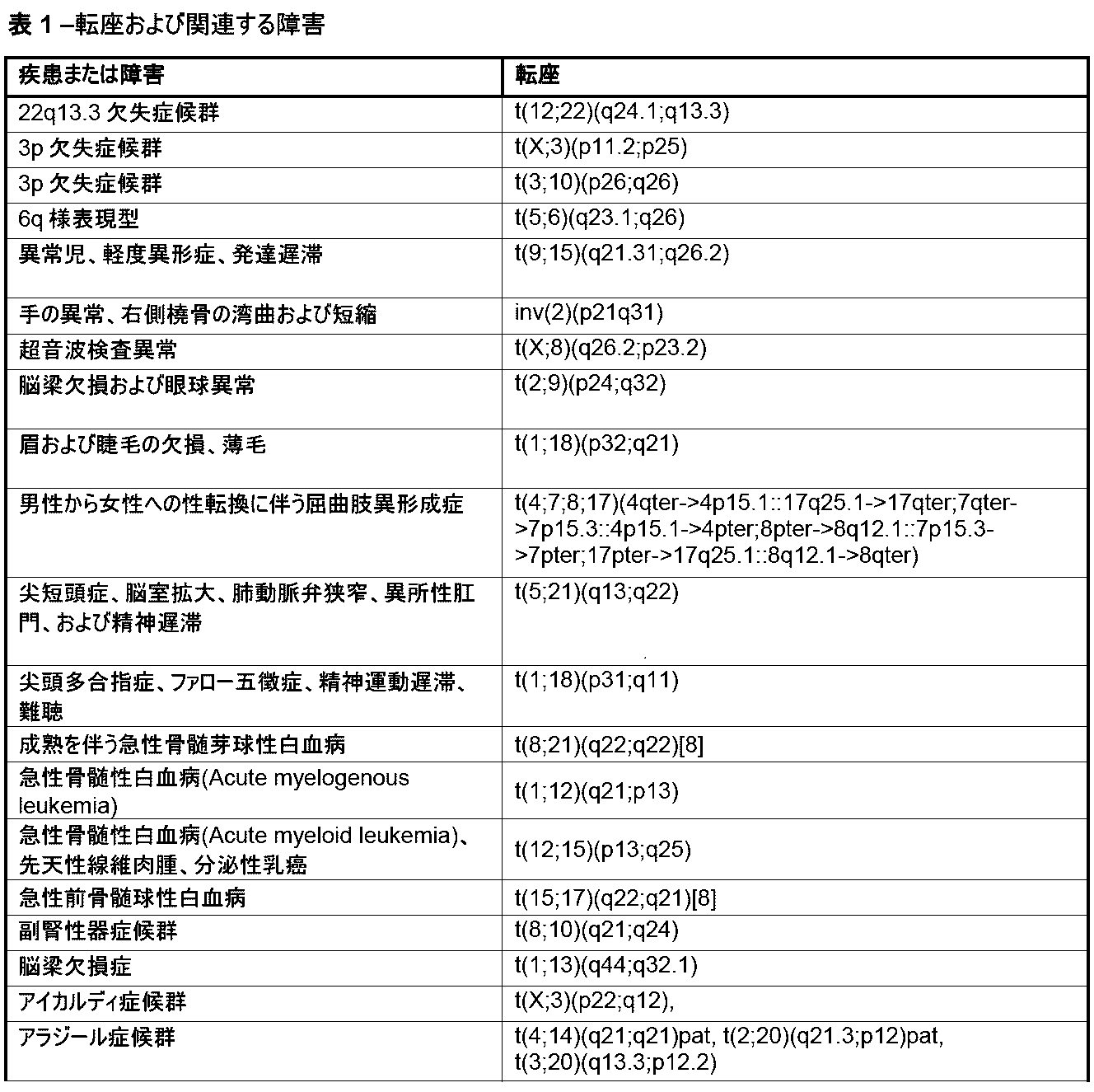


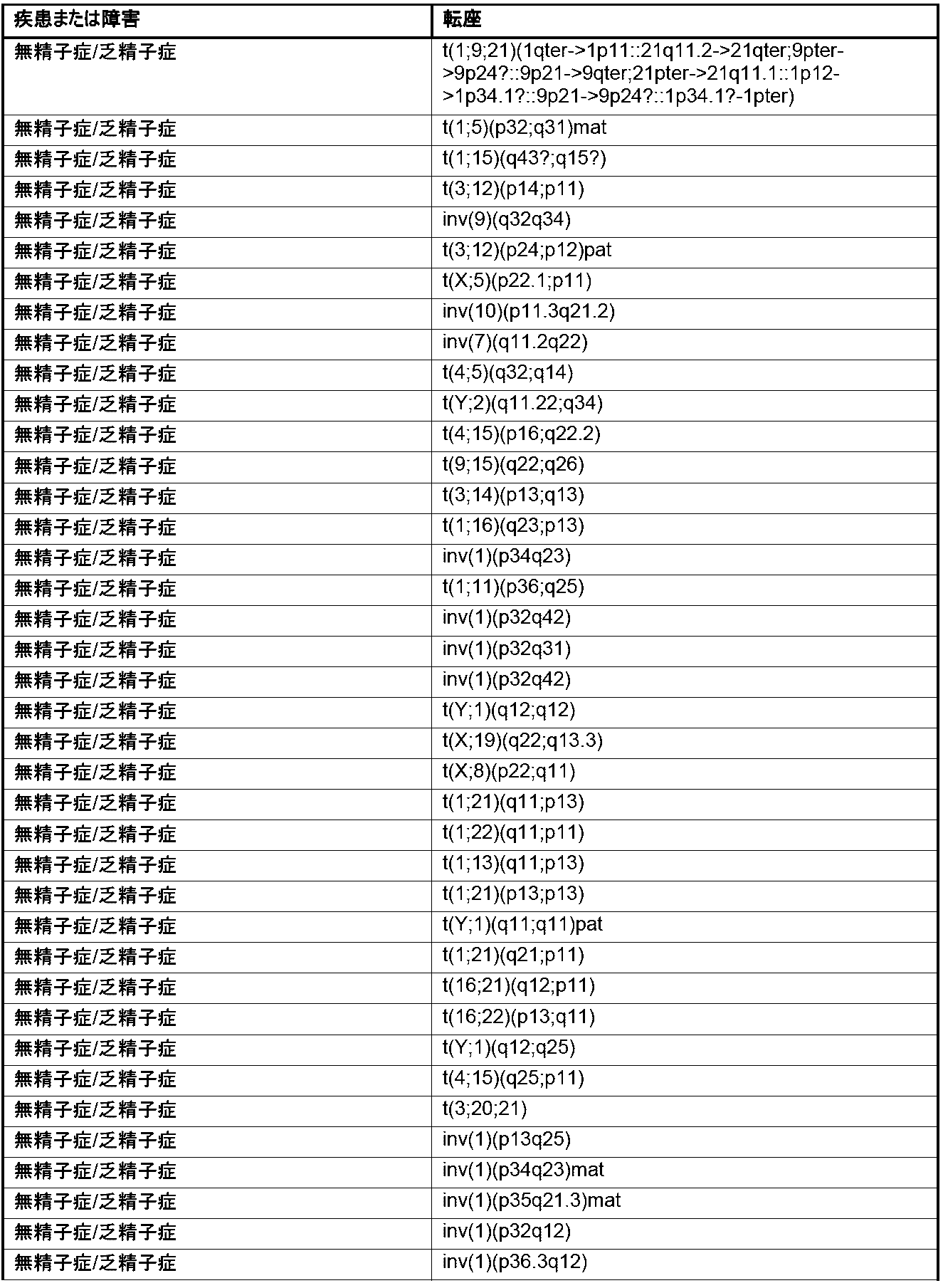


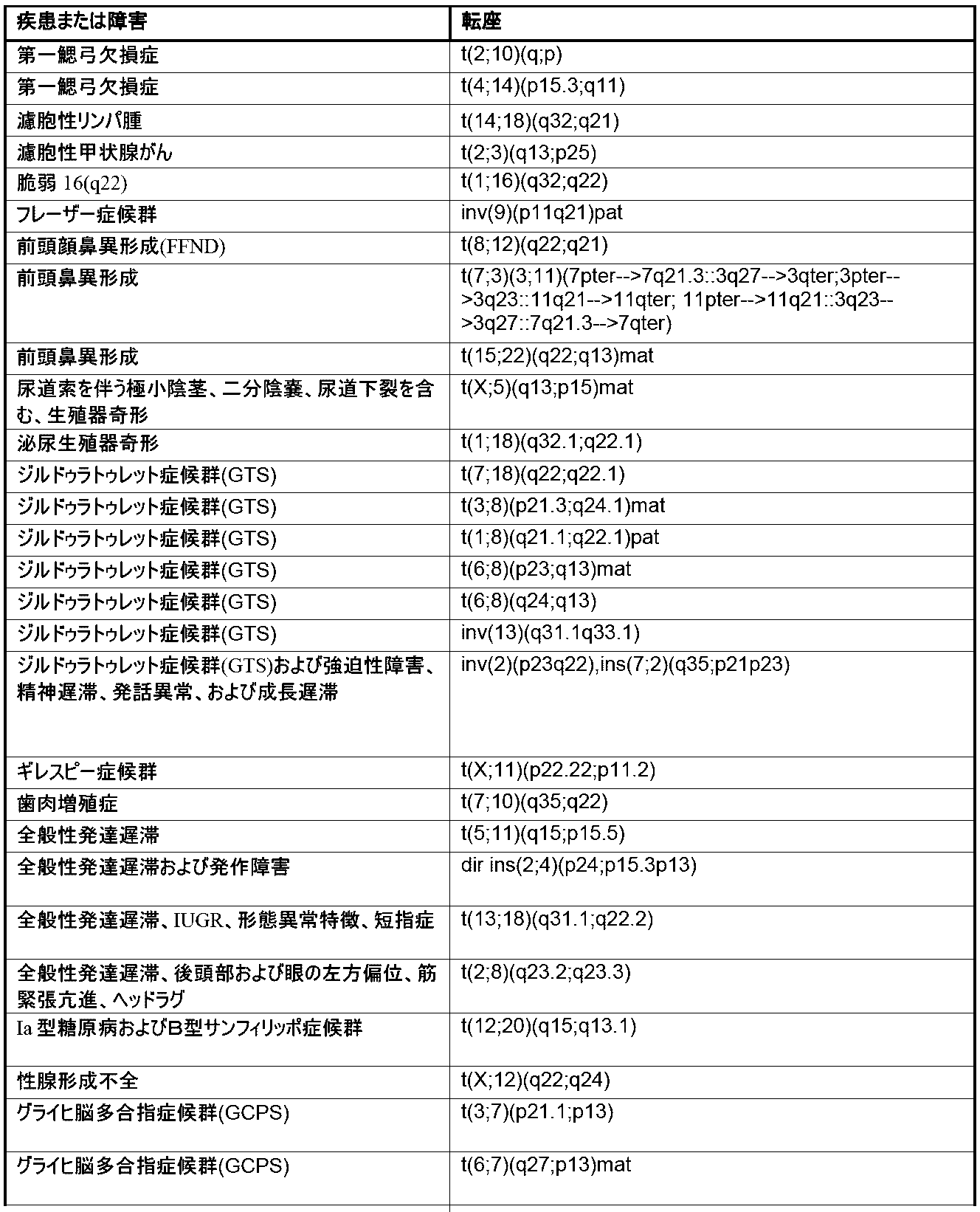
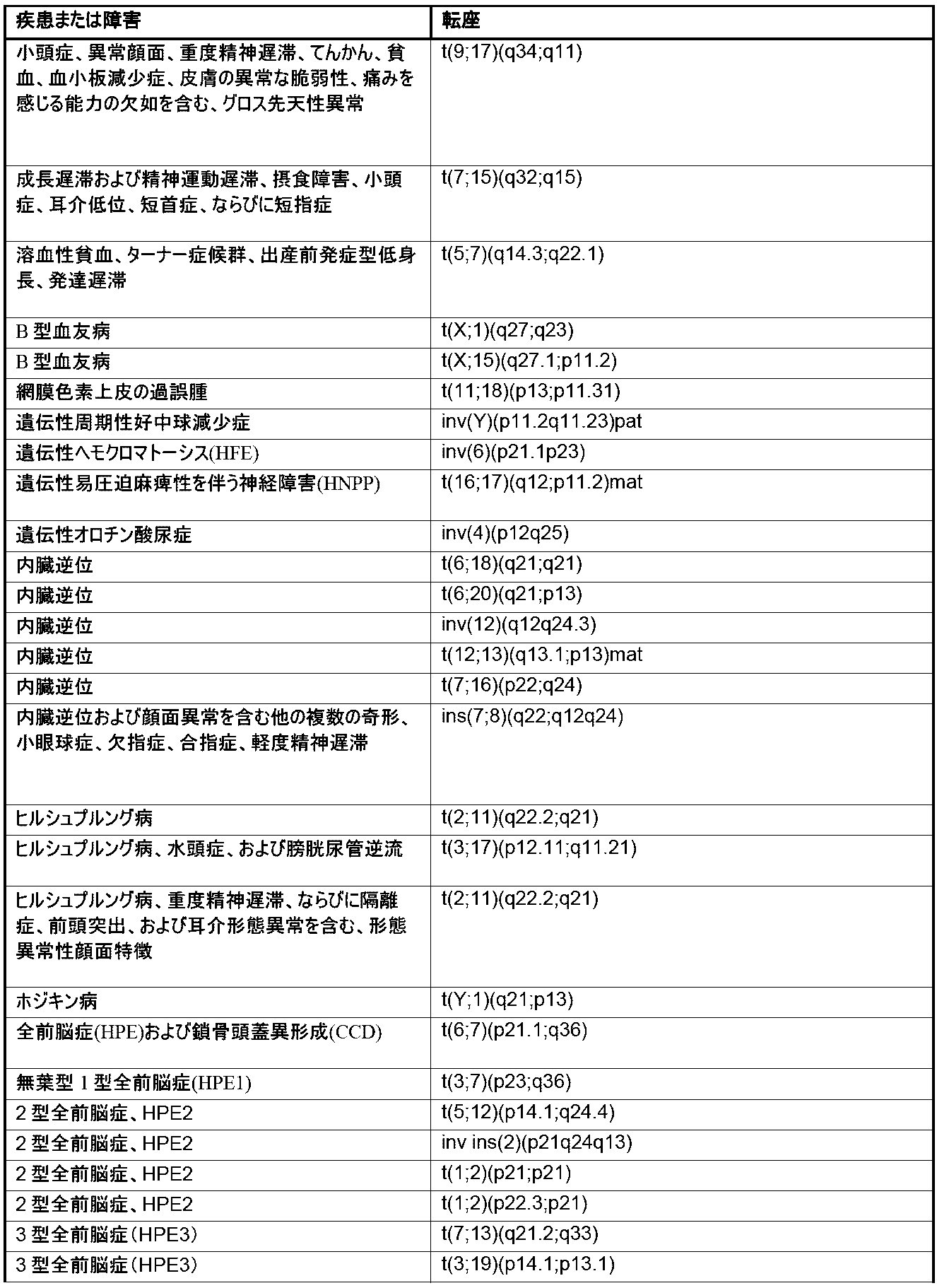
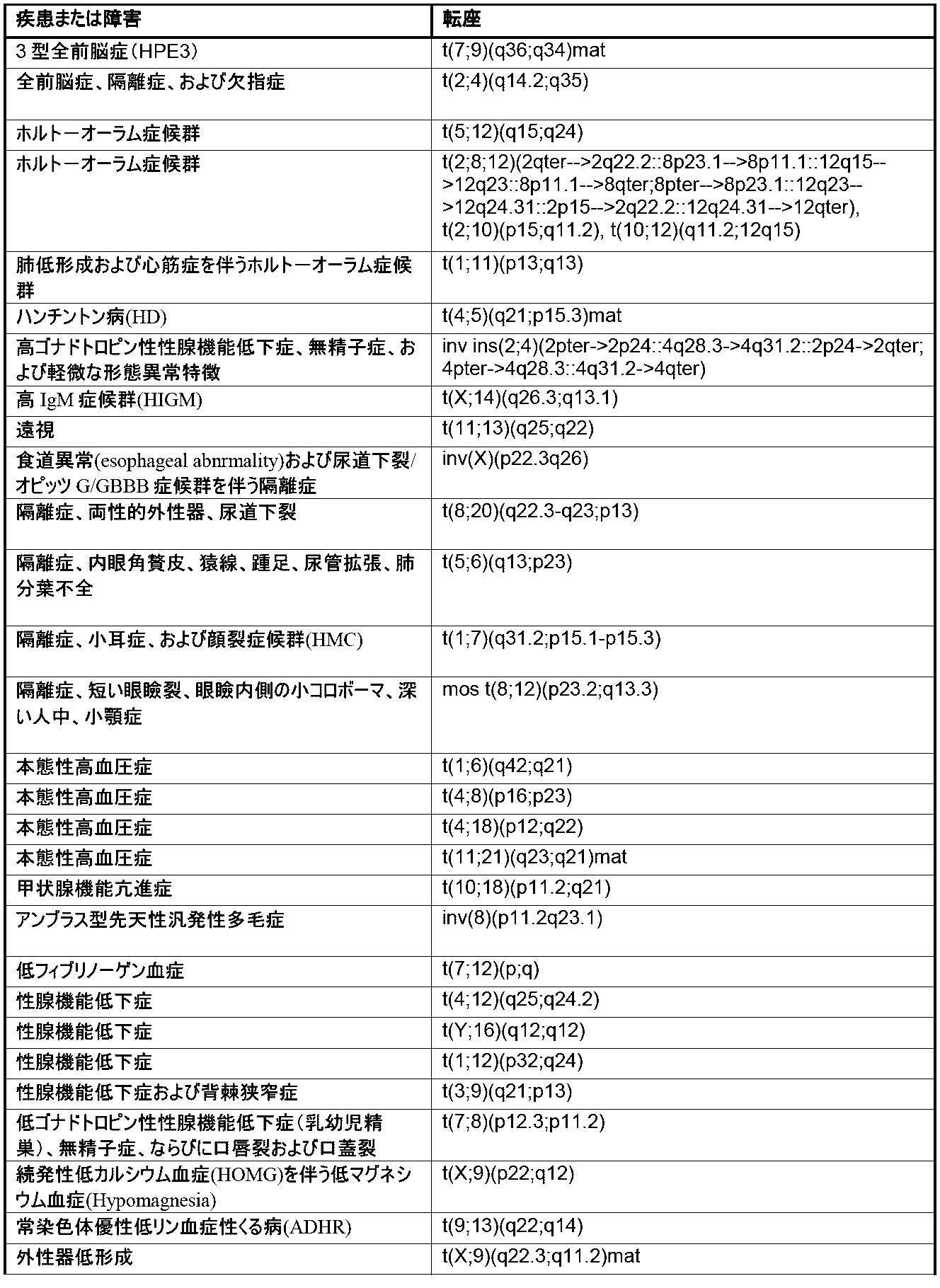

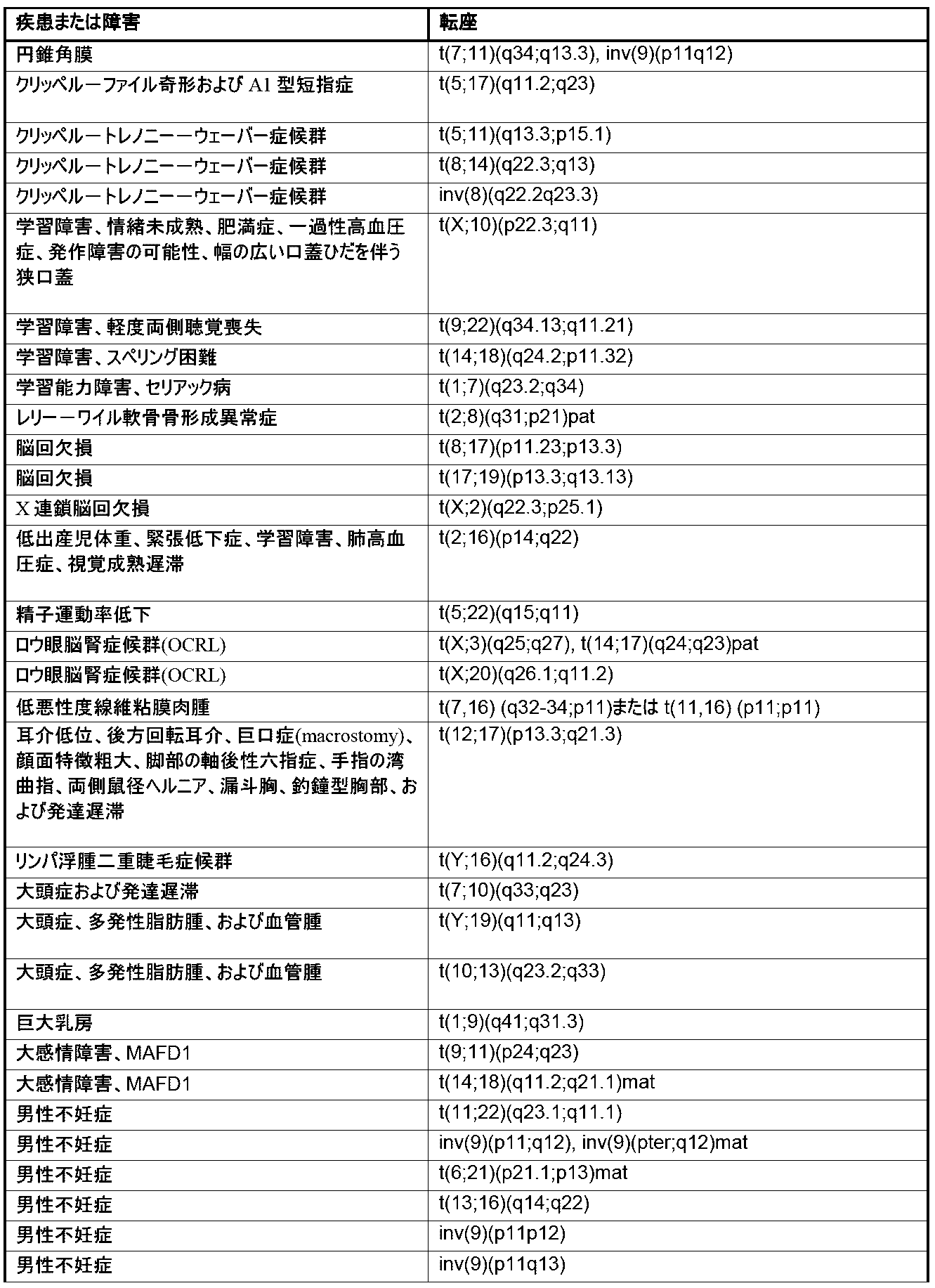
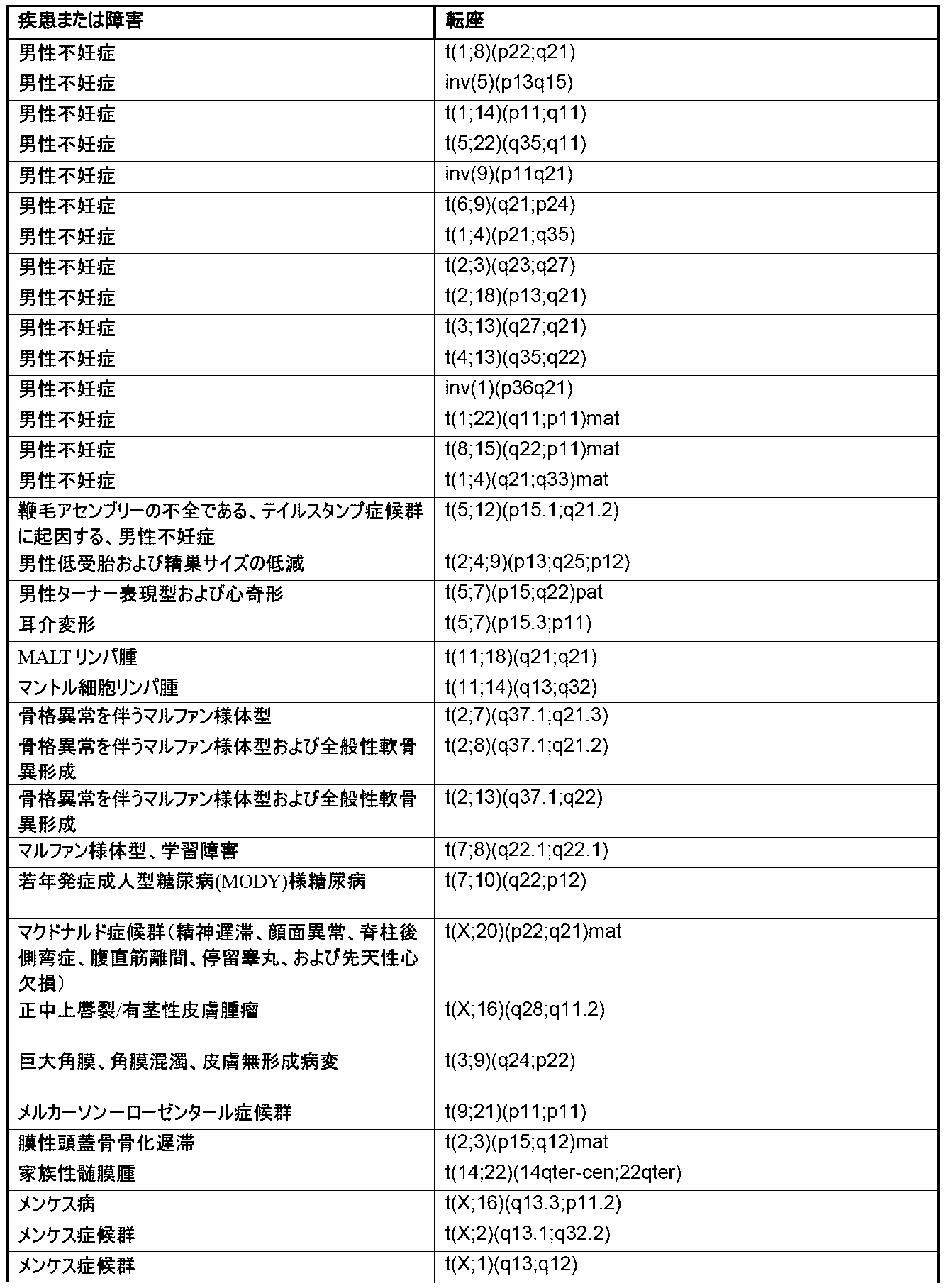


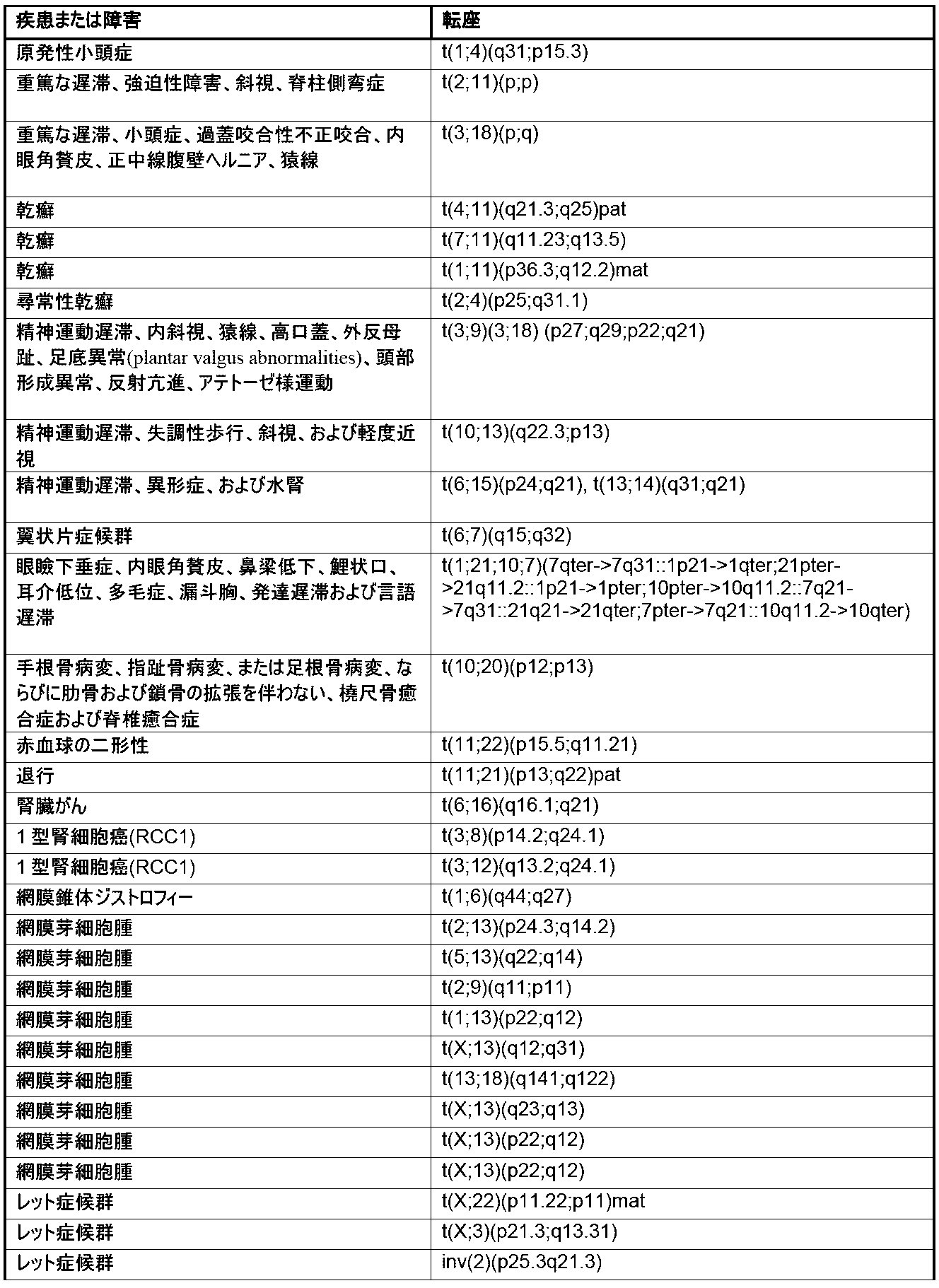


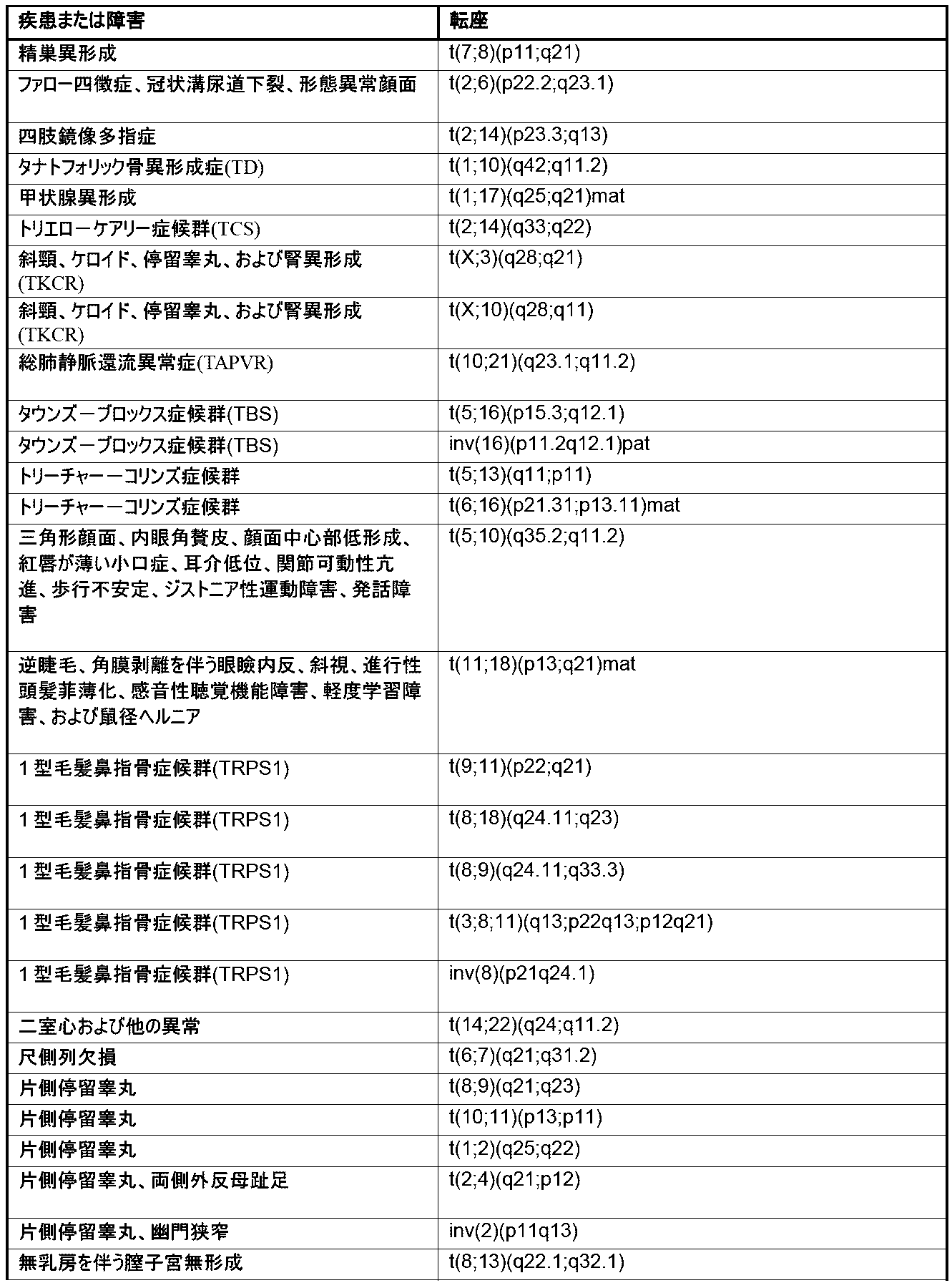

染色体変化は、場合によって、医学的状態(例えば、表1)と関連する。染色体変化を決定するアウトカムは、場合によって、状態(例えば、医学的状態)、疾患、症候群、もしくは異常の存在もしくは非存在を決定するアウトカムであるか、または状態、疾患、症候群、もしくは異常(例えば、表1に列挙された非限定的な例)の検出を含む。ある特定の実施形態では、診断は、アウトカムについての評価を含む。本明細書で記載される方法により状態(例えば、医学的状態)、疾患、症候群、または異常の存在または非存在を決定するアウトカムは、場合によって、さらに調べることにより(例えば、核型分析および/または羊水穿刺により)、独立に検証することができる。データの分析および処理により、1または複数のアウトカムを提供することができる。本明細書で使用される「アウトカム」という用語は、染色体変化(例えば、転座、欠失)の存在または非存在を決定することを容易とする、データ処理の結果を指す場合がある。ある特定の実施形態では、本明細書で使用される「アウトカム」という用語は、染色体変化(例えば、転座、欠失)の存在または非存在を予測および/または決定する結論を指す。ある特定の実施形態では、本明細書で使用される「アウトカム」という用語は、被験体(例えば、胎児)における染色体変化の存在または非存在(例えば、転座)の危険性または確率を予測および/または決定する結論を指す。診断は、場合によって、アウトカムの使用を含む。例えば、医療関係者は、アウトカムを分析し、アウトカムに基づくか、または部分的に基づき、診断を提供することができる。一部の実施形態では、状態、症候群、または異常(例えば、表1に列挙された)についての決定、検出、または診断は、染色体変化の存在または非存在を決定するアウトカムの使用を含む。一部の実施形態では、不一致リード対、マッピング特徴、および切断点の同定に基づくアウトカムは、染色体変化の存在または非存在を決定する。ある特定の実施形態では、本明細書で記載される1種またはそれより多くの種の方法またはシステムを活用して生成されたアウトカムは、表1に列挙された1または複数の状態、症候群、または異常の存在または非存在を決定する。ある特定の実施形態では、診断は、状態、症候群、または異常の存在または非存在の決定を含む。診断は、状態、症候群、または異常の性質および/または原因としての染色体変化の決定を含むことが多い。ある特定の実施形態では、アウトカムは、診断ではない。確率についての1または複数の検討の文脈では、アウトカムは、本明細書で記載される処理法を使用して生成される1または複数の数値を含むことが多い。危険性または確率の検討は、不確実性値、ばらつきの尺度、信頼水準、感度、特異度、標準偏差、変動係数(CV)および/または信頼水準、Zスコア、カイ値、ファイ値、倍数性値、適合させた胎児画分、面積比、中央値レベルなど、またはこれらの組合せを含みうるがこれらに限定されない。確率の検討は、被験体に染色体変化を有する危険性があるのかどうか、または被験体が染色体変化を有するのかどうかの決定を容易とすることが可能であり、遺伝子障害の存在または非存在を決定するアウトカムは、このような検討を含むことが多い。 The chromosomal alteration is optionally associated with a medical condition (e.g., Table 1). The outcome determining the chromosomal alteration is optionally an outcome determining the presence or absence of a condition (e.g., a medical condition), disease, syndrome, or abnormality, or includes the detection of a condition, disease, syndrome, or abnormality (e.g., the non-limiting examples listed in Table 1). In certain embodiments, the diagnosis includes an evaluation of the outcome. The outcome determining the presence or absence of a condition (e.g., a medical condition), disease, syndrome, or abnormality by the methods described herein can optionally be independently verified by further investigation (e.g., by karyotyping and/or amniocentesis). The analysis and processing of the data can provide one or more outcomes. The term "outcome" as used herein may refer to the result of data processing that facilitates the determination of the presence or absence of a chromosomal alteration (e.g., translocation, deletion). In certain embodiments, the term "outcome" as used herein refers to a conclusion that predicts and/or determines the presence or absence of a chromosomal alteration (e.g., translocation, deletion). In certain embodiments, the term "outcome" as used herein refers to a conclusion that predicts and/or determines the risk or probability of the presence or absence of a chromosomal alteration (e.g., a translocation) in a subject (e.g., a fetus). Diagnosis optionally involves the use of an outcome. For example, a medical practitioner can analyze the outcome and provide a diagnosis based, or based in part, on the outcome. In some embodiments, the determination, detection, or diagnosis of a condition, syndrome, or abnormality (e.g., listed in Table 1) involves the use of an outcome that determines the presence or absence of a chromosomal alteration. In some embodiments, an outcome based on the identification of mismatched read pairs, mapping features, and breakpoints determines the presence or absence of a chromosomal alteration. In certain embodiments, an outcome generated utilizing one or more methods or systems described herein determines the presence or absence of one or more conditions, syndromes, or abnormalities listed in Table 1. In certain embodiments, a diagnosis involves the determination of the presence or absence of a condition, syndrome, or abnormality. A diagnosis often involves the determination of a chromosomal alteration as the nature and/or cause of a condition, syndrome, or abnormality. In certain embodiments, the outcome is not a diagnosis. In the context of one or more studies of probability, the outcome often includes one or more numerical values generated using the processes described herein. Risk or probability studies may include, but are not limited to, uncertainty values, measures of variability, confidence levels, sensitivity, specificity, standard deviations, coefficients of variation (CV) and/or confidence levels, Z-scores, chi values, phi values, ploidy values, matched fetal fractions, area ratios, median levels, and the like, or combinations thereof. Probability studies can facilitate the determination of whether a subject is at risk of having a chromosomal alteration or whether a subject has a chromosomal alteration, and outcomes determining the presence or absence of a genetic disorder often include such studies.
アウトカムは、場合によって、表現型である。アウトカムは、場合によって、関連する信頼水準(例えば、不確実性値、例えば、胎児は、99%の信頼水準で自閉症について陽性であり、妊婦は、95%の信頼水準で、男性胎児を宿しており、被験被験体は、95%の信頼水準で、染色体変化と関連するがんについて陰性である)を伴う表現型である。アウトカム値を生成する異なる方法は、場合によって、異なる種類の結果をもたらしうる。一般に、本明細書で記載される方法を使用して生成されるアウトカム値に基づき下されうる、4種類の可能なスコアまたは判定:真陽性、偽陽性、真陰性、および偽陰性が存在する。本明細書で使用される「スコア(score)」、「スコア(scores)」、「判定(call)」、および「判定(calls)」という用語は、特定の染色体変化が、被験体において/試料中に存在するか、または非存在である確率を計算することを指す。スコアの値を使用して、例えば、染色体変化に対応しうる、マッピングされた配列リードの変動、差異、または比を決定することができる。例えば、データセットに由来する、選択された染色体変化または部分について、基準ゲノムに対して正のスコアを計算することにより、場合によって、医学的状態(例えば、がん、自閉症など)と関連する、染色体変化の存在または非存在の同定をもたらすことができる。一部の実施形態では、アウトカムは、レベル、プロファイル、および/またはプロット(例えば、プロファイルのプロット)を含む。アウトカムが、プロファイルを含む実施形態では、適切なプロファイルまたはプロファイルの組合せを、アウトカムのために使用することができる。アウトカムのために使用されうる、プロファイルの非限定的な例は、zスコアプロファイル、p値プロファイル、カイ値プロファイル、ファイ値プロファイルなど、およびこれらの組合せを含む。 The outcome is optionally a phenotype. The outcome is optionally a phenotype with an associated confidence level (e.g., an uncertainty value, e.g., the fetus is positive for autism at a 99% confidence level, the pregnant woman is carrying a male fetus at a 95% confidence level, and the test subject is negative for cancer associated with the chromosomal alteration at a 95% confidence level). Different methods of generating outcome values may optionally result in different types of results. In general, there are four possible scores or calls that can be made based on the outcome values generated using the methods described herein: true positive, false positive, true negative, and false negative. As used herein, the terms "score," "scores," "call," and "calls" refer to calculating the probability that a particular chromosomal alteration is present or absent in a subject/sample. The score value can be used to determine, for example, a variation, difference, or ratio of mapped sequence reads that may correspond to a chromosomal alteration. For example, calculating a positive score for selected chromosomal alterations or portions from a dataset relative to a reference genome can result in identification of the presence or absence of chromosomal alterations, in some cases associated with a medical condition (e.g., cancer, autism, etc.). In some embodiments, the outcome includes a level, a profile, and/or a plot (e.g., a plot of a profile). In embodiments where the outcome includes a profile, an appropriate profile or combination of profiles can be used for the outcome. Non-limiting examples of profiles that can be used for the outcome include z-score profiles, p-value profiles, chi-value profiles, phi-value profiles, etc., and combinations thereof.
染色体変化の存在または非存在を決定する、1または複数のアウトカムを含む報告を受け取る医療従事者または他の有資格者は、報告内で示されたデータを使用して、被験被験体または患者の状態についての判定を下すことができる。一部の実施形態では、医療従事者は、提供されたアウトカムに基づき、推奨を行うことができる。一部の実施形態では、医療従事者または有資格者は、報告で提供された、1または複数のアウトカム値および関連する信頼性パラメータに基づき、被験被験体または患者に、染色体変化の存在または非存在に関する判定またはスコアを提供することができる。ある特定の実施形態では、提供された報告の目視観察を使用して、医療従事者または有資格者が、手作業でスコアを作成するかまたは判定を下す。ある特定の実施形態では、場合によって、ソフトウェア内に埋め込まれた自動式のルーチンにより、スコアを作成するかまたは判定を下し、被験被験体または患者へと情報を提供する前に、医療従事者または有資格者が、精度について再検討する。本明細書で使用される「報告を受け取ること」という用語は、通信手段を介して、アウトカムを含む文章表示および/またはグラフ表示を得ることを指し、アウトカムは、再検討されると、医療従事者または他の有資格者が、被験被験体または患者における染色体変化の存在または非存在についての決定を下すことを可能とする。報告は、コンピュータにより作成することもでき、手作業によるデータ入力により作成することもでき、電子的手段(例えば、インターネットを介する、コンピュータを介する、ファックスを介する、同じ物理的施設または異なる物理的施設における1つのネットワーク拠点から別の拠点への)を使用して通信することもでき、データを送付または受領する別の方法(例えば、郵便、宅配便など)により通信することもできる。一部の実施形態では、アウトカムは、限定せずに述べると、非一過性のコンピュータ読取り型記憶メディア、および/または音声言語形態、文書形態、もしくはファイル形態を含む、適切な媒体により、医療従事者へと伝送される。ファイルは、例えば、音声ファイル、非一過性のコンピュータ読取り型ファイル、書類ファイル、検査室ファイル、または医療記録ファイルでありうるがこれらに限定されない。 A medical practitioner or other qualified person who receives a report containing one or more outcomes determining the presence or absence of a chromosomal alteration can use the data presented in the report to make a decision about the condition of the test subject or patient. In some embodiments, the medical practitioner can make a recommendation based on the outcomes provided. In some embodiments, the medical practitioner or qualified person can provide the test subject or patient with a decision or score regarding the presence or absence of a chromosomal alteration based on one or more outcome values and associated reliability parameters provided in the report. In certain embodiments, the medical practitioner or qualified person manually creates or makes a score using visual observation of the report provided. In certain embodiments, the score or decision is optionally created or made by an automated routine embedded in the software and reviewed for accuracy by the medical practitioner or qualified person before providing the information to the test subject or patient. The term "receiving a report" as used herein refers to obtaining, via a communication means, a textual and/or graphical display including an outcome that, when reviewed, allows a medical practitioner or other qualified individual to make a determination as to the presence or absence of a chromosomal alteration in a test subject or patient. The report may be computer generated, generated by manual data entry, or communicated using electronic means (e.g., via the Internet, via computer, via fax, from one network location to another in the same or different physical facilities), or by another method of sending or receiving data (e.g., mail, courier, etc.). In some embodiments, the outcome is transmitted to the medical practitioner via a suitable medium, including, but not limited to, a non-transitory computer readable storage medium, and/or an audio-language form, a document form, or a file form. The file may be, for example, but not limited to, an audio file, a non-transitory computer readable file, a paper file, a laboratory file, or a medical record file.
本明細書で使用される、「アウトカムを提供すること」という用語およびその文法的な同等物はまた、このような情報を得るための方法であって、限定せずに述べると、情報を検査室から得る(例えば、検査室ファイル)ステップを含む方法も指す場合がある。検査室ファイルは、1または複数のアッセイを実行した検査室で作成することもでき、医学的状態の存在または非存在を決定する、1または複数のデータ処理ステップにより作成することもできる。検査室は、医学的状態の存在または非存在を検査室ファイルから同定する医療関係者と同じ場所にある場合もあり、異なる場所(例えば、別の国内)にある場合もある。例えば、検査室ファイルは、1つの場所で作成し、別の場所へと伝送することができ、そこで、その中の情報を妊婦被験体へと伝送する。ある特定の実施形態では、検査室ファイルは、実体的形態の場合もあり、電子的形態(例えば、コンピュータ読取り型形態)の場合もある。 As used herein, the term "providing an outcome" and its grammatical equivalents may also refer to methods for obtaining such information, including, without limitation, obtaining the information from a laboratory (e.g., a laboratory file). The laboratory file may be created in a laboratory that performs one or more assays and may be created by one or more data processing steps that determine the presence or absence of a medical condition. The laboratory may be in the same location as the medical personnel who identify the presence or absence of the medical condition from the laboratory file, or may be in a different location (e.g., within another country). For example, the laboratory file may be created in one location and transmitted to another location where the information therein is transmitted to the pregnant subject. In certain embodiments, the laboratory file may be in tangible or electronic form (e.g., computer readable form).
一部の実施形態では、アウトカムは、検査室から、医療従事者、医師、または有資格者へと提供することができ、医療従事者、医師、または有資格者は、アウトカムに基づき、診断を下すことができる。一部の実施形態では、アウトカムは、検査室から、医療従事者、医師、または有資格者へと提供することができ、医療従事者、医師、または有資格者は、さらなるデータおよび/または情報、ならびに他のアウトカムと共に、アウトカムに部分的に基づき、診断を下すことができる。 In some embodiments, the outcome can be provided from the laboratory to a medical practitioner, doctor, or licensed individual, who can make a diagnosis based on the outcome. In some embodiments, the outcome can be provided from the laboratory to a medical practitioner, doctor, or licensed individual, who can make a diagnosis based in part on the outcome, along with further data and/or information, and other outcomes.
医療従事者または有資格者は、報告で提供された1または複数のアウトカムに基づき、適切な推奨を提供することができる。提供されたアウトカム報告に基づき提供されうる、推奨の非限定的な例は、手術、放射線療法、化学療法、遺伝子カウンセリング、出産後処置ソリューション(例えば、人生設計、長期にわたる介護ケア、医薬、対症的処置)、妊娠中絶、臓器移植、輸血など、または前出の組合せを含む。 The medical professional or licensed individual may provide appropriate recommendations based on one or more outcomes provided in the report. Non-limiting examples of recommendations that may be provided based on the outcome report provided include surgery, radiation therapy, chemotherapy, genetic counseling, post-natal care solutions (e.g., life planning, long-term nursing care, medicines, symptomatic treatments), abortion, organ transplant, blood transfusion, etc., or combinations of the above.
検査室関係者(例えば、検査室管理者)は、染色体変化の存在または非存在の決定の根底をなす値(例えば、被験試料のリードの数、基準のリードの数、偏差のレベル)について分析することができる。染色体変化の存在または非存在に関する判定であって、微妙であるかまたは問題含みである判定のために、検査室関係者は、同じ検査を再発注することもでき、かつ/または被験被験体に由来する同じ試料核酸または異なる試料核酸を使用する、異なる検査(例えば、一部の胎児染色体変化の場合における核型分析および/または羊水穿刺)を発注することもできる。 Laboratory personnel (e.g., laboratory manager) can analyze the values (e.g., number of test sample reads, number of reference reads, level of deviation) that underlie the determination of the presence or absence of a chromosomal alteration. For a determination regarding the presence or absence of a chromosomal alteration that is sensitive or questionable, laboratory personnel can reorder the same test and/or order a different test (e.g., karyotype analysis and/or amniocentesis in the case of some fetal chromosomal alterations) using the same or a different sample nucleic acid from the test subject.
アウトカムは、医療従事者(例えば、検査室技師または管理者;医師または助手)へと提供することが典型的である。アウトカムは、アウトカムモジュールにより提供することが多い。アウトカムモジュールは、適切な統計学ソフトウェアパッケージを含みうる。ある特定の実施形態では、アウトカムを、プロッティングモジュールにより提供する。適切な統計学的ソフトウェアは、適切なプロッティングモジュールを含むことが多い。一部の実施形態では、アウトカムモジュールは、Zスコアを生成および/または比較する。 The outcomes are typically provided to a medical professional (e.g., a laboratory technician or administrator; a physician or assistant). The outcomes are often provided by an outcome module. The outcome module may include a suitable statistical software package. In certain embodiments, the outcomes are provided by a plotting module. The suitable statistical software often includes a suitable plotting module. In some embodiments, the outcome module generates and/or compares Z-scores.
一部の実施形態では、プロッティングモジュールは、データおよび/または情報を、それらの非限定的な例が、図表、プロット、グラフなど、またはこれらの組合せを含む、適切な視覚的メディアへと、処理および/または変換する。一部の実施形態では、プロッティングモジュールは、データおよび/または情報を、適切なディスプレイ(例えば、モニター、LED、LCD、CRTなど、またはこれらの組合せ)上、プリンター(例えば、印字された書類による提示)上、適切な周辺機器上、またはデバイス上の表示のために、処理、変換、および/または移す。ある特定の実施形態では、プロッティングモジュールは、関係および/またはアウトカムの視覚的表示をもたらす。 In some embodiments, the plotting module processes and/or converts the data and/or information into a suitable visual media, non-limiting examples of which include charts, plots, graphs, etc., or combinations thereof. In some embodiments, the plotting module processes, converts, and/or transfers the data and/or information for display on a suitable display (e.g., monitor, LED, LCD, CRT, etc., or combinations thereof), on a printer (e.g., printed paper presentation), on a suitable peripheral, or device. In certain embodiments, the plotting module produces a visual display of the relationships and/or outcomes.
ある特定の実施形態では、アウトカムは、マシンの周辺機器上もしくは構成要素上またはマシン上に提供される。例えば、場合によって、アウトカムは、プリンターまたはディスプレイにより提供される。一部の実施形態では、染色体変化の存在もしくは非存在および/または関連する疾患もしくは障害を決定するアウトカムは、医療従事者へと、報告の形態で提供され、ある特定の実施形態では、報告は、アウトカム値および関連する信頼性パラメータの提示を含む。一般に、アウトカムは、染色体変化の存在もしくは非存在および/または医学的状態の決定を容易とする、適切なフォーマットで表示することができる。データセットを報告および/もしくは表示するか、またはアウトカムを報告するための使用に適するフォーマットの非限定的な例は、ディジタルデータ、グラフ、2Dグラフ、3Dグラフ、および4Dグラフ、写真、統計図表、図表、棒グラフ、円グラフ、概略図、フローチャート、散布図、マップ、ヒストグラム、密度図、関数グラフ、回路図、ブロック図、バブルマップ、信号空間ダイヤグラム、コンターダイアグラム、カルトグラム、レーダーチャート、ベン図、ノモグラムなど、および前出の組合せを含む。アウトカム表示の多様な例については、図面で示され、本明細書で記載される。 In certain embodiments, the outcome is provided on a peripheral or component of the machine or on the machine. For example, in some cases, the outcome is provided by a printer or display. In some embodiments, the outcome determining the presence or absence of the chromosomal alteration and/or the associated disease or disorder is provided to a medical professional in the form of a report, and in certain embodiments, the report includes a presentation of the outcome value and associated reliability parameters. In general, the outcome can be displayed in a suitable format that facilitates the determination of the presence or absence of the chromosomal alteration and/or the medical condition. Non-limiting examples of formats suitable for use in reporting and/or displaying the data set or reporting the outcome include digital data, graphs, 2D graphs, 3D graphs, and 4D graphs, photographs, statistical charts, diagrams, bar graphs, pie charts, schematic diagrams, flow charts, scatter plots, maps, histograms, density diagrams, function graphs, circuit diagrams, block diagrams, bubble maps, signal space diagrams, contour diagrams, cartograms, radar charts, Venn diagrams, nomograms, and the like, and combinations of the foregoing. Various examples of outcome indications are shown in the figures and described herein.
データのフィルタリングおよび処理
一部の実施形態では、1または複数の処理ステップは、1または複数のフィルタリングするステップを含みうる。本明細書で使用される「~をフィルタリングすること」という用語は、データまたはデータセットの部分を検討から除外し、データのサブセットを保持することを指す。配列リードを、冗長データ(例えば、マッピングされたリードの冗長または重複)、情報を伝えないデータ、過剰表示配列または過少表示配列、ノイズデータなど、または前出の組合せを含むがこれらに限定されない、任意の適切な基準に基づき、除外のために選択することができる。フィルタリングプロセスは、1または複数のリードおよび/またはリード対(例えば、不一致リード対)を検討から除外することを伴うことが多い。リード、リード対、および/または候補切断点を含むリードの数を、染色体変化の存在または非存在について分析されるデータセットから低減することにより、データセットの複雑性および/または次元が低減され、場合によって、染色体変化を探索し、かつ/または同定する速度が、2桁またはこれを超えて増大することが多い。
Data Filtering and Processing In some embodiments, the one or more processing steps may include one or more filtering steps. As used herein, the term "filtering" refers to removing portions of data or a dataset from consideration and retaining a subset of the data. Sequence reads can be selected for removal based on any suitable criteria, including, but not limited to, redundant data (e.g., redundant or overlapping mapped reads), uninformative data, over- or under-represented sequences, noise data, etc., or combinations of the foregoing. The filtering process often involves removing one or more reads and/or read pairs (e.g., mismatched read pairs) from consideration. Reducing the number of reads, read pairs, and/or reads containing candidate breakpoints from a dataset that is analyzed for the presence or absence of chromosomal alterations reduces the complexity and/or dimensionality of the dataset, often increasing the speed of searching for and/or identifying chromosomal alterations by two or more orders of magnitude, in some cases.
一部の実施形態では、本明細書で記載されるシステムまたは方法は、リード、不一致リードメイト、および/または不一致リード対をフィルタリングするステップを含む。フィルタリングするステップは、不一致リードメイトを同定するステップ、複数の配列リード部分配列のマッピング可能性を特徴付けるステップ、マッピング可能性の変化を提供するステップ、不一致リードメイトのサブセットを選択するステップ、候補切断点を同定するステップ、リードのサブセットを比較するステップ、候補切断点を比較するステップ、切断点を同定するステップ、または試料に由来する不一致リードメイトの数を基準と比較するステップの前に、またはこれらの後で実施することができる。フィルタリングするステップは、1種またはそれより多くの種の染色体変化の存在または非存在を決定するステップの前に実施することが多い。 In some embodiments, the systems or methods described herein include filtering the reads, mismatched readmates, and/or mismatched read pairs. The filtering step can be performed before or after identifying mismatched readmates, characterizing the mappability of a plurality of sequence read subsequences, providing changes in mappability, selecting a subset of mismatched readmates, identifying candidate breakpoints, comparing subsets of reads, comparing candidate breakpoints, identifying breakpoints, or comparing the number of mismatched readmates from a sample to a reference. The filtering step is often performed before determining the presence or absence of one or more chromosomal alterations.
フィルタリングするステップは、システムまたはモジュールにより実施することが多い。本明細書では、フィルタリングするステップを実施するシステムまたはモジュールを、フィルターモジュールまたはフィルタリングモジュールと称する。一部の実施形態では、フィルタリングモジュールは、SまたはRで書かれたコード(例えば、スクリプト)であって、適切なパッケージ(例えば、Sパッケージ、Rパッケージ)を活用するコードを含む。例えば、フィルターモジュールは、1または複数のSAMツール(ワールドワイドウェブのURL:samtools.sourceforge.netにおいて、インターネットから検索される、「SAMtools」[オンライン][2013年09月25日検索])を含むことが可能であり、これらを活用しうる。例えば、全ての該当するフラッグの合計を使用して、一致リードを同定することができ、ここで、一致リードまたはPCR複製リードの選択は、「if(bitwiseA==83||bitwiseA==163||bitwiseA==99||bitwiseA==147||bitwiseA>=1024)」[式中、bitwiseAは、SAMフォーマット形式のファイル内の、全ての該当するフラッグの合計である]である。 The filtering step is often performed by a system or module. A system or module that performs the filtering step is referred to herein as a filter module. In some embodiments, the filtering module includes code (e.g., script) written in S or R that utilizes an appropriate package (e.g., S package, R package). For example, the filtering module can include and utilize one or more SAM tools ("SAMtools" [online] [retrieved 25 Sep. 2013], found on the World Wide Web from the Internet at URL: samtools.sourceforge.net). For example, the sum of all applicable flags can be used to identify matched reads, where the selection of matched or PCR duplicated reads is "if (bitwiseA == 83 || bitwiseA == 163 || bitwiseA == 99 || bitwiseA == 147 || bitwiseA >= 1024)" where bitwiseA is the sum of all applicable flags in the SAM format file.
フィルターは、データセット(例えば、リードのセット)を入力として受け入れ、フィルタリングされたデータのサブセット(例えば、リードのサブセット、例えば、フィルタリングされたリード)を出力することが多い。ある特定の実施形態では、フィルタリングプロセスで除外されたリードは、さらなる分析(例えば、統計学的分析)から棄却および/または除外されることが多い。フィルタリングするステップは、リードを、リードのセットから除外することを含むことが多い。一部の実施形態では、フィルタリングするステップは、不一致リード対の一方または両方のリードメイトを除外することを含む。一部の実施形態では、フィルタリングするステップは、複数のリードをリードのセットから除外することを含む。場合によって、フィルタリングするステップでは、リードは除外されない。 A filter often accepts a dataset (e.g., a set of reads) as input and outputs a subset of filtered data (e.g., a subset of reads, e.g., filtered reads). In certain embodiments, reads that are filtered out in the filtering process are often rejected and/or excluded from further analysis (e.g., statistical analysis). The filtering step often includes excluding a read from the set of reads. In some embodiments, the filtering step includes excluding one or both read mates of a mismatched read pair. In some embodiments, the filtering step includes excluding multiple reads from the set of reads. In some cases, the filtering step does not exclude any reads.
フィルタリングするステップは、所定の条件付きクエリーに従い、ある特定のリードを、データセットから除外、棄却、または却下することが多い。例えば、場合によって、フィルターは、入力リードを、システムまたは別のモジュールから受け取り、受け取られたリードに対してフィルタリング機能を果たし、条件を満たす入力リードだけを受け入れる。一部の実施形態では、フィルターは、入力リードを、システムまたは別のモジュールから受け取り、受け取られたリードに対してフィルタリング機能を果たし、条件を満たす入力リードだけを除外、棄却、または却下する。一部の実施形態では、条件付きクエリーは、はい/いいえまたは真/偽の決定を含む。例えば、「真」値または「はい」の値は、場合によって、クエリーの条件が満たされる、1または複数のリードへと割り当てられ、「偽」値または「いいえ」の値は、クエリーの条件が満たされないリードへと割り当てられる。 The filtering step often excludes, rejects, or rejects certain leads from the data set according to a given conditional query. For example, a filter may receive incoming leads from the system or another module and perform a filtering function on the received leads to only accept incoming leads that satisfy a condition. In some embodiments, a filter may receive incoming leads from the system or another module and perform a filtering function on the received leads to only exclude, reject, or reject incoming leads that satisfy a condition. In some embodiments, a conditional query includes a yes/no or true/false decision. For example, a "true" or "yes" value may be assigned to one or more leads for which the query condition is met, and a "false" or "no" value may be assigned to leads for which the query condition is not met.
一部の実施形態では、フィルタリングするステップは、非不一致リード(例えば、一致リード)を除外、却下、および/または棄却することを含む。一部の実施形態では、フィルター(例えば、20)の条件付きクエリーは、不一致ペアドリードの存在または非存在の決定を含む。一部の実施形態では、不一致でないペアドリードを、除外、却下、および/または棄却する。一部の実施形態では、不一致でないペアドリードに、「偽」値または「いいえ」の値を割り当て、モジュールにより除外、却下し、かつ/または棄却する。一部の実施形態では、非不一致リードは、フィルター20を通ることを許容されない。一部の実施形態では、非不一致リードは、削除されるか、ゴミ箱ファイルもしくは一時ファイル(例えば、10)へと移されるか、またはそれらの元のデータの場所および/もしくはフォーマットで保持される。ある特定の実施形態では、不一致ペアドリードを同定し、かつ/またはフィルタリングされたリードの出力サブセット内で保持する。ある特定の実施形態では、不一致ペアドリードを同定し、別のモジュールまたはフィルターへと送る。一部の実施形態では、不一致ペアドリードを同定し、「真」値または「はい」の値を割り当て、フィルタリングされたリードの出力サブセット(例えば、不一致リード対)内で保持する。一部の実施形態では、不一致リードは、フィルター20により、受け入れ、通過させる。リードは、不一致リード同定モジュール(例えば、フィルター20)を介して、不一致および/または非不一致リードの存在または非存在に従いフィルタリングすることができる。不一致リード同定モジュールは、場合によって、非不一致リードを除外、却下、または棄却するように構成されたフィルターを含む。
In some embodiments, the filtering step includes filtering out, rejecting, and/or discarding non-mismatched reads (e.g., matching reads). In some embodiments, the conditional query of the filter (e.g., 20) includes a determination of the presence or absence of mismatched paired reads. In some embodiments, non-mismatched paired reads are filtered out, rejected, and/or rejected. In some embodiments, non-mismatched paired reads are assigned a "false" or "no" value and filtered out, rejected, and/or rejected by the module. In some embodiments, non-mismatched reads are not allowed to pass the
一部の実施形態では、フィルタリングするステップは、正確な複製であるリードを除外、却下、および/または棄却することを含む。本明細書では、複製リードを、PCR複製と称する。一部の実施形態では、フィルター(例えば、30)の条件付きクエリーは、PCR複製の存在または非存在の決定を含む。一部の実施形態では、PCR複製に「真」値または「はい」の値を割り当て、モジュールにより除外、却下し、かつ/または棄却する。一部の実施形態では、PCR複製は、フィルター30を通ることを許容されない。一部の実施形態では、PCR複製は、削除されるか、ゴミ箱ファイルもしくは一時ファイル(例えば、10)へと移されるか、またはそれらの元のデータの場所および/もしくはフォーマットで保持される。本明細書では、複製リードのセットを表示するリードを、「表示リード」と称する。一部の実施形態では、表示リードおよびユニークリードを、フィルタリングされたリードの出力サブセット内で保持する。表示リードおよびユニークリードは、同定され、かつ/または別のモジュールもしくはフィルターへと送られることが多い。一部の実施形態では、表示リードおよびユニークリードを同定し、「偽」値または「いいえ」の値を割り当て、フィルタリングされたリードの出力サブセット内で保持する。一部の実施形態では、表示リードおよびユニークリードを、フィルター(例えば、30)へと受け入れ、かつ/またはフィルター(例えば、30)を通す。リードは、PCR複製フィルター(例えば、フィルター30)を介して、PCR複製に従いフィルタリングすることができる。フィルターモジュールは、場合によって、PCR複製フィルターを含む。
In some embodiments, the filtering step includes filtering out, rejecting, and/or discarding reads that are exact duplicates. Duplicate reads are referred to herein as PCR duplicates. In some embodiments, the conditional query of the filter (e.g., 30) includes a determination of the presence or absence of PCR duplicates. In some embodiments, PCR duplicates are assigned a "true" or "yes" value and filtered out, rejected, and/or rejected by the module. In some embodiments, PCR duplicates are not allowed to pass the
一部の実施形態では、フィルタリングするステップは、シーケンシング品質の低いリードを除外、却下、および/または棄却することを含む。シーケンシング品質の低いリードは、PHREDスコアが、約40、約35、約30、約25、約20、約15、約10、または約5と等しいかまたはこれ未満のリードであることが多い。一部の実施形態では、フィルター(例えば、40)の条件付きクエリーは、シーケンシング品質の低いリードの存在または非存在の決定を含む。一部の実施形態では、シーケンシング品質の低いリードに「真」値または「はい」の値を割り当て、モジュールにより除外、却下し、かつ/または棄却する。一部の実施形態では、シーケンシング品質の低いリードは、フィルター40を通ることを許容されない。一部の実施形態では、シーケンシング品質の低いリードは、削除されるか、ゴミ箱ファイルもしくは一時ファイル(例えば、10)へと移されるか、またはそれらの元のデータの場所および/もしくはフォーマットで保持される。低品質でないリード(例えば、高品質のリード)は、場合によって、フィルタリングされたリードの出力サブセット内で保持される。低品質でないリードは、同定され、かつ/または別のモジュールもしくはフィルターへと送られることが多い。一部の実施形態では、低品質でないリードを同定し、「偽」値または「いいえ」の値を割り当て、フィルタリングされたリードの出力サブセット内で保持する。一部の実施形態では、低品質でないリードを、フィルター(例えば、40)へと受け入れ、かつ/またはフィルター(例えば、40)を通す。リードは、シーケンシング品質フィルター(例えば、フィルター40)を介して、シーケンシング品質に従いフィルタリングすることができる。フィルターモジュールは、場合によって、シーケンシング品質フィルターを含む。
In some embodiments, the filtering step includes filtering out, rejecting, and/or discarding reads with low sequencing quality. Low sequencing quality reads are often reads with a PHRED score equal to or less than about 40, about 35, about 30, about 25, about 20, about 15, about 10, or about 5. In some embodiments, the conditional query of the filter (e.g., 40) includes a determination of the presence or absence of low sequencing quality reads. In some embodiments, low sequencing quality reads are assigned a "true" or "yes" value and filtered out, rejected, and/or rejected by the module. In some embodiments, low sequencing quality reads are not allowed to pass the
一部の実施形態では、フィルタリングするステップは、リードの配列リード部分配列が、マッピング不連続性を含むリードを除外、却下、および/または棄却することを含む。マッピング不連続性は、リードの配列リード部分配列を指すことが多く、この場合、3つまたはこれを超える(例えば、>2つの)断片は、基準ゲノム上の異なる(例えば、予測外の)場所(例えば、段階的な多重アラインメントを含むリード)に対してマッピングされる。マッピング不連続性とは、場合によって、(i)異なる染色体(例えば、3つまたはこれを超える、異なる染色体)、(ii)各場所が、所定の断片サイズを超えて(例えば、300bpを超えるか、500bpを超えるか、1000bpを超えるか、5000bpを超えるか、または10,000bpを超えて)隔てられた、異なる場所、(iii)異なる配向性および/もしくは逆の配向性など、またはこれらの組合せに対してマッピングされるリードについての、3つまたはこれを超える、in silicoの断片を指す。例えば、マッピング不連続性は、2つの断片が、逆の配向性に従いマッピングされ、第3の断片が、異なる染色体に対してマッピングされる、配列リード部分配列を指す場合がある。一部の実施形態では、フィルター(例えば、60)の条件付きクエリーは、マッピング不連続性を含むリードの存在または非存在の決定を含む。一部の実施形態では、マッピング不連続性を含むリードに「真」値または「はい」の値を割り当て、モジュールにより除外、却下し、かつ/または棄却する。一部の実施形態では、マッピング不連続性を含むリードは、フィルター60を通ることを許容されない。一部の実施形態では、マッピング不連続性を含むリードは、削除されるか、ゴミ箱ファイルもしくは一時ファイル(例えば、10)へと移されるか、またはそれらの元のデータの場所および/またはフォーマットで保持される。マッピング不連続性を含まないリードは、場合によって、フィルタリングされたリードの出力サブセット内で保持される。マッピング不連続性を含まないリードは、同定され、かつ/または別のモジュールもしくはフィルターへと送られることが多い。一部の実施形態では、マッピング不連続性を含まないリードを同定し、「偽」値または「いいえ」の値を割り当て、フィルタリングされたリードの出力サブセット内で保持する。一部の実施形態では、マッピング不連続性を含まないリードを、フィルター(例えば、60)へと受け入れ、かつ/またはフィルター(例えば、60)を通す。リードは、マッピング不連続性フィルター(例えば、フィルター60)を介して、マッピング不連続性に従いフィルタリングすることができる。フィルターモジュールは、場合によって、マッピング不連続性フィルターを含む。
In some embodiments, the filtering step includes excluding, rejecting, and/or discarding reads in which the sequence read subsequence of the read contains a mapping discontinuity. A mapping discontinuity often refers to a sequence read subsequence of a read, where three or more (e.g., >2) fragments map to different (e.g., unexpected) locations on the reference genome (e.g., a read containing a stepwise multiple alignment). A mapping discontinuity may refer to three or more in silico fragments for a read that map to (i) different chromosomes (e.g., three or more different chromosomes), (ii) different locations, each location separated by more than a predetermined fragment size (e.g., more than 300 bp, more than 500 bp, more than 1000 bp, more than 5000 bp, or more than 10,000 bp), (iii) different orientations and/or reverse orientations, etc., or a combination thereof. For example, a mapping discontinuity may refer to a sequence read subsequence where two fragments are mapped according to reverse orientation and a third fragment is mapped to a different chromosome. In some embodiments, the conditional query of a filter (e.g., 60) includes a determination of the presence or absence of a read that includes a mapping discontinuity. In some embodiments, reads that include a mapping discontinuity are assigned a "true" or "yes" value and filtered out, rejected, and/or rejected by the module. In some embodiments, reads that include a mapping discontinuity are not allowed to pass the
一部の実施形態では、フィルタリングするステップは、マッピング不可能な配列リード部分配列を含むリードを除外、却下、および/または棄却することを含む。一部の実施形態では、フィルタリングするステップは、1もしくは複数であるか、2を超えるか、3を超えるか、4を超えるか、5を超えるか、6を超えるか、7を超えるか、8を超えるか、9を超えるか、10を超えるか、11を超えるか、12を超えるか、13を超えるか、14を超えるか、または15を超える、マッピング不可能な配列リード部分配列を含むリードを除外、却下、および/または棄却することを含む。「マッピング不可能な」とは、ポリヌクレオチドを、基準ゲノム(例えば、ヒト基準ゲノム)の場所へと一義的にマッピングすることの不可能性を指す。一部の実施形態では、フィルター(例えば、70)の条件付きクエリーは、マッピング不可能な配列リード部分配列を含むリードの存在または非存在の決定を含む。一部の実施形態では、マッピング不可能な配列リード部分配列を含むリードに「真」値または「はい」の値を割り当て、モジュールにより除外、却下し、かつ/または棄却する。一部の実施形態では、マッピング不可能な配列リード部分配列を含むリードは、フィルター70を通ることを許容されない。一部の実施形態では、マッピング不可能な配列リード部分配列を含むリードは、削除されるか、ゴミ箱ファイルもしくは一時ファイル(例えば、10)へと移されるか、またはそれらの元のデータの場所および/もしくはフォーマットで保持される。マッピング不可能な配列リード部分配列を含まないリードは、場合によって、フィルタリングされたリードの出力サブセット内で保持される。マッピング不可能な配列リード部分配列を含まないリードは、同定され、かつ/または別のモジュールもしくはフィルターへと送られることが多い。一部の実施形態では、マッピング不可能な配列リード部分配列を含まないリードを同定し、「偽」値または「いいえ」の値を割り当て、フィルタリングされたリードの出力サブセット内で保持する。一部の実施形態では、マッピング不可能な配列リード部分配列を含まないリードを、フィルター(例えば、70)へと受け入れ、かつ/またはフィルター(例えば、70)を通す。リードは、マッピングフィルター(例えば、フィルター70)を介して、マッピング不可能な配列リード部分配列に従いフィルタリングすることができる。フィルターモジュールは、場合によって、マッピングフィルターを含む。
In some embodiments, the filtering step includes excluding, rejecting, and/or discarding reads that include unmappable sequence read subsequences. In some embodiments, the filtering step includes excluding, rejecting, and/or discarding reads that include one or more, more than two, more than three, more than four, more than five, more than six, more than seven, more than eight, more than nine, more than ten, more than eleven, more than twelve, more than thirteen, more than fourteen, or more than fifteen unmappable sequence read subsequences. "Unmappable" refers to the inability to uniquely map a polynucleotide to a location in a reference genome (e.g., a human reference genome). In some embodiments, the conditional query of the filter (e.g., 70) includes a determination of the presence or absence of reads that include unmappable sequence read subsequences. In some embodiments, reads that include unmappable sequence read subsequences are assigned a "true" or "yes" value and are excluded, rejected, and/or rejected by the module. In some embodiments, reads that include unmappable sequence read subsequences are not allowed to pass through the
一部の実施形態では、フィルタリングするステップは、ミトコンドリアDNAに対してマッピングされる配列リード部分配列を含むリードを除外、却下、および/または棄却することを含む。一部の実施形態では、フィルタリングするステップは、1もしくは複数であるか、2を超えるか、3を超えるか、4を超えるか、5を超えるか、6を超えるか、7を超えるか、8を超えるか、9を超えるか、10を超えるか、11を超えるか、12を超えるか、13を超えるか、14を超えるか、または15を超える、ミトコンドリアDNAに対してマッピングされる配列リード部分配列を含むリードを除外、却下、および/または棄却することを含む。一部の実施形態では、フィルター(例えば、80)の条件付きクエリーは、ミトコンドリアDNAに対してマッピングされる配列リード部分配列を含むリードの存在または非存在の決定を含む。一部の実施形態では、ミトコンドリアDNAに対してマッピングされる配列リード部分配列を含むリードに「真」値または「はい」の値を割り当て、モジュールにより除外、却下し、かつ/または棄却する。一部の実施形態では、ミトコンドリアDNAに対してマッピングされる配列リード部分配列を含むリードは、フィルター80を通ることを許容されない。一部の実施形態では、ミトコンドリアDNAに対してマッピングされる配列リード部分配列を含むリードは、削除されるか、ゴミ箱ファイルもしくは一時ファイル(例えば、10)へと移されるか、またはそれらの元のデータの場所および/もしくはフォーマットで保持される。ミトコンドリアDNAに対してマッピングされる配列リード部分配列を含まないリードは、場合によって、フィルタリングされたリードの出力サブセット内で保持される。ミトコンドリアDNAに対してマッピングされる配列リード部分配列を含まないリードは、同定され、かつ/または別のモジュールもしくはフィルターへと送られることが多い。一部の実施形態では、ミトコンドリアDNAに対してマッピングされる配列リード部分配列を含まないリードを同定し、「偽」値または「いいえ」の値を割り当て、フィルタリングされたリードの出力サブセット内で保持する。一部の実施形態では、ミトコンドリアDNAに対してマッピングされる配列リード部分配列を含まないリードを、フィルター(例えば、80)へと受け入れ、かつ/またはフィルター(例えば、80)を通す。リードは、ミトコンドリアフィルター(例えば、フィルター80)を介して、ミトコンドリアDNAに対してマッピングされる配列リード部分配列に従いフィルタリングすることができる。フィルターモジュールは、場合によって、ミトコンドリアフィルターを含む。
In some embodiments, the filtering step includes excluding, rejecting, and/or discarding reads that include sequence read subsequences that map to mitochondrial DNA. In some embodiments, the filtering step includes excluding, rejecting, and/or discarding one or more, more than two, more than three, more than four, more than five, more than six, more than seven, more than eight, more than nine, more than ten, more than eleven, more than twelve, more than thirteen, more than fourteen, or more than fifteen reads that include sequence read subsequences that map to mitochondrial DNA. In some embodiments, the conditional query of the filter (e.g., 80) includes a determination of the presence or absence of reads that include sequence read subsequences that map to mitochondrial DNA. In some embodiments, reads that include sequence read subsequences that map to mitochondrial DNA are assigned a "true" or "yes" value and are excluded, rejected, and/or rejected by the module. In some embodiments, reads that include sequence read subsequences that map to mitochondrial DNA are not allowed to pass the
一部の実施形態では、フィルタリングするステップは、セントロメアDNAに対してマッピングされる配列リード部分配列を含むリードを除外、却下、および/または棄却することを含む。一部の実施形態では、フィルタリングするステップは、1もしくは複数であるか、2を超えるか、3を超えるか、4を超えるか、5を超えるか、6を超えるか、7を超えるか、8を超えるか、9を超えるか、10を超えるか、11を超えるか、12を超えるか、13を超えるか、14を超えるか、または15を超える、セントロメアDNAに対してマッピングされる配列リード部分配列を含むリードを除外、却下、および/または棄却することを含む。一部の実施形態では、フィルターの条件付きクエリーは、セントロメアDNAに対してマッピングされる配列リード部分配列を含むリードの存在または非存在の決定を含む。一部の実施形態では、セントロメアDNAに対してマッピングされる配列リード部分配列を含むリードに「真」値または「はい」の値を割り当て、モジュールにより除外、却下し、かつ/または棄却する。一部の実施形態では、セントロメアDNAに対してマッピングされる配列リード部分配列を含むリードは、フィルターを通ることを許容されない。一部の実施形態では、セントロメアDNAに対してマッピングされる配列リード部分配列を含むリードは、削除されるか、ゴミ箱ファイルもしくは一時ファイル(例えば、10)へと移されるか、またはそれらの元のデータの場所および/もしくはフォーマットで保持される。セントロメアDNAに対してマッピングされる配列リード部分配列を含まないリードは、場合によって、フィルタリングされたリードの出力サブセット内で保持される。セントロメアDNAに対してマッピングされる配列リード部分配列を含まないリードは、同定され、かつ/または別のモジュールもしくはフィルターへと送られることが多い。一部の実施形態では、セントロメアDNAに対してマッピングされる配列リード部分配列を含まないリードを同定し、「偽」値または「いいえ」の値を割り当て、フィルタリングされたリードの出力サブセット内で保持する。一部の実施形態では、セントロメアDNAに対してマッピングされる配列リード部分配列を含まないリードを、フィルターへと受け入れ、かつ/またはフィルターを通す。リードは、セントロメアDNAフィルターを介して、セントロメアDNAに対してマッピングされる配列リード部分配列に従いフィルタリングすることができる。フィルターモジュールは、場合によって、セントロメアDNAフィルターを含む。 In some embodiments, the filtering step includes excluding, rejecting, and/or discarding reads that include sequence read subsequences that map to centromere DNA. In some embodiments, the filtering step includes excluding, rejecting, and/or discarding one or more, more than two, more than three, more than four, more than five, more than six, more than seven, more than eight, more than nine, more than ten, more than eleven, more than twelve, more than thirteen, more than fourteen, or more than fifteen reads that include sequence read subsequences that map to centromere DNA. In some embodiments, the conditional query of the filter includes a determination of the presence or absence of reads that include sequence read subsequences that map to centromere DNA. In some embodiments, reads that include sequence read subsequences that map to centromere DNA are assigned a "true" or "yes" value and are excluded, rejected, and/or rejected by the module. In some embodiments, reads that include sequence read subsequences that map to centromere DNA are not allowed to pass the filter. In some embodiments, reads that include sequence read subsequences that map to centromere DNA are deleted, moved to a trash or temporary file (e.g., 10), or kept in their original data location and/or format. Reads that do not include sequence read subsequences that map to centromere DNA are optionally kept in the output subset of filtered reads. Reads that do not include sequence read subsequences that map to centromere DNA are often identified and/or sent to another module or filter. In some embodiments, reads that do not include sequence read subsequences that map to centromere DNA are identified, assigned a "false" or "no" value, and kept in the output subset of filtered reads. In some embodiments, reads that do not include sequence read subsequences that map to centromere DNA are accepted and/or filtered through a filter. Reads can be filtered according to sequence read subsequences that map to centromere DNA through a centromere DNA filter. The filter module optionally includes a centromere DNA filter.
一部の実施形態では、フィルタリングするステップは、反復エレメントに対してマッピングされる配列リード部分配列を含むリードを除外、却下、および/または棄却することを含む。一部の実施形態では、フィルタリングするステップは、1もしくは複数であるか、2を超えるか、3を超えるか、4を超えるか、5を超えるか、6を超えるか、7を超えるか、8を超えるか、9を超えるか、10を超えるか、11を超えるか、12を超えるか、13を超えるか、14を超えるか、または15を超える、反復エレメントに対してマッピングされる配列リード部分配列を含むリードを除外、却下、および/または棄却することを含む。一部の実施形態では、フィルター(例えば、110)の条件付きクエリーは、反復エレメントに対してマッピングされる配列リード部分配列を含むリードの存在または非存在の決定を含む。一部の実施形態では、反復エレメントに対してマッピングされる配列リード部分配列を含むリードに「真」値または「はい」の値を割り当て、モジュールにより除外、却下し、かつ/または棄却する。一部の実施形態では、反復エレメントに対してマッピングされる配列リード部分配列を含むリードは、フィルター110を通ることを許容されない。一部の実施形態では、反復エレメントに対してマッピングされる配列リード部分配列を含むリードは、削除されるか、ゴミ箱ファイルもしくは一時ファイル(例えば、10)へと移されるか、またはそれらの元のデータの場所および/もしくはフォーマットで保持される。反復エレメントに対してマッピングされる配列リード部分配列を含まないリードは、場合によって、フィルタリングされたリードの出力サブセット内で保持される。反復エレメントに対してマッピングされる配列リード部分配列を含まないリードは、同定され、かつ/または別のモジュールもしくはフィルターへと送られることが多い。一部の実施形態では、反復エレメントに対してマッピングされる配列リード部分配列を含まないリードを同定し、「偽」値または「いいえ」の値を割り当て、フィルタリングされたリードの出力サブセット内で保持する。一部の実施形態では、反復エレメントに対してマッピングされる配列リード部分配列を含まないリードを、フィルター(例えば、110)へと受け入れ、かつ/またはフィルター(例えば、110)を通す。リードは、反復エレメントフィルター(例えば、フィルター110)を介して、反復エレメントに対してマッピングされる配列リード部分配列に従いフィルタリングすることができる。フィルターモジュールは、場合によって、反復エレメントフィルターを含む。
In some embodiments, the filtering step includes excluding, rejecting, and/or discarding reads that include sequence read subsequences that map to repetitive elements. In some embodiments, the filtering step includes excluding, rejecting, and/or discarding reads that include one or more, more than two, more than three, more than four, more than five, more than six, more than seven, more than eight, more than nine, more than ten, more than eleven, more than twelve, more than thirteen, more than fourteen, or more than fifteen sequence read subsequences that map to repetitive elements. In some embodiments, the conditional query of the filter (e.g., 110) includes a determination of the presence or absence of reads that include sequence read subsequences that map to repetitive elements. In some embodiments, reads that include sequence read subsequences that map to repetitive elements are assigned a "true" or "yes" value and are excluded, rejected, and/or rejected by the module. In some embodiments, reads that include sequence read subsequences that map to repetitive elements are not allowed to pass the
一部の実施形態では、フィルタリングするステップは、シングルトンイベントを含むリードを除外、却下、および/または棄却することを含む。一部の実施形態では、フィルター(例えば、100)の条件付きクエリーは、シングルトンイベントの存在または非存在の決定を含む。本明細書で使用される「シングルトンイベント」とは、実質的に類似する候補切断点(例えば、第1の候補切断点と実質的に類似する候補切断点)が、試料から得られた他の任意のリード内で同定されず、かつ/またはこの中に存在しない、第1の候補切断点を含む、リードまたは不一致リード対を指す。一部の実施形態では、シングルトンイベントに「真」値または「はい」の値を割り当て、除外、却下、および/または棄却する。一部の実施形態では、シングルトンイベントは、フィルター100を通ることを許容されない。一部の実施形態では、シングルトンイベントは、削除されるか、ゴミ箱ファイルもしくは一時ファイル(例えば、10)へと移されるか、またはそれらの元のデータの場所および/もしくはフォーマットで保持される。シングルトンイベントでないリードは、場合によって、フィルタリングされたリードの出力サブセット(例えば、選択されたサブセット)内で保持される。シングルトンイベントでないリードは、同定され、かつ/または別のモジュールもしくはフィルターへと送られることが多い。シングルトンイベントでないリードは同定され、「偽」値または「いいえ」の値を割り当てられ、フィルタリングされたリードの出力サブセット(例えば、選択されたサブセット)内で保持される。一部の実施形態では、シングルトンイベントでないリードを、フィルター(例えば、100)へと受け入れ、かつ/またはフィルター(例えば、100)を通す。リードは、シングルトンイベントフィルター(例えば、フィルター100)を介して、シングルトンイベントの存在または非存在に従いフィルタリングすることができる。フィルターモジュールは、場合によって、シングルトンイベントフィルターを含む。
In some embodiments, the filtering step includes excluding, rejecting, and/or discarding reads that include singleton events. In some embodiments, the conditional query of the filter (e.g., 100) includes a determination of the presence or absence of singleton events. As used herein, a "singleton event" refers to a read or mismatched read pair that includes a first candidate breakpoint where a substantially similar candidate breakpoint (e.g., a candidate breakpoint substantially similar to the first candidate breakpoint) is not identified and/or present in any other reads obtained from the sample. In some embodiments, the singleton event is assigned a "true" or "yes" value and is excluded, rejected, and/or rejected. In some embodiments, the singleton event is not allowed to pass the
一部の実施形態では、フィルタリングするステップは、基準に由来するリードのサブセット内で見出される切断点または候補切断点と実質的に類似する切断点または実質的に類似する候補切断点を含む試料のリードのサブセットを除外、却下、および/または棄却することを含む。一部の実施形態では、基準に由来するリードのサブセット内で見出される切断点または候補切断点と実質的に類似する切断点または実質的に類似する候補切断点を含む試料のリードのサブセットに「真」値または「はい」の値を割り当て、除外、却下、および/または棄却する。一部の実施形態では、基準に由来するリードのサブセット内で見出される切断点または候補切断点と実質的に類似する切断点または実質的に類似する候補切断点を含む試料のリードのサブセットは、フィルターを通ることを許容されない。一部の実施形態では、基準に由来するリードのサブセット内で見出される切断点または候補切断点と実質的に類似する切断点または実質的に類似する候補切断点を含む試料のリードのサブセットは、削除されるか、ゴミ箱ファイルもしくは一時ファイル(例えば、10)へと移されるか、またはそれらの元のデータの場所および/もしくはフォーマットで保持される。基準に由来するリードのサブセット内で見出されず、かつ/またはこの中に存在しない、候補切断点または切断点を含む試料のリードのサブセットは、場合によって、出力サブセット(例えば、選択されたサブセット)内で保持される。基準に由来するリードのサブセット内で見出されず、かつ/またはこの中に存在しない、候補切断点または切断点を含む試料のリードのサブセットは、同定され、かつ/または別のモジュールもしくはフィルターへと送られることが多い。基準に由来するリードのサブセット内で見出されず、かつ/またはこの中に存在しない、候補切断点または切断点を含む試料のリードのサブセットは同定され、「偽」値または「いいえ」の値を割り当てられ、出力サブセット(例えば、選択されたサブセット)内で保持される。一部の実施形態では、基準に由来するリードのサブセット内で見出されず、かつ/またはこの中に存在しない、候補切断点または切断点を含む試料のリードのサブセットを、フィルターへと受け入れ、かつ/またはフィルターを通す。試料のリードのサブセットは、切断点フィルターを介して、基準に由来するリードのサブセット内で見出される候補切断点または切断点を含むリードのサブセットの存在または非存在に従いフィルタリングすることができる。フィルターモジュールは、場合によって、切断点フィルターを含む。 In some embodiments, the filtering step includes excluding, rejecting, and/or discarding a subset of sample reads that include a substantially similar breakpoint or candidate breakpoint to a breakpoint or candidate breakpoint found in the subset of reads derived from the reference. In some embodiments, the subset of sample reads that include a substantially similar breakpoint or candidate breakpoint to a breakpoint or candidate breakpoint found in the subset of reads derived from the reference are assigned a "true" or "yes" value and are excluded, rejected, and/or discarded. In some embodiments, the subset of sample reads that include a substantially similar breakpoint or candidate breakpoint to a breakpoint or candidate breakpoint found in the subset of reads derived from the reference are not allowed to pass the filter. In some embodiments, the subset of sample reads that include a substantially similar breakpoint or candidate breakpoint to a breakpoint or candidate breakpoint found in the subset of reads derived from the reference are deleted, moved to a trash file or a temporary file (e.g., 10), or retained in their original data location and/or format. A subset of sample reads containing candidate breakpoints or breakpoints not found and/or not present in the subset of reads derived from the reference is optionally retained in the output subset (e.g., selected subset). A subset of sample reads containing candidate breakpoints or breakpoints not found and/or not present in the subset of reads derived from the reference is often identified and/or sent to another module or filter. A subset of sample reads containing candidate breakpoints or breakpoints not found and/or not present in the subset of reads derived from the reference is identified, assigned a "false" or "no" value, and retained in the output subset (e.g., selected subset). In some embodiments, a subset of sample reads containing candidate breakpoints or breakpoints not found and/or not present in the subset of reads derived from the reference is accepted into and/or passed through a filter. The subset of reads for the sample can be filtered according to the presence or absence of a candidate breakpoint or a subset of reads containing a breakpoint found in the subset of reads derived from the reference via a breakpoint filter. The filter module optionally includes a breakpoint filter.
1種またはそれより多くの種の染色体変化の存在または非存在を、試料について決定するためのシステムまたは方法は、1または複数のフィルタリングするステップおよび/またはフィルターを含みうる。1種またはそれより多くの種の染色体変化の存在または非存在を、試料について決定するためのシステムまたは方法は、1つもしくはこれを超えるか、2つもしくはこれを超えるか、3つもしくはこれを超えるか、4つもしくはこれを超えるか、5つもしくはこれを超えるか、6つもしくはこれを超えるか、7つもしくはこれを超えるか、8つもしくはこれを超えるか、9つもしくはこれを超えるか、10もしくはこれを超えるか、11もしくはこれを超えるか、12もしくはこれを超えるか、13もしくはこれを超えるか、14もしくはこれを超えるか、15もしくはこれを超えるか、20もしくはこれを超えるか、30もしくはこれを超えるか、40もしくはこれを超えるか、または50もしくはこれを超える、フィルタリングするステップおよび/またはフィルターを含みうる。フィルタリングするステップは、本明細書で記載される通り、任意の方法またはその一部もしくはステップの前に実施することもでき、かつ/またはこれらの後で実施することもできる。本明細書で記載されるシステムは、適切なフィルターを、本明細書で記載される任意の適切なプロセスもしくはモジュールの前に含む場合もあり、かつ/またはこれらの後で含む場合もある。例えば、図6に示される例示的なシステムでは、1または複数のフィルターおよび/またはフィルタリングするステップは、15の前に、もしくは15の後で導入することもでき、150、151、152、153において導入することもでき、かつ/または140の後で導入することもできる。1または複数のフィルタリングプロセスおよび/またはフィルターは、任意の適切な順序または配置で施すことができる。例えば、図7に示される通り、不一致リード同定モジュールにより、不一致リードを、PCR複製フィルター30へと送り;フィルター30により、フィルタリングされたリードを、配列品質フィルター40へと送り;フィルター40により、フィルタリングされたリードを、マッピング不連続性フィルター60へと送り;フィルター60により、フィルタリングされたリードを、マッピングフィルター70へと送り;フィルター70により、フィルタリングされたリードを、リード選択モジュール120へと送り;モジュール120により、選択されたリードを、シングルトンイベントフィルター100へと送り;フィルター100により、フィルタリングされたリードを、反復エレメントフィルター110へと送り;フィルター110により、フィルタリングされたリードを、比較モジュール130へと送る。一部の実施形態では、リードは、同じフィルターにより、1回または複数回にわたりフィルタリングすることができる。任意の適切なフィルターを、本明細書で記載される方法またはシステムへと付加することができる。フィルターおよび/またはフィルタリングプロセスは、場合によって、任意選択であり、本明細書で記載される方法またはシステムを伴って使用してもよく、または使用しなくてもよい。例えば、フィルター30、40、60、70、80、90、100、および/または110は、本明細書で記載される方法またはシステム内に含めることもでき、これから除外することもできる。
A system or method for determining the presence or absence of one or more chromosomal alterations in a sample may include one or more filtering steps and/or filters. A system or method for determining the presence or absence of one or more chromosomal alterations in a sample may include one or more, two or more, three or more, four or more, five or more, six or more, seven or more, eight or more, nine or more, ten or more, eleven or more, twelve or more, thirteen or more, fourteen or more, fifteen or more, twenty or more, thirty or more, forty or more, or fifty or more filtering steps and/or filters. The filtering steps may be performed before and/or after any method or part or step thereof as described herein. The systems described herein may include suitable filters prior to and/or after any suitable process or module described herein. For example, in the exemplary system shown in Figure 6, one or more filters and/or filtering steps may be introduced before 15 or after 15, at 150, 151, 152, 153, and/or after 140. One or more filtering processes and/or filters may be applied in any suitable order or arrangement. For example, as shown in FIG. 7, the mismatched reads identification module sends mismatched reads to PCR duplicates filter 30; sends reads filtered by
本明細書で記載されるデータセットを処理するために、任意の適切な手順を活用することができる。データセットを処理するための使用に適する手順の非限定的な例は、フィルタリング手順、標準化手順、重み付け手順、データの数学的処理、データの統計学的処理、統計学的アルゴリズムの適用、データをプロットして、さらなる処理のためのパターンまたは傾向を同定することなど、および前出の組合せを含む。ある特定の実施形態では、本明細書で記載される通りにデータセットを処理することにより、大規模で、かつ/または複雑なデータセットの、複雑性および/または次元を低減することができる。複雑なデータセットの非限定的な例は、年齢および人種的バックグラウンドが異なる、1または複数の被験被験体および複数の基準被験体から生成された配列リードデータを含む。一部の実施形態では、データセットは、各被験被験体および/または各基準被験体について、数千~数百万の配列リードを含みうる。 Any suitable procedure can be utilized to process the datasets described herein. Non-limiting examples of procedures suitable for use in processing a dataset include filtering procedures, standardization procedures, weighting procedures, mathematical processing of data, statistical processing of data, application of statistical algorithms, plotting data to identify patterns or trends for further processing, and the like, as well as combinations of the foregoing. In certain embodiments, processing a dataset as described herein can reduce the complexity and/or dimensionality of a large and/or complex dataset. Non-limiting examples of complex datasets include sequence read data generated from one or more test subjects and multiple reference subjects of different ages and ethnic backgrounds. In some embodiments, the dataset can include thousands to millions of sequence reads for each test subject and/or each reference subject.
ある特定の実施形態では、データの処理は、任意の数のステップで実施することができる。例えば、一部の実施形態では、データは、単一の処理手順だけを使用して処理することができ、ある特定の実施形態では、データは、1つもしくはこれを超えるか、5つもしくはこれを超えるか、10もしくはこれを超えるまたは20もしくはこれを超える処理ステップ(例えば、1もしくはこれを超える処理ステップ、2もしくはこれを超える処理ステップ、3もしくはこれを超える処理ステップ、4もしくはこれを超える処理ステップ、5もしくはこれを超える処理ステップ、6もしくはこれを超える処理ステップ、7もしくはこれを超える処理ステップ、8もしくはこれを超える処理ステップ、9もしくはこれを超える処理ステップ、10もしくはこれを超える処理ステップ、11もしくはこれを超える処理ステップ、12もしくはこれを超える処理ステップ、13もしくはこれを超える処理ステップ、14もしくはこれを超える処理ステップ、15もしくはこれを超える処理ステップ、16もしくはこれを超える処理ステップ、17もしくはこれを超える処理ステップ、18もしくはこれを超える処理ステップ、19もしくはこれを超える処理ステップ、または20もしくはこれを超える処理ステップ)を使用して処理することができる。一部の実施形態では、処理ステップは、2回またはこれを超えて繰り返される同じステップ(例えば、2回またはこれを超えてフィルタリングするステップ、2回またはこれを超えて標準化するステップ)であることが可能であり、ある特定の実施形態では、処理ステップは、同時的または逐次的に実行される、2つまたはこれを超える異なる処理ステップ(例えば、フィルタリングするステップ、標準化するステップ;標準化するステップ、ピークの高さおよびエッジをモニタリングするステップ;フィルタリングするステップ、標準化するステップ、基準に照らして標準化するステップ、p値を決定する統計学的操作など)でありうる。一部の実施形態では、任意の適切な数の同じ処理ステップもしくは異なる処理ステップおよび/または同じ処理ステップもしくは異なる処理ステップの組合せを活用して、アウトカムの提供を容易とするように、配列リードデータを処理することができる。ある特定の実施形態では、本明細書で記載される基準を介してデータセットを処理することにより、データセットの複雑性および/または次元を低減することができる。 In certain embodiments, the processing of the data can be performed in any number of steps. For example, in some embodiments, the data can be processed using only a single processing procedure, and in certain embodiments, the data can be processed using one or more, five or more, ten or more, or twenty or more processing steps (e.g., one or more processing steps, two or more processing steps, three or more processing steps, four or more processing steps, five or more processing steps, six or more processing steps, seven or more processing steps, eight or more processing steps, nine or more processing steps, ten or more processing steps, eleven or more processing steps, twelve or more processing steps, thirteen or more processing steps, fourteen or more processing steps, fifteen or more processing steps, sixteen or more processing steps, seventeen or more processing steps, eighteen or more processing steps, nineteen or more processing steps, or twenty or more processing steps). In some embodiments, the processing step can be the same step repeated two or more times (e.g., filtering two or more times, standardizing two or more times), and in certain embodiments, the processing step can be two or more different processing steps performed simultaneously or sequentially (e.g., filtering, standardizing; standardizing, monitoring peak heights and edges; filtering, standardizing, standardizing against criteria, statistical operations to determine p-values, etc.). In some embodiments, any suitable number of the same or different processing steps and/or combinations of the same or different processing steps can be utilized to process the sequence read data to facilitate providing an outcome. In certain embodiments, the complexity and/or dimensionality of the dataset can be reduced by processing the dataset via the criteria described herein.
一部の実施形態では、処理ステップは、1または複数の統計学的アルゴリズムの使用を含みうる。単独または組合せの、任意の適切な統計学的アルゴリズムを使用して、本明細書で記載されるデータセットを分析および/または操作することができる。任意の適切な数の統計学的アルゴリズムを使用することができる。一部の実施形態では、データセットは、1つもしくはこれを超えるか、5つもしくはこれを超えるか、10もしくはこれを超えるか、または20もしくはこれを超える統計学的アルゴリズムを使用して分析することができる。本明細書で記載される方法を伴う使用に適する統計学的アルゴリズムの非限定的な例は、決定木、カウンターヌル、多重比較、オムニバス検定、ベーレンス-フィッシャー問題、ブートストラップ法、有意性についての独立の検定を組み合わせるためのフィッシャー法、帰無仮説、I型の過誤、II型の過誤、正確検定、1試料Z検定、2試料Z検定、1試料t検定、対応のあるt検定、等分散を有するプールされた2試料t検定、不等分散を有するプールされていない2試料t検定、1部分z検定、プールされた2部分z検定、プールされていない2部分z検定、1試料カイ二乗検定、等分散性についての2試料F検定、信頼区間(confidence interval)、信頼区間(credible interval)、有意性、メタ分析、単純線形回帰、頑健線形回帰など、または前出の組合せを含む。 In some embodiments, the processing step may include the use of one or more statistical algorithms. Any suitable statistical algorithm, alone or in combination, may be used to analyze and/or manipulate the datasets described herein. Any suitable number of statistical algorithms may be used. In some embodiments, the datasets may be analyzed using one or more, five or more, ten or more, or twenty or more statistical algorithms. Non-limiting examples of statistical algorithms suitable for use with the methods described herein include decision trees, counter nulls, multiple comparisons, omnibus tests, the Behrens-Fisher problem, bootstrap methods, Fisher's method for combining independent tests for significance, null hypothesis, type I error, type II error, exact test, one-sample Z test, two-sample Z test, one-sample t test, paired t test, pooled two-sample t test with equal variances, unpooled two-sample t test with unequal variances, one-part z test, pooled two-part z test, unpooled two-part z test, one-sample chi-square test, two-sample F test for equal variances, confidence interval, credible interval, significance, meta-analysis, simple linear regression, robust linear regression, and the like, or combinations of the foregoing.
ある特定の実施形態では、データセットは、複数の(例えば、2またはこれを超える)統計学的アルゴリズム(例えば、最小二乗回帰、主成分分析、線形判別分析、二次判別分析、バギング、ニューラルネットワーク、サポーターベクターマシンモデル、ランダムフォレスト、分類木モデル、K近傍法、ロジスティック回帰、および/またはLoessスムージング(loss smoothing))ならびに/または数学的操作および/もしくは統計学
的操作(例えば、本明細書では、操作と称する)を活用することにより分析することができる。一部の実施形態では、複数の操作の使用により、アウトカムを提供するのに使用しうる、N次元空間を生成することができる。ある特定の実施形態では、複数の操作の活用を介する、データセットの分析により、データセットの複雑性および/または次元を低減することができる。
In certain embodiments, a dataset can be analyzed by utilizing multiple (e.g., two or more) statistical algorithms (e.g., least squares regression, principal component analysis, linear discriminant analysis, quadratic discriminant analysis, bagging, neural networks, supporter vector machine models, random forests, classification tree models, K nearest neighbors, logistic regression, and/or loss smoothing) and/or mathematical and/or statistical operations (e.g., referred to herein as operations). In some embodiments, the use of multiple operations can generate an N-dimensional space that can be used to provide an outcome. In certain embodiments, analysis of a dataset through the use of multiple operations can reduce the complexity and/or dimensionality of the dataset.
一部の実施形態では、配列リードのデータセットを、フィルタリングし、標準化し、クラスタリングし、カウントし、かつ/または重み付けした後で、数学的および/または統計学的に(例えば、統計学的関数または統計学的アルゴリズムを使用することにより)、処理されたデータセットを分析および/または比較することができる。ある特定の実施形態では、処理されたデータセットは、1または複数の選択された染色体またはその部分についてのZスコアを計算することによりさらに分析および/または比較することができる。一部の実施形態では、処理されたデータセットは、P値を計算することによりさらに分析および/または比較することができる。Zスコアを計算するための式についての一実施形態を、式A(実施例1)に提示する。 In some embodiments, after the datasets of sequence reads are filtered, normalized, clustered, counted, and/or weighted, the processed datasets can be analyzed and/or compared mathematically and/or statistically (e.g., by using statistical functions or algorithms). In certain embodiments, the processed datasets can be further analyzed and/or compared by calculating Z-scores for one or more selected chromosomes or portions thereof. In some embodiments, the processed datasets can be further analyzed and/or compared by calculating P-values. One embodiment of a formula for calculating Z-scores is provided in Formula A (Example 1).
胎児核酸含量の決定
一部の実施形態では、核酸中の胎児核酸の量(例えば、濃度、相対量、絶対量、コピー数など)を決定する。ある特定の実施形態では、試料中の胎児核酸の量を、「胎児画分」と称する。一部の実施形態では、「胎児画分」とは、妊婦から得られた試料(例えば、血液試料、血清試料、血漿試料)中の循環無細胞核酸中の胎児核酸の画分を指す。一部の実施形態では、染色体変化を決定する方法はまた、胎児画分を決定するステップも含む場合がある。一部の実施形態では、染色体変化の存在または非存在を、胎児画分(例えば、試料についての胎児画分の決定)に従って決定する。胎児画分を決定することは、その非限定的な例が、下記に記載される方法を含む、適切な方法により実施することができる。
Determination of fetal nucleic acid content In some embodiments, the amount (e.g., concentration, relative amount, absolute amount, copy number, etc.) of fetal nucleic acid in a nucleic acid is determined. In certain embodiments, the amount of fetal nucleic acid in a sample is referred to as the "fetal fraction". In some embodiments, the "fetal fraction" refers to the fraction of fetal nucleic acid in the circulating cell-free nucleic acid in a sample (e.g., blood sample, serum sample, plasma sample) obtained from a pregnant woman. In some embodiments, the method of determining a chromosomal alteration may also include a step of determining the fetal fraction. In some embodiments, the presence or absence of a chromosomal alteration is determined according to the fetal fraction (e.g., determining the fetal fraction for the sample). Determining the fetal fraction can be performed by any suitable method, non-limiting examples of which are described below.
一部の実施形態では、本明細書で記載される、断片の長さを決定するための方法を使用して、胎児画分を決定することができる。無細胞胎性核酸の断片は一般に、母体に由来する核酸の断片よりも短い(例えば、Chanら、(2004年)、Clin. Chem.、50巻:88~92頁;Loら(2010年)、Sci. Transl. Med.、2巻:61号ra91を参照
されたい)。したがって、一部の実施形態では、特定の長さの閾値を下回る断片をカウントし、カウント数を、試料中の全ての核酸の量と比較することにより、胎児画分を決定することができる。特定の長さの核酸断片をカウントするための方法については、下記でさらに詳細に記載する。
In some embodiments, the fetal fraction can be determined using the methods described herein for determining fragment length. Fragments of cell-free fetal nucleic acid are generally shorter than fragments of maternal nucleic acid (see, e.g., Chan et al. (2004), Clin. Chem., 50:88-92; Lo et al. (2010), Sci. Transl. Med., 2:61ra91). Thus, in some embodiments, the fetal fraction can be determined by counting fragments below a certain length threshold and comparing the counts to the amount of total nucleic acid in the sample. Methods for counting nucleic acid fragments of a certain length are described in more detail below.
ある特定の実施形態では、胎児核酸の量を、男性胎児に特異的なマーカー(例えば、Y染色体STRマーカー(例えば、DYS19、DYS385、DYS392マーカー);RhD陰性の女性におけるRhDマーカー)、多型配列の対立遺伝子比に従って、または胎児核酸に特異的であり、母体核酸には特異的でない1つもしくは複数のマーカー(例えば、母親と胎児との間で示差的な、エピジェネティックなバイオマーカー(例えば、メチル化;下記でさらに詳細に記載する)、もしくは母体の血漿中の胎児RNAマーカー(例えば、Lo、2005年、Journal of Histochemistry and Cytochemistry、53巻(
3号):293~296頁を参照されたい))に従って決定する。
In certain embodiments, the amount of fetal nucleic acid is determined according to a marker specific for male fetuses (e.g., Y chromosome STR markers (e.g., DYS19, DYS385, DYS392 markers); RhD markers in RhD negative women), according to the allelic ratio of a polymorphic sequence, or according to one or more markers specific for fetal nucleic acid and not maternal nucleic acid (e.g., epigenetic biomarkers that are differential between mother and fetus (e.g., methylation; described in more detail below), or fetal RNA markers in maternal plasma (e.g., Lo, 2005, Journal of Histochemistry and Cytochemistry, vol. 53 (
3): pp. 293-296).
胎児核酸含量(例えば、胎児画分)の決定は、場合によって、例えば、参照により本明細書に組み込まれる、米国特許出願公開第2010/0105049号において記載される通りに、胎児定量化アッセイ(FQA)を使用して実施する。この種類のアッセイにより、母体試料中の胎児核酸を、試料中の核酸のメチル化状態に基づいて検出および定量化することが可能となる。ある特定の実施形態では、母体試料に由来する胎児核酸の量を、存在する核酸の総量と比べて決定することができ、これにより、試料中の胎児核酸の百分率がもたらされる。ある特定の実施形態では、胎児核酸のコピー数を、母体試料中で決定することができる。ある特定の実施形態では、胎児核酸の量を、配列特異的(または部分特異的)な様式で、場合によって、正確な染色体量分析を可能にする(例えば、胎児染色体変化の存在または非存在を検出する)のに十分な感度を伴って決定することができる。 Determination of fetal nucleic acid content (e.g., fetal fraction) is optionally performed using a fetal quantification assay (FQA), e.g., as described in U.S. Patent Application Publication No. 2010/0105049, incorporated herein by reference. This type of assay allows fetal nucleic acid in a maternal sample to be detected and quantified based on the methylation state of the nucleic acid in the sample. In certain embodiments, the amount of fetal nucleic acid from the maternal sample can be determined relative to the total amount of nucleic acid present, resulting in the percentage of fetal nucleic acid in the sample. In certain embodiments, the copy number of fetal nucleic acid can be determined in the maternal sample. In certain embodiments, the amount of fetal nucleic acid can be determined in a sequence-specific (or portion-specific) manner, optionally with sufficient sensitivity to allow accurate chromosome dosage analysis (e.g., to detect the presence or absence of fetal chromosomal alterations).
胎児定量化アッセイ(FQA)は、本明細書で記載される方法のうちのいずれかと共に実施することができる。このようなアッセイは、当技術分野で公知の任意の方法、および/または米国特許出願公開第2010/0105049号において記載されている方法により、例えば、示差的なメチル化状態に基づいて母体のDNAと胎児DNAとを識別し、胎児DNAを定量化しうる(すなわち、その量を決定しうる)方法などにより、実施することができる。メチル化状態に基づいて核酸を差別化するための方法は、メチル化感受性による捕捉であって、例えば、MBD2のメチル結合性ドメインを、抗体のFc断片に融合させた、MBD2-Fc断片(MBD-FC)を使用する捕捉(Gebhardら(2006
年)、Cancer Res.、66巻(12号):6118~28頁);メチル化特異的抗体;亜硫酸水素塩による転換、例えば、MSP(メチル化感受性PCR)、COBRA、メチル化感受性単一ヌクレオチドによるプライマー伸長(Ms-SNuPE)、またはSequenom MassCLEAVE(商標)技術;およびメチル化感受性制限酵素の使用(例えば、母体試料中の母体のDNAを、1つまたは複数のメチル化感受性制限酵素を使用して消化し、これにより、胎児DNAを濃縮する)を含むがこれらに限定されない。また、メチル感受性酵素を使用して、メチル化状態に基づいて核酸を差別化することもでき、これらの酵素は、例えば、後者がメチル化されていない場合には、それらのDNA認識配列において優先的または実質的に切断または消化することができる。したがって、非メチル化DNA試料は、メチル化DNA試料より小さな断片へと切られ、高メチル化DNA試料は切断されない。明示的に言明される場合を除き、メチル化状態に基づいて核酸を差別化するための任意の方法を、本明細書の技術による組成物および方法と共に使用することができる。胎児DNAの量は、例えば、1つまたは複数の競合物質を、既知の濃度で、増幅反応時に導入することにより決定することができる。胎児DNAの量の決定はまた、例えば、RT-PCR、プライマー伸長、シーケンシング、および/またはカウンティングにより行うこともできる。ある特定の場合には、核酸の量は、米国特許出願公開第2007/0065823号において記載される通り、BEAMing技術を使用して決定することができる。ある特定の実施形態では、制限の有効性を決定することができ、制限効率を使用して、胎児DNAの量をさらに決定する。
A fetal quantification assay (FQA) can be performed with any of the methods described herein. Such an assay can be performed by any method known in the art and/or described in U.S. Patent Application Publication No. 2010/0105049, such as a method that distinguishes between maternal and fetal DNA based on differential methylation status and that can quantify (i.e., determine the amount of) fetal DNA. Methods for differentiating nucleic acids based on methylation status include methylation-sensitive capture, such as capture using MBD2-Fc fragment (MBD-FC), in which the methyl-binding domain of MBD2 is fused to the Fc fragment of an antibody (Gebhard et al., 2006).
(2002), Cancer Res., 66(12):6118-28); methylation-specific antibodies; bisulfite conversion, e.g., MSP (methylation-sensitive PCR), COBRA, methylation-sensitive single nucleotide primer extension (Ms-SNuPE), or Sequenom MassCLEAVE™ technology; and the use of methylation-sensitive restriction enzymes (e.g., digesting maternal DNA in a maternal sample with one or more methylation-sensitive restriction enzymes, thereby enriching for fetal DNA). Methyl-sensitive enzymes can also be used to differentiate nucleic acids based on methylation status, which enzymes can preferentially or substantially cleave or digest at their DNA recognition sequences, e.g., when the latter are unmethylated. Thus, unmethylated DNA samples are cut into smaller fragments than methylated DNA samples, and hypermethylated DNA samples are not cut. Except where expressly stated, any method for differentiating nucleic acids based on methylation status can be used with the compositions and methods of the technology herein. The amount of fetal DNA can be determined, for example, by introducing one or more competitors at known concentrations during the amplification reaction. Determining the amount of fetal DNA can also be done, for example, by RT-PCR, primer extension, sequencing, and/or counting. In certain cases, the amount of nucleic acid can be determined using BEAMing technology, as described in US Patent Application Publication No. 2007/0065823. In certain embodiments, the effectiveness of the restriction can be determined, and the restriction efficiency is used to further determine the amount of fetal DNA.
ある特定の実施形態では、胎児定量化アッセイ(FQA)を使用して、母体試料中の胎児DNAの濃度を、例えば、以下の方法:a)母体試料中に存在するDNAの総量を決定し;b)母体試料中の母体のDNAを、1または複数のメチル化感受性制限酵素を使用して選択的に消化し、これにより、胎児DNAを濃縮し;c)ステップb)から得られた胎児DNAの量を決定し;d)ステップc)から得られた胎児DNAの量を、ステップa)から得られたDNAの総量と比較し、これにより、母体試料中の胎児DNAの濃度を決定する方法により決定することができる。ある特定の実施形態では、母体試料中の胎児核酸の絶対コピー数を、例えば、質量分析および/または絶対コピー数を測定するために競合的PCR法を使用するシステムを使用して決定することができる。例えば、それらのいずれもが参照により本明細書に組み込まれる、DingおよびCantor(2003年)、PNAS USA、100巻:3059~3064頁、ならびに米国特許出願公開第2004/0081
993号を参照されたい。
In certain embodiments, a fetal quantification assay (FQA) can be used to determine the concentration of fetal DNA in a maternal sample, for example, by the following methods: a) determining the total amount of DNA present in the maternal sample; b) selectively digesting the maternal DNA in the maternal sample using one or more methylation-sensitive restriction enzymes, thereby enriching for fetal DNA; c) determining the amount of fetal DNA obtained from step b); and d) comparing the amount of fetal DNA obtained from step c) to the total amount of DNA obtained from step a), thereby determining the concentration of fetal DNA in the maternal sample. In certain embodiments, the absolute copy number of fetal nucleic acid in the maternal sample can be determined, for example, using mass spectrometry and/or a system that uses competitive PCR methods to measure absolute copy number. See, for example, Ding and Cantor (2003), PNAS USA 100:3059-3064, and U.S. Patent Application Publication No. 2004/0081, both of which are incorporated herein by reference.
See US Pat. No. 993.
ある特定の実施形態では、胎児画分は、例えば、参照により本明細書に組み込まれる、米国特許出願公開第2011/0224087号において記載されている方法などを使用して、多型配列(例えば、一塩基多型(SNP))の対立遺伝子比に基づいて決定することができる。このような方法では、ヌクレオチド配列リードを、母体試料について得、基準ゲノム内の情報を伝える多型部位(例えば、SNP)において、第1の対立遺伝子に対してマッピングされるヌクレオチド配列リードの総数と、第2の対立遺伝子に対してマッピングされるヌクレオチド配列リードの総数とを比較することにより、胎児画分を決定する。ある特定の実施形態では、胎児の対立遺伝子を、例えば、それらの、試料中の胎児核酸と母体核酸との混合物への、母体核酸による混合物への大きな寄与と比較した、相対的に小さい寄与により同定する。したがって、母体試料中の胎児核酸の相対存在度は、多型部位の2つの対立遺伝子の各々についての、基準ゲノム上の標的核酸配列に対してマッピングされる、ユニーク配列リードの総数のパラメータとして決定することができる。 In certain embodiments, the fetal fraction can be determined based on the allele ratio of a polymorphic sequence (e.g., a single nucleotide polymorphism (SNP)), for example, using methods such as those described in U.S. Patent Application Publication No. 2011/0224087, which is incorporated herein by reference. In such methods, nucleotide sequence reads are obtained for the maternal sample, and the fetal fraction is determined by comparing the total number of nucleotide sequence reads that map to a first allele at an informative polymorphic site (e.g., a SNP) in the reference genome with the total number of nucleotide sequence reads that map to a second allele. In certain embodiments, fetal alleles are identified, for example, by their relatively small contribution to the mixture of fetal and maternal nucleic acids in the sample, compared to the large contribution of the maternal nucleic acid to the mixture. Thus, the relative abundance of fetal nucleic acid in the maternal sample can be determined as a parameter of the total number of unique sequence reads that map to a target nucleic acid sequence on the reference genome for each of the two alleles of the polymorphic site.
細胞外核酸中の胎児核酸の量を定量化し、本明細書で提供される方法と共に使用することができる。したがって、ある特定の実施形態では、本明細書で記載される技術による方法は、胎児核酸の量を決定する、さらなるステップを含む。被験体に由来する核酸試料中の胎児核酸の量は、試料核酸を調製するための処理の前に決定することもでき、この後で決定することもできる。ある特定の実施形態では、試料核酸を処理し、調製した後で、試料中の胎児核酸の量を決定し、この量を、さらなる評価のために活用する。一部の実施形態では、アウトカムは、試料核酸中の胎児核酸の画分の因子分解(例えば、データを調整すること、試料を除外すること、判定を下すこと、または判定を下さないこと)を含む。 The amount of fetal nucleic acid in extracellular nucleic acid can be quantified and used with the methods provided herein. Thus, in certain embodiments, the methods of the technology described herein include the additional step of determining the amount of fetal nucleic acid. The amount of fetal nucleic acid in a nucleic acid sample derived from a subject can be determined before or after processing to prepare the sample nucleic acid. In certain embodiments, after processing and preparing the sample nucleic acid, the amount of fetal nucleic acid in the sample is determined and utilized for further evaluation. In some embodiments, the outcome includes factoring the fraction of fetal nucleic acid in the sample nucleic acid (e.g., adjusting the data, excluding the sample, making a decision, or not making a decision).
決定ステップ(例えば、染色体変化の存在または非存在を決定するステップ)は、本明細書で記載される方法の前、方法の間、方法内の任意の一時点において実施することもでき、本明細書で記載されるある特定の方法の後で行うこともできる。例えば、決定(例えば、胎児における染色体変化の決定)を、所与の感度または特異度で達成するために、胎児核酸の定量化法を、染色体変化の決定の前に、決定の間に、または決定の後で実装して、約2%、3%、4%、5%、6%、7%、8%、9%、10%、11%、12%、13%、14%、15%、16%、17%、18%、19%、20%、21%、22%、23%、24%、25%、またはこれを超える胎児核酸を伴う試料を同定することができる。一部の実施形態では、ある特定の閾値量の胎児核酸(例えば、約15%またはこれを超える胎児核酸;約4%またはこれを超える胎児核酸)を有すると決定された試料を、例えば、胎児の性別または染色体変化の存在もしくは非存在について、さらに分析する。ある特定の実施形態では、例えば、染色体変化の存在または非存在の決定を、ある特定の閾値量の胎児核酸(例えば、約15%またはこれを超える胎児核酸;約4%またはこれを超える胎児核酸)を有する試料だけについて選択する(例えば、選択し、患者に伝える)。 The determination step (e.g., determining the presence or absence of a chromosomal alteration) can be performed before, during, or at any time within the methods described herein, or after certain methods described herein. For example, to achieve a determination (e.g., determination of a chromosomal alteration in a fetus) with a given sensitivity or specificity, a fetal nucleic acid quantification method can be implemented before, during, or after the determination of the chromosomal alteration to identify samples with about 2%, 3%, 4%, 5%, 6%, 7%, 8%, 9%, 10%, 11%, 12%, 13%, 14%, 15%, 16%, 17%, 18%, 19%, 20%, 21%, 22%, 23%, 24%, 25%, or more fetal nucleic acid. In some embodiments, samples determined to have a certain threshold amount of fetal nucleic acid (e.g., about 15% or more fetal nucleic acid; about 4% or more fetal nucleic acid) are further analyzed, e.g., for fetal sex or the presence or absence of a chromosomal alteration. In certain embodiments, for example, a determination of the presence or absence of a chromosomal alteration is selected (e.g., selected and communicated to the patient) for only those samples having a certain threshold amount of fetal nucleic acid (e.g., about 15% or more fetal nucleic acid; about 4% or more fetal nucleic acid).
一部の実施形態では、染色体変化の存在または非存在を同定するために、胎児画分の決定または胎児核酸の量の決定が、要求されることも、必要となることもない。一部の実施形態では、染色体変化の存在または非存在の同定は、母体のDNAと対比した、胎児のDNAの配列の差別化を要求しない。ある特定の実施形態では、これは、特定の染色体、染色体部分、またはそのセグメントにおける母体配列および胎児配列の両方の寄与の合計を分析するためである。一部の実施形態では、染色体変化の存在または非存在の同定は、胎児のDNAを母体のDNAから識別する、事前の配列情報に依拠しない。 In some embodiments, determining the fetal fraction or amount of fetal nucleic acid is not required or necessary to identify the presence or absence of a chromosomal alteration. In some embodiments, identifying the presence or absence of a chromosomal alteration does not require differentiation of the sequence of fetal DNA versus maternal DNA. In certain embodiments, this is because the sum of the contributions of both maternal and fetal sequences in a particular chromosome, chromosomal portion, or segment thereof is analyzed. In some embodiments, identifying the presence or absence of a chromosomal alteration does not rely on prior sequence information that distinguishes fetal DNA from maternal DNA.
胎児の性別
ある特定の場合には、胎児の性別を子宮内で決定することが有益でありうる。例えば、1または複数の伴性障害の家族歴を伴う患者(例えば、妊婦)は、自らの宿す胎児の性別を決定して、胎児がこのような障害を遺伝的に受け継ぐ危険性を評価する一助とすることを望む場合がある。
Sex of the Fetus In certain cases, it may be beneficial to determine the sex of a fetus in utero. For example, a patient (e.g., a pregnant woman) with a family history of one or more sex-linked disorders may wish to determine the sex of the fetus she is carrying to help assess the risk of the fetus inheriting such disorders.
一部の実施形態では、胎児の性別または性別関連障害の予測は、本明細書で記載される方法、システム、マシン、装置、または非一過性のコンピュータ読取り型記憶メディアにより決定することができる。性別の決定は一般に、性染色体に基づく。ヒトでは、X染色体およびY染色体という2つの性染色体が存在する。Y染色体は、男性としての胚発生を誘発するSRY遺伝子を含有する。また、ヒトおよび他の哺乳動物のY染色体は、正常な精子の産生に必要とされる、他の遺伝子も含有する。 In some embodiments, the prediction of fetal sex or gender-related disorder can be determined by the methods, systems, machines, devices, or non-transitory computer-readable storage media described herein. Gender determination is generally based on sex chromosomes. In humans, there are two sex chromosomes, the X and the Y. The Y chromosome contains the SRY gene, which induces embryonic development as male. The Y chromosome of humans and other mammals also contains other genes required for normal sperm production.
一部の実施形態では、胎児の性別を決定する方法はまた、胎児画分および/または胎児染色体変化の存在または非存在を決定することも含みうる。胎児性別の存在または非存在を決定することは、それらの非限定的な例が、核型分析、羊水穿刺、循環無細胞核酸分析、無細胞胎児DNA分析、ヌクレオチド配列分析、配列リードの定量化、ターゲティング法、増幅ベースの手法、質量分析ベースの手法、示差的メチル化ベースの手法、示差的消化ベースの手法、多型ベースの手法、ハイブリダイゼーションベースの手法(例えば、プローブを使用する)などを含む適切な様式で実施することができる。 In some embodiments, the method of determining fetal sex may also include determining the presence or absence of a fetal fraction and/or fetal chromosomal alteration. Determining the presence or absence of fetal sex may be performed in any suitable manner, non-limiting examples of which include karyotyping, amniocentesis, circulating cell-free nucleic acid analysis, cell-free fetal DNA analysis, nucleotide sequence analysis, quantification of sequence reads, targeting methods, amplification-based techniques, mass spectrometry-based techniques, differential methylation-based techniques, differential digestion-based techniques, polymorphism-based techniques, hybridization-based techniques (e.g., using probes), and the like.
医学的障害および医学的状態
本明細書で記載される方法は、任意の適切な医学的障害または医学的状態に適用可能でありうる。医学的障害および医学的状態の非限定的な例は、細胞増殖性障害および細胞増殖性状態、消耗性障害および消耗性状態、変性障害および変性状態、自己免疫障害および自己免疫状態、子癇前症、化学的毒性または環境的毒性、肝損傷または肝疾患、腎損傷または腎疾患、血管疾患、高血圧、および心筋梗塞を含む。
Medical Disorders and Conditions The methods described herein may be applicable to any suitable medical disorder or condition. Non-limiting examples of medical disorders and conditions include cell proliferation disorders and conditions, degenerative disorders and conditions, autoimmune disorders and conditions, pre-eclampsia, chemical or environmental toxicity, liver injury or disease, kidney injury or disease, vascular disease, hypertension, and myocardial infarction.
一部の実施形態では、細胞増殖性障害または細胞増殖性状態は、肝臓、肺、脾臓、膵臓、結腸、皮膚、膀胱、眼、脳、食道、頭部、頸部、卵巣、精巣、前立腺など、またはこれらの組合せのがんである。がんの非限定的な例は、造血系由来の(例えば、骨髄系列、リンパ系列、もしくは赤血球系列、またはこれらの前駆細胞から生じる)過形成性/新生物性細胞を伴う疾患であり、低分化型急性白血病(例えば、赤芽球性白血病および急性巨核芽球性白血病)から生じうる、造血系新生物性障害を含む。ある特定の骨髄性障害は、急性前骨髄性白血病(APML)、急性骨髄性白血病(AML)および慢性骨髄性白血病(CML)を含むがこれらに限定されない。ある特定のリンパ性悪性腫瘍は、B細胞系列ALLおよびT細胞系列ALLを含む、急性リンパ芽球性白血病(ALL)、慢性リンパ球性白血病(CLL)、前リンパ球性白血病(PLL)、有毛細胞白血病(HLL)、ならびにワルデンストレームマクログロブリン血症(WM)を含むがこれらに限定されない。悪性リンパ腫のある特定の形態は、非ホジキンリンパ腫およびその異型、末梢T細胞リンパ腫、成人T細胞白血病/リンパ腫(ATL)、皮膚T細胞リンパ腫(CTCL)、大型顆粒リンパ球性白血病(LGF)、ホジキン病、およびリード-シュテルンベルク病を含むがこれらに限定されない。細胞増殖性障害は、場合によって、非内分泌腫瘍または内分泌腫瘍である。非内分泌腫瘍の例示的な例は、腺がん、腺房細胞癌、腺扁平上皮癌、巨細胞腫瘍、膵管内乳頭粘液性腫瘍、粘液性嚢胞腺癌、膵芽腫、漿液性嚢胞腺腫、充実性偽乳頭腫瘍を含むがこれらに限定されない。内分泌腫瘍は、場合によって、膵島細胞腫瘍である。 In some embodiments, the cell proliferative disorder or condition is a cancer of the liver, lung, spleen, pancreas, colon, skin, bladder, eye, brain, esophagus, head, neck, ovary, testis, prostate, etc., or a combination thereof. Non-limiting examples of cancers include hematopoietic neoplastic disorders that involve hyperplastic/neoplastic cells of hematopoietic origin (e.g., arising from myeloid, lymphoid, or erythroid lineages, or precursor cells thereof), and can result from poorly differentiated acute leukemias (e.g., erythroblastic leukemia and acute megakaryoblastic leukemia). Certain myeloid disorders include, but are not limited to, acute promyelocytic leukemia (APML), acute myeloid leukemia (AML), and chronic myeloid leukemia (CML). Certain lymphoid malignancies include, but are not limited to, acute lymphoblastic leukemia (ALL), including B-lineage ALL and T-lineage ALL, chronic lymphocytic leukemia (CLL), prolymphocytic leukemia (PLL), hairy cell leukemia (HLL), and Waldenstrom's macroglobulinemia (WM). Certain forms of malignant lymphoma include, but are not limited to, non-Hodgkin's lymphoma and its variants, peripheral T-cell lymphoma, adult T-cell leukemia/lymphoma (ATL), cutaneous T-cell lymphoma (CTCL), large granular lymphocytic leukemia (LGF), Hodgkin's disease, and Reed-Sternberg disease. The cell proliferative disorder is optionally a non-endocrine tumor or an endocrine tumor. Illustrative examples of non-endocrine tumors include, but are not limited to, adenocarcinoma, acinar cell carcinoma, adenosquamous carcinoma, giant cell tumor, intraductal papillary mucinous neoplasm, mucinous cystadenocarcinoma, pancreatoblastoma, serous cystadenoma, and solid pseudopapillary tumor. Endocrine tumors are sometimes pancreatic islet cell tumors.
一部の実施形態では、消耗性障害もしくは消耗性状態、または変性障害もしくは変性状態は、肝硬変、筋委縮性側索硬化症(ALS)、アルツハイマー病、パーキンソン病、多系統委縮症、アテローム性動脈硬化、進行性核上性麻痺、テイ-サックス病、糖尿病、心疾患、円錐角膜、炎症性腸疾患(IBD)、前立腺炎、骨関節炎、骨粗鬆症、関節リウマチ、ハンチントン病、慢性外傷性脳症、慢性閉塞性肺疾患(COPD)、結核、慢性下痢症、後天性免疫不全症候群(AIDS)、上腸間膜動脈症候群など、またはこれらの組合せである。 In some embodiments, the wasting or degenerative disorder or condition is cirrhosis of the liver, amyotrophic lateral sclerosis (ALS), Alzheimer's disease, Parkinson's disease, multiple system atrophy, atherosclerosis, progressive supranuclear palsy, Tay-Sachs disease, diabetes, heart disease, keratoconus, inflammatory bowel disease (IBD), prostatitis, osteoarthritis, osteoporosis, rheumatoid arthritis, Huntington's disease, chronic traumatic encephalopathy, chronic obstructive pulmonary disease (COPD), tuberculosis, chronic diarrhea, acquired immune deficiency syndrome (AIDS), superior mesenteric artery syndrome, or the like, or a combination thereof.
一部の実施形態では、自己免疫障害または自己免疫状態は、急性播種性脳脊髄炎(ADEM)、アジソン病、円形脱毛症、強直性脊椎炎、抗リン脂質抗体症候群(APS)、自己免疫性溶血性貧血、自己免疫性肝炎、自己免疫性内耳疾患、水泡性類天疱瘡、セリアック病、シャーガス病、慢性閉塞性肺疾患、クローン病(特発性炎症性腸疾患「IBD」の一種)、皮膚筋炎、1型糖尿病、子宮内膜症、グッドパスチャー症候群、グレーブス病、ギラン-バレー症候群(GBS)、橋本病、汗腺膿瘍、特発性血小板減少性紫斑病、間質性膀胱炎、全身性エリテマトーデス、混合性結合組織疾患、限局性強皮症、多発性硬化症(MS)、重症筋無力症、嗜眠、神経性筋緊張病(euromyotonia)、尋常性天疱瘡、悪性貧血、多発筋炎、原発性胆汁性肝硬変、関節リウマチ、統合失調症、強皮症、シェーグレン症候群、側頭動脈炎(「巨細胞性動脈炎」としてもまた公知の)、潰瘍性大腸炎(特発性炎症性腸疾患「IBD」の一種)、血管炎、白斑、ウェゲナー肉芽腫症など、またはこれらの組合せである。 In some embodiments, the autoimmune disorder or condition is acute disseminated encephalomyelitis (ADEM), Addison's disease, alopecia areata, ankylosing spondylitis, antiphospholipid syndrome (APS), autoimmune hemolytic anemia, autoimmune hepatitis, autoimmune inner ear disease, bullous pemphigoid, celiac disease, Chagas disease, chronic obstructive pulmonary disease, Crohn's disease (a type of idiopathic inflammatory bowel disease "IBD"), dermatomyositis, type 1 diabetes, endometriosis, Goodpasture's syndrome, Graves' disease, Guillain-Barré syndrome (GBS), Hashimoto's disease, sweat gland abscess, idiopathic Thrombocytopenic purpura, interstitial cystitis, systemic lupus erythematosus, mixed connective tissue disease, localized scleroderma, multiple sclerosis (MS), myasthenia gravis, lethargy, euromyotonia, pemphigus vulgaris, pernicious anemia, polymyositis, primary biliary cirrhosis, rheumatoid arthritis, schizophrenia, scleroderma, Sjogren's syndrome, temporal arteritis (also known as "giant cell arteritis"), ulcerative colitis (a type of idiopathic inflammatory bowel disease "IBD"), vasculitis, vitiligo, Wegener's granulomatosis, and the like, or combinations thereof.
システム、マシン、記憶メディア、およびインターフェース
本明細書で記載される、ある特定のプロセスおよび方法は、コンピュータ、マイクロプロセッサー、ソフトウェア、モジュール、または他のマシンを伴わずに実施しえないことが多い。本明細書で記載される方法は、コンピュータ実装型方法であることが典型的であり、方法の1または複数の部分は、場合によって、1または複数のプロセッサー(例えば、マイクロプロセッサー)、コンピュータ、またはマイクロプロセッサー制御型マシンにより実施される。本明細書で記載される方法に関連する実施形態は一般に、本明細書で記載される、システム内、マシン内、およびコンピュータプログラム製品内の命令により実装される、同じであるか、または類縁のプロセスに適用可能である。本明細書で記載される方法に関連する実施形態は一般に、実行可能なプログラムをその上に保存した、非一過性のコンピュータ読取り型記憶メディアにより実装される、同じであるか、または類縁のプロセスであって、プログラムが、マイクロプロセッサーに、方法またはその一部を実施することを命令するプロセスに適用可能でありうる。本明細書で使用される「非一過性」という説明的用語は、明示的に限定的であり、一過性の伝搬シグナル(例えば、伝送シグナル、電子的伝送、波(例えば、搬送波))を除外する。本明細書で使用される「非一過性のコンピュータ読取り型メディア」および/または「非一過性のコンピュータ読取り型メディア」という用語は、一過性の伝搬シグナルを除く、全てのコンピュータ読取り型メディアを含む。一部の実施形態では、本明細書で記載されるプロセスおよび方法は、自動式方法により実施する。一部の実施形態では、本明細書で記載される1または複数のステップおよび方法は、マイクロプロセッサーおよび/もしくはコンピュータにより実行し、かつ/またはメモリと共に実行する。一部の実施形態では、自動式方法は、(i)不一致リードを同定するか、(ii)マッピング可能性の変化を生成するか、(iii)マッピング可能性の変化に従いリードのサブセットを選択するか、(iv)候補切断点を決定するか、(v)リードをフィルタリングするか、(vi)リードを実質的に類似する候補切断点と比較するか、(vii)染色体変化の存在もしくは非存在を決定するか、または(viii)これらの組合せを実施する、ソフトウェア、モジュール、マイクロプロセッサー、周辺機器、および/またはマシンなどにより具体化する。
Systems, Machines, Storage Media, and Interfaces Certain processes and methods described herein often cannot be performed without a computer, a microprocessor, software, modules, or other machines. The methods described herein are typically computer-implemented methods, with one or more portions of the methods being performed by one or more processors (e.g., microprocessors), computers, or microprocessor-controlled machines, as the case may be. Method-related embodiments described herein are generally applicable to the same or similar processes implemented by instructions in systems, machines, and computer program products described herein. Method-related embodiments described herein may generally be applicable to the same or similar processes implemented by a non-transitory computer-readable storage medium having an executable program stored thereon, where the program instructs a microprocessor to perform the method or a portion thereof. The descriptive term "non-transitory" as used herein is expressly limiting and excludes ephemeral propagating signals (e.g., transmission signals, electronic transmissions, waves (e.g., carrier waves)). As used herein, the terms "non-transient computer readable media" and/or "non-transient computer readable media" include all computer readable media, except for transient propagating signals. In some embodiments, the processes and methods described herein are performed by an automated method. In some embodiments, one or more steps and methods described herein are executed by a microprocessor and/or computer and/or execute in conjunction with memory. In some embodiments, the automated method is embodied by software, modules, microprocessors, peripherals, and/or machines, etc., that (i) identify mismatched reads, (ii) generate mappability changes, (iii) select a subset of reads according to the mappability changes, (iv) determine candidate breakpoints, (v) filter the reads, (vi) compare the reads to substantially similar candidate breakpoints, (vii) determine the presence or absence of chromosomal alterations, or (viii) perform a combination thereof.
配列リード、不一致リード、リードのマッピング可能性の変化、マッピング可能性の変化に従い選択された、リードのえり抜きのサブセット、フィルタリングされたリードのサブセット、類似の候補切断点を含むリードのサブセット、基準に由来するリードおよび/または被験被験体に由来するリードは、染色体変化の存在または非存在を決定するように、さらに分析および処理することができる。リード、選択されたリード、リードのサブセット、および定量化されたリードは、場合によって、「データ」または「データセット」と称する。一部の実施形態では、データまたはデータセットは、1または複数の特徴または変数(例えば、配列ベースの特徴または変数[例えば、GC含量、特異的なヌクレオチド配列など]、機能特異的な特徴または変数[例えば、発現する遺伝子、がん遺伝子など]、場所ベースの特徴または変数[ゲノム特異的、染色体特異的な]など、およびこれらの組合せ)により特徴付けることができる。ある特定の実施形態では、データまたはデータセットは、1または複数の特徴または変数に基づき、二次またはこれを超える次数の行列へと構成することができる。行列へと構成されたデータは、任意の適切な特徴または変数を使用して構成することができる。行列内のデータの非限定的な例は、基準の候補切断点、被験試料の候補切断点、基準についてのZスコア、試料についてのZスコア、および切断点位置により構成されるデータを含む。 The sequence reads, the mismatched reads, the changes in mappability of the reads, the select subset of reads selected according to the changes in mappability, the filtered subset of reads, the subset of reads containing similar candidate breakpoints, the reads from the reference and/or the reads from the test subject can be further analyzed and processed to determine the presence or absence of chromosomal alterations. The reads, the selected reads, the subset of reads, and the quantified reads are sometimes referred to as "data" or "datasets". In some embodiments, the data or dataset can be characterized by one or more features or variables (e.g., sequence-based features or variables [e.g., GC content, specific nucleotide sequence, etc.], function-specific features or variables [e.g., expressed genes, cancer genes, etc.], location-based features or variables [genome-specific, chromosome-specific], etc., and combinations thereof). In certain embodiments, the data or dataset can be organized into a matrix of second or higher order based on one or more features or variables. The data organized into a matrix can be organized using any suitable features or variables. Non-limiting examples of data in a matrix include data consisting of candidate breakpoints for the reference, candidate breakpoints for the test sample, Z-scores for the reference, Z-scores for the sample, and breakpoint locations.
マシン、ソフトウェア、およびインターフェースを使用して、本明細書で記載される方法を実行することができる。マシン、ソフトウェア、およびインターフェースを使用して、使用者は、特定の情報、プログラム、またはプロセス(例えば、配列リードをマッピングするプロセス、配列リード部分配列を生成するプロセス、配列リード部分配列をマッピングするプロセス、関係を生成するプロセス、マッピング可能性の変化を生成するプロセス、リードのサブセットを選択するプロセス、リードを比較するプロセス、および/またはアウトカムを提供するプロセス)であって、例えば、統計学的分析アルゴリズム、統計学的有意性アルゴリズム、統計学的アルゴリズム、反復ステップ、検証アルゴリズム、およびグラフ表示を実装することを伴いうる、情報、プログラム、またはプロセスを使用するための選択肢を入力することもでき、これを要望することもでき、これを問い合わせることもでき、これを決定することもできる。一部の実施形態では、使用者は、データセットを、入力情報として入力することもでき、適切なハードウェアメディア(例えば、フラッシュドライブ)により、1または複数のデータセットをダウンロードすることもでき、かつ/または後続の、アウトカムを処理および/または提供すること(例えば、配列リードマッピングのために、配列リードデータを、シークエンサーから、コンピュータシステムへと送ること;アウトカムおよび/または報告を処理および作成するために、マッピングされた配列データを、コンピュータシステムへと送ること)のために、データセットを、1つのシステムから別のシステムへと送ることもできる。 The machines, software, and interfaces can be used to perform the methods described herein. Using the machines, software, and interfaces, a user can input, request, query, or determine a selection for using a particular information, program, or process (e.g., a process for mapping sequence reads, a process for generating sequence read subsequences, a process for mapping sequence read subsequences, a process for generating relationships, a process for generating mappability changes, a process for selecting a subset of reads, a process for comparing reads, and/or a process for providing an outcome), which may involve, for example, implementing statistical analysis algorithms, statistical significance algorithms, statistical algorithms, iterative steps, validation algorithms, and graphical displays. In some embodiments, a user can enter a dataset as input information, download one or more datasets via appropriate hardware media (e.g., flash drive), and/or send datasets from one system to another for subsequent processing and/or providing outcomes (e.g., sending sequence read data from a sequencer to a computer system for sequence read mapping; sending mapped sequence data to a computer system for processing and generating outcomes and/or reports).
システムは、1つまたはそれより多くのマシンを含むことが典型的である。各マシンは、メモリ、1つまたはそれより多くのマイクロプロセッサー、および命令のうちの1または複数を含む。システムが、2つまたはこれを超えるマシンを含む場合、マシンの一部もしくは全部を、同じ場所に配置することもでき、マシンの一部もしくは全部を、異なる場所に配置することもでき、マシンの全部を、1つの場所に配置することもでき、かつ/またはマシンの全部を、異なる場所に配置することもできる。システムが、2つまたはこれを超えるマシンを含む場合、マシンの一部もしくは全部を、使用者と同じ場所に配置することもでき、マシンの一部もしくは全部を、使用者と異なる場所に配置することもでき、マシンの全部を、使用者と同じ場所に配置することもでき、かつ/またはマシンの全部を、使用者と異なる、1または複数の場所に配置することもできる。 A system typically includes one or more machines. Each machine includes one or more of memory, one or more microprocessors, and instructions. When a system includes two or more machines, some or all of the machines may be located in the same location, some or all of the machines may be located in different locations, all of the machines may be located in one location, and/or all of the machines may be located in different locations. When a system includes two or more machines, some or all of the machines may be located in the same location as the user, some or all of the machines may be located in a different location than the user, all of the machines may be located in the same location as the user, and/or all of the machines may be located in one or more locations different from the user.
システムは、場合によって、演算装置もしくはシーケンシング装置、または演算装置およびシーケンシング装置(すなわち、シーケンシングマシンおよび/または演算マシン)を含む。本明細書で言及される装置は、場合によって、マシンである。シーケンシング装置は一般に、物理的核酸を受容し、核酸のヌクレオチド塩基に対応するシグナルを生成するように構成される。シーケンシング装置には、核酸を含む試料を「ロード」することが多く、シーケンシング装置内にロードされる試料の核酸は一般に、核酸シーケンシングプロセスにかけられる。本明細書で使用される「シーケンシング装置にロードすること」という用語は、シーケンシング装置の部分(例えば、フローセル)を、核酸試料と接触させることを指し、シーケンシング装置の部分は、核酸シーケンシングプロセスを実行するために試料を受容するように構成される。一部の実施形態では、シーケンシング装置に、試料核酸の変異体をロードする。変異体は、場合によって、試料核酸を、核酸をシーケンシングする(例えば、ライゲーション(例えば、アダプターを、試料核酸の末端へと、ライゲーションにより付加すること)、増幅、制限消化など、またはこれらの組合せにより)のに適する形態へと修飾するプロセスにより作り出す。シーケンシング装置は部分的に、ロードされた核酸のヌクレオチド塩基に対応するシグナル(例えば、電子シグナル、検出器シグナル、画像など、またはこれらの組合せ)を生成する、適切なDNAシーケンシング法を実施するように構成されることが多い。 The system optionally includes a computing device or a sequencing device, or a computing device and a sequencing device (i.e., a sequencing machine and/or a computing machine). The devices referred to herein are optionally machines. Sequencing devices are generally configured to receive physical nucleic acids and generate signals corresponding to the nucleotide bases of the nucleic acids. Sequencing devices are often "loaded" with a sample containing nucleic acids, and the nucleic acids of the sample loaded into the sequencing device are generally subjected to a nucleic acid sequencing process. As used herein, the term "loading a sequencing device" refers to contacting a portion of the sequencing device (e.g., a flow cell) with a nucleic acid sample, the portion of the sequencing device being configured to receive the sample to perform the nucleic acid sequencing process. In some embodiments, the sequencing device is loaded with a variant of the sample nucleic acid. Mutants are sometimes created by a process that modifies the sample nucleic acid into a form suitable for sequencing the nucleic acid (e.g., by ligation (e.g., adding adapters to the ends of the sample nucleic acid by ligation), amplification, restriction digestion, etc., or a combination thereof). Sequencing equipment is often configured, in part, to perform an appropriate DNA sequencing method that generates a signal (e.g., an electronic signal, a detector signal, an image, etc., or a combination thereof) corresponding to the nucleotide bases of the loaded nucleic acid.
DNA配列の各塩基に対応する、1または複数のシグナルは、適切なプロセスにより、塩基判定(例えば、特異的なヌクレオチド塩基、例えば、グアニン、シトシン、チミン、ウラシル、アデニンなど)へと、処理および/または変換することが多い。ロードされた核酸に由来する塩基判定のコレクションは、1または複数の配列リードへと処理および/またはアセンブルすることが多い。複数の試料核酸を、一度にシーケンシングする(すなわち、マルチプレックス化する)実施形態では、適切なデマルチプレックス化プロセスを活用して、特定のリードを、それらが由来する試料核酸と関連付けることができる。配列リードは、適切なプロセスにより、基準ゲノムに対してアラインさせることができ、基準ゲノムの部分に対してアラインされたリードは、本明細書で記載される通りにカウントすることができる。 One or more signals corresponding to each base of the DNA sequence are often processed and/or converted into a base call (e.g., a specific nucleotide base, e.g., guanine, cytosine, thymine, uracil, adenine, etc.) by a suitable process. The collection of base calls derived from the loaded nucleic acid is often processed and/or assembled into one or more sequence reads. In embodiments where multiple sample nucleic acids are sequenced at once (i.e., multiplexed), a suitable demultiplexing process can be utilized to associate specific reads with the sample nucleic acid from which they are derived. The sequence reads can be aligned to a reference genome by a suitable process, and reads aligned to portions of the reference genome can be counted as described herein.
シーケンシング装置は、場合によって、システム内の1つまたはそれより多くの演算装置と関連し、かつ/またはこれらを含む。1つまたはそれより多くの演算装置は、場合によって、以下のプロセス:塩基判定をシーケンシング装置シグナルから生成するプロセス、リードをアセンブルするプロセス(例えば、リードを生成するプロセス)、リードをデマルチプレックス化するプロセス、リードを基準ゲノムに対してアラインさせるプロセス、基準ゲノム内のゲノム部分に対してアラインされたリードをカウントするプロセスなどのうちの1または複数を実施するように構成される。1つまたはそれより多くの演算装置は、場合によって、以下のさらなるプロセス:リードカウントを標準化する(例えば、バイアスを低減または除去する)プロセス、1または複数の決定を生成する(例えば、胎児画分、胎児の倍数性、胎児の性別、胎児の染色体カウント、アウトカム、遺伝子変異の存在または非存在(例えば、胎児染色体の異数性(例えば、第13染色体トリソミー、第18染色体トリソミー、および/または第21染色体トリソミー)の存在または非存在)などを決定する)プロセスのうちの1または複数を実施するように構成される。 The sequencing device is optionally associated with and/or includes one or more computing devices in the system. The one or more computing devices are optionally configured to perform one or more of the following processes: generating base calls from the sequencing device signal, assembling reads (e.g., generating reads), demultiplexing reads, aligning reads to a reference genome, counting reads aligned to genome portions in the reference genome, etc. The one or more computing devices are optionally configured to perform one or more of the following additional processes: normalizing read counts (e.g., reducing or removing bias), generating one or more determinations (e.g., determining fetal fraction, fetal ploidy, fetal sex, fetal chromosome count, outcome, presence or absence of genetic mutations (e.g., presence or absence of fetal chromosomal aneuploidies (e.g., trisomy 13, trisomy 18, and/or trisomy 21)), etc.).
一部の実施形態では、1つの演算装置は、シーケンシング装置と関連し、ある特定の実施形態では、1つの演算装置により、以下のプロセス:塩基判定をシーケンシング装置シグナルから生成するプロセス、リードをアセンブルするプロセス、リードをデマルチプレックス化するプロセス、リードをアラインさせ、基準ゲノムのゲノム部分に対してアラインされたリードをカウントするプロセス、リードカウントを標準化し、1または複数のアウトカム(例えば、胎児画分、特定の遺伝子変異の存在または非存在)を生成するプロセスの多数または全部を実施する。1つの演算装置が、シーケンシング装置と関連する、後者の実施形態では、演算装置は、プロセスを実施するのに、1または複数のプロセッサー(例えば、マイクロプロセッサー)と、1または複数のプロセッサーにより実行される命令を有するメモリとを含むことが多い。一部の実施形態では、1つの演算装置は、シングルコアまたはマルチコアの演算デバイスであって、シーケンシング装置(例えば、同じ場所(例えば、同じ所在地、同じ建築物、同じ階、同じ室内など)に配置される)に対してローカルな演算デバイスでありうる。一部の実施形態では、1つの演算装置は、シーケンシング装置と共に組み込まれる。 In some embodiments, a computing device is associated with a sequencing device, and in certain embodiments, a computing device performs many or all of the following processes: generating base calls from a sequencing device signal, assembling reads, demultiplexing reads, aligning reads and counting aligned reads against genomic portions of a reference genome, normalizing read counts, and generating one or more outcomes (e.g., fetal fraction, presence or absence of a particular genetic mutation). In the latter embodiments in which a computing device is associated with a sequencing device, the computing device often includes one or more processors (e.g., microprocessors) and memory having instructions executed by the one or more processors to perform the processes. In some embodiments, a computing device can be a single-core or multi-core computing device that is local to the sequencing device (e.g., located in the same location (e.g., in the same building, on the same floor, in the same room, etc.)). In some embodiments, a computing device is integrated with the sequencing device.
一部の実施形態では、システム内の複数の演算装置は、シーケンシング装置と関連し、システムにより実施される全プロセスのサブセットは、システム内の特定の演算装置へと割り当てることもでき、これらの間で分割することもできる。プロセス全体のサブセットは、2つもしくはこれを超える演算装置またはそれらの群間において、任意の適切な組合せで分割することができる。ある特定の実施形態では、塩基判定をシーケンシング装置シグナルから生成するプロセスと、リードをアセンブルするプロセスと、リードをデマルチプレックス化するプロセスは、第1の演算装置またはそれらの群により実施し、基準ゲノムの部分に対してマッピングされるリードをアラインさせ、カウントするプロセスは、第2の演算装置またはそれらの群により実施し、リードカウントを標準化するプロセスと、1または複数のアウトカムを提供するプロセスとは、第3の演算装置またはそれらの群により実施する。2つもしくはこれを超える演算装置またはそれらの群を含むシステムでは、各特定の演算装置は、メモリ、1もしくは複数のプロセッサー、またはこれらの組合せを含みうる。多重演算装置システムは、場合によって、シーケンシング装置に対してローカルな、1または複数の適切なサーバーを含み、場合によって、シーケンシング装置に対してローカルでない、1または複数の適切なサーバー(例えば、ウェブサーバー、オンラインのサーバー、アプリケーションサーバー、リモートファイルサーバー、クラウドサーバー(例えば、クラウド環境、クラウドコンピューティング))を含む。 In some embodiments, multiple computing devices in the system are associated with a sequencing device, and a subset of all processes performed by the system can be assigned to or divided among specific computing devices in the system. The subset of all processes can be divided among two or more computing devices or groups thereof in any suitable combination. In certain embodiments, the processes of generating base calls from sequencing device signals, assembling reads, and demultiplexing reads are performed by a first computing device or groups thereof, the processes of aligning and counting reads mapped to portions of a reference genome are performed by a second computing device or groups thereof, and the processes of normalizing read counts and providing one or more outcomes are performed by a third computing device or groups thereof. In a system that includes two or more computing devices or groups thereof, each specific computing device may include a memory, one or more processors, or a combination thereof. The multiple computing device system optionally includes one or more suitable servers local to the sequencing device, and optionally includes one or more suitable servers not local to the sequencing device (e.g., web servers, online servers, application servers, remote file servers, cloud servers (e.g., cloud environments, cloud computing)).
異なるシステム構成内の装置は、異なる種類の出力データを生成しうる。例えば、シーケンシング装置は、塩基シグナルを出力することが可能であり、塩基シグナルの出力データは、塩基シグナルデータを塩基判定へと転換する演算装置へと移すことができる。一部の実施形態では、塩基判定は、1つの演算装置からの出力データであり、配列リードを生成するために、別の演算装置へと移される。ある特定の実施形態では、塩基判定は、特定の装置からの出力データではなく、シーケンシング装置の塩基シグナルを受け取った同じ装置において活用されて、配列リードを生成する。一部の実施形態では、1つの装置は、シーケンシング装置の塩基シグナルを受け取り、塩基判定、配列リードを生成し、配列リードをデマルチプレックス化し、試料について、デマルチプレックス化された配列リードを出力するが、これは、配列リードを基準ゲノムに対してアラインさせる別の装置またはそれらの群へと移されうる。一部の実施形態では、1つの装置またはそれらの群は、基準ゲノムの部分に対してマッピングされる、アラインされた配列リード(例えば、SAMファイルまたはBAMファイル)を出力することが可能であり、このような出力データは、配列リードを標準化し(例えば、配列リードのカウントを標準化し)、アウトカム(例えば、胎児画分および/または胎児トリソミーの存在もしくは非存在)を生成する第2の演算装置またはそれらの群へと移すことができる。1つの装置からの出力データは、任意の適切な様式で、第2の装置へと移すことができる。例えば、1つの装置からの出力データは、場合によって、物理的記憶デバイスに収納され、記憶デバイスは、出力データが移される第2の装置へと輸送および接続される。出力データは、場合によって、データベース内の1つの装置により保存され、第2の装置は、同じデータベースからの出力データにアクセスする。 The devices in different system configurations may generate different types of output data. For example, a sequencing device may output base signals, and the output data of the base signals may be transferred to a computing device that converts the base signal data into base calls. In some embodiments, the base calls are output data from one computing device and transferred to another computing device to generate sequence reads. In certain embodiments, the base calls are not output data from a particular device, but are utilized in the same device that received the base signals of the sequencing device to generate sequence reads. In some embodiments, one device receives the base signals of the sequencing device, generates base calls, sequence reads, demultiplexes the sequence reads, and outputs demultiplexed sequence reads for the sample, which may be transferred to another device or group of devices that align the sequence reads to a reference genome. In some embodiments, one device or group of devices can output aligned sequence reads (e.g., SAM or BAM files) that map to portions of a reference genome, and such output data can be transferred to a second computing device or group of devices that normalize the sequence reads (e.g., normalize the counts of sequence reads) and generate an outcome (e.g., fetal fraction and/or the presence or absence of fetal trisomy). The output data from one device can be transferred to the second device in any suitable manner. For example, the output data from one device is optionally stored in a physical storage device, and the storage device is transported and connected to the second device to which the output data is transferred. The output data is optionally stored by one device in a database, and the second device accesses the output data from the same database.
一部の実施形態では、使用者は、装置(例えば、演算装置、シーケンシング装置)と相互作用する。使用者は、例えば、ソフトウェアへとクエリーを行い、次いで、インターネットへのアクセスを介してデータセットを収集することができ、ある特定の実施形態では、プログラム可能なマイクロプロセッサーにより、所与のパラメータに基づいて、適切なデータセットを収集するように指示することができる。また、プログラム可能なマイクロプロセッサーにより、使用者に、マイクロプロセッサーにより、所与のパラメータに基づいて選択された、1または複数のデータセットの選択肢を選択するように指示することもできる。プログラム可能なマイクロプロセッサーにより、使用者に、インターネットを介して見出された情報、他の内部情報、または外部情報などに基づいて、マイクロプロセッサーにより選択された、1または複数のデータセット選択肢を選択するように指示することができる。選択肢は、1または複数のデータ特徴、1または複数の統計学的アルゴリズム、1または複数の統計学的分析アルゴリズム、1または複数の統計学的有意性アルゴリズム、反復ステップ、1または複数の検証アルゴリズム、および方法、マシン、装置(本明細書ではまた、複数形の装置としても言及される、複数の装置)、コンピュータプログラム、または実行可能なプログラムをその上に保存した、非一過性のコンピュータ読取り型記憶メディアについての、1または複数のグラフ表示を選択するために、選択することができる。 In some embodiments, a user interacts with the device (e.g., computing device, sequencing device). The user can, for example, query the software and then collect the data sets via access to the Internet, and in certain embodiments, the programmable microprocessor can instruct the user to collect the appropriate data sets based on given parameters. The programmable microprocessor can also instruct the user to select one or more data set options selected by the microprocessor based on given parameters. The programmable microprocessor can instruct the user to select one or more data set options selected by the microprocessor based on information found via the Internet, other internal information, or external information, etc. The options can be selected to select one or more graphical representations of one or more data features, one or more statistical algorithms, one or more statistical analysis algorithms, one or more statistical significance algorithms, iterative steps, one or more validation algorithms, and a method, machine, apparatus (apparatus, also referred to herein as apparatus, plural), computer program, or non-transitory computer readable storage medium having the executable program stored thereon.
本明細書で対象とされるシステムは、例えば、ネットワークサーバー、ラップトップシステム、デスクトップシステム、携帯型システム、患者用ディジタル式補助装置、コンピューティングキオスクなど、コンピュータシステムの一般的な構成要素を含みうる。コンピュータシステムは、キーボード、タッチスクリーン、マウス、音声認識、または使用者がデータをシステムへと入力することを可能とする他の手段など、1または複数の入力手段を含みうる。システムはさらに、ディスプレイスクリーン(例えば、CRTまたはLCD)、スピーカー、FAXマシン、プリンター(例えば、レーザープリンター、インクジェットプリンター、インパクトプリンター、モノクロプリンター、またはカラープリンター)、または情報(例えば、アウトカムおよび/または報告)の視覚的出力、聴覚的出力、および/またはハードコピーによる出力をもたらすのに有用な他の出力を含むがこれらに限定されない、1または複数の出力を含みうる。 Systems of interest herein may include the typical components of a computer system, such as, for example, a network server, a laptop system, a desktop system, a portable system, a digital patient aid, a computing kiosk, etc. A computer system may include one or more input means, such as a keyboard, a touch screen, a mouse, voice recognition, or other means that allows a user to input data into the system. A system may further include one or more outputs, including, but not limited to, a display screen (e.g., CRT or LCD), a speaker, a fax machine, a printer (e.g., laser printer, inkjet printer, impact printer, monochrome printer, or color printer), or other output useful for providing visual, audible, and/or hardcopy output of information (e.g., outcomes and/or reports).
システム内で、入力手段および出力手段は、中央処理装置へと接続することができ、中央処理装置は、他の構成要素にもまして、プログラムの命令を実行するためのマイクロプロセッサーと、プログラムコードおよびプログラムデータを保存するためのメモリとを含みうる。一部の実施形態では、プロセスは、単一の地理的位置に位置特定される、単一の使用者システムとして実装することができる。ある特定の実施形態では、プロセスは、複数使用者システムとして実装することができる。複数使用者による実装の場合、複数の中央処理装置は、ネットワークを介して接続することができる。ネットワークは、1つの建築物内の一部の中の単一の部署、建築物の全体を包含する、ローカルネットワークの場合もあり、複数の建築物に及ぶ場合もあり、領域に及ぶ場合もあり、1つの国全体に及ぶ場合もあり、全世界に及ぶ場合もある。ネットワークは、自家用ネットワークの場合もあり、プロバイダーにより所有および管理される場合もあり、使用者が、ウェブページにアクセスし、情報を入力および検索するインターネットベースのサービスとして実装される場合もある。したがって、ある特定の実施形態では、システムは、使用者に対して、ローカルマシンの場合もあり、リモートマシンの場合もある、1つまたはそれより多くのマシンを含む。使用者は、1つの場所または複数の場所における、1つを超えるマシンにアクセスすることができ、データは、直列的および/または並列的に、マッピングおよび/または処理することができる。したがって、ローカルネットワーク内、リモートネットワーク内、および/または「クラウド」コンピューティングプラットフォーム内など、複数のマシンを使用して、データをマッピングおよび/または処理するのに適する構成および制御を活用することができる。 In the system, the input and output means can be connected to a central processing unit, which can include, among other components, a microprocessor for executing program instructions and a memory for storing program code and program data. In some embodiments, the process can be implemented as a single user system located at a single geographic location. In certain embodiments, the process can be implemented as a multi-user system. In a multi-user implementation, the multiple central processing units can be connected through a network. The network can be a local network encompassing a single department within a portion of a building, an entire building, or can span multiple buildings, a region, an entire country, or the entire world. The network can be a private network, owned and managed by a provider, or implemented as an Internet-based service where users access web pages, enter and search for information. Thus, in certain embodiments, the system includes one or more machines, which can be local or remote to the users. A user may have access to more than one machine, at one location or multiple locations, and data may be mapped and/or processed in a serial and/or parallel manner. Thus, suitable configurations and controls may be utilized to map and/or process data using multiple machines, such as within a local network, a remote network, and/or within a "cloud" computing platform.
一部の実施形態では、システムは、通信インターフェースを含みうる。通信インターフェースは、コンピュータシステムと、1または複数の外部デバイスとの間の、ソフトウェアおよびデータの移動を可能とする。通信インターフェースの非限定的な例は、モデム、ネットワークインターフェース(イーサネット(登録商標)カードなど)、通信ポート、PCMCIAスロット、およびPCMCIAカードなどを含む。通信インターフェースを介して移されるソフトウェアおよびデータは一般に、電子シグナル、電磁シグナル、光学シグナル、および/または通信インターフェースにより受信することが可能な他のシグナルでありうる、シグナルの形態である。シグナルは、チャネルを介して通信インターフェースへと提供されることが多い。チャネルは、シグナルを搬送することが多く、ワイヤーもしくはケーブル、光ファイバー、電話線、セルフォーンリンク、RFリンク、および/または他の通信チャネルを使用して実装することができる。したがって、例では、通信インターフェースを使用して、シグナル検出モジュールにより検出しうるシグナル情報を受信することができる。 In some embodiments, the system may include a communications interface. The communications interface allows for the transfer of software and data between the computer system and one or more external devices. Non-limiting examples of communications interfaces include modems, network interfaces (such as Ethernet cards), communications ports, PCMCIA slots, and PCMCIA cards. The software and data transferred through the communications interface is generally in the form of a signal, which may be an electronic signal, an electromagnetic signal, an optical signal, and/or other signal that can be received by the communications interface. The signal is often provided to the communications interface through a channel. The channel often carries the signal and may be implemented using a wire or cable, fiber optics, a phone line, a cell phone link, an RF link, and/or other communications channel. Thus, in an example, the communications interface may be used to receive signal information that may be detected by a signal detection module.
データは、手動式入力デバイスまたは直接的データ入力デバイス(DDE)を含むがこれらに限定されない、適切なデバイスおよび/または方法により入力することができる。手動式デバイスの非限定的な例は、キーボード、コンセプトキーボード、タッチセンサー式スクリーン、ライトペン、マウス、トラックボール、操作棒、グラフィックタブレット、スキャナー、ディジタルカメラ、ビデオディジタイザー、および音声認識デバイスを含む。DDEの非限定的な例は、バーコードリーダー、磁気ストリップコード、スマートカード、磁気インク文字認識、光学文字認識、光学マーク認識、およびターンアラウンドドキュメントを含む。 Data may be entered by any suitable device and/or method, including, but not limited to, a manual input device or a direct data entry device (DDE). Non-limiting examples of manual devices include keyboards, concept keyboards, touch-sensitive screens, light pens, mice, trackballs, styli, graphic tablets, scanners, digital cameras, video digitizers, and voice recognition devices. Non-limiting examples of DDEs include bar code readers, magnetic strip codes, smart cards, magnetic ink character recognition, optical character recognition, optical mark recognition, and turnaround documents.
一部の実施形態では、シーケンシング装置またはシーケンシングマシンからの出力は、入力デバイスを介して入力されうるデータとして用いられうる。ある特定の実施形態では、マッピングされた配列リードは、入力デバイスを介して入力されうるデータとして用いられうる。ある特定の実施形態では、核酸断片サイズ(例えば、長さ)は、入力デバイスを介して入力されうるデータとして用いられうる。ある特定の実施形態では、核酸捕捉プロセスからの出力(例えば、ゲノム領域に由来するデータ)は、入力デバイスを介して入力されうるデータとして用いられうる。ある特定の実施形態では、核酸断片サイズ(例えば、長さ)と、核酸捕捉プロセスからの出力(例えば、ゲノム領域に由来するデータ)との組合せは、入力デバイスを介して入力されうるデータとして用いられうる。ある特定の実施形態では、シミュレートされたデータは、in silicoのプロセスを介して生成され、シミュレートされたデータは、入力デバイスを介して入力されうるデータとして用いられる。「in silicoの」という用語は、データ(例えば、配列リード部分配列)、データの操作、コンピュータを使用して実施される研究および実験を指す。in
silicoのプロセスは、配列リードをマッピングするプロセス、配列リード部分配列を生成するプロセス、リードおよびリード部分配列をマッピングするプロセス、ならびに本明細書で記載されるプロセスに従いマッピングされた配列リードを処理するプロセスを含むがこれらに限定されない。
In some embodiments, output from a sequencing apparatus or sequencing machine may be used as data that may be input via an input device. In certain embodiments, mapped sequence reads may be used as data that may be input via an input device. In certain embodiments, nucleic acid fragment size (e.g., length) may be used as data that may be input via an input device. In certain embodiments, output from a nucleic acid capture process (e.g., data derived from a genomic region) may be used as data that may be input via an input device. In certain embodiments, a combination of nucleic acid fragment size (e.g., length) and output from a nucleic acid capture process (e.g., data derived from a genomic region) may be used as data that may be input via an input device. In certain embodiments, simulated data is generated via an in silico process, and the simulated data is used as data that may be input via an input device. The term "in silico" refers to data (e.g., sequence read partial sequences), manipulation of data, research, and experiments performed using a computer. in
In silico processes include, but are not limited to, processes for mapping sequence reads, generating sequence read subsequences, mapping reads and read subsequences, and processing mapped sequence reads according to the processes described herein.
システムは、本明細書で記載されるプロセスを実施するのに有用なソフトウェアを含むことが可能であり、ソフトウェアは、このようなプロセス(例えば、配列モジュール、論理処理モジュール、データ表示構成モジュール)を実施するための1または複数のモジュールを含みうる。「ソフトウェア」という用語は、コンピュータ読取り型プログラムの命令であって、コンピュータにより実行されると、コンピュータによる演算を実施する命令を指す。1つまたはそれより多くのマイクロプロセッサーにより実行可能な命令は、場合によって、実行可能なコードであって、実行されると、1つまたはそれより多くのマイクロプロセッサーに、本明細書で記載される方法を実装させるコードとして提供される。 The system can include software useful for performing the processes described herein, and the software can include one or more modules for performing such processes (e.g., an array module, a logic processing module, a data display configuration module). The term "software" refers to computer readable program instructions that, when executed by a computer, perform a computation by the computer. Instructions executable by one or more microprocessors are sometimes provided as executable code that, when executed, causes one or more microprocessors to implement the methods described herein.
本明細書で記載されるモジュールは、ソフトウェア、およびマイクロプロセッサーにより実装または実施されうるソフトウェア内で具体化される命令(例えば、プロセス、ルーチン、サブルーチン)として存在しうる。例えば、モジュール(例えば、ソフトウェアモジュール)は、特定のプロセスまたはタスクを実施するプログラムの一部でありうる。「モジュール」という用語は、大型のマシンシステム内またはソフトウェアシステム内で使用しうる、自己完結型の機能単位を指す。モジュールは、1つまたはそれより多くのマイクロプロセッサーによりモジュールの機能を果たすための命令のセットを含みうる。モジュールの命令は、それらの非限定的な例が、UNIX(登録商標)、Linux(登録商標)、オラクル、ウィンドウズ(登録商標)、Ubuntu、ActionScript、C、C++、C#、Haskell、Java(登録商標)、Java(登録商標)Script、Objective-C、Perl、Python、Ruby、Smalltalk、SQL、Visual Basic、COBOL、Fortran、UML、HTML(例えば、PHPを伴う)、PGP、G、R、Sなど、またはこれらの組合せを含む、適切なプログラミング言語、適切なソフトウェア、および/または適切な言語(例えば、当技術分野で公知のコンピュータプログラミング言語)で書かれたコード、および/またはオペレーティングシステムを使用することにより、演算環境内に実装することができる。一部の実施形態では、本明細書で記載されるモジュールは、SまたはRで書かれたコード(例えば、スクリプト)であって、適切なパッケージ(例えば、Sパッケージ、Rパッケージ)を活用するコードを含む。R、Rソースコード、Rプログラム、Rパッケージ、およびRドキュメンテーションは、CRANまたはCRANミラーサイト(Comprehensive R Archive Network(CRAN)[オンライン][2013年4月24日検索]、ワールドワイドウェブのURL:cran.us.r-project.orgにおいて、インターネットから検索される)からダウンロードするのに利用可能であ
る。CRANとは、全世界にわたるftpおよびウェブサーバーのネットワークであって、Rのためのコードおよびドキュメンテーションの、同一の最新バージョンを保管するネットワークである。
Modules described herein may exist as software and instructions embodied in the software (e.g., processes, routines, subroutines) that may be implemented or performed by a microprocessor. For example, a module (e.g., a software module) may be a portion of a program that performs a particular process or task. The term "module" refers to a self-contained functional unit that may be used in a larger machine system or in a software system. A module may include a set of instructions for performing the function of the module by one or more microprocessors. The instructions of the modules may be implemented within a computing environment through the use of a suitable programming language, suitable software, and/or code written in a suitable language (e.g., a computer programming language known in the art), and/or an operating system, non-limiting examples of which include UNIX, Linux, Oracle, Windows, Ubuntu, ActionScript, C, C++, C#, Haskell, Java, JavaScript, Objective-C, Perl, Python, Ruby, Smalltalk, SQL, Visual Basic, COBOL, Fortran, UML, HTML (e.g., with PHP), PGP, G, R, S, etc., or combinations thereof. In some embodiments, the modules described herein include code (e.g., scripts) written in S or R that utilizes appropriate packages (e.g., S packages, R packages). R, R source code, R programs, R packages, and R documentation are available for download from CRAN or CRAN mirror sites (Comprehensive R Archive Network (CRAN) [online][retrieved 24 Apr 2013], retrieved from the internet at World Wide Web URL: cran.us.r-project.org). CRAN is a worldwide network of ftp and web servers that store the same, up-to-date versions of code and documentation for R.
モジュールにより、データおよび/または情報を変換することができる。本明細書で記載される方法では、それらの非限定的な例が、配列モジュール、マッピングモジュール、不一致リード同定モジュール、断片化モジュール、リード選択モジュール、マッピング特徴付けモジュール、切断点モジュール、比較モジュール、フィルターモジュール、プロッティングモジュール、アウトカムモジュールなど、またはこれらの組合せを含む、1または複数のモジュールを活用することができる。例えば、一実施形態で例示され、図6に示される通り、不一致リード同定モジュール15により、不一致リードを、不一致リード同定モジュール15から不一致リードを受け取るように構成されたマッピング特徴付けモジュール50へと送る。マッピング特徴付けモジュール50により、マッピング特徴付けを、マッピング特徴付けモジュール50からマッピング特徴付けを受け取るように構成されたリード選択モジュール120へと送ることができる。リード選択モジュール120により、リードの選択されたサブセット(例えば、不一致リード対)を、リード選択モジュール120からリードの選択されたサブセットを受け取るように構成された比較モジュール130へと送ることができる。比較モジュール130により、比較(例えば、(i)候補切断点と関連し、任意選択で、1つまたはそれより多くの実質的に類似する切断点と関連する試料に由来する不一致リードメイトの数を、(ii)候補切断点と関連し、任意選択で、1つまたはそれより多くの実質的に類似する切断点と関連する基準に由来する不一致リードメイトの数と比較すること)を生成し、比較を、比較を受け取るように構成されたアウトカムモジュール140へと送ることができる。次いで、アウトカムモジュール140により、被験被験体における転座の存在または非存在を決定し、アウトカムは、末端使用者へと提示することもでき、別のモジュール(例えば、プロッティングモジュール)へと送ることもできる。モジュールは、場合によって、マイクロプロセッサーにより制御される。ある特定の実施形態では、モジュールまたは1もしくは複数のモジュールを含むマシンにより、データおよび/または情報を、別のモジュール、マシン、マシンの構成要素、周辺機器、もしくは演算子へと、またはこれらから、集め、アセンブルし、受け取り、得、これらにアクセスし、これらを回収し、提供し、かつ/または移す。一部の実施形態では、データおよび/または情報(例えば、シーケンシングリード)は、以下:1または複数のフローセル、カメラ、検出器(例えば、光検出器、光電管、電気的検出器(例えば、振幅モジュレーション検出器、周波数位相モジュレーション検出器、位相同期回路型検出器)、カウンター、センサー(例えば、センサー圧力、温度、容量、流量、重量)、流体操作デバイス、データ入力デバイス(例えば、キーボード、マウス、スキャナー、音声認識ソフトウェア、およびマイクロフォン、スタイラスなど)、プリンター、ディスプレイ(例えば、LED、LCT、またはCRT)など、またはこれらの組合せのうちの1または複数を含むマシンにより、モジュールへと提供される。例えば、場合によって、マシンまたは装置の演算子により、定数、閾値、式、または所定の値を、モジュールへと提供する。モジュールは、データおよび/または情報を、マイクロプロセッサーおよび/またはメモリへと、またはこれらから移すように構成されることが多い。モジュールは、データおよび/もしくは情報を、別の適切なモジュールもしくはマシンへと移すか、またはデータおよび/もしくは情報を、別の適切なモジュールもしくはマシンから受け取るように構成されることが多い。モジュールにより、データおよび/または情報を操作および/または変換することができる。モジュールから導出されるか、またはこれにより変換されたデータおよび/または情報は、別の適切なマシンおよび/またはモジュールへと移すことができる。モジュールを含むマシンは、少なくとも1つのマイクロプロセッサーを含みうる。モジュールを含むマシンは、マイクロプロセッサー(例えば、1つまたはそれより多くのマイクロプロセッサー)を含むことが可能であり、このマイクロプロセッサーにより、モジュールの1または複数の命令(例えば、プロセス、ルーチンおよび/またはサブルーチン)を実施および/または実装することができる。一部の実施形態では、モジュールは、1または複数の外部マイクロプロセッサー(例えば、内部ネットワークもしくは外部ネットワーク、サーバー、記憶デバイス、および/または記憶ネットワーク(例えば、クラウド))により作動する。
Modules can transform data and/or information. The methods described herein can utilize one or more modules, non-limiting examples of which include a sequence module, a mapping module, a mismatched read identification module, a fragmentation module, a lead selection module, a mapping characterization module, a breakpoint module, a comparison module, a filter module, a plotting module, an outcome module, and the like, or combinations thereof. For example, as illustrated in one embodiment and shown in FIG. 6, the mismatched
データおよび/または情報は、適切な形態でありうる。例えば、データおよび/または情報は、ディジタルの場合もあり、アナログの場合もある。ある特定の実施形態では、データおよび/または情報は、場合によって、パケット、バイト、文字、またはビットでありうる。一部の実施形態では、データおよび/または情報は、集められるか、アセンブルされるか、または使用可能な、任意のデータまたは情報でありうる。データおよび/または情報の非限定的な例は、適切なメディア、写真、ビデオ、音声(例えば、可聴または非可聴の周波数)、数、定数、値、オブジェクト、時間、関数、命令、マップ、基準、配列、リード、マッピングされたリード、そのレベル、範囲、閾値、シグナル、提示、表示、または変換を含む。モジュールにより、データおよび/または情報を受け入れるか、または受け取り、データおよび/または情報を、第2の形態へと変換し、第2の形態を、マシン、周辺機器、構成要素、または別のモジュールへと提供または移すことができる。モジュールにより、以下の非限定的な機能:例えば、配列リードをマッピングする機能、不一致リード対を同定する機能、配列リード部分配列を生成する機能、複数の配列リード部分配列のマッピング可能性を特徴付ける機能、マッピング可能性の変化を生成する機能、マッピング可能性の閾値を生成する機能、フィルタリングする機能、不一致リードメイトのサブセットを、マッピング可能性の変化、および/またはマッピング可能性の閾値に従い選択する機能、候補切断点を同定する機能、切断点を同定する機能、プロットする機能、比較を生成する機能(例えば、(i)候補切断点と関連し、任意選択で、1つまたはそれより多くの実質的に類似する切断点と関連する試料に由来する不一致リードメイトの数を、(ii)候補切断点と関連し、任意選択で、1つまたはそれより多くの実質的に類似する切断点と関連する基準に由来する不一致リードメイトの数と比較する機能)、および/またはアウトカムを決定する機能(例えば、染色体変化の存在または非存在の決定)のうちの1または複数を実施することができる。ある特定の実施形態では、マイクロプロセッサーにより、モジュール内で命令を実行することができる。一部の実施形態では、1つまたはそれより多くのマイクロプロセッサーは、モジュール内またはモジュール群内で命令を実行するのに要求される。モジュールにより、データおよび/または情報を、別のモジュール、マシン、または供給源へと提供することができ、データおよび/または情報を、別のモジュール、マシン、または供給源から受け取ることができる。 The data and/or information may be in any suitable form. For example, the data and/or information may be digital or analog. In certain embodiments, the data and/or information may be packets, bytes, characters, or bits, as the case may be. In some embodiments, the data and/or information may be any data or information that can be collected, assembled, or used. Non-limiting examples of the data and/or information include suitable media, pictures, videos, sounds (e.g., audible or non-audible frequencies), numbers, constants, values, objects, time, functions, instructions, maps, criteria, sequences, leads, mapped leads, levels, ranges, thresholds, signals, presentations, displays, or conversions thereof. A module may accept or receive the data and/or information, convert the data and/or information to a second form, and provide or transfer the second form to a machine, peripheral, component, or another module. The modules may perform one or more of the following non-limiting functions: for example, mapping sequence reads, identifying mismatched read pairs, generating sequence read subsequences, characterizing the mappability of a plurality of sequence read subsequences, generating a mappability change, generating a mappability threshold, filtering, selecting a subset of mismatched readmates according to a mappability change and/or a mappability threshold, identifying candidate breakpoints, identifying breakpoints, plotting, generating a comparison (e.g., comparing (i) a number of mismatched readmates from a sample associated with a candidate breakpoint and, optionally, one or more substantially similar breakpoints to (ii) a number of mismatched readmates from a reference associated with a candidate breakpoint and, optionally, one or more substantially similar breakpoints), and/or determining an outcome (e.g., determining the presence or absence of a chromosomal alteration). In certain embodiments, the instructions in the modules may be executed by a microprocessor. In some embodiments, one or more microprocessors are required to execute instructions within a module or modules. A module can provide data and/or information to another module, machine, or source, and can receive data and/or information from another module, machine, or source.
コンピュータプログラム製品は、場合によって、非一過性のコンピュータ読取り型メディア上に具体化され、場合によって、非一過性のコンピュータ読取り型メディア上に有形で具体化される。モジュールは、場合によって、非一過性のコンピュータ読取り型メディア(例えば、ディスク、ドライブ)上、またはメモリ(例えば、ランダムアクセスメモリ)内に保存される。モジュールおよびモジュールからの命令を実装することが可能なマイクロプロセッサーは、1つのマシン内に配置することもでき、異なるマシン内に配置することもできる。モジュールのための命令を実装することが可能なモジュールおよび/またはマイクロプロセッサーは、使用者と同じ場所(例えば、ローカルネットワーク)に配置することもでき、使用者と異なる場所(例えば、リモートネットワーク、クラウドシステム)に配置することもできる。方法を、2つまたはこれを超えるモジュールと共に行う実施形態では、モジュールを、同じマシン内に配置することができ、1または複数のモジュールを、同じ物理的場所の異なるマシン内に配置することができ、1または複数のモジュールを、異なる物理的場所の異なるマシン内に配置することができる。 The computer program product is optionally embodied on a non-transitory computer-readable medium, and optionally tangibly embodied on a non-transitory computer-readable medium. The modules are optionally stored on a non-transitory computer-readable medium (e.g., disk, drive) or in memory (e.g., random access memory). The modules and a microprocessor capable of implementing instructions from the modules may be located in one machine or in different machines. The modules and/or a microprocessor capable of implementing instructions for the modules may be located in the same location as the user (e.g., local network) or in a different location than the user (e.g., remote network, cloud system). In embodiments in which the method is performed with two or more modules, the modules may be located in the same machine, one or more modules may be located in different machines in the same physical location, and one or more modules may be located in different machines in different physical locations.
一部の実施形態では、マシンは、モジュール内で命令を実行するための少なくとも1つのマイクロプロセッサーを含む。基準ゲノムに対してマッピングされる配列リードは、場合によって、本明細書で記載される方法を行うように構成された命令を実行する、マイクロプロセッサーによりアクセスされる。マイクロプロセッサーによりアクセスされる配列リードは、システムのメモリ内の配列リードであることが可能であり、リードは、アクセスすることができ、それらを得た後で、システムのメモリに置くことができる。一部の実施形態では、マシンは、マイクロプロセッサー(例えば、1つまたはそれより多くのマイクロプロセッサー)を含み、このマイクロプロセッサーにより、モジュールからの1または複数の命令(例えば、プロセス、ルーチンおよび/またはサブルーチン)を実施および/または実装することができる。一部の実施形態では、マシンは、連携し、並列的に動作するマイクロプロセッサーなど、複数のマイクロプロセッサーを含む。一部の実施形態では、マシンは、1または複数の外部マイクロプロセッサー(例えば、内部ネットワークもしくは外部ネットワーク、サーバー、記憶デバイス、および/または記憶ネットワーク(例えば、クラウド))により作動する。一部の実施形態では、マシンは、モジュールを含む。ある特定の実施形態では、マシンは、1または複数のモジュールを含む。モジュールを含むマシンは、データおよび/または情報のうちの1または複数を、他のモジュールへと、またはこれから受信および移しうることが多い。ある特定の実施形態では、マシンは、周辺機器および/または構成要素を含む。ある特定の実施形態では、マシンは、データおよび/または情報を、他のモジュール、周辺機器、および/もしくは構成要素へと、またはこれらから移しうる、1または複数の周辺機器または構成要素を含みうる。ある特定の実施形態では、マシンは、データおよび/または情報を提供する周辺機器および/または構成要素と相互作用する。ある特定の実施形態では、周辺機器および構成要素は、マシンが機能を果たす一助となるか、またはモジュールと直接相互作用する。周辺機器および/または構成要素の非限定的な例は、スキャナー、プリンター、ディスプレイ(例えば、モニター、LED、LCT、またはCRT)、カメラ、マイクロフォン、パッド(例えば、ipad、タブレット)、タッチスクリーン、スマートフォン、モバイルフォン、USB I/Oデバイス、USB大量記憶デバイス、キーボード、コンピュータマウス、ディジタルペン、モデム、ハードドライブ、ジャンプドライブ、フラッシュドライブ、マイクロプロセッサー、サーバー、CD、DVD、グラフィックカード、専用I/Oデバイス(例えば、シークエンサー、光電管、光電子倍増管、光学リーダー、センサーなど)、流体操作構成要素、ネットワークインターフェースコントローラー、リードオンリーメモリ(ROM)、ランダムアクセスメモリ(RAM)、無線伝送デバイス(Bluetooth(登録商標)デバイス、WiFiデバイスなど)、ワールドワイドウェブ(www)、インターネット、コンピュータ、および/または別のモジュールを含むがこれらに限定されない、適切なコンピュータ周辺機器、I/O方式もしくはI/Oデバイス、または記憶方式もしくは記憶デバイスを含む。 In some embodiments, the machine includes at least one microprocessor for executing instructions in the modules. The sequence reads to be mapped to the reference genome are accessed by the microprocessor, which optionally executes instructions configured to perform the methods described herein. The sequence reads accessed by the microprocessor can be sequence reads in the memory of the system, and the reads can be accessed and placed in the memory of the system after they are obtained. In some embodiments, the machine includes a microprocessor (e.g., one or more microprocessors) that can perform and/or implement one or more instructions (e.g., processes, routines and/or subroutines) from the modules. In some embodiments, the machine includes multiple microprocessors, such as microprocessors that operate in cooperation and in parallel. In some embodiments, the machine operates with one or more external microprocessors (e.g., an internal or external network, a server, a storage device, and/or a storage network (e.g., a cloud)). In some embodiments, the machine includes a module. In certain embodiments, the machine includes one or more modules. A machine that includes a module can often receive and transfer one or more of the data and/or information to or from other modules. In certain embodiments, the machine includes peripherals and/or components. In certain embodiments, the machine can include one or more peripherals or components that can transfer data and/or information to or from other modules, peripherals, and/or components. In certain embodiments, the machine interacts with peripherals and/or components that provide data and/or information. In certain embodiments, the peripherals and components help the machine perform a function or interact directly with the modules. Non-limiting examples of peripherals and/or components include suitable computer peripherals, I/O methods or devices, or storage methods or devices, including, but not limited to, scanners, printers, displays (e.g., monitors, LEDs, LCTs, or CRTs), cameras, microphones, pads (e.g., ipads, tablets), touch screens, smartphones, mobile phones, USB I/O devices, USB mass storage devices, keyboards, computer mice, digital pens, modems, hard drives, jump drives, flash drives, microprocessors, servers, CDs, DVDs, graphics cards, special purpose I/O devices (e.g., sequencers, phototubes, photomultipliers, optical readers, sensors, etc.), fluid handling components, network interface controllers, read only memory (ROM), random access memory (RAM), wireless transmission devices (Bluetooth devices, WiFi devices, etc.), the World Wide Web (www), the Internet, computers, and/or other modules.
ソフトウェアは、磁気メディア(例えば、フロッピー(登録商標)ディスク、ハードディスク、ROM、および磁気テープ)、光学メディア(例えば、CD-ROM、DVDなど)、磁気光学ディスク、フラッシュドライブ、RAMなど、およびプログラムの命令を記録しうる、他のこのようなメディアを含むがこれらに限定されない、非一過性のコンピュータ読取り型メディア上に記録された、プログラムの命令を含有するプログラム製品により提供されることが多い。オンラインの実装では、機構により維持されるサーバーおよびウェブサイトは、ソフトウェアのダウンロードを、遠隔の使用者へと提供するように構成することもでき、遠隔の使用者が、ソフトウェアに遠隔からアクセスするように機構により維持される、遠隔のシステムにアクセスすることもできる。ソフトウェアにより、入力された情報を得るか、または受け取ることができる。ソフトウェアは、データを具体的に得るかまたは受け取るモジュール(例えば、配列リードデータおよび/またはマッピングされたリードデータを受け取るデータ受取りモジュール)を含むことが可能であり、データを具体的に処理するモジュール(例えば、受け取られたデータを処理する処理モジュール(例えば、アウトカムおよび/または報告をフィルタリングし、提供するモジュール))を含みうる。入力された情報を「得ること」および「受け取ること」という用語は、ローカルまたはリモートの拠点からコンピュータ通信手段、手作業によるデータ入力、またはデータを受け取る他の任意の方法を介して、データ(例えば、配列リード、マッピングされたリード)を受け取ることを指す。入力された情報は、それが受け取られる同じ場所で生成することもでき、異なる場所で生成し、受け取る場所へと伝送することもできる。一部の実施形態では、入力された情報は、それを処理する前に、改変する(例えば、処理に適するフォーマットにする(例えば、表にする))。 The software is often provided by a program product containing program instructions recorded on a non-transitory computer readable medium, including, but not limited to, magnetic media (e.g., floppy disks, hard disks, ROMs, and magnetic tapes), optical media (e.g., CD-ROMs, DVDs, etc.), magneto-optical disks, flash drives, RAMs, etc., and other such media on which program instructions may be recorded. In an online implementation, servers and websites maintained by the organization may be configured to provide software downloads to remote users, who may access remote systems maintained by the organization to remotely access the software. The software may obtain or receive input information. The software may include modules that specifically obtain or receive data (e.g., a data receiving module that receives sequence read data and/or mapped read data) and may include modules that specifically process data (e.g., a processing module that processes received data (e.g., a module that filters and provides outcomes and/or reports)). The terms "obtaining" and "receiving" input information refer to receiving data (e.g., sequence reads, mapped reads) from a local or remote location via computer communication means, manual data entry, or any other method of receiving data. The input information can be generated at the same location where it is received, or can be generated at a different location and transmitted to the receiving location. In some embodiments, the input information is modified (e.g., put into a format suitable for processing (e.g., tabulated)) before it is processed.
一部の実施形態では、例えば、その中に具体化された、非一過性のコンピュータ読取り型プログラムコードであって、(a)不一致リード対をペアドエンドの配列リードから同定するステップであって、ペアドエンドの配列リードが、被験被験体試料に由来する循環無細胞核酸のリードであり、これにより、不一致リードメイトを同定するステップと、(b)基準ゲノムに対してアラインされる、各不一致リードメイトの、複数の配列リード部分配列のマッピング可能性を特徴付けるステップであって、各不一致リードメイトの、これらの配列リード部分配列の各々の長さが異なり、これにより、不一致リードメイトについてのマッピング可能性の変化が提供されるステップと、(c)不一致リードメイトのサブセットを、(b)におけるマッピング可能性の変化に従い選択するステップであって、サブセットが、候補切断点を含むリードを含むステップと、(d)(i)候補切断点と関連し、任意選択で、1つまたはそれより多くの実質的に類似する切断点と関連する試料に由来する不一致リードメイトの数を、(ii)候補切断点と関連し、任意選択で、1つまたはそれより多くの実質的に類似する切断点と関連する基準に由来する不一致リードメイトの数と、(c)で選択されたサブセット内の不一致リードメイトについて比較し、これにより、比較を生成するステップと、(e)(d)における比較に従い、試料について、1種またはそれより多くの種の染色体変化の存在または非存在を決定するステップとを含む方法を実装するために実行されるように適合させたコンピュータ読取り型プログラムコードを有する、非一過性のコンピュータ使用型メディアを含むコンピュータプログラム製品などのコンピュータプログラム製品が提供される。 In some embodiments, for example, non-transient computer readable program code embodied therein includes: (a) identifying mismatched read pairs from paired-end sequence reads, where the paired-end sequence reads are reads of circulating cell-free nucleic acid derived from a test subject sample, thereby identifying mismatched readmates; (b) characterizing the mappability of a plurality of sequence read subsequences of each mismatched readmate aligned to a reference genome, where each of these sequence read subsequences of each mismatched readmate differs in length, thereby providing a change in mappability for the mismatched readmates; and (c) selecting a subset of the mismatched readmates according to the change in mappability in (b), where the subset is selected from the candidate breakpoints. (d) comparing the number of mismatched readmates from the sample associated with (i) the candidate breakpoint and, optionally, one or more substantially similar breakpoints with (ii) the number of mismatched readmates from the reference associated with the candidate breakpoint and, optionally, one or more substantially similar breakpoints for the mismatched readmates in the selected subset in (c), thereby generating a comparison; and (e) determining the presence or absence of one or more chromosomal alterations for the sample according to the comparison in (d).
ソフトウェアを使用して、本明細書で記載される通り、不一致リードを同定するステップ(例えば、15)、配列リード部分配列を生成するステップ、配列リード部分配列のマッピング可能性を特徴付けるステップ、マッピング可能性の変化を生成するステップ(例えば、50)、候補切断点および/または切断点を同定するステップ、リードメイトのサブセットを選択するステップ(例えば、120)、類似する切断点を含むリードのサブセットを比較するステップ(例えば、130)、フィルタリングするステップ(例えば、20、30、40、50、70、80、90、100、および110)、データを処理するステップ、染色体変化の存在または非存在を決定するステップ(例えば、140)、アウトカムを生成するステップ、および/または生成されたアウトカムに基づいて、1または複数の推奨を提供するステップを含むがこれらに限定されない、本明細書で記載されるプロセスまたは方法の1もしくは複数のステップまたは全てのステップを実施することができる。本明細書で使用される「ソフトウェア」という用語は、実行可能なプログラムをその上に保存した、非一過性のコンピュータ読取り型記憶メディアを指し、この場合、プログラムが、マイクロプロセッサーに、機能を果たす(例えば、方法を実施する)ことを命令する。一部の実施形態では、実行可能なプログラムをその上に保存した、非一過性のコンピュータ読取り型記憶メディアにより、マイクロプロセッサーに、不一致リード対を、ペアドエンドの配列リードから同定することを命令し、この場合、ペアドエンドの配列リードが、被験被験体試料に由来する循環無細胞核酸のリードであり、これにより、不一致リードメイトを同定する。ある特定の実施形態では、実行可能なプログラムをその上に保存した、非一過性のコンピュータ読取り型記憶メディアにより、マイクロプロセッサーに、基準ゲノムへとに対してアラインされる、各不一致リードメイトの、複数の配列リード部分配列のマッピング可能性を特徴付けることを命令し、この場合、各不一致リードメイトのこれらの配列リード部分配列の各々の長さが異なり、これにより、不一致リードメイトについて、マッピング可能性の変化および候補切断点が提供される。一部の実施形態では、実行可能なプログラムをその上に保存した、非一過性のコンピュータ読取り型記憶メディアにより、マイクロプロセッサーに、不一致リードメイトのサブセットを、マッピング可能性の変化に従い、かつ/またはマッピング可能性の閾値に従い選択することを命令する。一部の実施形態では、実行可能なプログラムをその上に保存した、非一過性のコンピュータ読取り型記憶メディアにより、マイクロプロセッサーに、(i)候補切断点と関連し、任意選択で、1つまたはそれより多くの実質的に類似する切断点と関連する試料に由来する不一致リードメイトの数を、(ii)候補切断点と関連し、任意選択で、1つまたはそれより多くの実質的に類似する切断点と関連する基準に由来する不一致リードメイトの数と比較することを命令する。ある特定の実施形態では、実行可能なプログラムをその上に保存した、非一過性のコンピュータ読取り型記憶メディアは、マイクロプロセッサーに、試料について、1種またはそれより多くの種の染色体変化の存在または非存在を決定することを命令する。一部の実施形態では、実行可能なプログラムをその上に保存した、非一過性のコンピュータ読取り型記憶メディアは、マイクロプロセッサーに、(a)不一致リード対を、ペアドエンドの配列リードから同定し、この場合、ペアドエンドの配列リードが、被験被験体試料に由来する循環無細胞核酸のリードであり、これにより、不一致リードメイトを同定し、(b)基準ゲノムに対してアラインされる、各不一致リードメイトの、複数の配列リード部分配列のマッピング可能性を特徴付け、この場合、各不一致リードメイトのこれらの配列リード部分配列の各々の長さが異なり、これにより、不一致リードメイトについて、マッピング可能性の変化が提供され、(c)不一致リードメイトのサブセットを、(b)におけるマッピング可能性の変化に従い選択し、この場合、サブセットが、候補切断点を含むリードを含み、(d)(i)候補切断点と関連し、任意選択で、1つまたはそれより多くの実質的に類似する切断点と関連する試料に由来する不一致リードメイトの数を、(ii)候補切断点と関連し、任意選択で、1つまたはそれより多くの実質的に類似する切断点と関連する基準に由来する不一致リードメイトの数と、(c)で選択されたサブセット内の不一致リードメイトについて比較し、これにより、比較を生成し、(e)(d)における比較に従い、試料について、1種またはそれより多くの種の染色体変化の存在または非存在を決定することを命令する。 The software may be used to perform one or more or all of the steps of the processes or methods described herein, including, but not limited to, identifying mismatched reads (e.g., 15), generating sequence read subsequences, characterizing the mappability of sequence read subsequences, generating mappability changes (e.g., 50), identifying candidate breakpoints and/or breakpoints, selecting a subset of read mates (e.g., 120), comparing subsets of reads containing similar breakpoints (e.g., 130), filtering (e.g., 20, 30, 40, 50, 70, 80, 90, 100, and 110), processing the data, determining the presence or absence of chromosomal alterations (e.g., 140), generating an outcome, and/or providing one or more recommendations based on the generated outcome, as described herein. The term "software" as used herein refers to a non-transient computer-readable storage medium having an executable program stored thereon, where the program instructs the microprocessor to perform a function (e.g., perform a method). In some embodiments, the non-transient computer-readable storage medium having an executable program stored thereon instructs the microprocessor to identify mismatched read pairs from paired-end sequence reads, where the paired-end sequence reads are reads of circulating cell-free nucleic acid from a test subject sample, thereby identifying mismatched readmates. In certain embodiments, the non-transient computer-readable storage medium having an executable program stored thereon instructs the microprocessor to characterize the mappability of a plurality of sequence read subsequences of each mismatched readmate aligned to a reference genome, where each of these sequence read subsequences of each mismatched readmate is a different length, thereby providing mappability changes and candidate breakpoints for the mismatched readmates. In some embodiments, a non-transient computer readable storage medium having an executable program stored thereon instructs the microprocessor to select a subset of mismatched readmates according to changes in mappability and/or according to a mappability threshold. In some embodiments, a non-transient computer readable storage medium having an executable program stored thereon instructs the microprocessor to compare (i) a number of mismatched readmates from the sample associated with the candidate breakpoint, and optionally associated with one or more substantially similar breakpoints, to (ii) a number of mismatched readmates from a reference associated with the candidate breakpoint, and optionally associated with one or more substantially similar breakpoints. In certain embodiments, a non-transient computer readable storage medium having an executable program stored thereon instructs the microprocessor to determine the presence or absence of one or more chromosomal alterations for the sample. In some embodiments, a non-transitory computer readable storage medium having an executable program stored thereon, causes a microprocessor to (a) identify mismatched read pairs from paired-end sequence reads, where the paired-end sequence reads are reads of circulating cell-free nucleic acid from a test subject sample, thereby identifying the mismatched readmates; (b) characterize the mappability of a plurality of sequence read subsequences of each mismatched readmate aligned to a reference genome, where each of these sequence read subsequences of each mismatched readmate differ in length, thereby providing for a change in mappability for the mismatched readmates; and (c) characterize the mappability of a plurality of sequence read subsequences of each mismatched readmate aligned to a reference genome, where each of these sequence read subsequences of each mismatched readmate differs in length, thereby providing for a change in mappability for the mismatched readmates. (d) selecting a subset of the samples according to the change in mappability in (b), where the subset includes reads that include the candidate breakpoint; (i) comparing the number of mismatched readmates from the sample associated with the candidate breakpoint and, optionally, associated with one or more substantially similar breakpoints, with (ii) the number of mismatched readmates from the reference associated with the candidate breakpoint and, optionally, associated with one or more substantially similar breakpoints, for the mismatched readmates in the subset selected in (c), thereby generating a comparison; and (e) determining the presence or absence of one or more chromosomal alterations for the sample according to the comparison in (d).
ある特定の実施形態では、ソフトウェアは、1または複数のアルゴリズムを含みうる。アルゴリズムは、有限の一連の命令に従い、データを処理し、かつ/またはアウトカムもしくは報告を提供するために使用することができる。アルゴリズムは、タスクを完遂するための規定された命令のリストであることが多い。初期状態から出発して、命令により、規定された一連の連鎖的状態を介して進行し、最終的に、最終的な終点状態で終了する演算について記載することができる。1つの状態から次の状態への移行は、必ずしも決定論的ではない(例えば、一部のアルゴリズムは、ランダムネスを組み込む)。例を目的として、限定せずに述べると、アルゴリズムは、検索アルゴリズム、分取アルゴリズム、融合アルゴリズム、数値アルゴリズム、グラフアルゴリズム、ストリングアルゴリズム、モデル化アルゴリズム、コンピュータ形状アルゴリズム、コンビナトリアルアルゴリズム、機械学習アルゴリズム、暗号アルゴリズム、データ圧縮アルゴリズム、構文分析アルゴリズムなどでありうる。アルゴリズムは、1つのアルゴリズムを含む場合もあり、組合せで動作する、2つまたはこれを超えるアルゴリズムを含む場合もある。アルゴリズムは、任意の適切な複雑性クラスおよび/またはパラメータ化された複雑性でありうる。アルゴリズムは、計算および/またはデータを処理するために使用することができ、一部の実施形態では、決定論的手法または確率論的手法/予測法で使用することができる。アルゴリズムは、その非限定的な例が、C、C++、Java(登録商標)、Perl、R、S、Python、Fortranなどである、適切なプログラミング言語を使用することにより、演算環境内に実装することができる。一部の実施形態では、アルゴリズムは、誤差の限界、統計学的分析、統計学的有意性、および/または他の情報もしくはデータセット(例えば、ニューラルネットアルゴリズムまたはクラスタリングアルゴリズムを使用する場合に適切な)との比較を含むように構成または改変することができる。 In certain embodiments, the software may include one or more algorithms. An algorithm follows a finite set of instructions and may be used to process data and/or provide an outcome or report. An algorithm is often a list of prescribed instructions to accomplish a task. An operation may be described that starts from an initial state, proceeds by instructions through a prescribed set of chained states, and finally ends in a final end state. The transition from one state to the next is not necessarily deterministic (e.g., some algorithms incorporate randomness). By way of example and without limitation, an algorithm may be a search algorithm, a preparative algorithm, a fusion algorithm, a numerical algorithm, a graph algorithm, a string algorithm, a modeling algorithm, a computational geometry algorithm, a combinatorial algorithm, a machine learning algorithm, a cryptographic algorithm, a data compression algorithm, a syntax analysis algorithm, and the like. An algorithm may include one algorithm or may include two or more algorithms operating in combination. An algorithm may be of any suitable complexity class and/or parameterized complexity. Algorithms can be used to calculate and/or process data, and in some embodiments can be used in a deterministic or probabilistic/predictive manner. Algorithms can be implemented in a computing environment by using a suitable programming language, non-limiting examples of which are C, C++, Java, Perl, R, S, Python, Fortran, etc. In some embodiments, algorithms can be configured or modified to include margins of error, statistical analysis, statistical significance, and/or comparisons with other information or data sets (e.g., as appropriate when using neural net or clustering algorithms).
ある特定の実施形態では、複数のアルゴリズムは、ソフトウェア内の使用のために実装することができる。一部の実施形態では、これらのアルゴリズムを、生データで訓練することができる。新規の各生データ試料について、訓練されたアルゴリズムにより、代表的な処理されたデータセットまたはアウトカムを生成することができる。処理されたデータセットは、場合によって、処理される親データセットと比較して、複雑性が低減されている。一部の実施形態では、処理されたセットに基づき、訓練されたアルゴリズムの効能を、感度および特異度に基づき評価することができる。ある特定の実施形態では、感度および/または特異度が最高のアルゴリズムを同定および活用することができる。 In certain embodiments, multiple algorithms can be implemented for use within the software. In some embodiments, these algorithms can be trained on the raw data. For each new raw data sample, the trained algorithm can generate a representative processed data set or outcome. The processed data set, in some cases, has reduced complexity compared to the parent data set being processed. In some embodiments, based on the processed set, the efficacy of the trained algorithm can be evaluated based on sensitivity and specificity. In certain embodiments, the algorithm with the highest sensitivity and/or specificity can be identified and utilized.
ある特定の実施形態では、例えば、アルゴリズムを訓練するか、またはアルゴリズムを試行することにより、シミュレートされた(またはシミュレーション)データを、データ処理の一助とすることができる。一部の実施形態では、シミュレートされたデータは、配列リードの異なる群分けについての、多様な仮説的サンプリングを含む。シミュレートされたデータは、実際の集団から予測されうるデータに基づく場合もあり、アルゴリズムを試行し、かつ/または適正な分類を割り当てるように、非対称にされる場合もある。本明細書ではまた、シミュレートされたデータを、「バーチャル」データとも称する。ある特定の実施形態では、シミュレーションは、コンピュータプログラムにより実施することができる。シミュレートされたデータセットの使用における、1つの可能なステップは、同定された結果、例えば、ランダムサンプリングが、どのくらいよく元のデータにマッチするのか、ランダムサンプリングが、元のデータを最もよく表すのかどうかについての信頼性を査定するステップである。1つの手法は、確率値(p値)を計算することであり、これにより、ランダム試料のスコアが、選択された試料より良好である確率を推定する。一部の実施形態では、少なくとも1つの試料が、基準試料にマッチする(変異の解明を伴うかまたは伴わずに)と仮定される経験モデルを評価することができる。一部の実施形態では、例えば、ポアソン分布など、別の分布を使用して、確率分布を定義することができる。 In certain embodiments, simulated (or simulated) data can aid in data processing, for example, by training or testing an algorithm. In some embodiments, the simulated data includes multiple hypothetical samplings of different groupings of sequence reads. The simulated data can be based on data that would be expected from a real population, and can be asymmetric to test the algorithm and/or assign the correct classification. The simulated data is also referred to herein as "virtual" data. In certain embodiments, the simulation can be performed by a computer program. One possible step in the use of a simulated data set is to assess the confidence of the identified results, for example, how well the random sampling matches the original data, and whether the random sampling best represents the original data. One approach is to calculate a probability value (p-value), which estimates the probability that the random sample scores better than the selected sample. In some embodiments, an empirical model can be evaluated in which at least one sample is assumed to match the reference sample (with or without mutation elucidation). In some embodiments, a different distribution can be used to define the probability distribution, such as, for example, the Poisson distribution.
ある特定の実施形態では、システムは、1つまたはそれより多くのマイクロプロセッサーを含みうる。マイクロプロセッサーは、通信バスへと接続することができる。コンピュータシステムは、ランダムアクセスメモリ(RAM)であることが多い、メインメモリを含むことが可能であり、また、二次メモリも含みうる。一部の実施形態では、メモリは、非一過性のコンピュータ読取り型記憶メディアを含む。二次メモリは、例えば、ハードディスクドライブおよび/またはフロッピー(登録商標)ディスクドライブ、磁気テープドライブ、光学ディスクドライブ、メモリカードなどを表す、リムーバブル記憶ドライブを含みうる。リムーバブル記憶ドライブは、リムーバブル記憶装置から読み出し、かつ/またはこれへと書き込むことが多い。リムーバブル記憶装置の非限定的な例は、例えば、リムーバブル記憶ドライブにより読み出すことが可能であり、これへと書き込みうる、フロッピー(登録商標)ディスク、磁気テープ、光学ディスクなどを含む。リムーバブル記憶装置は、その中にコンピュータソフトウェアおよび/またはデータを保存した非一過性のコンピュータ使用型記憶メディアを含みうる。 In certain embodiments, the system may include one or more microprocessors. The microprocessors may be connected to a communication bus. The computer system may include a main memory, often a random access memory (RAM), and may also include a secondary memory. In some embodiments, the memory includes a non-transitory computer-readable storage medium. The secondary memory may include a removable storage drive, which may represent, for example, a hard disk drive and/or a floppy disk drive, a magnetic tape drive, an optical disk drive, a memory card, and the like. The removable storage drive often reads from and/or writes to the removable storage device. Non-limiting examples of removable storage devices include, for example, floppy disks, magnetic tapes, optical disks, and the like, which may be read by and written to by the removable storage drive. The removable storage device may include a non-transitory computer-readable storage medium having computer software and/or data stored therein.
マイクロプロセッサーは、ソフトウェアをシステム内に実装することができる。一部の実施形態では、マイクロプロセッサーは、本明細書で記載されるタスクであって、使用者が実施しうるタスクを自動的に実施するようにプログラムすることができる。したがって、マイクロプロセッサー、またはこのようなマイクロプロセッサーにより実行されるアルゴリズムは、使用者からの監視または入力をほとんど~全く要求しない(例えば、ソフトウェアは、機能を自動的に実装するようにプログラムすることができる)。一部の実施形態では、プロセスの複雑性は、単一の患者または患者群が、染色体変化の存在または非存在を決定するのに十分な、短い時間枠内でプロセスを実施しえない程度に大きいであろう。 The microprocessor can implement the software into the system. In some embodiments, the microprocessor can be programmed to automatically perform tasks described herein that a user could perform. Thus, the microprocessor, or the algorithms executed by such a microprocessor, require little to no supervision or input from the user (e.g., the software can be programmed to automatically implement the functions). In some embodiments, the complexity of the process will be such that a single patient or group of patients cannot perform the process within a time frame short enough to determine the presence or absence of a chromosomal alteration.
一部の実施形態では、続発性メモリは、コンピュータプログラムまたは他の命令を、コンピュータシステムへとロードすることを可能とするための他の類似の手段を含みうる。例えば、システムは、リムーバブル記憶装置と、インターフェースデバイスとを含みうる。このようなシステムの非限定的な例は、プログラムカートリッジおよびカートリッジインターフェース(ビデオゲームデバイス内で見出されるものなど)、リムーバブルメモリチップ(EPROM、またはPROMなど)、および関連するソケット、ならびにソフトウェアおよびデータを、リムーバブル記憶装置から、コンピュータシステムへと移すことを可能とする、他のリムーバブル記憶装置およびインターフェースを含む。 In some embodiments, the persistent memory may include other similar means for allowing computer programs or other instructions to be loaded into the computer system. For example, the system may include removable storage and interface devices. Non-limiting examples of such systems include program cartridges and cartridge interfaces (such as those found in video game devices), removable memory chips (such as EPROMs or PROMs) and associated sockets, and other removable storage devices and interfaces that allow software and data to be transferred from the removable storage device to the computer system.
一部の実施形態では、本明細書で記載される方法、システム、マシン、装置、またはコンピュータプログラム製品内の1つの実体により、配列リードを生成し、配列リードをマッピングし、不一致リード対を同定し、不一致リード対を活用することができる。ある特定の実施形態では、基準ゲノムに対してマッピングされる配列リードは、場合によって、第2の実体による、本明細書で記載される方法、システム、マシン、装置、またはコンピュータプログラム製品における使用のために、1つの実体により、第2の実体へと移される。 In some embodiments, sequence reads can be generated, sequence reads can be mapped, mismatched read pairs can be identified, and mismatched read pairs can be exploited by one entity in a method, system, machine, apparatus, or computer program product described herein. In certain embodiments, sequence reads that are mapped to a reference genome are optionally transferred by one entity to a second entity for use in a method, system, machine, apparatus, or computer program product described herein by the second entity.
一部の実施形態では、1つの実体により、配列リードを生成し、第2の実体により、これらの配列リードを、基準ゲノムに対してマッピングする。場合によって、第2の実体により、不一致リードを同定し、本明細書で記載される方法、システム、マシン、またはコンピュータプログラム製品において、不一致リードを活用する。ある特定の実施形態では、第2の実体により、マッピングされたリードを、第3の実体へと移し、第3の実体により、不一致リードを同定し、本明細書で記載される方法、システム、マシン、またはコンピュータプログラム製品において、不一致リードを活用する。ある特定の実施形態では、第2の実体により、不一致リードを同定し、同定された不一致リードを、第3の実体へと移し、第3の実体により、同定された不一致リードを、本明細書で記載される方法、システム、マシン、またはコンピュータプログラム製品において活用する。第3の実体を伴う実施形態では、第3の実体は、場合によって、第1の実体と同じである。すなわち、場合によって、第1の実体により、配列リードを、第2の実体へと移し、この第2の実体により、配列リードを、基準ゲノムに対してマッピングし、かつ/または不一致リードを同定することができ、第2の実体により、マッピングされたリードおよび/または不一致リードを、第3の実体へと移すことができる。場合によって、第3の実体により、マッピングされたリードおよび/または不一致リードを、本明細書で記載される方法、システム、マシン、またはコンピュータプログラム製品において活用することができ、この場合、第3の実体は、場合によって、第1の実体と同じであり、場合によって、第3の実体は、第1の実体または第2の実体と異なる。 In some embodiments, one entity generates sequence reads and a second entity maps these sequence reads to a reference genome. Optionally, the second entity identifies mismatched reads and utilizes the mismatched reads in the methods, systems, machines, or computer program products described herein. In certain embodiments, the second entity transfers the mapped reads to a third entity, which identifies mismatched reads and utilizes the mismatched reads in the methods, systems, machines, or computer program products described herein. In certain embodiments, the second entity identifies mismatched reads and transfers the identified mismatched reads to a third entity, which utilizes the identified mismatched reads in the methods, systems, machines, or computer program products described herein. In embodiments involving a third entity, the third entity is optionally the same as the first entity. That is, optionally, a first entity transfers sequence reads to a second entity, which can map sequence reads to a reference genome and/or identify mismatched reads, and optionally, the second entity transfers the mapped and/or mismatched reads to a third entity. Optionally, the third entity can utilize the mapped and/or mismatched reads in a method, system, machine, or computer program product described herein, where the third entity is optionally the same as the first entity, and optionally the third entity is different from the first entity or the second entity.
一部の実施形態では、1つの実体により、妊婦から血液を得、任意選択で、血液から(例えば、血漿または血清から)核酸を単離し、血液または核酸を、核酸から配列リードを生成する第2の実体へと移す。 In some embodiments, one entity obtains blood from the pregnant woman, optionally isolates nucleic acid from the blood (e.g., from plasma or serum), and transfers the blood or nucleic acid to a second entity that generates sequence reads from the nucleic acid.
図8は、本明細書で記載される、多様なシステム、方法、アルゴリズム、およびデータ構造を実装しうる演算環境510の非限定的な例について例示する。演算環境510は、適切な演算環境の一例であるに過ぎず、本明細書で記載されるシステム、方法、およびデータ構造の使用または機能性の範囲についてのいかなる限定を示唆することも意図するものではない。演算環境510は、演算環境510において例示される、任意の1つの構成要素または構成要素の組合せに関して、いかなる依存性も要件も有さないと解釈すべきである。ある特定の実施形態では、図8に示されるシステム、方法、およびデータ構造のサブセットを活用することができる。本明細書で記載されるシステム、方法、およびデータ構造は、他の多数の汎用演算システム環境もしくは汎用演算システム構成または専用演算システム環境もしくは専用演算システム構成に対しても作動的である。適切でありうる、公知の演算システム環境および/または演算システム構成の例は、患者コンピュータ、サーバーコンピュータ、シンクライアント、シッククライアント、携帯型デバイスまたはラップトップデバイス、マルチプロセッサーシステム、マイクロプロセッサーベースのシステム、セットトップボックス、プログラム可能な家電製品、ネットワークPC、ミニコンピュータ、メインフレームコンピュータ、上記のシステムまたはデバイスのうちのいずれかを含む、分散型演算環境などを含むがこれらに限定されない。
8 illustrates a non-limiting example of a
図8の動作環境510は、処理装置521、システムメモリ522、およびシステムメモリ522を含む多様なシステム構成要素を、処理装置521へと作動的に連結するシステムバス523を含むコンピュータ520の形態の汎用演算デバイスを含む。処理装置521が1つだけ存在する場合もあり、コンピュータ520のマイクロプロセッサーが、単一の中央処理装置(CPU)、または並列処理環境と一般に称する、複数の処理装置を含むように、1つを超える処理装置521が存在する場合もある。コンピュータ520は、従来型のコンピュータの場合もあり、分散型コンピュータの場合もあり、または他の任意の種類のコンピュータの場合もある。
The operating
システムバス523は、様々なバスアーキテクチャーのうちのいずれかを使用する、メモリバスまたはメモリコントローラー、周辺機器用バス、およびローカルバスを含む、複数種類のバス構造のうちのいずれかでありうる。システムメモリはまた、単にメモリとも称することが可能であり、リードオンリーメモリ(ROM)524およびランダムアクセスメモリ(RAM)を含む。スタートアップ時など、コンピュータ520内のエレメント間で情報を移す一助となる基本ルーチンを含有する基本入出力システム(BIOS)526は、ROM524内に保存される。コンピュータ520はさらに、示されないハードディスクから読み取り、かつ、これへと書き込むためのハードディスクドライブインターフェース527、リムーバブル磁気ディスク529から読み取るか、またはこれへと書き込むための磁気ディスクドライブ528、およびCD ROMまたは他の光学メディアなど、リムーバブル光学ディスク531から読み取るか、またはこれへと書き込むための光学ディスクドライブ530も含みうる。
The
ハードディスクドライブ527、磁気ディスクドライブ528、および光学ディスクドライブ530は、システムバス523へと、それぞれ、ハードディスクドライブインターフェース532、磁気ディスクドライブインターフェース533、および光学ディスクドライブインターフェース534により接続される。ドライブおよびそれらの関連するコンピュータ読取り型メディアは、コンピュータ520のためのコンピュータ読取り型命令、データ構造、プログラムモジュール、および他のデータの非一過性記憶を提供する。コンピュータによりアクセス可能なデータを保存しうる、任意の種類のコンピュータ読取り型メディアであって、磁気カセット、フラッシュメモリカード、ディジタルビデオディスク、ベルヌーイカートリッジ、ランダムアクセスメモリ(RAM)、リードオンリーメモリ(ROM)などのメディアを、動作環境内で使用することができる。
多数のプログラムモジュールは、オペレーティングシステム535、1または複数のアプリケーションプログラム536、他のプログラムモジュール537、およびプログラムデータ538を含む、ハードディスク上、磁気ディスク529上、光学ディスク531上、ROM524上、またはRAM上に保存することができる。使用者は、コマンドおよび情報を、患者コンピュータ520へと、キーボード540およびポインティングデバイス542などの入力デバイスにより入力することができる。他の入力デバイス(示されない)は、マイクロフォン、操作棒、ゲームパッド、パラボラアンテナ、スキャナーなどを含みうる。これらのおよび他の入力デバイスは、システムバスへと連結されたシリアルポートインターフェース546により、処理装置521へと接続することが多いが、並列ポート、ゲームポート、またはユニバーサルシリアルバス(USB)など、他のインターフェースにより接続することもできる。また、モニター547または他の種類のディスプレイデバイスも、ビデオアダプター548などのインターフェースを介して、システムバス523へと接続される。モニターに加えて、コンピュータは、スピーカーおよびプリンターなど、他の周辺機器用出力デバイス(示されない)も含むことが典型的である。
A number of program modules may be stored on the hard disk,
コンピュータ520は、リモートコンピュータ549など、1または複数のリモートコンピュータへの論理的接続を使用して、ネットワーク環境内で作動しうる。これらの論理的接続は、コンピュータ520へと連結された通信デバイスにより達成することもでき、コンピュータ520の一部により達成することもでき、他の様式で達成することもできる。リモートコンピュータ549は、別のコンピュータ、サーバー、ルーター、ネットワークPC、クライアント、ピアデバイス、または他の共通ネットワークノードであることが可能であり、図8で例示したのはメモリ記憶デバイス550だけであるが、コンピュータ520に関する、上記で記載したエレメントの多くまたは全部を含むことが典型的である。図8で描示した論理的接続は、ローカルエリアネットワーク(LAN)551およびワイドエリアネットワーク(WAN)552を含む。このようなネットワーク環境は、それらの全てがネットワークの種類である、オフィスネットワーク内、企業規模のコンピュータネットワーク内、イントラネット内、およびインターネット内で常套的である。
The
LANネットワーク環境で使用する場合、コンピュータ520を、1つの種類の通信デバイスである、ネットワークインターフェースまたはネットワークアダプター553により、ローカルネットワーク551へと接続する。WANネットワーク環境で使用する場合、コンピュータ520は、1つの種類の通信デバイスである、モデム554、またはワイドエリアネットワーク552にわたる通信を確立するための他の任意の種類の通信デバイスを含むことが多い。内部の場合もあり、外部の場合もあるモデム554は、シリアルポートインターフェース546を介して、システムバス523へと接続される。ネットワーク環境では、患者コンピュータ520またはその部分に関して描示されるプログラムモジュールは、リモートメモリ記憶デバイス内に保存することができる。示されるネットワーク接続は、非限定的な例であり、コンピュータ間で通信リンクを確立するための他の通信デバイスも使用しうることが察知される。
When used in a LAN networking environment, the
ある特定のシステム、マシン、およびコンピュータプログラム製品についての実施形態
本明細書のある特定の態様では、メモリおよび1つまたはそれより多くのマイクロプロセッサーを含むシステムであって、メモリが、命令を含み、1つまたはそれより多くのマイクロプロセッサーが、命令に従い、試料核酸中の1種またはそれより多くの種の染色体変化の存在または非存在を決定するためのプロセスを実施するように構成されており、プロセスが、(a)複数の配列リード部分配列のマッピング可能性(mappability)を、配
列リードについて特徴付けるステップであって、各配列リードについて、多数の配列リード部分配列が存在し、各配列リードについての配列リード部分配列は、長さが異なり、配列リードが、試料核酸の配列リードであるステップと、(b)1つまたはそれより多くの部分配列のマッピング可能性の変化が存在する配列リードのサブセットを同定するステップと、(c)(i)(b)で試料から同定されたサブセット内の配列リードの各々の数を、(ii)(b)で基準から同定されたサブセット内の配列リードの各々の数と比較し、これにより、比較を生成するステップと、(d)(c)における比較に従い、試料について、1種またはそれより多くの種の染色体変化の存在または非存在を決定するステップとを含むシステムが提供される。
Certain System, Machine, and Computer Program Product Embodiments In certain aspects herein, a system is provided that includes a memory and one or more microprocessors, wherein the memory includes instructions, and the one or more microprocessors are configured to perform a process for determining the presence or absence of one or more chromosomal alterations in a sample nucleic acid in accordance with the instructions, the process including the steps of: (a) characterizing the mappability of a plurality of sequence read subsequences for sequence reads, wherein for each sequence read, there are a number of sequence read subsequences, and the sequence read subsequences for each sequence read vary in length, and the sequence reads are sequence reads of the sample nucleic acid; (b) identifying a subset of sequence reads in which there is an alteration in the mappability of one or more subsequences; (c) comparing the number of each of the sequence reads in the subset identified from the sample in (i)(b) with the number of each of the sequence reads in the subset identified from the reference in (ii)(b), thereby generating a comparison; and (d) determining the presence or absence of one or more chromosomal alterations for the sample according to the comparison in (c).
本明細書のある特定の態様ではまた、メモリおよび1つまたはそれより多くのマイクロプロセッサーを含む方法であって、メモリが、命令を含み、1つまたはそれより多くのマイクロプロセッサーが、命令に従い、試料核酸中の1種またはそれより多くの種の染色体変化の存在または非存在を決定するためのプロセスを実施するように構成されており、プロセスが、(a)複数の配列リード部分配列のマッピング可能性を、配列リードについて特徴付けるステップであって、各配列リードについて、多数の配列リード部分配列が存在し、各配列リードについての配列リード部分配列は、長さが異なり、配列リードが、試料核酸の配列リードであるステップと、(b)1つまたはそれより多くの部分配列のマッピング可能性の変化が存在する配列リードのサブセットを同定するステップと、(c)(i)(b)で試料から同定されたサブセット内の配列リードの各々の数を、(ii)(b)で基準から同定されたサブセット内の配列リードの各々の数と比較し、これにより、比較を生成するステップと、(d)(c)における比較に従い、試料について、1種またはそれより多くの種の染色体変化の存在または非存在を決定するステップとを含む方法も提供される。 Also provided in certain aspects herein is a method including a memory and one or more microprocessors, the memory including instructions, and the one or more microprocessors configured to perform a process for determining the presence or absence of one or more chromosomal alterations in a sample nucleic acid according to the instructions, the process including: (a) characterizing the mappability of a plurality of sequence read subsequences for the sequence reads, where for each sequence read, there are a number of sequence read subsequences, the sequence read subsequences for each sequence read are of different lengths, and the sequence reads are sequence reads of the sample nucleic acid; (b) identifying a subset of sequence reads in which there is an alteration in the mappability of one or more subsequences; (c) comparing the number of each of the sequence reads in the subset identified from the sample in (i)(b) with the number of each of the sequence reads in the subset identified from the reference in (ii)(b), thereby generating a comparison; and (d) determining the presence or absence of one or more chromosomal alterations for the sample according to the comparison in (c).
本明細書のある特定の態様ではまた、実行可能なプログラムをその上に保存した、非一過性のコンピュータ読取り型記憶メディアであって、プログラムが、マイクロプロセッサーに、(a)複数の配列リード部分配列のマッピング可能性を、配列リードについて特徴付け、この場合、各配列リードについて、多数の配列リード部分配列が存在し、各配列リードについての配列リード部分配列は、長さが異なり、配列リードが、試料核酸の配列リードであり、(b)1つまたはそれより多くの部分配列のマッピング可能性の変化が存在する配列リードのサブセットを同定し、(c)(i)(b)で試料から同定されたサブセット内の配列リードの各々の数を、(ii)(b)で基準から同定されたサブセット内の配列リードの各々の数と比較し、これにより、比較を生成し、(d)(c)における比較に従い、試料について、1種またはそれより多くの種の染色体変化の存在または非存在を決定することを命令するように構成された記憶メディアも提供される。 Also provided in certain aspects of the present specification is a non-transitory computer-readable storage medium having an executable program stored thereon, the program being configured to instruct a microprocessor to: (a) characterize the mappability of a plurality of sequence read subsequences for a sequence read, where for each sequence read, there are multiple sequence read subsequences, the sequence read subsequences for each sequence read are of different lengths, and the sequence reads are sequence reads of a sample nucleic acid; (b) identify a subset of sequence reads in which one or more subsequence mappability variations exist; (c) compare the number of each of the sequence reads in the subset identified from the sample in (i)(b) with the number of each of the sequence reads in the subset identified from the reference in (ii)(b), thereby generating a comparison; and (d) determine the presence or absence of one or more chromosomal alterations for the sample according to the comparison in (c).
ある特定の態様では、染色体変化の存在または非存在を決定するためのコンピュータ実装型の方法であって、(a)不一致リード対をペアドエンドの配列リードから同定するステップであって、ペアドエンドの配列リードが、被験被験体試料に由来する循環無細胞核酸のリードであり、これにより、不一致リードメイトを同定するステップと、(b)基準ゲノムに対してアラインされる、各不一致リードメイトの、複数の配列リード部分配列のマッピング可能性を特徴付けるステップであって、各不一致リードメイトの、これらの配列リード部分配列の各々の長さが異なり、これにより、不一致リードメイトについてのマッピング可能性の変化が提供されるステップと、(c)不一致リードメイトのサブセットを、(b)におけるマッピング可能性の変化に従い選択するステップであって、サブセットが、候補切断点を含むリードを含むステップと、(d)(i)候補切断点と関連し、任意選択で、1つまたはそれより多くの実質的に類似する切断点と関連する試料に由来する不一致リードメイトの数を、(ii)候補切断点と関連し、任意選択で、1つまたはそれより多くの実質的に類似する切断点と関連する基準に由来する不一致リードメイトの数と、(c)で選択されたサブセット内の不一致リードメイトについて比較し、これにより、比較を生成するステップと、(e)(d)における比較に従い、試料について、1種またはそれより多くの種の染色体変化の存在または非存在を決定するステップとを含む方法が提供される。 In certain aspects, a computer-implemented method for determining the presence or absence of a chromosomal alteration includes the steps of: (a) identifying mismatched read pairs from paired-end sequence reads, where the paired-end sequence reads are reads of circulating cell-free nucleic acid derived from a test subject sample, thereby identifying mismatched readmates; (b) characterizing the mappability of a plurality of sequence read subsequences of each mismatched readmate aligned to a reference genome, where each of these sequence read subsequences of each mismatched readmate differs in length, thereby providing a change in mappability for the mismatched readmates; and (c) characterizing a subset of the mismatched readmates ( The method includes: (b) selecting according to the change in mappability, the subset including reads that include the candidate breakpoint; (d) comparing (i) the number of mismatched readmates from the sample associated with the candidate breakpoint and, optionally, associated with one or more substantially similar breakpoints, with (ii) the number of mismatched readmates from the reference associated with the candidate breakpoint and, optionally, associated with one or more substantially similar breakpoints, for the mismatched readmates in the subset selected in (c), thereby generating a comparison; and (e) determining the presence or absence of one or more chromosomal alterations for the sample according to the comparison in (d).
ある特定の態様ではまた、1つまたはそれより多くのマイクロプロセッサーおよびメモリを含むシステムであって、メモリが、1つまたはそれより多くのマイクロプロセッサーにより実行可能な命令を含み、メモリが、基準ゲノムに対してマッピングされるヌクレオチド配列リードを含み、配列リードが、被験被験体試料に由来する循環無細胞核酸のリードであり、命令により、1つまたはそれより多くのマイクロプロセッサーが、(a)不一致リード対を、ペアドエンドの配列リードから同定し、この場合、ペアドエンドの配列リードが、被験被験体試料に由来する循環無細胞核酸のリードであり、これにより、不一致リードメイトを同定し、(b)基準ゲノムに対してアラインされる、各不一致リードメイトの、複数の配列リード部分配列のマッピング可能性を特徴付け、この場合、各不一致リードメイトのこれらの配列リード部分配列の各々の長さが異なり、これにより、不一致リードメイトについて、マッピング可能性の変化が提供され、(c)不一致リードメイトのサブセットを、(b)におけるマッピング可能性の変化に従い選択し、この場合、サブセットが、候補切断点を含むリードを含み、(d)(i)候補切断点と関連し、任意選択で、1つまたはそれより多くの実質的に類似する切断点と関連する試料に由来する不一致リードメイトの数を、(ii)候補切断点と関連し、任意選択で、1つまたはそれより多くの実質的に類似する切断点と関連する基準に由来する不一致リードメイトの数と、(c)で選択されたサブセット内の不一致リードメイトについて比較し、これにより、比較を生成し、(e)(d)における比較に従い、試料について、1種またはそれより多くの種の染色体変化の存在または非存在を決定するように方向付けるシステムも提供される。 Certain aspects also include a system including one or more microprocessors and a memory, the memory including instructions executable by the one or more microprocessors, the memory including nucleotide sequence reads to be mapped to a reference genome, the sequence reads being reads of circulating cell-free nucleic acid from a test subject sample, and the instructions causing the one or more microprocessors to (a) identify mismatched read pairs from the paired-end sequence reads, where the paired-end sequence reads are reads of circulating cell-free nucleic acid from the test subject sample, thereby identifying mismatched readmates; and (b) characterize the mappability of a plurality of sequence read subsequences of each mismatched readmate aligned to the reference genome, where these sequence read subsequences of each mismatched readmate are characterized. The lengths of each of the mismatched readmates are different, thereby providing a change in mappability for the mismatched readmates; (c) selecting a subset of the mismatched readmates according to the change in mappability in (b), where the subset includes reads that include the candidate breakpoint; (d) comparing the number of mismatched readmates from the sample associated with (i) the candidate breakpoint and, optionally, one or more substantially similar breakpoints with the number of mismatched readmates from the reference associated with (ii) the candidate breakpoint and, optionally, one or more substantially similar breakpoints, for the mismatched readmates in the subset selected in (c), thereby generating a comparison; and (e) determining the presence or absence of one or more chromosomal alterations for the sample according to the comparison in (d).
メモリおよび1つまたはそれより多くのマイクロプロセッサーを含むシステムであって、メモリが、命令を含み、1つまたはそれより多くのマイクロプロセッサーが、命令に従い、試料核酸中の1種またはそれより多くの種の染色体変化の存在または非存在を決定するためのプロセスを実施するように構成されており、プロセスが、(a)不一致リード対をペアドエンドの配列リードから同定するステップであって、ペアドエンドの配列リードが、被験被験体試料に由来する循環無細胞核酸のリードであり、これにより、不一致リードメイトを同定するステップと、(b)基準ゲノムに対してアラインされる、各不一致リードメイトの、複数の配列リード部分配列のマッピング可能性を特徴付けるステップであって、各不一致リードメイトの、これらの配列リード部分配列の各々の長さが異なり、これにより、不一致リードメイトについてのマッピング可能性の変化が提供されるステップと、(c)不一致リードメイトのサブセットを、(b)におけるマッピング可能性の変化に従い選択するステップであって、サブセットが、候補切断点を含むリードを含むステップと、(d)(i)候補切断点と関連し、任意選択で、1つまたはそれより多くの実質的に類似する切断点と関連する試料に由来する不一致リードメイトの数を、(ii)候補切断点と関連し、任意選択で、1つまたはそれより多くの実質的に類似する切断点と関連する基準に由来する不一致リードメイトの数と、(c)で選択されたサブセット内の不一致リードメイトについて比較し、これにより、比較を生成するステップと、(e)(d)における比較に従い、試料について、1種またはそれより多くの種の染色体変化の存在または非存在を決定するステップとを含むシステム。一部の実施形態では、システムは、1つまたはそれより多くのマシンを含む。一部の実施形態では、システムは、配列リードを生成するように構成されたシーケンシングマシンを含む。一部の実施形態では、本明細書で記載されるシステムは、1つのマシンに具体化される。 A system including a memory and one or more microprocessors, the memory including instructions, and the one or more microprocessors configured to perform a process for determining the presence or absence of one or more chromosomal alterations in a sample nucleic acid according to the instructions, the process including the steps of (a) identifying mismatched read pairs from paired-end sequence reads, the paired-end sequence reads being reads of circulating cell-free nucleic acid derived from a test subject sample, thereby identifying the mismatched readmates; and (b) characterizing the mappability of a plurality of sequence read subsequences of each mismatched readmate aligned to a reference genome, the sequence read subsequences of each mismatched readmate differing in length, thereby identifying the mismatched readmates. The system includes: (c) selecting a subset of mismatched readmates according to the mappability change in (b), the subset including reads that include the candidate breakpoint; (d) comparing (i) the number of mismatched readmates from the sample associated with the candidate breakpoint and optionally associated with one or more substantially similar breakpoints with (ii) the number of mismatched readmates from the reference associated with the candidate breakpoint and optionally associated with one or more substantially similar breakpoints for the mismatched readmates in the subset selected in (c), thereby generating a comparison; and (e) determining the presence or absence of one or more chromosomal alterations for the sample according to the comparison in (d). In some embodiments, the system includes one or more machines. In some embodiments, the system includes a sequencing machine configured to generate sequence reads. In some embodiments, the systems described herein are embodied in a single machine.
ある特定の態様ではまた、1つまたはそれより多くのマイクロプロセッサーおよびメモリを含むマシンであって、メモリが、1つまたはそれより多くのマイクロプロセッサーにより実行可能な命令を含み、メモリが、基準ゲノムに対してマッピングされるヌクレオチド配列リードを含み、配列リードが、被験被験体試料に由来する循環無細胞核酸のリードであり、命令により、1つまたはそれより多くのマイクロプロセッサーが、(a)不一致リード対を、ペアドエンドの配列リードから同定し、この場合、ペアドエンドの配列リードが、被験被験体試料に由来する循環無細胞核酸のリードであり、これにより、不一致リードメイトを同定し、(b)基準ゲノムに対してアラインされる、各不一致リードメイトの、複数の配列リード部分配列のマッピング可能性を特徴付け、この場合、各不一致リードメイトのこれらの配列リード部分配列の各々の長さが異なり、これにより、不一致リードメイトについて、マッピング可能性の変化が提供され、(c)不一致リードメイトのサブセットを、(b)におけるマッピング可能性の変化に従い選択し、この場合、サブセットが、候補切断点を含むリードを含み、(d)(i)候補切断点と関連し、任意選択で、1つまたはそれより多くの実質的に類似する切断点と関連する試料に由来する不一致リードメイトの数を、(ii)候補切断点と関連し、任意選択で、1つまたはそれより多くの実質的に類似する切断点と関連する基準に由来する不一致リードメイトの数と、(c)で選択されたサブセット内の不一致リードメイトについて比較し、これにより、比較を生成し、(e)(d)における比較に従い、試料について、1種またはそれより多くの種の染色体変化の存在または非存在を決定するように方向付けるマシンも提供される。 Certain aspects also include a machine that includes one or more microprocessors and a memory, the memory including instructions executable by the one or more microprocessors, the memory including nucleotide sequence reads to be mapped to a reference genome, the sequence reads being reads of circulating cell-free nucleic acid from a test subject sample, and the instructions cause the one or more microprocessors to (a) identify mismatched read pairs from the paired-end sequence reads, where the paired-end sequence reads are reads of circulating cell-free nucleic acid from the test subject sample, thereby identifying mismatched readmates, and (b) characterize the mappability of a plurality of sequence read subsequences of each mismatched readmate aligned to the reference genome, where these sequence read subsequences of each mismatched readmate are characterized. Each of the lengths is different, thereby providing a change in mappability for the mismatched readmates; (c) selecting a subset of the mismatched readmates according to the change in mappability in (b), where the subset includes reads that include the candidate breakpoint; (d) comparing (i) the number of mismatched readmates from the sample associated with the candidate breakpoint and optionally associated with one or more substantially similar breakpoints with (ii) the number of mismatched readmates from the reference associated with the candidate breakpoint and optionally associated with one or more substantially similar breakpoints for the mismatched readmates in the subset selected in (c), thereby generating a comparison; and (e) determining the presence or absence of one or more chromosomal alterations for the sample according to the comparison in (d).
ある特定の実施形態ではまた、1または複数のプロセッサーおよびメモリを含む装置であって、メモリが、1または複数のプロセッサーにより実行可能な命令を含み、メモリが、基準ゲノムに対してマッピングされる核酸配列リードを含み;1または複数のプロセッサーにより実行可能な命令が、(a)不一致リード対を、ペアドエンドの配列リードから同定し、この場合、ペアドエンドの配列リードが、被験被験体試料に由来する循環無細胞核酸のリードであり、これにより、不一致リードメイトを同定し、(b)基準ゲノムに対してアラインされる、各不一致リードメイトの、複数の配列リード部分配列のマッピング可能性を特徴付け、この場合、各不一致リードメイトのこれらの配列リード部分配列の各々の長さが異なり、これにより、不一致リードメイトについて、マッピング可能性の変化が提供され、(c)不一致リードメイトのサブセットを、(b)におけるマッピング可能性の変化に従い選択し、この場合、サブセットが、候補切断点を含むリードを含み、(d)(i)候補切断点と関連し、任意選択で、1つまたはそれより多くの実質的に類似する切断点と関連する試料に由来する不一致リードメイトの数を、(ii)候補切断点と関連し、任意選択で、1つまたはそれより多くの実質的に類似する切断点と関連する基準に由来する不一致リードメイトの数と、(c)で選択されたサブセット内の不一致リードメイトについて比較し、これにより、比較を生成し、(e)(d)における比較に従い、試料について、1種またはそれより多くの種の染色体変化の存在または非存在を決定するように構成された装置も提供される。 In certain embodiments, an apparatus includes one or more processors and a memory, the memory including instructions executable by the one or more processors, the memory including nucleic acid sequence reads to be mapped to a reference genome; the instructions executable by the one or more processors include instructions for (a) identifying mismatched read pairs from paired-end sequence reads, where the paired-end sequence reads are reads of circulating cell-free nucleic acid derived from a test subject sample, thereby identifying the mismatched readmates; and (b) characterizing the mappability of a plurality of sequence read subsequences of each mismatched readmate aligned to the reference genome, where each of these sequence read subsequences of each mismatched readmate differ in length, thereby characterizing the mappability of the mismatched readmates. , a change in mappability is provided; (c) selecting a subset of mismatched readmates according to the change in mappability in (b), where the subset includes reads that include the candidate breakpoint; (d) comparing (i) the number of mismatched readmates from the sample associated with the candidate breakpoint and, optionally, associated with one or more substantially similar breakpoints with (ii) the number of mismatched readmates from the reference associated with the candidate breakpoint and, optionally, associated with one or more substantially similar breakpoints, for the mismatched readmates in the subset selected in (c), thereby generating a comparison; and (e) determining the presence or absence of one or more chromosomal alterations for the sample according to the comparison in (d).
ある特定の実施形態ではまた、1または複数のプロセッサーおよびメモリを含む装置であって、メモリが、(i)1または複数のプロセッサーにより実行可能な命令と、(ii)ペアドエンドの配列リードから同定された不一致リード対とを含み、この場合、ペアドエンドの配列リードが、被験被験体試料に由来する循環無細胞核酸のリードであり、1または複数のプロセッサーにより実行可能な命令が、(a)基準ゲノムに対してアラインされる、各不一致リードメイトの、複数の配列リード部分配列のマッピング可能性を特徴付け、この場合、各不一致リードメイトのこれらの配列リード部分配列の各々の長さが異なり、これにより、不一致リードメイトについて、マッピング可能性の変化および候補切断点が提供され、(b)不一致リードメイトのサブセットを、(a)におけるマッピング可能性の変化に従い選択し、(c)(i)候補切断点と関連し、任意選択で、1つまたはそれより多くの実質的に類似する切断点と関連する試料に由来する不一致リードメイトの数を、(ii)候補切断点と関連し、任意選択で、1つまたはそれより多くの実質的に類似する切断点と関連する基準に由来する不一致リードメイトの数と、(b)で選択されたサブセット内の不一致リードメイトについて比較し、これにより、比較を生成し、(d)(d)における比較に従い、試料について、1種またはそれより多くの種の染色体変化の存在または非存在を決定するように構成された装置も提供される。 In certain embodiments, an apparatus is also provided that includes one or more processors and a memory, the memory including (i) instructions executable by the one or more processors, and (ii) mismatched read pairs identified from paired-end sequence reads, where the paired-end sequence reads are reads of circulating cell-free nucleic acid from a test subject sample, the instructions executable by the one or more processors including (a) characterizing the mappability of a plurality of sequence read subsequences of each mismatched read mate aligned to a reference genome, where each of these sequence read subsequences of each mismatched read mate differs in length, thereby characterizing the change in mappability and the mismatched read mates. Also provided is an apparatus configured to (b) select a subset of mismatched readmates according to the change in mappability in (a); (c) compare (i) the number of mismatched readmates from the sample associated with the candidate breakpoints and, optionally, one or more substantially similar breakpoints with (ii) the number of mismatched readmates from the reference associated with the candidate breakpoints and, optionally, one or more substantially similar breakpoints, for the mismatched readmates in the subset selected in (b), thereby generating a comparison; and (d) determine the presence or absence of one or more chromosomal alterations for the sample according to the comparison in (d).
ある特定の実施形態ではまた、非一過性のコンピュータ読取り型メディア上に有形で具体化されたコンピュータプログラム製品であって、1つまたはそれより多くのマイクロプロセッサーにより実行されると、(a)不一致リード対を、ペアドエンドの配列リードから同定し、この場合、ペアドエンドの配列リードが、被験被験体試料に由来する循環無細胞核酸のリードであり、これにより、不一致リードメイトを同定し、(b)基準ゲノムに対してアラインされる、各不一致リードメイトの、複数の配列リード部分配列のマッピング可能性を特徴付け、この場合、各不一致リードメイトのこれらの配列リード部分配列の各々の長さが異なり、これにより、不一致リードメイトについて、マッピング可能性の変化が提供され、(c)不一致リードメイトのサブセットを、(b)におけるマッピング可能性の変化に従い選択し、この場合、サブセットが、候補切断点を含むリードを含み、(d)(i)候補切断点と関連し、任意選択で、1つまたはそれより多くの実質的に類似する切断点と関連する試料に由来する不一致リードメイトの数を、(ii)候補切断点と関連し、任意選択で、1つまたはそれより多くの実質的に類似する切断点と関連する基準に由来する不一致リードメイトの数と、(c)で選択されたサブセット内の不一致リードメイトについて比較し、これにより、比較を生成し、(e)(d)における比較に従い、試料について、1種またはそれより多くの種の染色体変化の存在または非存在を決定するように構成された命令を含むコンピュータプログラム製品も提供される。 Certain embodiments also include a computer program product tangibly embodied on a non-transitory computer readable medium that, when executed by one or more microprocessors, (a) identifies mismatched read pairs from paired-end sequence reads, where the paired-end sequence reads are reads of circulating cell-free nucleic acid derived from a test subject sample, thereby identifying mismatched readmates; (b) characterizes the mappability of a plurality of sequence read subsequences of each mismatched readmate aligned to a reference genome, where each of these sequence read subsequences of each mismatched readmate differs in length, thereby providing a change in mappability for the mismatched readmates; and (c) characterizes the mappability of a plurality of sequence read subsequences of each mismatched readmate aligned to a reference genome, where each of these sequence read subsequences of each mismatched readmate differs in length, thereby providing a change in mappability for the mismatched readmates. Also provided is a computer program product including instructions configured to: select a subset of mates according to the change in mappability in (b), where the subset includes reads that include the candidate breakpoint; (d) compare (i) the number of mismatched readmates from the sample associated with the candidate breakpoint and, optionally, associated with one or more substantially similar breakpoints with (ii) the number of mismatched readmates from the reference associated with the candidate breakpoint and, optionally, associated with one or more substantially similar breakpoints, for the mismatched readmates in the subset selected in (c), thereby generating a comparison; and (e) determine the presence or absence of one or more chromosomal alterations for the sample according to the comparison in (d).
本明細書ではまた、実行可能なプログラムをその上に保存した、非一過性のコンピュータ読取り型記憶メディアであって、プログラムが、マイクロプロセッサーに、(a)不一致リード対を、ペアドエンドの配列リードから同定し、この場合、ペアドエンドの配列リードが、被験被験体試料に由来する循環無細胞核酸のリードであり、これにより、不一致リードメイトを同定し、(b)基準ゲノムに対してアラインされる、各不一致リードメイトの、複数の配列リード部分配列のマッピング可能性を特徴付け、この場合、各不一致リードメイトのこれらの配列リード部分配列の各々の長さが異なり、これにより、不一致リードメイトについて、マッピング可能性の変化が提供され、(c)不一致リードメイトのサブセットを、(b)におけるマッピング可能性の変化に従い選択し、この場合、サブセットが、候補切断点を含むリードを含み、(d)(i)候補切断点と関連し、任意選択で、1つまたはそれより多くの実質的に類似する切断点と関連する試料に由来する不一致リードメイトの数を、(ii)候補切断点と関連し、任意選択で、1つまたはそれより多くの実質的に類似する切断点と関連する基準に由来する不一致リードメイトの数と、(c)で選択されたサブセット内の不一致リードメイトについて比較し、これにより、比較を生成し、(e)(d)における比較に従い、試料について、1種またはそれより多くの種の染色体変化の存在または非存在を決定することを命令する、非一過性のコンピュータ読取り型記憶メディアも提供される。 Also provided herein is a non-transitory computer readable storage medium having an executable program stored thereon, the program causing a microprocessor to (a) identify mismatched read pairs from paired-end sequence reads, where the paired-end sequence reads are reads of circulating cell-free nucleic acid from a test subject sample, thereby identifying the mismatched readmates; (b) characterize the mappability of a plurality of sequence read subsequences of each mismatched readmate aligned to a reference genome, where each of these sequence read subsequences of each mismatched readmate differs in length, thereby providing a variation in mappability for the mismatched readmates; and (c) characterize a subset of the mismatched readmates ( Also provided is a non-transitory computer-readable storage medium that instructs: (b) selecting according to the change in mappability in the subset, where the subset includes reads that include the candidate breakpoint; (d) comparing (i) the number of mismatched readmates from the sample associated with the candidate breakpoint and, optionally, associated with one or more substantially similar breakpoints, with (ii) the number of mismatched readmates from the reference associated with the candidate breakpoint and, optionally, associated with one or more substantially similar breakpoints, for the mismatched readmates in the subset selected in (c), thereby generating a comparison; and (e) determining the presence or absence of one or more chromosomal alterations for the sample according to the comparison in (d).
変換
ある特定の実施形態では、本明細書で記載される、染色体変化の存在または非存在を決定することは、核酸配列リードの、被験体の細胞の核酸(例えば、胎児の細胞の核酸)についての表示への変換と考えることができる。被験体の細胞の核酸についての表示は、特定の染色体またはその部分についての染色体変化を反映することが多く、これにより、表示は、被験体の核酸の特性であることが多い。例えば、多数の比較的小さな配列リードを、1または複数の比較的大きな染色体についての表示へと転換することは、変換と考えることができる。例示として述べると、約36塩基対の長さの読取りを使用して、約4700万塩基の長さである第21染色体についての表示を生成するためのプロセスでは、染色体の少なくとも100,000分の1である、何千ものリードを、著明に大きな染色体についての表示へと変換する。染色体についてのこのような表示を生成することは、本明細書で記載される、比較的大きな染色体についての表示に到達するように、リードについての複数の操作(例えば、マッピング、フィルタリング、分析、および/または標準化)を伴うことが典型的である。1または複数のコンピュータの使用を要求しうる、複数の操作を活用することが多く、複数のコンピュータを並列的に連携させることが多い。
Conversion In certain embodiments, determining the presence or absence of a chromosomal alteration as described herein can be considered as a conversion of a nucleic acid sequence read into a representation for the nucleic acid of a subject's cells (e.g., the nucleic acid of a fetal cell). A representation for a subject's cells' nucleic acid often reflects a chromosomal alteration for a particular chromosome or portion thereof, such that the representation is often characteristic of the subject's nucleic acid. For example, converting a large number of relatively small sequence reads into a representation for one or more relatively large chromosomes can be considered as a conversion. By way of illustration, a process for generating a representation for chromosome 21, which is about 47 million bases long, using reads of about 36 base pairs in length converts thousands of reads, which is at least 1/100,000 of the chromosome, into a representation for a significantly larger chromosome. Generating such a representation for a chromosome typically involves multiple operations (e.g., mapping, filtering, analyzing, and/or normalizing) on the reads to arrive at a representation for a relatively large chromosome as described herein. Often, multiple operations are utilized that may require the use of one or more computers, often in parallel coordination with multiple computers.
妊婦に由来する試料を使用して、胎児染色体についての染色体表示をもたらす場合、リードのうちの多数は、母体核酸に由来することが多く、リードのうちの少数が、胎児核酸に由来することが多いことを踏まえると、このような変換はさらに明らかである。母体核酸のリードは、胎児核酸のリードに優越することが多く、母体核酸のリードのうちの多数は、胎児染色体についての表示を遮蔽することが多い。典型的に大きな母体リードのバックグラウンドは、胎児の染色体核酸と、母体の染色体核酸との差異を不鮮明にする場合があり、このようなバックグラウンドに抗して胎児染色体についての表示を得ることは、本明細書で記載される通り、母体リードの寄与をデコンボリュートするプロセスを伴う。 When samples from pregnant women are used to generate chromosomal representations for fetal chromosomes, such conversions are even more evident given that the majority of the reads are often from maternal nucleic acid and the minority of the reads are often from fetal nucleic acid. The maternal nucleic acid reads often dominate the fetal nucleic acid reads and the majority of the maternal nucleic acid reads often mask the representations for fetal chromosomes. A typically large background of maternal reads can obscure the distinction between fetal and maternal chromosomal nucleic acid, and obtaining a representation for fetal chromosomes against such a background involves a process of deconvoluting the contribution of the maternal reads as described herein.
一部の実施形態では、染色体変化の存在または非存在を決定することは、被験体(例えば、妊婦)に由来する配列リードの、被験体(例えば、母体および/または胎児)において存在する既存の構造(例えば、ゲノム、染色体、またはこれらのセグメント)についての表示への変換から生じる。一部の実施形態では、染色体変化の存在または非存在を決定することは、第1の被験体(例えば、妊婦)に由来する配列リードの、構造(例えば、ゲノム、染色体、またはこれらのセグメント)についての複合表示への変換と、複合表示についての第2の変換であって、第1の被験体(例えば、妊婦)および/または第2の被験体(例えば、胎児)において存在する構造についての表示をもたらす変換とを含む。一部の実施形態では、染色体変化の存在または非存在を決定することは、第1の被験体(例えば、女性被験体、妊婦)に由来する配列リードの、第2の被験体(例えば、胎児)において存在する構造についての表示(例えば、ゲノム、染色体、またはこれらのセグメント)への変換を含む。 In some embodiments, determining the presence or absence of a chromosomal alteration results from a conversion of sequence reads from a subject (e.g., a pregnant woman) to a representation of an existing structure (e.g., a genome, chromosome, or segment thereof) present in the subject (e.g., a mother and/or a fetus). In some embodiments, determining the presence or absence of a chromosomal alteration includes a conversion of sequence reads from a first subject (e.g., a pregnant woman) to a composite representation of the structure (e.g., a genome, chromosome, or segment thereof) and a second conversion of the composite representation that results in a representation of the structure present in the first subject (e.g., a pregnant woman) and/or a second subject (e.g., a fetus). In some embodiments, determining the presence or absence of a chromosomal alteration includes a conversion of sequence reads from a first subject (e.g., a female subject, a pregnant woman) to a representation of the structure (e.g., a genome, chromosome, or segment thereof) present in the second subject (e.g., a fetus).
本明細書の変換法は、場合によって、胎児を宿す妊婦被験体から得られた試料中の核酸リードから、胎児における転座の存在または非存在を決定するステップを含む。一部の実施形態では、本明細書の変換法は、胎児を宿す妊婦被験体から得られた試料中の核酸リードから、胎児についての染色体表示(例えば、染色体転座)を作成するステップ(例えば、決定するステップ、視覚化するステップ、表示するステップ、提供するステップ)を含みうる。 The conversion methods herein optionally include determining the presence or absence of a translocation in the fetus from nucleic acid reads in a sample obtained from the pregnant subject carrying the fetus. In some embodiments, the conversion methods herein may include creating (e.g., determining, visualizing, displaying, providing) a chromosomal representation (e.g., a chromosomal translocation) for the fetus from nucleic acid reads in a sample obtained from the pregnant subject carrying the fetus.
上記で注目した通り、データは、場合によって、1つの形態から、別の形態へと変換される。本明細書で使用される「変換された」、「変換」という用語、およびこれらの文法的派生物または同等物は、データの、物理的出発材料(例えば、被験被験体および/または基準被験体試料核酸)から、物理的出発材料(例えば、配列リードデータ)についてのディジタル表示への変化を指し、一部の実施形態では、ディジタル表示の、1または複数の数値またはグラフ表示へのさらなる変換であって、アウトカムを提供するのに活用しうる変換も含む。ある特定の実施形態では、ディジタル表示されたデータについての1または複数の数値および/またはグラフ表示を活用して、被験被験体の物理的ゲノムの様相を表示する(例えば、ゲノムの挿入、複製、または欠失の存在または非存在をバーチャルに表示するか、または視覚的に表示する;医学的状態と関連する配列についての物理量の変動の存在または非存在を表示する)ことができる。バーチャル表示は、場合によって、出発材料についてのディジタル表示についての1または複数の数値またはグラフ表示へとさらに変換される。これらの方法により、物理的出発材料を、数値もしくはグラフ表示、または被験被験体のゲノムの物理的様相についての表示へと変換することができる。 As noted above, data is optionally converted from one form to another. As used herein, the terms "converted," "conversion," and grammatical derivatives or equivalents thereof refer to the change of data from a physical starting material (e.g., test subject and/or reference subject sample nucleic acid) to a digital representation of the physical starting material (e.g., sequence read data), and in some embodiments also include further conversion of the digital representation to one or more numerical or graphical representations that can be utilized to provide an outcome. In certain embodiments, one or more numerical and/or graphical representations of the digitally represented data can be utilized to display aspects of the physical genome of the test subject (e.g., to virtually display or visually display the presence or absence of a genomic insertion, duplication, or deletion; to display the presence or absence of a physical quantity variation of a sequence associated with a medical condition). The virtual representation is optionally further converted to one or more numerical or graphical representations of the digital representation of the starting material. These methods allow the conversion of physical starting materials into numerical or graphical representations or representations of the physical aspects of the genome of the test subject.
一部の実施形態では、データセットの変換は、データの複雑性および/またはデータの次元を低減することにより、アウトカムの提供を容易とする。データセットの複雑性は、場合によって、物理的出発材料を、出発材料についてのバーチャル表示(例えば、物理的出発材料を表示する配列リード)へと変換するプロセスにおいて低減される。適切な特徴または変数を活用して、データセットの複雑性および/または次元を低減することができる。データを処理するための標的特徴としての使用のために選択しうる特徴の非限定的な例は、GC含量、胎児性別の予測、不一致リード対、マッピング可能性の変化、候補切断点の決定、リードのカウント(例えば、実質的に類似する候補切断点を含むリードのカウント)、切断点の決定、染色体変化の同定、特定の遺伝子またはタンパク質の同定、がん、疾患、遺伝された遺伝子/形質の同定、染色体の異常、生物学的類型、化学的類型、生化学的類型、遺伝子またはタンパク質の類型、遺伝子オントロジー、タンパク質オントロジー、共調節される遺伝子、細胞シグナル伝達遺伝子、細胞周期遺伝子、前出の遺伝子に関連するタンパク質、遺伝子変異体、タンパク質変異体、共調節される遺伝子、共調節されるタンパク質、アミノ酸配列、ヌクレオチド配列、タンパク質構造データなど、および前出の組合せを含む。データセットの複雑性および/または次元の低減の非限定的な例は、複数の配列リードの、プロファイルプロットへの低減;複数の配列リードの、数値(例えば、標準化値、Zスコア、p値)への低減;複数の分析法の、確率プロットまたは単一の点への低減;導出された量についての主成分分析など、またはこれらの組合せを含む。 In some embodiments, transformation of a dataset facilitates providing an outcome by reducing the complexity and/or dimensionality of the data. The complexity of a dataset is sometimes reduced in the process of transforming a physical starting material into a virtual representation of the starting material (e.g., sequence reads that represent the physical starting material). Appropriate features or variables can be utilized to reduce the complexity and/or dimensionality of the dataset. Non-limiting examples of features that may be selected for use as target features for processing the data include GC content, prediction of fetal sex, discordant read pairs, altered mappability, candidate breakpoint determination, read counts (e.g., counts of reads containing substantially similar candidate breakpoints), breakpoint determination, identification of chromosomal alterations, identification of specific genes or proteins, cancer, disease, inherited gene/trait identification, chromosomal abnormalities, biological types, chemical types, biochemical types, gene or protein types, gene ontology, protein ontology, co-regulated genes, cell signaling genes, cell cycle genes, proteins related to the foregoing genes, gene variants, protein variants, co-regulated genes, co-regulated proteins, amino acid sequences, nucleotide sequences, protein structure data, and the like, and combinations of the foregoing. Non-limiting examples of reducing the complexity and/or dimensionality of a dataset include reducing multiple sequence reads to a profile plot; reducing multiple sequence reads to numerical values (e.g., normalized values, Z-scores, p-values); reducing multiple analytical methods to probability plots or single points; principal component analysis of derived quantities, etc., or combinations thereof.
以下の実施例は、例示だけを目的として提供するものであり、限定を目的として提供するものではない。したがって、下記に示される実施例は、ある特定の実施形態を例示するものであり、本技術を限定するものではない。当業者は、重要でない様々なパラメータであって、本質的に同じであるかまたは類似の結果をもたらすように変化させうるかまたは改変しうるパラメータをたやすく認識するであろう。 The following examples are provided for illustrative purposes only and not for limiting purposes. Thus, the examples set forth below are illustrative of certain embodiments and are not intended to limit the present technology. One of skill in the art will readily recognize a variety of non-critical parameters that can be changed or modified to yield essentially the same or similar results.
(実施例1)
方法の開発(シミュレーション)
ヒト基準ゲノム(hg19)に由来する2つの独立の領域を接続することにより、構造的再配列を、in silicoでシミュレートした。配列は、両方の末端においてユニークであるように、一方の末端においてユニークであり、他方の末端において反復配列に由来するように、または両方の末端が反復エレメントに由来するようにデザインした。ccf DNAの平均長は、約166bpであると報告されているので、シミュレートされるリードの断片長は、140~180bpの範囲へと制限した。加えて、切断点位置を、断片長に沿って体系的に生成した。シーケンシング誤差の非存在下で、2×100のペアドエンドの配列リードを生成したが、この場合、各メイト対は、最大60塩基重複した。MAPQスコア特徴は、Bowtieにより、各メイト対について、シミュレートされた140bpの断片についての切断点の場所およびリード長の関数として決定した(図2A~2D)。切断点が断片の縁辺の近傍にある場合(図2A)、リード長が短ければ、メイト1について、マッピング品質の低さが裏付けられるのに対し、リード長が長ければ、メイト1についてのマッピング品質は高くなった。メイト2は、切断点の影響を受けなかった。切断点を断片長に沿って移動させたところ、リード長が増大するにつれて、いずれのメイト対もマッピング品質の低下を呈示する相互挙動が観察された(図2)。
Example 1
Method development (simulation)
Structural rearrangements were simulated in silico by connecting two independent regions derived from the human reference genome (hg19). Sequences were designed to be unique at both ends, unique at one end and derived from a repeat sequence at the other end, or both ends derived from repeat elements. Since the average length of ccf DNA is reported to be approximately 166 bp, the fragment lengths of the simulated reads were restricted to a range of 140-180 bp. In addition, breakpoint locations were systematically generated along the fragment length. In the absence of sequencing errors, 2x100 paired-end sequence reads were generated, where each mate pair overlapped by up to 60 bases. MAPQ score features were determined by Bowtie for each mate pair as a function of breakpoint location and read length for the simulated 140 bp fragments (Figures 2A-2D). When the breakpoint was near the edge of the fragment (Figure 2A), short read lengths confirmed poor mapping quality for Mate 1, whereas longer read lengths increased mapping quality for Mate 1.
マッピング特徴は、シミュレートされる断片長に関わらず一貫し、ヒト基準ゲノムと比べて、断片特異的な再配列を含有する、不一致ペアドエンドリードの署名をもたらした。2つの計量を使用して、所与のペアドエンドリードについてのマッピング/アラインメント特徴を記載した。第1の特徴は、リード長についての線形モデルの平均の傾き、および各メイトについてのMAPQスコアであった。第2の特徴は、各メイトについてのアラインメントスコアの最大差異の平均であった。シミュレートされる140塩基の断片長について、全ての切断点における平均値の傾きの計量の全体的な分布を決定した(図3)。シミュレートされた断片であって、中央部に位置特定される切断点を含有する断片は、最も劇的な傾きの変化と、アラインメントスコアの差異とを呈示した。反復エレメントを、シミュレーションへと組み込んだところ、計量の変動の増大が観察された(図4)。しかし、配列の複雑性が小さいにも拘らず、リードの長さは、適正なアラインメントを可能とするのに十分なユニークネスを保持し、これにより、ゲノムの反復領域内の構造的再配列を検出することの実行可能性が裏付けられる。 The mapping features were consistent regardless of the simulated fragment length and resulted in a signature of mismatched paired-end reads containing fragment-specific rearrangements compared to the human reference genome. Two metrics were used to describe the mapping/alignment features for a given paired-end read. The first feature was the average slope of the linear model with respect to the read length and the MAPQ score for each mate. The second feature was the average of the maximum alignment score differences for each mate. For a simulated fragment length of 140 bases, the overall distribution of the average slope metric at all breakpoints was determined (Figure 3). Simulated fragments containing centrally located breakpoints exhibited the most dramatic change in slope and alignment score differences. When repeat elements were incorporated into the simulation, an increase in metric variation was observed (Figure 4). However, despite the low sequence complexity, the read lengths retained sufficient uniqueness to allow proper alignment, supporting the feasibility of detecting structural rearrangements within repeat regions of the genome.
試料の収集および血液の処理
臨床試料は、治験審査委員会(IRB)に承認された治験実施計画書(Compass
IRB 00508またはWestern IRB 20080757)下で回収された。被験体は、最大20mLの全血液を、EDTA-K2を噴霧乾燥した、10mL Vacutainers(EDTA試験管;Becton Dickinson、Franklin Lakes、NJ)へと回収するための静脈穿刺を含む、任意の研究関連手順を経る前に、説明同意文書を提出した。試料は、冷蔵するかまたは水を含む氷上で保存し、採血後6時間以内に血漿へと処理した。既に記載されている通り(Palomakiら(2011年)、Genet Med、13巻:913~20頁)に、血液を処理し、DNAを単離した。シーケンシングライブラリーは、既に記載されている通り(Jensen TJら(2013年)、Plos One、8巻:e57381)に、抽出されたccf DNAから調製した。ゲノ
ムDNAでは、シーケンシングライブラリーは、製造元の指示書(TruSeq;Illumina)に従い調製した。ペアドエンドシーケンシングは、Illumina HiSeq2000シークエンサーを使用して、全ての調製されたライブラリーまたはライブラリー混合物について、100サイクルにわたり実施した。
Sample collection and blood processing Clinical samples were collected according to an Institutional Review Board (IRB) approved protocol (Compass
Blood samples were collected under Western IRB 00508 or Western IRB 20080757. Subjects provided informed consent prior to undergoing any study-related procedures, including venipuncture to collect up to 20 mL of whole blood into 10 mL Vacutainers (EDTA tubes; Becton Dickinson, Franklin Lakes, NJ) spray-dried with EDTA-K2. Samples were stored refrigerated or on ice with water and processed to plasma within 6 hours of collection. Blood was processed and DNA isolated as previously described (Palomaki et al. (2011) Genet Med 13:913-20). Sequencing libraries were prepared from extracted ccf DNA as previously described (Jensen TJ et al. (2013) Plos One 8:e57381). For genomic DNA, sequencing libraries were prepared according to the manufacturer's instructions (TruSeq; Illumina). Paired-end sequencing was performed for 100 cycles on all prepared libraries or library mixtures using an Illumina HiSeq2000 sequencer.
データおよび結果
本研究では、4つの試料を使用した(表2)。混合物Bは、ccf DNA断片長の分布をシミュレートするようにせん断され、公知の構造的な再配列を伴わない、非妊婦ドナーの血漿に由来するccf DNAと、多様な濃度で混合された、ゲノムDNA試料であった。ゲノムDNAは、Coriell Instituteから得た。
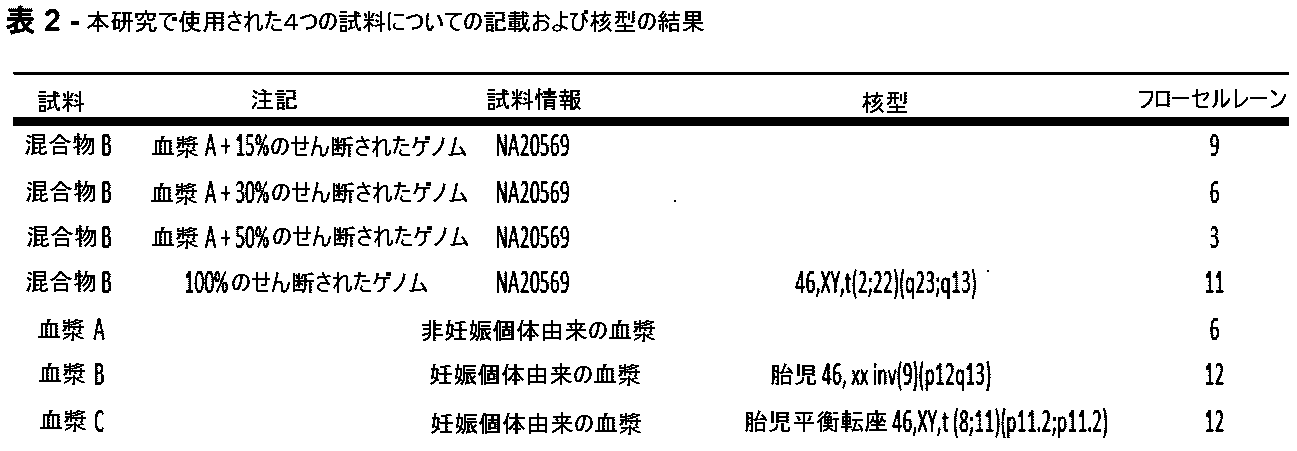
表3で例示されるデータフィルタリングステップは、不一致(disconcordance(すなわち、discordancy))、塩基スコアによる品質、マッピング/アラインメント特徴、および偽陽性一貫性の点検に基づく、ペアドエンドリードの選択を示す。 The data filtering step illustrated in Table 3 shows the selection of paired-end reads based on discordance (i.e., discordancy), quality by base score, mapping/alignment features, and checking for false positive consistency.
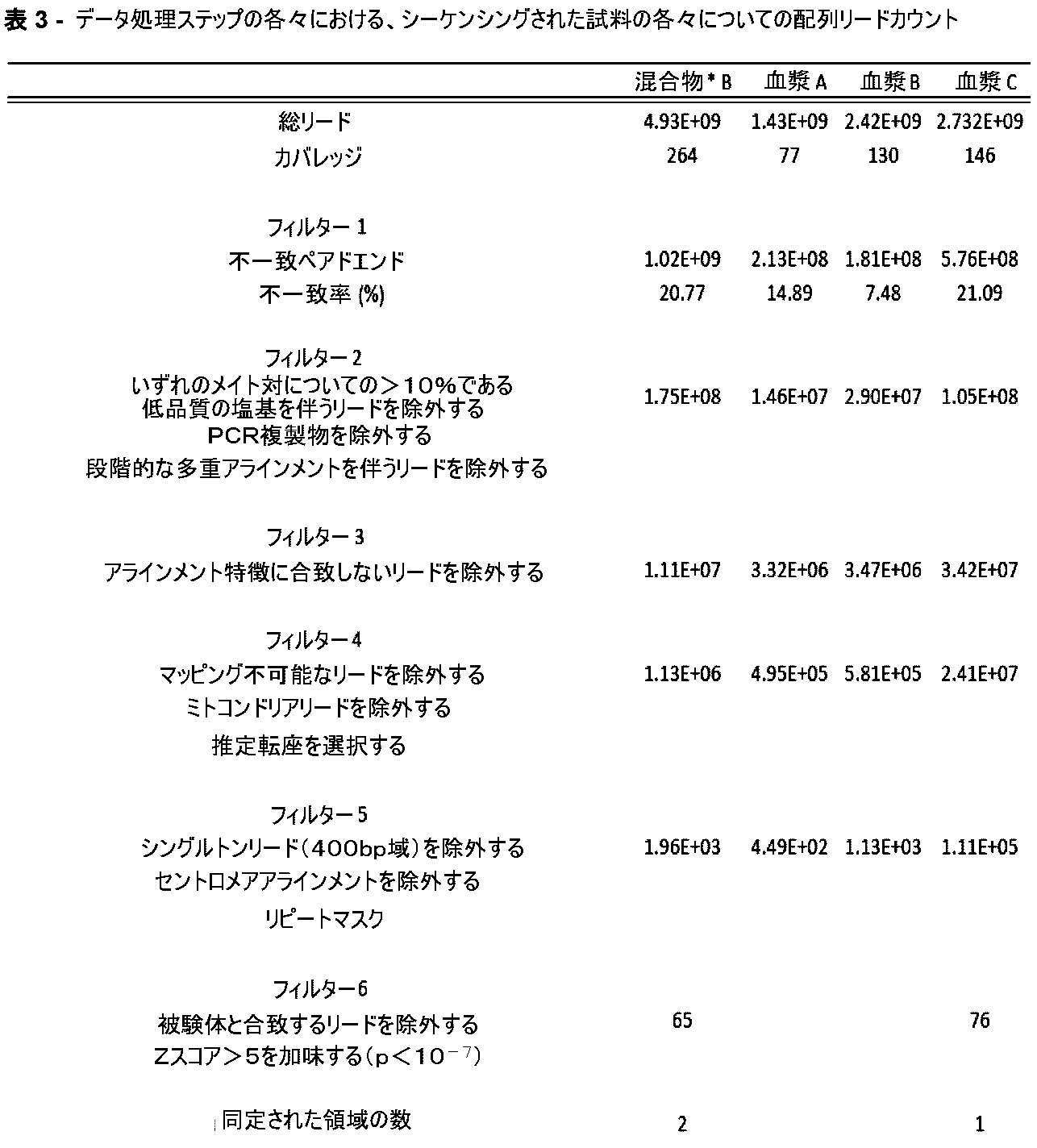
偽陽性一貫性の点検では、対照データセットを活用し、いずれのデータセットでも見出される構造的再配列を除外した。第2染色体と第5染色体との間で推定される構造的再配列は、被験セットおよびプールされた「対照」セットのいずれでも見出された(図5)ことから、この領域は、偽陽性の可能性が高いことが示唆される。後続のデータフィルタリングにより、Zスコア>5とする構造的再配列であって、混合物Bおよび血漿Cのそれぞれについて、2つの領域および1つの領域に対応する構造的再配列を含有する、65および76の推定ペアドエンドリードを同定した。Zスコアは、式A:

に従い計算した。
A false positive consistency check utilized the control dataset to exclude structural rearrangements found in both datasets. A putative structural rearrangement between
The calculation was made according to the following.
混合物Bは、せん断され、ccf DNAのおよそのサイズまで断片化されたゲノムDNAを伴い、公知のt(2;22)(q23;q13)転座を形成し、多様な濃度で非妊娠個体由来の血漿試料と混合されたモデル系であった。データフィルタリングの後、第4染色体(152Mb)と第11染色体(67Mb)との間、および第2染色体(149Mb)と第22染色体(45Mb)との間で、2カ所の推定転座を同定した。推定の第4染色体/第11染色体間転座は、高度に有意(Z=6.50、p=4.02×10-11)であったが、接合部(手作業でアセンブルされた213bpの領域の106位)の境界は、注釈が不十分な配列(表4)を複数含有したことから、これは、偽陽性の可能性が最も高いことが示唆される。第2の有意な領域は、Z=7.52(p=2.74×10-14)の染色体2p23および22q13を伴った。35のリード(15、30、50、および100%のせん断されたゲノム試料のそれぞれについて、4、4、0、および27のリード)についての処理後リアセンブリーにより、隣接する反復エレメントを伴わない、明確な構造的再配列が裏付けられた(図5C)。第2染色体と第22染色体との間で他の領域が同定されず、構造的再配列についてのリアセンブルされた証拠によりかつての注釈が支持された事実により、観察された染色体再配列の存在が支持された。
Mixture B was a model system with genomic DNA sheared and fragmented to the approximate size of ccf DNA, forming the known t(2;22)(q23;q13) translocation, mixed at various concentrations with plasma samples from non-pregnant individuals. After data filtering, two putative translocations were identified, between chromosomes 4 (152 Mb) and 11 (67 Mb) and between chromosomes 2 (149 Mb) and 22 (45 Mb). The putative chromosome 4/

(実施例2) (Example 2)
母体血漿に由来する循環無細胞(ccf)DNAについての超並列シーケンシングが、非侵襲的出産前検査のための主要技術として出現している。最も確立された方法では、シーケンシングを活用して、ある特定の常染色体トリソミーおよび他のコピー数変異を、高感度および高特異度で検出する。CNVの検出は、既に記載されているが、コピー数について中性のイベントを結果としてもたらす染色体変化であって、平衡転座を含む染色体変化は、より困難であり、いまだccf DNAから非侵襲的には検出されていないことが証明される。 Massively parallel sequencing of circulating cell-free (ccf) DNA derived from maternal plasma has emerged as a leading technology for noninvasive prenatal testing. Most established methods utilize sequencing to detect certain autosomal trisomies and other copy number variants with high sensitivity and specificity. Although detection of CNVs has been described, chromosomal alterations resulting in copy number neutral events, including balanced translocations, have proven more challenging and have not yet been detected noninvasively from ccf DNA.
全血液は、侵襲的手順を経る前の、妊娠15週と5日である、38歳の妊婦から回収した。羊水穿刺の適応は、母体の高齢および姉妹が平衡転座を保有することが既知であることを含んだ。後続の核型分析からの結果により、第8染色体の短いアームと第11染色体の短いアームとの間で生じる胎児転座が明らかにされた[核型分析結果:平衡転座46XY、t(8;11)(p11.2;p11.2)]。
Whole blood was collected from a 38-year-old pregnant woman at 15 weeks and 5 days of gestation prior to undergoing an invasive procedure. Indications for amniocentesis included advanced maternal age and a sister known to carry a balanced translocation. Results from subsequent karyotype analysis revealed a fetal translocation occurring between the short arm of
罹患個体に対して方法を実施する前に、胎児転座の検出を可能とするように、分析モデルおよび検査室モデルを開発した(実施例1を参照されたい)。塩基漸増アラインメントにより導出されるマッピング特徴を構築するのに、長さの短いccf DNAおよびペアドエンドシーケンシングを最終的に利用して、in silicoのデータのモデル化を実施して、複数の方法を査定した。次に、データフィルタリング法を最適化するように、公知の転座を伴うゲノムDNA試料を含有する混合物を創出して、妊婦に由来するccf
DNA内に存在する罹患DNAの比率をシミュレートした。
Analytical and laboratory models were developed to allow for the detection of fetal translocations prior to implementing the methods on affected individuals (see Example 1). In silico data modeling was performed to assess multiple methods, ultimately utilizing short lengths of ccf DNA and paired-end sequencing to construct mapping features derived by base-incremental alignment. Next, mixtures containing genomic DNA samples with known translocations were created to optimize the data filtering methods, and ccf DNA samples derived from pregnant women were analyzed.
The proportion of diseased DNA present in the DNA was simulated.
これらの分析法を開発した後で、罹患胎児を宿す母体に由来する血漿中ccf DNAを単離および分析した。この試料中の胎児画分は、16%であり、DNAの品質は、標準的なシーケンシングライブラリーを生成するのに十分であった。シーケンシングは、Illumina技術を使用して実施し、これにより、合計2.7×10⁹のペアドエンドシーケンシングリードをもたらした。開発された方法を適用して、染色体切断点の存在および正確な場所を、単一塩基の分解能で同定した。適用された方法により、公知の転座が明確に(p=1.2×10⁻⁸)同定され、他の転座の可能性が棄却されたことから、推定される胎児核型の拡大であって、塩基特異的切断点であるt(8;11)(34880907;44556834)(hg19)(図1)を含む拡大が可能となった。さらに、第11染色体と第8染色体との接合部において、6bpの欠失が同定されたが、ここでは、相互再配列は非存在であった(図1C)。
After developing these analytical methods, plasma ccf DNA from a mother carrying an affected fetus was isolated and analyzed. The fetal fraction in this sample was 16% and the quality of DNA was sufficient to generate a standard sequencing library. Sequencing was performed using Illumina technology, which resulted in a total of 2.7×10 9 paired-end sequencing reads. The developed method was applied to identify the presence and exact location of the chromosomal breakpoints with single base resolution. The applied method unambiguously identified the known translocation (p=1.2×10 −8 ) and rejected the possibility of other translocations, allowing the extension of the putative fetal karyotype to include the base-specific breakpoint t(8;11)(34880907;44556834) (hg19) (FIG. 1). In addition, a 6 bp deletion was identified at the junction of
まとめると、このデータにより、母体血漿に由来するccf DNAのシーケンシングを介する、平衡胎児転座イベントの、塩基特異的分解能での非侵襲的検出および特徴付けについての概念実証が裏付けられた。 Collectively, this data supports the proof-of-concept for the noninvasive detection and characterization of balanced fetal translocation events at base-specific resolution via sequencing of ccf DNA derived from maternal plasma.
(実施例3)
実施形態の例
Example 3
Example of an embodiment
下記に示される実施例は、ある特定の実施形態を例示するものであり、本技術を限定するものではない。 The examples provided below are illustrative of certain embodiments and are not intended to limit the scope of the present technology.
A1. メモリおよび1つまたはそれより多くのマイクロプロセッサーを含むシステムであって、メモリが、命令を含み、1つまたはそれより多くのマイクロプロセッサーが、命令に従い、試料核酸中の1種またはそれより多くの種の染色体変化の存在または非存在を決定するためのプロセスを実施するように構成されており、プロセスが、
(a)不一致リード対をペアドエンドの配列リードから同定するステップであって、該ペアドエンドの配列リードが、被験被験体試料に由来する循環無細胞核酸のリードであり、これにより、不一致リードメイトを同定するステップと、
(b)基準ゲノムに対してアラインされる、各不一致リードメイトの、複数の配列リード部分配列のマッピング可能性を特徴付けるステップであって、各不一致リードメイトの、該配列リード部分配列の各々の長さが異なるステップと、
(c)該不一致リードメイトのサブセットを、マッピング可能性の変化に従い選択するステップであって、該サブセットが、候補切断点を含むリードを含むステップと、
(d)(i)候補切断点と関連し、任意選択で、1つまたはそれより多くの実質的に類似する切断点と関連する該試料に由来する不一致リードメイトの数を、(ii)該候補切断点と関連し、任意選択で、該1つまたはそれより多くの実質的に類似する切断点と関連する基準に由来する不一致リードメイトの数と、(c)で選択された該サブセット内の該不一致リードメイトについて比較し、これにより、比較を生成するステップと、
(e)(d)における該比較に従い、該試料について、1種またはそれより多くの種の染色体変化の存在または非存在を決定するステップと
を含むシステム。
A1. A system comprising a memory and one or more microprocessors, the memory comprising instructions and the one or more microprocessors configured to follow the instructions and carry out a process for determining the presence or absence of one or more chromosomal alterations in a sample nucleic acid, the process comprising:
(a) identifying mismatched read pairs from paired-end sequence reads, the paired-end sequence reads being reads of circulating cell-free nucleic acid from a test subject sample, thereby identifying mismatched read mates;
(b) characterizing the mappability of a plurality of sequence read subsequences for each mismatched readmate aligned to a reference genome, wherein each of the sequence read subsequences for each mismatched readmate differs in length;
(c) selecting a subset of the mismatched readmates according to change in mappability, the subset including reads that include candidate breakpoints;
(d) comparing (i) a number of mismatched readmates from the sample associated with the candidate breakpoint, and optionally associated with one or more substantially similar breakpoints, with (ii) a number of mismatched readmates from a reference associated with the candidate breakpoint, and optionally associated with the one or more substantially similar breakpoints, for the mismatched readmates in the subset selected in (c), thereby generating a comparison;
(e) determining the presence or absence of one or more chromosomal alterations for the sample according to the comparison in (d).
A1.1. シーケンシング装置および1つまたはそれより多くの演算装置を含むシステムであって、
シーケンシング装置が、シーケンシング装置内にロードされた核酸のヌクレオチド塩基に対応するシグナルを生成するように構成され、核酸が、被験被験体試料に由来する循環無細胞核酸であるか、またはシーケンシング装置内にロードされた核酸が、循環無細胞核酸の改変変異体であり、
1つまたはそれより多くの演算装置が、メモリおよび1または複数のプロセッサーを含み、メモリが、1または複数のプロセッサーにより実行可能な命令を含み、1または複数のプロセッサーにより実行可能な命令が、
ペアドエンドの配列リードをシグナルから生成し、配列リードを基準ゲノムに対してアラインさせ、
(a)不一致リード対を、ペアドエンドの配列リードから同定し、これにより、不一致リードメイトを同定し、
(b)基準ゲノムに対してアラインされる、各不一致リードメイトの、複数の配列リード部分配列のマッピング可能性を特徴付け、この場合、各不一致リードメイトのこれらの配列リード部分配列の各々の長さが異なり、
(c)不一致リードメイトのサブセットを、マッピング可能性の変化に従い選択し、この場合、サブセットが、候補切断点を含むリードを含み、
(d)(i)候補切断点と関連し、任意選択で、1つまたはそれより多くの実質的に類似する切断点と関連する試料に由来する不一致リードメイトの数を、(ii)候補切断点と関連し、任意選択で、1つまたはそれより多くの実質的に類似する切断点と関連する基準に由来する不一致リードメイトの数と、(c)で選択されたサブセット内の不一致リードメイトについて比較し、これにより、比較を生成し、
(e)(d)における比較に従い、試料について、1種またはそれより多くの種の染色体変化の存在または非存在を決定する
ように構成されたシステム。
A1.1. A system including a sequencing device and one or more computing devices,
the sequencing device is configured to generate a signal corresponding to a nucleotide base of a nucleic acid loaded into the sequencing device, the nucleic acid being a circulating cell-free nucleic acid derived from a test subject sample or the nucleic acid loaded into the sequencing device being an engineered variant of a circulating cell-free nucleic acid;
The one or more computing devices include a memory and one or more processors, the memory includes instructions executable by the one or more processors, the instructions executable by the one or more processors include
generating paired-end sequence reads from the signals; aligning the sequence reads to a reference genome;
(a) identifying mismatched read pairs from the paired-end sequence reads, thereby identifying mismatched read mates;
(b) characterizing the mappability of multiple sequence read subsequences of each mismatched readmate aligned to the reference genome, where each of these sequence read subsequences of each mismatched readmate differs in length;
(c) selecting a subset of the mismatched readmates according to change in mappability, where the subset includes reads that contain the candidate breakpoint;
(d) comparing (i) a number of mismatched readmates from the sample associated with the candidate breakpoint, and optionally associated with one or more substantially similar breakpoints, with (ii) a number of mismatched readmates from the reference associated with the candidate breakpoint, and optionally associated with one or more substantially similar breakpoints, for the mismatched readmates in the subset selected in (c), thereby generating a comparison;
(e) a system configured to determine the presence or absence of one or more chromosomal alterations for the sample according to the comparison in (d).
A1.2. 前記1種またはそれより多くの種の染色体変化が、染色体転座を含む、実施形態A1またはA1.1のシステム。 A1.2. The system of embodiment A1 or A1.1, wherein the one or more chromosomal alterations include a chromosomal translocation.
A1.3. 前記1種またはそれより多くの種の染色体変化が、染色体欠失を含む、実施形態A1またはA1.1のシステム。 A1.3. The system of embodiment A1 or A1.1, wherein the one or more chromosomal alterations include a chromosomal deletion.
A1.4. 前記1種またはそれより多くの種の染色体変化が、染色体逆位を含む、実施形態A1またはA1.1のシステム。 A1.4. The system of embodiment A1 or A1.1, wherein the one or more chromosomal alterations include a chromosomal inversion.
A1.5. 前記1種またはそれより多くの種の染色体変化が、異種挿入を含む、実施形態A1またはA1.1のシステム。 A1.5. The system of embodiment A1 or A1.1, wherein the one or more chromosomal alterations include a heterologous insertion.
A1.6. 1つまたはそれより多くの候補切断点の位置を決定するステップを含む、実施形態A1からA1.5のいずれか一つのシステム。 A1.6. The system of any one of embodiments A1 to A1.5, including determining the location of one or more candidate breakpoints.
A2. (b)における前記特徴付けるステップが、各不一致リードメイトの、前記配列リード部分配列の各々についての前記マッピング可能性と、前記長さとの間で、当てはめ関係を生成することを含む、実施形態A1からA1.5のいずれか一つのシステム。 A2. Any one of the systems of embodiments A1 to A1.5, wherein the characterizing step in (b) includes generating a fit relationship between the mappability and the length for each of the sequence read subsequences of each mismatched readmate.
A3. 各不一致リードメイトの、前記配列リード部分配列の各々が、2番目に大きな断片または前記リードメイトより約5塩基またはこれ未満だけ短い、実施形態A1からA2のいずれか一つのシステム。 A3. Any one of the systems of embodiments A1 to A2, wherein each of the sequence read subsequences of each mismatched readmate is about 5 bases or less shorter than the next largest fragment or readmate.
A3.1. 各不一致リードメイトの、前記配列リード部分配列の各々が、2番目に大きな断片または前記リードメイトより1塩基または2塩基だけ短い、実施形態A3のシステム。 A3.1. The system of embodiment A3, wherein each of the sequence read subsequences of each mismatched readmate is one or two bases shorter than the next largest fragment or readmate.
A4. 各不一致リードメイトの、前記配列リード部分配列の各々が、2番目に大きな断片または前記リードメイトより漸次的に短い、実施形態A3のシステム。 A4. The system of embodiment A3, wherein each of the sequence read subsequences of each mismatched readmate is progressively shorter than the next largest fragment or readmate.
A5. 各不一致リードメイトの、前記配列リード部分配列の各々が、2番目に大きな断片または前記リードメイトより約1塩基ずつ漸次的に短い、実施形態A4のシステム。 A5. The system of embodiment A4, wherein each of the sequence read subsequences for each mismatched readmate is progressively shorter than the next largest fragment or readmate by about one base.
A6. マッピング可能性の変化が、前記あてはめ関係の傾きを含む、実施形態A2からA5のいずれか一つのシステム。 A6. Any one of the systems of embodiments A2 to A5, wherein the change in mappability includes a slope of the fitting relationship.
A7. (c)における前記選択するステップが、マッピング可能性の閾値に従う、実施形態A1からA6のいずれか一つのシステム。 A7. The system of any one of embodiments A1 to A6, wherein the selecting step in (c) is based on a mappability threshold.
A8. 前記不一致リードメイトをフィルタリングすることを含む、実施形態A1からA7のいずれか一つのシステム。 A8. Any one of the systems of embodiments A1 to A7, including filtering the non-matching readmates.
A9. 前記フィルタリングすることが、前記不一致リードメイトの一方または両方を除外することを含む、実施形態A8のシステム。 A9. The system of embodiment A8, wherein the filtering includes filtering out one or both of the non-matching readmates.
A10. 前記フィルタリングすることが、(i)低品質のリードを除外すること、(ii)一致リードを除外すること、(iii)PCRで複製されたリードを除外すること、(iv)ミトコンドリアDNAに対してマッピングされるリードを除外すること、(v)反復エレメントに対してマッピングされるリードを除外すること、(vi)マッピング不可能なリードを除外すること、(vi)段階的な多重アラインメントを含むリードを除外すること、および(vii)セントロメアに対してマッピングされるリードを除外することのうちの1つまたはそれより多くから選択される、実施形態A8またはA9のシステム。 A10. The system of embodiment A8 or A9, wherein the filtering is selected from one or more of: (i) filtering out low quality reads, (ii) filtering out matched reads, (iii) filtering out PCR duplicated reads, (iv) filtering out reads that map to mitochondrial DNA, (v) filtering out reads that map to repetitive elements, (vi) filtering out unmappable reads, (vi) filtering out reads that contain stepwise multiple alignments, and (vii) filtering out reads that map to centromeres.
A11. 前記フィルタリングすることが、1種またはそれより多くの種のシングルトンイベントを除外することを含む、実施形態A8からA10のいずれか一つのシステム。 A11. The system of any one of embodiments A8 to A10, wherein the filtering includes filtering out one or more singleton events.
A12. 前記フィルタリングすることが、前記実質的に類似する切断点が、前記基準内に存在する場合に、不一致リードメイトを除外することを含む、実施形態A8からA10のいずれか一つのシステム。 A12. The system of any one of embodiments A8 to A10, wherein the filtering includes filtering out non-matching readmates if the substantially similar breakpoints are within the criteria.
A13. 前記切断点の場所を、単一塩基の分解能で同定する、実施形態A1からA12のいずれか一つのシステム。 A13. Any one of the systems of embodiments A1 to A12, wherein the location of the breakpoint is identified with single base resolution.
A14. (e)で、平衡転座の存在を決定する、実施形態A2からA13のいずれか一つのシステム。 A14. Any one of the systems of embodiments A2 to A13, wherein in (e), the presence of a balanced translocation is determined.
A15. 前記平衡転座が1つの平衡転座である、実施形態A14のいずれか一つのシステム。 A15. Any one of the systems of embodiment A14, wherein the balanced translocation is one balanced translocation.
A16. (e)で、非平衡転座の存在を決定する、実施形態A1からA15のいずれか一つのシステム。 A16. Any one of the systems of embodiments A1 to A15, wherein in (e), the presence of an unbalanced translocation is determined.
A17. (e)で前記染色体変化の存在を決定するステップが、(d)の前記比較において、前記試料から、前記基準と比較して実質的に多数の配列リードを同定することを含む、実施形態A1からA16のいずれか一つのシステム。 A17. Any one of the systems of embodiments A1 to A16, wherein the step of determining the presence of the chromosomal alteration in (e) comprises identifying a substantially greater number of sequence reads from the sample compared to the reference in the comparison in (d).
A18. 第1の切断点および第2の切断点を、(d)における前記比較に従い同定する、実施形態A1からA17のいずれか一つのシステム。 A18. Any one of the systems of embodiments A1 to A17, wherein the first breakpoint and the second breakpoint are identified according to the comparison in (d).
A19. (e)で、染色体変化の存在を、前記第1の切断点および前記第2の切断点に従い同定する、実施形態A18のシステム。 A19. The system of embodiment A18, in which in (e), the presence of a chromosomal alteration is identified according to the first breakpoint and the second breakpoint.
A20. (c)における前記選択するステップもしくは(d)における前記比較するステップ、または(c)における前記選択するステップおよび(d)における前記比較するステップが、クラスタリング分析を実施することを含まない、実施形態A1からA19のいずれか一つのシステム。 A20. Any one of the systems of embodiments A1 to A19, wherein the selecting step in (c) or the comparing step in (d), or the selecting step in (c) and the comparing step in (d) do not include performing a clustering analysis.
A21. (d)における前記比較が、信頼水準を決定することを含む、実施形態A1からA20のいずれか一つのシステム。 A21. The system of any one of embodiments A1 to A20, wherein the comparison in (d) includes determining a confidence level.
A22. 前記信頼水準を決定することが、p値を決定することを含む、実施形態A21のシステム。 A22. The system of embodiment A21, wherein determining the confidence level includes determining a p-value.
A23. 前記信頼水準を決定することが、Zスコアを決定することを含む、実施形態A21のシステム。 A23. The system of embodiment A21, wherein determining the confidence level includes determining a Z-score.
A24. 1つまたはそれより多くのマシンの使用を含む、実施形態A1からA23のいずれか一つのシステム。 A24. Any one of the systems of embodiments A1 to A23, including the use of one or more machines.
A25. 前記配列リードを生成するように構成されたシーケンシングマシンの使用を含む、実施形態A24のシステム。 A25. The system of embodiment A24, comprising the use of a sequencing machine configured to generate the sequence reads.
A26. 1つのマシンに具体化される、実施形態A24またはA25のシステム。 A26. A system of embodiment A24 or A25 embodied in a single machine.
A27. 前記メモリが、前記配列リード、前記不一致リード対、不一致リードメイトの前記サブセット、マッピング可能性の変化、前記切断点、またはこれらの組合せを含む、実施形態A1からA26のいずれか一つのシステム。 A27. Any one of the systems of embodiments A1 to A26, wherein the memory includes the sequence reads, the mismatched read pairs, the subset of mismatched readmates, changes in mappability, the breakpoints, or combinations thereof.
A28. 前記試料核酸が、胎児を宿す妊婦に由来する循環無細胞核酸である、実施形態A1からA27のいずれか一つのシステム。 A28. Any one of the systems of embodiments A1 to A27, wherein the sample nucleic acid is circulating cell-free nucleic acid derived from a pregnant woman carrying a fetus.
A29. 前記試料核酸が、細胞増殖性障害を有するか、またはこれを有することが疑われる被験体に由来する循環無細胞核酸である、実施形態A1からA27のいずれか一つのシステム。 A29. Any one of the systems of embodiments A1 to A27, wherein the sample nucleic acid is circulating cell-free nucleic acid from a subject having or suspected of having a cell proliferative disorder.
A30. 前記細胞増殖性障害が、がんである、実施形態A29のシステム。 A30. The system of embodiment A29, wherein the cell proliferation disorder is cancer.
A31. 1種またはそれより多くの種の染色体変化の存在または非存在を、少数核酸種について決定する、実施形態A1からA30のいずれか一つのシステム。 A31. Any one of the systems of embodiments A1 to A30, determining the presence or absence of one or more chromosomal alterations for minority nucleic acid species.
A32. 前記少数核酸種が、胎児核酸を含む、実施形態A31のシステム。 A32. The system of embodiment A31, wherein the minority nucleic acid species includes fetal nucleic acid.
A33. 前記少数核酸種が、がん細胞に由来する核酸を含む、実施形態A31のシステム。 A33. The system of embodiment A31, wherein the minority nucleic acid species includes nucleic acids derived from cancer cells.
B1. 試料核酸中の1種またはそれより多くの種の染色体変化の存在または非存在を決定する方法であって、
(a)不一致リード対をペアドエンドの配列リードから同定するステップであって、該ペアドエンドの配列リードが、被験被験体試料に由来する循環無細胞核酸のリードであり、これにより、不一致リードメイトを同定するステップと、
(b)基準ゲノムに対してアラインされる、各不一致リードメイトの、複数の配列リード部分配列のマッピング可能性を特徴付けるステップであって、各不一致リードメイトの、該配列リード部分配列の各々の長さが異なるステップと、
(c)該不一致リードメイトのサブセットを、マッピング可能性の変化に従い選択するステップであって、該サブセットが、候補切断点を含むリードを含むステップと、
(d)(i)候補切断点と関連し、任意選択で、1つまたはそれより多くの実質的に類似する切断点と関連する該試料に由来する不一致リードメイトの数を、(ii)該候補切断点と関連し、任意選択で、該1つまたはそれより多くの実質的に類似する切断点と関連する基準に由来する不一致リードメイトの数と、(c)で選択された該サブセット内の該不一致リードメイトについて比較し、これにより、比較を生成するステップと、
(e)(d)における該比較に従い、該試料について、1種またはそれより多くの種の染色体変化の存在または非存在を決定するステップと
を含む方法。
B1. A method for determining the presence or absence of one or more chromosomal alterations in a sample nucleic acid, comprising:
(a) identifying mismatched read pairs from paired-end sequence reads, the paired-end sequence reads being reads of circulating cell-free nucleic acid from a test subject sample, thereby identifying mismatched read mates;
(b) characterizing the mappability of a plurality of sequence read subsequences for each mismatched readmate aligned to a reference genome, wherein each of the sequence read subsequences for each mismatched readmate differs in length;
(c) selecting a subset of the mismatched readmates according to change in mappability, the subset including reads that include candidate breakpoints;
(d) comparing (i) a number of mismatched readmates from the sample associated with the candidate breakpoint, and optionally associated with one or more substantially similar breakpoints, with (ii) a number of mismatched readmates from a reference associated with the candidate breakpoint, and optionally associated with the one or more substantially similar breakpoints, for the mismatched readmates in the subset selected in (c), thereby generating a comparison;
(e) determining the presence or absence of one or more chromosomal alterations for said sample according to said comparison in (d).
B1.1 試料核酸中の1種またはそれより多くの種の染色体変化の存在または非存在を決定する方法であって、
シーケンシング装置に、被験試料に由来する循環無細胞核酸をロードするか、または該シーケンシング装置に、該核酸の改変変異体をロードするステップであって、該シーケンシング装置により、該核酸のヌクレオチド塩基に対応するシグナルが生成されるステップと、
任意選択で、該シグナルを、1つまたはそれより多くの演算装置を含むシステムへと移した後で、このシステムにより、該核酸の該シグナルから、ペアドエンドの配列リードを生成するステップであって、該システム内の該1つまたはそれより多くの演算装置が、メモリおよび1または複数のプロセッサーを含むステップと、
該試料核酸中の1種またはそれより多くの種の染色体変化の存在または非存在を、該システムにより決定するステップであって、該システム内の1つの演算装置または演算装置の組合せが、該配列リードを基準ゲノムに対してアラインさせ、
(a)不一致リード対を、該ペアドエンドの配列リードから同定し、これにより、不一致リードメイトを同定し、
(b)基準ゲノムに対してアラインされる、各不一致リードメイトの、複数の配列リード部分配列のマッピング可能性を特徴付け、この場合、各不一致リードメイトの該配列リード部分配列の各々の長さが異なり、
(c)該不一致リードメイトのサブセットを、マッピング可能性の変化に従い選択し、この場合、該サブセットが、候補切断点を含むリードを含み、
(d)(i)候補切断点と関連し、任意選択で、1つまたはそれより多くの実質的に類似する切断点と関連する該試料に由来する不一致リードメイトの数を、(ii)該候補切断点と関連し、任意選択で、該1つまたはそれより多くの実質的に類似する切断点と関連する基準に由来する不一致リードメイトの数と、(c)で選択された該サブセット内の該不一致リードメイトについて比較し、これにより、比較を生成し、
(e)(d)における該比較に従い、該試料について、1種またはそれより多くの種の染色体変化の存在または非存在を決定する
ように構成されるステップと
を含む方法。
B1.1 A method for determining the presence or absence of one or more chromosomal alterations in a sample nucleic acid, comprising:
loading a sequencing device with circulating cell-free nucleic acid from a test sample, or loading an engineered variant of said nucleic acid onto said sequencing device, wherein said sequencing device generates signals corresponding to nucleotide bases of said nucleic acid;
Optionally, generating paired-end sequence reads from the signals of the nucleic acids by a system comprising one or more computing devices after transferring the signals to the system comprising one or more computing devices, the one or more computing devices in the system comprising a memory and one or more processors;
determining the presence or absence of one or more chromosomal alterations in the sample nucleic acid by the system, wherein a computing device or combination of computing devices in the system aligns the sequence reads to a reference genome;
(a) identifying mismatched read pairs from the paired-end sequence reads, thereby identifying mismatched read mates;
(b) characterizing the mappability of a plurality of sequence read subsequences of each mismatched readmate aligned to the reference genome, where each of the sequence read subsequences of each mismatched readmate differs in length;
(c) selecting a subset of the mismatched readmates according to change in mappability, where the subset includes reads that include the candidate breakpoint;
(d) comparing (i) a number of mismatched readmates from the sample associated with the candidate breakpoint, and optionally associated with one or more substantially similar breakpoints, with (ii) a number of mismatched readmates from a reference associated with the candidate breakpoint, and optionally associated with the one or more substantially similar breakpoints, for the mismatched readmates in the subset selected in (c), thereby generating a comparison;
(e) determining the presence or absence of one or more chromosomal alterations for the sample according to the comparison in (d).
B1.2. 前記1種またはそれより多くの種の染色体変化が、染色体転座を含む、実施形態B1またはB1.1の方法。 B1.2. The method of embodiment B1 or B1.1, wherein the one or more chromosomal alterations include a chromosomal translocation.
B1.3. 前記1種またはそれより多くの種の染色体変化が、染色体欠失を含む、実施形態B1またはB1.1の方法。 B1.3. The method of embodiment B1 or B1.1, wherein the one or more chromosomal alterations include a chromosomal deletion.
B1.4. 前記1種またはそれより多くの種の染色体変化が、染色体逆位を含む、実施形態B1またはB1.1の方法。 B1.4. The method of embodiment B1 or B1.1, wherein the one or more chromosomal alterations include a chromosomal inversion.
B1.5. 前記1種またはそれより多くの種の染色体変化が、異種挿入を含む、実施形態B1またはB1.1の方法。 B1.5. The method of embodiment B1 or B1.1, wherein the one or more chromosomal alterations comprise a heterologous insertion.
B1.6. 1つまたはそれより多くの候補切断点の位置を決定するステップを含む、実施形態B1からB1.5のいずれか一つの方法。 B1.6. Any one of the methods of embodiments B1 to B1.5, including determining the location of one or more candidate breakpoints.
B2. (b)における前記特徴付けるステップが、各不一致リードメイトの、前記配列リード部分配列の各々についての前記マッピング可能性と、前記長さとの間で、当てはめ関係を生成することを含む、実施形態B1からB1.6のいずれか一つの方法。 B2. Any one of the methods of embodiments B1 to B1.6, wherein the characterizing step in (b) includes generating a fit relationship between the mappability and the length for each of the sequence read subsequences of each mismatched readmate.
B3. 各不一致リードメイトの、前記配列リード部分配列の各々が、2番目に大きな断片または前記リードメイトより約5塩基またはこれ未満だけ短い、実施形態B1からB2のいずれか一つの方法。 B3. Any one of the methods of embodiments B1 to B2, wherein each of the sequence read subsequences of each mismatched readmate is about 5 bases or less shorter than the next largest fragment or readmate.
B3.1. 各不一致リードメイトの、前記配列リード部分配列の各々が、2番目に大きな断片または前記リードメイトより1塩基または2塩基だけ短い、実施形態B3の方法。 B3.1. The method of embodiment B3, wherein each of the sequence read subsequences of each mismatched readmate is one or two bases shorter than the next largest fragment or readmate.
B4. 各不一致リードメイトの、前記配列リード部分配列の各々が、2番目に大きな断片または前記リードメイトより漸次的に短い、実施形態B3の方法。 B4. The method of embodiment B3, wherein each of the sequence read subsequences of each mismatched readmate is progressively shorter than the next largest fragment or readmate.
B5. 各不一致リードメイトの、前記配列リード部分配列の各々が、2番目に大きな断片または前記リードメイトより約1塩基ずつ漸次的に短い、実施形態B4の方法。 B5. The method of embodiment B4, wherein each of the sequence read subsequences for each mismatched readmate is progressively shorter than the next largest fragment or readmate by about one base.
B6. マッピング可能性の変化を、前記当てはめ関係の傾きから決定する、実施形態B2からB5のいずれか一つの方法。 B6. Any one of the methods of embodiments B2 to B5, wherein the change in mappability is determined from the slope of the fitting relationship.
B6.1. マッピング可能性の変化が、前記あてはめ関係の傾きを含む、実施形態B2からB5のいずれか一つの方法。 B6.1. Any one of the methods of embodiments B2 to B5, wherein the change in mappability includes a slope of the fitting relationship.
B7. (c)における前記選択するステップが、マッピング可能性の閾値に従う、実施形態B1からB6のいずれか一つの方法。 B7. Any one of the methods of embodiments B1 to B6, wherein the selecting step in (c) is according to a mappability threshold.
B8. 前記不一致リードメイトをフィルタリングするステップを含む、実施形態B1からB7のいずれか一つの方法。 B8. Any one of the methods of embodiments B1 to B7, including filtering the non-matching readmates.
B9. 前記フィルタリングするステップが、前記不一致リードメイトの一方または両方を除外することを含む、実施形態B8の方法。 B9. The method of embodiment B8, wherein the filtering step includes filtering out one or both of the non-matching readmates.
B10. 前記フィルタリングするステップが、(i)低品質のリードを除外すること、(ii)一致リードを除外すること、(iii)PCRで複製されたリードを除外すること、(iv)ミトコンドリアDNAに対してマッピングされるリードを除外すること、(v)反復エレメントに対してマッピングされるリードを除外すること、(vi)マッピング不可能なリードを除外すること、(vii)段階的な多重アラインメントを含むリードを除外すること、および(viii)セントロメアに対してマッピングされるリードを除外することのうちの1つまたはそれより多くから選択される、実施形態B8またはB9の方法。 B10. The method of embodiment B8 or B9, wherein the filtering step is selected from one or more of: (i) filtering out low quality reads, (ii) filtering out matched reads, (iii) filtering out PCR duplicated reads, (iv) filtering out reads that map to mitochondrial DNA, (v) filtering out reads that map to repetitive elements, (vi) filtering out unmappable reads, (vii) filtering out reads that contain stepwise multiple alignments, and (viii) filtering out reads that map to centromeres.
B11. 前記フィルタリングするステップが、1種またはそれより多くの種のシングルトンイベントを除外することを含む、実施形態B8からB10のいずれか一つの方法。 B11. The method of any one of embodiments B8 to B10, wherein the filtering step includes filtering out one or more singleton events.
B12. 前記フィルタリングするステップが、前記実質的に類似する切断点が、前記基準内に存在する場合に、不一致リードメイトを除外することを含む、実施形態B8からB10のいずれか一つの方法。 B12. Any one of the methods of embodiments B8 to B10, wherein the filtering step includes filtering out non-matching readmates if the substantially similar breakpoints are within the criteria.
B13. 前記切断点の場所を、単一塩基の分解能で同定する、実施形態B1からB12のいずれか一つの方法。 B13. Any one of the methods of embodiments B1 to B12, wherein the location of the breakpoint is identified with single base resolution.
B14. (e)で、平衡転座の存在を決定する、実施形態B1からB13のいずれか一つの方法。 B14. Any one of the methods of embodiments B1 to B13, wherein in (e), the presence of a balanced translocation is determined.
B15. 前記平衡転座が1つの平衡転座である、実施形態B14の方法。 B15. The method of embodiment B14, wherein the balanced translocation is one balanced translocation.
B16. (e)で、非平衡転座の存在を決定する、実施形態B1からB15のいずれか一つの方法。 B16. Any one of the methods of embodiments B1 to B15, wherein in (e), the presence of an unbalanced translocation is determined.
B17. (e)で前記染色体変化の存在を決定するステップが、(d)の前記比較において、前記試料から、前記基準と比較して実質的に多数の配列リードを同定することを含む、実施形態B1からB16のいずれか一つの方法。 B17. Any one of the methods of embodiments B1 to B16, wherein the step of determining the presence of the chromosomal alteration in (e) comprises identifying a substantially greater number of sequence reads from the sample compared to the reference in the comparison in (d).
B18. 第1の切断点および第2の切断点を、(d)における前記比較に従い同定する、実施形態B1からB17のいずれか一つの方法。 B18. Any one of the methods of embodiments B1 to B17, wherein the first breakpoint and the second breakpoint are identified according to the comparison in (d).
B19. (e)で、染色体変化の存在を、前記第1の切断点および前記第2の切断点に従い同定する、実施形態B18の方法。 B19. The method of embodiment B18, in which in (e), the presence of a chromosomal alteration is identified according to the first breakpoint and the second breakpoint.
B20. (c)における前記選択するステップもしくは(d)における前記比較するステップ、または(c)における前記選択するステップおよび(d)における前記比較するステップが、クラスタリング分析を実施することを含まない、実施形態B1からB19のいずれか一つの方法。 B20. Any one of the methods of embodiments B1 to B19, wherein the selecting step in (c) or the comparing step in (d), or the selecting step in (c) and the comparing step in (d) do not include performing a clustering analysis.
B21. (d)における前記比較が、信頼水準を決定することを含む、実施形態B1からB20のいずれか一つの方法。 B21. Any one of the methods of embodiments B1 to B20, wherein the comparison in (d) includes determining a confidence level.
B22. 前記信頼水準を決定することが、p値を決定することを含む、実施形態B21の方法。 B22. The method of embodiment B21, wherein determining the confidence level comprises determining a p-value.
B23. 前記信頼水準を決定することが、Zスコアを決定することを含む、実施形態B21の方法。 B23. The method of embodiment B21, wherein determining the confidence level comprises determining a Z-score.
B24. 1つまたはそれより多くのマシンの使用を含む、実施形態B1からB23のいずれか一つの方法。 B24. Any one of the methods of embodiments B1 to B23, including the use of one or more machines.
B25. 前記配列リードを生成するように構成されたシーケンシングマシンの使用を含む、実施形態B24の方法。 B25. The method of embodiment B24, comprising the use of a sequencing machine configured to generate the sequence reads.
B26. 1つのマシンに具体化される、実施形態B24またはB25の方法。 B26. The method of embodiment B24 or B25 embodied in a single machine.
B27. 前記配列リード、前記不一致リード対、不一致リードメイトの前記サブセット、マッピング可能性の変化、前記切断点、またはこれらの組合せを得るステップを含む、実施形態B1からB26のいずれか一つの方法。 B27. Any one of the methods of embodiments B1 to B26, comprising obtaining the sequence reads, the mismatched read pairs, the subset of mismatched readmates, the change in mappability, the breakpoints, or a combination thereof.
B28. 前記試料核酸が、胎児を宿す妊婦に由来する循環無細胞核酸である、実施形態B1からB27のいずれか一つの方法。 B28. Any one of the methods of embodiments B1 to B27, wherein the sample nucleic acid is circulating cell-free nucleic acid from a pregnant woman carrying a fetus.
B29. 前記試料核酸が、細胞増殖性障害を有するか、またはこれを有することが疑われる被験体に由来する循環無細胞核酸である、実施形態B1からB27のいずれか一つの方法。 B29. Any one of the methods of embodiments B1 to B27, wherein the sample nucleic acid is circulating cell-free nucleic acid from a subject having or suspected of having a cell proliferative disorder.
B30. 前記細胞増殖性障害が、がんである、実施形態B29の方法。 B30. The method of embodiment B29, wherein the cell proliferative disorder is cancer.
B31. 1種またはそれより多くの種の染色体変化の存在または非存在を、少数核酸種について決定する、実施形態B1からB30のいずれか一つの方法。 B31. Any one of the methods of embodiments B1 to B30, in which the presence or absence of one or more chromosomal alterations is determined for minority nucleic acid species.
B32. 前記少数核酸種が、胎児核酸を含む、実施形態B31の方法。 B32. The method of embodiment B31, wherein the minority nucleic acid species comprises fetal nucleic acid.
B33. 前記少数核酸種が、がん細胞に由来する核酸を含む、実施形態B31の方法。 B33. The method of embodiment B31, wherein the minority nucleic acid species comprises nucleic acid derived from a cancer cell.
C1. 1または複数のプロセッサーおよびメモリを含む装置であって、メモリが、1または複数のプロセッサーにより実行可能な命令を含み、メモリが、基準ゲノムに対してマッピングされる核酸配列リードを含み;1または複数のプロセッサーにより実行可能な命令が、
(a)不一致リード対を、ペアドエンドの配列リードから同定し、ここで、ペアドエンドの配列リードが、被験被験体試料に由来する循環無細胞核酸のリードであり、これにより、不一致リードメイトを同定し、
(b)基準ゲノムに対してアラインされる、各不一致リードメイトの、複数の配列リード部分配列のマッピング可能性を特徴付け、この場合、各不一致リードメイトのこれらの配列リード部分配列の各々の長さが異なり、
(c)不一致リードメイトのサブセットを、マッピング可能性の変化に従い選択し、ここで、サブセットが、候補切断点を含むリードを含み、
(d)(i)候補切断点と関連し、任意選択で、1つまたはそれより多くの実質的に類似する切断点と関連する試料に由来する不一致リードメイトの数を、(ii)候補切断点と関連し、任意選択で、1つまたはそれより多くの実質的に類似する切断点と関連する基準に由来する不一致リードメイトの数と、(c)で選択されたサブセット内の不一致リードメイトについて比較し、これにより、比較を生成し、
(e)(d)における比較に従い、試料について、1種またはそれより多くの種の染色体変化の存在または非存在を決定するように構成された装置。
C1. An apparatus comprising one or more processors and a memory, the memory comprising instructions executable by the one or more processors, the memory comprising nucleic acid sequence reads to be mapped to a reference genome; the instructions executable by the one or more processors comprising:
(a) identifying mismatched read pairs from paired-end sequence reads, where the paired-end sequence reads are reads of circulating cell-free nucleic acid derived from a test subject sample, thereby identifying mismatched read mates;
(b) characterizing the mappability of multiple sequence read subsequences of each mismatched readmate aligned to the reference genome, where each of these sequence read subsequences of each mismatched readmate differs in length;
(c) selecting a subset of the mismatched readmates according to change in mappability, where the subset includes reads that contain the candidate breakpoint;
(d) comparing (i) a number of mismatched readmates from the sample associated with the candidate breakpoint, and optionally associated with one or more substantially similar breakpoints, with (ii) a number of mismatched readmates from the reference associated with the candidate breakpoint, and optionally associated with one or more substantially similar breakpoints, for the mismatched readmates in the subset selected in (c), thereby generating a comparison;
(e) an apparatus configured to determine the presence or absence of one or more chromosomal alterations for the sample according to the comparison in (d).
C1.1. 前記1種またはそれより多くの種の染色体変化が、染色体転座を含む、実施形態C1の装置。 C1.1. The device of embodiment C1, wherein the one or more chromosomal alterations include a chromosomal translocation.
C1.2. 前記1種またはそれより多くの種の染色体変化が、染色体欠失を含む、実施形態C1の装置。 C1.2. The device of embodiment C1, wherein the one or more chromosomal alterations include a chromosomal deletion.
C1.3. 前記1種またはそれより多くの種の染色体変化が、染色体逆位を含む、実施形態C1の装置。 C1.3. The device of embodiment C1, wherein the one or more chromosomal alterations include a chromosomal inversion.
C1.4. 前記1種またはそれより多くの種の染色体変化が、異種挿入を含む、実施形態C1の装置。 C1.4. The device of embodiment C1, wherein the one or more chromosomal alterations include a heterologous insertion.
C1.5. 1つまたはそれより多くの候補切断点の位置を決定することを含む、実施形態C1からC1.4のいずれか一つの装置。 C1.5. The apparatus of any one of embodiments C1 to C1.4, further comprising determining the location of one or more candidate breakpoints.
C2. (b)における前記特徴付けることが、各不一致リードメイトの、前記配列リード部分配列の各々についての前記マッピング可能性と、前記長さとの間で、当てはめ関係を生成することを含む、実施形態C1からC1.5のいずれか一つの装置。 C2. Any one of the apparatuses of embodiments C1 to C1.5, wherein the characterizing in (b) includes generating a fit relationship between the mappability and the length for each of the sequence read subsequences of each mismatched readmate.
C3. 各不一致リードメイトの、前記配列リード部分配列の各々が、2番目に大きな断片または前記リードメイトより約5塩基またはこれ未満だけ短い、実施形態C1からC2のいずれか一つの装置。 C3. Any one of the devices of embodiments C1 to C2, wherein each of the sequence read subsequences of each mismatched readmate is about 5 bases or less shorter than the next largest fragment or readmate.
C3.1. 各不一致リードメイトの、前記配列リード部分配列の各々が、2番目に大きな断片または前記リードメイトより1塩基または2塩基だけ短い、実施形態C3の装置。 C3.1. The apparatus of embodiment C3, wherein each of the sequence read subsequences of each mismatched readmate is one or two bases shorter than the next largest fragment or readmate.
C4. 各不一致リードメイトの、前記配列リード部分配列の各々が、2番目に大きな断片または前記リードメイトより漸次的に短い、実施形態C3の装置。 C4. The apparatus of embodiment C3, wherein each of the sequence read subsequences of each mismatched readmate is progressively shorter than the next largest fragment or the readmate.
C5. 各不一致リードメイトの、前記配列リード部分配列の各々が、2番目に大きな断片または前記リードメイトより約1塩基ずつ漸次的に短い、実施形態C4の装置。 C5. The apparatus of embodiment C4, wherein each of the sequence read subsequences for each mismatched readmate is progressively shorter than the next largest fragment or readmate by about one base.
C6. マッピング可能性の変化が、前記あてはめ関係の傾きを含む、実施形態C2からC5のいずれか一つの装置。 C6. Any one of the devices of embodiments C2 to C5, wherein the change in mappability includes a slope of the fitting relationship.
C7. (c)における前記選択することが、マッピング可能性の閾値に従う、実施形態C1からC6のいずれか一つの装置。 C7. The device of any one of embodiments C1 to C6, wherein the selecting in (c) is according to a mappability threshold.
C8. 前記不一致リードメイトをフィルタリングするように構成された1または複数のプロセッサーにより実行可能な命令を含む、実施形態C1からC7のいずれか一つの装置。 C8. The device of any one of embodiments C1 to C7, comprising instructions executable by one or more processors configured to filter the non-matching readmates.
C9. 前記フィルタリングすることが、前記不一致リードメイトの一方または両方を除外することを含む、実施形態C8の装置。 C9. The apparatus of embodiment C8, wherein the filtering includes filtering out one or both of the non-matching readmates.
C10. 前記フィルタリングすることが、(i)低品質のリードを除外すること、(ii)一致リードを除外すること、(iii)PCRで複製されたリードを除外すること、(iv)ミトコンドリアDNAに対してマッピングされるリードを除外すること、(v)反復エレメントに対してマッピングされるリードを除外すること、(vi)マッピング不可能なリードを除外すること、(vi)段階的な多重アラインメントを含むリードを除外すること、および(vii)セントロメアに対してマッピングされるリードを除外することのうちの1つまたはそれより多くから選択される、実施形態C8またはC9の装置。 C10. The apparatus of embodiment C8 or C9, wherein the filtering is selected from one or more of: (i) filtering out low quality reads, (ii) filtering out matched reads, (iii) filtering out PCR duplicated reads, (iv) filtering out reads that map to mitochondrial DNA, (v) filtering out reads that map to repetitive elements, (vi) filtering out unmappable reads, (vi) filtering out reads that contain stepwise multiple alignments, and (vii) filtering out reads that map to centromeres.
C11. 前記フィルタリングすることが、1種またはそれより多くの種のシングルトンイベントを除外することを含む、実施形態C8からC10のいずれか一つの装置。 C11. The apparatus of any one of embodiments C8 to C10, wherein the filtering includes filtering out one or more singleton events.
C12. 前記フィルタリングすることが、前記実質的に類似する切断点が、前記基準内に存在する場合に、不一致リードメイトを除外することを含む、実施形態C8からC10のいずれか一つの装置。 C12. The device of any one of embodiments C8 to C10, wherein the filtering includes filtering out non-matching readmates if the substantially similar breakpoints are within the criteria.
C13. 前記切断点の場所を、単一塩基の分解能で同定する、実施形態C1からC12のいずれか一つの装置。 C13. Any one of the devices of embodiments C1 to C12, wherein the location of the breakpoint is identified with single base resolution.
C14. (e)で、平衡転座の存在を決定する、実施形態C2からC13のいずれか一つの装置。 C14. Any one of the devices of embodiments C2 to C13, wherein (e) determines the presence of a balanced translocation.
C15. 前記平衡転座が1つの平衡転座である、実施形態C14のいずれか一つの装置。 C15. Any one of the devices of embodiment C14, wherein the balanced translocation is one balanced translocation.
C16. (e)で、非平衡転座の存在を決定する、実施形態C1からC15のいずれか一つのシステム。 C16. Any one of the systems of embodiments C1 to C15, wherein (e) determines the presence of an unbalanced translocation.
C17. (e)で前記転座の存在を決定することが、(d)の前記比較において、前記試料から、前記基準と比較して実質的に多数の配列リードを同定することを含む、実施形態C1からC16のいずれか一つの装置。 C17. Any one of the devices of embodiments C1 to C16, wherein determining the presence of the translocation in (e) comprises identifying a substantially greater number of sequence reads from the sample compared to the reference in the comparison in (d).
C18. 第1の切断点および第2の切断点を、(d)における前記比較に従い同定する、実施形態C1からC17のいずれか一つの装置。 C18. Any one of the devices of embodiments C1 to C17, wherein the first breakpoint and the second breakpoint are identified according to the comparison in (d).
C19. (e)で、染色体変化の存在を、前記第1の切断点および前記第2の切断点に従い同定する、実施形態C18の装置。 C19. The device of embodiment C18, wherein in (e), the presence of a chromosomal alteration is identified according to the first breakpoint and the second breakpoint.
C20. (c)における前記選択することもしくは(d)における前記比較すること、または(c)における前記選択することおよび(d)における前記比較することが、クラスタリング分析を実施することを含まない、実施形態C1からC19のいずれか一つの装置。 C20. The device of any one of embodiments C1 to C19, wherein the selecting in (c) or the comparing in (d), or the selecting in (c) and the comparing in (d) do not include performing a clustering analysis.
C21. (d)における前記比較が、信頼水準を決定することを含む、実施形態C1からC20のいずれか一つの装置。 C21. The apparatus of any one of embodiments C1 to C20, wherein the comparison in (d) includes determining a confidence level.
C22. 前記信頼水準を決定することが、p値を決定することを含む、実施形態C21の装置。 C22. The apparatus of embodiment C21, wherein determining the confidence level includes determining a p-value.
C23. 前記信頼水準を決定することが、Zスコアを決定することを含む、実施形態C21の装置。 C23. The device of embodiment C21, wherein determining the confidence level includes determining a Z-score.
C24. 1つまたはそれより多くのマシンの使用を含む、実施形態C1からC23のいずれか一つの装置。 C24. Any one of the apparatuses of embodiments C1 to C23, including the use of one or more machines.
C25. 前記配列リードを生成するように構成されたシーケンシングマシンの使用を含む、実施形態C24の装置。 C25. The apparatus of embodiment C24, comprising the use of a sequencing machine configured to generate the sequence reads.
C26. 1つのマシンに具体化される、実施形態C24またはC25の装置。 C26. The apparatus of embodiment C24 or C25 embodied in a single machine.
C27. 前記メモリが、前記配列リード、前記不一致リード対、不一致リードメイトの前記サブセット、マッピング可能性の変化、前記候補切断点、またはこれらの組合せを含む、実施形態C1からC26のいずれか一つの装置。 C27. Any one of the devices of embodiments C1 to C26, wherein the memory includes the sequence reads, the mismatched read pairs, the subset of mismatched readmates, changes in mappability, the candidate breakpoints, or a combination thereof.
C28. 前記試料核酸が、胎児を宿す妊婦に由来する循環無細胞核酸である、実施形態C1からC27のいずれか一つの装置。 C28. The device of any one of embodiments C1 to C27, wherein the sample nucleic acid is circulating cell-free nucleic acid from a pregnant woman carrying a fetus.
C29. 前記試料核酸が、細胞増殖性障害を有するか、またはこれを有することが疑われる被験体に由来する循環無細胞核酸である、実施形態C1からC27のいずれか一つの装置。 C29. Any one of the devices of embodiments C1 to C27, wherein the sample nucleic acid is circulating cell-free nucleic acid from a subject having or suspected of having a cell proliferative disorder.
C30. 前記細胞増殖性障害が、がんである、実施形態C29の装置。 C30. The device of embodiment C29, wherein the cell proliferative disorder is cancer.
C31. 1種またはそれより多くの種の染色体変化の存在または非存在を、少数核酸種について決定する、実施形態C1からC30のいずれか一つの装置。 C31. Any one of the devices of embodiments C1 to C30, determining the presence or absence of one or more chromosomal alterations for minority nucleic acid species.
C32. 前記少数核酸種が、胎児核酸を含む、実施形態C31の装置。 C32. The device of embodiment C31, wherein the minority nucleic acid species includes fetal nucleic acid.
C33. 前記少数核酸種が、がん細胞に由来する核酸を含む、実施形態C31の装置。 C33. The device of embodiment C31, wherein the minority nucleic acid species includes nucleic acids derived from cancer cells.
D1. 実行可能なプログラムをその上に保存した、非一過性のコンピュータ読取り型記憶メディアであって、プログラムが、マイクロプロセッサーに、
(a)不一致リード対をペアドエンドの配列リードから同定させることであって、この場合、ペアドエンドの配列リードが、被験被験体試料に由来する循環無細胞核酸のリードであり、これにより、不一致リードメイトを同定することと、
(b)基準ゲノムに対してアラインされる、各不一致リードメイトの、複数の配列リード部分配列のマッピング可能性を特徴付けることであって、各不一致リードメイトの、これらの配列リード部分配列の各々の長さが異なることと、
(c)不一致リードメイトのサブセットを、マッピング可能性の変化に従い選択することであって、サブセットが、候補切断点を含むリードを含むことと、
(d)(i)候補切断点と関連し、任意選択で、1つまたはそれより多くの実質的に類似する切断点と関連する試料に由来する不一致リードメイトの数を、(ii)候補切断点と関連し、任意選択で、1つまたはそれより多くの実質的に類似する切断点と関連する基準に由来する不一致リードメイトの数と、(c)で選択されたサブセット内の不一致リードメイトについて比較し、これにより、比較を生成することと、
(e)(d)における比較に従い、試料について、1種またはそれより多くの種の染色体変化の存在または非存在を決定することと
を命令するように構成された記憶メディア。
D1. A non-transitory computer readable storage medium having stored thereon an executable program, the program causing a microprocessor to:
(a) identifying mismatched read pairs from paired-end sequence reads, where the paired-end sequence reads are reads of circulating cell-free nucleic acid from a test subject sample, thereby identifying mismatched read mates;
(b) characterizing the mappability of a plurality of sequence read subsequences of each mismatched readmate aligned to the reference genome, wherein each of these sequence read subsequences of each mismatched readmate differs in length;
(c) selecting a subset of the mismatched readmates according to change in mappability, the subset including reads that include the candidate breakpoint;
(d) comparing (i) a number of mismatched readmates from the sample associated with the candidate breakpoint, and optionally associated with one or more substantially similar breakpoints, with (ii) a number of mismatched readmates from the reference associated with the candidate breakpoint, and optionally associated with one or more substantially similar breakpoints, for the mismatched readmates in the subset selected in (c), thereby generating a comparison;
(e) determining the presence or absence of one or more chromosomal alterations for the sample following the comparison in (d).
D1.1. 前記1種またはそれより多くの種の染色体変化が、染色体転座を含む、実施形態D1の記憶メディア。 D1.1. The storage medium of embodiment D1, wherein the one or more chromosomal alterations include a chromosomal translocation.
D1.2. 前記1種またはそれより多くの種の染色体変化が、染色体欠失を含む、実施形態D1の記憶メディア。 D1.2. The storage medium of embodiment D1, wherein the one or more chromosomal alterations include a chromosomal deletion.
D1.3. 前記1種またはそれより多くの種の染色体変化が、染色体逆位を含む、実施形態D1の記憶メディア。 D1.3. The storage medium of embodiment D1, wherein the one or more chromosomal alterations include a chromosomal inversion.
D1.4. 前記1種またはそれより多くの種の染色体変化が、異種挿入を含む、実施形態D1の記憶メディア。 D1.4. The storage medium of embodiment D1, wherein the one or more chromosomal alterations include a heterologous insertion.
D1.5. 前記プログラムが、マイクロプロセッサーに、1つまたはそれより多くの候補切断点の位置を決定することを命令する、実施形態D1からD1.4のいずれか一つの記憶メディア。 D1.5. The storage medium of any one of embodiments D1 to D1.4, wherein the program instructs the microprocessor to determine the location of one or more candidate breakpoints.
D2. (b)における前記特徴付けることが、各不一致リードメイトの、前記配列リード部分配列の各々についての前記マッピング可能性と、前記長さとの間で、当てはめ関係を生成することを含む、実施形態D1からD1.5のいずれか一つの記憶メディア。 D2. The storage medium of any one of embodiments D1 to D1.5, wherein the characterizing in (b) includes generating a fit relationship between the mappability and the length for each of the sequence read subsequences of each mismatched readmate.
D3. 各不一致リードメイトの、前記配列リード部分配列の各々が、2番目に大きな断片または前記リードメイトより約5塩基またはこれ未満だけ短い、実施形態D1からD2のいずれか一つの記憶メディア。 D3. A storage medium according to any one of embodiments D1 to D2, wherein each of the sequence read subsequences of each mismatched readmate is about 5 bases or less shorter than the next largest fragment or readmate.
D3.1. 各不一致リードメイトの、前記配列リード部分配列の各々が、2番目に大きな断片または前記リードメイトより1塩基または2塩基だけ短い、実施形態D1からD3のいずれか一つの記憶メディア。 D3.1. A storage medium according to any one of embodiments D1 to D3, wherein each of the sequence read subsequences of each mismatched readmate is one or two bases shorter than the next largest fragment or readmate.
D4. 各不一致リードメイトの、前記配列リード部分配列の各々が、2番目に大きな断片または前記リードメイトより漸次的に短い、実施形態D1からD3.1のいずれか一つの記憶メディア。 D4. A storage medium according to any one of embodiments D1 to D3.1, in which each of the sequence read subsequences of each mismatched readmate is progressively shorter than the next largest fragment or the readmate.
D5. 各不一致リードメイトの、前記配列リード部分配列の各々が、2番目に大きな断片または前記リードメイトより約1塩基ずつ漸次的に短い、実施形態D1からD4のいずれか一つの記憶メディア。 D5. A storage medium according to any one of embodiments D1 to D4, in which each of the sequence read subsequences of each mismatched readmate is progressively shorter than the next largest fragment or readmate by about one base.
D6. マッピング可能性の変化が、前記あてはめ関係の傾きを含む、実施形態D2からD5のいずれか一つの記憶メディア。 D6. A storage medium according to any one of embodiments D2 to D5, in which the change in mappability includes the slope of the fitting relationship.
D7. (c)における前記選択することが、マッピング可能性の閾値に従う、実施形態D1からD6のいずれか一つの記憶メディア。 D7. A storage medium according to any one of embodiments D1 to D6, wherein the selecting in (c) is based on a mappability threshold.
D8. 前記プログラムが、前記プロセッサーに、前記不一致リードメイトをフィルタリングすることを命令する、実施形態D1からD7のいずれか一つの記憶メディア。 D8. A storage medium according to any one of embodiments D1 to D7, wherein the program instructs the processor to filter the mismatched readmates.
D9. 前記フィルタリングすることが、前記不一致リードメイトの一方または両方を除外することを含む、実施形態D8の記憶メディア。 D9. The storage medium of embodiment D8, wherein the filtering includes excluding one or both of the non-matching readmates.
D10. 前記フィルタリングすることが、(i)低品質のリードを除外すること、(ii)一致リードを除外すること、(iii)PCRで複製されたリードを除外すること、(iv)ミトコンドリアDNAに対してマッピングされるリードを除外すること、(v)反復エレメントに対してマッピングされるリードを除外すること、(vi)マッピング不可能なリードを除外すること、(vi)段階的な多重アラインメントを含むリードを除外すること、および(vii)セントロメアに対してマッピングされるリードを除外することのうちの1つまたはそれより多くから選択される、実施形態D8またはD9の記憶メディア。 D10. The storage medium of embodiment D8 or D9, wherein the filtering is selected from one or more of: (i) filtering out low quality reads, (ii) filtering out matched reads, (iii) filtering out PCR duplicated reads, (iv) filtering out reads that map to mitochondrial DNA, (v) filtering out reads that map to repetitive elements, (vi) filtering out unmappable reads, (vi) filtering out reads that contain stepwise multiple alignments, and (vii) filtering out reads that map to centromeres.
D11. 前記フィルタリングすることが、1種またはそれより多くの種のシングルトンイベントを除外することを含む、実施形態D8からD10のいずれか一つの記憶メディア。 D11. The storage medium of any one of embodiments D8 to D10, wherein the filtering includes filtering out one or more types of singleton events.
D12. 前記フィルタリングすることが、前記実質的に類似する切断点が、前記基準内に存在する場合に、不一致リードメイトを除外することを含む、実施形態D8からD10のいずれか一つの記憶メディア。 D12. The storage medium of any one of embodiments D8 to D10, wherein the filtering includes filtering out non-matching readmates if the substantially similar breakpoints are within the criteria.
D13. 前記切断点の場所を、単一塩基の分解能で同定する、実施形態D1からD12のいずれか一つの記憶メディア。 D13. A storage medium according to any one of embodiments D1 to D12, which identifies the location of the breakpoint with single-base resolution.
D14. (e)で、平衡転座の存在を決定する、実施形態D1からD13のいずれか一つの記憶メディア。 D14. A storage medium according to any one of embodiments D1 to D13, in which (e) determines the presence of a balanced translocation.
D15. 前記平衡転座が1つの平衡転座である、実施形態D14のいずれか一つの記憶メディア。 D15. Any one of the storage media of embodiment D14, wherein the balanced translocation is one balanced translocation.
D16. (e)で、非平衡転座の存在を決定する、実施形態D1からD15のいずれか一つの記憶メディア。 D16. A storage medium according to any one of embodiments D1 to D15, in which (e) determines the presence of an unbalanced translocation.
D17. (e)で前記染色体変化の存在を決定することが、(d)の前記比較において、前記試料から、前記基準と比較して実質的に多数の配列リードを同定することを含む、実施形態D1からD16のいずれか一つの記憶メディア。 D17. The storage medium of any one of embodiments D1 to D16, wherein determining the presence of the chromosomal alteration in (e) comprises identifying a substantially greater number of sequence reads from the sample compared to the reference in the comparison in (d).
D18. 第1の切断点および第2の切断点を、(d)における前記比較に従い同定する、実施形態D1からD17のいずれか一つの記憶メディア。 D18. A storage medium according to any one of embodiments D1 to D17, in which the first breakpoint and the second breakpoint are identified according to the comparison in (d).
D19. (e)で、染色体変化の存在を、前記第1の切断点および前記第2の切断点に従い同定する、実施形態D18の記憶メディア。 D19. The storage medium of embodiment D18, in which in (e), the presence of a chromosomal alteration is identified according to the first breakpoint and the second breakpoint.
D20. (c)における前記選択することもしくは(d)における前記比較すること、または(c)における前記選択することおよび(d)における前記比較することが、クラスタリング分析を実施することを含まない、実施形態D1からD19のいずれか一つの記憶メディア。 D20. A storage medium according to any one of embodiments D1 to D19, wherein the selecting in (c) or the comparing in (d), or the selecting in (c) and the comparing in (d) do not include performing a clustering analysis.
D21. (d)における前記比較が、信頼水準を決定することを含む、実施形態D1からD20のいずれか一つの記憶メディア。 D21. The storage medium of any one of embodiments D1 to D20, wherein the comparison in (d) includes determining a confidence level.
D22. 前記信頼水準を決定することが、p値を決定することを含む、実施形態D21の記憶メディア。 D22. The storage medium of embodiment D21, wherein determining the confidence level includes determining a p-value.
D23. 前記信頼水準を決定することが、Zスコアを決定することを含む、実施形態D21の記憶メディア。 D23. The storage medium of embodiment D21, wherein determining the confidence level includes determining a Z-score.
D24. 1つまたはそれより多くのマシンの使用を含む、実施形態D1からD23のいずれか一つの記憶メディア。 D24. A storage medium of any one of embodiments D1 to D23, including the use of one or more machines.
D25. 前記配列リードを生成するように構成されたシーケンシングマシンの使用を含む、実施形態D24の記憶メディア。 D25. The storage medium of embodiment D24, comprising the use of a sequencing machine configured to generate the sequence reads.
D26. 1つのマシンに具体化される、実施形態D24またはD25の記憶メディア。 D26. A storage medium of embodiment D24 or D25 embodied in one machine.
D27. 前記記憶メディアが、前記配列リード、前記不一致リード対、不一致リードメイトの前記サブセット、マッピング可能性の変化、前記切断点、またはこれらの組合せを含む、実施形態D1からD26のいずれか一つの記憶メディア。 D27. Any one of the storage media of embodiments D1 to D26, wherein the storage medium comprises the sequence reads, the mismatched read pairs, the subset of mismatched readmates, the mappability changes, the breakpoints, or a combination thereof.
D28. 前記試料核酸が、胎児を宿す妊婦に由来する循環無細胞核酸である、実施形態D1からD27のいずれか一つの記憶メディア。 D28. The storage medium of any one of embodiments D1 to D27, wherein the sample nucleic acid is circulating cell-free nucleic acid derived from a pregnant woman carrying a fetus.
D29. 前記試料核酸が、細胞増殖性障害を有するか、またはこれを有することが疑われる被験体に由来する循環無細胞核酸である、実施形態D1からD27のいずれか一つの記憶メディア。 D29. The storage medium of any one of embodiments D1 to D27, wherein the sample nucleic acid is circulating cell-free nucleic acid derived from a subject having or suspected of having a cell proliferative disorder.
D30. 前記細胞増殖性障害が、がんである、実施形態D29の記憶メディア。 D30. The storage medium of embodiment D29, wherein the cell proliferation disorder is cancer.
D31. 1種またはそれより多くの種の染色体変化の存在または非存在を、少数核酸種について決定する、実施形態D1からD30のいずれか一つの記憶メディア。 D31. Any one of the storage media of embodiments D1 to D30, for determining the presence or absence of one or more chromosomal alterations for minority nucleic acid species.
D32. 前記少数核酸種が、胎児核酸を含む、実施形態D31の記憶メディア。 D32. The storage medium of embodiment D31, wherein the minority nucleic acid species includes fetal nucleic acid.
D33. 前記少数核酸種が、がん細胞に由来する核酸を含む、実施形態D31の記憶メディア。 D33. The storage medium of embodiment D31, wherein the minority nucleic acid species includes nucleic acids derived from cancer cells.
E1. メモリおよび1つまたはそれより多くのマイクロプロセッサーを含むシステムであって、メモリが、命令を含み、1つまたはそれより多くのマイクロプロセッサーが、命令に従い、試料核酸中の1種またはそれより多くの種の染色体変化の存在または非存在を決定するためのプロセスを実施するように構成されており、プロセスが、
(a)複数の配列リード部分配列のマッピング可能性(mappability)を、配列リード
について特徴付けるステップであって、各配列リードについて、多数の配列リード部分配列が存在し、各配列リードについての配列リード部分配列は、長さが異なり、配列リードが、試料核酸の配列リードであるステップと、
(b)1つまたはそれより多くの部分配列のマッピング可能性の変化が存在する配列リードのサブセットを同定するステップと、
(c)(i)(b)で試料から同定されたサブセット内の配列リードの各々の数を、(ii)(b)で基準から同定されたサブセット内の配列リードの各々の数と比較し、これにより、比較を生成するステップと、
(d)(c)における比較に従い、試料について、1種またはそれより多くの種の染色体変化の存在または非存在を決定するステップと
を含むシステム。
E1. A system comprising a memory and one or more microprocessors, the memory comprising instructions and the one or more microprocessors configured to follow the instructions and carry out a process for determining the presence or absence of one or more chromosomal alterations in a sample nucleic acid, the process comprising:
(a) characterizing the mappability of a plurality of sequence read subsequences for a sequence read, where for each sequence read, there are multiple sequence read subsequences, where the sequence read subsequences for each sequence read vary in length, and where the sequence reads are sequence reads for a sample nucleic acid;
(b) identifying a subset of sequence reads for which there is an alteration in mappability of one or more subsequences;
(c) comparing the number of each of the sequence reads in the subset identified from the sample in (i)(b) with the number of each of the sequence reads in the subset identified from the reference in (ii)(b), thereby generating a comparison;
(d) determining the presence or absence of one or more chromosomal alterations for the sample according to the comparison in (c).
E1.1. シーケンシング装置および1つまたはそれより多くの演算装置を含むシステムであって、
シーケンシング装置が、シーケンシング装置内にロードされた核酸のヌクレオチド塩基に対応するシグナルを生成するように構成され、核酸が、被験被験体試料に由来する循環無細胞核酸であるか、またはシーケンシング装置内にロードされた核酸が、循環無細胞核酸の改変変異体であり、
1つまたはそれより多くの演算装置が、メモリおよび1または複数のプロセッサーを含み、メモリが、1または複数のプロセッサーにより実行可能な命令を含み、1または複数のプロセッサーにより実行可能な命令が、
配列リードをシグナルから生成し、配列リードを基準ゲノムに対してアラインさせ、
(a)複数の配列リード部分配列のマッピング可能性を、配列リードについて特徴付け、この場合、
各配列リードについて、多数の配列リード部分配列が存在し、
各配列リードについての配列リード部分配列は、長さが異なり、
配列リードが、試料核酸の配列リードであり、
(b)1つまたはそれより多くの部分配列のマッピング可能性の変化が存在する配列リードのサブセットを同定し、
(c)(i)(b)で試料から同定されたサブセット内の配列リードの各々の数を、(ii)(b)で基準から同定されたサブセット内の配列リードの各々の数と比較し、これにより、比較を生成し、
(d)(c)における比較に従い、試料について、1種またはそれより多くの種の染色体変化の存在または非存在を決定する
ように構成されたシステム。
E1.1. A system including a sequencing device and one or more computing devices,
the sequencing device is configured to generate a signal corresponding to a nucleotide base of a nucleic acid loaded into the sequencing device, the nucleic acid being a circulating cell-free nucleic acid derived from a test subject sample or the nucleic acid loaded into the sequencing device being an engineered variant of a circulating cell-free nucleic acid;
The one or more computing devices include a memory and one or more processors, the memory includes instructions executable by the one or more processors, the instructions executable by the one or more processors include
generating sequence reads from the signals; aligning the sequence reads to a reference genome;
(a) characterizing the mappability of a plurality of sequence read subsequences to sequence reads, where
For each sequence read, there are a number of sequence read subsequences;
The sequence read subsequences for each sequence read vary in length;
the sequence reads are sequence reads of a sample nucleic acid;
(b) identifying a subset of sequence reads for which there is a change in mappability of one or more subsequences;
(c) comparing the number of each of the sequence reads in the subset identified from the sample in (i)(b) to the number of each of the sequence reads in the subset identified from the reference in (ii)(b), thereby generating a comparison;
(d) a system configured to determine the presence or absence of one or more chromosomal alterations for the sample according to the comparison in (c).
E2. 配列リードが、循環無細胞核酸の配列リードである、実施形態E1またはE1.1のシステム。 E2. The system of embodiment E1 or E1.1, wherein the sequence reads are sequence reads of circulating cell-free nucleic acid.
E3. 試料核酸中のポリヌクレオチドの平均長が、約300塩基対未満である、実施形態E1、E1.1、またはE2のシステム。 E3. The system of embodiment E1, E1.1, or E2, wherein the average length of the polynucleotides in the sample nucleic acid is less than about 300 base pairs.
E4. 循環無細胞核酸が、血清または血漿に由来する、実施形態E2またはE3のシステム。 E4. The system of embodiment E2 or E3, wherein the circulating cell-free nucleic acid is derived from serum or plasma.
E5. 配列リードが、基準ゲノムまたはその部分に対してマッピングされている、実施形態E1~E4のうちのいずれか1つのシステム。 E5. The system of any one of embodiments E1-E4, wherein the sequence reads are mapped to a reference genome or a portion thereof.
E6. (a)の前に、基準ゲノムまたはその部分とアラインしない全ての塩基について、配列リードのサブセットを同定するステップと、サブセットについて、(a)、(b)、(c)、および(d)を実施するステップとを含む、実施形態E5のシステム。 E6. The system of embodiment E5, including, prior to (a), identifying a subset of sequence reads for all bases that do not align to the reference genome or portion thereof, and performing (a), (b), (c), and (d) on the subset.
E7. 配列リードが、シングルエンドの配列リードである、実施形態E1~E6のうちのいずれか1つのシステム。 E7. The system of any one of embodiments E1 to E6, wherein the sequence read is a single-ended sequence read.
E7.1. 配列リードが、不一致リードである、実施形態E1~E7のうちのいずれか1つのシステム。 E7.1. The system of any one of embodiments E1-E7, wherein the sequence read is a mismatched read.
E7.2. マッピング可能性の変化を、不一致リードについて決定する、実施形態E7.1のシステム。 E7.2. The system of embodiment E7.1, determining a change in mappability for mismatched reads.
E8. 配列リードが、ペアドエンドの配列リードである、実施形態E1~E6のうちのいずれか1つのシステム。 E8. The system of any one of embodiments E1 to E6, wherein the sequence reads are paired-end sequence reads.
E9. 配列リードが、不一致リード対である、実施形態E8のシステム。 E9. The system of embodiment E8, wherein the sequence reads are mismatched read pairs.
E10. 不一致リード対を同定し、これにより、不一致リードメイトを提供することを含む、実施形態E1~E9.1のうちのいずれか1つのシステム。 E10. The system of any one of embodiments E1-E9.1, comprising identifying mismatched read pairs, thereby providing mismatched read mates.
E10.1. マッピング可能性の変化を、不一致リードメイトについて決定する、実施形態E10のシステム。 E10.1. The system of embodiment E10, determining a change in mappability for non-matching readmates.
E11. キメラリード対を、(a)の前に同定しない、実施形態E1~E10.1のうちのいずれか1つのシステム。 E11. The system of any one of embodiments E1-E10.1, wherein the chimeric read pair is not identified prior to (a).
E12. (c)における比較するステップの前に、サブセット内の各配列リードについて、候補切断点を同定するステップを含む、実施形態E1~E11のうちのいずれか1つのシステム。 E12. The system of any one of embodiments E1 to E11, comprising, prior to the comparing step in (c), identifying candidate breakpoints for each sequence read in the subset.
E13. 各配列リードについての候補切断点を、マッピング可能性の変化に従い同定する、実施形態E12のシステム。 E13. The system of embodiment E12, wherein candidate breakpoints for each sequence read are identified according to changes in mappability.
E14. (c)における比較するステップが、(i)(b)で候補切断点と関連する試料から同定されたサブセット内の配列リードの各々の数を、(ii)(b)で候補切断点と関連する基準から同定されたサブセット内の配列リードの各々の数と比較することを含む、実施形態E12またはE13のシステム。 E14. The system of embodiment E12 or E13, wherein the comparing step in (c) comprises comparing the number of each of the sequence reads in the subset identified from the sample associated with the candidate breakpoint in (i)(b) to the number of each of the sequence reads in the subset identified from the criteria associated with the candidate breakpoint in (ii)(b).
E15. (b)で同定されるサブセット内の配列リードが、約32連続塩基の最小の長さを有する、実施形態E1~E14のうちのいずれか1つのシステム。 E15. The system of any one of embodiments E1-E14, wherein the sequence reads in the subset identified in (b) have a minimum length of about 32 contiguous bases.
E16. (b)で同定されるサブセット内の配列リードの各々の中の候補切断点の各々の側に、少なくとも約15連続塩基~約20連続塩基が存在する、実施形態E12~E15のうちのいずれか1つのシステム。 E16. The system of any one of embodiments E12-E15, wherein at least about 15 to about 20 contiguous bases are present on each side of the candidate breakpoint in each of the sequence reads in the subset identified in (b).
E17. 配列リードが、約20塩基~約500塩基の平均の長さ、平均値の長さ、中央値の長さ、または最大の長さを有する核酸断片の配列リードである、実施形態E1~E16のうちのいずれか1つのシステム。 E17. The system of any one of embodiments E1-E16, wherein the sequence reads are sequence reads of nucleic acid fragments having an average length, average length, median length, or maximum length of about 20 bases to about 500 bases.
E17.1. 配列リードが、約40塩基~約500塩基の平均の長さ、平均値の長さ、中央値の長さ、または最大の長さを有する核酸断片の配列リードである、実施形態E17のシステム。 E17.1. The system of embodiment E17, wherein the sequence reads are sequence reads of nucleic acid fragments having an average length, average length, median length, or maximum length of about 40 bases to about 500 bases.
E18.1種またはそれより多くの種の染色体変化が、染色体転座を含む、実施形態E1~E17.1のうちのいずれか1つのシステム。 E18. The system of any one of embodiments E1 to E17.1, wherein the one or more chromosomal alterations include a chromosomal translocation.
E18.1. 1種またはそれより多くの種の染色体変化が、平衡染色体転座を含む、実施形態E1~E18のうちのいずれか1つのシステム。 E18.1. The system of any one of embodiments E1-E18, wherein the one or more chromosomal alterations include a balanced chromosomal translocation.
E19. 1種またはそれより多くの種の染色体変化が、染色体欠失を含む、実施形態E1~E17のうちのいずれか1つのシステム。 E19. The system of any one of embodiments E1-E17, wherein the one or more chromosomal alterations include a chromosomal deletion.
E20. 1種またはそれより多くの種の染色体変化が、染色体逆位を含む、実施形態E1~E17のうちのいずれか1つのシステム。 E20. The system of any one of embodiments E1-E17, wherein the one or more chromosomal alterations include a chromosomal inversion.
E21. 1種またはそれより多くの種の染色体変化が、異種挿入を含む、実施形態E1~E17のうちのいずれか1つのシステム。 E21. The system of any one of embodiments E1-E17, wherein one or more of the chromosomal alterations include a heterologous insertion.
E22. (d)で1種またはそれより多くの種の染色体変化の存在を決定する場合に、1または複数の切断点の位置を提供することを含む、実施形態E1~E21のうちのいずれか1つのシステム。 E22. The system of any one of embodiments E1-E21, comprising providing the location of one or more breakpoints when determining the presence of one or more chromosomal alterations in (d).
E23. 1または複数の切断点の各々の位置を、1塩基対の分解能で提供する、実施形態E22のシステム。 E23. The system of embodiment E22, providing the location of each of the one or more breakpoints with one base pair resolution.
E24. (b)における同定するステップが、リードの各々の配列リード部分配列の各々についてのマッピング可能性と、長さとの間で、当てはめ関係を生成することを含む、実施形態E1~E23のうちのいずれか1つのシステム。 E24. The system of any one of embodiments E1-E23, wherein the identifying step in (b) includes generating a fit relationship between the mappability and the length for each of the sequence read subsequences of each of the reads.
E25. マッピング可能性の変化を、関係の傾きから決定する、実施形態E24のシステム。 E25. The system of embodiment E24, in which the change in mappability is determined from the slope of the relationship.
E26. 長さが増大した配列リード部分配列の第1の染色体に対するアラインメントがあり、その後第2の染色体に対するアラインメントがあり、次いでその後第1の染色体に対するアラインメントがある配列リードを、(b)で同定されるサブセット内に含めない、実施形態E1~E25のうちのいずれか1つのシステム。 E26. The system of any one of embodiments E1-E25, wherein sequence reads having an increased length sequence read subsequence aligned to a first chromosome, then aligned to a second chromosome, then aligned to the first chromosome, are not included in the subset identified in (b).
E26.1. 長さが増大した配列リード部分配列の第1の染色体に対するアラインメントがあり、その後第2の染色体に対するアラインメントがある配列リードを、(b)で同定されるサブセット内に含める、実施形態E1~E26のうちのいずれか1つのシステム。 E26.1. The system of any one of embodiments E1-E26, comprising including in the subset identified in (b) sequence reads in which the length-increased sequence read subsequence has alignment to a first chromosome and then alignment to a second chromosome.
E27. (c)における比較を、(c)(i)における配列リードの数と、(c)(ii)における配列リードの数との間のzスコアに従い決定する、実施形態E1~E26.1のうちのいずれか1つのシステム。 E27. The system of any one of embodiments E1 to E26.1, wherein the comparison in (c) is determined according to a z-score between the number of sequence reads in (c)(i) and the number of sequence reads in (c)(ii).
E28. (b)で同定されるサブセット内の配列リードの各々が、実質的に類似する候補切断点を含む、実施形態E12~E27のうちのいずれか1つのシステム。 E28. The system of any one of embodiments E12-E27, wherein each of the sequence reads in the subset identified in (b) comprises substantially similar candidate breakpoints.
E29. 各リードの配列リード部分配列の各々が、2番目に大きな断片またはリードより約5塩基またはこれ未満だけ短い、実施形態E1~E28のうちのいずれか1つのシステム。 E29. The system of any one of embodiments E1-E28, wherein each of the sequence read subsequences of each read is about 5 bases or less shorter than the next largest fragment or read.
E30. 各リードの、前記配列リード部分配列の各々が、2番目に大きな断片または前記リードより1塩基または2塩基だけ短い、実施形態E29のシステム。 E30. The system of embodiment E29, wherein for each read, each of the sequence read subsequences is one or two bases shorter than the next largest fragment or read.
E31. 各リードの、前記配列リード部分配列の各々が、2番目に大きな断片または前記リードより漸次的に短い、実施形態E30のシステム。 E31. The system of embodiment E30, wherein for each read, each of the sequence read subsequences is progressively shorter than the next largest fragment or read.
E32. 各リードの、前記配列リード部分配列の各々が、2番目に大きな断片または前記リードより約1塩基ずつ漸次的に短い、実施形態E31のシステム。 E32. The system of embodiment E31, wherein for each read, each of the sequence read subsequences is progressively shorter than the next largest fragment or read by about one base.
E33. 複数の配列リード部分配列のマッピング可能性を特徴付けることが、前記あてはめ関係の傾きを決定することを含む、実施形態E24からE32のいずれか一つのシステム。 E33. Any one of the systems of embodiments E24 to E32, wherein characterizing the mappability of the plurality of sequence read subsequences comprises determining the slope of the fit relationship.
E34. (b)における前記同定することが、マッピング可能性の閾値に従う、実施形態E1からE33のいずれか一つのシステム。 E34. The system of any one of embodiments E1 to E33, wherein the identifying in (b) is according to a mappability threshold.
E35. 前記リードをフィルタリングすることを含む、実施形態E1からE34のいずれか一つのシステム。 E35. Any one of the systems of embodiments E1 to E34, including filtering the leads.
E36. 前記フィルタリングすることが、前記不一致リードメイトの一方または両方を除外することを含む、実施形態E10からE34のいずれか一つのシステム。 E36. The system of any one of embodiments E10 to E34, wherein the filtering includes excluding one or both of the non-matching readmates.
E37. 前記フィルタリングすることが、(i)低品質のリードを除外すること、(ii)一致リードを除外すること、(iii)PCRで複製されたリードを除外すること、(iv)ミトコンドリアDNAに対してマッピングされるリードを除外すること、(v)反復エレメントに対してマッピングされるリードを除外すること、(vi)マッピング不可能なリードを除外すること、(vi)段階的な多重アラインメントを含むリードを除外すること、および(vii)セントロメアに対してマッピングされるリードを除外することのうちの1つまたはそれより多くから選択される、実施形態E35またはE36のシステム。 E37. The system of embodiment E35 or E36, wherein the filtering is selected from one or more of: (i) filtering out low quality reads, (ii) filtering out matched reads, (iii) filtering out PCR duplicated reads, (iv) filtering out reads that map to mitochondrial DNA, (v) filtering out reads that map to repetitive elements, (vi) filtering out unmappable reads, (vi) filtering out reads that contain stepwise multiple alignments, and (vii) filtering out reads that map to centromeres.
E38. 前記フィルタリングすることが、1種またはそれより多くの種のシングルトンイベントを除外することを含む、実施形態E35からE37のいずれか一つのシステム。 E38. The system of any one of embodiments E35 to E37, wherein the filtering includes filtering out one or more singleton events.
E39. フィルタリングすることが、試料に由来するサブセット内の配列リードの各々の数が、基準に由来するサブセット内の配列リードの各々の数と実質的に類似する場合に、(b)で同定されるリードのサブセットを除外することを含む、実施形態E35~E38のうちのいずれか1つの方法。 E39. The method of any one of embodiments E35-E38, wherein filtering comprises excluding the subset of reads identified in (b) if the number of each of the sequence reads in the subset derived from the sample is substantially similar to the number of each of the sequence reads in the subset derived from the reference.
E40. 前記候補切断点の場所を、単一塩基の分解能で同定する、実施形態E28からE39のいずれか一つのシステム。 E40. Any one of the systems of embodiments E28 to E39, wherein the location of the candidate breakpoint is identified with single base resolution.
E41. (d)で、平衡転座の存在を決定する、実施形態E1からE40のいずれか一つのシステム。 E41. Any one of the systems of embodiments E1 to E40, wherein (d) determines the presence of a balanced translocation.
E42. (d)で、非平衡転座の存在を決定する、実施形態E1からE41のいずれか一つのシステム。 E42. Any one of the systems of embodiments E1 to E41, wherein (d) determines the presence of an unbalanced translocation.
E43. (d)で前記染色体変化の存在を決定することが、(c)の前記比較において、前記試料から、前記基準と比較して実質的に多数の配列リードを同定することを含む、実施形態E1からE42のいずれか一つのシステム。 E43. Any one of the systems of embodiments E1 to E42, wherein determining the presence of the chromosomal alteration in (d) comprises identifying a substantially greater number of sequence reads from the sample compared to the reference in the comparison in (c).
E44. 切断点を、(c)における前記比較に従い同定する、実施形態E1からE43のいずれか一つのシステム。 E44. The system of any one of embodiments E1 to E43, wherein the breakpoints are identified according to the comparison in (c).
E45. 第1の切断点および第2の切断点を、(c)における前記比較に従い同定する、実施形態E1からE44のいずれか一つのシステム。 E45. Any one of the systems of embodiments E1 to E44, wherein the first breakpoint and the second breakpoint are identified according to the comparison in (c).
E46. (d)で、染色体変化の存在を、前記第1の切断点および前記第2の切断点に従い同定する、実施形態E45のシステム。 E46. The system of embodiment E45, wherein in (d), the presence of a chromosomal alteration is identified according to the first breakpoint and the second breakpoint.
E47. (c)における前記比較が、信頼水準を決定することを含む、実施形態E1からE46のいずれか一つのシステム。 E47. The system of any one of embodiments E1 to E46, wherein the comparison in (c) includes determining a confidence level.
E48. 前記信頼水準を決定することが、p値を決定することを含む、実施形態E47のシステム。 E48. The system of embodiment E47, wherein determining the confidence level includes determining a p-value.
E49. 前記信頼水準を決定することが、Zスコアを決定することを含む、実施形態E47のシステム。 E49. The system of embodiment E47, wherein determining the confidence level includes determining a Z-score.
E50. 1つまたはそれより多くのマシンの使用を含む、実施形態E1からE49のいずれか一つのシステム。 E50. Any one of the systems of embodiments E1 to E49, including the use of one or more machines.
E51. 前記配列リードを生成するように構成されたシーケンシングマシンの使用を含む、実施形態E50のシステム。 E51. The system of embodiment E50, comprising the use of a sequencing machine configured to generate the sequence reads.
E52. 1つのマシンに具体化される、実施形態E50またはE51のシステム。 E52. The system of embodiment E50 or E51 embodied in one machine.
E53. 前記メモリが、前記配列リード、複数の配列リード部分配列、前記不一致リード対、リードの前記サブセット、前記候補切断点、またはこれらの組合せのうちの1種またはそれより多くの種を含む、実施形態E1からE52のいずれか一つのシステム。 E53. Any one of the systems of embodiments E1 to E52, wherein the memory includes one or more of the sequence reads, a plurality of sequence read subsequences, the mismatched read pairs, the subsets of reads, the candidate breakpoints, or combinations thereof.
E54. 前記試料核酸が、胎児を宿す妊婦に由来する循環無細胞核酸である、実施形態E1からE35のいずれか一つのシステム。 E54. Any one of the systems of embodiments E1 to E35, wherein the sample nucleic acid is circulating cell-free nucleic acid from a pregnant woman carrying a fetus.
E55. 前記試料核酸が、細胞増殖性障害を有するか、またはこれを有することが疑われる被験体に由来する循環無細胞核酸である、実施形態E1からE53のいずれか一つのシステム。 E55. Any one of the systems of embodiments E1 to E53, wherein the sample nucleic acid is circulating cell-free nucleic acid from a subject having or suspected of having a cell proliferative disorder.
E56. 前記細胞増殖性障害が、がんである、実施形態E55のシステム。 E56. The system of embodiment E55, wherein the cell proliferative disorder is cancer.
E57. 1種またはそれより多くの種の染色体変化の存在または非存在を、少数核酸種について決定する、実施形態E1からE56のいずれか一つのシステム。 E57. Any one of the systems of embodiments E1 to E56, determining the presence or absence of one or more chromosomal alterations for minority nucleic acid species.
E58. 前記少数核酸種が、胎児核酸を含む、実施形態E57のシステム。 E58. The system of embodiment E57, wherein the minority nucleic acid species includes fetal nucleic acid.
E59. 前記少数核酸種が、がん細胞に由来する核酸を含む、実施形態E57のシステム。 E59. The system of embodiment E57, wherein the minority nucleic acid species includes nucleic acids derived from cancer cells.
F1. メモリおよび1つまたはそれより多くのマイクロプロセッサーを含む方法であって、メモリが、命令を含み、1つまたはそれより多くのマイクロプロセッサーが、命令に従い、試料核酸中の1種またはそれより多くの種の染色体変化の存在または非存在を決定するためのプロセスを実施するように構成されており、プロセスが、
(a)複数の配列リード部分配列のマッピング可能性(mappability)を、配列リード
について特徴付けるステップであって、各配列リードについて、多数の配列リード部分配列が存在し、各配列リードについての配列リード部分配列は、長さが異なり、配列リードが、試料核酸の配列リードであるステップと、
(b)1つまたはそれより多くの部分配列のマッピング可能性の変化が存在する配列リードのサブセットを同定するステップと、
(c)(i)(b)で試料から同定されたサブセット内の配列リードの各々の数を、(ii)(b)で基準から同定されたサブセット内の配列リードの各々の数と比較し、これにより、比較を生成するステップと、
(d)(c)における比較に従い、試料について、1種またはそれより多くの種の染色体変化の存在または非存在を決定するステップと
を含む方法。
F1. A method comprising a memory and one or more microprocessors, the memory comprising instructions and the one or more microprocessors configured to follow the instructions and carry out a process for determining the presence or absence of one or more chromosomal alterations in a sample nucleic acid, the process comprising:
(a) characterizing the mappability of a plurality of sequence read subsequences for a sequence read, where for each sequence read, there are multiple sequence read subsequences, where the sequence read subsequences for each sequence read vary in length, and where the sequence reads are sequence reads for a sample nucleic acid;
(b) identifying a subset of sequence reads for which there is an alteration in mappability of one or more subsequences;
(c) comparing the number of each of the sequence reads in the subset identified from the sample in (i)(b) with the number of each of the sequence reads in the subset identified from the reference in (ii)(b), thereby generating a comparison;
(d) determining the presence or absence of one or more chromosomal alterations for the sample following the comparison in (c).
F1.1. 試料核酸中の1種またはそれより多くの種の染色体変化の存在または非存在を決定する方法であって、
シーケンシング装置に、被験試料に由来する循環無細胞核酸をロードするか、またはシーケンシング装置に、核酸の改変変異体をロードするステップであって、シーケンシング装置により、核酸のヌクレオチド塩基に対応するシグナルが生成されるステップと、
任意選択で、シグナルを、1つまたはそれより多くの演算装置を含むシステムへと移した後で、このシステムにより、核酸のシグナルから、配列リードを生成するステップであって、システム内の1つまたはそれより多くの演算装置が、メモリおよび1または複数のプロセッサーを含むステップと、
試料核酸中の1種またはそれより多くの種の染色体変化の存在または非存在を、システムにより決定するステップであって、システム内の1つの演算装置または演算装置の組合せが、
配列リードを基準ゲノムに対してアラインさせ、
(a)複数の配列リード部分配列のマッピング可能性を、配列リードについて特徴付け、この場合、
各配列リードについて、多数の配列リード部分配列が存在し、
各配列リードについての配列リード部分配列は、長さが異なり、
配列リードが、試料核酸の配列リードであり、
(b)1つまたはそれより多くの部分配列のマッピング可能性の変化が存在する配列リードのサブセットを同定し、
(c)(i)(b)で試料から同定されたサブセット内の配列リードの各々の数を、(ii)(b)で基準から同定されたサブセット内の配列リードの各々の数と比較し、これにより、比較を生成し、
(d)(c)における比較に従い、試料について、1種またはそれより多くの種の染色体変化の存在または非存在を決定する
ように構成されるステップと
を含む方法。
F1.1. A method for determining the presence or absence of one or more chromosomal alterations in a sample nucleic acid, comprising:
loading a sequencing device with circulating cell-free nucleic acid from a test sample or loading a sequencing device with an engineered variant of a nucleic acid, wherein the sequencing device generates signals corresponding to nucleotide bases of the nucleic acid;
Optionally, generating sequence reads from the nucleic acid signals by a system comprising one or more computing devices after transferring the signals to the system, the one or more computing devices comprising a memory and one or more processors;
Determining the presence or absence of one or more chromosomal alterations in the sample nucleic acid by a system, the system comprising a computing device or combination of computing devices:
aligning the sequence reads to a reference genome;
(a) characterizing the mappability of a plurality of sequence read subsequences to sequence reads, where
For each sequence read, there are a number of sequence read subsequences;
The sequence read subsequences for each sequence read vary in length;
the sequence reads are sequence reads of a sample nucleic acid;
(b) identifying a subset of sequence reads for which there is a change in mappability of one or more subsequences;
(c) comparing the number of each of the sequence reads in the subset identified from the sample in (i)(b) to the number of each of the sequence reads in the subset identified from the reference in (ii)(b), thereby generating a comparison;
(d) determining the presence or absence of one or more chromosomal alterations for the sample according to the comparison in (c).
F1.2. 試料核酸中の1種またはそれより多くの種の染色体変化の存在または非存在を決定する方法であって、
シーケンシング装置に、被験試料に由来する循環無細胞核酸をロードするか、またはシーケンシング装置に、核酸の改変変異体をロードするステップであって、シーケンシング装置により、核酸のヌクレオチド塩基に対応するシグナルが生成されるステップと、
任意選択で、シグナルを、1つまたはそれより多くの演算装置を含むシステムへと移した後で、このシステムにより、核酸のシグナルから、配列リードを生成するステップであって、システム内の1つまたはそれより多くの演算装置が、メモリおよび1または複数のプロセッサーを含むステップと、
試料核酸中の1種またはそれより多くの種の染色体変化の存在または非存在を、システムにより決定するステップであって、システム内の1つの演算装置または演算装置の組合せが、
配列リードを基準ゲノムに対してアラインさせ、
(a)不一致リード対を、前記ペアドエンドの配列リードから同定し、これにより、不一致リードメイトを同定し、
(a)複数の配列リード部分配列のマッピング可能性を、配列リードについて特徴付け、この場合、
各配列リードについて、多数の配列リード部分配列が存在し、
各配列リードについての配列リード部分配列は、長さが異なり、
配列リードが、試料核酸の配列リードであり、
(b)1つまたはそれより多くの部分配列のマッピング可能性の変化が存在する配列リードのサブセットを同定し、
(c)(i)(b)で試料から同定されたサブセット内の配列リードの各々の数を、(ii)(b)で基準から同定されたサブセット内の配列リードの各々の数と比較し、これにより、比較を生成し、
(d)(c)における比較に従い、試料について、1種またはそれより多くの種の染色体変化の存在または非存在を決定する
ように構成されるステップと
を含む方法。
F1.2. A method for determining the presence or absence of one or more chromosomal alterations in a sample nucleic acid, comprising:
loading a sequencing device with circulating cell-free nucleic acid from a test sample or loading a sequencing device with an engineered variant of a nucleic acid, wherein the sequencing device generates signals corresponding to nucleotide bases of the nucleic acid;
Optionally, generating sequence reads from the nucleic acid signals by a system comprising one or more computing devices after transferring the signals to the system, the one or more computing devices comprising a memory and one or more processors;
Determining the presence or absence of one or more chromosomal alterations in the sample nucleic acid by a system, the system comprising a computing device or combination of computing devices:
aligning the sequence reads to a reference genome;
(a) identifying mismatched read pairs from the paired-end sequence reads, thereby identifying mismatched read mates;
(a) characterizing the mappability of a plurality of sequence read subsequences to sequence reads, where
For each sequence read, there are a number of sequence read subsequences;
The sequence read subsequences for each sequence read vary in length;
the sequence reads are sequence reads of a sample nucleic acid;
(b) identifying a subset of sequence reads for which there is a change in mappability of one or more subsequences;
(c) comparing the number of each of the sequence reads in the subset identified from the sample in (i)(b) to the number of each of the sequence reads in the subset identified from the reference in (ii)(b), thereby generating a comparison;
(d) determining the presence or absence of one or more chromosomal alterations for the sample according to the comparison in (c).
F2. 配列リードが、循環無細胞核酸の配列リードである、実施形態F1またはF1.1の方法。 F2. The method of embodiment F1 or F1.1, wherein the sequence reads are sequence reads of circulating cell-free nucleic acid.
F3. 試料核酸中のポリヌクレオチドの平均長が、約300塩基対未満である、実施形態F1、F1.1、またはF2の方法。 F3. The method of embodiment F1, F1.1, or F2, wherein the average length of the polynucleotides in the sample nucleic acid is less than about 300 base pairs.
F4. 循環無細胞核酸が、血清または血漿に由来する、実施形態F2またはF3の方法。 F4. The method of embodiment F2 or F3, wherein the circulating cell-free nucleic acid is derived from serum or plasma.
F5. 配列リードが、基準ゲノムまたはその部分に対してマッピングされている、実施形態F1~F4のうちのいずれか1つの方法。 F5. The method of any one of embodiments F1-F4, wherein the sequence reads are mapped to a reference genome or a portion thereof.
F6. (a)の前に、基準ゲノムまたはその部分とアラインしない全ての塩基について、配列リードのサブセットを同定するステップと、サブセットについて、(a)、(b)、(c)、および(d)を実施するステップとを含む、実施形態F5の方法。 F6. The method of embodiment F5, including, prior to (a), identifying a subset of sequence reads for all bases that do not align to the reference genome or portion thereof, and performing (a), (b), (c), and (d) on the subset.
F7. 配列リードが、シングルエンドの配列リードである、実施形態F1~F6のうちのいずれか1つの方法。 F7. The method of any one of embodiments F1-F6, wherein the sequence read is a single-ended sequence read.
F7.1. 配列リードが、不一致リードである、実施形態F1~F7のうちのいずれか1つの方法。 F7.1. The method of any one of embodiments F1-F7, wherein the sequence read is a mismatched read.
F7.2. マッピング可能性の変化を、不一致リードについて決定する、実施形態F7.1の方法。 F7.2. The method of embodiment F7.1, in which a change in mappability is determined for mismatched reads.
F8. 配列リードが、ペアドエンドの配列リードである、実施形態F1~F6のうちのいずれか1つの方法。 F8. The method of any one of embodiments F1-F6, wherein the sequence reads are paired-end sequence reads.
F9. 配列リードが、不一致リード対である、実施形態F8の方法。 F9. The method of embodiment F8, wherein the sequence reads are mismatched read pairs.
F10. 不一致リード対を同定し、これにより、不一致リードメイトを提供するステップを含む、実施形態F1~F9のうちのいずれか1つの方法。 F10. The method of any one of embodiments F1-F9, comprising identifying mismatched read pairs, thereby providing mismatched read mates.
F10.1. マッピング可能性の変化を、不一致リードメイトについて決定する、実施形態F10による方法。 F10.1. A method according to embodiment F10, in which a change in mappability is determined for a non-matching readmate.
F11. キメラリード対を、(a)の前に同定しない、実施形態F1~F10.1のうちのいずれか1つの方法。 F11. The method of any one of embodiments F1 to F10.1, wherein chimeric read pairs are not identified prior to (a).
F12. (c)における比較するステップの前に、サブセット内の各配列リードについて、候補切断点を同定するステップを含む、実施形態F1~F11のうちのいずれか1つの方法。 F12. The method of any one of embodiments F1 to F11, comprising, prior to the comparing step in (c), identifying candidate breakpoints for each sequence read in the subset.
F13. 各配列リードについての候補切断点を、マッピング可能性の変化に従い同定する、実施形態F12の方法。 F13. The method of embodiment F12, wherein candidate breakpoints for each sequence read are identified according to changes in mappability.
F14. (c)における比較するステップが、(i)(b)で候補切断点と関連する試料から同定されたサブセット内の配列リードの各々の数を、(ii)(b)で候補切断点と関連する基準から同定されたサブセット内の配列リードの各々の数と比較することを含む、実施形態F12またはF13の方法。 F14. The method of embodiment F12 or F13, wherein the comparing step in (c) comprises comparing the number of each of the sequence reads in the subset identified from the sample associated with the candidate breakpoint in (i)(b) to the number of each of the sequence reads in the subset identified from the reference associated with the candidate breakpoint in (ii)(b).
F15. (b)で同定されるサブセット内の配列リードが、約32連続塩基の最小の長さを有する、実施形態F1~F14のうちのいずれか1つの方法。 F15. The method of any one of embodiments F1-F14, wherein the sequence reads in the subset identified in (b) have a minimum length of about 32 contiguous bases.
F16. (b)で同定されるサブセット内の配列リードの各々の中の候補切断点の各々の側に、少なくとも約15連続塩基~約20連続塩基が存在する、実施形態F12~F15のうちのいずれか1つの方法。 F16. The method of any one of embodiments F12-F15, wherein there are at least about 15 to about 20 contiguous bases on each side of the candidate breakpoint in each of the sequence reads in the subset identified in (b).
F17. 配列リードが、約20塩基~約500塩基の平均の長さ、平均値の長さ、中央値の長さ、または最大の長さを有する核酸断片の配列リードである、実施形態F1~F16のうちのいずれか1つの方法。 F17. The method of any one of embodiments F1 to F16, wherein the sequence reads are sequence reads of nucleic acid fragments having an average, average, median, or maximum length of about 20 bases to about 500 bases.
F17.1. 配列リードが、約40塩基~約500塩基の平均の長さ、平均値の長さ、中央値の長さ、または最大の長さを有する核酸断片の配列リードである、実施形態F17の方法。 F17.1. The method of embodiment F17, wherein the sequence reads are sequence reads of nucleic acid fragments having an average length, average length, median length, or maximum length of about 40 bases to about 500 bases.
F18. 1種またはそれより多くの種の染色体変化が、染色体転座を含む、実施形態F1~F17.1のうちのいずれか1つの方法。 F18. The method of any one of embodiments F1 to F17.1, wherein the one or more chromosomal alterations include a chromosomal translocation.
F18.1. 1種またはそれより多くの種の染色体変化が、平衡染色体転座を含む、実施形態F1~F18のうちのいずれか1つの方法。 F18.1. The method of any one of embodiments F1-F18, wherein the one or more chromosomal alterations include a balanced chromosomal translocation.
F19. 1種またはそれより多くの種の染色体変化が、染色体欠失を含む、実施形態F1~F17のうちのいずれか1つの方法。 F19. The method of any one of embodiments F1-F17, wherein the one or more chromosomal alterations include a chromosomal deletion.
F20. 1種またはそれより多くの種の染色体変化が、染色体逆位を含む、実施形態F1~F17のうちのいずれか1つの方法。 F20. The method of any one of embodiments F1-F17, wherein the one or more chromosomal alterations include a chromosomal inversion.
F21. 1種またはそれより多くの種の染色体変化が、異種挿入を含む、実施形態F1~F17のうちのいずれか1つの方法。 F21. The method of any one of embodiments F1-F17, wherein the one or more chromosomal alterations include a heterologous insertion.
F22. (d)で1種またはそれより多くの種の染色体変化の存在を決定する場合に、1または複数の切断点の位置を提供するステップを含む、実施形態F1~F21のうちのいずれか1つの方法。 F22. The method of any one of embodiments F1 to F21, comprising providing the location of one or more breakpoints when determining the presence of one or more chromosomal alterations in (d).
F23. 1または複数の切断点の各々の位置を、1塩基対の分解能で提供する、実施形態F22の方法。 F23. The method of embodiment F22, wherein the position of each of the one or more breakpoints is provided with a resolution of one base pair.
F24. (b)における同定するステップが、リードの各々の配列リード部分配列の各々についてのマッピング可能性と、長さとの間で、当てはめ関係を生成することを含む、実施形態F1~F23のうちのいずれか1つの方法。 F24. The method of any one of embodiments F1-F23, wherein the identifying step in (b) includes generating a fit relationship between the mappability and the length for each of the sequence read subsequences of each of the reads.
F25. マッピング可能性の変化を、関係の傾きから決定する、実施形態F24による方法。 F25. A method according to embodiment F24, in which the change in mappability is determined from the slope of the relationship.
F26. 長さが増大した配列リード部分配列の第1の染色体に対するアラインメントがあり、その後第2の染色体に対するアラインメントがあり、次いでその後第1の染色体に対するアラインメントがある配列リードを、(b)で同定されるサブセット内に含めない、実施形態F1~F25のうちのいずれか1つの方法。 F26. The method of any one of embodiments F1-F25, wherein sequence reads having an increased length sequence read subsequence aligned to a first chromosome, then aligned to a second chromosome, then aligned to the first chromosome, are not included in the subset identified in (b).
F26.1. 長さが増大した配列リード部分配列の第1の染色体に対するアラインメントがあり、その後第2の染色体に対するアラインメントがある配列リードを、(b)で同定されるサブセット内に含める、実施形態F1~F26のうちのいずれか1つの方法。 F26.1. The method of any one of embodiments F1-F26, wherein sequence reads having an alignment of an increased length sequence read subsequence to a first chromosome and then to a second chromosome are included in the subset identified in (b).
F27. (c)における比較を、(c)(i)における配列リードの数と、(c)(ii)における配列リードの数との間のzスコアに従い決定する、実施形態F1~F26.1のうちのいずれか1つの方法。 F27. The method of any one of embodiments F1 to F26.1, wherein the comparison in (c) is determined according to a z-score between the number of sequence reads in (c)(i) and the number of sequence reads in (c)(ii).
F28. (b)で同定されるサブセット内の配列リードの各々が、実質的に類似する候補切断点を含む、実施形態F12~F27のうちのいずれか1つの方法。 F28. The method of any one of embodiments F12-F27, wherein each of the sequence reads in the subset identified in (b) comprises substantially similar candidate breakpoints.
F29.各リードの配列リード部分配列の各々が、2番目に大きな断片またはリードより約5塩基またはこれ未満だけ短い、実施形態F1~F28のうちのいずれか1つの方法。 F29. The method of any one of embodiments F1-F28, wherein each of the sequence read subsequences of each read is about 5 bases or less shorter than the next largest fragment or read.
F30. 各リードの、前記配列リード部分配列の各々が、2番目に大きな断片または前記リードより1塩基または2塩基だけ短い、実施形態F29の方法。 F30. The method of embodiment F29, wherein each of the sequence read subsequences for each read is one or two bases shorter than the next largest fragment or read.
F31. 各リードの、前記配列リード部分配列の各々が、2番目に大きな断片または前記リードより漸次的に短い、実施形態F30の方法。 F31. The method of embodiment F30, wherein for each read, each of the sequence read subsequences is progressively shorter than the next largest fragment or read.
F32. 各リードの、前記配列リード部分配列の各々が、2番目に大きな断片または前記リードより約1塩基ずつ漸次的に短い、実施形態F31の方法。 F32. The method of embodiment F31, wherein for each read, each of the sequence read subsequences is progressively shorter than the next largest fragment or read by about one base.
F33. 複数の配列リード部分配列のマッピング可能性を特徴付けるステップが、前記あてはめ関係の傾きを決定することを含む、実施形態F24からF32のいずれか一つの方法。 F33. Any one of the methods of embodiments F24 to F32, wherein characterizing the mappability of the plurality of sequence read subsequences comprises determining the slope of the fit relationship.
F34. (b)における前記同定するステップが、マッピング可能性の閾値に従う、実施形態F1からF33のいずれか一つの方法。 F34. The method of any one of embodiments F1 to F33, wherein the identifying step in (b) is according to a mappability threshold.
F35. 前記リードをフィルタリングするステップを含む、実施形態F1からF34のいずれか一つの方法。 F35. Any one of the methods of embodiments F1 to F34, including filtering the leads.
F36. 前記フィルタリングするステップが、前記不一致リードメイトの一方または両方を除外することを含む、実施形態F35の方法。 F36. The method of embodiment F35, wherein the filtering step includes filtering out one or both of the non-matching readmates.
F37. 前記フィルタリングするステップが、(i)低品質のリードを除外すること、(ii)一致リードを除外すること、(iii)PCRで複製されたリードを除外すること、(iv)ミトコンドリアDNAに対してマッピングされるリードを除外すること、(v)反復エレメントに対してマッピングされるリードを除外すること、(vi)マッピング不可能なリードを除外すること、(vi)段階的な多重アラインメントを含むリードを除外すること、および(vii)セントロメアに対してマッピングされるリードを除外することのうちの1つまたはそれより多くから選択される、実施形態F35またはF36の方法。 F37. The method of embodiment F35 or F36, wherein the filtering step is selected from one or more of: (i) filtering out low quality reads, (ii) filtering out matched reads, (iii) filtering out PCR duplicated reads, (iv) filtering out reads that map to mitochondrial DNA, (v) filtering out reads that map to repetitive elements, (vi) filtering out unmappable reads, (vi) filtering out reads that contain stepwise multiple alignments, and (vii) filtering out reads that map to centromeres.
F38. 前記フィルタリングするステップが、1種またはそれより多くの種のシングルトンイベントを除外することを含む、実施形態F35からF37のいずれか一つの方法。 F38. The method of any one of embodiments F35 to F37, wherein the filtering step includes filtering out one or more singleton events.
F39. フィルタリングするステップが、試料に由来するサブセット内の配列リードの各々の数が、基準に由来するサブセット内の配列リードの各々の数と実質的に類似する場合に、(b)で同定されるリードのサブセットを除外することを含む、実施形態F35~F38のうちのいずれか1つの方法。 F39. The method of any one of embodiments F35-F38, wherein the filtering step includes excluding the subset of reads identified in (b) if the number of each of the sequence reads in the subset derived from the sample is substantially similar to the number of each of the sequence reads in the subset derived from the reference.
F40. 前記候補切断点の場所を、単一塩基の分解能で同定する、実施形態F28からF39のいずれか一つの方法。 F40. Any one of the methods of embodiments F28 to F39, wherein the locations of the candidate breakpoints are identified with single base resolution.
F41. (d)で、平衡転座の存在を決定する、実施形態F1からF40のいずれか一つの方法。 F41. Any one of the methods of embodiments F1 to F40, wherein in (d), the presence of a balanced translocation is determined.
F42. (d)で、非平衡転座の存在を決定する、実施形態F1からF41のいずれか一つの方法。 F42. Any one of the methods of embodiments F1 to F41, wherein in (d), the presence of an unbalanced translocation is determined.
F43. (d)で前記染色体変化の存在を決定するステップが、(c)の前記比較において、前記試料から、前記基準と比較して実質的に多数の配列リードを同定することを含む、実施形態F1からF42のいずれか一つの方法。 F43. Any one of the methods of embodiments F1 to F42, wherein the step of determining the presence of the chromosomal alteration in (d) comprises identifying a substantially greater number of sequence reads from the sample compared to the reference in the comparison in (c).
F44. 切断点を、(c)における前記比較に従い同定する、実施形態F1からF43のいずれか一つの方法。 F44. Any one of the methods of embodiments F1 to F43, wherein the breakpoints are identified according to the comparison in (c).
F45. 第1の切断点および第2の切断点を、(c)における前記比較に従い同定する、実施形態F1からF44のいずれか一つの方法。 F45. Any one of the methods of embodiments F1 to F44, wherein the first breakpoint and the second breakpoint are identified according to the comparison in (c).
F46. (d)で、染色体変化の存在を、前記第1の切断点および前記第2の切断点に従い同定する、実施形態F45の方法。 F46. The method of embodiment F45, wherein in (d), the presence of the chromosomal alteration is identified according to the first breakpoint and the second breakpoint.
F47. (c)における前記比較が、信頼水準を決定することを含む、実施形態F1からF46のいずれか一つの方法。 F47. Any one of the methods of embodiments F1 to F46, wherein the comparison in (c) includes determining a confidence level.
F48. 前記信頼水準を決定するステップが、p値を決定することを含む、実施形態F47の方法。 F48. The method of embodiment F47, wherein the step of determining the confidence level includes determining a p-value.
F49. 前記信頼水準を決定するステップが、Zスコアを決定することを含む、実施形態F47の方法。 F49. The method of embodiment F47, wherein the step of determining the confidence level includes determining a Z-score.
F50. 前記メモリが、前記配列リード、複数の配列リード部分配列、前記不一致リード対、リードの前記サブセット、前記候補切断点、またはこれらの組合せのうちの1種またはそれより多くの種を含む、実施形態F1からF49のいずれか一つの方法。 F50. Any one of the methods of embodiments F1 to F49, wherein the memory includes one or more of the sequence reads, a plurality of sequence read subsequences, the mismatched read pairs, the subsets of reads, the candidate breakpoints, or combinations thereof.
F51. 前記試料核酸が、胎児を宿す妊婦に由来する循環無細胞核酸である、実施形態F1からF50のいずれか一つの方法。 F51. Any one of the methods of embodiments F1 to F50, wherein the sample nucleic acid is circulating cell-free nucleic acid from a pregnant woman carrying a fetus.
F52. 前記試料核酸が、細胞増殖性障害を有するか、またはこれを有することが疑われる被験体に由来する循環無細胞核酸である、実施形態F1からF50のいずれか一つの方法。 F52. Any one of the methods of embodiments F1 to F50, wherein the sample nucleic acid is circulating cell-free nucleic acid from a subject having or suspected of having a cell proliferative disorder.
F53. 前記細胞増殖性障害が、がんである、実施形態F52の方法。 F53. The method of embodiment F52, wherein the cell proliferative disorder is cancer.
F54. 1種またはそれより多くの種の染色体変化の存在または非存在を、少数核酸種について決定する、実施形態F1からF53のいずれか一つの方法。 F54. Any one of the methods of embodiments F1 to F53, in which the presence or absence of one or more chromosomal alterations is determined for minority nucleic acid species.
F55. 前記少数核酸種が、胎児核酸を含む、実施形態F54の方法。 F55. The method of embodiment F54, wherein the minority nucleic acid species comprises fetal nucleic acid.
F56. 前記少数核酸種が、がん細胞に由来する核酸を含む、実施形態F54の方法。 F56. The method of embodiment F54, wherein the minority nucleic acid species includes nucleic acids derived from cancer cells.
G1. 実行可能なプログラムをその上に保存した、非一過性のコンピュータ読取り型記憶メディアであって、プログラムが、マイクロプロセッサーに、
(a)複数の配列リード部分配列のマッピング可能性を、配列リードについて特徴付け、この場合、
各配列リードについて、多数の配列リード部分配列が存在し、
各配列リードについての配列リード部分配列は、長さが異なり、
配列リードが、試料核酸の配列リードであり、
(b)1つまたはそれより多くの部分配列のマッピング可能性の変化が存在する配列リードのサブセットを同定し、
(c)(i)(b)で試料から同定されたサブセット内の配列リードの各々の数を、(ii)(b)で基準から同定されたサブセット内の配列リードの各々の数と比較し、これにより、比較を生成し、
(d)(c)における比較に従い、試料について、1種またはそれより多くの種の染色体変化の存在または非存在を決定すること
を命令するように構成された記憶メディア。
G1. A non-transitory computer readable storage medium having stored thereon an executable program, the program causing a microprocessor to:
(a) characterizing the mappability of a plurality of sequence read subsequences to sequence reads, where
For each sequence read, there are a number of sequence read subsequences;
The sequence read subsequences for each sequence read vary in length;
the sequence reads are sequence reads of a sample nucleic acid;
(b) identifying a subset of sequence reads for which there is a change in mappability of one or more subsequences;
(c) comparing the number of each of the sequence reads in the subset identified from the sample in (i)(b) to the number of each of the sequence reads in the subset identified from the reference in (ii)(b), thereby generating a comparison;
(d) a storage medium configured to instruct determining the presence or absence of one or more chromosomal alterations for the sample following the comparison in (c).
G2. 配列リードが、循環無細胞核酸の配列リードである、実施形態G1による記憶メディア。 G2. A storage medium according to embodiment G1, in which the sequence read is a sequence read of circulating cell-free nucleic acid.
G3. 配列リードが、不一致リード対である、実施形態G1またはG2の記憶メディア。 G3. The storage medium of embodiment G1 or G2, wherein the sequence reads are mismatched read pairs.
G4. プログラムが、マイクロプロセッサーに、サブセット内の各配列リードについて、候補切断点を同定することを命令するように構成された、実施形態G1~G3のうちのいずれか1つの記憶メディア。 G4. The storage medium of any one of embodiments G1 to G3, wherein the program is configured to instruct the microprocessor to identify candidate breakpoints for each sequence read in the subset.
G5. 1種またはそれより多くの種の染色体変化が、染色体転座を含む、実施形態G1~G4のうちのいずれか1つの記憶メディア。 G5. The storage medium of any one of embodiments G1 to G4, wherein the one or more chromosomal alterations include a chromosomal translocation.
本明細書で参照される各特許、特許出願、刊行物、および文献の全体は、参照により本明細書に組み込まれる。上記の特許、特許出願、刊行物、および文献の引用は、前出のうちのいずれかが、関連する先行技術であることの容認でも、これらの刊行物または文献の内容または日付についてのいかなる容認を構成するわけでもない。 The entirety of each patent, patent application, publication, and document referenced herein is incorporated herein by reference. Citation of the above patents, patent applications, publications, and documents does not constitute an admission that any of the foregoing is relevant prior art, nor any admission as to the contents or dates of such publications or documents.
前出には、本技術の基本的態様から逸脱することなく、改変を施すことができる。本技術は、1または複数の具体的な実施形態に関して、実質的な詳細さで記載されているが、当業者は、本出願で具体的に開示される実施形態には、変化を施しうるが、これらの改変および改善は、本技術の範囲内および精神の中にあることを認識するであろう。 Modifications may be made to the foregoing without departing from the fundamental aspects of the technology. Although the technology has been described in substantial detail with respect to one or more specific embodiments, those skilled in the art will recognize that changes may be made to the embodiments specifically disclosed in this application, but that these modifications and improvements are within the scope and spirit of the technology.
本明細書で例示的に記載された本技術は、本明細書で具体的に開示されていない任意のエレメントの非存在下でも、適切に実施することができる。したがって、例えば、本明細書の各場合に、「~を含むこと」、「~から本質的になること」、および「~からなること」という用語のうちのいずれかを、他の2つの用語のうちの一方で置き換えることができる。援用された用語および表現は、記載の用語として使用されており、限定の用語としては使用されておらず、このような用語および表現の使用は、示され、記載された特徴またはその部分の任意の同等物を除外するものではなく、特許請求される本技術の範囲内で、多様な改変が可能である。「ある(a)」または「ある(an)」という用語は、エレメントのうちのいずれか1つまたはエレメントのうちの1つ超について記載することが文脈上明らかでない限りにおいて、それが改変するエレメントのうちの1または複数を指す場合がある(例えば、「ある試薬」とは、1または複数の試薬を意味しうる)。本明細書で使用される「約」という用語は、基礎となるパラメータの10%以内(すなわち、プラスまたはマイナス10%)の値を指し、値の連なりの始端における「約」という用語の使用により、値の各々が改変される(すなわち、「約1、2、および3」とは、約1、約2、および約3を指す)。例えば、「約100グラム」の重量は、90グラム~110グラムの間の重量を含みうる。さらに、本明細書で値の列挙(例えば、約50%、60%、70%、80%、85%、または86%)について記載する場合、列挙は、その全ての中間値および小数値(例えば、54%、85.4%)を含む。したがって、本技術について、代表的な実施形態および任意選択の特徴により具体的に開示してきたが、ことを理解されたい。当業者は、本明細書で開示される概念の改変および変更を施すことができ、このような改変および変更は、本技術の範囲内にあると考えられる。 The technology illustratively described herein can be suitably practiced in the absence of any element not specifically disclosed herein. Thus, for example, in each instance herein, any of the terms "comprising", "consisting essentially of" and "consisting of" can be replaced with one of the other two terms. Incorporated terms and expressions are used as terms of description and not as terms of limitation, and the use of such terms and expressions does not exclude any equivalents of the features shown and described or portions thereof, and various modifications are possible within the scope of the technology claimed. The term "a" or "an" may refer to one or more of the elements it modifies, unless the context is clear that it describes any one of the elements or more than one of the elements (e.g., "a reagent" may mean one or more reagents). The term "about" as used herein refers to values within 10% (i.e., plus or minus 10%) of the underlying parameter, and the use of the term "about" at the beginning of a range of values modifies each of the values (i.e., "about 1, 2, and 3" refer to about 1, about 2, and about 3). For example, a weight of "about 100 grams" can include weights between 90 grams and 110 grams. Furthermore, when a list of values is described herein (e.g., about 50%, 60%, 70%, 80%, 85%, or 86%), the list includes all intermediate and decimal values (e.g., 54%, 85.4%). Thus, although the present technology has been specifically disclosed with representative embodiments and optional features, it should be understood that those skilled in the art can make modifications and variations of the concepts disclosed herein, and such modifications and variations are considered to be within the scope of the present technology.
本技術のある特定の実施形態については、以下の特許請求の範囲に示す。 Certain embodiments of the present technology are set forth in the following claims.
Claims (1)
Applications Claiming Priority (4)
| Application Number | Priority Date | Filing Date | Title |
|---|---|---|---|
| US201361887801P | 2013-10-07 | 2013-10-07 | |
| US61/887,801 | 2013-10-07 | ||
| JP2020048765A JP2020110173A (en) | 2013-10-07 | 2020-03-19 | Methods and processes for non-invasive assessment of chromosomal alterations |
| JP2022173202A JP2022191522A (en) | 2013-10-07 | 2022-10-28 | Methods and processes for non-invasive assessment of chromosomal alterations |
Related Parent Applications (1)
| Application Number | Title | Priority Date | Filing Date |
|---|---|---|---|
| JP2022173202A Division JP2022191522A (en) | 2013-10-07 | 2022-10-28 | Methods and processes for non-invasive assessment of chromosomal alterations |
Publications (1)
| Publication Number | Publication Date |
|---|---|
| JP2025024062A true JP2025024062A (en) | 2025-02-19 |
Family
ID=51844846
Family Applications (4)
| Application Number | Title | Priority Date | Filing Date |
|---|---|---|---|
| JP2016546892A Expired - Fee Related JP6680680B2 (en) | 2013-10-07 | 2014-10-03 | Methods and processes for non-invasive assessment of chromosomal alterations |
| JP2020048765A Pending JP2020110173A (en) | 2013-10-07 | 2020-03-19 | Methods and processes for non-invasive assessment of chromosomal alterations |
| JP2022173202A Pending JP2022191522A (en) | 2013-10-07 | 2022-10-28 | Methods and processes for non-invasive assessment of chromosomal alterations |
| JP2024196803A Pending JP2025024062A (en) | 2013-10-07 | 2024-11-11 | Methods and processes for the non-invasive assessment of chromosomal alterations - Patents.com |
Family Applications Before (3)
| Application Number | Title | Priority Date | Filing Date |
|---|---|---|---|
| JP2016546892A Expired - Fee Related JP6680680B2 (en) | 2013-10-07 | 2014-10-03 | Methods and processes for non-invasive assessment of chromosomal alterations |
| JP2020048765A Pending JP2020110173A (en) | 2013-10-07 | 2020-03-19 | Methods and processes for non-invasive assessment of chromosomal alterations |
| JP2022173202A Pending JP2022191522A (en) | 2013-10-07 | 2022-10-28 | Methods and processes for non-invasive assessment of chromosomal alterations |
Country Status (7)
| Country | Link |
|---|---|
| US (3) | US10438691B2 (en) |
| EP (3) | EP3495496B1 (en) |
| JP (4) | JP6680680B2 (en) |
| CN (2) | CN105874082B (en) |
| AU (3) | AU2014332241B2 (en) |
| CA (1) | CA2925111C (en) |
| WO (1) | WO2015054080A1 (en) |
Families Citing this family (49)
| Publication number | Priority date | Publication date | Assignee | Title |
|---|---|---|---|---|
| TWI335354B (en) | 2006-09-27 | 2011-01-01 | Univ Hong Kong Chinese | Methods for the detection of the degree of the methylation of a target dna and kits |
| US20140235474A1 (en) | 2011-06-24 | 2014-08-21 | Sequenom, Inc. | Methods and processes for non invasive assessment of a genetic variation |
| US20140242588A1 (en) | 2011-10-06 | 2014-08-28 | Sequenom, Inc | Methods and processes for non-invasive assessment of genetic variations |
| US9367663B2 (en) | 2011-10-06 | 2016-06-14 | Sequenom, Inc. | Methods and processes for non-invasive assessment of genetic variations |
| US10196681B2 (en) | 2011-10-06 | 2019-02-05 | Sequenom, Inc. | Methods and processes for non-invasive assessment of genetic variations |
| US10424394B2 (en) | 2011-10-06 | 2019-09-24 | Sequenom, Inc. | Methods and processes for non-invasive assessment of genetic variations |
| US9984198B2 (en) | 2011-10-06 | 2018-05-29 | Sequenom, Inc. | Reducing sequence read count error in assessment of complex genetic variations |
| HUE059847T2 (en) | 2012-01-20 | 2023-01-28 | Sequenom Inc | Diagnostic processes that factor experimental conditions |
| US10504613B2 (en) | 2012-12-20 | 2019-12-10 | Sequenom, Inc. | Methods and processes for non-invasive assessment of genetic variations |
| US9920361B2 (en) | 2012-05-21 | 2018-03-20 | Sequenom, Inc. | Methods and compositions for analyzing nucleic acid |
| US10497461B2 (en) | 2012-06-22 | 2019-12-03 | Sequenom, Inc. | Methods and processes for non-invasive assessment of genetic variations |
| US10482994B2 (en) | 2012-10-04 | 2019-11-19 | Sequenom, Inc. | Methods and processes for non-invasive assessment of genetic variations |
| US20130309666A1 (en) | 2013-01-25 | 2013-11-21 | Sequenom, Inc. | Methods and processes for non-invasive assessment of genetic variations |
| ES2939547T3 (en) | 2013-04-03 | 2023-04-24 | Sequenom Inc | Methods and procedures for the non-invasive evaluation of genetic variations |
| CA3189752A1 (en) | 2013-05-24 | 2014-11-27 | Sequenom, Inc. | Methods and processes for non-invasive assessment of genetic variations |
| KR20220133309A (en) | 2013-06-21 | 2022-10-04 | 시쿼넘, 인코포레이티드 | Methods and processes for non-invasive assessment of genetic variations |
| MY181069A (en) | 2013-10-04 | 2020-12-17 | Sequenom Inc | Methods and processes for non-invasive assessment of genetic variations |
| CN105874082B (en) | 2013-10-07 | 2020-06-02 | 塞昆纳姆股份有限公司 | Methods and processes for non-invasive assessment of chromosomal changes |
| EP3760739B1 (en) | 2014-07-30 | 2025-09-03 | Sequenom, Inc. | Methods and processes for non-invasive assessment of genetic variations |
| CA2993362A1 (en) | 2015-07-23 | 2017-01-26 | The Chinese University Of Hong Kong | Analysis of fragmentation patterns of cell-free dna |
| EP4043581A1 (en) | 2016-05-27 | 2022-08-17 | Sequenom, Inc. | Method for generating a paralog assay system |
| US11515003B2 (en) | 2016-07-27 | 2022-11-29 | Sequenom, Inc. | Copy number alteration and reference genome mapping |
| CA3030890A1 (en) | 2016-07-27 | 2018-02-01 | Sequenom, Inc. | Genetic copy number alteration classifications |
| CN109790578B (en) * | 2016-10-05 | 2024-04-09 | 豪夫迈·罗氏有限公司 | Nucleic acid sequencing using nanotransistors |
| EP3571614A1 (en) | 2017-01-20 | 2019-11-27 | Sequenom, Inc. | Methods for non-invasive assessment of copy number alterations |
| CA3198931A1 (en) | 2017-01-20 | 2018-07-26 | Sequenom, Inc. | Methods for non-invasive assessment of genetic alterations |
| US11352662B2 (en) | 2017-01-20 | 2022-06-07 | Sequenom, Inc. | Sequence adapter manufacture and use |
| WO2018140521A1 (en) | 2017-01-24 | 2018-08-02 | Sequenom, Inc. | Methods and processes for assessment of genetic variations |
| CN110291212A (en) | 2017-01-25 | 2019-09-27 | 香港中文大学 | Diagnostic applications using nucleic acid fragments |
| WO2018152542A1 (en) * | 2017-02-17 | 2018-08-23 | The Board Of Trustees Of The Leland Stanford Junior University | Accurate and sensitive unveiling of chimeric biomolecule sequences and applications thereof |
| CN106834490B (en) | 2017-03-02 | 2021-01-22 | 上海亿康医学检验所有限公司 | Method for identifying balanced translocation breakpoint and balanced translocation carrying state of embryo |
| IL269202B2 (en) | 2017-03-17 | 2025-08-01 | Sequenom Inc | Methods and processes for assessing genetic mosaicism |
| US12437844B2 (en) | 2017-03-30 | 2025-10-07 | Illumina, Inc. | Genomic data analysis system and method |
| AU2018305609B2 (en) | 2017-07-26 | 2023-01-19 | The Chinese University Of Hong Kong | Enhancement of cancer screening using cell-free viral nucleic acids |
| US11728007B2 (en) * | 2017-11-30 | 2023-08-15 | Grail, Llc | Methods and systems for analyzing nucleic acid sequences using mappability analysis and de novo sequence assembly |
| CA3097146A1 (en) * | 2018-04-16 | 2019-10-24 | Memorial Sloan Kettering Cancer Center | Systems and methods for detecting cancer via cfdna screening |
| TWI852936B (en) * | 2018-06-29 | 2024-08-21 | 美商格瑞爾有限責任公司 | Nucleic acid rearrangement and integration analysis |
| US20200075123A1 (en) * | 2018-08-31 | 2020-03-05 | Guardant Health, Inc. | Genetic variant detection based on merged and unmerged reads |
| US11091794B2 (en) | 2019-08-16 | 2021-08-17 | The Chinese University Of Hong Kong | Determination of base modifications of nucleic acids |
| CA3159786A1 (en) | 2019-10-31 | 2021-05-06 | Sequenom, Inc. | Application of mosaicism ratio in multifetal gestations and personalized risk assessment |
| EP4087928A4 (en) * | 2020-02-14 | 2024-06-19 | Rhode Island Hospital | Rna sequencing to diagnose sepsis |
| US11211144B2 (en) | 2020-02-18 | 2021-12-28 | Tempus Labs, Inc. | Methods and systems for refining copy number variation in a liquid biopsy assay |
| US11211147B2 (en) | 2020-02-18 | 2021-12-28 | Tempus Labs, Inc. | Estimation of circulating tumor fraction using off-target reads of targeted-panel sequencing |
| US11475981B2 (en) | 2020-02-18 | 2022-10-18 | Tempus Labs, Inc. | Methods and systems for dynamic variant thresholding in a liquid biopsy assay |
| CN111584003B (en) * | 2020-04-10 | 2022-05-10 | 中国人民解放军海军军医大学 | An optimized detection method for viral sequence integration |
| CN111785324B (en) * | 2020-07-02 | 2021-02-02 | 深圳市海普洛斯生物科技有限公司 | Microsatellite instability analysis method and device |
| CN111815614B (en) * | 2020-07-17 | 2021-04-06 | 中国人民解放军军事科学院军事医学研究院 | Parasite detection method and system based on artificial intelligence and terminal equipment |
| CN113920069B (en) * | 2021-09-26 | 2022-07-08 | 广州达安临床检验中心有限公司 | Construction method, construction device, equipment and storage medium of chromosome karyotype analysis simulation data set |
| CN117417997B (en) * | 2023-10-26 | 2025-07-29 | 上海谱希和光基因科技有限公司 | A genomic biomarker panel for diagnosing keratoconus |
Family Cites Families (165)
| Publication number | Priority date | Publication date | Assignee | Title |
|---|---|---|---|---|
| US4683195A (en) | 1986-01-30 | 1987-07-28 | Cetus Corporation | Process for amplifying, detecting, and/or-cloning nucleic acid sequences |
| US4683202A (en) | 1985-03-28 | 1987-07-28 | Cetus Corporation | Process for amplifying nucleic acid sequences |
| US5720928A (en) | 1988-09-15 | 1998-02-24 | New York University | Image processing and analysis of individual nucleic acid molecules |
| US5075212A (en) | 1989-03-27 | 1991-12-24 | University Of Patents, Inc. | Methods of detecting picornaviruses in biological fluids and tissues |
| US5143854A (en) | 1989-06-07 | 1992-09-01 | Affymax Technologies N.V. | Large scale photolithographic solid phase synthesis of polypeptides and receptor binding screening thereof |
| US5641628A (en) | 1989-11-13 | 1997-06-24 | Children's Medical Center Corporation | Non-invasive method for isolation and detection of fetal DNA |
| US5091652A (en) | 1990-01-12 | 1992-02-25 | The Regents Of The University Of California | Laser excited confocal microscope fluorescence scanner and method |
| DK0463151T3 (en) | 1990-01-12 | 1996-07-01 | Cell Genesys Inc | Generation of xenogenic antibodies |
| US5432054A (en) | 1994-01-31 | 1995-07-11 | Applied Imaging | Method for separating rare cells from a population of cells |
| DK0699687T3 (en) | 1994-08-31 | 2004-04-26 | Mitsubishi Pharma Corp | Process for purifying recombinant human serum albumin |
| US5846719A (en) | 1994-10-13 | 1998-12-08 | Lynx Therapeutics, Inc. | Oligonucleotide tags for sorting and identification |
| ATE199571T1 (en) | 1994-12-23 | 2001-03-15 | Imperial College | AUTOMATIC SEQUENCING METHOD |
| US5795782A (en) | 1995-03-17 | 1998-08-18 | President & Fellows Of Harvard College | Characterization of individual polymer molecules based on monomer-interface interactions |
| US5670325A (en) | 1996-08-14 | 1997-09-23 | Exact Laboratories, Inc. | Method for the detection of clonal populations of transformed cells in a genomically heterogeneous cellular sample |
| IL126544A (en) | 1996-04-25 | 2004-08-31 | Genicon Sciences Inc | Analyte assay using scattered-light detectable particles |
| US5786146A (en) | 1996-06-03 | 1998-07-28 | The Johns Hopkins University School Of Medicine | Method of detection of methylated nucleic acid using agents which modify unmethylated cytosine and distinguishing modified methylated and non-methylated nucleic acids |
| US6300077B1 (en) | 1996-08-14 | 2001-10-09 | Exact Sciences Corporation | Methods for the detection of nucleic acids |
| US6100029A (en) | 1996-08-14 | 2000-08-08 | Exact Laboratories, Inc. | Methods for the detection of chromosomal aberrations |
| US5928870A (en) | 1997-06-16 | 1999-07-27 | Exact Laboratories, Inc. | Methods for the detection of loss of heterozygosity |
| US6403311B1 (en) | 1997-02-12 | 2002-06-11 | Us Genomics | Methods of analyzing polymers using ordered label strategies |
| GB9704444D0 (en) | 1997-03-04 | 1997-04-23 | Isis Innovation | Non-invasive prenatal diagnosis |
| US6566101B1 (en) | 1997-06-16 | 2003-05-20 | Anthony P. Shuber | Primer extension methods for detecting nucleic acids |
| US6570001B1 (en) | 1997-06-20 | 2003-05-27 | Institut Pasteur | Polynucleotides and their use for detecting resistance to streptogramin A or to streptogramin B and related compounds |
| DE69928265T3 (en) | 1998-07-30 | 2013-11-28 | Illumina Cambridge Ltd. | MATRICES OF BIOMOLECULES AND THEIR USE IN SEQUENCING |
| US6263286B1 (en) | 1998-08-13 | 2001-07-17 | U.S. Genomics, Inc. | Methods of analyzing polymers using a spatial network of fluorophores and fluorescence resonance energy transfer |
| US6818395B1 (en) | 1999-06-28 | 2004-11-16 | California Institute Of Technology | Methods and apparatus for analyzing polynucleotide sequences |
| DE19932890A1 (en) | 1999-07-19 | 2001-02-01 | Deutsches Krebsforsch | DNA to detect changes in chromosome 8 |
| US20050287592A1 (en) | 2000-08-29 | 2005-12-29 | Yeda Research And Development Co. Ltd. | Template-dependent nucleic acid polymerization using oligonucleotide triphosphates building blocks |
| WO2001018251A1 (en) | 1999-09-07 | 2001-03-15 | The Regents Of The University Of California | Methods of determining the presence of double stranded nucleic acids in a sample |
| EP1218543A2 (en) | 1999-09-29 | 2002-07-03 | Solexa Ltd. | Polynucleotide sequencing |
| DE60027040T2 (en) | 1999-10-29 | 2006-11-23 | Stratagene California, La Jolla | COMPOSITIONS AND METHODS FOR USE OF DNA POLYMERASES |
| US20010049102A1 (en) | 2000-02-24 | 2001-12-06 | Huang Xiaohua C. | Methods for determining single nucleotide variations |
| US6664056B2 (en) | 2000-10-17 | 2003-12-16 | The Chinese University Of Hong Kong | Non-invasive prenatal monitoring |
| WO2002042496A2 (en) | 2000-11-27 | 2002-05-30 | The Regents Of The University Of California | Methods and devices for characterizing duplex nucleic acid molecules |
| DE10112515B4 (en) | 2001-03-09 | 2004-02-12 | Epigenomics Ag | Method for the detection of cytosine methylation patterns with high sensitivity |
| JP2004523243A (en) | 2001-03-12 | 2004-08-05 | カリフォルニア インスティチュート オブ テクノロジー | Method and apparatus for analyzing polynucleotide sequences by asynchronous base extension |
| AU2002318386A1 (en) | 2001-06-21 | 2003-01-08 | Agilent Technologies, Inc. | Methods for characterization of nucleic acid molecules |
| US6927028B2 (en) | 2001-08-31 | 2005-08-09 | Chinese University Of Hong Kong | Non-invasive methods for detecting non-host DNA in a host using epigenetic differences between the host and non-host DNA |
| US20030157489A1 (en) | 2002-01-11 | 2003-08-21 | Michael Wall | Recursive categorical sequence assembly |
| US6977162B2 (en) | 2002-03-01 | 2005-12-20 | Ravgen, Inc. | Rapid analysis of variations in a genome |
| DE60310697D1 (en) | 2002-03-15 | 2007-02-08 | Epigenomics Ag | DISCOVERY AND DIAGNOSIS PROCEDURE WITH 5-METHYLCYTOSINE DNA GLYCOSYLASE |
| US20040110208A1 (en) | 2002-03-26 | 2004-06-10 | Selena Chan | Methods and device for DNA sequencing using surface enhanced Raman scattering (SERS) |
| US7744816B2 (en) | 2002-05-01 | 2010-06-29 | Intel Corporation | Methods and device for biomolecule characterization |
| US7005264B2 (en) | 2002-05-20 | 2006-02-28 | Intel Corporation | Method and apparatus for nucleic acid sequencing and identification |
| US20050019784A1 (en) | 2002-05-20 | 2005-01-27 | Xing Su | Method and apparatus for nucleic acid sequencing and identification |
| US6952651B2 (en) | 2002-06-17 | 2005-10-04 | Intel Corporation | Methods and apparatus for nucleic acid sequencing by signal stretching and data integration |
| US8034567B2 (en) | 2002-09-06 | 2011-10-11 | Trustees Of Boston University | Quantification of gene expression |
| AU2003298733B2 (en) | 2002-11-27 | 2009-06-18 | Agena Bioscience, Inc. | Fragmentation-based methods and systems for sequence variation detection and discovery |
| US7629123B2 (en) * | 2003-07-03 | 2009-12-08 | University Of Medicine And Dentistry Of New Jersey | Compositions and methods for diagnosing autism |
| US8048627B2 (en) | 2003-07-05 | 2011-11-01 | The Johns Hopkins University | Method and compositions for detection and enumeration of genetic variations |
| US7846738B2 (en) | 2003-08-15 | 2010-12-07 | President And Fellows Of Harvard College | Study of polymer molecules and conformations with a nanopore |
| WO2005023091A2 (en) | 2003-09-05 | 2005-03-17 | The Trustees Of Boston University | Method for non-invasive prenatal diagnosis |
| ATE435301T1 (en) | 2003-10-16 | 2009-07-15 | Sequenom Inc | NON-INVASIVE DETECTION OF FETAL GENETIC CHARACTERISTICS |
| US20050095599A1 (en) | 2003-10-30 | 2005-05-05 | Pittaro Richard J. | Detection and identification of biopolymers using fluorescence quenching |
| US7169560B2 (en) | 2003-11-12 | 2007-01-30 | Helicos Biosciences Corporation | Short cycle methods for sequencing polynucleotides |
| US20050147980A1 (en) | 2003-12-30 | 2005-07-07 | Intel Corporation | Nucleic acid sequencing by Raman monitoring of uptake of nucleotides during molecular replication |
| US20100216153A1 (en) | 2004-02-27 | 2010-08-26 | Helicos Biosciences Corporation | Methods for detecting fetal nucleic acids and diagnosing fetal abnormalities |
| US20060046258A1 (en) | 2004-02-27 | 2006-03-02 | Lapidus Stanley N | Applications of single molecule sequencing |
| US20100216151A1 (en) | 2004-02-27 | 2010-08-26 | Helicos Biosciences Corporation | Methods for detecting fetal nucleic acids and diagnosing fetal abnormalities |
| US7279337B2 (en) | 2004-03-10 | 2007-10-09 | Agilent Technologies, Inc. | Method and apparatus for sequencing polymers through tunneling conductance variation detection |
| US7238485B2 (en) | 2004-03-23 | 2007-07-03 | President And Fellows Of Harvard College | Methods and apparatus for characterizing polynucleotides |
| WO2006020775A2 (en) | 2004-08-13 | 2006-02-23 | Harvard University | An ultra high-throughput opti-nanopore dna readout platform |
| ATE443161T1 (en) | 2004-11-29 | 2009-10-15 | Univ Regensburg Klinikum | MEANS AND METHODS FOR DETECTING METHYLATED DNA |
| JP5219516B2 (en) | 2005-03-18 | 2013-06-26 | ザ チャイニーズ ユニバーシティー オブ ホンコン | Chromosome aneuploidy detection method |
| WO2007065025A2 (en) | 2005-11-29 | 2007-06-07 | Wisconsin Alumni Research Foundation | Method of dna analysis using micro/nanochannel |
| JPWO2007063807A1 (en) | 2005-11-29 | 2009-05-07 | オリンパス株式会社 | Analysis method of primary structure change of nucleic acid |
| SI1981995T2 (en) | 2006-02-02 | 2019-08-30 | The Board Of Trustees Of The Leland Stanford Junior University | Non-invasive fetal genetic screening by digital analysis |
| CA2647793C (en) | 2006-02-28 | 2016-07-05 | University Of Louisville Research Foundation | Detecting fetal chromosomal abnormalities using tandem single nucleotide polymorphisms |
| JP5297207B2 (en) | 2006-03-10 | 2013-09-25 | コーニンクレッカ フィリップス エレクトロニクス エヌ ヴィ | DNA pattern identification method and system through spectral analysis |
| US7282337B1 (en) | 2006-04-14 | 2007-10-16 | Helicos Biosciences Corporation | Methods for increasing accuracy of nucleic acid sequencing |
| US20090075252A1 (en) | 2006-04-14 | 2009-03-19 | Helicos Biosciences Corporation | Methods for increasing accuracy of nucleic acid sequencing |
| EP4524246A3 (en) | 2006-05-31 | 2025-06-25 | Sequenom, Inc. | Methods and compositions for the extraction and amplification of nucleic acid from a sample |
| US8137912B2 (en) | 2006-06-14 | 2012-03-20 | The General Hospital Corporation | Methods for the diagnosis of fetal abnormalities |
| WO2007147074A2 (en) | 2006-06-14 | 2007-12-21 | Living Microsystems, Inc. | Use of highly parallel snp genotyping for fetal diagnosis |
| US20080096766A1 (en) | 2006-06-16 | 2008-04-24 | Sequenom, Inc. | Methods and compositions for the amplification, detection and quantification of nucleic acid from a sample |
| US20080081330A1 (en) | 2006-09-28 | 2008-04-03 | Helicos Biosciences Corporation | Method and devices for analyzing small RNA molecules |
| US8262900B2 (en) | 2006-12-14 | 2012-09-11 | Life Technologies Corporation | Methods and apparatus for measuring analytes using large scale FET arrays |
| EP1944273A1 (en) | 2007-01-15 | 2008-07-16 | Rockwool International A/S | Process and apparatus for making mineral fibers |
| US8003319B2 (en) | 2007-02-02 | 2011-08-23 | International Business Machines Corporation | Systems and methods for controlling position of charged polymer inside nanopore |
| AU2008232616B2 (en) | 2007-03-28 | 2014-08-07 | Bionano Genomics, Inc. | Methods of macromolecular analysis using nanochannel arrays |
| CA2684801C (en) | 2007-04-04 | 2017-10-10 | The Regents Of The University Of California | Compositions, devices, systems, and methods for using a nanopore |
| GB0713143D0 (en) | 2007-07-06 | 2007-08-15 | Ucl Business Plc | Nucleic acid detection method |
| HRP20140009T4 (en) | 2007-07-23 | 2019-03-08 | The Chinese University Of Hong Kong | Diagnosing fetal chromosomal aneuploidy using genomic sequencing |
| US12180549B2 (en) | 2007-07-23 | 2024-12-31 | The Chinese University Of Hong Kong | Diagnosing fetal chromosomal aneuploidy using genomic sequencing |
| EP2195452B1 (en) | 2007-08-29 | 2012-03-14 | Sequenom, Inc. | Methods and compositions for universal size-specific polymerase chain reaction |
| WO2009032779A2 (en) | 2007-08-29 | 2009-03-12 | Sequenom, Inc. | Methods and compositions for the size-specific seperation of nucleic acid from a sample |
| US20100331195A1 (en) | 2007-10-04 | 2010-12-30 | William Andregg | Sequencing Nucleic Acid Polymers with Electron Microscopy |
| US7767400B2 (en) | 2008-02-03 | 2010-08-03 | Helicos Biosciences Corporation | Paired-end reads in sequencing by synthesis |
| CN101230403B (en) | 2008-02-21 | 2010-12-29 | 浙江理工大学 | Method for analyzing chromosome telomere G-end sequence |
| EP2271772B1 (en) | 2008-03-11 | 2014-07-16 | Sequenom, Inc. | Nucleic acid-based tests for prenatal gender determination |
| US8206926B2 (en) | 2008-03-26 | 2012-06-26 | Sequenom, Inc. | Restriction endonuclease enhanced polymorphic sequence detection |
| WO2011050147A1 (en) | 2009-10-21 | 2011-04-28 | Bionanomatrix, Inc . | Methods and related devices for single molecule whole genome analysis |
| US8628919B2 (en) | 2008-06-30 | 2014-01-14 | Bionano Genomics, Inc. | Methods and devices for single-molecule whole genome analysis |
| CN103695530B (en) | 2008-07-07 | 2016-05-25 | 牛津纳米孔技术有限公司 | Enzyme-hole construct |
| CN102144037A (en) | 2008-07-07 | 2011-08-03 | 牛津纳米孔技术有限公司 | Base-detecting pore |
| CA3209378A1 (en) | 2008-09-16 | 2025-04-11 | Sequenom, Inc. | Processes and compositions for methylation-based enrichment of fetal nucleic acid from a maternal sample useful for non-invasive prenatal diagnoses |
| US8476013B2 (en) | 2008-09-16 | 2013-07-02 | Sequenom, Inc. | Processes and compositions for methylation-based acid enrichment of fetal nucleic acid from a maternal sample useful for non-invasive prenatal diagnoses |
| SI2562268T1 (en) | 2008-09-20 | 2017-05-31 | The Board of Trustees of the Leland Stanford Junior University Office of the General Counsel Building 170 | Noninvasive diagnosis of fetal aneuploidy by sequencing |
| EP4335932A3 (en) | 2008-11-07 | 2024-06-26 | Adaptive Biotechnologies Corporation | Methods of monitoring conditions by sequence analysis |
| WO2010056728A1 (en) | 2008-11-11 | 2010-05-20 | Helicos Biosciences Corporation | Nucleic acid encoding for multiplex analysis |
| JP5846703B2 (en) | 2008-11-18 | 2016-01-20 | バイオナノ ジェノミックス、インク. | Polynucleotide mapping and sequencing |
| WO2010065470A2 (en) | 2008-12-01 | 2010-06-10 | Consumer Genetics, Inc. | Compositions and methods for detecting background male dna during fetal sex determination |
| CN102325901A (en) | 2008-12-22 | 2012-01-18 | 赛卢拉有限公司 | Methods and Genotyping Profiles for Detecting Alleles, Genomes, and Transcriptomes |
| WO2010082815A1 (en) | 2009-01-13 | 2010-07-22 | Keygene N.V. | Novel genome sequencing strategies |
| US8455260B2 (en) | 2009-03-27 | 2013-06-04 | Massachusetts Institute Of Technology | Tagged-fragment map assembly |
| WO2010115016A2 (en) | 2009-04-03 | 2010-10-07 | Sequenom, Inc. | Nucleic acid preparation compositions and methods |
| US8246799B2 (en) | 2009-05-28 | 2012-08-21 | Nabsys, Inc. | Devices and methods for analyzing biomolecules and probes bound thereto |
| US20100330557A1 (en) | 2009-06-30 | 2010-12-30 | Zohar Yakhini | Genomic coordinate system |
| CN102858985A (en) * | 2009-07-24 | 2013-01-02 | 西格马-奥尔德里奇有限责任公司 | Method for genome editing |
| US20120192298A1 (en) | 2009-07-24 | 2012-07-26 | Sigma Aldrich Co. Llc | Method for genome editing |
| CN102666946B (en) | 2009-09-28 | 2017-09-05 | 生物纳米基因组公司 | Nanochannel arrays and near-field illumination device for polymer analysis and associated method |
| SI3241914T1 (en) | 2009-11-05 | 2019-07-31 | The Chinese University Of Hong Kong | Fetal genomic analysis from a maternal biological sample |
| EP2516680B1 (en) | 2009-12-22 | 2016-04-06 | Sequenom, Inc. | Processes and kits for identifying aneuploidy |
| US20120270739A1 (en) | 2010-01-19 | 2012-10-25 | Verinata Health, Inc. | Method for sample analysis of aneuploidies in maternal samples |
| AU2011207561B2 (en) | 2010-01-19 | 2014-02-20 | Verinata Health, Inc. | Partition defined detection methods |
| WO2011090556A1 (en) | 2010-01-19 | 2011-07-28 | Verinata Health, Inc. | Methods for determining fraction of fetal nucleic acid in maternal samples |
| EP2848703A1 (en) | 2010-01-19 | 2015-03-18 | Verinata Health, Inc | Simultaneous determination of aneuploidy and fetal fraction |
| EP2513341B1 (en) | 2010-01-19 | 2017-04-12 | Verinata Health, Inc | Identification of polymorphic sequences in mixtures of genomic dna by whole genome sequencing |
| US10388403B2 (en) | 2010-01-19 | 2019-08-20 | Verinata Health, Inc. | Analyzing copy number variation in the detection of cancer |
| US9323888B2 (en) | 2010-01-19 | 2016-04-26 | Verinata Health, Inc. | Detecting and classifying copy number variation |
| US20110312503A1 (en) | 2010-01-23 | 2011-12-22 | Artemis Health, Inc. | Methods of fetal abnormality detection |
| WO2011143659A2 (en) | 2010-05-14 | 2011-11-17 | Fluidigm Corporation | Nucleic acid isolation methods |
| CA3207599A1 (en) | 2010-05-18 | 2011-11-24 | Natera, Inc. | Methods for non-invasive prenatal ploidy calling |
| CN103384887B (en) * | 2010-05-25 | 2017-01-18 | 加利福尼亚大学董事会 | BAMBAM: Parallel comparative analysis of high-throughput sequencing data |
| WO2012006291A2 (en) * | 2010-07-06 | 2012-01-12 | Life Technologies Corporation | Systems and methods to detect copy number variation |
| SG186787A1 (en) | 2010-07-23 | 2013-02-28 | Esoterix Genetic Lab Llc | Identification of differentially represented fetal or maternal genomic regions and uses thereof |
| EP2656263B1 (en) | 2010-12-22 | 2019-11-06 | Natera, Inc. | Methods for non-invasive prenatal paternity testing |
| AU2011348267A1 (en) | 2010-12-23 | 2013-08-01 | Sequenom, Inc. | Fetal genetic variation detection |
| CN103329138A (en) | 2011-01-19 | 2013-09-25 | 皇家飞利浦电子股份有限公司 | Method for processing genomic data |
| US20120190021A1 (en) | 2011-01-25 | 2012-07-26 | Aria Diagnostics, Inc. | Detection of genetic abnormalities |
| CA2824387C (en) | 2011-02-09 | 2019-09-24 | Natera, Inc. | Methods for non-invasive prenatal ploidy calling |
| WO2012118745A1 (en) | 2011-02-28 | 2012-09-07 | Arnold Oliphant | Assay systems for detection of aneuploidy and sex determination |
| GB2484764B (en) | 2011-04-14 | 2012-09-05 | Verinata Health Inc | Normalizing chromosomes for the determination and verification of common and rare chromosomal aneuploidies |
| HUE031239T2 (en) | 2011-05-31 | 2017-07-28 | Berry Genomics Co Ltd | A device for detecting copy number of fetal chromosomes or tumor cell chromosomes |
| US20140235474A1 (en) | 2011-06-24 | 2014-08-21 | Sequenom, Inc. | Methods and processes for non invasive assessment of a genetic variation |
| RU2589681C2 (en) | 2011-06-29 | 2016-07-10 | БиДжиАй Дженомикс Ко., Лтд. | Non-invasive detection of genetic foetal abnormality |
| US9139874B2 (en) | 2011-07-07 | 2015-09-22 | Life Technologies Corporation | Bi-directional sequencing compositions and methods |
| CN102409088B (en) * | 2011-09-22 | 2014-11-12 | 郭奇伟 | Method for detecting gene copy number variation |
| US10424394B2 (en) | 2011-10-06 | 2019-09-24 | Sequenom, Inc. | Methods and processes for non-invasive assessment of genetic variations |
| US9367663B2 (en) | 2011-10-06 | 2016-06-14 | Sequenom, Inc. | Methods and processes for non-invasive assessment of genetic variations |
| US10196681B2 (en) | 2011-10-06 | 2019-02-05 | Sequenom, Inc. | Methods and processes for non-invasive assessment of genetic variations |
| US20140242588A1 (en) | 2011-10-06 | 2014-08-28 | Sequenom, Inc | Methods and processes for non-invasive assessment of genetic variations |
| US9984198B2 (en) | 2011-10-06 | 2018-05-29 | Sequenom, Inc. | Reducing sequence read count error in assessment of complex genetic variations |
| ES2886508T3 (en) | 2011-10-06 | 2021-12-20 | Sequenom Inc | Methods and procedures for the non-invasive evaluation of genetic variations |
| EP3243908B1 (en) | 2011-10-11 | 2019-01-02 | Sequenom, Inc. | Methods and processes for non-invasive assessment of genetic variations |
| US8688388B2 (en) | 2011-10-11 | 2014-04-01 | Sequenom, Inc. | Methods and processes for non-invasive assessment of genetic variations |
| KR101768652B1 (en) * | 2011-12-08 | 2017-08-16 | 파이브3 제노믹스, 엘엘씨 | MDM2-containing double minute chromosomes and methods therefore |
| HUE059847T2 (en) | 2012-01-20 | 2023-01-28 | Sequenom Inc | Diagnostic processes that factor experimental conditions |
| US9892230B2 (en) | 2012-03-08 | 2018-02-13 | The Chinese University Of Hong Kong | Size-based analysis of fetal or tumor DNA fraction in plasma |
| WO2013138527A1 (en) | 2012-03-13 | 2013-09-19 | The Chinese University Of Hong Kong | Methods for analyzing massively parallel sequencing data for noninvasive prenatal diagnosis |
| US10504613B2 (en) | 2012-12-20 | 2019-12-10 | Sequenom, Inc. | Methods and processes for non-invasive assessment of genetic variations |
| ES2772029T3 (en) | 2012-05-21 | 2020-07-07 | Sequenom Inc | Methods and processes for the non-invasive evaluation of genetic variations |
| US10497461B2 (en) | 2012-06-22 | 2019-12-03 | Sequenom, Inc. | Methods and processes for non-invasive assessment of genetic variations |
| GB2533006B (en) | 2012-09-04 | 2017-06-07 | Guardant Health Inc | Systems and methods to detect copy number variation |
| WO2014055790A2 (en) | 2012-10-04 | 2014-04-10 | Sequenom, Inc. | Methods and processes for non-invasive assessment of genetic variations |
| US10482994B2 (en) | 2012-10-04 | 2019-11-19 | Sequenom, Inc. | Methods and processes for non-invasive assessment of genetic variations |
| US20130309666A1 (en) | 2013-01-25 | 2013-11-21 | Sequenom, Inc. | Methods and processes for non-invasive assessment of genetic variations |
| ES2939547T3 (en) | 2013-04-03 | 2023-04-24 | Sequenom Inc | Methods and procedures for the non-invasive evaluation of genetic variations |
| CA3189752A1 (en) | 2013-05-24 | 2014-11-27 | Sequenom, Inc. | Methods and processes for non-invasive assessment of genetic variations |
| KR20220133309A (en) | 2013-06-21 | 2022-10-04 | 시쿼넘, 인코포레이티드 | Methods and processes for non-invasive assessment of genetic variations |
| US10174375B2 (en) | 2013-09-20 | 2019-01-08 | The Chinese University Of Hong Kong | Sequencing analysis of circulating DNA to detect and monitor autoimmune diseases |
| MY181069A (en) | 2013-10-04 | 2020-12-17 | Sequenom Inc | Methods and processes for non-invasive assessment of genetic variations |
| CN105874082B (en) | 2013-10-07 | 2020-06-02 | 塞昆纳姆股份有限公司 | Methods and processes for non-invasive assessment of chromosomal changes |
| WO2015183872A1 (en) | 2014-05-30 | 2015-12-03 | Sequenom, Inc. | Chromosome representation determinations |
| EP3760739B1 (en) | 2014-07-30 | 2025-09-03 | Sequenom, Inc. | Methods and processes for non-invasive assessment of genetic variations |
-
2014
- 2014-10-03 CN CN201480066990.7A patent/CN105874082B/en active Active
- 2014-10-03 EP EP18193672.5A patent/EP3495496B1/en active Active
- 2014-10-03 EP EP20208803.5A patent/EP3851539B1/en active Active
- 2014-10-03 WO PCT/US2014/059156 patent/WO2015054080A1/en not_active Ceased
- 2014-10-03 CA CA2925111A patent/CA2925111C/en active Active
- 2014-10-03 JP JP2016546892A patent/JP6680680B2/en not_active Expired - Fee Related
- 2014-10-03 EP EP14792656.2A patent/EP3055427B1/en active Active
- 2014-10-03 CN CN202010419604.5A patent/CN111863131A/en active Pending
- 2014-10-03 US US15/026,939 patent/US10438691B2/en active Active
- 2014-10-03 AU AU2014332241A patent/AU2014332241B2/en active Active
-
2019
- 2019-08-19 US US16/544,316 patent/US11929146B2/en active Active
-
2020
- 2020-03-19 JP JP2020048765A patent/JP2020110173A/en active Pending
-
2021
- 2021-07-28 AU AU2021209224A patent/AU2021209224B2/en active Active
-
2022
- 2022-10-28 JP JP2022173202A patent/JP2022191522A/en active Pending
-
2024
- 2024-02-08 US US18/436,637 patent/US20240371468A1/en active Pending
- 2024-06-14 AU AU2024204048A patent/AU2024204048A1/en active Pending
- 2024-11-11 JP JP2024196803A patent/JP2025024062A/en active Pending
Also Published As
| Publication number | Publication date |
|---|---|
| AU2024204048A1 (en) | 2024-07-04 |
| JP2016540520A (en) | 2016-12-28 |
| EP3055427B1 (en) | 2018-09-12 |
| AU2021209224B2 (en) | 2024-03-14 |
| EP3055427A1 (en) | 2016-08-17 |
| WO2015054080A1 (en) | 2015-04-16 |
| EP3851539B1 (en) | 2026-01-07 |
| EP3495496B1 (en) | 2020-11-25 |
| US20200058372A1 (en) | 2020-02-20 |
| EP3495496A1 (en) | 2019-06-12 |
| JP2020110173A (en) | 2020-07-27 |
| US20240371468A1 (en) | 2024-11-07 |
| JP6680680B2 (en) | 2020-04-15 |
| AU2014332241B2 (en) | 2021-04-29 |
| CN111863131A (en) | 2020-10-30 |
| EP3851539A1 (en) | 2021-07-21 |
| CA2925111C (en) | 2024-01-16 |
| JP2022191522A (en) | 2022-12-27 |
| US11929146B2 (en) | 2024-03-12 |
| CN105874082A (en) | 2016-08-17 |
| AU2021209224A1 (en) | 2021-08-19 |
| AU2014332241A1 (en) | 2016-05-19 |
| CA2925111A1 (en) | 2015-04-16 |
| US20160292356A1 (en) | 2016-10-06 |
| US10438691B2 (en) | 2019-10-08 |
| CN105874082B (en) | 2020-06-02 |
Similar Documents
| Publication | Publication Date | Title |
|---|---|---|
| JP2025024062A (en) | Methods and processes for the non-invasive assessment of chromosomal alterations - Patents.com | |
| JP7667825B2 (en) | Determination of chromosome representation | |
| JP7773301B2 (en) | Methods and processes for non-invasive assessment of genetic variation | |
| JP7746338B2 (en) | Methods and processes for genetic mosaicism | |
| JP6854272B2 (en) | Methods and treatments for non-invasive evaluation of gene mutations | |
| JP7637101B2 (en) | Methods and processes for evaluation of gene fragments - Patents.com | |
| ES2939547T3 (en) | Methods and procedures for the non-invasive evaluation of genetic variations | |
| EP3571615A1 (en) | Methods for non-invasive assessment of genetic alterations | |
| Dan et al. | Non-invasive prenatal diagnosis of lethal skeletal dysplasia by targeted capture sequencing of maternal plasma | |
| JP2022553829A (en) | Application of Mosaicism Ratio in Multiple Pregnancy and Personalized Risk Assessment | |
| HK40035887A (en) | Methods and processes for non-invasive assessment of chromosome alterations | |
| HK40056476A (en) | Methods and processes for non-invasive assessment of chromosome alterations |
Legal Events
| Date | Code | Title | Description |
|---|---|---|---|
| A621 | Written request for application examination |
Free format text: JAPANESE INTERMEDIATE CODE: A621 Effective date: 20241111 |
|
| A131 | Notification of reasons for refusal |
Free format text: JAPANESE INTERMEDIATE CODE: A131 Effective date: 20251003 |
|
| A601 | Written request for extension of time |
Free format text: JAPANESE INTERMEDIATE CODE: A601 Effective date: 20251226 |