JP2024526791A - Method for preparing liposomal formulations - Google Patents
Method for preparing liposomal formulations Download PDFInfo
- Publication number
- JP2024526791A JP2024526791A JP2024502181A JP2024502181A JP2024526791A JP 2024526791 A JP2024526791 A JP 2024526791A JP 2024502181 A JP2024502181 A JP 2024502181A JP 2024502181 A JP2024502181 A JP 2024502181A JP 2024526791 A JP2024526791 A JP 2024526791A
- Authority
- JP
- Japan
- Prior art keywords
- inhibitor
- therapeutic agent
- lipid
- loading aid
- bcl
- Prior art date
- Legal status (The legal status is an assumption and is not a legal conclusion. Google has not performed a legal analysis and makes no representation as to the accuracy of the status listed.)
- Pending
Links
Images


Classifications
-
- A—HUMAN NECESSITIES
- A61—MEDICAL OR VETERINARY SCIENCE; HYGIENE
- A61K—PREPARATIONS FOR MEDICAL, DENTAL OR TOILETRY PURPOSES
- A61K31/00—Medicinal preparations containing organic active ingredients
- A61K31/63—Compounds containing para-N-benzenesulfonyl-N-groups, e.g. sulfanilamide, p-nitrobenzenesulfonyl hydrazide
- A61K31/635—Compounds containing para-N-benzenesulfonyl-N-groups, e.g. sulfanilamide, p-nitrobenzenesulfonyl hydrazide having a heterocyclic ring, e.g. sulfadiazine
-
- A—HUMAN NECESSITIES
- A61—MEDICAL OR VETERINARY SCIENCE; HYGIENE
- A61K—PREPARATIONS FOR MEDICAL, DENTAL OR TOILETRY PURPOSES
- A61K45/00—Medicinal preparations containing active ingredients not provided for in groups A61K31/00 - A61K41/00
- A61K45/06—Mixtures of active ingredients without chemical characterisation, e.g. antiphlogistics and cardiaca
-
- A—HUMAN NECESSITIES
- A61—MEDICAL OR VETERINARY SCIENCE; HYGIENE
- A61K—PREPARATIONS FOR MEDICAL, DENTAL OR TOILETRY PURPOSES
- A61K47/00—Medicinal preparations characterised by the non-active ingredients used, e.g. carriers or inert additives; Targeting or modifying agents chemically bound to the active ingredient
- A61K47/06—Organic compounds, e.g. natural or synthetic hydrocarbons, polyolefins, mineral oil, petrolatum or ozokerite
- A61K47/16—Organic compounds, e.g. natural or synthetic hydrocarbons, polyolefins, mineral oil, petrolatum or ozokerite containing nitrogen, e.g. nitro-, nitroso-, azo-compounds, nitriles, cyanates
- A61K47/18—Amines; Amides; Ureas; Quaternary ammonium compounds; Amino acids; Oligopeptides having up to five amino acids
- A61K47/186—Quaternary ammonium compounds, e.g. benzalkonium chloride or cetrimide
-
- A—HUMAN NECESSITIES
- A61—MEDICAL OR VETERINARY SCIENCE; HYGIENE
- A61K—PREPARATIONS FOR MEDICAL, DENTAL OR TOILETRY PURPOSES
- A61K47/00—Medicinal preparations characterised by the non-active ingredients used, e.g. carriers or inert additives; Targeting or modifying agents chemically bound to the active ingredient
- A61K47/06—Organic compounds, e.g. natural or synthetic hydrocarbons, polyolefins, mineral oil, petrolatum or ozokerite
- A61K47/20—Organic compounds, e.g. natural or synthetic hydrocarbons, polyolefins, mineral oil, petrolatum or ozokerite containing sulfur, e.g. dimethyl sulfoxide [DMSO], docusate, sodium lauryl sulfate or aminosulfonic acids
-
- A—HUMAN NECESSITIES
- A61—MEDICAL OR VETERINARY SCIENCE; HYGIENE
- A61K—PREPARATIONS FOR MEDICAL, DENTAL OR TOILETRY PURPOSES
- A61K47/00—Medicinal preparations characterised by the non-active ingredients used, e.g. carriers or inert additives; Targeting or modifying agents chemically bound to the active ingredient
- A61K47/06—Organic compounds, e.g. natural or synthetic hydrocarbons, polyolefins, mineral oil, petrolatum or ozokerite
- A61K47/26—Carbohydrates, e.g. sugar alcohols, amino sugars, nucleic acids, mono-, di- or oligo-saccharides; Derivatives thereof, e.g. polysorbates, sorbitan fatty acid esters or glycyrrhizin
-
- A—HUMAN NECESSITIES
- A61—MEDICAL OR VETERINARY SCIENCE; HYGIENE
- A61K—PREPARATIONS FOR MEDICAL, DENTAL OR TOILETRY PURPOSES
- A61K47/00—Medicinal preparations characterised by the non-active ingredients used, e.g. carriers or inert additives; Targeting or modifying agents chemically bound to the active ingredient
- A61K47/06—Organic compounds, e.g. natural or synthetic hydrocarbons, polyolefins, mineral oil, petrolatum or ozokerite
- A61K47/28—Steroids, e.g. cholesterol, bile acids or glycyrrhetinic acid
-
- A—HUMAN NECESSITIES
- A61—MEDICAL OR VETERINARY SCIENCE; HYGIENE
- A61K—PREPARATIONS FOR MEDICAL, DENTAL OR TOILETRY PURPOSES
- A61K9/00—Medicinal preparations characterised by special physical form
- A61K9/10—Dispersions; Emulsions
- A61K9/127—Synthetic bilayered vehicles, e.g. liposomes or liposomes with cholesterol as the only non-phosphatidyl surfactant
-
- A—HUMAN NECESSITIES
- A61—MEDICAL OR VETERINARY SCIENCE; HYGIENE
- A61K—PREPARATIONS FOR MEDICAL, DENTAL OR TOILETRY PURPOSES
- A61K9/00—Medicinal preparations characterised by special physical form
- A61K9/10—Dispersions; Emulsions
- A61K9/127—Synthetic bilayered vehicles, e.g. liposomes or liposomes with cholesterol as the only non-phosphatidyl surfactant
- A61K9/1271—Non-conventional liposomes, e.g. PEGylated liposomes or liposomes coated or grafted with polymers
-
- A—HUMAN NECESSITIES
- A61—MEDICAL OR VETERINARY SCIENCE; HYGIENE
- A61K—PREPARATIONS FOR MEDICAL, DENTAL OR TOILETRY PURPOSES
- A61K9/00—Medicinal preparations characterised by special physical form
- A61K9/10—Dispersions; Emulsions
- A61K9/127—Synthetic bilayered vehicles, e.g. liposomes or liposomes with cholesterol as the only non-phosphatidyl surfactant
- A61K9/1271—Non-conventional liposomes, e.g. PEGylated liposomes or liposomes coated or grafted with polymers
- A61K9/1272—Non-conventional liposomes, e.g. PEGylated liposomes or liposomes coated or grafted with polymers comprising non-phosphatidyl surfactants as bilayer-forming substances, e.g. cationic lipids or non-phosphatidyl liposomes coated or grafted with polymers
-
- A—HUMAN NECESSITIES
- A61—MEDICAL OR VETERINARY SCIENCE; HYGIENE
- A61K—PREPARATIONS FOR MEDICAL, DENTAL OR TOILETRY PURPOSES
- A61K9/00—Medicinal preparations characterised by special physical form
- A61K9/10—Dispersions; Emulsions
- A61K9/127—Synthetic bilayered vehicles, e.g. liposomes or liposomes with cholesterol as the only non-phosphatidyl surfactant
- A61K9/1277—Preparation processes; Proliposomes
-
- A—HUMAN NECESSITIES
- A61—MEDICAL OR VETERINARY SCIENCE; HYGIENE
- A61P—SPECIFIC THERAPEUTIC ACTIVITY OF CHEMICAL COMPOUNDS OR MEDICINAL PREPARATIONS
- A61P35/00—Antineoplastic agents
-
- A—HUMAN NECESSITIES
- A61—MEDICAL OR VETERINARY SCIENCE; HYGIENE
- A61P—SPECIFIC THERAPEUTIC ACTIVITY OF CHEMICAL COMPOUNDS OR MEDICINAL PREPARATIONS
- A61P7/00—Drugs for disorders of the blood or the extracellular fluid
- A61P7/04—Antihaemorrhagics; Procoagulants; Haemostatic agents; Antifibrinolytic agents
Landscapes
- Health & Medical Sciences (AREA)
- Chemical & Material Sciences (AREA)
- Life Sciences & Earth Sciences (AREA)
- Medicinal Chemistry (AREA)
- Pharmacology & Pharmacy (AREA)
- Animal Behavior & Ethology (AREA)
- General Health & Medical Sciences (AREA)
- Public Health (AREA)
- Veterinary Medicine (AREA)
- Epidemiology (AREA)
- Dispersion Chemistry (AREA)
- General Chemical & Material Sciences (AREA)
- Chemical Kinetics & Catalysis (AREA)
- Engineering & Computer Science (AREA)
- Oil, Petroleum & Natural Gas (AREA)
- Molecular Biology (AREA)
- Biophysics (AREA)
- Nuclear Medicine, Radiotherapy & Molecular Imaging (AREA)
- Organic Chemistry (AREA)
- Hematology (AREA)
- Diabetes (AREA)
- Proteomics, Peptides & Aminoacids (AREA)
- Bioinformatics & Cheminformatics (AREA)
- Biochemistry (AREA)
- Medicinal Preparation (AREA)
- Pharmaceuticals Containing Other Organic And Inorganic Compounds (AREA)
- Medicines That Contain Protein Lipid Enzymes And Other Medicines (AREA)
- Detergent Compositions (AREA)
Abstract
本明細書において、酸性水溶液で洗浄することによる、リポソーム製剤の精製方法を提供する。
【選択図】なし
Provided herein is a method for purifying a liposomal formulation by washing with an acidic aqueous solution.
[Selection diagram] None
Description
関連出願の相互参照
本出願は、2021年7月16日に出願された米国仮特許出願第63/222,887号の優先権利益を主張するものであり、その開示は参照によりその全体が本明細書に援用される。
CROSS-REFERENCE TO RELATED APPLICATIONS This application claims the benefit of priority to U.S. Provisional Patent Application No. 63/222,887, filed July 16, 2021, the disclosure of which is incorporated herein by reference in its entirety.
本明細書において、封入疎水性薬物を含むリポソーム製剤の調製方法を提供し、この製剤は、過剰増殖性障害などの疾患を治療するための有用な製剤であり得る。 Provided herein is a method for preparing a liposomal formulation containing an encapsulated hydrophobic drug, which may be a useful formulation for treating diseases such as hyperproliferative disorders.
リポソームは、水性コアを取り囲む少なくとも1つの脂質二重層を有する閉鎖小胞である。リポソーム内空間及び脂質層(複数可)は、薬物、化粧品、診断試薬、遺伝物質、及び生物活性化合物を含めた多種多様な物質を捕捉することができる。非毒性脂質がリポソームの基礎として働くので、リポソームは一般に低毒性を呈する。低毒性は、薬剤の血漿循環寿命を延ばすリポソームの能力と相まって、リポソームを薬学的に活性な薬剤を送達するのに特に有用なビヒクルにする。多くの場合、リポソームによって送達される薬物は、毒性の低減と共に優れた臨床的有効性をもたらす。 Liposomes are closed vesicles with at least one lipid bilayer surrounding an aqueous core. The intraliposomal space and lipid layer(s) can entrap a wide variety of substances, including drugs, cosmetics, diagnostic reagents, genetic material, and bioactive compounds. Because non-toxic lipids serve as the basis of liposomes, liposomes generally exhibit low toxicity. Low toxicity, combined with the ability of liposomes to extend the plasma circulation lifetime of drugs, makes liposomes a particularly useful vehicle for delivering pharma- ceutically active agents. In many cases, drugs delivered by liposomes provide superior clinical efficacy with reduced toxicity.
親油性及び程度は低いものの両親媒性の官能性化合物の受動的装填(passive loading)は、それらが脂質二重層中とリポソーム内(内部)水性媒体中の両方に分配されるので、親水性官能性化合物よりも幾分効率的である。しかしながら、受動的装填を使用すると、最終的な官能性化合物対脂質比及び封入効率は一般的に低くなる。リポソーム中の薬物の濃度は、周囲の液体の濃度に等しく、内部水性媒体中に捕捉されていない薬物は、封入後に洗い流される。さらに、二重層中に装填された薬物は、リポソームが対象に注入されると非常に速くリポソームから放出される。患者における薬物の持続放出のためには、薬物がリポソームの内部に封入されていることが好ましい。 Passive loading of lipophilic and, to a lesser extent, amphiphilic functional compounds is somewhat more efficient than hydrophilic functional compounds because they are distributed both in the lipid bilayer and in the intraliposomal (internal) aqueous medium. However, the final functional compound to lipid ratio and encapsulation efficiency are generally lower when passive loading is used. The concentration of drug in the liposome is equal to that of the surrounding fluid, and drug that is not trapped in the internal aqueous medium is washed out after encapsulation. Furthermore, drug loaded in the bilayer is released from the liposome very quickly when the liposome is injected into a subject. For sustained release of the drug in the patient, it is preferable that the drug is encapsulated inside the liposome.
特定の親水性または両親媒性化合物は、膜貫通pH勾配またはイオン勾配を用いて予め形成されたリポソーム中に装填することができる(D.Zucker et al.,Journal of Controlled Release(2009)139:73-80)。この技法は、能動的装填(active loading)またはリモート装填(remote loading)と呼ばれる。能動的装填に適した化合物は、リポソーム膜を通して拡散できる非荷電形態から、そうすることができない荷電形態に変化させることが可能でなければならない。典型的には、官能性化合物は、内側が低く/外側が高いpH勾配またはイオン勾配を有するように調製されたリポソームの懸濁液にそれを添加することによって装填される。能動的装填を介して、高い官能性化合物対脂質質量比及び高い装填効率(最大100%)を達成することができる。例は、抗がん剤ドキソルビシン、ダウノルビシン、及びビンクリスチンの能動的装填である(P.R.Cullis et al.,Biochimica et Biophysica Acta,(1997)1331:187-211、及びその中の参考文献)。 Certain hydrophilic or amphiphilic compounds can be loaded into preformed liposomes using a transmembrane pH gradient or ion gradient (D. Zucker et al., Journal of Controlled Release (2009) 139:73-80). This technique is called active loading or remote loading. Compounds suitable for active loading must be capable of changing from an uncharged form that can diffuse through the liposomal membrane to a charged form that cannot. Typically, a functional compound is loaded by adding it to a suspension of liposomes prepared to have a low inside/high outside pH gradient or ion gradient. Through active loading, high functional compound-to-lipid mass ratios and high loading efficiencies (up to 100%) can be achieved. An example is the active loading of the anticancer drugs doxorubicin, daunorubicin, and vincristine (P.R. Cullis et al., Biochimica et Biophysica Acta, (1997) 1331:187-211, and references therein).
疎水性薬物は、主に、受動的装填/アセンブリ機構を介する膜インターカレーションを通してリポソーム中に装填することが可能であると考えられている。Wasanらは、リポソーム二重層に難溶性薬剤を移行させるためのミセルの使用の説明において、「疎水性属性を有する薬剤は脂質二重層中にインターカレートすることができ、これは薬剤を予め形成されたリポソームに添加することによって達成することができる」と述べている(US2009/0028931)。しかしながら、そのような装填は、疎水性薬物が脂質二重層に会合するまたは脂質二重層中に捕捉されることに依存し、薬物はリポソームから容易に漏出して、in vivoでの滞留性不足及び望ましい薬物動態未満となる可能性がある。特に、脂質二重層に結合または捕捉される場合、薬物がリポソームの水性コアに封入されるよりもむしろ、患者へのリポソームの投与時に血流への急速な放出が起こり得る。これは、多くの抗悪性腫瘍剤の場合と同様、用量制限毒性及び/または低い治療指数が臨床上の懸念となる特定の薬剤で特に問題となり得る。これらの理由により、特に、リポソーム薬物送達の分野では、脂質二重層に関連する薬物を含まないリポソーム封入薬物を調製する改良された方法が必要とされている。そのような改良されたリポソーム製剤は、有利な薬物動態学的特性及びより大きな臨床的価値を提供し得る。 Hydrophobic drugs are believed to be primarily capable of being loaded into liposomes through membrane intercalation via a passive loading/assembly mechanism. In describing the use of micelles to transfer poorly soluble drugs into liposome bilayers, Wasan et al. state that "drugs with hydrophobic attributes can be intercalated into the lipid bilayer, which can be accomplished by adding the drug to preformed liposomes" (US2009/0028931). However, such loading relies on the hydrophobic drug associating with or being entrapped in the lipid bilayer, and the drug can easily leak out of the liposome, resulting in poor in vivo retention and less than desirable pharmacokinetics. In particular, if bound or entrapped in the lipid bilayer, rather than the drug being encapsulated in the aqueous core of the liposome, rapid release into the bloodstream can occur upon administration of the liposome to a patient. This can be particularly problematic with certain drugs where dose-limiting toxicity and/or a low therapeutic index are clinical concerns, as is the case with many antineoplastic agents. For these reasons, particularly in the field of liposomal drug delivery, there is a need for improved methods of preparing liposome-encapsulated drugs that do not contain drug associated with the lipid bilayer. Such improved liposomal formulations may provide advantageous pharmacokinetic properties and greater clinical value.
本開示は、精製リポソーム組成物の調製方法に関する。 The present disclosure relates to a method for preparing a purified liposome composition.
一態様において、リポソームを含む精製リポソーム組成物の調製方法を提供し、
前記リポソームは、
(a)脂質二重層、
(b)内部媒体、及び
(c)リポソームの内部媒体に封入された治療剤を含み、
治療剤は、低い水溶性を有し、プロトン化形態にプロトン化され得、
前記方法は、
(i)粗リポソーム組成物を提供し、
(ii)酸性化水溶液を用いて粗リポソーム組成物を精製することを含む。
In one aspect, a method for preparing a purified liposomal composition comprising liposomes is provided, comprising:
The liposome is
(a) a lipid bilayer;
(b) an internal medium; and (c) a therapeutic agent encapsulated in the internal medium of the liposome;
The therapeutic agent has low water solubility and can be protonated to a protonated form;
The method comprises:
(i) providing a crude liposome composition;
(ii) purifying the crude liposome composition using an acidified aqueous solution.
幾つかの実施形態において、脂質二重層は、第1の脂質及び第1のステロールを含み、内部媒体は、第1の装填助剤を含む。 In some embodiments, the lipid bilayer comprises a first lipid and a first sterol, and the internal medium comprises a first loading aid.
幾つかの実施形態において、第1の脂質は、ポリマーコンジュゲート脂質である。例えば、幾つかの実施形態において、第1の脂質は、1,2-ジステアロイル-rac-グリセロ-3-メトキシポリ(エチレングリコール)(DSG-PEG2000など)、1,2-ジミリストイル-rac-グリセロ-3-メトキシポリ(エチレングリコール)(DMG-PEG2000など)、1,2-ジパルミトイル-rac-グリセロ-3-メトキシポリ(エチレングリコール)(DPG-PEG2000など)、及び1,2-ジステアロイル-sn-グリセロ-3-ホスホエタノールアミン-ポリ(エチレングリコール)(DSPE-PEG2000など)からなる群から選択される。幾つかの実施形態において、第1の脂質は、DSG-PEG2000である。 In some embodiments, the first lipid is a polymer-conjugated lipid. For example, in some embodiments, the first lipid is selected from the group consisting of 1,2-distearoyl-rac-glycero-3-methoxypoly(ethylene glycol) (e.g., DSG-PEG2000), 1,2-dimyristoyl-rac-glycero-3-methoxypoly(ethylene glycol) (e.g., DMG-PEG2000), 1,2-dipalmitoyl-rac-glycero-3-methoxypoly(ethylene glycol) (e.g., DPG-PEG2000), and 1,2-distearoyl-sn-glycero-3-phosphoethanolamine-poly(ethylene glycol) (e.g., DSPE-PEG2000). In some embodiments, the first lipid is DSG-PEG2000.
幾つかの実施形態において、脂質二重層は、第2の脂質をさらに含む。幾つかの実施形態において、第2の脂質は、リン脂質である。幾つかの実施形態において、第2の脂質は、ジステアロイルホスファチジルコリン(DSPC)である。幾つかの実施形態において、第2の脂質は、水素化スフィンゴミエリンである。 In some embodiments, the lipid bilayer further comprises a second lipid. In some embodiments, the second lipid is a phospholipid. In some embodiments, the second lipid is distearoylphosphatidylcholine (DSPC). In some embodiments, the second lipid is hydrogenated sphingomyelin.
幾つかの実施形態において、内部媒体は、水性内部媒体である。幾つかの実施形態において、水性内部媒体は、酸性水性内部媒体である。幾つかの実施形態において、内部媒体は、追加の溶媒をさらに含む。幾つかの実施形態において、追加の溶媒は、有機溶媒である。幾つかの実施形態において、追加の溶媒は、ジメチルスルホキシド(DMSO)である。 In some embodiments, the internal medium is an aqueous internal medium. In some embodiments, the aqueous internal medium is an acidic aqueous internal medium. In some embodiments, the internal medium further comprises an additional solvent. In some embodiments, the additional solvent is an organic solvent. In some embodiments, the additional solvent is dimethyl sulfoxide (DMSO).
幾つかの実施形態において第1の装填助剤は、イオン性装填助剤である。幾つかの実施形態において、第1の装填助剤は、硫酸アンモニウム(AS)、スクロースオクタ硫酸アンモニウム(NH4SOS)、スクロースオクタ硫酸カリウム(KSOS)、スクロースオクタ硫酸トリエタノールアンモニウム(TEA(OH)SOS)、スクロースオクタ硫酸トリエチルアンモニウム(TEASOS)、及びクエン酸ナトリウムからなる群から選択される。幾つかの実施形態において、第1の装填助剤は、硫酸アンモニウム(AS)である。幾つかの実施形態において、第1の装填助剤は、スクロースオクタ硫酸トリエチルアンモニウム(TEASOS)である。 In some embodiments, the first loading aid is an ionic loading aid. In some embodiments, the first loading aid is selected from the group consisting of ammonium sulfate (AS), sucrose ammonium octasulfate (NH4SOS), potassium sucrose octasulfate (KSOS), triethanolammonium sucrose octasulfate (TEA(OH)SOS), triethylammonium sucrose octasulfate (TEASOS), and sodium citrate. In some embodiments, the first loading aid is ammonium sulfate (AS). In some embodiments, the first loading aid is triethylammonium sucrose octasulfate (TEASOS).
幾つかの実施形態において、内部媒体は、第2の装填助剤をさらに含む。幾つかの実施形態において、第2の装填助剤は、イオン性装填助剤である。幾つかの実施形態において、第2の装填助剤は、硫酸アンモニウム(AS)、スクロースオクタ硫酸アンモニウム(NH4SOS)、スクロースオクタ硫酸カリウム(KSOS)、スクロースオクタ硫酸トリエチルアンモニウム(TEASOS)、及びクエン酸ナトリウムからなる群から選択される。 In some embodiments, the internal medium further comprises a second loading aid. In some embodiments, the second loading aid is an ionic loading aid. In some embodiments, the second loading aid is selected from the group consisting of ammonium sulfate (AS), ammonium sucrose octasulfate (NH4SOS), potassium sucrose octasulfate (KSOS), triethylammonium sucrose octasulfate (TEASOS), and sodium citrate.
幾つかの実施形態において、第1の装填助剤はスクロースオクタ硫酸カリウム(KSOS)であり、第2の装填助剤はクエン酸ナトリウムである。 In some embodiments, the first loading aid is potassium sucrose octasulfate (KSOS) and the second loading aid is sodium citrate.
幾つかの実施形態において、第1のステロールは、コレステロールまたはβ-シトステロールである。 In some embodiments, the first sterol is cholesterol or β-sitosterol.
幾つかの実施形態において、治療剤は、約2より大きいcLogPを有する。幾つかの実施形態において、治療剤のプロトン化形態は、約2より大きいpKaを有する。 In some embodiments, the therapeutic agent has a cLogP greater than about 2. In some embodiments, the protonated form of the therapeutic agent has a pKa greater than about 2.
幾つかの実施形態において、治療剤は、抗血管新生剤、代謝拮抗剤、アポトーシス誘導剤、細胞周期阻害剤、細胞周期制御阻害剤、チェックポイント阻害剤、サイクリン依存性キナーゼ阻害剤、細胞傷害剤、DNA傷害剤、DNA修復阻害剤、ミトコンドリア毒、テロメラーゼ阻害剤、シグナル伝達阻害剤、転写阻害剤、Bcl阻害剤、PARP阻害剤、HSP90阻害剤、JAK阻害剤、ATR阻害剤、チロシンキナーゼ阻害剤、受容体型チロシンキナーゼ阻害剤、BTK阻害剤、アルキル化剤、SMO阻害剤、抗チューブリン剤、MEK阻害剤、トポイソメラーゼ阻害剤、RAF阻害剤、BRAF阻害剤、またはプロテアソーム阻害剤である。幾つかの実施形態において、治療剤は、Bcl-2阻害剤、Bcl-XL阻害剤、及びBcl-2/Bcl-XL二重阻害剤からなる群から選択されるBcl阻害剤である。 In some embodiments, the therapeutic agent is an antiangiogenic agent, antimetabolite, an apoptosis inducer, a cell cycle inhibitor, a cell cycle control inhibitor, a checkpoint inhibitor, a cyclin dependent kinase inhibitor, a cytotoxic agent, a DNA damaging agent, a DNA repair inhibitor, a mitochondrial poison, a telomerase inhibitor, a signal transduction inhibitor, a transcription inhibitor, a Bcl inhibitor, a PARP inhibitor, an HSP90 inhibitor, a JAK inhibitor, an ATR inhibitor, a tyrosine kinase inhibitor, a receptor tyrosine kinase inhibitor, a BTK inhibitor, an alkylating agent, an SMO inhibitor, an antitubulin agent, a MEK inhibitor, a topoisomerase inhibitor, a RAF inhibitor, a BRAF inhibitor, or a proteasome inhibitor. In some embodiments, the therapeutic agent is a Bcl inhibitor selected from the group consisting of a Bcl-2 inhibitor, a Bcl-X L inhibitor, and a Bcl-2/Bcl-X L dual inhibitor.
幾つかの実施形態において、リポソームは、追加の治療剤をさらに含む。幾つかの実施形態において、追加の治療剤は、リポソームに封入される。幾つかの実施形態において、追加の治療剤は、抗血管新生剤、代謝拮抗剤、アポトーシス誘導剤、細胞周期阻害剤、細胞周期制御阻害剤、チェックポイント阻害剤、サイクリン依存性キナーゼ阻害剤、細胞傷害剤、DNA傷害剤、DNA修復阻害剤、ミトコンドリア毒、テロメラーゼ阻害剤、シグナル伝達阻害剤、転写阻害剤、Bcl阻害剤、PARP阻害剤、HSP90阻害剤、JAK阻害剤、ATR阻害剤、チロシンキナーゼ阻害剤、受容体型チロシンキナーゼ阻害剤、BTK阻害剤、アルキル化剤、SMO阻害剤、抗チューブリン剤、MEK阻害剤、トポイソメラーゼ阻害剤、RAF阻害剤、BRAF阻害剤、またはプロテアソーム阻害剤である。 In some embodiments, the liposome further comprises an additional therapeutic agent. In some embodiments, the additional therapeutic agent is encapsulated in the liposome. In some embodiments, the additional therapeutic agent is an antiangiogenic agent, an antimetabolite, an apoptosis inducer, a cell cycle inhibitor, a cell cycle control inhibitor, a checkpoint inhibitor, a cyclin-dependent kinase inhibitor, a cytotoxic agent, a DNA damaging agent, a DNA repair inhibitor, a mitochondrial poison, a telomerase inhibitor, a signal transduction inhibitor, a transcription inhibitor, a Bcl inhibitor, a PARP inhibitor, an HSP90 inhibitor, a JAK inhibitor, an ATR inhibitor, a tyrosine kinase inhibitor, a receptor tyrosine kinase inhibitor, a BTK inhibitor, an alkylating agent, an SMO inhibitor, an antitubulin agent, a MEK inhibitor, a topoisomerase inhibitor, a RAF inhibitor, a BRAF inhibitor, or a proteasome inhibitor.
幾つかの実施形態において、リポソームは、約50nm~約250nmの間の平均直径を有する。 In some embodiments, the liposomes have an average diameter between about 50 nm and about 250 nm.
幾つかの実施形態において、酸性化水溶液は、糖を含む。幾つかの実施形態において、酸性化水溶液は、デキストロースを含む。幾つかの実施形態において、酸性化水溶液は、スクロースを含む。幾つかの実施形態において、酸性化水溶液中の糖の濃度は、約5重量%~20重量%である。幾つかの態様において、酸性化水溶液中の酸の濃度は、約1mM~100mMである。幾つかの実施形態において、酸性化水溶液は、メタンスルホン酸を含む。 In some embodiments, the acidified aqueous solution includes a sugar. In some embodiments, the acidified aqueous solution includes dextrose. In some embodiments, the acidified aqueous solution includes sucrose. In some embodiments, the concentration of the sugar in the acidified aqueous solution is about 5% to 20% by weight. In some aspects, the concentration of the acid in the acidified aqueous solution is about 1 mM to 100 mM. In some embodiments, the acidified aqueous solution includes methanesulfonic acid.
別段の定義がない限り、本明細書で使用されるすべての技術用語、表記、及び他の科学用語または述語は、本開示が属する技術分野の当業者に一般的に理解されるのと同じ意味を有するものとする。幾つかの場合において、一般的に理解される意味を有する用語は、明確さ及び/または即座の参照のために本明細書で定義され、本明細書におけるそのような定義の包含は、当技術分野において一般的に理解されるものとの実質的な相違を表すと必ずしも解釈されるべきではない。本明細書において説明または参照される技法及び手順の多くは、当業者による従来の方法論を使用して十分に理解されるが、一般的に用いられる。適宜、市販のキット及び試薬の使用を含む手順は、別段の記載のない限り、一般的に、製造業者によって定義されるプロトコル及び/またはパラメータに従って実施される。本明細書で言及されるすべての特許、出願、公開出願、及び他の刊行物は、それらの全体が参照により援用される。本節に記載される定義が、参照により本明細書に援用される特許、出願、公開出願、及び他の刊行物に記載される定義に反するか、または他の形で矛盾する場合、本節に記載される定義が、参照により本明細書に援用される定義よりも優先される。 Unless otherwise defined, all technical terms, notations, and other scientific terms or predicates used herein shall have the same meaning as commonly understood by one of ordinary skill in the art to which this disclosure pertains. In some cases, terms having commonly understood meanings are defined herein for clarity and/or ready reference, and the inclusion of such definitions herein should not necessarily be interpreted as representing a substantial difference from that commonly understood in the art. Many of the techniques and procedures described or referenced herein are well understood using conventional methodology by those of ordinary skill in the art, but are commonly used. Procedures involving the use of commercially available kits and reagents, as appropriate, are generally performed according to protocols and/or parameters defined by the manufacturer, unless otherwise noted. All patents, applications, published applications, and other publications referred to herein are incorporated by reference in their entirety. To the extent that a definition set forth in this section is contrary to or otherwise inconsistent with a definition set forth in a patent, application, published application, and other publication incorporated herein by reference, the definition set forth in this section shall take precedence over the definition incorporated herein by reference.
定義
本明細書で使用する場合、「a」、「an」などの用語の使用は、別段の明示のない限り、1つ以上を指す。
DEFINITIONS As used herein, the use of the terms "a", "an", and the like, refers to one or more, unless otherwise specified.
本明細書における値またはパラメータについて「約」と言及することは、その値またはパラメータ自体を対象とする実施形態を含む(及び説明する)。例えば、「約X」に言及する説明は、「X」の説明を含む。 References herein to "about" a value or parameter include (and describe) embodiments directed to that value or parameter itself. For example, a description that refers to "about X" includes a description of "X."
「治療剤」または「薬物」という用語は、本明細書で使用される場合、薬学的用途を含めた種々の治療用途に使用される化学部分を指す。 The term "therapeutic agent" or "drug" as used herein refers to chemical moieties used in a variety of therapeutic applications, including pharmaceutical applications.
「薬学的に許容される塩」という用語は、非毒性であることが知られており、医薬文献において一般的に使用される、本明細書における化合物のいずれかの塩を指す。幾つかの実施形態において、化合物の薬学的に許容される塩は、本明細書に記載の化合物の生物学的効果を保持し、生物学的またはそれ以外の面で望ましくないものではない。薬学的に許容される塩の例は、Berge et al.,Pharmaceutical Salts,J.Pharmaceutical Sciences,January 1977,66(1),1-19に見出すことができる。薬学的に許容される酸付加塩は、無機酸及び有機酸を用いて形成することができる。塩を誘導することができる無機酸として、例えば、塩酸、臭化水素酸、硫酸、硝酸、及びリン酸が挙げられる。酸を誘導することができる有機酸として、例えば、酢酸、プロピオン酸、グリコール酸、ピルビン酸、乳酸、シュウ酸、リンゴ酸、マレイン酸、マロン酸、コハク酸、フマル酸、酒石酸、クエン酸、安息香酸、桂皮酸、マンデル酸、メタンスルホン酸、エタンスルホン酸、2-ヒドロキシエチルスルホン酸、p-トルエンスルホン酸、ステアリン酸、及びサリチル酸が挙げられる。薬学的に許容される塩基付加塩は、無機塩基及び有機塩基を用いて形成することができる。塩を誘導することができる無機塩基として、例えば、ナトリウム、カリウム、リチウム、アンモニウム、カルシウム、マグネシウム、鉄、亜鉛、銅、マンガン、及びアルミニウムが挙げられる。塩を誘導することができる有機塩基として、例えば、第一級、第二級、及び第三級アミン;天然に存在する置換アミンを含めた置換アミン;環状アミン;ならびに塩基性イオン交換樹脂が挙げられる。有機塩基の例として、イソプロピルアミン、トリメチルアミン、ジエチルアミン、トリエチルアミン、トリプロピルアミン、及びエタノールアミンが挙げられる。幾つかの実施形態において、薬学的に許容される塩基付加塩は、アンモニウム、カリウム、ナトリウム、カルシウム、及びマグネシウム塩から選択される。 The term "pharmaceutically acceptable salt" refers to any salt of the compounds herein that is known to be non-toxic and is commonly used in the pharmaceutical literature. In some embodiments, a pharmaceutically acceptable salt of a compound retains the biological effectiveness of the compounds described herein and is not biologically or otherwise undesirable. Examples of pharmaceutically acceptable salts can be found in Berge et al., Pharmaceutical Salts, J. Pharmaceutical Sciences, January 1977, 66(1), 1-19. Pharmaceutically acceptable acid addition salts can be formed with inorganic and organic acids. Inorganic acids from which salts can be derived include, for example, hydrochloric acid, hydrobromic acid, sulfuric acid, nitric acid, and phosphoric acid. Organic acids from which acids can be derived include, for example, acetic acid, propionic acid, glycolic acid, pyruvic acid, lactic acid, oxalic acid, malic acid, maleic acid, malonic acid, succinic acid, fumaric acid, tartaric acid, citric acid, benzoic acid, cinnamic acid, mandelic acid, methanesulfonic acid, ethanesulfonic acid, 2-hydroxyethylsulfonic acid, p-toluenesulfonic acid, stearic acid, and salicylic acid. Pharmaceutically acceptable base addition salts can be formed with inorganic and organic bases. Inorganic bases from which salts can be derived include, for example, sodium, potassium, lithium, ammonium, calcium, magnesium, iron, zinc, copper, manganese, and aluminum. Organic bases from which salts can be derived include, for example, primary, secondary, and tertiary amines; substituted amines, including naturally occurring substituted amines; cyclic amines; and basic ion exchange resins. Examples of organic bases include isopropylamine, trimethylamine, diethylamine, triethylamine, tripropylamine, and ethanolamine. In some embodiments, the pharma- ceutically acceptable base addition salt is selected from ammonium, potassium, sodium, calcium, and magnesium salts.
本明細書で使用される場合、「対象」という用語は、哺乳動物、鳥、または魚などの動物を指す。幾つかの実施形態において、対象は、哺乳動物である。哺乳動物として、例えば、マウス、ラット、イヌ、ネコ、ブタ、ヒツジ、ウマ、ウシ、及びヒトが挙げられる。幾つかの実施形態において、対象は、ヒト、例えば、治療、観察、または実験の対象となってきたか、またはそうなるであろうヒトである。 As used herein, the term "subject" refers to an animal, such as a mammal, bird, or fish. In some embodiments, the subject is a mammal. Mammals include, for example, mice, rats, dogs, cats, pigs, sheep, horses, cows, and humans. In some embodiments, the subject is a human, e.g., a human who has been or will be the subject of treatment, observation, or experiment.
「治療有効量」または「有効量」という用語は、本明細書に定義される通りの治療を必要とする対象に投与されたときに、そのような治療に影響を及ぼすのに十分な、本明細書に開示及び/または記載される化合物の量を指す。治療有効量は、例えば、治療されている対象及び疾患状態、対象の体重及び年齢、疾患状態の重症度、特定の化合物、従うべき投薬レジメン、投与のタイミング、投与の様式に応じて変動することとなるが、これらのすべては、当業者であれば容易に決定することができる。治療有効量は、実験的に、例えば、化学的実体の血中濃度をアッセイすることによって、または理論的に、バイオアベイラビリティを計算することによって確認することができる。 The term "therapeutically effective amount" or "effective amount" refers to an amount of a compound disclosed and/or described herein that is sufficient to affect such treatment when administered to a subject in need of treatment as defined herein. The therapeutically effective amount will vary depending on, for example, the subject and disease state being treated, the subject's weight and age, the severity of the disease state, the particular compound, the dosing regimen to be followed, the timing of administration, and the mode of administration, all of which can be readily determined by one of ordinary skill in the art. The therapeutically effective amount can be ascertained experimentally, for example, by assaying blood levels of the chemical entity, or theoretically, by calculating bioavailability.
「治療」(及び関連する用語、例えば、「治療する」、「治療される」、「治療すること」)は、疾患もしくは障害を予防すること(すなわち、疾患もしくは障害の臨床症状を発症させないようにすること);疾患もしくは障害を阻害すること;疾患もしくは障害の臨床症状の発症を遅くするもしくは抑止すること;及び/または疾患もしくは障害を軽減すること(すなわち、臨床症状を軽減もしくは退行させるようにすること)のうちの1つ以上を含む。この用語は、疾患または障害が既に対象によって経験されている状況、及び疾患または障害が現在経験されていないが生じることが予想される状況を包含する。この用語は、病態または障害の完全な及び部分的な軽減または予防、ならびに疾患または障害の臨床症状の完全なまたは部分的な軽減の両方を網羅する。よって、本明細書に記載及び/または開示される化合物は、既存の疾患もしくは障害の悪化を予防し、疾患もしくは障害の管理を支援し、または疾患もしくは障害を軽減もしくは排除し得る。予防的な様式で使用される場合、本明細書に開示及び/または記載される化合物は、疾患もしくは障害の発症を予防し得るか、または発症するおそれのある疾患もしくは障害の程度を低下させ得る。 "Treatment" (and related terms, e.g., "treat," "treated," "treating") includes one or more of preventing a disease or disorder (i.e., preventing the onset of clinical symptoms of a disease or disorder); inhibiting a disease or disorder; slowing or arresting the onset of clinical symptoms of a disease or disorder; and/or alleviating a disease or disorder (i.e., causing clinical symptoms to be alleviated or regressed). The term encompasses situations in which a disease or disorder is already experienced by a subject, and situations in which a disease or disorder is not currently experienced but is expected to occur. The term encompasses both complete and partial alleviation or prevention of a pathology or disorder, as well as complete or partial alleviation of clinical symptoms of a disease or disorder. Thus, the compounds described and/or disclosed herein may prevent the worsening of an existing disease or disorder, aid in the management of a disease or disorder, or alleviate or eliminate a disease or disorder. When used in a prophylactic manner, the compounds disclosed and/or described herein may prevent the onset of a disease or disorder or reduce the extent of a disease or disorder that is likely to develop.
理論に束縛されるものではないが、リポソームへの治療剤の封入は、特に低い水溶性または高い疎水性で治療剤を封入する場合に、治療剤の一部が脂質二重層と会合するか、または脂質二重層内に捕捉されるようになると推測される。酸性化水溶液を用いてリポソーム組成物を精製することにより、脂質二重層と会合、または脂質二重層内に捕捉された治療剤が除去され、その結果、リポソームの内部媒体中にのみ封入された治療剤を含有するリポソーム製剤が取得され得る。例えば、図3に示すように、化合物9を含有する例示的なリポソーム製剤を酸性化糖水溶液で洗浄すると、化合物9が透過液中で検出される。洗浄体積が増加するにつれて、すなわち、リポソーム組成物をより多くの量の酸性化糖水溶液で洗浄するにつれて、透過液のピークで検出される化合物9の量も増加し、その後、減少する。ピークは、脂質二重層に会合または脂質二重層内に捕捉された化合物9が、酸性化糖水溶液へ急速に放出されることに起因すると考えられる。図3はさらに、約300~400mLの酸性化糖水溶液で洗浄した後、透過液中に化合物9がほとんど検出されないことを示しており、これは、この時点までに、化合物9の大部分または全部が脂質二重層から除去されていることを意味する。言い換えれば、酸性化水溶液を用いてリポソーム組成物を精製することにより、脂質二重層に会合するか、または脂質二重層内に捕捉されただけのあらゆる治療剤が酸性化水溶液中に放出され、したがって、投与の際に患者の血流中で急速な放出が生じることを予防し得る。その結果、本明細書に記載の様々な実施形態に従って調製したリポソーム組成物は、優れた薬物動態特性及び増強された臨床的価値を示すと予想され得る。 Without being bound by theory, it is speculated that encapsulation of a therapeutic agent in liposomes results in a portion of the therapeutic agent becoming associated with or entrapped within the lipid bilayer, particularly when encapsulating therapeutic agents with low water solubility or high hydrophobicity. By purifying the liposome composition with an acidified aqueous solution, the therapeutic agent associated with or entrapped within the lipid bilayer can be removed, resulting in a liposome formulation containing the therapeutic agent entrapped only in the internal medium of the liposome. For example, as shown in FIG. 3, when an exemplary liposome formulation containing compound 9 is washed with an acidified aqueous sugar solution, compound 9 is detected in the permeate. As the washing volume increases, i.e., as the liposome composition is washed with a larger amount of the acidified aqueous sugar solution, the amount of compound 9 detected in the permeate peak also increases and then decreases. The peak is believed to be due to the rapid release of compound 9 associated with or entrapped within the lipid bilayer into the acidified aqueous sugar solution. FIG. 3 further shows that after washing with about 300-400 mL of the acidified sugar solution, almost no compound 9 is detected in the permeate, meaning that by this time, most or all of compound 9 has been removed from the lipid bilayer. In other words, purifying the liposomal composition with an acidified aqueous solution can prevent any therapeutic agent that is merely associated with or entrapped within the lipid bilayer from being released into the acidified aqueous solution and thus undergoing rapid release in the patient's bloodstream upon administration. As a result, liposomal compositions prepared according to various embodiments described herein can be expected to exhibit superior pharmacokinetic properties and enhanced clinical value.
第1の態様において、リポソームを含む精製リポソーム組成物の調製方法を提供し、
前記リポソームは、
(a)脂質二重層、
(b)内部媒体、及び
(c)リポソームの内部媒体に封入された治療剤を含み、
治療剤は、低い水溶性を有し、プロトン化形態にプロトン化され得、
前記方法は、
(i)粗リポソーム組成物を提供し、
(ii)酸性化水溶液を用いて粗リポソーム組成物を精製することを含む。
In a first aspect, a method for preparing a purified liposome composition comprising liposomes is provided, comprising:
The liposome is
(a) a lipid bilayer;
(b) an internal medium; and (c) a therapeutic agent encapsulated in the internal medium of the liposome;
The therapeutic agent has low water solubility and can be protonated to a protonated form;
The method comprises:
(i) providing a crude liposome composition;
(ii) purifying the crude liposome composition using an acidified aqueous solution.
別の態様において、本明細書に記載のように調製した、1つ以上のリポソームを含むリポソーム組成物を提供し、1つ以上のリポソームの各々は、
(a)第1の脂質と第1のステロールを含む脂質二重層、
(b)第1の装填助剤と第1の溶媒を含む内部媒体、及び
(c)前記リポソームの内部媒体に封入された治療剤を含む。
In another aspect, there is provided a liposomal composition comprising one or more liposomes prepared as described herein, each of the one or more liposomes comprising:
(a) a lipid bilayer comprising a first lipid and a first sterol;
(b) an internal medium comprising a first loading aid and a first solvent; and (c) a therapeutic agent encapsulated in the internal medium of said liposome.
別の態様において、本明細書に記載のように調製した、1つ以上のリポソームを含む1つ以上のリポソーム組成物を含む医薬組成物を提供し、1つ以上のリポソームの各々は、
(a)第1の脂質と第1のステロールを含む脂質二重層、
(b)第1の装填助剤と第1の溶媒を含む内部媒体、及び
(c)前記リポソームの内部媒体に封入された治療剤を含み、ならびに
1つ以上のリポソームの外部にある治療剤を含む。
In another aspect, there is provided a pharmaceutical composition comprising one or more liposome compositions comprising one or more liposomes prepared as described herein, wherein each of the one or more liposomes comprises:
(a) a lipid bilayer comprising a first lipid and a first sterol;
(b) an internal medium comprising a first loading aid and a first solvent; and (c) a therapeutic agent encapsulated in the internal medium of said liposome, as well as a therapeutic agent external to one or more liposomes.
別の態様において、本明細書に記載のように調製した、1つ以上のリポソームを含むリポソーム組成物を対象に投与することを含む、対象への治療有効量の治療剤の送達方法を提供し、1つ以上のリポソームの各々は、
(a)第1の脂質と第1のステロールを含む脂質二重層、
(b)第1の装填助剤と第1の溶媒を含む内部媒体、及び
(c)前記リポソームの内部媒体に封入された治療剤を含む。
In another aspect, there is provided a method of delivering a therapeutically effective amount of a therapeutic agent to a subject, comprising administering to the subject a liposomal composition prepared as described herein, the liposome composition comprising one or more liposomes, each of the one or more liposomes comprising:
(a) a lipid bilayer comprising a first lipid and a first sterol;
(b) an internal medium comprising a first loading aid and a first solvent; and (c) a therapeutic agent encapsulated in the internal medium of said liposome.
別の態様において、本明細書に記載のように調製した、1つ以上のリポソームを含むリポソーム組成物を対象に投与することを含む、治療を必要とする対象における過剰増殖性障害の治療方法を提供し、1つ以上のリポソームの各々は、
(a)第1の脂質と第1のステロールを含む脂質二重層、
(b)第1の装填助剤と第1の溶媒を含む内部媒体、及び
(c)前記リポソームの内部媒体に封入された治療剤を含む。
In another aspect, there is provided a method of treating a hyperproliferative disorder in a subject in need of treatment, comprising administering to the subject a liposomal composition prepared as described herein, the liposome composition comprising one or more liposomes, each of the one or more liposomes comprising:
(a) a lipid bilayer comprising a first lipid and a first sterol;
(b) an internal medium comprising a first loading aid and a first solvent; and (c) a therapeutic agent encapsulated in the internal medium of said liposome.
すべての前述の態様の幾つかの実施形態において、第1の脂質は、ポリマーコンジュゲート脂質である。幾つかの実施形態において、ポリマーコンジュゲート脂質は、1,2-ジステアロイル-rac-グリセロ-3-メトキシポリ(エチレングリコール)(DSG-PEG2000など)、1,2-ジミリストイル-rac-グリセロ-3-メトキシポリ(エチレングリコール)(DMG-PEG2000など)、1,2-ジパルミトイル-rac-グリセロ-3-メトキシポリ(エチレングリコール)(DPG-PEG2000など)、及び1,2-ジステアロイル-sn-グリセロ-3-ホスホエタノールアミン-ポリ(エチレングリコール)(DSPE-PEG2000など)からなる群から選択される。幾つかの実施形態において、ポリマーコンジュゲート脂質は、1,2-ジステアロイル-rac-グリセロ-3-メトキシポリ(エチレングリコール)または1,2-ジミリストイル-rac-グリセロ-3-メトキシポリ(エチレングリコール)である。幾つかの実施形態において、ポリマーコンジュゲート脂質は、1,2-ジステアロイル-rac-グリセロ-3-メトキシポリ(エチレングリコール)である。幾つかの実施形態において、ポリマーコンジュゲート脂質は、DSG-PEG2000である。幾つかの実施形態において、脂質二重層は、第2の脂質をさらに含む。幾つかの実施形態において、第2の脂質は、リン脂質である。幾つかの実施形態において、リン脂質は、ホスファチジルコリン、スフィンゴ脂質、及び水素化スフィンゴ脂質からなる群から選択される。幾つかの実施形態において、第2の脂質は、ジステアロイルホスファチジルコリン(DSPC)である。幾つかの実施形態において、第2の脂質は、スフィンゴミエリンである。幾つかの実施形態において、第2の脂質は、水素化スフィンゴミエリン(ジヒドロスフィンゴミエリン)である。幾つかの実施形態において、第2の脂質は、卵スフィンゴミエリンである。幾つかの実施形態において、第2の脂質は、水素化スフィンゴミエリン(ジヒドロスフィンゴミエリン)または卵スフィンゴミエリンである。 In some embodiments of all of the foregoing aspects, the first lipid is a polymer-conjugated lipid. In some embodiments, the polymer-conjugated lipid is selected from the group consisting of 1,2-distearoyl-rac-glycero-3-methoxypoly(ethylene glycol) (e.g., DSG-PEG2000), 1,2-dimyristoyl-rac-glycero-3-methoxypoly(ethylene glycol) (e.g., DMG-PEG2000), 1,2-dipalmitoyl-rac-glycero-3-methoxypoly(ethylene glycol) (e.g., DPG-PEG2000), and 1,2-distearoyl-sn-glycero-3-phosphoethanolamine-poly(ethylene glycol) (e.g., DSPE-PEG2000). In some embodiments, the polymer-conjugated lipid is 1,2-distearoyl-rac-glycero-3-methoxypoly(ethylene glycol) or 1,2-dimyristoyl-rac-glycero-3-methoxypoly(ethylene glycol). In some embodiments, the polymer-conjugated lipid is 1,2-distearoyl-rac-glycero-3-methoxypoly(ethylene glycol). In some embodiments, the polymer-conjugated lipid is DSG-PEG2000. In some embodiments, the lipid bilayer further comprises a second lipid. In some embodiments, the second lipid is a phospholipid. In some embodiments, the phospholipid is selected from the group consisting of phosphatidylcholine, sphingolipid, and hydrogenated sphingolipid. In some embodiments, the second lipid is distearoylphosphatidylcholine (DSPC). In some embodiments, the second lipid is sphingomyelin. In some embodiments, the second lipid is hydrogenated sphingomyelin (dihydrosphingomyelin). In some embodiments, the second lipid is egg sphingomyelin. In some embodiments, the second lipid is hydrogenated sphingomyelin (dihydrosphingomyelin) or egg sphingomyelin.
すべての前述の態様の幾つかの実施形態において、第1の脂質は、第1のリン脂質である。幾つかの実施形態において、リン脂質は、ホスファチジルコリン、スフィンゴ脂質、及び水素化スフィンゴ脂質からなる群から選択される。幾つかの実施形態において、第1の脂質は、ジステアロイルホスファチジルコリン(DSPC)である。幾つかの実施形態において、第1の脂質は、スフィンゴミエリンである。幾つかの実施形態において、第1の脂質は、水素化スフィンゴミエリン(ジヒドロスフィンゴミエリン)である。幾つかの実施形態において、脂質二重層は、第2の脂質をさらに含む。幾つかの実施形態において、第2の脂質は、第2のリン脂質である。幾つかの実施形態において、第2のリン脂質は、ホスファチジルコリン、スフィンゴ脂質、及び水素化スフィンゴ脂質(ジヒドロスフィンゴミエリン)からなる群から選択される。幾つかの実施形態において、第2の脂質は、ジステアロイルホスファチジルグリセロール(DSPG)である。幾つかの実施形態において、第2の脂質は、スフィンゴミエリンである。幾つかの実施形態において、第2の脂質は、水素化スフィンゴミエリン(ジヒドロスフィンゴミエリン)である。 In some embodiments of all the foregoing aspects, the first lipid is a first phospholipid. In some embodiments, the phospholipid is selected from the group consisting of phosphatidylcholine, sphingolipid, and hydrogenated sphingolipid. In some embodiments, the first lipid is distearoylphosphatidylcholine (DSPC). In some embodiments, the first lipid is sphingomyelin. In some embodiments, the first lipid is hydrogenated sphingomyelin (dihydrosphingomyelin). In some embodiments, the lipid bilayer further comprises a second lipid. In some embodiments, the second lipid is a second phospholipid. In some embodiments, the second phospholipid is selected from the group consisting of phosphatidylcholine, sphingolipid, and hydrogenated sphingolipid (dihydrosphingomyelin). In some embodiments, the second lipid is distearoylphosphatidylglycerol (DSPG). In some embodiments, the second lipid is sphingomyelin. In some embodiments, the second lipid is hydrogenated sphingomyelin (dihydrosphingomyelin).
すべての前述の態様の幾つかの実施形態において、第1の溶媒は、水性溶媒である。幾つかの実施形態において、水性溶媒は、酸性水性溶媒である。 In some embodiments of all of the foregoing aspects, the first solvent is an aqueous solvent. In some embodiments, the aqueous solvent is an acidic aqueous solvent.
すべての前述の態様の幾つかの実施形態において、内部媒体は、第2の溶媒をさらに含む。幾つかの実施形態において、第2の溶媒は、有機溶媒である。幾つかの実施形態において、有機溶媒は、非プロトン性有機溶媒である。幾つかの実施形態において、第2の溶媒は、ジメチルスルホキシド(DMSO)である。 In some embodiments of all of the foregoing aspects, the internal medium further comprises a second solvent. In some embodiments, the second solvent is an organic solvent. In some embodiments, the organic solvent is an aprotic organic solvent. In some embodiments, the second solvent is dimethyl sulfoxide (DMSO).
すべての前述の態様の幾つかの実施形態において、第1の装填助剤は、イオン性装填助剤である。幾つかの実施形態において、第1の装填助剤は、脂質二重層にわたってイオン勾配を形成する。幾つかの実施形態において、イオン勾配は、pH勾配、硫酸勾配、リン酸勾配、クエン酸勾配、酢酸勾配、EDTAイオン勾配、アンモニウム勾配、アルキルアンモニウム勾配、アミルアンモニウム勾配、Ca勾配、Cu勾配、Fe勾配、Mg勾配、Mn勾配、Zn勾配、Na勾配、またはK勾配である。幾つかの実施形態において、第1の装填助剤は、硫酸塩、スクロースオクタ硫酸塩、またはクエン酸塩である。幾つかの実施形態において、第1の装填助剤は、硫酸アンモニウム(AS)、スクロースオクタ硫酸アンモニウム(NH4SOS)、スクロースオクタ硫酸カリウム(KSOS)、スクロースオクタ硫酸トリエチルアンモニウム(TEASOS)、スクロースオクタ硫酸トリエタノールアンモニウム(TEA(OH)SOS)、クエン酸アンモニウム、及びクエン酸ナトリウムからなる群から選択される。幾つかの実施形態において、第1の装填助剤は、硫酸アンモニウム(AS)、スクロースオクタ硫酸アンモニウム(NH4SOS)、スクロースオクタ硫酸カリウム(KSOS)、スクロースオクタ硫酸トリエチルアンモニウム(TEASOS)、及びクエン酸ナトリウムからなる群から選択される。幾つかの実施形態において、第1の装填助剤は、硫酸アンモニウム(AS)である。幾つかの実施形態において、第1の装填助剤は、スクロースオクタ硫酸アンモニウム(NH4SOS)である。幾つかの実施形態において、第1の装填助剤は、スクロースオクタ硫酸カリウム(KSOS)である。幾つかの実施形態において、第1の装填助剤は、スクロースオクタ硫酸トリエチルアンモニウム(TEASOS)である。幾つかの実施形態において、第1の装填助剤は、クエン酸ナトリウムである。幾つかの実施形態において、内部媒体は、第2の装填助剤をさらに含む。幾つかの実施形態において、第2の装填助剤は、イオン性装填助剤である。幾つかの実施形態において、第2の装填助剤は、硫酸塩、スクロースオクタ硫酸塩、またはクエン酸塩である。幾つかの実施形態において、第2の装填助剤は、硫酸アンモニウム(AS)、スクロースオクタ硫酸アンモニウム(NH4SOS)、スクロースオクタ硫酸カリウム(KSOS)、スクロースオクタ硫酸トリエチルアンモニウム(TEASOS)、スクロースオクタ硫酸トリエタノールアンモニウム(TEA(OH)SOS)、クエン酸アンモニウム、及びクエン酸ナトリウムからなる群から選択される。幾つかの実施形態において、第2の装填助剤は、硫酸アンモニウム(AS)である。幾つかの実施形態において、第2の装填助剤は、スクロースオクタ硫酸アンモニウム(NH4SOS)である。幾つかの実施形態において、第2の装填助剤は、スクロースオクタ硫酸カリウム(KSOS)である。幾つかの実施形態において、第2の装填助剤は、スクロースオクタ硫酸トリエチルアンモニウム(TEASOS)である。幾つかの実施形態において、第2の装填助剤は、クエン酸ナトリウムである。幾つかの実施形態において、第1の装填助剤はスクロースオクタ硫酸カリウム(KSOS)であり、第2の装填助剤はクエン酸ナトリウムである。 In some embodiments of all the foregoing aspects, the first loading aid is an ionic loading aid. In some embodiments, the first loading aid forms an ion gradient across the lipid bilayer. In some embodiments, the ion gradient is a pH gradient, a sulfate gradient, a phosphate gradient, a citrate gradient, an acetate gradient, an EDTA ion gradient, an ammonium gradient, an alkylammonium gradient, an amylammonium gradient, a Ca gradient, a Cu gradient, a Fe gradient, a Mg gradient, a Mn gradient, a Zn gradient, a Na gradient, or a K gradient. In some embodiments, the first loading aid is a sulfate, a sucrose octasulfate, or a citrate. In some embodiments, the first loading aid is selected from the group consisting of ammonium sulfate (AS), ammonium sucrose octasulfate (NH4SOS), potassium sucrose octasulfate (KSOS), triethylammonium sucrose octasulfate (TEASOS), triethanolammonium sucrose octasulfate (TEA(OH)SOS), ammonium citrate, and sodium citrate. In some embodiments, the first loading aid is selected from the group consisting of ammonium sulfate (AS), ammonium sucrose octasulfate (NHSOS), potassium sucrose octasulfate (KSOS), triethylammonium sucrose octasulfate (TEASOS), and sodium citrate. In some embodiments, the first loading aid is ammonium sulfate (AS). In some embodiments, the first loading aid is ammonium sucrose octasulfate (NHSOS). In some embodiments, the first loading aid is potassium sucrose octasulfate (KSOS). In some embodiments, the first loading aid is triethylammonium sucrose octasulfate (TEASOS). In some embodiments, the first loading aid is sodium citrate. In some embodiments, the internal medium further comprises a second loading aid. In some embodiments, the second loading aid is an ionic loading aid. In some embodiments, the second loading aid is sulfate, sucrose octasulfate, or citrate. In some embodiments, the second loading aid is selected from the group consisting of ammonium sulfate (AS), ammonium sucrose octasulfate (NHSOS), potassium sucrose octasulfate (KSOS), triethylammonium sucrose octasulfate (TEASOS), triethanolammonium sucrose octasulfate (TEA(OH)SOS), ammonium citrate, and sodium citrate. In some embodiments, the second loading aid is ammonium sulfate (AS). In some embodiments, the second loading aid is ammonium sucrose octasulfate (NHSOS). In some embodiments, the second loading aid is potassium sucrose octasulfate (KSOS). In some embodiments, the second loading aid is triethylammonium sucrose octasulfate (TEASOS). In some embodiments, the second loading aid is sodium citrate. In some embodiments, the first loading aid is potassium sucrose octasulfate (KSOS) and the second loading aid is sodium citrate.
すべての前述の態様の幾つかの実施形態において、第1のステロールは、コレステロール、または植物ステロール(β-シトステロールなど)である。幾つかの実施形態において、第1のステロールは、コレステロールである。幾つかの実施形態において、第1のステロールは、β-シトステロールである。 In some embodiments of all of the foregoing aspects, the first sterol is cholesterol or a plant sterol (such as β-sitosterol). In some embodiments, the first sterol is cholesterol. In some embodiments, the first sterol is β-sitosterol.
幾つかの実施形態において、それに提供されるリポソーム及びリポソーム組成物は、リポソームに封入された治療剤を含む。幾つかの実施形態において、それに提供されるリポソーム及びリポソーム組成物は、リポソームに封入された疎水性治療剤を含む。 In some embodiments, the liposomes and liposomal compositions provided thereto include a therapeutic agent encapsulated in the liposome. In some embodiments, the liposomes and liposomal compositions provided thereto include a hydrophobic therapeutic agent encapsulated in the liposome.
幾つかの実施形態において、治療剤は、抗血管新生剤、代謝拮抗剤、アポトーシス誘導剤、細胞周期阻害剤、細胞周期制御阻害剤、チェックポイント阻害剤、サイクリン依存性キナーゼ阻害剤、細胞傷害剤、DNA傷害剤、DNA修復阻害剤、ミトコンドリア毒、テロメラーゼ阻害剤、シグナル伝達阻害剤、転写阻害剤、Bcl阻害剤、PARP阻害剤、PI3K阻害剤、HSP90阻害剤、JAK阻害剤、ATR阻害剤、HDAC阻害剤、チロシンキナーゼ阻害剤、受容体型チロシンキナーゼ阻害剤、BTK阻害剤、アルキル化剤、SMO阻害剤、抗チューブリン剤、MEK阻害剤、トポイソメラーゼ阻害剤、RAF阻害剤、BRAF阻害剤、またはプロテアソーム阻害剤である。 In some embodiments, the therapeutic agent is an antiangiogenic agent, an antimetabolite, an apoptosis inducer, a cell cycle inhibitor, a cell cycle control inhibitor, a checkpoint inhibitor, a cyclin-dependent kinase inhibitor, a cytotoxic agent, a DNA damaging agent, a DNA repair inhibitor, a mitochondrial poison, a telomerase inhibitor, a signal transduction inhibitor, a transcription inhibitor, a Bcl inhibitor, a PARP inhibitor, a PI3K inhibitor, an HSP90 inhibitor, a JAK inhibitor, an ATR inhibitor, an HDAC inhibitor, a tyrosine kinase inhibitor, a receptor tyrosine kinase inhibitor, a BTK inhibitor, an alkylating agent, an SMO inhibitor, an antitubulin agent, a MEK inhibitor, a topoisomerase inhibitor, a RAF inhibitor, a BRAF inhibitor, or a proteasome inhibitor.
幾つかの実施形態において、治療剤は、HSP90阻害剤である。幾つかの実施形態において、HSP90阻害剤は、ルミネスピブである。 In some embodiments, the therapeutic agent is an HSP90 inhibitor. In some embodiments, the HSP90 inhibitor is luminespib.
幾つかの実施形態において、治療剤は、アルキル化剤である。幾つかの実施形態において、治療剤は、ベンダムスチン及びクロラムブシルからなる群から選択されるアルキル化剤である。 In some embodiments, the therapeutic agent is an alkylating agent. In some embodiments, the therapeutic agent is an alkylating agent selected from the group consisting of bendamustine and chlorambucil.
幾つかの実施形態において、治療剤は、抗チューブリン剤である。幾つかの実施形態において、治療剤は、ビンクリスチン、ビノレルビン、及びドセタキセルからなる群から選択される抗チューブリン剤である。 In some embodiments, the therapeutic agent is an antitubulin agent. In some embodiments, the therapeutic agent is an antitubulin agent selected from the group consisting of vincristine, vinorelbine, and docetaxel.
幾つかの実施形態において、治療剤は、ATR阻害剤である。 In some embodiments, the therapeutic agent is an ATR inhibitor.
幾つかの実施形態において、治療剤は、RAF阻害剤である。幾つかの実施形態において、RAF阻害剤は、ダブラフェニブである。幾つかの実施形態において、治療剤は、BRAF阻害剤である。幾つかの実施形態において、BRAF阻害剤は、ベムラフェニブである。 In some embodiments, the therapeutic agent is a RAF inhibitor. In some embodiments, the RAF inhibitor is dabrafenib. In some embodiments, the therapeutic agent is a BRAF inhibitor. In some embodiments, the BRAF inhibitor is vemurafenib.
幾つかの実施形態において、治療剤は、BTK阻害剤である。幾つかの実施形態において、BTK阻害剤は、イブルチニブである。 In some embodiments, the therapeutic agent is a BTK inhibitor. In some embodiments, the BTK inhibitor is ibrutinib.
幾つかの実施形態において、治療剤は、HDAC阻害剤である。幾つかの実施形態において、HDAC阻害剤は、パノビノスタットである。 In some embodiments, the therapeutic agent is an HDAC inhibitor. In some embodiments, the HDAC inhibitor is panobinostat.
幾つかの実施形態において、治療剤は、JAK阻害剤である。幾つかの実施形態において、JAK阻害剤は、ルキソリチニブである。 In some embodiments, the therapeutic agent is a JAK inhibitor. In some embodiments, the JAK inhibitor is ruxolitinib.
幾つかの実施形態において、治療剤は、MEK阻害剤である。幾つかの実施形態において、治療剤は、セルメチニブ及びコビメチニブからなる群から選択されるMEK阻害剤である。 In some embodiments, the therapeutic agent is a MEK inhibitor. In some embodiments, the therapeutic agent is a MEK inhibitor selected from the group consisting of selumetinib and cobimetinib.
幾つかの実施形態において、治療剤は、PARP阻害剤である。幾つかの実施形態において、治療剤は、タラゾパリブ、ニラパリブ、及びルカパリブからなる群から選択されるPARP阻害剤である。 In some embodiments, the therapeutic agent is a PARP inhibitor. In some embodiments, the therapeutic agent is a PARP inhibitor selected from the group consisting of talazoparib, niraparib, and rucaparib.
幾つかの実施形態において、治療剤は、PI3K阻害剤である。幾つかの実施形態において、PI3K阻害剤は、イデラリシブである。 In some embodiments, the therapeutic agent is a PI3K inhibitor. In some embodiments, the PI3K inhibitor is idelalisib.
幾つかの実施形態において、治療剤は、プロテアソーム阻害剤である。幾つかの実施形態において、プロテアソーム阻害剤は、カルフィルゾミブである。 In some embodiments, the therapeutic agent is a proteasome inhibitor. In some embodiments, the proteasome inhibitor is carfilzomib.
幾つかの実施形態において、治療剤は、SMO阻害剤である。幾つかの実施形態において、治療剤は、ソニデジブ及びビスモデギブからなる群から選択されるSMO阻害剤である。 In some embodiments, the therapeutic agent is an SMO inhibitor. In some embodiments, the therapeutic agent is an SMO inhibitor selected from the group consisting of sonidegib and vismodegib.
幾つかの実施形態において、治療剤は、チロシンキナーゼ阻害剤である。幾つかの実施形態において、治療剤は、ブリガチニブ、レンバチニブ、アファチニブ、アキシチニブ、カボザンチニブ、ポナチニブ、ソラフェニブ、オシメルチニブ、レゴラフェニブ、ボスチニブ、クリゾチニブ、バンデタニブ、ニロチニブ、アレクチニブ、セリチニブ、ダサチニブ、パゾパニブ、スニチニブ、エルロチニブ、イマチニブ、ゲフィチニブ、ラパチニブからなる群から選択されるチロシンキナーゼ阻害剤である。 In some embodiments, the therapeutic agent is a tyrosine kinase inhibitor. In some embodiments, the therapeutic agent is a tyrosine kinase inhibitor selected from the group consisting of brigatinib, lenvatinib, afatinib, axitinib, cabozantinib, ponatinib, sorafenib, osimertinib, regorafenib, bosutinib, crizotinib, vandetanib, nilotinib, alectinib, ceritinib, dasatinib, pazopanib, sunitinib, erlotinib, imatinib, gefitinib, and lapatinib.
幾つかの実施形態において、治療剤は、トポイソメラーゼ阻害剤である。幾つかの実施形態において、治療剤は、トポイソメラーゼI阻害剤である。幾つかの実施形態において、トポイソメラーゼ阻害剤は、イリノテカンである。 In some embodiments, the therapeutic agent is a topoisomerase inhibitor. In some embodiments, the therapeutic agent is a topoisomerase I inhibitor. In some embodiments, the topoisomerase inhibitor is irinotecan.
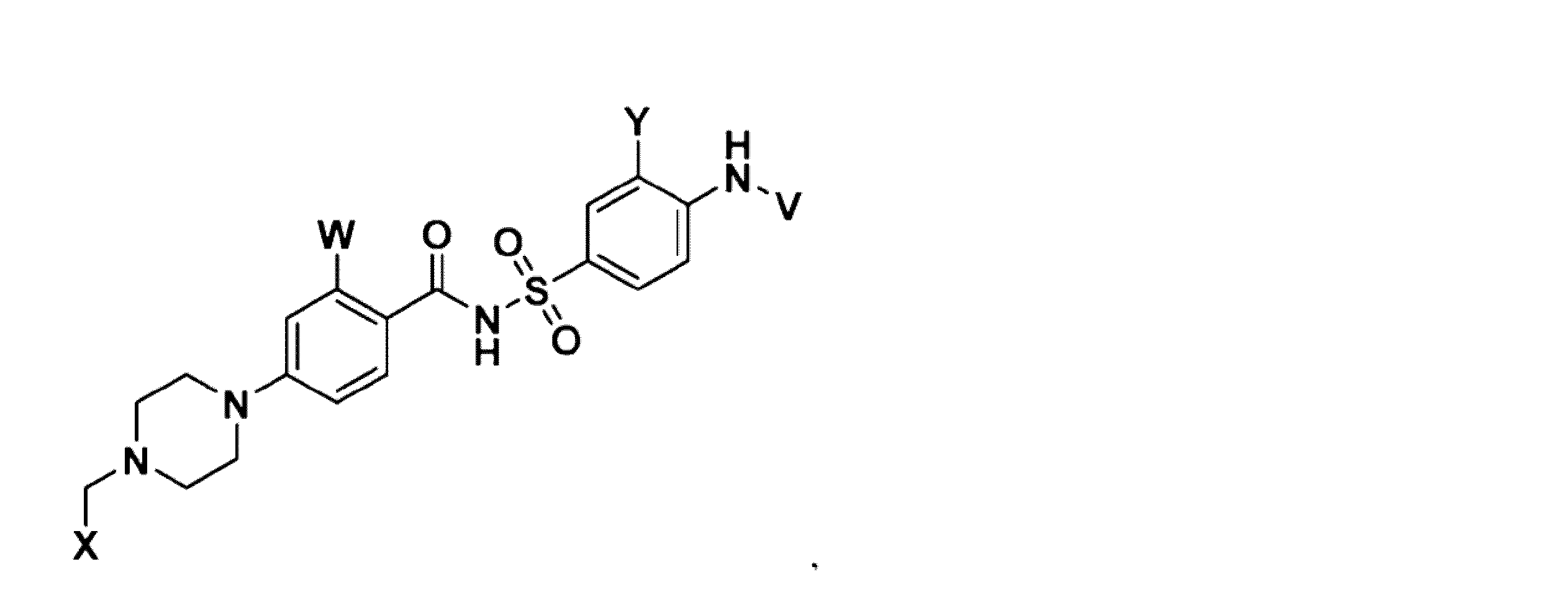
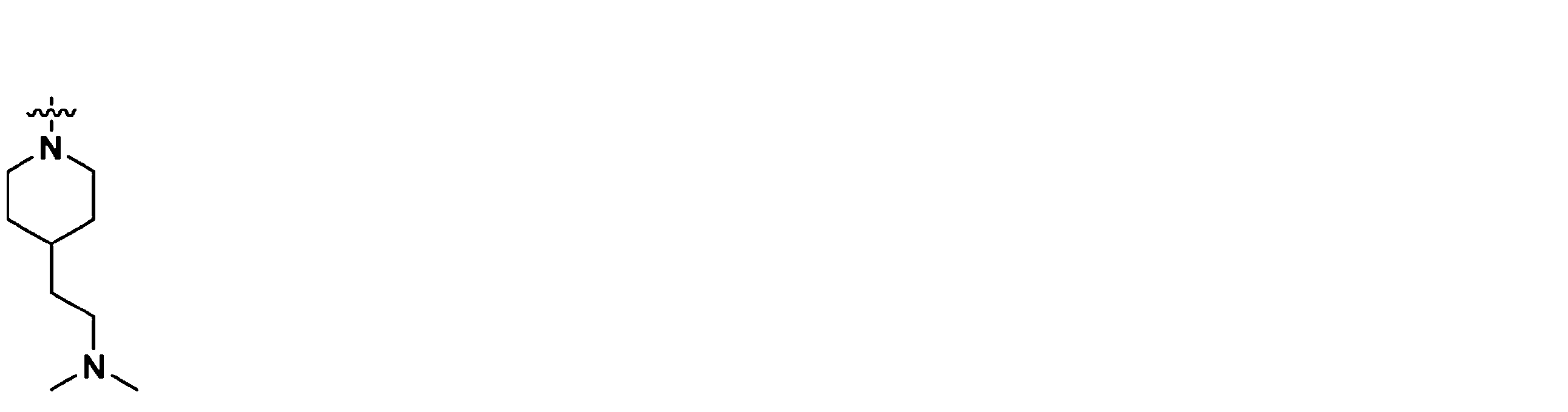
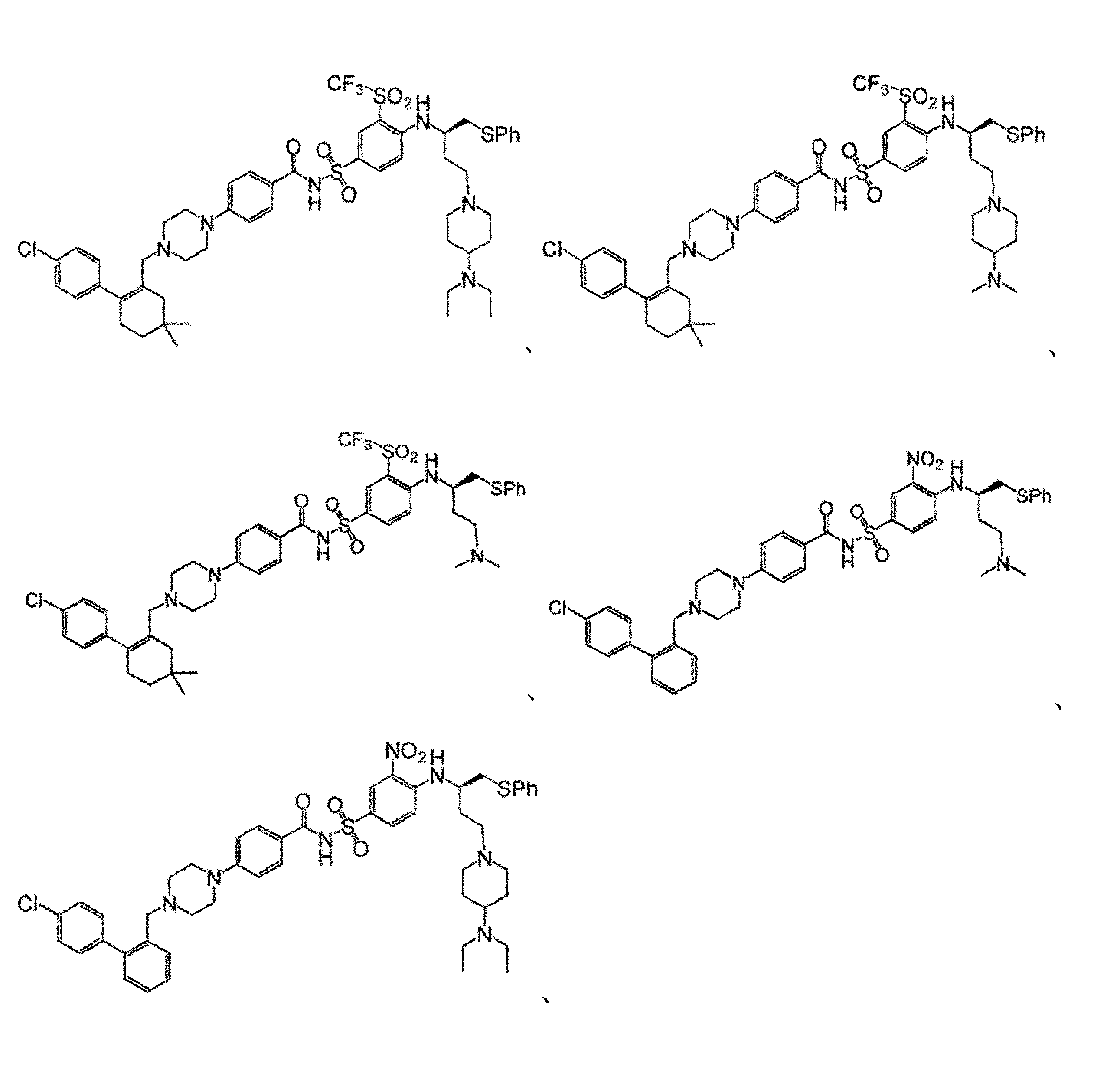
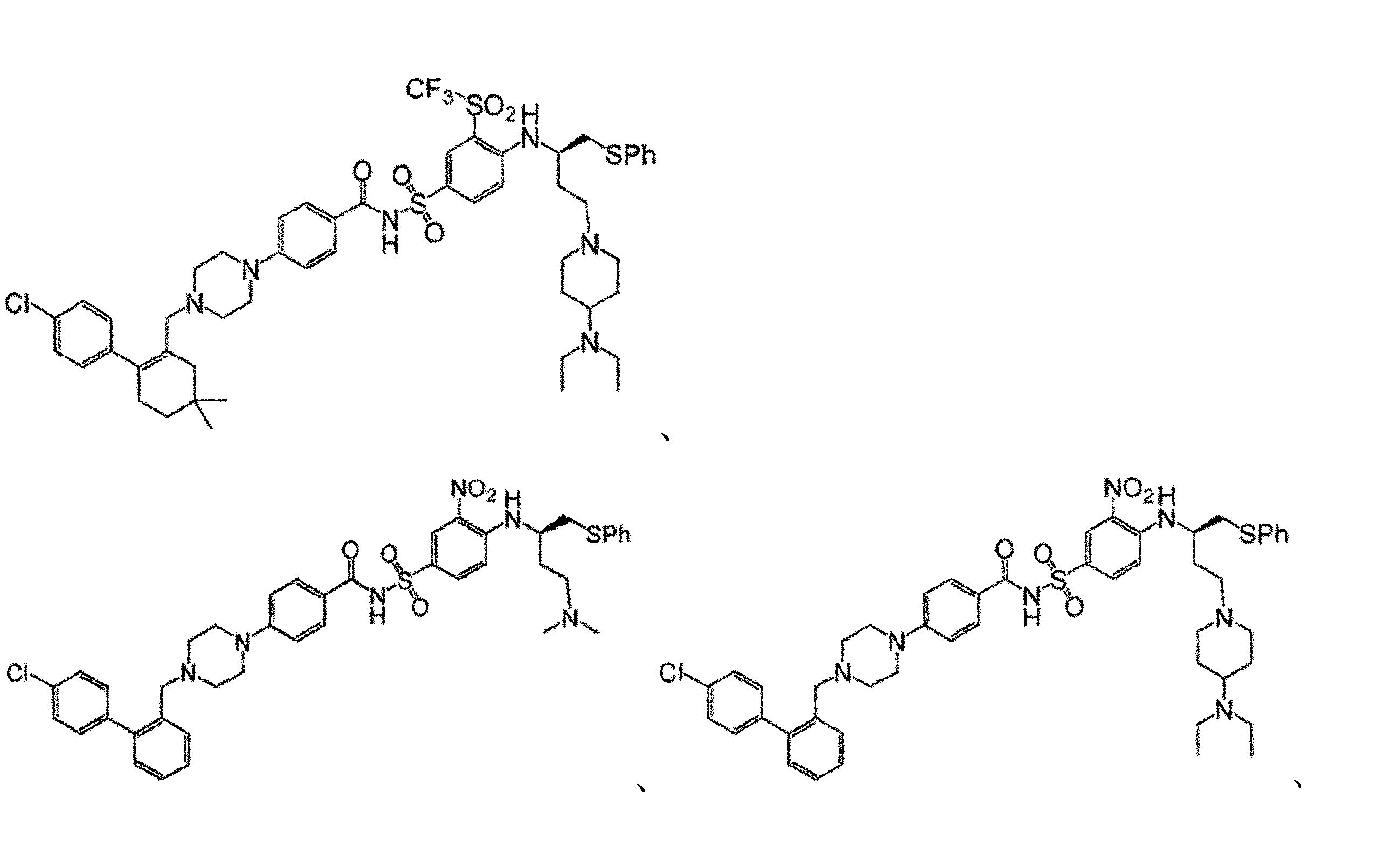
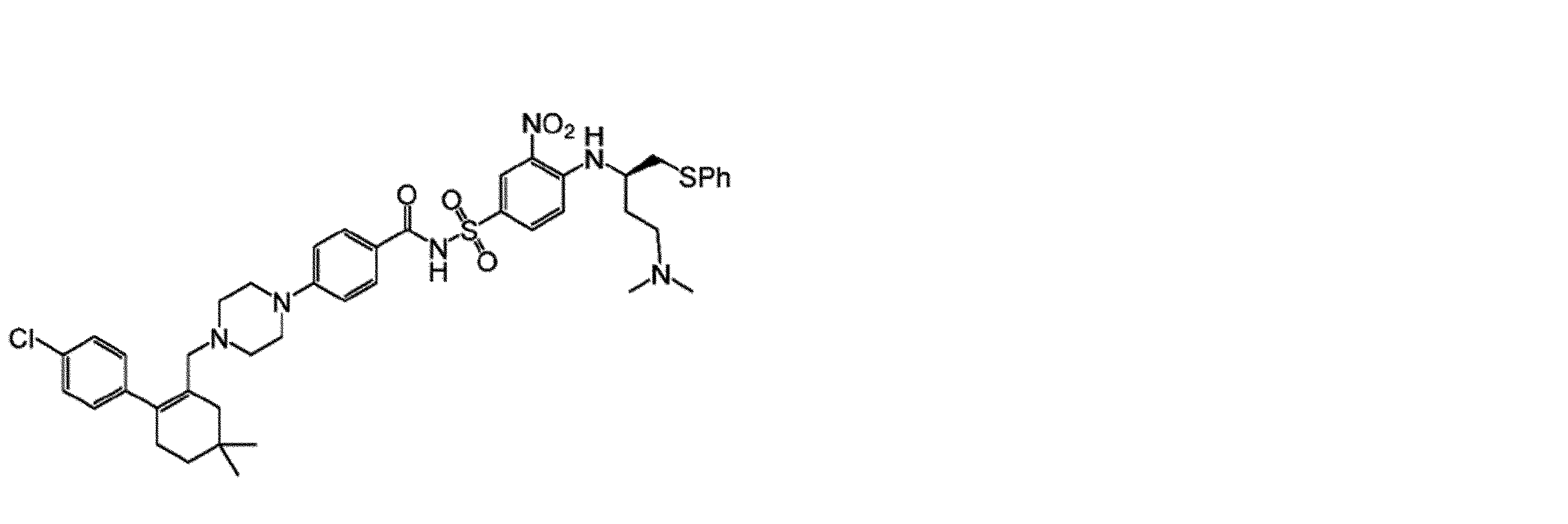
幾つかの実施形態において、治療剤は、Bcl阻害剤である。幾つかの実施形態において、Bcl阻害剤は、Bcl-2阻害剤である。幾つかの実施形態において、Bcl阻害剤は、Bcl-XL阻害剤である。幾つかの実施形態において、Bcl阻害剤は、Bcl-2/Bcl-XL二重阻害剤である。幾つかの実施形態において、Bcl阻害剤は、式(I)の化合物:

Vは、

Wは、Hまたは

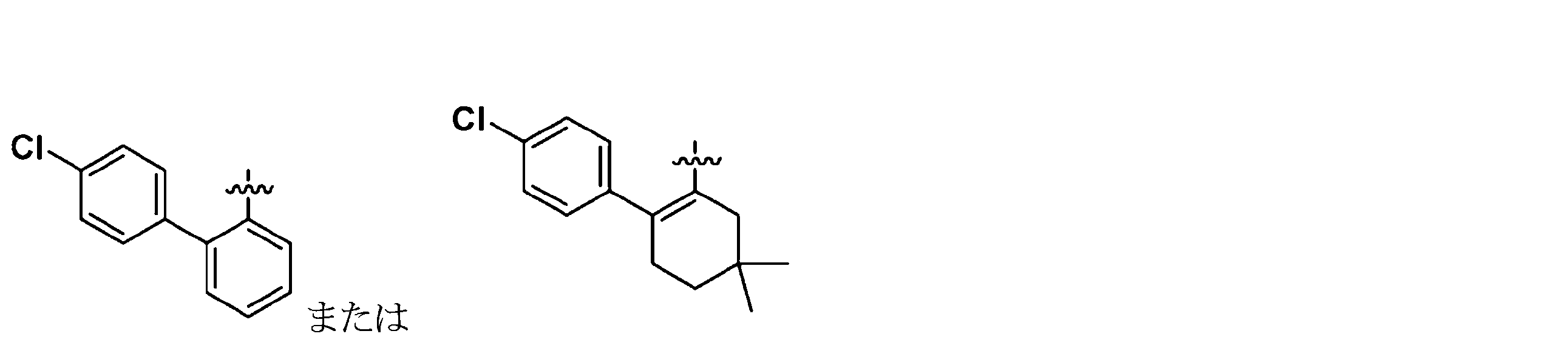
Xは、

Yは、-NO2または-SO2CF3であり、
Zは、




幾つかの実施形態において、Zは、
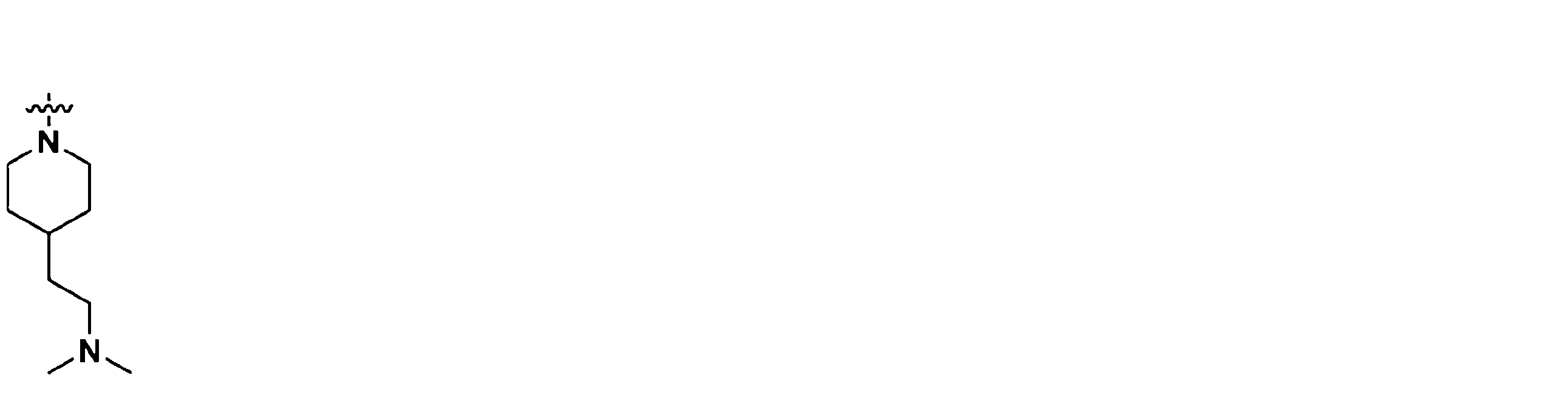


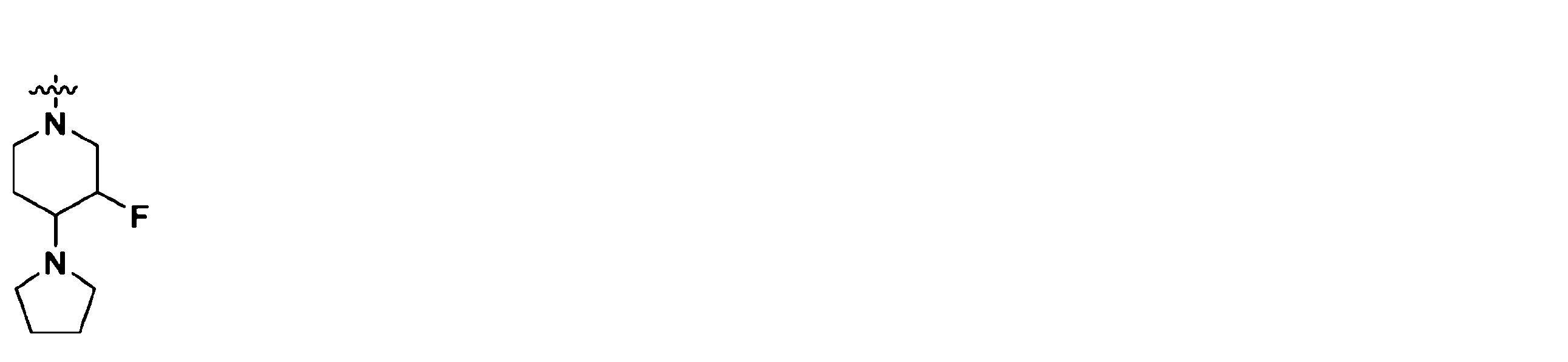


幾つかの実施形態において、Bcl阻害剤は、


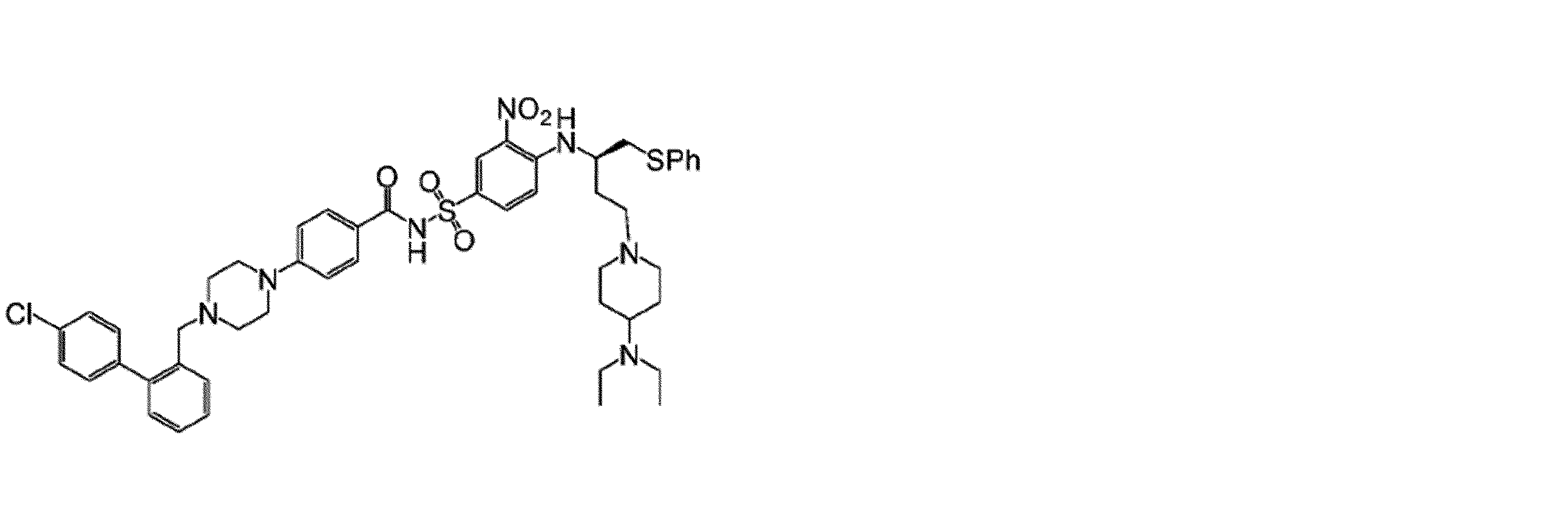
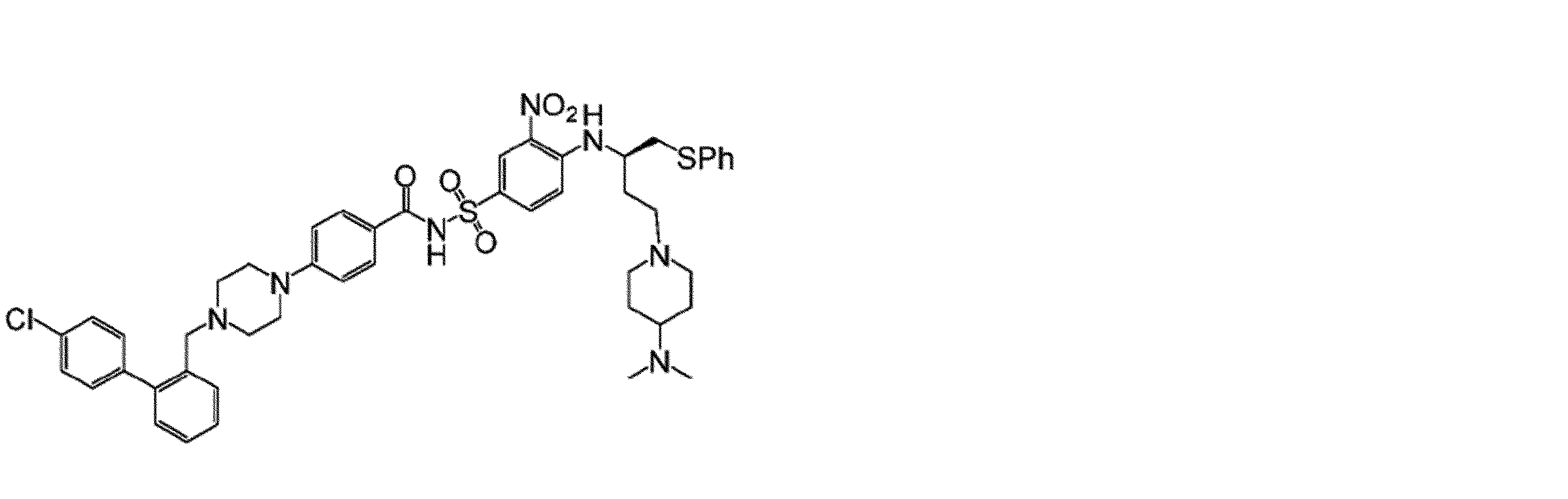
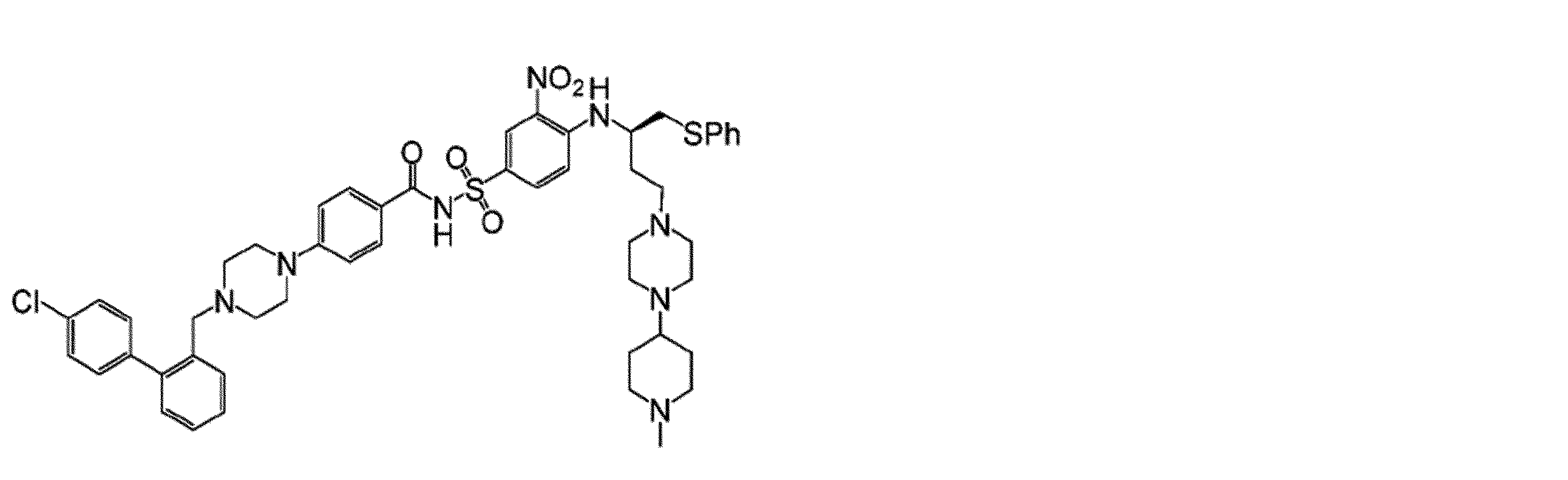

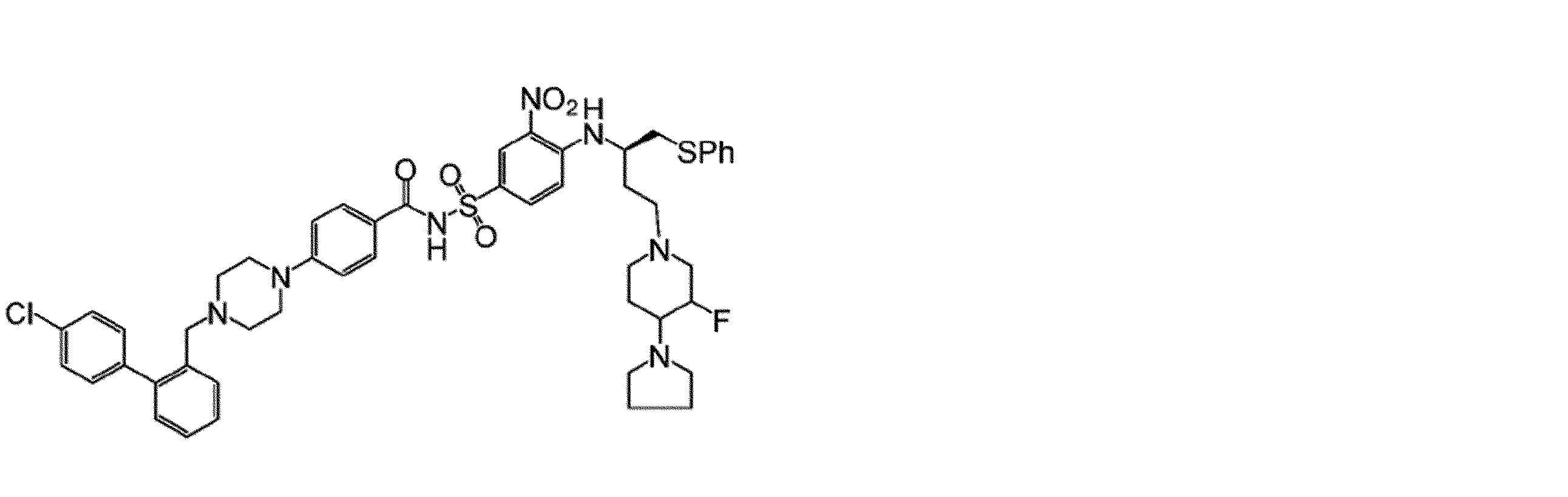


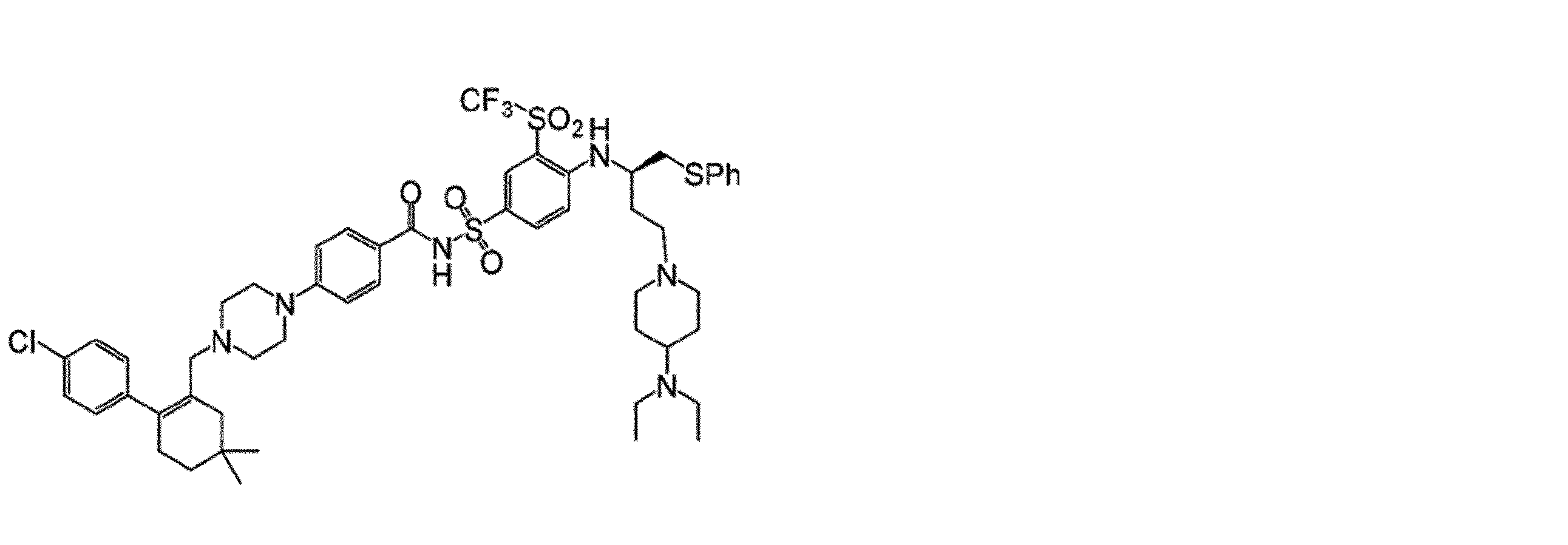


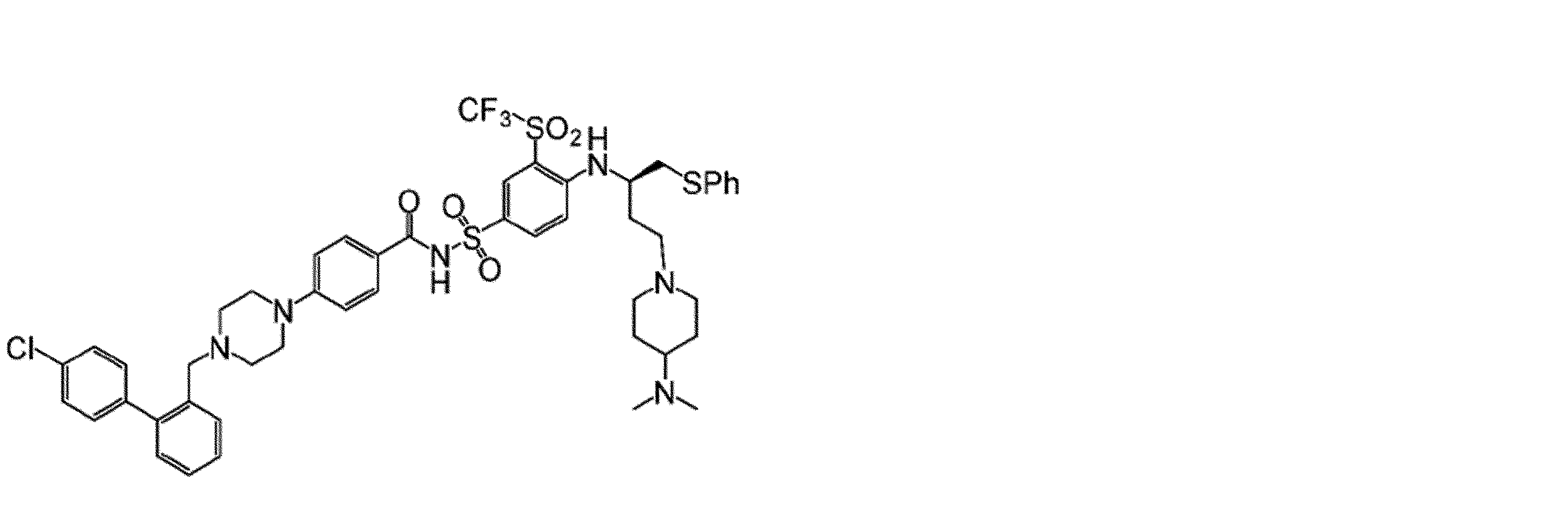

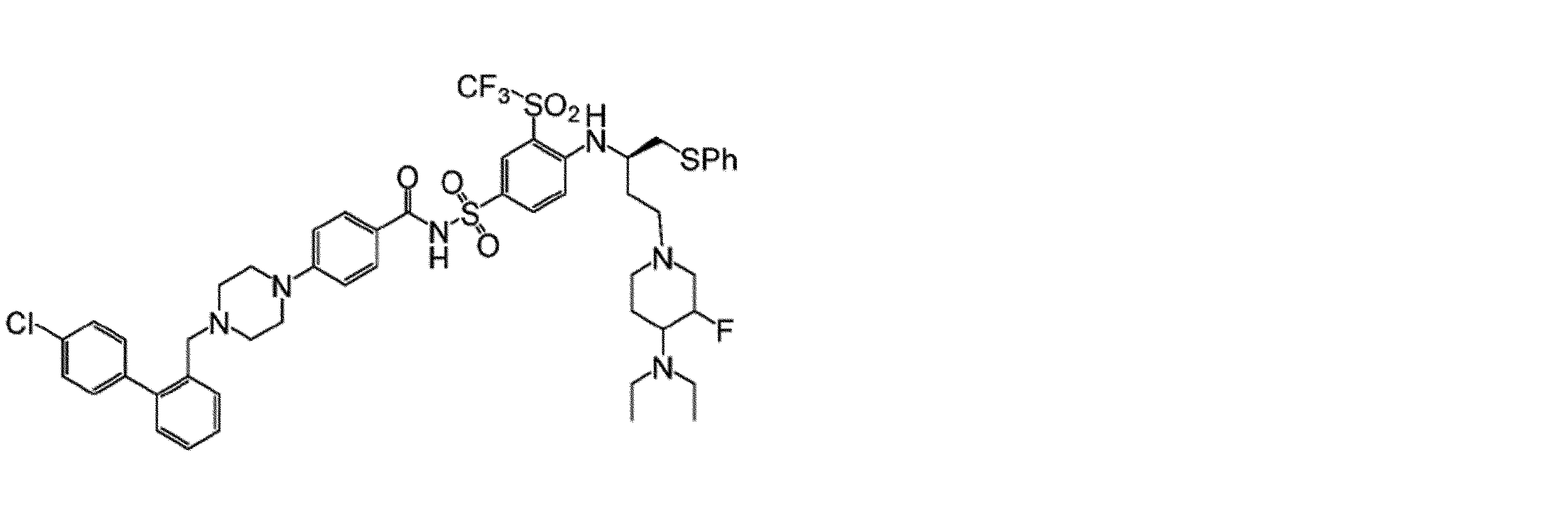

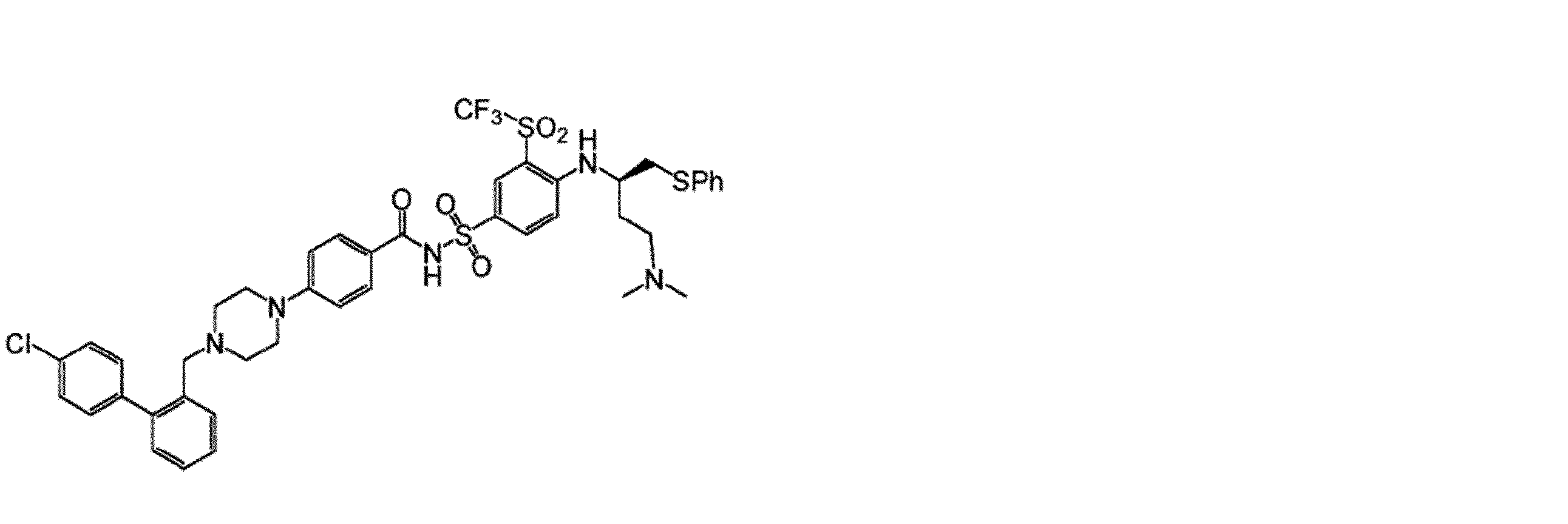
V is,
W is H or
X is,
Y is -NO2 or -SO2CF3 ;
Z is,
In some embodiments, Z is
In some embodiments, the Bcl inhibitor is:
幾つかの実施形態において、それに提供されるリポソーム組成物は、治療剤を含む。幾つかの実施形態において、治療剤は、疎水性治療剤である。幾つかの実施形態において、治療剤は、約2超のcLogPを有する。幾つかの実施形態において、治療剤は、約2~約12のcLogPを有する。幾つかの実施形態において、治療剤は、約3~約12のcLogPを有する。幾つかの実施形態において、治療剤は、約2~約4のcLogPを有する。幾つかの実施形態において、治療剤は、約2~約8のcLogPを有する。幾つかの実施形態において、治療剤は、約4~約12のcLogPを有する。幾つかの実施形態において、治療剤は、約4~約8のcLogPを有する。幾つかの実施形態において、治療剤は、約8~約12のcLogPを有する。幾つかの実施形態において、治療剤は、約10~約12のcLogPを有する。 In some embodiments, the liposome composition provided therein includes a therapeutic agent. In some embodiments, the therapeutic agent is a hydrophobic therapeutic agent. In some embodiments, the therapeutic agent has a cLogP of greater than about 2. In some embodiments, the therapeutic agent has a cLogP of about 2 to about 12. In some embodiments, the therapeutic agent has a cLogP of about 3 to about 12. In some embodiments, the therapeutic agent has a cLogP of about 2 to about 4. In some embodiments, the therapeutic agent has a cLogP of about 2 to about 8. In some embodiments, the therapeutic agent has a cLogP of about 4 to about 12. In some embodiments, the therapeutic agent has a cLogP of about 4 to about 8. In some embodiments, the therapeutic agent has a cLogP of about 8 to about 12. In some embodiments, the therapeutic agent has a cLogP of about 10 to about 12.
幾つかの実施形態において、治療剤は、プロトン化することができ、そのプロトン化形態は、約2超のpKaを有する。幾つかの実施形態において、治療剤は、プロトン化することができ、そのプロトン化形態は、約3~約11のpKaを有する。幾つかの実施形態において、治療剤は、プロトン化することができ、そのプロトン化形態は、約6~約11のpKaを有する。幾つかの実施形態において、治療剤は、プロトン化することができ、そのプロトン化形態は、約8~約11のpKaを有する。幾つかの実施形態において、治療剤は、プロトン化することができ、そのプロトン化形態は、約3~約6のpKaを有する。幾つかの実施形態において、治療剤は、プロトン化することができ、そのプロトン化形態は、約6~約8のpKaを有する。幾つかの実施形態において、治療剤は、プロトン化することができ、そのプロトン化形態は、約3~約8のpKaを有する。幾つかの実施形態において、治療剤は、プロトン化することができ、そのプロトン化形態は、約2~約12のpKaを有する。幾つかの実施形態において、治療剤は、プロトン化することができ、そのプロトン化形態は、約2~約8のpKaを有する。幾つかの実施形態において、治療剤は、プロトン化することができ、そのプロトン化形態は、約2~約4のpKaを有する。幾つかの実施形態において、治療剤は、プロトン化することができ、そのプロトン化形態は、約4~約12のpKaを有する。幾つかの実施形態において、治療剤は、プロトン化することができ、そのプロトン化形態は、約4~約8のpKaを有する。幾つかの実施形態において、治療剤は、プロトン化することができ、そのプロトン化形態は、約8~約12のpKaを有する。幾つかの実施形態において、治療剤は、プロトン化することができ、そのプロトン化形態は、約10~約12のpKaを有する。 In some embodiments, the therapeutic agent can be protonated and the protonated form has a pK a of greater than about 2. In some embodiments, the therapeutic agent can be protonated and the protonated form has a pK a of about 3 to about 11. In some embodiments, the therapeutic agent can be protonated and the protonated form has a pK a of about 6 to about 11. In some embodiments, the therapeutic agent can be protonated and the protonated form has a pK a of about 8 to about 11. In some embodiments, the therapeutic agent can be protonated and the protonated form has a pK a of about 3 to about 6. In some embodiments, the therapeutic agent can be protonated and the protonated form has a pK a of about 6 to about 8. In some embodiments, the therapeutic agent can be protonated and the protonated form has a pK a of about 3 to about 8. In some embodiments, the therapeutic agent can be protonated and the protonated form has a pK a of about 2 to about 12. In some embodiments, the therapeutic agent can be protonated and the protonated form has a pK a of about 2 to about 8. In some embodiments, the therapeutic agent can be protonated and the protonated form has a pK a of about 2 to about 4. In some embodiments, the therapeutic agent can be protonated and the protonated form has a pK a of about 4 to about 12. In some embodiments, the therapeutic agent can be protonated and the protonated form has a pK a of about 4 to about 8. In some embodiments, the therapeutic agent can be protonated and the protonated form has a pK a of about 8 to about 12. In some embodiments, the therapeutic agent can be protonated and the protonated form has a pK a of about 10 to about 12.
幾つかの実施形態において、それに提供されるリポソーム組成物は、追加の治療剤を含む。幾つかの実施形態において、追加の治療剤は、疎水性治療剤である。幾つかの実施形態において、追加の治療剤は、親水性治療剤である。幾つかの実施形態において、追加の治療剤は、リポソームに封入される。幾つかの実施形態において、追加の治療剤は、リポソームの外部に存在する。すべての前述の態様の幾つかの実施形態において、リポソームは、追加の治療剤をさらに含む。幾つかの実施形態において、追加の治療剤は、リポソームに封入される。 In some embodiments, the liposome composition provided therein includes an additional therapeutic agent. In some embodiments, the additional therapeutic agent is a hydrophobic therapeutic agent. In some embodiments, the additional therapeutic agent is a hydrophilic therapeutic agent. In some embodiments, the additional therapeutic agent is encapsulated in the liposome. In some embodiments, the additional therapeutic agent is present external to the liposome. In some embodiments of all the foregoing aspects, the liposome further includes an additional therapeutic agent. In some embodiments, the additional therapeutic agent is encapsulated in the liposome.
幾つかの実施形態において、追加の治療剤は、抗血管新生剤、代謝拮抗剤、アポトーシス誘導剤、細胞周期阻害剤、細胞周期制御阻害剤、チェックポイント阻害剤、サイクリン依存性キナーゼ阻害剤、細胞傷害剤、DNA傷害剤、DNA修復阻害剤、ミトコンドリア毒、テロメラーゼ阻害剤、シグナル伝達阻害剤、転写阻害剤、Bcl阻害剤、PARP阻害剤、PI3K阻害剤、HSP90阻害剤、JAK阻害剤、ATR阻害剤、HDAC阻害剤、チロシンキナーゼ阻害剤、受容体型チロシンキナーゼ阻害剤、BTK阻害剤、アルキル化剤、SMO阻害剤、抗チューブリン剤、MEK阻害剤、トポイソメラーゼ阻害剤、RAF阻害剤、BRAF阻害剤、またはプロテアソーム阻害剤である。 In some embodiments, the additional therapeutic agent is an antiangiogenic agent, an antimetabolite, an apoptosis inducer, a cell cycle inhibitor, a cell cycle control inhibitor, a checkpoint inhibitor, a cyclin-dependent kinase inhibitor, a cytotoxic agent, a DNA damaging agent, a DNA repair inhibitor, a mitochondrial poison, a telomerase inhibitor, a signal transduction inhibitor, a transcription inhibitor, a Bcl inhibitor, a PARP inhibitor, a PI3K inhibitor, an HSP90 inhibitor, a JAK inhibitor, an ATR inhibitor, an HDAC inhibitor, a tyrosine kinase inhibitor, a receptor tyrosine kinase inhibitor, a BTK inhibitor, an alkylating agent, an SMO inhibitor, an antitubulin agent, a MEK inhibitor, a topoisomerase inhibitor, a RAF inhibitor, a BRAF inhibitor, or a proteasome inhibitor.
幾つかの実施形態において、追加の治療剤は、HSP90阻害剤である。幾つかの実施形態において、HSP90阻害剤は、ルミネスピブである。 In some embodiments, the additional therapeutic agent is an HSP90 inhibitor. In some embodiments, the HSP90 inhibitor is luminespib.
幾つかの実施形態において、追加の治療剤は、アルキル化剤である。幾つかの実施形態において、追加の治療剤は、ベンダムスチン及びクロラムブシルからなる群から選択されるアルキル化剤である。 In some embodiments, the additional therapeutic agent is an alkylating agent. In some embodiments, the additional therapeutic agent is an alkylating agent selected from the group consisting of bendamustine and chlorambucil.
幾つかの実施形態において、追加の治療剤は、抗チューブリン剤である。幾つかの実施形態において、追加の治療剤は、ビンクリスチン、ビノレルビン、及びドセタキセルからなる群から選択される抗チューブリン剤である。 In some embodiments, the additional therapeutic agent is an antitubulin agent. In some embodiments, the additional therapeutic agent is an antitubulin agent selected from the group consisting of vincristine, vinorelbine, and docetaxel.
幾つかの実施形態において、追加の治療剤は、ATR阻害剤である。 In some embodiments, the additional therapeutic agent is an ATR inhibitor.
幾つかの実施形態において、追加の治療剤は、RAF阻害剤である。幾つかの実施形態において、RAF阻害剤は、ダブラフェニブである。幾つかの実施形態において、追加の治療剤は、BRAF阻害剤である。幾つかの実施形態において、BRAF阻害剤は、ベムラフェニブである。 In some embodiments, the additional therapeutic agent is a RAF inhibitor. In some embodiments, the RAF inhibitor is dabrafenib. In some embodiments, the additional therapeutic agent is a BRAF inhibitor. In some embodiments, the BRAF inhibitor is vemurafenib.
幾つかの実施形態において、追加の治療剤は、BTK阻害剤である。幾つかの実施形態において、BTK阻害剤は、イブルチニブである。 In some embodiments, the additional therapeutic agent is a BTK inhibitor. In some embodiments, the BTK inhibitor is ibrutinib.
幾つかの実施形態において、追加の治療剤は、HDAC阻害剤である。幾つかの実施形態において、HDAC阻害剤は、パノビノスタットである。 In some embodiments, the additional therapeutic agent is an HDAC inhibitor. In some embodiments, the HDAC inhibitor is panobinostat.
幾つかの実施形態において、追加の治療剤は、JAK阻害剤である。幾つかの実施形態において、JAK阻害剤は、ルキソリチニブである。 In some embodiments, the additional therapeutic agent is a JAK inhibitor. In some embodiments, the JAK inhibitor is ruxolitinib.
幾つかの実施形態において、追加の治療剤は、MEK阻害剤である。幾つかの実施形態において、追加の治療剤は、セルメチニブ及びコビメチニブからなる群から選択されるMEK阻害剤である。 In some embodiments, the additional therapeutic agent is a MEK inhibitor. In some embodiments, the additional therapeutic agent is a MEK inhibitor selected from the group consisting of selumetinib and cobimetinib.
幾つかの実施形態において、追加の治療剤は、PARP阻害剤である。幾つかの実施形態において、追加の治療剤は、タラゾパリブ、ニラパリブ、及びルカパリブからなる群から選択されるPARP阻害剤である。 In some embodiments, the additional therapeutic agent is a PARP inhibitor. In some embodiments, the additional therapeutic agent is a PARP inhibitor selected from the group consisting of talazoparib, niraparib, and rucaparib.
幾つかの実施形態において、追加の治療剤は、PI3K阻害剤である。幾つかの実施形態において、PI3K阻害剤は、イデラリシブである。 In some embodiments, the additional therapeutic agent is a PI3K inhibitor. In some embodiments, the PI3K inhibitor is idelalisib.
幾つかの実施形態において、追加の治療剤は、プロテアソーム阻害剤である。幾つかの実施形態において、プロテアソーム阻害剤は、カルフィルゾミブである。 In some embodiments, the additional therapeutic agent is a proteasome inhibitor. In some embodiments, the proteasome inhibitor is carfilzomib.
幾つかの実施形態において、追加の治療剤は、SMO阻害剤である。幾つかの実施形態において、追加の治療剤は、ソニデジブ及びビスモデギブからなる群から選択されるSMO阻害剤である。 In some embodiments, the additional therapeutic agent is an SMO inhibitor. In some embodiments, the additional therapeutic agent is an SMO inhibitor selected from the group consisting of sonidegib and vismodegib.
幾つかの実施形態において、追加の治療剤は、チロシンキナーゼ阻害剤である。幾つかの実施形態において、追加の治療剤は、ブリガチニブ、レンバチニブ、アファチニブ、アキシチニブ、カボザンチニブ、ポナチニブ、ソラフェニブ、オシメルチニブ、レゴラフェニブ、ボスチニブ、クリゾチニブ、バンデタニブ、ニロチニブ、アレクチニブ、セリチニブ、ダサチニブ、パゾパニブ、スニチニブ、エルロチニブ、イマチニブ、ゲフィチニブ、ラパチニブからなる群から選択されるチロシンキナーゼ阻害剤である。 In some embodiments, the additional therapeutic agent is a tyrosine kinase inhibitor. In some embodiments, the additional therapeutic agent is a tyrosine kinase inhibitor selected from the group consisting of brigatinib, lenvatinib, afatinib, axitinib, cabozantinib, ponatinib, sorafenib, osimertinib, regorafenib, bosutinib, crizotinib, vandetanib, nilotinib, alectinib, ceritinib, dasatinib, pazopanib, sunitinib, erlotinib, imatinib, gefitinib, and lapatinib.
幾つかの実施形態において、追加の治療剤は、トポイソメラーゼ阻害剤である。幾つかの実施形態において、追加の治療剤は、トポイソメラーゼI阻害剤である。幾つかの実施形態において、トポイソメラーゼ阻害剤は、イリノテカンである。 In some embodiments, the additional therapeutic agent is a topoisomerase inhibitor. In some embodiments, the additional therapeutic agent is a topoisomerase I inhibitor. In some embodiments, the topoisomerase inhibitor is irinotecan.
幾つかの実施形態において、追加の治療剤は、上記のもののようなBcl阻害剤である。
リポソーム及びリポソーム組成物
In some embodiments, the additional therapeutic agent is a Bcl inhibitor, such as those described above.
Liposomes and liposomal compositions
リポソームは、内部区画を包み込む1つ以上の脂質二重層を含む。これらのリポソームは、多層、二層、または単層小胞であり得る。単層リポソーム(単層小胞または「ULV」としても知られる)は、単一の内部水性区画を包み込み、小型単層小胞(SUV)または大型単層小胞(LUV)のいずれかに分類される。LUV及びSUVのサイズは、それぞれ約50~500nm及び20~50nmの範囲である。二層リポソームは2つの脂質膜を有し、内側の膜が単一の内部水性区画を取り囲み、第2の、より大きな外側の膜が内側の膜を取り囲み、よって第2の内部水性区画を作り出す。 Liposomes contain one or more lipid bilayers that encapsulate an internal compartment. These liposomes can be multilamellar, bilamellar, or unilamellar vesicles. Unilamellar liposomes (also known as unilamellar vesicles or "ULVs") encapsulate a single internal aqueous compartment and are classified as either small unilamellar vesicles (SUVs) or large unilamellar vesicles (LUVs). LUVs and SUVs range in size from about 50-500 nm and 20-50 nm, respectively. Bilamellar liposomes have two lipid membranes, an inner membrane that encapsulates a single internal aqueous compartment and a second, larger, outer membrane that encapsulates the inner membrane, thus creating a second internal aqueous compartment.
幾つかの実施形態において、リポソームは、約20nm~約500nmの間の平均直径を有する。幾つかの実施形態において、リポソームは、約50nm~約250nmの間の平均直径を有する。幾つかの実施形態において、リポソームは、約80nm~約250nmの間の平均直径を有する。幾つかの実施形態において、リポソームは、約50nm~約150nmの間の平均直径を有する。幾つかの実施形態において、リポソームは、約80nm~約150nmの間の平均直径を有する。幾つかの実施形態において、リポソームは、約50nm~約120nmの間の平均直径を有する。幾つかの実施形態において、リポソームは、約80nm~約120nmの間の平均直径を有する。幾つかの実施形態において、リポソームは、約50nm、約80nm、約100nm、約120nm、約150nm、または約250nmの平均直径を有する。幾つかの実施形態において、リポソームは、約80nmの平均直径を有する。 In some embodiments, the liposomes have an average diameter between about 20 nm and about 500 nm. In some embodiments, the liposomes have an average diameter between about 50 nm and about 250 nm. In some embodiments, the liposomes have an average diameter between about 80 nm and about 250 nm. In some embodiments, the liposomes have an average diameter between about 50 nm and about 150 nm. In some embodiments, the liposomes have an average diameter between about 80 nm and about 150 nm. In some embodiments, the liposomes have an average diameter between about 50 nm and about 120 nm. In some embodiments, the liposomes have an average diameter between about 80 nm and about 120 nm. In some embodiments, the liposomes have an average diameter of about 50 nm, about 80 nm, about 100 nm, about 120 nm, about 150 nm, or about 250 nm. In some embodiments, the liposomes have an average diameter of about 80 nm.
リポソーム組成物中のリポソームの粒度分布の維持を、粒度プロファイルを得ることによって実験的に評価してもよい。準弾性光散乱によって決定される粒度分布は、典型的には、リポソームの平均直径を示すヒストグラムとして提示される。当技術分野で最も一般的に使用される有意な粒度分布測定は、D10、D90、D99、または標準偏差もしくは多分散性指数(PDI)である。「D99」値は、リポソームの99%が、言及されたサイズ未満または言及されたサイズ超であることを示す。これは、例えば、上限または下限サイズのいずれかを除外することが重要である場合に特に有用である。例えば、ある特定の実施形態において、平均直径が200nmを超えるリポソームが存在しないことが確実であることが望ましい。 The maintenance of the size distribution of the liposomes in the liposome composition may be experimentally evaluated by obtaining a size profile. The size distribution determined by quasi-elastic light scattering is typically presented as a histogram showing the average diameter of the liposomes. The most commonly used meaningful size distribution measurements in the art are D10, D90, D99, or standard deviation or polydispersity index (PDI). The "D99" value indicates that 99% of the liposomes are below or above the stated size. This is particularly useful, for example, when it is important to exclude either the upper or lower size limits. For example, in certain embodiments, it is desirable to ensure that there are no liposomes with an average diameter greater than 200 nm.
幾つかの実施形態において、リポソーム組成物中のリポソームの粒度分布は、多分散性指数(PDI)を使用して定量化される。幾つかの実施形態において、リポソーム組成物は、約0.001~約0.5の多分散性指数(PDI)を有する。幾つかの実施形態において、リポソーム組成物は、約0.001~約0.4の多分散性指数(PDI)を有する。幾つかの実施形態において、リポソーム組成物は、約0.001~約0.3の多分散性指数(PDI)を有する。幾つかの実施形態において、リポソーム組成物は、約0.005~約0.5の多分散性指数(PDI)を有する。幾つかの実施形態において、リポソーム組成物は、約0.005~約0.4の多分散性指数(PDI)を有する。幾つかの実施形態において、リポソーム組成物は、約0.005~約0.3の多分散性指数(PDI)を有する。幾つかの実施形態において、リポソーム組成物は、約0.001~約0.2の多分散性指数(PDI)を有する。幾つかの実施形態において、リポソーム組成物は、約0.001~約0.1の多分散性指数(PDI)を有する。幾つかの実施形態において、リポソーム組成物は、約0.005~約0.2の多分散性指数(PDI)を有する。幾つかの実施形態において、リポソーム組成物は、約0.005~約0.1の多分散性指数(PDI)を有する。幾つかの実施形態において、リポソーム組成物は、約0.01~約0.5の多分散性指数(PDI)を有する。幾つかの実施形態において、リポソーム組成物は、約0.01~約0.4の多分散性指数(PDI)を有する。幾つかの実施形態において、リポソーム組成物は、約0.01~約0.2の多分散性指数(PDI)を有する。幾つかの実施形態において、リポソーム組成物は、約0.01~約0.1の多分散性指数(PDI)を有する。幾つかの実施形態において、リポソーム組成物は、約0.1~約0.5の多分散性指数(PDI)を有する。幾つかの実施形態において、リポソーム組成物は、約0.1~約0.3の多分散性指数(PDI)を有する。幾つかの実施形態において、リポソーム組成物は、約0.3~約0.5の多分散性指数(PDI)を有する。 In some embodiments, the size distribution of the liposomes in the liposome composition is quantified using a polydispersity index (PDI). In some embodiments, the liposome composition has a polydispersity index (PDI) of about 0.001 to about 0.5. In some embodiments, the liposome composition has a polydispersity index (PDI) of about 0.001 to about 0.4. In some embodiments, the liposome composition has a polydispersity index (PDI) of about 0.001 to about 0.3. In some embodiments, the liposome composition has a polydispersity index (PDI) of about 0.005 to about 0.5. In some embodiments, the liposome composition has a polydispersity index (PDI) of about 0.005 to about 0.4. In some embodiments, the liposome composition has a polydispersity index (PDI) of about 0.005 to about 0.3. In some embodiments, the liposome composition has a polydispersity index (PDI) of about 0.001 to about 0.2. In some embodiments, the liposome composition has a polydispersity index (PDI) of about 0.001 to about 0.1. In some embodiments, the liposome composition has a polydispersity index (PDI) of about 0.005 to about 0.2. In some embodiments, the liposome composition has a polydispersity index (PDI) of about 0.005 to about 0.1. In some embodiments, the liposome composition has a polydispersity index (PDI) of about 0.01 to about 0.5. In some embodiments, the liposome composition has a polydispersity index (PDI) of about 0.01 to about 0.4. In some embodiments, the liposome composition has a polydispersity index (PDI) of about 0.01 to about 0.2. In some embodiments, the liposome composition has a polydispersity index (PDI) of about 0.01 to about 0.1. In some embodiments, the liposome composition has a polydispersity index (PDI) of about 0.1 to about 0.5. In some embodiments, the liposome composition has a polydispersity index (PDI) of about 0.1 to about 0.3. In some embodiments, the liposome composition has a polydispersity index (PDI) of about 0.3 to about 0.5.
幾つかの実施形態において、リポソーム組成物は、分散媒をさらに含んでもよい。幾つかの実施形態において、1つ以上のリポソームは、分散媒中に懸濁されている。幾つかの実施形態において、分散媒は、薬学的に許容される溶液である。幾つかの実施形態において、分散媒は、デキストロース水溶液である。幾つかの実施形態において、分散媒は、スクロース水溶液である。幾つかの実施形態において、分散媒は、生理食塩水である。幾つかの実施形態において、分散媒は、緩衝液をさらに含む。幾つかの実施形態において、緩衝液は、HEPES緩衝液である。幾つかの実施形態において、緩衝液は、PBS緩衝液である。幾つかの実施形態において、緩衝液は、Tris緩衝液である。幾つかの実施形態において、緩衝液は、MES緩衝液である。
治療剤
In some embodiments, the liposome composition may further comprise a dispersion medium. In some embodiments, the one or more liposomes are suspended in the dispersion medium. In some embodiments, the dispersion medium is a pharma- ceutically acceptable solution. In some embodiments, the dispersion medium is an aqueous dextrose solution. In some embodiments, the dispersion medium is an aqueous sucrose solution. In some embodiments, the dispersion medium is saline. In some embodiments, the dispersion medium further comprises a buffer. In some embodiments, the buffer is a HEPES buffer. In some embodiments, the buffer is a PBS buffer. In some embodiments, the buffer is a Tris buffer. In some embodiments, the buffer is a MES buffer.
Therapeutic Agents
幾つかの実施形態において、それに提供されるリポソーム及びリポソーム組成物は、リポソームに封入された治療剤を含む。幾つかの実施形態において、それに提供されるリポソーム及びリポソーム組成物は、リポソームに封入された疎水性治療剤を含む。 In some embodiments, the liposomes and liposomal compositions provided thereto include a therapeutic agent encapsulated in the liposome. In some embodiments, the liposomes and liposomal compositions provided thereto include a hydrophobic therapeutic agent encapsulated in the liposome.
幾つかの実施形態において、治療剤は、抗血管新生剤、代謝拮抗剤、アポトーシス誘導剤、細胞周期阻害剤、細胞周期制御阻害剤、チェックポイント阻害剤、サイクリン依存性キナーゼ阻害剤、細胞傷害剤、DNA傷害剤、DNA修復阻害剤、ミトコンドリア毒、テロメラーゼ阻害剤、シグナル伝達阻害剤、転写阻害剤、Bcl阻害剤、PARP阻害剤、PI3K阻害剤、HSP90阻害剤、JAK阻害剤、ATR阻害剤、HDAC阻害剤、チロシンキナーゼ阻害剤、受容体型チロシンキナーゼ阻害剤、BTK阻害剤、アルキル化剤、SMO阻害剤、抗チューブリン剤、MEK阻害剤、トポイソメラーゼ阻害剤、RAF阻害剤、BRAF阻害剤、またはプロテアソーム阻害剤である。 In some embodiments, the therapeutic agent is an antiangiogenic agent, an antimetabolite, an apoptosis inducer, a cell cycle inhibitor, a cell cycle control inhibitor, a checkpoint inhibitor, a cyclin-dependent kinase inhibitor, a cytotoxic agent, a DNA damaging agent, a DNA repair inhibitor, a mitochondrial poison, a telomerase inhibitor, a signal transduction inhibitor, a transcription inhibitor, a Bcl inhibitor, a PARP inhibitor, a PI3K inhibitor, an HSP90 inhibitor, a JAK inhibitor, an ATR inhibitor, an HDAC inhibitor, a tyrosine kinase inhibitor, a receptor tyrosine kinase inhibitor, a BTK inhibitor, an alkylating agent, an SMO inhibitor, an antitubulin agent, a MEK inhibitor, a topoisomerase inhibitor, a RAF inhibitor, a BRAF inhibitor, or a proteasome inhibitor.
幾つかの実施形態において、治療剤は、HSP90阻害剤である。幾つかの実施形態において、HSP90阻害剤は、ルミネスピブである。 In some embodiments, the therapeutic agent is an HSP90 inhibitor. In some embodiments, the HSP90 inhibitor is luminespib.
幾つかの実施形態において、治療剤は、アルキル化剤である。幾つかの実施形態において、治療剤は、ベンダムスチン及びクロラムブシルからなる群から選択されるアルキル化剤である。 In some embodiments, the therapeutic agent is an alkylating agent. In some embodiments, the therapeutic agent is an alkylating agent selected from the group consisting of bendamustine and chlorambucil.
幾つかの実施形態において、治療剤は、抗チューブリン剤である。幾つかの実施形態において、治療剤は、ビンクリスチン、ビノレルビン、及びドセタキセルからなる群から選択される抗チューブリン剤である。 In some embodiments, the therapeutic agent is an antitubulin agent. In some embodiments, the therapeutic agent is an antitubulin agent selected from the group consisting of vincristine, vinorelbine, and docetaxel.
幾つかの実施形態において、治療剤は、ATR阻害剤である。 In some embodiments, the therapeutic agent is an ATR inhibitor.
幾つかの実施形態において、治療剤は、RAF阻害剤である。幾つかの実施形態において、RAF阻害剤は、ダブラフェニブである。幾つかの実施形態において、治療剤は、BRAF阻害剤である。幾つかの実施形態において、BRAF阻害剤は、ベムラフェニブである。 In some embodiments, the therapeutic agent is a RAF inhibitor. In some embodiments, the RAF inhibitor is dabrafenib. In some embodiments, the therapeutic agent is a BRAF inhibitor. In some embodiments, the BRAF inhibitor is vemurafenib.
幾つかの実施形態において、治療剤は、BTK阻害剤である。幾つかの実施形態において、BTK阻害剤は、イブルチニブである。 In some embodiments, the therapeutic agent is a BTK inhibitor. In some embodiments, the BTK inhibitor is ibrutinib.
幾つかの実施形態において、治療剤は、HDAC阻害剤である。幾つかの実施形態において、HDAC阻害剤は、パノビノスタットである。 In some embodiments, the therapeutic agent is an HDAC inhibitor. In some embodiments, the HDAC inhibitor is panobinostat.
幾つかの実施形態において、治療剤は、JAK阻害剤である。幾つかの実施形態において、JAK阻害剤は、ルキソリチニブである。 In some embodiments, the therapeutic agent is a JAK inhibitor. In some embodiments, the JAK inhibitor is ruxolitinib.
幾つかの実施形態において、治療剤は、MEK阻害剤である。幾つかの実施形態において、治療剤は、セルメチニブ及びコビメチニブからなる群から選択されるMEK阻害剤である。 In some embodiments, the therapeutic agent is a MEK inhibitor. In some embodiments, the therapeutic agent is a MEK inhibitor selected from the group consisting of selumetinib and cobimetinib.
幾つかの実施形態において、治療剤は、PARP阻害剤である。幾つかの実施形態において、治療剤は、タラゾパリブ、ニラパリブ、及びルカパリブからなる群から選択されるPARP阻害剤である。 In some embodiments, the therapeutic agent is a PARP inhibitor. In some embodiments, the therapeutic agent is a PARP inhibitor selected from the group consisting of talazoparib, niraparib, and rucaparib.
幾つかの実施形態において、治療剤は、PI3K阻害剤である。幾つかの実施形態において、PI3K阻害剤は、イデラリシブである。 In some embodiments, the therapeutic agent is a PI3K inhibitor. In some embodiments, the PI3K inhibitor is idelalisib.
幾つかの実施形態において、治療剤は、プロテアソーム阻害剤である。幾つかの実施形態において、プロテアソーム阻害剤は、カルフィルゾミブである。 In some embodiments, the therapeutic agent is a proteasome inhibitor. In some embodiments, the proteasome inhibitor is carfilzomib.
幾つかの実施形態において、治療剤は、SMO阻害剤である。幾つかの実施形態において、治療剤は、ソニデジブ及びビスモデギブからなる群から選択されるSMO阻害剤である。 In some embodiments, the therapeutic agent is an SMO inhibitor. In some embodiments, the therapeutic agent is an SMO inhibitor selected from the group consisting of sonidegib and vismodegib.
幾つかの実施形態において、治療剤は、チロシンキナーゼ阻害剤である。幾つかの実施形態において、治療剤は、ブリガチニブ、レンバチニブ、アファチニブ、アキシチニブ、カボザンチニブ、ポナチニブ、ソラフェニブ、オシメルチニブ、レゴラフェニブ、ボスチニブ、クリゾチニブ、バンデタニブ、ニロチニブ、アレクチニブ、セリチニブ、ダサチニブ、パゾパニブ、スニチニブ、エルロチニブ、イマチニブ、ゲフィチニブ、ラパチニブからなる群から選択されるチロシンキナーゼ阻害剤である。 In some embodiments, the therapeutic agent is a tyrosine kinase inhibitor. In some embodiments, the therapeutic agent is a tyrosine kinase inhibitor selected from the group consisting of brigatinib, lenvatinib, afatinib, axitinib, cabozantinib, ponatinib, sorafenib, osimertinib, regorafenib, bosutinib, crizotinib, vandetanib, nilotinib, alectinib, ceritinib, dasatinib, pazopanib, sunitinib, erlotinib, imatinib, gefitinib, and lapatinib.
幾つかの実施形態において、治療剤は、トポイソメラーゼ阻害剤である。幾つかの実施形態において、治療剤は、トポイソメラーゼI阻害剤である。幾つかの実施形態において、トポイソメラーゼ阻害剤は、イリノテカンである。 In some embodiments, the therapeutic agent is a topoisomerase inhibitor. In some embodiments, the therapeutic agent is a topoisomerase I inhibitor. In some embodiments, the topoisomerase inhibitor is irinotecan.
幾つかの実施形態において、治療剤は、Bcl阻害剤である。幾つかの実施形態において、Bcl阻害剤は、Bcl-2阻害剤である。幾つかの実施形態において、Bcl阻害剤は、Bcl-XL阻害剤である。幾つかの実施形態において、Bcl阻害剤は、Bcl-2/Bcl-XL二重阻害剤である。幾つかの実施形態において、Bcl阻害剤は、式(I)の化合物:
Vは、

Wは、Hまたは

Xは、
Yは、-NO2または-SO2CF3であり、
Zは、




幾つかの実施形態において、Zは、



幾つかの実施形態において、Bcl阻害剤は、




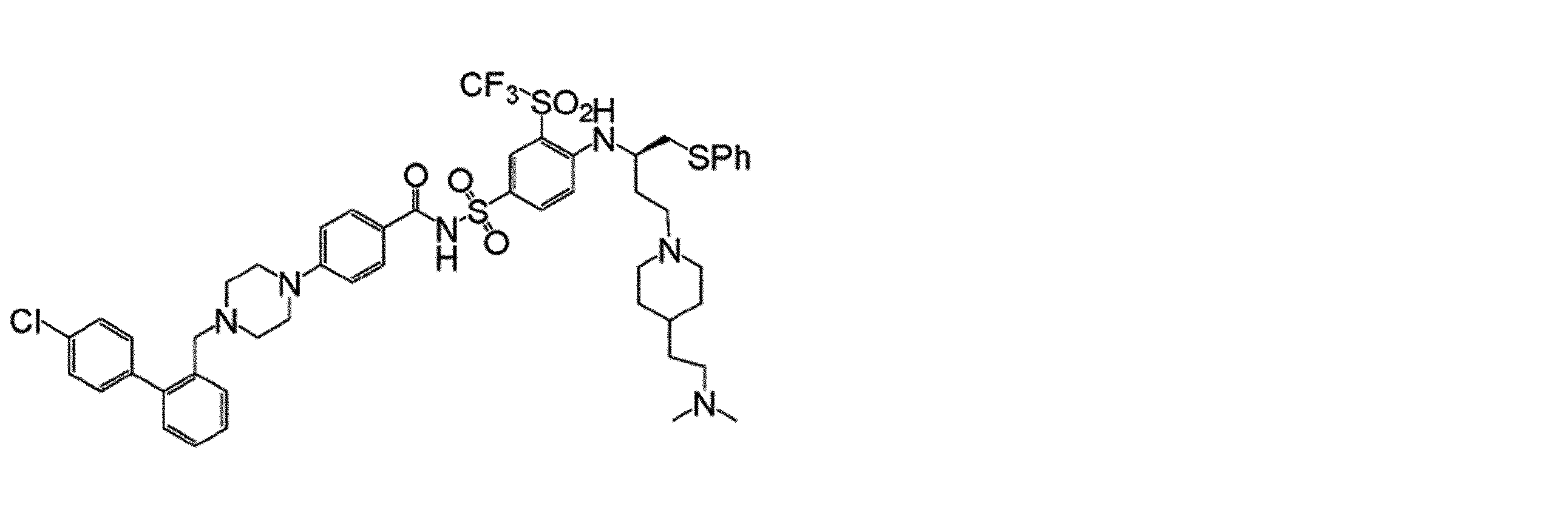


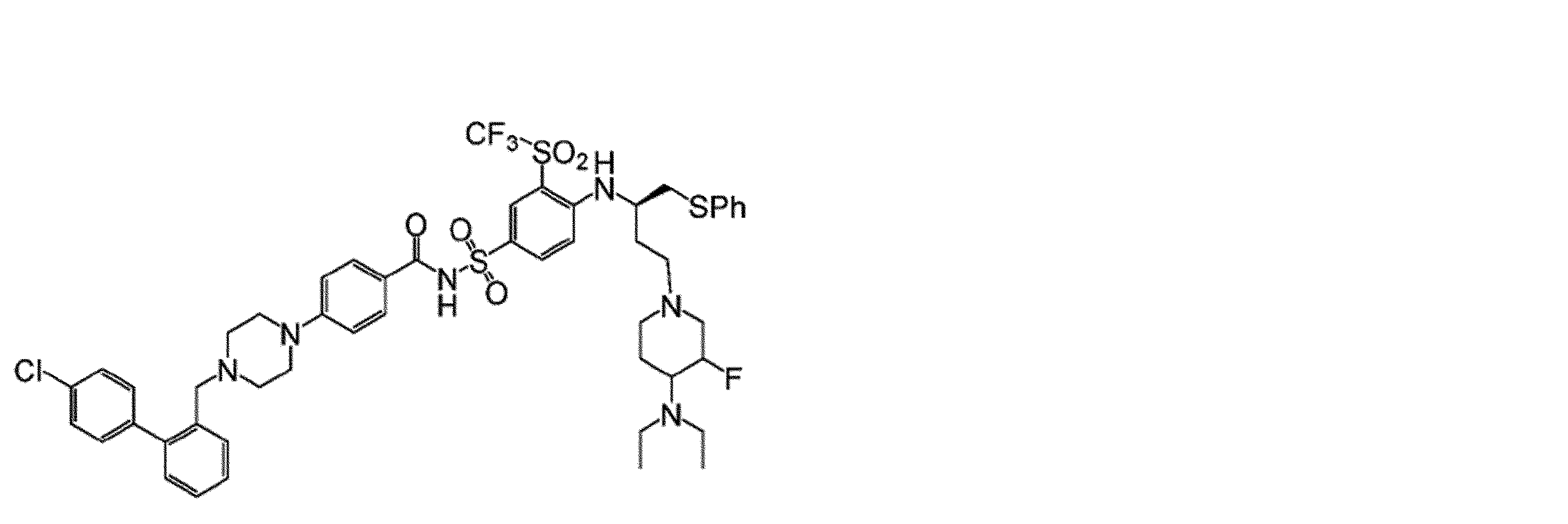


V is,
W is H or
X is,
Y is -NO2 or -SO2CF3 ;
Z is,
In some embodiments, Z is
In some embodiments, the Bcl inhibitor is:
幾つかの実施形態において、それに提供されるリポソーム組成物は、治療剤を含む。幾つかの実施形態において、治療剤は、疎水性治療剤である。幾つかの実施形態において、治療剤は、リポソームに封入される。幾つかの実施形態において、治療剤は、リポソームの外部に存在する。すべての前述の態様の幾つかの実施形態において、リポソームは、治療剤をさらに含む。幾つかの実施形態において、治療剤は、リポソームに封入される。幾つかの実施形態において、それに提供されるリポソーム組成物は、治療剤を含む。幾つかの実施形態において、治療剤は、疎水性治療剤である。幾つかの実施形態において、治療剤は、約2超のcLogPを有する。幾つかの実施形態において、治療剤は、約2~約12のcLogPを有する。幾つかの実施形態において、治療剤は、約3~約12のcLogPを有する。幾つかの実施形態において、治療剤は、約2~約4のcLogPを有する。幾つかの実施形態において、治療剤は、約2~約8のcLogPを有する。幾つかの実施形態において、治療剤は、約4~約12のcLogPを有する。幾つかの実施形態において、治療剤は、約4~約8のcLogPを有する。幾つかの実施形態において、治療剤は、約8~約12のcLogPを有する。幾つかの実施形態において、治療剤は、約10~約12のcLogPを有する。 In some embodiments, the liposome composition provided thereto comprises a therapeutic agent. In some embodiments, the therapeutic agent is a hydrophobic therapeutic agent. In some embodiments, the therapeutic agent is encapsulated in the liposome. In some embodiments, the therapeutic agent is present external to the liposome. In some embodiments of all the foregoing aspects, the liposome further comprises a therapeutic agent. In some embodiments, the therapeutic agent is encapsulated in the liposome. In some embodiments, the liposome composition provided thereto comprises a therapeutic agent. In some embodiments, the therapeutic agent is a hydrophobic therapeutic agent. In some embodiments, the therapeutic agent has a cLogP greater than about 2. In some embodiments, the therapeutic agent has a cLogP of about 2 to about 12. In some embodiments, the therapeutic agent has a cLogP of about 3 to about 12. In some embodiments, the therapeutic agent has a cLogP of about 2 to about 4. In some embodiments, the therapeutic agent has a cLogP of about 2 to about 8. In some embodiments, the therapeutic agent has a cLogP of about 4 to about 12. In some embodiments, the therapeutic agent has a cLogP of about 4 to about 8. In some embodiments, the therapeutic agent has a cLogP of about 8 to about 12. In some embodiments, the therapeutic agent has a cLogP of about 10 to about 12.
幾つかの実施形態において、治療剤は、プロトン化することができ、そのプロトン化形態は、約2超のpKaを有する。幾つかの実施形態において、治療剤は、プロトン化することができ、そのプロトン化形態は、約3~約11のpKaを有する。幾つかの実施形態において、治療剤は、プロトン化することができ、そのプロトン化形態は、約6~約11のpKaを有する。幾つかの実施形態において、治療剤は、プロトン化することができ、そのプロトン化形態は、約8~約11のpKaを有する。幾つかの実施形態において、治療剤は、プロトン化することができ、そのプロトン化形態は、約3~約6のpKaを有する。幾つかの実施形態において、治療剤は、プロトン化することができ、そのプロトン化形態は、約6~約8のpKaを有する。幾つかの実施形態において、治療剤は、プロトン化することができ、そのプロトン化形態は、約3~約8のpKaを有する。幾つかの実施形態において、治療剤は、プロトン化することができ、そのプロトン化形態は、約2~約12のpKaを有する。幾つかの実施形態において、治療剤は、プロトン化することができ、そのプロトン化形態は、約2~約8のpKaを有する。幾つかの実施形態において、治療剤は、プロトン化することができ、そのプロトン化形態は、約2~約4のpKaを有する。幾つかの実施形態において、治療剤は、プロトン化することができ、そのプロトン化形態は、約4~約12のpKaを有する。幾つかの実施形態において、治療剤は、プロトン化することができ、そのプロトン化形態は、約4~約8のpKaを有する。幾つかの実施形態において、治療剤は、プロトン化することができ、そのプロトン化形態は、約8~約12のpKaを有する。幾つかの実施形態において、治療剤は、プロトン化することができ、そのプロトン化形態は、約10~約12のpKaを有する。 In some embodiments, the therapeutic agent can be protonated and the protonated form has a pK a of greater than about 2. In some embodiments, the therapeutic agent can be protonated and the protonated form has a pK a of about 3 to about 11. In some embodiments, the therapeutic agent can be protonated and the protonated form has a pK a of about 6 to about 11. In some embodiments, the therapeutic agent can be protonated and the protonated form has a pK a of about 8 to about 11. In some embodiments, the therapeutic agent can be protonated and the protonated form has a pK a of about 3 to about 6. In some embodiments, the therapeutic agent can be protonated and the protonated form has a pK a of about 6 to about 8. In some embodiments, the therapeutic agent can be protonated and the protonated form has a pK a of about 3 to about 8. In some embodiments, the therapeutic agent can be protonated and the protonated form has a pK a of about 2 to about 12. In some embodiments, the therapeutic agent can be protonated and the protonated form has a pK a of about 2 to about 8. In some embodiments, the therapeutic agent can be protonated and the protonated form has a pK a of about 2 to about 4. In some embodiments, the therapeutic agent can be protonated and the protonated form has a pK a of about 4 to about 12. In some embodiments, the therapeutic agent can be protonated and the protonated form has a pK a of about 4 to about 8. In some embodiments, the therapeutic agent can be protonated and the protonated form has a pK a of about 8 to about 12. In some embodiments, the therapeutic agent can be protonated and the protonated form has a pK a of about 10 to about 12.
幾つかの実施形態において、それに提供されるリポソーム組成物は、追加の治療剤を含む。幾つかの実施形態において、追加の治療剤は、疎水性治療剤である。幾つかの実施形態において、追加の治療剤は、親水性治療剤である。幾つかの実施形態において、追加の治療剤は、リポソームに封入される。幾つかの実施形態において、追加の治療剤は、リポソームの外部に存在する。すべての前述の態様の幾つかの実施形態において、リポソームは、追加の治療剤をさらに含む。幾つかの実施形態において、追加の治療剤は、リポソームに封入される。 In some embodiments, the liposome composition provided therein includes an additional therapeutic agent. In some embodiments, the additional therapeutic agent is a hydrophobic therapeutic agent. In some embodiments, the additional therapeutic agent is a hydrophilic therapeutic agent. In some embodiments, the additional therapeutic agent is encapsulated in the liposome. In some embodiments, the additional therapeutic agent is present external to the liposome. In some embodiments of all the foregoing aspects, the liposome further includes an additional therapeutic agent. In some embodiments, the additional therapeutic agent is encapsulated in the liposome.
幾つかの実施形態において、追加の治療剤は、抗血管新生剤、代謝拮抗剤、アポトーシス誘導剤、細胞周期阻害剤、細胞周期制御阻害剤、チェックポイント阻害剤、サイクリン依存性キナーゼ阻害剤、細胞傷害剤、DNA傷害剤、DNA修復阻害剤、ミトコンドリア毒、テロメラーゼ阻害剤、シグナル伝達阻害剤、転写阻害剤、Bcl阻害剤、PARP阻害剤、PI3K阻害剤、HSP90阻害剤、JAK阻害剤、ATR阻害剤、HDAC阻害剤、チロシンキナーゼ阻害剤、受容体型チロシンキナーゼ阻害剤、BTK阻害剤、アルキル化剤、SMO阻害剤、抗チューブリン剤、MEK阻害剤、トポイソメラーゼ阻害剤、RAF阻害剤、BRAF阻害剤、またはプロテアソーム阻害剤である。 In some embodiments, the additional therapeutic agent is an antiangiogenic agent, an antimetabolite, an apoptosis inducer, a cell cycle inhibitor, a cell cycle control inhibitor, a checkpoint inhibitor, a cyclin-dependent kinase inhibitor, a cytotoxic agent, a DNA damaging agent, a DNA repair inhibitor, a mitochondrial poison, a telomerase inhibitor, a signal transduction inhibitor, a transcription inhibitor, a Bcl inhibitor, a PARP inhibitor, a PI3K inhibitor, an HSP90 inhibitor, a JAK inhibitor, an ATR inhibitor, an HDAC inhibitor, a tyrosine kinase inhibitor, a receptor tyrosine kinase inhibitor, a BTK inhibitor, an alkylating agent, an SMO inhibitor, an antitubulin agent, a MEK inhibitor, a topoisomerase inhibitor, a RAF inhibitor, a BRAF inhibitor, or a proteasome inhibitor.
幾つかの実施形態において、追加の治療剤は、HSP90阻害剤である。幾つかの実施形態において、HSP90阻害剤は、ルミネスピブである。 In some embodiments, the additional therapeutic agent is an HSP90 inhibitor. In some embodiments, the HSP90 inhibitor is luminespib.
幾つかの実施形態において、追加の治療剤は、アルキル化剤である。幾つかの実施形態において、追加の治療剤は、ベンダムスチン及びクロラムブシルからなる群から選択されるアルキル化剤である。 In some embodiments, the additional therapeutic agent is an alkylating agent. In some embodiments, the additional therapeutic agent is an alkylating agent selected from the group consisting of bendamustine and chlorambucil.
幾つかの実施形態において、追加の治療剤は、抗チューブリン剤である。幾つかの実施形態において、追加の治療剤は、ビンクリスチン、ビノレルビン、及びドセタキセルからなる群から選択される抗チューブリン剤である。 In some embodiments, the additional therapeutic agent is an antitubulin agent. In some embodiments, the additional therapeutic agent is an antitubulin agent selected from the group consisting of vincristine, vinorelbine, and docetaxel.
幾つかの実施形態において、追加の治療剤は、ATR阻害剤である。 In some embodiments, the additional therapeutic agent is an ATR inhibitor.
幾つかの実施形態において、追加の治療剤は、RAF阻害剤である。幾つかの実施形態において、RAF阻害剤は、ダブラフェニブである。幾つかの実施形態において、追加の治療剤は、BRAF阻害剤である。幾つかの実施形態において、BRAF阻害剤は、ベムラフェニブである。 In some embodiments, the additional therapeutic agent is a RAF inhibitor. In some embodiments, the RAF inhibitor is dabrafenib. In some embodiments, the additional therapeutic agent is a BRAF inhibitor. In some embodiments, the BRAF inhibitor is vemurafenib.
幾つかの実施形態において、追加の治療剤は、BTK阻害剤である。幾つかの実施形態において、BTK阻害剤は、イブルチニブである。 In some embodiments, the additional therapeutic agent is a BTK inhibitor. In some embodiments, the BTK inhibitor is ibrutinib.
幾つかの実施形態において、追加の治療剤は、HDAC阻害剤である。幾つかの実施形態において、HDAC阻害剤は、パノビノスタットである。 In some embodiments, the additional therapeutic agent is an HDAC inhibitor. In some embodiments, the HDAC inhibitor is panobinostat.
幾つかの実施形態において、追加の治療剤は、JAK阻害剤である。幾つかの実施形態において、JAK阻害剤は、ルキソリチニブである。 In some embodiments, the additional therapeutic agent is a JAK inhibitor. In some embodiments, the JAK inhibitor is ruxolitinib.
幾つかの実施形態において、追加の治療剤は、MEK阻害剤である。幾つかの実施形態において、追加の治療剤は、セルメチニブ及びコビメチニブからなる群から選択されるMEK阻害剤である。 In some embodiments, the additional therapeutic agent is a MEK inhibitor. In some embodiments, the additional therapeutic agent is a MEK inhibitor selected from the group consisting of selumetinib and cobimetinib.
幾つかの実施形態において、追加の治療剤は、PARP阻害剤である。幾つかの実施形態において、追加の治療剤は、タラゾパリブ、ニラパリブ、及びルカパリブからなる群から選択されるPARP阻害剤である。 In some embodiments, the additional therapeutic agent is a PARP inhibitor. In some embodiments, the additional therapeutic agent is a PARP inhibitor selected from the group consisting of talazoparib, niraparib, and rucaparib.
幾つかの実施形態において、追加の治療剤は、PI3K阻害剤である。幾つかの実施形態において、PI3K阻害剤は、イデラリシブである。 In some embodiments, the additional therapeutic agent is a PI3K inhibitor. In some embodiments, the PI3K inhibitor is idelalisib.
幾つかの実施形態において、追加の治療剤は、プロテアソーム阻害剤である。幾つかの実施形態において、プロテアソーム阻害剤は、カルフィルゾミブである。 In some embodiments, the additional therapeutic agent is a proteasome inhibitor. In some embodiments, the proteasome inhibitor is carfilzomib.
幾つかの実施形態において、追加の治療剤は、SMO阻害剤である。幾つかの実施形態において、追加の治療剤は、ソニデジブ及びビスモデギブからなる群から選択されるSMO阻害剤である。 In some embodiments, the additional therapeutic agent is an SMO inhibitor. In some embodiments, the additional therapeutic agent is an SMO inhibitor selected from the group consisting of sonidegib and vismodegib.
幾つかの実施形態において、追加の治療剤は、チロシンキナーゼ阻害剤である。幾つかの実施形態において、追加の治療剤は、ブリガチニブ、レンバチニブ、アファチニブ、アキシチニブ、カボザンチニブ、ポナチニブ、ソラフェニブ、オシメルチニブ、レゴラフェニブ、ボスチニブ、クリゾチニブ、バンデタニブ、ニロチニブ、アレクチニブ、セリチニブ、ダサチニブ、パゾパニブ、スニチニブ、エルロチニブ、イマチニブ、ゲフィチニブ、ラパチニブからなる群から選択されるチロシンキナーゼ阻害剤である。 In some embodiments, the additional therapeutic agent is a tyrosine kinase inhibitor. In some embodiments, the additional therapeutic agent is a tyrosine kinase inhibitor selected from the group consisting of brigatinib, lenvatinib, afatinib, axitinib, cabozantinib, ponatinib, sorafenib, osimertinib, regorafenib, bosutinib, crizotinib, vandetanib, nilotinib, alectinib, ceritinib, dasatinib, pazopanib, sunitinib, erlotinib, imatinib, gefitinib, and lapatinib.
幾つかの実施形態において、追加の治療剤は、トポイソメラーゼ阻害剤である。幾つかの実施形態において、追加の治療剤は、トポイソメラーゼI阻害剤である。幾つかの実施形態において、トポイソメラーゼ阻害剤は、イリノテカンである。 In some embodiments, the additional therapeutic agent is a topoisomerase inhibitor. In some embodiments, the additional therapeutic agent is a topoisomerase I inhibitor. In some embodiments, the topoisomerase inhibitor is irinotecan.
幾つかの実施形態において、追加の治療剤は、上記のもののようなBcl阻害剤である。幾つかの実施形態において、追加の治療剤は、抗悪性腫瘍剤である。適切な抗悪性腫瘍剤は、非限定的な例として、以下のものである:
「シグナル伝達阻害剤」、これは、がん細胞の増殖または分裂を引き起こすシグナルを妨害または防止するものである;
「細胞傷害剤」;
「細胞周期阻害剤」または「細胞周期制御阻害剤」、これは、正常な細胞周期(細胞の起源となる有糸分裂から、それを娘細胞に分裂させる有糸分裂後の事象までの細胞の寿命)を通した細胞の進行を妨害するものである;
「チェックポイント阻害剤」、これは、細胞周期チェックポイント、例えば、S/G2チェックポイント、G2/Mチェックポイント、及びG1/Sチェックポイントの正常な機能を妨害するものであり、例えば、S/G2またはG2/Mチェックポイント阻害剤、例えば、ブレオマイシン、ドセタキセル、ドキソルビシン、エトポシド、パクリタキセル、ビンブラスチン、ビンクリスチン、ビンデシン、及びビノレルビン;G1/初期Sチェックポイント阻害剤;ならびにG2/Mチェックポイント阻害剤である;
「トポイソメラーゼ阻害剤」、これは、DNAの複製及び転写に必要な酵素であるトポイソメラーゼIまたはIIの活性を妨害するものであり、例えば、カンプトテシン、イリノテカン及びトポテカンである;
「受容体型チロシンキナーゼ阻害剤」、これは、チロシンキナーゼ活性を有する増殖因子受容体の活性を妨害するものであり、例えば、ゲニステイン、トラスツズマブ、ZD1839である;
「アポトーシス誘導剤」、これは、プログラム細胞死を促進するものである;
「代謝拮抗剤」、例えば、シチジン類似体、例えば、シタラビン、5-アザシチジン、及びゲムシタビン(2’,2’-ジフルオロデオキシシチジン)、またはヒドロキシ尿素であり、これらは、必須代謝産物に酷似しており、したがってそれに関与する生理学的反応を妨害するものである;
「テロメラーゼ阻害剤」、これは、テロメア長を延ばし、細胞の寿命及びその複製能力を延ばす酵素であるテロメラーゼの活性を妨害するものである;
「サイクリン依存性キナーゼ阻害剤」、これは、ヒストン、細胞骨格タンパク質、転写因子、腫瘍抑制遺伝子などの細胞タンパク質のリン酸化を通して細胞周期の異なる期の間の主要な段階を制御するサイクリン依存性キナーゼを妨害するものである;
「DNA傷害剤」、例えば、カルボプラチン、シスプラチン、シクロホスファミド、ドキソルビシン、ダウノルビシン、エピルビシン、マイトマイシンC、ミトキサントロンである;
「DNA修復阻害剤」、これには、5-フルオロウラシル(5-FU)またはFUDR、ゲムシタビン、及びメトトレキセートが含まれる;
「免疫調節剤」、これは、免疫系を刺激又は抑制し、体が、がん、感染、または他の疾患と闘うのを助けることができるものであり、例えば、モノクローナル抗体、サイトカイン、及びワクチンなどの特異的免疫調節剤は、免疫系の特定の部分に影響を及ぼし、BCG及びレバミゾールなどの非特異的免疫調節剤は、一般的な様式で免疫系に影響を及ぼす;
「抗血管新生剤」、これは、腫瘍増殖中に生じる新しい血管の生成または既存の血管の成長を妨害するものである;ならびに
「ミトコンドリア毒」、これは、ミトコンドリア呼吸鎖機能を直接的又は間接的に撹乱するものである。
In some embodiments, the additional therapeutic agent is a Bcl inhibitor, such as those described above. In some embodiments, the additional therapeutic agent is an anti-neoplastic agent. Suitable anti-neoplastic agents include, by way of non-limiting example, the following:
"signal transduction inhibitors", which disrupt or prevent the signals that cause cancer cells to grow or divide;
"Cytotoxic Agent";
"cell cycle inhibitors" or "cell cycle control inhibitors", which interfere with the progression of a cell through the normal cell cycle (the lifespan of a cell from mitosis, which results in the origin of the cell, to the post-mitotic events that cause it to divide into daughter cells);
"checkpoint inhibitors", which interfere with the normal function of cell cycle checkpoints, e.g., the S/G2 checkpoint, the G2/M checkpoint, and the G1/S checkpoint, e.g., S/G2 or G2/M checkpoint inhibitors, e.g., bleomycin, docetaxel, doxorubicin, etoposide, paclitaxel, vinblastine, vincristine, vindesine, and vinorelbine; G1/early S checkpoint inhibitors; and G2/M checkpoint inhibitors;
"topoisomerase inhibitors", which interfere with the activity of topoisomerase I or II, enzymes necessary for DNA replication and transcription, such as camptothecin, irinotecan, and topotecan;
"receptor tyrosine kinase inhibitors", which interfere with the activity of growth factor receptors with tyrosine kinase activity, e.g., genistein, trastuzumab, ZD1839;
"apoptosis inducers", which promote programmed cell death;
"Antimetabolites", for example, cytidine analogs, e.g., cytarabine, 5-azacytidine, and gemcitabine (2',2'-difluorodeoxycytidine), or hydroxyurea, which closely resemble essential metabolites and thus interfere with the physiological reactions involved therein;
"telomerase inhibitors", which interfere with the activity of telomerase, the enzyme that increases telomere length, thereby extending the lifespan of cells and their replicative potential;
"cyclin-dependent kinase inhibitors", which interfere with cyclin-dependent kinases that control key steps during different phases of the cell cycle through the phosphorylation of cellular proteins such as histones, cytoskeletal proteins, transcription factors, and tumor suppressor genes;
"DNA damaging agents" such as carboplatin, cisplatin, cyclophosphamide, doxorubicin, daunorubicin, epirubicin, mitomycin C, mitoxantrone;
"DNA repair inhibitors", which include 5-fluorouracil (5-FU) or FUDR, gemcitabine, and methotrexate;
"immunomodulators", which stimulate or suppress the immune system and can help the body fight cancer, infection, or other diseases, e.g., specific immunomodulators such as monoclonal antibodies, cytokines, and vaccines affect specific parts of the immune system, while non-specific immunomodulators such as BCG and levamisole affect the immune system in a general manner;
"Anti-angiogenic agents", which interfere with the generation of new blood vessels or the growth of existing blood vessels that occurs during tumor growth; and "mitochondrial poisons", which directly or indirectly disrupt mitochondrial respiratory chain function.
薬剤のうちの1つ以上の作用機構は、わかっていない場合も、または不正確に特定されている場合もある。 The mechanism of action of one or more of the drugs may be unknown or imprecisely specified.
他の抗悪性腫瘍剤として、パクリタキセル、エトポシド化合物、カンプトテシン化合物、イダルビシン、カルボプラチン、オキサリプラチン、アドリアマイシン、マイトマイシン、アンサマイトシン、ブレオマイシン、シトシンアラビノシド、アラビノシルアデニン、メルカプトポリリジン、ビンクリスチン、ブスルファン、クロラムブシル、メルファラン、メルカプトプリン、ミトタン、塩酸プロカルバジン、ダクチノマイシン、マイトマイシン、プリカマイシン、アミノグルテチミド、リン酸エストラムスチンナトリウム、フルタミド、酢酸ロイプロリド、酢酸メゲストロール、タモキシフェンクエン酸塩、テストラクトン、トリロスタン、アムサクリン、アスパラギナーゼ、インターフェロン、テニポシド、ビンブラスチン硫酸塩、ビンクリスチン硫酸塩、ブレオマイシン、メトトレキサート、バルルビシン、カルゼレシン、パクリタキセル、タキソタン、カンプトテシン、ドキソルビシン、ダウノマイシン、シスプラチン、5フルオロウラシル、メトトレキサート;抗炎症剤、例えば、インドメタシン、イブプロフェン、ケトプロフェン、フルルビプロフェン(flubiprofen)、ジクロフェナク(dichlofenac)、ピロキシカム、テノキシカム、ナプロキセン、アスピリン、及びアセトアミノフェン;性ホルモン、例えば、テストステロン、エストロゲン、プロゲステロン(progestone)、エストラジオール;降圧剤、例えば、カプトプリル、ラミプリル、テラゾシン、ミノキシジル、及びプラゾシン(parazosin);制吐剤、例えば、オンダンセトロン及びグラニセトロン;抗生物質、例えば、メトロニダゾール及びフシジン酸;シクロスポリン;プロスタグランジン;ビフェニルジメチルジカルボン酸、カルボプラチン;抗真菌剤、例えば、イトラコナゾール、ケトコナゾール、及びアムホテリシン;ステロイド、例えば、トリアムシノロンアセトニド、ヒドロコルチゾン、デキサメタゾン、プレドニゾロン、及びベタメタゾン;シクロスポリン、ならびに機能的に等価な類似体、誘導体、またはそれらの組み合わせが挙げられる。 Other anticancer drugs include paclitaxel, etoposide compounds, camptothecin compounds, idarubicin, carboplatin, oxaliplatin, adriamycin, mitomycin, ansamitocin, bleomycin, cytosine arabinoside, arabinosyl adenine, mercaptopolylysine, vincristine, busulfan, chlorambucil, melphalan, mercaptopurine, mitotane, procarbazine hydrochloride, dactinomycin, mitomycin, plicamycin, aminoglutethimide, phosphate Estramustine Sodium, Flutamide, Leuprolide Acetate, Megestrol Acetate, Tamoxifen Citrate, Testolactone, Trilostane, Amsacrine, Asparaginase, Interferon, Teniposide, Vinblastine Sulfate, Vincristine Sulfate, Bleomycin, Methotrexate, Valrubicin, Carzelesin, Paclitaxel, Taxotan, Camptothecin, Doxorubicin, Daunomycin, Cisplatin, 5 Fluorouracil, Methotrexate; anti-inflammatory agents such as, for example, Indomethacin, ibuprofen, ketoprofen, flubiprofen, dichlofenac, piroxicam, tenoxicam, naproxen, aspirin, and acetaminophen; sex hormones such as testosterone, estrogen, progesterone, estradiol; antihypertensives such as captopril, ramipril, terazosin, minoxidil, and parazosin; antiemetics such as oncolytics, steroids, and steroids. dansetron and granisetron; antibiotics such as metronidazole and fusidic acid; cyclosporine; prostaglandins; biphenyldimethyldicarboxylic acid, carboplatin; antifungals such as itraconazole, ketoconazole, and amphotericin; steroids such as triamcinolone acetonide, hydrocortisone, dexamethasone, prednisolone, and betamethasone; cyclosporine, as well as functionally equivalent analogs, derivatives, or combinations thereof.
幾つかの実施形態において、それに提供されるリポソーム組成物は、追加の治療剤を含む。幾つかの実施形態において、追加の治療剤は、疎水性治療剤である。幾つかの実施形態において、追加の治療剤は、リポソームに封入される。幾つかの実施形態において、追加の治療剤は、リポソームの外部に存在する。すべての前述の態様の幾つかの実施形態において、リポソームは、追加の治療剤をさらに含む。幾つかの実施形態において、追加の治療剤は、リポソームに封入される。幾つかの実施形態において、追加の治療剤は、約2超のcLogPを有する。幾つかの実施形態において、追加の治療剤は、約-6~約12のcLogPを有する。幾つかの実施形態において、追加の治療剤は、約-6~約0のcLogPを有する。幾つかの実施形態において、追加の治療剤は、約-3~約0のcLogPを有する。幾つかの実施形態において、追加の治療剤は、約0~約2のcLogPを有する。幾つかの実施形態において、追加の治療剤は、約-1~約12のcLogPを有する。幾つかの実施形態において、追加の治療剤は、約3~約12のcLogPを有する。幾つかの実施形態において、追加の治療剤は、約-6~約-1のcLogPを有する。幾つかの実施形態において、追加の治療剤は、約-1~約3のcLogPを有する。幾つかの実施形態において、追加の治療剤は、約2~約12のcLogPを有する。幾つかの実施形態において、追加の治療剤は、約2~約4のcLogPを有する。幾つかの実施形態において、追加の治療剤は、約2~約8のcLogPを有する。幾つかの実施形態において、追加の治療剤は、約4~約12のcLogPを有する。幾つかの実施形態において、追加の治療剤は、約4~約8のcLogPを有する。幾つかの実施形態において、追加の治療剤は、約8~約12のcLogPを有する。幾つかの実施形態において、追加の治療剤は、約10~約12のcLogPを有する。 In some embodiments, the liposome composition provided therein includes an additional therapeutic agent. In some embodiments, the additional therapeutic agent is a hydrophobic therapeutic agent. In some embodiments, the additional therapeutic agent is encapsulated in the liposome. In some embodiments, the additional therapeutic agent is external to the liposome. In some embodiments of all the foregoing aspects, the liposome further includes an additional therapeutic agent. In some embodiments, the additional therapeutic agent is encapsulated in the liposome. In some embodiments, the additional therapeutic agent has a cLogP greater than about 2. In some embodiments, the additional therapeutic agent has a cLogP of about -6 to about 12. In some embodiments, the additional therapeutic agent has a cLogP of about -6 to about 0. In some embodiments, the additional therapeutic agent has a cLogP of about -3 to about 0. In some embodiments, the additional therapeutic agent has a cLogP of about 0 to about 2. In some embodiments, the additional therapeutic agent has a cLogP of about -1 to about 12. In some embodiments, the additional therapeutic agent has a cLogP of about 3 to about 12. In some embodiments, the additional therapeutic agent has a cLogP of about -6 to about -1. In some embodiments, the additional therapeutic agent has a cLogP of about -1 to about 3. In some embodiments, the additional therapeutic agent has a cLogP of about 2 to about 12. In some embodiments, the additional therapeutic agent has a cLogP of about 2 to about 4. In some embodiments, the additional therapeutic agent has a cLogP of about 2 to about 8. In some embodiments, the additional therapeutic agent has a cLogP of about 4 to about 12. In some embodiments, the additional therapeutic agent has a cLogP of about 4 to about 8. In some embodiments, the additional therapeutic agent has a cLogP of about 8 to about 12. In some embodiments, the additional therapeutic agent has a cLogP of about 10 to about 12.
幾つかの実施形態において、追加の治療剤は、プロトン化することができ、そのプロトン化形態は、約2超のpKaを有する。幾つかの実施形態において、追加の治療剤は、プロトン化することができ、そのプロトン化形態は、約-6~約12の間のpKaを有する。幾つかの実施形態において、追加の治療剤は、プロトン化することができ、そのプロトン化形態は、約-6~約11のpKaを有する。幾つかの実施形態において、追加の治療剤は、プロトン化することができ、そのプロトン化形態は、約3~約11のpKaを有する。幾つかの実施形態において、追加の治療剤は、プロトン化することができ、そのプロトン化形態は、約6~約11のpKaを有する。幾つかの実施形態において、追加の治療剤は、プロトン化することができ、そのプロトン化形態は、約8~約11のpKaを有する。幾つかの実施形態において、追加の治療剤は、プロトン化することができ、そのプロトン化形態は、約-6~約3のpKaを有する。幾つかの実施形態において、追加の治療剤は、プロトン化することができ、そのプロトン化形態は、約3~約6のpKaを有する。幾つかの実施形態において、追加の治療剤は、プロトン化することができ、そのプロトン化形態は、約6~約8のpKaを有する。幾つかの実施形態において、追加の治療剤は、プロトン化することができ、そのプロトン化形態は、約-6~約8のpKaを有する。幾つかの実施形態において、追加の治療剤は、プロトン化することができ、そのプロトン化形態は、約3~約8のpKaを有する。幾つかの実施形態において、追加の治療剤は、プロトン化することができ、そのプロトン化形態は、約-6~約6のpKaを有する。幾つかの実施形態において、追加の治療剤は、プロトン化することができ、そのプロトン化形態は、約2~約12のpKaを有する。幾つかの実施形態において、追加の治療剤は、プロトン化することができ、そのプロトン化形態は、約2~約8のpKaを有する。幾つかの実施形態において、追加の治療剤は、プロトン化することができ、そのプロトン化形態は、約2~約4のpKaを有する。幾つかの実施形態において、追加の治療剤は、プロトン化することができ、そのプロトン化形態は、約4~約12のpKaを有する。幾つかの実施形態において、追加の治療剤は、プロトン化することができ、そのプロトン化形態は、約4~約8のpKaを有する。幾つかの実施形態において、追加の治療剤は、プロトン化することができ、そのプロトン化形態は、約8~約12のpKaを有する。幾つかの実施形態において、追加の治療剤は、プロトン化することができ、そのプロトン化形態は、約10~約12のpKaを有する。 In some embodiments, the additional therapeutic agent can be protonated and the protonated form has a pK a of greater than about 2. In some embodiments, the additional therapeutic agent can be protonated and the protonated form has a pK a between about -6 and about 12. In some embodiments, the additional therapeutic agent can be protonated and the protonated form has a pK a of about -6 to about 11. In some embodiments, the additional therapeutic agent can be protonated and the protonated form has a pK a of about 3 to about 11. In some embodiments, the additional therapeutic agent can be protonated and the protonated form has a pK a of about 6 to about 11. In some embodiments, the additional therapeutic agent can be protonated and the protonated form has a pK a of about 8 to about 11. In some embodiments, the additional therapeutic agent can be protonated and the protonated form has a pK a of about -6 to about 3. In some embodiments, the additional therapeutic agent can be protonated and the protonated form has a pK a of about 3 to about 6. In some embodiments, the additional therapeutic agent can be protonated and the protonated form has a pK a of about 6 to about 8. In some embodiments, the additional therapeutic agent can be protonated and the protonated form has a pK a of about -6 to about 8. In some embodiments, the additional therapeutic agent can be protonated and the protonated form has a pK a of about 3 to about 8. In some embodiments, the additional therapeutic agent can be protonated and the protonated form has a pK a of about -6 to about 6. In some embodiments, the additional therapeutic agent can be protonated and the protonated form has a pK a of about 2 to about 12. In some embodiments, the additional therapeutic agent can be protonated and the protonated form has a pK a of about 2 to about 8. In some embodiments, the additional therapeutic agent can be protonated and its protonated form has a pK a of about 2 to about 4. In some embodiments, the additional therapeutic agent can be protonated and its protonated form has a pK a of about 4 to about 12. In some embodiments, the additional therapeutic agent can be protonated and its protonated form has a pK a of about 4 to about 8. In some embodiments, the additional therapeutic agent can be protonated and its protonated form has a pK a of about 8 to about 12. In some embodiments, the additional therapeutic agent can be protonated and its protonated form has a pK a of about 10 to about 12.
リポソーム及びリポソーム組成物の作製プロセス
リポソームは、「Liposomes:Rational Design」(A.S.Janoff,ed.,Marcel Dekker,Inc.,New York,NY)に記載されるように、または当業者が精通する追加の技法によって調製することができる。適切なリポソームとして、大型単層小胞(LUV)、多層小胞(MLV)、小型単層小胞(SUV)、及び嵌合融合(interdigitating fusion)リポソームが挙げられる。
Processes for Making Liposomes and Liposomal Compositions Liposomes can be prepared as described in "Liposomes: Rational Design" (A.S. Janoff, ed., Marcel Dekker, Inc., New York, NY) or by additional techniques familiar to those of skill in the art. Suitable liposomes include large unilamellar vesicles (LUVs), multilamellar vesicles (MLVs), small unilamellar vesicles (SUVs), and interdigitating fusion liposomes.
脂質
リポソームは、治療用脂質を含有してもよく、その例として、エーテル脂質、ホスファチジン酸、ホスホネート、セラミド及びセラミド類似体、スフィンゴシン及びスフィンゴシン類似体、ならびにセリン含有脂質が挙げられる。リポソームはまた、二脂肪族鎖脂質、例えば、ホスファチジン酸脂質、ホスファチジルグリセロール、ホスファチジルイノシトール、ホスファチジルコリン脂質、ホスファチジルエタノールアミン脂質、ホスファチジルセリン脂質、及びホスファチジルグリセロール脂質などのリン脂質を含有してもよい。リポソームはまた、ジグリセリド、二脂肪族糖脂質、または単一脂質を含有してもよい。リポソームは、ジステアロイルホスファチジルコリン(DSPC)などのホスファチジルコリン脂質を含有するように調製してもよい。リン脂質は、ホスファチジルコリン、スフィンゴ脂質、及び水素化スフィンゴ脂質からなる群から選択してもよい。例えば、リン脂質は、卵ホスファチジルコリン(卵PC)、1-パルミトイル-2-オレオイル-sn-グリセロ-3-ホスホコリン(POPC)、1,2-ジパルミトイル-sn-グリセロ-3-ホスホコリン(DPPC)、卵スフィンゴミエリン、1,2-ジオレオイル-sn-グリセロ-3-ホスホエタノールアミン(DOPE)、1,2-ジステアロイル-sn-グリセロ-3-ホスホ-L-セリン(DSPS)、1,2-ジステアロイル-sn-グリセロ-3-ホスホ-L-セリンナトリウム塩(DSPS-Na)、2-オレオイル-1-パルミトイル-sn-グリセロ-3-ホスホ-L-セリン(POPS)、及び2-オレオイル-1-パルミトイル-sn-グリセロ-3-ホスホ-L-セリンナトリウム塩(POPS-Na)であってもよい。
Lipids Liposomes may contain therapeutic lipids, examples of which include ether lipids, phosphatidic acid, phosphonates, ceramides and ceramide analogs, sphingosine and sphingosine analogs, and serine-containing lipids. Liposomes may also contain phospholipids, such as dialiphatic chain lipids, for example, phosphatidic acid lipids, phosphatidylglycerol, phosphatidylinositol, phosphatidylcholine lipids, phosphatidylethanolamine lipids, phosphatidylserine lipids, and phosphatidylglycerol lipids. Liposomes may also contain diglycerides, dialiphatic glycolipids, or single lipids. Liposomes may be prepared to contain phosphatidylcholine lipids, such as distearoylphosphatidylcholine (DSPC). Phospholipids may be selected from the group consisting of phosphatidylcholine, sphingolipids, and hydrogenated sphingolipids. For example, the phospholipid may be egg phosphatidylcholine (egg PC), 1-palmitoyl-2-oleoyl-sn-glycero-3-phosphocholine (POPC), 1,2-dipalmitoyl-sn-glycero-3-phosphocholine (DPPC), egg sphingomyelin, 1,2-dioleoyl-sn-glycero-3-phosphoethanolamine (DOPE), 1,2-distearoyl-sn-glycero-3-phospho-L-serine (DSPS), 1,2-distearoyl-sn-glycero-3-phospho-L-serine sodium salt (DSPS-Na), 2-oleoyl-1-palmitoyl-sn-glycero-3-phospho-L-serine (POPS), and 2-oleoyl-1-palmitoyl-sn-glycero-3-phospho-L-serine sodium salt (POPS-Na).
リポソームは、表面安定化親水性ポリマー脂質コンジュゲートを用いて調製してもよい。親水性ポリマー脂質コンジュゲートは、ポリマー部分と脂質部分とを含む。ポリマー部分は、PEG部分であり得る。脂質部分は、リン脂質ベースであり得る。リン脂質は、ホスファチジルコリン、スフィンゴ脂質、及び水素化スフィンゴ脂質からなる群から選択してもよい。例えば、リン脂質は、卵ホスファチジルコリン(卵PC)、1-パルミトイル-2-オレオイル-sn-グリセロ-3-ホスホコリン(POPC)、1,2-ジパルミトイル-sn-グリセロ-3-ホスホコリン(DPPC)、卵スフィンゴミエリン、1,2-ジオレオイル-sn-グリセロ-3-ホスホエタノールアミン(DOPE)、1,2-ジステアロイル-sn-グリセロ-3-ホスホ-L-セリン(DSPS)、1,2-ジステアロイル-sn-グリセロ-3-ホスホ-L-セリンナトリウム塩(DSPS-Na)、2-オレオイル-1-パルミトイル-sn-グリセロ-3-ホスホ-L-セリン(POPS)、及び2-オレオイル-1-パルミトイル-sn-グリセロ-3-ホスホ-L-セリンナトリウム塩(POPS-Na)であってもよい。例示的なポリマー脂質コンジュゲートは、1,2-ジステアロイル-rac-グリセロ-3-メトキシポリ(エチレングリコール)(DSG-PEG2000またはDSG-PEG1000など)、1,2-ジミリストイル-rac-グリセロ-3-メトキシポリ(エチレングリコール)(DMG-PEG2000またはDMG-PEG1000など)、1,2-ジパルミトイル-rac-グリセロ-3-メトキシポリ(エチレングリコール)(DPG-PEG2000またはDPG-PEG1000など)、1,2-ジステアロイル-sn-グリセロ-3-ホスホエタノールアミン-ポリ(エチレングリコール)(DSPE-PEG2000またはDSPE-PEG1000など)、N-パルミトイル-スフィンゴシン-1-{スクシニル[メトキシ(ポリエチレングリコール)]}(C16PEG2000セラミドなど)、PEG誘導体化コレステロール(mPEGコレステロールなど)、スフィンゴミエリン、またはジヒドロスフィンゴミエリンであってもよい。ポリマー脂質コンジュゲートのポリマー部分の平均分子量は、約1000g/mol~約5000g/molで変動してもよい。ポリマー脂質コンジュゲートのポリマー部分の平均分子量は、約1000g/mol~約2000g/molで変動してもよい。ポリマー脂質コンジュゲートのポリマー部分の平均分子量は、約1000g/molであってもよい。ポリマー脂質コンジュゲートのポリマー部分の平均分子量は、約2000g/molであってもよい。ポリマー脂質コンジュゲートのポリマー部分の平均分子量は、約5000g/molであってもよい。 The liposomes may be prepared using a surface-stabilizing hydrophilic polymer lipid conjugate. The hydrophilic polymer lipid conjugate comprises a polymer portion and a lipid portion. The polymer portion may be a PEG portion. The lipid portion may be phospholipid-based. The phospholipid may be selected from the group consisting of phosphatidylcholine, sphingolipid, and hydrogenated sphingolipid. For example, the phospholipid may be egg phosphatidylcholine (egg PC), 1-palmitoyl-2-oleoyl-sn-glycero-3-phosphocholine (POPC), 1,2-dipalmitoyl-sn-glycero-3-phosphocholine (DPPC), egg sphingomyelin, 1,2-dioleoyl-sn-glycero-3-phosphoethanolamine (DOPE), 1,2-distearoyl-sn-glycero-3-phospho-L-serine (DSPS), 1,2-distearoyl-sn-glycero-3-phospho-L-serine sodium salt (DSPS-Na), 2-oleoyl-1-palmitoyl-sn-glycero-3-phospho-L-serine (POPS), and 2-oleoyl-1-palmitoyl-sn-glycero-3-phospho-L-serine sodium salt (POPS-Na). Exemplary polymer lipid conjugates include 1,2-distearoyl-rac-glycero-3-methoxypoly(ethylene glycol) (such as DSG-PEG2000 or DSG-PEG1000), 1,2-dimyristoyl-rac-glycero-3-methoxypoly(ethylene glycol) (such as DMG-PEG2000 or DMG-PEG1000), 1,2-dipalmitoyl-rac-glycero-3-methoxypoly(ethylene glycol) (such as DPG-PEG2000 or DPG-PEG1000), 1,2-dimethys ... PEG1000), 1,2-distearoyl-sn-glycero-3-phosphoethanolamine-poly(ethylene glycol) (such as DSPE-PEG2000 or DSPE-PEG1000), N-palmitoyl-sphingosine-1-{succinyl[methoxy(polyethylene glycol)]} (such as C16PEG2000 ceramide), PEG-derivatized cholesterol (such as mPEG cholesterol), sphingomyelin, or dihydrosphingomyelin. The average molecular weight of the polymer portion of the polymer lipid conjugate may vary from about 1000 g/mol to about 5000 g/mol. The average molecular weight of the polymer portion of the polymer lipid conjugate may vary from about 1000 g/mol to about 2000 g/mol. The average molecular weight of the polymer portion of the polymer lipid conjugate may be about 1000 g/mol. The average molecular weight of the polymer portion of the polymer-lipid conjugate may be about 2000 g/mol. The average molecular weight of the polymer portion of the polymer-lipid conjugate may be about 5000 g/mol.
ホスファチジルグリセロール(PG)及びホスファチジルイノシトール(PI)などの負に荷電した脂質の組み込みをリポソーム製剤に追加して、担体の循環寿命を延ばすこともできる。これらの脂質を、表面安定化剤として親水性ポリマー脂質コンジュゲートに代えて用いてもよく、または親水性ポリマー脂質コンジュゲートと組み合わせて用いてもよい。 Incorporation of negatively charged lipids such as phosphatidylglycerol (PG) and phosphatidylinositol (PI) can also be added to liposomal formulations to increase the circulation lifetime of the carrier. These lipids may be used in place of or in combination with hydrophilic polymer-lipid conjugates as surface stabilizers.
ステロール
リポソームは、ステロール、例えば、コレステロール、コレステロール誘導体、または植物ステロール(β-シトステロールなど)も含有してもよい。
Sterols Liposomes may also contain a sterol, for example, cholesterol, a cholesterol derivative, or a plant sterol, such as β-sitosterol.
リポソームの装填プロセス
リポソームに活性剤を封入するために、様々な方法が利用され得る。「封入(Encapsulation)」には、薬剤とリポソームとの共有結合または非共有結合が含まれる。例えば、これは、薬剤とリポソームの外層(1層または複数)との相互作用、またはリポソーム中への薬剤の捕捉、リポソームの異なる部分間で達成される平衡状態によって可能である。よって、薬剤の封入は、脂質成分との共有結合もしくは非共有結合を通したリポソームの二重層との相互作用による薬剤の会合、またはリポソームの水性内部中への捕捉によるもの、または内部水性相と二重層との間の平衡におけるものであり得る。「装填(loading)」とは、1つ以上の薬剤を送達ビヒクルに封入する行為を指す。
Liposome Loading Process Various methods can be used to encapsulate active agents in liposomes. "Encapsulation" includes covalent or non-covalent binding of agents to liposomes. For example, this can be by interaction of agents with the outer layer(s) of the liposome, or by entrapment of agents in the liposome, or by equilibrium achieved between different parts of the liposome. Thus, encapsulation of agents can be by association of agents with the bilayer of the liposome through covalent or non-covalent interactions with lipid components, or by entrapment in the aqueous interior of the liposome, or in equilibrium between the internal aqueous phase and the bilayer. "Loading" refers to the act of encapsulating one or more agents in a delivery vehicle.
治療剤の組み合わせが模索される場合、所望の組み合わせの封入は、別々の送達ビヒクルへの封入または同じ送達ビヒクルへの封入のいずれかによって達成することができることが、当業者には明らかであろう。別々のリポソームへの封入が所望される場合、各リポソームの脂質組成を全く異なるものにして、協調した薬物動態が可能であるようにしてもよい。ビヒクルの組成を変えることによって、封入された薬物の放出速度を適合させて、所望の比率の薬物を腫瘍部位に送達することが可能になるようにすることができる。放出速度を変える手段には、薬物滞留性を向上させるために小胞形成脂質のアシル鎖長を増加させること、リポソーム膜から外に出たPEGなどの表面グラフト親水性ポリマーの交換を制御すること、及び膜にステロールなどの膜硬化剤(membrane-rigidifying agent)を組み入れることが含まれる。第1及び第2の薬物が特定の薬物比で投与されることが所望され、第2の薬物が第1の薬物のリポソーム組成物中にあまり保持されないならば、向上した薬物動態は、第2の薬物を第2のリポソーム組成物に封入することによって達成することができることが、当業者には明らかであるはずである。代替的に、2つ以上の薬剤を同じリポソームに封入してもよい。 It will be apparent to one of skill in the art that when combinations of therapeutic agents are sought, encapsulation of the desired combination can be achieved either by encapsulation in separate delivery vehicles or by encapsulation in the same delivery vehicle. If encapsulation in separate liposomes is desired, the lipid composition of each liposome may be quite different to allow for coordinated pharmacokinetics. By varying the composition of the vehicle, the release rate of the encapsulated drugs can be adapted to allow for the delivery of a desired ratio of drugs to the tumor site. Means of altering the release rate include increasing the acyl chain length of the vesicle-forming lipids to improve drug retention, controlling the exchange of surface-grafted hydrophilic polymers such as PEG out of the liposome membrane, and incorporating membrane-rigidifying agents such as sterols into the membrane. It should be apparent to one of skill in the art that if it is desired to administer a first and second drug at a particular drug ratio, and the second drug is poorly retained in the liposomal composition of the first drug, improved pharmacokinetics can be achieved by encapsulating the second drug in a second liposomal composition. Alternatively, two or more drugs may be encapsulated in the same liposome.
封入のための技法は、送達ビヒクルの性質及び封入しようとする治療剤の性質に応じて異なる。例えば、治療剤は、受動的装填法と能動的装填法の両方を使用してリポソームに装填してもよい。リポソームに活性剤を封入する受動的方法は、該薬剤をリポソームの調製中に封入することを含む。これには、Bangham,et al.(J.Mol.Biol.(1965)12:238)によって記載される受動的捕捉法が含まれる。この技法は、押出し時に大型単層小胞(LUV)または小型単層小胞(SUV)に変換することができる多層小胞(MLV)の形成をもたらす。受動封入の別の好適な方法として、Deamer and Bangham(Biochim. Biophys. Acta(1976)443:629)によって記載されるエーテル注入技術、及びSzoka and Paphadjopolos(P.N.A.S(1978)75:4194)によって記載される逆相蒸発技術が挙げられる。加えて、受動的封入の別の適切な方法として、リポソームの形成後の受動的平衡化が挙げられる。このプロセスは、予め形成されたリポソームを、変化させたまたは非周囲(温度、圧力などに基づく)条件下でインキュベートすること、及び治療剤をリポソームの外部に添加することを含む。治療剤は、次いでリポソーム膜を通してリポソームの内部で平衡化する。次いで、リポソームを周囲条件に戻し、存在する場合には、封入されていない治療剤を、透析または別の適切な方法を介して除去する。 Techniques for encapsulation vary depending on the nature of the delivery vehicle and the therapeutic agent to be encapsulated. For example, therapeutic agents may be loaded into liposomes using both passive and active loading methods. Passive methods of encapsulating active agents in liposomes include encapsulating the agent during the preparation of the liposomes. This includes the passive entrapment method described by Bangham, et al. (J. Mol. Biol. (1965) 12:238). This technique results in the formation of multilamellar vesicles (MLVs) that can be converted to large unilamellar vesicles (LUVs) or small unilamellar vesicles (SUVs) upon extrusion. Other suitable methods of passive encapsulation include the ether injection technique described by Deamer and Bangham (Biochim. Biophys. Acta (1976) 443:629) and the reverse phase evaporation technique described by Szoka and Paphadjopolos (P.N.A.S (1978) 75:4194). In addition, other suitable methods of passive encapsulation include passive equilibration after formation of the liposomes. This process involves incubating preformed liposomes under altered or non-ambient (based on temperature, pressure, etc.) conditions and adding a therapeutic agent to the exterior of the liposomes. The therapeutic agent then equilibrates to the interior of the liposomes through the liposome membrane. The liposomes are then returned to ambient conditions and unencapsulated therapeutic agent, if present, is removed via dialysis or another suitable method.
封入の能動的方法として、米国特許第5,616,341号、第5,736,155号、及び第5,785,987号に記載されているpH勾配装填技法、ならびに能動的金属装填が挙げられる。pH勾配装填の一方法は、クエン酸塩を4.0のpHの内部緩衝液及び中性の外部緩衝液として利用するクエン酸塩ベースの装填方法である。リポソームを通したpH勾配を確立及び維持するために用いられる他の方法は、リポソーム膜に挿入し、プロトンと交換して膜を通してイオンを輸送することができるイオノフォアの使用を含む(米国特許第5,837,282号参照)。遷移金属を利用して、イオノフォアの非存在下で錯体形成を介してリポソーム中への薬物の取り込みを駆動する別の技法も使用してよい。この技法は、薬物の取り込みを駆動するのに、pH勾配の確立ではなく薬物-金属錯体の形成に依存する。 Active methods of encapsulation include the pH gradient loading technique described in U.S. Pat. Nos. 5,616,341, 5,736,155, and 5,785,987, as well as active metal loading. One method of pH gradient loading is the citrate-based loading method, which utilizes citrate as an internal buffer at a pH of 4.0 and a neutral external buffer. Other methods used to establish and maintain a pH gradient through liposomes include the use of ionophores that can insert into the liposomal membrane and transport ions across the membrane in exchange for protons (see U.S. Pat. No. 5,837,282). Another technique may also be used that utilizes transition metals to drive drug uptake into liposomes via complex formation in the absence of an ionophore. This technique relies on the formation of a drug-metal complex rather than the establishment of a pH gradient to drive drug uptake.
難水溶性化合物の好ましい封入方法は当業者に公知であり、例えば、米国特許第9,737,485号、第10,507,182号、及び第10,722,467号に記載されている。そのような方法では、封入しようとする薬剤を装填溶媒に溶解させ、得られた溶液を装填助剤を含むリポソームの懸濁液に添加して、装填しようとする薬剤を非結晶質固体として含む混合物を得るか、または装填しようとする薬剤を非結晶質固体形態として用意し、それを、装填助剤を含むリポソームの懸濁液に添加する。難水溶性化合物の他の好ましい封入方法は、Li et al.,Pharmaceutics(2019),11,465に記載されている。 Preferred methods for encapsulation of poorly water-soluble compounds are known to those skilled in the art and are described, for example, in U.S. Pat. Nos. 9,737,485, 10,507,182, and 10,722,467. In such methods, the drug to be encapsulated is dissolved in a loading solvent and the resulting solution is added to a suspension of liposomes containing a loading aid to obtain a mixture containing the drug to be loaded as an amorphous solid, or the drug to be loaded is prepared in an amorphous solid form and added to a suspension of liposomes containing a loading aid. Other preferred methods for encapsulation of poorly water-soluble compounds are described in Li et al., Pharmaceutics (2019), 11,465.
複数の封入薬剤を含有するリポソーム製剤を調製するために、受動的及び能動的捕捉法を合わせて行ってもよい。 Passive and active entrapment methods may be combined to prepare liposomal formulations containing multiple encapsulated drugs.
リポソームの精製
一態様において、リポソームを含む精製リポソーム組成物の調製方法を提供し、
前記リポソームは、
(a)脂質二重層、
(b)内部媒体、及び
(c)リポソームの内部媒体に封入された治療剤を含み、
治療剤は、低い水溶性を有し、プロトン化形態にプロトン化され得、
前記方法は、
(i)粗リポソーム組成物を提供し、
(ii)酸性化水溶液を用いて粗リポソーム組成物を精製することを含む。
Purification of Liposomes In one embodiment, a method for preparing a purified liposome composition comprising liposomes is provided, comprising:
The liposome is
(a) a lipid bilayer;
(b) an internal medium; and (c) a therapeutic agent encapsulated in the internal medium of the liposome;
The therapeutic agent has low water solubility and can be protonated to a protonated form;
The method comprises:
(i) providing a crude liposome composition;
(ii) purifying the crude liposome composition using an acidified aqueous solution.
幾つかの実施形態において、酸性化水溶液は、糖を含む。幾つかの実施形態において、酸性化水溶液は、デキストロースまたはスクロースを含む。幾つかの実施形態において、酸性化水溶液は、デキストロースを含む。幾つかの実施形態において、酸性化水溶液は、約5重量%~約20重量%のデキストロースを含む。幾つかの実施形態において、酸性化水溶液は、5重量%のデキストロースを含む。幾つかの実施形態において、酸性化水溶液は、9重量%のデキストロースを含む。幾つかの実施形態において、酸性化された水溶液は、スクロースを含む。幾つかの実施形態において、酸性化水溶液は、約5重量%~約20重量%のスクロースを含む。幾つかの実施形態において、酸性化水溶液は、5重量%のスクロースを含む。幾つかの実施形態において、酸性化水溶液は、9重量%のスクロースを含む。 In some embodiments, the acidified aqueous solution includes a sugar. In some embodiments, the acidified aqueous solution includes dextrose or sucrose. In some embodiments, the acidified aqueous solution includes dextrose. In some embodiments, the acidified aqueous solution includes about 5% to about 20% dextrose by weight. In some embodiments, the acidified aqueous solution includes 5% dextrose by weight. In some embodiments, the acidified aqueous solution includes 9% dextrose by weight. In some embodiments, the acidified aqueous solution includes sucrose. In some embodiments, the acidified aqueous solution includes about 5% to about 20% sucrose by weight. In some embodiments, the acidified aqueous solution includes 5% sucrose by weight. In some embodiments, the acidified aqueous solution includes 9% sucrose by weight.
幾つかの実施形態において、酸性化水溶液は、鉱酸などの無機酸を含む。幾つかの実施形態において、酸性化水溶液は、塩酸を含む。幾つかの実施形態において、酸性化水溶液は、約1mM~100mMの塩酸を含む。幾つかの実施形態において、酸性化水溶液は、スルホン酸またはカルボン酸などの有機酸を含む。幾つかの実施形態において、酸性化水溶液は、メタンスルホン酸を含む。幾つかの実施形態において、酸性化水溶液は、約1mM~100mMの有機酸を含む。幾つかの実施形態において、酸性化水溶液は、約1mM~100mMのメタンスルホン酸を含む。幾つかの実施形態において、酸性化水溶液は、約1mMのメタンスルホン酸を含む。幾つかの実施形態において、酸性化水溶液は、約5mMのメタンスルホン酸を含む。幾つかの実施形態において、酸性化水溶液は、約10mMのメタンスルホン酸を含む。幾つかの実施形態において、酸性化水溶液は、酢酸を含む。幾つかの実施形態において、酸性化水溶液は、約1mM~100mMの酢酸を含む。幾つかの実施形態において、酸性化水溶液は、約25mMの酢酸を含む。幾つかの実施形態において、酸性化水溶液は、酢酸ナトリウムを含む。幾つかの実施形態において、酸性化水溶液は、約1mM~100mMの酢酸ナトリウムを含む。幾つかの実施形態において、酸性化水溶液は、約25mMの酢酸ナトリウムを含む。幾つかの実施形態において、酸性化水溶液は、酢酸塩を含む。幾つかの実施形態において、酸性化水溶液は、約1mM~100mMの酢酸塩を含む。幾つかの実施形態において、酸性化水溶液は、約25mMの酢酸塩を含む。 In some embodiments, the acidified aqueous solution includes an inorganic acid, such as a mineral acid. In some embodiments, the acidified aqueous solution includes hydrochloric acid. In some embodiments, the acidified aqueous solution includes about 1 mM to 100 mM hydrochloric acid. In some embodiments, the acidified aqueous solution includes an organic acid, such as a sulfonic acid or a carboxylic acid. In some embodiments, the acidified aqueous solution includes methanesulfonic acid. In some embodiments, the acidified aqueous solution includes about 1 mM to 100 mM organic acid. In some embodiments, the acidified aqueous solution includes about 1 mM to 100 mM methanesulfonic acid. In some embodiments, the acidified aqueous solution includes about 1 mM methanesulfonic acid. In some embodiments, the acidified aqueous solution includes about 5 mM methanesulfonic acid. In some embodiments, the acidified aqueous solution includes about 10 mM methanesulfonic acid. In some embodiments, the acidified aqueous solution includes acetic acid. In some embodiments, the acidified aqueous solution includes about 1 mM to 100 mM acetic acid. In some embodiments, the acidified aqueous solution comprises about 25 mM acetic acid. In some embodiments, the acidified aqueous solution comprises sodium acetate. In some embodiments, the acidified aqueous solution comprises about 1 mM to 100 mM sodium acetate. In some embodiments, the acidified aqueous solution comprises about 25 mM sodium acetate. In some embodiments, the acidified aqueous solution comprises acetate. In some embodiments, the acidified aqueous solution comprises about 1 mM to 100 mM acetate. In some embodiments, the acidified aqueous solution comprises about 25 mM acetate.
幾つかの実施形態において、酸性化水溶液は、塩を含む。幾つかの実施形態において、酸性化水溶液は塩を含み、塩はアルカリ金属またはアルカリ土類金属を含む。幾つかの実施形態において、酸性化水溶液は、ナトリウム塩を含む。幾つかの実施形態において、酸性化水溶液は、NaF、NaCl、NaBr、またはNaIを含む。幾つかの実施形態において、酸性化水溶液は、NaClを含む。幾つかの実施形態において、酸性化水溶液は、カリウム塩を含む。幾つかの実施形態において、酸性化水溶液は、リチウム塩を含む。幾つかの実施形態において、酸性化水溶液は、マグネシウム塩を含む。幾つかの実施形態において、酸性化水溶液は、カルシウム塩を含む。 In some embodiments, the acidified aqueous solution comprises a salt. In some embodiments, the acidified aqueous solution comprises a salt, the salt comprising an alkali metal or an alkaline earth metal. In some embodiments, the acidified aqueous solution comprises a sodium salt. In some embodiments, the acidified aqueous solution comprises NaF, NaCl, NaBr, or NaI. In some embodiments, the acidified aqueous solution comprises NaCl. In some embodiments, the acidified aqueous solution comprises a potassium salt. In some embodiments, the acidified aqueous solution comprises a lithium salt. In some embodiments, the acidified aqueous solution comprises a magnesium salt. In some embodiments, the acidified aqueous solution comprises a calcium salt.
幾つかの実施形態において、酸性化水溶液のpHは、約1~約6である。幾つかの実施形態において、酸性化水溶液のpHは、約2~約5である。幾つかの実施形態において、酸性化水溶液のpHは約2.3である。幾つかの実施形態において、酸性化水溶液のpHは約3である。幾つかの実施形態において、酸性化水溶液のpHは約4である。 In some embodiments, the pH of the acidified aqueous solution is about 1 to about 6. In some embodiments, the pH of the acidified aqueous solution is about 2 to about 5. In some embodiments, the pH of the acidified aqueous solution is about 2.3. In some embodiments, the pH of the acidified aqueous solution is about 3. In some embodiments, the pH of the acidified aqueous solution is about 4.
幾つかの実施形態において、酸性化水溶液を用いた粗リポソーム組成物の精製を、複数回実施する。幾つかの実施形態において、酸性化水溶液を用いた粗リポソーム組成物の精製を、8~24回実施する。幾つかの実施形態において、酸性化水溶液を用いた粗リポソーム組成物の精製を、8~12回実施する。幾つかの実施形態において、酸性化水溶液を用いた粗リポソーム組成物の精製を、12~24回実施する。幾つかの実施形態において、酸性化水溶液を用いた粗リポソーム組成物の精製を、少なくとも8回実施する。幾つかの実施形態において、酸性化水溶液を用いた粗リポソーム組成物の精製を、8回実施する。幾つかの実施形態において、酸性化水溶液を用いた粗リポソーム組成物の精製を、少なくとも12回実施する。幾つかの実施形態において、酸性化水溶液を用いた粗リポソーム組成物の精製を、12回実施する。 In some embodiments, the crude liposome composition is purified multiple times using an acidified aqueous solution. In some embodiments, the crude liposome composition is purified 8 to 24 times using an acidified aqueous solution. In some embodiments, the crude liposome composition is purified 8 to 12 times using an acidified aqueous solution. In some embodiments, the crude liposome composition is purified 12 to 24 times using an acidified aqueous solution. In some embodiments, the crude liposome composition is purified at least 8 times using an acidified aqueous solution. In some embodiments, the crude liposome composition is purified 8 times using an acidified aqueous solution. In some embodiments, the crude liposome composition is purified at least 12 times using an acidified aqueous solution. In some embodiments, the crude liposome composition is purified 12 times using an acidified aqueous solution.
使用方法
本明細書に記載のように調製した、1つ以上のリポソームを含むリポソーム組成物を対象に投与することを含む、治療有効量の治療剤の送達方法も提供し、1つ以上のリポソームの各々は、
(a)第1の脂質と第1のステロールを含む脂質二重層、
(b)第1の装填助剤と第1の溶媒を含む内部媒体、及び
(c)前記リポソームの内部媒体に封入された治療剤を含む。
Methods of Use Also provided are methods of delivering a therapeutically effective amount of a therapeutic agent, comprising administering to a subject a liposomal composition prepared as described herein, the liposomal composition comprising one or more liposomes, each of the one or more liposomes comprising:
(a) a lipid bilayer comprising a first lipid and a first sterol;
(b) an internal medium comprising a first loading aid and a first solvent; and (c) a therapeutic agent encapsulated in the internal medium of said liposome.
本発明の組成物は、ヒトを含めた温血動物だけでなく、家畜及び/または鳥類の種にも投与してよい。医薬組成物に加えて、獣医学的使用に適した製剤を調製し、対象に適した様式で投与してもよい。好ましい獣医学的対象として、哺乳動物種、例えば、非ヒト霊長類、イヌ、ネコ、ウシ、ウマ、ヒツジ、及び家禽が挙げられる。対象として、実験動物、例えば、特に、ラット、ウサギ、マウス、及びモルモットも挙げられてもよい。ヒトの病気の治療の場合、適格な医師が、確立されたプロトコルを使用して、投与の用量、スケジュール、及び経路に関して、本発明の組成物がどのように利用されるべきかを決定することになろう。本発明の送達ビヒクル組成物に封入された薬剤が対象の健常組織に対して毒性の低減を呈するのであれば、そのような用途は、用量の漸増を利用することもできる。 The compositions of the present invention may be administered to warm-blooded animals, including humans, as well as domestic and/or avian species. In addition to pharmaceutical compositions, formulations suitable for veterinary use may be prepared and administered in a manner suitable for the subject. Preferred veterinary subjects include mammalian species, such as non-human primates, dogs, cats, cattle, horses, sheep, and poultry. Subjects may also include laboratory animals, such as rats, rabbits, mice, and guinea pigs, among others. For the treatment of human illnesses, a competent physician will determine how the compositions of the present invention should be utilized in terms of dose, schedule, and route of administration, using established protocols. Such applications may also utilize dose escalation, provided that the agent encapsulated in the delivery vehicle composition of the present invention exhibits reduced toxicity to healthy tissues of the subject.
好ましくは、本発明の医薬組成物を、非経口的に、すなわち、動脈内、静脈内、腹腔内、皮下、または筋肉内に投与する。より好ましくは、医薬組成物を、ボーラス注入によって静脈内または腹腔内に投与する。例えば、Rahman,et al.、米国特許第3,993,754号;Sears、米国特許第4,145,410号;Papahadjopoulos,et al.、米国特許第4,235,871号;Schneider、米国特許第4,224,179号;Lenk,et al.、米国特許第4,522,803号;及びFountain,et al.、米国特許第4,588,578号を参照されたい。 Preferably, the pharmaceutical compositions of the present invention are administered parenterally, i.e., intraarterially, intravenously, intraperitoneally, subcutaneously, or intramuscularly. More preferably, the pharmaceutical compositions are administered intravenously or intraperitoneally by bolus injection. See, e.g., Rahman, et al., U.S. Pat. No. 3,993,754; Sears, U.S. Pat. No. 4,145,410; Papahadjopoulos, et al., U.S. Pat. No. 4,235,871; Schneider, U.S. Pat. No. 4,224,179; Lenk, et al., U.S. Pat. No. 4,522,803; and Fountain, et al., U.S. Pat. No. 4,588,578.
他の方法では、本発明の医薬調製物は、組織へ調製物を直接適用することによって標的組織と接触させることができる。適用は、局所的、「開放的」、または「閉鎖的」処置によって行うことができる。「局所的」とは、皮膚、中咽頭、外耳道などの環境に曝露された組織への医薬調製物の直接塗布を意味する。「開放的」処置は、患者の皮膚を切開すること、及び医薬調製物が適用される下層組織を直接可視化することを含む処置である。これは一般に、肺にアクセスするための開胸術、腹部内臓にアクセスするための腹式開腹術、または標的組織への他の直接的な外科的アプローチなどの外科的処置によって遂行される。「閉鎖的」処置は、内部標的組織を直接可視化しないが、皮膚の小さな傷を通して器具を挿入することによってアクセスする侵襲的処置である。例えば、調製物を、針洗浄(needle lavage)によって腹膜に投与してもよい。同様に、脊髄の脊髄麻酔またはメトリザミド(metrazamide)画像化に一般的に実施されるように、腰椎穿刺し、続いて患者を適切にポジショニングし、医薬調製物を、その間に注入することによって、髄膜または脊髄に投与してもよい。代替的に、調製物を、内視鏡装置を通して投与してもよい。 In another method, the pharmaceutical preparation of the present invention can be contacted with the target tissue by applying the preparation directly to the tissue. Application can be by topical, "open", or "closed" procedures. "Topical" refers to the direct application of the pharmaceutical preparation to tissues exposed to the environment, such as the skin, oropharynx, ear canal, etc. An "open" procedure is one that involves incising the patient's skin and directly visualizing the underlying tissue to which the pharmaceutical preparation is applied. This is generally accomplished by a surgical procedure, such as a thoracotomy to access the lungs, a laparotomy to access the abdominal viscera, or other direct surgical approach to the target tissue. A "closed" procedure is an invasive procedure in which the internal target tissue is not directly visualized, but is accessed by inserting an instrument through a small wound in the skin. For example, the preparation may be administered to the peritoneum by needle lavage. Similarly, pharmaceutical preparations may be administered to the meninges or spinal cord by lumbar puncture followed by appropriate positioning of the patient and injection therethrough, as is commonly performed for spinal anesthesia or metrazamide imaging of the spinal cord. Alternatively, the preparations may be administered through an endoscopic device.
本発明の送達ビヒクルを含む医薬組成物は、標準的な技法に従って調製され、安定性を高めるための糖タンパク質、例えば、アルブミン、リポタンパク質、グロブリンなどを含む、水、緩衝水、0.9%生理食塩水、0.3%グリシン、5%デキストロースなどを含んでもよい。これらの組成物を、従来の周知の滅菌技法によって滅菌してもよい。得られた水溶液を、使用のために包装してもよく、または無菌条件下で濾過し、凍結乾燥し、凍結乾燥した調製物を、投与前に滅菌水溶液と合わせてもよい。本組成物は、生理的条件に近づけることが必要とされる場合、薬学的に許容される補助物質、例えば、pH調整剤及び緩衝剤、等張化剤など、例えば、酢酸ナトリウム、乳酸ナトリウム、塩化ナトリウム、塩化カリウム、塩化カルシウムなどを含有してもよい。加えて、送達ビヒクル懸濁液は、保管中のフリーラジカル及び脂質過酸化損傷に対して脂質を保護する脂質保護剤を含んでもよい。α-トコフェロールなどの親油性フリーラジカル失活剤、及びフェリオキサミンなどの水溶性鉄特異的キレート剤が適切である。 Pharmaceutical compositions containing the delivery vehicles of the present invention are prepared according to standard techniques and may contain water, buffered water, 0.9% saline, 0.3% glycine, 5% dextrose, etc., including glycoproteins, e.g., albumin, lipoproteins, globulins, etc., to enhance stability. These compositions may be sterilized by conventional, well-known sterilization techniques. The resulting aqueous solutions may be packaged for use or filtered under aseptic conditions, lyophilized, and the lyophilized preparations may be combined with sterile aqueous solutions prior to administration. The compositions may contain pharma- ceutically acceptable auxiliary substances, such as pH adjusters and buffers, tonicity agents, etc., as required to approximate physiological conditions, e.g., sodium acetate, sodium lactate, sodium chloride, potassium chloride, calcium chloride, etc. In addition, the delivery vehicle suspension may contain lipid protectants to protect lipids against free radical and lipid peroxidative damage during storage. Lipophilic free radical quenchers, such as α-tocopherol, and water-soluble iron-specific chelators, such as ferrioxamine, are suitable.
医薬製剤中の送達ビヒクルの濃度は、約0.05重量%未満から、通常は約2~5重量%または少なくとも約2~5重量%から、10~30重量%程度までなど広く変動し得、選択される特定の投与様式に従って、主に、液体容量、粘度などによって選択されることになる。例えば、濃度を増加させて、治療に関連する添加液を少なくしてもよい。代替的に、刺激性脂質からなる送達ビヒクルを低濃度に希釈して、投与部位での炎症を軽減させてもよい。診断の場合は、投与する送達ビヒクルの量は、使用する特定のラベル、診断される疾患状態、及び臨床医の判断に依存することとなる。 The concentration of the delivery vehicle in the pharmaceutical formulation can vary widely, such as from less than about 0.05% by weight, usually from about 2-5% or at least about 2-5% by weight, to as much as 10-30% by weight, and will be selected primarily by liquid volume, viscosity, and the like, in accordance with the particular mode of administration selected. For example, the concentration may be increased to reduce the amount of added fluid associated with the treatment. Alternatively, a delivery vehicle consisting of an irritating lipid may be diluted to a low concentration to reduce inflammation at the site of administration. In the case of diagnosis, the amount of delivery vehicle administered will depend on the particular label used, the disease state being diagnosed, and the judgment of the clinician.
好ましくは、本発明の医薬組成物を、静脈内投与する。送達ビヒクル製剤の投薬量は、薬物対脂質の比率、ならびに患者の年齢、体重、及び状態に基づいた投与医師の意見に依存することとなる。 Preferably, the pharmaceutical compositions of the present invention are administered intravenously. The dosage of the delivery vehicle formulation will depend on the drug to lipid ratio and the opinion of the administering physician based on the age, weight, and condition of the patient.
医薬組成物に加えて、獣医学的使用に適した製剤を調製し、対象に適した様式で投与してもよい。好ましい獣医学的対象として、哺乳動物種、例えば、非ヒト霊長類、イヌ、ネコ、ウシ、ウマ、ヒツジ、及び家禽が挙げられる。対象として、実験動物、例えば、特に、ラット、ウサギ、マウス、及びモルモットも挙げられてもよい。 In addition to pharmaceutical compositions, formulations suitable for veterinary use may be prepared and administered in a manner suitable for the subject. Preferred veterinary subjects include mammalian species, such as non-human primates, dogs, cats, cows, horses, sheep, and poultry. Subjects may also include laboratory animals, such as rats, rabbits, mice, and guinea pigs, among others.
複数の活性剤を含有する単一の組成物が含まれる場合、本質的に上記の手順に従う。薬剤を別々の送達ビヒクル組成物で投与する場合、投与は、所望の比率が維持されるように時間を合わせるべきである。典型的には、これは、計算された割合で組成物を同時に投与することによって遂行することができる。 When a single composition containing multiple active agents is involved, the above procedure is essentially followed. If the agents are administered in separate delivery vehicle compositions, administration should be timed so that the desired ratio is maintained. Typically, this can be accomplished by simultaneously administering the compositions in a calculated ratio.
キット
本発明の組成物中の治療剤を、各治療剤が適切な送達ビヒクルと安定に会合している個々の組成物中で別々に製剤化してもよい。これらの組成物は、投与される治療剤の比率が治療の標的で維持されるように送達ビヒクルの薬物動態が協調する限り、対象に別々に投与することができる。よって、別々の容器中に、少なくとも第1の治療剤と安定に会合した送達ビヒクルを含む第1の組成物、及び第2の容器中に、少なくとも1つの第2の治療剤と安定に会合した送達ビヒクルを含む第2の組成物を含むキットを構築することが有用である。それらの容器を、次いでキットに包装することができる。
Kits The therapeutic agents in the compositions of the present invention may be formulated separately in individual compositions, in which each therapeutic agent is stably associated with an appropriate delivery vehicle.These compositions can be administered separately to a subject, as long as the pharmacokinetics of the delivery vehicles are coordinated so that the ratio of the administered therapeutic agents is maintained at the therapeutic target.Therefore, it is useful to construct a kit that includes a first composition in separate containers, which comprises a delivery vehicle stably associated with at least a first therapeutic agent, and a second composition in a second container, which comprises a delivery vehicle stably associated with at least a second therapeutic agent.These containers can then be packaged into a kit.
キットは、対象への組成物の投与様式に関する使用説明書も含み、それは、少なくとも投与する各組成物の量の比率の説明を含む。代替的に、または追加的に、キットは、各容器中の組成物の量が予め測定されて一方の容器の内容物と他方の内容物との組み合わせが正しい比率を表すように構築される。代替的に、または追加的に、容器は、可視の目盛りに従って適切な量の分配を可能にする計量目盛りで印を付けてもよい。容器は、それ自体が投与に使用可能であってもよく、例えば、キットは、別々のシリンジ中に適切な量の各組成物を含有してもよいであろう。予め製剤化された正しい比率の治療剤を含む製剤も、このように包装して、キットに予め包装された注射器から製剤が直接投与されるようにしてもよい。 The kit also includes instructions on how to administer the compositions to the subject, including at least a description of the ratio of the amounts of each composition to be administered. Alternatively, or additionally, the kit is constructed such that the amount of composition in each container is pre-measured so that the combination of the contents of one container with the contents of the other represents the correct ratio. Alternatively, or additionally, the containers may be marked with measuring marks that allow dispensing of the appropriate amount according to visible marks. The containers may themselves be usable for administration, for example, the kit could contain the appropriate amount of each composition in a separate syringe. Formulations containing pre-formulated therapeutic agents in the correct ratios may also be packaged in this manner, such that the formulations are administered directly from a syringe pre-packaged in the kit.
以下の実施例は、本発明の幾つかの実施形態を例示説明する。以下の実施例及び調製物は、当業者がより明確に理解し、本発明のこれらの及び他の実施形態を実施することを可能にするために提供するものである。それらは、本発明の範囲を限定するものとして考えられるべきではなく、単にそれらの例示的かつ代表的なものとして考えられるべきである。
実施例1A.リポソーム製剤化の一般的手順
The following examples illustrate some embodiments of the present invention. The following examples and preparations are provided to enable those skilled in the art to more clearly understand and to practice these and other embodiments of the present invention. They should not be considered as limiting the scope of the invention, but merely as illustrative and representative thereof.
Example 1A. General Procedure for Liposome Formulation
薬物化合物を含有するリポソームは、硫酸アンモニウム(AS)、スクロースオクタ硫酸アンモニウム(NH4SOS)、スクロースオクタ硫酸トリエチルアンモニウム(TEASOS)、またはスクロースオクタ硫酸トリエタノールアンモニウム(TEA(OH)SOS)、またはクエン酸アンモニウムを装填助剤として含有するDSPC/コレステロール/PEG-DSGリポソームに薬物化合物をリモート装填することによって生成した。 Liposomes containing drug compounds were generated by remote loading of drug compounds into DSPC/cholesterol/PEG-DSG liposomes containing ammonium sulfate (AS), sucrose ammonium octasulfate (NH4SOS), sucrose triethylammonium octasulfate (TEASOS), or sucrose triethanolammonium octasulfate (TEA(OH)SOS), or ammonium citrate as a loading aid.
A.装填助剤の調製
250mM硫酸アンモニウムの装填助剤溶液は、250mMの標的濃度に到達するように固体の硫酸アンモニウムを脱イオン(DI)水に溶解させることによって調製した。これによって、5.2のpHを有する溶液が得られた。この溶液を、0.2μmの膜を通してろ過した。
A. Preparation of Loading Aid A loading aid solution of 250 mM ammonium sulfate was prepared by dissolving solid ammonium sulfate in deionized (DI) water to reach a target concentration of 250 mM. This resulted in a solution with a pH of 5.2. The solution was filtered through a 0.2 μm membrane.
300mMクエン酸アンモニウムの装填助剤溶液は、300mMの目標濃度に到達するように固体のクエン酸アンモニウム二塩基性をDI水に溶解させることによって調製した。これによって、4.9のpHを有する溶液が得られた。この溶液を、0.2μmの膜を通してろ過した。 A loading aid solution of 300 mM ammonium citrate was prepared by dissolving solid ammonium citrate dibasic in DI water to reach a target concentration of 300 mM. This resulted in a solution with a pH of 4.9. The solution was filtered through a 0.2 μm membrane.
0.5~1.0Nトリエチルアミン-SOSの装填助剤溶液は、カリウムSOSから調製した。少量のバッチについては、5gのカリウムSOSを12mLのDI水に65℃で溶解させ、ガラス繊維膜でろ過した。次いで、温かい溶液を、3M HClで前処理した約30mLの充填50W-X8ビーズを含有するDowexカラムの上部に負荷し、DI水で完全に洗浄した。枯渇後、DI水を負荷してSOS溶液を溶出した。カラムの底部に接続されたフロー導電率計を通して、150mS/cm超の導電率を有する溶出液の画分を収集した。得られたH-SOS溶液を、pHが6.5±0.5に達するまでトリエチルアミンで直ちに滴定した。トリメチルアミン-SOS溶液を、0.2μmの膜でろ過した。SOS濃度は、ICP-OES(5800 VDV、Agilent)での硫黄元素分析によって決定した。ろ過した溶液は4℃で保管した。 A loading aid solution of 0.5-1.0 N triethylamine-SOS was prepared from potassium SOS. For small batches, 5 g of potassium SOS was dissolved in 12 mL of DI water at 65°C and filtered through a glass fiber membrane. The warm solution was then loaded onto the top of a Dowex column containing approximately 30 mL of packed 50W-X8 beads pretreated with 3 M HCl and thoroughly washed with DI water. After exhaustion, DI water was loaded to elute the SOS solution. The fraction of the eluate with a conductivity greater than 150 mS/cm was collected through a flow conductivity meter connected to the bottom of the column. The resulting H-SOS solution was immediately titrated with triethylamine until the pH reached 6.5 ± 0.5. The trimethylamine-SOS solution was filtered through a 0.2 μm membrane. SOS concentrations were determined by elemental sulfur analysis with ICP-OES (5800 VDV, Agilent). The filtered solutions were stored at 4°C.
0.5~1.0NアンモニウムSOSの装填助剤は、溶出したH-SOS溶液を濃縮アンモニアで直ちに滴定して6.5±0.5の目標pHに到達させたことを除いて、上記と同様にして調製した。 The 0.5-1.0 N ammonium SOS loading aid was prepared similarly to above, except that the eluted H-SOS solution was immediately titrated with concentrated ammonia to reach a target pH of 6.5 ± 0.5.
0.5~1.0NトリエタノールアミンのSOS装填助剤溶液は、溶出したH-SOS溶液をトリエタノールアミンで直ちに滴定して6.5±0.5の目標pHに到達させたことを除いて、上記と同様にして調製した。 The SOS loading aid solution of 0.5-1.0 N triethanolamine was prepared as above, except that the eluted H-SOS solution was immediately titrated with triethanolamine to reach a target pH of 6.5 ± 0.5.
すべてのSOS溶液の調製は、比例的に25~100倍にスケールアップすることができる。 All SOS solution preparations can be scaled up proportionally 25-100 fold.
B.脂質発泡体の調製及びリポソームの押出
DSPC、コレステロール、及びポリマーコンジュゲート脂質を計量し、密閉したガラスバイアルまたはボトル中でクロロホルムに溶解させた。
B. Preparation of Lipid Foams and Extrusion of Liposomes DSPC, cholesterol, and polymer-conjugated lipids were weighed and dissolved in chloroform in a closed glass vial or bottle.
濃縮脂質の粘性クロロホルム溶液を形成する際に、真空にして脂質発泡体を数秒で生成した。クロロホルムは、Buchi真空ポンプシステム(V-512、Buchi)に脂質発泡体を入れて加熱するかまたは周囲温度で一晩置くことによって完全に除去した。乾燥させた発泡体は、直ちに使用しないのであれば-20℃で保管した。 Upon forming a viscous chloroform solution of concentrated lipids, a lipid foam was generated within seconds by applying vacuum. Chloroform was completely removed by placing the lipid foam in a Buchi vacuum pump system (V-512, Buchi) and heating or leaving overnight at ambient temperature. Dried foam was stored at -20°C if not used immediately.
脂質発泡体は、水浴中で65℃に予熱した装填助剤の水溶液を添加することによって水和させた。加熱した溶液を脂質発泡体に添加した。20~30秒のサイクルでボルテックスし、続いて2~3分間加熱することによって、多層小胞(MLV)を作製した。 The lipid foam was hydrated by adding an aqueous solution of the loading aid that was preheated to 65°C in a water bath. The heated solution was added to the lipid foam. Multilamellar vesicles (MLVs) were made by vortexing for 20-30 second cycles followed by heating for 2-3 minutes.
使用する装填助剤に応じて、250mM硫酸アンモニウムを、300mMクエン酸アンモニウム、または0.5~1Nトリエチルアミン-SOS、または0.5~1Nアンモニウム-SOS、または0.5~1Nトリエタノールアミン-SOSに置き換えることができる。 Depending on the loading aid used, the 250 mM ammonium sulfate can be replaced with 300 mM ammonium citrate, or 0.5-1 N triethylamine-SOS, or 0.5-1 N ammonium-SOS, or 0.5-1 N triethanolamine-SOS.
65℃に維持された10mLジャケット付きリポソーム押出機(LIPEX(登録商標))を使用して、200nmのPCTE(ポリカーボネートトラックエッチング)膜を通して20~100psiでMLVを1回押出した。次いで、得られたMLVを、65℃に維持された10mLジャケット付きリポソーム押出機を使用して、100nmのPCTE膜を通して50~200psiで7回押出した。リポソーム製剤が低温での取り扱い及び保管を必要とするならば、装填助剤及び凍結保護物質としてのスクロースを用いてリポソームを押出すことができる。 The MLVs were extruded once at 20-100 psi through a 200 nm PCTE (polycarbonate track etched) membrane using a 10 mL jacketed liposome extruder (LIPEX®) maintained at 65°C. The resulting MLVs were then extruded seven times at 50-200 psi through a 100 nm PCTE membrane using a 10 mL jacketed liposome extruder maintained at 65°C. If the liposome formulation requires handling and storage at low temperatures, the liposomes can be extruded using sucrose as a loading aid and cryoprotectant.
小規模の容量(すなわち<20ml)の場合、250mM硫酸アンモニウムまたは300mMクエン酸アンモニウムを含有する押出されたリポソームを、Sephadex G25カラム(PD-10カラム、Cytiva)に1mL/8.3mLのベッドボリューム比で負荷し、リポソーム溶出画分を<50μS/cmの導電率で収集することによって、9%w/vデキストロースにバッファー交換し、それによって封入されていない装填助剤を除去した。 For small-scale volumes (i.e., <20 ml), extruded liposomes containing 250 mM ammonium sulfate or 300 mM ammonium citrate were buffer exchanged into 9% w/v dextrose by loading onto a Sephadex G25 column (PD-10 column, Cytiva) at a bed volume ratio of 1 mL/8.3 mL and collecting the liposome elution fraction at a conductivity of <50 μS/cm, thereby removing unencapsulated loading aid.
小規模の容量の場合、0.5~1Nトリエチルアミン-SOS、または0.5~1Nアンモニウム-SOS、または0.5~1Nトリエタノールアミン-SOSを含有する押出されたリポソームを、Sepharose CL4Bカラムに1mL/10mLのベッドボリューム比で負荷し、リポソーム溶出画分を<20μS/cmの導電率で収集することによって、9~18%w/vデキストロース(浸透圧のバランスを取るための装填助剤の規定濃度に依存する)にバッファー交換し、それによって封入されていない装填助剤を除去した。 For small-scale volumes, extruded liposomes containing 0.5-1N triethylamine-SOS, or 0.5-1N ammonium-SOS, or 0.5-1N triethanolamine-SOS were buffer exchanged into 9-18% w/v dextrose (depending on the prescribed concentration of the loading aid to balance the osmotic pressure) by loading the extruded liposomes containing 0.5-1N triethylamine-SOS, or 0.5-1N ammonium-SOS, or 0.5-1N triethanolamine-SOS onto a Sepharose CL4B column at a bed volume ratio of 1 mL/10 mL and collecting the liposome elution fractions at a conductivity of <20 μS/cm, thereby removing unencapsulated loading aid.
より大きな規模の容量の場合、250mM硫酸アンモニウム、または300mMクエン酸アンモニウム、または0.5~1Nトリエチルアミン-SOS、または0.5~1Nアンモニウム-SOS、または0.5~1Nトリエタノールアミン-SOSを含有する押出されたリポソームを、100kDaのMWCO Hydrosart PES膜でのタンジェンシャルフローろ過(Sartorius Slice 200)を使用して、9~18%w/vデキストロースの18容量交換でバッファー交換した。 For larger scale volumes, extruded liposomes containing 250 mM ammonium sulfate, or 300 mM ammonium citrate, or 0.5-1 N triethylamine-SOS, or 0.5-1 N ammonium-SOS, or 0.5-1 N triethanolamine-SOS were buffer exchanged with 18 volume exchanges of 9-18% w/v dextrose using tangential flow filtration (Sartorius Slice 200) on 100 kDa MWCO Hydrosart PES membranes.
C.リポソームへの薬物化合物の封入
薬物化合物を20~100mg/mLの濃度でDMSOに溶解させ、調製したリポソームに撹拌しながら滴加し、65℃に加熱して、溶液中の最終薬物濃度が0.2~6.0mg/mLの範囲内となり、最終D/L比が0.1~0.8mol/molの範囲内となるようにした。最終有機溶媒濃度は2~30%であった。
C. Encapsulation of Drug Compounds in Liposomes Drug compounds were dissolved in DMSO at concentrations of 20-100 mg/mL and added dropwise to the prepared liposomes under stirring and heated to 65° C. such that the final drug concentration in the solution was in the range of 0.2-6.0 mg/mL and the final D/L ratio was in the range of 0.1-0.8 mol/mol. The final organic solvent concentration was 2-30%.
リポソーム中への薬物の装填が容易になるように、試料を65℃または室温で絶えず撹拌しながらインキュベートした。装填後、試料を氷浴上で冷却した。 To facilitate the loading of the drug into the liposomes, the samples were incubated at 65 °C or at room temperature with constant stirring. After loading, the samples were cooled on an ice bath.
D.薬物を装填したリポソームの精製
製剤の精製を、100~300kのMWCO(Hydrosart、Sartorius)PES膜を備えたタンジェンシャルフローろ過(Slice 200、Sartorius)を使用して実施した。製剤を最初に50mLに濃縮し、次いで、封入されていない薬物を除去するために、装填手順中と同様の濃度の酸性化(0.01M HClまたはMeSO3H)デキストロースの12~24容量交換で精製した。その後、製剤を5%デキストロースの別の12容量交換で精製した。代替的に、リポソーム製剤の低温保管が必要とされるならば、デキストロースの代わりにショ糖を使用してもよい。最後に、製剤を10~20mg/mlの脂質に濃縮し、収集し、0.22μmのPESシリンジフィルターを通してろ過した。
D. Purification of Drug-Loaded Liposomes Purification of the formulations was performed using tangential flow filtration (
実施例1B.リポソーム製剤化の一般的手順B
薬物化合物を含有するリポソームは、硫酸アンモニウム(AS)、スクロースオクタ硫酸アンモニウム(NH4SOS)、スクロースオクタ硫酸トリエチルアンモニウム(TEASOS)、またはスクロースオクタ硫酸トリエタノールアンモニウム(TEA(OH)SOS)、またはクエン酸アンモニウムを装填助剤として含有するDSPC/コレステロール/PEG-DSGリポソームに薬物化合物をリモート装填することによって生成した。
Example 1B. General Procedure for Liposome Formulation B
Liposomes containing drug compounds were generated by remote loading of drug compounds into DSPC/cholesterol/PEG-DSG liposomes containing ammonium sulfate (AS), sucrose ammonium octasulfate (NHSOS), sucrose triethylammonium octasulfate (TEASOS), or sucrose triethanolammonium octasulfate (TEA(OH)SOS), or ammonium citrate as a loading aid.
A.装填助剤の調製
250mM硫酸アンモニウムの装填助剤溶液は、250mMの標的濃度に到達するように固体の硫酸アンモニウムを脱イオン(DI)水に溶解させることによって調製した。これによって、5.2のpHを有する溶液が得られた。この溶液を、0.2μmの膜を通してろ過した。
A. Preparation of Loading Aid A loading aid solution of 250 mM ammonium sulfate was prepared by dissolving solid ammonium sulfate in deionized (DI) water to reach a target concentration of 250 mM. This resulted in a solution with a pH of 5.2. The solution was filtered through a 0.2 μm membrane.
300mMクエン酸アンモニウムの装填助剤溶液は、300mMの目標濃度に到達するように固体のクエン酸アンモニウム二塩基性をDI水に溶解させることによって調製した。これによって、4.9のpHを有する溶液が得られた。この溶液を、0.2μmの膜を通してろ過した。 A loading aid solution of 300 mM ammonium citrate was prepared by dissolving solid ammonium citrate dibasic in DI water to reach a target concentration of 300 mM. This resulted in a solution with a pH of 4.9. The solution was filtered through a 0.2 μm membrane.
0.5~1.0Nトリエチルアミン-SOSの装填助剤溶液は、カリウムSOSから調製した。少量のバッチについては、5gのカリウムSOSを12mLのDI水に65℃で溶解させ、ガラス繊維膜でろ過した。次いで、温かい溶液を、3M HClで前処理した約30mLの充填50W-X8ビーズを含有するDowexカラムの上部に負荷し、DI水で完全に洗浄した。枯渇後、DI水を負荷してSOS溶液を溶出した。カラムの底部に接続されたフロー導電率計を通して、150mS/cm超の導電率を有する溶出液の画分を収集した。得られたH-SOS溶液を、pHが6.5±0.5に達するまでトリエチルアミンで直ちに滴定した。トリメチルアミン-SOS溶液を、0.2μmの膜でろ過した。SOS濃度は、ICP-OES(5800 VDV、Agilent)での硫黄元素分析によって決定した。ろ過した溶液は4℃で保管した。 A loading aid solution of 0.5-1.0 N triethylamine-SOS was prepared from potassium SOS. For small batches, 5 g of potassium SOS was dissolved in 12 mL of DI water at 65°C and filtered through a glass fiber membrane. The warm solution was then loaded onto the top of a Dowex column containing approximately 30 mL of packed 50W-X8 beads pretreated with 3 M HCl and thoroughly washed with DI water. After exhaustion, DI water was loaded to elute the SOS solution. The fraction of the eluate with a conductivity greater than 150 mS/cm was collected through a flow conductivity meter connected to the bottom of the column. The resulting H-SOS solution was immediately titrated with triethylamine until the pH reached 6.5 ± 0.5. The trimethylamine-SOS solution was filtered through a 0.2 μm membrane. SOS concentrations were determined by elemental sulfur analysis with ICP-OES (5800 VDV, Agilent). The filtered solutions were stored at 4°C.
0.5~1.0NアンモニウムSOSの装填助剤は、溶出したH-SOS溶液を濃縮アンモニアで直ちに滴定して6.5±0.5の目標pHに到達させたことを除いて、上記と同様にして調製した。 The 0.5-1.0 N ammonium SOS loading aid was prepared similarly to above, except that the eluted H-SOS solution was immediately titrated with concentrated ammonia to reach a target pH of 6.5 ± 0.5.
0.5~1.0NトリエタノールアミンのSOS装填助剤溶液は、溶出したH-SOS溶液をトリエタノールアミンで直ちに滴定して6.5±0.5の目標pHに到達させたことを除いて、上記と同様にして調製した。 The SOS loading aid solution of 0.5-1.0 N triethanolamine was prepared as above, except that the eluted H-SOS solution was immediately titrated with triethanolamine to reach a target pH of 6.5 ± 0.5.
すべてのSOS溶液の調製は、比例的に25~100倍にスケールアップすることができる。 All SOS solution preparations can be scaled up proportionally 25-100 fold.
B.脂質発泡体の調製及びリポソームの押出
DSPC、コレステロール、及びポリマーコンジュゲート脂質を計量し、密閉したガラスバイアルまたはボトル中でクロロホルムに溶解させた。
B. Preparation of Lipid Foams and Extrusion of Liposomes DSPC, cholesterol, and polymer-conjugated lipids were weighed and dissolved in chloroform in a closed glass vial or bottle.
濃縮脂質の粘性クロロホルム溶液を形成する際に、真空にして脂質発泡体を数秒で生成した。クロロホルムは、Buchi真空ポンプシステム(V-512、Buchi)に脂質発泡体を入れて加熱するかまたは周囲温度で一晩置くことによって完全に除去した。乾燥させた発泡体は、直ちに使用しないのであれば-20℃で保管した。 Upon forming a viscous chloroform solution of concentrated lipids, a lipid foam was generated within seconds by applying vacuum. Chloroform was completely removed by placing the lipid foam in a Buchi vacuum pump system (V-512, Buchi) and heating or leaving overnight at ambient temperature. Dried foam was stored at -20°C if not used immediately.
脂質発泡体は、水浴中で65℃に予熱した装填助剤の水溶液を添加することによって水和させた。加熱した溶液を脂質発泡体に添加した。20~30秒のサイクルでボルテックスし、続いて2~3分間加熱することによって、多層小胞(MLV)を作製した。 The lipid foam was hydrated by adding an aqueous solution of the loading aid that was preheated to 65°C in a water bath. The heated solution was added to the lipid foam. Multilamellar vesicles (MLVs) were made by vortexing for 20-30 second cycles followed by heating for 2-3 minutes.
使用する装填助剤に応じて、250mM硫酸アンモニウムを、300mMクエン酸アンモニウム、または0.5~1Nトリエチルアミン-SOS、または0.5~1Nアンモニウム-SOS、または0.5~1Nトリエタノールアミン-SOSに置き換えることができる。 Depending on the loading aid used, the 250 mM ammonium sulfate can be replaced with 300 mM ammonium citrate, or 0.5-1 N triethylamine-SOS, or 0.5-1 N ammonium-SOS, or 0.5-1 N triethanolamine-SOS.
65℃に維持された10mLジャケット付きリポソーム押出機(LIPEX(登録商標))を使用して、200nmのPCTE(ポリカーボネートトラックエッチング)膜を通して20~100psiでMLVを1回押出した。次いで、得られたMLVを、65℃に維持された10mLジャケット付きリポソーム押出機を使用して、100nmのPCTE膜を通して50~200psiで7回押出した。リポソーム製剤が低温での取り扱い及び保管を必要とするならば、装填助剤及び凍結保護物質としてのスクロースを用いてリポソームを押出すことができる。 The MLVs were extruded once at 20-100 psi through a 200 nm PCTE (polycarbonate track etched) membrane using a 10 mL jacketed liposome extruder (LIPEX®) maintained at 65°C. The resulting MLVs were then extruded seven times at 50-200 psi through a 100 nm PCTE membrane using a 10 mL jacketed liposome extruder maintained at 65°C. If the liposome formulation requires handling and storage at low temperatures, the liposomes can be extruded using sucrose as a loading aid and cryoprotectant.
小規模の容量(すなわち<20ml)の場合、250mM硫酸アンモニウムまたは300mMクエン酸アンモニウムを含有する押出されたリポソームを、Sephadex G25カラム(PD-10カラム、Cytiva)に1mL/8.3mLのベッドボリューム比で負荷し、リポソーム溶出画分を<50μS/cmの導電率で収集することによって、9%w/vデキストロースにバッファー交換し、それによって封入されていない装填助剤を除去した。 For small-scale volumes (i.e., <20 ml), extruded liposomes containing 250 mM ammonium sulfate or 300 mM ammonium citrate were buffer exchanged into 9% w/v dextrose by loading onto a Sephadex G25 column (PD-10 column, Cytiva) at a bed volume ratio of 1 mL/8.3 mL and collecting the liposome elution fraction at a conductivity of <50 μS/cm, thereby removing unencapsulated loading aid.
小規模の容量の場合、0.5~1Nトリエチルアミン-SOS、または0.5~1Nアンモニウム-SOS、または0.5~1Nトリエタノールアミン-SOSを含有する押出されたリポソームを、Sepharose CL4Bカラムに1mL/10mLのベッドボリューム比で負荷し、リポソーム溶出画分を<20μS/cmの導電率で収集することによって、9~18%w/vデキストロース(浸透圧のバランスを取るための装填助剤の規定濃度に依存する)にバッファー交換し、それによって封入されていない装填助剤を除去した。 For small-scale volumes, extruded liposomes containing 0.5-1N triethylamine-SOS, or 0.5-1N ammonium-SOS, or 0.5-1N triethanolamine-SOS were buffer exchanged into 9-18% w/v dextrose (depending on the prescribed concentration of the loading aid to balance the osmotic pressure) by loading the extruded liposomes containing 0.5-1N triethylamine-SOS, or 0.5-1N ammonium-SOS, or 0.5-1N triethanolamine-SOS onto a Sepharose CL4B column at a bed volume ratio of 1 mL/10 mL and collecting the liposome elution fractions at a conductivity of <20 μS/cm, thereby removing unencapsulated loading aid.
より大きな規模の容量の場合、250mM硫酸アンモニウム、または300mMクエン酸アンモニウム、または0.5~1Nトリエチルアミン-SOS、または0.5~1Nアンモニウム-SOS、または0.5~1Nトリエタノールアミン-SOSを含有する押出されたリポソームを、100kDaのMWCO Hydrosart PES膜でのタンジェンシャルフローろ過(Sartorius Slice 200)を使用して、9~18%w/vデキストロースの10~18容量交換でバッファー交換した。この方法に従って調製された精製リポソームの最終導電率は、約10~200μS/cmである。理想的には、最終導電率は、約20~100μS/cm、または約50~100μS/cmである。 For larger scale volumes, extruded liposomes containing 250 mM ammonium sulfate, or 300 mM ammonium citrate, or 0.5-1 N triethylamine-SOS, or 0.5-1 N ammonium-SOS, or 0.5-1 N triethanolamine-SOS were buffer exchanged with 10-18 volume exchanges of 9-18% w/v dextrose using tangential flow filtration (Sartorius Slice 200) on a 100 kDa MWCO Hydrosart PES membrane. The final conductivity of purified liposomes prepared according to this method is about 10-200 μS/cm. Ideally, the final conductivity is about 20-100 μS/cm, or about 50-100 μS/cm.
C.リポソームへの薬物化合物の封入
薬物化合物を20~100mg/mLの濃度でDMSOに溶解させ、調製したリポソームに撹拌しながら滴加し、65℃に加熱して、溶液中の最終薬物濃度が0.2~6.0mg/mLの範囲内となり、最終D/L比が0.1~0.8mol/molの範囲内となるようにした。最終有機溶媒濃度は2~30%であった。
C. Encapsulation of Drug Compounds in Liposomes Drug compounds were dissolved in DMSO at concentrations of 20-100 mg/mL and added dropwise to the prepared liposomes under stirring and heated to 65° C. such that the final drug concentration in the solution was in the range of 0.2-6.0 mg/mL and the final D/L ratio was in the range of 0.1-0.8 mol/mol. The final organic solvent concentration was 2-30%.
リポソーム中への薬物の装填が容易になるように、試料を65℃または室温で絶えず撹拌しながらインキュベートした。装填後、試料を氷浴上で冷却した。 To facilitate the loading of the drug into the liposomes, the samples were incubated at 65 °C or at room temperature with constant stirring. After loading, the samples were cooled on an ice bath.
D.薬物を装填したリポソームの精製
製剤の精製を、100~300kのMWCO(Hydrosart、Sartorius)PES膜を備えたタンジェンシャルフローろ過(Slice 200、Sartorius)を使用して実施した。製剤を、最初に5mLまたは10mLに濃縮し、次いで封入されていない薬物を除去するために、酸性化糖溶液で12容量交換で精製した。酸性化糖溶液は、5重量%デキストロース、9重量%デキストロース、または9重量%スクロースを含有していた。酸性化糖溶液中の酸は、メタンスルホン酸であった。酸性化糖溶液中のメタンスルホン酸の濃度は、1mM、5mM、または10mMであった。あるいは、酸性化糖溶液は、約4.0のpHで25mM酢酸ナトリウムを含有していた。その後、製剤を、5%デキストロースまたは9%スクロースの別の12容量交換で精製した。最後に、製剤を10~20mg/mlの脂質に濃縮し、収集し、0.22μmのPESシリンジフィルターを通してろ過した。
D. Purification of Drug-Loaded Liposomes Purification of the formulations was performed using tangential flow filtration (
この手順に従って調製されたリポソームは、ナノ粒子及びリポソーム薬物送達の分野における他の標準的な方法の中でも、透過型電子顕微鏡観察(TEM)によって特性評価することができる。 Liposomes prepared according to this procedure can be characterized by transmission electron microscopy (TEM), among other standard methods in the field of nanoparticle and liposomal drug delivery.
実施例1C.リポソーム製剤を精製するための一般的手順
製剤の精製を、100~300kのMWCO(Hydrosart、Sartorius)PES膜を備えたタンジェンシャルフローろ過(Slice 200、Sartorius)を使用して実施する。製剤を最初に濃縮し、次いで、封入されていない薬物を除去するために、装填手順中と同様の濃度の酸性化水溶液の12~24容量交換で精製する。酸性化水溶液は、デキストロースまたはスクロースである。酸性化水溶液中の糖の濃度は、約5重量%~20重量%である。酸性水溶液中の酸は、塩酸またはメタンスルホン酸である。酸性化水溶液中の塩酸またはメタンスルホン酸の濃度は、約1mM~100mMである。酸性化水溶液は、代替的に、約4.0のpHで酢酸ナトリウムを含有し得る。酸性化水溶液中の酢酸ナトリウムの濃度は、約5mM~100mMである。その後、製剤を、水溶液の別の8~24容量交換で精製する。最後に、製剤を10~20mg/mlの脂質に濃縮し、収集し、0.22μmのPESシリンジフィルターを通してろ過する。
Example 1C. General Procedure for Purifying Liposomal Formulations Purification of the formulations is performed using tangential flow filtration (
この手順に従って調製されたリポソームを、ナノ粒子及びリポソーム薬物送達の分野における他の標準的な方法の中でも、透過型電子顕微鏡観察(TEM)によって特性評価する。 Liposomes prepared according to this procedure are characterized by transmission electron microscopy (TEM), among other standard methods in the field of nanoparticle and liposomal drug delivery.
実施例2.化合物9のリポソームへの製剤化
化合物9を含有するリポソームは、硫酸アンモニウム(AS)、スクロースオクタ硫酸アンモニウム(NH4SOS)、スクロースオクタ硫酸トリエチルアンモニウム(TEASOS)、スクロースオクタ硫酸トリエタノールアンモニウム(TEA(OH)SOS)、またはクエン酸アンモニウムを装填助剤として含有するDSPC/コレステロール/PEG-DSG(モル比3:2:0.3)リポソームにリモート装填することによって生成した。
Example 2. Formulation of Compound 9 into Liposomes Liposomes containing Compound 9 were generated by remote loading into DSPC/cholesterol/PEG-DSG (molar ratio 3:2:0.3) liposomes containing ammonium sulfate (AS), sucrose ammonium octasulfate (NHSOS), sucrose triethylammonium octasulfate (TEASOS), sucrose triethanolammonium octasulfate (TEA(OH)SOS), or ammonium citrate as a loading aid.
A.装填助剤の調製
装填助剤溶液は、実施例1Aに記載したように調製した。
A. Preparation of the Loading Aid The loading aid solution was prepared as described in Example 1A.
B.脂質発泡体の調製及びリポソームの押出
DSPC/コレステロール/PEG-DSG(モル比3:2:0.3)を計量し、密閉したガラスバイアルまたはボトル中で、約60℃の熱を使用して、脂質1g/クロロホルム1mLの濃度でクロロホルムに溶解させた。
B. Lipid Foam Preparation and Liposome Extrusion DSPC/Cholesterol/PEG-DSG (molar ratio 3:2:0.3) was weighed and dissolved in chloroform in a closed glass vial or bottle using heat at approximately 60° C. at a concentration of 1 g lipid/1 mL chloroform.
濃縮脂質の粘性クロロホルム溶液を形成する際に、真空にして脂質発泡体を数秒で生成した。クロロホルムは、Buchi真空ポンプシステム(V-512、Buchi)に脂質発泡体を入れて0.5時間加熱するかまたは周囲温度で一晩置くことによって完全に除去した。乾燥させた発泡体は、直ちに使用しないのであれば-20℃で保管した。 Upon forming a viscous chloroform solution of concentrated lipids, a lipid foam was generated within seconds by applying vacuum. Chloroform was completely removed by placing the lipid foam in a Buchi vacuum pump system (V-512, Buchi) and heating for 0.5 h or leaving overnight at ambient temperature. Dried foam was stored at -20°C if not used immediately.
脂質発泡体は、水浴中で65℃に予熱した250mM硫酸アンモニウムの水溶液を添加することによって水和させた。加熱した溶液は、脂質50mg/250mM硫酸アンモニウム溶液1mLの濃度で脂質発泡体に添加した。20~30秒のサイクルでボルテックスし、続いて2~3分間加熱することによって、多層小胞(MLV)を作製した。 The lipid foam was hydrated by adding an aqueous solution of 250 mM ammonium sulfate preheated to 65°C in a water bath. The heated solution was added to the lipid foam at a concentration of 50 mg lipid/1 mL of 250 mM ammonium sulfate solution. Multilamellar vesicles (MLVs) were made by vortexing for 20-30 second cycles followed by heating for 2-3 minutes.
使用する装填助剤に応じて、250mM硫酸アンモニウムを、300mMクエン酸アンモニウム、または0.5~1Nトリエチルアミン-SOS、または0.5~1Nアンモニウム-SOS、または0.5~1Nトリエタノールアミン-SOSに置き換えることができる。 Depending on the loading aid used, the 250 mM ammonium sulfate can be replaced with 300 mM ammonium citrate, or 0.5-1 N triethylamine-SOS, or 0.5-1 N ammonium-SOS, or 0.5-1 N triethanolamine-SOS.
65℃に維持された10mLジャケット付きリポソーム押出機(LIPEX(登録商標))を使用して、200nmのPCTE(ポリカーボネートトラックエッチング)膜を通して20~100psiでMLVを1回押出した。次いで、得られたMLVを、65℃に維持された10mLジャケット付きリポソーム押出機を使用して、100nmのPCTE膜を通して50~200psiで7回押出した。リポソーム製剤が低温での取り扱い及び保管を必要とするならば、装填助剤及び凍結保護物質としてのスクロースを用いてリポソームを押出すことができる。 The MLVs were extruded once at 20-100 psi through a 200 nm PCTE (polycarbonate track etched) membrane using a 10 mL jacketed liposome extruder (LIPEX®) maintained at 65°C. The resulting MLVs were then extruded seven times at 50-200 psi through a 100 nm PCTE membrane using a 10 mL jacketed liposome extruder maintained at 65°C. If the liposome formulation requires handling and storage at low temperatures, the liposomes can be extruded using sucrose as a loading aid and cryoprotectant.
押出されたリポソームは、0.9%生理食塩水を希釈剤として使用する動的光散乱(Malvern Nano ZS)によって測定したときに、平均流体力学的直径が110nm±20nmであった。 The extruded liposomes had a mean hydrodynamic diameter of 110 nm ± 20 nm as measured by dynamic light scattering (Malvern Nano ZS) using 0.9% saline as the diluent.
小規模の容量(すなわち<20ml)の場合、250mM硫酸アンモニウムまたは300mMクエン酸アンモニウムを含有する押出されたリポソームを、Sephadex G25カラム(PD-10カラム、Cytiva)に1mL/8.3mLのベッドボリューム比で負荷し、リポソーム溶出画分を<50μS/cmの導電率で収集することによって、9%w/vデキストロースにバッファー交換し、それによって封入されていない装填助剤を除去した。 For small-scale volumes (i.e., <20 ml), extruded liposomes containing 250 mM ammonium sulfate or 300 mM ammonium citrate were buffer exchanged into 9% w/v dextrose by loading onto a Sephadex G25 column (PD-10 column, Cytiva) at a bed volume ratio of 1 mL/8.3 mL and collecting the liposome elution fraction at a conductivity of <50 μS/cm, thereby removing unencapsulated loading aid.
小規模の容量の場合、0.5~1Nトリエチルアミン-SOS、または0.5~1Nアンモニウム-SOS、または0.5~1Nトリエタノールアミン-SOSを含有する押出されたリポソームを、Sepharose CL4Bカラムに1mL/10mLのベッドボリューム比で負荷し、リポソーム溶出画分を<20μS/cmの導電率で収集することによって、9~18%w/vデキストロース(浸透圧のバランスを取るための装填助剤の規定濃度に依存する)にバッファー交換し、それによって封入されていない装填助剤を除去した。 For small-scale volumes, extruded liposomes containing 0.5-1N triethylamine-SOS, or 0.5-1N ammonium-SOS, or 0.5-1N triethanolamine-SOS were buffer exchanged into 9-18% w/v dextrose (depending on the prescribed concentration of the loading aid to balance the osmotic pressure) by loading the extruded liposomes containing 0.5-1N triethylamine-SOS, or 0.5-1N ammonium-SOS, or 0.5-1N triethanolamine-SOS onto a Sepharose CL4B column at a bed volume ratio of 1 mL/10 mL and collecting the liposome elution fractions at a conductivity of <20 μS/cm, thereby removing unencapsulated loading aid.
より大きな規模の容量の場合、250mM硫酸アンモニウム、または300mMクエン酸アンモニウム、または0.5~1Nトリエチルアミン-SOS、または0.5~1Nアンモニウム-SOS、または0.5~1Nトリエタノールアミン-SOSを含有する押出されたリポソームを、100kDaのMWCO Hydrosart PES膜でのタンジェンシャルフローろ過(Sartorius Slice 200)を使用して、9~18%w/vデキストロースの18容量交換でバッファー交換した。 For larger scale volumes, extruded liposomes containing 250 mM ammonium sulfate, or 300 mM ammonium citrate, or 0.5-1 N triethylamine-SOS, or 0.5-1 N ammonium-SOS, or 0.5-1 N triethanolamine-SOS were buffer exchanged with 18 volume exchanges of 9-18% w/v dextrose using tangential flow filtration (Sartorius Slice 200) on 100 kDa MWCO Hydrosart PES membranes.
C.リポソームへの化合物9の封入
250mM硫酸アンモニウムが装填助剤の場合、化合物9を20~100mg/mLの濃度でDMSOに溶解させ、調製したリポソームに撹拌しながら滴加し、65℃に加熱して、溶液中の最終薬物濃度が0.2~0.8mg/mLの範囲内となり、最終D/L比が0.1~0.8mol/molの範囲内となるようにした。最終DMSO濃度は2~30%であった。
C. Encapsulation of Compound 9 in Liposomes Compound 9 was dissolved in DMSO at a concentration of 20-100 mg/mL with 250 mM ammonium sulfate as a loading aid, added dropwise to the prepared liposomes with stirring and heated to 65° C. such that the final drug concentration in the solution was in the range of 0.2-0.8 mg/mL and the final D/L ratio was in the range of 0.1-0.8 mol/mol. The final DMSO concentration was 2-30%.
リポソーム中への薬物の装填が容易になるように、試料を65℃で45分間絶えず撹拌しながらインキュベートした。装填後、試料を氷浴上で冷却した。 To facilitate the loading of the drug into the liposomes, the samples were incubated at 65°C for 45 min with constant stirring. After loading, the samples were cooled on an ice bath.
D.化合物9を装填したリポソームの精製
製剤の精製を、100~300kのMWCO(Hydrosart、Sartorius)PES膜を備えたタンジェンシャルフローろ過(Slice 200、Sartorius)を使用して実施した。製剤を最初に50mLに濃縮し、次いで、封入されていない薬物を除去するために、装填手順中と同様の濃度の酸性化(0.01M HClまたはMeSO3H)デキストロースの12~24容量交換で精製した。その後、製剤を5%デキストロースの別の12容量交換で精製した。代替的に、リポソーム製剤の低温保管が必要とされるならば、デキストロースの代わりにショ糖を使用してもよい。最後に、製剤を10~20mg/mlの脂質に濃縮し、収集し、0.22μmのPESシリンジフィルターを通してろ過した。
D. Purification of Compound 9-Loaded Liposomes Purification of the formulations was performed using tangential flow filtration (
実施例3:薬物及び脂質のアッセイ
様々な薬物を含有するリポソームの製剤を、実施例1Aに記載のように調製した。脂質含有量を、リン脂質C及びコレステロールアッセイキット(Fujifilm)ならびにUV分光計(Cytation 5、BioTek Instruments Inc.)を使用して分析した。
Example 3: Drug and lipid assays Liposome formulations containing various drugs were prepared as described in Example 1 A. Lipid content was analyzed using phospholipid C and cholesterol assay kits (Fujifilm) and a UV spectrometer (Cytation 5, BioTek Instruments Inc.).
薬物含有量を決定するために、薬物を装填したリポソームを、最初に70%エタノール及び100mM HClを含有する可溶化混合物中に可溶化した。化合物9粉末及び同じ可溶化混合物を用いて検量線を作成した。薬物を、310nmでの吸光度を測定するUV分光計(Cytation 5、BioTek Instruments Inc.)を使用して検出した。 To determine drug content, drug-loaded liposomes were first solubilized in a solubilization mixture containing 70% ethanol and 100 mM HCl. A calibration curve was generated using compound 9 powder and the same solubilization mixture. Drug was detected using a UV spectrometer (Cytation 5, BioTek Instruments Inc.) measuring absorbance at 310 nm.
薬物収率は、製剤の精製後の薬物回収率である(すなわち、脂質を考慮に入れない)。それは、以下のように計算した:
薬物収量(%)=最終製剤における薬物濃度/対照における薬物濃度*100
Drug yield is the percentage of drug recovered after purification of the formulation (i.e., not taking into account lipids). It was calculated as follows:
Drug yield (%) = drug concentration in final formulation/drug concentration in control*100
対照は、同じ製剤であったが、精製しなかった(すなわち、回収率は100%)。 The control was the same formulation but not purified (i.e., 100% recovery).
封入効率(EE)は、以下のように計算する:
EE(%)=最終製剤における薬物対脂質比/対照における薬物対脂質比*100
The encapsulation efficiency (EE) is calculated as follows:
EE(%)=drug-to-lipid ratio in final formulation/drug-to-lipid ratio in control*100
例えば、薬物対脂質比が0.10(対照)であり、最終製剤が精製後に0.05の薬物対脂質比を提示するならば、EEは50%となる(0.05/0.1*100)。 For example, if the drug to lipid ratio is 0.10 (control) and the final formulation exhibits a drug to lipid ratio of 0.05 after purification, the EE will be 50% (0.05/0.1*100).
これらの製剤の組成を表1に示す。これらの脂質の特性決定(例えば、封入効率、リポソームサイズ)を以降の表2に提示する。
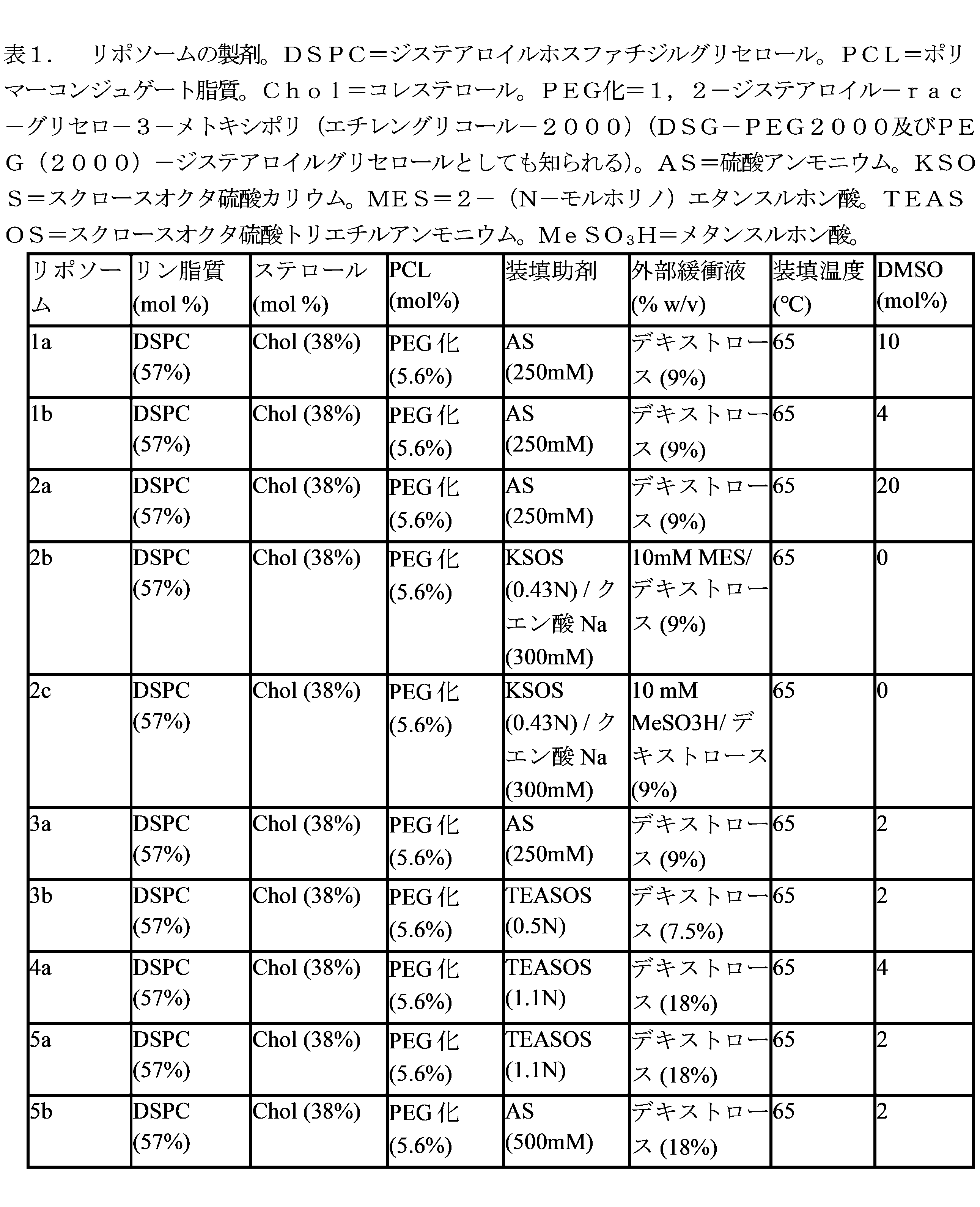

実施例4.薬物を装填したリポソームの製剤及び薬物動態特性評価
実験デザイン
雌のB6D2F1/JマウスをJackson Laboratoryから購入し、試験開始の7日前に馴化させた。実験期間中、マウスを、オートクレーブ処理したAllentown換気ケージ中に動物3匹/ケージで収容した。ケージは隔週で交換した。ケージに供給した環境エンリッチメントは、Ancare製のNestlets、Envigo 7097 1/4”トウモロコシ穂軸敷料上のBio-Serv製の透明な着色ポリカーボネートMouse Iglooであった。すべてのエンリッチメントは、ケージをオートクレーブ処理する前にケージに添加した。マウスには、Envigo Teklad Global Rodent Diet 2018を給餌した。このげっ歯類用餌は、ワイヤ蓋のホッパー内に保持し、隔週で交換した。逆浸透水は、Avidity Scienceの自動給水バルブを通して25~50ml/分の流量で供給した。照明の環境制御及び温度、湿度及び空気流のモニタリングは、WatchDogによって行った。動物収容室中の明暗周期は12時間点灯及び12時間消灯に設定した。温度、湿度及び空気流は、BCCRC設備によって維持し、制御した。
Example 4. Formulation and Pharmacokinetic Characterization of Drug-Loaded Liposomes Experimental Design Female B6D2F1/J mice were purchased from Jackson Laboratory and allowed to acclimate for 7 days prior to the start of the study. Mice were housed 3 animals/cage in autoclaved Allentown ventilated cages for the duration of the experiment. Cages were changed every two weeks. Environmental enrichment provided to the cages was Nestlets from Ancare, clear tinted polycarbonate Mouse Igloos from Bio-Serv on Envigo 7097 ¼″ corncob bedding. All enrichment was added to the cages before they were autoclaved. Mice were fed Envigo Teklad Global Rodent Diet 2018. This rodent diet was held in a wire-lidded hopper and changed every two weeks. Reverse osmosis water was provided by Avidity. Water was supplied at a flow rate of 25-50 ml/min through an automatic water valve from BioScience. Environmental control of lighting and monitoring of temperature, humidity and airflow was performed by a WatchDog. The light/dark cycle in the animal housing room was set at 12 hours light and 12 hours dark. Temperature, humidity and airflow were maintained and controlled by the BCCRC facility.
試験/対照品の保管
すべての試験/対照品(TA/CA)は、すぐに注入できる状態で用意し、2~8℃で保管した。
Test/Control Article Storage All test/control articles (TA/CA) were prepared ready for injection and stored at 2-8°C.
用量の投与
個々のマウスの体重に基づいて、処方された用量(10mg/kg)を動物に投与するのに必要とされる容量を、28G針を用いてマウスに注射した。注射容量は200μL/マウス20gであった。マウスを、静脈注射中に短時間(30秒未満)拘束した。静脈の拡張は、動物を熱ランプ下に1~2分間保持することによって達成した(SOP-AF-018の現行改訂版)。
Dose Administration Based on individual mouse weight, the volume required to administer the prescribed dose (10 mg/kg) to the animal was injected into the mice using a 28G needle. The injection volume was 200 μL/20 g mouse. Mice were briefly restrained (<30 seconds) during the intravenous injection. Vein distention was achieved by holding the animals under a heat lamp for 1-2 minutes (current revision of SOP-AF-018).
データ収集
薬物動態サンプリング
マウスを個々に計量した。マウスに試験品/対照品を注射し、試験分類表に従って採血した。採血のために、マウスをイソフルラン、続いてCO2吸入で屠殺した(SOP-AF-042)。採血は、心臓穿刺によって行った(SOP-AF-002の現行改訂版)。心臓穿刺のために、最後の呼吸時にマウスを吸入チャンバーから取り出し、25G針での心臓穿刺によっておよそ500μLを採血し、適切なマイクロティナチューブ(K2EDTA)に入れた。試料を1300gで15分間遠心分離することによって血漿を分離し、次いでピペットで取り出し、ラベル付きバイアルに入れた。血漿を-20℃で凍結させ、残りの投薬物質は、試料を出荷するまで約4℃で保管した。
Data Collection Pharmacokinetic Sampling Mice were individually weighed. Mice were injected with test/control articles and blood was collected according to the study classification table. For blood collection, mice were sacrificed with isoflurane followed by CO2 inhalation (SOP-AF-042). Blood collection was performed by cardiac puncture (current revision of SOP-AF-002). For cardiac puncture, mice were removed from the inhalation chamber at the last breath and approximately 500 μL of blood was collected by cardiac puncture with a 25G needle and placed into appropriate microtiter tubes (K2EDTA). Plasma was separated by centrifuging the samples at 1300g for 15 minutes and then pipetted and placed into a labeled vial. Plasma was frozen at -20°C and the remaining dose material was stored at approximately 4°C until sample shipment.
薬物血漿中濃度の決定
血漿試料を酸性化メタノールで希釈し、激しくボルテックスした。次いで、血漿/メタノール試料を10000rcfで10分間8℃で遠心分離した。上清をPhenomenex Synergi Fusion-RP 2.5μm 50×3mmカラム上に注入し、10mM酢酸アンモニウム緩衝液及びアセトニトリルの勾配で流した。薬物は、ダイオードアレイ検出器を使用して300nmの波長で検出した。血漿中薬物濃度は、1~40μg/mLの範囲の線形検量線に対して計算した。
Determination of drug plasma concentrations Plasma samples were diluted with acidified methanol and vortexed vigorously. The plasma/methanol samples were then centrifuged at 10,000 rcf for 10 min at 8°C. The supernatant was injected onto a Phenomenex Synergi Fusion-RP 2.5 μm 50×3 mm column and run with a gradient of 10 mM ammonium acetate buffer and acetonitrile. Drug was detected at a wavelength of 300 nm using a diode array detector. Plasma drug concentrations were calculated against a linear calibration curve ranging from 1 to 40 μg/mL.
リポソーム製剤
本明細書に記載の薬物動態試験に使用したすべてのリポソームは、DPSC/コレステロール/PEG化(56/38/5.6mol%)を含んでおり、実施例1A、1B、及び2に従って調製した。
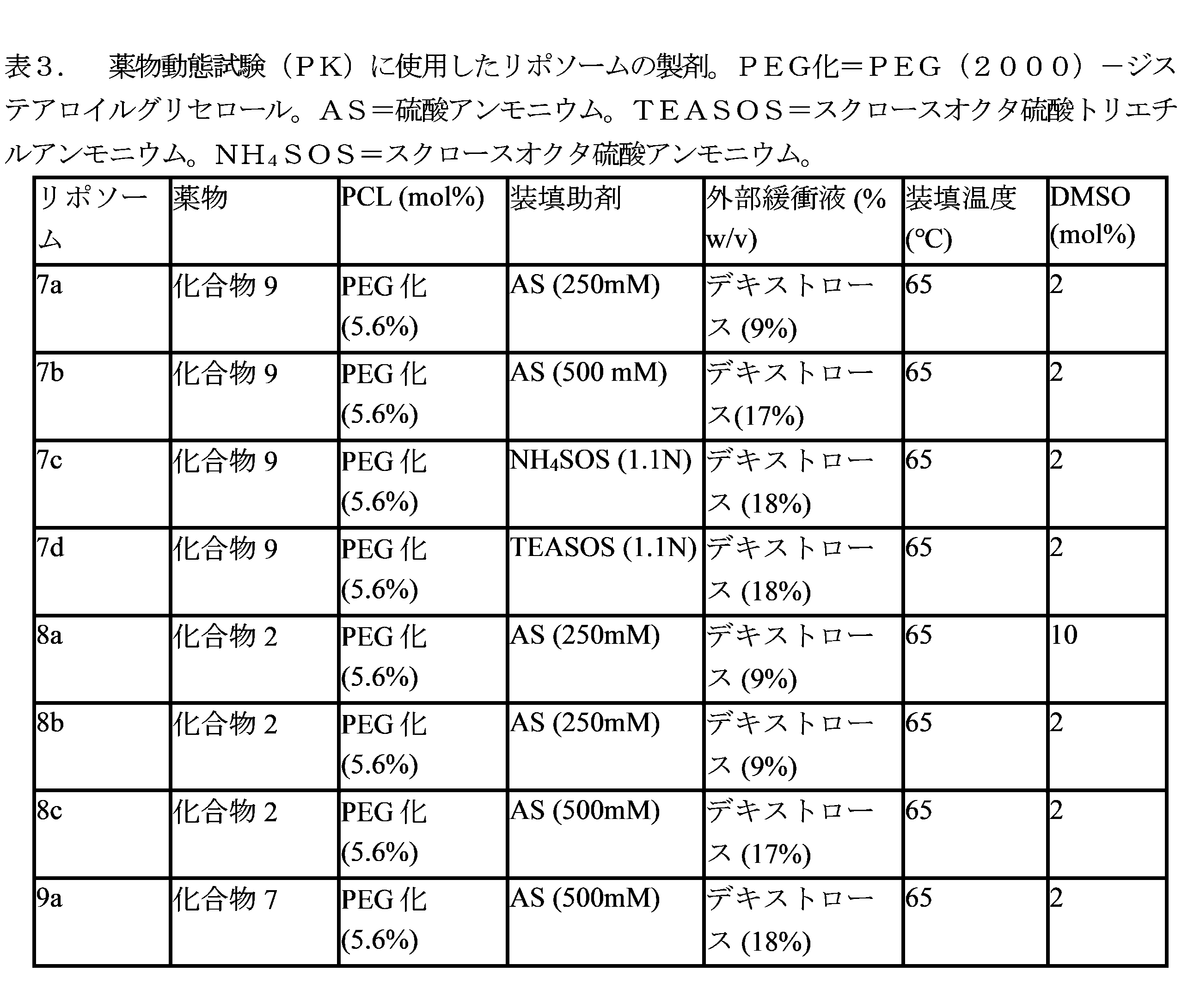

実施例5.化合物2のリポソーム製剤の血漿中安定性の決定
血漿中安定性は、実施例4に記載したように収集された血漿中の様々な時点での化合物2の濃度を測定することによって決定した。すべてのリポソーム製剤は、実施例1A、1B、及び2に記載したようにDSPC/コレステロール/PEG化(56/38/5.6mol%)を含んでいた。製剤1~4は、250mM ASを装填助剤として使用して調製した。製剤5は、500mM ASを装填助剤として使用して調製した。2%DMSOを用いて化合物2を製剤1、4、及び5のリポソーム中に装填した。10%DMSOを用いて化合物2を製剤2及び3のリポソーム中に装填した。
Example 5. Determination of Plasma Stability of Liposomal Formulations of Compound 2 Plasma stability was determined by measuring the concentration of Compound 2 at various time points in plasma collected as described in Example 4. All liposomal formulations contained DSPC/Cholesterol/PEGylation (56/38/5.6 mol%) as described in Examples 1A, 1B, and 2. Formulations 1-4 were prepared using 250 mM AS as a loading aid. Formulation 5 was prepared using 500 mM AS as a loading aid. Compound 2 was loaded into liposomes of
図1Aは、様々なリポソーム製剤を使用した化合物2の正規化血漿中濃度の経時的変化を、遊離薬物の使用と比較して示す。 Figure 1A shows the time course of normalized plasma concentrations of Compound 2 using various liposomal formulations compared to the use of the free drug.
図1Bは、本開示の例示的リポソーム製剤を使用した化合物2の正規化血漿中濃度の経時的変化を、以前に公開された方法に従って調製されたリポソーム製剤の使用と比較して、また遊離薬物の使用と比較して示す。「Merrimack」と表示した製剤は、WO2017/123616に記載の手順に従って、TEASOS(0.43N)を装填助剤として使用してDMSOなしで装填された、DSPC/コレステロール/PEG化(56/38/5.6mol%)を含むリポソームを含んでいた。製剤1~4とは対照的に、「Merrimack」製剤は、酸性化水溶液で精製されなかった。 Figure 1B shows the change over time in normalized plasma concentrations of Compound 2 using an exemplary liposomal formulation of the present disclosure compared to using a liposomal formulation prepared according to a previously published method and compared to using free drug. The formulation labeled "Merrimack" contained liposomes containing DSPC/Cholesterol/PEGylated (56/38/5.6 mol%) loaded without DMSO using TEASOS (0.43N) as a loading aid according to the procedures described in WO2017/123616. In contrast to formulations 1-4, the "Merrimack" formulation was not purified with acidified aqueous solution.
実施例6.化合物9のリポソーム製剤の血漿中安定性の決定
血漿中安定性は、実施例4に記載したように収集された血漿中の様々な時点での化合物9の濃度を測定することによって決定した。すべてのリポソーム製剤は、実施例1A、1B、及び2に記載したようにDSPC/コレステロール/PEG化(56/38/5.6mol%)を含んでいた。製剤1は、250mM ASを装填助剤として使用した。製剤2は、500mM ASを装填助剤として使用した。製剤3は、0.5N TEASOSを装填助剤として使用した。製剤4は、0.5N NH4SOSを装填助剤として使用した。
Example 6. Determination of Plasma Stability of Liposomal Formulations of Compound 9 Plasma stability was determined by measuring the concentration of Compound 9 at various time points in plasma collected as described in Example 4. All liposomal formulations contained DSPC/Cholesterol/PEGylation (56/38/5.6 mol%) as described in Examples 1A, 1B, and 2.
図2Aは、様々なリポソーム製剤を使用した化合物9の正規化血漿中濃度の経時的変化を示す。 Figure 2A shows the time course of normalized plasma concentrations of compound 9 using various liposomal formulations.
図2Bは、本開示の例示的リポソーム製剤を使用した化合物9の正規化血漿中濃度の経時的変化を、以前に公開された方法に従って調製されたリポソーム製剤の使用と比較して、また遊離薬物の使用と比較して示す。「Merrimack」と表示した製剤は、WO2017/123616に記載の手順に従って、TEASOS(0.43N)を装填助剤として使用してDMSOなしで装填された、DSPC/コレステロール/PEG化(56/38/5.6mol%)を含むリポソームを含んでいた。製剤1~4とは対照的に、「Merrimack」製剤は、酸性化水溶液で精製されなかった。 Figure 2B shows the change over time in normalized plasma concentrations of compound 9 using an exemplary liposomal formulation of the present disclosure compared to using a liposomal formulation prepared according to a previously published method and compared to using free drug. The formulation labeled "Merrimack" contained liposomes containing DSPC/cholesterol/PEGylated (56/38/5.6 mol%) loaded without DMSO using TEASOS (0.43N) as a loading aid according to the procedure described in WO2017/123616. In contrast to formulations 1-4, the "Merrimack" formulation was not purified with acidified aqueous solution.
実施例7:酸性化糖溶液による精製の間の遊離薬物の除去
化合物9を含有する、リポソームの製剤を、実施例1A、1B、及び2に記載のように調製し、精製した。リポソーム製剤は、DSPC/コレステロール/PEG化(58/40/2mol%)を含み、250mM ASを装填助剤として使用した。
Example 7: Removal of free drug during purification with acidified sugar solution Liposomal formulations containing compound 9 were prepared and purified as described in Examples 1A, 1B, and 2. The liposomal formulation contained DSPC/cholesterol/PEGylation (58/40/2 mol%), and 250 mM AS was used as a loading aid.
タンジェンシャルフロー濾過を用いた製剤の精製中に、以下の表7に示すように、透過液中の化合物9の濃度を測定した。図3は、洗浄量に対する透過液中の化合物9の濃度を示す。

実施例8.化合物7のリポソーム製剤の血漿中安定性に及ぼす酸洗浄精製の作用
血漿中安定性は、実施例4に記載したように収集された血漿中の様々な時点での化合物7の濃度を測定することによって決定した。両方のリポソーム製剤は、実施例1A及び1Bに記載したように、DSPC/コレステロール/PEG化(59/39/2mol%)を含んでいた。装填助剤は500mM ASであり、D/L比は両方のリポソーム製剤で0.4であった。
Example 8. Effect of Acid Wash Purification on Plasma Stability of Liposomal Formulations of Compound 7 Plasma stability was determined by measuring the concentration of Compound 7 at various time points in plasma collected as described in Example 4. Both liposomal formulations contained DSPC/Cholesterol/PEGylation (59/39/2 mol%) as described in Examples 1A and 1B. The loading aid was 500 mM AS and the D/L ratio was 0.4 for both liposomal formulations.
酸洗浄製剤は、本明細書中に記載の特定のパラメータを用いて、実施例1A及び1Bに一般的に記載した手順に従って精製した。製剤の精製は、100~300kのMWCO(Hydrosart、Sartorius)PES膜を備えたタンジェンシャルフローろ過(Slice 200、Sartorius)を使用して実施した。製剤を最初に50mLに濃縮し、次いで5wt%デキストロ―ス水溶液中10mMメタンスルホン酸の12容量交換で精製した。その後、製剤を5%デキストロースの別の12容量交換で精製した。最後に、製剤を10~20mg/mlの脂質に濃縮し、収集し、0.22μmのPESシリンジフィルターを通してろ過した。
The acid washed formulations were purified according to the procedures generally described in Examples 1A and 1B, with the specific parameters described herein. Purification of the formulations was performed using tangential flow filtration (
非酸洗浄製剤は、100~300kのMWCO(Hydrosart、Sartorius)PES膜を備えたタンジェンシャルフローろ過(Slice 200、Sartorius)を使用して精製した。製剤を最初に50mLに濃縮し、次いで5%デキストロースの12容量交換で精製し、10~20mg/mlの脂質に濃縮し、収集し、0.22μmのPESシリンジフィルターを通してろ過した。
Non-acid washed formulations were purified using tangential flow filtration (
図4は、酸洗浄ステップを用いてまたは用いずに調製された本開示の例示的リポソーム製剤を使用した化合物7の正規化血漿中濃度の経時的変化を示す。図4は、酸洗浄精製ステップがあったリポソームが、酸洗浄精製ステップがなかったリポソームよりも優れた薬物動態特性(例えば、化合物7の方が遅い放出)を呈することを示す。図4に示すように、酸洗浄精製ステップがなかったリポソームは、最初の時間帯での50%超の薬物損失によって見られるように、薬物のバースト放出をもたらした。対照的に、酸で予め洗浄されたリポソームは、所望される経時的な薬物持続放出を呈した。 Figure 4 shows the normalized plasma concentration of compound 7 over time using exemplary liposomal formulations of the present disclosure prepared with and without an acid wash step. Figure 4 shows that liposomes that had an acid wash purification step exhibited better pharmacokinetic properties (e.g., slower release of compound 7) than liposomes that did not have an acid wash purification step. As shown in Figure 4, liposomes that did not have an acid wash purification step resulted in a burst release of drug as seen by more than 50% drug loss in the first time period. In contrast, liposomes that were pre-washed with acid exhibited the desired sustained release of drug over time.
実施例9.リポソーム製剤の調製における異なる酸の影響
化合物9を含有するリポソーム製剤を、実施例1A、1B、及び2のステップA~Cに記載されるように調製した。全てのリポソーム製剤は、DSPC/コレステロール/PEG化(58/40/2mol%)を含み、250mM ASを装填助剤として使用した。本実施例では、薬物装填リポソームの精製を、本明細書に記載のパラメータに従って実施した。
Example 9. Effect of Different Acids in Preparation of Liposomal Formulations Liposomal formulations containing compound 9 were prepared as described in Examples 1A, 1B, and Steps A-C of 2. All liposomal formulations contained DSPC/Cholesterol/PEGylation (58/40/2 mol%) and 250 mM AS was used as a loading aid. In this example, purification of drug-loaded liposomes was performed according to the parameters described herein.
製剤の精製を、100~300kのMWCO(Hydrosart、Sartorius)PES膜を備えたタンジェンシャルフローろ過(Slice 200、Sartorius)を使用して実施した。製剤を最初に5mLに濃縮し、次いで酸性化糖(デキストロースまたはスクロース)溶液の12容量交換で精製した。酸性化糖溶液中の酸はメタンスルホン酸であった。酸性化糖溶液中のメタンスルホン酸の濃度は、1mMまたは5mMであった。酸性化糖溶液は、代替的に、約4.0のpHで酢酸ナトリウムを含有していた。酸性化糖溶液中の酢酸ナトリウムの濃度は約25 mMであった。その後、製剤を9%デキストロースの別の12容量交換で精製した。
Purification of the formulations was performed using tangential flow filtration (
特定の精製パラメータ(例えば、酸性化糖溶液の組成物)及び本実施例に従って調製したリポソーム試料の特性評価を、以下の表5に示す。

実施例10. リポソーム製剤の調製における異なる緩衝液の影響
化合物9を含有するリポソーム製剤を、実施例1A、1B、及び2のステップA~Cに記載されるように調製した。全てのリポソーム製剤は、DSPC/コレステロール/PEG化(58/40/2mol%)を含み、250mM ASを装填助剤として使用した。本実施例では、薬物装填リポソームの精製を、本明細書に記載のパラメータに従って実施した。
Example 10. Effect of Different Buffers in Preparation of Liposomal Formulations Liposomal formulations containing compound 9 were prepared as described in Examples 1A, 1B, and Steps A-C of 2. All liposomal formulations contained DSPC/Cholesterol/PEGylation (58/40/2 mol%) and 250 mM AS was used as a loading aid. In this example, purification of drug-loaded liposomes was performed according to the parameters described herein.
製剤の精製を、100~300kのMWCO(Hydrosart、Sartorius)PES膜を備えたタンジェンシャルフローろ過(Slice 200、Sartorius)を使用して実施した。製剤を最初に10mLに濃縮し、次いで酸性化糖(デキストロースまたはスクロース)溶液の12容量交換で精製した。酸性化糖溶液中の酸は、10mMのメタンスルホン酸であった。その後、製剤を5%デキストロースの別の8容量交換で精製した。最後に、製剤を5mLに濃縮し、収集し、0.22μmのPESシリンジフィルターを通してろ過した。
Purification of the formulations was performed using tangential flow filtration (
特定の精製パラメータ(例えば、酸性化糖溶液の組成物)及び本実施例に従って調製したリポソーム試料の特性評価を、以下の表6に示す。

Claims (37)
前記リポソームが、
(a)脂質二重層、
(b)内部媒体、及び
(c)前記リポソームの前記内部媒体に封入された治療剤を含み、
前記治療剤が、低い水溶性を有し、プロトン化形態にプロトン化され得、
前記方法が、
(i)粗リポソーム組成物を提供し、
(ii)酸性化水溶液を用いて前記粗リポソーム組成物を精製することを含む、前記調製方法。 1. A method for preparing a purified liposome composition comprising liposomes, comprising:
The liposome is
(a) a lipid bilayer;
(b) an internal medium; and (c) a therapeutic agent encapsulated in the internal medium of the liposome;
the therapeutic agent has low water solubility and can be protonated to a protonated form;
The method,
(i) providing a crude liposome composition;
(ii) purifying the crude liposome composition with an acidified aqueous solution.
前記内部媒体が、第1の装填助剤を含む、請求項1に記載の方法。 the lipid bilayer comprises a first lipid and a first sterol;
The method of claim 1 , wherein the internal medium comprises a first loading aid.
Applications Claiming Priority (3)
| Application Number | Priority Date | Filing Date | Title |
|---|---|---|---|
| US202163222887P | 2021-07-16 | 2021-07-16 | |
| US63/222,887 | 2021-07-16 | ||
| PCT/US2022/037374 WO2023288103A1 (en) | 2021-07-16 | 2022-07-15 | Methods for preparing liposomal formulations |
Publications (2)
| Publication Number | Publication Date |
|---|---|
| JP2024526791A true JP2024526791A (en) | 2024-07-19 |
| JPWO2023288103A5 JPWO2023288103A5 (en) | 2025-07-16 |
Family
ID=84919677
Family Applications (1)
| Application Number | Title | Priority Date | Filing Date |
|---|---|---|---|
| JP2024502181A Pending JP2024526791A (en) | 2021-07-16 | 2022-07-15 | Method for preparing liposomal formulations |
Country Status (10)
| Country | Link |
|---|---|
| US (2) | US12447163B2 (en) |
| EP (1) | EP4370099A4 (en) |
| JP (1) | JP2024526791A (en) |
| KR (1) | KR20240037280A (en) |
| CN (1) | CN117897140A (en) |
| AU (1) | AU2022310496A1 (en) |
| CA (1) | CA3182955A1 (en) |
| MX (1) | MX2024000795A (en) |
| TW (2) | TW202320803A (en) |
| WO (2) | WO2023288103A1 (en) |
Families Citing this family (2)
| Publication number | Priority date | Publication date | Assignee | Title |
|---|---|---|---|---|
| JP2024526791A (en) * | 2021-07-16 | 2024-07-19 | セレーター ファーマシューティカルズ インコーポレイテッド | Method for preparing liposomal formulations |
| CN120732784A (en) * | 2025-06-30 | 2025-10-03 | 上海交通大学医学院附属第九人民医院 | ABT-263 carrying drug delivery system and preparation method and application thereof |
Family Cites Families (32)
| Publication number | Priority date | Publication date | Assignee | Title |
|---|---|---|---|---|
| US3993754A (en) | 1974-10-09 | 1976-11-23 | The United States Of America As Represented By The United States Energy Research And Development Administration | Liposome-encapsulated actinomycin for cancer chemotherapy |
| US4086257A (en) | 1976-10-12 | 1978-04-25 | Sears Barry D | Phosphatidyl quaternary ammonium compounds |
| CH624011A5 (en) | 1977-08-05 | 1981-07-15 | Battelle Memorial Institute | |
| US4235871A (en) | 1978-02-24 | 1980-11-25 | Papahadjopoulos Demetrios P | Method of encapsulating biologically active materials in lipid vesicles |
| US4522803A (en) | 1983-02-04 | 1985-06-11 | The Liposome Company, Inc. | Stable plurilamellar vesicles, their preparation and use |
| US4588578A (en) | 1983-08-08 | 1986-05-13 | The Liposome Company, Inc. | Lipid vesicles prepared in a monophase |
| US5736155A (en) | 1984-08-08 | 1998-04-07 | The Liposome Company, Inc. | Encapsulation of antineoplastic agents in liposomes |
| MX9203808A (en) | 1987-03-05 | 1992-07-01 | Liposome Co Inc | HIGH DRUG CONTENT FORMULATIONS: LIPID, FROM LIPOSOMIC-ANTINEOPLASTIC AGENTS. |
| WO1990014105A1 (en) | 1989-05-15 | 1990-11-29 | The Liposome Company, Inc. | Accumulation of drugs into liposomes by a proton gradient |
| US5800833A (en) | 1995-02-27 | 1998-09-01 | University Of British Columbia | Method for loading lipid vesicles |
| EP0825852B1 (en) * | 1995-04-18 | 2004-07-07 | Yissum Research Development Company Of The Hebrew University Of Jerusalem | Liposome drug-loading method and composition |
| US5837282A (en) | 1996-10-30 | 1998-11-17 | University Of British Columbia | Ionophore-mediated liposome loading |
| KR101223366B1 (en) * | 2004-05-03 | 2013-01-16 | 헤르메스 바이오사이언스, 인코포레이티드 | Liposomes useful for drug delivery |
| US20080213183A1 (en) * | 2004-09-20 | 2008-09-04 | Marcel Bally | Free or Liposomal Gemcitabine Alone or in Combination with Free or Liposomal Idarubicin |
| CA2596131A1 (en) | 2005-01-28 | 2006-08-03 | Bc Cancer Agency | Liposomal compositions for parenteral delivery of agents |
| EP1790342A1 (en) * | 2005-11-11 | 2007-05-30 | Zentaris GmbH | Pyridopyrazine derivatives and their use as signal transduction modulators |
| CA2658725A1 (en) * | 2006-08-16 | 2008-02-21 | Exelixis, Inc. | Using pi3k and mek modulators in treatments of cancer |
| HUP0800414A2 (en) * | 2008-07-04 | 2010-10-28 | Pecsi Tudomanyegyetem | Pharmaceutical combination |
| WO2012097133A2 (en) * | 2011-01-12 | 2012-07-19 | H. Lee Moffitt Cancer Center And Research Institute, Inc. | Compounds and methods for inducing apoptosis in cancer cells using a bh3 alpha-helical mimetic |
| ES2622401T3 (en) * | 2011-05-17 | 2017-07-06 | Eisai R&D Management Co., Ltd. | Method of predicting the efficacy of an angiogenesis inhibitor |
| CN103957917A (en) * | 2011-09-30 | 2014-07-30 | 沃泰克斯药物股份有限公司 | Treatment of pancreatic cancer and non-small cell lung cancer with ATR inhibitors |
| EP2914722A1 (en) | 2012-11-05 | 2015-09-09 | Pronai Therapeutics, Inc. | Dosing and administration of oligonucleotide cancer therapies |
| AU2013351934B2 (en) * | 2012-11-30 | 2018-03-29 | Insmed Incorporated | Prostacylin compositions and methods for using the same |
| KR102310786B1 (en) * | 2013-02-01 | 2021-10-12 | 존원 파마, 인코포레이티드 | Remote loading of sparingly water-soluble drugs into liposomes |
| US20150320755A1 (en) * | 2014-04-16 | 2015-11-12 | Infinity Pharmaceuticals, Inc. | Combination therapies |
| EP3139942B1 (en) * | 2014-05-05 | 2019-12-18 | Bioventures, Llc | COMPOSITIONS AND METHODS FOR INHIBITING ANTIAPOPTOTIC Bcl-2 PROTEINS AS ANTI-AGING AGENTS |
| US9949971B2 (en) * | 2014-06-17 | 2018-04-24 | Acerta Pharma B.V. | Therapeutic combinations of a BTK inhibitor, a PI3K inhibitor and/or a JAK-2 inhibitor |
| EP3402485A1 (en) * | 2016-01-11 | 2018-11-21 | Merrimack Pharmaceuticals, Inc. | Inhibiting b-cell lymphoma 2 (bcl-2) and related proteins |
| SG11201811661TA (en) | 2016-07-29 | 2019-01-30 | Oncternal Therapeutics Inc | Uses of indolinone compounds |
| EP3318276A1 (en) * | 2016-11-04 | 2018-05-09 | Janssen Biotech, Inc. | Combinations of a telomerase inhibitor and a bcl-2 inhibitor for the treatment of hematological cancers |
| US20200360386A1 (en) * | 2017-12-30 | 2020-11-19 | Unity Biotechnology, Inc. | Inhibitors of HSP90, PI3-Kinase, Proteasome, HDAC, and P97 Pathways for Selective Removal of Senescent Cells in the Treatment of Age Related Conditions |
| JP2024526791A (en) * | 2021-07-16 | 2024-07-19 | セレーター ファーマシューティカルズ インコーポレイテッド | Method for preparing liposomal formulations |
-
2022
- 2022-07-15 JP JP2024502181A patent/JP2024526791A/en active Pending
- 2022-07-15 CA CA3182955A patent/CA3182955A1/en active Pending
- 2022-07-15 WO PCT/US2022/037374 patent/WO2023288103A1/en not_active Ceased
- 2022-07-15 KR KR1020247005161A patent/KR20240037280A/en active Pending
- 2022-07-15 CN CN202280059250.5A patent/CN117897140A/en active Pending
- 2022-07-15 US US17/813,001 patent/US12447163B2/en active Active
- 2022-07-15 TW TW111126764A patent/TW202320803A/en unknown
- 2022-07-15 AU AU2022310496A patent/AU2022310496A1/en active Pending
- 2022-07-15 WO PCT/US2022/037371 patent/WO2023288100A1/en not_active Ceased
- 2022-07-15 TW TW111126761A patent/TW202320802A/en unknown
- 2022-07-15 EP EP22842957.7A patent/EP4370099A4/en active Pending
- 2022-07-15 US US18/579,824 patent/US20240350411A1/en active Pending
- 2022-07-15 MX MX2024000795A patent/MX2024000795A/en unknown
Also Published As
| Publication number | Publication date |
|---|---|
| EP4370099A1 (en) | 2024-05-22 |
| WO2023288100A1 (en) | 2023-01-19 |
| CN117897140A (en) | 2024-04-16 |
| EP4370099A4 (en) | 2025-08-06 |
| AU2022310496A2 (en) | 2024-11-21 |
| MX2024000795A (en) | 2024-03-25 |
| KR20240037280A (en) | 2024-03-21 |
| CA3182955A1 (en) | 2023-01-16 |
| WO2023288103A1 (en) | 2023-01-19 |
| US20230059528A1 (en) | 2023-02-23 |
| TW202320802A (en) | 2023-06-01 |
| AU2022310496A1 (en) | 2024-02-15 |
| TW202320803A (en) | 2023-06-01 |
| US20240350411A1 (en) | 2024-10-24 |
| US12447163B2 (en) | 2025-10-21 |
Similar Documents
| Publication | Publication Date | Title |
|---|---|---|
| TWI866908B (en) | Inhalable sustained release composition for use in treating pulmonary disease | |
| KR100889139B1 (en) | Irinotecan preparation | |
| US20240041769A1 (en) | Compositions and methods for delivery of anticancer agents with improved therapeutic index | |
| JP2001510451A (en) | Ion carrier carrying weakly basic drug-liposome in the middle | |
| WO2011066684A1 (en) | Liposome of irinotecan or its hydrochloride and preparation method thereof | |
| TWI637754B (en) | Thermosensitive nanoparticle formulations and method of making the same | |
| CA2936963A1 (en) | Liposome compositions encapsulating modified cyclodextrin complexes and uses thereof | |
| EP4601621A1 (en) | Liposome compositions for delivery of compounds and methods thereof | |
| JP2024526791A (en) | Method for preparing liposomal formulations | |
| JP2024526800A (en) | Liposomal formulations of BCL inhibitors | |
| HK40097901A (en) | Compositions and methods for delivery of anticancer agents with improved therapeutic index | |
| WO2025184543A1 (en) | Compositions and methods for delivery of therapeutic compounds | |
| HK40086650A (en) | Liposome formulations for treatment of cancers and drug resistance of cancers | |
| HK40127153A (en) | Liposome compositions for delivery of compounds and methods thereof | |
| HK40043569A (en) | Inhalable liposomal sustained release composition for use in treating pulmonary diseases |
Legal Events
| Date | Code | Title | Description |
|---|---|---|---|
| A521 | Request for written amendment filed |
Free format text: JAPANESE INTERMEDIATE CODE: A523 Effective date: 20250708 |
|
| A621 | Written request for application examination |
Free format text: JAPANESE INTERMEDIATE CODE: A621 Effective date: 20250708 |