JP2024139949A - EVALUATION PROGRAM, EVALUATION APPARATUS, AND EVALUATION METHOD - Google Patents
EVALUATION PROGRAM, EVALUATION APPARATUS, AND EVALUATION METHOD Download PDFInfo
- Publication number
- JP2024139949A JP2024139949A JP2023050905A JP2023050905A JP2024139949A JP 2024139949 A JP2024139949 A JP 2024139949A JP 2023050905 A JP2023050905 A JP 2023050905A JP 2023050905 A JP2023050905 A JP 2023050905A JP 2024139949 A JP2024139949 A JP 2024139949A
- Authority
- JP
- Japan
- Prior art keywords
- structures
- compound
- evaluation
- clusters
- score
- Prior art date
- Legal status (The legal status is an assumption and is not a legal conclusion. Google has not performed a legal analysis and makes no representation as to the accuracy of the status listed.)
- Pending
Links
Images





Classifications
-
- G—PHYSICS
- G16—INFORMATION AND COMMUNICATION TECHNOLOGY [ICT] SPECIALLY ADAPTED FOR SPECIFIC APPLICATION FIELDS
- G16C—COMPUTATIONAL CHEMISTRY; CHEMOINFORMATICS; COMPUTATIONAL MATERIALS SCIENCE
- G16C20/00—Chemoinformatics, i.e. ICT specially adapted for the handling of physicochemical or structural data of chemical particles, elements, compounds or mixtures
Landscapes
- Chemical & Material Sciences (AREA)
- Crystallography & Structural Chemistry (AREA)
- Life Sciences & Earth Sciences (AREA)
- Engineering & Computer Science (AREA)
- Bioinformatics & Cheminformatics (AREA)
- Bioinformatics & Computational Biology (AREA)
- Computing Systems (AREA)
- Theoretical Computer Science (AREA)
- Management, Administration, Business Operations System, And Electronic Commerce (AREA)
Abstract
Description
本開示は、評価プログラム、評価装置及び評価方法に関する。 This disclosure relates to an evaluation program, an evaluation device, and an evaluation method.
創薬の分野では、物性が向上するリード化合物の探索が行われる。リード化合物の探索は、標的タンパク質に結合するヒット化合物の一部を改変した改変化合物の物性を評価することが行われる。 In the field of drug discovery, a search is conducted for lead compounds with improved physical properties. The search for lead compounds is conducted by evaluating the physical properties of modified compounds that are made by modifying a part of a hit compound that binds to a target protein.
例えば、特許文献1には、ドッキングされるべき第1入力構造と第2入力構造の相対配置に応じた相互作用エネルギーを表すドッキングスコアを計算する複合体構造予測装置が開示されている。
For example,
しかしながら、従来技術では、化合物の物性を評価するための時間的コスト及び経済的コストが大きいという課題がある。構造が類似する化合物同士は物性も類似することが期待されるため、化合物の構造的特徴を評価する手法が求められている。 However, conventional techniques have the problem that evaluating the physical properties of compounds requires high time and financial costs. Since compounds with similar structures are expected to have similar physical properties, there is a demand for methods to evaluate the structural characteristics of compounds.
一つの側面では、化合物の構造を効率よく評価することを目的とする。 In one aspect, the aim is to efficiently evaluate the structure of compounds.
一態様によれば、評価プログラムは、所定環境における化合物の構造から計算される集団変数の分布を1以上のクラスタに分割し、クラスタそれぞれに含まれる構造から、クラスタを代表する代表構造を決定し、分布に含まれる構造のうち代表構造から所定距離の範囲に存在する構造の割合に基づくスコアを計算する処理をコンピュータに実行させる。 According to one embodiment, the evaluation program causes a computer to execute a process of dividing a distribution of collective variables calculated from the structure of a compound in a specified environment into one or more clusters, determining a representative structure representing each cluster from the structures contained in each cluster, and calculating a score based on the proportion of structures present within a specified distance from the representative structure among the structures contained in the distribution.
化合物の構造を効率よく評価することができる。 The structure of compounds can be evaluated efficiently.
以下、本発明の各実施形態について添付の図面を参照しながら説明する。なお、本明細書及び図面において、実質的に同一の機能構成を有する構成要素については、同一の符号を付することにより重複した説明を省略する。 Hereinafter, each embodiment of the present invention will be described with reference to the accompanying drawings. In this specification and drawings, components having substantially the same functional configuration are designated by the same reference numerals, and redundant description will be omitted.
[実施形態]
計算機支援による新薬開発は、創薬等と呼ばれる。創薬の分野は、ビッグデータ又は専用計算機等のブームにより、大きな変革期にある。創薬では、標的タンパク質に結合する既知のヒット化合物の一部(例えば、アミノ酸残基等)を改変しながら、より物性が向上するリード化合物を探索することが行われる。創薬においては、例えば、結合活性、膜透過性及び熱耐性等を向上することが求められる。
[Embodiment]
Computer-assisted new drug development is called drug discovery. The field of drug discovery is undergoing a major transformation due to the boom in big data and dedicated computers. In drug discovery, a lead compound with improved physical properties is searched for by modifying a part (e.g., amino acid residues) of a known hit compound that binds to a target protein. In drug discovery, for example, it is required to improve binding activity, membrane permeability, heat resistance, etc.
従来、ヒット化合物からデザインした改変化合物の結合活性は、実験により求めていた。実験では、改変化合物の合成及び結合活性の測定等を行うため、時間的コスト及び経済的コストが大きい。計算機支援による新薬開発も進められているが、計算コストが非常に高いシミュレーションが必要となる。例えば、標的分子とヒット化合物とが結合した複合体構造の取得、相互作用を解析するシミュレーション、改変化合物に変化した場合のシミュレーション、結合活性を評価するための結合自由エネルギー計算等が必要とされる。 Conventionally, the binding activity of modified compounds designed from hit compounds was determined through experiments. In these experiments, the modified compounds were synthesized and their binding activity was measured, resulting in high time and financial costs. Computer-assisted new drug development is also underway, but simulations with extremely high computational costs are required. For example, this requires obtaining the complex structure of the target molecule bound to the hit compound, simulating the interaction, simulating the change to a modified compound, and calculating the binding free energy to evaluate the binding activity.
複合体構造を計算機実験で決定することは非常に困難であり、X線実験等を併用する必要がある。また、薬剤の候補となる化合物は水中で電荷状態にあることが多いため、結合自由エネルギー計算も非常に困難である。 It is extremely difficult to determine the complex structure through computational experiments, and X-ray experiments and other methods must be used in conjunction. In addition, since compounds that are potential drug candidates are often in a charged state in water, calculating the binding free energy is also extremely difficult.
従来の創薬では、計算コストを低減するために、簡易的なスコア関数で表現した結合活性のランキング計算が主流となっている。しかしながら、従来の簡易的なスコア関数は、精度が十分ではなく、実験値とほぼ相関しないことが多い。そのため、従来のスコア関数は、創薬効率化への寄与は限定的である。 In conventional drug discovery, the mainstream approach is to calculate the ranking of binding activity expressed by a simple score function in order to reduce calculation costs. However, conventional simple score functions are often insufficiently accurate and show little correlation with experimental values. For this reason, the contribution of conventional score functions to the efficiency of drug discovery is limited.
本実施形態では、化合物の立体構造的特徴を数値化するスコア関数を導入する。一つの側面では、本実施形態のスコア関数により計算されたスコアに基づいて、溶媒中の化合物の立体構造的特徴を評価することが可能となる。 In this embodiment, a score function is introduced that quantifies the conformational characteristics of a compound. In one aspect, it is possible to evaluate the conformational characteristics of a compound in a solvent based on the score calculated by the score function of this embodiment.
本実施形態のスコアを応用することで、ヒット化合物からデザインされた改変化合物の構造の類似性を評価する手法を実現することができる。また、本実施形態のスコアを用いれば、例えば膜透過性のように、化合物が特定の環境を通過するか否かを評価する方法を実現することができる。さらに、本実施形態のスコアを用いれば、改変化合物の結合活性の増減、膜透過可能性及び熱耐性等を予測することが可能となる。 By applying the score of this embodiment, a method for evaluating the similarity of the structure of modified compounds designed from hit compounds can be realized. In addition, by using the score of this embodiment, a method for evaluating whether a compound passes through a specific environment, such as membrane permeability, can be realized. Furthermore, by using the score of this embodiment, it is possible to predict the increase or decrease in binding activity, membrane permeability, heat resistance, etc. of modified compounds.
<分子構造評価システムの全体構成>
本発明の一実施形態は、化合物の立体構造を評価する分子構造評価システムである。分子構造評価システムは、分子動力学法等の分子シミュレーションを用いて化合物の立体構造を計算し、化合物の立体構造の安定性を示すスコア(以下、「安定性スコア」とも呼ぶ)を計算する。
<Overall configuration of molecular structure evaluation system>
One embodiment of the present invention is a molecular structure evaluation system for evaluating the three-dimensional structure of a compound. The molecular structure evaluation system calculates the three-dimensional structure of the compound using a molecular simulation such as a molecular dynamics method, and calculates a score indicating the stability of the three-dimensional structure of the compound (hereinafter, also referred to as a "stability score").
本実施形態における分子構造評価システムの全体構成を、図1を参照しながら説明する。図1は、本実施形態における分子構造評価システムの全体構成の一例を示すブロック図である。 The overall configuration of the molecular structure evaluation system in this embodiment will be described with reference to FIG. 1. FIG. 1 is a block diagram showing an example of the overall configuration of the molecular structure evaluation system in this embodiment.
図1に示されているように、本実施形態における分子構造評価システム1は、評価装置10及び利用者端末20を含む。評価装置10及び利用者端末20は、LAN(Local Area Network)又はインターネット等の通信ネットワークN1を介してデータ通信可能に接続されている。
As shown in FIG. 1, the molecular
評価装置10は、化合物の安定性スコアを計算するパーソナルコンピュータ、ワークステーション、サーバ等の情報処理装置である。評価装置10は、利用者端末20から改変化合物に関する構造情報を受信し、改変化合物の安定性スコアを計算する。評価装置10は、改変化合物の安定性スコアを含む評価結果を、利用者端末20に送信する。
The
構造情報は、評価対象とする改変化合物の立体構造を示す情報、及び改変化合物の物性を評価する環境を示す情報を含む。環境を示す情報は、例えば、溶媒分子の立体構造を示す情報である。溶媒は、評価する物性により異なる。例えば、改変化合物の結合活性又は熱耐性を評価するときには、溶媒は水である。また、例えば、改変化合物の膜透過性を評価するときには、溶媒はクロロホルムはるながたを用いることができる。 The structural information includes information indicating the three-dimensional structure of the modified compound to be evaluated, and information indicating the environment in which the physical properties of the modified compound are evaluated. The information indicating the environment is, for example, information indicating the three-dimensional structure of the solvent molecule. The solvent varies depending on the physical property to be evaluated. For example, when evaluating the binding activity or heat resistance of the modified compound, the solvent is water. Also, for example, when evaluating the membrane permeability of the modified compound, chloroform or other solvents can be used.
利用者端末20は、分子構造評価システム1の利用者が操作するパーソナルコンピュータ、スマートフォン、タブレット端末等の情報処理端末である。利用者端末20は、利用者の操作に応じて、改変化合物に関する構造情報を生成し、評価装置10に送信する。利用者端末20は、評価装置10から改変化合物の評価結果を受信し、利用者に対して出力する。
The
なお、図1に示した分子構造評価システム1の全体構成は一例であって、用途や目的に応じて様々なシステム構成例があり得る。例えば、評価装置10及び利用者端末20の1つ以上が、分子構造評価システム1に複数台含まれていてもよい。例えば、評価装置10は、複数台のコンピュータにより実現してもよいし、クラウドコンピューティングのサービスとして実現してもよい。図1に示す評価装置10、利用者端末20のような装置の区分は一例である。
The overall configuration of the molecular
<分子構造評価システムのハードウェア構成>
本実施形態における分子構造評価システム1に含まれる各装置のハードウェア構成を、図2を参照しながら説明する。
<Hardware configuration of molecular structure evaluation system>
The hardware configuration of each device included in the molecular
≪コンピュータのハードウェア構成≫
本実施形態における評価装置10及び利用者端末20は、例えばコンピュータにより実現される。図2は、本実施形態におけるコンピュータのハードウェア構成の一例を示すブロック図である。
<Computer hardware configuration>
The
図2に示されているように、本実施形態におけるコンピュータ500は、CPU(Central Processing Unit)501、ROM(Read Only Memory)502、RAM(Random Access Memory)503、HDD(Hard Disk Drive)504、入力装置505、表示装置506、通信I/F(Interface)507及び外部I/F508を有する。CPU501、ROM502及びRAM503は、いわゆるコンピュータを形成する。コンピュータ500の各ハードウェアは、バスライン509を介して相互に接続されている。なお、入力装置505及び表示装置506は外部I/F508に接続して利用する形態であってもよい。
As shown in FIG. 2, the
CPU501は、ROM502又はHDD504等の記憶装置からプログラムやデータをRAM503上に読み出し、処理を実行することで、コンピュータ500全体の制御や機能を実現する演算装置である。コンピュータ500は、CPU501に加えて又はCPU501に代えて、GPU(Graphics Processing Unit)を有していてもよい。
The
ROM502は、電源を切ってもプログラムやデータを保持することができる不揮発性の半導体メモリ(記憶装置)の一例である。ROM502は、HDD504にインストールされている各種プログラムをCPU501が実行するために必要な各種プログラム、データ等を格納する主記憶装置として機能する。具体的には、ROM502には、コンピュータ500の起動時に実行されるBIOS(Basic Input/Output System)、EFI(Extensible Firmware Interface)等のブートプログラムや、OS(Operating System)設定、ネットワーク設定等のデータが格納されている。
RAM503は、電源を切るとプログラムやデータが消去される揮発性の半導体メモリ(記憶装置)の一例である。RAM503は、例えば、DRAM(Dynamic Random Access Memory)やSRAM(Static Random Access Memory)等である。RAM503は、HDD504にインストールされている各種プログラムがCPU501によって実行される際に展開される作業領域を提供する。
HDD504は、プログラムやデータを格納している不揮発性の記憶装置の一例である。HDD504に格納されるプログラムやデータには、コンピュータ500全体を制御する基本ソフトウェアであるOS、及びOS上において各種機能を提供するアプリケーション等がある。なお、コンピュータ500はHDD504に替えて、記憶媒体としてフラッシュメモリを用いる記憶装置(例えばSSD:Solid State Drive等)を利用するものであってもよい。
入力装置505は、ユーザが各種信号を入力するために用いるタッチパネル、操作キーやボタン、キーボードやマウス、音声等の音データを入力するマイクロホン等である。 The input device 505 includes a touch panel that the user uses to input various signals, operation keys or buttons, a keyboard or mouse, a microphone for inputting sound data such as voice, etc.
表示装置506は、画面を表示する液晶や有機EL(Electro-Luminescence)等のディスプレイ、音声等の音データを出力するスピーカ等で構成されている。
The
通信I/F507は、通信ネットワークに接続し、コンピュータ500がデータ通信を行うためのインタフェースである。
The communication I/
外部I/F508は、外部装置とのインタフェースである。外部装置には、ドライブ装置510等がある。
The external I/
ドライブ装置510は、記録媒体511をセットするためのデバイスである。ここでいう記録媒体511には、CD-ROM、フレキシブルディスク、光磁気ディスク等のように情報を光学的、電気的あるいは磁気的に記録する媒体が含まれる。また、記録媒体511には、ROM、フラッシュメモリ等のように情報を電気的に記録する半導体メモリ等が含まれていてもよい。これにより、コンピュータ500は外部I/F508を介して記録媒体511の読み取り及び/又は書き込みを行うことができる。
The
なお、HDD504にインストールされる各種プログラムは、例えば、配布された記録媒体511が外部I/F508に接続されたドライブ装置510にセットされ、記録媒体511に記録された各種プログラムがドライブ装置510により読み出されることでインストールされる。あるいは、HDD504にインストールされる各種プログラムは、通信I/F507を介して、通信ネットワークとは異なる他のネットワークよりダウンロードされることでインストールされてもよい。
The various programs to be installed in the
<分子構造評価システムの機能構成>
本実施形態における分子構造評価システムの機能構成を、図3を参照しながら説明する。図3は、本実施形態における分子構造評価システム1の機能構成の一例を示すブロック図である。
<Functional configuration of molecular structure evaluation system>
The functional configuration of the molecular structure evaluation system in this embodiment will be described with reference to Fig. 3. Fig. 3 is a block diagram showing an example of the functional configuration of the molecular
≪評価装置の機能構成≫
図3に示されているように、本実施形態における評価装置10は、入力部11、構造解析部12、集団変数計算部13、クラスタ分割部14(分割部の一例)、代表構造決定部15(決定部の一例)、スコア計算部16(計算部の一例)及び出力部17を備える。
<Functional configuration of the evaluation device>
As shown in FIG. 3 , the
入力部11、構造解析部12、集団変数計算部13、クラスタ分割部14、代表構造決定部15、スコア計算部16及び出力部17は、例えば、図2に示されているHDD504からRAM503上に展開されたプログラムがCPU501に実行させる処理によって実現される。
The
入力部11は、評価対象とする改変化合物に関する構造情報の入力を受け付ける。入力部11は、利用者端末20から構造情報を受信することで、構造情報を受け付ける。入力部11は、利用者により評価装置10の入力装置505に入力された構造情報を取得することで、構造情報を受け付けてもよい。
The
構造解析部12は、入力部11に入力された構造情報に基づいて、改変化合物の立体構造を解析する。構造解析部12は、まず、分子動力学法に基づく分子シミュレーションを用いて、所定環境における改変化合物の立体構造を計算する。次に、構造解析部12は、分子シミュレーションにより生成される改変化合物の立体構造を、所定の時間範囲において所定の時間間隔でサンプリングする。
The
立体構造をサンプリングする時間範囲は、評価するために十分なサンプルが得られる時間長であればよい。ただし、シミュレーションを開始した直後は、分子の立体構造が安定しないため、ある程度時間が経過してからサンプリングを開始するとよい。立体構造をサンプリングする時間間隔は、任意に定めればよい。 The time range for sampling the three-dimensional structure may be any length of time that allows sufficient samples to be obtained for evaluation. However, since the molecular structure is not stable immediately after starting the simulation, it is advisable to start sampling after a certain amount of time has passed. The time interval for sampling the three-dimensional structure may be determined arbitrarily.
本実施形態では、シミュレーション開始後200ナノ秒以上経過してからサンプリングを開始し、10ピコ秒ごとに、200ナノ秒間サンプリングを行うものとする。したがって、本実施形態では、20000サンプルの立体構造がサンプリングされる。 In this embodiment, sampling begins 200 nanoseconds or more after the start of the simulation, and sampling is performed every 10 picoseconds for 200 nanoseconds. Therefore, in this embodiment, 20,000 samples of three-dimensional structures are sampled.
集団変数計算部13は、構造解析部12によりサンプリングされた立体構造それぞれについて、所定の集団変数を計算する。集団変数計算部13は、計算した集団変数を構造空間に配置する。構造空間は、改変化合物のすべての構造を含む空間である。これにより、集団変数計算部13は、所定環境における改変化合物の集団変数の分布を取得する。
The collective
本実施形態における集団変数は、構造空間上で各立体構造を分離することができる集団変数であるとよい。集団変数は、構造空間上で各立体構造を完全に分離できるものであることが好ましい。本実施形態では、集団変数の一例として、主鎖及びCβの原子位置の平均二乗偏差(RMSD; Root Mean Square Deviation)を用いる。 The collective variables in this embodiment are preferably collective variables capable of separating each three-dimensional structure in the structural space. It is preferable that the collective variables are capable of completely separating each three-dimensional structure in the structural space. In this embodiment, the root mean square deviation (RMSD) of the atomic positions of the main chain and Cβ is used as an example of the collective variables.
クラスタ分割部14は、集団変数計算部13により取得された集団変数の分布を1以上のクラスタに分割する。本実施形態では、一例として、密度ピーククラスタリング法により集団変数の分布をクラスタリングする。クラスタの数は限定されないが、1以上10以下程度であるとよい。これにより、クラスタ分割部14は、構造空間に1以上のクラスタを形成する。
The
代表構造決定部15は、クラスタ分割部14により形成された各クラスタについて、クラスタを代表するクラスタセンタ構造(代表構造の一例)を決定する。代表構造決定部15は、まず、構造空間のうち各クラスタに含まれる空間を部分空間に分割する。部分空間の大きさは、任意に設定すればよい。本実施形態における部分空間のサイズは、一例として、1オングストロームとする。
The representative
また、代表構造決定部15は、各部分空間それぞれの密度を計算する。代表構造決定部15は、最も密度が高い部分空間において、中心に最も近い位置に配置された集団変数に対応する立体構造を特定し、クラスタセンタ構造として決定する。
The representative
スコア計算部16は、代表構造決定部15により決定されたクラスタセンタ構造に基づいて、安定性スコアTccを計算する。安定性スコアTccの詳細は後述する。
The
出力部17は、スコア計算部16により計算された安定性スコアTccを含む評価結果を出力する。出力部17は、構造情報を利用者端末20から受信した場合、評価結果を利用者端末20に送信する。出力部17は、入力装置505に入力された構造情報を受け付けた場合、評価結果を表示装置506に表示する。
The
≪安定性スコアTccの詳細≫
創薬の分野では、実験等によりヒット化合物(薬候補化合物)を発見した後、薬候補化合物の一部を改変して、標的分子と相互作用する部位を調査する。標的分子(標的タンパク質)と相互作用する部位が判明すると、相互作用を保ったまま、他の部位を改変しながら、結合活性が向上する化合物を探索する。すなわち、化合物の探索では、薬候補化合物と標的分子の結合サイト及び結合ポーズを維持することを基本とする。
<Details of Stability Score Tcc >
In the field of drug discovery, after a hit compound (drug candidate compound) is found through experiments, etc., a part of the drug candidate compound is modified to investigate the site that interacts with the target molecule. Once the site that interacts with the target molecule (target protein) is identified, a compound with improved binding activity is searched for while maintaining the interaction and modifying other sites. In other words, the search for compounds is based on maintaining the binding site and binding pose of the drug candidate compound and the target molecule.
ヒット化合物は標的分子に対して結合活性を持つ。ヒット化合物と標的分子とが結合する際には、溶媒中のヒット化合物が持っていたエントロピーが損失する。そのため、結合活性を向上させるためには、溶媒中でも可能な限りエントロピーを少なくしておくことが重要である。標的分子との相互作用によるゲインを見積もることは難しいため、相互作用する部位を維持したまま、ヒット化合物の構造をより安定化させることが重要となる。したがって、化合物の立体構造とヒット化合物の立体構造との類似性を評価可能なスコアが求められる。 A hit compound has binding activity towards a target molecule. When a hit compound binds to a target molecule, the entropy of the hit compound in the solvent is lost. Therefore, in order to improve binding activity, it is important to keep the entropy as low as possible in the solvent. Since it is difficult to estimate the gain due to interaction with the target molecule, it is important to further stabilize the structure of the hit compound while maintaining the interacting site. Therefore, a score is required that can evaluate the similarity between the three-dimensional structure of a compound and that of the hit compound.
安定性スコアTccは、化合物の立体構造的特徴を数値化したスコアである。安定性スコアTccは、化合物の立体構造から計算される集団変数の分布をクラスタに分割し、各クラスタを代表するクラスタセンタ構造から所定距離の範囲に存在する構造の割合に基づいて計算される。 The stability score Tcc is a score that quantifies the conformational characteristics of a compound. The stability score Tcc is calculated by dividing the distribution of collective variables calculated from the conformation of the compound into clusters, and based on the proportion of structures that exist within a predetermined distance from a cluster center structure that represents each cluster.
具体的には、本実施形態における安定性スコアTccは、式(1)のスコア関数Tcc(r)により計算される。 Specifically, the stability score Tcc in this embodiment is calculated by the score function Tcc (r) of equation (1).

ただし、iはクラスタ番号である。rは集団変数である。rcは所定のカットオフ半径である。cci refはクラスタiのクラスタセンタ構造である。ρi(r)はクラスタiの存在割合である。 where i is the cluster number, r is a cluster variable, rc is a predetermined cutoff radius, cc i ref is the cluster center structure of cluster i, and ρ i (r) is the proportion of cluster i.
クラスタiの存在割合ρは、集団変数r全体のうち、クラスタセンタ構造cci refからカットオフ半径rc以内の範囲に存在する集団変数rの割合である。カットオフ半径rcは、任意に設定することができる。本実施形態におけるカットオフ半径rcは、一例として、2オングストロームである。 The existence ratio ρ of cluster i is the ratio of collective variables r that exist within a range of a cutoff radius r c from the cluster center structure cc i ref to the entire collective variables r. The cutoff radius r c can be set arbitrarily. In this embodiment, the cutoff radius r c is, for example, 2 angstroms.
図4は、本実施形態におけるスコア関数の一例を示す図である。図4に示されているように、構造空間300の中には、複数のクラスタ310-1~310-3が形成されている。各クラスタ310-1~310-3には、クラスタセンタ構造cc1
ref~cc3
refが決定されている。なお、図4では、説明のために2次元の構造空間300を例示したが、構造空間の次元数は集団変数の次元数と一致する。例えば、集団変数を平均二乗偏差とした場合、構造空間は1次元となる。
FIG. 4 is a diagram showing an example of a score function in this embodiment. As shown in FIG. 4, a plurality of clusters 310-1 to 310-3 are formed in the
クラスタ310-1では、クラスタセンタ構造cc1
refを中心としてカットオフ半径rc以内の領域320-1が定義される。構造空間300に配置された集団変数r全体のうち領域320-1に含まれる集団変数rの割合がクラスタ310-1の存在割合ρ1となる。クラスタ320-2,320-3についても同様にして存在割合ρ2,ρ3を計算することができる。安定性スコアTccは、存在割合ρ1~ρ3の総和である。
In cluster 310-1, a region 320-1 is defined within a cutoff radius r c centered on the cluster center structure cc 1 ref . The proportion of collective variables r included in the region 320-1 among all collective variables r arranged in the
安定性スコアTccは、0以上1以下の値を取る。安定性スコアTccは、値が大きいほど、構造の揺らぎ幅が大きいことを表す。一方、安定性スコアTccは、値が小さいほど、構造の揺らぎ幅が小さいことを表す。したがって、安定性スコアTccが1に近いほど化合物の立体構造が安定していることを表す。 The stability score Tcc has a value between 0 and 1. The larger the stability score Tcc , the greater the fluctuation range of the structure. On the other hand, the smaller the stability score Tcc , the smaller the fluctuation range of the structure. Therefore, the closer the stability score Tcc is to 1, the more stable the three-dimensional structure of the compound is.
≪安定性スコアTccの妥当性≫
安定性スコアTccの妥当性を検証した結果について、図5乃至図8を参照しながら説明する。検証では、2つの異なる化合物について分子シミュレーションを実施し、構造の揺らぎ幅と安定性スコアTccとの関係を解析した。
<Validity of Stability Score Tcc >
The results of verifying the validity of the stability score Tcc will be described with reference to Fig. 5 to Fig. 8. In the verification, molecular simulation was performed on two different compounds, and the relationship between the structural fluctuation range and the stability score Tcc was analyzed.
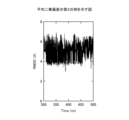
図5は、平均二乗偏差の第1の例を示す図である。図6は、平均二乗偏差の第2の例を示す図である。図5及び図6は、それぞれ異なる化合物の1分子の立体構造を所定の時間間隔でサンプリングし、各サンプルについて計算した平均二乗偏差(RMSD)の時間変化を示したグラフである。グラフの横軸は時間(ナノ秒単位)であり、縦軸はRMSD(オングストローム単位)である。 Figure 5 shows a first example of the root mean square deviation. Figure 6 shows a second example of the root mean square deviation. Figures 5 and 6 are graphs showing the time change in the root mean square deviation (RMSD) calculated for each sample obtained by sampling the three-dimensional structure of one molecule of each different compound at a predetermined time interval. The horizontal axis of the graph is time (in nanoseconds) and the vertical axis is RMSD (in angstroms).
図5に示した平均二乗偏差は、ほぼ一定の値を取っている。これは、溶媒中で安定な構造の周りに非常に小さな構造揺らぎが発生していることを示している。一方、図6に示した平均二乗偏差は、値の範囲が大きく変動している。これは、大きな構造揺らぎが生じていることを示している。また、図6に示した平均二乗偏差は、複数の構造の間を遷移しながら揺らいでいることも示している。 The mean square deviation shown in Figure 5 has an almost constant value. This indicates that very small structural fluctuations occur around the stable structure in the solvent. On the other hand, the mean square deviation shown in Figure 6 has a large range of values, which indicates that large structural fluctuations occur. The mean square deviation shown in Figure 6 also indicates that the structure fluctuates while transitioning between multiple structures.
図7は、安定性スコアの第1の例を示す図である。図7に示す安定性スコアは、図5に示した平均二乗偏差から計算した安定性スコアの一例である。図8は、安定性スコアの第2の例を示す図である。図8に示す安定性スコアは、図6に示した平均二乗偏差から計算した安定性スコアの一例である。 Figure 7 is a diagram showing a first example of a stability score. The stability score shown in Figure 7 is an example of a stability score calculated from the mean squared deviation shown in Figure 5. Figure 8 is a diagram showing a second example of a stability score. The stability score shown in Figure 8 is an example of a stability score calculated from the mean squared deviation shown in Figure 6.
図7に示した例では、クラスタリングにより1つのクラスタ(#1)が形成され、クラスタ#1の安定性スコアTccが1.00であった。したがって、図5に示したような平均二乗偏差をもつ化合物は、溶媒中で非常に安定した構造を取ることがわかる。
In the example shown in Figure 7, one cluster (#1) was formed by clustering, and the stability score Tcc of
図8に示した例では、クラスタリングにより4つのクラスタ(#1~#4)が形成され、クラスタ#1~#4の安定性スコアTccの総和が0.40であった。したがって、図6に示したような平均二乗偏差をもつ化合物は、溶媒中で構造が安定しないことがわかる。
In the example shown in Figure 8, four clusters (#1 to #4) were formed by clustering, and the sum of the stability scores Tcc of
図5乃至図8に示した検証結果により、安定性スコアTccは、溶媒中の化合物の立体構造的特徴(安定性)を表す指標であることが示された。 The verification results shown in FIG. 5 to FIG. 8 demonstrate that the stability score Tcc is an index representing the conformational characteristics (stability) of a compound in a solvent.
<評価方法の処理手順>
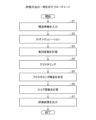
本実施形態における分子構造評価システム1が実行する評価方法について、図9を参照しながら説明する。図9は、本実施形態における評価方法の一例を示すフローチャートである。
<Evaluation method processing procedure>
The evaluation method executed by the molecular
ステップS1において、利用者端末20は、利用者の操作に応じて、ヒット化合物の構造の一部を改変した改変化合物の構造を生成する。改変化合物の構造は、例えば、公知の分子モデリングソフトウェア等を利用して生成することができる。また、利用者端末20は、利用者の操作に応じて、改変化合物の物性を評価する環境(例えば、溶媒分子)を決定する。
In step S1, the
利用者端末20は、改変化合物の構造を示す情報及び改変化合物の物性を評価する環境に関する情報に基づいて、構造情報を生成する。そして、利用者端末20は、構造情報を評価装置10に送信する。
The
評価装置10では、入力部11が、利用者端末20から構造情報を受信する。入力部11は、受信した構造情報を受け付ける。そして、入力部11は、構造情報を構造解析部12に送る。
In the
ステップS2において、評価装置10の構造解析部12は、入力部11から構造情報を受け取る。次に、構造解析部12は、分子動力学法に基づく分子シミュレーションを用いて、所定環境における改変化合物の立体構造を計算する。続いて、構造解析部12は、分子シミュレーションにより生成される改変化合物の立体構造を、所定の時間範囲において所定の時間間隔でサンプリングする。そして、構造解析部12は、サンプリングにより取得した立体構造群を集団変数計算部13に送る。
In step S2, the
ステップS3において、評価装置10の集団変数計算部13は、構造解析部12から立体構造群を受け取る。次に、集団変数計算部13は、立体構造それぞれについて、所定の集団変数を計算する。続いて、集団変数計算部13は、計算した集団変数を構造空間に配置する。これにより、改変化合物の集団変数の分布が生成される。そして、集団変数計算部13は、集団変数の分布をクラスタ分割部14に送る。
In step S3, the collective
ステップS4において、評価装置10のクラスタ分割部14は、集団変数計算部13から集団変数の分布を受け取る。次に、クラスタ分割部14は、集団変数の分布を1以上のクラスタに分割する。これにより、構造空間に1以上のクラスタが形成される。そして、クラスタ分割部14は、クラスタが形成された構造空間を代表構造決定部15に送る。
In step S4, the
ステップS5において、評価装置10の代表構造決定部15は、クラスタ分割部14から構造空間を受け取る。次に、代表構造決定部15は、構造空間のうち各クラスタに含まれる空間を部分空間に分割する。続いて、代表構造決定部15は、各部分空間それぞれの密度を計算する。
In step S5, the representative
さらに、代表構造決定部15は、最も密度が高い部分空間において、中心に最も近い位置に配置された集団変数に対応する立体構造を特定する。次に、代表構造決定部15は、特定した立体構造をクラスタセンタ構造として決定する。そして、代表構造決定部15は、各クラスタにクラスタセンタ構造が設定された構造空間をスコア計算部16に送る。
Furthermore, the representative
ステップS6において、評価装置10のスコア計算部16は、代表構造決定部15から構造空間を受け取る。次に、スコア計算部16は、クラスタセンタ構造が設定された構造空間に基づいて、安定性スコアTccを計算する。そして、スコア計算部16は、安定性スコアTccを出力部17に送る。
In step S6, the
ステップS7において、評価装置10の出力部17は、スコア計算部16から安定性スコアTccを受け取る。次に、出力部17は、少なくとも安定性スコアTccを含む評価結果を生成する。そして、出力部17は、評価結果を利用者端末20に送信する。
In step S7, the
利用者端末20は、評価装置10から評価結果を受信する。そして、利用者端末20は、受信した評価結果を表示装置506に表示する。
The
利用者は、利用者端末20の表示装置506に表示された評価結果を参照することで、改変化合物の安定性を評価することができる。また、利用者は、評価結果に基づいて改変化合物の物性を予測し、リード化合物の探索に利用することができる。
The user can evaluate the stability of the modified compound by referring to the evaluation results displayed on the
<応用例>
安定性スコアTccは、改変化合物の物性予測に応用することができる。例えば、標的分子に対するヒット化合物の安定性スコアTccに基づいて、ヒット化合物を改変することによる結合活性の増減、膜透過可能性、熱耐性等を予測することが可能となる。本応用例では、結合活性の増減予測について説明する。その他の物性の予測も同様に行うことができる。
<Application Examples>
The stability score Tcc can be applied to predict the physical properties of modified compounds. For example, based on the stability score Tcc of a hit compound for a target molecule, it is possible to predict the increase or decrease in binding activity, membrane permeability, heat resistance, etc., due to modification of the hit compound. In this application example, the prediction of the increase or decrease in binding activity will be described. Predictions of other physical properties can also be made in the same manner.
結合活性の増減予測について、図10を参照しながら説明する。図10は、結合活性の増減予測の一例を示す図である。 The prediction of an increase or decrease in binding activity will be explained with reference to FIG. 10. FIG. 10 is a diagram showing an example of a prediction of an increase or decrease in binding activity.
図10は、改変化合物に対して分子シミュレーションを実施し、得られた立体構造群に対して、ヒット化合物のクラスタセンタ構造との安定性スコアTccを計算した結果である。安定性スコアTccは、ヒット化合物の立体構造との類似性を示す指標になっている。安定性スコアTccが1に近づけばヒット化合物との類似性が高く、0に近ければヒット化合物との類似性が低いことを示している。ヒット化合物は標的分子との結合活性が大きいため、安定性スコアTccと標的分子に対する結合活性の増減との間には相関があることが期待される。 10 shows the results of performing molecular simulations on modified compounds and calculating the stability score Tcc with respect to the cluster center structure of a hit compound for the resulting 3D structure group. The stability score Tcc is an index showing the similarity to the 3D structure of the hit compound. The closer the stability score Tcc is to 1, the higher the similarity to the hit compound, and the closer it is to 0, the lower the similarity to the hit compound. Since hit compounds have high binding activity to target molecules, it is expected that there is a correlation between the stability score Tcc and the increase or decrease in binding activity to the target molecule.
標的タンパク質に対する環状ペプチドのヒット化合物に対して、3つの改変化合物A,B,Cを作成し、安定性スコアTccを計算した。その後、改変化合物A,B,Cを実際に合成し、実験によって結合活性値Kdを測定した。図10は、横軸を結合活性値Kd(nM)とし、縦軸を安定性スコアTcc(×102)として、ヒット化合物(Hit compound)及び改変化合物(A,B,C)のデータをプロットしたグラフである。図10に示されているように、安定性スコアTccと結合活性値Kdとの間には、高い相関が認められる結果となった。 For the hit compound of the cyclic peptide for the target protein, three modified compounds A, B, and C were prepared, and the stability score Tcc was calculated. Then, the modified compounds A, B, and C were actually synthesized, and the binding activity value Kd was measured by an experiment. FIG. 10 is a graph plotting the data of the hit compound and the modified compounds (A, B, and C) with the binding activity value Kd (nM) on the horizontal axis and the stability score Tcc (×10 2 ) on the vertical axis. As shown in FIG. 10, a high correlation was observed between the stability score Tcc and the binding activity value Kd.
図10に示した結果により、ヒット化合物の安定性スコアTccに基づいて、改変化合物の結合活性の増減傾向を予測することが可能であることが示された。 The results shown in FIG. 10 demonstrate that it is possible to predict the tendency of increased or decreased binding activity of modified compounds based on the stability score Tcc of hit compounds.
なお、改変化合物の膜透過可能性は、以下のように予測することができる。まず、細胞膜に相当する溶媒(例えばクロロホルム)中で改変化合物の安定性スコアTccを計算する。次に、細胞膜相当の溶媒中の立体構造群から決定したクラスタセンタ構造を参照し、水中における改変化合物の安定性スコアTccを計算する。水中における安定性スコアTccが0であれば、膜透過しないと予測することができる。一方、水中における安定性スコアTccが有限であれば膜透過すると予測することができる。 The membrane permeability of the modified compound can be predicted as follows. First, the stability score Tcc of the modified compound is calculated in a solvent equivalent to a cell membrane (e.g., chloroform). Next, the stability score Tcc of the modified compound in water is calculated with reference to the cluster center structure determined from the group of three-dimensional structures in the solvent equivalent to the cell membrane. If the stability score Tcc in water is 0, it can be predicted that the modified compound will not permeate the membrane. On the other hand, if the stability score Tcc in water is finite, it can be predicted that the modified compound will permeate the membrane.
また、改変化合物の熱耐性は、以下のように予測することができる。まず、レプリカ交換法による分子シミュレーションで改変化合物の立体構造をサンプリングする。次に、サンプリングされた立体構造群に基づいて、安定性スコアTccを計算する。安定性スコアTccが大きく変化する温度を見積もることで、改変化合物の熱耐性を予測することができる。 The thermal resistance of the modified compound can be predicted as follows. First, the conformation of the modified compound is sampled by molecular simulation using the replica exchange method. Next, the stability score Tcc is calculated based on the sampled conformation group. The thermal resistance of the modified compound can be predicted by estimating the temperature at which the stability score Tcc changes significantly.
<実施形態の効果>
本実施形態における評価装置10は、所定環境における化合物の構造から計算される集団変数の分布を1以上のクラスタに分割し、クラスタそれぞれに含まれる構造からクラスタを代表するクラスタセンタ構造を決定し、分布に含まれる構造のうちクラスタセンタ構造から所定距離の範囲に存在する構造の割合に基づくスコアを計算する。したがって、本実施形態における評価装置10によれば、化合物の構造を効率よく評価することができる。
Effects of the embodiment
The
本実施形態における評価装置10は、物性が既知の化合物を改変した化合物に関するスコアを計算する。当該スコアは化合物の構造の安定性を示すため、化合物の物性は、既知の物性と類似することが期待される。したがって、本実施形態における評価装置10によれば、化合物の物性を効率よく評価することができる。
The
本実施形態における評価装置10は、標的物質への結合活性、膜透過性及び熱耐性のいずれかが既知の化合物を改変した化合物に関するスコアを計算する。結合活性、膜透過性及び熱耐性は薬候補化合物にとって重要な物性である。したがって、本実施形態における評価装置10によれば、薬候補化合物を効率よく探索するためのスコアを計算することができる。
The
本実施形態における安定性スコアTccは、分子の特徴を表す指標となる。値が大きければ溶媒中での安定で系の構造の揺らぎ幅が小さく、小さければ複数の安定構造群で特徴づけられ、系の構造の揺らぎ幅が大きいことを表す。 The stability score Tcc in this embodiment is an index representing the characteristics of a molecule. A large value indicates that the molecule is stable in a solvent and has a small range of fluctuation in the structure of the system, whereas a small value indicates that the molecule is characterized by a plurality of stable structure groups and has a large range of fluctuation in the structure of the system.
本実施形態における安定性スコアTccが、ヒット化合物の構造的特徴を表すことを用いれば、ヒット化合物からデザインした改変化合物のヒット化合物に対する構造類似性を数値化できる。安定性スコアTccが大きくなれば、標的分子に対する結合活性は増加する。一方、安定性スコアTccが小さくなれば、標的分子に対する結合活性は減少する。 In this embodiment, the stability score Tcc represents the structural characteristics of a hit compound, and the structural similarity of a modified compound designed from the hit compound to the hit compound can be quantified. If the stability score Tcc is large, the binding activity to the target molecule increases. On the other hand, if the stability score Tcc is small, the binding activity to the target molecule decreases.
<ビジネスシーンにおける効能>
本実施形態における分子構造評価システム1は、例えば創薬分野で利用することができる。創薬分野では、新規薬剤の開発コストが膨大となることが課題となっている。その一因として、ヒット化合物からリード化合物を探索するために、実験又は計算コストが高いシミュレーションが必要であり、時間的コスト及び経済的コストが大きいことが挙げられる。
<Effectiveness in business situations>
The molecular
本実施形態における分子構造評価システム1は、化合物の物性を効率よく評価することができる。したがって、本実施形態における分子構造評価システム1によれば、リード化合物を探索するための時間的コスト及び経済的コストを低減することができる。その結果、新規で有用な薬剤を低コストかつ短いリードタイムで開発することが可能となる。
The molecular
[付記]
以上の実施形態に関し、更に以下の付記を開示する。
(付記1)
所定環境における化合物の構造から計算される集団変数の分布を1以上のクラスタに分割し、
前記クラスタそれぞれに含まれる前記構造から、前記クラスタを代表する代表構造を決定し、
前記分布に含まれる前記構造のうち前記代表構造から所定距離の範囲に存在する前記構造の割合に基づくスコアを計算する、
処理をコンピュータに実行させるための評価プログラム。
(付記2)
前記スコアは、前記クラスタごとの前記割合の総和である、
付記1に記載の評価プログラム。
(付記3)
前記代表構造は、前記クラスタ内の前記構造の密度に基づいて決定する、
付記1又は付記2に記載の評価プログラム。
(付記4)
rを前記集団変数とし、iを前記クラスタの番号とし、rcを前記距離とし、ρiを前記割合とし、cci
refを前記代表構造とし、次式により前記スコアを計算する、

(付記5)
前記化合物は、物性が既知の化合物を改変した化合物である、
付記1から付記4のいずれかに記載の評価プログラム。
(付記6)
前記物性は、標的物質への結合活性、膜透過性及び熱耐性のいずれかを含む、
付記5に記載の評価プログラム。
(付記7)
前記集団変数は、前記構造を示す指標である、
付記1から付記6のいずれかに記載の評価プログラム。
(付記8)
前記集団変数は、前記化合物中の原子位置の平均二乗偏差である、
付記7に記載の評価プログラム。
(付記9)
所定環境における化合物の構造から計算される集団変数の分布を1以上のクラスタに分割する分割部と、
前記クラスタそれぞれに含まれる前記構造から、前記クラスタを代表する代表構造を決定する決定部と、
前記分布に含まれる前記構造のうち前記代表構造から所定距離の範囲に存在する前記構造の割合に基づくスコアを計算する計算部と、
を備える評価装置。
(付記10)
所定環境における化合物の構造から計算される集団変数の分布を1以上のクラスタに分割し、
前記クラスタそれぞれに含まれる前記構造から、前記クラスタを代表する代表構造を決定し、
前記分布に含まれる前記構造のうち前記代表構造から所定距離の範囲に存在する前記構造の割合に基づくスコアを計算する、
処理をコンピュータが実行する評価方法。
[Additional Notes]
The following supplementary notes are further disclosed regarding the above embodiment.
(Appendix 1)
Dividing a distribution of population variables calculated from the structures of compounds in a given environment into one or more clusters;
determining a representative structure that represents each of the clusters from the structures contained in each of the clusters;
calculating a score based on a ratio of the structures present within a predetermined distance from the representative structure among the structures included in the distribution;
An evaluation program for causing a computer to execute processing.
(Appendix 2)
The score is the sum of the proportions for each of the clusters.
2. The evaluation program according to
(Appendix 3)
determining the representative structure based on a density of the structure within the cluster;
3. The evaluation program according to
(Appendix 4)
Let r be the group variable, i be the cluster number, rc be the distance, ρi be the proportion, and cci ref be the representative structure, and calculate the score by the following formula:
(Appendix 5)
The compound is a compound obtained by modifying a compound whose physical properties are known.
5. The evaluation program according to any one of
(Appendix 6)
The physical property includes any one of binding activity to a target substance, membrane permeability, and heat resistance.
6. The evaluation program according to claim 5.
(Appendix 7)
The group variables are indicative of the structure.
7. The evaluation program according to any one of
(Appendix 8)
The population variable is the mean square deviation of the atomic positions in the compound.
8. The evaluation program according to claim 7.
(Appendix 9)
a partitioning unit for partitioning a distribution of population variables calculated from the structures of compounds in a given environment into one or more clusters;
a determination unit that determines a representative structure that represents each cluster from the structures included in each cluster;
a calculation unit that calculates a score based on a ratio of the structures present within a predetermined distance from the representative structure among the structures included in the distribution;
An evaluation device comprising:
(Appendix 10)
Dividing a distribution of population variables calculated from the structures of compounds in a given environment into one or more clusters;
determining a representative structure that represents each of the clusters from the structures contained in each of the clusters;
calculating a score based on a ratio of the structures present within a predetermined distance from the representative structure among the structures included in the distribution;
An evaluation method in which processing is performed by a computer.
なお、上記実施形態に挙げた構成等に、その他の要素との組み合わせ等、ここで示した構成に本発明が限定されるものではない。これらの点に関しては、本発明の趣旨を逸脱しない範囲で変更することが可能であり、その応用形態に応じて適切に定めることができる。 The present invention is not limited to the configurations shown here, including combinations of the configurations and other elements in the above-mentioned embodiments. These points can be changed without departing from the spirit of the present invention, and can be appropriately determined according to the application form.
1 分子構造評価システム
10 評価装置
11 入力部
12 構造解析部
13 集団変数計算部
14 クラスタ分割部
15 代表構造決定部
16 スコア計算部
17 出力部
20 利用者端末
Claims (10)
前記クラスタそれぞれに含まれる前記構造から、前記クラスタを代表する代表構造を決定し、
前記分布に含まれる前記構造のうち前記代表構造から所定距離の範囲に存在する前記構造の割合に基づくスコアを計算する、
処理をコンピュータに実行させるための評価プログラム。 Dividing a distribution of population variables calculated from the structures of compounds in a given environment into one or more clusters;
determining a representative structure that represents each of the clusters from the structures contained in each of the clusters;
calculating a score based on a ratio of the structures present within a predetermined distance from the representative structure among the structures included in the distribution;
An evaluation program for causing a computer to execute processing.
請求項1に記載の評価プログラム。 The score is the sum of the proportions for each of the clusters.
The evaluation program according to claim 1 .
請求項1に記載の評価プログラム。 determining the representative structure based on density within the cluster;
The evaluation program according to claim 1 .

請求項1から4のいずれかに記載の評価プログラム。 The compound is a compound obtained by modifying a compound whose physical properties are known.
The evaluation program according to any one of claims 1 to 4.
請求項5に記載の評価プログラム。 The physical property includes any one of binding activity to a target substance, membrane permeability, and heat resistance.
The evaluation program according to claim 5 .
請求項1から4のいずれかに記載の評価プログラム。 The group variables are indicative of the structure.
The evaluation program according to any one of claims 1 to 4.
請求項7に記載の評価プログラム。 The population variable is the mean square deviation of the atomic positions in the compound.
The evaluation program according to claim 7.
前記クラスタそれぞれに含まれる前記構造から、前記クラスタを代表する代表構造を決定する決定部と、
前記分布に含まれる前記構造のうち前記代表構造から所定距離の範囲に存在する前記構造の割合に基づくスコアを計算する計算部と、
を備える評価装置。 a partitioning unit for partitioning a distribution of population variables calculated from the structures of compounds in a given environment into one or more clusters;
a determination unit that determines a representative structure that represents each cluster from the structures included in each cluster;
a calculation unit that calculates a score based on a ratio of the structures present within a predetermined distance from the representative structure among the structures included in the distribution;
An evaluation device comprising:
前記クラスタそれぞれに含まれる前記構造から、前記クラスタを代表する代表構造を決定し、
前記分布に含まれる前記構造のうち前記代表構造から所定距離の範囲に存在する前記構造の割合に基づくスコアを計算する、
処理をコンピュータが実行する評価方法。 Dividing a distribution of population variables calculated from the structures of compounds in a given environment into one or more clusters;
determining a representative structure that represents each of the clusters from the structures contained in each of the clusters;
calculating a score based on a ratio of the structures present within a predetermined distance from the representative structure among the structures included in the distribution;
An evaluation method in which processing is performed by a computer.
Priority Applications (2)
| Application Number | Priority Date | Filing Date | Title |
|---|---|---|---|
| JP2023050905A JP2024139949A (en) | 2023-03-28 | 2023-03-28 | EVALUATION PROGRAM, EVALUATION APPARATUS, AND EVALUATION METHOD |
| PCT/JP2024/004229 WO2024202570A1 (en) | 2023-03-28 | 2024-02-08 | Evaluation program, evaluation device, and evaluation method |
Applications Claiming Priority (1)
| Application Number | Priority Date | Filing Date | Title |
|---|---|---|---|
| JP2023050905A JP2024139949A (en) | 2023-03-28 | 2023-03-28 | EVALUATION PROGRAM, EVALUATION APPARATUS, AND EVALUATION METHOD |
Publications (1)
| Publication Number | Publication Date |
|---|---|
| JP2024139949A true JP2024139949A (en) | 2024-10-10 |
Family
ID=92904101
Family Applications (1)
| Application Number | Title | Priority Date | Filing Date |
|---|---|---|---|
| JP2023050905A Pending JP2024139949A (en) | 2023-03-28 | 2023-03-28 | EVALUATION PROGRAM, EVALUATION APPARATUS, AND EVALUATION METHOD |
Country Status (2)
| Country | Link |
|---|---|
| JP (1) | JP2024139949A (en) |
| WO (1) | WO2024202570A1 (en) |
Family Cites Families (3)
| Publication number | Priority date | Publication date | Assignee | Title |
|---|---|---|---|---|
| WO1997027559A1 (en) * | 1996-01-26 | 1997-07-31 | Patterson David E | Method of creating and searching a molecular virtual library using validated molecular structure descriptors |
| US20020025535A1 (en) * | 2000-06-15 | 2002-02-28 | Diller David J. | Prioritization of combinatorial library screening |
| EP2216429A4 (en) * | 2007-11-12 | 2011-06-15 | In Silico Sciences Inc | In silico screening system and in silico screening method |
-
2023
- 2023-03-28 JP JP2023050905A patent/JP2024139949A/en active Pending
-
2024
- 2024-02-08 WO PCT/JP2024/004229 patent/WO2024202570A1/en not_active Ceased
Also Published As
| Publication number | Publication date |
|---|---|
| WO2024202570A1 (en) | 2024-10-03 |
Similar Documents
| Publication | Publication Date | Title |
|---|---|---|
| Shukla et al. | Molecular dynamics simulation in drug discovery: opportunities and challenges | |
| Mahmoud et al. | Elucidating the multiple roles of hydration for accurate protein-ligand binding prediction via deep learning | |
| Bonomi et al. | Metadynamic metainference: Enhanced sampling of the metainference ensemble using metadynamics | |
| Mullen et al. | Transmission coefficients, committors, and solvent coordinates in ion-pair dissociation | |
| Schmidtke et al. | Large-scale comparison of four binding site detection algorithms | |
| Mohammadi et al. | Ensemble learning from ensemble docking: Revisiting the optimum ensemble size problem | |
| Rodriguez-Perez et al. | Feature importance correlation from machine learning indicates functional relationships between proteins and similar compound binding characteristics | |
| Cossio et al. | A simple and efficient statistical potential for scoring ensembles of protein structures | |
| JP5905781B2 (en) | INTERACTION PREDICTION DEVICE, INTERACTION PREDICTION METHOD, AND PROGRAM | |
| Afifi et al. | Improving classical scoring functions using random forest: The non‐additivity of free energy terms’ contributions in binding | |
| Yan et al. | Specificity and affinity quantification of protein–protein interactions | |
| Fogolari et al. | PDB2ENTROPY and PDB2TRENT: conformational and translational–rotational entropy from molecular ensembles | |
| JP5211486B2 (en) | Compound virtual screening method and apparatus | |
| Guan et al. | Dynamic incorporation of prior knowledge from multiple domains in biomarker discovery | |
| Moshawih et al. | Consensus holistic virtual screening for drug discovery: a novel machine learning model approach | |
| Stroh et al. | CGCompiler: Automated coarse-grained molecule parametrization via noise-resistant mixed-variable optimization | |
| Huang et al. | Using 3dRPC for RNA–protein complex structure prediction | |
| EP4655788A1 (en) | Denoising diffusion model for coarse-grained molecular dynamics | |
| de Angelo et al. | Molecular docking: State-of-the-art scoring functions and search algorithms | |
| Liu et al. | A multi-grained symmetric differential equation model for learning protein-ligand binding dynamics | |
| Park et al. | A random effect model for reconstruction of spatial chromatin structure | |
| Li et al. | Prediction of mutation-induced protein stability changes based on the geometric representations learned by a self-supervised method | |
| JP7379810B2 (en) | Binding free energy calculation method, calculation device, and program | |
| JP2024139949A (en) | EVALUATION PROGRAM, EVALUATION APPARATUS, AND EVALUATION METHOD | |
| Engler Hart et al. | Weighting low-intensity MS/MS ions and m/z frequency for spectral library annotation |