JP2023551203A - Glycosidic double cleavage linkers for antibody-drug conjugates - Google Patents
Glycosidic double cleavage linkers for antibody-drug conjugates Download PDFInfo
- Publication number
- JP2023551203A JP2023551203A JP2023530743A JP2023530743A JP2023551203A JP 2023551203 A JP2023551203 A JP 2023551203A JP 2023530743 A JP2023530743 A JP 2023530743A JP 2023530743 A JP2023530743 A JP 2023530743A JP 2023551203 A JP2023551203 A JP 2023551203A
- Authority
- JP
- Japan
- Prior art keywords
- substituted
- alkyl
- aryl
- heteroaryl
- heterocyclyl
- Prior art date
- Legal status (The legal status is an assumption and is not a legal conclusion. Google has not performed a legal analysis and makes no representation as to the accuracy of the status listed.)
- Pending
Links
Images


Classifications
-
- C—CHEMISTRY; METALLURGY
- C07—ORGANIC CHEMISTRY
- C07K—PEPTIDES
- C07K5/00—Peptides containing up to four amino acids in a fully defined sequence; Derivatives thereof
- C07K5/04—Peptides containing up to four amino acids in a fully defined sequence; Derivatives thereof containing only normal peptide links
- C07K5/06—Dipeptides
- C07K5/06008—Dipeptides with the first amino acid being neutral
- C07K5/06017—Dipeptides with the first amino acid being neutral and aliphatic
- C07K5/06034—Dipeptides with the first amino acid being neutral and aliphatic the side chain containing 2 to 4 carbon atoms
-
- A—HUMAN NECESSITIES
- A61—MEDICAL OR VETERINARY SCIENCE; HYGIENE
- A61K—PREPARATIONS FOR MEDICAL, DENTAL OR TOILETRY PURPOSES
- A61K47/00—Medicinal preparations characterised by the non-active ingredients used, e.g. carriers or inert additives; Targeting or modifying agents chemically bound to the active ingredient
- A61K47/50—Medicinal preparations characterised by the non-active ingredients used, e.g. carriers or inert additives; Targeting or modifying agents chemically bound to the active ingredient the non-active ingredient being chemically bound to the active ingredient, e.g. polymer-drug conjugates
- A61K47/51—Medicinal preparations characterised by the non-active ingredients used, e.g. carriers or inert additives; Targeting or modifying agents chemically bound to the active ingredient the non-active ingredient being chemically bound to the active ingredient, e.g. polymer-drug conjugates the non-active ingredient being a modifying agent
- A61K47/68—Medicinal preparations characterised by the non-active ingredients used, e.g. carriers or inert additives; Targeting or modifying agents chemically bound to the active ingredient the non-active ingredient being chemically bound to the active ingredient, e.g. polymer-drug conjugates the non-active ingredient being a modifying agent the modifying agent being an antibody, an immunoglobulin or a fragment thereof, e.g. an Fc-fragment
- A61K47/6801—Drug-antibody or immunoglobulin conjugates defined by the pharmacologically or therapeutically active agent
- A61K47/6803—Drugs conjugated to an antibody or immunoglobulin, e.g. cisplatin-antibody conjugates
-
- A—HUMAN NECESSITIES
- A61—MEDICAL OR VETERINARY SCIENCE; HYGIENE
- A61K—PREPARATIONS FOR MEDICAL, DENTAL OR TOILETRY PURPOSES
- A61K47/00—Medicinal preparations characterised by the non-active ingredients used, e.g. carriers or inert additives; Targeting or modifying agents chemically bound to the active ingredient
- A61K47/50—Medicinal preparations characterised by the non-active ingredients used, e.g. carriers or inert additives; Targeting or modifying agents chemically bound to the active ingredient the non-active ingredient being chemically bound to the active ingredient, e.g. polymer-drug conjugates
- A61K47/51—Medicinal preparations characterised by the non-active ingredients used, e.g. carriers or inert additives; Targeting or modifying agents chemically bound to the active ingredient the non-active ingredient being chemically bound to the active ingredient, e.g. polymer-drug conjugates the non-active ingredient being a modifying agent
- A61K47/68—Medicinal preparations characterised by the non-active ingredients used, e.g. carriers or inert additives; Targeting or modifying agents chemically bound to the active ingredient the non-active ingredient being chemically bound to the active ingredient, e.g. polymer-drug conjugates the non-active ingredient being a modifying agent the modifying agent being an antibody, an immunoglobulin or a fragment thereof, e.g. an Fc-fragment
- A61K47/6801—Drug-antibody or immunoglobulin conjugates defined by the pharmacologically or therapeutically active agent
- A61K47/6803—Drugs conjugated to an antibody or immunoglobulin, e.g. cisplatin-antibody conjugates
- A61K47/68031—Drugs conjugated to an antibody or immunoglobulin, e.g. cisplatin-antibody conjugates the drug being an auristatin
-
- A—HUMAN NECESSITIES
- A61—MEDICAL OR VETERINARY SCIENCE; HYGIENE
- A61K—PREPARATIONS FOR MEDICAL, DENTAL OR TOILETRY PURPOSES
- A61K47/00—Medicinal preparations characterised by the non-active ingredients used, e.g. carriers or inert additives; Targeting or modifying agents chemically bound to the active ingredient
- A61K47/50—Medicinal preparations characterised by the non-active ingredients used, e.g. carriers or inert additives; Targeting or modifying agents chemically bound to the active ingredient the non-active ingredient being chemically bound to the active ingredient, e.g. polymer-drug conjugates
- A61K47/51—Medicinal preparations characterised by the non-active ingredients used, e.g. carriers or inert additives; Targeting or modifying agents chemically bound to the active ingredient the non-active ingredient being chemically bound to the active ingredient, e.g. polymer-drug conjugates the non-active ingredient being a modifying agent
- A61K47/68—Medicinal preparations characterised by the non-active ingredients used, e.g. carriers or inert additives; Targeting or modifying agents chemically bound to the active ingredient the non-active ingredient being chemically bound to the active ingredient, e.g. polymer-drug conjugates the non-active ingredient being a modifying agent the modifying agent being an antibody, an immunoglobulin or a fragment thereof, e.g. an Fc-fragment
- A61K47/6801—Drug-antibody or immunoglobulin conjugates defined by the pharmacologically or therapeutically active agent
- A61K47/6803—Drugs conjugated to an antibody or immunoglobulin, e.g. cisplatin-antibody conjugates
- A61K47/68033—Drugs conjugated to an antibody or immunoglobulin, e.g. cisplatin-antibody conjugates the drug being a maytansine
-
- A—HUMAN NECESSITIES
- A61—MEDICAL OR VETERINARY SCIENCE; HYGIENE
- A61K—PREPARATIONS FOR MEDICAL, DENTAL OR TOILETRY PURPOSES
- A61K47/00—Medicinal preparations characterised by the non-active ingredients used, e.g. carriers or inert additives; Targeting or modifying agents chemically bound to the active ingredient
- A61K47/50—Medicinal preparations characterised by the non-active ingredients used, e.g. carriers or inert additives; Targeting or modifying agents chemically bound to the active ingredient the non-active ingredient being chemically bound to the active ingredient, e.g. polymer-drug conjugates
- A61K47/51—Medicinal preparations characterised by the non-active ingredients used, e.g. carriers or inert additives; Targeting or modifying agents chemically bound to the active ingredient the non-active ingredient being chemically bound to the active ingredient, e.g. polymer-drug conjugates the non-active ingredient being a modifying agent
- A61K47/68—Medicinal preparations characterised by the non-active ingredients used, e.g. carriers or inert additives; Targeting or modifying agents chemically bound to the active ingredient the non-active ingredient being chemically bound to the active ingredient, e.g. polymer-drug conjugates the non-active ingredient being a modifying agent the modifying agent being an antibody, an immunoglobulin or a fragment thereof, e.g. an Fc-fragment
- A61K47/6801—Drug-antibody or immunoglobulin conjugates defined by the pharmacologically or therapeutically active agent
- A61K47/6803—Drugs conjugated to an antibody or immunoglobulin, e.g. cisplatin-antibody conjugates
- A61K47/6811—Drugs conjugated to an antibody or immunoglobulin, e.g. cisplatin-antibody conjugates the drug being a protein or peptide, e.g. transferrin or bleomycin
- A61K47/6813—Drugs conjugated to an antibody or immunoglobulin, e.g. cisplatin-antibody conjugates the drug being a protein or peptide, e.g. transferrin or bleomycin the drug being a peptidic cytokine, e.g. an interleukin or interferon
-
- A—HUMAN NECESSITIES
- A61—MEDICAL OR VETERINARY SCIENCE; HYGIENE
- A61K—PREPARATIONS FOR MEDICAL, DENTAL OR TOILETRY PURPOSES
- A61K47/00—Medicinal preparations characterised by the non-active ingredients used, e.g. carriers or inert additives; Targeting or modifying agents chemically bound to the active ingredient
- A61K47/50—Medicinal preparations characterised by the non-active ingredients used, e.g. carriers or inert additives; Targeting or modifying agents chemically bound to the active ingredient the non-active ingredient being chemically bound to the active ingredient, e.g. polymer-drug conjugates
- A61K47/51—Medicinal preparations characterised by the non-active ingredients used, e.g. carriers or inert additives; Targeting or modifying agents chemically bound to the active ingredient the non-active ingredient being chemically bound to the active ingredient, e.g. polymer-drug conjugates the non-active ingredient being a modifying agent
- A61K47/68—Medicinal preparations characterised by the non-active ingredients used, e.g. carriers or inert additives; Targeting or modifying agents chemically bound to the active ingredient the non-active ingredient being chemically bound to the active ingredient, e.g. polymer-drug conjugates the non-active ingredient being a modifying agent the modifying agent being an antibody, an immunoglobulin or a fragment thereof, e.g. an Fc-fragment
- A61K47/6801—Drug-antibody or immunoglobulin conjugates defined by the pharmacologically or therapeutically active agent
- A61K47/6803—Drugs conjugated to an antibody or immunoglobulin, e.g. cisplatin-antibody conjugates
- A61K47/6811—Drugs conjugated to an antibody or immunoglobulin, e.g. cisplatin-antibody conjugates the drug being a protein or peptide, e.g. transferrin or bleomycin
- A61K47/6817—Toxins
-
- A—HUMAN NECESSITIES
- A61—MEDICAL OR VETERINARY SCIENCE; HYGIENE
- A61K—PREPARATIONS FOR MEDICAL, DENTAL OR TOILETRY PURPOSES
- A61K47/00—Medicinal preparations characterised by the non-active ingredients used, e.g. carriers or inert additives; Targeting or modifying agents chemically bound to the active ingredient
- A61K47/50—Medicinal preparations characterised by the non-active ingredients used, e.g. carriers or inert additives; Targeting or modifying agents chemically bound to the active ingredient the non-active ingredient being chemically bound to the active ingredient, e.g. polymer-drug conjugates
- A61K47/51—Medicinal preparations characterised by the non-active ingredients used, e.g. carriers or inert additives; Targeting or modifying agents chemically bound to the active ingredient the non-active ingredient being chemically bound to the active ingredient, e.g. polymer-drug conjugates the non-active ingredient being a modifying agent
- A61K47/68—Medicinal preparations characterised by the non-active ingredients used, e.g. carriers or inert additives; Targeting or modifying agents chemically bound to the active ingredient the non-active ingredient being chemically bound to the active ingredient, e.g. polymer-drug conjugates the non-active ingredient being a modifying agent the modifying agent being an antibody, an immunoglobulin or a fragment thereof, e.g. an Fc-fragment
- A61K47/6801—Drug-antibody or immunoglobulin conjugates defined by the pharmacologically or therapeutically active agent
- A61K47/6803—Drugs conjugated to an antibody or immunoglobulin, e.g. cisplatin-antibody conjugates
- A61K47/6811—Drugs conjugated to an antibody or immunoglobulin, e.g. cisplatin-antibody conjugates the drug being a protein or peptide, e.g. transferrin or bleomycin
- A61K47/6817—Toxins
- A61K47/6829—Bacterial toxins, e.g. diphteria toxins or Pseudomonas exotoxin A
-
- A—HUMAN NECESSITIES
- A61—MEDICAL OR VETERINARY SCIENCE; HYGIENE
- A61K—PREPARATIONS FOR MEDICAL, DENTAL OR TOILETRY PURPOSES
- A61K47/00—Medicinal preparations characterised by the non-active ingredients used, e.g. carriers or inert additives; Targeting or modifying agents chemically bound to the active ingredient
- A61K47/50—Medicinal preparations characterised by the non-active ingredients used, e.g. carriers or inert additives; Targeting or modifying agents chemically bound to the active ingredient the non-active ingredient being chemically bound to the active ingredient, e.g. polymer-drug conjugates
- A61K47/51—Medicinal preparations characterised by the non-active ingredients used, e.g. carriers or inert additives; Targeting or modifying agents chemically bound to the active ingredient the non-active ingredient being chemically bound to the active ingredient, e.g. polymer-drug conjugates the non-active ingredient being a modifying agent
- A61K47/68—Medicinal preparations characterised by the non-active ingredients used, e.g. carriers or inert additives; Targeting or modifying agents chemically bound to the active ingredient the non-active ingredient being chemically bound to the active ingredient, e.g. polymer-drug conjugates the non-active ingredient being a modifying agent the modifying agent being an antibody, an immunoglobulin or a fragment thereof, e.g. an Fc-fragment
- A61K47/6801—Drug-antibody or immunoglobulin conjugates defined by the pharmacologically or therapeutically active agent
- A61K47/6803—Drugs conjugated to an antibody or immunoglobulin, e.g. cisplatin-antibody conjugates
- A61K47/6811—Drugs conjugated to an antibody or immunoglobulin, e.g. cisplatin-antibody conjugates the drug being a protein or peptide, e.g. transferrin or bleomycin
- A61K47/6817—Toxins
- A61K47/6831—Fungal toxins, e.g. alpha sarcine, mitogillin, zinniol or restrictocin
-
- A—HUMAN NECESSITIES
- A61—MEDICAL OR VETERINARY SCIENCE; HYGIENE
- A61K—PREPARATIONS FOR MEDICAL, DENTAL OR TOILETRY PURPOSES
- A61K47/00—Medicinal preparations characterised by the non-active ingredients used, e.g. carriers or inert additives; Targeting or modifying agents chemically bound to the active ingredient
- A61K47/50—Medicinal preparations characterised by the non-active ingredients used, e.g. carriers or inert additives; Targeting or modifying agents chemically bound to the active ingredient the non-active ingredient being chemically bound to the active ingredient, e.g. polymer-drug conjugates
- A61K47/51—Medicinal preparations characterised by the non-active ingredients used, e.g. carriers or inert additives; Targeting or modifying agents chemically bound to the active ingredient the non-active ingredient being chemically bound to the active ingredient, e.g. polymer-drug conjugates the non-active ingredient being a modifying agent
- A61K47/68—Medicinal preparations characterised by the non-active ingredients used, e.g. carriers or inert additives; Targeting or modifying agents chemically bound to the active ingredient the non-active ingredient being chemically bound to the active ingredient, e.g. polymer-drug conjugates the non-active ingredient being a modifying agent the modifying agent being an antibody, an immunoglobulin or a fragment thereof, e.g. an Fc-fragment
- A61K47/6835—Medicinal preparations characterised by the non-active ingredients used, e.g. carriers or inert additives; Targeting or modifying agents chemically bound to the active ingredient the non-active ingredient being chemically bound to the active ingredient, e.g. polymer-drug conjugates the non-active ingredient being a modifying agent the modifying agent being an antibody, an immunoglobulin or a fragment thereof, e.g. an Fc-fragment the modifying agent being an antibody or an immunoglobulin bearing at least one antigen-binding site
- A61K47/6849—Medicinal preparations characterised by the non-active ingredients used, e.g. carriers or inert additives; Targeting or modifying agents chemically bound to the active ingredient the non-active ingredient being chemically bound to the active ingredient, e.g. polymer-drug conjugates the non-active ingredient being a modifying agent the modifying agent being an antibody, an immunoglobulin or a fragment thereof, e.g. an Fc-fragment the modifying agent being an antibody or an immunoglobulin bearing at least one antigen-binding site the antibody targeting a receptor, a cell surface antigen or a cell surface determinant
-
- A—HUMAN NECESSITIES
- A61—MEDICAL OR VETERINARY SCIENCE; HYGIENE
- A61K—PREPARATIONS FOR MEDICAL, DENTAL OR TOILETRY PURPOSES
- A61K47/00—Medicinal preparations characterised by the non-active ingredients used, e.g. carriers or inert additives; Targeting or modifying agents chemically bound to the active ingredient
- A61K47/50—Medicinal preparations characterised by the non-active ingredients used, e.g. carriers or inert additives; Targeting or modifying agents chemically bound to the active ingredient the non-active ingredient being chemically bound to the active ingredient, e.g. polymer-drug conjugates
- A61K47/51—Medicinal preparations characterised by the non-active ingredients used, e.g. carriers or inert additives; Targeting or modifying agents chemically bound to the active ingredient the non-active ingredient being chemically bound to the active ingredient, e.g. polymer-drug conjugates the non-active ingredient being a modifying agent
- A61K47/68—Medicinal preparations characterised by the non-active ingredients used, e.g. carriers or inert additives; Targeting or modifying agents chemically bound to the active ingredient the non-active ingredient being chemically bound to the active ingredient, e.g. polymer-drug conjugates the non-active ingredient being a modifying agent the modifying agent being an antibody, an immunoglobulin or a fragment thereof, e.g. an Fc-fragment
- A61K47/6835—Medicinal preparations characterised by the non-active ingredients used, e.g. carriers or inert additives; Targeting or modifying agents chemically bound to the active ingredient the non-active ingredient being chemically bound to the active ingredient, e.g. polymer-drug conjugates the non-active ingredient being a modifying agent the modifying agent being an antibody, an immunoglobulin or a fragment thereof, e.g. an Fc-fragment the modifying agent being an antibody or an immunoglobulin bearing at least one antigen-binding site
- A61K47/6851—Medicinal preparations characterised by the non-active ingredients used, e.g. carriers or inert additives; Targeting or modifying agents chemically bound to the active ingredient the non-active ingredient being chemically bound to the active ingredient, e.g. polymer-drug conjugates the non-active ingredient being a modifying agent the modifying agent being an antibody, an immunoglobulin or a fragment thereof, e.g. an Fc-fragment the modifying agent being an antibody or an immunoglobulin bearing at least one antigen-binding site the antibody targeting a determinant of a tumour cell
- A61K47/6855—Medicinal preparations characterised by the non-active ingredients used, e.g. carriers or inert additives; Targeting or modifying agents chemically bound to the active ingredient the non-active ingredient being chemically bound to the active ingredient, e.g. polymer-drug conjugates the non-active ingredient being a modifying agent the modifying agent being an antibody, an immunoglobulin or a fragment thereof, e.g. an Fc-fragment the modifying agent being an antibody or an immunoglobulin bearing at least one antigen-binding site the antibody targeting a determinant of a tumour cell the tumour determinant being from breast cancer cell
-
- A—HUMAN NECESSITIES
- A61—MEDICAL OR VETERINARY SCIENCE; HYGIENE
- A61K—PREPARATIONS FOR MEDICAL, DENTAL OR TOILETRY PURPOSES
- A61K47/00—Medicinal preparations characterised by the non-active ingredients used, e.g. carriers or inert additives; Targeting or modifying agents chemically bound to the active ingredient
- A61K47/50—Medicinal preparations characterised by the non-active ingredients used, e.g. carriers or inert additives; Targeting or modifying agents chemically bound to the active ingredient the non-active ingredient being chemically bound to the active ingredient, e.g. polymer-drug conjugates
- A61K47/51—Medicinal preparations characterised by the non-active ingredients used, e.g. carriers or inert additives; Targeting or modifying agents chemically bound to the active ingredient the non-active ingredient being chemically bound to the active ingredient, e.g. polymer-drug conjugates the non-active ingredient being a modifying agent
- A61K47/68—Medicinal preparations characterised by the non-active ingredients used, e.g. carriers or inert additives; Targeting or modifying agents chemically bound to the active ingredient the non-active ingredient being chemically bound to the active ingredient, e.g. polymer-drug conjugates the non-active ingredient being a modifying agent the modifying agent being an antibody, an immunoglobulin or a fragment thereof, e.g. an Fc-fragment
- A61K47/6889—Conjugates wherein the antibody being the modifying agent and wherein the linker, binder or spacer confers particular properties to the conjugates, e.g. peptidic enzyme-labile linkers or acid-labile linkers, providing for an acid-labile immuno conjugate wherein the drug may be released from its antibody conjugated part in an acidic, e.g. tumoural or environment
-
- A—HUMAN NECESSITIES
- A61—MEDICAL OR VETERINARY SCIENCE; HYGIENE
- A61P—SPECIFIC THERAPEUTIC ACTIVITY OF CHEMICAL COMPOUNDS OR MEDICINAL PREPARATIONS
- A61P35/00—Antineoplastic agents
-
- C—CHEMISTRY; METALLURGY
- C07—ORGANIC CHEMISTRY
- C07H—SUGARS; DERIVATIVES THEREOF; NUCLEOSIDES; NUCLEOTIDES; NUCLEIC ACIDS
- C07H15/00—Compounds containing hydrocarbon or substituted hydrocarbon radicals directly attached to hetero atoms of saccharide radicals
- C07H15/26—Acyclic or carbocyclic radicals, substituted by hetero rings
Landscapes
- Health & Medical Sciences (AREA)
- Engineering & Computer Science (AREA)
- Bioinformatics & Cheminformatics (AREA)
- Life Sciences & Earth Sciences (AREA)
- Chemical & Material Sciences (AREA)
- General Health & Medical Sciences (AREA)
- Medicinal Chemistry (AREA)
- Animal Behavior & Ethology (AREA)
- Pharmacology & Pharmacy (AREA)
- Public Health (AREA)
- Veterinary Medicine (AREA)
- Epidemiology (AREA)
- Immunology (AREA)
- Organic Chemistry (AREA)
- Molecular Biology (AREA)
- Toxicology (AREA)
- Genetics & Genomics (AREA)
- Biochemistry (AREA)
- Cell Biology (AREA)
- Nuclear Medicine, Radiotherapy & Molecular Imaging (AREA)
- Chemical Kinetics & Catalysis (AREA)
- General Chemical & Material Sciences (AREA)
- Biophysics (AREA)
- Proteomics, Peptides & Aminoacids (AREA)
- Biotechnology (AREA)
- Mycology (AREA)
- Microbiology (AREA)
- Oncology (AREA)
- Medicinal Preparation (AREA)
- Pharmaceuticals Containing Other Organic And Inorganic Compounds (AREA)
- Peptides Or Proteins (AREA)
- Medicines That Contain Protein Lipid Enzymes And Other Medicines (AREA)
- Medicines Containing Antibodies Or Antigens For Use As Internal Diagnostic Agents (AREA)
Abstract

本開示は、抗体-薬物コンジュゲート構造であって、抗体を薬物に連結し、第1の酵素的に切断可能な部分、並びにガラクトシド、グルコシド、マンノシド、フコシド、O-GlcNAc、及びO-GalNAcから選択されるグリコシドを含む第2の酵素的に切断可能な部分を有する切断可能なリンカーを含む、抗体-薬物コンジュゲート構造を提供する。本開示はまた、そのようなコンジュゲートを生成するための化合物及び方法、並びにコンジュゲートを使用する方法を包含する。
【選択図】図2
The present disclosure provides antibody-drug conjugate structures that link an antibody to a drug and include a first enzymatically cleavable moiety and a galactoside, glucoside, mannoside, fucoside, O-GlcNAc, and O-GalNAc. An antibody-drug conjugate structure is provided that includes a cleavable linker having a second enzymatically cleavable moiety that includes a selected glycoside. The disclosure also includes compounds and methods for producing such conjugates, as well as methods of using the conjugates.
[Selection diagram] Figure 2
Description
関連出願の相互参照
この出願は、2020年11月20日に出願された米国仮出願第63/116,632号、及び2021年1月20日に出願された米国仮出願第63/139,685号の利益を主張するものであり、その開示は参照により本明細書に組み込まれる。
Cross-Reference to Related Applications This application is filed in U.S. Provisional Application No. 63/116,632, filed on November 20, 2020, and in U.S. Provisional Application No. 63/139,685, filed on January 20, 2021. , the disclosure of which is incorporated herein by reference.
序論
タンパク質-小分子療法コンジュゲートの分野は、大幅に進化し、今後数年間でより多くの薬物を提供することを期待して、多くの臨床的に有益な薬物を提供しつつある。タンパク質-コンジュゲート療法薬は、例えば、特異性、機能の多様性、及び比較的低いオフターゲット活性に起因して、いくつかの利点を提供することができ、副作用は、より少なくなる。タンパク質の化学修飾は、これらの利点をより強力に、安定的に、又は多様にすることによって、これらの利点を拡張し得る。
Introduction The field of protein-small molecule therapeutic conjugates has evolved significantly and is delivering many clinically useful drugs with the hope of delivering more drugs in the coming years. Protein-conjugate therapeutics may offer several advantages due to, for example, specificity, functional diversity, and relatively low off-target activity, resulting in fewer side effects. Chemical modifications of proteins can extend these advantages by making them more potent, stable, or diverse.
本開示は、抗体-薬物コンジュゲート構造であって、抗体を薬物に連結し、第1の酵素的に切断可能な部分、並びにガラクトシド、グルコシド、マンノシド、フコシド、O-GlcNAc、及びO-GalNAcから選択されるグリコシドを含む第2の酵素的に切断可能な部分を有する切断可能なリンカーを含む、抗体-薬物コンジュゲート構造を提供する。本開示はまた、そのようなコンジュゲートを生成するための化合物及び方法、並びにコンジュゲートを使用する方法を包含する。 The present disclosure provides antibody-drug conjugate structures that link an antibody to a drug and include a first enzymatically cleavable moiety and a galactoside, glucoside, mannoside, fucoside, O-GlcNAc, and O-GalNAc. An antibody-drug conjugate structure is provided that includes a cleavable linker having a second enzymatically cleavable moiety that includes a selected glycoside. The disclosure also includes compounds and methods for producing such conjugates, as well as methods of using the conjugates.
本開示の態様は、抗体と、薬物と、抗体を薬物に連結し、第1の酵素的に切断可能な部分、並びにガラクトシド、グルコシド、マンノシド、フコシド、O-GlcNAc、及びO-GalNAcから選択されるグリコシドを含む第2の酵素的に切断可能な部分を有する切断可能なリンカーとを含む、コンジュゲートを含む。 Aspects of the present disclosure provide an antibody, a drug, a first enzymatically cleavable moiety linking the antibody to the drug, and a first enzymatically cleavable moiety selected from galactosides, glucosides, mannosides, fucosides, O-GlcNAc, and O-GalNAc. and a cleavable linker having a second enzymatically cleavable moiety comprising a glycoside.
いくつかの実施形態では、コンジュゲートは、式(I)のコンジュゲートであり、

Zが、CR4又はNであり、
Xが、O又はNR4であり、
R1が、水素、アルキル、置換アルキル、アルケニル、置換アルケニル、アルキニル、置換アルキニル、アリール、置換アリール、ヘテロアリール、置換ヘテロアリール、シクロアルキル、置換シクロアルキル、ヘテロシクリル、及び置換ヘテロシクリルから選択され、
R2及びR3が、各々独立して、水素、アルキル、置換アルキル、アルケニル、置換アルケニル、アルキニル、置換アルキニル、アルコキシ、置換アルコキシ、アミノ、置換アミノ、カルボキシル、カルボキシルエステル、アシル、アシルオキシ、アシルアミノ、アミノアシル、アルキルアミド、置換アルキルアミド、スルホニル、チオアルコキシ、置換チオアルコキシ、アリール、置換アリール、ヘテロアリール、置換ヘテロアリール、シクロアルキル、置換シクロアルキル、ヘテロシクリル、及び置換ヘテロシクリルから選択されるか、又はR2及びR3が、任意選択的に環状に連結され、5若しくは6員のヘテロシクリルを形成し、
各R4が、独立して、水素、ハロゲン、アルキル、置換アルキル、アルケニル、置換アルケニル、アルキニル、置換アルキニル、アルコキシ、置換アルコキシ、アミノ、置換アミノ、カルボキシル、カルボキシルエステル、アシル、アシルオキシ、アシルアミノ、アミノアシル、アルキルアミド、置換アルキルアミド、スルホニル、チオアルコキシ、置換チオアルコキシ、アリール、置換アリール、ヘテロアリール、置換ヘテロアリール、シクロアルキル、置換シクロアルキル、ヘテロシクリル、及び置換ヘテロシクリルから選択され、
各R5が、独立して、水素、アルキル、置換アルキル、アルケニル、置換アルケニル、アルキニル、及び置換アルキニルから選択され、
各R6が、独立して、アルキル、置換アルキル、アルケニル、置換アルケニル、アルキニル、置換アルキニル、アリール、置換アリール、ヘテロアリール、置換ヘテロアリール、シクロアルキル、置換シクロアルキル、ヘテロシクリル、及び置換ヘテロシクリルから選択され、
kが、1~10の整数であり、
R7が、第2の酵素的に切断可能な部分を含み、
L1が、第1のリンカーであり、
L2が、第2のリンカーであり、
W1が、薬物であり、
W2が、抗体である。
In some embodiments, the conjugate is of formula (I);
Z is CR 4 or N,
X is O or NR4 ,
R 1 is selected from hydrogen, alkyl, substituted alkyl, alkenyl, substituted alkenyl, alkynyl, substituted alkynyl, aryl, substituted aryl, heteroaryl, substituted heteroaryl, cycloalkyl, substituted cycloalkyl, heterocyclyl, and substituted heterocyclyl;
R 2 and R 3 are each independently hydrogen, alkyl, substituted alkyl, alkenyl, substituted alkenyl, alkynyl, substituted alkynyl, alkoxy, substituted alkoxy, amino, substituted amino, carboxyl, carboxyl ester, acyl, acyloxy, acylamino, or R 2 and R 3 are optionally linked cyclically to form a 5- or 6-membered heterocyclyl;
Each R 4 is independently hydrogen, halogen, alkyl, substituted alkyl, alkenyl, substituted alkenyl, alkynyl, substituted alkynyl, alkoxy, substituted alkoxy, amino, substituted amino, carboxyl, carboxyl ester, acyl, acyloxy, acylamino, aminoacyl , alkylamides, substituted alkylamides, sulfonyl, thioalkoxy, substituted thioalkoxy, aryl, substituted aryl, heteroaryl, substituted heteroaryl, cycloalkyl, substituted cycloalkyl, heterocyclyl, and substituted heterocyclyl,
each R 5 is independently selected from hydrogen, alkyl, substituted alkyl, alkenyl, substituted alkenyl, alkynyl, and substituted alkynyl;
Each R 6 is independently selected from alkyl, substituted alkyl, alkenyl, substituted alkenyl, alkynyl, substituted alkynyl, aryl, substituted aryl, heteroaryl, substituted heteroaryl, cycloalkyl, substituted cycloalkyl, heterocyclyl, and substituted heterocyclyl is,
k is an integer from 1 to 10,
R 7 comprises a second enzymatically cleavable moiety;
L 1 is the first linker;
L 2 is a second linker;
W 1 is a drug,
W2 is an antibody.
いくつかの実施形態では、kが、2であり、コンジュゲートは、式(Ia)のコンジュゲートである。
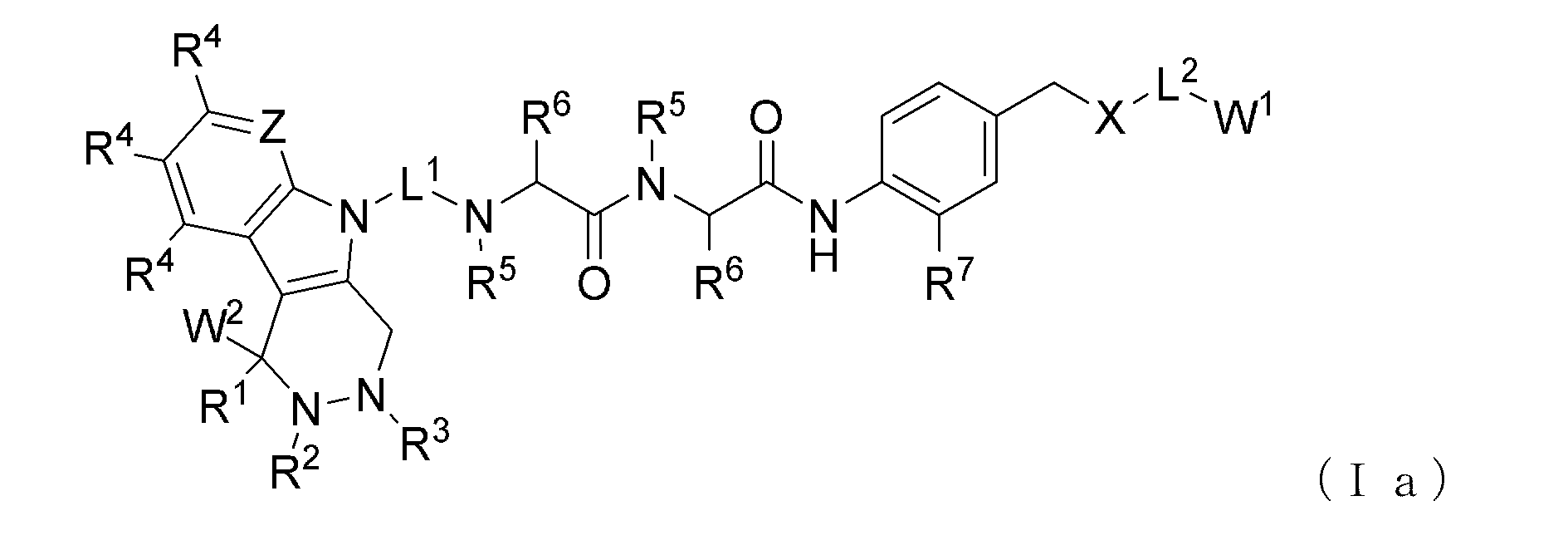
いくつかの実施形態では、第2の酵素的に切断可能な部分は、ガラクトシドを含む。いくつかの実施形態では、第2の酵素的に切断可能な部分は、グルコシドを含む。いくつかの実施形態では、第2の酵素的に切断可能な部分は、マンノシドを含む。いくつかの実施形態では、第2の酵素的に切断可能な部分は、フシソド(fucisode)を含む。いくつかの実施形態では、第2の酵素的に切断可能な部分は、O-GlcNAcを含む。いくつかの実施形態では、第2の酵素的に切断可能な部分は、O-GalNAcを含む。 In some embodiments, the second enzymatically cleavable moiety comprises a galactoside. In some embodiments, the second enzymatically cleavable moiety comprises a glucoside. In some embodiments, the second enzymatically cleavable moiety comprises a mannoside. In some embodiments, the second enzymatically cleavable moiety comprises a fucisode. In some embodiments, the second enzymatically cleavable moiety comprises O-GlcNAc. In some embodiments, the second enzymatically cleavable moiety comprises O-GalNAc.
いくつかの実施形態では、コンジュゲートは、式(Ib)のコンジュゲートである。

いくつかの実施形態では、コンジュゲートは、式(Ic)のコンジュゲートである。

いくつかの実施形態では、コンジュゲートは、式(Id)のコンジュゲートである。

いくつかの実施形態では、コンジュゲートは、式(Ie)のコンジュゲートである。

いくつかの実施形態では、コンジュゲートは、式(If)のコンジュゲートである。

いくつかの実施形態では、コンジュゲートは、式(Ig)のコンジュゲートである。

いくつかの実施形態では、L1は、
-(T1-V1)a-(T2-V2)b-(T3-V3)c-(T4-V4)d-
を含み、
式中、
a、b、c、及びdが、各々独立して、0又は1であり、
T1、T2、T3、及びT4が、各々独立して、共有結合、(C1~C12)アルキル、置換(C1~C12)アルキル、アリール、置換アリール、ヘテロアリール、置換ヘテロアリール、シクロアルキル、置換シクロアルキル、ヘテロシクリル、及び置換ヘテロシクリル、(EDA)w、(PEG)n、(AA)p、-(CR13OH)m-、4-アミノ-ピペリジン(4AP)、アセタール基、ヒドラジン、ジスルフィド、及びエステルから選択され、EDAが、エチレンジアミン部分であり、PEGが、ポリエチレングリコールであり、AAが、アミノ酸残基又はアミノ酸類似体であり、各wが、1~20の整数であり、各nが、1~30の整数であり、各pが、1~20の整数であり、各mが、1~12の整数であり、
V1、V2、V3、及びV4が、各々独立して、共有結合、-CO-、-NR15-、-NR15(CH2)q-、-NR15(C6H4)-、-CONR15-、-NR15CO-、-C(O)O-、-OC(O)-、-O-、-S-、-S(O)-、-SO2-、-SO2NR15-、-NR15SO2-、及び-P(O)OH-からなる群から選択され、各qが、1~6の整数であり、
各R13が、独立して、水素、アルキル、置換アルキル、アリール、及び置換アリールから選択され、
各R15が、独立して、水素、アルキル、置換アルキル、アルケニル、置換アルケニル、アルキニル、置換アルキニル、カルボキシル、カルボキシルエステル、アシル、アリール、置換アリール、ヘテロアリール、置換ヘテロアリール、シクロアルキル、置換シクロアルキル、ヘテロシクリル、及び置換ヘテロシクリルから選択される。
In some embodiments, L 1 is
-(T 1 -V 1 ) a -(T 2 -V 2 ) b -(T 3 -V 3 ) c -(T 4 -V 4 ) d -
including;
During the ceremony,
a, b, c, and d are each independently 0 or 1,
T 1 , T 2 , T 3 , and T 4 each independently represent a covalent bond, (C 1 -C 12 )alkyl, substituted (C 1 -C 12 )alkyl, aryl, substituted aryl, heteroaryl, substituted Heteroaryl, cycloalkyl, substituted cycloalkyl, heterocyclyl, and substituted heterocyclyl, (EDA) w , (PEG) n , (AA) p , -(CR 13 OH) m -, 4-amino-piperidine (4AP), acetal EDA is an ethylene diamine moiety, PEG is a polyethylene glycol, AA is an amino acid residue or amino acid analog, and each w is an integer from 1 to 20. , each n is an integer from 1 to 30, each p is an integer from 1 to 20, and each m is an integer from 1 to 12,
V 1 , V 2 , V 3 , and V 4 each independently represent a covalent bond, -CO-, -NR 15 -, -NR 15 (CH 2 ) q -, -NR 15 (C 6 H 4 ) -, -CONR 15 -, -NR 15 CO-, -C(O)O-, -OC(O)-, -O-, -S-, -S(O)-, -SO 2 -, -SO 2 NR 15 -, -NR 15 SO 2 -, and -P(O)OH-, each q is an integer from 1 to 6,
each R 13 is independently selected from hydrogen, alkyl, substituted alkyl, aryl, and substituted aryl;
Each R 15 is independently hydrogen, alkyl, substituted alkyl, alkenyl, substituted alkenyl, alkynyl, substituted alkynyl, carboxyl, carboxyl ester, acyl, aryl, substituted aryl, heteroaryl, substituted heteroaryl, cycloalkyl, substituted cyclo selected from alkyl, heterocyclyl, and substituted heterocyclyl.
いくつかの実施形態では、L2は、
-(T5-V5)e-(T6-V6)f-(T7-V7)g-(T8-V8)h-
を含み、
式中、
e、f、g、及びhが、各々独立して、0又は1であり、
T5、T6、T7、及びT8が、各々独立して、共有結合、(C1~C12)アルキル、置換(C1~C12)アルキル、アリール、置換アリール、ヘテロアリール、置換ヘテロアリール、シクロアルキル、置換シクロアルキル、ヘテロシクリル、及び置換ヘテロシクリル、(EDA)w、(PEG)n、(AA)p、-(CR13OH)m-、4-アミノ-ピペリジン(4AP)、アセタール基、ヒドラジン、ジスルフィド、及びエステルから選択され、EDAが、エチレンジアミン部分であり、PEGが、ポリエチレングリコールであり、AAが、アミノ酸残基又はアミノ酸類似体であり、各wが、1~20の整数であり、各nが、1~30の整数であり、各pが、1~20の整数であり、各mが、1~12の整数であり、
V5、V6、V7、及びV8が、各々独立して、共有結合、-CO-、-NR15-、-NR15(CH2)q-、-NR15(C6H4)-、-CONR15-、-NR15CO-、-C(O)O-、-OC(O)-、-O-、-S-、-S(O)-、-SO2-、-SO2NR15-、-NR15SO2-、及び-P(O)OH-からなる群から選択され、各qが、1~6の整数であり、
各R13が、独立して、水素、アルキル、置換アルキル、アリール、及び置換アリールから選択され、
各R15が、独立して、水素、アルキル、置換アルキル、アルケニル、置換アルケニル、アルキニル、置換アルキニル、カルボキシル、カルボキシルエステル、アシル、アリール、置換アリール、ヘテロアリール、置換ヘテロアリール、シクロアルキル、置換シクロアルキル、ヘテロシクリル、及び置換ヘテロシクリルから選択される。
In some embodiments, L2 is
-(T 5 -V 5 ) e -(T 6 -V 6 ) f -(T 7 -V 7 ) g -(T 8 -V 8 ) h -
including;
During the ceremony,
e, f, g, and h are each independently 0 or 1,
T 5 , T 6 , T 7 , and T 8 each independently represent a covalent bond, (C 1 -C 12 )alkyl, substituted (C 1 -C 12 )alkyl, aryl, substituted aryl, heteroaryl, substituted Heteroaryl, cycloalkyl, substituted cycloalkyl, heterocyclyl, and substituted heterocyclyl, (EDA) w , (PEG) n , (AA) p , -(CR 13 OH) m -, 4-amino-piperidine (4AP), acetal EDA is an ethylenediamine moiety, PEG is a polyethylene glycol, AA is an amino acid residue or amino acid analog, and each w is an integer from 1 to 20. , each n is an integer from 1 to 30, each p is an integer from 1 to 20, and each m is an integer from 1 to 12,
V 5 , V 6 , V 7 , and V 8 each independently represent a covalent bond, -CO-, -NR 15 -, -NR 15 (CH 2 ) q -, -NR 15 (C 6 H 4 ) -, -CONR 15 -, -NR 15 CO-, -C(O)O-, -OC(O)-, -O-, -S-, -S(O)-, -SO 2 -, -SO 2 NR 15 -, -NR 15 SO 2 -, and -P(O)OH-, each q is an integer from 1 to 6,
each R 13 is independently selected from hydrogen, alkyl, substituted alkyl, aryl, and substituted aryl;
Each R 15 is independently hydrogen, alkyl, substituted alkyl, alkenyl, substituted alkenyl, alkynyl, substituted alkynyl, carboxyl, carboxyl ester, acyl, aryl, substituted aryl, heteroaryl, substituted heteroaryl, cycloalkyl, substituted cyclo selected from alkyl, heterocyclyl, and substituted heterocyclyl.
いくつかの実施形態では、L1は、本明細書に記載される通りであり、ここで、
T1が、(C1~C12)アルキル及び置換(C1~C12)アルキルから選択され、
T2、T3、及びT4が、各々独立して、アリール、置換アリール、ヘテロアリール、置換ヘテロアリール、シクロアルキル、置換シクロアルキル、ヘテロシクリル、及び置換ヘテロシクリル、(EDA)w、(PEG)n、(C1~C12)アルキル、置換(C1~C12)アルキル、(AA)p、-(CR13OH)m-、4-アミノ-ピペリジン(4AP)、アセタール基、ヒドラジン、及びエステルから選択され、
V1、V2、V3、及びV4が、各々独立して、共有結合、-CO-、-NR15-、-NR15(CH2)q-、-NR15(C6H4)-、-CONR15-、-NR15CO-、-C(O)O-、-OC(O)-、-O-、-S-、-S(O)-、-SO2-、-SO2NR15-、-NR15SO2-、及び-P(O)OH-からなる群から選択され、
式中、
(PEG)nが、

EDAが、以下の構造

4-アミノ-ピペリジン(4AP)が、

各R12及びR15が、独立して、水素、アルキル、置換アルキル、ポリエチレングリコール部分、アリール、及び置換アリールから選択され、任意の2つの隣接するR12基が、環状に連結され、ピペラジニル環を形成してもよく、
R13が、水素、アルキル、置換アルキル、アリール、及び置換アリールから選択される。
In some embodiments, L 1 is as described herein, where
T 1 is selected from (C 1 -C 12 )alkyl and substituted (C 1 -C 12 )alkyl;
T 2 , T 3 , and T 4 are each independently aryl, substituted aryl, heteroaryl, substituted heteroaryl, cycloalkyl, substituted cycloalkyl, heterocyclyl, and substituted heterocyclyl, (EDA) w , (PEG) n , (C 1 -C 12 )alkyl, substituted (C 1 -C 12 )alkyl, (AA) p , -(CR 13 OH) m -, 4-amino-piperidine (4AP), acetal group, hydrazine, and ester selected from
V 1 , V 2 , V 3 , and V 4 each independently represent a covalent bond, -CO-, -NR 15 -, -NR 15 (CH 2 ) q -, -NR 15 (C 6 H 4 ) -, -CONR 15 -, -NR 15 CO-, -C(O)O-, -OC(O)-, -O-, -S-, -S(O)-, -SO 2 -, -SO 2 NR 15 -, -NR 15 SO 2 -, and -P(O)OH-,
During the ceremony,
(PEG) n is
EDA has the following structure
4-amino-piperidine (4AP) is
Each R 12 and R 15 are independently selected from hydrogen, alkyl, substituted alkyl, polyethylene glycol moieties, aryl, and substituted aryl, and any two adjacent R 12 groups are cyclically linked and the piperazinyl ring may be formed,
R 13 is selected from hydrogen, alkyl, substituted alkyl, aryl, and substituted aryl.
いくつかの実施形態では、L1は、本明細書に記載される通りであり、ここで、
T1が、(C1~C12)アルキルであり、V1が、-CO-であり、
T2が、アミノ酸類似体であり、V2が、-NH-であり、
T3が、(PEG)nであり、V3が、-CO-であり、
dが、0である。
In some embodiments, L 1 is as described herein, where
T 1 is (C 1 -C 12 )alkyl, V 1 is -CO-,
T 2 is an amino acid analog, V 2 is -NH-,
T 3 is (PEG) n , V 3 is -CO-,
d is 0.
いくつかの実施形態では、L2は、本明細書に記載される通りであり、ここで、
T5が、共有結合であり、V5が、-CO-であり、
f、g、及びhが、0である。
In some embodiments, L 2 is as described herein, where
T 5 is a covalent bond, V 5 is -CO-,
f, g, and h are 0.
いくつかの実施形態では、L2は、本明細書に記載される通りであり、ここで、
T5が、共有結合であり、V5が、-CONR15-であり、
T6が、(C1~C12)アルキルであり、V6が、-CO-であり、
g及びhが、0である。
In some embodiments, L 2 is as described herein, where
T 5 is a covalent bond, V 5 is -CONR 15 -,
T 6 is (C 1 -C 12 )alkyl, V 6 is -CO-,
g and h are 0.
いくつかの実施形態では、薬物は、細胞毒素、キナーゼ阻害剤、免疫刺激剤、toll様受容体(TLR)アゴニスト、オリゴヌクレオチド、アプタマー、サイトカイン、ステロイド、及びペプチドから選択される。いくつかの実施形態では、薬物は、アウリスタチン、マイタンシン、及びデュオカルマイシンから選択される。いくつかの実施形態では、薬物は、チューブリシンM、カリケアミシン、SN-38、エキサテカン、STAT3阻害剤、アルファ-アマニチン、オーロラキナーゼ阻害剤、ベロテカン、9-アミノカンプトテシン(9-AC)、及びアントラサイクリンから選択される。 In some embodiments, the drug is selected from cytotoxins, kinase inhibitors, immunostimulants, toll-like receptor (TLR) agonists, oligonucleotides, aptamers, cytokines, steroids, and peptides. In some embodiments, the drug is selected from auristatin, maytansine, and duocarmycin. In some embodiments, the drugs include tubulysin M, calicheamicin, SN-38, exatecan, STAT3 inhibitor, alpha-amanitin, Aurora kinase inhibitor, belotecan, 9-aminocamptothecin (9-AC), and anthracycline. selected from.
本開示の態様は、化合物であって、抗体を薬物に連結するための切断可能なリンカーを含み、切断可能なリンカーが、第1の酵素的に切断可能な部分、並びにガラクトシド、グルコシド、マンノシド、フコシド、O-GlcNAc、及びO-GalNAcから選択されるグリコシドを有する第2の酵素的に切断可能な部分を含む、化合物を含む。 An aspect of the present disclosure is a compound comprising a cleavable linker for linking an antibody to a drug, the cleavable linker comprising a first enzymatically cleavable moiety and a galactoside, glucoside, mannoside, Compounds comprising a second enzymatically cleavable moiety having a glycoside selected from fucosides, O-GlcNAc, and O-GalNAc.
いくつかの実施形態では、化合物は、式(II)の化合物であり、

Zが、CR4又はNであり、
Xが、O又はNR4であり、
R2及びR3が、各々独立して、水素、アルキル、置換アルキル、アルケニル、置換アルケニル、アルキニル、置換アルキニル、アルコキシ、置換アルコキシ、アミノ、置換アミノ、カルボキシル、カルボキシルエステル、アシル、アシルオキシ、アシルアミノ、アミノアシル、アルキルアミド、置換アルキルアミド、スルホニル、チオアルコキシ、置換チオアルコキシ、アリール、置換アリール、ヘテロアリール、置換ヘテロアリール、シクロアルキル、置換シクロアルキル、ヘテロシクリル、及び置換ヘテロシクリルから選択されるか、又はR2及びR3が、任意選択的に環状に連結され、5若しくは6員のヘテロシクリルを形成し、
各R4が、独立して、水素、ハロゲン、アルキル、置換アルキル、アルケニル、置換アルケニル、アルキニル、置換アルキニル、アルコキシ、置換アルコキシ、アミノ、置換アミノ、カルボキシル、カルボキシルエステル、アシル、アシルオキシ、アシルアミノ、アミノアシル、アルキルアミド、置換アルキルアミド、スルホニル、チオアルコキシ、置換チオアルコキシ、アリール、置換アリール、ヘテロアリール、置換ヘテロアリール、シクロアルキル、置換シクロアルキル、ヘテロシクリル、及び置換ヘテロシクリルから選択され、
各R5が、独立して、水素、アルキル、置換アルキル、アルケニル、置換アルケニル、アルキニル、置換アルキニル、アリール、置換アリール、ヘテロアリール、置換ヘテロアリール、シクロアルキル、置換シクロアルキル、ヘテロシクリル、及び置換ヘテロシクリルから選択され、
各R6が、独立して、アルキル、置換アルキル、アルケニル、置換アルケニル、アルキニル、置換アルキニル、アリール、置換アリール、ヘテロアリール、置換ヘテロアリール、シクロアルキル、置換シクロアルキル、ヘテロシクリル、及び置換ヘテロシクリルから選択され、
kが、1~10の整数であり、
R7が、第2の酵素的に切断可能な部分を含み、
L1が、第1のリンカーであり、
L2が、第2のリンカーであり、
W1が、薬物である。
In some embodiments, the compound is of formula (II),
Z is CR 4 or N,
X is O or NR4 ,
R 2 and R 3 are each independently hydrogen, alkyl, substituted alkyl, alkenyl, substituted alkenyl, alkynyl, substituted alkynyl, alkoxy, substituted alkoxy, amino, substituted amino, carboxyl, carboxyl ester, acyl, acyloxy, acylamino, or R 2 and R 3 are optionally linked cyclically to form a 5- or 6-membered heterocyclyl;
Each R 4 is independently hydrogen, halogen, alkyl, substituted alkyl, alkenyl, substituted alkenyl, alkynyl, substituted alkynyl, alkoxy, substituted alkoxy, amino, substituted amino, carboxyl, carboxyl ester, acyl, acyloxy, acylamino, aminoacyl , alkylamides, substituted alkylamides, sulfonyl, thioalkoxy, substituted thioalkoxy, aryl, substituted aryl, heteroaryl, substituted heteroaryl, cycloalkyl, substituted cycloalkyl, heterocyclyl, and substituted heterocyclyl,
Each R 5 is independently hydrogen, alkyl, substituted alkyl, alkenyl, substituted alkenyl, alkynyl, substituted alkynyl, aryl, substituted aryl, heteroaryl, substituted heteroaryl, cycloalkyl, substituted cycloalkyl, heterocyclyl, and substituted heterocyclyl. selected from
Each R 6 is independently selected from alkyl, substituted alkyl, alkenyl, substituted alkenyl, alkynyl, substituted alkynyl, aryl, substituted aryl, heteroaryl, substituted heteroaryl, cycloalkyl, substituted cycloalkyl, heterocyclyl, and substituted heterocyclyl is,
k is an integer from 1 to 10,
R 7 comprises a second enzymatically cleavable moiety;
L 1 is the first linker;
L 2 is a second linker;
W 1 is a drug.
いくつかの実施形態では、kが、2であり、化合物は、式(IIa)の化合物である。
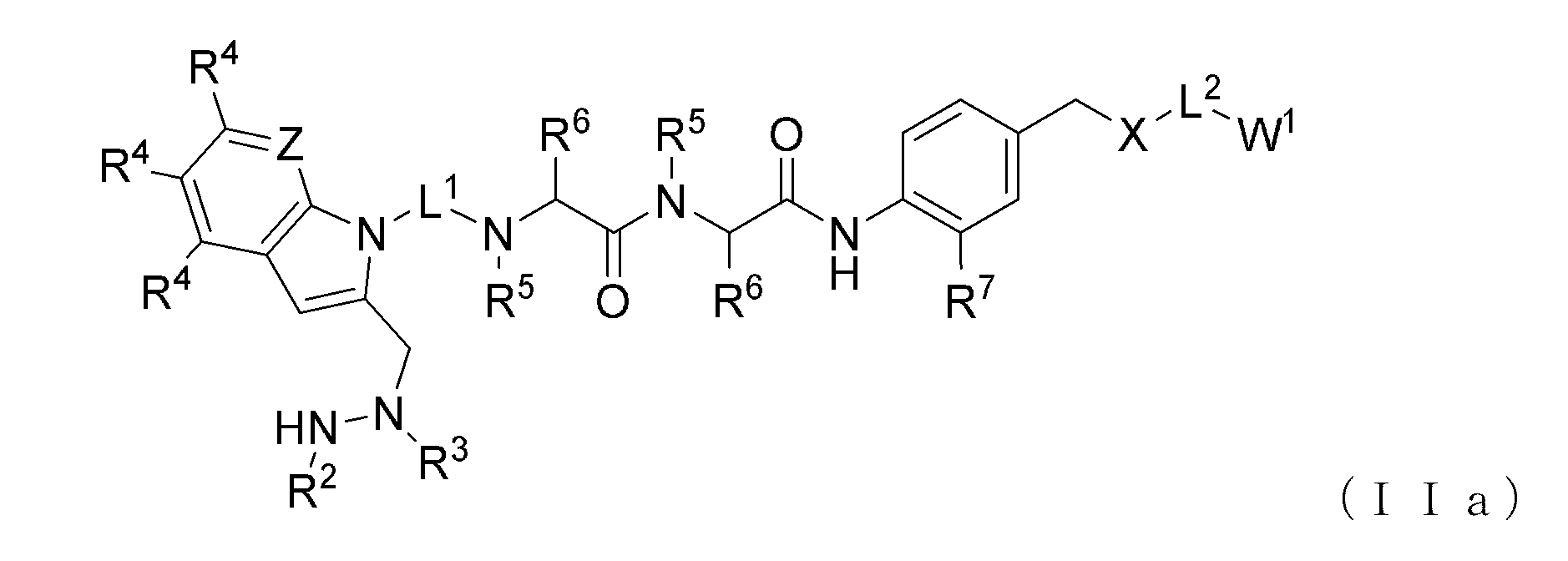
いくつかの実施形態では、第2の切断可能な部分は、ガラクトシドを含む。いくつかの実施形態では、第2の切断可能な部分は、グルコシドを含む。いくつかの実施形態では、第2の切断可能な部分は、マンノシドを含む。いくつかの実施形態では、第2の酵素的に切断可能な部分は、フシソド(fucisode)を含む。いくつかの実施形態では、第2の酵素的に切断可能な部分は、O-GlcNAcを含む。いくつかの実施形態では、第2の酵素的に切断可能な部分は、O-GalNAcを含む。 In some embodiments, the second cleavable moiety comprises a galactoside. In some embodiments, the second cleavable moiety includes a glucoside. In some embodiments, the second cleavable moiety comprises a mannoside. In some embodiments, the second enzymatically cleavable moiety comprises a fucisode. In some embodiments, the second enzymatically cleavable moiety comprises O-GlcNAc. In some embodiments, the second enzymatically cleavable moiety comprises O-GalNAc.
いくつかの実施形態では、化合物は、式(IIb)の化合物である。

いくつかの実施形態では、化合物は、式(IIc)の化合物である。
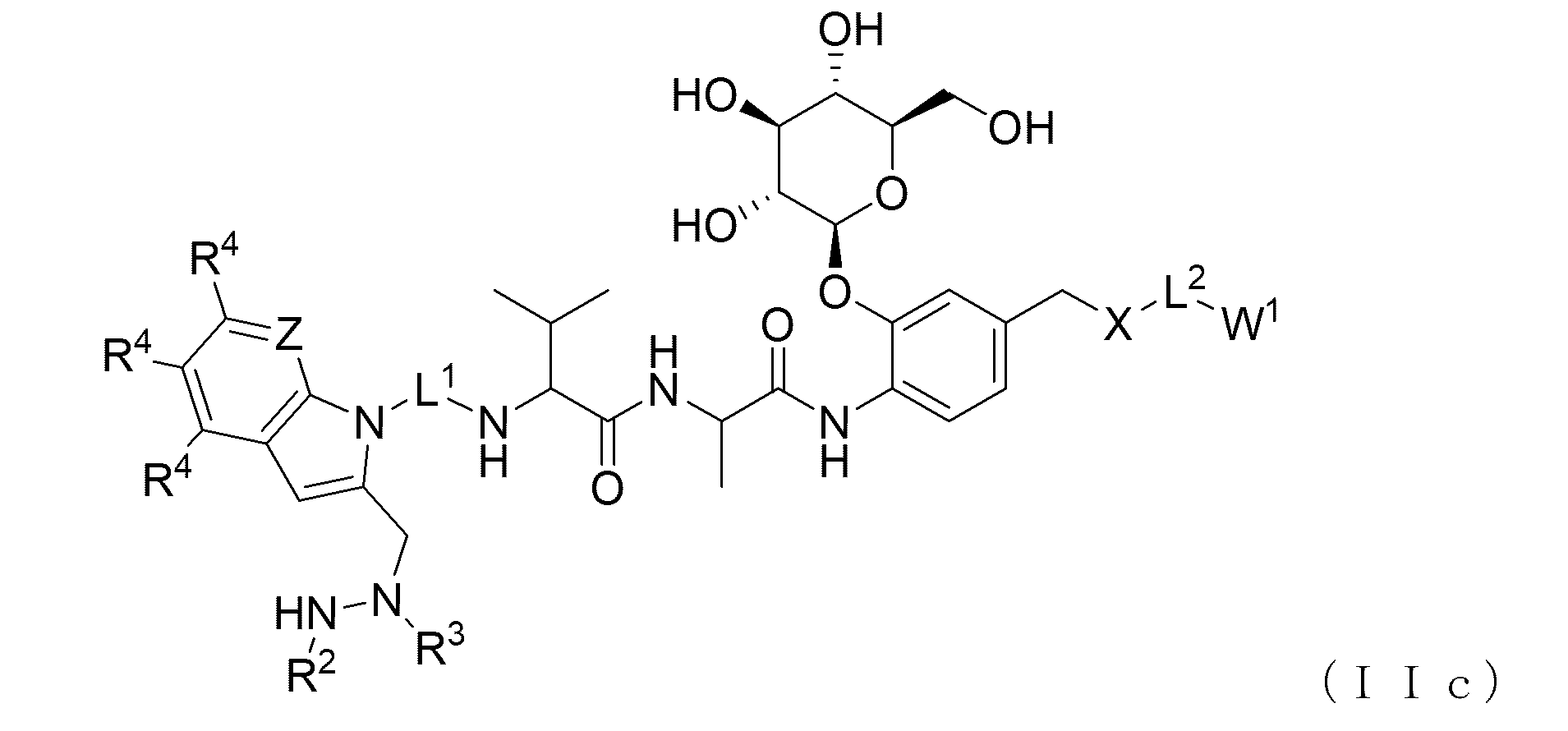
いくつかの実施形態では、化合物は、式(IId)の化合物である。
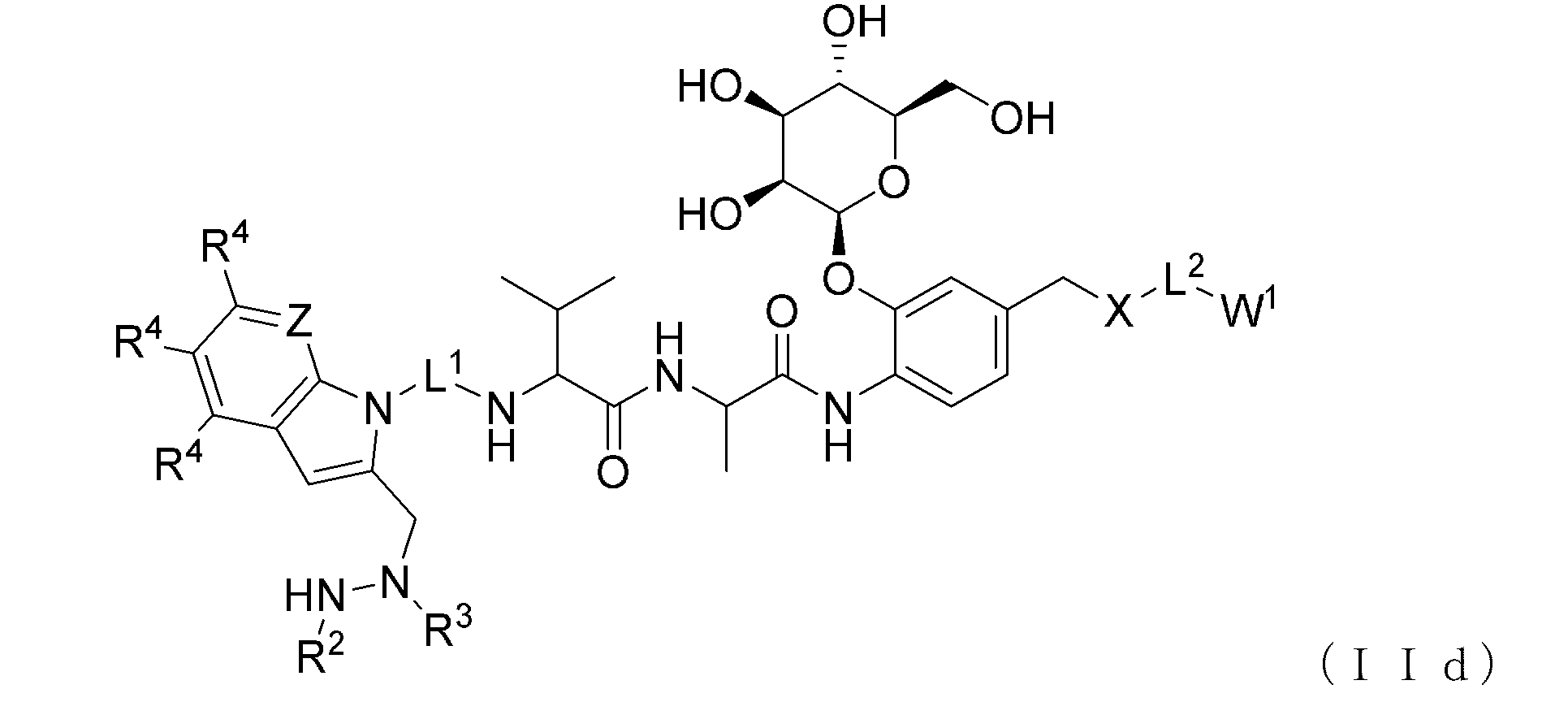
いくつかの実施形態では、化合物は、式(IIe)の化合物である。

いくつかの実施形態では、化合物は、式(IIf)の化合物である。

いくつかの実施形態では、化合物は、式(IIg)の化合物である。

いくつかの実施形態では、L1は、
-(T1-V1)a-(T2-V2)b-(T3-V3)c-(T4-V4)d-
を含み、
式中、
a、b、c、及びdが、各々独立して、0又は1であり、
T1、T2、T3、及びT4が、各々独立して、共有結合、(C1~C12)アルキル、置換(C1~C12)アルキル、アリール、置換アリール、ヘテロアリール、置換ヘテロアリール、シクロアルキル、置換シクロアルキル、ヘテロシクリル、及び置換ヘテロシクリル、(EDA)w、(PEG)n、(AA)p、-(CR13OH)m-、4-アミノ-ピペリジン(4AP)、アセタール基、ヒドラジン、ジスルフィド、及びエステルから選択され、EDAが、エチレンジアミン部分であり、PEGが、ポリエチレングリコールであり、AAが、アミノ酸残基又はアミノ酸類似体であり、各wが、1~20の整数であり、各nが、1~30の整数であり、各pが、1~20の整数であり、各mが、1~12の整数であり、
V1、V2、V3、及びV4が、各々独立して、共有結合、-CO-、-NR15-、-NR15(CH2)q-、-NR15(C6H4)-、-CONR15-、-NR15CO-、-C(O)O-、-OC(O)-、-O-、-S-、-S(O)-、-SO2-、-SO2NR15-、-NR15SO2-、及び-P(O)OH-からなる群から選択され、各qが、1~6の整数であり、
各R13が、独立して、水素、アルキル、置換アルキル、アリール、及び置換アリールから選択され、
各R15が、独立して、水素、アルキル、置換アルキル、アルケニル、置換アルケニル、アルキニル、置換アルキニル、カルボキシル、カルボキシルエステル、アシル、アリール、置換アリール、ヘテロアリール、置換ヘテロアリール、シクロアルキル、置換シクロアルキル、ヘテロシクリル、及び置換ヘテロシクリルから選択される。
In some embodiments, L 1 is
-(T 1 -V 1 ) a -(T 2 -V 2 ) b -(T 3 -V 3 ) c -(T 4 -V 4 ) d -
including;
During the ceremony,
a, b, c, and d are each independently 0 or 1,
T 1 , T 2 , T 3 , and T 4 each independently represent a covalent bond, (C 1 -C 12 )alkyl, substituted (C 1 -C 12 )alkyl, aryl, substituted aryl, heteroaryl, substituted Heteroaryl, cycloalkyl, substituted cycloalkyl, heterocyclyl, and substituted heterocyclyl, (EDA) w , (PEG) n , (AA) p , -(CR 13 OH) m -, 4-amino-piperidine (4AP), acetal EDA is an ethylenediamine moiety, PEG is a polyethylene glycol, AA is an amino acid residue or amino acid analog, and each w is an integer from 1 to 20. , each n is an integer from 1 to 30, each p is an integer from 1 to 20, and each m is an integer from 1 to 12,
V 1 , V 2 , V 3 , and V 4 each independently represent a covalent bond, -CO-, -NR 15 -, -NR 15 (CH 2 ) q -, -NR 15 (C 6 H 4 ) -, -CONR 15 -, -NR 15 CO-, -C(O)O-, -OC(O)-, -O-, -S-, -S(O)-, -SO 2 -, -SO 2 NR 15 -, -NR 15 SO 2 -, and -P(O)OH-, each q is an integer from 1 to 6,
each R 13 is independently selected from hydrogen, alkyl, substituted alkyl, aryl, and substituted aryl;
Each R 15 is independently hydrogen, alkyl, substituted alkyl, alkenyl, substituted alkenyl, alkynyl, substituted alkynyl, carboxyl, carboxyl ester, acyl, aryl, substituted aryl, heteroaryl, substituted heteroaryl, cycloalkyl, substituted cyclo selected from alkyl, heterocyclyl, and substituted heterocyclyl.
いくつかの実施形態では、L2は、
-(T5-V5)e-(T6-V6)f-(T7-V7)g-(T8-V8)h-
を含み、
式中、
e、f、g、及びhが、各々独立して、0又は1であり、
T5、T6、T7、及びT8が、各々独立して、共有結合、(C1~C12)アルキル、置換(C1~C12)アルキル、アリール、置換アリール、ヘテロアリール、置換ヘテロアリール、シクロアルキル、置換シクロアルキル、ヘテロシクリル、及び置換ヘテロシクリル、(EDA)w、(PEG)n、(AA)p、-(CR13OH)m-、4-アミノ-ピペリジン(4AP)、アセタール基、ヒドラジン、ジスルフィド、及びエステルから選択され、EDAが、エチレンジアミン部分であり、PEGが、ポリエチレングリコールであり、AAが、アミノ酸残基又はアミノ酸類似体であり、各wが、1~20の整数であり、各nが、1~30の整数であり、各pが、1~20の整数であり、各mが、1~12の整数であり、
V5、V6、V7、及びV8が、各々独立して、共有結合、-CO-、-NR15-、-NR15(CH2)q-、-NR15(C6H4)-、-CONR15-、-NR15CO-、-C(O)O-、-OC(O)-、-O-、-S-、-S(O)-、-SO2-、-SO2NR15-、-NR15SO2-、及び-P(O)OH-からなる群から選択され、各qが、1~6の整数であり、
各R13が、独立して、水素、アルキル、置換アルキル、アリール、及び置換アリールから選択され、
各R15が、独立して、水素、アルキル、置換アルキル、アルケニル、置換アルケニル、アルキニル、置換アルキニル、カルボキシル、カルボキシルエステル、アシル、アリール、置換アリール、ヘテロアリール、置換ヘテロアリール、シクロアルキル、置換シクロアルキル、ヘテロシクリル、及び置換ヘテロシクリルから選択される。
In some embodiments, L2 is
-(T 5 -V 5 ) e -(T 6 -V 6 ) f -(T 7 -V 7 ) g -(T 8 -V 8 ) h -
including;
During the ceremony,
e, f, g, and h are each independently 0 or 1,
T 5 , T 6 , T 7 , and T 8 each independently represent a covalent bond, (C 1 -C 12 )alkyl, substituted (C 1 -C 12 )alkyl, aryl, substituted aryl, heteroaryl, substituted Heteroaryl, cycloalkyl, substituted cycloalkyl, heterocyclyl, and substituted heterocyclyl, (EDA) w , (PEG) n , (AA) p , -(CR 13 OH) m -, 4-amino-piperidine (4AP), acetal EDA is an ethylene diamine moiety, PEG is a polyethylene glycol, AA is an amino acid residue or amino acid analog, and each w is an integer from 1 to 20. , each n is an integer from 1 to 30, each p is an integer from 1 to 20, and each m is an integer from 1 to 12,
V 5 , V 6 , V 7 , and V 8 each independently represent a covalent bond, -CO-, -NR 15 -, -NR 15 (CH 2 ) q -, -NR 15 (C 6 H 4 ) -, -CONR 15 -, -NR 15 CO-, -C(O)O-, -OC(O)-, -O-, -S-, -S(O)-, -SO 2 -, -SO 2 NR 15 -, -NR 15 SO 2 -, and -P(O)OH-, each q is an integer from 1 to 6,
each R 13 is independently selected from hydrogen, alkyl, substituted alkyl, aryl, and substituted aryl;
Each R 15 is independently hydrogen, alkyl, substituted alkyl, alkenyl, substituted alkenyl, alkynyl, substituted alkynyl, carboxyl, carboxyl ester, acyl, aryl, substituted aryl, heteroaryl, substituted heteroaryl, cycloalkyl, substituted cyclo selected from alkyl, heterocyclyl, and substituted heterocyclyl.
いくつかの実施形態では、L1は、本明細書に記載される通りであり、ここで、
T1が、(C1~C12)アルキル及び置換(C1~C12)アルキルから選択され、
T2、T3、及びT4が、各々独立して、アリール、置換アリール、ヘテロアリール、置換ヘテロアリール、シクロアルキル、置換シクロアルキル、ヘテロシクリル、及び置換ヘテロシクリル、(EDA)w、(PEG)n、(C1~C12)アルキル、置換(C1~C12)アルキル、(AA)p、-(CR13OH)m-、4-アミノ-ピペリジン(4AP)、アセタール基、ヒドラジン、及びエステルから選択され、
V1、V2、V3、及びV4が、各々独立して、共有結合、-CO-、-NR15-、-NR15(CH2)q-、-NR15(C6H4)-、-CONR15-、-NR15CO-、-C(O)O-、-OC(O)-、-O-、-S-、-S(O)-、-SO2-、-SO2NR15-、-NR15SO2-、及び-P(O)OH-からなる群から選択され、
式中、
(PEG)nが、

EDAが、以下の構造

4-アミノ-ピペリジン(4AP)が、
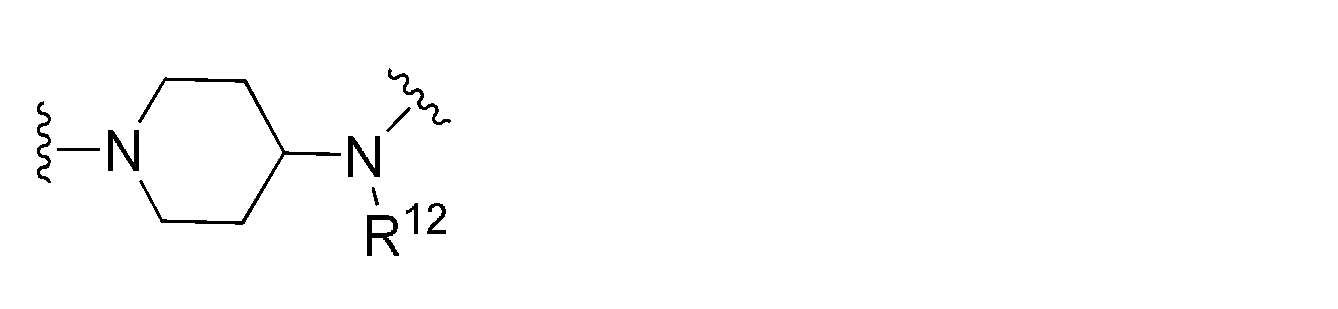
各R12及びR15が、独立して、水素、アルキル、置換アルキル、ポリエチレングリコール部分、アリール、及び置換アリールから選択され、任意の2つの隣接するR12基が、環状に連結され、ピペラジニル環を形成してもよく、
R13が、水素、アルキル、置換アルキル、アリール、及び置換アリールから選択される。
In some embodiments, L 1 is as described herein, where
T 1 is selected from (C 1 -C 12 )alkyl and substituted (C 1 -C 12 )alkyl;
T 2 , T 3 , and T 4 are each independently aryl, substituted aryl, heteroaryl, substituted heteroaryl, cycloalkyl, substituted cycloalkyl, heterocyclyl, and substituted heterocyclyl, (EDA) w , (PEG) n , (C 1 -C 12 )alkyl, substituted (C 1 -C 12 )alkyl, (AA) p , -(CR 13 OH) m -, 4-amino-piperidine (4AP), acetal group, hydrazine, and ester selected from
V 1 , V 2 , V 3 , and V 4 each independently represent a covalent bond, -CO-, -NR 15 -, -NR 15 (CH 2 ) q -, -NR 15 (C 6 H 4 ) -, -CONR 15 -, -NR 15 CO-, -C(O)O-, -OC(O)-, -O-, -S-, -S(O)-, -SO 2 -, -SO 2 NR 15 -, -NR 15 SO 2 -, and -P(O)OH-,
During the ceremony,
(PEG) n is
EDA has the following structure
4-amino-piperidine (4AP) is
Each R 12 and R 15 are independently selected from hydrogen, alkyl, substituted alkyl, polyethylene glycol moieties, aryl, and substituted aryl, and any two adjacent R 12 groups are cyclically linked and the piperazinyl ring may be formed,
R 13 is selected from hydrogen, alkyl, substituted alkyl, aryl, and substituted aryl.
いくつかの実施形態では、L1は、本明細書に記載される通りであり、ここで、
T1が、(C1~C12)アルキルであり、V1が、-CO-であり、
T2が、アミノ酸類似体であり、V2が、-NH-であり、
T3が、(PEG)nであり、V3が、-CO-であり、
dが、0である。
In some embodiments, L 1 is as described herein, where
T 1 is (C 1 -C 12 )alkyl, V 1 is -CO-,
T 2 is an amino acid analog, V 2 is -NH-,
T 3 is (PEG) n , V 3 is -CO-,
d is 0.
いくつかの実施形態では、L2は、本明細書に記載される通りであり、ここで、
T5が、共有結合であり、V5が、-CO-であり、
f、g、及びhが、0である。
In some embodiments, L 2 is as described herein, where
T 5 is a covalent bond, V 5 is -CO-,
f, g, and h are 0.
いくつかの実施形態では、L2は、本明細書に記載される通りであり、ここで、
T5が、共有結合であり、V5が、-CONR15-であり、
T6が、(C1~C12)アルキルであり、V6が、-CO-であり、
g及びhが、0である。
In some embodiments, L 2 is as described herein, where
T 5 is a covalent bond, V 5 is -CONR 15 -,
T 6 is (C 1 -C 12 )alkyl, V 6 is -CO-,
g and h are 0.
いくつかの実施形態では、薬物は、細胞毒素、キナーゼ阻害剤、免疫刺激剤、toll様受容体(TLR)アゴニスト、オリゴヌクレオチド、アプタマー、サイトカイン、ステロイド、及びペプチドから選択される。いくつかの実施形態では、薬物は、アウリスタチン、マイタンシン、及びデュオカルマイシンから選択される。いくつかの実施形態では、薬物は、チューブリシンM、カリケアミシン、SN-38、エキサテカン、STAT3阻害剤、アルファ-アマニチン、オーロラキナーゼ阻害剤、ベロテカン、9-アミノカンプトテシン(9-AC)、及びアントラサイクリンから選択される。 In some embodiments, the drug is selected from cytotoxins, kinase inhibitors, immunostimulants, toll-like receptor (TLR) agonists, oligonucleotides, aptamers, cytokines, steroids, and peptides. In some embodiments, the drug is selected from auristatin, maytansine, and duocarmycin. In some embodiments, the drugs include tubulysin M, calicheamicin, SN-38, exatecan, STAT3 inhibitor, alpha-amanitin, Aurora kinase inhibitor, belotecan, 9-aminocamptothecin (9-AC), and anthracycline. selected from.
本開示の態様は、本明細書に記載されるコンジュゲートと、薬学的に許容される賦形剤と、を含む薬学的組成物を含む。 Aspects of the present disclosure include pharmaceutical compositions that include a conjugate described herein and a pharmaceutically acceptable excipient.
本開示の態様は、対象にコンジュゲートを投与する方法であって、本方法が、対象に、本明細書に記載のコンジュゲートを投与することを含む、方法を含む。 Aspects of the present disclosure include methods of administering a conjugate to a subject, the method comprising administering to the subject a conjugate described herein.
本開示の態様は、対象においてがんを治療する方法であって、本方法が、対象に、本明細書に記載のコンジュゲートを含む治療有効量の薬学的組成物を投与することを含み、投与することが、対象においてがんを治療するのに有効である、方法を含む。 An aspect of the present disclosure is a method of treating cancer in a subject, the method comprising administering to the subject a therapeutically effective amount of a pharmaceutical composition comprising a conjugate described herein; The method includes methods in which the administering is effective to treat cancer in a subject.
定義
以下の用語は、別段で指示がない限り、以下の意味を有する。定義されていない任意の用語は、当該技術分野で認識されている意味を有する。
DEFINITIONS The following terms have the following meanings, unless otherwise specified. Any terms not defined have their art-recognized meanings.
「アルキル」は、1~10個の炭素原子、例えば1~6個の炭素原子、又は1~5個、又は1~4個、又は1~3個の炭素原子を有する一価の飽和脂肪族ヒドロカルビル基を指す。この用語には、例として、直鎖及び分枝鎖のヒドロカルビル基、例えば、メチル(CH3-)、エチル(CH3CH2-)、n-プロピル(CH3CH2CH2-)、イソプロピル((CH3)2CH-)、n-ブチル(CH3CH2CH2CH2-)、イソブチル((CH3)2CHCH2-)、sec-ブチル((CH3)(CH3CH2)CH-)、t-ブチル((CH3)3C-)、n-ペンチル(CH3CH2CH2CH2CH2-)、及びネオペンチル((CH3)3CCH2-)が含まれる。 "Alkyl" means a monovalent saturated aliphatic group having 1 to 10 carbon atoms, such as 1 to 6 carbon atoms, or 1 to 5, or 1 to 4, or 1 to 3 carbon atoms. Refers to a hydrocarbyl group. This term includes, by way of example, straight-chain and branched hydrocarbyl groups, such as methyl (CH 3 -), ethyl (CH 3 CH 2 -), n-propyl (CH 3 CH 2 CH 2 -), isopropyl ((CH 3 ) 2 CH-), n-butyl (CH 3 CH 2 CH 2 CH 2 -), isobutyl ((CH 3 ) 2 CHCH 2 -), sec-butyl ((CH 3 ) (CH 3 CH 2 )CH-), t-butyl ((CH 3 ) 3 C-), n-pentyl (CH 3 CH 2 CH 2 CH 2 CH 2 -), and neopentyl ((CH 3 ) 3 CCH 2 -). .
「置換アルキル」という用語は、アルキル鎖中の1個以上の炭素原子(C1炭素原子を除く)が、任意選択的に-O-、-N-、-S-、-S(O)n-(式中、nは0~2である)、-NR-(式中、Rは水素又はアルキルである)等のヘテロ原子で置き換えられており、アルコキシ、置換アルコキシ、シクロアルキル、置換シクロアルキル、シクロアルケニル、置換シクロアルケニル、アシル、アシルアミノ、アシルオキシ、アミノ、アミノアシル、アミノアシルオキシ、オキシアミノアシル、アジド、シアノ、ハロゲン、ヒドロキシル、オキソ、チオケト、カルボキシル、カルボキシルアルキル、チオアリールオキシ、チオヘテロアリールオキシ、チオヘテロシクロオキシ、チオール、チオアルコキシ、置換チオアルコキシ、アリール、アリールオキシ、ヘテロアリール、ヘテロアリールオキシ、ヘテロシクリル、ヘテロシクロオキシ、ヒドロキシアミノ、アルコキシアミノ、ニトロ、-SO-アルキル、-SO-アリール、-SO-ヘテロアリール、-SO2-アルキル、-SO2-アリール、-SO2-ヘテロアリール、及び-NRaRbからなる群から選択される1~5個の置換基を有し、R’及びR”が、同じであってもよく、又は異なっていてもよく、水素、任意選択的に置換されるアルキル、シクロアルキル、アルケニル、シクロアルケニル、アルキニル、アリール、ヘテロアリール、及びヘテロ環から選択される、本明細書に定義されるアルキル基を指す。 The term "substituted alkyl" means that one or more carbon atoms in the alkyl chain (excluding the C1 carbon atom) are optionally -O-, -N-, -S-, -S(O) n - (wherein n is 0 to 2), -NR- (wherein R is hydrogen or alkyl), substituted with a heteroatom such as alkoxy, substituted alkoxy, cycloalkyl, substituted cycloalkyl , cycloalkenyl, substituted cycloalkenyl, acyl, acylamino, acyloxy, amino, aminoacyl, aminoacyloxy, oxyaminoacyl, azide, cyano, halogen, hydroxyl, oxo, thioketo, carboxyl, carboxylalkyl, thioaryloxy, thioheteroaryloxy, Thioheterocyclooxy, thiol, thioalkoxy, substituted thioalkoxy, aryl, aryloxy, heteroaryl, heteroaryloxy, heterocyclyl, heterocyclooxy, hydroxyamino, alkoxyamino, nitro, -SO-alkyl, -SO-aryl, R has 1 to 5 substituents selected from the group consisting of -SO-heteroaryl, -SO 2 -alkyl, -SO 2 -aryl, -SO 2 -heteroaryl, and -NR a R b ; ' and R '' may be the same or different and are from hydrogen, optionally substituted alkyl, cycloalkyl, alkenyl, cycloalkenyl, alkynyl, aryl, heteroaryl, and heterocycle. Refers to a selected alkyl group as defined herein.
「アルキレン」は、二価の脂肪族ヒドロカルビル基、好ましくは、直鎖又は分枝鎖のいずれかである1~6個、より好ましくは1~3個の炭素原子を有し、任意選択的に-O-、-NR10-、-NR10C(O)-、-C(O)NR10-等から選択される1つ以上の基で中断されている基を指す。この用語には、例として、メチレン(-CH2-)、エチレン(-CH2CH2-)、n-プロピレン(-CH2CH2CH2-)、iso-プロピレン(-CH2CH(CH3)-)、(-C(CH3)2CH2CH2-)、(-C(CH3)2CH2C(O)-)、(-C(CH3)2CH2C(O)NH-)、(-CH(CH3)CH2-)等が含まれる。 "Alkylene" means a divalent aliphatic hydrocarbyl group, preferably having 1 to 6, more preferably 1 to 3 carbon atoms, either straight or branched, and optionally Refers to a group interrupted by one or more groups selected from -O-, -NR 10 -, -NR 10 C(O)-, -C(O)NR 10 -, etc. This term includes, by way of example, methylene (-CH 2 -), ethylene (-CH 2 CH 2 -), n-propylene (-CH 2 CH 2 CH 2 -), iso-propylene (-CH 2 CH (CH 3 )-), (-C(CH 3 ) 2 CH 2 CH 2 -), (-C(CH 3 ) 2 CH 2 C(O)-), (-C(CH 3 ) 2 CH 2 C(O )NH-), (-CH( CH3 ) CH2- ), and the like.
「置換アルキレン」は、以下の「置換」の定義において炭素について記載されているように、置換基で置き換えられた1~3個の水素を有するアルキレン基を指す。 "Substituted alkylene" refers to an alkylene group having from 1 to 3 hydrogens replaced with a substituent, as described for carbon in the definition of "substituted" below.
「アルカン」という用語は、本明細書で定義されるような、アルキル基及びアルキレン基を指す。 The term "alkane" refers to alkyl and alkylene groups, as defined herein.
「アルキルアミノアルキル」、「アルキルアミノアルケニル」、及び「アルキルアミノアルキニル」という用語は、R’が本明細書で定義されるアルキル基であり、R”が本明細書で定義されるアルキレン、アルケニレン又はアルキニレン基であるR’NHR”-基を指す。 The terms "alkylaminoalkyl," "alkylaminoalkenyl," and "alkylaminoalkynyl" mean that R' is an alkyl group, as defined herein, and R'' is alkylene, alkenylene, as defined herein. or R'NHR''- group which is an alkynylene group.
「アルカリール」又は「アラルキル」という用語は、-アルキレン-アリール及び-置換アルキレン-アリール基であって、アルキレン、置換アルキレン及びアリールが本明細書で定義される通りである基を指す。 The term "alkaryl" or "aralkyl" refers to -alkylene-aryl and -substituted alkylene-aryl groups, where alkylene, substituted alkylene and aryl are as defined herein.
「アルコキシ」は、-O-アルキル基であって、アルキルが本明細書で定義される通りである基を指す。アルコキシには、例として、メトキシ、エトキシ、n-プロポキシ、イソプロポキシ、n-ブトキシ、t-ブトキシ、sec-ブトキシ、n-ペントキシ等が含まれる。「アルコキシ」という用語はまた、アルケニル-O-、シクロアルキル-O-、シクロアルケニル-O-、及びアルキニル-O-基であって、アルケニル、シクロアルキル、シクロアルケニル及びアルキニルが本明細書で定義される通りである基を指す。 "Alkoxy" refers to the group -O-alkyl, where alkyl is as defined herein. Alkoxy includes, by way of example, methoxy, ethoxy, n-propoxy, isopropoxy, n-butoxy, t-butoxy, sec-butoxy, n-pentoxy, and the like. The term "alkoxy" also refers to alkenyl-O-, cycloalkyl-O-, cycloalkenyl-O-, and alkynyl-O- groups in which alkenyl, cycloalkyl, cycloalkenyl and alkynyl are defined herein. refers to a group that is exactly as it is.
「置換アルコキシ」という用語は、置換アルキル-O-、置換アルケニル-O-、置換シクロアルキル-O-、置換シクロアルケニル-O-、及び置換アルキニル-O-の基であって、置換アルキル、置換アルケニル、置換シクロアルキル、置換シクロアルケニル及び置換アルキニルが本明細書で定義される通りである基を指す。 The term "substituted alkoxy" refers to the groups substituted alkyl-O-, substituted alkenyl-O-, substituted cycloalkyl-O-, substituted cycloalkenyl-O-, and substituted alkynyl-O-, wherein substituted alkyl, substituted Alkenyl, substituted cycloalkyl, substituted cycloalkenyl and substituted alkynyl refer to groups as defined herein.
「アルコキシアミノ」という用語は、-NH-アルコキシ基であって、アルコキシが本明細書で定義される通りである基を指す。 The term "alkoxyamino" refers to the group -NH-alkoxy, where alkoxy is as defined herein.
「ハロアルコキシ」という用語は、アルキル基上の1個以上の水素原子がハロ基で置換されているアルキル-O-基を指し、例として、トリフルオロメトキシ等の基が含まれる。 The term "haloalkoxy" refers to an alkyl-O- group in which one or more hydrogen atoms on the alkyl group are replaced with a halo group, and includes, by way of example, groups such as trifluoromethoxy.
「ハロアルキル」という用語は、アルキル基上の1個以上の水素原子がハロ基で置換されている上述の置換アルキル基を指す。そのような基の例には、限定されないが、フルオロアルキル基、例えば、トリフルオロメチル、ジフルオロメチル、トリフルオロエチル等が含まれる。 The term "haloalkyl" refers to a substituted alkyl group as described above in which one or more hydrogen atoms on the alkyl group is replaced with a halo group. Examples of such groups include, but are not limited to, fluoroalkyl groups such as trifluoromethyl, difluoromethyl, trifluoroethyl, and the like.
「アルキルアルコキシ」という用語は、-アルキレン-O-アルキル、アルキレン-O-置換アルキル、置換アルキレン-O-アルキル、及び置換アルキレン-O-置換アルキル基であって、アルキル、置換アルキル、アルキレン及び置換アルキレンが本明細書で定義される通りである基を指す。 The term "alkylalkoxy" refers to the groups -alkylene-O-alkyl, alkylene-O-substituted alkyl, substituted alkylene-O-alkyl, and substituted alkylene-O-substituted alkyl, including alkyl, substituted alkyl, alkylene and substituted Refers to a group where alkylene is as defined herein.
「アルキルチオアルコキシ」という用語は、-アルキレン-S-アルキル、アルキレン-S-置換アルキル、置換アルキレン-S-アルキル、及び置換アルキレン-S-置換アルキル基であって、アルキル、置換アルキル、アルキレン及び置換アルキレンが本明細書で定義される通りである基を指す。 The term "alkylthioalkoxy" refers to the groups -alkylene-S-alkyl, alkylene-S-substituted alkyl, substituted alkylene-S-alkyl, and substituted alkylene-S-substituted alkyl, including alkyl, substituted alkyl, alkylene and substituted Refers to a group where alkylene is as defined herein.
「アルケニル」は、2~6個の炭素原子、好ましくは2~4個の炭素原子を有し、かつ少なくとも1個、好ましくは1~2個の二重結合不飽和部位を有する、直鎖又は分枝鎖のヒドロカルビル基を指す。この用語には、例として、ビ-ビニル、アリル、及びブタ-3-エン-1-イルが含まれる。この用語には、シス及びトランス異性体、又はこれらの異性体の混合物が含まれる。 "Alkenyl" means a straight-chain or Refers to a branched hydrocarbyl group. This term includes, by way of example, bi-vinyl, allyl, and but-3-en-1-yl. The term includes cis and trans isomers or mixtures of these isomers.
「置換アルケニル」という用語は、アルコキシ、置換アルコキシ、シクロアルキル、置換シクロアルキル、シクロアルケニル、置換シクロアルケニル、アシル、アシルアミノ、アシルオキシ、アミノ、置換アミノ、アミノアシル、アミノアシルオキシ、オキシアミノアシル、アジド、シアノ、ハロゲン、ヒドロキシル、オキソ、チオケト、カルボキシル、カルボキシルアルキル、チオアリールオキシ、チオヘテロアリールオキシ、チオヘテロシクロオキシ、チオール、チオアルコキシ、置換チオアルコキシ、アリール、アリールオキシ、ヘテロアリール、ヘテロアリールオキシ、ヘテロシクリル、ヘテロシクロオキシ、ヒドロキシアミノ、アルコキシアミノ、ニトロ、-SO-アルキル、-SO-置換アルキル、-SO-アリール、-SO-ヘテロアリール、-SO2-アルキル、-SO2-置換アルキル、-SO2-アリール、及び-SO2-ヘテロアリールから選択される1~5個の置換基、又は1~3個の置換基を有する、本明細書に定義されるようなアルケニル基を指す。 The term "substituted alkenyl" means alkoxy, substituted alkoxy, cycloalkyl, substituted cycloalkyl, cycloalkenyl, substituted cycloalkenyl, acyl, acylamino, acyloxy, amino, substituted amino, aminoacyl, aminoacyloxy, oxyaminoacyl, azido, cyano, halogen, hydroxyl, oxo, thioketo, carboxyl, carboxylalkyl, thioaryloxy, thioheteroaryloxy, thioheterocyclooxy, thiol, thioalkoxy, substituted thioalkoxy, aryl, aryloxy, heteroaryl, heteroaryloxy, heterocyclyl, Heterocyclooxy, hydroxyamino, alkoxyamino, nitro, -SO-alkyl, -SO-substituted alkyl, -SO-aryl, -SO-heteroaryl, -SO 2 -alkyl, -SO 2 -substituted alkyl, -SO 2 Refers to an alkenyl group as defined herein having 1 to 5 substituents selected from -aryl, and -SO 2 -heteroaryl, or 1 to 3 substituents.
「アルキニル」は、2~6個の炭素原子、好ましくは2~3個の炭素原子を有し、かつ少なくとも1個、好ましくは1~2個の三重結合不飽和部位を有する、直鎖又は分枝鎖の一価ヒドロカルビル基を指す。そのようなアルキニル基の例としては、アセチレニル(-C≡CH)、及びプロパルギル(-CH2C≡CH)が挙げられる。 "Alkynyl" means a straight or branched chain having 2 to 6 carbon atoms, preferably 2 to 3 carbon atoms, and having at least 1, preferably 1 to 2 sites of triple bond unsaturation. Refers to a branched monovalent hydrocarbyl group. Examples of such alkynyl groups include acetylenyl (-C≡CH), and propargyl (-CH 2 C≡CH).
「置換アルキニル」という用語は、アルコキシ、置換アルコキシ、シクロアルキル、置換シクロアルキル、シクロアルケニル、置換シクロアルケニル、アシル、アシルアミノ、アシルオキシ、アミノ、置換アミノ、アミノアシル、アミノアシルオキシ、オキシアミノアシル、アジド、シアノ、ハロゲン、ヒドロキシル、オキソ、チオケト、カルボキシル、カルボキシルアルキル、チオアリールオキシ、チオヘテロアリールオキシ、チオヘテロシクロオキシ、チオール、チオアルコキシ、置換チオアルコキシ、アリール、アリールオキシ、ヘテロアリール、ヘテロアリールオキシ、ヘテロシクリル、ヘテロシクロオキシ、ヒドロキシアミノ、アルコキシアミノ、ニトロ、-SO-アルキル、-SO-置換アルキル、-SO-アリール、-SO-ヘテロアリール、-SO2-アルキル、-SO2-置換アルキル、-SO2-アリール、及び-SO2-ヘテロアリールから選択される1~5個の置換基、又は1~3個の置換基を有する、本明細書に定義されるようなアルキニル基を指す。 The term "substituted alkynyl" means alkoxy, substituted alkoxy, cycloalkyl, substituted cycloalkyl, cycloalkenyl, substituted cycloalkenyl, acyl, acylamino, acyloxy, amino, substituted amino, aminoacyl, aminoacyloxy, oxyaminoacyl, azido, cyano, halogen, hydroxyl, oxo, thioketo, carboxyl, carboxylalkyl, thioaryloxy, thioheteroaryloxy, thioheterocyclooxy, thiol, thioalkoxy, substituted thioalkoxy, aryl, aryloxy, heteroaryl, heteroaryloxy, heterocyclyl, Heterocyclooxy, hydroxyamino, alkoxyamino, nitro, -SO-alkyl, -SO-substituted alkyl, -SO-aryl, -SO-heteroaryl, -SO 2 -alkyl, -SO 2 -substituted alkyl, -SO 2 Refers to an alkynyl group as defined herein having 1 to 5 substituents selected from -aryl and -SO 2 -heteroaryl, or 1 to 3 substituents.
「アルキニルオキシ」は、-O-アルキニル基であって、アルキニルが本明細書で定義される通りである基を指す。アルキニルオキシには、例として、エチニルオキシ、プロピニルオキシ等が含まれる。 "Alkynyloxy" refers to the group -O-alkynyl, where alkynyl is as defined herein. Alkynyloxy includes, by way of example, ethynyloxy, propynyloxy, and the like.
「アシル」は、H-C(O)-、アルキル-C(O)-、置換アルキル-C(O)-、アルケニル-C(O)-、置換アルケニル-C(O)-、アルキニル-C(O)-、置換アルキニル-C(O)-、シクロアルキル-C(O)-、置換シクロアルキル-C(O)-、シクロアルケニル-C(O)-、置換シクロアルケニル-C(O)-、アリール-C(O)-、置換アリール-C(O)-、ヘテロアリール-C(O)-、置換ヘテロアリール-C(O)-、ヘテロシクリル-C(O)-、及び置換ヘテロシクリル-C(O)-の基であって、アルキル、置換アルキル、アルケニル、置換アルケニル、アルキニル、置換アルキニル、シクロアルキル、置換シクロアルキル、シクロアルケニル、置換シクロアルケニル、アリール、置換アリール、ヘテロアリール、置換ヘテロアリール、ヘテロ環、及び置換ヘテロ環が本明細書で定義される通りである基を指す。例えば、アシルには、「アセチル」基CH3C(O)-が含まれる。 "Acyl" means H-C(O)-, alkyl-C(O)-, substituted alkyl-C(O)-, alkenyl-C(O)-, substituted alkenyl-C(O)-, alkynyl-C (O)-, substituted alkynyl-C(O)-, cycloalkyl-C(O)-, substituted cycloalkyl-C(O)-, cycloalkenyl-C(O)-, substituted cycloalkenyl-C(O) -, aryl-C(O)-, substituted aryl-C(O)-, heteroaryl-C(O)-, substituted heteroaryl-C(O)-, heterocyclyl-C(O)-, and substituted heterocyclyl- A group of C(O)-, including alkyl, substituted alkyl, alkenyl, substituted alkenyl, alkynyl, substituted alkynyl, cycloalkyl, substituted cycloalkyl, cycloalkenyl, substituted cycloalkenyl, aryl, substituted aryl, heteroaryl, substituted hetero Refers to groups in which aryl, heterocycle, and substituted heterocycle are as defined herein. For example, acyl includes the "acetyl" group CH 3 C(O)-.
「アシルアミノ」は、-NR20C(O)アルキル、-NR20C(O)置換アルキル、NR20C(O)シクロアルキル、-NR20C(O)置換シクロアルキル、-NR20C(O)シクロアルケニル、-NR20C(O)置換シクロアルケニル、-NR20C(O)アルケニル、-NR20C(O)置換アルケニル、-NR20C(O)アルキニル、-NR20C(O)置換アルキニル、-NR20C(O)アリール、-NR20C(O)置換アリール、-NR20C(O)ヘテロアリール、-NR20C(O)置換ヘテロアリール、-NR20C(O)ヘテロ環、及び-NR20C(O)置換ヘテロ環の基であって、R20が、水素又はアルキルであり、アルキル、置換アルキル、アルケニル、置換アルケニル、アルキニル、置換アルキニル、シクロアルキル、置換シクロアルキル、シクロアルケニル、置換シクロアルケニル、アリール、置換アリール、ヘテロアリール、置換ヘテロアリール、ヘテロ環、及び置換ヘテロ環が本明細書で定義される通りである基を指す。 "Acylamino" means -NR20C (O)alkyl, -NR20C (O)substituted alkyl, NR20C (O)cycloalkyl, -NR20C (O)substituted cycloalkyl, -NR20C (O) ) cycloalkenyl, -NR 20 C(O) substituted cycloalkenyl, -NR 20 C(O) alkenyl, -NR 20 C(O) substituted alkenyl, -NR 20 C(O)alkynyl, -NR 20 C(O) Substituted alkynyl, -NR 20 C(O) aryl, -NR 20 C(O) substituted aryl, -NR 20 C(O) heteroaryl, -NR 20 C(O) substituted heteroaryl, -NR 20 C(O) heterocycle, and -NR 20 C(O) substituted heterocycle group, in which R 20 is hydrogen or alkyl, alkyl, substituted alkyl, alkenyl, substituted alkenyl, alkynyl, substituted alkynyl, cycloalkyl, substituted cyclo Alkyl, cycloalkenyl, substituted cycloalkenyl, aryl, substituted aryl, heteroaryl, substituted heteroaryl, heterocycle, and substituted heterocycle refer to groups as defined herein.
「アミノカルボニル」、又は「アミノアシル」という用語は、-C(O)NR21R22基であって、R21及びR22が、独立して、水素、アルキル、置換アルキル、アルケニル、置換アルケニル、アルキニル、置換アルキニル、アリール、置換アリール、シクロアルキル、置換シクロアルキル、シクロアルケニル、置換シクロアルケニル、ヘテロアリール、置換ヘテロアリール、ヘテロ環、及び置換ヘテロ環からなる群から選択され、R21及びR22が、任意選択的にそれらに結合する窒素とともに接続し、ヘテロ環又は置換ヘテロ環基を形成し、アルキル、置換アルキル、アルケニル、置換アルケニル、アルキニル、置換アルキニル、シクロアルキル、置換シクロアルキル、シクロアルケニル、置換シクロアルケニル、アリール、置換アリール、ヘテロアリール、置換ヘテロアリール、ヘテロ環、及び置換ヘテロ環が本明細書で定義される通りである基を指す。 The term "aminocarbonyl" or "aminoacyl" refers to the group -C(O)NR 21 R 22 where R 21 and R 22 are independently hydrogen, alkyl, substituted alkyl, alkenyl, substituted alkenyl, selected from the group consisting of alkynyl, substituted alkynyl, aryl, substituted aryl, cycloalkyl, substituted cycloalkyl, cycloalkenyl, substituted cycloalkenyl, heteroaryl, substituted heteroaryl, heterocycle, and substituted heterocycle, R 21 and R 22 are optionally connected with the nitrogen attached thereto to form a heterocycle or substituted heterocycle, alkyl, substituted alkyl, alkenyl, substituted alkenyl, alkynyl, substituted alkynyl, cycloalkyl, substituted cycloalkyl, cycloalkenyl , substituted cycloalkenyl, aryl, substituted aryl, heteroaryl, substituted heteroaryl, heterocycle, and substituted heterocycle are as defined herein.
「アミノカルボニルアミノ」は、-NR21C(O)NR22R23基であって、R21、R22、及びR23が、独立して、水素、アルキル、アリール、若しくはシクロアルキルから選択されるか、又は2つのR基が接続してヘテロシクリル基を形成する基を指す。 "Aminocarbonylamino" is the group -NR 21 C(O)NR 22 R 23 where R 21 , R 22 , and R 23 are independently selected from hydrogen, alkyl, aryl, or cycloalkyl. or two R groups connected to form a heterocyclyl group.
「アルコキシカルボニルアミノ」という用語は、-NRC(O)OR基であって、各Rが、独立して、水素、アルキル、置換アルキル、アリール、ヘテロアリール、又はヘテロシクリルであり、アルキル、置換アルキル、アリール、ヘテロアリール、及びヘテロシクリルが本明細書で定義される通りである基を指す。 The term "alkoxycarbonylamino" refers to the group -NRC(O)OR, where each R is independently hydrogen, alkyl, substituted alkyl, aryl, heteroaryl, or heterocyclyl; Aryl, heteroaryl, and heterocyclyl refer to groups as defined herein.
「アシルオキシ」という用語は、アルキル-C(O)O-、置換アルキル-C(O)O-、シクロアルキル-C(O)O-、置換シクロアルキル-C(O)O-、アリール-C(O)O-、ヘテロアリール-C(O)O-、及びヘテロシクリル-C(O)O-の基であって、アルキル、置換アルキル、シクロアルキル、置換シクロアルキル、アリール、ヘテロアリール、及びヘテロシクリルが本明細書で定義される通りである基を指す。 The term "acyloxy" means alkyl-C(O)O-, substituted alkyl-C(O)O-, cycloalkyl-C(O)O-, substituted cycloalkyl-C(O)O-, aryl-C (O)O-, heteroaryl-C(O)O-, and heterocyclyl-C(O)O- groups, including alkyl, substituted alkyl, cycloalkyl, substituted cycloalkyl, aryl, heteroaryl, and heterocyclyl refers to a group in which is as defined herein.
「アミノスルホニル」は、-SO2NR21R22基であって、R21及びR22が、独立して、水素、アルキル、置換アルキル、アルケニル、置換アルケニル、アルキニル、置換アルキニル、アリール、置換アリール、シクロアルキル、置換シクロアルキル、シクロアルケニル、置換シクロアルケニル、ヘテロアリール、置換ヘテロアリール、ヘテロ環、置換ヘテロ環からなる群から選択され、R21及びR22が、任意選択的にそれらに結合する窒素とともに接続し、ヘテロ環又は置換ヘテロ環基を形成し、アルキル、置換アルキル、アルケニル、置換アルケニル、アルキニル、置換アルキニル、シクロアルキル、置換シクロアルキル、シクロアルケニル、置換シクロアルケニル、アリール、置換アリール、ヘテロアリール、置換ヘテロアリール、ヘテロ環、及び置換ヘテロ環が本明細書で定義される通りである基を指す。 "Aminosulfonyl" is a -SO 2 NR 21 R 22 group in which R 21 and R 22 are independently hydrogen, alkyl, substituted alkyl, alkenyl, substituted alkenyl, alkynyl, substituted alkynyl, aryl, substituted aryl. , cycloalkyl, substituted cycloalkyl, cycloalkenyl, substituted cycloalkenyl, heteroaryl, substituted heteroaryl, heterocycle, substituted heterocycle, to which R 21 and R 22 are optionally bonded. Connected with nitrogen to form a heterocycle or substituted heterocyclic group, alkyl, substituted alkyl, alkenyl, substituted alkenyl, alkynyl, substituted alkynyl, cycloalkyl, substituted cycloalkyl, cycloalkenyl, substituted cycloalkenyl, aryl, substituted aryl, Heteroaryl, substituted heteroaryl, heterocycle, and substituted heterocycle refer to groups as defined herein.
「スルホニルアミノ」は、-NR21SO2R22基であって、R21及びR22が、独立して、水素、アルキル、置換アルキル、アルケニル、置換アルケニル、アルキニル、置換アルキニル、アリール、置換アリール、シクロアルキル、置換シクロアルキル、シクロアルケニル、置換シクロアルケニル、ヘテロアリール、置換ヘテロアリール、ヘテロ環、及び置換ヘテロ環からなる群から選択され、R21及びR22が、任意選択的にそれらに結合する原子とともに接続し、ヘテロ環又は置換ヘテロ環基を形成し、アルキル、置換アルキル、アルケニル、置換アルケニル、アルキニル、置換アルキニル、シクロアルキル、置換シクロアルキル、シクロアルケニル、置換シクロアルケニル、アリール、置換アリール、ヘテロアリール、置換ヘテロアリール、ヘテロ環、及び置換ヘテロ環が本明細書で定義される通りである基を指す。 "Sulfonylamino" is a -NR 21 SO 2 R 22 group in which R 21 and R 22 are independently hydrogen, alkyl, substituted alkyl, alkenyl, substituted alkenyl, alkynyl, substituted alkynyl, aryl, substituted aryl. , cycloalkyl, substituted cycloalkyl, cycloalkenyl, substituted cycloalkenyl, heteroaryl, substituted heteroaryl, heterocycle, and substituted heterocycle, to which R 21 and R 22 are optionally bonded. alkyl, substituted alkyl, alkenyl, substituted alkenyl, alkynyl, substituted alkynyl, cycloalkyl, substituted cycloalkyl, cycloalkenyl, substituted cycloalkenyl, aryl, substituted aryl. , heteroaryl, substituted heteroaryl, heterocycle, and substituted heterocycle are as defined herein.
「アリール」又は「Ar」は、単環(例えば、フェニル基に存在する)、又は接続点が芳香環の原子を介することを条件として縮合環が芳香族であってもよいし、若しくは芳香族でなくてもよい、複数の縮合環を有する環系(そのような芳香環系の例には、ナフチル、アントリル、及びインダニルが含まれる)を有する、6~18個の炭素原子の一価芳香族炭素環式基を指す。この用語は、例として、フェニル及びナフチルを含む。アリール置換基についての定義によって別段の制約がない限り、かかるアリール基は、アシルオキシ、ヒドロキシ、チオール、アシル、アルキル、アルコキシ、アルケニル、アルキニル、シクロアルキル、シクロアルケニル、置換アルキル、置換アルコキシ、置換アルケニル、置換アルキニル、置換シクロアルキル、置換シクロアルケニル、アミノ、置換アミノ、アミノアシル、アシルアミノ、アルカリール、アリール、アリールオキシ、アジド、カルボキシル、カルボキシルアルキル、シアノ、ハロゲン、ニトロ、ヘテロアリール、ヘテロアリールオキシ、ヘテロシクリル、ヘテロシクロオキシ、アミノアシルオキシ、オキシアシルアミノ、チオアルコキシ、置換チオアルコキシ、チオアリールオキシ、チオヘテロアリールオキシ、-SO-アルキル、-SO-置換アルキル、-SO-アリール、-SO-ヘテロアリール、-SO2-アルキル、-SO2-置換アルキル、-SO2-アリール、-SO2-ヘテロアリール、及びトリハロメチルから選択される1~5個の置換基、又は1~3個の置換基で任意選択的に置換され得る。 "Aryl" or "Ar" may be a single ring (e.g., present in a phenyl group), or the fused ring may be aromatic, provided that the point of attachment is through an atom of the aromatic ring, or an aromatic ring. monovalent aromatic aromatics of 6 to 18 carbon atoms having ring systems having multiple fused rings (examples of such aromatic ring systems include naphthyl, anthryl, and indanyl), which may not be refers to a group carbocyclic group. This term includes, by way of example, phenyl and naphthyl. Unless otherwise constrained by the definition of an aryl substituent, such aryl groups include acyloxy, hydroxy, thiol, acyl, alkyl, alkoxy, alkenyl, alkynyl, cycloalkyl, cycloalkenyl, substituted alkyl, substituted alkoxy, substituted alkenyl, Substituted alkynyl, substituted cycloalkyl, substituted cycloalkenyl, amino, substituted amino, aminoacyl, acylamino, alkaryl, aryl, aryloxy, azide, carboxyl, carboxylalkyl, cyano, halogen, nitro, heteroaryl, heteroaryloxy, heterocyclyl, Heterocyclooxy, aminoacyloxy, oxyacylamino, thioalkoxy, substituted thioalkoxy, thioaryloxy, thioheteroaryloxy, -SO-alkyl, -SO-substituted alkyl, -SO-aryl, -SO-heteroaryl, - 1 to 5 substituents selected from SO 2 -alkyl, -SO 2 -substituted alkyl, -SO 2 -aryl, -SO 2 -heteroaryl, and trihalomethyl, or 1 to 3 optional substituents Can be selectively substituted.
「アリールオキシ」は、-O-アリール基であって、アリールが本明細書に定義される通りである基を指し、例として、フェノキシ、ナフトキシ等を含み、これも本明細書で定義される任意選択的に置換されるアリール基を含む。 "Aryloxy" refers to the group -O-aryl, where aryl is as defined herein, including, by way of example, phenoxy, naphthoxy, etc., also as defined herein. Includes optionally substituted aryl groups.
「アミノ」は、-NH2基を指す。 "Amino" refers to the group -NH2 .
「置換アミノ」という用語は、-NRR基であって、各Rが、独立して、水素、アルキル、置換アルキル、シクロアルキル、置換シクロアルキル、アルケニル、置換アルケニル、シクロアルケニル、置換シクロアルケニル、アルキニル、置換アルキニル、アリール、ヘテロアリール、及びヘテロシクリルからなる群から選択され、但し、少なくとも1つのRが水素ではない基を指す。 The term "substituted amino" refers to the group -NRR, where each R is independently hydrogen, alkyl, substituted alkyl, cycloalkyl, substituted cycloalkyl, alkenyl, substituted alkenyl, cycloalkenyl, substituted cycloalkenyl, alkynyl , substituted alkynyl, aryl, heteroaryl, and heterocyclyl, with the proviso that at least one R is not hydrogen.
「アジド」という用語は、-N3基を指す。 The term "azido" refers to the group -N3 .
「カルボキシル」、「カルボキシ」又は「カルボキシレート」は、-CO2H又はその塩を指す。 "Carboxyl", "carboxy" or "carboxylate" refers to -CO 2 H or a salt thereof.
「カルボキシルエステル」若しくは「カルボキシエステル」、又は「カルボキシアルキル」若しくは「カルボキシルアルキル」という用語は、-C(O)O-アルキル、-C(O)O-置換アルキル、-C(O)O-アルケニル、-C(O)O-置換アルケニル、-C(O)O-アルキニル、-C(O)O-置換アルキニル、-C(O)O-アリール、-C(O)O-置換アリール、-C(O)O-シクロアルキル、-C(O)O-置換シクロアルキル、-C(O)O-シクロアルケニル、-C(O)O-置換シクロアルケニル、-C(O)O-ヘテロアリール、-C(O)O-置換ヘテロアリール、-C(O)O-ヘテロ環、及び-C(O)O-置換ヘテロ環の基であって、アルキル、置換アルキル、アルケニル、置換アルケニル、アルキニル、置換アルキニル、シクロアルキル、置換シクロアルキル、シクロアルケニル、置換シクロアルケニル、アリール、置換アリール、ヘテロアリール、置換ヘテロアリール、ヘテロ環、及び置換ヘテロ環が本明細書で定義される通りである基を指す。 The term "carboxyl ester" or "carboxyester" or "carboxyalkyl" or "carboxylalkyl" means -C(O)O-alkyl, -C(O)O-substituted alkyl, -C(O)O- alkenyl, -C(O)O-substituted alkenyl, -C(O)O-alkynyl, -C(O)O-substituted alkynyl, -C(O)O-aryl, -C(O)O-substituted aryl, -C(O)O-cycloalkyl, -C(O)O-substituted cycloalkyl, -C(O)O-cycloalkenyl, -C(O)O-substituted cycloalkenyl, -C(O)O-hetero Aryl, -C(O)O-substituted heteroaryl, -C(O)O-heterocycle, and -C(O)O-substituted heterocycle groups, including alkyl, substituted alkyl, alkenyl, substituted alkenyl, groups in which alkynyl, substituted alkynyl, cycloalkyl, substituted cycloalkyl, cycloalkenyl, substituted cycloalkenyl, aryl, substituted aryl, heteroaryl, substituted heteroaryl, heterocycle, and substituted heterocycle are as defined herein. refers to
「(カルボキシルエステル)オキシ」又は「カーボネート」は、-O-C(O)O-アルキル、-O-C(O)O-置換アルキル、-O-C(O)O-アルケニル、-O-C(O)O-置換アルケニル、-O-C(O)O-アルキニル、-O-C(O)O-置換アルキニル、-O-C(O)O-アリール、-O-C(O)O-置換アリール、-O-C(O)O-シクロアルキル、-O-C(O)O-置換シクロアルキル、-O-C(O)O-シクロアルケニル、-O-C(O)O-置換シクロアルケニル、-O-C(O)O-ヘテロアリール、-O-C(O)O-置換ヘテロアリール、-O-C(O)O-ヘテロ環、及び-O-C(O)O-置換ヘテロ環の基であって、アルキル、置換アルキル、アルケニル、置換アルケニル、アルキニル、置換アルキニル、シクロアルキル、置換シクロアルキル、シクロアルケニル、置換シクロアルケニル、アリール、置換アリール、ヘテロアリール、置換ヘテロアリール、ヘテロ環、及び置換ヘテロ環が本明細書で定義される通りである基を指す。 "(Carboxyl ester)oxy" or "carbonate" means -O-C(O)O-alkyl, -O-C(O)O-substituted alkyl, -O-C(O)O-alkenyl, -O- C(O)O-substituted alkenyl, -O-C(O)O-alkynyl, -O-C(O)O-substituted alkynyl, -O-C(O)O-aryl, -O-C(O) O-substituted aryl, -O-C(O)O-cycloalkyl, -O-C(O)O-substituted cycloalkyl, -O-C(O)O-cycloalkenyl, -O-C(O)O -Substituted cycloalkenyl, -O-C(O)O-heteroaryl, -O-C(O)O-substituted heteroaryl, -O-C(O)O-heterocycle, and -O-C(O) O-substituted heterocyclic groups, including alkyl, substituted alkyl, alkenyl, substituted alkenyl, alkynyl, substituted alkynyl, cycloalkyl, substituted cycloalkyl, cycloalkenyl, substituted cycloalkenyl, aryl, substituted aryl, heteroaryl, substituted hetero Refers to groups in which aryl, heterocycle, and substituted heterocycle are as defined herein.
「シアノ」又は「ニトリル」は、-CN基を指す。 "Cyano" or "nitrile" refers to the group -CN.
「シクロアルキル」は、縮合環系、架橋環系、及びスピロ環系を含む、単環式環又は多環式環を有する3~10個の炭化水素原子の環状アルキル基を指す。好適なシクロアルキル基の例は、例えば、アダマンチル、シクロプロピル、シクロブチル、シクロペンチル、シクロオクチル等を含む。そのようなシクロアルキル基には、例として、シクロプロピル、シクロブチル、シクロペンチル、シクロオクチル等の単環構造、又はアダマンタニル等の多環構造が含まれる。 "Cycloalkyl" refers to cyclic alkyl groups of 3 to 10 hydrocarbon atoms having monocyclic or polycyclic rings, including fused, bridged, and spiro ring systems. Examples of suitable cycloalkyl groups include, for example, adamantyl, cyclopropyl, cyclobutyl, cyclopentyl, cyclooctyl, and the like. Such cycloalkyl groups include, by way of example, monocyclic structures such as cyclopropyl, cyclobutyl, cyclopentyl, cyclooctyl, or polycyclic structures such as adamantanyl.
「置換シクロアルキル」という用語は、アルキル、置換アルキル、アルコキシ、置換アルコキシ、シクロアルキル、置換シクロアルキル、シクロアルケニル、置換シクロアルケニル、アシル、アシルアミノ、アシルオキシ、アミノ、置換アミノ、アミノアシル、アミノアシルオキシ、オキシアミノアシル、アジド、シアノ、ハロゲン、ヒドロキシル、オキソ、チオケト、カルボキシル、カルボキシルアルキル、チオアリールオキシ、チオヘテロアリールオキシ、チオヘテロシクロオキシ、チオール、チオアルコキシ、置換チオアルコキシ、アリール、アリールオキシ、ヘテロアリール、ヘテロアリールオキシ、ヘテロシクリル、ヘテロシクロオキシ、ヒドロキシアミノ、アルコキシアミノ、ニトロ、-SO-アルキル、-SO-置換アルキル、-SO-アリール、-SO-ヘテロアリール、-SO2-アルキル、-SO2-置換アルキル、-SO2-アリール、及び-SO2-ヘテロアリールから選択される1~5個の置換基、又は1~3個の置換基を有するシクロアルキル基を指す。 The term "substituted cycloalkyl" means alkyl, substituted alkyl, alkoxy, substituted alkoxy, cycloalkyl, substituted cycloalkyl, cycloalkenyl, substituted cycloalkenyl, acyl, acylamino, acyloxy, amino, substituted amino, aminoacyl, aminoacyloxy, oxy aminoacyl, azide, cyano, halogen, hydroxyl, oxo, thioketo, carboxyl, carboxylalkyl, thioaryloxy, thioheteroaryloxy, thioheterocyclooxy, thiol, thioalkoxy, substituted thioalkoxy, aryl, aryloxy, heteroaryl, Heteroaryloxy, heterocyclyl, heterocyclooxy, hydroxyamino, alkoxyamino, nitro, -SO-alkyl, -SO-substituted alkyl, -SO-aryl, -SO-heteroaryl, -SO 2 -alkyl, -SO 2 - Refers to a cycloalkyl group having 1 to 5 substituents selected from substituted alkyl, -SO 2 -aryl, and -SO 2 -heteroaryl, or 1 to 3 substituents.
「シクロアルケニル」は、単環又は多環を有し、かつ少なくとも1個の二重結合、好ましくは1~2個の二重結合を有する、3~10個の炭素原子の非芳香族環状アルキル基を指す。 "Cycloalkenyl" means a non-aromatic cyclic alkyl of 3 to 10 carbon atoms having a single or polycyclic ring and at least one double bond, preferably 1 to 2 double bonds. Refers to the base.
「置換シクロアルケニル」という用語は、アルコキシ、置換アルコキシ、シクロアルキル、置換シクロアルキル、シクロアルケニル、置換シクロアルケニル、アシル、アシルアミノ、アシルオキシ、アミノ、置換アミノ、アミノアシル、アミノアシルオキシ、オキシアミノアシル、アジド、シアノ、ハロゲン、ヒドロキシル、ケト、チオケト、カルボキシル、カルボキシルアルキル、チオアリールオキシ、チオヘテロアリールオキシ、チオヘテロシクロオキシ、チオール、チオアルコキシ、置換チオアルコキシ、アリール、アリールオキシ、ヘテロアリール、ヘテロアリールオキシ、ヘテロシクリル、ヘテロシクロオキシ、ヒドロキシアミノ、アルコキシアミノ、ニトロ、-SO-アルキル、-SO-置換アルキル、-SO-アリール、-SO-ヘテロアリール、-SO2-アルキル、-SO2-置換アルキル、-SO2-アリール、及び-SO2-ヘテロアリールから選択される1~5個の置換基、又は1~3個の置換基を有するシクロアルケニル基を指す。 The term "substituted cycloalkenyl" means alkoxy, substituted alkoxy, cycloalkyl, substituted cycloalkyl, cycloalkenyl, substituted cycloalkenyl, acyl, acylamino, acyloxy, amino, substituted amino, aminoacyl, aminoacyloxy, oxyaminoacyl, azido, cyano , halogen, hydroxyl, keto, thioketo, carboxyl, carboxylalkyl, thioaryloxy, thioheteroaryloxy, thioheterocyclooxy, thiol, thioalkoxy, substituted thioalkoxy, aryl, aryloxy, heteroaryl, heteroaryloxy, heterocyclyl , heterocyclooxy, hydroxyamino, alkoxyamino, nitro, -SO-alkyl, -SO-substituted alkyl, -SO-aryl, -SO-heteroaryl, -SO 2 -alkyl, -SO 2 -substituted alkyl, -SO Refers to a cycloalkenyl group having 1 to 5 substituents selected from 2 -aryl and -SO 2 -heteroaryl , or 1 to 3 substituents.
「シクロアルキニル」は、単環又は多環を有し、かつ少なくとも1個の三重結合を有する、5~10個の炭素原子の非芳香族シクロアルキル基を指す。 "Cycloalkynyl" refers to a non-aromatic cycloalkyl group of 5 to 10 carbon atoms having a single ring or multiple rings and at least one triple bond.
「シクロアルコキシ」は、-O-シクロアルキルを指す。 "Cycloalkoxy" refers to -O-cycloalkyl.
「シクロアルケニルオキシ」は、-O-シクロアルケニルを指す。 "Cycloalkenyloxy" refers to -O-cycloalkenyl.
「ハロ」又は「ハロゲン」は、フルオロ、クロロ、ブロモ、及びヨードを指す。 "Halo" or "halogen" refers to fluoro, chloro, bromo, and iodo.
「ヒドロキシ」又は「ヒドロキシル」は、-OH基を指す。 "Hydroxy" or "hydroxyl" refers to the group -OH.
「ヘテロアリール」は、1~15個の炭素原子、例えば、1~10個の炭素原子と、環内の酸素、窒素、及び硫黄からなる群から選択される1~10個のヘテロ原子との芳香族基を指す。かかるヘテロアリール基は、単環(例えば、ピリジニル、イミダゾリル、若しくはフリル)、又は複数の縮合環を環系に有していてもよく(例えば、インドリジニル、キノリニル、ベンゾフラン、ベンズイミダゾリル、若しくはベンゾチエニル等の基の中にあるような)、環系内の少なくとも1つの環は芳香族である。価数の要件を満たすために、かかるヘテロアリール環の中の任意のヘテロ原子は、H又は置換基、例えば、本明細書に記載されるアルキル基若しくは他の置換基に結合されていてもよく、又は結合されていなくてもよい。特定の実施形態では、ヘテロアリール基の窒素及び/又は硫黄環原子は、任意選択的に酸化されて、N-オキシド(N→O)、スルフィニル、又はスルホニル部分を提供する。この用語には、例として、ピリジニル、ピローリル、インドリル、チオフェニル、及びフラニルが含まれる。ヘテロアリール置換基についての定義によって別段の制約がない限り、かかるヘテロアリール基は、アシルオキシ、ヒドロキシ、チオール、アシル、アルキル、アルコキシ、アルケニル、アルキニル、シクロアルキル、シクロアルケニル、置換アルキル、置換アルコキシ、置換アルケニル、置換アルキニル、置換シクロアルキル、置換シクロアルケニル、アミノ、置換アミノ、アミノアシル、アシルアミノ、アルカリール、アリール、アリールオキシ、アジド、カルボキシル、カルボキシルアルキル、シアノ、ハロゲン、ニトロ、ヘテロアリール、ヘテロアリールオキシ、ヘテロシクリル、ヘテロシクロオキシ、アミノアシルオキシ、オキシアシルアミノ、チオアルコキシ、置換チオアルコキシ、チオアリールオキシ、チオヘテロアリールオキシ、-SO-アルキル、-SO-置換アルキル、-SO-アリール、-SO-ヘテロアリール、-SO2-アルキル、-SO2-置換アルキル、-SO2-アリール、及び-SO2-ヘテロアリール、並びにトリハロメチルから選択される1~5個の置換基、又は1~3個の置換基で任意選択的に置換され得る。 "Heteroaryl" means 1 to 15 carbon atoms, e.g., 1 to 10 carbon atoms and 1 to 10 heteroatoms selected from the group consisting of oxygen, nitrogen, and sulfur in the ring. Refers to an aromatic group. Such heteroaryl groups may have a single ring (e.g., pyridinyl, imidazolyl, or furyl) or multiple fused rings in the ring system (e.g., indolizinyl, quinolinyl, benzofuran, benzimidazolyl, or benzothienyl, etc.). ), at least one ring within the ring system is aromatic. To meet valence requirements, any heteroatom in such a heteroaryl ring may be attached to H or a substituent, such as an alkyl group or other substituent as described herein. , or may not be combined. In certain embodiments, the nitrogen and/or sulfur ring atoms of a heteroaryl group are optionally oxidized to provide an N-oxide (N→O), sulfinyl, or sulfonyl moiety. This term includes, by way of example, pyridinyl, pyrrolyl, indolyl, thiophenyl, and furanyl. Unless otherwise constrained by the definition of a heteroaryl substituent, such heteroaryl groups include acyloxy, hydroxy, thiol, acyl, alkyl, alkoxy, alkenyl, alkynyl, cycloalkyl, cycloalkenyl, substituted alkyl, substituted alkoxy, substituted alkenyl, substituted alkynyl, substituted cycloalkyl, substituted cycloalkenyl, amino, substituted amino, aminoacyl, acylamino, alkaryl, aryl, aryloxy, azide, carboxyl, carboxylalkyl, cyano, halogen, nitro, heteroaryl, heteroaryloxy, Heterocyclyl, heterocyclooxy, aminoacyloxy, oxyacylamino, thioalkoxy, substituted thioalkoxy, thioaryloxy, thioheteroaryloxy, -SO-alkyl, -SO-substituted alkyl, -SO-aryl, -SO-heteroaryl , -SO 2 -alkyl, -SO 2 -substituted alkyl, -SO 2 -aryl, and -SO 2 -heteroaryl, and 1 to 5 substituents selected from trihalomethyl, or 1 to 3 substituents can be optionally substituted with groups.
「ヘテロアラルキル」という用語は、-アルキレン-ヘテロアリール基であって、アルキレン及びヘテロアリールが本明細書で定義される通りである基を指す。この用語には、例として、ピリジルメチル、ピリジルエチル、インドリルメチル等が含まれる。 The term "heteroaralkyl" refers to the group -alkylene-heteroaryl, where alkylene and heteroaryl are as defined herein. This term includes, by way of example, pyridylmethyl, pyridylethyl, indolylmethyl, and the like.
「ヘテロアリールオキシ」は、-O-ヘテロアリールを指す。 "Heteroaryloxy" refers to -O-heteroaryl.
「ヘテロ環(heterocycle)」、「ヘテロ環式(heterocyclic)」、「ヘテロシクロアルキル」、及び「ヘテロシクリル」は、縮合環系、架橋環系、及びスピロ環系を含む、単環又は複数の縮合環を有し、かつ、1~10個のヘテロ原子を含む3~20個の環原子を有する、飽和又は不飽和な基を指す。これらの環原子は、窒素、硫黄、又は酸素から選択され、縮合環系において、接続点が非芳香族環を介することを条件として、環のうちの1つ以上はシクロアルキル、アリール、又はヘテロアリールであり得る。特定の実施形態では、ヘテロ環基の窒素及び/又は硫黄原子は、任意選択的に酸化され、N-オキシド、-S(O)-、又は-SO2-部分を提供する。価数の要件を満たすために、かかるヘテロ環式環の中の任意のヘテロ原子は、1つ以上のH又は1つ以上の置換基、例えば、本明細書に記載されるアルキル基若しくは他の置換基に結合されていてもよく、又は結合されていなくてもよい。 "Heterocycle,""heterocyclic,""heterocycloalkyl," and "heterocyclyl" refer to single or multiple fused rings, including fused, bridged, and spiro ring systems. It refers to a saturated or unsaturated group having a ring and having 3 to 20 ring atoms, including 1 to 10 heteroatoms. These ring atoms are selected from nitrogen, sulfur, or oxygen, and in fused ring systems, one or more of the rings is cycloalkyl, aryl, or hetero, provided that the point of attachment is through a non-aromatic ring. Can be aryl. In certain embodiments, the nitrogen and/or sulfur atoms of the heterocyclic group are optionally oxidized to provide an N-oxide, -S(O)-, or -SO 2 - moiety. To meet valency requirements, any heteroatom in such a heterocyclic ring may contain one or more H or one or more substituents, such as an alkyl group or other group as described herein. It may or may not be bonded to a substituent.
ヘテロ環及びヘテロアリールの例としては、限定されないが、アゼチジン、ピロール、イミダゾール、ピラゾール、ピリジン、ピラジン、ピリミジン、ピリダジン、インドリジン、イソインドール、インドール、ジヒドロインドール、インダゾール、プリン、キノリジン、イソキノリン、キノリン、フタラジン、ナフチルピリジン、キノキサリン、キナゾリン、シンノリン、プテリジン、カルバゾール、カルボリン、フェナントリジン、アクリジン、フェナントロリン、イソチアゾール、フェナジン、イソオキサゾール、フェノキサジン、フェノチアジン、イミダゾリジン、イミダゾリン、ピペリジン、ピペラジン、インドリン、フタルイミド、1,2,3,4-テトラヒドロイソキノリン、4,5,6,7-テトラヒドロベンゾ[b]チオフェン、チアゾール、チアゾリジン、チオフェン、ベンゾ[b]チオフェン、モルホリニル、チオモルホリニル(チアモルホリニルとも称される)、1,1-ジオキソチオモルホリニル、ピペリジニル、ピロリジン、テトラヒドロフラニル等が挙げられる。 Examples of heterocycles and heteroaryls include, but are not limited to, azetidine, pyrrole, imidazole, pyrazole, pyridine, pyrazine, pyrimidine, pyridazine, indolizine, isoindole, indole, dihydroindole, indazole, purine, quinolidine, isoquinoline, quinoline. , phthalazine, naphthylpyridine, quinoxaline, quinazoline, cinnoline, pteridine, carbazole, carboline, phenanthridine, acridine, phenanthroline, isothiazole, phenazine, isoxazole, phenoxazine, phenothiazine, imidazolidine, imidazoline, piperidine, piperazine, indoline, Phthalimide, 1,2,3,4-tetrahydroisoquinoline, 4,5,6,7-tetrahydrobenzo[b]thiophene, thiazole, thiazolidine, thiophene, benzo[b]thiophene, morpholinyl, thiomorpholinyl (also called thiamorpholinyl) , 1,1-dioxothiomorpholinyl, piperidinyl, pyrrolidine, tetrahydrofuranyl and the like.
ヘテロ環置換基についての定義によって別段の制約がない限り、かかるヘテロ環基は、アルコキシ、置換アルコキシ、シクロアルキル、置換シクロアルキル、シクロアルケニル、置換シクロアルケニル、アシル、アシルアミノ、アシルオキシ、アミノ、置換アミノ、アミノアシル、アミノアシルオキシ、オキシアミノアシル、アジド、シアノ、ハロゲン、ヒドロキシル、オキソ、チオケト、カルボキシル、カルボキシルアルキル、チオアリールオキシ、チオヘテロアリールオキシ、チオヘテロシクロオキシ、チオール、チオアルコキシ、置換チオアルコキシ、アリール、アリールオキシ、ヘテロアリール、ヘテロアリールオキシ、ヘテロシクリル、ヘテロシクロオキシ、ヒドロキシアミノ、アルコキシアミノ、ニトロ、-SO-アルキル、-SO-置換アルキル、-SO-アリール、-SO-ヘテロアリール、-SO2-アルキル、-SO2-置換アルキル、-SO2-アリール、-SO2-ヘテロアリール、及び縮合ヘテロ環から選択される1~5個、又は1~3個の置換基で任意選択的に置換され得る。 Unless otherwise constrained by the definition of a heterocyclic substituent, such heterocyclic groups include alkoxy, substituted alkoxy, cycloalkyl, substituted cycloalkyl, cycloalkenyl, substituted cycloalkenyl, acyl, acylamino, acyloxy, amino, substituted amino , aminoacyl, aminoacyloxy, oxyaminoacyl, azide, cyano, halogen, hydroxyl, oxo, thioketo, carboxyl, carboxylalkyl, thioaryloxy, thioheteroaryloxy, thioheterocyclooxy, thiol, thioalkoxy, substituted thioalkoxy, aryl , aryloxy, heteroaryl, heteroaryloxy, heterocyclyl, heterocyclooxy, hydroxyamino, alkoxyamino, nitro, -SO-alkyl, -SO-substituted alkyl, -SO-aryl, -SO-heteroaryl, -SO2 optionally substituted with 1 to 5 or 1 to 3 substituents selected from -alkyl, -SO 2 -substituted alkyl, -SO 2 -aryl, -SO 2 -heteroaryl, and fused heterocycle can be done.
「ヘテロシクリルオキシ」は、-O-ヘテロシクリル基を指す。 "Heterocyclyloxy" refers to the group -O-heterocyclyl.
「ヘテロシクリルチオ」という用語は、ヘテロ環-S-基を指す。 The term "heterocyclylthio" refers to the group heterocycle -S-.
「ヘテロシクレン」という用語は、本明細書で定義されるように、ヘテロ環から形成されるジラジカル基を指す。 The term "heterocyclene" refers to a diradical group formed from a heterocycle, as defined herein.
「ヒドロキシアミノ」という用語は、-NHOH基を指す。 The term "hydroxyamino" refers to the group -NHOH.
「ニトロ」は、-NO2基を指す。 "Nitro" refers to the group -NO2 .
「オキソ」は、原子(=O)を指す。 "Oxo" refers to an atom (=O).
「スルホニル」は、-SO2-アルキル、-SO2-置換アルキル、-SO2-アルケニル、-SO2-置換アルケニル、-SO2-シクロアルキル、-SO2-置換シクロアルキル、-SO2-シクロアルケニル、-SO2-置換シクロアルケニル、-SO2-アリール、-SO2-置換アリール、-SO2-ヘテロアリール、-SO2-置換ヘテロアリール、-SO2-ヘテロ環、及び-SO2-置換ヘテロ環の基であって、アルキル、置換アルキル、アルケニル、置換アルケニル、アルキニル、置換アルキニル、シクロアルキル、置換シクロアルキル、シクロアルケニル、置換シクロアルケニル、アリール、置換アリール、ヘテロアリール、置換ヘテロアリール、ヘテロ環、及び置換ヘテロ環が本明細書で定義される通りである基を指す。スルホニルには、例として、メチル-SO2-、フェニル-SO2-、及び4-メチルフェニル-SO2-が含まれる。 "Sulfonyl" means -SO 2 -alkyl, -SO 2 -substituted alkyl, -SO 2 -alkenyl, -SO 2 -substituted alkenyl, -SO 2 -cycloalkyl, -SO 2 -substituted cycloalkyl, -SO 2 - Cycloalkenyl, -SO 2 -substituted cycloalkenyl, -SO 2 -aryl, -SO 2 -substituted aryl, -SO 2 -heteroaryl, -SO 2 -substituted heteroaryl, -SO 2 -heterocycle, and -SO 2 - Substituted heterocyclic groups, including alkyl, substituted alkyl, alkenyl, substituted alkenyl, alkynyl, substituted alkynyl, cycloalkyl, substituted cycloalkyl, cycloalkenyl, substituted cycloalkenyl, aryl, substituted aryl, heteroaryl, substituted heteroaryl , heterocycle, and substituted heterocycle are as defined herein. Sulfonyl includes, by way of example, methyl-SO 2 -, phenyl-SO 2 -, and 4-methylphenyl-SO 2 -.
「スルホニルオキシ」は、-OSO2-アルキル、-OSO2-置換アルキル、-OSO2-アルケニル、-OSO2-置換アルケニル、-OSO2-シクロアルキル、-OSO2-置換シクロアルキル、-OSO2-シクロアルケニル、-OSO2-置換シクロアルケニル、-OSO2-アリール、-OSO2-置換アリール、-OSO2-ヘテロアリール、-OSO2-置換ヘテロアリール、-OSO2-ヘテロ環、及び-OSO2-置換ヘテロ環の基であって、アルキル、置換アルキル、アルケニル、置換アルケニル、アルキニル、置換アルキニル、シクロアルキル、置換シクロアルキル、シクロアルケニル、置換シクロアルケニル、アリール、置換アリール、ヘテロアリール、置換ヘテロアリール、ヘテロ環、及び置換ヘテロ環が本明細書で定義される通りである基を指す。 "Sulfonyloxy" means -OSO 2 -alkyl, -OSO 2 -substituted alkyl, -OSO 2 -alkenyl, -OSO 2 -substituted alkenyl, -OSO 2 -cycloalkyl, -OSO 2 -substituted cycloalkyl, -OSO 2 -cycloalkenyl, -OSO 2 -substituted cycloalkenyl, -OSO 2 -aryl, -OSO 2 -substituted aryl, -OSO 2 -heteroaryl , -OSO 2 -substituted heteroaryl, -OSO 2 -heterocycle, and -OSO 2 - Substituted heterocyclic group, including alkyl, substituted alkyl, alkenyl, substituted alkenyl, alkynyl, substituted alkynyl, cycloalkyl, substituted cycloalkyl, cycloalkenyl, substituted cycloalkenyl, aryl, substituted aryl, heteroaryl, substituted hetero Refers to groups in which aryl, heterocycle, and substituted heterocycle are as defined herein.
「サルフェート」又は「硫酸エステル」は、-O-SO2-OH、-O-SO2-O-アルキル、-O-SO2-O-置換アルキル、-O-SO2-O-アルケニル、-O-SO2-O-置換アルケニル、-O-SO2-O-シクロアルキル、-O-SO2-O-置換シクロアルキル、-O-SO2-O-シクロアルケニル、-O-SO2-O-置換シクロアルケニル、-O-SO2-O-アリール、-O-SO2-O-置換アリール、-O-SO2-O-ヘテロアリール、-O-SO2-O-置換ヘテロアリール、-O-SO2-O-ヘテロ環、及び-O-SO2-O-置換ヘテロ環の基であって、アルキル、置換アルキル、アルケニル、置換アルケニル、アルキニル、置換アルキニル、シクロアルキル、置換シクロアルキル、シクロアルケニル、置換シクロアルケニル、アリール、置換アリール、ヘテロアリール、置換ヘテロアリール、ヘテロ環、及び置換ヘテロ環が本明細書で定義される通りである基を指す。 "Sulfate" or "sulfuric ester" means -O-SO 2 -OH, -O-SO 2 -O-alkyl, -O-SO 2 -O-substituted alkyl, -O-SO 2 -O-alkenyl, - O-SO 2 -O-substituted alkenyl, -O-SO 2 -O-cycloalkyl, -O-SO 2 -O-substituted cycloalkyl, -O-SO 2 -O-cycloalkenyl, -O-SO 2 - O-substituted cycloalkenyl, -O-SO 2 -O-aryl, -O-SO 2 -O-substituted aryl, -O-SO 2 -O-heteroaryl, -O-SO 2 -O-substituted heteroaryl, -O-SO 2 -O-heterocycle and -O-SO 2 -O-substituted heterocycle groups, including alkyl, substituted alkyl, alkenyl, substituted alkenyl, alkynyl, substituted alkynyl, cycloalkyl, substituted cycloalkyl , cycloalkenyl, substituted cycloalkenyl, aryl, substituted aryl, heteroaryl, substituted heteroaryl, heterocycle, and substituted heterocycle are as defined herein.
「アミノカルボニルオキシ」という用語は、-OC(O)NRR基であって、各Rが、独立して、水素、アルキル、置換アルキル、アリール、ヘテロアリール、又はヘテロ環であり、アルキル、置換アルキル、アリール、ヘテロアリール、及びヘテロ環が本明細書で定義される通りである基を指す。 The term "aminocarbonyloxy" refers to the group -OC(O)NRR, where each R is independently hydrogen, alkyl, substituted alkyl, aryl, heteroaryl, or heterocycle; , aryl, heteroaryl, and heterocycle are as defined herein.
「チオール」は、-SH基を指す。 "Thiol" refers to the group -SH.
「チオキソ」、又は「チオケト」という用語は、原子(=S)を指す。 The term "thioxo" or "thioketo" refers to the atom (=S).
「アルキルチオ」、又は「チオアルコキシ」という用語は、-S-アルキル基であって、アルキルが本明細書で定義される通りである基を指す。特定の実施形態では、硫黄は、-S(O)-へと酸化され得る。スルホキシドは、1つ以上の立体異性体として存在し得る。 The terms "alkylthio" or "thioalkoxy" refer to the group -S-alkyl, where alkyl is as defined herein. In certain embodiments, sulfur can be oxidized to -S(O)-. Sulfoxides may exist as one or more stereoisomers.
「置換チオアルコキシ」という用語は、-S-置換アルキル基を指す。 The term "substituted thioalkoxy" refers to the group -S-substituted alkyl.
「チオアリールオキシ」という用語は、アリール-S-基であって、アリール基が本明細書で定義される通りであり、これも本明細書で定義される任意選択的に置換されるアリール基を含む基を指す。 The term "thioaryloxy" refers to an aryl-S- group in which the aryl group is as defined herein and is optionally substituted as defined herein. refers to a group containing
「チオヘテロアリールオキシ」という用語は、ヘテロアリール-S-基であって、ヘテロアリール基が本明細書で定義される通りであり、これも本明細書で定義される任意選択的に置換されるアリール基を含む基を指す。 The term "thioheteroaryloxy" refers to a heteroaryl-S- group in which the heteroaryl group is as defined herein and is optionally substituted as also defined herein. Refers to a group containing an aryl group.
「チオヘテロシクロオキシ」という用語は、ヘテロシクリル-S-基であって、ヘテロシクリル基が本明細書で定義される通りであり、これも本明細書で定義される任意選択的に置換されるヘテロシクリル基を含む基を指す。 The term "thioheterocyclooxy" refers to a heterocyclyl-S- group in which the heterocyclyl group is as defined herein and optionally substituted heterocyclyl as defined herein. Refers to groups containing groups.
本明細書の開示に加えて、「置換」という用語はまた、指定された基又はラジカルを修飾するために使用される場合、その指定された基又はラジカルの1個以上の水素原子が、各々互いに独立して、以下に定義されるのと同じ又は異なる置換基で置き換えられることを意味することができる。 In addition to the disclosure herein, the term "substituted" also means when used to modify a specified group or radical, one or more hydrogen atoms of that specified group or radical are each Independently of each other, it can mean being replaced by the same or different substituents as defined below.
本明細書の個々の用語に関して開示される基に加えて、特定の基又はラジカル中の飽和炭素原子上の1個以上の水素を置換するための置換基(単一の炭素上の任意の2個の水素が、=O、=NR70、=N-OR70、=N2、又は=Sと置き換えられてもよい)は、別途指定されない限り、-R60、ハロ、=O、-OR70、-SR70、-NR80R80、トリハロメチル、-CN、-OCN、-SCN、-NO、-NO2、=N2、-N3、-SO2R70、-SO2O-M+、-SO2OR70、-OSO2R70、-OSO2O-M+、-OSO2OR70、-P(O)(O-)2(M+)2、-P(O)(OR70)O-M+、-P(O)(OR70)2、-C(O)R70、-C(S)R70、-C(NR70)R70、-C(O)O-M+、-C(O)OR70、-C(S)OR70、-C(O)NR80R80、-C(NR70)NR80R80、-OC(O)R70、-OC(S)R70、-OC(O)O-M+、-OC(O)OR70、-OC(S)OR70、-NR70C(O)R70、-NR70C(S)R70、-NR70CO2 -M+、-NR70CO2R70、-NR70C(S)OR70、-NR70C(O)NR80R80、-NR70C(NR70)R70、及び-NR70C(NR70)NR80R80であり、R60が、任意選択的に置換されるアルキル、シクロアルキル、ヘテロアルキル、ヘテロシクロアルキルアルキル、シクロアルキルアルキル、アリール、アリールアルキル、ヘテロアリール、及びヘテロアリールアルキルからなる群から選択され、各R70が、独立して、水素又はR60であり、各R80が、独立してR70であるか、又はあるいは、2つのR80が、それらが結合する窒素原子とともに、O、N及びSからなる群から選択される同じ又は異なる1~4個の追加のヘテロ原子を任意選択的に含んでいてもよく、そのうちのNが、-H又はC1~C3アルキル置換を有していてもよい、5員、6員、若しくは7員のヘテロシクロアルキルを形成し、各M+が、正味の単一の正電荷を有する対イオンである。各M+は、独立して、例えば、アルカリイオン、例えば、K+、Na+、Li+;アンモニウムイオン、例えば、+N(R60)4;又はアルカリ土類イオン、例えば、[Ca2+]0.5、[Mg2+]0.5、又は[Ba2+]0.5(下付きの0.5は、かかる二価アルカリ土類イオンについての対イオンのうちの1つが、本発明の化合物のイオン化形態であってもよく、他方が塩化物等の典型的な対イオンであってもよく、又は本明細書に開示される2つのイオン化化合物は、かかる二価アルカリ土類イオンについての対イオンとして機能してもよく、又は本発明の二重にイオン化された化合物は、かかる二価アルカリ土類イオンについての対イオンとして機能してもよいことを意味する)であってもよい。具体例として、-NR80R80は、-NH2、-NH-アルキル、N-ピロリジニル、N-ピペラジニル、4N-メチル-ピペラジン-1-イル及びN-モルホリニルを含むことを意味する。 In addition to the groups disclosed for individual terms herein, substituents for replacing one or more hydrogens on a saturated carbon atom in a particular group or radical (any two hydrogens on a single carbon hydrogens may be replaced with =O, =NR 70 , =N-OR 70 , =N 2 , or =S), unless otherwise specified -R 60 , halo, =O, -OR 70 , -SR 70 , -NR 80 R 80 , trihalomethyl, -CN, -OCN, -SCN, -NO, -NO 2 , =N 2 , -N 3 , -SO 2 R 70 , -SO 2 O - M + , -SO 2 OR 70 , -OSO 2 R 70 , -OSO 2 O - M + , -OSO 2 OR 70 , -P(O)(O - ) 2 (M + ) 2 , -P(O) (OR 70 )O - M + , -P(O)(OR 70 ) 2 , -C(O)R 70 , -C(S)R 70 , -C(NR 70 )R 70 , -C(O) O − M + , -C(O)OR 70 , -C(S)OR 70 , -C(O)NR 80 R 80 , -C(NR 70 )NR 80 R 80 , -OC(O)R 70 , -OC(S)R 70 , -OC(O)O - M + , -OC(O)OR 70 , -OC(S)OR 70 , -NR 70 C(O)R 70 , -NR 70 C(S )R 70 , -NR 70 CO 2 - M + , -NR 70 CO 2 R 70 , -NR 70 C(S)OR 70 , -NR 70 C(O)NR 80 R 80 , -NR 70 C(NR 70 )R 70 , and -NR 70 C(NR 70 )NR 80 R 80 , and R 60 is optionally substituted alkyl, cycloalkyl, heteroalkyl, heterocycloalkylalkyl, cycloalkylalkyl, aryl, selected from the group consisting of arylalkyl, heteroaryl, and heteroarylalkyl, each R 70 is independently hydrogen or R 60 , each R 80 is independently R 70 , or; The two R 80s , together with the nitrogen atoms to which they are attached, may optionally contain from 1 to 4 additional heteroatoms, the same or different, selected from the group consisting of O, N and S, of which forms a 5-, 6-, or 7-membered heterocycloalkyl, optionally with -H or C 1 -C 3 alkyl substitution, and each M + is a net single positive It is a counterion that has a charge. Each M + is independently, e.g., an alkali ion, e.g. K + , Na + , Li + ; an ammonium ion, e.g. + N(R 60 ) 4 ; or an alkaline earth ion, e.g. [Ca 2+ ] 0.5 , [Mg 2+ ] 0.5 , or [Ba 2+ ] 0.5 (the subscript 0.5 indicates that one of the counterions for such divalent alkaline earth ion is a compound of the present invention). or the two ionized compounds disclosed herein may be in the ionized form of the divalent alkaline earth ion, the other being a typical counterion such as chloride, or the two ionized compounds disclosed herein ions, or the doubly ionized compounds of the present invention (meaning that they may function as counterions for such divalent alkaline earth ions). As specific examples, -NR 80 R 80 is meant to include -NH 2 , -NH-alkyl, N-pyrrolidinyl, N-piperazinyl, 4N-methyl-piperazin-1-yl and N-morpholinyl.
本明細書の開示に加えて、「置換」アルケン、アルキン、アリール、及びヘテロアリール基中の不飽和炭素原子上の水素の置換基は、別途指定されない限り、-R60、ハロ、-O-M+、-OR70、-SR70、-S-M+、-NR80R80、トリハロメチル、-CF3、-CN、-OCN、-SCN、-NO、-NO2、-N3、-SO2R70、-SO3 -M+、-SO3R70、-OSO2R70、-OSO3 -M+、-OSO3R70、-PO3 -2(M+)2、-P(O)(OR70)O-M+、-P(O)(OR70)2、-C(O)R70、-C(S)R70、-C(NR70)R70、-CO2 -M+、-CO2R70、-C(S)OR70、-C(O)NR80R80、-C(NR70)NR80R80、-OC(O)R70、-OC(S)R70、-OCO2 -M+、-OCO2R70、-OC(S)OR70、-NR70C(O)R70、-NR70C(S)R70、-NR70CO2 -M+、-NR70CO2R70、-NR70C(S)OR70、-NR70C(O)NR80R80、-NR70C(NR70)R70、及び-NR70C(NR70)NR80R80であり、R60、R70、R80、及びM+は、以前に定義した通りであり、但し、置換アルケン又はアルキンの場合、置換基は、-O-M+、-OR70、-SR70、又は-S-M+ではない。 In addition to the disclosure herein, substituents for hydrogen on unsaturated carbon atoms in "substituted" alkene, alkyne, aryl, and heteroaryl groups, unless otherwise specified, include -R 60 , halo, -O - M + , -OR 70 , -SR 70 , -S - M + , -NR 80 R 80 , trihalomethyl, -CF 3 , -CN, -OCN, -SCN, -NO, -NO 2 , -N 3 , -SO 2 R 70 , -SO 3 - M + , -SO 3 R 70 , -OSO 2 R 70 , -OSO 3 - M + , -OSO 3 R 70 , -PO 3 -2 (M + ) 2 , - P(O)(OR 70 )O − M + , −P(O)(OR 70 ) 2 , −C(O)R 70 , −C(S)R 70 , −C(NR 70 )R 70 , − CO 2 - M + , -CO 2 R 70 , -C(S)OR 70 , -C(O)NR 80 R 80 , -C(NR 70 )NR 80 R 80 , -OC(O)R 70 , - OC(S)R 70 , -OCO 2 - M + , -OCO 2 R 70 , -OC(S)OR 70 , -NR 70 C(O)R 70 , -NR 70 C(S)R 70 , -NR 70 CO 2 - M + , -NR 70 CO 2 R 70 , -NR 70 C(S)OR 70 , -NR 70 C(O)NR 80 R 80 , -NR 70 C(NR 70 )R 70 , and - NR 70 C(NR 70 )NR 80 R 80 and R 60 , R 70 , R 80 , and M + are as previously defined, with the proviso that in the case of a substituted alkene or alkyne, the substituent is - Not O − M + , −OR 70 , −SR 70 , or −S − M + .
本明細書の個々の用語に関して開示される基に加えて、「置換」ヘテロアルキル及びシクロヘテロアルキル基中の窒素原子上の水素の置換基は、別途指定されない限り、-R60、-O-M+、-OR70、-SR70、-S-M+、-NR80R80、トリハロメチル、-CF3、-CN、-NO、-NO2、-S(O)2R70、-S(O)2O-M+、-S(O)2OR70、-OS(O)2R70、-OS(O)2O-M+、-OS(O)2OR70、-P(O)(O-)2(M+)2、-P(O)(OR70)O-M+、-P(O)(OR70)(OR70)、-C(O)R70、-C(S)R70、-C(NR70)R70、-C(O)OR70、-C(S)OR70、-C(O)NR80R80、-C(NR70)NR80R80、-OC(O)R70、-OC(S)R70、-OC(O)OR70、-OC(S)OR70、-NR70C(O)R70、-NR70C(S)R70、-NR70C(O)OR70、-NR70C(S)OR70、-NR70C(O)NR80R80、-NR70C(NR70)R70、及び-NR70C(NR70)NR80R80であり、R60、R70、R80、及びM+は、既に定義した通りである。 In addition to the groups disclosed for individual terms herein, substituents for hydrogen on the nitrogen atom in "substituted" heteroalkyl and cycloheteroalkyl groups, unless otherwise specified, include -R 60 , -O - M + , -OR 70 , -SR 70 , -S - M + , -NR 80 R 80 , trihalomethyl, -CF 3 , -CN, -NO, -NO 2 , -S(O) 2 R 70 , - S(O) 2 O - M + , -S(O) 2 OR 70 , -OS(O) 2 R 70 , -OS(O) 2 O - M + , -OS(O) 2 OR 70 , -P (O) (O - ) 2 (M + ) 2 , -P(O) (OR 70 )O - M + , -P(O) (OR 70 ) (OR 70 ), -C(O)R 70 , -C(S)R 70 , -C(NR 70 )R 70 , -C(O)OR 70 , -C(S)OR 70 , -C(O)NR 80 R 80 , -C(NR 70 )NR 80 R 80 , -OC(O)R 70 , -OC(S)R 70 , -OC(O)OR 70 , -OC(S)OR 70 , -NR 70 C(O)R 70 , -NR 70 C (S)R 70 , -NR 70 C(O)OR 70 , -NR 70 C(S)OR 70 , -NR 70 C(O)NR 80 R 80 , -NR 70 C(NR 70 )R 70 , and -NR 70 C(NR 70 )NR 80 R 80 , where R 60 , R 70 , R 80 and M + are as defined above.
本明細書の開示に加えて、特定の実施形態では、置換される基は、1、2、3、若しくは4個の置換基、1、2、若しくは3個の置換基、1若しくは2個の置換基、又は1個の置換基を有する。 In addition to the disclosure herein, in certain embodiments, substituted groups include 1, 2, 3, or 4 substituents, 1, 2, or 3 substituents, 1 or 2 substituents, It has a substituent or one substituent.
上で定義されている全ての置換された基において、それ自体に更なる置換基を有する置換基(例えば、それ自体が置換アリール基で置換されており、更に置換アリール基によって置換されている、置換基として置換アリール基を有する置換アリール等)を定義することによって到達するポリマーは、本明細書に含まれることを意図していないことが理解される。そのような場合では、かかる置換の最大数は、3である。例えば、本明細書で具体的に企図される置換アリール基の連続的な置換は、置換アリール-(置換アリール)-置換アリールに限定される。 In all substituted groups as defined above, a substituent that itself has further substituents (e.g., is itself substituted with a substituted aryl group and is further substituted by a substituted aryl group, It is understood that polymers arrived at by defining substituted aryl, etc. having substituted aryl groups as substituents are not intended to be included herein. In such cases, the maximum number of such substitutions is three. For example, sequential substitution of substituted aryl groups specifically contemplated herein is limited to substituted aryl-(substituted aryl)-substituted aryl.
特に指定しない限り、本明細書で明示的に定義されない置換基の命名法は、官能基の末端部分に続いて隣接官能基を接続点に向かって命名することによって達せられる。例えば、置換基「アリールアルキルオキシカルボニル」は、(アリール)-(アルキル)-O-C(O)-基を指す。 Unless otherwise specified, substituent nomenclature not explicitly defined herein is accomplished by naming the terminal portion of the functional group followed by the adjacent functional group toward the point of attachment. For example, the substituent "arylalkyloxycarbonyl" refers to the group (aryl)-(alkyl)-O-C(O)-.
1つ以上の置換基を含有する本明細書に開示される基のうちのいずれかに関して、そのような基は、立体的に実施不可能であり、かつ/又は合成的に実現不可能である任意の置換又は置換パターンを当然含有しないことを理解されたい。加えて、主題の化合物には、これらの化合物の置換から生じる全ての立体化学異性体が含まれる。 For any of the groups disclosed herein that contain one or more substituents, such groups are sterically infeasible and/or synthetically unfeasible. It is to be understood that it does not necessarily contain any substitutions or substitution patterns. In addition, the subject compounds include all stereochemical isomers resulting from substitution of these compounds.
「薬学的に許容される塩」という用語は、患者、例えば、哺乳動物への投与に対して許容される塩(所与の投薬計画に対して許容される哺乳動物安全性を有する対イオンを有する塩)を意味する。かかる塩は、薬学的に許容される無機塩基又は有機塩基、及び薬学的に許容される無機酸又は有機酸に由来し得る。「薬学的に許容される塩」は、化合物の薬学的に許容される塩を指し、塩は、当該技術分野で周知の様々な有機及び無機の対イオンに由来し、単なる例として、ナトリウム、カリウム、カルシウム、マグネシウム、アンモニウム、テトラアルキルアンモニウム等が含まれ、分子が塩基性官能性を含有する場合、塩酸塩、臭化水素塩、ギ酸塩、酒石酸塩、ベシル酸塩、メシル酸塩、酢酸塩、マレイン酸塩、シュウ酸塩等の有機酸又は無機酸の塩が含まれる。 The term "pharmaceutically acceptable salt" means a salt that is acceptable for administration to a patient, e.g., a mammal, containing a counterion that has acceptable mammalian safety for a given dosage regimen. salt). Such salts may be derived from pharmaceutically acceptable inorganic or organic bases and pharmaceutically acceptable inorganic or organic acids. "Pharmaceutically acceptable salt" refers to a pharmaceutically acceptable salt of a compound, which salts are derived from a variety of organic and inorganic counterions well known in the art, including, by way of example only, sodium, Potassium, calcium, magnesium, ammonium, tetraalkylammonium, etc., if the molecule contains basic functionality, hydrochloride, hydrobromide, formate, tartrate, besylate, mesylate, acetic acid. Salts of organic or inorganic acids such as salts, maleates, oxalates, etc. are included.
「その塩」という用語は、酸のプロトンが、金属カチオン又は有機カチオン等のカチオンによって置き換えられたときに形成される化合物を意味する。該当する場合、塩は、薬学的に許容される塩であるが、このことは、患者への投与を意図していない中間化合物の塩には必要ではない。例として、本発明の化合物の塩は、無機酸又は有機酸の共役塩基を塩のアニオン性構成要素として用い、化合物が無機酸又は有機酸によってプロトン化されてカチオンを形成するものを含む。 The term "salt thereof" means a compound formed when a proton of an acid is replaced by a cation, such as a metal cation or an organic cation. Where appropriate, the salt will be a pharmaceutically acceptable salt, although this is not necessary for salts of intermediate compounds not intended for administration to a patient. By way of example, salts of compounds of the invention include those in which the conjugate base of an inorganic or organic acid is used as the anionic component of the salt, and the compound is protonated by the inorganic or organic acid to form a cation.
「溶媒和物」は、溶媒分子と溶質の分子又はイオンとの組み合わせによって形成される複合体を指す。溶媒は、有機化合物、無機化合物、又は両方の混合物であり得る。溶媒のいくつかの例としては、限定されないが、メタノール、N,N-ジメチルホルムアミド、テトラヒドロフラン、ジメチルスルホキシド、及び水が挙げられる。溶媒が水であるとき、形成される溶媒和物は水和物である。 "Solvate" refers to a complex formed by the combination of a solvent molecule and a solute molecule or ion. The solvent can be an organic compound, an inorganic compound, or a mixture of both. Some examples of solvents include, but are not limited to, methanol, N,N-dimethylformamide, tetrahydrofuran, dimethyl sulfoxide, and water. When the solvent is water, the solvate formed is a hydrate.
「立体異性体(stereoisomer)」及び「立体異性体(stereoisomers)」は、同じ原子連結性を有するが、空間における異なる原子配置を有する化合物を指す。立体異性体には、シス-トランス異性体、E及びZ異性体、鏡像異性体、並びにジアステレオマーが含まれる。 "Stereoisomer" and "stereoisomers" refer to compounds that have the same atomic connectivity but different arrangement of the atoms in space. Stereoisomers include cis-trans isomers, E and Z isomers, enantiomers, and diastereomers.
「互変異性体」とは、原子の電子結合のみ、及び/又はプロトンの位置のみが異なる分子の代替形態、例えば、エノール-ケト及びイミン-エナミン互変異性体、又はピラゾール、イミダゾール、ベンズイミダゾール、トリアゾール、及びテトラゾール等の-N=C(H)-NH-環原子配置を含有するヘテロアリール基の互変異性体形態を指す。当業者は、他の互変異性環原子配置が可能であることを認識するであろう。 "Tautomers" means alternative forms of molecules that differ only in the electronic bonding of atoms and/or only in the position of protons, for example enol-keto and imine-enamine tautomers, or pyrazole, imidazole, benzimidazole refers to tautomeric forms of heteroaryl groups containing the -N=C(H)-NH- ring atom configuration, such as , triazole, and tetrazole. Those skilled in the art will recognize that other tautomeric ring atom arrangements are possible.
「又はその塩若しくは溶媒和物若しくは立体異性体」という用語は、塩、溶媒和物、及び立体異性体の全ての並べ替え(permutation)、例えば、主題の化合物の立体異性体の薬学的に許容される塩の溶媒和物を含むことを意図していることを理解されたい。 The term "or salts or solvates or stereoisomers thereof" refers to all permutations of salts, solvates, and stereoisomers, e.g., pharmaceutically acceptable stereoisomers of the subject compound. It is to be understood that solvates of the salts used are intended to be included.
「薬学的有効量」及び「治療有効量」は、特定の障害若しくは疾患、又はその症状の1つ以上を治療し、かつ/又はその疾患又は障害の発生を防止するのに十分な化合物の量を指す。腫瘍原性増殖性障害に関して、薬学的有効量又は治療有効量は、特に、腫瘍を縮小させるか、又は腫瘍の成長速度を低下させるのに十分な量を含む。 "Pharmaceutically effective amount" and "therapeutically effective amount" are amounts of a compound sufficient to treat a particular disorder or disease, or one or more of its symptoms, and/or to prevent the occurrence of that disease or disorder. refers to With respect to oncogenic proliferative disorders, a pharmaceutically effective amount or a therapeutically effective amount specifically includes an amount sufficient to shrink a tumor or reduce the growth rate of a tumor.
「患者」は、ヒト及び非ヒト対象、特に、哺乳動物対象を指す。 "Patient" refers to human and non-human subjects, particularly mammalian subjects.
本明細書で使用される「治療すること」又は「治療」という用語は、患者、例えば、哺乳動物(特にヒト)における疾患又は医学的状態を治療すること、又は治療を意味し、(a)疾患若しくは医学的状態が起こるのを防止すること、例えば、対象の予防的治療、(b)疾患若しくは医学的状態を軽減すること、例えば、患者において、疾患若しくは医学的状態をなくすこと、又は逆行させること、(c)疾患若しくは医学的状態を、例えば、患者において疾患若しくは医学的状態の進行を遅らせるか、又は休止させることによって、抑制すること、あるいは(d)患者において疾患若しくは医学的状態の症状を緩和することを含む。 The term "treating" or "therapy" as used herein means treating or treating a disease or medical condition in a patient, e.g. a mammal (particularly a human), including (a) (b) preventing a disease or medical condition from occurring, e.g., prophylactic treatment of a subject; (b) alleviating a disease or medical condition, e.g., eliminating or reversing a disease or medical condition in a patient; (c) inhibiting a disease or medical condition, for example by slowing or arresting the progression of the disease or medical condition in a patient; or (d) inhibiting a disease or medical condition in a patient. Including alleviating symptoms.
「ポリペプチド」、「ペプチド」、及び「タンパク質」という用語は、任意の長さのアミノ酸のポリマー形態を指すために本明細書で互換的に使用される。特に別段の指示がない限り、「ポリペプチド」、「ペプチド」、及び「タンパク質」は、遺伝的にコードされているアミノ酸及びコードされていないアミノ酸、化学的若しくは生化学的に修飾されているか、又は誘導体化されているアミノ酸、並びに修飾ペプチド骨格を有するポリペプチドを含み得る。この用語は、融合タンパク質を含み、融合タンパク質は、限定されないが、異種アミノ酸配列を有する融合タンパク質、異種及び相同リーダー配列を有する融合物、少なくとも1つのN末端メチオニン残基を含有するタンパク質(例えば、組換え宿主細胞中における産生を容易にするための)、免疫学的にタグ化されたタンパク質等を含む。 The terms "polypeptide," "peptide," and "protein" are used interchangeably herein to refer to a polymeric form of amino acids of any length. Unless otherwise indicated, "polypeptide," "peptide," and "protein" refer to genetically encoded and non-encoded amino acids, chemically or biochemically modified; or derivatized amino acids, as well as polypeptides having modified peptide backbones. The term includes fusion proteins, including, but not limited to, fusion proteins with heterologous amino acid sequences, fusions with heterologous and homologous leader sequences, proteins containing at least one N-terminal methionine residue (e.g., (to facilitate production in recombinant host cells), immunologically tagged proteins, etc.
「天然アミノ酸配列」又は「親アミノ酸配列」は、本明細書で互換的に使用され、修飾アミノ酸残基を含むような修飾の前のポリペプチドのアミノ酸配列を指す。 "Native amino acid sequence" or "parent amino acid sequence" are used interchangeably herein and refer to the amino acid sequence of a polypeptide prior to modification to include modified amino acid residues.
「アミノ酸類似体」、「非天然アミノ酸」等の用語は、互換的に使用されてもよく、天然に存在するタンパク質(例えば、Ala又はA、Cys又はC、Asp又はD、Glu又はE、Phe又はF、Gly又はG、His又はH、Ile又はI、Lys又はK、Leu又はL、Met又はM、Asn又はN、Pro又はP、Gln又はQ、Arg又はR、Ser又はS、Thr又はT、Val又はV、Trp又はW、Tyr又はY)中に一般的に見出される1つ以上のアミノ酸と構造及び/又は全体的な形状が類似しているアミノ酸様化合物を含む。アミノ酸類似体には、修飾側鎖又は骨格を有する天然アミノ酸も含まれる。アミノ酸類似体はまた、天然に存在するD形態と同じ立体化学を有するアミノ酸類似体、並びにアミノ酸類似体のL形態を含む。場合によっては、アミノ酸類似体は、1つ以上の天然アミノ酸の骨格構造及び/又は側鎖構造を共有し、その違いは、分子中の1つ以上の修飾基である。かかる修飾としては、限定されないが、ある原子(例えばN)の関連する原子(例えばS)による置換、ある基(例えば、メチル、若しくはヒドロキシル等)又はある原子(例えば、Cl、若しくはBr等)の付加、ある基の欠失、共有結合の置換(例えば、単結合を二重結合等へ)、あるいはそれらの組み合わせが挙げられ得る。例えば、アミノ酸類似体は、α-ヒドロキシ酸、及びα-アミノ酸等を含み得る。 The terms "amino acid analog", "unnatural amino acid", etc. may be used interchangeably and refer to naturally occurring proteins (e.g., Ala or A, Cys or C, Asp or D, Glu or E, Phe or F, Gly or G, His or H, He or I, Lys or K, Leu or L, Met or M, Asn or N, Pro or P, Gln or Q, Arg or R, Ser or S, Thr or T , Val or V, Trp or W, Tyr or Y). Amino acid analogs also include natural amino acids with modified side chains or backbones. Amino acid analogs also include those having the same stereochemistry as the naturally occurring D form, as well as the L form of the amino acid analog. In some cases, amino acid analogs share the backbone structure and/or side chain structure of one or more naturally occurring amino acids, the difference being one or more modifying groups in the molecule. Such modifications include, but are not limited to, substitution of an atom (e.g., N) with a related atom (e.g., S), a group (e.g., methyl, or hydroxyl, etc.) or an atom (e.g., Cl, or Br, etc.). This may include addition, deletion of certain groups, substitution of covalent bonds (eg, single bonds to double bonds, etc.), or combinations thereof. For example, amino acid analogs can include alpha-hydroxy acids, alpha-amino acids, and the like.
「アミノ酸側鎖」又は「アミノ酸の側鎖」等の用語は、天然アミノ酸、非天然アミノ酸、及びアミノ酸類似体を含むアミノ酸残基のα-炭素に接続した置換基を指すために使用され得る。アミノ酸側鎖はまた、本明細書に記載の修飾アミノ酸及び/又はコンジュゲートの文脈で記載されるアミノ酸側鎖を含み得る。 Terms such as "amino acid side chain" or "side chain of an amino acid" can be used to refer to a substituent attached to the α-carbon of an amino acid residue, including natural amino acids, unnatural amino acids, and amino acid analogs. Amino acid side chains may also include those described in the context of modified amino acids and/or conjugates described herein.
「炭水化物」等の用語は、単糖類、二糖類、オリゴ糖類、及び多糖類のモノマー単位及び/又はポリマーを指すために使用され得る。糖という用語は、単糖類、二糖類等のより小さな炭水化物を指すために使用され得る。「炭水化物誘導体」という用語は、目的の炭水化物の1つ以上の官能基が置換され(任意の好都合な置換基によって置き換えられ)、修飾され(任意の好都合な化学物質を使用して別の基に変換され)るか、又は存在しない(例えば、除去されるか、若しくはHによって置き換えられる)化合物を含む。様々な炭水化物及び炭水化物誘導体が入手可能であり、主題の化合物及びコンジュゲートでの使用に適合され得る。 Terms such as "carbohydrate" may be used to refer to monomeric units and/or polymers of monosaccharides, disaccharides, oligosaccharides, and polysaccharides. The term sugar can be used to refer to smaller carbohydrates such as monosaccharides, disaccharides, etc. The term "carbohydrate derivative" refers to carbohydrate derivatives in which one or more functional groups of the carbohydrate of interest are substituted (replaced by any convenient substituent) and modified (converted to another group using any convenient chemical). (converted) or absent (eg, removed or replaced by H). A variety of carbohydrates and carbohydrate derivatives are available and can be adapted for use in the subject compounds and conjugates.
「グリコシド」又は「グリコシル」という用語は、グリコシド結合を介して部分に結合した糖分子又は基を指す。例えば、グリコシドが結合する部分は、本明細書に記載される切断可能なリンカーであり得る。グリコシド結合は、様々な種類の結合、例えば、限定されないが、O-グリコシド結合(O-グリコシド)、N-グリコシド結合(グリコシルアミン)、S-グリコシド結合(チオグリコシド)、又はC-グリコシド結合(C-グリコシド又はC-グリコシル)を介して、グリコシドを他の部分に連結し得る。ある場合には、グリコシドは、それらが接続している部分から、例えば、化学的に媒介される加水分解又は酵素的に媒介される加水分解によって切断させることができる。 The term "glycoside" or "glycosyl" refers to a sugar molecule or group attached to a moiety through a glycosidic bond. For example, the moiety to which the glycoside is attached can be a cleavable linker as described herein. Glycosidic bonds can include various types of bonds, such as, but not limited to, O-glycosidic bonds (O-glycosides), N-glycosidic bonds (glycosylamines), S-glycosidic bonds (thioglycosides), or C-glycosidic bonds ( Glycosides can be linked to other moieties via C-glycoside or C-glycosyl). In some cases, glycosides can be cleaved from the moieties to which they are attached, for example, by chemically or enzymatically mediated hydrolysis.
「抗体」という用語は、最も広い意味で使用され、モノクローナル抗体(全長モノクローナル抗体を含む)、ポリクローナル抗体、及び多重特異性抗体(例えば、二重特異性抗体)、ヒト化抗体、一本鎖抗体、キメラ抗体、抗体断片(例えば、Fab断片)等を含む。抗体は、標的抗原に結合することができる。(Janeway,C.,Travers,P.,Walport,M.,Shlomchik(2001)Immuno Biology,5th Ed.,Garland Publishing,New York)。標的抗原は、抗体の1つ以上の可変領域によって形成される相補性決定領域(CDR)によって認識される、エピトープとも呼ばれる1つ以上の結合部位を有し得る。 The term "antibody" is used in its broadest sense and includes monoclonal antibodies (including full-length monoclonal antibodies), polyclonal antibodies, and multispecific antibodies (e.g., bispecific antibodies), humanized antibodies, single chain antibodies. , chimeric antibodies, antibody fragments (eg, Fab fragments), and the like. Antibodies are capable of binding target antigens. (Janeway, C., Travers, P., Walport, M., Shlomchik (2001) Immuno Biology, 5th Ed., Garland Publishing, New York). A target antigen may have one or more binding sites, also called epitopes, that are recognized by complementarity determining regions (CDRs) formed by one or more variable regions of an antibody.
「自然抗体」という用語は、抗体の重鎖及び軽鎖が作製されており、多細胞生物の免疫系によって対形成されている抗体を指す。脾臓、リンパ節、骨髄、及び血清は、自然抗体を産生する組織の例である。例えば、抗原で免疫付与された第1の動物から単離された抗体を産生する細胞によって産生される抗体は、自然抗体である。 The term "natural antibody" refers to an antibody whose heavy and light chains have been produced and paired by the immune system of a multicellular organism. Spleen, lymph nodes, bone marrow, and serum are examples of tissues that produce natural antibodies. For example, antibodies produced by antibody-producing cells isolated from a first animal immunized with an antigen are natural antibodies.
「ヒト化抗体」又は「ヒト化免疫グロブリン」という用語は、ヒト抗体からの、対応して配置されるアミノ酸で置換されている1つ以上のアミノ酸を(例えば、フレームワーク領域、定常領域又はCDR中に)含有する非ヒト(例えば、マウス又はウサギ)抗体を指す。一般に、ヒト化抗体は、同じ抗体の非ヒト化態様と比較した場合に、ヒト宿主中で減少した免疫応答を生成する。抗体は、例えば、CDRグラフティング(EP239,400、PCT公開第WO91/09967号、米国特許第5,225,539号、第5,530,101号、及び第5,585,089号)、ベニヤリング(veneering)又はリサーフェシング(resurfacing)(EP592,106、EP519,596、Padlan,Molecular Immunology 28(4/5):489-498(1991)、Studnicka et al.,Protein Engineering 7(6):805-814(1994)、Roguska.et al.,PNAS 91:969-973(1994))、及び鎖シャッフリング(米国特許第5,565,332号)を含む、当該技術分野で既知の様々な技術を使用してヒト化され得る。特定の実施形態では、フレームワーク置換は、CDR及びフレームワーク残基の相互作用のモデリングによって特定され、抗原結合及び配列比較に重要なフレームワーク残基を特定し、特定の位置にある異常なフレームワーク残基を特定する(例えば、米国特許第5,585,089号、Riechmann et al.,Nature 332:323(1988)を参照されたい)。本発明での使用が企図される抗体をヒト化するための追加の方法は、米国特許第5,750,078号、第5,502,167号、第5,705,154号、第5,770,403号、第5,698,417号、第5,693,493号、第5,558,864号、第4,935,496号、及び第4,816,567号、並びにPCT公開第WO98/45331号及び第WO98/45332号に記載されている。特定の実施形態では、主題のウサギ抗体は、US2004/0086979及びUS2005/0033031に示される方法に従ってヒト化され得る。したがって、上述の抗体は、当該技術分野で周知の方法を使用してヒト化され得る。 The term "humanized antibody" or "humanized immunoglobulin" refers to the substitution of one or more amino acids with correspondingly located amino acids from a human antibody (e.g., in the framework regions, constant regions or CDRs). Refers to non-human (e.g., mouse or rabbit) antibodies contained within). Generally, humanized antibodies produce a reduced immune response in a human host when compared to non-humanized versions of the same antibody. Antibodies can be used, for example, by CDR grafting (EP 239,400, PCT Publication No. WO 91/09967, U.S. Patent Nos. 5,225,539, 5,530,101, and 5,585,089), veneers Veneering or resurfacing (EP592,106, EP519,596, Padlan, Molecular Immunology 28(4/5):489-498 (1991), Studnicka et al., Pro tein Engineering 7(6):805- 814 (1994), Roguska. et al., PNAS 91:969-973 (1994)), and chain shuffling (U.S. Pat. No. 5,565,332). can be humanized by In certain embodiments, framework substitutions are identified by modeling CDR and framework residue interactions, identifying framework residues important for antigen binding and sequence comparisons, and identifying aberrant framework residues at specific positions. Identify work residues (see, eg, US Pat. No. 5,585,089, Riechmann et al., Nature 332:323 (1988)). Additional methods for humanizing antibodies contemplated for use in the present invention include U.S. Pat. No. 770,403, No. 5,698,417, No. 5,693,493, No. 5,558,864, No. 4,935,496, and No. 4,816,567, and PCT Publication No. It is described in WO98/45331 and WO98/45332. In certain embodiments, the subject rabbit antibodies may be humanized according to the methods set forth in US2004/0086979 and US2005/0033031. Accordingly, the antibodies described above can be humanized using methods well known in the art.
「キメラ抗体」という用語は、軽鎖及び重鎖の遺伝子が、異なる種に属している抗体の可変領域及び定常領域の遺伝子から、典型的には遺伝子操作によって構築された抗体を指す。例えば、マウスモノクローナル抗体からの遺伝子の可変セグメントは、ガンマ1及びガンマ3等のヒト定常セグメントに結合され得る。療法用キメラ抗体の一例は、マウス抗体由来の可変ドメイン又は抗原結合ドメインと、ヒト抗体由来の定常ドメイン又はエフェクタードメインとから構成されているハイブリッドタンパク質であるが、他の哺乳動物種由来のドメインも使用され得る。
The term "chimeric antibody" refers to an antibody in which the light chain and heavy chain genes are constructed, typically by genetic engineering, from the variable and constant region genes of antibodies belonging to different species. For example, variable segments of genes from mouse monoclonal antibodies can be linked to human constant segments such as
免疫グロブリンポリペプチドの免疫グロブリン軽鎖又は重鎖可変領域は、「相補性決定領域」又は「CDR」とも呼ばれる3つの超可変領域によって中断されているフレームワーク領域(FR)から構成されている。フレームワーク領域及びCDRの程度は、定義されている(“Sequences of Proteins of Immunological Interest,”E.Kabat et al.,U.S.Department of Health and Human Services,1991を参照されたい)。構成要素である軽鎖及び重鎖の組み合わされたフレームワーク領域である、抗体のフレームワーク領域は、CDRを位置決定し、アラインメントするのに役立つ。CDRは、主に、抗原のエピトープへの結合に寄与する。 The immunoglobulin light or heavy chain variable region of an immunoglobulin polypeptide is composed of framework regions (FR) interrupted by three hypervariable regions, also called "complementarity determining regions" or "CDRs." Framework regions and CDR degrees have been defined (“Sequences of Proteins of Immunological Interest,” E. Kabat et al., U.S. Department of Health and Human Service). ces, 1991). The framework regions of antibodies, the combined framework regions of the component light and heavy chains, help locate and align the CDRs. CDRs primarily contribute to the binding of antigens to epitopes.
「親Igポリペプチド」は、本明細書に記載のアルデヒドタグ化定常領域を欠くアミノ酸配列を含むポリペプチドである。親ポリペプチドは、天然配列定常領域を含んでいてもよく、又は既存のアミノ酸配列修飾(付加、欠失、及び/若しくは置換等)を有する定常領域を含んでいてもよい。 A "parent Ig polypeptide" is a polypeptide that includes an amino acid sequence lacking an aldehyde-tagged constant region as described herein. The parent polypeptide may contain a native sequence constant region or may contain a constant region with existing amino acid sequence modifications (such as additions, deletions, and/or substitutions).
本明細書で使用される場合、「単離された」という用語は、化合物が天然で存在するものとは異なる環境にある目的の化合物を記載することを意味する。「単離された」は、目的の化合物が実質的に濃縮されており、かつ/又は目的の化合物が部分的若しくは実質的に精製されている、試料内にある化合物を含むことを意味する。 As used herein, the term "isolated" is meant to describe a compound of interest that is in an environment different from that in which the compound naturally exists. "Isolated" means to include a compound within a sample in which the compound of interest is substantially enriched and/or the compound of interest is partially or substantially purified.
本明細書で使用される場合、「実質的に精製された」という用語は、その天然の環境から除去され、天然に関連する他の構成要素を少なくとも60%含まない、少なくとも75%含まない、少なくとも80%含まない、少なくとも85%含まない、少なくとも90%含まない、少なくとも95%含まない、少なくとも98%含まない、又は98%を超える分を含まない、化合物を指す。 As used herein, the term "substantially purified" means removed from its natural environment and at least 60% free, at least 75% free of other naturally associated components; Refers to a compound that is at least 80% free, at least 85% free, at least 90% free, at least 95% free, at least 98% free, or more than 98% free.
「生理学的条件」という用語は、生存細胞と適合性のあるそれらの条件、例えば、生存細胞と適合性のある温度、pH、塩分等の主に水性条件を包含することを意味する。 The term "physiological conditions" is meant to include those conditions that are compatible with living cells, eg, primarily aqueous conditions such as temperature, pH, salinity, etc., that are compatible with living cells.
「反応性パートナー」とは、別の反応性パートナーと特異的に反応し、反応生成物を生成する分子又は分子部分を意味する。例示的な反応性パートナーは、スルファターゼモチーフのシステイン又はセリン、及びホルミルグリシン生成酵素(FGE)を含み、これらが反応して、モチーフ中のシステイン又はセリンの代わりに、ホルミルグリシン(FGly)を含有する変換されたアルデヒドタグの反応生成物を形成する。他の例示的な反応性パートナーは、変換されたアルデヒドタグのfGly残基のアルデヒド(例えば、反応性アルデヒド基)、並びにアルデヒド反応性基及び目的の部分を含む「アルデヒド反応性の反応性パートナー」を含み、これらが反応して、修飾fGly残基を介して修飾ポリペプチドにコンジュゲートされた目的の部分を有する修飾アルデヒドタグ化ポリペプチドの反応生成物を形成する。 "Reactive partner" means a molecule or molecular moiety that reacts specifically with another reactive partner to produce a reaction product. Exemplary reactive partners include cysteine or serine in the sulfatase motif and formylglycine-generating enzyme (FGE), which react to contain formylglycine (FGly) in place of the cysteine or serine in the motif. A converted aldehyde tag reaction product is formed. Other exemplary reactive partners include the aldehyde (e.g., a reactive aldehyde group) of the fGly residue of the converted aldehyde tag, as well as an "aldehyde-reactive reactive partner" that includes an aldehyde-reactive group and a moiety of interest. which react to form a modified aldehyde-tagged polypeptide reaction product having the moiety of interest conjugated to the modified polypeptide via the modified fGly residue.
「N末端」は、遊離アミン基を有するポリペプチドの末端アミノ酸残基を指し、非N末端アミノ酸残基中のアミン基が、通常、ポリペプチドの共有結合性骨格の一部を形成する。 "N-terminal" refers to the terminal amino acid residue of a polypeptide that has a free amine group, and the amine group in the non-N-terminal amino acid residue typically forms part of the covalent backbone of the polypeptide.
「C末端」は、遊離カルボキシル基を有するポリペプチドの末端アミノ酸残基を指し、非C末端アミノ酸残基中のカルボキシル基が、通常、ポリペプチドの共有結合性骨格の一部を形成する。 "C-terminal" refers to the terminal amino acid residue of a polypeptide that has a free carboxyl group, and the carboxyl group in the non-C-terminal amino acid residue typically forms part of the covalent backbone of the polypeptide.
ポリペプチド又はポリペプチドのアミノ酸配列に関して使用される場合の「内部部位」とは、N末端又はC末端ではないポリペプチドの領域を意味する。 "Internal site" when used in reference to a polypeptide or an amino acid sequence of a polypeptide refers to a region of the polypeptide that is not the N-terminus or the C-terminus.
本発明を更に説明する前に、本発明は、説明される特定の実施形態に限定されるものではなく、したがって、当然に変化し得ることが理解されるべきである。また、本発明の範囲は添付の特許請求の範囲によってのみ限定されるので、本明細書で使用される用語は、特定の実施形態を説明するためのものにすぎず、限定することを意図するものではないことも理解されたい。 Before the present invention is further described, it is to be understood that this invention is not limited to particular embodiments described, as such may, of course, vary. It is also understood that the terminology used herein is for the purpose of describing particular embodiments only, and is intended to be limiting, as the scope of the invention is limited only by the claims appended hereto. I also want you to understand that it is not a thing.
ある値の範囲が提供される場合、文脈が別途明確に指示しない限り、その範囲の上限と下限との間の下限の単位の10分の1までの各介在値、及び記載された範囲内の任意の他の記載された値又は介在値は、本発明内に包含されることが理解される。これらのより小さい範囲の上限及び下限は、より小さい範囲に独立して含まれてもよく、記載された範囲内の任意の具体的に除外された境界に従って、これらも本開示に包含される。記載された範囲が境界の一方又は両方を含む場合、それらの含まれる境界のいずれか又は両方を除外する範囲も、同様に本発明に含まれる。 When a range of values is provided, unless the context clearly dictates otherwise, each intervening value up to one-tenth of a unit between the upper and lower limits of that range, and within the stated range. It is understood that any other listed or intervening values are encompassed within the invention. The upper and lower limits of these smaller ranges may be independently included in the smaller ranges and are also encompassed by this disclosure, subject to any specifically excluded boundaries within the stated range. Where the stated range includes one or both of the limits, ranges excluding either or both of those included limits are also included in the invention.
明確にするために、別個の実施形態の文脈で記載される本発明の特定の特徴はまた、単一の実施形態で組み合わせて提供され得ることが理解される。逆に、簡潔にするために、単一の実施形態の文脈において記載される本開示の様々な特徴はまた、別々に又は任意の好適なサブコンビネーションで提供され得る。本発明に関する実施形態の全ての組み合わせは、本開示によって具体的に包含され、そのような組み合わせが、例えば、安定した化合物である化合物(すなわち、作製され、単離され、特性決定され、生物学的活性について試験され得る化合物)である発明主題を包含する程度まで、それぞれ及び全ての組み合わせが個別かつ明示的に開示されたかのように、本明細書に開示される。加えて、様々な実施形態及びその要素(例えば、かかる変数を記述する実施形態に列挙される化学基の元素)の全てのサブコンビネーションはまた、本開示によって具体的に包含され、それぞれ及び全てのそのようなサブコンビネーションが個別かつ明示的に本明細書に開示されたかのように、本明細書に開示される。 It will be understood that certain features of the invention that are, for clarity, described in the context of separate embodiments, may also be provided in combination in a single embodiment. Conversely, various features of the disclosure that are, for brevity, described in the context of a single embodiment, may also be provided separately or in any suitable subcombination. All combinations of embodiments of the present invention are specifically encompassed by the present disclosure, and such combinations include, for example, compounds that are stable compounds (i.e., made, isolated, characterized, biologically To the extent that it encompasses inventive subject matter that is a compound that can be tested for therapeutic activity, each and every combination is herein disclosed herein as if individually and expressly disclosed. In addition, all subcombinations of the various embodiments and their elements (e.g., elements of chemical groups listed in the embodiments describing such variables) are also specifically encompassed by this disclosure, and each and every Such subcombinations are disclosed herein just as if each such subcombination were individually and expressly disclosed herein.
別途定義されない限り、本明細書で使用される全ての技術用語及び科学用語は、本発明が属する技術分野の当業者に一般に理解される意味と同じ意味を有する。本明細書に記載される方法及び材料と同様又は同等の任意の方法及び材料は、本発明の実施又は試験においても使用され得るが、好ましい方法及び材料を、ここで記載する。本明細書で言及される全ての刊行物は、引用された刊行物に関連する方法及び/又は材料を開示及び説明するために、参照により本明細書に組み込まれる。 Unless defined otherwise, all technical and scientific terms used herein have the same meaning as commonly understood by one of ordinary skill in the art to which this invention belongs. Although any methods and materials similar or equivalent to those described herein can be used in the practice or testing of the present invention, the preferred methods and materials are now described. All publications mentioned herein are incorporated herein by reference to disclose and describe the methods and/or materials in connection with which the publications are cited.
本明細書及び添付の特許請求の範囲で使用される場合、単数形「a」、「an」、及び「the」は、文脈が明確に別段の指示をしない限り、複数の指示対象を含むことに留意されたい。特許請求の範囲は、あらゆる任意選択的な要素を排除するように記載され得ることに更に留意されたい。したがって、この記述は、特許請求の範囲の要素の記載に関連する「単に」、「のみ」等の排他的な用語の使用、又は「否定的」な限定の使用の先行詞としての役割を果たすことが意図される。 As used in this specification and the appended claims, the singular forms "a," "an," and "the" include plural referents unless the context clearly dictates otherwise. Please note that. It is further noted that the claims may be written to exclude any optional element. Accordingly, this description serves as an antecedent to the use of exclusive terms such as "merely," "only," or "negative" limitations in connection with the description of claim elements. It is intended that
明確にするために、別個の実施形態の文脈で記載される本発明の特定の特徴はまた、単一の実施形態で組み合わせて提供され得ることが理解される。逆に、簡潔にするために、単一の実施形態の文脈において記載される本開示の様々な特徴はまた、別々に又は任意の好適なサブコンビネーションで提供され得る。 It will be understood that certain features of the invention that are, for clarity, described in the context of separate embodiments, may also be provided in combination in a single embodiment. Conversely, various features of the disclosure that are, for brevity, described in the context of a single embodiment, may also be provided separately or in any suitable subcombination.
本明細書で考察される刊行物は、本出願の出願日前に専らそれらの開示のために提供されている。本明細書におけるいかなるものも、本発明が先行発明によってそのような公開に先行する権利がないことを認めるものと解釈されるべきではない。更に、提供される刊行物の日付は、独立して確認する必要があり得る実際の刊行日とは異なる場合がある。 The publications discussed herein are provided solely for their disclosure prior to the filing date of the present application. Nothing herein is to be construed as an admission that the invention is not entitled to antedate such publication by virtue of prior invention. Additionally, the publication dates provided may differ from the actual publication dates, which may need to be independently verified.
本開示は、抗体を薬物に連結する切断可能なリンカーを含む、抗体-薬物コンジュゲート構造を提供する。切断可能なリンカーは、第1の酵素的に切断可能な部分、並びにガラクトシド、グルコシド、マンノシド、フコシド、O-GlcNAc、及びO-GalNAcから選択されるグリコシドを含む第2の酵素的に切断可能な部分を含む。本開示はまた、そのようなコンジュゲートの生成方法、並びにそのコンジュゲートを使用する方法を包含する。 The present disclosure provides antibody-drug conjugate structures that include a cleavable linker that connects the antibody to the drug. The cleavable linker comprises a first enzymatically cleavable moiety and a second enzymatically cleavable moiety comprising a glycoside selected from galactosides, glucosides, mannosides, fucosides, O-GlcNAc, and O-GalNAc. Contains parts. The disclosure also encompasses methods of making such conjugates, as well as methods of using the conjugates.
抗体-薬物コンジュゲート
本開示は、コンジュゲート、例えば、抗体-薬物コンジュゲート(ADC)を提供する。「コンジュゲート」とは、第2の部分(例えば、薬物又は活性薬剤)と安定に会合する第1の部分(例えば、抗体)を意味する。例えば、抗体-薬物コンジュゲートは、別の部分(例えば、抗体)と安定に会合する薬物又は活性薬剤を含む。「安定に会合する」とは、ある部分が、標準的な条件下で別の部分又は構造に結合することを意味する。特定の実施形態では、第1の部分及び第2の部分は、1つ以上の官能基及び共有結合を介して互いに結合している。例えば、1つ以上の官能基及び共有結合は、本明細書に記載の切断可能なリンカーを含み得る。
Antibody-Drug Conjugates The present disclosure provides conjugates, such as antibody-drug conjugates (ADCs). "Conjugate" refers to a first moiety (eg, an antibody) that is stably associated with a second moiety (eg, a drug or active agent). For example, an antibody-drug conjugate comprises a drug or active agent in stable association with another moiety (eg, an antibody). "Stably associated" means that one moiety is bound to another moiety or structure under standard conditions. In certain embodiments, the first moiety and the second moiety are bonded to each other via one or more functional groups and a covalent bond. For example, one or more functional groups and covalent bonds can include cleavable linkers as described herein.
特定の実施形態では、コンジュゲートは、第2の部分にコンジュゲートしたポリペプチド(例えば、抗体)を含む、ポリペプチドコンジュゲートである。特定の実施形態では、ポリペプチドにコンジュゲートした部分は、限定されないが、薬物、活性薬剤、検出可能な標識、水溶性ポリマー、又は膜若しくは表面へのポリペプチドの固定化のための部分等の様々な目的の部分のいずれかであり得る。特定の実施形態では、コンジュゲートは、ポリペプチドが抗体であり、したがって、抗体-薬物コンジュゲートを提供する、薬物コンジュゲートである。例えば、コンジュゲートは、ポリペプチドが薬物又は活性薬剤にコンジュゲートしている、薬物コンジュゲートであり得る。様々な種類の薬物又は活性薬剤が、コンジュゲートに使用されてもよく、以下により詳細に記載される。 In certain embodiments, the conjugate is a polypeptide conjugate that includes a polypeptide (eg, an antibody) conjugated to a second moiety. In certain embodiments, the moiety conjugated to the polypeptide includes, but is not limited to, a drug, an active agent, a detectable label, a water-soluble polymer, or a moiety for immobilization of the polypeptide to a membrane or surface. It can be any of a variety of purpose parts. In certain embodiments, the conjugate is a drug conjugate where the polypeptide is an antibody, thus providing an antibody-drug conjugate. For example, the conjugate can be a drug conjugate, where the polypeptide is conjugated to a drug or active agent. Various types of drugs or active agents may be used in the conjugates and are described in more detail below.
特定の実施形態では、コンジュゲートは、抗体及び薬物がリンカーによってともに連結されている、抗体-薬物コンジュゲートである。場合によっては、リンカーは、切断可能なリンカーである。切断可能なリンカーは、1つ以上の切断可能な部分を含むリンカーであり、切断可能な部分は、特定の条件下で解離することができ、したがって、切断可能なリンカーを2つ以上の分離可能な部分に分離することができる1つ以上の結合を含む。例えば、切断可能な部分は、1つ以上の共有結合を含んでいてもよく、1つ以上の共有結合は、特定の条件下で解離又は分離して、切断可能なリンカーを2つ以上の部分に分離することができる。そのような切断可能なリンカーは、抗体-薬物コンジュゲート中に含まれ得るため、その結果、適切な条件下で、切断可能なリンカーが切断され、その薬物についての所望の作用標的部位で抗体から薬物を分離するか、又は放出する。 In certain embodiments, the conjugate is an antibody-drug conjugate, where the antibody and drug are joined together by a linker. In some cases, the linker is a cleavable linker. A cleavable linker is a linker that includes one or more cleavable moieties that can be dissociated under certain conditions, thus making the cleavable linker into two or more separable Contains one or more bonds that can be separated into different parts. For example, a cleavable moiety may include one or more covalent bonds, which under certain conditions dissociate or separate to separate the cleavable linker into two or more moieties. can be separated into Such a cleavable linker can be included in the antibody-drug conjugate so that, under appropriate conditions, the cleavable linker is cleaved and released from the antibody at the desired target site of action for the drug. Separate or release the drug.
場合によっては、切断可能なリンカーは、2つの切断可能な部分、例えば、第1の切断可能な部分及び第2の切断可能な部分を含む。切断可能な部分は、その薬物についての所望の作用標的部位で抗体から薬物を分離するか、又は放出するように、両方の切断可能な部分の切断が必要となるように構成され得る。例えば、切断可能なリンカーの切断は、最初に2つの切断可能な部分のうちの1つを切断し、次いで2つの切断可能な部分の他方を切断することによって達成することができる。特定の実施形態では、切断可能なリンカーは、第1の切断可能な部分と、第1の切断可能な部分の切断を妨害する第2の切断可能な部分と、を含む。「切断を妨害する」とは、切断されていない第2の切断可能な部分の存在が、第1の切断可能な部分の切断の可能性を減少させるか、又は切断を実質的に阻害し、したがって、切断可能なリンカーの切断の量を実質的に減少させるか、又は切断を防止することを意味する。例えば、切断されていない第2の切断可能な部分の存在は、第1の切断可能な部分の切断を妨害することができる。第2の切断可能な部分の存在による第1の切断可能な部分の切断の妨害は、ひいては、抗体からの薬物の放出の量を実質的に減少させるか、又は放出を防止する。例えば、抗体-薬物コンジュゲートが、その薬物についての所望の作用標的部位にあるか、又はその付近にあるようになるまで、抗体からの薬物の早期放出を実質的に減少又は防止することができる。 In some cases, the cleavable linker includes two cleavable portions, eg, a first cleavable portion and a second cleavable portion. The cleavable moieties can be configured such that cleavage of both cleavable moieties is required to separate or release the drug from the antibody at the desired target site of action for that drug. For example, cleavage of a cleavable linker can be accomplished by first cutting one of the two cleavable portions and then cutting the other of the two cleavable portions. In certain embodiments, the cleavable linker includes a first cleavable portion and a second cleavable portion that prevents cleavage of the first cleavable portion. "Preventing cleavage" means that the presence of an uncleaved second cleavable portion reduces the likelihood of cleavage of the first cleavable portion or substantially inhibits cleavage; It is therefore meant to substantially reduce the amount of cleavage or prevent cleavage of the cleavable linker. For example, the presence of an uncut second cuttable portion can interfere with cutting of the first cuttable portion. Interference with cleavage of the first cleavable moiety by the presence of the second cleavable moiety, in turn, substantially reduces the amount or prevents release of drug from the antibody. For example, premature release of drug from an antibody can be substantially reduced or prevented until the antibody-drug conjugate is at or near the desired target site of action for the drug. .
ある場合には、第2の切断可能な部分が、第1の切断可能な部分の切断を妨害するため、切断可能なリンカーの切断は、最初に第2の切断可能な部分を切断し、次いで第1の切断可能な部分を切断することによって達成することができる。第2の切断可能な部分の切断は、第1の切断可能な部分の切断に対する妨害を減少させるか、又はなくすことができ、したがって、第1の切断可能な部分の切断を可能にする。第1の切断可能な部分の切断により、切断可能なリンカーが上述のように2つ以上の部分に解離又は分離して、抗体-薬物コンジュゲートから薬物を放出することができる。場合によっては、第1の切断可能な部分の切断は、切断されていない第2の切断可能な部分の存在下では実質的に起こらない。実質的にとは、切断されていない第2の切断可能な部分の存在下で、第1の切断可能な部分の約10%以下の切断が起こること、例えば、切断されていない第2の切断可能な部分の存在下で、第1の切断可能な部分の約9%以下、又は約8%以下、又は約7%以下、又は約6%以下、又は約5%以下、又は約4%以下、又は約3%以下、又は約2%以下、又は約1%以下、又は約0.5%以下、又は約0.1%以下の切断が起こることを意味する。 In some cases, the second cleavable portion interferes with cleavage of the first cleavable portion such that cleavage of the cleavable linker first cleaves the second cleavable portion and then This can be achieved by cutting the first cuttable part. Cutting the second cuttable portion may reduce or eliminate interference with cutting the first cuttable portion, thus allowing cutting of the first cuttable portion. Cleavage of the first cleavable portion can cause the cleavable linker to dissociate or separate into two or more portions as described above, releasing the drug from the antibody-drug conjugate. In some cases, cleavage of the first cleavable portion does not substantially occur in the presence of an uncut second cleavable portion. Substantially means that less than about 10% of the first cleavable moiety is cleaved in the presence of the second cleavable moiety that is not cleaved, e.g., cleavage of the second cleavable moiety that is not cleaved. In the presence of the first cleavable moiety, no more than about 9%, or no more than about 8%, or no more than about 7%, or no more than about 6%, or no more than about 5%, or no more than about 4% of the first cleavable moiety. , or less than about 3%, or less than about 2%, or less than about 1%, or less than about 0.5%, or less than about 0.1%.
別の言い方をすれば、第2の切断可能な部分は、第1の切断可能な部分を切断されないように保護することができる。例えば、切断されていない第2の切断可能な部分の存在は、第1の切断可能な部分を切断されないように保護することができ、したがって、抗体-薬物コンジュゲートが、その薬物についての所望の作用標的部位にあるか、又はその付近にあるようになるまで、抗体からの薬物の早期放出を実質的に減少又は防止することができる。したがって、第2の切断可能な部分の切断により、第1の切断可能な部分を露出させ(例えば、第1の切断可能な部分を脱保護し)、したがって、第1の切断可能な部分の切断を可能にし、切断可能なリンカーの切断が起こり、次いで、上述の薬物についての所望の作用標的部位で抗体から薬物を分離又は放出する。特定の場合では、第2の切断可能な部分の切断により、第1の切断可能な部分を、その後の切断に対して露出させるが、第2の切断可能な部分は、切断可能なリンカーの中にはなく、それ自体は切断可能なリンカーの切断を起こさない(すなわち、切断可能なリンカーを切断するために、第1の切断可能な部分の切断が依然として必要である)。 Stated another way, the second cuttable portion can protect the first cuttable portion from being cut. For example, the presence of an uncleaved second cleavable moiety can protect the first cleavable moiety from cleavage, thus ensuring that the antibody-drug conjugate has the desired properties for the drug. Premature release of drug from the antibody until it is at or near the target site of action can be substantially reduced or prevented. Thus, cutting the second cuttable portion exposes the first cuttable portion (e.g., deprotects the first cuttable portion), and thus cutting the first cuttable portion cleavage of the cleavable linker occurs, which then separates or releases the drug from the antibody at the desired target site of action for the drug. In certain cases, cleavage of the second cleavable portion exposes the first cleavable portion to subsequent cleavage, but the second cleavable portion is within the cleavable linker. and does not itself cause cleavage of the cleavable linker (ie, cleavage of the first cleavable moiety is still necessary to cleave the cleavable linker).
切断可能なリンカーに含まれる切断可能な部分は、各々、酵素的に切断可能な部分であり得る。例えば、第1の切断可能な部分は、第1の酵素的に切断可能な部分であってもよく、第2の切断可能な部分は、第2の酵素的に切断可能な部分であってもよい。酵素的に切断可能な部分は、酵素の酵素作用によって上述のように2つ以上の部分に分離することができる切断可能な部分である。酵素的に切断可能な部分は、酵素の酵素作用によって切断することができる任意の切断可能な部分、例えば、限定されないが、ペプチド、グリコシド等であり得る。場合によっては、酵素的に切断可能な部分を切断する酵素は、抗体-薬物コンジュゲートから放出される薬物の所望の作用標的部位等の所望の作用標的部位に存在する。ある場合には、酵素的に切断可能な部分を切断する酵素は、全血液、血漿、又は血清等の他の領域に有意な量では存在しない。したがって、酵素的に切断可能な部分の切断は、実質的な切断が所望の作用部位で起こるように制御することができ、一方で、他の領域で、又は抗体-薬物コンジュゲートが所望の作用部位に到達する前に、切断は有意に起こらない。 Each of the cleavable moieties included in the cleavable linker can be an enzymatically cleavable moiety. For example, the first cleavable moiety may be a first enzymatically cleavable moiety and the second cleavable moiety may be a second enzymatically cleavable moiety. good. An enzymatically cleavable moiety is a cleavable moiety that can be separated into two or more moieties as described above by the enzymatic action of an enzyme. The enzymatically cleavable moiety can be any cleavable moiety that can be cleaved by the enzymatic action of an enzyme, such as, but not limited to, peptides, glycosides, and the like. In some cases, the enzyme that cleaves the enzymatically cleavable moiety is present at the desired target site of action, such as the desired target site of the drug released from the antibody-drug conjugate. In some cases, the enzyme that cleaves the enzymatically cleavable moiety is not present in significant amounts in other regions, such as whole blood, plasma, or serum. Thus, cleavage of the enzymatically cleavable moiety can be controlled such that substantial cleavage occurs at the desired site of action, while at other regions or where the antibody-drug conjugate is involved in the desired action. No significant cleavage occurs before the site is reached.
例えば、本明細書に記載されるように、本開示の抗体-薬物コンジュゲートは、がんの治療のために、例えば、がん細胞が存在する所望の作用部位へのがん療法薬の送達のために使用することができる。ある場合には、酵素、例えば、プロテアーゼ酵素カテプシンBは、がん細胞において過剰発現される、がんについてのバイオマーカーであり得る。がんにおける特定の酵素の過剰発現、したがって局在化を、本開示の抗体-薬物コンジュゲートの切断可能なリンカーに含まれる酵素的に切断可能な部分の文脈で使用して、所望の作用部位(すなわち、がん(及び過剰発現した酵素)の部位)で薬物を特異的に放出させることができる。したがって、いくつかの実施形態では、酵素的に切断可能な部分は、がん細胞において過剰発現される酵素によって切断され得る切断可能な部分(例えば、ペプチド)である。例えば、酵素は、プロテアーゼ酵素カテプシンBであり得る。したがって、場合によっては、酵素的に切断可能な部分は、プロテアーゼ酵素(例えば、カテプシンB)によって切断され得る切断可能な部分(例えば、ペプチド)である。 For example, as described herein, the antibody-drug conjugates of the present disclosure can be used for the treatment of cancer, e.g., for the delivery of cancer therapeutic agents to a desired site of action where cancer cells are present. can be used for. In some cases, an enzyme, such as the protease enzyme cathepsin B, can be a biomarker for cancer that is overexpressed in cancer cells. Overexpression, and thus localization, of specific enzymes in cancer can be used in the context of enzymatically cleavable moieties included in the cleavable linkers of the disclosed antibody-drug conjugates to target the desired site of action. (i.e., at the site of cancer (and overexpressed enzymes)). Thus, in some embodiments, the enzymatically cleavable moiety is a cleavable moiety (eg, a peptide) that can be cleaved by an enzyme that is overexpressed in the cancer cell. For example, the enzyme can be the protease enzyme cathepsin B. Thus, in some cases, the enzymatically cleavable moiety is a cleavable moiety (eg, a peptide) that can be cleaved by a protease enzyme (eg, cathepsin B).
特定の実施形態では、酵素的に切断可能な部分は、ペプチドである。ペプチドは、切断可能なリンカーにおける使用に好適であり、かつ酵素の酵素作用によって切断することができる、任意のペプチドであり得る。酵素的に切断可能な部分として使用され得るペプチドの非限定的な例としては、例えば、Val-Ala、Phe-Lys等が挙げられる。例えば、上述の第1の切断可能な部分(すなわち、第2の切断可能な部分によって早期切断から保護される切断部分)は、ペプチドを含み得る。切断されていない第2の切断可能な部分の存在は、第1の切断可能な部分(ペプチド)を、プロテアーゼ酵素(例えば、カテプシンB)によって切断されないように保護することができ、したがって、抗体-薬物コンジュゲートが、その薬物についての所望の作用標的部位にあるか、又はその付近にあるようになるまで、抗体からの薬物の早期放出を実質的に減少又は防止することができる。場合によっては、第1の切断可能な部分を含むペプチドのアミノ酸残基のうちの1つは、置換基に連結しているか、又は置換基を含み、置換基は、第2の切断可能な部分を含む。場合によっては、第2の切断可能な部分は、グリコシドを含む。 In certain embodiments, the enzymatically cleavable moiety is a peptide. The peptide can be any peptide suitable for use in a cleavable linker and that can be cleaved by the enzymatic action of an enzyme. Non-limiting examples of peptides that can be used as enzymatically cleavable moieties include, for example, Val-Ala, Phe-Lys, and the like. For example, the first cleavable moiety described above (ie, the cleavage moiety protected from premature cleavage by the second cleavable moiety) can include a peptide. The presence of the second cleavable moiety that is not cleaved can protect the first cleavable moiety (peptide) from being cleaved by protease enzymes (e.g., cathepsin B), thus protecting the antibody- Premature release of drug from the antibody can be substantially reduced or prevented until the drug conjugate is at or near the desired target site of action for the drug. In some cases, one of the amino acid residues of the peptide that includes the first cleavable moiety is linked to or includes a substituent, and the substituent is connected to the second cleavable moiety. including. In some cases, the second cleavable moiety includes a glycoside.
いくつかの実施形態では、酵素的に切断可能な部分は、糖部分、例えば、グリコシド(又はグリコシル)である。ある場合には、グリコシドは、グリコシドを含まない切断可能なリンカーと比較して、切断可能なリンカーの親水性の増加を促進することができる。グリコシドは、切断可能なリンカーにおける使用に好適であり、かつ酵素の酵素作用によって切断することができる、任意のグリコシドであり得る。例えば、第2の切断可能な部分(すなわち、第1の切断可能な部分を早期切断から保護する切断可能な部分)は、グリコシドであり得る。例えば、いくつかの実施形態では、第1の切断可能な部分は、ペプチドを含み、第2の切断可能な部分は、グリコシドを含む。特定の実施形態では、第2の切断可能な部分は、ガラクトシド、グルコシド、マンノシド、フコシド、O-GlcNAc、及びO-GalNAcから選択されるグリコシドである。場合によっては、第2の切断可能な部分は、ガラクトシドである。場合によっては、第2の切断可能な部分は、グルコシドである。場合によっては、第2の切断可能な部分は、マンノシドである。場合によっては、第2の切断可能な部分は、フコシドである。場合によっては、第2の切断可能な部分は、O-GlcNAcである。場合によっては、第2の切断可能な部分は、O-GalNAcである。 In some embodiments, the enzymatically cleavable moiety is a sugar moiety, such as a glycoside (or glycosyl). In some cases, glycosides can facilitate increased hydrophilicity of a cleavable linker compared to a cleavable linker that does not include a glycoside. The glycoside can be any glycoside suitable for use in a cleavable linker and that can be cleaved by the enzymatic action of an enzyme. For example, the second cleavable moiety (ie, the cleavable moiety that protects the first cleavable moiety from premature cleavage) can be a glycoside. For example, in some embodiments, the first cleavable moiety includes a peptide and the second cleavable moiety includes a glycoside. In certain embodiments, the second cleavable moiety is a glycoside selected from galactosides, glucosides, mannosides, fucosides, O-GlcNAc, and O-GalNAc. In some cases, the second cleavable moiety is a galactoside. In some cases, the second cleavable moiety is a glucoside. In some cases, the second cleavable moiety is a mannoside. In some cases, the second cleavable moiety is a fucoside. Optionally, the second cleavable moiety is O-GlcNAc. In some cases, the second cleavable moiety is O-GalNAc.
グリコシドは、グリコシド結合を介して切断可能なリンカーに接続(共有結合)することができる。グリコシド結合は、様々な種類の結合、例えば、限定されないが、O-グリコシド結合(O-グリコシド)、N-グリコシド結合(グリコシルアミン)、S-グリコシド結合(チオグリコシド)、又はC-グリコシド結合(C-グリコシド又はC-グリコシル)を介して、グリコシドを切断可能なリンカーに連結し得る。場合によっては、グリコシド結合は、O-グリコシド結合(O-グリコシド)である。ある場合には、グリコシドは、酵素によって接続する切断可能なリンカーから(例えば、グリコシド結合の酵素によって媒介される加水分解を介して)切断され得る。グリコシドを、グリコシドを切断可能なリンカーに接続するグリコシド結合の切断(加水分解)を実行することが可能な任意の好都合な酵素によって、切断可能なリンカーから除去又は切断することができる。グリコシドを切断可能なリンカーに接続するグリコシド結合の切断(加水分解)を媒介するために使用され得る酵素の一例は、グリコシダーゼ、例えば、ガラクトシダーゼ、グルコシダーゼ、マンノシダーゼ、フコシダーゼ等である。他の好適な酵素も、グリコシドを切断可能なリンカーに接続するグリコシド結合の切断(加水分解)を媒介するために使用され得る。ある場合には、グリコシドを切断可能なリンカーに接続するグリコシド結合の切断(加水分解)を媒介するために使用される酵素は、抗体-薬物コンジュゲートの薬物についての所望の作用部位に、又はその付近に見出される。例えば、酵素は、抗体-薬物コンジュゲートの薬物についての所望の作用部位に、又はその付近の細胞において見出される、リソソーム酵素、例えば、リソソームグリコシダーゼであり得る。ある場合には、酵素は、第1の切断可能な部分の切断を媒介する酵素が見出される標的部位、又はその付近で見出される酵素である。 Glycosides can be connected (covalently) to a cleavable linker via a glycosidic bond. Glycosidic bonds can include various types of bonds, such as, but not limited to, O-glycosidic bonds (O-glycosides), N-glycosidic bonds (glycosylamines), S-glycosidic bonds (thioglycosides), or C-glycosidic bonds ( The glycoside can be linked to a cleavable linker via a cleavable linker (C-glycoside or C-glycosyl). In some cases, the glycosidic linkage is an O-glycosidic linkage (O-glycoside). In some cases, the glycoside can be enzymatically cleaved from the connecting cleavable linker (eg, via enzymatically mediated hydrolysis of the glycosidic bond). The glycoside can be removed or cleaved from the cleavable linker by any convenient enzyme capable of performing cleavage (hydrolysis) of the glycosidic bond that connects the glycoside to the cleavable linker. One example of an enzyme that can be used to mediate cleavage (hydrolysis) of the glycosidic bond that connects the glycoside to a cleavable linker is a glycosidase, such as galactosidase, glucosidase, mannosidase, fucosidase, etc. Other suitable enzymes may also be used to mediate cleavage (hydrolysis) of the glycosidic bond that connects the glycoside to the cleavable linker. In some cases, the enzyme used to mediate cleavage (hydrolysis) of the glycosidic bond that connects the glycoside to the cleavable linker is located at the desired site of action for the drug in the antibody-drug conjugate, or at the desired site of action for the drug in the antibody-drug conjugate. Found nearby. For example, the enzyme can be a lysosomal enzyme, such as a lysosomal glycosidase, found in cells at or near the desired site of action for the drug of the antibody-drug conjugate. In some cases, the enzyme is an enzyme found at or near the target site where the enzyme mediating cleavage of the first cleavable moiety is found.
目的の部分(例えば、薬物又は活性薬剤)は、ポリペプチドの任意の所望の部位でポリペプチド(例えば、抗体)にコンジュゲートされ得る。したがって、本開示は、例えば、ポリペプチドのC末端又はその付近の部位でコンジュゲートされた部分を有する修飾ポリペプチドを提供する。他の例としては、ポリペプチドのN末端又はその付近の位置でコンジュゲートされた部分を有する修飾ポリペプチドが挙げられる。例としては、ポリペプチドのC末端とN末端との間の位置(例えば、ポリペプチドの内部部位)でコンジュゲートされた部分を有する修飾ポリペプチドも挙げられる。上の組み合わせは、修飾ポリペプチドが2つ以上の部分にコンジュゲートされている場合にも可能である。 A moiety of interest (eg, a drug or active agent) can be conjugated to a polypeptide (eg, an antibody) at any desired site on the polypeptide. Thus, the present disclosure provides modified polypeptides having a conjugated moiety, for example, at or near the C-terminus of the polypeptide. Other examples include modified polypeptides that have a conjugated moiety at or near the N-terminus of the polypeptide. Examples also include modified polypeptides that have a moiety conjugated at a position between the C-terminus and the N-terminus of the polypeptide (eg, at an internal site of the polypeptide). The above combinations are also possible when the modified polypeptide is conjugated to more than one moiety.
特定の実施形態では、本開示のコンジュゲートは、アミノ酸残基のα炭素でポリペプチドのアミノ酸残基にコンジュゲートされた薬物又は活性薬剤を含む。別の言い方をすれば、コンジュゲートは、ポリペプチド中の1つ以上のアミノ酸残基の側鎖が、薬物又は活性薬剤に接続する(例えば、本明細書に記載のリンカーを介して薬物又は活性薬剤に接続する)ように修飾されたポリペプチドを含む。例えば、コンジュゲートは、ポリペプチド中の1つ以上のアミノ酸残基のα-炭素が、薬物又は活性薬剤に接続する(例えば、本明細書に記載のリンカーを介して薬物又は活性薬剤に接続する)ように修飾されたポリペプチドを含む。 In certain embodiments, conjugates of the present disclosure include a drug or active agent conjugated to an amino acid residue of a polypeptide at the alpha carbon of the amino acid residue. Stated another way, a conjugate is one in which the side chain of one or more amino acid residues in a polypeptide is connected to a drug or active agent (e.g., via a linker described herein). a polypeptide that has been modified to (connect to a drug). For example, a conjugate may be such that the α-carbon of one or more amino acid residues in a polypeptide is connected to a drug or active agent (e.g., connected to a drug or active agent via a linker as described herein). ) including polypeptides modified as such.
本開示の実施形態は、ポリペプチドが、1個以上の部分、例えば、2個の部分、3個の部分、4個の部分、5個の部分、6個の部分、7個の部分、8個の部分、9個の部分、又は10個以上の部分にコンジュゲートされる、コンジュゲートを含む。部分は、ポリペプチド中の1つ以上の部位でポリペプチドにコンジュゲートされ得る。例えば、1つ以上の部分は、ポリペプチドの単一アミノ酸残基にコンジュゲートされ得る。ある場合には、1つの部分が、ポリペプチドのアミノ酸残基にコンジュゲートされる。他の実施形態では、2つの部分が、ポリペプチドの同じアミノ酸残基にコンジュゲートされ得る。他の実施形態では、第1の部分は、ポリペプチドの第1のアミノ酸残基にコンジュゲートされ、第2の部分は、ポリペプチドの第2のアミノ酸残基にコンジュゲートされる。上述の組み合わせも可能であり、例えば、ポリペプチドは、第1のアミノ酸残基に第1の部分がコンジュゲートされ、第2のアミノ酸残基に2つの他の部分がコンジュゲートされる。他の組み合わせ、例えば、限定されないが、第1のアミノ酸残基に第1及び第2の部分がコンジュゲートされ、第2のアミノ酸残基に第3及び第4の部分がコンジュゲートされるポリペプチド等も可能である。 Embodiments of the present disclosure provide that the polypeptide has one or more moieties, such as 2 moieties, 3 moieties, 4 moieties, 5 moieties, 6 moieties, 7 moieties, 8 moieties, including conjugates that are conjugated to 1 moiety, 9 moieties, or 10 or more moieties. A moiety can be conjugated to a polypeptide at one or more sites within the polypeptide. For example, one or more moieties can be conjugated to a single amino acid residue of a polypeptide. In some cases, one moiety is conjugated to an amino acid residue of the polypeptide. In other embodiments, the two moieties may be conjugated to the same amino acid residue of the polypeptide. In other embodiments, the first moiety is conjugated to a first amino acid residue of the polypeptide and the second moiety is conjugated to a second amino acid residue of the polypeptide. Combinations of the above are also possible, eg, the polypeptide has a first moiety conjugated to a first amino acid residue and two other moieties conjugated to a second amino acid residue. Other combinations, such as, but not limited to, polypeptides in which the first and second moieties are conjugated to a first amino acid residue and the third and fourth moieties are conjugated to a second amino acid residue. etc. are also possible.
1つ以上の部分にコンジュゲートされるポリペプチドの1つ以上のアミノ酸残基は、天然に存在するアミノ酸、非天然アミノ酸、又はそれらの組み合わせであり得る。例えば、コンジュゲートは、ポリペプチドの天然に存在するアミノ酸残基にコンジュゲートされた部分を含み得る。他の場合では、コンジュゲートは、ポリペプチドの非天然アミノ酸残基にコンジュゲートされた部分を含み得る。1つ以上の部分は、上述のように、単一の天然又は非天然アミノ酸残基でポリペプチドにコンジュゲートされ得る。ポリペプチド中の1つ以上の天然又は非天然アミノ酸残基は、本明細書に記載されるように、1つ又は複数の部分にコンジュゲートされ得る。例えば、ポリペプチド中の2つ(又はそれ以上)のアミノ酸残基(例えば、天然又は非天然のアミノ酸残基)は、各々1つ又は2つの部分にコンジュゲートされてもよく、その結果、ポリペプチド中の複数の部位が修飾される。 The one or more amino acid residues of the polypeptide that are conjugated to one or more moieties can be naturally occurring amino acids, non-natural amino acids, or combinations thereof. For example, a conjugate can include a moiety conjugated to a naturally occurring amino acid residue of a polypeptide. In other cases, the conjugate may include a moiety conjugated to a non-natural amino acid residue of the polypeptide. One or more moieties can be conjugated to a polypeptide at a single natural or non-natural amino acid residue, as described above. One or more natural or non-natural amino acid residues in a polypeptide can be conjugated to one or more moieties as described herein. For example, two (or more) amino acid residues (e.g., natural or non-natural amino acid residues) in a polypeptide may each be conjugated to one or two moieties, such that the polypeptide Multiple sites within the peptide are modified.
本明細書に記載されるように、ポリペプチドは、1つ以上の部分にコンジュゲートされ得る。特定の実施形態では、目的の部分は、薬物、活性薬剤、又は検出可能な標識等の化学エンティティである。例えば、薬物(又は活性薬剤)は、ポリペプチドにコンジュゲートされてもよく、又は他の実施形態では、検出可能な標識は、ポリペプチドにコンジュゲートされ得る。したがって、例えば、本開示の実施形態は、限定されないが、以下のものを含む。ポリペプチド及び薬物のコンジュゲート、ポリペプチド及び活性薬剤のコンジュゲート、ポリペプチド及び検出可能な標識のコンジュゲート、2つ以上の薬物及びポリペプチドのコンジュゲート、2つ以上の検出可能な標識及びポリペプチドのコンジュゲート等。 As described herein, a polypeptide can be conjugated to one or more moieties. In certain embodiments, the moiety of interest is a chemical entity such as a drug, an active agent, or a detectable label. For example, a drug (or active agent) may be conjugated to a polypeptide, or in other embodiments, a detectable label may be conjugated to a polypeptide. Thus, for example, embodiments of the present disclosure include, but are not limited to: Conjugates of a polypeptide and a drug, conjugates of a polypeptide and an active agent, conjugates of a polypeptide and a detectable label, conjugates of two or more drugs and a polypeptide, conjugates of two or more detectable labels and a polypeptide. Peptide conjugates, etc.
特定の実施形態では、ポリペプチド(例えば、抗体)及び目的の部分(例えば、薬物又は活性薬剤)は、カップリング部分を介してコンジュゲートされる。例えば、ポリペプチド及び目的の部分は、各々カップリング部分に結合(例えば、共有結合)してもよく、したがって、カップリング部分を介して、ポリペプチド及び目的の部分を一緒に間接的に結合する。ある場合には、カップリング部分は、ヒドラジニル-インドリル若しくはヒドラジニル-ピロロ-ピリジニル化合物、又はヒドラジニル-インドリル若しくはヒドラジニル-ピロロ-ピリジニル化合物の誘導体を含む。例えば、ヒドラジニル-インドリル又はヒドラジニル-ピロロ-ピリジニルカップリング部分を介して、ポリペプチドに目的の部分をカップリングするための一般的なスキームは、以下の一般的な反応スキームに示される。ヒドラジニル-インドリル又はヒドラジニル-ピロロ-ピリジニルカップリング部分は、本明細書でそれぞれ、ヒドラジノ-iso-Pictet-Spengler(HIPS)カップリング部分及びアザ-ヒドラジノ-iso-Pictet-Spengler(アザHIPS)カップリング部分とも称される。
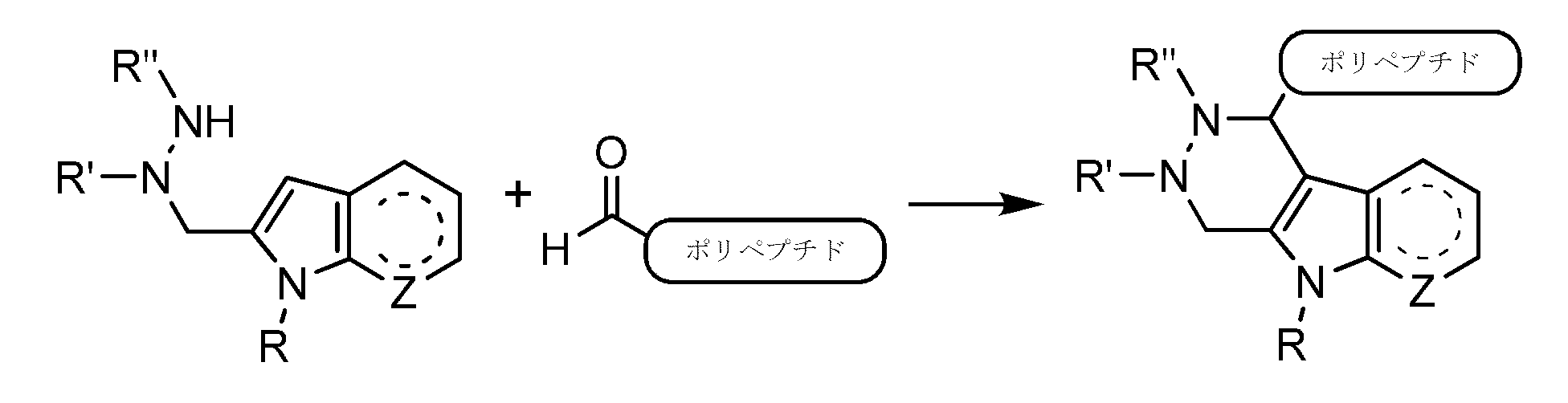
上の反応スキームにおいて、Rは、ポリペプチドにコンジュゲートされる(例えば、本明細書に記載の切断可能なリンカーを介してポリペプチドにコンジュゲートされる)目的の部分(例えば、薬物又は活性薬剤)を含む。上の反応スキームに示されるように、2-ホルミルグリシン残基(fGly)を含むポリペプチドを、カップリング部分(例えば、ヒドラジニル-インドリル又はヒドラジニル-ピロロ-ピリジニルカップリング部分)を含むように修飾された薬物又は活性薬剤と反応させ、カップリング部分に接続したポリペプチドコンジュゲートを生成し、したがって、カップリング部分を介して、ポリペプチドに薬物又は活性薬剤を接続する。 In the above reaction scheme, R is a moiety of interest (e.g., a drug or active agent) that is conjugated to the polypeptide (e.g., conjugated to the polypeptide via a cleavable linker as described herein). )including. As shown in the reaction scheme above, a polypeptide containing a 2-formylglycine residue (fGly) is reacted with a coupling moiety (e.g., a hydrazinyl-indolyl or a hydrazinyl-pyrrolo-pyridinyl coupling moiety). The modified drug or active agent is reacted to produce a polypeptide conjugate attached to a coupling moiety, thus connecting the drug or active agent to the polypeptide via the coupling moiety.
本明細書に記載されるように、この部分は、様々な部分、例えば、限定されないが、化学エンティティ、例えば、検出可能な標識、又は薬物若しくは活性薬剤のうちのいずれかであり得る。R’及びR”は、各々独立して、任意の所望の置換基、例えば、限定されないが、水素、アルキル、置換アルキル、アルケニル、置換アルケニル、アルキニル、置換アルキニル、アルコキシ、置換アルコキシ、アミノ、置換アミノ、カルボキシル、カルボキシルエステル、アシル、アシルオキシ、アシルアミノ、アミノアシル、アルキルアミド、置換アルキルアミド、スルホニル、チオアルコキシ、置換チオアルコキシ、アリール、置換アリール、ヘテロアリール、置換ヘテロアリール、シクロアルキル、置換シクロアルキル、ヘテロシクリル、及び置換ヘテロシクリルであり得る。Zは、CR21、NR22、N、O、又はSであってもよく、R21及びR22は、各々独立して、上のR’及びR”について記載される置換基のうちのいずれかから選択される。 As described herein, this moiety can be any of a variety of moieties, including, but not limited to, a chemical entity, such as a detectable label, or a drug or active agent. R' and R'' are each independently any desired substituent, such as, but not limited to, hydrogen, alkyl, substituted alkyl, alkenyl, substituted alkenyl, alkynyl, substituted alkynyl, alkoxy, substituted alkoxy, amino, substituted amino, carboxyl, carboxyl ester, acyl, acyloxy, acylamino, aminoacyl, alkylamido, substituted alkylamide, sulfonyl, thioalkoxy, substituted thioalkoxy, aryl, substituted aryl, heteroaryl, substituted heteroaryl, cycloalkyl, substituted cycloalkyl, and substituted heterocyclyl. Z can be CR 21 , NR 22 , N, O, or S, and R 21 and R 22 are each independently as for R' and R'' above. selected from any of the substituents listed.
本明細書に記載されるコンジュゲート及び化合物において示されるように、他のヒドラジニル-インドリル又はヒドラジニル-ピロロ-ピリジニルカップリング部分も可能である。例えば、ヒドラジニル-インドリル又はヒドラジニル-ピロロ-ピリジニルカップリング部分は、リンカーに接続する(例えば、共有結合する)ように修飾され得る。したがって、本開示の実施形態は、リンカーを介して薬物又は活性薬剤に接続されるヒドラジニル-インドリル又はヒドラジニル-ピロロ-ピリジニルカップリング部分を含む。ヒドラジニル-インドリル又はヒドラジニル-ピロロ-ピリジニルカップリング部分を薬物又は活性薬剤にカップリングし得るリンカーの様々な実施形態を、本明細書で詳細に記載する。例えば、場合によっては、リンカーは、切断可能なリンカー、例えば、本明細書に記載の切断可能なリンカーである。 Other hydrazinyl-indolyl or hydrazinyl-pyrrolo-pyridinyl coupling moieties are also possible, as shown in the conjugates and compounds described herein. For example, a hydrazinyl-indolyl or hydrazinyl-pyrrolo-pyridinyl coupling moiety can be modified to attach (eg, covalently bond) to a linker. Accordingly, embodiments of the present disclosure include a hydrazinyl-indolyl or hydrazinyl-pyrrolo-pyridinyl coupling moiety connected to a drug or active agent via a linker. Various embodiments of linkers that can couple a hydrazinyl-indolyl or hydrazinyl-pyrrolo-pyridinyl coupling moiety to a drug or active agent are described in detail herein. For example, in some cases the linker is a cleavable linker, such as a cleavable linker described herein.
特定の実施形態では、ポリペプチドは、目的の部分にコンジュゲートしてもよく、ポリペプチドは、目的の部分にコンジュゲート化する前に修飾される。ポリペプチドの修飾は、目的の部分にコンジュゲート化するのに適した1つ以上の反応性基を含有する修飾ポリペプチドを生成し得る。ある場合には、ポリペプチドは、1つ以上のアミノ酸残基で修飾され、目的の部分(例えば、上述のヒドラジニル-インドリル又はヒドラジニル-ピロロ-ピリジニルカップリング部分等のカップリング部分を含む部分)にコンジュゲート化するのに適した1つ以上の反応性基を提供し得る。例えば、ポリペプチドは、反応性アルデヒド基(例えば、反応性アルデヒド)を含むように修飾され得る。反応性アルデヒドは、「アルデヒドタグ」又は「ald-タグ」に含まれてもよく、これらは、本明細書で使用される場合、ホルミルグリシン生成酵素(FGE)の作用によって、2-ホルミルグリシン残基(本明細書では「FGly」と称される)を含有するように変換された、スルファターゼモチーフ由来のアミノ酸配列(例えば、L(C/S)TPSR)を指す。FGEによって生成されるFGly残基は、「ホルミルグリシン」としても称され得る。言い換えれば、「アルデヒドタグ」という用語は、「変換された」スルファターゼモチーフ(すなわち、システイン又はセリン残基がFGEの作用によってFGlyに変換されたスルファターゼモチーフ、例えば、L(FGly)TPSR)を含むアミノ酸配列を指すために本明細書で使用される。変換されたスルファターゼモチーフは、「変換されていない」スルファターゼモチーフ(すなわち、システイン又はセリン残基がFGEによってFGlyに変換されていないが、変換されることは可能であるスルファターゼモチーフ、例えば、配列L(C/S)TPSRを有する変換されていないスルファターゼモチーフ)を含むアミノ酸配列に由来し得る。スルファターゼモチーフ上のホルミルグリシン生成酵素(FGE)の作用の文脈において使用される場合の「変換」とは、スルファターゼモチーフ中のシステイン又はセリン残基からホルミルグリシン(FGly)残基への(例えば、CysからFGlyへ、又はSerからFGlyへの)生化学的修飾を指す。部位特異的タンパク質修飾におけるアルデヒドタグ及びその使用の更なる態様は、米国特許第7,985,783号及び米国特許第8,729,232号に記載され、これらの各々の開示は、参照によって本明細書に組み込まれる。 In certain embodiments, a polypeptide may be conjugated to a moiety of interest, and the polypeptide is modified prior to conjugation to the moiety of interest. Modification of a polypeptide can produce a modified polypeptide containing one or more reactive groups suitable for conjugation to a moiety of interest. In some cases, the polypeptide is modified with one or more amino acid residues and includes a moiety of interest (e.g., a moiety containing a coupling moiety such as the hydrazinyl-indolyl or hydrazinyl-pyrrolo-pyridinyl coupling moiety described above). ) may be provided with one or more reactive groups suitable for conjugation. For example, a polypeptide can be modified to include a reactive aldehyde group (eg, a reactive aldehyde). Reactive aldehydes may be included in "aldehyde tags" or "ald-tags," which, as used herein, generate 2-formylglycine residues by the action of formylglycine-generating enzyme (FGE). Refers to an amino acid sequence derived from a sulfatase motif (eg, L(C/S)TPSR) that has been converted to contain a group (referred to herein as "FGly"). The FGly residue produced by FGE may also be referred to as "formylglycine." In other words, the term "aldehyde tag" refers to an amino acid that contains a "converted" sulfatase motif (i.e., a sulfatase motif in which a cysteine or serine residue has been converted to FGly by the action of FGE, e.g., L(FGly)TPSR). Used herein to refer to sequences. Converted sulfatase motifs are defined as "unconverted" sulfatase motifs (i.e., sulfatase motifs in which the cysteine or serine residues have not been converted to FGly by FGE, but can be converted, e.g., sequence L ( C/S) unconverted sulfatase motif with TPSR). "Conversion" when used in the context of the action of formylglycine-generating enzymes (FGEs) on sulfatase motifs refers to the conversion of cysteine or serine residues in the sulfatase motif to formylglycine (FGly) residues (e.g., Cys to FGly or from Ser to FGly). Further aspects of aldehyde tags and their use in site-specific protein modification are described in U.S. Patent No. 7,985,783 and U.S. Patent No. 8,729,232, the disclosures of each of which are incorporated herein by reference. Incorporated into the specification.
ある場合には、FGly残基を含有する修飾ポリペプチドは、FGlyと化合物(例えば、上述のように、ヒドラジニル-インドリル又はヒドラジニル-ピロロ-ピリジニルカップリング部分を含有する化合物)との反応によって、目的の部分にコンジュゲートされ得る。例えば、FGly含有ポリペプチドを、ポリペプチドへの薬物のコンジュゲート化を提供するのに適した条件下、反応性パートナーを含有する薬物と接触させてもよい。場合によっては、反応性パートナーを含有する薬物は、上述のヒドラジニル-インドリル又はヒドラジニル-ピロロ-ピリジニルカップリング部分を含み得る。例えば、薬物又は活性薬剤は、ヒドラジニル-インドリル又はヒドラジニル-ピロロ-ピリジニルカップリング部分を含むように修飾され得る。ある場合には、薬物又は活性薬剤は、ヒドラジニル-インドリル又はヒドラジニル-ピロロ-ピリジニルに接続し、例えば、リンカー(例えば、本明細書に詳細に記載される切断可能なリンカー)を介して、ヒドラジニル-インドリル又はヒドラジニル-ピロロ-ピリジニルに共有結合する。 In some cases, modified polypeptides containing FGly residues are modified by reaction of FGly with a compound (e.g., a compound containing a hydrazinyl-indolyl or hydrazinyl-pyrrolo-pyridinyl coupling moiety, as described above). , may be conjugated to the moiety of interest. For example, a FGly-containing polypeptide may be contacted with a drug containing a reactive partner under conditions suitable to provide for conjugation of the drug to the polypeptide. In some cases, the drug containing the reactive partner may include a hydrazinyl-indolyl or hydrazinyl-pyrrolo-pyridinyl coupling moiety as described above. For example, a drug or active agent can be modified to include a hydrazinyl-indolyl or hydrazinyl-pyrrolo-pyridinyl coupling moiety. In some cases, the drug or active agent is connected to hydrazinyl-indolyl or hydrazinyl-pyrrolo-pyridinyl, e.g., via a linker (e.g., a cleavable linker as described in detail herein). Covalently linked to indolyl or hydrazinyl-pyrrolo-pyridinyl.
特定の実施形態では、本開示のコンジュゲートは、少なくとも1つの修飾アミノ酸残基を有するポリペプチド(例えば、抗体)を含む。ポリペプチドの修飾アミノ酸残基は、上述のヒドラジニル-インドリル又はヒドラジニル-ピロロ-ピリジニルカップリング部分を含有する薬物又は活性薬剤にカップリングされ得る。特定の実施形態では、ポリペプチド(例えば、抗体)の修飾アミノ酸残基は、上述のようにFGly残基に変換されたシステイン又はセリン残基に由来し得る。特定の実施形態では、FGly残基は、上述のヒドラジニル-インドリル又はヒドラジニル-ピロロ-ピリジニルカップリング部分を含有する薬物又は活性薬剤にコンジュゲートし、薬物又は活性薬剤がヒドラジニル-インドリル又はヒドラジニル-ピロロ-ピリジニルカップリング部分を介してポリペプチドにコンジュゲートされる本開示のコンジュゲートを提供する。本明細書で使用される場合、FGly’という用語は、目的の部分(例えば、薬物又は活性薬剤)にカップリングされるポリペプチド(例えば、抗体)の修飾アミノ酸残基を指す。 In certain embodiments, a conjugate of the present disclosure comprises a polypeptide (eg, an antibody) having at least one modified amino acid residue. Modified amino acid residues of polypeptides can be coupled to drugs or active agents containing hydrazinyl-indolyl or hydrazinyl-pyrrolo-pyridinyl coupling moieties as described above. In certain embodiments, modified amino acid residues of polypeptides (eg, antibodies) may be derived from cysteine or serine residues converted to FGly residues as described above. In certain embodiments, the FGly residue is conjugated to a drug or active agent containing a hydrazinyl-indolyl or hydrazinyl-pyrrolo-pyridinyl coupling moiety as described above, and the drug or active agent is hydrazinyl-indolyl or hydrazinyl- Conjugates of the present disclosure are provided that are conjugated to a polypeptide via a pyrrolo-pyridinyl coupling moiety. As used herein, the term FGly' refers to a modified amino acid residue of a polypeptide (eg, an antibody) that is coupled to a moiety of interest (eg, a drug or active agent).
特定の実施形態では、コンジュゲートは、本明細書に記載の少なくとも1つの修飾アミノ酸残基を含み、修飾アミノ酸残基は、本明細書に記載のリンカー(切断可能なリンカー)に接続し、次いで薬物又は活性薬剤に接続する。例えば、コンジュゲートは、上述の少なくとも1つの修飾アミノ酸残基(FGly’)を含み得る。いくつかの実施形態では、コンジュゲートは、式(I)のコンジュゲートであり、

Zが、CR4又はNであり、
Xが、O又はNR4であり、
R1が、水素、アルキル、置換アルキル、アルケニル、置換アルケニル、アルキニル、置換アルキニル、アリール、置換アリール、ヘテロアリール、置換ヘテロアリール、シクロアルキル、置換シクロアルキル、ヘテロシクリル、及び置換ヘテロシクリルから選択され、
R2及びR3が、各々独立して、水素、アルキル、置換アルキル、アルケニル、置換アルケニル、アルキニル、置換アルキニル、アルコキシ、置換アルコキシ、アミノ、置換アミノ、カルボキシル、カルボキシルエステル、アシル、アシルオキシ、アシルアミノ、アミノアシル、アルキルアミド、置換アルキルアミド、スルホニル、チオアルコキシ、置換チオアルコキシ、アリール、置換アリール、ヘテロアリール、置換ヘテロアリール、シクロアルキル、置換シクロアルキル、ヘテロシクリル、及び置換ヘテロシクリルから選択されるか、又はR2及びR3が、任意選択的に環状に連結され、5若しくは6員のヘテロシクリルを形成し、
各R4が、独立して、水素、ハロゲン、アルキル、置換アルキル、アルケニル、置換アルケニル、アルキニル、置換アルキニル、アルコキシ、置換アルコキシ、アミノ、置換アミノ、カルボキシル、カルボキシルエステル、アシル、アシルオキシ、アシルアミノ、アミノアシル、アルキルアミド、置換アルキルアミド、スルホニル、チオアルコキシ、置換チオアルコキシ、アリール、置換アリール、ヘテロアリール、置換ヘテロアリール、シクロアルキル、置換シクロアルキル、ヘテロシクリル、及び置換ヘテロシクリルから選択され、
各R5が、独立して、水素、アルキル、置換アルキル、アルケニル、置換アルケニル、アルキニル、及び置換アルキニルから選択され、
各R6が、独立して、アルキル、置換アルキル、アルケニル、置換アルケニル、アルキニル、置換アルキニル、アリール、置換アリール、ヘテロアリール、置換ヘテロアリール、シクロアルキル、置換シクロアルキル、ヘテロシクリル、及び置換ヘテロシクリルから選択され、
kが、1~10の整数であり、
R7が、第2の酵素的に切断可能な部分を含み、
L1が、第1のリンカーであり、
L2が、第2のリンカーであり、
W1が、薬物であり、
W2が、抗体である。
In certain embodiments, the conjugate comprises at least one modified amino acid residue as described herein, the modified amino acid residue is connected to a linker (cleavable linker) as described herein, and then Connect to a drug or active agent. For example, the conjugate can include at least one modified amino acid residue (FGly') as described above. In some embodiments, the conjugate is of formula (I);
Z is CR 4 or N,
X is O or NR4 ,
R 1 is selected from hydrogen, alkyl, substituted alkyl, alkenyl, substituted alkenyl, alkynyl, substituted alkynyl, aryl, substituted aryl, heteroaryl, substituted heteroaryl, cycloalkyl, substituted cycloalkyl, heterocyclyl, and substituted heterocyclyl;
R 2 and R 3 are each independently hydrogen, alkyl, substituted alkyl, alkenyl, substituted alkenyl, alkynyl, substituted alkynyl, alkoxy, substituted alkoxy, amino, substituted amino, carboxyl, carboxyl ester, acyl, acyloxy, acylamino, or R 2 and R 3 are optionally linked cyclically to form a 5- or 6-membered heterocyclyl;
Each R 4 is independently hydrogen, halogen, alkyl, substituted alkyl, alkenyl, substituted alkenyl, alkynyl, substituted alkynyl, alkoxy, substituted alkoxy, amino, substituted amino, carboxyl, carboxyl ester, acyl, acyloxy, acylamino, aminoacyl , alkylamides, substituted alkylamides, sulfonyl, thioalkoxy, substituted thioalkoxy, aryl, substituted aryl, heteroaryl, substituted heteroaryl, cycloalkyl, substituted cycloalkyl, heterocyclyl, and substituted heterocyclyl,
each R 5 is independently selected from hydrogen, alkyl, substituted alkyl, alkenyl, substituted alkenyl, alkynyl, and substituted alkynyl;
Each R 6 is independently selected from alkyl, substituted alkyl, alkenyl, substituted alkenyl, alkynyl, substituted alkynyl, aryl, substituted aryl, heteroaryl, substituted heteroaryl, cycloalkyl, substituted cycloalkyl, heterocyclyl, and substituted heterocyclyl is,
k is an integer from 1 to 10,
R 7 comprises a second enzymatically cleavable moiety;
L 1 is the first linker;
L 2 is a second linker;
W 1 is a drug,
W2 is an antibody.
式(I)の特定の実施形態では、kが、2であり、コンジュゲートは、式(Ia)のコンジュゲートである。

式(I)の特定の実施形態では、コンジュゲートは、式(Ib)のコンジュゲートである。

式(I)の特定の実施形態では、コンジュゲートは、式(Ic)のコンジュゲートである。

式(I)の特定の実施形態では、コンジュゲートは、式(Id)のコンジュゲートである。

式(I)の特定の実施形態では、コンジュゲートは、式(Ie)のコンジュゲートである。

式(I)の特定の実施形態では、コンジュゲートは、式(If)のコンジュゲートである。

式(I)の特定の実施形態では、コンジュゲートは、式(Ig)のコンジュゲートである。

式(I)のコンジュゲートに関連する置換基は、以下により詳細に記載される。式(I)への言及は、式(Ia)、(Ib)、(Ic)、(Id)、(Ie)、(If)及び(Ig)も包含することを意図している。 Substituents associated with conjugates of formula (I) are described in more detail below. Reference to formula (I) is intended to also include formulas (Ia), (Ib), (Ic), (Id), (Ie), (If) and (Ig).
特定の実施形態では、Zは、CR4又はNである。特定の実施形態では、Zは、CR4である。特定の実施形態では、Zは、Nである。 In certain embodiments, Z is CR 4 or N. In certain embodiments, Z is CR4 . In certain embodiments, Z is N.
特定の実施形態では、Xは、O又はNR4である。場合によっては、Xは、Oである。場合によっては、Xは、NR4である。場合によっては、Xは、NHである。 In certain embodiments, X is O or NR4 . In some cases, X is O. In some cases, X is NR4 . In some cases, X is NH.
特定の実施形態では、R1は、水素、アルキル、置換アルキル、アルケニル、置換アルケニル、アルキニル、置換アルキニル、アリール、置換アリール、ヘテロアリール、置換ヘテロアリール、シクロアルキル、置換シクロアルキル、ヘテロシクリル、及び置換ヘテロシクリルから選択される。特定の実施形態では、R1は、水素である。特定の実施形態では、R1は、アルキル若しくは置換アルキル、例えば、C1~6アルキル若しくはC1~6置換アルキル、又はC1~4アルキル若しくはC1~4置換アルキル、又はC1~3アルキル若しくはC1~3置換アルキルである。特定の実施形態では、R1は、メチルである。特定の実施形態では、R1は、アルケニル若しくは置換アルケニル、例えば、C2~6アルケニル若しくはC2~6置換アルケニル、又はC2~4アルケニル若しくはC2~4置換アルケニル、又はC2~3アルケニル若しくはC2~3置換アルケニルである。特定の実施形態では、R1は、アルキニル若しくは置換アルキニル、例えば、C2~6アルキニル若しくはC2~6置換アルキニル、又はC2~4アルケニル若しくはC2~4置換アルケニル、又はC2~3アルケニル若しくはC2~3置換アルケニルである。特定の実施形態では、R1は、アリール若しくは置換アリール、例えば、C5~8アリール若しくはC5~8置換アリール、例えば、C5アリール若しくはC5置換アリール、又はC6アリール若しくはC6置換アリールである。特定の実施形態では、R1は、ヘテロアリール若しくは置換ヘテロアリール、例えば、C5~8ヘテロアリール若しくはC5~8置換ヘテロアリール、例えば、C5ヘテロアリール若しくはC5置換ヘテロアリール、又はC6ヘテロアリール若しくはC6置換ヘテロアリールである。特定の実施形態では、R1は、シクロアルキル若しくは置換シクロアルキル、例えば、C3~8シクロアルキル若しくはC3~8置換シクロアルキル、例えば、C3~6シクロアルキル若しくはC3~6置換シクロアルキル、又はC3~5シクロアルキル若しくはC3~5置換シクロアルキルである。特定の実施形態では、R1は、ヘテロシクリル若しくは置換ヘテロシクリル、例えば、C3~8ヘテロシクリル若しくはC3~8置換ヘテロシクリル、例えば、C3~6ヘテロシクリル若しくはC3~6置換ヘテロシクリル、又はC3~5ヘテロシクリル若しくはC3~5置換ヘテロシクリルである。 In certain embodiments, R 1 is hydrogen, alkyl, substituted alkyl, alkenyl, substituted alkenyl, alkynyl, substituted alkynyl, aryl, substituted aryl, heteroaryl, substituted heteroaryl, cycloalkyl, substituted cycloalkyl, heterocyclyl, and substituted selected from heterocyclyl. In certain embodiments, R 1 is hydrogen. In certain embodiments, R 1 is alkyl or substituted alkyl, such as C 1-6 alkyl or C 1-6 substituted alkyl, or C 1-4 alkyl or C 1-4 substituted alkyl, or C 1-3 alkyl or C 1-3 substituted alkyl. In certain embodiments, R 1 is methyl. In certain embodiments, R 1 is alkenyl or substituted alkenyl, such as C 2-6 alkenyl or C 2-6 substituted alkenyl, or C 2-4 alkenyl or C 2-4 substituted alkenyl, or C 2-3 alkenyl or C 2-3 substituted alkenyl. In certain embodiments, R 1 is alkynyl or substituted alkynyl, such as C 2-6 alkynyl or C 2-6 substituted alkynyl, or C 2-4 alkenyl or C 2-4 substituted alkenyl, or C 2-3 alkenyl or C 2-3 substituted alkenyl. In certain embodiments, R 1 is aryl or substituted aryl, such as C 5-8 aryl or C 5-8 substituted aryl, such as C 5 aryl or C 5 substituted aryl, or C 6 aryl or C 6 substituted aryl. It is. In certain embodiments, R 1 is heteroaryl or substituted heteroaryl, such as C 5-8 heteroaryl or C 5-8 substituted heteroaryl, such as C 5 heteroaryl or C 5 substituted heteroaryl, or C 6 Heteroaryl or C6 -substituted heteroaryl. In certain embodiments, R 1 is cycloalkyl or substituted cycloalkyl, such as C 3-8 cycloalkyl or C 3-8 substituted cycloalkyl, such as C 3-6 cycloalkyl or C 3-6 substituted cycloalkyl. , or C 3-5 cycloalkyl or C 3-5 substituted cycloalkyl. In certain embodiments, R 1 is heterocyclyl or substituted heterocyclyl, such as C 3-8 heterocyclyl or C 3-8 substituted heterocyclyl, such as C 3-6 heterocyclyl or C 3-6 substituted heterocyclyl, or C 3-5 Heterocyclyl or C 3-5 substituted heterocyclyl.
特定の実施形態では、R2及びR3は、各々独立して、水素、アルキル、置換アルキル、アルケニル、置換アルケニル、アルキニル、置換アルキニル、アルコキシ、置換アルコキシ、アミノ、置換アミノ、カルボキシル、カルボキシルエステル、アシル、アシルオキシ、アシルアミノ、アミノアシル、アルキルアミド、置換アルキルアミド、スルホニル、チオアルコキシ、置換チオアルコキシ、アリール、置換アリール、ヘテロアリール、置換ヘテロアリール、シクロアルキル、置換シクロアルキル、ヘテロシクリル、及び置換ヘテロシクリルから選択されるか、又はR2及びR3が、任意選択的に環状に連結され、5若しくは6員のヘテロシクリルを形成する。 In certain embodiments, R 2 and R 3 are each independently hydrogen, alkyl, substituted alkyl, alkenyl, substituted alkenyl, alkynyl, substituted alkynyl, alkoxy, substituted alkoxy, amino, substituted amino, carboxyl, carboxyl ester, Selected from acyl, acyloxy, acylamino, aminoacyl, alkylamido, substituted alkylamido, sulfonyl, thioalkoxy, substituted thioalkoxy, aryl, substituted aryl, heteroaryl, substituted heteroaryl, cycloalkyl, substituted cycloalkyl, heterocyclyl, and substituted heterocyclyl or R 2 and R 3 are optionally linked cyclically to form a 5- or 6-membered heterocyclyl.
特定の実施形態では、R2は、水素、アルキル、置換アルキル、アルケニル、置換アルケニル、アルキニル、置換アルキニル、アルコキシ、置換アルコキシ、アミノ、置換アミノ、カルボキシル、カルボキシルエステル、アシル、アシルオキシ、アシルアミノ、アミノアシル、アルキルアミド、置換アルキルアミド、スルホニル、チオアルコキシ、置換チオアルコキシ、アリール、置換アリール、ヘテロアリール、置換ヘテロアリール、シクロアルキル、置換シクロアルキル、ヘテロシクリル、及び置換ヘテロシクリルから選択される。特定の実施形態では、R2は、水素である。特定の実施形態では、R2は、アルキル若しくは置換アルキル、例えば、C1~6アルキル若しくはC1~6置換アルキル、又はC1~4アルキル若しくはC1~4置換アルキル、又はC1~3アルキル若しくはC1~3置換アルキルである。特定の実施形態では、R2は、メチルである。特定の実施形態では、R2は、アルケニル若しくは置換アルケニル、例えば、C2~6アルケニル若しくはC2~6置換アルケニル、又はC2~4アルケニル若しくはC2~4置換アルケニル、又はC2~3アルケニル若しくはC2~3置換アルケニルである。特定の実施形態では、R2は、アルキニル又は置換アルキニルである。特定の実施形態では、R2は、アルコキシ又は置換アルコキシである。特定の実施形態では、R2は、アミノ又は置換アミノである。特定の実施形態では、R2は、カルボキシル又はカルボキシルエステルである。特定の実施形態では、R2は、アシル又はアシルオキシである。特定の実施形態では、R2は、アシルアミノ又はアミノアシルである。特定の実施形態では、R2は、アルキルアミド又は置換アルキルアミドである。特定の実施形態では、R2は、スルホニルである。特定の実施形態では、R2は、チオアルコキシ又は置換チオアルコキシである。特定の実施形態では、R2は、アリール若しくは置換アリール、例えば、C5~8アリール若しくはC5~8置換アリール、例えば、C5アリール若しくはC5置換アリール、又はC6アリール若しくはC6置換アリールである。特定の実施形態では、R2は、ヘテロアリール若しくは置換ヘテロアリール、例えば、C5~8ヘテロアリール若しくはC5~8置換ヘテロアリール、例えば、C5ヘテロアリール若しくはC5置換ヘテロアリール、又はC6ヘテロアリール若しくはC6置換ヘテロアリールである。特定の実施形態では、R2は、シクロアルキル若しくは置換シクロアルキル、例えば、C3~8シクロアルキル若しくはC3~8置換シクロアルキル、例えば、C3~6シクロアルキル若しくはC3~6置換シクロアルキル、又はC3~5シクロアルキル若しくはC3~5置換シクロアルキルである。特定の実施形態では、R2は、ヘテロシクリル若しくは置換ヘテロシクリル、例えば、C3~6ヘテロシクリル若しくはC3~6置換ヘテロシクリル、又はC3~5ヘテロシクリル若しくはC3~5置換ヘテロシクリルである。 In certain embodiments, R2 is hydrogen, alkyl, substituted alkyl, alkenyl, substituted alkenyl, alkynyl, substituted alkynyl, alkoxy, substituted alkoxy, amino, substituted amino, carboxyl, carboxyl ester, acyl, acyloxy, acylamino, aminoacyl, selected from alkylamides, substituted alkylamides, sulfonyl, thioalkoxy, substituted thioalkoxy, aryl, substituted aryl, heteroaryl, substituted heteroaryl, cycloalkyl, substituted cycloalkyl, heterocyclyl, and substituted heterocyclyl. In certain embodiments, R 2 is hydrogen. In certain embodiments, R 2 is alkyl or substituted alkyl, such as C 1-6 alkyl or C 1-6 substituted alkyl, or C 1-4 alkyl or C 1-4 substituted alkyl, or C 1-3 alkyl or C 1-3 substituted alkyl. In certain embodiments, R 2 is methyl. In certain embodiments, R 2 is alkenyl or substituted alkenyl, such as C 2-6 alkenyl or C 2-6 substituted alkenyl, or C 2-4 alkenyl or C 2-4 substituted alkenyl, or C 2-3 alkenyl or C 2-3 substituted alkenyl. In certain embodiments, R 2 is alkynyl or substituted alkynyl. In certain embodiments, R 2 is alkoxy or substituted alkoxy. In certain embodiments, R 2 is amino or substituted amino. In certain embodiments, R 2 is carboxyl or carboxyl ester. In certain embodiments, R 2 is acyl or acyloxy. In certain embodiments, R 2 is acylamino or aminoacyl. In certain embodiments, R 2 is an alkylamide or a substituted alkylamide. In certain embodiments, R 2 is sulfonyl. In certain embodiments, R 2 is thioalkoxy or substituted thioalkoxy. In certain embodiments, R 2 is aryl or substituted aryl, such as C 5-8 aryl or C 5-8 substituted aryl, such as C 5 aryl or C 5 substituted aryl, or C 6 aryl or C 6 substituted aryl. It is. In certain embodiments, R 2 is heteroaryl or substituted heteroaryl, such as C 5-8 heteroaryl or C 5-8 substituted heteroaryl, such as C 5 heteroaryl or C 5 substituted heteroaryl, or C 6 Heteroaryl or C6 -substituted heteroaryl. In certain embodiments, R 2 is cycloalkyl or substituted cycloalkyl, such as C 3-8 cycloalkyl or C 3-8 substituted cycloalkyl, such as C 3-6 cycloalkyl or C 3-6 substituted cycloalkyl. , or C 3-5 cycloalkyl or C 3-5 substituted cycloalkyl. In certain embodiments, R 2 is heterocyclyl or substituted heterocyclyl, such as C 3-6 heterocyclyl or C 3-6 substituted heterocyclyl, or C 3-5 heterocyclyl or C 3-5 substituted heterocyclyl.
特定の実施形態では、R3は、水素、アルキル、置換アルキル、アルケニル、置換アルケニル、アルキニル、置換アルキニル、アルコキシ、置換アルコキシ、アミノ、置換アミノ、カルボキシル、カルボキシルエステル、アシル、アシルオキシ、アシルアミノ、アミノアシル、アルキルアミド、置換アルキルアミド、スルホニル、チオアルコキシ、置換チオアルコキシ、アリール、置換アリール、ヘテロアリール、置換ヘテロアリール、シクロアルキル、置換シクロアルキル、ヘテロシクリル、及び置換ヘテロシクリルから選択される。特定の実施形態では、R3は、水素である。特定の実施形態では、R3は、アルキル若しくは置換アルキル、例えば、C1~6アルキル若しくはC1~6置換アルキル、又はC1~4アルキル若しくはC1~4置換アルキル、又はC1~3アルキル若しくはC1~3置換アルキルである。特定の実施形態では、R3は、メチルである。特定の実施形態では、R3は、アルケニル若しくは置換アルケニル、例えば、C2~6アルケニル若しくはC2~6置換アルケニル、又はC2~4アルケニル若しくはC2~4置換アルケニル、又はC2~3アルケニル若しくはC2~3置換アルケニルである。特定の実施形態では、R3は、アルキニル又は置換アルキニルである。特定の実施形態では、R3は、アルコキシ又は置換アルコキシである。特定の実施形態では、R3は、アミノ又は置換アミノである。特定の実施形態では、R3は、カルボキシル又はカルボキシルエステルである。特定の実施形態では、R3は、アシル又はアシルオキシである。特定の実施形態では、R3は、アシルアミノ又はアミノアシルである。特定の実施形態では、R3は、アルキルアミド又は置換アルキルアミドである。特定の実施形態では、R3は、スルホニルである。特定の実施形態では、R3は、チオアルコキシ又は置換チオアルコキシである。特定の実施形態では、R3は、アリール若しくは置換アリール、例えば、C5~8アリール若しくはC5~8置換アリール、例えば、C5アリール若しくはC5置換アリール、又はC6アリール若しくはC6置換アリールである。特定の実施形態では、R3は、ヘテロアリール若しくは置換ヘテロアリール、例えば、C5~8ヘテロアリール若しくはC5~8置換ヘテロアリール、例えば、C5ヘテロアリール若しくはC5置換ヘテロアリール、又はC6ヘテロアリール若しくはC6置換ヘテロアリールである。特定の実施形態では、R3は、シクロアルキル若しくは置換シクロアルキル、例えば、C3~8シクロアルキル若しくはC3~8置換シクロアルキル、例えば、C3~6シクロアルキル若しくはC3~6置換シクロアルキル、又はC3~5シクロアルキル若しくはC3~5置換シクロアルキルである。特定の実施形態では、R3は、ヘテロシクリル若しくは置換ヘテロシクリル、例えば、C3~8ヘテロシクリル若しくはC3~8置換ヘテロシクリル、例えば、C3~6ヘテロシクリル若しくはC3~6置換ヘテロシクリル、又はC3~5ヘテロシクリル若しくはC3~5置換ヘテロシクリルである。 In certain embodiments, R 3 is hydrogen, alkyl, substituted alkyl, alkenyl, substituted alkenyl, alkynyl, substituted alkynyl, alkoxy, substituted alkoxy, amino, substituted amino, carboxyl, carboxyl ester, acyl, acyloxy, acylamino, aminoacyl, selected from alkylamides, substituted alkylamides, sulfonyl, thioalkoxy, substituted thioalkoxy, aryl, substituted aryl, heteroaryl, substituted heteroaryl, cycloalkyl, substituted cycloalkyl, heterocyclyl, and substituted heterocyclyl. In certain embodiments, R 3 is hydrogen. In certain embodiments, R 3 is alkyl or substituted alkyl, such as C 1-6 alkyl or C 1-6 substituted alkyl, or C 1-4 alkyl or C 1-4 substituted alkyl, or C 1-3 alkyl or C 1-3 substituted alkyl. In certain embodiments, R 3 is methyl. In certain embodiments, R 3 is alkenyl or substituted alkenyl, such as C 2-6 alkenyl or C 2-6 substituted alkenyl, or C 2-4 alkenyl or C 2-4 substituted alkenyl, or C 2-3 alkenyl or C 2-3 substituted alkenyl. In certain embodiments, R 3 is alkynyl or substituted alkynyl. In certain embodiments, R 3 is alkoxy or substituted alkoxy. In certain embodiments, R 3 is amino or substituted amino. In certain embodiments, R 3 is carboxyl or carboxyl ester. In certain embodiments, R 3 is acyl or acyloxy. In certain embodiments, R 3 is acylamino or aminoacyl. In certain embodiments, R 3 is an alkylamide or a substituted alkylamide. In certain embodiments, R 3 is sulfonyl. In certain embodiments, R 3 is thioalkoxy or substituted thioalkoxy. In certain embodiments, R 3 is aryl or substituted aryl, such as C 5-8 aryl or C 5-8 substituted aryl, such as C 5 aryl or C 5 substituted aryl, or C 6 aryl or C 6 substituted aryl. It is. In certain embodiments, R 3 is heteroaryl or substituted heteroaryl, such as C 5-8 heteroaryl or C 5-8 substituted heteroaryl, such as C 5 heteroaryl or C 5 substituted heteroaryl, or C 6 Heteroaryl or C6 -substituted heteroaryl. In certain embodiments, R 3 is cycloalkyl or substituted cycloalkyl, such as C 3-8 cycloalkyl or C 3-8 substituted cycloalkyl, such as C 3-6 cycloalkyl or C 3-6 substituted cycloalkyl. , or C 3-5 cycloalkyl or C 3-5 substituted cycloalkyl. In certain embodiments, R 3 is heterocyclyl or substituted heterocyclyl, such as C 3-8 heterocyclyl or C 3-8 substituted heterocyclyl, such as C 3-6 heterocyclyl or C 3-6 substituted heterocyclyl, or C 3-5 Heterocyclyl or C 3-5 substituted heterocyclyl.
特定の実施形態では、R2及びR3は、任意選択的に環状に連結され、5若しくは6員のヘテロシクリルを形成する。特定の実施形態では、R2及びR3は、環状に連結され、5若しくは6員のヘテロシクリルを形成する。特定の実施形態では、R2及びR3は、環状に連結され、5員のヘテロシクリルを形成する。特定の実施形態では、R2及びR3は、環状に連結され、6員のヘテロシクリルを形成する。 In certain embodiments, R 2 and R 3 are optionally cyclically linked to form a 5- or 6-membered heterocyclyl. In certain embodiments, R 2 and R 3 are cyclically linked to form a 5- or 6-membered heterocyclyl. In certain embodiments, R 2 and R 3 are cyclically linked to form a 5-membered heterocyclyl. In certain embodiments, R 2 and R 3 are cyclically linked to form a 6-membered heterocyclyl.
特定の実施形態では、各R4は、独立して、水素、ハロゲン、アルキル、置換アルキル、アルケニル、置換アルケニル、アルキニル、置換アルキニル、アルコキシ、置換アルコキシ、アミノ、置換アミノ、カルボキシル、カルボキシルエステル、アシル、アシルオキシ、アシルアミノ、アミノアシル、アルキルアミド、置換アルキルアミド、スルホニル、チオアルコキシ、置換チオアルコキシ、アリール、置換アリール、ヘテロアリール、置換ヘテロアリール、シクロアルキル、置換シクロアルキル、ヘテロシクリル、及び置換ヘテロシクリルから選択される。 In certain embodiments, each R 4 is independently hydrogen, halogen, alkyl, substituted alkyl, alkenyl, substituted alkenyl, alkynyl, substituted alkynyl, alkoxy, substituted alkoxy, amino, substituted amino, carboxyl, carboxyl ester, acyl , acyloxy, acylamino, aminoacyl, alkylamido, substituted alkylamido, sulfonyl, thioalkoxy, substituted thioalkoxy, aryl, substituted aryl, heteroaryl, substituted heteroaryl, cycloalkyl, substituted cycloalkyl, heterocyclyl, and substituted heterocyclyl. Ru.
各R4についての様々な可能性は、以下により詳細に記載される。特定の実施形態では、R4は、水素である。特定の実施形態では、各R4は、水素である。特定の実施形態では、R4は、F、Cl、Br、又はI等のハロゲンである。特定の実施形態では、R4は、Fである。特定の実施形態では、R4は、Clである。特定の実施形態では、R4は、Brである。特定の実施形態では、R4は、Iである。特定の実施形態では、R4は、アルキル若しくは置換アルキル、例えば、C1~6アルキル若しくはC1~6置換アルキル、又はC1~4アルキル若しくはC1~4置換アルキル、又はC1~3アルキル若しくはC1~3置換アルキルである。特定の実施形態では、R4は、メチルである。特定の実施形態では、R4は、アルケニル若しくは置換アルケニル、例えば、C2~6アルケニル若しくはC2~6置換アルケニル、又はC2~4アルケニル若しくはC2~4置換アルケニル、又はC2~3アルケニル若しくはC2~3置換アルケニルである。特定の実施形態では、R4は、アルキニル又は置換アルキニルである。特定の実施形態では、R4は、アルコキシ又は置換アルコキシである。特定の実施形態では、R4は、アミノ又は置換アミノである。特定の実施形態では、R4は、カルボキシル又はカルボキシルエステルである。特定の実施形態では、R4は、アシル又はアシルオキシである。特定の実施形態では、R4は、アシルアミノ又はアミノアシルである。特定の実施形態では、R4は、アルキルアミド又は置換アルキルアミドである。特定の実施形態では、R4は、スルホニルである。特定の実施形態では、R4は、チオアルコキシ又は置換チオアルコキシである。特定の実施形態では、R4は、アリール若しくは置換アリール、例えば、C5~8アリール若しくはC5~8置換アリール、例えば、C5アリール若しくはC5置換アリール、又はC6アリール若しくはC6置換アリール(例えば、フェニル若しくは置換フェニル)である。特定の実施形態では、R4は、ヘテロアリール若しくは置換ヘテロアリール、例えば、C5~8ヘテロアリール若しくはC5~8置換ヘテロアリール、例えば、C5ヘテロアリール若しくはC5置換ヘテロアリール、又はC6ヘテロアリール若しくはC6置換ヘテロアリールである。特定の実施形態では、R4は、シクロアルキル若しくは置換シクロアルキル、例えば、C3~8シクロアルキル若しくはC3~8置換シクロアルキル、例えば、C3~6シクロアルキル若しくはC3~6置換シクロアルキル、又はC3~5シクロアルキル若しくはC3~5置換シクロアルキルである。特定の実施形態では、R4は、ヘテロシクリル若しくは置換ヘテロシクリル、例えば、C3~8ヘテロシクリル若しくはC3~8置換ヘテロシクリル、例えば、C3~6ヘテロシクリル若しくはC3~6置換ヘテロシクリル、又はC3~5ヘテロシクリル若しくはC3~5置換ヘテロシクリルである。 The various possibilities for each R 4 are described in more detail below. In certain embodiments, R 4 is hydrogen. In certain embodiments, each R 4 is hydrogen. In certain embodiments, R 4 is halogen, such as F, Cl, Br, or I. In certain embodiments, R 4 is F. In certain embodiments, R 4 is Cl. In certain embodiments, R 4 is Br. In certain embodiments, R 4 is I. In certain embodiments, R 4 is alkyl or substituted alkyl, such as C 1-6 alkyl or C 1-6 substituted alkyl, or C 1-4 alkyl or C 1-4 substituted alkyl, or C 1-3 alkyl or C 1-3 substituted alkyl. In certain embodiments, R 4 is methyl. In certain embodiments, R 4 is alkenyl or substituted alkenyl, such as C 2-6 alkenyl or C 2-6 substituted alkenyl, or C 2-4 alkenyl or C 2-4 substituted alkenyl, or C 2-3 alkenyl or C 2-3 substituted alkenyl. In certain embodiments, R 4 is alkynyl or substituted alkynyl. In certain embodiments, R 4 is alkoxy or substituted alkoxy. In certain embodiments, R 4 is amino or substituted amino. In certain embodiments, R 4 is carboxyl or carboxyl ester. In certain embodiments, R 4 is acyl or acyloxy. In certain embodiments, R 4 is acylamino or aminoacyl. In certain embodiments, R 4 is an alkylamide or substituted alkylamide. In certain embodiments, R 4 is sulfonyl. In certain embodiments, R 4 is thioalkoxy or substituted thioalkoxy. In certain embodiments, R 4 is aryl or substituted aryl, such as C 5-8 aryl or C 5-8 substituted aryl, such as C 5 aryl or C 5 substituted aryl, or C 6 aryl or C 6 substituted aryl. (eg, phenyl or substituted phenyl). In certain embodiments, R 4 is heteroaryl or substituted heteroaryl, such as C 5-8 heteroaryl or C 5-8 substituted heteroaryl, such as C 5 heteroaryl or C 5 substituted heteroaryl, or C 6 Heteroaryl or C6 -substituted heteroaryl. In certain embodiments, R 4 is cycloalkyl or substituted cycloalkyl, such as C 3-8 cycloalkyl or C 3-8 substituted cycloalkyl, such as C 3-6 cycloalkyl or C 3-6 substituted cycloalkyl. , or C 3-5 cycloalkyl or C 3-5 substituted cycloalkyl. In certain embodiments, R 4 is heterocyclyl or substituted heterocyclyl, such as C 3-8 heterocyclyl or C 3-8 substituted heterocyclyl, such as C 3-6 heterocyclyl or C 3-6 substituted heterocyclyl, or C 3-5 Heterocyclyl or C 3-5 substituted heterocyclyl.
特定の実施形態では、各R5は、独立して、水素、アルキル、置換アルキル、アルケニル、置換アルケニル、アルキニル、及び置換アルキニルから選択される。特定の実施形態では、R5は、水素である。特定の実施形態では、R5は、アルキル若しくは置換アルキル、例えば、C1~6アルキル若しくはC1~6置換アルキル、又はC1~4アルキル若しくはC1~4置換アルキル、又はC1~3アルキル若しくはC1~3置換アルキルである。特定の実施形態では、R5は、メチルである。特定の実施形態では、R5は、エチルである。特定の実施形態では、R5は、プロピル(例えば、n-プロピル又はイソプロピル)である。特定の実施形態では、R5は、ブチル(例えば、n-ブチル、イソブチル、sec-ブチル、又はt-ブチル)である。特定の実施形態では、R5は、ペンチル(例えば、n-ペンチル又はネオペンチル等)である。特定の実施形態では、R5は、ネオペンチルである。特定の実施形態では、R5は、アルケニル若しくは置換アルケニル、例えば、C2~6アルケニル若しくはC2~6置換アルケニル、又はC2~4アルケニル若しくはC2~4置換アルケニル、又はC2~3アルケニル若しくはC2~3置換アルケニルである。特定の実施形態では、R5は、アルキニル又は置換アルキニルである。 In certain embodiments, each R 5 is independently selected from hydrogen, alkyl, substituted alkyl, alkenyl, substituted alkenyl, alkynyl, and substituted alkynyl. In certain embodiments, R 5 is hydrogen. In certain embodiments, R 5 is alkyl or substituted alkyl, such as C 1-6 alkyl or C 1-6 substituted alkyl, or C 1-4 alkyl or C 1-4 substituted alkyl, or C 1-3 alkyl or C 1-3 substituted alkyl. In certain embodiments, R 5 is methyl. In certain embodiments, R 5 is ethyl. In certain embodiments, R 5 is propyl (eg, n-propyl or isopropyl). In certain embodiments, R 5 is butyl (eg, n-butyl, isobutyl, sec-butyl, or t-butyl). In certain embodiments, R 5 is pentyl (eg, n-pentyl or neopentyl, etc.). In certain embodiments, R 5 is neopentyl. In certain embodiments, R 5 is alkenyl or substituted alkenyl, such as C 2-6 alkenyl or C 2-6 substituted alkenyl, or C 2-4 alkenyl or C 2-4 substituted alkenyl, or C 2-3 alkenyl or C 2-3 substituted alkenyl. In certain embodiments, R 5 is alkynyl or substituted alkynyl.
特定の実施形態では、各R6は、独立して、アルキル、置換アルキル、アルケニル、置換アルケニル、アルキニル、置換アルキニル、アリール、置換アリール、ヘテロアリール、置換ヘテロアリール、シクロアルキル、置換シクロアルキル、ヘテロシクリル、及び置換ヘテロシクリルから選択される。特定の実施形態では、R6は、水素である。特定の実施形態では、R6は、アルキル若しくは置換アルキル、例えば、C1~6アルキル若しくはC1~6置換アルキル、又はC1~4アルキル若しくはC1~4置換アルキル、又はC1~3アルキル若しくはC1~3置換アルキルである。特定の実施形態では、R6は、メチルである。特定の実施形態では、R6は、エチルである。特定の実施形態では、R6は、プロピル(例えば、n-プロピル又はイソプロピル)である。特定の実施形態では、R6は、ブチル(例えば、n-ブチル、イソブチル、sec-ブチル、又はt-ブチル)である。特定の実施形態では、R6は、ペンチル(例えば、n-ペンチル又はネオペンチル等)である。特定の実施形態では、R6は、ネオペンチルである。特定の実施形態では、R6は、アルケニル若しくは置換アルケニル、例えば、C2~6アルケニル若しくはC2~6置換アルケニル、又はC2~4アルケニル若しくはC2~4置換アルケニル、又はC2~3アルケニル若しくはC2~3置換アルケニルである。特定の実施形態では、R6は、アルキニル又は置換アルキニルである。 In certain embodiments, each R 6 is independently alkyl, substituted alkyl, alkenyl, substituted alkenyl, alkynyl, substituted alkynyl, aryl, substituted aryl, heteroaryl, substituted heteroaryl, cycloalkyl, substituted cycloalkyl, heterocyclyl. , and substituted heterocyclyl. In certain embodiments, R 6 is hydrogen. In certain embodiments, R 6 is alkyl or substituted alkyl, such as C 1-6 alkyl or C 1-6 substituted alkyl, or C 1-4 alkyl or C 1-4 substituted alkyl, or C 1-3 alkyl or C 1-3 substituted alkyl. In certain embodiments, R 6 is methyl. In certain embodiments, R 6 is ethyl. In certain embodiments, R 6 is propyl (eg, n-propyl or isopropyl). In certain embodiments, R 6 is butyl (eg, n-butyl, isobutyl, sec-butyl, or t-butyl). In certain embodiments, R 6 is pentyl (eg, n-pentyl or neopentyl, etc.). In certain embodiments, R 6 is neopentyl. In certain embodiments, R 6 is alkenyl or substituted alkenyl, such as C 2-6 alkenyl or C 2-6 substituted alkenyl, or C 2-4 alkenyl or C 2-4 substituted alkenyl, or C 2-3 alkenyl or C 2-3 substituted alkenyl. In certain embodiments, R 6 is alkynyl or substituted alkynyl.
特定の実施形態では、R6は、アリール若しくは置換アリール、例えば、C5~8アリール若しくはC5~8置換アリール、例えば、C5アリール若しくはC5置換アリール、又はC6アリール若しくはC6置換アリール(例えば、フェニル若しくは置換フェニル)である。特定の実施形態では、R6は、ヘテロアリール若しくは置換ヘテロアリール、例えば、C5~8ヘテロアリール若しくはC5~8置換ヘテロアリール、例えば、C5ヘテロアリール若しくはC5置換ヘテロアリール、又はC6ヘテロアリール若しくはC6置換ヘテロアリールである。特定の実施形態では、R6は、シクロアルキル若しくは置換シクロアルキル、例えば、C3~8シクロアルキル若しくはC3~8置換シクロアルキル、例えば、C3~6シクロアルキル若しくはC3~6置換シクロアルキル、又はC3~5シクロアルキル若しくはC3~5置換シクロアルキルである。特定の実施形態では、R6は、ヘテロシクリル若しくは置換ヘテロシクリル、例えば、C3~8ヘテロシクリル若しくはC3~8置換ヘテロシクリル、例えば、C3~6ヘテロシクリル若しくはC3~6置換ヘテロシクリル、又はC3~5ヘテロシクリル若しくはC3~5置換ヘテロシクリルである。 In certain embodiments, R 6 is aryl or substituted aryl, such as C 5-8 aryl or C 5-8 substituted aryl, such as C 5 aryl or C 5 substituted aryl, or C 6 aryl or C 6 substituted aryl. (eg phenyl or substituted phenyl). In certain embodiments, R 6 is heteroaryl or substituted heteroaryl, such as C 5-8 heteroaryl or C 5-8 substituted heteroaryl, such as C 5 heteroaryl or C 5 substituted heteroaryl, or C 6 Heteroaryl or C6 -substituted heteroaryl. In certain embodiments, R 6 is cycloalkyl or substituted cycloalkyl, such as C 3-8 cycloalkyl or C 3-8 substituted cycloalkyl, such as C 3-6 cycloalkyl or C 3-6 substituted cycloalkyl. , or C 3-5 cycloalkyl or C 3-5 substituted cycloalkyl. In certain embodiments, R 6 is heterocyclyl or substituted heterocyclyl, such as C 3-8 heterocyclyl or C 3-8 substituted heterocyclyl, such as C 3-6 heterocyclyl or C 3-6 substituted heterocyclyl, or C 3-5 Heterocyclyl or C 3-5 substituted heterocyclyl.
特定の実施形態では、R6は、アミノ酸の側鎖を表す。例えば、R6は、天然アミノ酸、非天然アミノ酸、及びアミノ酸類似体を含む、アミノ酸残基のα炭素に接続した置換基を表し得る。ある場合には、R6は、天然に存在するタンパク質中に見出されるアミノ酸の側鎖(例えば、Ala又はA、Cys又はC、Asp又はD、Glu又はE、Phe又はF、Gly又はG、His又はH、Ile又はI、Lys又はK、Leu又はL、Met又はM、Asn又はN、Pro又はP、Gln又はQ、Arg又はR、Ser又はS、Thr又はT、Val又はV、Trp又はW、Tyr又はYの側鎖)を表す。特定の実施形態では、R6は、バリン(Val)の側鎖を表し、すなわち、R6は、イソプロピルである。特定の実施形態では、R6は、アラニン(Ala)の側鎖を表し、すなわち、R6は、メチルである。特定の実施形態では、R6は、フェニルアラニン(Phe)の側鎖を表し、すなわち、R6は、ベンジルである。特定の実施形態では、R6は、リジン(Lys)の側鎖を表し、すなわち、R6は、4-アミノ-ブチルである。 In certain embodiments, R 6 represents a side chain of an amino acid. For example, R 6 can represent a substituent attached to the alpha carbon of an amino acid residue, including natural amino acids, unnatural amino acids, and amino acid analogs. In some cases, R6 is a side chain of an amino acid found in naturally occurring proteins (e.g., Ala or A, Cys or C, Asp or D, Glu or E, Phe or F, Gly or G, His or H, He or I, Lys or K, Leu or L, Met or M, Asn or N, Pro or P, Gln or Q, Arg or R, Ser or S, Thr or T, Val or V, Trp or W , Tyr or Y side chain). In certain embodiments, R 6 represents the side chain of valine (Val), ie, R 6 is isopropyl. In certain embodiments, R 6 represents the side chain of alanine (Ala), ie, R 6 is methyl. In certain embodiments, R 6 represents a side chain of phenylalanine (Phe), ie, R 6 is benzyl. In certain embodiments, R 6 represents a side chain of lysine (Lys), ie, R 6 is 4-amino-butyl.
特定の実施形態では、kは、1~10の整数である。特定の実施形態では、kは、1である。特定の実施形態では、kは、2である。特定の実施形態では、kは、3である。特定の実施形態では、kは、4である。特定の実施形態では、kは、5である。特定の実施形態では、kは、6である。特定の実施形態では、kは、7である。特定の実施形態では、kは、8である。特定の実施形態では、kは、9である。特定の実施形態では、kは、10である。 In certain embodiments, k is an integer from 1 to 10. In certain embodiments, k is 1. In certain embodiments, k is 2. In certain embodiments, k is 3. In certain embodiments, k is 4. In certain embodiments, k is 5. In certain embodiments, k is 6. In certain embodiments, k is seven. In certain embodiments, k is eight. In certain embodiments, k is 9. In certain embodiments, k is 10.
特定の実施形態では、括弧-下付きkによって囲まれる式(I)の部分は、1つ以上のアミノ酸(例えば、ペプチド)を示す。例えば、上述のように、本開示のコンジュゲートは、第1の酵素的に切断可能な部分を含んでいてもよく、第1の酵素的に切断可能な部分は、ペプチドである。式(I)に表されるように、1つ以上のアミノ酸は、第1の酵素的に切断可能な部分を含むペプチドであり得る。 In certain embodiments, the portion of formula (I) surrounded by parentheses-subscript k represents one or more amino acids (eg, a peptide). For example, as described above, a conjugate of the present disclosure may include a first enzymatically cleavable moiety, where the first enzymatically cleavable moiety is a peptide. As depicted in formula (I), one or more amino acids can be a peptide that includes a first enzymatically cleavable moiety.
特定の実施形態では、R7は、本明細書に記載の第2の酵素的に切断可能な部分である。例えば、R7は、ガラクトシド、グルコシド、マンノシド、フコシド、O-GlcNAc、及びO-GalNAcから選択されるグリコシドを含み得る。場合によっては、R7は、ガラクトシドを含む。場合によっては、R7は、グルコシドを含む。場合によっては、R7は、マンノシドを含む。場合によっては、R7は、フコシドを含む。場合によっては、R7は、O-GlcNAcを含む。場合によっては、R7は、O-GalNAcを含む。 In certain embodiments, R 7 is a second enzymatically cleavable moiety described herein. For example, R 7 can include a glycoside selected from galactoside, glucoside, mannoside, fucoside, O-GlcNAc, and O-GalNAc. Optionally, R 7 includes galactoside. Optionally, R 7 includes a glucoside. Optionally, R 7 includes a mannoside. Optionally, R 7 includes a fucoside. Optionally, R 7 comprises O-GlcNAc. Optionally, R 7 comprises O-GalNAc.
特定の実施形態では、L1は、第1のリンカーである。L1に好適なリンカーは、以下により詳細に記載される。 In certain embodiments, L 1 is a first linker. Suitable linkers for L 1 are described in more detail below.
特定の実施形態では、L2は、第2のリンカーである。L2に好適なリンカーは、以下により詳細に記載される。 In certain embodiments, L2 is a second linker. Suitable linkers for L2 are described in more detail below.
特定の実施形態では、W1は、薬物(又は活性薬剤)である。本明細書に記載のコンジュゲート及び化合物に使用するのに適した薬物及び活性薬剤の更なる説明は、以下により詳細に見出される。 In certain embodiments, W 1 is a drug (or active agent). Further description of drugs and active agents suitable for use in the conjugates and compounds described herein is found in more detail below.
特定の実施形態では、W2は、抗体である。主題のコンジュゲートにおける用途を見出す抗体の更なる記載は、本明細書の開示中に見出される。 In certain embodiments, W2 is an antibody. Further descriptions of antibodies that find use in the subject conjugates are found within this disclosure.
特定の実施形態では、式(I)のコンジュゲートは、1つ以上のリンカーを含む。リンカーを利用して、目的の1つ以上の部分及び/又は1つ以上のポリペプチドにカップリング部分を結合し得る。いくつかの実施形態では、リンカーは、ポリペプチド、又は薬物等の化学エンティティのいずれかに、カップリング部分を結合する。リンカーは、任意の好都合な位置で(例えば、本明細書に記載されるように)カップリング部分に結合され得る(例えば、共有結合され得る)。例えば、リンカーは、ヒドラジニル-インドリル又はヒドラジニル-ピロロ-ピリジニルカップリング部分を薬物(例えば、マイタンシン又はアウリスタチン)に接続し得る。ヒドラジニル-インドリル又はヒドラジニル-ピロロ-ピリジニルカップリング部分を使用して、リンカー(したがって薬物)をポリペプチド、例えば、抗体にコンジュゲートし得る。例えば、カップリング部分を使用して、リンカー(したがって薬物)を、ポリペプチドの修飾アミノ酸残基、例えば、抗体のFGly残基(reside)にコンジュゲートし得る。 In certain embodiments, the conjugate of formula (I) includes one or more linkers. A linker may be utilized to attach a coupling moiety to one or more moieties and/or one or more polypeptides of interest. In some embodiments, the linker attaches the coupling moiety to either a polypeptide or a chemical entity such as a drug. The linker can be attached (eg, covalently bonded) to the coupling moiety (eg, as described herein) at any convenient position. For example, a linker can connect a hydrazinyl-indolyl or hydrazinyl-pyrrolo-pyridinyl coupling moiety to a drug (eg, maytansine or auristatin). A hydrazinyl-indolyl or hydrazinyl-pyrrolo-pyridinyl coupling moiety may be used to conjugate a linker (and thus a drug) to a polypeptide, eg, an antibody. For example, a coupling moiety can be used to conjugate a linker (and thus a drug) to a modified amino acid residue of a polypeptide, such as the FGly residue of an antibody.
特定の実施形態では、リンカーは、1つ以上のリンカー、例えば、第1のリンカーL1及び第2のリンカーL2を含む。加えて、リンカーは、本明細書に記載されるように、1つ以上の切断可能な部分(例えば、第1の切断可能な部分及び第2の切断可能な部分)を含み得る。ある場合には、リンカーは、1つ以上のリンカー、例えば、第1のリンカーL1及び第2のリンカーL2を含む。例えば、リンカーは、第1の切断可能な部分をカップリング部分(例えば、本明細書に記載のヒドラジニル-インドリル又はヒドラジニル-ピロロ-ピリジニルカップリング部分)に連結する第1のリンカー(L1)と、第1の切断可能な部分を化学エンティティ、例えば、本明細書に記載の薬物又は活性薬剤に連結する第2のリンカー(L2)と、を含み得る。したがって、リンカーは、第1の切断可能な部分を抗体に(例えば、本明細書に記載のヒドラジニル-インドリル又はヒドラジニル-ピロロ-ピリジニルカップリング部分を介して)連結する第1のリンカー(L1)と、第1の切断可能な部分を化学エンティティ、例えば、本明細書に記載の薬物又は活性薬剤に連結する第2のリンカー(L2)と、を含み得る。 In certain embodiments, the linker includes one or more linkers, eg, a first linker L1 and a second linker L2 . Additionally, a linker can include one or more cleavable portions (eg, a first cleavable portion and a second cleavable portion) as described herein. In some cases, the linker includes one or more linkers, eg, a first linker L1 and a second linker L2 . For example, the linker may include a first linker (L 1 ) and a second linker (L 2 ) that connects the first cleavable moiety to a chemical entity, such as a drug or active agent described herein. Thus, the linker includes a first linker (L 1 ) and a second linker (L 2 ) that connects the first cleavable moiety to a chemical entity, such as a drug or active agent described herein.
例えば、上の式(I)に示されるように、L1は、カップリング部分を介してW2に接続し、したがって、W2は、カップリング部分を介して第1のリンカーL1に間接的に結合する。上述のように、W2は、抗体であり、したがって、L1は、カップリング部分を介して抗体に接続し、例えば、第1のリンカーL1は、カップリング部分を介して(例えば、本明細書に記載のヒドラジニル-インドリル又はヒドラジニル-ピロロ-ピリジニルカップリング部分を介して)抗体に間接的に結合する。加えて、上の式(I)に示されるように、L1は、L2に(間接的に)接続し、L2は、W1に接続している。上述のように、W1は、薬物であり、したがって、第2のリンカーL2は、第1のリンカーL1及びカップリング部分(例えば、本明細書に記載のヒドラジニル-インドリル又はヒドラジニル-ピロロ-ピリジニルカップリング部分)を介して抗体W2に薬物を接続する。 For example, as shown in formula (I) above, L 1 connects to W 2 via a coupling moiety, and thus W 2 indirectly connects to the first linker L 1 via a coupling moiety. to combine. As mentioned above, W 2 is an antibody and therefore L 1 connects to the antibody via a coupling moiety, e.g. the first linker L 1 connects to the antibody via a coupling moiety (e.g. indirectly to the antibody (via a hydrazinyl-indolyl or hydrazinyl-pyrrolo-pyridinyl coupling moiety as described herein). Additionally, as shown in formula (I) above, L 1 is (indirectly) connected to L 2 and L 2 is connected to W 1 . As mentioned above, W 1 is a drug, and therefore the second linker L 2 is a combination of the first linker L 1 and a coupling moiety (e.g., hydrazinyl-indolyl or hydrazinyl-pyrrolo- Connect the drug to antibody W2 via a pyridinyl coupling moiety).
任意の好都合なリンカーが、主題のコンジュゲート及び化合物における第1のリンカー(L1)及び第2のリンカー(L2)に利用され得る。特定の実施形態では、第1のリンカー(L1)及び第2のリンカー(L2)は、各々独立して、アルキル、置換アルキル、アルケニル、置換アルケニル、アルキニル、置換アルキニル、アルコキシ、置換アルコキシ、アミノ、置換アミノ、カルボキシル、カルボキシルエステル、アシルアミノ、アルキルアミド、置換アルキルアミド、アリール、置換アリール、ヘテロアリール、置換ヘテロアリール、シクロアルキル、置換シクロアルキル、ヘテロシクリル、及び置換ヘテロシクリルから選択される基を含み得る。特定の実施形態では、第1のリンカー(L1)及び第2のリンカー(L2)は、各々独立して、アルキル又は置換アルキル基を含み得る。特定の実施形態では、第1のリンカー(L1)及び第2のリンカー(L2)は、各々独立して、アルケニル又は置換アルケニル基を含み得る。特定の実施形態では、第1のリンカー(L1)及び第2のリンカー(L2)は、各々独立して、アルキニル又は置換アルキニル基を含み得る。特定の実施形態では、第1のリンカー(L1)及び第2のリンカー(L2)は、各々独立して、アルコキシ又は置換アルコキシ基を含み得る。特定の実施形態では、第1のリンカー(L1)及び第2のリンカー(L2)は、各々独立して、アミノ又は置換アミノ基を含み得る。特定の実施形態では、第1のリンカー(L1)及び第2のリンカー(L2)は、各々独立して、カルボキシル又はカルボキシルエステル基を含み得る。特定の実施形態では、第1のリンカー(L1)及び第2のリンカー(L2)は、各々独立して、アシルアミノ基を含み得る。特定の実施形態では、第1のリンカー(L1)及び第2のリンカー(L2)は、各々独立して、アルキルアミド又は置換アルキルアミド基を含み得る。特定の実施形態では、第1のリンカー(L1)及び第2のリンカー(L2)は、各々独立して、アリール又は置換アリール基を含み得る。特定の実施形態では、第1のリンカー(L1)及び第2のリンカー(L2)は、各々独立して、ヘテロアリール又は置換ヘテロアリール基を含み得る。特定の実施形態では、第1のリンカー(L1)及び第2のリンカー(L2)は、各々独立して、シクロアルキル又は置換シクロアルキル基を含み得る。特定の実施形態では、第1のリンカー(L1)及び第2のリンカー(L2)は、各々独立して、ヘテロシクリル又は置換ヘテロシクリル基を含み得る。 Any convenient linker may be utilized for the first linker (L 1 ) and the second linker (L 2 ) in the subject conjugates and compounds. In certain embodiments, the first linker (L 1 ) and the second linker (L 2 ) are each independently alkyl, substituted alkyl, alkenyl, substituted alkenyl, alkynyl, substituted alkynyl, alkoxy, substituted alkoxy, including groups selected from amino, substituted amino, carboxyl, carboxyl ester, acylamino, alkylamido, substituted alkylamido, aryl, substituted aryl, heteroaryl, substituted heteroaryl, cycloalkyl, substituted cycloalkyl, heterocyclyl, and substituted heterocyclyl obtain. In certain embodiments, the first linker (L 1 ) and the second linker (L 2 ) can each independently include an alkyl or substituted alkyl group. In certain embodiments, the first linker (L 1 ) and the second linker (L 2 ) can each independently include an alkenyl or substituted alkenyl group. In certain embodiments, the first linker (L 1 ) and the second linker (L 2 ) can each independently include an alkynyl or substituted alkynyl group. In certain embodiments, the first linker (L 1 ) and the second linker (L 2 ) can each independently include an alkoxy or substituted alkoxy group. In certain embodiments, the first linker (L 1 ) and the second linker (L 2 ) can each independently include an amino or substituted amino group. In certain embodiments, the first linker (L 1 ) and the second linker (L 2 ) can each independently include a carboxyl or carboxyl ester group. In certain embodiments, the first linker (L 1 ) and the second linker (L 2 ) can each independently include an acylamino group. In certain embodiments, the first linker (L 1 ) and the second linker (L 2 ) can each independently include an alkylamide or substituted alkylamide group. In certain embodiments, the first linker (L 1 ) and the second linker (L 2 ) can each independently include an aryl or substituted aryl group. In certain embodiments, the first linker (L 1 ) and the second linker (L 2 ) can each independently include a heteroaryl or substituted heteroaryl group. In certain embodiments, the first linker (L 1 ) and the second linker (L 2 ) can each independently include a cycloalkyl or substituted cycloalkyl group. In certain embodiments, the first linker (L 1 ) and the second linker (L 2 ) can each independently include a heterocyclyl or substituted heterocyclyl group.
特定の実施形態では、第1のリンカー(L1)及び第2のリンカー(L2)は、各々独立して、ポリマーを含み得る。例えば、ポリマーは、ポリエチレングリコール、メトキシポリエチレングリコール、ポリエチレングリコールホモポリマー、ポリプロピレングリコールホモポリマー、エチレングリコールとプロピレングリコールとのコポリマー(例えば、ホモポリマー及びコポリマーが非置換であるか、又はアルキル基で一端で置換されている)、ポリビニルアルコール、ポリビニルエチルエーテル、ポリビニルピロリドン、それらの組み合わせ等を含む、ポリアルキレングリコール及びその誘導体を含み得る。特定の実施形態では、ポリマーは、ポリアルキレングリコールである。特定の実施形態では、ポリマーは、ポリエチレングリコールである。他のリンカーも、以下により詳細に記載されるコンジュゲート及び化合物において示されるように、可能である。 In certain embodiments, the first linker (L 1 ) and the second linker (L 2 ) can each independently include a polymer. For example, the polymers include polyethylene glycol, methoxypolyethylene glycol, polyethylene glycol homopolymers, polypropylene glycol homopolymers, copolymers of ethylene glycol and propylene glycol (e.g., homopolymers and copolymers are unsubstituted or one end with an alkyl group). polyalkylene glycols and their derivatives, including (substituted), polyvinyl alcohol, polyvinylethyl ether, polyvinylpyrrolidone, combinations thereof, and the like. In certain embodiments, the polymer is a polyalkylene glycol. In certain embodiments, the polymer is polyethylene glycol. Other linkers are also possible, as shown in the conjugates and compounds described in more detail below.
いくつかの実施形態では、L1は、式-(L11)a-(L12)b-(L13)c-(L14)d-によって記載される第1のリンカーであり、式中、L11、L12、L13、及びL14は、各々独立して、第1のリンカーサブユニットであり、a、b、c、及びdは、各々独立して、0又は1であり、a、b、c、及びdの合計は、1~4である。 In some embodiments, L 1 is a first linker described by the formula -(L 11 ) a -(L 12 ) b -(L 13 ) c -(L 14 ) d -, where , L 11 , L 12 , L 13 , and L 14 are each independently a first linker subunit, a, b, c, and d are each independently 0 or 1; The sum of a, b, c, and d is 1-4.
特定の実施形態では、a、b、c及びdの合計は、1である。特定の実施形態では、a、b、c及びdの合計は、2である。特定の実施形態では、a、b、c及びdの合計は、3である。特定の実施形態では、a、b、c及びdの合計は、4である。特定の実施形態では、a、b、c及びdは、各々1である。特定の実施形態では、a、b及びcは、各々1であり、dは、0である。特定の実施形態では、a及びbは、各々1であり、c及びdは、各々0である。特定の実施形態では、aは、1であり、b、c及びdは、各々0である。 In certain embodiments, the sum of a, b, c, and d is one. In certain embodiments, the sum of a, b, c, and d is two. In certain embodiments, the sum of a, b, c, and d is three. In certain embodiments, the sum of a, b, c, and d is four. In certain embodiments, a, b, c and d are each 1. In certain embodiments, a, b and c are each 1 and d is 0. In certain embodiments, a and b are each 1 and c and d are each 0. In certain embodiments, a is 1 and b, c, and d are each 0.
特定の実施形態では、L11は、ヒドラジニル-インドリル又はヒドラジニル-ピロロ-ピリジニルカップリング部分に接続している(例えば、上の式(I)において示される通り)。特定の実施形態では、L12は、存在する場合、第1の切断可能な部分に接続している。特定の実施形態では、L13は、存在する場合、第1の切断可能な部分に接続している。特定の実施形態では、L14は、存在する場合、第1の切断可能な部分に接続している。 In certain embodiments, L 11 is attached to a hydrazinyl-indolyl or hydrazinyl-pyrrolo-pyridinyl coupling moiety (eg, as shown in Formula (I) above). In certain embodiments, L 12 , if present, connects to the first severable portion. In certain embodiments, L 13 , if present, connects to the first cleavable portion. In certain embodiments, L 14 , if present, connects to the first severable portion.
任意の好都合なリンカーサブユニットが、第1のリンカーL1に利用され得る。目的のリンカーサブユニットとしては、限定されないが、ポリエチレングリコール、ポリエチレン及びポリアクリレート、アミノ酸残基、炭水化物系ポリマー又はその炭水化物残基及びその誘導体、ポリヌクレオチド、アルキル基、アリール基、ヘテロ環基等のポリマーの単位、それらの組み合わせ、並びにそれらの置換態様が挙げられる。いくつかの実施形態では、L11、L12、L13、及びL14の各々が(存在する場合)、ポリエチレングリコール、修飾ポリエチレングリコール、アミノ酸残基、アルキル基、置換アルキル、アリール基、置換アリール基、及びジアミン(例えば、アルキレンジアミンを含む連結基)から独立して選択される1つ以上の基を含む。 Any convenient linker subunit may be utilized for the first linker L1 . Desired linker subunits include, but are not limited to, polyethylene glycol, polyethylene and polyacrylate, amino acid residues, carbohydrate-based polymers or their carbohydrate residues and derivatives thereof, polynucleotides, alkyl groups, aryl groups, heterocyclic groups, etc. Included are polymeric units, combinations thereof, and substitutions thereof. In some embodiments, each of L 11 , L 12 , L 13 , and L 14 (if present) is a polyethylene glycol, a modified polyethylene glycol, an amino acid residue, an alkyl group, a substituted alkyl, an aryl group, a substituted aryl and diamines (e.g., linking groups including alkylene diamines).
いくつかの実施形態では、L11(存在する場合)は、ポリエチレングリコール、修飾ポリエチレングリコール、アミノ酸残基、アルキル基、置換アルキル、アリール基、置換アリール基、又はジアミンを含む。いくつかの実施形態では、L11は、ポリエチレングリコールを含む。いくつかの実施形態では、L11は、修飾ポリエチレングリコールを含む。いくつかの実施形態では、L11は、アミノ酸残基を含む。いくつかの実施形態では、L11は、アルキル基又は置換アルキルを含む。いくつかの実施形態では、L11は、アリール基又は置換アリール基を含む。いくつかの実施形態では、L11は、ジアミン(例えば、アルキレンジアミンを含む連結基)を含む。 In some embodiments, L 11 (if present) comprises polyethylene glycol, modified polyethylene glycol, amino acid residue, alkyl group, substituted alkyl, aryl group, substituted aryl group, or diamine. In some embodiments, L 11 comprises polyethylene glycol. In some embodiments, L 11 comprises a modified polyethylene glycol. In some embodiments, L 11 comprises an amino acid residue. In some embodiments, L 11 includes an alkyl group or substituted alkyl. In some embodiments, L 11 comprises an aryl group or a substituted aryl group. In some embodiments, L 11 includes a diamine (eg, a linking group that includes an alkylene diamine).
いくつかの実施形態では、L12(存在する場合)は、ポリエチレングリコール、修飾ポリエチレングリコール、アミノ酸残基、アルキル基、置換アルキル、アリール基、置換アリール基、又はジアミンを含む。いくつかの実施形態では、L12は、ポリエチレングリコールを含む。いくつかの実施形態では、L12は、修飾ポリエチレングリコールを含む。いくつかの実施形態では、L12は、アミノ酸残基を含む。いくつかの実施形態では、L12は、アルキル基又は置換アルキルを含む。いくつかの実施形態では、L12は、アリール基又は置換アリール基を含む。いくつかの実施形態では、L12は、ジアミン(例えば、アルキレンジアミンを含む連結基)を含む。 In some embodiments, L 12 (if present) comprises polyethylene glycol, modified polyethylene glycol, amino acid residue, alkyl group, substituted alkyl, aryl group, substituted aryl group, or diamine. In some embodiments, L 12 comprises polyethylene glycol. In some embodiments, L 12 comprises a modified polyethylene glycol. In some embodiments, L 12 comprises an amino acid residue. In some embodiments, L 12 includes an alkyl group or substituted alkyl. In some embodiments, L 12 comprises an aryl group or a substituted aryl group. In some embodiments, L 12 includes a diamine (eg, a linking group that includes an alkylene diamine).
いくつかの実施形態では、L13(存在する場合)は、ポリエチレングリコール、修飾ポリエチレングリコール、アミノ酸残基、アルキル基、置換アルキル、アリール基、置換アリール基、又はジアミンを含む。いくつかの実施形態では、L13は、ポリエチレングリコールを含む。いくつかの実施形態では、L13は、修飾ポリエチレングリコールを含む。いくつかの実施形態では、L13は、アミノ酸残基を含む。いくつかの実施形態では、L13は、アルキル基又は置換アルキルを含む。いくつかの実施形態では、L13は、アリール基又は置換アリール基を含む。いくつかの実施形態では、L13は、ジアミン(例えば、アルキレンジアミンを含む連結基)を含む。 In some embodiments, L 13 (if present) comprises polyethylene glycol, modified polyethylene glycol, amino acid residue, alkyl group, substituted alkyl, aryl group, substituted aryl group, or diamine. In some embodiments, L 13 comprises polyethylene glycol. In some embodiments, L 13 comprises a modified polyethylene glycol. In some embodiments, L 13 comprises an amino acid residue. In some embodiments, L 13 includes an alkyl group or substituted alkyl. In some embodiments, L 13 includes an aryl group or a substituted aryl group. In some embodiments, L 13 includes a diamine (eg, a linking group that includes an alkylene diamine).
いくつかの実施形態では、L14(存在する場合)は、ポリエチレングリコール、修飾ポリエチレングリコール、アミノ酸残基、アルキル基、置換アルキル、アリール基、置換アリール基、又はジアミンを含む。いくつかの実施形態では、L14は、ポリエチレングリコールを含む。いくつかの実施形態では、L14は、修飾ポリエチレングリコールを含む。いくつかの実施形態では、L14は、アミノ酸残基を含む。いくつかの実施形態では、L14は、アルキル基又は置換アルキルを含む。いくつかの実施形態では、L14は、アリール基又は置換アリール基を含む。いくつかの実施形態では、L14は、ジアミン(例えば、アルキレンジアミンを含む連結基)を含む。 In some embodiments, L 14 (if present) comprises polyethylene glycol, modified polyethylene glycol, amino acid residue, alkyl group, substituted alkyl, aryl group, substituted aryl group, or diamine. In some embodiments, L 14 comprises polyethylene glycol. In some embodiments, L 14 comprises a modified polyethylene glycol. In some embodiments, L 14 comprises an amino acid residue. In some embodiments, L 14 includes an alkyl group or substituted alkyl. In some embodiments, L 14 comprises an aryl group or a substituted aryl group. In some embodiments, L 14 includes a diamine (eg, a linking group that includes an alkylene diamine).
いくつかの実施形態では、L1は、-(L11)a-(L12)b-(L13)c-(L14)d-を含む第1のリンカーであり、式中、
-(L11)a-が、-(T1-V1)a-であり、
-(L12)b-が、-(T2-V2)b-であり、
-(L13)c-が、-(T3-V3)c-であり、
-(L14)d-が、-(T4-V4)d-であり、
式中、T1、T2、T3、及びT4は、存在する場合、テザー基であり、
V1、V2、V3、及びV4は、存在する場合、共有結合又は連結官能基であり、
a、b、c、及びdは、各々独立して、0又は1であり、a、b、c、及びdの合計は、1~4である。
In some embodiments, L 1 is a first linker comprising -(L 11 ) a -(L 12 ) b -(L 13 ) c -(L 14 ) d -, where
-(L 11 ) a - is -(T 1 -V 1 ) a -,
-(L 12 ) b - is -(T 2 -V 2 ) b -,
-(L 13 ) c - is -(T 3 -V 3 ) c -,
-(L 14 ) d - is -(T 4 -V 4 ) d -,
where T 1 , T 2 , T 3 , and T 4 , if present, are tether groups;
V 1 , V 2 , V 3 , and V 4 , if present, are covalent bonds or linking functional groups;
a, b, c, and d are each independently 0 or 1, and the total of a, b, c, and d is 1 to 4.
上述のように、特定の実施形態では、L11は、ヒドラジニル-インドリル又はヒドラジニル-ピロロ-ピリジニルカップリング部分に接続している(例えば、上の式(I)において示される通り)。したがって、特定の実施形態では、T1は、ヒドラジニル-インドリル又はヒドラジニル-ピロロ-ピリジニルカップリング部分に接続している(例えば、上の式(I)において示される通り)。特定の実施形態では、V1は、第1の切断可能な部分に接続している。特定の実施形態では、L12は、存在する場合、第1の切断可能な部分に接続している。したがって、特定の実施形態では、T2は、存在する場合、第1の切断可能な部分に接続しているか、又はV2は、存在する場合、第1の切断可能な部分に接続している。特定の実施形態では、L13は、存在する場合、第1の切断可能な部分に接続している。したがって、特定の実施形態では、T3は、存在する場合、第1の切断可能な部分に接続しているか、又はV3は、存在する場合、第1の切断可能な部分に接続している。特定の実施形態では、L14は、存在する場合、第1の切断可能な部分に接続している。したがって、特定の実施形態では、T4は、存在する場合、第1の切断可能な部分に接続しているか、又はV4は、存在する場合、第1の切断可能な部分に接続している。 As mentioned above, in certain embodiments, L 11 is attached to a hydrazinyl-indolyl or hydrazinyl-pyrrolo-pyridinyl coupling moiety (eg, as shown in Formula (I) above). Thus, in certain embodiments, T 1 is attached to a hydrazinyl-indolyl or hydrazinyl-pyrrolo-pyridinyl coupling moiety (eg, as shown in Formula (I) above). In certain embodiments, V 1 is connected to the first severable portion. In certain embodiments, L 12 , if present, connects to the first severable portion. Thus, in certain embodiments, T 2 , if present, is connected to the first cleavable portion, or V 2 , if present, is connected to the first cleavable portion. . In certain embodiments, L 13 , if present, connects to the first cleavable portion. Thus, in certain embodiments, T 3 , if present, is connected to the first cleavable portion, or V 3 , if present, is connected to the first cleavable portion. . In certain embodiments, L 14 , if present, connects to the first severable portion. Thus, in certain embodiments, T4 , if present, is connected to the first cleavable portion, or V4 , if present, is connected to the first cleavable portion. .
テザー基T1、T2、T3、及びT4に関して、任意の好都合なテザー基が、主題のリンカーで利用され得る。いくつかの実施形態では、T1、T2、T3、及びT4は、各々、(C1~C12)アルキル、置換(C1~C12)アルキル、アリール、置換アリール、ヘテロアリール、置換ヘテロアリール、シクロアルキル、置換シクロアルキル、ヘテロシクリル、及び置換ヘテロシクリル、(EDA)w、(PEG)n、(AA)p、-(CR13OH)h-、4-アミノ-ピペリジン(4AP)、アセタール基、ジスルフィド、ヒドラジン、及びエステルから独立して選択される1つ以上の基を含み、wが、1~20の整数であり、nが、1~30の整数であり、pが、1~20の整数であり、hが、1~12の整数である。 Regarding tether groups T 1 , T 2 , T 3 , and T 4 , any convenient tether group may be utilized in the subject linker. In some embodiments, T 1 , T 2 , T 3 , and T 4 are each (C 1 -C 12 )alkyl, substituted (C 1 -C 12 )alkyl, aryl, substituted aryl, heteroaryl, Substituted heteroaryl, cycloalkyl, substituted cycloalkyl, heterocyclyl, and substituted heterocyclyl, (EDA) w , (PEG) n , (AA) p , -(CR 13 OH) h -, 4-amino-piperidine (4AP), one or more groups independently selected from acetal groups, disulfides, hydrazines, and esters, w is an integer from 1 to 20, n is an integer from 1 to 30, and p is 1 is an integer from 1 to 20, and h is an integer from 1 to 12.
特定の実施形態では、テザー基(例えば、T1、T2、T3、及び/又はT4)は、(C1~C12)アルキル又は置換(C1~C12)アルキルを含む。特定の実施形態では、(C1~C12)アルキルは、1~12個の炭素原子、例えば、1~10個の炭素原子、又は1~8個の炭素原子、又は1~6個の炭素原子、又は1~5個の炭素原子、又は1~4個の炭素原子、又は1~3個の炭素原子を含む直鎖又は分枝鎖のアルキル基である。場合によっては、(C1~C12)アルキルは、アルキル又は置換アルキル、例えば、(C1~C12)アルキル、又は(C1~C10)アルキル、又は(C1~C6)アルキル、又は(C1~C3)アルキルであり得る。場合によっては、(C1~C12)アルキルは、C2-アルキルである。例えば、(C1~C12)アルキルは、アルキレン又は置換アルキレン、例えば、(C1~C12)アルキレン、又は(C1~C10)アルキレン、又は(C1~C6)アルキレン、又は(C1~C3)アルキレンであり得る。場合によっては、(C1~C12)アルキルは、C2-アルキレン(例えば、CH2CH2)である。 In certain embodiments, the tether group (eg, T 1 , T 2 , T 3 , and/or T 4 ) comprises (C 1 -C 12 )alkyl or substituted (C 1 -C 12 )alkyl. In certain embodiments, (C 1 -C 12 )alkyl has 1 to 12 carbon atoms, such as 1 to 10 carbon atoms, or 1 to 8 carbon atoms, or 1 to 6 carbon atoms. a straight-chain or branched alkyl group containing 1 to 5 carbon atoms, or 1 to 4 carbon atoms, or 1 to 3 carbon atoms. In some cases, (C 1 -C 12 )alkyl is alkyl or substituted alkyl, such as (C 1 -C 12 )alkyl, or (C 1 -C 10 )alkyl, or (C 1 -C 6 )alkyl, or (C 1 -C 3 )alkyl. In some cases, (C 1 -C 12 )alkyl is C 2 -alkyl. For example, (C 1 -C 12 )alkyl is alkylene or substituted alkylene, such as (C 1 -C 12 )alkylene, or (C 1 -C 10 )alkylene, or (C 1 -C 6 )alkylene, or ( C 1 -C 3 )alkylene. In some cases, (C 1 -C 12 )alkyl is C 2 -alkylene (eg, CH 2 CH 2 ).
特定の実施形態では、置換(C1~C12)アルキルは、1~12個の炭素原子、例えば、1~10個の炭素原子、又は1~8個の炭素原子、又は1~6個の炭素原子、又は1~5個の炭素原子、又は1~4個の炭素原子、又は1~3個の炭素原子を含む直鎖又は分枝鎖の置換アルキル基である。場合によっては、置換(C1~C12)アルキルは、置換アルキル、例えば、置換(C1~C12)アルキル、又は置換(C1~C10)アルキル、又は置換(C1~C6)アルキル、又は置換(C1~C3)アルキルであり得る。場合によっては、置換(C1~C12)アルキルは、置換C2-アルキルである。例えば、置換(C1~C12)アルキルは、置換アルキレン、例えば、置換(C1~C12)アルキレン、又は置換(C1~C10)アルキレン、又は置換(C1~C6)アルキレン、又は置換(C1~C3)アルキレンであり得る。場合によっては、置換(C1~C12)アルキルは、置換C2-アルキレンである。 In certain embodiments, substituted (C 1 -C 12 )alkyl has 1 to 12 carbon atoms, such as 1 to 10 carbon atoms, or 1 to 8 carbon atoms, or 1 to 6 carbon atoms. A straight-chain or branched substituted alkyl group containing carbon atoms, or 1 to 5 carbon atoms, or 1 to 4 carbon atoms, or 1 to 3 carbon atoms. In some cases, substituted (C 1 -C 12 )alkyl is substituted alkyl, such as substituted (C 1 -C 12 )alkyl, or substituted (C 1 -C 10 )alkyl, or substituted (C 1 -C 6 )alkyl. It can be alkyl or substituted (C 1 -C 3 )alkyl. In some cases, substituted (C 1 -C 12 )alkyl is substituted C 2 -alkyl. For example, substituted (C 1 -C 12 )alkyl means substituted alkylene, such as substituted (C 1 -C 12 )alkylene, or substituted (C 1 -C 10 )alkylene, or substituted (C 1 -C 6 )alkylene, or substituted (C 1 -C 3 )alkylene. In some cases, substituted (C 1 -C 12 )alkyl is substituted C 2 -alkylene.
特定の実施形態では、テザー基(例えば、T1、T2、T3、及び/又はT4)は、アリール、置換アリール、ヘテロアリール、置換ヘテロアリール、シクロアルキル、置換シクロアルキル、ヘテロシクリル、又は置換ヘテロシクリルを含む。場合によっては、テザー基(例えば、T1、T2、T3、及び/又はT4)は、アリール又は置換アリールを含む。例えば、アリールは、フェニルであり得る。ある場合には、置換アリールは、置換フェニルである。置換フェニルは、(C1~C12)アルキル、置換(C1~C12)アルキル、アリール、置換アリール、ヘテロアリール、置換ヘテロアリール、シクロアルキル、置換シクロアルキル、ヘテロシクリル、及び置換ヘテロシクリルから選択される1つ以上の置換基で置換され得る。場合によっては、置換アリールは、置換フェニルであり、置換基は、本明細書に記載の第2の切断可能な部分(例えば、酵素的に切断可能な部分、例えば、グリコシド)を含む。 In certain embodiments, the tether group (e.g., T 1 , T 2 , T 3 , and/or T 4 ) is aryl, substituted aryl, heteroaryl, substituted heteroaryl, cycloalkyl, substituted cycloalkyl, heterocyclyl, or Contains substituted heterocyclyl. In some cases, the tether group (eg, T 1 , T 2 , T 3 , and/or T 4 ) includes aryl or substituted aryl. For example, aryl can be phenyl. In some cases, substituted aryl is substituted phenyl. Substituted phenyl is selected from (C 1 -C 12 )alkyl, substituted (C 1 -C 12 )alkyl, aryl, substituted aryl, heteroaryl, substituted heteroaryl, cycloalkyl, substituted cycloalkyl, heterocyclyl, and substituted heterocyclyl. may be substituted with one or more substituents. In some cases, the substituted aryl is a substituted phenyl and the substituent includes a second cleavable moiety (eg, an enzymatically cleavable moiety, eg, a glycoside) as described herein.
場合によっては、テザー基(例えば、T1、T2、T3、及び/又はT4)は、ヘテロアリール又は置換ヘテロアリールを含む。場合によっては、テザー基(例えば、T1、T2、T3、及び/又はT4)は、シクロアルキル又は置換シクロアルキルを含む。場合によっては、テザー基(例えば、T1、T2、T3、及び/又はT4)は、ヘテロシクリル又は置換ヘテロシクリルを含む。場合によっては、置換ヘテロアリール、置換シクロアルキル、又は置換ヘテロシクリル上の置換基は、本明細書に記載の第2の切断可能な部分(例えば、酵素的に切断可能な部分、例えば、グリコシド)を含む。 In some cases, the tether group (eg, T 1 , T 2 , T 3 , and/or T 4 ) includes a heteroaryl or substituted heteroaryl. In some cases, the tether group (eg, T 1 , T 2 , T 3 , and/or T 4 ) comprises cycloalkyl or substituted cycloalkyl. In some cases, the tether group (eg, T 1 , T 2 , T 3 , and/or T 4 ) comprises heterocyclyl or substituted heterocyclyl. In some cases, a substituent on a substituted heteroaryl, substituted cycloalkyl, or substituted heterocyclyl includes a second cleavable moiety described herein (e.g., an enzymatically cleavable moiety, e.g., a glycoside). include.
特定の実施形態では、テザー基(例えば、T1、T2、T3、及び/又はT4)は、エチレンジアミン(EDA)部分、例えば、EDA含有テザーを含む。特定の実施形態では、(EDA)wは、1つ以上のEDA部分を含み、例えば、wが、1~50、例えば、1~40、1~30、1~20、1~12、又は1~6、例えば、1、2、3、4、5、又は6の整数である)。連結したエチレンジアミン(EDA)部分は、任意選択的に、1つ以上の好都合な位置で、任意の好都合な置換基、例えば、アルキル、置換アルキル、アシル、置換アシル、アリール、又は置換アリールで置換され得る。特定の実施形態では、EDA部分は、以下の構造

式中、yが、1~6、又は0若しくは1の整数であり、各R12が、独立して、水素、アルキル、置換アルキル、アルケニル、置換アルケニル、アルキニル、置換アルキニル、アルコキシ、置換アルコキシ、アミノ、置換アミノ、カルボキシル、カルボキシルエステル、アシル、アシルオキシ、アシルアミノ、アミノアシル、アルキルアミド、置換アルキルアミド、スルホニル、チオアルコキシ、置換チオアルコキシ、アリール、置換アリール、ヘテロアリール、置換ヘテロアリール、シクロアルキル、置換シクロアルキル、ヘテロシクリル、及び置換ヘテロシクリルから選択される。特定の実施形態では、yは、1、2、3、4、5、又は6である。特定の実施形態では、yは、1であり、rは、0である。特定の実施形態では、yは、1であり、rは、1である。特定の実施形態では、yは、2であり、rは、0である。特定の実施形態では、yは、2であり、rは、1である。特定の実施形態では、各R12は、独立して、水素、アルキル、置換アルキル、アリール、及び置換アリールから選択される。特定の実施形態では、EDAの任意の2つの隣接するR12基は、環状に連結され、例えば、ピペラジニル環を形成してもよい。特定の実施形態では、yは、1であり、2つの隣接するR12基は、アルキル基であり、環状に連結され、ピペラジニル環を形成する。特定の実施形態では、yは、1であり、隣接するR12基は、水素、アルキル(例えば、メチル)、及び置換アルキル(例えば、低級アルキル-OH、例えば、エチル-OH又はプロピル-OH)から選択される。
In certain embodiments, the tether group (eg, T 1 , T 2 , T 3 , and/or T 4 ) includes an ethylenediamine (EDA) moiety, eg, an EDA-containing tether. In certain embodiments, (EDA) w comprises one or more EDA moieties, for example, w is 1-50, such as 1-40, 1-30, 1-20, 1-12, or 1 to 6, such as an integer of 1, 2, 3, 4, 5, or 6). The linked ethylenediamine (EDA) moiety is optionally substituted at one or more convenient positions with any convenient substituent, such as alkyl, substituted alkyl, acyl, substituted acyl, aryl, or substituted aryl. obtain. In certain embodiments, the EDA moiety has the following structure:
In the formula, y is an integer of 1 to 6, or 0 or 1, and each R 12 is independently hydrogen, alkyl, substituted alkyl, alkenyl, substituted alkenyl, alkynyl, substituted alkynyl, alkoxy, substituted alkoxy, Amino, substituted amino, carboxyl, carboxyl ester, acyl, acyloxy, acylamino, aminoacyl, alkylamido, substituted alkylamido, sulfonyl, thioalkoxy, substituted thioalkoxy, aryl, substituted aryl, heteroaryl, substituted heteroaryl, cycloalkyl, substituted selected from cycloalkyl, heterocyclyl, and substituted heterocyclyl. In certain embodiments, y is 1, 2, 3, 4, 5, or 6. In certain embodiments, y is 1 and r is 0. In certain embodiments, y is 1 and r is 1. In certain embodiments, y is 2 and r is 0. In certain embodiments, y is 2 and r is 1. In certain embodiments, each R 12 is independently selected from hydrogen, alkyl, substituted alkyl, aryl, and substituted aryl. In certain embodiments, any two adjacent R 12 groups of EDA may be cyclically linked, eg, to form a piperazinyl ring. In certain embodiments, y is 1 and two adjacent R 12 groups are alkyl groups and are cyclically linked to form a piperazinyl ring. In certain embodiments, y is 1 and the adjacent R groups are hydrogen, alkyl (e.g., methyl), and substituted alkyl (e.g., lower alkyl-OH, e.g., ethyl-OH or propyl-OH) selected from.
特定の実施形態では、テザー基(例えば、T1、T2、T3、及び/又はT4)は、4-アミノ-ピペリジン(4AP)部分(本明細書では、ピペリジン-4-アミノ、P4Aとも称される)を含む。4AP部分は、任意選択的に、1つ以上の好都合な位置で、任意の好都合な置換基、例えば、アルキル、置換アルキル、ポリエチレングリコール部分、アシル、置換アシル、アリール、又は置換アリールで置換され得る。特定の実施形態では、4AP部分は、以下の構造

式中、R12が、水素、アルキル、置換アルキル、ポリエチレングリコール部分(例えば、ポリエチレングリコール、又は修飾ポリエチレングリコール)、アルケニル、置換アルケニル、アルキニル、置換アルキニル、アルコキシ、置換アルコキシ、アミノ、置換アミノ、カルボキシル、カルボキシルエステル、アシル、アシルオキシ、アシルアミノ、アミノアシル、アルキルアミド、置換アルキルアミド、スルホニル、チオアルコキシ、置換チオアルコキシ、アリール、置換アリール、ヘテロアリール、置換ヘテロアリール、シクロアルキル、置換シクロアルキル、ヘテロシクリル、及び置換ヘテロシクリルから選択される。特定の実施形態では、R12は、ポリエチレングリコール部分である。特定の実施形態では、R12は、カルボキシ修飾ポリエチレングリコールである。
In certain embodiments, the tether group (e.g., T 1 , T 2 , T 3 , and/or T 4 ) is a 4-amino-piperidine (4AP) moiety (herein piperidine-4-amino, P4A (also referred to as). The 4AP moiety may be optionally substituted at one or more convenient positions with any convenient substituent, such as an alkyl, a substituted alkyl, a polyethylene glycol moiety, an acyl, a substituted acyl, an aryl, or a substituted aryl. . In certain embodiments, the 4AP moiety has the following structure:
In the formula, R 12 is hydrogen, alkyl, substituted alkyl, polyethylene glycol moiety (e.g., polyethylene glycol or modified polyethylene glycol), alkenyl, substituted alkenyl, alkynyl, substituted alkynyl, alkoxy, substituted alkoxy, amino, substituted amino, carboxyl , carboxyl ester, acyl, acyloxy, acylamino, aminoacyl, alkylamide, substituted alkylamide, sulfonyl, thioalkoxy, substituted thioalkoxy, aryl, substituted aryl, heteroaryl, substituted heteroaryl, cycloalkyl, substituted cycloalkyl, heterocyclyl, and selected from substituted heterocyclyl. In certain embodiments, R 12 is a polyethylene glycol moiety. In certain embodiments, R 12 is carboxy-modified polyethylene glycol.
特定の実施形態では、R12は、以下の式によって記載されるポリエチレングリコール部分(PEG)kを含み、以下の構造

式中、kが、1~20、例えば、1~18、又は1~16、又は1~14、又は1~12、又は1~10、又は1~8、又は1~6、又は1~4、又は1若しくは2、例えば、1、2、3、4、5、6、7、8、9、10、11、12、13、14、15、16、17、18、19又は20の整数である。場合によっては、kは、2である。特定の実施形態では、R17は、OH、COOH、又はCOORから選択され、Rは、アルキル、置換アルキル、アルケニル、置換アルケニル、アルキニル、置換アルキニル、アリール、置換アリール、ヘテロアリール、置換ヘテロアリール、シクロアルキル、置換シクロアルキル、ヘテロシクリル、及び置換ヘテロシクリルから選択される。特定の実施形態では、R17は、COOHである。
In certain embodiments, R 12 comprises a polyethylene glycol moiety (PEG) k described by the formula:
In the formula, k is 1 to 20, such as 1 to 18, or 1 to 16, or 1 to 14, or 1 to 12, or 1 to 10, or 1 to 8, or 1 to 6, or 1 to 4 , or an integer of 1 or 2, such as 1, 2, 3, 4, 5, 6, 7, 8, 9, 10, 11, 12, 13, 14, 15, 16, 17, 18, 19 or 20 be. In some cases, k is 2. In certain embodiments, R 17 is selected from OH, COOH, or COOR, and R is alkyl, substituted alkyl, alkenyl, substituted alkenyl, alkynyl, substituted alkynyl, aryl, substituted aryl, heteroaryl, substituted heteroaryl, selected from cycloalkyl, substituted cycloalkyl, heterocyclyl, and substituted heterocyclyl. In certain embodiments, R 17 is COOH.
特定の実施形態では、テザー基(例えば、T1、T2、T3、及び/又はT4)は、(PEG)nを含み、式中、(PEG)nが、ポリエチレングリコール又は修飾ポリエチレングリコール連結単位である。特定の実施形態では、(PEG)nは、以下の構造

式中、nが、1~50、例えば、1~40、1~30、1~20、1~12、又は1~6、例えば、1、2、3、4、5、6、7、8、9、10、11、12、13、14、15、16、17、18、19、又は20の整数である。場合によっては、nは、2である。場合によっては、nは、3である。場合によっては、nは、6である。場合によっては、nは、12である。
In certain embodiments, the tether group (e.g., T 1 , T 2 , T 3 , and/or T 4 ) comprises (PEG) n , where (PEG) n is polyethylene glycol or modified polyethylene glycol. It is a connected unit. In certain embodiments, (PEG) n has the structure
In the formula, n is 1 to 50, such as 1 to 40, 1 to 30, 1 to 20, 1 to 12, or 1 to 6, such as 1, 2, 3, 4, 5, 6, 7, 8 , 9, 10, 11, 12, 13, 14, 15, 16, 17, 18, 19, or 20. In some cases, n is 2. In some cases, n is 3. In some cases, n is 6. In some cases, n is 12.
特定の実施形態では、テザー基(例えば、T1、T2、T3、及び/又はT4)は、(AA)pを含み、式中、AAが、アミノ酸残基である。任意の好都合なアミノ酸が利用され得る。目的のアミノ酸としては、限定されないが、L-アミノ酸及びD-アミノ酸、天然に存在するアミノ酸、例えば、20個の主なアルファ-アミノ酸及びベータ-アラニンのうちのいずれか、天然に存在しないアミノ酸(例えば、アミノ酸類似体)、例えば、天然に存在しないアルファ-アミノ酸又は天然に存在しないベータ-アミノ酸等が挙げられる。特定の実施形態では、pは、1~50、例えば、1~40、1~30、1~20、1~12、又は1~6、例えば、1、2、3、4、5、6、7、8、9、10、11、12、13、14、15、16、17、18、19、又は20の整数である。特定の実施形態では、pは、1である。特定の実施形態では、pは、2である。 In certain embodiments, the tether group (eg, T 1 , T 2 , T 3 , and/or T 4 ) comprises (AA) p , where AA is an amino acid residue. Any convenient amino acid may be utilized. Amino acids of interest include, but are not limited to, L-amino acids and D-amino acids, naturally occurring amino acids such as any of the 20 major alpha-amino acids and beta-alanine, non-naturally occurring amino acids ( For example, amino acid analogs), such as non-naturally occurring alpha-amino acids or non-naturally occurring beta-amino acids. In certain embodiments, p is 1-50, such as 1-40, 1-30, 1-20, 1-12, or 1-6, such as 1, 2, 3, 4, 5, 6, It is an integer of 7, 8, 9, 10, 11, 12, 13, 14, 15, 16, 17, 18, 19, or 20. In certain embodiments, p is 1. In certain embodiments, p is 2.
特定の実施形態では、テザー基(例えば、T1、T2、T3、及び/又はT4)は、式-(CR13OH)h-によって記載される部分を含み、式中、hが0であるか、又はnが、1~50、例えば、1~40、1~30、1~20、1~12、又は1~6、例えば、1、2、3、4、5、6、7、8、9、10、11又は12の整数である。特定の実施形態では、hは、1である。特定の実施形態では、hは、2である。特定の実施形態では、R13は、水素、アルキル、置換アルキル、アルケニル、置換アルケニル、アルキニル、置換アルキニル、アルコキシ、置換アルコキシ、アミノ、置換アミノ、カルボキシル、カルボキシルエステル、アシル、アシルオキシ、アシルアミノ、アミノアシル、アルキルアミド、置換アルキルアミド、スルホニル、チオアルコキシ、置換チオアルコキシ、アリール、置換アリール、ヘテロアリール、置換ヘテロアリール、シクロアルキル、置換シクロアルキル、ヘテロシクリル、及び置換ヘテロシクリルから選択される。特定の実施形態では、R13は、水素である。特定の実施形態では、R13は、アルキル若しくは置換アルキル、例えば、C1~6アルキル若しくはC1~6置換アルキル、又はC1~4アルキル若しくはC1~4置換アルキル、又はC1~3アルキル若しくはC1~3置換アルキルである。特定の実施形態では、R13は、アルケニル若しくは置換アルケニル、例えば、C2~6アルケニル若しくはC2~6置換アルケニル、又はC2~4アルケニル若しくはC2~4置換アルケニル、又はC2~3アルケニル若しくはC2~3置換アルケニルである。特定の実施形態では、R13は、アルキニル又は置換アルキニルである。特定の実施形態では、R13は、アルコキシ又は置換アルコキシである。特定の実施形態では、R13は、アミノ又は置換アミノである。特定の実施形態では、R13は、カルボキシル又はカルボキシルエステルである。特定の実施形態では、R13は、アシル又はアシルオキシである。特定の実施形態では、R13は、アシルアミノ又はアミノアシルである。特定の実施形態では、R13は、アルキルアミド又は置換アルキルアミドである。特定の実施形態では、R13は、スルホニルである。特定の実施形態では、R13は、チオアルコキシ又は置換チオアルコキシである。特定の実施形態では、R13は、アリール若しくは置換アリール、例えば、C5~8アリール若しくはC5~8置換アリール、例えば、C5アリール若しくはC5置換アリール、又はC6アリール若しくはC6置換アリールである。特定の実施形態では、R13は、ヘテロアリール若しくは置換ヘテロアリール、例えば、C5~8ヘテロアリール若しくはC5~8置換ヘテロアリール、例えば、C5ヘテロアリール若しくはC5置換ヘテロアリール、又はC6ヘテロアリール若しくはC6置換ヘテロアリールである。特定の実施形態では、R13は、シクロアルキル若しくは置換シクロアルキル、例えば、C3~8シクロアルキル若しくはC3~8置換シクロアルキル、例えば、C3~6シクロアルキル若しくはC3~6置換シクロアルキル、又はC3~5シクロアルキル若しくはC3~5置換シクロアルキルである。特定の実施形態では、R13は、ヘテロシクリル若しくは置換ヘテロシクリル、例えば、C3~8ヘテロシクリル若しくはC3~8置換ヘテロシクリル、例えば、C3~6ヘテロシクリル若しくはC3~6置換ヘテロシクリル、又はC3~5ヘテロシクリル若しくはC3~5置換ヘテロシクリルである。 In certain embodiments, the tether group (e.g., T 1 , T 2 , T 3 , and/or T 4 ) includes a moiety described by the formula -(CR 13 OH) h -, where h is 0, or n is 1 to 50, such as 1 to 40, 1 to 30, 1 to 20, 1 to 12, or 1 to 6, such as 1, 2, 3, 4, 5, 6, It is an integer of 7, 8, 9, 10, 11 or 12. In certain embodiments, h is 1. In certain embodiments, h is 2. In certain embodiments, R 13 is hydrogen, alkyl, substituted alkyl, alkenyl, substituted alkenyl, alkynyl, substituted alkynyl, alkoxy, substituted alkoxy, amino, substituted amino, carboxyl, carboxyl ester, acyl, acyloxy, acylamino, aminoacyl, selected from alkylamides, substituted alkylamides, sulfonyl, thioalkoxy, substituted thioalkoxy, aryl, substituted aryl, heteroaryl, substituted heteroaryl, cycloalkyl, substituted cycloalkyl, heterocyclyl, and substituted heterocyclyl. In certain embodiments, R 13 is hydrogen. In certain embodiments, R 13 is alkyl or substituted alkyl, such as C 1-6 alkyl or C 1-6 substituted alkyl, or C 1-4 alkyl or C 1-4 substituted alkyl, or C 1-3 alkyl or C 1-3 substituted alkyl. In certain embodiments, R 13 is alkenyl or substituted alkenyl, such as C 2-6 alkenyl or C 2-6 substituted alkenyl, or C 2-4 alkenyl or C 2-4 substituted alkenyl, or C 2-3 alkenyl or C 2-3 substituted alkenyl. In certain embodiments, R 13 is alkynyl or substituted alkynyl. In certain embodiments, R 13 is alkoxy or substituted alkoxy. In certain embodiments, R 13 is amino or substituted amino. In certain embodiments, R 13 is carboxyl or carboxyl ester. In certain embodiments, R 13 is acyl or acyloxy. In certain embodiments, R 13 is acylamino or aminoacyl. In certain embodiments, R 13 is an alkylamide or a substituted alkylamide. In certain embodiments, R 13 is sulfonyl. In certain embodiments, R 13 is thioalkoxy or substituted thioalkoxy. In certain embodiments, R 13 is aryl or substituted aryl, such as C 5-8 aryl or C 5-8 substituted aryl, such as C 5 -aryl or C 5 -substituted aryl, or C 6- aryl or C 6- substituted aryl. It is. In certain embodiments, R 13 is heteroaryl or substituted heteroaryl, such as C 5-8 heteroaryl or C 5-8 substituted heteroaryl, such as C 5 heteroaryl or C 5 substituted heteroaryl, or C 6 Heteroaryl or C6 -substituted heteroaryl. In certain embodiments, R 13 is cycloalkyl or substituted cycloalkyl, such as C 3-8 cycloalkyl or C 3-8 substituted cycloalkyl, such as C 3-6 cycloalkyl or C 3-6 substituted cycloalkyl. , or C 3-5 cycloalkyl or C 3-5 substituted cycloalkyl. In certain embodiments, R 13 is heterocyclyl or substituted heterocyclyl, such as C 3-8 heterocyclyl or C 3-8 substituted heterocyclyl, such as C 3-6 heterocyclyl or C 3-6 substituted heterocyclyl, or C 3-5 Heterocyclyl or C 3-5 substituted heterocyclyl.
特定の実施形態では、R13は、水素、アルキル、置換アルキル、アリール、及び置換アリールから選択される。これらの実施形態では、アルキル、置換アルキル、アリール、及び置換アリールは、R13について上に記載されている通りである。 In certain embodiments, R 13 is selected from hydrogen, alkyl, substituted alkyl, aryl, and substituted aryl. In these embodiments, alkyl, substituted alkyl, aryl, and substituted aryl are as described above for R13 .
連結官能基V1、V2、V3、及びV4に関して、任意の好都合な連結官能基が、第1のリンカーL1で利用され得る。目的の連結官能基としては、限定されないが、アミノ、カルボニル、アミド、オキシカルボニル、カルボキシ、スルホニル、スルホキシド、スルホニルアミノ、アミノスルホニル、チオ、オキシ、ホスホ、ホスホロアミデート、チオホスホライデート等が挙げられる。いくつかの実施形態では、V1、V2、V3、及びV4は、各々独立して、共有結合、-CO-、-NR15-、-NR15(CH2)q-、-NR15(C6H4)-、-CONR15-、-NR15CO-、-C(O)O-、-OC(O)-、-O-、-S-、-S(O)-、-SO2-、-SO2NR15-、-NR15SO2-、及び-P(O)OH-から選択され、qは、1~6の整数である。特定の実施形態では、qは、1~6(例えば、1、2、3、4、5、又は6)の整数である。特定の実施形態では、qは、1である。特定の実施形態では、qは、2である。 Regarding linking functionalities V 1 , V 2 , V 3 , and V 4 , any convenient linking functionality may be utilized in the first linker L 1 . Desired linking functional groups include, but are not limited to, amino, carbonyl, amido, oxycarbonyl, carboxy, sulfonyl, sulfoxide, sulfonylamino, aminosulfonyl, thio, oxy, phospho, phosphoramidate, thiophosphoridate, and the like. Can be mentioned. In some embodiments, V 1 , V 2 , V 3 , and V 4 are each independently a covalent bond, -CO-, -NR 15 -, -NR 15 (CH 2 ) q -, -NR 15 (C 6 H 4 )-, -CONR 15 -, -NR 15 CO-, -C(O)O-, -OC(O)-, -O-, -S-, -S(O)-, selected from -SO 2 -, -SO 2 NR 15 -, -NR 15 SO 2 -, and -P(O)OH-, and q is an integer from 1 to 6. In certain embodiments, q is an integer from 1 to 6 (eg, 1, 2, 3, 4, 5, or 6). In certain embodiments, q is 1. In certain embodiments, q is 2.
いくつかの実施形態では、各R15は、独立して、水素、アルキル、置換アルキル、アルケニル、置換アルケニル、アルキニル、置換アルキニル、アルコキシ、置換アルコキシ、アミノ、置換アミノ、カルボキシル、カルボキシルエステル、アシル、アシルオキシ、アシルアミノ、アミノアシル、アルキルアミド、置換アルキルアミド、スルホニル、チオアルコキシ、置換チオアルコキシ、アリール、置換アリール、ヘテロアリール、置換ヘテロアリール、シクロアルキル、置換シクロアルキル、ヘテロシクリル、及び置換ヘテロシクリルから選択される。 In some embodiments, each R 15 is independently hydrogen, alkyl, substituted alkyl, alkenyl, substituted alkenyl, alkynyl, substituted alkynyl, alkoxy, substituted alkoxy, amino, substituted amino, carboxyl, carboxyl ester, acyl, selected from acyloxy, acylamino, aminoacyl, alkylamido, substituted alkylamido, sulfonyl, thioalkoxy, substituted thioalkoxy, aryl, substituted aryl, heteroaryl, substituted heteroaryl, cycloalkyl, substituted cycloalkyl, heterocyclyl, and substituted heterocyclyl .
各R15についての様々な可能性は、以下により詳細に記載される。特定の実施形態では、R15は、水素である。特定の実施形態では、各R15は、水素である。特定の実施形態では、R15は、アルキル若しくは置換アルキル、例えば、C1~6アルキル若しくはC1~6置換アルキル、又はC1~4アルキル若しくはC1~4置換アルキル、又はC1~3アルキル若しくはC1~3置換アルキルである。特定の実施形態では、R15は、アルケニル若しくは置換アルケニル、例えば、C2~6アルケニル若しくはC2~6置換アルケニル、又はC2~4アルケニル若しくはC2~4置換アルケニル、又はC2~3アルケニル若しくはC2~3置換アルケニルである。特定の実施形態では、R15は、アルキニル又は置換アルキニルである。特定の実施形態では、R15は、アルコキシ又は置換アルコキシである。特定の実施形態では、R15は、アミノ又は置換アミノである。特定の実施形態では、R15は、カルボキシル又はカルボキシルエステルである。特定の実施形態では、R15は、アシル又はアシルオキシである。特定の実施形態では、R15は、アシルアミノ又はアミノアシルである。特定の実施形態では、R15は、アルキルアミド又は置換アルキルアミドである。特定の実施形態では、R15は、スルホニルである。特定の実施形態では、R15は、チオアルコキシ又は置換チオアルコキシである。特定の実施形態では、R15は、アリール若しくは置換アリール、例えば、C5~8アリール若しくはC5~8置換アリール、例えば、C5アリール若しくはC5置換アリール、又はC6アリール若しくはC6置換アリールである。特定の実施形態では、R15は、ヘテロアリール若しくは置換ヘテロアリール、例えば、C5~8ヘテロアリール若しくはC5~8置換ヘテロアリール、例えば、C5ヘテロアリール若しくはC5置換ヘテロアリール、又はC6ヘテロアリール若しくはC6置換ヘテロアリールである。特定の実施形態では、R15は、シクロアルキル若しくは置換シクロアルキル、例えば、C3~8シクロアルキル若しくはC3~8置換シクロアルキル、例えば、C3~6シクロアルキル若しくはC3~6置換シクロアルキル、又はC3~5シクロアルキル若しくはC3~5置換シクロアルキルである。特定の実施形態では、R15は、ヘテロシクリル若しくは置換ヘテロシクリル、例えば、C3~8ヘテロシクリル若しくはC3~8置換ヘテロシクリル、例えば、C3~6ヘテロシクリル若しくはC3~6置換ヘテロシクリル、又はC3~5ヘテロシクリル若しくはC3~5置換ヘテロシクリルである。 The various possibilities for each R 15 are described in more detail below. In certain embodiments, R 15 is hydrogen. In certain embodiments, each R 15 is hydrogen. In certain embodiments, R 15 is alkyl or substituted alkyl, such as C 1-6 alkyl or C 1-6 substituted alkyl, or C 1-4 alkyl or C 1-4 substituted alkyl, or C 1-3 alkyl or C 1-3 substituted alkyl. In certain embodiments, R 15 is alkenyl or substituted alkenyl, such as C 2-6 alkenyl or C 2-6 substituted alkenyl, or C 2-4 alkenyl or C 2-4 substituted alkenyl, or C 2-3 alkenyl or C 2-3 substituted alkenyl. In certain embodiments, R 15 is alkynyl or substituted alkynyl. In certain embodiments, R 15 is alkoxy or substituted alkoxy. In certain embodiments, R 15 is amino or substituted amino. In certain embodiments, R 15 is carboxyl or carboxyl ester. In certain embodiments, R 15 is acyl or acyloxy. In certain embodiments, R 15 is acylamino or aminoacyl. In certain embodiments, R 15 is an alkylamide or a substituted alkylamide. In certain embodiments, R 15 is sulfonyl. In certain embodiments, R 15 is thioalkoxy or substituted thioalkoxy. In certain embodiments, R 15 is aryl or substituted aryl, such as C 5-8 aryl or C 5-8 substituted aryl, such as C 5 aryl or C 5 substituted aryl, or C 6 aryl or C 6 substituted aryl. It is. In certain embodiments, R 15 is heteroaryl or substituted heteroaryl, such as C 5-8 heteroaryl or C 5-8 substituted heteroaryl, such as C 5 heteroaryl or C 5 substituted heteroaryl, or C 6 Heteroaryl or C6 -substituted heteroaryl. In certain embodiments, R 15 is cycloalkyl or substituted cycloalkyl, such as C 3-8 cycloalkyl or C 3-8 substituted cycloalkyl, such as C 3-6 cycloalkyl or C 3-6 substituted cycloalkyl. , or C 3-5 cycloalkyl or C 3-5 substituted cycloalkyl. In certain embodiments, R 15 is heterocyclyl or substituted heterocyclyl, such as C 3-8 heterocyclyl or C 3-8 substituted heterocyclyl, such as C 3-6 heterocyclyl or C 3-6 substituted heterocyclyl, or C 3-5 Heterocyclyl or C 3-5 substituted heterocyclyl.
特定の実施形態では、各R15は、独立して、水素、アルキル、置換アルキル、アルケニル、置換アルケニル、アルキニル、置換アルキニル、カルボキシル、カルボキシルエステル、アシル、アリール、置換アリール、ヘテロアリール、置換ヘテロアリール、シクロアルキル、置換シクロアルキル、ヘテロシクリル、及び置換ヘテロシクリルから選択される。これらの実施形態では、水素、アルキル、置換アルキル、アルケニル、置換アルケニル、アルキニル、置換アルキニル、カルボキシル、カルボキシルエステル、アシル、アリール、置換アリール、ヘテロアリール、置換ヘテロアリール、シクロアルキル、置換シクロアルキル、ヘテロシクリル、及び置換ヘテロシクリル置換基は、R15について上に記載されている通りである。 In certain embodiments, each R 15 is independently hydrogen, alkyl, substituted alkyl, alkenyl, substituted alkenyl, alkynyl, substituted alkynyl, carboxyl, carboxyl ester, acyl, aryl, substituted aryl, heteroaryl, substituted heteroaryl , cycloalkyl, substituted cycloalkyl, heterocyclyl, and substituted heterocyclyl. In these embodiments, hydrogen, alkyl, substituted alkyl, alkenyl, substituted alkenyl, alkynyl, substituted alkynyl, carboxyl, carboxyl ester, acyl, aryl, substituted aryl, heteroaryl, substituted heteroaryl, cycloalkyl, substituted cycloalkyl, heterocyclyl , and substituted heterocyclyl substituents are as described above for R15 .
特定の実施形態では、テザー基は、アセタール基、ジスルフィド、ヒドラジン、又はエステルを含む。いくつかの実施形態では、テザー基は、アセタール基を含む。いくつかの実施形態では、テザー基は、ジスルフィドを含む。いくつかの実施形態では、テザー基は、ヒドラジンを含む。いくつかの実施形態では、テザー基は、エステルを含む。 In certain embodiments, the tether group includes an acetal group, disulfide, hydrazine, or ester. In some embodiments, the tether group includes an acetal group. In some embodiments, the tether group includes a disulfide. In some embodiments, the tether group comprises hydrazine. In some embodiments, the tether group includes an ester.
上述のように、いくつかの実施形態では、L1は、(T1-V1)a-(T2-V2)b-(T3-V3)c-(T4-V4)d-を含む第1のリンカーであり、ここで、a、b、c、及びdは、各々独立して、0又は1であり、a、b、c、及びdの合計は、1~4である。 As mentioned above, in some embodiments, L 1 is (T 1 −V 1 ) a −(T 2 −V 2 ) b −(T 3 −V 3 ) c −(T 4 −V 4 ) d -, where a, b, c, and d are each independently 0 or 1, and the sum of a, b, c, and d is 1 to 4. It is.
いくつかの実施形態では、第1のリンカーL1において、
T1が、(C1~C12)アルキル及び置換(C1~C12)アルキルから選択され、
T2、T3、及びT4が、各々独立して、(C1~C12)アルキル、置換(C1~C12)アルキル、アリール、置換アリール、ヘテロアリール、置換ヘテロアリール、シクロアルキル、置換シクロアルキル、ヘテロシクリル、及び置換ヘテロシクリル、(EDA)w、(PEG)n、(AA)p、-(CR13OH)h-、4-アミノ-ピペリジン(4AP)、アセタール基、ジスルフィド、ヒドラジン、及びエステルから選択され、
V1、V2、V3、及びV4が、各々独立して、共有結合、-CO-、-NR15-、-NR15(CH2)q-、-NR15(C6H4)-、-CONR15-、-NR15CO-、-C(O)O-、-OC(O)-、-O-、-S-、-S(O)-、-SO2-、-SO2NR15-、-NR15SO2-、及び-P(O)OH-から選択され、qが、1~6の整数であり、
式中、
(PEG)nが、
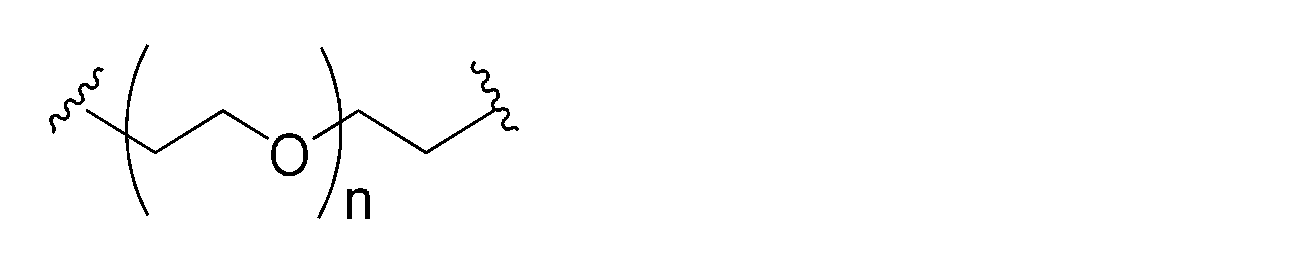
EDAが、以下の構造

4-アミノ-ピペリジン(4AP)が、

AAが、アミノ酸残基であり、式中、pが、1~20の整数であり、
各R15及びR12が、独立して、水素、アルキル、置換アルキル、アリール、及び置換アリールから選択され、任意の2つの隣接するR12基が、環状に連結され、ピペラジニル環を形成してもよく、
R13が、水素、アルキル、置換アルキル、アリール、及び置換アリールから選択される。
In some embodiments, in the first linker L1 ,
T 1 is selected from (C 1 -C 12 )alkyl and substituted (C 1 -C 12 )alkyl;
T 2 , T 3 and T 4 are each independently (C 1 -C 12 )alkyl, substituted (C 1 -C 12 )alkyl, aryl, substituted aryl, heteroaryl, substituted heteroaryl, cycloalkyl, Substituted cycloalkyl, heterocyclyl, and substituted heterocyclyl, (EDA) w , (PEG) n , (AA) p , -(CR 13 OH) h -, 4-amino-piperidine (4AP), acetal group, disulfide, hydrazine, and ester,
V 1 , V 2 , V 3 , and V 4 each independently represent a covalent bond, -CO-, -NR 15 -, -NR 15 (CH 2 ) q -, -NR 15 (C 6 H 4 ) -, -CONR 15 -, -NR 15 CO-, -C(O)O-, -OC(O)-, -O-, -S-, -S(O)-, -SO 2 -, -SO 2 NR 15 -, -NR 15 SO 2 -, and -P(O)OH-, q is an integer from 1 to 6,
During the ceremony,
(PEG) n is
EDA has the following structure
4-amino-piperidine (4AP) is
AA is an amino acid residue, where p is an integer from 1 to 20,
each R 15 and R 12 is independently selected from hydrogen, alkyl, substituted alkyl, aryl, and substituted aryl, and any two adjacent R 12 groups are cyclically linked to form a piperazinyl ring. Good too,
R 13 is selected from hydrogen, alkyl, substituted alkyl, aryl, and substituted aryl.
特定の実施形態において、T1、T2、T3、及びT4、並びにV1、V2、V3、及びV4は、以下から選択される。
T1が、(C1~C12)アルキルであり、V1が、-CO-であり、
T2が、アミノ酸類似体であり、V2が、-NH-であり、
T3が、(PEG)nであり、V3が、-CO-であり、
dが、0である(すなわち、T4及びV4が存在しない)。
In certain embodiments, T 1 , T 2 , T 3 , and T 4 and V 1 , V 2 , V 3 , and V 4 are selected from:
T 1 is (C 1 -C 12 )alkyl, V 1 is -CO-,
T 2 is an amino acid analog, V 2 is -NH-,
T 3 is (PEG) n , V 3 is -CO-,
d is 0 (ie, T 4 and V 4 are absent).
特定の実施形態では、上のリンカー構造の左側は、ヒドラジニル-インドリル又はヒドラジニル-ピロロ-ピリジニルカップリング部分に接続し、上のリンカー構造の右側は、第1の切断可能な部分に接続している。例えば、第1の切断可能な部分がペプチドを含む場合、上のリンカー構造の右側は、第1の切断可能な部分を含むペプチドのアミノ酸に接続し得る。場合によっては、上のリンカー構造の右側のカルボニル基は、第1の切断可能な部分を含むペプチドのアミノ酸とアミド結合を形成し得る。 In certain embodiments, the left side of the upper linker structure connects to a hydrazinyl-indolyl or hydrazinyl-pyrrolo-pyridinyl coupling moiety, and the right side of the upper linker structure connects to a first cleavable moiety. ing. For example, if the first cleavable moiety comprises a peptide, the right side of the linker structure above may connect to an amino acid of the peptide comprising the first cleavable moiety. In some cases, the carbonyl group on the right side of the linker structure above may form an amide bond with the amino acid of the peptide containing the first cleavable moiety.
いくつかの実施形態では、L2は、式-(L21)e-(L22)f-(L23)g-(L24)h-によって記載される第2のリンカーであり、式中、L21、L22、L23、及びL24は、各々独立して、第2のリンカーサブユニットであり、ここで、e、f、g、及びhは、各々独立して、0又は1であり、e、f、g、及びhの合計は、0~4である。 In some embodiments, L 2 is a second linker described by the formula -(L 21 ) e -(L 22 ) f -(L 23 ) g -(L 24 ) h -, where , L 21 , L 22 , L 23 , and L 24 are each independently a second linker subunit, where e, f, g, and h are each independently 0 or 1. , and the sum of e, f, g, and h is 0 to 4.
特定の実施形態では、e、f、g及びhの合計は、0である。これらの場合では、第2のリンカーL2は存在しない。別の言い方をすれば、e、f、g、及びhの合計が0である場合、第2のリンカーL2は、共有結合である。特定の実施形態では、e、f、g及びhの合計は、1である。特定の実施形態では、e、f、g及びhの合計は、2である。特定の実施形態では、e、f、g及びhの合計は、3である。特定の実施形態では、e、f、g及びhの合計は、4である。特定の実施形態では、e、f、g及びhは、各々1である。特定の実施形態では、e、f及びgは、各々1であり、hは、0である。特定の実施形態では、e及びfは、各々1であり、g及びhは、各々0である。特定の実施形態では、eは、1であり、f、g及びhは、各々0である。 In certain embodiments, the sum of e, f, g, and h is zero. In these cases, the second linker L2 is not present. Stated another way, if the sum of e, f, g, and h is 0, then the second linker L2 is a covalent bond. In certain embodiments, the sum of e, f, g, and h is one. In certain embodiments, the sum of e, f, g, and h is two. In certain embodiments, the sum of e, f, g, and h is three. In certain embodiments, the sum of e, f, g, and h is four. In certain embodiments, e, f, g and h are each 1. In certain embodiments, e, f, and g are each 1 and h is 0. In certain embodiments, e and f are each 1 and g and h are each 0. In certain embodiments, e is 1 and f, g and h are each 0.
特定の実施形態では、L21は、薬物(例えば、上の式(I)に示されるようなW1)に接続している。特定の実施形態では、L22は、存在する場合、薬物に接続している。特定の実施形態では、L23は、存在する場合、薬物に接続している。特定の実施形態では、L24は、存在する場合、薬物に接続している。 In certain embodiments, L 21 is attached to a drug (eg, W 1 as shown in Formula (I) above). In certain embodiments, L22 , if present, is attached to a drug. In certain embodiments, L23 , if present, is attached to a drug. In certain embodiments, L24 , if present, is connected to a drug.
任意の好都合なリンカーサブユニットが、第2のリンカーL2に利用され得る。目的のリンカーサブユニットとしては、限定されないが、ポリエチレングリコール、ポリエチレン及びポリアクリレート、アミノ酸残基、炭水化物系ポリマー又はその炭水化物残基及びその誘導体、ポリヌクレオチド、アルキル基、アリール基、ヘテロ環基等のポリマーの単位、それらの組み合わせ、並びにそれらの置換態様が挙げられる。いくつかの実施形態では、L21、L22、L23、及びL24の各々が(存在する場合)、ポリエチレングリコール、修飾ポリエチレングリコール、アミノ酸残基、アルキル基、置換アルキル、アリール基、置換アリール基、及びジアミン(例えば、アルキレンジアミンを含む連結基)から独立して選択される1つ以上の基を含む。 Any convenient linker subunit may be utilized for the second linker L2 . Desired linker subunits include, but are not limited to, polyethylene glycol, polyethylene and polyacrylate, amino acid residues, carbohydrate-based polymers or their carbohydrate residues and their derivatives, polynucleotides, alkyl groups, aryl groups, heterocyclic groups, etc. Included are polymeric units, combinations thereof, and substitutions thereof. In some embodiments, each of L 21 , L 22 , L 23 , and L 24 (if present) is a polyethylene glycol, a modified polyethylene glycol, an amino acid residue, an alkyl group, a substituted alkyl, an aryl group, a substituted aryl and diamines (e.g., linking groups including alkylene diamines).
いくつかの実施形態では、L21(存在する場合)は、ポリエチレングリコール、修飾ポリエチレングリコール、アミノ酸残基、アルキル基、置換アルキル、アリール基、置換アリール基、又はジアミンを含む。いくつかの実施形態では、L21は、ポリエチレングリコールを含む。いくつかの実施形態では、L21は、修飾ポリエチレングリコールを含む。いくつかの実施形態では、L21は、アミノ酸残基を含む。いくつかの実施形態では、L21は、アルキル基又は置換アルキルを含む。いくつかの実施形態では、L21は、アリール基又は置換アリール基を含む。いくつかの実施形態では、L21は、ジアミン(例えば、アルキレンジアミンを含む連結基)を含む。 In some embodiments, L 21 (if present) comprises a polyethylene glycol, a modified polyethylene glycol, an amino acid residue, an alkyl group, a substituted alkyl group, an aryl group, a substituted aryl group, or a diamine. In some embodiments, L 21 comprises polyethylene glycol. In some embodiments, L 21 comprises a modified polyethylene glycol. In some embodiments, L 21 comprises an amino acid residue. In some embodiments, L 21 includes an alkyl group or substituted alkyl. In some embodiments, L 21 comprises an aryl group or a substituted aryl group. In some embodiments, L 21 includes a diamine (eg, a linking group that includes an alkylene diamine).
いくつかの実施形態では、L22(存在する場合)は、ポリエチレングリコール、修飾ポリエチレングリコール、アミノ酸残基、アルキル基、置換アルキル、アリール基、置換アリール基、又はジアミンを含む。いくつかの実施形態では、L22は、ポリエチレングリコールを含む。いくつかの実施形態では、L22は、修飾ポリエチレングリコールを含む。いくつかの実施形態では、L22は、アミノ酸残基を含む。いくつかの実施形態では、L22は、アルキル基又は置換アルキルを含む。いくつかの実施形態では、L22は、アリール基又は置換アリール基を含む。いくつかの実施形態では、L22は、ジアミン(例えば、アルキレンジアミンを含む連結基)を含む。 In some embodiments, L 22 (if present) comprises a polyethylene glycol, a modified polyethylene glycol, an amino acid residue, an alkyl group, a substituted alkyl group, an aryl group, a substituted aryl group, or a diamine. In some embodiments, L 22 comprises polyethylene glycol. In some embodiments, L 22 comprises a modified polyethylene glycol. In some embodiments, L22 comprises an amino acid residue. In some embodiments, L 22 includes an alkyl group or substituted alkyl. In some embodiments, L 22 comprises an aryl group or a substituted aryl group. In some embodiments, L 22 includes a diamine (eg, a linking group that includes an alkylene diamine).
いくつかの実施形態では、L23(存在する場合)は、ポリエチレングリコール、修飾ポリエチレングリコール、アミノ酸残基、アルキル基、置換アルキル、アリール基、置換アリール基、又はジアミンを含む。いくつかの実施形態では、L23は、ポリエチレングリコールを含む。いくつかの実施形態では、L23は、修飾ポリエチレングリコールを含む。いくつかの実施形態では、L23は、アミノ酸残基を含む。いくつかの実施形態では、L23は、アルキル基又は置換アルキルを含む。いくつかの実施形態では、L23は、アリール基又は置換アリール基を含む。いくつかの実施形態では、L23は、ジアミン(例えば、アルキレンジアミンを含む連結基)を含む。 In some embodiments, L 23 (if present) comprises a polyethylene glycol, a modified polyethylene glycol, an amino acid residue, an alkyl group, a substituted alkyl group, an aryl group, a substituted aryl group, or a diamine. In some embodiments, L 23 comprises polyethylene glycol. In some embodiments, L 23 comprises a modified polyethylene glycol. In some embodiments, L23 comprises an amino acid residue. In some embodiments, L 23 includes an alkyl group or substituted alkyl. In some embodiments, L 23 includes an aryl group or a substituted aryl group. In some embodiments, L 23 includes a diamine (eg, a linking group that includes an alkylene diamine).
いくつかの実施形態では、L24(存在する場合)は、ポリエチレングリコール、修飾ポリエチレングリコール、アミノ酸残基、アルキル基、置換アルキル、アリール基、置換アリール基、又はジアミンを含む。いくつかの実施形態では、L24は、ポリエチレングリコールを含む。いくつかの実施形態では、L24は、修飾ポリエチレングリコールを含む。いくつかの実施形態では、L24は、アミノ酸残基を含む。いくつかの実施形態では、L24は、アルキル基又は置換アルキルを含む。いくつかの実施形態では、L24は、アリール基又は置換アリール基を含む。いくつかの実施形態では、L24は、ジアミン(例えば、アルキレンジアミンを含む連結基)を含む。 In some embodiments, L 24 (if present) comprises a polyethylene glycol, a modified polyethylene glycol, an amino acid residue, an alkyl group, a substituted alkyl group, an aryl group, a substituted aryl group, or a diamine. In some embodiments, L 24 comprises polyethylene glycol. In some embodiments, L 24 comprises a modified polyethylene glycol. In some embodiments, L24 comprises an amino acid residue. In some embodiments, L 24 includes an alkyl group or substituted alkyl. In some embodiments, L 24 comprises an aryl group or a substituted aryl group. In some embodiments, L 24 includes a diamine (eg, a linking group that includes an alkylene diamine).
いくつかの実施形態では、L2は、-(L21)e-(L22)f-(L23)g-(L24)h-を含む第2のリンカーであり、式中、
-(L21)e-が、-(T5-V5)e-であり、
-(L22)f-が、-(T6-V6)f-であり、
-(L23)g-が、-(T7-V7)g-であり、
-(L24)h-が、-(T8-V8)h-であり、
式中、T5、T6、T7、及びT8は、存在する場合、テザー基であり、
V5、V6、V7、及びV8は、存在する場合、共有結合又は連結官能基であり、
e、f、g、及びhは、各々独立して、0又は1であり、e、f、g、及びhの合計は、0~4である。
In some embodiments, L 2 is a second linker comprising -(L 21 ) e -(L 22 ) f -(L 23 ) g -(L 24 ) h -, where
-(L 21 ) e - is -(T 5 -V 5 ) e -,
-(L 22 ) f - is -(T 6 -V 6 ) f -,
-(L 23 ) g - is -(T 7 -V 7 ) g -,
-(L 24 ) h - is -(T 8 -V 8 ) h -,
where T5 , T6 , T7 , and T8 , if present, are tether groups;
V5 , V6 , V7 , and V8 , if present, are covalent bonds or linking functional groups;
e, f, g, and h are each independently 0 or 1, and the total of e, f, g, and h is 0 to 4.
特定の実施形態では、L21は、第1の切断可能な部分に接続している。したがって、特定の実施形態では、T5は、第1の切断可能な部分に接続している。特定の実施形態では、V5は、薬物(例えば、上の式(I)に示されるようなW1)に接続している。特定の実施形態では、L22は、存在する場合、薬物に接続している。したがって、特定の実施形態では、T6は、存在する場合、薬物に接続しているか、又はV6は、存在する場合、薬物に接続している。特定の実施形態では、L23は、存在する場合、薬物に接続している。したがって、特定の実施形態では、T7は、存在する場合、薬物に接続しているか、又はV7は、存在する場合、薬物に接続している。特定の実施形態では、L24は、存在する場合、薬物に接続している。したがって、特定の実施形態では、T8は、存在する場合、薬物に接続しているか、又はV8は、存在する場合、薬物に接続している。 In certain embodiments, L 21 connects to the first severable portion. Thus, in certain embodiments, T 5 is connected to the first severable portion. In certain embodiments, V 5 is attached to a drug (eg, W 1 as shown in Formula (I) above). In certain embodiments, L22 , if present, is attached to a drug. Thus, in certain embodiments, T6 , if present, is connected to a drug, or V6 , if present, is connected to a drug. In certain embodiments, L23 , if present, is connected to a drug. Thus, in certain embodiments, T7 , if present, is connected to a drug, or V7 , if present, is connected to a drug. In certain embodiments, L24 , if present, is connected to a drug. Thus, in certain embodiments, T 8 , if present, is connected to a drug, or V 8 , if present, is connected to a drug.
テザー基T5、T6、T7、及びT8に関して、任意の好都合なテザー基が、主題のリンカーで利用され得る。いくつかの実施形態では、T5、T6、T7、及びT8は、各々、(C1~C12)アルキル、置換(C1~C12)アルキル、アリール、置換アリール、ヘテロアリール、置換ヘテロアリール、シクロアルキル、置換シクロアルキル、ヘテロシクリル、及び置換ヘテロシクリル、(EDA)w、(PEG)n、(AA)p、-(CR13OH)h-、4-アミノ-ピペリジン(4AP)、アセタール基、ジスルフィド、ヒドラジン、及びエステルから独立して選択される1つ以上の基を含み、wが、1~20の整数であり、nが、1~30の整数であり、pが、1~20の整数であり、hが、1~12の整数である。 Regarding tether groups T 5 , T 6 , T 7 , and T 8 , any convenient tether group may be utilized in the subject linker. In some embodiments, T 5 , T 6 , T 7 , and T 8 are each (C 1 -C 12 )alkyl, substituted (C 1 -C 12 )alkyl, aryl, substituted aryl, heteroaryl, Substituted heteroaryl, cycloalkyl, substituted cycloalkyl, heterocyclyl, and substituted heterocyclyl, (EDA) w , (PEG) n , (AA) p , -(CR 13 OH) h -, 4-amino-piperidine (4AP), one or more groups independently selected from acetal groups, disulfides, hydrazines, and esters, w is an integer from 1 to 20, n is an integer from 1 to 30, and p is 1 is an integer from 1 to 20, and h is an integer from 1 to 12.
特定の実施形態では、テザー基(例えば、T5、T6、T7、及び/又はT8)は、(C1~C12)アルキル又は置換(C1~C12)アルキルを含む。特定の実施形態では、(C1~C12)アルキルは、1~12個の炭素原子、例えば、1~10個の炭素原子、又は1~8個の炭素原子、又は1~6個の炭素原子、又は1~5個の炭素原子、又は1~4個の炭素原子、又は1~3個の炭素原子を含む直鎖又は分枝鎖のアルキル基である。場合によっては、(C1~C12)アルキルは、アルキル又は置換アルキル、例えば、(C1~C12)アルキル、又は(C1~C10)アルキル、又は(C1~C6)アルキル、又は(C1~C3)アルキルであり得る。場合によっては、(C1~C12)アルキルは、C2-アルキルである。例えば、(C1~C12)アルキルは、アルキレン又は置換アルキレン、例えば、(C1~C12)アルキレン、又は(C1~C10)アルキレン、又は(C1~C6)アルキレン、又は(C1~C3)アルキレンであり得る。場合によっては、(C1~C12)アルキルは、C2-アルキレン(例えば、CH2CH2)である。場合によっては、(C1~C12)アルキルは、C1-アルキレン(例えば、CH2)である。 In certain embodiments, the tether group (eg, T 5 , T 6 , T 7 , and/or T 8 ) comprises (C 1 -C 12 )alkyl or substituted (C 1 -C 12 )alkyl. In certain embodiments, (C 1 -C 12 )alkyl has 1 to 12 carbon atoms, such as 1 to 10 carbon atoms, or 1 to 8 carbon atoms, or 1 to 6 carbon atoms. a straight-chain or branched alkyl group containing 1 to 5 carbon atoms, or 1 to 4 carbon atoms, or 1 to 3 carbon atoms. In some cases, (C 1 -C 12 )alkyl is alkyl or substituted alkyl, such as (C 1 -C 12 )alkyl, or (C 1 -C 10 )alkyl, or (C 1 -C 6 )alkyl, or (C 1 -C 3 )alkyl. In some cases, (C 1 -C 12 )alkyl is C 2 -alkyl. For example, (C 1 -C 12 )alkyl is alkylene or substituted alkylene, such as (C 1 -C 12 )alkylene, or (C 1 -C 10 )alkylene, or (C 1 -C 6 )alkylene, or ( C 1 -C 3 ) alkylene. In some cases, (C 1 -C 12 )alkyl is C 2 -alkylene (eg, CH 2 CH 2 ). In some cases, (C 1 -C 12 )alkyl is C 1 -alkylene (eg, CH 2 ).
特定の実施形態では、置換(C1~C12)アルキルは、1~12個の炭素原子、例えば、1~10個の炭素原子、又は1~8個の炭素原子、又は1~6個の炭素原子、又は1~5個の炭素原子、又は1~4個の炭素原子、又は1~3個の炭素原子を含む直鎖又は分枝鎖の置換アルキル基である。場合によっては、置換(C1~C12)アルキルは、置換アルキル、例えば、置換(C1~C12)アルキル、又は置換(C1~C10)アルキル、又は置換(C1~C6)アルキル、又は置換(C1~C3)アルキルであり得る。場合によっては、置換(C1~C12)アルキルは、置換C2-アルキルである。例えば、置換(C1~C12)アルキルは、置換アルキレン、例えば、置換(C1~C12)アルキレン、又は置換(C1~C10)アルキレン、又は置換(C1~C6)アルキレン、又は置換(C1~C3)アルキレンであり得る。場合によっては、置換(C1~C12)アルキルは、置換C2-アルキレンである。場合によっては、置換(C1~C12)アルキルは、置換C1-アルキレンである。 In certain embodiments, substituted (C 1 -C 12 )alkyl has 1 to 12 carbon atoms, such as 1 to 10 carbon atoms, or 1 to 8 carbon atoms, or 1 to 6 carbon atoms. A straight-chain or branched substituted alkyl group containing carbon atoms, or 1 to 5 carbon atoms, or 1 to 4 carbon atoms, or 1 to 3 carbon atoms. In some cases, substituted (C 1 -C 12 )alkyl is substituted alkyl, such as substituted (C 1 -C 12 )alkyl, or substituted (C 1 -C 10 )alkyl, or substituted (C 1 -C 6 )alkyl. It can be alkyl or substituted (C 1 -C 3 )alkyl. In some cases, substituted (C 1 -C 12 )alkyl is substituted C 2 -alkyl. For example, substituted (C 1 -C 12 )alkyl means substituted alkylene, such as substituted (C 1 -C 12 )alkylene, or substituted (C 1 -C 10 )alkylene, or substituted (C 1 -C 6 )alkylene, or substituted (C 1 -C 3 )alkylene. In some cases, substituted (C 1 -C 12 )alkyl is substituted C 2 -alkylene. In some cases, substituted (C 1 -C 12 )alkyl is substituted C 1 -alkylene.
特定の実施形態では、テザー基(例えば、T5、T6、T7、及び/又はT8)は、アリール、置換アリール、ヘテロアリール、置換ヘテロアリール、シクロアルキル、置換シクロアルキル、ヘテロシクリル、又は置換ヘテロシクリルを含む。場合によっては、テザー基は、アリール又は置換アリールを含む。例えば、アリールは、フェニル又は置換フェニルであり得る。場合によっては、テザー基(例えば、T5、T6、T7、及び/又はT8)は、ヘテロアリール又は置換ヘテロアリールを含む。場合によっては、テザー基(例えば、T5、T6、T7、及び/又はT8)は、シクロアルキル又は置換シクロアルキルを含む。場合によっては、テザー基(例えば、T5、T6、T7、及び/又はT8)は、ヘテロシクリル又は置換ヘテロシクリルを含む。 In certain embodiments, the tether group (e.g., T 5 , T 6 , T 7 , and/or T 8 ) is aryl, substituted aryl, heteroaryl, substituted heteroaryl, cycloalkyl, substituted cycloalkyl, heterocyclyl, or Contains substituted heterocyclyl. In some cases, the tether group includes aryl or substituted aryl. For example, aryl can be phenyl or substituted phenyl. In some cases, the tether group (eg, T 5 , T 6 , T 7 , and/or T 8 ) includes a heteroaryl or substituted heteroaryl. In some cases, the tether group (eg, T 5 , T 6 , T 7 , and/or T 8 ) includes cycloalkyl or substituted cycloalkyl. In some cases, the tether group (eg, T 5 , T 6 , T 7 , and/or T 8 ) comprises heterocyclyl or substituted heterocyclyl.
特定の実施形態では、テザー基(例えば、T5、T6、T7、及び/又はT8)は、エチレンジアミン(EDA)部分、例えば、上述のEDA部分、例えば、以下の構造によって記載されるEDA部分

式中、yが、1~6、又は0若しくは1の整数であり、各R12が、独立して、水素、アルキル、置換アルキル、アルケニル、置換アルケニル、アルキニル、置換アルキニル、アルコキシ、置換アルコキシ、アミノ、置換アミノ、カルボキシル、カルボキシルエステル、アシル、アシルオキシ、アシルアミノ、アミノアシル、アルキルアミド、置換アルキルアミド、スルホニル、チオアルコキシ、置換チオアルコキシ、アリール、置換アリール、ヘテロアリール、置換ヘテロアリール、シクロアルキル、置換シクロアルキル、ヘテロシクリル、及び置換ヘテロシクリルから選択される。特定の実施形態では、yは、1、2、3、4、5、又は6である。特定の実施形態では、yは、1であり、rは、0である。特定の実施形態では、yは、1であり、rは、1である。特定の実施形態では、yは、2であり、rは、0である。特定の実施形態では、yは、2であり、rは、1である。特定の実施形態では、各R12は、独立して、水素、アルキル、置換アルキル、アリール、及び置換アリールから選択される。特定の実施形態では、EDAの任意の2つの隣接するR12基は、環状に連結され、例えば、ピペラジニル環を形成してもよい。特定の実施形態では、yは、1であり、2つの隣接するR12基は、アルキル基であり、環状に連結され、ピペラジニル環を形成する。特定の実施形態では、yは、1であり、隣接するR12基は、水素、アルキル(例えば、メチル)、及び置換アルキル(例えば、低級アルキル-OH、例えば、エチル-OH又はプロピル-OH)から選択される。
In certain embodiments, the tether group (e.g., T 5 , T 6 , T 7 , and/or T 8 ) is an ethylenediamine (EDA) moiety, e.g., an EDA moiety described above, e.g., described by the structure below. EDA part
In the formula, y is an integer of 1 to 6, or 0 or 1, and each R 12 is independently hydrogen, alkyl, substituted alkyl, alkenyl, substituted alkenyl, alkynyl, substituted alkynyl, alkoxy, substituted alkoxy, Amino, substituted amino, carboxyl, carboxyl ester, acyl, acyloxy, acylamino, aminoacyl, alkylamido, substituted alkylamido, sulfonyl, thioalkoxy, substituted thioalkoxy, aryl, substituted aryl, heteroaryl, substituted heteroaryl, cycloalkyl, substituted selected from cycloalkyl, heterocyclyl, and substituted heterocyclyl. In certain embodiments, y is 1, 2, 3, 4, 5, or 6. In certain embodiments, y is 1 and r is 0. In certain embodiments, y is 1 and r is 1. In certain embodiments, y is 2 and r is 0. In certain embodiments, y is 2 and r is 1. In certain embodiments, each R 12 is independently selected from hydrogen, alkyl, substituted alkyl, aryl, and substituted aryl. In certain embodiments, any two adjacent R 12 groups of EDA may be cyclically linked, eg, to form a piperazinyl ring. In certain embodiments, y is 1 and two adjacent R 12 groups are alkyl groups and are cyclically linked to form a piperazinyl ring. In certain embodiments, y is 1 and the adjacent R groups are hydrogen, alkyl (e.g., methyl), and substituted alkyl (e.g., lower alkyl-OH, e.g., ethyl-OH or propyl-OH) selected from.
特定の実施形態では、テザー基(例えば、T5、T6、T7、及び/又はT8)は、上述の4-アミノ-ピペリジン(4AP)部分、例えば、以下の構造によって記載される4AP部分

式中、R12が、水素、アルキル、置換アルキル、ポリエチレングリコール部分(例えば、ポリエチレングリコール、又は修飾ポリエチレングリコール)、アルケニル、置換アルケニル、アルキニル、置換アルキニル、アルコキシ、置換アルコキシ、アミノ、置換アミノ、カルボキシル、カルボキシルエステル、アシル、アシルオキシ、アシルアミノ、アミノアシル、アルキルアミド、置換アルキルアミド、スルホニル、チオアルコキシ、置換チオアルコキシ、アリール、置換アリール、ヘテロアリール、置換ヘテロアリール、シクロアルキル、置換シクロアルキル、ヘテロシクリル、及び置換ヘテロシクリルから選択される。特定の実施形態では、R12は、ポリエチレングリコール部分である。特定の実施形態では、R12は、カルボキシ修飾ポリエチレングリコールである。
In certain embodiments, the tether group (e.g., T 5 , T 6 , T 7 , and/or T 8 ) is a 4-amino-piperidine (4AP) moiety described above, e.g., 4AP described by the structure below. part
In the formula, R 12 is hydrogen, alkyl, substituted alkyl, polyethylene glycol moiety (e.g., polyethylene glycol or modified polyethylene glycol), alkenyl, substituted alkenyl, alkynyl, substituted alkynyl, alkoxy, substituted alkoxy, amino, substituted amino, carboxyl , carboxyl ester, acyl, acyloxy, acylamino, aminoacyl, alkylamide, substituted alkylamide, sulfonyl, thioalkoxy, substituted thioalkoxy, aryl, substituted aryl, heteroaryl, substituted heteroaryl, cycloalkyl, substituted cycloalkyl, heterocyclyl, and selected from substituted heterocyclyl. In certain embodiments, R 12 is a polyethylene glycol moiety. In certain embodiments, R 12 is carboxy-modified polyethylene glycol.
特定の実施形態では、R12は、以下の式によって記載されるポリエチレングリコール部分(PEG)kを含み、以下の構造

式中、kが、1~20、例えば、1~18、又は1~16、又は1~14、又は1~12、又は1~10、又は1~8、又は1~6、又は1~4、又は1若しくは2、例えば、1、2、3、4、5、6、7、8、9、10、11、12、13、14、15、16、17、18、19又は20の整数である。場合によっては、kは、2である。特定の実施形態では、R17は、OH、COOH、又はCOORから選択され、Rは、アルキル、置換アルキル、アルケニル、置換アルケニル、アルキニル、置換アルキニル、アリール、置換アリール、ヘテロアリール、置換ヘテロアリール、シクロアルキル、置換シクロアルキル、ヘテロシクリル、及び置換ヘテロシクリルから選択される。特定の実施形態では、R17は、COOHである。
In certain embodiments, R 12 comprises a polyethylene glycol moiety (PEG) k described by the formula:
In the formula, k is 1 to 20, such as 1 to 18, or 1 to 16, or 1 to 14, or 1 to 12, or 1 to 10, or 1 to 8, or 1 to 6, or 1 to 4 , or an integer of 1 or 2, such as 1, 2, 3, 4, 5, 6, 7, 8, 9, 10, 11, 12, 13, 14, 15, 16, 17, 18, 19 or 20 be. In some cases, k is 2. In certain embodiments, R 17 is selected from OH, COOH, or COOR, and R is alkyl, substituted alkyl, alkenyl, substituted alkenyl, alkynyl, substituted alkynyl, aryl, substituted aryl, heteroaryl, substituted heteroaryl, selected from cycloalkyl, substituted cycloalkyl, heterocyclyl, and substituted heterocyclyl. In certain embodiments, R 17 is COOH.
特定の実施形態では、テザー基(例えば、T5、T6、T7、及び/又はT8)は、上述のポリエチレングリコール部分(PEG)n、例えば、以下の構造によって記載される(PEG)n部分

式中、nが、1~50、例えば、1~40、1~30、1~20、1~12、又は1~6、例えば、1、2、3、4、5、6、7、8、9、10、11、12、13、14、15、16、17、18、19、又は20の整数である。場合によっては、nは、2である。場合によっては、nは、3である。場合によっては、nは、6である。場合によっては、nは、12である。
In certain embodiments, the tether group (e.g., T 5 , T 6 , T 7 , and/or T 8 ) is a polyethylene glycol moiety (PEG) n described above, e.g., (PEG) described by the structure below. n part
In the formula, n is 1 to 50, such as 1 to 40, 1 to 30, 1 to 20, 1 to 12, or 1 to 6, such as 1, 2, 3, 4, 5, 6, 7, 8 , 9, 10, 11, 12, 13, 14, 15, 16, 17, 18, 19, or 20. In some cases, n is 2. In some cases, n is 3. In some cases, n is 6. In some cases, n is 12.
特定の実施形態では、テザー基(例えば、T5、T6、T7、及び/又はT8)は、(AA)pを含み、式中、AAが、アミノ酸残基である。任意の好都合なアミノ酸が利用され得る。目的のアミノ酸としては、限定されないが、L-アミノ酸及びD-アミノ酸、天然に存在するアミノ酸、例えば、20個の主なアルファ-アミノ酸及びベータ-アラニンのうちのいずれか、天然に存在しないアミノ酸(例えば、アミノ酸類似体)、例えば、天然に存在しないアルファ-アミノ酸又は天然に存在しないベータ-アミノ酸等が挙げられる。特定の実施形態では、pは、1~50、例えば、1~40、1~30、1~20、1~12、又は1~6、例えば、1、2、3、4、5、6、7、8、9、10、11、12、13、14、15、16、17、18、19、又は20の整数である。特定の実施形態では、pは、1である。特定の実施形態では、pは、2である。 In certain embodiments, the tether group (eg, T 5 , T 6 , T 7 , and/or T 8 ) comprises (AA) p , where AA is an amino acid residue. Any convenient amino acid may be utilized. Amino acids of interest include, but are not limited to, L-amino acids and D-amino acids, naturally occurring amino acids such as any of the 20 major alpha-amino acids and beta-alanine, non-naturally occurring amino acids ( For example, amino acid analogs), such as non-naturally occurring alpha-amino acids or non-naturally occurring beta-amino acids. In certain embodiments, p is 1-50, such as 1-40, 1-30, 1-20, 1-12, or 1-6, such as 1, 2, 3, 4, 5, 6, It is an integer of 7, 8, 9, 10, 11, 12, 13, 14, 15, 16, 17, 18, 19, or 20. In certain embodiments, p is 1. In certain embodiments, p is 2.
特定の実施形態では、テザー基(例えば、T5、T6、T7、及び/又はT8)は、式-(CR13OH)h-によって記載される部分を含み、式中、hが0であるか、又はnが、1~50、例えば、1~40、1~30、1~20、1~12、又は1~6、例えば、1、2、3、4、5、6、7、8、9、10、11又は12の整数である。特定の実施形態では、hは、1である。特定の実施形態では、hは、2である。特定の実施形態では、R13は、水素、アルキル、置換アルキル、アルケニル、置換アルケニル、アルキニル、置換アルキニル、アルコキシ、置換アルコキシ、アミノ、置換アミノ、カルボキシル、カルボキシルエステル、アシル、アシルオキシ、アシルアミノ、アミノアシル、アルキルアミド、置換アルキルアミド、スルホニル、チオアルコキシ、置換チオアルコキシ、アリール、置換アリール、ヘテロアリール、置換ヘテロアリール、シクロアルキル、置換シクロアルキル、ヘテロシクリル、及び置換ヘテロシクリルから選択される。特定の実施形態では、R13は、水素である。特定の実施形態では、R13は、アルキル若しくは置換アルキル、例えば、C1~6アルキル若しくはC1~6置換アルキル、又はC1~4アルキル若しくはC1~4置換アルキル、又はC1~3アルキル若しくはC1~3置換アルキルである。特定の実施形態では、R13は、アルケニル若しくは置換アルケニル、例えば、C2~6アルケニル若しくはC2~6置換アルケニル、又はC2~4アルケニル若しくはC2~4置換アルケニル、又はC2~3アルケニル若しくはC2~3置換アルケニルである。特定の実施形態では、R13は、アルキニル又は置換アルキニルである。特定の実施形態では、R13は、アルコキシ又は置換アルコキシである。特定の実施形態では、R13は、アミノ又は置換アミノである。特定の実施形態では、R13は、カルボキシル又はカルボキシルエステルである。特定の実施形態では、R13は、アシル又はアシルオキシである。特定の実施形態では、R13は、アシルアミノ又はアミノアシルである。特定の実施形態では、R13は、アルキルアミド又は置換アルキルアミドである。特定の実施形態では、R13は、スルホニルである。特定の実施形態では、R13は、チオアルコキシ又は置換チオアルコキシである。特定の実施形態では、R13は、アリール若しくは置換アリール、例えば、C5~8アリール若しくはC5~8置換アリール、例えば、C5アリール若しくはC5置換アリール、又はC6アリール若しくはC6置換アリールである。特定の実施形態では、R13は、ヘテロアリール若しくは置換ヘテロアリール、例えば、C5~8ヘテロアリール若しくはC5~8置換ヘテロアリール、例えば、C5ヘテロアリール若しくはC5置換ヘテロアリール、又はC6ヘテロアリール若しくはC6置換ヘテロアリールである。特定の実施形態では、R13は、シクロアルキル若しくは置換シクロアルキル、例えば、C3~8シクロアルキル若しくはC3~8置換シクロアルキル、例えば、C3~6シクロアルキル若しくはC3~6置換シクロアルキル、又はC3~5シクロアルキル若しくはC3~5置換シクロアルキルである。特定の実施形態では、R13は、ヘテロシクリル若しくは置換ヘテロシクリル、例えば、C3~8ヘテロシクリル若しくはC3~8置換ヘテロシクリル、例えば、C3~6ヘテロシクリル若しくはC3~6置換ヘテロシクリル、又はC3~5ヘテロシクリル若しくはC3~5置換ヘテロシクリルである。 In certain embodiments, the tether group (e.g., T 5 , T 6 , T 7 , and/or T 8 ) includes a moiety described by the formula -(CR 13 OH) h -, where h is 0, or n is 1 to 50, such as 1 to 40, 1 to 30, 1 to 20, 1 to 12, or 1 to 6, such as 1, 2, 3, 4, 5, 6, It is an integer of 7, 8, 9, 10, 11 or 12. In certain embodiments, h is 1. In certain embodiments, h is 2. In certain embodiments, R 13 is hydrogen, alkyl, substituted alkyl, alkenyl, substituted alkenyl, alkynyl, substituted alkynyl, alkoxy, substituted alkoxy, amino, substituted amino, carboxyl, carboxyl ester, acyl, acyloxy, acylamino, aminoacyl, selected from alkylamides, substituted alkylamides, sulfonyl, thioalkoxy, substituted thioalkoxy, aryl, substituted aryl, heteroaryl, substituted heteroaryl, cycloalkyl, substituted cycloalkyl, heterocyclyl, and substituted heterocyclyl. In certain embodiments, R 13 is hydrogen. In certain embodiments, R 13 is alkyl or substituted alkyl, such as C 1-6 alkyl or C 1-6 substituted alkyl, or C 1-4 alkyl or C 1-4 substituted alkyl, or C 1-3 alkyl or C 1-3 substituted alkyl. In certain embodiments, R 13 is alkenyl or substituted alkenyl, such as C 2-6 alkenyl or C 2-6 substituted alkenyl, or C 2-4 alkenyl or C 2-4 substituted alkenyl, or C 2-3 alkenyl or C 2-3 substituted alkenyl. In certain embodiments, R 13 is alkynyl or substituted alkynyl. In certain embodiments, R 13 is alkoxy or substituted alkoxy. In certain embodiments, R 13 is amino or substituted amino. In certain embodiments, R 13 is carboxyl or carboxyl ester. In certain embodiments, R 13 is acyl or acyloxy. In certain embodiments, R 13 is acylamino or aminoacyl. In certain embodiments, R 13 is an alkylamide or a substituted alkylamide. In certain embodiments, R 13 is sulfonyl. In certain embodiments, R 13 is thioalkoxy or substituted thioalkoxy. In certain embodiments, R 13 is aryl or substituted aryl, such as C 5-8 aryl or C 5-8 substituted aryl, such as C 5 -aryl or C 5 -substituted aryl, or C 6- aryl or C 6- substituted aryl. It is. In certain embodiments, R 13 is heteroaryl or substituted heteroaryl, such as C 5-8 heteroaryl or C 5-8 substituted heteroaryl, such as C 5 heteroaryl or C 5 substituted heteroaryl, or C 6 Heteroaryl or C6 -substituted heteroaryl. In certain embodiments, R 13 is cycloalkyl or substituted cycloalkyl, such as C 3-8 cycloalkyl or C 3-8 substituted cycloalkyl, such as C 3-6 cycloalkyl or C 3-6 substituted cycloalkyl. , or C 3-5 cycloalkyl or C 3-5 substituted cycloalkyl. In certain embodiments, R 13 is heterocyclyl or substituted heterocyclyl, such as C 3-8 heterocyclyl or C 3-8 substituted heterocyclyl, such as C 3-6 heterocyclyl or C 3-6 substituted heterocyclyl, or C 3-5 Heterocyclyl or C 3-5 substituted heterocyclyl.
特定の実施形態では、R13は、水素、アルキル、置換アルキル、アリール、及び置換アリールから選択される。これらの実施形態では、アルキル、置換アルキル、アリール、及び置換アリールは、R13について上に記載されている通りである。 In certain embodiments, R 13 is selected from hydrogen, alkyl, substituted alkyl, aryl, and substituted aryl. In these embodiments, alkyl, substituted alkyl, aryl, and substituted aryl are as described above for R13 .
連結官能基V5、V6、V7、及びV8に関して、任意の好都合な連結官能基が、第2のリンカーL2で利用され得る。目的の連結官能基としては、限定されないが、アミノ、カルボニル、アミド、オキシカルボニル、カルボキシ、スルホニル、スルホキシド、スルホニルアミノ、アミノスルホニル、チオ、オキシ、ホスホ、ホスホロアミデート、チオホスホライデート等が挙げられる。いくつかの実施形態では、V5、V6、V7、及びV8は、各々独立して、共有結合、-CO-、-NR15-、-NR15(CH2)q-、-NR15(C6H4)-、-CONR15-、-NR15CO-、-C(O)O-、-OC(O)-、-O-、-S-、-S(O)-、-SO2-、-SO2NR15-、-NR15SO2-、及び-P(O)OH-から選択され、qは、1~6の整数である。特定の実施形態では、qは、1~6(例えば、1、2、3、4、5、又は6)の整数である。特定の実施形態では、qは、1である。特定の実施形態では、qは、2である。 Regarding the linking functionalities V 5 , V 6 , V 7 , and V 8 , any convenient linking functionality may be utilized in the second linker L 2 . Desired linking functional groups include, but are not limited to, amino, carbonyl, amido, oxycarbonyl, carboxy, sulfonyl, sulfoxide, sulfonylamino, aminosulfonyl, thio, oxy, phospho, phosphoramidate, thiophosphoridate, and the like. Can be mentioned. In some embodiments, V 5 , V 6 , V 7 , and V 8 are each independently a covalent bond, -CO-, -NR 15 -, -NR 15 (CH 2 ) q -, -NR 15 (C 6 H 4 )-, -CONR 15 -, -NR 15 CO-, -C(O)O-, -OC(O)-, -O-, -S-, -S(O)-, selected from -SO 2 -, -SO 2 NR 15 -, -NR 15 SO 2 -, and -P(O)OH-, and q is an integer from 1 to 6. In certain embodiments, q is an integer from 1 to 6 (eg, 1, 2, 3, 4, 5, or 6). In certain embodiments, q is 1. In certain embodiments, q is 2.
いくつかの実施形態では、各R15は、独立して、水素、アルキル、置換アルキル、アルケニル、置換アルケニル、アルキニル、置換アルキニル、アルコキシ、置換アルコキシ、アミノ、置換アミノ、カルボキシル、カルボキシルエステル、アシル、アシルオキシ、アシルアミノ、アミノアシル、アルキルアミド、置換アルキルアミド、スルホニル、チオアルコキシ、置換チオアルコキシ、アリール、置換アリール、ヘテロアリール、置換ヘテロアリール、シクロアルキル、置換シクロアルキル、ヘテロシクリル、及び置換ヘテロシクリルから選択される。 In some embodiments, each R 15 is independently hydrogen, alkyl, substituted alkyl, alkenyl, substituted alkenyl, alkynyl, substituted alkynyl, alkoxy, substituted alkoxy, amino, substituted amino, carboxyl, carboxyl ester, acyl, selected from acyloxy, acylamino, aminoacyl, alkylamido, substituted alkylamido, sulfonyl, thioalkoxy, substituted thioalkoxy, aryl, substituted aryl, heteroaryl, substituted heteroaryl, cycloalkyl, substituted cycloalkyl, heterocyclyl, and substituted heterocyclyl .
各R15についての様々な可能性は、以下により詳細に記載される。特定の実施形態では、R15は、水素である。特定の実施形態では、各R15は、水素である。特定の実施形態では、R15は、アルキル若しくは置換アルキル、例えば、C1~6アルキル若しくはC1~6置換アルキル、又はC1~4アルキル若しくはC1~4置換アルキル、又はC1~3アルキル若しくはC1~3置換アルキルである。特定の実施形態では、R15は、アルケニル若しくは置換アルケニル、例えば、C2~6アルケニル若しくはC2~6置換アルケニル、又はC2~4アルケニル若しくはC2~4置換アルケニル、又はC2~3アルケニル若しくはC2~3置換アルケニルである。特定の実施形態では、R15は、アルキニル又は置換アルキニルである。特定の実施形態では、R15は、アルコキシ又は置換アルコキシである。特定の実施形態では、R15は、アミノ又は置換アミノである。特定の実施形態では、R15は、カルボキシル又はカルボキシルエステルである。特定の実施形態では、R15は、アシル又はアシルオキシである。特定の実施形態では、R15は、アシルアミノ又はアミノアシルである。特定の実施形態では、R15は、アルキルアミド又は置換アルキルアミドである。特定の実施形態では、R15は、スルホニルである。特定の実施形態では、R15は、チオアルコキシ又は置換チオアルコキシである。特定の実施形態では、R15は、アリール若しくは置換アリール、例えば、C5~8アリール若しくはC5~8置換アリール、例えば、C5アリール若しくはC5置換アリール、又はC6アリール若しくはC6置換アリールである。特定の実施形態では、R15は、ヘテロアリール若しくは置換ヘテロアリール、例えば、C5~8ヘテロアリール若しくはC5~8置換ヘテロアリール、例えば、C5ヘテロアリール若しくはC5置換ヘテロアリール、又はC6ヘテロアリール若しくはC6置換ヘテロアリールである。特定の実施形態では、R15は、シクロアルキル若しくは置換シクロアルキル、例えば、C3~8シクロアルキル若しくはC3~8置換シクロアルキル、例えば、C3~6シクロアルキル若しくはC3~6置換シクロアルキル、又はC3~5シクロアルキル若しくはC3~5置換シクロアルキルである。特定の実施形態では、R15は、ヘテロシクリル若しくは置換ヘテロシクリル、例えば、C3~8ヘテロシクリル若しくはC3~8置換ヘテロシクリル、例えば、C3~6ヘテロシクリル若しくはC3~6置換ヘテロシクリル、又はC3~5ヘテロシクリル若しくはC3~5置換ヘテロシクリルである。 The various possibilities for each R 15 are described in more detail below. In certain embodiments, R 15 is hydrogen. In certain embodiments, each R 15 is hydrogen. In certain embodiments, R 15 is alkyl or substituted alkyl, such as C 1-6 alkyl or C 1-6 substituted alkyl, or C 1-4 alkyl or C 1-4 substituted alkyl, or C 1-3 alkyl or C 1-3 substituted alkyl. In certain embodiments, R 15 is alkenyl or substituted alkenyl, such as C 2-6 alkenyl or C 2-6 substituted alkenyl, or C 2-4 alkenyl or C 2-4 substituted alkenyl, or C 2-3 alkenyl or C 2-3 substituted alkenyl. In certain embodiments, R 15 is alkynyl or substituted alkynyl. In certain embodiments, R 15 is alkoxy or substituted alkoxy. In certain embodiments, R 15 is amino or substituted amino. In certain embodiments, R 15 is carboxyl or carboxyl ester. In certain embodiments, R 15 is acyl or acyloxy. In certain embodiments, R 15 is acylamino or aminoacyl. In certain embodiments, R 15 is an alkylamide or a substituted alkylamide. In certain embodiments, R 15 is sulfonyl. In certain embodiments, R 15 is thioalkoxy or substituted thioalkoxy. In certain embodiments, R 15 is aryl or substituted aryl, such as C 5-8 aryl or C 5-8 substituted aryl, such as C 5 aryl or C 5 substituted aryl, or C 6 aryl or C 6 substituted aryl. It is. In certain embodiments, R 15 is heteroaryl or substituted heteroaryl, such as C 5-8 heteroaryl or C 5-8 substituted heteroaryl, such as C 5 heteroaryl or C 5 substituted heteroaryl, or C 6 Heteroaryl or C6 -substituted heteroaryl. In certain embodiments, R 15 is cycloalkyl or substituted cycloalkyl, such as C 3-8 cycloalkyl or C 3-8 substituted cycloalkyl, such as C 3-6 cycloalkyl or C 3-6 substituted cycloalkyl. , or C 3-5 cycloalkyl or C 3-5 substituted cycloalkyl. In certain embodiments, R 15 is heterocyclyl or substituted heterocyclyl, such as C 3-8 heterocyclyl or C 3-8 substituted heterocyclyl, such as C 3-6 heterocyclyl or C 3-6 substituted heterocyclyl, or C 3-5 Heterocyclyl or C 3-5 substituted heterocyclyl.
特定の実施形態では、各R15は、独立して、水素、アルキル、置換アルキル、アルケニル、置換アルケニル、アルキニル、置換アルキニル、カルボキシル、カルボキシルエステル、アシル、アリール、置換アリール、ヘテロアリール、置換ヘテロアリール、シクロアルキル、置換シクロアルキル、ヘテロシクリル、及び置換ヘテロシクリルから選択される。これらの実施形態では、水素、アルキル、置換アルキル、アルケニル、置換アルケニル、アルキニル、置換アルキニル、カルボキシル、カルボキシルエステル、アシル、アリール、置換アリール、ヘテロアリール、置換ヘテロアリール、シクロアルキル、置換シクロアルキル、ヘテロシクリル、及び置換ヘテロシクリル置換基は、R15について上に記載されている通りである。 In certain embodiments, each R 15 is independently hydrogen, alkyl, substituted alkyl, alkenyl, substituted alkenyl, alkynyl, substituted alkynyl, carboxyl, carboxyl ester, acyl, aryl, substituted aryl, heteroaryl, substituted heteroaryl , cycloalkyl, substituted cycloalkyl, heterocyclyl, and substituted heterocyclyl. In these embodiments, hydrogen, alkyl, substituted alkyl, alkenyl, substituted alkenyl, alkynyl, substituted alkynyl, carboxyl, carboxyl ester, acyl, aryl, substituted aryl, heteroaryl, substituted heteroaryl, cycloalkyl, substituted cycloalkyl, heterocyclyl , and substituted heterocyclyl substituents are as described above for R15 .
特定の実施形態では、テザー基は、アセタール基、ジスルフィド、ヒドラジン、又はエステルを含む。いくつかの実施形態では、テザー基は、アセタール基を含む。いくつかの実施形態では、テザー基は、ジスルフィドを含む。いくつかの実施形態では、テザー基は、ヒドラジンを含む。いくつかの実施形態では、テザー基は、エステルを含む。 In certain embodiments, the tether group includes an acetal group, disulfide, hydrazine, or ester. In some embodiments, the tether group includes an acetal group. In some embodiments, the tether group includes a disulfide. In some embodiments, the tether group comprises hydrazine. In some embodiments, the tether group includes an ester.
上述のように、いくつかの実施形態では、L2は、-(T5-V5)e-(T6-V6)f-(T7-V7)g-(T8-V8)h-を含む第2のリンカーであり、ここで、e、f、g、及びhが、各々独立して、0又は1であり、e、f、g、及びhの合計が、0~4である。 As mentioned above, in some embodiments, L 2 is -(T 5 -V 5 ) e -(T 6 -V 6 ) f -(T 7 -V 7 ) g -(T 8 -V 8 ) h -, where e, f, g, and h are each independently 0 or 1, and the sum of e, f, g, and h is 0 to It is 4.
いくつかの実施形態では、第2のリンカーL2において、
T5、T6、T7、及びT8が、各々独立して、(C1~C12)アルキル、置換(C1~C12)アルキル、アリール、置換アリール、ヘテロアリール、置換ヘテロアリール、シクロアルキル、置換シクロアルキル、ヘテロシクリル、若しくは置換ヘテロシクリル、(EDA)w、(PEG)n、(AA)p、-(CR13OH)h-、4-アミノ-ピペリジン(4AP)、アセタール基、ジスルフィド、ヒドラジン、及びエステルから選択され、
V5、V6、V7、及びV8が、各々独立して、共有結合、-CO-、-NR15-、-NR15(CH2)q-、-NR15(C6H4)-、-CONR15-、-NR15CO-、-C(O)O-、-OC(O)-、-O-、-S-、-S(O)-、-SO2-、-SO2NR15-、-NR15SO2-、及び-P(O)OH-から選択され、qが、1~6の整数であり、
式中、
(PEG)nが、

EDAが、以下の構造

4-アミノ-ピペリジン(4AP)が、

AAが、アミノ酸残基であり、式中、pが、1~20の整数であり、
各R13が、独立して、水素、アルキル、置換アルキル、アリール、及び置換アリールから選択され、
各R15が、独立して、水素、アルキル、置換アルキル、アルケニル、置換アルケニル、アルキニル、置換アルキニル、カルボキシル、カルボキシルエステル、アシル、アリール、置換アリール、ヘテロアリール、置換ヘテロアリール、シクロアルキル、置換シクロアルキル、ヘテロシクリル、及び置換ヘテロシクリルから選択される。
In some embodiments, in the second linker L2 ,
T 5 , T 6 , T 7 and T 8 are each independently (C 1 -C 12 )alkyl, substituted (C 1 -C 12 )alkyl, aryl, substituted aryl, heteroaryl, substituted heteroaryl, Cycloalkyl, substituted cycloalkyl, heterocyclyl, or substituted heterocyclyl, (EDA) w , (PEG) n , (AA) p , -(CR 13 OH) h -, 4-amino-piperidine (4AP), acetal group, disulfide , hydrazine, and ester;
V 5 , V 6 , V 7 , and V 8 each independently represent a covalent bond, -CO-, -NR 15 -, -NR 15 (CH 2 ) q -, -NR 15 (C 6 H 4 ) -, -CONR 15 -, -NR 15 CO-, -C(O)O-, -OC(O)-, -O-, -S-, -S(O)-, -SO 2 -, -SO 2 NR 15 -, -NR 15 SO 2 -, and -P(O)OH-, q is an integer from 1 to 6,
During the ceremony,
(PEG) n is
EDA has the following structure
4-amino-piperidine (4AP) is
AA is an amino acid residue, where p is an integer from 1 to 20,
each R 13 is independently selected from hydrogen, alkyl, substituted alkyl, aryl, and substituted aryl;
Each R 15 is independently hydrogen, alkyl, substituted alkyl, alkenyl, substituted alkenyl, alkynyl, substituted alkynyl, carboxyl, carboxyl ester, acyl, aryl, substituted aryl, heteroaryl, substituted heteroaryl, cycloalkyl, substituted cyclo selected from alkyl, heterocyclyl, and substituted heterocyclyl.
特定の実施形態では、T5、T6、T7、及びT8、並びにV5、V6、V7、及びV8は、存在しない(すなわち、e、f、g、及びhの合計は、0である)。 In certain embodiments, T 5 , T 6 , T 7 , and T 8 and V 5 , V 6 , V 7 , and V 8 are not present (i.e., the sum of e, f, g, and h is , 0).
特定の実施形態では、T5、T6、T7、及びT8、並びにV5、V6、V7、及びV8は、以下から選択される。
T5が、共有結合であり、V5が、-C(O)-であり、
fが、0であり(すなわち、T6及びV6が存在せず)、
gが、0であり(すなわち、T7及びV7が存在せず)、
hが、0である(すなわち、T8及びV8が存在しない)。
In certain embodiments, T 5 , T 6 , T 7 , and T 8 and V 5 , V 6 , V 7 , and V 8 are selected from:
T 5 is a covalent bond, V 5 is -C(O)-,
f is 0 (i.e. T 6 and V 6 are absent),
g is 0 (i.e. T 7 and V 7 are absent),
h is 0 (ie, T 8 and V 8 are absent).
特定の実施形態では、T5、T6、T7、及びT8、並びにV5、V6、V7、及びV8は、以下から選択される。
T5が、共有結合であり、V5が、-CONR15-であり、
T6が、アルキルであり、V6が、-CO-であり、
gが、0であり(すなわち、T7及びV7が存在せず)、
hが、0である(すなわち、T8及びV8が存在しない)。
In certain embodiments, T 5 , T 6 , T 7 , and T 8 and V 5 , V 6 , V 7 , and V 8 are selected from:
T 5 is a covalent bond, V 5 is -CONR 15 -,
T 6 is alkyl, V 6 is -CO-,
g is 0 (i.e. T 7 and V 7 are absent),
h is 0 (ie, T 8 and V 8 are absent).
特定の実施形態では、上のリンカー構造の左側は、第1の切断可能な部分に接続し、上のリンカー構造の右側は、薬物に接続している。 In certain embodiments, the left side of the upper linker structure connects to the first cleavable moiety and the right side of the upper linker structure connects to the drug.
上の構造において示される化学エンティティ、リンカー及びカップリング部分のうちのいずれかは、主題の化合物及びコンジュゲートにおける使用に適合され得る。 Any of the chemical entities, linkers and coupling moieties depicted in the structures above can be adapted for use in the subject compounds and conjugates.
ヒドラジニル-インドリル又はヒドラジニル-ピロロ-ピリジニル化合物、及びコンジュゲートを生成するための方法に関する追加の開示は、米国特許第9,310,374号及び米国特許第9,493,413号に見出され、これらの各々の開示は、参照により本明細書に組み込まれる。 Additional disclosure regarding hydrazinyl-indolyl or hydrazinyl-pyrrolo-pyridinyl compounds and methods for producing conjugates can be found in U.S. Pat. No. 9,310,374 and U.S. Pat. No. 9,493,413; The disclosures of each of these are incorporated herein by reference.
コンジュゲートを生成するのに有用な化合物
本開示は、本明細書に記載のコンジュゲートを生成するのに有用なヒドラジニル-インドリル又はヒドラジニル-ピロロ-ピリジニル化合物を提供する。特定の実施形態では、ヒドラジニル-インドリル又はヒドラジニル-ピロロ-ピリジニル化合物は、抗体と薬物又は活性薬剤とのコンジュゲート化に有用なカップリング部分であり得る。例えば、ヒドラジニル-インドリル又はヒドラジニル-ピロロ-ピリジニル化合物は、抗体に結合し、薬物にも結合し、したがって、抗体と薬物とをともに間接的に結合し得る。
Compounds Useful in Making Conjugates The present disclosure provides hydrazinyl-indolyl or hydrazinyl-pyrrolo-pyridinyl compounds useful in making the conjugates described herein. In certain embodiments, hydrazinyl-indolyl or hydrazinyl-pyrrolo-pyridinyl compounds can be useful coupling moieties for conjugating antibodies to drugs or active agents. For example, a hydrazinyl-indolyl or hydrazinyl-pyrrolo-pyridinyl compound can bind to an antibody and also bind to a drug, thus indirectly binding both the antibody and the drug.
特定の実施形態では、化合物は、抗体を薬物に連結するための切断可能なリンカーを含み、切断可能なリンカーが、第1の酵素的に切断可能な部分、並びにガラクトシド、グルコシド、マンノシド、フコシド、O-GlcNAc、及びO-GalNAcからなる群から選択されるグリコシドを含む第2の酵素的に切断可能な部分を含む。 In certain embodiments, the compound comprises a cleavable linker for linking the antibody to the drug, the cleavable linker comprising a first enzymatically cleavable moiety and a galactoside, glucoside, mannoside, fucoside, a second enzymatically cleavable moiety comprising a glycoside selected from the group consisting of O-GlcNAc, and O-GalNAc.
特定の実施形態では、化合物は、式(II)の化合物であり、

Zが、CR4又はNであり、
Xが、O又はNR4であり、
R2及びR3が、各々独立して、水素、アルキル、置換アルキル、アルケニル、置換アルケニル、アルキニル、置換アルキニル、アルコキシ、置換アルコキシ、アミノ、置換アミノ、カルボキシル、カルボキシルエステル、アシル、アシルオキシ、アシルアミノ、アミノアシル、アルキルアミド、置換アルキルアミド、スルホニル、チオアルコキシ、置換チオアルコキシ、アリール、置換アリール、ヘテロアリール、置換ヘテロアリール、シクロアルキル、置換シクロアルキル、ヘテロシクリル、及び置換ヘテロシクリルから選択されるか、又はR2及びR3が、任意選択的に環状に連結され、5若しくは6員のヘテロシクリルを形成し、
各R4が、独立して、水素、ハロゲン、アルキル、置換アルキル、アルケニル、置換アルケニル、アルキニル、置換アルキニル、アルコキシ、置換アルコキシ、アミノ、置換アミノ、カルボキシル、カルボキシルエステル、アシル、アシルオキシ、アシルアミノ、アミノアシル、アルキルアミド、置換アルキルアミド、スルホニル、チオアルコキシ、置換チオアルコキシ、アリール、置換アリール、ヘテロアリール、置換ヘテロアリール、シクロアルキル、置換シクロアルキル、ヘテロシクリル、及び置換ヘテロシクリルから選択され、
各R5が、独立して、水素、アルキル、置換アルキル、アルケニル、置換アルケニル、アルキニル、置換アルキニル、アリール、置換アリール、ヘテロアリール、置換ヘテロアリール、シクロアルキル、置換シクロアルキル、ヘテロシクリル、及び置換ヘテロシクリルから選択され、
各R6が、独立して、アルキル、置換アルキル、アルケニル、置換アルケニル、アルキニル、置換アルキニル、アリール、置換アリール、ヘテロアリール、置換ヘテロアリール、シクロアルキル、置換シクロアルキル、ヘテロシクリル、及び置換ヘテロシクリルから選択され、
kが、1~10の整数であり、
R7が、第2の酵素的に切断可能な部分であり、
L1が、第1のリンカーであり、
L2が、第2のリンカーであり、
W1が、薬物である。
In certain embodiments, the compound is of formula (II);
Z is CR 4 or N,
X is O or NR4 ,
R 2 and R 3 are each independently hydrogen, alkyl, substituted alkyl, alkenyl, substituted alkenyl, alkynyl, substituted alkynyl, alkoxy, substituted alkoxy, amino, substituted amino, carboxyl, carboxyl ester, acyl, acyloxy, acylamino, or R 2 and R 3 are optionally linked cyclically to form a 5- or 6-membered heterocyclyl;
Each R 4 is independently hydrogen, halogen, alkyl, substituted alkyl, alkenyl, substituted alkenyl, alkynyl, substituted alkynyl, alkoxy, substituted alkoxy, amino, substituted amino, carboxyl, carboxyl ester, acyl, acyloxy, acylamino, aminoacyl , alkylamides, substituted alkylamides, sulfonyl, thioalkoxy, substituted thioalkoxy, aryl, substituted aryl, heteroaryl, substituted heteroaryl, cycloalkyl, substituted cycloalkyl, heterocyclyl, and substituted heterocyclyl,
Each R 5 is independently hydrogen, alkyl, substituted alkyl, alkenyl, substituted alkenyl, alkynyl, substituted alkynyl, aryl, substituted aryl, heteroaryl, substituted heteroaryl, cycloalkyl, substituted cycloalkyl, heterocyclyl, and substituted heterocyclyl. selected from
Each R 6 is independently selected from alkyl, substituted alkyl, alkenyl, substituted alkenyl, alkynyl, substituted alkynyl, aryl, substituted aryl, heteroaryl, substituted heteroaryl, cycloalkyl, substituted cycloalkyl, heterocyclyl, and substituted heterocyclyl is,
k is an integer from 1 to 10,
R 7 is a second enzymatically cleavable moiety;
L 1 is the first linker;
L 2 is a second linker;
W 1 is a drug.
場合によっては、kが、2であり、化合物は、式(IIa)の化合物である。

例えば、化合物は、式(IIb)の化合物であり得る。

場合によっては、化合物は、式(IIc)の化合物であり得る。

場合によっては、化合物は、式(IId)の化合物であり得る。
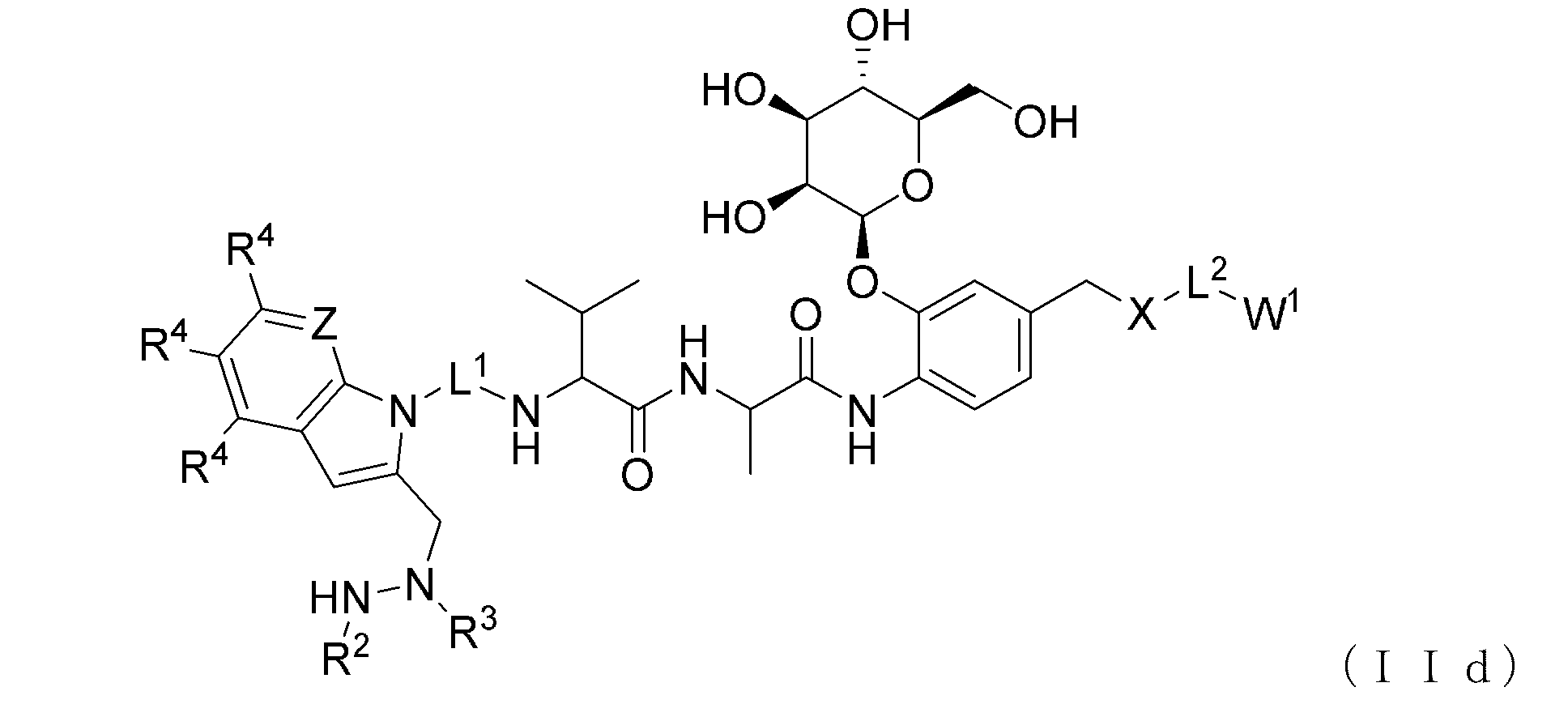
場合によっては、化合物は、式(IIe)の化合物であり得る。

場合によっては、化合物は、式(IIf)の化合物であり得る。

場合によっては、化合物は、式(IIg)の化合物であり得る。

式(II)のコンジュゲートに関連する置換基は、本明細書に記載される。式(II)への言及は、式(IIa)、(IIb)、(IIc)、(IId)、(IIe)、(IIf)及び(IIg)も包含することを意図している。 Substituents related to conjugates of formula (II) are described herein. Reference to formula (II) is intended to also include formulas (IIa), (IIb), (IIc), (IId), (IIe), (IIf) and (IIg).
式(II)の化合物に関して、置換基Z、R2、R3、R4、R5、R6、R7、L1、L2、及びW1は、式(I)のコンジュゲートに関して上に記載した通りである。同様に、式(II)の第1のリンカーL1及び第2のリンカーL2に関し、T1、T2、T3、T4、V1、V2、V3、及びV4、並びにT5、T6、T7、T8、V5、V6、V7、及びV8置換基は、式(I)のコンジュゲートに関して上に記載した通りである。 For compounds of formula (II), substituents Z, R2 , R3 , R4 , R5 , R6 , R7 , L1 , L2 , and W1 are as described above for conjugates of formula (I). As described in . Similarly, with respect to the first linker L 1 and the second linker L 2 of formula (II), T 1 , T 2 , T 3 , T 4 , V 1 , V 2 , V 3 , and V 4 , and T The 5 , T6 , T7 , T8 , V5 , V6 , V7 , and V8 substituents are as described above for the conjugate of formula (I).
特定の実施形態では、化合物は、以下の構造の化合物である。

抗体
上に示されるように、主題のコンジュゲートは、置換基W2として抗体を含んでいてもよく、抗体は、2-ホルミルグリシン(FGly)残基を含むように修飾されている。本明細書で使用される場合、アミノ酸は、それらの標準的な名称、それらの標準的な3文字の略称、及び/又はそれらの標準的な1文字の略称、例えば、アラニン又はAla又はA、システイン又はCys又はC、アスパラギン酸又はAsp又はD、グルタミン酸又はGlu又はE、フェニルアラニン又はPhe又はF、グリシン又はGly又はG、ヒスチジン又はHis又はH、イソロイシン又はIle又はI、リジン又はLys又はK、ロイシン又はLeu又はL、メチオニン又はMet又はM、アスパラギン又はAsn又はN、プロリン又はPro又はP、グルタミン又はGln又はQ、アルギニン又はArg又はR、セリン又はSer又はS、トレオニン又はThr又はT、バリン又はVal又はV、トリプトファン又はTrp又はW、及びチロシン又はTyr又はYと称され得る。
Antibodies As indicated above, the subject conjugates may include an antibody as substituent W 2 , where the antibody is modified to include a 2-formylglycine (FGly) residue. As used herein, amino acids refer to their standard names, their standard three-letter abbreviations, and/or their standard one-letter abbreviations, e.g., alanine or Ala or A, Cysteine or Cys or C, Aspartic acid or Asp or D, Glutamic acid or Glu or E, Phenylalanine or Phe or F, Glycine or Gly or G, Histidine or His or H, Isoleucine or He or I, Lysine or Lys or K, Leucine or Leu or L, methionine or Met or M, asparagine or Asn or N, proline or Pro or P, glutamine or Gln or Q, arginine or Arg or R, serine or Ser or S, threonine or Thr or T, valine or Val or V, tryptophan or Trp or W, and tyrosine or Tyr or Y.
特定の実施形態では、抗体のアミノ酸配列は、インビボで(例えば、細胞においてアルデヒドタグ含有タンパク質の翻訳時に)、又はインビトロで(例えば、無細胞系においてアルデヒドタグ含有タンパク質とFGEとを接触させることによって)のいずれかで、ホルミルグリシン生成酵素(FGE)の作用によって、2-ホルミルグリシン(FGly)残基へと変換する(酸化する)ことが可能なセリン又はシステイン残基を含有するスルファターゼモチーフを含むように修飾される。かかるスルファターゼモチーフは、本明細書では、FGE修飾部位とも称され得る。 In certain embodiments, the amino acid sequence of the antibody is determined in vivo (e.g., during translation of an aldehyde-tagged protein in a cell) or in vitro (e.g., by contacting an aldehyde-tagged protein with FGE in a cell-free system). ) containing a serine or cysteine residue that can be converted (oxidized) into a 2-formylglycine (FGly) residue by the action of a formylglycine-generating enzyme (FGE). It is modified as follows. Such sulfatase motifs may also be referred to herein as FGE modification sites.
スルファターゼモチーフ
アルデヒドタグの最小スルファターゼモチーフは、通常、5アミノ酸残基長又は6アミノ酸残基長であり、通常、6個以下のアミノ酸残基長である。Igポリペプチドにおいて提供されるスルファターゼモチーフは、少なくとも5又は6個のアミノ酸残基であり、例えば、16、15、14、13、12、11、10、9、8、7、又は6個未満のアミノ酸残基長のスルファターゼモチーフを画定するように、5~16個、6~16、5~15、6~15、5~14、6~14、5~13、6~13、5~12、6~12、5~11、6~11、5~10、6~10、5~9、6~9、5~8、又は6~8個のアミノ酸残基長であり得る。
Sulfatase Motif The minimum sulfatase motif of an aldehyde tag is typically 5 or 6 amino acid residues long, and usually no more than 6 amino acid residues long. A sulfatase motif provided in an Ig polypeptide is at least 5 or 6 amino acid residues, such as 16, 15, 14, 13, 12, 11, 10, 9, 8, 7, or less than 6 amino acid residues. 5-16, 6-16, 5-15, 6-15, 5-14, 6-14, 5-13, 6-13, 5-12, so as to define a sulfatase motif of amino acid residue length; It can be 6-12, 5-11, 6-11, 5-10, 6-10, 5-9, 6-9, 5-8, or 6-8 amino acid residues in length.
特定の実施形態では、目的のポリペプチドは、ポリペプチド中にスルファターゼモチーフの配列を提供するための天然アミノ酸配列と比較して、1個以上のアミノ酸残基、例えば、2個以上、又は3個以上、又は4個以上、又は5個以上、又は6個以上、又は7個以上、又は8個以上、又は9個以上、又は10個以上、又は11個以上、又は12個以上、又は13個以上、又は14個以上、又は15個以上、又は16個以上、又は17個以上、又は18個以上、又は19個以上、又は20個以上のアミノ酸残基が挿入され、欠失され、置換され(置き換えられ)たものを含む。特定の実施形態では、ポリペプチドは、ポリペプチドの天然アミノ酸配列に対して、アミノ酸配列の20、19、18、17、16、15、14、13、12、11、10、9、8、7、6、5、4、3、又は2個未満のアミノ酸残基の修飾(挿入、付加、欠失、及び/又は置換/置き換え)を含む。ポリペプチド(例えば、抗体)に対する天然のアミノ酸配列が、所望のスルファターゼモチーフの1つ以上の残基を含有する場合、残基の修飾の総数は、例えば、所望のスルファターゼモチーフの配列を提供するような天然のアミノ酸残基に隣接するアミノ酸残基の部位特異的修飾(挿入、付加、欠失、置換/置き換え)によって、減少させることができる。特定の実施形態では、標的抗体の天然のアミノ酸配列の修飾の程度は、(例えば、N末端又はC末端に対して)挿入され、欠失され、置換され(置き換えられ)、及び/又は付加されるアミノ酸残基の数を最小限に抑えるように、最小限に抑えられる。標的抗体のアミノ酸配列の修飾の程度を最小限に抑えることによって、かかる修飾が抗体の機能及び/又は構造に及ぼし得る影響を最小限に抑え得る。 In certain embodiments, the polypeptide of interest has one or more amino acid residues, such as two or more, or three amino acid residues, compared to the natural amino acid sequence to provide the sequence of the sulfatase motif in the polypeptide. or more, or 4 or more, or 5 or more, or 6 or more, or 7 or more, or 8 or more, or 9 or more, or 10 or more, or 11 or more, or 12 or more, or 13. or more, or 14 or more, or 15 or more, or 16 or more, or 17 or more, or 18 or more, or 19 or more, or 20 or more amino acid residues are inserted, deleted, or substituted. (replaced). In certain embodiments, the polypeptide has an amino acid sequence of 20, 19, 18, 17, 16, 15, 14, 13, 12, 11, 10, 9, 8, 7, relative to the polypeptide's natural amino acid sequence. , modifications (insertions, additions, deletions, and/or substitutions/replacements) of less than 6, 5, 4, 3, or 2 amino acid residues. If the natural amino acid sequence for a polypeptide (e.g., an antibody) contains one or more residues of the desired sulfatase motif, the total number of residue modifications may be such as to provide the desired sulfatase motif sequence. can be reduced by site-specific modification (insertion, addition, deletion, substitution/replacement) of amino acid residues adjacent to naturally occurring amino acid residues. In certain embodiments, the degree of modification of the native amino acid sequence of the target antibody includes insertions, deletions, substitutions (replacements), and/or additions (e.g., to the N-terminus or C-terminus). The number of amino acid residues involved is minimized. By minimizing the degree of modification of the amino acid sequence of a target antibody, the effect that such modifications may have on the function and/or structure of the antibody can be minimized.
特定の目的のアルデヒドタグは、少なくとも1つの最小スルファターゼモチーフ(「コンセンサススルファターゼモチーフ」とも称される)を含むものであるが、より長いアルデヒドタグが、本開示によって企図及び包含され、本開示の組成物及び方法において用途を見出し得ることが容易に理解されることに留意されたい。したがって、アルデヒドタグは、5個又は6個の残基の最小スルファターゼモチーフを含んでもよく、又はより長くてもよく、追加のアミノ酸残基によってモチーフのN末端側及び/又はC末端側に隣接され得る最小スルファターゼモチーフを含んでもよい。例えば、5個又は6個のアミノ酸残基のアルデヒドタグ、並びに5、6、7、8、9、10、11、12、13、14、15、16、17、18、19、20個より多く、又はそれより多いアミノ酸残基のより長いアミノ酸配列が企図される。 Aldehyde tags of particular interest are those that include at least one minimal sulfatase motif (also referred to as a "consensus sulfatase motif"), although longer aldehyde tags are contemplated and encompassed by this disclosure and are useful in the compositions and compositions of this disclosure. Note that it is readily understood that it may find use in methods. Thus, the aldehyde tag may contain a minimal sulfatase motif of 5 or 6 residues, or may be longer, flanked on the N-terminal and/or C-terminal sides of the motif by additional amino acid residues. may contain the minimal sulfatase motif obtained. For example, aldehyde tags of 5 or 6 amino acid residues, as well as more than 5, 6, 7, 8, 9, 10, 11, 12, 13, 14, 15, 16, 17, 18, 19, 20 Longer amino acid sequences of , or more amino acid residues are contemplated.
アルデヒドタグは、Ig重鎖のC末端又はその付近に存在してもよく、例えば、アルデヒドタグは、天然の野生型Ig重鎖のC末端の1、2、3、4、5、6、7、8、9、又は10個のアミノ酸内に存在し得る。アルデヒドタグは、Ig重鎖のCH1ドメイン内に存在し得る。アルデヒドタグは、Ig重鎖のCH2ドメイン内に存在し得る。アルデヒドタグは、Ig重鎖のCH3ドメイン内に存在し得る。アルデヒドタグは、Ig軽鎖定常領域中に、例えば、カッパ軽鎖定常領域又はラムダ軽鎖定常領域中に存在し得る。 The aldehyde tag may be present at or near the C-terminus of the Ig heavy chain, for example, the aldehyde tag may be present at or near the C-terminus of the native wild-type Ig heavy chain. , 8, 9, or 10 amino acids. The aldehyde tag may be present within the CH1 domain of the Ig heavy chain. The aldehyde tag may be present within the CH2 domain of the Ig heavy chain. The aldehyde tag may be present within the CH3 domain of the Ig heavy chain. The aldehyde tag may be present in the Ig light chain constant region, for example in the kappa light chain constant region or the lambda light chain constant region.
特定の実施形態では、使用されるスルファターゼモチーフは、以下の式によって記載されてもよく、
X1Z10X2Z20X3Z30(I’)
式中、
Z10が、システイン又はセリンであり((C/S)によって表すこともでき)、
Z20が、プロリン又はアラニン残基のいずれかであり((P/A)によって表すこともでき)、
Z30が、塩基性アミノ酸(例えば、アルギニン(R)であり、リジン(K)若しくはヒスチジン(H)、例えば、リジンであってもよく)、又は脂肪族アミノ酸(アラニン(A)、グリシン(G)、ロイシン(L)、バリン(V)、イソロイシン(I)、若しくはプロリン(P)、例えば、A、G、L、V、若しくはIであり、
X1が、存在するか、又は存在せず、存在する場合、任意のアミノ酸、例えば、脂肪族アミノ酸、硫黄含有アミノ酸、又は極性非帯電アミノ酸(すなわち、芳香族アミノ酸又は帯電アミノ酸以外)、例えば、L、M、V、S又はT、例えば、L、M、S又はVであってもよく、但し、スルファターゼモチーフが標的ポリペプチドのN末端にある場合、X1が存在し、
X2及びX3が、独立して、任意のアミノ酸であってもよいが、通常は、脂肪族アミノ酸、極性非帯電アミノ酸、又は硫黄含有アミノ酸(すなわち、芳香族アミノ酸又は帯電アミノ酸以外)、例えば、S、T、A、V、G又はC、例えば、S、T、A、V又はGであってもよい。
In certain embodiments, the sulfatase motif used may be described by the following formula:
X 1 Z 10 X 2 Z 20 X 3 Z 30 (I')
During the ceremony,
Z 10 is cysteine or serine (also can be represented by (C/S)),
Z 20 is either a proline or alanine residue (also can be represented by (P/A)),
Z 30 is a basic amino acid (e.g. arginine (R), which may also be lysine (K) or histidine (H), e.g. lysine) or an aliphatic amino acid (alanine (A), glycine (G ), leucine (L), valine (V), isoleucine (I), or proline (P), such as A, G, L, V, or I;
X 1 is present or absent, and if present, any amino acid, e.g. an aliphatic amino acid, a sulfur-containing amino acid, or a polar uncharged amino acid (i.e. other than an aromatic amino acid or a charged amino acid), e.g. may be L, M, V, S or T, for example L, M, S or V, provided that if the sulfatase motif is at the N-terminus of the target polypeptide, then X 1 is present;
Although X 2 and X 3 may independently be any amino acid, they are typically aliphatic amino acids, polar uncharged amino acids, or sulfur-containing amino acids (i.e. other than aromatic or charged amino acids), e.g. , S, T, A, V, G or C, for example S, T, A, V or G.
抗体重鎖及び/又は軽鎖のアミノ酸配列を、式X1Z10X2Z20X3Z30の少なくとも5個のアミノ酸の配列を提供するように修飾してもよく、式中、
Z10が、システイン又はセリンであり、
Z20が、プロリン又はアラニン残基であり、
Z30が、脂肪族アミノ酸又は塩基性アミノ酸であり、
X1が、存在するか、又は存在せず、存在する場合、任意のアミノ酸であり、但し、異種スルファターゼモチーフがポリペプチドのN末端にある場合、X1が存在し、
X2及びX3が、各々独立して、任意のアミノ酸である。
The amino acid sequence of the antibody heavy chain and/or light chain may be modified to provide a sequence of at least 5 amino acids of the formula X 1 Z 10 X 2 Z 20 X 3 Z 30 , where:
Z 10 is cysteine or serine,
Z 20 is a proline or alanine residue,
Z 30 is an aliphatic amino acid or a basic amino acid,
X 1 is present or absent, and if present is any amino acid, provided that if the heterologous sulfatase motif is at the N-terminus of the polypeptide, X 1 is present;
X 2 and X 3 are each independently any amino acid.
スルファターゼモチーフは、一般に、選択されたFGE、例えば、アルデヒドタグ化ポリペプチドが発現される宿主細胞中に存在するFGE、又は無細胞インビトロ法においてアルデヒドタグ化ポリペプチドと接触されるFGEによって変換可能なように選択される。 The sulfatase motif is generally convertible by a selected FGE, e.g., an FGE present in the host cell in which the aldehyde-tagged polypeptide is expressed, or an FGE that is contacted with the aldehyde-tagged polypeptide in a cell-free in vitro method. selected as follows.
例えば、FGEが真核生物FGE(例えば、ヒトFGEを含む、哺乳動物FGE)である場合、スルファターゼモチーフは、以下の式
X1CX2PX3Z30(I”)
のスルファターゼモチーフであってもよく、
式中、
X1が、存在してもよく、又は存在しなくてもよく、存在する場合、任意のアミノ酸、例えば、脂肪族アミノ酸、硫黄含有アミノ酸、又は極性非帯電アミノ酸(すなわち、芳香族アミノ酸又は帯電アミノ酸以外)、例えば、L、M、S又はVであってもよく、但し、スルファターゼモチーフが標的ポリペプチドのN末端にある場合、X1が存在し、
X2及びX3が、独立して、任意のアミノ酸、例えば、脂肪族アミノ酸、硫黄含有アミノ酸、又は極性非帯電アミノ酸(すなわち、芳香族アミノ酸又は帯電アミノ酸以外)、例えば、S、T、A、V、G、又はC、例えば、S、T、A、V、又はGであってもよく、
Z30が、塩基性アミノ酸(例えば、アルギニン(R)であり、リジン(K)若しくはヒスチジン(H)、例えば、リジンであってもよく)、又は脂肪族アミノ酸(アラニン(A)、グリシン(G)、ロイシン(L)、バリン(V)、イソロイシン(I)、若しくはプロリン(P)、例えば、A、G、L、V、若しくはIである。
For example, if the FGE is a eukaryotic FGE (e.g., a mammalian FGE, including human FGE), the sulfatase motif has the following formula X 1 CX 2 PX 3 Z 30 (I”)
may be a sulfatase motif,
During the ceremony,
X 1 may or may not be present, and if present, any amino acid, such as an aliphatic amino acid, a sulfur-containing amino acid, or a polar uncharged amino acid (i.e., an aromatic amino acid or a charged amino acid) ), for example L, M, S or V, provided that if the sulfatase motif is at the N-terminus of the target polypeptide, then X 1 is present;
X 2 and may be V, G, or C, such as S, T, A, V, or G;
Z 30 is a basic amino acid (e.g. arginine (R), which may also be lysine (K) or histidine (H), e.g. lysine) or an aliphatic amino acid (alanine (A), glycine (G ), leucine (L), valine (V), isoleucine (I), or proline (P), such as A, G, L, V, or I.
スルファターゼモチーフの具体例としては、LCTPSR(配列番号://)、MCTPSR(配列番号://)、VCTPSR(配列番号://)、LCSPSR(配列番号://)、LCAPSR(配列番号://)、LCVPSR(配列番号://)、LCGPSR(配列番号://)、ICTPAR(配列番号://)、LCTPSK(配列番号://)、MCTPSK(配列番号://)、VCTPSK(配列番号://)、LCSPSK(配列番号://)、LCAPSK(配列番号://)、LCVPSK(配列番号://)、LCGPSK(配列番号://)、LCTPSA(配列番号://)、ICTPAA(配列番号://)、MCTPSA(配列番号://)、VCTPSA(配列番号://)、LCSPSA(配列番号://)、LCAPSA(配列番号://)、LCVPSA(配列番号://)、及びLCGPSA(配列番号://)が挙げられる。 Specific examples of sulfatase motifs include LCTPSR (SEQ ID NO: //), MCTPSR (SEQ ID NO: //), VCTPSR (SEQ ID NO: //), LCSPSR (SEQ ID NO: //), and LCAPSR (SEQ ID NO: //). /), LCVPSR (SEQ ID NO: //), LCGPSR (SEQ ID NO: //), ICTPAR (SEQ ID NO: //), LCTPSK (SEQ ID NO: //), MCTPSK (SEQ ID NO: //), VCTPSK ( SEQ ID NO: //), LCSPSK (SEQ ID NO: //), LCAPSK (SEQ ID NO: //), LCVPSK (SEQ ID NO: //), LCGPSK (SEQ ID NO: //), LCTPSA (SEQ ID NO: //) ), ICTPAA (SEQ ID NO: //), MCTPSA (SEQ ID NO: //), VCTPSA (SEQ ID NO: //), LCSPSA (SEQ ID NO: //), LCAPSA (SEQ ID NO: //), LCVPSA (SEQ ID NO: //), No.: //), and LCGPSA (SEQ ID No.: //).
FGly含有配列
修飾抗体の重鎖及び/又は軽鎖にFGEが作用すると、スルファターゼモチーフ中のセリン又はシステインが、FGlyに修飾される。したがって、FGly含有スルファターゼモチーフは、以下の式
X1(FGly)X2Z20X3Z30(I’’’)
のスルファターゼモチーフであってもよく、
式中、
FGlyが、ホルミルグリシン残基であり、
Z20が、プロリン又はアラニン残基のいずれかであり((P/A)によって表すこともでき)、
Z30が、塩基性アミノ酸(例えば、アルギニン(R)であり、リジン(K)若しくはヒスチジン(H)、通常は、リジンであってもよく)、又は脂肪族アミノ酸(アラニン(A)、グリシン(G)、ロイシン(L)、バリン(V)、イソロイシン(I)、若しくはプロリン(P)、例えば、A、G、L、V、若しくはIであり、
X1が、存在してもよく、又は存在しなくてもよく、存在する場合、任意のアミノ酸、例えば、脂肪族アミノ酸、硫黄含有アミノ酸、又は極性非帯電アミノ酸(すなわち、芳香族アミノ酸又は帯電アミノ酸以外)、例えば、L、M、V、S又はT、例えば、L、M又はVであってもよく、但し、スルファターゼモチーフが標的ポリペプチドのN末端にある場合、X1が存在し、
X2及びX3が、独立して、任意のアミノ酸、例えば、脂肪族アミノ酸、硫黄含有アミノ酸、又は極性非帯電アミノ酸(すなわち、芳香族アミノ酸又は帯電アミノ酸以外)、例えば、S、T、A、V、G、又はC、例えば、S、T、A、V、又はGであってもよい。
FGly-containing sequence When FGE acts on the heavy chain and/or light chain of a modified antibody, serine or cysteine in the sulfatase motif is modified to FGly. Therefore, the FGly-containing sulfatase motif has the following formula X 1 (FGly)X 2 Z 20 X 3 Z 30 (I''')
may be a sulfatase motif,
During the ceremony,
FGly is a formylglycine residue,
Z 20 is either a proline or alanine residue (also can be represented by (P/A)),
Z 30 is a basic amino acid (for example, arginine (R), which may also be lysine (K) or histidine (H), usually lysine), or an aliphatic amino acid (alanine (A), glycine ( G), leucine (L), valine (V), isoleucine (I), or proline (P), such as A, G, L, V, or I;
X 1 may or may not be present, and if present, any amino acid, such as an aliphatic amino acid, a sulfur-containing amino acid, or a polar uncharged amino acid (i.e., an aromatic amino acid or a charged amino acid) ), e.g. L, M, V, S or T, provided that if the sulfatase motif is at the N-terminus of the target polypeptide, then
X 2 and It may be V, G, or C, for example S, T, A, V, or G.
上述のように、FGly残基を含有する修飾ポリペプチドは、FGlyと薬物(例えば、上述のように、ヒドラジニル-インドリル又はヒドラジニル-ピロロ-ピリジニルカップリング部分を含有する薬物)との反応によって、薬物(例えば、マイタンシノイド)にコンジュゲートされ、FGly’含有スルファターゼモチーフを生成し得る。本明細書で使用される場合、FGly’という用語は、薬物、例えば、マイタンシン又はアウリスタチンにカップリングされるスルファターゼモチーフの修飾アミノ酸残基を指す。したがって、FGly’含有スルファターゼモチーフは、以下の式
X1(FGly’)X2Z20X3Z30(II)
のスルファターゼモチーフであってもよく、
式中、
FGly’が、式(I)の修飾アミノ酸残基であり、
Z20が、プロリン又はアラニン残基のいずれかであり((P/A)によって表すこともでき)、
Z30が、塩基性アミノ酸(例えば、アルギニン(R)であり、リジン(K)若しくはヒスチジン(H)、通常は、リジンであってもよく)、又は脂肪族アミノ酸(アラニン(A)、グリシン(G)、ロイシン(L)、バリン(V)、イソロイシン(I)、若しくはプロリン(P)、例えば、A、G、L、V、若しくはIであり、
X1が、存在してもよく、又は存在しなくてもよく、存在する場合、任意のアミノ酸、例えば、脂肪族アミノ酸、硫黄含有アミノ酸、又は極性非帯電アミノ酸(すなわち、芳香族アミノ酸又は帯電アミノ酸以外)、例えば、L、M、V、S又はT、例えば、L、M又はVであってもよく、但し、スルファターゼモチーフが標的ポリペプチドのN末端にある場合、X1が存在し、
X2及びX3が、独立して、任意のアミノ酸、例えば、脂肪族アミノ酸、硫黄含有アミノ酸、又は極性非帯電アミノ酸(すなわち、芳香族アミノ酸又は帯電アミノ酸以外)、例えば、S、T、A、V、G、又はC、例えば、S、T、A、V、又はGであってもよい。
As described above, modified polypeptides containing FGly residues can be modified by reaction of FGly with a drug (e.g., a drug containing a hydrazinyl-indolyl or hydrazinyl-pyrrolo-pyridinyl coupling moiety, as described above). , may be conjugated to a drug (eg, maytansinoid) to generate an FGly'-containing sulfatase motif. As used herein, the term FGly' refers to a modified amino acid residue of a sulfatase motif that is coupled to a drug, such as maytansine or auristatin. Therefore, the FGly'-containing sulfatase motif has the following formula X 1 (FGly')X 2 Z 20 X 3 Z 30 (II)
may be a sulfatase motif,
During the ceremony,
FGly' is a modified amino acid residue of formula (I),
Z 20 is either a proline or alanine residue (also can be represented by (P/A)),
Z 30 is a basic amino acid (for example, arginine (R), which may also be lysine (K) or histidine (H), usually lysine), or an aliphatic amino acid (alanine (A), glycine ( G), leucine (L), valine (V), isoleucine (I), or proline (P), such as A, G, L, V, or I;
X 1 may or may not be present, and if present, any amino acid, such as an aliphatic amino acid, a sulfur-containing amino acid, or a polar uncharged amino acid (i.e., an aromatic amino acid or a charged amino acid) ), e.g. L, M, V, S or T, provided that if the sulfatase motif is at the N-terminus of the target polypeptide, then
X 2 and It may be V, G, or C, for example S, T, A, V, or G.
修飾部位
上に示されるように、抗体のアミノ酸配列は、インビボで(例えば、細胞においてアルデヒドタグ含有タンパク質の翻訳時に)、又はインビトロで(例えば、無細胞系においてアルデヒドタグ含有タンパク質とFGEとを接触させることによって)のいずれかで、FGEの作用によって、FGly残基へと変換する(酸化する)ことが可能なセリン又はシステイン残基を含有するスルファターゼモチーフを含むように修飾される。本開示のコンジュゲートを生成するために使用される抗体は、少なくともIg定常領域、例えば、Ig重鎖定常領域(例えば、少なくともCH1ドメイン;少なくともCH1及びCH2ドメイン;CH1、CH2、及びCH3ドメイン;又はCH1、CH2、CH3、及びCH4ドメイン)、又はIg軽鎖定常領域を含む。かかるIgポリペプチドは、本明細書で「標的Igポリペプチド」又は「タグ化抗体」と称される。
Modification Sites As indicated above, the amino acid sequence of the antibody can be modified in vivo (e.g., during translation of an aldehyde-tagged protein in a cell) or in vitro (e.g., by contacting an aldehyde-tagged protein with FGE in a cell-free system). by the action of FGE) to contain a sulfatase motif containing a serine or cysteine residue that can be converted (oxidized) into an FGly residue. The antibodies used to generate the conjugates of the present disclosure include at least an Ig constant region, such as an Ig heavy chain constant region (e.g., at least a CH1 domain; at least a CH1 and CH2 domain; a CH1, CH2, and CH3 domain; or CH1, CH2, CH3, and CH4 domains), or the Ig light chain constant region. Such Ig polypeptides are referred to herein as "targeted Ig polypeptides" or "tagged antibodies."
スルファターゼモチーフが導入される抗体中の部位は、任意の好都合な部位であり得る。上に示されるように、場合によっては、標的ポリペプチドの天然のアミノ酸配列の修飾の程度は、(例えば、N末端又はC末端に対して)挿入され、欠失され、置換され(置き換えられ)、及び/又は付加されるアミノ酸残基の数を最小限に抑えるように、最小限に抑えられる。標的抗体のアミノ酸配列の修飾の程度を最小限に抑えることによって、かかる修飾が抗体の機能及び/又は構造に及ぼし得る影響を最小限に抑え得る。 The site in an antibody at which the sulfatase motif is introduced can be any convenient site. As indicated above, in some cases, the degree of modification of the natural amino acid sequence of the target polypeptide may include insertions, deletions, substitutions (for example, relative to the N-terminus or C-terminus), , and/or minimized to minimize the number of added amino acid residues. By minimizing the degree of modification of the amino acid sequence of a target antibody, the effect that such modifications may have on the function and/or structure of the antibody can be minimized.
抗体重鎖定常領域は、任意の重鎖アイソタイプ、天然に存在しないIg重鎖定常領域(コンセンサスIg重鎖定常領域を含む)のIg定常領域を含み得る。Ig定常領域は、アルデヒドタグを含むように修飾されてもよく、アルデヒドタグは、Ig定常領域の溶媒接近可能なループ領域の中、又はそれに隣接して存在する。Ig定常領域は、1、2、3、4、5、6、7、8、9、10、11、12、13、14、15、又は16個のアミノ酸、又は16個より多いアミノ酸の挿入及び/又は置換によって修飾され、上述のようなスルファターゼモチーフのアミノ酸配列を提供することができる。 Antibody heavy chain constant regions can include Ig constant regions of any heavy chain isotype, non-naturally occurring Ig heavy chain constant regions, including consensus Ig heavy chain constant regions. The Ig constant region may be modified to include an aldehyde tag, the aldehyde tag being within or adjacent to the solvent accessible loop region of the Ig constant region. Ig constant regions contain 1, 2, 3, 4, 5, 6, 7, 8, 9, 10, 11, 12, 13, 14, 15, or 16 amino acids, or insertions of more than 16 amino acids and /or modified by substitutions to provide the amino acid sequence of the sulfatase motif as described above.
ある場合には、アルデヒドタグ化抗体は、アルデヒドタグ化Ig重鎖定常領域(例えば、少なくともCH1ドメイン;少なくともCH1及びCH2ドメイン;CH1、CH2、及びCH3ドメイン;又はCH1、CH2、CH3、及びCH4ドメイン)を含む。アルデヒドタグ化Ig重鎖定常領域は、IgA、IgM、IgD、IgE、IgG1、IgG2、IgG3、若しくはIgG4アイソタイプ重鎖、又はその任意のアロタイプバリアント、例えば、ヒト重鎖定常領域配列若しくはマウス重鎖定常領域配列、ハイブリッド重鎖定常領域、合成重鎖定常領域、又はFGEによって修飾され、FGly修飾Igポリペプチドを生成し得る少なくとも1つのスルファターゼモチーフを含むように修飾されたコンセンサス重鎖定常領域配列等の重鎖定常領域配列を含み得る。Ig重鎖のアロタイプバリアントは、当該技術分野で既知である。例えば、Jefferis and Lefranc(2009)MAbs 1:4を参照されたい。 In some cases, the aldehyde-tagged antibody comprises an aldehyde-tagged Ig heavy chain constant region (e.g., at least the CH1 domain; at least the CH1 and CH2 domains; the CH1, CH2, and CH3 domains; or the CH1, CH2, CH3, and CH4 domains). )including. The aldehyde-tagged Ig heavy chain constant region can be an IgA, IgM, IgD, IgE, IgG1, IgG2, IgG3, or IgG4 isotype heavy chain, or any allotype variant thereof, such as a human heavy chain constant region sequence or a murine heavy chain constant region. region sequences, hybrid heavy chain constant regions, synthetic heavy chain constant regions, or consensus heavy chain constant region sequences modified by FGE to include at least one sulfatase motif capable of producing FGly-modified Ig polypeptides. may include heavy chain constant region sequences. Allotypic variants of Ig heavy chains are known in the art. See, eg, Jefferis and Lefranc (2009) MAbs 1:4.
ある場合には、アルデヒドタグ化抗体は、アルデヒドタグ化Ig軽鎖定常領域を含む。アルデヒドタグ化Ig軽鎖定常領域は、カッパ軽鎖、ラムダ軽鎖、例えば、ヒトカッパ若しくはラムダ軽鎖定常領域、ハイブリッド軽鎖定常領域、合成軽鎖定常領域、又はFGEによって修飾され、FGly修飾抗体を生成し得る少なくとも1つのスルファターゼモチーフを含むように修飾されたコンセンサス軽鎖定常領域配列等の定常領域配列を含み得る。例示的な定常領域は、ヒトガンマ1及びガンマ3領域を含む。スルファターゼモチーフを除き、修飾定常領域は、野生型アミノ酸配列を有していてもよく、又は野生型アミノ酸配列に対して少なくとも70%同一(例えば、少なくとも80%、少なくとも90%、又は少なくとも95%同一)であるアミノ酸配列を有し得る。
In some cases, the aldehyde-tagged antibody comprises an aldehyde-tagged Ig light chain constant region. Aldehyde-tagged Ig light chain constant regions are modified with kappa light chains, lambda light chains, e.g., human kappa or lambda light chain constant regions, hybrid light chain constant regions, synthetic light chain constant regions, or FGE to produce FGly-modified antibodies. may include a constant region sequence, such as a consensus light chain constant region sequence modified to include at least one sulfatase motif that may be generated. Exemplary constant regions include the
いくつかの実施形態では、スルファターゼモチーフは、Igポリペプチド重鎖のC末端以外の位置に、又はIgポリペプチド重鎖のC末端に加えた位置にある。上に示されるように、単離されたアルデヒドタグ化抗体は、上述のスルファターゼモチーフを含むように修飾された重鎖定常領域を含んでいてもよく、スルファターゼモチーフは、抗体重鎖定常領域の表面接近可能なループ領域の中にあるか、又はそれに隣接している。 In some embodiments, the sulfatase motif is at a position other than or in addition to the C-terminus of the Ig polypeptide heavy chain. As shown above, isolated aldehyde-tagged antibodies may include a heavy chain constant region modified to include the sulfatase motif described above, where the sulfatase motif is located on the surface of the antibody heavy chain constant region. Located within or adjacent to the accessible loop region.
スルファターゼモチーフは、Ig重鎖のかかる修飾部位のこれらのアミノ酸配列のうちの1つ以上の内部、又はそれに隣接して提供され得る。例えば、Ig重鎖ポリペプチドは、これらのアミノ酸配列のうちの1つ以上で修飾され(例えば、修飾が、1つ以上のアミノ酸残基の挿入、欠失、及び/又は置換を含む場合)、これらの修飾部位に隣接してN末端に、及び/又は隣接してC末端にスルファターゼモチーフを提供することができる。あるいは、又はこれに加えて、Ig重鎖ポリペプチドは、これらのアミノ酸配列のうちの1つ以上で修飾され(例えば、修飾が、1つ以上のアミノ酸残基の挿入、欠失、及び/又は置換を含む場合)、Ig重鎖修飾部位の任意の2つの残基間にスルファターゼモチーフを提供することができる。いくつかの実施形態では、Ig重鎖ポリペプチドは、2つのモチーフを含むように修飾されてもよく、これらが互いに隣接していてもよく、又は1個、2個、3個、4個、又はそれより多く(例えば、約1~約25個、約25~約50個、又は約50~約100個、又はそれより多くのアミノ酸によって分離されてもよい。あるいは、又はこれに加えて、天然アミノ酸配列が、スルファターゼモチーフ配列の1つ以上のアミノ酸残基を提供する場合、Ig重鎖ポリペプチドアミノ酸配列の修飾部位の選択されたアミノ酸残基が、修飾部位にスルファターゼモチーフを提供するように修飾されてもよい(例えば、修飾が、1つ以上のアミノ酸残基の挿入、欠失、及び/又は置換を含む場合)。 A sulfatase motif may be provided within or adjacent to one or more of these amino acid sequences at the site of such modification of the Ig heavy chain. For example, the Ig heavy chain polypeptide is modified at one or more of these amino acid sequences (e.g., where the modification includes insertions, deletions, and/or substitutions of one or more amino acid residues), A sulfatase motif can be provided at the N-terminus adjacent to these modification sites and/or at the C-terminus adjacent to these modification sites. Alternatively, or in addition, the Ig heavy chain polypeptide is modified at one or more of these amino acid sequences (e.g., the modification includes insertions, deletions, and/or deletions of one or more amino acid residues). substitutions), a sulfatase motif can be provided between any two residues of the Ig heavy chain modification site. In some embodiments, the Ig heavy chain polypeptide may be modified to include two motifs, which may be adjacent to each other, or one, two, three, four, or more (e.g., about 1 to about 25, about 25 to about 50, or about 50 to about 100, or more) amino acids. Alternatively, or in addition, If the natural amino acid sequence provides one or more amino acid residues of a sulfatase motif sequence, the selected amino acid residues at the site of modification of the Ig heavy chain polypeptide amino acid sequence are such that they provide a sulfatase motif at the site of modification. It may also be modified (eg, where the modification involves insertion, deletion, and/or substitution of one or more amino acid residues).
本開示の抗体-薬物コンジュゲートで使用される抗体は、限定されないが、例えば、がん細胞上に存在する抗原、自己免疫細胞上に存在する抗原、病原性微生物上に存在する抗原、ウイルス感染細胞(例えば、ヒト免疫不全ウイルス感染細胞)上に存在する抗原、疾患細胞上に存在する抗原等を含み、様々な抗原結合特異性のうちのいずれかを有し得る。例えば、抗体コンジュゲートは、抗原に結合してもよく、抗原は、細胞の表面上に存在する。本開示の抗体コンジュゲートは、好適な結合親和性で、例えば、5×10⁻⁶M~10-7M、10-7M~5×10⁻⁷M、5×10⁻⁷M~10-8M、10-8M~5×10⁻⁸M、5×10⁻⁸M~10-9M、又は10-9Mより大きな結合親和性で、抗原に結合し得る。 Antibodies used in the antibody-drug conjugates of the present disclosure include, but are not limited to, antigens present on cancer cells, antigens present on autoimmune cells, antigens present on pathogenic microorganisms, viral infections, etc. They can have any of a variety of antigen binding specificities, including antigens present on cells (eg, human immunodeficiency virus infected cells), antigens present on diseased cells, and the like. For example, an antibody conjugate may bind an antigen, and the antigen is present on the surface of a cell. Antibody conjugates of the present disclosure have suitable binding affinities, such as 5×10 −6 M to 10 −7 M, 10 −7 M to 5×10 −7 M, 5×10 −7 M to 10 − 8 M, 10 −8 M to 5×10 −8 M, 5×10 −8 M to 10 −9 M, or greater than 10 −9 M binding affinity to the antigen.
非限定的な例として、主題の抗体コンジュゲートは、がん細胞上に存在する抗原(例えば、腫瘍特異的抗原、がん細胞上で過剰発現される抗原等)に結合してもよく、コンジュゲートされた部分は、薬物、例えば、細胞傷害性化合物(例えば、細胞傷害性小分子、細胞傷害性合成ペプチド等)であり得る。例えば、主題の抗体コンジュゲートは、がん細胞上の抗原に特異的であってもよく、コンジュゲートされた部分は、薬物、例えば、細胞傷害性化合物(例えば、細胞傷害性小分子、細胞傷害性合成ペプチド等)である。 By way of non-limiting example, the subject antibody conjugates may bind to antigens present on cancer cells (e.g., tumor-specific antigens, antigens overexpressed on cancer cells, etc.); The gated moiety can be a drug, eg, a cytotoxic compound (eg, a cytotoxic small molecule, a cytotoxic synthetic peptide, etc.). For example, the subject antibody conjugates may be specific for an antigen on a cancer cell, and the conjugated moiety may be a drug, e.g., a cytotoxic compound (e.g., a cytotoxic small molecule, a cytotoxic synthetic peptides, etc.).
更なる非限定的な例として、主題の抗体コンジュゲートは、ウイルスに感染した細胞上に存在する抗原(例えば、抗原がウイルスによってコードされる場合、抗原が、ウイルスによって感染する細胞型上に発現される場合等)に結合してもよく、コンジュゲートされた部分は、薬物、例えば、ウイルス融合阻害剤であり得る。例えば、主題の抗体コンジュゲートは、ウイルスに感染した細胞上に存在する抗原に結合してもよく、コンジュゲートされた部分は、薬物、例えば、ウイルス融合阻害剤であり得る。 As a further non-limiting example, the subject antibody conjugates may contain antigens present on cells infected by a virus (e.g., if the antigen is encoded by a virus, the antigen is expressed on the cell type infected by the virus). The conjugated moiety may be a drug, such as a viral fusion inhibitor. For example, the subject antibody conjugates may bind to an antigen present on cells infected with a virus, and the conjugated moiety may be a drug, eg, a viral fusion inhibitor.
ポリペプチドへのコンジュゲートのための薬物
本開示は、薬物-ポリペプチドコンジュゲート(例えば、抗体-薬物コンジュゲート)を提供する。いくつかの薬物のいずれかは、抗体にコンジュゲートするための反応性パートナーとして、使用するのに適しているか、又は使用に適するように修飾され得る。薬物の例としては、小分子薬物及びペプチド薬物を含む。
Drugs for Conjugation to Polypeptides The present disclosure provides drug-polypeptide conjugates (eg, antibody-drug conjugates). Any of a number of drugs are suitable for use, or can be modified for use, as reactive partners for conjugation to antibodies. Examples of drugs include small molecule drugs and peptide drugs.
本明細書で使用される「小分子薬物」は、目的の薬学的活性を示し、一般に、800Da以下、又は2000Da以下の分子量を有するが、最大5kDaの分子を包含してもよく、10kDa程度の大きさであってもよい、化合物、例えば、有機化合物を指す。小さな無機分子は、炭素原子を含有しない分子を指し、小さな有機分子は、少なくとも1個の炭素原子を含有する化合物を指す。 As used herein, a "small molecule drug" exhibits the desired pharmaceutical activity and generally has a molecular weight of 800 Da or less, or 2000 Da or less, but may include molecules up to 5 kDa and as small as 10 kDa. Refers to a compound, such as an organic compound, which may be of any size. Small inorganic molecules refer to molecules that do not contain carbon atoms, and small organic molecules refer to compounds that contain at least one carbon atom.
例えば、薬物又は活性薬剤は、マイタンシンであり得る。「マイタンシン」、「マイタンシン部分」、「マイタンシン活性薬剤部分」、及び「マイタンシノイド」は、マイタンシン、及びその類似体及び誘導体、並びに薬学的に活性なマイタンシン部分及び/又はその部分を指す。ポリペプチドにコンジュゲートされたマイタンシンは、例えば、限定されないが、本明細書に記載のマイタンシン及びその類似体及び誘導体(例えば、デアシルマイタンシン)等の様々なマイタンシノイド部分のうちのいずれかであり得る。他の場合では、薬物又は活性薬剤は、アウリスタチン、又はその類似体若しくは誘導体、又はその薬学的に活性なアウリスタチン部分及び/又はその一部であり得る。ポリペプチドにコンジュゲートされたアウリスタチンは、例えば、限定されないが、本明細書に記載のアウリスタチン及びその類似体及び誘導体等の様々なアウリスタチン部分のうちのいずれかであり得る。他の場合では、薬物又は活性薬剤は、デュオカルマイシン、又はその類似体若しくは誘導体、又はその薬学的に活性なデュオカルマイシン部分及び/又はその一部であり得る。ポリペプチドにコンジュゲートされたデュオカルマイシンは、例えば、限定されないが、本明細書に記載のデュオカルマイシン及びその類似体及び誘導体等の様々なデュオカルマイシン部分のうちのいずれかであり得る。 For example, the drug or active agent can be maytansine. "Maytansine", "maytansine moiety", "maytansine active agent moiety", and "maytansinoid" refer to maytansine, and analogs and derivatives thereof, and pharmaceutically active maytansine moieties and/or portions thereof. The maytansine conjugated to the polypeptide may be any of a variety of maytansinoid moieties, such as, but not limited to, maytansine and its analogs and derivatives (e.g., desylmaytansine) described herein. It can be. In other cases, the drug or active agent may be auristatin, or an analog or derivative thereof, or a pharmaceutically active auristatin portion thereof and/or a portion thereof. The auristatin conjugated to the polypeptide can be any of a variety of auristatin moieties, such as, but not limited to, auristatin and its analogs and derivatives described herein. In other cases, the drug or active agent may be duocarmycin, or an analog or derivative thereof, or a pharmaceutically active duocarmycin moiety and/or portion thereof. The duocarmycin conjugated to the polypeptide can be any of a variety of duocarmycin moieties, such as, but not limited to, duocarmycin and its analogs and derivatives described herein.
特定の実施形態では、薬物は、細胞毒素、キナーゼ阻害剤、免疫刺激剤、toll様受容体(TLR)アゴニスト、オリゴヌクレオチド、アプタマー、サイトカイン、ステロイド、及びペプチドから選択される。 In certain embodiments, the drug is selected from cytotoxins, kinase inhibitors, immunostimulants, toll-like receptor (TLR) agonists, oligonucleotides, aptamers, cytokines, steroids, and peptides.
例えば、細胞毒素は、細胞死(例えば、壊死若しくはアポトーシス)又は細胞生存率の低下を引き起こす任意の化合物を含み得る。 For example, a cytotoxin can include any compound that causes cell death (eg, necrosis or apoptosis) or decreased cell viability.
キナーゼ阻害剤としては、限定されないが、アダボセルチブ、アファチニブ、アキシチニブ、ボスチニブ、セツキシマブ、コビメチニブ、クリゾチニブ、カボザンチニブ、ダコミチニブ、ダサチニブ、エヌトレクチニブ、エルダフィチニブ、エルロチニブ、フォスタマチニブ、ゲフィチニブ、イブルチニブ、イマチニブ、ラパチニブ、レンバチニブ、ムブリチニブ、ニロチニブ、パゾパニブ、ペガプタニブ、ルキソリチニブ、ソラフェニブ、スニチニブ、ツカチニブ、バンデタニブ、ベムラフェニブ等が挙げられ得る。 Kinase inhibitors include, but are not limited to, adavosertib, afatinib, axitinib, bosutinib, cetuximab, cobimetinib, crizotinib, cabozantinib, dacomitinib, dasatinib, entrectinib, erdafitinib, erlotinib, fostamatinib, gefitinib, ibrutinib, imatinib, rapa tinib, lenvatinib, mubritinib, Mention may be made of nilotinib, pazopanib, pegaptanib, ruxolitinib, sorafenib, sunitinib, tucatinib, vandetanib, vemurafenib, and the like.
免疫刺激剤としては、限定されないが、ワクチン(例えば、細菌又はウイルスワクチン)、コロニー刺激因子、インターフェロン、インターロイキン等が挙げられ得る。TLRアゴニストとしては、限定されないが、イミキモド、レシキモド等が挙げられる。 Immunostimulants can include, but are not limited to, vaccines (eg, bacterial or viral vaccines), colony stimulating factors, interferons, interleukins, and the like. TLR agonists include, but are not limited to, imiquimod, resiquimod, and the like.
オリゴヌクレオチド乳房としては、限定されないが、ホミビルセン、ペガプタニブ、ミポメルセン、エテプリルセン、デフィブロチド、ヌシネルセン、ゴロディルセン、ビルトラルセン、ボラネソルセン、イノテルセン、トフェルセン、トミネルセン等が挙げられる。 Oligonucleotide breasts include, but are not limited to, fomivirsen, pegaptanib, mipomersen, eteplirsen, defibrotide, nusinersen, golodirsen, viltlarsen, voranesorsen, inotersen, tofersen, tominersen, and the like.
アプタマー薬物としては、限定されないが、ペガプタニブ、AS1411、REG1、ARC1779、NU172、ARC1905、E10030、NOX-A12、NOX-E36等が挙げられる。 Aptamer drugs include, but are not limited to, pegaptanib, AS1411, REG1, ARC1779, NU172, ARC1905, E10030, NOX-A12, NOX-E36, and the like.
サイトカインとしては、限定されないが、アルブインターフェロンアルファ-2B、アルデスロイキン、ALT-801、アナキンラ、アンセスチム、アボテルミン(Avotermin)、バルグラスチム、ベンペガルデスロイキン、ビネトラキン、シントレデキン・ベスドトックス(Cintredekin Besudotox)、CTCE-0214、ダルベポエチンアルファ、デニロイキンジフチトクス、デュラネルミン、エドデキンアルファ、エンフィレルミン、エポエチンデルタ、エリスロポエチン、ヒトインターロイキン-2、インターフェロンアルファ、インターフェロンアルファ-2c、インターフェロンアルファ-n1、インターフェロンアルファ-n3、インターフェロンアルファコン-1、インターフェロンベータ-1a、インターフェロンベータ-1b、インターフェロンガンマ-1b、インターフェロンカッパ、インターロイキン-1アルファ、インターロイキン-10、インターロイキン-7、レノグラスチム、レリジスチム、リペグフィルグラスチム、ロルカフスプ(Lorukafusp)アルファ、Maxy-G34、メトキシポリエチレングリコール-エポエチンベータ、モルグラモスチム、ムプレスチム、ナグレスチペン、オプレルベキン、ペグフィルグラスチム、ペギロデカキン、ペグインターフェロンアルファ-2a、ペグインターフェロンアルファ-2b、ペグインターフェロンベータ-1a、ペグインターフェロンラムダ-1a、組換え体CD40-リガンド、レグラモスチム、ロミプロスチム、サルグラモスチム、トロンボポエチン、ツコツズマブ・セルモロイキン(Tucotuzumab celmoleukin)、ウイルスマクロファージ-炎症性タンパク質等が挙げられる。 Cytokines include, but are not limited to, albuinterferon alpha-2B, aldesleukin, ALT-801, anakinra, ancestim, Avotermin, valgrastim, bempegaldesleukin, Vinetraquine, Cintredekin Besudotox, CTCE-0214 , darbepoetin alpha, denileukin diftitox, duranermin, edodekin alpha, enfilermin, epoetin delta, erythropoietin, human interleukin-2, interferon alpha, interferon alpha-2c, interferon alpha-n1, interferon alpha-n3, interferon Alphacon-1, interferon beta-1a, interferon beta-1b, interferon gamma-1b, interferon kappa, interleukin-1 alpha, interleukin-10, interleukin-7, lenograstim, relidisstim, lipegfilgrastim, lorcafsp (Lorukafusp) Alpha, Maxy-G34, Methoxypolyethylene glycol-epoetin beta, molgramostim, muprestim, nagrestipene, oprelvequin, pegfilgrastim, pegylodecakin, peginterferon alfa-2a, peginterferon alfa-2b, peginterferon beta-1a, PEG Examples include interferon lambda-1a, recombinant CD40-ligand, regramostim, romiplostim, sargramostim, thrombopoietin, tucotuzumab celmoleukin, viral macrophage-inflammatory protein, and the like.
ステロイド薬物としては、限定されないが、プレドニゾロン、ベタメタゾン、デキサメタゾン、ヒドロコルチゾン、メチルプレドニゾロン、デフラザコート等が挙げられる。 Steroid drugs include, but are not limited to, prednisolone, betamethasone, dexamethasone, hydrocortisone, methylprednisolone, deflazacort, and the like.
本明細書で使用される「ペプチド薬物」は、アミノ酸含有ポリマー化合物を指し、天然に存在する、及び天然に存在しないペプチド、オリゴペプチド、環式ペプチド、ポリペプチド、及びタンパク質、並びにペプチド模倣物を包含することを意図する。ペプチド薬物は、化学合成によって得てもよく、又は遺伝子的にコードされた供給源(例えば、組換え体の供給源)から生成されてもよい。ペプチド薬物は、分子量が様々であってもよく、200Da~10kDa、又はそれより大きな分子量であってもよい。好適なペプチドとしては、限定されないが、細胞傷害性ペプチド、血管新生ペプチド、抗血管新生ペプチド、B細胞を活性化するペプチド、T細胞を活性化するペプチド、抗ウイルスペプチド、ウイルス融合を阻害するペプチド、1つ以上のリンパ球集団の生成を増加させるペプチド、抗微生物ペプチド、成長因子、成長ホルモン放出因子、血管作動性ペプチド、抗炎症ペプチド、グルコース代謝を調節するペプチド、抗血栓性ペプチド、抗侵害受容性ペプチド、血管拡張剤ペプチド、血小板凝集阻害剤、鎮痛剤等が挙げられる。 As used herein, "peptide drug" refers to amino acid-containing polymeric compounds, including naturally occurring and non-naturally occurring peptides, oligopeptides, cyclic peptides, polypeptides, and proteins, as well as peptidomimetics. Intended to include. Peptide drugs may be obtained by chemical synthesis or may be produced from genetically encoded sources (eg, recombinant sources). Peptide drugs may vary in molecular weight, and may range from 200 Da to 10 kDa, or greater. Suitable peptides include, but are not limited to, cytotoxic peptides, angiogenic peptides, anti-angiogenic peptides, peptides that activate B cells, peptides that activate T cells, antiviral peptides, peptides that inhibit viral fusion. , peptides that increase the production of one or more lymphocyte populations, antimicrobial peptides, growth factors, growth hormone releasing factors, vasoactive peptides, anti-inflammatory peptides, peptides that modulate glucose metabolism, antithrombotic peptides, antinociceptives. Examples include receptor peptides, vasodilator peptides, platelet aggregation inhibitors, analgesics, and the like.
本明細書に記載されるコンジュゲート及び化合物での用途が見出される薬物の例としては、限定されないが、チューブリシンM、カリケアミシン、SN-38、エキサテカン、STAT3阻害剤、アルファ-アマニチン、オーロラキナーゼ阻害剤、ベロテカン、9-アミノカンプトテシン(9-AC)、及びアントラサイクリンが挙げられる。 Examples of drugs that may find use with the conjugates and compounds described herein include, but are not limited to, tubulysin M, calicheamicin, SN-38, exatecan, STAT3 inhibitor, alpha-amanitin, Aurora kinase inhibitor. agents, belotecan, 9-aminocamptothecin (9-AC), and anthracyclines.
薬物の他の例としては、がん化学療法剤等の小分子薬物が挙げられる。例えば、ポリペプチドが、腫瘍細胞に対する特異性を有する抗体(又はその断片)である場合、抗体は、修飾アミノ酸を含むように本明細書で記載のように修飾されてもよく、その後、がん化学療法剤にコンジュゲートされ得る。がん化学療法剤は、がん細胞の増殖を減少させる非ペプチド性(すなわち、非タンパク質性)化合物を含み、細胞傷害性剤及び細胞増殖抑制剤を包含する。化学療法剤の非限定的な例としては、アルキル化剤、ニトロソウレア、代謝拮抗物質、抗腫瘍抗生物質、植物(ビンカ)アルカロイド、及びステロイドホルモンが挙げられる。ペプチド性化合物も使用可能である。 Other examples of drugs include small molecule drugs such as cancer chemotherapeutic agents. For example, if the polypeptide is an antibody (or fragment thereof) with specificity for tumor cells, the antibody may be modified as described herein to include modified amino acids and then Can be conjugated to chemotherapeutic agents. Cancer chemotherapeutic agents include non-peptidic (ie, non-proteinaceous) compounds that reduce the proliferation of cancer cells, and include cytotoxic agents and cytostatic agents. Non-limiting examples of chemotherapeutic agents include alkylating agents, nitrosoureas, antimetabolites, anti-tumor antibiotics, plant (vinca) alkaloids, and steroid hormones. Peptidic compounds can also be used.
好適ながん化学療法剤としては、ドラスタチン及びその活性類似体及び誘導体、及びアウリスタチン及びその活性類似体及び誘導体(例えば、モノメチルアウリスタチンD(MMAD)、モノメチルアウリスタチンE(MMAE)、モノメチルアウリスタチンF(MMAF)等)が挙げられる。例えば、WO96/33212、WO96/14856、及びU.S.6,323,315を参照されたい。例えば、ドラスタチン10又はアウリスタチンPEは、本開示の抗体-薬物コンジュゲートに含まれ得る。好適ながん化学療法剤としてはまた、マイタンシノイド及びその活性類似体及び誘導体(例えば、EP1391213、及びLiu et al(1996)Proc.Natl.Acad.Sci.USA 93:8618-8623を参照されたい)、デュオカルマイシン及びその活性類似体及び誘導体(例えば、合成類似体KW-2189及びCB1-TM1を含む)、並びにベンゾジアゼピン及びその活性類似体及び誘導体(例えば、ピロロベンゾジアゼピン(PBD)が挙げられる。
Suitable cancer chemotherapeutic agents include dolastatin and its active analogs and derivatives, and auristatin and its active analogs and derivatives (e.g., monomethyl auristatin D (MMAD), monomethyl auristatin E (MMAE), monomethyl auristatin Statin F (MMAF), etc.). For example, WO96/33212, WO96/14856, and U.S. S. See No. 6,323,315. For example,
細胞増殖を減少させるために作用する薬剤は、当該技術分野で既知であり、幅広く使用される。かかる薬剤としては、アルキル化剤、例えば、ナイトロジェンマスタード、ニトロソウレア、エチレンイミン誘導体、アルキルスルホネート、及びトリアゼンが挙げられ、限定されないが、メクロレタミン、シクロホスファミド(Cytoxan(商標))、メルファラン(L-サルコリシン)、カルムスチン(BCNU)、ロムスチン(CCNU)、セムスチン(メチル-CCNU)、ストレプトゾトシン、クロロゾトシン、ウラシルマスタード、クロルメチン、イホスファミド、クロラムブシル、ピポブロマン、トリエチレンメラミン、トリエチレンチオホスホラミン、ブスルファン、ダカルバジン、及びテモゾロミドを含む。 Agents that act to reduce cell proliferation are known in the art and widely used. Such agents include alkylating agents such as nitrogen mustards, nitrosoureas, ethyleneimine derivatives, alkyl sulfonates, and triazenes, including, but not limited to, mechlorethamine, cyclophosphamide (Cytoxan™), melphalan. (L-sarcolycin), carmustine (BCNU), lomustine (CCNU), semustine (methyl-CCNU), streptozotocin, chlorozotocin, uracil mustard, chlormethine, ifosfamide, chlorambucil, pipobroman, triethylenemelamine, triethylenethiophosphoramine, busulfan, Contains dacarbazine and temozolomide.
代謝拮抗剤としては、葉酸類似体、ピリミジン類似体、プリン類似体、及びアデノシンデアミナーゼ阻害剤が挙げられ、限定されないが、シタラビン(CYTOSAR-U)、シトシンアラビノシド、フルオロウラシル(5-FU)、フロクスウリジン(FudR)、6-チオグアニン、6-メルカプトプリン(6-MP)、ペントスタチン、5-フルオロウラシル(5-FU)、メトトレキサート、10-プロパルギル-5,8-ジデアザフォレート(PDDF、CB3717)、5,8-ジデアザテトラヒドロ葉酸(DDATHF)、ロイコボリン、リン酸フルダラビン、ペントスタチン、及びゲムシタビンを含む。 Antimetabolites include, but are not limited to, folic acid analogs, pyrimidine analogs, purine analogs, and adenosine deaminase inhibitors, such as cytarabine (CYTOSAR-U), cytosine arabinoside, fluorouracil (5-FU), Floxuridine (FudR), 6-thioguanine, 6-mercaptopurine (6-MP), pentostatin, 5-fluorouracil (5-FU), methotrexate, 10-propargyl-5,8-dideazafolate (PDF, CB3717), 5,8-dideazatetrahydrofolic acid (DDATHF), leucovorin, fludarabine phosphate, pentostatin, and gemcitabine.
好適な天然産物及びそれらの誘導体(例えば、ビンカアルカロイド、抗腫瘍抗生物質、酵素、リンホカイン、及びエピポドフィロトキシン)としては、限定されないが、Ara-C、パクリタキセル(Taxol(登録商標))、ドセタキセル(Taxotere(登録商標))、デオキシコホルマイシン、マイトマイシン-C、L-アスパラギナーゼ、アザチオプリン;ブレキナル;アルカロイド、例えば、ビンクリスチン、ビンブラスチン、ビノレルビン、ビンデシン等;ポドフィロトキシン、例えば、エトポシド、テニポシド等;抗生物質、例えば、アントラサイクリン、ダウノルビシン塩酸塩(ダウノマイシン、ルビドマイシン、セルビジン)、イダルビシン、ドキソルビシン、エピルビシン、及びモルホリノ誘導体等;フェノキシゾンビスシクロペプチド、例えば、ダクチノマイシン;塩基性糖ペプチド、例えば、ブレオマイシン;アントラキノングリコシド、例えば、プリカマイシン(ミトラマイシン);アントラセンジオン、例えば、ミトキサントロン;アジリノピロロインドールジオン、例えば、マイトマイシン;大環状免疫抑制剤、例えば、シクロスポリン、FK-506(タクロリムス、プログラフ)、ラパマイシン等;等が挙げられる。 Suitable natural products and their derivatives (e.g., vinca alkaloids, antitumor antibiotics, enzymes, lymphokines, and epipodophyllotoxins) include, but are not limited to, Ara-C, paclitaxel (Taxol®), Docetaxel (Taxotere®), deoxycoformycin, mitomycin-C, L-asparaginase, azathioprine; brequinal; alkaloids, such as vincristine, vinblastine, vinorelbine, vindesine, etc.; podophyllotoxins, such as etoposide, teniposide, etc. ; Antibiotics, such as anthracyclines, daunorubicin hydrochloride (daunomycin, rubidomycin, cervidin), idarubicin, doxorubicin, epirubicin, and morpholino derivatives; phenoxyzombic cyclopeptides, such as dactinomycin; basic glycopeptides, such as Bleomycin; anthraquinone glycosides, e.g. plicamycin (mithramycin); anthracenediones, e.g. mitoxantrone; azilinopyrroloindolediones, e.g. mitomycin; macrocyclic immunosuppressants, e.g. cyclosporine, FK-506 (tacrolimus, prograf); ), rapamycin, etc.
他の抗増殖性細胞傷害性剤は、ナベルビン、CPT-11、アナストロゾール、レトロゾール、カペシタビン、レロキサフィン(reloxafine)、シクロホスファミド、イホスファミド、及びドロロキサフィン(droloxafine)である。 Other anti-proliferative cytotoxic agents are navelbine, CPT-11, anastrozole, letrozole, capecitabine, reloxafine, cyclophosphamide, ifosfamide, and droloxafine.
抗増殖活性を有する微小管作用剤も、使用するのに適しており、限定されないが、アロコルヒチン(NSC 406042)、ハリコンドリンB(NSC 609395)、コルヒチン(NSC 757)、コルヒチン誘導体(例えば、NSC 33410)、ドルスタチン(dolstatin)10(NSC 376128)、マイタンシン(NSC 153858)、リゾキシン(NSC 332598)、パクリタキセル(Taxol(登録商標))、Taxol(登録商標)誘導体、ドセタキセル(Taxotere(登録商標))、チオコルヒチン(NSC 361792)、トリチルシステイン、ビンブラスチンサルフェート、ビンクリスチンサルフェート、限定されないが、エポチロンA、エポチロンB、ディスコデルモリドを含む天然及び合成のエポチロン;エストラムスチン、ノコダゾール等が挙げられる。 Microtubule-active agents with anti-proliferative activity are also suitable for use, including, but not limited to, allocolchicine (NSC 406042), halichondrin B (NSC 609395), colchicine (NSC 757), colchicine derivatives (e.g., NSC 33410), dolstatin 10 (NSC 376128), maytansine (NSC 153858), rhizoxin (NSC 332598), paclitaxel (Taxol®), Taxol® derivatives, docetaxel (Taxotere®) , thiocolchicine (NSC 361792), tritylcysteine, vinblastine sulfate, vincristine sulfate, natural and synthetic epothilones including, but not limited to, epothilone A, epothilone B, discodermolide; estramustine, nocodazole, and the like.
使用するのに好適であるホルモン調節剤及びステロイド(合成類似体を含む)としては、限定されないが、副腎皮質ステロイド、例えば、プレドニゾン、デキサメタゾン等;エストロゲン及びプレゲスチン、例えば、カプロン酸ヒドロキシプロゲステロン、酢酸メドロキシプロゲステロン、酢酸メゲストロール、エストラジオール、クロミフェン、タモキシフェン等;副腎皮質抑制剤、例えば、アミノグルテチミド;17α-エチニルエストラジオール;ジエチルスチルベストロール、テストステロン、フルオキシメステロン、プロピオン酸ドロモスタノロン(dromostanolone propionate)、テストラクトン、メチルプレドニゾロン、メチル-テストステロン、プレドニゾン、トリアムシノロン、クロロトリアニセン、ヒドロキシプロゲステロン、アミノグルテチミド、エストラムスチン、酢酸メドロキシプロゲステロン、ロイプロリド、フルタミド(ドロゲニル(Drogenil))、トレミフェン(フェアストン)、及びZoladex(登録商標)が挙げられる。エストロゲンは、増殖及び分化を刺激し、したがって、エストロゲン受容体に結合する化合物を使用して、この活性を遮断する。コルチコステロイドは、T細胞増殖を阻害し得る。 Hormone modulators and steroids (including synthetic analogs) suitable for use include, but are not limited to, corticosteroids, such as prednisone, dexamethasone, etc.; estrogens and pregestins, such as hydroxyprogesterone caproate, med acetate; Roxyprogesterone, megestrol acetate, estradiol, clomiphene, tamoxifen, etc.; adrenocortical depressants, such as aminoglutethimide; 17α-ethinylestradiol; diethylstilbestrol, testosterone, fluoxymesterone, dromostanolone propionate ), testolactone, methylprednisolone, methyl-testosterone, prednisone, triamcinolone, chlorotrianisene, hydroxyprogesterone, aminoglutethimide, estramustine, medroxyprogesterone acetate, leuprolide, flutamide (Drogenil), toremifene (Fair) Ston), and Zoladex (registered trademark). Estrogen stimulates proliferation and differentiation, and therefore compounds that bind to the estrogen receptor are used to block this activity. Corticosteroids can inhibit T cell proliferation.
他の好適な化学療法剤としては、金属錯体、例えば、シスプラチン(cis-DDP)、カルボプラチン等;尿素、例えばヒドロキシ尿素;及びヒドラジン、例えば、N-メチルヒドラジン;エピドフィロトキシン(epidophyllotoxin);トポイソメラーゼ阻害剤;プロカルバジン;ミトキサントロン;ロイコボリン;テガフール等が挙げられる。目的の他の抗増殖性剤としては、免疫抑制剤、例えば、ミコフェノール酸、サリドマイド、デスオキシスペルグアリン(desoxyspergualin)、アザスポリン(azasporine)、レフルノミド、ミゾリビン、アザスピラン(SKF 105685);Iressa(登録商標)(ZD 1839、4-(3-クロロ-4-フルオロフェニルアミノ)-7-メトキシ-6-(3-(4-モルホリニル)プロポキシ)キナゾリン)等が挙げられる。 Other suitable chemotherapeutic agents include metal complexes, such as cis-DDP, carboplatin, etc.; ureas, such as hydroxyurea; and hydrazines, such as N-methylhydrazine; epidophyllotoxin; topoisomerase Inhibitors; procarbazine; mitoxantrone; leucovorin; tegafur and the like. Other anti-proliferative agents of interest include immunosuppressants such as mycophenolic acid, thalidomide, desoxyspergualin, azasporine, leflunomide, mizoribine, azaspiran (SKF 105685); Iressa (reg. Trademark) (ZD 1839, 4-(3-chloro-4-fluorophenylamino)-7-methoxy-6-(3-(4-morpholinyl)propoxy)quinazoline).
タキサンは、使用するのに好適である。「タキサン」は、パクリタキセル、並びに任意の活性タキサン誘導体又はプロドラッグを含む。「パクリタキセル」(例えば、ドセタキセル、TAXOL(商標)、TAXOTERE(商標)(ドセタキセルの製剤)、パクリタキセルの10-デスアセチル類似体等、及びパクリタキセルの3’N-デスベンゾイル-3’N-t-ブトキシカルボニル類似体等の類似体、製剤、及び誘導体を含むことが本明細書で理解されるべきである)は、当業者に既知の技術を利用して容易に調製され得る(WO94/07882、WO94/07881、WO94/07880、WO94/07876、WO93/23555、WO93/10076、米国特許第5,294,637号、第5,283,253号、第5,279,949号、第5,274,137号、第5,202,448号、第5,200,534号、第5,229,529号、及び第EP 590,267号も参照されたい)か、又は例えば、Sigma Chemical Co.、St.Louis,Mo.を含む様々な商業的供給源から得られ得る(Taxus brevifoliaからのT7402、又はTaxus yannanensisからのT-1912)。 Taxanes are preferred for use. "Taxane" includes paclitaxel as well as any active taxane derivative or prodrug. "Paclitaxel" (e.g., docetaxel, TAXOL(TM), TAXOTERE(TM) (formulations of docetaxel), 10-desacetyl analogues of paclitaxel, etc., and 3'N-desbenzoyl-3'N-t-butoxy of paclitaxel; (to be understood herein to include analogs, formulations, and derivatives such as carbonyl analogs) can be readily prepared using techniques known to those skilled in the art (WO94/07882, WO94 /07881, WO94/07880, WO94/07876, WO93/23555, WO93/10076, U.S. Patent Nos. 5,294,637, 5,283,253, 5,279,949, 5,274, 137, 5,202,448, 5,200,534, 5,229,529, and EP 590,267) or, for example, by Sigma Chemical Co. , St. Louis, Mo. (T7402 from Taxus brevifolia, or T-1912 from Taxus yannanensis).
パクリタキセルは、パクリタキセルの一般の化学的に利用可能な形態だけではなく、類似体及び誘導体(例えば、上に示されるようなTaxotere(商標)ドセタキセル)、及びパクリタキセルコンジュゲート(例えば、パクリタキセル-PEG、パクリタキセル-デキストラン、又はパクリタキセル-キシロース)も指すことを理解されるべきである。 Paclitaxel includes common chemically available forms of paclitaxel, as well as analogs and derivatives (e.g., Taxotere™ docetaxel as shown above), and paclitaxel conjugates (e.g., paclitaxel-PEG, paclitaxel). -dextran, or paclitaxel-xylose).
親水性誘導体、及び疎水性誘導体の両方を含む、様々な既知の誘導体もまた、「タキサン」という用語に含まれる。タキサン誘導体としては、限定されないが、国際特許出願第WO99/18113号に記載されるガラクトース及びマンノース誘導体、WO99/14209に記載されるピペラジノ及び他の誘導体、WO99/09021、WO98/22451、及び米国特許第5,869,680号に記載されるタキサン誘導体、WO98/28288に記載される6-チオ誘導体、米国特許第5,821,263号に記載されるスルフェンアミド誘導体、並びに米国特許第5,415,869号に記載されるタキソール誘導体が挙げられる。更に、限定されないが、WO98/58927、WO98/13059、及び米国特許第5,824,701号に記載されているものを含む、パクリタキセルのプロドラッグを含む。 A variety of known derivatives are also included in the term "taxane", including both hydrophilic and hydrophobic derivatives. Taxane derivatives include, but are not limited to, galactose and mannose derivatives as described in International Patent Application No. WO 99/18113, piperazino and other derivatives as described in WO 99/14209, WO 99/09021, WO 98/22451, and U.S. Pat. 5,869,680, 6-thio derivatives as described in WO 98/28288, sulfenamide derivatives as described in US Pat. No. 5,821,263, and US Pat. Examples include taxol derivatives described in No. 415,869. Further included are prodrugs of paclitaxel, including, but not limited to, those described in WO 98/58927, WO 98/13059, and US Pat. No. 5,824,701.
使用するのに好適な生物学的改変剤としては、限定されないが、(1)チロシンキナーゼ(RTK)活性の阻害剤、(2)セリン/トレオニンキナーゼ活性の阻害剤、(3)腫瘍抗原に特異的に結合する抗体等の腫瘍関連抗原アンタゴニスト、(4)アポトーシス受容体アゴニスト、(5)インターロイキン-2、(6)IFN-α、(7)IFN-γ、(8)コロニー刺激因子、及び(9)血管新生の阻害剤が挙げられる。 Biological modifiers suitable for use include, but are not limited to, (1) inhibitors of tyrosine kinase (RTK) activity, (2) inhibitors of serine/threonine kinase activity, (3) specific for tumor antigens. (4) an apoptosis receptor agonist, (5) interleukin-2, (6) IFN-α, (7) IFN-γ, (8) colony-stimulating factor, and (9) Inhibitors of angiogenesis can be mentioned.
薬物の例としては、がん化学療法剤等の小分子薬物が挙げられる。例えば、ポリペプチドが、腫瘍細胞に対する特異性を有する抗体(又はその断片)である場合、抗体は、修飾アミノ酸を含むように本明細書で記載のように修飾されてもよく、その後、微小管作用剤等のがん化学療法剤にコンジュゲートされ得る。特定の実施形態では、薬物は、抗増殖活性を有する微小管作用剤、例えば、マイタンシノイドである。 Examples of drugs include small molecule drugs such as cancer chemotherapeutic agents. For example, if the polypeptide is an antibody (or fragment thereof) with specificity for tumor cells, the antibody may be modified as described herein to include modified amino acids, and then The agent may be conjugated to a cancer chemotherapeutic agent such as a cancer chemotherapeutic agent. In certain embodiments, the drug is a microtubule-active agent with anti-proliferative activity, such as a maytansinoid.
特定の実施形態では、薬物は、以下の構造として、マイタンシノイドであり、
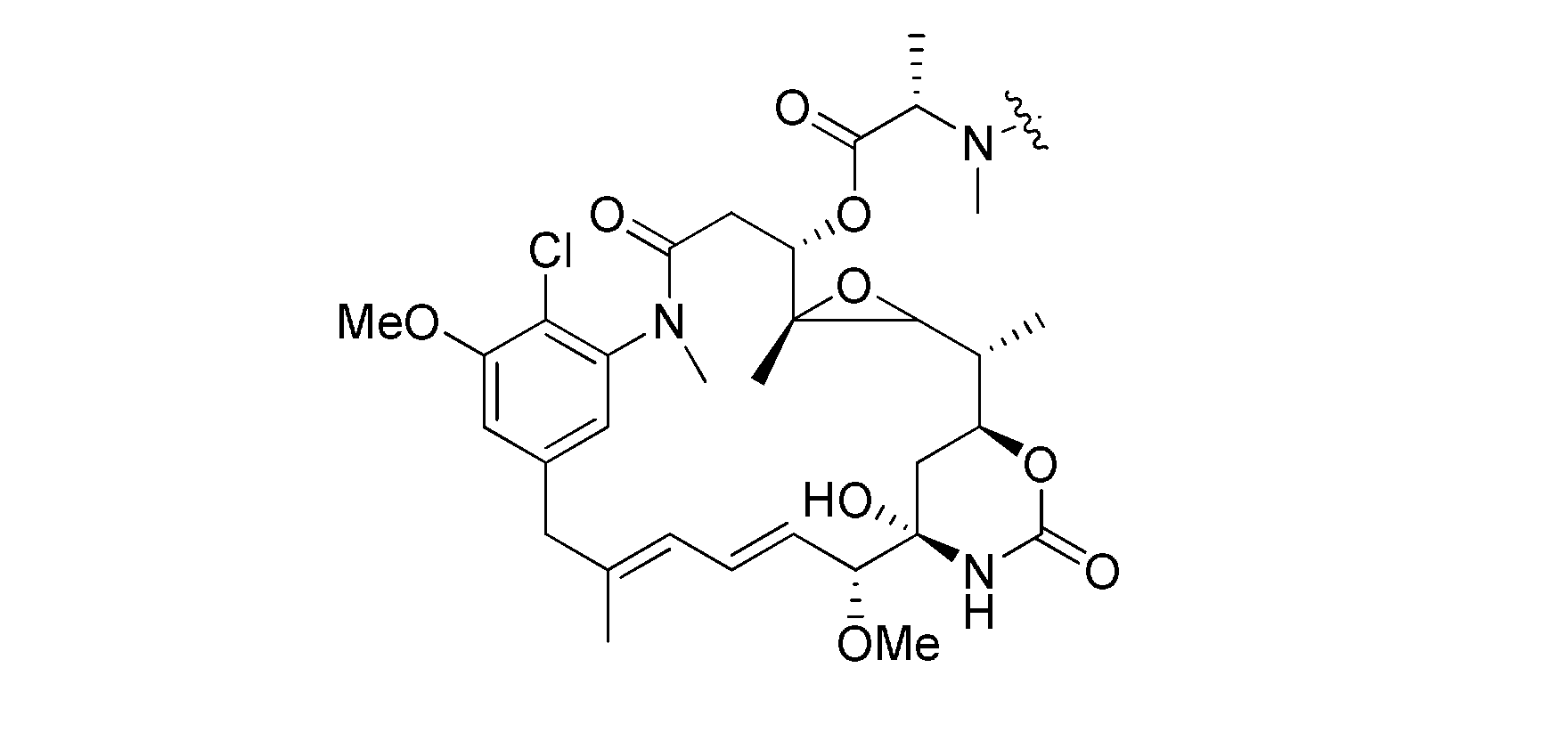


特定の実施形態では、薬物は、抗有糸分裂剤、例えば、アウリスタチン、又はその活性なアウリスタチン類似体若しくは誘導体(例えば、モノメチルアウリスタチンD(MMAD)、モノメチルアウリスタチンE(MMAE)、モノメチルアウリスタチンF(MMAF)等)である。特定の実施形態では、薬物は、MMAEであり、以下の構造を有する。

例えば、MMAE活性薬剤は、以下のような抗体-薬物コンジュゲートに含まれてもよく、


特定の実施形態では、薬物は、DNAアルキル化剤、例えば、デュオカルマイシンである。デュオカルマイシンの例としては、限定されないが、デュオカルマイシンA、デュオカルマイシンB1、デュオカルマイシンB2、デュオカルマイシンC1、デュオカルマイシンC2、デュオカルマイシンD、デュオカルマイシンSA、及びCC-1065が挙げられる。いくつかの実施形態では、デュオカルマイシンは、デュオカルマイシン類似体、例えば、限定されないが、アドゼレシン、ビゼレシン、又はカルゼレジンである。 In certain embodiments, the drug is a DNA alkylating agent, such as duocarmycin. Examples of duocarmycins include, but are not limited to, duocarmycin A, duocarmycin B1, duocarmycin B2, duocarmycin C1, duocarmycin C2, duocarmycin D, duocarmycin SA, and CC- 1065 is mentioned. In some embodiments, the duocarmycin is a duocarmycin analog, such as, but not limited to, adzelesin, vizelesin, or calzelesin.
場合によっては、デュオカルマイシンは、以下の構造を有する化合物である。
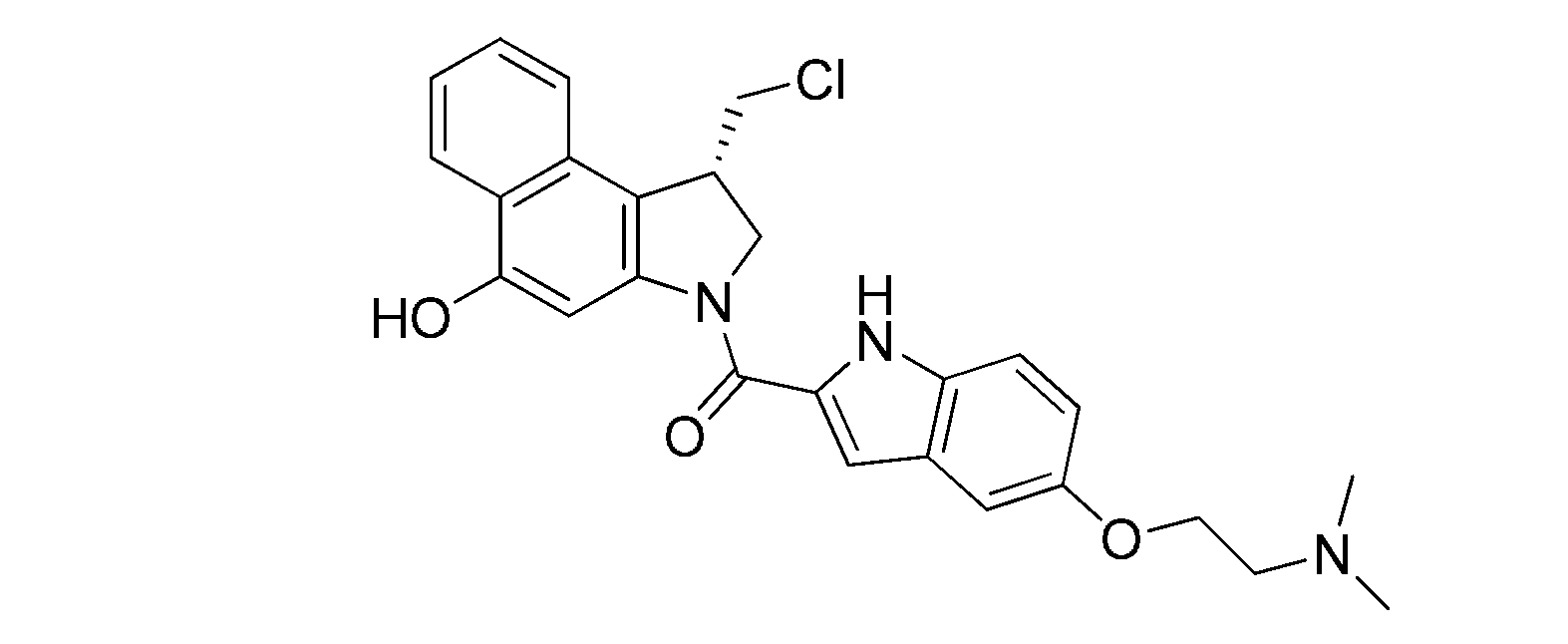
例えば、デュオカルマイシン活性薬剤は、以下のような抗体-薬物コンジュゲート

式中、


During the ceremony,
上述のように、特定の実施形態では、L2は、式-(L21)e-(L22)f-(L23)g-(L24)h-によって記載される第2のリンカーであり、式中、L21、L22、L23及びL24は、各々独立して、第2のリンカーサブユニットである。特定の実施形態では、L21は、第1の切断可能な部分に接続している。特定の実施形態では、L21は、存在する場合、W1(薬物)にも接続している。特定の実施形態では、L22は、存在する場合、W1(薬物)に接続している。特定の実施形態では、L23は、存在する場合、W1(薬物)に接続している。特定の実施形態では、L24は、存在する場合、W1(薬物)に接続している。 As mentioned above, in certain embodiments, L 2 is a second linker described by the formula -(L 21 ) e -(L 22 ) f -(L 23 ) g -(L 24 ) h - , where L 21 , L 22 , L 23 and L 24 are each independently a second linker subunit. In certain embodiments, L 21 connects to the first severable portion. In certain embodiments, L21 , if present, is also connected to W1 (drug). In certain embodiments, L 22 , if present, is connected to W 1 (drug). In certain embodiments, L 23 , if present, is connected to W 1 (drug). In certain embodiments, L24 , if present, is connected to W1 (drug).
上述のように、特定の実施形態では、第2のリンカー-(L21)e-(L22)f-(L23)g-(L24)h-は、式-(T5-V5)e-(T6-V6)f-(T7-V7)g-(T8-V8)h-によって記載され、式中、e、f、g、及びhは、各々独立して、0又は1であり、e、f、g、及びhの合計は、0~4である。特定の実施形態では、上述のように、L21は、第1の切断可能な部分に接続している。したがって、特定の実施形態では、T5は、第1の切断可能な部分に接続している。特定の実施形態では、V5は、W1(薬物)に接続している。特定の実施形態では、上述のように、L22は、存在する場合、W1(薬物)に接続している。したがって、特定の実施形態では、T6は、存在する場合、W1(薬物)に接続しているか、又はV6は、存在する場合、W1(薬物)に接続している。特定の実施形態では、上述のように、L23は、存在する場合、W1(薬物)に接続している。したがって、特定の実施形態では、T7は、存在する場合、W1(薬物)に接続しているか、又はV7は、存在する場合、W1(薬物)に接続している。特定の実施形態では、上述のように、L24は、存在する場合、W1(薬物)に接続している。したがって、特定の実施形態では、T8は、存在する場合、W1(薬物)に接続しているか、又はV8は、存在する場合、W1(薬物)に接続している。 As mentioned above, in certain embodiments, the second linker -(L 21 ) e -(L 22 ) f -(L 23 ) g -(L 24 ) h - has the formula -(T 5 -V 5 ) e -(T 6 -V 6 ) f -(T 7 -V 7 ) g -(T 8 -V 8 ) h -, where e, f, g, and h are each independently is 0 or 1, and the total of e, f, g, and h is 0 to 4. In certain embodiments, L 21 is connected to the first severable portion, as described above. Thus, in certain embodiments, T 5 is connected to the first severable portion. In certain embodiments, V 5 is connected to W 1 (drug). In certain embodiments, L22 , if present, is connected to W1 (drug), as described above. Thus, in certain embodiments, T 6 , if present, is connected to W 1 (drug) or V 6 , if present, is connected to W 1 (drug). In certain embodiments, L23 , if present, is connected to W1 (drug), as described above. Thus, in certain embodiments, T 7 , if present, is connected to W 1 (drug) or V 7 , if present, is connected to W 1 (drug). In certain embodiments, L24 , if present, is connected to W1 (drug), as described above. Thus, in certain embodiments, T 8 is connected to W 1 (drug), if present, or V 8 is connected to W 1 (drug), if present.
本開示の実施形態は、抗体が、1個以上の薬物部分、例えば、2個の薬物部分、3個の薬物部分、4個の薬物部分、5個の薬物部分、6個の薬物部分、7個の薬物部分、8個の薬物部分、9個の薬物部分、又は10個の薬物部分にコンジュゲートされる、コンジュゲートを含む。薬物部分は、本明細書に記載されるように、抗体中の1つ以上の部位で抗体にコンジュゲートされ得る。特定の実施形態では、コンジュゲートは、0.1~10、又は0.5~10、又は1~10、例えば、1~9、又は1~8、又は1~7、又は1~6、又は1~5、又は1~4、又は1~3、又は1~2の範囲の平均薬物対抗体比(DAR)(モル比)を有する。特定の実施形態では、コンジュゲートは、1~2、例えば、1、1.1、1.2、1.3、1.4、1.5、1.6、1.7、1.8、1.9、又は2の平均DARを有する。特定の実施形態では、コンジュゲートは、1~1.5の平均DARを有する。特定の実施形態では、コンジュゲートは、1.5~2の平均DARを有する。平均とは、算術平均を意味する。 Embodiments of the present disclosure provide that the antibody has one or more drug moieties, such as 2 drug moieties, 3 drug moieties, 4 drug moieties, 5 drug moieties, 6 drug moieties, 7 drug moieties, drug moieties, 8 drug moieties, 9 drug moieties, or 10 drug moieties. A drug moiety can be conjugated to an antibody at one or more sites within the antibody, as described herein. In certain embodiments, the conjugate is 0.1-10, or 0.5-10, or 1-10, such as 1-9, or 1-8, or 1-7, or 1-6, or It has an average drug-to-antibody ratio (DAR) (molar ratio) ranging from 1 to 5, or 1 to 4, or 1 to 3, or 1 to 2. In certain embodiments, the conjugate has 1 to 2, such as 1, 1.1, 1.2, 1.3, 1.4, 1.5, 1.6, 1.7, 1.8, It has an average DAR of 1.9, or 2. In certain embodiments, the conjugate has an average DAR of 1-1.5. In certain embodiments, the conjugate has an average DAR of 1.5-2. Average means the arithmetic mean.
ポリペプチドにコンジュゲートされる薬物は、ポリペプチドとの反応のための反応性パートナーを組み込むように修飾され得る。薬物がペプチド薬物である場合、反応性部分(例えば、アミノオキシ又はヒドラジンは、N末端領域、N末端、C末端領域、C末端、又はペプチドに対して内部の位置に位置し得る。例えば、方法の一例は、アミノオキシ基を有するペプチド薬物を合成することを伴う。この例では、ペプチドは、Boc保護された前駆体から合成される。ペプチドのアミノ基を、カルボン酸基及びオキシ-N-Boc基を含む化合物と反応させ得る。一例として、ペプチドのアミノ基は、3-(2,5-ジオキソピロリジン-1-イルオキシ)プロパン酸と反応する。カルボン酸基及びオキシ-N-保護基を含む化合物に対する他の変化は、アルキレンリンカー中に異なる炭素数、及びアルキレンリンカー上の置換を含み得る。ペプチドのアミノ基と、カルボン酸基及びオキシ-N-保護基を含む化合物との間の反応は、標準的なペプチドカップリング化学を介して起こる。使用され得るペプチドカップリング剤の例としては、限定されないが、DCC(ジシクロヘキシルカルボジイミド)、DIC(ジイソプロピルカルボジイミド)、ジ-p-トルオイルカルボジイミド、BDP(1-ベンゾトリアゾールジエチルホスフェート-1-シクロヘキシル-3-(2-モルホリニルエチル)カルボジイミド)、EDC(1-(3-ジメチルアミノプロピル-3-エチル-カルボジイミド塩酸塩)、フッ化シアヌル、塩化シアヌル、TFFH(テトラメチルフルオロホルムアミジニウムヘキサフルオロホスホスフェート)、DPPA(ジフェニルホスホロアジデート)、BOP(ベンゾトリアゾール-1-イルオキシトリス(ジメチルアミノ)ホスホニウムヘキサフルオロホスフェート)、HBTU(O-ベンゾトリアゾール-1-イル-N,N,N’,N’-テトラメチルウロニウムヘキサフルオロホスフェート)、TBTU(O-ベンゾトリアゾール-1-イル-N,N,N’,N’-テトラメチルウロニウムテトラフルオロボレート)、TSTU(O-(N-スクシンイミジル)-N,N,N’,N’-テトラメチルウロニウムテトラフルオロボレート)、HATU(N-[(ジメチルアミノ)-1-H-1,2,3-トリアゾロ[4,5,6]-ピリジン-1-イルメチレン]-N-メチルメタンアミニウムヘキサフルオロホスフェートN-オキシド)、BOP-Cl(ビス(2-オキソ-3-オキサゾリジニル)ホスフィニッククロリド)、PyBOP((1-H-1,2,3-ベンゾトリアゾール-1-イルオキシ)-トリス(ピロリジノ)ホスホニウムテトラフルオロホスフェート)、BrOP(ブロモトリス(ジメチルアミノ)ホスホニウムヘキサフルオロホスフェート)、DEPBT(3-(ジエトキシホスホルイルオキシ)-1,2,3-ベンゾトリアジン-4(3H)-オン)PyBrOP(ブロモトリス(ピロリジノ)ホスホニウムヘキサフルオロホスフェート)が挙げられる。非限定的な例として、HOBt及びDICは、ペプチドカップリング試薬として使用され得る。 Drugs that are conjugated to polypeptides can be modified to incorporate reactive partners for reaction with the polypeptide. If the drug is a peptide drug, the reactive moiety (e.g., aminooxy or hydrazine) may be located at the N-terminal region, the N-terminus, the C-terminal region, the C-terminus, or at a position internal to the peptide. For example, the method One example involves synthesizing a peptide drug with an aminooxy group. In this example, the peptide is synthesized from a Boc-protected precursor. The amino group of the peptide is replaced by a carboxylic acid group and an oxy-N- may be reacted with a compound containing a Boc group. As an example, the amino group of the peptide is reacted with 3-(2,5-dioxopyrrolidin-1-yloxy)propanoic acid. Carboxylic acid groups and oxy-N-protecting groups Other changes to compounds containing the alkylene linker may include different numbers of carbons in the alkylene linker, and substitutions on the alkylene linker. The reaction occurs via standard peptide coupling chemistry. Examples of peptide coupling agents that may be used include, but are not limited to, DCC (dicyclohexylcarbodiimide), DIC (diisopropylcarbodiimide), di-p-toluoylcarbodiimide. , BDP (1-benzotriazole diethyl phosphate-1-cyclohexyl-3-(2-morpholinylethyl) carbodiimide), EDC (1-(3-dimethylaminopropyl-3-ethyl-carbodiimide hydrochloride)), cyanuric fluoride , cyanuric chloride, TFFH (tetramethylfluoroformamidinium hexafluorophosphate), DPPA (diphenylphosphoroazidate), BOP (benzotriazol-1-yloxytris(dimethylamino)phosphonium hexafluorophosphate), HBTU (O- benzotriazol-1-yl-N,N,N',N'-tetramethyluronium hexafluorophosphate), TBTU (O-benzotriazol-1-yl-N,N,N',N'-tetramethyluronium hexafluorophosphate), TSTU (O-(N-succinimidyl)-N,N,N',N'-tetramethyluronium tetrafluoroborate), HATU(N-[(dimethylamino)-1-H-1 , 2,3-triazolo[4,5,6]-pyridin-1-ylmethylene]-N-methylmethanaminium hexafluorophosphate N-oxide), BOP-Cl (bis(2-oxo-3-oxazolidinyl) phosphate) finic chloride), PyBOP ((1-H-1,2,3-benzotriazol-1-yloxy)-tris(pyrrolidino)phosphonium tetrafluorophosphate), BrOP (bromotris(dimethylamino)phosphonium hexafluorophosphate), DEPBT (3-(diethoxyphosphoryloxy)-1,2,3-benzotriazin-4(3H)-one) PyBrOP (bromotris(pyrrolidino)phosphonium hexafluorophosphate). As a non-limiting example, HOBt and DIC can be used as peptide coupling reagents.
アミノオキシ官能性を露出させるための脱保護は、N-保護基を含むペプチド上で行われる。N-オキシスクシンイミド基の脱保護は、例えば、環状アミド基についての標準的な脱保護条件に従って起こる。脱保護条件は、Greene and Wuts,Protective Groups in Organic Chemistry,3rd Ed.,1999,John Wiley & Sons,NY and Harrison et al.中に見出され得る。特定の脱保護条件としては、ヒドラジン試薬、アミノ試薬、又は水素化ホウ素ナトリウムが挙げられる。Boc保護基の脱保護は、TFAを用いて行うことができる。脱保護のための他の試薬としては、限定されないが、ヒドラジン、メチルヒドラジン、フェニルヒドラジン、水素化ホウ素ナトリウム、及びメチルアミンが挙げられる。生成物及び中間体は、HPLC精製等の従来の手段によって精製され得る。 Deprotection to expose the aminooxy functionality is performed on the peptide containing the N-protecting group. Deprotection of the N-oxysuccinimide group occurs, for example, according to standard deprotection conditions for cyclic amide groups. Deprotection conditions are as described in Greene and Wuts, Protective Groups in Organic Chemistry, 3rd Ed. , 1999, John Wiley & Sons, NY and Harrison et al. can be found inside. Particular deprotection conditions include hydrazine reagents, amino reagents, or sodium borohydride. Deprotection of the Boc protecting group can be performed using TFA. Other reagents for deprotection include, but are not limited to, hydrazine, methylhydrazine, phenylhydrazine, sodium borohydride, and methylamine. Products and intermediates may be purified by conventional means such as HPLC purification.
当業者は、pH及び立体障害(すなわち、目的の反応性パートナーとの反応に対するアミノ酸残基の接近可能性)等の因子が重要であることを理解するであろう。最適なコンジュゲート化条件を提供するための反応条件を変えることは、十分に当業者の技術の範囲内であり、当該技術分野で慣例である。コンジュゲート化が、生存細胞内又は生存細胞上に存在するポリペプチドとともに行われる場合、その条件は、生理学的に適合するように選択される。例えば、pHは、反応を起こさせるのに十分な時間であるが、細胞によって忍容される期間内(例えば、約30分~1時間)、一時的に低下されてもよい。細胞表面上でポリペプチドの修飾を行うための生理学的条件は、細胞表面アジドを保有する細胞の修飾においてケトン-アジド反応において使用されるものに類似し得る(例えば、U.S.6,570,040を参照されたい)。 Those skilled in the art will appreciate that factors such as pH and steric hindrance (ie, accessibility of the amino acid residue to reaction with the desired reactive partner) are important. Varying reaction conditions to provide optimal conjugation conditions is well within the skill of those skilled in the art and is routine in the art. When conjugation is performed with a polypeptide present in or on living cells, the conditions are selected to be physiologically compatible. For example, the pH may be temporarily lowered for a period of time sufficient to allow the reaction to occur, but within a period of time that is tolerated by the cells (eg, about 30 minutes to 1 hour). Physiological conditions for carrying out modification of polypeptides on the cell surface can be similar to those used in ketone-azide reactions in the modification of cells bearing cell surface azides (e.g., U.S. 6,570 , 040).
本明細書に開示される化合物又はコンジュゲートとともに反応性パートナーとして役立つα-求核性基を含有するか、又は含有するように修飾された小分子化合物はまた、本開示のポリペプチド-薬物コンジュゲート中の薬物としての使用が企図される。一般的な方法は、化学合成スキーム及び目的の化合物を合成するのに有用な条件について、当該技術分野で既知である(例えば、Smith and March,March’s Advanced Organic Chemistry:Reactions,Mechanisms,and Structure,Fifth Edition,Wiley-Interscience,2001、又はVogel,A Textbook of Practical Organic Chemistry,Including Qualitative Organic Analysis,Fourth Edition,New York:Longman,1978を参照されたい)。 Small molecule compounds containing, or modified to contain, α-nucleophilic groups that serve as reactive partners with the compounds or conjugates disclosed herein also include the polypeptide-drug conjugates of the present disclosure. It is contemplated for use as a drug in GATE. General methods are known in the art for chemical synthesis schemes and conditions useful for synthesizing compounds of interest (e.g., Smith and March, March's Advanced Organic Chemistry: Reactions, Mechanisms, and Structure). , Fifth Edition, Wiley-Interscience, 2001, or Vogel, A Textbook of Practical Organic Chemistry, Including Qualitative Organic Ana lysis, Fourth Edition, New York: Longman, 1978).
製剤
本開示のコンジュゲートは、様々な異なる方法で製剤化され得る。一般に、コンジュゲートが、抗体-薬物コンジュゲートである場合、コンジュゲートは、薬物、抗体、治療される状態、及び使用される投与経路に適合した方法で製剤化される。
Formulation The conjugates of the present disclosure can be formulated in a variety of different ways. Generally, when the conjugate is an antibody-drug conjugate, the conjugate will be formulated in a manner compatible with the drug, antibody, condition being treated, and route of administration used.
いくつかの実施形態では、本開示のコンジュゲートのうちのいずれかと、薬学的に許容される賦形剤と、を含む薬学的組成物が提供される。 In some embodiments, a pharmaceutical composition is provided that includes any of the conjugates of the present disclosure and a pharmaceutically acceptable excipient.
コンジュゲート(例えば、抗体-薬物コンジュゲート)は、任意の好適な形態で、例えば、薬学的に許容される塩の形態で提供されてもよく、投与の任意の好適な経路、例えば、経口、局所、又は非経口投与のために製剤化され得る。コンジュゲートが、注射可能な液体(それらが静脈内又は直接的に組織に投与されるそれらの実施形態におけるもの等)として提供される場合、コンジュゲートは、すぐに使用可能な剤形として、又は薬学的に許容される担体及び賦形剤で構成される再構築可能な貯蔵安定性粉末若しくは液体として提供され得る。 The conjugate (e.g., antibody-drug conjugate) may be provided in any suitable form, e.g., in the form of a pharmaceutically acceptable salt, and by any suitable route of administration, e.g., oral, It may be formulated for topical or parenteral administration. Where the conjugates are provided as an injectable liquid (such as in those embodiments in which they are administered intravenously or directly into the tissue), the conjugates may be provided as a ready-to-use dosage form or It may be provided as a reconstitutable, shelf-stable powder or liquid comprised of pharmaceutically acceptable carriers and excipients.
コンジュゲートを製剤化するための方法は、容易に利用可能なものから適応され得る。例えば、コンジュゲートは、治療有効量のコンジュゲートと、薬理学的に許容される担体(例えば、生理食塩水)と、を含む薬学的組成物で提供され得る。薬学的組成物は、任意選択的に、他の添加剤(例えば、緩衝剤、安定剤、防腐剤等)を含み得る。いくつかの実施形態では、製剤は、哺乳動物への投与に適しており、例えば、ヒトへの投与に適したものである。 Methods for formulating conjugates can be adapted from those readily available. For example, the conjugate can be provided in a pharmaceutical composition comprising a therapeutically effective amount of the conjugate and a pharmacologically acceptable carrier (eg, saline). Pharmaceutical compositions may optionally include other additives (eg, buffers, stabilizers, preservatives, etc.). In some embodiments, the formulation is suitable for administration to a mammal, eg, a human.
治療方法
本開示の抗体-薬物コンジュゲートは、親薬物(すなわち、抗体へのコンジュゲート化前の薬物)の投与による治療に適した対象において状態又は疾患の治療における用途を見出す。
Methods of Treatment The antibody-drug conjugates of the present disclosure find use in the treatment of conditions or diseases in subjects suitable for treatment by administration of the parent drug (ie, the drug prior to conjugation to the antibody).
いくつかの実施形態では、有効量(例えば、治療有効量)の本開示のコンジュゲートのいずれかを対象に投与することを含む方法が提供される。 In some embodiments, methods are provided that include administering to a subject an effective amount (eg, a therapeutically effective amount) of any of the conjugates of the present disclosure.
特定の態様では、対象において標的部位に薬物を送達する方法であって、本方法が、本開示のコンジュゲートのいずれかを含む薬学的組成物を対象に投与することを含み、投与することが、対象において標的部位にコンジュゲートから治療有効量の薬物を放出するのに有効である、方法が提供される。例えば、本明細書に記載されるように、本開示の抗体-薬物コンジュゲートは、切断可能なリンカー、例えば、第1の酵素的に切断可能な部分及び第2の酵素的に切断可能な部分を含む酵素的に切断可能なリンカーを含み得る。場合によっては、切断可能なリンカーは、適切な条件下で切断され、その薬物についての所望の作用標的部位で抗体から薬物を分離又は放出し得る。例えば、第1の切断可能なリンカーが切断しないように保護する第2の切断可能なリンカーは、第1の切断可能な部分の切断を可能にするために切断されてもよく、これにより、切断可能なリンカーを2つ以上の部分に切断し、したがって、所望の作用部位で抗体-薬物コンジュゲートから薬物が放出される。 In certain embodiments, a method of delivering a drug to a target site in a subject, the method comprising administering to the subject a pharmaceutical composition comprising any of the conjugates of the present disclosure, the method comprising administering to the subject a pharmaceutical composition comprising any of the conjugates of the disclosure. , methods are provided that are effective for releasing a therapeutically effective amount of a drug from a conjugate to a target site in a subject. For example, as described herein, the antibody-drug conjugates of the present disclosure may include a cleavable linker, e.g., a first enzymatically cleavable moiety and a second enzymatically cleavable moiety. may include an enzymatically cleavable linker comprising: In some cases, the cleavable linker can be cleaved under appropriate conditions to separate or release the drug from the antibody at the desired target site of action for that drug. For example, a second cleavable linker that protects the first cleavable linker from cleavage may be cleaved to allow cleavage of the first cleavable portion, thereby causing cleavage. The possible linker is cleaved into two or more parts, thus releasing the drug from the antibody-drug conjugate at the desired site of action.
特定の実施形態では、第1の切断可能な部分は、酵素的に切断可能な部分であり得る。場合によっては、第1の切断可能な部分の切断を促進する酵素は、治療される対象に投与される(すなわち、治療される対象に対して外因性の)酵素である。例えば、第1の酵素は、本明細書に記載の抗体-薬物コンジュゲートの投与の前、投与と同時、又は投与の後に投与され得る。 In certain embodiments, the first cleavable moiety can be an enzymatically cleavable moiety. In some cases, the enzyme that facilitates cleavage of the first cleavable moiety is an enzyme that is administered to the subject being treated (ie, exogenous to the subject being treated). For example, the first enzyme can be administered before, concurrently with, or after administration of the antibody-drug conjugates described herein.
特定の実施形態では、第2の切断可能な部分は、酵素的に切断可能な部分であり得る。場合によっては、第2の切断可能な部分の切断を促進する酵素は、治療される対象に投与される(すなわち、治療される対象に対して外因性の)酵素である。例えば、第2の酵素は、本明細書に記載の抗体-薬物コンジュゲートの投与の前、投与と同時、又は投与の後に投与され得る。特定の実施形態では、第1の酵素と第2の酵素は、異なる酵素である。 In certain embodiments, the second cleavable moiety can be an enzymatically cleavable moiety. In some cases, the enzyme that facilitates cleavage of the second cleavable moiety is an enzyme that is administered to the subject being treated (ie, exogenous to the subject being treated). For example, the second enzyme can be administered before, simultaneously with, or after administration of the antibody-drug conjugates described herein. In certain embodiments, the first enzyme and the second enzyme are different enzymes.
他の場合では、第1の切断可能な部分の切断を促進する第1の酵素は、治療される対象中に存在する(すなわち、治療される対象に対して内因性の)酵素である。例えば、第1の酵素は、抗体-薬物コンジュゲートの薬物についての所望の作用部位に存在し得る。抗体-薬物コンジュゲートの抗体は、所望の作用部位に特異的に標的化されてもよく(例えば、所望の作用部位に存在する抗原に特異的に結合してもよく)、所望の作用部位はまた、第1の酵素の存在を含む。場合によっては、第1の酵素は、治療される対象の身体の他の領域と比較して、所望の作用部位で過剰な存在量で存在する。例えば、第1の酵素は、治療される対象の身体の他の領域と比較して、所望の作用部位で過剰発現され得る。場合によっては、第1の酵素は、特定の領域又は場所における第1の酵素の局在化に起因して、所望の作用部位で過剰な存在量で存在する。例えば、第1の酵素は、リソソーム等の所望の作用部位内の特定の構造に関連し得る。ある場合には、第1の酵素は、対象の身体の他の領域と比較して、リソソーム中に過剰な存在量で存在する。いくつかの実施形態では、第1の酵素を含むリソソームは、抗体-薬物コンジュゲートの薬物についての所望の作用部位、例えば、薬物で治療されるがん又は腫瘍の部位に見出される。特定の実施形態では、第1の酵素は、ヒトプロテアーゼ酵素(例えば、カテプシンB)等のプロテアーゼである。 In other cases, the first enzyme that facilitates cleavage of the first cleavable moiety is an enzyme that is present in the subject being treated (ie, endogenous to the subject being treated). For example, the first enzyme can be present at the desired site of action for the drug of the antibody-drug conjugate. The antibody of the antibody-drug conjugate may be specifically targeted to the desired site of action (e.g., may specifically bind to an antigen present at the desired site of action), and the desired site of action may be It also includes the presence of a first enzyme. In some cases, the first enzyme is present in excess abundance at the desired site of action compared to other areas of the subject's body being treated. For example, the first enzyme may be overexpressed at the desired site of action compared to other areas of the subject's body being treated. In some cases, the first enzyme is present in excess abundance at the desired site of action due to localization of the first enzyme in a particular region or location. For example, the first enzyme may be associated with a particular structure within the desired site of action, such as a lysosome. In some cases, the first enzyme is present in excess abundance in lysosomes compared to other regions of the subject's body. In some embodiments, the lysosome containing the first enzyme is found at the desired site of action for the drug of the antibody-drug conjugate, eg, at the site of a cancer or tumor to be treated with the drug. In certain embodiments, the first enzyme is a protease, such as a human protease enzyme (eg, cathepsin B).
特定の実施形態では、第2の切断可能な部分の切断を促進する第2の酵素は、治療される対象中に存在する(すなわち、治療される対象に対して内因性の)酵素である。例えば、第2の酵素は、抗体-薬物コンジュゲートの薬物についての所望の作用部位に存在し得る。抗体-薬物コンジュゲートの抗体は、所望の作用部位に特異的に標的化されてもよく(例えば、所望の作用部位に存在する抗原に特異的に結合してもよく)、所望の作用部位はまた、第2の酵素の存在を含む。場合によっては、第2の酵素は、治療される対象の身体の他の領域と比較して、所望の作用部位で過剰な存在量で存在する。例えば、第2の酵素は、治療される対象の身体の他の領域と比較して、所望の作用部位で過剰発現され得る。場合によっては、第2の酵素は、特定の領域又は場所における第2の酵素の局在化に起因して、所望の作用部位で過剰な存在量で存在する。例えば、第2の酵素は、リソソーム等の所望の作用部位内の特定の構造に関連し得る。ある場合には、第2の酵素は、対象の身体の他の領域と比較して、リソソーム中に過剰な存在量で存在する。いくつかの実施形態では、第2の酵素を含むリソソームは、抗体-薬物コンジュゲートの薬物についての所望の作用部位、例えば、薬物で治療されるがん又は腫瘍の部位に見出される。特定の実施形態では、第2の酵素は、グリコシダーゼ、例えば、ガラクトシダーゼ、グルコシダーゼ、マンノシダーゼ、フコシダーゼ等である。 In certain embodiments, the second enzyme that facilitates cleavage of the second cleavable moiety is an enzyme that is present in the subject being treated (ie, endogenous to the subject being treated). For example, the second enzyme can be present at the desired site of action for the drug of the antibody-drug conjugate. The antibody of the antibody-drug conjugate may be specifically targeted to the desired site of action (e.g., may specifically bind to an antigen present at the desired site of action), and the desired site of action may be It also includes the presence of a second enzyme. In some cases, the second enzyme is present in excess abundance at the desired site of action compared to other areas of the subject's body being treated. For example, the second enzyme may be overexpressed at the desired site of action compared to other areas of the subject's body being treated. In some cases, the second enzyme is present in excess abundance at the desired site of action due to localization of the second enzyme in a particular region or location. For example, the second enzyme may be associated with a specific structure within the desired site of action, such as a lysosome. In some cases, the second enzyme is present in excess abundance in lysosomes compared to other areas of the subject's body. In some embodiments, the lysosome containing the second enzyme is found at the desired site of action for the drug of the antibody-drug conjugate, eg, at the site of a cancer or tumor to be treated with the drug. In certain embodiments, the second enzyme is a glycosidase, eg, galactosidase, glucosidase, mannosidase, fucosidase, etc.
任意の好適な酵素を、本明細書に記載の抗体-薬物コンジュゲートの第1の切断可能な部分及び第2の切断可能な部分の切断に使用することができる。他の酵素、例えば、限定されないが、他の脊椎動物(例えば、霊長類、マウス、ラット、ネコ、ブタ、ウズラ、ヤギ、イヌ等)由来の酵素も、本明細書に記載の抗体-薬物コンジュゲートの第1の切断可能な部分及び第2の切断可能な部分の切断に使用するのに適している場合がある。 Any suitable enzyme can be used to cleave the first cleavable portion and the second cleavable portion of the antibody-drug conjugates described herein. Other enzymes, such as, but not limited to, enzymes from other vertebrates (e.g., primates, mice, rats, cats, pigs, quail, goats, dogs, etc.) may also be used in the antibody-drug conjugates described herein. It may be suitable for use in cutting the first cuttable portion and the second cuttable portion of the gate.
特定の実施形態では、抗体-薬物コンジュゲートは、標準的な条件下で実質的に安定である。実質的に安定とは、抗体-薬物コンジュゲートの切断可能なリンカーが、上述の第1の酵素及び第2の酵素の存在しない状態で、有意な量の切断を受けないことを意味する。例えば、上述のように、第2の切断可能な部分は、第1の切断可能な部分が切断されないように保護することができ、したがって、抗体-薬物コンジュゲートの切断可能なリンカーは、上述の第2の酵素が存在しない状態で、有意な量の切断を受けない。例えば、抗体-薬物コンジュゲートの切断可能なリンカーは、抗体-薬物コンジュゲートの25%以下、例えば、20%以下、又は15%以下、又は10%以下、又は5%以下、又は4%以下、又は3%以下、又は2%以下、又は1%以下が、第1の酵素及び/又は第2の酵素が存在しない状態で切断するような、実質的に安定なものであり得る。ある場合には、抗体-薬物コンジュゲートは、抗体-薬物コンジュゲートの切断可能なリンカーが、第1の酵素及び/又は第2の酵素が存在しない状態で有意な量の切断を受けないように実質的に安定であるが、第1の酵素及び第2の酵素が存在する場合には切断され得る。例えば、抗体-薬物コンジュゲートは、対象への投与後に実質的に安定であり得る。ある場合には、抗体-薬物コンジュゲートは、対象への投与後に実質的に安定であり、次いで、抗体-薬物コンジュゲートが、所望の作用部位で第2の酵素存在下にあるとき、第2の切断可能な部分は、切断可能なリンカーから切断され、したがって、第1の切断可能な部分が、第1の酵素によるその後の切断に対して露出し、次いで、その所望の作用部位で薬物を放出することができる。特定の実施形態では、対象への投与後、抗体-薬物コンジュゲートは、第1の酵素及び/又は第2の酵素が存在しない状態で、例えば、1時間以上、又は2時間以上、又は3時間以上、又は4時間以上、又は5時間以上、又は6時間以上、又は7時間以上、又は8時間以上、又は9時間以上、又は10時間以上、又は15時間以上、又は20時間以上、又は24時間(1日)以上、又は2日以上、又は3日以上、又は4日以上、又は5日以上、又は6日以上、又は7日(1週間)以上の長期間にわたって安定である。特定の実施形態では、抗体-薬物コンジュゲートは、第1の酵素及び/又は第2の酵素が存在しない状態で、あるpH範囲で、例えば、2~10、又は3~9、又は4~8、又は5~8、又は6~8、又は7~8の範囲のpH等で、長期間安定である。 In certain embodiments, the antibody-drug conjugate is substantially stable under standard conditions. Substantially stable means that the cleavable linker of the antibody-drug conjugate does not undergo a significant amount of cleavage in the absence of the first and second enzymes described above. For example, as described above, the second cleavable moiety can protect the first cleavable moiety from cleavage, and thus the cleavable linker of the antibody-drug conjugate can be In the absence of a second enzyme, it does not undergo any significant amount of cleavage. For example, the cleavable linker of the antibody-drug conjugate comprises no more than 25%, such as no more than 20%, or no more than 15%, or no more than 10%, or no more than 5%, or no more than 4% of the antibody-drug conjugate. Or it can be substantially stable, such that 3% or less, or 2% or less, or 1% or less will cleave in the absence of the first enzyme and/or the second enzyme. In some cases, the antibody-drug conjugate is such that the cleavable linker of the antibody-drug conjugate does not undergo a significant amount of cleavage in the absence of the first enzyme and/or the second enzyme. Although substantially stable, it can be cleaved if the first and second enzymes are present. For example, an antibody-drug conjugate can be substantially stable after administration to a subject. In some cases, the antibody-drug conjugate is substantially stable after administration to a subject, and then when the antibody-drug conjugate is in the presence of a second enzyme at the desired site of action, a second The cleavable portion of is cleaved from the cleavable linker, thus exposing the first cleavable portion to subsequent cleavage by the first enzyme, which in turn exposes the drug at its desired site of action. can be released. In certain embodiments, after administration to a subject, the antibody-drug conjugate is in the absence of the first enzyme and/or the second enzyme, for example, for 1 or more hours, or 2 or more hours, or 3 hours. or more than 4 hours, or more than 5 hours, or more than 6 hours, or more than 7 hours, or more than 8 hours, or more than 9 hours, or more than 10 hours, or more than 15 hours, or more than 20 hours, or 24 hours. Stable for a long period of time (1 day) or more, or 2 days or more, or 3 days or more, or 4 days or more, or 5 days or more, or 6 days or more, or 7 days (1 week) or more. In certain embodiments, the antibody-drug conjugate is administered at a pH range, such as from 2 to 10, or from 3 to 9, or from 4 to 8, in the absence of the first enzyme and/or the second enzyme. , or at a pH in the range of 5 to 8, or 6 to 8, or 7 to 8, etc., and is stable for a long period of time.
上述のように、本開示の抗体-薬物コンジュゲートは、親薬物の投与による治療に適した対象において状態又は疾患の治療における用途を見出す。「治療」とは、宿主が罹患している状態に関連する症状の少なくとも軽減が達成されることを意味し、軽減は、治療される状態に関連するパラメータ(例えば、症状)の大きさの少なくとも減少を指すために広義で使用される。したがって、治療はまた、病的状態、又はそれと関連する少なくとも症状が、完全に阻害され、例えば、起こることが防止されるか、又は停止され、例えば、終了され、その結果、宿主がもはやその状態、又はその状態を特徴付ける少なくとも症状を患わない状況も含む。したがって、治療は、(i)防止、すなわち、臨床症状を発症させないようにすること、例えば、有害な状態への疾患進行を防止することを含む、臨床症状の発症のリスクを減少させること、(ii)阻害、すなわち、臨床症状の発症又は更なる発症を休止させること、例えば、活動性疾患を軽減するか、又は完全に阻害すること、並びに/又は(iii)緩和、すなわち、臨床症状を逆行させることを含む。 As mentioned above, the antibody-drug conjugates of the present disclosure find use in the treatment of conditions or diseases in subjects suitable for treatment by administration of the parent drug. "Treatment" means that at least a reduction in the symptoms associated with the condition from which the host is afflicted is achieved, and reduction includes at least a reduction in the magnitude of a parameter (e.g., symptoms) associated with the condition being treated. Used broadly to refer to decline. Therefore, treatment also means that the pathological condition, or at least the symptoms associated therewith, is completely inhibited, eg, prevented from occurring, or stopped, eg, terminated, so that the host no longer has the condition. , or at least the symptoms that characterize the condition. Treatment therefore includes (i) prevention, i.e., preventing clinical symptoms from developing, reducing the risk of developing clinical symptoms, including, for example, preventing disease progression to a harmful state; ii) inhibition, i.e. halting the onset or further development of clinical symptoms, e.g. reducing or completely inhibiting active disease; and/or (iii) palliation, i.e. reversing clinical symptoms. Including causing.
治療される対象は、療法の必要がある対象であってもよく、治療される対象は、親薬物を使用した治療に適した対象である。したがって、様々な対象は、本明細書に開示される抗体-薬物コンジュゲートを使用した治療に適していてもよい。一般に、かかる対象は、「哺乳動物」であり、ヒトは、目的のものである。他の対象は、家庭用ペット(例えば、イヌ及びネコ)、家畜(例えば、ウシ、ブタ、ヤギ、ウマ等)、げっ歯類(例えば、マウス、モルモット、及びラット、例えば、疾患の動物モデル等)、並びに非ヒト霊長類(例えば、チンパンジー及びサル)を含み得る。 The subject being treated may be a subject in need of therapy, and the subject being treated is a subject suitable for treatment with the parent drug. Accordingly, a variety of subjects may be suitable for treatment using the antibody-drug conjugates disclosed herein. Generally, such subjects are "mammals" and humans are of interest. Other subjects include domestic pets (e.g. dogs and cats), livestock (e.g. cows, pigs, goats, horses, etc.), rodents (e.g. mice, guinea pigs, and rats, e.g. animal models of disease, etc.) ), as well as non-human primates (e.g., chimpanzees and monkeys).
投与される抗体-薬物コンジュゲートの量は、親薬物の用量及び/又は投薬レジメンの指導に基づいて最初に決定され得る。一般に、抗体-薬物コンジュゲートは、結合した薬物の標的化送達及び/又は増強された血清半減期を提供することができ、したがって、投薬レジメンにおいて用量の減少又は投与の減少のうちの少なくとも1つを提供する。したがって、抗体-薬物コンジュゲートは、本開示の抗体-薬物コンジュゲートにコンジュゲートされる前に、親薬物に対して投薬レジメンの用量の減少及び/又は投与の減少を提供することができる。 The amount of antibody-drug conjugate to be administered can be initially determined based on the dose of the parent drug and/or guidance of the dosing regimen. Generally, the antibody-drug conjugate can provide targeted delivery and/or enhanced serum half-life of the conjugated drug, and thus include at least one of a reduced dose or reduced administration in a dosing regimen. I will provide a. Accordingly, the antibody-drug conjugate can provide a reduced dose and/or reduced administration of the dosing regimen relative to the parent drug before being conjugated to the antibody-drug conjugate of the present disclosure.
更に、上に示されるように、抗体-薬物コンジュゲートは、薬物送達の制御された化学量論を提供し得るため、抗体-薬物コンジュゲートの投薬量は、抗体-薬物コンジュゲート当たりに提供される薬物分子の数に基づいて計算することができる。 Additionally, as indicated above, antibody-drug conjugates can provide controlled stoichiometry of drug delivery, such that the dosage of antibody-drug conjugate is provided per antibody-drug conjugate. can be calculated based on the number of drug molecules present.
いくつかの実施形態では、複数の用量の抗体-薬物コンジュゲートが投与される。抗体-薬物コンジュゲートの投与の頻度は、例えば、症状の重症度、対象の状態等の様々な因子のいずれかに依存して変化し得る。例えば、いくつかの実施形態では、抗体-薬物コンジュゲートは、1ヶ月に1回、1ヶ月に2回、1ヶ月に3回、隔週、週に1回(qwk)、週に2回、週に3回、週に4回、週に5回、週に6回、1日おき、毎日(qd/od)、1日に2回(bds/bid)、又は1日に3回(tds/tid)等で投与される。 In some embodiments, multiple doses of the antibody-drug conjugate are administered. The frequency of administration of the antibody-drug conjugate can vary depending on any of a variety of factors, such as, for example, the severity of the symptoms, the condition of the subject, and the like. For example, in some embodiments, the antibody-drug conjugate is administered once per month, twice per month, three times per month, biweekly, once per week (qwk), twice per week, weekly. 3 times a week, 4 times a week, 5 times a week, 6 times a week, every other day, every day (qd/od), twice a day (bds/bid), or 3 times a day (tds/bid) tid) etc.
がんを治療する方法
本開示は、がんを有する個体に本開示のコンジュゲートを送達することを含む方法を提供する。本方法は、がん腫、肉腫、白血病、及びリンパ腫を含む、多種多様ながんを治療するのに有用である。がんの文脈において、「治療する」という用語は、固形腫瘍の成長を減少させること、がん細胞の複製を阻害すること、全体的な腫瘍負荷を減少させること、及びがんに関連する1つ以上の症状を軽減することのうちの1つ以上(例えば、それぞれ)を含む。
Methods of Treating Cancer The present disclosure provides methods comprising delivering a conjugate of the present disclosure to an individual having cancer. The method is useful for treating a wide variety of cancers, including carcinoma, sarcoma, leukemia, and lymphoma. In the context of cancer, the term "treat" refers to reducing the growth of solid tumors, inhibiting the replication of cancer cells, reducing the overall tumor burden, and treating cancer-related cancers. including one or more (e.g., each) of alleviating one or more symptoms.
主題の方法を使用して治療され得るがん腫としては、限定されないが、食道がん腫、肝細胞がん腫、基底細胞がん腫(皮膚がんの一形態)、扁平細胞がん腫(様々な組織)、移行細胞がん腫(膀胱の悪性新生物)を含む膀胱がん腫、気管支原性がん腫、結腸がん腫、結腸直腸がん腫、胃がん腫、肺の小細胞がん腫及び非小細胞がん腫を含む肺がん腫、副腎皮質がん腫、甲状腺がん腫、膵臓がん腫、乳がん腫、卵巣がん腫、前立腺がん腫、腺がん、汗腺がん腫、脂腺がん腫、乳頭がん腫、乳頭腺がん、嚢胞腺がん腫、髄様がん腫、腎細胞がん腫、非浸潤性乳管がん腫又は胆管がん腫、絨毛がん腫、セミノーマ、胎児性がん腫、ウィルムス腫瘍、子宮頸がん腫、子宮がん腫、精巣がん腫、骨がん腫、上皮がん腫、及び鼻咽頭がん腫等が挙げられる。 Carcinomas that may be treated using the subject methods include, but are not limited to, esophageal carcinoma, hepatocellular carcinoma, basal cell carcinoma (a form of skin cancer), and squamous cell carcinoma. (various tissues), bladder carcinoma, including transitional cell carcinoma (malignant neoplasm of the bladder), bronchogenic carcinoma, colon carcinoma, colorectal carcinoma, gastric carcinoma, small cell lung carcinoma Lung carcinoma, including carcinoma and non-small cell carcinoma, adrenocortical carcinoma, thyroid carcinoma, pancreatic carcinoma, breast carcinoma, ovarian carcinoma, prostate carcinoma, adenocarcinoma, and sweat gland carcinoma. carcinoma, sebaceous carcinoma, papillary carcinoma, papillary adenocarcinoma, cystadenocarcinoma, medullary carcinoma, renal cell carcinoma, ductal carcinoma in situ or bile duct carcinoma , choriocarcinoma, seminoma, embryonal carcinoma, Wilms tumor, cervical carcinoma, uterine carcinoma, testicular carcinoma, bone carcinoma, epithelial carcinoma, and nasopharyngeal carcinoma, etc. can be mentioned.
主題の方法を使用して治療され得る肉腫としては、限定されないが、線維肉腫、粘液肉腫、脂肪肉腫、軟骨肉腫、脊索腫、骨原性肉腫、骨肉腫、脈管肉腫、軟部肉腫、リンパ管肉腫、リンパ管内皮肉腫、滑液腫瘍、中皮腫、ユーイング肉腫、平滑筋肉腫、横紋筋肉腫、及び他の軟組織肉腫が挙げられる。 Sarcomas that may be treated using the subject methods include, but are not limited to, fibrosarcoma, myxosarcoma, liposarcoma, chondrosarcoma, chordoma, osteogenic sarcoma, osteosarcoma, vascular sarcoma, soft tissue sarcoma, and lymphatic sarcoma. These include sarcoma, intralymphatic sarcoma, synovial tumor, mesothelioma, Ewing's sarcoma, leiomyosarcoma, rhabdomyosarcoma, and other soft tissue sarcomas.
主題の方法を使用して治療され得る他の固形腫瘍としては、限定されないが、神経膠腫、星細胞腫、髄芽腫、頭蓋咽頭腫、上衣腫、松果体腫、血管芽腫、聴神経腫瘍、乏突起神経膠腫、髄膜腫、黒色腫、神経芽腫、及び網膜芽腫が挙げられる。 Other solid tumors that may be treated using the subject methods include, but are not limited to, glioma, astrocytoma, medulloblastoma, craniopharyngioma, ependymoma, pinealoma, hemangioblastoma, acoustic nerve Tumors include oligodendroglioma, meningioma, melanoma, neuroblastoma, and retinoblastoma.
主題の方法を使用して治療され得る白血病としては、限定されないが、a)慢性骨髄増殖性症候群(多能性造血幹細胞の新生物性障害)、b)急性骨髄性白血病(多能性造血幹細胞又は系統可能性が制御された造血幹細胞の新生物性形質転換)、c)慢性リンパ性白血病(CLL、免疫学的に未成熟であり、かつ機能不全である小さなリンパ球のクローン増殖)、B細胞CLL、T細胞CLL前リンパ球性白血病、及び有毛細胞白血病を含む、並びにd)急性リンパ芽球性白血病(リンパ芽球の蓄積を特徴とする)が挙げられる。主題の方法を使用して治療され得るリンパ腫としては、限定されないが、B細胞リンパ腫(例えば、バーキットリンパ腫)、ホジキンリンパ腫、非ホジキンB細胞リンパ腫等が挙げられる。 Leukemias that may be treated using the subject methods include, but are not limited to, a) chronic myeloproliferative syndrome (a neoplastic disorder of pluripotent hematopoietic stem cells); b) acute myeloid leukemia (a neoplastic disorder of pluripotent hematopoietic stem cells); or neoplastic transformation of hematopoietic stem cells with controlled lineage potential), c) chronic lymphocytic leukemia (CLL, clonal expansion of small lymphocytes that are immunologically immature and dysfunctional), B including cellular CLL, T-cell CLL prolymphocytic leukemia, and hairy cell leukemia, and d) acute lymphoblastic leukemia (characterized by accumulation of lymphoblasts). Lymphomas that can be treated using the subject methods include, but are not limited to, B-cell lymphoma (eg, Burkitt's lymphoma), Hodgkin's lymphoma, non-Hodgkin's B-cell lymphoma, and the like.
特定の態様では、対象においてがんを治療する方法であって、このような方法が、対象に、治療有効量の本開示のコンジュゲートのうちのいずれかを含む薬学的組成物を投与することを含み、投与することが、対象においてがんを治療するのに有効である、方法が提供される。 In certain embodiments, a method of treating cancer in a subject, comprising administering to the subject a therapeutically effective amount of a pharmaceutical composition comprising any of the conjugates of the present disclosure. A method is provided, wherein the method comprises: and administering the method is effective for treating cancer in a subject.
以下の実施例は、当業者に、本発明の作製及び使用方法の完全な開示及び記載を提供するために提示されるものであり、発明者が発明とみなす範囲を限定することを意図せず、また、以下の実験が実行される全て又は唯一の実験であることを表すことを意図するものではない。使用される数字(例えば、量、温度等)に対する正確性を確保する努力がなされているが、ある程度の実験誤差及び偏差が考慮されるべきである。特に指定しない限り、部は、重量部であり、分子量は、重量平均分子量であり、温度は、摂氏であり、圧力は、大気圧又は大気圧に近い圧力である。「平均」とは、算術平均を意味する。標準的な略語が使用されてもよく、例えば、bp、塩基対;kb、キロベース;pl、ピコリットル;s又はsec、秒;min、分;h又はhr、時間;aa、アミノ酸;kb、キロベース;bp、塩基対;nt、ヌクレオチド;i.m.、筋肉内(に);i.p.、腹腔内(に);s.c.、皮下(に)等が使用されてもよい。 The following examples are presented to provide those skilled in the art with a complete disclosure and description of how to make and use the invention, and are not intended to limit the scope of what the inventors regard as their invention. , nor is it intended to represent that the following experiments are all or the only experiments performed. Efforts have been made to ensure accuracy with numbers used (eg, amounts, temperatures, etc.) but some experimental error and deviation should be accounted for. Unless indicated otherwise, parts are parts by weight, molecular weight is weight average molecular weight, temperature is in degrees Celsius, and pressure is at or near atmospheric. "Average" means the arithmetic mean. Standard abbreviations may be used, for example bp, base pairs; kb, kilobase; pl, picoliter; s or sec, second; min, minute; h or hr, hour; aa, amino acid; kb, kilobase; bp; base pair; nt; nucleotide; i. m. , intramuscularly; i. p. , intraperitoneal; s. c. , subcutaneously, etc. may be used.
一般的な合成手順
開示される化合物を合成するのに有用な一般的に知られている化学合成スキーム及び条件を提供する多くの一般的な参照文献が利用可能である(例えば、Smith and March,March’s Advanced Organic Chemistry:Reactions,Mechanisms,and Structure,Fifth Edition,Wiley-Interscience,2001、又はVogel,A Textbook of Practical Organic Chemistry,Including Qualitative Organic Analysis,Fourth Edition,New York:Longman,1978を参照されたい)。
General Synthetic Procedures A number of general references are available that provide commonly known chemical synthesis schemes and conditions useful for synthesizing the disclosed compounds (e.g., Smith and March, March's Advanced Organic Chemistry: Reactions, Mechanisms, and Structure, Fifth Edition, Wiley-Interscience, 2001, or Vogel, A Text See book of Practical Organic Chemistry, Including Qualitative Organic Analysis, Fourth Edition, New York: Longman, 1978. sea bream).
本明細書に記載の化合物は、HPLC、分取薄層クロマトグラフィー、フラッシュカラムクロマトグラフィー、及びイオン交換クロマトグラフィー等のクロマトグラフィーを含む、当該技術分野で既知の任意の精製プロトコルによって精製することができる。順相及び逆相、並びにイオン性樹脂を含む任意の好適な固定相を使用することができる。特定の実施形態では、開示される化合物は、シリカゲル及び/又はアルミナクロマトグラフィーを介して精製される。例えば、Introduction to Modern Liquid Chromatography,2nd Edition,ed.L.R.Snyder and J.J.Kirkland,John Wiley and Sons,1979、及びThin Layer Chromatography,ed E.Stahl,Springer-Verlag,New York,1969を参照されたい。 The compounds described herein can be purified by any purification protocol known in the art, including chromatography such as HPLC, preparative thin layer chromatography, flash column chromatography, and ion exchange chromatography. can. Any suitable stationary phase can be used, including normal and reversed phases, as well as ionic resins. In certain embodiments, the disclosed compounds are purified via silica gel and/or alumina chromatography. For example, Introduction to Modern Liquid Chromatography, 2nd Edition, ed. L. R. Snyder and J. J. Kirkland, John Wiley and Sons, 1979, and Thin Layer Chromatography, ed E. See Stahl, Springer-Verlag, New York, 1969.
主題の化合物の調製のためのプロセスのいずれかの間に、関心のある分子のうちのいずれかの感受性基又は反応性基を保護することが必要であり、かつ/又は望ましい場合がある。このことは、例えば、J.F.W.McOmie,“Protective Groups in Organic Chemistry”,Plenum Press,London and New York 1973、T.W.Greene and P.G.M.Wuts,“Protective Groups in Organic Synthesis”,Third edition,Wiley,New York 1999、“The Peptides”;Volume 3(編集者:E.Gross and J.Meienhofer),Academic Press,London and New York 1981、“Methoden der organischen Chemie”,Houben-Weyl,4th edition,Vol.15/l,Georg Thieme Verlag,Stuttgart 1974、H.-D.Jakubke and H.Jescheit,“Aminosauren,Peptide,Proteine”,Verlag Chemie,Weinheim,Deerfield Beach,and Basel 1982、及び/又はJochen Lehmann,“Chemie der Kohlenhydrate:Monosaccharide and Derivate”,Georg Thieme Verlag,Stuttgart 1974等の標準的な研究に記載されるような従来の保護基の手段によって達成され得る。保護基は、当該技術分野で既知の方法を使用して、好都合なその後の段階で除去されてもよい。 During any of the processes for the preparation of the subject compounds, it may be necessary and/or desirable to protect sensitive or reactive groups on any of the molecules of interest. This can be seen, for example, in J. F. W. McOmie, “Protective Groups in Organic Chemistry”, Plenum Press, London and New York 1973, T. W. Greene and P. G. M. Wuts, “Protective Groups in Organic Synthesis”, Third edition, Wiley, New York 1999, “The Peptides”; Volume 3 (editors: E. Gross and J. Meienhofer), Academic Press, London and New York 1981, “Methoden der organischen Chemie”, Houben-Weyl, 4th edition, Vol. 15/l, Georg Thieme Verlag, Stuttgart 1974, H. -D. Jakubke and H. Jescheit, “Aminosauren, Peptide, Proteine”, Verlag Chemie, Weinheim, Deerfield Beach, and Basel 1982, and/or Jochen Lehmann, “Chemie d er Kohlenhydrate: Monosaccharide and Derivate”, Georg Thieme Verlag, Stuttgart 1974, etc. This can be achieved by means of conventional protecting groups such as those described in . The protecting group may be removed at a convenient subsequent step using methods known in the art.
主題の化合物は、市販されている出発物質及び/又は従来の合成方法によって調製された出発物質を使用して、様々な異なる合成経路を介して合成することができる。本明細書に開示される化合物を合成するために使用され得る合成経路の様々な例が、以下のスキームに記載される。 The subject compounds can be synthesized via a variety of different synthetic routes using starting materials that are commercially available and/or prepared by conventional synthetic methods. Various examples of synthetic routes that can be used to synthesize compounds disclosed herein are described in the schemes below.
実施例1
抗体-薬物コンジュゲートのためのガラクトシド及びグルコシド二重切断リンカー
序論
グルクロニド-ジペプチド二重切断可能なリンカーの有用性は、例えば、以下のスキーム1に示されており、ここで、自己犠牲ユニットに接続したグルクロニド部分とともにVal-Ala-PABCリンカーを有するMMAE構築物4は、抗体とコンジュゲート化すると、一般的なジペプチドMMAE薬物リンカーと比較して、優れた安定性を有するが、インビボで同様の有効性を有する、抗体-薬物コンジュゲート(ADC)を提供した。グルクロニド系MMAE構築物を、10の合成ステップで、良好な全収率で、スキーム1に示されるように合成した。この合成は、市販されていた完全に保護されたβ-グルクロン酸臭化物から開始された。中間体3のグルクロニド部分中の全てのアセテート基の必要な全体的脱保護、及びメチルエステルの切断は、強い塩基性条件(メタノール中のLiOH)下での加水分解によって達成された。
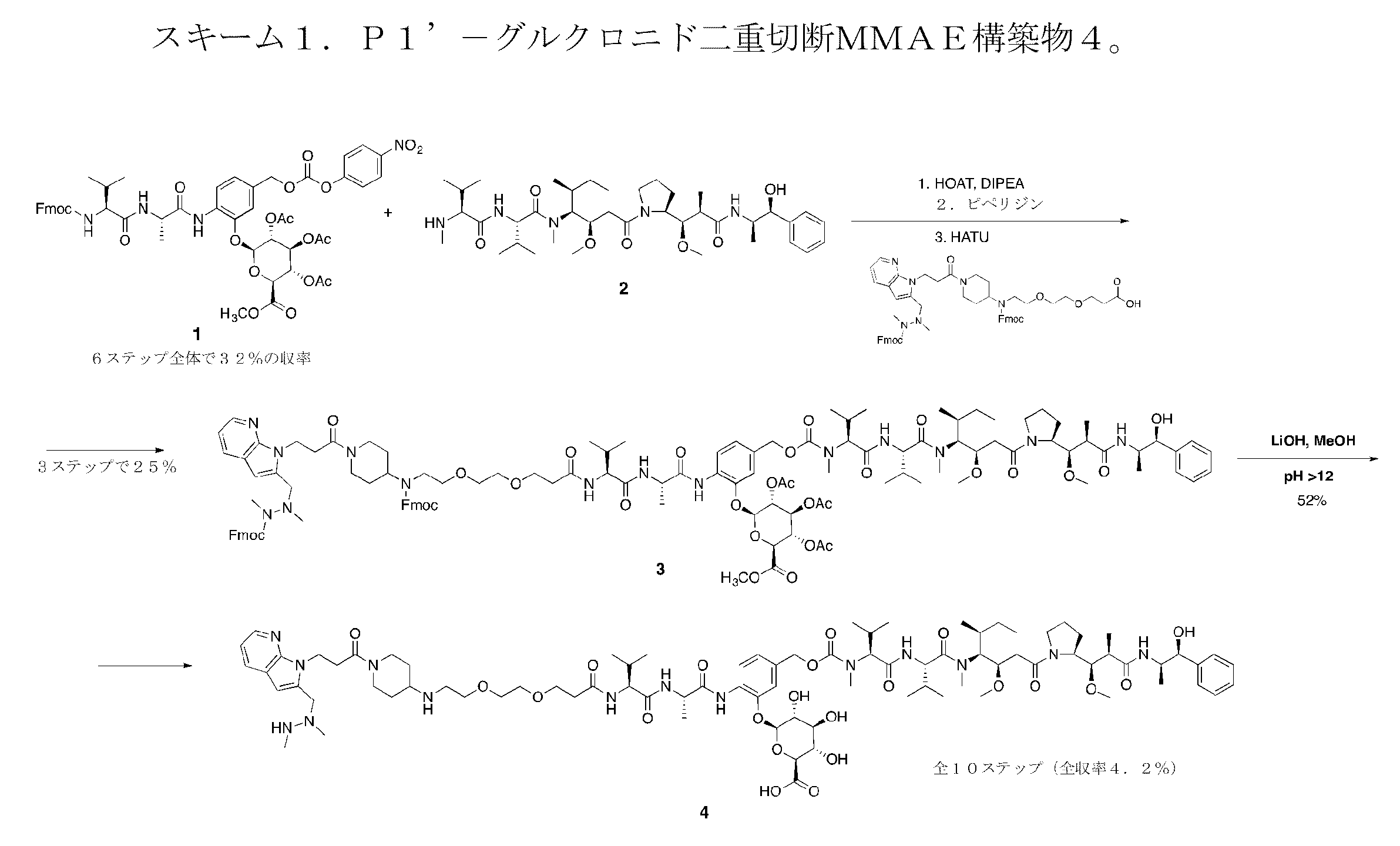
Galactoside and Glucoside Dual-cleavable Linkers for Antibody-Drug Conjugates Introduction The utility of glucuronide-dipeptide double-cleavable linkers is illustrated, for example, in
これらの強塩基条件は、MMAE薬物(特に強塩基に感受性ではない)に適合したものであったが、その合成の最後のステップにおける塩基性加水分解の必要性は、グルクロニド系二重切断可能なリンカーの適用を著しく制限した。実際に、抗体-薬物コンジュゲートを生成するために頻繁に使用される様々な細胞毒素は、塩基不安定な官能基を含有する(図1)。例えば、デュオカルマイシンDM5中の一級塩化アルキル及びアミド基は、チューブリシンM6中のアセテート基及びカリケアミシン7中のエステル官能と同様に、塩基性加水分解を非常に受けやすい。マイタンシノイド8及び9は、それらの構造がエステル及びエポキシドを含有するため、塩基性条件下では特に不安定である。同様に、DNAトポイソメラーゼI阻害剤、例えば、SN-38 10及びエキサテカン11中のラクトンは、穏和な塩基性条件下でさえ、加水分解することが知られている。 Although these strong base conditions were compatible with the MMAE drug, which is not particularly sensitive to strong bases, the need for basic hydrolysis in the final step of its synthesis is Significantly limited the application of linkers. Indeed, various cytotoxins frequently used to generate antibody-drug conjugates contain base-labile functional groups (Figure 1). For example, the primary alkyl chloride and amide groups in duocarmycin DM5 are highly susceptible to basic hydrolysis, as are the acetate groups in tubulycin M6 and the ester functions in calicheamicin 7. Maytansinoids 8 and 9 are particularly unstable under basic conditions because their structures contain esters and epoxides. Similarly, lactones in DNA topoisomerase I inhibitors, such as SN-38 10 and exatecan 11, are known to hydrolyze even under mildly basic conditions.
上述の適合性の問題にもかかわらず、本願発明者らは以前に、特定のマイタンシノイド、例えば、4AP-マイタンシン9(図1)は、依然としてグルクロニド系リンカーと対形成し得るが、このような構築物に向けた合成は、骨の折れるものであり、非効率であった(17ステップ、全収率1.8%、スキーム2)。この合成経路では、グルクロニドリンカー12は、別々に調製し、後の段階で、完全に脱保護された形態で合成配列をもたらし、別々に合成されたマイタンシン誘導体13と反応させなければならなかった。

この特定のマイタンシノイド(9)は、合成修飾にある程度適していたが、より魅力的なNMC3-マイタンシン(8)は、その構造要素に起因して、同様の様式で使用することはできないだろう。9(スキーム2)に使用される合成戦略を8に利用する場合、合成の後の段階で、グルクロン酸中間体18中の2つのカルボン酸基を区別するという選択性の問題に必然的に直面し(スキーム3)、代替的かつ長期的な保護-脱保護アプローチが必要となる。

結果及び考察
序論に記載された例とは対照的に、異なる生物学的に関連するグリコシドを二重切断可能なリンカーに使用した場合、より大きな範囲の細胞毒素を、合成に首尾良く使用することができる。したがって、グルクロニドの代わりにガラクトシドを使用することにより、11の合成ステップ(スキーム4)において、NMC3-マイタンシン(8、図1)を使用し、良好な全収率(7.5%)でP1’-ガラクトシド構築物30を生成することが可能であった。カルボン酸基が存在しないことに起因して(化合物29、スキーム4のような)、その完全に脱保護された形態でのガラクトシド部分は、化学選択性の問題を提起せず、多数の塩基感受性ADCペイロードを首尾良く利用することができる。グルコシド及びマンノシドについても、それらの構造がガラクトシドと有意に異なるわけではないため、同じことが起こると期待される。
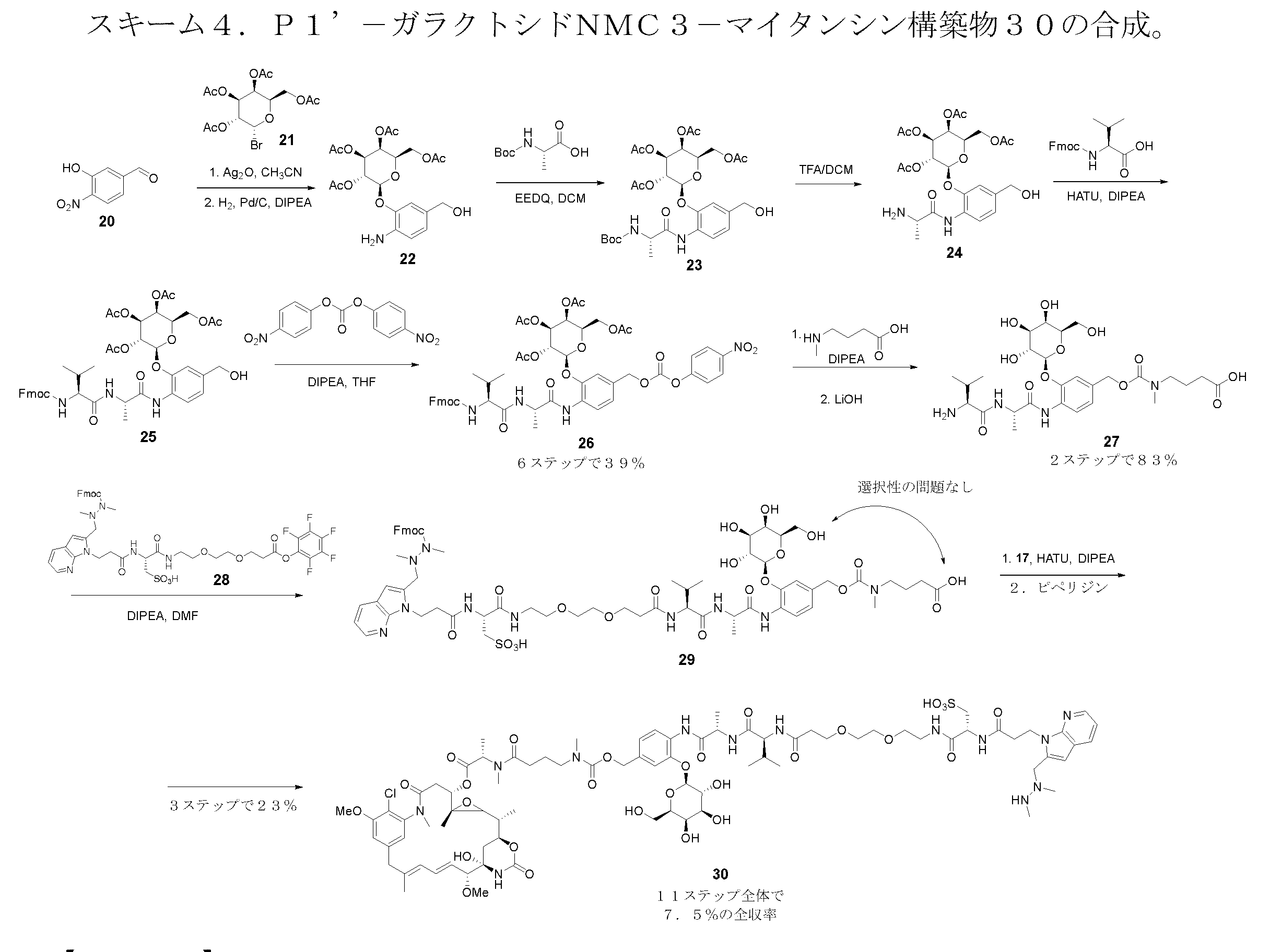
実際に、ガラクトシドと同様に、ADCを生成するのに有用な塩基感受性ペイロードの他の単糖誘導体を調製することができる。したがって、二重切断可能なグルコシドリンカーは、NMC3-マイタンシンペイロードと首尾良く対形成し、スキーム5に示されるように、良好な全収率(11ステップで4.9%)で、対応する構築物44を提供した。

更に、ガラクトシド又はグルコシドを利用することで、グルクロニド対応物と比較して、薬物-リンカーの一貫して更に効率的かつ高収率の合成が可能になることがわかった。したがって、スキーム6に示されるP1’-ガラクトシドMMAE構築物33への合成経路により、優れた全収率で所望の化合物を生成した(グルクロニド構築物について、9.4%対4.2%、表1)。
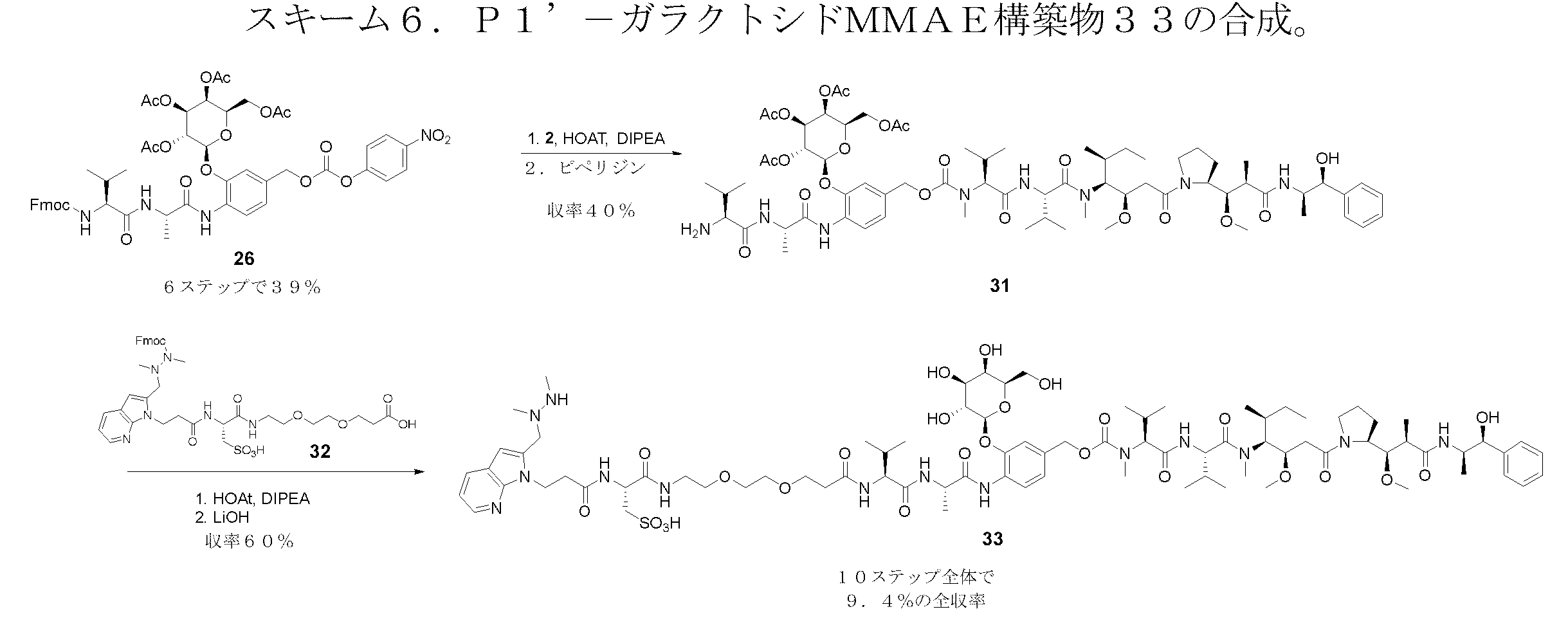
同様に、グルクロニド含有化合物4と比較した場合に、対応する単糖誘導体41から開始して、グルコシド同族体46を、改変された合成経路(スキーム7)に従って、より効率的な方法で調製した(グルクロニド構築物について、収率7.6%対4.2%、表1)。

更に、材料コストの比較により、平均して必要なガラクトース及びグルコース誘導体が、対応するグルクロン酸誘導体よりも10~20倍安価であることが明らかになった(表1を参照されたい)。

酵素的に切断可能なジペプチドに近接してリンカーに組み込まれる場合、グリコシドは、循環中の抗体-薬物コンジュゲートジペプチドリンカーの早期切断を防止する一時的な保護基として機能し得る。ADCが細胞のリソソーム区画内にトラフィッキングされると、グリコシド部分は、ジペプチドリンカーを露出するためにリソソームグリコシダーゼによって切断されなければならず、次いで、酵素媒介性の切断を受けてペイロードを放出する。異なる基質嗜好性、並びに異なる細胞及び組織の発現パターンを有するいくつかのヒトグリコシダーゼが存在する。以前に、ペイロード遊離の達成に向けた第1のステップとして、グルクロニド部分が多種多様な細胞型において効率的に除去され得ることを示すことができたが、ガラクトシド又はグルコシド部分が同様に処理されるか否かは明らかではなかった。この問題に対処するために、構築物30及び33を、アルデヒドタグ化抗HER2及び抗CD79b抗体とのHIPSライゲーションを使用してコンジュゲートし、構築物44及び46を、アルデヒドタグ化抗FITC、抗HER2、及び抗TROP-2抗体とのHIPSライゲーションを使用してコンジュゲートした(図2)。得られたコンジュゲートの分析的特性決定が図3~図10及び図19~図30に示される。 When incorporated into a linker in close proximity to an enzymatically cleavable dipeptide, the glycoside can function as a temporary protecting group to prevent premature cleavage of the antibody-drug conjugate dipeptide linker during circulation. Once the ADC is trafficked into the lysosomal compartment of the cell, the glycoside moiety must be cleaved by lysosomal glycosidases to expose the dipeptide linker, which then undergoes enzyme-mediated cleavage to release the payload. There are several human glycosidases with different substrate preferences and different cellular and tissue expression patterns. Previously, we were able to show that glucuronide moieties can be efficiently removed in a wide variety of cell types as a first step towards achieving payload release, but galactoside or glucoside moieties can be similarly processed. It was not clear whether or not. To address this issue, constructs 30 and 33 were conjugated using HIPS ligation with aldehyde-tagged anti-HER2 and anti-CD79b antibodies, and constructs 44 and 46 were conjugated with aldehyde-tagged anti-FITC, anti-HER2, and conjugated using HIPS ligation with anti-TROP-2 antibody (Figure 2). Analytical characterization of the resulting conjugates is shown in FIGS. 3-10 and 19-30.
得られたコンジュゲートのインビトロ活性を、HER2+(NCI-N87、Sk-Br-3)、CD79b+(Granta-519、Ramos-RA)、及びTROP-2+(MDA-MB-468、BxPC3)がん細胞株を使用して試験した。いくつかの研究では、ガラクトシド修飾二重切断可能なリンカー(30)を保有するマイタンシンコンジュゲートADCの効力を、単一切断可能なリンカーペイロード35(図11に示される構築物35、図12~図15に示されるインビトロ効力データ)から生成された対応するADCの活性と比較した。他の研究では、ガラクトシド修飾二重切断可能なリンカー(30)を保有するマイタンシンコンジュゲートADCの効力を、グルコシド修飾二重切断可能なリンカー44を使用して生成された対応するADCの活性と比較した(図31~図34に示されるインビトロ効力データ)。MMAEコンジュゲートADCに関して、ガラクトシド修飾(33)又はグルコシド修飾(46)二重切断可能なリンカーのインビトロ効力を、グルクロニド修飾二重切断可能なリンカー34のインビトロ効力(図11に示される構築物34、図16~図18、図35、及び図36に示されるインビトロ効力データ)と比較した。まとめると、その結果は、固形(胃がん、膵臓がん、及び乳がん)及び血液腫瘍の適応症の両方を表す細胞株にわたって、グルクロニド、ガラクトシド、及びグルコシドバリアントを含む単一切断可能なリンカー及び二重切断可能なリンカーを用いて作製されたADCが、同様のレベルの効力を提供することを示した。そのデータは、グリコシダーゼ発現パターン及び基質特異性が知られていないにもかかわらず、ガラクトシド及びグルコシド部分の除去が、強固かつ効率的であり、全体的なADC異化及びペイロード放出は、試験した全てのリンカーについて同等であったことを示唆している。 The in vitro activity of the obtained conjugate was evaluated in HER2+ (NCI-N87, Sk-Br-3), CD79b+ (Granta-519, Ramos-RA), and TROP-2+ (MDA-MB-468, BxPC3) cancer cells. tested using the strain. Several studies have investigated the efficacy of maytansine-conjugated ADCs carrying a galactoside-modified double-cleavable linker (30) with a single-cleavable linker payload 35 (construct 35 shown in Figure 11, Figure 12-Fig. The activity of the corresponding ADC was compared with that of the corresponding ADC generated from the in vitro efficacy data presented in 15. Other studies compared the potency of maytansine-conjugated ADCs carrying a galactoside-modified double-cleavable linker (30) with the activity of the corresponding ADC generated using a glucoside-modified double-cleavable linker (44). (in vitro efficacy data shown in Figures 31-34). For MMAE-conjugated ADCs, we compared the in vitro efficacy of galactoside-modified (33) or glucoside-modified (46) doubly cleavable linkers to the in vitro potency of glucuronide-modified doubly cleavable linker 34 (construct 34 shown in Figure 11, Figure 11). 16-18, FIG. 35, and FIG. 36). Taken together, the results demonstrate that single-cleavable linkers and double-cleavable linkers containing glucuronide, galactoside, and glucoside variants span cell lines representing both solid (gastric, pancreatic, and breast cancer) and hematologic oncology indications. ADCs made with cleavable linkers were shown to provide similar levels of efficacy. The data show that although the glycosidase expression pattern and substrate specificity are unknown, removal of galactoside and glucoside moieties is robust and efficient, and overall ADC catabolism and payload release are This suggests that the linkers were equivalent.
材料及び方法
一般
合成試薬は、Sigma-Aldrich、Acros、AK Scientific、又は他の商業的供給源から購入し、精製することなく使用した。無水溶媒は、商業的供給源から密封されたボトルの状態で得た。アセトブロモ-α-D-ガラクトース21、アセトブロモ-α-D-グルコース36、MMAE2、及びマイタンシン17を、商業的供給源から購入した。HIPSリンカー化合物32は、Shanghai Medicilonから商業的に得て、精製することなく使用した。標準的な文献の手順を使用して、ペンタフルオロ-エステル28を、32から合成した。化合物34及び35の合成は、以前に記載した。全ての場合に、溶媒を、Buchi V-700真空ポンプを取り付けたBuchi Rotovapor R-114を用い、減圧下で除去した。Biotage Isoleraクロマトグラフィーシステムを用いて、カラムクロマトグラフィーを行った。Phenomenex Kinetex 5μm EVO C18 150×21.2mmカラムを取り付けたWaters分取HPLCユニットを使用して、分取HPLC精製を行った。Model G1322A Degasser、Model G1311A Quarternary Pump、Model G1329A Autosampler、Model G1314 Variable Wavelength Detector、Agilent Poroshell 120 SB C18,4.6mm×50mmカラムを取り付けたAgilent 1100 Series Analytical HPLCで、室温で、0.1%ギ酸を含有する水及びアセトニトリルの10~100%勾配を使用して、HPLC分析を実施した。HPLCを254nmでモニタリングした。
Materials and Methods General Synthetic reagents were purchased from Sigma-Aldrich, Acros, AK Scientific, or other commercial sources and used without purification. Anhydrous solvents were obtained in sealed bottles from commercial sources. Acetobromo-α-D-galactose 21, acetobromo-α-D-glucose 36, MMAE2, and maytansine 17 were purchased from commercial sources. HIPS linker compound 32 was obtained commercially from Shanghai Medicilon and was used without purification. Pentafluoro-ester 28 was synthesized from 32 using standard literature procedures. The synthesis of
構築物30及び33の合成
(2R,3S,4S,5R,6S)-2-(アセトキシメチル)-6-(5-ホルミル-2-ニトロフェノキシ)テトラヒドロ-2H-ピラン-3,4,5-トリイルトリアセテート(21a)の調製
50mLの丸底フラスコに、204mg(1.22mmol)の3-ヒドロキシ-4-ニトロベンズアルデヒド20及びアセトブロモ-α-D-ガラルクトース21(500mg、1.22mmol)、続いて20mLの無水アセトニトリルを充填した。溶液を酸化銀(I)(986mg、4.3mmol)で処理し、得られた混合物を暗所で24時間、室温で激しく撹拌した。反応混合物を真空下で濃縮した後、残渣を、酢酸エチル-ヘキサン混合物を溶出液(0~100%の勾配)として使用したシリカゲルで精製し、420mg(0.85mmol、収率70%)の生成物を淡い黄色がかった固体として得た。LRMS(ESI):m/z 520.0[M+Na]+、C21H23NO13についての計算値m/z 520.1。
Synthesis of
(2R,3S,4S,5R,6S)-2-(アセトキシメチル)-6-(2-アミノ-5-(ヒドロキシメチル)フェノキシ)テトラヒドロ-2H-ピラン-3,4,5-トリイルトリアセテート(22)の調製
アセテート保護されたガラクトシド中間体21a(350mg、0.70mmol)の酢酸エチル3mL溶液に、炭素上のパラジウム30mg(10重量%)及びトリエチルアミン30μLを加えた。空気を除去した後、フラスコに水素バルーンを取り付け、反応混合物を室温で48時間撹拌した。セライトのパッドを通して濾過した後、溶媒を真空下で除去し、残渣を高真空下で乾燥させ、300mgの粗生成物22を白色固体として得て、これを更に精製することなく、更に合成で使用した。LRMS(ESI):m/z 470.1[M+H]+、C21H27NO11についての計算値m/z 470.2。
(2R,3S,4S,5R,6S)-2-(acetoxymethyl)-6-(2-amino-5-(hydroxymethyl)phenoxy)tetrahydro-2H-pyran-3,4,5-tolyltriacetate ( Preparation of 22) To a solution of acetate-protected galactoside intermediate 21a (350 mg, 0.70 mmol) in 3 mL of ethyl acetate was added 30 mg of palladium on carbon (10% by weight) and 30 μL of triethylamine. After removing the air, the flask was fitted with a hydrogen balloon and the reaction mixture was stirred at room temperature for 48 hours. After filtration through a pad of Celite, the solvent was removed under vacuum and the residue was dried under high vacuum to give 300 mg of crude product 22 as a white solid, which was used in further synthesis without further purification. did. LRMS (ESI): m/z 470.1 [ M +H] + , calculated for C21H27NO11 m/z 470.2.
((2R,3R,4S,5S,6S)-2-(2-((S)-2-((S)-2-((((9H-フルオレン-9-イル)メトキシ)カルボニル)アミノ)-3-メチルブタンアミド)プロパンアミド)-5-((((4-ニトロフェノキシ)カルボニル)オキシ)メチル)フェノキシ)-6-(アセトキシメチル)テトラヒドロ-2H-ピラン-3,4,5-トリイルトリアセテート(26)の調製
Boc-L-アラニン(220mg、1.11mmol)及びアニリン誘導体22(520mg、1.16mmol)を、5mLの無水ジクロロメタン及び0.50mLの無水メタノール中で合わせた。得られた溶液を、EEDQ(280mg、1.13mmol)を用い、室温で処理した。反応混合物を暗所で1時間撹拌した、次いで、溶媒を真空中で除去した。得られた粗化合物23を高真空下で1時間乾燥させ、6mLの1:1のTFA-DCM混合物に室温で溶解させた。溶液を1時間放置した後、溶媒を除去し、得られた粗アミン24を高真空下で数時間保存した。
((2R,3R,4S,5S,6S)-2-(2-((S)-2-((S)-2-((((9H-fluoren-9-yl)methoxy)carbonyl)amino) -3-methylbutanamide)propanamide)-5-((((4-nitrophenoxy)carbonyl)oxy)methyl)phenoxy)-6-(acetoxymethyl)tetrahydro-2H-pyran-3,4,5-tri Preparation of Iltriacetate (26) Boc-L-alanine (220 mg, 1.11 mmol) and aniline derivative 22 (520 mg, 1.16 mmol) were combined in 5 mL of anhydrous dichloromethane and 0.50 mL of anhydrous methanol. Obtained The resulting solution was treated with EEDQ (280 mg, 1.13 mmol) at room temperature. The reaction mixture was stirred in the dark for 1 h, then the solvent was removed in vacuo. The resulting crude compound 23 was purified under high vacuum. The resulting crude amine 24 was dried under high vacuum for 1 hour and dissolved in 6 mL of a 1:1 TFA-DCM mixture at room temperature. After the solution was allowed to stand for 1 hour, the solvent was removed and the resulting crude amine 24 was dried under high vacuum for several hours. saved.
別個の20mLシンチレーションバイアル中、Fmoc-L-バリン(375mg、1.1mmol)を、3mLの無水DMF中、HATU(420mg、1.1mmol)及びDIPEA(375μL、2.15mmol)と混合した。混合物を室温で30分間撹拌し、粗化合物24と合わせ、LCMS分析によって反応が完了したと判断されるまで、撹拌を一晩続けた。反応混合物を逆相C18カラム(CH3CN-H2O/0.05%TFA、0~80%勾配)で直接的に精製し、化合物25を微量不純物との混合物として得た。生成物を高真空下で十分に乾燥させ、更に精製することなく次のステップを行った。 In a separate 20 mL scintillation vial, Fmoc-L-valine (375 mg, 1.1 mmol) was mixed with HATU (420 mg, 1.1 mmol) and DIPEA (375 μL, 2.15 mmol) in 3 mL of anhydrous DMF. The mixture was stirred at room temperature for 30 minutes, combined with crude compound 24, and stirring continued overnight until the reaction was judged to be complete by LCMS analysis. The reaction mixture was purified directly on a reverse phase C18 column (CH 3 CN-H 2 O/0.05% TFA, 0-80% gradient) to yield compound 25 as a mixture with trace impurities. The product was thoroughly dried under high vacuum and carried on to the next step without further purification.
化合物25を6mLの無水DCMに溶解させ、DIPEA(375μL、2.15mmol)で処理し、続いて686mg(2.26mmol)のビス(4-エントロフェニル(ntrophenyl))カーボネートを一度に用い、室温で処理した。反応混合物を1時間撹拌し、次いで、溶媒を真空下で除去し、残渣をシリカゲル上のカラムクロマトグラフィー(EtOAc-ヘキサン、10~100%勾配)によって精製して、p-ニトロフェニルカーボネート生成物26(640mg、0.62mmol、4ステップで収率56%)を黄色がかった固体として得た。LRMS(ESI):m/z 1049.3[M+Na]+、C51H54N4O19についての計算値m/z 1049.3。 Compound 25 was dissolved in 6 mL of anhydrous DCM and treated with DIPEA (375 μL, 2.15 mmol) followed by 686 mg (2.26 mmol) of bis(4-entrophenyl) carbonate in one portion at room temperature. Processed. The reaction mixture was stirred for 1 h, then the solvent was removed under vacuum and the residue was purified by column chromatography on silica gel (EtOAc-hexanes, 10-100% gradient) to give the p-nitrophenyl carbonate product 26 (640 mg, 0.62 mmol, 56% yield over 4 steps) was obtained as a yellowish solid. LRMS (ESI): m / z 1049.3 [M+Na] + , calculated for C51H54N4O19 m/z 1049.3.
4-((((4-((S)-2-((S)-2-アミノ-3-メチルブタンアミド)プロパンアミド)-3-(((2R,3R,4S,5R,6S)-3,4,5-トリヒドロキシ-6-(ヒドロキシメチル)テトラヒドロ-2H-ピラン-2-イル)オキシ)ベンジル)オキシ)カルボニル)(メチル)アミノ)ブタン酸(27)の調製
20mLのシンチレーションバイアルに、4-(メチルアミノ)ブタン酸(61mg、0.52mmol)、61μL(0.35mmol)のDIPEA、及び1mLの無水DMFを加えた。得られた溶液を180mg(0.175mmol)のPNP-カーボネート26と室温で合わせた。LCMS分析によって判断される場合にPNP-カーボネートが完全に消費されるまで、反応混合物を1時間撹拌した。溶媒を真空下で除去し、残渣を3mLのメタノールに溶解した。得られた溶液を0℃まで冷却し、3mLの1M水酸化リチウム水溶液で処理した。反応混合物を30分間撹拌し、次いで、室温まで加温し、真空下で濃縮した。残渣を逆相C18カラム(CH3CN-H2O/0.05%TFA、0~50%勾配)で直接的に精製し、90mg(0.146mmol、2ステップで収率83%)の化合物27を黄色油状物として得た。LRMS(ESI):m/z 615.3[M+H]+、C27H42N4O12についての計算値m/z 615.3。
4-((((4-((S)-2-((S)-2-amino-3-methylbutanamide)propanamide)-3-(((2R,3R,4S,5R,6S)- Preparation of 3,4,5-trihydroxy-6-(hydroxymethyl)tetrahydro-2H-pyran-2-yl)oxy)benzyl)oxy)carbonyl)(methyl)amino)butanoic acid (27) In a 20 mL scintillation vial. , 4-(methylamino)butanoic acid (61 mg, 0.52 mmol), 61 μL (0.35 mmol) of DIPEA, and 1 mL of anhydrous DMF were added. The resulting solution was combined with 180 mg (0.175 mmol) of PNP-carbonate 26 at room temperature. The reaction mixture was stirred for 1 hour until the PNP-carbonate was completely consumed as judged by LCMS analysis. The solvent was removed under vacuum and the residue was dissolved in 3 mL of methanol. The resulting solution was cooled to 0° C. and treated with 3 mL of 1M aqueous lithium hydroxide solution. The reaction mixture was stirred for 30 minutes, then warmed to room temperature and concentrated under vacuum. The residue was purified directly on a reverse phase C18 column (CH 3 CN-H 2 O/0.05% TFA, 0-50% gradient) to yield 90 mg (0.146 mmol, 83% yield over 2 steps) of the compound. 27 was obtained as a yellow oil. LRMS (ESI): m / z 615.3 [M+H] + , calculated for C27H42N4O12 m /z 615.3.
(2S,5S,18R)-1-((4-((((4-(((S)-1-(((14S,16S,32R,33R,2R,4S,10E,12E,14R)-86-クロロ-14-ヒドロキシ-85,14-ジメトキシ-33,2,7,10-テトラメチル-12,6-ジオキソ-7-アザ-1(6,4)-オキサジンアナ-3(2,3)-オキシラナ-8(1,3)-ベンゼンアシクロテトラデカファン-10,12-ジエン-4-イル)オキシ)-1-オキソプロパン-2-イル)(メチル)アミノ)-4-オキソブチル)(メチル)カルバモイル)オキシ)メチル)-2-(((2R,3R,4S,5R,6S)-3,4,5-トリヒドロキシ-6-(ヒドロキシメチル)テトラヒドロ-2H-ピラン-2-イル)オキシ)フェニル)アミノ)-18-(3-(2-((1,2-ジメチルヒドラジニル)メチル)-1H-ピロロ[2,3-b]ピリジン-1-イル)プロパンアミド)-5-イソプロピル-2-メチル-1,4,7,17-テトラオキソ-10,13-ジオキサ-3,6,16-トリアザノナデカン-19-スルホン酸(30)の調製
20mLのシンチレーションバイアルに、化合物27(84mg、0.14mmol)、1mLの無水DMF、及びDIPEA(48μL、0.28mmol)を加え、続いて130mg(0.14mmol)のペンタフルオロエステル28を加えた。カップリングが完了したと判断されるまで(LCMS)、得られた混合物を30分間撹拌した。マイタンシン17(89mg、0.14mmol)を、DMF0.5mL中の溶液として反応混合物に直接加え、続いてHATU(52mg、0.14mmol)を加えた。30分後、反応混合物を逆相C18カラム(CH3CN-H2O/0.05%TFA、10~95%勾配)で精製した。溶媒を完全に除去した後、得られた中間体29を3mLのDMFに溶解させ、150μLのピペリジンを用い、室温で処理した。30分後、反応混合物を逆相分取HPLC(C18カラム、CH3CN-H2O/0.05%TFA、0~50%勾配)で直接的に精製した。純粋な画分を凍結乾燥させ、58mg(0.032mmol、3ステップで収率23%)の化合物30を得た。LRMS(ESI):m/z 1801.8[M+H]+、C82H118ClN13O28Sについての計算値m/z 1800.8。
(2S,5S,18R)-1-((4-(((4-(((S)-1-(((1 4 S, 1 6 S, 3 2 R, 3 3 R, 2R, 4S ,10E,12E,14R)-8 6 -chloro- 1 4 -hydroxy-8 5 ,14-dimethoxy-3 3 ,2,7,10-tetramethyl-1 2 ,6-dioxo-7-aza-1( 6,4)-Oxazineana-3(2,3)-oxirana-8(1,3)-benzenecyclotetradecaphane-10,12-dien-4-yl)oxy)-1-oxopropane-2 -yl)(methyl)amino)-4-oxobutyl)(methyl)carbamoyl)oxy)methyl)-2-(((2R,3R,4S,5R,6S)-3,4,5-trihydroxy-6- (hydroxymethyl)tetrahydro-2H-pyran-2-yl)oxy)phenyl)amino)-18-(3-(2-((1,2-dimethylhydrazinyl)methyl)-1H-pyrrolo[2,3 -b]pyridin-1-yl)propanamido)-5-isopropyl-2-methyl-1,4,7,17-tetraoxo-10,13-dioxa-3,6,16-triazanonadecane-19- Preparation of Sulfonic Acid (30) To a 20 mL scintillation vial was added compound 27 (84 mg, 0.14 mmol), 1 mL of anhydrous DMF, and DIPEA (48 μL, 0.28 mmol), followed by 130 mg (0.14 mmol) of pentafluoride. Fluoroester 28 was added. The resulting mixture was stirred for 30 minutes until coupling was judged complete (LCMS). Maytansine 17 (89 mg, 0.14 mmol) was added directly to the reaction mixture as a solution in 0.5 mL of DMF, followed by HATU (52 mg, 0.14 mmol). After 30 minutes, the reaction mixture was purified on a reverse phase C18 column (CH 3 CN-H 2 O/0.05% TFA, 10-95% gradient). After complete removal of the solvent, the resulting intermediate 29 was dissolved in 3 mL of DMF and treated with 150 μL of piperidine at room temperature. After 30 minutes, the reaction mixture was purified directly by reverse phase preparative HPLC (C18 column, CH 3 CN-H 2 O/0.05% TFA, 0-50% gradient). The pure fractions were lyophilized to yield 58 mg (0.032 mmol, 23% yield over 3 steps) of
(2R,3S,4S,5R,6S)-2-(アセトキシメチル)-6-(2-((S)-2-((S)-2-アミノ-3-メチルブタンアミド)プロパンアミド)-5-((5S,8S,11S,12R)-11-((S)-sec-ブチル)-12-(2-((S)-2-((1R,2R)-3-(((1S,2R)-1-ヒドロキシ-1-フェニルプロパン-2-イル)アミノ)-1-メトキシ-2-メチル-3-オキソプロピル)ピロリジン-1-イル)-2-オキソエチル)-5,8-ジイソプロピル-4,10-ジメチル-3,6,9-トリオキソ-2,13-ジオキサ-4,7,10-トリアザテトラデシル)フェノキシ)テトラヒドロ-2H-ピラン-3,4,5-トリイルトリアセテート(31)の調製
4mLのガラスバイアル中、MMAE2(13.4mgのTFA塩、0.016mmol)、DIPEA(3.8μL、0.022mmol)、及び1mLの無水DMFを混合した。得られた溶液を、PNP-カーボネート26(15mg、0.015mmol)及びHOAt(1.0mg、0.008mmol)で処理した。室温で一晩撹拌した後、ピペリジン(30μL)を反応混合物に直接加えた。30分後、反応混合物を逆相分取HPLC(C18カラム、CH3CN-H2O/0.05%TFA、0~50%勾配)で精製した。純粋な画分を凍結乾燥させ、8mg(0.006mmol、2ステップで収率40%)の化合物31をオフホワイト色固体として得た。LRMS(ESI):m/z 1383.5[M+H]+、C69H106N8O21についての計算値m/z 1383.8。
(2R,3S,4S,5R,6S)-2-(acetoxymethyl)-6-(2-((S)-2-((S)-2-amino-3-methylbutanamide)propanamide)- 5-((5S,8S,11S,12R)-11-((S)-sec-butyl)-12-(2-((S)-2-((1R,2R)-3-(((1S) ,2R)-1-hydroxy-1-phenylpropan-2-yl)amino)-1-methoxy-2-methyl-3-oxopropyl)pyrrolidin-1-yl)-2-oxoethyl)-5,8-diisopropyl -4,10-dimethyl-3,6,9-trioxo-2,13-dioxa-4,7,10-triazatetradecyl)phenoxy)tetrahydro-2H-pyran-3,4,5-tolyltriacetate ( Preparation of 31) In a 4 mL glass vial, MMAE2 (13.4 mg TFA salt, 0.016 mmol), DIPEA (3.8 μL, 0.022 mmol), and 1 mL anhydrous DMF were mixed. The resulting solution was treated with PNP-carbonate 26 (15 mg, 0.015 mmol) and HOAt (1.0 mg, 0.008 mmol). After stirring overnight at room temperature, piperidine (30 μL) was added directly to the reaction mixture. After 30 minutes, the reaction mixture was purified by reverse phase preparative HPLC (C18 column, CH 3 CN-H 2 O/0.05% TFA, 0-50% gradient). The pure fractions were lyophilized to give 8 mg (0.006 mmol, 40% yield over 2 steps) of compound 31 as an off-white solid. LRMS (ESI): m / z 1383.5 [M+H] + , calculated for C69H106N8O21 m/z 1383.8.
(2S,5S,18R)-1-((4-((5S,8S,11S,12R)-11-((S)-sec-ブチル)-12-(2-((S)-2-((1R,2R)-3-(((1S,2R)-1-ヒドロキシ-1-フェニルプロパン-2-イル)アミノ)-1-メトキシ-2-メチル-3-オキソプロピル)ピロリジン-1-イル)-2-オキソエチル)-5,8-ジイソプロピル-4,10-ジメチル-3,6,9-トリオキソ-2,13-ジオキサ-4,7,10-トリアザテトラデシル)-2-(((2R,3R,4S,5R,6S)-3,4,5-トリヒドロキシ-6-(ヒドロキシメチル)テトラヒドロ-2H-ピラン-2-イル)オキシ)フェニル)アミノ)-18-(3-(2-((1,2-ジメチルヒドラジニル)メチル)-1H-ピロロ[2,3-b]ピリジン-1-イル)プロパンアミド)-5-イソプロピル-2-メチル-1,4,7,17-テトラオキソ-10,13-ジオキサ-3,6,16-トリアザノナデカン-19-スルホン酸(33)の調製
4mLのガラスバイアル中、化合物31(8mg、0.006mmol)、HIPSリンカー化合物32(4.5mg、0.006mmol)、DIPEA(1.5μL、0.009mmol)、及び2.3mg(0.06mmol)のHATUを1mLのDMF中で合わせた。反応混合物を室温で30分間撹拌し、次いで、DMFを真空中で除去し、残渣を1mLのメタノールに溶解させた。この溶液に、1mLの1M水酸化リチウム水溶液を加え、得られた混合物を室温で一晩撹拌した。反応混合物を逆相分取HPLC(C18カラム、CH3CN-H2O/0.05%TFA、10~60%勾配)で直接的に精製し、純粋な画分を凍結乾燥して、6mg(0.0033mmol、2ステップで収率60%)の化合物33をオフホワイト色粉末として得た。LRMS(ESI):m/z 1770.9[M+H]+、C84H132N14O25Sについての計算値m/z 1769.9。
(2S,5S,18R)-1-((4-((5S,8S,11S,12R)-11-((S)-sec-butyl)-12-(2-((S)-2-( (1R,2R)-3-(((1S,2R)-1-hydroxy-1-phenylpropan-2-yl)amino)-1-methoxy-2-methyl-3-oxopropyl)pyrrolidin-1-yl )-2-oxoethyl)-5,8-diisopropyl-4,10-dimethyl-3,6,9-trioxo-2,13-dioxa-4,7,10-triazatetradecyl)-2-((( 2R,3R,4S,5R,6S)-3,4,5-trihydroxy-6-(hydroxymethyl)tetrahydro-2H-pyran-2-yl)oxy)phenyl)amino)-18-(3-(2 -((1,2-dimethylhydrazinyl)methyl)-1H-pyrrolo[2,3-b]pyridin-1-yl)propanamido)-5-isopropyl-2-methyl-1,4,7,17 Preparation of -tetraoxo-10,13-dioxa-3,6,16-triazanonadecane-19-sulfonic acid (33) In a 4 mL glass vial, compound 31 (8 mg, 0.006 mmol), HIPS linker compound 32 ( 4.5 mg, 0.006 mmol), DIPEA (1.5 μL, 0.009 mmol), and 2.3 mg (0.06 mmol) of HATU were combined in 1 mL of DMF. The reaction mixture was stirred at room temperature for 30 minutes, then DMF was removed in vacuo and the residue was dissolved in 1 mL of methanol. To this solution was added 1 mL of 1 M aqueous lithium hydroxide solution, and the resulting mixture was stirred at room temperature overnight. The reaction mixture was directly purified by reverse-phase preparative HPLC (C18 column, CH 3 CN-H 2 O/0.05% TFA, 10-60% gradient) and the pure fractions were lyophilized to yield 6 mg (0.0033 mmol, 60% yield over 2 steps) of
構築物44及び46の合成
(2R,3R,4S,5R,6S)-2-(アセトキシメチル)-6-(2-アミノ-5-(ヒドロキシメチル)フェノキシ)テトラヒドロ-2H-ピラン-3,4,5-トリイルトリアセテート(37)の調製。
無水アセトニトリル(100mL)中の化合物20(5.0g、29.9mmol、1.7当量)及び化合物36(7.23g、17.6mmol、1当量)の混合物に、酸化銀(I)(15.6g、87.9mmol、5当量)を加えた。混合物を窒素下、暗所で、25℃で24時間撹拌した。反応混合物をEtOAc(100mL)で希釈し、濾過し、減圧下で濃縮した。残渣を、シリカゲルクロマトグラフィー(0~30%ヘキサン-EtOAc)によって精製した。EtOAc(80mL)中の中間体アルデヒド(5.61g、11.3mmol)及びトリエチルアミン(2.5mL)の混合物に、炭素上パラジウム(10重量%、800mg、0.75mmol)を一度に加えた。反応混合物をH2雰囲気下、25℃で24時間撹拌した。固体を濾別し、得られた濾液を濃縮して、5.2g(11.1mmol、収率98%)の生成物37を白色固体として得て、これを更に精製することなく次のステップに使用した。
Synthesis of
To a mixture of compound 20 (5.0 g, 29.9 mmol, 1.7 eq.) and compound 36 (7.23 g, 17.6 mmol, 1 eq.) in anhydrous acetonitrile (100 mL) was added silver(I) oxide (15. 6g, 87.9mmol, 5eq) was added. The mixture was stirred at 25° C. for 24 hours in the dark under nitrogen. The reaction mixture was diluted with EtOAc (100 mL), filtered, and concentrated under reduced pressure. The residue was purified by silica gel chromatography (0-30% hexanes-EtOAc). To a mixture of the intermediate aldehyde (5.61 g, 11.3 mmol) and triethylamine (2.5 mL) in EtOAc (80 mL) was added palladium on carbon (10 wt%, 800 mg, 0.75 mmol) in one portion. The reaction mixture was stirred at 25 °C for 24 h under H2 atmosphere. The solid was filtered off and the resulting filtrate was concentrated to give 5.2 g (11.1 mmol, 98% yield) of product 37 as a white solid, which was carried on to the next step without further purification. used.
(2R,3R,4S,5R,6S)-2-(アセトキシメチル)-6-(2-((S)-2-((tert-ブトキシカルボニル)アミノ)プロパンアミド)-5-(ヒドロキシメチル)フェノキシ)テトラヒドロ-2H-ピラン-3,4,5-トリイルトリアセテート(38)の調製。
無水DCM(40mL)及びMeOH(4mL)中の化合物37(5.20g、11.1mmol)、Boc-L-Ala-OH(1.75g、9.25mmol)及びEEDQ(2.3g、9.25mmol)の混合物を、暗所で、室温で1時間撹拌した。反応混合物を濃縮し、5.5gの粗生成物38を黄色固体として得た。粗生成物を、更に精製することなく次のステップで使用した。
(2R,3R,4S,5R,6S)-2-(acetoxymethyl)-6-(2-((S)-2-((tert-butoxycarbonyl)amino)propanamide)-5-(hydroxymethyl) Preparation of phenoxy)tetrahydro-2H-pyran-3,4,5-tolyltriacetate (38).
Compound 37 (5.20 g, 11.1 mmol), Boc-L-Ala-OH (1.75 g, 9.25 mmol) and EEDQ (2.3 g, 9.25 mmol) in anhydrous DCM (40 mL) and MeOH (4 mL). ) mixture was stirred for 1 hour at room temperature in the dark. The reaction mixture was concentrated to give 5.5 g of
(2R,3R,4S,5R,6S)-2-(アセトキシメチル)-6-(2-((S)-2-アミノプロパンアミド)-5-(ヒドロキシメチル)フェノキシ)テトラヒドロ-2H-ピラン-3,4,5-トリイルトリアセテート(39)の調製。
粗化合物38(5.5g、8.6mmol)をTFA(23mL)に溶解させた。得られた溶液を室温で10分間撹拌し、真空中で濃縮した。残渣を逆相クロマトグラフィー(C18カラム、0.05%TFAを含む0~75%アセトニトリル-水)によって精製した。純粋な画分を合わせ、濃縮し、4.0gの生成物アミン39を黄色油状物として得た(7.5mmol、3ステップで収率66%)。
(2R,3R,4S,5R,6S)-2-(acetoxymethyl)-6-(2-((S)-2-aminopropanamido)-5-(hydroxymethyl)phenoxy)tetrahydro-2H-pyran- Preparation of 3,4,5-tolyltriacetate (39).
Crude compound 38 (5.5 g, 8.6 mmol) was dissolved in TFA (23 mL). The resulting solution was stirred at room temperature for 10 minutes and concentrated in vacuo. The residue was purified by reverse phase chromatography (C18 column, 0-75% acetonitrile-water with 0.05% TFA). The pure fractions were combined and concentrated to give 4.0 g of the product amine 39 as a yellow oil (7.5 mmol, 66% yield over 3 steps).
(2S,3R,4S,5R,6R)-2-(2-((S)-2-((S)-2-((((9H-フルオレン-9-イル)メトキシ)カルボニル)アミノ)-3-メチルブタンアミド)プロパンアミド)-5-(ヒドロキシメチル)フェノキシ)-6-(アセトキシメチル)テトラヒドロ-2H-ピラン-3,4,5-トリイルトリアセテート(40)の調製。
無水DMF(20mL)中のFmoc-L-バリン(3.1g、9.2mmol)及びDIPEA(3.9mL、22.2mmol)の混合物に、HATU(3.5g、9.2mmol)を室温で一度に加えた。得られた溶液を室温で30分間撹拌し、次いでアミン39(4.0g、7.5mmol)と合わせた。反応混合物を16時間撹拌し、真空中で濃縮した。残渣を、シリカゲルクロマトグラフィー(ヘキサン:EtOAc、0~100%)によって精製し、化合物40(4.5g、5.2mmol、収率70%)を白色固体として得た。
(2S,3R,4S,5R,6R)-2-(2-((S)-2-((S)-2-((((9H-fluoren-9-yl)methoxy)carbonyl)amino)- Preparation of 3-methylbutanamide)propanamide)-5-(hydroxymethyl)phenoxy)-6-(acetoxymethyl)tetrahydro-2H-pyran-3,4,5-tolyltriacetate (40).
HATU (3.5 g, 9.2 mmol) was added once to a mixture of Fmoc-L-valine (3.1 g, 9.2 mmol) and DIPEA (3.9 mL, 22.2 mmol) in anhydrous DMF (20 mL) at room temperature. added to. The resulting solution was stirred at room temperature for 30 minutes and then combined with amine 39 (4.0 g, 7.5 mmol). The reaction mixture was stirred for 16 hours and concentrated in vacuo. The residue was purified by silica gel chromatography (hexane:EtOAc, 0-100%) to give compound 40 (4.5 g, 5.2 mmol, 70% yield) as a white solid.
(2S,3R,4S,5R,6R)-2-(2-((S)-2-((S)-2-((((9H-フルオレン-9-イル)メトキシ)カルボニル)アミノ)-3-メチルブタンアミド)プロパンアミド)-5-((((4-ニトロフェノキシ)カルボニル)オキシ)メチル)フェノキシ)-6-(アセトキシメチル)テトラヒドロ-2H-ピラン-3,4,5-トリイルトリアセテート(41)の調製。
無水THF(20mL)中のアルコール40(4.5g、5.2mmol)及びDIPEA(4.5mL、26.1mmol、5当量)の混合物に、ビス(4-ニトロフェニル)カーボネート(7.9g、26.1mmol、5当量)を加えた。得られた混合物を室温で24時間撹拌し、真空下で濃縮した。残渣を逆相クロマトグラフィー(0.05%TFAを含むアセトニトリル-水0~70%)によって精製し、4-ニトロフェニルカーボネート生成物41を白色固体として得た(3.9g、収率73%)。LRMS(ESI):m/z 1027.3[M+H]+、C51H54N4O19についての計算値m/z 1027.3。
(2S,3R,4S,5R,6R)-2-(2-((S)-2-((S)-2-((((9H-fluoren-9-yl)methoxy)carbonyl)amino)- 3-Methylbutanamide)propanamide)-5-((((4-nitrophenoxy)carbonyl)oxy)methyl)phenoxy)-6-(acetoxymethyl)tetrahydro-2H-pyran-3,4,5-tolyl Preparation of triacetate (41).
Bis(4-nitrophenyl) carbonate (7.9 g, 26 .1 mmol, 5 equivalents) was added. The resulting mixture was stirred at room temperature for 24 hours and concentrated under vacuum. The residue was purified by reverse phase chromatography (acetonitrile-water 0-70% with 0.05% TFA) to give the 4-nitrophenyl carbonate product 41 as a white solid (3.9 g, 73% yield). . LRMS (ESI): m / z 1027.3 [M+H] + , calculated for C51H54N4O19 m/z 1027.3.
4-((((4-((S)-2-((S)-2-アミノ-3-メチルブタンアミド)プロパンアミド)-3-(((2S,3R,4S,5R,6R)-3,4,5-トリヒドロキシ-6-(ヒドロキシメチル)テトラヒドロ-2H-ピラン-2-イル)オキシ)ベンジル)オキシ)カルボニル)(メチル)アミノ)ブタン酸(42)の調製。
無水DMF(2mL)中のp-ニトロフェニルカーボネート41(380mg、0.37mmol、1当量)及び4-(メチルアミノ)ブタン酸(55mg、0.47mmol、1.25当量)の混合物に、DIPEA(190μL、1.11mmol、3当量)を加えた。得られた混合物を16時間撹拌し、真空下で濃縮し、残渣をTHF(2mL)に再溶解させた。THF溶液(soltiuon)に、室温で2mLの1MのLiOH水溶液を加え、HPLC分析によって加水分解が完了したと判断されるまで2時間撹拌した。反応混合物(miture)を1MのHCl(2mL)でクエンチし、DMF(1mL)で希釈し、逆相クロマトグラフィー(C18カラム、0.05%TFAを含むアセトニトリル-水0~75%MeCN)によって精製した。純粋な画分を収集し、減圧下で濃縮し、凍結乾燥させて、化合物42を白色固体として得た(160mg、0.26mmol、2ステップで収率70%)。LRMS(ESI):m/z 615.3[M+H]+、C27H42N4O12についての計算値m/z 615.3。
4-((((4-((S)-2-((S)-2-amino-3-methylbutanamide)propanamide)-3-(((2S,3R,4S,5R,6R)- Preparation of 3,4,5-trihydroxy-6-(hydroxymethyl)tetrahydro-2H-pyran-2-yl)oxy)benzyl)oxy)carbonyl)(methyl)amino)butanoic acid (42).
DIPEA ( 190 μL, 1.11 mmol, 3 equivalents) were added. The resulting mixture was stirred for 16 hours, concentrated under vacuum, and the residue was redissolved in THF (2 mL). To the THF solution was added 2 mL of 1 M LiOH aqueous solution at room temperature and stirred for 2 hours until hydrolysis was judged to be complete by HPLC analysis. The reaction mixture was quenched with 1M HCl (2 mL), diluted with DMF (1 mL), and purified by reverse phase chromatography (C18 column, acetonitrile-water with 0.05% TFA 0-75% MeCN). did. The pure fractions were collected, concentrated under reduced pressure, and lyophilized to give compound 42 as a white solid (160 mg, 0.26 mmol, 70% yield over 2 steps). LRMS (ESI): m / z 615.3 [M+H] + , calculated for C27H42N4O12 m /z 615.3.
4-((((4-((2S,5S,18R)-5-イソプロピル-2-メチル-4,7,17,20-テトラオキソ-18-(スルホメチル)-22-(2-((1,2,2-トリメチルヒドラジンエイル)メチル)-1H-ピロロ[2,3-b]ピリジン-1-イル)-10,13-ジオキサ-3,6,16,19-テトラアザドコサンアミド)-3-(((2S,3R,4S,5R,6R)-3,4,5-トリヒドロキシ-6-(ヒドロキシメチル)テトラヒドロ-2H-ピラン-2-イル)オキシ)ベンジル)オキシ)カルボニル)(メチル)アミノ)ブタン酸(43)の調製。
化合物32(97mg、0.12mmol、1当量)のDMF(2mL)溶液に、HATU(40mg、0.1mmol、0.85当量)、続いてDIPEA(63μL、0.36mmol、3当量)を室温で加えた。得られた混合物を1時間撹拌し、次いで、DMF中の化合物42の0.1M溶液(1.22mL、0.12mmol、1当量)と合わせた。HPLC分析によって判断される場合に全ての出発物質が消費されるまで、反応混合物を30分間撹拌した。混合物を逆相クロマトグラフィー(C18カラム、0.05%TFAを含むアセトニトリル-水0~75%MeCN)によって直接的に精製した。純粋な画分を収集し、凍結乾燥させ、生成物43を白色固体として得た(107mg、0.08mmol、収率67%)。LRMS(ESI):m/z 1391.6[M+H]+、C65H86N10O22Sについての計算値m/z 1391.6。
4-(((4-((2S,5S,18R)-5-isopropyl-2-methyl-4,7,17,20-tetraoxo-18-(sulfomethyl)-22-(2-((1, 2,2-trimethylhydrazineyl)methyl)-1H-pyrrolo[2,3-b]pyridin-1-yl)-10,13-dioxa-3,6,16,19-tetraazadocosanamide)-3 -(((2S,3R,4S,5R,6R)-3,4,5-trihydroxy-6-(hydroxymethyl)tetrahydro-2H-pyran-2-yl)oxy)benzyl)oxy)carbonyl)(methyl ) Preparation of amino)butanoic acid (43).
To a solution of compound 32 (97 mg, 0.12 mmol, 1 eq.) in DMF (2 mL) was added HATU (40 mg, 0.1 mmol, 0.85 eq.) followed by DIPEA (63 μL, 0.36 mmol, 3 eq.) at room temperature. added. The resulting mixture was stirred for 1 h and then combined with a 0.1 M solution of compound 42 in DMF (1.22 mL, 0.12 mmol, 1 eq.). The reaction mixture was stirred for 30 minutes until all starting material was consumed as judged by HPLC analysis. The mixture was purified directly by reverse phase chromatography (C18 column, acetonitrile-water 0-75% MeCN with 0.05% TFA). Pure fractions were collected and lyophilized to give product 43 as a white solid (107 mg, 0.08 mmol, 67% yield). LRMS (ESI): m / z 1391.6 [M+H] + , calculated for C65H86N10O22S m/z 1391.6.
(2S,5S,18R)-1-((4-((((4-(((S)-1-(((14S,16S,32R,33R,2R,4S,10E,12E,14R)-86-クロロ-14-ヒドロキシ-85,14-ジメトキシ-33,2,7,10-テトラメチル-12,6-ジオキソ-7-アザ-1(6,4)-オキサジンアナ-3(2,3)-オキシラナ-8(1,3)-ベンゼンアシクロテトラデカファン-10,12-ジエン-4-イル)オキシ)-1-オキソプロパン-2-イル)(メチル)アミノ)-4-オキソブチル)(メチル)カルバモイル)オキシ)メチル)-2-(((2S,3R,4S,5R,6R)-3,4,5-トリヒドロキシ-6-(ヒドロキシメチル)テトラヒドロ-2H-ピラン-2-イル)オキシ)フェニル)アミノ)-18-(3-(2-((1,2-ジメチルヒドラジンエイル)メチル)-1H-ピロロ[2,3-b]ピリジン-1-イル)プロパンアミド)-5-イソプロピル-2-メチル-1,4,7,17-テトラオキソ-10,13-ジオキサ-3,6,16-トリアザノナデカン-19-スルホン酸(44)の調製。
DMF(2mL)中の化合物43(35mg、25μmol)及びマイタンシン17(16mg、25μmol)の混合物に、HATU(19mg、51μmol、2当量)を室温で加え、続いてDIPEA(13μL、76μmol、3当量)を加えた。HPLC分析によって判断される場合に全ての出発物質が消費されるまで、反応混合物を30分間撹拌した。次いで、ピペルジン(49μL、0.5mmol、20当量)を室温で1回のショットで、上述の溶液に直接添加し、反応混合物を30分間撹拌した。混合物を分取HPLC(C18カラム、0.05%TFAを含むアセトニトリル-水0~75%MeCN)によって精製した。純粋な画分を合わせ、凍結乾燥させ、化合物44を白色固体として得た(21mg、12μmol、収率48%)。LRMS(ESI):m/z 1800.7[M+H]+、C82H118ClN13O28Sについての計算値1800.8。
(2S, 5S, 18R)-1-((4-((((4-(((S)-1-(((14S, 16S, 32R, 33R, 2R, 4S, 10E, 12E, 14R)- 86-chloro-14-hydroxy-85,14-dimethoxy-33,2,7,10-tetramethyl-12,6-dioxo-7-aza-1(6,4)-oxazineana-3(2,3 )-oxilana-8(1,3)-benzenecyclotetradecaphane-10,12-dien-4-yl)oxy)-1-oxopropan-2-yl)(methyl)amino)-4-oxobutyl) (methyl)carbamoyl)oxy)methyl)-2-(((2S,3R,4S,5R,6R)-3,4,5-trihydroxy-6-(hydroxymethyl)tetrahydro-2H-pyran-2-yl )oxy)phenyl)amino)-18-(3-(2-((1,2-dimethylhydrazineyl)methyl)-1H-pyrrolo[2,3-b]pyridin-1-yl)propanamide)-5 Preparation of -isopropyl-2-methyl-1,4,7,17-tetraoxo-10,13-dioxa-3,6,16-triazanonadecane-19-sulfonic acid (44).
To a mixture of compound 43 (35 mg, 25 μmol) and maytansine 17 (16 mg, 25 μmol) in DMF (2 mL) was added HATU (19 mg, 51 μmol, 2 eq.) at room temperature, followed by DIPEA (13 μL, 76 μmol, 3 eq.) added. The reaction mixture was stirred for 30 minutes until all starting material was consumed as judged by HPLC analysis. Piperzine (49 μL, 0.5 mmol, 20 eq.) was then added directly to the above solution in one shot at room temperature and the reaction mixture was stirred for 30 min. The mixture was purified by preparative HPLC (C18 column, acetonitrile-water 0-75% MeCN with 0.05% TFA). The pure fractions were combined and lyophilized to give
4-((S)-2-((S)-2-アミノ-3-メチルブタンアミド)プロパンアミド)-3-(((2S,3R,4S,5S,6R)-3,4,5-トリヒドロキシ-6-(ヒドロキシメチル)テトラヒドロ-2H-ピラン-2-イル)オキシ)ベンジル((S)-1-(((S)-1-(((3R,4S,5S)-1-((S)-2-((1R,2R)-3-(((1S,2R)-1-ヒドロキシ-1-フェニルプロパン-2-イル)アミノ)-1-メトキシ-2-メチル-3-オキソプロピル)ピロリジン-1-イル)-3-メトキシ-5-メチル-1-オキソヘプタン-4-イル)(メチル)アミノ)-3-メチル-1-オキソブタン-2-イル)アミノ)-3-メチル-1-オキソブタン-2-イル)(メチル)カルバメート(45)の調製。
モノメチルアウリスタチンA2(50mg、70μmol)の無水DMF(2mL)溶液を、HOAt(9.5mg、70μmol)及びDIPEA(36μL、209μmol)を用い、室温で処理した。この混合物に、化合物41(72mg、70μmol、1当量)を固体として一度に室温で添加した。LCMS分析によって判断される場合に全ての出発物質が消費されるまで、反応混合物を4時間撹拌した。溶媒を真空中で除去し、残渣をTHF(2mL)に再溶解させた。THF溶液(soltiuon)を、1MのLiOH水溶液(2mL)を用い、室温で処理し、加水分解が完了するまで2時間撹拌した。反応混合物(miture)を1MのHCl(2mL)でクエンチし、DMF(1mL)で希釈し、逆相クロマトグラフィー(C18カラム、0.05%TFAを含むアセトニトリル-水0~75%MeCN)によって精製した。純粋な画分を合わせ、減圧下で濃縮し、凍結乾燥させて、生成物45を白色固体として得た(68mg、56μmol、収率80%)。
4-((S)-2-((S)-2-amino-3-methylbutanamide)propanamide)-3-(((2S,3R,4S,5S,6R)-3,4,5- trihydroxy-6-(hydroxymethyl)tetrahydro-2H-pyran-2-yl)oxy)benzyl((S)-1-(((S)-1-(((3R,4S,5S)-1-( (S)-2-((1R,2R)-3-(((1S,2R)-1-hydroxy-1-phenylpropan-2-yl)amino)-1-methoxy-2-methyl-3-oxo propyl)pyrrolidin-1-yl)-3-methoxy-5-methyl-1-oxoheptan-4-yl)(methyl)amino)-3-methyl-1-oxobutan-2-yl)amino)-3-methyl Preparation of -1-oxobutan-2-yl)(methyl)carbamate (45).
A solution of monomethyl auristatin A2 (50 mg, 70 μmol) in anhydrous DMF (2 mL) was treated with HOAt (9.5 mg, 70 μmol) and DIPEA (36 μL, 209 μmol) at room temperature. To this mixture was added compound 41 (72 mg, 70 μmol, 1 eq.) as a solid in one portion at room temperature. The reaction mixture was stirred for 4 hours until all starting material was consumed as judged by LCMS analysis. The solvent was removed in vacuo and the residue was redissolved in THF (2 mL). The THF solution was treated with 1M aqueous LiOH (2 mL) at room temperature and stirred for 2 hours until hydrolysis was complete. The reaction mixture was quenched with 1M HCl (2 mL), diluted with DMF (1 mL), and purified by reverse phase chromatography (C18 column, acetonitrile-water with 0.05% TFA 0-75% MeCN). did. The pure fractions were combined, concentrated under reduced pressure, and lyophilized to give product 45 as a white solid (68 mg, 56 μmol, 80% yield).
(2S,5S,18R)-1-((4-((5S,8S,11S,12R)-11-((S)-sec-ブチル)-12-(2-((S)-2-((1R,2R)-3-(((1S,2R)-1-ヒドロキシ-1-フェニルプロパン-2-イル)アミノ)-1-メトキシ-2-メチル-3-オキソプロピル)ピロリジン-1-イル)-2-オキソエチル)-5,8-ジイソプロピル-4,10-ジメチル-3,6,9-トリオキソ-2,13-ジオキサ-4,7,10-トリアザテトラデシル)-2-(((2S,3R,4S,5S,6R)-3,4,5-トリヒドロキシ-6-(ヒドロキシメチル)テトラヒドロ-2H-ピラン-2-イル)オキシ)フェニル)アミノ)-18-(3-(2-((1,2-ジメチルヒドラジンエイル)メチル)-1H-ピロロ[2,3-b]ピリジン-1-イル)プロパンアミド)-5-イソプロピル-2-メチル-1,4,7,17-テトラオキソ-10,13-ジオキサ-3,6,16-トリアザノナデカン-19-スルホン酸(46)の調製。
カルボン酸32(50mg、63μmol)のDMF溶液(2mL)に、HATU(24mg、63μmol)、続いてDIPEA(33μL、189μmol)を室温で加えた。得られた混合物を1時間撹拌し、化合物45(68mg、63μmol)と合わせた。HPLC分析によって判断される場合に全ての出発物質が消費されるまで、反応混合物を5時間撹拌した。次いで、ピペルジン(110μL、20当量)を室温で1回のショットで、上述の溶液に加え、反応混合物を30分間撹拌し、溶液が酸性になるまでpH4.7の0.5Mの酢酸緩衝液で希釈し、分取HPLC(C18カラム、0.05%のTFAを含むアセトニトリル水0~75%のMeCN)によって精製した。純粋な画分を収集し、凍結乾燥させ、化合物46を白色固体として得た(47mg、収率43%)。)。LRMS(ESI):m/z 1769.9[M+H]+、C84H132N14O25Sについての計算値1769.9。
(2S,5S,18R)-1-((4-((5S,8S,11S,12R)-11-((S)-sec-butyl)-12-(2-((S)-2-( (1R,2R)-3-(((1S,2R)-1-hydroxy-1-phenylpropan-2-yl)amino)-1-methoxy-2-methyl-3-oxopropyl)pyrrolidin-1-yl )-2-oxoethyl)-5,8-diisopropyl-4,10-dimethyl-3,6,9-trioxo-2,13-dioxa-4,7,10-triazatetradecyl)-2-((( 2S,3R,4S,5S,6R)-3,4,5-trihydroxy-6-(hydroxymethyl)tetrahydro-2H-pyran-2-yl)oxy)phenyl)amino)-18-(3-(2 -((1,2-dimethylhydrazineyl)methyl)-1H-pyrrolo[2,3-b]pyridin-1-yl)propanamido)-5-isopropyl-2-methyl-1,4,7,17- Preparation of tetraoxo-10,13-dioxa-3,6,16-triazanonadecane-19-sulfonic acid (46).
To a solution of carboxylic acid 32 (50 mg, 63 μmol) in DMF (2 mL) was added HATU (24 mg, 63 μmol) followed by DIPEA (33 μL, 189 μmol) at room temperature. The resulting mixture was stirred for 1 hour and combined with compound 45 (68 mg, 63 μmol). The reaction mixture was stirred for 5 hours until all starting material was consumed as judged by HPLC analysis. Piperzine (110 μL, 20 eq.) was then added to the above solution in one shot at room temperature, the reaction mixture was stirred for 30 min, and the solution was washed with 0.5 M acetate buffer, pH 4.7, until the solution was acidic. Diluted and purified by preparative HPLC (C18 column, acetonitrile water 0-75% MeCN with 0.05% TFA). Pure fractions were collected and lyophilized to give
実施例2
バイオコンジュゲート化、精製、及びHPLC分析
方法
C末端アルデヒドタグ化抗体(15mg/mL)を、0.85mM(8モル当量薬物:抗体)でリンカーペイロード30、33、44、及び46に、0.85%DMAを含有する20mMのクエン酸ナトリウム、50mMのNaCl pH5.5(20/50緩衝液)中、37℃で72時間かけてコンジュゲートした。遊離薬物を、30kDのMWCO 0.5mLのAmiconスピン濃縮器を使用して除去した。試料をスピン濃縮器に添加し、15,000×gで7分間遠心分離し、次いで450μLの20mMのクエン酸ナトリウム、50mMのNaCl pH5.5で希釈し、再び遠心分離した。このプロセスを10回繰り返した。最終生成物のDARを決定するために、ADCを、移動相A:1.5Mの硫酸アンモニウム、25mMのリン酸ナトリウムpH7.0、及び移動相B:25%のイソプロパノール、18.75mMのリン酸ナトリウムpH7.0を用いた分析HIC(Tosoh#14947)によって、試験した。凝集を測定するために、300mMのNaCl、25mMのリン酸ナトリウムpH6.8の移動相を用いた分析サイズ排除クロマトグラフィー(SEC、Tosoh#08541)を使用して試料を分析した。
Example 2
Bioconjugation, Purification, and HPLC Analysis Methods C-terminally aldehyde-tagged antibodies (15 mg/mL) were added to
結果
重鎖C末端(CT)にアルデヒドタグを含有するように修飾されたαHER2(トラスツズマブ)及びαCD79b(ポラツズマブ)抗体を、それぞれ、マイタンシンを有するリンカーペイロード30及びMMAEを有するリンカーペイロード33にコンジュゲートした。これらの反応は、高収率であり、ほぼ定量的なコンジュゲート化効率及び95%を超える全収率を有していた。得られたADCは、1.79~1.89の薬物対抗体比(DAR)を有しており、主にモノマーであった。図3~図10は、HICによって決定されるDAR及びSECによって決定されるモノマー完全性に関して、代表的なADCを示す。
Results αHER2 (trastuzumab) and αCD79b (polatuzumab) antibodies modified to contain an aldehyde tag at the heavy chain C-terminus (CT) were conjugated to
重鎖C末端(CT)にアルデヒドタグを含有するように修飾されたαHER2(トラスツズマブ)、αTROP-2(サシツズマブ)、及び抗FITC抗体を、それぞれ、マイタンシンを有するリンカーペイロード44及びMMAEを有するリンカーペイロード46にコンジュゲートした。これらの反応は、一般に高収率であった。得られたADCは、1.15~1.79の薬物対抗体比(DAR)を有しており、主にモノマーであった。図19~30は、PLRPによって決定されるDAR及びSECによって決定されるモノマー完全性に関して、代表的なADCを示す。
αHER2 (trastuzumab), αTROP-2 (sacituzumab), and anti-FITC antibodies modified to contain an aldehyde tag at the heavy chain C-terminus (CT) were combined with
実施例3
インビトロ細胞傷害性
方法
CD79b陽性B細胞リンパ腫細胞株(Granta 519及びRamos-RA)、HER2+胃がん及び乳がん細胞株(NCI-N87及びSKBR3)、並びにTROP-2+膵臓がん及び乳がん細胞株(BxPC3及びMDA-MB-468)を、DSMZ及びATCC細胞バンクから入手した。供給業者に推奨されるように、細胞を成長培地中で維持した。プレーティングの24時間前に、細胞を継代させ、対数相成長を確実にした。プレーティング当日に、100μLの通常成長培地中で、5000個の細胞/ウェルを96ウェルプレートに播種した。細胞を、様々な濃度で20μLの希釈分析物で処理し、プレートを5%CO2の雰囲気下、37℃でインキュベートした。5日後、100μL/ウェルのCell Titer-Glo試薬(Promega)を添加し、Molecular Devices SpectraMax M5プレートリーダーを使用して発光を測定した。データ分析には、GraphPad Prismソフトウェアを使用した。
Example 3
In vitro cytotoxicity method CD79b positive B-cell lymphoma cell lines (
結果
ガラクトシド修飾二重切断可能なリンカー及びグルコシド修飾二重切断可能なリンカーは、抗原陽性細胞株に対して強力な(ナノモル未満の)インビトロ細胞傷害性を示し、遊離ペイロード及び単一切断可能なリンカー又はグルクロニド修飾二重切断可能なリンカーを保有するADCに匹敵する活性を有していた(図12~図18及び図31~図36)。
Results Galactoside-modified double-cleavable linkers and glucoside-modified double-cleavable linkers exhibited potent (subnanomolar) in vitro cytotoxicity against antigen-positive cell lines, with free payload and single-cleavable linkers or had activity comparable to ADCs carrying glucuronide-modified double-cleavable linkers (FIGS. 12 to 18 and 31 to 36).
本発明は、その具体的な実施形態に関して説明されてきたが、本発明の真の趣旨及び範囲から逸脱することなく、様々な変更が行われてもよく、同等物が置き換えられてもよいことを当業者は理解するはずである。加えて、本発明の客観的な趣旨及び範囲に対して、特定の状況、材料、物質の組成物、プロセス、プロセスステップ又はステップを採用するために多くの変更を行うことができる。全てのそのような修正は、本明細書に添付される特許請求の範囲内であることが意図される。 Although the invention has been described with respect to specific embodiments thereof, it is understood that various changes may be made and equivalents may be substituted without departing from the true spirit and scope of the invention. Those skilled in the art should understand. In addition, many modifications may be made to adapt a particular situation, material, composition of matter, process, process step or steps, to the objective spirit and scope of the invention. All such modifications are intended to be within the scope of the claims appended hereto.
Claims (51)
抗体と、
薬物と、
前記抗体を前記薬物に連結し、第1の酵素的に切断可能な部分、並びにガラクトシド、グルコシド、マンノシド、フコシド、O-GlcNAc、及びO-GalNAcからなる群から選択されるグリコシドを含む第2の酵素的に切断可能な部分を含む、切断可能なリンカーと、を含む、コンジュゲート。 A conjugate,
antibodies and
drugs and
said antibody is linked to said drug and comprises a first enzymatically cleavable moiety and a second glycoside selected from the group consisting of galactosides, glucosides, mannosides, fucosides, O-GlcNAc, and O-GalNAc. a cleavable linker comprising an enzymatically cleavable moiety.

Zが、CR4又はNであり、
Xが、O又はNR4であり、
R1が、水素、アルキル、置換アルキル、アルケニル、置換アルケニル、アルキニル、置換アルキニル、アリール、置換アリール、ヘテロアリール、置換ヘテロアリール、シクロアルキル、置換シクロアルキル、ヘテロシクリル、及び置換ヘテロシクリルから選択され、
R2及びR3が、各々独立して、水素、アルキル、置換アルキル、アルケニル、置換アルケニル、アルキニル、置換アルキニル、アルコキシ、置換アルコキシ、アミノ、置換アミノ、カルボキシル、カルボキシルエステル、アシル、アシルオキシ、アシルアミノ、アミノアシル、アルキルアミド、置換アルキルアミド、スルホニル、チオアルコキシ、置換チオアルコキシ、アリール、置換アリール、ヘテロアリール、置換ヘテロアリール、シクロアルキル、置換シクロアルキル、ヘテロシクリル、及び置換ヘテロシクリルから選択されるか、又はR2及びR3が、任意選択的に環状に連結され、5若しくは6員のヘテロシクリルを形成し、
各R4が、独立して、水素、ハロゲン、アルキル、置換アルキル、アルケニル、置換アルケニル、アルキニル、置換アルキニル、アルコキシ、置換アルコキシ、アミノ、置換アミノ、カルボキシル、カルボキシルエステル、アシル、アシルオキシ、アシルアミノ、アミノアシル、アルキルアミド、置換アルキルアミド、スルホニル、チオアルコキシ、置換チオアルコキシ、アリール、置換アリール、ヘテロアリール、置換ヘテロアリール、シクロアルキル、置換シクロアルキル、ヘテロシクリル、及び置換ヘテロシクリルから選択され、
各R5が、独立して、水素、アルキル、置換アルキル、アルケニル、置換アルケニル、アルキニル、及び置換アルキニルから選択され、
各R6が、独立して、アルキル、置換アルキル、アルケニル、置換アルケニル、アルキニル、置換アルキニル、アリール、置換アリール、ヘテロアリール、置換ヘテロアリール、シクロアルキル、置換シクロアルキル、ヘテロシクリル、及び置換ヘテロシクリルから選択され、
kが、1~10の整数であり、
R7が、第2の酵素的に切断可能な部分を含み、
L1が、第1のリンカーであり、
L2が、第2のリンカーであり、
W1が、前記薬物であり、
W2が、前記抗体である、請求項1に記載のコンジュゲート。 the conjugate is a conjugate of formula (I),
Z is CR 4 or N,
X is O or NR4 ,
R 1 is selected from hydrogen, alkyl, substituted alkyl, alkenyl, substituted alkenyl, alkynyl, substituted alkynyl, aryl, substituted aryl, heteroaryl, substituted heteroaryl, cycloalkyl, substituted cycloalkyl, heterocyclyl, and substituted heterocyclyl;
R 2 and R 3 are each independently hydrogen, alkyl, substituted alkyl, alkenyl, substituted alkenyl, alkynyl, substituted alkynyl, alkoxy, substituted alkoxy, amino, substituted amino, carboxyl, carboxyl ester, acyl, acyloxy, acylamino, or R 2 and R 3 are optionally linked cyclically to form a 5- or 6-membered heterocyclyl;
Each R 4 is independently hydrogen, halogen, alkyl, substituted alkyl, alkenyl, substituted alkenyl, alkynyl, substituted alkynyl, alkoxy, substituted alkoxy, amino, substituted amino, carboxyl, carboxyl ester, acyl, acyloxy, acylamino, aminoacyl , alkylamides, substituted alkylamides, sulfonyl, thioalkoxy, substituted thioalkoxy, aryl, substituted aryl, heteroaryl, substituted heteroaryl, cycloalkyl, substituted cycloalkyl, heterocyclyl, and substituted heterocyclyl,
each R 5 is independently selected from hydrogen, alkyl, substituted alkyl, alkenyl, substituted alkenyl, alkynyl, and substituted alkynyl;
Each R 6 is independently selected from alkyl, substituted alkyl, alkenyl, substituted alkenyl, alkynyl, substituted alkynyl, aryl, substituted aryl, heteroaryl, substituted heteroaryl, cycloalkyl, substituted cycloalkyl, heterocyclyl, and substituted heterocyclyl is,
k is an integer from 1 to 10,
R 7 comprises a second enzymatically cleavable moiety;
L 1 is the first linker;
L 2 is a second linker;
W 1 is the drug;
2. The conjugate of claim 1, wherein W2 is the antibody.
前記コンジュゲートが、式(Ia)のコンジュゲートである、請求項2に記載のコンジュゲート。

3. The conjugate of claim 2, wherein the conjugate is a conjugate of formula (Ia).
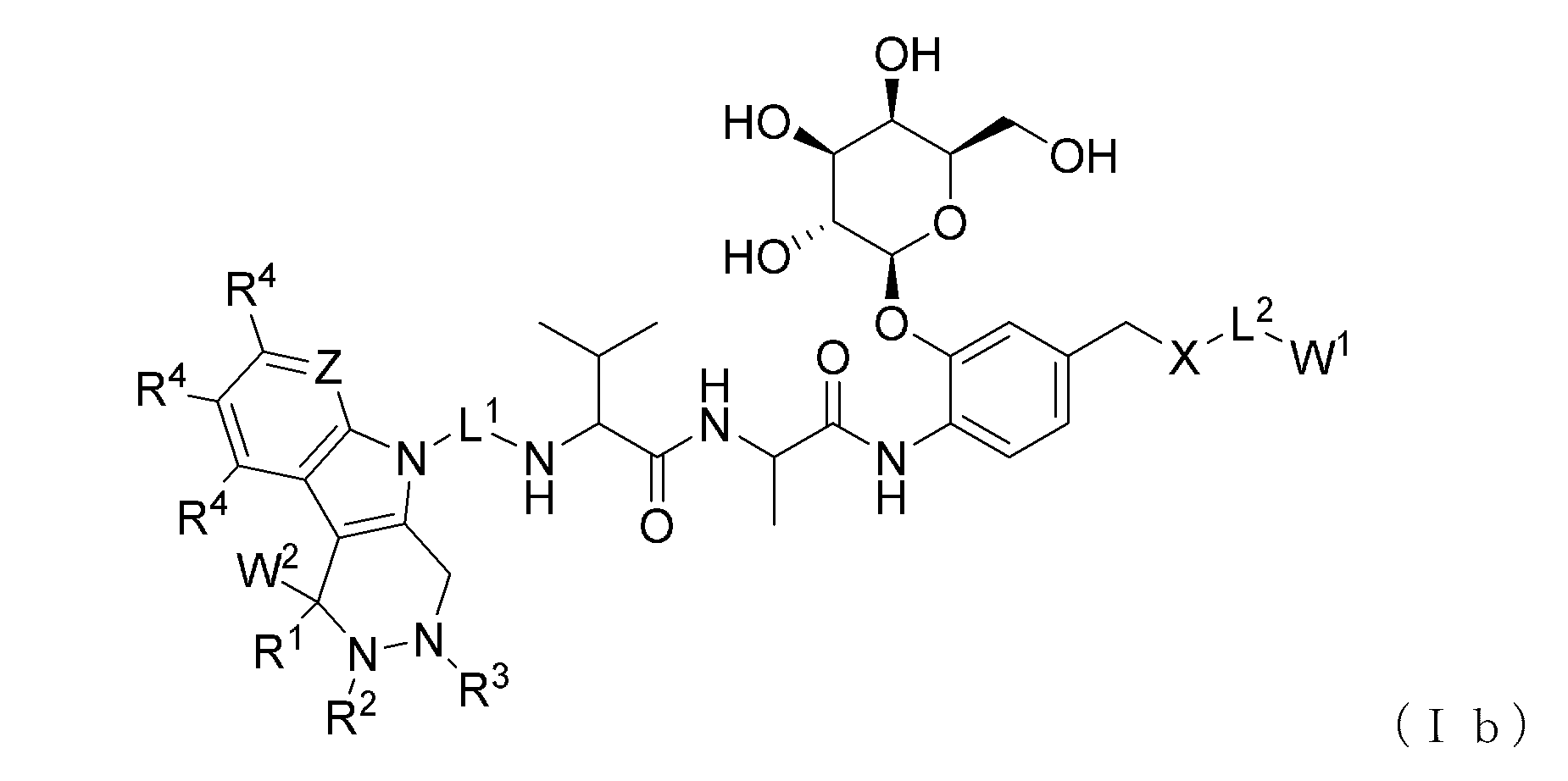


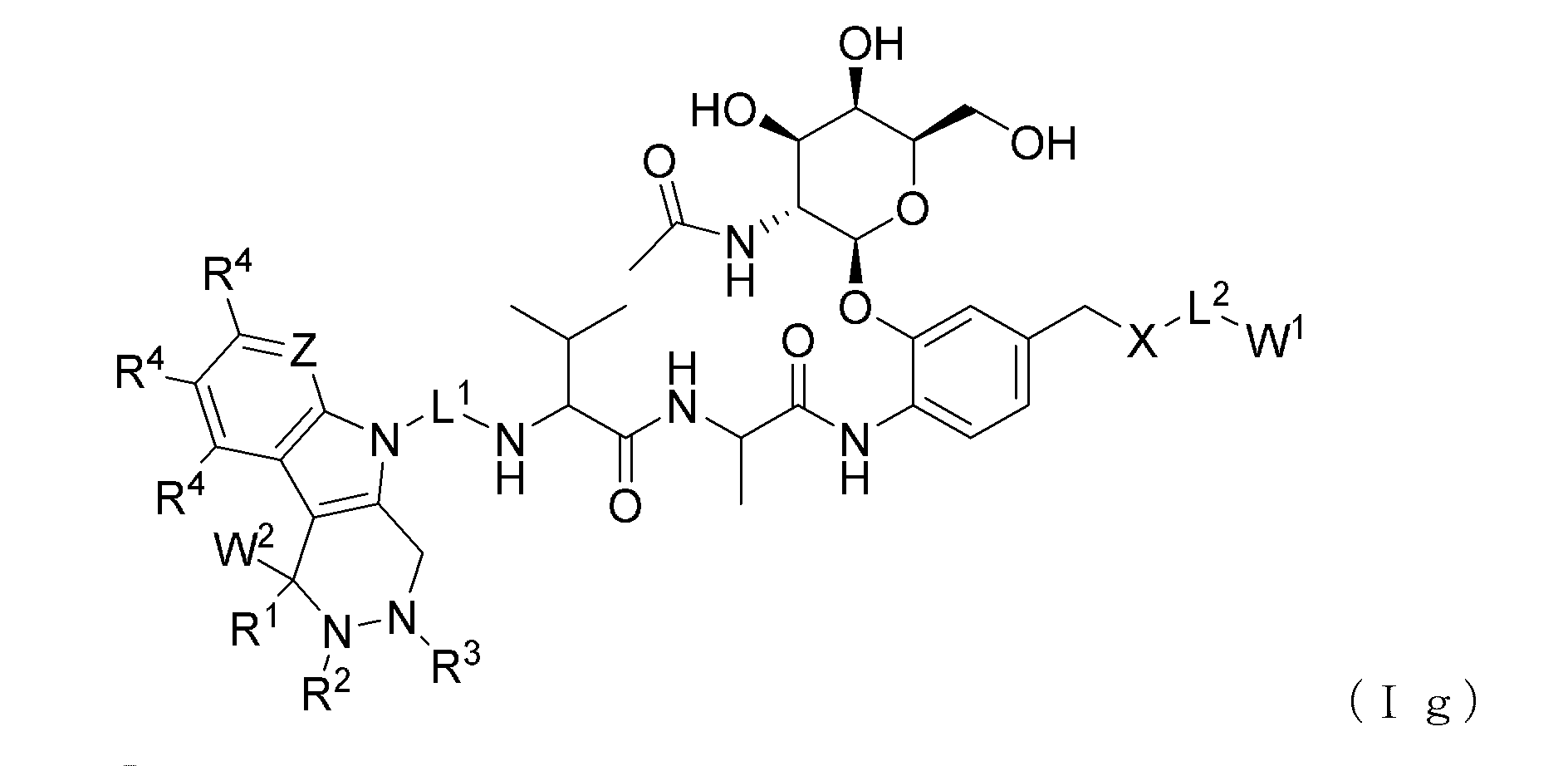
-(T1-V1)a-(T2-V2)b-(T3-V3)c-(T4-V4)d-
を含み、
式中、
a、b、c、及びdが、各々独立して、0又は1であり、
T1、T2、T3、及びT4が、各々独立して、共有結合、(C1~C12)アルキル、置換(C1~C12)アルキル、アリール、置換アリール、ヘテロアリール、置換ヘテロアリール、シクロアルキル、置換シクロアルキル、ヘテロシクリル、及び置換ヘテロシクリル、(EDA)w、(PEG)n、(AA)p、-(CR13OH)m-、4-アミノ-ピペリジン(4AP)、アセタール基、ヒドラジン、ジスルフィド、及びエステルから選択され、EDAが、エチレンジアミン部分であり、PEGが、ポリエチレングリコールであり、AAが、アミノ酸残基又はアミノ酸類似体であり、各wが、1~20の整数であり、各nが、1~30の整数であり、各pが、1~20の整数であり、各mが、1~12の整数であり、
V1、V2、V3、及びV4が、各々独立して、共有結合、-CO-、-NR15-、-NR15(CH2)q-、-NR15(C6H4)-、-CONR15-、-NR15CO-、-C(O)O-、-OC(O)-、-O-、-S-、-S(O)-、-SO2-、-SO2NR15-、-NR15SO2-、及び-P(O)OH-からなる群から選択され、各qが、1~6の整数であり、
各R13が、独立して、水素、アルキル、置換アルキル、アリール、及び置換アリールから選択され、
各R15が、独立して、水素、アルキル、置換アルキル、アルケニル、置換アルケニル、アルキニル、置換アルキニル、カルボキシル、カルボキシルエステル、アシル、アリール、置換アリール、ヘテロアリール、置換ヘテロアリール、シクロアルキル、置換シクロアルキル、ヘテロシクリル、及び置換ヘテロシクリルから選択される、請求項2~15のいずれか一項に記載のコンジュゲート。 L 1 is
-(T 1 -V 1 ) a -(T 2 -V 2 ) b -(T 3 -V 3 ) c -(T 4 -V 4 ) d -
including;
During the ceremony,
a, b, c, and d are each independently 0 or 1,
T 1 , T 2 , T 3 , and T 4 each independently represent a covalent bond, (C 1 -C 12 )alkyl, substituted (C 1 -C 12 )alkyl, aryl, substituted aryl, heteroaryl, substituted Heteroaryl, cycloalkyl, substituted cycloalkyl, heterocyclyl, and substituted heterocyclyl, (EDA) w , (PEG) n , (AA) p , -(CR 13 OH) m -, 4-amino-piperidine (4AP), acetal EDA is an ethylenediamine moiety, PEG is a polyethylene glycol, AA is an amino acid residue or amino acid analog, and each w is an integer from 1 to 20. , each n is an integer from 1 to 30, each p is an integer from 1 to 20, and each m is an integer from 1 to 12,
V 1 , V 2 , V 3 , and V 4 each independently represent a covalent bond, -CO-, -NR 15 -, -NR 15 (CH 2 ) q -, -NR 15 (C 6 H 4 ) -, -CONR 15 -, -NR 15 CO-, -C(O)O-, -OC(O)-, -O-, -S-, -S(O)-, -SO 2 -, -SO 2 NR 15 -, -NR 15 SO 2 -, and -P(O)OH-, each q is an integer from 1 to 6,
each R 13 is independently selected from hydrogen, alkyl, substituted alkyl, aryl, and substituted aryl;
Each R 15 is independently hydrogen, alkyl, substituted alkyl, alkenyl, substituted alkenyl, alkynyl, substituted alkynyl, carboxyl, carboxyl ester, acyl, aryl, substituted aryl, heteroaryl, substituted heteroaryl, cycloalkyl, substituted cyclo A conjugate according to any one of claims 2 to 15, selected from alkyl, heterocyclyl, and substituted heterocyclyl.
-(T5-V5)e-(T6-V6)f-(T7-V7)g-(T8-V8)h-
を含み、
式中、
e、f、g、及びhが、各々独立して、0又は1であり、
T5、T6、T7、及びT8が、各々独立して、共有結合、(C1~C12)アルキル、置換(C1~C12)アルキル、アリール、置換アリール、ヘテロアリール、置換ヘテロアリール、シクロアルキル、置換シクロアルキル、ヘテロシクリル、及び置換ヘテロシクリル、(EDA)w、(PEG)n、(AA)p、-(CR13OH)m-、4-アミノ-ピペリジン(4AP)、アセタール基、ヒドラジン、ジスルフィド、及びエステルから選択され、EDAが、エチレンジアミン部分であり、PEGが、ポリエチレングリコールであり、AAが、アミノ酸残基又はアミノ酸類似体であり、各wが、1~20の整数であり、各nが、1~30の整数であり、各pが、1~20の整数であり、各mが、1~12の整数であり、
V5、V6、V7、及びV8が、各々独立して、共有結合、-CO-、-NR15-、-NR15(CH2)q-、-NR15(C6H4)-、-CONR15-、-NR15CO-、-C(O)O-、-OC(O)-、-O-、-S-、-S(O)-、-SO2-、-SO2NR15-、-NR15SO2-、及び-P(O)OH-からなる群から選択され、各qが、1~6の整数であり、
各R13が、独立して、水素、アルキル、置換アルキル、アリール、及び置換アリールから選択され、
各R15が、独立して、水素、アルキル、置換アルキル、アルケニル、置換アルケニル、アルキニル、置換アルキニル、カルボキシル、カルボキシルエステル、アシル、アリール、置換アリール、ヘテロアリール、置換ヘテロアリール、シクロアルキル、置換シクロアルキル、ヘテロシクリル、及び置換ヘテロシクリルから選択される、請求項2~16のいずれか一項に記載のコンジュゲート。 L 2 is
-(T 5 -V 5 ) e -(T 6 -V 6 ) f -(T 7 -V 7 ) g -(T 8 -V 8 ) h -
including;
During the ceremony,
e, f, g, and h are each independently 0 or 1,
T 5 , T 6 , T 7 , and T 8 each independently represent a covalent bond, (C 1 -C 12 )alkyl, substituted (C 1 -C 12 )alkyl, aryl, substituted aryl, heteroaryl, substituted Heteroaryl, cycloalkyl, substituted cycloalkyl, heterocyclyl, and substituted heterocyclyl, (EDA) w , (PEG) n , (AA) p , -(CR 13 OH) m -, 4-amino-piperidine (4AP), acetal EDA is an ethylenediamine moiety, PEG is a polyethylene glycol, AA is an amino acid residue or amino acid analog, and each w is an integer from 1 to 20. , each n is an integer from 1 to 30, each p is an integer from 1 to 20, and each m is an integer from 1 to 12,
V 5 , V 6 , V 7 , and V 8 each independently represent a covalent bond, -CO-, -NR 15 -, -NR 15 (CH 2 ) q -, -NR 15 (C 6 H 4 ) -, -CONR 15 -, -NR 15 CO-, -C(O)O-, -OC(O)-, -O-, -S-, -S(O)-, -SO 2 -, -SO 2 NR 15 -, -NR 15 SO 2 -, and -P(O)OH-, each q is an integer from 1 to 6,
each R 13 is independently selected from hydrogen, alkyl, substituted alkyl, aryl, and substituted aryl;
Each R 15 is independently hydrogen, alkyl, substituted alkyl, alkenyl, substituted alkenyl, alkynyl, substituted alkynyl, carboxyl, carboxyl ester, acyl, aryl, substituted aryl, heteroaryl, substituted heteroaryl, cycloalkyl, substituted cyclo A conjugate according to any one of claims 2 to 16, selected from alkyl, heterocyclyl, and substituted heterocyclyl.
T2、T3、及びT4が、各々独立して、アリール、置換アリール、ヘテロアリール、置換ヘテロアリール、シクロアルキル、置換シクロアルキル、ヘテロシクリル、及び置換ヘテロシクリル、(EDA)w、(PEG)n、(C1~C12)アルキル、置換(C1~C12)アルキル、(AA)p、-(CR13OH)m-、4-アミノ-ピペリジン(4AP)、アセタール基、ヒドラジン、及びエステルから選択され、
V1、V2、V3、及びV4が、各々独立して、共有結合、-CO-、-NR15-、-NR15(CH2)q-、-NR15(C6H4)-、-CONR15-、-NR15CO-、-C(O)O-、-OC(O)-、-O-、-S-、-S(O)-、-SO2-、-SO2NR15-、-NR15SO2-、及び-P(O)OH-からなる群から選択され、
式中、
(PEG)nが、

EDAが、以下の構造
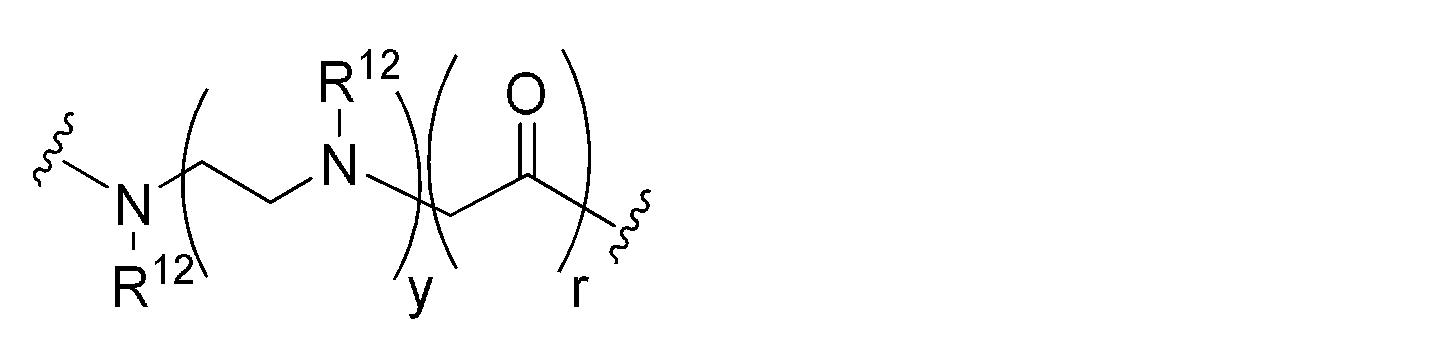
4-アミノ-ピペリジン(4AP)が、

各R12及びR15が、独立して、水素、アルキル、置換アルキル、ポリエチレングリコール部分、アリール、及び置換アリールから選択され、任意の2つの隣接するR12基が、環状に連結され、ピペラジニル環を形成してもよく、
R13が、水素、アルキル、置換アルキル、アリール、及び置換アリールから選択される、請求項16に記載のコンジュゲート。 T 1 is selected from (C 1 -C 12 )alkyl and substituted (C 1 -C 12 )alkyl;
T 2 , T 3 , and T 4 are each independently aryl, substituted aryl, heteroaryl, substituted heteroaryl, cycloalkyl, substituted cycloalkyl, heterocyclyl, and substituted heterocyclyl, (EDA) w , (PEG) n , (C 1 -C 12 )alkyl, substituted (C 1 -C 12 )alkyl, (AA) p , -(CR 13 OH) m -, 4-amino-piperidine (4AP), acetal group, hydrazine, and ester selected from
V 1 , V 2 , V 3 , and V 4 each independently represent a covalent bond, -CO-, -NR 15 -, -NR 15 (CH 2 ) q -, -NR 15 (C 6 H 4 ) -, -CONR 15 -, -NR 15 CO-, -C(O)O-, -OC(O)-, -O-, -S-, -S(O)-, -SO 2 -, -SO 2 NR 15 -, -NR 15 SO 2 -, and -P(O)OH-,
During the ceremony,
(PEG) n is
EDA has the following structure
4-amino-piperidine (4AP) is
Each R 12 and R 15 are independently selected from hydrogen, alkyl, substituted alkyl, polyethylene glycol moieties, aryl, and substituted aryl, and any two adjacent R 12 groups are cyclically linked and the piperazinyl ring may be formed,
17. The conjugate of claim 16, wherein R13 is selected from hydrogen, alkyl, substituted alkyl, aryl, and substituted aryl.
T2が、アミノ酸類似体であり、V2が、-NH-であり、
T3が、(PEG)nであり、V3が、-CO-であり、
dが、0である、請求項16~18のいずれか一項に記載のコンジュゲート。 T 1 is (C 1 -C 12 )alkyl, V 1 is -CO-,
T 2 is an amino acid analog, V 2 is -NH-,
T 3 is (PEG) n , V 3 is -CO-,
The conjugate according to any one of claims 16 to 18, wherein d is 0.
f、g、及びhが、0である、請求項16~19のいずれか一項に記載のコンジュゲート。 T 5 is a covalent bond, V 5 is -CO-,
A conjugate according to any one of claims 16 to 19, wherein f, g, and h are 0.
T6が、(C1~C12)アルキルであり、V6が、-CO-であり、
g及びhが、0である、請求項16~19のいずれか一項に記載のコンジュゲート。 T 5 is a covalent bond, V 5 is -CONR 15 -,
T 6 is (C 1 -C 12 )alkyl, V 6 is -CO-,
A conjugate according to any one of claims 16 to 19, wherein g and h are 0.
抗体を薬物に連結するための切断可能なリンカーを含み、前記切断可能なリンカーが、第1の酵素的に切断可能な部分、並びにガラクトシド、グルコシド、マンノシド、フコシド、O-GlcNAc、及びO-GalNAcからなる群から選択されるグリコシドを含む第2の酵素的に切断可能な部分を含む、化合物。 A compound,
a cleavable linker for linking the antibody to the drug, the cleavable linker comprising a first enzymatically cleavable moiety and a galactoside, glucoside, mannoside, fucoside, O-GlcNAc, and O-GalNAc. A compound comprising a second enzymatically cleavable moiety comprising a glycoside selected from the group consisting of.

Zが、CR4又はNであり、
Xが、O又はNR4であり、
R2及びR3が、各々独立して、水素、アルキル、置換アルキル、アルケニル、置換アルケニル、アルキニル、置換アルキニル、アルコキシ、置換アルコキシ、アミノ、置換アミノ、カルボキシル、カルボキシルエステル、アシル、アシルオキシ、アシルアミノ、アミノアシル、アルキルアミド、置換アルキルアミド、スルホニル、チオアルコキシ、置換チオアルコキシ、アリール、置換アリール、ヘテロアリール、置換ヘテロアリール、シクロアルキル、置換シクロアルキル、ヘテロシクリル、及び置換ヘテロシクリルから選択されるか、又はR2及びR3が、任意選択的に環状に連結され、5若しくは6員のヘテロシクリルを形成し、
各R4が、独立して、水素、ハロゲン、アルキル、置換アルキル、アルケニル、置換アルケニル、アルキニル、置換アルキニル、アルコキシ、置換アルコキシ、アミノ、置換アミノ、カルボキシル、カルボキシルエステル、アシル、アシルオキシ、アシルアミノ、アミノアシル、アルキルアミド、置換アルキルアミド、スルホニル、チオアルコキシ、置換チオアルコキシ、アリール、置換アリール、ヘテロアリール、置換ヘテロアリール、シクロアルキル、置換シクロアルキル、ヘテロシクリル、及び置換ヘテロシクリルから選択され、
各R5が、独立して、水素、アルキル、置換アルキル、アルケニル、置換アルケニル、アルキニル、置換アルキニル、アリール、置換アリール、ヘテロアリール、置換ヘテロアリール、シクロアルキル、置換シクロアルキル、ヘテロシクリル、及び置換ヘテロシクリルから選択され、
各R6が、独立して、アルキル、置換アルキル、アルケニル、置換アルケニル、アルキニル、置換アルキニル、アリール、置換アリール、ヘテロアリール、置換ヘテロアリール、シクロアルキル、置換シクロアルキル、ヘテロシクリル、及び置換ヘテロシクリルから選択され、
kが、1~10の整数であり、
R7が、前記第2の酵素的に切断可能な部分を含み、
L1が、第1のリンカーであり、
L2が、第2のリンカーであり、
W1が、薬物である、請求項25に記載の化合物。 the compound is a compound of formula (II),
Z is CR 4 or N,
X is O or NR4 ,
R 2 and R 3 are each independently hydrogen, alkyl, substituted alkyl, alkenyl, substituted alkenyl, alkynyl, substituted alkynyl, alkoxy, substituted alkoxy, amino, substituted amino, carboxyl, carboxyl ester, acyl, acyloxy, acylamino, or R 2 and R 3 are optionally linked cyclically to form a 5- or 6-membered heterocyclyl;
Each R 4 is independently hydrogen, halogen, alkyl, substituted alkyl, alkenyl, substituted alkenyl, alkynyl, substituted alkynyl, alkoxy, substituted alkoxy, amino, substituted amino, carboxyl, carboxyl ester, acyl, acyloxy, acylamino, aminoacyl , alkylamides, substituted alkylamides, sulfonyl, thioalkoxy, substituted thioalkoxy, aryl, substituted aryl, heteroaryl, substituted heteroaryl, cycloalkyl, substituted cycloalkyl, heterocyclyl, and substituted heterocyclyl,
Each R 5 is independently hydrogen, alkyl, substituted alkyl, alkenyl, substituted alkenyl, alkynyl, substituted alkynyl, aryl, substituted aryl, heteroaryl, substituted heteroaryl, cycloalkyl, substituted cycloalkyl, heterocyclyl, and substituted heterocyclyl. selected from
Each R 6 is independently selected from alkyl, substituted alkyl, alkenyl, substituted alkenyl, alkynyl, substituted alkynyl, aryl, substituted aryl, heteroaryl, substituted heteroaryl, cycloalkyl, substituted cycloalkyl, heterocyclyl, and substituted heterocyclyl is,
k is an integer from 1 to 10,
R 7 comprises said second enzymatically cleavable moiety;
L 1 is the first linker;
L 2 is a second linker;
26. A compound according to claim 25, wherein W 1 is a drug.
前記化合物が、式(IIa)の化合物である、請求項26に記載の化合物。

27. A compound according to claim 26, wherein said compound is a compound of formula (IIa).


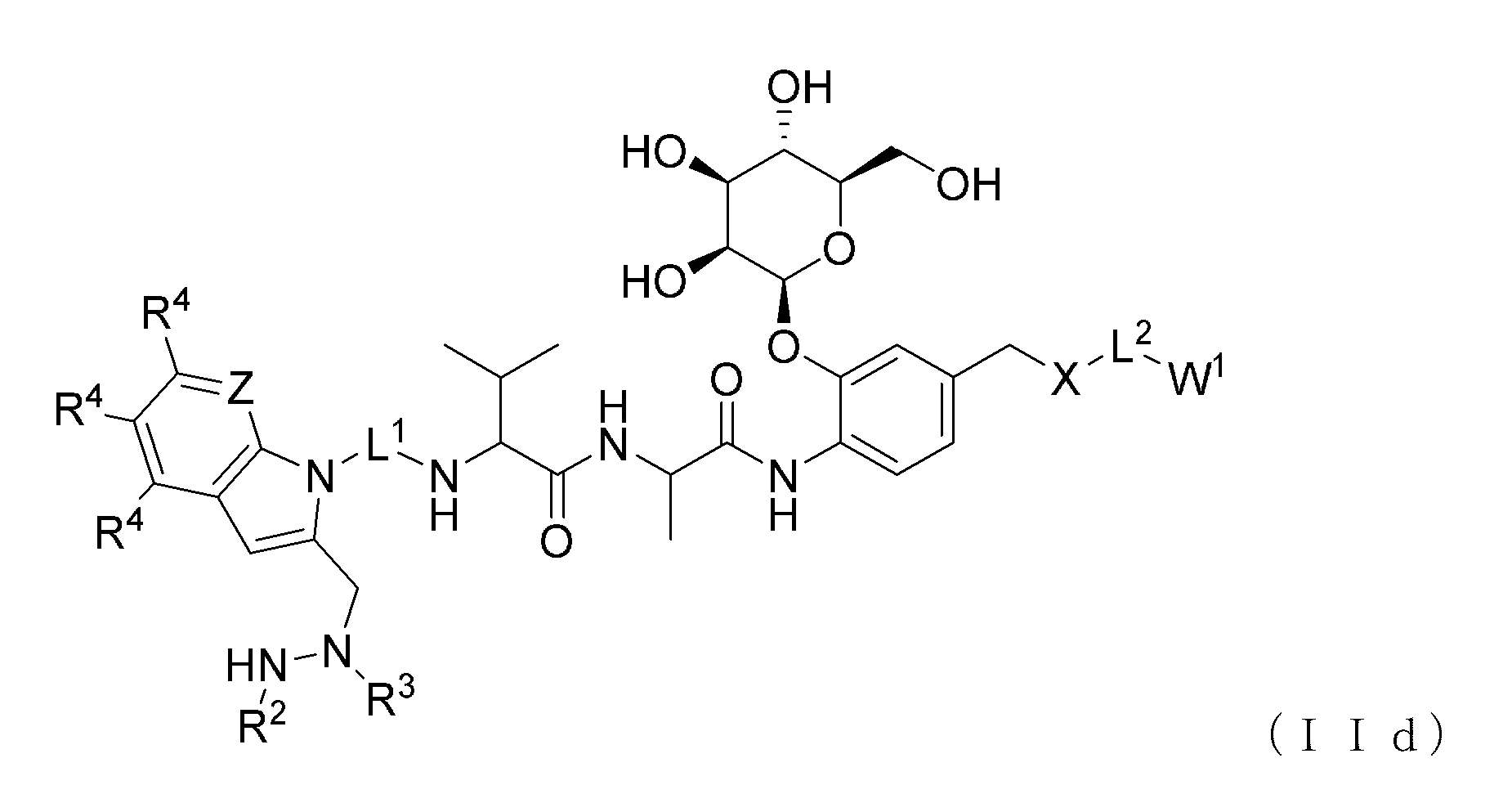


-(T1-V1)a-(T2-V2)b-(T3-V3)c-(T4-V4)d-
を含み、
式中、
a、b、c、及びdが、各々独立して、0又は1であり、
T1、T2、T3、及びT4が、各々独立して、共有結合、(C1~C12)アルキル、置換(C1~C12)アルキル、アリール、置換アリール、ヘテロアリール、置換ヘテロアリール、シクロアルキル、置換シクロアルキル、ヘテロシクリル、及び置換ヘテロシクリル、(EDA)w、(PEG)n、(AA)p、-(CR13OH)m-、4-アミノ-ピペリジン(4AP)、アセタール基、ヒドラジン、ジスルフィド、及びエステルから選択され、EDAが、エチレンジアミン部分であり、PEGが、ポリエチレングリコールであり、AAが、アミノ酸残基又はアミノ酸類似体であり、各wが、1~20の整数であり、各nが、1~30の整数であり、各pが、1~20の整数であり、各mが、1~12の整数であり、
V1、V2、V3、及びV4が、各々独立して、共有結合、-CO-、-NR15-、-NR15(CH2)q-、-NR15(C6H4)-、-CONR15-、-NR15CO-、-C(O)O-、-OC(O)-、-O-、-S-、-S(O)-、-SO2-、-SO2NR15-、-NR15SO2-、及び-P(O)OH-からなる群から選択され、各qが、1~6の整数であり、
各R13が、独立して、水素、アルキル、置換アルキル、アリール、及び置換アリールから選択され、
各R15が、独立して、水素、アルキル、置換アルキル、アルケニル、置換アルケニル、アルキニル、置換アルキニル、カルボキシル、カルボキシルエステル、アシル、アリール、置換アリール、ヘテロアリール、置換ヘテロアリール、シクロアルキル、置換シクロアルキル、ヘテロシクリル、及び置換ヘテロシクリルから選択される、請求項26~39のいずれか一項に記載の化合物。 L 1 is
-(T 1 -V 1 ) a -(T 2 -V 2 ) b -(T 3 -V 3 ) c -(T 4 -V 4 ) d -
including;
During the ceremony,
a, b, c, and d are each independently 0 or 1,
T 1 , T 2 , T 3 , and T 4 each independently represent a covalent bond, (C 1 -C 12 )alkyl, substituted (C 1 -C 12 )alkyl, aryl, substituted aryl, heteroaryl, substituted Heteroaryl, cycloalkyl, substituted cycloalkyl, heterocyclyl, and substituted heterocyclyl, (EDA) w , (PEG) n , (AA) p , -(CR 13 OH) m -, 4-amino-piperidine (4AP), acetal EDA is an ethylenediamine moiety, PEG is a polyethylene glycol, AA is an amino acid residue or amino acid analog, and each w is an integer from 1 to 20. , each n is an integer from 1 to 30, each p is an integer from 1 to 20, and each m is an integer from 1 to 12,
V 1 , V 2 , V 3 , and V 4 each independently represent a covalent bond, -CO-, -NR 15 -, -NR 15 (CH 2 ) q -, -NR 15 (C 6 H 4 ) -, -CONR 15 -, -NR 15 CO-, -C(O)O-, -OC(O)-, -O-, -S-, -S(O)-, -SO 2 -, -SO 2 NR 15 -, -NR 15 SO 2 -, and -P(O)OH-, each q is an integer from 1 to 6,
each R 13 is independently selected from hydrogen, alkyl, substituted alkyl, aryl, and substituted aryl;
Each R 15 is independently hydrogen, alkyl, substituted alkyl, alkenyl, substituted alkenyl, alkynyl, substituted alkynyl, carboxyl, carboxyl ester, acyl, aryl, substituted aryl, heteroaryl, substituted heteroaryl, cycloalkyl, substituted cyclo 40. A compound according to any one of claims 26 to 39, selected from alkyl, heterocyclyl, and substituted heterocyclyl.
-(T5-V5)e-(T6-V6)f-(T7-V7)g-(T8-V8)h-
を含み、
式中、
e、f、g、及びhが、各々独立して、0又は1であり、
T5、T6、T7、及びT8が、各々独立して、共有結合、(C1~C12)アルキル、置換(C1~C12)アルキル、アリール、置換アリール、ヘテロアリール、置換ヘテロアリール、シクロアルキル、置換シクロアルキル、ヘテロシクリル、及び置換ヘテロシクリル、(EDA)w、(PEG)n、(AA)p、-(CR13OH)m-、4-アミノ-ピペリジン(4AP)、アセタール基、ヒドラジン、ジスルフィド、及びエステルから選択され、EDAが、エチレンジアミン部分であり、PEGが、ポリエチレングリコールであり、AAが、アミノ酸残基又はアミノ酸類似体であり、各wが、1~20の整数であり、各nが、1~30の整数であり、各pが、1~20の整数であり、各mが、1~12の整数であり、
V5、V6、V7、及びV8が、各々独立して、共有結合、-CO-、-NR15-、-NR15(CH2)q-、-NR15(C6H4)-、-CONR15-、-NR15CO-、-C(O)O-、-OC(O)-、-O-、-S-、-S(O)-、-SO2-、-SO2NR15-、-NR15SO2-、及び-P(O)OH-からなる群から選択され、各qが、1~6の整数であり、
各R13が、独立して、水素、アルキル、置換アルキル、アリール、及び置換アリールから選択され、
各R15が、独立して、水素、アルキル、置換アルキル、アルケニル、置換アルケニル、アルキニル、置換アルキニル、カルボキシル、カルボキシルエステル、アシル、アリール、置換アリール、ヘテロアリール、置換ヘテロアリール、シクロアルキル、置換シクロアルキル、ヘテロシクリル、及び置換ヘテロシクリルから選択される、請求項26~40のいずれか一項に記載の化合物。 L 2 is
-(T 5 -V 5 ) e -(T 6 -V 6 ) f -(T 7 -V 7 ) g -(T 8 -V 8 ) h -
including;
During the ceremony,
e, f, g, and h are each independently 0 or 1,
T 5 , T 6 , T 7 , and T 8 each independently represent a covalent bond, (C 1 -C 12 )alkyl, substituted (C 1 -C 12 )alkyl, aryl, substituted aryl, heteroaryl, substituted Heteroaryl, cycloalkyl, substituted cycloalkyl, heterocyclyl, and substituted heterocyclyl, (EDA) w , (PEG) n , (AA) p , -(CR 13 OH) m -, 4-amino-piperidine (4AP), acetal EDA is an ethylene diamine moiety, PEG is a polyethylene glycol, AA is an amino acid residue or amino acid analog, and each w is an integer from 1 to 20. , each n is an integer from 1 to 30, each p is an integer from 1 to 20, and each m is an integer from 1 to 12,
V 5 , V 6 , V 7 , and V 8 each independently represent a covalent bond, -CO-, -NR 15 -, -NR 15 (CH 2 ) q -, -NR 15 (C 6 H 4 ) -, -CONR 15 -, -NR 15 CO-, -C(O)O-, -OC(O)-, -O-, -S-, -S(O)-, -SO 2 -, -SO 2 NR 15 -, -NR 15 SO 2 -, and -P(O)OH-, each q is an integer from 1 to 6,
each R 13 is independently selected from hydrogen, alkyl, substituted alkyl, aryl, and substituted aryl;
Each R 15 is independently hydrogen, alkyl, substituted alkyl, alkenyl, substituted alkenyl, alkynyl, substituted alkynyl, carboxyl, carboxyl ester, acyl, aryl, substituted aryl, heteroaryl, substituted heteroaryl, cycloalkyl, substituted cyclo 41. A compound according to any one of claims 26 to 40, selected from alkyl, heterocyclyl, and substituted heterocyclyl.
T2、T3、及びT4が、各々独立して、アリール、置換アリール、ヘテロアリール、置換ヘテロアリール、シクロアルキル、置換シクロアルキル、ヘテロシクリル、及び置換ヘテロシクリル、(EDA)w、(PEG)n、(C1~C12)アルキル、置換(C1~C12)アルキル、(AA)p、-(CR13OH)m-、4-アミノ-ピペリジン(4AP)、アセタール基、ヒドラジン、及びエステルから選択され、
V1、V2、V3、及びV4が、各々独立して、共有結合、-CO-、-NR15-、-NR15(CH2)q-、-NR15(C6H4)-、-CONR15-、-NR15CO-、-C(O)O-、-OC(O)-、-O-、-S-、-S(O)-、-SO2-、-SO2NR15-、-NR15SO2-、及び-P(O)OH-からなる群から選択され、
式中、
(PEG)nが、

EDAが、以下の構造

4-アミノ-ピペリジン(4AP)が、

各R12及びR15が、独立して、水素、アルキル、置換アルキル、ポリエチレングリコール部分、アリール、及び置換アリールから選択され、任意の2つの隣接するR12基が、環状に連結され、ピペラジニル環を形成してもよく、
R13が、水素、アルキル、置換アルキル、アリール、及び置換アリールから選択される、請求項40に記載の化合物。 T 1 is selected from (C 1 -C 12 )alkyl and substituted (C 1 -C 12 )alkyl;
T 2 , T 3 , and T 4 are each independently aryl, substituted aryl, heteroaryl, substituted heteroaryl, cycloalkyl, substituted cycloalkyl, heterocyclyl, and substituted heterocyclyl, (EDA) w , (PEG) n , (C 1 -C 12 )alkyl, substituted (C 1 -C 12 )alkyl, (AA) p , -(CR 13 OH) m -, 4-amino-piperidine (4AP), acetal group, hydrazine, and ester selected from
V 1 , V 2 , V 3 , and V 4 each independently represent a covalent bond, -CO-, -NR 15 -, -NR 15 (CH 2 ) q -, -NR 15 (C 6 H 4 ) -, -CONR 15 -, -NR 15 CO-, -C(O)O-, -OC(O)-, -O-, -S-, -S(O)-, -SO 2 -, -SO 2 NR 15 -, -NR 15 SO 2 -, and -P(O)OH-,
During the ceremony,
(PEG) n is
EDA has the following structure
4-amino-piperidine (4AP) is
Each R 12 and R 15 are independently selected from hydrogen, alkyl, substituted alkyl, polyethylene glycol moieties, aryl, and substituted aryl, and any two adjacent R 12 groups are cyclically linked and the piperazinyl ring may be formed,
41. A compound according to claim 40, wherein R13 is selected from hydrogen, alkyl, substituted alkyl, aryl, and substituted aryl.
T2が、アミノ酸類似体であり、V2が、-NH-であり、
T3が、(PEG)nであり、V3が、-CO-であり、
dが、0である、請求項40~42のいずれか一項に記載の化合物。 T 1 is (C 1 -C 12 )alkyl, V 1 is -CO-,
T 2 is an amino acid analog, V 2 is -NH-,
T 3 is (PEG) n , V 3 is -CO-,
43. A compound according to any one of claims 40 to 42, wherein d is 0.
f、g、及びhが、0である、請求項40~43のいずれか一項に記載の化合物。 T 5 is a covalent bond, V 5 is -CO-,
44. A compound according to any one of claims 40 to 43, wherein f, g, and h are 0.
T6が、(C1~C12)アルキルであり、V6が、-CO-であり、
g及びhが、0である、請求項40~43のいずれか一項に記載の化合物。 T 5 is a covalent bond, V 5 is -CONR 15 -,
T 6 is (C 1 -C 12 )alkyl, V 6 is -CO-,
44. A compound according to any one of claims 40 to 43, wherein g and h are 0.
請求項1~24のいずれか一項に記載のコンジュゲートと、
薬学的に許容される賦形剤と、を含む、薬学的組成物。 A pharmaceutical composition comprising:
A conjugate according to any one of claims 1 to 24,
A pharmaceutical composition comprising: a pharmaceutically acceptable excipient.
対象に、請求項1~24のいずれか一項に記載のコンジュゲートを投与することを含む、方法。 A method of administering a conjugate to a subject, the method comprising:
25. A method comprising administering to a subject a conjugate according to any one of claims 1-24.
対象に、請求項1~24のいずれか一項に記載のコンジュゲートを含む治療有効量の薬学的組成物を投与することを含み、前記投与することが、前記対象においてがんを治療するのに有効である、方法。 A method of treating cancer in a subject, the method comprising:
administering to a subject a therapeutically effective amount of a pharmaceutical composition comprising a conjugate according to any one of claims 1 to 24, wherein said administering is for treating cancer in said subject. A method that is effective.
Applications Claiming Priority (5)
| Application Number | Priority Date | Filing Date | Title |
|---|---|---|---|
| US202063116632P | 2020-11-20 | 2020-11-20 | |
| US63/116,632 | 2020-11-20 | ||
| US202163139685P | 2021-01-20 | 2021-01-20 | |
| US63/139,685 | 2021-01-20 | ||
| PCT/US2021/060193 WO2022109335A1 (en) | 2020-11-20 | 2021-11-19 | Glycoside dual-cleavage linkers for antibody-drug conjugates |
Publications (2)
| Publication Number | Publication Date |
|---|---|
| JP2023551203A true JP2023551203A (en) | 2023-12-07 |
| JPWO2022109335A5 JPWO2022109335A5 (en) | 2024-11-26 |
Family
ID=81708155
Family Applications (1)
| Application Number | Title | Priority Date | Filing Date |
|---|---|---|---|
| JP2023530743A Pending JP2023551203A (en) | 2020-11-20 | 2021-11-19 | Glycosidic double cleavage linkers for antibody-drug conjugates |
Country Status (8)
| Country | Link |
|---|---|
| US (2) | US12187810B2 (en) |
| EP (1) | EP4247829A1 (en) |
| JP (1) | JP2023551203A (en) |
| KR (1) | KR20230122008A (en) |
| AU (1) | AU2021382033A1 (en) |
| CA (1) | CA3201005A1 (en) |
| MX (1) | MX2023005979A (en) |
| WO (1) | WO2022109335A1 (en) |
Families Citing this family (1)
| Publication number | Priority date | Publication date | Assignee | Title |
|---|---|---|---|---|
| WO2024129614A1 (en) | 2022-12-13 | 2024-06-20 | Crinetics Pharmaceuticals, Inc. | Somatostatin subtype-2 receptor (sst2r) targeted therapeutics and uses thereof |
Citations (4)
| Publication number | Priority date | Publication date | Assignee | Title |
|---|---|---|---|---|
| JP2015537031A (en) * | 2012-11-16 | 2015-12-24 | レッドウッド バイオサイエンス, インコーポレイテッド | Hydrazinyl-indole compounds and conjugates |
| JP2018520671A (en) * | 2015-06-30 | 2018-08-02 | シアトル ジェネティクス,インコーポレーテッド | Anti-NTB-A antibodies and related compositions and methods |
| WO2020154437A1 (en) * | 2019-01-23 | 2020-07-30 | R.P. Scherer Technologies, Llc | Glycoside-containing peptide linkers for antibody-drug conjugates |
| JP2020525404A (en) * | 2017-06-21 | 2020-08-27 | グリコス・フィンランド・オーワイGlykos Finland Oy | Hydrophilic linker and conjugate thereof |
Family Cites Families (58)
| Publication number | Priority date | Publication date | Assignee | Title |
|---|---|---|---|---|
| US4816567A (en) | 1983-04-08 | 1989-03-28 | Genentech, Inc. | Recombinant immunoglobin preparations |
| JPS61134325A (en) | 1984-12-04 | 1986-06-21 | Teijin Ltd | Expression of hybrid antibody gene |
| US5618920A (en) | 1985-11-01 | 1997-04-08 | Xoma Corporation | Modular assembly of antibody genes, antibodies prepared thereby and use |
| GB8607679D0 (en) | 1986-03-27 | 1986-04-30 | Winter G P | Recombinant dna product |
| US5225539A (en) | 1986-03-27 | 1993-07-06 | Medical Research Council | Recombinant altered antibodies and methods of making altered antibodies |
| US5530101A (en) | 1988-12-28 | 1996-06-25 | Protein Design Labs, Inc. | Humanized immunoglobulins |
| GB8928874D0 (en) | 1989-12-21 | 1990-02-28 | Celltech Ltd | Humanised antibodies |
| DE69233153T2 (en) | 1991-03-06 | 2004-05-27 | Merck Patent Gmbh | HUMANIZED MONOCLONAL ANTIBODIES |
| TW197439B (en) | 1991-04-04 | 1993-01-01 | Ueno Pharmaceutics Applic Res Co Ltd | |
| EP0519596B1 (en) | 1991-05-17 | 2005-02-23 | Merck & Co. Inc. | A method for reducing the immunogenicity of antibody variable domains |
| CA2078539C (en) | 1991-09-18 | 2005-08-02 | Kenya Shitara | Process for producing humanized chimera antibody |
| ES2136092T3 (en) | 1991-09-23 | 1999-11-16 | Medical Res Council | PROCEDURES FOR THE PRODUCTION OF HUMANIZED ANTIBODIES. |
| US5283253A (en) | 1991-09-23 | 1994-02-01 | Florida State University | Furyl or thienyl carbonyl substituted taxanes and pharmaceutical compositions containing them |
| WO1993010076A1 (en) | 1991-11-22 | 1993-05-27 | The University Of Mississippi | Synthesis and optical resolution of the taxol side chain and related compounds |
| GB9125979D0 (en) | 1991-12-06 | 1992-02-05 | Wellcome Found | Antibody |
| IL104782A0 (en) | 1992-02-19 | 1993-06-10 | Schering Corp | Cloning and expression of humanized monoclonal antibodies against human interleukin-4 |
| US5200534A (en) | 1992-03-13 | 1993-04-06 | University Of Florida | Process for the preparation of taxol and 10-deacetyltaxol |
| CA2136213A1 (en) | 1992-05-21 | 1993-11-25 | Richard N. Arteca | Cultured taxu tissues as a source of taxol, related taxanes and other novel anti-tumor/anti-viral compounds |
| US5274137A (en) | 1992-06-23 | 1993-12-28 | Nicolaou K C | Intermediates for preparation of taxols |
| US5294637A (en) | 1992-07-01 | 1994-03-15 | Bristol-Myers Squibb Company | Fluoro taxols |
| US5202448A (en) | 1992-08-14 | 1993-04-13 | Napro Biotherapeutics, Inc. | Processes of converting taxanes into baccatin III |
| US5639641A (en) | 1992-09-09 | 1997-06-17 | Immunogen Inc. | Resurfacing of rodent antibodies |
| CA2100808A1 (en) | 1992-10-01 | 1994-04-02 | Vittorio Farina | Deoxy paclitaxels |
| FR2696464B1 (en) | 1992-10-05 | 1994-11-10 | Rhone Poulenc Rorer Sa | New esterification process for baccatin III and 10-deacetyl baccatin III. |
| FR2696462B1 (en) | 1992-10-05 | 1994-11-25 | Rhone Poulenc Rorer Sa | Process for obtaining 10-deacetyl baccatin III. |
| FR2696458B1 (en) | 1992-10-05 | 1994-11-10 | Rhone Poulenc Rorer Sa | Process for the preparation of taxane derivatives. |
| FR2696463B1 (en) | 1992-10-05 | 1994-11-25 | Rhone Poulenc Rorer Sa | Process for obtaining 10-deacetyl baccatin III. |
| FR2696461B1 (en) | 1992-10-05 | 1994-11-10 | Rhone Poulenc Rorer Sa | New derivatives of taxol analogs, their preparation and compositions containing them. |
| US5279949A (en) | 1992-12-07 | 1994-01-18 | Board Of Trustees Operating Michigan State University | Process for the isolation and purification of taxol and taxanes from Taxus spp |
| US5824701A (en) | 1993-10-20 | 1998-10-20 | Enzon, Inc. | Taxane-based prodrugs |
| US5415869A (en) | 1993-11-12 | 1995-05-16 | The Research Foundation Of State University Of New York | Taxol formulation |
| US5599902A (en) | 1994-11-10 | 1997-02-04 | Arizona Board Of Regents Acting On Behalf Of Arizona State University | Cancer inhibitory peptides |
| US5705154A (en) | 1995-03-08 | 1998-01-06 | Schering Corporation | Humanized monoclonal antibodies against human interleukin-4 |
| CN1113066C (en) | 1995-04-21 | 2003-07-02 | 帝国脏器制药株式会社 | Novel Peptide Derivatives |
| AU3740997A (en) | 1996-08-26 | 1998-03-19 | Bristol-Myers Squibb Company | Sulfenamide taxane derivatives |
| AU739028B2 (en) | 1996-09-27 | 2001-10-04 | Bristol-Myers Squibb Company | Hydrolyzable prodrugs for delivery of anticancer drugs to metastatic cells |
| WO1998022451A1 (en) | 1996-11-19 | 1998-05-28 | Daiichi Pharmaceutical Co., Ltd. | Taxol derivatives |
| US5977386A (en) | 1996-12-24 | 1999-11-02 | Bristol-Myers Squibb Company | 6-thio-substituted paclitaxels |
| NZ500078A (en) | 1997-04-07 | 2001-10-26 | Genentech Inc | Humanized anti-VEGF antibodies and their use in inhibiting VEGF-induced angiogenesis in mammals |
| ATE501170T1 (en) | 1997-04-07 | 2011-03-15 | Genentech Inc | METHOD FOR PRODUCING HUMANIZED ANTIBODIES BY RANDOMIZED MUtagenesis |
| EP1001769B1 (en) | 1997-06-20 | 2002-06-19 | Baker Norton Pharmaceuticals, Inc. | Soluble prodrugs of paclitaxel |
| US7288665B1 (en) | 1997-08-18 | 2007-10-30 | Florida State University | Process for selective derivatization of taxanes |
| JPH1192468A (en) | 1997-09-17 | 1999-04-06 | Yakult Honsha Co Ltd | New taxane derivatives |
| WO1999018113A1 (en) | 1997-10-08 | 1999-04-15 | Bio Research Corporation Of Yokohama | Taxoid derivatives and process for producing the same |
| US6323315B1 (en) | 1999-09-10 | 2001-11-27 | Basf Aktiengesellschaft | Dolastatin peptides |
| AU2001281463A1 (en) | 2000-03-16 | 2001-09-24 | The Regents Of The University Of California | Chemoselective ligation |
| EP1539947A4 (en) | 2002-08-15 | 2006-09-06 | Epitomics Inc | Humanized rabbit antibodies |
| EP1391213A1 (en) | 2002-08-21 | 2004-02-25 | Boehringer Ingelheim International GmbH | Compositions and methods for treating cancer using maytansinoid CD44 antibody immunoconjugates and chemotherapeutic agents |
| JP2007520991A (en) | 2003-08-07 | 2007-08-02 | エピトミクス インコーポレーティッド | Method for humanizing rabbit monoclonal antibody |
| US7985783B2 (en) | 2006-09-21 | 2011-07-26 | The Regents Of The University Of California | Aldehyde tags, uses thereof in site-specific protein modification |
| US8729232B2 (en) | 2008-03-27 | 2014-05-20 | The Regents Of The University Of California | Aldehyde tags, uses thereof in site-specific protein modification |
| AU2014354643B2 (en) | 2013-11-27 | 2020-03-05 | Redwood Bioscience, Inc. | Hydrazinyl-pyrrolo compounds and methods for producing a conjugate |
| AU2015282627B2 (en) | 2014-06-30 | 2020-04-02 | Glykos Finland Oy | Saccharide derivative of a toxic payload and antibody conjugates thereof |
| CN111620861A (en) * | 2014-12-09 | 2020-09-04 | 艾伯维公司 | BCL-XL inhibitory compound having low cell permeability and antibody drug conjugate including the same |
| CN109275190B (en) * | 2017-07-17 | 2021-10-26 | 华为技术有限公司 | Communication method and device |
| WO2019118411A2 (en) * | 2017-12-11 | 2019-06-20 | Triphase Accelerator U.S. Corporation | Anti-cd22 antibody-maytansine conjugates, combinations, and methods of use thereof |
| WO2020096775A1 (en) * | 2018-11-09 | 2020-05-14 | R.P. Scherer Technologies, Llc | Sulfatase-cleavable linkers for antibody-drug conjugates |
| WO2022175595A1 (en) | 2021-02-16 | 2022-08-25 | Glykos Finland Oy | Linker-payloads and conjugates thereof |
-
2021
- 2021-11-19 JP JP2023530743A patent/JP2023551203A/en active Pending
- 2021-11-19 WO PCT/US2021/060193 patent/WO2022109335A1/en not_active Ceased
- 2021-11-19 CA CA3201005A patent/CA3201005A1/en active Pending
- 2021-11-19 US US17/531,343 patent/US12187810B2/en active Active
- 2021-11-19 AU AU2021382033A patent/AU2021382033A1/en active Pending
- 2021-11-19 MX MX2023005979A patent/MX2023005979A/en unknown
- 2021-11-19 KR KR1020237019842A patent/KR20230122008A/en active Pending
- 2021-11-19 EP EP21895715.7A patent/EP4247829A1/en active Pending
-
2024
- 2024-11-25 US US18/959,336 patent/US20250179117A1/en active Pending
Patent Citations (5)
| Publication number | Priority date | Publication date | Assignee | Title |
|---|---|---|---|---|
| JP2015537031A (en) * | 2012-11-16 | 2015-12-24 | レッドウッド バイオサイエンス, インコーポレイテッド | Hydrazinyl-indole compounds and conjugates |
| JP2018520671A (en) * | 2015-06-30 | 2018-08-02 | シアトル ジェネティクス,インコーポレーテッド | Anti-NTB-A antibodies and related compositions and methods |
| JP2020525404A (en) * | 2017-06-21 | 2020-08-27 | グリコス・フィンランド・オーワイGlykos Finland Oy | Hydrophilic linker and conjugate thereof |
| WO2020154437A1 (en) * | 2019-01-23 | 2020-07-30 | R.P. Scherer Technologies, Llc | Glycoside-containing peptide linkers for antibody-drug conjugates |
| JP2022518743A (en) * | 2019-01-23 | 2022-03-16 | アール.ピー.シェーラー テクノロジーズ エルエルシー | Glycoside-containing peptide linker for antibody-drug conjugates |
Also Published As
| Publication number | Publication date |
|---|---|
| MX2023005979A (en) | 2023-08-11 |
| US20250179117A1 (en) | 2025-06-05 |
| AU2021382033A9 (en) | 2024-10-10 |
| EP4247829A1 (en) | 2023-09-27 |
| WO2022109335A1 (en) | 2022-05-27 |
| KR20230122008A (en) | 2023-08-22 |
| US12187810B2 (en) | 2025-01-07 |
| US20220249686A1 (en) | 2022-08-11 |
| CA3201005A1 (en) | 2022-05-27 |
| AU2021382033A1 (en) | 2023-06-22 |
Similar Documents
| Publication | Publication Date | Title |
|---|---|---|
| JP7550768B2 (en) | Glycoside-Containing Peptide Linkers for Antibody-Drug Conjugates | |
| US20250223302A1 (en) | Camptothecine antibody-drug conjugates and methods of use thereof | |
| US20240148883A1 (en) | Branched Linkers for Antibody-Drug Conjugates and Methods of Use Thereof | |
| US20240197907A1 (en) | Dual-Cleavage Ester Linkers for Antibody-Drug Conjugates | |
| US20250179117A1 (en) | Glycoside dual-cleavage linkers for antibody-drug conjugates | |
| US20240342303A1 (en) | Sulfatase-Cleavable Linkers for Antibody-Drug Conjugates | |
| JP2024529466A (en) | Antibody drug conjugates and methods of use thereof | |
| CN116783208A (en) | Glycoside double cleavage linker for antibody-drug conjugates | |
| WO2026024545A1 (en) | Peg-carbamate linkers for antibody-drug conjugates and uses thereof | |
| WO2025064427A1 (en) | Dual-payload antibody-drug conjugates and uses thereof | |
| WO2025064424A1 (en) | Tandem-cleavage linkers for antibody-drug conjugates and uses thereof |
Legal Events
| Date | Code | Title | Description |
|---|---|---|---|
| A521 | Request for written amendment filed |
Free format text: JAPANESE INTERMEDIATE CODE: A523 Effective date: 20241118 |
|
| A621 | Written request for application examination |
Free format text: JAPANESE INTERMEDIATE CODE: A621 Effective date: 20241118 |
|
| A131 | Notification of reasons for refusal |
Free format text: JAPANESE INTERMEDIATE CODE: A131 Effective date: 20251118 |
|
| A977 | Report on retrieval |
Free format text: JAPANESE INTERMEDIATE CODE: A971007 Effective date: 20251119 |