JP2023545945A - System and method for smart categorization of content in content management systems - Google Patents
System and method for smart categorization of content in content management systems Download PDFInfo
- Publication number
- JP2023545945A JP2023545945A JP2023519188A JP2023519188A JP2023545945A JP 2023545945 A JP2023545945 A JP 2023545945A JP 2023519188 A JP2023519188 A JP 2023519188A JP 2023519188 A JP2023519188 A JP 2023519188A JP 2023545945 A JP2023545945 A JP 2023545945A
- Authority
- JP
- Japan
- Prior art keywords
- content
- user
- taxonomy
- tag
- categorization
- Prior art date
- Legal status (The legal status is an assumption and is not a legal conclusion. Google has not performed a legal analysis and makes no representation as to the accuracy of the status listed.)
- Pending
Links
Images




Classifications
-
- G—PHYSICS
- G06—COMPUTING OR CALCULATING; COUNTING
- G06F—ELECTRIC DIGITAL DATA PROCESSING
- G06F16/00—Information retrieval; Database structures therefor; File system structures therefor
- G06F16/90—Details of database functions independent of the retrieved data types
- G06F16/906—Clustering; Classification
Landscapes
- Engineering & Computer Science (AREA)
- Databases & Information Systems (AREA)
- Theoretical Computer Science (AREA)
- Data Mining & Analysis (AREA)
- Physics & Mathematics (AREA)
- General Engineering & Computer Science (AREA)
- General Physics & Mathematics (AREA)
- Information Retrieval, Db Structures And Fs Structures Therefor (AREA)
Abstract

ある実施形態に従うと、本明細書に記載のシステムおよび方法を、例えばコンテンツ管理システムとともに用いて、コンテンツをユーザ定義カテゴリにカテゴリ化/分類するための推奨を提供することができ、これにより、コンテンツマネージャのために、事前に評価/カテゴリ化されたコンテンツに基づいて新しいコンテンツを正確なカテゴリに難なく配置する機会が提供される。推奨システムまたはツールは、新たに作成/編集されたコンテンツの自動カテゴリ化/分類により、コンテンツを関連カテゴリに配置することを支援し得る。推奨ツールは、コンテンツから特徴ベクトルを生成し、事前にカテゴリ化されたコンテンツに基づいて特徴空間にクラスタを作成し、クラスタからの特徴空間距離計算により新しいコンテンツについてのカテゴリを推奨することにより、多様なドメインにわたって実装および適用することができる。
According to certain embodiments, the systems and methods described herein can be used, for example, with a content management system to provide recommendations for categorizing/classifying content into user-defined categories, thereby providing recommendations for categorizing/classifying content into user-defined categories. For managers, an opportunity is provided to effortlessly place new content into accurate categories based on previously rated/categorized content. A recommendation system or tool may assist in automatically categorizing/classifying newly created/edited content to place the content into relevant categories. Recommendation tools can generate feature vectors from content, create clusters in feature space based on pre-categorized content, and recommend categories for new content by calculating feature space distances from the clusters. can be implemented and applied across multiple domains.
Description
著作権表示
この特許文献の開示の一部は、著作権保護の対象となる題材を含んでいる。著作権の所有者は、特許商標庁の包袋または記録に掲載されるように特許文献または特許情報開示を誰でも複製できることに対して異議はないが、その他の点ではすべての如何なる著作権をも保有する。
Copyright Notice A portion of the disclosure of this patent document contains material that is subject to copyright protection. The copyright owner has no objection to the ability of anyone to reproduce the patent document or patent information disclosure as it appears in the Patent and Trademark Office packet or record, but otherwise reserves the right to retain all copyrights. Also held.
優先権主張および関連出願の相互参照:
本願は、2020年9月28日に出願されて「コンテンツ管理システムにおけるコンテンツのスマートなカテゴリ化のためのシステムおよび方法(SYSTEM AND METHOD FOR SMART CATEGORIZATION OF CONTENT IN A CONTENT MANAGEMENT SYSTEM)」と題された米国仮特許出願第63/084,174号と、2021年9月27日に出願されて「コンテンツ管理システムにおけるコンテンツのスマートなカテゴリ化のためのシステムおよび方法(SYSTEM AND METHOD FOR SMART CATEGORIZATION OF CONTENT IN A CONTENT MANAGEMENT SYSTEM)」と題された米国特許出願第17/486,524号とについての優先権の利益を主張するとともに、2018年10月18日に出願されて「オーサーのためのスマートなコンテンツ推奨(SMART CONTENT RECOMMENDATIONS FOR AUTHORS)」と題されたインド仮特許出願第201841039495号の優先権を主張する、2019年9月24日に出願されて「コンテンツオーサーのためのスマートなコンテンツ推奨(SMART CONTENT RECOMMENDATIONS FOR CONTENT AUTHORS)」と題された米国特許出願第16/581,138号の一部継続出願であってその優先権の利益を主張する、2019年10月18日に出願されて「コンテンツアイテム推奨をランク付けするための技術(TECHNIQUES FOR RANKING CONTENT ITEM RECOMMENDATIONS)」と題された米国特許出願第16/657,395号に関するものであり、上述の出願の各々およびそれぞれの内容が引用により本明細書中に援用されている。
Cross-references to priority claims and related applications:
This application was filed on September 28, 2020 and is entitled "SYSTEM AND METHOD FOR SMART CATEGORIZATION OF CONTENT IN A CONTENT MANAGEMENT SYSTEM." U.S. Provisional Patent Application No. 63/084,174 and filed on September 27, 2021 entitled “SYSTEM AND METHOD FOR SMART CATEGORIZATION OF CONTENT IN No. 17/486,524, filed October 18, 2018, entitled ``A CONTENT MANAGEMENT SYSTEM'' and ``Smart Content Management System for Authors.'' ``SMART CONTENT RECOMMENDATIONS FOR AUTHORS'' filed on September 24, 2019 claiming priority of Indian Provisional Patent Application No. 201841039495 entitled ``SMART CONTENT RECOMMENDATIONS FOR AUTHORS''. RECOMMENDATIONS FOR CONTENT AUTHORS), a continuation-in-part of U.S. patent application Ser. No. 16/657,395 entitled ``TECHNIQUES FOR RANKING CONTENT ITEM RECOMMENDATIONS,'' each of which is incorporated by reference herein by reference. It is used throughout the book.
本願は、概して、オンラインコマース環境、ならびにコンテンツデータの管理および配信に関し、特に、コンテンツ管理システムにおけるコンテンツのスマートなカテゴリ化/分類に向けられている。 TECHNICAL FIELD This application relates generally to online commerce environments and content data management and distribution, and is specifically directed to smart categorization/classification of content in content management systems.
背景:
オンライン出版および/または送信向けのオリジナルコンテンツの作成者およびオーサーは、新しく作成されたコンテンツを生成し、編集し、格納するための多種多様なソフトウェアベースのツールおよび技術を用いる可能性がある。
background:
Creators and authors of original content for online publication and/or transmission may use a wide variety of software-based tools and techniques to generate, edit, and store newly created content.
コンテンツ管理システムにおいては、様々な種類のコンテンツ(例えば、文書、ブログのような構造化されたコンテンツ、記事、プレスリリース、ならびに画像および映像のようなメディアファイル)は、多くの場合、それらのコンテンツに基づいて評価/カテゴリ化される必要がある。このようなカテゴリ化/分類は、カテゴリまたはノードの階層セットにわたって行なわれる。例えば、不動産リースの契約文書は、法的文書→不動産→契約の下で評価/カテゴリ化され得る。同じ文書(またはコンテンツ)を同時に2回以上カテゴリ化/分類する可能性もある。例えば、同じ契約文書が、有効な契約→署名済みの下に存在することもある。 In a content management system, different types of content (e.g. documents, structured content like blogs, articles, press releases, and media files like images and videos) are often need to be evaluated/categorized based on Such categorization/classification is performed over a hierarchical set of categories or nodes. For example, a contract document for a real estate lease may be evaluated/categorized under Legal Documents → Real Estate → Contract. It is also possible to categorize/classify the same document (or content) more than once at the same time. For example, the same contract document may exist under Valid Contracts→Signed.
カテゴリは、タクソノミーと呼ばれる組織化概念の下でグループ化される。組織は、コンテンツについてのビジネス組織を反映する多くのタクソノミーを有する傾向がある。新しい文書またはコンテンツアイテムが追加される場合、または新しいタクソノミーが生じる場合、またはコンテンツ組織に有意な変化がある場合、コンテンツを正しく分類または再分類するタスクはエンドユーザ(またはコンテンツオーサー)に割当てられる。これは、コンテンツの量ならびにタクソノミーの数が増加した場合に費用が掛かりエラーが起こり易い作業となる可能性がある。 Categories are grouped under an organizing concept called a taxonomy. Organizations tend to have many taxonomies that reflect the business organization for content. When new documents or content items are added, or when new taxonomies arise, or when there are significant changes in content organization, the task of correctly classifying or reclassifying content is assigned to end users (or content authors). This can become an expensive and error-prone task as the amount of content and number of taxonomies increases.
概要:
ある実施形態に従うと、本明細書に記載のシステムおよび方法を例えばコンテンツ管理システムとともに用いて、コンテンツをユーザ定義カテゴリにカテゴリ化/分類するための推奨を提供することができ、これにより、コンテンツマネージャのために、事前に評価/カテゴリ化されたコンテンツに基づいて新しいコンテンツを難なく正確なカテゴリに配置するための機会が提供される。
overview:
According to certain embodiments, the systems and methods described herein can be used, for example, with a content management system to provide recommendations for categorizing/classifying content into user-defined categories, thereby providing content managers with This provides an opportunity to effortlessly place new content into accurate categories based on previously rated/categorized content.
膨大な量のコンテンツをオンライン方式で分類することは、データに対するシングルパス制約および高速応答の要件などの課題を伴う複雑なタスクである。ある実施形態に従うと、コンテンツユーザは、階層的タクソノミーツリーなどの論理クラスタを通じて同様のコンテンツをカテゴリ化し、同様のコンテンツをタクソノミーツリーの同じノード/カテゴリに配置する。時間の経過に応じて、タクソノミーツリー内のノードおよびコンテンツ実体の数がともに増加すると、同様のコンテンツ実体がノード内に互いに並んで存在することとなるだろう。コンテンツ組織化のこの状態を前提として、既に評価/カテゴリ化されたタクソノミー内に存在するコンテンツは、新しく作成/編集されたものがどこに属し得るかを判定するためにコンピュータアルゴリズムによって使用することができる。 Classifying vast amounts of content in an online manner is a complex task with challenges such as single-pass constraints on the data and fast response requirements. According to certain embodiments, content users categorize similar content through logical clusters, such as a hierarchical taxonomy tree, and place similar content in the same node/category of the taxonomy tree. Over time, as the number of nodes and content entities in the taxonomy tree both increase, similar content entities will exist next to each other within the nodes. Given this state of content organization, content that exists within a taxonomy that has already been rated/categorized can be used by computer algorithms to determine where newly created/edited items may belong. .
ある実施形態に従うと、推奨システムまたはツールは、人工知能(artificial intelligence:AI)技術を用いて、過去のデータから継続的に学習し、新しく作成/編集されたコンテンツの自動カテゴリ化/分類によりコンテンツを関連カテゴリに配置するのを支援することができる。推奨ツールは、コンテンツから特徴ベクトルを生成し、事前にカテゴリ化されたコンテンツに基づいて特徴空間内にクラスタを作成し、クラスタからの特徴空間距離計算により新しいコンテンツについてのカテゴリを推奨することによって、種々のドメインにわたって実装および適用することができる。 According to certain embodiments, the recommendation system or tool uses artificial intelligence (AI) techniques to continuously learn from historical data and automatically categorize/classify newly created/edited content. can help place items in related categories. Recommendation tools generate feature vectors from content, create clusters in feature space based on pre-categorized content, and recommend categories for new content by calculating feature space distances from the clusters. Can be implemented and applied across a variety of domains.
本開示の局面は、コンテンツリポジトリからの画像、テキストコンテンツおよび他の関連メディアコンテンツを推奨するためのスマートデジタルアシスタントとして機能するように構成された人工知能(AI)駆動ツールに関する。特定の実施形態は、オリジナルのメディアコンテンツ(たとえば、ブログ投稿、オンライン記事など)をオーサリングするのに用いられるコンテンツオーサリングインターフェイスを補足するためのグラフィカルユーザインターフェイス(graphical user interface:GUI)を有するフロントエンドソフトウェアツールを含み得る。場合によっては、既存のコンテンツオーサリングソフトウェアツールに、付加的なGUI画面および特徴が、たとえばソフトウェアプラグインとして組込まれてもよい。スマートデジタルコンテンツ推奨ツールは、いくつかのバックエンドサービスおよびコンテンツリポジトリと通信して、たとえば、テキストおよび/または視覚入力を分析し、当該入力からキーワードまたはトピックを抽出し、入力コンテンツを分類およびタグ付けし、分類/タグ付けされたコンテンツを1つ以上のコンテンツリポジトリに格納し得る。 Aspects of the present disclosure relate to artificial intelligence (AI)-driven tools configured to function as smart digital assistants for recommending images, text content, and other related media content from content repositories. Certain embodiments include front-end software having a graphical user interface (GUI) to supplement a content authoring interface used to author original media content (e.g., blog posts, online articles, etc.) May include tools. In some cases, additional GUI screens and features may be incorporated into existing content authoring software tools, such as as software plug-ins. Smart digital content recommendation tools communicate with several backend services and content repositories to, for example, analyze textual and/or visual input, extract keywords or topics from such input, and classify and tag input content. and may store the categorized/tagged content in one or more content repositories.
(たとえば、ソフトウェアツールによって直接、および/または、バックエンドサービスを呼び出すことによって間接的に)スマートデジタルコンテンツ推奨ツールのさまざまな実施形態において実行される付加的な技術は、入力されたテキストおよび/または画像を多次元ベクトル空間内でベクトルに変換することと、コンテンツリポジトリ内でいくつかの関連するコンテンツオプションを発見するために入力コンテンツを複数のリポジトリコンテンツと比較することとを含み得る。このような比較は、完全かつ網羅的な深層サーチおよび/またはより効率的なタグベースのフィルタリング済みサーチを含み得る。最後に、関連するコンテンツアイテム(たとえば、画像、音声および/または映像クリップ、関係記事へのリンク等)が取出され、レビュー用にコンテンツオーサーに提示されて、オリジナルのオーサリング済みコンテンツ内に埋込まれ得る。 Additional techniques performed in various embodiments of smart digital content recommendation tools (e.g., directly by the software tool and/or indirectly by invoking a backend service) It may include converting the image into a vector in a multidimensional vector space and comparing the input content to multiple repository content to discover several relevant content options within the content repository. Such comparisons may include complete and exhaustive deep searches and/or more efficient tag-based filtered searches. Finally, relevant content items (e.g., images, audio and/or video clips, links to related articles, etc.) are retrieved and presented to the content author for review and embedded within the original authored content. obtain.
本明細書の説明は主にテキストコンテンツへの適用を示しているが、様々な実施形態に従うと、このアプローチは、メタデータ抽出により、例えば、マルチメディアまたは画像/映像などの他のタイプのコンテンツに拡張させることができる。 Although the description herein primarily shows application to textual content, according to various embodiments, this approach can be applied to other types of content, such as multimedia or images/video, for example by metadata extraction. can be expanded to.
図面の簡単な説明:
本開示に従った実施形態の性質および利点は、添付の図面と併せて本明細書の残りの部分を参照することによってさらに理解され得る。
Brief description of the drawing:
A further understanding of the nature and advantages of embodiments in accordance with the present disclosure may be understood by reference to the remaining portions of the specification in conjunction with the accompanying drawings.
添付の図面では、同様の構成要素および/または特徴は同じ参照レベルを有し得る。さらに、同様の構成要素同士を識別するダッシュおよび第2のラベルが当該参照ラベルの後に続くことによって同じタイプのさまざまな構成要素が区別され得る。第1の参照ラベルが本明細書において用いられる場合、第2の参照ラベルに関わらず、当該記載は、同じ第1の参照ラベルを有する同様の構成要素のいずれか1つに適用可能である。 In the accompanying drawings, similar components and/or features may have the same reference level. Further, different components of the same type may be distinguished by following the reference label with a dash and a second label identifying similar components. When a first reference label is used herein, the description is applicable to any one of the similar components having the same first reference label, regardless of the second reference label.
詳細な説明:
ある実施形態に従うと、本発明は、同様の参照符号が同様の要素を示す添付の図面中の図において、限定としてではなく例として示される。本開示における「ある(an)」または「1つの(one)」または「いくつかの(some)」実施形態について言及する場合、必ずしも同じ実施形態を言及するものではなく、そのように言及する場合、少なくとも1つを意味することに留意されたい。特定の実装例について論じているが、これらの特定の実装例は例示のみを目的として提供されていることを理解されたい。当業者であれば、本発明の範囲および精神から逸脱することなく、他の構成要素および構成が使用され得ることを認識するだろう。
Detailed explanation:
According to certain embodiments, the invention is illustrated by way of example and not by way of limitation in the figures in the accompanying drawings, in which like reference numerals indicate like elements. References in this disclosure to "an" or "one" or "some" embodiments are not necessarily referring to the same embodiment; , which means at least one. Although specific implementations are discussed, it should be understood that these specific implementations are provided for illustrative purposes only. Those skilled in the art will recognize that other components and configurations may be used without departing from the scope and spirit of the invention.
以下の記載では、さまざまな実装例および例を十分に理解できるようにするために、説明する目的で具体的な詳細が記載される。しかしながら、これらの具体的な詳細なしでもさまざまな実装例が実施され得ることが明らかになるだろう。たとえば、回路、システム、アルゴリズム、構造、技術、ネットワーク、プロセス、および他の構成要素は、不必要な詳細で実装例を不明瞭にしないためにブロック図の形態の構成要素として示され得る。図および記載は限定することを意図したものではない。 In the following description, specific details are set forth for illustrative purposes in order to provide a thorough understanding of the various implementations and examples. However, it will be apparent that various implementations may be practiced without these specific details. For example, circuits, systems, algorithms, structures, techniques, networks, processes, and other components may be shown in block diagram form in order not to obscure the implementations in unnecessary detail. The figures and description are not intended to be limiting.
本開示の図に関して開示されるようないくつかの例は、フローチャート、フロー図、データフロー図、構造図、シーケンス図、またはブロック図として示されるプロセスとして説明され得る。シーケンス図またはフローチャートは、動作を連続的なプロセスとして説明し得るが、動作の多くは並行してまたは同時に実行されてもよい。加えて、動作の順序は並べ替えられてもよい。プロセスは、その動作が完了すると終了するが、図に含まれない付加的なステップを有していてもよい。プロセスは、方法、機能、手順、サブルーチン、サブプログラムなどに対応し得る。或るプロセスが或る機能に対応する場合、そのプロセスの終了は、対応する機能を呼出し機能または主機能に戻すことに対応し得る。 Some examples, such as those disclosed with respect to the figures of this disclosure, may be described as processes illustrated as a flowchart, flow diagram, data flow diagram, structural diagram, sequence diagram, or block diagram. Although a sequence diagram or flowchart may describe the operations as a sequential process, many of the operations may be performed in parallel or simultaneously. Additionally, the order of operations may be rearranged. A process ends when its operations are complete, but may have additional steps not included in the diagram. A process may correspond to a method, function, procedure, subroutine, subprogram, etc. If a process corresponds to a function, termination of that process may correspond to returning the corresponding function to the calling function or main function.
本開示の図を参照して説明されるプロセスなどの、本明細書に記載されるプロセスは、1つ以上の処理ユニット(たとえば、プロセッサコア)によって実行されるソフトウェア(たとえば、コード、命令、プログラム)、ハードウェア、またはそれらの組合せで実装され得る。ソフトウェアは、メモリ(たとえば、メモリデバイス上、非一時的なコンピュータ可読記憶媒体上)に格納されてもよい。いくつかの例では、本明細書のシーケンス図およびフローチャートに示されるプロセスは、本明細書で開示されるシステムのいずれかによって実装され得る。本開示における特定の一連の処理ステップは、限定することを意図していない。ステップの他のシーケンスが代替例に従って実行されてもよい。たとえば、本開示の代替例は、上記で概説したステップを異なる順序で実行することもある。さらに、図に示される個々のステップは、個々のステップに適したさまざまな順序で実行され得る複数のサブステップを含み得る。さらに、特定の用途に応じて、付加的なステップが追加または削除されてもよい。当業者であれば、多くの変形例、変更例および代替例を認識するだろう。 Processes described herein, such as processes described with reference to figures of this disclosure, are software (e.g., codes, instructions, programs, etc.) executed by one or more processing units (e.g., processor cores). ), hardware, or a combination thereof. The software may be stored in memory (eg, on a memory device, on a non-transitory computer-readable storage medium). In some examples, the processes depicted in the sequence diagrams and flowcharts herein may be implemented by any of the systems disclosed herein. The particular sequence of processing steps in this disclosure is not intended to be limiting. Other sequences of steps may be performed according to alternatives. For example, alternatives to this disclosure may perform the steps outlined above in a different order. Furthermore, the individual steps depicted in the figures may include multiple substeps that may be performed in various orders appropriate to the individual steps. Additionally, additional steps may be added or removed depending on the particular application. Those skilled in the art will recognize many variations, modifications and alternatives.
いくつかの例では、本開示の図における各プロセスは、1つ以上の処理ユニットによって実行され得る。処理ユニットは、シングルコアもしくはマルチコアプロセッサ、プロセッサの1つ以上のコア、またはそれらの組合わせを含む1つ以上のプロセッサを含み得る。いくつかの例では、処理ユニットは、グラフィックプロセッサ、デジタル信号プロセッサ(digital signal processor:DSP)などの1つ以上の専用コプロセッサを含み得る。いくつかの例では、処理ユニットのいくつかまたは全ては、特定用途向け集積回路(Application Specific Integrated Circuit:ASIC)またはフィールドプログラマブルゲートアレイ(Field programmable gate array:FPGA)などのカスタマイズされた回路を用いて実装され得る。 In some examples, each process in the figures of this disclosure may be performed by one or more processing units. A processing unit may include one or more processors including a single-core or multi-core processor, one or more cores of a processor, or a combination thereof. In some examples, a processing unit may include one or more dedicated coprocessors, such as a graphics processor, a digital signal processor (DSP), etc. In some examples, some or all of the processing units are implemented using customized circuitry, such as an application specific integrated circuit (ASIC) or a field programmable gate array (FPGA). Can be implemented.
本明細書で説明する特定の実施形態は、データ統合プラットフォームクラウド(Data Integration Platform Cloud:DIPC)の一部として実装され得る。概して、データ統合は、異なるデータソースに存在するデータを組合わせることと、データの統一されたアクセスおよび統一されたビューをユーザに提供することとを含む。このプロセスは頻繁に行われるものであって、既存のレガシーデータベースと商業用エンティティとをマージするなど多くの状況において重要となる。有用な結果(「ビッグデータ(big data)」)を提供するためにデータを分析する能力に合わせてデータの量が増加し続けるのに応じて、エンタープライズソフトウェアシステムにおいてデータ統合の発生する頻度が高くなり始めている。たとえば、ユーザがさまざまな種類の旅行情報(たとえば、天候、ホテル、航空会社、人口統計、犯罪統計など)について問合わせることができるウェブアプリケーションについて考察する。エンタープライズアプリケーションは、これらのさまざまなデータタイプの全てを単一のスキーマで単一のデータベースに格納する必要なしに、DIPC内の統合されたビューおよび仮想スキーマを用いて、多くの異種データソースを組合わせることで、それらを統合されたビューでユーザに提示することができる。 Certain embodiments described herein may be implemented as part of a Data Integration Platform Cloud (DIPC). In general, data integration involves combining data that resides in different data sources and providing users with unified access and a unified view of the data. This process occurs frequently and is important in many situations, such as merging an existing legacy database with a commercial entity. Data integration occurs more frequently in enterprise software systems as the amount of data continues to grow, along with the ability to analyze data to provide useful results (“big data”). It's starting to become. For example, consider a web application that allows users to inquire about various types of travel information (eg, weather, hotels, airlines, demographics, crime statistics, etc.). Enterprise applications can combine many disparate data sources with a unified view and virtual schema within DIPC without having to store all of these different data types in a single database with a single schema. By combining them, they can be presented to the user in an integrated view.
DIPCは、データ変換、統合、複製、および管理のためのクラウドベースのプラットフォームである。これは、デフォルト公差およびレジリエンシーとのデータ一貫性を維持しながら、クラウドとオンプリミスのデータソースとの間でバッチデータおよびリアルタイムデータを移動させるものである。DIPCは、さまざまなデータソースに接続して、これらさまざまなデータソースが1つ以上のデータウェアハウスに結合されたときにこれらのさまざまなソースからデータを準備、変換、複製、管理および/または監視するのに用いられ得る。DIPCは、任意のタイプのデータソースと協働し、任意のフォーマットで任意のタイプのデータをサポートし得る。DIPCは、サービスとしてのプラットフォーム(Platform as a Service:PaaS)、またはサービスとしてのインフラストラクチャ(Infrastructure as a Service:IaaS)のアーキテクチャを用いて、エンタープライズのためにクラウドベースのデータ統合を提供し得る。 DIPC is a cloud-based platform for data transformation, integration, replication, and management. It moves batch and real-time data between cloud and on-premises data sources while maintaining data consistency with default tolerances and resiliency. DIPC connects to various data sources to prepare, transform, replicate, manage and/or monitor data from these various data sources when they are combined into one or more data warehouses. It can be used to DIPC can work with any type of data source and support any type of data in any format. DIPC may provide cloud-based data integration for enterprises using Platform as a Service (PaaS) or Infrastructure as a Service (IaaS) architectures.
DIPCは、データソース全体を新しいクラウドベースのデプロイメントに転送すること、および、クラウドプラットフォームからクラウドデータベースへの容易なアクセスを可能にすることを含め、いくつかの異なるユーティリティを提供し得る。データをリアルタイムでストリーミングして最新の新しいデータソースにするとともに、任意の数の分散データソースを同期させたまま維持することができる。負荷は、エンドユーザにとって利用可能性が極めて高いままで維持されるように、同期されたデータソース間で分割されてもよい。基礎となるデータ管理システムは、データベースクラウド、ビッグデータクラウド、サードパーティクラウドなどへのデプロイメントのためにネットワーク上を移動させるデータの量を減らすために用いることができる。ドラッグ・アンド・ドロップユーザインターフェイスを用いて、再利用可能な抽出、ロードおよび変換(Extract, Load, and Transform:ELT)機能およびテンプレートを実行し得る。リアルタイムテスト環境は、エンドユーザにとってデータの利用可能性が極めて高いままで維持されるように複製データソース上のクラウド内で報告およびデータ分析を実行するために作成され得る。データ移行は、複製された同期済みデータソースを用いてゼロダウンタイムで実行され得る。同期済みデータソースはまた、利用可能性を維持するシームレスな障害回復のために用いることもできる。 DIPC may provide several different utilities, including transferring an entire data source to a new cloud-based deployment and allowing easy access to a cloud database from a cloud platform. Data can be streamed in real-time to the latest new data sources while keeping any number of distributed data sources synchronized. The load may be divided between synchronized data sources so that availability remains highly available to end users. The underlying data management system can be used to reduce the amount of data moving over the network for deployment to database clouds, big data clouds, third-party clouds, etc. A drag-and-drop user interface may be used to perform reusable Extract, Load, and Transform (ELT) functions and templates. A real-time test environment can be created to perform reporting and data analysis in the cloud on replicated data sources so that data remains highly available to end users. Data migration can be performed with zero downtime using replicated and synchronized data sources. Synchronized data sources can also be used for seamless disaster recovery to maintain availability.
図1は、いくつかの実施形態に従った、さまざまな既存のプラットフォームからのデータを統合するためにDIPCを利用するコンピュータシステムアーキテクチャを示す。第1のデータソース102は、クラウドベースのストレージリポジトリを含み得る。第2のデータソース104は、オンプレミスデータセンタを含み得る。第1のデータソース102および第2のデータソース104への均一なアクセスおよびビューを提供するために、DIPC108は、高性能ELT機能106の既存のライブラリを用いて、第1のデータソース102および第2のデータソース104からのデータをコピーすることができる。DIPC108は、データが新しいクラウドプラットフォームに格納されると当該データを抽出、エンリッチ化および変換することもできる。DIPC108は、さらに、クラウドプラットフォーム内に常駐するかまたはクラウドプラットフォームによってアクセス可能である任意のビッグデータユーティリティへのアクセスを可能にする。いくつかの実施形態では、オリジナルのデータソース102および104が顧客へのアクセスを提供し続け得る一方で、クラウドプラットフォーム内の複製されたデータソースは、試験、監視、管理およびビッグデータ分析のために用いることができる。いくつかの実施形態では、データ管理が、ユーザインターフェイス内の既存の1セットのカスタマイズされたダッシュボード内でデータソースをプロファイリング、クレンジングおよび管理するために提供さされ得る。
FIG. 1 illustrates a computer system architecture that utilizes DIPC to integrate data from various existing platforms, according to some embodiments.
図2は、ユーザインターフェイスにおけるカスタマイズされたダッシュボードのうち、DIPC108においてサービスインスタンスを構成、監視、および制御するために用いることができるダッシュボードを示す。サマリダッシュボード202は、ユーザがサービスインスタンスを作成することを可能にする制御204を提供し得る。次いで、一連のプログレッシブウェブフォームを提示することで、サービスインスタンスを作成するために用いられる情報のタイプを順々にユーザに提示することができる。第1のステップにおいて、ユーザは、電子メールアドレスおよびサービスエディションタイプ付きのサービス名および記述を提供することを要求されるだろう。ユーザはまた、サービスにおいて用いられる仮想マシンの数を指定するクラスタサイズについて質問される可能性もある。サービスエディションタイプに応じて、仮想マシンにどのアプリケーションがインストールされているかが判定される。第2のステップおよび対応するウェブフォームにおいて、ユーザは、DIPCサーバのスキーマを格納するために実行中のクラウドデータベースデプロイメントを提供し得る。後に、同じデータベースを用いて、データエンティティを格納し、統合タスクを実行することもできる。加えて、ストレージクラウドは、バックアップユーティリティとして指定および/またはプロビジョニングされてもよい。ユーザはまた、データ統合に用いられる既存のデータソースにアクセスするために用いることができるクレデンシャルを提供し得る。第3のステップでは、プロビジョニング情報が確認され得るとともに、サービスインスタンスが作成され得る。次いで、新しいサービスインスタンスが、サマリダッシュボード202のサマリエリア206に表示され得る。そこから、ユーザは、実行中の任意のデータ統合サービスインスタンスについてのいずれかの情報にアクセスし得る。
FIG. 2 illustrates a customized dashboard in a user interface that can be used to configure, monitor, and control service instances in the
図3は、いくつかの実施形態に従ったDIPCのアーキテクチャ図を示す。要求は、コンポーネントのJava(登録商標)Script(登録商標)Extension Toolkit(JET)セットを用いて実装され得るブラウザクライアント302を介して受取られてもよい。代替的には、または付加的には、当該システムは、顧客のオンプレミスデータセンタ306において動作するDIPCエージェント304を介して要求を受取ることもできる。DIPCエージェント304は、オラクル社(Oracle)のGoldenGate(登録商標)サービスなどの複製サービスのためのデータ統合エージェント308およびエージェント310を含み得る。これらのエージェント308、310の各々は、通常の動作中にオンプレミスデータセンタ306から情報を取出して、接続サービス312を用いてDIPCにデータを返信し得る。
FIG. 3 shows an architectural diagram of a DIPC according to some embodiments. The request may be received via a
着信要求は、DIPCを通じて要求をルーティングするためのロードバランシングまたは他のユーティリティを含み得るサインインサービス314に渡すことができる。サインインサービス314は、統合されたエンタープライズセキュリティファブリックの一部としてクラウドプラットフォームのためにセキュリティおよびアイデンティティ管理を提供するために、アイデンティティクラウドサービス316などのアイデンティティ管理サービスを用いてもよい。アイデンティティクラウドサービス316は、本実施形態で説明するクラウドデプロイメントおよびオンプレミスアプリケーションの両方についてのユーザアイデンティティを管理し得る。アイデンティティクラウドサービス316に加えて、DIPCはまた、クラウドデプロイメントにおけるプラットフォームサービスのライフサイクルを管理するためのインターフェイスを提供するために、PaaSサービスマネージャ(PaaS Service Manage:PSM)ツール318を用いてもよい。たとえば、PSMツール318を用いて、クラウドプラットフォームにおけるデータ統合サービスのインスタンスを作成および管理することができる。
Incoming requests may be passed to sign-in
DIPCは、クラウド環境においてエンタープライズアプリケーションを構築およびデプロイするために、ウェブ論理サーバ320上において実装され得る。DIPCは、DIPCを通過する情報に関するデータポリシー、設計情報、メタデータ、および監査データを格納するローカルリポジトリ322を含み得る。DIPCはまた、ローカルリポジトリ322をポピュレートするための監視サービス324を含んでもよい。カタログサービス326は、クラウドデプロイメントにおけるSaaSアプリケーションおよびPaaSアプリケーションの多くにアクセスできるようにするために機械可読オープンAPIの集合を含み得る。カタログサービス326は、Apache Solr(登録商標)などの分散型インデックス付けサービスを用いるサーチアプリケーション338にも利用可能であり得る。接続サービス328および仲介サービス330は、接続を管理し得るとともに、DIPCを通過する情報に関する論理を変換、検証およびルーティングし得る。DIPC内の情報は、イベント駆動型アーキテクチャ(Event Driven Architecture:EDA)および対応するメッセージバス332を用いて渡されてもよい。
DIPC may be implemented on
DIPCはまた、オーケストレーションサービス334を含み得る。オーケストレーションサービス334は、RESTエンドポイント、スクリプト、サードパーティ自動化フレームワーク等を呼び出すことによって自動化タスクを可能にし得る。次いで、これらのタスクがオーケストレーションサービス334によって実行されて、DIPC機能が提供され得る。オーケストレーションサービス334は、ランタイムサービスを用いて、データをインポート、変換および格納し得る。たとえば、ELTランタイムサービス334は、上述のELT機能のライブラリを実行することができ、複製ランタイムサービス342は、さまざまなデータソースからのデータをクラウドデプロイ型DIPCリポジトリ316にコピーすることができる。加えて、DIPCは、ELT機能および複製機能の両方のために自動的にコードを生成するコード生成サービス336を含み得る。
DIPC may also include
スマートコンテンツ-スマートコンテンツ推奨
上述したように、ユーザがオリジナルのメディアコンテンツ(たとえば、記事、広報、電子メール、ブログ投稿など)を作成/認可しているとき、関係する画像、音声/映像クリップ、関係する記事へのリンク、または他のコンテンツなどの関連する付加的コンテンツでオーサリング済みコンテンツを強化することがしばしば有用である。しかしながら、このような付加的コンテンツをサーチすること、さらには、ユーザのオリジナルのオーサリング済みコンテンツ内に付加的コンテンツを埋込むことは、いくつかの点で困難であるかもしれない。最初の難題は、信頼できるソースから安全/確実な付加的コンテンツを発見すること、および、ユーザ/オーサーがそのコンテンツを自身の作業に組込むのを認可されることを確実にすること、を含み得る。加えて、このような安全かつ認可された任意のコンテンツリポジトリから、ユーザ/オーサーが自身のオリジナルのオーサリング済みコンテンツ内に任意の関連コンテンツを位置特定して組込む/埋込むことは、多くの手作業を必要とする非効率的なプロセスとなる可能性がある。
Smart Content - Smart Content Recommendations As mentioned above, when a user is creating/authorizing original media content (e.g., articles, bulletins, emails, blog posts, etc.), related images, audio/video clips, relationships, etc. It is often useful to enhance the authored content with related additional content, such as links to articles or other content. However, searching for such additional content, and even embedding it within a user's original authored content, may be difficult in some respects. The first challenge may include finding safe/secure additional content from trusted sources and ensuring that users/authors are authorized to incorporate that content into their work. . Additionally, it takes a lot of manual work for users/authors to locate and incorporate/embed any relevant content within their own original authored content from any such secure and sanctioned content repository. This can result in an inefficient process that requires
したがって、本明細書で説明する特定の局面は、スマートデジタルコンテンツ推奨ツールに関する。特定の実施形態では、スマートデジタルコンテンツ推奨ツールは、コンテンツオーサーからの入力コンテンツ(たとえば、テキスト、画像)をリアルタイムで処理して分析するとともに、1つ以上の信頼できるコンテンツリポジトリから関連画像、付加的なテキストコンテンツおよび/または他の関連メディアコンテンツ(たとえば、音声クリップまたは映像クリップ、グラフィックス、ソーシャルメディア投稿など)を推奨するように構成された人工知能(AI)駆動ツールであってもよい。スマートデジタルコンテンツ推奨ツールは、いくつかのバックエンドサービスおよびコンテンツリポジトリと通信して、たとえば、テキストおよび/または視覚入力を分析し、当該入力からキーワードまたはトピックを抽出し、入力コンテンツを分類およびタグ付けし、分類/タグ付けされたコンテンツを1つ以上のコンテンツリポジトリに格納してもよい。 Accordingly, certain aspects described herein relate to smart digital content recommendation tools. In certain embodiments, a smart digital content recommendation tool processes and analyzes input content (e.g., text, images) from a content author in real time, as well as extracts related images, additional content from one or more authoritative content repositories. The application may be an artificial intelligence (AI)-driven tool configured to recommend text content and/or other related media content (eg, audio or video clips, graphics, social media posts, etc.). Smart digital content recommendation tools communicate with several backend services and content repositories to, for example, analyze textual and/or visual input, extract keywords or topics from such input, and classify and tag input content. However, the categorized/tagged content may be stored in one or more content repositories.
本明細書で説明する付加的な局面は、各々がコンテンツオーサーによって操作されるクライアント上で実行されるスマートデジタルコンテンツ推奨ツールを介して直接、および/または、さまざまなバックエンドサービスを呼び出すことによって間接的に、実行され得るものであって、(a)テキストおよび/または画像の形態で入力としてオリジナルコンテンツを受取ること、(b)オリジナルコンテンツからキーワードおよび/またはトピックを抽出すること、(c)オリジナルコンテンツについての関連付けられたキーワードおよび/またはトピックタグを判定して格納すること、(d)オリジナルコンテンツ(たとえば、入力されたテキストおよび/または画像)を多次元ベクトル空間内でベクトルに変換すること、(e)ユーザ/オーサーによってオーサリングされたオリジナルコンテンツ入力に関係するさまざまな潜在的に関連する付加的コンテンツを発見して識別するために、このようなベクトルを、コンテンツリポジトリ内の付加的なコンテンツのそれぞれを表わしている複数の他のコンテンツベクトルと比較すること、ならびに、最後に、(f)スマートデジタルコンテンツ推奨ツールを介して識別済み付加的コンテンツを取出してオーサーに提示することを含み得る。いくつかの実施形態では、各々の付加的なコンテンツアイテム(たとえば、画像、関係記事またはウェブページへのリンク、音声ファイルまたは映像ファイル、グラフィックス、ソーシャルメディア投稿など)は、コンテンツのポジショニング、フォーマッティング、再サイジングなどを含め、ユーザがユーザのオリジナルのオーサリング済みコンテンツ内に付加的コンテンツをドラッグアンドドロップするかまたは配置することを可能にするGUIベースのツールにおいて、スマートデジタルコンテンツ推奨ツールによって表示および/またはサムネイル化され得る。 Additional aspects described herein may be implemented directly through a smart digital content recommendation tool running on a client, each operated by a content author, and/or indirectly by invoking various backend services. (a) receiving original content as input in the form of text and/or images; (b) extracting keywords and/or topics from the original content; (c) extracting keywords and/or topics from the original content; determining and storing associated keywords and/or topic tags for the content; (d) converting the original content (e.g., input text and/or images) into vectors in a multidimensional vector space; (e) use such vectors to discover and identify various potentially related additional content related to the original content input authored by the user/author; and finally (f) retrieving and presenting the identified additional content to the author via a smart digital content recommendation tool. In some embodiments, each additional content item (e.g., an image, a link to a related article or web page, an audio or video file, graphics, a social media post, etc.) is used for positioning, formatting, displayed and/or by a smart digital content recommendation tool in a GUI-based tool that allows the user to drag and drop or place additional content within the user's original authored content, including resizing, etc. Can be thumbnailed.
ここで図4を参照すると、クライアントデバイス410、コンテンツ入力処理および分析サービス420、コンテンツ推奨エンジン425、コンテンツ管理システム435、ならびにコンテンツ取出しおよび埋込みサービス445を含む、スマートコンテンツ分類および推奨のためのシステム400のさまざまなコンポーネントを示すブロック図が示されている。加えて、システム400は、コンテンツファイル/リソースを格納する1つ以上のコンテンツリポジトリ440と、1つ以上のベクトル空間430とを含む。以下でより詳細に説明するように、ベクトル空間は、1つ以上の特徴ベクトルを格納するように構成された多次元データ構造を指すこともある。いくつかの実施形態では、推奨エンジン425、関連付けられたソフトウェアコンポーネントおよびサービス420および445、コンテンツ管理システム435、ならびに、コンテンツリポジトリ440(1つ以上のデータストアまたは他のデータ構造を格納し得る)は、フロントエンドクライアントデバイス410から離れたところにあるバックエンドサーバシステムとして実装および格納され得る。したがって、クライアントデバイス410とコンテンツ推奨エンジン425との間の対話は、インターネットベースのウェブブラウジングセッション、またはクライアント・サーバアプリケーションのセッションであってもよく、そのセッション中に、ユーザはクライアントデバイス410を介してオリジナルのオーサリング済みコンテンツを入力し得るとともに、コンテンツ推奨エンジン425からコンテンツ推奨を受取り得る。当該コンテンツ推奨の受取りは、コンテンツリポジトリ440から取出されるとともにクライアントデバイス410におけるコンテンツオーサリングユーザインターフェイスにリンクされるかまたは埋込まれる付加的コンテンツの形態で行なわれ得る。付加的には、または代替的には、コンテンツ推奨エンジン425および/またはコンテンツリポジトリ440ならびに関係するサービスは、クライアントデバイス410上で実行される専用のソフトウェアコンポーネントとして実装されてもよい。
Referring now to FIG. 4, a
この例に示されるさまざまなコンピューティングインフラストラクチャ要素(たとえば、コンテンツ推奨エンジン425、ソフトウェアコンポーネント/サービス420、435および445、ならびにコンテンツリポジトリ440)は、さまざまなクライアントデバイス410にインターネットベースのサービスおよび/またはコンテンツを提供するエンタープライズまたは組織によって作成および維持される高レベルのコンピュータアーキテクチャに対応し得る。本明細書で説明するコンテンツ(コンテンツリソースおよび/またはコンテンツファイル、コンテンツリンクなどとも称され得る)は、1つ以上のコンテンツリポジトリに格納され、コンテンツ推奨エンジン425によって取出されるとともに分類され、クライアントデバイス410においてコンテンツオーサーに提供され得る。さまざまな実施形態では、多種多様なメディアタイプまたはファイルタイプのコンテンツが、クライアントデバイス410においてコンテンツオーサーによってオリジナルコンテンツとして入力されてもよく、同様に、多種多様なメディアタイプまたはファイルタイプのコンテンツが、コンテンツリポジトリ440に格納されて、クライアントデバイス410においてフロントエンドユーザインターフェイスについての推奨/フロントエンドユーザインターフェイスへの埋込みが行なわれてもよい。コンテンツオーサーによってオーサリングされるかまたはコンテンツオーサーへと推奨されるこれらの多種多様なメディアタイプは、(たとえば、文字、記事またはブログをオーサリングする)テキスト、(オーサーによってまたはオーサーのために選択された)画像、音声または映像コンテンツリソース、グラフィックス、ソーシャルメディアコンテンツ(たとえば、投稿、メッセージまたはツイート)を含み得る。
The various computing infrastructure elements shown in this example (e.g., content recommendation engine 425, software components/
いくつかの実施形態では、図4に示すシステム400はクラウドベースの多層システムとして実装されてもよく、上層のユーザデバイス410は、コンテンツ処理/分析コンポーネント420を介してネットワークベースのリソースおよびサービスへのアクセスを要求して受取り得る。この場合、アプリケーションサーバは、ハードウェアリソースおよび/またはソフトウェアリソースを含むリソースの基礎となるセット(たとえば、クラウドベース、SaaS、IaaS、PaaSなど)上にデプロイされて実行され得る。加えて、クラウドベースのシステムがいくつかの実施形態で用いられ得るが、他の例では、システム400は、オンプレミスデータセンタ、サーバファーム、分散コンピューティングシステム、および他のさまざまな非クラウドコンピューティングアーキテクチャを用い得る。コンテンツ処理/分析コンポーネント420、コンテンツ推奨エンジン425、コンテンツ管理システム435、コンテンツ取出しおよび埋込みコンポーネント445、ならびにベクトル空間430の生成および格納について本明細書で説明する機能のいくつかまたは全ては、シンプルオブジェクトアクセスプロトコル(Simple Object Access protocol:SOAP)ウェブサービスもしくはAPIを含むレプレゼンテーショナル・ステート・トランスファ(Representational State Transfer:REST)サービスおよび/もしくはウェブサービスによって、ならびに/または、ハイパーテキスト転送プロトコル(Hypertext Transfer Protocol:HTTP)もしくはHTTPセキュアプロトコルを介して公開されるウェブコンテンツによって、実行され得る。こうして、付加的な詳細とともに示されるコンポーネントを不明瞭にしないために図4には示されていないが、コンピューティング環境400は、付加的なクライアントデバイス410、1つ以上のコンピュータネットワーク、1つ以上のファイアウォール435、プロキシサーバ、および/または他の中間ネットワークデバイスを含み得ることで、クライアントデバイス410と、コンテンツ推奨エンジン425と、バックエンドコンテンツリポジトリ440との間の対話を容易にし得る。同様のシステム500の別の実施形態をより詳細に図5に示す。
In some embodiments, the
図5を簡潔に参照すると、コンピューティング環境500の別の例示的な図であって、コンテンツ分類および推奨を実行するためのデータフロー/データ変換図が示されている。したがって、この例に示されるコンピューティング環境500は、図4において上述されたコンピューティング環境400の1つの実現可能な実装例に対応し得る。図5では、示される図のブロックのいくつかは、図4で上述した構造ハードウェアおよび/またはソフトウェアコンポーネントではなく、特定のデータ状態またはデータ変換を表わしている。このように、ブロック505は、ユーザインターフェイスを介して受取った入力コンテンツデータを表わし得る。ブロック510は、入力コンテンツ505に基づいてシステム400によって判定されるキーワードのセットを表わす。上述したように、キーワード510は、入力処理/分析コンポーネント420によって、1つ以上のキーワード抽出および/またはトピックモデリングプロセスを用いて判定され得るとともに、テキスト特徴ベクトル515は、判定されたキーワード510に基づいて生成され得る。
Referring briefly to FIG. 5, another exemplary diagram of a
図5に示される例を続けて参照すると、いくつかの付加的な特徴ベクトル520が、コンテンツリポジトリ440から取出され得る。この例では、付加的な特徴ベクトル520は、1つ以上のニューラルネットワークトレーニング済み画像モデルを実行して、判定されたキーワード510をトレーニング済みモデルに提供することによって、コンテンツリポジトリ440から選択され得る。結果として得られる特徴ベクトル520は、トレーニング済みモデルの出力に基づいて、z%未満の特徴ベクトル確率を有するものを除外するようにさらに狭められてもよく、結果として、取出された特徴ベクトル525のサブセットが得られることとなる。次いで、テスト特徴ベクトル515と取出された特徴ベクトルのサブセット525との間で特徴空間比較530が実行され得る。いくつかの実施形態では、この例に示されるように、最も近いユークリッド距離算出を用いて、テスト特徴515に最も近い、取出された特徴ベクトル525を識別し得る。特徴空間比較530に基づいて、1つ以上の推奨530が判定され得る。各々の推奨530は、テスト特徴ベクトル515と閾値が近い、関連付けられた特徴ベクトル525に基づいており、各々の推奨530は、コンテンツリポジトリ440内の画像に対応している。
Continuing to refer to the example shown in FIG. 5, several
AIベースおよび特徴ベクトル分析ベースのコンテンツ推奨およびサービスをクライアントデバイス410に提供するための、システム400に示されるコンポーネントは、ハードウェア、ソフトウェア、またはハードウェアとソフトウェアとの組合わせで実装され得る。たとえば、ウェブサービスは、データストレージデバイス、ネットワークリソース、コンピューティングリソース(たとえば、サーバ)、およびさまざまなソフトウェアコンポーネントなどの基礎となるシステムハードウェアまたはソフトウェアのコンポーネントを用いて、データセンタ440内で生成、展開および実行され得る。いくつかの実施形態では、ウェブサービスは、基礎となる同じコンピュータサーバ、ネットワーク、データストア上で、および/または、同じ仮想マシン内で実行されるさまざまなソフトウェアコンポーネントに対応し得る。コンテンツ推奨エンジン425内に設けられるウェブベースのコンテンツ、コンピューティングインフラストラクチャインスタンス、および/またはウェブサービスの中には、専用のハードウェアおよび/またはソフトウェアリソースを用い得るものもあり、他には、基礎となるリソース(たとえば、共有クラウド)を共有し得るものもある。いずれの場合においても、より高レベルの特定のサービス(たとえば、ユーザアプリケーション)、さらにはクライアントデバイスにおけるユーザは、サービスをサポートするために用いられている基礎リソースを常に認識している必要はない。
The components shown in
このような実装例では、さまざまなアプリケーションサーバ、データベースサーバおよび/またはクラウドストレージシステム、ならびに、ウェブキャッシュ、ネットワークコンポーネントなど(この例では図示せず)の他のインフラストラクチャコンポーネントは、コンテンツリソースの分類およびベクトル化を提供および監視するために、さらには、基礎となるストレージ/サーバ/ネットワークリソースを管理するために、さまざまなハードウェアおよび/またはソフトウェアコンポーネント(たとえば、アプリケーションプログラミングインターフェイス(application programming interface:API)、クラウドリソースマネージャなど)を含み得る。コンテンツリポジトリ440の基礎となるリソースは、たとえば、データベース、ファイルベースのストレージなどとして実装される1セットの不揮発性コンピュータメモリデバイス、1セットのネットワークハードウェアおよびソフトウェアコンポーネント(たとえば、ルータ、ファイアウォール、ゲートウェイ、ロードバランサなど)、1セットのホストサーバ、ならびに、異なるバージョンのさまざまなプラットフォーム、サーバ、ミドルウェアおよびアプリケーションソフトウェアに対応するソフトウェア画像の格納、インストール、構築、テンプレート、構成ファイルなどのさまざまなソフトウェアリソースを含み得る、コンテンツリポジトリおよび/またはクラウドストレージシステム内に格納され得る。推奨エンジン425のアプリケーションサーバ、ベクトル空間430、および関係するサービス/コンポーネントを収容するデータセンタはまた、付加的なリソース、たとえば、ハイパーバイザ、ホストオペレーティングシステム、リソースマネージャ、および他のクラウドベースのアプリケーションなどとともに、さまざまなインターネットベースのサービスをサポートするためのハードウェアおよびソフトウェアインフラストラクチャ、たとえば、サービスとしてのインフラストラクチャ(IaaS)、サービスとしてのプラットフォーム(PaaS)、および、サービスとしてのソフトウェア(SaaS)を含み得る。加えて、データセンタの基礎となるハードウェアは、たとえば、セキュリティおよびアイデンティティサービス、統合サービス、リポジトリサービス、エンタープライズ管理サービス、ウィルススキャンサービス、バックアップおよびリカバリサービス、通知サービス、ファイル転送サービスなどを含み得るいくつかの内部共有サービスをサポートするように構成され得る。 In such implementations, various application servers, database servers and/or cloud storage systems, as well as other infrastructure components such as web caches, network components, etc. (not shown in this example), are responsible for classifying and categorizing content resources. Various hardware and/or software components (e.g., application programming interfaces (APIs)) are used to provide and monitor vectorization, as well as to manage the underlying storage/server/network resources. , cloud resource manager, etc.). The underlying resources of content repository 440 include, for example, a set of non-volatile computer memory devices implemented as databases, file-based storage, etc., a set of network hardware and software components (e.g., routers, firewalls, gateways, load balancer, etc.), a set of host servers, and various software resources such as storing software images, installing, building, templates, and configuration files for different platforms, servers, middleware, and application software of different versions. may be stored in a content repository and/or cloud storage system. The data center housing the recommendation engine 425 application server, vector space 430, and related services/components may also host additional resources, such as hypervisors, host operating systems, resource managers, and other cloud-based applications. and the hardware and software infrastructure to support a variety of Internet-based services, including infrastructure as a service (IaaS), platform as a service (PaaS), and software as a service (SaaS). obtain. In addition, the underlying hardware of a data center may include, for example, security and identity services, integration services, repository services, enterprise management services, virus scanning services, backup and recovery services, notification services, file transfer services, etc. may be configured to support any internal shared services.
上述したように、多くの異なる種類のコンピュータアーキテクチャ(クラウドベース、ウェブベース、ホスティング、多層コンピューティング環境、分散コンピューティング環境など)を用いて、本明細書に記載されるさまざまな実施形態にしたがって、(1つ以上のコンテンツ推奨アプリケーションサーバを介して実装され得る)コンテンツ推奨エンジン542からクライアントデバイス410に対してウェブベースのコンテンツ推奨を提供し得る。しかしながら、特定の実装例では、ウェブベースのコンテンツの生成および管理のための特定の有利な特徴を提供するために、クラウドコンピューティングプラットフォームが用いられてもよい。たとえば、クラウドコンピューティングプラットフォームは、アーキテクチャが固定されておりハードウェアリソースが限定されている非クラウドベースの実装とは対照的に、多くの異なるタイプのコンピューティングインフラストラクチャインスタンスを迅速に提供、構成およびデプロイするための順応性および拡張性を提供し得る。さらに、公共のクラウドプラットフォーム、専用のクラウドプラットフォーム、および公共と専用とのハイブリッドクラウドプラットフォームが、個々のアーキテクチャの特徴および利点を活用するためにさまざまな実施形態において用いられてもよい。
As noted above, the various embodiments described herein may be implemented using many different types of computer architectures (cloud-based, web-based, hosted, multi-tiered computing environments, distributed computing environments, etc.). Web-based content recommendations may be provided to
加えて、この例に示されるように、システム400は、コンテンツ管理システム435も含む。いくつかの実施形態では、コンテンツ管理システム435は、分散ストレージ処理システム、1つ以上の機械学習ベースの分類アルゴリズム(および/または非機械学習ベースのアルゴリズム)、および/またはストレージアーキテクチャを含み得る。以下でより詳細に説明するように、いくつかの実施形態では、コンテンツ管理システム435は、1つ以上のコンテンツリポジトリ440(たとえば、ネットワークベースの文書ストア、ウェブベースのコンテンツプロバイダなど)を介してコンテンツリソース(たとえば、ウェブベースの記事、画像、音声ファイル、映像ファイル、グラフィックス、ソーシャルメディアコンテンツなど)にアクセスし得る。たとえば、システム400内では、専用のJavaScriptまたは他のソフトウェアコンポーネントをインストールして、コンテンツオブジェクトまたはネットワークベースのコンテンツを格納する1つ以上のアプリケーションサーバ、データベースサーバおよび/またはクラウドシステム上で動作させてもよい。これらのソフトウェアコンポーネントは、コンテンツリソース(たとえば、記事、画像、ウェブページ、文書など)を取出して、分析および分類のためにコンテンツ管理システム435に送信するように構成され得る。たとえば、システム400の運営組織内のユーザが画像または記事などの新しいコンテンツをインポートまたは作成するたびに、ソフトウェアコンポーネントは、以下で説明するさまざまな処理および分析(たとえば、画像処理、キーワード抽出、トピック分析など)のために、コンテンツをコンテンツ管理システム435に戻してもよい。加えて、この例では、コンテンツ管理システム435は、コンテンツ推奨エンジン425およびコンテンツリポジトリ440とは別個に実装されるものとして示されているが、他の例では、コンテンツ管理システム435は、コンテンツ推奨エンジン425および/またはコンテンツリポジトリ440を格納するストレージデバイスのいずれかでローカルに実装されてもよく、このため、それらのデバイスから別個に送信されたコンテンツを受取る必要はないが、それぞれのシステムによって格納または提供されるコンテンツリソースを分析および分類することもある。
Additionally, as shown in this example,
1つ以上のベクトル空間430はまた、コンテンツリポジトリ440内の異なるコンテンツアイテムに対応する特徴ベクトルを格納するために、かつ、(たとえば、クライアントデバイス410から受取った)オリジナルのオーサリング済みコンテンツについての特徴ベクトルをコンテンツリポジトリ440内の付加的なコンテンツアイテムの特徴ベクトルと比較するために、生成されて用いられ得る。いくつかの実施形態では、テキスト入力/記事のトピックのための第1の特徴空間430aおよび画像のための第2の特徴空間430bなどの複数の多次元特徴空間430がシステム400内に実装され得る。他の実施形態では、異なる種類のコンテンツメディア(たとえば、音声データ/ファイルのための特徴空間、映像データ/ファイルのための特徴空間、グラフィックスのための特徴空間、ソーシャルメディアコンテンツのための特徴空間など)のために、付加的な別個の多次元特徴空間430が生成されてもよい。以下で説明するように、比較アルゴリズムを用いて、特徴空間内のベクトル間の距離を判定し得る。したがって、画像特徴ベクトルの特徴空間においては、アルゴリズムを用いて、受取った入力画像に最も近い画像を識別し得るとともに、テキスト特徴ベクトルの特徴空間においては、アルゴリズムを用いて、受取った入力テキストブロックに最も近いテキスト(たとえば、記事)を識別し得る、などである。付加的または代替的には、比較アルゴリズムは、ベクトル空間のキーワード/タグを用いて、さまざまなメディアタイプ間の類似性を判定してもよい。
One or more vector spaces 430 are also used to store feature vectors corresponding to different content items in content repository 440 and for the original authored content (e.g., received from client device 410). may be generated and used to compare the feature vectors of additional content items in the content repository 440. In some embodiments, multiple multidimensional feature spaces 430 may be implemented within
さまざまな実装例では、システム400は、1つ以上のコンピューティングシステムおよび/またはネットワークを用いて実装され得る。これらのコンピューティングシステムは1つ以上のコンピュータおよび/またはサーバを含み得る。これらの1つ以上のコンピュータおよび/またはサーバは、汎用コンピュータ、専用サーバコンピュータ(たとえば、デスクトップサーバ、UNIX(登録商標)サーバ、ミッドレンジサーバ、メインフレームコンピュータ、ラックマウントサーバなど)、サーバファーム、サーバクラスタ、分散サーバ、または、コンピューティングハードウェアの他の任意で適切な構成および/もしくは組合わせであり得る。コンテンツ推奨エンジン425は、オペレーティング・システムおよび/または多様な付加的サーバアプリケーションおよび/または中間層アプリケーションを、たとえば、ハイパーテキストトランスポートプロトコル(HTTP)サーバ、ファイルトランスポートサービス(FTP)サーバ、共通ゲートウェイインターフェイス(CGI)サーバ、Java(登録商標)サーバ、データベースサーバ、および他のコンピューティングシステムなどを含め、実行し得る。コンテンツリポジトリ440は、たとえば、Oracle、Microsoftなどから市販されているデータベースサーバを含んでもよい。システム400内の各コンポーネントは、ハードウェア、ファームウェア、ソフトウェア、またはハードウェアとファームウェアとソフトウェアとの組合わせを用いて実装され得る。
In various implementations,
さまざまな実装例では、システム400内の各コンポーネントは、少なくとも1つのメモリ、1つ以上の処理ユニット(たとえば、プロセッサ)および/またはストレージを含み得る。処理ユニットは、ハードウェア(たとえば、集積回路)、コンピュータ実行可能命令、ファームウェア、または、ハードウェアと命令との組合わせにおいて適宜実装され得る。いくつかの例では、システム400のさまざまなコンポーネントは、いくつかのサブシステムおよび/またはモジュールを含み得る。コンテンツ推奨エンジン425内のサブシステムおよび/またはモジュールは、ハードウェア、ハードウェア上で実行されるソフトウェア(たとえば、プロセッサによって実行可能なプログラムコードもしくは命令)、またはそれらの組合わせで実装され得る。いくつかの例では、ソフトウェアは、メモリ(たとえば、非一時的なコンピュータ可読媒体)、メモリデバイス、または他の何らかの物理メモリに格納され得るとともに、1つ以上の処理ユニット(たとえば、1つ以上のプロセッサ、1つ以上のプロセッサコア、1つ以上のグラフィックス処理ユニット(Graphics Process Unit:GPU)など)によって実行され得る。処理ユニットのコンピュータ実行可能命令またはファームウェア実装例は、本明細書で説明するさまざまな動作、機能、方法、および/または処理を実行し得る任意の適切なプログラミング言語で書かれたコンピュータ実行可能命令または機械実行可能命令を含み得る。メモリは、処理ユニット上でロード可能かつ実行可能なプログラム命令と、これらのプログラムの実行中に生成されるデータとを格納し得る。メモリは、揮発性(ランダムアクセスメモリ(random access memory:RAM)など)および/または不揮発性(読取り専用メモリ(read only memory:ROM)、フラッシュメモリなど)であってもよい。メモリは、コンピュータ可読記憶媒体などの任意のタイプの永続性記憶装置を用いて実装され得る。いくつかの例では、コンピュータ可読記憶媒体は、悪意あるコードを含む電子通信からコンピュータを保護するように構成され得る。
In various implementations, each component within
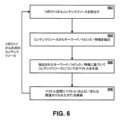
ここで図6を参照すると、コンテンツリポジトリ440内のコンテンツリソースに基づいて特徴ベクトルを生成するとともに、特徴空間430内に特徴ベクトルを格納するためのプロセスを示すフロー図が示される。以下で説明するように、このプロセスにおけるステップは、コンピューティング環境400内の1つ以上のコンポーネント、たとえば、コンテンツ管理システム435、ならびにそこに実装されるさまざまなサブシステムおよびサブコンポーネントなどによって実行され得る。
Referring now to FIG. 6, a flow diagram illustrating a process for generating feature vectors based on content resources within content repository 440 and storing the feature vectors within feature space 430 is shown. As described below, steps in this process may be performed by one or more components within
ステップ602において、コンテンツリソースは、コンテンツリポジトリ440または他のデータストアから取出され得る。上述のように、(コンテンツまたはコンテンツアイテムとも称され得る)個々のコンテンツリソースは、テキストアイテム(たとえば、テキストファイル、記事、電子メール、ブログ投稿など)、画像、音声ファイル、映像ファイル、2Dまたは3Dグラフィックオブジェクト、ソーシャルメディアデータアイテムなどの、任意のさまざまなコンテンツタイプのデータオブジェクトに対応し得る。いくつかの実施形態では、コンテンツアイテムは、特定の信頼できる組織によって所有および運用されるプロプラエタリデータストアなど、特定のコンテンツリポジトリ440から取出され得る。コンテンツリポジトリ440は、インターネットウェブサーバまたは他の遠隔データストアなどの外部データソースであってもよいが、ローカルな、および/または個別に制御されるコンテンツリポジトリ440からコンテンツを検索してベクトル化するシステム400は、システム400の動作におけるいくつかの技術的利点を実装し得る。いくつかの技術的利点とは、リポジトリ440からのコンテンツが保存されており必要に応じてアクセス可能であることと、ユーザ/オーサーがリポジトリ440からのコンテンツを使用および再生することが認可されることとを確実にすることを含む。場合によっては、ステップ602(および後続のステップ604~608)における取出しは、コンテンツリポジトリ440に格納されている新しいコンテンツアイテムに応答して、および/または、コンテンツリポジトリ440内のアイテムの修正に応答してトリガされてもよい。
At
ステップ604では、ステップ602において取出されたコンテンツアイテムは、アイテム特徴または特性のセットを抽出するためにパーズ/分析/などされてもよい。ステップ604において実行されるパーズ、処理、特徴抽出および/または分析のタイプは、コンテンツアイテムのタイプに依存し得る。画像コンテンツアイテムの場合、人工知能ベースの画像分類ツールを用いて、特定の画像特徴の識別および/または画像タグの生成を実行し得る。図7の画像例に示されるように、画像分析は、複数の画像特徴(たとえば、笑顔、ウェイトレス、カウンタ、販売機、コーヒーカップ、ケーキ、手、食品、人、カフェなど)を識別し得るものであって、画像は、これらの識別された特徴の各々でタグ付けされ得る。ブログ投稿、文字、電子メール、記事などのテキストベースのコンテンツアイテムの場合、ステップ604において実行される分析は、図8に示されるように、キーワード抽出および処理ツール(たとえば、ステミング、同義語検索など)を含み得る。1つまたは両方のタイプの分析(すなわち、図9に示すような画像からの特徴抽出および図8に示すようなテキストコンテンツからのキーワード/トピック抽出)は、分析、機械学習アルゴリズムおよび/または人工知能(AI)、たとえば、AIベースの認知画像分析サービス、または、図8のテキストコンテンツに用いられる同様のAI/REST認知テキストサービスなどを用いて、RESTベースのサービスまたは他のウェブサービスを介して実行され得る。同様の技術が、映像ファイル、音声ファイル、グラフィックス、またはソーシャルメディア投稿などの他のタイプのコンテンツアイテムのためにステップ604において用いられてもよい。この場合、システム400の専用ウェブサービスが、コンテンツアイテムのメディアタイプに応じて特定の特徴(たとえば、単語、画像/映像内のオブジェクト、顔の表現など)を抽出および分析するために用いられる。
At
ステップ606において、コンテンツアイテムから特定のコンテンツ特徴(たとえば、視覚的オブジェクト、キーワード、トピックなど)を抽出/判定した後、抽出/判定された特徴に基づいて特徴ベクトルが生成され得る。さまざまな変換技術を用いて、コンテンツアイテムに関連付けられた特徴の各セットが、共通のベクトル空間430に入力可能なベクトルに変換され得る。変換アルゴリズムは、予め定められたベクトル形式(たとえば、1×4096次元ベクトル)を出力し得る。次いで、ステップ608において、特徴ベクトルは、ベクトル空間430のうちの1つ以上(たとえば、テキストコンテンツのためのトピックベクトル空間430a、画像コンテンツのための画像ベクトル空間430b、および/または、複数のコンテンツタイプのための結合ベクトル空間)に格納され得る。それぞれのベクトル空間および対応する空間に格納されたそれぞれの特徴ベクトルは、コンテンツ管理システム435、コンテンツ推奨エンジン425、および/または、システム400の他のコンポーネントによって生成および維持され得る。
At
いくつかの実施形態では、抽出/判定されたコンテンツ特徴のサブセットはまた、コンテンツアイテムに関連付けられたタグとして保存されてもよい。画像に基づいて画像タグを生成して格納するための例示的なプロセス、および、逆に画像タグに基づいて画像を検索するための例示的なプロセスが図9~図11に示されている。これらの例は画像コンテンツアイテムに関係しているが、同様のタグ付けプロセスおよび/またはキーワードもしくはトピック抽出がテキストコンテンツアイテム、音声/映像コンテンツアイテムなどに対して実行されてもよい。図9に示されるように、ステップ901において、画像が作成てもよく、および/または、たとえばコンテンツリポジトリ440にアップロードされてもよい。ステップ902では、当該画像はコンテンツリポジトリ440から人工知能(AI)ベースのRESTサービスに送信され得る。この人工知能(AI)ベースのRESTサービスは、画像を分析するとともにトピック、テーマ、特定の視覚的特徴などを抽出するように構成されている。AI RESTサービスは、識別された画像特徴に基づいて1つ以上の特定の画像タグを判定し得るとともに、ステップ903において、画像タグをコンテンツリポジトリに送り返して、ステップ904において、画像内に格納され得るかまたは当該画像と関連付けられ得る。図10では、画像に基づいて画像タグを生成して格納するための、図9で説明したものと同じプロセスが示されている。加えて、図10は、特定の実施形態におけるAI RESTサービス内で実装され得るとともに画像タグ判定/取出しコンポーネント、Apache MxNetコンポーネント、および認知画像サービスを含むいくつかの例示的な特徴1001を示す。コンテンツアイテムについて1つ以上のタグを判定した後、これらのタグは、コンテンツリポジトリ440または別個の格納場所に再び格納され得る。たとえば、図7の例示的な画像を参照すると、十数個以上の潜在的な画像特徴がこの単一の画像から抽出されてもよく、それらの全てが特徴ベクトルに組込まれてもよい。しかしながら、AI RESTサービスおよび/またはコンテンツリポジトリ440は、画像(たとえば、コーヒー、小売り)の最も普及しているテーマのうちほんの少数のテーマだけを用いて当該画像にタグ付けすることがコンテンツ一致のために最適であると判定し得る。 In some embodiments, the extracted/determined subset of content features may also be saved as a tag associated with the content item. An example process for generating and storing image tags based on images, and conversely for retrieving images based on image tags, is shown in FIGS. 9-11. Although these examples relate to image content items, similar tagging processes and/or keyword or topic extraction may be performed for text content items, audio/video content items, etc. As shown in FIG. 9, in step 901 an image may be created and/or uploaded to content repository 440, for example. At step 902, the image may be sent from content repository 440 to an artificial intelligence (AI)-based REST service. This artificial intelligence (AI)-based REST service is configured to analyze images and extract topics, themes, specific visual features, etc. The AI REST service may determine one or more specific image tags based on the identified image features and send the image tags back to the content repository in step 903 to be stored within the image in step 904. or may be associated with the image. In FIG. 10, the same process described in FIG. 9 is shown for generating and storing image tags based on images. In addition, FIG. 10 illustrates several example features 1001 that may be implemented within an AI REST service in particular embodiments, including an image tag determination/retrieval component, an Apache MxNet component, and a cognitive image service. After determining one or more tags for a content item, these tags may be stored again in content repository 440 or in a separate storage location. For example, referring to the example image of FIG. 7, more than a dozen potential image features may be extracted from this single image, all of which may be incorporated into a feature vector. However, the AI REST service and/or content repository 440 may tag images with only a few of the most prevalent themes (e.g., coffee, retail) for content matching. can be determined to be optimal.
ここで図11を簡潔に参照すると、複数の画像に基づいて画像タグを生成して格納するための別の例示的なプロセスが図9および図10の記載に関連付けて示されている。図11では、コンテンツリポジトリ440から一致する画像を取出すために複数の画像タグが用いられる、逆のプロセスが示されている。ステップ1101において、コンテンツオーサリングユーザインターフェイス415または他のフロントエンドインターフェイスは、インターフェイスを介して受取った入力に基づいて1つ以上のコンテンツタグを判定し得る。この例では、単一のコンテンツタグ(「ウェイトレス(waitress)」)が、受取ったユーザ入力から判定され、ステップ1102において、コンテンツタグが、コンテンツリポジトリ440に関連付けられたサーチAPIに送信される。サーチAPIは、コンテンツ入力処理/分析コンポーネント420、コンテンツ推奨エンジン425、ならびに/または、コンテンツ管理システム435を含む、コンピューティングシステムの1つ以上の別個の層内で実装され得る。ステップ1103において、サーチAPIによって判定される一致画像を識別するデータが、インターフェイス内で統合されるように、またはユーザに提示されるように、コンテンツオーサリングユーザインターフェイス415に送り返されてもよい。
Referring now briefly to FIG. 11, another exemplary process for generating and storing image tags based on a plurality of images is shown in connection with the description of FIGS. 9 and 10. In FIG. 11, the reverse process is shown where multiple image tags are used to retrieve matching images from content repository 440. At step 1101, content authoring user interface 415 or other front end interface may determine one or more content tags based on input received via the interface. In this example, a single content tag (“waitress”) is determined from the received user input, and the content tag is sent to a search API associated with content repository 440 in step 1102. The search API may be implemented within one or more separate layers of the computing system, including content input processing/analysis component 420, content recommendation engine 425, and/or
したがって、コンテンツリポジトリ440内の複数のコンテンツリソースのためのステップ602~608が完了すると、1つ以上のベクトル空間430に、リポジトリ440内のコンテンツアイテムに対応する各ベクトルがポピュレートされ得る。加えて、いくつかの実施形態では、メタデータタグの別個のセットが、コンテンツアイテムのいくつかまたは全てに対して生成され、ベクトル空間430においてベクトルとは別個のオブジェクトとして格納されてもよい。このようなタグは、図4に示される任意のデータストレージもしくはコンポーネント、または別個のデータストアに格納されてもよく、各タグは、リポジトリ440内のコンテンツアイテム、ベクトル空間430内のベクトル、またはこれら両方に関連付けられてもよい。 Thus, upon completion of steps 602-608 for a plurality of content resources in content repository 440, one or more vector spaces 430 may be populated with each vector corresponding to a content item in repository 440. Additionally, in some embodiments, separate sets of metadata tags may be generated for some or all of the content items and stored as separate objects from the vectors in vector space 430. Such tags may be stored in any data storage or component shown in FIG. It may be associated with both.
ここで図12を参照すると、クライアントデバイス410を介してユーザからオリジナルのオーサリング済みコンテンツを受取り、ユーザのオーサリングセッション中にリアルタイム(またはほぼリアルタイム)でコンテンツから特徴および/またはタグを抽出し、(同様にリアルタイムまたはほぼリアルタイムで)オーサリング済みコンテンツをベクトル化し、1つ以上の利用可能なコンテンツリポジトリ440から関係する/関連付けられたコンテンツを識別して取出すために、オリジナルのオーサリング済みコンテンツのベクトルを1つ以上の既存のベクトル空間430と比較するための第2のプロセスを示す別のフローチャートが示されている。このプロセスにおけるステップはまた、コンピューティング環境400内の1つ以上のコンポーネントによって、たとえば、クライアントデバイス410と協働するコンテンツ推奨エンジン425、入力処理/分析コンポーネント420および取出し/埋込みコンポーネント445、ならびに、そこに実装されるさまざまなサブシステムおよびサブコンポーネントによって、実行されてもよい。
Referring now to FIG. 12, receiving original authored content from a user via
ステップ1202において、オリジナルのオーサリング済みコンテンツを、クライアントデバイス410を介してユーザから受取り得る。上述のように、オリジナルのオーサリング済みコンテンツは、ユーザによってタイプされたテキスト、ユーザによって作成またはインポートされた新しい画像、ユーザによって記録またはインポートされた新しい音声または映像入力、ユーザによって作成された新しいグラフィックなどに対応し得る。このため、ステップ1202は、上述のステップ602と類似している可能性がある。しかしながら、ステップ602におけるコンテンツがリポジトリ440から取出されて事前にオーサリング/格納されたコンテンツであり得るのに対して、ステップ1202において、コンテンツは、ウェブベースのテキスト入力制御、画像インポータ制御、画像作成制御、音声/映像作成制御など、ユーザインターフェイスを介して受取った新たにオーサリングされたコンテンツであり得る。
At
ステップ1204では、ステップ1202において受取ったコンテンツ(たとえば、オリジナルのオーサリング済みコンテンツ)は、たとえば、入力処理/分析コンポーネント420によって処理され得る。ステップ1204は、パーズステップ、処理ステップ、キーワード/データ特徴抽出ステップなどに関して上述したステップ604と同様または同一であってもよい。たとえば、ステップ1202で受取ったテキスト入力(たとえば、ブログ投稿、文字、電子メール、記事など)の場合、ステップ1204の処理は、テキストのパーズ、キーワードの識別、ステミング、同義語分析/取出しなどを含み得る。他の例では、画像がステップ1202において受取られる(ユーザによってアップロードされ得る、別のシステムからインポートされ得る、および/または、コンテンツオーサユーザインターフェイス415を介してユーザによって手動で作成もしくは修正され得る)場合、ステップ1204は、上述のとおりAIベースの画像分類ツールを用いて、特定の画像特徴を識別するステップおよび/または画像タグを生成するステップを含み得る。ステップ1204におけるこれらの分析は、分析、機械学習アルゴリズム、および/または、AI、このようなAIベースの認知画像分析サービス、および/または、AI/REST認知テキストサービスを用いて、RESTベースのサービスまたは他のウェブサービスを介して実行され得る。同様の技術/サービスが、映像ファイル、音声ファイル、グラフィックス、またはソーシャルメディア投稿などの他のタイプのコンテンツアイテムのためにステップ1204において用いられてもよい。この場合、システム400の専用ウェブサービスを用いて、コンテンツアイテムのメディアタイプに応じて特定の特徴(たとえば、単語、画像/映像内のオブジェクト、顔の表現など)を抽出および分析する。ステップ1204はまた、テキストブロック、画像、音声/映像データおよび/または他のコンテンツを、任意の識別されたコンテンツトピック、カテゴリ、または特徴に対応するタグでタグ付けするための、本明細書で説明するタグ付け処理のいずれかを含み得る。
At
ステップ1206では、ステップ1202で受取ったコンテンツに基づいて、利用可能なベクトル空間430のうちの1つ以上と互換性のある1つ以上のベクトルが生成され得る。ステップ1206は、上述のステップ606と同様または同一であってもよい。上述したように、ベクトルは、ステップ1204において識別されたコンテンツ(および/またはタグ)内の特定の特徴に基づいて生成され得る。ステップ1206におけるベクトル生成プロセスは、1つ以上のデータ変換技術を用いてもよく、これにより、元々オーサリングされていたコンテンツアイテムに関連付けられた特徴のセットを、共通のベクトル空間430のうちの1つと互換性のあるベクトルに変換し得る。たとえば、図13に示す技術により、ステップ1202において受取った画像入力が、ステップ1206において予め定められたベクトルフォーマットの特徴ベクトル(たとえば、1×4096次元ベクトル)に変換され得る。図13に示されるように、画像はモデルへの入力として提供されてもよく、当該モデルは、(たとえば、畳み込み、プール、および他の関数を用いて)当該画像内の特徴を抽出して学習するとともに、入力画像を表わす特徴ベクトルを出力するように構成される。たとえば、引用により本明細書中に援用されている、ニューヨーク大学(New York University)のMatthew D. ZeilerおよびRob Fergusによる論文「畳み込みネットワークの視覚化および理解(Visualizing and Understanding Convolutional Networks)」(2014年)に記載されるように、畳み込みニューラルネットワーク内では、ニューラルネットワークの初期層は、線形エッジのような画像から単純な特徴を検出し得るとともに、後の層では、より複雑な形状およびパターンを検出する。たとえば、畳み込みニューラルネットワークにおける第1の層および/または第2の層は単純なエッジまたはパターンを検出し得る一方で、後の層は、画像中に存在する実際の複雑なオブジェクト(カップ、花、犬など)を検出することができる。一例として、畳み込みニューラルネットワークを用いて顔の画像を受取って処理する場合、第1の層はさまざまな方向のエッジを検出してもよく、第2の層は所与の顔のさまざまな部分(たとえば、目、鼻など)を検出してもよく、第3の層は顔全体の特徴マップを所得してもよい。
At
ステップ1208において、ステップ1206で生成された特徴ベクトルは、上述の処理602~608中にポピュレートされた互換性のある特徴ベクトル空間430(または空間430a~430n)と比較され得る。たとえば、複数の画像に対応する複数の特徴ベクトルがポピュレートされた例示的なベクトル空間を図14に示す。この例では、各ドットはベクトル化された画像を表わし得るとともに、図14の円(および対応するドット色)は、画像に関連付けられた3つの例示的なタグのうちの1つを示し得る。この場合の画像タグは、「コーヒー(Coffee)」、「山(Mountain)」、「鳥(Bird)」であり、これらのタグが互いに排他的でない(すなわち、画像が1つのタグ、2つのタグまたは3つのタグ全てでタグ付けされ得る)ことを理解されたい。加えて、図14のこれらのタグおよび多次元ベクトル空間のレイアウトが例示にすぎないことを理解されたい。さまざまな実施形態においては、用いられ得るタグの数もしくはタイプ、またはベクトル空間430の次元の数は限定されない。
At
ステップ1208でベクトル空間比較を実行するために、コンテンツ推奨エンジン425は、ステップ1206で生成された特徴ベクトルと、ベクトル空間/空間430に格納された他の特徴ベクトルの各々との間のユークリッド距離を算出し得る。算出された距離に基づいて、エンジン425は、特徴空間距離の小さい順に特徴ベクトルをランク付けし得るので、2つの特徴ベクトル間の距離が小さければ小さいほど、ランクが高くなる。このような技術は、コンテンツ推奨エンジン425が、ベクトル空間430内の最高ランクの特徴ベクトルのセットを判定することを可能にし得る。最高ランクの特徴ベクトルは、ステップ1202において受取った入力に基づいてステップ1206において生成された特徴ベクトルと特徴/特性などが最も類似している。場合によっては、ステップ1208において、予め定められた数(N)の最高ランクの特徴ベクトル(たとえば、5個の最も類似した記事、10個の最も類似した画像など)が選択されてもよく、他の場合には、特定の近さの閾値を満たす全ての特徴ベクトル(たとえば、ベクトル間の距離<閾値(T))が選択されてもよい。
To perform the vector space comparison in
いくつかの実施形態では、ステップ1208におけるベクトル比較は、図15に示される「深層特徴空間」比較であってもよい。これらの実施形態では、ステップ1206で生成された特徴ベクトルは、任意のタグまたは他のメタデータを考慮せずに比較されてもよい。言い換えれば、深層特徴比較では、ステップ1206で生成された特徴ベクトルを、ベクトル空間430に格納された他の全ての特徴と比較してもよい。ベクトル空間430において最も近いベクトルを発見するために深層特徴比較が確実にされ得る一方で、この種の比較は、ベクトル結果を返すために付加的な処理リソースおよび/または付加的な時間を必要とする可能性がある。これは、特に、数千または数百万もの特徴ベクトルを含み得る大きなベクトル空間の場合に当てはまり、当該特徴ベクトルの各々は、リポジトリ440に格納された別個のコンテンツオブジェクト/リソースを表わしている。たとえば、サイズ1×4096の2つの画像特徴ベクトル間のユークリッド距離を計算するために、約10,000の加算命令および乗算命令をシステム400によって実行することが必要となる。したがって、リポジトリ内に10,000個の画像が存在する場合、10,000,000の動作が実行されなければならない。
In some embodiments, the vector comparison in
したがって、他の実施形態では、ステップ1208におけるベクトル比較は、図16および図17に示される「フィルタリング済み特徴空間」比較であり得る。フィルタリング済み特徴空間比較では、ベクトル空間は、まず、タグ(および/または、リソースメディアタイプ、作成日などの他のプロパティ)に基づいてフィルタリングされて、ステップ1206で生成された特徴ベクトルのタグと一致するタグ(および/または他のプロパティ)を有するベクトル空間430内の特徴ベクトルのサブセットを識別し得る。次いで、ステップ1206で生成された特徴ベクトルは、一致するタグ/プロパティを有するサブセット内の特徴ベクトルのみと比較され得る。したがって、フィルタリング済み特徴空間比較は、フィルタリングして除去されるが比較されない近接特徴ベクトルが存在しない可能性があるものの、深層空間比較よりも迅速かつ効率的に実行され得る。
Accordingly, in other embodiments, the vector comparison in
上述したように、ステップ1208は、ステップ1206で生成された特徴ベクトルを単一のベクトル空間または複数のベクトル空間と比較することを含み得る。いくつかの実施形態では、ステップ1206で生成された特徴ベクトルは、対応するタイプのベクトル空間と比較され得る。たとえば、テキスト入力がステップ1202で受取られると、結果として得られる特徴ベクトルはトピックベクトル空間430a内のベクトルと比較され得る。さらに、画像がステップ1202で入力として受取られると、結果として得られる特徴ベクトルは画像ベクトル空間430b内のベクトルと比較され得る、等である。いくつかの実施形態では、1つのタイプの入力に対応する特徴ベクトルを異なるタイプのベクトルを含むベクトル空間と比較すること(たとえば、テキストベースの入力に最も密接に関係する画像リソースを識別すること、またはその逆)が可能であり得る。たとえば、図18は、ステップ1402においてテキスト入力を受取って、ステップ1408において、同様の画像(たとえば、画像ベクトル空間430bから最も近い)および同様の記事(たとえば、トピックベクトル空間430bから最も近い)の両方を取出すプロセスを表わす。
As mentioned above,
コンテンツリソースに関連付けられたタグを取出すことおよび/または比較することを含む実施形態の場合、1つのリソースのタグ同士が関係しているが、別のリソースの対応するタグ/キーワード/特性と厳密に一致しない場合に問題が生じる可能性がある。この潜在的な問題の例を図19に示している。この場合、オリジナルのオーサリング済みテキストコンテンツリソースから抽出されたキーワードが、画像コンテンツリソースのセットのために格納された画像タグのセットと比較される。この例では、抽出されたキーワード(「エベレスト(Everest)」、「ベースキャンプ(Base Camp)」、「頂上(Summit)」、「山(Mountain)」または「ヒマラヤ(Himalaya)」)のいずれも、画像タグ(「登山家(Mountaineer)」、「カプチーノ(Cappuccino)」または「コンゴウインコ(Macaw)」)に対する厳密な一致ではない。いくつかの実施形態では、単語のステミング、単語定義および/または同義語検索および分析などの単語/句のパーズおよび処理技術を用いて、関係しているが一致していない用語間の一致を検出してもよい。しかしながら、これらの技術は、関係するキーワード/タグに対しても失敗する可能性がある。したがって、いくつかの実施形態では、コンテンツ処理/分析コンポーネント420および/またはコンテンツ推奨エンジン425は、この問題に対処するために単語ベクトル比較を実行し得る。図20の例に示すように、図19のテキスト文書から抽出したキーワードを3次元単語ベクトル空間内で分析し、それらのキーワードと画像タグの各々との間の距離を計算してもよい。図21に示されるように、図20において実行されるキーワード対タグのベクトル空間分析は、画像タグ「登山家(Mountaineer)」が単語ベクトル空間内で抽出キーワードに十分に近接しているため、フィルタリング済み特徴空間比較に関する画像タグ一致と見なされるべきであると判定し得る。 For embodiments that involve retrieving and/or comparing tags associated with content resources, the tags of one resource are related to each other, but are not strictly related to corresponding tags/keywords/characteristics of another resource. Problems can occur if they do not match. An example of this potential problem is shown in FIG. In this case, keywords extracted from the original authored text content resource are compared to a set of image tags stored for the set of image content resources. In this example, none of the extracted keywords (“Everest,” “Base Camp,” “Summit,” “Mountain,” or “Himalaya”) Not an exact match for image tags ('Mountaineer', 'Cappuccino' or 'Macaw'). In some embodiments, word/phrase parsing and processing techniques such as word stemming, word definitions and/or synonym search and analysis are used to find matches between related but unmatched terms. You may. However, these techniques may also fail for related keywords/tags. Accordingly, in some embodiments, content processing/analysis component 420 and/or content recommendation engine 425 may perform word vector comparisons to address this issue. As shown in the example of FIG. 20, the keywords extracted from the text document of FIG. 19 may be analyzed in a three-dimensional word vector space and the distances between those keywords and each of the image tags may be calculated. As shown in Figure 21, the keyword-to-tag vector space analysis performed in Figure 20 shows that the image tag "Mountaineer" is sufficiently close to the extracted keyword in the word vector space that it can be filtered. It may be determined that the image tag should be considered a match for the completed feature space comparison.
コンテンツリソースに関連付けられたタグを取出すおよび/または比較する実施形態において発生し得る別の潜在的な問題は、同綴異義のキーワードおよび/またはリソースタグによって引起こされる。同綴異義の単語または句(または同音異義語)は、スペルは同じであるが意味が異なっていて関係性のないものである。同音異義の画像タグの例を図22に示す。この場合、第1の画像は、脚が長くて首が長い鳥を意味する「Crane(ツル)」という単語でタグ付けされており、第2の画像は、重い物体を移動させるために用いられる突出たアームを備えた機械を意味する「Crane(起重機)」という同じ単語でタグ付けされている。この場合、コンテンツ処理/分析コンポーネント420および/またはコンテンツ推奨エンジン425は、2つの画像タグに対して単語意味曖昧性除去プロセスを実行して、単語「crane」のどちらの意味を指しているのかを判定し得る。この例では、単語意味曖昧性除去プロセスは、2つの異なる「Crane」タグについて、図22に示されるように、各タグに関連付けられたWordnetデータベースエントリ(または他の定義データ)を最初に検索し得る。 Another potential problem that may arise in embodiments of retrieving and/or comparing tags associated with content resources is caused by homonymous keywords and/or resource tags. Homonymous words or phrases (or homonyms) are words that have the same spelling but different meanings and are unrelated. An example of a homophone image tag is shown in FIG. In this case, the first image is tagged with the word "crane," which means a long-legged, long-necked bird, and the second image is tagged with the word "crane," which refers to a long-legged, long-necked bird. They are tagged with the same word, "crane," meaning a machine with a protruding arm. In this case, content processing/analysis component 420 and/or content recommendation engine 425 performs a word-semantic disambiguation process on the two image tags to determine which meaning of the word "crane" refers to. can be determined. In this example, for two different "Crane" tags, the word semantic disambiguation process first searches the Wordnet database entries (or other definition data) associated with each tag, as shown in Figure 22. obtain.
例示的な単語意味曖昧性除去プロセスを図23および図24に示す。このプロセスでは、オーサリング済み文書内の他のキーワードおよび/または当該文書内の単語「Crane」の特定のコンテキスト(たとえば、説明、スピーチの一部、時制など)を、コンテンツ処理/分析コンポーネント420および/またはコンテンツ推奨エンジン425が用いることで、オーサリング済みテキスト文書内の単語「crane」の意味で最も可能性の高いものを判定し得るとともに、これにより、「Crane」画像タグのうちどれがオーサリング済みテキスト文書に関係しているかを判定し得る。たとえば、図23を参照すると、図示されている入力テキスト2301からは、いくつかの関連キーワード2302が抽出されている。第1の抽出キーワード(「Crane」)がコンテンツリポジトリ440内の画像タグと比較され得るとともに、この例では、2つの一致するタグ2303が、コンテンツリポジトリ440内の2つの「Crane」タグ付き画像2304aおよび2304bに対応して識別されている。 An exemplary word meaning disambiguation process is shown in FIGS. 23 and 24. This process includes identifying other keywords within the authored document and/or the specific context (e.g., description, part of speech, tense, etc.) of the word "Crane" within the authored document to content processing/analysis component 420 and/or or the content recommendation engine 425 may be used to determine the most likely meaning of the word "crane" in an authored text document, thereby determining which "Crane" image tags It can be determined whether the information is related to the document. For example, referring to FIG. 23, several related keywords 2302 are extracted from the illustrated input text 2301. A first extracted keyword (“Crane”) may be compared to image tags in content repository 440 and, in this example, two matching tags 2303 are compared to two “Crane” tagged images 2304a in content repository 440. and 2304b.
図24に示されるように、単語の意味の不明瞭さというこの潜在的な問題に対処するために、曖昧性除去プロセスは、引き続き、入力コンテンツ2301から抽出された1つ以上の追加のキーワード2302を、2つの一致する画像2304aおよび2304bの他のコンテンツタグと比較し得る。この例では、「機械式(mechanical)」、「機械(machine)」、「昇降(lifting)」、および「建設(construction)」といった追加の抽出されたキーワードが、画像2304aおよび2304bの各々に関連付けられたコンテンツタグおよび/または抽出された特徴と比較され得る。図24に示されるように、これらの追加の比較によって「Crane」の初期のキーワード一致が明確になり得るので、コンテンツ推奨システム425によって、鳥類の「ツル(crane)」の画像2304aが返されるのではなく、建設用の「起重機(crane)」の画像2304bが返される。 As shown in FIG. 24, to address this potential problem of word meaning ambiguity, the disambiguation process continues with one or more additional keywords 2302 extracted from the input content 2301. may be compared to other content tags of the two matching images 2304a and 2304b. In this example, additional extracted keywords such as "mechanical," "machine," "lifting," and "construction" are associated with each of images 2304a and 2304b. content tags and/or extracted features. As shown in FIG. 24, these additional comparisons may clarify the initial keyword match for "Crane" and cause the content recommendation system 425 to return the avian "crane" image 2304a. Instead, an image 2304b of a construction "crane" is returned.
他の例では、同様の曖昧性除去プロセスが、画像類似性を用いて実行され得る。たとえば、コンテンツ処理/分析コンポーネント420および/またはコンテンツ推奨エンジン425は、どの「crane」が適切な関係画像であるかを判定するために、オーサリング済みコンテンツに関連付けられた画像(たとえば、描画またはオーサリング済み画像)と2つの異なる「Crane」画像との間の共通の画像特徴を識別し得る。これらの曖昧性除去プロセスはまた、たとえば、オーサリング済みテキスト文書から抽出されたキーワードを、画像から抽出された視覚的特徴と比較するなど、さまざまな方法で組合わされてもよい。したがって、「crane」を引用するオーサリング済みテキスト文書において、「ブーム」および「プーリ」という関係する単語は、ブームおよびプーリがその画像内で視覚的に識別できるのであれば、下段の「起重機(crane)」の画像に視覚的に一致し得る。同様に、オーサリング済みテキスト文書が「crane」を引用しており、「くちばし」および「羽根」という関係する単語を含む場合、「crane」というキーワードは、くちばしおよび羽根がその画像内で視覚的に識別できるのであれば、上段の「ツル(crane)」の画像に視覚的に一致され得る。 In other examples, a similar disambiguation process may be performed using image similarity. For example, content processing/analysis component 420 and/or content recommendation engine 425 may use images associated with authored content (e.g., drawn or image) and two different "Crane" images. These disambiguation processes may also be combined in various ways, such as, for example, comparing keywords extracted from authored text documents to visual features extracted from images. Therefore, in an authored text document that cites ``crane,'' the related words ``boom'' and ``pulley'' may be used in the lower row ``crane'' if the boom and pulley are visually discernible in the image. )” image. Similarly, if an authored text document cites ``crane'' and includes the related words ``beak'' and ``feathers,'' the keyword ``crane'' means that the beak and feathers are visible in the image. If it can be identified, it can be visually matched to the "crane" image in the upper row.
ここで図25~図28を参照すると、図12のプロセスを実行するエンドツーエンドの例が示されており、具体的には、ユーザインターフェイス415を介してユーザによってオーサリングされた記事についての関連画像のセットを取出す実施形態についての例が示されている。最初に、2501(図25)において、ユーザは、Demo Editor(Alditor)のユーザインターフェイスに記事についてのテキストをタイプする。2502において、記事のテキストからいくつかのキーワードが抽出され、2503において、抽出されたキーワードがAI Restサービスによって、画像コンテンツリポジトリ440内の画像のライブラリ用に格納された画像タグと比較される。図26および図27は、AI Restサービスの動作に関する追加の詳細と共に、図25の同じ例示的なプロセスを示す。図26に示されるように、AI Restサービスは、上述の技術を用いて、1つ以上のタグ(たとえば、「登山家(mountaineer)」)をオーサリング済み記事に関係するものとして識別する。次いで、図27に示すように、いくつかの実施形態においては、異なるソフトウェアサービスの組合わせを用いて、本ステップ、たとえば、テキスト入力からキーワードのセットを判定するのに用いられる第1の認知テキストRESTサービスと、キーワードを画像タグにマッピングするのに用いられる第2の内部RESTサービスと、を実行し得る。これらのサービスの各々は、コンテンツ推奨エンジン425内で、および/または、外部サービスプロバイダを介して実装され得る。次いで、(図28に示される)ステップ2505において、コンテンツ推奨エンジン425は、判定された画像タグを、画像コンテンツリポジトリ440に関連付けられたサーチAPIに送信し得る。場合によっては、サーチAPIは、クラウドベースのコンテンツハブ、たとえば、オラクル・コンテンツ・マネージメント(Oracle Content Management:OCM)内で実装されてもよい。ステップ2506において、サーチAPIは、タグの一致に基づいて関連画像のセットを取出し得るとともに、ステップ2507において、取出された画像(または縮小版の画像)が送り返されて(画面領域2810において)415におけるユーザインターフェイス内に埋込まれてもよい。 25-28, an end-to-end example of performing the process of FIG. An example is shown for an embodiment of retrieving a set of . First, at 2501 (FIG. 25), a user types text about an article into the Demo Editor (Alditor) user interface. At 2502, a number of keywords are extracted from the text of the article, and at 2503, the extracted keywords are compared by the AI Rest service to image tags stored for a library of images in the image content repository 440. 26 and 27 illustrate the same example process of FIG. 25 with additional details regarding the operation of the AI Rest service. As shown in FIG. 26, the AI Rest service uses the techniques described above to identify one or more tags (eg, "mountaineer") as related to the authored article. Then, as shown in FIG. 27, in some embodiments, a combination of different software services is used to perform this step, e.g., the first cognitive text used to determine the set of keywords from the text input. A REST service and a second internal REST service used to map keywords to image tags may be executed. Each of these services may be implemented within content recommendation engine 425 and/or via an external service provider. Then, in step 2505 (shown in FIG. 28), content recommendation engine 425 may send the determined image tags to a search API associated with image content repository 440. In some cases, the search API may be implemented within a cloud-based content hub, such as Oracle Content Management (OCM). In step 2506, the search API may retrieve a set of related images based on tag matches, and in step 2507, the retrieved image (or a reduced version of the image) is sent back (in screen area 2810) at 415. It may also be embedded within the user interface.
図25~図28に示される例は、ユーザによってオーサリングされた記事に関する関連画像のセットを取出す特定の実施形態を示すが、図12のステップが、同様に他のタイプのコンテンツを取出すために実行され得ることを理解されたい。たとえば、同様のステップを実行して、ユーザインターフェイス415を介してユーザによって入力されたテキストに関係する記事(または他のテキスト文書)を取出してもよい。他の実施形態では、他のメディアタイプ(たとえば、音声ファイル、映像クリップ、グラフィックス、ソーシャルメディア投稿など)の関係するコンテンツリソースが取出されてもよい。加えて、ユーザがテキスト以外の他のタイプの入力をユーザインターフェイス(たとえば、描画またはアップロードされた画像、発話音声入力、映像入力など)にインポート/作成する場合、同様のステップを実行して、コンテンツ推奨エンジン425の構成および/またはユーザの好みに応じて、多種多様なタイプの関係するコンテンツリソース(たとえば、関係記事、画像、映像、音声、ソーシャルメディアなど)を取出してもよい。 Although the examples shown in FIGS. 25-28 illustrate a particular embodiment for retrieving a set of related images for an article authored by a user, the steps of FIG. 12 may be performed to retrieve other types of content as well. Please understand that this can happen. For example, similar steps may be performed to retrieve articles (or other text documents) related to text entered by a user via user interface 415. In other embodiments, related content resources of other media types (eg, audio files, video clips, graphics, social media posts, etc.) may be retrieved. Additionally, if the user imports/creates other types of input other than text into the user interface (e.g., drawn or uploaded images, spoken audio input, video input, etc.), similar steps should be taken to Depending on the configuration of recommendation engine 425 and/or user preferences, a wide variety of types of relevant content resources (eg, relevant articles, images, video, audio, social media, etc.) may be retrieved.
たとえば、ここで図29~図35を参照して別の例示的実施形態を示す。ここでは、図12のプロセスステップを実行して、ユーザインターフェイス415(たとえば、ユーザのブログ投稿、電子メール、記事など)を介して受取ったオリジナルのオーサリング済みテキスト入力に基づいて関係記事(または他のテキストコンテンツリソース)のセットを取出す。図29に示されるように、ユーザは、ユーザインターフェイス415を介して新しい記事を認可しており、記事トピックのセットは、コンテンツ推奨エンジン425によって呼び出されたAIベースのRESTサービスによって識別されている。図30に示されるように、識別された記事トピックは、記事コンテンツリポジトリ440内の記事のセットに関して以前に識別されたトピックと比較され得る。これらの例では、図29は一実施形態に従って示されており、図30は別の実施形態を示す。図29は、図30の部分集合にすぎず、図29を省いても問題はない。このように、記事トピックは、画像特徴/タグを判定して画像に関連付けて格納する(図6で上述した)プロセスと同様の技術を用いて、メタデータまたは他の関連付けられたデータオブジェクトとして判定されて格納され得る。同様に、記事コンテンツリポジトリ440は、リポジトリ440に格納された各記事ごとに、記事トピック、日付、キーワード、著者、出版物等を含むメタデータまたは他の関連付けられたストレージを備えてもよい。図30に示す例では、エベレスト山の死亡者に関係する記事が、記事トピックの一致に基づいて、新しく作成されたユーザの記事に関係している可能性があるものとして識別されている。図31~図35は、関係する画像を発見するための図25~図28に示すステップと同様に、ユーザ入力記事に関係する記事を発見するためにシステム400を用いるエンドツーエンドプロセスを示す。ステップ3101(図31)において、ユーザは、ユーザインターフェイス415を介して新しい記事を作成する。ステップ3102において、記事テキストは、コンテンツ推奨エンジン425(たとえば、AIベースのRESTサービス)によって1つ以上のソフトウェアサービスに送信され、ステップ3103(図32)において、ソフトウェアサービスは、認知テキストサービス機能を用いて、記事のテキストを分析して記事の1つ以上のトピックを判定する。ステップ3104において、判定された記事トピックは、コンテンツ推奨エンジン425に送り返され、ステップ3105において、推奨エンジン425は、記事テキストおよび識別されたトピックの両方を別個の(たとえば、クラウドベースのコンテンツハブ内の)APIに送信し、ステップ3106において、記事は、将来参照するためにリポジトリ440に保存され、識別済みトピックに基づいてインデックス付けされてもよい。また、ステップ3106(図33)において、記事の既存のリポジトリ440は、サーチAPIを介してサーチされ、トピック一致プロセス(図34)に基づいて、潜在的に関係しているトピックを識別し得る。最後に、ステップ3107(図35)において、新しく作成された記事に関係する可能性があると識別された記事は、(たとえば、ユーザインターフェイス領域3510において)ユーザインターフェイス415内に埋込まれるように(全体的に、または単にリンクにて)送り返され得る。
For example, referring now to FIGS. 29-35, another exemplary embodiment is illustrated. Here, the process steps of FIG. 12 are performed to create related articles (or other Text content resources). As shown in FIG. 29, a user has authorized a new article via user interface 415 and a set of article topics has been identified by an AI-based REST service invoked by content recommendation engine 425. As shown in FIG. 30, the identified article topics may be compared to previously identified topics for the set of articles within article content repository 440. In these examples, FIG. 29 is shown according to one embodiment and FIG. 30 shows another embodiment. FIG. 29 is only a subset of FIG. 30, and there is no problem even if FIG. 29 is omitted. In this way, article topics are determined as metadata or other associated data objects using techniques similar to the process of determining and storing image features/tags in association with images (described above in Figure 6). and stored. Similarly, article content repository 440 may include metadata or other associated storage for each article stored in repository 440, including article topic, date, keywords, author, publication, etc. In the example shown in FIG. 30, an article related to fatalities on Mount Everest has been identified as potentially related to the newly created user's article based on article topic matching. 31-35 illustrate an end-to-end process for using
図29~図33の上述の例に示されるように、本明細書で説明する特定の実施形態は、新たに作成されたテキスト文書のトピック、および/または、コンテンツリポジトリ440内に格納されたテキスト文書のトピックの識別、ならびに、トピックの近似性と一致との比較および識別を含み得る。本明細書で説明するさまざまな実施形態では、明示的な意味論分析を含むさまざまな技術が、テキストトピック評価およびトピック「近似性」技術のために用いられ得る。図29および図30に示されるように、場合によっては、このような技術は、大規模データソース(たとえば、ウィキペディア「Wikipedia」)を用いて、無制限の自然言語テキストの細粒度の意味論的表現を提供して、データソースから導出される自然概念の高次元空間での意味を表わし得る。たとえば、テキスト分類技術を用いて、ウィキペディアベースの概念の点から、任意のテキストの意味を明示的に表わしてもよい。意味論的表現は、トピックモデリングによって変換されるテキストスニペットの特徴ベクトルであってもよい。ウィキペディア(または別の大規模データソース)を用いることで、より大きな語彙(たとえば、「bag of words」)をシステムに含めて、複数単語の大きな領域を網羅してもよい。ウィキペディアベースの概念は、所与のテキストスニペットを分類すると同時にクラス/カテゴリとして用いられるウィキペディアページのタイトルであってもよい。テキストスニペットの場合、テキストのクラス/カテゴリとして用いられ得る最も近似するウィキペディアページタイトル(たとえば、「エベレスト山(Mount Everest)」、「スティーヴン・ホーキング(Stephen Hawking」、「自動車事故(Car Accident)」等)が戻され得る。このような技術の有効性は、自然言語テキストのフラグメント間の意味論的関係性の度合いを計算することによって自動的に評価され得る。 As illustrated in the above-described examples of FIGS. 29-33, certain embodiments described herein can be used to create topics for newly created text documents and/or for text stored within content repository 440. It may include identifying topics of documents and comparing and identifying topic closeness and matches. In various embodiments described herein, various techniques including explicit semantic analysis may be used for text topic evaluation and topic "closeness" techniques. In some cases, such techniques use large data sources (e.g., Wikipedia) to create fine-grained semantic representations of unrestricted natural language text, as shown in Figures 29 and 30. can represent the meaning in a high-dimensional space of natural concepts derived from data sources. For example, text classification techniques may be used to explicitly represent the meaning of any text in terms of Wikipedia-based concepts. The semantic representation may be a feature vector of the text snippet that is transformed by topic modeling. By using Wikipedia (or another large data source), a larger vocabulary (eg, a "bag of words") may be included in the system to cover a large area of multiple words. A Wikipedia-based concept may be the title of a Wikipedia page that is used as a class/category while classifying a given text snippet. For text snippets, the closest Wikipedia page title that can be used as a class/category of text (e.g. "Mount Everest", "Stephen Hawking", "Car Accident", etc.) ) can be returned. The effectiveness of such techniques can be automatically evaluated by calculating the degree of semantic relationship between fragments of natural language text.
これらのテキスト分類/関係性評価技術では、公に利用可能な大規模な知識ソース(たとえば、ウィキペディアまたは他の百科事典)を用いる1つの利点は、定期的に変更および開発されるとともに公に利用可能なソースへと予め符号化された、高度に組織化された大量の人の知識にアクセスできることである。ウィキペディアおよび/または他のソースに基づいて機械学習技術を用いることで意味論的インタプリタを構築することもできる。この意味論的インタプリタは、自然言語テキストのフラグメントを、入力との関連性によって順序付けられた重み付けされた一連のウィキペディア概念にマッピングするものである。したがって、入力テキストは、解釈ベクトルと呼ばれる概念の重み付きベクトルとして表わされることもある。このため、テキストフラグメントの意味は、ウィキペディア概念のホストとの類似性の点から解釈される。次いで、テキストの意味論的関係性は、たとえば、コサインメトリックを用いて、上記概念によって定義される空間におけるそれらのベクトルを比較することによって計算され得る。このような意味論分析は、明確な概念が人の認知に基づくものであり得るという意味で明確であり得る。ユーザ入力がユーザインターフェイス415を介してプレーンテキストとして受取られ得るので、従来のテキスト分類アルゴリズムを用いて、所与のテキストフラグメントに対するそれらの関連性に従ってこれらの記事によって表わされる概念をランク付けしてもよい。したがって、オンラインの百科事典(たとえば、ウィキペディア)は、深層言語の理解または予め分類生成された共通意味の知識を必要とすることなく、直接、用いられてもよい。いくつかの実施形態では、ウィキペディア概念は各々、対応する記事において生じる単語の属性ベクトルとして表現されることもある。これらのベクトルのエントリには、たとえば、単語出現頻度に対する逆文書頻度(term frequency-inverse document frequency:TFIDF)スキームを用いて重みが割当てられてもよい。これらの重みは、単語と概念との間の関連付けの強さを定量化し得る。意味論的解釈を促進するために、各単語をそれが現れる概念のリストにマッピングする転置インデックスが用いられてもよい。転置インデックスはまた、所与の単語についての重みが或る閾値未満である概念を除去することによって、単語と概念との間の重要でない関連付けを破棄するために用いられてもよい。意味論的インタプリタは、受取ったテキストフラグメントに基づいて、関連性によってウィキペディア概念をランク付けし得る重心ベースの分類器として実装されてもよい。たとえば、コンテンツ推奨エンジン内の意味論的インタプリタは、入力テキストフラグメントTを受取って、そのフラグメントを(たとえば、TFIDFスキームを用いて)ベクトルとして表わし得る。意味論的インタプリタは、テキストワードを反復させ、転置インデックスから対応するエントリを取出し、それらを重み付きベクトルにマージし得る。重み付きベクトルのエントリは、テキストTに対する対応する概念の関連性を反映してもよい。テキストフラグメントのペアの意味論的関係性を計算するために、それらのベクトルは、たとえばコサインメトリックを用いて比較されてもよい。 For these text classification/relationship assessment techniques, one advantage of using large publicly available knowledge sources (e.g. Wikipedia or other encyclopedias) is that they are regularly modified and developed as well as publicly available. It is the ability to access large amounts of highly organized human knowledge, pre-encoded into possible sources. Semantic interpreters can also be constructed using machine learning techniques based on Wikipedia and/or other sources. This semantic interpreter maps fragments of natural language text to a weighted set of Wikipedia concepts ordered by relevance to the input. Therefore, the input text may be represented as a weighted vector of concepts called interpretation vectors. Therefore, the meaning of the text fragment is interpreted in terms of its similarity to a host of Wikipedia concepts. The semantic relationships of the text can then be calculated by comparing those vectors in the space defined by the above concepts, for example using the cosine metric. Such semantic analysis can be explicit in the sense that distinct concepts can be based on human cognition. Since user input may be received as plain text via user interface 415, conventional text classification algorithms may be used to rank the concepts represented by these articles according to their relevance to a given text fragment. good. Thus, online encyclopedias (eg, Wikipedia) may be used directly, without requiring deep language understanding or knowledge of pre-generated common meanings. In some embodiments, each Wikipedia concept may be represented as an attribute vector of words that occur in the corresponding article. The entries in these vectors may be assigned weights using, for example, a term frequency-inverse document frequency (TFIDF) scheme. These weights may quantify the strength of association between words and concepts. To facilitate semantic interpretation, an inverted index may be used that maps each word to the list of concepts in which it appears. The inverted index may also be used to discard unimportant associations between words and concepts by removing concepts whose weight for a given word is less than some threshold. The semantic interpreter may be implemented as a centroid-based classifier that may rank Wikipedia concepts by relevance based on received text fragments. For example, a semantic interpreter within a content recommendation engine may receive an input text fragment T and represent the fragment as a vector (eg, using a TFIDF scheme). The semantic interpreter may repeat the text words, take the corresponding entries from the inverted index, and merge them into a weighted vector. The entries of the weighted vector may reflect the relevance of the corresponding concept to the text T. To calculate the semantic relationship of a pair of text fragments, their vectors may be compared using, for example, a cosine metric.
他の例では、テキストのカテゴリ分類のための特徴を生成するための同様の方法は、教師あり学習タスクを含み得る。この場合、トレーニング文書に現われる単語は使用されている特徴であり得る。したがって、いくつかの例では、ウィキペディア概念は「bag of words」を増強するために用いられ得る。他方では、テキストのペアの意味論的関係性を計算することは、本質的に「1回限りの(one-off)」タスクであり、したがって、「bag of words」の表現は、概念に基づく表現と置換えられてもよい。これらの技術および他の関係する技術は、あらゆる目的のために引用により本明細書に全体が援用されている、Evgeniy GabrilovichおよびShaul Markovitch(イスラエル工科大学(Israel Institute of Technology)、コンピュータサイエンス学部(Department of Computer Science Technion))による論文「ウィキペディアベースの明示的な意味論分析を用いたコンピューティング意味論的関係性(Computing Semantic Relatedness using Wikipedia-based Explicit Semantic Analysis)」、ならびに本明細書に記載される他の関連文献においてより詳細に記載されている。本論文および他の論文に記載される技術を用いることで、ウィキペディアのフィルタリング済みサブセットには、各記事ごとに、記事のタイトルである1つの概念が存在し得る。コンテンツ推奨エンジン425がユーザインターフェイス415を介してテキスト文書を受取ると、当該テキストが最初に要約され得る。これらの場合、テキスト内の一意の単語は各々、停止単語が除去され、単語がステミングされた後、記事内の単語の頻度および逆頻度に基づいて重みが与えられてもよい。各単語は、それがどのウィキペディア記事(概念)に現れるかを調べるために比較されてもよく、このため、その単語について、コンテンツ推奨エンジン425が概念ベクトルを生成し得る。テキスト文書内の全ての単語についての概念ベクトルを組合わせることで、テキスト文書についての重み付き概念ベクトルを形成することができる。次いで、コンテンツ推奨エンジン425は、各単語概念ベクトルとテキスト概念ベクトルとの間の類似性を測定し得る。さらに、ある閾値を上回る全ての単語が、文書についての「キーワード」として選択され得る。 In other examples, similar methods for generating features for categorization of text may include supervised learning tasks. In this case, the words that appear in the training document may be the features that are used. Thus, in some examples, the Wikipedia concept may be used to augment the "bag of words." On the other hand, computing the semantic relationships of pairs of texts is essentially a "one-off" task, and the representation of a "bag of words" is therefore a concept-based May be replaced with expression. These techniques and other related techniques are by Evgeniy Gabrilovich and Shaul Markovitch, Israel Institute of Technology, Department of Computer Science, which is hereby incorporated by reference in its entirety for all purposes. of Computer Science Technion), "Computing Semantic Relatedness using Wikipedia-based Explicit Semantic Analysis," as well as the paper described herein. It is described in more detail in other relevant literature. Using the techniques described in this and other papers, there can be one concept for each article in the filtered subset of Wikipedia, which is the title of the article. When content recommendation engine 425 receives a text document via user interface 415, the text may first be summarized. In these cases, each unique word in the text may be weighted based on the frequency and inverse frequency of the word in the article after stop words are removed and the word is stemmed. Each word may be compared to see which Wikipedia articles (concepts) it appears in, so content recommendation engine 425 may generate a concept vector for that word. By combining the concept vectors for all words in a text document, a weighted concept vector for the text document can be formed. Content recommendation engine 425 may then measure the similarity between each word concept vector and text concept vector. Additionally, all words above a certain threshold may be selected as "keywords" for the document.
ここで図36を参照すると、例示的なセマンティックテキストアナライザシステム3600が示されており、上述の特定の実施形態において意味論的なテキストのサマリー化を実行するためにアナライザシステム3600によって用いられる技術を示している。このようなシステム3600は、さまざまな実装例では、コンテンツ推奨エンジン425によってアクセスされることによって、組込まれてもよく、および/または別個であってもよい。 Referring now to FIG. 36, an exemplary semantic text analyzer system 3600 is shown that describes the techniques used by the analyzer system 3600 to perform semantic text summarization in the particular embodiments described above. It shows. Such a system 3600 may be integrated and/or separate, accessed by content recommendation engine 425, in various implementations.
いくつかの実装例では、意味論的関係性を計算するための明示的な意味論分析は、所与のテキスト文書のテキストサマリーを計算するために別の用途に用いられる。より具体的には、テキストサマリーは、単語埋込みに基づいて導出される。言い換えれば、nグラム(n-gram)(たとえば、単語)のコンテキストは、「bag of words」に対するコサインまたは文字列上の編集距離などの典型的な類似性尺度とは対照的に、意味論的類似性を判定する目的で取込まれる。 In some implementations, explicit semantic analysis to compute semantic relationships is repurposed to compute a text summary of a given text document. More specifically, text summaries are derived based on word embeddings. In other words, the context of an n-gram (e.g., a word) is a semantic Captured for the purpose of determining similarity.
所与のテキスト文書は、テキスト要約が望まれる記事、ウェブページまたは他のテキスト片であり得る。本明細書で説明する分類アプローチと同様に、テキストは、それが書かれている言語に限定されず、他の人が読取り可能である記号、数字、チャート、表、方程式、式などを含み得る。 A given text document may be an article, web page, or other piece of text for which a text summary is desired. Similar to the classification approach described herein, text is not limited to the language in which it is written and may include symbols, numbers, charts, tables, equations, formulas, etc. that are readable by others. .
明示的な意味論分析を用いたテキストサマリーアプローチは概して以下のとおりである。(1)文法単位(たとえば、文または単語)が、このような単位を識別および抽出するための任意の公知の技術を用いて所与のテキスト文書から抽出され、(2)抽出された文法単位およびテキスト文書の各々が、知識ベース概念の重み付きベクトルとして表わされ、(3)テキスト文書全体と各文法単位との間の意味論的関係性が重み付きベクトルを用いて計算され、(4)テキスト文書全体に最も意味論的に関係した文法単位の1つ以上がテキスト文書のテキストサマリーに含めるために選択される。場合によっては、知識ベース概念の重み付きベクトルの表現はトピックモデリングに対応し得る。この場合、各文または単語は最初に特徴ベクトルに変換されてもよく、その後、特徴の差/類似性が高次元ベクトル空間において算出されてもよい。単語をベクトルに変換するために、たとえば、WORD2VECまたは潜在ディリクレ配分法(Latent Dirichlet Allocation)などのさまざまな方法があり得る。 A text summary approach using explicit semantic analysis is generally as follows. (1) a grammatical unit (e.g., a sentence or word) is extracted from a given text document using any known technique for identifying and extracting such units, and (2) the extracted grammatical unit and each of the text documents is represented as a weighted vector of knowledge base concepts, (3) the semantic relationship between the entire text document and each grammatical unit is calculated using the weighted vector, and (4 ) One or more of the most semantically related grammatical units of the entire text document are selected for inclusion in the text summary of the text document. In some cases, the weighted vector representation of knowledge base concepts may correspond to topic modeling. In this case, each sentence or word may first be transformed into a feature vector, and then feature differences/similarities may be calculated in a high-dimensional vector space. There can be various methods for converting words into vectors, such as WORD2VEC or Latent Dirichlet Allocation.
図36は、明示的な意味論分析を用いたテキストサマリー化を示す図である。まず、知識ベース3602に基づいてテキストサマライザを構築する。知識ベース3602は、一般的であり得るかまたはドメイン固有であり得る。一般的な知識ベースの例として、百科事典記事の集まり、たとえば、ウィキペディア記事の集まりまたはテキスト記事についての他の百科事典の集まりなどが挙げられる。しかしながら、知識ベース3602はドメイン固有のものであってもよく、たとえば、医療、科学、工学または金融関係の記事の集まりなどの特定の技術分野に特有のテキスト記事の集まりなどであり得る。 FIG. 36 is a diagram illustrating text summarization using explicit semantic analysis. First, a text summarizer is constructed based on the knowledge base 3602. Knowledge base 3602 can be general or domain-specific. An example of a general knowledge base is a collection of encyclopedia articles, such as a collection of Wikipedia articles or other encyclopedia collections of text articles. However, the knowledge base 3602 may be domain-specific, such as a collection of text articles specific to a particular technical field, such as a collection of medical, scientific, engineering, or financial articles.
知識ベース3602の各記事は、記事中に現われるnグラム(たとえば単語)の属性ベクトルとして表わされる。属性ベクトルのエントリには重みが割付けられる。たとえば、重みは、単語出現頻度に対する逆文書頻度のスコアリングスキームを用いて使用されてもよい。或る記事についての属性ベクトルにおける重みは、当該記事のnグラム(たとえば単語)と記事との間の関連付けの強さを概念として定量化する。 Each article in knowledge base 3602 is represented as an attribute vector of n-grams (eg, words) that appear in the article. Entries in the attribute vector are assigned weights. For example, weights may be used using an inverse document frequency to word frequency scoring scheme. The weight in the attribute vector for a certain article quantifies the strength of the association between the n-gram (for example, a word) of the article and the article as a concept.
いくつかの実装例では、単語出現頻度に対する逆文書頻度のスコアリングスキームで、以下の式によって表わされるように、所与の記事文書dの所与のnグラムtについての重みを計算する。 In some implementations, an inverse document frequency to word frequency scoring scheme calculates a weight for a given n-gram t of a given article document d, as expressed by the following equation:

ここで、tft,dは、文書dにおけるnグラムtの頻度を表わす。dftは、知識ベース3602におけるnグラムtの文書頻度を表わす。Mはトレーニングセットにおける文書の総数を表わし、Ldは文書dの長さを数で表わし、Lavgは、トレーニングコーパスにおける平均長さを表わし、Kおよびbは自由パラメータである。いくつかの実装例では、kは約1.5であり、bは約0.75である。 Here, tf t,d represents the frequency of n-gram t in document d. df t represents the document frequency of n-gram t in the knowledge base 3602. M represents the total number of documents in the training set, L d represents the length of document d in number, L avg represents the average length in the training corpus, and K and b are free parameters. In some implementations, k is about 1.5 and b is about 0.75.
上記は、属性ベクトルの属性に重み付けするために用いられ得る、単語出現頻度に対する逆文書頻度スコアリングスキームの一例である。知識ベース3602内の記事に対して属性(たとえば、nグラム)がどれほど重要であるかを反映する他の統計的尺度が用いられてもよい。たとえば、アンカーテキストを考慮に入れるBM25Fなどの他のTF/IDF変形例が、たとえば、ウェブページの知識ベースまたはハイパーリンクされた文書の他のセットなどの特定のタイプの知識ベースと共に用いられてもよい。 The above is an example of an inverse document frequency scoring scheme for word frequency that may be used to weight the attributes of an attribute vector. Other statistical measures that reflect how important an attribute (eg, n-gram) is to articles in knowledge base 3602 may be used. For example, other TF/IDF variants such as BM25F that take anchor text into account may be used with certain types of knowledge bases, such as knowledge bases of web pages or other sets of hyperlinked documents. good.
重み付き転置インデックスビルダコンピュータ3604は、知識ベース3602の記事を表わす属性ベクトルから重み付き転置インデックス3606を構築する。重み付き転置インデックス3606は、属性ベクトルのセットにおいて表わされるそれぞれ別個のnグラムを、nグラムが現れる概念(記事)の概念ベクトルにマッピングする。概念ベクトル内の各概念は、概念と、概念ベクトルが重み付き転置インデックス3606によってマッピングされるnグラムとの間の関連付けの強さに従って重み付けされ得る。いくつかの実装例では、インデクサコンピュータ3604は、転置インデックス3606を用いて、所与のnグラムについての重みが閾値未満である概念を概念ベクトルから除去することによって、nグラムと概念との間の重要度の低い関連付けを廃棄する。 Weighted inverted index builder computer 3604 builds a weighted inverted index 3606 from the attribute vectors representing articles in knowledge base 3602 . Weighted transposed index 3606 maps each distinct n-gram represented in the set of attribute vectors to the concept vector of the concept (article) in which the n-gram appears. Each concept within the concept vector may be weighted according to the strength of association between the concept and the n-gram to which the concept vector is mapped by weighted transposed index 3606. In some implementations, indexer computer 3604 uses transposed index 3606 to determine the relationship between n-grams and concepts by removing from the concept vector concepts whose weight for a given n-gram is less than a threshold. Discard less important associations.
所与のテキスト文書3610のテキストサマリーを生成するために、文法単位3608が所与のテキスト文書3610から抽出され、各文法単位と所与のテキスト文書3610との間の意味論的関係性が計算される。所与のテキスト文書3610に対して高度の意味論的関係性を有するいくつかの文法単位が、テキストサマリーに含めるために選択される。 To generate a text summary of a given text document 3610, grammatical units 3608 are extracted from the given text document 3610, and semantic relationships between each grammatical unit and the given text document 3610 are computed. be done. A number of grammatical units that have a high degree of semantic relationship to a given text document 3610 are selected for inclusion in the text summary.
テキストサマリーに含めるために選択される文法単位の数は、多種多様な要因に基づいて異なり得る。1つのアプローチは、所定の数の文法単位を選択することである。たとえば、所定の数は、システムのユーザによって構成されてもよいし、機械学習プロセスによって学習されてもよい。別のアプローチは、所定の閾値を上回る所与のテキスト文書3610に対する意味論的関係性の度合いを有する全ての文法単位を選択することである。所定の閾値は、システムのユーザによって構成され得るかまたは機械学習プロセスによって学習され得る。さらに別の実現可能なアプローチは、所与のテキスト文書3610に対する意味論的関係性の度合いが最も高い文法単位を判定し、次いで、文法単位の所与のテキスト文書3610に対する意味論的関係性の度合いと最も高い度合いとの差が所定の閾値を下回っている他の全ての文法単位を選択することである。度合いが最も高い文法単位と、所定の閾値未満の他のいずれかの文法単位とが、テキストサマリーに含めるために選択される。ここでも、所定の閾値は、システムのユーザによって構成され得るかまたは機械学習プロセスによって学習され得る。 The number of grammatical units selected for inclusion in a text summary may vary based on a wide variety of factors. One approach is to select a predetermined number of grammar units. For example, the predetermined number may be configured by a user of the system or learned by a machine learning process. Another approach is to select all grammatical units that have a degree of semantic relatedness to a given text document 3610 that exceeds a predetermined threshold. The predetermined threshold may be configured by a user of the system or learned by a machine learning process. Yet another possible approach is to determine the grammatical unit with the highest degree of semantic relatedness to a given text document 3610 and then The next step is to select all other grammatical units for which the difference between the degree and the highest degree is below a predetermined threshold. The grammatical unit with the highest degree and any other grammatical units below a predetermined threshold are selected for inclusion in the text summary. Again, the predetermined threshold may be configured by a user of the system or learned by a machine learning process.
いくつかの実装例では、所与のテキスト文書3610に対する意味論的関係性の度合いが最も高いかまたは比較的高い文法単位は、テキストサマリーに含めるために必ずしも選択されるわけではない。たとえば、所与のテキスト文書3610に対する意味論的関係性の度合いが第2の文法単位よりも低い第1の文法単位がテキストサマリーに含められるよう選択されてもよく、第1の文法単位がテキストサマリーに含めるために既に選択された文法単位と比べて十分に異なっていなければ、第2の文法単位がテキストサマリーに含めるために選択されなくてもよい。既存のテキストサマリーに対する文法単位の相違の程度は、たとえば、語彙によるアプローチ、確率論的アプローチ、または語彙によるアプローチと確率論的アプローチとのハイブリッドを用いることなどによって、多種多様な方法で測定することができる。テキストサマリーに含めるための文法単位を選択するために相違の尺度を用いることで、複数の同様の文法単位が同じテキストサマリーに含まれるのを防ぐことができる。 In some implementations, the grammatical units that have the highest or relatively high degree of semantic relatedness to a given text document 3610 are not necessarily selected for inclusion in the text summary. For example, a first grammatical unit that has a lower degree of semantic relationship to a given text document 3610 than a second grammatical unit may be selected for inclusion in the text summary, and the first grammatical unit A second grammatical unit may not be selected for inclusion in the text summary if it is not sufficiently different from the grammatical units already selected for inclusion in the summary. The degree of difference of grammatical units to existing text summaries can be measured in a wide variety of ways, for example by using a lexical approach, a probabilistic approach, or a hybrid of lexical and probabilistic approaches. Can be done. Using a dissimilarity measure to select grammatical units for inclusion in a text summary can prevent multiple similar grammatical units from being included in the same text summary.
いくつかの実装例では、テキストサマリーに含めるためにいくつかの文法単位を所与のテキスト文書3610に対するその単位の意味論的関係性の関数および他の単位のうちの1つ以上に対するその相違性として選択するための他の技術が用いられてもよく、如何なる特定の技術にも限定されない。たとえば、所与のテキスト文書3610に対する意味論的関係性を有する文法単位の数が閾値を上回る場合、文法単位の数の組合わせに対する複合型文法単位の相違性が測定され得るとともに、テキストサマリーに含めるために、互いに最も異なる文法単位の数が選択され得る。結果として、テキストサマリーに含めるために選択された文法単位は、全体としてテキスト文書に対して高度に意味論的に関係しているが、互いに異なっている。これは、意味論的に高度に関係しているが同様である文法単位を含むものよりも有用なテキストサマリーである。なぜなら、同様の文法単位は、異なる文法単位よりも、文法単位が伝える情報の点で互いに冗長である可能性がより高いからである。 In some implementations, some grammatical units are included in the text summary as a function of the unit's semantic relationship to a given text document 3610 and its dissimilarity to one or more other units. Other techniques for selecting as may be used and are not limited to any particular technique. For example, if the number of grammatical units that have a semantic relationship to a given text document 3610 exceeds a threshold, the dissimilarity of the compound grammatical unit to the combination of the number of grammatical units can be measured and the text summary The number of grammatical units that are most different from each other may be selected for inclusion. As a result, the grammatical units selected for inclusion in the text summary are highly semantically related to the text document as a whole, but different from each other. This is a more useful text summary than one containing semantically highly related but similar grammatical units. This is because similar grammatical units are more likely to be redundant with each other in terms of the information they convey than different grammatical units.
別の可能性は、文法単位に対する複合的な類似性/相違性の尺度を計算し、次いで、それらの複合スコアに基づいてテキストサマリーに含めるための文法単位を選択することである。たとえば、複合尺度は、意味論的関係性尺度と相違性尺度との重み付き平均であり得る。たとえば、重み付き平均として計算される考えられ得る複合尺度は以下のとおりである。 Another possibility is to calculate composite similarity/difference measures for grammatical units and then select grammatical units for inclusion in the text summary based on their composite scores. For example, a composite measure may be a weighted average of a semantic relationship measure and a dissimilarity measure. For example, a possible composite measure calculated as a weighted average is:
(a*類似性)+(b*相違性)
ここで、パラメータ「類似性」は、入力テキスト3610全体に対する文法単位の意味論的関係性を表わす。たとえば、パラメータ「類似性」は、文法単位について計算される類似性推定値3620であり得る。パラメータ「相違性」は、1つ以上の文法単位のセットに対する文法単位の相違性の相違性尺度を表わす。たとえば、1つ以上の文法単位のセットは、テキストサマリーに含めるために既に選択された1つ以上の文法単位のセットであり得る。パラメータaは、類似性尺度に適用される重みを重み付き平均で表わす。パラメータbは、相違度尺度への重みの適用を重み付き平均で表わす。複合尺度は、類似性尺度と相違性尺度との互いに対するバランスを有効にとるものである。これらは、互いに等しくバランスをとることができる(たとえば、a=0.5およびb=0.5)。代替的には、類似性尺度にはより多くの重みが与えられる可能性もある(たとえば、a=0.8およびb=0.2)。
(a*similarity)+(b*difference)
Here, the parameter "similarity" represents the semantic relationship of the grammatical unit to the entire input text 3610. For example, the parameter "similarity" may be a similarity estimate 3620 calculated for grammatical units. The parameter "dissimilarity" represents a dissimilarity measure of the dissimilarity of a grammatical unit for a set of one or more grammatical units. For example, the set of one or more grammatical units may be a set of one or more grammatical units already selected for inclusion in the text summary. The parameter a represents the weight applied to the similarity measure as a weighted average. The parameter b represents the application of weights to the dissimilarity measure as a weighted average. Composite measures effectively balance similarity measures and dissimilarity measures against each other. These can be equally balanced against each other (eg a=0.5 and b=0.5). Alternatively, the similarity measure could be given more weight (eg, a=0.8 and b=0.2).
所与のテキスト文書から抽出される文法単位は、文、句、段落、単語、nグラム、または他の文法単位であり得る。この場合、所与のテキスト文書3610から抽出される文法単位3608が単語またはnグラムである場合、プロセスは、テキストサマリー化とは対照的に、キーワード生成と見なされる可能性がある。 The grammatical units extracted from a given text document may be sentences, phrases, paragraphs, words, n-grams, or other grammatical units. In this case, if the grammatical units 3608 extracted from a given text document 3610 are words or n-grams, the process may be considered keyword generation, as opposed to text summarization.
テキストサマライザ3612はテキスト片を受付ける。このテキスト片は、所与のテキスト文書3610またはその文法単位である。このテキスト片は、当該テキスト片の重み付き属性(たとえば、単語またはnグラム)の「入力」ベクトルとして表わされる。入力ベクトルにおける各重みは、テキスト片において識別される対応する属性(たとえば、単語またはnグラム)のためのものであり、テキスト片と対応する属性との間の関連付けの強さを表わす。たとえば、これらの重みはTF-IDFスキーム等に従って算出されてもよい。 Text summarizer 3612 accepts text pieces. This piece of text is a given text document 3610 or its grammatical unit. This piece of text is represented as an "input" vector of weighted attributes (eg, words or n-grams) of the piece of text. Each weight in the input vector is for a corresponding attribute (eg, a word or n-gram) identified in the text piece and represents the strength of the association between the text piece and the corresponding attribute. For example, these weights may be calculated according to a TF-IDF scheme or the like.
いくつかの実装例では、入力ベクトルにおける属性の重みは以下のように計算される。 In some implementations, the weights of attributes in the input vector are calculated as follows.

ここで、tft,dは、テキスト片dにおけるnグラムtの頻度である。パラメータk、b、Ld、およびLavgは、分類トレーニングセットではなく知識ベース3602に関する点を除いては以前と同様である。いくつかの実装例では、kは約1.5であり、bは約0.75である。 Here, tf t,d is the frequency of n-gram t in text piece d. The parameters k, b, L d , and L avg are the same as before, except for the knowledge base 3602 rather than the classification training set. In some implementations, k is about 1.5 and b is about 0.75.
他の重み付けスキームも実現可能であり、実施形態が、入力ベクトルを形成するときにいかなる特定の重み付けスキームにも限定されないことに留意されたい。入力ベクトルを形成することはまた、トレーニングデータアイテムベクトルに関して上述したような単位長正規化を含み得る。 Note that other weighting schemes are possible and embodiments are not limited to any particular weighting scheme when forming input vectors. Forming the input vector may also include unit length normalization as described above with respect to the training data item vector.
テキストサマライザ3612は、テキスト片に基づいて形成された入力ベクトルの非ゼロ重み付き属性を反復し、重み付き転置インデックス3606から属性に対応する属性ベクトルを取出し、取出された属性ベクトルをテキスト片を表わす概念の重み付きベクトルにマージする。概念のこの重み付きベクトルを以下「概念」ベクトルと称する。 Text summarizer 3612 iterates non-zero weighted attributes of the input vector formed based on the text fragment, retrieves the attribute vector corresponding to the attribute from weighted transposed index 3606, and applies the retrieved attribute vector to the text fragment. Merge into a weighted vector of concepts to represent. This weighted vector of concepts is hereinafter referred to as the "concept" vector.
入力ベクトルの属性に対応する重み付き転置インデックス3606から取出される属性ベクトルも各々が重みのベクトルである。しかしながら、属性ベクトルにおける重みは、知識ベース3602のそれぞれの概念と転置インデックス3606によって属性ベクトルにマッピングされた属性との関連付けの強さを定量化する。 Each attribute vector extracted from the weighted transposed index 3606 corresponding to the attribute of the input vector is also a vector of weights. However, the weights in the attribute vector quantify the strength of association between each concept in the knowledge base 3602 and the attribute mapped to the attribute vector by the inverted index 3606.
テキストサマライザ3612は、テキスト片の概念ベクトルを作成する。概念ベクトルは重みのベクトルである。概念ベクトルにおける各重みは、知識ベース3602のそれぞれの概念とテキスト片との間の関連付けの強さを表わす。概念ベクトルにおける概念重みは、入力ベクトルにおいて非ゼロの重み付けがなされた各属性ごとの値の合計としてテキストサマライザ3612によって計算される。当該合計の属性についての各値は、(a)入力ベクトルにおける属性の重みと、(b)属性についての属性ベクトルにおける概念の重みとの積として計算される。概念ベクトルにおける各々の概念重みは、テキスト片に対する概念の関連性を反映している。いくつかの実装例では、概念ベクトルが正規化される。たとえば、概念ベクトルは、(たとえば、上記のクラス長のように)単位長または概念長に関して正規化され得る。 Text summarizer 3612 creates a concept vector for a piece of text. The concept vector is a vector of weights. Each weight in the concept vector represents the strength of the association between a respective concept in knowledge base 3602 and a piece of text. The concept weight in the concept vector is calculated by text summarizer 3612 as the sum of the values for each non-zero weighted attribute in the input vector. Each value for the attribute in the sum is computed as the product of (a) the weight of the attribute in the input vector and (b) the weight of the concept in the attribute vector for the attribute. Each concept weight in the concept vector reflects the concept's relevance to the text piece. In some implementations, concept vectors are normalized. For example, conceptual vectors may be normalized with respect to unit length or conceptual length (eg, like the class length described above).
テキストサマライザ3612は、入力テキスト3610についての概念ベクトル3616と、文法単位3608の各々についての概念ベクトル3614とを生成し得る。ベクトル比較器3618は、類似性尺度を用いて、文法単位について生成された概念ベクトル3614と入力テキスト3610について生成された概念ベクトル3616とを比較して、類似性推定値3620を生成する。いくつかの実装例では、コサイン類似性尺度が用いられる。実装例は任意の特定の類似性尺度に限定されず、2つの非ゼロベクトル間の類似性を測定することを可能にする任意の類似性尺度が用いられ得る。 Text summarizer 3612 may generate a concept vector 3616 for input text 3610 and a concept vector 3614 for each of grammatical units 3608. Vector comparator 3618 compares the concept vector 3614 generated for the grammatical unit and the concept vector 3616 generated for the input text 3610 using a similarity measure to generate a similarity estimate 3620. In some implementations, a cosine similarity measure is used. Implementations are not limited to any particular similarity measure, and any similarity measure that allows measuring the similarity between two non-zero vectors may be used.
類似性推定値3620は、或る文法単位と、当該文法単位が抽出された入力テキスト3610との間の意味論的関係性の度合いを定量化する。たとえば、類似性推定値3620は、意味論的関係性の度合いがより高くて1により近い値と、意味論的関係性の度合いがより低くて0により近い値とを含め、1と0との間の値であってもよい。 Similarity estimate 3620 quantifies the degree of semantic relationship between a grammatical unit and the input text 3610 from which the grammatical unit was extracted. For example, the similarity estimates 3620 include values that have a higher degree of semantic relationship and are closer to 1, and values that have a lower degree of semantic relationship and are closer to 0, and include values that have a higher degree of semantic relationship and are closer to 0. It may be any value between.
類似性推定値3620は、文法単位3608の各々について計算され得る。文法単位3608について生成された類似性推定値3620は、入力テキスト3610のテキストサマリーに含めるために文法単位3608のうちの1つ以上を選択する(かまたは、入力テキスト3610についてのキーワード生成のために1つ以上のキーワードを選択する)ために用いられ得る。 A similarity estimate 3620 may be calculated for each of the grammatical units 3608. Similarity estimates 3620 generated for grammatical units 3608 may be used to select one or more of grammatical units 3608 for inclusion in a text summary of input text 3610 (or for keyword generation for input text 3610 (select one or more keywords).
たとえばニュース記事、ブログ投稿、ジャーナル記事、ウェブページなどの、より長いテキストの正確なテキストサマリーを提供するためのテキストサマリー化に関して上述の技術のさまざまな応用例がある。 There are various applications of the techniques described above with respect to text summarization to provide accurate text summaries of longer texts, such as news articles, blog posts, journal articles, web pages, and the like.
任意またはすべての上記実施形態においては、1つ以上のコンテンツリソース(たとえば、画像、記事等)が、ユーザインターフェイス415を介してユーザによって現在作成されているコンテンツに潜在的に関係していると識別された後、関係するコンテンツリソースは、コンテンツ推奨エンジン425に送り返され、そこで、たとえば、コンテンツ取出し/埋込みコンポーネント445によって、取出され、修正され、ユーザインターフェイス415に埋込まれてもよい。取出し/埋込みコンポーネント445を用いて、潜在的に関係したコンテンツリソースが、現在作成されているコンテンツに含まれるように任意に選択され得るように、ユーザインターフェイス415を介してユーザに提供され得る。2つの例示的なユーザインターフェイスが図37および図38に示されており、ここで、コンテンツの作成中に画像推奨がユーザに提供される。図37では、ユーザインターフェイスを介してユーザによって現在オーサリングされているコンテンツのテキストに基づいて選択された画像を含むメディア推奨ペインが示されている。図38では、視覚特徴分析は、ユーザによって選択された第1の画像(「ファイル名.JPG」)に潜在的に関係している画像のセットを選択するために用いられてきた。同様の技術およびユーザインターフェイス画面を用いて、ユーザが、画像、記事および他のテキスト文書へのリンク、音声/映像ファイルなどを選択し、ドラッグアンドドロップするとともに、当該ユーザによって現在作成中のコンテンツに埋込むことを可能にし得る。 In any or all of the above embodiments, one or more content resources (e.g., images, articles, etc.) may be identified as potentially related to the content currently being created by the user via user interface 415. Once created, the relevant content resources may be sent back to content recommendation engine 425 where they may be retrieved, modified, and embedded into user interface 415, for example, by content retrieval/embedding component 445. Using the retrieval/embedding component 445, potentially related content resources may be provided to the user via the user interface 415 so that they may optionally be selected for inclusion in the currently created content. Two example user interfaces are shown in FIGS. 37 and 38, where image recommendations are provided to the user during content creation. In FIG. 37, a media recommendation pane is shown that includes images selected based on the text of the content currently being authored by the user via the user interface. In Figure 38, visual feature analysis has been used to select a set of images that are potentially related to the first image ("Filename.JPG") selected by the user. Similar technology and user interface screens allow users to select, drag and drop images, links to articles and other text documents, audio/video files, etc., and add them to content currently being created by the user. It may be possible to embed it.
図39は、上述のさまざまな例が実装され得る分散システム3900の簡略図を示す。図示の例では、分散システム3900は、1つ以上の通信ネットワーク3910を介してサーバ3912に結合された1つ以上のクライアントコンピューティングデバイス3902、3904、3906、3908を含む。クライアントコンピューティングデバイス3902、3904、3906、3908は、1つ以上のアプリケーションを実行するように構成され得る。
FIG. 39 shows a simplified diagram of a distributed system 3900 in which various examples described above may be implemented. In the illustrated example, distributed system 3900 includes one or more
さまざまな実施形態では、サーバ3912は、コンテンツ推奨システム400に関連付けられた1つ以上の動作を可能にする1つ以上のサービスまたはソフトウェアアプリケーションを実行するように適合され得る。たとえば、ユーザは、(たとえば、コンテンツオーサデバイス410に対応する)クライアントコンピューティングデバイス3902、3904、3906、3908を用いて、コンテンツ推奨エンジン425を介して提供される1つ以上のクラウドベースのサービスにアクセスし得る。
In various embodiments, server 3912 may be adapted to execute one or more services or software applications that enable one or more operations associated with
さまざまな例では、サーバ3912はまた、他のサービスまたはソフトウェアアプリケーションを提供してもよく、非仮想環境および仮想環境を含み得る。いくつかの例では、これらのサービスは、ウェブベースのサービスもしくはクラウドサービスとして、またはサービスとしてのソフトウェア(SaaS)モデル下で、クライアントコンピューティングデバイス3902、3904、3906、3908のユーザに提供され得る。クライアントコンピューティングデバイス3902、3904、3906、3908を操作するユーザは、次に、1つ以上のクライアントアプリケーションを用いてサーバ3912と対話して、これらのコンポーネントによって提供されるサービスを用い得る。
In various examples, server 3912 may also provide other services or software applications and may include non-virtual and virtual environments. In some examples, these services may be provided to users of
図39に示す構成では、サーバ3912は、サーバ3912によって実行される機能を実装する1つ以上のコンポーネント3918、3920、3922を含み得る。これらのコンポーネントは、1つ以上のプロセッサ、ハードウェアコンポーネント、またはそれらの組合わせによって実行され得るソフトウェアコンポーネントを含み得る。例示的な分散システム3900とは異なり得る多種多様なシステム構成が実現可能であることが認識されるはずである。
In the configuration shown in FIG. 39, server 3912 may include one or
クライアントコンピューティングデバイス3902、3904、3906、3908は、さまざまなタイプのコンピューティングシステム、たとえば、スマートフォンおよびタブレットなどの携帯用の手持ち式デバイス、パーソナルコンピュータおよびラップトップなどの汎用コンピュータ、ワークステーションコンピュータ、頭部装着型ディスプレイなどのウェアラブルデバイス、携帯型ゲーム装置、ゲームコンソール、およびインターネット対応ゲーム装置などのゲームシステム、シンクライアント、さまざまなメッセージングデバイス、センサおよび他の感知デバイスなどを含み得る。これらのコンピューティングデバイスは、各種モバイルオペレーティングシステム(たとえばMicrosoft Windows(登録商標) Mobile(登録商標)、iOS(登録商標)、Windows Phone(登録商標)、Android(登録商標)、BlackBerry(登録商標)、Palm OS(登録商標))を含む、さまざまな種類およびバージョンのソフトウェアアプリケーションおよびオペレーティングシステム(たとえばMicrosoft Windows(登録商標)、Apple Macintosh(登録商標)、UNIX(登録商標)またはUNIX系オペレーティングシステム、Linux(登録商標)またはLinux系オペレーティングシステム)を実行し得る。クライアントデバイスは、さまざまなインターネット関連アプリ、通信アプリケーション(たとえば、電子メールアプリケーション、ショートメッセージサービス(short message service:SMS)アプリケーション)などの多種多様なアプリケーションを実行することができるとともに、さまざまな通信プロトコルを用い得る。クライアントデバイスは、当該クライアントデバイスのユーザがクライアントデバイスと対話することを可能にするインターフェイスを提供し得る。クライアントデバイスはまた、このインターフェイスを介してユーザに情報を出力してもよい。図39は4つのクライアントコンピューティングデバイスだけを示しているが、任意の数のクライアントコンピューティングデバイスがサポートされ得る。
分散システム3900内のネットワーク3910は、利用可能な多様なプロトコルのうちのいずれかを用いてデータ通信をサポートできる、当該技術の当業者には周知のいずれかの種類のネットワークであればよく、上記プロトコルは、TCP/IP(伝送制御プロトコル/インターネットプロトコル)、SNA(システムネットワークアーキテクチャ)、IPX(インターネットパケット交換)、AppleTalk(登録商標)などを含むがこれらに限定されない。単に例として、ネットワーク3910は、ローカルエリアネットワーク(LAN)、Ethernet(登録商標)に基づくネットワーク、トークンリング、ワイドエリアネットワーク、インターネット、仮想ネットワーク、仮想プライベートネットワーク(VPN)、イントラネット、エクストラネット、公衆交換電話網(PSTN)、赤外線ネットワーク、無線ネットワーク(たとえば電気電子学会(IEEE)802.11プロトコルスイートのいずれかの下で動作するネットワーク、Bluetooth(登録商標)および/もしくは他の任意の無線プロトコル)、ならびに/または、これらおよび/もしくは他のネットワークの任意の組合わせであってもよい。
サーバ3912は、1つ以上の汎用コンピュータ、専用サーバコンピュータ(一例としてPC(パーソナルコンピュータ)サーバ、UNIX(登録商標)サーバ、ミッドレンジサーバ、メインフレームコンピュータ、ラックマウント型サーバなどを含む)、サーバファーム、サーバクラスタ、またはその他の任意の適切な構成および/または組合わせで構成されてもよい。サーバ3912は、仮想オペレーティングシステムを実行する1つ以上の仮想マシン、または仮想化を伴う他のコンピューティングアーキテクチャ、たとえば、サーバに対して仮想記憶装置を維持するように仮想化できる論理記憶装置の1つ以上のフレキシブルプールなど、を含み得る。各種例において、サーバ3912は、上述の動作を実行する1つ以上のサービスまたはソフトウェアアプリケーションを実行するように適合され得る。 Server 3912 may include one or more general purpose computers, dedicated server computers (including, by way of example, PC (personal computer) servers, UNIX servers, midrange servers, mainframe computers, rack-mounted servers, etc.), server farms, etc. , server clusters, or any other suitable configuration and/or combination. Server 3912 may be one or more virtual machines running a virtual operating system or other computing architecture involving virtualization, such as a piece of logical storage that can be virtualized to maintain virtual storage for the server. may include one or more flexible pools, etc. In various examples, server 3912 may be adapted to run one or more services or software applications that perform the operations described above.
サーバ3912は、上述のいずれかを含むオペレーティングシステム、および、市場で入手可能なサーバオペレーティングシステムを実行し得る。また、サーバ3912は、HTTP(ハイパーテキスト転送プロトコル)サーバ、FTP(ファイル転送プロトコル)サーバ、CGI(共通ゲートウェイインターフェイス)サーバ、JAVA(登録商標)サーバ、データベースサーバなどを含むさまざまな付加的なサーバアプリケーションおよび/または中間層アプリケーションのうちのいずれかを実行し得る。データベースサーバの例は、Oracle(登録商標)、Microsoft(登録商標)、Sybase(登録商標)、IBM(登録商標)(International Business Machines)などから市場で入手可能なものを含むが、それらに限定されるものではない。 Server 3912 may run an operating system, including any of those mentioned above, and any server operating system available on the market. The server 3912 also supports various additional server applications including an HTTP (Hypertext Transfer Protocol) server, an FTP (File Transfer Protocol) server, a CGI (Common Gateway Interface) server, a JAVA server, a database server, etc. and/or middle tier applications. Examples of database servers include, but are not limited to, those commercially available from Oracle®, Microsoft®, Sybase®, IBM® (International Business Machines), etc. It's not something you can do.
いくつかの実装例において、サーバ3912は、クライアントコンピューティングデバイス3902,3904,3906および3908のユーザから受取ったデータフィードおよび/またはイベントアップデートを解析および整理統合するための1つ以上のアプリケーションを含み得る。一例として、データフィードおよび/またはイベントアップデートは、センサデータアプリケーション、金融株式相場表示板、ネットワーク性能測定ツール(たとえば、ネットワークモニタリングおよびトラフィック管理アプリケーション)、クリックストリーム解析ツール、自動車交通モニタリングなどに関係するリアルタイムのイベントを含み得る、1つ以上の第三者情報源および連続データストリームから受取られる、フィード、またはリアルタイムのアップデートを含み得るが、これらに限定されない。サーバ3912は、データフィードおよび/またはリアルタイムのイベントをクライアントコンピューティングデバイス3902,3904,3906および3908の1つ以上の表示デバイスを介して表示するための1つ以上のアプリケーションも含み得る。
In some implementations, server 3912 may include one or more applications for parsing and consolidating data feeds and/or event updates received from users of
分散システム3900はまた、1つ以上のデータリポジトリ3914、3916を含み得る。これらのデータリポジトリは、上述のさまざまな例によって説明される情報などのさまざまなタイプの情報を格納するためのメカニズムを提供し得る。データリポジトリ3914、3916はさまざまな場所に常駐し得る。たとえば、サーバ3912が使用するデータリポジトリは、サーバ3912のローカルにあってもよく、またはサーバ3912から遠隔の位置にあってもよく、ネットワークベースの接続または専用接続を介してサーバ3912と通信する。データリポジトリ3914、3916は異なる種類であってもよい。いくつかの例において、サーバ3912が使用するデータリポジトリは、データベース、たとえば、Oracle Corporation(登録商標)および他の製造業者が提供するデータベースなどのリレーショナルデータベースであってもよい。これらのデータベースのうちの1つ以上を、SQLフォーマットのコマンドに応じて、データの格納、アップデート、およびデータベースとの間での取出しを可能にするように適合されてもよい。
Distributed system 3900 may also include one or
いくつかの例では、データリポジトリ3914、3916のうちの1つ以上はまた、アプリケーションデータを格納するためにアプリケーションによって用いられてもよい。アプリケーションが使用するデータリポジトリは、たとえば、キー値ストアリポジトリ、オブジェクトストアリポジトリ、またはファイルシステムがサポートする汎用ストレージリポジトリなどのさまざまな種類のものであってもよい。
In some examples, one or more of
いくつかの例では、クラウド環境は、上述したような1つ以上のサービスを提供し得る。図40は、これらのサービスおよび他のサービスをクラウドサービスとして提供することができるシステム環境4000の1つ以上のコンポーネントの簡略ブロック図である。図40に示される例では、クラウドインフラストラクチャシステム4002は、1つ以上のクライアントコンピューティングデバイス4004、4006および4008を用いてユーザが要求し得る1つ以上のクラウドサービスを提供し得る。クラウドインフラストラクチャシステム4002は、図39のサーバ3912について上述したものを含み得る1つ以上のコンピュータおよび/またはサーバを含み得る。図40のクラウドインフラストラクチャシステム4002内のコンピュータは、汎用コンピュータ、専用サーバコンピュータ、サーバファーム、サーバクラスタ、または他の任意の適切な構成および/または組合わせとして編成され得る。
In some examples, a cloud environment may provide one or more services as described above. FIG. 40 is a simplified block diagram of one or more components of a
ネットワーク4010は、クライアント4004、4006、4008とクラウドインフラストラクチャシステム4002との間のデータの通信およびやり取りを容易にし得る。ネットワーク4010は1つ以上のネットワークを含み得る。ネットワークは、同じタイプであっても異なるタイプであってもよい。ネットワーク4010は、通信を容易にするために、有線プロトコルおよび/または無線プロトコルを含む1つ以上の通信プロトコルをサポートし得る。
図40に示す例は、クラウドインフラストラクチャシステムの一例にすぎず、限定することを意図していない。他の例では、クラウドインフラストラクチャシステム4002は、図40に示されたものよりも多いかまたは少ないコンポーネントを有していてもよく、2つ以上のコンポーネントを組合わせてもよく、または異なる構成または配置のコンポーネントを有してもよいことが認識されるはずである。たとえば、図40は3つのクライアントコンピューティングデバイスを示すが、他の例では、サポートされ得るクライアントコンピューティングデバイスの数は任意である。 The example shown in FIG. 40 is only one example of a cloud infrastructure system and is not intended to be limiting. In other examples, cloud infrastructure system 4002 may have more or fewer components than those shown in FIG. 40, may combine two or more components, or may have a different configuration or It should be appreciated that there may be components of the arrangement. For example, although FIG. 40 shows three client computing devices, in other examples any number of client computing devices may be supported.
クラウドサービスという用語は一般に、サービスプロバイダのシステム(たとえばクラウドインフラストラクチャシステム4002)により、インターネット等の通信ネットワークを介してオンデマンドでユーザが利用できるようにされるサービスを意味するために用いられている。典型的には、公共のクラウド環境では、クラウドサービスプロバイダのシステムを構成するサーバおよびシステムは、顧客自身のオンプレミスサーバおよびシステムとは異なっている。クラウドサービスプロバイダのシステムは、クラウドサービスプロバイダによって管理される。よって、顧客は、別途ライセンス、サポート、またはハードウェアおよびソフトウェアリソースをサービスのために購入しなくても、クラウドサービスプロバイダが提供するクラウドサービスを利用することができる。たとえば、クラウドサービスプロバイダのシステムはアプリケーションをホストし得るとともに、ユーザは、アプリケーションを実行するためにインフラストラクチャリソースを購入しなくても、インターネットを介しオンデマンドかつセルフサービスでアプリケーションをオーダーして使用することができる。クラウドサービスは、アプリケーション、リソースおよびサービスに対する容易でスケーラブルなアクセスを提供するように設計されている。いくつかのプロバイダがクラウドサービスを提供する。たとえば、ミドルウェアサービス、データベースサービス、Javaクラウドサービスその他などのいくつかのクラウドサービスが、Oracle Corporation(登録商標)から提供されている。 The term cloud service is generally used to mean a service that is made available to users on demand via a communication network, such as the Internet, by a service provider's system (e.g., cloud infrastructure system 4002). . Typically, in public cloud environments, the servers and systems that make up the cloud service provider's system are different from the customer's own on-premises servers and systems. A cloud service provider's system is managed by the cloud service provider. Thus, customers can utilize cloud services provided by cloud service providers without having to separately purchase licenses, support, or hardware and software resources for the services. For example, a cloud service provider's systems may host applications, and users can order and use applications on-demand and self-service over the Internet without purchasing infrastructure resources to run the applications. be able to. Cloud services are designed to provide easy and scalable access to applications, resources, and services. Several providers offer cloud services. For example, several cloud services are provided by Oracle Corporation, such as middleware services, database services, Java cloud services, and others.
さまざまな例において、クラウドインフラストラクチャシステム4002は、ハイブリッドサービスモデルを含む、サービスとしてのソフトウェア(SaaS)モデル、サービスとしてのプラットフォーム(PaaS)モデル、サービスとしてのインフラストラクチャ(IaaS)モデルなどのさまざまなモデルを用いて、1つ以上のクラウドサービスを提供し得る。クラウドインフラストラクチャシステム4002は、各種クラウドサービスのプロビジョンを可能にする、アプリケーション、ミドルウェア、データベース、およびその他のリソースの一式を含み得る。 In various examples, the cloud infrastructure system 4002 can be implemented in various models, such as a software as a service (SaaS) model, a platform as a service (PaaS) model, an infrastructure as a service (IaaS) model, including a hybrid service model. may be used to provide one or more cloud services. Cloud infrastructure system 4002 may include a suite of applications, middleware, databases, and other resources that enable provisioning of various cloud services.
SaaSモデルは、アプリケーションまたはソフトウェアを、インターネットのような通信ネットワークを通して、顧客が基本となるアプリケーションのためのハードウェアまたはソフトウェアを購入しなくても、サービスとして顧客に配信することを可能にする。たとえば、SaaSモデルを用いることにより、クラウドインフラストラクチャシステム4002がホストするオンデマンドアプリケーションに顧客がアクセスできるようにしてもよい。Oracle Corporation(登録商標)が提供するSaaSサービスの例は、人的資源/資本管理のための各種サービス、顧客関係管理(CRM)、エンタープライズ・リソース・プランニング(ERP)、サプライチェーン・マネジメント(SCM)、エンタープライズ・パフォーマンス・マネジメント(EPM)、解析サービス、ソーシャルアプリケーションその他を含むがこれらに限定されるものではない。 The SaaS model allows applications or software to be delivered as a service to customers over a communication network, such as the Internet, without the customer having to purchase the hardware or software for the underlying application. For example, a SaaS model may be used to provide customers with access to on-demand applications hosted by cloud infrastructure system 4002. Examples of SaaS services provided by Oracle Corporation (registered trademark) include various services for human resource/capital management, customer relationship management (CRM), enterprise resource planning (ERP), and supply chain management (SCM). , enterprise performance management (EPM), analytics services, social applications, and others.
IaaSモデルは一般に、インフラストラクチャリソース(たとえばサーバ、ストレージ、ハードウェアおよびネットワーキングリソース)を、クラウドサービスとして顧客に提供することにより柔軟な計算およびストレージ機能を提供するために使用される。各種IaaSサービスがOracle Corporation(登録商標)から提供されている。 IaaS models are commonly used to provide flexible compute and storage capabilities by offering infrastructure resources (e.g., servers, storage, hardware, and networking resources) to customers as cloud services. Various IaaS services are provided by Oracle Corporation (registered trademark).
PaaSモデルは一般に、顧客が、このようなリソースを調達、構築、または管理しなくても、アプリケーションおよびサービスを、開発、実行および管理することを可能にするプラットフォームおよび環境リソースをサービスとして提供するために使用される。Oracle Corporation(登録商標)が提供するPaaSサービスの例は、Oracle Java Cloud Service(JCS)、Oracle Database Cloud Service(DBCS)、データ管理クラウドサービス、各種アプリケーション開発ソリューションサービスその他を含むがこれらに限定されるものではない。 PaaS models generally provide platform and environment resources as a service that enable customers to develop, run, and manage applications and services without having to procure, build, or manage such resources. used for. Examples of PaaS services provided by Oracle Corporation (registered trademark) include, but are not limited to, Oracle Java Cloud Service (JCS), Oracle Database Cloud Service (DBCS), data management cloud services, various application development solution services, and others. It's not a thing.
いくつかの例では、クラウドインフラストラクチャシステム4002内のリソースは、複数のユーザによって共有され、要求に応じて動的に再割当てされ得る。加えて、リソースは、異なる時間帯のユーザに割当てられてもよい。たとえば、クラウドインフラストラクチャシステム4002は、第1の時間帯にあるユーザの第1のセットが、指定された時間数にわたってクラウドインフラストラクチャシステムのリソースを利用することを可能にし、次いで、異なる時間帯にあるユーザの別のセットに同じリソースを再割当てすることを可能にし、これにより、リソースを最大限利用し得る。 In some examples, resources within cloud infrastructure system 4002 may be shared by multiple users and dynamically reallocated on demand. Additionally, resources may be allocated to users in different time zones. For example, the cloud infrastructure system 4002 enables a first set of users in a first time zone to utilize resources of the cloud infrastructure system for a specified number of hours, and then in a different time zone. It is possible to reallocate the same resource to another set of users, thereby maximizing the utilization of the resource.
クラウドインフラストラクチャシステム4002は、異なるデプロイメントモデルを介してクラウドサービスを提供し得る。公共のクラウドモデルにおいて、クラウドインフラストラクチャシステム4002は、第三者クラウドサービスプロバイダによって所有されていてもよく、クラウドサービスは一般の任意の顧客に提供される。この場合、顧客は個人であっても企業であってもよい。その他いくつかの実施形態において、プライベートクラウドモデルでは、クラウドインフラストラクチャシステム4002を或る組織内で(たとえば企業組織内で)機能させてもよく、サービスはこの組織内の顧客に提供される。たとえば、これらの顧客は、企業のさまざまな部署、たとえば人事部、給与部などであってもよく、企業内の個人であってもよい。その他の特定の実施形態において、コミュニティクラウドモデルでは、クラウドインフラストラクチャシステム4002および提供されるサービスは、関係するコミュニティ内のいくつかの組織で共有されてもよい。上記モデルの混成モデルなどの他の各種モデルが用いられてもよい。 Cloud infrastructure system 4002 may provide cloud services via different deployment models. In a public cloud model, cloud infrastructure system 4002 may be owned by a third party cloud service provider, and cloud services are provided to any customer in the public. In this case, the customer may be an individual or a company. In some other embodiments, in a private cloud model, cloud infrastructure system 4002 may operate within an organization (eg, within a business organization) and services are provided to customers within the organization. For example, these customers may be various departments of the company, such as human resources, payroll, etc., or they may be individuals within the company. In other particular embodiments, in a community cloud model, the cloud infrastructure system 4002 and the services provided may be shared among several organizations within a community of interest. Various other models may be used, such as a hybrid model of the above models.
クライアントコンピューティングデバイス4004、4006、4008は、図39のクライアントコンピューティングデバイス3902、3904、3906、3908について上述したものと同様のデバイスであってもよい。図40のクライアントコンピューティングデバイス4004、4006、4008は、クラウドインフラストラクチャシステム4002によって提供されるサービスを用いるためにクライアントコンピューティングデバイスのユーザがクラウドインフラストラクチャシステム4002と対話するのに用いられ得るウェブブラウザ、プロプラエタリクライアントアプリケーション(たとえば、Oracle Forms)、または他の何らかのアプリケーションなどのクライアントアプリケーションを操作するように構成され得る。
さまざまな例では、クラウドインフラストラクチャシステム4002は、「ビッグデータ(big data)」ならびに関係する計算サービスおよび分析サービスを提供することもできる。「ビッグデータ」という語は、一般に、大量のデータを可視化し、傾向を検出し、および/またはそうでなければデータと対話するために分析者および研究者によって格納および操作され得る、極めて大きなデータセットを指すのに用いられる。クラウドインフラストラクチャシステム4002が実行できる分析は、大きなデータセットを使用し、分析し、操作することにより、このデータ内のさまざまな傾向、挙動、関係などを検出し可視化することを含み得る。この分析は、1つ以上のプロセッサが、場合によっては、データを並列に処理し、データを用いてシミュレーションを実行するなどして、実行されてもよい。この分析に使用されるデータは、構造化データ(たとえばデータベースに格納されたデータもしくは構造化モデルに従って構造化されたデータ)および/または非構造化データ(たとえばデータブロブ(blob)(binary large object:バイナリ・ラージ・オブジェクト))を含み得る。 In various examples, cloud infrastructure system 4002 can also provide "big data" and related computational and analytical services. The term "big data" generally refers to extremely large amounts of data that can be stored and manipulated by analysts and researchers to visualize large amounts of data, detect trends, and/or otherwise interact with the data. Used to refer to a set. Analytics that cloud infrastructure system 4002 can perform may include using, analyzing, and manipulating large data sets to detect and visualize various trends, behaviors, relationships, etc. within this data. This analysis may be performed by one or more processors, possibly processing the data in parallel, performing simulations with the data, etc. The data used for this analysis can be structured data (e.g. data stored in a database or structured according to a structured model) and/or unstructured data (e.g. data blobs (binary large objects). binary large objects)).
図40の実施形態に示されるように、クラウドインフラストラクチャシステム4002は、クラウドインフラストラクチャシステム4002が提供する各種クラウドサービスのプロビジョンを容易にするために利用されるインフラストラクチャリソース4030を含み得る。インフラストラクチャリソース4030は、たとえば、処理リソース、ストレージまたはメモリリソース、ネットワーキングリソースなどを含み得る。 As shown in the embodiment of FIG. 40, cloud infrastructure system 4002 may include infrastructure resources 4030 that are utilized to facilitate provisioning of various cloud services provided by cloud infrastructure system 4002. Infrastructure resources 4030 may include, for example, processing resources, storage or memory resources, networking resources, and the like.
いくつかの例では、異なる顧客に対しクラウドインフラストラクチャシステム4002が提供する各種クラウドサービスをサポートするためのこれらのリソースを効率的にプロビジョニングし易くするために、これらリソースをまとめて、リソースのセットまたはリソースモジュール(「ポッド」とも称される)にしてもよい。各リソースモジュールまたはポッドは、1種類以上のリソースの予め一体化して最適化された組合わせを含み得る。いくつかの例では、異なるポッドを異なる種類のクラウドサービスに対して予めプロビジョニングしてもよい。たとえば、第1のポッドセットをデータベースサービスのためにプロビジョニングしてもよく、第1のポッドセット内のポッドとは異なるリソースの組み合わせを含み得る第2のポッドセットをJavaサービスなどのためにプロビジョニングしてもよい。いくつかのサービスの場合、これらのサービスをプロビジョニングするために割当てられたリソースを当該サービス間で共有してもよい。 In some examples, these resources may be grouped together into a set or set of resources to facilitate efficient provisioning of these resources to support the various cloud services provided by cloud infrastructure system 4002 to different customers. It may also be a resource module (also referred to as a "pod"). Each resource module or pod may include a pre-integrated and optimized combination of one or more types of resources. In some examples, different pods may be pre-provisioned for different types of cloud services. For example, a first podset may be provisioned for a database service, a second podset may be provisioned for a Java service, etc., which may include a different combination of resources than the pods in the first podset. You can. For some services, the resources allocated for provisioning these services may be shared between the services.
クラウドインフラストラクチャシステム4002自体が、クラウドインフラストラクチャシステム4002のさまざまなコンポーネントによって共有されるとともにクラウドインフラストラクチャシステム4002によるサービスのプロビジョニングを容易にするサービス4032を、内部で使用してもよい。これらの内部共有サービスは、セキュリティ・アイデンティティサービス、統合サービス、エンタープライズリポジトリサービス、エンタープライズマネージャサービス、ウィルススキャン・ホワイトリストサービス、高可用性バックアップリカバリサービス、クラウドサポートを可能にするサービス、Eメールサービス、通知サービス、ファイル転送サービスなどを含み得るが、これらに限定されるものではない。 Cloud infrastructure system 4002 itself may internally use services 4032 that are shared by various components of cloud infrastructure system 4002 and that facilitate the provisioning of services by cloud infrastructure system 4002. These internally shared services include Security and Identity Services, Integration Services, Enterprise Repository Services, Enterprise Manager Services, Virus Scanning and Whitelisting Services, High Availability Backup Recovery Services, Cloud Support Enabling Services, Email Services, and Notification Services. , file transfer services, etc., but are not limited to these.
さまざまな例では、クラウドインフラストラクチャシステム4002は複数のサブシステムを含み得る。これらのサブシステムは、ソフトウェア、またはハードウェア、またはこれらの組合わせで実現され得る。図40に示されるように、サブシステムは、クラウドインフラストラクチャシステム4002のユーザまたは顧客がクラウドインフラストラクチャシステム4002とやり取りすることを可能にするユーザインターフェイスサブシステムwを含み得る。ユーザインターフェイスサブシステム4012は、ウェブインターフェイス4014、クラウドインフラストラクチャシステム4002が提供するクラウドサービスが宣伝広告されるとともに消費者が購入可能であるオンラインストアインターフェイス4016、およびその他のインターフェイス4018などの、各種異なるインターフェイスを含み得る。たとえば、顧客は、クライアントデバイスを用い、クラウドインフラストラクチャシステム4002が提供する1つ以上のサービスを、インターフェイス4014、4016、および4018のうちの1つ以上を用いて要求(サービス要求4034)し得る。たとえば、顧客は、オンラインストアにアクセスし、クラウドインフラストラクチャシステム4002が提供するクラウドサービスをブラウズし、クラウドインフラストラクチャシステム4002が提供するサービスのうち顧客が申し込むことを希望する1つ以上のサービスについてサブスクリプションオーダーを行なう。サービス要求は、顧客と、当該顧客が加入を望む1つ以上のサービスとを識別する情報を含み得る。たとえば、顧客は、上述したようなサービスについてのサブスクリプションオーダーを行なってもよい。オーダーの一部として、顧客は、とりわけ、顧客が必要とするリソースの量、および/または、どの時間フレームに該当するか、を識別する情報を提供し得る。 In various examples, cloud infrastructure system 4002 may include multiple subsystems. These subsystems may be implemented in software, hardware, or a combination thereof. As shown in FIG. 40, the subsystems may include a user interface subsystem w that allows a user or customer of cloud infrastructure system 4002 to interact with cloud infrastructure system 4002. User interface subsystem 4012 provides a variety of different interfaces, such as a web interface 4014, an online store interface 4016 where cloud services provided by cloud infrastructure system 4002 are advertised and available for purchase by consumers, and other interfaces 4018. may include. For example, a customer may use a client device to request one or more services provided by cloud infrastructure system 4002 using one or more of interfaces 4014, 4016, and 4018 (service request 4034). For example, a customer may access an online store, browse cloud services provided by cloud infrastructure system 4002, and subscribe to one or more of the services provided by cloud infrastructure system 4002 to which the customer wishes to subscribe. Place an order. A service request may include information that identifies a customer and one or more services to which the customer wishes to subscribe. For example, a customer may place a subscription order for a service such as those described above. As part of the order, the customer may provide information that identifies, among other things, the amount of resources the customer requires and/or for which time frame.
図40に示される例のようないくつかの例では、クラウドインフラストラクチャシステム4002は、新規のオーダーを処理するように構成されたオーダー管理サブシステム(OMS)4002を含み得る。この処理の一部として、OMS4020は、いくつかある動作の中でも特に、既に作成されていなければ顧客のアカウントを生成し、要求されたサービスを顧客に提供するために顧客に対して課金するのに使用する課金および/またはアカウント情報を顧客から受取り、顧客情報を検証し、検証後、顧客のためにこのオーダーを予約し、各種ワークフローを調整することにより、プロビジョニングのためにオーダーを準備するように、構成され得る。 In some examples, such as the example shown in FIG. 40, cloud infrastructure system 4002 may include an order management subsystem (OMS) 4002 configured to process new orders. As part of this processing, OMS 4020, among other operations, creates an account for the customer if one has not already been created and charges the customer for providing the requested service to the customer. Prepare the order for provisioning by receiving billing and/or account information from the customer to be used, verifying the customer information, and, once verified, reserving this order for the customer and coordinating various workflows. , may be configured.
適切に検証されると、OMS4020は、処理リソース、メモリリソースおよびネットワーキングリソースを含む、このオーダーのためのリソースをプロビジョニングするように構成されたオーダープロビジョニングサブシステム(OPS)4024を呼び出し得る。プロビジョニングは、オーダーのためのリソースを割当てることと、顧客オーダーが要求するサービスを容易にするようにリソースを構成することとを含み得る。オーダーのためにリソースをプロビジョニングする方法およびプロビジョニングされるリソースのタイプは、顧客がオーダーしたクラウドサービスのタイプに依存し得る。たとえば、あるワークフローに従うと、OPS4024は、要求されている特定のクラウドサービスを判定し、この特定のクラウドサービスのために予め構成されたであろうポッドの数を特定するように構成されてもよい。あるオーダーのために割当てられるべきポッドの数は、要求されたサービスのサイズ/量/レベル/範囲に依存し得る。たとえば、割当てるポッドの数は、サービスがサポートすべきユーザの数、サービスが要求されている期間などに基づいて判断され得る。次に、要求されたサービスを提供するために、割当てられたポッドを、要求している特定の顧客に合わせてカスタマイズしてもよい。 Once properly verified, OMS 4020 may call an order provisioning subsystem (OPS) 4024 configured to provision resources for this order, including processing resources, memory resources, and networking resources. Provisioning may include allocating resources for the order and configuring the resources to facilitate the services requested by the customer order. The method of provisioning resources for an order and the type of resources provisioned may depend on the type of cloud service ordered by the customer. For example, following a certain workflow, OPS 4024 may be configured to determine the particular cloud service being requested and identify the number of pods that would have been pre-configured for this particular cloud service. . The number of pods to be allocated for an order may depend on the size/amount/level/scope of the requested service. For example, the number of pods to allocate may be determined based on the number of users the service should support, the period of time the service is being requested, etc. The assigned pod may then be customized to the particular requesting customer in order to provide the requested service.
クラウドインフラストラクチャシステム4002は、要求されたサービスがいつ使用できるようになるかを示すために、応答または通知4044を、要求している顧客に送ってもよい。いくつかの例において、顧客が、要求したサービスの利益の使用および利用を開始できるようにする情報(たとえばリンク)を顧客に送信してもよい。
Cloud infrastructure system 4002 may send a response or
クラウドインフラストラクチャシステム4002はサービスを複数の顧客に提供し得る。各顧客ごとに、クラウドインフラストラクチャシステム4002は、顧客から受けた1つ以上のサブスクリプションオーダーに関係する情報を管理し、オーダーに関係する顧客データを維持し、要求されたサービスを顧客に提供する役割を果たす。また、クラウドインフラストラクチャシステム4002は、申し込まれたサービスの顧客による使用に関する使用統計を収集してもよい。たとえば、統計は、使用されたストレージの量、転送されたデータの量、ユーザの数、ならびにシステムアップタイムおよびシステムダウンタイムの量などについて、収集されてもよい。この使用情報を用いて顧客に課金してもよい。課金は、たとえば月ごとに行なってもよい。 Cloud infrastructure system 4002 may provide services to multiple customers. For each customer, cloud infrastructure system 4002 manages information related to one or more subscription orders received from the customer, maintains customer data related to the order, and provides requested services to the customer. play a role. Cloud infrastructure system 4002 may also collect usage statistics regarding the customer's use of subscribed services. For example, statistics may be collected about the amount of storage used, the amount of data transferred, the number of users, the amount of system uptime and system downtime, and the like. This usage information may be used to bill the customer. Billing may be done, for example, on a monthly basis.
クラウドインフラストラクチャシステム4002は、サービスを複数の顧客に並列に提供してもよい。クラウドインフラストラクチャシステム4002は、場合によっては著作権情報を含む、これらの顧客についての情報を格納していてもよい。いくつかの例では、クラウドインフラストラクチャシステム4002は、顧客の情報を管理して当該管理される情報を分離させることで、ある顧客に関する情報が別の顧客からアクセスされないようにするように構成された、アイデンティティ管理サブシステム(IMS)4028を含む。IMS4028は、アイデンティティサービス、たとえば情報アクセス管理、認証および許可サービス、顧客のアイデンティティおよび役割ならびに関連する能力などを管理するためのサービスなどの各種セキュリティ関連サービスを提供するように構成されてもよい。 Cloud infrastructure system 4002 may provide services to multiple customers in parallel. Cloud infrastructure system 4002 may store information about these customers, possibly including copyright information. In some examples, cloud infrastructure system 4002 is configured to manage customer information and isolate the managed information so that information about one customer is not accessed by another customer. , includes an Identity Management Subsystem (IMS) 4028. IMS 4028 may be configured to provide various security-related services, such as identity services, such as information access management, authentication and authorization services, services for managing customer identities and roles and related capabilities, and the like.
図41は、上述のさまざまな例を実現するために用いられ得るコンピュータシステム4100の例を示す。いくつかの例において、コンピュータシステム4100を使用することにより、上述のさまざまなサーバおよびコンピュータシステムのいずれかが実現され得る。図41に示されるように、コンピュータシステム4100は、バスサブシステム4102を介して複数の他のサブシステムと通信する処理サブシステム4104を含むさまざまなサブシステムを含む。これらの他のサブシステムは、処理加速ユニット4106、I/Oサブシステム4108、ストレージサブシステム4118および通信サブシステム4124を含み得る。ストレージサブシステム4118は、非一時的なコンピュータ可読記憶媒体4122およびシステムメモリ4110を含み得る。
FIG. 41 illustrates an example computer system 4100 that may be used to implement the various examples described above. In some examples, computer system 4100 may be used to implement any of the various servers and computer systems described above. As shown in FIG. 41, computer system 4100 includes various subsystems, including a processing subsystem 4104 that communicates with multiple other subsystems via a bus subsystem 4102. These other subsystems may include
バスサブシステム4102は、コンピュータシステム4100のさまざまなコンポーネントおよびサブシステム同士を意図するとおりに通信させるための機構を提供する。バスサブシステム4102は単一のバスとして概略的に示されているが、バスサブシステムの代替例は複数のバスを利用してもよい。バスサブシステム4102は、さまざまなバスアーキテクチャのうちのいずれかを用いる、メモリバスまたはメモリコントローラ、周辺バス、ローカルバスを含むいくつかのタイプのバス構造のうちのいずれかであってもよい。たとえば、そのようなアーキテクチャは、業界標準アーキテクチャ(Industry Standard Architecture)(ISA)バス、マイクロチャネルアーキテクチャ(Micro Channel Architecture)(MCA)バス、エンハンストISA(Enhanced ISA)(EISA)バス、ビデオ・エレクトロニクス・スタンダーズ・アソシエーション(Video Electronics Standards Association)(VESA)ローカルバス、およびIEEE P1386.1規格に従って製造されるメザニンバスとして実現可能な周辺コンポーネントインターコネクト(Peripheral Component Interconnect)(PCI)バスなどを含み得る。 Bus subsystem 4102 provides a mechanism for allowing the various components and subsystems of computer system 4100 to communicate with each other as intended. Although bus subsystem 4102 is shown schematically as a single bus, alternative examples of bus subsystems may utilize multiple buses. Bus subsystem 4102 may be any of several types of bus structures, including a memory bus or memory controller, peripheral bus, local bus, using any of a variety of bus architectures. For example, such architectures include the Industry Standard Architecture (ISA) bus, the Micro Channel Architecture (MCA) bus, the Enhanced ISA (EISA) bus, the Video Electronics Standards - May include a Video Electronics Standards Association (VESA) local bus, and a Peripheral Component Interconnect (PCI) bus, which can be implemented as a mezzanine bus manufactured according to the IEEE P1386.1 standard.
処理サブシステム4104は、コンピュータシステム4100の動作を制御し、1つ以上のプロセッサ、特定用途向け集積回路(ASIC)、またはフィールドプログラマブルゲートアレイ(FPGA)を含み得る。プロセッサは、シングルコアまたはマルチコアプロセッサを含み得る。コンピュータシステム4100の処理リソースを、1つ以上の処理ユニット4132、4134などに組織することができる。処理ユニットは、シングルコアまたはマルチコアのプロセッサを含む1つ以上のプロセッサ、同一のもしくは異なるプロセッサからの1つ以上のコア、コアとプロセッサとの組み合わせ、またはコアとプロセッサとのその他の組み合わせを含み得る。いくつかの例において、処理サブシステム4104は、グラフィックスプロセッサ、デジタル信号プロセッサ(DSP)などの1つ以上の専用コプロセッサを含み得る。いくつかの例では、処理サブシステム4104の処理ユニットの一部または全ては、特定用途向け集積回路(ASIC)またはフィールドプログラマブルゲートアレイ(FPGA)などのカスタマイズされた回路を用いて実現することができる。 Processing subsystem 4104 controls the operation of computer system 4100 and may include one or more processors, application specific integrated circuits (ASICs), or field programmable gate arrays (FPGAs). A processor may include a single core or multi-core processor. Processing resources of computer system 4100 may be organized into one or more processing units 4132, 4134, etc. A processing unit may include one or more processors, including single-core or multi-core processors, one or more cores from the same or different processors, a combination of cores and processors, or other combinations of cores and processors. . In some examples, processing subsystem 4104 may include one or more dedicated coprocessors, such as a graphics processor, digital signal processor (DSP), etc. In some examples, some or all of the processing units of processing subsystem 4104 may be implemented using customized circuitry, such as an application specific integrated circuit (ASIC) or a field programmable gate array (FPGA). .
いくつかの例において、処理サブシステム4104内の処理ユニットは、システムメモリ4110またはコンピュータ可読記憶媒体4122に格納された命令を実行することができる。さまざまな例において、処理ユニットはさまざまなプログラムまたはコード命令を実行するとともに、同時に実行する複数のプログラムまたはプロセスを維持することができる。任意の所定の時点で、実行されるべきプログラムコードの一部または全ては、システムメモリ4110および/または潜在的に1つ以上の記憶装置を含むコンピュータ可読記憶媒体4110に常駐していてもよい。適切なプログラミングにより、処理サブシステム4104は、先に述べたさまざまな機能を提供することができる。コンピュータシステム4100が1つ以上の仮想マシンを実行している例において、1つ以上の処理ユニットに各仮想マシンを割当ててもよい。
In some examples, processing units within processing subsystem 4104 can execute instructions stored in
いくつかの例において、コンピュータシステム4100によって実行される全体的な処理を加速するよう、カスタマイズされた処理を実行するために、または処理サブシステム4104によって実行される処理の一部をオフロードするために、処理加速ユニット4106を任意に設けてもよい。
In some examples, to accelerate the overall processing performed by computer system 4100, to perform customized processing, or to offload a portion of the processing performed by processing subsystem 4104. A
I/Oサブシステム4108は、コンピュータシステム4100に情報を入力するための、および/またはコンピュータシステム4100から、もしくはコンピュータシステム1200を介して、情報を出力するための、デバイスおよび機構を含み得る。一般に、「入力デバイス」という語の使用は、コンピュータシステム4100に情報を入力するための全ての考えられ得るタイプのデバイスおよび機構を含むよう意図される。ユーザインターフェイス入力デバイスは、たとえば、キーボード、マウスまたはトラックボールなどのポインティングデバイス、ディスプレイに組み込まれたタッチパッドまたはタッチスクリーン、スクロールホイール、クリックホイール、ダイアル、ボタン、スイッチ、キーパッド、音声コマンド認識システムを伴う音声入力デバイス、マイクロフォン、および他のタイプの入力デバイスを含んでもよい。ユーザインターフェイス入力デバイスは、ユーザが入力デバイスを制御しそれと対話することを可能にするMicrosoft Kinect(登録商標)モーションセンサ、Microsoft Xbox(登録商標)360ゲームコントローラ、ジェスチャおよび音声コマンドを用いて入力を受信するためのインターフェイスを提供するデバイスなど、モーションセンシングおよび/またはジェスチャ認識デバイスも含んでもよい。ユーザインターフェイス入力デバイスは、ユーザから目の動き(たとえば、写真を撮っている間および/またはメニュー選択を行っている間の「まばたき」)を検出し、アイジェスチャを入力デバイスへの入力として変換するアイジェスチャ認識デバイスも含んでもよい。加えて、ユーザインターフェイス入力デバイスは、ユーザが音声コマンドを介して音声認識システムと対話することを可能にする音声認識感知デバイスを含んでもよい。 I/O subsystem 4108 may include devices and mechanisms for inputting information to computer system 4100 and/or outputting information from computer system 4100 or through computer system 1200. In general, use of the term "input device" is intended to include all conceivable types of devices and mechanisms for inputting information into computer system 4100. User interface input devices include, for example, keyboards, pointing devices such as mice or trackballs, touchpads or touchscreens integrated into displays, scroll wheels, click wheels, dials, buttons, switches, keypads, and voice command recognition systems. Accompanying audio input devices, microphones, and other types of input devices may also be included. The user interface input device receives input using a Microsoft Kinect® motion sensor, a Microsoft Xbox® 360 game controller, gestures and voice commands that allow the user to control and interact with the input device. It may also include motion sensing and/or gesture recognition devices, such as devices that provide an interface for. The user interface input device detects eye movements from the user (e.g., "blinks" while taking a photo and/or making menu selections) and converts the eye gestures as input to the input device. An eye gesture recognition device may also be included. Additionally, the user interface input device may include a voice recognition sensing device that allows a user to interact with the voice recognition system via voice commands.
ユーザインターフェイス入力デバイスの他の例は、三次元(3D)マウス、ジョイスティックまたはポインティングスティック、ゲームパッドおよびグラフィックタブレット、ならびにスピーカ、デジタルカメラ、デジタルカムコーダ、ポータブルメディアプレーヤ、ウェブカム、画像スキャナ、指紋スキャナ、バーコードリーダ3Dスキャナ、3Dプリンタ、レーザレンジファインダ、および視線追跡デバイスなどの聴覚/視覚デバイスも含むが、それらに限定されない。加えて、ユーザインターフェイス入力デバイスは、たとえば、コンピュータ断層撮影、磁気共鳴撮像、ポジションエミッショントモグラフィー、および医療用超音波検査デバイスなどの医療用画像化入力デバイスを含んでもよい。ユーザインターフェイス入力デバイスは、たとえば、MIDIキーボード、デジタル楽器などの音声入力デバイスを含んでもよい。 Other examples of user interface input devices are three-dimensional (3D) mice, joysticks or pointing sticks, game pads and graphics tablets, as well as speakers, digital cameras, digital camcorders, portable media players, webcams, image scanners, fingerprint scanners, bars, etc. Also includes, but is not limited to, audio/visual devices such as code readers, 3D scanners, 3D printers, laser range finders, and eye-tracking devices. Additionally, user interface input devices may include medical imaging input devices such as, for example, computed tomography, magnetic resonance imaging, position emission tomography, and medical ultrasound devices. User interface input devices may include, for example, audio input devices such as MIDI keyboards, digital musical instruments, and the like.
一般に、出力デバイスという語の使用は、コンピュータシステム4100からユーザまたは他のコンピュータに情報を出力するための考えられる全てのタイプのデバイスおよび機構を含むことを意図している。ユーザインターフェイス出力デバイスは、ディスプレイサブシステム、インジケータライト、または音声出力デバイスなどの非視覚式ディスプレイなどを含んでもよい。ディスプレイサブシステムは、陰極線管(CRT)、液晶ディスプレイ(LCD)またはプラズマディスプレイを用いたものなどのフラットパネルデバイス、投影デバイス、タッチスクリーンなどであってもよい。たとえば、ユーザインターフェイス出力デバイスは、モニタ、プリンタ、スピーカ、ヘッドフォン、自動車ナビゲーションシステム、プロッタ、音声出力デバイスおよびモデムなどの、テキスト、グラフィックスおよび音声/映像情報を視覚的に伝えるさまざまな表示デバイスを含み得るが、それらに限定されない。 In general, use of the term output device is intended to include all possible types of devices and mechanisms for outputting information from computer system 4100 to a user or other computer. User interface output devices may include display subsystems, indicator lights, non-visual displays such as audio output devices, and the like. The display subsystem may be a flat panel device, such as one using a cathode ray tube (CRT), liquid crystal display (LCD), or plasma display, a projection device, a touch screen, and the like. For example, user interface output devices include a variety of display devices that visually convey text, graphics, and audio/video information, such as monitors, printers, speakers, headphones, automotive navigation systems, plotters, audio output devices, and modems. but not limited to.
ストレージサブシステム4118は、コンピュータシステム4100によって使用される情報を格納するためのリポジトリまたはデータストアを備える。ストレージサブシステム4118は、いくつかの例の機能を提供する基本的なプログラミングおよびデータ構成を格納するための有形の非一時的なコンピュータ可読記憶媒体を提供する。処理サブシステム4104によって実行されると上述の機能を提供するソフトウェア(たとえばプログラム、コードモジュール、命令)が、ストレージサブシステム4118に格納されてもよい。ソフトウェアは、処理サブシステム4104の1つ以上の処理ユニットによって実行されてもよい。ストレージサブシステム4118はまた、本開示に従って使用されるデータを格納するためのリポジトリを備えてもよい。 Storage subsystem 4118 comprises a repository or data store for storing information used by computer system 4100. Storage subsystem 4118 provides tangible, non-transitory, computer-readable storage media for storing the basic programming and data structures that provide the functionality of some examples. Software (eg, programs, code modules, instructions) that, when executed by processing subsystem 4104, provide the functionality described above, may be stored in storage subsystem 4118. Software may be executed by one or more processing units of processing subsystem 4104. Storage subsystem 4118 may also include a repository for storing data used in accordance with this disclosure.
ストレージサブシステム4118は、揮発性メモリデバイスおよび不揮発性メモリデバイスを含む1つ以上の非一時的メモリデバイスを含み得る。図41に示すように、ストレージサブシステム4118は、システムメモリ4110およびコンピュータ可読記憶媒体4122を含む。システムメモリ4110は、プログラム実行中に命令およびデータを格納するための揮発性主ランダムアクセスメモリ(RAM)と、固定命令が格納される不揮発性読出専用メモリ(ROM)またはフラッシュメモリとを含む、いくつかのメモリを含み得る。いくつかの実装例において、起動中などにコンピュータシステム4100内の要素間における情報の転送を助ける基本的なルーチンを含むベーシックインプット/アウトプットシステム(basic input/output system)(BIOS)は、典型的には、ROMに格納されてもよい。典型的に、RAMは、処理サブシステム4104によって現在動作および実行させられているデータおよび/またはプログラムモジュールを含む。いくつかの実装例において、システムメモリ4110は、スタティックランダムアクセスメモリ(SRAM)、ダイナミックランダムアクセスメモリ(DRAM)などの複数の異なるタイプのメモリを含み得る。
Storage subsystem 4118 may include one or more non-transitory memory devices, including volatile memory devices and non-volatile memory devices. As shown in FIG. 41, storage subsystem 4118 includes
一例として、限定を伴うことなく、図41に示されるように、システムメモリ4110は、クライアントアプリケーション、ウェブブラウザ、中間層アプリケーション、リレーショナルデータベース管理システム(RDBMS)などを含み得る実行中のアプリケーションプログラム4112、プログラムデータ4114、およびオペレーティングシステム4116を、ロードしてもよい。一例として、オペレーティングシステム4116は、Microsoft Windows(登録商標)、Apple Macintosh(登録商標)および/またはLinuxオペレーティングシステム、市場で入手可能なさまざまなUNIX(登録商標)もしくはUNIX系オペレーティングシステム(さまざまなGNU/Linuxオペレーティングシステム、Chrome(登録商標)OSなどを含むがそれらに限定されない)、および/または、モバイルオペレーティングシステム、たとえば、iOS(登録商標)、Windows(登録商標) Phone、Android(登録商標) OS、BlackBerry(登録商標) OS、および、Palm(登録商標) OSオペレーティングシステムなどを含み得る。
By way of example and without limitation, as shown in FIG. 41,
コンピュータ可読記憶媒体4122は、いくつかの例の機能を提供するプログラミングおよびデータ構成を格納することができる。コンピュータ可読媒体4122は、コンピュータシステム4100のための、コンピュータ可読命令、データ構造、プログラムモジュール、および他のデータを格納し得る。処理サブシステム4104によって実行されると上記機能を提供するソフトウェア(プログラム、コードモジュール、命令)は、ストレージサブシステム4118に格納されてもよい。一例として、コンピュータ可読記憶媒体4122は、ハードディスクドライブ、磁気ディスクドライブ、CD ROM、DVD、Blu-Ray(登録商標)ディスクなどの光ディスクドライブ、またはその他の光学媒体のような不揮発性メモリを含み得る。コンピュータ可読記憶媒体4122は、Zip(登録商標)ドライブ、フラッシュメモリカード、ユニバーサルシリアルバス(USB)フラッシュドライブ、セキュアデジタル(SD)カード、DVDディスク、デジタルビデオテープなどを含み得るが、それらに限定されるものではない。コンピュータ可読記憶媒体4122は、フラッシュメモリベースのSSD、エンタープライズフラッシュドライブ、ソリッドステートROMなどの不揮発性メモリに基づくソリッドステートドライブ(SSD)、ソリッドステートRAM、ダイナミックRAM、スタティックRAMのような揮発性メモリに基づくSSD、DRAMベースのSSD、磁気抵抗RAM(MRAM)SSD、およびDRAMとフラッシュメモリベースのSSDとの組合わせを使用するハイブリッドSSDも含み得る。コンピュータ可読記憶媒体4122は、コンピュータシステム4100のためのコンピュータ可読命令、データ構造、プログラムモジュール、および他のデータを格納し得る。
Computer
いくつかの例では、ストレージサブシステム4118はまた、コンピュータ可読記憶媒体4122にさらに接続可能なコンピュータ可読記憶媒体リーダ4120も含み得る。リーダ4120は、ディスク、フラッシュドライブなどのメモリデバイスからデータを受取り得るとともに、読取るように構成され得る。
In some examples, storage subsystem 4118 may also include a computer-readable storage medium reader 4120 that is further connectable to computer-
いくつかの例では、コンピュータシステム4100は、処理リソースおよびメモリリソースの仮想化を含むがこれに限定されない仮想化技術をサポートし得る。たとえば、コンピュータシステム4100は、1つ以上の仮想マシンを実行するためのサポートを提供してもよい。コンピュータシステム4100は、仮想マシンの構成および管理を容易にするハイパーバイザなどのプログラムを実行し得る。各仮想マシンは、概して、他の仮想マシンからは独立して実行される。仮想マシンは、メモリ、計算(たとえばプロセッサ、コア)、I/O、およびネットワーキングリソースを割当てられてもよい。各仮想マシンは、典型的に、コンピュータシステム4100によって実行される他の仮想マシンによって実行されるオペレーティングシステムと同じでも異なっていてもよい、それ自体のオペレーティングシステムを実行する。したがって、複数のオペレーティングシステムが潜在的にはコンピュータシステム4100によって同時に実行され得る。 In some examples, computer system 4100 may support virtualization techniques including, but not limited to, virtualization of processing resources and memory resources. For example, computer system 4100 may provide support for running one or more virtual machines. Computer system 4100 may execute programs, such as a hypervisor, that facilitate configuration and management of virtual machines. Each virtual machine generally runs independently from other virtual machines. A virtual machine may be assigned memory, compute (eg, processors, cores), I/O, and networking resources. Each virtual machine typically executes its own operating system, which may be the same or different from the operating systems executed by other virtual machines executed by computer system 4100. Accordingly, multiple operating systems can potentially be executed by computer system 4100 simultaneously.
通信サブシステム4124は、他のコンピュータシステムおよびネットワークに対するインターフェイスを提供する。通信サブシステム4124は、他のシステムとコンピュータシステム4100との間のデータの送受のためのインターフェイスとして機能する。たとえば、通信サブシステム4124は、コンピュータシステム4100が、1つ以上のクライアントコンピューティングデバイスとの間で情報を送受信するために、インターネットを介して1つ以上のクライアントコンピューティングデバイスへの通信チャネルを確立することを可能にし得る。
通信サブシステム4124は、有線および/または無線の通信プロトコルの両方をサポートし得る。たとえば、いくつかの例において、通信サブシステム4124は、(たとえば、セルラー電話技術、3G、4GもしくはEDGE(グローバル進化のための高速データレート)などの先進データネットワーク技術、WiFi(IEEE802.11ファミリー規格)、もしくは他のモバイル通信技術、またはそれらのいずれかの組合わせを用いて)無線音声および/もしくはデータネットワークにアクセスするための無線周波数(RF)送受信機コンポーネント、グローバルポジショニングシステム(GPS)受信機コンポーネント、ならびに/または、他のコンポーネントを含み得る。いくつかの例において、通信サブシステム4124は、無線インターフェイスに加えてまたはその代わりに、有線ネットワーク接続(たとえば、Ethernet(登録商標))を提供することができる。
通信サブシステム4124は、さまざまな形式でデータを受取り、送信することができる。たとえば、いくつかの例において、通信サブシステム4124は、構造化データフィードおよび/または非構造化データフィード4126、イベントストリーム4128、イベントアップデート4130などの形式で入力通信を受信し得る。たとえば、通信サブシステム4124は、ソーシャルメディアネットワークのユーザから、ならびに/または、フィード、アップデート、Rich Site Summary(RSS)フィードなどのウェブフィードおよび/もしくは1つ以上の第三者情報源からのリアルタイムアップデートなどの他の通信サービスのユーザから、リアルタイムでデータフィード4126を受信(または送信)するように構成されてもよい。
いくつかの例では、通信サブシステム4124は、連続データストリームの形式でデータを受信するように構成されてもよく、当該連続データストリームは、明確な終端を持たない、本来は連続的または無限であり得るリアルタイムイベントのイベントストリーム4128および/またはイベントアップデート4130を含み得る。連続データを生成するアプリケーションの例としては、たとえば、センサデータアプリケーション、金融株式相場表示板、ネットワーク性能測定ツール(たとえばネットワーク監視およびトラフィック管理アプリケーション)、クリックストリーム解析ツール、自動車交通モニタリングなどを挙げることができる。
In some examples, the
通信サブシステム4124は、構造化および/または非構造化データフィード4126、イベントストリーム4128、イベントアップデート4130などを、コンピュータシステム4100に結合された1つ以上のストリーミングデータソースコンピュータと通信し得る1つ以上のデータベースに出力するように構成されてもよい。
コンピュータシステム4100は、手持ち式の携帯型デバイス(たとえばiPhone(登録商標)セルラーフォン、iPad(登録商標)コンピューティングタブレット、PDA)、ウェアラブルデバイス(たとえば頭部装着型ディスプレイ)、パーソナルコンピュータ、ワークステーション、メインフレーム、キオスク、サーバラック、またはその他のデータ処理システムを含む、さまざまなタイプのもののうちの1つであり得る。 Computer system 4100 can include a hand-held portable device (e.g., an iPhone® cellular phone, an iPad® computing tablet, a PDA), a wearable device (e.g., a head-mounted display), a personal computer, a workstation, It can be one of a variety of types, including a mainframe, kiosk, server rack, or other data processing system.
コンピュータおよびネットワークの性質が常に変化するものであるので、図41に示されるコンピュータシステム4100の記載は、具体例としてのみ意図されている。図41に示されるシステムよりも多くのコンポーネントまたは少ないコンポーネントを有するその他多くの構成が実現可能である。当業者であれば、本明細書の開示および教示に基づいて、さまざまな例を実現するための他の態様および/または方法を理解するだろう。 Because the nature of computers and networks is constantly changing, the description of computer system 4100 shown in FIG. 41 is intended as an example only. Many other configurations having more or fewer components than the system shown in FIG. 41 are possible. Those skilled in the art will recognize other embodiments and/or ways to implement the various examples based on the disclosure and teachings herein.
スマートコンテンツ-結果のランク付け
クライアントまたはユーザからの入力に応答して特定のコンテンツ(コンテンツアイテム)を推奨するように構成されたコンテンツ推奨システムの場合、コンテンツアイテムを互いに対して評価およびランク付けするプロセスは推奨全体において重要な役割を果たす。たとえば、ユーザは、1つ以上の検索用語を検索エンジンクエリインターフェイスに入力し得るとともに、推奨システムは、入力された検索用語に最も厳密に一致する1つ以上の関連コンテンツアイテム(たとえば、ウェブページ、文書、画像など)を推奨し得る。他の例では、ユーザは、コンテンツオーサリングシステムを用いて、電子メール、文書、オンライン記事、ブログ投稿などのオリジナルのコンテンツをオーサリングし得る。コンテンツオーサリングシステムは、ユーザによってオーサリングされたコンテンツに関連する可能性がある関係コンテンツアイテムの推奨を行なうように構成され得る。たとえば、上述のように、コンテンツ推奨システムは、オーサーが、所望するのであれば、推奨されるコンテンツアイテムのうちの1つ以上を、ユーザによってオーサリングされているコンテンツに組込むことができるように、関連する画像またはウェブページへのリンク等をユーザに推奨し得る。このような技術のいくつかの例が上記段落に記載されている。これらの例が示すように、特定のコンテンツアイテムのランク付けおよび推奨は、他のプロセスから手動で入力されたユーザ入力および/または自動入力を受取ることに応答して、多くの異なる使用事例に適用され得る。ランク付けおよび/または推奨されるべきコンテンツアイテムは、サーチの際に推奨システムが利用できる画像、ウェブページ、他のメディアファイル、文書、デジタルオブジェクトなどに対応し得る。これらのコンテンツアイテムは、推奨システムにアクセス可能な、専用のリポジトリまたは公共のリポジトリ(たとえば、インターネット)であり得る1つ以上のリポジトリに格納され得る。
Smart Content - Ranking Results For a content recommendation system configured to recommend specific content (content items) in response to input from a client or user, the process of evaluating and ranking content items against each other. plays an important role in the overall recommendation. For example, a user may enter one or more search terms into a search engine query interface, and the recommendation system selects one or more related content items (e.g., web pages, documents, images, etc.). In other examples, users may author original content such as emails, documents, online articles, blog posts, etc. using a content authoring system. The content authoring system may be configured to make recommendations of related content items that may be related to content authored by a user. For example, as described above, the content recommendation system may provide related images or links to web pages, etc. to be recommended to the user. Some examples of such techniques are described in the paragraphs above. As these examples illustrate, ranking and recommendation of particular content items can be applied to many different use cases in response to receiving manual user input and/or automated input from other processes. can be done. Content items to be ranked and/or recommended may correspond to images, web pages, other media files, documents, digital objects, etc. that are available to the recommendation system during a search. These content items may be stored in one or more repositories, which may be private repositories or public repositories (eg, the Internet), that are accessible to the recommendation system.
しかしながら、コンテンツアイテムのランク付けは重要な作業である。たとえば、推奨を実行するためにタグ一致技術を用いる推奨システムについて考察する。このようなシステムでは、推奨システムによって検索するのに利用可能なコンテンツアイテムがタグ付けされ、コンテンツアイテムがタグと共に1つ以上のリポジトリに格納され得る。タグ付けは、コンテンツアイテムタグ付けサービス/アプリケーションによって実行されてもよい。コンテンツアイテムの場合、コンテンツアイテムに関連付けられた1つ以上のタグは、コンテンツアイテムに含まれるコンテンツを示している。値(場合によってはタグ確率とも称される)はまた、各タグに関連付けられてもよく、その値は、コンテンツアイテムにおいて現われるタグによって示されるコンテンツの尺度(たとえば、確率)を提供する。コンテンツアイテムの推奨がなされることとなるユーザ入力(たとえば、検索用語/句、ユーザによってオーサリングされるコンテンツ)を受取ると、ユーザ入力が分析されて、ユーザ入力に関連付けられるべき1つ以上のタグが識別され得る。次いで、推奨システムは、タグ一致技術を用いて、ユーザ入力に関連付けられたタグと一致する関連付けられたタグを有するコンテンツアイテムのセットを、検索に利用可能なコンテンツアイテムから識別し得る。次いで、推奨システムは、何らかのランク付けアルゴリズムを用いて、識別されたセット内のコンテンツアイテムをランク付けし、その結果をユーザに表示し得る。 However, ranking content items is an important task. For example, consider a recommendation system that uses tag matching techniques to perform recommendations. In such systems, content items that are available for search by a recommendation system may be tagged, and the content items may be stored with the tags in one or more repositories. Tagging may be performed by a content item tagging service/application. For content items, one or more tags associated with the content item indicate the content contained in the content item. A value (sometimes referred to as a tag probability) may also be associated with each tag, the value providing a measure (eg, probability) of the content indicated by the tag appearing in the content item. Upon receiving user input (e.g., search term/phrase, user-authored content) for which content item recommendations are to be made, the user input is analyzed to identify one or more tags to be associated with the user input. can be identified. The recommendation system may then use tag matching techniques to identify a set of content items from the content items available for search that have associated tags that match the tag associated with the user input. The recommendation system may then use some ranking algorithm to rank the content items within the identified set and display the results to the user.
しかしながら、推奨システムによって用いられるランク付けアルゴリズムの有効性は、特定の使用事例では制限される可能性があり、最適な結果を生成しない可能性がある。たとえば、ユーザ入力に関連付けられた複数のタグが存在する場合について考察する。たとえば、ユーザが単語「コーヒー(coffee)」および「人(human)」を画像検索エンジンにタイプする場合、タグ「コーヒー」および「人」がユーザ入力に関連付けられ得る。特定の実施形態では、検索用語自体は、ユーザ入力に関連付けられたタグとして扱われてもよい。簡潔にするために、検索に利用可能なコンテンツアイテムの集まりはタグ付き画像を含むと想定する。推奨システムは、これらの2つのタグを用いて、コンテンツアイテム(たとえば、画像)の集まりから、一致するコンテンツアイテムのセットを取出し得る。この場合、コンテンツアイテムに関連付けられた少なくとも1つのタグがユーザ入力に関連付けられたタグと一致する場合、当該コンテンツアイテムは一致していると見なされる。複数の一致するコンテンツアイテムが推奨システムによって取出されており、各コンテンツアイテムに「コーヒー」および「人」タグの両方が関連付けられているシナリオ(事例1)について考察する。これらの取出されたコンテンツアイテムをランク付けする1つの考えられる方法は、(a)一致するコンテンツアイテムごとに、そのコンテンツアイテムについてのタグ「コーヒー」および「人」に関連付けられた値を追加し、次いで、(b)それらの関連付けられた追加合計に基づいてコンテンツアイテムをランク付けすることである。しかしながら、この場合、或る問題が生じる。なぜなら、複数の一致するコンテンツアイテムについて、一致するタグに関連付けられた複数の値が合計されて同じ値になる可能性があるからである。この状況が起こる可能性は非常に高い。なぜなら、大部分のタグ付けサービスが複数の確率を1段階だけで正規化するからである。たとえば、3つの一致する画像は、以下のように関連付けられたタグ値を有し得る。具体的には、画像A((「コーヒー」,0.5),(「人」,0.5));画像B((「コーヒー」,0.2),(「人」,0.8));および画像C((「コーヒー」,0.7),(「人」,0.3))である。以上のように、これらの一致画像の各々についての一致タグの値の合計は「1」であり、このため、従来の加算技術を用いて、これらの画像の一方を他方に対してランク付けする方法はない。したがって、単にそれらの一致するタグ値の加算合計に基づいてこれらの画像をランク付けすることは、画像のランク付けのために用いることができない。 However, the effectiveness of ranking algorithms used by recommendation systems may be limited in certain use cases and may not produce optimal results. For example, consider the case where there are multiple tags associated with user input. For example, if a user types the words "coffee" and "human" into an image search engine, the tags "coffee" and "human" may be associated with the user input. In certain embodiments, the search terms themselves may be treated as tags associated with user input. For simplicity, assume that the collection of content items available for search includes tagged images. A recommendation system may use these two tags to retrieve a set of matching content items from a collection of content items (eg, images). In this case, a content item is considered to be a match if at least one tag associated with the content item matches a tag associated with the user input. Consider a scenario (Case 1) where multiple matching content items are retrieved by the recommender system, and each content item has both "coffee" and "people" tags associated with it. One possible way to rank these retrieved content items is to (a) for each matching content item add the values associated with the tags "coffee" and "people" for that content item; and then (b) ranking the content items based on their associated additive sums. However, a certain problem arises in this case. This is because, for multiple matching content items, multiple values associated with matching tags may sum to the same value. This situation is very likely to occur. This is because most tagging services normalize multiple probabilities in only one step. For example, three matching images may have associated tag values as follows: Specifically, image A (("coffee", 0.5), ("person", 0.5)); image B (("coffee", 0.2), ("person", 0.8) )); and image C ((“coffee”, 0.7), (“person”, 0.3)). As above, the sum of the matching tag values for each of these matching images is '1', so conventional addition techniques are used to rank one of these images relative to the other. There's no way. Therefore, simply ranking these images based on the sum of their matching tag values cannot be used to rank the images.
上記の例を拡張すると、一致画像のセットは、1つのタグだけ(たとえば、一致した「コーヒー」だけ、または一致した「人」だけ)に一致するとともに関連付けられた同じタグ値を有する複数の画像を含む可能性もある。この場合も、画像をランク付けする際に問題が生じる。たとえば、3つの一致する画像が以下のように関連付けられたタグ値を有する可能性がある場合について考察する。具体的には、画像A((「コーヒー」,0.5))、画像B((「人」,0.5))である。この場合も、従来の技術を用いて、これらの画像の一方を他方に対してランク付けする方法はない。 Extending the example above, the set of matched images is a set of images that match only one tag (e.g. only matched "coffee" or only matched "people") and have the same tag value associated with them. It may also include. Again, problems arise when ranking images. For example, consider the case where three matching images may have associated tag values as follows. Specifically, they are image A ((“coffee”, 0.5)) and image B ((“person”, 0.5)). Again, there is no way to rank one of these images relative to the other using conventional techniques.
上記状況は、ユーザ入力に関連付けられたタグが3つ以上存在する場合、さらに悪化する。たとえば、ユーザが「コーヒー」、「人」、「カフェ(cafe)」という単語を画像検索エンジンにタイプする場合、ユーザ入力に関連付けられた3つの検索タグ「コーヒー」、「人」、「カフェ」が生じる。推奨システムは、コンテンツアイテム(たとえば、画像)の集まりから一致するコンテンツアイテムのセットを取出し得る。この場合、コンテンツアイテムは、当該コンテンツアイテムに関連付けられた少なくとも1つのタグがユーザ入力に関連付けられたタグと一致する場合、一致していると見なされる。一致するコンテンツアイテムについての一致するタグの数は、わずかに1つ一致タグから複数の一致タグまでとさまざまなであり得る(「コーヒー」、「人」および「カフェ」の例の場合、最大で3つの一致タグがある)。このシナリオでも、一致するコンテンツアイテムが複数ある場合、一致するタグに関連付けられた値は合計して同じ値になり得る。たとえば、3つの一致する画像は、以下のように関連付けられたタグ値を有し得る。具体的には、画像A((「人」,0.8),(「コーヒー」,0.2));画像B((「人」,0.2),(「コーヒー」,0.2),(「カフェ」,0.6));および画像C((「人」,0.5),(「カフェ」,0.5))である。上記のように、これらの一致画像の各々についての一致タグの値の合計は「1」であり、このため、従来の加算技術を用いて、これらの画像の一方を他方に対してランク付けする方法はない。 The above situation is even worse if there are more than two tags associated with the user input. For example, if a user types the words "coffee," "people," and "cafe" into an image search engine, the three search tags associated with the user input are "coffee," "people," and "cafe." occurs. A recommendation system may retrieve a set of matching content items from a collection of content items (eg, images). In this case, a content item is considered a match if at least one tag associated with the content item matches a tag associated with the user input. The number of matching tags for a matching content item can vary from as few as one matching tag to multiple matching tags (for the "coffee", "people", and "cafe" examples, up to There are 3 matching tags). Even in this scenario, the values associated with matching tags can add up to the same value if there are multiple matching content items. For example, three matching images may have associated tag values as follows. Specifically, image A (("person", 0.8), ("coffee", 0.2)); image B (("person", 0.2), ("coffee", 0.2)); ), (“cafe”, 0.6)); and image C ((“person”, 0.5), (“cafe”, 0.5)). As mentioned above, the sum of the match tag values for each of these matching images is '1', so conventional addition techniques are used to rank one of these images against the other. There's no way.
したがって、多くの場合、単純なタグ一致技術は、さまざまな理由で、最適なコンテンツ推奨を返さない可能性がある。たとえば、リポジトリ内の特定の画像(または他のコンテンツアイテム)は、1つまたは2つのコンテンツタグだけでタグ付けされてもよく、他の画像/コンテンツアイテムは、単一のコンテンツアイテムに対して潜在的に数十または数百のタグを含む多数のタグでタグ付けされてもよい。このような場合、従来のタグ一致技術は、高度にタグ付けされたコンテンツアイテムを過度に推奨する可能性があり(たとえば、入力された語に一致する少なくとも1つのタグを含む頻度がより高いからである)、および/または、このようなアイテムを過小に推奨する可能性がある(たとえば、1つ以上のコンテンツタグを一致させるときでも、それらのタグの大部分は依然として入力された語と一致しないからである)。同様に、ユーザまたはクライアントシステムによって提供される入力コンテンツは、受取った入力データに応じて、ほんの数個の入力語(たとえば、より大きな入力テキストから抽出される、明確に入力された検索用語またはトピック)だけを含み得るか、または比較的多数の入力語を含み得る。このような場合、従来のタグ一致技術では、リポジトリ内の特定の関連コンテンツアイテムを(たとえば、関係するコンテンツアイテムのタグと一致する入力語が少なすぎるために)識別できないか、または、より関連性の低いコンテンツアイテムを(たとえば、この関連性の低いコンテンツアイテムが1つ以上の一致タグを含んでいるために)誤って推奨する可能性がある。 Therefore, in many cases, simple tag matching techniques may not return optimal content recommendations for various reasons. For example, a particular image (or other content item) in a repository may be tagged with only one or two content tags, and other images/content items may have potential for a single content item. may be tagged with a large number of tags, including tens or hundreds of tags. In such cases, traditional tag matching techniques may over-recommend highly tagged content items (e.g., because they more often contain at least one tag that matches the entered word). ) and/or may under-recommend such items (e.g., even when matching one or more content tags, the majority of those tags still match the entered word) (This is because they do not.) Similarly, the input content provided by the user or client system may vary depending on the input data received, such as just a few input words (e.g., a clearly entered search term or topic extracted from a larger input text). ) or a relatively large number of input words. In such cases, traditional tag matching techniques may either be unable to identify a particular related content item in the repository (e.g., because too few input words match the tags of the content item concerned), or a more related may incorrectly recommend a content item with low relevance (e.g., because this less relevant content item contains one or more matching tags).
特定の実施形態において、タグ付けされたコンテンツアイテムを評価し、ランク付けし、推奨するための改善された技術を本明細書で説明する。いくつかの実施形態では、コンテンツ推奨システムは、検索クエリ、新しくオーサリングされたテキスト入力などの入力コンテンツをクライアントデバイスから受取り得る。1つ以上のタグが、クライアントデバイスから受取った入力コンテンツに含まれてもよく、もしくは当該入力コンテンツに関連付けられてもよく、および/または、当該入力コンテンツに対して実行される前処理技術および分析技術に基づいて当該入力コンテンツから判定および抽出されてもよい。加えて、コンテンツ推奨システムは、画像、メディアコンテンツファイル、ウェブページへのリンクおよび/または他の文書などの複数のタグ付きコンテンツアイテムを格納するコンテンツリポジトリにアクセスし得る。場合によっては、コンテンツリポジトリは、タグ付きコンテンツアイテムを識別するデータを格納してもよく、タグ付きコンテンツアイテムごとに、各アイテムについての関連付けられたタグ情報をさらに格納してもよい。この場合、コンテンツアイテムについてのタグ情報は、コンテンツアイテムに関連付けられた1つ以上のタグを識別する情報と関連付けられた各々のタグについてのタグ値とを含む。 In certain embodiments, improved techniques for evaluating, ranking, and recommending tagged content items are described herein. In some embodiments, the content recommendation system may receive input content from a client device, such as a search query, newly authored text input, and the like. One or more tags may be included in or associated with the input content received from the client device and/or pre-processing techniques and analysis performed on the input content. It may be determined and extracted from the input content based on the technology. Additionally, the content recommendation system may access a content repository that stores multiple tagged content items such as images, media content files, links to web pages, and/or other documents. In some cases, the content repository may store data identifying tagged content items and may further store, for each tagged content item, associated tag information about each item. In this case, the tag information for the content item includes information identifying one or more tags associated with the content item and a tag value for each associated tag.
推奨が行われるべき入力データを受取ったことに応答して、コンテンツ推奨システムは、コンテンツリポジトリからの一致するタグ付きコンテンツアイテムのセットを検索可能なコンテンツアイテムの集まりから取出し得る。この場合、或るコンテンツアイテムは、当該コンテンツアイテムに関連付けられた少なくとも1つのコンテンツタグが入力コンテンツに関連付けられたタグと一致する場合、一致するコンテンツアイテムと見なされる。次いで、コンテンツリポジトリから取出された一致するタグ付きコンテンツアイテムごとに、コンテンツ推奨システムは以下の2つのスコアを算出し得る。(1)入力コンテンツに関連付けられたタグと一致するコンテンツアイテムに関連付けられたタグの数に基づいた第1のスコア(タグカウントスコアとも称される)、および(2)コンテンツアイテムについての一致するタグの各々に対するタグ値に基づいた第2のスコア(タグ値ベースのスコアまたはTVBSとも称される)。次いで、コンテンツ推奨システムは、一致するコンテンツアイテムに関する第1のスコアおよび第2のスコアに基づいて、一致するコンテンツアイテムの各々についての最終ランク付けスコアを算出する。次いで、一致するコンテンツアイテムのセットについて計算された最終ランク付けスコアを用いて、一致するコンテンツアイテムのランク付けリストを生成する。このランク付けリストは、ユーザまたはクライアントシステムに出力されるべき一致コンテンツアイテムの推奨されるサブセットを識別するために用いられる。 In response to receiving input data for which recommendations are to be made, the content recommendation system may retrieve a set of matching tagged content items from the content repository from the collection of searchable content items. In this case, a content item is considered a matching content item if at least one content tag associated with the content item matches a tag associated with the input content. Then, for each matching tagged content item retrieved from the content repository, the content recommendation system may calculate two scores: (1) a first score (also referred to as a tag count score) based on the number of tags associated with the content item that match tags associated with the input content; and (2) matching tags for the content item. (also referred to as tag value-based score or TVBS). The content recommendation system then calculates a final ranking score for each of the matching content items based on the first score and the second score for the matching content items. The final ranking score calculated for the set of matching content items is then used to generate a ranked list of matching content items. This ranked list is used to identify a recommended subset of matching content items to be output to the user or client system.
ここで図42を参照すると、特定の実施形態に従ったユーザまたはクライアントシステム4210から受取った入力コンテンツに応答して、コンテンツリポジトリ4230からのコンテンツアイテムに対する評価およびランク付けを行なうために実装されるコンテンツ推奨システム4220を備えたコンピューティング環境4200のブロック図が示されている。この例では、グラフィカルユーザインターフェイス(graphical user interface:GUI)4215を含め、コンテンツ推奨システム4220内のさまざまなコンポーネントおよびサブシステムも示されている。クライアントシステム4210は、このGUI 4215を介してコンテンツ推奨システム4220と対話して、入力コンテンツを提供するとともに、推奨されるコンテンツアイテムのサブセットを識別するデータを受取り得る。特定の実施形態では、GUI 4215は、コンテンツをオーサリングするためにユーザによって用いられる別個のクライアントアプリケーション4215(たとえば、ウェブブラウザアプリケーション)のGUIであってもよい。この実施形態では、コンテンツ推奨システム4220は、ユーザによって提供されるかまたはオーサリングされたコンテンツをクライアントアプリケーションから受取り得る。コンテンツは、クライアントアプリケーションおよびコンテンツ推奨システム4220が互いに対話して情報を交換することを可能にするアプリケーションプログラミングインターフェイス(application programming interface:API)を用いて、コンテンツ推奨システム4220によって受取られてもよい。
Referring now to FIG. 42, content implemented for rating and ranking content items from a
図42に示す実施形態は、単なる例にすぎず、主張される実施形態の範囲を過度に限定することを意図するものではない。当業者であれば、実現可能な多くの変更例、代替例および変形例を認識するだろう。たとえば、いくつかの実装例では、コンテンツ推奨システム4220は、図42に示されるものよりも多いかもしくは少ないシステムもしくはサブシステムを有し得るか、2つ以上のシステムを組合わせ得るか、または、異なる構成もしくは配置のシステムを有し得る。コンテンツ推奨システム4220は、いくつかの実施形態では、専用の特化されたハードウェアおよびソフトウェアを備えた独立したコンピューティングインフラストラクチャおよびネットワークインフラストラクチャを用いる別個のシステムを含む1つ以上のコンピューティングシステムとして実装されてもよい。代替的または付加的には、これらのコンポーネントおよびサブシステムのうちの1つ以上は、別個の機能を実行する単一のシステムに統合されてもよい。図42に示すさまざまなシステム、サブシステムおよびコンポーネントは、それぞれのシステムの1つ以上の処理ユニット(たとえば、プロセッサ、コア)によって実行されるソフトウェア(たとえば、コード、命令、プログラム)、ハードウェア、またはそれらの組合わせで実装され得る。ソフトウェアは、非一時的記憶媒体上(たとえば、メモリデバイス上)に格納され得る。
The embodiment illustrated in FIG. 42 is merely an example and is not intended to unduly limit the scope of the claimed embodiments. Those skilled in the art will recognize many possible modifications, alternatives and variations. For example, in some implementations,
高レベルでは、コンテンツ推奨システム4220は、ユーザ入力コンテンツを受取るとともに、ユーザ入力コンテンツに応じて、当該ユーザ入力コンテンツに基づいてコンテンツアイテム推奨を行なうように構成される。これらの推奨は、推奨を行なうためにコンテンツ推奨システム4220にとって利用可能かつアクセス可能であるコンテンツアイテムの集まりから行なわれる。コンテンツアイテムの集まりは、画像、さまざまな種類の文書、メディアコンテンツ、デジタルオブジェクト等を含み得る。ユーザ入力コンテンツに関連付けられたタグ情報およびコンテンツアイテムの集まりに関連付けられたタグ情報に基づいて、コンテンツ推奨システム4220は、タグ一致技術を用いて、ユーザ入力コンテンツについて、一致するコンテンツアイテムのセットを識別するように構成されている。次いで、コンテンツ推奨システム4220は、本開示で説明する革新的なランク付け技術を用いて、一致するコンテンツアイテムのセット中のコンテンツアイテムをランク付けするように構成される。ランク付けに基づいて、コンテンツ推奨システム4220は、ユーザまたはクライアントシステムに出力されるべき一致するコンテンツアイテムのサブセットを識別および推奨するように構成される。
At a high level,
コンテンツ推奨システム4220は、コンテンツ推奨システム4220による推奨に利用可能なコンテンツアイテムを受取るかまたは取出すように構成されたコンテンツタグ付けサブシステム4222を含む。コンテンツアイテムは、画像、ウェブページ、文書、メディアファイル等を含み得るが、これらに限定されない。コンテンツアイテムは、1つ以上のコンテンツリポジトリ4230から受取られ得るかまたは検索され得る。コンテンツリポジトリ4230は、画像ライブラリ、文書ストア、ウェブベースのリソースのローカルエリアネットワークまたはワイドエリアネットワーク(たとえば、インターネット)等を含む、ライブラリまたはデータベースなどのさまざまな公共または専用のコンテンツリポジトリを含み得る。1つ以上のコンテンツリポジトリ4230は、コンテンツ推奨システム4220にローカルに格納されてもよく、他のコンテンツリポジトリは、コンテンツ推奨システム4220から別個であり遠隔に設けられているとともに1つ以上のコンピュータネットワークを介してコンテンツ推奨システム4220にアクセス可能であってもよい。
特定の実施形態では、コンテンツアイテムごとに、コンテンツタグ付けサブシステム4222は、コンテンツアイテムのコンテンツを取出して分析するとともに、コンテンツアイテムに関連付けられるべき1つ以上のコンテンツタグ(タグ)を識別するように構成される。コンテンツアイテムに関連付けられる各タグごとに、コンテンツタグ付け部4222はまた、タグに関連付けられたタグ値を判定し得る。この場合、この値は、コンテンツアイテムにおいて現われるタグによって示されるコンテンツの尺度(たとえば、確率)を提供する。タグについてのタグ値は、特定のコンテンツタグがそのコンテンツアイテムにどのように適用可能であるかを表わす数値尺度に対応し得る。1つ以上のタグおよび対応するタグ値をコンテンツアイテムに関連付けてもよい。複数の関連付けられたタグおよび対応するタグ値を有するコンテンツアイテムの場合、これらのタグ値は、その画像内のタグによって示される画像トピックまたはテーマの相対的な著名性を表わし得る。たとえば、比較的高いタグ値を有するコンテンツアイテムに関連付けられた第1のタグは、当該第1のタグによって示されるコンテンツまたは特徴がコンテンツアイテムにおいて特に関連性があり著名であることを示し得る。対照的に、より低いタグ値を有する同じコンテンツアイテムに関連付けられた第2のタグは、当該第2のタグによって示されるコンテンツまたは特徴が、第1のコンテンツタグによって示されるコンテンツと比較してコンテンツアイテムにおいてそれほど著名ではないことまたは普及していないことを示し得る。たとえば、画像コンテンツアイテムは、(「人」,0.8),(「コーヒー」,0.2)といった2つの関連付けられたタグおよび値を有し得る。これは、画像がコーヒー(たとえば、コーヒーカップ)および人(たとえば、コーヒーを飲む人)に関係するコンテンツを含むこと、さらに、画像において人の方がコーヒーの描写と比べてより目立つように描写されている(たとえば、画像の大部分が人を描写していてもよく、コーヒーカップは画像のうちわずかな面積を占めていてもよい)ことを示す。タグ値は異なるフォーマットを用いて表現されてもよい。たとえば、いくつかの実装例では、これらのタグ値は、0.1と1.0との間の浮動小数点で表わされてもよい。いくつかの実装例では、特定のコンテンツアイテムに関連付けられたタグについての全てのタグ値の合計は、(たとえば、合計すると1になる)固定された一定値になり得る。
In certain embodiments, for each content item,
いくつかの実施形態では、コンテンツタグ付け部4222は、コンテンツアイテムと関連付けられるべき1つ以上のタグと各タグについてのタグ値とを識別することを含む、コンテンツアイテムに対するタグ付けタスクを実行するために、コンテンツタグ付けサービスのサービスを用い得る。特定の実施形態では、コンテンツタグ付け部4222は、コンテンツアイテムを入力として採用するとともにコンテンツアイテムおよび関連付けられたタグ値についてのタグを予測するようにトレーニングされた1つ以上の予測機械学習モデルを用いて実装される。いくつかの実施形態では、これらのタグは、モデルをトレーニングするために用いられる事前構成されたタグのセットから選択されてもよい。事前トレーニングされた機械学習モデルを用いるさまざまな機械学習技術、および/または、AIベースのテキストもしくは画像分類システム、トピックもしくは特徴抽出を含む他の人工知能ベースのツール、および/または、上述の技術の他の任意の組合わせが、コンテンツアイテムおよび対応するタグ値に関連付けられるべきタグを判定するために用いられてもよい。
In some embodiments, the
いくつかの実施形態では、コンテンツリポジトリ4230から取出されたコンテンツアイテムは、関連付けられたコンテンツタグおよびタグ値を既に含み得る。取出されたコンテンツアイテムがタグ情報を含まない場合、および/または、コンテンツ推奨システム4220がコンテンツアイテムについての追加タグを判定するように構成されている場合、コンテンツタグ付け部4222は、取出されたコンテンツアイテムについての新しいタグを更新または生成するために用いられ得る。コンテンツタグ付け部4222は、多種多様な技術を用いて、コンテンツアイテムについてのタグ情報(たとえば、1つ以上のタグおよび関連付けられたタグ値)を生成し得る。たとえば、コンテンツタグ付け部4222は、取出されたコンテンツアイテムを分析してコンテンツタグを判定するために、パーズ、処理、特徴抽出および/または他の分析技術などの前述の技術のいずれかまたは全てを用いてもよい。パーズ、処理、特徴抽出および/または分析のタイプはコンテンツアイテムのタイプに依存し得る。たとえば、ブログ投稿、手紙、電子メール、記事、文書などのテキストベースのコンテンツアイテムの場合、分析は、キーワード抽出および処理ツール(たとえば、ステミング、同義語検索など)、トピック分析ツールなどを含み得る。コンテンツアイテムが画像である場合、人工知能ベースの画像分類ツールを用いて、特定の画像特徴の識別および/または画像タグの生成を実行し得る。たとえば、画像の分析により複数の画像特徴を識別してもよく、画像がこれらの識別された特徴のそれぞれでタグ付けされてもよい。1つまたは両方のタイプの分析(すなわち、画像からのタグ抽出およびテキストコンテンツからのキーワード/トピック抽出)は、分析、機械学習アルゴリズムおよび/または人工知能(AI)ベースの技術、たとえば、AIベースの認知画像分析サービス、またはテキストコンテンツに用いられる同様のAI/REST認知テキストサービスなどを用いて、RESTベースのサービスまたは他のウェブサービスを介して実行され得る。同様の技術が、映像ファイル、音声ファイル、グラフィックス、またはソーシャルメディア投稿などの他のタイプのコンテンツアイテムのために用いられてもよい。この場合、コンテンツアイテムのメディアタイプに応じて特定の特徴(たとえば、単語、画像/映像内のオブジェクト、顔の表現など)を抽出および分析するために専用のウェブサービスが用いられてもよい。
In some embodiments, content items retrieved from
いくつかの実施形態では、コンテンツタグ付け部4222は、トレーニングデータでトレーニングされた1つ以上の機械学習および/または人工知能ベースの事前トレーニング済みモデルを用いて、コンテンツアイテムについてのタグおよびタグ値を判定するのに用いられるコンテンツ特徴を識別および抽出し得る。たとえば、モデルトレーニングシステムは、以前の入力データ(たとえば、テキスト入力、画像など)の或るトレーニングデータセットを含むトレーニングデータセットと、以前の入力データについての対応するタグとに基づいて機械学習アルゴリズムを用いて予めトレーニングされ得る1つ以上のモデルを生成し得る。さまざまな実施形態において、1つ以上の異なる種類のトレーニング済みモデルが用いられてもよく、これには、ナイーブベイズモデル、判定ツリーモデル、ロジスティック回帰モデルもしくは深層学習モデルなどの、教師ありもしくは半教師ありの学習技術を実行する分類システム、または、教師ありもしくは教師なしの学習技術を実行し得る他の任意の機械学習もしくは人工知能ベースの予測システムが含まれる。各機械学習モデルまたはモデルタイプの場合、トレーニング済みモデルは1つ以上のコンピューティングシステムによって実行され得る。この期間中、或るコンテンツアイテムが1つ以上のモデルへの入力として提供されるとともに、モデルからの出力が当該コンテンツアイテムに関連付けられるべき1つ以上のタグを識別し得るか、または、モデルの出力が、当該コンテンツアイテムに関連付けられるべき1つ以上のタグを識別するために用いられ得る。したがって、コンテンツタグ付け部4222は、多種多様なツールまたは技術、たとえば、キーワード抽出および処理(たとえば、ステミング、同義語検索など)、トピック分析、画像からの特徴抽出、機械学習およびAIベースのモデリングツールおよびテキストもしくは画像分類システム、ならびに/または、推奨に利用可能な各コンテンツアイテムごとのタグ情報(たとえば、1つ以上のタグおよび関連付けられたタグ値)を判定もしくは生成するための上述の技術の他の任意の組合わせなど、を用い得るが、これらに限定されない。
In some embodiments, the
特定の実施形態では、推奨に利用可能なコンテンツアイテムおよびそれらの関連付けられたタグ情報(たとえば、各コンテンツアイテムごとに、コンテンツアイテムに関連付けられた1つ以上のタグおよび対応するタグ値)がデータストア4223に格納され得る。いくつかの実施形態では、コンテンツ/タグ情報データストア4223は、コンテンツリポジトリ4230から取出されたコンテンツアイテムを識別するデータを格納し得る。これは、アイテム自体(たとえば、画像、ウェブページ、文書、メディアファイルなど)を含み得るか、または、付加的/代替的には、アイテムへの参照(たとえば、アイテム識別子、コンテンツアイテムを取出すことができるネットワークアドレス、アイテムの記述、アイテムのサムネイル等)を含み得る。コンテンツ/タグ情報データストア4223に格納され得るデータのタイプを示す例を図45に示し、以下でより詳細に説明する。
In certain embodiments, content items available for recommendation and their associated tag information (e.g., for each content item, one or more tags and corresponding tag values associated with the content item) are stored in a data store. 4223. In some embodiments, content/tag
コンテンツ推奨システム4220はタグ識別子サブシステム4221を含む。タグ識別子サブシステム4221は、デバイス4210からユーザ入力コンテンツを受取るとともに、ユーザコンテンツに関連付けられるべき1つ以上のタグを判定するように構成されている。いくつかの実施形態では、デバイス4210から受取ったユーザコンテンツは、関連付けられたタグを含み得る。いくつかの他の実施形態では、タグ識別子4221は、入力データと関連付けられるべき1つ以上のタグを判定するために入力データを処理するように構成され得る。一例として、タグ識別子4221は、データタグ付けサービスを用いて、入力データに関連付けられるべき1つ以上のタグのセットを識別し得る。次いで、タグ識別子4221は、さらなる処理のために、入力データに(およびいくつかの実装例ではユーザコンテンツにも)関連付けられたタグを、推奨されるコンテンツアイテム識別子およびランク付けサブシステム4224(簡潔にするためにコンテンツアイテムランク付け部4224とも称され得る)に提供し得る。
いくつかの実施形態では、タグ識別子4221は、コンテンツタグ付け部4222によって用いられる上述のさまざまな技術を用いて、上述のように、受取ったユーザコンテンツに関連付けられるべき1つ以上のタグを判定し得る。いくつかの実施形態では、タグ識別子4221およびコンテンツタグ付け部4222はともにタグの同じスーパーセットを用い得るが、このタグの同じスーパーセットから、ユーザ入力およびコンテンツアイテムに関連付けられるべきタグが判定される。特定の実施形態では、タグ識別子4221およびコンテンツタグ付け部4222は、ユーザコンテンツおよびコンテンツアイテムにそれぞれ関連付けられるべきタグを識別するために同じデータタグ付けサービスを用いてもよい。さらに他の実施形態では、タグ識別子4221およびコンテンツタグ付け部4222のサブシステムは、リポジトリ4230から受取ったコンテンツアイテムとクライアントシステム4210から受取った入力コンテンツとに対して同様の(または同一の)処理を実行するように構成された単一のサブシステムとして実装され得る。
In some embodiments,
上述のように、コンテンツアイテムがコンテンツタグ付け部4222によってタグ付けされると、各コンテンツアイテムごとに、コンテンツアイテムに関連付けられるべき1つ以上のタグが、各タグごとにタグ値と共に識別される。ユーザコンテンツのためのタグ付けに関して、いくつかの実施形態では、タグ識別子4221は、関連付けられたタグ値なしで、ユーザ入力に関連付けられるべきタグのみを判定するように構成される。このような実施形態では、各タグには、ユーザ入力に関連付けられたタグに基づいてコンテンツアイテムランク付け部4224によって実行されるランク付けに対して等しい重みが与えられる。いくつかの他の実施形態では、タグおよび関連付けられたタグ値がともに、ユーザコンテンツについて判定され得るともに、コンテンツアイテム推奨をランク付けするためにコンテンツアイテムランク付け部4224によって用いられ得る。
As described above, when a content item is tagged by the
上述したように、タグ識別子4221によって受取られて処理されるユーザコンテンツは異なる形態を取り得る。たとえば、ユーザコンテンツは、ユーザによってオーサリングされている文書(たとえば、電子メール、記事、ブログ投稿、文書、ソーシャルメディア投稿、画像など)のコンテンツ、ユーザによって作成または選択されたコンテンツ(たとえば、マルチメディアファイル)などを含み得る。別の例として、ユーザ入力は、ユーザによってアクセスされる文書(たとえば、ウェブページ)であってもよい。さらに別の例として、ユーザコンテンツは、検索を実行するためにユーザによって入力された検索用語(たとえば、ブラウザベースの検索エンジン)であってもよい。特定の実施形態では、たとえば、検索用語については、これらの用語自体がタグとして用いられてもよい。
As mentioned above, user content received and processed by
図42に図示して上述したように、コンテンツアイテムランク付け部4224は、タグ識別子4221から、ユーザコンテンツに関連付けられた1つ以上のタグのセットを識別する情報を入力として受取る。ユーザコンテンツについてのこのタグ情報に基づいて、かつ、推奨に利用可能なコンテンツアイテムに基づいて、コンテンツアイテムランク付け部4224は、タグ一致技術を用いて、入力コンテンツに最も関係および/または関連する1つ以上のコンテンツアイテムを識別するように構成される。複数のコンテンツアイテムがユーザ入力に関係するかまたは関連するものとして識別される場合、コンテンツアイテムランク付け部4224はさらに、本明細書で説明する革新的なランク付け技術を用いてコンテンツアイテムをランク付けするように構成される。コンテンツアイテムをスコアリングしてランク付けするためにコンテンツアイテムランク付け部4224によって用いられるさまざまな技術に関係するさらなる詳細について、以下でより詳細に説明する。コンテンツアイテムランク付け部4224は、ユーザのために受取ったユーザ入力に応答して、当該ユーザに推奨されるべきコンテンツアイテムのランク付けリストを生成するように構成される。次いで、コンテンツアイテムのランク付けリストは、さらなる処理のために推奨セレクタサブシステム4225に提供される。
As illustrated in FIG. 42 and described above,
推奨セレクタ4225は、コンテンツアイテムランク付け部4224から受取ったコンテンツアイテムのランク付けリストを用いて、クライアントシステム4210から受取った入力コンテンツに応答して、ユーザに推奨されるべき1つ以上の特定のコンテンツアイテムを選択するように構成される。特定のシナリオでは、ランク付けリスト内の全てのコンテンツアイテムが推奨のために選択されてもよい。他のいくつかのシナリオでは、ランク付けされたコンテンツアイテムのサブセットが推奨のために選択されてもよく、この場合、サブセットは、ランク付けリスト内の全てのコンテンツアイテムよりも少ないコンテンツアイテムを含み、当該サブセットに含まれる1つ以上のコンテンツアイテムは、ランク付けリスト内のコンテンツアイテムのランク付けに基づいて選択される。たとえば、推奨セレクタ4225は、推奨のためにランク付けリストから上位「X」までのランク付けされた(たとえば、上位5個まで、上位10個までなどの)コンテンツアイテムを選択し得る。この場合、Xは、ランク付けされたアイテムの数以下の何らかの整数である。特定の実施形態では、推奨セレクタ4225は、ランク付けリスト内のコンテンツアイテムに関連付けられたスコアに基づいて、ユーザに推奨されるべきサブセットに含まれるようにコンテンツアイテムを選択し得る。たとえば、ユーザ設定可能な閾値スコアを上回るスコアが関連付けられているコンテンツアイテムのみが、ユーザに推奨されるように選択されてもよい。
次いで、推奨セレクタ4225によって推奨すべく選択されたコンテンツアイテムを識別する情報が、コンテンツ推奨システム4220からユーザのユーザクライアントデバイス4210に通信され得る。次いで、推奨コンテンツアイテムに関する情報が、ユーザクライアントデバイスを介してユーザに出力され得る。たとえば、推奨に関する情報は、ユーザクライアントデバイス上に表示されるGUI 4215を介して、またはユーザクライアントデバイスによって実行されるアプリケーション4215を介して出力され得る。たとえば、ユーザ入力が、ユーザデバイスによって実行されるブラウザによって表示されるウェブページを介してユーザによって入力された検索クエリに対応していた場合、推奨に関する情報は、そのウェブページを介して、またはブラウザによって表示される追加のウェブページを介して、ユーザに出力されてもよい。特定の実施形態では、推奨された各コンテンツアイテムごとに、ユーザに出力された情報は、コンテンツアイテムを識別する情報(たとえば、テキスト情報、画像のサムネイル等)、およびコンテンツアイテムにアクセスするための情報を含み得る。たとえば、コンテンツアイテムにアクセスする情報は、リンク(たとえば、URL)の形態であってもよく、ユーザによって(たとえば、マウスクリック動作によって)選択されると、対応するコンテンツアイテムにアクセスされて、ユーザクライアントデバイスを介してユーザに対して表示される。いくつかの実施形態では、コンテンツアイテムを識別する情報とコンテンツアイテムにアクセスするための情報とが組合わされてもよい(たとえば、画像コンテンツアイテムを識別するとともに画像自体にアクセスするためにユーザによって選択され得る推奨された画像のサムネイル表現)。
Information identifying the content items selected for recommendation by
さまざまな実施形態において、コンテンツ推奨システム4220は、その関連付けられたハードウェア/ソフトウェアコンポーネント4221~4225およびサービスを含んでおり、フロントエンドクライアントデバイス4210から離れた所にあるバックエンドサービスとして実装されてもよい。クライアントデバイス4210とコンテンツ推奨システム4220との間の対話は、インターネットベースのウェブブラウジングセッションまたはクライアント・サーバアプリケーションセッションであってもよく、これらセッション中に、ユーザは、クライアントデバイス4210を介してユーザコンテンツ(たとえば、検索用語、オリジナルのオーサリング済みコンテンツなど)を入力し得るとともに、コンテンツ推奨システム4220からコンテンツアイテム推奨を受取り得る。付加的または代替的には、コンテンツ推奨システム4220および/またはコンテンツリポジトリ4230ならびに関係するサービスは、クライアントデバイス上で直接実行される専用ソフトウェアコンポーネントとして実装されてもよい。
In various embodiments,
いくつかの実施形態では、図42に示すシステム4200は、クラウドベースの多層システムとして実装されてもよく、上位層ユーザデバイス4210は、リソースの基礎となるセット(たとえば、クラウドベース、SaaS、IaaS、PaaSなど)上に展開されて実行されるバックエンドアプリケーションサーバ上に常駐するコンテンツ推奨システム4220を介して、ネットワークベースのリソースおよびサービスへのアクセスを要求してこれを受取り得る。コンテンツ推奨システム4220に関して本明細書で説明する機能の一部または全ては、レプレゼンテーショナル・ステート・トランスファ(REST)サービスおよび/またはシンプルオブジェクトアクセスプロトコル(SOAP)ウェブサービスもしくはAPIを含むウェブサービス、および/または、ハイパーテキスト転送プロトコル(HTTP)もしくはHTTPセキュアプロトコルを介して公開されるウェブコンテンツによって実行され得るか、またはそれらを用いてアクセスされ得る。したがって、追加の詳細とともに示されるコンポーネントを不明瞭にしないために図42には示されていないが、コンピューティング環境4200は、追加のクライアントデバイス、1つ以上のコンピュータネットワーク、1つ以上のファイアウォール、プロキシサーバ、ルータ、ゲートウェイ、ロードバランサ、および/または他の中間ネットワークデバイスを含み得ることで、クライアントデバイス4210とコンテンツ推奨システム4220とコンテンツリポジトリ4230との間の対話を容易にし得る。
In some embodiments, the
さまざまな実装例では、コンピューティング環境4200に示されるシステムは、専用サーバコンピュータ(デスクトップサーバ、UNIXサーバ、ミッドレンジサーバ、メインフレームコンピュータ、ラックマウントサーバなど)、サーバファーム、サーバクラスタ、分散サーバ、または、他の任意の適切な構成および/もしくは組合せのコンピューティングハードウェアを含む、1つ以上のコンピューティングシステムおよび/またはネットワークを用いて実装され得る。たとえば、コンテンツ推奨システム4220は、オペレーティングシステムおよび/またはハイパーテキストトランスポートプロトコル(HTTP)サーバ、ファイル・トランスポート・サービス(File Transport Service:FTP)サーバ、共通ゲートウェイ・インターフェイス(Common Gateway Interface:CGI)サーバ、Java(登録商標)サーバ、データベースサーバ、および他のコンピューティングシステムを含むさまざまな追加のサーバアプリケーションおよび/または中間層アプリケーションを実行し得る。コンテンツ推奨システム4220内のコンポーネントまたはサブシステムのいずれかまたは全ては、少なくとも1つのメモリ、1つ以上の処理ユニット(たとえば、プロセッサ)および/またはストレージを含み得る。コンテンツ推奨システム4220内のサブシステムおよび/またはモジュールは、ハードウェア、ハードウェア上で実行されるソフトウェア(たとえば、プロセッサによって実行可能なプログラムコードもしくは命令)、またはそれらの組合わせで実装され得る。いくつかの例では、ソフトウェアは、メモリ(たとえば、非一時的なコンピュータ可読媒体)、メモリデバイス、または他の何らかの物理メモリに格納され得るとともに、1つ以上の処理ユニット(たとえば、1つ以上のプロセッサ、1つ以上のプロセッサコア、1つ以上のグラフィックスプロセスユニット(Graphics Process Unit:GPU)など)によって実行され得る。処理ユニットのコンピュータ実行可能命令またはファームウェア実装例は、本明細書で説明するさまざまな動作、機能、方法および/またはプロセスを実行し得る任意の適切なプログラミング言語で書かれたコンピュータ実行可能命令または機械実行可能命令を含み得る。メモリは、処理ユニット上でロード可能かつ実行可能なプログラム命令、およびこれらのプログラムの実行中に生成されるデータを格納し得る。メモリは揮発性(ランダムアクセスメモリ(RAM)など)および/または不揮発性(読取り専用メモリ(ROM)など)、フラッシュメモリ等)であり得る。メモリは、コンピュータ可読記憶媒体などの任意のタイプの永続性記憶装置を用いて実装され得る。いくつかの例では、コンピュータ可読記憶媒体は、悪意あるコードを含む電子通信からコンピュータを保護するように構成され得る。
In various implementations, the systems depicted in
図43は、特定の実施形態に従った、ユーザコンテンツに関連するコンテンツアイテムを識別してランク付けするためのコンテンツ推奨システムによって実行される処理を示す簡略化されたフローチャート4300を示す。図43に示される処理は、それぞれのシステムの1つ以上の処理ユニット(たとえば、プロセッサ、コア)によって実行されるソフトウェア(たとえば、コード、命令、プログラム)、ハードウェア、またはそれらの組合わせで実装され得る。ソフトウェアは、非一時的記憶媒体上に(たとえば、メモリデバイス上に)格納され得る。図43に提示される以下に記載の方法は、例示的であるとともに非限定的であることを意図している。図43は、特定のシーケンスまたは順序で行なわれるさまざまな処理ステップを示すが、これは限定を意図するものではない。いくつかの代替的な実施形態では、処理は、何らかの異なる順序で実行されてもよく、または、いくつかのステップが並行して実行されてもよい。図43に示される処理は、コンテンツ推奨システム4220などの、図42に示される1つ以上のシステムによって実行され得る。一例として、図42に示す実施形態の場合、タグ識別子4221によって4302および4304における処理を実行し、コンテンツアイテムランク付け部4224によって4306から4316における処理を実行し、推奨選択器4225によって4318および4320における処理を実行してもよい。しかしながら、図43に関連付けて説明する技術および機能は、必ずしも図42に示される特定のコンピューティングインフラストラクチャ内の実装例だけに限定されるわけではなく、本明細書で説明する他の互換性のあるコンピューティングインフラストラクチャを用いて実装され得ることを理解されたい。
FIG. 43 depicts a
4302において、コンテンツ推奨システム4220は、1つ以上のユーザまたはクライアントシステム4210から入力コンテンツを受取り得る。図42を参照して上述したように、入力コンテンツは、コンテンツ推奨システム4220によって提供されるグラフィカルユーザインターフェイス4215(たとえば、ウェブベースのGUI)を介して、クライアントデバイス4210から受取られてもよい。他の例では、入力コンテンツは、クライアントデバイス4210にインストールされたフロントエンドアプリケーション(たとえば、モバイルアプリケーション)によって送信されるデータに基づいて、コンテンツ推奨システム4220内で実行するウェブサーバまたはバックエンドサービスによって受取られてもよい。
At 4302,
いくつかの実施形態では、ステップ4302で受取った入力コンテンツは、ユーザによって検索エンジンユーザインターフェイスに入力される検索用語または句のセットに対応し得る。他の実施形態では、入力コンテンツは、ユーザによってオーサリングされて専用ユーザインターフェイスに入力されるオリジナルのコンテンツに対応し得る。たとえば、新しいオリジナルコンテンツは、オンライン記事、広報、電子メール、ブログ投稿などを含み得るとともに、このようなコンテンツは、ソフトウェアベースのワードプロセッサツール、電子メールクライアントアプリケーション、ウェブ開発ツールなどを介してユーザによって入力され得る。さらに他の例では、ステップ4302で受取られた入力コンテンツは、画像、グラフィック、音声入力、または、クライアントデバイス4310を介してユーザによって生成もしくは選択される他の任意のテキストおよび/もしくはマルチメディアコンテンツであってもよい。
In some embodiments, the input content received in
図44を簡単に参照すると、ユーザがオリジナルのオーサリング済みコンテンツを入力することを可能にするユーザインターフェイス画面4410を含む例示的なユーザインターフェイス4400が示されている。この例では、ユーザインターフェイス画面4410は「コンテンツオーサリングユーザインターフェイス」と総称されるが、さまざまな実施形態では、ユーザインターフェイス4410は、ワードプロセッサ、記事設計者またはブログ投稿作成者、電子メールクライアントアプリケーションなどのためのインターフェイスに対応し得る。この例では、ユーザインターフェイス4410は、ユーザがオーサリング済みコンテンツのタイトルまたは主題を入力し得る第1のテキストボックス4411と、ユーザが入力コンテンツについての全テキスト(たとえば、記事、電子メール本文、文書など)を入力し得る第2のテキストボックス4412とを含む。加えて、ユーザインターフェイス4410は、新たにオーサリングされたコンテンツに組込まれ得る関連コンテンツアイテム(たとえば、画像、関係する記事など)をユーザが検索し始めることを可能にする選択可能ボタン4413を含む。場合によっては、ボタン4413または同様のユーザインターフェイスコンポーネントを選択することで、ユーザインターフェイス4410を介して受取ったユーザコンテンツ(たとえば、4411および/または4412において入力されたユーザコンテンツ)を最初に分析してコンテンツ推奨システム4220に送信することによって、図43に示されるプロセスを開始させてもよい。他の実施形態では、バックグランドプロセスをフロントエンドユーザインターフェイス内で連続的(または周期的)に実行して、ユーザから受取った新しいテキスト入力(たとえば、4411および/または4412においてユーザによって入力されたコンテンツ)を連続的に(または周期的に)分析し得るとともに、テキスト更新に応答して図43のプロセスを再び開始し得ることにより、コンテンツアイテム推奨がリアルタイムで連続的または周期的に更新され得ることとなる。
Referring briefly to FIG. 44, an
再び図43を参照すると、4304において、コンテンツ推奨システム4220は、ステップ4302において受取った入力コンテンツについての1つ以上のタグを判定する。いくつかの実施形態では、4302において受取った入力コンテンツには既にタグが関連付けられているかまたは当該入力コンテンツにタグが埋込まれている可能性があり、タグ識別子4221は、入力コンテンツに関連付けられた予め定められたタグのセットを識別および抽出し得る。ステップ4302において受取った入力コンテンツが検索用語に対応している場合、タグ識別子4221は、単に、ユーザによって入力された検索用語を(たとえば、冠詞、結合語、前置詞、修飾語などの特定の語を除いて)タグとして用いてもよい。元からオーサリングされていたテキストコンテンツの場合、またはコンテンツ推奨システム4220が受取った他の任意のタグ無しの入力コンテンツの場合、タグ識別子4221は、4302において受取った入力コンテンツのさまざまな特徴を分析し、この分析に基づいて、受取った入力コンテンツに関連付けられるべき1つ以上のタグを判定するように構成され得る。前述したように、タグ識別子4221は、多種多様な技術を用いて、4302において受取った入力コンテンツに関連付けられるべき1つ以上のタグを判定し得る。
Referring again to FIG. 43, at 4304,
図44に示す例示的なユーザインターフェイス4400を再び参照すると、この例では、4302において受取った入力コンテンツは、主題/トピックボックス4411においてユーザによって入力されたテキスト、すなわち、「Is Coffee Healthier For You Than Tea?(貴方にとってコーヒーは茶よりも健康に良いものですか?)」と、ボックス4412において入力されたテキストとに対応し得る。4411における主題コンテンツの分析および4411においてオーサリングされた記事の本文と、提供され得る任意の追加の入力コンテンツとに基づいて、コンテンツ推奨システム4220は、4304において、タグ「コーヒー(coffee)」、「茶(tea)」および「人(human)」がユーザコンテンツに関連付けられるべきであると判定し得る。
Referring again to the
4306において、4302で入力コンテンツについて判定されたタグに基づいて、コンテンツ推奨システム4220は、タグ一致技術を用いて、推奨に利用可能なコンテンツアイテムの集まりから一致するコンテンツアイテムのセットを識別する。この場合、コンテンツアイテムは、当該コンテンツアイテムに関連付けられた少なくとも1つのタグが4304において入力コンテンツについて判定されたタグと一致する場合、4306において一致していると見なされて識別される。4306において識別されたコンテンツアイテムのセットは、コンテンツアイテムの一致セットと称されてもよく、4302で受取った入力コンテンツに応答してユーザに推奨される候補であるコンテンツアイテムを含む。さまざまな実施形態において、ステミングおよび同義語検索/比較などのデータ処理技術は、一致するタグを識別するために、4306における一致プロセスの一部として用いられてもよい。
At 4306, based on the tags determined for the input content at 4302, the
たとえば、図42に示す実施形態では、推奨に利用可能なコンテンツアイテムの集まりを、それらの関連付けられたタグ情報(たとえば、コンテンツアイテムに関連付けられたタグおよび関連付けられたタグ値)と共に、コンテンツ/タグ情報データストア4223に格納し得る。4306における処理の一部として、コンテンツ推奨システム4220は、4304において判定された1つ以上のタグを、推奨に利用可能なコンテンツアイテムに関連付けられたタグと比較し、それらのコンテンツアイテムを、4304において識別されたタグと一致する少なくとも1つの関連付けられたタグを有する集まりから識別し得る。
For example, in the embodiment shown in FIG. 42, the collection of content items available for recommendation, along with their associated tag information (e.g., the tag associated with the content item and the associated tag value), includes the content/tag Information may be stored in
図44の例を続けて参照して、4302において受取られたユーザ入力コンテンツについて、4304においてタグ「コーヒー」、「人」、および「茶」が判定されたと想定すると、図45の例示的な表4500は、推奨を行なうのに利用可能なコンテンツアイテムの集まりからコンテンツ推奨システム4220によって(たとえば、コンテンツアイテムランク付け部4224によって)識別されたコンテンツアイテムの一致セットを示す。表4500から分かるように、8つの異なる画像コンテンツアイテムは、タグ「コーヒー」、「人」または「茶」のうち少なくとも1つに一致する少なくとも1つの関連付けられたタグを有するものとして識別されていた。この例に示されるように、一致した各画像コンテンツアイテムは、画像識別子4501を用いて識別される。図45に提供される画像の説明4502は、一致した画像の内容の説明であり、実際の画像を示す必要がないように図45において提供されている。一致した画像の各々は1つ以上の関連付けられたタグ4503を有し、タグ値4504は各タグに関連付けられている。表4500の例において、タグ値は、予め定められた範囲(たとえば0.0~1.0)の浮動小数点値であり、各コンテンツアイテムごとのタグ値の合計は同じ総数(たとえば1.0)となる。このような実施形態は付加的な技術的利点を提供するものであって、たとえば、タグカウントスコアとTVBSとの合計が均一であることで、より多くの関連付けられたタグを有するコンテンツアイテムが、より多くの関連付けられたタグに基づいて、意図的に高くランク付けされないこと、または過剰に推奨されないことを確実にし得る。さらに、以下で説明するように、0.0から1.0の範囲のタグ値を有することにより、(たとえば、以下で説明する使用事例において)それらが乗算されたとき、結果として得られる値は、コンテンツアイテムが特定のグループまたはバケット内でランク付けされることを可能にする一方で、1つのグループ内で最も高くランク付けされたコンテンツアイテムが、次により高いグループ内で最も低くランク付けされたコンテンツアイテムよりも高くランク付けされないようにすることを確実にする。
Continuing with the example of FIG. 44, assuming that the tags "coffee," "people," and "tea" were determined at 4304 for the user input content received at 4302, the example table of FIG. 4500 depicts a matched set of content items identified by content recommendation system 4220 (eg, by content item ranker 4224) from a collection of content items available for making recommendations. As can be seen from table 4500, eight different image content items were identified as having at least one associated tag matching at least one of the tags "coffee," "people," or "tea." . As shown in this example, each matched image content item is identified using an
図45から、或るコンテンツアイテム(この例では、画像)に関連付けられた少なくとも1つのタグが入力コンテンツに関連付けられたタグと一致する場合、当該コンテンツアイテムが一致していると見なされることが分かる。一致したコンテンツアイテムには、入力コンテンツに関連付けられたタグのうちの1つ以上に一致するタグが関連付けられてもよい。一致したコンテンツアイテムにはまた、入力コンテンツ(たとえば、Image_1、Image_3など)についてのタグとは異なる他のタグが関連付けられていてもよい。 From Figure 45, it can be seen that a content item (in this example, an image) is considered to match if at least one tag associated with the item matches a tag associated with the input content. . Matched content items may be associated with tags that match one or more of the tags associated with the input content. Matched content items may also have other tags associated with them that are different from the tags for the input content (eg, Image_1, Image_3, etc.).
4308において、入力コンテンツについて判定されたタグと一致するコンテンツアイテムに関連付けられたタグの数に基づいて、4306で識別された一致するコンテンツアイテムごとにタグカウントスコア(第1のスコア)が計算される。いくつかのシナリオでは、コンテンツアイテムの一致するタグの各々に1の値を与え、このため、或るコンテンツアイテムについて4308で計算されるタグカウントスコアは、入力コンテンツに関連付けられたタグと一致するコンテンツアイテムのタグの数に等しくなる。図45で識別される一致画像の例の場合、図46の表4600では、図45で(および図46でも)識別される一致画像の各々についてそのタグカウントスコア4602を識別する。たとえば、Image_1についてのタグカウントスコアは、当該画像に関連付けられた1つのタグ(「人」)が入力コンテンツに関連付けられたタグと一致したので、「1」となる。別の例として、Image_2についてのタグカウントスコアは、画像に関連付けられた2つのタグ(「コーヒー」および「人」)が入力コンテンツに関連付けられたタグと一致したので、「2」となる。さらに別の例として、Image_8についてのタグカウントスコアは、画像に関連付けられた1つのタグ(「コーヒー」)が入力コンテンツに関連付けられたタグと一致したので、「1」となる。
At 4308, a tag count score (first score) is calculated for each matching content item identified at 4306 based on the number of tags associated with the content item that matches the tag determined for the input content. . In some scenarios, each of the matching tags of a content item is given a value of 1, such that the tag count score calculated at 4308 for a content item is the content item that matches the tag associated with the input content. Equal to the number of tags on the item. For the example of matching images identified in FIG. 45, table 4600 in FIG. 46 identifies the
4310において、一致するコンテンツアイテムは、4308においてコンテンツアイテムについて計算されたタグカウントスコアに基づいてグループまたはバケットにグループ化(バケット化)される。特定の実施形態では、グループ(またはバケット)は、同じタグカウントスコアを有する全てのコンテンツアイテムを含む。コンテンツアイテムの一致タグの各々に1の値が与えられるシナリオでは、各グループまたは各バケットに含まれるコンテンツアイテムは同数の一致したタグを有する。4310における処理は、任意であってもよく、特定の実施形態では実行されない可能性もある。 At 4310, matching content items are grouped (bucketed) into groups or buckets based on the tag count scores calculated for the content items at 4308. In certain embodiments, a group (or bucket) includes all content items with the same tag count score. In a scenario where each of a content item's matching tags is given a value of 1, the content items included in each group or bucket have the same number of matching tags. The processing at 4310 may be optional and may not be performed in particular embodiments.
図46に示される例を続けて参照すると、8つの一致画像は、タグカウントスコアが1であるコンテンツアイテムを含む第1のグループまたはバケットと、タグカウントスコアが2である第2のグループまたはバケットとを含む2つのグループまたはバケットにグループ化され得る。第1のグループは、画像{Image_1, Image_3, Image_6, Image_8}を含むだろう。第2のグループは、画像{Image_2, Image_4, Image_5, Image_7}を含むだろう。なお、本例では、一致した画像はいずれも、入力コンテンツに関連付けられた3つのタグ(「コーヒー」、「人」、「茶」)の全てに一致しなかった。 Continuing with the example shown in FIG. 46, the eight matching images are divided into a first group or bucket containing content items with a tag count score of 1 and a second group or bucket with a tag count score of 2. and may be grouped into two groups or buckets. The first group will include images {Image_1, Image_3, Image_6, Image_8}. The second group will include images {Image_2, Image_4, Image_5, Image_7}. Note that in this example, none of the matching images matched all three tags (“coffee,” “person,” “tea”) associated with the input content.
4312において、4310で識別された各グループごとに、タグ値ベースのスコア(第2のスコア)が、そのグループ内の候補コンテンツアイテムの各々について算出される。いくつかの実施形態では、特定のコンテンツアイテムについてのタグ値ベースのスコア(TVBS)は、そのコンテンツアイテムについての一致タグに関連付けられたタグ値に基づいているとともに当該タグ値を用いて算出される。 At 4312, for each group identified at 4310, a tag value-based score (second score) is calculated for each candidate content item within the group. In some embodiments, a tag value-based score (TVBS) for a particular content item is based on and calculated using tag values associated with matching tags for that content item. .
特定の実施形態では、コンテンツアイテムについてのTVBSは、入力コンテンツに関連付けられたタグと一致したコンテンツアイテムのタグに関連付けられたタグ値を乗算することによって算出される。たとえば、以下のとおりである。 In certain embodiments, the TVBS for a content item is calculated by multiplying the tag value associated with the tag of the content item that matched the tag associated with the input content. For example:
図46におけるImage_1についてのTVBS=0.93、
図46におけるImage_2についてのTVBS=0.5*0.5=0.25、
図46におけるImage_3についてのTVBS=0.65、
図46におけるImage_4についてのTVBS=0.35*0.60=0.21、など。
TVBS for Image_1 in FIG. 46 = 0.93,
TVBS for Image_2 in FIG. 46=0.5*0.5=0.25,
TVBS for Image_3 in FIG. 46 = 0.65,
TVBS for Image_4 in FIG. 46=0.35*0.60=0.21, etc.
表4600は、上述の技術を用いてさまざまな一致画像について算出されたTVBS4603を示す。特定の実施形態では、コンテンツアイテムについてのタグ値ベースのスコアを計算するためにナイーブベイズ手法を用いる。たとえば、入力コンテンツについて2つのタグtag1およびtag2が判定されると想定すると、或る画像コンテンツアイテムについてのタグ値ベースのスコア(TVBS)は、以下のように表わすことができる。
Table 4600 shows the
ImageiについてのTVBS=P(Imagei|tag1, tag2)=タグtag1およびtag2とした場合のImageiの確率
これを「n」のタグに関して拡張すると、以下のとおりとなる。
TVBS for Image i =P(Image i | tag 1, tag 2 )=probability of Image i when tags tag 1 and tag 2 are used.Extending this for "n" tags gives the following.
P(Imagei|tag1, tag2 …, tagn)=(タグtag1およびtag2および…tagn)とした場合のImageiの確率
タグtag1,tag2…,tagnが互いに依存していないと想定する。
Probability of Image i when P(Image i |tag 1, tag 2 …, tag n )=(tags tag 1 and tag 2 and …tag n ) Tags tag 1 , tag 2 …, tag n depend on each other. Assume that you have not.
ImageiについてのTVBS = TVBSi = P(Imagei|tag1,tag2 …, tagn)
=P(Imagei|tag1)*P(Imagei|tag2)*…*P(Imagen|tagn)
ここで、単純ナイーブベイズによれば以下の通りとなる。
TVBS for Image i = TVBS i = P(Image i |tag 1 ,tag 2 …, tag n )
=P(Image i |tag 1 )*P(Image i |tag 2 )*…*P(Image n |tag n )
Here, according to simple naive Bayes, it is as follows.

この場合、
P(Imagei|tagt)=Imageiについてのtagtの確率
P(Imagei)=全ての画像を固有のものとみなし、この項を破棄または無視することができる
P(tagt)=コンテンツアイテムの集まりにおけるタグの頻度(すなわち、tagtでタグ付けされるとともに推奨に利用可能であるコンテンツアイテムの集まりにおけるコンテンツアイテム(たとえば、画像)の数)。この項が分母にあるので、コンテンツアイテムの集まりにタグが存在する頻度が低いほど(すなわち、この関連付けられたタグを有するコンテンツアイテムの数が少ないほど)、当該タグを有する画像についてのTVBSスコアが高くなるだろう。
in this case,
P(Image i | tag t ) = Probability of tag t for Image i P(Image i ) = Considering every image as unique, this term can be discarded or ignored P(tag t ) = Content The frequency of a tag in a collection of items (i.e., the number of content items (e.g., images) in a collection of content items that are tagged with tag t and are available for recommendation). With this term in the denominator, the less frequently a tag is present in a collection of content items (i.e., the fewer the number of content items that have this associated tag), the higher the TVBS score for images that have that tag. It's going to be expensive.
上記の式は、拡張すると以下のとおりとなる。 The above formula can be expanded to become as follows.

上記式3における分子は、確率が同程度である場合により高いスコアをもたらすであろう確率を乗算したものである(複数の画像について同じタグが一致したとすると、分母は同じままであるだろう)。
The numerator in
以下の例は、コンテンツアイテムについてのTVBSを算出するための式3の適用例を示す。入力コンテンツについて判定されたタグが「人」および「コーヒー」であると想定する。さらに、推奨に利用可能なコンテンツアイテム(画像)の集まりが、以下のタグおよびタグ値を有する3つの画像を含むと想定する。
The following example illustrates the application of
画像A:(「人」,0.5),(「コーヒー」,0.5)
画像B:(「人」,0.1),(「コーヒー」,0.9)
画像C:(「人」,0.8),(「コーヒー」,0.2)
画像Aの場合:
P(human|image)=0.5およびP(coffee|image)=0.5
式3を適用すると、以下のとおりである。
Image A: (“person”, 0.5), (“coffee”, 0.5)
Image B: (“person”, 0.1), (“coffee”, 0.9)
Image C: (“person”, 0.8), (“coffee”, 0.2)
For image A:
P(human|image)=0.5 and P(coffee|image)=0.5
Applying

この場合、「Frequency(human)」は、コンテンツアイテムの集まりにおける、推奨に利用可能であるとともに「人(human)」タグが関連付けられているコンテンツアイテムの数であり、「Frequency(coffee)」は、コンテンツアイテムの集まりにおける、推奨に利用可能であるとともに「コーヒー(coffee)」タグが関連付けられているコンテンツアイテムの数である。 In this case, "Frequency(human)" is the number of content items in the collection of content items that are available for recommendation and have a "human" tag associated with them, and "Frequency(coffee)" is , the number of content items in the collection of content items that are available for recommendation and have the "coffee" tag associated with them.

画像AについてのTVBS=0.028
同様の技術を用いると、以下のとおりである。
TVBS for image A=0.028
Using a similar technique:
画像BについてのTVBS=(0.1/3)*(0.9/3)=0.01
画像CについてのTVBS=(0.8/3)*(0.2/3)=0.018
この例から分かるように、頻度が同じであれば、確率が同程度である場合にはTVBSはより高くなる(複数の画像について同じタグが一致したとすると、分母は同じままであるだろう)。
TVBS for image B=(0.1/3)*(0.9/3)=0.01
TVBS for image C=(0.8/3)*(0.2/3)=0.018
As can be seen from this example, if the frequencies are the same, the TVBS will be higher if the probabilities are similar (assuming the same tag matched for multiple images, the denominator would remain the same) .
式3の拡張例によれば、コンテンツアイテムの集まりのうち特定の関連付けられたタグを有するコンテンツアイテムの頻度は、TVBSを算出するために考慮される(このため、以下に記載するように、総ランク付けスコアにも影響を与える)。特定の関連付けられたタグを有するコンテンツアイテムの数が少ない(すなわち、頻度が低い)ほど、その特定のタグを有する画像についてのTVBSスコアは高くなるだろう。いくつかの実施形態では、これは、タグの頻度が「まれ」であるかまたはより低いこのようなコンテンツアイテムが、より高くランク付けされたタグの頻繁がより高いコンテンツアイテムよりも高くランク付けされる可能性を高め、これにより、これらのコンテンツアイテムをユーザに推奨されるコンテンツアイテムのリストに含める可能性を高めるために、望ましい。したがって、或るコンテンツアイテムについてのTVBSの値は、コンテンツアイテムの集まりに現れる特定のタグの発生頻度(すなわち、当該集まりにおける、関連付けられた特定のタグを有するコンテンツアイテムの数)に反比例する。
According to an extension of
4314では、総ランク付けスコアは、4308においてコンテンツアイテムについて算出されたタグカウントスコアと4312においてコンテンツアイテムについて算出されたTVBSとに基づいて、4306において識別された一致するコンテンツアイテムごとに算出される。いくつかの実施形態では、候補コンテンツアイテムについての総ランク付けスコアは、(4308において算出される)タグカウントスコアと、コンテンツアイテムについて算出される(4312において算出される)TVBSとの和として算出され得る。すなわち、画像コンテンツアイテムImageiの場合、以下のとおりである。 At 4314, a total ranking score is calculated for each matching content item identified at 4306 based on the tag count score calculated for the content item at 4308 and the TVBS calculated for the content item at 4312. In some embodiments, the total ranking score for the candidate content item is computed as the sum of the tag count score (computed at 4308) and the TVBS computed for the content item (computed at 4312). obtain. That is, for image content item Image i , it is as follows.
ランク付けスコア(Imagei)= TagsCountScorei + TVBSi
図46に示される例の場合、列4604は、一致画像ごとに(列4602に示される)その画像についてのタグカウントスコアと(列4603に示される)その画像についてのTVBSとを加算することによって、一致画像ごとに計算される総ランク付けスコアを示す。たとえば、算出した総ランク付けスコアは以下のとおりである。
Ranking score (Image i ) = TagsCountScore i + TVBS i
For the example shown in FIG. 46,
Image_1: 1 + 0.93 = 1.93
Image_2: 2 + 0.25 = 2.25
Image_3: 1 + 0.65 = 1.65
などである。
Image_1: 1 + 0.93 = 1.93
Image_2: 2 + 0.25 = 2.25
Image_3: 1 + 0.65 = 1.65
etc.
ステップ4316では、コンテンツ推奨システム4220(たとえば、コンテンツ推奨システム4220におけるコンテンツアイテムランク付け部4224)は、4314においてコンテンツアイテムについて計算された総ランク付けスコアに基づいて、一致するコンテンツアイテムのランク付けリストを生成する。このため、図44~図46の例を続けて参照すると、一致する画像について計算された(列4604における)総ランク付けスコアに基づいて、画像(Images)が、(1)Image_2、(2)Image_5、(3)Image_4、(4)Image_7、(5)Image_6、(6)Image_1、(7)Image_8、(8)Image_3、のように最高ランクから最低ランクにまでランク付けされ得る。
At
タグについてのタグ値が0.0から1.0の範囲内にある特定の実施形態では、(TagCountScore+TVBS)アプローチを用いた総ランク付けスコアの計算は、入力コンテンツに関連付けられたタグと一致したより多くの関連付けられたタグを有するコンテンツアイテムが、一致するタグの数がより少ないコンテンツアイテムよりも高くランク付けされることを確実にする。たとえば、図46の例では、(入力コンテンツに関連付けられたタグが一致した画像に関連付けられた2つのタグに対応する)2というタグカウントスコア付きの画像は、常に総ランク付けスコアを有することとなり、このため、(入力コンテンツに関連付けられたタグが一致した画像に関連付けられた2つのタグに対応する)1というタグカウントスコア付きの画像よりも高くランク付けされることとなる。これは、タグ値が0から1の範囲であると想定すると、一致するタグに関連付けられたタグ値を乗算することによって計算される画像についてのTVBSが1を超える可能性がないためである。このことはまた、第1のタグカウントスコアに対応するコンテンツアイテムの第1のグループまたはバケットおよび第2のタグカウントスコアに対応するコンテンツアイテムの第2のグループまたはバケットに関して、第1のタグカウントスコアが第2のタグカウントスコアよりも高い場合、第1のグループ内の各コンテンツアイテムが第2のグループ内のコンテンツアイテムよりも(総ランク付けスコアがより高いために)高くランク付けされるであろうことを示唆している。したがって、入力コンテンツについて3つのタグ(「コーヒー」、「人」および「茶」)が判定された例では、入力コンテンツについてのタグに対して3つのコンテンツタグ一致を有するコンテンツアイテムは、常に、2つの一致するコンテンツタグを有するコンテンツアイテムよりも高いランクとなり、当該2つの一致するコンテンツタグを有するコンテンツアイテムの各々は、常に、1つの一致するコンテンツタグを有するコンテンツアイテよりも高いランクとなる、等である。各グループまたはバケット内では、コンテンツアイテムは、それらのTVBSに基づいてランク付けされてもよく、これは、一致するコンテンツタグについてのより高いパラメータおよびより等しいパラメータの両方にとって有利となる。しかしながら、他の実施形態では、さまざまなコンテンツアイテムランク付けの優先度およびポリシーを実現するために、タグカウントスコア、TVBSおよび総ランク付けスコアを算出するためにさまざまな式または論理が用いられ得ることを理解されたい。 In certain embodiments where the tag value for the tag is in the range 0.0 to 1.0, the calculation of the total ranking score using the (TagCountScore+TVBS) approach Ensure that content items with many associated tags are ranked higher than content items with fewer matching tags. For example, in the example of Figure 46, an image with a tag count score of 2 (corresponding to the two tags associated with the matched image with tags associated with the input content) will always have a total ranking score. , and thus will be ranked higher than an image with a tag count score of 1 (corresponding to two tags associated with images with matching tags associated with the input content). This is because, assuming tag values range from 0 to 1, the TVBS for an image, which is calculated by multiplying the tag values associated with matching tags, cannot exceed 1. This also means that for a first group or bucket of content items corresponding to a first tag count score and a second group or bucket of content items corresponding to a second tag count score, the first tag count score is higher than the second tag count score, then each content item in the first group may be ranked higher (due to a higher total ranking score) than the content item in the second group. It suggests that he is deaf. Therefore, in the example where three tags were determined for the input content ("coffee", "people", and "tea"), a content item that has three content tag matches for the tag for the input content will always have two a content item with two matching content tags, each content item with two matching content tags always ranks higher than a content item with one matching content tag, and so on. It is. Within each group or bucket, content items may be ranked based on their TVBS, which favors both higher and more equal parameters for matching content tags. However, in other embodiments, different formulas or logic may be used to calculate the tag count score, TVBS, and total ranking score to implement different content item ranking priorities and policies. I want you to understand.
4318において、コンテンツ推奨システム4220(たとえば、推奨セレクタ4225)は、4316で生成されたランク付けリストを用いて、ユーザに推奨されるべき1つ以上のコンテンツアイテムを選択してもよい。特定のシナリオでは、ランク付けリスト内の全てのコンテンツアイテムを推奨のために選択し得る。いくつかの他のシナリオでは、ランク付けされたコンテンツアイテムのサブセットが推奨のために選択されてもよく、この場合、サブセットはランク付けリスト内のコンテンツアイテムを全て含むわけではなく、サブセットに含まれる1つ以上のコンテンツアイテムがランク付けリスト内のコンテンツアイテムのランク付けに基づいて選択される。たとえば、推奨セレクタ4225は、推奨のために、ランク付けリストから上位「X」位にランク付けされた(たとえば、上位5まで、上位10までなどの)コンテンツアイテムを選択し得る。この場合、Xは、リスト中のランク付けされたアイテムの数以下である何らかの整数である。特定の実施形態では、推奨セレクタ4225は、ランク付けリスト内のコンテンツアイテムに関連付けられた総ランク付けスコアに基づいて、ユーザに推奨されるべきサブセットに含まれるようにコンテンツアイテムを選択し得る。たとえば、ユーザ設定可能な閾値スコアを上回るスコアが関連付けられているコンテンツアイテムのみがユーザに推奨されるように選択されてもよい。
At 4318, content recommendation system 4220 (eg, recommendation selector 4225) may use the ranked list generated at 4316 to select one or more content items to be recommended to the user. In certain scenarios, all content items in the ranked list may be selected for recommendation. In some other scenarios, a subset of the ranked content items may be selected for recommendation, where the subset does not include all of the content items in the ranked list, but rather One or more content items are selected based on the ranking of the content items in the ranked list. For example,
4320において、コンテンツ推奨システム4220は、4318において選択されたコンテンツアイテムに関する情報をユーザデバイスに通信し得る。この情報は、ユーザに推奨するべきコンテンツアイテムに関する情報を含んでいるので推奨情報と称されてもよい。4320において通信される推奨情報はまた、ランク付け情報(たとえば、選択されたコンテンツアイテムに関連付けられた総ランク付けスコア)を含み得る。この情報は、推奨されたコンテンツアイテムに関する情報(たとえば、注文)がユーザデバイスを介してユーザにどのように表示されるかを判定するために、ユーザデバイス上で用いられ得る。いくつかの実施形態では、推奨セレクタ4225は、推奨情報の一部として、コンテンツアイテム自体、またはコンテンツアイテムを識別する特定の情報(たとえば、コンテンツアイテム識別子および記述、サムネイル画像、ダウンロードのためのネットワーク経路またはリンクなど)のいずれかをクライアントデバイス4310に送信し得る。ステップ4302において、このクライアントデバイス4310から入力コンテンツが受取られた。
At 4320,
次いで、選択された推奨に関する情報がユーザデバイスを介してユーザに出力され得る。たとえば、推奨に関する情報は、ユーザクライアントデバイス上に表示されるGUI 4215を介して、またはユーザクライアントデバイスによって実行されるアプリケーション4215を介して、出力され得る。たとえば、ユーザ入力が、ユーザデバイスによって実行されるブラウザによって表示されるウェブページを介してユーザによって入力された検索クエリに対応している場合、推奨に関する情報は、検索の結果を示すウェブページまたはブラウザによって表示される追加のウェブページを介してユーザに出力されてもよい。特定の実施形態では、推奨されたコンテンツアイテムごとに、ユーザに出力された情報は、コンテンツアイテムを識別する情報(たとえば、テキスト情報、画像のサムネイルなど)およびコンテンツアイテムにアクセスするための情報を含み得る。たとえば、コンテンツアイテムにアクセスする情報は、リンク(たとえば、URL)の形態であってもよく、リンクがユーザによって(たとえば、マウスクリック動作によって)選択されると、対応するコンテンツアイテムにアクセスされて、ユーザクライアントデバイスを介してユーザに対して表示される。いくつかの実施形態では、コンテンツアイテムを識別する情報およびコンテンツアイテムにアクセスするための情報は組合わされてもよい(たとえば、画像コンテンツアイテムを識別するとともに画像自体にアクセスするためにユーザによって選択され得る推奨画像のサムネイル表現)。
Information regarding the selected recommendation may then be output to the user via the user device. For example, information regarding recommendations may be output via a
たとえば、図47を参照すると、推奨された画像に関係する情報を表示する図44のユーザインターフェイス画面4400の更新に対応する例示的なユーザインターフェイス4700が示される。この例では、タイトル/主題4711、本文4712および/または他の任意の入力コンテンツに基づいて、コンテンツ推奨システム4220は、画像のランク付けリストから、ユーザに推奨するべく上位にランク付けされた4つのコンテンツアイテム画像を選択した。これらの上位4つのランク付けされた画像に関係する情報は、コンテンツアイテム推奨を示すためにユーザインターフェイス4700の専用部分4714内にランク順に表示される。特定の実施形態では、推奨された画像のサムネイル表現が4714において表示され得る。ユーザインターフェイス4700は、ドラッグアンドドロップ機能または他の技術をサポートして、ユーザが、4714に表示された提案された画像の1つ以上を、オーサリング済みコンテンツの本文4712に組込むことを可能にする。
For example, referring to FIG. 47, an
図43に示される上述の処理は限定することを意図したものではない。さまざまな変形例が異なる実施形態において提供されてもよい。たとえば、図43に示される上述の実施形態の場合、4312、4314および4316における処理が、4306で識別される全ての一致するコンテンツアイテムに対して実行される。特定の変形例では、4308において算出されるタグカウントスコアは、その後の処理から特定のコンテンツアイテムをフィルタリング除去するために用いられてもよい。たとえば、コンテンツアイテムが異なるタグカウントスコアを有する場合、最低のタグカウントスコア(または他の何らかの閾値)を有するコンテンツアイテムは、フローチャート中のその後の処理からフィルタリング除去され得る。他のいくつかの実施形態では、最高のタグカウントスコアを有するコンテンツアイテムのみがその後の処理のために選択され、その後の処理から他のコンテンツアイテムがフィルタリング除去され得る。たとえば、コンテンツアイテムランク付け部4224は、(ステップ4304で判定されるとおり)最高のタグスコアグループについてのTVBSを算出し得るのみであるか、または、最高のタグカウントスコアグループから最低のタグカウントスコアグループまで順々にTVBSを算出してもよく、その間、算出プロセスは、候補コンテンツアイテムの閾値数または閾値タグカウントスコアに達すると停止する可能性もある。このようなフィルタリングにより、処理すべきコンテンツアイテムの数を減らすとともに、より少ない処理リソース(たとえば、プロセッサ、メモリ、ネットワークリソース)を用いて全体的な推奨動作をより高速でより効率的に実行させ得る。
The above-described process shown in FIG. 43 is not intended to be limiting. Various variations may be provided in different embodiments. For example, for the above-described embodiment shown in FIG. 43, the operations at 4312, 4314, and 4316 are performed for all matching content items identified at 4306. In certain variations, the tag count score calculated at 4308 may be used to filter out particular content items from further processing. For example, if content items have different tag count scores, the content item with the lowest tag count score (or some other threshold) may be filtered out from further processing in the flowchart. In some other embodiments, only the content item with the highest tag count score may be selected for further processing, and other content items may be filtered out from further processing. For example,
図43に示された上述の方法では、4304において入力コンテンツに関連付けられるかまたは入力コンテンツについて判定される各タグは、コンテンツ推奨システム4220によって実行されるランク付けに対して等しい重みが与えられる。この仮定に基づいて、一致するコンテンツアイテムごとのタグスコアが、入力コンテンツのタグに一致するそのコンテンツタグの数として判定された。したがって、或る一致するコンテンツアイテムに関連付けられた一致するコンテンツタグの各々は、タグカウントスコアの判定に対して等しく値付け/重み付けされた。しかしながら、他の実施形態では、入力コンテンツに関連付けられたタグに異なる重みを与えてもよい。たとえば、入力コンテンツについて判定された2つのタグの場合、一方のタグは、他方のタグよりも高い重みが与えられることで、入力コンテンツについて「より重要」と示されてもよい。たとえば、図44~図47に示される上述の例の場合、タグ(「人」、「コーヒー」、「茶」)が入力コンテンツについて判定されており、これら3つのタグに等しい重要度を与えるのではなく、これらのタグは、人=1、コーヒー=2、および、茶=4、のように重み付けされる。この重み付けは、入力コンテンツに対するタグの相対的な重要度を示し得る。たとえば、「茶」は「コーヒー」よりも重く重み付けされており、「コーヒー」は「人」よりも重く重み付けされている。特定の実施形態では、各コンテンツアイテムごとにタグカウントスコアを計算するために用いられる論理は、入力コンテンツに関してタグに割当てられた異なる重みを考慮するように修正されてもよい。このような1つの修正論理に従うと、コンテンツアイテムの一致するタグの各々の寄与分には、入力コンテンツに関して同じタグに関連付けられた重みが掛けられる。たとえば、入力コンテンツについての(人=1、コーヒー=2、および茶=4)の重み付けを用いると、図45の一致画像に関するタグカウントスコアは以下のとおりとなるだろう。
In the method described above and illustrated in FIG. 43, each tag associated with or determined for the input content at 4304 is given equal weight for the ranking performed by the
Image_1:
TagCountScore(重み付けなし)=「人」タグ一致=1
TagCountScore(重み付けあり)=「人」タグ一致=1*1=1
Image_2:
TagCountScore(重み付けなし)=「コーヒー」および「人」タグ一致=1+1=2
TagCountScore(重み付けあり)=「コーヒー」および「人」タグ一致=2(1)+1(1)=3
Image_3:
TagCountScore(重み付けなし)=「tea」タグ一致=1
TagCountScore(重み付けあり)=「tea」タグ一致=4(1)=4
Image_4:
TagCountScore(重み付けなし)=「コーヒー」および「人」タグ一致=1+1=2
TagCountScore(重み付けあり)=「コーヒー」および「人」タグ一致=2(1)+1(1)=3
Image_5:
TagCountScore(重み付けなし)=「茶」および「人」タグ一致=1+1=2
TagCountScore(重み付けあり)=「茶」および「人」タグ一致=4(1)+1(1)=5
Image_6:
TagCountScore(重み付けなし)=「コーヒー」タグ一致=1
TagCountScore(重み付けあり)=「コーヒー」タグ一致=2(1)=2
Image_7:
TagCountScore(重み付けなし)=「茶」および「人」タグ一致=1+1=2
TagCountScore(重み付けあり)=「茶」および「人」タグ一致=4(1)+1(1)=5
Image_8:
TagCountScore(重み付けなし)=「コーヒー」タグ一致=1
TagCountScore(重み付けあり)=「コーヒー」タグ一致=2(1)=2
異なるタグカウントスコアの結果として、4310において実行されるコンテンツアイテムのグループ化またはバケット化はさまざまに異なるだろう。したがって、「茶」タグおよび「人」タグの両方に一致するコンテンツタグを有するコンテンツアイテムはともにグループ化されるとともに5のタグスコアを割当てられ、「茶」について一致するコンテンツタグを1つしかもたないコンテンツアイテムはともにグループ化されるとともに4のタグスコアを割当てられ、さらに、「コーヒー」タグおよび「人」タグの両方に一致するコンテンツタグを有するコンテンツアイテムはともにグループ化されるとともに3のタグスコアを割当てられる、等である。したがって、このような実施形態では、候補コンテンツアイテムの総ランク付けは、コンテンツアイテムのタグがいくつ入力コンテンツのタグに一致したかによって影響されるだけでなく、コンテンツアイテムのどの特定のタグが入力コンテンツタグおよびそれらのタグに与えられる相対的重要度の重みに一致しているかによっても影響される。この例では、画像Image_5およびImage_7は、5という最高のタグカウントスコア(茶=4+人=1)に基づけば、最高ランクの総コンテンツアイテムとなるだろう。
Image_1:
TagCountScore (unweighted) = “person” tag match = 1
TagCountScore (weighted) = “person” tag match = 1*1=1
Image_2:
TagCountScore (unweighted) = “coffee” and “person” tag match = 1 + 1 = 2
TagCountScore (weighted) = "coffee" and "person" tag matching = 2(1) + 1(1) = 3
Image_3:
TagCountScore (unweighted) = "tea" tag match = 1
TagCountScore (weighted) = "tea" tag match = 4 (1) = 4
Image_4:
TagCountScore (unweighted) = “coffee” and “person” tag match = 1 + 1 = 2
TagCountScore (weighted) = "coffee" and "person" tag matching = 2(1) + 1(1) = 3
Image_5:
TagCountScore (unweighted) = “brown” and “person” tag match = 1 + 1 = 2
TagCountScore (weighted) = “brown” and “person” tag match = 4 (1) + 1 (1) = 5
Image_6:
TagCountScore (unweighted) = "coffee" tag match = 1
TagCountScore (weighted) = "coffee" tag match = 2 (1) = 2
Image_7:
TagCountScore (unweighted) = “brown” and “person” tag match = 1 + 1 = 2
TagCountScore (weighted) = “brown” and “person” tag match = 4 (1) + 1 (1) = 5
Image_8:
TagCountScore (unweighted) = "coffee" tag match = 1
TagCountScore (weighted) = "coffee" tag match = 2 (1) = 2
As a result of the different tag count scores, the grouping or bucketing of content items performed at 4310 may vary. Therefore, content items that have content tags that match both the "tea" tag and the "people" tag are grouped together and assigned a tag score of 5, and have only one matching content tag for "tea." content items that have content tags that match both the "coffee" tag and the "people" tag are grouped together and assigned a tag score of 3. be assigned a score, etc. Therefore, in such embodiments, the overall ranking of candidate content items is influenced not only by how many tags of the content item match tags of the input content, but also by which specific tags of the content item match the tags of the input content. It is also influenced by the matching of tags and the relative importance weights given to those tags. In this example, images Image_5 and Image_7 would be the highest ranked total content items based on the highest tag count score of 5 (Brown=4+People=1).
スマートコンテンツ-スマートなカテゴリ化/分類
大量のコンテンツをオンライン方式で分類することは、データに対するシングルパスの制約および高速応答についての要件などの課題を伴う複雑なタスクである。ある実施形態に従うと、コンテンツユーザは、階層的タクソノミーツリーなどの論理クラスタを通じて同様のコンテンツをカテゴリ化し、同様のコンテンツをタクソノミーツリーの同じノード/カテゴリに配置する。時間とともに、コンテンツ実体の数およびタクソノミーツリー内のノードが増加するにつれて、同様のコンテンツ実体は、ノード内に互いに並んで存在していることが分かるだろう。コンテンツ組織化のこの状態を前提として、すでに評価/カテゴリ化されたタクソノミー内に存在するコンテンツは、新しく作成/編集されたものがどこに属し得るかを判定するためにカテゴリ化エンジンなどのコンピュータアルゴリズムによって使用され得る。
Smart Content - Smart Categorization/Classification Classifying large amounts of content in an online manner is a complex task with challenges such as single-pass constraints on the data and requirements for fast response. According to certain embodiments, content users categorize similar content through logical clusters, such as a hierarchical taxonomy tree, and place similar content in the same node/category of the taxonomy tree. Over time, as the number of content entities and nodes in the taxonomy tree increase, similar content entities will be found to exist alongside each other in nodes. Given this state of content organization, content that exists within a taxonomy that has already been rated/categorized is processed by a computer algorithm, such as a categorization engine, to determine where newly created/edited material can belong. can be used.
ある実施形態に従うと、本明細書に記載のシステムおよび方法を、例えばコンテンツ管理システムとともに用いて、コンテンツをユーザ定義カテゴリにカテゴリ化/分類するための推奨を提供することができ、これにより、コンテンツマネージャのために、事前に評価/カテゴリ化されたコンテンツに基づいて、より少ない労力で、新しいコンテンツを正確なカテゴリに難なく配置する機会が提供される。 According to certain embodiments, the systems and methods described herein can be used, for example, with a content management system to provide recommendations for categorizing/classifying content into user-defined categories, thereby providing recommendations for categorizing/classifying content into user-defined categories. For managers, an opportunity is provided to effortlessly place new content into accurate categories with less effort based on pre-rated/categorized content.
推奨システムまたはツールは、人工知能(AI)技術を用いて、過去のデータから継続的に学習し、および/または生成された推奨から新たに入力された結果を継続的に学習し、新しく作成/編集されたコンテンツの自動カテゴリ化/分類によりコンテンツを関連カテゴリに配置するのを支援することができる。 A recommendation system or tool uses artificial intelligence (AI) techniques to continuously learn from past data and/or to continuously learn from newly input results from generated recommendations and to automatically Automatic categorization/classification of edited content can assist in placing content into relevant categories.
推奨ツールは、コンテンツから特徴ベクトルを生成し、事前にカテゴリ化されたコンテンツに基づいて特徴空間にクラスタを作成し、クラスタからの特徴空間距離計算により新しいコンテンツについてのカテゴリを推奨することによって、種々のドメインにわたって実装および適用することができる。 Recommendation tools perform various tasks by generating feature vectors from content, creating clusters in feature space based on precategorized content, and recommending categories for new content by calculating feature space distances from the clusters. can be implemented and applied across domains.
図48は、ある実施形態に従った、コンテンツ管理システム環境の例示的な使用を示す。 FIG. 48 illustrates an example use of a content management system environment in accordance with an embodiment.
より具体的には、図48は、コンテンツ管理システムにおけるコンテンツのスマートなカテゴリ化のためのカテゴリ化エンジンを含み得る例示的なコンテンツ管理システムを示す。 More specifically, FIG. 48 illustrates an example content management system that may include a categorization engine for smart categorization of content in the content management system.
図48に示されるように、ある実施形態に従うと、ユーザインターフェイス4801、4803、4805および物理デバイスハードウェア4806、4807、4808(例えばCPU、メモリ)を有する複数のクライアントデバイス4800、4802、および4804ごとに、クライアントデバイスに、そこで実行すべきコンテンツアクセスアプリケーション4810、4811、4812を提供することができる。 As shown in FIG. 48, in accordance with an embodiment, each client device 4800, 4802, and 4804 has a user interface 4801, 4803, 4805 and physical device hardware 4806, 4807, 4808 (e.g., CPU, memory). In addition, a client device can be provided with a content access application 4810, 4811, 4812 to execute thereon.
ある実施形態に従うと、クライアントデバイスは、物理コンピュータハードウェア4831(例えばCPU、メモリ)およびコンテンツ管理システム4832を含むアプリケーションサーバ4830と通信する(4862)ことができる。 According to an embodiment, a client device can communicate (4862) with an application server 4830 that includes physical computer hardware 4831 (eg, CPU, memory) and a content management system 4832.
ある実施形態に従うと、クライアントデバイスにおけるコンテンツアクセスアプリケーションは、ネットワーク4860(例えば、インターネットまたはクラウド環境)を介してコンテンツ管理システムと通信することができる。コンテンツアクセスアプリケーションは、ユーザ4850、4852、4854が、例えば、各クライアントデバイスにおけるコンテンツアイテム4820、4822、4824等のコンテンツを閲覧、アップロード、修正もしくは削除すること、または当該コンテンツにアクセスすることを可能にするように構成することができる。例えば、ユーザが関連するクライアントデバイス上のコンテンツアクセスアプリケーションと対話することによって、新しいコンテンツをコンテンツ管理システムに追加またはアップロードすることができる。コンテンツは、例えば、タグ付けおよび格納のためにコンテンツ管理システムに送信することができる。
According to certain embodiments, a content access application on a client device can communicate with a content management system via a network 4860 (eg, the Internet or a cloud environment). The content access application allows users 4850, 4852, 4854 to, for example, view, upload, modify or delete content, such as
ある実施形態に従うと、コンテンツ管理システムは、いくつかのユーザまたはクライアントによって管理することができるコンテンツを整理統合するためのプラットフォームであり得るかまたは当該プラットフォームを含み得る。ある実施形態に従うと、コンテンツ管理システムは、コンテンツ(またはコンテンツアイテム)4840を格納するためのコンテンツリポジトリ4836と通信するように構成することができ、それらのクライアントデバイスを介してユーザにコンテンツを配信することができる。ある実施形態に従うと、コンテンツリポジトリは、リレーショナルデータベース管理システム(relational database management system:RDBMS)、ファイルシステム、またはコンテンツ管理システムがアクセスすることができる他のデータストアであってもよい。コンテンツは、例えば、文書、ファイル、電子メール、メモ、画像、映像、スライドプレゼンテーション、会話、およびユーザプロファイルを含み得る。 According to certain embodiments, a content management system may be or include a platform for organizing content that can be managed by several users or clients. According to certain embodiments, the content management system can be configured to communicate with a content repository 4836 for storing content (or content items) 4840 and delivering content to users via their client devices. be able to. According to certain embodiments, the content repository may be a relational database management system (RDBMS), a file system, or other data store that can be accessed by the content management system. Content may include, for example, documents, files, emails, notes, images, videos, slide presentations, conversations, and user profiles.
ある実施形態に従うと、コンテンツ管理システムは、メタデータをコンテンツに関連付けるように構成することができる。メタデータは、コンテンツのアイテムに関する情報、例えばそのタイトル、著者、公開日、履歴データ、例えば誰がいつアイテムにアクセスしたか、コンテンツが格納されている場所などを含み得る。 According to certain embodiments, a content management system may be configured to associate metadata with content. Metadata may include information about an item of content, such as its title, author, publication date, historical data, such as who accessed the item and when, where the content is stored, and so on.
ある実施形態に従うと、メタデータをメタデータデータベース4838に格納することができる。ある実施形態に従うと、コンテンツ管理システムは、メタデータデータベースと通信して、そこに格納されているメタデータにアクセスし、システムによって生成されるメタデータをメタデータデータベースに格納するように構成することができる。 According to certain embodiments, metadata can be stored in metadata database 4838. According to an embodiment, a content management system is configured to communicate with a metadata database to access metadata stored therein and to store metadata generated by the system in the metadata database. I can do it.
ある実施形態に従うと、コンテンツ管理システムはまた、サーチインデックス4839と通信するように構成することもできる。サーチインデックスは、コンテンツリポジトリおよびメタデータデータベースに格納されたコンテンツおよびデータのインデックス付けおよびサーチを提供するように構成され得る。ある実施形態に従うと、サーチインデックスは、リレーショナルデータベース管理システム(RDBMS)またはサーチツール、例えばOracle Secure Enterprise search(Oracle SES)などであり得る。
According to certain embodiments, the content management system may also be configured to communicate with the
ある実施形態に従うと、コンテンツ管理システムはさらに、コンテンツ管理アプリケーション4833およびカテゴリ化エンジン4834を含み得る。カテゴリ化エンジンは、人工知能/機械学習エンジンおよびライブラリ4835と、例えば、コンテンツカテゴリ化についての推奨を示す出力を表示するためにおよび/またはコンテンツカテゴリ化の選択を示す入力を受信するために使用可能なユーザインターフェイス4836とを含み得る。 According to certain embodiments, the content management system may further include a content management application 4833 and a categorization engine 4834. The categorization engine can be used with the artificial intelligence/machine learning engine and library 4835, for example, to display output indicating recommendations for content categorization and/or to receive input indicating content categorization selections. and a user interface 4836.
ある実施形態に従うと、例えばコンテンツ管理システムとともに、カテゴリ化エンジンを用いて、コンテンツを定義(例えばユーザ定義)カテゴリにカテゴリ化/分類するための推奨を提供することができ、これにより、コンテンツマネージャのために、事前に評価/カテゴリ化されたコンテンツに基づいて新しいコンテンツを正確なカテゴリに難なく配置する機会が提供される。カテゴリ化エンジンは、人工知能(AI)技術および例えば機械学習ライブラリを用いて、過去のデータから継続的に学習するとともに、新しく作成/編集されたコンテンツの自動カテゴリ化/分類によりコンテンツを関連カテゴリに配置するのを支援することができる。推奨ツールは、コンテンツから特徴ベクトルを生成し、事前にカテゴリ化されたコンテンツに基づいて特徴空間にクラスタを作成し、クラスタからの特徴空間距離計算により新しいコンテンツについてのカテゴリを推奨することによって、種々のドメインにわたって実装および適用することができる。エンジンは、付加的または代替的には、その計算によってコンテンツを自動的にカテゴリ化することができる。 In accordance with certain embodiments, a categorization engine may be used, e.g. in conjunction with a content management system, to provide recommendations for categorizing/categorizing content into defined (e.g. user-defined) categories, thereby allowing the content manager to This provides an opportunity to effortlessly place new content into accurate categories based on previously rated/categorized content. The categorization engine uses artificial intelligence (AI) techniques and e.g. machine learning libraries to continuously learn from historical data and automatically categorize/classify newly created/edited content into relevant categories. We can help you place it. Recommendation tools perform various tasks by generating feature vectors from content, creating clusters in feature space based on precategorized content, and recommending categories for new content by calculating feature space distances from the clusters. can be implemented and applied across domains. The engine may additionally or alternatively automatically categorize the content through its calculations.
概略的に説明するように、ある実施形態に従うと、カテゴリ化エンジンを用いて、新しいタクソノミーを作成し、既存のタクソノミー構造を修正し、および/または、(高信頼度、中信頼度または低信頼度などの)様々な信頼度スコアまたは信頼度レベルに関連付けられた様々な推奨または提案に従って、既存のコンテンツおよび/または新しいコンテンツを一括でカテゴリ化/分類することができる。 As generally described, according to an embodiment, a categorization engine is used to create new taxonomies, modify existing taxonomy structures, and/or to Existing content and/or new content may be categorized/classified in bulk according to various recommendations or suggestions associated with various confidence scores or confidence levels (such as degrees).
例えば、ある実施形態に従うと、コンテンツの特定のセットに関連付けられたカテゴリ/分類の低信頼度の推奨はシステムまたはユーザからは無視することができ、カテゴリの高/中信頼度の推奨は受入れ可能である。 For example, according to an embodiment, a low confidence recommendation for a category/classification associated with a particular set of content may be ignored by the system or the user, while a high/medium confidence recommendation for a category may be accepted. It is.
ある実施形態に従うと、カテゴリ化エンジンは、コンテンツアドミニストレータがレビューおよび/または動作を行なうために、コンテンツの特定のセットに関連付けられたカテゴリ/分類についてのこのような推奨または提案をユーザインターフェイスに表示することができる。 According to an embodiment, the categorization engine displays such recommendations or suggestions for categories/classifications associated with a particular set of content in a user interface for review and/or action by a content administrator. be able to.
例えば、新しいコンテンツのセットでの作業中、システムは、様々なコンテンツの前の分類に基づいて、新しいコンテンツについての1つ以上のカテゴリ/分類を提案または推奨することができ、次いで、コンテンツアドミニストレータは、当該コンテンツに対するそれらのカテゴリ/分類の割当てを受入れまたは拒否することを選択することができる。 For example, while working with a new set of content, the system may suggest or recommend one or more categories/classifications for the new content based on previous classifications of various content, and then the content administrator , can choose to accept or reject the assignment of those categories/classifications to the content.
ある実施形態に従うと、ユーザまたはコンテンツアドミニストレータによるカテゴリ化提案のこのような受入れまたは拒否は、コンテンツカテゴリ化エンジンのデータベースなどのデータベースに格納することができる。このような履歴記録を利用することで、コンテンツカテゴリ化についての将来の推奨を改良することができる。 According to certain embodiments, such acceptance or rejection of a categorization proposal by a user or content administrator may be stored in a database, such as a content categorization engine database. Such historical records can be used to improve future recommendations for content categorization.
ある実施形態に従うと、分類は、文書のトピック分布および名前付き実体分布をより高レベルのクラスタノードと一致させることができるマクロレベル分類段階と、マイクロクラスタの評価に基づいて特徴空間内でカテゴリを拡張して比較することができるマイクロレベル分類段階とを含む2段階のプロセスとして実行することができる。 According to one embodiment, classification includes a macro-level classification stage that can match topic distributions and named entity distributions of documents with higher-level cluster nodes, and categories in a feature space based on evaluation of micro-clusters. It can be performed as a two-step process, including a micro-level classification step that can be expanded and compared.
図49は、ある実施形態に従った、コンテンツデータの管理および配信のためのコンテンツ管理システムの例示的な使用を示す。 FIG. 49 illustrates an example use of a content management system for managing and distributing content data, according to an embodiment.
ある実施形態に従うと、コンテンツ管理システム(content management system:CMS)により、ユーザが、ウェブコンテンツを含むデジタルコンテンツを協調的に管理することが可能となる。例示的なコンテンツ管理システムは、クラウドサービスから提供されて当該クラウドサービスを介してアクセスされ得るOracle(登録商標)Content Management(OCM)である。コンテンツ管理システムは、例えば、関連するデジタルコンテンツの格納、管理および公開などの様々な特徴を提供する。例えばOCMなどのシステムは、複数の配信チャネルにわたるコンテンツの迅速な展開および公開を可能にする。 According to certain embodiments, a content management system (CMS) enables users to collaboratively manage digital content, including web content. An exemplary content management system is Oracle Content Management (OCM), which may be provided by and accessed through a cloud service. Content management systems provide various features such as, for example, storage, management, and publication of related digital content. Systems such as OCM, for example, enable rapid deployment and publication of content across multiple distribution channels.
ある実施形態に従うと、配信チャネルは、コンテンツが当該コンテンツの消費者に配信されるのであれば如何なる形式であってもよい。例示的な配信チャネルは、ウェブサイト、ブログ、HTML電子メール、ストーリーボード、モバイルアプリケーションなどを含む。関連する配信チャネルによって用いられる文書を迅速に展開するために、システムは、例えば、追加設定なしの(out-of-the-box)テンプレート、ドラッグ・アンド・ドロップ(drag-and-drop)コンポーネント、サンプルページレイアウト、およびサイトテーマなどの特徴を含み得ることにより、ユーザがコンテンツを予め定義された構築ブロックから公開可能な文書へと組立てることを可能にする。コンテンツ管理システムは、これらのコンポーネントを用いて、文書のマークアップ言語およびコード(本明細書では「コード」と総称する)を生成することができる。 According to certain embodiments, a distribution channel can be in any format in which content is distributed to consumers of the content. Exemplary distribution channels include websites, blogs, HTML emails, storyboards, mobile applications, etc. In order to quickly deploy documents for use by relevant delivery channels, the system can provide, for example, out-of-the-box templates, drag-and-drop components, Features such as sample page layouts and site themes may be included, allowing users to assemble content from predefined building blocks into publishable documents. A content management system can use these components to generate markup language and code (collectively referred to herein as "code") for a document.
ある実施形態に従うと、コンテンツ管理システムと商用プロバイダシステム(商用プロバイダ)との間の対話を確立するサーバアプリケーションプログラムインターフェイス(application program interface:API)契約(管理API契約)を提供することができる。サーバAPI契約は、コンテンツ管理システムと商用プロバイダ(例えばオンライン小売業者)との間の契約として機能し、コンテンツ管理システムと商用プロバイダとの間の通信およびデータ交換を可能にする。ある実施形態に従うと、対話特徴との対話に基づいて、製品に関連付けられたデータおよび他のメトリックを商用プロバイダから取出すことができるか、または、要求に関連付けられたデータを商用プロバイダに送信して、当該製品に関連付けられたアクションを実行することができる。 According to certain embodiments, a server application program interface (API) contract (Management API Contract) may be provided that establishes interaction between a content management system and a commercial provider system (commercial provider). A server API contract serves as a contract between a content management system and a commercial provider (eg, an online retailer) and enables communication and data exchange between the content management system and the commercial provider. According to certain embodiments, data and other metrics associated with the product may be retrieved from the commercial provider based on the interaction with the interaction feature, or data associated with the request may be sent to the commercial provider. , can perform actions associated with the product.
ある実施形態に従うと、商用プロバイダシステム4910をシステム内に設けて、コンテンツデータを管理および配信することができる。商用プロバイダシステムは、製品カタログ4911、API、例えばサーバAPI4912など、および、物理コンピュータリソース、例えばCPU、メモリ4913などを含み得る。
According to certain embodiments, a
ある実施形態に従うと、コンテンツ管理システム4920は、コンテンツメタデータデータベース4921(例えば、OCMコンテンツおよびメタデータデータベース)、API、例えばサーバAPI4922など、ならびに、物理コンピュータリソース、例えばCPU、メモリ4923などを含み得る。 According to an embodiment, content management system 4920 may include a content metadata database 4921 (e.g., OCM content and metadata database), an API, such as a server API 4922, and physical computer resources, such as a CPU, memory 4923, etc. .
ある実施形態に従うと、コンテンツアドミニストレータ4935は、このようなシステムにおける管理システム4930と対話して、コンテンツデータ4903を作成/管理および配信することができる。管理システムは、コンテンツマッピング構成4932を備え得るかまたは提供し得るユーザインターフェイス4931を備え得るかまたは提供し得る。管理システムはまた、例えばCPU、メモリ4933などの物理コンピュータリソースを含み得る。
According to certain embodiments, a content administrator 4935 may interact with a management system 4930 in such a system to create/manage and distribute
ある実施形態に従うと、サーバAPI契約(管理API契約)49049は、コンテンツ管理システムと商用プロバイダとの間の契約として機能し得る。例えば、サーバAPI契約は、商用プロバイダにおけるユーザアカウントに関連付けられたアカウント情報およびクレデンシャルを受信するように構成することができる。 According to an embodiment, the Server API Contract (Management API Contract) 49049 may serve as a contract between the content management system and the commercial provider. For example, a server API contract can be configured to receive account information and credentials associated with a user account at a commercial provider.
ある実施形態に従うと、コンテンツ管理システムは、受信したアカウントクレデンシャルを用いて、サーバAPI(管理API)を介して商用プロバイダシステムにおけるコンテンツ管理システムの管理ユーザ(例えばコンテンツアドミニストレータ)を認証することができ、これにより、商用プロバイダシステムに格納されたデータへのコンテンツ管理システムによるアクセスを可能にする。例えば、コンテンツ管理システムは、サーバAPIを介して、商用プロバイダによって販売用に提供される製品のセットを記述/定義するデータを当該商用プロバイダが送信することを要求することができる。商用プロバイダシステムは、次いで、サーバAPIを介してコンテンツ管理システムにこのようなデータを送信することができる。このデータは、例えば、製品のリストを記述するデータと共に、製品のリストを含み得る。 According to an embodiment, the content management system may use the received account credentials to authenticate an administrative user (e.g., a content administrator) of the content management system at the commercial provider system via a server API (management API); This allows access by the content management system to data stored on commercial provider systems. For example, a content management system may request, via a server API, that a commercial provider send data that describes/defines the set of products offered for sale by the commercial provider. The commercial provider system can then send such data to the content management system via the server API. This data may include, for example, a list of products, along with data describing the list of products.
ある実施形態に従うと、コンテンツ管理システムは、例えば生成されたモバイルアプリケーションページ4905を介して、または生成されたウェブページ4906を介して、いくつかの異なるチャネルにおいてコンテンツ4904を公開することができる。
According to certain embodiments, the content management system can publish content 4904 in a number of different channels, such as via a generated mobile application page 4905 or via a generated
ある実施形態に従うと、エンドユーザ4945は、クライアントデバイス4940を介して、例えば、生成されたモバイルアプリケーションページ4905を表示するモバイルアプリケーション4941を介して、または、例えば、生成されたウェブページ4906にアクセスして当該ページを表示するブラウザ4942などのウェブアプリケーションを介して、このような生成されたページにアクセスすることができる。
According to an embodiment,
ある実施形態に従うと、例えば、公開可能なコンテンツ(例えば、ウェブページまたはモバイルアプリケーション(アプリ)ページ)は、例えば「購入」ボタンなどの機能および視覚的なコンテンツコンポーネントを定義するソフトウェア開発キット(software development kit:SDK)4907などのコードライブラリを用いて構築することができる。 In accordance with certain embodiments, for example, publishable content (e.g., a web page or mobile application (app) page) is created using a software development kit that defines functional and visual content components, such as a "buy" button, for example. It can be constructed using a code library such as SDK (SDK) 4907.
マクロ/マイクロ分類プロセス
ある実施形態に従うと、分類は、文書のトピック分布および名前付き実体分布をより高レベルのクラスタノードと一致させることができるマクロレベル分類段階と、マイクロクラスタの評価に基づいて特徴空間内でカテゴリを拡張して比較することができるマイクロレベル分類段階とを含む2段階のプロセスとして実行することができる。
Macro/Micro Classification Process According to one embodiment, classification includes a macro-level classification stage that can match the topic distribution and named entity distribution of a document with higher-level cluster nodes, and a feature based on evaluation of micro-clusters. It can be performed as a two-step process, including a micro-level classification step that allows categories to be extended and compared in space.
図50は、ある実施形態に従ったスマートコンテンツ分類フロー図を示す。
図50に示すように、既知のタクソノミー(ドメイン特有のオントロジなど)へのコンテンツの自動的な分類(本明細書では「自動分類」とも称する)は、AI/MLシステムによって達成することができる。
FIG. 50 depicts a smart content classification flow diagram according to an embodiment.
As shown in FIG. 50, automatic classification (also referred to herein as "automatic classification") of content into known taxonomies (such as domain-specific ontologies) can be accomplished by an AI/ML system.
新しいコンテンツ(すなわち、コンテンツ管理システムにおいて生成されたコンテンツなどの、コンテンツ管理システムにおける新しいコンテンツ、またはコンテンツ管理システムにアップロードされた新しいコンテンツ)が作成される(5000)場合、予測段階(5015)中に、上述のカテゴリ化エンジンなどのエンジンは、新たに作成されたコンテンツがカテゴリ化されるべきであるカテゴリまたは複数のカテゴリを自動的に提案する(5010)ことができる。 If new content (i.e., new content in the content management system, such as content generated in the content management system, or new content uploaded to the content management system) is created (5000), during the prediction phase (5015) An engine, such as the categorization engine described above, can automatically suggest (5010) a category or categories into which newly created content should be categorized.
ある実施形態に従うと、コンテンツのカテゴリ化について(1回または複数回の)選択を受信した後、このような選択されたカテゴリ(または複数のカテゴリ)にコンテンツを配置する(5020)ことができる。 According to an embodiment, after receiving selection(s) for categorization of content, the content may be placed 5020 in such selected category(s).
このような選択から、学習段階5035中に、クラスタ(例えば、カテゴリ化エンジンのメモリまたはライブラリを格納したクラスタ)をこれに応じて更新する(5030)ことができる。したがって、予測段階5015は、新たに作成された別のコンテンツ5000に応じて更新することができる。
From such selections, during the training phase 5035, clusters (eg, clusters containing the memory or library of the categorization engine) may be updated 5030 accordingly. Therefore, the prediction stage 5015 can be updated in response to newly created
他のシステムでは、このようなカテゴリ化は、通常、大量の同様のデータをパブリックドメインにおいて分析することによって達成される。しかしながら、ある実施形態に従うと、ユーザ定義カテゴリ階層におけるコンテンツの上述した自動分類は、カテゴリ化/分類の提案に応答して、事前に評価/カテゴリ化されたコンテンツ、カテゴリメタデータ、およびユーザ挙動を継続的に観察するアプローチといった新しいアプローチを必要とする。 In other systems, such categorization is typically accomplished by analyzing large amounts of similar data in the public domain. However, in accordance with certain embodiments, the above-described automatic classification of content in a user-defined category hierarchy includes pre-rated/categorized content, category metadata, and user behavior in response to categorization/classification suggestions. Requires new approaches, such as continuous observation approaches.
ある実施形態に従うと、未評価/未カテゴリ化のコンテンツ、またはわずかに評価/カテゴリ化されただけであるコンテンツは、コールドスタート時にシステムが提案を行なうために依拠する情報をほとんど持たないという点で、特別な課題を提示する。コンテンツ管理システムを使用するビジネスは時間とともに進化するので、古いカテゴリ階層は関連性が低下していき、さらには古くて旧式なものになってしまう。 In accordance with certain embodiments, unrated/uncategorized content, or content that has only been lightly rated/categorized, has little information on which the system relies to make suggestions during a cold start. , presents special challenges. As businesses using content management systems evolve over time, old category hierarchies become less relevant and even outdated.
ある実施形態に従うと、マイクロクラスタリング式アプローチを用いて、関連する概念のクラスタに基づいて様々な種類のコンテンツをカテゴリに自動的に分類するためのシステムおよびツールを本明細書に記載する。このアプローチは、従来のクラスタリングアプローチよりも性能が優れている。さらに、ツールは、ユーザの挙動から学習することができ、コンテンツのオーサーに対していくつかの生産性向上をもたらすことにより時間の経過に応じてそれ自体を調整することができる。ある実施形態に従うと、本システムは以下の使用事例のセットを組込んでいる。 In accordance with certain embodiments, systems and tools are described herein for automatically classifying various types of content into categories based on clusters of related concepts using a microclustering approach. This approach outperforms traditional clustering approaches. Furthermore, the tool can learn from user behavior and adjust itself over time by providing several productivity improvements for content authors. According to certain embodiments, the system incorporates the following set of use cases.
新しいタクソノミーの作成
ある実施形態に従うと、例えば以下の記載により当該開示するシステムおよび方法を利用して新しいタクソノミーを作成することができる。
Creating a New Taxonomy In accordance with certain embodiments, the disclosed systems and methods can be used to create a new taxonomy, e.g., as described below.
a.ユーザがタクソノミーを作成することを示す命令を受信する。特定の実施形態では、タクソノミーは階層分類構造を含み得る。構造の各ノードはカテゴリである。 a. A user receives an instruction to create a taxonomy. In certain embodiments, a taxonomy may include a hierarchical classification structure. Each node in the structure is a category.
b.ユーザが、既存のコンテンツアイテム(例えば、既にコンテンツ管理システム内にあるコンテンツアイテム)の少なくとも一部を適切なカテゴリに(例えば、一度に1つまたは一括で)配置することによってこれらのタクソノミーに分類/カテゴリ化することを示す命令を受信する。 b. The user may classify/classify at least some of the existing content items (e.g. content items already in the content management system) into these taxonomies by placing them into appropriate categories (e.g. one at a time or in bulk). Receive an instruction to categorize.
c.(例えば、コンテンツ管理システム内でアップロードまたは作成された)新しいコンテンツを受信する。 c. Receive new content (e.g., uploaded or created within a content management system).
d.システムは自動的に通知を受けて、上述のアクションから学習を開始する。
e.システムは、新しく作成されたコンテンツおよびカテゴリ化されていない既存のコンテンツが属し得るカテゴリを(単一のコンテンツごとに、または一括で)推奨することを開始する。
d. The system will automatically be notified and begin learning from the actions described above.
e. The system begins recommending categories (for each single piece of content or in bulk) to which newly created content and existing uncategorized content can belong.
f.ユーザは提案を(一度に1つまたは一括で)受入れるかまたは拒否し、ユーザアクションは、システムに、このことから学習してより良い推奨を行なうよう通知する。 f. The user accepts or rejects the suggestions (one at a time or in bulk) and the user action tells the system to learn from this and make better recommendations.
図51は、ある実施形態に従ったタクソノミー作成フロー図を示す。
ある実施形態に従うと、ステップ5100において、上述のように、システムは、ユーザが1つ以上のタクソノミーを作成することを示す命令を受信し得る。タクソノミーの作成時、命令はさらに、タクソノミーの下のカテゴリを含み得る。特定の実施形態では、タクソノミーは階層分類構造を含み得る。当該構造の各ノードはカテゴリである。
FIG. 51 shows a taxonomy creation flow diagram according to an embodiment.
According to an embodiment, at
ある実施形態に従うと、ステップ5105において、システムは、ユーザが、既存のコンテンツアイテム(例えば、既にコンテンツ管理システム内にあるコンテンツアイテム)の少なくとも一部を、適切なカテゴリに(例えば、一度に1つまたは一括で)配置することによってこれらのタクソノミーに分類/カテゴリ化することを示す命令を受信し得る。これはまた、新しいコンテンツ(例えば、コンテンツ管理システムにアップロードされた新しいコンテンツ)の分類/カテゴリ化も含み得る。新しいコンテンツは、必ずしも分類またはカテゴリ化を受信するとは限らない。
According to an embodiment, in
ある実施形態に従うと、ステップ5110において、システムは自動的に通知を受けて、上述のアクションから学習を開始する。システムは、新たに作成されたコンテンツおよびカテゴリ化されていない既存のコンテンツが属し得るカテゴリを推奨することを開始する。これは、個々のコンテンツに対して/コンテンツごとに実行することができるか、または、このような提案は、コンテンツを一括でカテゴリ化するために実行することができる。
According to an embodiment, in
ある実施形態に従うと、ステップ5115において、システムは、ユーザが当該生成された提案を(例えば、一度に1つまたは一括で)受入れるかまたは拒否することを示す命令を受信し得る。
According to an embodiment, in
このように、ある実施形態に従うと、ステップ5120において、ユーザアクションを示す命令は、システムに対して、当該ユーザアクションから学習してより良い推奨を行なうよう通知する。システムは、MLおよびAIに基づいて、カテゴリ化提案に関して記録された受入れまたは拒否に基づいて推奨を改良することができる。
Thus, according to an embodiment, in
既存のタクソノミー構造内での修正
ある実施形態に従うと、既存のタクソノミー構造内での修正は以下のプロセスを用いて行なうことができる。
Modifications within an Existing Taxonomy Structure According to certain embodiments, modifications within an existing taxonomy structure may be performed using the following process.
a.ユーザは、新しいカテゴリを作成するか、タクソノミーの構造を変更するか、またはコンテンツを分類する。 a. Users create new categories, change the structure of taxonomies, or categorize content.
b.システムは、新しく追加された任意のカテゴリを含む、既存の未評価/未カテゴリ化のコンテンツまたは新しく追加されたコンテンツについての提案を(一度に1つまたは一括で)生成する。 b. The system generates suggestions (one at a time or in bulk) for existing unrated/uncategorized content or newly added content, including any newly added categories.
c.ユーザは、提案を(一度に1つまたは一括で)受入れるかまたは拒否し、ユーザアクションは、より良い推奨を行なうようにシステムに通知する。 c. The user accepts or rejects the suggestions (one at a time or in bulk) and the user action informs the system to make better recommendations.
図52は、ある実施形態に従ったタクソノミー修正フロー図を示す。
ある実施形態に従うと、ステップ5200において、上述したように、システムは、ユーザが新しいカテゴリを追加するかまたは1つ以上の既存のタクソノミーを修正することを示す命令を受信することができる。次いで、システムは、ユーザが既存のコンテンツまたは新しいコンテンツを(例えば、個々にまたは一括で)当該新しく作成されたカテゴリに分類することを示す命令を受信することができる。
FIG. 52 depicts a taxonomy modification flow diagram according to an embodiment.
According to an embodiment, at step 5200, the system may receive instructions indicating that a user is adding a new category or modifying one or more existing taxonomies, as described above. The system can then receive instructions indicating that the user categorizes existing content or new content (eg, individually or in bulk) into the newly created category.
ある実施形態に従うと、ステップ5205において、システムは、新しいコンテンツおよび新しく作成されたカテゴリを含む既存のコンテンツのカテゴリ化のための提案および推奨の生成を自動的に開始することができる。
According to an embodiment, at
ある実施形態に従うと、ステップ5210において、システムは、ユーザが当該生成された提案を(例えば、一度に1つまたは一括で)受入れるかまたは拒否することを示す命令を受信することができる。
According to an embodiment, at
このように、ある実施形態に従うと、ステップ5215において、ユーザアクションを示す命令は、システムに対して、当該ユーザアクションから学習してより良い推奨を行なうように通知する。システムは、MLおよびAIに基づいて、カテゴリ化提案に関して記録された受入れまたは拒否に基づいて推奨を改良することができる。
Thus, according to some embodiments, in
一括でのコンテンツの分類
ある実施形態に従うと、以下のプロセスを用いてコンテンツを一括で分類することができる。
Classifying Content in Bulk According to an embodiment, content can be classified in bulk using the following process.
a.システムは、ユーザが、信頼度スコアに基づいて、コンテンツのセットを提案されたカテゴリにカテゴリ化/分類することを可能にする。 a. The system allows users to categorize/classify sets of content into suggested categories based on confidence scores.
b.あるカテゴリの場合、システムは、コンテンツアイテムごとに、予測の信頼度スコアに基づいて、推奨されたコンテンツを3つの互いに素なバケット(高、中、低)に配置することができる。 b. For a category, the system may place recommended content into three disjoint buckets (high, medium, low) based on the confidence score of the prediction, for each content item.
c.信頼度スコアバケットは、一括でのカテゴリ化がより容易に達成されるようにコンテンツアイテムのセットをグループ化するための機構を提供する。例えば、ユーザは、高信頼度スコアバケット内のコンテンツに関するすべてのコンテンツカテゴリ化提案を受入れ得るとともに、低信頼度スコアバケット内の他のコンテンツに関するすべてのコンテンツカテゴリ化提案を拒否し得る。 c. Confidence score buckets provide a mechanism for grouping sets of content items so that bulk categorization is more easily accomplished. For example, a user may accept all content categorization suggestions for content in the high confidence score bucket and reject all content categorization suggestions for other content in the low confidence score bucket.
d.加えて、ユーザは、全体的な分類閾値構成を通じて提案の受入れ/拒否をスキップすることができる。選択される場合、システムは、ユーザが設定した閾値よりも高い推奨信頼度スコアを有するカテゴリにコンテンツを自動的に割当てることができる。 d. Additionally, the user can skip accepting/rejecting suggestions through the overall classification threshold configuration. If selected, the system may automatically assign content to a category that has a recommendation confidence score higher than a user-set threshold.
e.通常、提案は、自動的に定期的に実行されるバックエンドジョブにより生成される。また、システムは、リポジトリアドミニストレータがジョブを手動でトリガすることを可能にし、結果として、推奨システムが、提案を生成するか、またはコンテンツをリポジトリに割当てられたタクソノミーに直ちに分類することとなる。 e. Suggestions are typically generated by backend jobs that run automatically and periodically. The system also allows repository administrators to manually trigger jobs that result in the recommendation system generating suggestions or immediately classifying content into a taxonomy assigned to the repository.
図53は、ある実施形態に従った、サンプルタクソノミーツリーをカテゴリ図とともに示す。 FIG. 53 illustrates a sample taxonomy tree with a category diagram, according to an embodiment.
図53に示すように、ある実施形態に従うと、ユーザインターフェイス5300のスクリーンショットに示すように、(i)「カテゴリ提案を閲覧(View Category Suggestions)」5305というカテゴリを有するサンプルタクソノミーツリーは、スマート提案画面にユーザを導くことができる。このユーザインターフェイス5300は、コンテンツを単独でまたは一括で分類するのを支援するように設計されている。
As shown in FIG. 53, in accordance with an embodiment, as shown in the screenshot of the
ある実施形態に従うと、画面内の各カテゴリは、カテゴリに加えて、提案の数を示す。例えば、コンテンツ5315は、いくつかの提案されたカテゴリ化5320とともに示すことができる。コンテンツ提案は、カテゴリ内に配置されるべきそのコンテンツの信頼度スコアに基づいて3つのバケット(高、中、低)に分割される。
According to one embodiment, each category in the screen indicates the number of suggestions in addition to the category. For example,
図54はさらに、ある実施形態に従った、サンプルタクソノミーツリーをカテゴリ図とともに示す。 FIG. 54 further illustrates a sample taxonomy tree along with a category diagram, according to an embodiment.
図54に示すように、ある実施形態に従うと、ユーザインターフェイス5400のスクリーンショットに示すように、(i)「カテゴリ提案を閲覧」というカテゴリを有するサンプルタクソノミーツリーは、ユーザをスマート提案画面に導くことができる。このユーザインターフェイス5400は、コンテンツを単独でまたは一括で分類するのを支援するように設計されている。
As shown in the screenshot of the
図54に示すように、ある実施形態に従うと、この例では、信頼度の高いコンテンツ5405および中程度のコンテンツ5410が選択される。「カテゴリに割当て(Assign to Category)」リンク5415により、ユーザは、選択した全てのコンテンツをそれぞれのカテゴリに配置することが可能となる。
As shown in FIG. 54, in accordance with one embodiment,
ある実施形態に従うと、上述したように、高信頼度の提案および中信頼度の提案の範囲内に収まる提案を受入れることに基づいて、カテゴリ化エンジンは後続のカテゴリ化提案をさらに改良することができる。 In accordance with an embodiment, the categorization engine may further refine subsequent categorization suggestions based on accepting suggestions that fall within the range of high confidence suggestions and medium confidence suggestions, as described above. can.
図55はさらに、ある実施形態に従った、サンプルタクソノミーツリーをカテゴリ図とともに示す。 FIG. 55 further illustrates a sample taxonomy tree along with a category diagram, according to an embodiment.
図55に示すように、ある実施形態に従うと、ユーザインターフェイス5500のスクリーンショットに示すように、(i)「カテゴリ提案を閲覧」というカテゴリを有するサンプルタクソノミーツリーは、ユーザをスマート提案画面に導くことができる。このユーザインターフェイス5500は、コンテンツを単独でまたは一括で分類するのを支援するように設計されている。
In accordance with one embodiment, as shown in the screenshot of the
図55に示すように、ある実施形態に従うと、同様に、ユーザはコンテンツを選択することができる(この例では、低信頼度5505のスコアアイテムが選択される)。次いで、ユーザは、全ての低信頼度スコアカテゴリ化提案を拒否するオプション5510を選択することができる。
As shown in FIG. 55, according to one embodiment, a user may similarly select content (in this example, items with a low confidence score of 5505 are selected). The user can then select an
ある実施形態に従うと、上述したように、低信頼度提案の範囲内に収まる提案の拒否に基づいて、カテゴリ化エンジンはさらに、後続のカテゴリ化提案を改良することができる。 According to certain embodiments, the categorization engine may further refine subsequent categorization suggestions based on the rejection of suggestions that fall within the range of low confidence suggestions, as described above.
図56は、ある実施形態に従った自動分類閾値図の構成を示す。
図56に示すように、ある実施形態に従うと、ユーザインターフェイス5600のスクリーンショットに示すように、このユーザインターフェイス5600は、ユーザが信頼度スコアに関する自動分類閾値5605を設定することを支援/許可するように設計されている。
FIG. 56 illustrates a configuration of an automatic classification threshold diagram according to an embodiment.
As shown in FIG. 56, according to an embodiment, the
言い換えれば、ある実施形態に従うと、当該システムおよび方法がコンテンツアイテムの自動的な分類またはカテゴリ化を可能にするように構成されている場合、閾値は、当該閾値の設定値を上回る信頼度スコアを有するコンテンツアイテムがいずれもさらなるユーザ対話なしにシステムによって自動的に分類/カテゴリ化することが可能となるように、設定され得る。図示のとおり、自動分類設定を制御するためのタクソノミーレベルでの構成は、「中」信頼度スコアと「高」信頼度スコアとの間に設定される。これは、この閾値を上回る信頼度スコアを有するコンテンツが、対応するカテゴリでカテゴリ化/分類されるであろうことを示唆している。加えて、設定された閾値を下回る信頼度スコアを有するコンテンツアイテムは、自動的に破棄されるカテゴリ化/分類のオプション、または、付加的もしくは代替的には、決定に関する入力用にユーザに提示されるカテゴリ化/分類のオプション、を含み得る。 In other words, according to certain embodiments, when the systems and methods are configured to enable automatic classification or categorization of content items, the threshold is such that the confidence score exceeds the set value of the threshold. It may be configured such that any content item that has a content item can be automatically classified/categorized by the system without further user interaction. As shown, the configuration at the taxonomy level for controlling automatic classification settings is set between "medium" and "high" confidence scores. This suggests that content with a confidence score above this threshold will be categorized/classified with the corresponding category. In addition, content items with confidence scores below a set threshold may be automatically discarded with the option of categorization/classification or, additionally or alternatively, presented to the user for input regarding a decision. categorization/classification options.
図57は、ある実施形態に従った、リポジトリ図におけるコンテンツの(一括での)再分類をトリガするための構成を示す。 FIG. 57 illustrates a configuration for triggering reclassification (in bulk) of content in a repository diagram, according to an embodiment.
図57に示すように、ある実施形態に従うと、ユーザインターフェイス5700のスクリーンショットに示すように、このユーザインターフェイス5700は、例えば標的リポジトリ5705内の文書の一括分類をユーザがトリガするのを支援/許可するように設計されている。
As shown in the screenshot of a
ある実施形態に従うと、例えば、スクリーンショットは、既存のリポジトリ内の(例えばコンテンツ管理システムにおける)コンテンツアイテムをバックグラウンドプロセスによって再分類することができることを示している。バックグラウンドプロセスを実行して、決定のためにユーザに提出すべき新しいカテゴリ化/分類の提案を行なうことができる。代替的には、例えば、バックグラウンドプロセスは、例えば、計算された信頼度スコアに基づいて、コンテンツアイテムの自動分類のために実行することができる。 In accordance with certain embodiments, for example, the screenshot shows that content items within an existing repository (eg, in a content management system) may be reclassified by a background process. A background process can be run to suggest new categorizations/classifications to be submitted to the user for decision. Alternatively, for example, a background process may be performed for automatic classification of content items, for example based on calculated confidence scores.
概念およびアプローチ
様々な状況では、従来のクラスタリングアプローチはコンテンツ管理システムの観点から見るとうまく機能しない。なぜなら、以下を含むがそれらに限定されないいくつかの理由で、コンテンツを正しいカテゴリにカテゴリ化/分類することが困難であるからである。
Concepts and Approaches In various situations, traditional clustering approaches do not work well from a content management system perspective. This is because it is difficult to categorize/classify content into the correct category for several reasons including but not limited to:
a.コンテンツ管理システム内のコンテンツの数が時間とともに膨大に増加する可能性がある。 a. The number of content within a content management system can grow enormously over time.
b.コンテンツは様々な分野から得ることができるものであり、ドメイン固有のソリューションが機能しない可能性がある。 b. Content can come from a variety of disciplines, and domain-specific solutions may not work.
c.タクソノミーツリーにおけるカテゴリ/ノードは制限されず、新しいカテゴリが頻繁に導入される。 c. Categories/nodes in the taxonomy tree are not restricted and new categories are frequently introduced.
d.カテゴリ内に存在するコンテンツの数は1桁から数千桁の数まで様々であり得るとともに、同じコンテンツが複数のカテゴリに割当てられ得る。 d. The number of content that exists within a category can vary from one digit to thousands of digits, and the same content can be assigned to multiple categories.
e.あるカテゴリに存在するコンテンツは意味的に互いに近くない可能性があり、同じカテゴリを共有する同様のコンテンツからなる複数の互いに素なサブセットが存在する可能性がある。 e. Content that exists in a category may not be semantically close to each other, and there may be multiple disjoint subsets of similar content that share the same category.
f.最近傍アプローチは正確であり得るが、大量のデータを考慮するとスケーラブルではあり得ない。 f. While the nearest neighbor approach can be accurate, it cannot be scalable given large amounts of data.
g.従来の分類アルゴリズムは、カテゴリへのコンテンツの分配が不均等であるとともにラベル付けされたデータが不十分であるので、このようなシナリオでは機能しない可能性がある。 g. Traditional classification algorithms may not work in such scenarios due to uneven distribution of content into categories and insufficient labeled data.
h.従来のクラスタリングアプローチは適切ではない可能性がある。なぜなら、ますます多くのコンテンツが追加されるにつれてクラスタが任意のサイズおよび形状にまで大きくなる可能性があり、クラスタを再構築するにはクラスタに存在するデータ点(コンテンツ)全体にわたるパスが必要となるからであり、これはスケーラビリティの点で許容し得ないものである。 h. Traditional clustering approaches may not be suitable. This is because clusters can grow to arbitrary sizes and shapes as more and more content is added, and reconstructing a cluster requires a pass through the data points (content) present in the cluster. This is unacceptable in terms of scalability.
図58は、ある実施形態に従った、クラスタを任意の形状にすることができる従来のクラスタリングに付随する問題を示す。 FIG. 58 illustrates a problem with traditional clustering, where clusters can be of arbitrary shape, according to certain embodiments.
ある実施形態に従うと、データ点N5805が、クラスタ1 5800およびクラスタ2 5810を含むクラスタマップに示されている。記載の実施形態から、データ点N5805がクラスタ1の一部であるはずであることが明確に視認可能である。しかしながら、実質的には、Nからクラスタ2の中心までの距離は実際にはNからクラスタ1の中心までの距離よりも短い。これは、クラスタ2がより正確であるように見えることを示唆している。
According to an embodiment,
ある実施形態に従うと、精度およびスケーラビリティにともに留意すると、記載したアプローチは汎用の密度ベースのシングルパスマイクロクラスタリングを提供するものであり、(精度に関して)任意の形状のクラスタを発見し、(スケーラビリティの観点から)過去のデータを調べることなくクラスタを再整形し、直近のデータから継続的に学習して進化させるとともに新しいコンテンツのカテゴリを一括で正確に予測することができ、これにより、コンテンツを正しいカテゴリにカテゴリ化する時間および労力を減らすことができる。 According to one embodiment, keeping in mind both accuracy and scalability, the described approach provides a general-purpose density-based single-pass microclustering that finds clusters of arbitrary shape (in terms of accuracy) and (in terms of scalability). It is possible to reshape clusters without examining past data (from the perspective of The time and effort required for categorizing can be reduced.
適応マイクロクラスタリング
ある実施形態に従うと、記載したアプローチは、(1)文書から特徴を抽出し、クラスタを作成する学習段階、および、(2)新しいコンテンツを自動的に分類する予測段階という2つの部分または局面を含む。
Adaptive Microclustering According to one embodiment, the described approach has two parts: (1) a learning phase that extracts features from documents and creates clusters; and (2) a prediction phase that automatically categorizes new content. or including aspects.
1.文書から特徴を抽出
ある実施形態に従うと、文書から特徴を抽出することは、クラスタ(マイクロクラスタ)を作成および更新することを含む。このステップでは、クラスタをより適切に表現できれば、システムの精度がより優れたものになる。図59で説明するように、単一のクラスタ中心は単独ではクラスタウェル全体を表現しない可能性もあり、マイクロクラスタがメインクラスタの内側に付加的に形成され得る。
1. Extracting Features from Documents According to certain embodiments, extracting features from documents includes creating and updating clusters (microclusters). In this step, the better the clusters can be represented, the better the accuracy of the system. As illustrated in FIG. 59, a single cluster center alone may not represent an entire cluster well, and microclusters may additionally be formed inside the main cluster.
図59は、ある実施形態に従ったマイクロクラスタリングを示す。上述の図58と同じ例では、より大きいクラスタである図58のクラスタ1は、ここでは、3つの点(例えば、マイクロクラスタ)、すなわちクラスタ1 5900、クラスタ1′5901、およびクラスタ1′′5902で表わされている。このとき、新しいデータ点N5905は、Nに最も近い点がクラスタ2 5910ではなくクラスタ1′5901であるので、クラスタ1に属するものとしてカテゴリ化されるだろう。
FIG. 59 illustrates microclustering according to an embodiment. In the same example as in FIG. 58 above, the larger cluster,
ある実施形態に従うと、以下に記載するように、クラスタを更新し、クラスタ内のマイクロクラスタを分割するために実行されるステップがいくつかある。 According to certain embodiments, there are several steps performed to update the cluster and split micro-clusters within the cluster, as described below.
A.テキストからの特徴ベクトルの生成
ある実施形態に従うと、第1のステップは、未処理のテキスト文書をさらなる処理のために特徴ベクトルに変換するためのステップである。テキストスニペットの特徴空間は、疎なテキスト特徴(例えば、200k次元)を出力するトピックモデリングシステムを通じて生成される。その後、テキスト特徴が、高速処理のために、ランダム投影技術を用いて、より低次元(2048)の高密度特徴空間に投影される。コンテンツが疎である場合、アプローチは、タクソノミー自体を定義するのに用いられる名前および記述ならびに他のメタデータのようなコンテンツモデル自体で機能する。
A. Generating Feature Vectors from Text According to one embodiment, the first step is to convert the raw text document into feature vectors for further processing. The text snippet feature space is generated through a topic modeling system that outputs sparse text features (eg, 200k dimensions). The text features are then projected into a lower dimensional (2048) dense feature space using a random projection technique for fast processing. If the content is sparse, the approach works on the content model itself, such as the name and description and other metadata used to define the taxonomy itself.
B.テキストからの名前付き実体の抽出
ある実施形態に従うと、名前付き実体認識(named entity recognizer:NER)システムは、人々、組織、顧客製品および国々の名前、書籍または音楽アルバムのタイトルなどの実体を自動的に抽出するタスクを実行する。
B. Extracting Named Entities from Text According to one embodiment, a named entity recognizer (NER) system automatically extracts entities such as names of people, organizations, customer products and countries, titles of books or music albums. Execute the extraction task.
ある実施形態に従うと、名前付き実体認識により、システムは、構造化されていないテキストから主要情報を取得し、それらをユーザ定義カテゴリに分類することができる。例えば、医薬品産業からの文書にしばしば医薬品、化学物質の名称が言及されている一方で、出版社の文書に本、著者、架空登場人物などの名前が含まれている場合について考察する。このような文書は、実体を見るだけでそれぞれのドメインに分類することができる。ユーザ定義カテゴリにおける名前付き実体の分布に関して文書の名前付き実体スコアを考慮することにより、分類タスクをより効果的、よりスケーラブル、かつ、より正確にすることができる。 According to certain embodiments, named entity recognition allows the system to obtain key information from unstructured text and classify them into user-defined categories. For example, consider the case where documents from the pharmaceutical industry often mention the names of drugs and chemicals, while documents from publishers include the names of books, authors, fictional characters, etc. Such documents can be classified into their respective domains just by looking at their substance. By considering a document's named entity score with respect to the distribution of named entities in user-defined categories, classification tasks can be made more effective, more scalable, and more accurate.
C.テキストからのトピックの抽出
ある実施形態に従うと、トピック抽出は、用語頻度を識別し、同様の単語パターンをグループ化することによって文書からキーワードおよびキーフレーズを自動的に発見するものである。ユーザ定義タクソノミーツリーは、水平方向および垂直方向の両方に大きく成長し得るとともに、統計的なトピック抽出モデルをマクロレベル分類に用いて、文書についてのカテゴリを提案しながらツリー内の高次ノードと、それに続いて、特徴ベースのマイクロ分類子とを選択することができる。
C. Extracting Topics from Text According to one embodiment, topic extraction automatically discovers keywords and key phrases from documents by identifying term frequencies and grouping similar word patterns. User-defined taxonomy trees can grow significantly both horizontally and vertically, and statistical topic extraction models are used for macro-level classification to suggest categories for documents while linking higher-order nodes in the tree. Subsequently, a feature-based micro-classifier can be selected.
例えば、衣料品の顧客は、「女性>衣類>民族>サリー>コットン>チャンデリ(chanderi)」および「家庭用リネン>ベッド用リネン>ベッドカバー>コットン>ハイバ(Haiba)」のようなタクソノミーツリー階層を有してもよい。この例では、マクロレベルカテゴリを決定するために、各文書をリーフレベルで比較する必要がないことは明らかであり(すべての文書は女性用衣類またはベッド用リネン下に入り)、むしろ、上位3位~4位のノードにおける項目のトピック分布を調べることによって、高レベルカテゴリを選択することができ、さらには、マイクロレベル(特徴比較)分類子は、(チャンデリまたはバナラシのような)サリーまたはベッドカバー(ハイバ)のタイプを提案するのを支援することができる。 For example, a clothing customer may have taxonomy tree hierarchies such as "Women > Clothing > Ethnicity > Sari > Cotton > Chanderi" and "Household linen > Bed linen > Bedspread > Cotton > Haiba". It may have. In this example, it is clear that there is no need to compare each document at the leaf level to determine the macro-level category (all documents fall under women's clothing or bed linens), but rather the top three High-level categories can be selected by examining the topic distribution of items in the nodes ranked 1 to 4, and furthermore, micro-level (feature comparison) classifiers can be We can assist in suggesting the type of cover (hiba).
図60は、ある実施形態に従った、衣料品顧客についてのサンプルトピック分布を示す。 FIG. 60 illustrates a sample topic distribution for clothing customers, according to an embodiment.
ある実施形態に従うと、図示のとおり、トピック分布は、例えば、衣類クラスタ6001と、家庭用リネンクラスタ6020と、家庭用装飾クラスタ6030とを含む。各クラスタの周囲には例示的なデータ点が示されている。
According to an embodiment, as shown, the topic distribution includes, for example, a clothing cluster 6001, a
D.クラスタの作成
ある実施形態に従うと、すべてのカテゴリ(タクソノミーツリーにおけるノード)にクラスタが当てられる。クラスタは、そのクラスタ内に存在するコンテンツに関連付けられた特徴ベクトルの要約された特徴空間表現と、そのクラスタ内の文書中に存在する名前付き実体の分布と、そのクラスタの文書から抽出されたトピックの分布とを含み得る。
D. Creating Clusters According to one embodiment, every category (node in the taxonomy tree) is assigned a cluster. A cluster is a condensed feature space representation of the feature vectors associated with the content present in that cluster, the distribution of named entities present in the documents in that cluster, and the topics extracted from the documents in that cluster. distribution.
ある実施形態に従うと、(抽出された特徴ベクトル、カテゴリメタデータからの名前付き実体およびトピックで初期化される)カテゴリとともにクラスタが作成される。 According to an embodiment, clusters are created with categories (initialized with extracted feature vectors, named entities from category metadata, and topics).
E.クラスタの定義
ある実施形態に従うと、クラスタは以下のプロセスを用いて定義することができる。クラスタ特徴:ある実施形態に従うと、クラスタは重心および半径の観点で定義される。重心=クラスタ内に存在するコンテンツの特徴ベクトルの平均。半径=クラスタ重心までのメンバ特徴ベクトルの平均距離。半径が小さいほど、クラスタ内に存在するコンテンツ同士が密接に関連していることを示している。
E. Defining Clusters According to certain embodiments, clusters may be defined using the following process. Cluster characteristics: According to certain embodiments, clusters are defined in terms of centroids and radii. Center of gravity = average of feature vectors of content within a cluster. Radius = average distance of member feature vectors to cluster centroid. The smaller the radius, the more closely related the contents within the cluster are.
ある実施形態に従うと、名前付き実体のリストが頻度とともにクラスタにアタッチされている。分布は、クラスタに属する各文書から上位n位の名前付き実体を選択することによって作成される。 According to one embodiment, a list of named entities is attached to a cluster along with a frequency. The distribution is created by selecting the top n named entities from each document belonging to the cluster.
ある実施形態に従うと、名前付き実体と同様に、最も頻繁なトピックがクラスタにアタッチされていることを特定するトピック分布を定義することができる。トピック分布は、各文書から最も関連のあるトピックを抽出することによっても作成される。 According to certain embodiments, similar to named entities, a topic distribution may be defined that identifies the most frequent topics that are attached to clusters. A topic distribution is also created by extracting the most relevant topics from each document.
図61は、ある実施形態に従った、クラスタ半径の視覚化を示す。
ある実施形態に従うと、図61は、2つの例示的なクラスタであるクラスタ1 6100およびクラスタ2 6110を示す。図示のとおり、クラスタ1はクラスタ2よりも小さい半径を有する。上述したように、半径が小さいほど、クラスタ内に存在するコンテンツが密接に関連していることを意味する。
FIG. 61 shows a visualization of cluster radius, according to an embodiment.
In accordance with certain embodiments, FIG. 61 shows two exemplary clusters,
F.クラスタ特徴を更新
ある実施形態に従うと、図61に示すように、高密度で小半径のクラスタ(左側)は、可能な限り最良の精度を達成することができる。この目標を達成するために、ますます多くのコンテンツ(例えば、新しいコンテンツ)が追加されるのに応じてクラスタがマイクロクラスタに分割される。新しいコンテンツにより、結果としてマイクロクラスタ半径が拡大する場合、これらの新しいコンテンツはマイクロクラスタに直ちに追加される必要はなく、代わりに単に潜在的なマイクロクラスタとして識別され得るに過ぎない。
F. Updating Cluster Features According to an embodiment, a dense, small radius cluster (on the left) can achieve the best possible accuracy, as shown in FIG. 61. To achieve this goal, clusters are divided into micro-clusters as more and more content (eg, new content) is added. If new content results in an expansion of the micro-cluster radius, these new content need not be immediately added to the micro-cluster, but may instead simply be identified as a potential micro-cluster.
ある実施形態に従うと、その後、コンテンツが成長するにつれて、潜在的なマイクロクラスタは、ますます多くの同様のコンテンツが追加されるのに応じてコアマイクロクラスタに成長し得るか、または、時間の経過に応じて減衰係数により外れ値として無視されることとなる。このマイクロクラスタリングのアプローチは、カテゴリ内の関連コンテンツの互いに素なサブセットを発見するのに役立つ。 According to certain embodiments, as the content grows, the potential micro-clusters may then grow into core micro-clusters as more and more similar content is added, or over time. will be ignored as an outlier due to the attenuation coefficient. This micro-clustering approach helps discover disjoint subsets of related content within a category.
クラスタの重心および半径は、(過去のデータを調べることなく)オンライン形式で更新することができる。 Cluster centroids and radii can be updated in an online format (without consulting historical data).
図62は、ある実施形態に従ったクラスタ表現を示す。
ある実施形態に従うと、図62は、3つの典型的なクラスタであるクラスタ1 6200、クラスタ2 6210、およびクラスタ3 6230を示す。図示のように、各クラスタの半径は異なっており、各半径は、各クラスタ内のコンテンツアイテムがどれだけ密接に関連しているかを反映している。上述したように、半径が小さいほど、クラスタ内に存在するコンテンツが密接に関連していることを意味する。
FIG. 62 illustrates a cluster representation according to an embodiment.
In accordance with certain embodiments, FIG. 62 shows three exemplary clusters:
ある実施形態に従うと、コンテンツが成長するにつれて、潜在的なマイクロクラスタは、ますます多くの同様のコンテンツが追加されるのに応じてコアマイクロクラスタに成長し得るか、または、時間の経過に応じて減衰係数によりO1 6240およびO2 6241等の外れ値として無視されることとなる。このマイクロクラスタリングのアプローチは、カテゴリ内の関連コンテンツの互いに素なサブセットを発見するのに役立つ。
According to certain embodiments, as content grows, potential micro-clusters may grow into core micro-clusters as more and more similar content is added, or as content grows over time. Due to the attenuation coefficient,
ある実施形態に従うと、新しい文書Dがクラスタ内に配置されると、Dからトピックおよび名前付き実体を抽出することにより、当該クラスタについて、関連付けられた名前付き実体分布およびトピック分布が更新される。 According to an embodiment, when a new document D is placed in a cluster, the associated named entity distribution and topic distribution are updated for that cluster by extracting topics and named entities from D.
2.新しいコンテンツを関連カテゴリに分類
ある実施形態に従うと、分類は、マクロレベル分類段階およびマイクロレベル分類段階を含む、以下で説明するような2段階プロセスである。
2. Classifying New Content into Related Categories According to certain embodiments, classification is a two-step process as described below, including a macro-level classification stage and a micro-level classification stage.
A.マクロレベル分類
ある実施形態に従うと、上述したように、各カテゴリノードは、それぞれに関連付けられたトピック分布および名前付き実体分布を有する。文書がアップロードされると、まず、トピックおよび名前付き実体が文書から抽出され、条件付き確率スコアがタクソノミーツリー内の高レベルカテゴリごとに計算される。
A. Macro-Level Classification According to one embodiment, each category node has an associated topic distribution and a named entity distribution, as described above. When a document is uploaded, topics and named entities are first extracted from the document and conditional probability scores are calculated for each high-level category in the taxonomy tree.
図63は、ある実施形態に従ったカテゴリ化のマクロ段階を示す。より具体的には、図63は、文書のトピック分布および名前付き実体分布が高レベルクラスタノード(すなわちノード6300~6309)と一致している実施形態を示す。 FIG. 63 illustrates macro stages of categorization according to an embodiment. More specifically, FIG. 63 illustrates an embodiment in which the topic distribution and named entity distribution of documents are consistent with high-level cluster nodes (ie, nodes 6300-6309).
ある実施形態に従うと、例えば「シャツ」、「コットン」などのトピックのリスト(および文書に対する各トピックの重み)を想定すると、スコア関数は、文書が「女性用衣類」というカテゴリに属し得る機会であるものとみなすことができる。ここで、n個のトピック(例えば、topic-1、topic-2、…、topic-n)およびトピックごとの重み(weighttopic-1、weighttopic-2、…、weighttopic-n)を有する文書Dを想定すると、カテゴリCatg-Cに関するその文書の結合確率は以下のように計算することができる。 According to one embodiment, given a list of topics such as "shirts", "cotton" (and the weight of each topic for the document), the scoring function calculates the chance that the document can belong to the category "women's clothing". It can be considered as something. Here, a document with n topics (e.g., topic-1, topic-2, ..., topic-n) and a weight for each topic (weight topic-1 , weight topic-2 , ..., weight topic-n ) Assuming D, the joint probability of that document with respect to category Catg-C can be calculated as follows.

B.マイクロレベル分類
ある実施形態に従うと、この段階中、特徴比較は、マクロで選択されたカテゴリの子ノードに存在するすべての文書に関してこれら文書をより細かいレベルに分類するために実行される。
B. Micro-Level Classification According to one embodiment, during this stage feature comparisons are performed on all documents present in the child nodes of the macro-selected category in order to classify these documents to a finer level.
図64は、マクロステップを通じてより高レベルのカテゴリが選択されたときのカテゴリ化を示す。マイクロステップでは、ある実施形態に従うと、選択されたツリー下のカテゴリ、衣類6401-->女性6405である選択されたツリー、および、カテゴリ6410~6415である選択されたツリー下のカテゴリが、特徴空間内で拡張されて比較される。
Figure 64 shows categorization when higher level categories are selected through macro steps. In the microstep, according to an embodiment, the categories under the selected tree, the selected tree that is
ある実施形態に従うと、新しいコンテンツをカテゴリにカテゴリ化/分類するために、コンテンツおよび利用可能なマイクロクラスタのコサイン類似度を特徴空間において計算することができ、最も類似するマイクロクラスタが属するカテゴリを新しい項目として推奨することができる。 According to an embodiment, in order to categorize/classify new content into categories, the cosine similarity of the content and the available micro-clusters may be computed in the feature space, and the category to which the most similar micro-clusters belong may be assigned to the new It can be recommended as an item.
ある実施形態に従うと、例えばコンテンツユーザによって新しいカテゴリが導入され、ますます多くのコンテンツがカテゴリに配置されるのに応じて、マイクロクラスタの数は非常に高い値に到達し得る。新しいコンテンツを高次元特徴空間内のすべての既存のマイクロクラスタと比較することは、リソース集約的であり得るとともに、システムの性能を損なう可能性がある。この問題は、データストリームクラスタリングにおいて用いられる減衰窓モデルアプローチで解決することができる。 According to certain embodiments, the number of microclusters may reach very high values, for example as new categories are introduced by content users and more and more content is placed into the categories. Comparing new content to all existing micro-clusters in a high-dimensional feature space can be resource-intensive and can impair system performance. This problem can be solved with an attenuated window model approach used in data stream clustering.
減衰窓モデル(経時的な重み減衰):
ある実施形態に従うと、減衰窓モデル(経時的な重み減衰)の使用時、各コンテンツは、その到着時間に応じた重みに関連付けられている。新しいコンテンツが到着すると、可能な限り高い重みが割当てられ、この重みは経時関数に従って時間の経過に応じて(例えば、指数関数的に)減少する。減衰された窓モデルのために典型的に用いられる経時関数は指数関数的なフェージング関数である。マイクロクラスタの重みは、そこに存在するコンテンツの重みの合計として計算することができる。新しいコンテンツを既存のマイクロクラスタと比較しながら、まず重みに基づいてマイクロクラスタを(降順で)ソートし、次いで、特徴類似度計算のために上位n個のマイクロクラスタだけを選択することができる。このように、直近に使用された高密度のマイクロクラスタは、より使用頻度の低いマイクロクラスタよりも高い優先度を得ることができる。
Decay window model (weight decay over time):
According to an embodiment, when using a decay window model (weight decay over time), each piece of content is associated with a weight depending on its time of arrival. When new content arrives, it is assigned the highest possible weight, and this weight decreases over time (eg, exponentially) according to an aging function. The time course function typically used for damped window models is an exponential fading function. The weight of a micro-cluster can be calculated as the sum of the weights of the content present therein. While comparing new content with existing micro-clusters, one can first sort the micro-clusters (in descending order) based on weight and then select only the top n micro-clusters for feature similarity calculation. In this way, recently used high-density microclusters can receive higher priority than less frequently used microclusters.
図65は、ある実施形態に従った、クラスタ重みが時間の経過とともにどのように減衰し得るかを示すとともに減衰窓モデルの一例を示す。 FIG. 65 illustrates how cluster weights may decay over time and illustrates an example of a decay window model, according to an embodiment.
ある実施形態に従うと、図65に示すように、カテゴリ1 6510、カテゴリ2 6520およびカテゴリ3 6530といった3つのカテゴリが示される。ある実施形態に従うと、これらのカテゴリに適用される減衰関数は以下の通りである。
According to an embodiment, as shown in FIG. 65, three categories are shown:

ある実施形態に従って、上記方程式について考察すると、カテゴリ1 6500が、図中に太線のスコアボックス6501として示すようにt1で追加された100の項目を有する場合、カテゴリ1はt1において100のスコアを有することとなるが、これは図示のとおり減衰されることとなる。t5までにカテゴリ1についてそれ以上項目が追加されない場合、減衰関数によって計算される100の項目についてのスコアは6.25となるだろう。
In accordance with an embodiment, considering the above equation, if
ある実施形態に従って、上記方程式について考察すると、カテゴリ2 6510が、太線のスコアボックス6511、6512、および6513として示すようにt1で追加された30の項目とt2で追加された20の項目とt4で追加された10の項目とを有する場合、カテゴリ2は、t1で30のスコア、t2で35のスコア、t3で17.5のスコア、およびt4で17.75のスコアを有することとなる。さらに、t5までにカテゴリ2についてそれ以上項目が追加されない場合、60の項目についてのスコアは9.375となるだろう。
Considering the above equation, according to an embodiment,
ある実施形態に従って、上記方程式について考察すると、カテゴリ3 6510が、太線のスコアボックス6521、6522、6523および6524として示すようにt2で追加された10の項目、t3で追加された10の項目、t4で追加された10の項目、およびt5で追加された10の項目を有する場合、カテゴリ3は、40の項目に関して、t1で0のスコア、t2で10のスコア、t3で15のスコア、t4で17.5のスコア、およびt5で18.75のスコアを有することとなる。
Considering the above equation, according to an embodiment,
ユーザ挙動からの学習
ある実施形態に従うと、ユーザは、コンテンツカテゴリ化/分類に関してシステムによって提供される提案を受入れる/拒否するオプションを有する。システムは、ユーザアクションに応じて、例えば、以下の方法で機械学習データベースに追加することができる。
Learning from User Behavior According to certain embodiments, the user has the option to accept/reject suggestions provided by the system regarding content categorization/classification. The system can add to the machine learning database in response to user actions, for example, in the following ways.
ユーザが提案を受入れる場合
ある実施形態に従うと、直近の受入れにより既存の信号が強化される。コンテンツはこのときカテゴリクラスタの一部となっており、コンテンツ特徴はクラスタ特徴に含まれている。これはクラスタ特徴の直接的な平均の更新ではなく、減衰係数はこの更新において主要な役割を果たす。前のクラスタ特徴は部分的に減衰され、次いで、直近に配置されたコンテンツ特徴に追加されることで、更新されたクラスタ特徴が計算される。これにより、システムが、次のバッチを分類しながら、直近に追加されたコンテンツに対してより多くの重みを与えることが可能となる。名前付き実体およびトピックの頻度もまたカテゴリに関して更新される。
When a User Accepts a Proposal According to an embodiment, a recent acceptance strengthens an existing signal. The content is now part of the category cluster, and the content features are included in the cluster features. This is not a direct mean update of the cluster features, and the decay coefficient plays a major role in this update. Previous cluster features are partially attenuated and then added to the most recently located content features to calculate updated cluster features. This allows the system to give more weight to recently added content while classifying the next batch. Named entity and topic frequencies are also updated for categories.
ユーザが提案を拒否する場合
ある実施形態に従うと、ユーザが特定のコンテンツのカテゴリ化/分類を拒否する場合、このような拒否は最終的に2つのシナリオをもたらす可能性がある。
When a User Rejects Suggestions According to certain embodiments, when a user rejects the categorization/classification of a particular content, such refusal may ultimately result in two scenarios.
i.ユーザが項目を拒否し、何らかの別のカテゴリに配置する。このアクションは受入れと同じ効果をもたらすこととなり、この時点でユーザによってコンテンツが配置されているカテゴリは、重み付けされたコンテンツ特徴を消費することとなり、更新されたクラスタ特徴は、信頼度がより高い同様のコンテンツを推進するよう推奨し始めるだろう。 i. The user rejects the item and places it in some other category. This action will have the same effect as acceptance; the category in which the content is placed by the user at this point will consume the weighted content features, and the updated cluster features will have the same effect as those with higher confidence. will start recommending that content be promoted.
ii.ユーザがコンテンツを拒否し、コンテンツが「カテゴリ化されない」ままとなる。この状況では、システムは、コンテンツ(または同様のコンテンツ)がクラスタのいずれにも寄与しないので当該コンテンツ(または同様のコンテンツ)で何をすべきかを知ることができない。このようなコンテンツを追跡して記録するために、「シャドウクラスタ」と呼ばれるカテゴリが導入される。シャドウクラスタは、以前に拒否されたすべての提案のうち拒否されたコンテンツおよびカテゴリ化されていないコンテンツを含む。新しいコンテンツが到着したとき、この新しいコンテンツがシャドウクラスタで最も高い類似性スコアを得ている場合、システムは当該コンテンツについて如何なるカテゴリも提案しない。 ii. The user rejects the content and the content remains "uncategorized." In this situation, the system cannot know what to do with the content (or similar content) because it does not contribute to any of the clusters. To track and record such content, a category called "shadow clusters" is introduced. The shadow cluster contains rejected and uncategorized content of all previously rejected proposals. When new content arrives, if this new content has the highest similarity score in the shadow cluster, the system does not suggest any category for the content.
図66は、ある実施形態に従った、シャドウクラスタがどのように現れ得るかを示すグラフ図である。 FIG. 66 is a graphical diagram illustrating how shadow clusters may appear, according to an embodiment.
ある実施形態に従うと、上述したように、クラスタ1 6600、クラスタ2 6610、およびクラスタ3 6620に、割当て/カテゴリ化/分類がなされたコンテンツアイテムをポピュレートすることができる。
According to an embodiment,
しかしながら、ある実施形態に従うと、上述のように、時間の経過に応じてシャドウクラスタ6640が成長する可能性もある。これらのシャドウクラスタは、形状およびサイズが無期限に成長する可能性があり、結果として、システムは、新しく作成されたコンテンツの大部分についてのカテゴリを提案しなくなる可能性がある。このようなシナリオを回避するために、同じマイクロクラスタリングアプローチをシャドウクラスタに適用することができる。マイクロクラスタリングは、シャドウクラスタ内の同様のカテゴリ化されていないコンテンツをグループ化するのに役立つ。
However, according to certain embodiments,
図67は、ある実施形態に従った、シャドウクラスタがどのように現れ得るかを示すグラフ図である。 FIG. 67 is a graphical diagram illustrating how shadow clusters may appear, according to an embodiment.
より具体的には、図67は、ある実施形態に従って、シャドウクラスタ1 6700、シャドウクラスタ2 6710、およびシャドウクラスタ3 6720がシャドウクラスタ内のマイクロクラスタとして生成可能であることを示す。
More specifically, FIG. 67 illustrates that
ある実施形態に従うと、シャドウクラスタ内のマイクロクラスタが成長すると、推奨システム(例えばカテゴリ化エンジン)は、このような新しいマイクロクラスタについての提案の生成を開始し、これらの提案をユーザに提供することができる。このようなカテゴリ化されていないコンテンツは、システムで用いられる最も頻繁なトピックに基づいてカテゴリを形成し当該カテゴリの名前を提案し得る。ユーザは、新しいカテゴリの作成オプションによりこれらのコンテンツから新しいカテゴリを形成することができる。 According to certain embodiments, as micro-clusters within the shadow cluster grow, a recommendation system (e.g., a categorization engine) may begin generating suggestions for such new micro-clusters and provide these suggestions to the user. Can be done. Such uncategorized content may form categories and suggest names for the categories based on the most frequent topics used in the system. A create new category option allows the user to form new categories from these contents.
図68は、ある実施形態に従った、カテゴリ化されていないコンテンツから新しいカテゴリを作成するようユーザに提案することを示す。 FIG. 68 illustrates suggesting to a user to create a new category from uncategorized content, according to an embodiment.
ある実施形態に従うと、図68には、ユーザインターフェイス6800の例示的なスクリーンショットが示されている。図示の実施形態では、カテゴリ化されていないコンテンツ6805が表示されている。ユーザには、このようなカテゴリ化されていないコンテンツについての新しいカテゴリ6810を(例えば、タクソノミー内に)作成する提案を提示することができる。
In accordance with an embodiment, FIG. 68 shows an example screenshot of a
図69は、ある実施形態に従った、コンテンツ管理システムにおけるコンテンツのスマートなカテゴリ化のための方法のフローチャートである。 FIG. 69 is a flowchart of a method for smart categorization of content in a content management system, according to an embodiment.
ある実施形態に従うと、ステップ6900において、当該方法は、プロセッサを含みコンテンツ管理システムへのアクセスを提供する1つ以上のコンピュータを設けることができる。
According to an embodiment, at
ある実施形態に従うと、ステップ6910において、当該方法は、1つ以上のコンピュータにおいてコンテンツカテゴリ化エンジンを設けることができ、当該コンテンツカテゴリ化エンジンはタクソノミーにアクセスすることができる。
According to an embodiment, in
ある実施形態に従うと、ステップ6920において、当該方法は、コンテンツカテゴリ化エンジンの推奨システムにより、コンテンツ管理システムにおけるコンテンツから特徴ベクトルを生成することができ、当該推奨システムは、コンテンツカテゴリ化エンジンのデータベースおよびAI/MLエンジンにアクセスすることができ、特徴ベクトルの生成は、少なくともタクソノミー内で事前にカテゴリ化されたコンテンツの評価に基づく。
According to an embodiment, in
ある実施形態に従うと、ステップ6930において、当該方法は、新しいコンテンツをタクソノミーにカテゴリ化する際に当該生成された特徴ベクトルを利用することができる。
According to an embodiment, in
特定の実施形態について説明してきたが、さまざまな変形例、変更例、代替構成例、および同等例が実現可能である。本開示に記載される実装例は、いくつかの特定のデータ処理環境内の動作に限定されず、複数のデータ処理環境内で自由に実施することができる。加えて、実装例を特定の一連のトランザクションおよびステップを用いて説明してきたが、これが限定を意図しているのではないことは当業者には明らかとなるはずである。いくつかのフローチャートは動作を逐次的プロセスとして説明しているが、これらの動作のうちの多くは並列または同時に実行できる。加えて、動作の順序は並べ替えられてもよい。プロセスは図に含まれない追加のステップを有することもある。上述の実装例の各種特徴および局面は、個別に用いられてもよく、または共に用いられてもよい。 Although particular embodiments have been described, various modifications, modifications, alternative arrangements, and equivalents are possible. The implementations described in this disclosure are not limited to operation within any particular data processing environment, but may be freely implemented within multiple data processing environments. Additionally, while the example implementations have been described with a particular sequence of transactions and steps, it will be apparent to those skilled in the art that this is not intended to be limiting. Although some flowcharts describe the operations as a sequential process, many of the operations can be performed in parallel or concurrently. Additionally, the order of operations may be rearranged. Processes may have additional steps not included in the diagram. Various features and aspects of the implementations described above may be used individually or together.
さらに、本開示に記載の実装例をハードウェアとソフトウェアとの特定の組合わせを用いて説明してきたが、ハードウェアとソフトウェアとの他の組合わせも可能であることが理解されるはずである。本明細書で説明するいくつかの実装例は、ハードウェアでのみ、またはソフトウェアでのみ、またはそれらの組み合わせを用いて実装されてもよい。本明細書に記載のさまざまなプロセスは、同じプロセッサまたは任意の組み合わせの異なるプロセッサ上で実現できる。 Additionally, although the implementations described in this disclosure have been described using particular combinations of hardware and software, it should be understood that other combinations of hardware and software are also possible. . Some implementations described herein may be implemented using only hardware, only software, or a combination thereof. The various processes described herein can be implemented on the same processor or on different processors in any combination.
デバイス、システム、コンポーネントまたはモジュールが特定の動作または機能を実行するように構成されるものとして記載されている場合、そのような構成は、たとえば、動作を実行するように電子回路を設計することにより、動作を実行するようにプログラミング可能な電子回路(マイクロプロセッサなど)をプログラミングすることにより、たとえば、コンピュータ命令もしくはコードを実行することなどにより、または、非一時的なメモリ媒体に格納されたコードもしくは命令またはその任意の組合わせを実行するようにプログラミングされたプロセッサもしくはコアを設計することにより、達成され得る。プロセスは、プロセス間通信のための従来の技術を含むがこれに限定されないさまざまな技術を用いて通信することができ、異なる対のプロセスは異なる技術を用いてもよく、または、同じ対のプロセスは異なる時間に異なる技術を用いてもよい。 When a device, system, component or module is described as being configured to perform a particular operation or function, such configuration may include, for example, by designing an electronic circuit to perform the operation. , by programming a programmable electronic circuit (such as a microprocessor) to perform an operation, such as by executing computer instructions or code, or by code or code stored in a non-transitory memory medium. This may be accomplished by designing a processor or core that is programmed to execute the instructions or any combination thereof. Processes may communicate using a variety of techniques, including but not limited to conventional techniques for interprocess communication, and different pairs of processes may use different techniques, or processes of the same pair may use different techniques at different times.
実施形態が十分に理解されるように本開示では特定の詳細事項を示している。しかしながら、実施形態はこれらの特定の詳細事項なしでも実施され得る。たとえば、周知の回路、プロセス、アルゴリズム、構造および技術は、実施形態が曖昧にならないようにするために不必要な詳細事項なしで示されている。本記載は例示的な実施形態のみを提供しており、他の実施形態の範囲、適用可能性、または構成を限定することを意図するものではない。むしろ、実施形態の上記説明は、各種実施形態を実現することを可能にする説明を当業者に提供するだろう。各種変更は要素の機能および構成の範囲内で行なってもよい。 Specific details are set forth in this disclosure to provide a thorough understanding of the embodiments. However, embodiments may be practiced without these specific details. For example, well-known circuits, processes, algorithms, structures and techniques are shown without unnecessary detail in order to avoid obscuring the embodiments. This description provides example embodiments only and is not intended to limit the scope, applicability, or configuration of other embodiments. Rather, the above description of the embodiments will provide those skilled in the art with an enabling explanation for implementing the various embodiments. Various changes may be made within the functionality and configuration of the elements.
したがって、明細書および添付の図面は、限定的な意味ではなく例示的なものとみなされるべきである。しかしながら、開示されているより広範な精神および範囲から逸脱することなく、追加、削減、削除、ならびに他の修正および変更がこれらになされ得ることは明らかであるだろう。このように、特定の実装例を説明してきたが、これらは限定を意図するものではなく、さまざまな変更例および同等例は開示の範囲に含まれる。 Accordingly, the specification and accompanying drawings are to be regarded in an illustrative rather than a restrictive sense. However, it will be apparent that additions, reductions, deletions, and other modifications and changes may be made thereto without departing from the broader spirit and scope of the disclosure. Although particular implementations have been described, they are not intended to be limiting, and various modifications and equivalents are within the scope of the disclosure.
本明細書に記載の実施形態は、1つ以上の汎用または専用のデジタルコンピュータ、コンピューティングデバイス、マシンもしくはマイクロプロセッサ、または、本開示の教示に従ってプログラムされた1つ以上のプロセッサ、メモリおよび/もしくはコンピュータ可読記憶媒体を含む他のタイプのコンピュータを用いて実装され得る。ソフトウェア技術の当業者には明らかであるように、適切なソフトウェアコーディングは、本開示の教示に基づいて熟練したプログラマによって容易に準備され得る。 Embodiments described herein may include one or more general purpose or special purpose digital computers, computing devices, machines or microprocessors, or one or more processors, memory and/or microprocessors programmed in accordance with the teachings of this disclosure. It may be implemented using other types of computers including computer-readable storage media. As will be apparent to those skilled in the software arts, suitable software coding can be readily prepared by a skilled programmer based on the teachings of this disclosure.
いくつかの実施形態に従うと、本明細書に記載の特徴は、クラウドコンピューティングシステムの一部として、またはそのサービスとして、クラウド環境において全体的または部分的に実装され得る。当該クラウドコンピューティングシステムは、構成可能なコンピューティングリソース(例えば、ネットワーク、サーバ、ストレージ、アプリケーション、およびサービス)の共有プールへのオンデマンドのネットワークアクセスを可能にするとともに、例えば、国立標準技術研究所によって定義されるような特性、例えば、オンデマンドのセルフサービス、ブロードネットワークアクセス、リソースプーリング、迅速な拡張性、計測サービスなどを含み得る。例示的なクラウド展開モデルは、パブリッククラウド、プライベートクラウド、およびハイブリッドクラウドを含み得るのに対して、例示的なクラウドサービスモデルは、サービスとしてのソフトウェア(Software as a Service:SaaS)、サービスとしてのプラットフォーム(PaaS)、サービスとしてのデータベース(Database as a Service:DBaaS)、およびサービスとしてのインフラストラクチャ(IaaS)を含み得る。ある実施形態に従うと、特に規定のない限り、クラウドは、本明細書で用いられる場合、パブリッククラウド、プライベートクラウド、およびハイブリッドクラウドの実施形態、ならびに、クラウドSaaS、クラウドDBaaS、クラウドPaaSおよびクラウドIaaSを含むがこれらに限定されないすべてのクラウド展開モデルを包含し得る。 According to some embodiments, the features described herein may be implemented in whole or in part in a cloud environment, as part of or as a service of a cloud computing system. The cloud computing system enables on-demand network access to a shared pool of configurable computing resources (e.g., networks, servers, storage, applications, and services) and provides, for example, the National Institute of Standards and Technology. For example, on-demand self-service, broad network access, resource pooling, rapid scalability, metering services, etc. Example cloud deployment models may include public cloud, private cloud, and hybrid cloud, whereas example cloud service models include Software as a Service (SaaS), Platform as a Service (PaaS), Database as a Service (DBaaS), and Infrastructure as a Service (IaaS). According to certain embodiments, unless otherwise specified, cloud, as used herein, includes public cloud, private cloud, and hybrid cloud embodiments, as well as cloud SaaS, cloud DBaaS, cloud PaaS, and cloud IaaS. May encompass all cloud deployment models, including but not limited to.
いくつかの実施形態に従うと、本明細書に記載のプロセスのいずれかを実行するようにコンピュータをプログラムするために使用可能な命令が格納されている非一時的なコンピュータ可読記憶媒体であるコンピュータプログラム製品が提供され得る。このような記憶媒体の例は、ハードディスクドライブ、ハードディスク、ハードドライブ、固定ディスク、または、他の電気機械データストレージデバイス、フロッピー(登録商標)ディスク、光ディスク、DVD、CD-ROM、マイクロドライブ、および光磁気ディスク、ROM、RAM、EPROM、EEPROM、DRAM、VRAM、フラッシュメモリデバイス、磁気カードもしくは光カード、ナノシステム、または、命令および/もしくはデータの非一時的な格納に適した他のタイプの記憶媒体またはデバイスを含み得るが、これらに限定されない。 According to some embodiments, a computer program product is a non-transitory computer-readable storage medium having instructions stored thereon that can be used to program a computer to perform any of the processes described herein. Products may be provided. Examples of such storage media are hard disk drives, hard disks, hard drives, fixed disks or other electromechanical data storage devices, floppy disks, optical disks, DVDs, CD-ROMs, microdrives, and optical Magnetic disks, ROM, RAM, EPROM, EEPROM, DRAM, VRAM, flash memory devices, magnetic or optical cards, nanosystems, or other types of storage media suitable for non-transitory storage of instructions and/or data or devices.
上述の説明は、例示および説明を目的として提供されたものであって、網羅的であること、または、本発明を開示された厳密な形態に限定することを意図するものではない。多くの修正および変形が当業者にとって明らかになるだろう。上述の実施形態は、本教示の原理およびそれらの実際の適用を最もよく説明するために選択および記載されており、これにより、当業者は、企図される特定の用途に適したさまざまな実施形態およびさまざまな変形例を理解することができる。範囲は、添付の特許請求の範囲およびそれらの同等例によって定義されることが意図されている。
The above description has been presented for purposes of illustration and description, and is not intended to be exhaustive or to limit the invention to the precise form disclosed. Many modifications and variations will be apparent to those skilled in the art. The embodiments described above were chosen and described to best explain the principles of the present teachings and their practical application, and will allow those skilled in the art to devise various embodiments suitable for the particular application contemplated. and various variations. It is intended that the scope be defined by the appended claims and their equivalents.
Claims (20)
プロセッサを含み、コンテンツ管理システムへのアクセスを提供する1つ以上のコンピュータと、
前記1つ以上のコンピュータに設けられるとともにタクソノミーにアクセスできるコンテンツカテゴリ化エンジンと、
前記コンテンツカテゴリ化エンジンを含む推奨システムとを備え、前記推奨システムは、前記コンテンツ管理システムにおいてコンテンツから特徴ベクトルを生成し、前記推奨システムは、前記コンテンツカテゴリ化エンジンのデータベースにアクセスでき、
前記特徴ベクトルの生成は、少なくとも、前記タクソノミー内における事前にカテゴリ化されたコンテンツの評価に基づいており、
前記生成された特徴ベクトルは、新しいコンテンツを前記タクソノミーにカテゴリ化するのに利用される、システム。 A system for smart categorization of content in a content management system, comprising:
one or more computers including a processor and providing access to a content management system;
a content categorization engine located on the one or more computers and having access to a taxonomy;
a recommendation system including the content categorization engine, the recommendation system generating feature vectors from content in the content management system, the recommendation system having access to a database of the content categorization engine;
The generation of the feature vector is based at least on an evaluation of pre-categorized content within the taxonomy;
The generated feature vector is utilized to categorize new content into the taxonomy.
前記コンテンツカテゴリ化エンジンの前記データベースは、以前のカテゴリ化推奨のユーザ拒否についての履歴記録を含む、請求項1に記載のシステム。 the database of the content categorization engine includes historical records of user acceptance of previous categorization recommendations;
The system of claim 1, wherein the database of the content categorization engine includes historical records of user rejections of previous categorization recommendations.
プロセッサを含み、コンテンツ管理システムへのアクセスを提供する1つ以上のコンピュータを設けるステップと、
タクソノミーにアクセスできるコンテンツカテゴリ化エンジンを前記1つ以上のコンピュータに設けるステップと、
前記コンテンツカテゴリ化エンジンを含む推奨システムによって、前記コンテンツ管理システムにおいてコンテンツから特徴ベクトルを生成するステップとを含み、前記推奨システムは、前記コンテンツカテゴリ化エンジンのデータベースにアクセスでき、前記特徴ベクトルを生成するステップは、少なくとも、前記タクソノミー内における事前にカテゴリ化されたコンテンツの評価に基づいており、前記方法はさらに、
新しいコンテンツを前記タクソノミーにカテゴリ化するのに、前記生成された特徴ベクトルを利用するステップを含む、方法。 A method for smart categorization of content in a content management system, comprising:
providing one or more computers including a processor and providing access to a content management system;
providing a content categorization engine on the one or more computers that has access to a taxonomy;
generating feature vectors from content in the content management system by a recommendation system including the content categorization engine, the recommendation system having access to a database of the content categorization engine and generating the feature vectors. the step is based at least on an evaluation of pre-categorized content within the taxonomy, and the method further comprises:
A method comprising utilizing the generated feature vector to categorize new content into the taxonomy.
前記コンテンツカテゴリ化エンジンの前記データベースは、以前のカテゴリ化推奨のユーザ拒否についての履歴記録を含む、請求項8に記載の方法。 the database of the content categorization engine includes historical records of user acceptance of previous categorization recommendations;
9. The method of claim 8, wherein the database of the content categorization engine includes historical records of user rejections of previous categorization recommendations.
プロセッサを含み、コンテンツ管理システムへのアクセスを提供する1つ以上のコンピュータを設けるステップと、
タクソノミーにアクセスできるコンテンツカテゴリ化エンジンを前記1つ以上のコンピュータに設けるステップと、
前記コンテンツカテゴリ化エンジンを含む推奨システムによって、前記コンテンツ管理システムにおいてコンテンツから特徴ベクトルを生成するステップとを含み、前記推奨システムは前記コンテンツカテゴリ化エンジンのデータベースにアクセスでき、前記特徴ベクトルを生成するステップは、少なくとも、前記タクソノミー内における事前にカテゴリ化されたコンテンツの評価に基づいており、前記以下のステップはさらに、
新しいコンテンツを前記タクソノミーにカテゴリ化するのに、前記生成された特徴ベクトルを利用するステップを含む、非一時的なコンピュータ可読記憶媒体。 A non-transitory computer-readable storage medium having instructions stored thereon, the instructions, when read and executed by a computer, cause the computer to perform the following steps:
providing one or more computers including a processor and providing access to a content management system;
providing a content categorization engine on the one or more computers that has access to a taxonomy;
generating feature vectors from content in the content management system by a recommendation system including the content categorization engine, the recommendation system having access to a database of the content categorization engine; is based at least on an evaluation of pre-categorized content within said taxonomy, said steps further comprising:
A non-transitory computer-readable storage medium comprising utilizing the generated feature vector to categorize new content into the taxonomy.
前記推奨システムによって、前記タクソノミー内における前記事前にカテゴリ化されたコンテンツに基づいて特徴空間にクラスタを作成するステップをさらに含む、請求項15に記載の非一時的なコンピュータ可読記憶媒体。 The following steps further include:
16. The non-transitory computer-readable storage medium of claim 15, further comprising creating clusters in a feature space based on the pre-categorized content within the taxonomy by the recommendation system.
前記コンテンツカテゴリ化エンジンの前記データベースは、以前のカテゴリ化推奨のユーザ拒否についての履歴記録を含む、請求項15に記載の非一時的なコンピュータ可読記憶媒体。 the database of the content categorization engine includes historical records of user acceptance of previous categorization recommendations;
16. The non-transitory computer-readable storage medium of claim 15, wherein the database of the content categorization engine includes historical records of user rejections of previous categorization recommendations.
前記推奨システムによって、以前のカテゴリ化記録のユーザ受入れについての前記履歴記録および以前のカテゴリ化推奨のユーザ拒否についての前記履歴記録に基づいて、前記タクソノミーへの前記新しいコンテンツについての1つ以上の推奨を生成するステップを含む、請求項19に記載の非一時的なコンピュータ可読記憶媒体。
The following steps further include:
one or more recommendations for the new content to the taxonomy by the recommendation system based on the historical record of user acceptance of previous categorization records and the historical record of user rejection of previous categorization recommendations; 20. The non-transitory computer-readable storage medium of claim 19, comprising the step of generating a non-transitory computer-readable storage medium.
Applications Claiming Priority (5)
| Application Number | Priority Date | Filing Date | Title |
|---|---|---|---|
| US202063084174P | 2020-09-28 | 2020-09-28 | |
| US63/084,174 | 2020-09-28 | ||
| US17/486,524 | 2021-09-27 | ||
| US17/486,524 US12056161B2 (en) | 2018-10-18 | 2021-09-27 | System and method for smart categorization of content in a content management system |
| PCT/US2021/052351 WO2022067236A1 (en) | 2020-09-28 | 2021-09-28 | System and method for smart categorization of content in a content management system |
Publications (2)
| Publication Number | Publication Date |
|---|---|
| JP2023545945A true JP2023545945A (en) | 2023-11-01 |
| JPWO2022067236A5 JPWO2022067236A5 (en) | 2024-04-19 |
Family
ID=78483487
Family Applications (1)
| Application Number | Title | Priority Date | Filing Date |
|---|---|---|---|
| JP2023519188A Pending JP2023545945A (en) | 2020-09-28 | 2021-09-28 | System and method for smart categorization of content in content management systems |
Country Status (3)
| Country | Link |
|---|---|
| EP (1) | EP4217887A1 (en) |
| JP (1) | JP2023545945A (en) |
| WO (1) | WO2022067236A1 (en) |
Families Citing this family (7)
| Publication number | Priority date | Publication date | Assignee | Title |
|---|---|---|---|---|
| US20220309428A1 (en) * | 2021-03-25 | 2022-09-29 | Reveal Why, LLC | Generating and presenting an interactive audit report |
| JP7481299B2 (en) * | 2021-06-29 | 2024-05-10 | 株式会社デンソー | COMMUNICATION DEVICE, MASTER NODE, AND COMMUNICATION CONTROL METHOD |
| CN114842488B (en) * | 2022-04-29 | 2025-01-17 | 北京三快在线科技有限公司 | Image title text determination method, device, electronic device and storage medium |
| US20240104632A1 (en) * | 2022-09-27 | 2024-03-28 | Maplebear Inc. (Dba Instacart) | Item attribute determination using a co-engagement graph |
| CN115333858B (en) * | 2022-10-11 | 2022-12-23 | 北京华云安信息技术有限公司 | Login page cracking method, device, equipment and storage medium |
| CN116910345B (en) * | 2023-01-30 | 2025-10-14 | 中移(杭州)信息技术有限公司 | Tag recommendation method, device, equipment and storage medium |
| CN118193845B (en) * | 2024-04-11 | 2024-11-05 | 中国标准化研究院 | Standard intelligent library knowledge recommendation method and system based on big data |
Citations (2)
| Publication number | Priority date | Publication date | Assignee | Title |
|---|---|---|---|---|
| US20160147891A1 (en) * | 2014-11-25 | 2016-05-26 | Chegg, Inc. | Building a Topical Learning Model in a Content Management System |
| JP2019021313A (en) * | 2017-07-14 | 2019-02-07 | シナプス テクノロジー コーポレイション | Detection of items |
Family Cites Families (2)
| Publication number | Priority date | Publication date | Assignee | Title |
|---|---|---|---|---|
| US10963503B2 (en) * | 2017-06-06 | 2021-03-30 | SparkCognition, Inc. | Generation of document classifiers |
| US10936970B2 (en) * | 2017-08-31 | 2021-03-02 | Accenture Global Solutions Limited | Machine learning document processing |
-
2021
- 2021-09-28 JP JP2023519188A patent/JP2023545945A/en active Pending
- 2021-09-28 EP EP21801700.2A patent/EP4217887A1/en active Pending
- 2021-09-28 WO PCT/US2021/052351 patent/WO2022067236A1/en not_active Ceased
Patent Citations (2)
| Publication number | Priority date | Publication date | Assignee | Title |
|---|---|---|---|---|
| US20160147891A1 (en) * | 2014-11-25 | 2016-05-26 | Chegg, Inc. | Building a Topical Learning Model in a Content Management System |
| JP2019021313A (en) * | 2017-07-14 | 2019-02-07 | シナプス テクノロジー コーポレイション | Detection of items |
Also Published As
| Publication number | Publication date |
|---|---|
| WO2022067236A1 (en) | 2022-03-31 |
| EP4217887A1 (en) | 2023-08-02 |
Similar Documents
| Publication | Publication Date | Title |
|---|---|---|
| JP7678048B2 (en) | Techniques for ranking content item recommendations - Patents.com | |
| US12056161B2 (en) | System and method for smart categorization of content in a content management system | |
| US11023441B2 (en) | Distributed storage and processing of hierarchical data structures | |
| US11200248B2 (en) | Techniques for facilitating the joining of datasets | |
| US11704321B2 (en) | Techniques for relationship discovery between datasets | |
| US11163527B2 (en) | Techniques for dataset similarity discovery | |
| US11379506B2 (en) | Techniques for similarity analysis and data enrichment using knowledge sources | |
| US10915233B2 (en) | Automated entity correlation and classification across heterogeneous datasets | |
| JP2023545945A (en) | System and method for smart categorization of content in content management systems | |
| Martella et al. | Practical graph analytics with apache giraph | |
| CN104516910B (en) | The content recommendation in client server environment | |
| CN106796595A (en) | For the data conversion recommended and the declarative language and visualization system repaired | |
| CN116569164A (en) | System and method for intelligent categorization of content in a content management system | |
| US12423329B2 (en) | Cluster based node assignment in multi-dimensional feature space | |
| Malavolta | “Enzo Ferrari” Engineering Department |
Legal Events
| Date | Code | Title | Description |
|---|---|---|---|
| A521 | Request for written amendment filed |
Free format text: JAPANESE INTERMEDIATE CODE: A523 Effective date: 20240409 |
|
| A621 | Written request for application examination |
Free format text: JAPANESE INTERMEDIATE CODE: A621 Effective date: 20240409 |
|
| A977 | Report on retrieval |
Free format text: JAPANESE INTERMEDIATE CODE: A971007 Effective date: 20250326 |
|
| A131 | Notification of reasons for refusal |
Free format text: JAPANESE INTERMEDIATE CODE: A131 Effective date: 20250507 |
|
| A521 | Request for written amendment filed |
Free format text: JAPANESE INTERMEDIATE CODE: A523 Effective date: 20250710 |
|
| A02 | Decision of refusal |
Free format text: JAPANESE INTERMEDIATE CODE: A02 Effective date: 20251014 |