JP2023524757A - Proprotein convertase subtilisin/kexin type 1 (PCSK1) variants and uses thereof - Google Patents
Proprotein convertase subtilisin/kexin type 1 (PCSK1) variants and uses thereof Download PDFInfo
- Publication number
- JP2023524757A JP2023524757A JP2022567190A JP2022567190A JP2023524757A JP 2023524757 A JP2023524757 A JP 2023524757A JP 2022567190 A JP2022567190 A JP 2022567190A JP 2022567190 A JP2022567190 A JP 2022567190A JP 2023524757 A JP2023524757 A JP 2023524757A
- Authority
- JP
- Japan
- Prior art keywords
- pcsk1
- variant
- nucleic acid
- acid molecule
- detecting
- Prior art date
- Legal status (The legal status is an assumption and is not a legal conclusion. Google has not performed a legal analysis and makes no representation as to the accuracy of the status listed.)
- Pending
Links
Images

Classifications
-
- A—HUMAN NECESSITIES
- A61—MEDICAL OR VETERINARY SCIENCE; HYGIENE
- A61K—PREPARATIONS FOR MEDICAL, DENTAL OR TOILETRY PURPOSES
- A61K38/00—Medicinal preparations containing peptides
- A61K38/04—Peptides having up to 20 amino acids in a fully defined sequence; Derivatives thereof
- A61K38/12—Cyclic peptides, e.g. bacitracins; Polymyxins; Gramicidins S, C; Tyrocidins A, B or C
-
- A—HUMAN NECESSITIES
- A61—MEDICAL OR VETERINARY SCIENCE; HYGIENE
- A61K—PREPARATIONS FOR MEDICAL, DENTAL OR TOILETRY PURPOSES
- A61K31/00—Medicinal preparations containing organic active ingredients
- A61K31/33—Heterocyclic compounds
- A61K31/395—Heterocyclic compounds having nitrogen as a ring hetero atom, e.g. guanethidine or rifamycins
- A61K31/435—Heterocyclic compounds having nitrogen as a ring hetero atom, e.g. guanethidine or rifamycins having six-membered rings with one nitrogen as the only ring hetero atom
- A61K31/44—Non condensed pyridines; Hydrogenated derivatives thereof
- A61K31/4427—Non condensed pyridines; Hydrogenated derivatives thereof containing further heterocyclic ring systems
- A61K31/444—Non condensed pyridines; Hydrogenated derivatives thereof containing further heterocyclic ring systems containing a six-membered ring with nitrogen as a ring heteroatom, e.g. amrinone
-
- A—HUMAN NECESSITIES
- A61—MEDICAL OR VETERINARY SCIENCE; HYGIENE
- A61K—PREPARATIONS FOR MEDICAL, DENTAL OR TOILETRY PURPOSES
- A61K31/00—Medicinal preparations containing organic active ingredients
- A61K31/33—Heterocyclic compounds
- A61K31/395—Heterocyclic compounds having nitrogen as a ring hetero atom, e.g. guanethidine or rifamycins
- A61K31/435—Heterocyclic compounds having nitrogen as a ring hetero atom, e.g. guanethidine or rifamycins having six-membered rings with one nitrogen as the only ring hetero atom
- A61K31/44—Non condensed pyridines; Hydrogenated derivatives thereof
- A61K31/445—Non condensed piperidines, e.g. piperocaine
- A61K31/4523—Non condensed piperidines, e.g. piperocaine containing further heterocyclic ring systems
- A61K31/4545—Non condensed piperidines, e.g. piperocaine containing further heterocyclic ring systems containing a six-membered ring with nitrogen as a ring hetero atom, e.g. pipamperone, anabasine
-
- A—HUMAN NECESSITIES
- A61—MEDICAL OR VETERINARY SCIENCE; HYGIENE
- A61K—PREPARATIONS FOR MEDICAL, DENTAL OR TOILETRY PURPOSES
- A61K31/00—Medicinal preparations containing organic active ingredients
- A61K31/33—Heterocyclic compounds
- A61K31/395—Heterocyclic compounds having nitrogen as a ring hetero atom, e.g. guanethidine or rifamycins
- A61K31/435—Heterocyclic compounds having nitrogen as a ring hetero atom, e.g. guanethidine or rifamycins having six-membered rings with one nitrogen as the only ring hetero atom
- A61K31/47—Quinolines; Isoquinolines
- A61K31/472—Non-condensed isoquinolines, e.g. papaverine
-
- A—HUMAN NECESSITIES
- A61—MEDICAL OR VETERINARY SCIENCE; HYGIENE
- A61K—PREPARATIONS FOR MEDICAL, DENTAL OR TOILETRY PURPOSES
- A61K38/00—Medicinal preparations containing peptides
- A61K38/04—Peptides having up to 20 amino acids in a fully defined sequence; Derivatives thereof
-
- A—HUMAN NECESSITIES
- A61—MEDICAL OR VETERINARY SCIENCE; HYGIENE
- A61K—PREPARATIONS FOR MEDICAL, DENTAL OR TOILETRY PURPOSES
- A61K38/00—Medicinal preparations containing peptides
- A61K38/04—Peptides having up to 20 amino acids in a fully defined sequence; Derivatives thereof
- A61K38/07—Tetrapeptides
-
- A—HUMAN NECESSITIES
- A61—MEDICAL OR VETERINARY SCIENCE; HYGIENE
- A61P—SPECIFIC THERAPEUTIC ACTIVITY OF CHEMICAL COMPOUNDS OR MEDICINAL PREPARATIONS
- A61P3/00—Drugs for disorders of the metabolism
- A61P3/04—Anorexiants; Antiobesity agents
-
- C—CHEMISTRY; METALLURGY
- C12—BIOCHEMISTRY; BEER; SPIRITS; WINE; VINEGAR; MICROBIOLOGY; ENZYMOLOGY; MUTATION OR GENETIC ENGINEERING
- C12Q—MEASURING OR TESTING PROCESSES INVOLVING ENZYMES, NUCLEIC ACIDS OR MICROORGANISMS; COMPOSITIONS OR TEST PAPERS THEREFOR; PROCESSES OF PREPARING SUCH COMPOSITIONS; CONDITION-RESPONSIVE CONTROL IN MICROBIOLOGICAL OR ENZYMOLOGICAL PROCESSES
- C12Q1/00—Measuring or testing processes involving enzymes, nucleic acids or microorganisms; Compositions therefor; Processes of preparing such compositions
- C12Q1/68—Measuring or testing processes involving enzymes, nucleic acids or microorganisms; Compositions therefor; Processes of preparing such compositions involving nucleic acids
- C12Q1/6876—Nucleic acid products used in the analysis of nucleic acids, e.g. primers or probes
- C12Q1/6883—Nucleic acid products used in the analysis of nucleic acids, e.g. primers or probes for diseases caused by alterations of genetic material
-
- C—CHEMISTRY; METALLURGY
- C12—BIOCHEMISTRY; BEER; SPIRITS; WINE; VINEGAR; MICROBIOLOGY; ENZYMOLOGY; MUTATION OR GENETIC ENGINEERING
- C12Q—MEASURING OR TESTING PROCESSES INVOLVING ENZYMES, NUCLEIC ACIDS OR MICROORGANISMS; COMPOSITIONS OR TEST PAPERS THEREFOR; PROCESSES OF PREPARING SUCH COMPOSITIONS; CONDITION-RESPONSIVE CONTROL IN MICROBIOLOGICAL OR ENZYMOLOGICAL PROCESSES
- C12Q1/00—Measuring or testing processes involving enzymes, nucleic acids or microorganisms; Compositions therefor; Processes of preparing such compositions
- C12Q1/68—Measuring or testing processes involving enzymes, nucleic acids or microorganisms; Compositions therefor; Processes of preparing such compositions involving nucleic acids
- C12Q1/6876—Nucleic acid products used in the analysis of nucleic acids, e.g. primers or probes
- C12Q1/6883—Nucleic acid products used in the analysis of nucleic acids, e.g. primers or probes for diseases caused by alterations of genetic material
- C12Q1/6886—Nucleic acid products used in the analysis of nucleic acids, e.g. primers or probes for diseases caused by alterations of genetic material for cancer
-
- G—PHYSICS
- G01—MEASURING; TESTING
- G01N—INVESTIGATING OR ANALYSING MATERIALS BY DETERMINING THEIR CHEMICAL OR PHYSICAL PROPERTIES
- G01N33/00—Investigating or analysing materials by specific methods not covered by groups G01N1/00 - G01N31/00
- G01N33/48—Biological material, e.g. blood, urine; Haemocytometers
- G01N33/50—Chemical analysis of biological material, e.g. blood, urine; Testing involving biospecific ligand binding methods; Immunological testing
- G01N33/53—Immunoassay; Biospecific binding assay; Materials therefor
-
- G—PHYSICS
- G01—MEASURING; TESTING
- G01N—INVESTIGATING OR ANALYSING MATERIALS BY DETERMINING THEIR CHEMICAL OR PHYSICAL PROPERTIES
- G01N33/00—Investigating or analysing materials by specific methods not covered by groups G01N1/00 - G01N31/00
- G01N33/48—Biological material, e.g. blood, urine; Haemocytometers
- G01N33/50—Chemical analysis of biological material, e.g. blood, urine; Testing involving biospecific ligand binding methods; Immunological testing
- G01N33/68—Chemical analysis of biological material, e.g. blood, urine; Testing involving biospecific ligand binding methods; Immunological testing involving proteins, peptides or amino acids
-
- C—CHEMISTRY; METALLURGY
- C12—BIOCHEMISTRY; BEER; SPIRITS; WINE; VINEGAR; MICROBIOLOGY; ENZYMOLOGY; MUTATION OR GENETIC ENGINEERING
- C12Q—MEASURING OR TESTING PROCESSES INVOLVING ENZYMES, NUCLEIC ACIDS OR MICROORGANISMS; COMPOSITIONS OR TEST PAPERS THEREFOR; PROCESSES OF PREPARING SUCH COMPOSITIONS; CONDITION-RESPONSIVE CONTROL IN MICROBIOLOGICAL OR ENZYMOLOGICAL PROCESSES
- C12Q2600/00—Oligonucleotides characterized by their use
- C12Q2600/156—Polymorphic or mutational markers
-
- G—PHYSICS
- G01—MEASURING; TESTING
- G01N—INVESTIGATING OR ANALYSING MATERIALS BY DETERMINING THEIR CHEMICAL OR PHYSICAL PROPERTIES
- G01N2333/00—Assays involving biological materials from specific organisms or of a specific nature
- G01N2333/435—Assays involving biological materials from specific organisms or of a specific nature from animals; from humans
- G01N2333/46—Assays involving biological materials from specific organisms or of a specific nature from animals; from humans from vertebrates
- G01N2333/47—Assays involving proteins of known structure or function as defined in the subgroups
-
- G—PHYSICS
- G01—MEASURING; TESTING
- G01N—INVESTIGATING OR ANALYSING MATERIALS BY DETERMINING THEIR CHEMICAL OR PHYSICAL PROPERTIES
- G01N2800/00—Detection or diagnosis of diseases
- G01N2800/04—Endocrine or metabolic disorders
- G01N2800/044—Hyperlipemia or hypolipemia, e.g. dyslipidaemia, obesity
-
- G—PHYSICS
- G01—MEASURING; TESTING
- G01N—INVESTIGATING OR ANALYSING MATERIALS BY DETERMINING THEIR CHEMICAL OR PHYSICAL PROPERTIES
- G01N2800/00—Detection or diagnosis of diseases
- G01N2800/50—Determining the risk of developing a disease
Landscapes
- Health & Medical Sciences (AREA)
- Life Sciences & Earth Sciences (AREA)
- Chemical & Material Sciences (AREA)
- Engineering & Computer Science (AREA)
- Proteomics, Peptides & Aminoacids (AREA)
- General Health & Medical Sciences (AREA)
- Organic Chemistry (AREA)
- Immunology (AREA)
- Medicinal Chemistry (AREA)
- Bioinformatics & Cheminformatics (AREA)
- Veterinary Medicine (AREA)
- Public Health (AREA)
- Pharmacology & Pharmacy (AREA)
- Animal Behavior & Ethology (AREA)
- Analytical Chemistry (AREA)
- Epidemiology (AREA)
- Zoology (AREA)
- Genetics & Genomics (AREA)
- Wood Science & Technology (AREA)
- Molecular Biology (AREA)
- Pathology (AREA)
- Biochemistry (AREA)
- Physics & Mathematics (AREA)
- Microbiology (AREA)
- Biotechnology (AREA)
- Hematology (AREA)
- Gastroenterology & Hepatology (AREA)
- General Engineering & Computer Science (AREA)
- Biophysics (AREA)
- Urology & Nephrology (AREA)
- Biomedical Technology (AREA)
- General Chemical & Material Sciences (AREA)
- Nuclear Medicine, Radiotherapy & Molecular Imaging (AREA)
- Child & Adolescent Psychology (AREA)
- Diabetes (AREA)
- Obesity (AREA)
- Chemical Kinetics & Catalysis (AREA)
- Food Science & Technology (AREA)
- General Physics & Mathematics (AREA)
- Cell Biology (AREA)
Abstract
肥満を治療する方法、及びレプチン-メラノコルチンシグナル伝達経路のアゴニストによる治療に対する、肥満対象の感受性を確認する方法が本明細書に提供される。
【選択図】なし
Provided herein are methods of treating obesity and determining the susceptibility of obese subjects to treatment with an agonist of the leptin-melanocortin signaling pathway.
[Selection figure] None
Description
配列表の参照
本出願は、2021年5月1日に作製された、18923804102SEQという名称で189キロバイトのサイズのテキストファイルとして電子提出された配列表を含む。前記配列表は参照により本明細書に組み込まれる。
REFERENCE TO SEQUENCE LISTING This application contains a Sequence Listing filed electronically as a text file 189 kilobytes in size under the name 18923804102SEQ, dated May 1, 2021. Said Sequence Listing is incorporated herein by reference.
本開示は、肥満である対象を治療する方法、肥満を発症するリスクが高い対象を識別する方法、及びレプチン-メラノコルチンシグナル伝達経路のアゴニストによる治療に対する、肥満対象の感受性を確認する方法を提供する。 The present disclosure provides methods of treating a subject that is obese, methods of identifying subjects at increased risk of developing obesity, and methods of determining the susceptibility of obese subjects to treatment with an agonist of the leptin-melanocortin signaling pathway. .
肥満及びその心代謝合併症、特に2型糖尿病及び冠動脈疾患は、世界的に罹患率及び死亡率の大きな割合を占めている。安全かつ効果的な減量方法に対する医療上の満たされていない必要性がかなりある。 Obesity and its cardiometabolic complications, particularly type 2 diabetes and coronary artery disease, account for a large proportion of morbidity and mortality worldwide. There is a significant unmet medical need for safe and effective weight loss methods.
食事及び身体活動に関するライフスタイルへの介入は肥満及び過体重を管理するための最初の選択肢であるが、効果は限定的であり得、体重の戻りは一般的である。減量手術は、重度の肥満またはリスクの高い患者の減量に非常に効果的であり得るが、侵襲性、費用、周術期死亡を含む周術期の有害事象のリスクによりその使用は制限される。いくつかの薬物は減量効果を示しているが、肥満治療の薬物療法は、ほとんどの薬物によって引き起こされるわずかな体重減少、一部の薬剤の副作用プロファイル、禁忌、コンプライアンスの低さ、過少処方を含む治療への障壁によって制限される。 Dietary and physical activity lifestyle interventions are the first option for managing obesity and overweight, but may have limited efficacy and weight gain is common. Debulking surgery can be highly effective in reducing weight in severely obese or high-risk patients, but its use is limited by its invasiveness, cost, and risk of perioperative adverse events, including perioperative mortality. . Although some drugs have shown weight loss effects, pharmacotherapy for the treatment of obesity includes modest weight loss caused by most drugs, side-effect profiles of some drugs, contraindications, poor compliance, and underprescribing. Limited by barriers to treatment.
PCSK1は、分泌経路の調節分岐または構成分岐を介して輸送されるタンパク質及びペプチド前駆体を処理するプロテアーゼを含む、サブチリシン様プロタンパク質転換酵素ファミリーのメンバーである。PCSK1は、単一または対の塩基性残基で基質を切断する7つの塩基性アミノ酸特異的酵素の1つである。PCSK1は高密度のコア分泌顆粒にひとまとめにされかつ活性化され、神経内分泌系及び脳にて発現する。PCSK1は、塩基性アミノ酸残基のペアからなる部位で、ホルモン及び他のタンパク質前駆体の処理に関与している。基質には、プロオピオメラノコルチン(POMC)、レニン、エンケファリン、ダイノルフィン、ソマトスタチン、インスリン及びAGRPが含まれる。PCSK1活性は、例えばプロオピオメラノコルチン、プロインスリン、プログルカゴン、プログレリンなどの食物摂取、グルコース恒常性及びエネルギー恒常性の調節に関与する多くのペプチドホルモン前駆体の活性化切断のために不可欠である。 PCSK1 is a member of the subtilisin-like proprotein convertase family, which includes proteases that process proteins and peptide precursors transported through regulatory or constitutive branches of the secretory pathway. PCSK1 is one of seven basic amino acid-specific enzymes that cleave substrates at single or pairs of basic residues. PCSK1 is packaged into dense core secretory granules and is activated and expressed in the neuroendocrine system and brain. PCSK1 is involved in the processing of hormones and other protein precursors at sites consisting of pairs of basic amino acid residues. Substrates include proopiomelanocortin (POMC), renin, enkephalins, dynorphins, somatostatin, insulin and AGRP. PCSK1 activity is essential for the activating cleavage of many peptide hormone precursors involved in the regulation of food intake, glucose homeostasis and energy homeostasis, such as proopiomelanocortin, proinsulin, proglucagon, proghrelin. .
本開示は、肥満である対象を治療する方法を提供し、当該方法は、レプチン-メラノコルチンシグナル伝達経路のアゴニストを対象に投与することを含む。 The present disclosure provides a method of treating a subject who is obese, comprising administering to the subject an agonist of the leptin-melanocortin signaling pathway.
本開示はまた、肥満度指数(BMI)が上昇した対象を治療する方法を提供し、当該方法は、レプチン-メラノコルチンシグナル伝達経路のアゴニストを対象に投与することを含む、。 The disclosure also provides a method of treating a subject with an elevated body mass index (BMI), the method comprising administering to the subject an agonist of the leptin-melanocortin signaling pathway.
本開示はまた、そのような方法において、肥満及び/またはBMIの上昇を発症するリスクの増加に関連する、対象からの生体試料中におけるPCSK1バリアント核酸分子もしくはPCSK1バリアントポリペプチドのヘテロ接合状態での存在または非存在の検出を提供する。 The disclosure also provides in such methods heterozygous status of a PCSK1 variant nucleic acid molecule or PCSK1 variant polypeptide in a biological sample from a subject that is associated with an increased risk of developing obesity and/or elevated BMI. Provides presence or absence detection.
本開示はまた、レプチン-メラノコルチンシグナル伝達経路のアゴニストによる治療に対する、肥満対象の感受性を確認する方法を提供し、当該方法は、対象からの生体試料中における肥満及び/またはBMIの上昇を発症するリスクの増加に関連するPCSK1遺伝子バリアントの1つのコピーの存在または非存在を検出することを含み、PCSK1遺伝子バリアントの1つのコピーが検出された場合、対象はレプチン-メラノコルチンシグナル伝達経路のアゴニストによる治療に対して感受性である。 The disclosure also provides a method of determining the susceptibility of an obese subject to treatment with an agonist of the leptin-melanocortin signaling pathway, wherein the method develops obesity and/or elevated BMI in a biological sample from the subject. detecting the presence or absence of one copy of a PCSK1 gene variant associated with increased risk, wherein if one copy of the PCSK1 gene variant is detected, the subject is treated with an agonist of the leptin-melanocortin signaling pathway. sensitive to
本開示はまた、レプチン-メラノコルチンシグナル伝達経路のアゴニストによる治療に対する、BMIが上昇した対象の感受性を確認する方法を提供し、当該方法は、対象からの生体試料中における肥満及び/またはBMIの上昇を発症するリスクの増加に関連するPCSK1遺伝子バリアントの1つのコピーの存在または非存在を検出することを含み、PCSK1遺伝子バリアントのコピーが1つ検出された場合、対象はレプチン-メラノコルチンシグナル伝達経路のアゴニストによる治療に対して感受性である。 The present disclosure also provides a method of determining the susceptibility of a subject with elevated BMI to treatment with an agonist of the leptin-melanocortin signaling pathway, the method comprising measuring obesity and/or elevated BMI in a biological sample from the subject detecting the presence or absence of one copy of a PCSK1 gene variant that is associated with an increased risk of developing a Sensitive to treatment with agonists.
添付の図面は、本明細書に組み込まれかつ本明細書の一部を構成し、いくつかの態様を図示し、説明と併せて本開示のいくつかの原理を説明する役割を果たす。 The accompanying drawings, which are incorporated in and constitute a part of this specification, illustrate several aspects and, together with the description, serve to explain some principles of the disclosure.
本特許ファイルまたは出願ファイルは、カラーで作成した少なくとも1つの図面を含有する。カラー図面付きの本特許または本特許出願公開の写しは請求及び必要手数料の支払いに応じて米国特許庁より提供される。 The patent or application file contains at least one drawing executed in color. Copies of this patent or patent application publication with color drawing(s) will be provided by the United States Patent Office upon request and payment of the necessary fee.
本開示の態様に関する様々な用語が、本明細書及び特許請求の範囲全体を通して使用される。別段に示されていない限り、そのような用語には、当技術分野における通常の意味を付与するものである。具体的に定義されている他の用語は、本明細書に示されている定義と一致する形で解釈される。 Various terms relating to aspects of the disclosure are used throughout the specification and claims. Unless otherwise indicated, such terms are given their ordinary meaning in the art. Other specifically defined terms are to be construed consistent with the definitions provided herein.
別段に明示的な定めのない限り、本明細書に示されているいずれの方法または態様も、そのステップを特定の順序で行う必要があるものとして解釈するようには意図されていない。したがって、ステップを特定の順序に限定すべきことが、特許請求の範囲または説明において、方法クレームによって具体的に定められていない場合には、いかなる点においても順序が推測されるようには意図されていない。このことは、ステップもしくは作業フローの手筈に関する論理事項、文法構成もしくは句読法に由来する一般的意味、または本明細書に記載されている態様の数もしくは種類を含め、あらゆる考え得る非明示的な解釈基準についても同様である。 None of the methods or aspects presented herein are intended to be construed as requiring the steps to be performed in a particular order, unless expressly specified otherwise. Thus, unless the claims or the description specifically state that the steps are to be limited to a particular order by a method claim, the order is not intended to be inferred in any way. not This includes any conceivable implied meanings, including general meanings derived from grammatical construction or punctuation, or the number or kind of aspects described herein, as to the logic of the arrangement of a step or work flow. The same applies to interpretation standards.
本明細書で使用する場合、文脈が明確に別段に示さない限り、「a」、「an」及び「the」という単数形には、複数の参照対象が含まれる。 As used herein, the singular forms "a," "an," and "the" include plural references unless the context clearly dictates otherwise.
本明細書で使用する場合、「約」という用語は、列挙された数値が近似値であり、小さな変動が開示された実施形態の実施に大きな影響を及ぼさないことを意味する。数値が使用される場合、文脈によって別段の指示がない限り、「約」という用語は、数値が±10%変動し、開示された実施形態の範囲内に留まることができることを意味する。 As used herein, the term "about" means that the numerical values recited are approximations and that minor variations do not significantly affect the performance of the disclosed embodiments. When numerical values are used, unless the context indicates otherwise, the term "about" means that the numerical values can vary ±10% and remain within the disclosed embodiments.
本明細書で使用する場合、「含む」という用語は、特定の実施形態では所望に応じて「からなる」または「から本質的になる」と置き換えられ得る。 As used herein, the term "comprising" can be replaced with "consisting of" or "consisting essentially of" as desired in certain embodiments.
本明細書で使用する場合、「核酸」、「核酸分子」、「核酸配列」、「ポリヌクレオチド」、または「オリゴヌクレオチド」は、任意の長さのヌクレオチドのポリマー形態を含み得、DNA及び/またはRNAを含み得、一本鎖、二本鎖または多重鎖であり得る。核酸の一方の鎖はまた、その相補体も指す。 As used herein, "nucleic acid", "nucleic acid molecule", "nucleic acid sequence", "polynucleotide" or "oligonucleotide" can include polymeric forms of nucleotides of any length, DNA and/or or may comprise RNA and may be single-stranded, double-stranded or multi-stranded. One strand of nucleic acid also refers to its complement.
本明細書で使用する場合、「対象」という用語には、哺乳動物を含む任意の動物が含まれる。哺乳動物としては、家畜(例えば、ウマ、ウシ、ブタなど)、伴侶動物(例えば、イヌ、ネコなど)、実験動物(例えば、マウス、ラット、ウサギなど)、及び非ヒト霊長類(例えば、類人猿及びサルなど)が挙げられるが、これらに限定されない。いくつかの実施形態において、対象はヒトである。いくつかの実施形態において、対象は、医師の治療を受けている患者である。 As used herein, the term "subject" includes any animal, including mammals. Mammals include domestic animals (e.g., horses, cows, pigs, etc.), companion animals (e.g., dogs, cats, etc.), laboratory animals (e.g., mice, rats, rabbits, etc.), and non-human primates (e.g., apes). and monkeys), but are not limited to these. In some embodiments, the subject is human. In some embodiments, the subject is a patient under medical care.
本明細書で使用する場合、「に対応する」という語句またはその文法上の変形は、特定のアミノ酸またはヌクレオチドの配列または位置の番号の関連で使用する場合、特定のアミノ酸またはヌクレオチドの配列を参照配列と比べたときの指定した参照配列の番号を指す(例えば、本発明における参照配列は、(野生型)PCSK1の核酸分子またはポリペプチドである)。換言すると、特定のポリマーの残基(例えば、アミノ酸もしくはヌクレオチド)の番号または残基(例えば、アミノ酸もしくはヌクレオチド)の位置は、特定のアミノ酸またはヌクレオチド配列における残基の実際の位置番号によってではなく、参照配列を基準に割り当てられている。例えば、特定のアミノ酸配列またはヌクレオチド配列は、ギャップを導入し、2つの配列間の残基一致度を最適化することによって参照配列にアラインメントできる。これらの場合、ギャップが存在していても、その特定のアミノ酸またはヌクレオチドの配列における残基の番号付けは、その配列をアラインメントした参照配列を基準に行う。別のポリマー分子のヌクレオチドもしくはアミノ酸の位置に対応する、1つのポリマー分子のヌクレオチドまたはアミノ酸の位置を識別するための配列アラインメントを実行するために使用できる様々な計算アルゴリズムが存在する。例えば、NCBI BLASTアルゴリズム(Altschul et al.,Nucleic Acids Res.,1997,25,3389-3402)またはCLUSTALWソフトウェア(Sievers and Higgins,Methods Mol.Biol.,2014,1079,105-116)を用いることによって、配列アラインメントを行い得る。しかしながら、配列はまた、手作業でアライメントすることもできる。 As used herein, the phrase "corresponding to" or grammatical variations thereof, when used in connection with a particular amino acid or nucleotide sequence or position number, refers to a particular amino acid or nucleotide sequence. Refers to the designated reference sequence number when compared to a sequence (eg, a reference sequence in the present invention is a (wild-type) PCSK1 nucleic acid molecule or polypeptide). In other words, the number of residues (e.g., amino acids or nucleotides) or the position of residues (e.g., amino acids or nucleotides) of a particular polymer is not by the actual position number of the residue in the particular amino acid or nucleotide sequence. Assigned based on the reference sequence. For example, a particular amino acid or nucleotide sequence can be aligned to a reference sequence by introducing gaps and optimizing residue identities between the two sequences. In these cases, even if gaps are present, the residue numbering in that particular amino acid or nucleotide sequence is with respect to the reference sequence with which the sequence is aligned. There are a variety of computational algorithms that can be used to perform sequence alignments to identify nucleotide or amino acid positions in one polymer molecule that correspond to nucleotide or amino acid positions in another polymer molecule. For example, by using the NCBI BLAST algorithm (Altschul et al., Nucleic Acids Res., 1997, 25, 3389-3402) or CLUSTALW software (Sievers and Higgins, Methods Mol. Biol., 2014, 1079, 105-116) , can perform sequence alignments. However, sequences can also be manually aligned.
本開示に従って、ヘテロ接合状態のPCSK1で予測される機能喪失バリアントは、肥満またはBMIの上昇を発症するリスクと関連することが観察された。PCSK1の機能喪失バリアントのホモ接合キャリア状態は、ホルモン障害を伴う重度の肥満の既知の原因であるが、ヘテロ接合キャリア状態は高BMIまたは肥満のリスク増加とこれまで関連付けられておらず、その結果、PCSK1のLOFバリアントによってもたらされる肥満の表現型は、常染色体劣性遺伝であると考えられている。UKB及びGHS研究のヨーロッパ系参加者におけるPCSK1LOF突然変異の対立遺伝子頻度は0.027%であり、PCSK1のヘテロ接合キャリアはホモ接合キャリアの7000倍以上一般的である(ヘテロ接合キャリアの場合約1,800人に1人に対し、ホモ接合キャリアの場合約13,500,000人に1人)。したがって、ヘテロ接合キャリア状態と高BMI及び肥満リスクと間の関連の発見は、肥満に対するPCSK1LOFバリアントの病因学的寄与が現在考えられているよりも大きいことを意味する。したがって、肥満またはBMIの上昇に関連するPCSK1の変化についてヘテロ接合であるヒトは、肥満またはBMIの上昇が阻害され、その症状が軽減され及び/または症状の発現が抑制されるように治療され得る。更に、肥満またはBMIの上昇に関連するPCSK1変異についてヘテロ接合であるヒトは、本明細書に開示されるもののいずれかなどの特定の介入によって肥満を予防するために治療され得る。肥満またはBMIの上昇を有するヒトはまた、PCSK1LOFを有するヒトに欠陥があるMC4Rシグナル伝達を促進する分子で治療され得ると考えられている。 In accordance with the present disclosure, predicted loss-of-function variants in PCSK1 in the heterozygous state were observed to be associated with the risk of developing obesity or elevated BMI. Although the homozygous carrier state for a loss-of-function variant of PCSK1 is a known cause of severe obesity with hormonal disturbances, the heterozygous carrier state has not been associated with high BMI or increased risk of obesity thus far. , the obesity phenotype conferred by LOF variants of PCSK1 is believed to be autosomal recessive. The allelic frequency of the PCSK1LOF mutation in European participants of the UKB and GHS studies was 0.027%, making heterozygous carriers of PCSK1 more than 7000 times more common than homozygous carriers (approximately 1 for heterozygous carriers). , 1 in 800 versus approximately 1 in 13,500,000 for homozygous carriers). Thus, the finding of associations between heterozygous carrier status and high BMI and obesity risk implies that the etiological contribution of PCSK1LOF variants to obesity is greater than currently believed. Thus, humans who are heterozygous for alterations in PCSK1 associated with obesity or elevated BMI can be treated such that obesity or elevated BMI is inhibited, symptoms thereof are alleviated and/or symptoms are suppressed. . Additionally, humans heterozygous for PCSK1 mutations associated with obesity or elevated BMI can be treated to prevent obesity by specific interventions such as any of those disclosed herein. It is believed that humans with obesity or elevated BMI may also be treated with molecules that promote MC4R signaling that is defective in humans with PCSK1LOF.
本開示の目的のために、任意の特定のヒトを、3つのPCSK1遺伝子型、すなわちi)PCSK1参照、ii)本明細書で発見された肥満及び/またはBMIの上昇を発症するリスクの増加に関連するPCSK1バリアント核酸分子のヘテロ接合性、ならびにiii)肥満及び/またはBMIの上昇を発症するリスクの増加に関連するPCSK1バリアント核酸分子のホモ接合性のうちの1つを有するものとして分類することができる。ヒトが肥満及び/またはBMIの上昇を発症するリスクの増加に関連するPCSK1バリアント核酸分子のコピーを有していない場合、ヒトはPCSK1参照である。ヒトが肥満及び/またはBMIの上昇を発症するリスクの増加に関連するPCSK1バリアント核酸分子の1つのコピーを有する場合、ヒトは、肥満及び/またはBMIの上昇を発症するリスクの増加に関連するPCSK1バリアント核酸分子についてヘテロ接合性である。部分的な機能喪失(または、予測される部分的な機能喪失)を有するPCSK1ポリペプチドを有するヒトは、PCSK1について低形質性である。ヒトが肥満及び/またはBMIの上昇を発症するリスクの増加に関連するPCSK1バリアント核酸分子の2つのコピーを有する場合、ヒトは、肥満及び/またはBMIの上昇を発症するリスクの増加に関連するPCSK1バリアント核酸分子についてホモ接合性である。 For the purposes of this disclosure, any particular human is defined as having three PCSK1 genotypes: i) see PCSK1, ii) the increased risk of developing obesity and/or elevated BMI discovered herein iii) homozygosity of PCSK1 variant nucleic acid molecules associated with increased risk of developing obesity and/or elevated BMI. can be done. A human is PCSK1 reference if the human does not have a copy of a PCSK1 variant nucleic acid molecule that is associated with an increased risk of developing obesity and/or elevated BMI. A person has PCSK1 associated with an increased risk of developing obesity and/or an elevated BMI if the human has one copy of a PCSK1 variant nucleic acid molecule associated with an increased risk of developing obesity and/or an elevated BMI. Heterozygous for the variant nucleic acid molecule. Humans with PCSK1 polypeptides with partial loss of function (or predicted partial loss of function) are hypomorphic for PCSK1. If the human has two copies of a PCSK1 variant nucleic acid molecule that is associated with an increased risk of developing obesity and/or an elevated BMI, the human has PCSK1 that is associated with an increased risk of developing obesity and/or an elevated BMI. Homozygous for the variant nucleic acid molecule.
肥満及び/またはBMIの上昇を発症するリスクの増加に関連するPCSK1バリアント核酸分子について遺伝子型が確認されている、またはヘテロ接合性であると判定されている対象の場合、そのような対象は、肥満及び/またはBMIの上昇を発症する確率が高いことと関連している。PCSK1バリアント核酸分子について遺伝子型が確認されている、またはヘテロ接合性であると判定された対象について、そのような対象は、1型肥満、2型肥満または3型肥満などの肥満を治療するのに有効な薬剤で及び/またはBMIの増加を治療するのに効果的な薬剤で治療することができる。 If a subject has been genotyped or determined to be heterozygous for a PCSK1 variant nucleic acid molecule associated with an increased risk of developing obesity and/or elevated BMI, such subject is: It is associated with a higher probability of developing obesity and/or elevated BMI. For subjects who are genotype-confirmed or determined to be heterozygous for a PCSK1 variant nucleic acid molecule, such subjects are treated for obesity, such as type 1 obesity, type 2 obesity or type 3 obesity. and/or with agents effective to treat increased BMI.
本明細書に記載の実施形態のいずれにおいても、肥満及び/またはBMIの上昇を発症するリスクの増加に関連するPCSK1バリアント核酸分子は、部分的な機能喪失、完全な機能喪失、予測される部分的な機能喪失、または予測される完全な機能喪失を有するPCSK1ポリペプチドをコードする任意のPCSK1核酸分子(例えば、ゲノム核酸分子、mRNA分子またはmRNA分子から生成されたcDNA分子)であり得る。本明細書に記載の実施形態のいずれにおいても、肥満及び/またはBMIの上昇を発症するリスクの増加に関連するPCSK1バリアント核酸分子は、高いBMI、肥満リスクと関連する、もしくはin vitroもしくはin vivoでPCSK1の機能喪失をもたらすと予測されたまたは示された任意のPCSK1バリアント核酸分子(例えば、ゲノム核酸分子、mRNA分子またはmRNA分子から生成されたcDNA分子)であり得る。本明細書に記載の実施形態のいずれにおいても、肥満及び/またはBMIの上昇を発症するリスクの増加に関連するPCSK1バリアント核酸分子はまた、任意のPCSK1タンパク質切断バリアントであり得る。 In any of the embodiments described herein, the PCSK1 variant nucleic acid molecules associated with an increased risk of developing obesity and/or elevated BMI are partially loss-of-function, complete loss-of-function, predicted partial can be any PCSK1 nucleic acid molecule (eg, a genomic nucleic acid molecule, an mRNA molecule or a cDNA molecule generated from an mRNA molecule) that encodes a PCSK1 polypeptide with a functional loss of function, or a predicted complete loss of function. In any of the embodiments described herein, the PCSK1 variant nucleic acid molecule associated with increased risk of developing obesity and/or elevated BMI is associated with high BMI, obesity risk, or in vitro or in vivo can be any PCSK1 variant nucleic acid molecule (eg, a genomic nucleic acid molecule, an mRNA molecule or a cDNA molecule generated from an mRNA molecule) predicted or shown to result in a loss of function of PCSK1 in . In any of the embodiments described herein, the PCSK1 variant nucleic acid molecule associated with an increased risk of developing obesity and/or elevated BMI can also be any PCSK1 protein truncation variant.
本明細書に記載の実施形態のいずれにおいても、変異PCSK1ポリペプチドは、部分的な機能喪失、完全な機能喪失、予測される部分的な機能喪失、または予測される完全な機能喪失を有する、任意のPCSK1ポリペプチドであり得る。 In any of the embodiments described herein, the mutant PCSK1 polypeptide has partial loss of function, complete loss of function, predicted partial loss of function, or predicted complete loss of function. It can be any PCSK1 polypeptide.
PCSK1予測機能喪失バリアント核酸分子は、本明細書に記載のバリアント核酸分子の任意の1つまたは複数であり得る。いくつかの実施形態において、肥満及び/またはBMIの上昇を発症するリスクの増加に関連するPCSK1バリアント核酸分子は、タンパク質切断バリアントである。肥満及び/またはBMIの上昇を発症するリスクの増加に関連するPCSK1バリアント核酸分子はまた、任意のPCSK1有害ミスセンスバリアント核酸分子でもある。PCSK1有害バリアント核酸分子は、本明細書に記載のバリアント核酸分子のうちの任意の1つ以上であり得る。いくつかの実施形態において、対象は、以下の機能喪失バリアントPCSK1核酸分子のうちの1つまたは2つを有する:5:96393172:A:C、5:96393258:G:A、5:96393366:G:A、5:96394941:G:A、5:96394988:C:T、5:96397351:CAA:C、5:96397358:C:T、5:96397377:C:A、5:96397382:C:T、5:96397390:AAC:A、5:96397440:C:A、5:96398877:A:G、5:96398887:GAAGT:G、5:96398922:A:C、5:96399952:C:A、5:96399993:T:A、5:96400071:G:A、5:96400106:C:T、5:96400170:G:A、5:96408221:A:C、5:96408288:C:CA、5:96408299:A:AG、5:96408310:A:AG、5:96408324:C:G、5:96410771:T:TA、5:96410773:C:T、5:96410797:C:A、5:96410840:G:C、5:96410840:G:T、5:96410844:CAGGGGGAT:C、5:96410910:T:TC、5:96410935:G:GC、5:96410974:TC:T、5:96410983:T:TC、5:96412437:C:CA、5:96412452:C:A、5:96412454:A:AT、5:96416067:G:T、5:96416072:T:A、5:96421879:CT:C、5:96421881:T:A、5:96421893:TG:T、5:96421905:G:A、5:96421940:TA:T、5:96421951:TG:T、5:96421954:AT:A、5:96423354:CA:C、5:96423401:CAA:C、5:96425819:C:G、5:96425827:C:T、5:96425843:TG:T、5:96425891:T:A、5:96425892:AC:A、5:96429256:CT:C、5:96429260:G:A、5:96429269:TG:T、5:96429310:G:T、5:96429319:T:C、5:96432082:C:T、5:96432861:A:C、5:96432869:CA:C、5:96432913:C:A、5:96432957:CT:C、5:96432971:AC:A、5:96432981:G:GCA、5:96432993:CAA:C、5:96433040:C:T、5:96433041:A:G。 A PCSK1 predicted loss-of-function variant nucleic acid molecule can be any one or more of the variant nucleic acid molecules described herein. In some embodiments, PCSK1 variant nucleic acid molecules associated with increased risk of developing obesity and/or elevated BMI are protein truncation variants. A PCSK1 variant nucleic acid molecule associated with an increased risk of developing obesity and/or elevated BMI is also any PCSK1 deleterious missense variant nucleic acid molecule. A PCSK1 deleterious variant nucleic acid molecule can be any one or more of the variant nucleic acid molecules described herein. In some embodiments, the subject has one or two of the following loss-of-function variant PCSK1 nucleic acid molecules: 5:96393172:A:C, 5:96393258:G:A, 5:96393366:G : A, 5: 96394941: G: A, 5: 96394988: C: T, 5: 96397351: CAA: C, 5: 96397358: C: T, 5: 96397377: C: A, 5: 96397382: C: T , 5: 96397390: AAC: A, 5: 96397440: C: A, 5: 96398877: A: G, 5: 96398887: GAAGT: G, 5: 96398922: A: C, 5: 96399952: C: A, 5 : 96399993: T: A, 5: 96400071: G: A, 5: 96400106: C: T, 5: 96400170: G: A, 5: 96408221: A: C, 5: 96408288: C: CA, 5: 96408299 : A: AG, 5: 96408310: A: AG, 5: 96408324: C: G, 5: 96410771: T: TA, 5: 96410773: C: T, 5: 96410797: C: A, 5: 96410840: G : C, 5: 96410840: G: T, 5: 96410844: CAGGGGAT: C, 5: 96410910: T: TC, 5: 96410935: G: GC, 5: 96410974: TC: T, 5: 96410983: T: TC , 5: 96412437: C: CA, 5: 96412452: C: A, 5: 96412454: A: AT, 5: 96416067: G: T, 5: 96416072: T: A, 5: 96421879: CT: C, 5 : 96421881: T: A, 5: 96421893: TG: T, 5: 96421905: G: A, 5: 96421940: TA: T, 5: 96421951: TG: T, 5: 96421954: AT: A, 5: 96423354 : CA: C, 5: 96423401: CAA: C, 5: 96425819: C: G, 5: 96425827: C: T, 5: 96425843: TG: T, 5: 96425891: T: A, 5: 96425892: AC : A, 5: 96429256: CT: C, 5: 96429260: G: A, 5: 96429269: TG: T, 5: 96429310: G: T, 5: 96429319: T: C, 5: 96432082: C: T , 5: 96432861: A: C, 5: 96432869: CA: C, 5: 96432913: C: A, 5: 96432957: CT: C, 5: 96432971: AC: A, 5: 96432981: G: GCA, 5 :96432993:CAA:C, 5:96433040:C:T, 5:96433041:A:G.
本明細書に記載の実施形態のいずれにおいても、肥満は、1型肥満、2型肥満または3型肥満である。本明細書に記載の実施形態のいずれにおいても、肥満は1型肥満である。本明細書に記載の実施形態のいずれにおいても、肥満は2型肥満である。本明細書に記載の実施形態のいずれにおいても、肥満は3型肥満である。本明細書に記載の実施形態のいずれにおいても、対象はBMIが増加している。 In any of the embodiments described herein the obesity is type 1 obesity, type 2 obesity or type 3 obesity. In any of the embodiments described herein the obesity is type 1 obesity. In any of the embodiments described herein the obesity is type 2 obesity. In any of the embodiments described herein the obesity is type 3 obesity. In any of the embodiments described herein, the subject has increased BMI.
肥満の症状には、過剰な体脂肪の蓄積(特に腰の周り)、息切れ、発汗の増加、いびき、突然の身体活動に対処できない、毎日非常に疲れている、背中や関節の痛み、皮膚の問題(皮膚のひだに蓄積する水分から)が含まれるが、これらに限定されない。 Symptoms of obesity include excess body fat accumulation (especially around the waist), shortness of breath, increased sweating, snoring, inability to cope with sudden physical activity, feeling very tired every day, back and joint pain, and skin problems. Problems include, but are not limited to, from moisture accumulating in skin folds.
PCSK1参照ゲノム核酸分子のヌクレオチド配列は、配列番号1(GRCh38/hg38ヒトゲノムアセンブリのchr5:96,390,333-96,433,248を包含するENST00000311106.8、ENSG00000175426.11)に示され、42,916ヌクレオチド長である。配列番号1に記載されている最初のヌクレオチドは、5番染色体の96,390,333番目のヌクレオチドに対応している。 The nucleotide sequence of the PCSK1 reference genomic nucleic acid molecule is shown in SEQ ID NO: 1 (ENST00000311106.8, ENSG00000175426.11 encompassing chr5:96,390,333-96,433,248 of the GRCh38/hg38 human genome assembly), 42, It is 916 nucleotides long. The first nucleotide set forth in SEQ ID NO: 1 corresponds to nucleotides 96,390,333 of chromosome 5.
選択的スプライシングによって生成されたPCSK1参照mRNA分子のヌクレオチド配列が、配列番号2~12に示されている。本明細書に記載のバリアントゲノム核酸分子のそれぞれのバリアント位置にあるバリアントヌクレオチドはまた、配列番号2~12によるPCSK1参照mRNA配列に基づくバリアントmRNA分子のそれぞれのバリアント位置に対応するバリアントヌクレオチドを有する。これらのPCSK1バリアントmRNA分子のいずれも、本明細書に記載の方法のいずれかで検出することができる。 Nucleotide sequences of PCSK1 reference mRNA molecules generated by alternative splicing are shown in SEQ ID NOs:2-12. Variant nucleotides at each variant position of the variant genomic nucleic acid molecules described herein also have variant nucleotides corresponding to each variant position of the variant mRNA molecules based on the PCSK1 reference mRNA sequences according to SEQ ID NOs:2-12. Any of these PCSK1 variant mRNA molecules can be detected by any of the methods described herein.
PCSK1参照cDNA分子のヌクレオチド配列が、配列番号13~23に示されている。本明細書に記載のバリアントゲノム核酸分子のそれぞれのバリアント位置にあるバリアントヌクレオチドはまた、配列番号13~23によるPCSK1参照cDNA配列に基づくバリアントcDNA分子のそれぞれのバリアント位置に対応するバリアントヌクレオチドを有する。これらのPCSK1バリアントcDNA分子のいずれも、本明細書に記載の方法のいずれかで検出することができる。 The nucleotide sequences of PCSK1 reference cDNA molecules are shown in SEQ ID NOS: 13-23. The variant nucleotides at each variant position of the variant genomic nucleic acid molecules described herein also have variant nucleotides corresponding to each variant position of the variant cDNA molecules based on the PCSK1 reference cDNA sequences according to SEQ ID NOS: 13-23. Any of these PCSK1 variant cDNA molecules can be detected by any of the methods described herein.
PCSK1参照ポリペプチドのアミノ酸配列が、配列番号24~31に示されている。PCSK1mRNAまたはcDNA分子のいずれかの翻訳されたヌクレオチド配列を使用して、PCSK1バリアントポリペプチドは、バリアント位置に対応する翻訳されたバリアントアミノ酸(コドン)を有する。これらのPCSK1バリアントポリペプチドのいずれも、本明細書に記載の方法のいずれかで検出することができる。 The amino acid sequences of PCSK1 reference polypeptides are shown in SEQ ID NOs:24-31. Using the translated nucleotide sequence of either the PCSK1 mRNA or cDNA molecule, a PCSK1 variant polypeptide has the translated variant amino acid (codon) corresponding to the variant position. Any of these PCSK1 variant polypeptides can be detected by any of the methods described herein.
添付の配列表に列挙されているヌクレオチド配列及びアミノ酸配列は、ヌクレオチド塩基については標準的な略記、及びアミノ酸については3文字表記を使用して示されている。ヌクレオチド配列では、配列の5’末端で始まり、3’末端の方に(すなわち、各配列において左から右に)進む標準的な慣習に従っている。各ヌクレオチド配列の片方の鎖のみが示されているが、示されている鎖を参照することによって相補鎖が含まれるものと理解される。アミノ酸配列は、配列のアミノ末端で始まり、カルボキシ末端の方に(すなわち、各配列において左から右に)進む標準的な慣習に従っている。 Nucleotide and amino acid sequences listed in the accompanying sequence listing are shown using standard abbreviations for nucleotide bases and three letter abbreviations for amino acids. Nucleotide sequences follow the standard convention of starting at the 5' end of the sequence and proceeding toward the 3' end (ie, left to right in each sequence). Only one strand of each nucleotide sequence is shown, but the complementary strand is understood to be included by reference to the shown strand. Amino acid sequences follow the standard convention of beginning at the amino terminus of the sequence and proceeding toward the carboxy terminus (ie, left to right in each sequence).
本開示は、肥満及び/またはBMIが増加した対象を治療する方法を提供し、当該方法は、レプチン-メラノコルチンシグナル伝達経路のアゴニストを対象に投与することを含む。本明細書に記載の実施形態のいずれにおいても、肥満は、1型肥満、2型肥満または3型肥満である。 The present disclosure provides methods of treating a subject with obesity and/or increased BMI, comprising administering to the subject an agonist of the leptin-melanocortin signaling pathway. In any of the embodiments described herein the obesity is type 1 obesity, type 2 obesity or type 3 obesity.
本明細書に記載の実施形態のいずれにおいても、レプチン-メラノコルチンシグナル伝達経路のアゴニストは、MC4RアゴニストまたはPCSK1アゴニストである。いくつかの実施形態において、レプチン-メラノコルチンシグナル伝達経路のアゴニストは、MC4Rアゴニストである。いくつかの実施形態において、レプチン-メラノコルチンシグナル伝達経路のアゴニストは、PCSK1アゴニストである。いくつかの実施形態において、レプチン-メラノコルチンシグナル伝達経路アゴニストは、タンパク質、ペプチド、核酸分子または小分子を含む。 In any of the embodiments described herein, the agonist of the leptin-melanocortin signaling pathway is an MC4R agonist or PCSK1 agonist. In some embodiments, the agonist of the leptin-melanocortin signaling pathway is an MC4R agonist. In some embodiments, the agonist of the leptin-melanocortin signaling pathway is a PCSK1 agonist. In some embodiments, the leptin-melanocortin signaling pathway agonist comprises a protein, peptide, nucleic acid molecule or small molecule.
いくつかの実施形態において、MC4Rアゴニストは、組換えMC4Rなどのタンパク質である。いくつかの実施形態において、MC4Rアゴニストはペプチドである。いくつかの実施形態において、ペプチドMC4Rアゴニストはセトメラノチドである。いくつかの実施形態において、ペプチドMC4Rアゴニストは、アミノ酸配列His-Phe-Arg-Trp(配列番号32)を有するペプチドである。いくつかの実施形態において、MC4Rアゴニストは、(1,2,3R,4-テトラヒドロイソキノリン-3-カルボン酸)などのペプチド模倣物である。いくつかの実施形態において、MC4Rアゴニストは、ALB-127158(a)などの小分子である。 In some embodiments, the MC4R agonist is a protein such as recombinant MC4R. In some embodiments the MC4R agonist is a peptide. In some embodiments, the peptide MC4R agonist is cetomelanotide. In some embodiments, the peptide MC4R agonist is a peptide having the amino acid sequence His-Phe-Arg-Trp (SEQ ID NO:32). In some embodiments, the MC4R agonist is a peptidomimetic such as (1,2,3R,4-tetrahydroisoquinoline-3-carboxylic acid). In some embodiments, the MC4R agonist is a small molecule such as ALB-127158(a).
いくつかの実施形態において、PCSK1アゴニストは、組換えPCSK1などのタンパク質である。いくつかの実施形態において、PCSK1アゴニストは、PCSK1のペプチド類似体である。いくつかの実施形態において、PCSK1アゴニストはペプチドである。 In some embodiments, the PCSK1 agonist is a protein such as recombinant PCSK1. In some embodiments, the PCSK1 agonist is a peptide analogue of PCSK1. In some embodiments, the PCSK1 agonist is a peptide.
本明細書に記載の実施形態のいずれにおいても、肥満及び/またはBMIの上昇を有する対象は、追加の治療薬で治療できる。肥満を治療または阻害する治療薬の例には、シブトラミン、オルリスタット、フェンテルミンとトピラマートの併用、ロルカセリン、ブプロピオンとナルトレキソンの併用、リラグルチド、フェンテルミンとジエチルプロピオンの併用、ブプロピオン、メトホルミン、プラムリンチド、トピラマート及びゾニサミドまたはそれらの組み合わせが含まれるが、これらに限定されない。いくつかの実施形態において、肥満を治療するもしくは抑制する及び/またはBMIを低下させる治療薬は、セトメラノチドと、シブトラミン、オルリスタット、フェンテルミン、ロルカセリン、ナルトレキソン、リラグルチド、ジエチルプロピオン、ブプロピオン、メトホルミン、プラムリンチド、トピラマート及びゾニサミドのうちの1つ以上との組み合わせである。 In any of the embodiments described herein, subjects with obesity and/or elevated BMI can be treated with additional therapeutic agents. Examples of therapeutic agents that treat or inhibit obesity include sibutramine, orlistat, phentermine in combination with topiramate, lorcaserin, bupropion in combination with naltrexone, liraglutide, phentermine in combination with diethylpropion, bupropion, metformin, pramlintide, topiramate and Including, but not limited to, zonisamide or combinations thereof. In some embodiments, the therapeutic agents that treat or inhibit obesity and/or lower BMI are cetomelanotide and sibutramine, orlistat, phentermine, lorcaserine, naltrexone, liraglutide, diethylpropion, bupropion, metformin, pramlintide, In combination with one or more of topiramate and zonisamide.
肥満もしくはBMIの上昇を治療するまたは抑制する治療剤の投与は、例えば、1日後、2日後、3日後、5日後、1週後、2週後、3週後、1か月後、5週後、6週後、7週後、8週後、2か月後または3か月後に繰り返すことができる。反復投与は、同じ用量または異なる用量であり得る。投与は、1回、2回、3回、4回、5回、6回、7回、8回、9回、10回またはそれ以上繰り返すことができる。例えば、ある特定の投与量レジメンに従って、対象は、例えば6か月、1年またはそれ以上などの長期間にわたって治療を受けることができる。 Administration of a therapeutic agent that treats or suppresses an increase in obesity or BMI is, for example, after 1 day, 2 days, 3 days, 5 days, 1 week, 2 weeks, 3 weeks, 1 month, 5 weeks It can be repeated after 6 weeks, 7 weeks, 8 weeks, 2 months or 3 months. Repeated administrations can be the same dose or different doses. Administration can be repeated once, twice, three times, four times, five times, six times, seven times, eight times, nine times, ten times or more. For example, according to certain dosage regimens, a subject can be treated for an extended period of time, such as 6 months, 1 year or longer.
肥満もしくはBMIの上昇を治療するまたは抑制する治療薬の投与は、限定されないが、非経口、静脈内、経口、皮下、動脈内、頭蓋内、くも膜下腔内、腹腔内、局所、鼻腔内または筋肉内を含む任意の好適な経路によって発生することができる。投与用の医薬組成物は望ましくは無菌であり、実質的に等張であり、GMP条件下で製造される。医薬組成物は、単位投与形態(すなわち、単回投与の用量)で提供することができる。医薬組成物は、1つ以上の生理学的及び薬学的に許容される担体、希釈剤、賦形剤または補助剤を使用して製剤化することができる。製剤は、選択した投与経路に依存する。「薬学的に許容される」という用語は、担体、希釈剤、賦形剤または補助剤が製剤の他の成分と適合し、そのレシピエントに実質的に有害ではないことを意味する。 Administration of therapeutic agents to treat or inhibit obesity or elevated BMI may include, but is not limited to, parenteral, intravenous, oral, subcutaneous, intraarterial, intracranial, intrathecal, intraperitoneal, topical, intranasal or It can occur by any suitable route, including intramuscularly. Pharmaceutical compositions for administration are desirably sterile, substantially isotonic, and manufactured under GMP conditions. Pharmaceutical compositions may be provided in unit dosage forms (ie, single doses). Pharmaceutical compositions can be formulated using one or more physiologically and pharmaceutically acceptable carriers, diluents, excipients or adjuvants. The formulation will depend on the route of administration chosen. The term "pharmaceutically acceptable" means that the carrier, diluent, excipient or adjuvant is compatible with the other ingredients of the formulation and not substantially deleterious to the recipient thereof.
本明細書で使用する場合、「治療する」、「治療すること」及び「治療」、ならびに「予防する」、「予防すること」及び「予防」という用語は、それぞれ、治療効果及び予防効果などの所望の生物学的応答を誘発することを指す。いくつかの実施形態において、治療効果は、肥満の減少/低下、BMIの減少またはその両方;肥満の重症度の減少/低下;症状及び肥満関連の影響、BMIの上昇関連の影響またはその両方の減少/低下;症状及び肥満関連の影響、BMIの上昇関連の影響またはその両方の発症の遅延;肥満関連の影響、BMIの上昇関連の影響またはその両方の症状の重症度の低下;症状及び肥満関連の影響もしくはBMIの上昇関連の影響またはその両方の数の低下;症状及び肥満関連の影響もしくはBMIの上昇関連の影響またはその両方の潜伏期の低下;症状及び肥満関連の影響もしくはBMIの上昇関連の影響またはその両方の寛解;二次症状の軽減;二次感染の軽減;肥満もしくはBMIの上昇またはその両方の再発の防止;再発エピソードの数または頻度の減少;症候性エピソード間の潜伏期の増加;持続的な進行までの時間の増加;回復の加速;及び/または薬剤もしくは薬剤を含む組成物の投与後、代替療法の有効性を増加させるか、もしくは代替療法に対する耐性を減少させる;のうちの1つ以上を含む。予防効果は、治療プロトコルの投与後の、肥満もしくはBMIの上昇もしくはその両方の発症/進行の、完全もしくは部分的な回避/抑制または遅延(例えば、完全もしくは部分的な回避/抑制または遅延など)を含み得る。肥満、BMIの上昇またはその両方の治療は、いずれかの臨床段階で肥満もしくはBMIの上昇もしくはその両方のいずれかの形態または徴候を有すると既に診断されている対象の治療、肥満もしくはBMIの上昇もしくはその両方の症状または徴候の発症または進行または増悪または悪化の遅延、及び/または肥満もしくはBMIの上昇もしくはその両方の重症度を防ぐ及び/または軽減することを包含する。 As used herein, the terms "treat," "treating," and "treatment," and "prevent," "preventing," and "prevention," respectively refer to therapeutic and prophylactic effects, etc. eliciting the desired biological response of In some embodiments, the therapeutic effect is reduction/reduction in obesity, reduction in BMI, or both; reduction/reduction in severity of obesity; symptoms and obesity-related effects, elevated BMI-related effects, or both reduction/reduction; delayed onset of symptoms and obesity-related effects, elevated BMI-related effects or both; reduced severity of symptoms of obesity-related effects, elevated BMI-related effects or both; symptoms and obesity. reduction in the number of associated effects and/or elevated BMI; reduced latency of symptoms and obesity-related effects and/or elevated BMI; associated symptoms and obesity-related effects and/or elevated BMI reduction of secondary symptoms; reduction of secondary infections; prevention of recurrence of obesity and/or elevated BMI; reduction in number or frequency of recurrent episodes; increased latency between symptomatic episodes increased time to sustained progression; accelerated recovery; and/or increased efficacy of, or reduced resistance to, alternative therapies after administration of the agent or composition containing the agent; including one or more of A prophylactic effect is a complete or partial avoidance/inhibition or delay (e.g., complete or partial avoidance/inhibition or delay, etc.) of the onset/progression of obesity and/or increase in BMI after administration of a treatment protocol. can include Treatment of obesity, elevated BMI or both in subjects already diagnosed with any form or manifestation of obesity or elevated BMI or both at any clinical stage, obesity or elevated BMI delaying the onset or progression or exacerbation or deterioration of symptoms or signs of or both, and/or preventing and/or reducing the severity of obesity or increased BMI or both.
本明細書に記載の実施形態のいずれにおいても、本方法は、対象からの生体試料中における肥満及び/またはBMIの上昇を発症するリスクの増加に関連するPCSK1バリアント核酸分子もしくはバリアントポリペプチドの存在または非存在を検出することを更に含むことができる。集団内の遺伝子配列、及びかかる遺伝子によってコードされるmRNA分子は、単一ヌクレオチド多型などの多型のために異なり得ることを理解されたい。本明細書に開示されるPCSK1バリアント核酸分子について本明細書に提供される配列は、例示的な配列にすぎない。PCSK1バリアント核酸分子の他の配列も可能である。肥満及び/またはBMIの上昇を発症するリスクの増加に関連するPCSK1バリアント核酸分子またはバリアントポリペプチドは、本明細書に記載されているもののいずれかなどの任意のPCSK1機能喪失バリアントまたはPCSK1ミスセンスバリアントであり得る。 In any of the embodiments described herein, the method comprises determining in a biological sample from a subject the presence of a PCSK1 variant nucleic acid molecule or variant polypeptide associated with an increased risk of developing obesity and/or elevated BMI. or detecting non-existence. It is understood that gene sequences within a population, and mRNA molecules encoded by such genes, may differ due to polymorphisms such as single nucleotide polymorphisms. The sequences provided herein for the PCSK1 variant nucleic acid molecules disclosed herein are exemplary sequences only. Other sequences of PCSK1 variant nucleic acid molecules are also possible. A PCSK1 variant nucleic acid molecule or variant polypeptide associated with an increased risk of developing obesity and/or elevated BMI is any PCSK1 loss-of-function or PCSK1 missense variant, such as any of those described herein. could be.
いくつかの実施形態において、肥満及び/またはBMIの上昇を発症するリスクの増加に関連するPCSK1バリアント核酸分子もしくはバリアントポリペプチドの存在または非存在を検出することは、対象が、肥満及び/またはBMIの上昇を発症するリスクの増加に関連するPCSK1バリアントゲノム核酸分子、肥満及び/またはBMIの上昇を発症するリスクの増加に関連するPCSK1バリアントmRNA分子、mRNA分子から生成されたPCSK1バリアントcDNA分子、及び/または肥満及び/またはBMIの上昇を発症するリスクの増加に関連するPCSK1バリアントポリペプチドを有するかどうかを判定することを含む。いくつかの実施形態において、そのような判定は、対象から生体試料を取得するかまたは有すること、及び対象が肥満及び/またはBMIの上昇を発症するリスクの増加に関連するPCSK1バリアント核酸分子またはバリアントポリペプチドを有するかどうかを判定するために生体試料でアッセイを実施することまたは実施したことによって行われる。 In some embodiments, detecting the presence or absence of a PCSK1 variant nucleic acid molecule or variant polypeptide associated with an increased risk of developing obesity and/or elevated BMI means that the subject has obesity and/or BMI a PCSK1 variant genomic nucleic acid molecule associated with an increased risk of developing an elevated obesity, a PCSK1 variant mRNA molecule associated with an increased risk of developing obesity and/or an elevated BMI, a PCSK1 variant cDNA molecule generated from the mRNA molecule, and /or determining whether one has a PCSK1 variant polypeptide associated with an increased risk of developing obesity and/or elevated BMI. In some embodiments, such determination includes obtaining or having a biological sample from a subject and a PCSK1 variant nucleic acid molecule or variant associated with an increased risk that the subject will develop obesity and/or elevated BMI. By performing or having performed an assay on a biological sample to determine whether it has the polypeptide.
対象が、生体試料中において肥満及び/またはBMIの上昇を発症するリスクの増加に関連するPCSK1バリアント核酸分子またはPCSK1バリアントポリペプチドを有するかどうかを判定することは、本明細書に記載の方法のいずれかによって実施することができる。いくつかの実施形態において、検出ステップ、判定ステップまたはアッセイは、in vitroで実施される。いくつかの実施形態において、これらの方法は、in situで実施することができる。いくつかの実施形態において、これらの方法は、in vivoで実施することができる。これらの実施形態のいずれにおいても、核酸分子は、対象から取得した細胞内に存在することができる。いくつかの実施形態において、アッセイは、核酸分子の配列分析または遺伝子型決定アッセイである。いくつかの実施形態において、アッセイは、ポリペプチドのイムノアッセイである。 Determining whether a subject has a PCSK1 variant nucleic acid molecule or PCSK1 variant polypeptide that is associated with an increased risk of developing obesity and/or elevated BMI in a biological sample can be performed using the methods described herein. can be implemented by either In some embodiments, the detecting step, determining step or assay is performed in vitro. In some embodiments, these methods can be performed in situ. In some embodiments, these methods can be performed in vivo. In any of these embodiments, the nucleic acid molecule can be present in cells obtained from the subject. In some embodiments, the assay is a nucleic acid molecule sequence analysis or genotyping assay. In some embodiments, the assay is a polypeptide immunoassay.
生体試料は、対象からの任意の細胞、組織または生体液に由来することができる。前記試料は、骨髄試料、腫瘍生検標本、細針吸引生検標本、または血液、歯肉溝滲出液、血漿、血清、リンパ、腹水、嚢胞液もしくは尿などの体液の試料などの任意の臨床的に関連する組織を含んでよい。場合によっては、試料は口腔スワブを含む。いくつかの実施形態において、生体試料は細胞溶解物を含む。かかる方法は、対象から生体試料を取得することを更に含む。本明細書に開示されている方法で使用する試料は、アッセイ形態、検出方法の性質、及び試料として使用する組織、細胞または抽出物に基づき、変化する。生体試料は、採用されるアッセイに応じて異なる処理を行うことができる。例えば、任意のPCSK1バリアント核酸分子を検出する場合、ゲノムDNAについて試料を単離するまたは富化するように設計した予備処理を採用することができる。様々な既知の技術を、この目的のために使用し得る。PCSK1バリアントmRNAのレベルを検出する場合、様々な技術を使用して生体試料のmRNAを富化することができる。mRNAの存在もしくはレベル、または特定のバリアントゲノムDNA遺伝子座の存在を検出するために、様々な方法を使用することができる。 A biological sample can be derived from any cell, tissue or biological fluid from a subject. The sample may be any clinical sample, such as a bone marrow sample, a tumor biopsy, a fine needle aspirate biopsy, or a sample of body fluid such as blood, crevicular fluid, plasma, serum, lymph, ascites, cystic fluid or urine. may include organizations associated with In some cases, the sample comprises a buccal swab. In some embodiments the biological sample comprises a cell lysate. Such methods further include obtaining a biological sample from the subject. Samples for use in the methods disclosed herein will vary based on the assay format, the nature of the detection method, and the tissue, cell or extract used as the sample. Biological samples can be processed differently depending on the assay employed. For example, when detecting any PCSK1 variant nucleic acid molecule, pretreatments designed to isolate or enrich the sample for genomic DNA can be employed. Various known techniques can be used for this purpose. When detecting the level of PCSK1 variant mRNA, various techniques can be used to enrich the mRNA of a biological sample. A variety of methods can be used to detect the presence or level of mRNA, or the presence of particular variant genomic DNA loci.
いくつかの実施形態において、方法は、肥満及び/またはBMIの上昇を発症するリスクの増加に関連するPCSK1バリアントゲノム核酸分子、肥満及び/またはBMIの上昇を発症するリスクの増加に関連するPCSK1バリアントmRNA分子、mRNA分子から生成されたPCSK1バリアントcDNA分子、及び/または肥満及び/またはBMIの上昇を発症するリスクの増加に関連するPCSK1バリアントポリペプチドのうちの1つのコピーを有することの対象の集合負荷を判定することを更に含むことができる。集合負荷は、肥満との関連分析で実行され得る、PCSK1遺伝子のヘテロ接合状態にあるすべての希少なバリアントの合計である。いくつかの実施形態において、対象は、肥満及び/またはBMIの上昇を発症するリスクの増加に関連するPCSK1バリアントのいずれかの1つのコピーについてヘテロ接合性である。関連分析の結果は、PCSK1の希少な機能喪失バリアント及びミスセンスバリアントのヘテロ接合状態が、肥満のリスク増加と関連していることを示唆している。 In some embodiments, the method includes PCSK1 variant genomic nucleic acid molecules associated with increased risk of developing obesity and/or elevated BMI, PCSK1 variants associated with increased risk of developing obesity and/or elevated BMI A population of subjects having one copy of an mRNA molecule, a PCSK1 variant cDNA molecule generated from the mRNA molecule, and/or a PCSK1 variant polypeptide associated with an increased risk of developing obesity and/or elevated BMI. It can further include determining the load. The collective burden is the sum of all rare variants heterozygous for the PCSK1 gene that can be performed in the association analysis with obesity. In some embodiments, the subject is heterozygous for one copy of any PCSK1 variant associated with an increased risk of developing obesity and/or elevated BMI. The results of association analyzes suggest that heterozygous status for rare loss-of-function and missense variants of PCSK1 is associated with an increased risk of obesity.
いくつかの実施形態において、検出するステップ、判定するステップまたはアッセイは、生体試料中のPCSK1核酸分子のヌクレオチド配列の少なくとも一部を配列決定することを含む。配列決定される部分は、機能喪失バリアント位置に対応する位置を含む。機能喪失バリアント位置でバリアントヌクレオチドが検出される場合、生体試料中のPCSK1核酸分子は、PCSK1機能喪失バリアント核酸分子である。任意の特定のPCSK1核酸分子内の機能喪失バリアント位置は、対応する参照核酸分子のヌクレオチド配列と比較して異なっているバリアントヌクレオチド配列の1つ以上の位置である。 In some embodiments, the detecting, determining or assaying comprises sequencing at least a portion of the nucleotide sequence of the PCSK1 nucleic acid molecule in the biological sample. The sequenced portion includes positions corresponding to loss-of-function variant positions. A PCSK1 nucleic acid molecule in a biological sample is a PCSK1 loss-of-function variant nucleic acid molecule if a variant nucleotide is detected at the loss-of-function variant position. A loss-of-function variant position within any particular PCSK1 nucleic acid molecule is one or more positions in the variant nucleotide sequence that differ as compared to the nucleotide sequence of the corresponding reference nucleic acid molecule.
いくつかの実施形態において、検出するステップ、判定するステップまたはアッセイは、機能喪失バリアント位置に近接するPCSK1核酸分子のヌクレオチド配列の一部にハイブリダイズするプライマーと生体試料を接触させることと、少なくとも機能喪失バリアント位置を介してプライマーを伸長させることと、プライマーの伸長産物が機能喪失バリアント位置にバリアントヌクレオチドを含むかどうかを判定することと、を含む。いくつかの実施形態において、検出するステップ、判定するステップまたはアッセイは、核酸分子全体を配列決定することを含む。 In some embodiments, the step of detecting, determining or assaying comprises contacting the biological sample with a primer that hybridizes to a portion of the nucleotide sequence of the PCSK1 nucleic acid molecule that is adjacent to the loss-of-function variant position and at least Extending a primer through the loss variant position and determining whether the extension product of the primer contains a variant nucleotide at the loss-of-function variant position. In some embodiments, the detecting, determining or assaying comprises sequencing the entire nucleic acid molecule.
いくつかの実施形態において、検出するステップ、判定するステップまたはアッセイは、生体試料中のPCSK1核酸分子のヌクレオチド配列の少なくとも一部を配列決定することを含む。配列決定される部分は、ミスセンスバリアント位置に対応する位置を含む。ミスセンスバリアント位置でバリアントヌクレオチドが検出される場合、生体試料中のPCSK1核酸分子は、PCSK1ミスセンスバリアント核酸分子である。任意の特定のPCSK1核酸分子内のミスセンスバリアント位置は、対応する参照核酸分子のヌクレオチド配列と比較して異なっているバリアントヌクレオチド配列の1つ以上の位置である。 In some embodiments, the detecting, determining or assaying comprises sequencing at least a portion of the nucleotide sequence of the PCSK1 nucleic acid molecule in the biological sample. The portion to be sequenced includes positions corresponding to missense variant positions. A PCSK1 nucleic acid molecule in a biological sample is a PCSK1 missense variant nucleic acid molecule if a variant nucleotide is detected at the missense variant position. A missense variant position within any particular PCSK1 nucleic acid molecule is one or more positions in the variant nucleotide sequence that differ as compared to the nucleotide sequence of the corresponding reference nucleic acid molecule.
いくつかの実施形態において、検出するステップ、判定するステップまたはアッセイは、ミスセンスバリアント位置に近接するPCSK1核酸分子のヌクレオチド配列の一部にハイブリダイズするプライマーと生体試料を接触させることと、少なくともミスセンスバリアント位置を通してプライマーを伸長させることと、プライマーの伸長産物がミスセンスバリアント位置にバリアントヌクレオチドを含むかどうかを判定することと、を含む。いくつかの実施形態において、検出するステップ、決定するステップまたはアッセイは、核酸分子全体を配列決定することを含む。 In some embodiments, the step of detecting, determining or assaying comprises contacting the biological sample with a primer that hybridizes to a portion of the nucleotide sequence of the PCSK1 nucleic acid molecule that is adjacent to the missense variant position and at least the missense variant. Extending the primer through the position and determining whether the extension product of the primer contains the variant nucleotide at the missense variant position. In some embodiments, the detecting, determining or assaying comprises sequencing the entire nucleic acid molecule.
いくつかの実施形態において、アッセイは、ストリンジェントな条件下でPCSK1バリアントゲノム配列、バリアントmRNA配列またはバリアントcDNA配列に特異的にハイブリダイズし、対応するPCSK1参照配列にはハイブリダイズしないプライマー、例えば改変特異的プライマーと生体試料を接触させることを含む。 In some embodiments, the assay uses primers, such as modified primers, that specifically hybridize to PCSK1 variant genomic sequences, variant mRNA sequences or variant cDNA sequences under stringent conditions and do not hybridize to the corresponding PCSK1 reference sequences. It involves contacting the biological sample with specific primers.
いくつかの実施形態において、PCSK1ゲノム核酸分子のみを分析する。いくつかの実施形態において、PCSK1mRNAのみを分析する。いくつかの実施形態において、PCSK1mRNAから得られたPCSK1cDNAのみを分析する。 In some embodiments, only PCSK1 genomic nucleic acid molecules are analyzed. In some embodiments, only PCSK1 mRNA is analyzed. In some embodiments, only PCSK1 cDNA obtained from PCSK1 mRNA is analyzed.
例示的な核酸配列決定技術の例としては、鎖ターミネーター(サンガー)配列決定及びダイターミネーター配列決定が挙げられるが、これらに限定されない。いくつかの実施形態において、アッセイは、RNA配列決定(RNA-Seq)を含む。いくつかの実施形態において、アッセイはまた、例えば逆転写ポリメラーゼ連鎖反応(RT-PCR)によってmRNAをcDNAに逆転写することも含む。 Exemplary nucleic acid sequencing techniques include, but are not limited to, chain terminator (Sanger) sequencing and dye terminator sequencing. In some embodiments, the assay comprises RNA sequencing (RNA-Seq). In some embodiments, the assay also includes reverse transcription of mRNA into cDNA, eg, by reverse transcription-polymerase chain reaction (RT-PCR).
いくつかの実施形態において、検出するステップ、判定するステップまたはアッセイは、PCSK1核酸分子の少なくとも一部を増幅させることであって、その一部は機能喪失バリアント位置を含む、増幅させることと、増幅された核酸分子を検出可能な標識で標識することと、標識づけした核酸分子を、改変特異的プローブを含む支持体と接触させることであって、改変特異的プローブはストリンジェントな条件下で機能喪失バリアント位置とハイブリダイズするヌクレオチド配列を含む、接触させることと、検出可能な標識を検出することと、を含む。いくつかの実施形態において、試料中の核酸分子はmRNAであり、増幅させるステップの前にmRNAをcDNAに逆転写する。 In some embodiments, the step of detecting, determining or assaying is amplifying at least a portion of a PCSK1 nucleic acid molecule, the portion comprising a loss-of-function variant locus. labeling the labeled nucleic acid molecule with a detectable label; and contacting the labeled nucleic acid molecule with a support comprising a modification-specific probe, the modification-specific probe functioning under stringent conditions. Contacting comprising a nucleotide sequence that hybridizes to the loss variant position; and detecting a detectable label. In some embodiments, the nucleic acid molecules in the sample are mRNA, and the mRNA is reverse transcribed into cDNA prior to the step of amplifying.
いくつかの実施形態において、検出するステップ、判定するステップまたはアッセイは、生体試料中の核酸分子を検出可能な標識を含む改変特異的プローブと接触させることであって、改変特異的プローブは、ストリンジェントな条件下で機能喪失バリアント位置にハイブリダイズするヌクレオチド配列を含む、接触させることと、検出可能な標識を検出することと、を含む。 In some embodiments, the detecting, determining or assaying is contacting the nucleic acid molecules in the biological sample with an alteration-specific probe comprising a detectable label, wherein the alteration-specific probe is a string contacting with a nucleotide sequence that hybridizes to the loss-of-function variant position under gentle conditions; and detecting a detectable label.
いくつかの実施形態において、検出するステップ、判定するステップまたはアッセイは、PCSK1核酸分子の少なくとも一部を増幅させることであって、その一部はミスセンスバリアント位置を含む、前記増幅させることと、増幅された核酸分子を検出可能な標識で標識することと、標識づけした核酸分子を、改変特異的プローブを含む支持体と接触させることであって、改変特異的プローブはストリンジェントな条件下でミスセンスバリアント位置とハイブリダイズするヌクレオチド配列を含む、接触させることと、検出可能な標識を検出することと、を含む。いくつかの実施形態において、試料中の核酸分子はmRNAであり、増幅させるステップの前にmRNAをcDNAに逆転写する。 In some embodiments, the step of detecting, determining or assaying is amplifying at least a portion of a PCSK1 nucleic acid molecule, the portion comprising a missense variant position, said amplifying and amplifying labeling the labeled nucleic acid molecule with a detectable label; and contacting the labeled nucleic acid molecule with a support comprising a modification-specific probe, wherein the modification-specific probe is missense under stringent conditions. Contacting comprising a nucleotide sequence that hybridizes to the variant position; and detecting a detectable label. In some embodiments, the nucleic acid molecules in the sample are mRNA, and the mRNA is reverse transcribed into cDNA prior to the step of amplifying.
いくつかの実施形態において、検出するステップ、判定するステップまたはアッセイは、生体試料中の核酸分子を検出可能な標識を含む改変特異的プローブと接触させることであって、改変特異的プローブは、ストリンジェントな条件下でミスセンスバリアント位置にハイブリダイズするヌクレオチド配列を含む、前記接触させることと、検出可能な標識を検出することと、を含む。 In some embodiments, the detecting, determining or assaying is contacting the nucleic acid molecules in the biological sample with an alteration-specific probe comprising a detectable label, wherein the alteration-specific probe is a string said contacting comprising a nucleotide sequence that hybridizes to the missense variant position under gentle conditions; and detecting a detectable label.
本明細書に記載の改変特異的プローブまたは改変特異的プライマーは、PCSK1機能喪失バリアント核酸分子もしくはPCSK1ミスセンスバリアント核酸分子またはこれらの相補体に相補的である及び/またはそれにハイブリダイズするか、またはそれに特異的にハイブリダイズする核酸配列を含む。いくつかの実施形態では、改変特異的プローブまたは改変特異的プライマーは、少なくとも約5、少なくとも約8、少なくとも約10、少なくとも約11、少なくとも約12、少なくとも約13、少なくとも約14、少なくとも約15、少なくとも約16、少なくとも約17、少なくとも約18、少なくとも約19、少なくとも約20、少なくとも約21、少なくとも約22、少なくとも約23、少なくとも約24、少なくとも約25、少なくとも約30、少なくとも約35、少なくとも約40、少なくとも約45、または少なくとも約50のヌクレオチドを含むか、またはそれらからなる。いくつかの実施形態において、改変特異的プローブまたは改変特異的プライマーは、少なくとも15のヌクレオチドを含むか、またはそれらからなる。いくつかの実施形態において、改変特異的プローブまたは改変特異的プライマーは、少なくとも15のヌクレオチド~少なくとも約35のヌクレオチドを含むか、またはそれらからなる。いくつかの実施形態において、改変特異的プローブまたは改変特異的プライマーは、ストリンジェントな条件下でPCSK1機能喪失バリアントゲノム核酸分子、PCSK1機能喪失バリアントmRNA分子、及び/またはPCSK1機能喪失バリアントcDNA分子にハイブリダイズする。いくつかの実施形態において、改変特異的プローブまたは改変特異的プライマーは、ストリンジェントな条件下でPCSK1ミスセンスバリアントゲノム核酸分子、PCSK1ミスセンスバリアントmRNA分子、及び/またはPCSK1ミスセンスバリアントcDNA分子にハイブリダイズする。 The modification-specific probes or modification-specific primers described herein are complementary to and/or hybridize to or hybridize to PCSK1 loss-of-function or PCSK1 missense variant nucleic acid molecules or complements thereof It contains nucleic acid sequences that specifically hybridize. In some embodiments, the modification-specific probe or modification-specific primer has at least about 5, at least about 8, at least about 10, at least about 11, at least about 12, at least about 13, at least about 14, at least about 15, at least about 16, at least about 17, at least about 18, at least about 19, at least about 20, at least about 21, at least about 22, at least about 23, at least about 24, at least about 25, at least about 30, at least about 35, at least about It comprises or consists of 40, at least about 45, or at least about 50 nucleotides. In some embodiments, a modification-specific probe or modification-specific primer comprises or consists of at least 15 nucleotides. In some embodiments, a modification-specific probe or modification-specific primer comprises or consists of at least 15 nucleotides to at least about 35 nucleotides. In some embodiments, the modification-specific probes or modification-specific primers hybridize to PCSK1 loss-of-function variant genomic nucleic acid molecules, PCSK1 loss-of-function variant mRNA molecules, and/or PCSK1 loss-of-function variant cDNA molecules under stringent conditions. soy. In some embodiments, alteration-specific probes or alteration-specific primers hybridize under stringent conditions to PCSK1 missense variant genomic nucleic acid molecules, PCSK1 missense variant mRNA molecules, and/or PCSK1 missense variant cDNA molecules.
改変特異的ポリメラーゼ連鎖反応技術を使用して、核酸配列におけるSNPなどの変異を検出することができる。鋳型とのミスマッチが存在するとDNAポリメラーゼは伸長しないため、改変特異的プライマーを使用することができる。 Modification-specific polymerase chain reaction techniques can be used to detect mutations, such as SNPs, in nucleic acid sequences. Modification-specific primers can be used because DNA polymerase will not extend if there is a mismatch with the template.
いくつかの実施形態において、アッセイは、ストリンジェントな条件下でPCSK1バリアントゲノム配列、バリアントmRNA配列、またはバリアントcDNA配列に特異的にハイブリダイズし、対応するPCSK1参照配列にはハイブリダイズしないプローブ、例えば改変特異的プローブと生体試料を接触させることと、ハイブリダイゼーションが生じたか否かを判定することと、を含む。 In some embodiments, assays include probes that specifically hybridize to a PCSK1 variant genomic sequence, variant mRNA sequence, or variant cDNA sequence under stringent conditions and do not hybridize to the corresponding PCSK1 reference sequence, e.g. Contacting the biological sample with the modification-specific probe and determining whether hybridization occurred.
いくつかの実施形態において、方法は、標的核酸配列に結合し、PCSK1バリアントゲノム核酸分子、バリアントmRNA分子またはバリアントcDNA分子を含むポリヌクレオチドを特異的に検出する及び/または確認するのに十分なヌクレオチド長のプローブ及びプライマーを利用する。ハイブリダイゼーション条件または反応条件は、この結果を達成するように作業者が決定することができる。ヌクレオチド長は、本明細書で記載または例示される任意のアッセイを含む最適な検出方法での使用に十分な、任意の長さであり得る。そのようなプローブ及びプライマーは、高ストリンジェンシーなハイブリダイゼーション条件下で標的ヌクレオチド配列に特異的にハイブリダイズすることができる。プローブ及びプライマーは、標的ヌクレオチド配列内の連続したヌクレオチドの完全なヌクレオチド配列同一性を有し得るが、プローブは、標的ヌクレオチド配列とは異なり、かつ標的ヌクレオチド配列を特異的に検出及び/または確認する能力を保持しているものを従来の方法で設計することができる。プローブ及びプライマーは、標的核酸分子のヌクレオチド配列と、約80%、約85%、約90%、約91%、約92%、約93%、約94%、約95%、約96%、約97%、約98%、約99%、または100%の配列同一性または相補性を有することができる。 In some embodiments, the method comprises binding to a target nucleic acid sequence, sufficient nucleotides to specifically detect and/or identify a polynucleotide comprising a PCSK1 variant genomic nucleic acid molecule, variant mRNA molecule or variant cDNA molecule. Use long probes and primers. Hybridization or reaction conditions can be determined by the operator to achieve this result. The nucleotide length can be of any length sufficient for use in the detection method of choice, including any assay described or exemplified herein. Such probes and primers are capable of specifically hybridizing to target nucleotide sequences under high stringency hybridization conditions. Probes and primers can have perfect nucleotide sequence identity of contiguous nucleotides within a target nucleotide sequence, but probes differ from and specifically detect and/or confirm target nucleotide sequences. Those that retain capabilities can be designed in a conventional manner. Probes and primers are about 80%, about 85%, about 90%, about 91%, about 92%, about 93%, about 94%, about 95%, about 96%, about They can have 97%, about 98%, about 99%, or 100% sequence identity or complementarity.
いくつかの実施形態において、精製DNA、増幅DNA及び固定細胞調製物(蛍光in situハイブリダイゼーション(FISH))に対する標識プライマーまたはプローブを検出に使用することができる。いくつかの方法において、標的核酸分子を、検出の前または検出と同時に増幅してもよい。核酸増幅技術の実例としては、ポリメラーゼ連鎖反応(PCR)、リガーゼ連鎖反応(LCR)、鎖置換型増幅法(SDA)、及び核酸配列ベースの増幅法(NASBA)が挙げられるが、これらに限らない。他の方法としては、リガーゼ連鎖反応、鎖置換型増幅法、及び好熱SDA(tSDA)が挙げられるが、これらに限らない。 In some embodiments, labeled primers or probes to purified DNA, amplified DNA and fixed cell preparations (fluorescent in situ hybridization (FISH)) can be used for detection. In some methods, the target nucleic acid molecule may be amplified prior to or concurrent with detection. Examples of nucleic acid amplification techniques include, but are not limited to, polymerase chain reaction (PCR), ligase chain reaction (LCR), strand displacement amplification (SDA), and nucleic acid sequence-based amplification (NASBA). . Other methods include, but are not limited to, ligase chain reaction, strand displacement amplification, and thermophilic SDA (tSDA).
ハイブリダイゼーション技術では、プローブまたはプライマーがその標的にハイブリダイズするように、ストリンジェントな条件が用いられ得る。いくつかの実施形態において、ストリンジェントな条件下のポリヌクレオチドプライマーまたはプローブは、その標的配列に、他の非標的配列よりも検知可能な高い程度で、例えばバックグラウンドの少なくとも2倍、少なくとも3倍、少なくとも4倍またはそれ以上(バックグラウンドの10倍超を含む)でハイブリダイズする。ストリンジェントな条件は、配列に依存し、状況が異なれば異なる。 Hybridization techniques may employ stringent conditions so that a probe or primer will hybridize to its target. In some embodiments, a polynucleotide primer or probe under stringent conditions will bind its target sequence to a detectably higher degree than other non-target sequences, e.g., at least 2-fold, at least 3-fold over background. , hybridize at least 4-fold or more (including 10-fold above background). Stringent conditions are sequence-dependent and will be different in different circumstances.
DNAハイブリダイゼーションを促進する適切なストリンジェントな条件、例えば、約45℃での6×塩化ナトリウム/クエン酸ナトリウム(SSC)、その後の50℃での2×SSCの洗浄は、公知であるか、またはCurrent Protocols in Molecular Biology,John Wiley&Sons,N.Y.(1989),6.3.1-6.3.6に見出すことができる。典型的には、ハイブリダイゼーション及び検出のためのストリンジェントな条件は、塩濃度が、pH7.0~8.3においてNa+イオン約1.5M未満、典型的にはNa+イオン濃度(または他の塩)約0.01~1.0Mであり、温度が、短いプローブ(例えば10~50ヌクレオチドなど)では少なくとも約30℃、それよりも長いプローブ(例えば50ヌクレオチド超など)では少なくとも約60℃である条件となる。ストリンジェントな条件は、ホルムアミドなどの不安定化剤の添加により達成することもできる。任意選択により、洗浄緩衝液は、約0.1%~約1%のSDSを含んでもよい。ハイブリダイゼーションの持続期間は、概ね約24時間未満、通常約4~約12時間である。洗浄の持続期間は、少なくとも、平衡に達するのに十分な長さの時間である。 Appropriate stringent conditions that promote DNA hybridization are known, e.g., 6x sodium chloride/sodium citrate (SSC) at about 45°C, followed by a wash of 2x SSC at 50°C, or or see Current Protocols in Molecular Biology, John Wiley & Sons, N.W. Y. (1989), 6.3.1-6.3.6. Typically, stringent conditions for hybridization and detection are such that the salt concentration is less than about 1.5 M Na + ions at pH 7.0-8.3, typically Na + ion concentrations (or other salt of) is about 0.01-1.0 M and the temperature is at least about 30° C. for short probes (such as 10-50 nucleotides) and at least about 60° C. for longer probes (such as greater than 50 nucleotides) is the condition. Stringent conditions may also be achieved with the addition of destabilizing agents such as formamide. Optionally, the wash buffer may contain about 0.1% to about 1% SDS. The duration of hybridization is generally less than about 24 hours, usually about 4 to about 12 hours. The duration of the wash is at least long enough to reach equilibrium.
いくつかの実施形態において、ヒトPCSK1バリアントポリペプチドの存在を検出する方法は、対象から取得した試料でアッセイを行って、対象内のPCSK1ポリペプチドが、ポリペプチドが(部分的なまたは完全な)機能喪失もしくは予測される(部分的なまたは完全な)機能喪失を有する、またはミスセンスバリアント核酸分子から生成された、または切断バリアントポリペプチドである、原因となるバリアントの1つのコピーを含有するか否かを判定することを含む。いくつかの実施形態において、アッセイは、バリアント位置を含むPCSK1ポリペプチドの少なくとも一部を配列決定することを含む。いくつかの実施形態において、検出するステップは、ポリペプチド全体を配列決定することを含む。PCSK1ポリペプチドのバリアント位置におけるバリアントアミノ酸の確認は、PCSK1ポリペプチドがPCSK1機能喪失ポリペプチドであるか、またはミスセンスバリアント核酸分子から生成されることを示す。いくつかの実施形態において、アッセイは、バリアントポリペプチドの存在を検出するためのイムノアッセイを含む。PCSK1ポリペプチドのバリアント位置でのバリアントアミノ酸の検出は、PCSK1ポリペプチドがバリアントPCSK1ポリペプチドであることを示す。 In some embodiments, a method of detecting the presence of a human PCSK1 variant polypeptide includes assaying a sample obtained from a subject to determine whether the PCSK1 polypeptide in the subject is a polypeptide (partial or complete) Whether it contains one copy of the causative variant that has loss-of-function or predicted (partial or complete) loss-of-function, or that is generated from a missense variant nucleic acid molecule, or that is a truncated variant polypeptide including determining whether In some embodiments, the assay comprises sequencing at least a portion of the PCSK1 polypeptide containing the variant position. In some embodiments, the detecting step comprises sequencing the entire polypeptide. Confirmation of a variant amino acid at a variant position of a PCSK1 polypeptide indicates that the PCSK1 polypeptide is either a PCSK1 loss-of-function polypeptide or is produced from a missense variant nucleic acid molecule. In some embodiments, assays comprise immunoassays to detect the presence of variant polypeptides. Detection of a variant amino acid at a variant position of a PCSK1 polypeptide indicates that the PCSK1 polypeptide is a variant PCSK1 polypeptide.
本明細書に記載のプローブ及び/またはプライマー(改変特異的プローブ及び改変特異的プライマーを含む)は、約15~約100、約15~約35ヌクレオチドを含むか、またはそれからなる。いくつかの実施形態において、改変特異的プローブ及び改変特異的プライマーは、DNAを含む。いくつかの実施形態において、改変特異的プローブ及び改変特異的プライマーは、RNAを含む。いくつかの実施形態において、本明細書に記載のプローブ及びプライマー(改変特異的プローブ及び改変特異的プライマーを含む)は、本明細書に開示する核酸分子またはその相補体のいずれかに特異的にハイブリダイズするヌクレオチド配列を有する。いくつかの実施形態において、プローブ及びプライマー(改変特異的プローブ及び改変特異的プライマーを含む)は、本明細書に開示する核酸分子のいずれかにストリンジェントな条件下で特異的にハイブリダイズする。本開示の文脈において、「特異的にハイブリダイズする」とは、プローブまたはプライマー(改変特異的プローブ及び改変特異的プライマーを含む)が、PCSK1参照ゲノム核酸分子、PCSK1参照mRNA分子及び/またはPCSK1参照cDNA分子をコードする核酸配列にハイブリダイズしないことを意味する。いくつかの実施形態において、プローブ(例えば、改変特異的プローブなど)は、標識を含む。いくつかの実施形態において、標識は、蛍光標識、放射標識またはビオチンである。 The probes and/or primers (including modification-specific probes and modification-specific primers) described herein comprise or consist of about 15 to about 100, about 15 to about 35 nucleotides. In some embodiments, the modification-specific probes and modification-specific primers comprise DNA. In some embodiments, the modification-specific probes and modification-specific primers comprise RNA. In some embodiments, the probes and primers described herein (including modification-specific probes and modification-specific primers) are specifically directed to any of the nucleic acid molecules disclosed herein or their complements. It has a nucleotide sequence that hybridizes. In some embodiments, probes and primers (including modification-specific probes and modification-specific primers) specifically hybridize under stringent conditions to any of the nucleic acid molecules disclosed herein. In the context of this disclosure, "specifically hybridizes" means that a probe or primer (including modification-specific probes and modification-specific primers) is a PCSK1 reference genomic nucleic acid molecule, a PCSK1 reference mRNA molecule and/or a PCSK1 reference It means not hybridizing to the nucleic acid sequence encoding the cDNA molecule. In some embodiments, a probe (eg, modification-specific probe, etc.) includes a label. In some embodiments, the label is a fluorescent label, radiolabel or biotin.
本開示はまた、肥満を発症するリスクが高い対象を確認する方法も提供する。この方法は、対象が本明細書に記載のPCSK1機能喪失バリアント核酸分子またはそれから生成されたポリペプチドのいずれか1つのコピーを有するかどうかを判定すること、または判定したことを含む。この方法はまた、対象が本明細書に記載のPCSK1ミスセンスバリアント核酸分子またはそれから生成されたポリペプチドのいずれか1つのコピーを有するかどうかを判定すること、または判定したことを含むことができる。対象が、PCSK1機能喪失バリアント核酸分子、またはPCSK1ミスセンスバリアント核酸分子、またはそれらから生成されたポリペプチドの1つのコピーを有する場合、対象は、肥満を発症するリスクが増加する。いくつかの実施形態において、対象は、PCSK1機能喪失バリアントまたはPCSK1ミスセンスバリアントについてヘテロ接合性である。いくつかの実施形態において、対象が肥満を発症するリスクが高い(PCSK1機能喪失バリアントまたはPCSK1ミスセンスバリアントについてヘテロ接合性であるなど)と確認される場合、対象は、肥満を治療または抑制する治療薬及び/または本明細書に記載のレプチン-メラノコルチンシグナル伝達経路アゴニスト(例えば、MC4Rアゴニスト)で更に治療される。本明細書に記載のレプチン-メラノコルチンシグナル伝達経路アゴニストのいずれかを対象に投与することができる。 The present disclosure also provides methods of identifying subjects at increased risk of developing obesity. The method comprises determining, or having determined, whether the subject has a copy of any one of the PCSK1 loss-of-function variant nucleic acid molecules or polypeptides generated therefrom described herein. The method can also include determining, or having determined, whether the subject has a copy of any one of the PCSK1 missense variant nucleic acid molecules or polypeptides generated therefrom described herein. If a subject has one copy of a PCSK1 loss-of-function variant nucleic acid molecule, or a PCSK1 missense variant nucleic acid molecule, or a polypeptide generated therefrom, the subject has an increased risk of developing obesity. In some embodiments, the subject is heterozygous for a PCSK1 loss-of-function or PCSK1 missense variant. In some embodiments, if a subject is identified as having an increased risk of developing obesity (such as being heterozygous for a PCSK1 loss-of-function variant or a PCSK1 missense variant), the subject is administered a therapeutic agent that treats or inhibits obesity and/or further treated with a leptin-melanocortin signaling pathway agonist (eg, an MC4R agonist) as described herein. Any of the leptin-melanocortin signaling pathway agonists described herein can be administered to the subject.
本開示はまた、BMIの上昇を発症するリスクが高い対象を確認する方法も提供する。前記方法は、対象が本明細書に記載のPCSK1機能喪失バリアント核酸分子またはそれから生成されたポリペプチドのいずれか1つのコピーを有するかどうかを判定すること、または判定したことを含む。前記方法はまた、対象が本明細書に記載のPCSK1ミスセンスバリアント核酸分子またはそれから生成されたポリペプチドのいずれか1つのコピーを有するかどうかを判定すること、または判定したことを含むことができる。対象が、PCSK1機能喪失バリアント核酸分子、またはPCSK1ミスセンスバリアント核酸分子、またはそれらから生成されたポリペプチドの1つのコピーを有する場合、対象は、BMIの上昇を発症するリスクが増加する。いくつかの実施形態において、対象は、PCSK1機能喪失バリアントまたはPCSK1ミスセンスバリアントについてヘテロ接合性である。いくつかの実施形態において、対象がBMIの上昇を発症するリスクが高い(PCSK1機能喪失バリアントまたはPCSK1ミスセンスバリアントについてヘテロ接合性であるなど)と確認される場合、対象は、BMIの上昇を治療または抑制する治療薬及び/または本明細書に記載のレプチン-メラノコルチンシグナル伝達経路アゴニスト(例えば、MC4Rアゴニスト)で更に治療される。本明細書に記載のレプチン-メラノコルチンシグナル伝達経路アゴニストのいずれかを対象に投与することができる。 The present disclosure also provides methods of identifying subjects at increased risk of developing elevated BMI. The method comprises determining, or having determined, whether the subject has a copy of any one of the PCSK1 loss-of-function variant nucleic acid molecules described herein or polypeptides generated therefrom. The method can also include determining, or having determined, whether the subject has a copy of any one of the PCSK1 missense variant nucleic acid molecules or polypeptides generated therefrom described herein. If a subject has one copy of a PCSK1 loss-of-function variant nucleic acid molecule, or a PCSK1 missense variant nucleic acid molecule, or a polypeptide generated therefrom, the subject has an increased risk of developing an elevated BMI. In some embodiments, the subject is heterozygous for a PCSK1 loss-of-function or PCSK1 missense variant. In some embodiments, if a subject is identified as being at high risk for developing elevated BMI (such as being heterozygous for a PCSK1 loss-of-function or PCSK1 missense variant), the subject is treated or treated for elevated BMI. Further treatment is with an inhibitory therapeutic agent and/or a leptin-melanocortin signaling pathway agonist (eg, an MC4R agonist) as described herein. Any of the leptin-melanocortin signaling pathway agonists described herein can be administered to the subject.
本開示はまた、対象の肥満を診断する方法も提供する。この方法は、対象が本明細書に記載のPCSK1機能喪失バリアント核酸分子またはそれから生成されたポリペプチドのいずれか1つのコピーを有するかどうかを判定すること、または判定したことを含む。この方法はまた、対象が本明細書に記載のPCSK1ミスセンスバリアント核酸分子またはそれから生成されたポリペプチドのいずれか1つのコピーを有するかどうかを判定すること、または判定したことを含むことができる。対象が、PCSK1機能喪失バリアント核酸分子、またはPCSK1ミスセンスバリアント核酸分子、またはそれらから生成されたポリペプチドの1つのコピーを有し、及び肥満の1つ以上の症状を有する場合、対象は、肥満であるとして診断される。いくつかの実施形態において、対象は、PCSK1機能喪失バリアントまたはPCSK1ミスセンスバリアントについてヘテロ接合性である。いくつかの実施形態において、対象が肥満である(肥満の1つ以上の症状を有し、PCSK1機能喪失バリアントまたはPCSK1ミスセンスバリアントについてヘテロ接合性であるなど)と確認される場合、対象は、肥満を治療または抑制する治療薬及び/または本明細書に記載のレプチン-メラノコルチンシグナル伝達経路アゴニスト(例えば、MC4Rアゴニスト)で更に治療される。本明細書に記載のレプチン-メラノコルチンシグナル伝達経路アゴニストのいずれかを対象に投与することができる。 The present disclosure also provides methods of diagnosing obesity in a subject. The method comprises determining, or having determined, whether the subject has a copy of any one of the PCSK1 loss-of-function variant nucleic acid molecules or polypeptides generated therefrom described herein. The method can also include determining, or having determined, whether the subject has a copy of any one of the PCSK1 missense variant nucleic acid molecules or polypeptides generated therefrom described herein. A subject is obese if the subject has one copy of a PCSK1 loss-of-function variant nucleic acid molecule, or a PCSK1 missense variant nucleic acid molecule, or a polypeptide generated therefrom, and has one or more symptoms of obesity. diagnosed as having In some embodiments, the subject is heterozygous for a PCSK1 loss-of-function or PCSK1 missense variant. In some embodiments, if the subject is confirmed to be obese (e.g., has one or more symptoms of obesity and is heterozygous for a PCSK1 loss-of-function variant or a PCSK1 missense variant), the subject is obese and/or a leptin-melanocortin signaling pathway agonist (eg, an MC4R agonist) as described herein. Any of the leptin-melanocortin signaling pathway agonists described herein can be administered to the subject.
本開示はまた、対象のBMIの上昇を診断する方法も提供する。この方法は、対象が本明細書に記載のPCSK1機能喪失バリアント核酸分子またはそれから生成されたポリペプチドのいずれか1つのコピーを有するかどうかを判定すること、または判定したことを含む。この方法はまた、対象が本明細書に記載のPCSK1ミスセンスバリアント核酸分子またはそれから生成されたポリペプチドのいずれか1つのコピーを有するかどうかを判定すること、または判定したことを含むことができる。対象が、PCSK1機能喪失バリアント核酸分子、またはPCSK1ミスセンスバリアント核酸分子、またはそれらから生成されたポリペプチドの1つのコピーを有し、及び肥満の1つ以上の症状を有する場合、対象はBMIが上昇しているとして診断される。いくつかの実施形態において、対象は、PCSK1機能喪失バリアントまたはPCSK1ミスセンスバリアントについてヘテロ接合性である。いくつかの実施形態において、対象はBMIが上昇している(肥満の1つ以上の症状を有し、PCSK1機能喪失バリアントまたはPCSK1ミスセンスバリアントについてヘテロ接合性であるなど)として確認される場合、対象は、BMIの上昇を治療または抑制する治療薬及び/または本明細書に記載のレプチン-メラノコルチンシグナル伝達経路アゴニスト(例えば、MC4Rアゴニスト)で更に治療される。本明細書に記載のレプチン-メラノコルチンシグナル伝達経路アゴニストのいずれかを対象に投与することができる。 The present disclosure also provides methods of diagnosing elevated BMI in a subject. The method comprises determining, or having determined, whether the subject has a copy of any one of the PCSK1 loss-of-function variant nucleic acid molecules or polypeptides generated therefrom described herein. The method can also include determining, or having determined, whether the subject has a copy of any one of the PCSK1 missense variant nucleic acid molecules or polypeptides generated therefrom described herein. A subject has an elevated BMI if the subject has one copy of a PCSK1 loss-of-function variant nucleic acid molecule, or a PCSK1 missense variant nucleic acid molecule, or a polypeptide generated therefrom, and has one or more symptoms of obesity. diagnosed as having In some embodiments, the subject is heterozygous for a PCSK1 loss-of-function or PCSK1 missense variant. In some embodiments, if the subject is identified as having an elevated BMI (such as having one or more symptoms of obesity and being heterozygous for a PCSK1 loss-of-function variant or a PCSK1 missense variant), the subject are further treated with therapeutic agents that treat or suppress elevated BMI and/or leptin-melanocortin signaling pathway agonists (eg, MC4R agonists) as described herein. Any of the leptin-melanocortin signaling pathway agonists described herein can be administered to the subject.
本開示はまた、レプチン-メラノコルチンシグナル伝達経路アゴニスト(例えば、MC4Rアゴニスト)による治療に対する、肥満対象の感受性を確認する方法も提供する。この方法は、対象が本明細書に記載のPCSK1機能喪失バリアント核酸分子またはそれから生成されたポリペプチドのいずれか1つのコピーを有するかどうかを判定すること、または判定したことを含む。前記方法はまた、対象が本明細書に記載のPCSK1ミスセンスバリアント核酸分子またはそれから生成されたポリペプチドのいずれか1つのコピーを有するかどうかを判定すること、または判定したことを含むことができる。対象が、PCSK1機能喪失バリアント核酸分子、またはPCSK1ミスセンスバリアント核酸分子、またはそれらから生成されるポリペプチドについてヘテロ接合性である場合、対象は、レプチン-メラノコルチンシグナル伝達経路アゴニスト(例えば、MC4Rアゴニスト)による治療に対して感受性である。いくつかの実施形態において、対象が治療に対して感受性である(PCSK1機能喪失バリアントまたはPCSK1ミスセンスバリアントについてヘテロ接合性であるなど)と確認される場合、対象は、本明細書に記載のレプチン-メラノコルチンシグナル伝達経路アゴニスト(例えば、MC4Rアゴニスト)で更に治療される。本明細書に記載のレプチン-メラノコルチンシグナル伝達経路アゴニストのいずれかを対象に投与することができる。 The disclosure also provides methods of determining the susceptibility of obese subjects to treatment with leptin-melanocortin signaling pathway agonists (eg, MC4R agonists). The method comprises determining, or having determined, whether the subject has a copy of any one of the PCSK1 loss-of-function variant nucleic acid molecules or polypeptides generated therefrom described herein. The method can also include determining, or having determined, whether the subject has a copy of any one of the PCSK1 missense variant nucleic acid molecules or polypeptides generated therefrom described herein. If the subject is heterozygous for a PCSK1 loss-of-function variant nucleic acid molecule, or a PCSK1 missense variant nucleic acid molecule, or a polypeptide produced therefrom, then the subject will Sensitive to treatment. In some embodiments, if the subject is confirmed to be susceptible to treatment (such as being heterozygous for a PCSK1 loss-of-function variant or a PCSK1 missense variant), the subject is treated with a leptin- Further treatment with a melanocortin signaling pathway agonist (eg, an MC4R agonist). Any of the leptin-melanocortin signaling pathway agonists described herein can be administered to the subject.
本開示はまた、レプチン-メラノコルチンシグナル伝達経路アゴニスト(例えば、MC4Rアゴニスト)による治療に対する、BMIが上昇した対象の感受性を確認する方法も提供する。この方法は、対象が本明細書に記載のPCSK1機能喪失バリアント核酸分子またはそれから生成されたポリペプチドのいずれか1つのコピーを有するかどうかを判定すること、または判定したことを含む。その方法はまた、対象が本明細書に記載のPCSK1ミスセンスバリアント核酸分子またはそれから生成されたポリペプチドのいずれか1つのコピーを有するかどうかを判定すること、または判定したことを含むことができる。対象が、PCSK1機能喪失バリアント核酸分子、またはPCSK1ミスセンスバリアント核酸分子、またはそれらから生成されるポリペプチドについてヘテロ接合性である場合、対象は、レプチン-メラノコルチンシグナル伝達経路アゴニスト(例えば、MC4Rアゴニスト)による治療に対して感受性である。いくつかの実施形態において、対象が治療に対して感受性である(PCSK1機能喪失バリアントまたはPCSK1ミスセンスバリアントについてヘテロ接合性であるなど)と確認される場合、対象は、本明細書に記載のレプチン-メラノコルチンシグナル伝達経路アゴニスト(例えば、MC4Rアゴニスト)で更に治療される。本明細書に記載のレプチン-メラノコルチンシグナル伝達経路アゴニストのいずれかを対象に投与することができる。 The disclosure also provides methods of determining the susceptibility of a subject with elevated BMI to treatment with a leptin-melanocortin signaling pathway agonist (eg, an MC4R agonist). The method comprises determining, or having determined, whether the subject has a copy of any one of the PCSK1 loss-of-function variant nucleic acid molecules or polypeptides generated therefrom described herein. The method can also include determining, or having determined, whether the subject has a copy of any one of the PCSK1 missense variant nucleic acid molecules or polypeptides generated therefrom described herein. If the subject is heterozygous for a PCSK1 loss-of-function variant nucleic acid molecule, or a PCSK1 missense variant nucleic acid molecule, or a polypeptide produced therefrom, then the subject will Sensitive to treatment. In some embodiments, if the subject is confirmed to be susceptible to treatment (such as being heterozygous for a PCSK1 loss-of-function variant or a PCSK1 missense variant), the subject is treated with a leptin- Further treatment with a melanocortin signaling pathway agonist (eg, an MC4R agonist). Any of the leptin-melanocortin signaling pathway agonists described herein can be administered to the subject.
本開示はまた、本明細書に記載されるPCSK1核酸分子(ゲノム核酸分子、mRNA分子、またはcDNA分子)もしくはその相補体のいずれかと、本明細書に記載される変化特異的プライマーもしくは変化特異的プローブのいずれかと、を含む分子複合体も提供する。いくつかの実施形態において、分子複合体におけるPCSK1バリアント核酸分子(ゲノム核酸分子、mRNA分子またはcDNA分子)またはその相補体は、一本鎖である。いくつかの実施形態において、PCSK1バリアント核酸分子は、本明細書に記載されるバリアントゲノム核酸分子のいずれかである。いくつかの実施形態において、PCSK1バリアント核酸分子は、本明細書に記載されるバリアントmRNA分子のいずれかである。いくつかの実施形態において、PCSK1バリアント核酸分子は、本明細書に記載されるバリアントcDNA分子のいずれかである。いくつかの実施形態において、分子複合体は、本明細書に記載のPCSK1バリアント核酸分子(ゲノム核酸分子、mRNA分子またはcDNA分子)のいずれかまたはその相補体、及び本明細書に記載の改変特異的プライマーのいずれかを含む。いくつかの実施形態において、分子複合体は、本明細書に記載のPCSK1バリアント核酸分子(ゲノム核酸分子、mRNA分子またはcDNA分子)のいずれかまたはその相補体、及び本明細書に記載の改変特異的プローブのいずれかを含む。いくつかの実施形態において、分子複合体は、非ヒトのポリメラーゼを含む。 The present disclosure also provides PCSK1 nucleic acid molecules (genomic nucleic acid molecules, mRNA molecules, or cDNA molecules) described herein or their complements, with any of the mutation-specific primers or mutation-specific primers described herein. Also provided are molecular complexes comprising any of the probes. In some embodiments, the PCSK1 variant nucleic acid molecule (genomic nucleic acid molecule, mRNA molecule or cDNA molecule) or complement thereof in the molecular complex is single stranded. In some embodiments, the PCSK1 variant nucleic acid molecule is any of the variant genomic nucleic acid molecules described herein. In some embodiments, the PCSK1 variant nucleic acid molecule is any of the variant mRNA molecules described herein. In some embodiments, the PCSK1 variant nucleic acid molecule is any of the variant cDNA molecules described herein. In some embodiments, the molecular complex comprises any PCSK1 variant nucleic acid molecule (genomic nucleic acid molecule, mRNA molecule or cDNA molecule) described herein or its complement and a modification specific containing any of the target primers. In some embodiments, the molecular complex comprises any PCSK1 variant nucleic acid molecule (genomic nucleic acid molecule, mRNA molecule or cDNA molecule) described herein or its complement and a modification specific contains any of the target probes. In some embodiments, the molecular complex comprises a non-human polymerase.
上記または下記で引用されている特許文書、ウェブサイト、他の刊行物、受入番号等はすべて、各個別の項目を参照によってそのように組み込むことを具体的にかつ個別に指示された場合と同じ程度に、あらゆる目的のためにその全体が参照によって組み込まれる。ある受入番号と関連付けられている配列のバージョンが、時期によって異なる場合には、本出願の有効出願日に、その受入番号に関連付けられているバージョンを意味する。有効出願日とは、該当する場合、その受入番号について言及している実際の出願日と、優先権主張出願の出願日のうちの早い方を意味する。同様に、時期によって、刊行物、ウェブサイトなどの異なるバージョンが刊行されている場合には、別段に示されていない限り、本出願の有効出願日における最新刊行バージョンを意味する。本開示の任意の特徴、ステップ、要素、実施形態、または態様は、特に明記しない限り、他の特徴、ステップ、要素、実施形態、または態様と組み合わせて使用することができる。本開示を、明確化及び理解を目的として、例示及び例としてある程度詳細に説明してきたが、ある特定の変更及び改変が添付の特許請求の範囲内で実施され得ることは明らかであろう。 All patent documents, websites, other publications, accession numbers, etc., cited above or below are the same as if each individual item was specifically and individually indicated to be so incorporated by reference. To the extent that it is incorporated by reference in its entirety for all purposes. If the version of a sequence associated with an accession number changes over time, it means the version associated with that accession number on the effective filing date of this application. Effective filing date means the earlier of the actual filing date for which the accession number is referenced, and the filing date of the priority application, if applicable. Similarly, where different versions of a publication, website, etc. are published from time to time, the latest published version as of the effective filing date of this application is meant, unless otherwise indicated. Any feature, step, element, embodiment or aspect of the disclosure can be used in combination with any other feature, step, element, embodiment or aspect unless stated otherwise. Although the present disclosure has been described in some detail by way of illustration and example for purposes of clarity and understanding, it will be apparent that certain changes and modifications may be practiced within the scope of the appended claims.
以下の実施例は、実施形態をより詳細に説明するために提供される。それらは、特許請求する実施形態を例示することを意図しており、限定することを意図していない。以下の実施例は、本開示で特許請求する化合物、組成物、物品、装置及び/または方法がどのように作製され評価されるかについての開示及び説明を当業者に提供し、純粋に例示的なものであるように意図されており、いかなる請求項の範囲も限定するようには意図されていない。数値(例えば、量、温度など)については、精度を確保するように努めてあるが、ある程度の誤差と偏差は考慮され得る。別段に示されていない限り、部は、重量部であり、温度は、℃または周囲温度であり、圧力は、大気圧または大気圧近傍である。 The following examples are provided to describe the embodiments in greater detail. They are intended to be illustrative of the claimed embodiments and are not intended to be limiting. The following examples provide those skilled in the art with a disclosure and description of how to make and evaluate the compounds, compositions, articles, devices and/or methods claimed in this disclosure and are purely illustrative. is intended to be comprehensive and is not intended to limit the scope of any claims. Efforts have been made to ensure accuracy with respect to numbers (eg, amounts, temperature, etc.), but some errors and deviations should be accounted for. Unless indicated otherwise, parts are parts by weight, temperature is in <0>C or is at ambient temperature, and pressure is at or near atmospheric.
実施例1:集合負荷
実験計画
概要:遺伝的関連試験が、英国(UK)Biobank(UKB)コホート(Sudlow et al.,PLoS Med.,2015,12,e1001779)及びGeisinger Health System(GHS)のMyCode Community Health Initiativeコホート(Carey et al.,Genet.Med.,2016,18,906-913)で実施された。UKBは、UKの22か所の試験センターからの40歳から69歳までのヒトの集団ベースのコホート試験である。募集は、2006年から2010年の間に行われた(Sudlow et al.,PLoS Med.,2015,12,e1001779)。この試験には、利用可能な全エクソーム配列決定及び臨床表現型データを持つ合計142,720人のヨーロッパ人祖先の参加者が含まれていた。GHS MyCode試験は、GHS患者の病院ベースのコホートである(Carey et al.,Genet.Med.,2016,18,906-913)。募集は2007年から2019年にかけて行われた。この試験には、利用可能な全エクソーム配列決定及び臨床表現型データを持つ合計132,634人のヨーロッパ人祖先の参加者が含まれていた。
Example 1: Aggregate loading Experimental design Overview: Genetic association studies were conducted in the United Kingdom (UK) Biobank (UKB) cohort (Sudlow et al., PLoS Med., 2015, 12, e1001779) and Geisinger Health System (GHS) MyCode It was conducted in the Community Health Initiative cohort (Carey et al., Genet. Med., 2016, 18, 906-913). UKB is a population-based cohort study of humans aged 40 to 69 years from 22 study centers in the UK. Recruitment took place between 2006 and 2010 (Sudlow et al., PLoS Med., 2015, 12, e1001779). This trial included a total of 142,720 participants of European ancestry with available whole-exome sequencing and clinical phenotype data. The GHS MyCode trial is a hospital-based cohort of GHS patients (Carey et al., Genet. Med., 2016, 18, 906-913). Recruitment was conducted from 2007 to 2019. This trial included a total of 132,634 participants of European ancestry with available whole-exome sequencing and clinical phenotype data.
BMIの定義(UKB及びGHS試験):UKB及びGHSの両方で、肥満度指数(BMI)は、試験訪問の1つで行われた人体測定値に基づいて、キログラム単位の体重をメートル単位の身長の2乗で除して計算した。BMIカテゴリは、世界保健機関の分類に基づいて定義した。 Definition of BMI (UKB and GHS studies): In both UKB and GHS, body mass index (BMI) is defined as weight in kilograms divided by height in meters based on anthropometric measurements taken at one of the study visits. It was calculated by dividing by the square of . BMI categories were defined based on the World Health Organization classification.
試料調製及び配列決定
ハイスループット自動化方法を使用して、エクソーム解析のための100ngの高品質ゲノムDNAを調製した。GHS試験のサブセット(本明細書ではGHS-VCRomeと呼ぶ)についてNimbleGenのプローブ(SeqCap VCRome)、またはGHSの第2のサブセット(本明細書ではGHS-IDTと呼ぶ)もしくはUKBについてIntegrated DNA Technologies(IDT)から入手可能なxGen設計の若干修正されたバージョンを使用して、エクソームを解析した。
Sample Preparation and Sequencing High-throughput automated methods were used to prepare 100 ng of high-quality genomic DNA for exome analysis. NimbleGen's probes (SeqCap VCRome) for a subset of GHS tests (herein called GHS-VCRome), or the second subset of GHS (herein called GHS-IDT) or Integrated DNA Technologies (IDT Exomes were analyzed using a slightly modified version of the xGen design available from ).
ライブラリーの調製中に、固有の6塩基対(bp)のバーコード(VCRome)または10bpバーコード(IDT)を各DNA断片に追加し、マルチプレックス化エクソーム解析及び配列決定を促進した。エクソーム解析の前に、等量の試料をプールした。捕捉されたDNAを、ポリメラーゼ連鎖反応によって増幅した。マルチプレックス化試料を、Illumina v4 HiSeq2500(GHS-VCRomeサブセット及びGHS-IDTサブセットの一部)またはNovaSeq(GHS-IDTサブセットの一部及びUKB)で75bpペアエンド配列決定を使用して配列決定した。配列決定は、VCRome試料の96%で標的塩基の85%に対して20倍超、及びIDT試料の99%で標的塩基の90%に対して20倍カバーするのに十分なカバレッジ深度(すなわち、ゲノムの標的領域の各塩基をカバーする配列リードの数)を有した。 During library preparation, a unique 6 base pair (bp) barcode (VCRome) or 10 bp barcode (IDT) was added to each DNA fragment to facilitate multiplexed exome analysis and sequencing. Equal amounts of samples were pooled prior to exome analysis. The captured DNA was amplified by polymerase chain reaction. Multiplexed samples were sequenced using 75bp paired-end sequencing on an Illumina v4 HiSeq2500 (GHS-VCRome subset and part of GHS-IDT subset) or NovaSeq (part of GHS-IDT subset and UKB). Sequencing was performed at sufficient depth of coverage to cover >20-fold over 85% of the target bases in 96% of the VCRome samples and over 20-fold over 90% of the target bases in 99% of the IDT samples (i.e. number of sequence reads covering each base of the target region of the genome).
配列アラインメント:Illuminaシーケンサーからの未加工の配列データを、DNAnexusプラットフォームにアップロードした。データ処理ステップには、Illuminaソフトウェアを使用した試料の逆マルチプレックス化、バイナリアラインメント及びマッピングファイル(BAM)の生成を含むGRCh38ヒトゲノム参照配列へのアラインメント、BAMファイルの処理(例えば、重複リードのマーキング及び他のリードマッピング評価)、ならびにジェノタイピングソフトウェアによる単一ヌクレオチドバリアント及び内部リード挿入-欠失判定が含まれた。各試料について、配列決定及びデータ品質メトリック統計を捕捉して、捕捉性能、アライメント性能、及びバリアントコール結果を評価した。 Sequence alignment: Raw sequence data from Illumina sequencers were uploaded to the DNAnexus platform. Data processing steps include inverse multiplexing of samples using Illumina software, alignment to GRCh38 human genome reference sequences including binary alignment and generation of mapping files (BAM), processing of BAM files (e.g., marking duplicate reads and other read mapping evaluation), and single nucleotide variant and internal read insertion-deletion determination by genotyping software. For each sample, sequencing and data quality metric statistics were captured to assess capture performance, alignment performance, and variant calling results.
試料レベル及びプロジェクトレベルのバリアントコールファイル(VCF)を生成した。プロジェクトレベルのVCFには、コホート内の試料が参照ゲノムのバリアントを保持している任意の部位におけるすべての試料の遺伝子型及び関連するメトリック情報が含まれた。 A sample-level and project-level variant call file (VCF) was generated. The project-level VCF included genotype and associated metric information for all samples at any site where the samples within the cohort carried a variant of the reference genome.
バリアントアノテーション、ならびにLOF及び予測される有害な遺伝子バリアントの定義:Ensembl v85遺伝子定義を使用して、snpEffソフトウェアで単一ヌクレオチドバリアント及び挿入欠失をアノテートし、転写産物及び遺伝子に対する機能的効果を判定した。次に、機能アノテーションを更に処理し、各バリアントの単一効果予測(Regeneron効果予測、REP)を得た。 Variant Annotation and Definition of LOF and Predicted Deleterious Gene Variants: Ensembl v85 gene definitions are used to annotate single nucleotide variants and insertion deletions with snpEff software to determine functional effects on transcripts and genes. bottom. The functional annotation was then further processed to obtain a single effect prediction (Regeneron effect prediction, REP) for each variant.
偽陽性のLOF遺伝子バリアントコールの数を減らすために、アノテーションセットの転写産物に制限を課した。Ensembl v85の合計198,002の転写産物のうち、アノテート化開始及び停止転写部位を備える54,214のタンパク質コード転写産物のサブセットが検討された。 To reduce the number of false positive LOF gene variant calls, restrictions were imposed on the transcripts of the annotation set. Of the total 198,002 transcripts of Ensembl v85, a subset of 54,214 protein-coding transcripts with annotated start and stop transcription sites were examined.
次に、各遺伝子の最も有害な機能効果クラスを選択することにより、アノテート化開始及び停止を備えるタンパク質コーディング転写物を含むsnpEff予測を組み合わせて、単一機能的効果予測(つまり、REP)にした。機能効果クラスの有害性を決定するために使用した階層を表1に示す。 The snpEff predictions, including protein-coding transcripts with annotated starts and stops, were then combined into a single functional effect prediction (i.e., REP) by selecting the most detrimental functional effect class for each gene. . Table 1 shows the hierarchy used to determine the toxicity of the functional effect classes.
LOF遺伝子バリアントは、機能的な遺伝子産物のコピーが失われる可能性が高いため、遺伝子機能を破壊すると予測されるバリアントとして定義した。これらには、フレームシフトをもたらす挿入または欠失、早発停止コドンの導入もしくは転写物の転写開始部位もしくは停止部位の喪失をもたらす挿入または欠失または単一ヌクレオチドバリアント、及びドナーまたはアクセプタースプライス部位のバリアントが含まれる(バリアントの定義及び効果の優先度の完全なリストについては、表1を参照のこと)。


ミスセンスバリアントは、(1)インシリコ予測アルゴリズムの5/5(M3ミスセンスバリアント)、(2)アルゴリズムの1/5(M4ミスセンスバリアント)、または(3)アルゴリズムの0/5(M2ミスセンスバリアント)によって有害であると予測されたPCSK1タンパク質に対する予測される効果に基づいて3つの群に分類した。使用された予測アルゴリズムは、1)SIFT(ワールドワイドウェブ「ncbi.nlm.nih.gov/pubmed/19561590」にて入手可能)、2)Polyphen2_HDIV及びPolyphen2_HVAR(ワールドワイドウェブ「ncbi.nlm.nih.gov/pubmed/20354512」にて入手可能)、3)LRT(ワールドワイドウェブ「ncbi.nlm.nih.gov/pubmed/19602639」にて入手可能)、4)MutationTaster(ワールドワイドウェブ「ncbi.nlm.nih.gov/pubmed/20676075」にて入手可能)である。 A missense variant is deleterious by (1) 5/5 of the in silico prediction algorithm (M3 missense variant), (2) 1/5 of the algorithm (M4 missense variant), or (3) 0/5 of the algorithm (M2 missense variant). were classified into three groups based on their predicted effects on the PCSK1 protein. The prediction algorithms used were: 1) SIFT (available on the world wide web "ncbi.nlm.nih.gov/pubmed/19561590"), 2) Polyphen2_HDIV and Polyphen2_HVAR (world wide web "ncbi.nlm.nih.gov /pubmed/20354512”), 3) LRT (available on the world wide web at “ncbi.nlm.nih.gov/pubmed/19602639”), 4) MutationTaster (available on the world wide web at “ncbi.nlm.nih .gov/pubmed/20676075").
統計解析
目的の遺伝子及び遺伝子バリアント:この試験は、PCSK1遺伝子及びMC4R遺伝子におけるLOF遺伝子バリアントの臨床成績との関連に焦点を当てている。
Statistical Analysis Genes and Gene Variants of Interest: This study focuses on the association with clinical outcome of LOF gene variants in the PCSK1 and MC4R genes.
目的の遺伝子におけるバリアントの頻度:全エクソーム配列データを備えるヨーロッパ系各個人について、PCSK1またはMC4Rのすべての希少な(マイナー対立遺伝子頻度(MAF)<1%)LOFまたはLOF+ミスセンス(M2、M3またはM4)バリアントからの遺伝子型情報は、単一の複合遺伝子型にまとめられた。1)目的の遺伝子のすべてのLOFバリアントについて、ヒトゲノム参照対立遺伝子(R)がホモ接合性であった個人は、参照対立遺伝子についてホモ接合性とみなされた(「RR」複合遺伝子型)、2)目的の遺伝子の少なくとも1つのLOFバリアントについてヘテロ接合性であった個人は、ヘテロ接合性とみなされた(「RA」複合遺伝子型)、及び3)同じLOFバリアントの代替対立遺伝子(A)の2つのコピーを有する個人は、代替対立遺伝子のホモ接合性とみなされた(「AA」複合遺伝子型)。バリアントはフェーズ化されていないため、2つ以上のLOFバリアントについてヘテロ接合性(すなわち、複合ヘテロ接合性)である個人は、ヘテロ接合性(「RA」複合遺伝子型)とみなされた。LOFバリアントの複合ヘテロ接合キャリアの希少性を考えると、これが関連結果に影響を与える可能性は非常に低い。 Variant frequencies in genes of interest: All rare (minor allele frequency (MAF) <1%) LOF or LOF + missense (M2, M3 or M4) of PCSK1 or MC4R for each individual of European descent with whole exome sequence data ) variants were combined into a single composite genotype. 1) Individuals who were homozygous for the human genome reference allele (R) for all LOF variants of the gene of interest were considered homozygous for the reference allele (“RR” composite genotype); ) individuals who were heterozygous for at least one LOF variant of the gene of interest were considered heterozygous (“RA” composite genotype); Individuals with two copies were considered homozygous for the alternate allele (“AA” composite genotype). Individuals who were heterozygous for two or more LOF variants (ie, compound heterozygosity) were considered heterozygous (“RA” compound genotype) because the variants were not phased. Given the rarity of compound heterozygous carriers of LOF variants, this is very unlikely to affect the relevant results.
したがって所定の試験(GHS-VCRome、GHS-IDT及びUKB)の遺伝子におけるLOFバリアントの頻度は、(N_RA+2*N_AA)/(2*N)であり、ここでN_RAは「RA」複合遺伝子型を持つ個人の数、N_AAは「AA」複合遺伝子型を持つ個人の数、及びNは欠損していない複合遺伝子型を持つ個人の総数である。 Therefore, the frequency of LOF variants in a gene for a given study (GHS-VCRome, GHS-IDT and UKB) is (N_RA+2*N_AA)/(2*N), where N_RA has the 'RA' composite genotype. The number of individuals, N_AA, is the number of individuals with the 'AA' composite genotype, and N is the total number of individuals with the non-deficient composite genotype.
遺伝的バリアントと目的の臨床成績との間の関連:各個々のLOFまたはミスセンスバリアントの希少性を考慮して、関連分析は、個々のLOFまたはミスセンスバリアントの関連を1度に1つずつ試験する代わりに、(上記のように)所定の遺伝子のすべてのLOFミスセンスバリアントを組み合わせた複合遺伝子型に限定された。 Association between genetic variants and clinical outcome of interest: Given the rarity of each individual LOF or missense variant, the association analysis tests the association of individual LOF or missense variants one at a time. Instead, we were limited to composite genotypes that combined all LOF missense variants of a given gene (as described above).
量的形質については、BOLT-LMMv2.3.4(Loh et al.,Nat.Genet.,2018,50,906-908)で実装された線形混合モデルにフィットさせることにより、関連分析を実行した。BOLT-LMMのモデルフィットステップでは、エクソーム配列決定データからMAF>0.5%のバリアントを使用した。年齢、年齢2、性別、性別ごとの年齢、及び10祖先情報の主要素が共変数として含まれていた。BOLT-LMM関連分析の前に、すべての量的形質は、各性別内でランクベース逆正規変換を使用して正規化された。分析は、GHS-VCRome、GHS-IDT及びUKBについて個別に実行した。関連結果は、加重逆分散メタアナリシスアプローチを使用して、GHS-VCRome及びGHS-IDTサブ実験全体でMETALと統合された。 For quantitative traits, association analysis was performed by fitting a linear mixed model implemented in BOLT-LMM v2.3.4 (Loh et al., Nat. Genet., 2018, 50, 906-908). . The model fitting step of BOLT-LMM used variants with MAF>0.5% from exome sequencing data. Principal factors of age, age2 , gender, age by gender, and 10 ancestry information were included as covariates. Prior to BOLT-LMM association analysis, all quantitative traits were normalized using rank-based inverse normal transformation within each gender. Analyzes were performed separately for GHS-VCRome, GHS-IDT and UKB. Relevant results were combined with METAL across the GHS-VCRome and GHS-IDT sub-experiments using a weighted inverse variance meta-analysis approach.
表2は、PCSK1における予測機能喪失(pLOF)バリアントまたはpLOF+ミスセンスバリアントの負荷の肥満度指数との関連をまとめたものである。結果は、UKBまたはGHS実験の263,183人の参加者を含むメタアナリシスからのものである。

図1は、PCSK1pLOF遺伝子バリアントのキャリアと非キャリアのBMIの様々なカテゴリの個人の割合を示している。 FIG. 1 shows the proportion of individuals in various categories of BMI among PCSK1pLOF gene variant carriers and non-carriers.
表3~表6(M1~M4)は、表1で報告されている関連分析に含まれるPCSK1バリアントの一覧である(GRCh38/hg38ヒトゲノムアセンブリのchr5:96,390,333-96,433,248を含むENST00000311106.8、ENSG00000175426.11)。


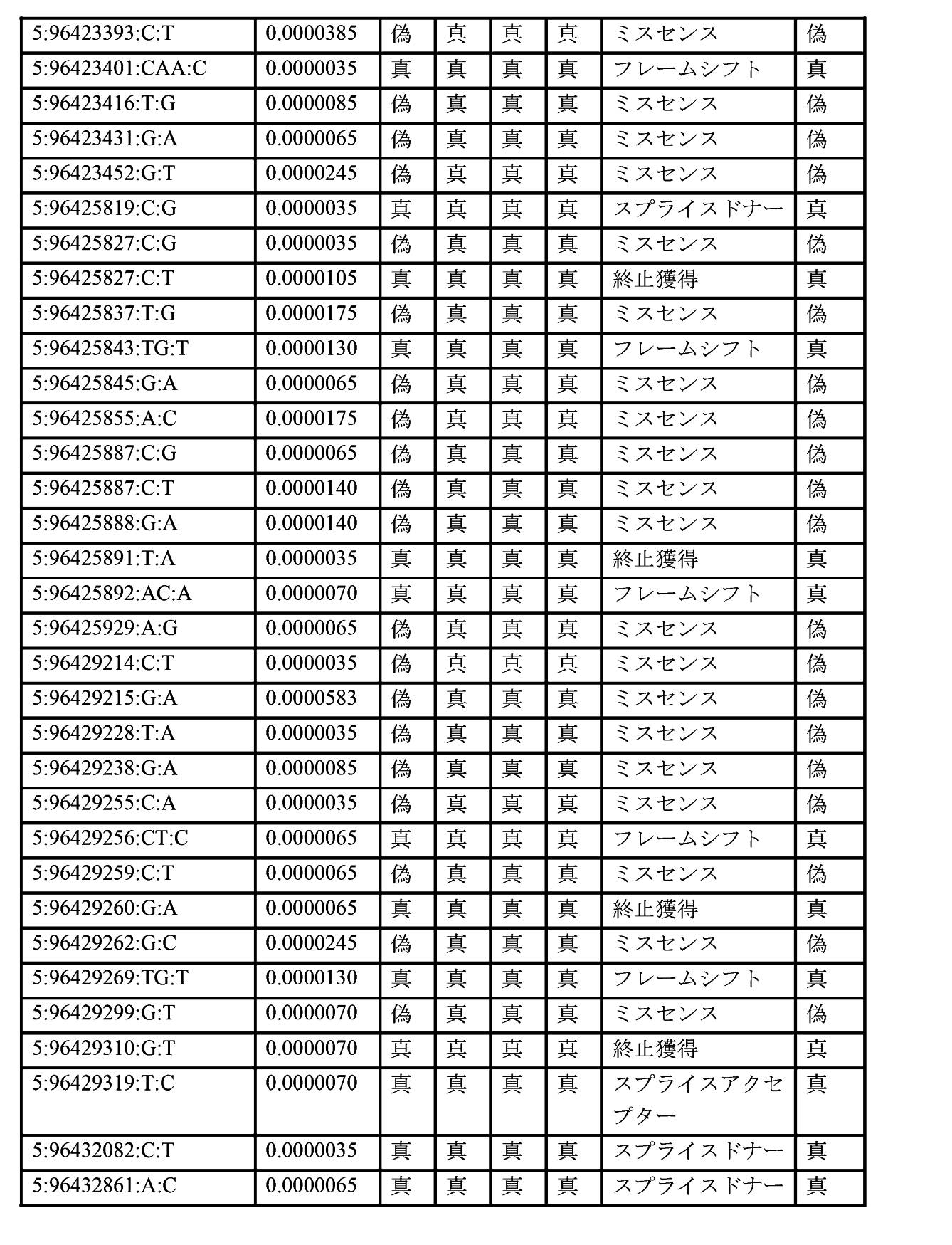


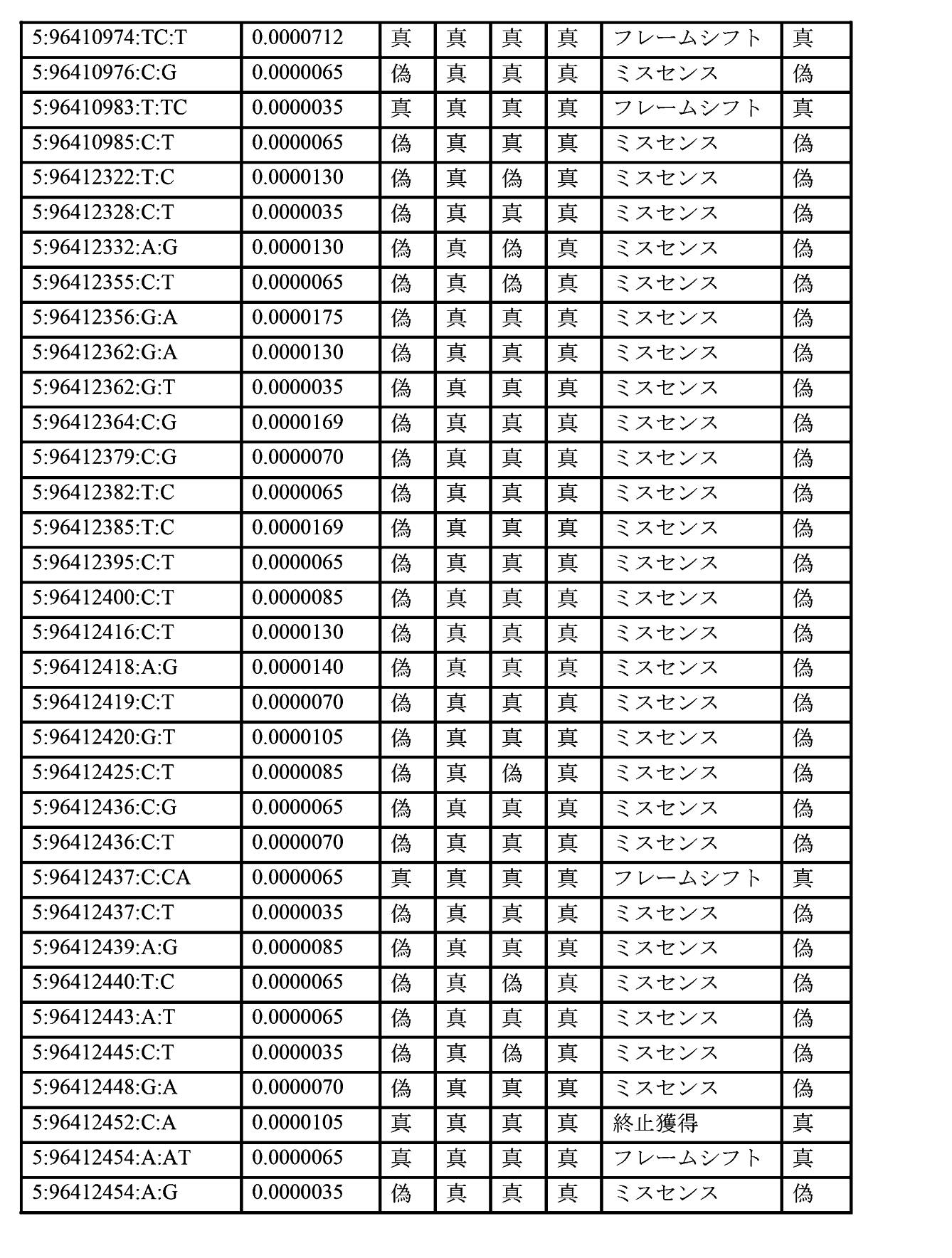


本明細書に記載されているものに加えて、記載されている主題の種々の修正は前述の説明から当業者には明らかとなるだろう。そのような修正はまた、添付の特許請求の範囲内に入ることが意図される。本出願で引用された各参考文献(学術誌論文、米国及び米国以外の特許、特許出願公開、国際特許出願公開、遺伝子バンク受入番号などを含むが、これらに限定されない)は、参照によってその全体がすべての目的のために本明細書に組み込まれる。 Various modifications of the described subject matter, in addition to those described herein, will become apparent to those skilled in the art from the foregoing description. Such modifications are also intended to fall within the scope of the appended claims. Each reference cited in this application (including, but not limited to, journal articles, US and non-US patents, patent application publications, international patent application publications, gene bank accession numbers, etc.) is hereby incorporated by reference in its entirety. is incorporated herein for all purposes.
Claims (51)
前記対象が、肥満及び/またはBMIの上昇を発症するリスクの増加に関連するPCSK1バリアントゲノム核酸分子、肥満及び/またはBMIの上昇を発症するリスクの増加に関連するPCSK1バリアントmRNA分子、前記mRNA分子から生成されたPCSK1バリアントcDNA分子、及び/または肥満及び/またはBMIの上昇を発症するリスクの増加に関連するPCSK1バリアントポリペプチドについて、ヘテロ接合性であるかを判定することであって、前記判定は、
前記対象から生体試料を取得するまたは取得したことと、
肥満及び/またはBMIの上昇を発症するリスクの増加に関連するPCSK1バリアント核酸分子またはバリアントポリペプチドについて、前記対象がヘテロ接合性であるかを判定するために生体試料でアッセイを実施することまたは実施したことと、によって行われる、前記判定することを含む、請求項10または請求項11に記載の方法。 Detecting the presence or absence of said PCSK1 variant nucleic acid molecule or variant polypeptide associated with an increased risk of developing obesity and/or elevated BMI is
A PCSK1 variant genomic nucleic acid molecule associated with an increased risk of developing obesity and/or elevated BMI, a PCSK1 variant mRNA molecule associated with an increased risk of developing obesity and/or elevated BMI, said mRNA molecule and/or PCSK1 variant polypeptides associated with an increased risk of developing obesity and/or elevated BMI are heterozygous, said determining teeth,
obtaining or having obtained a biological sample from said subject;
performing or performing an assay on a biological sample to determine if said subject is heterozygous for a PCSK1 variant nucleic acid molecule or variant polypeptide associated with an increased risk of developing obesity and/or elevated BMI 12. A method according to claim 10 or claim 11, comprising said determining performed by and having done.
a)前記生体試料を、機能喪失バリアント位置に近接する前記PCSK1核酸分子のヌクレオチド配列の一部にハイブリダイズするプライマーと接触させることと、
b)少なくとも前記機能喪失バリアント位置を通して前記プライマーを伸長させることと、
c)前記プライマーの前記伸長産物が、前記機能喪失バリアント位置にバリアントヌクレオチドを含むか否かを判定することと、を含む、請求項19に記載の方法。 The step of detecting, the step of determining or the assay comprises
a) contacting the biological sample with a primer that hybridizes to a portion of the nucleotide sequence of the PCSK1 nucleic acid molecule adjacent to a loss-of-function variant position;
b) extending said primer through at least said loss-of-function variant position;
c) determining whether the extension product of the primer contains a variant nucleotide at the loss-of-function variant position.
a)前記生体試料を、ミスセンスバリアント位置に近接する前記PCSK1核酸分子のヌクレオチド配列の一部にハイブリダイズするプライマーと接触させることと、
b)少なくとも前記ミスセンスバリアント位置を通して前記プライマーを伸長させることと、
c)前記プライマーの前記伸長産物が、前記ミスセンスバリアント位置にバリアントヌクレオチドを含むか否かを判定することと、を含む、請求項22に記載の方法。 The step of detecting, the step of determining or the assay comprises
a) contacting the biological sample with a primer that hybridizes to a portion of the nucleotide sequence of the PCSK1 nucleic acid molecule adjacent to a missense variant position;
b) extending said primer through at least said missense variant position;
c) determining whether said extension product of said primer contains a variant nucleotide at said missense variant position.
a)前記PCSK1核酸分子の少なくとも一部を増幅することであって、前記一部は機能喪失バリアント位置を含む、前記増幅することと、
b)前記増幅した核酸分子を検出可能な標識を用いて標識することと、
c)前記標識づけした核酸分子を、改変特異的プローブを含む支持体と接触させることであって、前記改変特異的プローブは、前記機能喪失バリアント位置にストリンジェントな条件下でハイブリダイズするヌクレオチド配列を含む、前記接触させることと、
d)前記検出可能な標識を検出することと、を含む、請求項10~18のいずれか一項に記載の方法。 The step of detecting, the step of determining or the assay comprises
a) amplifying at least a portion of said PCSK1 nucleic acid molecule, said portion comprising a loss-of-function variant position;
b) labeling the amplified nucleic acid molecules with a detectable label;
c) contacting said labeled nucleic acid molecule with a support comprising a modification-specific probe, said modification-specific probe being a nucleotide sequence that hybridizes under stringent conditions to said loss-of-function variant position; said contacting comprising
d) detecting the detectable label.
前記生体試料中の前記核酸分子を、検出可能な標識を含む改変特異的プローブと接触させることであって、前記改変特異的プローブは、機能喪失バリアント位置にストリンジェントな条件下でハイブリダイズするヌクレオチド配列を含む、前記接触させることと、
前記検出可能な標識を検出することと、を含む、請求項25または請求項26に記載の方法。 The step of detecting, the step of determining or the assay comprises
contacting said nucleic acid molecule in said biological sample with a modification-specific probe containing a detectable label, said modification-specific probe comprising a nucleotide that hybridizes under stringent conditions to a loss-of-function variant position; the contacting comprising an array;
27. The method of claim 25 or claim 26, comprising detecting the detectable label.
a)前記PCSK1核酸分子の少なくとも一部を増幅することであって、前記一部はミスセンスバリアント位置を含む、前記増幅することと、
b)前記増幅した核酸分子を検出可能な標識を用いて標識することと、
c)前記標識づけした核酸分子を、改変特異的プローブを含む支持体と接触させることであって、前記改変特異的プローブは、前記ミスセンスバリアント位置にストリンジェントな条件下でハイブリダイズするヌクレオチド配列を含む、前記接触させることと、
d)前記検出可能な標識を検出することと、を含む、請求項10~18のいずれか一項に記載の方法。 The step of detecting, the step of determining or the assay comprises
a) amplifying at least a portion of said PCSK1 nucleic acid molecule, said portion comprising a missense variant position;
b) labeling the amplified nucleic acid molecules with a detectable label;
c) contacting said labeled nucleic acid molecule with a support comprising an alteration-specific probe, said alteration-specific probe having a nucleotide sequence that hybridizes under stringent conditions to said missense variant position; said contacting;
d) detecting the detectable label.
前記生体試料中の前記核酸分子を、検出可能な標識を含む改変特異的プローブと接触させることであって、前記改変特異的プローブは、ミスセンスバリアント位置にストリンジェントな条件下でハイブリダイズするヌクレオチド配列を含む、前記接触させることと、
前記検出可能な標識を検出することと、を含む、請求項28または請求項29に記載の方法。 The step of detecting, the step of determining or the assay comprises
contacting said nucleic acid molecule in said biological sample with an alteration-specific probe containing a detectable label, said alteration-specific probe having a nucleotide sequence that hybridizes under stringent conditions to the missense variant position; said contacting comprising
30. The method of claim 28 or claim 29, comprising detecting the detectable label.
前記対象から生体試料を取得するまたは取得したことと、
肥満及び/またはBMIの上昇を発症するリスクの増加に関連するPCSK1バリアント核酸分子またはPCSK1バリアントポリペプチドについて、前記対象がヘテロ接合性であるかを判定するために生体試料でアッセイを実施することまたは実施したことと、によって行われる、前記検出することを含む、請求項31~請求項33のいずれか一項に記載の方法。 Detecting the presence or absence of said PCSK1 gene variant associated with an increased risk of developing obesity and/or elevated BMI is a PCSK1 variant genome associated with an increased risk of developing obesity and/or elevated BMI. a nucleic acid molecule, a PCSK1 variant mRNA molecule associated with an increased risk of developing obesity and/or elevated BMI, a PCSK1 variant cDNA molecule generated from said mRNA molecule, and/or a risk of developing obesity and/or elevated BMI detecting a PCSK1 variant polypeptide associated with an increase in
obtaining or having obtained a biological sample from said subject;
performing an assay on a biological sample to determine if said subject is heterozygous for a PCSK1 variant nucleic acid molecule or a PCSK1 variant polypeptide associated with an increased risk of developing obesity and/or elevated BMI, or A method according to any one of claims 31 to 33, comprising said detecting performed by having performed.
a)前記生体試料を、前記機能喪失バリアント位置に近接する前記PCSK1核酸分子のヌクレオチド配列の一部にハイブリダイズするプライマーと接触させることと、
b)少なくとも前記機能喪失バリアント位置を通して前記プライマーを伸長させることと、
c)前記プライマーの前記伸長産物が、前記機能喪失バリアント位置にバリアントヌクレオチドを含むか否かを判定することと、を含む、請求項35に記載の方法。 The step of detecting, the step of determining or the assay comprises
a) contacting the biological sample with a primer that hybridizes to a portion of the nucleotide sequence of the PCSK1 nucleic acid molecule adjacent to the loss-of-function variant position;
b) extending said primer through at least said loss-of-function variant position;
c) determining whether said extension product of said primer contains a variant nucleotide at said loss-of-function variant position.
a)前記PCSK1核酸分子の少なくとも一部を増幅することであって、前記一部は前記機能喪失バリアント位置を含む、前記増幅することと、
b)前記増幅した核酸分子を検出可能な標識を用いて標識することと、
c)前記標識づけした核酸分子を、改変特異的プローブを含む支持体と接触させることであって、前記改変特異的プローブは、前記機能喪失バリアント位置にストリンジェントな条件下でハイブリダイズするヌクレオチド配列を含む、前記接触させることと、
d)前記検出可能な標識を検出することと、を含む、請求項34~37のいずれか一項に記載の方法。 The step of detecting, the step of determining or the assay comprises
a) amplifying at least a portion of said PCSK1 nucleic acid molecule, said portion comprising said loss-of-function variant position;
b) labeling the amplified nucleic acid molecules with a detectable label;
c) contacting said labeled nucleic acid molecule with a support comprising a modification-specific probe, said modification-specific probe being a nucleotide sequence that hybridizes under stringent conditions to said loss-of-function variant position; said contacting comprising
d) detecting the detectable label.
前記生体試料中の前記核酸分子を、検出可能な標識を含む改変特異的プローブと接触させることであって、前記改変特異的プローブは、前記機能喪失バリアント位置にストリンジェントな条件下でハイブリダイズするヌクレオチド配列を含む、前記接触させることと、
前記検出可能な標識を検出することと、を含む、請求項41または請求項42に記載の方法。 The step of detecting, the step of determining or the assay comprises
contacting said nucleic acid molecule in said biological sample with a modification-specific probe comprising a detectable label, said modification-specific probe hybridizing under stringent conditions to said loss-of-function variant locus. said contacting comprising a nucleotide sequence;
43. The method of claim 41 or claim 42, comprising detecting the detectable label.
47. The method of claim 46, wherein said MC4R agonist is ALB-127158(a).
Applications Claiming Priority (3)
| Application Number | Priority Date | Filing Date | Title |
|---|---|---|---|
| US202063019589P | 2020-05-04 | 2020-05-04 | |
| US63/019,589 | 2020-05-04 | ||
| PCT/US2021/030500 WO2021225972A1 (en) | 2020-05-04 | 2021-05-03 | Proprotein convertase subtilisin/kexin type 1 (pcsk1) variants and uses thereof |
Publications (2)
| Publication Number | Publication Date |
|---|---|
| JP2023524757A true JP2023524757A (en) | 2023-06-13 |
| JPWO2021225972A5 JPWO2021225972A5 (en) | 2024-05-10 |
Family
ID=76444528
Family Applications (1)
| Application Number | Title | Priority Date | Filing Date |
|---|---|---|---|
| JP2022567190A Pending JP2023524757A (en) | 2020-05-04 | 2021-05-03 | Proprotein convertase subtilisin/kexin type 1 (PCSK1) variants and uses thereof |
Country Status (10)
| Country | Link |
|---|---|
| US (2) | US12049670B2 (en) |
| EP (1) | EP4146827A1 (en) |
| JP (1) | JP2023524757A (en) |
| KR (1) | KR20230019841A (en) |
| CN (1) | CN115698336A (en) |
| AU (1) | AU2021268327A1 (en) |
| CA (1) | CA3181543A1 (en) |
| IL (1) | IL297769A (en) |
| MX (1) | MX2022013774A (en) |
| WO (1) | WO2021225972A1 (en) |
Citations (1)
| Publication number | Priority date | Publication date | Assignee | Title |
|---|---|---|---|---|
| WO2019162312A1 (en) * | 2018-02-20 | 2019-08-29 | Charité - Universitätsmedizin Berlin | Mc4r agonist efficacy in subjects with mc4r deficiencies and impaired nfat signaling |
Family Cites Families (2)
| Publication number | Priority date | Publication date | Assignee | Title |
|---|---|---|---|---|
| WO2010072608A1 (en) | 2008-12-22 | 2010-07-01 | F. Hoffmann-La Roche Ag | Pcsk1 single nucleotide polymorphism in type 2 diabetes |
| CN108601816A (en) * | 2015-09-30 | 2018-09-28 | 节奏制药公司 | Treating melanocortin-4 receptor path is associated the method for illness |
-
2021
- 2021-05-03 US US17/306,699 patent/US12049670B2/en active Active
- 2021-05-03 IL IL297769A patent/IL297769A/en unknown
- 2021-05-03 JP JP2022567190A patent/JP2023524757A/en active Pending
- 2021-05-03 MX MX2022013774A patent/MX2022013774A/en unknown
- 2021-05-03 WO PCT/US2021/030500 patent/WO2021225972A1/en not_active Ceased
- 2021-05-03 AU AU2021268327A patent/AU2021268327A1/en not_active Abandoned
- 2021-05-03 KR KR1020227042440A patent/KR20230019841A/en active Pending
- 2021-05-03 CN CN202180039630.8A patent/CN115698336A/en active Pending
- 2021-05-03 CA CA3181543A patent/CA3181543A1/en active Pending
- 2021-05-03 EP EP21732610.7A patent/EP4146827A1/en active Pending
-
2024
- 2024-06-18 US US18/746,543 patent/US20240401136A1/en active Pending
Patent Citations (1)
| Publication number | Priority date | Publication date | Assignee | Title |
|---|---|---|---|---|
| WO2019162312A1 (en) * | 2018-02-20 | 2019-08-29 | Charité - Universitätsmedizin Berlin | Mc4r agonist efficacy in subjects with mc4r deficiencies and impaired nfat signaling |
Non-Patent Citations (7)
| Title |
|---|
| FRONT. NUTR., vol. 6, no. 11, JPN6025017157, 2019, pages 1 - 12, ISSN: 0005583733 * |
| INTERNATIONAL JOURNAL OF OBESITY, vol. VOL:39, NR:2, JPN5023009583, 3 June 2014 (2014-06-03), pages 295 - 302, ISSN: 0005583737 * |
| JOURNAL OF CLINICAL ENDOCRINOLOGY AND METABOLISM, vol. VOL:100, NR:4, JPN5023009580, April 2015 (2015-04-01), pages 1639 - 1645, ISSN: 0005583734 * |
| JOURNAL OF DIABETES AND ITS COMPLICATIONS, vol. VOL:31, NR:10, JPN5023009581, April 2017 (2017-04-01), pages 1549 - 1561, ISSN: 0005583735 * |
| METABOLISM CLINICAL AND EXPERIMENTAL, vol. 92, JPN5023009582, 21 October 2018 (2018-10-21), US, pages 37 - 50, ISSN: 0005583736 * |
| REV DIABET STUD, vol. 8, JPN6025017155, 2011, pages 355 - 368, ISSN: 0005583732 * |
| THE NEW ENGLAND JOURNAL OF MEDICINE, vol. VOL:375, NR:3, JPN5023009579, 21 July 2016 (2016-07-21), pages 240 - 246, ISSN: 0005583731 * |
Also Published As
| Publication number | Publication date |
|---|---|
| CA3181543A1 (en) | 2021-11-11 |
| MX2022013774A (en) | 2023-02-16 |
| EP4146827A1 (en) | 2023-03-15 |
| IL297769A (en) | 2022-12-01 |
| US20210353709A1 (en) | 2021-11-18 |
| WO2021225972A1 (en) | 2021-11-11 |
| AU2021268327A1 (en) | 2022-12-15 |
| US20240401136A1 (en) | 2024-12-05 |
| CN115698336A (en) | 2023-02-03 |
| KR20230019841A (en) | 2023-02-09 |
| US12049670B2 (en) | 2024-07-30 |
Similar Documents
| Publication | Publication Date | Title |
|---|---|---|
| EP1978107A1 (en) | Fto gene polymorphisms associated to obesity and/or type II diabetes | |
| US12163192B2 (en) | Piezo type mechanosensitive ion channel component 1 (PIEZO1) variants and uses thereof | |
| EP2510115B9 (en) | Single nucleotide polymorphisms associated with dietary weight loss | |
| US20240182973A1 (en) | Treatment Of Obesity In Subjects Having Variant Nucleic Acid Molecules Encoding Calcitonin Receptor (CALCR) | |
| JP2023524757A (en) | Proprotein convertase subtilisin/kexin type 1 (PCSK1) variants and uses thereof | |
| EP2501825B1 (en) | Methods for diagnosing skin diseases | |
| HK40107007A (en) | Piezo type mechanosensitive ion channel component 1 (piezo1) variants and uses thereof | |
| US20200263251A1 (en) | Matrix Extracellular Phosphoglycoprotein (MEPE) Variants And Uses Thereof | |
| HK40066615A (en) | Piezo type mechanosensitive ion channel component 1 (piezo1) variants and uses thereof | |
| HK40066615B (en) | Piezo type mechanosensitive ion channel component 1 (piezo1) variants and uses thereof | |
| WO2006073183A1 (en) | Method of judging inflammatory disease by using single nucleotdie polymorphism | |
| KR20120001916A (en) | SNP Gene Set for Diagnosis of Aspirin Sensitive Asthma |
Legal Events
| Date | Code | Title | Description |
|---|---|---|---|
| A521 | Request for written amendment filed |
Free format text: JAPANESE INTERMEDIATE CODE: A523 Effective date: 20240426 |
|
| A621 | Written request for application examination |
Free format text: JAPANESE INTERMEDIATE CODE: A621 Effective date: 20240426 |
|
| A131 | Notification of reasons for refusal |
Free format text: JAPANESE INTERMEDIATE CODE: A131 Effective date: 20250430 |
|
| A521 | Request for written amendment filed |
Free format text: JAPANESE INTERMEDIATE CODE: A523 Effective date: 20250723 |
|
| A131 | Notification of reasons for refusal |
Free format text: JAPANESE INTERMEDIATE CODE: A131 Effective date: 20251007 |
|
| A521 | Request for written amendment filed |
Free format text: JAPANESE INTERMEDIATE CODE: A523 Effective date: 20251225 |