JP2022530482A - Ligand-drug complex containing a linker with a Tris structure - Google Patents
Ligand-drug complex containing a linker with a Tris structure Download PDFInfo
- Publication number
- JP2022530482A JP2022530482A JP2021563418A JP2021563418A JP2022530482A JP 2022530482 A JP2022530482 A JP 2022530482A JP 2021563418 A JP2021563418 A JP 2021563418A JP 2021563418 A JP2021563418 A JP 2021563418A JP 2022530482 A JP2022530482 A JP 2022530482A
- Authority
- JP
- Japan
- Prior art keywords
- ligand
- linker
- drug complex
- general formula
- following general
- Prior art date
- Legal status (The legal status is an assumption and is not a legal conclusion. Google has not performed a legal analysis and makes no representation as to the accuracy of the status listed.)
- Pending
Links
Classifications
-
- A—HUMAN NECESSITIES
- A61—MEDICAL OR VETERINARY SCIENCE; HYGIENE
- A61K—PREPARATIONS FOR MEDICAL, DENTAL OR TOILETRY PURPOSES
- A61K47/00—Medicinal preparations characterised by the non-active ingredients used, e.g. carriers or inert additives; Targeting or modifying agents chemically bound to the active ingredient
- A61K47/50—Medicinal preparations characterised by the non-active ingredients used, e.g. carriers or inert additives; Targeting or modifying agents chemically bound to the active ingredient the non-active ingredient being chemically bound to the active ingredient, e.g. polymer-drug conjugates
- A61K47/51—Medicinal preparations characterised by the non-active ingredients used, e.g. carriers or inert additives; Targeting or modifying agents chemically bound to the active ingredient the non-active ingredient being chemically bound to the active ingredient, e.g. polymer-drug conjugates the non-active ingredient being a modifying agent
- A61K47/68—Medicinal preparations characterised by the non-active ingredients used, e.g. carriers or inert additives; Targeting or modifying agents chemically bound to the active ingredient the non-active ingredient being chemically bound to the active ingredient, e.g. polymer-drug conjugates the non-active ingredient being a modifying agent the modifying agent being an antibody, an immunoglobulin or a fragment thereof, e.g. an Fc-fragment
- A61K47/6889—Conjugates wherein the antibody being the modifying agent and wherein the linker, binder or spacer confers particular properties to the conjugates, e.g. peptidic enzyme-labile linkers or acid-labile linkers, providing for an acid-labile immuno conjugate wherein the drug may be released from its antibody conjugated part in an acidic, e.g. tumoural or environment
-
- A—HUMAN NECESSITIES
- A61—MEDICAL OR VETERINARY SCIENCE; HYGIENE
- A61K—PREPARATIONS FOR MEDICAL, DENTAL OR TOILETRY PURPOSES
- A61K45/00—Medicinal preparations containing active ingredients not provided for in groups A61K31/00 - A61K41/00
- A61K45/06—Mixtures of active ingredients without chemical characterisation, e.g. antiphlogistics and cardiaca
-
- A—HUMAN NECESSITIES
- A61—MEDICAL OR VETERINARY SCIENCE; HYGIENE
- A61K—PREPARATIONS FOR MEDICAL, DENTAL OR TOILETRY PURPOSES
- A61K47/00—Medicinal preparations characterised by the non-active ingredients used, e.g. carriers or inert additives; Targeting or modifying agents chemically bound to the active ingredient
- A61K47/50—Medicinal preparations characterised by the non-active ingredients used, e.g. carriers or inert additives; Targeting or modifying agents chemically bound to the active ingredient the non-active ingredient being chemically bound to the active ingredient, e.g. polymer-drug conjugates
- A61K47/51—Medicinal preparations characterised by the non-active ingredients used, e.g. carriers or inert additives; Targeting or modifying agents chemically bound to the active ingredient the non-active ingredient being chemically bound to the active ingredient, e.g. polymer-drug conjugates the non-active ingredient being a modifying agent
- A61K47/54—Medicinal preparations characterised by the non-active ingredients used, e.g. carriers or inert additives; Targeting or modifying agents chemically bound to the active ingredient the non-active ingredient being chemically bound to the active ingredient, e.g. polymer-drug conjugates the non-active ingredient being a modifying agent the modifying agent being an organic compound
-
- A—HUMAN NECESSITIES
- A61—MEDICAL OR VETERINARY SCIENCE; HYGIENE
- A61K—PREPARATIONS FOR MEDICAL, DENTAL OR TOILETRY PURPOSES
- A61K47/00—Medicinal preparations characterised by the non-active ingredients used, e.g. carriers or inert additives; Targeting or modifying agents chemically bound to the active ingredient
- A61K47/50—Medicinal preparations characterised by the non-active ingredients used, e.g. carriers or inert additives; Targeting or modifying agents chemically bound to the active ingredient the non-active ingredient being chemically bound to the active ingredient, e.g. polymer-drug conjugates
- A61K47/51—Medicinal preparations characterised by the non-active ingredients used, e.g. carriers or inert additives; Targeting or modifying agents chemically bound to the active ingredient the non-active ingredient being chemically bound to the active ingredient, e.g. polymer-drug conjugates the non-active ingredient being a modifying agent
- A61K47/54—Medicinal preparations characterised by the non-active ingredients used, e.g. carriers or inert additives; Targeting or modifying agents chemically bound to the active ingredient the non-active ingredient being chemically bound to the active ingredient, e.g. polymer-drug conjugates the non-active ingredient being a modifying agent the modifying agent being an organic compound
- A61K47/545—Heterocyclic compounds
-
- A—HUMAN NECESSITIES
- A61—MEDICAL OR VETERINARY SCIENCE; HYGIENE
- A61K—PREPARATIONS FOR MEDICAL, DENTAL OR TOILETRY PURPOSES
- A61K47/00—Medicinal preparations characterised by the non-active ingredients used, e.g. carriers or inert additives; Targeting or modifying agents chemically bound to the active ingredient
- A61K47/50—Medicinal preparations characterised by the non-active ingredients used, e.g. carriers or inert additives; Targeting or modifying agents chemically bound to the active ingredient the non-active ingredient being chemically bound to the active ingredient, e.g. polymer-drug conjugates
- A61K47/51—Medicinal preparations characterised by the non-active ingredients used, e.g. carriers or inert additives; Targeting or modifying agents chemically bound to the active ingredient the non-active ingredient being chemically bound to the active ingredient, e.g. polymer-drug conjugates the non-active ingredient being a modifying agent
- A61K47/54—Medicinal preparations characterised by the non-active ingredients used, e.g. carriers or inert additives; Targeting or modifying agents chemically bound to the active ingredient the non-active ingredient being chemically bound to the active ingredient, e.g. polymer-drug conjugates the non-active ingredient being a modifying agent the modifying agent being an organic compound
- A61K47/549—Sugars, nucleosides, nucleotides or nucleic acids
-
- A—HUMAN NECESSITIES
- A61—MEDICAL OR VETERINARY SCIENCE; HYGIENE
- A61K—PREPARATIONS FOR MEDICAL, DENTAL OR TOILETRY PURPOSES
- A61K47/00—Medicinal preparations characterised by the non-active ingredients used, e.g. carriers or inert additives; Targeting or modifying agents chemically bound to the active ingredient
- A61K47/50—Medicinal preparations characterised by the non-active ingredients used, e.g. carriers or inert additives; Targeting or modifying agents chemically bound to the active ingredient the non-active ingredient being chemically bound to the active ingredient, e.g. polymer-drug conjugates
- A61K47/51—Medicinal preparations characterised by the non-active ingredients used, e.g. carriers or inert additives; Targeting or modifying agents chemically bound to the active ingredient the non-active ingredient being chemically bound to the active ingredient, e.g. polymer-drug conjugates the non-active ingredient being a modifying agent
- A61K47/56—Medicinal preparations characterised by the non-active ingredients used, e.g. carriers or inert additives; Targeting or modifying agents chemically bound to the active ingredient the non-active ingredient being chemically bound to the active ingredient, e.g. polymer-drug conjugates the non-active ingredient being a modifying agent the modifying agent being an organic macromolecular compound, e.g. an oligomeric, polymeric or dendrimeric molecule
- A61K47/59—Medicinal preparations characterised by the non-active ingredients used, e.g. carriers or inert additives; Targeting or modifying agents chemically bound to the active ingredient the non-active ingredient being chemically bound to the active ingredient, e.g. polymer-drug conjugates the non-active ingredient being a modifying agent the modifying agent being an organic macromolecular compound, e.g. an oligomeric, polymeric or dendrimeric molecule obtained otherwise than by reactions only involving carbon-to-carbon unsaturated bonds, e.g. polyureas or polyurethanes
- A61K47/60—Medicinal preparations characterised by the non-active ingredients used, e.g. carriers or inert additives; Targeting or modifying agents chemically bound to the active ingredient the non-active ingredient being chemically bound to the active ingredient, e.g. polymer-drug conjugates the non-active ingredient being a modifying agent the modifying agent being an organic macromolecular compound, e.g. an oligomeric, polymeric or dendrimeric molecule obtained otherwise than by reactions only involving carbon-to-carbon unsaturated bonds, e.g. polyureas or polyurethanes the organic macromolecular compound being a polyoxyalkylene oligomer, polymer or dendrimer, e.g. PEG, PPG, PEO or polyglycerol
-
- A—HUMAN NECESSITIES
- A61—MEDICAL OR VETERINARY SCIENCE; HYGIENE
- A61K—PREPARATIONS FOR MEDICAL, DENTAL OR TOILETRY PURPOSES
- A61K47/00—Medicinal preparations characterised by the non-active ingredients used, e.g. carriers or inert additives; Targeting or modifying agents chemically bound to the active ingredient
- A61K47/50—Medicinal preparations characterised by the non-active ingredients used, e.g. carriers or inert additives; Targeting or modifying agents chemically bound to the active ingredient the non-active ingredient being chemically bound to the active ingredient, e.g. polymer-drug conjugates
- A61K47/51—Medicinal preparations characterised by the non-active ingredients used, e.g. carriers or inert additives; Targeting or modifying agents chemically bound to the active ingredient the non-active ingredient being chemically bound to the active ingredient, e.g. polymer-drug conjugates the non-active ingredient being a modifying agent
- A61K47/68—Medicinal preparations characterised by the non-active ingredients used, e.g. carriers or inert additives; Targeting or modifying agents chemically bound to the active ingredient the non-active ingredient being chemically bound to the active ingredient, e.g. polymer-drug conjugates the non-active ingredient being a modifying agent the modifying agent being an antibody, an immunoglobulin or a fragment thereof, e.g. an Fc-fragment
- A61K47/6801—Drug-antibody or immunoglobulin conjugates defined by the pharmacologically or therapeutically active agent
- A61K47/6803—Drugs conjugated to an antibody or immunoglobulin, e.g. cisplatin-antibody conjugates
- A61K47/68031—Drugs conjugated to an antibody or immunoglobulin, e.g. cisplatin-antibody conjugates the drug being an auristatin
-
- A—HUMAN NECESSITIES
- A61—MEDICAL OR VETERINARY SCIENCE; HYGIENE
- A61K—PREPARATIONS FOR MEDICAL, DENTAL OR TOILETRY PURPOSES
- A61K47/00—Medicinal preparations characterised by the non-active ingredients used, e.g. carriers or inert additives; Targeting or modifying agents chemically bound to the active ingredient
- A61K47/50—Medicinal preparations characterised by the non-active ingredients used, e.g. carriers or inert additives; Targeting or modifying agents chemically bound to the active ingredient the non-active ingredient being chemically bound to the active ingredient, e.g. polymer-drug conjugates
- A61K47/51—Medicinal preparations characterised by the non-active ingredients used, e.g. carriers or inert additives; Targeting or modifying agents chemically bound to the active ingredient the non-active ingredient being chemically bound to the active ingredient, e.g. polymer-drug conjugates the non-active ingredient being a modifying agent
- A61K47/68—Medicinal preparations characterised by the non-active ingredients used, e.g. carriers or inert additives; Targeting or modifying agents chemically bound to the active ingredient the non-active ingredient being chemically bound to the active ingredient, e.g. polymer-drug conjugates the non-active ingredient being a modifying agent the modifying agent being an antibody, an immunoglobulin or a fragment thereof, e.g. an Fc-fragment
- A61K47/6801—Drug-antibody or immunoglobulin conjugates defined by the pharmacologically or therapeutically active agent
- A61K47/6803—Drugs conjugated to an antibody or immunoglobulin, e.g. cisplatin-antibody conjugates
- A61K47/6807—Drugs conjugated to an antibody or immunoglobulin, e.g. cisplatin-antibody conjugates the drug or compound being a sugar, nucleoside, nucleotide, nucleic acid, e.g. RNA antisense
-
- A—HUMAN NECESSITIES
- A61—MEDICAL OR VETERINARY SCIENCE; HYGIENE
- A61P—SPECIFIC THERAPEUTIC ACTIVITY OF CHEMICAL COMPOUNDS OR MEDICINAL PREPARATIONS
- A61P35/00—Antineoplastic agents
Landscapes
- Health & Medical Sciences (AREA)
- Bioinformatics & Cheminformatics (AREA)
- Engineering & Computer Science (AREA)
- Life Sciences & Earth Sciences (AREA)
- Chemical & Material Sciences (AREA)
- Public Health (AREA)
- General Health & Medical Sciences (AREA)
- Veterinary Medicine (AREA)
- Medicinal Chemistry (AREA)
- Pharmacology & Pharmacy (AREA)
- Animal Behavior & Ethology (AREA)
- Epidemiology (AREA)
- Immunology (AREA)
- Biochemistry (AREA)
- Molecular Biology (AREA)
- Chemical Kinetics & Catalysis (AREA)
- General Chemical & Material Sciences (AREA)
- Nuclear Medicine, Radiotherapy & Molecular Imaging (AREA)
- Organic Chemistry (AREA)
- Medicinal Preparation (AREA)
- Medicines Containing Antibodies Or Antigens For Use As Internal Diagnostic Agents (AREA)
- Medicines That Contain Protein Lipid Enzymes And Other Medicines (AREA)
- Pharmaceuticals Containing Other Organic And Inorganic Compounds (AREA)
Abstract
本発明は、リガンドと、前記リガンドに共有結合で連結され、特定の構造式で表されるトリス(Tris)構造を含むリンカーと、前記リンカーに共有結合で連結される活性剤と、を含むリガンド―薬物複合体に関するものであり、前記リガンド―薬物複合体は、リンカーのトリス構造によって活性剤が結合されることにより、1つのリンカーを介してさらに多数の活性剤が連結可能であり、これにより、1つの抗体結合当たりにさらに多数の活性剤が標的細胞に伝達可能になり、薬物及び/またはトキシンが標的細胞に安定的に達して薬効を効果的に発揮することができる。The present invention comprises a ligand, a linker covalently linked to the ligand and comprising a Tris structure represented by a specific structural formula, and an activator covalently linked to the linker. -Regarding a drug complex, the ligand-drug complex is capable of ligating a larger number of activators via one linker by binding the activator by the Tris structure of the linker. A larger number of active agents can be transmitted to the target cell per one antibody bond, and the drug and / or toxin can stably reach the target cell and effectively exert its efficacy.
Description
本発明は、トリス構造を有するリンカーを含むリガンド―薬物複合体に係り、さらに詳しくは、活性剤の伝達効率が高いトリス構造を有するリンカーを含むリガンド―薬物複合体に関する。 The present invention relates to a ligand-drug complex containing a linker having a Tris structure, and more particularly to a ligand-drug complex containing a linker having a Tris structure having a high transfer efficiency of an activator.
癌(cancer)とは、身体組織の自律的な過剰成長により非正常的に生長した団塊による疾患のことをいい、様々な組織において調節されない細胞成長の結果である。初期段階の腫瘍は、手術及び放射線治療により除去可能であり、転移した腫瘍の場合、通常、化学療法剤により緩和治療を行うことになる。 Cancer refers to a disease caused by baby boomers that grow abnormally due to the autonomous overgrowth of body tissues, and is the result of unregulated cell growth in various tissues. Early-stage tumors can be removed by surgery and radiation therapy, and metastatic tumors are usually palliatively treated with chemotherapeutic agents.
非経口で投与されるほとんどの化学療法剤は、全身投与が行われ、その結果として不所望の副作用を引き起こし、酷い場合には毒性という深刻な結果をもたらしてしまう可能性があり、この理由から、腫瘍細胞またはすぐ隣の組織にこれらの化学療法剤を選択的に適用することで、薬効の増大及び毒性/副作用の抑止を両立させるための新規な化学療法剤の開発に焦点が当てられてきた。 Most chemotherapeutic agents given parenterally are given systemically and can result in unwanted side effects and, in severe cases, serious consequences of toxicity. The focus has been on the development of new chemotherapeutic agents to achieve both increased efficacy and suppression of toxicity / side effects by selectively applying these chemotherapeutic agents to tumor cells or tissues in the immediate vicinity. rice field.
抗体―薬物複合体(antibody―drug conjugate;ADC)は、抗原と結合する抗体に毒素もしくは薬物を結合した後、細胞の内部において毒性物質を放出しながら癌細胞などを死滅に至らせる標的志向的な新技術である。健康な細胞への影響は極力抑えながらも、薬物を標的癌細胞に正確に伝達し、特定の条件下でしか放出されないようにすることから、抗体治療剤それ自体よりも卓越した効能を有し、しかも、既存の抗癌剤に比べて副作用のリスクを大幅に軽減できる技術である。 An antibody-drug conjugate (ADC) is a target-oriented substance that binds a toxin or drug to an antibody that binds to an antigen and then releases a toxic substance inside the cell to kill cancer cells or the like. New technology. While suppressing the effects on healthy cells as much as possible, it has superior efficacy than the antibody therapeutic agent itself because it accurately transmits the drug to the target cancer cells and prevents it from being released only under specific conditions. Moreover, it is a technology that can significantly reduce the risk of side effects compared to existing anticancer agents.
このような抗体―薬物複合体は、基本的に、「抗体―リンカー―低分子薬物(毒素)」から構成されている。ここで、リンカーは、単に抗体と薬物とを連結する機能的な役割だけではなく、体内循環の際に安定して標的細胞まで送達させ、その後抗体―薬物複合体が細胞内に取り込まれて抗体―薬物間の解離現象(例えば、酵素による加水分解による結果)により薬物が円滑に解離して標的癌細胞に薬効を示すようにしなければならない。すなわち、リンカーの安定性に応じて、抗体―薬物複合体の効能及び全身毒性(systemic toxicity)などの安全性の側面からみて、リンカーは非常に重要な役割を果たす(非特許文献1)。 Such an antibody-drug conjugate is basically composed of an "antibody-linker-small molecule drug (toxin)". Here, the linker not only has a functional role of linking the antibody and the drug, but also stably delivers it to the target cell during internal circulation, and then the antibody-drug complex is taken up into the cell and the antibody is used. -The dissociation phenomenon between drugs (for example, the result of enzymatic hydrolysis) must allow the drug to dissociate smoothly and exert its efficacy on the target cancer cells. That is, depending on the stability of the linker, the linker plays a very important role in terms of safety such as efficacy and systemic toxicity of the antibody-drug conjugate (Non-Patent Document 1).
抗体―薬物複合体のリンカーは、大まかに、切断不能性のものまたは切断可能性のものに分類可能である。多くの切断不能性リンカーは、抗体のシステインを含むチオエーテルを用いて抗体に付着する。このような切断不能性リンカーは、普通、in vivoにて抗体から分離されることができず、ADC内在化(ADC internalization)が良好ではない場合、その効能がなお一層軽減される虞がある。汎用されているチオール―マレイミド方法の場合、抗体―薬物複合体が安定しておらず、標的細胞に達する前または標的細胞に達した後に、複合体からの薬物の解離を招いてしまう虞がある。 Linkers of antibody-drug conjugates can be broadly classified as non-cleavable or cleavable. Many non-cleavable linkers attach to the antibody using thioethers containing the antibody cysteine. Such non-cleavable linkers are usually unable to be separated from the antibody in vivo, and their efficacy may be further diminished if ADC internalization is not good. In the case of the universal thiol-maleimide method, the antibody-drug conjugate is not stable and may lead to dissociation of the drug from the complex before or after reaching the target cell. ..
ヒドロラゾン及びジスルフィドベースのリンカーといったように、生理的な細胞外条件で限られた安定性を有する化学的に安定していないリンカーの代わりに、生理学的な細胞外条件で安定しているリンカーが必要である。なお、薬物が細胞の外部ではなく、薬物が連結される抗体により標的化される細胞内においてのみ放出されなければならないため、治療的な適用可能性を向上させるためには、高い血漿安定性を持たせるリンカーが必要である。 A linker that is stable under physiological extracellular conditions is needed instead of a chemically unstable linker that has limited stability under physiological extracellular conditions, such as hydrorazone and disulfide-based linkers. Is. Since the drug must be released only into the cell targeted by the antibody to which the drug is linked, not outside the cell, high plasma stability is required to improve therapeutic applicability. You need a linker to have.
切断可能なリンカーは、例えば、リソソーム酵素(lysosomal enzyme)により加水分解され得る。切断可能なリンカーは、例えば、抗体のシステインを含むジスルフィド結合を含んでいてもよい。チオール交換反応を用いた解離を許容するジスルフィド結合を含むリンカーは、抗体―薬物複合体の標的細胞への吸収及び還元性環境である細胞質へのジスルフィドの露出に部分的に依存する。しかしながら、様々な種類のチオール(例えば、アルブミン及びグルタチオン)が血液に存在するため、標的に達しないうちに薬物が抗体から解離されることもある。 The cleavable linker can be hydrolyzed, for example, by a lysosomal enzyme. The cleavable linker may contain, for example, a disulfide bond containing the cysteine of the antibody. Linkers containing disulfide bonds that allow dissociation using thiol exchange reactions are partially dependent on the absorption of the antibody-drug conjugate into the target cell and the exposure of the disulfide to the cytoplasm, which is the reducing environment. However, due to the presence of various types of thiols (eg albumin and glutathione) in the blood, the drug may be dissociated from the antibody before it reaches the target.
特許文献1は、イソプレノイドトランスフェラーゼによって認識され得るアミノ酸モチーフを有するタンパク質―活性剤複合体を提供する。 Patent Document 1 provides a protein-activator complex having an amino acid motif that can be recognized by isoprenoid transferase.
特許文献2は、二重特異性抗体を用いた抗体―薬物複合体及びこの用途に関するものであり、抗体―薬物複合体は、2価コチニン―ペプチド及び薬物間の複合体と抗コチニン単一鎖可変断片とを結合させることで、多段階の合成手順を必要とすることなく、抗体及び薬物間の複合体を形成し易いということを開示している。 Patent Document 2 relates to an antibody-drug conjugate using a bispecific antibody and its use, wherein the antibody-drug conjugate is a complex between a divalent cotinine-peptide and a drug and an anti-cotinine single chain. It discloses that by binding to a variable fragment, it is easy to form a conjugate between an antibody and a drug without requiring a multi-step synthetic procedure.
本発明は、活性剤の伝達効率が高いトリス構造を有するリンカー、前記リンカーを含むリガンド―薬物複合体を提供することをその目的としている。 An object of the present invention is to provide a linker having a Tris structure having a high transfer efficiency of an activator, and a ligand-drug complex containing the linker.
本発明は、トリス構造を有するリンカーを含むリガンド―薬物複合体を含む薬学的組成物及び前記薬学的組成物を用いた治療方法を提供することをその目的としている。 An object of the present invention is to provide a pharmaceutical composition containing a ligand-drug complex containing a linker having a Tris structure and a therapeutic method using the pharmaceutical composition.
本発明の一局面は、特定の構造で表されるトリス構造を含むリガンド―薬物複合体用リンカーを提供する。 One aspect of the invention provides a ligand-drug complex linker containing a Tris structure represented by a particular structure.
本発明の他の局面は、リガンドと、前記リガンドに共有結合で連結され、特定の構造式で表されるトリス(Tris)構造を含むリンカーと、前記リンカーに共有結合で連結される活性剤と、を含むリガンド―薬物複合体を提供する。 Another aspect of the invention is a ligand, a linker covalently linked to the ligand and comprising a Tris structure represented by a particular structural formula, and an activator covalently linked to the linker. Provides a ligand-drug complex comprising.
本発明のさらに他の局面は、リガンドと、前記リガンドに共有結合で連結され、特定の構造式で表されるトリス(Tris)構造を含むリンカーと、前記リンカーに共有結合で連結される活性剤と、を含むリガンド―薬物複合体またはその薬学的に許容される塩または溶媒和物を有効成分として含む過増殖、癌または血管新生疾患の予防または治療用の薬学的組成物を提供する。 Yet another aspect of the invention is an active agent covalently linked to the ligand and a linker comprising a Tris structure represented by a particular structural formula. To provide a pharmaceutical composition for the prevention or treatment of hyperproliferation, cancer or angiogenesis, comprising a ligand-drug complex or a pharmaceutically acceptable salt or admixture thereof as an active ingredient.
本発明のさらに他の局面は、本発明の一実施形態に係る薬学的組成物を個体に投与して個体において過増殖、癌または血管新生疾患を治療する方法を提供する。 Yet another aspect of the invention provides a method of administering to an individual the pharmaceutical composition according to one embodiment of the invention to treat hyperproliferation, cancer or angiogenic disease in the individual.
本発明の一実施形態に係るリガンド―薬物複合体は、トリス(Tris)構造を含むリンカーを含むことができる。前記リンカーのトリス構造によって活性剤が結合されることにより、1つのリンカーを介してさらに多数の活性剤が連結されることが可能になる。すなわち、リガンド結合当たりにさらに多数の活性剤が標的細胞に伝達されることが可能になる。 The ligand-drug complex according to one embodiment of the present invention can include a linker containing a Tris structure. The binding of the activator by the Tris structure of the linker allows a larger number of activators to be linked via one linker. That is, a larger number of active agents can be transmitted to the target cells per ligand binding.
本発明の一実施形態に係るリガンド―薬物複合体は、薬物を有効に、且つ、特異的かつ選択的に伝達することができる。 The ligand-drug complex according to one embodiment of the present invention is capable of effectively, specifically and selectively transmitting a drug.
本発明の一実施形態に係るリンカーは、リガンドと薬物とを連結する機能的な役割だけではなく、体内循環に際して安定的に標的細胞まで達することができ、標的細胞まで達した後に薬物が容易に放出されることが可能である。 The linker according to one embodiment of the present invention not only has a functional role of linking a ligand and a drug, but also can stably reach a target cell during internal circulation, and the drug can be easily reached after reaching the target cell. It is possible to be released.
また、本発明に係るリガンド―薬物複合体は、生理的な細胞外条件で卓越した安定性を有することから、薬物が細胞の外部ではなく、標的細胞内においてのみ放出されることが可能になる。なお、リガンドに薬物が安定的に結合されて生体内安定性を保ちながら、目的とする細胞毒性を示すことができ、特に、血漿内においてより一層安定しており、しかも、体内循環に際しても安定性を有することができる。 In addition, the ligand-drug complex according to the present invention has excellent stability under physiological extracellular conditions, so that the drug can be released only inside the target cell, not outside the cell. .. It should be noted that the drug can be stably bound to the ligand to maintain the stability in the living body while exhibiting the desired cytotoxicity, and in particular, it is more stable in plasma and also stable in the body circulation. Can have sex.
さらに、本発明の一実施形態に係るリンカーは、薬物が標的細胞内において容易に放出されて薬効を極大化させ得るトリガーユニットを含むことから、薬物及び/またはトキシンが標的細胞に安定的に達して薬効を有効に発揮することができる。 Furthermore, since the linker according to the embodiment of the present invention contains a trigger unit in which the drug can be easily released into the target cell to maximize the drug efficacy, the drug and / or toxin can reach the target cell stably. The medicinal effect can be effectively exerted.
以下、本発明が属する技術分野において通常の知識を有する者が容易に本発明を実施できるように本発明の実現例及び実施例について詳しく説明する。 Hereinafter, realization examples and examples of the present invention will be described in detail so that a person having ordinary knowledge in the technical field to which the present invention belongs can easily carry out the present invention.
しかしながら、本発明は、色々な異なる形態に具体化でき、ここで説明する実現例及び実施例に何ら限定されない。本発明の明細書の全般にわたって、ある部分がある構成要素を「含む」としたとき、これは、特に断りのない限り、他の構成要素を除外するものではなく、他の構成要素をさらに含んでいてもよいことを意味する。 However, the present invention can be embodied in various different forms and is not limited to the implementation examples and the examples described herein. Throughout the specification of the present invention, when a part "includes" a component, this does not exclude other components unless otherwise specified, and further includes other components. It means that you can stay.
本発明の明細書の全般において使われている程度の用語「約」、「実質的に」などは、言及された意味に固有の製造及び物質許容誤差が提示されるとき、その数値で、またはその数値に近い意味として使われ、本発明の理解を助けるために、正確であるか、あるいは、絶対的な数値が言及された開示の内容を非良心的な侵害者が不当に利用することを防止するために使われる。本願の明細書の全体において使われている程度の用語「~(する)段階」または「~の段階」は、「~のための段階」を意味しない。 The terms "about", "substantially", etc. as used throughout the specification of the invention are numerical or numerical when the manufacturing and material tolerances inherent in the referred meaning are presented. It is used as a meaning close to that number, and in order to aid the understanding of the present invention, the content of the disclosure in which an accurate or absolute number is mentioned is unfairly used by an unconscionable infringer. Used to prevent. The term "stage" or "stage" as used throughout the specification of the present application does not mean "stage for".
本願の明細書の全体において、マーカッシュ形式の言い回しに含まれている「これらの組み合わせ」の用語は、マーカッシュ形式の言い回しに記載されている構成要素よりなる群から選択される1つ以上の混合または組み合わせを意味するものであって、上記の構成要素よりなる群から選択される1つ以上を含むものを意味する。本発明の明細書の全般に亘って、「A及び/またはB」の記載は、「AまたはB、またはA及びB」を意味する。 Throughout the specification of the present application, the term "combination of these" contained in a Markush-style phrase may be a mixture of one or more selected from the group consisting of the components described in the Markush-style phrase. It means a combination and includes one or more selected from the group consisting of the above-mentioned components. Throughout the specification of the present invention, the description of "A and / or B" means "A or B, or A and B".
本発明は、リガンドと薬物とを連結するリンカー(Linker)、前記リンカーを含むリガンド―薬物複合体(Ligand―Drug Conjuagtes)、前記リガンド―薬物複合体を含む過増殖、癌または血管新生疾患の予防または治療用の薬学的組成物及び前記薬学的組成物を個体に投与して過増殖、癌または血管新生疾患を治療する方法に関する。 The present invention comprises a linker linking a ligand and a drug, a ligand-drug conjugate containing the linker, and prevention of hyperproliferation, cancer or angiogenic disease including the ligand-drug complex. Alternatively, the present invention relates to a therapeutic pharmaceutical composition and a method for administering the pharmaceutical composition to an individual to treat hyperproliferation, cancer or angiogenic disease.
本発明の一実施形態において、リガンドは、細胞の内外に存在する受容体と結合できる物質であって、標的生体分子と複合体を形成し得る分子のことをいう。リガンドの例としては、標的タンパク質の所定の位置(predetermined position)に結合してシグナルを伝達する分子が挙げられる。例えば、リガンドは、タンパク質、基質、阻害剤、促進剤、神経伝達物質または放射性同位元素であってもよい。 In one embodiment of the present invention, a ligand is a substance that can bind to a receptor existing inside or outside a cell and can form a complex with a target biomolecule. Examples of ligands include molecules that bind to a predetermined position of a target protein and transmit a signal. For example, the ligand may be a protein, substrate, inhibitor, accelerator, neurotransmitter or radioisotope.
本発明の一実施形態において、リガンドは、抗体であってもよい。当業者が認識できるように、本発明の一実施形態に記載されている抗体―薬物複合体の抗体は、任意の好適なリガンドに代替されてもよい。 In one embodiment of the invention, the ligand may be an antibody. As will be appreciated by those skilled in the art, the antibodies of the antibody-drug conjugate described in one embodiment of the invention may be substituted with any suitable ligand.
また、本発明の一実施形態に係る抗体―薬物複合体に関するレファレンス及び議論は、本質が矛盾しない場合、リガンド―薬物複合体及びこれに対応する中間体(例えば、リガンド―リンカー複合体)に同等に適用可能であると理解されてもよい。 Also, references and discussions of antibody-drug conjugates according to one embodiment of the invention are equivalent to ligand-drug conjugates and their corresponding intermediates (eg, ligand-linker complexes) if the essence is consistent. It may be understood that it is applicable to.
また、本発明の一実施形態に係るリガンド―薬物複合体は、リガンド―薬物複合体と同一のものであると理解されてもよい。 Further, the ligand-drug complex according to one embodiment of the present invention may be understood to be the same as the ligand-drug complex.
本発明の一局面は、トリス構造を含むリンカーを提供する。本発明の一実施形態によれば、リガンドと薬物とを連結するリンカー(以下、「リガンド―薬物複合体用リンカー」または「リンカー」とも称する。)は、トリス(Tris)構造(三官能性)を含んでいてもよく、これにより、多数の活性剤がリンカーを介して抗体に接合され得る。 One aspect of the invention provides a linker containing a Tris structure. According to one embodiment of the invention, the linker linking the ligand to the drug (hereinafter, also referred to as “ligand-drug complex linker” or “linker”) is a Tris structure (trifunctional). May include, which allows a large number of activators to be conjugated to the antibody via a linker.
本発明の一実施形態によれば、トリス構造は、下記一般式1Aで表されてもよい。 According to one embodiment of the present invention, the Tris structure may be represented by the following general formula 1A.

本発明の一実施形態によれば、リンカーは、活性剤と結合される第1のリンカーと、抗体と連結される第2のリンカーと、を含んでいてもよく、前記第1のリンカー及び/または第2のリンカーは、前記一般式1Aで表されるトリス構造を含んでいてもよい。 According to one embodiment of the invention, the linker may comprise a first linker linked to the activator and a second linker linked to the antibody, said first linker and /. Alternatively, the second linker may contain a Tris structure represented by the general formula 1A.
本発明の一実施形態によれば、トリス構造を含むリンカーは、トリス構造を介して2つ以上の分岐されたリンカー(BL1、BL2、BL3)を含んでいてもよい。 According to one embodiment of the invention, the linker containing the Tris structure may include two or more branched linkers (BL 1 , BL 2 , BL 3 ) via the Tris structure.
本発明の一実施形態によれば、前記トリス構造は、下記一般式2Aで表されてもよい。 According to one embodiment of the present invention, the Tris structure may be represented by the following general formula 2A.
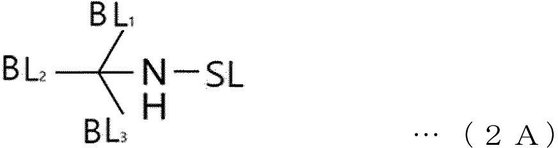
本発明の一実施形態によれば、リンカーは、トリス構造の窒素に連結され、活性剤と結合される第1のリンカーと、抗体と連結される第2のリンカー(SL)と、を含んでいてもよい。前記第1のリンカーは、トリス構造を含めて2つ以上の分岐されたリンカー(BL1、BL2、BL3)を含むものであると理解されてもよい。前記第2のリンカー(SL)は、抗体と結合することができる。 According to one embodiment of the invention, the linker comprises a first linker linked to nitrogen in the Tris structure and bound to the activator and a second linker (SL) linked to the antibody. You may. The first linker may be understood to include two or more branched linkers (BL 1 , BL 2 , BL 3 ) including a Tris structure. The second linker (SL) can bind to the antibody.
また、本発明の一実施形態によれば、前記2つ以上の分岐されたリンカー(BL1、BL2、BL3)及び/または第2のリンカーは、前記一般式1Aで表されるトリス構造を含んでいてもよい。 Further, according to one embodiment of the present invention, the two or more branched linkers (BL 1 , BL 2 , BL 3 ) and / or the second linker have a Tris structure represented by the general formula 1A. May include.
前記分岐されたリンカー(BL1、BL2、BL3)は、活性剤と共有結合で連結されてもよい。各分岐されたリンカーは、1つ以上の活性剤と結合することができる。一具体例において、3つの分岐されたリンカー(BL1、BL2、BL3)のうちのいずれか1つは、活性剤と連結されなくてもよい。同一の1つの分岐されたリンカー内においても、活性剤は、互いに同じでも異なっていてもよく、異なる分岐されたリンカー上の活性剤は、互いに同じでも異なっていてもよい。なお、同一の抗体上においてでも、分岐されたリンカーに結合された活性剤は、互いに同じでも異なっていてもよい。 The branched linkers (BL 1 , BL 2 , BL 3 ) may be covalently linked to the activator. Each branched linker can be attached to one or more activators. In one embodiment, any one of the three branched linkers (BL 1 , BL 2 , BL 3 ) may not be linked to the activator. Within the same one branched linker, the activators may be the same or different from each other, and the activators on different branched linkers may be the same or different from each other. Even on the same antibody, the activators bound to the branched linker may be the same or different from each other.
本発明の一実施形態によれば、前記分岐されたリンカーのうちのいずれか1つ(BL3)は、水素であってもよく、下記一般式3Aのように表されてもよい。 According to one embodiment of the present invention, any one of the branched linkers (BL 3 ) may be hydrogen or may be represented by the following general formula 3A.

本発明の一実施形態によれば、前記トリス構造は、下記一般式4Aで表されてもよい。 According to one embodiment of the present invention, the Tris structure may be represented by the following general formula 4A.

本発明の一実施形態によれば、前記トリス構造は、下記一般式5Aで表されてもよい。 According to one embodiment of the present invention, the Tris structure may be represented by the following general formula 5A.
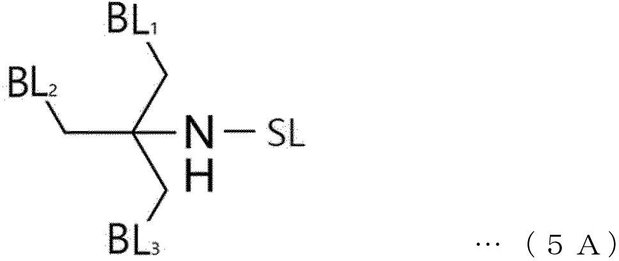
本発明の一実施形態によれば、リンカーは、トリス構造の窒素を含む第1のリンカーと、抗体と連結される第2のリンカー(SL)と、を含んでいてもよい。前記第1のリンカーは、トリス構造を含めて2つ以上の分岐されたリンカー(BL1、BL2、BL3)を含むものであると理解されてもよい。前記第2のリンカー(SL)は、抗体と結合することができる。前記分岐されたリンカー(BL1、BL2、BL3)は、活性剤と共有結合で連結されてもよい。各分岐されたリンカーは、1つ以上の活性剤と結合することができる。一具体例において、3つの分岐されたリンカー(BL1、BL2、BL3)のうちのいずれか1つは、活性剤と連結されなくてもよい。同一の1つの分岐されたリンカー内においても、活性剤は、互いに同じでも異なっていてもよく、異なる分岐されたリンカー上の活性剤は、互いに同じでも異なっていてもよい。なお、同一の抗体上においてでも、分岐されたリンカーに結合された活性剤は、互いに同じでも異なっていてもよい。 According to one embodiment of the invention, the linker may include a first linker containing nitrogen in a Tris structure and a second linker (SL) linked to the antibody. The first linker may be understood to include two or more branched linkers (BL 1 , BL 2 , BL 3 ) including a Tris structure. The second linker (SL) can bind to the antibody. The branched linkers (BL 1 , BL 2 , BL 3 ) may be covalently linked to the activator. Each branched linker can be attached to one or more activators. In one embodiment, any one of the three branched linkers (BL 1 , BL 2 , BL 3 ) may not be linked to the activator. Within the same one branched linker, the activators may be the same or different from each other, and the activators on different branched linkers may be the same or different from each other. Even on the same antibody, the activators bound to the branched linker may be the same or different from each other.
本発明の一実施形態によれば、前記分岐されたリンカーのうちのいずれか1つ(BL3)は、水素であってもよく、下記一般式6Aのように表されてもよい。 According to one embodiment of the present invention, any one of the branched linkers (BL 3 ) may be hydrogen or may be represented by the following general formula 6A.

本発明の一実施形態によれば、第1のリンカー(または、分岐されたリンカー)及び/または第2のリンカーは、ポリエチレングリコールユニットを含んでいてもよい。 According to one embodiment of the invention, the first linker (or branched linker) and / or the second linker may comprise a polyethylene glycol unit.
一具体例において、3つの分岐されたリンカー(BL1、BL2、BL3)と第2のリンカー(SL)が両方ともポリエチレングリコールユニットを含んでいてもよい。 In one embodiment, the three branched linkers (BL 1 , BL 2 , BL 3 ) and the second linker (SL) may both contain polyethylene glycol units.
一具体例において、2つの分岐されたリンカー(BL1、BL2、BL3のうちの任意の2つ)と第2のリンカー(SL)がポリエチレングリコールユニットを含んでいてもよい。このような組み合わせは、これに何ら制限されず、種々に変更可能である。 In one embodiment, the two branched linkers (any two of BL 1 , BL 2 , BL 3 ) and the second linker (SL) may comprise a polyethylene glycol unit. Such combinations are not limited to this and can be changed in various ways.
本発明の一実施形態によれば、第1のリンカー(または、分岐されたリンカー)及び/または第2のリンカーは、窒素などの原子を含んでいてもよい。なお、第1のリンカー(または、分岐されたリンカー)及び/または第2のリンカーは、アミン、3級アミドまたは3級もしくは4級炭素などの3つの結合を許容する任意の原子または基を含んでいてもよい。 According to one embodiment of the invention, the first linker (or branched linker) and / or the second linker may contain an atom such as nitrogen. It should be noted that the first linker (or branched linker) and / or the second linker contains any atom or group that allows three bonds, such as amines, tertiary amides or tertiary or quaternary carbons. You may be.
一具体例において、第1のリンカー(または、分岐されたリンカー)及び/または第2のリンカーは、アミドまたはエステル結合に与る基を有する側鎖を有するアミンまたはアミノ酸であってもよい。 In one embodiment, the first linker (or branched linker) and / or the second linker may be an amine or amino acid having a side chain having a group that contributes to an amide or ester bond.
本発明の一実施形態において、アミドは、下記一般式14で表されてもよく、
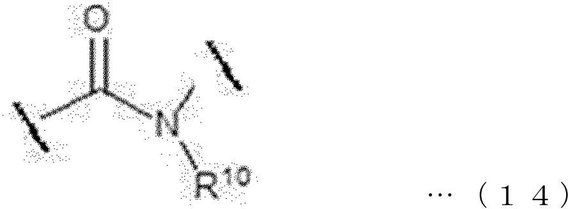
一具体例において、第1のリンカー(または、分岐されたリンカー)及び/または第2のリンカーは、アミドを含んでいてもよい。 In one embodiment, the first linker (or branched linker) and / or the second linker may contain an amide.
一具体例において、分岐されたリンカーは、アミドを含んでいてもよい。 In one embodiment, the branched linker may contain an amide.
一具体例において、第1のリンカー、第2のリンカー、及び/または分岐されたリンカーは、天然由来の(naturally―occurring)アミノ酸または非天然アミノ酸を含んでいてもよい。また、一具体例において、L―アミノ酸またはD―アミノ酸を含んでいてもよい。さらに、一具体例において、α―アミノ酸またはβ―アミノ酸を含んでいてもよい。 In one embodiment, the first linker, the second linker, and / or the branched linker may contain naturally occurring amino acids or unnatural amino acids. Further, in one specific example, L-amino acid or D-amino acid may be contained. Further, in one embodiment, α-amino acid or β-amino acid may be contained.
例えば、アミノ酸は、リシン、5―ヒドロキシリシン、4―オキサルリシン、4―チアリシン、4―セレナリシン、4―チアホモリシン、5,5―ジメチルリシン、5,5―ジフルオロリシン、trans―4―デヒドロリジン(trans―4―dehydrolysine)、2,6―ジアミノ―4―ヘキサン酸、cis―4―デヒドロリシン(cis―4―dehydrolysine)、6―N―メチルリシン、ジアミノピメリン酸、オルニチン、3―メチルオルニチン、α―メチルオルニチン、シトルリン、及びホモシトルリンよりなる群から選択されてもよい。 For example, the amino acids are lysine, 5-hydroxylysine, 4-oxallysine, 4-thialicin, 4-selenalysine, 4-thiahomolithine, 5,5-dimethyllysine, 5,5-difluorolysine, trans-4-dehydrolysine (trans). -4-dehydrorysine), 2,6-diamino-4-hexanoic acid, cis-4-dehydrolysine (cis-4-dehydrorysine), 6-N-methyllysine, diaminopimelic acid, ornithine, 3-methylornithine, α-methyl It may be selected from the group consisting of ornithine, citrulin, and homocitrulin.
一具体例において、第1のリンカー、第2のリンカー、及び/または分岐されたリンカーは、リシンユニットを含んでいてもよい。リシンユニットは、ε―アミノ基のメチル化、メチル―、ジメチル―及びトリメチルリシンの提供及びアセチル化、スモイル化(sumoylation)、及び/またはユビキチン化(ubiquitination)などの修飾までも含んでいてもよい。 In one embodiment, the first linker, the second linker, and / or the branched linker may contain a lysine unit. The lysine unit may also include methylation of the ε-amino group, provision of methyl-, dimethyl- and trimethyllysine and modifications such as acetylation, sumoylation and / or ubiquitination. ..
本発明の一実施形態によれば、前記第1のリンカー(または、分岐されたリンカー)及び/または第2のリンカーは、下記一般式1Gで表されるマレイミドユニットを含んでいてもよい。 According to one embodiment of the present invention, the first linker (or branched linker) and / or the second linker may contain a maleimide unit represented by the following general formula 1G.
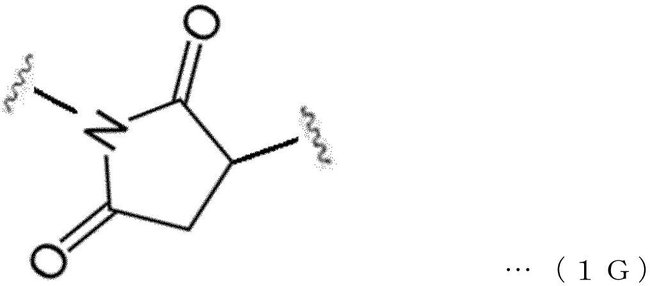
本発明の一実施形態によれば、前記第1のリンカー(または、分岐されたリンカー)及び/または第2のリンカーは、1~100個の炭素原子、具体的に、20~80個の炭素原子を有する置換もしくは非置換のアルキレンを含んでいてもよく、次の(i)~(iv)の条件のうちの1つ以上、具体的には、2つ以上を満たすことができる:
(i)アルキレンは、少なくとも1つの不飽和結合、具体的には、3または4個の二重結合または三重結合を含む、
(ii)アルキレンは、少なくとも1つのヘテロアリーレンを含む、
(iii)アルキレンの少なくとも1つの炭素原子は、窒素(N)、酸素(O)及び硫黄(S)から選択される1つ以上のヘテロ原子、具体的には、少なくとも1つの窒素及び少なくとも1つの酸素(例えば、オキシムにあるものであって)により置換される、かつ、
(iv)アルキレンは、1~20個の炭素原子を有する1つ以上のアルキル、好ましくは、2または3つのメチルで置換される。
According to one embodiment of the invention, the first linker (or branched linker) and / or the second linker has 1 to 100 carbon atoms, specifically 20 to 80 carbon atoms. It may contain substituted or unsubstituted alkylene having an atom, and one or more of the following conditions (i) to (iv), specifically, two or more can be satisfied:
(I) The alkylene comprises at least one unsaturated bond, specifically 3 or 4 double or triple bonds.
(Ii) The alkylene comprises at least one heteroarylene.
(Iii) At least one carbon atom of the alkylene is one or more heteroatoms selected from nitrogen (N), oxygen (O) and sulfur (S), specifically at least one nitrogen and at least one. Replaced by oxygen (eg, one in Oxyme) and
(Iv) The alkylene is substituted with one or more alkyls having 1 to 20 carbon atoms, preferably 2 or 3 methyls.
本発明の一実施形態において、前記リンカーは、分岐ユニット、連結ユニット、結合ユニット、トリガーユニット、イソプレニルユニットを含んでいてもよい。この詳細については後述する。 In one embodiment of the invention, the linker may include a branching unit, a linking unit, a binding unit, a trigger unit, and an isoprenyl unit. The details will be described later.
本発明の一局面は、リガンドと、前記リガンドに共有結合で連結され、トリス(Tris)構造を含むリンカーと、前記リンカーに共有結合で連結される活性剤と、を含むリガンド―薬物複合体を提供する。 One aspect of the invention is a ligand-drug complex comprising a ligand, a linker covalently linked to the ligand and comprising a Tris structure, and an activator covalently linked to the linker. offer.
本発明は、リガンドと薬物とを連結するリンカー(Linker)、前記リンカーを含むリガンド―薬物複合体(Ligand―Drug Conjuagtes)、前記リガンド―薬物複合体を含む過増殖、癌または血管新生疾患の予防または治療用の薬学的組成物及び前記薬学的組成物を個体に投与して過増殖、癌または血管新生疾患を治療する方法に関する。 The present invention comprises a linker linking a ligand and a drug, a ligand-drug conjugate containing the linker, and prevention of hyperproliferation, cancer or angiogenic disease including the ligand-drug complex. Alternatively, the present invention relates to a therapeutic pharmaceutical composition and a method for administering the pharmaceutical composition to an individual to treat hyperproliferation, cancer or angiogenic disease.
本発明の一実施形態において、リガンドは、抗体であってもよい。当業者が認識できるように、本発明の一実施形態に記載されている抗体―薬物複合体(Antibody―Drug Conjugates;ADCs)の抗体は、任意の好適なリガンドに代替されてもよく、後述するリガンド―薬物複合体は、抗体―薬物複合体に同等に適用可能なものであると理解されてもよい。 In one embodiment of the invention, the ligand may be an antibody. As can be recognized by those skilled in the art, the antibodies of the antibody-drug conjugates (ADCs) described in one embodiment of the present invention may be replaced with any suitable ligand, which will be described later. Ligand-drug conjugates may be understood to be equally applicable to antibody-drug conjugates.
本発明の一実施形態によれば、リンカーは、前記一般式1Aで表されるトリス構造を含んでいてもよい。また、叙上のリガンド―薬物複合体用リンカーについての説明は、リガンド―薬物複合体に適用されてもよい。なお、後述するリンカーについての説明もまた、上述したリガンド―薬物複合体用リンカーに適用されてもよい。 According to one embodiment of the present invention, the linker may contain a Tris structure represented by the general formula 1A. Also, the description of the ligand-drug complex linker described above may be applied to the ligand-drug complex. The description of the linker described later may also be applied to the above-mentioned ligand-drug complex linker.
本発明の一実施形態において、リンカーは、抗体のC末端(例えば、抗体の重鎖及び軽鎖)に結合することができる。 In one embodiment of the invention, the linker can be attached to the C-terminus of the antibody (eg, the heavy and light chains of the antibody).
本発明の一実施形態において、リンカーは、分岐ユニット(Branching unit;BR)、連結ユニット(connection unit)、または結合ユニット(Binding Unit)を含んでいてもよい。 In one embodiment of the invention, the linker may include a branching unit (BR), a connection unit, or a binding unit.
一具体例において、連結ユニットは、薬物と分岐ユニットまたは結合ユニットとを連結することができる。また、連結ユニットは、分岐ユニットと結合ユニットとを連結することができる。さらに、分岐ユニットは、連結ユニットなしに結合ユニットと連結されてもよく、結合ユニットまたは連結ユニットは、抗体と連結されてもよい。 In one embodiment, the ligation unit can ligate the drug to a bifurcation or binding unit. Further, the connecting unit can connect the branch unit and the connecting unit. Further, the branching unit may be linked to the binding unit without a linking unit, and the binding or linking unit may be linked to the antibody.
一具体例において、第1のリンカー(または、分岐されたリンカー)及び/または第2のリンカーは、分岐ユニット(Branching unit;BR)、連結ユニット(connection unit)、または結合ユニット(Binding Unit)を含んでいてもよい。 In one embodiment, the first linker (or branched linker) and / or the second linker may be a branching unit (BR), a connection unit, or a binding unit. It may be included.
一具体例において、第1のリンカー及び第2のリンカーは、1つ以上の分岐ユニット(Branching unit;BR)、連結ユニット(connection unit)、または結合ユニット(Binding Unit)を含んでいてもよい。 In one embodiment, the first linker and the second linker may include one or more branching units (BRs), connection units, or binding units.
一具体例において、第1のリンカーは、1つ以上の分岐ユニット(Branching unit;BR)、連結ユニット(Connection unit;CU)、または結合ユニット(Binding Unit;BU)を含んでいてもよい。 In one embodiment, the first linker may include one or more branching units (BRs), connection units (CUs), or binding units (BUs).
一具体例において、第2のリンカーは、1つ以上の連結ユニット(Connection unit)を含んでいてもよい。 In one embodiment, the second linker may include one or more connection units.
本発明の一実施形態において、分岐ユニット(BR)は、アミノ酸であってもよい。 In one embodiment of the invention, the branching unit (BR) may be an amino acid.
一具体例において、分岐ユニットは、天然由来の(naturally―occurring)アミノ酸または非天然アミノ酸であってもよい。 In one embodiment, the branching unit may be a naturally-occurring amino acid or an unnatural amino acid.
一具体例において、分岐ユニットは、L―アミノ酸またはD―アミノ酸であってもよい。 In one embodiment, the branching unit may be an L-amino acid or a D-amino acid.
一具体例において、分岐ユニットは、α―アミノ酸またはβ―アミノ酸であってもよい。 In one embodiment, the branching unit may be an α-amino acid or a β-amino acid.
例えば、アミノ酸は、リシン、5―ヒドロキシリシン、4―オキサルリシン、4―チアリシン、4―セレナリシン、4―チアホモリシン、5,5―ジメチルリシン、5,5―ジフルオロリシン、trans―4―デヒドロリジン(trans―4―dehydrolysine)、2,6―ジアミノ―4―ヘキサン酸、cis―4―デヒドロリシン(cis―4―dehydrolysine)、6―N―メチルリシン、ジアミノピメリン酸、オルニチン、3―メチルオルニチン、α―メチルオルニチン、シトルリン、及びホモシトルリンよりなる群から選択されてもよい。 For example, the amino acids are lysine, 5-hydroxylysine, 4-oxallysine, 4-thialicin, 4-selenalysine, 4-thiahomolithine, 5,5-dimethyllysine, 5,5-difluorolysine, trans-4-dehydrolysine (trans). -4-dehydrorysine), 2,6-diamino-4-hexanoic acid, cis-4-dehydrolysine (cis-4-dehydrorysine), 6-N-methyllysine, diaminopimelic acid, ornithine, 3-methylornithine, α-methyl It may be selected from the group consisting of ornithine, citrulin, and homocitrulin.
一具体例において、分岐ユニットは、親水性アミノ酸(hydrophilic amino acid)であってもよい。例えば、親水性アミノ酸は、アルギニン、アスパラギン酸、アスパラギン、グルタミン酸、グルタミン、ヒスチジン、リシン、オルニチン、プロリン、セリン、またはトレオニンであってもよい。 In one embodiment, the branching unit may be a hydrophilic amino acid. For example, the hydrophilic amino acid may be arginine, aspartic acid, asparagine, glutamic acid, glutamine, histidine, lysine, ornithine, proline, serine, or threonine.
一具体例において、親水性アミノ酸は、水溶液において中性pHで電荷を有する残基を有する側鎖を含むアミノ酸であってもよい。 In one embodiment, the hydrophilic amino acid may be an amino acid containing a side chain having a chargeable residue at neutral pH in an aqueous solution.
一具体例において、親水性アミノ酸は、アスパラギン酸またはグルタミン酸であってもよい。 In one embodiment, the hydrophilic amino acid may be aspartic acid or glutamic acid.
一具体例において、親水性アミノ酸は、オルニチンまたはリシンであってもよい。 In one embodiment, the hydrophilic amino acid may be ornithine or lysine.
一具体例において、親水性アミノ酸は、アルギニンであってもよい。 In one embodiment, the hydrophilic amino acid may be arginine.
一具体例において、分岐ユニットは、リシンユニットを含んでいてもよい。リシンユニットは、ε―アミノ基のメチル化、メチル―、ジメチル―及びトリメチルリシンの提供及びアセチル化、スモイル化(sumoylation)、及び/またはユビキチン化(ubiquitination)などの修飾までも含んでいてもよい。 In one embodiment, the branching unit may include a lysine unit. The lysine unit may also include methylation of the ε-amino group, provision of methyl-, dimethyl- and trimethyllysine and modifications such as acetylation, sumoylation and / or ubiquitination. ..
本発明の一実施形態において、分岐ユニット(BR)は、水素、または1~100個の炭素原子、具体的には、20~80個の炭素原子を有するアルキレンであってもよい。 In one embodiment of the invention, the branching unit (BR) may be hydrogen or an alkylene having 1-100 carbon atoms, specifically 20-80 carbon atoms.
ここで、アルキレンの炭素原子は、N、O及びSよりなる群から選択される1つまたはそれ以上のヘテロ原子で置換されてもよく、アルキレンは、1~20個の炭素原子を有する1つ以上のアルキルでさらに置換されてもよい。 Here, the carbon atom of the alkylene may be substituted with one or more heteroatoms selected from the group consisting of N, O and S, and the alkylene is one having 1 to 20 carbon atoms. It may be further substituted with the above alkyl.
一具体例において、分岐ユニットは、含窒素1―50原子ヘテロアルキレンと親水性アミノ酸の2以上の原子を含み、前記窒素は、親水性アミノ酸のカルボニルとペプチド結合を形成することができる。 In one embodiment, the branching unit comprises a nitrogen-containing 1-50 atom heteroalkylene and two or more atoms of a hydrophilic amino acid, wherein the nitrogen can form a peptide bond with the carbonyl of the hydrophilic amino acid.
本発明の一実施形態において、分岐ユニット(BR)は、―C(O)―、―C(O)NR'―、―C(O)O―、―S(O)2NR'―、―P(O)R''NR'―、―S(O)NR'―、または―PO2NR'―であり、R'及びR''は、それぞれ独立して、水素、(C1―C8)アルキル、(C3―C8)シクロアルキル、(C1―C8)アルコキシ、(C1―C8)アルキルチオ、モノ―またはジ―(C1―C8)アルキルアミノ、(C3―C20)ヘテロアリール、または(C6―C20)アリールである。 In one embodiment of the invention, the branching unit (BR) is: -C (O)-,-C (O) NR'-, -C (O) O-, -S (O) 2 NR'-,-. P (O) R''NR'-, -S (O) NR'-, or -PO 2 NR'-, and R'and R'' are independently hydrogen, (C1 - C. 8 ) Alkyl, (C 3 -C 8 ) Cycloalkyl, (C 1 -C 8 ) Alkoxy, (C 1 -C 8 ) Alkylthio, Mono- or Di- (C 1 -C 8 ) Alkyl Amino, (C 3 ) -C 20 ) heteroaryl, or (C 6 -C 20 ) aryl.
一具体例において、分岐ユニットは、―C(O)NR'―であり、R'は、水素であってもよい。 In one embodiment, the branching unit may be —C (O) NR ′ — and R ′ may be hydrogen.
本発明の一実施形態において、分岐ユニット(BR)は、下記一般式1B~8Bのうちのいずれか1つで表されてもよい。 In one embodiment of the present invention, the branching unit (BR) may be represented by any one of the following general formulas 1B to 8B.
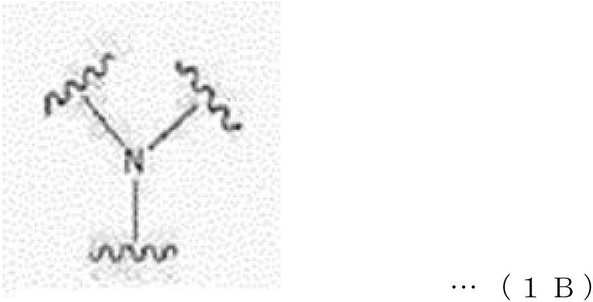

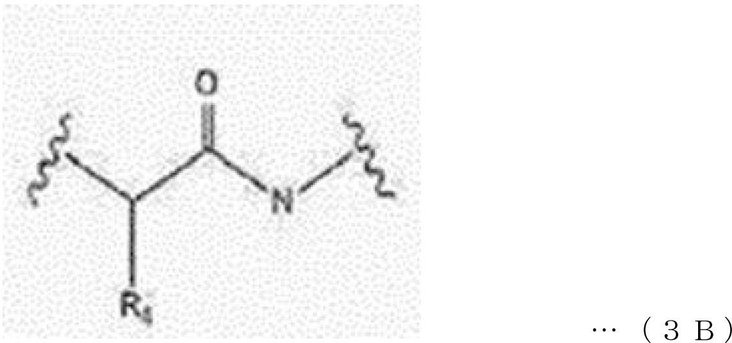
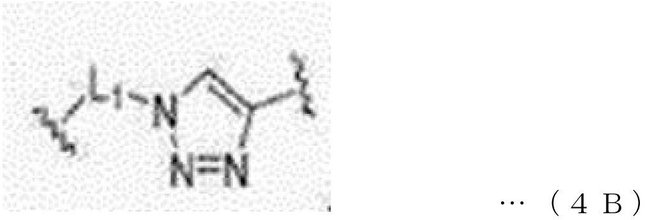


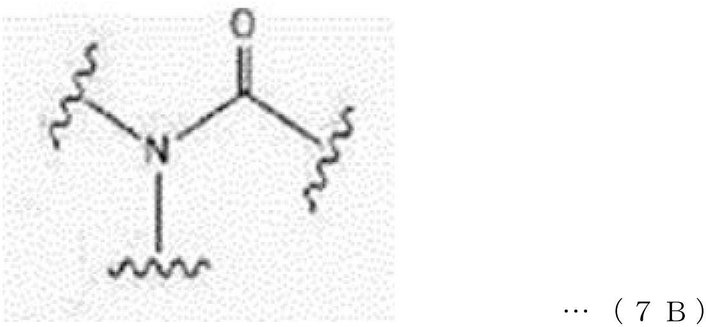

前記一般式1B~8Bにおいて、
L1、L2、及びL3は、それぞれ独立して、直接結合(direct bond)または―CnH2n―であり、nは、1~30の整数であり、
G1、G2、G3は、それぞれ独立して、直接結合、下記一般式1、下記一般式2、下記一般式3、または下記一般式4であり、R3は、水素またはC1―C30アルキルであり、R4は、水素または―L4―COOR5であり、L4は、直接結合または―CnH2n―であり、nは、1~10の整数であり、R5は、水素またはC1―C30アルキルである。
In the general formulas 1B to 8B,
L 1 , L 2 , and L 3 are independently direct bonds or —C n H 2n — and n is an integer from 1 to 30.
G 1 , G 2 , and G 3 are independently bonded directly, and are the following general formula 1, the following general formula 2, the following general formula 3, or the following general formula 4, and R 3 is hydrogen or C 1- . C 30 alkyl, R 4 is hydrogen or —L 4 -COOR 5 , L 4 is a direct bond or — C n H 2n— , n is an integer from 1 to 10, and R 5 Is hydrogen or C1 - C30 alkyl.

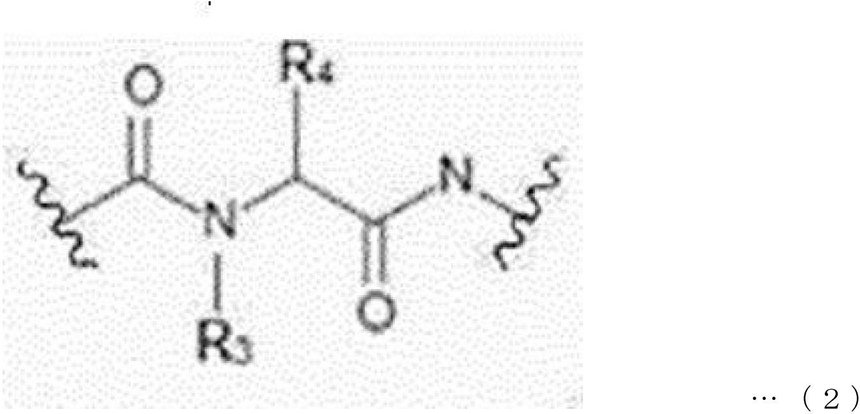

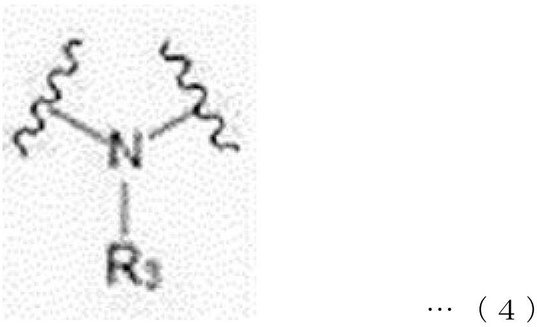
本発明の一実施形態において、分岐ユニット(BR)は、オキシムまたはO―置換されたオキシムであってもよい。 In one embodiment of the invention, the branching unit (BR) may be an oxime or an O-substituted oxime.
本発明の一実施形態において、分岐ユニット(BR)は、下記一般式9Bまたは10Bで表されてもよい。 In one embodiment of the present invention, the branching unit (BR) may be represented by the following general formula 9B or 10B.


本発明の一実施形態において、連結ユニット(CU)は、―(CH2)r(V(CH2)p)q―、―((CH2)pV)q―、―(CH2)r(V(CH2)p)qY―、―((CH2)pV)q(CH2)r―、―Y((CH2)pV)q―、または―(CH2)r(V(CH2)p)qYCH2―で表されてもよい。ここで、rは、0~10の整数であり、pは、1~10の整数であり、qは、1~20の整数であり、V及びYは、それぞれ独立して、単一結合、―O―、―S―、―NR21―、―C(O)NR22―、―NR23C(O)―、―NR24SO2―、または―SO2NR25―であり、R21~R25は、それぞれ独立して、水素、(C1―C6)アルキル、(C1―C6)アルキル(C6―C20)アリールまたは(C1―C6)アルキル(C3―C20)ヘテロアリールである。 In one embodiment of the invention, the linking unit (CU) is:-(CH 2 ) r (V (CH 2 ) p ) q -,-((CH 2 ) p V) q -,-(CH 2 ) r. (V (CH 2 ) p ) q Y-,-((CH 2 ) p V) q (CH 2 ) r -,-Y ((CH 2 ) p V) q- , or-(CH 2 ) r ( It may be represented by V (CH 2 ) p ) q YCH 2- . Here, r is an integer of 0 to 10, p is an integer of 1 to 10, q is an integer of 1 to 20, and V and Y are independent and single-coupled. -O-, -S-, -NR 21- , -C (O) NR 22- , -NR 23 C (O)-, -NR 24 SO 2- , or -SO 2 NR 25- , and R 21 ~ R 25 are independently hydrogen, (C 1 -C 6 ) alkyl, (C 1 -C 6 ) alkyl (C 6 -C 20 ) aryl or (C 1 -C 6 ) alkyl (C 3 ―). C 20 ) Heteroaryl.
一具体例において、rは2であってもよい。 In one specific example, r may be 2.
一具体例において、pは2であってもよい。 In one embodiment, p may be 2.
一具体例において、qは6~20の整数であってもよい。 In one embodiment, q may be an integer of 6 to 20.
一具体例において、qは、2、5、または11であってもよい。 In one embodiment, q may be 2, 5, or 11.
一具体例において、V及びYは、それぞれ独立して、―O―であってもよい。 In one embodiment, V and Y may be —O— independently of each other.
一具体例において、連結ユニットは、―(CH2)r(V(CH2)p)q―であってもよい。ここで、rは、0~10の整数であり、pは、0~12の整数であり、qは、1~20の整数であり、Vは、単一結合、―O―または―S―である。一具体例において、rは2であってもよい。一具体例において、pは2であってもよい。一具体例において、qは6~20の整数であってもよい。 In one embodiment, the connecting unit may be − (CH 2 ) r (V (CH 2 ) p ) q −. Here, r is an integer of 0 to 10, p is an integer of 0 to 12, q is an integer of 1 to 20, and V is a single bond, —O— or —S—. Is. In one specific example, r may be 2. In one embodiment, p may be 2. In one embodiment, q may be an integer of 6 to 20.
一具体例において、Vは―O―であり、rは2であり、pは2であり、qは、2、5または11であってもよい。 In one embodiment, V may be —O—, r may be 2, p may be 2, and q may be 2, 5 or 11.
本発明の一実施形態において、連結ユニット(CU)は、ポリアルキレングリコールユニットであってもよい。より具体的に、ポリエチレングリコールユニットまたはポリプロピレングリコールユニットであってもよい。 In one embodiment of the invention, the linking unit (CU) may be a polyalkylene glycol unit. More specifically, it may be a polyethylene glycol unit or a polypropylene glycol unit.
前記ポリエチレングリコールユニットは、下記一般式5または下記一般式6の構造を有していてもよい。

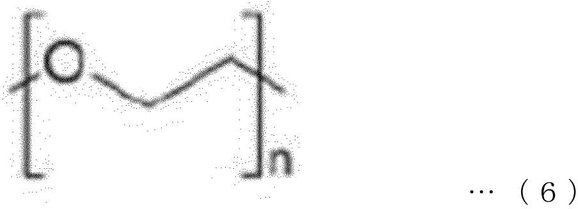
本発明の一実施形態において、連結ユニットは、1~12個の―OCH2CH2―ユニット、または5~12個の―OCH2CH2―ユニット、または6~12個の―OCH2CH2―ユニットを有していてもよい。 In one embodiment of the invention, the coupling unit is 1-12 —OCH 2 CH 2 -units, or 5-12 —OCH 2 CH 2 -units, or 6-12 —OCH 2 CH 2 units. -You may have a unit.
本発明の一実施形態において、連結ユニットは、―(CH2CH2X)w―であってもよい。ここで、Xは、単一結合、―O―、(C1―C8)アルキレン、または―NR21―であり、R21は、水素、(C1―C6)アルキル、(C1―C6)アルキル(C6―C20)アリール、または(C1―C6)アルキル(C3―C20)ヘテロアリールであり、wは、1~20の整数であり、具体的には、1、3、6、または12である。 In one embodiment of the invention, the linking unit may be − (CH 2 CH 2 X) w—. Here, X is a single bond, —O—, (C 1 —C 8 ) alkylene, or —NR 21— , and R 21 is hydrogen, (C 1 − C 6 ) alkyl, (C 1 −. C 6 ) Alkyl (C 6 -C 20 ) aryl, or (C 1 -C 6 ) Alkyl (C 3 -C 20 ) heteroaryl, where w is an integer of 1-20, specifically, 1, 3, 6, or 12.
一具体例において、Xは―O―であり、wは6~20の整数であってもよい。 In one embodiment, X may be —O— and w may be an integer of 6-20.
本発明の一実施形態において、結合ユニット(BU)は、1,3―双極子付加環化(1,3―dipolar cycloaddition)反応、ヘテロ―ディールス・アルダー(hetero―Diels―Alder)反応、求核置換(nucleophilic substitution)反応、非アルドール型カルボニル(non―aldol type carbonyl)反応、炭素―炭素多重結合への付加(addition to carbon―carbon multiple bond)、酸化(oxidation)反応またはクリック(click)反応により形成されたものであってもよい。 In one embodiment of the invention, the binding unit (BU) is a 1,3-dipolar cycloaddition reaction, a hetero-Deels-Alder reaction, a nucleophilic reaction. Substitution reaction, non-aldol type carbon reaction, addition to carbon-carbon multiple bond, oxidation reaction or click reaction. It may be formed.
本発明の一実施形態において、結合ユニット(BU)は、アセチレンとアジドとの反応、または非アルドール型カルボニル反応、例えば、アルデヒドもしくはケトン基とヒドラジンもしくはアルコキシアミンとの反応により形成されてもよい。 In one embodiment of the invention, the binding unit (BU) may be formed by a reaction of acetylene with an azide, or a non-aldol-type carbonyl reaction, eg, a reaction of an aldehyde or ketone group with a hydrazine or alkoxyamine.
本発明の一実施形態において、結合ユニット(BU)は、下記一般式1D~4Dのうちのいずれか1つで表されてもよい。 In one embodiment of the present invention, the coupling unit (BU) may be represented by any one of the following general formulas 1D to 4D.
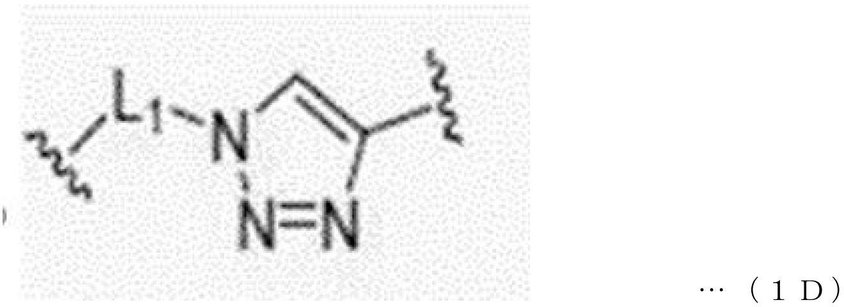

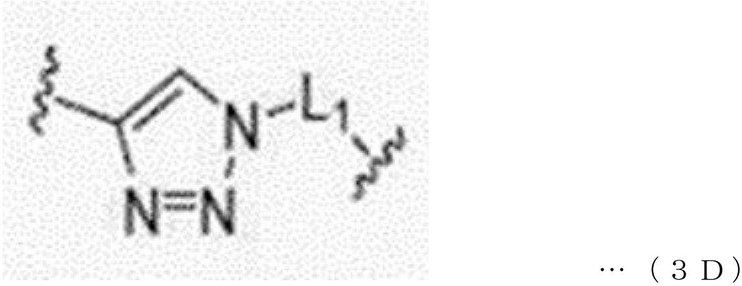

前記一般式1D~4Dにおいて、
L1は、単一結合または1~30個の炭素原子を有するアルキレンであり、
R11は、水素または1~10個の炭素原子を有するアルキルであり、具体的に、メチルであり、
L2は、1~30個の炭素原子を有するアルキレンである。
In the general formulas 1D to 4D,
L 1 is an alkylene having a single bond or 1 to 30 carbon atoms.
R 11 is hydrogen or an alkyl having 1 to 10 carbon atoms, specifically methyl.
L 2 is an alkylene having 1 to 30 carbon atoms.
本発明の一実施形態において、リンカーは、下記一般式4A~6Aのうちのいずれか1つのユニットを含んでいてもよい。 In one embodiment of the invention, the linker may comprise any one of the following general formulas 4A-6A.



前記一般式4A~6Aにおいて、
Vは、単一結合、―O―、―S―、―NR21―、―C(O)NR22―、―NR23C(O)―、―NR24SO2―、または―SO2NR25―を示し、好ましくは、―O―であり、R21~R25は、それぞれ独立して、水素、(C1―C6)アルキル、(C1―C6)アルキル(C6―C20)アリール、または(C1―C6)アルキル(C3―C20)ヘテロアリールを示し、
rは、1~10の整数、好ましくは、2または3であり、
pは、0~10の整数、好ましくは、1または2であり、
qは、1~20の整数、好ましくは、1~6の整数であり、
L1は単一結合である。
In the general formulas 4A to 6A,
V is a single bond, -O-, -S-, -NR 21- , -C (O) NR 22- , -NR 23 C (O)-, -NR 24 SO 2- , or -SO 2 NR. 25— , preferably —O—, where R 21 to R 25 are independently hydrogen, (C 1— C 6 ) alkyl, (C 1— C 6 ) alkyl (C 6 —C), respectively. 20 ) Aryl, or (C 1 -C 6 ) Alkyl (C 3 -C 20 ) Heteroaryl,
r is an integer from 1 to 10, preferably 2 or 3.
p is an integer from 0 to 10, preferably 1 or 2.
q is an integer of 1 to 20, preferably an integer of 1 to 6.
L 1 is a single bond.
本発明の一実施形態において、クリック化学反応は、抗体を修飾することなく、抗体の存在下で行われ得る、穏やかな条件下で行われ得る。クリック化学反応は、高い反応特異性を示す。したがって、抗体は、様々な官能基(例えば、アミン、カルボキシル、カルボキサミド、及びグアニジウム)を有しているにも拘わらず、クリック化学反応は、例えば、抗体のアミノ酸側鎖に影響を与えないながらも行われ得る。アジド基及びアセチレン基間のクリック化学反応は、抗体のアミノ酸側鎖を修飾することなく、抗体の存在下で起こることができる。一部の場合、反応物は、全体の反応効率を向上させるように選択される。例えば、アジド―アセチレンクリック化学反応は、高い歩留まり率にてトリアゾールを生成することができる(例えば、非特許文献1ないし3を参照、それぞれは参考文献としてこの明細書に取り込まれている)。 In one embodiment of the invention, the click chemistry can be carried out under mild conditions, which can be carried out in the presence of the antibody, without modifying the antibody. Click chemistry reactions show high reaction specificity. Thus, although the antibody has various functional groups (eg, amines, carboxyls, carboxamides, and guanidiums), the click chemistry reaction does not affect, for example, the amino acid side chains of the antibody. Can be done. The click chemical reaction between the azide group and the acetylene group can occur in the presence of the antibody without modifying the amino acid side chain of the antibody. In some cases, the reactants are selected to improve the overall reaction efficiency. For example, azido-acetylene click chemistry can produce triazoles with high yield rates (see, eg, Non-Patent Documents 1 to 3, each incorporated herein by reference).
アジド及びアセチレン官能基は、天然タンパク質には存在しない。したがって、アミノ酸側鎖、N―末端アミン、またはC末端カルボキシルのいずれもこれらの官能基を用いるクリック化学反応により影響を受けないことができる。 Azides and acetylene functional groups are not present in natural proteins. Therefore, any of the amino acid side chains, N-terminal amines, or C-terminal carboxyls can be unaffected by click chemistry using these functional groups.
本発明の一実施形態において、結合ユニット(BU)は、ポリアルキレングリコールユニットであってもよい。より具体的に、ポリエチレングリコールユニットまたはポリプロピレングリコールユニットであってもよい。 In one embodiment of the invention, the binding unit (BU) may be a polyalkylene glycol unit. More specifically, it may be a polyethylene glycol unit or a polypropylene glycol unit.
前記ポリエチレングリコールユニットは、下記一般式5または下記一般式6の構造を有していてもよい。

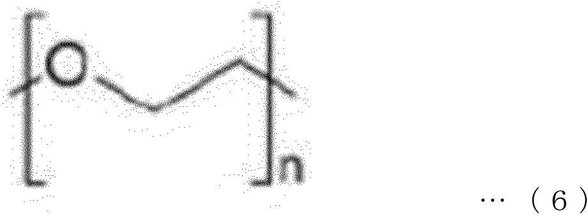
本発明の一実施形態において、結合ユニットは、1~12個の―OCH2CH2―ユニット、または5~12個の―OCH2CH2―ユニット、または6~12個の―OCH2CH2―ユニットを有していてもよい。 In one embodiment of the invention, the coupling unit is 1-12 —OCH 2 CH 2 -units, or 5-12 —OCH 2 CH 2 -units, or 6-12 —OCH 2 CH 2 . -You may have a unit.
本発明の一実施形態において、結合ユニット(BU)は、下記一般式1Gで表されるマレイミドユニットであってもよい。 In one embodiment of the present invention, the binding unit (BU) may be a maleimide unit represented by the following general formula 1G.

本発明の一実施形態において、リンカーは、イソプレニルユニットをさらに含んでいてもよい。 In one embodiment of the invention, the linker may further comprise an isoprenyl unit.
イソプレニルユニットは、下記一般式7で表されてもよい(前記式において、nは、2以上の整数である)。

本発明の一実施形態において、イソプレニルユニットは、イソプレノイドトランスフェラーゼの基質またはイソプレノイドトランスフェラーゼの生成物である。 In one embodiment of the invention, the isoprenyl unit is a substrate for isoprenoid transferase or a product of isoprenoid transferase.
本発明の一実施形態において、リンカーのイソプレニルユニットは、チオエーテル結合により抗体と共有結合し、チオエーテル結合は、抗体のシステインの硫黄原子を含む。 In one embodiment of the invention, the isoprenyl unit of the linker is covalently attached to the antibody by a thioether bond, the thioether bond comprising the sulfur atom of the cysteine of the antibody.
抗体のシステイン、例えば、抗体の重鎖または軽鎖のC末端にあるシステインは、イソプレニルユニットの炭素原子とともにチオエーテル結合を形成し、それにより、抗体をリンカーに共有結合で連結することができる。 The cysteine of the antibody, eg, the cysteine at the C-terminus of the heavy or light chain of the antibody, forms a thioether bond with the carbon atom of the isoprenyl unit, which allows the antibody to be covalently linked to the linker.
したがって、一具体例において、リンカーは、下記一般式1Eで表される1つのイソプレニルユニット、具体的には、2つのイソプレニルユニットを含んでいてもよく、これは、例えば、イソプレノイドトランスフェラーゼの生成物または基質の一部であって、イソプレノイドトランスフェラーゼにより認識され得る。 Thus, in one embodiment, the linker may comprise one isoprenyl unit, specifically two isoprenyl units, represented by the following general formula 1E, which may include, for example, the production of isoprenoid transferase. It is part of a substance or substrate and can be recognized by isoprenoid transferase.

一具体例において、分岐ユニットは、オキシムを含み、イソプレニルユニットは、オキシムと抗体とを共有結合で連結することができる。 In one embodiment, the branching unit comprises an oxime and the isoprenyl unit is capable of covalently linking the oxime to the antibody.
本発明の一実施形態において、リンカーは、チオエーテル結合により共有結合でリガンドに結合し、チオエーテル結合は、リガンドのシステインの硫黄原子を含んでいてもよい。 In one embodiment of the invention, the linker is covalently attached to the ligand by a thioether bond, which may contain the sulfur atom of the cysteine of the ligand.
本発明の一実施形態において、リガンドは、イソプレノイドトランスフェラーゼにより認識され得るアミノ酸モチーフを含んでいてもよい。例えば、少なくとも1つの抗体のC末端は、イソプレノイドトランスフェラーゼにより認識され得るアミノ酸モチーフを含んでいてもよい(例えば、リガンド―薬物複合体を形成する前に基質として、または、例えば、リガンド―薬物複合体を形成した後に生成物として)。リガンドは、抗体のペプチド鎖をアミノ酸モチーフに連結するアミノ酸またはアミノ酸のストレッチなどのスペーサーをさらに含んでいてもよい。スペーサーは、1~20個の連続したアミノ酸、具体的に、7またはそれ以上のアミノ酸から構成されてもよい。グリシン及びプロリンは、スペーサーのための好適なアミノ酸であり、約7個のグリシンの一連の任意の組み合わせとして用いらてもよい。 In one embodiment of the invention, the ligand may comprise an amino acid motif that can be recognized by isoprenoid transferase. For example, the C-terminus of at least one antibody may contain an amino acid motif that can be recognized by an isoprenoid transferase (eg, as a substrate prior to forming a ligand-drug complex, or, for example, a ligand-drug complex). As a product after forming). The ligand may further comprise an amino acid or a spacer such as an amino acid stretch that links the peptide chain of the antibody to the amino acid motif. The spacer may be composed of 1 to 20 consecutive amino acids, specifically 7 or more amino acids. Glycine and proline are suitable amino acids for spacers and may be used as any combination of a series of about 7 glycines.
一具体例において、リガンドのC末端は、アミノ酸配列GGGGGGGCVIMを含む。リガンドは、例えば、リガンド―薬物複合体に含まれていないリガンドの形態と関連して、カルボキシ末端への付加または欠失を含んでいてもよい。 In one embodiment, the C-terminus of the ligand comprises the amino acid sequence GGGGGGGGCVIM. The ligand may include, for example, an addition or deletion to the carboxy terminus in connection with the form of the ligand not included in the ligand-drug complex.
イソプレノイドトランスフェラーゼの例としては、ファルネシルタンパク質トランスフェラーゼ(FTase)及びゲラニルゲラニルトランスフェラーゼ(GGTase)が挙げられ、これは、標的タンパク質の少なくとも1つのC末端システインにファルネシルまたはゲラニル―ゲラニル基が伝達されることを触媒することができる。GGTaseは、GGTaseIまたはGGTaseIIに分類され得る。FTase及びGGTaseIは、CAAXモチーフを認識することができ、GGTaseIIは、XXCC、XCXC、またはCXXモチーフを認識することができ、ここで、Cは、システインを、Aは脂肪族アミノ酸(例えば、イソロイシン、バリン、メチオニン、ロイシン)を示し、それぞれのXは、独立して、例えば、グルタミン、グルタミン酸、セリン、システイン、メチオニン、アラニン、またはロイシンを示す(非特許文献7ないし10を参照、それぞれは、全体的に、この明細書に参考文献として取り込まれている)。 Examples of isoprenoid transferases include farnesyl protein transferase (FTase) and geranylgeranyl transferase (GGTase), which catalyze the transfer of farnesyl or geranyl-geranyl groups to at least one C-terminal cysteine of the target protein. be able to. GGTase can be classified as GGTase I or GGTase II. FTase and GGTaseI can recognize the CAAX motif, GGTaseII can recognize the XXCC, XCCXC, or CXX motif, where C is cysteine and A is an aliphatic amino acid (eg, isoleucine, etc.). Valin, methionine, leucine), where each X independently indicates, for example, glutamine, glutamic acid, serine, cysteine, methionine, alanine, or leucine (see Non-Patent Documents 7-10, each in whole). Incorporated as a reference in this specification).
本発明に係るリガンド―薬物複合体は、アミノ酸モチーフ、例えば、CYYX、XXCC、XCXC、またはCXX、好ましくは、CYYXを含んでいてもよい(ここで、Cは、システインを、Yは、それぞれ独立して、脂肪族アミノ酸、例えば、ロイシン、イソロイシン、バリン、及び/またはメチオニンを、Xは、イソプレノイドトランスフェラーゼの基質特異性を決めるアミノ酸、例えば、グルタミン、グルタミン酸、セリン、システイン、メチオニン、アラニン、及び/またはロイシンを示す)。 The ligand-drug complex according to the present invention may contain an amino acid motif such as CYYX, XXCC, XCCXC, or CXX, preferably CYYX (where C is cysteine and Y is independent of each other. Then, aliphatic amino acids such as leucine, isoleucine, valine, and / or methionine are used, and X is an amino acid that determines the substrate specificity of isoprenoid transferase, such as glutamine, glutamic acid, serine, cysteine, methionine, alanine, and /. Or indicate leucine).
様々な供給源からのイソプレノイドトランスフェラーゼが使用可能である。例えば、イソプレノイドトランスフェラーゼは、ヒト、動物、植物、バクテリア、ウィルス、または他の供給源から得られる。いくつかの具体例において、天然由来のイソプレノイドトランスフェラーゼが用いられる。いくつかの具体例において、天然的に修飾された、または人工的に修飾されたイソプレノイドトランスフェラーゼが用いられてもよい。例えば、イソプレノイドトランスフェラーゼは、1つ以上のアミノ酸置換、添加及び/または欠失を含んでいてもよく/含んでいてもよいか、あるいは、イソプレノイドトランスフェラーゼは、ヒスチジン―タグ、GST、GFP、MBP、CBP、Isopeptag,BCCP、Myc―tag、カルモジュリン―tag、FLAG―tag、HA―tag、マルトース結合タンパク質―tag、Nus―tag、グルタチオン―S―トランスフェラーゼ―tag、緑色蛍光タンパク質―tag、チオレドキシン―tag、S―tag、Softag 1、Softag 3、Strep―tag、SBP―tag、Ty―tagなどの少なくとも1つの添加により修飾されてもよい。 Isoprenoid transferases from various sources can be used. For example, isoprenoid transferases are obtained from humans, animals, plants, bacteria, viruses, or other sources. In some embodiments, naturally occurring isoprenoid transferases are used. In some embodiments, naturally modified or artificially modified isoprenoid transferases may be used. For example, the isoprenoid transferase may / or may contain one or more amino acid substitutions, additions and / or deletions, or the isoprenoid transferase may contain histidine-tag, GST, GFP, MBP, CBP. , Isopeptag, BCCP, Myc-tag, Carmodulin-tag, FLAG-tag, HA-tag, Maltose-binding protein-tag, Nus-tag, glutathione-S-transferase-tag, green fluorescent protein-tag, thioredoxin-tag, S -It may be modified by the addition of at least one such as tag, Softtag 1, Softtag 3, Strip-tag, SBP-tag, Ty-tag and the like.
イソプレノイドトランスフェラーゼは、イソ基質(isosubstrate)及び/または基質を認識する。ターミノロジーのイソ基質とは、化学的な修飾を含む基質類似体のことをいう。イソプレノイドトランスフェラーゼは、抗体のC末端において特定のアミノ酸モチーフ(例えば、CAAXモチーフ)をアルキル化させることができる(例えば、非特許文献11ないし14を参照、それぞれは、全体的に、この明細書に参考文献として取り込まれている)。機能化した抗体は、C末端システインをアルキル化させ得るイソプレノイドトランスフェラーゼ及びイソ基質を用いて生成されてもよい。 Isoprenoid transferase recognizes an isosubstrate and / or a substrate. Terminology iso-substrates are substrate analogs that contain chemical modifications. Isoplenoid transferases can alkylate specific amino acid motifs (eg, CAAX motifs) at the C-terminus of the antibody (see, eg, Non-Patent Documents 11-14, each of which is generally referenced herein. It has been incorporated as a document). The functionalized antibody may be produced using an isoprenoid transferase and an isosubstrate capable of alkylating the C-terminal cysteine.
一具体例において、イソ基質は、下記一般式2Eで表される化合物であってもよい。 In one specific example, the iso substrate may be a compound represented by the following general formula 2E.

C末端CAAXモチーフのシステインは、イソプレノイドトランスフェラーゼを用いてイソ基質と結合されてもよい。 The C-terminal CAAX motif cysteine may be attached to the isosubstrate using an isoprenoid transferase.
一具体例において、モチーフの一部、例えば、AAXは、プロテアーゼにより、例えば、イソプレノイドが結合されたシステインのみを残して順次的に除去されてもよい。システインは、例えば、酵素によりカルボキシル末端において任意にメチル化されてもよい(例えば、非特許文献5を参照、全体的に、この明細書に参考文献として取り込まれている)。 In one embodiment, a portion of the motif, eg, AAX, may be sequentially removed by a protease, for example, leaving only the cysteine to which the isoprenoid is bound. Cysteine may be optionally methylated, for example, at the carboxyl terminus by an enzyme (see, eg, Non-Patent Document 5, which is incorporated herein by reference in its entirety).
本発明の一実施形態によれば、活性剤は、切断可能な(cleavable)または切断不可能な(non―cleavable)結合、加水分解または非加水分解結合でリンカーに連結されてもよい。本発明の一実施形態において、活性剤は、第1のリンカー、例えば、分岐されたリンカー(BL1、(BL2、BL3)に連結されてもよい。 According to one embodiment of the invention, the activator may be linked to the linker with a cleaveable or non-cleavable bond, hydrolyzed or non-hydrolyzed bond. In one embodiment of the invention, the activator may be linked to a first linker, eg, a branched linker (BL 1 , (BL 2 , BL 3 )).
本発明の一実施形態において、活性剤は、トリガーユニット(Trigger Unit;TU)でリンカーに連結されてもよい。トリガーユニットは、活性剤をADCsから放出するために切断される自己犠牲基であると理解されてもよい。 In one embodiment of the invention, the activator may be linked to the linker with a trigger unit (TU). The trigger unit may be understood to be a self-sacrificing group that is cleaved to release the activator from the ADCs.
本発明の一実施形態において、トリガーユニットは、下記一般式1Fで表されてもよい。 In one embodiment of the present invention, the trigger unit may be represented by the following general formula 1F.
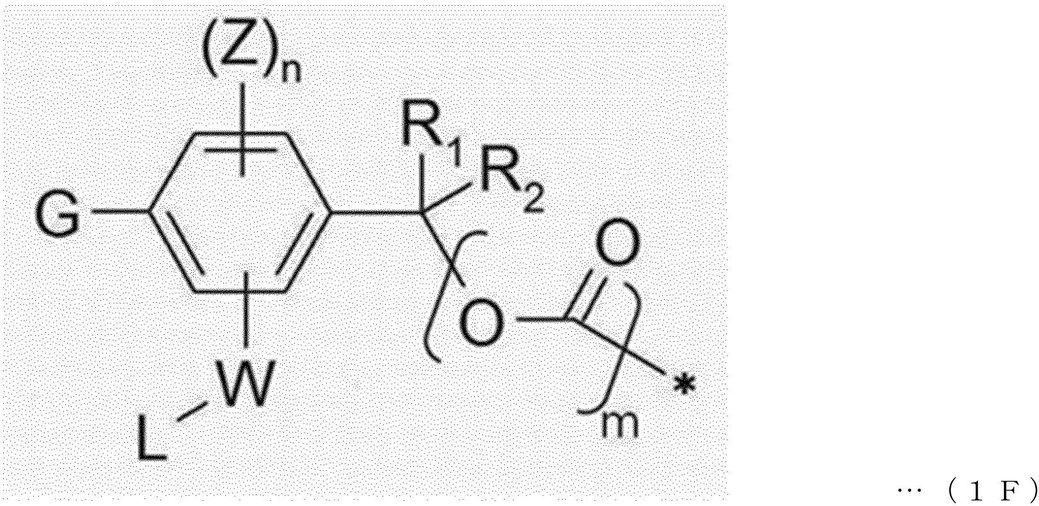
前記式において、
Gは、糖(sugar)、糖酸(sugar acid)、または糖誘導体(sugar derivatives)であり、
Wは、―C(O)―、―C(O)NR'―、―C(O)O―、―S(O)2NR'―、―P(O)R''NR'―、―S(O)NR'―、または―PO2NR'―であり、C(O)、S、またはPがフェニル環と直結される場合、R'及びR''は、それぞれ独立して、水素、(C1―C8)アルキル、(C3―C8)シクロアルキル、(C1―C8)アルコキシ、(C1―C8)アルキルチオ、モノ―またはジ―(C1―C8)アルキルアミノ、(C3―C20)ヘテロアリール、または(C6―C20)アリールであり、
各Zは、それぞれ独立して、水素、(C1―C8)アルキル、ハロゲン、シアノまたはニトロであり、
nは、1~3の整数であり、
mは、0または2であり、
R1及びR2は、それぞれ独立して、水素、(C1―C8)アルキルまたは(C3―C8)シクロアルキルであるか、あるいは、R1及びR2は、これらが付着した炭素原子とともに(C3―C8)シクロアルキル環を形成し、
Lは、リンカーとの連結を意味し、
*印は、活性剤(薬物またはトキシン)と連結されるサイトを示す。
In the above formula
G is sugar, sugar acid, or sugar derivatives.
W is -C (O)-, -C (O) NR'-, -C (O) O-, -S (O) 2 NR'-, -P (O) R''NR'-,- If S (O) NR'-or -PO 2 NR'-and C (O), S, or P is directly linked to the phenyl ring, then R'and R'' are independent hydrogens, respectively. , (C 1 -C 8 ) alkyl, (C 3 -C 8 ) cycloalkyl, (C 1 -C 8 ) alkoxy, (C 1 -C 8 ) alkyl thio, mono- or di- (C 1 -C 8 ). Alkoxyamino, (C 3 -C 20 ) heteroaryl, or (C 6 -C 20 ) aryl,
Each Z is independently hydrogen, ( C1 - C8) alkyl, halogen, cyano or nitro.
n is an integer of 1 to 3 and
m is 0 or 2 and
R 1 and R 2 are independently hydrogen, (C 1 -C 8 ) alkyl or (C 3 -C 8 ) cycloalkyl, respectively, or R 1 and R 2 are carbons to which they are attached. Forming a (C 3 -C 8 ) cycloalkyl ring with the atom,
L means the connection with the linker,
* Marks indicate sites linked to the active agent (drug or toxin).
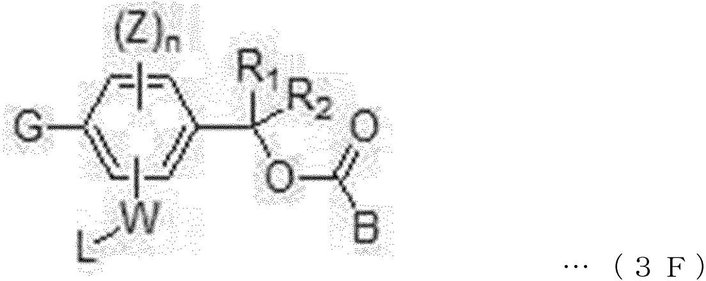
一具体例において、トリガーユニットは、下記一般式3Fまたは一般式4Fで表されてもよい。 In one specific example, the trigger unit may be represented by the following general formula 3F or general formula 4F.

一具体例において、前記糖(sugar)、糖酸(sugar acid)は、単糖類であってもよい。 In one specific example, the sugar and sugar acid may be monosaccharides.
一具体例において、前記Gは、下記一般式2Fで表されてもよい。 In one specific example, the G may be represented by the following general formula 2F.

前記一般式2Fにおいて、
R3は、水素またはカルボキシル保護基であり、
R4は、それぞれ独立して、水素またはヒドロキシル保護基である。
In the general formula 2F,
R 3 is a hydrogen or carboxyl protecting group and is
R4 is an independent hydrogen or hydroxyl protecting group, respectively.
前記カルボキシル保護基は、例えば、有機合成過程においてカルボン酸をマスキングするための任意の好適な保護基であってもよい。例えば、メチル、メトキシメチル、メチルチオメチル、テトラヒドロピラニル、ベンジルオキシメチル、フェナシル、N―フタルイミドメチル、2,2,2―トリクロロエチル、2―ハロエチル、2―(p―トルエンスルホニル)エチル、t―ブチル、シンナミル、ベンジル、トリフェニルメチル、ビス(o―ニトロフェニル)メチル、9―アントリルメチル、2―(9、10―ジオキソ)アントリルメチル、ピペロニル、2―トリメチルシリルエチル、トリメチルシリル、またはt―ブチルジメチルシリルであってもよい。一具体例において、全体のモイエティR3―OC(=O)―は、2―アルキル―1,3―オキサゾリニルなどのカルボキシル―マスキングモイエティにより代替されてもよい。 The carboxyl protecting group may be, for example, any suitable protecting group for masking the carboxylic acid in the process of organic synthesis. For example, methyl, methoxymethyl, methylthiomethyl, tetrahydropyranyl, benzyloxymethyl, phenacyl, N-phthalimidemethyl, 2,2,2-trichloroethyl, 2-haloethyl, 2- (p-toluenesulfonyl) ethyl, t- Butyl, cinnamyl, benzyl, triphenylmethyl, bis (o-nitrophenyl) methyl, 9-anthrylmethyl, 2- (9,10-dioxo) anthrylmethyl, piperonyl, 2-trimethylsilylethyl, trimethylsilyl, or t- It may be butyldimethylsilyl. In one embodiment, the entire Moeti R 3 -OC (= O)-may be replaced by a carboxyl-masking yeti such as 2-alkyl-1,3-oxazolinyl.
前記ヒドロキシル保護基は、例えば、有機合成過程においてヒドロキシル基をマスキングするための任意の好適な保護基であってもよい。例えば、アセチル、メチル、エトキシエチル、ベンゾイル、ベンジル、4―メトキシベンジル、3、4―ジメトキシベンジル、テトラヒドロピラニル(THP)、テトラヒドロフラニル(THF)、tert―ブチルジメチルシリル(TBDMS)、トリメチルシリル(TMS)、トリエチルシリル(TES)、トリイソプロピルシリル(TIPS)、tert―ブチルジフェニルシリル(TBDPS)、トリ―イソプロピルシリルオキシメチル(TOM)、β―メトキシエトキシメチル(MEM)、メトキシメチル(MOM)、アリルまたはトリチルであってもよい。 The hydroxyl protecting group may be, for example, any suitable protecting group for masking the hydroxyl group in the process of organic synthesis. For example, acetyl, methyl, ethoxyethyl, benzoyl, benzyl, 4-methoxybenzyl, 3,4-dimethoxybenzyl, tetrahydropyranyl (THP), tetrahydrofuranyl (THF), tert-butyldimethylsilyl (TBDMS), trimethylsilyl (TMS). ), Triethylsilyl (TES), Triisopropylsilyl (TIPS), tert-butyldiphenylsilyl (TBDPS), Tri-isopropylsilyloxymethyl (TOM), β-methoxyethoxymethyl (MEM), methoxymethyl (MOM), allyl. Alternatively, it may be trityl.
一具体例において、前記一般式2FのR3は水素であり、各R4は水素であってもよい。 In one specific example, R 3 of the general formula 2F may be hydrogen, and each R 4 may be hydrogen.
一具体例において、前記一般式1FのWは―C(O)NR'―であり、ここで、C(O)がフェニル環と連結され、NR'は、リンカー、例えば、第1のリンカー(または、分岐されたリンカー)と連結されてもよい。 In one embodiment, W in the general formula 1F is —C (O) NR', where C (O) is linked to the phenyl ring and NR'is a linker, eg, a first linker ( Alternatively, it may be concatenated with a branched linker).
一具体例において、前記一般式1FのZは水素であり、nは3であってもよい。 In one specific example, Z in the general formula 1F may be hydrogen and n may be 3.
一具体例において、前記一般式1FのR1及びR2はそれぞれ水素であってもよい。 In one specific example, R 1 and R 2 of the general formula 1F may be hydrogen, respectively.
一具体例において、トリガーユニットは、前記一般式1Fで表され、Wは―C(O)NR'―であり、ここで、C(O)がフェニル環と連結され、NR'は、第1のリンカー(または、分岐されたリンカー)と連結され、各Zは水素であり、nは3であり、mは1であり、R1及びR2はそれぞれ水素であってもよい。このとき、Gは、前記一般式2Fで表される化合物であってもよい。 In one embodiment, the trigger unit is represented by the general formula 1F, where W is —C (O) NR', where C (O) is linked to the phenyl ring and NR'is the first. In conjunction with the linker (or branched linker) of, each Z may be hydrogen, n may be 3, m may be 1, and R 1 and R 2 may be hydrogen, respectively. At this time, G may be a compound represented by the general formula 2F.
本発明の一実施形態において、活性剤は、化学療法剤またはトキシンであってもよい。活性剤は、薬物、トキシン、親和性リガンド(affinity ligand)、検出プローブ(detection probe)またはこれらのうちの任意のものの組み合わせであってもよい。 In one embodiment of the invention, the activator may be a chemotherapeutic agent or a toxin. The activator may be a drug, a toxin, an affinity ligand, a detection probe or any combination thereof.
また、活性剤は、免疫調節化合物、抗癌剤、抗ウィルス剤、抗菌剤、抗真菌剤、抗寄生虫剤またはこれらの組み合わせであってもよく、以下において列挙された活性剤のうちから選択的に用いることができる: Further, the activator may be an immunomodulatory compound, an anticancer agent, an antiviral agent, an antibacterial agent, an antifungal agent, an antiparasitic agent, or a combination thereof, and may be selectively selected from the activators listed below. Can be used:
(a)エルロチニブ(erlotinib)、ボルテゾミブ(bortezomib)、フルベストラント(fulvestrant)、スーテント(sutent)、レトロゾール(letrozole)、メシル酸イマチニブ(imatinibmesylate)、PTK787/ZK 222584、オキサリプラチン(oxaliplatin)、5―フルオロウラシル(5―fluorouracil)、ロイコボリン(leucovorin)、ラパマイシン(rapamycin)、ラパチニブ(lapatinib)、ロナファルニブ(lonafarnib)、ソラフェニブ(sorafenib)、ゲフィチニブ(gefitinib)、AG1478、AG1571、チオテパ(thiotepa)、シクロホスファミド(cyclophosphamide)、ブスルファン(busulfan)、インプロスルファン(improsulfan)、ピポスルファン(piposulfan)、ベンゾドパ(benzodopa)、カルボコン(carboquone)、メツレドパ(meturedopa)、ウレドパ(uredopa)、エチレンイミン(ethylenimine)、アルトレタミン(altretamine)、トリエチレンメラミン(triethylenemelamine)、トリエチレンホスホラミド(trietylenephosphoramide)、トリエチレンチオホスホラミド(triethiylenethiophosphoramide)、トリメチローロメラミン(trimethylolomelamine)、ブラタシン(bullatacin)、ブラタシノン(bullatacinone)、カンプトテシン(camptothecin)、トポテカン(topotecan)、ブリオスタチン(bryostatin)、カリスタチン(callystatin)、CC―1065、アドゼレシン(adozelesin)、カルゼルシン(carzelesin)、ビゼレシン(bizelesin)、クリプトフィシン1(cryptophycin 1)、クリプトフィシン8(cryptophycin8)、ドラスタチン(dolastatin)、デュオカルマイシン(duocarmycin)、KW―2189、CB1―TM1、エリュテロビン(eleutherobin)、パンクラチスタチン(pancratistatin)、サルコジクチイン(sarcodictyin)、スポンジスタチン(spongistatin)、クロラムブシル(chlorambucil)、クロルナファジン(chlornaphazine)、クロロホスファミド(cholophosphamide)、エストラムスチン(estramustine)、イホスファミド(ifosfamide)、メクロレタミン(mechlorethamine)、メルファラン(melphalan)、ノベンビチン(novembichin)、フェネステリン(phenesterine)、プレドニムスチン(prednimustine)、トロホスファミド(trofosfamide)、ウラシルマスタード(uracilmustard)、カルムスチン(carmustine)、クロロゾトシン(chlorozotocin)、フォテムスチン(fotemustine)、ロムスチン(lomustine)、ニムスチン(nimustine)、ラニムヌスチン(ranimnustine)、カリケアマイシン(calicheamicin)、カリケアマイシンガンマ1(calicheamicin gamma 1)、カリケアマイシンオメガ1(calicheamicin omega 1)、ダイネミシン(dynemicin)、ダイネミシンA(dynemicin A)、クロドロネート(clodronate)、エスペラミシン(esperamicin)、ネオカルチノスタチン発色団(neocarzinostatinchromophore)、アクラシノマイシン(aclacinomysins)、アクチノマイシン(actinomycin)、アンチマイシン(antrmycin)、アザセリン(azaserine)、ブレオマイシン(bleomycins)、カクチノマイシン(cactinomycin)、カラビシン(carabicin)、カルニノマイシン(carninomycin)、カルジノフィリン(carzinophilin)、クロモマイシン(chromomycins)、ダクチノマイシン(dactinomycin)、ダウノルビシン(daunorubicin)、デトルブシン(detorubucin)、6―ジアゾ―5―オキソ―L―ノルロイシン(6―diazo―5―oxo―L―norleucine)、ドキソルビシン(doxorubicin)、モルホリノ―ドキソルビシン(morpholino―doxorubicin)、シアノモルホリノ―ドキソルビシン(cyanomorpholino―doxorubicin)、2―ピロリノ―ドキソルビシン(2―pyrrolino―doxorubucin)、リポソーマルドキソルビシン(liposomaldoxorubicin)、デオキシドキソルビシン(deoxydoxorubicin)、エピルビシン(epirubicin)、エソルビシン(esorubicin)、マルセロマイシン(marcellomycin)、マイトマイシンC(mitomycin C)、ミコフェノール酸(mycophenolicacid)、ノガラマイシン(nogalamycin)、オリボマイシン(olivomycins)、ペプロマイシン(peplomycin)、ポトフィロマイシン(potfiromycin)、ピュロマイシン(puromycin)、クエラマイシン(quelamycin)、ロドルビシン(rodorubicin)、ストレプトミグリン(streptomigrin)、ストレプトゾシン(streptozocin)、ツベルシジン(tubercidin)、ウベニメクス(ubenimex)、ジノスタチン(zinostatin)、ゾルビシン(zorubicin)、5―フルオロウラシル(5―fluorouracil)、デノプテリン(denopterin)、メトトレキサート(methotrexate)、プテロプテリン(pteropterin)、トリメトレキサート(trimetrexate)、フルダラビン(fludarabine)、6―メルカプトプリン(6―mercaptopurine)、チアミプリン(thiamiprine)、チグアニン(thiguanine)、アンシタビン(ancitabine)、アザシチジン(azacitidine)、6―アザウリジン(6―azauridine)、カルモフール(carmofur)、シタラビン(cytarabine)、ジデオキシウリジン(dideoxyuridine)、ドキシフルリジン(doxifluridine)、エノシタビン(enocitabine)、フロクスウリジン(floxuridine)、カルステロン(calusterone)、ドロモスタノロン(dromostanolone)、プロピオナート(propionate)、エピチオスタノール(epitiostanol)、メピチオスタン(mepitiostane)、テストラクトン(testolactone)、アミノグルテチミド(aminoglutethimide)、ミトタン(mitotane)、トリロスタン(trilostane)、ホリン酸(folinicacid)、アセグラトン(aceglatone)、アルドホスファミドグリコシド(aldophosphamideglycoside)、アミノレブリン酸(aminolevulinicacid)、エニルウラシル(eniluracil)、アムサクリン(amsacrine)、ベストラブシル(bestrabucil)、ビサントレン(bisantrene)、エダトラキサート(edatraxate)、デフォファミン(defofamine)、デメコルチン(demecolcine)、ジアジクオン(diaziquone)、エルフォルニチン(elfornithine)、酢酸エリプチニウム(elliptiniumacetate)、エトグルシド(etoglucid)、硝酸ガリウム(galliumnitrate)、ヒドロキシウレア(hydroxyurea)、レンチナン(lentinan)、ロニダイニン(lonidainine)、メイタンシン(maytansine)、アンサミトシン(ansamitocins)、ミトグアゾン(mitoguazone)、ミトキサントロン(mitoxantrone)、モピダンモール(mopidanmol)、ニトラエリン(nitraerine)、ペントスタチン(pentostatin)、フェナメット(phenamet)、ピラルビシン(pirarubicin)、ロソキサントロン(losoxantrone)、2―エチルヒドラジド(2―ethylhydrazide)、プロカルバジン(procarbazine)、多糖類K(polysaccharide―k)、ラゾキサン(razoxane)、リゾキシン(rhizoxin)、シゾフィラン(sizofiran)、スピロゲルマニウム(spirogermanium)、テヌアゾン酸(tenuazonicacid)、トリアジクオン(triaziquone)、2,2',2''―トリクロロトリエチルアミン(2,2',2''―trichlorotriethylamine)、T―2トキシン、ベラクリンA(verracurin A)、ロリジンA(roridin A)、アングイジン(anguidine)、ウレタン(urethane)、ビンデシン(vindesine)、ダカルバジン(dacarbazine)、マンノムスチン(mannomustine)、ミトブロニトール(mitobronitol)、ミトラクトール(mitolactol)、ピポブロマン(pipobroman)、ガシトシン(gacytosine)、アラビノシド(arabinoside)、シクロホスファミド(cyclophosphamide)、チオテパ(thiotepa)、パクリタキセル(paclitaxel)、パクリタキセル、パクリタキセル・アルブミン安定化ナノ粒子製剤(albumin―engineerednanoparticleformulationofpaclitaxel)、ドセタキセル、クロラムブシル、ゲムシタビン、6―チオグアニン、メルカプトプリン、シスプラチン、カルボプラチン(carboplatin)、ビンブラスチン(vinblastine)、白金(platinum)、エトポシド(etoposide)、イホスファミド(ifosfamide)、ミトキサントロン(mitoxantrone)、ビンクリスチン、ビノレルビン(vinorelbine)、ノバントロン(novantrone)、テニポシド(teniposide)、エダトレキサート(edatrexate)、ダウノマイシン(daunomycin)、アミノプテリン(aminopterin)、ゼローダ(xeloda)、イバンドロネート(ibandronate)、CPT―11、トポイソメラーゼ阻害剤RFS2000、ジフルオロメチルオルニチン(difluoromethylornithine)、レチノイン酸(retinoicacid)、カペシタビン(capecitabine)、またはこの薬学的に許容される塩、溶媒和物または酸;
(b)モノカイン(monokine)、リンフォカイン(lympokine)、ポリペプチドホルモン(traditional polypeptide hormone)、副甲状腺ホルモン(parathyroidhormone)、チロキシン(thyroxine)、リラキシン(relaxin)、プロリラキシン(prorelaxin)、糖タンパクホルモン(glycoproteinhormone)、卵胞刺激ホルモン(follicle stimulating hormone)、甲状腺刺激ホルモン(thyroid stimulating hormone)、黄体形成ホルモン(luteinizing hormone)、肝成長因子線維芽細胞成長因子(hepatic growth factor fibroblast growth factor)、プロラクチン(prolactin)、胎盤性ラクトジェン(placental lactogen)、腫瘍壊死因子―α(tumor necrosis factor―α)、腫瘍壊死因子―β、ミューラリアン抑制物質(mullerian―inhibiting substance)、マウスゴナドトロピン連関ペプチド(mouse gonadotropin―associated peptide)、インヒビン(inhibin)、アクチビン(activin)、血管内皮増殖因子(vascular endothelial growth factor)、トロンボポエチン(thrombopoietin)、エリスロポイエチン(erythropoietin)、骨誘導因子(osteoinductive factor)、インターフェロン、インターフェロン―α、インターフェロン―β、インターフェロン―γ、コロニー刺激因子(colony stimulating factor;CSF)、マクロファージ―CSF、顆粒球―マクロファージ―CSF(granulocyte―macrophage―CSF)、顆粒球―CSF、インターロイキン(IL)、IL―1、IL―1α、IL―2、IL―3、IL―4、IL―5、IL―6、IL―7、IL―8、IL―9、IL―10、IL―11、IL―12、腫瘍壊死因子(tumor necrosis factor)、TNF―α、TNF―β、ポリペプチド因子、LIF、キットリガンド(kit ligand)、またはこれらの配合物;
(c)ジフテリアトキシン、ボツリヌストキシン、テタヌストキシン、ディセンテリトキシン、コレラトキシン、アマニチン、α―アマニチン、ピロロベンゾジアゼピン、ピロロベンゾジアゼピン誘導体、テトロドトキシン、ブレベトキシン(brevetoxin)、シガトキシン(ciguatoxin)、リシン(ricin)、AMトキシン、オーリスタチン(auristatin)、チューブリシン(tubulysin)、ゲルダナマイシン(geldanamycin)、メイタンシノイド(maytansinoid)、カリケアマイシン(calicheamycin)、ダウノマイシン(daunomycin)、ドキソルビシン(doxorubicin)、メトトレキサート(methotrexate)、ビンデシン(vindesine)、SG2285、ドラスタチン(dolastatin)、ドラスタチン類似体(dolastatin analog)、オーリスタチン(auristatin)、クリプトフィシン(cryptophycin)、カンプトテシン(camptothecin)、リゾキシン(rhizoxin)、リゾキシン誘導体(rhizoxin derivatives)、CC―1065、CC―1065、類似体または誘導体、デュオカルマイシン(duocarmycin)、エンジイン抗生物質(enediyne antibiotic)、エスペラミシン(esperamicin)、エポチロン(epothilone)、トキソイド(toxoid)、またはこれらの配合物;
(d)親和性リガンド(affinity ligand)と、ここで、親和性リガンドは、基質、阻害剤、活性化剤、神経伝達物質、放射性同位元素、またはこれらの配合物、
(e)放射能標識(radioactive label)、32P、35S、蛍光染料、電子密度反応剤(electron densere agent)、酵素、ビオチン、ストレプトアビジン(streptavidin)、ジゴキシゲニン(digoxigenin)、ハプテン(hapten)、免疫性タンパク質(immunogenic protein)、標的にコンプリメンタリーな配列を有する核酸分子(nucleic acid molecule with a sequence complementary to a target)またはこれらの配合物;
(f)免疫調節化合物(immunomodulatory compound)、抗癌剤(anti―canceragent)、抗ウィルス剤(anti―viral agent)、抗バクテリア剤(anti―bacterial agent)、抗カビ剤(anti―fungal agent)、及び抗寄生虫剤(anti―parasitic agent)、またはこれらの配合物;
(g)タモキシフェン(tamoxifen)、ラロキシフェン(raloxifene)、ドロロキシフェン(droloxifene)、4―ヒドロキシタモキシフェン(4―hydroxytamoxifen)、トリオキシフェン(trioxifene)、ケオキシフェン(keoxifene)、LY117018、オナプリストン(onapristone)またはトレミフェン(toremifene);
(h)4(5)―イミダゾール、アミノグルテチミド(aminoglutethimide)、酢酸メゲステロール(megestrol acetate)、エキセメスタン(exemestane)、レトロゾール(letrozole)またはアナストロゾール(anastrozole);
(i)フルタミド(flutamide)、ニルタミド(nilutamide)、ビカルタミド(bicalutamide)、ロイプロリド(leuprolide)、ゴセレリン(goserelin)、またはトロキサシタビン(troxacitabine);
(j)アロマターゼ阻害剤;
(k)プロテインキナーゼ阻害剤;
(l)脂質キナーゼ阻害剤;
(m)shRNA、siRNA、PNAまたはアンチセンスオリゴヌクレオチド(anti―senseoligonucleotide);
(n)リボザイム;
(o)ワクチン;
(p)血管新生阻害剤(anti―angiogenic agent)、並びに
(q)免疫抗癌剤(immuno―oncologytherapeutic agents)。
(A) erlotinib, bortezomib, fullvestrant, sutent, letrozole, imatiibmesylate, 5tk787 / ZK22 (PTK787 / ZK22) -Fluorouracil (5-fluorouracil), leucovorin, rapamycin, lapatinib, lonafarnib, sorafenib, sorafenib, sorafenib, gefitinib Cyclophosphamide, busulfan, improsulfan, piposulfan, benzodopa, carboquone, carbokuone, meturedopine, meturedope altretamine, triethylenemelamine, triethylenephosphoramide, triethylenethiophosphoramide, triethylenethiophosphamide, trimethylolomelamine, trimethyllomelamine, trimethyllomelamine, trimethylone Topotecan, briostatin, callystatin, CC-1065, adozelesin, carzelesin, bizelesin, bizelesin, cryptophycin 1 (cryptophycin) Dolastatin, duocarmycin, KW-2189, CB1-TM1, eleutherobin, pankratisstatin (pa) ncratistatin, sarcodictyin, spongistatin, chlorambucil, chlornaphazine, chlorophosfamide, chlorophosfamide, estramustine, estramustine mechlorethamine, melphalan, novenbitin, phenesterine, prednimustine, trofosfamide, uracilmasterd (urac) Lomustine, nimustine, ranimustine, calicheamicin, calicheamicin gamma 1 and calicheamicin gamma 1 A (dynemicin A), clodronate, esperamicin, neocarzinostatinchromophore, aclacinomysins, actinomycin, actinomycin, actinomycin (actinomycin) Bleomycin, cactinomycin, carabicin, carninomycin, carzinophylin, chromomycins, chromomycins, dactinomycin, dactinomycin, dactinomycin. (Detroubucin), 6-diazo-5-oxo-L-norleomycin (6-diazo-5-oxo-L-norleucine),ドキソルビシン(doxorubicin)、モルホリノ―ドキソルビシン(morpholino―doxorubicin)、シアノモルホリノ―ドキソルビシン(cyanomorpholino―doxorubicin)、2―ピロリノ―ドキソルビシン(2―pyrrolino―doxorubucin)、リポソーマルドキソルビシン(liposomaldoxorubicin)、デオキシドキソルビシン(deoxydoxorubicin) , Epirubicin, esorbicin, marcellomycin, mitomycin C, mycophenolicicid, nogalamycin, nogalamycin, olibomycin (Potfiromycin), puromycin, queelamycin, rodorubicin, streptomigriin, streptozocin, streptozinzocin, tubercidin, tuber , 5-Fluorouracil, denopterin, methotrexate, pteropterin, trimetrexate, fludalabine, 6-mer (fludarabine), 6-mer thiamipline, tiguanine, ancitabine, azacitidine, 6-azauridine, carmofur, carmofluur, citarabine, cytarabinide enocitabine), floxuridine, carsterone, doromo Stanolone (dromostanolone), propionate, epithiostanol, mepitiostane, testlactone (testolactone), aminoglutetimide (aminoglutethymide), aminoglutethymide, mitotane ), Aceglatone, aldophosphamideglycoside, aminolevulinicacid, eniluracil, amsacrine, amsacline, bestlabsyl dentra Defofamine, demecolcine, diaziquone, elfornitine, elliptiniumatete, etogluside, ethoglynylite, etoglucid, gallium nitrate , Lonidinine, maytansine, ansamitocins, mitoguazone, mitoxantrone, mopidantrone, mopidanmol, nitratainn, nitratainn (Pirarubicin), losoxantrone, 2-ethylhydrazide (2-ethylhydrazide), procarbazine, polysaccharide K (polysaccharide-k), razoxan (razoxane), lysoxin (razoxane), lysoxin (razoxane), lysoxin. (Spirogermanium), tenuazonicacid, triaziquone, 2,2', 2''-trick Lorotriethylamine (2,2', 2''-trichalotriethylamine), T-2 toxin, verraculin A, roridin A, anguidine, urethane, vinblastine, dacarbine (Dacarbazine), mannomustine, mitobronitol, mitolactol, pipobroman, gasitosine, gasytosine, arabinoside (arabinoside) ), Paclitaxel, paclitaxel-albumin-stabilized nanoparticle formulation (albumin-engineerednanoparticleformationofpaclitaxel), docetaxel, chlorambusyl, gemcitabine, 6-thioguanine, mercaptopurine, cisplatin, carboplatin (cylb) etoposide, ifofamide, mitoxantrone, vinblastine, vinorelbine, novantrone, teniposide, edatrexate, edatrexate, edatre xeloda), ibandronate, CPT-11, topoisomerase inhibitor RFS2000, difluoromethylornithine, retinoicacid, capecitabin (capecitabine) Or acid;
(B) Monokine, lymphokine, polypeptide hormone (traditional polypeptide hormone), parathyroidhormone, tyroxin (thyroxine), growth factor (lylexin), growth factor (reluxin), growth factor (reluxin) ), Follicle stimulating hormone, thyroid stimulating hormone, luteinizing hormone, liver growth factor, fibroblast growth factor, hepatic growth factor, tubor necrosis factor) Placemental lactogen, tumor necrosis factor-α (tumor necrosis factor-α), tumor necrosis factor-β, mullerian-inhibiting factor, mousegonadotropin-linked peptide, mouse Inhibin, activin, vascular endothelial growth factor, thrombopoietin, erythropoietin, erythropoietin, erythropoietin, erythropoietin, bone-inducing factor (ost) , Interferon-γ, colony stimulating factor (CSF), macrophages-CSF, granulocytes-macrophages-CSF (granulocyte-macropage-CSF), granulocytes-CSF, interleukin (IL), IL-1, IL -1α, IL-2, IL-3, IL-4, IL-5, IL-6, IL-7, IL-8, IL-9, IL-10, IL-11, IL-12, tumor necrosis factor (Tumor necrosis factor), TNF-α, TNF-β, polypeptide factor, LIF, kit ligan Kit rigid, or a combination of these;
(C) Difteriatoxin, botulinum toxin, tetanustoxin, decenteritoxin, choleratoxin, amanitin, α-amanitin, pyrolobenzodiazepine, pyrrolobenzodiazepine derivative, tetrodotoxin, brevetoxin, sigatoxin, cigatoxin, ciguatoxin. Toxin, auristatin, tubulysin, geldanamycin, maytansinoid, calicheamycin, daunomycin, daunomycin, doxorimetotolexin Vindesine, SG2285, dorastatin, dorastatin analog, auristatin, cryptophycin, camptothecin, camptothecin, lysoxin, lyzoxin, lyzin. -1065, CC-1065, analogs or derivatives, duocarmycin, endiyne antibiotics, esperamicin, epotylone, toxoids, or combinations thereof.
(D) Affinity ligand, where the affinity ligand is a substrate, an inhibitor, an activator, a neurotransmitter, a radioisotope, or a combination thereof.
(E) Radioactive label, 32P, 35S, fluorescent dye, electron density reactant, enzyme, biotin, streptavidin, digoxignin, hapten. A protein (immunogenic protein), a nucleic acid molecule having a complementary sequence to a target (nucleic acid molecular with a sex factory to a target) or a combination thereof;
(F) Immunomodulatory compound, anticancer agent (anti-cancerent), antiviral agent (anti-viral agent), antibacterial agent (anti-bacterial agent), antifungal agent (anti-fungal agent) Anti-parasitic agent, or a combination thereof;
(G) tamoxifen, raloxifene, droloxifene, 4-hydroxytamoxifen (4-hydroxytamoxifen), trioxyfen (trioxyfene), keoxyphen (keoxyphene), keoxyphen (keoxifene), keoxyphen (keoxifene) Toremifene;
(H) 4 (5) -imidazole, aminoglutethimide, megestrol acetate, exemestane, letrozole or anastrozole;
(I) Flutamide, nilutamide, bicalutamide, leuprorelin, goserelin, or troxacitabine;
(J) Aromatase inhibitor;
(K) Protein kinase inhibitor;
(L) Lipid kinase inhibitor;
(M) shRNA, siRNA, PNA or antisense oligonucleotide (anti-senseoligonucleotide);
(N) Ribozyme;
(O) Vaccine;
(P) angiogenesis inhibitors (anti-angiogenic agents), and (q) immuno-oncologytherapeutic agents.
前記免疫抗癌剤は、抗体、ペプチド、タンパク質、小分子、アジュバント、サイトカイン、腫瘍溶解ウィルス、ワクチン、二重―特異的な分子、細胞治療剤、チェックポイント抑制剤、STING作用剤(STING agonoist)、アデノシン受容体拮抗剤(Adenosine receptor antagonist)及びこれらの組み合わせから選択されてもよい。チェックポイント抑制剤は、PD―1、PD―L1及びCTLA―4から選択される受容体の抑制剤であってもよい。 The immunoanticancer agents include antibodies, peptides, proteins, small molecules, adjuvants, cytokines, tumor lytic viruses, vaccines, double-specific molecules, cytotherapeutic agents, checkpoint inhibitors, STING agonists, and adenosine. It may be selected from a receptor antagonist (Adenosine receptor antagonist) and a combination thereof. The checkpoint inhibitor may be a receptor inhibitor selected from PD-1, PD-L1 and CTLA-4.
本発明の一実施形態において、活性剤は、下記一般式15、下記一般式16、下記一般式17、下記一般式18、下記一般式19、下記一般式20、下記一般式21、下記一般式22、下記一般式23、下記一般式24、下記一般式25、下記一般式26、下記一般式27、下記一般式28、下記一般式29、下記一般式30または下記一般式31のいずれか1つであってもよい。 In one embodiment of the present invention, the activator is the following general formula 15, the following general formula 16, the following general formula 17, the following general formula 18, the following general formula 19, the following general formula 20, the following general formula 21, the following general formula 21. 22, The following general formula 23, the following general formula 24, the following general formula 25, the following general formula 26, the following general formula 27, the following general formula 28, the following general formula 29, the following general formula 30 or the following general formula 31 1 It may be one.
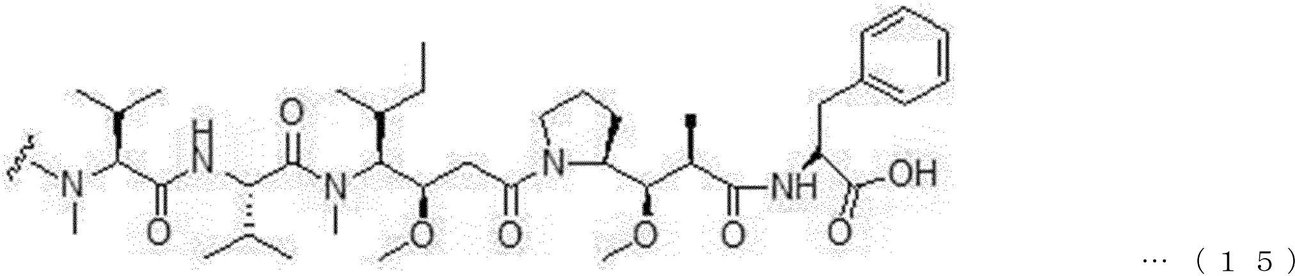
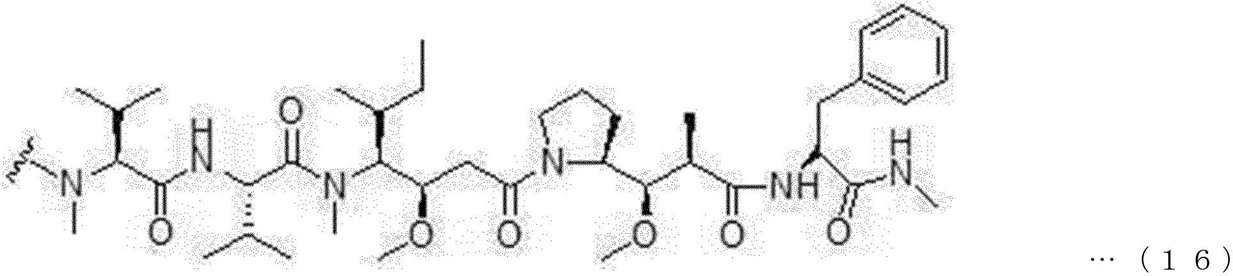

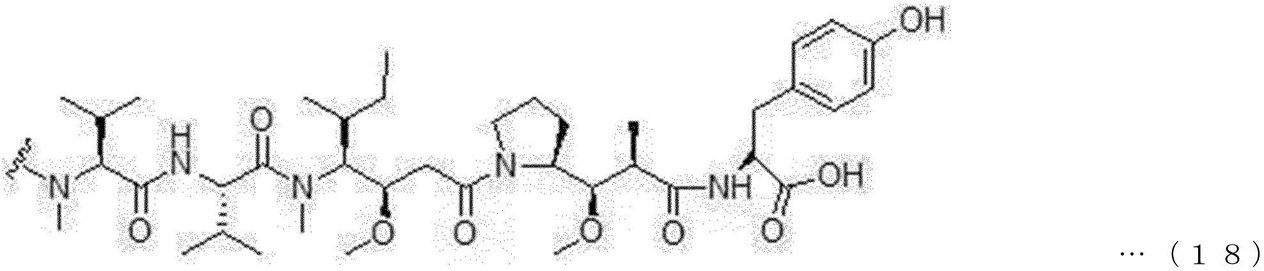

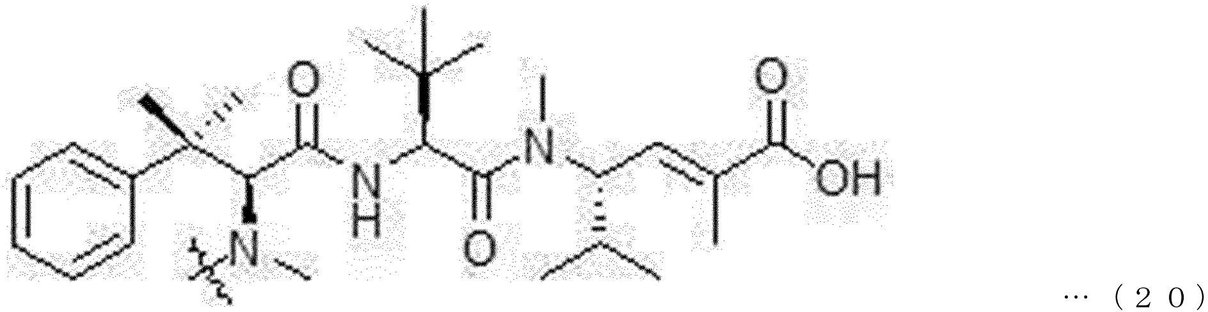




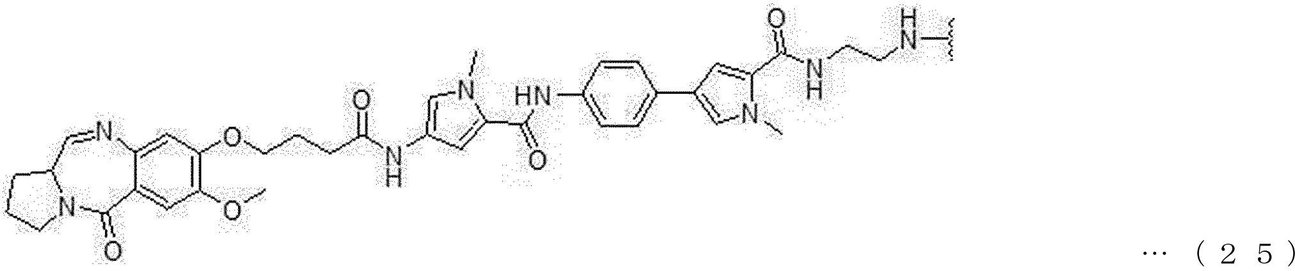
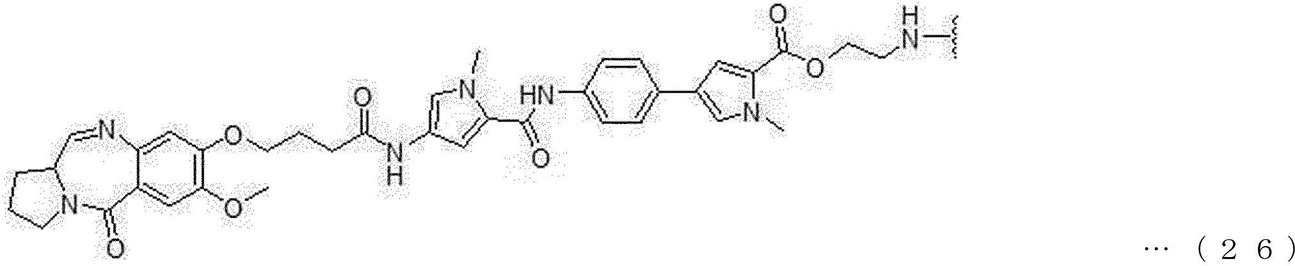
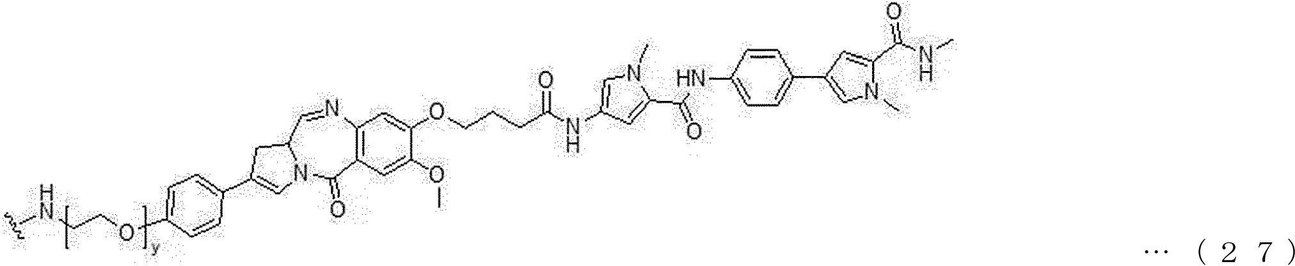
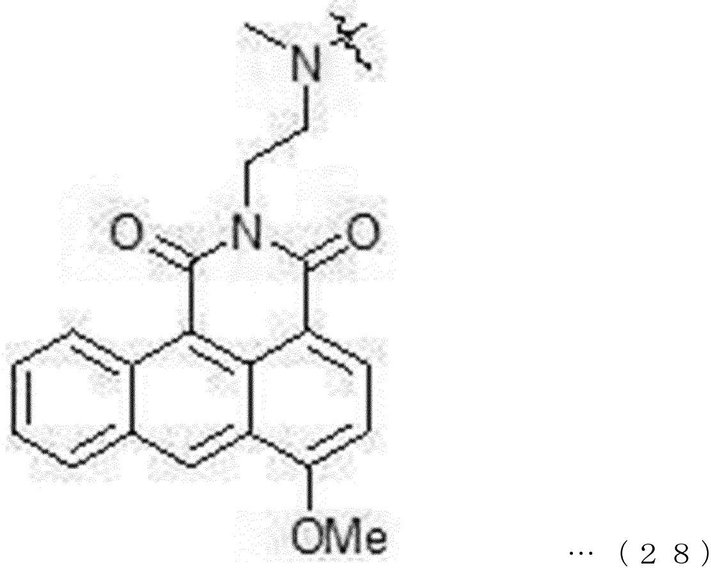


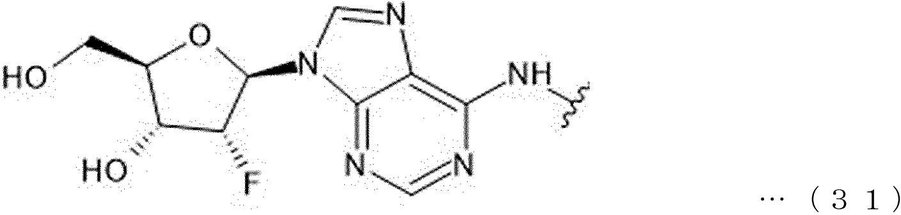
ここで、yは1~10の整数である。 Here, y is an integer of 1 to 10.
一実現例において、リンカーは、下記一般式32~下記一般式37のうちのいずれか1つの構造で表されてもよい。*印は、活性剤(薬物またはトキシン)と連結されるサイトを示す。 In one embodiment, the linker may be represented by any one of the following general formulas 32 to 37. * Marks indicate sites linked to the active agent (drug or toxin).


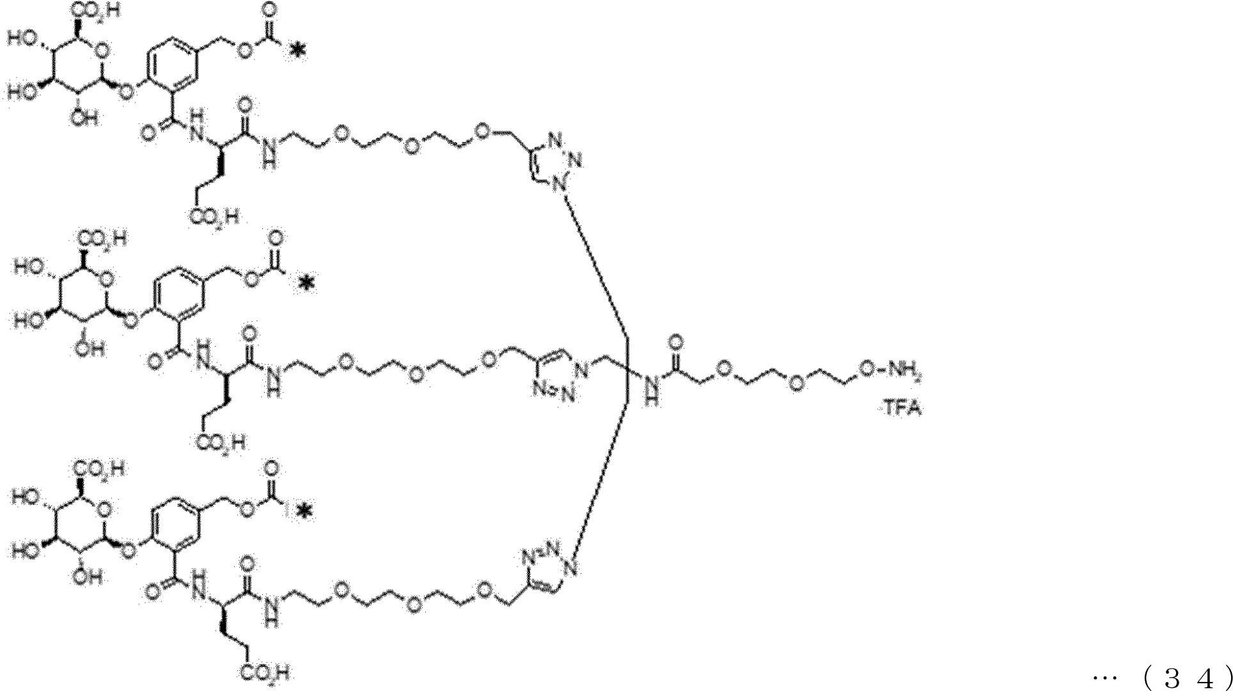
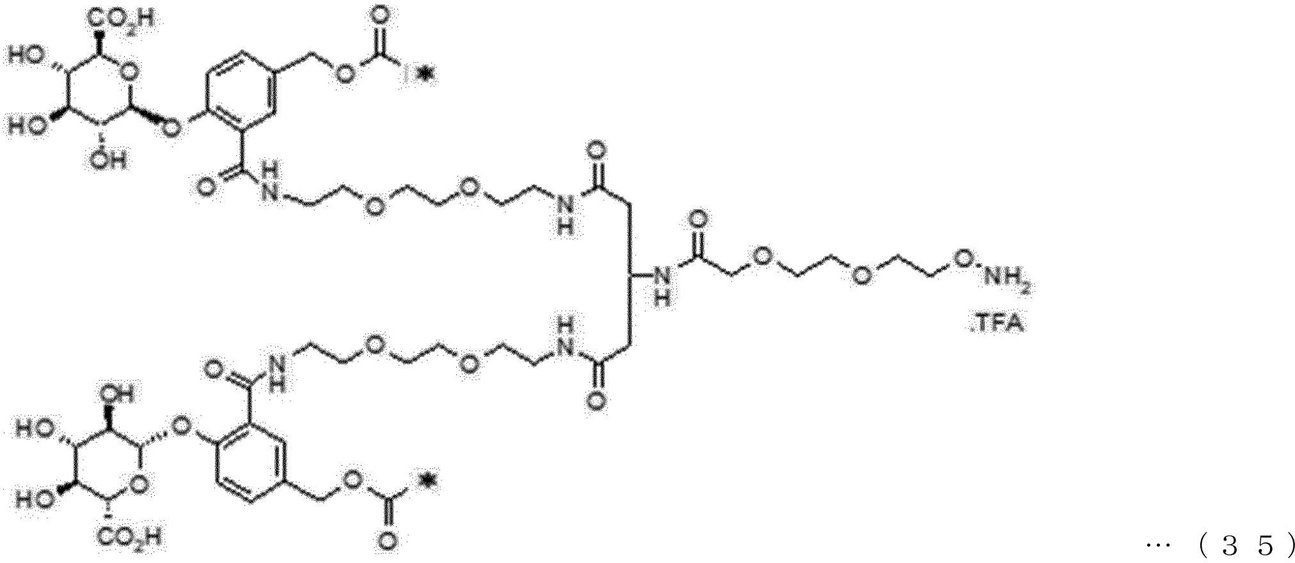


本発明の一実施形態に係るリガンド―薬物複合体は、分子生物学及び細胞生物学方法を含む、当技術分野において知られている方法を用いて作製されてもよい。例えば、一時的または永久的な注入法(transient or stable transfection)が利用可能である。イソプレノイドトランスフェラーゼにより認識され得る特定のアミノ酸モチーフをコーディングする遺伝子配列を標準PCR及び/またはライゲーション技術を用いて公知のプラスミドベクターに挿入して、C末端に特定のアミノ酸モチーフを有する抗体を発現させることができる。したがって、イソプレノイドトランスフェラーゼにより認識され得る少なくとも1つ以上のアミノ酸モチーフを有する抗体は、好適なホスト、例えば、CHO細胞または大腸菌(E.coli)において発現されることが可能である。 Ligand-drug complexes according to one embodiment of the invention may be made using methods known in the art, including molecular and cell biology methods. For example, a transient or stable transfection method is available. A gene sequence coding a specific amino acid motif that can be recognized by isoprenoid transferase can be inserted into a known plasmid vector using standard PCR and / or ligation techniques to express an antibody with a specific amino acid motif at the C-terminus. can. Thus, an antibody having at least one amino acid motif that can be recognized by isoprenoid transferase can be expressed in a suitable host, such as CHO cells or E. coli.
本発明の他の局面において、リガンド―薬物複合体またはその薬学的に許容される塩または溶媒和物を有効成分として含む過増殖、癌または血管新生疾患の予防または治療用の薬学的組成物を提供する。 In another aspect of the invention, a pharmaceutical composition for the prevention or treatment of overgrowth, cancer or angiogenic disease comprising a ligand-drug complex or a pharmaceutically acceptable salt or solvate thereof as an active ingredient. offer.
前記癌は、肺癌、小細胞肺癌、胃腸管癌、大腸癌、腸癌、乳癌、卵巣癌、前立腺癌、睾丸癌、肝臓癌、腎臓癌、膀胱癌、膵臓癌、脳癌、肉腫、骨肉腫、カポジ肉腫及び悪性黒色腫よりなる群から選択されてもよい。 The cancers include lung cancer, small cell lung cancer, gastrointestinal tract cancer, colon cancer, intestinal cancer, breast cancer, ovarian cancer, prostate cancer, testicle cancer, liver cancer, kidney cancer, bladder cancer, pancreatic cancer, brain cancer, sarcoma, and osteosarcoma. , Kaposi sarcoma and malignant melanoma.
リガンド―薬物複合体は、個体を治療するために活性剤を個体の標的細胞に伝達する上で用いられてもよい。 Ligand-drug complexes may be used to transfer the active agent to the individual's target cells to treat the individual.
組成物を液状溶液、または懸濁液として注射可能な形態に作製してもよい。注射に適した固体の形態に作製されてもよいが、例えば、エマルジョンとして、またはリポソームにカプセル化されたリガンド―薬物複合体とともに作製されてもよい。 The composition may be prepared in an injectable form as a liquid solution or suspension. It may be made in solid form suitable for injection, for example as an emulsion or with a ligand-drug complex encapsulated in liposomes.
本発明の一実施形態において、リガンド―薬物複合体は、担体を投与された個体において抗体の産生を誘導しない任意の担体を含む、薬学的に許容される担体と配合されてもよい。好適な担体は、典型的に、例えば、タンパク質、多糖類複合体、ポリ乳酸、ポリグリコール酸、重合体性アミノ酸、アミノ酸コポリマー、脂質凝集体などのように遅く代謝される巨大分子を含む。 In one embodiment of the invention, the ligand-drug complex may be formulated with a pharmaceutically acceptable carrier, including any carrier that does not induce antibody production in the carrier-administered individual. Suitable carriers typically include macromolecules that are slowly metabolized, such as proteins, polysaccharide complexes, polylactic acids, polyglycolic acids, polymerizable amino acids, amino acid copolymers, lipid aggregates and the like.
組成物は、希釈剤、例えば、水、生理食塩水、グリセロール及びエタノールを含有していていてもよい。補助物質(auxiliary substances)としては、例えば、湿潤剤または乳化剤、pH緩衝物質などもまた存在することができる。前記組成物は、注射によって非経口投与することができ、このような注射は、皮下または筋肉内であってもよい。一部の実施形態において、組成物は、腫瘍内投与されてもよい。前記組成物は、腫瘍内に挿入(例えば、注射)されてもよい。さらなる剤形は、例えば、坐剤によってまたは経口などのその他の投与タイプに適している。経口用の組成物は、溶剤、懸濁剤、錠剤、丸剤、カプセルまたは徐放性剤形として投与されてもよい。 The composition may contain diluents such as water, saline, glycerol and ethanol. As auxiliary substances (auxiliary substations), for example, wetting agents or emulsifiers, pH buffering substances and the like can also be present. The composition can be administered parenteral by injection, such injection may be subcutaneous or intramuscular. In some embodiments, the composition may be administered intratumorally. The composition may be inserted (eg, injected) into the tumor. Further dosage forms are suitable for other dosage types, such as by suppository or oral. Oral compositions may be administered as solvents, suspensions, tablets, pills, capsules or sustained release dosage forms.
組成物は、投与量及び剤形との混和性の方式により投与されてもよい。 The composition may be administered in a manner that is miscible with the dosage and dosage form.
組成物は、治療的有効量の化学的な治療剤をさらに含んでいてもよい。一具体例において、1つ以上の抗過増殖、細胞静止性または細胞毒性物質を配合して投与してもよい。 The composition may further comprise a therapeutically effective amount of the chemical therapeutic agent. In one embodiment, one or more anti-hyperproliferative, cytostatic or cytotoxic substances may be blended and administered.
ターミノロジー「治療的有効量」とは、疾患または障害の治療または予防に有効な、単一容量、または多重容量のスケジュールで投与される組成物のことを意味する。投与量は、治療すべき個体、個体の健康及び身体条件、目的とする保護度及びその他の関連因子に応じて異なってくる。活性成分(例えば、抗体―薬物複合体)の正確な量は、医師の判断による。例えば、治療的有効量の抗体―薬物複合体またはこれを含有する組成物を癌または腫瘍で苦しんでいる患者に投与して癌または腫瘍を治療することができる Terminology "Therapeutically effective amount" means a composition administered on a single or multiple dose schedule that is effective in the treatment or prevention of a disease or disorder. Dosage will vary depending on the individual to be treated, the individual's health and physical condition, the degree of protection of interest and other related factors. The exact amount of active ingredient (eg, antibody-drug conjugate) is at the discretion of the physician. For example, a therapeutically effective amount of an antibody-drug conjugate or a composition containing it can be administered to a patient suffering from a cancer or tumor to treat the cancer or tumor.
本発明に係るリガンド―薬物複合体またはこれらを含有する組成物は、薬学的に許容されるこの塩または溶媒和物の形態で投与されてもよい。 The ligand-drug complex according to the present invention or a composition containing them may be administered in the form of this pharmaceutically acceptable salt or solvate.
一具体例において、本発明に係るリガンド―薬物複合体またはこれらを含有する組成物は、薬学的に許容される担体、薬学的に許容される賦形剤及び/または薬学的に許容される添加剤とともに投与されてもよい。薬学的に許容される塩または溶媒和物、賦形剤及び添加剤の有効量及び類型は、標準方法(例えば、非特許文献6を参照)を用いて測定してもよい。 In one embodiment, the ligand-drug complex according to the invention or a composition containing them is a pharmaceutically acceptable carrier, a pharmaceutically acceptable excipient and / or a pharmaceutically acceptable addition. It may be administered with the agent. Effective amounts and types of pharmaceutically acceptable salts or solvates, excipients and additives may be measured using standard methods (see, eg, Non-Patent Document 6).
ターミノロジー「治療的有効量」は、癌細胞数を減少させたり、癌細胞の大きさを減らしたり、癌細胞が周りに系に侵入することを抑えたり侵入を減少させたり、癌細胞が他の系に広がることを抑えたり減少させたり、癌細胞が成長することを抑えたり、癌と関連する1つ以上の症状を改善したりすることができる量を意味する。癌の治療において、薬物の有効性は、腫瘍対腫瘍の進行(TTP)及び/または応答(反応)速度(RR)によって検定することができる。 The terminology "therapeutically effective amount" reduces the number of cancer cells, reduces the size of cancer cells, suppresses the invasion of cancer cells into the system around them, reduces the invasion, and other cancer cells. It means an amount that can suppress or reduce the spread of cancer cells, suppress the growth of cancer cells, or improve one or more symptoms associated with cancer. In the treatment of cancer, the efficacy of a drug can be assayed by tumor-to-tumor progression (TTP) and / or response (response) rate (RR).
この明細書において用いられたターミノロジー「薬学的に許容される塩」は、有機塩及び無機塩を含む。この例としては、これらに限定されるものではないが、塩酸塩(hydrochloride)、臭化水素酸塩(hydrobromide)、ヨウ化水素酸塩(hydroiodide)、硫酸塩(sulfate)、クエン酸塩(citrate)、酢酸塩(acetate)、シュウ酸塩(oxalate)、塩化物(chloride)、臭化物(bromide)、ヨウ化物(iodide)、硝酸塩(nitrate)、重硫酸塩(bisulfate)、リン酸塩(phosphate)、酸性リン酸塩(acidic phosphate)、イソニコチン酸塩(isonicotinate)、乳酸塩(lactate)、サリチル酸塩(salicylate)、酸性クエン酸塩(acidic citrate)、酒石酸塩(tartrate)、オレイン酸塩(oleate)、タンニン酸塩(tannate)、パントテン酸塩(pantonate)、重酒石酸塩(bitartrate)、アスコルビン酸塩(ascorbate)、コハク酸塩(succinate)、マレイン酸塩(maleate)、ゲンチシン酸塩(gentisinate)、フマル酸塩(fumarate)、グルコン酸塩(gluconate)、グルカロン酸塩(glucoronate)、糖塩酸(saccharate)、ギ酸塩(formate)、安息香酸塩(benzoate)、グルタミン酸塩(glutamate)、メタンスルホン酸塩(methane sulfonate)、エタンスルホン酸塩(ethane sulfonate)、ベンゼンスルホン酸塩(benzene sulfonate)、p―トルエンスルホン酸塩(p―toluene sulfonate)、及びパモ酸塩(pamoate)(すなわち、1,1'―メチレン―ビス―(2―ヒドロキシ―3―ナフトエ酸塩(1,1′―methylenebis―(2―hydroxy―3―naphthoate))が挙げられる。薬学的に許容される塩は、他の分子(例:酢酸イオン、コハク酸イオン及びその他の対イオンなど)を含んでいてもよい。 The terminology "pharmaceutically acceptable salt" used herein includes organic and inorganic salts. Examples of this include, but are not limited to, hydrochloride, hydrobromide, hydroiodide, sulfate, citrate. ), Acidate, oxalate, chloride, bromide, iodide, nitrate, bisulfate, phosphate. , Acidic phosphate, isonicotinate, lactate, salicylate, acidic citrate, tarrate, oleate ), Tannate, pantonate, bitartrate, ascorbate, succinate, maleate, gentisinate. , Fumarate, glucate, glucarbonate, saccharate, formate, benzoate, glutamate, methanesulfonic acid Salt (methane sulphonate), ethane sulphonate, benzene sulphonate, p-toluene sulphonate, and pamoate (ie, 1,1). '-Methylene-bis- (2-hydroxy-3-naphthoate (1,1'-methylenebis- (2-hydroxy-3-naphtoate)) can be mentioned. Pharmaceutically acceptable salts are other molecules. It may contain (eg, acetate ion, succinate ion and other counter ions, etc.).
本発明に係るリガンド―薬物複合体の薬学的に許容される溶媒和物として使用可能な溶媒和物の例としては、これらに限定されるものではないが、水、イソプロパノール、エタノール、メタノール、DMSO、酢酸エチル、酢酸及びエタノールアミンが挙げられる。 Examples of solvates that can be used as pharmaceutically acceptable solvates of the ligand-drug complex according to the present invention are, but are not limited to, water, isopropanol, ethanol, methanol, DMSO. , Ethyl acetate, acetic acid and ethanolamine.
本発明のさらに他の局面において、本発明の一実施形態に係るリガンド―薬物複合体を含む過増殖、癌または血管新生疾患の予防または治療用の薬学的組成物組成物を個体に投与して個体において癌を治療する方法を提供する。 In yet another aspect of the invention, an individual is administered a pharmaceutical composition composition for the prevention or treatment of hyperproliferation, cancer or angiogenic disease comprising a ligand-drug complex according to one embodiment of the invention. Provided is a method of treating cancer in an individual.
一具体例において、個体は、哺乳類であってもよい。例えば、個体は、齧歯類(rodents)、ウサギ(lagomorphs)、ネコ(felines)、イヌ(canines)、ブタ(porcines)、ヒツジ(ovines)、ウシ(bovines)、ウマ(equines)及び霊長類(primates)よりなる群から選択されてもよい。一具体例において、個体はヒトであってもよい。 In one embodiment, the individual may be a mammal. For example, the individuals are rodents, rabbits, cats, canines, pigs, sheep, obines, equines and primates (equines). It may be selected from the group consisting of primates). In one embodiment, the individual may be human.
[定義]
ターミノロジー「抗体」とは、免疫グロブリン分子の可変領域内において少なくとも1つの抗原認識部位を介して他の分子を認識して特異的に結合する免疫グロブリン分子のことをいう。この明細書において用いられたターミノロジー「抗体」は、インタクトなポリクローナル抗体、インタクトなモノクローナル抗体、抗体断片(例えば、Fab、Fab'、F(ab')2、Fd、及びFv断片)、一本鎖Fv(scFv)ミュータント、多重特異的な抗体、例えば、2つ以上のインタクトな抗体から生成された二重特異的な抗体、キメラ抗体、ヒト化抗体、ヒト抗体、抗体の抗原決定部分を含む融合タンパク質、及び抗原認識部位を含む任意の他の修飾された免疫グロブリン分子を含む。抗体は、それぞれアルファ(α)、デルタ(Δ)、エプシロン(ε)、ガンマ(γ)、及びミュー(μ)と称されるこの重鎖不変ドメインの種類(identity)に基づいて、5種のメイン免疫グロブリンクラスのうちの任意のもの:IgA、IgD、IgE、IgG及びIgM、またはこのサブクラス(イソ型)であってもよい(例えば、IgG1、IgG2、IgG3、IgG4、IgA1、及びIgA2)。別の種類の免疫グロブリンは、互いに異なる周知のサブユニット構造及び3次元構造を有している。ターミノロジー「抗体」は、免疫グロブリン配列とホモロジー(homology)を共有しない分子を示さない。例えば、この明細書において用いられるターミノロジー「抗体」は、リピボディ(repebodies)」を含まない。
[Definition]
Terminology "Antibody" refers to an immunoglobulin molecule that recognizes and specifically binds to another molecule via at least one antigen recognition site within the variable region of the immunoglobulin molecule. As used herein, the terminology "antibody" is an intact polyclonal antibody, an intact monoclonal antibody, an antibody fragment (eg, Fab, Fab', F (ab') 2 , Fd, and Fv fragment), one. Includes chain Fv (scFv) mutants, multispecific antibodies, eg, bispecific antibodies generated from two or more intact antibodies, chimeric antibodies, humanized antibodies, human antibodies, antigenic determining portions of the antibody. Includes fusion proteins and any other modified immunoglobulin molecule, including antigen recognition sites. There are five antibodies based on the identity of this heavy chain invariant domain, called alpha (α), delta (Δ), epsilon (ε), gamma (γ), and mu (μ), respectively. Any of the main immunoglobulin classes: IgA, IgD, IgE, IgG and IgM, or subclasses of this (isotype) may be (eg, IgG1, IgG2, IgG3, IgG4, IgA1, and IgA2). Other types of immunoglobulins have well-known subunit and three-dimensional structures that differ from each other. Terminology "antibodies" do not indicate molecules that do not share homology with the immunoglobulin sequence. For example, the terminology "antibody" used herein does not include "repbodies".
ターミノロジー「抗体断片」とは、インタクトな抗体の部分のことをいい、インタクトな抗体の抗原決定可変領域を示す。抗体断片の例としては、Fab、Fab′、F(ab′)2、Fd、及びFv断片、線状抗体、一本鎖抗体、及び抗体断片から形成された多重特異的な抗体が挙げられる。 Terminology "Antibody fragment" refers to the portion of an intact antibody and indicates the antigenic determinant variable region of an intact antibody. Examples of antibody fragments include Fab, Fab', F (ab') 2 , Fd, and multispecific antibodies formed from Fv fragments, linear antibodies, single chain antibodies, and antibody fragments.
ターミノロジー「モノクローナル抗体」とは、単一抗原決定基またはエピトープに高度に特異的に認識して結合する、均質な抗体集団のことをいう。これは、典型的に様々な異なる抗原決定基に対する他の抗体を含むポリクローナル抗体とは対照的である。ターミノロジー「モノクローナル抗体」は、抗体断片(例えば、Fab、Fab′、F(ab′)2、Fd、及びFv)、一本鎖(scFv)ミュータント、抗体部分を含む融合タンパク質、及び抗原認識部位だけではなく、インタクトな全長モノクローナル抗体をいずれも含む任意のその他の修飾された免疫グロブリン分子を含むが、これらに何ら限定されるものではない。なお、「モノクローナル抗体」は、ハイブリドーマ、ファージセレクション、組み換え発現及び形質転換動物を含むが、これらに何ら制限されない任意の数の方法によって作製された抗体のことをいう。 Terminology "Monoclonal antibody" refers to a homogeneous group of antibodies that are highly specifically recognized and bound to a single antigenic determinant or epitope. This is in contrast to polyclonal antibodies, which typically include other antibodies against a variety of different antigenic determinants. Terminology "monoclonal antibodies" are antibody fragments (eg, Fab, Fab', F (ab') 2 , Fd, and Fv), single-stranded (scFv) mutants, fusion proteins containing antibody moieties, and antigen recognition sites. Not only, but it includes, but is not limited to, any other modified immunoglobulin molecule, including any of the intact full-length monoclonal antibodies. The "monoclonal antibody" refers to an antibody produced by any number of methods including, but not limited to, hybridomas, phage selections, recombinant expression and transformed animals.
ターミノロジー「ヒト化抗体」とは、最小の非ヒト(例えば、マウス)配列を含む特定の免疫グロブリン鎖、キメラ免疫グロブリン、またはこれらの断片である非ヒト(例えば、マウス)抗体の形態のことをいう。通常、ヒト化抗体は、相補的決定領域(CDR)が所望の特異性、親和度及び結合能(capability)を有する非ヒト種(例えば、マウス、ラット、ウサギ及びハムスター)のCDRからの残基で置換されたヒト免疫グロブリンである(例えば、非特許文献15ないし17を参照)。一部の例において、ヒト免疫グロブリンのFvフレームワーク領域(FR)残基は、所望の特異性、親和度及び結合能を有する非ヒト種からの抗体の対応する残基で代替される。ヒト化抗体は、抗体特異性、親和度及び/または結合能を改善し且つ最適化させるためにFvフレームワーク領域及び/または代替される非ヒト残基内にさらなる残基を置換することにより、さらに修飾されてもよい。通常、ヒト化抗体は、非ヒト免疫グロブリンに対応するCDRの全部または実質的に全部を含有する少なくとも1つの、典型的には、2または3つの可変ドメインを実質的に含むのに対し、全体または実質的にすべてのフレームワーク領域(FR)ヒト免疫グロブリンコンセンサス配列を有している。ヒト化抗体はまた、免疫グロブリン不変領域またはドメイン(Fc)の少なくとも一部、典型的に、ヒト免疫グロブリンの一部を含んでいてもよい。ヒト化抗体を生成する上で用いられる方法の例は、米国特許第5,225,539号に記載されており、この明細書に参考として取り込まれている。 Terminology A "humanized antibody" is a form of a specific immunoglobulin chain, a chimeric immunoglobulin, or a fragment thereof, a non-human (eg, mouse) antibody that contains the smallest non-human (eg, mouse) sequence. To say. Usually, humanized antibodies are residues from CDRs of non-human species (eg, mice, rats, rabbits and hamsters) whose complementary determining regions (CDRs) have the desired specificity, affinity and capacity. Human immunoglobulins substituted with (see, eg, Non-Patent Documents 15-17). In some examples, the Fv framework region (FR) residue of human immunoglobulin is replaced by the corresponding residue of the antibody from a non-human species with the desired specificity, affinity and binding ability. Humanized antibodies are made by substituting additional residues within the Fv framework region and / or alternative non-human residues to improve and optimize antibody specificity, affinity and / or binding capacity. It may be further modified. Generally, humanized antibodies contain substantially one, typically two or three variable domains, which contain all or substantially all of the CDRs corresponding to non-human immunoglobulins, whereas the whole. Or it has virtually all framework region (FR) human immunoglobulin consensus sequences. Humanized antibodies may also contain at least a portion of an immunoglobulin invariant region or domain (Fc), typically a portion of human immunoglobulin. Examples of methods used to generate humanized antibodies are described in US Pat. No. 5,225,539 and are incorporated herein by reference.
この明細書において用いられたターミノロジー「ヒト抗体」とは、当業界における公知の任意の技術を用いてヒトにより作製された抗体に対応するアミノ酸配列を有するヒトヌクレオチド配列または抗体によりコーディングされる抗体のことをいう。ヒト抗体のこのような定義は、全長抗体(full―length antibodies)及び/またはその断片を含む。 The terminology "human antibody" as used herein is an antibody encoded by a human nucleotide sequence or antibody having an amino acid sequence corresponding to an antibody produced by a human using any technique known in the art. It means that. Such a definition of a human antibody includes a full-length antibody and / or a fragment thereof.
ターミノロジー「キメラ抗体」とは、免疫グロブリン分子のアミノ酸配列が2以上の種に由来した抗体のことをいい、これのうちの一方は、ヒトであることが好ましい。通常、軽鎖及び重鎖の可変領域は、所望の特異性、親和度及び結合能を有するある1種の哺乳類(例えば、マウス、ラット、ウサギなど)に由来した抗体の可変領域に対応し、不変領域は、例えば、前記種において免疫反応が誘導されることを避けるために他の種(普通はヒト)に由来した抗体の配列と相同性がある。 Terminology "chimeric antibody" refers to an antibody derived from a species having two or more amino acid sequences of an immunoglobulin molecule, one of which is preferably human. Usually, the variable regions of the light and heavy chains correspond to the variable regions of an antibody derived from one mammal (eg, mouse, rat, rabbit, etc.) having the desired specificity, affinity and binding ability. The invariant region is homologous to, for example, the sequence of antibodies from other species (usually humans) to avoid inducing an immune response in the species.
ターミノロジー「エピトープ」及び「抗原決定基」とは、この明細書において相互交換的に用いられ、特定の抗体により認識され、特異的に結合され得る抗原部分のことを指し示す。抗原がポリペプチドまたはタンパク質であるか、あるいは、これを含むとき、エピトープは、例えば、タンパク質の2次、3次及び/または4次のフォルディングにより並置された(juxtaposed)、隣接(contiguous)及び/または非隣接のアミノ酸から形成されてもよい。隣接のアミノ酸から形成されたエピトープは、典型的に、タンパク質の変性に際して保たれるのに対し、3次フォルディングにより形成されたエピトープは、タンパク質の変性に際して失われる虞がある。エピトープは、典型的に、ユニークな空間形態(unique spatial conformation)の3つ以上、5つ以上、または8~10つ以上のアミノ酸を含む。 Terminology "Epitope" and "antigen determinant" are used interchangeably herein to refer to an antigenic moiety that can be recognized and specifically bound by a particular antibody. When the antigen is, or contains, a polypeptide or protein, the epitopes are juxtaposed, contiguous and, for example, by secondary, tertiary and / or quaternary folding of the protein. / Or may be formed from non-adjacent amino acids. Epitopes formed from adjacent amino acids are typically retained during protein denaturation, whereas epitopes formed by tertiary folding can be lost during protein denaturation. Epitopes typically contain three or more, five or more, or 8-10 or more amino acids in a unique spatial conformation.
抗体がエピトープまたは抗原分子に「特異的に結合する」とは、抗体が関わっていないタンパク質を含む代替物質よりもエピトープまたは抗原分子にさらに頻繁に、さらに速やかに、より長い時間の間、さらに大きな親和度を有し、または前述したものの一部を組み合わせた特性をもって互いに反応または結合すること(interact or associate)を意味する。いくつかの具体例において、「特異的に結合する」とは、例えば、抗体が約0.1mM以下、より一般的に、約1μM未満のKDでタンパク質に結合することを意味する。特定の具体例において、「特異的に結合する」とは、抗体が約0.1μM以下のKDで、他のときには、約0.01μM以下のKDでタンパク質に結合することを意味する。互いに異なる種において同種タンパク質(homologous proteins)間の配列相同性のため、特異的な結合は、1つ以上の種において特定のタンパク質を認識する抗体を含んでいてもよい。第1の標的に特異的に結合する抗体または結合残基は、第2の標的に特異的に結合してもよく、そうではなくてもよいということが理解される。前述したように、「特異的な結合」は、排他的な結合、すなわち、単一の標的への結合を(含んでいてもよいが)、必ずしも必要とするとは限らない。通常、必ずしもそうではあるとは限らないが、この明細書において用いられたターミノロジー「結合」とは、特異的な結合を意味する。 An antibody "specifically binds" to an epitope or antigen molecule is greater often, more rapidly, and for a longer period of time than an alternative substance containing a protein to which the antibody is not involved. It means interacting or binding to each other with the property of having an affinity or a combination of some of the above-mentioned ones. In some embodiments, "specifically binding" means that, for example, an antibody binds to a protein with a KD of about 0.1 mM or less, more generally less than about 1 μM. In a particular embodiment, "specifically binding" means that the antibody binds to a protein with a KD of about 0.1 μM or less, and at other times, a KD of about 0.01 μM or less. Due to sequence homology between homologous proteins in different species, the specific binding may include an antibody that recognizes a particular protein in one or more species. It is understood that the antibody or binding residue that specifically binds to the first target may or may not specifically bind to the second target. As mentioned above, "specific binding" does not necessarily require an exclusive binding, i.e., binding to a single target (although it may include). Usually, but not always, the terminology "binding" used herein means a specific binding.
前記断片/誘導体及びモノクローナル抗体を含む抗体は、当該分野における公知の方法を用いて得ることができる(非特許文献18ないし35、特許文献3ないし9を参照、これらはいずれもこの明細において全体的に参照として取り込まれる。)] Antibodies comprising said fragments / derivatives and monoclonal antibodies can be obtained using methods known in the art (see Non-Patent Documents 18-35, Patent Documents 3-9, all of which are overall herein. Is taken in as a reference.)]]
抗体は、ムロモナブ―CD3アブシキシマブ(muromonab―CD3 abciximab)、リツキシマブ(rituximab)、ダクリズマブ(daclizumab)、パリビスマブ(palivizumab)、インフリキシマブ(infliximab)、トラスツズマブ(trastuzumab)、エタネルセプト(etanercept)、バシリキシマブ(basiliximab)、ゲムツズマブ(gemtuzumab)、アレムツズマブ(alemtuzumab)、イブリツモマブ(ibritumomab)、アダリムマブ(adalimumab)、アレファセプト(alefacept)、オマリズマブ(omalizumab)、エファリズマブ(efalizumab)、トシツモマブ(tositumomab)、セツキシマブ(cetuximab)、ABT―806、ベバシズマブ(bevacizumab)、ナタリズマブ(natalizumab)、ラニビズマブ(ranibizumab)、パニツムマブ(panitumumab)、エクリズマブ(eculizumab)、リロナセプト(rilonacept)、セルトリズマブ(certolizumab)、ロミプロスチム(romiplostim)、AMG―531、ゴリムマブ(golimumab)、ウステキヌマブ(ustekinumab)、ABT―874、ベラタセプト(belatacept)、ベリムマブ(belimumab)、アタシセプト(atacicept)、抗CD20抗体、カナキヌマブ(canakinumab)、トシリズマブ(tocilizumab)、アトリズマブ(atlizumab)、メポリズマブ(mepolizumab)、ペルツズマブ(pertuzumab)、ヒューマックスCD20(HuMax CD20)、トレメリムマブ(tremelimumab)、チシリムマブ(ticilimumab)、イピリムマブ(ipilimumab)、抗CTLA―4抗体、IDEC―114、イノツズマブ(inotuzumab)、ヒューマックスEGFR(HuMaxEGFR)、アフリベルセプト(aflibercept)、ヒューマックス―CD4(HuMax―CD4)、テプリズマブ(teplizumab)、オテリキシズマブ(otelixizumab)、カツマキソマブ(catumaxomab)、抗EpCAM抗体IGN101(anti―EpCAM antibody IGN101)、アデカツムマブ(adecatumomab)、オレゴボマブ(oregovomab)、ジヌツキシマブ(dinutuximab)、ギレンツキシマブ(girentuximab)、デノスマブ(denosumab)、バピネウズマブ(bapineuzumab)、モタビズマブ(motavizumab)、エファングマブ(efumgumab)、ラキシバクマブ(raxibacumab)、抗CD20抗体、LY2469298、ペムブロリズマブ(Pembrolizumab)、ニボルマブ(Nivolumab)、ピジリズマブ(Pidilizumab)、抗PD―1抗体、BMS―936559、デュルバルマブ(Durvalumab)、アベルマブ(Avelumab)、アテゾリズマブ(Atezolizumab)、MDX―1105、抗PD―L1抗体、及びベルツズマブ(veltuzumab)であってもよい。 抗体は、ムロモナブ―CD3アブシキシマブ(muromonab―CD3 abciximab)、リツキシマブ(rituximab)、ダクリズマブ(daclizumab)、パリビスマブ(palivizumab)、インフリキシマブ(infliximab)、トラスツズマブ(trastuzumab)、エタネルセプト(etanercept)、バシリキシマブ(basiliximab)、ゲムツズマブ(gemtuzumab)、アレムツズマブ(alemtuzumab)、イブリツモマブ(ibritumomab)、アダリムマブ(adalimumab)、アレファセプト(alefacept)、オマリズマブ(omalizumab)、エファリズマブ(efalizumab)、トシツモマブ(tositumomab)、セツキシマブ(cetuximab)、ABT―806、ベバシズマブ( bevacizumab)、ナタリズマブ(natalizumab)、ラニビズマブ(ranibizumab)、パニツムマブ(panitumumab)、エクリズマブ(eculizumab)、リロナセプト(rilonacept)、セルトリズマブ(certolizumab)、ロミプロスチム(romiplostim)、AMG―531、ゴリムマブ(golimumab)、ウステキヌマブ(ustekinumab ), ABT-874, belatacept, belimumab, atacicept, anti-CD20 antibody, canakinumab, tosilizumab, atlizumab, atlizumab, atlizumab Humax CD20 (HuMax CD20), Tremerimumab, ticilimumab, ipilimumab, anti-CTLA-4 antibody, IDEC-114, inotuzumab (inotuzumab), inotuzumab (inotuzumab) Humax-CD4 (HuMax-CD4), teplizumab, oteliximab, catumaxomab,抗EpCAM抗体IGN101(anti―EpCAM antibody IGN101)、アデカツムマブ(adecatumomab)、オレゴボマブ(oregovomab)、ジヌツキシマブ(dinutuximab)、ギレンツキシマブ(girentuximab)、デノスマブ(denosumab)、バピネウズマブ(bapineuzumab)、モタビズマブ(motavizumab)、エファングマブ(Efumgumab), laxibacumab, anti-CD20 antibody, LY246298, pembrolizumab, nivolumab, pidilyzumab, pidilyzumab, anti-PD-1 antibody, Durvalumab, anti-PD-1 antibody, BMS It may be atezolizumab, MDX-1105, anti-PD-L1 antibody, and avelumab.
抗体が少なくとも1つの軽鎖及び少なくとも1つの重鎖を含む場合、抗体の少なくとも1つの軽鎖、または抗体の少なくとも1つの重鎖、またはこれらの両方は、イソプレノイドトランスフェラーゼにより認識され得るアミノ酸モチーフを有するアミノ酸領域を含んでいてもよい。抗体は、4個のポリペプチド鎖(例えば、2つの重鎖及び2つの軽鎖)を含んでいてもよいため、抗体は、4個のアミノ酸モチーフ(これらのそれぞれは、リンカーを経て抗体に活性剤を接合するうえで用いる)を含んでいてもよい。したがって、抗体―薬物複合体は、4個のリンカーを含み、それぞれは、少なくとも1つの活性剤に接合される。したがって、抗体―薬物複合体は、少なくとも1つのリンカー及び少なくとも2つの活性剤を含んでいてもよい。抗体―薬物複合体は、少なくとも2つのリンカーを含んでいてもよく、抗体―薬物複合体は、少なくとも3つの活性剤を含んでいてもよい。抗体―薬物複合体は、1、2、3または4個のリンカーを含んでいてもよい。抗体―薬物複合体は、1、2、3または4個のペプチドを含んでいてもよい。抗体―薬物複合体は、2~100個の複合体、例えば、2~50個の複合体、2~20個の複合体、2~16個の複合体、4~16個の複合体または4~8個の複合体を含んでいてもよい。 If the antibody comprises at least one light chain and at least one heavy chain, then at least one light chain of the antibody, or at least one heavy chain of the antibody, or both, have an amino acid motif that can be recognized by an isoprenoid transferase. It may contain an amino acid region. Since the antibody may contain 4 polypeptide chains (eg, 2 heavy chains and 2 light chains), the antibody has 4 amino acid motifs (each of which is active on the antibody via a linker). (Used for bonding agents) may be included. Thus, the antibody-drug conjugate comprises four linkers, each conjugated to at least one active agent. Thus, the antibody-drug conjugate may contain at least one linker and at least two activators. The antibody-drug conjugate may contain at least two linkers and the antibody-drug conjugate may contain at least three active agents. The antibody-drug conjugate may contain 1, 2, 3 or 4 linkers. The antibody-drug conjugate may contain 1, 2, 3 or 4 peptides. The antibody-drug conjugate is 2 to 100 complexes, for example, 2 to 50 complexes, 2 to 20 complexes, 2 to 16 complexes, 4 to 16 complexes or 4 It may contain up to 8 complexes.
活性剤は、薬物、トキシン、親和性リガンド(affinity ligand)、検出プローブ(detection probe)またはこれらのうちの任意のものの組み合わせであってもよい。 The activator may be a drug, a toxin, an affinity ligand, a detection probe or any combination thereof.
活性剤は、エルロチニブ(erlotinib);ボルテゾミブ(bortezomib);フルベストラント(fulvestrant);スーテント(sutent);レトロゾール(letrozole);メシル酸イマチニブ(imatinibmesylate);PTK787/ZK 222584;オキサリプラチン(oxaliplatin);5―フルオロウラシル(5―fluorouracil);ロイコボリン(leucovorin);ラパマイシン(rapamycin);ラパチニブ(lapatinib);ロナファルニブ(lonafarnib);ソラフェニブ(sorafenib);ゲフィチニブ(gefitinib);AG1478;AG1571;アルキル化剤(例えば、チオテパ(thiotepa)、シクロホスファミド(cyclophosphamide));スルホン酸アルキル(例えば、ブスルファン(busulfan)、インプロスルファン(improsulfan)、ピポスルファン(piposulfan));アジリジン(例えば、ベンゾドパ(benzodopa)、カルボコン(carboquone)、メツレドパ(meturedopa)、ウレドパ(uredopa));エチレンイミン(ethylenimine)、メチルメラミン(methylmelamine)、アルトレタミン(altretamine)、トリエチレンメラミン(triethylenemelamine)、トリエチレンホスホラミド(triethylenephosphoramide)、トリエチレンチオホスホラミド(triethylenethiophosphoramide)、トリメチローロメラミン(trimethylolomelamine);アセトゲニン(acetogenins)(例えば、ブラタシン(bullatacin)またはブラタシノン(bullatacinone));カンプトテシン(camptothecin)及びカンプトテシン誘導体及び代謝体(SN―38);トポテカン(topotecan);ブリオスタチン(bryostatin);カリスタチン(callystatin);CC―1065(このアドゼレシン(adozelesin)、カリスタチン(carzelesin)、またはビセレシン合成類似体(bizelesin synthetic analogs)を含む);クリプトフィシン(cryptophycins)(例えば、クリプトフィシン1(cryptophycin 1)またはクリプトフィシン8(cryptophycin 8));ドラスタチン(dolastatin);デュオカルマイシン(duocarmycin)(例えば、KW―2189及びCB1―TM1などの合成類似体を含む);エリュテロビン(eleutherobin);パンクラチスタチン(pancratistatin);サルコジクチイン(sarcodictyin);スポンジスタチン(spongistatin);窒素マスタード(nitrogen mustard)(例えば、クロラムブシル(chlorambucil)、クロルナファジン(chlornaphazine)、クロロホスファミド(chlorophosphamide)、エストラムスチン(estramustine)、イホスファミド(ifosfamide)、メクロレタミン(mechlorethamine)、塩酸メクロレタミンオキシド(mechlorethamine oxide hydrochloride)、メルファラン(melphalan)、ノベンビチン(novembichin)、フェネステリン(phenesterine)、プレドニムスチン(prednimustine)、トロホスファミド(trofosfamide)、またはウラシルマスタード(uracilmustard));ニトロソウレア(nitrosourea)(例えば、カルムスチン(carmustine)、クロロゾトシン(chlorozotocin)、フォテムスチン(fotemustine)、ロムスチン(lomustine)、ニムスチン(nimustine)、またはラニムヌスチン(ranimnustine));抗生物質(antibiotics)(例えば、カルケアマイシンガンマII(calicheamicin gamma II)及びカルケアマイシンオメガII(calicheamicin omega II)から選択されるカルケアマイシン(calicheamicin)またはダインマイシンA(dynemicin A)を含むダインマイシンなどのエンジイン抗生物質(enediyne antibiotics));ビスフォスフォネート(bisphosphonate)(例えば、クロドロネート(clodronate);エスペラミシン(esperamicin)、ネオカルチノスタチン発色団(neocarzinostatinchromophore)、または関連する色素タンパク質エネジイン抗生物質発色団(related chromoprotein enediyne antibiotic chromophores)、アクラシノマイシン(aclacinomysins)、アクチノマイシン(actinomycin)、アントラマイシン(anthramycin)、アザセリン(azaserine)、ブレオマイシン(bleomycins)、カクチノマイシン(cactinomycin)、カラビシン(carabicin)、カルミノマイシン(carninomycin)、カルジノフィリン(carzinophilin)、クロモマイシン(chromomycins)、ダクチノマイシン(dactinomycin)、ダウノルビシン(daunorubicin)、デトルブシン(detorubucin)、6―ジアゾ―5―オキソ―L―ノルロイシン(6―diazo―5―oxo―L―norleucine)、ドキソルビシン(doxorubicin)(例えば、モルホリノ―ドキソルビシン(morpholino―doxorubicin)、シアノモルホリノ―ドキソルビシン(cyanomorpholino―doxorubicin)、2―ピロリノ―ドキソルビシン(2―pyrrolino―doxorubucin)、リポソーマルドキソルビシン(liposomal doxorubicin)、またはデオキシドキソルビシン(deoxydoxorubicin))、エピルビシン(epirubicin)、エソルビシン(esorubicin)、マルセロマイシン(marcellomycin)、マイトマイシン(mitomycins)(例えば、マイトマイシンC(mitomycin C)、ミコフェノール酸(mycophenolicacid)、ノガラマイシン(nogalamycin)、オリボマイシン(olivomycins)、ペプロマイシン(peplomycin)、ポトフィロマイシン(potfiromycin)、プロマイシン(puromycin)、クエラマイシン(quelamycin)、ロドルビシン(rodorubicin)、ストレプトミグリン(streptomigrin)、ストレプトゾシン(streptozocin)、ツベルシジン(tubercidin)、ウベニメクス(ubenimex)、ジノスタチン(zinostatin)、またはゾルビシン(zorubicin));代謝拮抗物質(anti―metabolites)(例えば、5―フルオロウラシル(5―fluorouracil));葉酸類似体(folic acid analogs)(例えば、デノプテリン(denopterin)、メトトレキサート(methotrexate)、プテロプテリン(pteropterin)、及びトリメトレキサート(trimetrexate));プリン類似体(purine analogs)(例えば、フルダラビン(fludarabine)、6―メルカプトプリン(6―mercaptopurine)、チアミプリン(thiamiprine)、またはチグアニン(thiguanine));ピリミジン類似体(pyrimidine analogs)(例えば、アンシタビン(ancitabine)、アザシチジン(azacitidine)、6―アザウリジン(6―azauridine)、カルモフール(carmofur)、シタラビン(cytarabine)、ジデオキシウリジン(dideoxyuridine)、ドキシフルリジン(doxifluridine)、エノシタビン(enocitabine)、またはフロクスウリジン(floxuridine));アンドロゲン(androgens)(例えば、カルステロン(calusterone)、ドロモスタノロンプロピオナート(dromostanolonepropionate)、エピチオスタノール(epitiostanol)、メピチオスタン(mepitiostane)、またはテストラクトン(testolactone));抗副腎剤(anti―adrenals)(例えば、アミノグルテチミド(aminoglutethimide)、ミトタン(mitotane)、そしてトリロスタン(trilostane));葉酸補給剤(folic acid replenisher)(例えば、ホリン酸(folinic acid));アセグラトン(aceglatone);アルドホスファミドグリコシド(aldophosphamideglycoside);アミノレブリン酸(aminolevulinic acid);エニルウラシル(eniluracil);アムサクリン(amsacrine);ベストラブシル(bestrabucil);ビサントレン(bisantrene);エダトラキサート(edatraxate);デフォファミン(defofamine);デメコルチン(demecolcine);ジアジコン(diaziquone);エルフォルニチン(elfornithine);酢酸エリプチニウム(elliptinium acetate);エポチロン(epothilone);エトグルシド(etoglucid);硝酸ガリウム(gallium nitrate);ヒドロキシウレア(hydroxyurea);レンチナン(lentinan);ロニダイニン(lonidainine);メイタンシノイド(maytansinoids)(例えば、メイタンシン(maytansine)またはアンサミトシン(ansamitocins));トリコテセン(trichothecenes)(特に、T―2トキシン、ベラクリンA(verracurin A)、ロリジンA(roridin A)、またはアングイジン(anguidine));ミトグアゾン(mitoguazone);ミトキサントロン(mitoxantrone);モピダンモール(mopidanmol);ニトラエリン(nitraerine);ペントスタチン(pentostatin);フェナメット(phenamet);ピラルビシン(pirarubicin);ロソキサントロン(losoxantrone);2―エチルヒドラジド(2―ethylhydrazide);プロカルバジン(procarbazine);多糖類K複合体(polysaccharide K complex);ラゾキサン(razoxane);リゾキシン(rhizoxin);シゾフィラン(sizofiran);スピロゲルマニウム(spirogermanium);テヌアゾン酸(tenuazonicacid);トリアジコン(triaziquone);2,2',2」―トリクロロトリエチルアミン(2,2',2」―trichlorotriethylamine);トリコテセン(trichothecenes)(特に、T―2トキシン、ベラクリンA(verracurin A)、ロリジンA(roridin A)、及びアングイジン(anguidine));ウレタン(urethane);ビンデシン(vindesine);ダカルバジン(dacarbazine);マンノムスチン(mannomustine);ミトブロニトール(mit
obronitol);ミトラクトール(mitolactol);ピポブロマン(pipobroman);ガシトシン(gacytosine);アラビノシド(arabinoside);シクロホスファミド(cyclophosphamide);チオテパ(thiotepa);タキソイド(taxoids)(例えば、パクリタキセル(paclitaxel))、ABRAXANE(商標)(クレモホル無添加)、パクリタキセルのアルブミン改変ナノ粒子製剤(ABRAXANETM cremophor―free,albumin―engineered nanoparticle formulation of paclitaxel)、ドセタキセル(doxetaxel);クロラムブシル(chlorambucil);ゲムシタビン(gemcitabine);6―チオグアニン(6―thioguanine);メルカプトプリン(mercaptopurine);白金類似体(例えば、シスプラチン(cisplatin)、またはカルボプラチン(carboplatin));ビンブラスチン(vinblastine);白金(platinum);エトポシド(etoposide);イホスファミド(ifosfamide);ミトキサントロン(mitoxantrone);ビンクリスチン(vincristine);ビノレルビン(vinorelbine);ノバントロン(novantrone);テニポシド(teniposide);エダトレキサート(edatrexate);ダウノマイシン(daunomycin);アミノプテリン(aminopterin);ゼローダ(xeloda);イバンドロネート(ibandronate);CPT―11;トポイソメラーゼ阻害剤(topoisomeraseinhibitor)(RFS2000);ジフルオロメチルオルニチン(difluoromethylornithine);レチノイド(retinoid)(例えば、レチノイン酸(retinoic acid));カペシタビン(capecitabine)及びこの薬学的に許容される塩、溶媒和物、酸または誘導体を含む。しかし、本発明は、必ずしもこれらに限定されるとは限らない。
The activators are erlotinib; bortezomib; fullvestrant; sutent; letrosole; imatiibmesylate; PTK2784in (PTK7874in); PTK787 / K. 5-Fluorouracil; leucovorin; rapamycin; lapatinib; lonafarnib; sorafenib; sorafenib; sorafenib; sorafenib; (Thiotepa), cyclophosphamide (cyclophosphamide); alkyl sulfonates (eg, busulfan, improsulfan, piposulfan); aziridine (eg, benzodopa, benzodopa) , Meturedopa, uredopa); ethyleneimine (ethylenine), methylmelamine, altretamine, triethylenemelamine (triethylenemelamine), triethylenephosphoramide (triethylenephosphoramide) triethylenethiophosphamide, trimethylolomelamine; acetogenins (eg, bullatacin or bullatacinone); camptothecin (campto) Briostatin; callystatin; CC-1065 (this adzelesin, carzelesin, or bizelesin synthetic analogs) Includes); cryptophycins (eg, cryptophycin 1 or cryptophycin 8); dolastatin; duocarmycin (eg, KW-2189). Synthetic analogs of); eleutherobin; pankratistatin; sarcodictin; spongistatin; nitrogen mustard (eg, chlorambusil fazyl). (Chlornaphazine), chlorophosphamide, estramustine, ifosfamide, mechlorethamine, mechlorethamine, mechloretamine hydrochloride, mechlorethamine , Phenesterine, prednimustine, trophosfamide, or uracilmustard); nitrosourea, nitrosourea, (eg, carmustine, carmustine) ), Nimustine, or ranimustine); antibiotics (eg, calicheamicin gamma II) and calicheamicin omega II selected from calicheamicin omega II. (Enediyne antibiotics), such as Dynemycin, including (calicheamicin) or Dynemycin A; bisphosphonate (eg, clodrone). Doxorubicin; neocarzinostatinchromophore, or related dye protein enedyin antibiotic coloricytomynocytoin enedyne antibioticin , Anthramycin, azaserine, bleomycins, cactinomycin, carabicin, carninomycin, carninomycin, cardinomycin, carzin Mycin (dactinomycin), daunorubicin, detorubucin, 6-diazo-5-oxo-L-norroucin (6-diazo-5-oxo-L-norleucine), doxorubicin (doxorubicin), doxorubicin (doxorubicin) (morpholino―doxorubicin)、シアノモルホリノ―ドキソルビシン(cyanomorpholino―doxorubicin)、2―ピロリノ―ドキソルビシン(2―pyrrolino―doxorubucin)、リポソーマルドキソルビシン(liposomal doxorubicin)、またはデオキシドキソルビシン(deoxydoxorubicin))、エピルビシン(epirubicin) , Esorubicin, marcellomycin, mitomycins (eg, mitomycin C, mycophenolicicid, nogalamycin, nogalamycin, olibomycin) Phyllomycin, puromycin, quelamycin, rodorubicin, streptomiglin ( Streptomigrin, streptozocin, tubericidin, ubenimex, zinostatin, or zorubicin; antimetabolite (antii-methabolite); ); Folic acid analogs (eg, denopterin, methotrexate, pteropterin, and trimetrexate); purine analogs, eg, purine rubin alu. ), 6-mercaptopurine, thiamipline, or thiguanine; pyrimidine analogues (eg, ancitabine, azacitine, azacitidine az). azauridine, carmofur, cytalabine, didoxyuridine, doxifluridine, enocitabin, or floxuridine, or floxuridine. Dromostanolone propionate, epithiostanol, methotrexate, or testlactone (testolactone); anti-adrenals (eg, aminoglutetimid). Mitotane, and trilostane); folic acid replenisher (eg, folic acid); acegratone; aldophosphamide glycoside; aldophosphamide. Aminolevulinic acid; eniluracil; amsacline; bestrabucile; bisantrene; edaturaxate; defofamine; defofamine; defofamine; Elfornitine; elliptinium acetate; epotylone; etoglucid; gallium nitrate; hydroxyurea (hydroxyurea; lynoxyura); Noids (maytansinoids) (eg, maytansine or ansamitocins); trichothecenes (especially T-2 toxins, verraculin A, verraculinin A, rosin A (roridin)) Mitoguazone; mitoxantrone; mopidanmol; nitraerine; pentostatin; phenamet; piralosoxantrone (piralubicin); -Ethylhydrazide; procarbazine; polysaccharide K complex; razoxane; rhizoxin; schizophyllan (sizofiran); schizophyllan (sizofiran); schizophyllan (sizophyllan); ); 2,2', 2 "-trichlorotriethylamine (2,2', 2"-trichorotithecene); trichothecene (especially T-2 toxin, verraculin A, loriji) A (roridin A) and anguidine); urethane; vindesine; dacarbazine; mannomustine; mitobronitol (mit)
obronitol; mitolactol; pipobroman; gasitosine; arabinoside; cyclophosphamide; cyclophosphamide; thiotepa (thiotepac); thiotepa (thiotepa); ™ (without cremophor), paclitaxel albumin-modified nanoparticle preparation (ABRAXANE TM cremophor-free, albumin-engineered nanoparticle formulation of paclitaxel), docetaxel (doxetaxel); (6-thioguanne); mercaptopurine; platinum analogs (eg, cisplatin, or carboplatin); vinblastine; platinum; platinum; etoposide; etoposide; Mitoxantrone; vincristine; vinorelbine; novantrone; teniposide; edatorexate; daunomycin To (ibandronate); CPT-11; topoisomeraseinhibitor (RFS2000); difluoromethylornithine; retinoid (eg, retinoic acid (retinoic acid)) Contains acceptable salts, solvates, acids or derivatives. However, the present invention is not always limited to these.
活性剤は、(i)例えば、タモキシフェン、ラロキシフェン、ドロロキシフェン、4―ヒドロキシタモキシフェン、トリオキシフェン、ケオキシフェン、LY117018、オナプリストン、及びトレミフェンを含む抗エストロゲン及び選択的なエストロゲン受容体調節剤などの、腫瘍においてホルモンアクションを調節したり阻害したりする、抗ホルモン剤;(ii)例えば、4(5)―イミダゾール(4(5)―imidazoles)、アミノグルテチミド(aminoglutethimide)、酢酸メゲストロール(megestrol acetate)、エキセメスタン(exemestane)、レトロゾール(letrozole)及びアナストロゾール(anastrozole)などの副腎(adrenal gland)においてエストロゲンの生成を調節する、アロマターゼ酵素を阻害する、アロマターゼ阻害剤;(iii)フルタミド(flutamide)、ニルタミド(nilutamide)、ビカルタミド(bicalutamide)、ロイプロリド(leuprolide)、及びゴセレリン(goserelin)などの抗アンドロゲン;のみならず、トロキサシタビン(troxacitabine)(1,3―ジオキソランヌクレオチドサイトカイン類似体(1,3―dioxolane nucleoside cytosine analog));(iv)アロマターゼ阻害剤;(v)プロテインキナーゼ阻害剤;(vi)脂質キナーゼ阻害剤;(vii)アンチセンスオリゴヌクレオチド、特に、付着細胞(adherent cells)に関連するシグナル伝達経路において遺伝子の発現を阻害するもの、例えば、PKC―アルファ、Raf、H―Ras;(viii)リボザイム、例えば、リボザイム及びHER2発現阻害剤などのVEGF阻害剤;(ix)ワクチン、例えば、遺伝子治療ワクチン;ALLOVECTIN(登録商標)ワクチン、LEUVECTIN(登録商標)ワクチン、VAXID(登録商標)ワクチン;PROLEUKIN(登録商標)rlL―2;LURTOTECAN(登録商標)トポイソメラーゼ1阻害剤(topoisomerase 1 inhibitor);ABARELIX(登録商標)rmRH;(x)ベバシズマブ(Bevacizumab)などの血管新生阻害剤;並びに(xi)この薬学的に許容される塩、溶媒和剤、酸または誘導体から選択されてもよい。 Activators include (i) anti-estrogen and selective estrogen receptor regulators, including, for example, tamoxyphene, laroxyphene, droroxyphene, 4-hydroxytamoxiphene, trioxyphene, keoxyphene, LY117018, onapristone, and tremiphen. , Antihormonal agents that regulate or inhibit hormonal action in tumors; (ii) eg, 4 (5) -imidazoles (4 (5) -imidazoles), aminoglutethymide, megestrol acetate. Aromatase inhibitors that regulate the production of estrogen, inhibit aromatase enzymes, in the adrenal ground such as (megestrol acetylate), exemethane, letrosole and anastrozole; (iii). Anti-androgen such as flutamide, nilutamide, vicalutamide, leuprolide, and goselelin; as well as troxacitabin (1,3-similar to troxacitabin) (1,3-similar). , 3-dioxolane nucleoside cytosine analog); (iv) aromatase inhibitor; (v) protein kinase inhibitor; (vi) lipid kinase inhibitor; (vii) antisense oligonucleotides, especially to adherent cells. Those that inhibit gene expression in related signaling pathways, such as PKC-alpha, Raf, H-Ras; (viii) ribozymes, such as VEGF inhibitors such as ribozyme and HER2 expression inhibitors; (ix) vaccines. For example, gene therapy vaccines; ALLOVECTIN® vaccines, LEUVECTIN® vaccines, VAXID® vaccines; PROLEUKIN® rlL-2; LURTOTECAN® topoisomerase 1 inhibitor. ABARELIX® rmRH; (x) angiogenesis inhibitors such as Bevacizumab; and (xi) this drug. It may be selected from pharmaceutically acceptable salts, solvates, acids or derivatives.
また、サイトカインが活性剤として用いられてもよい。サイトカインは、数多くの細胞から分泌される小さな細胞シグナルタンパク質分子であって、細胞間のコミュニケーション(intercellular communication)に広範に用いられるシグナル分子の一カテゴリーである。サイトカインには、モノカイン、リンフォカイン、典型的なポリペプチドホルモンなどが含まれる。サイトカインの例としては、成長ホルモン(例えば、ヒト成長ホルモン、N―メチオニルヒト成長ホルモンまたはウシ成長ホルモン);副甲状腺ホルモン;チロキシン;インシュリン、プロインシュリン、リラキシン(relaxin);プロリラキシン;糖タンパクホルモン(glycoprotein hormone)(例えば、卵胞刺激ホルモン(follicle stimulating hormone;FSH),甲状腺刺激ホルモン(thyroid stimulating hormone;TSH),黄体形成ホルモン(luteinizing hormone;LH);肝成長因子(hepatic growth factor);繊維芽細胞成長因子(fibroblast growth factor);プロラクチン;胎盤性ラクトジェン(lacental lactogen);腫瘍壊死因子―α(tumor necrosis factor―α)、腫瘍壊死因子―β(tumor necrosis factor―β);ミュラー管抑制物質(mullerian―inhibiting substance);マウスゴナドトロピン連関ペプチド(mouse gonadotropin―associated peptide);インヒビン(inhibin);アクチビン(activin);血管内皮成長因子(vascularendothelial growth factor);インテグリン(integrin)、トロンボポエチン(thrombopoietin;TPO);神経成長因子(nerve growth factor(例えば、NGF―β));血小板―成長因子(platelet―growth factor);形質転換生長因子(transforming growth factor;TGF)(例えば、TGF―αまたはTGF―β));インシュリン様成長因子―I(insulin―like growthfactor―I)、インシュリン様成長因子―II(insulin―like growth factor―II);エリスロポイエチン(erythropoietin;EPO);骨誘導因子(osteo inductive factor);インターフェロン(interferon)(例えば、インターフェロン―α、インターフェロン―β、またはインターフェロン―γ);コロニー促進因子(colony stimulating factor;CSF)(例えば、マクロファージ―CSF(M―CSF)、顆粒球―マクロファージ―CSF(granulocyte―macrophage―CSF;GM―CSF)、または顆粒球―CSF(granulocyte―CSF;G―CSF));インターロイキン(interleukin)(IL)(例えば、IL―1、IL―1α、IL―2、IL―3、IL―4、IL―5、IL―6、IL―7、IL―8、IL―9、IL―10、IL―11、またはIL―12);腫瘍壊死因子(tumor necrosis factor;TNF)(例えば、TNF―αまたはTNF―β);及びポリペプチド因子(polypeptide factor)(例えば、LIFまたはキットリガンド)を含むが、これらに何ら限定されない。なお、ターミノロジー「サイトカイン」は、天然ソースまたは組換え細胞培養物からのサイトカイン及びネイティブ配列サイトカインの生物学的な活性等価物を含む。 Cytokines may also be used as activators. Cytokines are small cellular signaling protein molecules secreted by many cells and are a category of signaling molecules widely used for intercellular communication. Cytokines include monokines, lymphokines, typical polypeptide hormones and the like. Examples of cytokines include growth hormones (eg, human growth hormone, N-methionyl human growth hormone or bovine growth hormone); parathyroid hormone; tyrosin; insulin, proinsulin, relaxin; prolyluxin; glycoprotein hormone. hormone (for example, follicle stimulating hormone; FSH), thyroid stimulating hormone (TSH), luteinizing hormone (LH); liver growth factor (heptic) Factor (fibroblast growth factor); Prolactin; Placemental lactogen; Tumor necrosis factor-α, Tumor necrosis factor-β (tumor necrosis factor-β); Muller tube; inhibiting substation; mouse gonadotropin-associated peptide; inhibin; activin; vascularendotherinpoterintropintherointoherontotherindori) Factors (nerve growth factor (eg, NGF-β)); Platelet-growth factor; transforming growth factor (TGF) (eg, TGF-α or TGF-β); Insulin Growth factor-I (insulin-like growth factor-I), insulin-like growth factor-II (insulin-like growth factor-II); erythropoietin (EPO); bone inducer (osteo factor). interferon) (for example, interferon) Ron-α, interferon-β, or interferon-γ); colony stimulating factor (CSF) (eg, colony stimulating factor (M-CSF), granulocyte-macrophage-CSF; GM). -CSF), or granulyte-CSF (G-CSF)); interleukin (IL) (eg, IL-1, IL-1α, IL-2, IL-3, IL-4). , IL-5, IL-6, IL-7, IL-8, IL-9, IL-10, IL-11, or IL-12); tumor necrosis factor; TNF (eg, TNF-). Includes, but is not limited to, α or TNF-β); and colony factor factor (eg, LIF or kit ligand). It should be noted that the terminology "cytokine" includes biologically active equivalents of cytokines and native sequence cytokines from natural sources or recombinant cell cultures.
ターミノロジー「トキシン」とは、生きている細胞または器官(organism)に毒性がある物質のことをいう。トキシンは、例えば、酵素または細胞受容体などの1つ以上の生物学的な巨大分子との相互作用を通して身体組織に触れたり身体組織に吸収されたりした後、細胞機能障害または細胞死滅を引き起こし得る化合物(small molecules)、ペプチドまたはタンパク質であってもよい。トキシンは、植物トキシン及び動物トキシンを含む。動物トキシンの例としては、ジフテリアトキシン、ボツリヌストキシン、テタヌストキシン、赤痢トキシン、コレラトキシン、テトロドトキシン、ブレベトキシン及びシガトキシンを含むが、これらに限定されるものではない。植物トキシンの例としては、リシン(ricin)及びAM―トキシンを含むが、これらに限定されるものではない。 Terminology "Toxin" refers to a substance that is toxic to living cells or organs. Toxins can cause cell dysfunction or cell death after being touched or absorbed by body tissue through interaction with one or more biological macromolecules, such as enzymes or cell receptors. It may be a compound, a peptide or a protein. Toxins include plant toxins and animal toxins. Examples of animal toxins include, but are not limited to, diphtheria toxin, botulinum toxin, tetanus toxin, dysentery toxin, cholera toxin, tetrodotoxin, brevetoxin and ciguatoxin. Examples of plant toxins include, but are not limited to, ricin and AM-toxin.
化合物トキシンの例としては、オーリスタチン(auristatin)、チューブリシン(tubulysin)、ゲルダナマイシン(geldanamycin)(非特許文献35)、メイタンシノイド(maytansinoid)(特許文献10,非特許文献37)、カリケアマイシン(calicheamicin)(特許文献11、非特許文献38)、ダウノマイシン(daunomycin)、ドキソルビシン(doxorubicin)、メトトレキサート(methotrexate)、ビンデシン(vindesine)、SG2285( 非特許文献38)、ドラスタチン(dolastatin)、ドラスタチン類似体オーリスタチン(dolastatin analogs auristatin)(特許文献15)、クリプトフィシン(cryptophycin)、カンプトテシン(camptothecin)、リゾキシン誘導体(rhizoxinderivative)、CC1065類似体または誘導体、デュオカルマイシン(duocarmycin)、エンジイン抗生物質(enediyne antibiotic)、エスペラミシン(esperamicin)、エポチロン(epothilone)、ピロロベンゾジアゼピン(pyrrolobenzodiazepine、PBD)誘導体、α―アマニチン(α―amanitin)、及びトキソイドを含むが、これらに限定されるものではない。トキシンは、チューブリン結合、DNA結合、トポイソメラーゼ抑制などにより細胞毒性及び細胞成長―阻害活性を示すことができる。 Examples of compound toxins include auristatin, tubulysin, geldanamycin (Non-Patent Document 35), maytansinoid (Patent Document 10, Non-Patent Document 37), and potassium. Calicheamicin (Patent Document 11, Non-Patent Document 38), daunomycin, doxorubicin, methotrexate, bindesine, SG2285 (non-patent document 38), dorastatatin (non-patent document 38). Analogs olastatin analogs auristatin (Patent Document 15), cryptophycin, camptothecin, rhizoxindrivative, CC1065 analogs or derivatives, duocalmycin. These include, but are not limited to, antibiotics, esperamicin, epotylone, pyrrollobendodiazepine (PBD) derivatives, α-amanitin, and not limited to α-amanitin. Toxin can exhibit cytotoxicity and cell growth-inhibitory activity by tubulin binding, DNA binding, topoisomerase inhibition and the like.
「検出可能なモイエティ」または「標識」とは、分光、光化学、生化学、免疫化学、放射性または化学的な手段により検出可能な組成物のことをいう。例えば、有用な標識は、32P、35S、蛍光染料、電子―密集試薬、酵素(例:ELISAに通常用いられるもの)、ビオチン―ストレプトアビジン、ジゴキシゲニン、ハプテン、及び抗血清またはモノクローナル抗体が使用可能なタンパク質、または標的に相補的な配列を有する核酸分子を含む。検出可能な残基は、しばしばサンプル内の結合された検出可能なモイエティの量を定量する上で用いられ得る測定可能なシグナル、例えば、放射性、発色性または蛍光シグナルを生じさせる。シグナルの定量は、例えば、シンチレーションカウンティング(scintillation counting)、密度計、流動細胞の分析、ELISAまたは円形または後続的にダイジェストされたペプチドの質量分析法による直接分析(1つ以上のペプチドが検定され得る)によって達成される。 "Detectable Moety" or "label" refers to a composition detectable by spectroscopic, photochemical, biochemical, immunochemical, radioactive or chemical means. For example, useful labels include 32 P, 35 S, fluorescent dyes, electron-dense reagents, enzymes (eg, commonly used in ELISA), biotin-streptavidin, digoxigenin, haptens, and anti-serum or monoclonal antibodies. Includes a possible protein, or a nucleic acid molecule having a sequence complementary to the target. Detectable residues often give rise to measurable signals that can be used to quantify the amount of bound detectable moyity in the sample, such as radioactive, chromogenic or fluorescent signals. Signal quantification can be assayed, for example, by scintillation counting, densitometer, analysis of fluid cells, ELISA or direct analysis by mass spectrometry of round or subsequently digested peptides (one or more peptides can be assayed). ).
この明細書において用いられたターミノロジー「プローブ」とは、(i)検出可能なシグナルを与えたり、(ii)第1の探針または第2の探針を互いに反応させて蛍光共鳴エネルギー伝達(FRET)などの第1または第2の探針によって与えられた検出可能なシグナルを変更したり、(iii)抗原またはリガンドとの相互作用を安定化させたり結合親和度を増加させたり、(iv)電荷、疎水性などの物理的なパラメーターによって電気移動度または細胞―侵入作用に影響を及ぼしたり、(v)リガンド親和度、抗原―抗体結合またはイオン錯体の形成を調節したりすることができる物質のことをいう。 Terminology "probe" as used herein is (i) giving a detectable signal or (ii) reacting a first or second probe with each other to transfer fluorescence resonance energy (ii). It modifies the detectable signal given by a first or second probe such as (FRET), (iii) stabilizes interaction with an antigen or ligand, increases binding affinity, (iv). () Physical parameters such as charge and hydrophobicity can affect electrical mobility or cell-invasion, and (v) regulate ligand affinity, antigen-antibody binding or ionic complex formation. It refers to a substance.
活性剤は、免疫調節化合物、抗癌剤、抗ウィルス剤、抗バクテリア剤、抗真菌剤、駆虫剤またはこれらの組み合わせを含む。 Activators include immunomodulatory compounds, anticancer agents, antiviral agents, antibacterial agents, antifungal agents, anthelmintic agents or combinations thereof.
免疫調節化合物は、アミノカプロン酸(aminocaproic acid)、アザチオプリン(azathioprine)、ブロモクリプチン(bromocriptine)、クロラムブシル(chlorambucil)、クロロキン(chloroquine)、シクロホスファミド(cyclophosphamide)、シクロスポリン(cyclosporine)、シクロスポリンA(cyclosporine A)、ダナゾール(danazol)、デヒドロエピアンドロステロン(Dehydroepiandrosterone; DHEA)、デキサメタゾン(dexamethasone)、エタネルセプト(etanercept)、ヒドロコルチゾン(hydrocortisone)、ヒドロキシクロロキン(hydroxychloroquine)、インフリキシマブ(infliximab)、メロキシカム(meloxicam)、メトトレキサート(methotrexate)、マイコフェノラートモフェチル(mycophenylate mofetil)、プレドニゾン(prednisone)、シロリムス(sirolimus)、及びタクロリムス(tacrolimus)から選択されてもよい。抗癌剤は、1―メチル―4―フェニルピリジニウムイオン(1―methyl―4―phenylpyridinium ion)、5―エチニル―1―ベータ―D―リボフラノシルイミダゾール―4―カルボキサミド(5―ethynyl―1―beta―D―ribofuranosylimidazole―4―carboxamide;EICAR)、5―フルオロウラシル(5―fluorouracil)、9―アミノカンプトテシン(9―aminocamptothecin)、アクチノマイシンD(actinomycin D)、アスパラギナーゼ(asparaginase)、ビカルタミド(bicalutamide)、ビス―クロロエチルニトロソウレア(bis―chloroethylnitrosourea;BCNU)、ブレオマイシン(bleomycin)、ブレオマイシンA2(bleomycin A2)、ブレオマイシンB2(bleomycin B2)、ブスルファン(busulfan)、カンプトテシン(camptothecin)、カルボプラチン(carboplatin)、カルムスチン(carmustine)、CB1093、クロラムブシル(chlorambucil)、シスプラチン(cisplatin)、クリスナトール(crisnatol)、シクロホスファミド(cyclophosphamide)、シタラビン(cytarabine)、シトシンアラビノシド(cytosine arabinoside)、シトキサン(cytoxan)、ダカルバジン(dacarbazine)、ダクチノマイシン(dactinomycin)、ダウノルビシン(daunorubicin)、デカルバジン(decarbazine)、デフェロキサミン(deferoxamine)、デメトキシ―ハイポクレリンA(demethoxy―hypocrellin A)、ドセタキセル(docetaxel)、ドキシフルリジン(doxifluridine)、ドキソルビシン(doxorubicin)、EB1089、エピルビシン(epirubicin)、エトポシド(etoposide)、フロクスウリジン(floxuridine)、フルダラビン(fludarabine)、フルタミド(flutamide)、ゲムシタビン(gemcitabine)、ゴセレリン(goserelin)、ヒドロキシウレア(hydroxyurea)、イダルビシン(idarubicin)、イホスファミド(ifosfamide)、インターフェロン―α、インターフェロン―γ、イリノテカン(irinotecan)、KH1060、酢酸リュープロレリン(leuprolide acetate)、ロムスチン(lomustine)、ロバスタチン(lovastatin)、メゲストロール(megestrol)、メルファラン(melphalan)、メルカプトプリン(mercaptopurine)、メトトレキサート(methotrexate)、マイトマイシン(mitomycin)、マイトマイシンC、ミトキサントロン(mitoxantrone)、ミコフェノール酸(mycophenolic acid)、窒素マスタード(nitrogen mustard)、ニトロソウレア(nitrosourea)、パクリタキセル(paclitaxel)、ペプロマイシン(peplomycin)、光増感剤Pe4(photosensitizer Pe4)、フタロシアニン(phthalocyanine)、ピラルビシン(pirarubicin)、プリカマイシン(plicamycin)、プロカルバジン(procarbazine)、ラロキシフェン(raloxifene)、ラルチトレックスド(raltitrexed)、レブラミド(revlimid)、リバビリン(ribavirin)、スタウロスポリン(staurosporine)、タモキシフェン(tamoxifen)、テニポシド(teniposide)、タロミド(thalomid)、タプシガルギン(thapsigargin)、チオグアニン(thioguanine)、チアゾプリン(tiazofurin)、トポテカン(topotecan)、トレオスルファン(treosulfan)、トリメトレキサート(trimetrexate)、腫瘍壊死因子(tumor necrosis factor)、ベルケイド(velcade)、ベラパミル(verapamil)、ベルテポルフィン(verteporfin)、ビンブラスチン(vinblastine)、ビンクリスチン(vincristine)、ビノレルビン(vinorelbine)、及びゾルビシン(zorubicin)から選択されてもよい。抗ウィルス剤は、ペンシクロビル(pencicyclovir)、バラシクロビル(valacyclovir)、ガンシクロビル(gancicyclovir)、ホスカルネット(foscarnet)、リバビリン(ribavirin)、イドクスウリジン(idoxuridine)、ビダラビン(vidarabine)、トリフルリジン(trifluridine)、アシクロビル(acyclovir)、ファムシクロビル(famcicyclovir)、アマンタジン(amantadine)、リマンタジン(rimantadine)、シドフォビル(cidofovir)、アンチセンスオリゴヌクレオチド(antisense oligonucleotide)、免疫グロブリン(immunoglobulin)、及びインターフェロン(interferon)から選択されてもよい。抗バクテリア剤は、クロラムフェニコール(chloramphenicol)、バンコマイシン(vancomycin)、メトロニダゾール(metronidazole)、トリメトプレン(trimethoprin)、スルファメタゾール(sulfamethazole)、キヌプリスチン(quinupristin)、ダルホプリスチン(dalfopristin)、リファンピン(rifampin)、スペクチノマイシン(spectinomycin)、及びニトロフラントイン(nitrofurantoin)から選択されてもよい。抗真菌剤は、アムフォテリシンB(amphotericin B)、カンジシジン(candicidin)、フィリピン(filipin)、ハマイシン(hamycin)、ナタマイシン(natamycin)、ナイスタチン(nystatin)、リモシジン(rimocidin)、ビフォナゾール(bifonazole)、ブトコナゾール(butoconazole)、クロトリマゾール(clotrimazole)、エコナゾール(econazole)、フェンチコナゾール(fenticonazole)、イソコナゾール(isoconazole)、ケトコナゾール(ketoconazole)、ルリコナゾール(luliconazole)、ミコナゾール(miconazole)、オモコナゾール(omoconazole)、オキシコナゾール(oxiconazole)、セルタコナゾール(sertaconazole)、スルコナゾール(sulconazole)、チオコナゾール(tioconazole)、アルバコナゾール(albaconazole)、フルコナゾール(fluconazole)、イサブコナゾール(isavuconazole)、イトラコナゾール(itraconazole)、ポサコナゾール(posaconazole)、ラブコナゾール(ravuconazole)、テルコナゾール(terconazole)、ボリコナゾール(voriconazole)、アバファンギン(abafungin)、アモロルフィン(amorolfin)、ブテナフィン(butenafine)、ナフチフィン(naftifine)、テルビナフィン(terbinafine)、アニデュラフンギン(anidulafungin)、カスポフンギン(caspofungin)、ミカフンギン(micafungin)、安息香酸(benzoic acid)、シクロピロックス(ciclopirox)、フルシトシン(flucytosine)、グリセオフルビン(griseofulvin)、ハロプロギン(haloprogin)、トルナフタート(tolnaftate)、ウンデシレン酸(undecylenic acid)、クリスタルバイオレット(crystal violet)、ペルーバルサム(balsam of peru)、シクロピロクスオラミン(ciclopirox olamine)、ピロクトンオラミン(piroctone olamine)、ジンクピリチオン(zinc pyrithione)、及び二硫化セレン(selenium sulfide)から選択されてもよい。抗寄生虫剤は、メベンダゾール(mebendazole)、パモ酸ピランテル(pyrantel pamoate)、チアベンダゾール(thiabendazole)、ジエチルカルバマジン(diethylcarbamazine)、イベルメクチン(ivermectin)、ニクロサミド(niclosamide)、プラジカンテル(praziquantel)、アルベンダゾール(albendazole)、リファンピン(rifampin)、アムフォテリシンB(amphotericin B)、メラルソプロール(melarsoprol)、エフロルニチン(eflornithine)、メトロニダゾール(metronidazole)、チニダゾール(tinidazole)、及びミルテフォシン(miltefosine)から選択されてもよい。 Immunomodulatory compounds include aminocaproic acid, azathioprine, bromocriptine, chlorambucil, chloroquine, cyclosporine, cyclosporine, cyclosporine, cyclosporine, cyclosporine, cyclosporine, cyclosporine, cyclosporine, cyclosporine, cyclosporine, cyclosporine, cyclosporine. ), Danazol, Dehydroepiandrosterone; DHEA, dexamethasone, etanercept, hydrocortisone, hydroxychrominne It may be selected from methotrexate, mycophenylate motifil, prednisone, sirolimus, and tacrolimus. The anticancer agent is 1-methyl-4-phenylpyridinium ion (1-methyl-4-phenylpyridinium ion), 5-ethynyl-1-beta-D-ribofuranosylimidazole-4-carboxamide (5-ethynyl-1-beta-). D-ribofuranosphamidezole-4-carboxamide; EICAR, 5-fluorouracil, 9-aminocamptothecin, actinomycin D (actinomycin D), actinomycin D (actinomycin D) Chloroethylnitrosolea (bis-chloroethylnirosourea; BCNU), bleomycin (bleomycin), bleomycin A2 (bleomycin A2), bleomycin B2 (bleomycin B2), bulomycin (busulfan), cyclophosphamide (busulfan), cyclophosphamide (busulfan) , CB1093, chlorambucil, cisplatin, crisnatol, cyclophosphamide, cytarabine, citocin arabinoside, cytocin arabinoside , Dactinomycin, daunorubicin, decarbazine, deferoxamine, demethoxy-hypoclelin A (demethoxy-hypocrylin A), , Epirubicin, etopocid, floxuridine, fludarabine, flutamide, gemcitabine, gocerin in), hydroxyurea, idarubicin, ifofamide, interferon-α, interferon-γ, irinotecan, KH1060, leuprolidene lovastatin, megestrol, melphalan, mercaptopurine, methotrexate, mitomycin, mitomycin C, mitoxantrone, mitoxantrone Nitrogen mustard, nitrosourea, paclitaxel, peplomycin, photosensitizer Pe4 (photosensitizer Pe4), phthalocyanine (phthalicin) (Procarbazine), laloxifene, raltitrexed, revlimid, rivavirin, staurosporine, taurosporine, tamoxiphene, tamoxiphen, tamoxiphen thapigargin, thioguanine, tiazofurin, topotecan, treosulfan, trimetrexate, tumor necrosis factor (tumornecrosis) , Verteporfin, vincristine, vincristine, vinorelbine, and zorubicin. stomach. Antiviral agents include pencyclovir, valaciclovir, ganciclovir, foscarnet, ribavirin, idoxuridine, idoxuridine, bidoxuridine, and vidoxuridine. Acyclovir, famiciclovir, amantadine, rimantazine, cidofovir, antisense oligonucleotides (anti-sense oligone fenterin), immune from interglobulin) May be. Antibacterial agents include chloramphenicol, vancomycin, metronidazole, trimetoprin, sulfamethazole, sulfamethazol, quinupristin (quinupristin), quinupristin (quinupristin), and quinupristin (quinupristin). , Spectinomycin, and nitrofurantoin. Antifungal agents include amphotericin B, candicidin, filipin, hamycin, nystatin, nystatin, rimocidin, rimocidol, bifonazo, and bifonazol. ), Clotrimazole, econazole, fenticonazole, isoconazole, ketoconazole, ketoconazole, luliconazol, miconazole, luliconazol. oxiconazole)、セルタコナゾール(sertaconazole)、スルコナゾール(sulconazole)、チオコナゾール(tioconazole)、アルバコナゾール(albaconazole)、フルコナゾール(fluconazole)、イサブコナゾール(isavuconazole)、イトラコナゾール(itraconazole)、ポサコナゾール(posaconazole)、ラブコナゾール(ravuconazole ), Telconazole, voliconazole, abafungin, amorolfin, butenafine, naphthifin, terbinafine, terbinafine, terbinafine, terbinafine, terbinafine, terbinafine, terbinafine Micafungin, benzoic acid, clotrimazole, flucytosine, glyceofluvin, haloprogin, haloprogin, haloprogin, haloprogin, tolnaphthalatecyl clotrimazole), peruvian balsam (balsam of peru), cyclopyrox olamine (cyclopiro) It may be selected from x olamine, piroctone olamine, zinc pyrithione, and selenium disulfide. Antiparasitic agents include mebendazole, pyrantel pamoate, thiabendazole, diethylcarbamazine, ivermectin, ivermectin, ivermectin ), Rifampin, amphotericin B, melarsoprol, eflornitine, metronidazole, may be selected from tinidazole, and may be tinedazole.
抗体は、Ab―HC―(G)zCVIM、Ab―HC―(G)zCVLL、Ab―LC―(G)zCVIM、及びAb―LC―(G)zCVLLから選択されるアミノ酸モチーフを含んでいてもよく、ここで、Abは抗体を示し、―HC―は重鎖を示し、―LC―は軽鎖を示し、Gはグリシンを、Cは、システインを、Vはバリンを、Iはイソロイシンを、Mはメチオニンを、Lはロイシンを、zは0~20の整数を示す。 Antibodies may contain amino acid motifs selected from Ab-HC- (G) zCVIM, Ab-HC- (G) zCVLL, Ab-LC- (G) zCVIM, and Ab-LC- (G) zCVLL. Well, here Ab indicates an antibody, -HC- indicates a heavy chain, -LC- indicates a light chain, G indicates glycine, C indicates cysteine, V indicates valine, I indicates isoleucine, M represents methionine, L represents leucine, and z represents an integer of 0 to 20.
ターミノロジー「アシル」とは、当業界において公知であり、一般式ヒドロカルビルC(O)―、好ましくは、アルキルC(O)―で表される基のことをいう。 The terminology "acyl" is known in the art and refers to a group represented by the general formula hydrocarbyl C (O) —preferably alkyl C (O) —.
ターミノロジー「アシルアミノ」とは、当業界において公知であり、アシル基で置換されたアミノ基のことをいい、例えば、一般式ヒドロカルビルC(O)NH―で表され得る。 The terminology "acylamino" is known in the art and refers to an amino group substituted with an acyl group, which may be represented by, for example, the general formula hydrocarbyl C (O) NH-.
ターミノロジー「アシルオキシ」とは、当業界において公知であり、一般式ヒドロカルビルC(O)O―で表される基のことをいい、好ましくは、アルキルC(O)O―である。 The terminology "acyloxy" is known in the art and refers to a group represented by the general formula hydrocarbyl C (O) O-, preferably alkyl C (O) O-.
ターミノロジー「アルコキシ」とは、酸素が付着したアルキル基、好ましくは、低級アルキル基のことをいう。アルコキシ基の代表例としては、メトキシ、エトキシ、プロポキシ、tert―ブトキシなどが挙げられる。 Terminology "alkoxy" refers to an alkyl group to which oxygen is attached, preferably a lower alkyl group. Representative examples of the alkoxy group include methoxy, ethoxy, propoxy, tert-butoxy and the like.
ターミノロジー「アルコキシアルキル」とは、アルコキシ基で置換されたアルキル基のことをいい、一般式アルキル―O―アルキルで表され得る。 Terminology "alkoxyalkyl" refers to an alkyl group substituted with an alkoxy group and may be represented by the general formula alkyl-O-alkyl.
この明細書において用いられたターミノロジー「アルケニル」とは、1つ以上の脂肪族基のことをいい、「非置換されたアルケニル」及び「置換されたアルケニル」を両方とも含むものであることを意図し、後者は、アルケニル基の1つ以上の炭素上の水素を代替する置換体を有するアルケニルモイエティのことをいう。このような置換体は、1つ以上の二重結合に含まれるか、あるいは、含まれない1つ以上の炭素の上に存在することができる。さらに、前記置換体は、安定性が禁じられる場合を除き、下記において議論されるように、アルキル基について考慮されるあらゆるものを含む。例えば、1つ以上のアルキル、カルボサイクリル、アリール、ヘテロシクリルまたはヘテロアリール基で置換されたアルケニル基が考慮される。 As used herein, the terminology "alkenyl" refers to one or more aliphatic groups and is intended to include both "substituted alkenyl" and "substituted alkenyl". , The latter refers to an alkenyl yeti having a substitute for hydrogen on one or more carbons of an alkenyl group. Such substitutions can be on one or more carbons that are included or not included in one or more double bonds. In addition, said substituents include anything considered for alkyl groups, as discussed below, except where stability is forbidden. For example, alkenyl groups substituted with one or more alkyl, carbocyclyl, aryl, heterocyclyl or heteroaryl groups are considered.
「アルキル」基または「アルカン」は、完全に飽和された直鎖状または分岐状の非芳香族炭化水素である。典型的に、直鎖状または分岐状のアルキル基は、特に断りのない限り、1~20個の炭素原子、好ましくは、1~10個の炭素原子を有する。直鎖及び分岐状のアルキル基の例としては、メチル、エチル、n―プロピル、イソ―プロピル、n―ブチル、sec―ブチル、tert―ブチル、ペンチル、へキシル、ペンチル及びオクチルが含まれる。C1―C6直鎖状または分岐状のアルキル基はまた、「低級アルキル」基と称される。 An "alkyl" group or "alkane" is a fully saturated linear or branched non-aromatic hydrocarbon. Typically, linear or branched alkyl groups have 1 to 20 carbon atoms, preferably 1 to 10 carbon atoms, unless otherwise noted. Examples of linear and branched alkyl groups include methyl, ethyl, n-propyl, iso-propyl, n-butyl, sec-butyl, tert-butyl, pentyl, hexyl, pentyl and octyl. C 1 -C 6 linear or branched alkyl groups are also referred to as "lower alkyl" groups.
また、明細書、実施例及び特許請求の範囲の全般にわたって用いられるターミノロジー「アルキル」(または、「低級アルキル」)は、「非置換されたアルキル」及び「置換されたアルキル」をいずれも含むものであることが意図され、後者は、炭化水素バックボーンの1つ以上の炭素上の水素が代替される置換体を有するアルキルモイエティのことをいう。このような置換体は、別途に断わりのない限り、ハロゲン、ヒドロキシル、カルボニル(例えば、カルボキシル、アルコキシカルボニル、ホルミル、またはアシル)、チオカルボニル(例えば、チオエステル、チオアセタート、またはチオホルマート)、アルコキシル、ホスホリル、ホスファート、フォスフォネート、ホスフィネート、アミノ、アミド、アミジン、イミン、シアノ、ニトロ、アジド、スルフヒドリル、アルキルチオ、スルファート、スルホネート、スルファモイル、スルホンアミド、スルホニル、ヘテロシクリル、アラルキル、または芳香族もしくはヘテロ芳香族モイエティである。好適な場合、炭化水素鎖の上に置換されたモイエティは、それ自体が置換されてもよいという点は、当業者にとって理解できる筈である。例えば、置換されたアルキルの置換体は、エーテル、アルキルチオ、カルボニル(ケトン、アルデヒド、カルボキシラート、及びエステルを含む)、―CF3、―CNなどだけではなく、アミノ、アジド、イミノ、アミノ、ホスホリル(フォスフォネート及びホスフィネートを含む)、スルホニル(スルファート、スルホンアミド、スルファモイル、及びスルホネートを含む)、及びシリル基の置換された及び非置換された形態を含んでいてもよい。例示的に置換されたアルキルを以下に記載した。シクロアルキルは、アルキル、アルケニル、アルコキシ、アルキルチオ、アミノアルキル、カルボニル―置換されたアルキル、―CF3、―CNなどでさらに置換されてもよい。 Also, the terminology "alkyl" (or "lower alkyl") used throughout the specification, examples and claims includes both "substituted alkyl" and "substituted alkyl". Intended to be muted, the latter refers to an alkyl moyity having a substitutional substitution of hydrogen on one or more carbons of a hydrocarbon backbone. Unless otherwise noted, such substituents include halogens, hydroxyls, carbonyls (eg, carboxyls, alkoxycarbonyls, formyls, or acyls), thiocarbonyls (eg, thioesters, thioacetates, or thioformates), alkoxyls, phosphoryls, and the like. With phosphate, phosphonate, phosphinate, amino, amide, amidine, imine, cyano, nitro, azide, sulfhydryl, alkylthio, sulfate, sulfonate, sulfamoyl, sulfonamide, sulfonyl, heterocyclyl, aralkyl, or aromatic or heteroaromatic moyetti. be. It should be appreciated by those skilled in the art that, where appropriate, the moeties substituted on the hydrocarbon chains may themselves be substituted. For example, substituted alkyl substitutions include ethers, alkylthios, carbonyls (including ketones, aldehydes, carboxylates, and esters), -CF 3 , -CN, etc., as well as aminos, azides, iminos, aminos, phosphoryls, etc. It may include substituted and unsubstituted forms of sulfonyls (including phosphonates and phosphinates), sulfonyls (including sulfates, sulfonamides, sulfamoyls, and sulfonates), and silyl groups. Illustratively substituted alkyls are listed below. The cycloalkyl may be further substituted with alkyl, alkenyl, alkoxy, alkylthio, aminoalkyl, carbonyl-substituted alkyl, -CF 3 , -CN and the like.
例えば、アシル、アシルオキシ、アルキル、アルケニル、アルキニル、またはアルコキシなどの化学モイエティと併用されるとき、ターミノロジー「Cx―y」とは、鎖においてx~y炭素を含有する基を含むものを意味する。例えば、ターミノロジー「Cx―yアルキル」は、トリフルオロメチル及び2,2,2―トリフルオロエチルなどのハロアルキル基を含む、鎖においてx~y炭素を含有する直鎖アルキル及び分岐鎖アルキル基を含む置換もしくは非置換の飽和炭化水素基のことをいう。C0アルキルは、基が末端位置にある水素を示し、内部であれば、結合を示す。ターミノロジー「C2―アルケニル」及び「C2―アルキニル」は、長さが略同じであり、上記のアルキルに置換が可能であるが、少なくとも1つ以上の二重または三重結合をそれぞれ含有する置換もしくは非置換の不飽和脂肪族基のことをいう。 For example, when used in combination with chemical moities such as acyls, acyloxys, alkyls, alkenyls, alkynyls, or alkoxys, the terminology "C xy " means those containing groups containing xy carbons in the chain. do. For example, the terminology "C x-y alkyl" is a linear and branched alkyl group containing xy carbons in the chain, including haloalkyl groups such as trifluoromethyl and 2,2,2-trifluoroethyl. Refers to a substituted or unsubstituted saturated hydrocarbon group containing. C0 alkyl indicates hydrogen with the group at the terminal position, and if inside, it indicates a bond. The terminologies "C2-alkenyl" and "C2-alkynyl" are approximately the same length and can be substituted with the above alkyls, but with substitutions or inclusions of at least one double or triple bond, respectively. An unsaturated aliphatic group that is not substituted.
この明細書において用いられたターミノロジー「アルキルアミノ」は、少なくとも1つ以上のアルキル基で置換されたアミノ基のことをいう。 As used herein, the terminology "alkylamino" refers to an amino group substituted with at least one or more alkyl groups.
この明細書において用いられたターミノロジー「アルキルチオ」とは、アルキル基で置換されたチオール基を示し、一般式アルキルS―で表され得る。 As used herein, the terminology "alkylthio" refers to a thiol group substituted with an alkyl group and may be represented by the general formula alkylS-.
この明細書において用いられたターミノロジー「アルキニル」とは、1つ以上の三重結合を含有する脂肪族基のことをいい、「非置換されたアルキニル」及び「置換されたアルキニル」をいずれも含むものであることが意図され、後者は、アルキニル基の1つ以上の炭素上の水素が代替される置換体を有するアルキニルモイエティのことをいう。このような置換体は、1つ以上の三重結合に含まれるか、あるいは、含まれない1つ以上の炭素の上に存在することができる。また、そのような置換体は、安定性が禁じられる場合を除き、以上において言及されたように、アルキル基に対して考慮されるあらゆるものを含む。例えば、1つ以上のアルキル、カルボサイクリル、アリール、ヘテロシクリル、またはヘテロアリール基によるアルキニル基の置換が考慮される。 As used herein, the terminology "alkynyl" refers to an aliphatic group containing one or more triple bonds, including both "substituted alkynyl" and "substituted alkynyl". The latter is intended to be a mud, and the latter refers to an alkynyl moyetti having a substitution that replaces hydrogen on one or more carbons of an alkynyl group. Such substitutions can be on one or more carbons that are included or not included in one or more triple bonds. Also, such substitutions include, as mentioned above, anything considered for alkyl groups, except where stability is forbidden. For example, substitution of an alkynyl group with one or more alkyl, carbocyclyl, aryl, heterocyclyl, or heteroaryl group is considered.
ターミノロジー「アミン」及び「アミノ」とは、当業界において公知であり、非置換された及び置換されたマイム及びこの塩のすべてのことをいい、例えば、下記一般式38または下記一般式39により表されることができ、
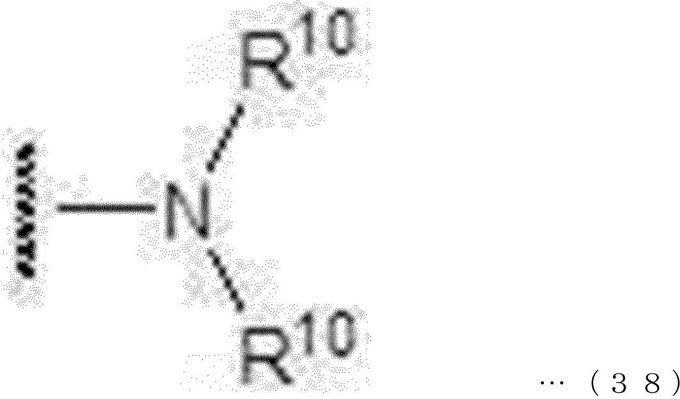

ここで、それぞれのR10は、独立して、水素またはヒドロカルビル基を示すか、あるいは、2つのR10は、それらが付着したN原子とともに環構造内に4~8個の原子を有するヘテロ環を完成する。 Here, each R 10 independently represents a hydrogen or hydrocarbyl group, or the two R 10s are heterocycles having 4-8 atoms in the ring structure along with the N atoms to which they are attached. To complete.
この明細書において用いられたターミノロジー「アミノアルキル」は、アミノ基で置換されたアルキル基のことをいう。 As used herein, the terminology "aminoalkyl" refers to an alkyl group substituted with an amino group.
この明細書において用いられたターミノロジー「カルボキシ」とは、一般式―CO2Hで表される基のことをいう。 As used herein, the terminology "carboxy" refers to a group represented by the general formula -CO 2 H.
この明細書において用いられたターミノロジー「ヘタルアルキル(hetaralkyl)」及び「ヘテロアラルキル(heteroaralkyl)」とは、ヘタリール(hetaryl)基で置換されたアルキル基のことをいう。 As used herein, the terminologies "hetalalkyl" and "heteroaralkyl" refer to an alkyl group substituted with a hetalyl group.
この明細書において用いられたターミノロジー「ヘテロアルキル」とは、炭素原子及び少なくとも1つ以上のヘテロ原子を有する飽和もしくは不飽和の鎖のことをいい、ここで、2つのヘテロ原子は、隣り合わない。 As used herein, the terminology "heteroalkyl" refers to a saturated or unsaturated chain having a carbon atom and at least one heteroatom, where the two heteroatoms are adjacent to each other. do not have.
ターミノロジー「ヘテロアリール」及び「ヘタリール(hetaryl)」は、置換もしくは非置換の芳香族単一環の構造、好ましくは、5―~7―員環、さらに好ましくは、5―~6―員環を含み、この環の構造は、少なくとも1つのヘテロ原子、好ましくは、1~4個のヘテロ原子、さらに好ましくは、1または2つのヘテロ原子を含む。ターミノロジー「ヘテロアリール」及び「ヘタリール(hetaryl)」は、2つ以上の炭素が2つの隣り合う環に共通している、2つ以上のサイクリック環を有するポリサイクリック環システムをも含み、ここで、環の少なくとも1つ以上は、ヘテロ芳香族であり、例えば、他のサイクリック環は、シクロアルキル、シクロアルケニル、シクロアルキニル、アリール、ヘテロアリール、及び/またはヘテロシクリルである。ヘテロアリール基は、例えば、ピロール、フラン(furan)、チオフェン(thiophene)、イミダゾール、オキサゾール、チアゾール、ピラゾール、ピリジン、ピリジン、ピリダジン、及びピリミジンなどを含む。 The terminologies "heteroaryl" and "hetaryl" have a substituted or unsubstituted aromatic single ring structure, preferably a 5- to 7-membered ring, more preferably a 5- to 6-membered ring. The structure of this ring comprises at least one heteroatom, preferably 1 to 4 heteroatoms, more preferably 1 or 2 heteroatoms. The terminologies "heteroaryl" and "hetaryl" also include polycyclic ring systems with two or more cyclic rings in which two or more carbons are common to two adjacent rings. Here, at least one of the rings is a heteroaromatic, for example, the other cyclic rings are cycloalkyl, cycloalkenyl, cycloalkynyl, aryl, heteroaryl, and / or heterocyclyl. Heteroaryl groups include, for example, pyrol, furan, thiophene, imidazole, oxazole, thiazole, pyrazole, pyridine, pyridine, pyridazine, pyrimidine and the like.
この明細書において用いられたターミノロジー「ヘテロ原子」とは、炭素または水素以外の任意の元素の原子を意味する。好適なヘテロ原子は、窒素、酸素及び硫黄である。 As used herein, the terminology "heteroatom" means an atom of any element other than carbon or hydrogen. Suitable heteroatoms are nitrogen, oxygen and sulfur.
ターミノロジー「ヘテロシクリル」、「ヘテロ環」及び「複素環」とは、置換もしくは非置換の非芳香族環の構造のことをいい、好ましくは、3―~10―員環、さらに好ましくは、3―~7―員環のことをいい、この環の構造は、少なくとも1つのヘテロ原子、好ましくは、1~4個のヘテロ原子、さらに好ましくは、1つまたは2つのヘテロ原子を含む。ターミノロジー「ヘテロシクリル」及び「複素環」は、また2つ以上の炭素が2つの隣り合う環に共通している、2つ以上のサイクリック環を有するポリサイクリック環システムをも含み、ここで、環の少なくとも1つ以上は、複素環であり、例えば、他のサイクリック環は、シクロアルキル、シクロアルケニル、シクロアルキニル、アリール、ヘテロアリール、及び/またはヘテロシクリルである。ヘテロシクリル基は、例えば、ピペリジン、ピペラジン、ピロリジン、モルホリン、ラムトン、ラムタムなどを含む。ヘテロシクリル基はまた、オキソ基で置換されてもよい。例えば、「ヘテロシクリル」は、ピロリジン及びピロリジノン(pyrrolidinone)を両方とも含む。 The terminologies "heterocyclyl", "heterocycle" and "heterocycle" refer to the structure of a substituted or unsubstituted non-aromatic ring, preferably a 3- to 10-membered ring, more preferably 3 A −7—membered ring, the structure of which the ring comprises at least one heteroatom, preferably 1 to 4 heteroatoms, more preferably one or two heteroatoms. The terminologies "heterocyclyls" and "heterocycles" also include polycyclic ring systems with two or more cyclic rings in which two or more carbons are common to two adjacent rings. , At least one of the rings is a heterocycle, for example the other cyclic rings are cycloalkyl, cycloalkenyl, cycloalkynyl, aryl, heteroaryl, and / or heterocyclyl. Heterocyclyl groups include, for example, piperidine, piperazine, pyrrolidine, morpholine, lambton, ramtam and the like. The heterocyclyl group may also be substituted with an oxo group. For example, "heterocyclyl" comprises both pyrrolidine and pyrrolidone.
この明細書において用いられたターミノロジー「ヒドロキシアルキル」とは、ヒドロキシ基で置換されたアルキル基のことをいう。 As used herein, the terminology "hydroxyalkyl" refers to an alkyl group substituted with a hydroxy group.
ターミノロジー「置換された」とは、主鎖の1つ以上の炭素上の水素を置換する置換体を有するモイエティのことをいう。「置換」または「で置換された」は、このような置換が、置換された原子及び置換体の許容された原子価に従い、置換が、例えば、並べ替え、環化、除去などの変化を自発的に経ない安定した化合物を生じさせるという内包された条件を含むということが理解できる筈である。この明細書において用いられたように、ターミノロジー「置換された」は、有機化合物の全ての許容される置換体を含むものと考えられる。 Terminology "Substituted" refers to a moyetti having a substituent that replaces hydrogen on one or more carbons of the backbone. "Substitution" or "substituted with" means that such substitutions spontaneously undergo changes such as sorting, cyclization, removal, etc., according to the permissible valences of the substituted atoms and substituents. It should be understood that it includes the contained condition of producing a stable compound that does not pass through the target. As used herein, terminology "substituted" is believed to include all acceptable substitutions of organic compounds.
広い側面からみて、許容される置換体は、有機化合物の非環状及び環状、分岐状及び非分岐状、炭素環及び複素環、芳香族及び非芳香族の置換体を含む。許容される置換体は、好適な有機化合物に対して1つ以上同じでも異なっていてもよい。本発明に対して、窒素などのヘテロ原子は、ヘテロ原子の原子価を満たすこの明細書に記載された有機化合物の水素置換体及び/またはいかなる許容される置換体でも有していてもよい。置換体は、この明細書に記載されたいかなる置換体でも、例えば、ハロゲン、ヒドロキシル、カルボニル(例:カルボキシル、アルコキシカルボニル、ホルミル、またはアシル)、チオカルボニル(例:チオエステル、チオアセテート、またはチオホルマート)、アルコキシル、フォスフォリル、ホスファート、フォスフォネート、ホスフィネート、アミノ、アミド、アミジン、イミン、シアノ、ニトロ、アジド、スルフヒドリル、アルキルチオ、スルファート、スルホネート、スルファモイル、スルホンアミド、スルホニル、ヘテロシクリル、アラルキル、または芳香族またはヘテロ芳香族モイエティを含んでいてもよい。当業者は、置換体が必要である場合、それ自体で置換され得るということが理解できる筈である。「置換されていない」と具体的に明示されない場合、この明細書における化学モイエティに関する言及は、置換された修飾を含むものであると理解する。例えば、「アリール」基またはモイエティに関する言及は、置換された修飾及び置換されない修飾を両方とも含縮的に含む。 From a broad perspective, acceptable substitutions include acyclic and cyclic, branched and non-branched, carbocyclic and heterocyclic, aromatic and non-aromatic substitutions of organic compounds. The acceptable substitutions may be the same or different for one or more of the suitable organic compounds. For the present invention, the heteroatom, such as nitrogen, may have hydrogen substitutions and / or any acceptable substitutions of the organic compounds described herein that satisfy the valences of the heteroatoms. Substitutes can be any of the substitutions described herein, eg, halogen, hydroxyl, carbonyl (eg, carboxyl, alkoxycarbonyl, formyl, or acyl), thiocarbonyl (eg, thioester, thioacetate, or thioformate). , Alkyl, Phosphoryl, Phosphate, Phosphonate, Phosphinate, Amino, Amide, Amidine, Imine, Cyano, Nitro, Azido, Sulfhydryl, Alkylthio, Sulfate, Sulfonate, Sulfamoyl, Sulfonamide, sulfonyl, Heterocyclyl, Aralkyl, or Aromatic It may contain a heteroaromatic moyetti. One of ordinary skill in the art should be able to understand that if a replacement is required, it can be replaced by itself. Unless specifically stated as "not substituted", reference to chemical motility herein is understood to include substituted modifications. For example, references to "aryl" groups or moyties include both substituted and non-substituted modifications in a contractile manner.
この明細書において用いられたターミノロジー「チオアルキル」とは、チオール基で置換されたアルキル基のことをいう。 As used herein, the terminology "thioalkyl" refers to an alkyl group substituted with a thiol group.
この明細書において用いられたターミノロジー「チオエステル」とは、―C(O)SR10または―SC(O)R10のことをいい、ここで、R10は、ヒドロカルビルを示す。 As used herein, the terminology "thioester" refers to -C (O) SR 10 or -SC (O) R 10 , where R 10 refers to hydrocarbyl.
この明細書において用いられたターミノロジー「チオエーテル」は、エーテルと同等のものであって、ここで、酸素は、硫黄に代替される。 The terminology "thioether" used herein is equivalent to ether, where oxygen is replaced by sulfur.
「保護基(Protecting group)」とは、分子内の反応性官能基に結合するとき、官能基の反応性をマスキングしたり、減少させたり、防いだりする原子基のことをいう。通常、保護基は、合成中に必要に応じて選択的に除去されてもよい。保護基の例は、文献[参照:Greene and Wuts,Protective Groups in Organic Chemistry,3rd Ed.,1999,John Wiley&Sons,NY and Harrison et al.,Compendium of Synthetic Organic Methods,Vols.1―8,1971―1996,John Wiley&Sons,NY]において見つけることができる。代表的な窒素保護基は、ホルミル、アセチル、トリフルオロアセチル、ベンジル、ベンジルオキシカルボニル(「CBZ」)、tert―ブトキシカルボニル(「BOC」)、トリメチルシリル(「TMS」)、2―トリメチルシリル―エタンスルホニル(「TES」)、トリチル及び置換されたトリチル基、アリルオキシカルボニル、9―フルオレニルメチルオキシカルボニル(「FMOC」)、ニトロ―ベラトリルオキシカルボニル(「NVOC」)などを含むが、これらに何ら制限されない。代表的なヒドロキシル保護基は、ベンジル及びトリチルエーテルなどのヒドロキシル基がアシル化(エステル化)またはアルキル化されたものだけではなく、アルキルエーテル、テトラヒドロピラニルエーテル、トリアルキルシリルエーテル(例:TMSまたはTIPS基)、エチレングリコール及びプロピレングリコール誘導体などのグリコールエーテル、及びアリルエーテルを含むが、これらに何ら制限されない。 "Protecting group" refers to an atomic group that masks, reduces, or prevents the reactivity of a functional group when it binds to a reactive functional group within the molecule. Generally, protecting groups may be selectively removed during synthesis as needed. Examples of protecting groups are described in the literature [See: Greene and Wuts, Protective Groups in Organic Chemistry, 3rd Ed. , 1999, John Wiley & Sons, NY and Harrison et al. , Compendium of Synthetic Compendium Methods, Vols. It can be found in 1-8, 1971-1996, John Wiley & Sons, NY]. Typical nitrogen protecting groups are formyl, acetyl, trifluoroacetyl, benzyl, benzyloxycarbonyl (“CBZ”), tert-butoxycarbonyl (“BOC”), trimethylsilyl (“TMS”), 2-trimethylsilyl-ethanesulfonyl. ("TES"), trityl and substituted trityl groups, allyloxycarbonyl, 9-fluorenylmethyloxycarbonyl ("FMOC"), nitro-veratryloxycarbonyl ("NVOC") and the like. There are no restrictions. Typical hydroxyl protecting groups are not only those in which hydroxyl groups such as benzyl and trityl ether are acylated (esterified) or alkylated, but also alkyl ethers, tetrahydropyranyl ethers, trialkylsilyl ethers (eg TMS or TIPS). Groups), glycol ethers such as ethylene glycol and propylene glycol derivatives, and allyl ethers, but are not limited thereto.
「共有結合で連結された/共有結合された」は、2つの化学種(例えば、介在された(intervening)一連の原子を介した)の直接結合及び間接結合を両方とも含む。例えば、アミノ酸は、ポリエチレングリコールに直接的に共有結合され得るが、例えば、アミノ酸のカルボキシル及びポリエチレングリコールのヒドロキシルの間にエステルを形成するか、あるいは、間接的に、例えば、ポリエチレングリコールとエピクロロヒドリンとを反応させてエポキシプロピルエーテルを形成し、生成されたエポキシドをアミノ酸のアミノ基と反応させて2―ヒドロキシプロピルリンカーを介してアミノ酸及びポリエチレングリコールを共有結合することができる。様々なモイエティを直接的にまたは間接的に連結する様々なモイエティ及び反応は、この技術分野において周知である。特定の好適な実施態様において、文脈により別途に指示されない限り、間接結合は、単に1~10個の介在原子(intervening atoms)(例えば、メチレン、ジブチルエーテル、トリペプチドなど)、最も好ましくは、1~6個の介在原子を含む。 "Covalently linked / covalently linked" includes both direct and indirect bonds of two species (eg, via a series of intervening atoms). For example, amino acids can be covalently attached directly to polyethylene glycol, such as forming an ester between the carboxyl of the amino acid and the hydroxyl of the polyethylene glycol, or indirectly, for example, polyethylene glycol and epichlorohydre. Epoxides can be reacted with phosphorus to form epoxypropyl ethers and the resulting epoxides can be reacted with the amino groups of the amino acids to co-bond amino acids and polyethylene glycol via a 2-hydroxypropyl linker. Various moities and reactions that directly or indirectly link various moities are well known in the art. In certain preferred embodiments, the indirect bond is simply 1-10 intervening atoms (eg, methylene, dibutyl ether, tripeptide, etc.), most preferably 1 unless otherwise indicated by the context. Contains up to 6 intervening atoms.
この明細書において用いられたように、障害または状態を「予防」する治療剤とは、統計サンプルにおいて、未処置対照群サンプルに比べて処置されたサンプルにおいて障害または状態の発生が減少されるか、あるいは、未処置対照群サンプルに比べて障害または状態の1つ以上の兆候の深刻度を減少させたり発現を遅延させたりするもののことをいう。 As used herein, a therapeutic agent that "prevents" a disorder or condition is a statistical sample that reduces the incidence of the disorder or condition in a treated sample compared to an untreated control group sample. Or, it refers to one that reduces the severity of one or more signs of a disorder or condition or delays its onset compared to an untreated control group sample.
ターミノロジー「治療する」は、予防的及び/または治療的な処置(prophylactic and/or therapeutic treatments)を含む。ターミノロジー「予防的または治療的」な処置は、当業界において公知であり、本発明の組成物のうちの1つ以上をホストに投与することを含む。不所望の状態(例:ホスト動物の疾病またはその他の希望しない状態)の臨床的な症状が現れないうちに投与される場合、治療は、予防的(すなわち、希望しない状態に発展しないようにホストを保護する)であるのに対し、希望しない状態の症状が現れた後に投与される場合、治療は、治療的である(すなわち、既存の希望しない状態またはこの副作用を減らしたり、緩和させたり、または安定化させたりすることを意図する)。 Terminology "treating" includes prophylactic and / or therapeutic treatments. Terminology "Prophylactic or therapeutic" treatments are known in the art and include administering to a host one or more of the compositions of the invention. If administered before the onset of clinical symptoms of an undesired condition (eg, disease of the host animal or other undesired condition), treatment is host to preventive (ie, undesired) development. When administered after the onset of symptoms of an undesired condition, the treatment is therapeutic (ie, the existing undesired condition or this side effect is reduced or alleviated, Or intended to stabilize).
ターミノロジー「プロドラグ」は、生理学的な条件下で本発明の治療的活性剤に転換される化合物を含むものであることが意図される。プロドラグを作製する通常の方法は、生理学的な条件下で加水分解されて標的分子を露出させる1つ以上の選択されたモイエティを含むものである。他の実施態様において、プロドラグは、ホスト動物の酵素活性により転換される。例えば、エステルまたはカーボネート(例えば、アルコールまたはカルボン酸のエステルまたはカーボネート)が好適なプロドラグである。 The terminology "prodrag" is intended to include compounds that are converted to the therapeutically active agents of the invention under physiological conditions. The usual method of making a prodrag comprises one or more selected moities that are hydrolyzed under physiological conditions to expose the target molecule. In another embodiment, the prodrag is converted by the enzymatic activity of the host animal. For example, esters or carbonates (eg, esters or carbonates of alcohols or carboxylic acids) are suitable prodrags.
以下、実施例の構成が実施例によって詳しく描かれるが、以下の実施例は本発明の理解を助けるためのものにすぎず、本発明の範囲をこれをもって制限することはない。 Hereinafter, the configuration of the examples will be described in detail by the examples, but the following examples are merely for the purpose of assisting the understanding of the present invention and do not limit the scope of the present invention.
[実施例]
本発明の一態様において、本発明に係るリンカー―薬物化合物、及びリンカー―薬物―リガンド複合体は、次のような過程に従って合成されてもよい。
[Example]
In one aspect of the present invention, the linker-drug compound and the linker-drug-ligand complex according to the present invention may be synthesized according to the following process.
[リンカー―薬物の合成経路]
1)リンカーの合成

1) Linker synthesis
2)リンカー―薬物の合成

[リンカー―薬物―リガンド複合体の合成経路]
本発明に係るリンカー―薬物―リガンド複合体は、この明細書において提供される技術を用いて、当業者の知識を用いて作製されてもよい。
[Synthetic pathway of linker-drug-ligand complex]
The linker-drug-ligand complex according to the present invention may be made using the techniques provided herein and with the knowledge of one of ordinary skill in the art.
例えば、リンカーは、この明細書に全体的に参考として取り込まれるPCT/US2016/063564号公報及びPCT/US2016/063595号公報に記述されており、たとえここに記述されていないとしても、この明細書に取り込まれているか、あるいは、この技術分野における熟練した技術者は、公知の参考文献に従って作製することができる。 For example, linkers are described in PCT / US2016 / 063564 and PCT / US2016 / 063595, which are incorporated herein by reference in their entirety, even if they are not described herein. Incorporated in, or skilled technicians in the art, can be made according to known references.
<実施例1> 化合物5の作製

化合物1の作製
窒素雰囲気下で、2―(2―(2―クロロエトキシ)エトキシ)エタノール(10.0g,59.3mmol)をアセトン(60mL)に溶かした後、ヨウ化ナトリウム(26.0g,177.9mmol)を添加し、前記混合物を12時間還流させた。反応を完了した後、減圧濃縮し、カラムクロマトグラフを用いて化合物1(13.0g,85%)を得た。
1H―NMR(400 MHz,CDCl3)δ 3.79―3.73(m,4H),3.70―3.68(m,4H),3.64―3.62(m,2H),3.29―3.25(m,2H).
Preparation of Compound 1 Under a nitrogen atmosphere, 2- (2- (2-chloroethoxy) ethoxy) ethanol (10.0 g, 59.3 mmol) was dissolved in acetone (60 mL), and then sodium iodide (26.0 g, 177.9 mmol) was added and the mixture was refluxed for 12 hours. After completing the reaction, the mixture was concentrated under reduced pressure to obtain compound 1 (13.0 g, 85%) using a column chromatograph.
1 1 H-NMR (400 MHz, CDCl 3 ) δ 3.79-3.73 (m, 4H), 3.70-3.68 (m, 4H), 3.64-3.62 (m, 2H) , 3.29-3.25 (m, 2H).
化合物2の作製
窒素雰囲気下で、0℃において化合物1(13.0g,49.9mmol)をアセトン(316mL)に溶かした後、ジョーンズ試薬(Jonesre agent,31.6mL)を添加し、15時間常温にて攪拌した。反応を完了した後、酢酸エチル(2×100mL)と蒸留水(150mL)を加えた後、抽出された有機層を無水硫酸ナトリウムで乾燥させ、濾過した後、減圧下で濃縮した。カラムクロマトグラフィーで精製して化合物2(13.1g,96%)を得た。
1H―NMR(400 MHz,CDCl3)δ 4.22(s,2H),3.80―3.66(m,6H),3.29―3.25(m,2H).
Preparation of Compound 2 Under a nitrogen atmosphere, compound 1 (13.0 g, 49.9 mmol) was dissolved in acetone (316 mL) at 0 ° C., and then Jones reagent (Jonesre agent, 31.6 mL) was added at room temperature for 15 hours. Was stirred at. After completing the reaction, ethyl acetate (2 × 100 mL) and distilled water (150 mL) were added, and the extracted organic layer was dried over anhydrous sodium sulfate, filtered, and concentrated under reduced pressure. Purification by column chromatography gave compound 2 (13.1 g, 96%).
1 1 H-NMR (400 MHz, CDCl 3 ) δ 4.22 (s, 2H), 3.80-3.66 (m, 6H), 3.29-3.25 (m, 2H).
化合物3の作製
窒素雰囲気下で、0℃において化合物2(13.1g,47.9mmol)をメタノール(121mL)に溶解させた後、塩化オキサリル(6.1mL,71.9mmol)を添加し、常温にて16時間攪拌した。反応を完了した後、減圧下で濃縮し、カラムクロマトグラフィーで精製して化合物3(9.8g,71%)を得た。
1H―NMR(400 MHz,CDCl3)δ 4.19(s,2H),3.78―3.70(m,9H),3.27(t,J=7.0Hz,2H).
Preparation of Compound 3 Under a nitrogen atmosphere, compound 2 (13.1 g, 47.9 mmol) was dissolved in methanol (121 mL) at 0 ° C., and then oxalyl chloride (6.1 mL, 71.9 mmol) was added at room temperature. Was stirred for 16 hours. After completing the reaction, the mixture was concentrated under reduced pressure and purified by column chromatography to obtain compound 3 (9.8 g, 71%).
1 1 H-NMR (400 MHz, CDCl 3 ) δ 4.19 (s, 2H), 3.78-3.70 (m, 9H), 3.27 (t, J = 7.0 Hz, 2H).
化合物4の作製
化合物3(9.75g,33.8mmol)をN,N―ジメチルホルムアミド(143mL)に溶かした後、N,N―ジヒドロキシルアミン(10.3g,44.0mmol)と水素化ナトリウム(60% in oil,1.63g,40.6mmol)を0℃、窒素雰囲気下で添加した。反応溶液を15時間攪拌した後、蒸留水(200mL)と酢酸エチル(3×150mL)を加えて抽出し、得られた有機層を無水硫酸ナトリウムで乾燥させた。濾過後に減圧濃縮し、カラムクロマトグラフィーで精製して化合物4(10.6g,80%)を得た。
1H―NMR(400 MHz,CDCl3)δ 4.17(s,2H),4.09(t,J=7.0Hz,2H),3.76―3.73(m,9H),1.54(s,18H).
Preparation of Compound 4 After dissolving Compound 3 (9.75 g, 33.8 mmol) in N, N-dimethylformamide (143 mL), N, N-dihydroxylamine (10.3 g, 44.0 mmol) and sodium hydride (10.3 g, 44.0 mmol) were added. 60% in oil, 1.63 g, 40.6 mmol) was added at 0 ° C. under a nitrogen atmosphere. After stirring the reaction solution for 15 hours, distilled water (200 mL) and ethyl acetate (3 × 150 mL) were added for extraction, and the obtained organic layer was dried over anhydrous sodium sulfate. After filtration, the mixture was concentrated under reduced pressure and purified by column chromatography to give compound 4 (10.6 g, 80%).
1 1 H-NMR (400 MHz, CDCl 3 ) δ 4.17 (s, 2H), 4.09 (t, J = 7.0 Hz, 2H), 3.76-3.73 (m, 9H), 1 .54 (s, 18H).
化合物5の作製
化合物4(10.6g,26.9mmol)をテトラヒドロフラン/メタノール/蒸留水(240mL/80mL/80mL)に溶かした後、水酸化ナトリウム(2.7g,40.4mmol)を0℃、窒素雰囲気下で添加した。反応温度を常温まで昇温した後、3時間攪拌した。反応溶液のpHを~4に1N塩酸水溶液を用いて調整した後、蒸留水(100mL)と酢酸エチル(2×100mL)を加えて抽出し、合わせた有機層を無水硫酸ナトリウムで乾燥させた。濾過後に減圧濃縮して得られた化合物5(6.76g,90%)をさらなる精製なしに次の反応に供した。
1H―NMR(400 MHz,CDCl3)δ 4.15(s,2H),4.05―4.03(m,2H),3.77―3.69(m,6H),1.48(s,9H).
Preparation of Compound 5 After dissolving Compound 4 (10.6 g, 26.9 mmol) in tetrahydrofuran / methanol / distilled water (240 mL / 80 mL / 80 mL), sodium hydroxide (2.7 g, 40.4 mmol) was added at 0 ° C. It was added in a nitrogen atmosphere. After raising the reaction temperature to room temperature, the mixture was stirred for 3 hours. After adjusting the pH of the reaction solution to ~ 4 with a 1N aqueous hydrochloric acid solution, distilled water (100 mL) and ethyl acetate (2 × 100 mL) were added for extraction, and the combined organic layer was dried over anhydrous sodium sulfate. Compound 5 (6.76 g, 90%) obtained by concentration under reduced pressure after filtration was subjected to the next reaction without further purification.
1 1 H-NMR (400 MHz, CDCl 3 ) δ 4.15 (s, 2H), 4.05-4.03 (m, 2H), 3.77-3.69 (m, 6H), 1.48 (S, 9H).
<実施例2> 化合物8の作製

化合物6の作製
2―アミノ―2―(ヒドロキシメチル)―1,3―プロパンジオール(Tris,5g,41.3mmol)と塩化チオニル(30.0mL,413mmol)を窒素雰囲気下で0℃、窒素雰囲気下で添加し、懸濁液の状態で攪拌した。―30℃において懸濁液の混合物にピリジン(4.9mL,20.6mmol)を徐々に添加し、反応中にガスが生じ始めるときに温度を120℃まで昇温した後、2時間攪拌した。反応溶液を0℃まで降温し、蒸留水(5mL)を10分間徐々に添加した後、硫酸(3mL,0.04mmol)を蒸留水(5mL)で希釈した溶液を添加し且つ攪拌した。ジクロロメタン(2×300mL)と30%水酸化ナトリウム水溶液(100mL)を加えて抽出した後、合わせた有機層を無水硫酸ナトリウムで乾燥させた。濾過後に減圧濃縮し、ジエチルエーテル(100mL)と塩酸(2M in Et2O,23mL)を添加して生じた固体を濾過して化合物6(4.6g,63%)を得た。
1H―NMR(400 MHz,DMSO―d6)δ 9.06(s,2H),4.00(s,6H).
Preparation of Compound 6 2-Amino-2- (hydroxymethyl) -1,3-propanediol (Tris, 5 g, 41.3 mmol) and thionyl chloride (30.0 mL, 413 mmol) were added under a nitrogen atmosphere at 0 ° C. and a nitrogen atmosphere. It was added below and stirred in suspension. Pyridine (4.9 mL, 20.6 mmol) was gradually added to the suspension mixture at −30 ° C., the temperature was raised to 120 ° C. when gas began to form during the reaction, and then the mixture was stirred for 2 hours. The temperature of the reaction solution was lowered to 0 ° C., distilled water (5 mL) was gradually added for 10 minutes, and then a solution obtained by diluting sulfuric acid (3 mL, 0.04 mmol) with distilled water (5 mL) was added and stirred. Dichloromethane (2 x 300 mL) and 30% aqueous sodium hydroxide solution (100 mL) were added for extraction, and then the combined organic layer was dried over anhydrous sodium sulfate. After filtration, the mixture was concentrated under reduced pressure, and the solid produced by adding diethyl ether (100 mL) and hydrochloric acid (2 Min Et 2 O, 23 mL) was filtered to obtain compound 6 (4.6 g, 63%).
1 1 H-NMR (400 MHz, DMSO-d 6 ) δ 9.06 (s, 2H), 4.00 (s, 6H).
化合物7の作製
化合物6(2.6g,14.74mmol)とアジ化ナトリウム(4.8g,73.5mmol)を蒸留水(63mL)に溶かした後、100℃において15時間攪拌した。反応溶液を減圧濃縮した後、蒸留水(60mL)で希釈し、ジエチルエーテル(6×100mL)を用いて抽出した。合わせた有機層を無水硫酸ナトリウムで乾燥させた。濾過後に濃縮して得られた化合物7(1.3g,45%)をさらなる精製なしに次の反応に供した。
1H―NMR(400 MHz,CDCl3)δ 3.34(s,6H).1H―NMR(400 MHz,DMSO―d6)9.06(s,2H),4.00(s,6H).
Preparation of Compound 7 Compound 6 (2.6 g, 14.74 mmol) and sodium azide (4.8 g, 73.5 mmol) were dissolved in distilled water (63 mL) and then stirred at 100 ° C. for 15 hours. The reaction solution was concentrated under reduced pressure, diluted with distilled water (60 mL), and extracted with diethyl ether (6 × 100 mL). The combined organic layers were dried over anhydrous sodium sulfate. Compound 7 (1.3 g, 45%) obtained by concentration after filtration was subjected to the next reaction without further purification.
1 1 H-NMR (400 MHz, CDCl 3 ) δ 3.34 (s, 6H). 1 1 H-NMR (400 MHz, DMSO-d 6 ) 9.06 (s, 2H), 4.00 (s, 6H).
化合物8の作製
化合物5(1g,3.58mmol)と化合物7(773mg,3.94mmol)をN,N―ジメチルホルムアミド(15mL)に溶かした後、N,N―ジイソプロピルエチルアミン(1.3mL,7.16mmol)とN,N、N'、N'―テトラメチル―O―(1H―ベンゾトリアゾール―1―イル)ウロニウムヘキサフルオロホスファート(1.5g,3.93mmol)を窒素雰囲気下で添加した。反応溶液を14時間常温にて攪拌した後、減圧濃縮し、カラムクロマトグラフィーで精製して化合物8(600mg,37%)を得た。
1H―NMR(400 MHz,CDCl3)δ 7.39(s,1H),6.87(s,1H),4.07(t,J=4.6Hz,2H),3.96(s,2H),3.72(s,6H),3.70―3.77(m,6H),1.48(s,9H).
Preparation of Compound 8 After dissolving Compound 5 (1 g, 3.58 mmol) and Compound 7 (773 mg, 3.94 mmol) in N, N-dimethylformamide (15 mL), N, N-diisopropylethylamine (1.3 mL, 7) .16 mmol) and N, N, N', N'-tetramethyl-O- (1H-benzotriazole-1-yl) uronium hexafluorophosphate (1.5 g, 3.93 mmol) were added under a nitrogen atmosphere. did. The reaction solution was stirred at room temperature for 14 hours, concentrated under reduced pressure, and purified by column chromatography to give compound 8 (600 mg, 37%).
1 1 H-NMR (400 MHz, CDCl 3 ) δ 7.39 (s, 1H), 6.87 (s, 1H), 4.07 (t, J = 4.6Hz, 2H), 3.96 (s) , 2H), 3.72 (s, 6H), 3.70-3.77 (m, 6H), 1.48 (s, 9H).
<実施例3> 化合物14の作製
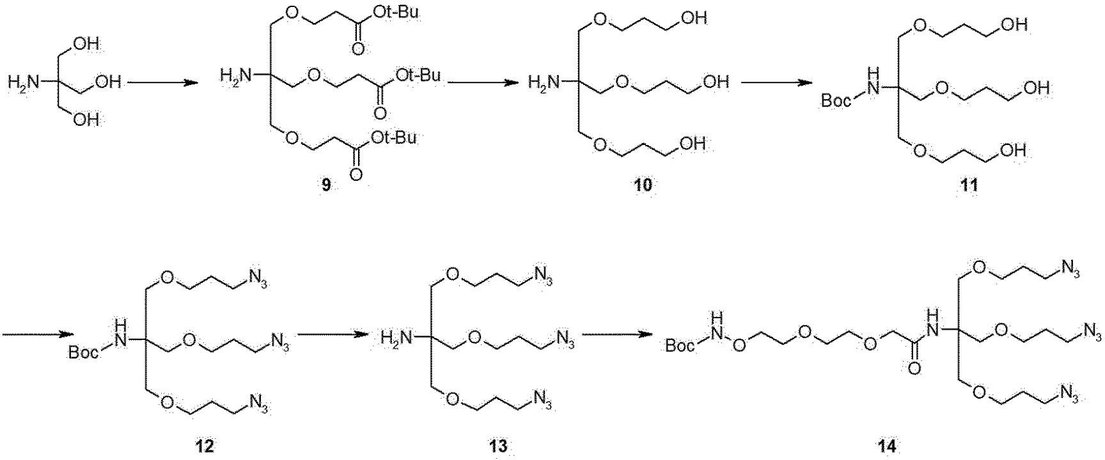
化合物9の作製
2―アミノ―2―(ヒドロキシメチル)―1,3―プロパンジオール(Tris,5.0g,41.3mmol)をジメチルスルホキシド(8mL)に溶かした後、窒素雰囲気下で5N水酸化ナトリウム水溶液(0.8mL)を添加した後、t―ブチルアクリレート(21.0mL,140mmol)を徐々に添加した。反応溶液を16時間常温にて攪拌した後、蒸留水(100mL)を反応溶液に添加し、酢酸エチル(2×100mL)で抽出した。合わせた有機層を無水硫酸ナトリウムで乾燥させた。濾過後に濃縮し、カラムクロマトグラフィーで精製して化合物9(9.05g,44%)を得た。
1H―NMR(400 MHz,CDCl3)δ 3.64(t,J=6.2Hz,6H),3.31(s,6H),2.45(t,J=6.2Hz,6H),1.45(s,27H).
Preparation of Compound 9 After dissolving 2-amino-2- (hydroxymethyl) -1,3-propanediol (Tris, 5.0 g, 41.3 mmol) in dimethyl sulfoxide (8 mL), 5N hydroxide was added under a nitrogen atmosphere. After adding an aqueous sodium solution (0.8 mL), t-butyl acrylate (21.0 mL, 140 mmol) was gradually added. After stirring the reaction solution at room temperature for 16 hours, distilled water (100 mL) was added to the reaction solution, and the mixture was extracted with ethyl acetate (2 × 100 mL). The combined organic layers were dried over anhydrous sodium sulfate. After filtration, the mixture was concentrated and purified by column chromatography to obtain Compound 9 (9.05 g, 44%).
1 1 H-NMR (400 MHz, CDCl 3 ) δ 3.64 (t, J = 6.2 Hz, 6H), 3.31 (s, 6H), 2.45 (t, J = 6.2 Hz, 6H) , 1.45 (s, 27H).
化合物10の作製
化合物9(9.05g,17.9mmol)をテトラヒドロフラン(170mL)に溶かした後、水素化リチウムアルミニウム(1M in THF、54mL)を0℃、窒素雰囲気下で添加した。反応溶液を4時間常温にて攪拌した後、蒸留水(2mL)、15% w/w水酸化ナトリウム水溶液(2mL)、及び蒸留水(6mL)をこの順に添加した。無水硫酸ナトリウムで乾燥させた後、濾過及び濃縮して得た化合物10(4.3g,82%)をさらなる精製なしに次の反応に供した。
1H―NMR(400 MHz,CDCl3)δ 3.75(t,J=5.4Hz,6H),6.22(t,J=5.4Hz,6H),3.36(s,6H),1.83―1.78(m,6H).
Preparation of Compound 10 After dissolving Compound 9 (9.05 g, 17.9 mmol) in tetrahydrofuran (170 mL), lithium aluminum hydride (1 Min THF, 54 mL) was added at 0 ° C. under a nitrogen atmosphere. After stirring the reaction solution at room temperature for 4 hours, distilled water (2 mL), 15% w / w aqueous sodium hydroxide solution (2 mL), and distilled water (6 mL) were added in this order. After drying over anhydrous sodium sulfate, compound 10 (4.3 g, 82%) obtained by filtration and concentration was subjected to the next reaction without further purification.
1 1 H-NMR (400 MHz, CDCl 3 ) δ 3.75 (t, J = 5.4 Hz, 6H), 6.22 (t, J = 5.4 Hz, 6H), 3.36 (s, 6H) , 1.83-1.78 (m, 6H).
化合物11の作製
化合物10(4.3g,14.6mmol)をメタノール(50mL)に溶かした後、ジ―t―ブチルジカーボネート(3.3g,15.1mmol)をメタノール(25mL)に溶かした溶液を0℃、窒素雰囲気下で徐々に添加した。反応溶液を12時間常温にて攪拌した後、減圧濃縮し、カラムクロマトグラフィーで精製して化合物11(4.05g,70%)を得た。
1H―NMR(400 MHz,CDCl3)δ 3.73(t,J=5.2Hz,6H),3.67(s,6H),3.61(t,J=5.2Hz,6H),1.81―1.78(m,6H).
Preparation of Compound 11 A solution of compound 10 (4.3 g, 14.6 mmol) in methanol (50 mL) and then di-t-butyl dicarbonate (3.3 g, 15.1 mmol) in methanol (25 mL). Was gradually added at 0 ° C. under a nitrogen atmosphere. The reaction solution was stirred at room temperature for 12 hours, concentrated under reduced pressure, and purified by column chromatography to give compound 11 (4.05 g, 70%).
1 1 H-NMR (400 MHz, CDCl 3 ) δ 3.73 (t, J = 5.2 Hz, 6H), 3.67 (s, 6H), 3.61 (t, J = 5.2 Hz, 6H) , 1.81-1.78 (m, 6H).
化合物12の作製
化合物11(1g,2.52mmol)をテトラヒドロフラン(8mL)に溶かした後、4―メチルモルホリン(1.2mL,11.5mmol)とメタンスルホン酸無水物(2g,11.5mmol)を0℃、窒素雰囲気下で添加した。反応溶液を2時間攪拌した後、減圧濃縮し、N,N―ジメチルホルムアミド(9mL)に溶かした後、アジ化ナトリウム(850mg,12.8mmol)を添加した。反応溶液を2時間100℃において攪拌した後、常温まで降温し、飽和塩化アンモニウム水溶液(8mL)を添加した後、酢酸エチル(2×30mL)で抽出した。合わせた有機層を食塩水(2×30mL)で拭き取った後、無水硫酸ナトリウムで乾燥させた。濾過後に濃縮し、カラムクロマトグラフィーで精製して化合物12(984mg,82%)を得た。
1H―NMR(400 MHz,CDCl3)δ 3.64(s,6H),3.51(t,J=5.8Hz,6H),3.36(t,J=6.6Hz,6H),1.86―1.80(m,6H),1.43(s,9H).
Preparation of Compound 12 After dissolving Compound 11 (1 g, 2.52 mmol) in tetrahydrofuran (8 mL), 4-methylmorpholine (1.2 mL, 11.5 mmol) and methanesulfonic acid anhydride (2 g, 11.5 mmol) were added. It was added at 0 ° C. under a nitrogen atmosphere. The reaction solution was stirred for 2 hours, concentrated under reduced pressure, dissolved in N, N-dimethylformamide (9 mL), and then sodium azide (850 mg, 12.8 mmol) was added. The reaction solution was stirred at 100 ° C. for 2 hours, cooled to room temperature, saturated aqueous ammonium chloride solution (8 mL) was added, and the mixture was extracted with ethyl acetate (2 × 30 mL). The combined organic layers were wiped off with saline (2 x 30 mL) and then dried over anhydrous sodium sulfate. After filtration, the mixture was concentrated and purified by column chromatography to give compound 12 (984 mg, 82%).
1 1 H-NMR (400 MHz, CDCl 3 ) δ 3.64 (s, 6H), 3.51 (t, J = 5.8Hz, 6H), 3.36 (t, J = 6.6Hz, 6H) , 1.86-1.80 (m, 6H), 1.43 (s, 9H).
化合物13の作製
化合物12(167mg,0.34mmol)をジクロロメタン(4mL)に溶かした後、塩酸(4N in 1,4―ジオキサン、1mL,10mmol)を0℃、窒素雰囲気下で添加した。反応溶液を12時間常温にて攪拌した後、減圧濃縮して化合物13(131mg,99%)を得た。
1H―NMR(400 MHz,CDCl3)δ 8.37(s,2H),3.70(s,6H),3.60(t,J=5.4Hz,6H),3.47(t,J=6.6Hz,6H),1.90―1.87(m,6H).
Preparation of Compound 13 After dissolving Compound 12 (167 mg, 0.34 mmol) in dichloromethane (4 mL), hydrochloric acid (4N in 1,4-dioxane, 1 mL, 10 mmol) was added at 0 ° C. under a nitrogen atmosphere. The reaction solution was stirred at room temperature for 12 hours and then concentrated under reduced pressure to give compound 13 (131 mg, 99%).
1 1 H-NMR (400 MHz, CDCl 3 ) δ 8.37 (s, 2H), 3.70 (s, 6H), 3.60 (t, J = 5.4Hz, 6H), 3.47 (t) , J = 6.6Hz, 6H), 1.90-1.87 (m, 6H).
化合物14の作製
化合物13(148mg,0.4mmol)と化合物5(313mg,1.12mmol)をN,N―ジメチルホルムアミド(1.6mL)に溶かした後、N,N―ジイソプロピルエチルアミン(0.15mL,1.68mmol)、N,N、N',N'―テトラメチル―O―(1H―ベンゾトリアゾール―1―イル)ウロニウムヘキサフルオロホスファート(410mg,1.08mmol)を0℃、窒素雰囲気下でこの順に添加した。反応溶液を14時間常温にて攪拌した後、減圧濃縮し、カラムクロマトグラフィーで精製して化合物14(130mg,50%)を得た。
1H―NMR(400 MHz,CDCl3)δ 7.51(s,1H),6.79(s,1H),4.03(t,J=4.4Hz,2H),3.92(s,2H),3.72(s,6H),3.70―6.79(m,6H),3.52(t,J=5.6Hz,6H),3.65(t,J=6.6Hz,6H),1.86―1.80(m,6H),1.48(s,9H).
Preparation of Compound 14 After dissolving Compound 13 (148 mg, 0.4 mmol) and Compound 5 (313 mg, 1.12 mmol) in N, N-dimethylformamide (1.6 mL), N, N-diisopropylethylamine (0.15 mL) , 1.68 mmol), N, N, N', N'-tetramethyl-O- (1H-benzotriazole-1-yl) uronium hexafluorophosphate (410 mg, 1.08 mmol) at 0 ° C., nitrogen atmosphere. It was added in this order below. The reaction solution was stirred at room temperature for 14 hours, concentrated under reduced pressure, and purified by column chromatography to give compound 14 (130 mg, 50%).
1 1 H-NMR (400 MHz, CDCl 3 ) δ 7.51 (s, 1H), 6.79 (s, 1H), 4.03 (t, J = 4.4 Hz, 2H), 3.92 (s) , 2H), 3.72 (s, 6H), 3.70-6.79 (m, 6H), 3.52 (t, J = 5.6Hz, 6H), 3.65 (t, J = 6) .6Hz, 6H), 1.86-1.80 (m, 6H), 1.48 (s, 9H).
<実施例4> 化合物18の作製

化合物15の作製
ヘキサエチレングリコール(50.0g,177mmol)、酸化銀(61.6g,266mmol)、及びヨウ化カリウム(5.85g,35.4mmol)をジクロロメタン(500mL)で希釈した後、15分間超音波破砕を行った。この溶液に4―トルエンスルホニルクロリド(34.4g,181mmol)をジクロロメタン(100mL)に溶かした溶液を―30℃において徐々に添加した。反応溶液を0℃まで徐々に昇温し、15分間保持した後、無水硫酸ナトリウムで乾燥させた。濾過後に濃縮し、カラムクロマトグラフィーで精製して化合物15(61.46g,80%)を得た。
1H―NMR(400 MHz,CDCl3)δ 7.80(d,J=8.0Hz,2H),7.35(d,J=8.0Hz,2H),4.16(m,2H),3.71―3.58(m,22H),2.45(s,3H).
Preparation of Compound 15 Hexaethylene glycol (50.0 g, 177 mmol), silver oxide (61.6 g, 266 mmol), and potassium iodide (5.85 g, 35.4 mmol) were diluted with dichloromethane (500 mL) for 15 minutes. Ultrasonic crushing was performed. A solution of 4-toluenesulfonyl chloride (34.4 g, 181 mmol) in dichloromethane (100 mL) was gradually added to this solution at −30 ° C. The reaction solution was gradually heated to 0 ° C., held for 15 minutes, and then dried over anhydrous sodium sulfate. After filtration, the mixture was concentrated and purified by column chromatography to obtain compound 15 (61.46 g, 80%).
1 1 H-NMR (400 MHz, CDCl 3 ) δ 7.80 (d, J = 8.0 Hz, 2H), 7.35 (d, J = 8.0 Hz, 2H), 4.16 (m, 2H) , 3.71-3.58 (m, 22H), 2.45 (s, 3H).
化合物16の作製
化合物15(5g,11.5mmol)とアジ化ナトリウム(1.2g,17.2mmol)をN,N―ジメチルホルムアミド(30mL)に溶かした後、100℃において15時間攪拌した。濾過後に濃縮し、カラムクロマトグラフィーで精製して化合物16(3.16g,90%)を得た。
1H―NMR(400 MHz,CDCl3)δ 3.72―3.66(m,20H),3.62―3.60(m,2H),3.39(t,J=5.0Hz,2H),2.88(brs、1H).
Preparation of Compound 16 Compound 15 (5 g, 11.5 mmol) and sodium azide (1.2 g, 17.2 mmol) were dissolved in N, N-dimethylformamide (30 mL) and then stirred at 100 ° C. for 15 hours. After filtration, the mixture was concentrated and purified by column chromatography to obtain compound 16 (3.16 g, 90%).
1 1 H-NMR (400 MHz, CDCl 3 ) δ 3.72-3.66 (m, 20H), 3.62-3.60 (m, 2H), 3.39 (t, J = 5.0Hz, 2H), 2.88 (brs, 1H).
化合物17の作製
化合物16(3.16g,10.3mmol)をN,N―ジメチルホルムアミド(21mL)に溶かした後、水素化ナトリウム(55% in oil,494mg,12.3mmol)を0℃、窒素雰囲気下で添加した。30分後、臭化プロパルギル(1.2mL,13.4mmol)を0℃、窒素雰囲気下で添加した。反応溶液を1時間常温にて攪拌した後、蒸留水(20mL)を反応溶液に入れ、酢酸エチル(2×20mL)で抽出した。合わせた有機層を飽和塩化アンモニウム水溶液(10mL)と食塩水(20mL)で拭き取った後、無水硫酸ナトリウムで乾燥させた。濾過後に濃縮し、カラムクロマトグラフィーで精製して化合物17(3.05g,86%)を得た。
1H―NMR(400 MHz,CDCl3)δ 4.20(s,2H),3.69―3.66(m,22H),3.39(t,J=5.0Hz,2H),2.43(s,1H).
Preparation of Compound 17 After dissolving Compound 16 (3.16 g, 10.3 mmol) in N, N-dimethylformamide (21 mL), sodium hydride (55% in oil, 494 mg, 12.3 mmol) was added at 0 ° C. to nitrogen. Added under atmosphere. After 30 minutes, propargyl bromide (1.2 mL, 13.4 mmol) was added at 0 ° C. under a nitrogen atmosphere. After stirring the reaction solution at room temperature for 1 hour, distilled water (20 mL) was added to the reaction solution, and the mixture was extracted with ethyl acetate (2 × 20 mL). The combined organic layer was wiped off with saturated aqueous ammonium chloride solution (10 mL) and brine (20 mL), and then dried over anhydrous sodium sulfate. After filtration, the mixture was concentrated and purified by column chromatography to obtain compound 17 (3.05 g, 86%).
1 1 H-NMR (400 MHz, CDCl 3 ) δ 4.20 (s, 2H), 3.69-3.66 (m, 22H), 3.39 (t, J = 5.0Hz, 2H), 2 .43 (s, 1H).
化合物18の作製
化合物17(3.05g,8.83mmol)をテトラヒドロフラン(35mL)に溶かした後、トリフェニルホスフィン(2.80g,10.6mmol)を添加した。反応溶液を1時間常温にて攪拌した後、蒸留水(3.2mL,177mmol)を添加した。反応溶液を加熱還流させ、18時間攪拌した。反応溶液を常温まで冷却させた後、濃縮し、カラムクロマトグラフィーで精製して化合物18(2.60g,92%)を得た。
1H―NMR(400 MHz,CDCl3)δ 4.21(s,2H),3.71―3.64(m,20H),3.51(t,J=5.0Hz,2H),2.87(t,J=5.0Hz,2H),2.43(s,1H).
Preparation of Compound 18 After dissolving Compound 17 (3.05 g, 8.83 mmol) in tetrahydrofuran (35 mL), triphenylphosphine (2.80 g, 10.6 mmol) was added. The reaction solution was stirred at room temperature for 1 hour, and then distilled water (3.2 mL, 177 mmol) was added. The reaction solution was heated to reflux and stirred for 18 hours. The reaction solution was cooled to room temperature, concentrated, and purified by column chromatography to obtain compound 18 (2.60 g, 92%).
1 1 H-NMR (400 MHz, CDCl 3 ) δ 4.21 (s, 2H), 3.71-3.64 (m, 20H), 3.51 (t, J = 5.0Hz, 2H), 2 .87 (t, J = 5.0Hz, 2H), 2.43 (s, 1H).
<実施例5> 化合物21の作製

化合物20の作製
化合物19(2.82g,5.82mmol、化合物19は、特許文献16に記述された方法で作製した)をN,N―ジメチルホルムアミド(15mL)に溶かした後、化合物18(2.05g,6.4mmol)、N,N―ジイソプロピルエチルアミン(2.1mL,11.6mmol)、及びN,N、N',N'―テトラメチル―O―(1H―ベンゾトリアゾール―1―イル)ウロニウムヘキサフルオロホスファート(2.65g,6.98mmol)を0℃、窒素雰囲気下で添加した。反応溶液を0℃において30分間攪拌した後、1時間常温にて攪拌した。蒸留水(50mL)を反応溶液に入れ、酢酸エチル(2×50mL)で抽出した。合わせた有機層を無水硫酸ナトリウムで乾燥させ、濾過後に減圧濃縮した後、カラムクロマトグラフィーで精製して化合物20(3.04g,67%)を得た。
1H―NMR(400 MHz,CDCl3)δ 7.46―7.42(m,2H),7.05(d,J=8.8Hz,1H),5.39―5.26(m,4H),4.65(s,2H),4.23―4.20(m,3H),3.74(s,3H),3.69―3.62(m,24H),2.45(s,1H),2.06(s,9H).
Preparation of Compound 20 After dissolving Compound 19 (2.82 g, 5.82 mmol, Compound 19 was prepared by the method described in Patent Document 16) in N, N-dimethylformamide (15 mL), Compound 18 (2). 0.05 g, 6.4 mmol), N, N-diisopropylethylamine (2.1 mL, 11.6 mmol), and N, N, N', N'-tetramethyl-O- (1H-benzotriazole-1-yl). Uronium hexafluorophosphate (2.65 g, 6.98 mmol) was added at 0 ° C. under a nitrogen atmosphere. The reaction solution was stirred at 0 ° C. for 30 minutes and then at room temperature for 1 hour. Distilled water (50 mL) was placed in the reaction solution and extracted with ethyl acetate (2 x 50 mL). The combined organic layer was dried over anhydrous sodium sulfate, filtered, concentrated under reduced pressure, and then purified by column chromatography to give compound 20 (3.04 g, 67%).
1 1 H-NMR (400 MHz, CDCl 3 ) δ 7.46-7.42 (m, 2H), 7.05 (d, J = 8.8 Hz, 1H), 5.39-5.26 (m, 4H), 4.65 (s, 2H), 4.23-4.20 (m, 3H), 3.74 (s, 3H), 3.69-3.62 (m, 24H), 2.45 (S, 1H), 2.06 (s, 9H).
化合物21の作製
化合物20(3.04g,3.9mmol)をジクロロメタン(40mL)に溶かした後、ビス(4―ニトロフェニル)カーボネート(1.42g,4.64mmol)とN,N―ジイソプロピルエチルアミン(1.1mL,5.85mmol)を0℃、窒素雰囲気下で添加した。反応溶液を0℃において30分間攪拌した後、2時間常温にて攪拌した。蒸留水(30mL)を反応溶液に入れ、ジクロロメタン(30mL)で抽出した。合わせた有機層を食塩水で拭き取った後、無水硫酸ナトリウムで乾燥させた。濾過後に減圧濃縮し、カラムクロマトグラフィーで精製して化合物21(3.1g,84%)を得た。
1H―NMR(400 MHz,CDCl3)δ 8.28(d,J=8.4Hz,2H),8.14(s,1H),7.54(d,J=8.0Hz2H),7.38(d,J=8.0Hz,2H),7.09(d,J=8.4Hz,1H),5.41―5.31(m,4H),5.27(s,2H),4.24―4.22(m,3H),3.74(s,3H).3.69―3.64(m,24H),2.44(s,1H),2.06(s,9H).
Preparation of Compound 21 After dissolving Compound 20 (3.04 g, 3.9 mmol) in dichloromethane (40 mL), bis (4-nitrophenyl) carbonate (1.42 g, 4.64 mmol) and N, N-diisopropylethylamine ( 1.1 mL, 5.85 mmol) was added at 0 ° C. under a nitrogen atmosphere. The reaction solution was stirred at 0 ° C. for 30 minutes and then at room temperature for 2 hours. Distilled water (30 mL) was placed in the reaction solution and extracted with dichloromethane (30 mL). The combined organic layers were wiped off with saline and then dried over anhydrous sodium sulfate. After filtration, the mixture was concentrated under reduced pressure and purified by column chromatography to give compound 21 (3.1 g, 84%).
1 1 H-NMR (400 MHz, CDCl 3 ) δ 8.28 (d, J = 8.4 Hz, 2H), 8.14 (s, 1H), 7.54 (d, J = 8.0 Hz 2H), 7 .38 (d, J = 8.0Hz, 2H), 7.09 (d, J = 8.4Hz, 1H), 5.41-5.31 (m, 4H), 5.27 (s, 2H) , 4.24-4.22 (m, 3H), 3.74 (s, 3H). 3.69-3.64 (m, 24H), 2.44 (s, 1H), 2.06 (s, 9H).
<実施例6> 化合物27の作製
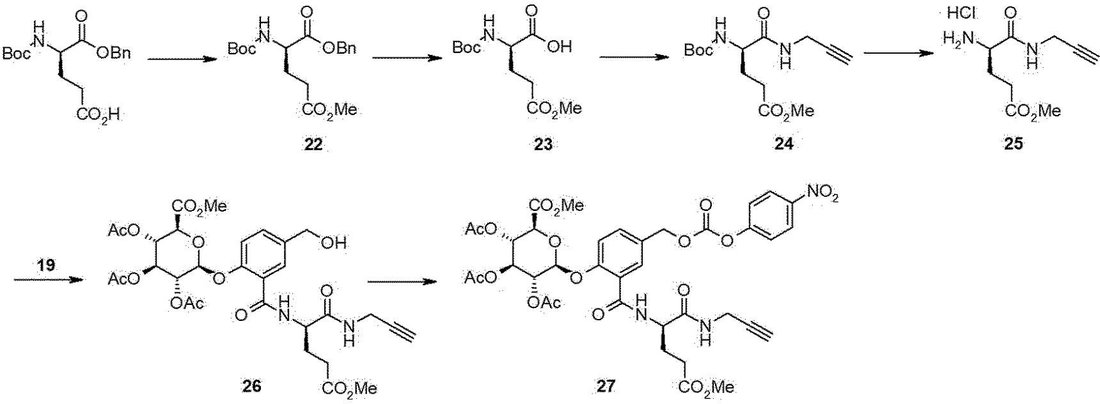
化合物22の作製
1―ベンジルN―(t―ブトキシカルボニル)―D―グルタミン酸(3.0g,8.89mmol)をN,N―ジメチルホルムアミド(30mL)に溶かした後、N,N―ジイソプロピルエチルアミン(1.86mL,10.67mmol)とヨウ化メタン(0.66mL,10.67mmol)を添加した。反応溶液を2時間常温にて攪拌した後、蒸留水(50mL)を入れ、酢酸エチル(50mL)で抽出した。合わせた有機層を無水硫酸ナトリウムで乾燥させた。濾過後に減圧濃縮し、カラムクロマトグラフィーで精製して化合物22(2.05g,66%)を得た。
1H―NMR(400 MHz,CDCl3)δ 7.35(s,5H),5.20(s,1H),5.13―5.11(m,1H),4.38―4.37(m,1H),3.65(s,3H),2.45―2.30(m,2H),1.98―1.93(m,1H),1.58(s,9H).
Preparation of Compound 22 After dissolving 1-benzyl N- (t-butoxycarbonyl) -D-glutamic acid (3.0 g, 8.89 mmol) in N, N-dimethylformamide (30 mL), N, N-diisopropylethylamine ( 1.86 mL, 10.67 mmol) and methane iodide (0.66 mL, 10.67 mmol) were added. The reaction solution was stirred at room temperature for 2 hours, distilled water (50 mL) was added, and the mixture was extracted with ethyl acetate (50 mL). The combined organic layers were dried over anhydrous sodium sulfate. After filtration, the mixture was concentrated under reduced pressure and purified by column chromatography to give compound 22 (2.05 g, 66%).
1 1 H-NMR (400 MHz, CDCl 3 ) δ 7.35 (s, 5H), 5.20 (s, 1H), 5.13-5.11 (m, 1H), 4.38-4.37 (M, 1H), 3.65 (s, 3H), 2.45-2.30 (m, 2H), 1.98-1.93 (m, 1H), 1.58 (s, 9H).
化合物23の作製
化合物22(2.05g,5.83mmol)とパラジウム/チャコール(10%w/w,200mg)をメタノール(30mL)に溶かした後、反応溶液を常温、水素雰囲気下で1時間攪拌した。反応溶液をセライトで濾過した後、減圧濃縮して化合物23(1.5g,99%)を得た。
1H―NMR(400 MHz,CDCl3)δ 5.20―5.18(m,1H),4.34―4.24(m,1H),3.73(s,1H),2.52―2.42(m,2H),2.62―2.23(m,1H),2.04―2.00(m,1H),1.48(s,9H).
Preparation of Compound 23 After dissolving Compound 22 (2.05 g, 5.83 mmol) and palladium / charcoal (10% w / w, 200 mg) in methanol (30 mL), the reaction solution is stirred at room temperature in a hydrogen atmosphere for 1 hour. did. The reaction solution was filtered through cerite and then concentrated under reduced pressure to give compound 23 (1.5 g, 99%).
1 1 H-NMR (400 MHz, CDCl 3 ) δ 5.20-5.18 (m, 1H), 4.34-4.24 (m, 1H), 3.73 (s, 1H), 2.52 -2.42 (m, 2H), 2.62-2.23 (m, 1H), 2.04-2.00 (m, 1H), 1.48 (s, 9H).
化合物24の作製
化合物23(730mg,2.80mmol)とプロパルギルアミン(0.22mL,3.35mmol)をN,N―ジメチルホルムアミド(20mL)に溶かした後、N,N―ジイソプロピルエチルアミン(0.97mL,5.58mmol)、1―ヒドロキシベンゾトリアゾール(453mg,3.35mmol)、及びN―(3―ジメチルアミノプロピル)―N'―エチルカルボジイミド塩酸塩(642mg,3.35mmol)を添加した。反応溶液を14時間常温にて攪拌した後、蒸留水(30mL)を入れ、酢酸エチル(3×30mL)で抽出した。合わせた有機層を0.5N塩酸水溶液(30mL)、飽和塩化アンモニウム水溶液(30mL)、及び食塩水(30mL)でこの順に拭き取った後、無水硫酸ナトリウムで乾燥させた。濾過後に減圧濃縮し、カラムクロマトグラフィーで精製して化合物24(700mg,84%)を得た。
1H―NMR(400 MHz,CDCl3)δ 6.76(s,1H),5.33(s,1H),4.17(s,1H),4.05―4.04(m,2H),3.69(s,3H),2.53―2.23(m,2H),2.26―2.19(m,1H),2.17―2.13(m,1H),1.98―1.89(m,1H),1.44(s,9H).
Preparation of Compound 24 Compound 23 (730 mg, 2.80 mmol) and propargylamine (0.22 mL, 3.35 mmol) were dissolved in N, N-dimethylformamide (20 mL) and then N, N-diisopropylethylamine (0.97 mL). , 5.58 mmol), 1-hydroxybenzotriazole (453 mg, 3.35 mmol), and N- (3-dimethylaminopropyl) -N'-ethylcarbodiimide hydrochloride (642 mg, 3.35 mmol) were added. The reaction solution was stirred at room temperature for 14 hours, distilled water (30 mL) was added, and the mixture was extracted with ethyl acetate (3 × 30 mL). The combined organic layer was wiped in this order with a 0.5N aqueous hydrochloric acid solution (30 mL), a saturated aqueous solution of ammonium chloride (30 mL), and a saline solution (30 mL), and then dried over anhydrous sodium sulfate. After filtration, the mixture was concentrated under reduced pressure and purified by column chromatography to obtain compound 24 (700 mg, 84%).
1 1 H-NMR (400 MHz, CDCl 3 ) δ 6.76 (s, 1H), 5.33 (s, 1H), 4.17 (s, 1H), 4.05-4.04 (m, 2H) ), 3.69 (s, 3H), 2.53-2.23 (m, 2H), 2.26-2.19 (m, 1H), 2.17-2.13 (m, 1H), 1.98-1.89 (m, 1H), 1.44 (s, 9H).
化合物25の作製
化合物24(700mg,2.35mmol)をジクロロメタン(10mL)に溶かした後、塩酸(4N in 1,4―ジオキサン、5mL)を0℃、窒素雰囲気下で添加した。反応溶液を2時間常温にて攪拌した後、反応溶液を減圧濃縮して化合物25(549mg,100%)を得た。
1H―NMR(400 MHz,CDCl3)δ 10.23(s,3H),4.47―4.09(m,1H),3.99―3.84(m,2H),3.69(s,3H),2.67―2.64(m,2H),2.42―2.28(m,3H).
Preparation of Compound 25 After dissolving Compound 24 (700 mg, 2.35 mmol) in dichloromethane (10 mL), hydrochloric acid (4N in 1,4-dioxane, 5 mL) was added at 0 ° C. under a nitrogen atmosphere. After stirring the reaction solution at room temperature for 2 hours, the reaction solution was concentrated under reduced pressure to give compound 25 (549 mg, 100%).
1 1 H-NMR (400 MHz, CDCl 3 ) δ 10.23 (s, 3H), 4.47-4.09 (m, 1H), 3.99-3.84 (m, 2H), 3.69 (S, 3H), 2.67-2.64 (m, 2H), 2.42-2.28 (m, 3H).
化合物26の作製
化合物25(653mg,2.79mmol)と化合物19(1.23g,2.54mmol)をN,N―ジメチルホルムアミド(20mL)に溶かした後、N,N―ジイソプロピルエチルアミン(1.33mL,7.62mmol)とN,N、N',N'―テトラメチル―O―(1H―ベンゾトリアゾール―1―イル)ウロニウムヘキサフルオロホスファート(1.16g,3.05mmol)を添加した。反応溶液を14時間常温にて攪拌した後、蒸留水(50mL)を入れ、酢酸エチル(3×50mL)で抽出した。合わせた有機層を飽和炭酸水素ナトリウム水溶液(30mL)と食塩水(30mL)で拭き取った後、無水硫酸ナトリウムで乾燥させた。濾過後に濃縮し、カラムクロマトグラフィーで精製して化合物26(1.36g,82%)を得た。
1H―NMR(400 MHz,CDCl3)δ 7.94(s,1H),7.74(d,J=8.0Hz,1H),7.52(dd,J=2.2、10.4Hz,1H),7.05(d,J=8.4Hz,1H),6.85(m,1H),5.43―5.33(m,4H),4.73―4.69(m,3H),4.15―4.09(m,3H),3.69(d,J=7.6Hz,6H),2.56―2.51(m,2H),2.40―2.35(m,1H),2.06(t,J=9.6Hz),1.89―1.86(m,1H).
Preparation of Compound 26 After dissolving Compound 25 (653 mg, 2.79 mmol) and Compound 19 (1.23 g, 2.54 mmol) in N, N-dimethylformamide (20 mL), N, N-diisopropylethylamine (1.33 mL). , 7.62 mmol) and N, N, N', N'-tetramethyl-O- (1H-benzotriazole-1-yl) uronium hexafluorophosphate (1.16 g, 3.05 mmol) were added. The reaction solution was stirred at room temperature for 14 hours, distilled water (50 mL) was added, and the mixture was extracted with ethyl acetate (3 × 50 mL). The combined organic layer was wiped off with saturated aqueous sodium hydrogen carbonate solution (30 mL) and brine (30 mL), and then dried over anhydrous sodium sulfate. After filtration, the mixture was concentrated and purified by column chromatography to obtain compound 26 (1.36 g, 82%).
1 1 H-NMR (400 MHz, CDCl 3 ) δ 7.94 (s, 1H), 7.74 (d, J = 8.0 Hz, 1H), 7.52 (dd, J = 2.2, 10. 4Hz, 1H), 7.05 (d, J = 8.4Hz, 1H), 6.85 (m, 1H), 5.43-5.33 (m, 4H), 4.73-4.69 ( m, 3H), 4.15-4.09 (m, 3H), 3.69 (d, J = 7.6Hz, 6H), 2.56-2.51 (m, 2H), 2.40- 2.35 (m, 1H), 2.06 (t, J = 9.6Hz), 1.89-1.86 (m, 1H).
化合物27の作製
化合物26(500mg,0.75mmol)をN,N―ジメチルホルムアミド(20mL)に溶かした後、ビス(4―ニトロフェニル)カーボネート(229mg,0.75mmol)とN,N―ジイソプロピルエチルアミン(0.2mL,1.13mmol)を0℃、窒素雰囲気下で添加した。反応溶液を12時間常温にて攪拌した後、蒸留水(50mL)を反応溶液に添加し、酢酸エチル(2×50mL)で抽出した後、合わせた有機層を無水硫酸ナトリウムで乾燥させた。濾過後に濃縮し、カラムクロマトグラフィーで精製して化合物27(518mg,83%)を得た。
1H―NMR(400 MHz,CDCl3)δ 8.27(d,J=8.8Hz,2H),8.09(s,1H),7.78(d,J=8.8Hz,1H),7.58(dd,J=2.2、10.4Hz,1H),7.38(d,J=9.2Hz,1H),7.10(d,J=8.4Hz,1H),6.80(m,1H),5.45―5.39(m,4H),5.27(s,2H),4.73―4.69(m,1H),4.18―4.09(m,3H),3.69(d,J=6.8Hz,6H),2.53―2.51(m,2H),2.42―2.27(m,1H),2.26―2.23(m,1H),2.21―2.15(m,2H),2.05(t,J=9.6Hz)。
Preparation of Compound 27 After dissolving Compound 26 (500 mg, 0.75 mmol) in N, N-dimethylformamide (20 mL), bis (4-nitrophenyl) carbonate (229 mg, 0.75 mmol) and N, N-diisopropylethylamine. (0.2 mL, 1.13 mmol) was added at 0 ° C. under a nitrogen atmosphere. After stirring the reaction solution at room temperature for 12 hours, distilled water (50 mL) was added to the reaction solution, the mixture was extracted with ethyl acetate (2 × 50 mL), and the combined organic layer was dried over anhydrous sodium sulfate. After filtration, the mixture was concentrated and purified by column chromatography to obtain compound 27 (518 mg, 83%).
1 1 H-NMR (400 MHz, CDCl 3 ) δ 8.27 (d, J = 8.8 Hz, 2H), 8.09 (s, 1H), 7.78 (d, J = 8.8 Hz, 1H) , 7.58 (dd, J = 2.2, 10.4Hz, 1H), 7.38 (d, J = 9.2Hz, 1H), 7.10 (d, J = 8.4Hz, 1H), 6.80 (m, 1H), 5.45-5.39 (m, 4H), 5.27 (s, 2H), 4.73-4.69 (m, 1H), 4.18-4. 09 (m, 3H), 3.69 (d, J = 6.8Hz, 6H), 2.53-2.51 (m, 2H), 2.42-2.27 (m, 1H), 2. 26-2.23 (m, 1H), 2.21-2.15 (m, 2H), 2.05 (t, J = 9.6Hz).
<実施例7> 化合物29の作製

化合物28の作製
化合物27(198mg,0.24mmol)をN,N―ジメチルホルムアミド(1mL)に溶かした後、モノメチルオーリスタチンE(monomethyl auristatin E,150mg,0.22mmol)を常温、窒素雰囲気下で添加した。反応溶液に1―ヒドロキシ―7―アザベンゾトリアゾール(6mg,0.043mmol)、ピリジン(0.2mL)、及びN,N―ジイソプロピルエチルアミン(0.076mL,0.44mmol)を添加した。反応溶液を24時間常温にて攪拌した後、減圧濃縮し、カラムクロマトグラフィーで精製して化合物28(258mg,76%)を得た。
EI―MSm/z:1/2[M+H]+1502.7,[M+H]+1409.2.
Preparation of Compound 28 After dissolving Compound 27 (198 mg, 0.24 mmol) in N, N-dimethylformamide (1 mL), monomethyl auristatin E (monomethyl auristatin E, 150 mg, 0.22 mmol) was added at room temperature in a nitrogen atmosphere. Added. To the reaction solution was added 1-hydroxy-7-azabenzotriazole (6 mg, 0.043 mmol), pyridine (0.2 mL), and N, N-diisopropylethylamine (0.076 mL, 0.44 mmol). The reaction solution was stirred at room temperature for 24 hours, concentrated under reduced pressure, and purified by column chromatography to obtain compound 28 (258 mg, 76%).
EI-MSm / z: 1/2 [M + H] +1502.7, [M + H] +1409.2.
化合物29の作製
化合物28(258mg,0.18mmol)をテトラヒドロフラン/メタノール(2mL/2mL)に溶かした後、水酸化リチウム(38mg,0.92mmol)を蒸留水(2mL)に溶かした溶液を―40℃において徐々に添加した。反応温度を徐々に0℃まで昇温しながら、2時間攪拌した。反応溶液を酢酸でpHを約4~5に調整した後、反応溶液を減圧濃縮した。残渣をアセトニトリル/蒸留水(1mL/1mL)に溶かしてHPLCで精製し、凍結乾燥して化合物29を白色固体(159mg,69%)として得た。
EI―MSm/z:[M+H]+1255.0,[M+Na]+1277.0.
Preparation of Compound 29 A solution prepared by dissolving compound 28 (258 mg, 0.18 mmol) in tetrahydrofuran / methanol (2 mL / 2 mL) and then dissolving lithium hydroxide (38 mg, 0.92 mmol) in distilled water (2 mL) -40. Gradually added at ° C. The reaction was stirred for 2 hours while gradually raising the reaction temperature to 0 ° C. After adjusting the pH of the reaction solution to about 4 to 5 with acetic acid, the reaction solution was concentrated under reduced pressure. The residue was dissolved in acetonitrile / distilled water (1 mL / 1 mL), purified by HPLC, and lyophilized to give compound 29 as a white solid (159 mg, 69%).
EI-MSm / z: [M + H] +1255.0, [M + Na] +1277.0.
<実施例8> 化合物34の作製

化合物31の作製
化合物30(4.5g,25.7mmol、化合物30は、特許文献16に記述された方法で作製した)をN,N―ジメチルホルムアミド(50mL)に溶かした後、臭化プロパルギル(~80% in toluene,4.96mL,33.4mmol)と水素化ナトリウム(60% in oil,1.23g,30.8mmol)を0℃、窒素雰囲気下で添加した。反応溶液を3時間常温にて攪拌した後、蒸留水(50mL)を入れ、酢酸エチル(50mL)で抽出した。合わせた有機層を無水硫酸ナトリウムで乾燥させ、濾過及び減圧濃縮した後、カラムクロマトグラフィーで精製して化合物31(4.35g,79%)を得た。
1H―NMR(400 MHz,CDCl3)δ 4.21(d,J=2.4Hz,2H),3.70―3.67(m,10H),3.39(d,J=5.2Hz,2H),2.43(t,J=2.4Hz,1H).
Preparation of Compound 31 After dissolving Compound 30 (4.5 g, 25.7 mmol, Compound 30 was prepared by the method described in Patent Document 16) in N, N-dimethylformamide (50 mL), propargyl bromide (4.5 g, 25.7 mmol, compound 30 was prepared by the method described in Patent Document 16). -80% toluene (4.96 mL, 33.4 mmol) and sodium hydride (60% in oil, 1.23 g, 30.8 mmol) were added at 0 ° C. under a nitrogen atmosphere. The reaction solution was stirred at room temperature for 3 hours, distilled water (50 mL) was added, and the mixture was extracted with ethyl acetate (50 mL). The combined organic layer was dried over anhydrous sodium sulfate, filtered and concentrated under reduced pressure, and then purified by column chromatography to give compound 31 (4.35 g, 79%).
1 1 H-NMR (400 MHz, CDCl 3 ) δ 4.21 (d, J = 2.4 Hz, 2H), 3.70-3.67 (m, 10H), 3.39 (d, J = 5. 2Hz, 2H), 2.43 (t, J = 2.4Hz, 1H).
化合物32の作製
化合物31(2.7g,7.23mmol)をテトラヒドロフラン/蒸留水(30mL/1.5mL)に溶かした後、トリフェニルホスフィン(2.09g,7.97mmol)を添加した。反応溶液を24時間常温にて攪拌した後、減圧濃縮し、カラムクロマトグラフィーで精製して化合物32(1.32g,99%)を得た。。
1H―NMR(400 MHz,CDCl3)δ 4.21(s,2H),3.69―3.64(m,8H),3.53―3.50(m,2H),2.88―2.85(m,2H),2.43(s,1H).
EI―MSm/z:[M+H]+188.2,[M+Na]+210.3.
Preparation of Compound 32 After dissolving Compound 31 (2.7 g, 7.23 mmol) in tetrahydrofuran / distilled water (30 mL / 1.5 mL), triphenylphosphine (2.09 g, 7.97 mmol) was added. The reaction solution was stirred at room temperature for 24 hours, concentrated under reduced pressure, and purified by column chromatography to give compound 32 (1.32 g, 99%). ..
1 1 H-NMR (400 MHz, CDCl 3 ) δ 4.21 (s, 2H), 3.69-3.64 (m, 8H), 3.53-3.50 (m, 2H), 2.88 -2.85 (m, 2H), 2.43 (s, 1H).
EI-MSm / z: [M + H] +188.2, [M + Na] +210.3.
化合物33の作製
化合物23(888mg,3.40mmol)と化合物32(700mg,3.74mmol)をN,N―ジメチルホルムアミド(30mL)に溶かした後、N,N―ジイソプロピルエチルアミン(1.18mL,6.80mmol)、1―ヒドロキシベンゾトリアゾール(551mg,4.08mmol)、及びN―(3―ジメチルアミノプロピル)―N'―エチルカルボジイミド塩酸塩(782mg,4.08mmol)を0℃、窒素雰囲気下で添加した。反応溶液を14時間常温にて攪拌した後、蒸留水(30mL)を入れ、酢酸エチル(3×30mL)で抽出した。合わせた有機層を0.5N塩酸水溶液(30mL)、飽和炭酸水素ナトリウム水溶液(30mL)、及び食塩水(30mL)でこの順に拭き取った後、無水硫酸ナトリウムで乾燥させた。濾過後に濃縮し、カラムクロマトグラフィーで精製して化合物33(1.23g,84%)を得た。
1H―NMR(400 MHz,CDCl3)δ 4.22(s,2H),4.21(br,1H),3.72―3.58(m,10H),3.57―3.55(m,2H),3.48―3.44(m,2H),2.48―2.39(m,3H),2.17―2.11(m,2H),1.96―1.88(m,2H),1.43(s,9H).
Preparation of Compound 33 After dissolving Compound 23 (888 mg, 3.40 mmol) and Compound 32 (700 mg, 3.74 mmol) in N, N-dimethylformamide (30 mL), N, N-diisopropylethylamine (1.18 mL, 6) .80 mmol), 1-hydroxybenzotriazole (551 mg, 4.08 mmol), and N- (3-dimethylaminopropyl) -N'-ethylcarbodiimide hydrochloride (782 mg, 4.08 mmol) at 0 ° C. under a nitrogen atmosphere. Added. The reaction solution was stirred at room temperature for 14 hours, distilled water (30 mL) was added, and the mixture was extracted with ethyl acetate (3 × 30 mL). The combined organic layer was wiped off in this order with a 0.5N aqueous hydrochloric acid solution (30 mL), a saturated aqueous sodium hydrogen carbonate solution (30 mL), and a saline solution (30 mL), and then dried over anhydrous sodium sulfate. After filtration, the mixture was concentrated and purified by column chromatography to obtain compound 33 (1.23 g, 84%).
1 1 H-NMR (400 MHz, CDCl 3 ) δ 4.22 (s, 2H), 4.21 (br, 1H), 3.72-3.58 (m, 10H), 3.57-3.55 (M, 2H), 3.48-3.44 (m, 2H), 2.48-2.39 (m, 3H), 2.17-2.11 (m, 2H), 1.96-1 .88 (m, 2H), 1.43 (s, 9H).
化合物34の作製
化合物33(770mg,1.79mmol)をジクロロメタン(10mL)に溶かした後、塩酸(4N in 1,4―ジオキサン、5mL)を0℃、窒素雰囲気下で添加した。反応溶液を1時間常温にて攪拌した後、減圧濃縮して化合物34(656mg,100%)を得た。
EI―MSm/z:[M+H]+331.3,[M+Na]+353.3.
Preparation of Compound 34 After dissolving Compound 33 (770 mg, 1.79 mmol) in dichloromethane (10 mL), hydrochloric acid (4N in 1,4-dioxane, 5 mL) was added at 0 ° C. under a nitrogen atmosphere. The reaction solution was stirred at room temperature for 1 hour and then concentrated under reduced pressure to give compound 34 (656 mg, 100%).
EI-MSm / z: [M + H] +331.3, [M + Na] +353.3.
<実施例9> 化合物37の作製
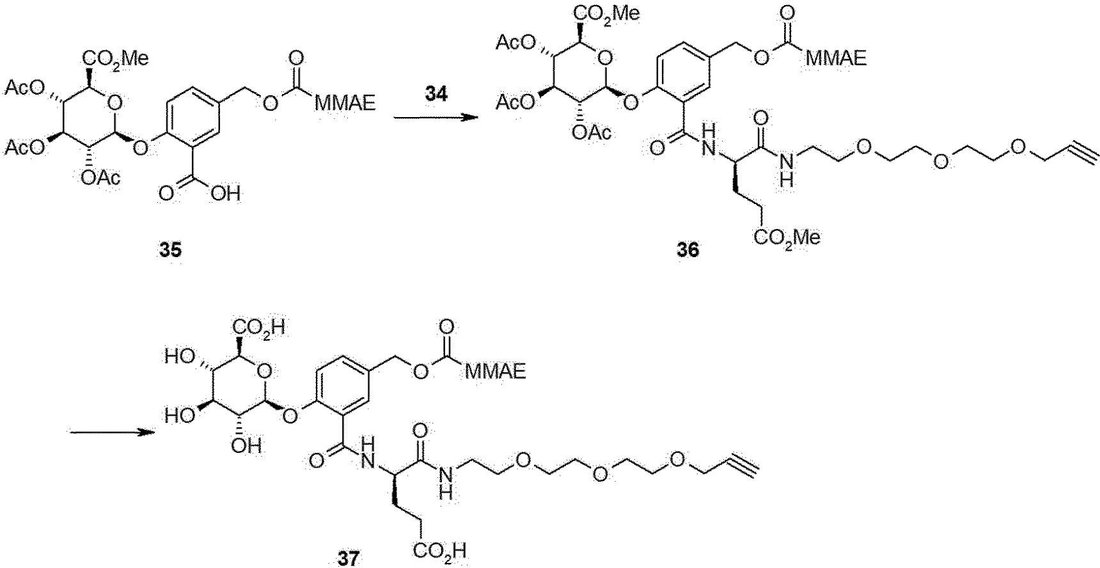
化合物36の作製
化合物35(150mg,0.122mmol、化合物35は、特許文献16に記述された方法で作製した)と化合物34(47mg,0.128mmol)をN,N―ジメチルホルムアミド(2mL)に溶かした後、N,N―ジイソプロピルエチルアミン(0.053mL,0.305mmol)とN,N、N',N'―テトラメチル―O―(1H―ベンゾトリアゾール―1―イル)ウロニウムヘキサフルオロホスファート(56mg,0.146mmol)を0℃、窒素雰囲気下で添加した。反応溶液を22時間常温にて攪拌した後、減圧濃縮し、カラムクロマトグラフィーで精製して化合物36(150mg,80%)を得た。
EI―MSm/z:1/2[M+H]+771.6,[M+H]+1541.4,[M+Na]+1563.4.
Preparation of Compound 36 Compound 35 (150 mg, 0.122 mmol, compound 35 was prepared by the method described in Patent Document 16) and compound 34 (47 mg, 0.128 mmol) were added to N, N-dimethylformamide (2 mL). After dissolution, N, N-diisopropylethylamine (0.053 mL, 0.305 mmol) and N, N, N', N'-tetramethyl-O- (1H-benzotriazole-1-yl) uronium hexafluorophos Fert (56 mg, 0.146 mmol) was added at 0 ° C. under a nitrogen atmosphere. The reaction solution was stirred at room temperature for 22 hours, concentrated under reduced pressure, and purified by column chromatography to give compound 36 (150 mg, 80%).
EI-MSm / z: 1/2 [M + H] +771.6, [M + H] +1541.4, [M + Na] +1563.4.
化合物37の作製
化合物36(150mg,0.097mmol)をテトラヒドロフラン/メタノール(2mL/2mL)に溶かした後、水酸化リチウム(38mg,0.584mmol)を蒸留水(2mL)に溶かした溶液を―40℃において徐々に添加した。反応温度を徐々に0℃まで昇温しながら、2時間攪拌した。反応溶液を酢酸でpHを約4~5に調整した後、アセトニトリル/蒸留水(1mL/1mL)で希釈し、HPLCで精製し、かつ、凍結乾燥して化合物37を白色固体(100mg,74%)として得た。
EI―MSm/z:1/2[M+H]+694.4,[M+H]+1387.2,[M+Na]+1409.2.
Preparation of Compound 37 A solution prepared by dissolving compound 36 (150 mg, 0.097 mmol) in tetrahydrofuran / methanol (2 mL / 2 mL) and then dissolving lithium hydroxide (38 mg, 0.584 mmol) in distilled water (2 mL) -40. Gradually added at ° C. The reaction was stirred for 2 hours while gradually raising the reaction temperature to 0 ° C. After adjusting the pH of the reaction solution to about 4-5 with acetic acid, dilute it with acetonitrile / distilled water (1 mL / 1 mL), purify it by HPLC, and freeze-dry it to make compound 37 a white solid (100 mg, 74%). ).
EI-MSm / z: 1/2 [M + H] +694.4, [M + H] +1387.2, [M + Na] +1409.2.
<実施例10> 化合物39の作製
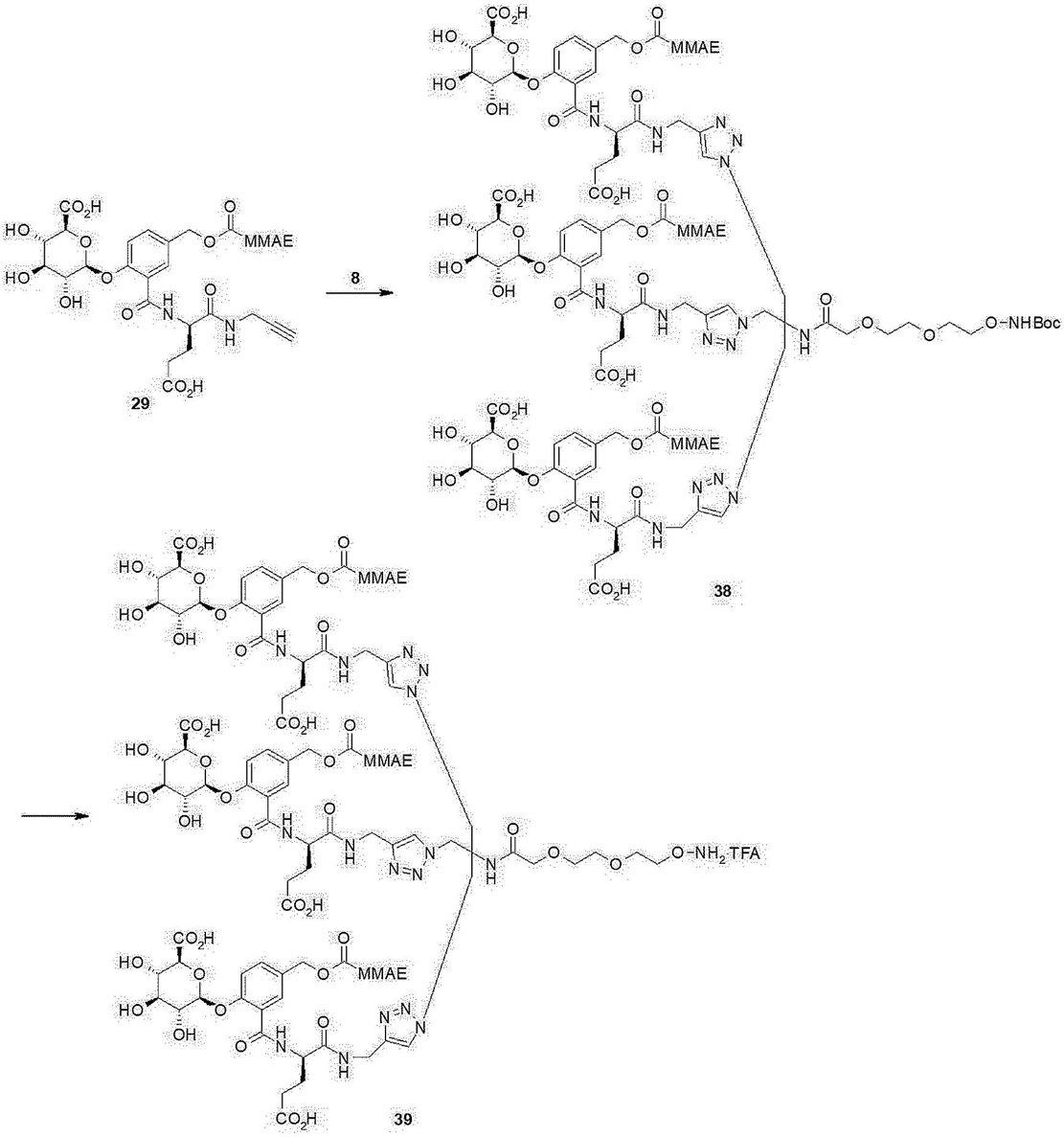
化合物38の作製
化合物29(61mg,0.05mmol)と化合物8(5mg,0.014mmol)をエタノール/ジクロロメタン(1mL)、蒸留水(1mL)に溶かした後、硫酸銅(1.7mg,0.007mmol)とアスコルビン酸ナトリウム(1.7mg,0.007mmol)を0℃、窒素雰囲気下で添加した。反応溶液を1時間常温にて攪拌した後、反応溶媒を窒素ガスで蒸発させ、ジメチルスルホキシド(1mL)で希釈した後、HPLCで精製し、且つ、凍結乾燥して化合物38(40.0mg,70%)を白色固体として得た。
EI―MSm/z:1/2[M+H]+2111.9,1/3[M+H]+1408.3,1/4[M+H]+1056.5.
Preparation of Compound 38 After dissolving Compound 29 (61 mg, 0.05 mmol) and Compound 8 (5 mg, 0.014 mmol) in ethanol / dichloromethane (1 mL) and distilled water (1 mL), copper sulfate (1.7 mg, 0. 007 mmol) and sodium ascorbate (1.7 mg, 0.007 mmol) were added at 0 ° C. under a nitrogen atmosphere. After stirring the reaction solution at room temperature for 1 hour, the reaction solvent was evaporated with nitrogen gas, diluted with dimethyl sulfoxide (1 mL), purified by HPLC, and freeze-dried to compound 38 (40.0 mg, 70). %) Was obtained as a white solid.
EI-MSm / z: 1/2 [M + H] +211.9, 1/3 [M + H] +1408.3 / 1/4 [M + H] +1056.5.
化合物39の作製
化合物38(28mg,6.0μmol)をジクロロメタン(1mL)に溶かした後、トリフルオロ酢酸(0.4mL)を0℃において添加し、且つ1時間攪拌した。反応溶液を減圧濃縮した後、HPLCで精製し、且つ、凍結乾燥して化合物39を白色固体(10mg,40%)として得た。
EI―MSm/z:1/2[M+H]+2061.3,1/3[M+H]+1374.9,1/4[M+H]+1031.4.
Preparation of Compound 39 After dissolving Compound 38 (28 mg, 6.0 μmol) in dichloromethane (1 mL), trifluoroacetic acid (0.4 mL) was added at 0 ° C., and the mixture was stirred for 1 hour. The reaction solution was concentrated under reduced pressure, purified by HPLC, and lyophilized to give compound 39 as a white solid (10 mg, 40%).
EI-MSm / z: 1/2 [M + H] +2061.3, 1/3 [M + H] +1374.9, 1/4 [M + H] +1031.4.
<実施例11> 化合物41の作製

化合物40の作製
化合物37(68mg,0.049mmol)と化合物8(5mg,0.014mmol)をエタノール/ジクロロメタン(1mL)、蒸留水(1mL)に溶かした後、硫酸銅(1.7mg,7μmol)とアスコルビン酸ナトリウム(3.0mg,0.014mmol)を0℃、窒素雰囲気下で添加した。反応溶液を1時間常温にて攪拌した後、反応溶媒を窒素ガスで蒸発させ、ジメチルスルホキシド(1mL)で希釈した後、HPLCで精製し、且つ、凍結乾燥して化合物40を白色固体(28mg,37%)として得た。
EI―MSm/z:1/2[M+H]+2309.8,1/3[M+H]+1540.4,1/4[M+H]+1155.6.
Preparation of Compound 40 After dissolving Compound 37 (68 mg, 0.049 mmol) and Compound 8 (5 mg, 0.014 mmol) in ethanol / dichloromethane (1 mL) and distilled water (1 mL), copper sulfate (1.7 mg, 7 μmol) And sodium ascorbate (3.0 mg, 0.014 mmol) was added at 0 ° C. under a nitrogen atmosphere. After stirring the reaction solution at room temperature for 1 hour, the reaction solvent was evaporated with nitrogen gas, diluted with dimethyl sulfoxide (1 mL), purified by HPLC, and freeze-dried to obtain the compound 40 as a white solid (28 mg, 28 mg,). 37%).
EI-MSm / z: 1/2 [M + H] +2309.8, 1/3 [M + H] +1540.4, 1/4 [M + H] +1155.6.
化合物41の作製
化合物40(28mg,6.0μmol)をジクロロメタン(1mL)に溶かした後、トリフルオロ酢酸(0.4mL)を0℃において添加し、3時間攪拌した。反応溶液を減圧濃縮した後、HPLCで精製し、且つ、凍結乾燥して化合物41を白色固体(5mg,20%)として得た。
EI―MSm/z:1/2[M+H]+2260.4,1/3[M+H]+1507.6,1/4[M+H]+1130.6.
Preparation of Compound 41 After dissolving Compound 40 (28 mg, 6.0 μmol) in dichloromethane (1 mL), trifluoroacetic acid (0.4 mL) was added at 0 ° C., and the mixture was stirred for 3 hours. The reaction solution was concentrated under reduced pressure, purified by HPLC, and lyophilized to give compound 41 as a white solid (5 mg, 20%).
EI-MSm / z: 1/2 [M + H] +2260.4, 1/3 [M + H] +1507.6,1 / 4 [M + H] + 1130.6.
<実施例12> 化合物47の作製

<Example 12> Preparation of compound 47
化合物42の作製
3―アミノペンタンジオン酸塩酸塩(5.0g,27.2mmol)を蒸留水/1、4―ジオキサン(6mL/44mL)に溶かした後、水酸化ナトリウム水溶液(4M、20.4mL,81.6mmol)とジ―t―ブチルジカーボネート(6.87mL,29.9mmol)を添加した。反応溶液を常温にて15時間攪拌した後、5%硫酸水素カリウム水溶液でpHを約~2に調整し、酢酸エチル(3×50mL)で抽出した。合わせた有機層を無水硫酸ナトリウムで乾燥させた後、濾過及び濃縮して化合物42(4.0g,60%)を得た。
1H―NMR(400 MHz,CD3OD)δ 4.25(t,J=6.2Hz,1H),2.56(d,J=5.6Hz,4H),1.43(s,9H).EI―MSm/z:[M+Na]+270.3.
Preparation of Compound 42 3-Aminopentane dione hydrochloride (5.0 g, 27.2 mmol) was dissolved in distilled water / 1,4-dioxane (6 mL / 44 mL), and then an aqueous sodium hydroxide solution (4M, 20.4 mL) was dissolved. , 81.6 mmol) and di-t-butyl dicarbonate (6.87 mL, 29.9 mmol) were added. The reaction solution was stirred at room temperature for 15 hours, the pH was adjusted to about 2 with a 5% aqueous potassium hydrogen sulfate solution, and the mixture was extracted with ethyl acetate (3 × 50 mL). The combined organic layers were dried over anhydrous sodium sulfate and then filtered and concentrated to give compound 42 (4.0 g, 60%).
1 1 H-NMR (400 MHz, CD 3 OD) δ 4.25 (t, J = 6.2 Hz, 1H), 2.56 (d, J = 5.6 Hz, 4H), 1.43 (s, 9H) ). EI-MSm / z: [M + Na] +270.3.
化合物44の作製
化合物42(3.04g,12.3mmol)と化合物43(4.28g,24.6mmol、化合物43は、J.Am.Chem.Soc.2016,138,3382―3394に記述された方法で作製した)をN,N―ジメチルホルムアミド(25mL)に溶かした後、N,N、N',N'―テトラメチル―O―(1H―ベンゾトリアゾール―1―イル)ウロニウムヘキサフルオロホスファート(7.02g,18.45mmol)、及びN,N―ジイソプロピルエチルアミン(4.28mL,24.6mmol)を0℃、窒素雰囲気下で添加した。反応溶液を6時間常温にて攪拌した後、飽和塩化アンモニウム水溶液(50mL)を反応溶液に入れ、酢酸エチル(2×50mL)で抽出した。合わせた有機層を食塩水(30mL)で拭き取った後、無水硫酸ナトリウムで乾燥させた。濾過後に濃縮し、カラムクロマトグラフィーで精製して化合物44(3.93g,57%)を得た。
1H―NMR(400 MHz,CDCl3)δ 6.84(s,2H),6.06(s,1H),4.17(m,1H),3.66―3.61(m,16H),3.45―3.39(m,8H),2.60―2.56(m,2H),2.37―2.32(m,2H),1.43(s,9H).
Preparation of Compound 44 Compound 42 (3.04 g, 12.3 mmol) and compound 43 (4.28 g, 24.6 mmol, compound 43 are described in J. Am. Chem. Soc. 2016, 138, 3382-3394. (Produced by the method) was dissolved in N, N-dimethylformamide (25 mL) and then N, N, N', N'-tetramethyl-O- (1H-benzotriazole-1-yl) uronium hexafluorophos. Fert (7.02 g, 18.45 mmol) and N, N-diisopropylethylamine (4.28 mL, 24.6 mmol) were added at 0 ° C. under a nitrogen atmosphere. After stirring the reaction solution at room temperature for 6 hours, a saturated aqueous solution of ammonium chloride (50 mL) was put into the reaction solution, and the mixture was extracted with ethyl acetate (2 × 50 mL). The combined organic layers were wiped off with saline (30 mL) and then dried over anhydrous sodium sulfate. After filtration, the mixture was concentrated and purified by column chromatography to obtain compound 44 (3.93 g, 57%).
1 1 H-NMR (400 MHz, CDCl 3 ) δ 6.84 (s, 2H), 6.06 (s, 1H), 4.17 (m, 1H), 3.66-3.61 (m, 16H) ), 3.45-3.39 (m, 8H), 2.60-2.56 (m, 2H), 2.37-1.32 (m, 2H), 1.43 (s, 9H).
化合物45の作製
化合物44(3.93g,7.02mmol)をジクロロメタン(12mL)に溶かした後、塩酸(4M in 1,4―ジオキサン、12.3mL,49.1mmol)を0℃、窒素雰囲気下で添加した。反応溶液を1時間常温にて攪拌した後、反応溶液を減圧濃縮して化合物45(粗製、3.5g)を得た。
1H―NMR(400 MHz,CDCl3)δ 8.45(s,2H),7.41(s,1H),3.97(m,1H),3.66―3.43(m,24H),3.29―2.93(m,2H),2.76―2.73(m,2H).
EI―MSm/z:[M+H]+460.5.
Preparation of Compound 45 After dissolving Compound 44 (3.93 g, 7.02 mmol) in dichloromethane (12 mL), hydrochloric acid (4M in 1,4-dioxane, 12.3 mL, 49.1 mmol) was added at 0 ° C. under a nitrogen atmosphere. Was added in. After stirring the reaction solution at room temperature for 1 hour, the reaction solution was concentrated under reduced pressure to give compound 45 (crude, 3.5 g).
1 1 H-NMR (400 MHz, CDCl 3 ) δ 8.45 (s, 2H), 7.41 (s, 1H), 3.97 (m, 1H), 3.66-3.43 (m, 24H) ), 3.29-2.93 (m, 2H), 2.76-2.73 (m, 2H).
EI-MSm / z: [M + H] +460.5.
化合物46の作製
化合物45(粗い3.5g)と化合物5(2.24g,8.0mmol)をN,N―ジメチルホルムアミド(18mL)に溶かした後、N,N、N',N'―テトラメチル―O―(1H―ベンゾトリアゾール―1―イル)ウロニウムヘキサフルオロホスファート(3.21g,8.44mmol)、及びN,N―ジイソプロピルエチルアミン(2.44mL,14.04mmol)を0℃、窒素雰囲気下で添加した。反応溶液を15時間常温にて攪拌した後、飽和塩化アンモニウム水溶液(50mL)を反応溶液に添加し、酢酸エチル(2×50mL)で抽出した。合わせた有機層を食塩水(30mL)で拭き取った後、無水硫酸ナトリウムで乾燥させた。濾過後に濃縮し、カラムクロマトグラフィーで精製して化合物46(3.97g,2 steps 79%)を得た。
1H―NMR(400 MHz,CDCl3)δ 8.45(s,1H),7.88(d,J=7.2Hz,1H),6.79(s,2H),4.56(m,1H),4.07―3.97(m,4H),3.75―3.58(m,22H),3.44―3.39(m,8H),2.63―2.60(m,2H),2.44―2.40(m,2H),1.47(s,9H).
EI―MSm/z:[M+H]+721.7.
Preparation of Compound 46 After dissolving Compound 45 (coarse 3.5 g) and Compound 5 (2.24 g, 8.0 mmol) in N, N-dimethylformamide (18 mL), N, N, N', N'-tetra. Methyl-O- (1H-benzotriazole-1-yl) uronium hexafluorophosphate (3.21 g, 8.44 mmol) and N, N-diisopropylethylamine (2.44 mL, 14.04 mmol) at 0 ° C. It was added in a nitrogen atmosphere. After stirring the reaction solution at room temperature for 15 hours, saturated aqueous ammonium chloride solution (50 mL) was added to the reaction solution, and the mixture was extracted with ethyl acetate (2 × 50 mL). The combined organic layers were wiped off with saline (30 mL) and then dried over anhydrous sodium sulfate. After filtration, the mixture was concentrated and purified by column chromatography to obtain compound 46 (3.97 g, 2 steps 79%).
1 1 H-NMR (400 MHz, CDCl 3 ) δ 8.45 (s, 1H), 7.88 (d, J = 7.2 Hz, 1H), 6.79 (s, 2H), 4.56 (m) , 1H), 4.07-3.97 (m, 4H), 3.75-3.58 (m, 22H), 3.44-3.39 (m, 8H), 2.63-2.60 (M, 2H), 2.44-2.40 (m, 2H), 1.47 (s, 9H).
EI-MSm / z: [M + H] +721.7.
化合物47の作製
化合物46(370mg,0.51mmol)をテトラヒドロフラン(5mL)に溶かした後、トリフェニルホスフィン(296mg,1.13mmol)と蒸留水(0.18mL)を添加した。反応溶液を加熱還流させ、4時間攪拌した。カラムクロマトグラフィーで精製して化合物47(316mg,92%)を得た。
1H―NMR(400 MHz,CDCl3)δ 4.57(m,1H),4.07―3.97(m,4H),3.75―3.42(m,30H),3.01(m,2H),2.57(m,2H),1.47(s,9H).
EI―MSm/z:[M+H]+669.8.
Preparation of Compound 47 After dissolving Compound 46 (370 mg, 0.51 mmol) in tetrahydrofuran (5 mL), triphenylphosphine (296 mg, 1.13 mmol) and distilled water (0.18 mL) were added. The reaction solution was heated to reflux and stirred for 4 hours. Purification by column chromatography gave compound 47 (316 mg, 92%).
1 1 H-NMR (400 MHz, CDCl 3 ) δ 4.57 (m, 1H), 4.07-3.97 (m, 4H), 3.75-3.42 (m, 30H), 3.01 (M, 2H), 2.57 (m, 2H), 1.47 (s, 9H).
EI-MSm / z: [M + H] +669.8.
<実施例13> 化合物50の作製
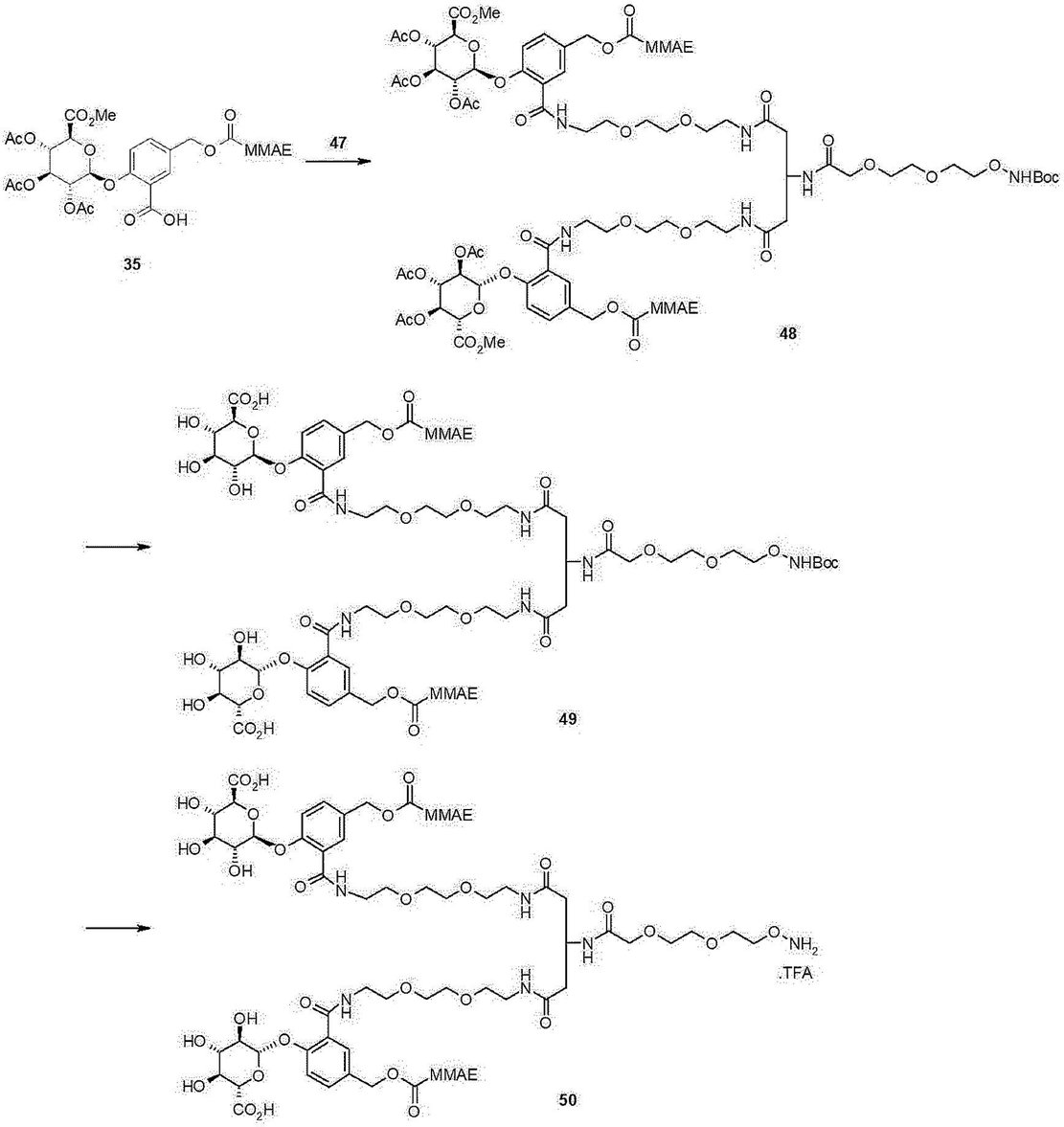
化合物48の作製
化合物47(37mg,0.055mmol)と化合物35(143mg,0.116mmol)をN,N―ジメチルホルムアミド(2mL)に溶かした後、N,N、N',N'―テトラメチル―O―(1H―ベンゾトリアゾール―1―イル)ウロニウムヘキサフルオロホスファート(43.9mg,0.111mmol)、及びN,N―ジイソプロピルエチルアミン(0.04mL,0.221mmol)を0℃、窒素雰囲気下で添加した。反応溶液を72時間常温にて攪拌した後、飽和塩化アンモニウム水溶液(20mL)を反応溶液に入れ、酢酸エチル(2×20mL)で抽出した。合わせた有機層を食塩水(10mL)で拭き取った後、無水硫酸ナトリウムで乾燥させた。濾過後に濃縮し、カラムクロマトグラフィーで精製して化合物48(95mg,56%)を得た。
EI―MSm/z:1/2[M+H]+1546.1,1/3[M+H]+1031.1.
Preparation of Compound 48 After dissolving Compound 47 (37 mg, 0.055 mmol) and Compound 35 (143 mg, 0.116 mmol) in N, N-dimethylformamide (2 mL), N, N, N', N'-tetramethyl —O— (1H-benzotriazole-1-yl) uronium hexafluorophosphate (43.9 mg, 0.111 mmol) and N, N-diisopropylethylamine (0.04 mL, 0.221 mmol) at 0 ° C., nitrogen. Added under atmosphere. After stirring the reaction solution at room temperature for 72 hours, a saturated aqueous solution of ammonium chloride (20 mL) was put into the reaction solution, and the mixture was extracted with ethyl acetate (2 × 20 mL). The combined organic layers were wiped off with saline (10 mL) and then dried over anhydrous sodium sulfate. After filtration, the mixture was concentrated and purified by column chromatography to give compound 48 (95 mg, 56%).
EI-MSm / z: 1/2 [M + H] +1546.1, 1/3 [M + H] +1031.1.
化合物49の作製
化合物48(95mg,0.031mmol)をメタノール/テトラヒドロフラン(0.8mL/1.6mL)に溶かした後、水酸化リチウム(12.9mg,0.31mmol)を蒸留水(1.6mL)に溶かした溶液を―40℃において徐々に添加した。反応温度を徐々に0℃まで昇温しながら、1時間攪拌した。反応溶液を酢酸で中和した後、反応溶液を減圧濃縮し、且つ、凍結乾燥して化合物49(粗い105.6mg)を得た。
EI―MSm/z:1/2[M+H]+1406.0,1/3[M+H]+937.6.
Preparation of Compound 49 After dissolving Compound 48 (95 mg, 0.031 mmol) in methanol / tetrahydrofuran (0.8 mL / 1.6 mL), lithium hydroxide (12.9 mg, 0.31 mmol) was added to distilled water (1.6 mL). ) Was gradually added at −40 ° C. The reaction was stirred for 1 hour while gradually raising the reaction temperature to 0 ° C. After neutralizing the reaction solution with acetic acid, the reaction solution was concentrated under reduced pressure and lyophilized to obtain compound 49 (coarse 105.6 mg).
EI-MSm / z: 1/2 [M + H] +146.0, 1/3 [M + H] +937.6.
化合物50の作製
化合物49(粗製、105.6mg)をジクロロメタン(3.5mL)に溶かした後、トリフルオロ酢酸(0.7mL)を0℃において添加し、3時間攪拌した。反応溶液を減圧濃縮した後、HPLCで精製し、かつ、凍結乾燥して化合物50を白色固体(27mg,2steps 31%)として得た。
EI―MSm/z:1/2[M+H]+1355.9、1/3[M+H]+904.3.
Preparation of Compound 50 After dissolving Compound 49 (crude, 105.6 mg) in dichloromethane (3.5 mL), trifluoroacetic acid (0.7 mL) was added at 0 ° C., and the mixture was stirred for 3 hours. The reaction solution was concentrated under reduced pressure, purified by HPLC, and lyophilized to give compound 50 as a white solid (27 mg, 2 steps 31%).
EI-MSm / z: 1/2 [M + H] +1355.9, 1/3 [M + H] +904.3.
<実施例14> 化合物51の作製

化合物19(5g,10.32mmol)をN,N―ジメチルホルムアミド(50mL)に溶かした後、プロパルギルアミン(0.8mL,12.38mmol)、N,N―ジイソプロピルエチルアミン(3.6mL,20.64mmol)、及びN,N、N',N'―テトラメチル―O―(1H―ベンゾトリアゾール―1―イル)ウロニウムヘキサフルオロホスファート(4.69g,12.38mmol)を0℃、窒素雰囲気下で添加した。反応溶液を0℃において30分間攪拌した後、1時間常温にて攪拌した。蒸留水(50mL)を反応溶液に入れ、酢酸エチル(2×50mL)で抽出した。合わせた有機層を無水硫酸ナトリウムで乾燥させ、濾過後に減圧濃縮した後、カラムクロマトグラフィーで精製して化合物51(4.4g,82%)を得た。
1H―NMR(400 MHz,CDCl3)δ 8.07(s,1H),7.58(br、1H),7.05(d,J=8.8Hz,1H),7.03(d,J=8.8Hz,1H),5.42―5.31(m,4H),4.67(d,J=4.8Hz,2H),4.29―4.13(m,3H),3.75(s,3H),2.24(s,1H),2.06(s,9H).
After dissolving compound 19 (5 g, 10.32 mmol) in N, N-dimethylformamide (50 mL), propargylamine (0.8 mL, 12.38 mmol), N, N-diisopropylethylamine (3.6 mL, 20.64 mmol). ), And N, N, N', N'-tetramethyl-O- (1H-benzotriazole-1-yl) uronium hexafluorophosphate (4.69 g, 12.38 mmol) at 0 ° C. under a nitrogen atmosphere. Was added in. The reaction solution was stirred at 0 ° C. for 30 minutes and then at room temperature for 1 hour. Distilled water (50 mL) was placed in the reaction solution and extracted with ethyl acetate (2 x 50 mL). The combined organic layer was dried over anhydrous sodium sulfate, filtered, concentrated under reduced pressure, and then purified by column chromatography to obtain Compound 51 (4.4 g, 82%).
1 1 H-NMR (400 MHz, CDCl 3 ) δ 8.07 (s, 1H), 7.58 (br, 1H), 7.05 (d, J = 8.8 Hz, 1H), 7.03 (d) , J = 8.8Hz, 1H), 5.42-5.31 (m, 4H), 4.67 (d, J = 4.8Hz, 2H), 4.29-4.13 (m, 3H) , 3.75 (s, 3H), 2.24 (s, 1H), 2.06 (s, 9H).
<実施例15> 化合物54の作製
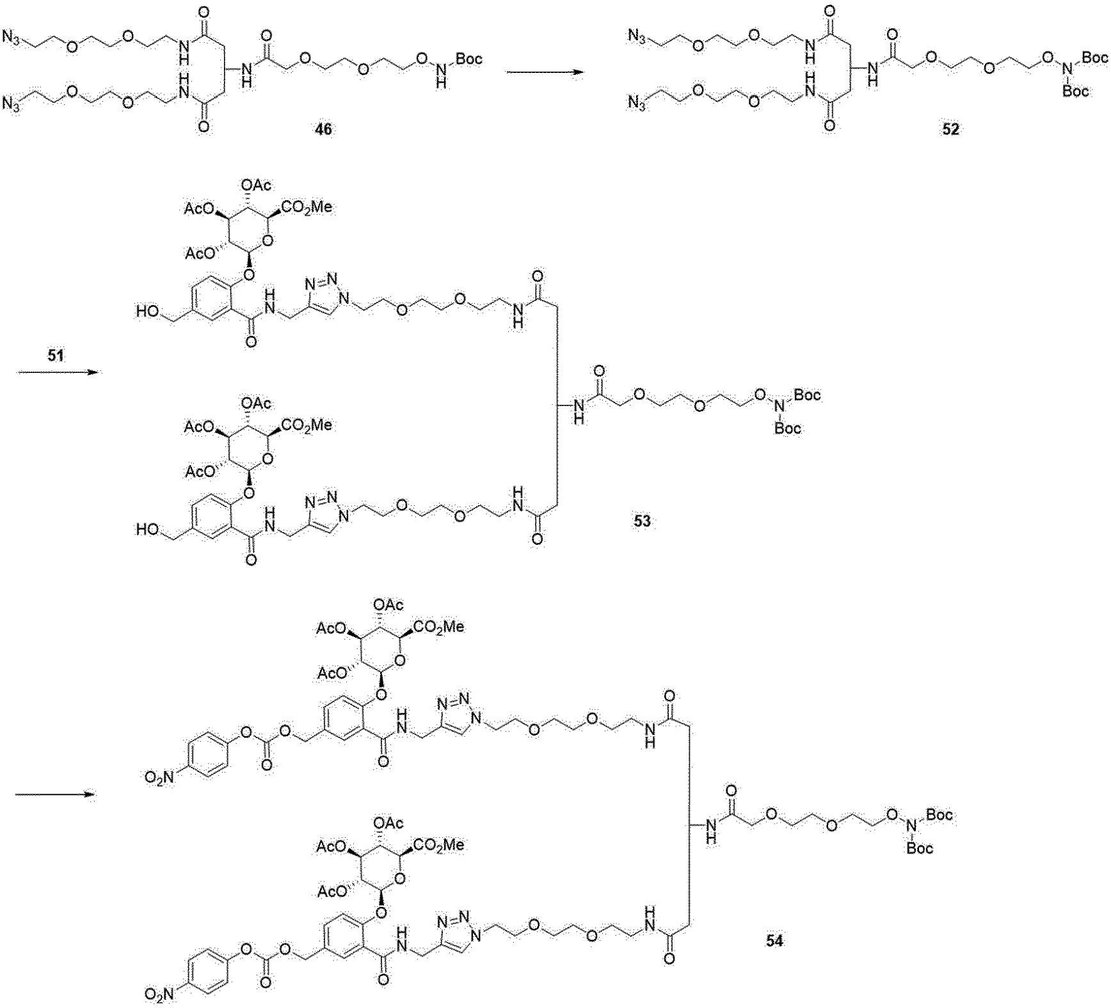
化合物52の作製
化合物46(1.73g,2.4mmol)をジクロロメタン(10mL)に溶かした後、0℃まで冷却させた。次いでジ―t―ブチルジカーボネート(0.628g,2.88mmol)、4―ジメチルアミノピリジン(0.058g,0.48mmol)、トリエチルアミン(0.485g,4.8mmol)を窒素雰囲気下でこの順に添加した。常温まで温度を昇温した後、約1時間攪拌した。反応が終わった後、水(10mL)で希釈し、ジクロロメタン(2×50mL)で抽出した後、有機層を無水硫酸ナトリウムで乾燥させ、濾過した後、減圧濃縮した。カラムクロマトグラフィーで精製して化合物52(1.33g,66%)を得た。
EI―MSm/z:[M+H]+821.9,
1H―NMR(400 MHz,CDCl3)δ 7.98(d,J=8.4Hz,1H),6.86(t,J=5.6Hz,2H),4.60―4.50(m,1H),4.10(t,J=4.4Hz,2H),3.99(s,2H),3.77(t,J=4.8Hz,4H),3.74―3.64(m,14H),3.60(t,J=4.8Hz,4H),3.46―3.77(m,8H),2.62―2.58(m,2H),2.40―2.35(m,2H),1.54(s,18H).
<Example 15> Preparation of compound 54
Preparation of Compound 52 Compound 46 (1.73 g, 2.4 mmol) was dissolved in dichloromethane (10 mL) and then cooled to 0 ° C. Then di-t-butyl dicarbonate (0.628 g, 2.88 mmol), 4-dimethylaminopyridine (0.058 g, 0.48 mmol) and triethylamine (0.485 g, 4.8 mmol) were added in this order under a nitrogen atmosphere. Added. After raising the temperature to room temperature, the mixture was stirred for about 1 hour. After completion of the reaction, the mixture was diluted with water (10 mL), extracted with dichloromethane (2 × 50 mL), dried over anhydrous sodium sulfate, filtered, and concentrated under reduced pressure. Purification by column chromatography gave compound 52 (1.33 g, 66%).
EI-MSm / z: [M + H] +821.9,
1 1 H-NMR (400 MHz, CDCl 3 ) δ 7.98 (d, J = 8.4 Hz, 1H), 6.86 (t, J = 5.6 Hz, 2H), 4.60-4.50 ( m, 1H), 4.10 (t, J = 4.4Hz, 2H), 3.99 (s, 2H), 3.77 (t, J = 4.8Hz, 4H), 3.74-3. 64 (m, 14H), 3.60 (t, J = 4.8Hz, 4H), 3.46-3.77 (m, 8H), 2.62-2.58 (m, 2H), 2. 40-2.35 (m, 2H), 1.54 (s, 18H).
化合物53の作製
化合物52(500mg,0.61mmol)と化合物51(700mg,1.34mmol)をt―ブタノール(10mL)に溶かした後、蒸留水(10mL)に溶かした硫酸銅(30.4mg,0.12mmol)とアスコルビン酸ナトリウム(121mg,0.61mmol)を0℃において添加した。
Preparation of Compound 53 Copper sulfate (30.4 mg, 30.4 mg,) in which compound 52 (500 mg, 0.61 mmol) and compound 51 (700 mg, 1.34 mmol) were dissolved in t-butanol (10 mL) and then dissolved in distilled water (10 mL). 0.12 mmol) and sodium ascorbate (121 mg, 0.61 mmol) were added at 0 ° C.
トリス(3―ヒドロキシプロピルトリアゾールメチル)アミン(THPTA)(106mg,0.24mmol)を反応溶液に添加し、窒素雰囲気下で2時間常温にて攪拌した。反応溶液を酢酸エチル(100mL)で希釈し、蒸留水(70mL)と飽和塩化ナトリウム溶液(70mL)で洗浄した。有機層を無水硫酸ナトリウムで乾燥させ、濾過及び減圧濃縮した後、カラムクロマトグラフィーで精製して化合物53(1.12g,97%)を得た。
EI―MSm/z:[M+H]+1864.7,1/2[M+H]+932.97、
1H―NMR(400 MHz,CDCl3)δ 8.06―7.95(m,5H),7.85(d,J=2.4Hz,2H),7.48―7.38(m,4H),6.99(d,J=8.4Hz,2H),5.44―5.25(m,8H),4.77―4.72(m,2H),4.67―4.60(m,6H0,4.56―4.50(m,4H),4.42―4.32(m,1H),4.30―4.21(m,4H),4.08(t,J=4.8Hz,2H),3.92(s,2H),3.83(t,J=4.8Hz,4H),3.27(t,J=5.6Hz,4H),2.51―2.47(m,2H),2.36―2.28(m,2H),2.06(s,9H),2.05(s,9H),1.53(s,18H).
Tris (3-hydroxypropyltriazolemethyl) amine (THPTA) (106 mg, 0.24 mmol) was added to the reaction solution, and the mixture was stirred under a nitrogen atmosphere for 2 hours at room temperature. The reaction solution was diluted with ethyl acetate (100 mL) and washed with distilled water (70 mL) and saturated sodium chloride solution (70 mL). The organic layer was dried over anhydrous sodium sulfate, filtered and concentrated under reduced pressure, and then purified by column chromatography to obtain compound 53 (1.12 g, 97%).
EI-MSm / z: [M + H] +1864.7, 1/2 [M + H] +932.97,
1 1 H-NMR (400 MHz, CDCl 3 ) δ 8.06-7.95 (m, 5H), 7.85 (d, J = 2.4 Hz, 2H), 7.48-7.38 (m, 4H), 6.99 (d, J = 8.4Hz, 2H), 5.44-5.25 (m, 8H), 4.77-4.72 (m, 2H), 4.67-4. 60 (m, 6H0, 4.56-4.50 (m, 4H), 4.42-4.32 (m, 1H), 4.30-4.21 (m, 4H), 4.08 (t) , J = 4.8Hz, 2H), 3.92 (s, 2H), 3.83 (t, J = 4.8Hz, 4H), 3.27 (t, J = 5.6Hz, 4H), 2 .51-2.47 (m, 2H), 2.36-2.28 (m, 2H), 2.06 (s, 9H), 2.05 (s, 9H), 1.53 (s, 18H) ).
化合物54の作製
化合物53(1.12g,0.60mmol)とビス(4―ニトロフェニル)カーボネート(0.64g,2.10mmol)をN,N―ジメチルホルムアミド(10mL)に溶かした後、0℃においてN,N―ジイソプロピルエチルアミン(0.42mL2.40mmol)を添加し、常温にて4時間攪拌した。反応溶液を酢酸エチル(70mL)で希釈し、蒸留水(3×60mL)と飽和塩化ナトリウム溶液(70mL)で洗浄した。有機層を無水硫酸ナトリウムで乾燥させ、濾過及び減圧濃縮した後、カラムクロマトグラフィーで精製して化合物54(1.06g,81%)を得た。
EI―MSm/z:[M+H]+2195.3,1/2[M+H]+1098.1,
1H―NMR(400 MHz,CDCl3)δ 8.27(d,J=9.28Hz,4H),8.15(d,J=2Hz,2H),7.95―7.89(m,3H),7.79(s,2H),7.54―7.51(m,2H),7.38(d,J=8.8Hz,4H),7.10―7.02(m,4H),5.44―5.25(m,11H),4.80―4.75(m,2H),4.68―4.63(m,2H),4.58―4.44(m,5H),4.23(d,J=10Hz,2H),4.09(t,J=4.4Hz,2H),3.95(s,2H),3.88(t,J=5.2Hz,4H),3.79―3.62(m,12H),3.60―3.52(m,8H),3.52―3.44(m,5H),3.44―3.33(m,4H),2.62―2.57(m,2H),2.42―2.36(m,2H),2.07(s,9H),2.06(s,9H),1.53(s,18H).
Preparation of Compound 54 Compound 53 (1.12 g, 0.60 mmol) and bis (4-nitrophenyl) carbonate (0.64 g, 2.10 mmol) were dissolved in N, N-dimethylformamide (10 mL) and then at 0 ° C. N, N-diisopropylethylamine (0.42 mL 2.40 mmol) was added, and the mixture was stirred at room temperature for 4 hours. The reaction solution was diluted with ethyl acetate (70 mL) and washed with distilled water (3 x 60 mL) and saturated sodium chloride solution (70 mL). The organic layer was dried over anhydrous sodium sulfate, filtered and concentrated under reduced pressure, and then purified by column chromatography to obtain compound 54 (1.06 g, 81%).
EI-MSm / z: [M + H] +2195.3 / 1/2 [M + H] +1098.1
1 1 H-NMR (400 MHz, CDCl 3 ) δ 8.27 (d, J = 9.28 Hz, 4H), 8.15 (d, J = 2 Hz, 2H), 7.95-7.89 (m, 3H), 7.79 (s, 2H), 7.54-7.51 (m, 2H), 7.38 (d, J = 8.8Hz, 4H), 7.10-7.02 (m, 4H), 5.44-5.25 (m, 11H), 4.80-4.75 (m, 2H), 4.68-4.63 (m, 2H), 4.58-4.44 ( m, 5H), 4.23 (d, J = 10Hz, 2H), 4.09 (t, J = 4.4Hz, 2H), 3.95 (s, 2H), 3.88 (t, J = 5.2Hz, 4H), 3.79-3.62 (m, 12H), 3.60-3.52 (m, 8H), 3.52-3.44 (m, 5H), 3.44- 3.33 (m, 4H), 2.62-2.57 (m, 2H), 2.42-2.36 (m, 2H), 2.07 (s, 9H), 2.06 (s, 9H), 1.53 (s, 18H).
<実施例16> 化合物59の作製
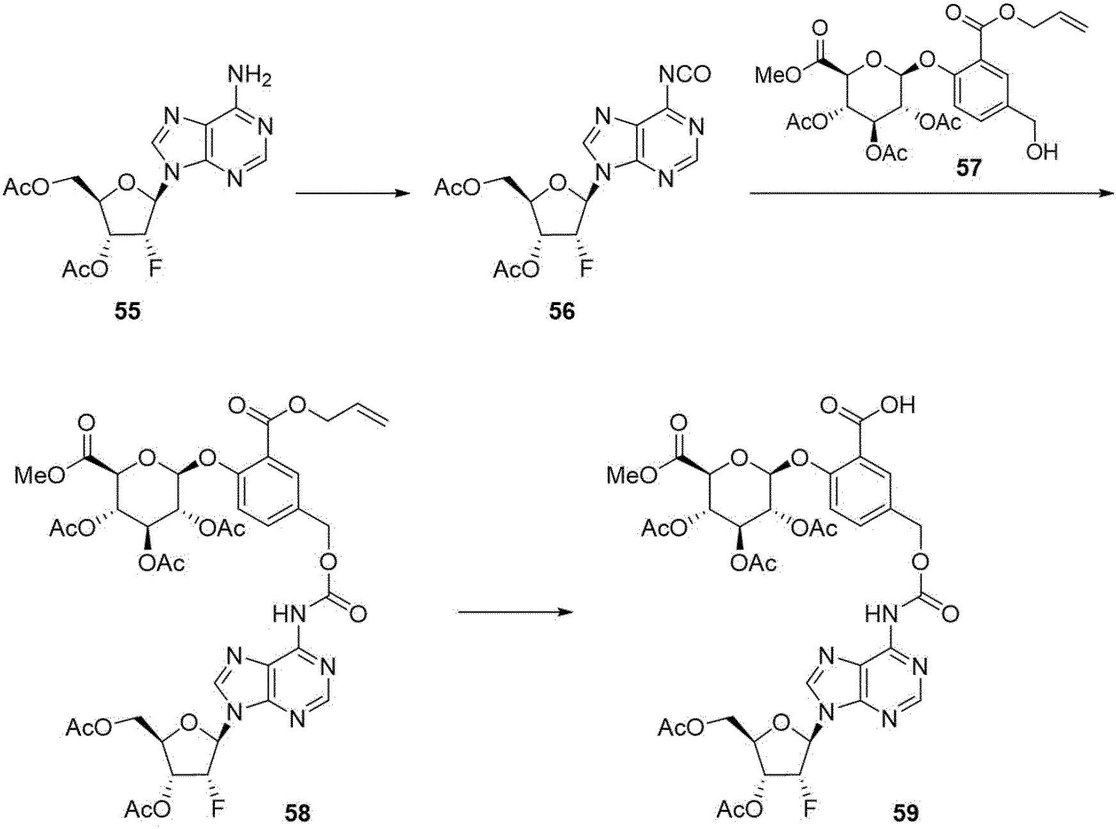
化合物58の作製
化合物55(300mg,0.85mmol)をジクロロメタン(3mL)に溶かした後、1―メチルイミダゾール(0.067mL,0.85mmol)とトリホスゲン(252mg,0.85mmol)をこの順に0℃、窒素雰囲気下で添加した。反応溶液を3時間攪拌した後、1―メチルイミダゾール(0.2mL,2.54mmol)とトリホスゲン(90.7mg,0.03mmol)をさらに入れ、反応温度を常温まで昇温した後、3時間攪拌した。反応溶液を減圧濃縮し、カラムクロマトグラフィーで精製して化合物56(241mg,75%)を得た。
<Example 16> Preparation of compound 59
Preparation of Compound 58 After dissolving Compound 55 (300 mg, 0.85 mmol) in dichloromethane (3 mL), 1-methylimidazole (0.067 mL, 0.85 mmol) and triphosgene (252 mg, 0.85 mmol) were added at 0 ° C. in this order. , Added in a nitrogen atmosphere. After stirring the reaction solution for 3 hours, 1-methylimidazole (0.2 mL, 2.54 mmol) and triphosgene (90.7 mg, 0.03 mmol) were further added, the reaction temperature was raised to room temperature, and then the mixture was stirred for 3 hours. did. The reaction solution was concentrated under reduced pressure and purified by column chromatography to obtain compound 56 (241 mg, 75%).
以上において得た化合物56をテトラヒドロフラン(7mL)に溶かした後、化合物57(456mg,0.87mmol、化合物57は、特許文献17に記述された方法で作製した。)と1―メチルイミダゾール(0.69mL,0.87mmol)を添加し、12時間加熱還流させた。反応溶液を減圧濃縮し、カラムクロマトグラフィーで精製して化合物58(273mg,45%)を得た。
EI―MSm/z:[M+H]+904.5.
After dissolving the compound 56 obtained above in tetrahydrofuran (7 mL), compound 57 (456 mg, 0.87 mmol, compound 57 was prepared by the method described in Patent Document 17) and 1-methylimidazole (0. 69 mL (0.87 mmol) was added, and the mixture was heated to reflux for 12 hours. The reaction solution was concentrated under reduced pressure and purified by column chromatography to give compound 58 (273 mg, 45%).
EI-MSm / z: [M + H] +904.5.
化合物59の作製
化合物58(270mg,0.298mmol)をジクロロメタン(3mL)に溶かした後、テトラキス(トリフェニルホスフィン)パラジウム(0)(17.2mg,0.015mmol)、ピロリジン(0.03mL,0.388mmol)を0℃、窒素雰囲気下で添加し、常温にて1時間攪拌した。反応溶液を0.5N塩酸水溶液(10mL)で希釈し、ジクロロメタン(20mL)で抽出した後、無水硫酸ナトリウムで乾燥させた。濾過後に減圧濃縮し、カラムクロマトグラフィーで精製して化合物59(250mg,97%)を得た。
EI―MSm/z:[M+H]+864.4.
Preparation of Compound 59 After dissolving Compound 58 (270 mg, 0.298 mmol) in dichloromethane (3 mL), tetrakis (triphenylphosphine) palladium (0) (17.2 mg, 0.015 mmol), pyrrolidine (0.03 mL, 0). .388 mmol) was added at 0 ° C. under a nitrogen atmosphere, and the mixture was stirred at room temperature for 1 hour. The reaction solution was diluted with 0.5N aqueous hydrochloric acid solution (10 mL), extracted with dichloromethane (20 mL), and dried over anhydrous sodium sulfate. After filtration, the mixture was concentrated under reduced pressure and purified by column chromatography to give compound 59 (250 mg, 97%).
EI-MSm / z: [M + H] +864.4.
<実施例17> 化合物61の作製
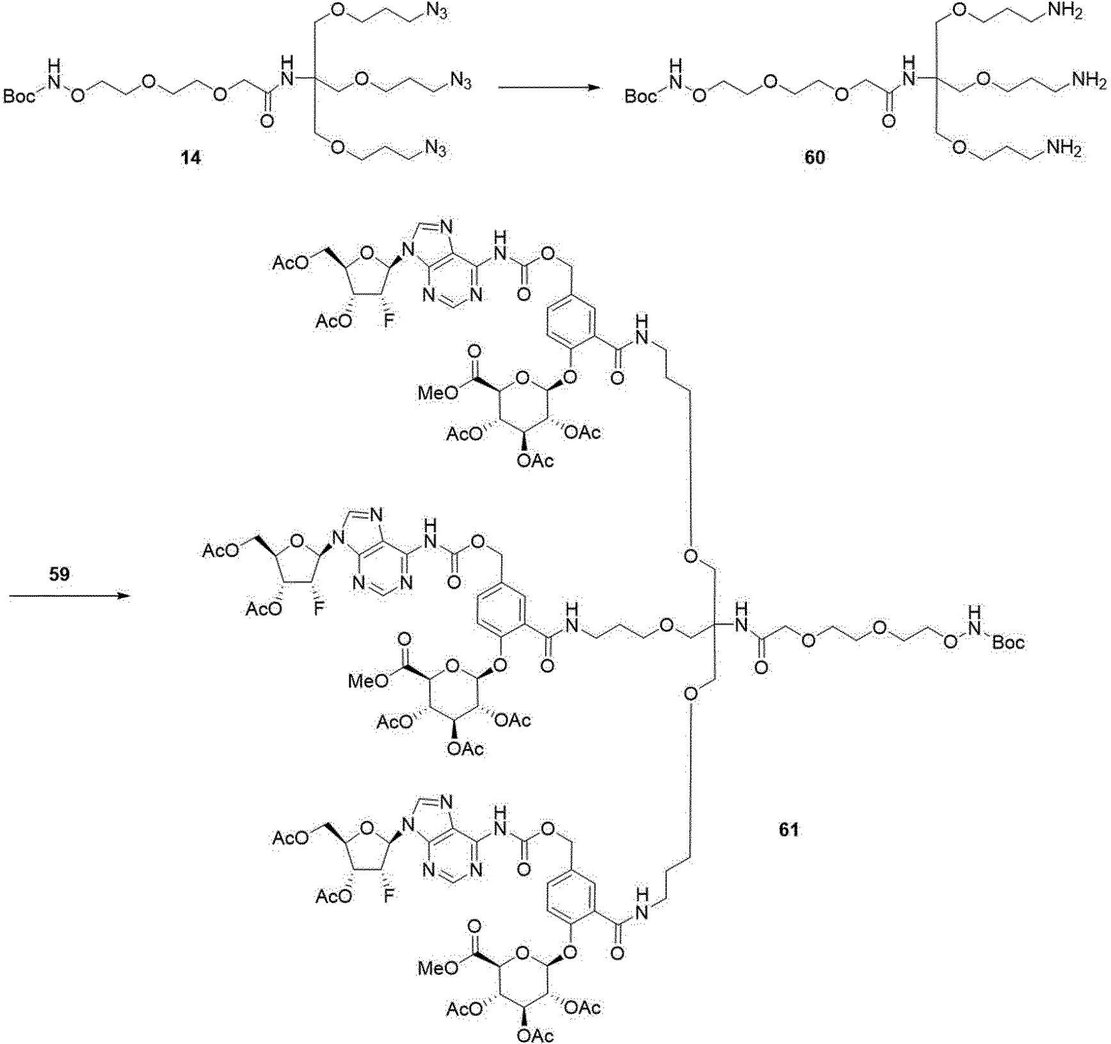
化合物60の作製
化合物14(300mg,0.47mmol)をテトラヒドロフラン(5mL)に溶かした後、トリフェニルホスフィン(447mg,1.70mmol)と蒸留水(0.6mL)を添加した。反応溶液を加熱還流させ、4時間攪拌した。反応溶液を減圧濃縮し、カラムクロマトグラフィーで精製して化合物60(208mg,76%)を得た。
EI―MSm/z:[M+H]+554.4.
<Example 17> Preparation of compound 61
Preparation of Compound 60 After dissolving Compound 14 (300 mg, 0.47 mmol) in tetrahydrofuran (5 mL), triphenylphosphine (447 mg, 1.70 mmol) and distilled water (0.6 mL) were added. The reaction solution was heated to reflux and stirred for 4 hours. The reaction solution was concentrated under reduced pressure and purified by column chromatography to give compound 60 (208 mg, 76%).
EI-MSm / z: [M + H] +554.4.
化合物61の作製
化合物59(259mg,0.30mmol)と化合物60(50.3mg,0.09mmol)をN,N―ジメチルホルムアミド(2mL)に溶かした後、N,N、N',N'―テトラメチル―O―(1H―ベンゾトリアゾール―1―イル)ウロニウムヘキサフルオロホスファート(204mg,0.54mmol)、及びN,N―ジイソプロピルエチルアミン(0.11mL,0.63mmol)を0℃、窒素雰囲気下で添加した。反応溶液を72時間常温にて攪拌した後、飽和塩化アンモニウム水溶液(20mL)で希釈し、酢酸エチル(2×20mL)で抽出した。合わせた有機層を食塩水(10mL)で拭き取った後、無水硫酸ナトリウムで乾燥させた。濾過後に濃縮し、カラムクロマトグラフィーで精製して化合物61(100mg,36%)を得た。
EI―MSm/z:1/2[M+H]+1546.4.
Preparation of Compound 61 After dissolving Compound 59 (259 mg, 0.30 mmol) and Compound 60 (50.3 mg, 0.09 mmol) in N, N-dimethylformamide (2 mL), N, N, N', N'- Tetramethyl-O- (1H-benzotriazole-1-yl) uronium hexafluorophosphate (204 mg, 0.54 mmol) and N, N-diisopropylethylamine (0.11 mL, 0.63 mmol) at 0 ° C., nitrogen. Added under atmosphere. The reaction solution was stirred at room temperature for 72 hours, diluted with saturated aqueous ammonium chloride solution (20 mL), and extracted with ethyl acetate (2 × 20 mL). The combined organic layers were wiped off with saline (10 mL) and then dried over anhydrous sodium sulfate. After filtration, the mixture was concentrated and purified by column chromatography to give compound 61 (100 mg, 36%).
EI-MSm / z: 1/2 [M + H] +1546.4.
<実施例18> 化合物62の作製

化合物61(100mg,0.032mmol)をメタノール/テトラヒドロフラン(0.8mL/1.6mL)に溶かした後、水酸化リチウム(13.0mg,0.32mmol)を蒸留水(1.6mL)に溶かした溶液を―40℃において徐々に添加した。反応温度を徐々に0℃まで昇温しながら、1時間攪拌した。反応溶液を酢酸で中和した後、反応溶液を減圧濃縮し、且つ、凍結乾燥して加水分解された精製前の化合物(粗製、EI―MSm/z:1/2[M+H]+1210.0)を得た。
<Example 18> Preparation of compound 62
After dissolving compound 61 (100 mg, 0.032 mmol) in methanol / tetrahydrofuran (0.8 mL / 1.6 mL), lithium hydroxide (13.0 mg, 0.32 mmol) was dissolved in distilled water (1.6 mL). The solution was added slowly at −40 ° C. The reaction was stirred for 1 hour while gradually raising the reaction temperature to 0 ° C. After neutralizing the reaction solution with acetic acid, the reaction solution was concentrated under reduced pressure, and then freeze-dried and hydrolyzed before purification (crude, EI-MSm / z: 1/2 [M + H] + 1210.0). Got
以上において得た化合物(粗い)をジクロロメタン(3.5mL)に溶かした後、トリフルオロ酢酸(0.7mL)を0℃において添加し、3時間攪拌した。反応溶液を減圧濃縮した後、HPLCで精製し、かつ、凍結乾燥して化合物62を白色固体(21mg,2steps 27%)として得た。
EI―MSm/z:1/2[M+H]+1160.04,[M+H]+2319.4.
After dissolving the compound (coarse) obtained above in dichloromethane (3.5 mL), trifluoroacetic acid (0.7 mL) was added at 0 ° C., and the mixture was stirred for 3 hours. The reaction solution was concentrated under reduced pressure, purified by HPLC, and lyophilized to give compound 62 as a white solid (21 mg, 2 steps 27%).
EI-MSm / z: 1/2 [M + H] +1160.04, [M + H] +2319.4.
<実施例19> 化合物63の作製
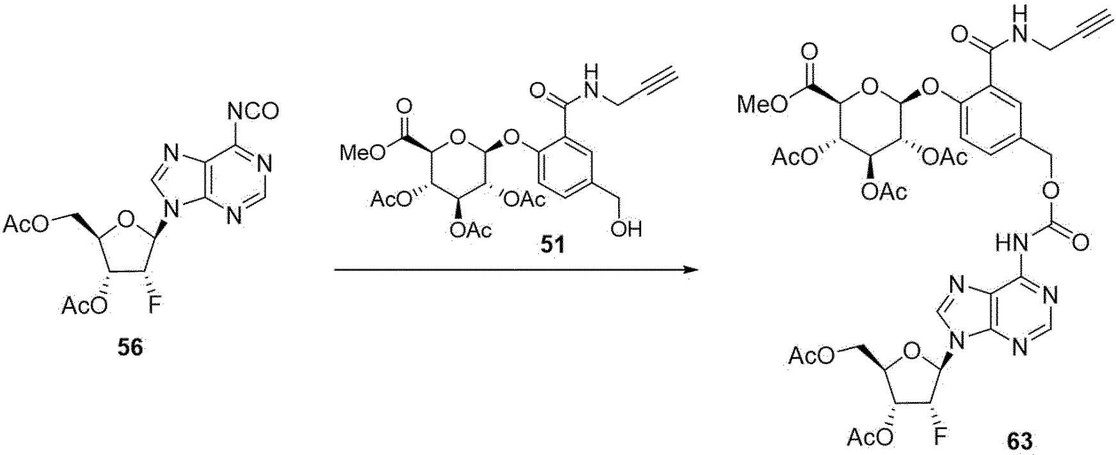
化合物56をテトラヒドロフラン(7mL)に溶かした後、化合物51(488mg,0.935mmol)と1―メチルイミダゾール(0.69mL,0.87mmol)を添加し、12時間加熱還流させた。反応溶液を減圧濃縮し、カラムクロマトグラフィーで精製して化合物63(224mg,28%)を得た。
EI―MSm/z:[M+H]+901.6.
<Example 19> Preparation of compound 63
After dissolving compound 56 in tetrahydrofuran (7 mL), compound 51 (488 mg, 0.935 mmol) and 1-methylimidazole (0.69 mL, 0.87 mmol) were added, and the mixture was heated under reflux for 12 hours. The reaction solution was concentrated under reduced pressure and purified by column chromatography to give compound 63 (224 mg, 28%).
EI-MSm / z: [M + H] +901.6.
<実施例20> 化合物65の作製
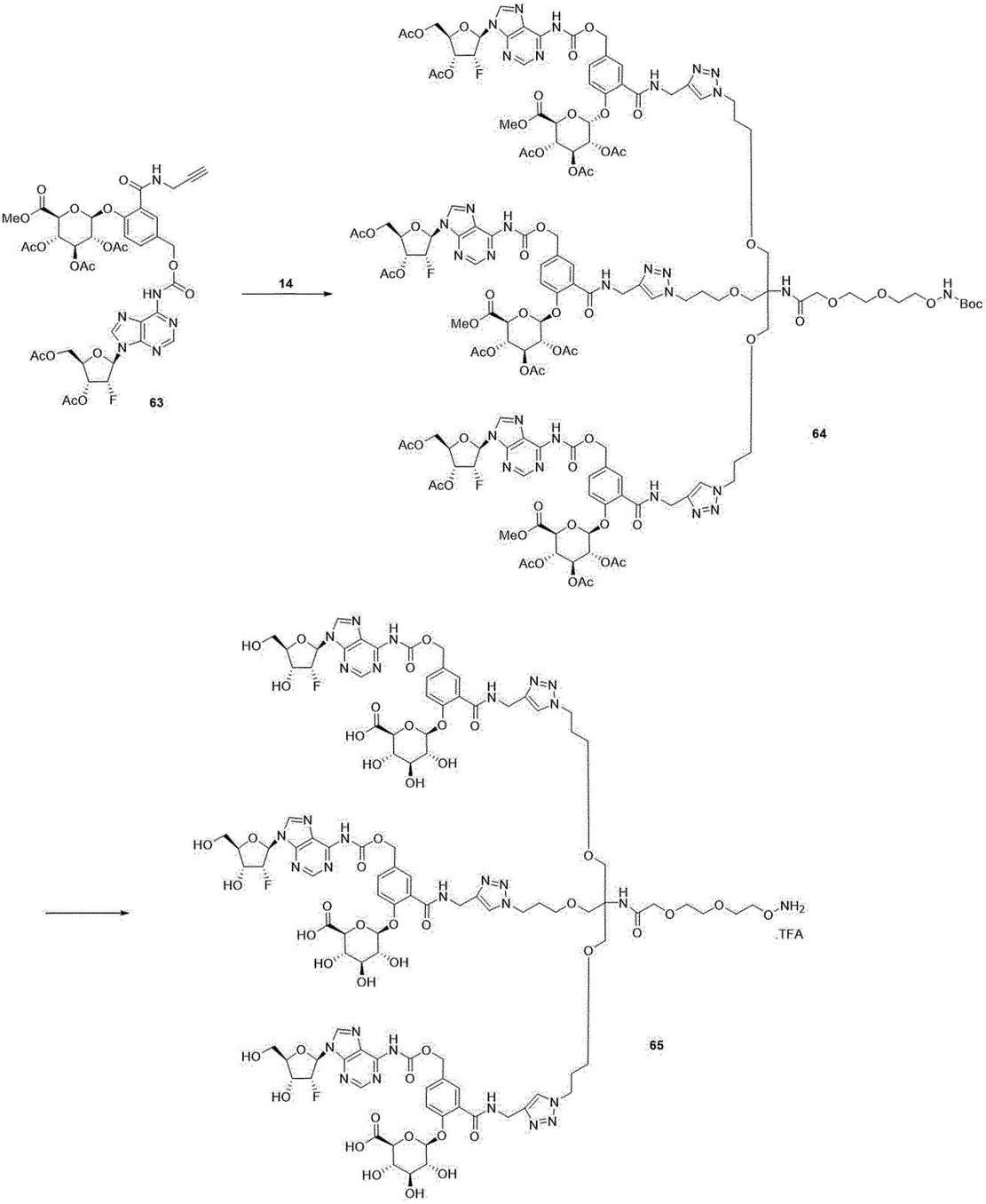
化合物64の作製
化合物63(138mg,0.153mmol)と化合物14(29.3mg,0.046mmol)をt―ブタノール(1mL)に溶かした後、蒸留水(1mL)に溶かした硫酸銅(2.3mg,0.009mmol)とアスコルビン酸ナトリウム(9.27mg,0.046mmol)、トリス―[1―(3―ヒドロキシプロピル)―1H―[1,2,3]―トリアゾール―4―イル]メチル)アミン(THPTA,8.3mg,0.0189mmol)を0℃、窒素雰囲気下で添加した。反応溶液を1時間常温にて攪拌した後、テトラヒドロフラン(0.5mL)を添加し、5時間常温にてさらに攪拌した。反応溶液に無水硫酸マグネシウムを入れて濾過した後、減圧濃縮し、カラムクロマトグラフィーで精製して化合物64(140mg,27%)を得た。
EI―MSm/z:1/2[M+H]+1668.1.
<Example 20> Preparation of compound 65
Preparation of Compound 64 Copper sulfate (2.) In which compound 63 (138 mg, 0.153 mmol) and compound 14 (29.3 mg, 0.046 mmol) were dissolved in t-butanol (1 mL) and then dissolved in distilled water (1 mL). 3 mg, 0.009 mmol) and sodium ascorbate (9.27 mg, 0.046 mmol), tris- [1- (3-hydroxypropyl) -1H- [1,2,3] -triazole-4-yl] methyl) Amine (THPTA, 8.3 mg, 0.0189 mmol) was added at 0 ° C. under a nitrogen atmosphere. After stirring the reaction solution at room temperature for 1 hour, tetrahydrofuran (0.5 mL) was added, and the mixture was further stirred at room temperature for 5 hours. Anhydrous magnesium sulfate was added to the reaction solution, and the mixture was filtered, concentrated under reduced pressure, and purified by column chromatography to obtain Compound 64 (140 mg, 27%).
EI-MSm / z: 1/2 [M + H] +1668.1.
化合物65の作製
化合物64(140mg,0.04mmol)をメタノール/テトラヒドロフラン(2mL/1mL)に溶かした後、水酸化リチウム(26.0mg,0.629mmol)を蒸留水(3mL)に溶かした溶液を―40℃において徐々に添加した。反応温度を徐々に0℃まで昇温しながら、5時間攪拌した。反応溶液を酢酸で中和した後、反応溶液を減圧濃縮し、且つ、凍結乾燥して加水分解された精製前の化合物(粗製、EI―MSm/z:1/2[M+H]+1331.7)を得た。
Preparation of Compound 65 A solution of compound 64 (140 mg, 0.04 mmol) in methanol / tetrahydrofuran (2 mL / 1 mL) and then lithium hydroxide (26.0 mg, 0.629 mmol) in distilled water (3 mL) was prepared. It was added gradually at −40 ° C. The reaction was stirred for 5 hours while gradually raising the reaction temperature to 0 ° C. After neutralizing the reaction solution with acetic acid, the reaction solution was concentrated under reduced pressure, and then freeze-dried and hydrolyzed before purification (crude, EI-MSm / z: 1/2 [M + H] +1331.7). Got
以上において得た化合物(粗い)をジクロロメタン(4mL)に溶かした後、トリフルオロ酢酸(1mL)を0℃において添加し、4時間攪拌した。反応溶液を減圧濃縮した後、HPLCで精製し、かつ、凍結乾燥して化合物65を白色固体(15.2mg,2 steps 14%)として得た。
EI―MSm/z:1/2[M+H]+1281.7.
After dissolving the compound (coarse) obtained above in dichloromethane (4 mL), trifluoroacetic acid (1 mL) was added at 0 ° C., and the mixture was stirred for 4 hours. The reaction solution was concentrated under reduced pressure, purified by HPLC, and lyophilized to give compound 65 as a white solid (15.2 mg, 2 steps 14%).
EI-MSm / z: 1/2 [M + H] +1281.7.
[ADCの作製]
ADCの作製は、次の2段階を経て作製され、共通して用いたLCB14―0511、LCB14―0512及びLCB14―0606は、特許文献1に記載された方法で作製した。LCB14―0606、LCB14―0511及びLCB14―0512の構造式は、下記の通りである:
[Preparation of ADC]
The ADC was prepared through the following two steps, and LCB14-0511, LCB14-0512 and LCB14-0606, which were commonly used, were prepared by the method described in Patent Document 1. The structural formulas of LCB14-0606, LCB14-0511 and LCB14-0512 are as follows:

1段階:プレニル化抗体の作製
抗体のプレニル化反応混合物を作製して30℃において16時間反応させた。反応混合物は、24μM抗体、200nM FTase(Calbiochem #344145)と0.144mM LCB14―0511またはLCB14―0512またはLCB14―0606を含む緩衝溶液(50mM Tris―HCl(pH7.4),5mM MgCl2,10μM ZnCl2,0.5mM DTT)から構成した。反応が終わった後、プレニル化された抗体は、PBS緩衝溶液で平衡化されたG25 Sepharoseカラム(AKTA purifier,GEヘルスケア社製)で除塩させた。
Step 1: Preparation of prenylated antibody A prenylated reaction mixture of the antibody was prepared and reacted at 30 ° C. for 16 hours. The reaction mixture was a buffer solution containing 24 μM antibody, 200 nM FTase (Calbiochem # 344145) and 0.144 mM LCB14-0511 or LCB14-0512 or LCB14-0606 (50 mM Tris-HCl (pH 7.4), 5 mM MgCl 2 , 10 μM ZnCl. 2 , 0.5 mM DTT). After completion of the reaction, the prenylated antibody was desalted with a G25 Sepharose column (AKTA purifier, GE Healthcare) equilibrated with PBS buffer.
2段階:薬物の複合方法
<オキシム結合反応(conjugation by oxime bond formation)>
プレニル化された抗体とリンカー―薬物との間のオキシム結合生成反応混合物は、100mM Na―アセテート緩衝溶液pH5.2、10%DMSO、24μM抗体と240μMリンカー―薬物(in house、実施例10、11,13の最終産物であって、表1の化合物)を混ぜて作製し、30℃において弱く攪拌した。24時間の反応後にFPLC(AKTA purifier,GEヘルスケア社製)過程を経て用いられた過剰量の低分子化合物を取り除き、タンパク質分画は、収集して濃縮した。
Two-step: Drug compounding method <Oxime binding reaction (conjugation by oxime bond formation)>
The oxime bond-forming reaction mixture between the prenylated antibody and the linker-drug was 100 mM Na-acetate buffer pH 5.2, 10% DMSO, 24 μM antibody and 240 μM linker-drug (in house, Examples 10, 11). , 13 final products, prepared by mixing the compounds in Table 1) and stirred gently at 30 ° C. After a 24-hour reaction, excess small molecule compounds used via the FPLC (AKTA purifier, GE Healthcare) process were removed and the protein fractions were collected and concentrated.
<クリック結合反応(conjugation by click reaction)>
プレニル化された抗体とリンカー―薬物とのクリック反応混合物は、10%DMSO、24μM抗体と240μMリンカー―薬物(in house)、1mM硫酸銅(II)五水和物、2mM(BimC4A)3(シグマアルドリッチ社製、696854)、10mMアスコルビン酸ナトリウム(sodium ascorbate)及び10mMアミノグアニジン塩酸塩を混ぜて作製し、25℃において3時間反応させた後に2.0mM EDTAを処理して30分間反応させた。反応が終わった後、FPLC(AKTA purifier,GEヘルスケア社製)過程を経て用いられた過剰量の低分子化合物を取り除き、タンパク質分画は、収集して濃縮した。
<Click binding reaction>
Click reaction mixture of prenylated antibody and linker-drug is 10% DMSO, 24 μM antibody and 240 μM linker-drug (in fuse), 1 mM copper sulfate (II) pentahydrate, 2 mM (BimC4A) 3 (sigma). Aldrich, 696854), 10 mM sodium ascorbate (sodium ascorbate) and 10 mM aminoguanidine hydrochloride were mixed and reacted, and after reacting at 25 ° C. for 3 hours, 2.0 mM EDTA was treated and reacted for 30 minutes. After completion of the reaction, excess small molecule compounds used via the FPLC (AKTA purifier, GE Healthcare) process were removed and the protein fraction was collected and concentrated.

<実験例1> In vitro細胞毒性の評価
下記の表2に記載された薬物及びADCの癌細胞株に対する細胞増殖抑制活性を測定した。癌細胞株として、市販中のヒト乳癌細胞株MCF―7(HER2陰性ないし正常)及びSK―BR3(HER2陽性)、JIMT―1(HER2陽性)を用いた。薬物としてMMAEを、且つ、ADCとして表1のADCを用いた。96ウェルプレートに、各癌細胞株を、144時間処理した群は1ウェル当たりに2,500~5,000個ずつ、168時間処理した群は1ウェル当たりに1,500~3,000個ずつ接種(seeding)して24時間培養した後、ADC及び薬物は0.00015~10.0nM(4倍連続希釈)もしくは0.0015~10nM(3倍連続希釈)の濃度で処理した。144/168時間後に、生きている細胞の数をSRB(Sulforhodamine B)染料を用いて定量した。
<Experimental Example 1> Evaluation of in vitro cytotoxicity The cell proliferation inhibitory activity of the drugs and ADCs listed in Table 2 below against cancer cell lines was measured. Commercially available human breast cancer cell lines MCF-7 (HER2 negative or normal), SK-BR3 (HER2 positive), and JIMT-1 (HER2 positive) were used as cancer cell lines. MMAE was used as the drug, and the ADC in Table 1 was used as the ADC. In a 96-well plate, the group treated with each cancer cell line for 144 hours had 2,500 to 5,000 cells per well, and the group treated with 168 hours had 1,500 to 3,000 cells per well. After seeding and culturing for 24 hours, the ADC and drug were treated at concentrations of 0.00015 to 10.0 nM (4-fold serial dilution) or 0.0015 to 10 nM (3-fold serial dilution). After 144/168 hours, the number of living cells was quantified using SRB (Sulforhodamine B) dye.

前記ADC1、ADC2、ADC3は、乳癌細胞株において細胞毒性に非常に優れているということを確認した。 It was confirmed that ADC1, ADC2, and ADC3 are extremely excellent in cytotoxicity in breast cancer cell lines.
当業者は、この明細書に記載の本発明の特定の具体例に対する多数の均等物について、単に日常的な実験を用いてこれを認識するか、あるいは、確認することができる筈である。このような均等物は、特許請求の範囲に含まれるものであると意図される。上述した本発明の説明は、単なる例示のためのものであり、本発明が属する技術分野における通常の知識を有する者は、本発明の技術的な思想や必須的な特徴を変更することなく、他の具体的な形態へと容易に変形できることが理解できる筈である。よって、上述した実施形態は、あらゆる面において例示的なものに過ぎず、限定的なものではないと理解すべきである。例えば、単一型であると説明されている各構成要素は、分散されて実施されてもよく、同様に、分散されていると説明されている構成要素もまた、組み合わせられた形態に実施されてもよい。特許請求の範囲の意味及び範囲、並びにその均等概念から導き出されるあらゆる変更または変形された形態が本発明の範囲に含まれるものと解釈されてもよい。 One of ordinary skill in the art should be able to recognize or confirm a number of equivalents to a particular embodiment of the invention described herein, merely through routine experimentation. Such equivalents are intended to be within the scope of the claims. The above description of the present invention is for illustration purposes only, and a person having ordinary knowledge in the technical field to which the present invention belongs does not change the technical idea or essential features of the present invention. It should be understood that it can be easily transformed into other concrete forms. Therefore, it should be understood that the embodiments described above are merely exemplary in all respects and are not limiting. For example, each component described as being monomorphic may be implemented in a distributed manner, as well as the components described as being distributed in a combined form. You may. The meaning and scope of the claims, as well as any modification or modification derived from the concept of equality thereof, may be construed as being included in the scope of the invention.
本発明の一実施形態に係るリガンド―薬物複合体は、トリス(Tris)構造を含むリンカーを含むことができ、トリス構造によって活性剤が結合されることにより、1つのリンカーを介してさらに多数の活性剤が連結されることが可能になる。すなわち、リガンド結合当たりにさらに多数の活性剤が標的細胞に伝達されることが可能になる。したがって、本発明のリガンド―薬物複合体は、薬物を有効に、特異的に、且つ、選択的に伝達することができ、体内の循環に際して安定的に標的細胞まで達することができ、達した後に薬物が容易に放出されることが可能になる。なお、本発明の一実施形態に係るリンカーは、薬物が標的細胞内において容易に放出されて薬効を極大化させ得るトリガーユニットを含んで、薬物及び/またはトキシンが標的細胞に安定的に達して薬効を有効に発揮することができるので、当該技術分野において利用することができる。 The ligand-drug complex according to one embodiment of the present invention can contain a linker containing a Tris structure, and the active agent is bound by the Tris structure to further increase the number via one linker. The activator can be linked. That is, a larger number of active agents can be transmitted to the target cells per ligand binding. Therefore, the ligand-drug complex of the present invention can effectively, specifically and selectively transmit the drug, and can stably reach the target cell during circulation in the body, and after reaching the target cell. The drug can be easily released. The linker according to the embodiment of the present invention contains a trigger unit in which the drug can be easily released into the target cell to maximize the drug efficacy, and the drug and / or toxin can stably reach the target cell. Since it can effectively exert its medicinal effect, it can be used in the technical field.
Claims (63)
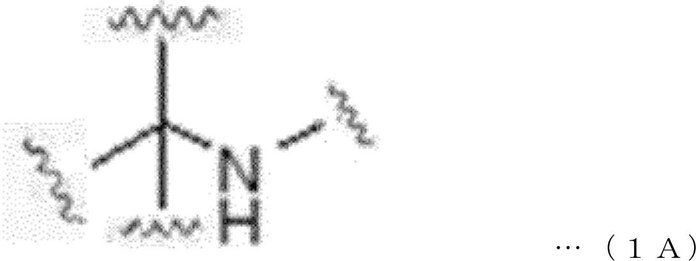

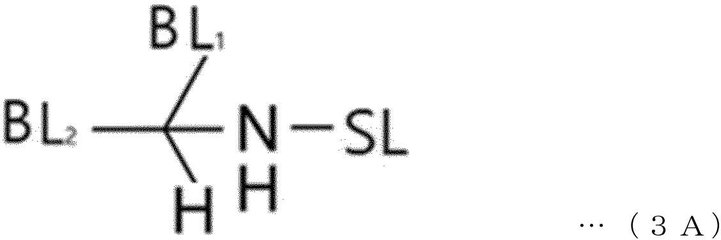
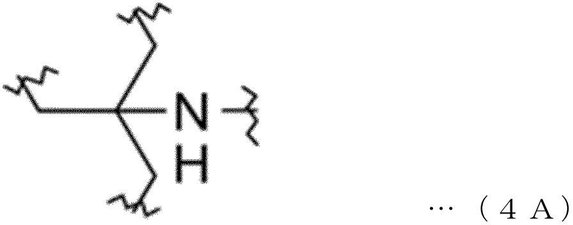
トリス構造の窒素に連結され、活性剤と結合され、分岐されたリンカー(BL1、BL2、BL3)を含む第1のリンカーと、抗体と連結される第2のリンカー(SL)と、を含み、下記一般式5Aで表される、請求項1に記載のリガンド―薬物複合体用リンカー。

A first linker that is linked to nitrogen in a Tris structure, bound to an activator, and contains a branched linker (BL 1 , BL 2 , BL 3 ), and a second linker (SL) that is linked to an antibody. The ligand-drug complex linker according to claim 1, which comprises, and is represented by the following general formula 5A.


(i)アルキレンは、少なくとも1つの不飽和結合、具体的には、3または4個の二重結合または三重結合を含む、
(ii)アルキレンは、少なくとも1つのヘテロアリーレンを含む、
(iii)アルキレンの少なくとも1つの炭素原子は、窒素(N)、酸素(O)及び硫黄(S)から選択される1つ以上のヘテロ原子、具体的には、少なくとも1つの窒素及び少なくとも1つの酸素(例えば、オキシムにあるものであって)により置換される、かつ、
(iv)アルキレンは、1~20個の炭素原子を有する1つ以上のアルキル、好ましくは、2または3つのメチルで置換される。 The ligand according to claim 1, wherein the linker comprises a substituted or unsubstituted alkylene having 1 to 100 carbon atoms and satisfies one or more of the following conditions (i) to (iv). Linker for drug complex:
(I) The alkylene comprises at least one unsaturated bond, specifically 3 or 4 double or triple bonds.
(Ii) The alkylene comprises at least one heteroarylene.
(Iii) At least one carbon atom of the alkylene is one or more heteroatoms selected from nitrogen (N), oxygen (O) and sulfur (S), specifically at least one nitrogen and at least one. Replaced by oxygen (eg, one in oxime) and
(Iv) The alkylene is substituted with one or more alkyls having 1 to 20 carbon atoms, preferably 2 or 3 methyls.
前記リガンドに共有結合で連結され、下記一般式1A で表されるトリス(Tris)構造を含むリンカーと、
前記リンカーに共有結合で連結される活性剤と、を含むリガンド―薬物複合体。

A linker that is covalently linked to the ligand and contains a Tris structure represented by the following general formula 1A.
A ligand-drug complex comprising an activator covalently linked to said linker.

アルキレンの少なくとも1つ以上の炭素原子は、窒素(N)、酸素(O)及び硫黄(S)から選択された1つもしくはそれ以上のヘテロ原子で置換され、
アルキレンは、1~20個の炭素原子を有する少なくとも1つ以上のアルキルでさらに置換された、請求項16に記載のリガンド―薬物複合体。 The branching unit comprises an alkylene having at least one or more 1-100 carbon atoms.
At least one carbon atom of the alkylene is substituted with one or more heteroatoms selected from nitrogen (N), oxygen (O) and sulfur (S).
The ligand-drug complex of claim 16, wherein the alkylene is further substituted with at least one alkyl having 1 to 20 carbon atoms.


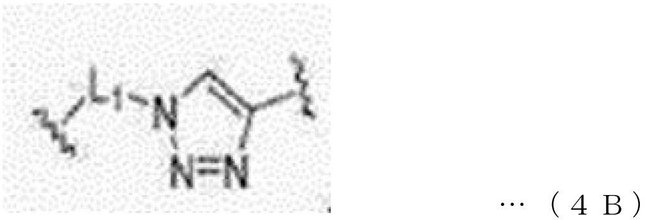


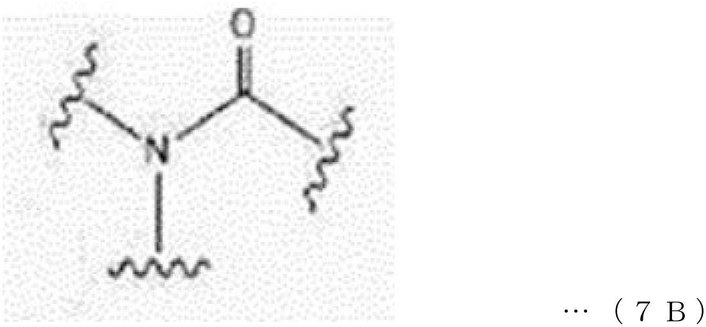

L1、L2、及びL3は、それぞれ独立して、直接結合(direct bond)または―CnH2n―であり、nは、1~30の整数であり、
G1、G2、G3は、それぞれ独立して、直接結合、下記一般式1、下記一般式2、下記一般式3または下記一般式4であり、
R3は、水素またはC1―C30アルキルであり、R4は、水素または―L4―COOR5であり、L4は、直接結合または―CnH2n―であり、nは、1~10の整数であり、R5は、水素またはC1―C30アルキルである。


L 1 , L 2 , and L 3 are independently direct bonds or —C n H 2n — and n is an integer from 1 to 30.
G 1 , G 2 and G 3 are independently and directly coupled, and are the following general formula 1, the following general formula 2, the following general formula 3 or the following general formula 4.
R 3 is hydrogen or C 1 -C 30 alkyl, R 4 is hydrogen or -L 4 -COOR 5 , L 4 is a direct bond or -C n H 2n- , n is 1 It is an integer of ~ 10 , where R5 is hydrogen or C1 - C30 alkyl.


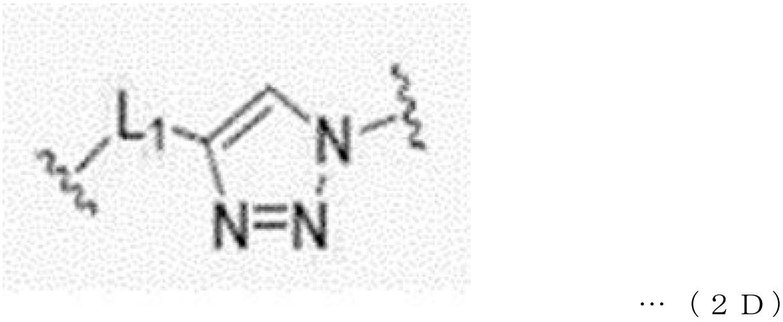

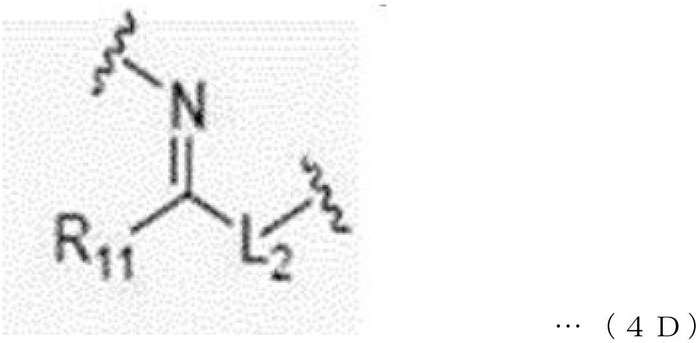
L1は、単一結合または1~30個の炭素原子を有するアルキレンであり、
R11は、水素または1~10個の炭素原子を有するアルキルであり、
L2は、1~30個の炭素原子を有するアルキレンである。 The ligand-drug complex according to claim 16, wherein the binding unit comprises a structure represented by any one of the following general formulas 1D to 4D.
L 1 is an alkylene having a single bond or 1 to 30 carbon atoms.
R 11 is hydrogen or an alkyl having 1 to 10 carbon atoms.
L 2 is an alkylene having 1 to 30 carbon atoms.
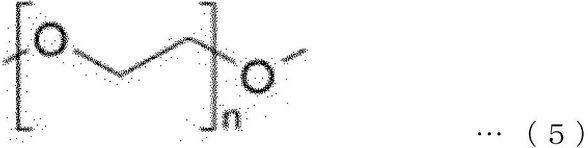


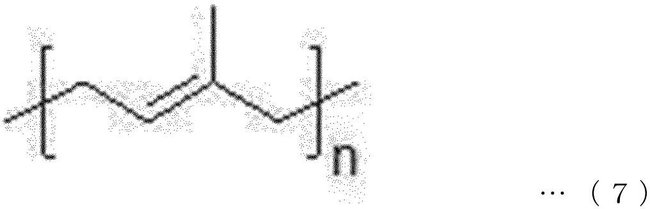



Vは、単一結合、―O―、―S―、―NR21―、―C(O)NR22―、―NR23C(O)―、―NR24SO2―、または―SO2NR25―を示し、好ましくは、―O―であり、R21~R25は、それぞれ独立して、水素、(C1―C6)アルキル、(C1―C6)アルキル(C6―C20)アリール、または(C1―C6)アルキル(C3―C20)ヘテロアリールを示し、
rは、0~10の整数、好ましくは、2または3であり、
pは、0~10の整数、好ましくは、1または2であり、
qは、1~20の整数、好ましくは、1~6の整数であり、
L1は、単一結合である。 The ligand-drug complex of claim 14, wherein the linker comprises any one unit of the following general formulas 4A-6A.
V is a single bond, -O-, -S-, -NR 21- , -C (O) NR 22- , -NR 23 C (O)-, -NR 24 SO 2- , or -SO 2 NR. 25— , preferably —O—, where R 21 to R 25 are independently hydrogen, (C 1— C 6 ) alkyl, (C 1— C 6 ) alkyl (C 6 —C), respectively. 20 ) Aryl, or (C 1 -C 6 ) Alkyl (C 3 -C 20 ) Heteroaryl,
r is an integer from 0 to 10, preferably 2 or 3.
p is an integer from 0 to 10, preferably 1 or 2.
q is an integer of 1 to 20, preferably an integer of 1 to 6.
L 1 is a single bond.
(i)アルキレンは、少なくとも1つの不飽和結合、具体的には、3または4個の二重結合または三重結合を含む、
(ii)アルキレンは、少なくとも1つのヘテロアリーレンを含む、
(iii)アルキレンの少なくとも1つの炭素原子は、窒素(N)、酸素(O)及び硫黄(S)から選択される1つ以上のヘテロ原子、具体的には、少なくとも1つの窒素及び少なくとも1つの酸素(例えば、オキシムにあるものであって)により置換される、かつ、
(iv)アルキレンは、1~20個の炭素原子を有する1つ以上のアルキル、好ましくは、2または3つのメチルで置換される。 14. The linker comprises at least one substituted or unsubstituted alkylene having 1 to 100 carbon atoms and satisfies one or more of the following conditions (i) to (iv). Ligand-drug complex linkers described:
(I) The alkylene comprises at least one unsaturated bond, specifically 3 or 4 double or triple bonds.
(Ii) The alkylene comprises at least one heteroarylene.
(Iii) At least one carbon atom of the alkylene is one or more heteroatoms selected from nitrogen (N), oxygen (O) and sulfur (S), specifically at least one nitrogen and at least one. Replaced by oxygen (eg, one in oxime) and
(Iv) The alkylene is substituted with one or more alkyls having 1 to 20 carbon atoms, preferably 2 or 3 methyls.
Cは、システインを示し、
Yは、それぞれ独立して、脂肪族アミノ酸を示し、
Xは、それぞれ独立して、グルタミン、グルタミン酸、セリン、システイン、メチオニン、アラニンまたはロイシンを示す請求項44に記載のリガンド―薬物複合体。 The amino acid motif is a CYYX sequence.
C indicates cysteine,
Y indicates an aliphatic amino acid independently of each other.
The ligand-drug complex according to claim 44, wherein X independently represents glutamine, glutamic acid, serine, cysteine, methionine, alanine or leucine.
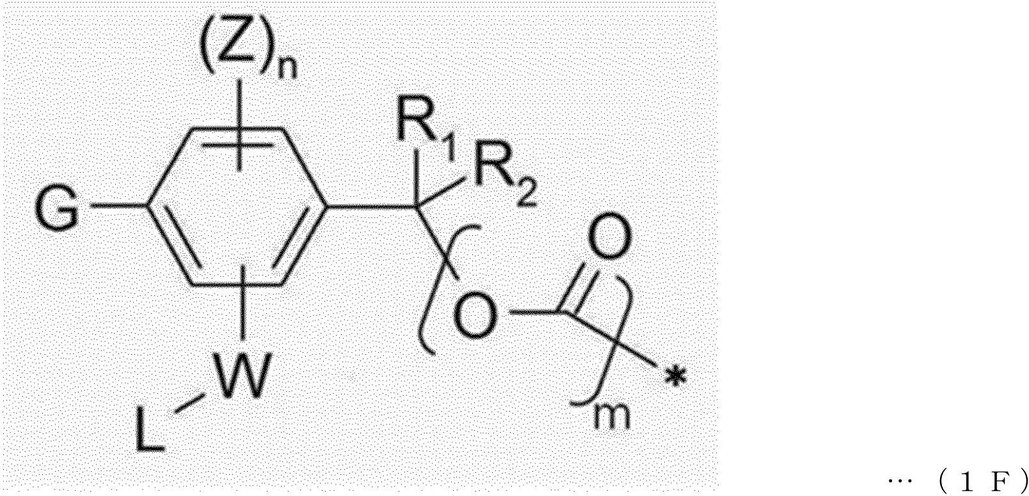
Gは、糖(sugar)、糖酸(sugar acid)、または糖誘導体(sugar derivatives)であり、
Wは、―C(O)―、―C(O)NR'―、―C(O)O―、―S(O)2NR'―、―P(O)R''NR'―、―S(O)NR'―、または―PO2NR'―であり、C(O)、S、またはPがフェニル環と直結される場合、R'及びR''は、それぞれ独立して、水素、(C1―C8)アルキル、(C3―C8)シクロアルキル、(C1―C8)アルコキシ、(C1―C8)アルキルチオ、モノ―またはジ―(C1―C8)アルキルアミノ、(C3―C20)ヘテロアリール、または(C6―C20)アリールであり、
各Zは、それぞれ独立して、水素、(C1―C8)アルキル、ハロゲン、シアノまたはニトロであり、
nは、1~3の整数であり、
mは、0または2であり、
R1及びR2は、それぞれ独立して、水素、(C1―C8)アルキルまたは(C3―C8)シクロアルキルであるか、あるいは、R1及びR2は、これらが付着した炭素原子とともに(C3―C8)シクロアルキル環を形成し、
Lは、リンカーとの連結を意味し、
*印は、活性剤(または、薬物もしくはトキシン)と連結されるサイトを示す。 The ligand-drug complex according to claim 14, wherein the active agent is linked to a linker by a trigger unit represented by the following general formula 1F.
G is sugar, sugar acid, or sugar derivatives.
W is -C (O)-, -C (O) NR'-, -C (O) O-, -S (O) 2 NR'-, -P (O) R''NR'-,- If S (O) NR'-or -PO 2 NR'-and C (O), S, or P is directly linked to the phenyl ring, then R'and R'' are independent hydrogens, respectively. , (C 1 -C 8 ) alkyl, (C 3 -C 8 ) cycloalkyl, (C 1 -C 8 ) alkoxy, (C 1 -C 8 ) alkyl thio, mono- or di- (C 1 -C 8 ). Alkoxyamino, (C 3 -C 20 ) heteroaryl, or (C 6 -C 20 ) aryl,
Each Z is independently hydrogen, ( C1 - C8) alkyl, halogen, cyano or nitro.
n is an integer of 1 to 3 and
m is 0 or 2 and
R 1 and R 2 are independently hydrogen, (C 1 -C 8 ) alkyl or (C 3 -C 8 ) cycloalkyl, respectively, or R 1 and R 2 are carbons to which they are attached. Forming a (C 3 -C 8 ) cycloalkyl ring with the atom,
L means the connection with the linker,
* Marks indicate sites linked to the active agent (or drug or toxin).


R3は、水素またはカルボキシル保護基であり、
R4は、それぞれ独立して、水素またはヒドロキシル保護基である。 The ligand-drug complex according to claim 48, wherein G is represented by the following general formula 2F:
R 3 is a hydrogen or carboxyl protecting group and is
R4 is an independent hydrogen or hydroxyl protecting group, respectively.
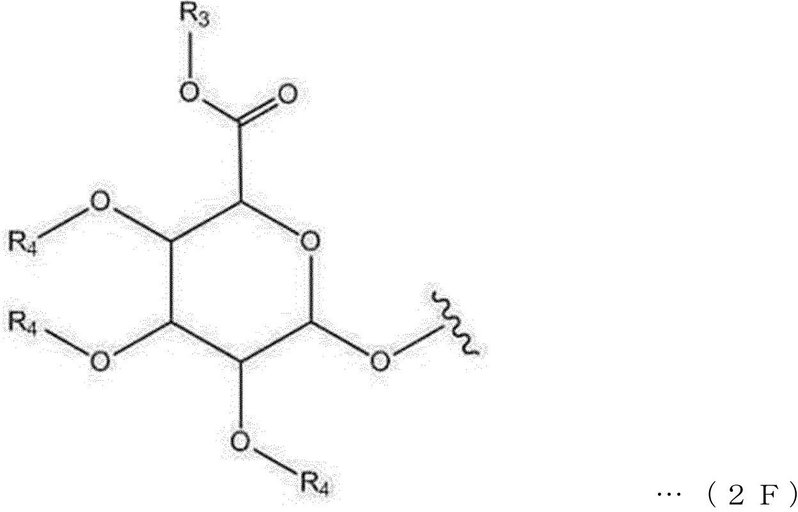
R3は、水素またはカルボキシル保護基であり、
R4は、それぞれ独立して、水素またはヒドロキシル保護基である。 The claim is that W is —C (O) NR', where C (O) is linked to a phenyl ring, NR'is linked to a linker, and G is represented by the following general formula 2F. 48. Ligand-drug complex:
R 3 is a hydrogen or carboxyl protecting group and is
R4 is an independent hydrogen or hydroxyl protecting group, respectively.
(a)エルロチニブ(erlotinib)、ボルテゾミブ(bortezomib)、フルベストラント(fulvestrant)、スーテント(sutent)、レトロゾール(letrozole)、メシル酸イマチニブ(imatinib mesylate)、PTK787/ZK 222584、オキサリプラチン(oxaliplatin)、5―フルオロウラシル(5―fluorouracil)、ロイコボリン(leucovorin)、ラパマイシン(rapamycin)、ラパチニブ(lapatinib)、ロナファルニブ(lonafarnib)、ソラフェニブ(sorafenib)、ゲフィチニブ(gefitinib)、AG1478、AG1571、チオテパ(thiotepa)、シクロホスファミド(cyclophosphamide)、ブスルファン(busulfan)、インプロスルファン(improsulfan)、ピポスルファン(piposulfan)、ベンゾドパ(benzodopa)、カルボコン(carboquone)、メツレドパ(meturedopa)、ウレドパ(uredopa)、エチレンイミン(ethylenimine)、アルトレタミン(altretamine)、トリエチレンメラミン(triethylenemelamine)、トリエチレンホスホラミド(trietylenephosphoramide)、トリエチレンチオホスホラミド(triethiylenethiophosphoramide)、トリメチローロメラミン(trimethylolomelamine)、ブラタシン(bullatacin)、ブラタシノン(bullatacinone)、カンプトテシン(camptothecin)、トポテカン(topotecan)、ブリオスタチン(bryostatin)、カリスタチン(callystatin)、CC―1065、アドゼレシン(adozelesin)、カルゼルシン(carzelesin)、ビゼレシン(bizelesin)、クリプトフィシン1(cryptophycin 1)、クリプトフィシン8(cryptophycin 8)、ドラスタチン(dolastatin)、デュオカルマイシン(duocarmycin)、KW―2189、CB1―TM1、エリュテロビン(eleutherobin)、パンクラチスタチン(pancratistatin)、サルコジクチイン(sarcodictyin)、スポンジスタチン(spongistatin)、クロラムブシル(chlorambucil)、クロルナファジン(chlornaphazine)、クロロホスファミド(cholophosphamide)、エストラムスチン(estramustine)、イホスファミド(ifosfamide)、メクロレタミン(mechlorethamine)、メルファラン(melphalan)、ノベンビチン(novembichin)、フェネステリン(phenesterine)、プレドニムスチン(prednimustine)、トロホスファミド(trofosfamide)、ウラシルマスタード(uracil mustard)、カルムスチン(carmustine)、クロロゾトシン(chlorozotocin)、フォテムスチン(fotemustine)、ロムスチン(lomustine)、ニムスチン(nimustine)、ラニムヌスチン(ranimnustine)、カリケアマイシン(calicheamicin)、カリケアマイシンガンマ1(calicheamicin gamma 1)、カリケアマイシンオメガ1(calicheamicin omega 1)、ダイネミシン(dynemicin)、ダイネミシンA(dynemicin A)、クロドロネート(clodronate)、エスペラミシン(esperamicin)、ネオカルチノスタチン発色団(neocarzinostatin chromophore)、アクラシノマイシン(aclacinomysins)、アクチノマイシン(actinomycin)、アントラマイシン(antrmycin)、アザセリン(azaserine)、ブレオマイシン(bleomycins)、カクチノマイシン(cactinomycin)、カラビシン(carabicin)、カルニノマイシン(carninomycin)、カルジノフィリン(carzinophilin)、クロモマイシン(chromomycins)、ダクチノマイシン(dactinomycin)、ダウノルビシン(daunorubicin)、デトルブシン(detorubucin)、6―ジアゾ―5―オキソ―L―ノルロイシン(6―diazo―5―oxo―L―norleucine)、ドキソルビシン(doxorubicin)、モルホリノ―ドキソルビシン(morpholino―doxorubicin)、シアノモルホリノ―ドキソルビシン(cyanomorpholino―doxorubicin)、2―ピロリノ―ドキソルビシン(2―pyrrolino―doxorubucin)、リポソーマルドキソルビシン(liposomal doxorubicin)、デオキシドキソルビシン(deoxydoxorubicin)、エピルビシン(epirubicin)、エソルビシン(esorubicin)、マルセロマイシン(marcellomycin)、マイトマイシンC(mitomycin C)、ミコフェノール酸(mycophenolic acid)、ノガラマイシン(nogalamycin)、オリボマイシン(olivomycins)、ペプロマイシン(peplomycin)、ポトフィロマイシン(potfiromycin)、ピュロマイシン(puromycin)、クエラマイシン(quelamycin)、ロドルビシン(rodorubicin)、ストレプトミグリン(streptomigrin)、ストレプトゾシン(streptozocin)、ツベルシジン(tubercidin)、ウベニメクス(ubenimex)、ジノスタチン(zinostatin)、ゾルビシン(zorubicin)、5―フルオロウラシル(5―fluorouracil)、デノプテリン(denopterin)、メトトレキサート(methotrexate)、プテロプテリン(pteropterin)、トリメトレキサート(trimetrexate)、フルダラビン(fludarabine)、6―メルカプトプリン(6―mercaptopurine)、チアミプリン(thiamiprine)、チグアニン(thiguanine)、アンシタビン(ancitabine)、アザシチジン(azacitidine)、6―アザウリジン(6―azauridine)、カルモフール(carmofur)、シタラビン(cytarabine)、ジデオキシウリジン(dideoxyuridine)、ドキシフルリジン(doxifluridine)、エノシタビン(enocitabine)、フロクスウリジン(floxuridine)、カルステロン(calusterone)、ドロモスタノロン(dromostanolone)、プロピオナート(propionate)、エピチオスタノール(epitiostanol)、メピチオスタン(mepitiostane)、テストラクトン(testolactone)、アミノグルテチミド(aminoglutethimide)、ミトタン(mitotane)、トリロスタン(trilostane)、ホリン酸(folinic acid)、アセグラトン(aceglatone)、アルドホスファミドグリコシド(aldophosphamide glycoside)、アミノレブリン酸(aminolevulinic acid)、エニルウラシル(eniluracil)、アムサクリン(amsacrine)、ベストラブシル(bestrabucil)、ビサントレン(bisantrene)、エダトラキサート(edatraxate)、デフォファミン(defofamine)、デメコルチン(demecolcine)、ジアジクオン(diaziquone)、エルフォルニチン(elfornithine)、酢酸エリプチニウム(elliptinium acetate)、エトグルシド(etoglucid)、硝酸ガリウム(gallium nitrate)、ヒドロキシウレア(hydroxyurea)、レンチナン(lentinan)、ロニダイニン(lonidainine)、メイタンシン(maytansine)、アンサミトシン(ansamitocins)、ミトグアゾン(mitoguazone)、ミトキサントロン(mitoxantrone)、モピダンモール(mopidanmol)、ニトラエリン(nitraerine)、ペントスタチン(pentostatin)、フェナメット(phenamet)、ピラルビシン(pirarubicin)、ロソキサントロン(losoxantrone)、2―エチルヒドラジド(2―ethylhydrazide)、プロカルバジン(procarbazine)、多糖類K(polysaccharide―k)、ラゾキサン(razoxane)、リゾキシン(rhizoxin)、シゾフィラン(sizofiran)、スピロゲルマニウム(spirogermanium)、テヌアゾン酸(tenuazonic acid)、トリアジクオン(triaziquone)、2,2',2''―トリクロロトリエチルアミン(2,2',2''―trichlorotriethylamine)、T―2トキシン、ベラクリンA(verracurin A)、ロリジンA(roridin A)、アングイジン(anguidine)、ウレタン(urethane)、ビンデシン(vindesine)、ダカルバジン(dacarbazine)、マンノムスチン(mannomustine)、ミトブロニトール(mitobronitol)、ミトラクトール(mitolactol)、ピポブロマン(pipobroman)、ガシトシン(gacytosine)、アラビノシド(arabinoside)、シクロホスファミド(cyclophosphamide)、チオテパ(thiotepa)、パクリタキセル、パクリタキセルのアルブミン改変ナノ粒子製剤(albumin―engineered nanoparticle formulation of paclitaxel)、ドセタキセル、クロラムブシル、ゲムシタビン、6―チオグアニン、メルカプトプリン、シスプラチン、カルボプラチン(carboplatin)、ビンブラスチン(vinblastine)、白金(platinum)、エトポシド(etoposide)、イホスファミド(ifosfamide)、ミトキサントロン(mitoxantrone)、ビンクリスチン、ビノレルビン(vinorelbine)、ノバントロン(novantrone)、テニポシド(teniposide)、エダトレキサート(edatrexate)、ダウノマイシン(daunomycin)、アミノプテリン(aminopterin)、ゼローダ(xeloda)、イバンドロネート(ibandronate)、CPT―11、トポイソメラーゼ阻害剤RFS 2000、ジフルオロメチルオルニチン(difluoromethylornithine)、レチノイン酸(retinoic acid)、カペシタビン(capecitabine)、またはこの薬学的に許容される塩、溶媒和物または酸;
(b)モノカイン(monokine)、リンフォカイン(lympokine)、ポリペプチドホルモン(traditional polypeptide hormone)、副甲状腺ホルモン(parathyroid hormone)、チロキシン(thyroxine)、リラキシン(relaxin)、プロリラキシン(prorelaxin)、糖タンパクホルモン(glycoprotein hormone)、卵胞刺激ホルモン(follicle stimulating hormone)、甲状腺刺激ホルモン(thyroid stimulating hormone)、黄体形成ホルモン(luteinizing hormone)、肝成長因子線維芽細胞成長因子(hepatic growth factor fibroblast growth factor)、プロラクチン(prolactin)、胎盤性ラクトジェン(placental lactogen)、腫瘍壊死因子―α(tumor necrosis factor―α)、腫瘍壊死因子―β、ミューラリアン抑制物質(mullerian―inhibiting substance)、マウスゴナドトロピン連関ペプチド(mouse gonadotropin―associated peptide)、インヒビン(inhibin)、アクチビン(activin)、血管内皮増殖因子(vascular endothelial growth factor)、トロンボポエチン(thrombopoietin)、エリスロポイエチン(erythropoietin)、骨誘導因子(osteoinductive factor)、インターフェロン、インターフェロン―α、インターフェロン―β、インターフェロン―γ、コロニー刺激因子(colony stimulating factor;CSF)、マクロファージ―CSF、顆粒球―マクロファージ―CSF(granulocyte―macrophage―CSF)、顆粒球―CSF、インターロイキン(IL)、IL―1、IL―1α、IL―2、IL―3、IL―4、IL―5、IL―6、IL―7、IL―8、IL―9、IL―10、IL―11、IL―12、腫瘍壊死因子(tumor necrosis factor)、TNF―α、TNF―β、ポリペプチド因子、LIF、キットリガンド(kit ligand)、またはこれらの配合物;
(c)ジフテリアトキシン、ボツリヌストキシン、テタヌストキシン、ディセンテリトキシン、コレラトキシン、アマニチン、α―アマニチン、ピロロベンゾジアゼピン、ピロロベンゾジアゼピン誘導体、テトロドトキシン、ブレベトキシン(brevetoxin)、シガトキシン(ciguatoxin)、リシン(ricin)、AMトキシン、オーリスタチン(auristatin)、チューブリシン(tubulysin)、ゲルダナマイシン(geldanamycin)、メイタンシノイド(maytansinoid)、カリケアマイシン(calicheamycin)、ダウノマイシン(daunomycin)、ドキソルビシン(doxorubicin)、メトトレキサート(methotrexate)、ビンデシン(vindesine)、SG2285、ドラスタチン(dolastatin)、ドラスタチン類似体(dolastatin analog)、オーリスタチン(auristatin)、クリプトフィシン(cryptophycin)、カンプトテシン(camptothecin)、リゾキシン(rhizoxin)、リゾキシン誘導体(rhizoxin derivatives)、CC―1065、CC―1065、類似体または誘導体、デュオカルマイシン(duocarmycin)、エンジイン抗生物質(enediyne antibiotic)、エスペラミシン(esperamicin)、エポチロン(epothilone)、トキソイド(toxoid)、またはこれらの配合物;
(d)親和性リガンド(affinity ligand);ここで、親和性リガンドは、基質、阻害剤、活性化剤、神経伝達物質、放射性同位元素、またはこれらの配合物、
(e)放射能標識(radioactive label)、32P、35S、蛍光染料、電子密度反応剤(electron dense reagent)、酵素、ビオチン、ストレプトアビジン(streptavidin)、ジゴキシゲニン(digoxigenin)、ハプテン(hapten)、免疫性タンパク質(immunogenic protein)、標的にコンプリメンタリーな配列を有する核酸分子(nucleic acid molecule with a sequence complementary to a target)またはこれらの配合物;
(f)免疫調節化合物(immunomodulatory compound)、抗癌剤(anti―cancer agent)、抗ウィルス剤(anti―viral agent)、抗バクテリア剤(anti―bacterial agent)、抗カビ剤(anti―fungal agent)、及び抗寄生虫剤(anti―parasitic agent)、またはこれらの配合物;
(g)タモキシフェン(tamoxifen)、ラロキシフェン(raloxifene)、ドロロキシフェン(droloxifene)、4―ヒドロキシタモキシフェン(4―hydroxytamoxifen)、トリオキシフェン(trioxifene)、ケオキシフェン(keoxifene)、LY117018、オナプリストン(onapristone)またはトレミフェン(toremifene);
(h)4(5)―イミダゾール、アミノグルテチミド(aminoglutethimide)、酢酸メゲステロール(megestrol acetate)、エキセメスタン(exemestane)、レトロゾール(letrozole)またはアナストロゾール(anastrozole);
(i)フルタミド(flutamide)、ニルタミド(nilutamide)、ビカルタミド(bicalutamide)、ロイプロリド(leuprolide)、ゴセレリン(goserelin)、またはトロキサシタビン(troxacitabine);
(j)アロマターゼ阻害剤;
(k)プロテインキナーゼ阻害剤;
(l)脂質キナーゼ阻害剤;
(m)shRNA、siRNA、PNAまたはアンチセンスオリゴヌクレオチド(anti―sense oligonucleotide);
(n)リボザイム;
(o)ワクチン;
(p)血管新生阻害剤(anti―angiogenic agent)、並びに
(q)免疫抗癌剤(immuno―oncology therapeutic agents)。 The ligand-drug complex according to claim 14, wherein the active agent is selected from the active agents listed below.
(A) erlotinib, bortezomib, fullvestrant, sentent, letrosole, imatinib mesilate, imatinib mesylate, PTK787 / ZK787 / ZK 5-Fluorouracil, leucovorin, rapamycin, lapatinib, lonafarnib, sorafenib, sorafenib, sorafenib, sorafenib, sorafenib, gefitinib Cyclophosphamide, busulfan, improsulfan, piposulfan, benzodopa, carboquone, carboquone, meturedopa (meturedopa) (Altretamine), triethylenemelamine (triethylenemelamine), triethylenephosphoramide, triethylenethiophosphoramide (triethylenethiophosphamide), trimethyllolomelamine (trimethylocarmycin, trimethylocarmycin) , Topotecan, briostatin, callystatin, CC-1065, adozelesin, carzelesin, bizelesin, cryptophycin 1 (cryptophic) ), Dolastatin, duocarmycin, KW-2189, CB1-TM1, eleutherobin, pankratisstatin ( Pancratistin, sarcodictyin, spongistatin, chlorambucil, chlornaphazine, chlorophosfamide, chlorophosfamide, estramustine, estram mechlorethamine, melphalan, novenbitin, phenesterine, prednimustine, trofosfamide, trofosfamide, uracilmasterd (uracil) , Lomustine, nimustine, ranimustine, calicheamicin, calicheamicin gamma 1 Dynemicin A, clodronate, esperamicin, neocarzinostatin chromophore, aclacinomycins, dactinomycin, actinomycin, actinomycin, actinomycin. ), Bleomycin, cactinomycin, carabicin, carninomycin, carzinophylin, chromomycin, dactinomycin, dactinomycin, dactinomycin, dactinomycin. , Detorubucin, 6-diazo-5-oxo-L-norleomycin (6-diazo-5-oxo-L-norleuc) ine), doxorubicin, morpholino-doxorubicin, cyanomorpholino-doxorubicin (cyanomorpholino-doxorubicin), 2-pyrrolino-doxorubicin (2-pirolino-doxorubicin) Doxorubicin, epirubicin, esorbicin, marcellomycin, mitomycin C, mycophericin, mycophericin, mycophericin, mycophericin ), Potfilomycin, puromycin, quelamycin, rodorubicin, streptomigriin, streptomigrin, streptozin, streptozocin, streptozocin ), Doxorubicin, 5-fluorouracil, denopterin, methotrexate, pteropterin, trimetrexate, fludalaxate, fludarabin mercaptopurine, thiamipline, thiguanine, ancitabine, azacitidine, 6-azauridine, 6-azauridine, carmofuridin, carmofur doxifluridine, enocitabine, floxuridine, calastero ne), dromostanolone, propionate, epithiostanol, mepitiostane, testlactone, testlactone, aminoglutetimide (aminoglutethymide), aminoglutethymide, mitotanne Acid (filinic acid), acegratone, aldophosphamide glycoside, aminolevulinic acid, eniluracil, eniluracil, amsacrine, amsacrine , Edatraxate, defofamine, demecolcine, diaziquone, elfornitine, elliptinium acetate (elliptinium acidite) (Hydroxyurea), lentinan, lonidainine, maytansine, ansamitocins, mitoguazone, mitoguazone, mitoxantrone, mitoxantrone, mitoxantrone, mitoxantrone, mitoxantrone, mitoxantrone. ), Phenamet, pirarubicin, losoxantrone, 2-ethylhydrazide, procarbazine, polysaccharide K (polysaccharize) , Sizofiran, spirogermanium, tenuazonic acid, triaziquone , 2,2', 2''-trichlorotriethylamine (2,2', 2''-triculorotrythylamine), T-2 toxin, verraculin A, rovidine A, anguidine, urethane (Urethane), vindesine, dacarbazine, mannomustine, mitobronitol, mitolactol, mitoxol, pipobroman, pipobroman, pipobroman, pipobroman. ), Thiotepa, paclitaxel, albumin-modified nanoparticle preparation of paclitaxel (albumin-engineered nanoparticle formulation of pacclitaxel), docetaxel, chlorambusyl, gemcitabine, chlorambusyl, gemcitabine, 6-thioguanine, mer , Platinum, etoposide, ifofamide, mitoxantrone, vinblastine, vinorelbine, novantrone, novantenode, teniposide, teniposide Aminopterin, Xeloda, ibandronate, CPT-11, topoisomerase inhibitor RFS 2000, difluoromethylornithine, retinoic acid (retinoic acid), retinoic acid (retinoic acid) Acceptable salts, solvates or acids;
(B) Monokine, lymphokine, polypeptide hormone (traditional polypeptide hormone), parathyloid hormone, tyroxin (thyroxine), tyroxine (lylaxine), lyluxin (relaxin) glycoprotin hormone, follicle stimulating hormone, thyroid stimulating hormone, luteinizing hormone, liver growth factor fibroglotrhofter hero ), Placental lactogen, tumor necrosis factor-α, tumor necrosis factor-β, mullerian-inhibiting substation, mouse hormone-linked peptide (hormone hormone) ), Inhibin, activin, vascular endothelial growth factor, thrombopoietin, erythropoietin, erythropoietin, interfoyetin, interfoyetin -Β, interferon-γ, colony stimulating factor (CSF), macrophages-CSF, granulocytes-macrophages-CSF (granulocyte-macropage-CSF), granulocytes-CSF, interleukin (IL), IL-1 , IL-1α, IL-2, IL-3, IL-4, IL-5, IL-6, IL-7, IL-8, IL-9, IL-10, IL-11, IL-12, tumor Necrosis factor (tumor hormone factor), TNF-α, TNF-β, polypeptide factor, LIF, Kitri Gand, or a combination of these;
(C) Difteriatoxin, botulinum toxin, tetanustoxin, decenteritoxin, choleratoxin, amanitin, α-amanitin, pyrolobenzodiazepine, pyrrolobenzodiazepine derivative, tetrodotoxin, brevetoxin, sigatoxin, cigatoxin, ciguatoxin. Toxin, auristatin, tubulysin, geldanamycin, maytansinoid, calicheamycin, daunomycin, daunomycin, doxorimetotolexin Vindesine, SG2285, dorastatin, dorastatin analog, auristatin, cryptophycin, camptothecin, camptothecin, lysoxin, lyzoxin, lyzin. -1065, CC-1065, analogs or derivatives, duocarmycin, endiyne antibiotics, esperamicin, epotylone, toxoids, or combinations thereof.
(D) Affinity ligand; where the affinity ligand is a substrate, an inhibitor, an activator, a neurotransmitter, a radioisotope, or a combination thereof.
(E) Radioactive label, 32P, 35S, fluorescent dye, electron density reactant, enzyme, biotin, streptavidin, digoxignin, hapten. A protein (immunogenic protein), a nucleic acid molecule having a complementary sequence to a target (nucleic acid molecular with a sex factory to a target) or a combination thereof;
(F) Immunomodulatory compound, anticancer agent (anti-cancer agent), antiviral agent (anti-viral agent), antibacterial agent (anti-bacterial agent), antifungal agent (anti-fungal) Anti-parasitic agent, or a combination thereof;
(G) tamoxifen, raloxifene, droloxifene, 4-hydroxytamoxifen (4-hydroxytamoxifen), trioxyfen (trioxyfene), keoxyphen (keoxyphene), keoxyphen (keoxifene), keoxyphen (keoxifene) Toremifene;
(H) 4 (5) -imidazole, aminoglutethimide, megestrol acetate, exemestane, letrozole or anastrozole;
(I) Flutamide, nilutamide, bicalutamide, leuprorelin, goserelin, or troxacitabine;
(J) Aromatase inhibitor;
(K) Protein kinase inhibitor;
(L) Lipid kinase inhibitor;
(M) shRNA, siRNA, PNA or antisense oligonucleotide (anti-sense oligonucleotide);
(N) Ribozyme;
(O) Vaccine;
(P) angiogenesis inhibitor (anti-angiogenic agent), and (q) immuno-oncology therapeutic agents.
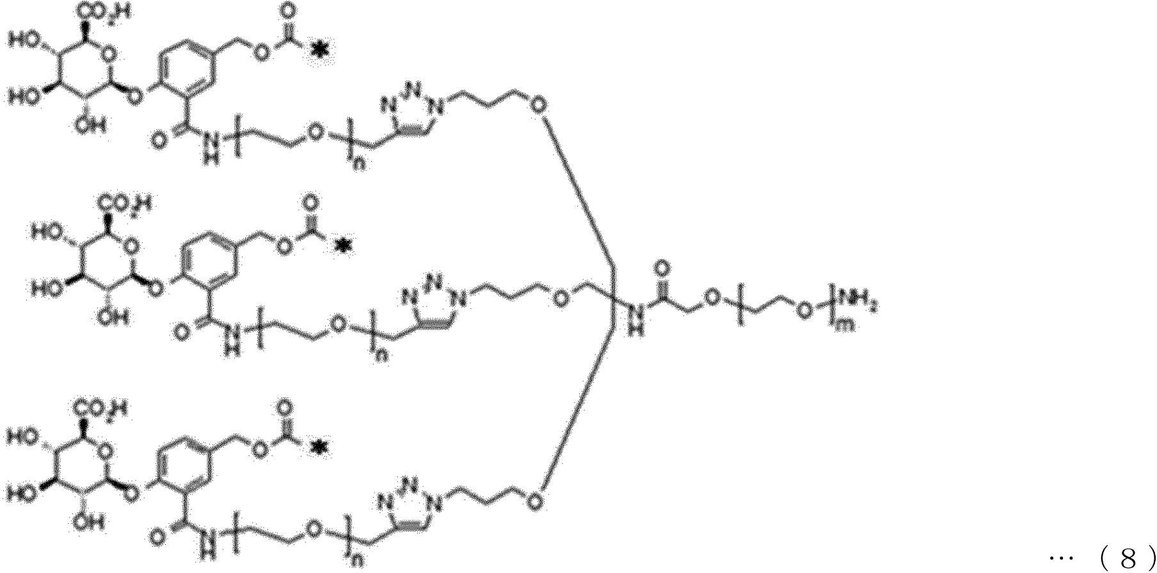


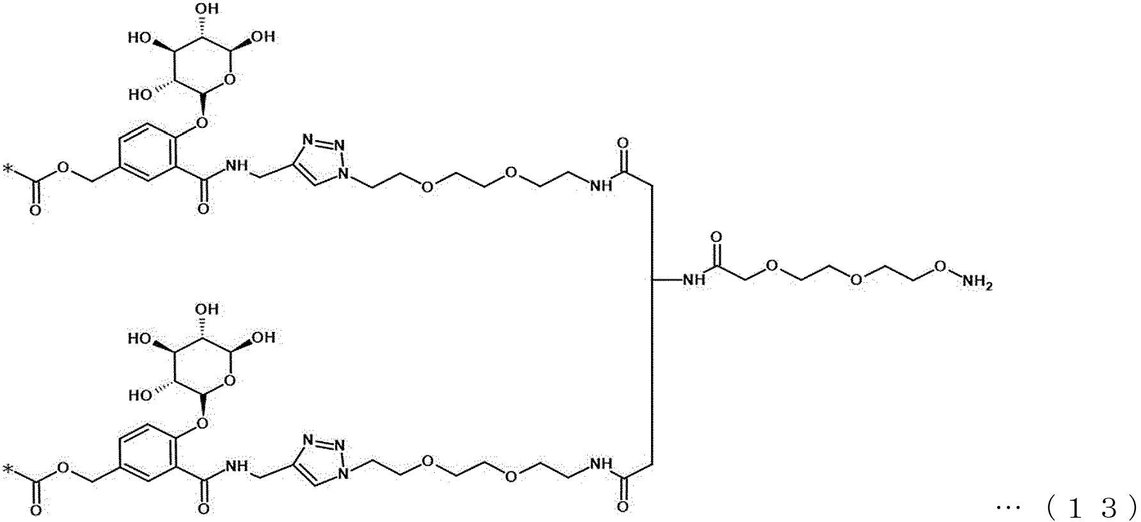
Priority Applications (1)
| Application Number | Priority Date | Filing Date | Title |
|---|---|---|---|
| JP2024134436A JP2024160336A (en) | 2019-05-02 | 2024-08-09 | Ligand-drug conjugates containing linkers having a tris structure |
Applications Claiming Priority (5)
| Application Number | Priority Date | Filing Date | Title |
|---|---|---|---|
| KR20190051618 | 2019-05-02 | ||
| KR10-2019-0051618 | 2019-05-02 | ||
| PCT/KR2020/005783 WO2020222573A1 (en) | 2019-05-02 | 2020-04-29 | Ligand-drug conjugate including linker having tris structure |
| KR10-2020-0052271 | 2020-04-29 | ||
| KR1020200052271A KR102501394B1 (en) | 2019-05-02 | 2020-04-29 | Ligand-drug conjugate comprising linker having tris structure |
Related Child Applications (1)
| Application Number | Title | Priority Date | Filing Date |
|---|---|---|---|
| JP2024134436A Division JP2024160336A (en) | 2019-05-02 | 2024-08-09 | Ligand-drug conjugates containing linkers having a tris structure |
Publications (1)
| Publication Number | Publication Date |
|---|---|
| JP2022530482A true JP2022530482A (en) | 2022-06-29 |
Family
ID=73029422
Family Applications (2)
| Application Number | Title | Priority Date | Filing Date |
|---|---|---|---|
| JP2021563418A Pending JP2022530482A (en) | 2019-05-02 | 2020-04-29 | Ligand-drug complex containing a linker with a Tris structure |
| JP2024134436A Pending JP2024160336A (en) | 2019-05-02 | 2024-08-09 | Ligand-drug conjugates containing linkers having a tris structure |
Family Applications After (1)
| Application Number | Title | Priority Date | Filing Date |
|---|---|---|---|
| JP2024134436A Pending JP2024160336A (en) | 2019-05-02 | 2024-08-09 | Ligand-drug conjugates containing linkers having a tris structure |
Country Status (3)
| Country | Link |
|---|---|
| US (1) | US20220226496A1 (en) |
| JP (2) | JP2022530482A (en) |
| WO (1) | WO2020222573A1 (en) |
Families Citing this family (4)
| Publication number | Priority date | Publication date | Assignee | Title |
|---|---|---|---|---|
| EP4301782A1 (en) | 2021-03-05 | 2024-01-10 | Go Therapeutics, Inc. | Anti-glyco-cd44 antibodies and their uses |
| WO2023014863A1 (en) | 2021-08-05 | 2023-02-09 | Go Therapeutics, Inc. | Anti-glyco-muc4 antibodies and their uses |
| AU2023393382A1 (en) | 2022-12-14 | 2025-06-19 | Pheon Therapeutics Ltd | Cytotoxic compounds |
| WO2025262641A1 (en) | 2024-06-19 | 2025-12-26 | Pheon Therapeutics Ltd | Antibody drug conjugates that bind cdcp1 and uses thereof |
Citations (8)
| Publication number | Priority date | Publication date | Assignee | Title |
|---|---|---|---|---|
| WO2013033230A1 (en) * | 2011-08-29 | 2013-03-07 | Isis Pharmaceuticals, Inc. | Oligomer-conjugate complexes and their use |
| WO2014145109A1 (en) * | 2013-03-15 | 2014-09-18 | Arizona Board Of Regents, For And On Behalf Of, Arizona State University | Sugar-linker-drug conjugates |
| WO2015143091A1 (en) * | 2014-03-19 | 2015-09-24 | Genzyme Corporation | Site-specific glycoengineering of targeting moieties |
| JP2018515610A (en) * | 2015-05-29 | 2018-06-14 | ニューバイオ セラピューティクス インコーポレイテッド | Trimaleimide type linker and its application |
| WO2018124758A2 (en) * | 2016-12-28 | 2018-07-05 | 주식회사 인투셀 | Compound bearing beta-galactoside-introduced self-immolative linker |
| WO2018182341A1 (en) * | 2017-03-29 | 2018-10-04 | 주식회사 레고켐 바이오사이언스 | Pyrrolobenzodiazepine dimer precursor and ligand-linker conjugate compound thereof |
| JP2019503979A (en) * | 2015-11-25 | 2019-02-14 | レゴケム バイオサイエンシズ, インク.Legochem Biosciences, Inc. | Complexes containing peptide groups and related methods |
| JP2019503980A (en) * | 2015-11-25 | 2019-02-14 | レゴケム バイオサイエンシズ, インク.Legochem Biosciences, Inc. | Complexes containing self-destructing groups and methods related thereto |
Family Cites Families (17)
| Publication number | Priority date | Publication date | Assignee | Title |
|---|---|---|---|---|
| US4816567A (en) | 1983-04-08 | 1989-03-28 | Genentech, Inc. | Recombinant immunoglobin preparations |
| US5225539A (en) | 1986-03-27 | 1993-07-06 | Medical Research Council | Recombinant altered antibodies and methods of making altered antibodies |
| GB8823869D0 (en) | 1988-10-12 | 1988-11-16 | Medical Res Council | Production of antibodies |
| US5175384A (en) | 1988-12-05 | 1992-12-29 | Genpharm International | Transgenic mice depleted in mature t-cells and methods for making transgenic mice |
| JP2938569B2 (en) | 1990-08-29 | 1999-08-23 | ジェンファーム インターナショナル,インコーポレイティド | Method for producing xenogeneic immunoglobulin and transgenic mouse |
| US5545806A (en) | 1990-08-29 | 1996-08-13 | Genpharm International, Inc. | Ransgenic non-human animals for producing heterologous antibodies |
| US5635483A (en) | 1992-12-03 | 1997-06-03 | Arizona Board Of Regents Acting On Behalf Of Arizona State University | Tumor inhibiting tetrapeptide bearing modified phenethyl amides |
| CA2115811A1 (en) | 1993-02-17 | 1994-08-18 | Claus Krebber | A method for in vivo selection of ligand-binding proteins |
| DE19544393A1 (en) | 1995-11-15 | 1997-05-22 | Hoechst Schering Agrevo Gmbh | Synergistic herbicidal mixtures |
| EP1391213A1 (en) | 2002-08-21 | 2004-02-25 | Boehringer Ingelheim International GmbH | Compositions and methods for treating cancer using maytansinoid CD44 antibody immunoconjugates and chemotherapeutic agents |
| AR048098A1 (en) | 2004-03-15 | 2006-03-29 | Wyeth Corp | CALIQUEAMYCIN CONJUGATES |
| CA2835576C (en) | 2011-05-08 | 2021-01-05 | Legochem Biosciences, Inc. | Protein-active agent conjugates and method for preparing the same |
| GB201309807D0 (en) * | 2013-05-31 | 2013-07-17 | Pharma Mar Sau | Antibody drug conjugates |
| MX2021008464A (en) * | 2013-10-15 | 2023-03-03 | Seattle Genetics Inc | Pegylated drug-linkers for improved ligand-drug conjugate pharmacokinetics. |
| KR102847350B1 (en) | 2015-11-25 | 2025-08-19 | 주식회사 리가켐바이오사이언스 | Antibody-drug conjugate comprising a branched linker and method for preparing the same |
| CN109414509A (en) | 2016-06-21 | 2019-03-01 | 首尔大学校产学协力团 | Antibody Drug Conjugate Platform Using Bispecific Antibodies |
| TWI851531B (en) * | 2016-08-09 | 2024-08-11 | 美商思進公司 | Drug conjugates with self-stabilizing linkers having improved physiochemical properties |
-
2020
- 2020-04-29 JP JP2021563418A patent/JP2022530482A/en active Pending
- 2020-04-29 WO PCT/KR2020/005783 patent/WO2020222573A1/en not_active Ceased
- 2020-04-29 US US17/607,678 patent/US20220226496A1/en active Pending
-
2024
- 2024-08-09 JP JP2024134436A patent/JP2024160336A/en active Pending
Patent Citations (8)
| Publication number | Priority date | Publication date | Assignee | Title |
|---|---|---|---|---|
| WO2013033230A1 (en) * | 2011-08-29 | 2013-03-07 | Isis Pharmaceuticals, Inc. | Oligomer-conjugate complexes and their use |
| WO2014145109A1 (en) * | 2013-03-15 | 2014-09-18 | Arizona Board Of Regents, For And On Behalf Of, Arizona State University | Sugar-linker-drug conjugates |
| WO2015143091A1 (en) * | 2014-03-19 | 2015-09-24 | Genzyme Corporation | Site-specific glycoengineering of targeting moieties |
| JP2018515610A (en) * | 2015-05-29 | 2018-06-14 | ニューバイオ セラピューティクス インコーポレイテッド | Trimaleimide type linker and its application |
| JP2019503979A (en) * | 2015-11-25 | 2019-02-14 | レゴケム バイオサイエンシズ, インク.Legochem Biosciences, Inc. | Complexes containing peptide groups and related methods |
| JP2019503980A (en) * | 2015-11-25 | 2019-02-14 | レゴケム バイオサイエンシズ, インク.Legochem Biosciences, Inc. | Complexes containing self-destructing groups and methods related thereto |
| WO2018124758A2 (en) * | 2016-12-28 | 2018-07-05 | 주식회사 인투셀 | Compound bearing beta-galactoside-introduced self-immolative linker |
| WO2018182341A1 (en) * | 2017-03-29 | 2018-10-04 | 주식회사 레고켐 바이오사이언스 | Pyrrolobenzodiazepine dimer precursor and ligand-linker conjugate compound thereof |
Non-Patent Citations (2)
| Title |
|---|
| ANTIVIRAL RESEARCH, vol. 154, JPN6022047588, 2018, pages 116 - 123, ISSN: 0004916291 * |
| BIOCONJUGATE CHEM., vol. 30, JPN6022047589, 2019, pages 70 - 82, ISSN: 0004916290 * |
Also Published As
| Publication number | Publication date |
|---|---|
| JP2024160336A (en) | 2024-11-13 |
| WO2020222573A1 (en) | 2020-11-05 |
| US20220226496A1 (en) | 2022-07-21 |
Similar Documents
| Publication | Publication Date | Title |
|---|---|---|
| US11975076B2 (en) | Antibody-drug conjugates comprising branched linkers and methods related thereto | |
| TWI816638B (en) | Conjugates comprising peptide groups and methods related thereto | |
| AU2016359230B2 (en) | Conjugates comprising self-immolative groups and methods related thereto | |
| TWI765864B (en) | Compositions and methods related to anti-cd19 antibody drug conjugates | |
| TWI787153B (en) | Compositions and methods related to anti-egfr antibody drug conjugates | |
| AU2021204136A1 (en) | Compound containing self-immolative group | |
| JP2024160336A (en) | Ligand-drug conjugates containing linkers having a tris structure | |
| KR102501394B1 (en) | Ligand-drug conjugate comprising linker having tris structure | |
| HK1261957A1 (en) | Conjugates comprising self-immolative groups and methods related thereto | |
| HK1261957B (en) | Conjugates comprising self-immolative groups and methods related thereto |
Legal Events
| Date | Code | Title | Description |
|---|---|---|---|
| A521 | Request for written amendment filed |
Free format text: JAPANESE INTERMEDIATE CODE: A523 Effective date: 20211025 |
|
| A621 | Written request for application examination |
Free format text: JAPANESE INTERMEDIATE CODE: A621 Effective date: 20211025 |
|
| A131 | Notification of reasons for refusal |
Free format text: JAPANESE INTERMEDIATE CODE: A131 Effective date: 20221108 |
|
| A601 | Written request for extension of time |
Free format text: JAPANESE INTERMEDIATE CODE: A601 Effective date: 20230207 |
|
| A601 | Written request for extension of time |
Free format text: JAPANESE INTERMEDIATE CODE: A601 Effective date: 20230406 |
|
| A521 | Request for written amendment filed |
Free format text: JAPANESE INTERMEDIATE CODE: A523 Effective date: 20230508 |
|
| A131 | Notification of reasons for refusal |
Free format text: JAPANESE INTERMEDIATE CODE: A131 Effective date: 20230725 |
|
| A601 | Written request for extension of time |
Free format text: JAPANESE INTERMEDIATE CODE: A601 Effective date: 20231020 |
|
| A601 | Written request for extension of time |
Free format text: JAPANESE INTERMEDIATE CODE: A601 Effective date: 20231219 |
|
| A521 | Request for written amendment filed |
Free format text: JAPANESE INTERMEDIATE CODE: A523 Effective date: 20240125 |
|
| A02 | Decision of refusal |
Free format text: JAPANESE INTERMEDIATE CODE: A02 Effective date: 20240409 |