JP2021532104A - Substituted amino-pyrimidine compounds for use in methods of treatment and prevention of multiple sclerosis - Google Patents
Substituted amino-pyrimidine compounds for use in methods of treatment and prevention of multiple sclerosis Download PDFInfo
- Publication number
- JP2021532104A JP2021532104A JP2021503059A JP2021503059A JP2021532104A JP 2021532104 A JP2021532104 A JP 2021532104A JP 2021503059 A JP2021503059 A JP 2021503059A JP 2021503059 A JP2021503059 A JP 2021503059A JP 2021532104 A JP2021532104 A JP 2021532104A
- Authority
- JP
- Japan
- Prior art keywords
- patient
- compound
- formula
- dose
- pharmaceutically acceptable
- Prior art date
- Legal status (The legal status is an assumption and is not a legal conclusion. Google has not performed a legal analysis and makes no representation as to the accuracy of the status listed.)
- Granted
Links
- ZKLQGKXXXRVQPI-UHFFFAOYSA-N CN(CC(CC1)CCN1C(C=C)=N)c1c(-c(cc2)ccc2Oc2ccccc2)c(N)ncn1 Chemical compound CN(CC(CC1)CCN1C(C=C)=N)c1c(-c(cc2)ccc2Oc2ccccc2)c(N)ncn1 ZKLQGKXXXRVQPI-UHFFFAOYSA-N 0.000 description 1
Images


Classifications
-
- A—HUMAN NECESSITIES
- A61—MEDICAL OR VETERINARY SCIENCE; HYGIENE
- A61K—PREPARATIONS FOR MEDICAL, DENTAL OR TOILETRY PURPOSES
- A61K31/00—Medicinal preparations containing organic active ingredients
- A61K31/33—Heterocyclic compounds
- A61K31/395—Heterocyclic compounds having nitrogen as a ring hetero atom, e.g. guanethidine or rifamycins
- A61K31/495—Heterocyclic compounds having nitrogen as a ring hetero atom, e.g. guanethidine or rifamycins having six-membered rings with two or more nitrogen atoms as the only ring heteroatoms, e.g. piperazine or tetrazines
- A61K31/505—Pyrimidines; Hydrogenated pyrimidines, e.g. trimethoprim
- A61K31/506—Pyrimidines; Hydrogenated pyrimidines, e.g. trimethoprim not condensed and containing further heterocyclic rings
-
- A—HUMAN NECESSITIES
- A61—MEDICAL OR VETERINARY SCIENCE; HYGIENE
- A61K—PREPARATIONS FOR MEDICAL, DENTAL OR TOILETRY PURPOSES
- A61K9/00—Medicinal preparations characterised by special physical form
- A61K9/0012—Galenical forms characterised by the site of application
- A61K9/0053—Mouth and digestive tract, i.e. intraoral and peroral administration
-
- A—HUMAN NECESSITIES
- A61—MEDICAL OR VETERINARY SCIENCE; HYGIENE
- A61P—SPECIFIC THERAPEUTIC ACTIVITY OF CHEMICAL COMPOUNDS OR MEDICINAL PREPARATIONS
- A61P25/00—Drugs for disorders of the nervous system
-
- A—HUMAN NECESSITIES
- A61—MEDICAL OR VETERINARY SCIENCE; HYGIENE
- A61P—SPECIFIC THERAPEUTIC ACTIVITY OF CHEMICAL COMPOUNDS OR MEDICINAL PREPARATIONS
- A61P25/00—Drugs for disorders of the nervous system
- A61P25/28—Drugs for disorders of the nervous system for treating neurodegenerative disorders of the central nervous system, e.g. nootropic agents, cognition enhancers, drugs for treating Alzheimer's disease or other forms of dementia
Landscapes
- Health & Medical Sciences (AREA)
- Veterinary Medicine (AREA)
- Chemical & Material Sciences (AREA)
- Medicinal Chemistry (AREA)
- Pharmacology & Pharmacy (AREA)
- Life Sciences & Earth Sciences (AREA)
- Animal Behavior & Ethology (AREA)
- General Health & Medical Sciences (AREA)
- Public Health (AREA)
- Biomedical Technology (AREA)
- Bioinformatics & Cheminformatics (AREA)
- Engineering & Computer Science (AREA)
- Neurology (AREA)
- Neurosurgery (AREA)
- Nuclear Medicine, Radiotherapy & Molecular Imaging (AREA)
- Epidemiology (AREA)
- Organic Chemistry (AREA)
- Chemical Kinetics & Catalysis (AREA)
- General Chemical & Material Sciences (AREA)
- Hospice & Palliative Care (AREA)
- Psychiatry (AREA)
- Nutrition Science (AREA)
- Physiology (AREA)
- Pharmaceuticals Containing Other Organic And Inorganic Compounds (AREA)
- Medicinal Preparation (AREA)
Abstract
本発明は、好ましい投薬レジメンに従い、1−(4−(((6−アミノ−5−(4−フェノキシフェニル)ピリミジン−4−イル)アミノ)メチル)ピペリジン−1−イル)プロペ−2−エン−1−オン又はその医薬として許容し得る塩を使用する、多発性硬化症を治療及び予防するための、方法、組成物、及び医療用キットを提供する。【選択図】なしThe present invention follows a preferred dosing regimen, 1-(4-(((6-amino-5- (4-phenoxyphenyl) pyrimidin-4-yl) amino) methyl) piperidine-1-yl) prope-2-ene. Provided are methods, compositions, and medical kits for treating and preventing multiple sclerosis using -1-one or pharmaceutically acceptable salts thereof. [Selection diagram] None
Description
発明の分野
本出願は、2018年7月20日に出願された米国特許仮出願第62/700,977号;2018年9月12日に出願された米国特許仮出願第62/730,184号;及び、2019年4月26日に出願された米国特許仮出願第62/839,273号の恩恵及び優先権を主張するものであり、これらの各々の内容は引用により本明細書中に組み込まれている。
Field of Invention This application is a US patent provisional application No. 62 / 700,977 filed on July 20, 2018; a US patent provisional application No. 62 / 730,184 filed on September 12, 2018. It also claims the benefits and priorities of US Patent Application No. 62 / 839,273 filed April 26, 2019, each of which is incorporated herein by reference. It has been.
発明の分野
本発明は、好ましい投薬レジメンに従い、1−(4−(((6−アミノ−5−(4−フェノキシフェニル)ピリミジン−4−イル)アミノ)メチル)ピペリジン−1−イル)プロペ−2−エン−1−オン又はその医薬として許容し得る塩を使用する、多発性硬化症を治療及び予防するための、方法、組成物、及び医療用キットを提供する。
The present invention relates, according to a preferred dosage regimen, 1- (4 - (((4-6-amino-5- (4-phenoxyphenyl) pyrimidin-yl) amino) methyl) piperidin-1-yl) prop - Provided are methods, compositions, and medical kits for treating and preventing multiple sclerosis using 2-en-1-one or a pharmaceutically acceptable salt thereof.
背景
多発性硬化症は、中枢神経系の慢性炎症性脱髄疾患であり、且つ若年成人における重篤な神経学的身体障害の共通原因である。多発性硬化症患者のおよそ85%は、最初に再発型多発性硬化症を呈し、これは、疾患活動性(多巣性炎症病変、再発)の断続的急性増悪及び部分的回復又は完全回復からなる寛解期間により特徴付けられる。再発を繰り返すことにより、身体障害は蓄積する傾向がある。
Background Multiple sclerosis is a chronic inflammatory demyelinating disease of the central nervous system and is a common cause of severe neurological disability in young adults. Approximately 85% of patients with multiple sclerosis initially present with recurrent multiple sclerosis, which is from intermittent acute exacerbations of disease activity (multifocal inflammatory lesions, recurrence) and partial or complete recovery. Characterized by the duration of remission. With repeated recurrences, disability tends to accumulate.
この疾患の全ての段階で再発型多発性硬化症の患者のための、有効性が高く且つ忍容性の良い療法の必要性は満たされていない。有効性は高いが安全な疾患−変更する薬物による早期治療は、多発性硬化症患者にとって長期間の生活の質に関して高度な利点があり、且つ灰白質及び白質での軸索の損傷及び喪失を伴う脳萎縮の進行が遅くなることがある。高い疾患活動性を伴う多発性硬化症患者の治療のための経口で安全な液剤は、患者の切り換え療法にとって魅力的な治療の選択肢であろう。多発性硬化症の治療に関する現在利用可能な治療的アプローチは、インターフェロン−β、ガラティラメル酢酸、フィンゴリモド、及びナタリズマブである。しかしこれらの治療薬は、全ての患者を治療することはできず、及び/又は有害な副作用を引き起こす。 The need for highly effective and well-tolerated therapy for patients with recurrent multiple sclerosis at all stages of the disease has not been met. Highly effective but safe disease-early treatment with changing drugs has great advantages for long-term quality of life for patients with multiple sclerosis, as well as axonal damage and loss in gray and white matter. The progression of accompanying cerebral atrophy may be slowed down. Orally safe solutions for the treatment of patients with multiple sclerosis with high disease activity may be attractive treatment options for patient switching therapy. Currently available therapeutic approaches for the treatment of multiple sclerosis are interferon-β, galatiramel acetate, fingolimod, and natalizumab. However, these therapeutic agents cannot treat all patients and / or cause adverse side effects.
米国特許仮出願第US2017/0136018号は、特定の化合物を使用し、多発性硬化症を治療又は予防する方法を説明している。特定の化合物を使用し多発性硬化症を治療及び予防するための特別な投薬プロトコールは、望ましいであろう。 U.S. Patent Application No. US2017 / 0136018 describes how specific compounds are used to treat or prevent multiple sclerosis. Special dosing protocols for treating and preventing multiple sclerosis using specific compounds may be desirable.
従って、多発性硬化症を治療するための改善された有効性及び/又は低下された副作用を提供する新規治療法の必要性が存在する。本発明は、この必要性に対処し、且つ他の関連する利点を提供する。 Therefore, there is a need for new therapies that provide improved efficacy and / or reduced side effects for the treatment of multiple sclerosis. The present invention addresses this need and provides other related advantages.
要約
本発明は、好ましい投薬レジメンに従い、1−(4−(((6−アミノ−5−(4−フェノキシフェニル)ピリミジン−4−イル)アミノ)メチル)ピペリジン−1−イル)プロペ−2−エン−1−オン又はその医薬として許容し得る塩を使用し、多発性硬化症を治療及び予防するための方法、組成物、及び医療用キットを提供する。本化合物は、優れた治療効果を達成するために選択された投薬の量及び頻度で、患者へ経口投与される。本化合物1−(4−(((6−アミノ−5−(4−フェノキシフェニル)ピリミジン−4−イル)アミノ)メチル)ピペリジン−1−イル)プロペ−2−エン−1−オンは、国際非専売名エボブルチニブを有し、且つ下記式を有する式Iにより表される:
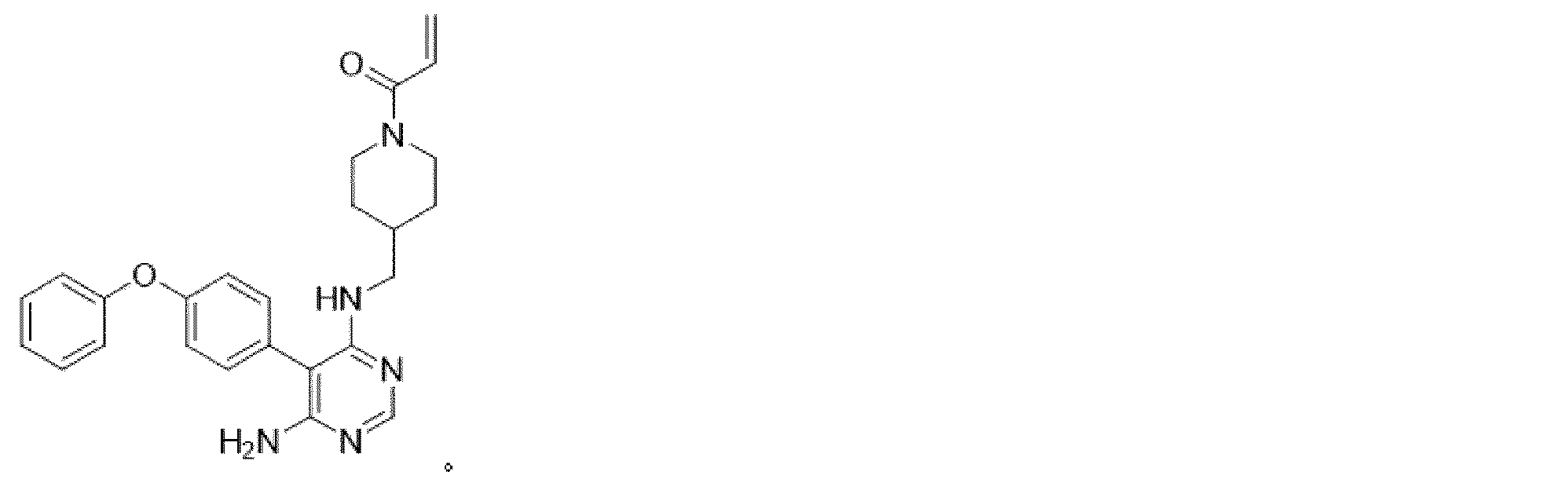
本化合物が、患者が食物を消費する時点近くで、患者へ経口投与される方法が、本明細書に提供される。加えて、本化合物が、患者が絶食した状態にある場合に、患者へ経口投与される方法が、本明細書に提供される。患者が食物を消費する時点近くで、患者へエボブルチニブを経口投与することは、エボブルチニブの生物学的利用能の著しい増大を生じ−このエボブルチニブの生物学的利用能の著しい増加は、患者へ減少した量のエボブルチニブを投与することができるという恩恵をもたらすことは、わかっている。この理由で、例えばエボブルチニブを含有する1回目の単位用量が、患者が午前中朝食を消費した時点で、患者へ投与され、且つエボブルチニブを含有する2回目単位用量が、患者が午後の夕食を消費する時点で、患者へ投与されるという投薬レジメンには利点があり得る。本治療的方法のこの特徴及び他の特徴は、以下により詳細に説明されている。 Provided herein are methods in which the compound is orally administered to a patient near the point in time when the patient consumes food. In addition, a method of oral administration of the compound to a patient when the patient is in a fasted state is provided herein. Oral administration of evobrutinib to the patient near the time the patient consumes food resulted in a significant increase in the bioavailability of the evobrutinib-this significant increase in the bioavailability of the evobrutinib decreased to the patient. It is known to bring the benefit of being able to administer an amount of evovultinib. For this reason, for example, a first unit dose containing evoburtinib is given to the patient when the patient consumes breakfast in the morning, and a second unit dose containing evoburtinib is used by the patient to consume the afternoon supper. At that point, the dosing regimen of being administered to the patient may have advantages. This feature and other features of this therapeutic method are described in more detail below.
従って、本発明の一つの態様は、式Iの化合物を約20mg〜約300mgの範囲の一日量で、又はその医薬として許容し得る塩を、それを必要とする患者へ経口投与することを含む、多発性硬化症を治療又は予防する方法を提供する。この一日量は、単回投与量(QD)、又は2回投与量(BID)などの反復用量として、投与されてよい。これらの用量は、1個又は複数の錠剤又はカプセル剤の形状で投与されてよい。この方法は、例えば、患者が直近に食物を消費したかどうか、例えば好ましくは患者は、単位製剤(複数可)を受け取る前1時間以内に、食物(例えば食事)を消費したかどうかに従い、更に特徴付けられてよい。 Accordingly, one aspect of the invention is to orally administer a compound of formula I in a daily dose in the range of about 20 mg to about 300 mg, or a pharmaceutically acceptable salt thereof to a patient in need thereof. Provided are methods for treating or preventing multiple sclerosis, including. This daily dose may be administered as a repetitive dose such as a single dose (QD) or a double dose (BID). These doses may be administered in the form of one or more tablets or capsules. This method is further dependent on, for example, whether the patient has recently consumed food, for example preferably the patient has consumed food (eg, meal) within 1 hour prior to receiving the unit formulation (s). May be characterized.
別の本発明の態様は、式Iの化合物を約25mg〜約150mgの範囲の一日量で、又はその医薬として許容し得る塩を、それを必要とする患者へ経口投与することを含む、多発性硬化症を治療又は予防する方法を提供する。この式Iの化合物又はその医薬として許容し得る塩は、式Iの化合物又はその医薬として許容し得る塩を含有する2個又はそれよりも多い単位製剤の形で、患者へ投与されてよい。特定の実施態様において、この単位製剤は、錠剤又はカプセル剤である。この方法は、例えば、好ましくは患者は、例えば1日1回用量であってよい、単位製剤(複数可)を受け取る前1時間以内に食物(例えば食事)を消費した場合など、患者が直近に食物を消費したかどうかに従い、更に特徴付けられてよい。 Another aspect of the invention comprises orally administering a compound of formula I in a daily dose ranging from about 25 mg to about 150 mg, or a pharmaceutically acceptable salt thereof, to a patient in need thereof. Provided is a method for treating or preventing multiple sclerosis. The compound of formula I or a pharmaceutically acceptable salt thereof may be administered to a patient in the form of two or more unit formulations containing the compound of formula I or a pharmaceutically acceptable salt thereof. In certain embodiments, the unit formulation is a tablet or capsule. This method, for example, preferably the patient may be in a once-daily dose, for example, if the patient consumes food (eg, meal) within 1 hour prior to receiving the unit formulation (s). It may be further characterized according to whether or not the food has been consumed.
別の本発明の態様は、式Iの化合物を約50mg〜約100mgの範囲の量で、又はその医薬として許容し得る塩を1日1回用量、それを必要とする患者へ経口投与することを含む、多発性硬化症を治療又は予防する方法を提供する。1日1回用量は、式Iの化合物又はその医薬として許容し得る塩を含有する2個又はそれよりも多い単位製剤の形で、患者へ投与されてよい。特定の実施態様において、1日1回用量は、式Iの化合物又はその医薬として許容し得る塩を含有する単独の単位製剤の形で、患者へ投与されてよい。特定の実施態様において、この単位製剤(複数可)は、錠剤又はカプセル剤である。この方法は、例えば、好ましくは患者は、1日1回用量を受け取る前1時間以内に、食物(例えば食事)を消費した場合など、患者が直近に食物を消費したかどうかに従い、更に特徴付けられてよい。この方法は、例えば、1日用量は、式Iの化合物の約75mg又はその医薬として許容し得る塩である場合など、式Iの化合物又はその医薬として許容し得る塩の1日用量の性質により、更に特徴付けられてよい。 Another aspect of the invention is to orally administer the compound of formula I in an amount ranging from about 50 mg to about 100 mg, or a pharmaceutically acceptable salt thereof once daily to a patient in need thereof. Provided are methods for treating or preventing multiple sclerosis, including. The once-daily dose may be administered to the patient in the form of two or more unit formulations containing the compound of formula I or a pharmaceutically acceptable salt thereof. In certain embodiments, the once-daily dose may be administered to the patient in the form of a single unit formulation containing a compound of formula I or a pharmaceutically acceptable salt thereof. In certain embodiments, the unit formulation (s) are tablets or capsules. This method is further characterized according to whether the patient has recently consumed food, for example, preferably if the patient has consumed food (eg, meal) within 1 hour prior to receiving the once-daily dose. May be done. This method depends on the nature of the daily dose of the compound of formula I or the pharmaceutically acceptable salt thereof, for example, where the daily dose is about 75 mg of the compound of formula I or a pharmaceutically acceptable salt thereof. , May be further characterized.
別の本発明の態様は、式Iの化合物を約25mg〜約50mgの範囲の量で、又はその医薬として許容し得る塩を含有する単位用量を、1日につき2回、それを必要とする患者へ経口投与することを含む、多発性硬化症を治療又は予防する方法を提供する。そのような単位用量の1日2回の投与は、午前の1回目の単位用量及び午後の2回目の単位用量の投与により、1日を通じた活性成分の血漿レベルの変動を減少するなどの、利点を提供することができる。この単位用量は、式Iの化合物又はその医薬として許容し得る塩を含有する2個又はそれよりも多い単位製剤の形で、患者へ投与されてよい。特定の実施態様において、この単位用量は、式Iの化合物又はその医薬として許容し得る塩を含有する単独の単位製剤の形で、患者へ投与されてよい。特定の実施態様において、この単位製剤(複数可)は、錠剤又はカプセル剤である。この方法は、例えば、好ましくは患者は、単位用量を受け取る前1時間以内に、食物(例えば食事)を消費した場合など、患者が直近に食物を消費したかどうかに従い、更に特徴付けられてよい。この方法はまた、例えば、単位用量は、式Iの化合物の約35mg又はその医薬として許容し得る塩を含む場合など、単位用量の性質により、更に特徴付けられてよい。 Another aspect of the invention requires a unit dose of the compound of formula I in an amount ranging from about 25 mg to about 50 mg, or containing a pharmaceutically acceptable salt thereof, twice daily. Provided are methods for treating or preventing multiple sclerosis, including oral administration to a patient. Twice-daily administration of such unit doses, such as reducing changes in plasma levels of the active ingredient throughout the day by administration of the first unit dose in the morning and the second unit dose in the afternoon. Benefits can be provided. This unit dose may be administered to the patient in the form of two or more unit formulations containing the compound of formula I or a pharmaceutically acceptable salt thereof. In certain embodiments, the unit dose may be administered to the patient in the form of a single unit formulation containing a compound of formula I or a pharmaceutically acceptable salt thereof. In certain embodiments, the unit formulation (s) are tablets or capsules. This method may be further characterized, depending on whether the patient has recently consumed food, for example, preferably if the patient has consumed food (eg, meal) within 1 hour prior to receiving the unit dose. .. The method may also be further characterized by the nature of the unit dose, for example if the unit dose comprises about 35 mg of a compound of formula I or a pharmaceutically acceptable salt thereof.
別の本発明の態様は、式Iの化合物を約45mgの量又はその医薬として許容し得る塩を含有する単位用量を1日2回、それを必要とする患者へ経口投与することを含み、ここで患者は、該投与の約1時間以内に食事を消費している、多発性硬化症を治療又は予防する方法を提供する。この単位用量は、例えば、錠剤又はカプセル剤の形であってよい。この方法は、該投与と患者が食事を消費する間の時間が近接していることで更に特徴付けられてよい。例えば特定の実施態様において、1回目の単位用量は、患者が朝食を消費した後1時間以内に患者へ投与され、且つ2回目単位用量は、患者が夕食を消費した後1時間以内に患者へ投与される。先に指摘したように、患者が食物を消費する時間に近接した患者へのエボブルチニブの経口投与は、エボブルチニブの生物学的利用能の著しい増加を生じること−エボブルチニブの生物学的利用能の著しい増加は、減少した量のエボブルチニブの患者への投与ができるという恩恵を提供することは認められている。 Another aspect of the invention comprises oral administration of a compound of formula I in an amount of about 45 mg or a unit dose containing a pharmaceutically acceptable salt thereof twice daily to a patient in need thereof. Here, the patient provides a method of treating or preventing multiple sclerosis, which consumes a meal within about 1 hour of the administration. This unit dose may be in the form of tablets or capsules, for example. This method may be further characterized by the close time between the administration and the patient consuming the meal. For example, in certain embodiments, the first unit dose is administered to the patient within 1 hour after the patient has consumed breakfast, and the second unit dose has been administered to the patient within 1 hour after the patient has consumed dinner. Be administered. As pointed out earlier, oral administration of evobrutinib to patients close to the time the patient consumes food results in a significant increase in the bioavailability of evobrutinib-a significant increase in the bioavailability of evobrutinib. Is recognized to provide the benefit of being able to administer reduced doses of evovultinib to patients.
図面の簡単な説明 A brief description of the drawing
詳細な説明
本発明は、好ましい投薬レジメンに従い、1−(4−(((6−アミノ−5−(4−フェノキシフェニル)ピリミジン−4−イル)アミノ)メチル)ピペリジン−1−イル)プロペ−2−エン−1−オン又はその医薬として許容し得る塩を使用する、多発性硬化症を治療及び予防するための、方法、組成物、及び医療用キットを提供する。本化合物は、優れた治療効果を達成するために選択された投薬量及び頻度で、患者へ経口投与される。多発性硬化症を治療又は予防するための一つの投薬レジメンは、本明細書規定の式Iの化合物を約20mg〜約300mgの範囲の一日量で、又はその医薬として許容し得る塩を、それを必要とする患者へ経口投与することを含む。多発性硬化症を治療又は予防するための別の投薬レジメンは、本明細書規定の式Iの化合物を約25mg〜約150mgの範囲の一日量で、又はその医薬として許容し得る塩を、それを必要とする患者へ経口投与することを含む。多発性硬化症を治療又は予防するための別の投薬レジメンは、本明細書記載の式Iの化合物を約50mg〜約100mgの範囲の量、又はその医薬として許容し得る塩を1日1回用量で、それを必要とする患者へ経口投与することを含む。多発性硬化症を治療又は予防するための更に別の投薬レジメンは、本明細書記載の式Iの化合物を約25mg〜約50mgの範囲の量で、又はその医薬として許容し得る塩を含有する単位用量を1日につき2回、それを必要とする患者へ経口投与することを含む。そのような単位用量の1日2回の投与は、午前に1回目の単位用量、及び午後に2回目の単位用量を投与することにより、1日を通じて活性成分の血漿レベルの変動を減少するなどの、利点を提供することができる。
Detailed Description The invention follows a 1-(((6-amino-5- (4-phenoxyphenyl) pyrimidin-4-yl) amino) methyl) piperidine-1-yl) prope according to a preferred dosing regimen. Provided are methods, compositions, and medical kits for treating and preventing multiple sclerosis using 2-en-1-one or a pharmaceutically acceptable salt thereof. The compound is orally administered to a patient at a dosage and frequency selected to achieve a superior therapeutic effect. One dosing regimen for treating or preventing multiple sclerosis is a daily dose of a compound of formula I as defined herein in the range of about 20 mg to about 300 mg, or a pharmaceutically acceptable salt thereof. Includes oral administration to patients in need of it. Another dosing regimen for treating or preventing multiple sclerosis is a daily dose of a compound of formula I as defined herein in the range of about 25 mg to about 150 mg, or a pharmaceutically acceptable salt thereof. Includes oral administration to patients in need of it. Another dosing regimen for treating or preventing multiple sclerosis is the compound of formula I described herein in an amount ranging from about 50 mg to about 100 mg, or a pharmaceutically acceptable salt thereof once daily. Dosing involves oral administration to patients in need of it. Yet another dosing regimen for treating or preventing multiple sclerosis contains a compound of formula I described herein in an amount ranging from about 25 mg to about 50 mg, or a pharmaceutically acceptable salt thereof. The unit dose comprises oral administration to patients in need of it twice daily. Twice-daily administration of such unit doses may reduce fluctuations in plasma levels of the active ingredient throughout the day by administering the first unit dose in the morning and the second unit dose in the afternoon. Can provide the benefits of.
多発性硬化症を治療又は予防するための更に別の投薬レジメンは、約45mgの量の本明細書記載の式Iの化合物又はその医薬として許容し得る塩を含有する単位用量を、1日2回、それを必要とする患者へ、経口投与することを含む。この方法が、医薬として許容し得る塩の形で式Iの化合物を提供する単位用量を利用する場合、この単位用量は、式Iの化合物45mgを提供するのに十分な式Iの医薬として許容し得る塩の量を含む。好ましくは、該投薬レジメンにおいて、1日2回投与される単位用量は、遊離塩基型で式Iの化合物を45mgの量含有する。 Yet another dosing regimen for treating or preventing multiple sclerosis is a unit dose containing an amount of about 45 mg of the compound of formula I described herein or a pharmaceutically acceptable salt thereof, 2 per day. Including oral administration to patients in need of it once. If this method utilizes a unit dose that provides a compound of formula I in the form of a pharmaceutically acceptable salt, this unit dose is acceptable as a pharmaceutical of formula I sufficient to provide 45 mg of the compound of formula I. Contains the amount of possible salt. Preferably, in the dosing regimen, the unit dose administered twice daily contains 45 mg of a compound of formula I in free base form.
本化合物が、患者が食物を消費する時点近くで、患者へ経口投与される方法が、本明細書に提供される。患者が食物を消費する時点近くでのエボブルチニブの患者への経口投与は、エボブルチニブの生物学的利用能の著しい増加を生じることは、わかっている。摂食状態下で患者へ投与した場合のエボブルチニブの生物学的利用能の著しい増加は、より少ない量のエボブルチニブを患者へ投与することができるという恩恵を提供する。この理由のために、例えば、エボブルチニブを含有する1回目の単位用量は、患者が午前に朝食を消費する時点で患者へ投薬され、及びエボブルチニブを含有する2回目単位用量は、患者が午後に夕食を消費する時点で患者へ投与されるという投薬レジメンには、恩恵が存在し得る。 Provided herein are methods in which the compound is orally administered to a patient near the point in time when the patient consumes food. It has been found that oral administration of evobrutinib to patients near the time the patient consumes food results in a significant increase in the bioavailability of evobrutinib. The significant increase in bioavailability of evobrutinib when administered to a patient under feeding conditions provides the benefit of being able to administer a smaller amount of evobrutinib to the patient. For this reason, for example, a first unit dose containing evoburtinib is administered to the patient at the time the patient consumes breakfast in the morning, and a second unit dose containing evoburtinib is for the patient to have dinner in the afternoon. There may be benefits to the dosing regimen of being administered to the patient at the time of consumption.
好ましくは、この多発性硬化症は、再発型多発性硬化症である。 Preferably, the multiple sclerosis is a recurrent multiple sclerosis.
本方法は、本明細書記載の実施態様に従い、更に特徴付けられてよい。本発明の様々な態様及び実施態様は、以下の節において示されるが;しかし、1つの特定のセクションにおいて説明される本発明の態様及び/又は実施態様は、任意の特定のセクションに限定されるものではない。 The method may be further characterized according to the embodiments described herein. Various aspects and embodiments of the invention are set forth in the following sections; however, the embodiments and / or embodiments of the invention described in one particular section are limited to any particular section. It's not a thing.
I.定義
本発明の理解を促進するために、数多くの用語及び語句が、以下に定義される。
I. Definitions To facilitate understanding of the invention, a number of terms and phrases are defined below.
本明細書において使用される用語「ある(a、an)」、及び「その(the)」は、「1又は複数」を意味し、且つその文脈が不適切でない限りは、複数を含む。 As used herein, the terms "a, an" and "the" mean "one or more" and include more than one, unless the context is inappropriate.
本明細書において使用される用語「エボブルチニブ」は、下記の化学構造を有する化合物を指す:
本明細書において使用される用語「患者」は、本発明の方法により治療される生物を指す。そのような生物は、好ましくは、哺乳動物(例えば、マウス、サル、ウマ科(ウマ)、ウシ科(畜牛)、ブタ、イヌ、ネコなど)を含むが、これらに限定されるものではなく、且つ最も好ましくはヒトを含む。 As used herein, the term "patient" refers to an organism treated by the methods of the invention. Such organisms preferably include, but are not limited to, mammals (eg, mice, monkeys, equine (horses), bovids (cattle), pigs, dogs, cats, etc.). And most preferably humans are included.
本明細書において使用される用語「治療する」は、病態、疾患、障害などの改善を生じる、例えば、低下する、減少する、調節する、改善する、又は取り除くなどの、何らかの効果を含む。 As used herein, the term "treat" includes any effect that results in amelioration of a condition, disease, disorder, etc., such as, for example, diminishing, diminishing, regulating, ameliorating, or eliminating.
本明細書において使用される用語「医薬組成物」は、1又は複数の活性成分、及び担体を構成する1又は複数の不活性成分、並びに2種又はそれよりも多い成分の組合せ、錯体形成又は凝集から、もしくは1種又は複数の成分の解離から、もしくは1種又は複数の成分の他の種類の反応又は相互作用から、直接又は間接に生じる任意の生成物を指す。従って本発明の医薬組成物は、本発明の化合物と医薬として許容し得る担体を混合することにより作製された任意の組成物を包含している。 As used herein, the term "pharmaceutical composition" refers to one or more active ingredients and one or more Inactive ingredients that make up a carrier, as well as a combination, complex formation or of two or more ingredients. Refers to any product that results directly or indirectly from aggregation, from the dissociation of one or more components, or from the reaction or interaction of other types of one or more components. Accordingly, the pharmaceutical composition of the present invention includes any composition prepared by mixing the compound of the present invention with a pharmaceutically acceptable carrier.
語句「医薬として許容し得る」は、理にかなった医学的判断の範囲内で、妥当なベネフィット/リスク比と見合った、過度の毒性、刺激、アレルギー反応、又は他の問題点もしくは合併症を伴わずに、ヒト及び動物の組織との接触使用に適している、それらの化合物、物質、組成物、及び/又は剤形を指すように、本明細書において使用される。 The phrase "medically acceptable" refers to excessive toxicity, irritation, allergic reactions, or other problems or complications that are commensurate with a reasonable benefit / risk ratio, within reasonable medical judgment. As used herein, it refers to compounds, substances, compositions, and / or dosage forms thereof that are suitable for contact use with human and animal tissues, without accompanying.
組成物及びキットが、特定の成分を有する、含むもしくは含有するとして説明されるか、又はプロセス及び方法が、特定の工程を有する、含むもしくは含有するとして説明される説明を通じて、加えて、列挙された成分から本質的になる、又はこれらからなる本発明の組成物及びキットが存在すること、並びに列挙された処理工程から本質的になる、又はこれらからなる本発明のプロセス及び方法が存在することが、企図される。 Compositions and kits are described as having, containing or containing specific ingredients, or processes and methods are additionally listed through description described as having, containing or containing specific steps. There is a composition and kit of the invention consisting essentially of or consisting of these components, and there is a process and method of the invention consisting essentially of or consisting of the listed treatment steps. However, it is planned.
本発明の化合物は、遊離塩基、医薬として許容し得る塩、溶媒和物、又は塩の溶媒和物の形で提供されてよい。特定の実施態様において、本発明の化合物は、医薬として許容し得る塩の形であってよい。用語「医薬として許容し得る塩」は、無機の塩基又は酸及び有機の塩基又は酸を含む、医薬として許容し得る無毒の塩基又は酸から調製された塩を指す。従って、1又は複数の酸性基を含む本発明の化合物は、例えば、アルカリ金属塩、アルカリ土類金属塩又はアンモニウム塩など、塩の形で存在することができ、且つ本発明に従い使用されることができる。そのような塩のより正確な例は、ナトリウム塩、カリウム塩、カルシウム塩、マグネシウム塩、又はアンモニアもしくは有機アミンとの塩、例えば、エチルアミン、エタノールアミン、トリエタノールアミンもしくはアミノ酸などとの塩を含む。1又は複数の塩基性基、すなわちプロトン化され得る基を含む本発明の化合物は、塩の形で存在することができ、且つ無機酸もしくは有機酸との付加塩の形で、本発明に従い使用されることができる。好適な酸の例は、塩化水素、臭化水素、リン酸、硫酸、硝酸、メタンスルホン酸、p−トルエンスルホン酸、ナフタレンジスルホン酸、シュウ酸、酢酸、酒石酸、乳酸、サリチル酸、安息香酸、ギ酸、プロピオン酸、ピバル酸、ジエチル酢酸、マロン酸、コハク酸、ピメリン酸、フマル酸、マレイン酸、リンゴ酸、スルファミン酸、フェニルプロピオン酸、グルコン酸、アスコルビン酸、イソニコチン酸、クエン酸、アジピン酸、及び当業者に公知の他の酸を含む。本発明はまた、低い生理的適合性のために、医薬品中の使用には直接は適していないが、例えば、化学反応のため又は医薬として許容し得る塩の調製のための中間体として使用することができる、本発明の化合物の全ての塩も含む。 The compounds of the invention may be provided in the form of free bases, pharmaceutically acceptable salts, solvates, or solvates of salts. In certain embodiments, the compounds of the invention may be in the form of pharmaceutically acceptable salts. The term "pharmaceutically acceptable salt" refers to a salt prepared from a pharmaceutically acceptable non-toxic base or acid, including an inorganic base or acid and an organic base or acid. Thus, compounds of the invention containing one or more acidic groups can exist in the form of salts, such as alkali metal salts, alkaline earth metal salts or ammonium salts, and are used in accordance with the present invention. Can be done. More accurate examples of such salts include salts with sodium salts, potassium salts, calcium salts, magnesium salts, or salts with ammonia or organic amines, such as ethylamine, ethanolamine, triethanolamine or amino acids. .. Compounds of the invention containing one or more basic groups, i.e. groups that can be protonated, can exist in the form of salts and are used in accordance with the present invention in the form of additional salts with inorganic or organic acids. Can be done. Examples of suitable acids are hydrogen chloride, hydrogen bromide, phosphoric acid, sulfuric acid, nitrate, methanesulfonic acid, p-toluenesulfonic acid, naphthalenedisulfonic acid, oxalic acid, acetic acid, tartaric acid, lactic acid, salicylic acid, benzoic acid, formic acid. , Propionic acid, pivalic acid, diethylacetic acid, malonic acid, succinic acid, pimelli acid, fumaric acid, maleic acid, malic acid, sulfamic acid, phenylpropionic acid, gluconic acid, ascorbic acid, isonicotic acid, citric acid, adipic acid , And other acids known to those of skill in the art. The present invention is also not directly suitable for use in pharmaceuticals due to its low physiological compatibility, but is also used, for example, as an intermediate for chemical reactions or for the preparation of pharmaceutically acceptable salts. Also included are all salts of the compounds of the invention which can be.
一般的な事項として、百分率を特定する組成物は、別に特定しない限りは、重量による。更に、定義により変数を伴わない場合、その変数の先行する定義が支配する。 As a general rule, the composition that specifies the percentage is by weight, unless otherwise specified. Furthermore, if the definition does not involve a variable, the preceding definition of that variable dominates.
II.治療的適用
本発明は、エボブルチニブ又はその医薬として許容し得る塩を使用し、多発性硬化症を治療又は予防する方法を提供する。これらの方法は、以下により詳細に説明される。
II. Therapeutic application The present invention provides a method for treating or preventing multiple sclerosis using evobultinib or a pharmaceutically acceptable salt thereof. These methods are described in more detail below.
第一の治療的方法
本発明の一態様は、多発性硬化症を治療又は予防する方法を提供する。この方法は、式Iの化合物を約20mg〜約300mgの範囲の一日量、又はその医薬として許容し得る塩を、それを必要とする患者へ経口投与することを含み、ここで式Iは、以下により表される:
この方法は、例えば、患者へ投与される式Iの化合物又はその医薬として許容し得る塩の量により更に特徴付けられてよい。例えば特定の実施態様において、患者は、式Iの化合物を約20mg〜約200mgの範囲の一日量、又はその医薬として許容し得る塩で経口投与される。特定の実施態様において、患者は、式Iの化合物を約30mg〜約300mgの範囲の一日量、又はその医薬として許容し得る塩で経口投与される。特定の実施態様において、患者は、式Iの化合物を約25mg〜約150mgの範囲の一日量、又はその医薬として許容し得る塩で経口投与される。特定の実施態様において、患者は、式Iの化合物を約85mg〜約95mgの範囲の一日量、又はその医薬として許容し得る塩で経口投与される。特定の実施態様において、患者は、式Iの化合物を約90mgの一日量、又はその医薬として許容し得る塩で経口投与される。特定の実施態様において、患者は、式Iの化合物を90mgの一日量、又はその医薬として許容し得る塩で経口投与される。特定の実施態様において、患者は、式Iの化合物を約90mgの一日量で経口投与される。特定の実施態様において、患者は、式Iの化合物を90mgの一日量で経口投与される。明瞭さのために、語句「式Iの化合物の約85mg〜約95mgの範囲の一日量又はその医薬として許容し得る塩」とは、式Iの化合物が、約85mg〜約95mgの範囲の量で投与されること、又は式Iの医薬として許容し得る塩の等量のモル量が患者へ投与されることを意味する。 The method may be further characterized, for example, by the amount of a compound of formula I or a pharmaceutically acceptable salt thereof administered to the patient. For example, in certain embodiments, the patient is orally administered the compound of formula I in a daily dose ranging from about 20 mg to about 200 mg, or a pharmaceutically acceptable salt thereof. In certain embodiments, the patient is orally administered the compound of formula I in a daily dose ranging from about 30 mg to about 300 mg, or a pharmaceutically acceptable salt thereof. In certain embodiments, the patient is orally administered the compound of formula I in a daily dose ranging from about 25 mg to about 150 mg, or a pharmaceutically acceptable salt thereof. In certain embodiments, the patient is orally administered the compound of formula I in a daily dose ranging from about 85 mg to about 95 mg, or a pharmaceutically acceptable salt thereof. In certain embodiments, the patient is orally administered the compound of formula I in a daily dose of about 90 mg, or a pharmaceutically acceptable salt thereof. In certain embodiments, the patient is orally administered the compound of formula I in 90 mg daily dose, or a pharmaceutically acceptable salt thereof. In certain embodiments, the patient is orally administered the compound of formula I in a daily dose of about 90 mg. In certain embodiments, the patient is orally administered the compound of formula I in a daily dose of 90 mg. For clarity, the phrase "daily dose of a compound of formula I in the range of about 85 mg to about 95 mg or a pharmaceutically acceptable salt thereof" means that the compound of formula I is in the range of about 85 mg to about 95 mg. It means that it is administered in an amount, or that an equal amount of molar amount of a pharmaceutically acceptable salt of Formula I is administered to the patient.
より具体的な態様において、本発明は、多発性硬化症を治療又は予防する方法を提供し、ここでこの方法は、式Iの化合物を約25mg〜約150mgの範囲の一日量、又はその医薬として許容し得る塩でそれを必要とする患者へ経口投与し、ここで式Iは、以下により表される:
本方法は、例えば、患者へ投与される式Iの化合物又はその医薬として許容し得る塩の量により更に特徴付けられてよい。例えば特定の実施態様において、患者は、式Iの化合物を約25mg〜約50mgの範囲の一日量、又はその医薬として許容し得る塩で経口投与される。特定の実施態様において、患者は、式Iの化合物を約50mg〜約75mgの範囲の一日量、又はその医薬として許容し得る塩で経口投与される。特定の実施態様において、患者は、式Iの化合物を約75mg〜約100mgの範囲の一日量、又はその医薬として許容し得る塩で経口投与される。特定の実施態様において、患者は、式Iの化合物を約100mg〜約125mgの範囲の一日量、又はその医薬として許容し得る塩で経口投与される。特定の実施態様において、患者は、式Iの化合物を約125mg〜約150mgの範囲の一日量、又はその医薬として許容し得る塩で経口投与される。 The method may be further characterized, for example, by the amount of a compound of formula I or a pharmaceutically acceptable salt thereof administered to the patient. For example, in certain embodiments, the patient is orally administered the compound of formula I in a daily dose ranging from about 25 mg to about 50 mg, or a pharmaceutically acceptable salt thereof. In certain embodiments, the patient is orally administered the compound of formula I in a daily dose ranging from about 50 mg to about 75 mg, or a pharmaceutically acceptable salt thereof. In certain embodiments, the patient is orally administered the compound of formula I in a daily dose ranging from about 75 mg to about 100 mg, or a pharmaceutically acceptable salt thereof. In certain embodiments, the patient is orally administered the compound of formula I in a daily dose ranging from about 100 mg to about 125 mg, or a pharmaceutically acceptable salt thereof. In certain embodiments, the patient is orally administered the compound of formula I in a daily dose ranging from about 125 mg to about 150 mg, or a pharmaceutically acceptable salt thereof.
更に別の実施態様では、患者は、式Iの化合物を約25mg〜約35mgの範囲の一日量、又はその医薬として許容し得る塩で経口投与される。更に別の実施態様では、患者は、式Iの化合物を約35mg〜約45mgの範囲の一日量、又はその医薬として許容し得る塩で経口投与される。更に別の実施態様では、患者は、式Iの化合物を約45mg〜約55mgの範囲の一日量、又はその医薬として許容し得る塩で経口投与される。更に別の実施態様では、患者は、式Iの化合物を約55mg〜約65mggの範囲の一日量、又はその医薬として許容し得る塩で経口投与される。更に別の実施態様では、患者は、式Iの化合物を約65mg〜約75mgの範囲の一日量、又はその医薬として許容し得る塩で経口投与される。更に別の実施態様では、患者は、式Iの化合物を約75mg〜約85mgの範囲の一日量、又はその医薬として許容し得る塩で経口投与される。更に別の実施態様では、患者は、式Iの化合物を約85mg〜約95mgの範囲の一日量、又はその医薬として許容し得る塩で経口投与される。更に別の実施態様では、患者は、式Iの化合物を約95mg〜約100mgの範囲の一日量、又はその医薬として許容し得る塩で経口投与される。更に別の実施態様では、患者は、式Iの化合物を約100mg〜約105mgの範囲の一日量、又はその医薬として許容し得る塩で経口投与される。更に別の実施態様では、患者は、式Iの化合物を約105mg〜約110mgの範囲の一日量、又はその医薬として許容し得る塩で経口投与される。更に別の実施態様では、患者は、式Iの化合物を約110mg〜約115mgの範囲の一日量、又はその医薬として許容し得る塩で経口投与される。更に別の実施態様では、患者は、式Iの化合物を約115mg〜約120mgの範囲の一日量、又はその医薬として許容し得る塩で経口投与される。更に別の実施態様では、患者は、式Iの化合物を約120mg〜約125mgの範囲の一日量、又はその医薬として許容し得る塩で経口投与される。更に別の実施態様では、患者は、式Iの化合物を約125mg〜約130mgの範囲の一日量、又はその医薬として許容し得る塩で経口投与される。更に別の実施態様では、患者は、式Iの化合物を約130mg〜約135mgの範囲の一日量、又はその医薬として許容し得る塩で経口投与される。更に別の実施態様では、患者は、式Iの化合物を約135mg〜約140mgの範囲の一日量、又はその医薬として許容し得る塩で経口投与される。更に別の実施態様では、患者は、式Iの化合物を約145mg〜約150mgの範囲の一日量、又はその医薬として許容し得る塩で経口投与される。特定の実施態様において、患者は、式Iの化合物を約50mg〜約100mgの範囲の一日量、又はその医薬として許容し得る塩で経口投与される。 In yet another embodiment, the patient is orally administered the compound of formula I in a daily dose ranging from about 25 mg to about 35 mg, or a pharmaceutically acceptable salt thereof. In yet another embodiment, the patient is orally administered the compound of formula I in a daily dose ranging from about 35 mg to about 45 mg, or a pharmaceutically acceptable salt thereof. In yet another embodiment, the patient is orally administered the compound of formula I in a daily dose ranging from about 45 mg to about 55 mg, or a pharmaceutically acceptable salt thereof. In yet another embodiment, the patient is orally administered the compound of formula I in a daily dose ranging from about 55 mg to about 65 mgg, or a pharmaceutically acceptable salt thereof. In yet another embodiment, the patient is orally administered the compound of formula I in a daily dose ranging from about 65 mg to about 75 mg, or a pharmaceutically acceptable salt thereof. In yet another embodiment, the patient is orally administered the compound of formula I in a daily dose ranging from about 75 mg to about 85 mg, or a pharmaceutically acceptable salt thereof. In yet another embodiment, the patient is orally administered the compound of formula I in a daily dose ranging from about 85 mg to about 95 mg, or a pharmaceutically acceptable salt thereof. In yet another embodiment, the patient is orally administered the compound of formula I in a daily dose ranging from about 95 mg to about 100 mg, or a pharmaceutically acceptable salt thereof. In yet another embodiment, the patient is orally administered the compound of formula I in a daily dose ranging from about 100 mg to about 105 mg, or a pharmaceutically acceptable salt thereof. In yet another embodiment, the patient is orally administered the compound of formula I in a daily dose ranging from about 105 mg to about 110 mg, or a pharmaceutically acceptable salt thereof. In yet another embodiment, the patient is orally administered the compound of formula I in a daily dose ranging from about 110 mg to about 115 mg, or a pharmaceutically acceptable salt thereof. In yet another embodiment, the patient is orally administered the compound of formula I in a daily dose ranging from about 115 mg to about 120 mg, or a pharmaceutically acceptable salt thereof. In yet another embodiment, the patient is orally administered the compound of formula I in a daily dose ranging from about 120 mg to about 125 mg, or a pharmaceutically acceptable salt thereof. In yet another embodiment, the patient is orally administered the compound of formula I in a daily dose ranging from about 125 mg to about 130 mg, or a pharmaceutically acceptable salt thereof. In yet another embodiment, the patient is orally administered the compound of formula I in a daily dose ranging from about 130 mg to about 135 mg, or a pharmaceutically acceptable salt thereof. In yet another embodiment, the patient is orally administered the compound of formula I in a daily dose ranging from about 135 mg to about 140 mg, or a pharmaceutically acceptable salt thereof. In yet another embodiment, the patient is orally administered the compound of formula I in a daily dose ranging from about 145 mg to about 150 mg, or a pharmaceutically acceptable salt thereof. In certain embodiments, the patient is orally administered the compound of formula I in a daily dose ranging from about 50 mg to about 100 mg, or a pharmaceutically acceptable salt thereof.
更に別の実施態様では、患者は、式Iの化合物を約50mg〜約150mgの範囲の一日量、又はその医薬として許容し得る塩で経口投与される。更に別の実施態様では、患者は、患者は、式Iの化合物を約90mgの一日量、又はその医薬として許容し得る塩で経口投与される。更に別の実施態様では、患者は、式Iの化合物を90mgの一日量、又はその医薬として許容し得る塩で経口投与される。特定の実施態様において、患者は、式Iの化合物を約90mgの一日量で経口投与される。特定の実施態様において、患者は、式Iの化合物を90mgの一日量で経口投与される。 In yet another embodiment, the patient is orally administered the compound of formula I in a daily dose ranging from about 50 mg to about 150 mg, or a pharmaceutically acceptable salt thereof. In yet another embodiment, the patient is orally administered the compound of formula I in a daily dose of about 90 mg, or a pharmaceutically acceptable salt thereof. In yet another embodiment, the patient is orally administered the compound of formula I in 90 mg daily dose, or a pharmaceutically acceptable salt thereof. In certain embodiments, the patient is orally administered the compound of formula I in a daily dose of about 90 mg. In certain embodiments, the patient is orally administered the compound of formula I in a daily dose of 90 mg.
本方法は、例えば、式Iの化合物又はその医薬として許容し得る塩を患者へ投与する1日あたりの回数により更に特徴付けられてよい。特定の実施態様において、式Iの化合物又はその医薬として許容し得る塩は、1日1回のみ投与される。特定の実施態様において、式Iの化合物又はその医薬として許容し得る塩は、1日2回投与される。 The method may be further characterized by, for example, the number of times per day a patient is administered a compound of formula I or a pharmaceutically acceptable salt thereof. In certain embodiments, the compound of formula I or a pharmaceutically acceptable salt thereof is administered only once daily. In certain embodiments, the compound of formula I or a pharmaceutically acceptable salt thereof is administered twice daily.
特定の実施態様において、患者は、1日2回単位用量が経口投与され、ここで各単位用量は、約45mgの量の式Iの化合物又はその医薬として許容し得る塩を含有する。特定の実施態様において、患者は、1日2回単位用量が経口投与され、ここで各単位用量は、45mgの量の式Iの化合物又はその医薬として許容し得る塩を含有する。特定の実施態様において、患者は、1日2回単位用量で経口投与され、ここで各単位用量は、約45mgの量の式Iの化合物を含有する。特定の実施態様において、患者は、1日2回単位用量で経口投与され、ここで各単位用量は、45mgの量の式Iの化合物を含有する。 In certain embodiments, the patient is orally administered in unit doses twice daily, where each unit dose comprises an amount of about 45 mg of a compound of Formula I or a pharmaceutically acceptable salt thereof. In certain embodiments, the patient is orally administered in unit doses twice daily, where each unit dose comprises a 45 mg amount of a compound of Formula I or a pharmaceutically acceptable salt thereof. In certain embodiments, the patient is orally administered in unit doses twice daily, where each unit dose contains an amount of about 45 mg of the compound of Formula I. In certain embodiments, the patient is orally administered in unit doses twice daily, where each unit dose contains 45 mg of a compound of Formula I.
式Iの化合物又はその医薬として許容し得る塩が、1日2回投与される特定の実施態様において、本方法は、1回目の投与と2回目の投与の間の期間により、更に特徴付けられてよい。例えば特定の実施態様において、1回目の投与と2回目の投与の間に、少なくとも4、5、6、7、8、9、10、11、12、13、又は14時間が存在する。特定の実施態様において、同じ日の患者への1回目の単位用量と2回目単位用量の投与の間には、少なくとも4時間が存在する。特定の実施態様において、同じ日の患者への1回目の単位用量と2回目単位用量の投与の間には、少なくとも5時間が存在する。特定の実施態様において、同じ日の患者への1回目の単位用量と2回目単位用量の投与の間には、少なくとも6時間が存在する。特定の実施態様において、同じ日の患者への1回目の単位用量と2回目単位用量の投与の間には、少なくとも7時間が存在する。特定の実施態様において、同じ日の患者への1回目の単位用量と2回目単位用量の投与の間には、少なくとも8時間が存在する。特定の実施態様において、同じ日の患者への1回目の単位用量と2回目単位用量の投与の間には、少なくとも9時間が存在する。特定の実施態様において、同じ日の患者への1回目の単位用量と2回目単位用量の投与の間には、少なくとも10時間が存在する。特定の実施態様において、同じ日の患者への1回目の単位用量と2回目単位用量の投与の間には、少なくとも11時間が存在する。特定の実施態様において、同じ日の患者への1回目の単位用量と2回目単位用量の投与の間には、少なくとも12時間が存在する。特定の実施態様において、1回目の投与と2回目の投与の間には、約4時間〜約14時間が存在する。特定の実施態様において、1回目の投与と2回目の投与の間には、約6時間〜約14時間が存在する。特定の実施態様において、1回目の投与と2回目の投与の間には、約6時間〜約8時間、約7時間〜約9時間、約8時間〜約10時間、約9時間〜約11時間、約10時間〜約12時間、約11時間〜約13時間、又は約12時間〜約14時間が存在する。 In certain embodiments in which the compound of formula I or a pharmaceutically acceptable salt thereof is administered twice daily, the method is further characterized by the period between the first and second doses. It's okay. For example, in certain embodiments, there is at least 4, 5, 6, 7, 8, 9, 10, 11, 12, 13, or 14 hours between the first and second doses. In certain embodiments, there is at least 4 hours between administration of the first and second unit doses to the patient on the same day. In certain embodiments, there is at least 5 hours between administration of the first and second unit doses to the patient on the same day. In certain embodiments, there is at least 6 hours between administration of the first and second unit doses to the patient on the same day. In certain embodiments, there is at least 7 hours between administration of the first and second unit doses to the patient on the same day. In certain embodiments, there is at least 8 hours between administration of the first and second unit doses to the patient on the same day. In certain embodiments, there is at least 9 hours between administration of the first and second unit doses to the patient on the same day. In certain embodiments, there is at least 10 hours between administration of the first and second unit doses to the patient on the same day. In certain embodiments, there is at least 11 hours between administration of the first and second unit doses to the patient on the same day. In certain embodiments, there is at least 12 hours between administration of the first and second unit doses to the patient on the same day. In certain embodiments, there is about 4 to about 14 hours between the first and second doses. In certain embodiments, there is about 6 to about 14 hours between the first and second doses. In certain embodiments, between the first and second doses, about 6 hours to about 8 hours, about 7 hours to about 9 hours, about 8 hours to about 10 hours, about 9 hours to about 11 hours. There are hours, about 10 hours to about 12 hours, about 11 hours to about 13 hours, or about 12 hours to about 14 hours.
本方法は、例えば、患者が式Iの化合物又はその医薬として許容し得る塩を受け取る時点に対し、患者が、食物を直近に消費するか、もしくは消費するであろうかどうかにより、更に特徴付けられてよい。例えば特定の実施態様において、患者は、本化合物(すなわち、式Iの化合物又はその医薬として許容し得る塩)を受け取る前に、直近に食物を消費している。特定の実施態様において、患者は、本化合物(すなわち、式Iの化合物又はその医薬として許容し得る塩)を受け取る前、1時間以内に食物を消費している。特定の実施態様において、患者は、本化合物(すなわち、式Iの化合物又はその医薬として許容し得る塩)を受け取る前に、直近に食物を消費していない。特定の実施態様において、患者は、本化合物(すなわち、式Iの化合物又はその医薬として許容し得る塩)を受け取る前、1時間以内に食物を消費していない。更に別の実施態様では、患者は、該化合物を受け取る1時間以内に食事を消費している。更に別の実施態様では、患者は、該化合物を受け取る30分以内に食事を消費している。更に別の実施態様では、この投与は、患者が食事を消費する時点で行われる。 The method is further characterized, for example, by whether the patient consumes or will consume food most recently, relative to the time when the patient receives the compound of formula I or a pharmaceutically acceptable salt thereof. It's okay. For example, in certain embodiments, the patient has recently consumed food prior to receiving the compound (ie, the compound of formula I or a pharmaceutically acceptable salt thereof). In certain embodiments, the patient consumes food within one hour prior to receiving the compound (ie, the compound of formula I or a pharmaceutically acceptable salt thereof). In certain embodiments, the patient has not recently consumed food prior to receiving the compound (ie, the compound of formula I or a pharmaceutically acceptable salt thereof). In certain embodiments, the patient has not consumed food within one hour prior to receiving the compound (ie, the compound of formula I or a pharmaceutically acceptable salt thereof). In yet another embodiment, the patient consumes the meal within 1 hour of receiving the compound. In yet another embodiment, the patient consumes the meal within 30 minutes of receiving the compound. In yet another embodiment, this administration is performed at the time the patient consumes the meal.
代わりに又は加えて、本方法は、式Iの化合物又はその医薬として許容し得る塩が患者へ投与される時点で、患者は、摂食状態にあるか又は絶食状態にあるかどうかにより、更に特徴付けられてよい。例えば特定の実施態様において、式Iの化合物又はその医薬として許容し得る塩が患者へ投与される時点で、患者は、摂食状態にある。特定の実施態様において、式Iの化合物又はその医薬として許容し得る塩が患者へ投与される時点で、患者は、絶食状態にある。 Alternatively or additionally, the method further depends on whether the patient is in a feeding or fasting state at the time the compound of formula I or a pharmaceutically acceptable salt thereof is administered to the patient. May be characterized. For example, in certain embodiments, the patient is in a feeding state at the time the compound of formula I or a pharmaceutically acceptable salt thereof is administered to the patient. In certain embodiments, the patient is in a fasting state at the time the compound of Formula I or a pharmaceutically acceptable salt thereof is administered to the patient.
より具体的な態様において、本発明は、多発性硬化症を治療又は予防する方法を提供し、ここでこの方法は、式Iの化合物を約30mg〜約300mgの範囲の量、又はその医薬として許容し得る塩の1日1回用量を、それを必要とする患者へ経口投与することを含み、ここで式Iの化合物又はその医薬として許容し得る塩が患者へ投与される時点で、患者は、絶食状態にある。 In a more specific embodiment, the invention provides a method of treating or preventing multiple sclerosis, wherein the method comprises a compound of formula I in an amount in the range of about 30 mg to about 300 mg, or as a pharmaceutical thereof. A once-daily dose of an acceptable salt comprises oral administration to a patient in need thereof, wherein the compound of formula I or a pharmaceutically acceptable salt thereof is administered to the patient at the time the patient is administered. Is in a fasting state.
より具体的な態様において、本発明は、多発性硬化症を治療又は予防する方法を提供し、ここでこの方法は、式Iの化合物を約20mg〜約200mgの範囲の量、又はその医薬として許容し得る塩の1日1回用量を、それを必要とする患者へ経口投与することを含み、ここで式Iの化合物又はその医薬として許容し得る塩が患者へ投与される時点で、患者は、摂食状態にある。 In a more specific embodiment, the invention provides a method of treating or preventing multiple sclerosis, wherein the method comprises a compound of formula I in an amount ranging from about 20 mg to about 200 mg, or as a pharmaceutical thereof. A once-daily dose of an acceptable salt comprises oral administration to a patient in need thereof, wherein the compound of formula I or a pharmaceutically acceptable salt thereof is administered to the patient at the time of administration to the patient. Is in a feeding state.
本発明の別の態様は、多発性硬化症を治療又は予防する方法を提供し、ここでこの方法は、式Iの化合物を約15mg〜約150mgの範囲の量、又はその医薬として許容し得る塩を含有する単位用量を1日2回、それを必要とする患者へ経口投与することを含み、ここで式Iの化合物又はその医薬として許容し得る塩が患者へ投与される時点で、患者は、絶食状態にある。 Another aspect of the invention provides a method of treating or preventing multiple sclerosis, wherein the method is acceptable as an amount of a compound of formula I in the range of about 15 mg to about 150 mg, or pharmaceutically thereof. A unit dose containing a salt comprises oral administration to a patient in need thereof twice daily, wherein the compound of formula I or a pharmaceutically acceptable salt thereof is administered to the patient at the time of administration to the patient. Is in a fasting state.
本発明の別の態様は、多発性硬化症を治療又は予防する方法を提供し、ここでこの方法は、式Iの化合物を約10mg〜約100mgの範囲の量、又はその医薬として許容し得る塩を含有する単位用量を1日2回、それを必要とする患者へ経口投与することを含み、ここで式Iの化合物又はその医薬として許容し得る塩が患者へ投与される時点で、患者は、摂食状態にある。そのような単位用量の1日2回投与は、午前に1回目の単位用量及び午後に2回目の単位用量を投与することにより、一日を通じた活性成分の血漿レベルの変動を減少するなどの利点を提供することができる。患者の起床後午前中に1回目の単位用量を投与し、且つその後患者の就寝前の午後に2回目の単位用量を投与することは、患者の服薬順守を促進するための手順上の望ましさがある。 Another aspect of the invention provides a method of treating or preventing multiple sclerosis, wherein the method is acceptable as an amount of a compound of formula I in the range of about 10 mg to about 100 mg, or pharmaceutically thereof. A unit dose containing a salt comprises oral administration to a patient in need thereof twice daily, wherein the compound of formula I or a pharmaceutically acceptable salt thereof is administered to the patient at the time of administration to the patient. Is in a feeding state. Twice-daily administration of such unit doses may reduce changes in plasma levels of the active ingredient throughout the day by administering the first unit dose in the morning and the second unit dose in the afternoon. Benefits can be provided. Administering the first unit dose in the morning after waking up of the patient and then the second unit dose in the afternoon before bedtime of the patient is procedurally desirable to promote patient compliance. There is.
第二の治療的方法
本発明の一態様は、多発性硬化症を治療又は予防する方法を提供する。この方法は、式Iの化合物の約50mg〜約100mgの範囲の量、又はその医薬として許容し得る塩の1日1回用量を、それを必要とする患者へ経口投与することを含み、ここで式Iは、以下により表される:
本方法は、例えば、1日1回用量が、単独の単位製剤として又は2個以上の単位製剤として、患者へ投与されるかどうかにより、更に特徴づけられてよい。特定の実施態様において、1日1回用量は、式Iの化合物又はその医薬として許容し得る塩を含有する単独の単位製剤の形で患者へ投与される。特定の実施態様において、1日1回用量は、式Iの化合物又はその医薬として許容し得る塩を含有する2個以上の単位製剤の形で患者へ投与される。特定の実施態様において、1日1回用量は、式Iの化合物又はその医薬として許容し得る塩を含有する3個の単位製剤の形で患者へ投与される。特定の実施態様において、1日1回用量は、各々約25mgの量の式Iの化合物を含有する3個の単位製剤の形で患者へ投与される。特定の実施態様において、1日1回用量は、各々25mgの量の式Iの化合物を含有する3個の単位製剤の形で患者へ投与される。 The method may be further characterized, for example, by whether the once-daily dose is administered to the patient as a single unit formulation or as two or more unit formulations. In certain embodiments, the once-daily dose is administered to the patient in the form of a single unit formulation containing a compound of formula I or a pharmaceutically acceptable salt thereof. In certain embodiments, the once-daily dose is administered to the patient in the form of two or more unit formulations containing the compound of formula I or a pharmaceutically acceptable salt thereof. In certain embodiments, the once-daily dose is administered to the patient in the form of three unit formulations containing the compound of formula I or a pharmaceutically acceptable salt thereof. In certain embodiments, the once-daily dose is administered to the patient in the form of three unit formulations containing a compound of formula I in an amount of about 25 mg each. In certain embodiments, the once-daily dose is administered to the patient in the form of three unit formulations containing a compound of formula I in an amount of 25 mg each.
本方法は、例えば、単位製剤(複数可)の性質により、更に特徴付けられてよい。特定の実施態様において、単位製剤(複数可)は、錠剤又はカプセル剤である。 The method may be further characterized, for example, by the nature of the unit formulation (s). In certain embodiments, the unit formulation (s) are tablets or capsules.
本方法は、例えば1日1回用量が、(i)式Iの化合物、又は(ii)式Iの化合物の医薬として許容し得る塩を含有するかどうかにより、更に特徴付けられてよい。特定の実施態様において、1日1回用量は、式Iの化合物の約75mgである。更に別の実施態様では、1日1回用量は、式Iの化合物の75mgである。特定の実施態様において、1日1回用量は、式Iの化合物の約100mgである。更に別の実施態様では、1日1回用量は、式Iの化合物の100mgである。 The method may be further characterized, for example, by whether the once-daily dose contains a pharmaceutically acceptable salt of the compound of formula (i) I or the compound of formula (ii) I. In certain embodiments, the once-daily dose is about 75 mg of the compound of formula I. In yet another embodiment, the once-daily dose is 75 mg of the compound of formula I. In certain embodiments, the once-daily dose is about 100 mg of the compound of formula I. In yet another embodiment, the once-daily dose is 100 mg of the compound of formula I.
本方法は、例えば、1日1回用量が患者へ投与される1日の時刻により、更に特徴付けられてよい。特定の実施態様において、1日1回用量は、午前中に患者へ投与される。 The method may be further characterized, for example, by the time of day when the once-daily dose is administered to the patient. In certain embodiments, the once-daily dose is administered to the patient in the morning.
本方法は、患者が1日1回用量を受け取る時点に対し、患者が、食物を直近に消費するか、もしくは消費するであろうかどうかにより、更に特徴付けられてよい。特定の実施態様において、患者は、1日1回用量を受け取る前、2時間以内に食物を消費している。特定の実施態様において、患者は、1日1回用量を受け取る前、1時間以内に食物を消費している。特定の実施態様において、患者は、1日1回用量を受け取る前、30分以内に食物を消費している。 The method may be further characterized by whether the patient consumes or will consume food most recently relative to the time at which the patient receives the once-daily dose. In certain embodiments, the patient consumes food within 2 hours prior to receiving the once-daily dose. In certain embodiments, the patient consumes food within an hour before receiving the once-daily dose. In certain embodiments, the patient consumes food within 30 minutes before receiving the once-daily dose.
本方法は、例えば、患者が1日1回用量を受け取る連続日の数により、更に特徴付けられてよい。例えば特定の実施態様において、患者は、少なくとも2週間の期間にわたり、1日1回用量を受け取る。特定の実施態様において、患者は、少なくとも1ヶ月の期間にわたり、1日1回用量を受け取る。特定の実施態様において、患者は、少なくとも2ヶ月、3ヶ月、4ヶ月、又は5ヶ月の期間にわたり、1日1回用量を受け取る。特定の実施態様において、患者は、少なくとも6ヶ月の期間にわたり、1日1回用量を受け取る。 The method may be further characterized, for example, by the number of consecutive days in which the patient receives the dose once daily. For example, in certain embodiments, the patient receives a once-daily dose over a period of at least 2 weeks. In certain embodiments, the patient receives a daily dose for a period of at least one month. In certain embodiments, the patient receives a once-daily dose over a period of at least 2 months, 3 months, 4 months, or 5 months. In certain embodiments, the patient receives a daily dose for a period of at least 6 months.
第三の治療的方法
本発明の一態様は、多発性硬化症を治療又は予防する方法を提供する。この方法は、式Iの化合物の約25mg〜約50mgの範囲の量又はその医薬として許容し得る塩を含有する単位用量を1日2回、それを必要とする患者へ経口投与することを含み、ここで式Iは、下記式により表される:
そのような単位用量の1日2回投与は、午前に1回目の単位用量及び午後に2回目の単位用量を投与することにより、一日を通じた活性成分の血漿レベルの変動を減少するなどの利点を提供することができる。患者の起床後午前中に1回目の単位用量を投与し、且つその後患者の就寝前の午後に2回目の単位用量を投与することは、患者の服薬順守を促進するための手順上の望ましさがある。 Twice-daily administration of such unit doses may reduce changes in plasma levels of the active ingredient throughout the day by administering the first unit dose in the morning and the second unit dose in the afternoon. Benefits can be provided. Administering the first unit dose in the morning after waking up of the patient and then the second unit dose in the afternoon before bedtime of the patient is procedurally desirable to promote patient compliance. There is.
本方法は、例えば、単位用量が、単独の単位製剤又は2個以上の単位製剤として患者へ投与されることにより、更に特徴付けられてよい。特定の実施態様において、単位用量は、式Iの化合物又はその医薬として許容し得る塩を含有する2個以上の単位製剤の形で患者へ投与される。特定の実施態様において、単位用量は、式Iの化合物又はその医薬として許容し得る塩を含有する2個の単位製剤の形で患者へ投与される。特定の実施態様において、単位用量は、式Iの化合物又はその医薬として許容し得る塩を含有する単独の単位製剤の形で患者へ投与される。 The method may be further characterized, for example, by administering the unit dose to the patient as a single unit formulation or two or more unit formulations. In certain embodiments, the unit dose is administered to the patient in the form of two or more unit formulations containing the compound of formula I or a pharmaceutically acceptable salt thereof. In certain embodiments, the unit dose is administered to the patient in the form of two unit formulations containing a compound of formula I or a pharmaceutically acceptable salt thereof. In certain embodiments, the unit dose is administered to the patient in the form of a single unit formulation containing a compound of formula I or a pharmaceutically acceptable salt thereof.
本方法は、例えば、単位製剤(複数可)の性質により、更に特徴付けられてよい。特定の実施態様において、単位製剤(複数可)は、錠剤又はカプセル剤である。 The method may be further characterized, for example, by the nature of the unit formulation (s). In certain embodiments, the unit formulation (s) are tablets or capsules.
本方法は、例えば、単位用量中の式Iの化合物の量により、更に特徴付けられてよい。特定の実施態様において、単位用量は、約35mgの式Iの化合物を含有する。特定の実施態様において、単位用量は、35mgの式Iの化合物を含有する。特定の実施態様において、単位用量は、約45mgの式Iの化合物を含有する。特定の実施態様において、単位用量は、45mgの式Iの化合物を含有する。 The method may be further characterized, for example, by the amount of compound of formula I in a unit dose. In certain embodiments, the unit dose contains about 35 mg of a compound of formula I. In certain embodiments, the unit dose comprises 35 mg of a compound of formula I. In certain embodiments, the unit dose contains about 45 mg of a compound of formula I. In certain embodiments, the unit dose comprises 45 mg of a compound of formula I.
本方法は、例えば、同じ日の患者への1回目の単位用量の投与と、患者への2回目の単位用量の投与の間の期間により、更に特徴付けられてよい。特定の実施態様において、同じ日の患者への1回目の単位用量と2回目単位用量の投与の間には、少なくとも4時間が存在する。特定の実施態様において、同じ日の患者への1回目の単位用量と2回目単位用量の投与の間には、少なくとも5時間が存在する。特定の実施態様において、同じ日の患者への1回目の単位用量と2回目単位用量の投与の間には、少なくとも6時間が存在する。特定の実施態様において、同じ日の患者への1回目の単位用量と2回目単位用量の投与の間には、少なくとも7時間が存在する。特定の実施態様において、同じ日の患者への1回目の単位用量と2回目単位用量の投与の間には、少なくとも8時間が存在する。特定の実施態様において、同じ日の患者への1回目の単位用量と2回目単位用量の投与の間には、少なくとも9時間が存在する。特定の実施態様において、同じ日の患者への1回目の単位用量と2回目単位用量の投与の間には、少なくとも10時間が存在する。特定の実施態様において、同じ日の患者への1回目の単位用量と2回目単位用量の投与の間には、少なくとも11時間が存在する。特定の実施態様において、同じ日の患者への1回目の単位用量と2回目単位用量の投与の間には、少なくとも12時間が存在する。特定の実施態様において、同じ日の患者への1回目の単位用量と2回目単位用量の投与の間には、約4時間〜約14時間が存在する。特定の実施態様において、同じ日の患者への1回目の単位用量と2回目単位用量の投与の間には、約6時間〜約14時間が存在する。特定の実施態様において、同じ日の患者への1回目の単位用量と2回目単位用量の投与の間には、約6時間〜約8時間が存在する。特定の実施態様において、同じ日の患者への1回目の単位用量と2回目単位用量の投与の間には、約7時間〜約9時間が存在する。特定の実施態様において、同じ日の患者への1回目の単位用量と2回目単位用量の投与の間には、約8時間〜約10時間が存在する。特定の実施態様において、同じ日の患者への1回目の単位用量と2回目単位用量の投与の間には、約9時間〜約11時間が存在する。特定の実施態様において、同じ日の患者への1回目の単位用量と2回目単位用量の投与の間には、約10時間〜約12時間が存在する。特定の実施態様において、同じ日の患者への1回目の単位用量と2回目単位用量の投与の間には、約11時間〜約13時間が存在する。特定の実施態様において、同じ日の患者への1回目の単位用量と2回目単位用量の投与の間には、約12時間〜約14時間が存在する。特定の他の実施態様において、同じ日の患者への1回目の単位用量と2回目単位用量の投与の間には、約4、5、6、7、8、9、10、11、12、13、又は14時間が存在する。 The method may be further characterized by, for example, the period between administration of the first unit dose to the patient on the same day and administration of the second unit dose to the patient. In certain embodiments, there is at least 4 hours between administration of the first and second unit doses to the patient on the same day. In certain embodiments, there is at least 5 hours between administration of the first and second unit doses to the patient on the same day. In certain embodiments, there is at least 6 hours between administration of the first and second unit doses to the patient on the same day. In certain embodiments, there is at least 7 hours between administration of the first and second unit doses to the patient on the same day. In certain embodiments, there is at least 8 hours between administration of the first and second unit doses to the patient on the same day. In certain embodiments, there is at least 9 hours between administration of the first and second unit doses to the patient on the same day. In certain embodiments, there is at least 10 hours between administration of the first and second unit doses to the patient on the same day. In certain embodiments, there is at least 11 hours between administration of the first and second unit doses to the patient on the same day. In certain embodiments, there is at least 12 hours between administration of the first and second unit doses to the patient on the same day. In certain embodiments, there is about 4 to about 14 hours between administration of the first and second unit doses to the patient on the same day. In certain embodiments, there is about 6 to about 14 hours between administration of the first and second unit doses to the patient on the same day. In certain embodiments, there is about 6 to about 8 hours between administration of the first and second unit doses to the patient on the same day. In certain embodiments, there is about 7 to about 9 hours between administration of the first and second unit doses to the patient on the same day. In certain embodiments, there is about 8 to about 10 hours between administration of the first and second unit doses to the patient on the same day. In certain embodiments, there is about 9 hours to about 11 hours between administration of the first and second unit doses to the patient on the same day. In certain embodiments, there is about 10 to about 12 hours between administration of the first and second unit doses to the patient on the same day. In certain embodiments, there is about 11 to about 13 hours between administration of the first and second unit doses to the patient on the same day. In certain embodiments, there is about 12 to about 14 hours between administration of the first and second unit doses to the patient on the same day. In certain other embodiments, between administration of the first and second unit doses to a patient on the same day, approximately 4, 5, 6, 7, 8, 9, 10, 11, 12, ,. There are 13 or 14 hours.
本方法は、例えば、単位用量が患者へ投与される一日の時刻により、更に特徴付けられてよい。特定の実施態様において、1回目の単位用量は、午前中に患者へ投与され、且つ2回目の単位用量は、午後に患者へ投与される。 The method may be further characterized, for example, by the time of day when the unit dose is administered to the patient. In certain embodiments, the first unit dose is administered to the patient in the morning and the second unit dose is administered to the patient in the afternoon.
本方法は、患者が単位用量を受け取る時点に対し、患者が、食物を直近に消費したか、もしくは消費するであろうかどうかにより、更に特徴付けられてよい。特定の実施態様において、患者は、単位用量を受け取る前、2時間以内に食物を消費している。特定の実施態様において、患者は、単位用量を受け取る前、1時間以内に食物を消費している。特定の実施態様において、患者は、単位用量を受け取る前、30分以内に食物を消費している。 The method may be further characterized by whether the patient has recently consumed or will consume food relative to the time the patient receives the unit dose. In certain embodiments, the patient consumes food within 2 hours prior to receiving the unit dose. In certain embodiments, the patient consumes food within an hour prior to receiving the unit dose. In certain embodiments, the patient consumes food within 30 minutes prior to receiving the unit dose.
本方法は、例えば、患者が1日1回用量を受け取る連続日の数により、更に特徴付けられてよい。例えば特定の実施態様において、患者は、単位用量を少なくとも2週間の期間1日2回受け取る。特定の実施態様において、患者は、単位用量を少なくとも1ヶ月の期間1日2回受け取る。特定の実施態様において、患者は、単位用量を少なくとも6ヶ月の期間1日2回受け取る。 The method may be further characterized, for example, by the number of consecutive days in which the patient receives the dose once daily. For example, in certain embodiments, the patient receives the unit dose twice daily for a period of at least 2 weeks. In certain embodiments, the patient receives the unit dose twice daily for a period of at least one month. In certain embodiments, the patient receives the unit dose twice daily for a period of at least 6 months.
第四の治療的方法
本発明の一態様は、多発性硬化症を治療又は予防する方法を提供し、ここでこの方法は、式Iの化合物の約20mg〜約300mgの範囲の一日量又はその医薬として許容し得る塩を、それを必要とする患者へ経口投与することを含み、ここで患者は、摂食状態又は絶食状態にあり、且つ式Iは、下記式により表される:
本方法は、式Iの化合物が患者へ投与される時点で、患者は摂食状態又は絶食状態であるかどうかにより、更に特徴付けられてよい。例えば特定の実施態様において、患者は、摂食状態にある。特定の他の実施態様において、患者は、絶食状態にある。本方法は、例えば、患者が、食物を直近に消費したか、もしくは消費するであろうかどうかにより、更に特徴付けられてよい。特定の実施態様において、患者は、式Iの化合物又はその医薬として許容し得る塩を受け取る前、2時間以内に食物を消費している。特定の実施態様において、患者は、式I又はその医薬として許容し得る塩を受け取る前、1時間以内に食物を消費している。特定の実施態様において、患者は、式I又はその医薬として許容し得る塩を受け取る前、30分以内に食物を消費している。 The method may be further characterized by whether the patient is in a feeding or fasting state at the time the compound of formula I is administered to the patient. For example, in certain embodiments, the patient is in a feeding state. In certain other embodiments, the patient is in a fasting state. The method may be further characterized, for example, by whether the patient has recently consumed or will consume food. In certain embodiments, the patient consumes food within 2 hours prior to receiving the compound of formula I or a pharmaceutically acceptable salt thereof. In certain embodiments, the patient consumes food within one hour prior to receiving Formula I or a pharmaceutically acceptable salt thereof. In certain embodiments, the patient consumes food within 30 minutes prior to receiving Formula I or a pharmaceutically acceptable salt thereof.
本方法は、例えば、患者へ投与される式Iの化合物又はその医薬として許容し得る塩の量により、更に特徴付けられてよい。例えば特定の実施態様において、患者は、式Iの化合物の約20mg〜約200mgの範囲の一日量又はその医薬として許容し得る塩が経口投与される。特定の実施態様において、患者は、式Iの化合物の約30mg〜約300mgの範囲の一日量又はその医薬として許容し得る塩が経口投与される。特定の実施態様において、患者は、式Iの化合物の約25mg〜約150mgの範囲の一日量又はその医薬として許容し得る塩が経口投与される。特定の実施態様において、患者は、式Iの化合物の約85mg〜約95mgの範囲の一日量又はその医薬として許容し得る塩が経口投与される。特定の実施態様において、患者は、式Iの化合物の約90mgの一日量又はその医薬として許容し得る塩が経口投与される。特定の実施態様において、患者は、式Iの化合物の約90mgの一日量が経口投与される。 The method may be further characterized by, for example, the amount of a compound of formula I or a pharmaceutically acceptable salt thereof administered to the patient. For example, in certain embodiments, the patient is orally administered with a daily dose in the range of about 20 mg to about 200 mg of the compound of formula I or a pharmaceutically acceptable salt thereof. In certain embodiments, the patient is orally administered with a daily dose in the range of about 30 mg to about 300 mg of the compound of formula I or a pharmaceutically acceptable salt thereof. In certain embodiments, the patient is orally administered with a daily dose in the range of about 25 mg to about 150 mg of the compound of formula I or a pharmaceutically acceptable salt thereof. In certain embodiments, the patient is orally administered with a daily dose in the range of about 85 mg to about 95 mg of the compound of formula I or a pharmaceutically acceptable salt thereof. In certain embodiments, the patient is orally administered with a daily dose of about 90 mg of the compound of formula I or a pharmaceutically acceptable salt thereof. In certain embodiments, the patient is orally administered with a daily dose of about 90 mg of the compound of formula I.
本発明のより具体的な態様は、多発性硬化症を治療又は予防する方法を提供し、ここでこの方法は、式Iの化合物を約45mgの量又はその医薬として許容し得る塩を含有する単位用量を、1日2回、それを必要とする患者へ経口投与することを含み、ここで患者は、摂食状態にあり、且つ式Iは、下記式により表される:
本方法は、例えば、単位用量中の式Iの化合物の量により、更に特徴付けられてよい。特定の実施態様において、単位用量は、式Iの化合物約45mgを含有する。特定の実施態様において、単位用量は、式Iの化合物45mgを含有する。 The method may be further characterized, for example, by the amount of compound of formula I in a unit dose. In certain embodiments, the unit dose comprises about 45 mg of a compound of formula I. In certain embodiments, the unit dose comprises 45 mg of a compound of formula I.
別の本発明のより具体的な態様は、多発性硬化症を治療又は予防する方法を提供し、ここでこの方法は、式Iの化合物を約45mgの量又はその医薬として許容し得る塩を含有する単位用量を、1日2回、それを必要とする患者へ経口投与することを含み、ここで患者は、該投与の約1時間以内に食事を消費し、且つ式Iは、下記式により表される:
本方法は、例えば、単位用量中の式Iの化合物の量により、更に特徴付けられてよい。特定の実施態様において、単位用量は、式Iの化合物約45mgを含有する。特定の実施態様において、単位用量は、式Iの化合物45mgを含有する。 The method may be further characterized, for example, by the amount of compound of formula I in a unit dose. In certain embodiments, the unit dose comprises about 45 mg of a compound of formula I. In certain embodiments, the unit dose comprises 45 mg of a compound of formula I.
本方法は、例えば、単位用量が、単独の単位製剤又は2個以上の単位製剤として患者へ投与される実施態様により、更に特徴付けられてよい。特定の実施態様において、単位用量は、式Iの化合物又はその医薬として許容し得る塩を含有する1個以上の単位製剤の形で、患者へ投与される。特定の実施態様において、単位用量は、式Iの化合物又はその医薬として許容し得る塩を含有する2個以上の単位製剤の形で、患者へ投与される。特定の実施態様において、単位用量は、式Iの化合物又はその医薬として許容し得る塩を含有する単独の単位製剤の形で、患者へ投与される。特定の実施態様において、単位製剤(複数可)は、錠剤又はカプセル剤である。 The method may be further characterized, for example, by an embodiment in which the unit dose is administered to the patient as a single unit formulation or two or more unit formulations. In certain embodiments, the unit dose is administered to the patient in the form of one or more unit formulations containing a compound of formula I or a pharmaceutically acceptable salt thereof. In certain embodiments, the unit dose is administered to the patient in the form of two or more unit formulations containing the compound of formula I or a pharmaceutically acceptable salt thereof. In certain embodiments, the unit dose is administered to the patient in the form of a single unit formulation containing a compound of formula I or a pharmaceutically acceptable salt thereof. In certain embodiments, the unit formulation (s) are tablets or capsules.
本方法は、例えば、同じ日の患者への1回目の単位用量の投与と、患者への2回目の単位用量の投与の間の期間により、更に特徴付けられてよい。特定の実施態様において、同じ日の患者への1回目の単位用量と2回目単位用量の投与の間には、少なくとも4時間が存在する。特定の実施態様において、同じ日の患者への1回目の単位用量と2回目単位用量の投与の間には、少なくとも5時間が存在する。特定の実施態様において、同じ日の患者への1回目の単位用量と2回目単位用量の投与の間には、少なくとも6時間が存在する。特定の実施態様において、同じ日の患者への1回目の単位用量と2回目単位用量の投与の間には、少なくとも7時間が存在する。特定の実施態様において、同じ日の患者への1回目の単位用量と2回目単位用量の投与の間には、少なくとも8時間が存在する。特定の実施態様において、同じ日の患者への1回目の単位用量と2回目単位用量の投与の間には、少なくとも9時間が存在する。特定の実施態様において、同じ日の患者への1回目の単位用量と2回目単位用量の投与の間には、少なくとも10時間が存在する。特定の実施態様において、同じ日の患者への1回目の単位用量と2回目単位用量の投与の間には、少なくとも11時間が存在する。特定の実施態様において、同じ日の患者への1回目の単位用量と2回目単位用量の投与の間には、少なくとも12時間が存在する。特定の実施態様において、同じ日の患者への1回目の単位用量と2回目単位用量の投与の間には、約4時間〜約14時間が存在する。特定の実施態様において、同じ日の患者への1回目の単位用量と2回目単位用量の投与の間には、約6時間〜約14時間が存在する。特定の実施態様において、同じ日の患者への1回目の単位用量と2回目単位用量の投与の間には、約6時間〜約8時間が存在する。特定の実施態様において、同じ日の患者への1回目の単位用量と2回目単位用量の投与の間には、約7時間〜約9時間が存在する。特定の実施態様において、同じ日の患者への1回目の単位用量と2回目単位用量の投与の間には、約8時間〜約10時間が存在する。特定の実施態様において、同じ日の患者への1回目の単位用量と2回目単位用量の投与の間には、約9時間〜約11時間が存在する。特定の実施態様において、同じ日の患者への1回目の単位用量と2回目単位用量の投与の間には、約10時間〜約12時間が存在する。特定の実施態様において、同じ日の患者への1回目の単位用量と2回目単位用量の投与の間には、約11時間〜約13時間が存在する。特定の実施態様において、同じ日の患者への1回目の単位用量と2回目単位用量の投与の間には、約12時間〜約14時間が存在する。特定の他の実施態様において、同じ日の患者への1回目の単位用量と2回目単位用量の投与の間には、約4、5、6、7、8、9、10、11、12、13、又は14時間が存在する。 The method may be further characterized by, for example, the period between administration of the first unit dose to the patient on the same day and administration of the second unit dose to the patient. In certain embodiments, there is at least 4 hours between administration of the first and second unit doses to the patient on the same day. In certain embodiments, there is at least 5 hours between administration of the first and second unit doses to the patient on the same day. In certain embodiments, there is at least 6 hours between administration of the first and second unit doses to the patient on the same day. In certain embodiments, there is at least 7 hours between administration of the first and second unit doses to the patient on the same day. In certain embodiments, there is at least 8 hours between administration of the first and second unit doses to the patient on the same day. In certain embodiments, there is at least 9 hours between administration of the first and second unit doses to the patient on the same day. In certain embodiments, there is at least 10 hours between administration of the first and second unit doses to the patient on the same day. In certain embodiments, there is at least 11 hours between administration of the first and second unit doses to the patient on the same day. In certain embodiments, there is at least 12 hours between administration of the first and second unit doses to the patient on the same day. In certain embodiments, there is about 4 to about 14 hours between administration of the first and second unit doses to the patient on the same day. In certain embodiments, there is about 6 to about 14 hours between administration of the first and second unit doses to the patient on the same day. In certain embodiments, there is about 6 to about 8 hours between administration of the first and second unit doses to the patient on the same day. In certain embodiments, there is about 7 to about 9 hours between administration of the first and second unit doses to the patient on the same day. In certain embodiments, there is about 8 to about 10 hours between administration of the first and second unit doses to the patient on the same day. In certain embodiments, there is about 9 hours to about 11 hours between administration of the first and second unit doses to the patient on the same day. In certain embodiments, there is about 10 to about 12 hours between administration of the first and second unit doses to the patient on the same day. In certain embodiments, there is about 11 to about 13 hours between administration of the first and second unit doses to the patient on the same day. In certain embodiments, there is about 12 to about 14 hours between administration of the first and second unit doses to the patient on the same day. In certain other embodiments, between administration of the first and second unit doses to a patient on the same day, approximately 4, 5, 6, 7, 8, 9, 10, 11, 12, ,. There are 13 or 14 hours.
本方法は、例えば、単位用量が患者へ投与される一日の時刻により、更に特徴付けられてよい。特定の実施態様において、1回目の単位用量は、午前に患者へ投与され、且つ2回目の単位用量は、午後に患者へ投与される。患者の起床後午前中に1回目の単位用量を投与し、且つその後患者の就寝前の午後に2回目の単位用量を投与することは、患者の服薬順守を促進するための手順上の望ましさがある。 The method may be further characterized, for example, by the time of day when the unit dose is administered to the patient. In certain embodiments, the first unit dose is administered to the patient in the morning and the second unit dose is administered to the patient in the afternoon. Administering the first unit dose in the morning after waking up of the patient and then the second unit dose in the afternoon before bedtime of the patient is procedurally desirable to promote patient compliance. There is.
本方法は、例えば、式Iの化合物又はその医薬として許容し得る塩の投与時刻に近い、患者による、食物(例えば、食事)の消費により、更に特徴付けられてよい。食物(例えば、食事)の消費は、本化合物の吸収を促進し、これにより、本化合物のより大きい生物学的利用能を提供し得る。この食物は、固形食物が望ましく、最も望ましいのは、食事(例えば、軽脂肪食又は中脂肪食)である。この食事は、例えば、朝食又は夕食であってよい。 The method may be further characterized by consumption of food (eg, diet) by the patient, eg, close to the time of administration of the compound of formula I or a pharmaceutically acceptable salt thereof. Consumption of food (eg, diet) may promote absorption of the compound, thereby providing greater bioavailability of the compound. This food is preferably a solid food, most preferably a diet (eg, a light fat diet or a triglyceride diet). This meal may be, for example, breakfast or supper.
特定の実施態様において、該投与は、患者が食事を消費する時点で行われる。より具体的には、特定の実施態様において、1回目の単位用量は、午前中患者が朝食を消費する時点で患者へ投与され、且つ2回目の単位用量が、午後に患者が夕食を消費する時点で患者へ投与される。特定の他の実施態様において、1回目の単位用量は、患者が朝食を消費する時点の1時間以内に、患者へ投与され、且つ2回目の単位用量は、患者が夕食を消費する時点の1時間以内に、患者へ投与される。好ましい実施態様において、1回目の単位用量は、患者が朝食を消費した後1時間以内に、患者へ投与され、且つ2回目の単位用量は、患者が夕食を消費した後1時間以内に、患者へ投与される。食物の消費を特徴付ける更なる特性は、本明細書において以下に説明される。 In certain embodiments, the administration is performed at the time the patient consumes the meal. More specifically, in certain embodiments, the first unit dose is administered to the patient at the time the patient consumes breakfast in the morning, and the second unit dose consumes dinner by the patient in the afternoon. It is administered to the patient at that time. In certain other embodiments, the first unit dose is administered to the patient within 1 hour of the time the patient consumes breakfast, and the second unit dose is 1 of the time the patient consumes dinner. Administered to the patient within hours. In a preferred embodiment, the first unit dose is administered to the patient within 1 hour after the patient has consumed breakfast, and the second unit dose has been administered to the patient within 1 hour after the patient has consumed dinner. Is administered to. Further properties that characterize food consumption are described herein below.
第一、第二、第三及び第四の治療的方法の更なる特徴
第一、第二、第三、及び第四の治療的方法は、例えば、その治療的方法により達成されるべき結果、多発性硬化症の型、患者のアイデンティティ、ガドリニウム陽性T1磁気共鳴画像の病変の数及び/又はサイズに対する本方法の効果、並びに式Iの化合物又はその医薬として許容し得る塩が患者へ投与される時点で、患者は絶食状態又は摂食状態であるかどうかにより、更に特徴付けられてよい。これらの特性は、以下により詳細に説明する。
Further Features of the First, Second, Third and Fourth Therapeutic Methods The first, second, third and fourth therapeutic methods are, for example, the consequences to be achieved by the therapeutic method, The effect of the method on the type of multiple sclerosis, the patient's identity, the number and / or size of lesions in the gadolinium-positive T1 magnetic resonance image, and the compound of formula I or a pharmaceutically acceptable salt thereof is administered to the patient. At the time point, the patient may be further characterized by whether it is fasting or feeding. These properties will be described in more detail below.
達成された結果
本方法は、例えば、達成されるべき結果により、更に特徴付けられてよい。例えば特定の実施態様において、本方法は、多発性硬化症を治療する。更に別の実施態様では、本方法は、多発性硬化症を予防する。
Achieved Results The method may be further characterized, for example, by the results to be achieved. For example, in certain embodiments, the method treats multiple sclerosis. In yet another embodiment, the method prevents multiple sclerosis.
多発性硬化症の型
本方法は、多発性硬化症の型に従い更に特徴付けられてよい。特定の実施態様において、多発性硬化症は、再発型多発性硬化症、再発寛解型多発性硬化症、進行型多発性硬化症、二次進行型多発性硬化症、一次進行型多発性硬化症、又は進行再発型多発性硬化症である。更に別の実施態様では、多発性硬化症は、再発型多発性硬化症である。
Multiple Sclerosis Types The method may be further characterized according to the multiple sclerosis type. In certain embodiments, the multiple sclerosis is relapsing multiple sclerosis, relapsing-remitting multiple sclerosis, advanced multiple sclerosis, secondary advanced multiple sclerosis, primary advanced multiple sclerosis. , Or advanced relapsing multiple sclerosis. In yet another embodiment, the multiple sclerosis is recurrent multiple sclerosis.
患者のアイデンティティ
本方法は、例えば、患者のアイデンティティにより、更に特徴付けられてよい。特定の実施態様において、患者は、成人である。
Patient Identity The method may be further characterized, for example, by patient identity. In certain embodiments, the patient is an adult.
方法の効果
本方法は、例えば、ガドリニウム陽性T1磁気共鳴画像の病変の数及び/又はサイズに対する本方法の効果により、更に特徴付けられてよい。例えば特定の実施態様において、患者は、式Iの化合物又はその医薬として許容し得る塩を24週間の期間にわたって受け取った後、ガドリニウム陽性T1磁気共鳴画像の病変の数の少なくとも5%の減少を経験する。特定の実施態様において、患者は、式Iの化合物又はその医薬として許容し得る塩を24週間の期間にわたって受け取った後、ガドリニウム陽性T1磁気共鳴画像の病変の数の少なくとも15%の減少を経験する。特定の実施態様において、患者は、式Iの化合物又はその医薬として許容し得る塩を24週間の期間にわたって受け取った後、ガドリニウム陽性T1磁気共鳴画像の病変の数の少なくとも30%の減少を経験する。特定の実施態様において、患者は、式Iの化合物又はその医薬として許容し得る塩を24週間の期間にわたって受け取った後、ガドリニウム陽性T1磁気共鳴画像の病変の数の少なくとも50%の減少を経験する。
Effect of Method The method may be further characterized by, for example, the effect of the method on the number and / or size of lesions in a gadolinium-positive T1 magnetic resonance image. For example, in certain embodiments, the patient experiences a reduction of at least 5% in the number of lesions on a gadolinium-positive T1 magnetic resonance image after receiving a compound of formula I or a pharmaceutically acceptable salt thereof over a 24-week period. do. In certain embodiments, the patient experiences a reduction of at least 15% in the number of lesions on a gadolinium-positive T1 magnetic resonance image after receiving a compound of formula I or a pharmaceutically acceptable salt thereof over a period of 24 weeks. .. In certain embodiments, the patient experiences a reduction of at least 30% in the number of lesions on a gadolinium-positive T1 magnetic resonance image after receiving a compound of formula I or a pharmaceutically acceptable salt thereof over a period of 24 weeks. .. In certain embodiments, the patient experiences a reduction of at least 50% in the number of lesions on a gadolinium-positive T1 magnetic resonance image after receiving a compound of formula I or a pharmaceutically acceptable salt thereof over a period of 24 weeks. ..
特定の実施態様において、患者は、式Iの化合物又はその医薬として許容し得る塩を24週間の期間にわたって受け取った後、ガドリニウム陽性T1磁気共鳴画像の病変の集団的サイズの少なくとも5%の減少を経験する。特定の実施態様において、患者は、式Iの化合物又はその医薬として許容し得る塩を24週間の期間にわたって受け取った後、ガドリニウム陽性T1磁気共鳴画像の病変の集団的サイズの少なくとも15%の減少を経験する。特定の実施態様において、患者は、式Iの化合物又はその医薬として許容し得る塩を24週間の期間にわたって受け取った後、ガドリニウム陽性T1磁気共鳴画像の病変の集団的サイズの少なくとも30%の減少を経験する。特定の実施態様において、患者は、式Iの化合物又はその医薬として許容し得る塩を24週間の期間にわたって受け取った後、ガドリニウム陽性T1磁気共鳴画像の病変の集団的サイズの少なくとも50%の減少を経験する。 In certain embodiments, the patient receives at least a 5% reduction in the mass size of lesions on a gadolinium-positive T1 magnetic resonance image after receiving a compound of formula I or a pharmaceutically acceptable salt thereof over a 24-week period. experience. In certain embodiments, the patient receives at least a 15% reduction in the mass size of lesions on a gadolinium-positive T1 magnetic resonance image after receiving a compound of formula I or a pharmaceutically acceptable salt thereof over a 24-week period. experience. In certain embodiments, the patient receives at least a 30% reduction in the mass size of lesions on a gadolinium-positive T1 magnetic resonance image after receiving a compound of formula I or a pharmaceutically acceptable salt thereof over a period of 24 weeks. experience. In certain embodiments, the patient receives at least 50% reduction in the mass size of lesions on a gadolinium-positive T1 magnetic resonance image after receiving a compound of formula I or a pharmaceutically acceptable salt thereof over a 24-week period. experience.
患者の絶食状態又は摂食状態
本方法は、式Iの化合物又はその医薬として許容し得る塩が患者へ投与される時点で、患者は絶食状態又は摂食状態であるかどうかにより、更に特徴付けられてよい。特定の実施態様において、式Iの化合物又はその医薬として許容し得る塩が患者へ投与される時点で、患者は、絶食状態にある。特定の他の実施態様において、式Iの化合物又はその医薬として許容し得る塩が患者へ投与される時点で、患者は、摂食状態にある。
Patient's Fasting or Feeding State This method is further characterized by whether the patient is fasting or feeding at the time the compound of formula I or a pharmaceutically acceptable salt thereof is administered to the patient. May be done. In certain embodiments, the patient is in a fasting state at the time the compound of Formula I or a pharmaceutically acceptable salt thereof is administered to the patient. In certain other embodiments, the patient is in a feeding state at the time the compound of formula I or a pharmaceutically acceptable salt thereof is administered to the patient.
式Iの化合物又はその医薬として許容し得る塩を投与する時点で摂食状態を生じる患者による食物の消費は、本化合物の吸収を促進し、これにより本化合物のより大きい生物学的利用能を提供することができる。特定の実施態様において、摂食状態にある患者に起因した本化合物の生物学的利用能の増加は、本化合物の生物学的利用能の少なくとも15%、25%、35%、40%、45%、50%、55%、60%、70%、75%、100%、125%、150%、175%、又は200%の増加が存在するなど、特徴付けることができる。図9に示されるように、摂食状態で投与されるエボブルチニブ45mgの1日2回用量は、絶食状態下で投与されるエボブルチニブ75mgの1日2回用量と少なくとも同等に優れた有効性レベルを達成すると予想される。これは、絶食状態から摂食状態までのスイッチ時の、生物学的利用能の著しい増加に起因する。従って、好ましい方法は、式Iの化合物又はその医薬として許容し得る塩の用量は、その用量が食物と共に1日2回経口摂取されるプロトコールに従い患者へ投与される方法である。 The consumption of food by a patient who develops a feeding condition at the time of administration of the compound of formula I or a pharmaceutically acceptable salt thereof promotes the absorption of the compound, thereby increasing the bioavailability of the compound. Can be provided. In certain embodiments, the increase in bioavailability of the compound due to a feeding patient is at least 15%, 25%, 35%, 40%, 45 of the bioavailability of the compound. It can be characterized by the presence of a%, 50%, 55%, 60%, 70%, 75%, 100%, 125%, 150%, 175%, or 200% increase. As shown in FIG. 9, a twice-daily dose of evoburtinib 45 mg administered under a fasting condition provides at least as good an efficacy level as a twice-daily dose of evobrutinib 75 mg administered under a fasting condition. Expected to be achieved. This is due to a significant increase in bioavailability during the switch from fasting to feeding. Therefore, a preferred method is that the dose of the compound of formula I or a pharmaceutically acceptable salt thereof is administered to the patient according to a protocol in which the dose is orally ingested with food twice daily.
摂食状態は、患者が式Iの化合物又はその医薬として許容し得る塩を受け取る時点に近い時刻に、食物を消費する患者から生じる。この食物は、固形食物が望ましく、これは、食事(例えば、朝食、昼食、又は夕食)であってよい。食事は、例えば、食事が軽脂肪食又は中脂肪食であるかどうかにより、更に特徴付けられてよい。特定の実施態様において、食事は、軽脂肪食である。特定の実施態様において、食事は、中脂肪食である。 Eating conditions arise from a patient consuming food at a time close to the time when the patient receives the compound of formula I or a pharmaceutically acceptable salt thereof. The food is preferably a solid food, which may be a meal (eg, breakfast, lunch, or supper). The diet may be further characterized, for example, by whether the diet is a light or triglyceride diet. In certain embodiments, the diet is a light fat diet. In certain embodiments, the diet is a triglyceride diet.
食物の消費は、患者により消費される量及び/又はカロリー含量により特徴付けられてよい。例えば特定の実施態様において、食物の量は、少なくとも100g、200g、300g、400g、又は500gである。特定の実施態様において、患者により消費される食物は、少なくとも100、200、250、300、400、500、600、700、800、900、1000、1100、1200、1500、又は2000大カロリー(すなわち、キロカロリー)の量のカロリーを提供する。 Food consumption may be characterized by the amount and / or caloric content consumed by the patient. For example, in certain embodiments, the amount of food is at least 100 g, 200 g, 300 g, 400 g, or 500 g. In certain embodiments, the food consumed by the patient is at least 100, 200, 250, 300, 400, 500, 600, 700, 800, 900, 1000, 1100, 1200, 1500, or 2000 calories (ie, 2000 calories). Provides calories in the amount of kilocalories).
従って、本明細書記載の方法は、例えば、該投与は、患者が食事を消費する時点で行われるという特性により、更に特徴付けられ得る。特定の実施態様において、投与は、患者が食事を消費している1時間以内に行われる。特定の実施態様において、投与は、患者が食事を消費した後1時間以内に行われる。 Thus, the methods described herein can be further characterized, for example, by the property that the administration takes place at the time the patient consumes the meal. In certain embodiments, administration is performed within 1 hour of the patient consuming a meal. In certain embodiments, administration is performed within 1 hour after the patient has consumed the meal.
特定の他の実施態様において、1回目の単位用量は、患者が午前中に朝食を消費する時点で、患者へ投与され、且つ2回目の単位用量は、患者が午後に夕食を消費する時点で、患者へ投与される。特定の他の実施態様において、1回目の単位用量は、患者が朝食を消費する時点の1時間以内に、患者へ投与され、且つ2回目単位用量は、患者が夕食を消費する時点の1時間以内に、患者へ投与される。好ましい実施態様において、1回目の単位用量は、患者が朝食を消費した後1時間以内に、患者へ投与され、且つ2回目単位用量は、患者が夕食を消費した後1時間以内に、患者へ投与される。 In certain other embodiments, the first unit dose is administered to the patient at the time the patient consumes breakfast in the morning, and the second unit dose is at the time the patient consumes dinner in the afternoon. , Administered to the patient. In certain other embodiments, the first unit dose is administered to the patient within 1 hour of the patient's consumption of breakfast, and the second unit dose is 1 hour of time the patient consumes dinner. Within, administered to the patient. In a preferred embodiment, the first unit dose is administered to the patient within 1 hour after the patient has consumed breakfast, and the second unit dose has been administered to the patient within 1 hour after the patient has consumed dinner. Be administered.
式Iの化合物又はその医薬として許容し得る塩は、錠剤の形で投与されることが望ましい。この錠剤は、患者により水と共に全体が嚥下されることが望ましい。 It is desirable that the compound of formula I or a pharmaceutically acceptable salt thereof be administered in the form of tablets. It is desirable that the tablet be swallowed entirely with water by the patient.
医療用途のための組成物
本発明はまた、本明細書記載の多発性硬化症の治療又は予防など、医薬品において使用するための本明細書記載の組成物も提供する。例証のために、本発明の一態様は、多発性硬化症を治療又は予防するための経口投与のための、式Iの化合物約25mg〜約150mgの範囲の一日量、又はその医薬として許容し得る塩を提供し、ここで式Iは、下記式により表される:
使用するための組成物は、治療方法に関して先に本明細書において説明された特性に従い、特徴付けられてよい。好ましくは、該医薬品の調製に使用される式Iの化合物の量は、25、45、又は75mgである。 The composition for use may be characterized according to the properties previously described herein with respect to the method of treatment. Preferably, the amount of the compound of formula I used in the preparation of the drug is 25, 45, or 75 mg.
医薬品調製における組成物の使用
本発明はまた、多発性硬化症の治療又は予防のための医薬品の調製において使用するための、本明細書記載の組成物も提供する。例証のために、本発明の一態様は、多発性硬化症を治療又は予防するための医薬品の調製における式Iの化合物又はその医薬として許容し得る塩の使用を提供し、ここでこの医薬品は、式Iの化合物を約25mg〜約150mgの範囲の量、又はその医薬として許容し得る塩を含有し、この医薬品は経口投与され、且つ式Iは、下記式により表される:
この使用は、治療方法に関して先に本明細書において説明された特性に従い特徴付けられてよい。好ましくは、該医薬品の調製に使用される式Iの化合物の量は、25、45、又は75mgである。 This use may be characterized according to the properties previously described herein with respect to the method of treatment. Preferably, the amount of the compound of formula I used in the preparation of the drug is 25, 45, or 75 mg.
IV.医療用キット
別の本発明の態様は、本明細書記載の治療薬及び/又は医薬組成物を、本明細書記載の障害の治療のためのキットの使用に関する説明書と共に含む、医療用キットを提供する。特定の実施態様において、医療用キットは、(i)約50mg〜約100mgの範囲の量の本明細書記載の式Iの化合物又はその医薬として許容し得る塩の1日1回用量、並びに(ii)多発性硬化症を治療又は予防する説明書を備える。特定の他の実施態様において、医療用キットは、(i)約25mg〜約50mgの範囲の量の本明細書記載の式Iの化合物又はその医薬として許容し得る塩を含有する単位用量、並びに(ii)エボブルチニブの単位用量を1日2回それを必要とする患者へ経口投与することにより、多発性硬化症を治療又は予防する説明書を備える。更に別の実施態様では、医療用キットは、(i)本明細書記載の式Iの化合物又はその医薬として許容し得る塩、並びに(ii)約25mg〜約150mgの範囲の一日量のエボブルチニブ又はその医薬として許容し得る塩を、それを必要とする患者へ経口投与することにより、多発性硬化症を治療又は予防する方法に関する説明書を備える。
IV. Medical Kits Another aspect of the invention is a medical kit comprising the therapeutic agent and / or pharmaceutical composition described herein with instructions for use of the kit for the treatment of the disorders described herein. offer. In certain embodiments, the medical kit comprises (i) a once-daily dose of a compound of formula I described herein or a pharmaceutically acceptable salt thereof in an amount ranging from about 50 mg to about 100 mg, as well as ( ii) Provide instructions for treating or preventing multiple sclerosis. In certain other embodiments, the medical kit comprises (i) a unit dose containing an amount ranging from about 25 mg to about 50 mg of the compound of formula I described herein or a pharmaceutically acceptable salt thereof, as well as. (Ii) Provide instructions for treating or preventing multiple sclerosis by orally administering a unit dose of evobultinib to a patient in need thereof twice daily. In yet another embodiment, the medical kit comprises (i) a compound of formula I described herein or a pharmaceutically acceptable salt thereof, and (ii) a daily dose of evoburtinib ranging from about 25 mg to about 150 mg. Or with instructions on how to treat or prevent multiple sclerosis by orally administering a pharmaceutically acceptable salt thereof to a patient in need thereof.
この医療用キットは、本明細書の「治療的適用」と結びつけて、1又は複数の本明細書記載の特性に従い更に特徴付けられてよい。 This medical kit may be further characterized according to one or more of the properties described herein in conjunction with the "therapeutic application" herein.
V.医薬組成物
本明細書記載の治療薬は、治療薬及び医薬として許容し得る担体を含有する医薬組成物として製剤化されてよい。
V. Pharmaceutical Composition The therapeutic agent described herein may be formulated as a pharmaceutical composition containing a therapeutic agent and a pharmaceutically acceptable carrier.
本発明の化合物は、経口投与のために製剤化されることが望ましい。活性成分としての本化合物は、通常の医薬配合技術に従い、医薬担体と密に混合され組合せられてよい。担体は、経口製剤のための望ましい特性に応じ、様々な形をとってよい。経口剤形のための本組成物の調製において、通常の医薬媒体のいずれか、例えば、水、グリコール、油分、アルコール、香味剤、保存剤、着色剤などが利用されてよい。経口液体調製品の場合、通常の医薬媒体のいずれか、例えば、懸濁剤、エリキシル剤及び液剤など;又は、担体、例えばデンプン、糖、微結晶性セルロース、希釈剤、造粒剤、滑沢剤、結合剤、崩壊剤などが利用されてよい。経口固形調製品の場合、この組成物は、例えば、散剤、硬及び軟カプセル剤並びに錠剤などの形をとってよく、好ましくは固形経口調製品は、液体調製品にまさる。 It is desirable that the compounds of the present invention be formulated for oral administration. The present compound as an active ingredient may be closely mixed and combined with a pharmaceutical carrier according to a conventional pharmaceutical compounding technique. The carrier may take various forms depending on the desired properties for the oral formulation. In preparing the composition for oral dosage forms, any of the usual pharmaceutical media, such as water, glycols, oils, alcohols, flavors, preservatives, colorants and the like, may be utilized. For oral liquid preparations, any of the usual pharmaceutical media, such as suspending agents, elixirs and liquids; or carriers such as starch, sugar, microcrystalline cellulose, diluents, granulators, glides. Agents, binders, disintegrants and the like may be used. In the case of oral solid preparations, the composition may take the form of, for example, powders, hard and soft capsules and tablets, preferably solid oral preparations are superior to liquid preparations.
錠剤及びカプセル剤は、それらの投与の容易さのために、固形医薬担体が使用される、最も有利な経口の単位剤形を表す。望ましいならば、錠剤は、標準の水性又は非水性技術により、コーティングされてよい。そのような治療的に有用な組成物中の活性化合物の量は、有効量が得られるようなものである。特定の実施態様において、錠剤は、経口使用のためのフィルムコーティング錠である。 Tablets and capsules represent the most advantageous oral unit dosage forms in which solid pharmaceutical carriers are used because of their ease of administration. If desired, the tablets may be coated by standard aqueous or non-aqueous techniques. The amount of active compound in such a therapeutically useful composition is such that an effective amount is obtained. In certain embodiments, the tablet is a film-coated tablet for oral use.
錠剤、丸剤、カプセル剤などはまた、結合剤、例えばトラガカントガム、アカシアゴム、トウモロコシデンプン又はゼラチンなど;賦形剤、例えばリン酸水素カルシウムなど;崩壊剤、例えばトウモロコシデンプン、ジャガイモデンプン、アルギン酸など;滑沢剤、例えばステアリン酸マグネシウムなど;並びに、甘味剤、例えばショ糖、乳糖又はサッカリンなども含んでよい。 Tablets, pills, capsules and the like are also binders such as tragacanth gum, acacia gum, corn starch or gelatin; excipients such as calcium hydrogen phosphate; disintegrants such as corn starch, potato starch, alginic acid and the like; Lubricants such as magnesium stearate; as well as sweeteners such as sucrose, lactose or saccharin may also be included.
単位剤形がカプセル剤である場合、これは、前述の種類の物質に加え、脂肪油などの液体担体を含んでよい。 If the unit dosage form is a capsule, it may include a liquid carrier such as fatty oil in addition to the above-mentioned types of substances.
様々な他の物質は、コーティングとして又は用量単位の物理的形状を修飾するために存在してよい。例えば、錠剤は、シェラック、糖、又は両方により、コーティングされてよい。シロップ剤又はエリキシル剤は、活性成分に加え、甘味剤としてのショ糖、保存剤としてのメチルパラベン及びプロピルパラベン、色素及び香味剤、例えばチェリーフレーバー又はオレンジフレーバーなどを含んでよい。 Various other substances may be present as a coating or to modify the physical shape of the dose unit. For example, tablets may be coated with shellac, sugar, or both. In addition to the active ingredient, the syrup or elixir may contain sucrose as a sweetener, methylparabens and propylparabens as preservatives, pigments and flavors such as cherry flavors or orange flavors.
先の説明は、治療的方法、医薬組成物、及び医療用キットを含む、本発明の複数の態様及び実施態様を説明している。本特許出願は、これらの態様及び実施態様の組合せ及び置き換えを全て具体的に企図している。 The above description describes a plurality of embodiments and embodiments of the invention, including therapeutic methods, pharmaceutical compositions, and medical kits. This patent application specifically contemplates all combinations and replacements of these embodiments and embodiments.
実施例
ここで一般的に説明された本発明は、下記実施例を参照しより容易に理解され、これらの実施例は、本発明の特定の態様及び実施態様を例証する目的でのみ含まれ、本発明を限定することは意図されない。
Examples The invention generally described herein is more easily understood with reference to the following examples, which are included solely for the purpose of exemplifying specific embodiments and embodiments of the invention. It is not intended to limit the invention.
実施例1−エボブルチニブの安全性/忍容性、薬物動態(PK)及びQT間隔に対する作用の第I相二重盲検プラセボ対照試験
この試験は、健常対象において、単回又は反復の漸増経口用量のいずれかで投与されたエボブルチニブの、安全性及び忍容性、薬物動態(PK)、及び薬力学(PD)を、プラセボと比較し試験するようにデザインした。プラセボ対照二重盲検様式で投与された用量の範囲を、エボブルチニブの早期QTc−曝露評価を行うために使用した。
Example 1-Phase I double-blind, placebo-controlled study of effects on safety / tolerability, pharmacokinetics (PK) and QT intervals of evobultinib This study is a single or repeated incremental oral dose in healthy subjects. The safety and tolerability, pharmacokinetics (PK), and pharmacodynamics (PD) of evobrutinib administered with any of the above were designed to be tested in comparison with placebo. A range of doses administered in a placebo-controlled, double-blind fashion was used to perform an early QTc-exposure assessment of evoburtinib.
健常ヒト対象に、2つのパートにおいて、第I相臨床試験でのエボブルチニブを投与した。パート1:エボブルチニブの単回用量に無作為化された6つの連続用量コホート(エボブルチニブ25、50、100、200、350及び500mg)又はプラセボの48名の参加者。パート2:14日間にわたる1日1回のエボブルチニブへ無作為化された3つの漸増用量コホート(エボブルチニブ25、75、200mg/日)又はプラセボの36名の対象。
Healthy human subjects received evobultinib in a phase I clinical trial in two parts. Part 1: Six consecutive dose cohorts (
治験デザイン
無作為化二重盲検プラセボ対照治験は、健常志願者において行った。本試験は、「GCPに関する医薬品規制調和国際会議(ICH)」要件、ヘルシンキ宣言の原則に従い実行し、且つMidLands独立した審査委員会(Overland Park, KS 66212, USA)により検証され且つ承認された。書面によるインフォームドコンセントを、参加者全員から得た。主要エンドポイントは、エボブルチニブの安全性及び忍容性であった。
Trial Design A randomized, double-blind, placebo-controlled trial was conducted in healthy volunteers. The study was conducted in accordance with the requirements of the International Council for Harmonization of Drugs on GCP (ICH), the principles of the Declaration of Helsinki, and was validated and approved by the Midlands Independent Review Board (Overland Park, KS 66212, USA). Written informed consent was obtained from all participants. The primary endpoint was the safety and tolerability of evobultinib.
本試験は、2つの個別のパートで構成された:図1に示したように、パート1は、エボブルチニブの単回漸増用量(SAD)を試験し;並びに、パート2は、エボブルチニブの反復漸増用量(MAD)を試験した。
The study consisted of two separate parts:
パート1は、経口液剤(2.5mg/mL)として投与されるエボブルチニブ(25、50、100、200、350及び500mg)のSADコホートに関与した。各用量コホートにおいて、対象8名は、連続する無作為化コードを使用し、エボブルチニブ又はプラセボ(6:2)の単回投与を受け取るように、無作為化した。センチネル投薬戦略を、全てのSADコホートにおいて利用し、これにより最初の2名の対象には、1日目にエボブルチニブ又はプラセボ(1:1)を初回投薬し、安全性が満たされているように見なされる場合に、24時間後に、残り(5:1)に投薬した。対象は、8日目に退院するまで、治験施設に入院し続け、11日目と13日目の間に経過観察来院のために戻った。パート2は、14日間にわたり1日1回投与されるエボブルチニブ(25、75、200mg)のMADコホートを試験した。各用量コホートにおいて、12名の対象を、エボブルチニブ又はプラセボ(9:3)を受け取るように無作為化した。対象は、18日目に退院するまで、治験施設に入院し続け、28日目±2日に1回の経過観察来院のために戻った。
用量漸増基準
本試験の両方のパートの各用量コホートの完了後、安全性モニタリング委員会(SMC)は、全ての安全性データ及び他の入手可能なデータ(PK及びPDデータを含む)を基に、次のレベルへのプロトコール−規定した用量漸増は、パート1において最大500mgまで、或いはパート2において安全で且つ忍容される最高用量又はパート1由来の最高用量まで、適切であるかどうかを、判定した。1コホートにつき2名以上の対象が、エボブルチニブに関連したプロトコールに従うDLEを経験した場合、すなわち不耐量が確定された場合、用量漸増は終了した。DLEは、以下のように規定した:リンパ球数の<500/mm3への減少、又は>20,000/mm3への増加;抗生物質及び/又は抗菌薬治療を必要とする重度の感染症;正常上限の3倍を超える、アラニンアミノ基転移酵素又はアスパラギン酸アミノ基転移酵素;「予防ワクチン臨床試験に組入れられた健常成人及び未成年志願者の毒性等級化スケール」により特定されたグレード3/4毒性を伴う、エボブルチニブ又はプラセボに関連していると考えられる有害事象。他の安全性データ(例えば、血液学パラメータ)も、当然のこととして、用量漸増決定について考慮した。
Dose Incremental Criteria After completion of each dose cohort for both parts of the study, the Safety Monitoring Committee (SMC) will be based on all safety data and other available data (including PK and PD data). Protocol to the next level-whether the prescribed dose escalation is appropriate up to 500 mg in
本試験のパート2を開始するかどうか、並びにMAD開始用量の決定は、パート1からの安全性データの検証を基に、SMCにより決定し、PK及びPDデータもまたこの決定に情報をもたらすために使用した。用量−制限基準及び終了/停止則は、本試験のパート1に従った。反復用量は、1コホートにつき3名以上の対象がエボブルチニブに関連したDLEを経験した場合には、漸増せず、且つその最大1日量は、パート1の最高用量を超えることはなかった。最終的に、用量レベル25、75、及び200mgを選択した。
The decision on whether to start
対象
試験参加者は、少なくとも6ヶ月間安定して喫煙者でなく、有意な臨床異常を有さず、且つ良好な全身の健康状態にある、体格指数(BMI)19.0〜30.0kg/m2の、年齢18〜55歳の、健常な男性及び女性の対象であった。
Subject test participants, at least 6 months not stable to smokers, no significant clinical abnormalities, and good in the health of the whole body, body mass index (BMI) 19.0~30.0kg / of m 2, of 18 to 55 years of age, it was a healthy male and female subjects.
安全性及び忍容性
SAD及びMADの両コホートにおいて、安全性評価は、理学的検査、生命徴候、12−誘導ECG、24時間ECGテレメトリー及びQT評価のためのホルターモニタリング、臨床検査評価(血液学、生化学、凝固及び尿検査、及び液性免疫応答IgGサブクラス評価)であった。TEAE及びSAEは、インフォームドコンセント時から、試験完了まで記録した。安全性及び忍容性は、エボブルチニブ又はプラセボの少なくとも1用量を受け取った全ての対象において評価し、AEは、処置群、エボブルチニブ用量レベル、及び器官別大分類(SOC)の好ましい用語についてまとめた(MedDRAバージョン17.0)。重症度の評価は、「予防ワクチン臨床試験に組入れられた健常成人及び未成年志願者の毒性等級化スケール」を考慮した。データは、記述統計を用いてまとめた。
Safety and Tolerability In both the SAD and MAD cohorts, safety assessments include physical examination, life signs, 12-lead ECG, 24-hour ECG telemetry and Holter monitoring for QT assessment, laboratory test assessment (hematology). , Biochemistry, coagulation and urinalysis, and humoral immune response IgG subclass assessment). TEAE and SAE were recorded from the time of informed consent to the completion of the test. Safety and tolerability were assessed in all subjects who received at least one dose of evoburtinib or placebo, and AE summarized the preferred terms for treatment group, evoburtinib dose level, and organ classification (SOC) (SOC). MedDRA version 17.0). The assessment of severity considered the "toxicity grading scale for healthy adults and minor volunteers enrolled in prophylactic vaccine clinical trials." The data were summarized using descriptive statistics.
PK評価及びエンドポイント
PK分析は、エボブルチニブの少なくとも1用量を受け取った全ての対象において行い、且つPHOENIX(登録商標)WINNONLIN(登録商標)バージョン6.3(Certara LP, Princeton, New Jersey, US)を使用する非−コンパートメント法により評価可能な少なくとも1つの主要PKパラメータを有した。一連の血液試料は、パート1の期間の1日目の投薬前、及び投薬後0.25、0.5、1.0、1.5、2、2.5、3、4、5、6、8、12、16、24(2日目)、36(2日目)、及び48時間(3日目)に入手し、且つエボブルチニブPK分析のための血漿試料を調製するために使用した。同様の試料採取スケジュールを、パート2において、1日目及び14日目に採用し、追加のトラフ試料を、5、8、11日目に、並びに17及び18日目に入手した。
PK assessment and endpoint PK analysis will be performed on all subjects receiving at least one dose of evobultinib and will use PHOENIX® WINNONLIN® version 6.3 (Certara LP, Princeton, NJ, US). It had at least one major PK parameter that could be evaluated by the non-compartment method. A series of blood samples were prepared on the first day of the
PK試料は、Quintiles Bioanalytical and ADME Laboratory(Ithaca、NY、USA)により、タンデム質量分析計を備えたバリーデートされた生物学的分析用液体クロマトグラフィーアッセイ(UPLC−MS/MS)を用いて分析し、エボブルチニブ濃度を決定し;このアッセイのLLOQは、0.1ng/mLであった。血漿エボブルチニブ濃度及びPKパラメータは、記述的にまとめた。用量比例性を試験するために、PKパラメータを、AUC/用量及びCmax/用量として図面により、並びに従属変数としての対数変換したPKパラメータ、及び独立変数としての対数変換した用量による、検出力モデル(PKパラメータ=α*用量β)アプローチにより、分析した。エボブルチニブの蓄積及びPKパラメータの時間依存性は、パート2期間中の各用量レベルについて、日数に関する反復母数効果及び対象に関する変量効果を伴う、対数変換したPKパラメータに関する線形混合効果分散分析を用い、評価した。
PK samples were analyzed by the Quintiles Bioanalytical and ADME Laboratory (Ithaca, NY, USA) using a bulleted liquid chromatography assay (UPLC-MS / MS) equipped with a tandem mass spectrometer. , Evobrutinib concentration was determined; the LLOQ for this assay was 0.1 ng / mL. Plasma evobultinib concentration and PK parameters are summarized descriptively. Detectability model with PK parameters as AUC / dose and C max / dose by drawing and log-converted PK parameters as dependent variables and log-converted doses as independent variables to test dose proportions. Analysis was performed by the (PK parameter = α * dose β) approach. Evobrutinib accumulation and time dependence of PK parameters were performed using a linear mixed-effects ANOVA on log-transformed PK parameters with repetitive parameter effects on days and variable effects on subjects for each dose level during
ECG評価
24時間期間のホルターECGの記録を、デジタル12−誘導ホルター装置(GI M12R、Manlius、NY)を使用し、試験のパート1及び2の1日目に行い、且つQuintiles中央ECG検査室において分析した。10秒間の12−誘導ECGは、各試料採取時点前−5〜0分間ウインドウ及び採取時点後の5分間ウィンドウ内の、各PK時点(投薬前及び投薬後0.25、0.5、1.0、1.5、2、2.5、3、4、5、6、8、12、16、24時間)について、Antares ECG抽出ソフトウェア(バージョン2.15.1.0、AMPS-LLC、New York、NY)を使用し、3回抽出した。抽出されたECGスナップショットの品質は、Anatares品質管理審査インターフェースを用い、ホルターアソシエイト/専門家によりチェックした。3回のECGの平均QT値及びRR値を用い、各時点のQTcFを計算した。
ECG evaluation Halter ECG recording for a 24-hour period was performed using a digital 12-lead halter device (GI M12R, Manlius, NY) on
濃度−QTcF解析
ECGデータの統計解析のための主要エンドポイントは、ΔQTcFに対するプラセボの効果を調整した(すなわち、ΔΔQTcF)、単回用量後の時間−マッチした平均ΔQTcFと、エボブルチニブ血漿濃度の間の相関関係であった。
Concentration-QTcF Analysis The primary endpoint for statistical analysis of ECG data was adjusted for the effect of placebo on ΔQTcF (ie, ΔΔQTcF), time after a single dose-between matching mean ΔQTcF and evobrutinib plasma concentration. It was a correlation.
エボブルチニブ血漿濃度とΔQTcFの間の関係を調べるために、線形モデリングアプローチを、SASソフトウェア(バージョン9.3;SAS-Institute、Cary NC、USA)を用いて行った。データセットは、本試験のパート1及び2における対象全員の1日目ECG及びPKデータからなった。プラセボを受け取った対象については、エボブルチニブ濃度データは、対応するPK時点について0と同等であると仮定した。エボブルチニブの血漿濃度とΔQTcFの間のヒステリシスは、グラフ上の平均により目視により評価し、且つTmaxでのΔΔQTcFと、最大平均ΔΔQTcFに対応する時点でのΔΔQTcFとの間の差異を基に、統計学的に検定した。全ての時点について、ΔQTcF、対、エボブルチニブ濃度の散布図の目視検査、並びにΔQTcFに関するモデルにおける濃度に関する二次項の係数(b2)の有意性検定(ΔQTcF=切片+b1*濃度+b2*濃度2)により、非線形性を評価した。
To investigate the relationship between evobultinib plasma concentration and ΔQTcF, a linear modeling approach was performed using SAS software (version 9.3; SAS-Institute, Cary NC, USA). The dataset consisted of
モデルから予測された平均ΔΔQTcFを、各用量コホートの幾何平均Cmaxについて計算した。この推定値の両側90%CIは、ブートストラップ(1,000リサンプリング)を用いて決定した。実測値及びベースラインからの変化の時点による解析を、QTcFについて行った。関連した90%CIを伴う、平均ΔΔQTcFを、各用量コホートについて時点別にまとめた。
The mean ΔΔQTcF predicted from the model was calculated for the geometric mean C max of each dose cohort. Both
結果
対象の内訳
合計で、48名の対象(男性46名及び女性2名)を、パート1に無作為化し:6名の対象は、各エボブルチニブ用量(エボブルチニブ25、50、100、200、350、及び500mg)、及び12名の対象は、プラセボであった。48名の無作為化した対象は全員、処置を受け、且つ治験を完了した。36名の対象を、パート2に無作為化し:9名の対象は、各々、1日1回のエボブルチニブ用量コホート(エボブルチニブ25、75、及び200mgQD)、及び9名の対象は、プラセボとした。36名の無作為化された対象は全員、プロトコールに従い処置された。しかし2名の対象は、パート2から早期に中断した。プラセボの1名の対象は、14日目の投薬後にコンセントを取り下げ、且つエボブルチニブ(75mg)の1名の対象は、13日目の投薬後に服薬順守違反のために離脱した。人口統計学データは、表1にまとめている。
A total of 48 subjects (46 males and 2 females) were randomized to Part 1: 6 subjects with each evoburtinib dose (
安全性及び忍容性の評価
全ての無作為化した対象を、安全性解析に含んだ。単回及び反復投薬後の治療下で発現した有害事象(TEAE)の分析は、各々、表2及び表3に示している。治療に関連した死亡例及び重篤有害事象(SAE)は存在しなかった。自動車事故に起因した多発外傷のSAEの1例が、試験投与後7日のエボブルチニブ350mg単回漸増用量コホートの対象により経験されたが、治験薬とは無関係であった。
全般的に、TEAEの性質及び発生率は、パート1の単回投薬後、エボブルチニブ処置対象とプラセボ処置対象において類似していた。合計で、15例のTEAEが、9名(25.0%)のエボブルチニブを受け取っている対象において発生し、6例のTEAEが、4名(33.3%)のプラセボの対象において発生した。エボブルチニブの対象における最も一般的なTEAEは、頭痛(2名[5.6%]の対象において3事象)及び心電図(ECG)パッドの配置部位での接触性皮膚炎(2名[5.6%]の対象において2事象)であった。頭痛はまた、プラセボの対象1名(8.3%)においても生じた。全てのTEAEは、軽度(グレード1)であったが、200mg処置群の1名の対象だけは、11日目に、グレード3のアミラーゼの増加と組合せたグレード4のリパーゼの増加の用量−制限TEAEを経験した。しかし、随伴する臨床徴候及び症状は存在せず、腹部の超音波検査は、膵臓の異常を明らかにせず、値は、12日目までにベースラインに迅速に戻った。
Overall, the nature and incidence of TEAEs were similar in evobrutinib-treated and placebo-treated subjects after a single dose of
パート2においては、23件のTEAEが、13名(48.1%)のエボブルチニブの対象において起こり、2件のTEAEが、2名(22.2%)のプラセボの対象において報告された。エボブルチニブについて最も頻繁に報告されたTEAEは、頭痛(3名[11.1%]の対象における3事象、対、プラセボの1事象[11.1%])、及びECGパッドに起因した皮膚刺激、疲労及び上気道感染症(2名[7.4%]の対象において各々2事象)を含んだ。7件の胃腸TEAEが、5名(18.5%)のエボブルチニブ処置対象において発生した。用量と、胃腸又は他のTEAEに関連は認められなかった。報告された全てのTEAEは、軽度であり、且つ用量−制限する有害事象は、報告されなかった。
In
本試験のいずれのパートにおいても、中断に繋がるTEAEは存在せず、且つ生命徴候、ECG、臨床検査値又は免疫グロブリンG(IgG)サブクラスにおいて、臨床的に有意な傾向はなかった。全般的に、エボブルチニブは、安全で忍容性が良いように見え、且つ単回又は反復漸増用量の投与後に不耐量は、規定されず、このことは今後の治験におけるエボブルチニブの更なる臨床研究を裏付けている。 There were no TEAEs leading to discontinuation in any part of the study, and there were no clinically significant trends in life signs, ECG, laboratory test values or immunoglobulin G (IgG) subclasses. Overall, evobultinib appears to be safe and well tolerated, and intolerance is not defined after administration of single or repeated escalating doses, which will lead to further clinical studies of evoburtinib in future clinical trials. Supporting.
PK評価
パート1の単回投薬後、エボブルチニブは、表4に示したように、全ての投薬コホート、25〜500mgにわたり、0.5〜1.0時間の中央値Tmax(観察された最高濃度[Cmax]までの時間)で、迅速に吸収された。Cmaxに到達した後、エボブルチニブの血漿濃度は、図2Aに示したように、8時間以内に、Cmaxの1%未満まで、単指数関数様式で急激且つ用量−独立して下降した。2つの比較的高い単回用量(350及び500mg)では、定量下限(LLOQ)を上回るエボブルチニブ濃度が、一部(n=3)の対象において投薬後最大48時間は依然測定可能であり、エボブルチニブの排泄における追加の消失期を明らかにしている。
After a single dose of PK Assessment Part 1, evobrutinib had a median T max of 0.5-1.0 hours across all dosing cohorts, 25-500 mg, as shown in Table 4. (Time to [C max ]), it was rapidly absorbed. After reaching C max , plasma concentrations of evoburtinib dropped sharply and dose-independently within 8 hours to less than 1% of C max in a monoexponential fashion, as shown in FIG. 2A. At two relatively high single doses (350 and 500 mg), evobultinib concentrations above the lower limit of quantification (LLOQ) are still measurable for up to 48 hours post-dose in some (n = 3) subjects. It reveals an additional disappearance phase in excretion.
この理由のために、推定されたみかけの幾何平均消失半減期(t1/2)は、比較的低用量のエボブルチニブ(25〜200mg)で、2つの高用量と比べ、より小さかった(各々、1.8−2.6、対、6.6−6.8時間)。350mg及び500mgでの比較的長い消失t1/2の結果として、消失相期間の幾何平均見かけの分布容積(Vz/F)は、各々、1,796及び1,485Lであった。それにもかかわらず、t1/2の増加は、表4において示されるように、平均滞留時間MRTの変化を反映しておらず、且つ全ての濃度−時間プロファイルは、最初の8時間以内に同じ割合で下降し、全ての用量について、関連するt1/2の〜2時間及び関連するVz/Fのおよそ650Lを伴った、みかけのクリアランス(CL/F)は、高く(2,553〜3,995mL/分)、且つ用量とは無関係であった。 For this reason, the estimated apparent geometric mean elimination half-life (t 1/2 ) was smaller at relatively low doses of evobultinib (25-200 mg) compared to the two high doses (each, respectively). 1.8-2.6, vs. 6.6-6.8 hours). As a relatively long disappearance t 1/2 results for 350mg and 500mg, volume of distribution geometric mean apparent elimination phase period (V z / F), respectively, it was 1,796 and 1,485L. Nevertheless, the increase in t 1/2 does not reflect changes in mean residence time MRT, as shown in Table 4, and all concentration-time profiles are the same within the first 8 hours. The apparent clearance (CL / F) was high (2,553-3), falling at a rate and for all doses with a related t 1/2 of ~ 2 hours and a related Vz / F of approximately 650 L. , 995 mL / min), and was dose-independent.
パート2において、濃度−時間プロファイルは、図2Bに示したように、1日目と14日目の間で類似しており、これは反復投薬の蓄積がないことを示した。これは、濃度曲線下面積(AUC)の蓄積比(Racc(AUC0−24h)1.03〜1.09)及びCmax(Racc(Cmax)0.81〜1.00)により確認され、且つ反復投薬後の観察された短いt1/2(1.6〜3.6時間)と一致した。概して、反復用量試験の1日目と14日目について決定されたPKパラメータは、表4に示したように、パート1における単回投薬後に得られたものと一致した。
In
用量によるt1/2のみかけの増加は、MRTと同調せず、且つ臨床的に関連があるようには考えられなかった。0から24時間までのAUC(AUC0−24h)及びCmaxの用量比例は、図3Bに示したように、25〜200mgの反復投薬に後に明らかにされ、且つ検出力モデルにより確認された。更に、エボブルチニブPKの時間依存性がないことは、濃度−時間プロファイルの比較を基に注目された。これは、1日目の0時から無限まで外挿されたAUC(AUC0−∞)に対する、14日目のAUC0−24hにより確認され、90%信頼区間(CI)は、全ての比較にわたり100%を含んだ。
*中央値及び範囲;1桁の有効数字に四捨五入した。
+幾何平均及び95%信頼区間。
AUC0-∞、0時から無限まで外挿された血漿濃度-時間曲線下面積;AUC0-24h、0時から24時までの血漿濃度-時間曲線下面積;CL/f、見かけのクリアランス;Cmax、観察された最高血漿濃度;CV% GM、幾何変動係数;MRT、平均滞留時間;Racc(AUC0-24)、AUCの蓄積比;Racc(Cmax)、Cmaxの蓄積比;Tmax、最大血漿濃度到達時間;T1/2、見かけの消失半減期;VZ/f、消失相の見かけの分布容積。
The apparent increase in t1 / 2 with dose was not synchronized with MRT and did not appear to be clinically relevant. Dose proportions of AUC (AUC 0-24h ) and C max from 0 to 24 hours were later revealed after repeated dosing of 25-200 mg and confirmed by the detective power model, as shown in FIG. 3B. Furthermore, the lack of time dependence of evobultinib PK was noted on the basis of concentration-time profile comparisons. This was confirmed by AUC 0-24h on day 14 against AUC (AUC 0-∞ ) extrapolated from midnight on
* Median and range; rounded to 1 significant digit.
+ Geometric mean and 95% confidence interval.
AUC 0-∞ , plasma concentration extrapolated from 0 o'clock to infinity-area under the time curve; AUC 0-24h , plasma concentration from 0 o'clock to 24:00-area under the time curve; CL / f, apparent clearance; C max , observed maximum plasma concentration; CV% GM, geometric variation coefficient; MRT, average half-life; R acc (AUC0-24) , AUC accumulation ratio; R acc (Cmax) , C max accumulation ratio; T max , time to reach maximum plasma concentration; T 1/2 , apparent elimination half-life; V Z / f, apparent volume of distribution of the elimination phase.
ECG評価
ECG評価は、ベースラインデータが失われた2名の対象を含む、83名の対象のデータセットを基にした。(84名の無作為化した対象の1名からのECGデータは、全ての誘導線における平低T波の存在のために、評価できず、この対象は、分析から除外した)。
ECG Assessment The ECG assessment was based on a dataset of 83 subjects, including 2 subjects with lost baseline data. (ECG data from one of 84 randomized subjects could not be evaluated due to the presence of flat low T-waves in all leads and this subject was excluded from the analysis).
濃度−QT分析
ヒステリシス効果の目視検査は、エボブルチニブ濃度に関する顕著に異なるプロファイル及び経時的なフリデリシア式により補正したQT間隔におけるベースラインからの平均変化(ΔQTcF)を指摘し、平均ΔQTcFのピークは、平均エボブルチニブ濃度のピークよりも遅れて生じた。しかし、プラセボ調整したΔQTcF(ΔΔQTcF)を基にした統計学的検定は、エボブルチニブ血漿濃度とΔQTcFの間のヒステリシスの証拠を示さなかった。エボブルチニブ血漿濃度データに対するか、又はΔQTcFのモデルにおける濃度に関する二次項の有意性検定を使用する、ΔQTcFの目視検査には、非線形性は、認められなかった。ヒステリシス及び非線形性が存在しない場合、年換算の再発率の解析の更なるモデリングは、先の刊行物(例えば、Garnett C.E.らの文献、J. Clin. Pharmacol. 48, 13-18 (2008);Zhang J.らの文献、Therap. Innovation. Reg. Sci. 49, 392-397 (2015);及び、Westerberg G.らの文献、Br. J. Clin. Pharmacol. 79, 477-491 (2014)参照)を基に、母数効果としての濃度、処置及び時点、並びに変量効果としての対象−特異的勾配及び切片を含むΔQTcFに関する線形混合効果モデルを基に行った。
Concentration-QT analysis A visual inspection of the hysteresis effect points to a significantly different profile for evobrutinib concentration and a mean change from baseline (ΔQTcF) at QT intervals corrected by Fridelisia over time, with a peak of mean ΔQTcF being mean. It occurred later than the peak of evobultinib concentration. However, placebo-adjusted ΔQTcF (ΔΔQTcF) -based statistical tests showed no evidence of hysteresis between evobultinib plasma concentration and ΔQTcF. No non-linearity was observed in the visual examination of ΔQTcF, either against evobrutinib plasma concentration data or using a quadratic significance test for concentrations in the model of ΔQTcF. Further modeling of the analysis of annualized recurrence rates in the absence of hysteresis and non-linearity can be found in previous publications (eg, Garnett CE et al., J. Clin. Pharmacol. 48, 13-18 (2008); See Zhang J. et al., Therap. Innovation. Reg. Sci. 49, 392-397 (2015); and Westerberg G. et al., Br. J. Clin. Pharmacol. 79, 477-491 (2014). ), Based on a linear mixed effect model for ΔQTcF including concentration as a population effect, treatment and time point, and subject-specific gradients and sections as a variable effect.
プラセボ調整したΔQTcFと濃度の間の関係の勾配は、図4に示したように、負であり、且つゼロに非常に近かった(−0.00027ms/ng/mL;p=0.86)。表5に示したように、25mg群(86.5ng/mL)について、幾何平均Cmaxで予測された母集団平均ΔΔQTcFは、−0.78msであり、両側90%ブートストラップされたCIについて上限は2.71msであった。500mg用量群について、幾何平均Cmax(1,512ng/mL)で予測された母集団平均ΔΔQTcFは、−1.16msであり、90%CIについて上限は3.26msであり、規制事項の閾値10ms(ICH−E14指針)を十分に下回った。
*予測された母集団平均ΔΔQTcFは、当初のデータセットから入手し、ブーストラップされたデータからは入手しなかった。
CI、信頼区間;Cmax、観察された最大血漿濃度;ΔΔQTcF、フリデリシア法により心拍数について補正したQT間隔におけるベースラインからのプラセボ調整した変化。
The gradient of the relationship between placebo-adjusted ΔQTcF and concentration was negative and very close to zero (-0.00027ms / ng / mL; p = 0.86), as shown in FIG. As shown in Table 5, for the 25 mg group (86.5 ng / mL), the population mean ΔΔQTcF predicted by the geometric mean C max was −0.78 ms, which is the upper limit for bilateral 90% bootstrapped CI. Was 2.71 ms. For the 500 mg dose group, the population mean ΔΔQTcF predicted by the geometric mean C max (1,512 ng / mL) was -1.16 ms, the upper limit for 90% CI was 3.26 ms, and the regulatory threshold was 10 ms. It was well below (ICH-E14 guideline).
* The predicted population mean ΔΔQTcF was obtained from the original dataset and not from the bootstrap data.
CI, confidence interval; C max , observed maximum plasma concentration; ΔΔQTcF, placebo-adjusted change from baseline in the QT interval corrected for heart rate by the Fridelicia method.
時点による解析
時点による解析は、各エボブルチニブ用量群に関する最大平均ΔΔQTcFは、25、50、75、200、350、及び500mg用量群の全ての時点において、−0.93ms〜3.79msの範囲であることを示した。しかし、100mg用量群(n=6)において、平均ΔΔQTcFは、投薬後6時間時点で7.1ms(90%CI:3.8;10.4ms)、投薬後8時間時点で6ms(90%CI:−0.2;11.4ms)、投薬後12時間時点で7.2ms(90%CI:2.6;11.7ms)であった。
Time-to-Time Analysis The time-to-point analysis shows that the maximum mean ΔΔQTcF for each evobultinib dose group ranges from -0.93 ms to 3.79 ms at all time points in the 25, 50, 75, 200, 350, and 500 mg dose groups. I showed that. However, in the 100 mg dose group (n = 6), the mean ΔΔQTcF was 7.1 ms (90% CI: 3.8; 10.4 ms) 6 hours after dosing and 6 ms (90% CI) 8 hours after dosing. : -0.2; 11.4 ms), 7.2 ms (90% CI: 2.6; 11.7 ms) 12 hours after dosing.
カテゴリー化した外れ値分析
ECGパラメータのカテゴリカル分析は、投薬後のHR、PR及びQRS値において、ベースラインからの臨床的に有意な変化を明らかにしなかった。
Categorized outlier analysis Categorical analysis of ECG parameters did not reveal clinically significant changes from baseline in post-dose HR, PR and QRS complexes.
絶対QTcF値は、いずれの時点のいずれの用量群においても、450msを超えなかった。QTcFのベースラインからの変化が60msを超えるECGは存在しなかった。30ms〜60msの間のQTcFのベースラインからの変化は、81名の対象中2名(2.5%)において認められたが(両方共200mg用量群)、その絶対QTcF値は、両方の対象について≦450msであった。外れ値を伴うECGの数は、極めて小さく、且つ臨床的な有意性はなかった。 Absolute QTcF values did not exceed 450 ms at any dose group at any time point. No ECG had a QTcF change from baseline greater than 60 ms. Changes in QTcF from baseline between 30 ms and 60 ms were observed in 2 of 81 subjects (2.5%) (both in the 200 mg dose group), but their absolute QTcF values were in both subjects. Was ≦ 450 ms. The number of ECGs with outliers was extremely small and had no clinical significance.
治療下で発現したT波の形態学的異常が、2名のエボブルチニブ−処置対象において報告され、1名は50mg用量群及び1名は100mg用量群であった。これらの異常は、いずれの患者においても、先の時点及び後続の時点で獲得されたECGにおいては認められなかった。 Morphological abnormalities of T-waves expressed under treatment were reported in two Evobrutinib-treated subjects, one in the 50 mg dose group and one in the 100 mg dose group. These abnormalities were not observed in ECGs acquired at earlier and subsequent time points in any of the patients.
結果の解析
この第I相試験は、エボブルチニブの安全性/忍容性及びPKを調べ、且つエボブルチニブ最大500mgの単回用量及びエボブルチニブ最大200mgの14日間の反復用量は、安全であり且つ忍容性が良いことを示した。エボブルチニブのPKプロファイルは、1日1回投与した場合に、反復投薬後の蓄積を伴わない、用量−比例及び時間−非依存の曝露を示した。エボブルチニブ濃度とQTcFの間で、臨床的に関連のある曝露−効果関係は、検出されず;最大1,512ng/mLのピーク濃度を伴う単回エボブルチニブ用量最大500mgは、QTcFを延長しなかった。
Analysis of Results This Phase I study investigated the safety / tolerability and PK of evoburtinib, and a single dose of up to 500 mg of evoburtinib and a 14-day repeated dose of up to 200 mg of evoburtinib were safe and tolerated. Showed good. The PK profile of evoburtinib showed dose-proportional and time-independent exposure without accumulation after repeated dosing when administered once daily. No clinically relevant exposure-effect relationship was detected between evobultinib concentration and QTcF; a single evobultinib dose of up to 500 mg with a peak concentration of up to 1,512 ng / mL did not prolong QTcF.
TEAEは、単回投薬後対象の25%において、及び反復投薬後48.1%において生じた。単回投薬後の最も一般的なTEAEは、頭痛及び接触性皮膚炎であり、反復投薬後は、頭痛、皮膚刺激(ECGスティッカーの部位)、疲労、及び上気道感染症が、最も一般的であり;これらの事象の大半は、軽度な重症度であった。エボブルチニブのより高い用量により、有害事象の頻度又は種類の明らかな増加は存在しなかった。パート1の期間に、200mg処置群の対象1名は、グレード4のリパーゼ増加の用量−制限事象(DLE)を、グレード3のアミラーゼ増加と組合せて経験した。両方の事象は、処置に関連していると考えられるが、これらは、臨床徴候及び症状又は超音波検査での膵臓の異常の証拠は随伴せず、迅速に消散した独立した臨床検査の変化であるように見えた。更に、8日目の最初の異常値の出現と、単回用量それ自身の間の間隔は、エボブルチニブの観察されたPKを考慮すると、何らかの因果関係があることは疑わしい。他の臨床的に関連のあるECG変化又は関連のある心臓もしくは心臓血管系の有害事象は存在しなかった。
TEAE occurred in 25% of subjects after a single dose and in 48.1% after repeated doses. The most common TEAEs after a single dose are headache and contact dermatitis, and after repeated doses headache, skin irritation (the site of the ECG sticker), fatigue, and upper respiratory tract infections are the most common. Most of these events were of mild severity. With higher doses of evobrutinib, there was no apparent increase in the frequency or type of adverse events. During
ヒトにおけるエボブルチニブのPKプロファイルは、ピーク濃度に〜0.5時間以内に到達する迅速な吸収、中等度から高度の血漿クリアランス、中等度のVz/f、及び短いt1/2を明らかにした。PKは、定常状態で、25〜500mgの単回用量範囲、及び25〜200mgの1日1回の反復用量範囲にわたり、用量−比例し、14日間の反復毎日投薬後に蓄積はなく且つ時間依存性も観察されなかった。 PK profiles of Eboburuchinibu in humans have revealed rapid absorption reaching within 0.5 hours to peak concentration, high plasma clearance moderate, moderate V z / f, and a short t 1/2 .. PK is dose-proportional over a single dose range of 25-500 mg and a once-daily repeat dose range of 25-200 mg at steady state, with no accumulation and time dependence after 14 days of repeated daily doses. Was not observed either.
エボブルチニブ濃度とQTcFの間に、有意な曝露−効果関係の証拠は、認められなかった。100mg用量群を除いて、評価した用量の範囲にわたり、平均ΔΔQTcFは、<5msであり、且つ両側90%CIの上限は、全ての時点においてICH−E14指針において特定された規制事項の10ms閾値を十分下回った。この群においては、平均ΔΔQTcFは、5.6〜7.2msの範囲であり、3つの時点で、CIの上限は、10.4ms〜11.7msの範囲であった。これらの知見は、恐らく、より高い用量群において認められた結果を考慮すると、偶発的出来事(chance occurrence)であろう。実際、これらの結果は、他のBTKインヒビターで認められる結果と一致している。イブルチニブもアカラブルチニブも、無作為化二重盲検プラセボ−及び実薬(positive)対照トラフQT試験時に、治療的用量又は治療的過量(supuratherapeutic)での、QTc間隔の臨床的に関連した延長とは関連づけられていない(例えば、経口使用のためのIMBRUVICA(登録商標)(イブルチニブ)カプセル剤、「処方情報のハイライト(Highlights of prescribing information)」、Pharmacyclics LLC, February 2018年2月;経口使用のためのCALQUENCE(登録商標)(アカラブルチニブ)カプセル剤、「処方情報のハイライト」、AstraZeneca、2017年11月;並びに、De Jong J.ら、Cancer. Chemother. Pharmacol. 80, 1227-1237 (2017)参照)。 No evidence of a significant exposure-effect relationship was found between evobrutinib concentration and QTcF. Over the range of doses evaluated, except for the 100 mg dose group, the mean ΔΔQTcF was <5 ms, and the upper limit of 90% CI on both sides was the 10 ms threshold of the regulation specified in the ICH-E14 guideline at all time points. It was well below. In this group, the mean ΔΔQTcF was in the range of 5.6 to 7.2 ms, and the upper limit of CI was in the range of 10.4 ms to 11.7 ms at three time points. These findings are probably chance occurrences, given the results found in the higher dose groups. In fact, these results are consistent with those found with other BTK inhibitors. Both ibrutinib and acalabrutinib are clinically relevant prolongations of QTc intervals at therapeutic doses or supuratherapeutic during randomized, double-blind, placebo- and active (positive) controlled trough QT trials. Unrelated (eg, IMBRUVICA® (ibrutinib) capsules for oral use, "Highlights of prescribing information", Pharmacyclics LLC, February February 2018; for oral use CALQUENCE® Capsules, "Highlights of Prescription Information", AstraZeneca, November 2017; and see De Jong J. et al., Cancer. Chemother. Pharmacol. 80, 1227-1237 (2017). ).
前期臨床試験において収集したデータを使用する、濃度とQT/QTcの間の関係の評価は、トラフQT試験を実行するために、バリデートされ且つFDA−承認された代替戦略であり、並びに創薬時に関連するQTc効果を確実に除外するために広範に使用されており、場合によってはトラフQT試験に関する規制当局の必要要件の免除を裏付けている。濃度−QT分析は、各用量群の少数の対象により限定されているが、パート1及び2からのデータのプール及び用量群を超えて得られた広い範囲の血漿濃度は、これらの結果の信頼性を増している。24時間にわたるECGの高解像度モニタリングは、安定した心拍数でのECGスナップショットの抽出、及び3つ組でのECGの記録を可能にし、且つそれらの中央での解析は、あらゆる可能性のある測定誤差を更に減少し、対象内変動を最小化することを補助し、且つより強固な統計解析を最終的に提供する。
Assessing the relationship between concentration and QT / QTc using data collected in early clinical trials is a validated and FDA-approved alternative strategy for conducting trough QT trials, as well as at the time of drug discovery. It is widely used to ensure that the associated QTc effect is ruled out, and in some cases supports the exemption of regulatory requirements for trough QT testing. Concentration-QT analysis is limited by a small number of subjects in each dose group, but the pool of data from
FcR及びBCRの両方のシグナル伝達におけるBTKの中心的役割は、自己抗体−媒介性疾患の治療に関する有望なアプローチであるBTK阻害をもたらす。本明細書において報告された健常対象における知見は、エボブルチニブは、有望な新規BTKインヒビターであることを指摘している。エボブルチニブは、単回(25〜500mg)又は反復(25〜200mg)漸増用量で投与した場合に、忍容性が良い。PKは、単回及び反復投薬後に、用量−比例し、14日間の反復1日1回投与後に時間依存性又は蓄積は認められなかった。QTcデータの濃度−反応モデリングは、エボブルチニブの最大500mgの単回用量から生じる、QTcFの延長を明らかにしなかった。 The central role of BTK in both FcR and BCR signaling results in BTK inhibition, a promising approach for the treatment of autoantibody-mediated diseases. The findings in healthy subjects reported herein indicate that evobrutinib is a promising novel BTK inhibitor. Evobrutinib is well tolerated when administered in single (25-500 mg) or repeated (25-200 mg) incremental doses. PK was dose-proportional after single and repeated doses, with no time-dependent or accumulation after 14 days of repeated daily doses. Concentration-response modeling of QTc data did not reveal an extension of QTcF resulting from a single dose of up to 500 mg of evobrutinib.
実施例2:エボブルチニブを使用するヒト患者における再発型多発性硬化症の治療の第II相無作為化二重盲検プラセボ対照試験
この試験は、第II相臨床試験において、再発型多発性硬化症(RMS)に罹患したヒト患者におけるエボブルチニブの効果を試験するためにデザインした。本試験は、RMSの対象において、エボブルチニブの3用量、プラセボ、及び実薬対照(テクフィデラ)による5種の治療群が関与する、並行オープンラベル実薬対照群(テクフィデラ)を伴う無作為化二重盲検プラセボ対照試験として行った。判定する治験担当医師及び中央のMRI解読者は、治療に関して盲検された。
Example 2: Phase II Randomized Double-Blind Placebo Controlled Study for the Treatment of Recurrent Multiple Sclerosis in Human Patients Using Evobrutinib This study is a Phase II clinical trial for recurrent multiple sclerosis. Designed to test the effects of evobrutinib in human patients with (RMS). The study was a randomized double with a parallel open-label active control group (Techfidera) involving 3 doses of evobrutinib, placebo, and 5 treatment groups with active control (Techfidera) in RMS subjects. It was performed as a blind placebo-controlled study. The investigator and the central MRI decoder to determine were blinded for treatment.
治験デザイン
本試験は、以下の4つの主要期間からなった:(i)4週間のスクリーニング期間、(ii)24週間のエボブルチニブの3用量、実薬対照(テクフィデラ)、又はプラセボ群による積極的治療、(iii)プラセボの対象がエボブルチニブへスイッチされた、24週間のエボブルチニブ又は実薬対照(テクフィデラ)による積極的治療の24週間の延長、並びに(iv)任意のOLE期間。48週間の主要試験の終了時には、対象は、4つの治療群(エボブルチニブ25mg毎日、75mgの1日1回、もしくは75mgの1日2回、又はテクフィデラ)の1つにあった。本試験プロトコールは、(i)OLEにエントリーすることを選択した対象は全員、エボブルチニブの用量75mgの1日1回による積極的治療、又は決定された場合は最終的な第III相用量へスイッチされること、(ii)テクフィデラから移行する対象は、OLE期間にエボブルチニブ治療を開始する前に、少なくとも4週間のウォッシュアウト期間を完了していること、(iii)治療の完了又は早期終結後、対象は、安全性評価のために4週間後に復帰すること、並びに(iv)プラセボ対象は、24週目以降に、25mgエボブルチニブの1日1回用量へスイッチされることを指定した。本試験デザインは、図5に示している。48週目に参照アーム(フマル酸ジメチル)から、エボブルチニブへスイッチする患者は、4〜8週間のウォッシュアウトを受ける。
Study Design The study consisted of four main periods: (i) a 4-week screening period, (ii) 3 doses of evobrutinib for 24 weeks, active treatment with active control (Techfidera), or placebo group. , (Iii) A 24-week extension of aggressive treatment with evobultinib or active control (Techfidera), where the placebo subject was switched to evobultinib, and (iv) any OLE period. At the end of the 48-week primary study, subjects were in one of four treatment groups (
およそ50名の対象を、各治療群に登録し、1群につき44名の評価可能な対象を得(合計=およそ250名)、1年につき脱落率12%と想定し、且つ適切な安全性データベースをコンパイルした。およそ200名の対象を、OLEに登録した。 Approximately 50 subjects were enrolled in each treatment group, and 44 evaluable subjects were obtained per group (total = approximately 250 subjects), assuming a dropout rate of 12% per year, and appropriate safety. Compiled the database. Approximately 200 subjects were registered in OLE.
患者の選択基準
全ての組入れ基準に合致し且つ除外基準に合致しなかった対象のみを、対象として本治験に登録した。対象の慣習的医学的ケアの一部としてではなく何らかの治験判定を行う前に、治験担当医師は、対象又は対象の法的代理人が、書面によるインフォームドコンセントを提供したことを確保した。
Patient selection criteria Only subjects that met all inclusion criteria and did not meet exclusion criteria were enrolled in this study. Prior to making any clinical trial decisions, not as part of the subject's conventional medical care, the investigator ensured that the subject or the subject's legal representative provided written informed consent.
1回目のスクリーニング期間内に組入れ/除外基準に合致しない対象は、スクリーニングに失敗したと考えられ、且つメディカルモニターによる承認後、一度再スクリーニングを受けることができた。2回目のスクリーニング期間は、新たに28日のスクリーニング期間であり、この対象は、新たな識別番号を受け取った。他の試験は全て、再スクリーニング時に再度行うことを必要とした。
組入れ基準
1. 改訂MSに関するMcDonald基準並びにLublin及びReingoldに従い、再発型多発性硬化症の診断を受けた対象(対象が他の基準に合致するならば、混合型再発を伴う二次PMS[SPMS]の対象を含んでよい)、
2. 年齢18〜65歳の男性又は女性である、
3. 以下のいずれかを伴う、スクリーニング前2年以内に1回以上の文書化された再発:
a)無作為化前1年以内に起こった1回の再発、又は
b)無作為化前6ヶ月以内に少なくとも1つのGd+T1病変の存在は、この患者を適格とする、
4. ベースライン時に総合障害度スケール(EDSS)スコアが0〜6である、
5. 妊娠する可能性のある女性は、無作為化前4週間、本治験を通じて、及び最終IMP用量後90日間は、高効果の避妊法と一緒に、補助的障壁法を使用しなければならない(ICH指針M3[R2]に従う)。この治験の目的のために:
・女性が閉経後でない限りは、女性は妊娠の可能性があると考えた。閉経後の女性(年齢に関連した無月経が≧12ヶ月連続し、及び上昇した卵胞刺激ホルモン[FSH]>40mIU/mL)、又は子宮摘出もしくは両側性卵巣摘出を受けた女性は、妊娠検査を免除した。閉経状態の確認が必要な場合は、スクリーニング時にFSHを採取した。
・高効果の避妊法は、以下を含む:
・排卵の阻害に関連した、併用(エストロゲンとプロゲストーゲン含有する)ホルモン避妊薬;経口、膣内又は経皮、
・排卵の阻害に関連した、プロゲストーゲン−単独のホルモン避妊薬;経口、注射又は埋植、
・子宮内避妊具(IUD)
・子宮内ホルモン−放出システム(IUS)、
・両側卵管閉塞、
・パートナーの精管切除、
・性的禁欲
・以下を含む補助的障壁法:
・殺精子剤を含む又は含まない、男性用又は女性用コンドーム、
・殺精子剤を含む、キャップ、隔膜又はスポンジ、
・男性が、最終IMP投与後少なくとも90日間にわたり、先に規定した、高効果の避妊法と一緒に補助的障壁法を使用すること、又は女性パートナーが使用することに同意すること、
・妊娠の可能性のある女性が、スクリーニング来院時に血清妊娠検査陰性であり、且つ投薬前1日目の無作為化時に、尿妊娠検査陰性であること、
6. 対象は、登録前に本治験の該当する局面の全ての情報を与えられ、且つ本プロトコールの必要要件を遵守することを示しているインフォームドコンセントに署名し日付を記入すること(対象は、インフォームドコンセントを理解することができた)。
除外基準
1. 一次又は二次のいずれかの進行型MSで、二次は再発の証拠を伴わない、
2. EDSSが2以下の対象において、疾患期間>15年間である(対象は、書面による医学的記録が存在しない場合、適切と報告した)、
3. 無作為化前48週間以内に使用されない、リツキシマブ、オクレリズマブ、ミトキサントロン、又はリンパ球除去療法(例えば、アレムツズマブ、抗−CD4、クラドリビン、シクロホスファミド、全身放射線照射、骨髄移植手術)による治療、
4. 無作為化前24週間以内の、リンパ球輸送阻害薬(例えば、ナタリズマブ、フィンゴリモド)の使用、
5. 無作為化前4週間以内の、静脈内(IV)免疫グロブリン(Ig)、血漿分離交換、及び免疫抑制治療の使用、
6. 無作為化前4週間以内の、B−インターフェロン又は酢酸ガラティラメルによる治療、
7. 無作為化前4週間以内の、全身性糖質コルチコイド、
8. 無作為化前12週間以内の、テリフルノミドによる治療、
9. 無作為化前12週間以内のダクリツマブによる治療、
10. 無作為化前6ヶ月以内のテクフィデラへの曝露、
11. テクフィデラに対するアレルギー、禁忌、又は不耐容能、
12. 無作為化前の≧30日間にわたる、安定した用量でない、ダルファムプリジン(ファムプリジン、Ampyra)による治療、
13. ガドリニウム造影剤に対する既知のアレルギー、閉所恐怖症、ペースメーカーの装着、人工内耳、強磁性体装置又はクリップ、頭蓋内血管クリップ、インスリンポンプ、神経刺激装置などの、MRIに対する禁忌を含む、MRI走査に応じることの不能、
14. 続発性の良く管理された糖尿病もしくは甲状腺障害を除く、MS以外の免疫学的障害、又は経口、IV、筋肉内、もしくは動脈内コルチコステロイド療法を必要とする何らかの他の状態、
15. スクリーニング前1ヶ月以内の生又は弱毒化生ウイルスワクチンの接種、
16. 重度の薬物アレルギー又はアナフィラキシーの既応、又はIMPもしくは任意のその賦形剤に対するアレルギー、
17. スクリーニングの4週間以内の、活性のある臨床的に重大なウイルス、細菌、もしくは真菌の感染症、又は入院もしくは非経口抗感染薬による治療を必要とする感染症の何らかの主要エピソード、或いはスクリーニング前2週間以内又はスクリーニング時の、経口抗感染薬の完了、或いは再発性感染症の病歴(すなわち、12ヶ月のローリング期間中に同型の感染症が3回以上)。十分に制御されていると治験担当医師により考えられた膣カンジダ症、爪甲真菌症、及び生殖器もしくは口腔の単純ヘルペスウイルスは、除外されない、
18. スクリーニング時の、ヒト免疫不全ウイルス(HIV)、C型肝炎(HCV)抗体及び/又はポリメラーゼ連鎖反応、B型肝炎表面抗原(HBsAg)(+)及び/又はB型肝炎コアの合計、及び/又はIgM抗体(+)に関する既応又は検査陽性。HIV検査は、地域の規制に従い必要な場合にのみ、実施される、
19. 以下の対象:
・活動性結核(TB)の病歴もしくはその時点での診断を有するか、又は
・その時点で潜伏性TB感染症(LTBI)の治療を受けているか、又は
・≧5mmの硬結を伴う精製タンパク質誘導体による、TB皮膚試験陽性の、スクリーニング来院の3ヶ月以内の文書化された結果により決定された、未治療のLTBIを有するか、又は
・スクリーニング時にQuantiFERON(登録商標)−TB試験陽性。
適切なLTBI治療を完了したことが文書化された対象は、除外せず、且つ試験される必要はない。
20. 未確定のQuantiFERON−TB試験は、再度繰り返し、再試験の結果が陽性又は未確定の場合は陽性とみなす、
21. その時点で活動性TBの家族と接触した対象は除外する、
22. いずれかの時点での脾臓摘出の病歴、又はスクリーニング前2ヶ月以内の何らかの大手術、
23. スクリーニング前6ヶ月以内の心筋梗塞又は脳血管事象の病歴、又はその時点の活動性狭心症、症候性心不全、制御できない発作、未治療の高血圧、GI出血、又は治験担当医師の意見で何らかの他の著しい活動性の医学的状態、
24. スクリーニング前6ヶ月以内の自殺の試み、又はコロンビア自殺重症度評価尺度(C−SSRS)の4もしくは5項目に対する陽性反応の既応、
25. スクリーニング前最後の6ヶ月以内の大うつ病のエピソード(臨床的に安定した小うつ病は除外しない)、
26. 心臓保護及びテクフィデラが誘導した顔面紅潮の治療のための毎日のアスピリン以外の、抗凝固剤、魚油サプリ、又は抗血小板薬療法、
27. ≧5年間治癒していると考えられない限り、適切に治療した皮膚の基底細胞癌又は扁平上皮の癌(生涯治療を必要としない3未満の病巣)又は子宮頸部の上皮内癌/頸部上皮内新生物を除く、癌の病歴、
28. 母乳栄養/授乳中又は妊娠している女性、
29. スクリーニング前の、1ヶ月以内又は被験薬の5半減期以内の、いずれか長い方の、何らかの被験薬試験への参加、
30. シトクロムP450 3A(CYP3A)の強力なインヒビター(少なくとも1週間前に停止しなければならない)、CYP3Aの強力な誘導剤(少なくとも3週間前に停止しなければならない)、又は狭い治療係数でCYP3Aにより主に代謝される薬物(少なくとも1日前に停止しなければならない)であることがわかっている、薬物療法又はハーブ系サプリメントを、その時点で受け取っている(又は、治験薬(IMP)の初回用量を受け取る前に使用を停止することができない)対象、
31. その時点でのアルコール又は物質耽溺又はそれらの病歴、
・過剰なアルコール使用は、過去1年のアルコール及び/もしくは物質の耽溺又は依存(「精神障害の診断及び統計マニュアル(Diagnostic and Statistical Manual of Mental Disorders)」第5版に規定)、又は治験担当医師により決定されたアルコール又は物質耽溺の病歴として規定された、
32. 治験担当医師の意見に従う、臨床上顕著な心電図(ECG)の異常、又は初回用量の4週間以内に撮影されたスクリーニング胸部X線(CXR)における活動性感染プロセスもしくは何らかの他の臨床上顕著な異常。CXRを、先行する3ヶ月以内に撮影し、且つ結果が入手可能であり正常である場合、CXRは実行する必要はない、
33. 4変数の腎疾患における食事の影響(MDRD)式により<45mL/分/1.73m2の、推算糸球体ろ過率(eGFR)、又はガドリニウムの投与を排除する腎臓状態(例えば、急性腎機能障害)、
34. アラニンアミノ基転移酵素(ALT)、アスパラギン酸アミノ基転移酵素(AST)、アミラーゼ、又はリパーゼが、臨床検査参照範囲が>2×正常上限(ULN)、総ビリルビンが>1.5×ULN、いずれか他の臨床上顕著な臨床検査値の異常、
35. スクリーニング時のB細胞(CD19)カウントが、正常下限の<50%、
36. 好中球カウント<1,500/mm3、血小板カウント<75,000/mm3、絶対的リンパ球カウント<800/mm3、又は白血球カウント<3500/mm3を含む、有意な血球減少。
Subjects who did not meet the inclusion / exclusion criteria within the first screening period were considered to have failed screening and could be rescreened once after approval by the medical monitor. The second screening period was a new 28-day screening period, and the subject received a new identification number. All other trials required re-screening at the time of rescreening.
2. 2. A male or female aged 18-65 years,
3. 3. One or more documented recurrences within 2 years prior to screening, with any of the following:
The presence of at least one Gd + T1 lesion within 1 year prior to randomization or b) within 6 months prior to randomization qualifies this patient.
4. Comprehensive Disability Scale (EDSS) score is 0-6 at baseline,
5. Women of childbearing potential should use ancillary barrier methods for 4 weeks prior to randomization, throughout the study, and 90 days after the final IMP dose, along with highly effective contraceptive methods (ICH). Follow the guideline M3 [R2]). For the purpose of this trial:
• Unless the woman was postmenopausal, she thought she might be pregnant. Postmenopausal women (age-related amenorrhea ≧ 12 consecutive months and elevated follicle-stimulating hormone [FSH]> 40 mIU / mL), or women who have undergone hysterectomy or bilateral ovariectomy should undergo a pregnancy test. Exempted. If confirmation of menopausal status was required, FSH was collected at the time of screening.
Highly effective contraceptive methods include:
Combined (containing estrogen and progestogen) hormone contraceptives associated with inhibition of ovulation; oral, vaginal or transdermal,
Progestogen-a single hormonal contraceptive associated with inhibition of ovulation; oral, injection or implantation,
・ Intrauterine device (IUD)
Intrauterine Hormone-Release System (IUS),
・ Bilateral tubal blockage,
・ Partner vasectomy,
・ Sexual abstinence ・ Auxiliary barrier law including:
Men's or women's condoms, with or without spermicide
-Caps, septa or sponges, containing spermicides,
• Men agree to use the supplementary barrier method in conjunction with the previously defined high-efficiency contraceptive method, or to be used by a female partner, for at least 90 days after the final IMP administration.
-Women of childbearing potential have a negative serum pregnancy test at the screening visit and a negative urine pregnancy test at randomization on the first day before dosing.
6. Subject must sign and date informed consent given prior to enrollment with all relevant aspects of the study and indicating compliance with the requirements of this protocol. I was able to understand informed consent).
2. 2. Disease duration> 15 years in subjects with EDSS of 2 or less (subjects reported appropriate in the absence of written medical records).
3. 3. Treatment with rituximab, ocrylismab, mitoxanthron, or lymphocyte ablation therapy (eg, alemtuzumab, anti-CD4, cladribine, cyclophosphamide, total body irradiation, bone marrow transplant surgery) not used within 48 weeks prior to randomization ,
4. Use of lymphocyte transport inhibitors (eg, natalizumab, fingolimod) within 24 weeks prior to randomization,
5. Use of intravenous (IV) immunoglobulin (Ig), plasma separation and exchange, and immunosuppressive therapy within 4 weeks prior to randomization,
6. Treatment with B-interferon or galatiramel acetate within 4 weeks prior to randomization,
7. Systemic glucocorticoid, within 4 weeks prior to randomization
8. Treatment with teriflunomide within 12 weeks prior to randomization,
9. Treatment with dacritumab within 12 weeks prior to randomization,
10. Exposure to techfidera within 6 months prior to randomization,
11. Allergies, contraindications, or intolerance to techfidera,
12. Treatment with dalfampridin (Fampridin, Ampyra), which is not a stable dose for ≧ 30 days before randomization,
13. Respond to MRI scans, including contraindications to MRI, such as known allergies to gadolinium contrast agents, claustrophobia, cochlear implants, cochlear implants, ferromagnetic devices or clips, intracranial vascular clips, insulin pumps, nerve stimulators, etc. Impossible of things,
14. Immunological disorders other than MS, except for secondary, well-controlled diabetes or thyroid disorders, or any other condition requiring oral, IV, intramuscular, or intraarterial corticosteroid therapy.
15. Inoculation of live or attenuated live virus vaccine within 1 month before screening,
16. Severe drug allergies or allergies to anaphylaxis, or allergies to IMP or any of its excipients,
17. Within 4 weeks of screening, any major episode of active, clinically significant viral, bacterial, or fungal infection, or infection requiring hospitalization or treatment with parenteral anti-infective agents, or 2 before screening 2 Completion of oral anti-infective agent or history of recurrent infection within a week or at screening (ie, 3 or more homologous infections during a 12-month rolling period). Vaginal candidiasis, onycholysis, and herpes simplex virus of the genital or oral cavity, which were considered to be well controlled by the investigator, are not excluded.
18. Total of human immunodeficiency virus (HIV), hepatitis C (HCV) antibody and / or polymerase chain reaction, hepatitis B surface antigen (HBsAg) (+) and / or hepatitis B core at screening, and / or Responded or test positive for IgM antibody (+). HIV testing is performed only when necessary in accordance with local regulations,
19. The following targets:
• Have a history of active tuberculosis (TB) or a diagnosis at that time, or are being treated for latent TB infection (LTBI) at that time, or • Purified protein derivative with ≧ 5 mm cirrhosis Have untreated LTBI, as determined by documented results within 3 months of the screening visit, TB skin test positive, or • QuantiFERON®-TB test positive at the time of screening.
Subjects documented to have completed appropriate LTBI treatment are not excluded and need not be tested.
20. The unconfirmed QuantiFERON-TB test is repeated again, and if the result of the retest is positive or unconfirmed, it is considered positive.
21. Exclude subjects who have contact with active TB families at that time,
22. History of splenectomy at any time, or any major surgery within 2 months prior to screening,
23. History of myocardial infarction or cerebrovascular event within 6 months prior to screening, or active angina at that time, symptomatic heart failure, uncontrolled attacks, untreated hypertension, GI bleeding, or anything else in the opinion of the investigator Significantly active medical condition,
24. Attempts to commit suicide within 6 months prior to screening, or a positive response to 4 or 5 items of the Columbia Suicide Severity Rating Scale (C-SSRS).
25. Episodes of major depression within the last 6 months prior to screening (not excluding clinically stable minor depression),
26. Anticoagulants, fish oil supplements, or antiplatelet drug therapies other than daily aspirin for cardioprotection and treatment of techfidera-induced flushing,
27. ≧ Carcinoma in situ of the cervix / Carcinoma in situ of the cervix (less than 3 lesions that do not require lifelong treatment) or squamous cell carcinoma of the skin or squamous cell carcinoma of the skin that is not considered to be cured for 5 years History of cancer, excluding intraepithelial neoplasia,
28. Breastfeeding / lactating or pregnant women,
29. Participation in any test drug test within 1 month or within 5 half-life of the test drug, whichever is longer, prior to screening,
30. A potent inhibitor of cytochrome P450 3A (CYP3A) (must be stopped at least 1 week before), a potent inducer of CYP3A (must be stopped at least 3 weeks before), or predominantly by CYP3A with a narrow therapeutic factor. You are currently receiving (or the initial dose of investigational drug (IMP)) a drug therapy or herbal supplement that is known to be a drug that is metabolized to (must be stopped at least 1 day in advance). Can't stop using before receiving) Target,
31. Alcohol or substance indulgence at that time or their medical history,
Excessive alcohol use may be addiction or dependence on alcohol and / or substances over the past year (as defined in the 5th edition of the Diagnostic and Statistical Manual of Mental Disorders), or the investigator. Defined as a history of alcohol or substance indulgence as determined by
32. According to the investigator's opinion, clinically significant ECG abnormalities, or active infectious processes or any other clinically significant abnormalities on screened chest x-rays (CXRs) taken within 4 weeks of the initial dose. .. If the CXR was taken within the preceding 3 months and the results are available and normal, the CXR does not need to be performed,
33. Estimated glomerular filtration rate (eGFR) of <45 mL / min / 1.73 m 2 by the dietary effect (MDRD) equation in four-variable renal disease, or renal status excluding administration of gadolinium (eg, acute renal dysfunction) ),
34. Alanine aminotransferase (ALT), aspartate aminotransferase (AST), amylase, or lipase has a clinical laboratory reference range of> 2 x upper limit of normal (ULN) and total bilirubin of> 1.5 x ULN. Or other clinically significant laboratory test values abnormalities,
35. B cell (CD19) count at the time of screening is <50% of the lower limit of normal,
36. Significant cytopenia, including neutrophil count <1,500 / mm 3 , platelet count <75,000 / mm 3 , absolute lymphocyte count <800 / mm 3 , or white blood cell count <3500 / mm 3.
48週間の主要試験期間中にテクフィデラを受け取った後OLE期間に参加する対象に関して、絶対的リンパ球カウント<800/mm3は、除外基準と考えた。 Absolute lymphocyte count <800 / mm 3 was considered an exclusionary criterion for subjects participating in the OLE period after receiving techfidera during the 48-week primary study period.
原薬、用量及び投与
原薬エボブルチニブは、化学名1−(4−{[6−アミノ−5−(4−フェノキシ−フェニル)−ピリミジン−4−イルアミノ]−メチル}−ピペリジン−1−イル)−プロペノンであり、これは白色から黄色の粉末である。エボブルチニブは、賦形剤と共に製剤化された原薬25mgを含有するそのまま経口投与される白色錠剤として投与された。プラセボは、色及びサイズの両方が実薬(active)とマッチするそのまま経口投与される白色錠剤として投与された。
Drug substance, dose and administration The drug substance evobultinib has the chemical name 1-(4-{[6-amino-5 (4-phenoxy-phenyl) -pyrimidine-4-ylamino] -methyl} -piperidine-1-yl). -Propenone, which is a white to yellow powder. Evobrutinib was administered as a white tablet to be orally administered as is containing 25 mg of the drug substance formulated with an excipient. Placebo was administered as a white tablet that was orally administered as is, both in color and size matching the active.
実薬対照群は、テクフィデラを受け取った。最初の7日間にわたり、テクフィデラは、120mgを1日2回経口により与えられた。これに続き、且つ治療の期間にわたり、これは、240mgを1日2回経口により与えられた。欧州連合(EU)内の施設については、テクフィデラは、中央において調達され、且つ治験依頼者により提供された。米国内の施設については、テクフィデラは、地域の規制に従い各治験施設において地域で調達された。テクフィデラは、ローカルラベル及び適用可能な規制に従い投与された。 The active control group received techfidera. For the first 7 days, Techfidera was given orally at 120 mg twice daily. Following this, and over the duration of treatment, this was given orally at 240 mg twice daily. For facilities within the European Union (EU), Techfidera was centrally procured and provided by the sponsor. For facilities in the United States, Techfidera was locally sourced at each clinical trial facility in accordance with local regulations. Techfidera was administered according to the local label and applicable regulations.
本プロトコールは、対象は、168日間にわたり錠剤として投与されるエボブルチニブの25mgを1日1回、75mgを1日1回、もしくは75mgを1日2回又はプラセボを受け取ることを指定した。プラセボ及びエボブルチニブの盲検化を維持するために、対象は、75mgエボブルチニブ1日2回の投薬スケジュール(すなわち、1日2回3錠)に類似のスケジュールで、被験薬物療法を自己投与した。24週間の治療期間の終了時に、プラセボ群は、エボブルチニブの用量25mgの1日1回へスイッチされるが;しかし、主要解析からのデータを基にこの用量を調節することができるように、柔軟性は維持した。 The protocol specified that subjects receive 25 mg of evobrutinib administered as tablets for 168 days once daily, 75 mg once daily, or 75 mg twice daily or placebo. To maintain placebo and evobultinib blindness, subjects self-administered the test drug therapy on a schedule similar to the 75 mg evobultinib twice daily dosing schedule (ie, 3 tablets twice daily). At the end of the 24-week treatment period, the placebo group is switched to a once-daily dose of 25 mg of evoburtinib; however, it is flexible so that this dose can be adjusted based on data from the primary analysis. Sex was maintained.
本プロトコールは、OLE期間への参加を選択した対象は、オープンラベルのエボブルチニブ75mgの1日1回、又は決断された場合最終的な第III相用量を受け取ることを指定した。OLE期間へ参加しない対象は、エボブルチニブもテクフィデラも最早受け取らなかった。
The protocol specifies that subjects who choose to participate in the OLE period receive an open-
本プロトコールは、対象は、各日設定された時刻(12時間±2時間毎)にIMPを自己投与することを指定した。対象は、食事又は軽食の1時間以上前及び食事又は軽食の2時間以上後に、それらの1日量を服用した。透明な液体(clear fluids)は、任意の時点で可能であった。治験来院日には、IMPは、スケジュールされた治験来院手順(治療後PK/PD試料採取以外)が完了した後に、治験来院期間中に投与された。 This protocol specified that subjects self-administer IMP at set times (every 12 hours ± 2 hours) each day. Subjects took their daily doses at least 1 hour before meals or meals and at least 2 hours after meals or meals. Clear fluids were possible at any time. On the day of the study visit, IMP was administered during the study visit period after the scheduled study visit procedure (other than post-treatment PK / PD sampling) was completed.
本プロトコールは、用量を欠いた場合は、対象は、スケジュールされた時刻の最大6時間後までに欠いた用量を服用することができることを指定した。この用量を欠いてから6時間以上経過した場合は、対象は、その期間の用量をスキップし、欠いた用量をノートに記録し、且つ規則的にスケジュールされた時刻に次の用量を服用した。 This protocol specified that if a dose was deficient, the subject could take the deficient dose up to 6 hours after the scheduled time. If more than 6 hours had passed since the lack of this dose, subjects skipped the dose for that period, recorded the missing dose in a notebook, and took the next dose at regularly scheduled times.
本プロトコールは、PK来院を行うことがスケジュールされた場合には、対象は、自身のスケジュールされた午前用量を服用することを控え、且つその来院時に指示された時点で自身のIMP用量を服用することを指定した。対象には、投薬及び投薬に近い食物摂取の日付及び時刻を対象の日記に記録することを依頼した。テクフィデラを受け取っている間にGI又は顔面紅潮の不調を発症した対象は、治験担当医師の裁量で、1ヶ月間、120mgの1日2回の服用により、自身の試験治療用量を減少することができた。減量した用量の1ヶ月後に、対象は、240mgの1日2回投薬を再開した。対象が依然本試験治療を忍容することができない場合には、この対象は、試験治療を永久的に中断した。 In this protocol, if a PK visit is scheduled, the subject should refrain from taking his or her scheduled morning dose and take his or her IMP dose at the time indicated at the time of the visit. I specified that. Subjects were asked to record the date and time of dosing and food intake close to dosing in the subject's diary. Subjects who develop GI or hot flushes while receiving techfidera may, at the discretion of the investigator, reduce their study dose by taking 120 mg twice daily for one month. did it. One month after the reduced dose, subjects resumed dosing 240 mg twice daily. If the subject was still unable to tolerate the study treatment, the subject permanently discontinued the study treatment.
治療群への割当て
適格な対象は、1日目投薬前にIWRSによる中央無作為化プロセスにより、プラセボ、低用量エボブルチニブ(25mgの1日1回)、中用量エボブルチニブ(75mgの1日1回)、高用量エボブルチニブ(75mgの1日2回)、又はテクフィデラ(最終用量240mgで1日2回投与)による治療へ、1:1:1:1:1で無作為化された。階層化は、地域別に行った(米国又は西ヨーロッパ、東ヨーロッパ及びBTKO可能、東ヨーロッパ及びBTKO不可能、及びRoW)。最初の7日間に関して、テクフィデラは、120mgで1日2回経口投与された。この後及び治療期間にわたり、テクフィデラは、240mgで1日2回経口投与された。OLE期間にエントリーすることを選択した対象は全員、オープンラベルのエボブルチニブ75mgの1日1回又は最終的第III相用量を受け取った。
Eligible subjects to be assigned to treatment group were placebo, low-dose evobultinib (25 mg once daily), medium-dose evobultinib (75 mg once daily) by a centralized randomized process with IWRS prior to
有効性評価
有効性評価を行った。治療期間中、すなわち1日目から48週目(又はOLE期間については96週目)まで、全ての評価は、被験薬物療法の投与前に、完了した。
Efficacy evaluation Efficacy evaluation was performed. During the treatment period, i.e. from
脳磁気共鳴画像走査
本プロトコールは、MRI走査は、スクリーニング時、12週目から24週目まで4週間隔で、及び48週目の治療終了来院(OLE期間にエントリーすることを選択したテクフィデラを受け取る対象を含む)に実施されることを指定した。OLE期間の対象に関して、MRIは同じく、1日目(48週間の親試験期間中にテクフィデラを受け取り、且つ48週目の治療終了来院時にMRIを受けた対象を除く)、48週目、及び96週目のOLE治療終了来院時にも行った。対象が、自身の最も新しいMRIの後、4週間以上本試験を中断した場合、本プロトコールは、MRIは、4週間の安全性経過観察来院時に得てよいことを指定した。スクリーニングMRI走査は、無作為化及び投薬前に得られ、その解読に関して、中央MRI解読者が読むことを可能にした(およそ7日間)。
Brain Magnetic Resonance Imaging Scanning This protocol allows MRI scanning to receive techfidera at screening, at 4-week intervals from 12 to 24 weeks, and at the end of treatment visits at 48 weeks (selecting entry during the OLE period). Specified that it will be carried out (including the target). For subjects during the OLE period, MRI also received day 1 (excluding subjects who received techfidera during the 48-week parental study period and received MRI at the end of treatment visit at week 48), week 48, and 96. It was also done at the end of the weekly OLE treatment visit. If the subject discontinued the study for more than 4 weeks after his newest MRI, this protocol specified that the MRI may be available at the 4-week safety follow-up visit. Screening MRI scans were obtained at randomization and prior to dosing and were available for reading by a central MRI decoder for their decoding (approximately 7 days).
ガドリニウムを使用し、T1−加重病変を増強し、且つ記録の鮮明さ及び正確さを最適化した。ガドリニウムは腎臓により排泄されるので、急性腎機能障害(eGFR<45mL/分/1.73m2)を伴う対象は、本治験から除外される。 Gadolinium was used to enhance T1-weighted lesions and optimize recording sharpness and accuracy. Because gadolinium is excreted by the kidney, subjects with acute renal failure (eGFR <45 mL / min / 1.73 m 2 ) are excluded from this study.
本プロトコールは、脳MRI走査は、単回−用量ガドリニウムの投与の前及び後に、標準化された造影プロトコールに従い実行されることを指定した。画像は、NeuroRx Researchにより提供される、独立した盲検化された中央のMRI解読サービスにより評価及び報告された。この評価は、臨床情報を欠いた状態で行われた。必要な走査及び最適MRI作業の流れを含む、更なる詳細については、NeuroRx Researchにより各治験施設へ提供された個別の造影マニュアルにおいて提供された。全てのMRI画像は、安全性について放射線科医師により地域において検証され且つ報告された。地域の報告は、非−MS病理のみを含み、且つ治療担当医師へ提供された。 The protocol specified that brain MRI scans should be performed according to a standardized contrast protocol before and after single-dose gadolinium administration. Images were evaluated and reported by an independent, blinded, central MRI decoding service provided by NeuroRx Research. This evaluation was performed in the absence of clinical information. Further details, including the required scanning and optimal MRI workflow, were provided in a separate contrast manual provided to each study facility by NeuroRx Research. All MRI images were validated and reported in the community by a radiologist for safety. Regional reports included only non-MS pathologies and were provided to the treating physician.
本プロトコールは、可能ならば、高用量コルチコステロイドの使用は、スケジュールされたMRI走査前の3週間の期間は避けるべきであることを指定した。MS再発のためにコルチコステロイドを受け取っている対象において、コルチコステロイドの最終用量とスケジュールされたMRI走査の間には、3週間の間隔をあけた。 The protocol specified that the use of high-dose corticosteroids should be avoided during the 3-week period prior to scheduled MRI scans, if possible. In subjects receiving corticosteroids for MS recurrence, there was a 3-week interval between the final dose of corticosteroids and the scheduled MRI scan.
加えて、スケジュールされたMRI走査が遅延されるか、又はスケジュール外のMRI走査が指示された場合、対象が4週間の期間中に2回以上ガドリニウムに曝露されることを避けるよう注意が払われ、すなわち本プロトコールは、次のスケジュールされた来院時のMRI走査をキャンセルする必要があり得ることを指定した(全ての他の評価はこの来院時に通常通り完了されるべきである)。次のスケジュールされた来院が、治療終了来院(48週目)であるならば、48週目のMRI走査は、ガドリニウムに対する先行する曝露から4週間の経過後直ちに実行された。 In addition, care is taken to avoid exposing the subject to gadolinium more than once during the 4-week period if scheduled MRI scans are delayed or unscheduled MRI scans are directed. That is, the protocol specifies that the MRI scan at the next scheduled visit may need to be canceled (all other assessments should be completed as usual at this visit). If the next scheduled visit was an end-of-treatment visit (week 48), a 48-week MRI scan was performed immediately 4 weeks after prior exposure to gadolinium.
総合障害度スケール
本プロトコールは、標準神経学的試験は、評価神経科医(Assessing Neurologist)により実行され、且つ対象の障害のレベルは、EDSSを用いて評価されることを指定した。EDSSは、0(正常な神経学的試験)から10(MSによる死亡)までの範囲の、増分0.5の、順序を表す臨床等級化スケールであり、且つその使用について訓練された神経科医により直接会って施されるべきである。EDSSスコアは、神経学的試験及び身体機能を制御する中枢神経系の領域である以下の8種の機能システムの試験の後に、計算された:
・錐体(歩行能)
・小脳(協調)
・脳幹(発話及び嚥下)
・感覚(触覚及び痛覚)
・腸及び膀胱の機能
・視覚
・精神
・その他(MSに起因した何らかの他の神経学的所見を含む)。
Comprehensive Disability Scale This protocol specifies that standard neurological trials are performed by an Assessing Neurologist and that the level of disability in the subject is assessed using EDSS. EDSS is an order-representing clinical grading scale ranging from 0 (normal neurological test) to 10 (death due to MS), incrementing 0.5, and is a neurologist trained in its use. Should be given in person. EDSS scores were calculated after neurological tests and tests of the following eight functional systems, which are areas of the central nervous system that control physical function:
・ Cone (walking ability)
・ Cerebellum (cooperation)
・ Brain stem (speech and swallowing)
・ Sense (tactile and painful)
-Intestinal and bladder function-Vision-Mental-Other (including any other neurological findings caused by MS).
本治験におけるEDSSの施行及び評価の評価者間及び評価者内の変動を排除するための工程を行った。本プロトコールは、EDSSは、本治験開始前に治験に特定されたEDSS訓練を受けた評価神経科医により施されるべきであり、且つ同じ個人が、本治験の過程を通じて所定の対象を評価することを指定した。EDSS評価は、ほぼ一日の同時刻に行われ、且つ標準化されたプロトコールは、神経学的試験に従った。 A step was performed to eliminate variations between and within evaluators of the implementation and evaluation of EDSS in this study. This protocol should be given by an EDSS-trained evaluator EDSS specified in the trial prior to the start of the trial, and the same individual evaluates a given subject throughout the course of the trial. I specified that. The EDSS assessment was performed at about the same time of the day, and the standardized protocol followed a neurological study.
再発評価
対象は、4週目に始まる来院時に、MS再発について評価した。再発はまた、神経学的増悪及び再発評価について、あらゆるスケジュール外の来院時にも評価した。OLE期間の対象に関して、MS再発は、全ての来院時に評価した。適格とされる再発は、少なくとも30日間の安定した又は改善した神経状態が先行した、熱もしくは感染症、又は処方された薬物療法に対する有害反応を伴わずに少なくとも24時間持続する、MSに起因した新規の、増悪する又は頻発する神経学的症状として規定された。再発は、新たな臨床徴候(すなわち、神経学的試験における変化又はEDSSスコアの増加)を伴なっていなければならない。
The recurrence evaluation subjects were evaluated for MS recurrence at the visit starting at the 4th week. Recurrence was also assessed at any unscheduled visit for neurological exacerbations and recurrence assessment. For subjects in the OLE period, MS recurrence was assessed at all visits. Eligible recurrences were due to MS, which lasted for at least 24 hours without fever or infection, or adverse response to prescribed medication, preceded by a stable or improved neurological condition for at least 30 days. It was defined as a new, exacerbating or frequent neurological symptom. Recurrence should be accompanied by new clinical signs (ie, changes in neurological trials or increased EDSS scores).
本プロトコールは、再発の可能性のある全ての症例は、スケジュールされた又はスケジュール外の来院期間中に確定されたかどうかに関わらず、治験担当医師により客観的に確認されるべきであることを指定した。再発を確認するために必要とされる評価は実施されるべきであり、且つ再発の詳細は、eCRFの関連セクション(複数可)内に記載された。プロトコール−規定した再発の基準は、明確であるべきであり、且つどのように各々の再発の可能性が、この基準に合致するかしないかが文書化されるべきであった。治療時に文書化された再発を有した対象は、本治験療法からの離脱、又は許可されない薬物療法による治療の必要性を含む、本治験からの離脱に関するいずれかの基準に合致しない限りは、彼等は、治療を中断する必要はなかった。 This protocol specifies that all cases of possible recurrence should be objectively confirmed by the investigator, whether confirmed during a scheduled or unscheduled visit. bottom. The assessments required to confirm the recurrence should be performed, and details of the recurrence are described in the relevant section of the eCRF (s). Protocol-The defined criteria for recurrence should be clear and documented how each likelihood of recurrence meets or does not meet these criteria. A subject with a documented recurrence at the time of treatment must meet any criteria for withdrawal from the study, including withdrawal from the study or the need for treatment with unlicensed medication. Etc. did not need to discontinue treatment.
適格でない再発は、適格な再発の規定に合致しないと治験担当医師により規定された、あらゆる他の再発であった。 Non-qualified recurrences were any other recurrences defined by the investigator as not meeting the eligible recurrence rules.
安全性評価
IMPの安全性プロファイルは、ベースラインの医学的状態;AE;生命徴候、ECG、及び臨床検査試験(Ig及びサブクラスの濃度、並びにB細胞、NK細胞及びT細胞のカウントを含む)を含む理学的検査所見の記録、報告及び分析を通じて評価した。各対象により経験された何らかの明らかな毒性の包括的評価は、インフォームドコンセントの提供時から本治験の最後まで行った。治験担当医師は、治験担当医師により観察されたか又は対象により報告されたかに関わらず、あらゆるAEを報告した。
Safety Assessment IMP's safety profile includes baseline medical conditions; AE; life signs, ECG, and laboratory tests (including Ig and subclass concentrations, as well as B, NK, and T cell counts). Evaluated through recording, reporting and analysis of physical laboratory findings, including. A comprehensive assessment of any apparent toxicity experienced by each subject was performed from the time of informed consent provision to the end of the study. The investigator reported any AE, whether observed by the investigator or reported by the subject.
有害事象
有害事象の規定
有害事象:AEは、この治療に因果関係があるかどうかに関わらず、医薬品が投与された対象又は臨床試験対象における何らかの不都合な医学的出来事であった。従ってAEは、医薬品に関連していると考えられるかどうかにかかわらず、その医薬品の使用に時間的に関連した、好ましくなく且つ意図しない徴候(異常な臨床検査所見を含む)、症状、又は疾患であり得る。
Adverse event
Regulation of adverse events
Adverse Event : AE was any adverse medical event in a drug-administered subject or clinical trial subject, whether or not this treatment was causal. Thus, AEs may have unfavorable and unintended signs (including abnormal laboratory findings), symptoms, or illnesses that are time-related to the use of the drug, whether or not it is considered to be related to the drug. Can be.
外科的手法又は診断手法に関して、そのような手法に繋がる状態/病気は、その手法それ自身よりもむしろAEと考えられる。 With respect to a surgical or diagnostic method, the condition / disease that leads to such a method is considered to be an AE rather than the method itself.
治験担当医師は、各AEの重症度又は毒性を等級化する必要があった。治験担当医師は、AE報告に使用することができる手順マニュアル(Manual of Procedure)に提供される記述的用語である、米国国立癌研究所−AE共通用語基準(NCI−CTCAE)、バージョン4.03(刊行日:2010年6月14日)を参照した。 The investigator needed to grade the severity or toxicity of each AE. The investigator is the National Cancer Institute-AE Common Terminology Criteria (NCI-CTCAE), version 4.03 (published), a descriptive term provided in the Manual of Procedure that can be used for AE reporting. Date: June 14, 2010).
全般的等級化(重症度/強度;以後重症度と称す)スケールは、先の参考文献の巻頭に提供され、且つ具体的事象の等級も提供された。特定のAEの重症度が、この指針文書により具体的に等級化されない場合にのみ、治験担当医師は、自身の最良の医学的判断に従い、グレード1からグレード5までの全般的NCI−CTCAE定義を使用した。5種の全般的等級は:
・グレード1又は軽度、
・グレード2又は中等度、
・グレード3又は重度、
・グレード4又は命を脅かす、
・グレード5又は死亡。
A general grading (severity / intensity; hereafter referred to as severity) scale is provided at the beginning of the previous references, as well as a grade of specific events. Only if the severity of a particular AE is not specifically graded by this guidance document, the investigator will follow his or her best medical judgment and provide a general NCI-CTCAE definition from
・
-
-
-
-
治験依頼者の慣習に従い、重症度グレード4又はグレード5の臨床上のAEは、SAEとして報告された。しかし貧血又は好中球減少症などの、グレード4の臨床検査値の異常は、その状態が、以下に記載した重篤基準の1つに合致する場合にのみ、重篤と見なされた。
According to the sponsor's practice,
本プロトコールは、死亡例が生じた場合、死亡の主因又は死亡に繋がる事象は、SAEとして記録され且つ報告されるべきであることを指定した。「致死的」は、この具体的事象の転帰として記録され、且つ死亡は、個別の事象としては記録されなかった。死因が報告されない場合(例えば、突然死、説明のつかない死)にのみ、死亡それ自身が、SAEとして報告され得た。 This protocol stipulates that in the event of a death, the predominant cause of death or the event leading to death should be recorded and reported as SAE. "Fatal" was recorded as the outcome of this specific event, and death was not recorded as a separate event. Death itself could be reported as SAE only if no cause of death was reported (eg, sudden death, unexplained death).
治験担当医師は、以下の規定を使用し、IMPに対するAEの因果関係を体系的に評価した。IMPに対するAEの因果関係の評価に関する決定因子は、AEとIMPの間の時間的関係、IMPの既知の副作用、病歴、併用薬物療法、基礎疾患の経過、治験手順を含むが、これらに限定されるものではない。 The investigator systematically evaluated the causal relationship of AE to IMP using the following provisions: Determinants for assessing the causal relationship of AE to IMP include, but are limited to, the temporal relationship between AE and IMP, known side effects of IMP, medical history, concomitant medications, course of underlying disease, and clinical trial procedures. It's not something.
無関係:IMPに合理的には関係していない。AEは、この臨床試験プロトコールにおいて試験下のIMPに医学的(薬学的/臨床的)には起因していない。合理的な別の説明ができなければならない。 Irrelevant : Not reasonably related to IMP. AE is not medically (pharmaceutical / clinical) due to the IMP under study in this clinical trial protocol. You must be able to give another reasonable explanation.
関係あり:IMPに合理的に関係している。AEは、この臨床試験プロトコールにおいて試験下のIMPに医学的(薬学的/臨床的)に起因している。 Relevant : Reasonably related to IMP. AE is medically (pharmaceutical / clinical) due to the IMP under test in this clinical trial protocol.
異常な臨床検査所見及び他の異常な試験所見:本プロトコールは、異常な臨床検査所見及び他の異常な試験所見(例えば、ECG追跡において)は、それらが臨床徴候及び症状に関連しているか、治療中断に繋がるか、又はそうでなければ治験担当医師により医学的に重要であると考えられることのない限りは、AEとして報告されるべきではないことを指定した。臨床検査の異常がこれらの基準を満たす場合、確定された医学的状態(例えば、貧血、ALTの増加)は、異常値それ自身よりもむしろAEとして報告されるべきである。 Abnormal laboratory findings and other abnormal laboratory findings : This protocol is based on whether abnormal laboratory findings and other abnormal laboratory findings (eg, in ECG follow-up) are associated with clinical signs and symptoms. It has been specified that it should not be reported as AE unless it leads to discontinuation of treatment or is otherwise considered medically important by the investigator. If laboratory abnormalities meet these criteria, confirmed medical conditions (eg, anemia, increased ALT) should be reported as AEs rather than the abnormal values themselves.
重篤な有害事象:SAEは、任意の用量での以下の不都合な医学的出来事のいずれかである:
・死亡を生じること、
・致命的であること(注記:用語「致命的」とは、対象が、その事象の時点で対象に死亡のリスクがある事象を指すが、仮定としてそれがより重症化した場合に死亡が引き起こされる事象は指さない)、
・プロトコールが規定した再発に起因した入院の症例を除いて、患者の入院が必要か又はその時点の入院が延長されること、
・持続性又は著しい身体障害又は無能を生じること、
・先天異常又は出生時欠損症であること、
・そうでなければ医学的に重要であると考えられること(注記:死亡、致命的、又は入院の必要を生じない重要な医学的事象は、適切な医学的判断を基に、これらが対象を危険にさらすか、或いは先に列記した転帰の一つを防ぐための内科的又は外科的介入を必要とする場合には、SAEと考えられてよい。そのような事象の例は、救急処置室もしくは自宅において集中的治療を必要とするアレルギー性気管支痙攣、患者の入院を生じない造血機能障害もしくはけいれん、又は薬物依存もしくは薬物乱用の発症を含む)。
Serious adverse events : SAE is one of the following adverse medical events at any dose:
・ To cause death,
• Fatal (Note: the term "fatal" refers to an event in which the subject is at risk of death at the time of the event, but is assumed to cause death if it becomes more severe. Does not refer to events that occur),
-Except for cases of hospitalization due to recurrence specified by the protocol, the patient needs to be hospitalized or the hospitalization at that time is extended.
• Producing persistent or significant disability or incompetence,
・ Birth defects or birth defects
• What would otherwise be considered medically important (Note: Significant medical events that do not result in death, fatality, or the need for hospitalization are subject to appropriate medical judgment. SAE may be considered if it is at risk or requires medical or surgical intervention to prevent one of the outcomes listed above. An example of such an event is the emergency room. Or allergic bronchial spasms requiring intensive treatment at home, hematopoietic dysfunction or convulsions that do not result in hospitalization of the patient, or the development of drug dependence or drug abuse).
報告を目的として、IMPを介した感染性物質の疑わしい伝播もまた、SAEと考えられる。 For reporting purposes, suspicious transmission of infectious material via IMP is also considered SAE.
SAEの規定に合致しない事象
投与のため、又は治験治療もしくは治験手順を簡略化するための待機的入院(例えば、静脈内療法を促進するための一晩の滞在)は、SAEとは見なされなかった。しかしMSの再発に起因した計画外の入院を除いて、計画外の入院又は待機的入院の計画外の延長に繋がる全ての事象(例えば、何らかの投与された治療の望ましくない効果)は、SAEとして記録され且つ報告されるべきであった。
Emissive hospitalizations (eg, overnight stays to promote intravenous therapy) to administer events that do not meet SAE regulations or to simplify study treatment or clinical trial procedures are not considered SAE. rice field. However, with the exception of unplanned hospitalizations due to recurrence of MS, all events leading to unplanned prolongation of unplanned or elective hospitalizations (eg, the undesired effects of any administered treatment) are as SAEs. Should have been recorded and reported.
AE/SAEと見なされない事象
本治験期間中に重症度又は頻度が悪化しなかった初回治験来院時に存在した医学的状態は、ベースライン医学的状態として規定され、且つAEとは見なされなかった。
Events Not Considered AE / SAE Medical conditions present at the time of the first study visit that did not worsen in severity or frequency during the study were defined as baseline medical conditions and were not considered AEs. ..
基礎疾患の増悪は、IMPと因果関係があると考えられない限りは、慣習的にAE又はSAEとは見なされなかったが、むしろ有効性エンドポイントであった。しかし、合併症に関連して、又は当初は再発もしくは疾患進行に起因した入院の延長に関連して、著しい有害徴候又は症状が発生した場合、これらの具体的合併症又は入院延長の事象は、AEと記録されるべきであった。 The exacerbation of the underlying disease was not customarily considered AE or SAE unless considered to be causally related to IMP, but was rather an efficacy endpoint. However, if significant adverse signs or symptoms occur in connection with complications or initially in connection with prolongation of hospitalization due to recurrence or disease progression, these specific complications or prolongation of hospitalization events may occur. Should have been recorded as AE.
有害事象の記録及び評価の方法
本プロトコールは、各治験来院時に、対象は、自身の状態の変化について質問されることを指定した。この報告期間中の、対象の状態の何らかの好ましくない変化は、対象により報告されるか又は治験担当医師により観察されるかに関わらず、AEとして記録されるべきであった。
Methods of Recording and Assessing Adverse Events This protocol specified that at each trial visit, subjects were asked about changes in their condition. Any unfavorable changes in the subject's condition during this reporting period should have been recorded as AEs, whether reported by the subject or observed by the investigator.
報告期間(以下に規定)中に経験した全てのAEに関する完全で、正確で且つ一貫したデータは、eCRFの適切なセクションにおいて継続的に(ongoing basis)報告されるべきであった。全てのSAEは、追加して文書化され、且つ適切な報告書を用いて報告された。 Complete, accurate and consistent data on all AEs experienced during the reporting period (as defined below) should have been reported on an ongoing basis in the appropriate section of the eCRF. All SAEs were additionally documented and reported using appropriate reports.
本プロトコールは、各AE報告は、その事象の説明、その期間(開始日及び消散日、並びに記録された治療投与時刻に対するAE開始の時刻の評価が重要である場合には時刻)、その重症度、治験治療とのその因果関係、いずれか他の可能性のある原因因子、IMPの用量変更又は中断を含む何らかの与えられた治療もしくは行われた他の活動、並びにその転帰を含むことが重要であることを指定した。加えて、重篤な症例は、確定され、且つ適切な重篤度基準が文書化された。 In this protocol, each AE report should include a description of the event, its duration (start date and dissolution date, and time if it is important to evaluate the AE start time relative to the recorded treatment dosing time) and its severity. It is important to include its causal relationship to the study treatment, any other possible causative factors, any given treatment or other activity performed, including dose changes or discontinuation of IMP, and its outcome. I specified that there is. In addition, severe cases were confirmed and appropriate severity criteria were documented.
有害事象報告期間の規定
本プロトコールは、安全性調査に関するAE報告期間は、対象が最初に本治験に含まれた時(インフォームドコンセントに最初に署名した日/最初のインフォームドコンセントに最初に署名した日)に始まり、且つ4−週間の安全性経過観察/治験終了来院まで続くことを指定した。IMPに関連と評価された何らかのSAEは、IMPの最終投与から経過した各時刻に関わりなく、それが生じた時には常に報告されるべきであった。
Regulation of Adverse Event Reporting Period This protocol states that the AE reporting period for safety investigations is when the subject is first included in the study (the date of first signing of informed consent / first signing of first informed consent). It was specified that it would start on the day of the study and continue until the 4-week safety follow-up / clinical trial end visit. Any SAE assessed to be associated with IMP should have been reported whenever it occurred, regardless of the time elapsed since the last dose of IMP.
重篤な有害事象を報告する手順
本プロトコールは、報告期間に生じた何らかの新たなSAE事象において、治験担当医師は、直ちに(その事象に気がつき始めた後最大24時間以内に)治験依頼者へ又はその被指名者に、SAE報告書を使用し情報を伝えなければならず、これは具体的な完了の指示に従い治験担当医師により完了されなければならないことを指定した。
Procedures for Reporting Serious Adverse Events This protocol allows the investigator to immediately (up to 24 hours after beginning to notice the event) to the sponsor or to the sponsor in any new SAE event that occurs during the reporting period. It specified that the nominee must be informed using a SAE report, which must be completed by the investigator according to specific completion instructions.
SAE報告のための氏名、住所、電話番号及びFAX番号に関して、これは、有害事象安全性報告書における情報に従い管理された。例外的状況において、本プロトコールは、SAE(又は経過観察情報)は、電話により報告されて良く;この場合、eCRFは完成されなければならないことを指定した。 Regarding the name, address, telephone number and fax number for SAE reporting, this was managed according to the information in the Adverse Event Safety Report. In exceptional circumstances, the Protocol specifies that the SAE (or follow-up information) may be reported by telephone; in this case, the eCRF must be completed.
eCRFからの関連頁は、並行して提供されることが許された(例えば、病歴、併用薬)。追加の文書は、入手可能な場合、治験担当医師により提供され得る(例えば、臨床検査結果、入院報告、剖検報告)。全ての症例において、SAE報告書において提供される情報は、eCRFにおいて記録された事象に関するデータと一致するものであった。 Related pages from eCRF were allowed to be provided in parallel (eg, medical history, concomitant medications). Additional documentation may be provided by the investigator, if available (eg, laboratory test results, hospitalization reports, autopsy reports). In all cases, the information provided in the SAE report was consistent with the data on the events recorded in the eCRF.
治験担当医師は、経過観察情報(例えば、追加の情報、転帰、最終評価、必要に応じた他の記録)に関する何らかの要求に対し、又は、治験依頼者/被指名者が、最初の報告書上に注記されたものと同じタイムライン内でAEについて有したあらゆる疑問に対し、答えることが求められた。これは、治験依頼者又は被指名者による事象の速やかな評価を確実にし、且つ(適用可能であるなら)治験依頼者が予想される安全性報告義務に関連した厳密な規制タイムラインに合致することを可能にするために、必要であった。 The investigator may respond to any request for follow-up information (eg, additional information, outcomes, final assessments, other records as needed), or the sponsor / designated person on the initial report. We were asked to answer any questions we had about AEs within the same timeline as noted in. This ensures prompt assessment of the event by the sponsor or nominee and is consistent with the strict regulatory timeline associated with the expected safety reporting obligations of the sponsor (if applicable). It was necessary to make that possible.
経過観察に関する要求は、責任のあるメディカルモニターを介して成されるべきであるが、例外的状況において、国際医薬品安全性部局(Global Drug Safety department)は、治験担当医師に、更なる情報を得るため又はその事象について考察するために直接接触することが許された。 Follow-up requests should be made through a responsible medical monitor, but in exceptional circumstances, the Global Pharmacovigilance department will obtain further information from the investigator. Direct contact was allowed for the purpose or to consider the event.
エンドポイント
主要エンドポイント
主要エンドポイントは、12、16、20、及び24週目の、ガドリニウム−増強T1病変の総数であった。主要解析は、用量−反応に関する支援的試験(supportive test)を伴う、このエンドポイントをベースにした、各エボブルチニブ用量アーム、対、プラセボの比較であった。
end point
Primary endpoint The primary endpoint was the total number of gadolinium-enhanced T1 lesions at 12, 16, 20, and 24 weeks. The primary analysis was a comparison of each evobultinib dose arm, paired with placebo, based on this endpoint, with a supportive test of dose-response.
副次的エンドポイント
プラセボと比較したエボブルチニブの有効性及び安全性を評価するための重要な副次的エンドポイントは、以下であった:
・24週目の、プロトコール−規定した適格とされた再発をベースにした、年換算の再発率(ARR)、
・24週目の適格とされた再発のない状態、
・24週目のEDSSのベースラインからの変化、
・AEの性質、重症度、及び出現;生命徴候;ECG;Igレベルの絶対濃度及びベースラインからの変化;B細胞の絶対数及びベースラインからの変化;並びに、臨床検査の安全性パラメータ(24週間を限度としたプラセボ治療群の期間)により評価される安全性。
Secondary endpoints Key secondary endpoints for assessing the efficacy and safety of evobultinib compared to placebo were:
• Protocol at Week 24-Annual Recurrence Rate (ARR), based on defined and qualified recurrences,
・ Eligible for the 24th week, no recurrence,
・ Changes from the baseline of EDSS in the 24th week,
The nature, severity, and appearance of AEs; signs of life; ECG; absolute concentrations of Ig levels and changes from baseline; absolute numbers of B cells and changes from baseline; and laboratory safety parameters (24). Safety as assessed by the duration of the placebo treatment group, limited to a week).
追加の副次的エンドポイント
プラセボと比較したエボブルチニブの有効性を評価するために、以下を評価した:
・12、16、20、及び24週目の新規Gd+T1病変の総数、
・12、16、20、及び24週目のGd+T1病変の1走査当たりの平均数、
・12、16、20、及び24週目の新規又は拡大するT2病変の総数、
・24週目のGd+T1病変の容積のベースラインからの変化、
・24週目のT2病変の容積のベースラインからの変化。
To assess the efficacy of evobrutinib compared to additional secondary endpoint placebo, we evaluated the following:
Total number of new Gd + T1 lesions at 12, 16, 20, and 24 weeks,
Mean number of Gd + T1 lesions per scan at 12, 16, 20, and 24 weeks,
Total number of new or expanding T2 lesions at 12, 16, 20, and 24 weeks,
Changes in volume of Gd + T1 lesions from baseline at week 24,
-Changes in volume of T2 lesions from baseline at week 24.
エボブルチニブ用量群内の有効性を評価するために、以下を評価した:
・48週目のGd+T1病変の数、
・48週目の新規Gd+T1病変の数、
・48週目の、プロトコール−規定した適格とされた再発を基にした、年換算の再発率、
・48週目の適格とされた再発のない状態、
・48週目の、EDSSのベースラインからの変化、
・48週目の新規又は拡大するT2病変の数、
・48週目のGd+T1病変の容積のベースラインからの変化、
・48週目のT2病変の容積のベースラインからの変化。
To assess efficacy within the evobrutinib dose group, the following were evaluated:
・ Number of Gd + T1 lesions at 48 weeks,
・ Number of new Gd + T1 lesions at 48 weeks,
• Protocol at Week 48-Annual recurrence rate based on defined qualified recurrence,
Eligible 48th week without recurrence,
・ Changes from the baseline of EDSS at the 48th week,
-Number of new or expanding T2 lesions at week 48,
Changes in volume of Gd + T1 lesions from baseline at Week 48,
-Changes in volume of T2 lesions at week 48 from baseline.
テクフィデラの有効性及び安全性を評価するために、以下を評価した:
・12、16、20、及び24週目の、ガドリニウム−増強T1病変の総数、
・24週目の、プロトコール−規定した適格とされた再発をベースにした、年換算の再発率(ARR)
・24週目の適格とされた再発のない状態、
・24週目のEDSSのベースラインからの変化、
・AEの性質、重症度、及び出現;生命徴候;ECG;Igレベルの絶対濃度及びベースラインからの変化;B細胞の絶対数及びベースラインからの変化;並びに、臨床検査の安全性パラメータにより評価される安全性、
・12、16、20、及び24週目の新規Gd+T1病変の総数、
・12、16、20、及び24週目のGd+T1病変の1走査当たりの平均数、
・12、16、20、及び24週目の新規又は拡大するT2病変の総数、
・24週目のGd+T1病変の容積のベースラインからの変化、
・24週目のT2病変の容積のベースラインからの変化、
・48週目のGd+T1病変の数、
・48週目の新規Gd+T1病変の数、
・48週目の、プロトコール−規定した適格とされた再発を基にした、年換算の再発率、
・48週目の適格とされた再発のない状態、
・48週目の、EDSSのベースラインからの変化、
・48週目の新規又は拡大するT2病変の数、
・48週目のGd+T1病変の容積のベースラインからの変化、
・48週目のT2病変の容積のベースラインからの変化。
To assess the efficacy and safety of Techfidera, we evaluated the following:
Total number of gadolinium-enhanced T1 lesions at 12, 16, 20, and 24 weeks,
• Protocol at Week 24-Annual Recurrence Rate (ARR) Based on Prescribed Eligible Recurrences
・ Eligible for the 24th week, no recurrence,
・ Changes from the baseline of EDSS in the 24th week,
AE nature, severity, and appearance; signs of life; ECG; absolute concentration of Ig levels and changes from baseline; absolute number of B cells and changes from baseline; and assessed by laboratory safety parameters Safety to be done,
Total number of new Gd + T1 lesions at 12, 16, 20, and 24 weeks,
Mean number of Gd + T1 lesions per scan at 12, 16, 20, and 24 weeks,
Total number of new or expanding T2 lesions at 12, 16, 20, and 24 weeks,
Changes in volume of Gd + T1 lesions from baseline at week 24,
Changes in volume of T2 lesions from baseline at week 24,
・ Number of Gd + T1 lesions at 48 weeks,
・ Number of new Gd + T1 lesions at 48 weeks,
• Protocol at Week 48-Annual recurrence rate based on defined qualified recurrence,
Eligible 48th week without recurrence,
・ Changes from the baseline of EDSS at the 48th week,
-Number of new or expanding T2 lesions at week 48,
Changes in volume of Gd + T1 lesions from baseline at Week 48,
-Changes in volume of T2 lesions at week 48 from baseline.
探索的エンドポイント
探索的エンドポイントは、以下であった:
・末梢血中のB細胞及びB細胞サブセット、T細胞及びT細胞サブセット、及びNK細胞に関する、絶対数及びベースラインからの変化、
・エボブルチニブ又はプラセボにより治療した対象における遺伝子発現解析、
・測定した場合、血漿中の可溶性因子の絶対数及びベースラインからの変化、
・エボブルチニブの薬物動態/薬力学のモデリング及びシミュレーション、
・全ての対象における経時的なSF−36v2(身体的成分要約[PCS]/精神的成分要約[MCS]及びサブドメイン)により測定した(曲線下面積)、HRQoLの変化、
・全ての対象におけるベースラインから24週目まで及びベースラインから48週目までの、SF−36v2(PCS/MCS及びサブ−ドメイン)により測定した、HRQoLの変化、
・エボブルチニブ又はプラセボを受け取ることに同意している対象からの、測定できる場合、薬物代謝酵素、薬物輸送体遺伝子型、並びに安全性及び/又は有効性に関連した他の変種。
Exploratory endpoints Exploratory endpoints were:
Changes from absolute numbers and baselines for B cells and B cell subsets, T cells and T cell subsets, and NK cells in peripheral blood.
Gene expression analysis in subjects treated with evobrutinib or placebo,
-Absolute number of soluble factors in plasma and changes from baseline when measured,
・ Pharmacokinetics / Pharmacodynamic modeling and simulation of evoburtinib,
Changes in HRQoL, measured by SF-36v2 (physical component summary [PCS] / mental component summary [MCS] and subdomains) over time in all subjects (area under the curve),
Changes in HRQoL measured by SF-36v2 (PCS / MCS and sub-domain) from baseline to week 24 and from baseline to week 48 in all subjects.
• Drug-metabolizing enzymes, drug transporter genotypes, and other variants related to safety and / or efficacy, if measurable, from subjects who have consented to receive evobrutinib or placebo.
主要エンドポイントの解析
本プロトコールは、12、16、20、及び24週目のGd+T1病変の総数の主要解析は、負の二項分布(NB)モデルを基に、各エボブルチニブ用量群をプラセボと比較した、関連した95%CI及びp−値を伴う、病変率の比の推定値であり、ここでオフセットは、走査数の対数(log)を基にし、因子及び共変数調節としてのエボブルチニブ用量群又はプラセボ群は、無作為化階層及びベースラインMRI活性を基にしていることを指定した。他の共変数を考慮することは可能であった。プロトコールは、このモデルが収束することに失敗した場合は、主要解析は、各エボブルチニブ用量群をプラセボと比較した、階層化されたウィルコクソン順位和検定を基にした、関連した95%CI及びp−値と一緒にした、ホッジス−レーマン推定量による、Gd+T1病変カウントの分布の配置におけるシフトの推定値であることを指定した。12、16、20、及び24週目のGd+T1病変の総数に関する記述統計は、各治療群について提供される。
Analysis of primary endpoints This protocol is a primary analysis of the total number of Gd + T1 lesions at
本プロトコールは、主要エンドポイントの主要解析は、ITT及びPP解析セットを基にした支援的解析を伴うmITT解析を基にすべきであることを指定した。この主要解析が、負の二項分布モデリングで構成される場合、各エボブルチニブ用量群について帰無仮説H0:RR=1.0を検定するコンピュータ計算したp−値が報告され、ここでRRは、所定のエボブルチニブ用量群をプラセボと比較する、病変率の比を意味する。この主要解析が、モデルの非収束のためにノンパラメトリックでなければならないならば、各エボブルチニブ治療群に関して、階層化されたウィルコクソン順位和検定により、帰無仮説H0:P(X<Y)+0.5×P(X=Y)=0.5を検定するコンピュータ計算したp−値が報告され、ここでXは、所定のエボブルチニブ治療群の対象に関して評価された主要エンドポイントを意味し、且つYは、プラセボ群対象に関して評価された主要エンドポイントを意味する。FWER、すなわち主要解析に関する全般的(overall)第一種エラー率は、ホックバーグ法を使用し、低、中、及び高用量群の3種のエボブルチニブ仮説を検定することにより、0.05レベルで制御された。順序付けられたエボブルチニブ用量(低、中、高)と主要有効性エンドポイントの間の単調な(monotonic)用量−反応関係の検定を、支援的解析として行った。 This protocol specifies that the primary analysis of the primary endpoint should be based on the mITT analysis with supportive analysis based on the ITT and PP analysis sets. The primary analysis will be composed by negative binomial model, the null hypothesis for each Eboburuchinibu dose group H 0: p-value computing assaying RR = 1.0 are reported, where RR is Means the ratio of lesion rates, comparing a given evobultinib dose group to placebo. If this primary analysis must be nonparametric due to non-convergence of the model, the null hypothesis H 0 : P (X <Y) + 0 by a layered Wilcoxon rank sum test for each evobultinib treatment group. A computer-calculated p-value testing .5 x P (X = Y) = 0.5 is reported, where X means the primary endpoint evaluated for the subject of the given evobultinib treatment group, and Y means the primary endpoint evaluated for the placebo group subject. FWER, the overall first-class error rate for the primary analysis, is at the 0.05 level by testing the three evobrutinib hypotheses in the low, medium, and high dose groups using the Hockberg method. It was controlled. Testing of a monotonic dose-response relationship between ordered evobrutinib doses (low, medium, high) and the primary efficacy endpoint was performed as a supportive analysis.
テクフィデラアームと任意の他の治療群の間の形式比較は、主要エンドポイントに関しては行わなかった。 No formal comparison between the techfidera arm and any other treatment group was made for the primary endpoint.
副次的エンドポイントの解析
副次的エンドポイントの解析は、mITT解析セットを基にした。MRI及び臨床の副次的エンドポイントに関する記述統計は、エボブルチニブ用量アーム、プラセボアーム(24週エンドポイントに限定)、及びテクフィデラアームについて提供した。48週エンドポイントに関して、記述統計は、プラセボ/エボブルチニブアームについて提供した。ARRに関する記述統計は、適格とされた再発の総数を、観察された対象年数の数により除算して、各治療群について計算した。
Analysis of secondary endpoints Analysis of secondary endpoints was based on the mITT analysis set. Descriptive statistics on MRI and clinical secondary endpoints were provided for the evobrutinib dose arm, placebo arm (limited to 24-week endpoints), and techfidera arm. For the 48-week endpoint, descriptive statistics were provided for the placebo / evoburtinib arm. Descriptive statistics for ARR were calculated for each treatment group by dividing the total number of eligible recurrences by the number of years of study observed.
重要な副次的有効性エンドポイントを検定するための多重比較法は、IAPにおいて提供された。他の副次的有効性エンドポイントは、探索的目的のために解析した。テクフィデラアームと任意の他の治療群の間の形式比較は、副次的有効性エンドポイントについては行わなかった。 Multiple comparisons for testing important secondary efficacy endpoints have been provided in IAP. Other secondary efficacy endpoints were analyzed for exploratory purposes. No formal comparison between the techfidera arm and any other treatment group was made for the secondary efficacy endpoint.
副次的有効性エンドポイント:ベースラインから24週目まで
24週目のARRを使用するエボブルチニブ治療群のプラセボ群に対する比較は、適格とされた再発カウントに関するNBモデルから推定した率の比を基にし、オフセットは、試験の年数の対数と等しく、因子及び共変数調節としてのエボブルチニブ用量群又はプラセボ群は、無作為化階層及びプレ−ベースライン再発活動性を基にした。24週目の適格とされた再発のない割合を使用するエボブルチニブ治療群のプラセボ群に対する比較は、24週目に適格とされた再発のない対象のオッズに関するロジスティックモデルから推定されたオッズ比を基にし、ここで適格とされた再発を有さない24週目以前に試験を中断した対象は、24週目に適格とされた再発のない対象ではないとしてカウントし、因子及び共変数調節としてのエボブルチニブ用量群又はプラセボ群は、無作為化階層を基にした。
Secondary efficacy endpoint: Comparison of Evobrutinib-treated groups using ARR from baseline to Week 24 to placebo is based on the ratio of rates estimated from the NB model for eligible recurrence counts. The offset was equal to the log of the number of years in the study, and the evobrutinib dose group or placebo group as factor and covariate control was based on the randomized hierarchy and pre-baseline recurrence activity. Comparison of the Evobrutinib-treated group with the placebo group using the 24th week eligible recurrence-free rate is based on the odds ratio estimated from a logistic model for the odds of the 24th week eligible recurrence-free subject. Subjects who discontinued the study prior to week 24 without recurrence qualified here were counted as not eligible with recurrence at week 24 and as factor and covariate regulation. The evobrutinib dose group or placebo group was based on a randomized hierarchy.
24週目のEDSSにおけるベースラインからの変化を使用するエボブルチニブ治療群のプラセボ群に対する比較は、階層化されたウィルコクソン順位和検定を基にし、階層は、ベースラインEDSS及び無作為化階層及びプレ−ベースライン再発活動性により規定された。24週目のGd+T1病変の容積のベースラインからの変化、及び24週目のT2病変の容積のベースラインからの変化の解析は、因子としてのエボブルチニブ用量群又はプラセボ群、因子としての無作為化階層、及び共変数としてのベースラインMRI活性を伴う、適切に変換された変数の共分散分析(ANCOVA)モデルの解析を基にした。12、16、20、及び24週目の新規Gd+T1病変の総数、又は新規もしくは拡大するT2病変の総数を使用する、エボブルチニブ治療群のプラセボとの比較は、主要解析に使用したものに類似した、NBモデルを基にした。各治療群に関する、12、16、20、及び24週目のGd+T1病変の1走査当たりの平均数の推定は、NBモデルを基にした。各副次的エンドポイントの解析において、他の共変数が、このモデルに含まれることは可能であった。
The comparison of the Evobrutinib-treated group to the placebo group using changes from baseline in EDSS at week 24 was based on the stratified Wilcoxon rank sum test, and the strata were baseline EDSS and randomized strata and pre-. Defined by baseline recurrent activity. Analysis of changes in volume of Gd + T1 lesions at week 24 from baseline and changes in volume of T2 lesions at week 24 from baseline was randomized as a factor evoburtinib dose group or placebo group. It was based on the analysis of a properly transformed analysis of covariance (ANCOVA) model of variables with hierarchy and baseline MRI activity as covariates. Comparisons with placebo in the evobrutinib treatment group using the total number of new Gd + T1 lesions at
順序付けられたエボブルチニブ用量(低、中、高)と重要な副次的有効性エンドポイントの各々の間の単調な用量−反応関係の検定を、支援的解析として行った。 Testing of a monotonous dose-response relationship between each of the ordered evobrutinib doses (low, medium, high) and key secondary efficacy endpoints was performed as a supportive analysis.
副次的有効性エンドポイント:ベースラインから48週まで
ベースラインから48週目までのMRI及び臨床エンドポイントの記述統計は、エボブルチニブ用量アーム、プラセボ/エボブルチニブアーム、及びテクフィデラアームについて提供される。
Secondary efficacy endpoints: baseline to week 48 MRI and clinical endpoint descriptive statistics provided for evobrutinib dose arm, placebo / evobultinib arm, and techfidera arm Will be done.
Gd+T1病変の数、新規Gd+T1病変の数、新規及び拡大するT2病変の数、Gd+T1病変の観察された容積及びベースライン値からの変化、並びにT2病変の観察された容積及びベースライン値からの変化は、治療群(プラセボ、3種のエボブルチニブ用量群、及びテクフィデラ)、並びに治療期間にわたる時点別にまとめている。 Number of Gd + T1 lesions, number of new Gd + T1 lesions, number of new and expanding T2 lesions, changes from observed volume and baseline values of Gd + T1 lesions, and changes from observed volume and baseline values of T2 lesions. Are organized by treatment group (placebo, 3 evobrutinib dose groups, and techfidera), as well as time points over the duration of treatment.
ベースラインから24週目、24週目から48週目、及びベースラインから48週目までの年換算の再発率は、治療群別にまとめた。24週目及び48週目に適格とされた再発のない状態は、治療群別にまとめた。観察されたEDSS及びベースライン値からの変化は、治療群及び治療期間にわたる時点別にまとめた。 Annual recurrence rates from baseline to 24, 24 to 48, and baseline to 48 are summarized by treatment group. The recurrence-free conditions eligible for week 24 and week 48 were summarized by treatment group. Changes from observed EDSS and baseline values were summarized by time point over treatment group and duration of treatment.
統計解析
44名の評価可能な患者の1群当たりの試料サイズは、各アームにおける総病変カウントに関する負の二項(NB)分布を仮定し、両側有意性レベル5%で、ウィルコクソン順位和検定を使用し、所定のエボブルチニブ群とプラセボの間で、(12、16、20、及び24週目のMRI評価にわたり)Gd+T1病変の総数において90%の減少を検出する85%検出力を提供するように、推定した。4つの走査にわたる平均病変カウントの仮定(プラセボアームに関して5.5)及びNB型パラメータは、MSの最近の第2相試験の結果を基にした。1年間にわたる12%の脱落率を仮定すると、1アーム当たりの目標の登録は、患者50名であった。
Statistical analysis The sample size per group of 44 evaluable patients assumes a negative binomial (NB) distribution for the total lesion count in each arm and is tested by the Wilcoxon rank sum test at a bilateral significance level of 5%. Used to provide 85% power to detect a 90% reduction in the total number of Gd + T1 lesions (over the MRI assessment at 12, 16, 20, and 24 weeks) between the given evobultinib group and placebo. , Estimated. The assumption of mean lesion count over 4 scans (5.5 for placebo arm) and NB type parameters were based on the results of a
主要及び副次的有効性エンドポイントは、少なくとも1つの入手可能なベースラインの及び1つのベースライン後のMRI評価を伴う、全員無作為化された患者からなる、修正治療を意図した(mITT)解析セットを基に解析した。各エボブルチニブ用量群は、12−24週目にわたる病変カウント(走査数の対数のオフセット)、又は最初の24週間の期間に適格とされた再発カウント(試験の年数の対数のオフセット)に関するNBモデルから推定した、Gd+T1病変率の比(主要エンドポイント)又は適格とされた再発率の比(重要な副次的エンドポイント)を基に、プラセボと比較した。各エンドポイントに関して、ベースライン疾患活動性について調節した率の比(RR;帰無仮説RR=1.0)は、関連した95%CI及びp−値と一緒に報告した。T2病変エンドポイントは、同様に解析した。エボブルチニブ治療用量と主要及び重要な副次的エンドポイントの間の用量−反応関係は、線形で且つ単調な傾向と評価された。24週目のT2病変の容積の立方根におけるCFBの解析は、反復測定に関する混合効果モデルを基にし、治療に関する母数効果、来院の週、及び治療と週の相互作用、対象に関する変量効果、並びに病変容積のベースライン立方根に関する調整を伴った。24週目のSF−36スコアのCFBは、同様に解析した。記述統計を使用し、本試験の転帰を更に説明した。 The primary and secondary efficacy endpoints were intended for modified treatment consisting of all randomized patients with at least one available baseline and one post-baseline MRI assessment (mITT). Analysis was performed based on the analysis set. Each evobrutinib dose group is from the NB model for lesion count (offset log of scans) over 12-24 weeks or recurrence count (offset of log of study years) eligible for the first 24 weeks. It was compared to placebo based on the estimated Gd + T1 lesion rate ratio (major endpoint) or the qualified recurrence rate ratio (significant secondary endpoint). For each endpoint, the ratio of rates adjusted for baseline disease activity (RR; null hypothesis RR = 1.0) was reported along with the associated 95% CI and p-values. The T2 lesion endpoint was analyzed in the same manner. The dose-response relationship between the therapeutic dose of evoburtinib and the major and important secondary endpoints was evaluated as a linear and monotonous trend. Analysis of CFB in the cube root of the volume of T2 lesions at week 24 is based on a mixed-effects model for repeated measurements, including the parameter effect for treatment, the week of visit, and the interaction between treatment and week, and the variability effect for the subject. It was accompanied by adjustments to the baseline cube root of lesion volume. The CFB of the SF-36 score at week 24 was analyzed in the same manner. Descriptive statistics were used to further explain the outcome of this study.
結果
患者
合計267名の患者を、治療に無作為化し、且つ261名を、mITT集団に含んだ(6名の患者は、ベースライン後MRI評価が得られなかったので、解析から除外した)。全体として、243名(91%)の患者が、24週間の治療を完了した。ベースライン特徴は、表6に示したように、群にわたって釣り合っており、全ての患者は白人であり(100%)、ほとんどは女性(69%)であり且つRMSを有し(87%)、並びに平均(標準偏差[SD])年齢は、42(±10.7)歳であった。MS発症からの時間の中央値は、治療にわたって8.5年であった。
*>96%は、ヒスパニック系又はラテン系ではなかった;患者の>98%は、東ヨーロッパ由来であった(<2%は西ヨーロッパ由来)。
†Gd+T1病変カウントに関する負の二項分布モデルにおける共変数として使用した。
result
A total of 267 patients were randomized for treatment and 261 were included in the mITT population (6 patients were excluded from the analysis as no post-baseline MRI assessment was obtained). Overall, 243 (91%) patients completed 24 weeks of treatment. Baseline features are balanced across groups, with all patients being Caucasian (100%), mostly female (69%) and having RMS (87%), as shown in Table 6. The mean (standard deviation [SD]) age was 42 (± 10.7) years. The median time from onset of MS was 8.5 years over treatment.
*> 96% were not Hispanic or Latino;> 98% of patients were from Eastern Europe (<2% were from Western Europe).
† Used as a covariable in the negative binomial distribution model for Gd + T1 lesion count.
有効性転帰
1走査当たりの平均(SD)Gd+T1病変カウント(12−24週)は、表7に示したように、プラセボ(1.02±1.44;ベースライン病変活動性について調整した病変率の比のp−値)に対し、エボブルチニブ75mg QD(0.42±1.17;p=0.01)及び75mg BID(0.35±0.96;p=0.05)では有意に低下したが、エボブルチニブ25mg QD(1.31±3.13;p=0.22)では有意に低下しなかった。有意な用量反応が、観察された(p<0.01)。フマル酸ジメチルによる平均(±SD)総Gd+T1病変カウント(12−24週目)は、5.78(±29.17)であった。来院(ベースラインから24週目まで)別のGd+T1病変の平均数は、図6に示している。24週での新規又は拡大するT2病変の総数に関する収集したデータは、表7Aに提示している。
ARRの減少に向かう傾向(調整されない[95%信頼区間(CI)])は、プラセボ(0.33[0.14−0.64])に対し、エボブルチニブ75mg QD(0.13[0.03−0.38];p=0.149)及びエボブルチニブ75mg BID(0.08[95%CI0.01−0.30];p=0.099)により認められ、用量反応の証拠を伴った(p=0.027;NBモデル)。調整され適格とされた再発率は、表7に示している。フマル酸ジメチルに関する調整されないARR[95%CI]は、0.20[0.07、0.47]であった。
The trend towards a decrease in ARR (unadjusted [95% confidence interval (CI)]) is evoburtinib 75 mg QD (0.13 [0.03]) vs. placebo (0.33 [0.14-0.64]). -0.38]; p = 0.149) and
24週目に再発がないので適格とされた患者の割合は、エボブルチニブ25mg QDで76%、75mg QDで88%、75mg BIDで87%、プラセボで79%、及びフマル酸ジメチルで89%であり;24週間の再発のない患者のプラセボに対するオッズ比[95%CI]は、エボブルチニブ25mg QDで0.76[0.29−2.00](p=0.577)、エボブルチニブ75mg QDで2.43[0.80−7.38](p=0.118)、及びエボブルチニブ75mg BIDで1.83[0.63−5.31](p=0.269)であった。
The proportion of patients eligible for no recurrence at week 24 was 76% for
24週目のT2病変の容積は、表7に示したように、エボブルチニブ75mg QD及びBID(中央値CFBは、各々、−0.01cc[四分位範囲(IQR):−0.09、0.06]、p=0.009、及び−0.02cc[−0.12、0.13]、p=0.009)、並びにフマル酸ジメチル(−0.02cc[−0.08、0.18])では減少したが、プラセボ及びエボブルチニブ25mgでは増加した。平均(±SD)T2病変率(12−24週目)は、プラセボ(1.58±1.88)に対し、エボブルチニブ75mg BID(0.73±1.57;p=0.025)では有意に減少したが、75mg QD又は25mg QDでは減少しなかった。
Volumes of T2 lesions at week 24 were Evobultinib 75 mg QD and BID (median CFB was -0.01 cc [interquartile range (IQR): -0.09, 0, respectively," as shown in Table 7. .06], p = 0.009, and -0.02cc [-0.12, 0.13], p = 0.009), and dimethyl fumarate (-0.02cc [-0.08, 0. 18]) decreased, but increased with placebo and evoburtinib 25 mg. Mean (± SD) T2 lesion rate (weeks 12-24) was significant with placebo (1.58 ± 1.88) vs.
HRQoL
24週目のSF−36 PCSスコアは、全ての治療アームは、ベースライン(中央値変化)に対し増加し、これは改善の傾向を反映していた。表7に示したように、SF−36 PCSスコアの平均CFB(±SD)は、エボブルチニブ75mg QD(1.5±7.09)及びフマル酸ジメチル(1.6±5.17)で最大であったが、エボブルチニブとプラセボの間では名目上の有意差は認められなかった。
HRQoL
Week 24 SF-36 PCS scores increased for all treatment arms relative to baseline (median change), reflecting a trend of improvement. As shown in Table 7, the mean CFB (± SD) of the SF-36 PCS score was up to evoburtinib 75 mg QD (1.5 ± 7.09) and dimethyl fumarate (1.6 ± 5.17). However, there was no nominally significant difference between evoburtinib and placebo.
安全性転帰
治療の24週間にわたる安全性知見は、表8から10に提示している。治療下で発現したAE(TEAE)及び重篤なTEAEの割合は、エボブルチニブ25mg QD、75mg QD及びプラセボで同等であった(各々、46%及び4%、44%及び2%、並びに42%及び2%)が、エボブルチニブ75mg BIDではより高かった(57%及び7%;肝臓トランスアミナーゼ及びリパーゼの非症候性増加により駆動された)。フマル酸ジメチルによるTEAE及び重篤なTEAEの割合は、各々、57%及び4%であった。エボブルチニブで治療された対象の中で最も一般的なTEAE(好ましい用語)は、表8に示したように、鼻咽頭炎、アラニンアミノ基転移酵素の増加、及びリパーゼの増加であった。グレード3のTEAEは、エボブルチニブ75mg BID群において、プラセボに対しより頻出した(14.8%、対、11.1%)が、エボブルチニブ25mg及び75mg QDでは頻度が少なかった。ほとんどは、Hy’S Law症例を伴わない、非症候性の可逆性トランスアミナーゼ上昇であった。グレード3のアラニンアミノ基転移酵素(ALT)の上昇は、エボブルチニブ75mg BID(5.6%)で、他のエボブルチニブアーム及びプラセボアームに対し(各々1.9%)、より一般的であった。グレード4又は5のTEAEは、存在しなかった。表8に示したように、感染症・侵襲(infestation)及び神経系障害は、エボブルチニブ75mg QD(7.5%及び9.6%)及び75mg BID(14.8%及び7.4%)では、プラセボ(20.4%及び18.5%)よりも少ない頻度で生じ;最も一般的な感染症は、鼻咽頭炎及び尿道感染症を含んだ。
Safety Outcomes The 24-week safety findings of treatment are presented in Tables 8-10. The proportions of AE (TEAE) and severe TEAE expressed under treatment were similar for
全般的に治療を中断した対象はほとんどなく;AEに起因した中断率は、プラセボ(7.4%[n=4])及びエボブルチニブ75mg BID(13.0%[n=7])において最高であった。表8に示したように、TEAE−関連した治療中断の最も一般的な理由は、プラセボによるALT及びアミラーゼの上昇、並びに3種全てのエボブルチニブアームにおけるALT及びアスパラギン酸アミノ基転移酵素(AST)の上昇であった。死亡例又は追加の新たに出現した安全性シグナルは存在しなかった。
*グレード4のTEAE、良性腫瘍、悪性腫瘍又は死亡の症例は存在しなかった。
* There were no cases of
結果の解析
治療の24週間後、12、16、20及び24週目に測定したGd+T1病変の総数は、エボブルチニブの75mg QD及び75mg BIDで、プラセボと比較し、有意に減少していた。両方の用量で、プラセボに対し24週間にわたり減少したARRの傾向が認められ、且つ名目上有意なエボブルチニブ用量−反応が、両方のエンドポイントに関して示された。エボブルチニブ75mg BIDは、TEAE(グレード3を含む)のより大きい全般的発生、並びにプラセボと及び低用量エボブルチニブアーム比べ重篤なTEAEに関連していたが、全般的に忍容性は良かった。24週間にわたるベースラインからのSF−36 PCSスコアの改善が、全てのエボブルチニブアーム及びフマル酸ジメチルアームについて認められたが、エボブルチニブとプラセボの間の比較は、名目上有意ではなかった。
Analysis of Results The total number of Gd + T1 lesions measured at 12, 16, 20 and 24 weeks after 24 weeks of treatment was significantly reduced at 75 mg QD and 75 mg BID of evoburtinib compared to placebo. At both doses, there was a tendency for ARR to decrease over 24 weeks with respect to placebo, and a nominally significant evobultinib dose-response was shown for both endpoints.
B細胞及びT細胞は、MS治療において良く確立された標的であり、且つMSを含む自己免疫病理における異常なB細胞及びT細胞機能並びに相互作用の重要な役割を考慮し、BTK阻害はこれらの状態において有望な療法レジメンである。前臨床試験は、エボブルチニブは、インビトロ及びエクスビボにおいてB細胞活性化、並びにナイーブB細胞から抗原−活性化B細胞への成熟を阻害し、且つB細胞及びT細胞−媒介型EAEマウスモデルにおいて、CNS炎症及び脱髄を減少し、並びに疾患重症度(臨床スコア化を基に)を改善する可能性があることを示している(Torke、2018;Boschert、2017)。加えてエボブルチニブは、様々なヒト細胞アッセイにおいてBCR−及びFcR−媒介型シグナリングを強力に阻害し、且つインビボにおいて、B細胞活性化を妨害し、RA及びSLEモデルにおいて強固な活性を伴うことが示されている(Haselmayer、2018)。前臨床EAEモデルは、抗原−提示細胞(APC)の調節に関与している活性化されないB細胞の枯渇は、制御性T細胞の低下した頻度及び骨髄CD11b+APCの顕著な前炎症分化に関連した増悪へ置き換えられ得ることを示している(Lehmann-Hornら、2011)。従って、ナイーブB細胞の枯渇を伴わないB細胞活性化の防止は、MS療法にとって特に興味深いものであり得る。重要なことに、エボブルチニブの作用機序(MoA)は、B細胞を、及びそれによるB細胞−T細胞相互作用(適応免疫系)を標的化することのみではなく、インビトロにおいてM1マクロファージの活性化、分化及び極性化を阻害することによる、並びにM2マクロファージ表現型を促進することによる、自然免疫系に対する明らかにされた作用も有する(Alankus、2018)。マクロファージは、炎症、脱髄MS病変において最も豊富な細胞型であり、且つM1マクロファージは、炎症の重要なメディエーターであるのに対し、M2マクロファージは、抗炎症特性を有する(Vogelら、2013;Mikitaら、2011)。この第II相試験の知見は、適応免疫系に加え自然免疫系にも影響を及ぼすエボブルチニブのMoAは、混合型再発を伴うRMS又はSPMSの患者における有効性へ置き換えることができることを指摘している。 B cells and T cells are well-established targets in the treatment of MS, and considering the important role of abnormal B and T cell functions and interactions in autoimmune pathology, including MS, BTK inhibition of these A promising therapeutic regimen in the condition. In preclinical studies, evobrutinib inhibited B cell activation in vitro and in Exvivo, and maturation from naive B cells to antigen-activated B cells, and in B cell and T cell-mediated EAE mouse models, CNS. It has been shown to have the potential to reduce inflammation and demyelination, as well as improve disease severity (based on clinical scoring) (Torke, 2018; Boschert, 2017). In addition, evobrutinib has been shown to strongly inhibit BCR- and FcR-mediated signaling in various human cell assays and to interfere with B cell activation in vivo with strong activity in RA and SLE models. Has been (Haselmayer, 2018). Preclinical EAE models are involved in the regulation of antigen-presenting cells (APCs) Depletion of inactivated B cells is associated with reduced frequency of regulatory T cells and marked preinflammatory differentiation of bone marrow CD11b + APC. It has been shown that it can be replaced with (Lehmann-Horn et al., 2011). Therefore, prevention of B cell activation without depletion of naive B cells can be of particular interest for MS therapy. Importantly, the mechanism of action of evobrutinib (MoA) is not only to target B cells, and thereby B cell-T cell interactions (adaptive immune system), but also to activate M1 macrophages in vitro. It also has a manifested effect on the innate immune system by inhibiting differentiation and polarization, as well as promoting the M2 macrophage phenotype (Alankus, 2018). Macrophages are the most abundant cell type in inflammatory and demyelinated MS lesions, and M1 macrophages are important mediators of inflammation, whereas M2 macrophages have anti-inflammatory properties (Vogel et al., 2013; Mikita). Et al., 2011). The findings of this phase II study point out that MoA of evobrutinib, which affects the adaptive immune system as well as the innate immune system, can be replaced with efficacy in patients with RMS or SPMS with mixed recurrence. ..
この第II相試験におけるエボブルチニブの安全性のプロファイルは、他のB細胞標的化薬及び免疫調節薬の第II相試験において観察されたものと、全般的に同等であり(Kapposら、2008;Cohenら、2016;Olssonら、2014;Sorensenら、2014;Selmajら、2013;Kapposら、2011;Colesら、2008;Comiら、2008;Hauserら、2008;O'Connorら、2006)、その一部は、再発型MSの承認された治療である(Guarnera、Bramanti、及びMazzon、2017;O'Connorら、2016;Bomprezzi、2015)。エボブルチニブによる感染率は、同等のMS第II相試験において、プラセボによるもの、及びB細胞枯渇薬により認められるものよりも低かった(Sorensenら、2014;Kapposら、2011;Hauserら、2008)。 The safety profile of evobrutinib in this phase II trial is generally comparable to that observed in other phase II trials of B cell targeting and immunomodulatory agents (Kappos et al., 2008; Cohen). , 2016; Olsson et al., 2014; Sorensen et al., 2014; Selmaj et al., 2013; Kappos et al., 2011; Coles et al., 2008; Comi et al., 2008; Hauser et al., 2008; O'Connor et al., 2006), some of them. Is an approved treatment for recurrent MS (Guarnera, Bramanti, and Mazzon, 2017; O'Connor et al., 2016; Bomprezzi, 2015). Infection rates with evobrutinib were lower in comparable MS phase II trials than those with placebo and with B cell depleting agents (Sorensen et al., 2014; Kappos et al., 2011; Hauser et al., 2008).
本試験で使用されるエボブルチニブの最高(75mg BID)用量は、Hy’s Law又は肝不全が存在しない症例において、グレード3のALT上昇の増大した頻度に繋がった。オープンラベルフマル酸ジメチル治療アームは、エボブルチニブ又はプラセボへの統計学的比較はなされなかったが、これは高有効性の経口の参照化合物アームとして含まれ、且つ転帰は、今後のMS治験のデザインへの価値ある洞察を提供するであろう。
The highest (75 mg BID) dose of evobultinib used in this study led to an increased frequency of
本試験には、いくつかの制限が存在する。例えばこの試験は、RRMS患者に加え、再発したSPMS患者を含み、これの関与する意味合いは依然わかっていない。全般的に、本治験集団は、他のMSの第II相治験(Kappos, 2011)よりも、高齢で、比較的長い罹患期間及びより少ない再発を有し、このことは、疾患活動性の放射線学的及び臨床的測定に対する治療効果の過小評価につながり得る。更に、各治療アーム内の患者数は少なく、且つGd+T1外れ値と考えられた2名の患者が存在し、このことは、強固な統計学的方法の適用にもかかわらず、分析に実質的影響を及ぼし:フマル酸ジメチルで治療された1名の患者は、4回の走査にわたり、合計230のGd+T1病変を有し、且つエボブルチニブ25mg QDで治療された第二の患者は、4回の走査にわたり、76のGd+T1病変を有した(他の患者は全員、4回の走査にわたり合計≦29のGd+T1病変を有した)。本試験に対する追加の制限は、これが転帰測定としてMRIに関して検出されたことであった。これらの制限は、事後解析及び今後のより大規模な試験において更に評価することができる。
There are some limitations to this study. For example, this study included patients with recurrent SPMS in addition to patients with RRMS, and the implications of this are still unknown. Overall, the study population was older, had a relatively longer duration of morbidity and less recurrence than other Phase II trials of MS (Kappos, 2011), which means disease-active radiation. It can lead to an underestimation of the therapeutic effect on medical and clinical measurements. In addition, the number of patients in each treatment arm was small, and there were two patients considered to be Gd + T1 outliers, which, despite the application of robust statistical methods, had a substantial impact on the analysis. One patient treated with dimethyl fumarate had a total of 230 Gd + T1 lesions over 4 scans, and the second patient treated with
まとめると、2つの評価したエボブルチニブ用量は、プラセボに対し、Gd+T1病変を有意に減少したこと、並びにエボブルチニブによる治療は、全般的に忍容性が良好であることが明らかにされた。これら3つのエボブルチニブ用量はいずれも、リンパ球減少症などの血液学的異常に関係しなかった。 Taken together, the two assessed evobultinib doses were found to significantly reduce Gd + T1 lesions relative to placebo, and treatment with evoburtinib was generally well tolerated. All three evobultinib doses were not associated with hematological abnormalities such as lymphopenia.
参考文献 References
Alankus, Y. B. 2018. 'BTK inhibition prevents inflammatory macrophage differentiation: a potential role in MS', ECTRIMS Alankus, Y. B. 2018.'BTK inhibition prevents inflammatory macrophage differentiation: a potential role in MS', ECTRIMS
Bomprezzi, R. 2015. 'Dimethyl fumarate in the treatment of relapsing-remitting multiple sclerosis: an overview', Ther Adv Neurol Disord, 8: 20-30 Bomprezzi, R. 2015.'Dimethyl fumarate in the treatment of relapsing-r emission multiple sclerosis: an overview', Ther Adv Neurol Disord, 8: 20-30
Boschert, U.; Crandall, T.; Pereira, A.; Higginbotham, G.; Wu, Y.; Grenningloh, R.; Savinainen, A.; Bender, A. 2017. 'T cell mediated experimental CNS autoimmunity induced by PLP in SJL mice is modulated by evibrutinib (M2951) a novel Bruton’s tyrosine kinase inhibitor', ECTRIMS Online Library Boschert, U .; Crandall, T .; Pereira, A .; Higginbotham, G .; Wu, Y .; Grenningloh, R .; Savinainen, A .; Bender, A. 2017.'T cell mediated experimental CNS autoimmunity induced by PLP in SJL mice is modulated by evibrutinib (M2951) a novel Bruton's tyrosine kinase inhibitor', ECTRIMS Online Library
Cohen, J. A., D. L. Arnold, G. Comi, A. Bar-Or, S. Gujrathi, J. P. Hartung, M. Cravets, A. Olson, P. A. Frohna, K. W. Selmaj, and Radiance Study Group. 2016. 'Safety and efficady of the selective sphingosine 1-phosphate receptor modulator ozanimod in relapsing multiple sclerosis (RADIANCE): a randomised, placebo-controlled, phase 2 trial', Lancet Neurol, 15: 373-81
Cohen, JA, DL Arnold, G. Comi, A. Bar-Or, S. Gujrathi, JP Hartung, M. Cravets, A. Olson, PA Frohna, KW Selmaj, and Radiance Study Group. 2016.'Safety and efficady of the selective sphingosine 1-phosphate receptor modulator ozanimod in relapsing multiple sclerosis (RADIANCE): a randomised, placebo-controlled,
Coles, A. J., D. A. Compston, K. W. Selmaj, S. L. Lake, S. Moran, D. H. Margolin, K. Norris, and P. K. Tandon. 2008. 'Alemtuzumab vs. interferon beta-1a in early multiple sclerosis', N Engl J Med, 359: 1786-801 Coles, AJ, DA Compston, KW Selmaj, SL Lake, S. Moran, DH Margolin, K. Norris, and PK Tandon. 2008.'Alemtuzumab vs. interferon beta-1a in early multiple sclerosis', N Engl J Med, 359. : 1786-801
Comi, G., A. Pulizzi, M. Rovaris, O. Abramsky, T. Arbizu, A. Boiko, R. Gold, E. Havrdova, S. Komoly, K. Selmaj, B. Sharrack, M. Filippi, and L. A. Q. Study Group. 2008. 'Effect of laquinimoid on MRI-monitored disease activity in patients with relapsing-remitting multiple sclerosis: a multicentre, randomised, double-blind, placebo-controlled phase IIb study', Lancet, 371: 2085-92 Comi, G., A. Pulizzi, M. Rovaris, O. Abramsky, T. Arbizu, A. Boiko, R. Gold, E. Havrdova, S. Komoly, K. Selmaj, B. Sharrack, M. Filippi, and LAQ Study Group. 2008.'Effect of laquinimoid on MRI-monitored disease activity in patients with relapsing-r emission multiple sclerosis: a multicentre, randomized, double-blind, placebo-controlled phase IIb study', Lancet, 371: 2085-92
Haselmayer, P. 2018. 'Efficacy and Pharmacodynamic Modeling of the BTK Inhibitor Evibrutinib in Autoimmune Disease Models', The Journal of Immunology Haselmayer, P. 2018.'Efficacy and Pharmacodynamic Modeling of the BTK Inhibitor Evibrutinib in Autoimmune Disease Models', The Journal of Immunology
Hauser, S. L., E. Waubant, D. L. Arnold, T. Vollmer, J. Antel, R. J. Fox, A. Bar-Or, M. Panzara, N. Sarkar, S. Agarwal, A. Langer-Gould, C. H. Smith, and Hermes Trial Group. 2008. 'B-cell depletion with rituximab in relapsing-remitting multiple sclerosis', N Engl J Med, 358: 676-88 Hauser, SL, E. Waubant, DL Arnold, T. Vollmer, J. Antel, RJ Fox, A. Bar-Or, M. Panzara, N. Sarkar, S. Agarwal, A. Langer-Gould, CH Smith, and Hermes Trial Group. 2008.'B-cell depletion with rituximab in relapsing-r emission multiple sclerosis', N Engl J Med, 358: 676-88
Kappos, L., R. Gold, D. H. Miller, D. G. Macmanus, E. Havrdova, V. Limmroth, C. H. Polman, K. Schmierer, T. A. Yousry, M. Yang, M. Eraksoy, E. Meluzinova, I. Rektor, K. T. Dawson, A. W. Sandrock, G. N. O'Neill, and B. G. Phase IIb Study Study Investigators. 2008. 'Efficacy and safety of oral fumarate in patients with relapsing-remitting multiple sclerosis: a multicentre, randomised, double-blind, placebo-controlled phase IIb study', Lancet, 372: 1463-72 Kappos, L., R. Gold, DH Miller, DG Macmanus, E. Havrdova, V. Limmroth, CH Polman, K. Schmierer, TA Yousry, M. Yang, M. Eraksoy, E. Meluzinova, I. Rektor, KT Dawson, AW Sandrock, GN O'Neill, and BG Phase IIb Study Study Investigators. 2008.'Efficacy and safety of oral fumarate in patients with relapsing-r emitter multiple sclerosis: a multicentre, randomized, double-blind, placebo-controlled phase IIb study', Lancet, 372: 1463-72
Lehmann-Horn, K., E. Schleich, D. Hertzenberg, A. Hapfelmeier, T. Kumpfel, N. von Bubnoff, R. Hohlfeld, A. Berthele, B. Hemmer, and M. S. Weber. 2011. 'Anti-CD20 B-cell depletion enhances monocyte reactivity in neuroimmunologicals', J Neuroinflammatory, 8: 146 Lehmann-Horn, K., E. Schleich, D. Hertzenberg, A. Hapfelmeier, T. Kumpfel, N. von Bubnoff, R. Hohlfeld, A. Berthele, B. Hemmer, and MS Weber. 2011.'Anti-CD20 B-cell depletion enhances monocyte reactivity in neuroimmunologicals', J Neuroinflammatory, 8: 146
Mikita, J., N. Dubourdieu-Cassagno, M. S. Deloire, A. Vekris, M. Biran, G. Raffard, B. Brochet, M. H. Canron, J. M. Franconi, C. Boiziau, and K. G. Petry. 2011. 'Altered M1/M2 activation patterns of monocytes in severe relapsing experimental rat model of multiple sclerosis. Amelioration of clinical status by M2 activated monocyte administration', Mult Scler, 17: 2-15 Mikita, J., N. Dubourdieu-Cassagno, MS Deloire, A. Vekris, M. Biran, G. Raffard, B. Brochet, MH Canron, JM Franconi, C. Boiziau, and KG Petry. 2011.'Altered M1 / Amelioration of clinical status by M2 activated monocyte administration', Mult Scler, 17: 2-15. M2 activation patterns of monocytes in severe relapsing experimental rat model of multiple sclerosis.
O'Connor, P., G. Comi, M. S. Freedman, A. E. Miller, L. Kappos, J. P. Bouchard, C. Lebrun-Frenay, J. Mares, M. Benamor, K. Thangavelu, J. Liang, P. Truffinet, V. J. Lawson, J. S. Wolinsky, Group Teriflunomide Multiple Sclerosis Oral Trial, and Texas the Mri-Ac in Houston. 2016. 'Long-term safety and efficacy of teriflunomide: Nine-year follow-up of the randomized TEMSO study', Neurology, 86: 920-30. O'Connor, P., G. Comi, MS Freedman, AE Miller, L. Kappos, JP Bouchard, C. Lebrun-Frenay, J. Mares, M. Benamor, K. Thangavelu, J. Liang, P. Truffinet, VJ Lawson, JS Wolinsky, Group Teriflunomide Multiple Sclerosis Oral Trial, and Texas the Mri-Ac in Houston. 2016.'Long-term safety and efficacy of teriflunomide: Nine-year follow-up of the randomized TEMSO study', Neurology, 86 : 920-30.
Olsson, T., A. Boster, O. Fernandez, M. S. Freedman, C. Pozzilli, D. Bach, O. Berkani, M. S. Mueller, T. Sidorenko, E. W. Radue, and M. Melanson. 2014. 'Oral ponesimod in relapsing-remitting multiple sclerosis: a randomised phase II trial', J Neurol Neurosurg Psychiatry, 85: 1198-208 Olsson, T., A. Boster, O. Fernandez, MS Freedman, C. Pozzilli, D. Bach, O. Berkani, MS Mueller, T. Sidorenko, EW Radue, and M. Melanson. 2014.'Oral ponesimod in relapsing -remitting multiple sclerosis: a randomized phase II trial', J Neurol Neurosurg Psychiatry, 85: 1198-208
Selmaj, K., D. K. Li, H. P. Hartung, B. Hemmer, L. Kappos, M. S. Freedman, O. Stuve, P. Rieckmann, X. Montalban, T. Ziemssen, L. Z. Auberson, H. Pohlmann, F. Mercier, F. Dahlke, and E. Wallstrom. 2013. 'Siponimod for patients with relapsing-remitting multiple sclerosis (BOLD): an adaptive, dose-ranging, randomised, phase 2 study', Lancet Neurol, 12: 756-67
Selmaj, K., DK Li, HP Hartung, B. Hemmer, L. Kappos, MS Freedman, O. Stuve, P. Rieckmann, X. Montalban, T. Ziemssen, LZ Auberson, H. Pohlmann, F. Mercier, F . Dahlke, and E. Wallstrom. 2013.'Siponimod for patients with relapsing-r emission multiple sclerosis (BOLD): an adaptive, dose-ranging, randomized,
Sorensen, P. S., S. Lisby, R. Grove, F. Derosier, S. Shackelford, E. Havrdova, J. Drulovic, and M. Filippi. 2014. 'Safety and efficacy of ofatumumab in relapsing-remitting multiple sclerosis: a phase 2 study', Neurology, 82: 573-81
Sorensen, PS, S. Lisby, R. Grove, F. Derosier, S. Shackelford, E. Havrdova, J. Drulovic, and M. Filippi. 2014.'Safety and efficacy of ofatumumab in relapsing-remitting multiple sclerosis: a
Torke, S. 2018. 'Inhibition of Bruton’s tyrosine kinase selectively prevents antigen-activation of B cells and ameliorates B cell-mediated experimental autoimmune encephalomyelitis', ECTRIMS Torke, S. 2018.'Inhibition of Bruton's tyrosine kinase selectively prevents antigen-activation of B cells and ameliorates B cell-mediated experimental autoimmune encephalomyelitis', ECTRIMS
Vogel, D. Y., E. J. Vereyken, J. E. Glim, P. D. Heijnen, M. Moeton, P. van der Valk, S. Amor, C. E. Teunissen, J. van Horssen, and C. D. Dijkstra. 2013. 'Macrophages in inflammatory multiple sclerosis lesions have an intermediate activation status', J Neuroinflammatory, 10: 35 Vogel, DY, EJ Vereyken, JE Glim, PD Heijnen, M. Moeton, P. van der Valk, S. Amor, CE Teunissen, J. van Horssen, and CD Dijkstra. 2013.'Macrophages in inflammatory multiple sclerosis lesions have an intermediate activation status', J Neuroinflammatory, 10:35
実施例3:多発性硬化症ヒト患者へ経口投与されたエボブルチニブに関するコンピュータシミュレーションにより決定された薬物動態パラメータ
コンピュータシミュレーションを、ヒト患者における経口投与されたエボブルチニブに関する薬物動態パラメータを決定するために行った。エボブルチニブの投薬量の範囲は、エボブルチニブの1日1回経口投与(QD)プロトコール及びエボブルチニブの1日2回経口投与(BID)プロトコールに従い、評価した。コンピュータシミュレーションは、絶食条件下及び摂食条件下で投与されたエボブルチニブに関する分析を含んだ。1つの投薬レジメンにつき1000名の患者の薬物動態パラメータを、シミュレーションした。分析した薬物動態パラメータは、定常状態で24時間にわたるCmax、AUC、及びCaveを含んだ。定常状態で24時間にわたるエボブルチニブAUCに関する曝露反応モデル及び年換算の再発率(ARR)を使用し、代替エボブルチニブ投薬レジメン下のARRをシミュレーションした。シミュレーションしたARR分布(平準化した密度としてグラフにより表示した)は、650名の患者に対応する各々の100名平均(すなわち、100の臨床試験)に対応した。このシミュレーションは、全ての患者に関する1年間の経過観察を想定した。結果は、以下に提供している。
Example 3: Pharmacokinetic parameters determined by computer simulation of evobrutinib orally administered to human patients with multiple sclerosis Computer simulations were performed to determine the pharmacokinetic parameters of orally administered evoburtinib in human patients. The dose range of evoburtinib was evaluated according to the once-daily oral (QD) protocol for evoburtinib and the twice-daily oral (BID) protocol for evoburtinib. Computer simulations included an analysis of evoburtinib administered under fasting and feeding conditions. Pharmacokinetic parameters of 1000 patients per dosing regimen were simulated. The pharmacokinetic parameters analyzed included Cmax, AUC, and Cave over a 24-hour steady state. A 24-hour steady-state exposure response model for evoburtinib AUC and an annualized recurrence rate (ARR) were used to simulate ARR under an alternative evobrutinib dosing regimen. The simulated ARR distribution (graphed as a leveled density) corresponded to each 100-person mean (ie, 100 clinical trials) corresponding to 650 patients. This simulation envisioned a one-year follow-up for all patients. The results are provided below.
本実施例のシミュレーションは、健常志願者における、食物効果の評価を含む、エボブルチニブのカプセル中散剤と比較した錠剤製剤の相対生物学的利用能を調べる臨床試験の結果を基にしている。決定されたエボブルチニブの平均血漿濃度(ng/mL)は、(i)絶食条件下のヒト患者へのカプセル中散剤、(ii)絶食条件下のヒト患者への錠剤、及び(iii)摂食条件下のヒト患者への錠剤としてのエボブルチニブの投与に関して、図7のグラフに提供した。下記表11は、(i)絶食条件下のヒト患者へのカプセル中散剤、(ii)絶食条件下のヒト患者への錠剤、及び(iii)摂食条件下のヒト患者への錠剤としてのエボブルチニブの傾向投与に関して決定した、AUC及びCmaxの結果を提供している。
a:少数の対象/治療に関して、λzを使用し誘導されたPKパラメータ、すなわち、t1/2、CL/f、 Vz/f、及びAUC0-∞は、Rsq<0.800又はλz間隔<2半減期のために、無効として適格化され、従って記述及び推論から除外した。
b:PiC/絶食:絶食条件下でPiC製剤として投与された75mg(3×25mg)エボブルチニブの単回経口投与、錠剤/絶食:絶食条件下で錠剤製剤として投与された75mg(3×25mg)エボブルチニブの単回経口投与、錠剤/摂食:摂食条件下で錠剤製剤として投与された75mg(3×25mg)エボブルチニブの単回経口投与。
The simulation of this example is based on the results of clinical trials in healthy volunteers investigating the relative bioavailability of tablet formulations compared to Evobrutinib capsule powder, including evaluation of food effects. The determined mean plasma concentration of evobultinib (ng / mL) is (i) capsule powder in human patients under fasting conditions, (ii) tablets in human patients under fasting conditions, and (iii) feeding conditions. The administration of evobultinib as a tablet to the human patient below is provided in the graph of FIG. Table 11 below shows Evobrutinib as (i) capsule powder for human patients under fasting conditions, (ii) tablets for human patients under fasting conditions, and (iii) tablets for human patients under fasting conditions. Propensity to provide the results of AUC and Cmax determined for administration.
a: For a small number of subjects / treatments, PK parameters derived using λ z , ie t 1/2 , CL / f , V z / f , and AUC 0-∞ are Rsq <0.800 or λ z intervals. <2 Eligible for invalidity due to half-life and therefore excluded from description and reasoning.
b: PiC / fasting: 75 mg (3 x 25 mg) evoburtinib administered as a PiC preparation under fasting conditions, tablets / fasting: 75 mg (3 x 25 mg) evoburtinib administered as a tablet formulation under fasting conditions Single oral administration, tablets / feeding: Single oral administration of 75 mg (3 x 25 mg) evoburtinib administered as a tablet formulation under feeding conditions.
下記表12及び13は、表中に特定した条件下で、ヒト患者へのエボブルチニブ経口投与に関してコンピュータ計算した、AUC、Cmax、及びCaveを提供する。
このシミュレーションから生じた年換算の再発率(ARR)は、図8にグラフにより示した。図8に示した結果は、154名の患者の総試料サイズに対応している。 The annualized recurrence rate (ARR) resulting from this simulation is shown graphically in FIG. The results shown in FIG. 8 correspond to the total sample size of 154 patients.
様々な条件下で投与されたエボブルチニブに関する年換算の再発率のシミュレーションした分布の結果は、図9−13にグラフにより表示している。特に、図9は、(i)絶食状態下の75mg BID、又は(ii)摂食状態下の45mg BIDで投与されたエボブルチニブの年換算の再発率のシミュレーションしたグラフ表示を提供している。図10は、(i)摂食状態下の10mg BID、(ii)摂食状態下の45mg BID、又は(iii)摂食状態下の100mg BIDで投与されたエボブルチニブの年換算の再発率のシミュレーションしたグラフ表示を提供している。図11は、(i)摂食状態下の45mg BID、(ii)摂食状態下の20mg QD、又は(iii)摂食状態下の200mg QDで投与されたエボブルチニブの年換算の再発率のシミュレーションしたグラフ表示を提供している。図12は、(i)摂食状態下の45mg BID、(ii)絶食状態下の15mg BID、又は(iii)絶食状態下の150mg BIDで投与されたエボブルチニブの年換算の再発率のシミュレーションしたグラフ表示を提供している。図13は、(i)摂食状態下の45mg BID、(ii)絶食状態下の30mg QD、又は(iii)絶食状態下の300mg QDで投与されたエボブルチニブの年換算の再発率のシミュレーションしたグラフ表示を提供している。図9−13の各々の結果に関して、データは、650名の対象に対応する各々の100名平均の分布(平準化された密度としてのグラフ表示)であり、ここで総平均(垂直破線)は、100×650患者に対応し、その結果を生じるシミュレーションは、全ての患者に関する1年間の経過観察を想定している。 The results of the simulated distribution of annualized recurrence rates for evoburtinib administered under various conditions are shown graphically in FIGS. 9-13. In particular, FIG. 9 provides a simulated graph representation of the annualized recurrence rate of evoburtinib administered (i) with 75 mg BID under fasting or (ii) 45 mg BID under fasting. FIG. 10 is a simulation of the annual recurrence rate of evoburtinib administered with (i) 10 mg BID under feeding, (ii) 45 mg BID under feeding, or (iii) 100 mg BID under feeding. Provides a graph display. FIG. 11 is a simulation of the annual recurrence rate of evoburtinib administered with (i) 45 mg BID under feeding, (ii) 20 mg QD under feeding, or (iii) 200 mg QD under feeding. Provides a graph display. FIG. 12 is a simulated graph of the annualized recurrence rate of evobrutinib administered with (i) 45 mg BID under fasting, (ii) 15 mg BID under fasting, or (iii) 150 mg BID under fasting. Provides display. FIG. 13 is a simulated graph of the annual recurrence rate of evoburtinib administered at (i) 45 mg BID under fasting, (ii) 30 mg QD under fasting, or (iii) 300 mg QD under fasting. Provides display. For each result of FIG. 9-13, the data is the distribution of the mean of each 100 for each of the 650 subjects (graph display as leveled density), where the total mean (vertical dashed line) is. , 100 x 650 patients, and the resulting simulations envision a one-year follow-up for all patients.
実施例4:エボブルチニブを使用するヒト患者における再発型多発性硬化症の治療の第III相無作為化並行群間二重盲検ダブルダミー実薬対照試験
この試験は、第III相臨床試験において、再発型多発性硬化症(RMS)に罹患しているヒト患者におけるエボブルチニブの効果を試験するようにデザインされている。本試験は、エボブルチニブを、インターフェロンβ−1a(商標アボネックス(AVONEX)(登録商標)で販売)を受け取る実薬対照群と比較し評価するための、RMS対象における、無作為化並行群間二重盲検ダブルダミー実薬対照試験として構成されている。
Example 4: Phase III Randomized Parallel-Group Double-Blind Double-Dummy Active Control Study for the Treatment of Recurrent Multiple Sclerosis in Human Patients Using Evobrutinib This study was conducted in a Phase III clinical trial. It is designed to test the effects of evobrutinib in human patients suffering from recurrent multiple sclerosis (RMS). This study is a randomized, parallel-group double in RMS subjects to evaluate evobultinib in comparison to an active control group receiving interferon β-1a (trademark AVONEX®). It is organized as a blinded double-dummy active controlled trial.
治験デザイン
全ての組入れ基準に合致し且つ除外基準に合致しないヒト対象を、適格参加者として本治験に組入れた。適格参加者は、領域及びベースラインEDSS別に階層化された、エボブルチニブ、又はインターフェロンβ−1a(アボネックス(登録商標))による治療に、1:1で無作為化される。エボブルチニブを受け取る患者に関して、エボブルチニブ用量45mgは、食事と共に1日2回経口投与される。インターフェロンβ−1aを受け取る患者に関して、インターフェロンβ−1a(アボネックス(登録商標))は、週1回の承認された最高用量30μgで筋肉内投与される。盲検化は、ダブルダミーデザインを用いて達成される。
Human subjects that do not meet the matched and exclusion criteria in the trial design all inclusion criteria were incorporated in this study as a qualified participant. Eligible participants are randomized 1: 1 to treatment with evobrutinib or interferon β-1a (Avonex®), layered by region and baseline EDSS. For patients receiving evobultinib, the evobrutinib dose 45 mg is orally administered twice daily with a meal. For patients receiving interferon β-1a, interferon β-1a (Avonex®) is administered intramuscularly at the approved maximum dose of 30 μg once weekly. Blinding is achieved using a double dummy design.
参加者が、計画された任意のオープンラベルの、長期間延長を継続しない限りは、96週間の治療期間には、4週間のスクリーニング期間が先行し、それに治療中止後の4週間の安全性経過観察が続く。96週間の主要試験の終了時に、計画されたオープンラベル延長(OLE)にエントリーすることを選択した参加者は、エボブルチニブによる治療にスイッチされる。長期オープンラベル延長試験は、それらが96週間の治療を完了するために、個別のプロトコール下で実行されて(又はプロトコール修正が組み込まれて)よい。84〜96週の間に最初の臨床進行を経験している参加者は、身体障害進行の確認を可能にするために、更に12週間の治療に割り当てられる。 The 96-week treatment period is preceded by a 4-week screening period followed by a 4-week safety course after discontinuation of treatment, unless participants continue a long-term extension of any planned open label. Observation continues. At the end of the 96-week primary study, participants who choose to enter the planned Open Label Extension (OLE) will be switched to treatment with evobultinib. Long-term open-label extension trials may be performed under individual protocols (or protocol modifications are incorporated) for them to complete 96 weeks of treatment. Participants experiencing initial clinical progression between 84 and 96 weeks will be assigned an additional 12 weeks of treatment to allow confirmation of disability progression.
本試験及びその対の片方(twin)からプールされた12週間CDPデータを基にした、試料サイズ再推定のための任意の中間解析(IA)が、行われ、計画された12週間CDP事象の50%が観察された場合に始められ得る。このIAは、プールされたデータを基にした12週間CDPエンドポイントに関連した、条件付き検出力(CP;観察されたデータを条件とする最終解析で、帰無仮説を反映する可能性)を評価する。IDMCは、CPは、見込みのあるゾーンCPmin≦CP<CPmaxにあるかどうか、並びにそうであるならば、最大35%までの登録がどの程度増加するかを決定するために、IDMC手順書又は関連文書において特定された、予め特定された規則を使用する(ここでCP<CPminは、好ましくない/無益のゾーンを表すのに対し、CP≧CPmaxは、好ましい/有効なゾーンを表す)。 Any interim analysis (IA) for sample size re-estimation based on 12-week CDP data pooled from this study and one of its pairs (twin) was performed and planned for 12-week CDP events. It can be started when 50% is observed. This IA provides conditional power (CP; possible final analysis conditioned on observed data to reflect the null hypothesis) associated with a 12-week CDP endpoint based on pooled data. evaluate. The IDMC procedure manual to determine if the CP is in the promising zone CP min ≤ CP <CP max and, if so, how much the registration will increase by up to 35%. Alternatively, use the pre-specified rules specified in the relevant documentation (where CP <CP min represents an unfavorable / useless zone, whereas CP ≧ CP max represents a preferred / valid zone. ).
患者選択基準は、例証的な試験の目的、転帰測定、並びに有効性及び安全性の判定及び評価するための手順と共に、以下により詳細に説明する。 Patient selection criteria are described in more detail below, along with exemplary study objectives, outcome measurements, and procedures for determining and assessing efficacy and safety.
患者の選択基準
全ての組入れ基準に合致し且つ除外基準に合致しない対象のみ、本治験に登録される。
組入れ基準
1. インフォームドコンセントに署名時に、約18〜55歳である、
2. 2017年改訂McDonald基準に従い、RMS(再発寛解型多発性硬化症[RRMS]又は再発を伴う二次進行型多発性硬化症[SPMS])と診断されている、
3. 以下のように規定された臨床活性を伴う:
a.スクリーニング前最後の2年間以内に、少なくとも2回の文書化された臨床発作、又は
b.スクリーニング前の1年間に、1回の文書化された臨床発作、又は
c.スクリーニング前の1年間に、1つのガドリニウム−増強病変又は2つの新規T2病変、
4. ベースライン時にEDSSスコア0〜5.5を有する、
a.スクリーニング時にEDSSスコア≦2の参加者は、自身の疾患期間(症状の発生からの時間)が10年間を超えない場合にのみ、参加適格である、
5. スクリーニング及びベースラインの両方の前の≧30日間神経学的に安定している、
6. 参加者が女性である場合:
・妊娠又は授乳中ではなく、且つ以下の条件の少なくとも1つを適用する:
・WOCBPではない、又は
・WOCBPであるならば、以下の期間にわたり、好ましくは使用者依存の低い、高効果の避妊法(すなわち、年間の失敗率<1%)を使用、
・ホルモン避妊薬を使用する場合、試験介入の(複数可)初回用量以前、
・経口避妊薬の4週サイクルの少なくとも1回を完了し、月経が終わったか又は始まったかのいずれか、又は
・少なくとも28日間のデポ避妊薬もしくはサイクル延長した経口避妊薬を使用し、且つ高感度アッセイを使用する妊娠検査陰性であることを文書化されている、
・介入期間に:
・少なくとも試験介入の最終用量後に関して、試験介入期間後(すなわち、試験介入の最終用量の投与後)、
・催奇形性薬に関して、避妊が信頼できないようなホルモン避妊薬との薬物−薬物相互作用の機会がある場合、年間の失敗率が<1%である代替方法が使用されなければならない、
・治験担当医師は、試験介入の初回用量と関連している避妊方法の効果を評価する、
・試験介入の初回用量前に、地域の規制により必要とされるような、妊娠検査陰性である、
7. 署名したインフォームドコンセントを提供することができる。
除外基準
1. 以下のような、2017年改訂McDonald基準に従い、進行型MSと診断された参加者:
a.一次進行型MSの参加者、又は
b.再発の証拠を伴わない二次進行型MSの参加者、
2. スクリーニング時にEDSS≦2.0の参加者で、疾患期間>10年間であること、
3. MS以外の免疫学的障害、又は良く管理された2型糖尿病もしくは良く管理された甲状腺疾患を除く、経口、IV、筋肉内、もしくは関節内コルチコステロイド療法を必要とする何らかの他の状態、
4. 非限定的に、視神経脊髄炎、横断性脊髄炎、同時発症した両側性視神経炎、ライム病、HTLV−1−関連脊髄障害、未治療のビタミンB12欠乏症、神経サルコイドーシス、及び脳血管障害を含む、MSを模倣し得る他の神経障害の病歴又はその時点での診断、
5. 進行型多病変性白質脳症(PML)の病歴又はその時点での診断、
6. スクリーニングの4週間以内の、活性のある臨床的に重大なウイルス、細菌、もしくは真菌の感染症、又は入院もしくは非経口抗感染薬による治療を必要とする感染症の何らかの主要エピソード、或いはスクリーニング前2週間以内又はスクリーニング時の、経口抗感染薬の完了、或いは再発性感染症の病歴(すなわち、12ヶ月のローリング期間中に同型の感染症が3回以上)。十分に制御されていると治験担当医師により考えられた膣カンジダ症、爪甲真菌症、及び生殖器もしくは口腔の単純ヘルペスウイルスは、除外されない、
7. 以下の参加者:
・活動性結核(TB)の病歴又はその時点での診断を有するか、又は
・その時点で潜伏性TB感染症(LTBI)の治療を受けているか、又は
・≧5mmの硬結を伴う精製タンパク質誘導体による、TB皮膚試験又はT.SPOT試験の、陽性のスクリーニング来院の3ヶ月以内の文書化された結果により決定された、未治療のLTBIを有するか、又は
・最近活動性TBの家族と接触したか、又は
・スクリーニング時にQuantiFERON(登録商標)−TB試験陽性を有する。適切なLTBI治療を完了したことが文書化された参加者は、除外されず、試験される必要はない、
8. 臨床上の特性が活動性TBと一致しない、治験担当医師により偽陽性結果を表すと考えられる未確定の又は陽性のQuantiFERON(登録商標)−TB試験結果を伴う個体は、治験担当医師の求めに応じてT−SPOT.TBにより評価される。この場合、T−SPOT.TBが陰性であるならば、この個体は、メディカルモニターの承認後、登録されてよい、
9. ヘモクロマトーシス、ウィルソン病、α−1−抗トリプシン欠乏症、又はジルベール病を含む他の慢性肝疾患と診断された個体は、本試験の参加は禁忌である、
10. フェリチン及びトランスフェリン飽和値を使用するヘモクロマトーシスの疑いに関する臨床検査基準に合致する個体は、常に除外される。上昇したフェリチン(男性における>300ug/Lフェリチン及び>50%トランスフェリン飽和;女性における>200ug/Lフェリチン及び>40%トランスフェリン飽和)「又は」1診断基準当たりのトランスフェリン飽和は、本試験から除外される。トランスフェリン飽和を伴わずにフェリチンが上昇した場合、そのレベルが>500ug/Lである場合には、その個体は除外される、
11. 輸血を必要とする鎌状赤血球貧血、サラセミア及び/又は任意の慢性血液障害の個体は、本試験から除外される、
12. いずれかの時点での脾臓摘出の病歴、又はスクリーニング前2ヶ月以内の何らかの大手術、
13. スクリーニング前6ヶ月以内の心筋梗塞もしくは脳血管事象の病歴、又はその時点の活動性狭心症、ニューヨーク心臓協会(NYHA)心機能分類のクラスIIIもしくはクラスIVのうっ血性心不全の病歴もしくはその時点での罹患、発作(遷延性小児熱性痙攣は除外しない)、未治療の高血圧、GI出血、又は治験担当医師の意見で何らかの他の著しい活動性の医学的状態、
14. スクリーニング前6ヶ月以内の自殺の試み、又はコロンビア自殺重症度評価尺度(C−SSRS)の4もしくは5項目に対する陽性反応の既応、
15. スクリーニング前最後の6ヶ月以内の大うつ病のエピソード(臨床的に安定した小うつ病は除外しない)、
16. 以下の例外を伴う癌の病歴:
a. >5年間治癒していると考えられる、非−メラノーマ皮膚癌のステージ0(上皮内)又はステージ1の病歴は、除外しない、
b. >5年間治癒していると考えられる、上皮内子宮頸癌の病歴は、除外しない、
17. ECGでの臨床的に有意な異常、
18. 治験担当医師の意見に従う、初回用量の4週間以内に撮影されたスクリーニング胸部X線(CXR)における活動性感染プロセスもしくは何らかの他の臨床上顕著な異常。CXRを、先行する3ヶ月以内に撮影し、且つ結果が入手可能であり正常である場合、CXRは実行する必要はない、
19. 以下を含む、インターフェロンβ−1a(アボネックス(登録商標))への禁忌、又はインターフェロンβ−1a(アボネックス(登録商標))使用との不適合:
a. 天然もしくは組換えインターフェロン−β、又は任意の賦形剤に対する過敏;
b. 忍容性不良又は最適でない応答に起因したインターフェロン療法の中止、
20. 無作為化前4週間以内の、IV又は経口の糖質コルチコイド(吸入式コルチコステロイドは許される)、
21. 毎月のIVメチルプレドニゾロンによる治療、
22. 無作為化前4週間以内の、β−インターフェロン又は酢酸ガラティラメルによる治療、
23. 無作為化前にリンパ球カウント>1000細胞/μLを提供した、4週間以内のフマル酸ジメチルによる治療、
24. 無作為化前の12週間以内又は促進排泄手順の後の、テリフルノミドによる治療、
25. 無作為化前48週間以内の、リンパ球輸送阻害薬(例えば、ナタリズマブ、フィンゴリモド)の使用、
26. 無作為化前12週間以内の、静脈内(IV)Ig、又は血漿分離交換の使用、
27. リツキシマブ、オクレリズマブ、及び任意の他のB細胞除去療法、BTKインヒビター(エボブルチニブを含む)、ミトキサントロン、又はリンパ球除去療法(例えば、アレムツズマブ、抗−CD4、クラドリビン、シクロホスファミド、全身放射線照射、骨髄移植手術)による治療、
28. 無作為化前の≧30日間にわたる、安定した用量でない、ダルファムプリジン(ファムプリジン、Ampyra)による治療、
29. 心臓保護のための毎日のアスピリン以外の、抗凝固剤、魚油サプリ、又は抗血小板薬療法、
30. CYP3Aの強力な(強度から中等度)誘導剤(少なくとも3週間前に停止しなければならない)、シトクロムP450 3A(CYP3A)の強力なインヒビターであることが分かっている薬物療法又はハーブ系サプリメント(少なくとも1週間前に停止しなければならない)、又は狭い治療係数でCYP3Aにより主に代謝される薬物(少なくとも1日前に停止しなければならない)を、その時点で受け取っている(又は、試験介入の初回用量を受け取る前に使用を停止することができない)参加者、
31. スクリーニング前の、6ヶ月以内又は被験薬の5半減期以内の、いずれか長い方の、何らかの被験薬試験への参加、
32. 以下のいずれか:
a. スクリーニング時のヒト免疫不全ウイルス(HIV)陽性の既応、
b. スクリーニング時のポリメラーゼ連鎖反応(PCR)によるC型肝炎抗体及び/又はC型肝炎RNAの陽性の既応、
c. スクリーニング時のB型肝炎表面抗原(HBsAg)の陽性、
d. スクリーニング時にHBsAg陰性であるが、スクリーニング時に抗−B型肝炎表面抗体陽性及び/又は抗−B型肝炎コア抗体陽性である参加者に関して、PCRによるB型肝炎ウイルスDNA(HBV DNA)を試験する反射試験(reflex)が実行される:
1. 検出可能なHBV DNA≧20IU/mLを有するB型肝炎抗体陽性の参加者は、除外される、
2. HBV DNA陰性か、「又は」、検出可能なHBV DNA<20IU/mLを有する、B型肝炎抗体陽性の参加者は、本試験から除外されない。しかしこれらの参加者は、来院時にPCRにより、HBV DNAを測定する。
過去にB型肝炎のワクチン接種した参加者は、ワクチン接種の保護的結果として抗−B型肝炎表面抗体について陽性であるので、これらの参加者は抗−B型肝炎表面抗体について試験されない。
33. 4変数の腎疾患における食事の影響(MDRD)式により<45mL/分/1.73m2の、推算糸球体ろ過率(eGFR)、又はガドリニウムの投与を排除する腎臓状態(例えば、急性腎機能障害)、
34. ALT、AST、アミラーゼ、又はリパーゼが、臨床検査参照範囲が>2×正常上限(ULN)、総ビリルビンが>1.5×ULN、いずれか他の臨床上顕著な臨床検査値の異常、
35. 好中球カウント<1,500/mm3、血小板カウント<75,000/mm3、絶対的リンパ球カウント<1,000/mm3、又は白血球カウント<3500/mm3を含む、有意な血球減少、
36. アボネックス又はエボブルチニブ又はそれらの賦形剤のいずれかに対するアレルギー、禁忌、又は不耐容能、
37. ガドリニウム造影剤に対する既知のアレルギー又は他の禁忌、閉所恐怖症、ペースメーカーの装着、人工内耳、強磁性体装置又はクリップ、頭蓋内血管クリップ、インスリンポンプ、神経刺激装置などの、MRIに対する禁忌を含む、MRI走査に応じることの不能、
38. スクリーニング前1ヶ月以内の生又は弱毒化生ウイルスワクチンの接種、
39. 以下のように規定された本試験前の約6ヶ月以内の通常のアルコール消費:毎週の平均の摂取に関して、男性について>約14ユニット又は女性について約7ユニット。1ユニットは、アルコール8g;ビールハーフパイント(〜240mL)、ワイングラス1杯(125mL)又は蒸留酒1メジャー(25mL)と等しい。
Patient selection criteria Only subjects who meet all inclusion criteria and do not meet exclusion criteria will be enrolled in this trial.
2. 2. Diagnosed as RMS (relapsing-remitting multiple sclerosis [RRMS] or secondary progressive multiple sclerosis with recurrence [SPMS]) according to the 2017 revised McDonald's criteria.
3. 3. With clinical activity as defined below:
a. Within the last two years prior to screening, at least two documented clinical seizures, or b. One documented clinical seizure in the year prior to screening, or c. One gadolinium-enhanced lesion or two novel T2 lesions during the year prior to screening,
4. Has an EDSS score of 0-5.5 at baseline,
a. Participants with an EDSS score of ≤2 at the time of screening are eligible to participate only if their disease duration (time from onset of symptoms) does not exceed 10 years.
5. Neurologically stable for ≧ 30 days before both screening and baseline,
6. If the participant is a female:
• Not pregnant or breastfeeding and apply at least one of the following conditions:
• Not WOCBP, or • If WOCBP, use a highly effective contraceptive method (ie, annual failure rate <1%), preferably less user-dependent, over the following period:
When using hormonal contraceptives, prior to the (s) first dose of study intervention
• Complete at least one 4-week cycle of oral contraceptives and either end or begin menstruation, or • Use depot contraceptives or cycle-extended oral contraceptives for at least 28 days and have a sensitive assay Documented to be negative for pregnancy tests using,
・ During the intervention period:
• At least after the final dose of the study intervention, after the study intervention period (ie, after administration of the final dose of the study intervention).
• For teratogenic drugs, if there is an opportunity for drug-drug interactions with hormonal contraceptives for which contraception is unreliable, an alternative method with an annual failure rate of <1% must be used,
The investigator will evaluate the effectiveness of the contraceptive method associated with the initial dose of the study intervention.
Pregnancy test negative, as required by local regulations, prior to the initial dose of study intervention,
7. Signed informed consent can be provided.
a. Participants in primary progressive MS, or b. Participants in secondary progressive MS with no evidence of recurrence,
2. 2. Participants with EDSS ≤ 2.0 at the time of screening, disease duration> 10 years,
3. 3. Any other condition that requires oral, IV, intramuscular, or intra-articular corticosteroid therapy, except for immunological disorders other than MS, or well-managed
4. Not limited to, including neuromyelitis optica, transverse myelitis, co-morbid bilateral optic neuritis, Lime's disease, HTLV-1-related myelopathy, untreated vitamin B12 deficiency, neurosarcoidosis, and cerebrovascular disorders. History of other neurological disorders that can mimic MS or diagnosis at that time,
5. History of progressive multifocal leukoencephalopathy (PML) or diagnosis at that time,
6. Within 4 weeks of screening, any major episode of active, clinically significant viral, bacterial, or fungal infection, or infection requiring hospitalization or treatment with parenteral anti-infective agents, or 2 before screening 2 Completion of oral anti-infective agent or history of recurrent infection within a week or at screening (ie, 3 or more homologous infections during a 12-month rolling period). Vaginal candidiasis, onycholysis, and herpes simplex virus of the genital or oral cavity, which were considered to be well controlled by the investigator, are not excluded.
7. The following participants:
• Have a history of active tuberculosis (TB) or a diagnosis at that time, or are being treated for latent TB infection (LTBI) at that time, or • Purified protein derivative with ≧ 5 mm cirrhosis TB skin test or T.I. Have untreated LTBI, as determined by documented results within 3 months of a positive screening visit of the SPOT trial, or have recently been contacted with a family member of active TB, or QuantiFERON (at the time of screening) Registered trademark) -has a positive TB test. Participants documented to have completed appropriate LTBI treatment are not excluded and do not need to be tested,
8. Individuals with unconfirmed or positive QuantiFERON®-TB test results that do not have clinical characteristics consistent with active TB and are believed to represent false positive results by the investigator are requested by the investigator. Accordingly, T-SPOT. Evaluated by TB. In this case, T-SPOT. If TB is negative, this individual may be enrolled after approval of the medical monitor.
9. Individuals diagnosed with hemochromatosis, Wilson's disease, α-1-antitrypsin deficiency, or other chronic liver disease, including Gilbert's disease, are contraindicated in this study.
10. Individuals who meet clinical laboratory criteria for suspected hemochromatosis using ferritin and transferrin saturation values are always excluded. Elevated ferritin (> 300 ug / L ferritin and> 50% transferrin saturation in men;> 200 ug / L ferritin and> 40% transferrin saturation in females) "or" transferrin saturation per diagnostic criterion is excluded from this study. .. If ferritin is elevated without transferrin saturation and its level is> 500 ug / L, the individual is excluded.
11. Individuals with sickle cell anemia, thalassemia and / or any chronic blood disorder requiring blood transfusion are excluded from this study.
12. History of splenectomy at any time, or any major surgery within 2 months prior to screening,
13. History of myocardial infarction or cerebrovascular event within 6 months prior to screening, or active angina at that time, history of Class III or Class IV congestive heart failure of the New York Heart Association (NYHA) Cardiac Function Classification or at that time Medical history of illness, stroke (not excluding persistent childhood febrile spasm), untreated hypertension, GI bleeding, or any other significant active medical condition in the opinion of the investigator.
14. Attempts to commit suicide within 6 months prior to screening, or a positive response to 4 or 5 items of the Columbia Suicide Severity Rating Scale (C-SSRS).
15. Episodes of major depression within the last 6 months prior to screening (not excluding clinically stable minor depression),
16. History of cancer with the following exceptions:
a. Does not exclude stage 0 (intraepithelial) or
b. Does not exclude a history of intraepithelial cervical cancer that is thought to have been cured for> 5 years,
17. Clinically significant abnormalities in ECG,
18. Active infectious processes or any other clinically significant abnormalities in screening chest x-rays (CXRs) taken within 4 weeks of the initial dose, according to the investigator's opinion. If the CXR was taken within the preceding 3 months and the results are available and normal, the CXR does not need to be performed,
19. Contraindications to interferon β-1a (Avonex®) or incompatibility with the use of interferon β-1a (Avonex®), including:
a. Hypersensitivity to natural or recombinant interferon-β, or any excipient;
b. Discontinuation of interferon therapy due to poor tolerability or suboptimal response,
20. IV or oral glucocorticoids (inhaled corticosteroids are acceptable), within 4 weeks prior to randomization
21. Monthly treatment with IV methylprednisolone,
22. Treatment with β-interferon or galatiramel acetate within 4 weeks prior to randomization,
23. Treatment with dimethyl fumarate within 4 weeks, providing lymphocyte count> 1000 cells / μL prior to randomization,
24. Treatment with teriflunomide within 12 weeks prior to randomization or after accelerated excretion procedures,
25. Use of lymphocyte transport inhibitors (eg, natalizumab, fingolimod) within 48 weeks prior to randomization,
26. Use of intravenous (IV) Ig or plasma separate exchange within 12 weeks prior to randomization,
27. Rituximab, oclerizumab, and any other B cell depletion therapy, BTK inhibitor (including evobrutinib), mitoxanthron, or lymphocyte depletion therapy (eg, alemtuzumab, anti-CD4, cladribine, cyclophosphamide, total body irradiation) , Treatment by bone transplant surgery),
28. Treatment with dalfampridin (Fampridin, Ampyra), which is not a stable dose for ≧ 30 days before randomization,
29. Anticoagulants, fish oil supplements, or antiplatelet drug therapies other than daily aspirin for cardiac protection,
30. A potent (strong to moderate) inducer of CYP3A (must be stopped at least 3 weeks before), a drug therapy or herbal supplement known to be a potent inhibitor of cytochrome P450 3A (CYP3A) (at least) You are currently receiving (or the first time you have to stop the study intervention) a drug that is predominantly metabolized by CYP3A (must be stopped at least 1 day before) with a narrow treatment factor (must be stopped 1 week before). Participants, who cannot stop using before receiving the dose)
31. Participation in any test drug test prior to screening, within 6 months or within 5 half-life of the test drug, whichever is longer,
32. One of the following:
a. Human immunodeficiency virus (HIV) positive response at the time of screening,
b. Positive response to hepatitis C antibody and / or hepatitis C RNA by polymerase chain reaction (PCR) during screening,
c. Hepatitis B surface antigen (HBsAg) positive at the time of screening,
d. Reflexes testing hepatitis B virus DNA (HBV DNA) by PCR for participants who are HBsAg negative at screening but positive for anti-hepatitis B surface antibody and / or anti-hepatitis B core antibody at screening. Test (reflex) is performed:
1. 1. Hepatitis B antibody-positive participants with detectable HBV DNA ≥ 20 IU / mL are excluded.
2. 2. Hepatitis B antibody-positive participants with HBV DNA negative or "or" or detectable HBV DNA <20 IU / mL are not excluded from the study. However, these participants will measure HBV DNA by PCR at the time of visit.
Participants who have been vaccinated with hepatitis B in the past are positive for anti-hepatitis B surface antibody as a protective result of vaccination, so these participants will not be tested for anti-hepatitis B surface antibody.
33. Estimated glomerular filtration rate (eGFR) of <45 mL / min / 1.73 m 2 by the dietary effect (MDRD) equation in four-variable renal disease, or renal status excluding administration of gadolinium (eg, acute renal dysfunction) ),
34. ALT, AST, amylase, or lipase has a clinical laboratory reference range of> 2 x upper limit of normal (ULN), total bilirubin of> 1.5 x ULN, or any other clinically significant laboratory abnormalities.
35. Significant cytopenia, including neutrophil count <1,500 / mm 3 , platelet count <75,000 / mm 3 , absolute lymphocyte count <1,000 / mm 3 , or white blood cell count <3500 / mm 3. ,
36. Allergies, contraindications, or intolerance to either Avonex or Evobrutinib or their excipients,
37. Includes known allergies or other contraindications to gadolinium contrast media, claustrophobia, pacemaker wear, cochlear implants, ferromagnetic devices or clips, intracranial vascular clips, insulin pumps, nerve stimulators, and other contraindications to MRI. Inability to respond to MRI scans,
38. Inoculation of live or attenuated live virus vaccine within 1 month before screening,
39. Normal alcohol consumption within about 6 months prior to this study, as defined below: For average weekly intake> about 14 units for men or about 7 units for women. One unit is equal to 8 g of alcohol; half pint of beer (~ 240 mL), one glass of wine (125 mL) or one measure of distilled liquor (25 mL).
例証的試験目的及び転帰測定
例証的試験目的及び転帰測定は、下記表14に提供している。
有効性を評価するための例証的評価及び手順
有効性を評価するための例証的評価及び手順は、以下を含む:
Illustrative Assessments and Procedures for Assessing Effectiveness Illustrative assessments and procedures for assessing efficacy include:
神経学的評価
試験担当医師(Examining Invenstigator)は、神経学的試験を行い、機能システムスコア(FSS)のスコアを文書化し、且つEDSSスコアを評価する。試験担当医師はまた、履行及び結果の文書化に責任を持つ。
The Examining Invenstigator conducts a neurological test, documents the functional system score (FSS) score, and evaluates the EDSS score. The investigator is also responsible for performance and documentation of results.
適格とされた再発
適格とされる再発は、MSに起因した新たな又は悪化する神経学的症状の出現である(>24時間に関して、発熱、感染症、外傷、AEがなく、並びに≧30日間の安定した又は改善する神経学的状態が先行する)。再発は、≧0.5のEDSSの増加、又はFSSの1つにおける2ポイントの増加、又はFSSの≧2における1ポイントの増加が、随伴すべきである。この変化は、選択されたFSSに影響を及ぼさなければならない(すなわち、膀胱又は腸管を除く、錐体系、歩行、小脳、脳幹、知覚、又は視覚)。
Eligible Recurrence Eligible recurrence is the appearance of new or exacerbating neurological symptoms due to MS (> 24 hours without fever, infection, trauma, AE, and ≧ 30 days) Is preceded by a stable or improving neurological condition). Recurrence should be accompanied by an increase in EDSS of ≥0.5, or an increase of 2 points in one of the FSSs, or an increase of 1 point in ≥2 of the FSS. This change must affect the selected FSS (ie, excluding the bladder or intestinal tract, pyramidal system, gait, cerebellum, brain stem, perception, or vision).
エピソード的痙攣、性機能障害、疲労、及び気分の変化は、再発を確立するに足るものではないであろう。 Episodic convulsions, sexual dysfunction, fatigue, and mood changes may not be sufficient to establish a recurrence.
適格とされた再発の裁定(それらがスケジュールされた来院又はスケジュール外の来院時に確定されたかどうかにかかわらず)は、盲検様式で、治験担当医師により収集されたデータに適用された、予め指定された基準を基に、裁定委員会(Adjudication Committee)により行われる。再発を確認するために必要とされる何らかの評価が行われるべきであり、且つ再発の詳細は、eCRFの関連セクション(複数可)内に文書化されるべきである。適格とされた再発に関する基準は、明らかでなければならず、且つ各可能性のある再発は、その基準に合致したかしなかったかどうかの文書が存在しなければならない。治療時に文書化された再発を有する参加者は、試験介入からの中断についていずれかの基準に合致することのない限りは、試験介入を中断する必要はない。 Eligible recurrence rulings (whether they were confirmed at scheduled or unscheduled visits) were pre-specified in a blinded manner and applied to the data collected by the investigator. It is conducted by the Adjudication Committee based on the established standards. Any assessment required to confirm the recurrence should be made and the details of the recurrence should be documented in the relevant section of the eCRF (s). Criteria for qualified recurrence must be clear, and there must be a document as to whether each possible recurrence met or did not meet the criteria. Participants with documented recurrence at the time of treatment do not need to discontinue the study intervention unless they meet one of the criteria for discontinuation from the study intervention.
96週間にわたる年換算の再発率は、適格とされた再発を基に計算される。 The annualized recurrence rate over 96 weeks is calculated based on the qualified recurrence.
身体障害の進行及び拡大された身体障害状態のスケール
身体障害の進行は、別の病因(例えば、発熱、併発症、又は併用薬物療法)に起因しない、ベースラインEDSSスコアが5.5未満の場合、ベースラインスコアからの≧1.0ポイントの増加、及びベースラインスコアが5.5である場合、≧0.5の増加として規定される。身体障害の進行は、神経学的増悪が最初に文書化された後少なくとも12週又は24週の定期的にスケジュールされた来院時に、EDSSの最初の増加が確認された場合に、持続していると考えられる。
Scale of disability progression and extended disability status Disability progression is not due to another cause (eg, fever, comorbidity, or concomitant medication) and has a baseline EDSS score of less than 5.5. , An increase of ≧ 1.0 points from the baseline score, and if the baseline score is 5.5, it is defined as an increase of ≧ 0.5. Progression of disability persists if the first increase in EDSS is confirmed at a regularly scheduled visit at least 12 or 24 weeks after the neurological exacerbation was first documented. it is conceivable that.
神経学的増悪が最初に文書化された後12週又は24週の両方で確認された、持続した身体障害の進行は、副次的エンドポイントとして解析する。 Persistent disability progression confirmed both 12 and 24 weeks after the neurological exacerbation was first documented is analyzed as a secondary endpoint.
時間制限性25フィート歩行
時間制限性25フィート歩行(T25−FW)は、制限時間内の25フィート歩行を基にした、定量的移動度及び足の機能性能試験である。参加者は、はっきりと印を付けた25フィートコースの一方の端へ指示され、且つ可能な限り早く、しかし安全に、25フィート歩行するように指導される。その時間は、スタートの指示の開始から、及び参加者が25フィート印に到達する時点の最後まで計算される。この作業は、同じ距離を参加者が歩いて戻ることにより、直ちに再度施される。参加者は、この作業を行う際には、補助具を使用してよい。T25−FWは、治験担当医師又は適格とされた被指名者により施される。
Time-limited 25-foot walking Time-limited 25-foot walking (T25-FW) is a quantitative mobility and foot functional performance test based on 25-foot walking within the time limit. Participants will be directed to one end of a clearly marked 25-foot course and instructed to walk 25 feet as soon as possible, but safely. The time is calculated from the beginning of the start instruction and to the end of the time when the participant reaches the 25-foot mark. This work is performed again immediately by the participants walking back the same distance. Participants may use assistive devices in performing this task. T25-FW is provided by the investigator or qualified nominated person.
この作業を完了するために要した時間が、ベースライン時に要した時間と等しいか又はこれよりも20%以上長くかかった場合、≧20%の増悪が、この作業において生じたと考えられる。その後の評価(最初に観察された増悪後12週間以上のスケジュールされた来院時)が増悪を確認した場合に、増悪は12週間で確認されたと考えられる。 If the time required to complete this task is equal to or greater than 20% longer than the time required at baseline, a ≧ 20% exacerbation is considered to have occurred in this task. Exacerbations are considered to have been confirmed at 12 weeks if subsequent assessments (at scheduled visits of 12 weeks or more after the first observed exacerbation) confirmed exacerbations.
9ホールペグ試験
9−HPTは、上肢機能の短時間の標準化された定量的試験である。利き手及び非利き手の両方を、2回試験する。参加者は、9個のペグを保持する小型の浅い容器、及び9個の空のホールを含む木製又はプラスチック製のブロックが置かれているテーブルに着席する。ストップウォッチの開始に合わせたスタートの合図で、参加者は、9個のペグを可能な限り素早く一度に1個持ち上げ、それらを9個のホールに入れ、且つ一旦それらがホールに配置されたならば、再度それらをできる限り素早く一度に1個取りだし、それらを浅い容器に配置する。この作業を完了するまでの総時間を、記録する。利き手での2回の連続する試験の後に、直ちに非利き手での2回の連続する試験を続ける。9−HPTは、治験担当医師又は適格とされた被指名者により施される。
The 9-hole peg test 9-HPT is a short-term standardized quantitative test of upper limb function. Test both dominant and non-dominant hands twice. Participants will be seated at a table with a small shallow container holding nine pegs and a wooden or plastic block containing nine empty holes. At the start signal to coincide with the start of the stopwatch, participants lifted nine pegs one at a time as quickly as possible, put them in nine holes, and once they were placed in the holes. If so, take them out again as quickly as possible, one at a time, and place them in a shallow container. Record the total time to complete this task. Two consecutive tests with the dominant hand are immediately followed by two consecutive tests with the non-dominant hand. 9-HPT will be given by the investigator or qualified nominated person.
この作業を完了するために要した時間が、ベースライン時に要した時間と等しいか又はこれよりも20%以上長くかかった場合、>20%の増悪が、この作業において生じたと考えられる。その後の評価(最初に観察された増悪後12週間以上のスケジュールされた来院時)が増悪を確認した場合に、増悪は12週間で確認されたと考えられる。 If the time required to complete this task is equal to or greater than 20% longer than the time required at baseline, a> 20% exacerbation is considered to have occurred in this task. Exacerbations are considered to have been confirmed at 12 weeks if subsequent assessments (at scheduled visits of 12 weeks or more after the first observed exacerbation) confirmed exacerbations.
脳磁気共鳴画像走査
参加者が、治療期間の二重盲検相の期間中に、自身の最新のMRI後4週間以上本試験を中断する場合、MRIは、中断来院時に得ることができる。スクリーニング時MRI走査は、読み取りのために、中央MRI解読者により解読ができるよう、無作為化及び投薬の前に(およそ14日間)獲得されるべきである。
MRI can be obtained at the time of the discontinuation visit if the brain magnetic resonance imaging participant discontinues the study for more than 4 weeks after his or her latest MRI during the double-blind phase of the treatment period. MRI scans at screening should be obtained prior to randomization and dosing (approximately 14 days) for reading so that they can be decoded by a central MRI decoder.
磁気共鳴画像法は、MSにおける中枢神経系(CNS)病変をモニタリングするための有用なツールである。 Magnetic resonance imaging is a useful tool for monitoring central nervous system (CNS) lesions in MS.
異なるMRI由来のパラメータは、臨床活性に関連しており、且つT1加重したガドリニウム−増強(T1Gd+)病変又は新規及び/もしくは拡大する高強度T2(活性T2)病変は、再発に関連している。T1低強度病変などの他のMRI読み取りは、長期の脳損傷を反映している(黒色ホール)。非重複活動性病変は、新規T1Gd+病変又は活性T2病変として規定される(二重カウンティングを除く)。脳容積の変化は、MS−関連した組織喪失の結果としての脳萎縮を反映し得、且つこれによりこれらの参加者における長期の臨床転帰と相関し得ることが、仮定される。 Parameters from different MRIs are associated with clinical activity, and T1-weighted gadolinium-enhanced (T1Gd +) lesions or new and / or expanding high-intensity T2 (active T2) lesions are associated with recurrence. Other MRI readings, such as T1 low intensity lesions, reflect long-term brain damage (black holes). Non-overlapping active lesions are defined as novel T1Gd + lesions or active T2 lesions (excluding double counting). It is hypothesized that changes in brain volume may reflect cerebral atrophy as a result of MS-related tissue loss, which may correlate with long-term clinical outcomes in these participants.
脳MRI走査は、標準化された造影プロトコールに従い、単回−用量のガドリニウムの投与の前及び後に、実行される。 Brain MRI scans are performed according to a standardized contrast protocol before and after single-dose gadolinium administration.
画像は、独立した盲検された中央のMRI解読サービスにより評価され且つ報告される。評価は、臨床情報のない状態で行われる。全てのMRI画像は、安全性に関して放射線科医師により地域で検証されかつ報告される。スケジュールされたMRI走査が遅れるか又はスケジュール外のMRI走査が指摘される場合、参加者が4週間の期間に2回以上ガドリニウムに曝露されることを避けるよう注意がなされるべきであり、すなわち次のスケジュールされた来院時のMRI走査をキャンセルすることが必要なことがある(全ての他の評価は、通常通りこの来院時に完了されるべきである)。次のスケジュールされた来院が96週目である場合、96週目のMRI走査は、先行するガドリニウムへの曝露から4週間経過して間もなく、行われるべきである。 Images are evaluated and reported by an independent, blinded, central MRI decoding service. The evaluation is performed without clinical information. All MRI images are locally validated and reported by a radiologist for safety. If scheduled MRI scans are delayed or unscheduled MRI scans are noted, care should be taken to avoid exposure of participants to gadolinium more than once during the 4-week period, ie: It may be necessary to cancel the MRI scan at the scheduled visit (all other assessments should be completed at this visit as usual). If the next scheduled visit is at week 96, a 96-week MRI scan should be performed shortly after 4 weeks of previous exposure to gadolinium.
ガドリニウムは、T1−加重した病変を増強し、且つ報告の鮮明さ及び正確さを最適化するために使用される。ガドリニウムは腎臓で排泄されるので、急性腎機能障害(eGFR<45mL/分/1.73m2)を伴う参加者は、本試験から除外される。 Gadolinium is used to enhance T1-weighted lesions and optimize report sharpness and accuracy. Participants with acute renal failure (eGFR <45 mL / min / 1.73 m 2 ) are excluded from the study because gadolinium is excreted by the kidney.
患者報告転帰(PRO)
PROデータは、電子タブレット装置により試験来院時に収集される。PRO計器を備えたタブレットは、治験担当医師スタッフにより配布され、参加者によりそれら全体を完成することが完了される。
Patient Report Outcome (PRO)
PRO data is collected by an electronic tablet device at the time of study visit. Tablets equipped with PRO instruments will be distributed by the investigator staff and participants will complete them in their entirety.
PROは、試験介入の施行前及びこの計器の妥当性は損なわれていないことを確実にするためのいずれか他の試験評価(複数可)前に施され、且つデータ品質は、「産業指針−患者報告転帰測定:ラベリングクレームを支援するための医療用製品開発における使用(Guidance for Industry Patient-Reported Outcome Measures: Use in Medical Product Development to Support Labeling Claims)」の要件に合致している。 PRO is applied prior to the implementation of the study intervention and any other study evaluation (s) to ensure that the validity of this instrument is not compromised, and the data quality is "Industrial Guidelines-" Meets the requirements of Guidance for Industry Patient-Reported Outcome Measures: Use in Medical Product Development to Support Labeling Claims.
PROデータは、エボブルチニブの臨床プロファイルをより良く特徴付けるために、本試験において参加者から引き出される。 PRO data will be drawn from participants in this study to better characterize the clinical profile of evobrutinib.
患者報告転帰測定情報システム
米国立衛生研究所患者報告転帰測定情報システム(NIH PROMIS)は、アイテムバンク(item bank)、並びに疼痛、疲労、及び睡眠障害などの症状、並びに身体機能などの健康ドメインを含む、成人及び小児における健康の身体的、精神的及び社会的局面を評価するアイテムバンクから作製された短文式測定の広範囲のセットで構成される。
Patient Report Outcome Measurement Information System The National Institutes of Health Patient Report Outcome Measurement Information System (NIH PROMIS) provides an item bank as well as symptoms such as pain, fatigue, and sleep disorders, as well as health domains such as physical function. Consists of an extensive set of short text measurements made from item banks that assess the physical, mental and social aspects of health in adults and children, including.
PROMIS PFアイテムバンクは、MSにおける制限された先の使用、及びMS−特異的な短文方式の欠如にもかかわらず、いくつかの要因により、エボブルチニブプログラムに関してより大きい可能性を有するとして規定された。第一に、このコンテントは、IADL、下肢(移動性)、背及び頸(中央)、並びに上肢の機能ドメインなどの、身体的機能ドメインの全ての重要な局面を含む。第二に、PROMISアイテムの開発プロセスは、厳格な開発及び較正プロセスを含み、アイテムの技術的品質を確実にした。更にアイテムは、低レベルから高レベルまで、PFの完全連続を捕獲し、これは経時的な変化を捕獲するための有用な特徴である。 The PROMIS PF item bank is defined as having greater potential for the Evobultinib program due to several factors, despite its limited prior use in MS and the lack of MS-specific short text schemes. rice field. First, this content includes all important aspects of the physical functional domain, such as the IADL, lower limbs (mobility), back and neck (central), and upper limb functional domains. Second, the PROMIS item development process included a rigorous development and calibration process to ensure the technical quality of the item. In addition, the item captures a complete continuum of PF from low to high levels, which is a useful feature for capturing changes over time.
PROMIS疲労アイテムバンクは、経験(頻度、期間及び強度)、並びに身体的、精神的及び社会的活動に対する疲労の影響を評価する95アイテムを含む。このバンクの精神測定特性は、異なる臨床集団にわたり確立されている。臨床医(n=36)及びMS参加者(n=48)からのインプットを基に誘導された、MSに特異的な8−アイテム短文式が、利用可能である。 The PROMIS Fatigue Item Bank contains 95 items that assess experience (frequency, duration and intensity) as well as the effects of fatigue on physical, mental and social activities. The psychometric properties of this bank have been established across different clinical populations. MS-specific 8-item short texts derived from inputs from clinicians (n = 36) and MS participants (n = 48) are available.
PROMISアプローチは、特注の(bespoke)測定、固定された短文式、又はコンピュータ処理された適応型テストの使用を含む、アイテムの選択及びどのようにこれらは投与されるかにおける柔軟性をもたらす。身体的機能及び疲労に関するPROMISベースの短文式は、現在MSにおける創薬ツール(DDT)として、FDAの適格性評価を受けている。 The PROMIS approach provides flexibility in item selection and how they are administered, including the use of bespoke measurements, fixed short texts, or computerized adaptive tests. The PROMIS-based short text on physical function and fatigue is currently being evaluated by the FDA as a drug discovery tool (DDT) in MS.
医学的転帰試験36−アイテム短文式調査手段
医学的転帰試験36−アイテム短文式調査手段(SF−36v2)は、0から800まで等級化された総スコアのために、0から100まで等級化された参加者が報告した健康の8領域を測定する36−アイテムの質問表である。これらの領域は、以下である:
・身体的機能
・健康の問題に起因した役割の制限
・肉体的苦痛
・社会的機能
・全般的精神の健康
・情緒の問題に起因した役割の制限
・活力/疲労
・全般的健康の認識。
Medical Outcome Test 36-Item Short Text Survey Means Medical Outcome Test 36-Item Short Text Survey Means (SF-36v2) are graded from 0 to 100 for a total score graded from 0 to 800. This is a 36-item questionnaire that measures eight areas of health reported by the participants. These areas are:
・ Restriction of roles due to physical function / health problems ・ Physical distress ・ Social function ・ General mental health ・ Restriction of roles due to emotional problems ・ Vitality / fatigue ・ Recognition of general health.
この手段は、より高いスコアはより良い健康を示す、8健康ドメインスケール、身体的成分要約(PCS)スコア、及び精神的成分要約(MSC)スコアの各々に関して、正規化されたスコアを計算するために使用される。 This means is to calculate a normalized score for each of the 8 health domain scales, physical component summary (PCS) scores, and mental component summary (MSC) scores, where higher scores indicate better health. Used for.
EuroQoL−5ディメンション5レベル
EuroQoL−5ディメンション(EQ−5D)は、広い範囲の健康状態及び治療において使用することができる、健康−関連した生活の質の測定値として開発された標準化された手段である。5−レベルEQ−5Dバージョン(EQ−5D−5L)は、EuroQoL−5ディメンション3レベル(EQ−5D−3L)と比べ、手段の感度を改善し且つ天井効果を減少するために、2009年に導入された。EQ−5D−5Lは本質的に、2つのページからなる:EQ−5D記述システム及びEQ視覚アナログスケール(EQ VAS)。
EuroQoL-5
記述システムは、以下の5ディメンションを含む:移動の程度、身の回りの管理、ふだんの活動、痛み/不快感、及び不安/塞ぎ込み。各ディメンションは、5レベルを有する:問題はない、少し問題がある、中程度の問題がある、かなり問題がある、及び極めて問題がある。この5ディメンションのレベルは、患者の健康状態を説明する5桁の数字と組合せることができる。 The descriptive system includes the following five dimensions: degree of movement, personal care, routine activity, pain / discomfort, and anxiety / blockage. Each dimension has 5 levels: no problem, slightly problematic, moderate problematic, fairly problematic, and extremely problematic. This five-dimensional level can be combined with a five-digit number that describes the patient's health.
EQ−5D−5L記述システムにより規定されたEQ−5D−5L健康状態は、国に特有の値セットを使用し、単独の健康効用指数に変換され得る。健康効用指数は、保健医療介入の医薬品経済学的評価の情報をもたらすために使用される、生活の質で調整した生存年数の計算を促進する。 The EQ-5D-5L health status defined by the EQ-5D-5L description system can be converted into a single health utility index using a country-specific set of values. The Health Utility Index facilitates the calculation of quality-adjusted survival years, which is used to provide information on the medicinal economic assessment of health interventions.
EQ VASは、「想定できる最良の健康」及び「想定できる最悪の健康」とラベルしたエンドポイントを備えた20cmの垂直の視覚アナログスケール上に、回答者の自己評価した健康を記録する。この情報は、個々の回答者により判定された健康の定量的測定として使用することができる。 EQ VAS records respondents' self-assessed health on a 20 cm vertical visual analog scale with endpoints labeled "best possible health" and "worst possible health". This information can be used as a quantitative measure of health as determined by individual respondents.
EQ−5D−5L健康効用値及びEQ VASの両方におけるより高いスコアは、より良いHRQoLを表す。 Higher scores in both the EQ-5D-5L health utility value and the EQ VAS represent a better HRQoL.
記号数字モダリティ試験
SDMTは、認識機能障害の存在のみではなく、同じく経時的及び治療に対する反応における認知機能の変化をも検出することにおける感度を明らかにしている。SDMTは、簡潔で施行が容易であり、且つ正常な小児及び成人が容易に実行することができる単純な置換え作業が関与している。参照キーを使用し、本試験は、特定の数字の、所定の幾何図形との対を形成するのに、90秒間を要す。反応は、書面又は口頭によることができ、且ついずれの反応様式に関しても、施行時間は、丁度5分間である。SDMTは、治験担当医師又は適格とされた被指名者により施行される。
The symbolic numerical modality test SDMT reveals sensitivity in detecting not only the presence of cognitive dysfunction, but also changes in cognitive function over time and in response to treatment. SDMT involves a simple replacement task that is concise, easy to perform, and easily performable by normal children and adults. Using the reference key, this test takes 90 seconds to form a pair of a particular number with a given geometry. The reaction can be written or verbal, and for either reaction mode, the duration is just 5 minutes. SDMT is performed by the investigator or qualified nominated person.
安全性評価のための例証的評価及び手順
安全性評価のための例証的評価及び手順は、以下を含む:
理学的検査
・完全な理学的検査は、最低でも、心臓血管系、呼吸器、胃腸管及び神経系の評価を含む。身長(スクリーニング時)及び体重も、測定されかつ記録される。生命徴候が記録される各来院時に、体重が測定され、記録される。
・簡潔な理学的検査は、最低でも、皮膚、肺、心臓血管系、及び腹部の評価を含む。
・治験担当医師は、先行する重篤な疾患に関連した臨床徴候に特別な注意を払わなければならない。
・ICFに署名する前の、臨床的に有意な、何らかの理学的検査の異常所見は、病歴eCRF上に捕集される。ICF署名後の、新規理学的検査の異常値は、有害事象フォーム上に捕集される。
生命徴候
・体温、心拍数、呼吸数、及び血圧が評価される。
・血圧及び脈拍は、完全に自動化された装置により評価される。手動技術は、自動化された装置が利用可能でない場合にのみ、使用される。
・血圧及び脈拍測定に先立ち、参加者は、気を逸らせるもの(例えば、テレビ、携帯電話)のない静かな状況で少なくとも5分間安静にすることとする。
・生命徴候は、5分間安静にした後、半仰臥位で測定され、且つ体温、収縮期及び拡張期血圧、並びに脈拍を含む。
心電図
・12−誘導ECGは、心拍数を自動的に計算し、且つPR、QRS、QT、及びQTc間隔を測定するECG装置を用いて得る。
・3つ組のECGが必要とされる各時点で、3回の個別のECGの出力記録は、連続してできる限り密接して、しかし2分以下離して得られる。3つ組の完全セットは、4分間未満で完了されるべきである。
・12−誘導ECG記録は、半仰臥位で10分間安静にした後に、得られる。
臨床安全性の臨床検査評価
・血液及び尿の試料は、臨床検査試験のために収集される。
・追加の試験は、治験担当医師により必要と決定されるか又は地域の規制当局により必要とされる時、本試験期間中の任意の時点で行われ得る。
・これらの試験は、中央又は地域の臨床検査室において実行される。
・地域の臨床検査室の結果は、中央の臨床検査室の結果が、試験介入の施行及び/又は反応評価時に入手できない場合にのみ、必要とされる。地域の試料が必要とされる場合、中央分析のための試料が、同時に入手されることは重要である。加えて、地域の臨床検査室の結果が、試験介入の決断又は反応評価を行うために使用される場合、これらの結果は、CRFにエントリーされなければならない。
・治験担当医師は、各臨床検査室報告書を検証し、自身の検証を文書化し、且つCRFのAEセクションにおいて本試験中に生じるあらゆる臨床上関連のある変化を記録しなければならない。臨床検査室報告書は、原資料と共にファイルされなければならない。
・本試験を盲検化している臨床検査/検体の結果は、本試験の盲検が解かれるまで、治験施設又は他の盲検化された職員には報告されない。
・妊娠検査(地域の規制当局により必要とされる、血清又は高感度の尿)は、試験介入の施行期間中、1ヶ月間隔で実行される。
・妊娠検査(地域の規制当局により必要とされる、血清又は高感度の尿)は、試験介入の関連した全身曝露の最後に、且つ女性参加者の避妊に関する時間枠に対応して、実行される。
Illustrative Assessments and Procedures for Safety Assessments Illustrative assessments and procedures for safety assessments include:
Physical Examination -Complete physical examination includes, at a minimum, assessment of the cardiovascular system, respiratory system, gastrointestinal tract and nervous system. Height (at the time of screening) and weight are also measured and recorded. Signs of life are recorded At each visit, body weight is measured and recorded.
A brief physical examination includes, at a minimum, an assessment of the skin, lungs, cardiovascular system, and abdomen.
• The investigator must pay special attention to the clinical signs associated with the preceding serious illness.
• Any clinically significant, abnormal laboratory findings prior to signing the ICF will be collected on the medical history eCRF. Outliers from the new physical examination after the ICF signature are collected on the adverse event form.
Signs of life・ Body temperature, heart rate, respiratory rate, and blood pressure are evaluated.
Blood pressure and pulse are assessed by a fully automated device. Manual techniques are used only when automated equipment is not available.
• Prior to blood pressure and pulse measurements, participants shall rest for at least 5 minutes in a quiet situation with no distractions (eg, television, mobile phone).
Signs of life are measured in a semi-supine position after resting for 5 minutes and include body temperature, systolic and diastolic blood pressure, and pulse.
The electrocardiogram 12-lead ECG is obtained using an ECG device that automatically calculates the heart rate and measures the PR, QRS, QT, and QTc intervals.
• At each point in time when a triple ECG is required, the output records of the three individual ECGs are obtained in succession as closely as possible, but separated by no more than 2 minutes. A complete set of triplets should be completed in less than 4 minutes.
12-Induced ECG records are obtained after resting in a semi-supine position for 10 minutes.
Laboratory evaluation of clinical safety -Blood and urine samples are collected for laboratory testing.
• Additional trials may be conducted at any time during the study, when determined by the investigator to be required or by local regulatory agencies.
• These tests are performed in central or regional clinical laboratories.
• Regional laboratory results are only required if central laboratory results are not available at the time of conducting study interventions and / or assessing response. If regional samples are needed, it is important that samples for central analysis are available at the same time. In addition, if regional laboratory results are used to make study intervention decisions or response assessments, these results must be entered into the CRF.
• The investigator must validate each laboratory report, document his validation, and record any clinically relevant changes that occur during the study in the AE section of the CRF. The laboratory report must be filed with the source material.
• The results of clinical tests / specimens that are blinding the study will not be reported to the study facility or other blinded personnel until the blinding of the study is resolved.
Pregnancy tests (serum or sensitive urine required by local regulators) are performed at monthly intervals during the duration of the study intervention.
Pregnancy tests (serum or sensitive urine required by local regulators) are performed at the end of the systemic exposure associated with the study intervention and in response to the contraceptive time frame of female participants. NS.
免疫グロブリンレベル
Igレベル(IgM、IgA、IgG、及びIgE)に関する血液試料が、収集される。試料は、治験依頼者により選択された中央の臨床検査室により分析される。試料は、「臨床検査マニュアル」の指示に従い、収集され、ラベルがつけられ、処理され、貯蔵され、且つ出荷される。結果は、盲検の解除を避けるために、施設、治験依頼者、又は代表者には明らかにされない。しかし、IDMCは、該当する場合には、これらのデータへアクセスする。
Immunoglobulin Levels Blood samples for Ig levels (IgM, IgA, IgG, and IgE) are collected. Samples are analyzed by a central laboratory selected by the sponsor. Samples are collected, labeled, processed, stored and shipped according to the instructions in the "Clinical Laboratory Manual". Results will not be disclosed to the institution, sponsor, or representative to avoid clearing the blind. However, the IDMC will access these data, if applicable.
胸部X線
後前CXRが、行われる。OLE期間の参加者について、CXRは、OLEの1日目に行われる。1日目以前の3ヶ月以内に臨床的理由のためにCXR撮影された参加者は、CXRを繰り返す必要はない。CXRは、活動期感染プロセスの証拠、又は何らかの他の臨床的に有意な異常を示すものではない。全般的評価(正常/異常)は、eCRF上に記録され、異常である場合は、具体的な異常が記録される。異常の評価は、治験担当医師により、臨床的に顕著であるか又は臨床的に顕著でないかについて判断される。CXRは、地域により実行され且つ解読される。
Chest X-ray posterior anterior CXR is performed. For participants in the OLE period, the CXR will take place on the first day of the OLE. Participants who were CXR-photographed for clinical reasons within 3 months prior to the first day do not need to repeat CXR. CXR does not show evidence of an active phase infection process or any other clinically significant abnormality. The general assessment (normal / abnormal) is recorded on the eCRF and, if abnormal, the specific abnormality is recorded. The assessment of the abnormality is determined by the investigator as to whether it is clinically significant or not clinically significant. The CXR is performed and decrypted by the region.
参考文献の組入れ
本明細書において言及された特許文献及び科学記事の各々の全体の開示は、全ての目的のために引用により組み込まれている。
The entire disclosure of each patent and scientific articles are referred to herein incorporated references, it is incorporated by reference for all purposes.
同等物
本発明は、それらの精神又は本質的特徴から逸脱することなく、他の具体的形態を具体化している。従って先の実施態様は、本明細書に説明された本発明を限定するよりも、全ての面で例証と考えられるべきである。従って本発明の範囲は、前述の説明よりもむしろ、添付された請求項により指示され、且つ請求項の同等物の意味及び範囲内におさまる全ての変更は、本明細書に包含されることが意図される。
Equivalents The present invention embodies other concrete forms without departing from their spiritual or essential characteristics. Accordingly, the above embodiments should be considered as exemplary in all respects, rather than limiting the invention as described herein. Accordingly, the scope of the invention is indicated by the accompanying claims rather than the aforementioned description, and all modifications that fall within the meaning and scope of the equivalent of the claims are included herein. Intended.
Claims (78)
Applications Claiming Priority (7)
| Application Number | Priority Date | Filing Date | Title |
|---|---|---|---|
| US201862700977P | 2018-07-20 | 2018-07-20 | |
| US62/700,977 | 2018-07-20 | ||
| US201862730184P | 2018-09-12 | 2018-09-12 | |
| US62/730,184 | 2018-09-12 | ||
| US201962839273P | 2019-04-26 | 2019-04-26 | |
| US62/839,273 | 2019-04-26 | ||
| PCT/IB2019/056198 WO2020016850A1 (en) | 2018-07-20 | 2019-07-19 | A substituted amino-pyrimidine compound for use in a method for treatment and prevention of multiple sclerosis |
Publications (2)
| Publication Number | Publication Date |
|---|---|
| JP2021532104A true JP2021532104A (en) | 2021-11-25 |
| JP7724151B2 JP7724151B2 (en) | 2025-08-15 |
Family
ID=67953828
Family Applications (1)
| Application Number | Title | Priority Date | Filing Date |
|---|---|---|---|
| JP2021503059A Active JP7724151B2 (en) | 2018-07-20 | 2019-07-19 | Substituted amino-pyrimidine compounds for use in methods for the treatment and prevention of multiple sclerosis - Patent Application 20070122999 |
Country Status (22)
| Country | Link |
|---|---|
| US (1) | US12251382B2 (en) |
| EP (1) | EP3823623B1 (en) |
| JP (1) | JP7724151B2 (en) |
| KR (1) | KR102912872B1 (en) |
| CN (1) | CN112437665A (en) |
| AU (2) | AU2019306828A1 (en) |
| BR (1) | BR112021000893A2 (en) |
| CA (1) | CA3106772A1 (en) |
| DK (1) | DK3823623T3 (en) |
| ES (1) | ES3009670T3 (en) |
| FI (1) | FI3823623T3 (en) |
| HR (1) | HRP20241737T1 (en) |
| HU (1) | HUE069840T2 (en) |
| IL (1) | IL280197A (en) |
| MX (1) | MX2021000094A (en) |
| PL (1) | PL3823623T3 (en) |
| PT (1) | PT3823623T (en) |
| SG (1) | SG11202100518TA (en) |
| TW (1) | TWI879737B (en) |
| UA (1) | UA127744C2 (en) |
| WO (1) | WO2020016850A1 (en) |
| ZA (1) | ZA202101118B (en) |
Families Citing this family (4)
| Publication number | Priority date | Publication date | Assignee | Title |
|---|---|---|---|---|
| US20230091561A1 (en) * | 2020-02-28 | 2023-03-23 | Genentech, Inc. | Methods of treating primary progressive multiple sclerosis using an inhibitor of bruton's tyrosine kinase |
| US20240207229A1 (en) | 2021-05-14 | 2024-06-27 | Loxo Oncology, Inc. | Cocrystalline forms of a bruton's tyrosine kinase inhibitor |
| WO2023285696A1 (en) * | 2021-07-15 | 2023-01-19 | Sandoz Ag | Mandelate form of 1-(4-(((6-amino-5-(4-phenoxyphenyl)pyrimidin-4-yl)amino)methyl)piperidin-1-yl)prop-2-en-1-one |
| CA3260242A1 (en) | 2022-06-24 | 2023-12-28 | Merck Patent Gmbh | Treatment regimen for autoimmune diseases and inflammatory diseases |
Citations (2)
| Publication number | Priority date | Publication date | Assignee | Title |
|---|---|---|---|---|
| JP2014517016A (en) * | 2011-06-10 | 2014-07-17 | メルク パテント ゲゼルシャフト ミット ベシュレンクテル ハフツング | Pyrimidine having BTK inhibitory activity and composition of pyrimidine compound and method for producing the same |
| US20170136018A1 (en) * | 2015-11-17 | 2017-05-18 | Merck Patent Gmbh | Methods for Treating MS Using Pyrimidine and Pyridine Compounds with BTK Inhibitory Activity |
Family Cites Families (5)
| Publication number | Priority date | Publication date | Assignee | Title |
|---|---|---|---|---|
| DE10060388A1 (en) * | 2000-12-05 | 2002-06-06 | Merck Patent Gmbh | Use of pyrazolo [4,3-d] pyrimidines |
| WO2011156900A2 (en) * | 2010-06-17 | 2011-12-22 | Waratah Pharmaceuticals Inc. | Compounds, compositions and methods for treatment of multiple sclerosis |
| JP6126131B2 (en) * | 2012-01-10 | 2017-05-10 | ニンバス アイリス, インコーポレイテッド | IRAK inhibitors and uses thereof |
| TW201804997A (en) * | 2012-05-02 | 2018-02-16 | 以色列商泰瓦藥品工業有限公司 | Use of high dose LAQUINIMOD for treating multiple sclerosis |
| US10464923B2 (en) * | 2017-02-27 | 2019-11-05 | Merck Patent Gmbh | Crystalline forms of 1-(4-{[6-amino-5-(4-phenoxy-phenyl)-pyrimidin-4-ylamino]-methyl}-piperidin-1-yl)-propenone |
-
2019
- 2019-07-19 PT PT197688989T patent/PT3823623T/en unknown
- 2019-07-19 FI FIEP19768898.9T patent/FI3823623T3/en active
- 2019-07-19 HR HRP20241737TT patent/HRP20241737T1/en unknown
- 2019-07-19 DK DK19768898.9T patent/DK3823623T3/en active
- 2019-07-19 EP EP19768898.9A patent/EP3823623B1/en active Active
- 2019-07-19 MX MX2021000094A patent/MX2021000094A/en unknown
- 2019-07-19 US US17/261,407 patent/US12251382B2/en active Active
- 2019-07-19 PL PL19768898.9T patent/PL3823623T3/en unknown
- 2019-07-19 JP JP2021503059A patent/JP7724151B2/en active Active
- 2019-07-19 ES ES19768898T patent/ES3009670T3/en active Active
- 2019-07-19 KR KR1020217004655A patent/KR102912872B1/en active Active
- 2019-07-19 HU HUE19768898A patent/HUE069840T2/en unknown
- 2019-07-19 CN CN201980048404.9A patent/CN112437665A/en active Pending
- 2019-07-19 UA UAA202100604A patent/UA127744C2/en unknown
- 2019-07-19 BR BR112021000893-4A patent/BR112021000893A2/en unknown
- 2019-07-19 WO PCT/IB2019/056198 patent/WO2020016850A1/en not_active Ceased
- 2019-07-19 SG SG11202100518TA patent/SG11202100518TA/en unknown
- 2019-07-19 AU AU2019306828A patent/AU2019306828A1/en not_active Abandoned
- 2019-07-19 CA CA3106772A patent/CA3106772A1/en active Pending
- 2019-07-19 TW TW108125526A patent/TWI879737B/en active
-
2021
- 2021-01-14 IL IL280197A patent/IL280197A/en unknown
- 2021-02-18 ZA ZA2021/01118A patent/ZA202101118B/en unknown
-
2025
- 2025-05-05 AU AU2025203171A patent/AU2025203171A1/en active Pending
Patent Citations (2)
| Publication number | Priority date | Publication date | Assignee | Title |
|---|---|---|---|---|
| JP2014517016A (en) * | 2011-06-10 | 2014-07-17 | メルク パテント ゲゼルシャフト ミット ベシュレンクテル ハフツング | Pyrimidine having BTK inhibitory activity and composition of pyrimidine compound and method for producing the same |
| US20170136018A1 (en) * | 2015-11-17 | 2017-05-18 | Merck Patent Gmbh | Methods for Treating MS Using Pyrimidine and Pyridine Compounds with BTK Inhibitory Activity |
Non-Patent Citations (4)
| Title |
|---|
| EXPERT OPINION ON INVESTIGATIONAL DRUGS, vol. 27, no. 3, JPN6023024749, February 2018 (2018-02-01), pages 273 - 286, ISSN: 0005432050 * |
| FDA GUIDANCE FOR INDUSTRY, ESTIMATING THE MAXIMUM SAFE STARTING DOSE IN INITIAL CLINICAL TRIALS FOR, JPN6023024748, 2005, ISSN: 0005432052 * |
| MULTIPLE SCLEROSIS JOURNAL, vol. Vol.23, Suppl.3, JPN6023024747, 2017, pages 324 - 675, ISSN: 0005432051 * |
| X. MONTALBAN; ET AL, MULTIPLE SCLEROSIS JOURNAL, vol. 24, no. 2, JPN5021012768, October 2018 (2018-10-01), pages 984 - 985, ISSN: 0005432053 * |
Also Published As
| Publication number | Publication date |
|---|---|
| PL3823623T3 (en) | 2025-03-24 |
| DK3823623T3 (en) | 2025-01-02 |
| EP3823623B1 (en) | 2024-10-09 |
| JP7724151B2 (en) | 2025-08-15 |
| AU2025203171A1 (en) | 2025-05-22 |
| FI3823623T3 (en) | 2025-01-09 |
| US20210260060A1 (en) | 2021-08-26 |
| PT3823623T (en) | 2025-01-06 |
| MX2021000094A (en) | 2021-03-25 |
| KR20210034623A (en) | 2021-03-30 |
| EP3823623A1 (en) | 2021-05-26 |
| TWI879737B (en) | 2025-04-11 |
| KR102912872B1 (en) | 2026-01-15 |
| ES3009670T3 (en) | 2025-03-31 |
| HRP20241737T1 (en) | 2025-02-28 |
| ZA202101118B (en) | 2025-06-25 |
| TW202019425A (en) | 2020-06-01 |
| US12251382B2 (en) | 2025-03-18 |
| AU2019306828A1 (en) | 2021-03-11 |
| IL280197A (en) | 2021-03-01 |
| CA3106772A1 (en) | 2020-01-23 |
| SG11202100518TA (en) | 2021-02-25 |
| WO2020016850A1 (en) | 2020-01-23 |
| UA127744C2 (en) | 2023-12-20 |
| CN112437665A (en) | 2021-03-02 |
| HUE069840T2 (en) | 2025-04-28 |
| BR112021000893A2 (en) | 2021-04-13 |
Similar Documents
| Publication | Publication Date | Title |
|---|---|---|
| JP2024180450A (en) | Formulations for inhibiting the formation of 5-HT2B agonists and methods of use thereof - Patents.com | |
| AU2025203171A1 (en) | A substituted amino-pyrimidine compound for use in a method for treatment and prevention of multiple sclerosis | |
| JP2020045346A (en) | Dosing regimen for treating pompe disease | |
| US20210186990A1 (en) | Methods and compositions for treating various disorders | |
| EP3720433B1 (en) | Bis-choline tetrathiomolybdate for treating wilson disease | |
| US20240277689A1 (en) | Method of treating an autoimmune hematological disorder | |
| KR20210153059A (en) | Method of Treatment of Negative Symptoms of Schizophrenia Using Deuterated Dextromethorphan and Quinidine | |
| KR20200017487A (en) | Lycoplyginine for the Treatment of Non-Alcoholic Fatty Hepatitis | |
| AU2020358156B2 (en) | Method for treating HIV with cabotegravir and rilpivirine | |
| AU2024309577A1 (en) | Dosage regimens for the treatment of autoimmune and inflammatory diseases using ly3871801 | |
| US20220071938A1 (en) | Treatment of hyperammonemia in patients with renal insufficiency | |
| TW202323525A (en) | Use of oligonucleotides for individuals with renal impairment | |
| WO2022115741A1 (en) | Therapeutic methods and compositions for treating sarcoma using devimistat | |
| US20210137903A1 (en) | Anti-androgens for the treatment of prostrate cancer | |
| Abrams et al. | Real‐World Effectiveness of Switching to Oral or Infusion Versus Injectable Disease‐Modifying Therapy in Pediatric Multiple Sclerosis | |
| RU2840867C1 (en) | Method of treating hiv with cabotegravir and rilpivirine | |
| WO2025042707A1 (en) | Inhibitors of trpc6 for treating focal segmental glomerulosclerosis | |
| JP2020508961A (en) | Dosing regimen for SGLT1 / 2 inhibitors |
Legal Events
| Date | Code | Title | Description |
|---|---|---|---|
| A621 | Written request for application examination |
Free format text: JAPANESE INTERMEDIATE CODE: A621 Effective date: 20220715 |
|
| A977 | Report on retrieval |
Free format text: JAPANESE INTERMEDIATE CODE: A971007 Effective date: 20230613 |
|
| A131 | Notification of reasons for refusal |
Free format text: JAPANESE INTERMEDIATE CODE: A131 Effective date: 20230620 |
|
| A601 | Written request for extension of time |
Free format text: JAPANESE INTERMEDIATE CODE: A601 Effective date: 20230919 |
|
| A521 | Request for written amendment filed |
Free format text: JAPANESE INTERMEDIATE CODE: A523 Effective date: 20231220 |
|
| A131 | Notification of reasons for refusal |
Free format text: JAPANESE INTERMEDIATE CODE: A131 Effective date: 20240319 |
|
| A601 | Written request for extension of time |
Free format text: JAPANESE INTERMEDIATE CODE: A601 Effective date: 20240618 |
|
| A521 | Request for written amendment filed |
Free format text: JAPANESE INTERMEDIATE CODE: A523 Effective date: 20240918 |
|
| A131 | Notification of reasons for refusal |
Free format text: JAPANESE INTERMEDIATE CODE: A131 Effective date: 20241008 |
|
| A601 | Written request for extension of time |
Free format text: JAPANESE INTERMEDIATE CODE: A601 Effective date: 20241225 |
|
| A521 | Request for written amendment filed |
Free format text: JAPANESE INTERMEDIATE CODE: A523 Effective date: 20250408 |
|
| TRDD | Decision of grant or rejection written | ||
| A01 | Written decision to grant a patent or to grant a registration (utility model) |
Free format text: JAPANESE INTERMEDIATE CODE: A01 Effective date: 20250603 |
|
| A601 | Written request for extension of time |
Free format text: JAPANESE INTERMEDIATE CODE: A601 Effective date: 20250702 |
|
| A61 | First payment of annual fees (during grant procedure) |
Free format text: JAPANESE INTERMEDIATE CODE: A61 Effective date: 20250804 |
|
| R150 | Certificate of patent or registration of utility model |
Ref document number: 7724151 Country of ref document: JP Free format text: JAPANESE INTERMEDIATE CODE: R150 |