JP2019503967A - Asymmetric laminated glass - Google Patents
Asymmetric laminated glass Download PDFInfo
- Publication number
- JP2019503967A JP2019503967A JP2018531620A JP2018531620A JP2019503967A JP 2019503967 A JP2019503967 A JP 2019503967A JP 2018531620 A JP2018531620 A JP 2018531620A JP 2018531620 A JP2018531620 A JP 2018531620A JP 2019503967 A JP2019503967 A JP 2019503967A
- Authority
- JP
- Japan
- Prior art keywords
- glass sheet
- glass
- glazing
- sheet
- sheets
- Prior art date
- Legal status (The legal status is an assumption and is not a legal conclusion. Google has not performed a legal analysis and makes no representation as to the accuracy of the status listed.)
- Pending
Links
Classifications
-
- B—PERFORMING OPERATIONS; TRANSPORTING
- B32—LAYERED PRODUCTS
- B32B—LAYERED PRODUCTS, i.e. PRODUCTS BUILT-UP OF STRATA OF FLAT OR NON-FLAT, e.g. CELLULAR OR HONEYCOMB, FORM
- B32B17/00—Layered products essentially comprising sheet glass, or glass, slag, or like fibres
- B32B17/06—Layered products essentially comprising sheet glass, or glass, slag, or like fibres comprising glass as the main or only constituent of a layer, next to another layer of a specific material
- B32B17/10—Layered products essentially comprising sheet glass, or glass, slag, or like fibres comprising glass as the main or only constituent of a layer, next to another layer of a specific material of synthetic resin
-
- B—PERFORMING OPERATIONS; TRANSPORTING
- B32—LAYERED PRODUCTS
- B32B—LAYERED PRODUCTS, i.e. PRODUCTS BUILT-UP OF STRATA OF FLAT OR NON-FLAT, e.g. CELLULAR OR HONEYCOMB, FORM
- B32B17/00—Layered products essentially comprising sheet glass, or glass, slag, or like fibres
- B32B17/06—Layered products essentially comprising sheet glass, or glass, slag, or like fibres comprising glass as the main or only constituent of a layer, next to another layer of a specific material
- B32B17/10—Layered products essentially comprising sheet glass, or glass, slag, or like fibres comprising glass as the main or only constituent of a layer, next to another layer of a specific material of synthetic resin
- B32B17/10005—Layered products essentially comprising sheet glass, or glass, slag, or like fibres comprising glass as the main or only constituent of a layer, next to another layer of a specific material of synthetic resin laminated safety glass or glazing
- B32B17/10009—Layered products essentially comprising sheet glass, or glass, slag, or like fibres comprising glass as the main or only constituent of a layer, next to another layer of a specific material of synthetic resin laminated safety glass or glazing characterized by the number, the constitution or treatment of glass sheets
- B32B17/10036—Layered products essentially comprising sheet glass, or glass, slag, or like fibres comprising glass as the main or only constituent of a layer, next to another layer of a specific material of synthetic resin laminated safety glass or glazing characterized by the number, the constitution or treatment of glass sheets comprising two outer glass sheets
-
- B—PERFORMING OPERATIONS; TRANSPORTING
- B32—LAYERED PRODUCTS
- B32B—LAYERED PRODUCTS, i.e. PRODUCTS BUILT-UP OF STRATA OF FLAT OR NON-FLAT, e.g. CELLULAR OR HONEYCOMB, FORM
- B32B17/00—Layered products essentially comprising sheet glass, or glass, slag, or like fibres
- B32B17/06—Layered products essentially comprising sheet glass, or glass, slag, or like fibres comprising glass as the main or only constituent of a layer, next to another layer of a specific material
- B32B17/10—Layered products essentially comprising sheet glass, or glass, slag, or like fibres comprising glass as the main or only constituent of a layer, next to another layer of a specific material of synthetic resin
- B32B17/10005—Layered products essentially comprising sheet glass, or glass, slag, or like fibres comprising glass as the main or only constituent of a layer, next to another layer of a specific material of synthetic resin laminated safety glass or glazing
- B32B17/10009—Layered products essentially comprising sheet glass, or glass, slag, or like fibres comprising glass as the main or only constituent of a layer, next to another layer of a specific material of synthetic resin laminated safety glass or glazing characterized by the number, the constitution or treatment of glass sheets
- B32B17/10082—Properties of the bulk of a glass sheet
- B32B17/10119—Properties of the bulk of a glass sheet having a composition deviating from the basic composition of soda-lime glass, e.g. borosilicate
-
- B—PERFORMING OPERATIONS; TRANSPORTING
- B32—LAYERED PRODUCTS
- B32B—LAYERED PRODUCTS, i.e. PRODUCTS BUILT-UP OF STRATA OF FLAT OR NON-FLAT, e.g. CELLULAR OR HONEYCOMB, FORM
- B32B17/00—Layered products essentially comprising sheet glass, or glass, slag, or like fibres
- B32B17/06—Layered products essentially comprising sheet glass, or glass, slag, or like fibres comprising glass as the main or only constituent of a layer, next to another layer of a specific material
- B32B17/10—Layered products essentially comprising sheet glass, or glass, slag, or like fibres comprising glass as the main or only constituent of a layer, next to another layer of a specific material of synthetic resin
- B32B17/10005—Layered products essentially comprising sheet glass, or glass, slag, or like fibres comprising glass as the main or only constituent of a layer, next to another layer of a specific material of synthetic resin laminated safety glass or glazing
- B32B17/10009—Layered products essentially comprising sheet glass, or glass, slag, or like fibres comprising glass as the main or only constituent of a layer, next to another layer of a specific material of synthetic resin laminated safety glass or glazing characterized by the number, the constitution or treatment of glass sheets
- B32B17/10128—Treatment of at least one glass sheet
- B32B17/10137—Chemical strengthening
-
- B—PERFORMING OPERATIONS; TRANSPORTING
- B32—LAYERED PRODUCTS
- B32B—LAYERED PRODUCTS, i.e. PRODUCTS BUILT-UP OF STRATA OF FLAT OR NON-FLAT, e.g. CELLULAR OR HONEYCOMB, FORM
- B32B17/00—Layered products essentially comprising sheet glass, or glass, slag, or like fibres
- B32B17/06—Layered products essentially comprising sheet glass, or glass, slag, or like fibres comprising glass as the main or only constituent of a layer, next to another layer of a specific material
- B32B17/10—Layered products essentially comprising sheet glass, or glass, slag, or like fibres comprising glass as the main or only constituent of a layer, next to another layer of a specific material of synthetic resin
- B32B17/10005—Layered products essentially comprising sheet glass, or glass, slag, or like fibres comprising glass as the main or only constituent of a layer, next to another layer of a specific material of synthetic resin laminated safety glass or glazing
- B32B17/1055—Layered products essentially comprising sheet glass, or glass, slag, or like fibres comprising glass as the main or only constituent of a layer, next to another layer of a specific material of synthetic resin laminated safety glass or glazing characterized by the resin layer, i.e. interlayer
- B32B17/10743—Layered products essentially comprising sheet glass, or glass, slag, or like fibres comprising glass as the main or only constituent of a layer, next to another layer of a specific material of synthetic resin laminated safety glass or glazing characterized by the resin layer, i.e. interlayer containing acrylate (co)polymers or salts thereof
-
- B—PERFORMING OPERATIONS; TRANSPORTING
- B32—LAYERED PRODUCTS
- B32B—LAYERED PRODUCTS, i.e. PRODUCTS BUILT-UP OF STRATA OF FLAT OR NON-FLAT, e.g. CELLULAR OR HONEYCOMB, FORM
- B32B17/00—Layered products essentially comprising sheet glass, or glass, slag, or like fibres
- B32B17/06—Layered products essentially comprising sheet glass, or glass, slag, or like fibres comprising glass as the main or only constituent of a layer, next to another layer of a specific material
- B32B17/10—Layered products essentially comprising sheet glass, or glass, slag, or like fibres comprising glass as the main or only constituent of a layer, next to another layer of a specific material of synthetic resin
- B32B17/10005—Layered products essentially comprising sheet glass, or glass, slag, or like fibres comprising glass as the main or only constituent of a layer, next to another layer of a specific material of synthetic resin laminated safety glass or glazing
- B32B17/1055—Layered products essentially comprising sheet glass, or glass, slag, or like fibres comprising glass as the main or only constituent of a layer, next to another layer of a specific material of synthetic resin laminated safety glass or glazing characterized by the resin layer, i.e. interlayer
- B32B17/10761—Layered products essentially comprising sheet glass, or glass, slag, or like fibres comprising glass as the main or only constituent of a layer, next to another layer of a specific material of synthetic resin laminated safety glass or glazing characterized by the resin layer, i.e. interlayer containing vinyl acetal
-
- B—PERFORMING OPERATIONS; TRANSPORTING
- B32—LAYERED PRODUCTS
- B32B—LAYERED PRODUCTS, i.e. PRODUCTS BUILT-UP OF STRATA OF FLAT OR NON-FLAT, e.g. CELLULAR OR HONEYCOMB, FORM
- B32B17/00—Layered products essentially comprising sheet glass, or glass, slag, or like fibres
- B32B17/06—Layered products essentially comprising sheet glass, or glass, slag, or like fibres comprising glass as the main or only constituent of a layer, next to another layer of a specific material
- B32B17/10—Layered products essentially comprising sheet glass, or glass, slag, or like fibres comprising glass as the main or only constituent of a layer, next to another layer of a specific material of synthetic resin
- B32B17/10005—Layered products essentially comprising sheet glass, or glass, slag, or like fibres comprising glass as the main or only constituent of a layer, next to another layer of a specific material of synthetic resin laminated safety glass or glazing
- B32B17/1055—Layered products essentially comprising sheet glass, or glass, slag, or like fibres comprising glass as the main or only constituent of a layer, next to another layer of a specific material of synthetic resin laminated safety glass or glazing characterized by the resin layer, i.e. interlayer
- B32B17/1077—Layered products essentially comprising sheet glass, or glass, slag, or like fibres comprising glass as the main or only constituent of a layer, next to another layer of a specific material of synthetic resin laminated safety glass or glazing characterized by the resin layer, i.e. interlayer containing polyurethane
-
- B—PERFORMING OPERATIONS; TRANSPORTING
- B32—LAYERED PRODUCTS
- B32B—LAYERED PRODUCTS, i.e. PRODUCTS BUILT-UP OF STRATA OF FLAT OR NON-FLAT, e.g. CELLULAR OR HONEYCOMB, FORM
- B32B17/00—Layered products essentially comprising sheet glass, or glass, slag, or like fibres
- B32B17/06—Layered products essentially comprising sheet glass, or glass, slag, or like fibres comprising glass as the main or only constituent of a layer, next to another layer of a specific material
- B32B17/10—Layered products essentially comprising sheet glass, or glass, slag, or like fibres comprising glass as the main or only constituent of a layer, next to another layer of a specific material of synthetic resin
- B32B17/10005—Layered products essentially comprising sheet glass, or glass, slag, or like fibres comprising glass as the main or only constituent of a layer, next to another layer of a specific material of synthetic resin laminated safety glass or glazing
- B32B17/1055—Layered products essentially comprising sheet glass, or glass, slag, or like fibres comprising glass as the main or only constituent of a layer, next to another layer of a specific material of synthetic resin laminated safety glass or glazing characterized by the resin layer, i.e. interlayer
- B32B17/10788—Layered products essentially comprising sheet glass, or glass, slag, or like fibres comprising glass as the main or only constituent of a layer, next to another layer of a specific material of synthetic resin laminated safety glass or glazing characterized by the resin layer, i.e. interlayer containing ethylene vinylacetate
-
- C—CHEMISTRY; METALLURGY
- C03—GLASS; MINERAL OR SLAG WOOL
- C03C—CHEMICAL COMPOSITION OF GLASSES, GLAZES OR VITREOUS ENAMELS; SURFACE TREATMENT OF GLASS; SURFACE TREATMENT OF FIBRES OR FILAMENTS MADE FROM GLASS, MINERALS OR SLAGS; JOINING GLASS TO GLASS OR OTHER MATERIALS
- C03C21/00—Treatment of glass, not in the form of fibres or filaments, by diffusing ions or metals in the surface
- C03C21/001—Treatment of glass, not in the form of fibres or filaments, by diffusing ions or metals in the surface in liquid phase, e.g. molten salts, solutions
- C03C21/002—Treatment of glass, not in the form of fibres or filaments, by diffusing ions or metals in the surface in liquid phase, e.g. molten salts, solutions to perform ion-exchange between alkali ions
-
- C—CHEMISTRY; METALLURGY
- C03—GLASS; MINERAL OR SLAG WOOL
- C03C—CHEMICAL COMPOSITION OF GLASSES, GLAZES OR VITREOUS ENAMELS; SURFACE TREATMENT OF GLASS; SURFACE TREATMENT OF FIBRES OR FILAMENTS MADE FROM GLASS, MINERALS OR SLAGS; JOINING GLASS TO GLASS OR OTHER MATERIALS
- C03C3/00—Glass compositions
- C03C3/04—Glass compositions containing silica
- C03C3/076—Glass compositions containing silica with 40% to 90% silica, by weight
- C03C3/083—Glass compositions containing silica with 40% to 90% silica, by weight containing aluminium oxide or an iron compound
- C03C3/085—Glass compositions containing silica with 40% to 90% silica, by weight containing aluminium oxide or an iron compound containing an oxide of a divalent metal
-
- C—CHEMISTRY; METALLURGY
- C03—GLASS; MINERAL OR SLAG WOOL
- C03C—CHEMICAL COMPOSITION OF GLASSES, GLAZES OR VITREOUS ENAMELS; SURFACE TREATMENT OF GLASS; SURFACE TREATMENT OF FIBRES OR FILAMENTS MADE FROM GLASS, MINERALS OR SLAGS; JOINING GLASS TO GLASS OR OTHER MATERIALS
- C03C3/00—Glass compositions
- C03C3/04—Glass compositions containing silica
- C03C3/076—Glass compositions containing silica with 40% to 90% silica, by weight
- C03C3/083—Glass compositions containing silica with 40% to 90% silica, by weight containing aluminium oxide or an iron compound
- C03C3/085—Glass compositions containing silica with 40% to 90% silica, by weight containing aluminium oxide or an iron compound containing an oxide of a divalent metal
- C03C3/087—Glass compositions containing silica with 40% to 90% silica, by weight containing aluminium oxide or an iron compound containing an oxide of a divalent metal containing calcium oxide, e.g. common sheet or container glass
-
- C—CHEMISTRY; METALLURGY
- C03—GLASS; MINERAL OR SLAG WOOL
- C03C—CHEMICAL COMPOSITION OF GLASSES, GLAZES OR VITREOUS ENAMELS; SURFACE TREATMENT OF GLASS; SURFACE TREATMENT OF FIBRES OR FILAMENTS MADE FROM GLASS, MINERALS OR SLAGS; JOINING GLASS TO GLASS OR OTHER MATERIALS
- C03C3/00—Glass compositions
- C03C3/04—Glass compositions containing silica
- C03C3/076—Glass compositions containing silica with 40% to 90% silica, by weight
- C03C3/089—Glass compositions containing silica with 40% to 90% silica, by weight containing boron
- C03C3/091—Glass compositions containing silica with 40% to 90% silica, by weight containing boron containing aluminium
-
- B—PERFORMING OPERATIONS; TRANSPORTING
- B32—LAYERED PRODUCTS
- B32B—LAYERED PRODUCTS, i.e. PRODUCTS BUILT-UP OF STRATA OF FLAT OR NON-FLAT, e.g. CELLULAR OR HONEYCOMB, FORM
- B32B2605/00—Vehicles
- B32B2605/006—Transparent parts other than made from inorganic glass, e.g. polycarbonate glazings
Landscapes
- Chemical & Material Sciences (AREA)
- Chemical Kinetics & Catalysis (AREA)
- General Chemical & Material Sciences (AREA)
- Life Sciences & Earth Sciences (AREA)
- Engineering & Computer Science (AREA)
- Geochemistry & Mineralogy (AREA)
- Materials Engineering (AREA)
- Organic Chemistry (AREA)
- Joining Of Glass To Other Materials (AREA)
- Glass Compositions (AREA)
- Surface Treatment Of Glass (AREA)
Abstract
本発明は、ソーダ石灰シリカ系の第一のガラスシート、第一のガラスシートよりも薄い第二のガラスシート、及び2つのガラスシートの間に配置されているポリマー中間層を少なくとも具備している、積層グレージングであって、第二のガラスシートが、以下に規定する重量含有率の範囲内で、次の酸化物を含有しているアルミノケイ酸塩系のガラスである、積層グレージングに関する:SiO260.00〜68.00%Al2O32.80〜7.80%Na2O 10.00〜15.80%MgO 4.90〜10.10%K2O 4.80〜9.70%B2O30〜3.20%CaO 0〜1.00%。かかるグレージングの製造方法及びその自動車グレージングとしての用途も記載している。The present invention comprises at least a soda-lime-silica-based first glass sheet, a second glass sheet that is thinner than the first glass sheet, and a polymer interlayer disposed between the two glass sheets. Laminated glazing, wherein the second glass sheet is an aluminosilicate glass containing the following oxide within the weight content range specified below: SiO260. 00-68.00% Al2O 32.80-7.80% Na2O 10.00-15.80% MgO 4.90-10.10% K2O 4.80-9.70% B2O30-3.20% CaO 0 1.00%. A method for producing such glazing and its use as an automotive glazing are also described.
Description
本発明は、少なくとも2つのガラスシートで構成されており、ガラスシートのうちの1つは、化学的に強化された薄板ガラスである、非対称の積層グレージングに関する。より具体的には、本発明は、輸送の分野における用途(自動車、ヘリコプター、航空機等)のための、特に車のウィンドスクリーンとしての積層グレージングに関する。 The present invention relates to asymmetric laminated glazing, which is composed of at least two glass sheets, one of which is a chemically strengthened sheet glass. More specifically, the invention relates to laminated glazing for applications in the field of transportation (automobiles, helicopters, aircraft, etc.), in particular as car windscreens.
従来、「安全な」グレージングであるという利点を有するため、積層グレージングが用いられている。このタイプのグレージングは、2つのガラスシートの間に、プラスチック中間層シートが配置されている。自動車の分野においては、グレージングを構成する2つのガラスシートが異なる厚さを有しているという意味での非対称のグレージングを用いることが標準的である。現在の開発では、グレージングの重量を低減させることが特に試みられており、その結果、グレージングを構成するガラスシートの厚さを低減させることに向けられている。しかしながら、積層グレージングは、軽量化されたとしても、所望の用途に適合する機械的強度を示すことが必要である。グレージングの機械的強度を補強することを可能とする可能性の1つは、圧縮状態にある表面領域及び引張状態にある中心領域を有する少なくとも1つのガラスシートを用いることにある。このタイプのガラスシートは、特に熱的に又は化学的に強化させる処理を施すことにより得られる。化学的な強化は、ガラスシートの内部でイオン交換を行うことにある方法である:ガラスの表面から「交換深さ」と通常言及される深さに至るまで、イオン(概してアルカリ金属イオン、例えばナトリウム又はリチウム)と、イオン半径が大きいイオン(概して別のアルカリ金属イオン、例えばカリウム又はナトリウム)との表面置換をすることは、「圧縮深さ」としてしばしば知られている特定の深さに至る残留圧縮応力を、ガラスシートの表面で生み出すことを可能とする。この深さは、特にイオン交換処理の継続時間、イオン交換処理を行う温度、及び更にはガラスシートの組成に依存する。特にグレージング製造ラインにおける生産制約を考慮すると、この処理の継続時間と温度との間での妥協策を見出す必要がある。 Traditionally, laminated glazing has been used because it has the advantage of being “safe” glazing. In this type of glazing, a plastic interlayer sheet is placed between two glass sheets. In the automotive field, it is standard to use asymmetric glazing in the sense that the two glass sheets constituting the glazing have different thicknesses. Current developments have particularly attempted to reduce the weight of the glazing and, as a result, are directed to reducing the thickness of the glass sheet that comprises the glazing. However, even if the laminated glazing is reduced in weight, it is necessary to exhibit mechanical strength suitable for a desired application. One possibility to make it possible to reinforce the mechanical strength of the glazing is to use at least one glass sheet having a surface region in a compressed state and a central region in a tensile state. This type of glass sheet is obtained, in particular, by subjecting it to a thermal or chemical strengthening treatment. Chemical strengthening is a method that involves ion exchange inside a glass sheet: ions (generally alkali metal ions such as alkali metal ions, eg, from the surface of the glass to what is commonly referred to as “exchange depth”). Surface substitution of ions (sodium or lithium) with ions having a large ionic radius (generally another alkali metal ion such as potassium or sodium) leads to a specific depth often known as "compression depth". Residual compressive stress can be generated at the surface of the glass sheet. This depth depends in particular on the duration of the ion exchange treatment, the temperature at which the ion exchange treatment is carried out, and also the composition of the glass sheet. Considering production constraints, particularly in glazing production lines, a compromise must be found between the duration of this process and the temperature.
化学的に強化されたガラスシートを具備している非対称の積層グレージングはしばしば、異なる厚さ及び更には異なる化学組成を有する2つのガラスシートで構成されているグレージングである。実際に、所望の用途、特に自動車の分野における用途のためには、特定の曲率を与えること、及びグレージングを構成するガラスシートの湾曲を行った後にそれらを組み立てることが必要である。ガラスシートを同時に湾曲させることが可能な湾曲技術を用いることが有利である。これは、シートが正確に同じ曲率を示すことを特に確実にし、それによって、それらの組み立てを容易にすることを可能とする。湾曲処理においては、2つのガラスシートを上下に配置し、そしてそれらの周辺の端部に沿って、実質的に水平な形態で、所望の輪郭、すなわち組み立て後のグレージングの最終的な輪郭を有する枠又は骨格によって支持する。最も厚さが薄いガラスシートを、より厚いガラスシートの上に配置して、薄いシートのより厚いシートの上への支持が、接触している領域全体にわたって均一に行われるようにする。このように枠上に配置されると、2つのガラスシートは、湾曲炉に入る。2つのガラスシートが異なる化学組成を有するとすれば、この湾曲段階の間のそれらの挙動は異なり、かつ外観の残留欠陥及び残留応力のリスクが結果的に上昇する可能性がある。 Asymmetric laminated glazing with a chemically strengthened glass sheet is often a glazing composed of two glass sheets having different thicknesses and even different chemical compositions. In fact, for the desired application, especially in the automotive field, it is necessary to give a specific curvature and assemble them after the glass sheets constituting the glazing have been curved. It is advantageous to use a bending technique that allows the glass sheets to be bent simultaneously. This particularly ensures that the sheets exhibit exactly the same curvature, thereby making them easy to assemble. In the curving process, two glass sheets are placed one above the other and have a desired contour, ie the final contour of the glazing after assembly, in a substantially horizontal form along their peripheral edges. Supported by a frame or skeleton. The thinnest glass sheet is placed over the thicker glass sheet so that the thin sheet is supported uniformly over the thicker sheet. When placed on the frame in this way, the two glass sheets enter the bending furnace. If the two glass sheets have different chemical compositions, their behavior during this bending phase is different and the risk of residual defects in appearance and residual stress can increase as a result.
更に、機械的強度特性に関する要求及びグレージングを湾曲させる処理に関する要求に加え、良好な耐薬品性及び特に良好な耐加水分解性をグレージングが有することが必要である。というのは、ガラスが製造された後に、グレージングの初期の特性、特にその光学的品質を保持しつつ、特にスタックの状態で一定期間保存できることが必要であるからである。 Furthermore, in addition to the requirements for mechanical strength properties and the requirements for the treatment to curl glazing, it is necessary for the glazing to have good chemical resistance and particularly good hydrolysis resistance. This is because, after the glass has been manufactured, it is necessary that it can be stored for a certain period of time, particularly in a stacked state, while retaining the initial properties of glazing, in particular its optical quality.
大きな深さにわたる高い圧縮応力、及び更には良好な耐加水分解性を、化学強化の後において示すガラスシートの組成は、特に欧州特許第0914298号に記載されている。しかしながら、この文献に記載されている強化時間は、きわめて短い化学操作時間を求める自動車の用途のためのグレージングの製造には適合していない。更には、この文献に記載されているガラスの組成は、ソーダ石灰シリカ系のガラスシートと同時に湾曲させることが、必ずしも可能ではない。 The composition of the glass sheet which, after chemical strengthening, shows high compressive stresses over large depths and even good hydrolysis resistance, is described in particular in EP 0 914 298. However, the strengthening times described in this document are not suitable for producing glazings for automotive applications that require very short chemical operation times. Furthermore, it is not always possible to bend the glass composition described in this document simultaneously with the soda-lime-silica glass sheet.
本発明の目的は、非対称の積層グレージングであって、高い機械的強度及び良好な耐加水分解性を示し、かつ積層グレージングを構成している2つのガラスシートを同時に湾曲できるようにされている、非対称の積層グレージングを提供することである。 An object of the present invention is asymmetric laminated glazing, which exhibits high mechanical strength and good hydrolysis resistance, and is capable of simultaneously curving two glass sheets constituting the laminated glazing. It is to provide asymmetric laminated glazing.
この目的のため、本発明の主題は、ソーダ石灰シリカ系の第一のガラスシート、第一のガラスシートよりも薄い第二のガラスシート、及び2つのガラスシートの間に配置されているポリマー中間層を少なくとも具備している、積層グレージングであって、第二のガラスシートが、以下に規定する重量含有率の範囲内で、次の酸化物を含有しているアルミノケイ酸塩系のガラスであることを特徴とする、積層グレージングである:
SiO2 60.00〜68.00%
Al2O3 2.80〜7.80%
Na2O 10.00〜15.80%
MgO 4.90〜10.10%
K2O 4.80〜9.70%
B2O3 0〜3.20%
CaO 0〜1.00%。
For this purpose, the subject of the invention is a soda-lime-silica-based first glass sheet, a second glass sheet thinner than the first glass sheet, and a polymer intermediate disposed between the two glass sheets. A laminated glazing comprising at least a layer, wherein the second glass sheet is an aluminosilicate glass containing the following oxide within the range of the weight content specified below: Laminated glazing is characterized by:
SiO 2 60.00~68.00%
Al 2 O 3 2.80-7.80%
Na 2 O 10.00~15.80%
MgO 4.90-10.10%
K 2 O 4.80-9.70%
B 2 O 3 0 to 3.20%
CaO 0-1.00%.
SiO2は、ガラスを形成する主要な形成酸化物であり、その含有率は、重量で、60.00%〜68.00%である。この範囲は、有利には、化学補強のための良好な適性を示す安定な組成、並びにガラスシートの製造のための通常の処理(溶融金属浴上でのガラスのフローティング)、及び湾曲処理と調和する粘度を有することを可能にし、それによって、ソーダ石灰シリカ系のシートを具備している積層グレージングの製造の間に、同時に曲げることを確実にする。 SiO 2 is a main forming oxide that forms glass, and its content is 60.00% to 68.00% by weight. This range is advantageously consistent with a stable composition exhibiting good suitability for chemical reinforcement, as well as normal processing for the production of glass sheets (floating glass on a molten metal bath) and curving. During the manufacture of laminated glazings comprising soda-lime-silica-based sheets, thereby ensuring that they are bent at the same time.
Al2O3の重量含有率は、2.80〜7.80%であり、Al2O3は、ガラスの粘度を変更して、成形温度を上昇させることなくガラスの製造を可能にする粘度の範囲内に維持することを可能にする。また、アルミナは、ガラスの化学補強の水準での性能に影響を及ぼす。 The weight content of Al 2 O 3 is 2.80 to 7.80%, and Al 2 O 3 changes the viscosity of the glass to enable the production of glass without increasing the molding temperature. It is possible to keep within the range. Alumina also affects the performance of glass at the level of chemical reinforcement.
ナトリウム及びカリウムの酸化物は、ガラスの温度及び粘度を受容可能な限度の範囲内に維持することを可能とする。これらの2つの酸化物が同時に存在することは、特にガラスの耐加水分解性及びナトリウムイオンとカリウムイオンとの間の相互拡散の速度を上昇させる利点を有する。 Sodium and potassium oxides allow glass temperature and viscosity to be maintained within acceptable limits. The presence of these two oxides simultaneously has the advantage, in particular, of increasing the resistance to hydrolysis of the glass and the rate of interdiffusion between sodium and potassium ions.
酸化マグネシウムの重量含有率は、4.90〜10.10%で変動する。この酸化物は、ガラス組成の溶融を促進し、かつ高温での粘度を良好にしつつ、ガラスの耐加水分解性の上昇に寄与する。 The weight content of magnesium oxide varies from 4.90 to 10.10%. This oxide contributes to an increase in the hydrolysis resistance of the glass while promoting the melting of the glass composition and improving the viscosity at a high temperature.
酸化カルシウムの重量含有率は、1%までに制限する。というのは、この酸化物は化学強化に対して有害であるためである。 The weight content of calcium oxide is limited to 1%. This is because the oxide is detrimental to chemical strengthening.
有利には、第二のガラスシートは、カリウムイオンによるナトリウムイオンの交換によって補強されている。第二のガラスシートは、少なくとも30μmのイオン交換深さにわたって表面のイオンを交換することにより補強されており、かつこのガラスシートの表面応力が、少なくとも550MP、好ましくは少なくとも600MPaである。応力のプロファイルは、490℃未満の温度、例えば460℃での、2時間の間のイオン交換処理により得られる。 Advantageously, the second glass sheet is reinforced by the exchange of sodium ions with potassium ions. The second glass sheet is reinforced by exchanging surface ions over an ion exchange depth of at least 30 μm, and the surface stress of the glass sheet is at least 550 MP, preferably at least 600 MPa. The stress profile is obtained by ion exchange treatment for 2 hours at a temperature below 490 ° C., for example 460 ° C.
交換深さは、重量増加法により評価することができる。カリウムイオンの濃度がガラスマトリックスのカリウムイオンの濃度と約0.5%の範囲内で等しくなる深さに、交換深さが対応するという慣習に加え、「erfc」関数によって拡散プロファイルが概算されると仮定すると、交換深さは、サンプルの質量の増加から推測することができる(Rene Gy,Ion Exchange for Glass Strengthening,Materials Science and Engineering:B,Volume 149,Issue 2,25 March 2008,pages 159−165に記載されているように)。ここで、試料の厚さは、試験したサンプルの寸法を考慮すると無視することができ、かつ質量増加Δwは、次の式によって交換深さeexchと関連付けることができる:
更に、スタックでの良好な耐食性を得るため、第二のガラスシートは、耐加水分解性試験に対する良好な耐性を示すことが有利である。耐加水分解性は、リーチングによってガラスが溶解する限度容量を意味するものであると理解されるべきである。したがって、この耐性は、特にガラスの化学組成に依存する。この耐性は、水による攻撃の後に、細かく摩砕されたガラス粉末の重量の損失を測定することにより評価することができる。粒子としてのガラスへの水による攻撃又は「DGG試験」は、粒子の大きさが360〜400μmである摩砕されたガラス10グラムを、沸点に達した水100ml中に5時間の間含侵させることにある方法である。急速な冷却の後、溶液をろ過し、既定容量のろ液を乾燥状態まで蒸発させる。得られた乾燥物質の質量は、水に溶解したガラスの量を計算することを可能にする。このように、抽出されたガラスの量を試験したガラス1g当たりのmgで計算し、これを「DGG」と示す。DGGの値が低ければ低いほど、ガラスが加水分解に対してより耐性がある。有利には、本発明によるグレージングの第二のガラスシートは、30mg未満のDGG値を有する。 Furthermore, in order to obtain good corrosion resistance in the stack, it is advantageous for the second glass sheet to show good resistance to hydrolysis resistance tests. Hydrolysis resistance should be understood as meaning the limit capacity at which the glass dissolves upon leaching. This resistance therefore depends in particular on the chemical composition of the glass. This resistance can be assessed by measuring the weight loss of the finely ground glass powder after water attack. Water attack or “DGG test” on glass as particles impregnates 10 grams of ground glass with a particle size of 360-400 μm in 100 ml of water reaching the boiling point for 5 hours. It is a certain method. After rapid cooling, the solution is filtered and a predetermined volume of filtrate is evaporated to dryness. The mass of dry substance obtained makes it possible to calculate the amount of glass dissolved in water. Thus, the amount of glass extracted is calculated in mg per gram of tested glass and is denoted “DGG”. The lower the value of DGG, the more resistant the glass to hydrolysis. Advantageously, the second glass sheet of glazing according to the invention has a DGG value of less than 30 mg.
本発明によるグレージングを構成する2つのガラスシートは、同時に湾曲できることが必要である。本発明によるグレージングは、グレージングを構成するそれぞれのガラスシートの、粘度が1010.3ポアズの値となる、T(logη=10.3)と示される温度の差が、絶対値で30℃未満であることにより特徴づけられる。この温度は、上部徐冷温度、すなわちガラスの粘度の値が1013ポアズとなる温度と、軟化温度、すなわちガラスシートのそれぞれについて、ガラスの粘度の値が107.6ポアズとなる温度との間の平均をとることによって得られる。上部徐冷温度は、所与の時間(約15分の応力の緩和時間)の範囲内において、応力の消失が完全なされるのに十分強いガラスの粘度になる温度に相当する。この温度はまた、時折「応力緩和温度」と言及される。この温度は、慣習的に、標準NF B30−105に従って測定される。軟化温度はまた、時折「リトルトン温度」として知られており、それ自体は、直径約0.7mm長さ23.5cmのガラス糸がその自重で1mm/minで伸長する温度として定義される(標準ISO 7884−6)。この温度は、刊行物Fluegel A.,2007,Europ.J.Glass Sci.Technol.A,48(1),13−30において説明されているように測定又は計算することができる。好ましくは、第一のガラスシートの温度T1(logη=10.3)と、第二のガラスシートの温度T2(logη=10.3)との間の差は、絶対値で23℃未満である。この僅かな温度差は、グレージングの外観の欠陥、例えば光学欠陥を引き起こすリスクなしに、本発明によるグレージングの2つのガラスシートを同時に湾曲させ、次いでポリマー中間層とともに組み立てることができることを確実にすることを可能とする。 The two glass sheets constituting the glazing according to the present invention must be able to bend simultaneously. In the glazing according to the present invention, the difference in temperature indicated by T (log η = 10.3), in which the viscosity of each glass sheet constituting the glazing is 10 10.3 poise, is less than 30 ° C. in absolute value. It is characterized by being. The upper annealing temperature, that is, the temperature at which the glass viscosity value is 10 13 poise, and the softening temperature, that is, the temperature at which the glass viscosity value is 10 7.6 poise for each of the glass sheets, Obtained by taking the mean between. The upper annealing temperature corresponds to the temperature at which the viscosity of the glass is strong enough for the stress to disappear completely within a given time (about 15 minutes stress relaxation time). This temperature is also sometimes referred to as the “stress relaxation temperature”. This temperature is customarily measured according to standard NF B30-105. The softening temperature, also sometimes known as the “Littleton temperature”, is itself defined as the temperature at which a glass yarn about 0.7 mm in diameter and 23.5 cm long stretches at 1 mm / min by its own weight (standard ISO 7884-6). This temperature is reported in the publication Flugel A.I. , 2007, Europ. J. et al. Glass Sci. Technol. A, 48 (1), 13-30 can be measured or calculated. Preferably, the difference between the temperature T 1 (log η = 10.3) of the first glass sheet and the temperature T 2 (log η = 10.3) of the second glass sheet is less than 23 ° C. in absolute value. It is. This slight temperature difference ensures that two glass sheets of glazing according to the present invention can be simultaneously curved and then assembled with the polymer interlayer without the risk of causing defects in the appearance of the glazing, for example optical defects. Is possible.
したがって、ソーダ石灰シリカ系の第一のガラスシートと、上記の組成を有するアルミノケイ酸塩系の第二のガラスシートとを組み合わせることにより、本発明者らは、2つのガラスシートを同時に湾曲することにより、所望の機械的強度及び耐薬品性の両方の性質を示すグレージングを得ることが可能となったことを見出した。 Therefore, by combining the soda-lime-silica-based first glass sheet and the aluminosilicate-based second glass sheet having the above composition, the inventors can simultaneously curve the two glass sheets. Thus, it has been found that it is possible to obtain a glazing exhibiting both desired mechanical strength and chemical resistance properties.
好ましくは、第二のガラスシートは、以下に規定する重量含有率の範囲内で、次の酸化物を含有しているアルミノケイ酸塩系のガラスである:
SiO2 60.00〜67.00%
Al2O3 2.80〜7.80%
Na2O 10.00〜13.50%
MgO 4.90〜10.10%
K2O 8.50〜9.70%
B2O3 0〜3.20%
CaO 0〜1.00%。
Preferably, the second glass sheet is an aluminosilicate glass containing the following oxides within the weight content range specified below:
SiO 2 60.00~67.00%
Al 2 O 3 2.80-7.80%
Na 2 O 10.00~13.50%
MgO 4.90-10.10%
K 2 O 8.50-9.70%
B 2 O 3 0 to 3.20%
CaO 0-1.00%.
この組成を有するガラスは、有利には、良好な耐薬品性及び良好な強度を有する。このガラスはまた、第一のガラスシートの温度T1(logη=10.3)付近の温度T2(logη=10.3)を有し、それによって、2つのシートを同時に容易に湾曲させることが可能になる。 Glasses having this composition advantageously have good chemical resistance and good strength. This glass also has a temperature T 2 (log η = 10.3) near the temperature T 1 (log η = 10.3) of the first glass sheet, thereby easily curving the two sheets simultaneously. Is possible.
第一のガラスシートは、ソーダ石灰シリカ系であり、かつ以下に規定する重量含有率の範囲、次の酸化物を含有している:
SiO2 65.00〜75.00%
Na2O 10.00〜20.00%
CaO 2.00〜15.00%
Al2O3 0〜5.00%
MgO 0〜5.00%
K2O 0〜5.00%。
The first glass sheet is soda-lime-silica and contains the following oxides in the weight content range defined below:
SiO 2 65.00~75.00%
Na 2 O 10.00~20.00%
CaO 2.00 to 15.00%
Al 2 O 3 0-5.00%
MgO 0-5.00%
K 2 O 0~5.00%.
上記で言及した第一及び第二のガラスシートの組成は、本質的な構成のみを示している。この組成は、組成中の微量元素、例えば従来用いられている清澄剤、例えばヒ素、アンチモン、スズ及びセリウムの酸化物、ハロゲン、又は金属硫化物を与えていない。また、この組成は、自動車の分野においてほとんどの場合に必要とされる着色剤、例えば酸化鉄、又はコバルト、クロム、銅、バナジウム、ニッケル及びセレニウムの酸化物を含有していてもよい。 The composition of the first and second glass sheets mentioned above shows only the essential composition. This composition does not provide trace elements in the composition, such as conventionally used fining agents such as arsenic, antimony, tin and cerium oxides, halogens, or metal sulfides. The composition may also contain colorants which are required in most cases in the automotive field, such as iron oxide or oxides of cobalt, chromium, copper, vanadium, nickel and selenium.
本発明によるグレージングを構成するガラスシートは、異なる厚さを有しており、かつ第一のガラスシートは最も厚いシートである。第一のガラスシートは、最大2.1mm、好ましくは最大1.6mmの厚さを有する。第二のガラスシートは、第一のガラスシートよりも薄く、最大1.5mmの厚さを有する。好ましくは、このシートは、最大1.1mmを有し、実際には1mm未満である。有利には、第二のガラスシートは、0.7mm以下の厚さを有する。シートの厚さは、少なくとも50μmである。 The glass sheets constituting the glazing according to the present invention have different thicknesses, and the first glass sheet is the thickest sheet. The first glass sheet has a thickness of at most 2.1 mm, preferably at most 1.6 mm. The second glass sheet is thinner than the first glass sheet and has a maximum thickness of 1.5 mm. Preferably, this sheet has a maximum of 1.1 mm and is actually less than 1 mm. Advantageously, the second glass sheet has a thickness of 0.7 mm or less. The thickness of the sheet is at least 50 μm.
薄板ガラスシートを用いるという事実は、積層グレージングを軽くすることを可能とし、その結果、乗り物の重量を低減させることを探求している製造者により現在求められている要求を満足する。 The fact of using a thin glass sheet makes it possible to lighten the laminated glazing and as a result satisfies the demands currently sought by manufacturers seeking to reduce the weight of the vehicle.
2つのガラスシートの間に配置されるポリマー中間層は、熱可塑性材料の1又は複数の層で構成されている。熱可塑性材料の層は、特にポリウレタン製、ポリカーボネート製、ポリビニルブチラール(PVB)製、ポリメチルメタクリレート(PMMA)製、エチレン/ビニルアセテート(EVA)製、又はアイオノマー樹脂製であってよい。ポリマー中間層は、特定の機能、例えば良好な音響、又は紫外線安定等の特性を有する複層フィルムの形態であってよい。慣習的に、ポリマー中間層は、PVBの少なくとも1つの層を具備している。ポリマー中間層の厚さは、50μm〜4mmである。一般に、その厚さは1mm未満である。自動車グレージングにおいては、ポリマー中間層の厚さは、慣習的に0.76mmである。グレージングを構成するガラスシートが非常に薄い場合には、過剰に増加した重量を構成することなく積層グレージングに堅牢性を与えるため、1mm超、実際には2又は3mm超の厚さを有するポリマー中間層を用いることが有利である。 The polymer interlayer disposed between two glass sheets is composed of one or more layers of thermoplastic material. The layer of thermoplastic material may in particular be made of polyurethane, polycarbonate, polyvinyl butyral (PVB), polymethyl methacrylate (PMMA), ethylene / vinyl acetate (EVA) or ionomer resin. The polymer interlayer may be in the form of a multilayer film having specific functions, such as good acoustics or properties such as UV stability. Conventionally, the polymer interlayer comprises at least one layer of PVB. The thickness of the polymer intermediate layer is 50 μm to 4 mm. In general, the thickness is less than 1 mm. In automotive glazing, the thickness of the polymer interlayer is customarily 0.76 mm. If the glass sheets that make up the glazing are very thin, a polymer intermediate having a thickness of more than 1 mm, in fact more than 2 or 3 mm, to provide robustness to the laminated glazing without constituting an excessively increased weight It is advantageous to use layers.
本発明の別の主題は、第一及び第二のガラスシートを同時に湾曲させる少なくとも1つの段階、第二のガラスシートのイオン交換の段階、並びに2つのガラスシートをポリマー中間層と組み立てる段階を含む、本発明による積層グレージングを得るための方法である。 Another subject of the present invention comprises at least one step of curving the first and second glass sheets simultaneously, a step of ion exchange of the second glass sheet, and a step of assembling the two glass sheets with the polymer interlayer. A method for obtaining laminated glazing according to the invention.
本発明によるグレージングを構成するガラスシートは、異なる公知の処理、例えば溶融スズ浴上に溶融ガラスを注ぎ込むフロートガラス法、及び2つのロールの間でのローリング法(又は溶融ガラスがチャネルからあふれ出し、そして重力によりシートを形成するフュージョンドロー法)、又は更には溶融ガラスがスリットを通って流れ出し、その後に所望の厚さに引き出されると同時に冷却されるダウンドロー法により製造することができる。 The glass sheets constituting the glazing according to the invention can be produced by different known processes, such as the float glass method in which molten glass is poured onto a molten tin bath, and the rolling method between two rolls (or the molten glass overflows the channel, Then, it can be produced by a fusion draw method in which a sheet is formed by gravity), or further by a down draw method in which molten glass flows out through a slit and is then drawn to a desired thickness and simultaneously cooled.
第一及び第二のガラスシートを湾曲させる段階は、同時に行う。2つのガラスシートを、湾曲している枠又は骨格中で、最も薄いガラスシートが骨格から最も遠い上部に位置するように上下に配置する。このように、このアセンブリを湾曲炉に導入する。2つのシートをタルク、カルサイト又はセラミック粉末タイプの粉末薬剤によって隔てて、一方のシートから他方のシートへの摩擦動作及び接着を防止する。このように行う湾曲は、重力及び/又は押圧によって成形することである。 The steps of curving the first and second glass sheets are performed simultaneously. Two glass sheets are placed one above the other in a curved frame or skeleton so that the thinnest glass sheet is located in the uppermost part farthest from the skeleton. Thus, the assembly is introduced into the bending furnace. The two sheets are separated by a talc, calcite or ceramic powder type powder medicament to prevent frictional motion and adhesion from one sheet to the other. The bending performed in this way is shaping by gravity and / or pressing.
第二のガラスシートに施すイオン交換は、一般に、第二のガラスシートを所望のアルカリ金属イオンの溶融塩で満たされた浴内に配置することにより行う。この交換は、通常はガラスの転移温度未満かつ浴の劣化温度未満の温度、有利には490℃未満の温度で行う。イオン交換の継続時間は、24時間未満である。しかしながら、この交換時間を短くして、自動車産業のための積層グレージングの製造方法の生産速度に適合させることが望ましい。この処理時間は、例えば4時間以下であり、好ましくは2時間以下である。交換温度及び交換時間は、ガラスの組成、ガラスシートの厚さ、圧縮状態の厚さ、及び応力の所望の水準に応じて調節すべきである。特に、強化を460℃で2時間の間行った場合に、強化の良好な性能が得られる。イオン交換は、有利には、その後に熱処理工程を行って、中心部での引張応力を低減させかつ圧縮下での深さを増加させることができる。 The ion exchange applied to the second glass sheet is generally performed by placing the second glass sheet in a bath filled with a molten salt of a desired alkali metal ion. This exchange is usually carried out at a temperature below the glass transition temperature and below the bath degradation temperature, preferably below 490 ° C. The duration of ion exchange is less than 24 hours. However, it is desirable to shorten this exchange time to match the production rate of the laminated glazing manufacturing method for the automotive industry. This treatment time is, for example, 4 hours or less, preferably 2 hours or less. The exchange temperature and exchange time should be adjusted depending on the glass composition, glass sheet thickness, compression thickness, and desired level of stress. In particular, when strengthening is performed at 460 ° C. for 2 hours, good performance of strengthening is obtained. Ion exchange can advantageously be followed by a heat treatment step to reduce the tensile stress at the center and increase the depth under compression.
次いで、組み立て段階は、オートクレーブ中で圧力下に置き、そして温度を上昇させることにより、2つのガラスシートと熱可塑性樹脂スペーサーとを組み立てることにある。 The assembly phase then consists in assembling the two glass sheets and the thermoplastic spacer by placing them under pressure in an autoclave and raising the temperature.
有利には、本発明による積層グレージングは、自動車産業のためのグレージング、特にウィンドスクリーンを構成する。ソーダ石灰シリカ系第一のシート及びアルミノケイ酸塩系のより薄い第二のガラスシートを一緒に湾曲させ、その後にポリマー中間層と組み合わせて、本発明によるグレージングを形成する。第二のシートは、湾曲枠における上部にあるガラスシートである。ひとたび乗物中に嵌め込まれると、この第二のガラスシートは、内部ガラスシート、すなわち車室の内部に向けて配置されているガラスシートに対応する。したがって、第一のガラスシートは、外部に向けて配置されているガラスシートである。したがって、ガラスシートは、ガラスシートの順番を反転させることなく、湾曲段階の直後に組み立てることができる。 Advantageously, the laminated glazing according to the invention constitutes a glazing, in particular a windscreen, for the automotive industry. A soda-lime-silica-based first sheet and an aluminosilicate-based thinner second glass sheet are curved together and then combined with a polymer interlayer to form a glazing according to the invention. The second sheet is a glass sheet at the top of the curved frame. Once fitted into the vehicle, this second glass sheet corresponds to an internal glass sheet, i.e. a glass sheet arranged towards the interior of the passenger compartment. Therefore, a 1st glass sheet is a glass sheet arrange | positioned toward the exterior. Thus, the glass sheet can be assembled immediately after the bending stage without reversing the order of the glass sheets.
以下の実施例は、本発明の範囲を限定することなく本発明を例示するものである。 The following examples illustrate the present invention without limiting the scope of the invention.
異なる組成の異なるガラスシートから、本発明によるグレージングを作製した。 Glazings according to the present invention were made from different glass sheets of different compositions.
第二のガラスシートのための異なる組成を作製した。これらの組成を、以下の表に示す: A different composition for the second glass sheet was made. Their composition is shown in the following table:
表2は、上記の表で示した条件のそれぞれについて、上部徐冷温度T(logη=13)の値、ガラスの粘度が10.3ポアズの値となるリトルトン温度T(logη=7.6)、mgで測定したDGG値、並びに更には24時間の継続時間で360℃の温度でのイオン交換の後における、交換深さ及び単位MPaでの表面応力を示している(試験したサンプルの厚さ2.5mm)。 Table 2 shows the value of the upper annealing temperature T (log η = 13) and the Littleton temperature T (log η = 7.6) at which the viscosity of the glass is 10.3 poise for each of the conditions shown in the above table. , The DGG value measured in mg, and also the surface stress in units of MPa after ion exchange at a temperature of 360 ° C. for a duration of 24 hours (thickness of the sample tested). 2.5 mm).
例7、8及び9の組成は、本発明に従っていない。 The compositions of Examples 7, 8 and 9 are not in accordance with the present invention.
例1に従う配合及び0.7mmの厚さを有する試験片への440℃で4時間のイオン交換の後、552MPaの表面応力、及び39μmの交換深さが得られた。 After 4 hours of ion exchange at 440 ° C. to a specimen according to Example 1 and a thickness of 0.7 mm, a surface stress of 552 MPa and an exchange depth of 39 μm were obtained.
本発明によるグレージングを、シートF1と言及し、次の組成を有する第一のガラスシートを用いて製造する:
SiO2 71.50%
Na2O 14.10%
CaO 8.75%
Al2O3 0.80%
MgO 4.00%
K2O 0.25%
他成分 0.60%
The glazing according to the invention is produced using a first glass sheet, referred to as sheet F1, having the following composition:
SiO 2 71.50%
Na 2 O 14.10%
CaO 8.75%
Al 2 O 3 0.80%
MgO 4.00%
K 2 O 0.25%
Other components 0.60%
この組成の特性温度は、T(logη=13)及びT(logη=7.6)について、それぞれ545℃及び725℃である。したがって、温度T(logη=10.3)の値は、635℃である。 The characteristic temperatures of this composition are 545 ° C. and 725 ° C. for T (log η = 13) and T (log η = 7.6), respectively. Therefore, the value of the temperature T (log η = 10.3) is 635 ° C.
非対称の積層グレージングを、上記のソーダ石灰シリカ組成の第一のガラスシート(厚さ1.6mm)、PVB中間層(厚さ0.76mm)、及び表1に示した組成の第二のガラスシート(ガラスシートを薄くした後に得られた厚さ0.55mm)を用いて製造した。 The first glass sheet (thickness 1.6 mm) of the above-mentioned soda-lime-silica composition, the PVB intermediate layer (thickness 0.76 mm), and the second glass sheet of the composition shown in Table 1 (Thickness 0.55 mm obtained after thinning the glass sheet).
次の表3は、積層グレージングを構成するガラスシートの温度T(logη=10.3)の差を示している。グレージングの特徴を示すために用いている表記は、次のF1/F2.xであり、この表記では、F1は、組成F1の第一のシートと、組成x(xは1〜9で変化し、表1に示した例1〜9に対応している)の第二のシートとの組合せの問題であることを示している。したがって、シートF2.1は、組成が例1の組成である第二のガラスシートである。 Table 3 below shows the difference in the temperature T (log η = 10.3) of the glass sheets constituting the laminated glazing. The notation used to show the characteristics of glazing is the following F1 / F2. x, and in this notation, F1 is the first sheet of composition F1 and the second of composition x (x varies from 1 to 9 and corresponds to Examples 1 to 9 shown in Table 1). This indicates that this is a combination problem with the sheet. Therefore, the sheet F2.1 is a second glass sheet whose composition is the composition of Example 1.
本発明に従う第二のシートにより作製したガラスのみが、機械的強度、成形及び化学強化の前におけるガラスの耐食性、並びに同時に湾曲させる可能性の基準に同時に合致する積層グレージングを得ることを可能とする。 Only glass made with the second sheet according to the invention makes it possible to obtain laminated glazings that simultaneously meet the criteria of mechanical strength, corrosion resistance of the glass before forming and chemical strengthening, and the possibility of simultaneous curving. .
Claims (14)
SiO2 60.00〜68.00%
Al2O3 2.80〜7.80%
Na2O 10.00〜15.80%
MgO 4.90〜10.10%
K2O 4.80〜9.70%
B2O3 0〜3.20%
CaO 0〜1.00%。 A stack comprising at least a soda-lime-silica-based first glass sheet, a second glass sheet thinner than the first glass sheet, and a polymer interlayer disposed between the two glass sheets. Laminated glazing, characterized in that the second glass sheet is an aluminosilicate glass containing the following oxide within the range of weight content specified below. :
SiO 2 60.00~68.00%
Al 2 O 3 2.80-7.80%
Na 2 O 10.00~15.80%
MgO 4.90-10.10%
K 2 O 4.80-9.70%
B 2 O 3 0 to 3.20%
CaO 0-1.00%.
SiO2 65.00〜75.00%
Na2O 10.00〜20.00%
CaO 2.00〜15.00%
Al2O3 0〜5.00%
MgO 0〜5.00%
K2O 0〜5.00%。 2. The glazing according to claim 1, wherein the first glass sheet is a soda-lime-silica glass containing the following oxide within the range of the weight content specified below. :
SiO 2 65.00~75.00%
Na 2 O 10.00~20.00%
CaO 2.00 to 15.00%
Al 2 O 3 0-5.00%
MgO 0-5.00%
K 2 O 0~5.00%.
SiO2 60.00〜67.00%
Al2O3 2.80〜7.80%
Na2O 10.00〜13.50%
MgO 4.90〜10.10%
K2O 8.50〜9.70%
B2O3 0〜3.20%
CaO 0〜1.00%。 The glazing according to claim 1 or 2, wherein the second glass sheet contains the following oxide within the range of the weight content defined below.
SiO 2 60.00~67.00%
Al 2 O 3 2.80-7.80%
Na 2 O 10.00~13.50%
MgO 4.90-10.10%
K 2 O 8.50-9.70%
B 2 O 3 0 to 3.20%
CaO 0-1.00%.
Applications Claiming Priority (3)
| Application Number | Priority Date | Filing Date | Title |
|---|---|---|---|
| FR1562665 | 2015-12-17 | ||
| FR1562665A FR3045595B1 (en) | 2015-12-17 | 2015-12-17 | ASYMMETRIC GLASS GLASS |
| PCT/FR2016/053420 WO2017103471A1 (en) | 2015-12-17 | 2016-12-14 | Asymmetric laminated glass |
Publications (1)
| Publication Number | Publication Date |
|---|---|
| JP2019503967A true JP2019503967A (en) | 2019-02-14 |
Family
ID=55752427
Family Applications (1)
| Application Number | Title | Priority Date | Filing Date |
|---|---|---|---|
| JP2018531620A Pending JP2019503967A (en) | 2015-12-17 | 2016-12-14 | Asymmetric laminated glass |
Country Status (12)
| Country | Link |
|---|---|
| US (1) | US20180370194A1 (en) |
| EP (1) | EP3390312A1 (en) |
| JP (1) | JP2019503967A (en) |
| KR (1) | KR20180094979A (en) |
| CN (1) | CN107108335A (en) |
| AR (1) | AR107082A1 (en) |
| BR (1) | BR112018012088A2 (en) |
| CA (1) | CA3008317A1 (en) |
| FR (1) | FR3045595B1 (en) |
| MX (1) | MX2018007322A (en) |
| RU (1) | RU2736924C2 (en) |
| WO (1) | WO2017103471A1 (en) |
Cited By (1)
| Publication number | Priority date | Publication date | Assignee | Title |
|---|---|---|---|---|
| US11897804B2 (en) | 2018-04-13 | 2024-02-13 | Corning Incorporated | Uniformly pair sagged glass articles and hybrid laminates |
Families Citing this family (24)
| Publication number | Priority date | Publication date | Assignee | Title |
|---|---|---|---|---|
| EP3569580A4 (en) * | 2017-01-12 | 2020-11-04 | Central Glass Company, Limited | Automotive laminated glass, and production method therefor |
| EP3571046A4 (en) * | 2017-01-20 | 2020-10-14 | Pittsburgh Glass Works, LLC | ASYMMETRIC LAMINATED GLAZING WITH HIGH IMPACT RESISTANCE |
| CN110461781B (en) | 2017-02-20 | 2022-11-15 | 康宁公司 | Shaped glass laminates and methods of forming the same |
| WO2019021014A1 (en) | 2017-07-28 | 2019-01-31 | Pilkington Group Limited | Window assembly |
| JP7308189B2 (en) | 2017-10-18 | 2023-07-13 | コーニング インコーポレイテッド | How to control separation between glasses during simultaneous droop to reduce final shape mismatch between glasses |
| FR3076293B1 (en) * | 2017-12-29 | 2022-11-18 | Saint Gobain | GLASS SHEET BENDING PROCESS |
| FR3077760B1 (en) * | 2018-02-14 | 2020-02-21 | Saint-Gobain Glass France | BOMBER SHEET GLAZING COMPRISING AN OUTER SHEET OF A SILICO-SODOCALCIC GLASS AND AN INTERIOR SHEET OF A CLEAR CHEMICALLY TEMPERED SODIUM ALUMINOSILICATE GLASS |
| CN116621449A (en) * | 2018-02-20 | 2023-08-22 | 日本电气硝子株式会社 | Glass |
| US10773489B2 (en) * | 2018-05-31 | 2020-09-15 | Agc Automotive Americas Co. | Glass article having perpendicular draw lines |
| US10981357B2 (en) * | 2018-05-31 | 2021-04-20 | Agc Automotive Americas Co. | Glass article |
| WO2020018408A1 (en) * | 2018-07-16 | 2020-01-23 | Corning Incorporated | Methods for ceramming glass with nucleation and growth density and viscosity changes |
| CN112437759A (en) | 2018-07-16 | 2021-03-02 | 康宁股份有限公司 | Method for ceramming glass articles with improved warpage |
| KR102618611B1 (en) | 2018-07-16 | 2023-12-27 | 코닝 인코포레이티드 | Glass Ceramic Articles having improved properties and methods for making the same |
| CN112424132A (en) | 2018-07-16 | 2021-02-26 | 康宁股份有限公司 | Setter plate and method of ceramifying glass article using the same |
| WO2020018432A1 (en) | 2018-07-16 | 2020-01-23 | Corning Incorporated | Glass substrates including uniform parting agent coatings and methods of ceramming the same |
| US20210370646A1 (en) | 2018-07-25 | 2021-12-02 | Saint-Gobain Glass France | Glazing unit comprising a chemically toughened thin glass sheet |
| JP2022500703A (en) | 2018-09-24 | 2022-01-04 | スリーエム イノベイティブ プロパティズ カンパニー | Glass laminate containing reflective film |
| WO2020083669A1 (en) * | 2018-10-21 | 2020-04-30 | Agc Glass Europe | Laminated assembly |
| US12037282B2 (en) * | 2018-11-01 | 2024-07-16 | Corning Incorporated | Strengthened glass articles with reduced delayed breakage and methods of making the same |
| WO2020112537A1 (en) * | 2018-11-30 | 2020-06-04 | Corning Incorporated | Methods for forming asymmetric glass laminates using separation powder and laminates made thereform |
| US12122124B2 (en) * | 2019-04-11 | 2024-10-22 | Corning Incorporated | Edge strength using CTE mismatch |
| EP3953172A1 (en) | 2019-04-11 | 2022-02-16 | Corning Incorporated | Improved edge stress using differential cooling |
| FR3103807A1 (en) * | 2019-11-29 | 2021-06-04 | Saint-Gobain Glass France | LAMINATED GLASS FOR CAMERA |
| CN116409929A (en) * | 2023-02-15 | 2023-07-11 | 清远南玻节能新材料有限公司 | Composite glass, preparation method and application thereof and automobile window |
Citations (6)
| Publication number | Priority date | Publication date | Assignee | Title |
|---|---|---|---|---|
| JP2003119048A (en) * | 2000-10-03 | 2003-04-23 | Nippon Sheet Glass Co Ltd | Glass composition |
| JP2004137147A (en) * | 2002-09-25 | 2004-05-13 | Nippon Sheet Glass Co Ltd | Glass composition and laminated glass |
| WO2012137742A1 (en) * | 2011-04-01 | 2012-10-11 | 旭硝子株式会社 | Laminated glass and process for producing same |
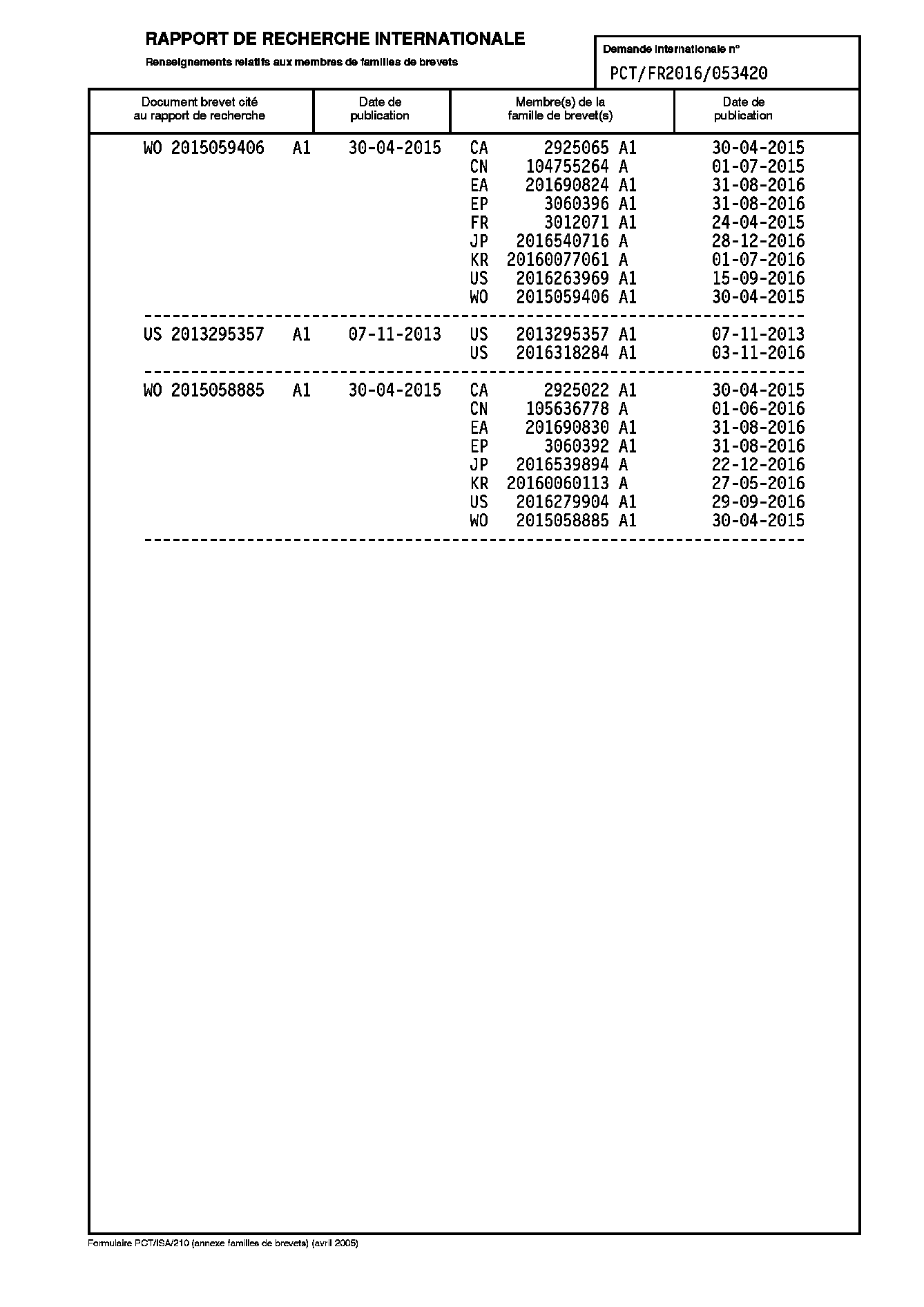
| WO2015059406A1 (en) * | 2013-10-23 | 2015-04-30 | Saint-Gobain Glass France | Thin laminated glass |
| WO2015058885A1 (en) * | 2013-10-23 | 2015-04-30 | Saint-Gobain Glass France | Laminated glass having at least one chemically tempered pane |
| WO2015158464A1 (en) * | 2014-04-15 | 2015-10-22 | Saint-Gobain Glass France | Laminated glass with thin inner panes |
Family Cites Families (4)
| Publication number | Priority date | Publication date | Assignee | Title |
|---|---|---|---|---|
| JP2011527661A (en) * | 2008-07-11 | 2011-11-04 | コーニング インコーポレイテッド | Glass with compression surface for consumer use |
| US8679599B2 (en) * | 2011-03-29 | 2014-03-25 | Corning Incorporated | Light-weight strengthened, low-emittance vacuum insulated glass (VIG) windows |
| US10035331B2 (en) * | 2011-06-24 | 2018-07-31 | Corning Incorporated | Light-weight hybrid glass laminates |
| US9616641B2 (en) * | 2011-06-24 | 2017-04-11 | Corning Incorporated | Light-weight hybrid glass laminates |
-
2015
- 2015-12-17 FR FR1562665A patent/FR3045595B1/en not_active Expired - Fee Related
-
2016
- 2016-12-14 EP EP16825510.7A patent/EP3390312A1/en not_active Withdrawn
- 2016-12-14 BR BR112018012088-0A patent/BR112018012088A2/en not_active IP Right Cessation
- 2016-12-14 JP JP2018531620A patent/JP2019503967A/en active Pending
- 2016-12-14 RU RU2018126065A patent/RU2736924C2/en active
- 2016-12-14 US US16/062,440 patent/US20180370194A1/en not_active Abandoned
- 2016-12-14 MX MX2018007322A patent/MX2018007322A/en unknown
- 2016-12-14 WO PCT/FR2016/053420 patent/WO2017103471A1/en not_active Ceased
- 2016-12-14 CA CA3008317A patent/CA3008317A1/en not_active Abandoned
- 2016-12-14 CN CN201680003841.5A patent/CN107108335A/en active Pending
- 2016-12-14 KR KR1020187019947A patent/KR20180094979A/en not_active Withdrawn
- 2016-12-16 AR ARP160103891A patent/AR107082A1/en unknown
Patent Citations (6)
| Publication number | Priority date | Publication date | Assignee | Title |
|---|---|---|---|---|
| JP2003119048A (en) * | 2000-10-03 | 2003-04-23 | Nippon Sheet Glass Co Ltd | Glass composition |
| JP2004137147A (en) * | 2002-09-25 | 2004-05-13 | Nippon Sheet Glass Co Ltd | Glass composition and laminated glass |
| WO2012137742A1 (en) * | 2011-04-01 | 2012-10-11 | 旭硝子株式会社 | Laminated glass and process for producing same |
| WO2015059406A1 (en) * | 2013-10-23 | 2015-04-30 | Saint-Gobain Glass France | Thin laminated glass |
| WO2015058885A1 (en) * | 2013-10-23 | 2015-04-30 | Saint-Gobain Glass France | Laminated glass having at least one chemically tempered pane |
| WO2015158464A1 (en) * | 2014-04-15 | 2015-10-22 | Saint-Gobain Glass France | Laminated glass with thin inner panes |
Cited By (2)
| Publication number | Priority date | Publication date | Assignee | Title |
|---|---|---|---|---|
| US11897804B2 (en) | 2018-04-13 | 2024-02-13 | Corning Incorporated | Uniformly pair sagged glass articles and hybrid laminates |
| US12116302B2 (en) | 2018-04-13 | 2024-10-15 | Corning Incorporated | Uniformly pair sagged glass articles and hybrid laminates |
Also Published As
| Publication number | Publication date |
|---|---|
| EP3390312A1 (en) | 2018-10-24 |
| RU2018126065A (en) | 2020-01-17 |
| AR107082A1 (en) | 2018-03-21 |
| MX2018007322A (en) | 2018-09-06 |
| BR112018012088A2 (en) | 2018-11-27 |
| FR3045595B1 (en) | 2017-12-22 |
| CA3008317A1 (en) | 2017-06-22 |
| US20180370194A1 (en) | 2018-12-27 |
| WO2017103471A1 (en) | 2017-06-22 |
| RU2018126065A3 (en) | 2020-05-14 |
| FR3045595A1 (en) | 2017-06-23 |
| KR20180094979A (en) | 2018-08-24 |
| RU2736924C2 (en) | 2020-11-23 |
| CN107108335A (en) | 2017-08-29 |
Similar Documents
| Publication | Publication Date | Title |
|---|---|---|
| JP2019503967A (en) | Asymmetric laminated glass | |
| JP6920300B2 (en) | Chemically reinforced colored thin glass | |
| JP6646574B2 (en) | Thin laminated glass for windshield | |
| JP6970778B2 (en) | Thin laminated glass | |
| JP6328619B2 (en) | Laminated glass structure with high adhesion of glass to polymer interlayer | |
| JP6256763B2 (en) | Laminated glass | |
| JP7025427B2 (en) | Fusion moldable automotive glass compositions, articles, and laminates | |
| CN109250904A (en) | Prepare the method and gained device of the glass Jing Guo ion exchange | |
| JP2017508693A (en) | Laminated glass | |
| CN103153607A (en) | Chemically-strengthened glass laminates | |
| WO2017183381A1 (en) | Laminated glass for vehicles | |
| WO2018030093A1 (en) | Laminated glass for vehicles | |
| WO2017183382A1 (en) | Laminated glass for vehicles | |
| WO2018193788A1 (en) | Glass-resin composite | |
| JPWO2018030095A1 (en) | Laminated glass for vehicles | |
| JP7261237B2 (en) | laminated glazing | |
| JPWO2018030094A1 (en) | Laminated glass for vehicles | |
| JP7299901B2 (en) | laminated glazing | |
| JP2019151516A (en) | Glass plate and glass resin composite using the same | |
| JPWO2020080162A1 (en) | Glass plate |
Legal Events
| Date | Code | Title | Description |
|---|---|---|---|
| A621 | Written request for application examination |
Free format text: JAPANESE INTERMEDIATE CODE: A621 Effective date: 20191114 |
|
| A977 | Report on retrieval |
Free format text: JAPANESE INTERMEDIATE CODE: A971007 Effective date: 20200909 |
|
| A131 | Notification of reasons for refusal |
Free format text: JAPANESE INTERMEDIATE CODE: A131 Effective date: 20201110 |
|
| A02 | Decision of refusal |
Free format text: JAPANESE INTERMEDIATE CODE: A02 Effective date: 20210622 |