JP2018517415A - Modified NK-92 cells for treating cancer - Google Patents
Modified NK-92 cells for treating cancer Download PDFInfo
- Publication number
- JP2018517415A JP2018517415A JP2017564059A JP2017564059A JP2018517415A JP 2018517415 A JP2018517415 A JP 2018517415A JP 2017564059 A JP2017564059 A JP 2017564059A JP 2017564059 A JP2017564059 A JP 2017564059A JP 2018517415 A JP2018517415 A JP 2018517415A
- Authority
- JP
- Japan
- Prior art keywords
- cells
- cell
- monoclonal antibody
- seq
- car
- Prior art date
- Legal status (The legal status is an assumption and is not a legal conclusion. Google has not performed a legal analysis and makes no representation as to the accuracy of the status listed.)
- Pending
Links
Images


Classifications
-
- C—CHEMISTRY; METALLURGY
- C07—ORGANIC CHEMISTRY
- C07K—PEPTIDES
- C07K14/00—Peptides having more than 20 amino acids; Gastrins; Somatostatins; Melanotropins; Derivatives thereof
- C07K14/435—Peptides having more than 20 amino acids; Gastrins; Somatostatins; Melanotropins; Derivatives thereof from animals; from humans
- C07K14/52—Cytokines; Lymphokines; Interferons
- C07K14/54—Interleukins [IL]
-
- A—HUMAN NECESSITIES
- A61—MEDICAL OR VETERINARY SCIENCE; HYGIENE
- A61K—PREPARATIONS FOR MEDICAL, DENTAL OR TOILETRY PURPOSES
- A61K35/00—Medicinal preparations containing materials or reaction products thereof with undetermined constitution
- A61K35/12—Materials from mammals; Compositions comprising non-specified tissues or cells; Compositions comprising non-embryonic stem cells; Genetically modified cells
- A61K35/14—Blood; Artificial blood
- A61K35/17—Lymphocytes; B-cells; T-cells; Natural killer cells; Interferon-activated or cytokine-activated lymphocytes
-
- A—HUMAN NECESSITIES
- A61—MEDICAL OR VETERINARY SCIENCE; HYGIENE
- A61K—PREPARATIONS FOR MEDICAL, DENTAL OR TOILETRY PURPOSES
- A61K39/00—Medicinal preparations containing antigens or antibodies
-
- A—HUMAN NECESSITIES
- A61—MEDICAL OR VETERINARY SCIENCE; HYGIENE
- A61K—PREPARATIONS FOR MEDICAL, DENTAL OR TOILETRY PURPOSES
- A61K39/00—Medicinal preparations containing antigens or antibodies
- A61K39/395—Antibodies; Immunoglobulins; Immune serum, e.g. antilymphocytic serum
-
- A—HUMAN NECESSITIES
- A61—MEDICAL OR VETERINARY SCIENCE; HYGIENE
- A61K—PREPARATIONS FOR MEDICAL, DENTAL OR TOILETRY PURPOSES
- A61K39/00—Medicinal preparations containing antigens or antibodies
- A61K39/395—Antibodies; Immunoglobulins; Immune serum, e.g. antilymphocytic serum
- A61K39/39533—Antibodies; Immunoglobulins; Immune serum, e.g. antilymphocytic serum against materials from animals
- A61K39/39558—Antibodies; Immunoglobulins; Immune serum, e.g. antilymphocytic serum against materials from animals against tumor tissues, cells, antigens
-
- A—HUMAN NECESSITIES
- A61—MEDICAL OR VETERINARY SCIENCE; HYGIENE
- A61K—PREPARATIONS FOR MEDICAL, DENTAL OR TOILETRY PURPOSES
- A61K40/00—Cellular immunotherapy
-
- A—HUMAN NECESSITIES
- A61—MEDICAL OR VETERINARY SCIENCE; HYGIENE
- A61K—PREPARATIONS FOR MEDICAL, DENTAL OR TOILETRY PURPOSES
- A61K40/00—Cellular immunotherapy
- A61K40/10—Cellular immunotherapy characterised by the cell type used
- A61K40/15—Natural-killer [NK] cells; Natural-killer T [NKT] cells
-
- A—HUMAN NECESSITIES
- A61—MEDICAL OR VETERINARY SCIENCE; HYGIENE
- A61K—PREPARATIONS FOR MEDICAL, DENTAL OR TOILETRY PURPOSES
- A61K40/00—Cellular immunotherapy
- A61K40/30—Cellular immunotherapy characterised by the recombinant expression of specific molecules in the cells of the immune system
- A61K40/31—Chimeric antigen receptors [CAR]
-
- A—HUMAN NECESSITIES
- A61—MEDICAL OR VETERINARY SCIENCE; HYGIENE
- A61K—PREPARATIONS FOR MEDICAL, DENTAL OR TOILETRY PURPOSES
- A61K40/00—Cellular immunotherapy
- A61K40/30—Cellular immunotherapy characterised by the recombinant expression of specific molecules in the cells of the immune system
- A61K40/35—Cytokines
-
- A—HUMAN NECESSITIES
- A61—MEDICAL OR VETERINARY SCIENCE; HYGIENE
- A61K—PREPARATIONS FOR MEDICAL, DENTAL OR TOILETRY PURPOSES
- A61K40/00—Cellular immunotherapy
- A61K40/40—Cellular immunotherapy characterised by antigens that are targeted or presented by cells of the immune system
- A61K40/41—Vertebrate antigens
- A61K40/42—Cancer antigens
- A61K40/4202—Receptors, cell surface antigens or cell surface determinants
- A61K40/421—Immunoglobulin superfamily
- A61K40/4211—CD19 or B4
-
- A—HUMAN NECESSITIES
- A61—MEDICAL OR VETERINARY SCIENCE; HYGIENE
- A61K—PREPARATIONS FOR MEDICAL, DENTAL OR TOILETRY PURPOSES
- A61K40/00—Cellular immunotherapy
- A61K40/40—Cellular immunotherapy characterised by antigens that are targeted or presented by cells of the immune system
- A61K40/41—Vertebrate antigens
- A61K40/42—Cancer antigens
- A61K40/4202—Receptors, cell surface antigens or cell surface determinants
- A61K40/4224—Molecules with a "CD" designation not provided for elsewhere
-
- A—HUMAN NECESSITIES
- A61—MEDICAL OR VETERINARY SCIENCE; HYGIENE
- A61K—PREPARATIONS FOR MEDICAL, DENTAL OR TOILETRY PURPOSES
- A61K40/00—Cellular immunotherapy
- A61K40/40—Cellular immunotherapy characterised by antigens that are targeted or presented by cells of the immune system
- A61K40/41—Vertebrate antigens
- A61K40/42—Cancer antigens
- A61K40/4261—Proteoglycans, e.g. glypican, brevican or CSPG4
-
- A—HUMAN NECESSITIES
- A61—MEDICAL OR VETERINARY SCIENCE; HYGIENE
- A61P—SPECIFIC THERAPEUTIC ACTIVITY OF CHEMICAL COMPOUNDS OR MEDICINAL PREPARATIONS
- A61P35/00—Antineoplastic agents
-
- A—HUMAN NECESSITIES
- A61—MEDICAL OR VETERINARY SCIENCE; HYGIENE
- A61P—SPECIFIC THERAPEUTIC ACTIVITY OF CHEMICAL COMPOUNDS OR MEDICINAL PREPARATIONS
- A61P35/00—Antineoplastic agents
- A61P35/02—Antineoplastic agents specific for leukemia
-
- C—CHEMISTRY; METALLURGY
- C07—ORGANIC CHEMISTRY
- C07K—PEPTIDES
- C07K14/00—Peptides having more than 20 amino acids; Gastrins; Somatostatins; Melanotropins; Derivatives thereof
- C07K14/435—Peptides having more than 20 amino acids; Gastrins; Somatostatins; Melanotropins; Derivatives thereof from animals; from humans
- C07K14/52—Cytokines; Lymphokines; Interferons
- C07K14/54—Interleukins [IL]
- C07K14/55—IL-2
-
- C—CHEMISTRY; METALLURGY
- C07—ORGANIC CHEMISTRY
- C07K—PEPTIDES
- C07K14/00—Peptides having more than 20 amino acids; Gastrins; Somatostatins; Melanotropins; Derivatives thereof
- C07K14/435—Peptides having more than 20 amino acids; Gastrins; Somatostatins; Melanotropins; Derivatives thereof from animals; from humans
- C07K14/705—Receptors; Cell surface antigens; Cell surface determinants
- C07K14/70503—Immunoglobulin superfamily
- C07K14/7051—T-cell receptor (TcR)-CD3 complex
-
- C—CHEMISTRY; METALLURGY
- C07—ORGANIC CHEMISTRY
- C07K—PEPTIDES
- C07K14/00—Peptides having more than 20 amino acids; Gastrins; Somatostatins; Melanotropins; Derivatives thereof
- C07K14/435—Peptides having more than 20 amino acids; Gastrins; Somatostatins; Melanotropins; Derivatives thereof from animals; from humans
- C07K14/705—Receptors; Cell surface antigens; Cell surface determinants
- C07K14/70503—Immunoglobulin superfamily
- C07K14/70535—Fc-receptors, e.g. CD16, CD32, CD64 (CD2314/705F)
-
- C—CHEMISTRY; METALLURGY
- C07—ORGANIC CHEMISTRY
- C07K—PEPTIDES
- C07K16/00—Immunoglobulins [IGs], e.g. monoclonal or polyclonal antibodies
- C07K16/18—Immunoglobulins [IGs], e.g. monoclonal or polyclonal antibodies against material from animals or humans
- C07K16/28—Immunoglobulins [IGs], e.g. monoclonal or polyclonal antibodies against material from animals or humans against receptors, cell surface antigens or cell surface determinants
-
- C—CHEMISTRY; METALLURGY
- C07—ORGANIC CHEMISTRY
- C07K—PEPTIDES
- C07K16/00—Immunoglobulins [IGs], e.g. monoclonal or polyclonal antibodies
- C07K16/18—Immunoglobulins [IGs], e.g. monoclonal or polyclonal antibodies against material from animals or humans
- C07K16/28—Immunoglobulins [IGs], e.g. monoclonal or polyclonal antibodies against material from animals or humans against receptors, cell surface antigens or cell surface determinants
- C07K16/2803—Immunoglobulins [IGs], e.g. monoclonal or polyclonal antibodies against material from animals or humans against receptors, cell surface antigens or cell surface determinants against the immunoglobulin superfamily
-
- C—CHEMISTRY; METALLURGY
- C07—ORGANIC CHEMISTRY
- C07K—PEPTIDES
- C07K16/00—Immunoglobulins [IGs], e.g. monoclonal or polyclonal antibodies
- C07K16/18—Immunoglobulins [IGs], e.g. monoclonal or polyclonal antibodies against material from animals or humans
- C07K16/28—Immunoglobulins [IGs], e.g. monoclonal or polyclonal antibodies against material from animals or humans against receptors, cell surface antigens or cell surface determinants
- C07K16/30—Immunoglobulins [IGs], e.g. monoclonal or polyclonal antibodies against material from animals or humans against receptors, cell surface antigens or cell surface determinants from tumour cells
-
- C—CHEMISTRY; METALLURGY
- C12—BIOCHEMISTRY; BEER; SPIRITS; WINE; VINEGAR; MICROBIOLOGY; ENZYMOLOGY; MUTATION OR GENETIC ENGINEERING
- C12N—MICROORGANISMS OR ENZYMES; COMPOSITIONS THEREOF; PROPAGATING, PRESERVING, OR MAINTAINING MICROORGANISMS; MUTATION OR GENETIC ENGINEERING; CULTURE MEDIA
- C12N5/00—Undifferentiated human, animal or plant cells, e.g. cell lines; Tissues; Cultivation or maintenance thereof; Culture media therefor
- C12N5/06—Animal cells or tissues; Human cells or tissues
- C12N5/0602—Vertebrate cells
- C12N5/0634—Cells from the blood or the immune system
- C12N5/0646—Natural killers cells [NK], NKT cells
-
- A—HUMAN NECESSITIES
- A61—MEDICAL OR VETERINARY SCIENCE; HYGIENE
- A61K—PREPARATIONS FOR MEDICAL, DENTAL OR TOILETRY PURPOSES
- A61K39/00—Medicinal preparations containing antigens or antibodies
- A61K2039/505—Medicinal preparations containing antigens or antibodies comprising antibodies
-
- A—HUMAN NECESSITIES
- A61—MEDICAL OR VETERINARY SCIENCE; HYGIENE
- A61K—PREPARATIONS FOR MEDICAL, DENTAL OR TOILETRY PURPOSES
- A61K39/00—Medicinal preparations containing antigens or antibodies
- A61K2039/54—Medicinal preparations containing antigens or antibodies characterised by the route of administration
-
- A—HUMAN NECESSITIES
- A61—MEDICAL OR VETERINARY SCIENCE; HYGIENE
- A61K—PREPARATIONS FOR MEDICAL, DENTAL OR TOILETRY PURPOSES
- A61K39/00—Medicinal preparations containing antigens or antibodies
- A61K2039/545—Medicinal preparations containing antigens or antibodies characterised by the dose, timing or administration schedule
-
- A—HUMAN NECESSITIES
- A61—MEDICAL OR VETERINARY SCIENCE; HYGIENE
- A61K—PREPARATIONS FOR MEDICAL, DENTAL OR TOILETRY PURPOSES
- A61K2239/00—Indexing codes associated with cellular immunotherapy of group A61K40/00
- A61K2239/10—Indexing codes associated with cellular immunotherapy of group A61K40/00 characterized by the structure of the chimeric antigen receptor [CAR]
- A61K2239/11—Antigen recognition domain
- A61K2239/13—Antibody-based
-
- A—HUMAN NECESSITIES
- A61—MEDICAL OR VETERINARY SCIENCE; HYGIENE
- A61K—PREPARATIONS FOR MEDICAL, DENTAL OR TOILETRY PURPOSES
- A61K2239/00—Indexing codes associated with cellular immunotherapy of group A61K40/00
- A61K2239/27—Indexing codes associated with cellular immunotherapy of group A61K40/00 characterized by targeting or presenting multiple antigens
- A61K2239/28—Expressing multiple CARs, TCRs or antigens
-
- A—HUMAN NECESSITIES
- A61—MEDICAL OR VETERINARY SCIENCE; HYGIENE
- A61K—PREPARATIONS FOR MEDICAL, DENTAL OR TOILETRY PURPOSES
- A61K2239/00—Indexing codes associated with cellular immunotherapy of group A61K40/00
- A61K2239/38—Indexing codes associated with cellular immunotherapy of group A61K40/00 characterised by the dose, timing or administration schedule
-
- A—HUMAN NECESSITIES
- A61—MEDICAL OR VETERINARY SCIENCE; HYGIENE
- A61K—PREPARATIONS FOR MEDICAL, DENTAL OR TOILETRY PURPOSES
- A61K2239/00—Indexing codes associated with cellular immunotherapy of group A61K40/00
- A61K2239/46—Indexing codes associated with cellular immunotherapy of group A61K40/00 characterised by the cancer treated
- A61K2239/48—Blood cells, e.g. leukemia or lymphoma
-
- C—CHEMISTRY; METALLURGY
- C07—ORGANIC CHEMISTRY
- C07K—PEPTIDES
- C07K2317/00—Immunoglobulins specific features
- C07K2317/60—Immunoglobulins specific features characterized by non-natural combinations of immunoglobulin fragments
- C07K2317/62—Immunoglobulins specific features characterized by non-natural combinations of immunoglobulin fragments comprising only variable region components
- C07K2317/622—Single chain antibody (scFv)
-
- C—CHEMISTRY; METALLURGY
- C07—ORGANIC CHEMISTRY
- C07K—PEPTIDES
- C07K2317/00—Immunoglobulins specific features
- C07K2317/70—Immunoglobulins specific features characterized by effect upon binding to a cell or to an antigen
- C07K2317/73—Inducing cell death, e.g. apoptosis, necrosis or inhibition of cell proliferation
- C07K2317/732—Antibody-dependent cellular cytotoxicity [ADCC]
-
- C—CHEMISTRY; METALLURGY
- C07—ORGANIC CHEMISTRY
- C07K—PEPTIDES
- C07K2317/00—Immunoglobulins specific features
- C07K2317/90—Immunoglobulins specific features characterized by (pharmaco)kinetic aspects or by stability of the immunoglobulin
- C07K2317/92—Affinity (KD), association rate (Ka), dissociation rate (Kd) or EC50 value
-
- C—CHEMISTRY; METALLURGY
- C07—ORGANIC CHEMISTRY
- C07K—PEPTIDES
- C07K2319/00—Fusion polypeptide
- C07K2319/01—Fusion polypeptide containing a localisation/targetting motif
- C07K2319/02—Fusion polypeptide containing a localisation/targetting motif containing a signal sequence
-
- C—CHEMISTRY; METALLURGY
- C07—ORGANIC CHEMISTRY
- C07K—PEPTIDES
- C07K2319/00—Fusion polypeptide
- C07K2319/01—Fusion polypeptide containing a localisation/targetting motif
- C07K2319/03—Fusion polypeptide containing a localisation/targetting motif containing a transmembrane segment
-
- C—CHEMISTRY; METALLURGY
- C07—ORGANIC CHEMISTRY
- C07K—PEPTIDES
- C07K2319/00—Fusion polypeptide
- C07K2319/01—Fusion polypeptide containing a localisation/targetting motif
- C07K2319/04—Fusion polypeptide containing a localisation/targetting motif containing an ER retention signal such as a C-terminal HDEL motif
-
- C—CHEMISTRY; METALLURGY
- C07—ORGANIC CHEMISTRY
- C07K—PEPTIDES
- C07K2319/00—Fusion polypeptide
- C07K2319/30—Non-immunoglobulin-derived peptide or protein having an immunoglobulin constant or Fc region, or a fragment thereof, attached thereto
-
- C—CHEMISTRY; METALLURGY
- C07—ORGANIC CHEMISTRY
- C07K—PEPTIDES
- C07K2319/00—Fusion polypeptide
- C07K2319/33—Fusion polypeptide fusions for targeting to specific cell types, e.g. tissue specific targeting, targeting of a bacterial subspecies
-
- C—CHEMISTRY; METALLURGY
- C12—BIOCHEMISTRY; BEER; SPIRITS; WINE; VINEGAR; MICROBIOLOGY; ENZYMOLOGY; MUTATION OR GENETIC ENGINEERING
- C12N—MICROORGANISMS OR ENZYMES; COMPOSITIONS THEREOF; PROPAGATING, PRESERVING, OR MAINTAINING MICROORGANISMS; MUTATION OR GENETIC ENGINEERING; CULTURE MEDIA
- C12N2510/00—Genetically modified cells
Landscapes
- Health & Medical Sciences (AREA)
- Life Sciences & Earth Sciences (AREA)
- Chemical & Material Sciences (AREA)
- General Health & Medical Sciences (AREA)
- Organic Chemistry (AREA)
- Immunology (AREA)
- Public Health (AREA)
- Veterinary Medicine (AREA)
- Animal Behavior & Ethology (AREA)
- Medicinal Chemistry (AREA)
- Epidemiology (AREA)
- Genetics & Genomics (AREA)
- Engineering & Computer Science (AREA)
- Biochemistry (AREA)
- Zoology (AREA)
- Biomedical Technology (AREA)
- Biophysics (AREA)
- Proteomics, Peptides & Aminoacids (AREA)
- Molecular Biology (AREA)
- Bioinformatics & Cheminformatics (AREA)
- Cell Biology (AREA)
- Biotechnology (AREA)
- Pharmacology & Pharmacy (AREA)
- Wood Science & Technology (AREA)
- Microbiology (AREA)
- Toxicology (AREA)
- Gastroenterology & Hepatology (AREA)
- Hematology (AREA)
- General Engineering & Computer Science (AREA)
- Chemical Kinetics & Catalysis (AREA)
- General Chemical & Material Sciences (AREA)
- Nuclear Medicine, Radiotherapy & Molecular Imaging (AREA)
- Mycology (AREA)
- Oncology (AREA)
- Developmental Biology & Embryology (AREA)
- Virology (AREA)
- Medicines Containing Antibodies Or Antigens For Use As Internal Diagnostic Agents (AREA)
- Medicines Containing Material From Animals Or Micro-Organisms (AREA)
- Peptides Or Proteins (AREA)
- Medicines That Contain Protein Lipid Enzymes And Other Medicines (AREA)
Abstract
少なくとも1種のCARおよび少なくとも1種のFc受容体を発現する、NK-92細胞が、本明細書において提供される。さらに、NK-92細胞を用いて処置可能な疾患、例えばがんを有するかまたは有することが疑われる患者の処置の方法であって、該患者にNK-92-Fc-CARを投与する段階を含む、方法が提供される。Provided herein are NK-92 cells that express at least one CAR and at least one Fc receptor. Further, a method of treating a patient having or suspected of having a disease that can be treated using NK-92 cells, for example, comprising the step of administering NK-92-Fc-CAR to said patient A method is provided.
Description
関連出願の相互参照
本出願は、2015年6月10日に出願された米国仮特許出願第62/173,701号および2016年5月16日に出願された米国仮特許出願第62/337,044号に対する優先権の恩典を主張するものであり、これらのそれぞれは、その全体が参照により本明細書に組み入れられる。
Cross-reference to related applications.This application is a priority over US Provisional Patent Application No. 62 / 173,701 filed on June 10, 2015 and US Provisional Patent Application No. 62 / 337,044 filed on May 16, 2016. All of which are hereby incorporated by reference in their entirety.
背景
ナチュラルキラー(NK)細胞は、自然免疫系の主要構成要素を成す細胞傷害性リンパ球である。NK細胞は一般に、循環リンパ球の約10〜15%を占め、抗原に関して非特異的にかつ事前の免疫感作なしに、ウイルス感染細胞および多くの悪性細胞を含む標的細胞に結合しかつそれらを死滅させる。Herberman et al., Science 214:24(1981)(非特許文献1)。標的細胞の死滅は細胞溶解を誘導することによって生じる。この目的で用いられるNK細胞は、対象由来の血液の末梢血リンパ球(「PBL」)画分から単離され、十分な数の細胞を得るために細胞培養中で増大され、次いで、対象内に再注入される。NK細胞は、エクスビボ療法およびインビボ処置の両方においてある程度有効であることが示されている。しかしながら、そのような療法は、全てのNK細胞が細胞溶解性ではなく、療法は処置された患者に特有なものであるという事実によって複雑になる。
Background Natural killer (NK) cells are cytotoxic lymphocytes that form a major component of the innate immune system. NK cells generally make up about 10-15% of circulating lymphocytes and bind to and bind target cells, including virus-infected cells and many malignant cells, non-specifically and without prior immunization with respect to antigens. Annihilate. Herberman et al., Science 214: 24 (1981) (Non-patent Document 1). Target cell death occurs by inducing cell lysis. NK cells used for this purpose are isolated from a peripheral blood lymphocyte (“PBL”) fraction of blood from the subject, expanded in cell culture to obtain a sufficient number of cells, and then into the subject Reinjected. NK cells have been shown to be somewhat effective in both ex vivo therapy and in vivo treatment. However, such therapy is complicated by the fact that not all NK cells are cytolytic and the therapy is specific to the treated patient.
がんでは、腫瘍細胞を同じ組織に由来する正常細胞から区別する表現型の変化は多くの場合、正常細胞表面成分の消失またはそれ以外の成分(すなわち、対応する正常な非がん性組織で検出されない抗原)の獲得を含む、特定の遺伝子産物の発現における1つまたは複数の変化に関連する。新生物性細胞または腫瘍細胞で発現するが、正常細胞ではそうではない抗原、または正常細胞で見られるものを実質的に上回るレベルで新生細胞において発現する抗原は、「腫瘍特異的抗原」または「腫瘍関連抗原」と呼ばれている。そのような腫瘍特異的抗原は腫瘍表現型のマーカーとして役立つ可能性がある。腫瘍特異的抗原は3つの主なグループに割り当てることができる:がん/精巣特異的抗原(例えば、MAGE、BAGE、GAGE、PRAMEおよびNY-ESO-1)、メラニン細胞分化抗原(例えば、チロシナーゼ、Melan-A/MART、gplOO、TRP-1およびTRP-2)、ならびに変異したまたは異常に発現した抗原(例えば、MUM-1、CDK4、βカテニン、gp100-in4、p15およびN-アセチルグルコサミニルトランスフェラーゼV)。 In cancer, the phenotypic change that distinguishes tumor cells from normal cells from the same tissue is often the disappearance of normal cell surface components or other components (i.e., in corresponding normal non-cancerous tissues). Associated with one or more changes in the expression of a particular gene product, including the acquisition of (undetected antigens). An antigen that is expressed in neoplastic or tumor cells but not in normal cells, or an antigen that is expressed in neoplastic cells at a level substantially above that found in normal cells is a “tumor-specific antigen” or “ It is called “tumor associated antigen”. Such tumor-specific antigens may serve as markers for tumor phenotypes. Tumor specific antigens can be assigned to three main groups: cancer / testis specific antigens (eg, MAGE, BAGE, GAGE, PRAME and NY-ESO-1), melanocyte differentiation antigens (eg, tyrosinase, Melan-A / MART, gplOO, TRP-1 and TRP-2), and mutated or aberrantly expressed antigens (e.g. MUM-1, CDK4, β-catenin, gp100-in4, p15 and N-acetylglucosaminyl) Transferase V).
腫瘍特異的抗原はがん免疫療法の標的として用いられている。そのような療法の一つは、T細胞およびNK細胞を含む免疫細胞の表面上に発現させたキメラ抗原受容体(CAR)を用いて、がん細胞に対する細胞傷害性を改善する。CARは、少なくとも1つの細胞内シグナル伝達ドメインに連結させた一本鎖可変断片(scFv)を含む。scFvは、標的細胞(例えば、がん細胞)上の抗原を認識しかつそれに結合し、エフェクター細胞活性化を引き起こす。 Tumor-specific antigens are used as targets for cancer immunotherapy. One such therapy uses a chimeric antigen receptor (CAR) expressed on the surface of immune cells including T cells and NK cells to improve cytotoxicity against cancer cells. CAR contains a single chain variable fragment (scFv) linked to at least one intracellular signaling domain. scFv recognizes and binds to antigen on target cells (eg, cancer cells), causing effector cell activation.
加えて、モノクローナル抗体(mAb)による抗がん処置は、特に化学療法と組み合わせた場合に、がんを有する患者の臨床転帰を大幅に改善してきた。しかしながら、悪性細胞による抗原の提示および免疫細胞の存在にもかかわらず、がん細胞は免疫媒介性拒絶から免れることが知られている。がん細胞がそれによって免疫排除を免れる1つの機序は、検出を妨げることによるものである。例えば、腫瘍回避機序には、CAR発現免疫細胞およびmAbなどの単独での標的療法の有効性を低減させる、抗原提示の不全または低下(例えば、腫瘍抗原の変異または下方制御)が含まれる。このように、がん細胞を処置する改良された治療および方法が依然として必要とされる。 In addition, anti-cancer treatment with monoclonal antibodies (mAbs) has greatly improved the clinical outcome of patients with cancer, especially when combined with chemotherapy. However, despite the presentation of antigen by malignant cells and the presence of immune cells, cancer cells are known to escape immune-mediated rejection. One mechanism by which cancer cells escape immune exclusion is by preventing detection. For example, tumor evasion mechanisms include failure or reduction of antigen presentation (eg, mutation or downregulation of tumor antigens) that reduces the effectiveness of targeted therapies alone, such as CAR-expressing immune cells and mAbs. Thus, there remains a need for improved therapies and methods for treating cancer cells.
簡単な概要
複数のトランスジーンを発現するように操作された、遺伝的に改変されたNK-92細胞または細胞株が、本明細書において提供される。例えば、少なくとも1種のFc受容体および少なくとも1種のキメラ抗原受容体(CAR)がNK-92細胞の細胞表面上に提示されるように、NK-92細胞は少なくとも1種のFc受容体および少なくとも1種のCARを同時に発現するよう改変される。
Brief Overview Genetically modified NK-92 cells or cell lines engineered to express multiple transgenes are provided herein. For example, NK-92 cells have at least one Fc receptor and at least one Fc receptor and at least one chimeric antigen receptor (CAR) are presented on the cell surface of NK-92 cells. Modified to express at least one CAR simultaneously.
よって、本開示は、Fc受容体およびキメラ抗原受容体(CAR)がNK-92細胞の細胞表面上に提示されるように、NK-92細胞株の細胞が、少なくとも1種のFc受容体および少なくとも1種のCARを発現するよう改変されている、NK-92細胞株を提供する。 Thus, the disclosure provides that cells of the NK-92 cell line have at least one Fc receptor and Fc receptor and chimeric antigen receptor (CAR) are presented on the cell surface of NK-92 cells. NK-92 cell lines are provided that have been modified to express at least one CAR.
前述の一般的な説明および下記の詳細な説明は、例示的かつ説明的なものであり、本開示のさらなる説明を提供することを意図する。他の目的、利点および新規な特徴は、当業者には容易に明らかである。 The foregoing general description and the following detailed description are exemplary and explanatory and are intended to provide further explanation of the disclosure. Other objects, advantages, and novel features will be readily apparent to those skilled in the art.
目的、特徴、および利点は、添付の図面と併せて考慮する際、下記の開示を参照することで、より容易に理解される。
詳細な説明
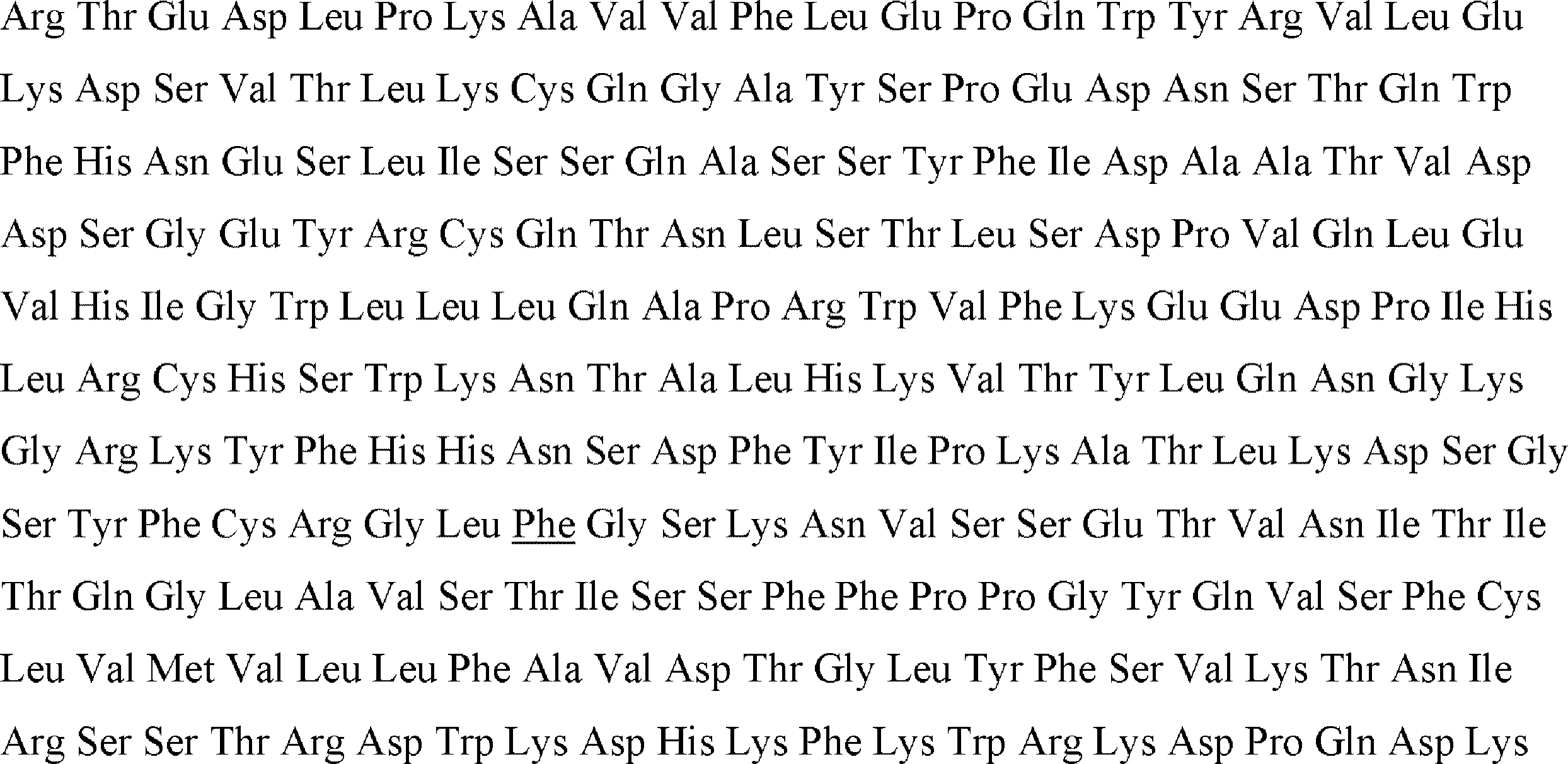
少なくとも1種のFc受容体および少なくとも1種のキメラ抗原受容体(CAR)をNK-92細胞の細胞表面上に提示するように、少なくとも1種のFc受容体および少なくとも1種のCARを発現するよう改変された、NK-92細胞が、本明細書において提供される。任意で、Fc受容体はFcγRIII-A(CD16)を含んでもよい。任意で、NK-92細胞は、SEQ ID NO:1(158位にフェニルアラニンを有するFcγRIII-AまたはCD16 (F-158))と少なくとも90%の配列同一性;またはSEQ ID NO:2(158位にバリンを有する(F158V)CD16、より親和性の高い形態)と少なくとも90%の同一性を有するポリペプチドをコードするFc受容体を発現するように遺伝子改変される。典型的な態様において、CD16ポリペプチドは158位にバリンを有する。任意で、NK-92細胞は、SEQ ID NO:8(CD19)、SEQ ID NO:9(CD19)、SEQ ID NO:10(CD33)、SEQ ID NO:11(CD33)、SEQ ID NO:12(CSPG-4)、またはSEQ ID NO:13(CSPG-4)と少なくとも90%の配列同一性を有するポリペプチドをコードするCARを発現するように遺伝子改変される。任意で、CARは、腫瘍関連抗原、例えば、CD19、CD20、NKG2Dリガンド、CS1、GD2、CD138、EpCAM、HER-2、EBNA3C、GPA7、CD244、CA-125、MUC-1、ETA、MAGE、CEA、CD52、CD30、MUC5AC、c-Met、EGFR、FAB、WT-1、PSMA、NY-ESO1、およびCD33を標的とする。いくつかの態様において、細胞株のNK-92細胞は10回未満の集団倍加を受ける。
DETAILED DESCRIPTION At least one Fc receptor and at least one CAR so that at least one Fc receptor and at least one chimeric antigen receptor (CAR) are presented on the cell surface of NK-92 cells NK-92 cells modified to express are provided herein. Optionally, the Fc receptor may comprise FcγRIII-A (CD16). Optionally, NK-92 cells have at least 90% sequence identity with SEQ ID NO: 1 (FcγRIII-A or CD16 (F-158) with phenylalanine at position 158); or SEQ ID NO: 2 (position 158 (F158V) CD16, a higher affinity form) and is genetically modified to express an Fc receptor that encodes a polypeptide having at least 90% identity. In an exemplary embodiment, the CD16 polypeptide has a valine at position 158. Optionally, NK-92 cells are SEQ ID NO: 8 (CD19), SEQ ID NO: 9 (CD19), SEQ ID NO: 10 (CD33), SEQ ID NO: 11 (CD33), SEQ ID NO: 12 (CSPG-4), or genetically modified to express a CAR encoding a polypeptide having at least 90% sequence identity with SEQ ID NO: 13 (CSPG-4). Optionally, CAR is a tumor associated antigen, e.g. CD19, CD20, NKG2D ligand, CS1, GD2, CD138, EpCAM, HER-2, EBNA3C, GPA7, CD244, CA-125, MUC-1, ETA, MAGE, CEA , CD52, CD30, MUC5AC, c-Met, EGFR, FAB, WT-1, PSMA, NY-ESO1, and CD33. In some embodiments, the cell line NK-92 cells undergo less than 10 population doublings.
任意で、NK-92細胞は、サイトカイン、例えば、インターロイキン-2またはそのバリアントをさらに発現する。いくつかの態様において、NK-92細胞は、SEQ ID NO:6またはSEQ ID NO:7の配列を有するポリペプチドを発現するよう改変される。さらなる態様において、サイトカインは小胞体を標的とする。任意で、細胞株のNK-92細胞は10 U/ml未満のIL-2を含有する培地中で培養される。 Optionally, NK-92 cells further express cytokines such as interleukin-2 or variants thereof. In some embodiments, NK-92 cells are modified to express a polypeptide having the sequence of SEQ ID NO: 6 or SEQ ID NO: 7. In a further embodiment, the cytokine targets the endoplasmic reticulum. Optionally, the cell line NK-92 cells are cultured in medium containing less than 10 U / ml IL-2.
本開示は、本明細書に記載されたNK-92細胞のいずれかを含む組成物を提供する。任意で、本開示は、上記態様のNK-92細胞のいずれか、および少なくとも1種の抗体、例えば、アレムツズマブ、リツクスマブ(rituxumab)、トラスツズマブ、イブリツモマブ、ゲムツズマブ、ブレンツキシマブ、アドトラスツズマブ(adotranstuzumab)、ブリナツモマブ、ダラツムマブ(daratumumab)またはエロツズマブ等、の組成物を提供する。いくつかの態様において、モノクローナル抗体は、裸のモノクローナル抗体、コンジュゲートされたモノクローナル抗体または二重特異性モノクローナル抗体である。 The present disclosure provides a composition comprising any of the NK-92 cells described herein. Optionally, the disclosure provides any of the NK-92 cells of the above embodiments, and at least one antibody, such as alemtuzumab, rituxumab, trastuzumab, ibritumomab, gemtuzumab, brentuximab, adotranstuzumab, Compositions such as blinatumomab, daratumumab or erotuzumab are provided. In some embodiments, the monoclonal antibody is a naked monoclonal antibody, a conjugated monoclonal antibody or a bispecific monoclonal antibody.
本開示は、それを必要とする患者においてがんを処置する方法であって、上記態様のいずれかの細胞の有効量を患者に投与する段階を含む、方法を提供する。いくつかの態様において、細胞は、静脈内、腹腔内、および皮下からなる群より選択される経路によって患者に投与される。いくつかの態様において、患者の体表面積1 m2当たり約1×10⁸個から約1×10¹¹個の細胞が患者に投与される。任意で、本開示の方法は、少なくとも1種のモノクローナル抗体、例えば、アレムツズマブ、リツクスマブ、トラスツズマブ、イブリツモマブ、ゲムツズマブ、ブレンツキシマブ、アドトラスツズマブ、ブリナツモマブ、ダラツムマブ、またはエロツズマブの有効量を患者に投与する段階を提供する。いくつかの態様において、モノクローナル抗体は、裸のモノクローナル抗体、コンジュゲートされたモノクローナル抗体または二重特異性モノクローナル抗体である。いくつかの態様において、モノクローナル抗体は、静脈内、腹腔内、および皮下からなる群より選択される経路によって患者に投与される。1つの態様において、モノクローナル抗体および細胞は同時に投与される。いくつかの態様において、モノクローナル抗体および細胞は、患者へ投与する前に一緒に混合される。他の態様において、モノクローナル抗体および細胞は連続的に投与される。他の態様において、対象は、モノクローナル抗体を投与され、引き続き、モノクローナル抗体の投与後、例えば、24時間以内;または24から72時間以内に、改変NK-92細胞を投与される。 The present disclosure provides a method of treating cancer in a patient in need thereof, comprising administering to the patient an effective amount of the cells of any of the above embodiments. In some embodiments, the cells are administered to the patient by a route selected from the group consisting of intravenous, intraperitoneal, and subcutaneous. In some embodiments, about 1 × 10 11 cells from about 1 × 10 8 pieces of body surface area 1 m 2 per patient is administered to the patient. Optionally, the disclosed method comprises administering to the patient an effective amount of at least one monoclonal antibody, e.g., alemtuzumab, rituxumab, trastuzumab, ibritumomab, gemtuzumab, brentuximab, adtrastuzumab, blinatumomab, daratumumab, or erotuzumab. I will provide a. In some embodiments, the monoclonal antibody is a naked monoclonal antibody, a conjugated monoclonal antibody or a bispecific monoclonal antibody. In some embodiments, the monoclonal antibody is administered to the patient by a route selected from the group consisting of intravenous, intraperitoneal, and subcutaneous. In one embodiment, the monoclonal antibody and the cell are administered simultaneously. In some embodiments, the monoclonal antibody and the cells are mixed together prior to administration to the patient. In other embodiments, the monoclonal antibody and the cells are administered sequentially. In other embodiments, the subject is administered the monoclonal antibody followed by the modified NK-92 cells, eg, within 24 hours; or within 24 to 72 hours after administration of the monoclonal antibody.
1つの態様において、がんは、例えば、白血病(例えば、慢性B細胞白血病、急性リンパ芽球性白血病(ALL)、慢性リンパ性白血病(CLL))、リンパ腫(例えば、非ホジキンリンパ腫(NHL))、真性多血症、多発性骨髄腫、ワルデンストレーム高ガンマグロブリン血症、重鎖病、肉腫またはがん腫である。 In one embodiment, the cancer is, for example, leukemia (e.g., chronic B cell leukemia, acute lymphoblastic leukemia (ALL), chronic lymphocytic leukemia (CLL)), lymphoma (e.g., non-Hodgkin lymphoma (NHL)). Polycythemia vera, multiple myeloma, Waldenstrom's hypergammaglobulinemia, heavy chain disease, sarcoma or carcinoma.
本開示は、がんを処置する上記方法のいずれかで用いるためのキットを提供し、ここで、該キットは、(a)細胞表面上に少なくとも1種のFc受容体および細胞表面上に少なくとも1種のキメラ抗原受容体(CAR)を発現するよう改変されている、NK-92細胞のある量、および(b)本開示の少なくとも1つの方法を説明する説明書の少なくとも一方を含む。いくつかの態様において、キットは少なくとも1種のモノクローナル抗体をさらに含む。 The present disclosure provides a kit for use in any of the above methods of treating cancer, wherein the kit comprises (a) at least one Fc receptor on the cell surface and at least on the cell surface. A quantity of NK-92 cells that have been modified to express one chimeric antigen receptor (CAR), and (b) at least one of instructions describing at least one method of the present disclosure. In some embodiments, the kit further comprises at least one monoclonal antibody.
本明細書を読んだ後、様々な別の態様および別の用途を実行する方法が当業者に明らかになるであろう。しかしながら、全ての態様が本明細書で説明されるわけではない。本明細書に示される態様は例示のみを目的として示されており、限定を目的としないことが理解されよう。したがって、この様々な別の態様の詳細な説明は、本明細書に記載の開示の範囲および広がりを限定すると解釈されるべきではない。下記に説明する局面は、特定の組成物、そのような組成物を調製する方法、またはその使用に限定されるものではなく、もちろん変化してよいことが理解されるべきである。 After reading this specification, it will be apparent to a person skilled in the art how to implement various other aspects and applications. However, not all aspects are described herein. It will be understood that the aspects shown herein are shown by way of illustration only and not as limitations. Accordingly, the detailed description of these various alternative embodiments should not be construed to limit the scope and breadth of the disclosure described herein. It is to be understood that the aspects described below are not limited to specific compositions, methods of preparing such compositions, or uses thereof, and may of course vary.
用語
特に他で定義されない限り、本明細書で用いられる全ての技術用語および科学用語は、当業者によって一般的に理解されるのと同じ意味を有する。
Terms Unless defined otherwise, all technical and scientific terms used herein have the same meaning as commonly understood by one of ordinary skill in the art.
本明細書および添付の特許請求の範囲において、以下の意味を有すると定義されるものとするいくつかの用語について言及がなされる。 In this specification and the appended claims, reference will be made to a number of terms that shall be defined to have the following meanings:
本明細書で用いる用語は、特定の態様を説明することのみを目的とし、限定することを意図するものではない。本明細書で用いる場合、単数形「1つの(a)」、「1つの(an)」および「その(the)」は、文脈がそうでないことを明確に示さない限り、複数形も含むことが意図される。よって、例えば、「ナチュラルキラー細胞」への言及には複数のナチュラルキラー細胞が含まれる。 The terminology used herein is for the purpose of describing particular aspects only and is not intended to be limiting. As used herein, the singular forms “a”, “an”, and “the” include the plural unless the context clearly dictates otherwise. Is intended. Thus, for example, reference to “natural killer cell” includes a plurality of natural killer cells.
範囲を含む全ての数値表記、例えば、pH、温度、時間、濃度、量、および分子量などは、必要に応じて、0.1または1.0の増分で(+)または(−)に変化する近似値である。必ずしも明記されないが、全ての数値表記は用語「約」を前に付すことができることを理解すべきである。 All numerical notations including ranges, such as pH, temperature, time, concentration, quantity, and molecular weight are approximate values that change to (+) or (-) in 0.1 or 1.0 increments as required. . Although not necessarily specified, it should be understood that all numerical notations may be preceded by the term “about”.
当業者によって理解されるように、任意のおよび全ての目的について、特に発明の詳細な説明の提供に関して、本明細書に記載の全ての範囲は、任意のおよび全ての可能性のある部分範囲ならびにその部分範囲の組み合わせも包含する。任意の記載された範囲は、少なくとも均等に2分割、3分割、4分割、5分割、10分割などに分解されている同じ範囲を十分に説明および可能にするとして簡単に認識することができる。非限定例として、本明細書に記載の各範囲は、下から3分の1、中央3分の1および上から3分の1などに容易に分解することができる。当業者によってまた理解されるように、「最大で」、「少なくとも」、「上回る」、および「未満」などの全ての語は、記載された数を含み、上述のように続いて部分範囲に分解することができる範囲に言及する。最後に、当業者によって理解されるように、範囲には各個別の要素が含まれる。よって、例えば、1〜3個の細胞を有する群は、1、2、または3個の細胞を有する群に言及する。同様に、1〜5個の細胞を有する群は、1、2、3、4、または5個の細胞を有する群などに言及する。 As will be appreciated by those skilled in the art, for any and all purposes, particularly with respect to providing a detailed description of the invention, all ranges set forth herein are inclusive of any and all possible subranges and Combinations of the subranges are also included. Any stated range can be easily recognized as fully explaining and enabling the same range that is at least equally divided into two, three, four, five, ten, etc. As a non-limiting example, each range described herein can be easily broken down into a third from the bottom, a third from the middle, a third from the top, and so on. As will also be understood by those skilled in the art, all terms such as “maximum”, “at least”, “greater”, and “less than” include the stated numbers, followed by subranges as described above. The range that can be decomposed is mentioned. Finally, as will be understood by those skilled in the art, the range includes each individual element. Thus, for example, a group having 1-3 cells refers to a group having 1, 2, or 3 cells. Similarly, a group having 1 to 5 cells refers to a group having 1, 2, 3, 4, or 5 cells and the like.
必ずしも明記されないが、本明細書に記載される試薬は単なる例示であり、そのような試薬の同等物が当技術分野で公知であることも理解すべきである。 It should also be understood that, although not necessarily specified, the reagents described herein are merely exemplary and equivalents of such reagents are known in the art.
「任意の」または「任意で」は、その後に記載される事象または状況が発生してもしなくてもよいこと、および該記載が、その事象または状況が起こる場合とそれが起こらない場合を含むことを意味する。 “Any” or “optionally” includes that an event or situation described thereafter may or may not occur, and that the description includes when the event or situation occurs and when it does not occur Means that.
用語「含む」は、組成物および方法が記載された要素を含むが、他の要素を排除しないことを意味することが意図される。組成物および方法を定義するために用いられる場合の「から本質的になる」は、その組み合わせにとって何らかの本質的に重要な他の要素を排除することを意味するものとする。例えば、本明細書に定義されるような要素から本質的になる組成物は、特許請求の範囲の基本的かつ新規の特徴に実質的に影響を与えない他の要素を排除しない。「からなる」は、微量を上回る量の他の成分および実質的な方法の段階を排除することを意味するものとする。これらの移行語の各々によって定義される態様は本開示の範囲内である。 The term “comprising” is intended to mean that the compositions and methods include the recited elements, but do not exclude other elements. “Consisting essentially of” when used to define compositions and methods is intended to mean excluding other elements of any essential importance to the combination. For example, a composition consisting essentially of elements as defined herein does not exclude other elements that do not materially affect the basic and novel characteristics of the claims. “Consisting of” shall mean excluding more than trace amounts of other ingredients and substantial method steps. The aspects defined by each of these transition terms are within the scope of this disclosure.
本明細書で用いる場合、「同時の」または「同時に」は、同じ時にまたはおおよそ同じ時に少なくとも2種類の作用物質(例えば、NK-92-Fc-CAR細胞およびモノクローナル抗体)を投与することを指す。 As used herein, “simultaneously” or “simultaneously” refers to administering at least two agents (eg, NK-92-Fc-CAR cells and monoclonal antibodies) at the same or approximately the same time. .
本明細書で用いる場合、用語「有効量」は、所望の治療効果を達成するのに十分な組成物の量、例えば、がん細胞またはがんに付随する1つまたは複数の徴候の寛解をもたらす量を指す。治療応用の文脈において、対象に投与されるNK-92細胞または抗体の量は、がんの種類および進行、ならびに個体の特徴、例えば、全体的な健康、年齢、性別、体重および薬物に対する耐性などに左右される。疾患の程度、重症度および種類によっても左右される。当業者は、これらおよび他の要因に応じて適切な投薬量を決定することができる。NK-92細胞はまた、1種または複数種の追加の治療化合物(例えば、抗体)と組み合わせて投与することもできる。 As used herein, the term “effective amount” refers to an amount of a composition sufficient to achieve a desired therapeutic effect, eg, a remission of one or more symptoms associated with cancer cells or cancer. Refers to the amount to bring. In the context of therapeutic application, the amount of NK-92 cells or antibodies administered to a subject depends on the type and progression of the cancer, as well as individual characteristics such as overall health, age, sex, weight and drug resistance Depends on. It also depends on the degree, severity and type of disease. One skilled in the art can determine the appropriate dosage depending on these and other factors. NK-92 cells can also be administered in combination with one or more additional therapeutic compounds (eg, antibodies).
本明細書で用いる場合、用語「発現」は、それによってポリヌクレオチドがmRNAに転写される工程、および/またはそれによって転写されたmRNAがペプチド、ポリペプチド、またはタンパク質に引き続き翻訳される工程を指す。ポリヌクレオチドがゲノムDNAに由来する場合、発現は真核細胞におけるmRNAのスプライシングを含む可能性がある。遺伝子の発現レベルは、細胞または組織サンプルにおけるmRNAまたはタンパク質の量を測定することによって決定され得る。1つの局面において、あるサンプルからの遺伝子の発現レベルは、対照または参照サンプルからのその遺伝子の発現レベルと直接比較され得る。別の局面において、あるサンプルからの遺伝子の発現レベルは、NK-92細胞の投与後の同じサンプルからのその遺伝子の発現レベルと直接比較され得る。 As used herein, the term “expression” refers to the process whereby a polynucleotide is transcribed into mRNA and / or the mRNA transcribed thereby is subsequently translated into a peptide, polypeptide, or protein. . If the polynucleotide is derived from genomic DNA, expression may include splicing of mRNA in eukaryotic cells. The expression level of a gene can be determined by measuring the amount of mRNA or protein in a cell or tissue sample. In one aspect, the expression level of a gene from a sample can be directly compared to the expression level of that gene from a control or reference sample. In another aspect, the expression level of a gene from a sample can be directly compared to the expression level of that gene from the same sample after administration of NK-92 cells.
本明細書で用いる場合、「免疫療法」は、単独であろうと組み合わせであろうと、改変型または非改変型のNK-92細胞、天然に生じるもしくは改変されたNK細胞またはT細胞の使用を指し、それらは標的細胞に接触すると細胞傷害性を誘導することができる。 As used herein, “immunotherapy” refers to the use of modified or unmodified NK-92 cells, naturally occurring or modified NK cells or T cells, whether alone or in combination. , They can induce cytotoxicity upon contact with target cells.
本明細書で用いる場合、「ナチュラルキラー(NK)細胞」は、特異的抗原刺激の非存在下で、かつ主要組織適合複合体(MHC)クラスによる制限なしに、標的細胞を死滅させる免疫系の細胞である。標的細胞はがんまたは腫瘍細胞であり得る。NK細胞は、CD56表面マーカーの存在およびCD3表面マーカーの非存在を特徴とする。 As used herein, a “natural killer (NK) cell” is an immune system that kills target cells in the absence of specific antigenic stimulation and without restriction by the major histocompatibility complex (MHC) class. It is a cell. The target cell can be a cancer or tumor cell. NK cells are characterized by the presence of the CD56 surface marker and the absence of the CD3 surface marker.
用語「内因性NK細胞」は、NK-92細胞株とは区別される、ドナー(または患者)に由来するNK細胞を指すために用いられる。内因性NK細胞は、一般的に、その中でNK細胞が富化されている細胞の不均一な集団である。内因性NK細胞は、患者の自家治療用または同種異系治療用のものでありうる。 The term “endogenous NK cells” is used to refer to NK cells derived from a donor (or patient) that are distinct from the NK-92 cell line. Endogenous NK cells are generally a heterogeneous population of cells in which NK cells are enriched. Endogenous NK cells can be for patient self-treatment or allogeneic treatment.
「NK-92細胞」は、もともとは非ホジキンリンパ腫を有する患者から得られた、不死NK細胞株、NK-92を指す。用語「NK-92」は、元のNK-92細胞株ならびに(例えば、外因性遺伝子の導入により)改変されているNK-92細胞株を指すことを意図する。NK-92細胞ならびにその例示的かつ非限定的な改変は、米国特許第7,618,817号;同第8,034,332号;および同第8,313,943号に記載されており、これらの全ては、その全体が参照により本明細書に組み入れられる。 “NK-92 cells” refers to the immortal NK cell line, NK-92, originally obtained from patients with non-Hodgkin lymphoma. The term “NK-92” is intended to refer to the original NK-92 cell line as well as a NK-92 cell line that has been modified (eg, by introduction of an exogenous gene). NK-92 cells and exemplary and non-limiting modifications thereof are described in US Pat. Nos. 7,618,817; 8,034,332; and 8,313,943, all of which are hereby incorporated by reference in their entirety. Incorporated into the book.
「改変NK-92細胞」は、Fc受容体、CAR、IL-2、および/または自殺遺伝子を含む、トランスジーンをコードするベクターをさらに含むNK-92細胞を指す。好ましい態様において、改変NK-92細胞は、少なくとも1種の遺伝子導入タンパク質を発現する。 “Modified NK-92 cell” refers to a NK-92 cell further comprising a vector encoding a transgene comprising Fc receptor, CAR, IL-2, and / or a suicide gene. In preferred embodiments, the modified NK-92 cells express at least one transgenic protein.
本明細書で用いる場合、「非照射NK-92細胞」は、照射されていないNK-92細胞である。照射は、該細胞を成長および増殖できないようにする。最適な活性を維持するためには、照射と注入との間の時間は4時間を超えないようにすべきであることから、NK-92細胞は、患者の処置の前に処置施設または別の他の場所で照射されることが想定される。あるいは、NK-92細胞を別の機序によって不活性化することもできる。 As used herein, “non-irradiated NK-92 cells” are non-irradiated NK-92 cells. Irradiation prevents the cells from growing and multiplying. In order to maintain optimal activity, the time between irradiation and infusion should not exceed 4 hours, so NK-92 cells can be It is assumed that it is irradiated at other places. Alternatively, NK-92 cells can be inactivated by another mechanism.
本明細書で用いる場合、NK-92細胞の「不活性化」はそれらを成長不能にする。不活性化はまたNK-92細胞の死にも関連し得る。NK-92細胞は、それらが治療応用における病理に関連した細胞のエクスビボサンプルを効果的にパージした後に、またはそれらが体内に存在する多くのまたは全ての標的細胞を効果的に死滅させるのに十分な時間哺乳動物の体内に存在した後に、不活性化され得ることが想定される。不活性化は、非限定的な例として、NK-92細胞が感受性である不活性化剤を投与することによって誘導することができる。 As used herein, “inactivation” of NK-92 cells renders them unable to grow. Inactivation can also be associated with the death of NK-92 cells. NK-92 cells are sufficient to effectively kill many or all target cells present in the body after they effectively purge an ex vivo sample of cells associated with pathology in therapeutic applications It is envisioned that it can be inactivated after being present in the mammal for a long time. Inactivation can be induced, as a non-limiting example, by administering an inactivating agent to which NK-92 cells are sensitive.
本明細書で用いる場合、用語「細胞傷害性」および「細胞溶解性」は、NK細胞などのエフェクター細胞の活性を記述するために用いられる場合、同義であることが意図される。一般に、細胞傷害活性は、様々な生物学的、生化学的、または生物物理学的機序のいずれかによって標的細胞を死滅させることに関係する。細胞溶解は、より具体的には、該エフェクターが標的細胞の原形質膜を溶解し、それによってその物理的完全性を破壊するという活性を指す。これは結果的に標的細胞の死滅をもたらす。理論に拘束されることを望むものではないが、NK細胞の細胞傷害作用は細胞溶解によるものであると考えられる。 As used herein, the terms “cytotoxic” and “cytolytic” are intended to be synonymous when used to describe the activity of effector cells such as NK cells. In general, cytotoxic activity relates to killing target cells by any of a variety of biological, biochemical, or biophysical mechanisms. Cell lysis refers more specifically to the activity by which the effector lyses the plasma membrane of the target cell, thereby destroying its physical integrity. This results in the death of the target cell. Without wishing to be bound by theory, it is thought that the cytotoxic action of NK cells is due to cell lysis.
細胞/細胞集団に関して用語「死滅させる」は、その細胞/細胞集団の死につながる任意のタイプの操作を含むように指向されている。 The term “killing” with respect to a cell / cell population is directed to encompass any type of manipulation that leads to the death of that cell / cell population.
用語「Fc受容体」は、Fc領域として知られる抗体の一部に結合することによって免疫細胞の防御機能に寄与する、ある特定の細胞(例えば、ナチュラルキラー細胞)の表面上に見出されるタンパク質を指す。細胞のFc受容体(FcR)への抗体のFc領域の結合は、抗体媒介性食作用または抗体依存性細胞媒介性細胞傷害(ADCC)を介して細胞の食作用または細胞傷害活性を刺激する。FcRは、それらが認識する抗体のタイプに基づいて分類される。例えば、Fc-γ受容体(FcγR)はIgGクラスの抗体に結合する。FcγRIII-A(CD16とも呼ばれる)は、IgG抗体に結合してADCCを活性化する低親和性Fc受容体である。FCγRIII-Aは典型的にはNK細胞上に見出される。NK-92細胞はFcγRIII-Aを発現しない。CD16の天然形態をコードする代表的なポリヌクレオチド配列をSEQ ID NO:5に示す。 The term `` Fc receptor '' refers to a protein found on the surface of certain cells (e.g. natural killer cells) that contributes to the defense function of immune cells by binding to a portion of an antibody known as the Fc region. Point to. Binding of the Fc region of an antibody to cellular Fc receptors (FcR) stimulates cellular phagocytosis or cytotoxic activity via antibody-mediated phagocytosis or antibody-dependent cell-mediated cytotoxicity (ADCC). FcRs are classified based on the type of antibody that they recognize. For example, the Fc-γ receptor (FcγR) binds to IgG class antibodies. FcγRIII-A (also called CD16) is a low affinity Fc receptor that binds to IgG antibodies and activates ADCC. FCγRIII-A is typically found on NK cells. NK-92 cells do not express FcγRIII-A. A representative polynucleotide sequence encoding the natural form of CD16 is shown in SEQ ID NO: 5.
用語「キメラ抗原受容体」(CAR)は、本明細書で用いる場合、細胞内シグナル伝達ドメインと融合する細胞外抗原結合ドメインを指す。CARはT細胞またはNK細胞で発現し、細胞傷害性を増大させることができる。概して、細胞外抗原結合ドメインは、関心対象の細胞上に見出される抗原に特異的なscFvである。CAR発現NK-92細胞は、scFvドメインの特異性に基づき、ある特定の抗原を細胞表面上に発現する細胞を標的とする。scFvドメインは、腫瘍特異的抗原を含む、任意の抗原を認識するように操作することができる。 The term “chimeric antigen receptor” (CAR), as used herein, refers to an extracellular antigen binding domain that fuses with an intracellular signaling domain. CAR is expressed on T cells or NK cells and can increase cytotoxicity. In general, the extracellular antigen binding domain is an scFv specific for an antigen found on the cell of interest. CAR-expressing NK-92 cells target cells that express certain antigens on the cell surface based on the specificity of the scFv domain. The scFv domain can be engineered to recognize any antigen, including tumor specific antigens.
用語「腫瘍特異的抗原」は、本明細書で用いられる場合、がんまたは新生物性細胞上に存在するが、がん細胞と同じ組織または系列に由来する正常な細胞上では検出できない抗原を指す。腫瘍特異的抗原は、本明細書で用いる場合、腫瘍関連抗原、すなわち、がん細胞と同じ組織または系列に由来する正常な細胞と比較してがん細胞上でより高いレベルで発現する抗原も指す。 The term “tumor specific antigen” as used herein refers to an antigen that is present on a cancer or neoplastic cell but cannot be detected on normal cells derived from the same tissue or lineage as the cancer cell. Point to. Tumor-specific antigens, as used herein, are also tumor-associated antigens, i.e. antigens that are expressed at higher levels on cancer cells compared to normal cells from the same tissue or lineage as the cancer cells. Point to.
用語「ポリヌクレオチド」、「核酸」、および「オリゴヌクレオチド」は互換的に用いられ、デオキシリボヌクレオチドもしくはリボヌクレオチドまたはその類似体のいずれかのヌクレオチドの任意の長さのポリマー形態を指す。ポリヌクレオチドは、どのような三次元構造をとってもよく、既知または未知の任意の機能を果たしうる。以下は、ポリヌクレオチドの非限定的な例である:遺伝子または遺伝子断片(例えば、プローブ、プライマー、ESTまたはSAGEタグ)、エクソン、イントロン、メッセンジャーRNA(mRNA)、トランスファーRNA、リボソームRNA、リボザイム、cDNA、組換えポリヌクレオチド、分枝ポリヌクレオチド、プラスミド、ベクター、任意の配列の単離されたDNA、任意の配列の単離されたRNA、核酸プローブおよびプライマー。ポリヌクレオチドは、メチル化ヌクレオチドおよびヌクレオチド類似体などの修飾ヌクレオチドを含むことができる。存在する場合には、ヌクレオチド構造への修飾は、ポリヌクレオチドのアセンブリの前または後に付与することができる。ヌクレオチドの配列は非ヌクレオチド成分で中断されてもよい。ポリヌクレオチドは、重合の後に、例えば標識成分とのコンジュゲーションにより、さらに修飾することができる。該用語はまた、二本鎖分子と一本鎖分子との両方を指す。特に他に指定または要求がない限り、ポリヌクレオチドは、二本鎖形態と、二本鎖形態を構成することが知られるまたは予測される2本の相補的一本鎖形態の各々との両方を包含する The terms “polynucleotide”, “nucleic acid”, and “oligonucleotide” are used interchangeably and refer to polymeric forms of any length of either deoxyribonucleotides or ribonucleotides or analogs thereof. The polynucleotide may take any three-dimensional structure and may perform any known or unknown function. The following are non-limiting examples of polynucleotides: genes or gene fragments (eg, probes, primers, EST or SAGE tags), exons, introns, messenger RNA (mRNA), transfer RNA, ribosomal RNA, ribozyme, cDNA , Recombinant polynucleotides, branched polynucleotides, plasmids, vectors, isolated DNA of any sequence, isolated RNA of any sequence, nucleic acid probes and primers. A polynucleotide can comprise modified nucleotides, such as methylated nucleotides and nucleotide analogs. If present, modifications to the nucleotide structure can be imparted before or after assembly of the polynucleotide. The sequence of nucleotides may be interrupted with non-nucleotide components. A polynucleotide can be further modified after polymerization, such as by conjugation with a labeling component. The term also refers to both double-stranded and single-stranded molecules. Unless otherwise specified or required, a polynucleotide will have both a double-stranded form and each of the two complementary single-stranded forms known or predicted to constitute the double-stranded form. Include
ポリヌクレオチドは、以下の4種のヌクレオチド塩基の特定の配列で構成される:アデニン(A);シトシン(C);グアニン(G);チミン(T);およびポリヌクレオチドがRNAである場合はチミンに代えてウラシル(U)。したがって、用語「ポリヌクレオチド配列」は、ポリヌクレオチド分子のアルファベット表示である。 A polynucleotide is composed of a specific sequence of four nucleotide bases: adenine (A); cytosine (C); guanine (G); thymine (T); and thymine if the polynucleotide is RNA Instead of uracil (U). Thus, the term “polynucleotide sequence” is an alphabetical representation of a polynucleotide molecule.
本明細書で用いる場合、「同一性パーセント」とは、2つのペプチド間または2つの核酸分子間の配列同一性を指す。同一性パーセントは、比較を目的としてアライメントされ得る各配列における位置を比較することによって決定することができる。比較した配列中のある位置が同じ塩基またはアミノ酸で占められる場合、該分子はその位置で同一である。本明細書で用いる場合、語句「相同」もしくは「バリアント」ヌクレオチド配列、または「相同」もしくは「バリアント」アミノ酸配列は、ヌクレオチドレベルまたはアミノ酸レベルでの、少なくとも指定のパーセンテージの同一性を特徴とする配列を指す。相同ヌクレオチド配列は、本明細書に記載のヌクレオチド配列の天然に生じる対立遺伝子バリアントおよび突然変異体をコードする配列を含む。相同ヌクレオチド配列は、ヒト以外の哺乳動物種のタンパク質をコードするヌクレオチド配列を含む。相同アミノ酸配列は、保存的アミノ酸置換を含みかつそのポリペプチドが同じ結合および/または活性を有するアミノ酸配列を含む。いくつかの態様において、相同ヌクレオチドまたはアミノ酸配列は、比較配列と少なくとも60%またはそれより大きい、例えば少なくとも70%、少なくとも80%、少なくとも85%またはそれより大きいを有する。いくつかの態様において、相同ヌクレオチドまたはアミノ酸配列は、比較配列と少なくとも90%、91%、92%、93%、94%、95%、96%、97%、98%または99%の同一性を有する。いくつかの態様において、相同アミノ酸配列は、15個以下、10個以下、5個以下または3個以下の保存的アミノ酸置換を有する。同一性パーセントは、例えば、SmithおよびWatermanのアルゴリズム(Adv. Appl. Math., 1981, 2, 482-489)を使用するGapプログラム(Wisconsin Sequence Analysis Package, Version 8 for UNIX, Genetics Computer Group, University Research Park, Madison Wis.)により、デフォルト設定を用いて、決定することができる。 As used herein, “percent identity” refers to sequence identity between two peptides or between two nucleic acid molecules. The percent identity can be determined by comparing the position in each sequence that can be aligned for purposes of comparison. When a position in the compared sequences is occupied by the same base or amino acid, the molecules are identical at that position. As used herein, the phrase “homologous” or “variant” nucleotide sequence, or “homologous” or “variant” amino acid sequence, is a sequence characterized by at least a specified percentage of identity at the nucleotide or amino acid level. Point to. Homologous nucleotide sequences include those encoding naturally occurring allelic variants and mutants of the nucleotide sequences described herein. Homologous nucleotide sequences include nucleotide sequences that encode proteins of non-human mammalian species. Homologous amino acid sequences include amino acid sequences that contain conservative amino acid substitutions and whose polypeptides have the same binding and / or activity. In some embodiments, the homologous nucleotide or amino acid sequence has at least 60% or more, for example at least 70%, at least 80%, at least 85% or more than the comparison sequence. In some embodiments, the homologous nucleotide or amino acid sequence has at least 90%, 91%, 92%, 93%, 94%, 95%, 96%, 97%, 98% or 99% identity with the comparison sequence. Have. In some embodiments, the homologous amino acid sequence has no more than 15, no more than 10, no more than 5, or no more than 3 conservative amino acid substitutions. The percent identity is calculated, for example, by the Gap program (Wisconsin Sequence Analysis Package, Version 8 for UNIX, Genetics Computer Group, University Research) using the Smith and Waterman algorithm (Adv.Appl.Math., 1981, 2, 482-489). Park, Madison Wis.) Can be determined using default settings.
用語「発現」は、遺伝子産物の産生を指す。発現に言及する場合の用語「一過性」は、ポリヌクレオチドが細胞のゲノムに組み込まれていないことを意味する。 The term “expression” refers to the production of a gene product. The term “transient” when referring to expression means that the polynucleotide is not integrated into the genome of the cell.
用語「サイトカイン」は、免疫系の細胞に作用する生物学的分子の一般的クラスを指す。例示的なサイトカインには、限定するものではないが、インターフェロンおよびインターロイキン(IL)、特にIL-2、IL-12、IL-15、IL-18およびIL-21が含まれる。好ましい態様において、サイトカインはIL-2である。 The term “cytokine” refers to the general class of biological molecules that act on cells of the immune system. Exemplary cytokines include, but are not limited to, interferons and interleukins (IL), particularly IL-2, IL-12, IL-15, IL-18 and IL-21. In a preferred embodiment, the cytokine is IL-2.
本明細書で用いる場合、用語「ベクター」は、例えば形質転換のプロセスによって、ベクターが許容細胞内に配置された場合に複製することができるような、インタクトなレプリコンを含む非染色体性の核酸を指す。ベクターは、細菌などの1つの細胞タイプにおいて複製することができるが、哺乳動物細胞などの別の細胞では複製する能力が限られている。ベクターはウイルス性であっても、非ウイルス性であってもよい。核酸を送達するための例示的な非ウイルスベクターには、以下が含まれる:裸のDNA;単独でまたはカチオン性ポリマーとの組み合わせで、カチオン性脂質と複合体を形成したDNA;アニオン性およびカチオン性リポソーム;一部の場合にはリポソーム内に含まれる、異種ポリリシン、一定の長さのオリゴペプチド、およびポリエチレンイミンなどのカチオン性ポリマーで縮合したDNAを含むDNA-タンパク質複合体および粒子;ならびにウイルスとポリリシン-DNAを含む三元複合体の使用。 As used herein, the term “vector” refers to a non-chromosomal nucleic acid containing an intact replicon that can be replicated when the vector is placed in a permissive cell, eg, by the process of transformation. Point to. Vectors can replicate in one cell type, such as bacteria, but have limited ability to replicate in other cells, such as mammalian cells. The vector may be viral or non-viral. Exemplary non-viral vectors for delivering nucleic acids include: naked DNA; DNA complexed with cationic lipids alone or in combination with cationic polymers; anionic and cationic A liposomal liposome; DNA-protein complexes and particles comprising DNA condensed with a heterogeneous polylysine, a length of oligopeptide, and a cationic polymer such as polyethyleneimine, in some cases; and viruses Use of a ternary complex containing polylysine-DNA.
本明細書で用いる場合、用語「標的とする」は、限定するものではないが、細胞内または細胞の外側の適切な目的地にタンパク質またはポリペプチドを方向付けることを含むことを意図する。ターゲティングは、典型的には、ポリペプチド鎖中の一続きのアミノ酸残基であるシグナルペプチドまたはターゲティングペプチドを介して達成される。こうしたシグナルペプチドは、ポリペプチド配列内のどこにでも位置することができるが、多くの場合はN末端に位置する。ポリペプチドは、C末端にシグナルペプチドを有するように操作することもできる。シグナルペプチドは、細胞外の区域、原形質膜への配置、ゴルジ、エンドソーム、小胞体、その他の細胞内区画へポリペプチドを方向付けることができる。例えば、そのC末端に特定のアミノ酸配列(例えば、KDEL)を有するポリペプチドは、ER内腔に保留されるか、またはER内腔に送り返される。 As used herein, the term “target” is intended to include, but is not limited to, directing a protein or polypeptide to a suitable destination within or outside the cell. Targeting is typically accomplished via a signal peptide or targeting peptide that is a stretch of amino acid residues in the polypeptide chain. Such signal peptides can be located anywhere within the polypeptide sequence, but are often located at the N-terminus. Polypeptides can also be engineered to have a signal peptide at the C-terminus. The signal peptide can direct the polypeptide to an extracellular zone, placement at the plasma membrane, Golgi, endosome, endoplasmic reticulum, or other intracellular compartment. For example, a polypeptide having a specific amino acid sequence (eg, KDEL) at its C-terminus is either retained in the ER lumen or sent back to the ER lumen.
用語「自殺遺伝子」は、細胞の負の選択を可能にするものである。自殺遺伝子は安全システムとして用いられ、該遺伝子を発現する細胞を選択剤の導入によって死滅させることができる。これは、組換え遺伝子が制御不能な細胞増殖につながる突然変異を引き起こす場合に望ましい。いくつかの自殺遺伝子系が同定されており、それらには、単純ヘルペスウイルスチミジンキナーゼ(TK)遺伝子、シトシンデアミナーゼ遺伝子、水痘帯状疱疹ウイルスチミジンキナーゼ遺伝子、ニトロレダクターゼ遺伝子、大腸菌(Escherichia coli)gpt遺伝子、および大腸菌(E. coli) Deo遺伝子が含まれる(さらに、例えば、Yazawa K, Fisher W E, Brunicardi F C: Current progress in suicide gene therapy for cancer. World J. Surg. 2002 July; 26(7):783-9を参照)。1つの態様において、自殺遺伝子は誘導性カスパーゼ9 (iCas9)である(Di Stasi, (2011) “Inducible apoptosis as a safety switch for adoptive cell therapy.” N Engl J Med 365: 1673-1683。さらに、Morgan, “Live and Let Die: A New Suicide Gene Therapy Moves to the Clinic” Molecular Therapy(2012); 20: 11-13も参照)。TK遺伝子は、野生型または変異型TK遺伝子(例えば、tk30、tk75、sr39tk)であり得る。TKタンパク質を発現する細胞は、ガンシクロビルを用いて死滅させることができる。 The term “suicide gene” is intended to allow negative selection of cells. Suicidal genes are used as a safety system, and cells that express the gene can be killed by introduction of a selective agent. This is desirable when the recombinant gene causes a mutation that leads to uncontrolled cell growth. Several suicide gene systems have been identified, including herpes simplex virus thymidine kinase (TK) gene, cytosine deaminase gene, varicella zoster virus thymidine kinase gene, nitroreductase gene, Escherichia coli gpt gene, And the E. coli Deo gene (for example, Yazawa K, Fisher WE, Brunicardi FC: Current progress in suicide gene therapy for cancer.World J. Surg. 2002 July; 26 (7): 783- (See 9). In one embodiment, the suicide gene is inducible caspase 9 (iCas9) (Di Stasi, (2011) “Inducible apoptosis as a safety switch for adoptive cell therapy.” N Engl J Med 365: 1673-1683. Morgan “Live and Let Die: A New Suicide Gene Therapy Moves to the Clinic” Molecular Therapy (2012); see also 20: 11-13). The TK gene can be a wild type or mutant TK gene (eg, tk30, tk75, sr39tk). Cells expressing TK protein can be killed using ganciclovir.
用語「患者」、「対象」、および「個体」などは、本明細書では互換的に用いられ、本明細書に記載の方法に適している任意の動物、またはインビトロもしくはインサイチューにかかわらずその細胞を指す。好ましい態様において、患者、対象、または個体は哺乳動物である。特定の好ましい態様において、患者、対象、または個体はヒトである。 The terms “patient”, “subject”, “individual” and the like are used interchangeably herein and any animal suitable for the methods described herein, whether in vitro or in situ. Refers to a cell. In preferred embodiments, the patient, subject or individual is a mammal. In certain preferred embodiments, the patient, subject or individual is a human.
用語「処置する」または「処置」は、ヒトなどの対象における本明細書に記載の疾患または障害の処置に及び、(i)疾患または障害を抑制すること、すなわち、その発達を停止させること;(ii)疾患または障害を緩和すること、すなわち、障害の退縮を引き起こすこと;(iii)障害の進行を遅らせること;および/または(iv)疾患または障害の1つまたは複数の症状を抑制するか、緩和するか、またはその進行を遅らせることを含む。対象にモノクローナル抗体またはナチュラルキラー細胞を「投与する」または「投与」という用語は、意図した機能を果たすために該抗体または細胞を導入または送達する任意の経路を含む。投与は、該細胞または該モノクローナル抗体の送達に適したどのような経路で行ってもよい。したがって、送達経路は、静脈内、筋肉内、腹腔内、または皮下送達を含み得る。いくつかの態様において、モノクローナル抗体および/またはNK-92細胞は、例えば腫瘍内への注入によって、腫瘍に直接投与される。投与には自己投与および他者による投与が含まれる。 The term “treating” or “treatment” covers treatment of a disease or disorder described herein in a subject such as a human, and (i) inhibits the disease or disorder, ie stops its development; (ii) alleviating the disease or disorder, ie, causing regression of the disorder; (iii) slowing the progression of the disorder; and / or (iv) suppressing one or more symptoms of the disease or disorder Including mitigating or slowing its progression. The term “administering” or “administration” of a monoclonal antibody or natural killer cell to a subject includes any route that introduces or delivers the antibody or cell to perform its intended function. Administration may be by any route suitable for delivery of the cells or the monoclonal antibody. Thus, the delivery route can include intravenous, intramuscular, intraperitoneal, or subcutaneous delivery. In some embodiments, monoclonal antibodies and / or NK-92 cells are administered directly to the tumor, for example, by injection into the tumor. Administration includes self-administration and administration by others.
本明細書で用いられる有効用量または有効量は、所望の作用(例えば、疾患を治療するまたは予防する)を生じる作用物質または該作用物質を含有する組成物の用量を意味する。ナノ粒子の正確な用量および製剤は処置の目的によって左右され、公知の技術を用いて当業者によって確かめられる(例えば、Lieberman, Pharmaceutical Dosage Forms(vols. 1-3, 1992); Lloyd, The Art, Science and Technology of Pharmaceutical Compounding(1999); Remington(2005);およびPickar, Dosage Calculations(9th edition)(1999)を参照)。例えば、所与のパラメーターに関して、治療的有効量は、少なくとも5%、10%、15%、20%、25%、40%、50%、60%、75%、80%、90%、または少なくとも100%の増大または減少を示す。治療有効性はまた、「-倍」の増大または減少として表すこともできる。例えば、治療的有効量は、標準的な対照に対して少なくとも1.2倍、1.5倍、2倍、5倍、またはそれを上回る効果を有し得る。治療的有効用量または治療的有効量は、疾患の1つまたは複数の症状を寛解させ得る。治療的有効用量または治療的有効量は、それが投与される効果が疾患を発症するリスクがある人を処置するものである場合、疾患の発症または疾患の1つもしくは複数の症状を予防するまたは遅らせる可能性がある。 Effective dose or effective amount as used herein refers to the dose of an agent or composition containing that agent that produces a desired effect (eg, treating or preventing a disease). The exact dosage and formulation of the nanoparticles will depend on the purpose of the treatment and can be ascertained by one skilled in the art using known techniques (e.g., Lieberman, Pharmaceutical Dosage Forms (vols. 1-3, 1992); Lloyd, The Art, Science and Technology of Pharmaceutical Compounding (1999); Remington (2005); and Pickar, Dosage Calculations (9th edition) (1999)). For example, for a given parameter, a therapeutically effective amount is at least 5%, 10%, 15%, 20%, 25%, 40%, 50%, 60%, 75%, 80%, 90%, or at least 100% increase or decrease. Therapeutic efficacy can also be expressed as an “-fold” increase or decrease. For example, a therapeutically effective amount can have an effect of at least 1.2 times, 1.5 times, 2 times, 5 times, or more relative to a standard control. A therapeutically effective dose or a therapeutically effective amount can ameliorate one or more symptoms of the disease. A therapeutically effective dose or therapeutically effective amount prevents the onset of the disease or one or more symptoms of the disease, if the effect to which it is administered treats a person at risk of developing the disease or There is a possibility to delay.
本明細書で用いる場合、用語「抗体」は免疫グロブリンまたはその断片を指す。抗体はいずれかのタイプ(例えば、IgG、IgA、IgM、IgE、またはIgD)でありうる。好ましくは、抗体はIgGである。抗体は非ヒト(例えば、マウス、ヤギ、または任意の他の動物に由来)、完全ヒト、ヒト化、またはキメラであり得る。抗体はポリクローナルまたはモノクローナルであり得る。任意で、抗体はモノクローナルである。 As used herein, the term “antibody” refers to an immunoglobulin or fragment thereof. The antibody can be of any type (eg, IgG, IgA, IgM, IgE, or IgD). Preferably, the antibody is IgG. The antibody can be non-human (eg, from a mouse, goat, or any other animal), fully human, humanized, or chimeric. The antibody can be polyclonal or monoclonal. Optionally, the antibody is monoclonal.
本明細書で用いる用語「モノクローナル抗体」は、培養中で成長しかつ無限に増殖する能力がある細胞の単一クローンから産生される、純粋な標的特異的抗体を指す。使用され得るモノクローナル抗体には、がん性細胞上の抗原に付着してそれをブロックする裸の抗体が含まれる。1つの態様において、裸のモノクローナル抗体はアレムツズマブであり、これはリンパ球においてCD52抗原に結合する。また、使用され得るモノクローナル抗体には、タグ付けされた、標識された、または負荷された抗体などのコンジュゲート化モノクローナル抗体も含まれる。具体的には、抗体は、薬物もしくは毒素でタグ付けまたは負荷されるか、または放射性標識され得る。そのような抗体の例としては、限定するものではないが、CD20抗原を標的とするイブリツモマブ、CD30抗原を標的とするブレンツキシマブ、およびHER2タンパク質を標的とするトラスツズマブが挙げられる。使用され得る他のモノクローナル抗体は、リンパ腫細胞のCD19およびT細胞のCD3を標的とするブリナツモマブなどの二重特異性モノクローナル抗体である。 The term “monoclonal antibody” as used herein refers to a pure target-specific antibody produced from a single clone of cells capable of growing in culture and proliferating indefinitely. Monoclonal antibodies that can be used include naked antibodies that attach to and block antigens on cancerous cells. In one embodiment, the naked monoclonal antibody is alemtuzumab, which binds to the CD52 antigen in lymphocytes. Monoclonal antibodies that can also be used include conjugated monoclonal antibodies such as tagged, labeled, or loaded antibodies. Specifically, the antibody can be tagged or loaded with a drug or toxin, or radiolabeled. Examples of such antibodies include, but are not limited to, ibritumomab targeting the CD20 antigen, brentuximab targeting the CD30 antigen, and trastuzumab targeting the HER2 protein. Other monoclonal antibodies that can be used are bispecific monoclonal antibodies such as blinatumomab that targets CD19 of lymphoma cells and CD3 of T cells.
本明細書で用いる場合、用語「抗体断片」は、エピトープを認識する抗体の任意の部分を指す。抗体断片はグリコシル化され得る。非限定的な例として、抗体断片は、Fab断片、Fab’断片、F(ab’)2断片、Fv断片、rIgG断片、機能的抗体断片、前記の一本鎖組換え形態などであってもよい。F(ab')2、Fab、Fab'およびFvは、IgGおよびIgMの可変領域から作製することができる抗原結合断片である。それらはサイズ、原子価、およびFc含量の点で異なる。断片は、1つの細胞もしくは細胞株、または複数の細胞もしくは細胞株による構成物(例えば、重鎖部分および軽鎖部分)の発現を含む、任意の方法によって作製され得る。好ましくは、抗体断片は、エピトープを認識し、Fc受容体に結合する能力を有するような十分なFc領域の部分を含有する。 As used herein, the term “antibody fragment” refers to any portion of an antibody that recognizes an epitope. Antibody fragments can be glycosylated. As non-limiting examples, antibody fragments may be Fab fragments, Fab ′ fragments, F (ab ′) 2 fragments, Fv fragments, rIgG fragments, functional antibody fragments, the above single-chain recombinant forms, etc. Good. F (ab ′) 2, Fab, Fab ′ and Fv are antigen-binding fragments that can be generated from the variable regions of IgG and IgM. They differ in size, valence, and Fc content. Fragments can be made by any method, including expression of a cell or cell line, or constructs (eg, heavy and light chain portions) by multiple cells or cell lines. Preferably, the antibody fragment contains sufficient portions of the Fc region to recognize the epitope and have the ability to bind to the Fc receptor.
本明細書で用いる場合、用語「がん」は、白血病、がん腫および肉腫を含む、哺乳動物で見出されるがん、新生物、または悪性腫瘍の全てのタイプを指す。例示的ながんとしては、脳、乳房、子宮頸部、結腸、頭頸部、肝臓、腎臓、肺、非小細胞肺、黒色腫、中皮腫、卵巣、肉腫、胃、子宮および髄芽腫のがんが挙げられる。さらなる例としては、ホジキン病、非ホジキンリンパ腫、多発性骨髄腫、神経芽腫、卵巣がん、横紋筋肉腫、原発性血小板増加症、原発性マクログロブリン血症、原発性脳腫瘍、がん、悪性膵性インスリノーマ、悪性カルチノイド、膀胱がん、前がん皮膚病変、精巣がん、リンパ腫、甲状腺がん、神経芽腫、食道がん、泌尿生殖器がん、悪性高カルシウム血症、子宮内膜がん、副腎皮質がん、膵内分泌部および膵外分泌部の新生物、ならびに前立腺がんが挙げられる。 As used herein, the term “cancer” refers to all types of cancer, neoplasia, or malignant tumors found in mammals, including leukemias, carcinomas and sarcomas. Exemplary cancers include brain, breast, cervix, colon, head and neck, liver, kidney, lung, non-small cell lung, melanoma, mesothelioma, ovary, sarcoma, stomach, uterus and medulloblastoma Of cancer. Further examples include Hodgkin's disease, non-Hodgkin's lymphoma, multiple myeloma, neuroblastoma, ovarian cancer, rhabdomyosarcoma, primary thrombocytosis, primary macroglobulinemia, primary brain tumor, cancer, Malignant pancreatic insulinoma, malignant carcinoid, bladder cancer, precancerous skin lesion, testicular cancer, lymphoma, thyroid cancer, neuroblastoma, esophageal cancer, genitourinary cancer, malignant hypercalcemia, endometrium , Adrenal cortex cancer, pancreatic endocrine and exocrine pancreatic neoplasms, and prostate cancer.
表題または副題が、読む人の利便性のために本明細書において用いられる可能性があり、それらは本開示の範囲に影響を与えることを意図しない。加えて、本明細書で用いられる一部の用語は下記でより具体的に定義される。 Titles or subtitles may be used herein for the convenience of the reader and are not intended to affect the scope of the present disclosure. In addition, some terms used herein are more specifically defined below.
NK-92細胞
NK-92細胞株は、インターロイキン2(IL-2)の存在下で増殖することが発見された独特の細胞株である。Gong et al., Leukemia 8:652-658 (1994)。これらの細胞は、様々ながんに対して高い細胞溶解活性を有する。NK-92細胞株は、広範な抗腫瘍細胞傷害性を有する均一ながん性NK細胞集団であり、増大後に予測可能な収量で得られる。第I相臨床試験ではその安全性プロファイルが確認されている。NK-92は非ホジキンリンパ腫に罹患している対象の血液中で発見され、その後、エクスビボで不死化された。NK-92細胞はNK細胞に由来するが、正常なNK細胞によって示される主な阻害性受容体を欠き、活性化受容体の大部分を保持する。しかしながら、NK-92細胞は正常な細胞を攻撃せず、また、ヒトにおいて容認できない免疫拒絶反応を誘発することもない。NK-92細胞株の特性解析は、WO 1998/49268および米国特許出願公開第2002-0068044号に記載されている。
NK-92 cells
The NK-92 cell line is a unique cell line that was found to grow in the presence of interleukin 2 (IL-2). Gong et al., Leukemia 8: 652-658 (1994). These cells have high cytolytic activity against various cancers. The NK-92 cell line is a homogeneous cancerous NK cell population with extensive anti-tumor cytotoxicity and is obtained in predictable yield after expansion. Phase I clinical trials have confirmed its safety profile. NK-92 was found in the blood of subjects suffering from non-Hodgkin lymphoma and then immortalized ex vivo. NK-92 cells are derived from NK cells but lack the major inhibitory receptors exhibited by normal NK cells and retain most of the activated receptors. However, NK-92 cells do not attack normal cells and do not induce unacceptable immune rejection in humans. Characterization of the NK-92 cell line is described in WO 1998/49268 and US Patent Application Publication No. 2002-0068044.
NK-92細胞株は、CD56bright、CD2、CD7、CD11a、CD28、CD45、およびCD54表面マーカーを呈することが見出されている。さらに、それはCD1、CD3、CD4、CD5、CD8、CD10、CD14、CD16、CD19、CD20、CD23およびCD34マーカーを提示しない。培養中のNK-92細胞の成長は、組換えインターロイキン2(rIL-2)の存在に依存しており、1 IU/mL程度の低用量でも増殖を維持するのに十分である。IL-7およびIL-12は長期間の成長を支持せず、IL-1α、IL-6、腫瘍壊死因子α、インターフェロンαおよびインターフェロンγを含む、試験した他のサイトカイン類も支持しない。NK-92は、1:1の低いエフェクター:標的(E:T)比でさえも高い細胞傷害性を有する。Gong, et al., 前掲。NK-92細胞は、American Type Culture Collection (ATCC)にCRL-2407という名称で寄託されている。 The NK-92 cell line has been found to exhibit CD56 bright , CD2, CD7, CD11a, CD28, CD45, and CD54 surface markers. In addition, it does not present CD1, CD3, CD4, CD5, CD8, CD10, CD14, CD16, CD19, CD20, CD23 and CD34 markers. Growth of NK-92 cells in culture depends on the presence of recombinant interleukin 2 (rIL-2) and is sufficient to maintain proliferation even at doses as low as 1 IU / mL. IL-7 and IL-12 do not support long-term growth, nor do they support other cytokines tested, including IL-1α, IL-6, tumor necrosis factor α, interferon α and interferon γ. NK-92 has high cytotoxicity even with a low 1: 1 effector: target (E: T) ratio. Gong, et al., Supra. NK-92 cells have been deposited with the American Type Culture Collection (ATCC) under the name CRL-2407.
これまで、内因性NK細胞に関する研究によって、輸送中のNK細胞活性化にとってIL-2 (1000 IU/mL)が重要であること、しかし該細胞を37℃かつ5%二酸化炭素で維持する必要はないことが示されている。Koepsell, et al., Transfusion 53:398-403 (2013)。 So far, studies on endogenous NK cells show that IL-2 (1000 IU / mL) is important for NK cell activation during transport, but the need to maintain the cells at 37 ° C and 5% carbon dioxide Not shown. Koepsell, et al., Transfusion 53: 398-403 (2013).
改変NK-92細胞は公知であり、限定するものではないが、例えば、それらの全てが参照によりその全体が本明細書に組み入れられる、米国特許第7,618,817号、同第8,034,332号、および同第8,313,943号、米国特許出願公開第2013/0040386号に記載のもの、例えば、野生型NK-92、NK-92-CD16、NK-92-CD16-γ、NK-92-CD16-ζ、NK-92-CD16(F157V)、NK-92miおよびNK-92ciなどを含む。 Modified NK-92 cells are known and are not limited to, for example, U.S. Patent Nos. 7,618,817, 8,034,332, and 8,313,943, all of which are incorporated herein by reference in their entirety. No., those described in U.S. Patent Application Publication No. 2013/0040386, for example, wild type NK-92, NK-92-CD16, NK-92-CD16-γ, NK-92-CD16-ζ, NK-92- CD16 (F157V), NK-92mi, NK-92ci and the like are included.
NK-92細胞は、NK細胞に関連する活性化受容体および細胞溶解経路のほぼ全てを保持するが、その細胞表面上にCD16を発現しない。CD16は、抗体のFc部分を認識してそれに結合し、抗体依存性細胞傷害(ADCC)に対してNK細胞を活性化する、Fc受容体である。CD16受容体が存在しないため、NK-92細胞はADCC機序を介して標的細胞を溶解することができず、したがって、内因性または外因性の抗体(すなわち、リツクスマブおよびハーセプチン)の抗腫瘍作用を増強することができない。 NK-92 cells retain almost all of the activating receptors and cytolytic pathways associated with NK cells, but do not express CD16 on their cell surface. CD16 is an Fc receptor that recognizes and binds to the Fc portion of an antibody and activates NK cells against antibody-dependent cellular cytotoxicity (ADCC). Due to the absence of the CD16 receptor, NK-92 cells are unable to lyse target cells via the ADCC mechanism and thus prevent the antitumor effects of endogenous or exogenous antibodies (i.e., rituxumab and Herceptin). It cannot be strengthened.
内因性NK細胞に関する研究は、輸送中のNK細胞活性化にとってIL-2 (1000 IU/mL)が重要であること、しかし該細胞を37℃かつ5%二酸化炭素で維持する必要はないことを示している。Koepsell, et al., Transfusion 53:398-403 (2013)。しかしながら、主に、NK-92はがん由来細胞株であるのに対し内因性NK細胞はドナー(または患者)から収集され患者内への注入のために加工されているというそれらの細胞の起源の違いのために、内因性NK細胞はNK-92細胞とで著しく異なっている、内因性NK細胞調製物は不均一な細胞集団であるのに対して、NK-92細胞は均一なクローン細胞株である。NK-92細胞は、細胞傷害性を維持しながら培養中で容易に増殖するのに対して、内因性NK細胞はそうではない。加えて、NK細胞の内因性の不均一な集団は高密度で凝集しない。さらに内因性NK細胞は、NK-92細胞によって発現されないCD-16受容体を含む、Fc受容体を発現する。 Studies on endogenous NK cells show that IL-2 (1000 IU / mL) is important for NK cell activation during transport, but the cells do not need to be maintained at 37 ° C and 5% carbon dioxide Show. Koepsell, et al., Transfusion 53: 398-403 (2013). However, mainly NK-92 is a cancer-derived cell line, whereas endogenous NK cells are collected from a donor (or patient) and processed for infusion into the patient. Endogenous NK cells are significantly different from NK-92 cells because of the difference, endogenous NK cell preparation is a heterogeneous cell population, whereas NK-92 cells are homogeneous clonal cells Is a stock. NK-92 cells proliferate easily in culture while maintaining cytotoxicity, whereas endogenous NK cells do not. In addition, the endogenous heterogeneous population of NK cells does not aggregate at high density. In addition, endogenous NK cells express Fc receptors, including CD-16 receptors that are not expressed by NK-92 cells.
Fc受容体
Fc受容体は抗体のFc部分に結合する。いくつかのFc受容体が知られており、それらは、その好ましいリガンド、親和性、発現、および抗体への結合後の効果によって相違する。
Fc receptor
The Fc receptor binds to the Fc portion of the antibody. Several Fc receptors are known and they differ by their preferred ligand, affinity, expression, and effect after binding to the antibody.
(表1)例示的なFc受容体
いくつかの態様において、NK-92細胞は、細胞表面上にFc受容体タンパク質を発現するよう改変される。 In some embodiments, NK-92 cells are modified to express Fc receptor protein on the cell surface.
いくつかの態様において、Fc受容体はCD16である。本開示の目的において、CD16の特定のアミノ酸残基は、SEQ ID NO:2を基準にして、またはSEQ ID NO:2と比べて1つの位置で異なるSEQ ID NO:1を基準にして指定される。したがって、CD16ポリペプチドの「158位」のアミノ酸残基は、CD16ポリペプチドとSEQ ID NO:2を最大限にアライメントさせた場合の、SEQ ID NO:2(またはSEQ ID NO:1)の158位に対応するアミノ酸残基である。いくつかの態様において、NK-92細胞は、成熟形態のこのタンパク質の158位にフェニルアラニンを有するヒトCD16、例えばSEQ ID NO:1を発現するよう改変される。典型的な態様において、NK-92細胞は、成熟形態のこのタンパク質の158位にバリンを有するヒトCD16の高親和性形態、例えばSEQ ID NO:2を発現するよう改変される。成熟タンパク質の158位は、天然のシグナルペプチドを含むCD16配列の176位に対応する。いくつかの態様において、CD16ポリペプチドは、SEQ ID NO:3またはSEQ ID NO:4の前駆体(すなわち、天然のシグナルペプチドを有する)ポリペプチド配列をコードするポリヌクレオチドによってコードされる。 In some embodiments, the Fc receptor is CD16. For purposes of this disclosure, certain amino acid residues of CD16 are designated with reference to SEQ ID NO: 2, or with reference to SEQ ID NO: 1 that differs at one position compared to SEQ ID NO: 2. The Thus, the amino acid residue at position 158 of the CD16 polypeptide is 158 of SEQ ID NO: 2 (or SEQ ID NO: 1) when maximally aligned with the CD16 polypeptide and SEQ ID NO: 2. The amino acid residue corresponding to the position. In some embodiments, NK-92 cells are modified to express human CD16 having a phenylalanine at position 158 of the mature form of this protein, eg, SEQ ID NO: 1. In an exemplary embodiment, NK-92 cells are modified to express a high affinity form of human CD16 having a valine at position 158 of the mature form of this protein, eg, SEQ ID NO: 2. Position 158 of the mature protein corresponds to position 176 of the CD16 sequence containing the natural signal peptide. In some embodiments, the CD16 polypeptide is encoded by a polynucleotide that encodes a polypeptide sequence of SEQ ID NO: 3 or a precursor of SEQ ID NO: 4 (ie, having a natural signal peptide).
いくつかの態様において、CD16ポリペプチドをコードするポリヌクレオチドは、完全長CD16の176位(成熟CD16タンパク質の158位に対応する)にフェニルアラニンを有する、シグナルペプチドを含む完全長の天然に生じるCD16をコードするポリヌクレオチド配列と少なくとも約70%のポリヌクレオチド配列同一性を有する。いくつかの態様において、CD16ポリペプチドをコードするポリヌクレオチドは、176位(成熟タンパク質の158位に対応する)にバリンを有する、シグナルペプチドを含む完全長の天然に生じるCD16をコードするポリヌクレオチド配列と少なくとも約70%のポリヌクレオチド配列同一性を有する。いくつかの態様において、CD16をコードするポリヌクレオチドは、SEQ ID NO:5と少なくとも70%の同一性を有し、かつシグナルペプチドを含む完全長のCD16ポリペプチドの176位をコードするポリヌクレオチドの位置にバリンをコードするコドンを含む。いくつかの態様において、CD16をコードするポリヌクレオチドは、SEQ ID NO:5と少なくとも90%の同一性を有し、かつ完全長CD16の176位にバリンをコードするコドンを含む。いくつかの態様において、CD16をコードするポリヌクレオチドは、SEQ ID NO:5を含むが、完全長CD16の176位にバリンをコードするコドンを有する。 In some embodiments, the polynucleotide encoding a CD16 polypeptide comprises full-length naturally occurring CD16, including a signal peptide, having a phenylalanine at position 176 of full-length CD16 (corresponding to position 158 of the mature CD16 protein). It has at least about 70% polynucleotide sequence identity with the encoding polynucleotide sequence. In some embodiments, the polynucleotide encoding a CD16 polypeptide has a valine at position 176 (corresponding to position 158 of the mature protein), a polynucleotide sequence encoding a full-length naturally occurring CD16, including a signal peptide And at least about 70% polynucleotide sequence identity. In some embodiments, the polynucleotide encoding CD16 has at least 70% identity to SEQ ID NO: 5 and is a polynucleotide encoding position 176 of a full-length CD16 polypeptide comprising a signal peptide. The position contains a codon encoding valine. In some embodiments, the polynucleotide encoding CD16 comprises a codon encoding valine at position 176 of full-length CD16 with at least 90% identity to SEQ ID NO: 5. In some embodiments, the polynucleotide encoding CD16 comprises SEQ ID NO: 5 but has a codon encoding valine at position 176 of full-length CD16.
いくつかの態様において、CD16ポリヌクレオチドは、SEQ ID NO:1またはSEQ ID NO:2に対して少なくとも70%、80%、90%または95%の同一性を有するポリペプチドをコードする。いくつかの態様において、該ポリヌクレオチドは、SEQ ID NO:2に対して少なくとも70%の同一性または少なくとも80%の同一性を有するポリペプチドをコードし、かつSEQ ID NO:2を基準にして決定される158位にバリンを含む。いくつかの態様において、該ポリヌクレオチドは、SEQ ID NO:2に対して少なくとも90%の同一性を有するポリペプチドをコードし、かつSEQ ID NO:2を基準にして決定される158位にバリンを含む。いくつかの態様において、該ポリヌクレオチドは、SEQ ID NO:2に対して少なくとも95%の同一性を有するポリペプチドをコードし、かつSEQ ID NO:2を基準にして決定される2位にバリンを含む。いくつかの態様において、該ポリヌクレオチドはSEQ ID NO:2をコードする。いくつかの態様において、CD16ポリヌクレオチドは、シグナル配列を有するまたは有さないCD16の細胞外ドメイン、または完全長CD16の任意の他の断片、または、別のタンパク質のアミノ酸配列に融合されたCD16の少なくとも部分配列を包含するキメラ受容体をコードする。他の態様において、エピトープタグペプチド、例えば、FLAG、myc、ポリヒスチジンまたはV5などは、成熟ポリペプチドのアミノ末端ドメインに付加され、抗エピトープタグペプチドモノクローナルまたはポリクローナル抗体を用いることによって細胞表面検出を助けることができる。 In some embodiments, the CD16 polynucleotide encodes a polypeptide having at least 70%, 80%, 90%, or 95% identity to SEQ ID NO: 1 or SEQ ID NO: 2. In some embodiments, the polynucleotide encodes a polypeptide having at least 70% identity or at least 80% identity to SEQ ID NO: 2, and relative to SEQ ID NO: 2. Including valine at position 158 determined. In some embodiments, the polynucleotide encodes a polypeptide having at least 90% identity to SEQ ID NO: 2 and is valined at position 158 as determined relative to SEQ ID NO: 2. including. In some embodiments, the polynucleotide encodes a polypeptide having at least 95% identity to SEQ ID NO: 2 and is valine in position 2 as determined relative to SEQ ID NO: 2. including. In some embodiments, the polynucleotide encodes SEQ ID NO: 2. In some embodiments, the CD16 polynucleotide comprises an extracellular domain of CD16 with or without a signal sequence, or any other fragment of full-length CD16, or of CD16 fused to the amino acid sequence of another protein. It encodes a chimeric receptor comprising at least a partial sequence. In other embodiments, an epitope tag peptide, such as FLAG, myc, polyhistidine or V5, is added to the amino-terminal domain of the mature polypeptide to aid cell surface detection by using anti-epitope tag peptide monoclonal or polyclonal antibodies. be able to.
いくつかの態様において、700個超から800個のポリヌクレオチドを有するCD16バリアントが本開示の範囲内であるが、相同CD16ポリヌクレオチドは、約150から約700、約750、または約800ポリヌクレオチドの長さであってもよい。 In some embodiments, CD16 variants having more than 700 to 800 polynucleotides are within the scope of this disclosure, but homologous CD16 polynucleotides are from about 150 to about 700, about 750, or about 800 polynucleotides. It may be a length.
相同ポリヌクレオチド配列には、CD16のバリアントをコードするポリペプチド配列をコードするものが含まれる。相同ポリヌクレオチド配列には、SEQ ID NO:5に関連した天然に生じる対立遺伝子変種も含まれる。SEQ ID NO:1もしくはSEQ ID NO:2のいずれかに示されるアミノ酸配列、その天然に生じるバリアント、またはSEQ ID NO:1もしくはSEQ ID NO:2と少なくとも70%同一または少なくとも80%、90%、もしくは95%同一である配列を有するポリペプチドをコードする任意のポリヌクレオチドによるNK-92細胞のトランスフェクションは、本開示の範囲内である。いくつかの態様において、相同ポリヌクレオチド配列は、SEQ ID NO:1またはSEQ ID NO:2における保存的アミノ酸置換をコードする。いくつかの態様において、NK-92細胞は、天然のポリヌクレオチド配列とは異なるが同じポリペプチドをコードする、縮重している相同CD16ポリヌクレオチド配列を用いてトランスフェクトされる。 Homologous polynucleotide sequences include those encoding polypeptide sequences that encode variants of CD16. Homologous polynucleotide sequences also include naturally occurring allelic variants related to SEQ ID NO: 5. The amino acid sequence shown in either SEQ ID NO: 1 or SEQ ID NO: 2, a naturally occurring variant thereof, or at least 70% identical or at least 80%, 90% to SEQ ID NO: 1 or SEQ ID NO: 2 Alternatively, transfection of NK-92 cells with any polynucleotide encoding a polypeptide having a sequence that is 95% identical is within the scope of this disclosure. In some embodiments, the homologous polynucleotide sequence encodes a conservative amino acid substitution in SEQ ID NO: 1 or SEQ ID NO: 2. In some embodiments, NK-92 cells are transfected with a degenerate homologous CD16 polynucleotide sequence that encodes the same polypeptide that differs from the native polynucleotide sequence.
他の例では、CD16アミノ酸配列を変更する多型を有するcDNA配列が、例えば、CD16遺伝子において遺伝的多型を呈する個体間の対立遺伝子変種などのNK-92細胞を改変するために用いられる。他の例では、SEQ ID NO:5の配列とは異なるポリヌクレオチド配列を有する他の種由来のCD16遺伝子が、NK-92細胞を改変するために用いられる。 In other examples, cDNA sequences having polymorphisms that alter the CD16 amino acid sequence are used to modify NK-92 cells, such as allelic variants between individuals exhibiting a genetic polymorphism in the CD16 gene. In another example, a CD16 gene from another species having a polynucleotide sequence that differs from the sequence of SEQ ID NO: 5 is used to modify NK-92 cells.
いくつかの例では、バリアントポリペプチドは、オリゴヌクレオチド媒介性(部位特異的)変異誘発、アラニンスキャニング、およびPCR変異誘発などの当技術分野において公知の方法を用いて作製される。部位特異的変異誘発(Carter, 1986; Zoller and Smith, 1987)、カセット変異導入、制限選択変異誘発(restriction selection mutagenesis)(Wells et al., 1985)または他の公知の技術を、クローニングされたDNAに対して実施して、CD16バリアントを生じさせることができる(Ausubel, 2002; Sambrook and Russell, 2001)。 In some examples, variant polypeptides are made using methods known in the art, such as oligonucleotide-mediated (site-specific) mutagenesis, alanine scanning, and PCR mutagenesis. Site-directed mutagenesis (Carter, 1986; Zoller and Smith, 1987), cassette mutagenesis, restriction selection mutagenesis (Wells et al., 1985) or other known techniques, cloned DNA Against CD16 variants (Ausubel, 2002; Sambrook and Russell, 2001).
いくつかの態様において、CD16をコードするポリヌクレオチドは、CD16の機能を変えることなく、CD16をコードするアミノ酸配列を変更するように変異される。例えば、「非必須」アミノ酸残基でのアミノ酸置換をもたらすポリヌクレオチド置換をSEQ ID NO:1またはSEQ ID NO:2において行うことができる。 In some embodiments, the polynucleotide encoding CD16 is mutated to alter the amino acid sequence encoding CD16 without altering the function of CD16. For example, polynucleotide substitutions leading to amino acid substitutions at “non-essential” amino acid residues can be made in SEQ ID NO: 1 or SEQ ID NO: 2.
あるクラスのアミノ酸が同じクラスの別のアミノ酸と置換される、SEQ ID NO:1またはSEQ ID NO:2での保存的置換は、該置換がポリペプチドの活性を実質的に変更しない限り、開示されたCD16バリアントの範囲内に入る。保存的置換は当業者に周知である。(1)ポリペプチド骨格の構造、例えば、βシートまたはαヘリックスコンフォメーション、(2)電荷、(3)疎水性、または(4)標的部位の側鎖の嵩高さ、に影響を及ぼす非保存的置換は、CD16ポリペプチドの機能または免疫学的独自性を変更する可能性がある。非保存的置換は、これらのクラスのうちの1つのあるメンバーを別のクラスに交換することを伴う。置換は、保存的置換部位に、より好ましくは非保存部位に、導入され得る。 A conservative substitution in SEQ ID NO: 1 or SEQ ID NO: 2 in which one class of amino acid is replaced with another amino acid in the same class is disclosed unless the substitution substantially alters the activity of the polypeptide. Fall within the scope of the CD16 variant. Conservative substitutions are well known to those skilled in the art. Non-conservative affecting the structure of the polypeptide backbone, e.g., β-sheet or α-helix conformation, (2) charge, (3) hydrophobicity, or (4) bulkiness of the side chain at the target site Substitutions can alter the function or immunological identity of the CD16 polypeptide. Non-conservative substitutions involve exchanging one member of one of these classes for another class. Substitutions can be introduced at conservative substitution sites, more preferably at non-conserved sites.
いくつかの態様において、CD16ポリペプチドバリアントは、少なくとも200アミノ酸長であり、SEQ ID NO:1またはSEQ ID NO:2に対して少なくとも70%のアミノ酸配列同一性、または少なくとも80%、または少なくとも90%の同一性を有する。いくつかの態様において、CD16ポリペプチドバリアントは、少なくとも225アミノ酸長であり、SEQ ID NO:1またはSEQ ID NO:2に対して少なくとも70%のアミノ酸配列同一性、または少なくとも80%、または少なくとも90%の同一性を有する。いくつかの態様において、CD16ポリペプチドバリアントは、SEQ ID NO:2を基準に決定される158位にバリンを有する。 In some embodiments, the CD16 polypeptide variant is at least 200 amino acids long and has at least 70% amino acid sequence identity to SEQ ID NO: 1 or SEQ ID NO: 2, or at least 80%, or at least 90 % Identity. In some embodiments, the CD16 polypeptide variant is at least 225 amino acids long and has at least 70% amino acid sequence identity to SEQ ID NO: 1 or SEQ ID NO: 2, or at least 80%, or at least 90 % Identity. In some embodiments, the CD16 polypeptide variant has a valine at position 158 as determined relative to SEQ ID NO: 2.
いくつかの態様において、CD16ポリペプチドをコードする核酸は、CD16融合タンパク質をコードし得る。CD16融合ポリペプチドは、非CD16ポリペプチドと融合したCD16の任意の部分またはCD16全体を含む。融合ポリペプチドは組換え法を用いて簡便に作製される。例えば、SEQ ID NO:1またはSEQ ID NO:2などのCD16ポリペプチドをコードするポリヌクレオチドは、非CD16コードポリヌクレオチド(例えば、異種タンパク質のシグナルペプチドをコードするポリヌクレオチド配列)とインフレームで融合される。いくつかの態様において、異種ポリペプチド配列がCD16のC末端に融合された、またはCD16の内部に位置付けられた、融合ポリペプチドが作製され得る。典型的には、CD16細胞質ドメインの約30%までを置き換えることができる。こうした改変は、発現を増強するか、または細胞傷害性(例えば、ADCC応答性)を高めることができる。他の例では、キメラタンパク質、例えばIg-a、Ig-B、CD3-e、CD3-d、DAP-12およびDAP-10を含むがこれらに限定されない、他のリンパ球活性化受容体由来のドメインが、CD16細胞質ドメインの一部に置き換わる。 In some embodiments, the nucleic acid encoding a CD16 polypeptide can encode a CD16 fusion protein. A CD16 fusion polypeptide includes any portion of CD16 fused to a non-CD16 polypeptide or the entire CD16. A fusion polypeptide is conveniently produced using recombinant methods. For example, a polynucleotide encoding a CD16 polypeptide, such as SEQ ID NO: 1 or SEQ ID NO: 2, is fused in-frame with a non-CD16 encoding polynucleotide (e.g., a polynucleotide sequence encoding a signal peptide of a heterologous protein). Is done. In some embodiments, a fusion polypeptide can be made in which a heterologous polypeptide sequence is fused to the C-terminus of CD16 or located within CD16. Typically, up to about 30% of the CD16 cytoplasmic domain can be replaced. Such modifications can enhance expression or increase cytotoxicity (eg, ADCC responsiveness). Other examples are derived from other lymphocyte activating receptors, including but not limited to chimeric proteins such as Ig-a, Ig-B, CD3-e, CD3-d, DAP-12 and DAP-10. The domain replaces part of the CD16 cytoplasmic domain.
融合遺伝子は、従来の技術によって合成することができ、従来の技術には、その後にアニーリングおよび再増幅されキメラ遺伝子配列を生成することができる、2つの連続した遺伝子断片の間に相補的オーバーハングを生じるアンカープライマー用いる自動DNA合成装置およびPCR増幅が含まれる(Ausubel, 2002)。融合部分にインフレームでCD16をサブクローニングすることを容易にする、多くのベクターが商業的に入手可能である。 The fusion gene can be synthesized by conventional techniques, which include a complementary overhang between two consecutive gene fragments that can be subsequently annealed and reamplified to produce a chimeric gene sequence. Includes automated DNA synthesizers and PCR amplification using anchor primers that yield (Ausubel, 2002). Many vectors are commercially available that facilitate subcloning CD16 in-frame into the fusion moiety.
キメラ抗原受容体
本明細書に記載される場合、NK-92細胞は、細胞表面上にキメラ抗原受容体(CAR)を発現するようにさらに操作される。任意で、CARは腫瘍特異的抗原に特異的である。腫瘍特異的抗原は、それらのそれぞれが参照によりその全体が本明細書に組み入れられる、US 2013/0189268;WO 1999024566 A1;US 7098008;およびWO 2000020460 A1に、非限定的な例として、記載される。腫瘍特異的抗原には、限定するものではないが、NKG2D、CS1、GD2、CD138、EpCAM、EBNA3C、GPA7、CD244、CA-125、ETA、MAGE、CAGE、BAGE、HAGE、LAGE、PAGE、NY-SEO-1、GAGE、CEA、CD52、CD30、MUC5AC、c-Met、EGFR、FAB、WT-1、PSMA、NY-ESO1、AFP、CEA、CTAG1B、CD19およびCD33が含まれる。さらなる非限定的な腫瘍関連抗原、およびそれに関連する悪性腫瘍は表1に見出すことができる。
Chimeric antigen receptor As described herein, NK-92 cells are further engineered to express a chimeric antigen receptor (CAR) on the cell surface. Optionally, the CAR is specific for a tumor specific antigen. Tumor specific antigens are described as non-limiting examples in US 2013/0189268; WO 1999024566 A1; US 7098008; and WO 2000020460 A1, each of which is incorporated herein by reference in its entirety. . Tumor-specific antigens include, but are not limited to, NKG2D, CS1, GD2, CD138, EpCAM, EBNA3C, GPA7, CD244, CA-125, ETA, MAGE, CAGE, BAGE, HAGE, LAGE, PAGE, NY- SEO-1, GAGE, CEA, CD52, CD30, MUC5AC, c-Met, EGFR, FAB, WT-1, PSMA, NY-ESO1, AFP, CEA, CTAG1B, CD19 and CD33 are included. Additional non-limiting tumor associated antigens and associated malignancies can be found in Table 1.
(表1)腫瘍特異的抗原および関連する悪性腫瘍
いくつかの態様において、CARはCD19、CD33、またはCSPG-4を標的とする。CD19、CD33およびCSPG-4 CARの代表的なポリヌクレオチドおよびポリペプチド配列は、SEQ ID NO:8(CD19 CARポリヌクレオチド)、SEQ ID NO:9(CD19 CARポリペプチド)、SEQ ID NO:10(CD33 CARポリヌクレオチド)、SEQ ID NO:11(CD33 CARポリペプチド)、SEQ ID NO:12(CSPG-4 CARポリヌクレオチド)、およびSEQ ID NO:13(CSPG-4 CARポリペプチド)において提供される。いくつかの態様において、CD19 CARポリヌクレオチドはSEQ ID NO:9に対して少なくとも70%、80%、90%、または95%の同一性を有するポリペプチドをコードする。任意で、CD19 CARポリペプチドはSEQ ID NO:9に対して少なくとも90、91、92、93、94、95、96、97、98、または99%の同一性を有する。いくつかの態様において、CD33 CARポリヌクレオチドはSEQ ID NO:11に対して少なくとも70%、80%、90%、または95%の同一性を有するポリペプチドをコードする。任意で、CD33 CARポリペプチドはSEQ ID NO:11に対して少なくとも90、91、92、93、94、95、96、97、98、または99%の同一性を有する。いくつかの態様において、CSPG-4 CARポリヌクレオチドはSEQ ID NO:13に対して少なくとも70%、80%、90%、または95%の同一性を有するポリペプチドをコードする。任意で、CSPG-4 CARポリペプチドはSEQ ID NO:13に対して少なくとも90、91、92、93、94、95、96、97、98、または99%の同一性を有する。いくつかの態様において、エピトープタグペプチド、例えばFLAG、myc、ポリヒスチジン、またはV5等は、ポリペプチドのアミノ末端ドメインに付加され、抗エピトープタグペプチドモノクローナルまたはポリクローナル抗体を用いることによって細胞表面検出を助けることができる。 In some embodiments, the CAR targets CD19, CD33, or CSPG-4. Representative polynucleotide and polypeptide sequences for CD19, CD33 and CSPG-4 CAR are SEQ ID NO: 8 (CD19 CAR polynucleotide), SEQ ID NO: 9 (CD19 CAR polypeptide), SEQ ID NO: 10 ( CD33 CAR polynucleotide), SEQ ID NO: 11 (CD33 CAR polypeptide), SEQ ID NO: 12 (CSPG-4 CAR polynucleotide), and SEQ ID NO: 13 (CSPG-4 CAR polypeptide). . In some embodiments, the CD19 CAR polynucleotide encodes a polypeptide having at least 70%, 80%, 90%, or 95% identity to SEQ ID NO: 9. Optionally, the CD19 CAR polypeptide has at least 90, 91, 92, 93, 94, 95, 96, 97, 98, or 99% identity to SEQ ID NO: 9. In some embodiments, the CD33 CAR polynucleotide encodes a polypeptide having at least 70%, 80%, 90%, or 95% identity to SEQ ID NO: 11. Optionally, the CD33 CAR polypeptide has at least 90, 91, 92, 93, 94, 95, 96, 97, 98, or 99% identity to SEQ ID NO: 11. In some embodiments, the CSPG-4 CAR polynucleotide encodes a polypeptide having at least 70%, 80%, 90%, or 95% identity to SEQ ID NO: 13. Optionally, the CSPG-4 CAR polypeptide has at least 90, 91, 92, 93, 94, 95, 96, 97, 98, or 99% identity to SEQ ID NO: 13. In some embodiments, an epitope tag peptide, such as FLAG, myc, polyhistidine, or V5, is added to the amino terminal domain of the polypeptide to aid cell surface detection by using anti-epitope tag peptide monoclonal or polyclonal antibodies. be able to.
いくつかの例では、バリアントポリペプチドは、オリゴヌクレオチド媒介性(部位特異的)変異誘発、アラニンスキャニング、およびPCR変異誘発などの当技術分野において公知の方法を用いて作製される。部位特異的変異誘発(Carter, 1986; Zoller and Smith, 1987)、カセット変異導入、制限選択変異誘発(restriction selection mutagenesis)(Wells et al., 1985)または他の公知の技術を、クローニングされたDNAに対して実施して、CD16バリアントを生じさせることができる(Ausubel, 2002; Sambrook and Russell, 2001)。 In some examples, variant polypeptides are made using methods known in the art, such as oligonucleotide-mediated (site-specific) mutagenesis, alanine scanning, and PCR mutagenesis. Site-directed mutagenesis (Carter, 1986; Zoller and Smith, 1987), cassette mutagenesis, restriction selection mutagenesis (Wells et al., 1985) or other known techniques, cloned DNA Against CD16 variants (Ausubel, 2002; Sambrook and Russell, 2001).
いくつかの態様において、CARをコードするポリヌクレオチドは、CARの機能を変えることなく、CARをコードするアミノ酸配列を変更するように変異される。例えば、「非必須」アミノ酸残基でのアミノ酸置換をもたらすポリヌクレオチド置換をSEQ ID NO:9、SEQ ID NO:11またはSEQ ID NO:13において行うことができる。 In some embodiments, the polynucleotide encoding CAR is mutated to alter the amino acid sequence encoding CAR without altering the function of CAR. For example, polynucleotide substitutions leading to amino acid substitutions at “non-essential” amino acid residues can be made in SEQ ID NO: 9, SEQ ID NO: 11 or SEQ ID NO: 13.
あるクラスのアミノ酸が同じクラスの別のアミノ酸と置換される、SEQ ID NO:9、SEQ ID NO:11またはSEQ ID NO:13での保存的置換は、該置換がポリペプチドの活性を実質的に変更しない限り、開示されたバリアントの範囲内に入る。保存的置換は当業者に周知である。(1)ポリペプチド骨格の構造、例えば、βシートまたはαヘリックスコンフォメーション、(2)電荷、(3)疎水性、または(4)標的部位の側鎖の嵩高さ、に影響を及ぼす非保存的置換は、ポリペプチドの機能または免疫学的独自性を変更する可能性がある。非保存的置換は、これらのクラスのうちの1つのあるメンバーを別のクラスに交換することを伴う。置換は、保存的置換部位に、より好ましくは非保存部位に、導入され得る。 A conservative substitution in SEQ ID NO: 9, SEQ ID NO: 11 or SEQ ID NO: 13, in which one class of amino acid is replaced with another amino acid of the same class, the substitution substantially reduces the activity of the polypeptide Unless otherwise changed, fall within the scope of the disclosed variant. Conservative substitutions are well known to those skilled in the art. Non-conservative affecting the structure of the polypeptide backbone, e.g., β-sheet or α-helix conformation, (2) charge, (3) hydrophobicity, or (4) bulkiness of the side chain at the target site Substitutions can alter the function or immunological identity of the polypeptide. Non-conservative substitutions involve exchanging one member of one of these classes for another class. Substitutions can be introduced at conservative substitution sites, more preferably at non-conserved sites.
任意で、CARは特定のがんの種類に関連する抗原を標的とする。任意で、がんは、白血病(急性白血病(例えば、急性リンパ性白血病、急性骨髄性白血病(骨髄芽球性、前骨髄球性、骨髄単球性、単球性、および赤白血病を含む)を含む)および慢性白血病(例えば、慢性骨髄性(顆粒球性)白血病および慢性リンパ性白血病)、真性多血症、リンパ腫(例えば、ホジキン病および非ホジキン病)、多発性骨髄腫、ワルデンストレーム高ガンマグロブリン血症、重鎖病、これらに限定されないが、例えば、線維肉腫、粘液肉腫、脂肪肉腫、軟骨肉腫、骨肉腫、脊索腫、血管肉腫、内皮肉腫、リンパ管肉腫、リンパ管内皮肉腫(lymphangioendotheliosarcoma)、滑膜種、中皮腫、ユーイング腫瘍、平滑筋肉腫、横紋筋肉腫、結腸がん、膵臓がん、乳がん、卵巣がん、前立腺がん、扁平上皮がん、基底細胞がん、腺がん、汗腺がん、脂腺がん、乳頭がん、乳頭状腺がん、嚢胞腺がん、髄様がん、気管支原性肺がん、腎細胞がん、肝細胞がん、胆管がん、絨毛がん、精上皮種、胚性がん腫、ウィルムス腫瘍、子宮頸がん、精巣腫瘍、肺がん、小細胞肺がん、膀胱がん、上皮がん、神経膠腫、星細胞腫、髄芽腫、頭蓋咽頭腫、上衣腫、松果体腫、血管芽細胞腫、聴神経腫瘍、乏突起神経膠腫、髄膜腫、黒色腫、神経芽腫および網膜芽細胞腫などの肉腫およびがん腫を含む、固形腫瘍からなる群より選択される。 Optionally, CAR targets antigens associated with specific cancer types. Optionally, the cancer is leukemia (including acute leukemia (e.g., acute lymphoblastic leukemia, acute myeloid leukemia (including myeloblastic, promyelocytic, myelomonocytic, monocytic, and erythroleukemia)). And chronic leukemia (e.g., chronic myeloid (granulocytic) leukemia and chronic lymphocytic leukemia), polycythemia vera, lymphoma (e.g., Hodgkin's disease and non-Hodgkin's disease), multiple myeloma, Waldenstrom Hypergammaglobulinemia, heavy chain disease, including but not limited to, fibrosarcoma, myxosarcoma, liposarcoma, chondrosarcoma, osteosarcoma, chordoma, angiosarcoma, endothelial sarcoma, lymphangiosarcoma, lymphatic endothelial sarcoma (lymphangioendotheliosarcoma), synovial tumor, mesothelioma, Ewing tumor, leiomyosarcoma, rhabdomyosarcoma, colon cancer, pancreatic cancer, breast cancer, ovarian cancer, prostate cancer, squamous cell carcinoma, basal cell Adenocarcinoma, sweat gland cancer, sebaceous gland Cancer, papillary cancer, papillary adenocarcinoma, cystadenocarcinoma, medullary cancer, bronchogenic lung cancer, renal cell cancer, hepatocellular carcinoma, cholangiocarcinoma, choriocarcinoma, seminoma, embryo Carcinoma, Wilms tumor, cervical cancer, testicular tumor, lung cancer, small cell lung cancer, bladder cancer, epithelial cancer, glioma, astrocytoma, medulloblastoma, craniopharyngioma, ependymoma, pine Selected from the group consisting of solid tumors, including sarcomas and carcinomas such as granulomas, hemangioblastomas, acoustic neuromas, oligodendrogliomas, meningiomas, melanomas, neuroblastomas and retinoblastomas Is done.
CARは、例えば、それらのそれぞれが参照によりその全体が本明細書に組み入れられる、特許公報番号WO 2014039523;同US 20140242701;同US 20140274909; 同US 20130280285;および同WO 2014099671等に記載のように操作することができる。任意で、CARはCD19 CAR、CD33 CARまたはCSPG-4 CARである。 CARs are operated, for example, as described in Patent Publication Nos. WO 2014039523; US 20140242701; US 20140274909; US 20130280285; and WO 2014099671 etc., each of which is incorporated herein by reference in its entirety. can do. Optionally, the CAR is CD19 CAR, CD33 CAR or CSPG-4 CAR.
さらなる改変−サイトカイン
NK-92細胞の細胞傷害性は、サイトカイン(例えば、インターロイキン-2 (IL-2))の存在に依存する。商業規模の培養でNK-92細胞を維持しかつ増大させるために必要とされるIL-2を外部から加えて使用するには、かなりのコストがかかる。NK92細胞の活性化を継続するのに十分な量でのヒト対象へのIL-2の投与は有害な副作用を引き起こすおそれがある。
Further modifications-cytokines
The cytotoxicity of NK-92 cells depends on the presence of cytokines (eg, interleukin-2 (IL-2)). The use of externally added IL-2, which is required to maintain and expand NK-92 cells in commercial scale culture, is quite costly. Administration of IL-2 to human subjects in an amount sufficient to continue activation of NK92 cells can cause adverse side effects.
いくつかの態様において、FcR発現NK-92細胞は、少なくとも1種のサイトカインおよび自殺遺伝子を発現するようにさらに改変される。特定の態様において、少なくとも1種のサイトカインは、IL-2、IL-12、IL-15、IL-18、IL-21またはそのバリアントである。好ましい態様において、サイトカインはIL-2(SEQ ID NO:6)である。ある特定の態様において、IL-2は小胞体を標的とするバリアントであり、自殺遺伝子はiCas9である。 In some embodiments, the FcR-expressing NK-92 cells are further modified to express at least one cytokine and a suicide gene. In certain embodiments, the at least one cytokine is IL-2, IL-12, IL-15, IL-18, IL-21 or variants thereof. In a preferred embodiment, the cytokine is IL-2 (SEQ ID NO: 6). In certain embodiments, IL-2 is a variant that targets the endoplasmic reticulum and the suicide gene is iCas9.
1つの態様において、IL-2は、IL-2を小胞体に指向させるシグナル配列と共に発現される。いくつかの態様において、IL-2をコードするポリヌクレオチドは、SEQ ID NO:7の配列を有するポリペプチドをコードする。理論に拘束されるものではないが、IL-2を小胞体に指向させることによって、細胞外にIL-2を放出することなく、自己分泌活性化に十分なレベルでのIL-2の発現が可能になる。Konstantinidis et al “Targeting IL-2 to the endoplasmic reticulum confines autocrine growth stimulation to NK-92 cells” Exp Hematol. 2005 Feb;33(2):159-64を参照されたい。FcR発現NK-92細胞の連続的な活性化は、例えば自殺遺伝子の存在によって、防止することができる。 In one embodiment, IL-2 is expressed with a signal sequence that directs IL-2 to the endoplasmic reticulum. In some embodiments, the polynucleotide encoding IL-2 encodes a polypeptide having the sequence of SEQ ID NO: 7. Without being bound by theory, by directing IL-2 to the endoplasmic reticulum, IL-2 expression is at a level sufficient for autocrine activation without releasing IL-2 outside the cell. It becomes possible. See Konstantinidis et al “Targeting IL-2 to the endoplasmic reticulum confines autocrine growth stimulation to NK-92 cells” Exp Hematol. 2005 Feb; 33 (2): 159-64. Continuous activation of FcR-expressing NK-92 cells can be prevented, for example, by the presence of a suicide gene.
さらなる改変−自殺遺伝子
用語「自殺遺伝子」は、細胞の負の選択を可能にするものである。自殺遺伝子は安全システムとして用いられ、該遺伝子を発現する細胞を選択剤の導入によって死滅させることができる。これは、組換え遺伝子が制御不能な細胞増殖につながる突然変異を引き起こす場合に望ましい。いくつかの自殺遺伝子系が同定されており、それらには、単純ヘルペスウイルスチミジンキナーゼ(TK)遺伝子、シトシンデアミナーゼ遺伝子、水痘帯状疱疹ウイルスチミジンキナーゼ遺伝子、ニトロレダクターゼ遺伝子、大腸菌gpt遺伝子、および大腸菌Deo遺伝子が含まれる(さらに、例えば、Yazawa K, Fisher W E, Brunicardi F C: Current progress in suicide gene therapy for cancer. World J. Surg. 2002 July; 26(7):783-9を参照)。本明細書で用いる場合、自殺遺伝子はNK-92細胞において活性がある。典型的には、自殺遺伝子は、細胞に対して悪影響を有さないが、特定の化合物の存在下で細胞を死滅させる、タンパク質をコードする。したがって、自殺遺伝子は典型的には系の一部である。
Further modifications-suicide gene The term "suicide gene" is intended to allow negative selection of cells. Suicidal genes are used as a safety system, and cells that express the gene can be killed by introduction of a selective agent. This is desirable when the recombinant gene causes a mutation that leads to uncontrolled cell growth. Several suicide gene systems have been identified, including herpes simplex virus thymidine kinase (TK) gene, cytosine deaminase gene, varicella zoster virus thymidine kinase gene, nitroreductase gene, E. coli gpt gene, and E. coli Deo gene. (See also, for example, Yazawa K, Fisher WE, Brunicardi FC: Current progress in suicide gene therapy for cancer. World J. Surg. 2002 July; 26 (7): 783-9). As used herein, a suicide gene is active in NK-92 cells. Typically, a suicide gene encodes a protein that does not have an adverse effect on the cell, but kills the cell in the presence of certain compounds. Thus, suicide genes are typically part of the system.
1つの態様において、自殺遺伝子はチミジンキナーゼ(TK)遺伝子である。TK遺伝子は野生型または変異型TK遺伝子(例えば、tk30、tk75、sr39tk)であり得る。TKタンパク質を発現する細胞はガンシクロビルを用いて死滅させることができる。 In one embodiment, the suicide gene is a thymidine kinase (TK) gene. The TK gene can be a wild type or mutant TK gene (eg, tk30, tk75, sr39tk). Cells expressing TK protein can be killed using ganciclovir.
別の態様において、自殺遺伝子はシトシンデアミナーゼであり、これは5-フルオロシトシンの存在下で細胞に対して毒性である。Garcia-Sanchez et al. “Cytosine deaminase adenoviral vector and 5-fluorocytosine selectively reduce breast cancer cells 1 million-fold when they contaminate hematopoietic cells: a potential purging method for autologous transplantation.” Blood 1998 Jul 15;92(2):672-82。
In another embodiment, the suicide gene is cytosine deaminase, which is toxic to cells in the presence of 5-fluorocytosine. Garcia-Sanchez et al. “Cytosine deaminase adenoviral vector and 5-fluorocytosine selectively reduce
別の態様において、自殺遺伝子は、イホスファミドまたはシクロホスファミドの存在下で毒性であるシトクロムP450である。例えば、Touati et al. “A suicide gene therapy combining the improvement of cyclophosphamide tumor cytotoxicity and the development of an anti-tumor immune response.” Curr Gene Ther. 2014;14(3):236-46を参照されたい。 In another embodiment, the suicide gene is cytochrome P450 that is toxic in the presence of ifosfamide or cyclophosphamide. For example, see Touati et al. “A suicide gene therapy combining the improvement of cyclophosphamide tumor cytotoxicity and the development of an anti-tumor immune response.” Curr Gene Ther. 2014; 14 (3): 236-46.
別の態様において、自殺遺伝子はiCas9である。Di Stasi,(2011) “Inducible apoptosis as a safety switch for adoptive cell therapy.” N Engl J Med 365: 1673-1683。さらに、Morgen, “Live and Let Die: A New Suicide Gene Therapy Moves to the Clinic” Molecular Therapy(2012); 20: 11-13を参照されたい。iCas9タンパク質は、低分子AP1903の存在下でアポトーシスを誘導する。AP1903は生物学的に不活性な低分子であり、臨床試験において耐容性良好であることが示されており、養子細胞療法の状況において使用されている。 In another embodiment, the suicide gene is iCas9. Di Stasi, (2011) “Inducible apoptosis as a safety switch for adoptive cell therapy.” N Engl J Med 365: 1673-1683. See also Morgen, “Live and Let Die: A New Suicide Gene Therapy Moves to the Clinic” Molecular Therapy (2012); 20: 11-13. iCas9 protein induces apoptosis in the presence of the small molecule AP1903. AP1903 is a biologically inert small molecule that has been shown to be well tolerated in clinical trials and is used in the context of adoptive cell therapy.
1つの態様において、改変NK-92細胞は、患者への投与に先だって照射される。NK-92細胞の照射は、例えば、米国特許第8,034,332号に記載されており、これはその全体が参照により本明細書に組み入れられる。1つの態様において、自殺遺伝子を発現するように操作されていない改変NK-92細胞が照射される。 In one embodiment, the modified NK-92 cells are irradiated prior to administration to the patient. Irradiation of NK-92 cells is described, for example, in US Pat. No. 8,034,332, which is incorporated herein by reference in its entirety. In one embodiment, modified NK-92 cells that have not been engineered to express a suicide gene are irradiated.
トランスジーン発現
トランスジーン(例えば、CD19 CARおよびCD16)は、当業者に公知の任意の機序によって発現ベクター内に操作され得る。トランスジーンは同じ発現ベクターまたは異なる発現ベクター内に操作され得る。好ましい態様において、トランスジーンは同じベクター内に操作される。
Transgene expression Transgenes (eg, CD19 CAR and CD16) can be engineered into expression vectors by any mechanism known to those of skill in the art. The transgenes can be engineered into the same expression vector or different expression vectors. In a preferred embodiment, the transgene is engineered in the same vector.
いくつかの態様において、ベクターは、細胞のゲノム内へのトランスジーンの取り込みを可能にする。いくつかの態様において、ベクターは正の選択マーカーを有する。正の選択マーカーには、その遺伝子を発現しない細胞を死滅させる条件下で細胞を成長させることができる任意の遺伝子が含まれる。非限定的な例として、抗生物質耐性、例えば、ジェネテシン(Tn5由来のNeo遺伝子)が含まれる。 In some embodiments, the vector allows for uptake of the transgene into the genome of the cell. In some embodiments, the vector has a positive selectable marker. Positive selectable markers include any gene that allows cells to grow under conditions that kill cells that do not express that gene. Non-limiting examples include antibiotic resistance such as geneticin (Tn5-derived Neo gene).
任意の数のベクターが、Fc受容体および/またはCARを発現するために用いられうる。いくつかの態様において、ベクターはプラスミドである。1つの態様において、ベクターはウイルスベクターである。ウイルスベクターには、限定するものではないが、レトロウイルスベクター、アデノウイルスベクター、アデノ随伴ウイルスベクター、単純ヘルペスウイルスベクター、およびポックスウイルスベクターなどが含まれる。 Any number of vectors can be used to express the Fc receptor and / or CAR. In some embodiments, the vector is a plasmid. In one embodiment, the vector is a viral vector. Viral vectors include, but are not limited to, retrovirus vectors, adenovirus vectors, adeno-associated virus vectors, herpes simplex virus vectors, poxvirus vectors, and the like.
トランスジーンは、非限定的な例として、感染、エレクトロポレーション、リポフェクション、ヌクレオフェクション、または「遺伝子銃」を含む、当技術分野において公知の任意のトランスフェクション法を用いて、NK-92細胞内に導入することができる。 Transgenes can be generated using any transfection method known in the art, including, but not limited to, infection, electroporation, lipofection, nucleofection, or “gene gun”. Can be introduced in.
抗体
任意で、抗体は、がん性細胞またはがん関連マーカーを発現する細胞を標的とするように用いられうる。いくつかの抗体は、単独で、がんの処置に承認されている。
Antibodies Optionally, antibodies can be used to target cancerous cells or cells that express cancer-related markers. Some antibodies alone have been approved for the treatment of cancer.
(表2)FDA承認治療用モノクローナル抗体の例
抗体はいくつかの機序を通じてがんを処置し得る。抗体依存性細胞傷害(ADCC)は、NK細胞などの免疫細胞がCD16などのFc受容体を通じて標的細胞に結合する抗体に結合した場合に起こる。 Antibodies can treat cancer through several mechanisms. Antibody-dependent cytotoxicity (ADCC) occurs when immune cells such as NK cells bind to antibodies that bind to target cells through Fc receptors such as CD16.
したがって、いくつかの態様において、CD16および/またはCARを発現するNK-92細胞は、例えば、アレムツズマブ、ベバシズマブ(bevacizumab)、イブリツモマブ チウキセタン、オファツムマブ(ofatumumab)、リツキシマブ、およびトラスツズマブなどの、特異的がん関連タンパク質に対する少なくとも1種のモノクローナル抗体の有効量と一緒に患者に投与される。いくつかの態様において、モノクローナル抗体は、裸のモノクローナル抗体、コンジュゲートされたモノクローナル抗体または二重特異性モノクローナル抗体である。1つの態様において、がん細胞に結合しさらにはNK-92細胞の表面上に存在する細胞表面タンパク質にも結合する二重特異性抗体を用いることができる。 Thus, in some embodiments, NK-92 cells expressing CD16 and / or CAR are specific cancers such as, for example, alemtuzumab, bevacizumab, ibritumomab tiuxetane, ofatumumab, rituximab, and trastuzumab. A patient is administered with an effective amount of at least one monoclonal antibody against the relevant protein. In some embodiments, the monoclonal antibody is a naked monoclonal antibody, a conjugated monoclonal antibody or a bispecific monoclonal antibody. In one embodiment, bispecific antibodies that bind to cancer cells and also to cell surface proteins present on the surface of NK-92 cells can be used.
がん特異的抗体は、がん細胞の表面上に発現される特定のタンパク質抗原に結合する。NK-92細胞は、該NK-92細胞表面に抗体が会合するよう改変することができる。好ましい態様において、抗体はがんに特異的である。この方法では、NK-92細胞はがんを特異的に標的とすることができる。中和抗体もまた単離され得る。例えば、分泌型糖タンパク質、YKL-40はヒト進行がんの複数の種類で上昇する。YKL-40に対する抗体を用いて腫瘍成長、血管新生および/または転移を抑制できることが考えられる。Faibish et al.,(2011) Mol. Cancer Ther. 10(5):742-751。 Cancer-specific antibodies bind to specific protein antigens that are expressed on the surface of cancer cells. NK-92 cells can be modified so that antibodies are associated with the surface of the NK-92 cells. In a preferred embodiment, the antibody is specific for cancer. In this way, NK-92 cells can specifically target cancer. Neutralizing antibodies can also be isolated. For example, the secreted glycoprotein, YKL-40, is elevated in several types of human advanced cancer. It is conceivable that antibodies against YKL-40 can be used to suppress tumor growth, angiogenesis and / or metastasis. Faibish et al., (2011) Mol. Cancer Ther. 10 (5): 742-751.
抗体は、NK-92細胞の投与と併用して投与することができる。処置すべきがんに特異的な抗体は、NK-92細胞の投与前に、それと同時に、および/またはその後に投与することができる。 The antibody can be administered in combination with the administration of NK-92 cells. The antibody specific for the cancer to be treated can be administered before, simultaneously with and / or after administration of NK-92 cells.
がんに対する抗体は市販の供給元から購入することができるか、または当技術分野に公知の任意の方法によって産生することができる。例えば、抗体は、以前にがんに罹り回復したまたはサンプル採取時に回復中であった1人または複数人の患者由来のB細胞、骨髄、または他のサンプルを入手することによって産生することができる。これらのサンプルから抗体(例えば、モノクローナル抗体)を同定し、スクリーニングし、かつ増大させる方法は知られている。例えば、ファージディスプレイライブラリが、サンプルまたは関心対象の細胞からRNAを単離すること、単離されたRNAからcDNAを調製すること、cDNAを重鎖および/または軽鎖cDNAについて濃縮すること、およびファージディスプレイベクターを用いてライブラリを作出することによって作製することができる。ライブラリは、例えば、その全体が参照により本明細書に組み入れられる、Maruyama, et al.に記載のように、調製およびスクリーニングすることができる。抗体は、組換え法または任意の他の方法によって作製することができる。ヒトモノクローナル抗体の単離、スクリーニング、特性解析、および産生は、その全体が参照により本明細書に組み入れられる、Beerli, et al., PNAS(2008) 105(38):14336-14341にも記載されている。 Antibodies against cancer can be purchased from commercial sources or can be produced by any method known in the art. For example, antibodies can be produced by obtaining B cells, bone marrow, or other samples from one or more patients who have previously recovered from cancer or are recovering at the time of sample collection . Methods for identifying, screening and amplifying antibodies (eg, monoclonal antibodies) from these samples are known. For example, a phage display library can isolate RNA from a sample or cell of interest, prepare cDNA from the isolated RNA, enrich the cDNA for heavy and / or light chain cDNA, and phage It can be created by creating a library using a display vector. Libraries can be prepared and screened, for example, as described in Maruyama, et al., Which is incorporated herein by reference in its entirety. Antibodies can be made by recombinant methods or any other method. Isolation, screening, characterization, and production of human monoclonal antibodies is also described in Beerli, et al., PNAS (2008) 105 (38): 14336-14341, which is incorporated herein by reference in its entirety. ing.
処置
本明細書に記載された改変NK-92細胞で患者を処置する方法も提供される。1つの態様において、患者はがんを患っていて、NK-92細胞によって発現されたCARはそのがんの表面上に発現された抗原に特異的である。NK-92は、そのがんの表面上に発現された抗原に特異的なCARに加えて、Fc受容体を発現する(すなわち、NK-92-Fc-CAR)。例えば、NK-92細胞は、その細胞表面上にCD16およびMAGEを発現することができる(すなわち、NK-92-CD16-MAGE)。任意で、患者は改変NK92細胞さらには抗体を用いて処置される。
Treatments Also provided are methods of treating a patient with the modified NK-92 cells described herein. In one embodiment, the patient is suffering from cancer and the CAR expressed by the NK-92 cells is specific for the antigen expressed on the surface of the cancer. NK-92 expresses an Fc receptor in addition to the CAR specific for the antigen expressed on the surface of the cancer (ie, NK-92-Fc-CAR). For example, NK-92 cells can express CD16 and MAGE on their cell surface (ie, NK-92-CD16-MAGE). Optionally, the patient is treated with modified NK92 cells and even antibodies.
NK-92細胞は個体に細胞の絶対数で投与することができ、例えば、前記個体は、約1000個の細胞/注入から最大で約100億個の細胞/注入まで、例えば1回の注入につき約、少なくとも約、または多くても約1×108、1×107、5×107、1×106、5×106、1×105、5×105、1×104、5×104、1×103、5×103個(など)のNK-92細胞、またはいずれか2つの数字間の端点を含む任意の範囲を投与され得る。 NK-92 cells can be administered to an individual in an absolute number of cells, for example, the individual can have from about 1000 cells / infusion to a maximum of about 10 billion cells / infusion, eg, per infusion. About, at least about, or at most about 1 × 10 8 , 1 × 10 7 , 5 × 10 7 , 1 × 10 6 , 5 × 10 6 , 1 × 10 5 , 5 × 10 5 , 1 × 10 4 , Any range including 5 × 10 4 , 1 × 10 3 , 5 × 10 3 (etc.) NK-92 cells, or an endpoint between any two numbers may be administered.
他の態様において、前記個体は、約1000個の細胞/注入/m2から最大で約100億個の細胞/注入/m2まで、例えば1回の注入につき約、少なくとも約、または多くても約1×108/m2、1×107/m2、5×107/m2、1×106/m2、5×106/m2、1×105/m2、5×105/m2、1×104/m2、5×104/m2、1×103/m2、5×103/m2(など)のNK-92細胞、またはいずれか2つの数字間の端点を含む任意の範囲を投与され得る。 In other embodiments, the individual has from about 1000 cells / infusion / m 2 up to about 10 billion cells / infusion / m 2 , for example about at least about, or at most per injection. About 1 × 10 8 / m 2 , 1 × 10 7 / m 2 , 5 × 10 7 / m 2 , 1 × 10 6 / m 2 , 5 × 10 6 / m 2 , 1 × 10 5 / m 2 , 5 X10 5 / m 2 , 1 x 10 4 / m 2 , 5 x 10 4 / m 2 , 1 x 10 3 / m 2 , 5 x 10 3 / m 2 (etc.) NK-92 cells, or any Any range that includes an endpoint between two numbers can be administered.
他の態様において、NK-92細胞はそのような個体に細胞の相対数で投与することができ、例えば、前記個体は、個体1キログラムあたり約1000個の細胞から最大で約100億個の細胞まで、例えば個体1キログラムあたり約、少なくとも約、または多くても約1×10⁸、1×10⁷、5×10⁷、1×10⁶、5×10⁶、1×10⁵、5×10⁵、1×10⁴、5×10⁴、1×10³、5×10³個(など)のNK-92細胞、またはいずれか2つの数字間の端点を含む任意の範囲を投与され得る。 In other embodiments, NK-92 cells can be administered to such individuals in a relative number of cells, for example, the individual can have from about 1000 cells up to about 10 billion cells per kilogram of the individual. Up to, for example, about, at least about, or at most about 1 × 10 8 , 1 × 10 7 , 5 × 10 7 , 1 × 10 6 , 5 × 10 6 , 1 × 10 5 , 5 × 10 per kilogram of an individual 5 , 1 × 10 4 , 5 × 10 4 , 1 × 10 3 , 5 × 10 3 (etc.) NK-92 cells, or any range that includes an endpoint between any two numbers may be administered.
他の態様において、総用量は、体表面積のm2によって算出することができ、1 m2あたり約1×10¹¹、1×10¹⁰、1×10⁹、1×10⁸、1×10⁷、またはいずれか2つの数字間の端点を含む任意の範囲を含む。平均的な人は約1.6 m2から約1.8 m2である。好ましい態様において、約10億個から約30億個のNK-92細胞が患者に投与される。他の態様において、1用量につき注入されるNK-92細胞の量は体表面積のm2によって算出することができ、1 m2あたり1×10¹¹、1×10¹⁰、1×10⁹、1×10⁸、1×10⁷を含む。平均的な人は1.6〜1.8 m2である。 In other embodiments, the total dose can be calculated by m 2 of body surface area and is about 1 × 10 11 , 1 × 10 10 , 1 × 10 9 , 1 × 10 8 , 1 × 10 7 per 1 m 2. Or any range including endpoints between any two numbers. The average person is about 1.6 m 2 to about 1.8 m 2 . In a preferred embodiment, about 1 billion to about 3 billion NK-92 cells are administered to the patient. In other embodiments, the amount of NK-92 cells injected per dose can be calculated by m 2 of body surface area, 1 × 10 11 , 1 × 10 10 , 1 × 10 9 , 1 per 1 m 2. × 10 8 and 1 × 10 7 are included. The average person is 1.6~1.8 m 2.
NK-92細胞、および任意で他の抗がん剤は、がんを有する患者に1回投与することができ、複数回、例えば、治療期間を通して、1、2、3、4、5、6、7、8、9、10、11、12、13、14、15、16、17、18、19、20、21、22もしくは23時間ごとに1回、または1、2、3、4、5、6もしくは7日ごとに1回、または1、2、3、4、5、6、7、8、9、10週もしくはそれを超える週ごとに1回、またはいずれか2つの数字間の端点を含む任意の範囲ごとに1回、投与することができる。 NK-92 cells, and optionally other anti-cancer agents, can be administered once to a patient with cancer, for example 1, 2, 3, 4, 5, 6 multiple times throughout the treatment period , 7, 8, 9, 10, 11, 12, 13, 14, 15, 16, 17, 18, 19, 20, 21, 22, or 23 hours, or 1, 2, 3, 4, 5 , Once every 6 or 7 days, or once every 1, 2, 3, 4, 5, 6, 7, 8, 9, 10 weeks or more, or the endpoint between any two numbers Can be administered once per any range including.
いくつかの態様において、NK-92細胞は、NK-92細胞および媒体、例えばヒト血清またはその同等物を含む組成物で投与される。いくつかの態様において、媒体はヒト血清アルブミンを含む。いくつかの態様において、媒体はヒト血漿を含む。いくつかの態様において、媒体は約1%から約15%のヒト血清またはヒト血清同等物を含む。いくつかの態様において、媒体は約1%から約10%のヒト血清またはヒト血清同等物を含む。いくつかの態様において、媒体は約1%から約5%のヒト血清またはヒト血清同等物を含む。好ましい態様において、媒体は約2.5%のヒト血清またはヒト血清同等物を含む。いくつかの態様において、血清はヒトAB血清である。いくつかの態様において、ヒト治療での使用に許容される血清代替物がヒト血清の代わりに用いられる。そのような血清代替物は、当技術分野において公知であるか、または今後開発され得る。15%を超える濃度のヒト血清を用いることができるが、約5%を上回る濃度は費用が高すぎることが考えられる。いくつかの態様において、NK-92細胞は、NK-92細胞と細胞生存性を支持する等張液とを含む組成物で投与される。いくつかの態様において、NK-92細胞は、凍結保存したサンプルから再構成させた組成物で投与される。 In some embodiments, NK-92 cells are administered in a composition comprising NK-92 cells and a vehicle, such as human serum or equivalents. In some embodiments, the medium comprises human serum albumin. In some embodiments, the medium includes human plasma. In some embodiments, the vehicle comprises about 1% to about 15% human serum or human serum equivalent. In some embodiments, the vehicle comprises about 1% to about 10% human serum or human serum equivalent. In some embodiments, the vehicle comprises about 1% to about 5% human serum or human serum equivalent. In a preferred embodiment, the vehicle comprises about 2.5% human serum or human serum equivalent. In some embodiments, the serum is human AB serum. In some embodiments, a serum replacement acceptable for use in human therapy is used in place of human serum. Such serum replacements are known in the art or may be developed in the future. Concentrations above 15% can be used, but concentrations above about 5% are considered too expensive. In some embodiments, NK-92 cells are administered in a composition comprising NK-92 cells and an isotonic solution that supports cell viability. In some embodiments, NK-92 cells are administered in a composition reconstituted from a cryopreserved sample.
薬学的に許容される組成物には、様々な担体および賦形剤が含まれ得る。様々な水性担体、例えば、緩衝生理食塩水などが用いられうる。これらの溶液は無菌状態であり、かつ一般に望ましくない物体を含まない。適した担体および賦形剤ならびにそれらの処方は、Remington: The Science and Practice of Pharmacy, 21st Edition, David B. Troy, ed., Lippicott Williams & Wilkins(2005)に記載されている。薬学的に許容される担体は、生物学的にまたはその他で望ましくないものではない材料を意味し、すなわち、該材料は、望ましくない生物学的作用を引き起こす、またはそれが含まれる薬学的組成物のその他の成分と有害な形で相互作用することなく、対象に投与される。対象に投与される場合、担体は、活性成分の分解を最小化するおよび対象における有害な副作用を最小化するように選択されてもよい。本明細書で用いる場合、薬学的に許容されるという用語は、生理学的に許容されるおよび薬理学的に許容されると同義的に用いられる。薬学的組成物は概して、緩衝および保管時の保存性のための作用物質を含み、かつ投与の経路に応じた適切な送達のための緩衝液および担体を含み得る。 Pharmaceutically acceptable compositions can include various carriers and excipients. Various aqueous carriers can be used, such as buffered saline. These solutions are sterile and generally free of undesirable objects. Suitable carriers and excipients and their formulations are described in Remington: The Science and Practice of Pharmacy, 21st Edition, David B. Troy, ed., Lippicott Williams & Wilkins (2005). Pharmaceutically acceptable carrier means a material that is not biologically or otherwise undesirable, i.e., the material causes or contains an undesirable biological effect. Administered to a subject without adversely interacting with other ingredients of When administered to a subject, the carrier may be selected to minimize degradation of the active ingredient and to minimize adverse side effects in the subject. As used herein, the term pharmaceutically acceptable is used synonymously with physiologically acceptable and pharmacologically acceptable. The pharmaceutical compositions generally include agents for buffering and storage stability and may include buffers and carriers for appropriate delivery depending on the route of administration.
インビボまたはインビトロでの使用のためのこれらの組成物は、通常の周知の滅菌技術によって滅菌され得る。組成物は、適切な生理学的状態に必要とされる許容可能な補助物質、例えば、pH調整剤および緩衝剤、ならびに毒性調整剤など、例えば、酢酸ナトリウム、塩酸ナトリウム、塩酸カリウム、塩酸カルシウム、および乳酸ナトリウムなどを含有し得る。これらの製剤中の細胞および/または他の作用物質の濃度は異なる可能性があり、選択された特定の投与形態および対象のニーズにしたがって液体量、粘性、および体重など基づき主に選択される。 These compositions for in vivo or in vitro use can be sterilized by conventional, well-known sterilization techniques. The composition comprises acceptable auxiliary substances required for appropriate physiological conditions, such as pH adjusters and buffers, and toxicity adjusters such as sodium acetate, sodium hydrochloride, potassium hydrochloride, calcium hydrochloride, and Sodium lactate and the like may be contained. The concentration of cells and / or other agents in these formulations can vary and is selected primarily based on fluid volume, viscosity, weight, etc., according to the particular dosage form selected and the needs of the subject.
1つの態様において、NK-92細胞は、処置されるがんに対する1つまたは複数の他の処置と併用して、患者に投与される。理論に拘束されるものではないが、NK-92細胞およびがんに対する別の療法による患者の同時処置によって、NK-92細胞および代替的療法が、これまで内因性作用を抑えていたがんを排除するチャンスをそのような内因性免疫系に与えることを可能にすると考えられる。いくつかの態様において、処置されるがんに対するの2つまたはそれ以上の他の処置には、例えば、抗体、放射線、化学療法、幹細胞移植、またはホルモン療法などが含まれる。 In one embodiment, NK-92 cells are administered to a patient in combination with one or more other treatments for the cancer being treated. Without being bound by theory, the simultaneous treatment of patients with NK-92 cells and other therapies for cancer has allowed NK-92 cells and alternative therapies to remove cancers that previously had no intrinsic effect. It would be possible to give such endogenous immune system a chance to eliminate. In some embodiments, two or more other treatments for the cancer being treated include, for example, antibodies, radiation, chemotherapy, stem cell transplantation, or hormone therapy.
1つの態様において、抗体は、NK-92細胞と併用して患者に投与される。1つの態様において、NK-92細胞および抗体は患者に一緒に、例えば、同じ製剤中で;別々に、例えば、別々の製剤で、同時に投与され、または別々に、例えば、異なる投薬スケジュールでまたは一日の異なる時間に投与されうる。別々に投与される場合、抗体は、静脈内または経口投与などの任意の適した経路で投与されうる。 In one embodiment, the antibody is administered to the patient in combination with NK-92 cells. In one embodiment, the NK-92 cells and antibody are administered to the patient together, eg, in the same formulation; separately, eg, in separate formulations, simultaneously, or separately, eg, at different dosing schedules or one It can be administered at different times of the day. When administered separately, the antibodies can be administered by any suitable route, such as intravenous or oral administration.
理論に拘束されるものではないが、Fc受容体およびCARの組み合わせを発現するNK-92細胞は、モノクローナル抗体と一緒に投与されると、より容易にエスケープ変異体を未然に防ぐと考えられ、さらにはエスケープ変異体を選択することを避けることも考えられる。加えて、患者自身のエフェクター細胞は、モノクローナル抗体によるADCCに関与し、がん細胞を標的としうる。この二重システム(Fc受容体およびCARの両方)はまた、非がん性細胞よりがん細胞に選択的である可能性がある(off-tumor on-target)。がん細胞上に独占的に発現する腫瘍関連抗原はほとんどないが、非がん性細胞が2種類の腫瘍関連/特異的抗原を過剰発現している可能性は極めてまれである。例えば、リンパ球は通常CD19およびCD20の両方を発現しており、多くの場合一方が上方制御されるともう一方は下方制御され、逆もまた同様である。NK-92-CD16-CD19は、イブリツモマブ チウキセタンまたはリツキシマブとの組み合わせで、ある特定のリンパ腫を処置するのに有効であり得る。 Without being bound by theory, NK-92 cells expressing a combination of Fc receptor and CAR are thought to more easily prevent escape mutants when administered with monoclonal antibodies, It is also possible to avoid selecting escape mutants. In addition, the patient's own effector cells are involved in ADCC with monoclonal antibodies and can target cancer cells. This dual system (both Fc receptor and CAR) may also be selective for cancer cells over non-cancerous cells (off-tumor on-target). Few tumor-associated antigens are exclusively expressed on cancer cells, but it is extremely rare that non-cancerous cells overexpress two tumor-related / specific antigens. For example, lymphocytes normally express both CD19 and CD20, often when one is upregulated and the other is downregulated and vice versa. NK-92-CD16-CD19 may be effective in treating certain lymphomas in combination with ibritumomab tiuxetane or rituximab.
キット
また、細胞表面上に少なくとも1種のFc受容体および細胞表面上に少なくとも1種のキメラ抗原受容体(CAR)を発現するよう改変されているNK-92細胞のある量を含む組成物と、がんの処置で使用するための説明書とを用いるがんの処置のためのキットが開示される。いくつかの態様において、本開示のキットは、少なくとも1種のモノクローナル抗体も含み得る。
The kit also includes a composition comprising an amount of NK-92 cells that have been modified to express at least one Fc receptor on the cell surface and at least one chimeric antigen receptor (CAR) on the cell surface; Disclosed are kits for the treatment of cancer using instructions for use in the treatment of cancer. In some embodiments, kits of the present disclosure can also include at least one monoclonal antibody.
キットの構成成分は、1つまたは複数のバイアルなど1つまたは異なる容器中に含有されうる。抗体は、液体または固体形態(例えば、凍結乾燥後)であり、保存期間を向上させる。液体形態の場合、構成成分は、安定剤および/または保存剤などの添加剤、例えば、プロリン、グリシン、もしくはスクロースまたは保存期間を向上させる他の添加剤などを含み得る。 The components of the kit can be contained in one or different containers, such as one or more vials. Antibodies are in liquid or solid form (eg after lyophilization) and improve shelf life. In liquid form, the components may include additives such as stabilizers and / or preservatives, such as proline, glycine, or sucrose or other additives that improve shelf life.
ある特定の態様において、キットは、改変NK-92細胞またはNK-92細胞および抗体の投与の前に、それと同時にまたはその後に投与されるべき、治療的活性化合物または薬物などの追加の化合物を含み得る。そのような化合物の例として、ビタミン、ミネラル、フルドロコルチゾン、イブプロフェン、リドカイン、キニジン、化学療法剤などが挙げられる。 In certain embodiments, the kit comprises a modified NK-92 cell or an additional compound, such as a therapeutically active compound or drug, to be administered prior to, contemporaneously with, or after administration of the NK-92 cell and antibody. obtain. Examples of such compounds include vitamins, minerals, fludrocortisone, ibuprofen, lidocaine, quinidine, chemotherapeutic agents and the like.
様々な態様において、キットの使用のための説明書には、がんの処置におけるキット構成成分を使用するための指示が含まれる。説明書は、抗体およびNK-92細胞を調製する(凍結乾燥したタンパク質の場合、希釈および再構成する)方法に関する情報(例えば、解凍するおよび/または培養する)をさらに含有し得る。説明書は、投薬量および投与の頻度に関するガイダンスをさらに含み得る。 In various embodiments, instructions for use of the kit include instructions for using the kit components in the treatment of cancer. The instructions may further contain information (eg, thaw and / or culture) on how to prepare the antibody and NK-92 cells (diluted and reconstituted for lyophilized protein). The instructions may further include guidance regarding dosage and frequency of administration.
本開示の方法および組成物で使用することができる、それと併用して使用することができる、それらの調製で使用することができる、またはそれらの産物である、材料、組成物、および構成成分が開示される。これらおよび他の材料が本明細書において開示され、これらの材料の組み合わせ、サブセット、相互作用、グループなどが記載される場合、これらの化合物の各種個別のおよび集合的な組み合わせおよび順列の具体的な記載が明確に記載されていない可能性があるが、各々が本明細書において具体的に企図され記載されることが理解される。例えば、方法が開示および議論され、方法を含むいくつかの分子に対して行うことができるいくつかの改変が議論される場合、方法の各々のおよび全ての組み合わせおよび順列、ならびに可能性のある改変は、それとは反対の具体的な指示がない限り、具体的に企図される。同様に、これらの任意のサブセットまたは組み合わせもまた、具体的に企図され開示される。この概念は、限定するものではないが、開示の組成物を用いる方法における工程を含む本開示の全ての局面に適用される。したがって、実施することができる様々な追加的段階が存在する場合、これらの追加的段階の各々が、任意の特定の方法段階または開示の方法の方法段階の組み合わせによって実施できること、およびそのような組み合わせまたは組み合わせのサブセットの各々が具体的に企図されかつ開示されているとみなされるべきことが理解される。 Materials, compositions, and components that can be used in, used in conjunction with, can be used in the preparation, or the products of the methods and compositions of the present disclosure Disclosed. Where these and other materials are disclosed herein and combinations, subsets, interactions, groups, etc. of these materials are described, various individual and collective combinations and permutations of these compounds While the description may not be explicitly described, it is understood that each is specifically contemplated and described herein. For example, where a method is disclosed and discussed and several modifications that can be made to several molecules that include the method are discussed, each and every combination and permutation of methods, and possible modifications Are specifically contemplated unless specifically directed to the contrary. Similarly, any subset or combination of these is also specifically contemplated and disclosed. This concept applies to all aspects of this disclosure including, but not limited to, steps in methods using the disclosed compositions. Thus, where there are various additional steps that can be performed, each of these additional steps can be performed by any particular method step or combination of method steps of the disclosed methods, and such combinations It is understood that each subset of combinations or combinations should be considered specifically contemplated and disclosed.
以下の実施例は、例示のみを目的としたものであり、限定として解釈されるべきではない。当業者に利用可能な様々な代替技術および手法が存在しており、これらは以下の実施例を成功裏に実施することを同様に可能にする。 The following examples are for illustrative purposes only and should not be construed as limiting. There are various alternative techniques and techniques available to those skilled in the art, which also enable the following examples to be successfully implemented.
実施例1:NK-92-Fc-CARによる処置後の生存期間の延長
T系統急性リンパ芽球性白血病(ALL)患者、急性骨髄性白血病(AML)患者、およびプレB-ALL患者に由来するCD19陽性白血病細胞を、S.C.接種によってNSGマウスにおいて養子成長させ、増大させる。該マウスの白血病小結節から回収された白血病細胞(第1継代)を使用する。各群のNSGマウスに、0.2 mL PBS中の第1継代からの5×10⁶個の白血病細胞をI.P.接種する。全てのヒト白血病はNSGマウスにおいて活発に成長する。24時間後に(a)リツキシマブ、(b) NK-92-CD16-CD19細胞、または(c)リツキシマブおよびNK-92-CD16-CD19細胞のいずれかによる。4ヶ月間毎週マウスに処置をする。NK-92-CD16-CD19細胞またはリツキシマブとNK-92-CD16-CD19細胞との組み合わせのいずれかによる処置が有意に寿命を延ばし、リツキシマブのみによる処置と比較してマウスの生存期間を延長することが考えられる。
Example 1: Prolongation of survival after treatment with NK-92-Fc-CAR
CD19-positive leukemia cells from T-lineage acute lymphoblastic leukemia (ALL), acute myeloid leukemia (AML), and pre-B-ALL patients are adoptively grown and expanded in NSG mice by SC inoculation. Leukemia cells (first passage) recovered from the leukemia nodules of the mice are used. Each group of NSG mice is inoculated IP with 5 × 10 6 leukemia cells from
実施例2. NK-92細胞はFc受容体およびCARを発現することができる
Fc受容体およびCARを発現するNK-92細胞を分析するために、細胞株K562(NK-92感受性、CD19陰性)、SUP-B15(NK-92耐性、CD19陽性)、およびSR-91(NK-92耐性、CD19陰性)に対してCD19-CARをコードするmRNAをエレクトロポレーションしたNK-92細胞のインビトロでの細胞傷害性アッセイを行った。結果を図1A、1B、および1Cに示す。図1Aは、エレクトロポレーションされていない親NK-92細胞による標的細胞株の死滅を示す。図1Bは、CD19-CARを発現する親NK-92細胞による標的細胞株の死滅を示す。図1Cは、CD19-CARを発現するCD16(158V)-ERIL2 NK-92細胞による標的細胞株の死滅を示す。NK耐性CD19陽性SUP-B15細胞は、CD19-CAR発現NK-92細胞およびCD16(158V)-ERIL2 NK-92細胞に対して感受性になるが、NK耐性CD19陰性SR-91細胞は耐性のままである。K562の死滅はCD19-CARの発現によって影響を受けない。
Example 2. NK-92 cells can express Fc receptor and CAR
To analyze NK-92 cells expressing Fc receptor and CAR, cell lines K562 (NK-92 sensitive, CD19 negative), SUP-B15 (NK-92 resistant, CD19 positive), and SR-91 (NK An in vitro cytotoxicity assay was performed on NK-92 cells electroporated with mRNA encoding CD19-CAR against -92 resistant, CD19 negative). The results are shown in FIGS. 1A, 1B, and 1C. FIG. 1A shows the killing of the target cell line by parental NK-92 cells that have not been electroporated. FIG. 1B shows killing of the target cell line by parental NK-92 cells expressing CD19-CAR. FIG. 1C shows killing of the target cell line by CD16 (158V) -ERIL2 NK-92 cells expressing CD19-CAR. NK-resistant CD19-positive SUP-B15 cells become sensitive to CD19-CAR-expressing NK-92 cells and CD16 (158V) -ERIL2 NK-92 cells, while NK-resistant CD19-negative SR-91 cells remain resistant is there. The death of K562 is not affected by the expression of CD19-CAR.
実施例3. ヒトNK細胞株内へのキメラ抗原受容体(CAR)のmRNAのエレクトロポレーションは高いトランスフェクション効率および標的特異的細胞傷害をもたらす
第1世代CAR構築物に基づく3種類の異なるCAR: CD19、CD33、およびCSPG-4のmRNAトランスフェクション、発現および細胞傷害性のデータを提供する。mRNAトランスフェクション用の標的細胞株はaNK(親NK-92細胞)およびhaNK(高親和性FcR発現NK-92)であった。scFv配列をGeneArt(コドン最適化)によってオーダーメイドし、mRNAをMaxCyte GTを用いてトランスフェクトしてtaNK(標的活性化NK細胞)を作製した。対応する抗体を用いる免疫蛍光によって発現を判定し、標準的なフローサイトメトリーアッセイを用いて細胞傷害性を測定した。
Example 3. Chiral antigen receptor (CAR) mRNA electroporation into a human NK cell line results in high transfection efficiency and target-specific cytotoxicity Three different CARs based on first generation CAR constructs: Provide data for mRNA transfection, expression and cytotoxicity of CD19, CD33, and CSPG-4. Target cell lines for mRNA transfection were aNK (parent NK-92 cells) and haNK (high affinity FcR expressing NK-92). The scFv sequence was made to order by GeneArt (codon optimization), and mRNA was transfected using MaxCyte GT to produce taNK (target activated NK cells). Expression was determined by immunofluorescence using the corresponding antibody and cytotoxicity was measured using a standard flow cytometry assay.
電気パルスの電圧および時間に関してトランスフェクションプロトコールを最適化した後に、aNKおよびhaNKの両方に3種類全てのmRNA CAR構築物を有効にトランスフェクトすることができると判定した。トランスフェクション後のトランスフェクションされたNK細胞の生存率は一貫して80%を上回り、対応するCARの発現は6時間で55〜60%、24時間で80〜95%、および48時間で80%を上回るものであった。特異的細胞傷害性をaNK耐性細胞株(CD19についてSUP-B15、CD33についてSR-91、およびCSPG-4についてSK-MEL)に対して判定した。トランスフェクション後、24時間でのaNK耐性細胞株に対する細胞傷害性は一貫して80%を上回った。 After optimizing the transfection protocol for electrical pulse voltage and time, it was determined that both aNK and haNK could be effectively transfected with all three mRNA CAR constructs. Transfected NK cell viability after transfection consistently exceeded 80% and corresponding CAR expression was 55-60% at 6 hours, 80-95% at 24 hours, and 80% at 48 hours It was more than. Specific cytotoxicity was determined against aNK resistant cell lines (SUP-B15 for CD19, SR-91 for CD33, and SK-MEL for CSPG-4). Cytotoxicity against aNK resistant cell lines at 24 hours after transfection consistently exceeded 80%.
aNKおよびhaNKの両方に確実にかつ一貫して、トランスフェクションされたNK細胞の高い生存率、CARの優れた発現、ならびに少なくとも48時間の標的細胞特異的細胞傷害を維持する様々なCAR構築物のmRNAをトランスフェクションすることができる。この技術は、CAR発現NK細胞株の臨床グレードでの産生へ容易に規模拡大することができる。haNKが効果的にトランスフェクションできる(t-haNKになる)という事実は、悪性病変の交差反応しない二重受容体ターゲティング(すなわち、CD20抗体を伴うCD19 CAR)の可能性を開く。 mRNAs of various CAR constructs that maintain high viability of NK cells transfected, superior expression of CAR, and target cell specific cytotoxicity of at least 48 hours reliably and consistently in both aNK and haNK Can be transfected. This technology can be easily scaled up to clinical grade production of CAR-expressing NK cell lines. The fact that haNK can be effectively transfected (becomes t-haNK) opens the possibility of non-cross-reacting dual receptor targeting of malignant lesions (ie, CD19 CAR with CD20 antibody).
本明細書に記載された実施例および態様は例示のみを目的としたものであり、それらの観点で様々な修正または変更が当業者には示唆され、本出願の精神および範囲内にかつ添付の特許請求の範囲内に含まれるべきであることが理解されよう。本明細書に引用された全ての刊行物、配列アクセッション番号、特許および特許出願は、あらゆる目的のためにその全体が参照により本明細書に組み入れられる。 The examples and embodiments described herein are for illustrative purposes only, and various modifications or changes in that respect will be suggested to those skilled in the art, within the spirit and scope of this application, and It should be understood that it should be included within the scope of the claims. All publications, sequence accession numbers, patents and patent applications cited herein are hereby incorporated by reference in their entirety for all purposes.
例示的な配列
SEQ ID NO:1 低親和性免疫グロブリンγFc領域受容体III-Aのアミノ酸配列(成熟形態)。158位のフェニルアラニンには下線が引かれている。
SEQ ID NO:2 高親和性バリアントF158V免疫グロブリンγFc領域受容体III-Aのアミノ酸配列(成熟形態)。158位のバリンには下線が引かれている。
SEQ ID NO:3 低親和性免疫グロブリンγFc領域受容体III-Aのアミノ酸配列(前駆体形態)。前駆体形態についての176位は成熟形態についての158位に対応する。176位のPheには下線が引かれている。
SEQ ID NO:4 高親和性バリアント免疫グロブリンγFc領域受容体III-Aのアミノ酸配列(前駆体形態)。前駆体形態についての176位は成熟形態についての158位に対応する。176位のValには下線が引かれている。
SEQ ID NO:5 低親和性免疫グロブリンγFc領域受容体III-A(前駆体)をコードするポリヌクレオチド(158位においてフェニルアラニンをコードする)
SEQ ID NO:6 野生型IL-2
SEQ ID NO:7 IL-2-ER
SEQ ID NO:8 CD19-CAR DNA配列
SEQ ID NO:9 CD19-CARアミノ酸配列
SEQ ID NO:10 CD33-CAR DNA配列
SEQ ID NO:11 CD33-CARアミノ酸配列
SEQ ID NO:12 CSPG4-CAR DNA配列
SEQ ID NO:13 CSPG4-CARアミノ酸配列
SEQ ID NO: 1 Amino acid sequence (mature form) of low affinity immunoglobulin γFc region receptor III-A. The phenylalanine at position 158 is underlined.
SEQ ID NO: 2 Amino acid sequence (mature form) of high affinity variant F158V immunoglobulin γFc region receptor III-A. The 158th valine is underlined.
SEQ ID NO: 3 amino acid sequence of low affinity immunoglobulin γFc region receptor III-A (precursor form). Position 176 for the precursor form corresponds to position 158 for the mature form. 176th Phe is underlined.
SEQ ID NO: 4 Amino acid sequence of high affinity variant immunoglobulin γFc region receptor III-A (precursor form). Position 176 for the precursor form corresponds to position 158 for the mature form. The 176th Val is underlined.
SEQ ID NO: 5 Polynucleotide encoding low affinity immunoglobulin γFc region receptor III-A (precursor) (encodes phenylalanine at position 158)
SEQ ID NO: 6 Wild type IL-2
SEQ ID NO: 7 IL-2-ER
SEQ ID NO: 8 CD19-CAR DNA sequence
SEQ ID NO: 9 CD19-CAR amino acid sequence
SEQ ID NO: 10 CD33-CAR DNA sequence
SEQ ID NO: 11 CD33-CAR amino acid sequence
SEQ ID NO: 12 CSPG4-CAR DNA sequence
SEQ ID NO: 13 CSPG4-CAR amino acid sequence
Claims (42)
Priority Applications (3)
| Application Number | Priority Date | Filing Date | Title |
|---|---|---|---|
| JP2021036808A JP7275178B2 (en) | 2015-06-10 | 2021-03-09 | Modified NK-92 cells for treating cancer |
| JP2023025723A JP2023054220A (en) | 2015-06-10 | 2023-02-22 | Modified NK-92 cells for treating cancer |
| JP2025048124A JP2025089426A (en) | 2015-06-10 | 2025-03-24 | Modified NK-92 cells for treating cancer |
Applications Claiming Priority (5)
| Application Number | Priority Date | Filing Date | Title |
|---|---|---|---|
| US201562173701P | 2015-06-10 | 2015-06-10 | |
| US62/173,701 | 2015-06-10 | ||
| US201662337044P | 2016-05-16 | 2016-05-16 | |
| US62/337,044 | 2016-05-16 | ||
| PCT/US2016/036991 WO2016201304A1 (en) | 2015-06-10 | 2016-06-10 | Modified nk-92 cells for treating cancer |
Related Child Applications (1)
| Application Number | Title | Priority Date | Filing Date |
|---|---|---|---|
| JP2021036808A Division JP7275178B2 (en) | 2015-06-10 | 2021-03-09 | Modified NK-92 cells for treating cancer |
Publications (2)
| Publication Number | Publication Date |
|---|---|
| JP2018517415A true JP2018517415A (en) | 2018-07-05 |
| JP2018517415A5 JP2018517415A5 (en) | 2019-06-27 |
Family
ID=57504144
Family Applications (4)
| Application Number | Title | Priority Date | Filing Date |
|---|---|---|---|
| JP2017564059A Pending JP2018517415A (en) | 2015-06-10 | 2016-06-10 | Modified NK-92 cells for treating cancer |
| JP2021036808A Active JP7275178B2 (en) | 2015-06-10 | 2021-03-09 | Modified NK-92 cells for treating cancer |
| JP2023025723A Pending JP2023054220A (en) | 2015-06-10 | 2023-02-22 | Modified NK-92 cells for treating cancer |
| JP2025048124A Pending JP2025089426A (en) | 2015-06-10 | 2025-03-24 | Modified NK-92 cells for treating cancer |
Family Applications After (3)
| Application Number | Title | Priority Date | Filing Date |
|---|---|---|---|
| JP2021036808A Active JP7275178B2 (en) | 2015-06-10 | 2021-03-09 | Modified NK-92 cells for treating cancer |
| JP2023025723A Pending JP2023054220A (en) | 2015-06-10 | 2023-02-22 | Modified NK-92 cells for treating cancer |
| JP2025048124A Pending JP2025089426A (en) | 2015-06-10 | 2025-03-24 | Modified NK-92 cells for treating cancer |
Country Status (10)
| Country | Link |
|---|---|
| US (3) | US10738279B2 (en) |
| EP (3) | EP4424326A3 (en) |
| JP (4) | JP2018517415A (en) |
| KR (4) | KR102526538B1 (en) |
| CN (2) | CN113502270B (en) |
| AU (1) | AU2016275030B2 (en) |
| CA (1) | CA2987290C (en) |
| ES (1) | ES2958720T3 (en) |
| IL (2) | IL309167A (en) |
| WO (1) | WO2016201304A1 (en) |
Cited By (5)
| Publication number | Priority date | Publication date | Assignee | Title |
|---|---|---|---|---|
| JP2022542368A (en) * | 2019-07-26 | 2022-10-03 | ナントクウェスト,インコーポレーテッド | CD16+ NK-92 Cells Pre-loaded with Antibodies as Effective Therapeutic Agents for Oncolysis |
| JP2023519908A (en) * | 2020-03-28 | 2023-05-15 | ボード オブ リージェンツ,ザ ユニバーシティ オブ テキサス システム | Cellular immunotherapy for cancer treatment |
| US11788059B2 (en) | 2015-06-10 | 2023-10-17 | Immunity Bio, Inc. | Modified NK-92 cells for treating cancer |
| JP7524070B2 (en) | 2018-10-31 | 2024-07-29 | イミュニティーバイオ、インコーポレイテッド | Elimination of CD19-positive lymphoid malignancies by NK cells expressing CD19-CAR |
| JP2025024042A (en) * | 2018-08-01 | 2025-02-19 | イミュニティーバイオ、インコーポレイテッド | Quadricistronic system containing homing receptors or cytokines and chimeric antigen receptors for stable genetic modification of cellular immunotherapy |
Families Citing this family (56)
| Publication number | Priority date | Publication date | Assignee | Title |
|---|---|---|---|---|
| PH12016502010B1 (en) | 2014-04-10 | 2023-08-16 | Seattle Childrens Hospital Dba Seattle Childrens Res Inst | Drug related transgene expression |
| KR102211120B1 (en) | 2014-05-15 | 2021-02-03 | 내셔널 유니버시티 오브 싱가포르 | Modified natural killer cells and uses thereof |
| CA2994829A1 (en) | 2015-08-07 | 2017-02-16 | Seattle Children's Hospital (dba Seattle Children's Research Institute) | Bispecific car t-cells for solid tumor targeting |
| IL321834A (en) * | 2016-06-08 | 2025-08-01 | Precigen Inc | Chimeric receptors for the CD33 antigen |
| IL267543B2 (en) * | 2017-01-06 | 2024-07-01 | Immunitybio Inc | Adapted NK-92 cells and their compositions for use in the treatment of cancer and methods of their preparation |
| CN118406655A (en) * | 2017-01-10 | 2024-07-30 | 普瑞赛格恩公司 | Regulating peptide expression through a new gene switch expression system |
| AU2018214558B2 (en) * | 2017-02-01 | 2020-08-27 | Immunitybio, Inc. | Calreticulin-mediated cancer treatment |
| BR112019017277A2 (en) * | 2017-02-20 | 2020-04-14 | Dragonfly Therapeutics, Inc. | binding proteins to cd33, nkg2d and cd16 |
| JP7098648B2 (en) | 2017-03-08 | 2022-07-11 | イミュニティーバイオ インコーポレイテッド | Modified NK-92 haNK003 cells for clinical use |
| JP7165717B2 (en) | 2017-03-15 | 2022-11-04 | パンディオン・オペレーションズ・インコーポレイテッド | target immune tolerance |
| US11896616B2 (en) | 2017-03-27 | 2024-02-13 | National University Of Singapore | Stimulatory cell lines for ex vivo expansion and activation of natural killer cells |
| KR20240057444A (en) | 2017-03-27 | 2024-05-02 | 내셔널 유니버시티 오브 싱가포르 | Truncated nkg2d chimeric receptors and uses thereof in natural killer cell immunotherapy |
| AU2018244221B2 (en) * | 2017-03-27 | 2021-06-03 | Nantcell, Inc. | ANK and IL-12 compositions and methods |
| US11655306B2 (en) * | 2017-04-05 | 2023-05-23 | Korea Research Institute Of Bioscience And Biotechnology | NK cell-activating fusion protein, NK cell, and pharmaceutical composition including same |
| CN110996975A (en) * | 2017-04-13 | 2020-04-10 | 森迪生物科学公司 | Combination Cancer Immunotherapy |
| US10676516B2 (en) | 2017-05-24 | 2020-06-09 | Pandion Therapeutics, Inc. | Targeted immunotolerance |
| TWI676483B (en) * | 2017-08-06 | 2019-11-11 | 強普生技股份有限公司 | Pharmaceutical kit and uses thereof |
| KR102742741B1 (en) * | 2017-10-18 | 2024-12-16 | 프레시전 인코포레이티드 | Polypeptide composition comprising a spacer |
| WO2019084234A1 (en) * | 2017-10-26 | 2019-05-02 | St. Jude Childen's Research Hospital, Inc. | Methods and compositions for treating cd33+ cancers and improving in vivo persistence of chimeric antigen receptor t cells |
| WO2019089813A1 (en) * | 2017-11-01 | 2019-05-09 | Nantkwest, Inc. | Nk-92 cells to stimulate anti-cancer vaccine |
| JP2021503954A (en) * | 2017-11-24 | 2021-02-15 | オーエヌケイ セラピューティクス リミテッド | Modified natural killer cells and natural killer cell lines that target tumor cells |
| US10946068B2 (en) | 2017-12-06 | 2021-03-16 | Pandion Operations, Inc. | IL-2 muteins and uses thereof |
| USRE50550E1 (en) | 2017-12-06 | 2025-08-26 | Pandion Operations, Inc. | IL-2 muteins and uses thereof |
| US10174092B1 (en) | 2017-12-06 | 2019-01-08 | Pandion Therapeutics, Inc. | IL-2 muteins |
| WO2019127215A1 (en) * | 2017-12-28 | 2019-07-04 | Nanjing Legend Biotech Co., Ltd. | Multispecific chimeric receptors comprising an nkg2d domain and methods of use thereof |
| CN110028589B (en) * | 2018-02-07 | 2023-07-21 | 阿思科力(苏州)生物科技有限公司 | Chimeric antigen receptor, NKG2D CAR-NK cells expressing the chimeric antigen receptor, preparation method and application thereof |
| SG11202007156QA (en) | 2018-02-09 | 2020-08-28 | Nat Univ Singapore | Activating chimeric receptors and uses thereof in natural killer cell immunotherapy |
| CA3091224A1 (en) * | 2018-03-12 | 2019-09-19 | Nantkwest, Inc. | Use of cd33car modified high affinity nk cells (t-hank) to reduce myeloid-derived suppressor cells suppressor activity (or reduce negative impact on nk cell activity) |
| KR102226917B1 (en) * | 2018-03-23 | 2021-03-11 | 주식회사 에스엘바이젠 | A novel genetically modified natural killer cell line and use thereof |
| SG11202008976YA (en) | 2018-04-02 | 2020-10-29 | Nat Univ Singapore | Neutralization of human cytokines with membrane-bound anti-cytokine non-signaling binders expressed in immune cells |
| IL321548A (en) * | 2018-05-22 | 2025-08-01 | Immunitybio Inc | Recombinant nk cells expressing an fc-epsilon chimric antigen receptor (car) and uses thereof |
| WO2020028654A1 (en) | 2018-08-01 | 2020-02-06 | Nantkwest, Inc. | Combined invasion and cytotoxicity assay using chemokine secreting target cells |
| WO2020044239A1 (en) | 2018-08-29 | 2020-03-05 | National University Of Singapore | A method to specifically stimulate survival and expansion of genetically-modified immune cells |
| KR102533540B1 (en) * | 2018-10-31 | 2023-05-17 | 난트퀘스트, 인크. | ELIMINATION OF PD-L1-POSITIVE MALIGNANCIES BY PD-L1 CHIMERIC ANTIGEN RECEPTOR-EXPRESSING NK CELLS |
| US12109238B2 (en) | 2018-11-06 | 2024-10-08 | Immunitybio, Inc. | Chimeric antigen receptor-modified NK-92 cells |
| AU2019375375B2 (en) | 2018-11-06 | 2022-12-01 | Immunitybio, Inc. | Chimeric antigen receptor-modified NK-92 cells |
| WO2020112669A1 (en) * | 2018-11-26 | 2020-06-04 | Nantkwest, Inc. | Il-2 dependent nk-92 cells with stable fc receptor expression |
| CA3131533A1 (en) | 2019-03-05 | 2020-09-10 | Nkarta, Inc. | Cd19-directed chimeric antigen receptors and uses thereof in immunotherapy |
| EP3938495A4 (en) | 2019-03-15 | 2023-04-26 | Nantcell, Inc. | RECOMBINANT ERIL-15 NK CELLS |
| CN114679909A (en) | 2019-05-20 | 2022-06-28 | 潘迪恩运营公司 | MAdCAM-targeted immune tolerance |
| AU2019459423B2 (en) * | 2019-08-01 | 2023-06-01 | Immunitybio, Inc. | Anti-B7-H4 chimeric antigen receptor-modified NK-92 cells |
| WO2021054789A1 (en) * | 2019-09-18 | 2021-03-25 | 주식회사 에스엘바이젠 | Genetically modified nk cell line transduced with gene encoding novel chimeric antigen receptor and use thereof |
| US20210106619A1 (en) * | 2019-10-10 | 2021-04-15 | Nantkwest, Inc. | NK-92 Bone and Brain targeting |
| EP4061385A4 (en) * | 2019-11-19 | 2024-08-14 | Acibadem Mehmet Ali Aydinlar Üniversitesi | METHODS OF RE-ENGINEERING AND EXPANDING NK92 CELLS FOR USE IN IMMUNOTHERAPY |
| GB2604813B (en) * | 2019-11-20 | 2025-03-05 | Immunitybio Inc | Cell-mediated transient delivery of immune-enhancing molecules into the tumor microenvironment |
| EP3914699A4 (en) * | 2019-12-09 | 2023-03-29 | ImmunityBio, Inc. | SCREENING OF CELLULAR CLONES EXPRESSING POLYGENIC TRANSGENES BY POSITIVE SELECTION NOT DEPENDENT ON ANTIBIOTICS |
| EP4097219A4 (en) * | 2020-01-28 | 2023-10-11 | ImmunityBio, Inc. | CHIMERIC ANTIGEN RECEPTOR-MODIFIED NK-92 CELLS TARGETING EGFR SUPER-FAMILY RECEPTORS |
| US11230699B2 (en) | 2020-01-28 | 2022-01-25 | Immunitybio, Inc. | Chimeric antigen receptor-modified NK-92 cells targeting EGFR super-family receptors |
| CN115397973A (en) * | 2020-01-30 | 2022-11-25 | 免疫生物公司 | CAR-expressing NK cell ablation of BCMA-positive malignancies |
| US11981715B2 (en) | 2020-02-21 | 2024-05-14 | Pandion Operations, Inc. | Tissue targeted immunotolerance with a CD39 effector |
| WO2022010847A1 (en) | 2020-07-07 | 2022-01-13 | Cancure, Llc | Mic antibodies and binding agents and methods of using the same |
| JP2023552917A (en) * | 2020-10-26 | 2023-12-19 | リサーチ インスティテュート アット ネーションワイド チルドレン’ズ ホスピタル | Chimeric antigen receptor (CAR) NK cells and their uses |
| WO2022113056A1 (en) | 2020-11-30 | 2022-06-02 | Crispr Therapeutics Ag | Gene-edited natural killer cells |
| US11473060B2 (en) | 2020-12-30 | 2022-10-18 | Crispr Therapeutics Ag | Compositions and methods for differentiating stem cells into NK cells |
| WO2024236557A1 (en) | 2023-05-12 | 2024-11-21 | Gilboa Therapeutics LTD | Compositions comprising an fc domain for the treatment of medical conditions |
| WO2025158400A1 (en) * | 2024-01-24 | 2025-07-31 | Yale University | Compositions and methods of natural killer cell hyperboosts for enhancement of nk cell therapy |
Citations (5)
| Publication number | Priority date | Publication date | Assignee | Title |
|---|---|---|---|---|
| JP2008505071A (en) * | 2004-07-02 | 2008-02-21 | アヴァリス・アクチエボラーグ | Methods for genetically activating cells and uses of the cells |
| US20080247990A1 (en) * | 2004-07-10 | 2008-10-09 | Fox Chase Cancer Center | Genetically modified human natural killer cell lines |
| EP2161339A1 (en) * | 2008-08-29 | 2010-03-10 | F. Hoffmann-La Roche Ag | ADCC with modified NK92 cells |
| WO2015066054A1 (en) * | 2013-11-01 | 2015-05-07 | Conkwest, Inc. | Tumoricidal and antimicrobial compositions and methods |
| WO2015075469A1 (en) * | 2013-11-21 | 2015-05-28 | Ucl Business Plc | Cell |
Family Cites Families (23)
| Publication number | Priority date | Publication date | Assignee | Title |
|---|---|---|---|---|
| US8034332B2 (en) | 1997-04-30 | 2011-10-11 | Conkwest, Inc. | Interleukin-secreting natural killer cell lines and methods of use |
| ATE323756T1 (en) | 1997-04-30 | 2006-05-15 | Hans Klingemann | NATURAL KILLER CELL LINES AND METHODS OF USE THEREOF |
| JP2001522603A (en) | 1997-11-06 | 2001-11-20 | ロシュ ダイアグノスティックス ゲーエムベーハー | Tumor-specific antigens, methods for their production and their use for immunization and diagnosis |
| AU6266899A (en) | 1998-10-05 | 2000-04-26 | Ludwig Institute For Cancer Research | Methods for producing human tumor antigen specific antibodies |
| US7098008B2 (en) | 2000-04-25 | 2006-08-29 | Ic&G Do. Ltd. | Selected primers for detection of MAGE or GAGE genes for diagnosis of cancer and methods of use |
| SE526227C2 (en) * | 2002-05-15 | 2005-08-02 | North China Pharmaceutical Group | Method of purifying recombinant human serum albumin |
| DE60334453D1 (en) | 2002-05-30 | 2010-11-18 | Macrogenics Inc | CD16A BINDING PROTEINS AND USE FOR THE TREATMENT OF IMMUNE DISEASES |
| DE602008006041D1 (en) * | 2007-01-30 | 2011-05-19 | Forerunner Pharma Res Co Ltd | CHIMERIC Fc GAMMA RECEPTOR AND METHOD FOR DETERMINING ADCC ACTIVITY USING THE RECEPTOR |
| CA2803391C (en) | 2010-06-22 | 2021-11-09 | Neogenix Oncology, Inc. | Npc1 antibodies that bind a muc5ac epitope |
| ES2602743T3 (en) | 2010-09-08 | 2017-02-22 | Chemotherapeutisches Forschungsinstitut Georg-Speyer-Haus | Chimeric antigen receptors with an optimized hinge region |
| PH12013501201A1 (en) | 2010-12-09 | 2013-07-29 | Univ Pennsylvania | Use of chimeric antigen receptor-modified t cells to treat cancer |
| WO2013051718A1 (en) | 2011-10-07 | 2013-04-11 | 国立大学法人三重大学 | Chimeric antigen receptor |
| IN2014CN02906A (en) | 2011-10-20 | 2015-07-03 | Us Health | |
| CN103483452B (en) * | 2012-06-12 | 2021-08-13 | 上海细胞治疗集团有限公司 | Dual-signal-independent chimeric antigen receptors and their uses |
| BR112015004522A2 (en) | 2012-09-04 | 2017-11-21 | Cellectis | multi-chain chimeric antigen receptor and uses of these |
| NZ746914A (en) * | 2012-10-02 | 2020-03-27 | Memorial Sloan Kettering Cancer Center | Compositions and methods for immunotherapy |
| WO2014099671A1 (en) | 2012-12-20 | 2014-06-26 | Bluebird Bio, Inc. | Chimeric antigen receptors and immune cells targeting b cell malignancies |
| WO2014138306A1 (en) * | 2013-03-05 | 2014-09-12 | Baylor College Of Medicine | Engager cells for immunotherapy |
| EP3623380B1 (en) * | 2013-03-15 | 2025-10-22 | Novartis AG | Targeting cytotoxic cells with chimeric receptors for adoptive immunotherapy |
| BR112015027567B1 (en) | 2013-05-03 | 2024-02-20 | Ohio State Innovation Foundation | POLYPEPTIDE, ISOLATED NUCLEIC ACID SEQUENCE, VECTOR, METHOD OF OBTAINING CELL, USE OF A CELL |
| CN104561069A (en) * | 2013-10-23 | 2015-04-29 | 深圳先进技术研究院 | Micro-annullus DNA recombinant plasmid containing recombinant chimeric antigen receptor gene expression box, micro-annullus DNA containing expression box and application |
| EP4424326A3 (en) | 2015-06-10 | 2024-11-13 | ImmunityBio, Inc. | Modified nk-92 cells for treating cancer |
| WO2020091869A1 (en) * | 2018-10-31 | 2020-05-07 | Nantkwest, Inc. | Elimination of cd19-positive lymphoid malignancies by cd19-car expressing nk cells |
-
2016
- 2016-06-10 EP EP24185893.5A patent/EP4424326A3/en active Pending
- 2016-06-10 IL IL309167A patent/IL309167A/en unknown
- 2016-06-10 CA CA2987290A patent/CA2987290C/en active Active
- 2016-06-10 US US15/531,109 patent/US10738279B2/en active Active
- 2016-06-10 AU AU2016275030A patent/AU2016275030B2/en active Active
- 2016-06-10 ES ES16808427T patent/ES2958720T3/en active Active
- 2016-06-10 KR KR1020187000382A patent/KR102526538B1/en active Active
- 2016-06-10 CN CN202110790574.3A patent/CN113502270B/en active Active
- 2016-06-10 CN CN201680033667.9A patent/CN107709552B/en active Active
- 2016-06-10 KR KR1020237013832A patent/KR102627811B1/en active Active
- 2016-06-10 WO PCT/US2016/036991 patent/WO2016201304A1/en not_active Ceased
- 2016-06-10 KR KR1020247001893A patent/KR20240013282A/en not_active Ceased
- 2016-06-10 EP EP16808427.5A patent/EP3307876B1/en active Active
- 2016-06-10 KR KR1020257004508A patent/KR20250027585A/en active Pending
- 2016-06-10 EP EP23176181.8A patent/EP4272757A3/en active Pending
- 2016-06-10 JP JP2017564059A patent/JP2018517415A/en active Pending
- 2016-06-10 IL IL255884A patent/IL255884B2/en unknown
-
2020
- 2020-07-27 US US16/940,018 patent/US11788059B2/en active Active
-
2021
- 2021-03-09 JP JP2021036808A patent/JP7275178B2/en active Active
-
2023
- 2023-02-22 JP JP2023025723A patent/JP2023054220A/en active Pending
- 2023-09-07 US US18/463,213 patent/US20240002802A1/en active Pending
-
2025
- 2025-03-24 JP JP2025048124A patent/JP2025089426A/en active Pending
Patent Citations (5)
| Publication number | Priority date | Publication date | Assignee | Title |
|---|---|---|---|---|
| JP2008505071A (en) * | 2004-07-02 | 2008-02-21 | アヴァリス・アクチエボラーグ | Methods for genetically activating cells and uses of the cells |
| US20080247990A1 (en) * | 2004-07-10 | 2008-10-09 | Fox Chase Cancer Center | Genetically modified human natural killer cell lines |
| EP2161339A1 (en) * | 2008-08-29 | 2010-03-10 | F. Hoffmann-La Roche Ag | ADCC with modified NK92 cells |
| WO2015066054A1 (en) * | 2013-11-01 | 2015-05-07 | Conkwest, Inc. | Tumoricidal and antimicrobial compositions and methods |
| WO2015075469A1 (en) * | 2013-11-21 | 2015-05-28 | Ucl Business Plc | Cell |
Non-Patent Citations (5)
| Title |
|---|
| CANCER GENE THERAPY, 2012, VOL.19, PP.84-100, JPN6020012607, ISSN: 0004245630 * |
| CLINICAL CANCER RESEARCH, 2014, VOL.20, PP.962-971, JPN6020012600, ISSN: 0004384627 * |
| EXPERIMENTAL HEMATOLOGY, 2005, VOL.33, PP.159-164, JPN6020012601, ISSN: 0004384628 * |
| FRONTIERS IN IMMUNOLOGY, 2015, VOL.6, ARTICLE 195 (PP.1-6), JPN6020012598, ISSN: 0004384626 * |
| ONCOIMMUNOLOGY, 2013, VOL.2, E26527 (PP.1-8), JPN6020012604, ISSN: 0004245629 * |
Cited By (8)
| Publication number | Priority date | Publication date | Assignee | Title |
|---|---|---|---|---|
| US11788059B2 (en) | 2015-06-10 | 2023-10-17 | Immunity Bio, Inc. | Modified NK-92 cells for treating cancer |
| JP2025024042A (en) * | 2018-08-01 | 2025-02-19 | イミュニティーバイオ、インコーポレイテッド | Quadricistronic system containing homing receptors or cytokines and chimeric antigen receptors for stable genetic modification of cellular immunotherapy |
| JP7524070B2 (en) | 2018-10-31 | 2024-07-29 | イミュニティーバイオ、インコーポレイテッド | Elimination of CD19-positive lymphoid malignancies by NK cells expressing CD19-CAR |
| JP2022542368A (en) * | 2019-07-26 | 2022-10-03 | ナントクウェスト,インコーポレーテッド | CD16+ NK-92 Cells Pre-loaded with Antibodies as Effective Therapeutic Agents for Oncolysis |
| JP7555392B2 (en) | 2019-07-26 | 2024-09-24 | ナントクウェスト,インコーポレーテッド | Antibody-preloaded CD16+NK-92 cells as an effective therapeutic agent for tumor lysis |
| JP2024170601A (en) * | 2019-07-26 | 2024-12-10 | ナントクウェスト,インコーポレーテッド | Antibody-preloaded CD16+NK-92 cells as an effective therapeutic agent for tumor lysis |
| JP2023519908A (en) * | 2020-03-28 | 2023-05-15 | ボード オブ リージェンツ,ザ ユニバーシティ オブ テキサス システム | Cellular immunotherapy for cancer treatment |
| JP7773789B2 (en) | 2020-03-28 | 2025-11-20 | ボード オブ リージェンツ,ザ ユニバーシティ オブ テキサス システム | Cellular immunotherapy for the treatment of cancer |
Also Published As
Similar Documents
| Publication | Publication Date | Title |
|---|---|---|
| JP7275178B2 (en) | Modified NK-92 cells for treating cancer | |
| JP7092404B2 (en) | Elimination of PD-L1-positive malignancies by NK cells expressing the PD-L1 chimeric antigen receptor | |
| AU2019371340A1 (en) | Elimination of CD19-positive lymphoid malignancies by CD19-CAR expressing NK cells | |
| WO2023081163A1 (en) | Natural killer cells for chordoma therapy | |
| HK1251016A1 (en) | Modified nk-92 cells for treating cancer | |
| HK1251016B (en) | Modified nk-92 cells for treating cancer | |
| HK40037635B (en) | Elimination of cd19-positive lymphoid malignancies by cd19-car expressing nk cells |
Legal Events
| Date | Code | Title | Description |
|---|---|---|---|
| A521 | Request for written amendment filed |
Free format text: JAPANESE INTERMEDIATE CODE: A523 Effective date: 20180219 |
|
| A521 | Request for written amendment filed |
Free format text: JAPANESE INTERMEDIATE CODE: A523 Effective date: 20190524 |
|
| A621 | Written request for application examination |
Free format text: JAPANESE INTERMEDIATE CODE: A621 Effective date: 20190524 |
|
| A131 | Notification of reasons for refusal |
Free format text: JAPANESE INTERMEDIATE CODE: A131 Effective date: 20200401 |
|
| A977 | Report on retrieval |
Free format text: JAPANESE INTERMEDIATE CODE: A971007 Effective date: 20200331 |
|
| A521 | Request for written amendment filed |
Free format text: JAPANESE INTERMEDIATE CODE: A523 Effective date: 20200630 |
|
| A02 | Decision of refusal |
Free format text: JAPANESE INTERMEDIATE CODE: A02 Effective date: 20201111 |
|
| RD04 | Notification of resignation of power of attorney |
Free format text: JAPANESE INTERMEDIATE CODE: A7424 Effective date: 20210120 |