JP2009542666A - Substituted piperidines that increase P53 activity and uses thereof - Google Patents
Substituted piperidines that increase P53 activity and uses thereof Download PDFInfo
- Publication number
- JP2009542666A JP2009542666A JP2009518257A JP2009518257A JP2009542666A JP 2009542666 A JP2009542666 A JP 2009542666A JP 2009518257 A JP2009518257 A JP 2009518257A JP 2009518257 A JP2009518257 A JP 2009518257A JP 2009542666 A JP2009542666 A JP 2009542666A
- Authority
- JP
- Japan
- Prior art keywords
- alkyl
- alkenyl
- compound
- heterocyclyl
- heterocyclenyl
- Prior art date
- Legal status (The legal status is an assumption and is not a legal conclusion. Google has not performed a legal analysis and makes no representation as to the accuracy of the status listed.)
- Pending
Links
- 0 CN1CCC(*)CC1 Chemical compound CN1CCC(*)CC1 0.000 description 29
- CFTOTSJVQRFXOF-UHFFFAOYSA-N C(CNC1)c2c1[nH]c1ccccc21 Chemical compound C(CNC1)c2c1[nH]c1ccccc21 CFTOTSJVQRFXOF-UHFFFAOYSA-N 0.000 description 1
- UWYZHKAOTLEWKK-UHFFFAOYSA-O C1c2ccccc2C[NH2+]C1 Chemical compound C1c2ccccc2C[NH2+]C1 UWYZHKAOTLEWKK-UHFFFAOYSA-O 0.000 description 1
- GLOVTFYEYRWBIP-UHFFFAOYSA-N CC(C(N(CC1)C1(C(N(C1)CN1C1=CCCN1)=O)Oc1ccc(C(F)(F)F)cc1)=O)Oc1cccc(C)c1 Chemical compound CC(C(N(CC1)C1(C(N(C1)CN1C1=CCCN1)=O)Oc1ccc(C(F)(F)F)cc1)=O)Oc1cccc(C)c1 GLOVTFYEYRWBIP-UHFFFAOYSA-N 0.000 description 1
- LNDQGWAWYKFYAO-UHFFFAOYSA-N CC(C)(C)OC(N(CC1)CCN1c(cccc1)c1N)=O Chemical compound CC(C)(C)OC(N(CC1)CCN1c(cccc1)c1N)=O LNDQGWAWYKFYAO-UHFFFAOYSA-N 0.000 description 1
- JDAQDIQHICLYKH-STQMWFEESA-N CC(C)(C)OC(N(C[C@H](C1)c2ccccc2)[C@@H]1C(O)=O)=O Chemical compound CC(C)(C)OC(N(C[C@H](C1)c2ccccc2)[C@@H]1C(O)=O)=O JDAQDIQHICLYKH-STQMWFEESA-N 0.000 description 1
- AVZFRVHOXIFPOQ-UHFFFAOYSA-N CC(C)Oc1cc(CN(CC2)C2(C(N2CN(C)C2)=O)Oc2ccc(C(F)(F)F)cc2)ccc1O Chemical compound CC(C)Oc1cc(CN(CC2)C2(C(N2CN(C)C2)=O)Oc2ccc(C(F)(F)F)cc2)ccc1O AVZFRVHOXIFPOQ-UHFFFAOYSA-N 0.000 description 1
- WMGBSBJXHDYNNI-UHFFFAOYSA-N CC(c1ccncc1C(O)O)(F)F Chemical compound CC(c1ccncc1C(O)O)(F)F WMGBSBJXHDYNNI-UHFFFAOYSA-N 0.000 description 1
- YLDVQJMRGYRWOA-UHFFFAOYSA-N CC1(NC=CC1)N1CN(CC2(NCC2)Oc2ccc(C(F)(F)F)cc2)CC1 Chemical compound CC1(NC=CC1)N1CN(CC2(NCC2)Oc2ccc(C(F)(F)F)cc2)CC1 YLDVQJMRGYRWOA-UHFFFAOYSA-N 0.000 description 1
- WEJHSSGEFXIONI-UHFFFAOYSA-N CCC(C(c1c(C(F)(F)F)ccnc1)=O)S(C)C Chemical compound CCC(C(c1c(C(F)(F)F)ccnc1)=O)S(C)C WEJHSSGEFXIONI-UHFFFAOYSA-N 0.000 description 1
- ICPDWGHGVGBREQ-UHFFFAOYSA-N CCCN(CCNC(C1(N(CC2=C(C(F)(F)F)C=CCC2)CC1)OC1=CCC(C(F)(F)F)C=C1)=O)C1=CC=CC(C)N1 Chemical compound CCCN(CCNC(C1(N(CC2=C(C(F)(F)F)C=CCC2)CC1)OC1=CCC(C(F)(F)F)C=C1)=O)C1=CC=CC(C)N1 ICPDWGHGVGBREQ-UHFFFAOYSA-N 0.000 description 1
- RKRMBYWOIGDPBA-CPBHLAHYSA-N CCC[C@H]1N(CC(c2c(C(F)(F)F)ccnc2)=O)CCC[C@]1(C(N(CC1)CCN1c(cccc1)c1N(CC1)C1=O)=O)Oc1c[s]c(C(F)(F)F)c1 Chemical compound CCC[C@H]1N(CC(c2c(C(F)(F)F)ccnc2)=O)CCC[C@]1(C(N(CC1)CCN1c(cccc1)c1N(CC1)C1=O)=O)Oc1c[s]c(C(F)(F)F)c1 RKRMBYWOIGDPBA-CPBHLAHYSA-N 0.000 description 1
- YSPBEWTZUWCYLS-UHFFFAOYSA-N CC[n]1ncc(CN(CC2)C2(C(N2CN(C)CC2)=O)OC2C=CC(C(F)(F)F)=CC2)c1C Chemical compound CC[n]1ncc(CN(CC2)C2(C(N2CN(C)CC2)=O)OC2C=CC(C(F)(F)F)=CC2)c1C YSPBEWTZUWCYLS-UHFFFAOYSA-N 0.000 description 1
- JUVKLHMSXVNUSQ-UHFFFAOYSA-N CN(CC1)CCN1C(C(CCC1)(CN1C(Cc(cc1)ccc1F)=O)Oc1ccc(C(F)(F)F)cc1)=O Chemical compound CN(CC1)CCN1C(C(CCC1)(CN1C(Cc(cc1)ccc1F)=O)Oc1ccc(C(F)(F)F)cc1)=O JUVKLHMSXVNUSQ-UHFFFAOYSA-N 0.000 description 1
- IRHSZPNMQXAMAQ-UHFFFAOYSA-N CN(CC1)CCN1C(C1(CN(Cc2c[n](CC=N)nc2)CC1)Oc1ccc(C(F)(F)F)cc1)=O Chemical compound CN(CC1)CCN1C(C1(CN(Cc2c[n](CC=N)nc2)CC1)Oc1ccc(C(F)(F)F)cc1)=O IRHSZPNMQXAMAQ-UHFFFAOYSA-N 0.000 description 1
- ZCOLPACITJYDMA-QBGQUKIHSA-N CN(CC1)CCN1C([C@@]1(CC2=CCC(C(F)(F)F)C=C2)CN(Cc(cccc2Cl)c2Cl)CCC1)=O Chemical compound CN(CC1)CCN1C([C@@]1(CC2=CCC(C(F)(F)F)C=C2)CN(Cc(cccc2Cl)c2Cl)CCC1)=O ZCOLPACITJYDMA-QBGQUKIHSA-N 0.000 description 1
- NZYGYQLGSAFWNF-UHFFFAOYSA-N CN(CC1)CN1C(C1(N(Cc(cc2)ccc2-[n]2nccc2)CC1)Oc1ccc(C(F)(F)F)cc1)=O Chemical compound CN(CC1)CN1C(C1(N(Cc(cc2)ccc2-[n]2nccc2)CC1)Oc1ccc(C(F)(F)F)cc1)=O NZYGYQLGSAFWNF-UHFFFAOYSA-N 0.000 description 1
- FCYSEFNYPZFXOY-UHFFFAOYSA-N COC(N(CCC1)C(CC=C)C1(C(O)=O)Oc1ccc(C(F)(F)F)cc1)=O Chemical compound COC(N(CCC1)C(CC=C)C1(C(O)=O)Oc1ccc(C(F)(F)F)cc1)=O FCYSEFNYPZFXOY-UHFFFAOYSA-N 0.000 description 1
- ZYANUUFKFNKNKV-UHFFFAOYSA-N COCCOc(cccc1)c1N(CC1)CCN1C(C(CCC1)(C(CC=C)N1C(c1cnccc1C(F)(F)F)=O)OC1C=CC(I)=CC1)=O Chemical compound COCCOc(cccc1)c1N(CC1)CCN1C(C(CCC1)(C(CC=C)N1C(c1cnccc1C(F)(F)F)=O)OC1C=CC(I)=CC1)=O ZYANUUFKFNKNKV-UHFFFAOYSA-N 0.000 description 1
- NPEOOLJLSSEIGK-NJJKIRBJSA-N COCCOc(cccc1)c1N(CC1)CCN1C(C(C[C@@H](C1)c2ccccc2)(CN1C(c1c(C(F)(F)F)ccnc1)=O)Oc1ccc(C(F)(F)F)cc1)=O Chemical compound COCCOc(cccc1)c1N(CC1)CCN1C(C(C[C@@H](C1)c2ccccc2)(CN1C(c1c(C(F)(F)F)ccnc1)=O)Oc1ccc(C(F)(F)F)cc1)=O NPEOOLJLSSEIGK-NJJKIRBJSA-N 0.000 description 1
- PZSVOCNSQBDEGM-UHFFFAOYSA-N COc(cccc1)c1N(CC1)CCN1C(C(CCC1)(CN1C(c1c(C(F)(F)F)ccnc1)=O)Oc1ccc(C(F)(F)F)cc1)=O Chemical compound COc(cccc1)c1N(CC1)CCN1C(C(CCC1)(CN1C(c1c(C(F)(F)F)ccnc1)=O)Oc1ccc(C(F)(F)F)cc1)=O PZSVOCNSQBDEGM-UHFFFAOYSA-N 0.000 description 1
- XMSJOHDHUJQOJI-UHFFFAOYSA-N COc(cccc1)c1N(CC1)CCN1C(C1(CF)CNCCC1)=O Chemical compound COc(cccc1)c1N(CC1)CCN1C(C1(CF)CNCCC1)=O XMSJOHDHUJQOJI-UHFFFAOYSA-N 0.000 description 1
- RZXMPPFPUUCRFN-UHFFFAOYSA-N Cc(cc1)ccc1N Chemical compound Cc(cc1)ccc1N RZXMPPFPUUCRFN-UHFFFAOYSA-N 0.000 description 1
- ZUMHXXJEVSXIJO-UHFFFAOYSA-N O=C(C(CCC1)(CN1C(c1c(C(F)(F)F)ccnc1)=O)Oc1ccc(C(F)(F)F)cc1)N(CC1)Cc2c1c1ccccc1[nH]2 Chemical compound O=C(C(CCC1)(CN1C(c1c(C(F)(F)F)ccnc1)=O)Oc1ccc(C(F)(F)F)cc1)N(CC1)Cc2c1c1ccccc1[nH]2 ZUMHXXJEVSXIJO-UHFFFAOYSA-N 0.000 description 1
- DYBLJUALAYAJQB-UHFFFAOYSA-N O=C(C1(CN(Cc2cc(C(F)(F)F)ccc2)CC1)OC1=CCC(C(F)(F)F)C=C1)NCCc1ccccc1 Chemical compound O=C(C1(CN(Cc2cc(C(F)(F)F)ccc2)CC1)OC1=CCC(C(F)(F)F)C=C1)NCCc1ccccc1 DYBLJUALAYAJQB-UHFFFAOYSA-N 0.000 description 1
- JLJULRKLDQBZPO-UHFFFAOYSA-N O=C(CC1)N1c(cccc1)c1N1CCNCC1 Chemical compound O=C(CC1)N1c(cccc1)c1N1CCNCC1 JLJULRKLDQBZPO-UHFFFAOYSA-N 0.000 description 1
- HMXQIFUGFZEJEO-UHFFFAOYSA-N O=C1C=CNC1 Chemical compound O=C1C=CNC1 HMXQIFUGFZEJEO-UHFFFAOYSA-N 0.000 description 1
- FNOGDUNFFALYKJ-UHFFFAOYSA-N OC(C(CCC1)(CN1C(c1cnccc1C(F)(F)F)=O)Oc1ccc(C(F)(F)F)cc1)=O Chemical compound OC(C(CCC1)(CN1C(c1cnccc1C(F)(F)F)=O)Oc1ccc(C(F)(F)F)cc1)=O FNOGDUNFFALYKJ-UHFFFAOYSA-N 0.000 description 1
Classifications
-
- C—CHEMISTRY; METALLURGY
- C07—ORGANIC CHEMISTRY
- C07D—HETEROCYCLIC COMPOUNDS
- C07D409/00—Heterocyclic compounds containing two or more hetero rings, at least one ring having sulfur atoms as the only ring hetero atoms
- C07D409/14—Heterocyclic compounds containing two or more hetero rings, at least one ring having sulfur atoms as the only ring hetero atoms containing three or more hetero rings
-
- A—HUMAN NECESSITIES
- A61—MEDICAL OR VETERINARY SCIENCE; HYGIENE
- A61K—PREPARATIONS FOR MEDICAL, DENTAL OR TOILETRY PURPOSES
- A61K31/00—Medicinal preparations containing organic active ingredients
- A61K31/33—Heterocyclic compounds
- A61K31/395—Heterocyclic compounds having nitrogen as a ring hetero atom, e.g. guanethidine or rifamycins
- A61K31/495—Heterocyclic compounds having nitrogen as a ring hetero atom, e.g. guanethidine or rifamycins having six-membered rings with two or more nitrogen atoms as the only ring heteroatoms, e.g. piperazine or tetrazines
- A61K31/496—Non-condensed piperazines containing further heterocyclic rings, e.g. rifampin, thiothixene or sparfloxacin
-
- A—HUMAN NECESSITIES
- A61—MEDICAL OR VETERINARY SCIENCE; HYGIENE
- A61P—SPECIFIC THERAPEUTIC ACTIVITY OF CHEMICAL COMPOUNDS OR MEDICINAL PREPARATIONS
- A61P35/00—Antineoplastic agents
-
- A—HUMAN NECESSITIES
- A61—MEDICAL OR VETERINARY SCIENCE; HYGIENE
- A61P—SPECIFIC THERAPEUTIC ACTIVITY OF CHEMICAL COMPOUNDS OR MEDICINAL PREPARATIONS
- A61P43/00—Drugs for specific purposes, not provided for in groups A61P1/00-A61P41/00
-
- C—CHEMISTRY; METALLURGY
- C07—ORGANIC CHEMISTRY
- C07D—HETEROCYCLIC COMPOUNDS
- C07D401/00—Heterocyclic compounds containing two or more hetero rings, having nitrogen atoms as the only ring hetero atoms, at least one ring being a six-membered ring with only one nitrogen atom
- C07D401/02—Heterocyclic compounds containing two or more hetero rings, having nitrogen atoms as the only ring hetero atoms, at least one ring being a six-membered ring with only one nitrogen atom containing two hetero rings
- C07D401/06—Heterocyclic compounds containing two or more hetero rings, having nitrogen atoms as the only ring hetero atoms, at least one ring being a six-membered ring with only one nitrogen atom containing two hetero rings linked by a carbon chain containing only aliphatic carbon atoms
-
- C—CHEMISTRY; METALLURGY
- C07—ORGANIC CHEMISTRY
- C07D—HETEROCYCLIC COMPOUNDS
- C07D401/00—Heterocyclic compounds containing two or more hetero rings, having nitrogen atoms as the only ring hetero atoms, at least one ring being a six-membered ring with only one nitrogen atom
- C07D401/14—Heterocyclic compounds containing two or more hetero rings, having nitrogen atoms as the only ring hetero atoms, at least one ring being a six-membered ring with only one nitrogen atom containing three or more hetero rings
Landscapes
- Chemical & Material Sciences (AREA)
- Organic Chemistry (AREA)
- Health & Medical Sciences (AREA)
- General Health & Medical Sciences (AREA)
- Veterinary Medicine (AREA)
- Public Health (AREA)
- Medicinal Chemistry (AREA)
- Pharmacology & Pharmacy (AREA)
- Life Sciences & Earth Sciences (AREA)
- Animal Behavior & Ethology (AREA)
- Nuclear Medicine, Radiotherapy & Molecular Imaging (AREA)
- General Chemical & Material Sciences (AREA)
- Chemical Kinetics & Catalysis (AREA)
- Engineering & Computer Science (AREA)
- Bioinformatics & Cheminformatics (AREA)
- Epidemiology (AREA)
- Pharmaceuticals Containing Other Organic And Inorganic Compounds (AREA)
- Plural Heterocyclic Compounds (AREA)
- Hydrogenated Pyridines (AREA)
- Medicines That Contain Protein Lipid Enzymes And Other Medicines (AREA)
Abstract
多くの実施形態においては、本発明により、HDM2タンパク質の阻害因子としての新規の化合物、そのような化合物を調製するための方法、1つ以上のそのような化合物が含まれている薬学的組成物、そのような化合物または薬学的組成物を使用する、HDM2タンパク質もしくはP53が関係している1つ以上の疾患の処置、予防、阻害の方法が開示される。1つの態様においては、本発明の化合物は、明細書中の式Iに示される一般的構造:またはその薬学的に許容される塩、溶媒和物、エステル、もしくはプロドラッグを有する。In many embodiments, the present invention provides novel compounds as inhibitors of HDM2 protein, methods for preparing such compounds, pharmaceutical compositions comprising one or more such compounds. Disclosed are methods for the treatment, prevention, inhibition of one or more diseases associated with HDM2 protein or P53, using such compounds or pharmaceutical compositions. In one embodiment, the compounds of the invention have the general structure shown in Formula I herein: or a pharmaceutically acceptable salt, solvate, ester, or prodrug thereof.
Description
(発明の分野)
本発明は、例えば、ガン、異常な細胞増殖が関係している疾患、および不適切なP53レベルによって引き起こされる疾患のような疾患を処置するための、ヒトHDM2(Human Double Minute 2)タンパク質阻害剤、調節因子(regulator)、もしくは調整剤(modulator)として有用な新規の化合物、そのような化合物が含まれている薬学的組成物、ならびにそのような化合物および組成物を使用する処置方法に関する。
(Field of Invention)
The present invention relates to human HDM2 (Human Double Minute 2) protein inhibitors for treating diseases such as cancer, diseases involving abnormal cell proliferation, and diseases caused by inappropriate P53 levels. , Novel compounds useful as regulators, or modulators, pharmaceutical compositions containing such compounds, and methods of treatment using such compounds and compositions.
(発明の背景)
腫瘍抑制タンパク質P53は、DNA修復、細胞周期および増殖の停止、そしてアポトーシスを担っている多種多様な遺伝子の発現を調節することにより、細胞の中のゲノムの完全性を維持することにおいて中心となる役割を担っている(Mayら、Oncogene 18(53)(1999)p.7621−7636;Oren,Cell Death Differ.10(4)(2003)p.431−442、Hall and Peters,Adv.Cancer Res.,68:(1996)p.67−108;Hainautら、Nucleic Acid Res.,25:(1997)p.151−157;Sherr,Cancer Res.,60:(2000)p.3689−95)。腫瘍遺伝子のストレスシグナルに応答して、細胞は、P53転写因子が細胞周期の調節に関係している遺伝子を活性化させるように誘発し、それにより、アポトーシスまたは細胞周期の停止のいずれかが開始する。アポトーシスは、臓器からの損傷を受けた細胞の排除を促進し、一方、細胞周期の停止により、損傷を受けた細胞が遺伝子の損傷を修復することが可能となる(Koら、Genes & Devel.10:(1996)p.1054−1072;Levine,Cell 88:(1997)p.323−331にまとめられている)。P53の機能を防ぐことができなければ、損傷した細胞はガン性の状態へと進行しやすくなる。マウスでのP53の不活化は、一貫して、異常な高速で腫瘍へと導く(Donehowerら、Nature,356,(1992)p.215−221)。
(Background of the Invention)
The tumor suppressor protein P53 is central in maintaining the integrity of the genome in cells by regulating the expression of a wide variety of genes responsible for DNA repair, cell cycle and growth arrest, and apoptosis (May et al., Oncogene 18 (53) (1999) p. 7621-7636; Oren, Cell Death Differ. 10 (4) (2003) p. 431-442), Hall and Peters, Adv. Cancer Res. 68, (1996) p. 67-108; Hainaut et al., Nucleic Acid Res., 25: (1997) p. 151-157; Serr, Cancer Res., 60: (2000) p. 3629-95). In response to oncogene stress signals, cells trigger P53 transcription factors to activate genes involved in cell cycle regulation, thereby initiating either apoptosis or cell cycle arrest To do. Apoptosis promotes the elimination of damaged cells from the organ, while cell cycle arrest allows damaged cells to repair genetic damage (Ko et al., Genes & Devel. 10: (1996) p.1054-1072; summarized in Levine, Cell 88: (1997) p.323-331). If the function of P53 cannot be prevented, damaged cells are likely to progress to a cancerous state. Inactivation of P53 in mice consistently leads to tumors at an unusually high rate (Donehower et al., Nature, 356, (1992) p.215-221).
P53転写因子は、その自身のネガティブ調節因子であるMouse Double Minute 2(Mdm2)タンパク質をコードする遺伝子を含む、多数の細胞周期調節遺伝子の発現を促進する(Chene,Nature Reviews Cancer 3:(2003)p.102−109;Momand,Gene 242(1−2):(2000)p.15−29;Zhelevaら、Mini.Rev.Med.Chem.3(3):(2003)p.257−270)。Mdm2タンパク質(ヒトにおいてはHDM2と命名された)は、自己調節様式でP53活性をダウンレギュレートするように作用する(Wuら、Genes Dev.,7:(1993)p.1126−1132;Bairakら、EMBO J,12:(1993)p.461−468)。腫瘍遺伝子によるストレスシグナルが存在しない場合、すなわち、正常な細胞性の条件下では、Mdm2タンパク質は、P53活性を低いレベルに維持するように作用する(Wuら、Genes Dev.,7:(1993)p.1126−1132;Barakら、EMBO J,12:(1993)p.461−468)。しかし、細胞性のDNAの損傷に応答するか、または細胞性のストレス下では、P53活性が高まり、細胞周期の誘導、および増殖の停止またはアポトーシスにより恒久的な損傷を受けた細胞のクローンの増殖を妨げることを助ける。 P53 transcription factor promotes the expression of a number of cell cycle regulatory genes, including the gene that encodes its own negative regulator, Mouse Double Minute 2 (Mdm2) protein (Chine, Nature Reviews Cancer 3: (2003) Mand, Gene 242 (1-2): (2000) p. 15-29; Zheleva et al., Mini. Rev. Med. Chem. 3 (3): (2003) p.257-270). . The Mdm2 protein (named HDM2 in humans) acts to down-regulate P53 activity in an autoregulatory manner (Wu et al., Genes Dev., 7: (1993) p. 1126-1132; Bairak et al. , EMBO J, 12: (1993) p.461-468). In the absence of oncogene stress signals, ie, under normal cellular conditions, Mdm2 protein acts to maintain low levels of P53 activity (Wu et al., Genes Dev., 7: (1993). p. 1126-1132; Barak et al., EMBO J, 12: (1993) p. 461-468). However, in response to cellular DNA damage or under cellular stress, P53 activity is increased, and the proliferation of clones of cells that have been permanently damaged by induction of the cell cycle and arrest of proliferation or apoptosis. To help prevent.
P53機能の調節は、このP53−Mdm2自己調節システムの2つの成分の間での適切な平衡に依存する。実際、この平衡は細胞の生存に不可欠であると見られる。Mdm2がP53活性をダウンレギュレートするように作用する方法は少なくとも3つ存在する。最初に、Mdm2は、P53のN末端の転写活性化ドメインに結合して、P53応答性遺伝子の発現をブロックすることができる(Kussieら、Science,274:(1996)p.948−953;Olinerら、Nature,362:(1993)p.857−860;Momandら、Cell,69:(1992)p.1237−1245)。第2に、Mdm2は、核から細胞質へとP53を運搬して、P53のタンパク質分解を促進する(Rothら、EMBO J,17:(1998)p.554−564;Freedmanら、Mol Cell Biol,18:(1998)p.7288−7293;Tao and Levine,Proc.Natl.Acad.Sci.96:(1999)p.3077−3080)。最後に、Mdm2は、ユビキチン依存性のS26プロテオソーム経路の中での分解のためにP53にユビキチンを結合させるための固有のE3リガーゼ活性を有している(Hondaら、FEBS Lett,420:(1997)p.25−27;Yasuda,Oncogene 19:(2000)p.1473−1476)。したがって、Mdm2は、核の中でP53に結合することによりその標的遺伝子の発現を促進するP53転写因子の能力を妨げる。P53−Mdm2自己調節システムを弱めることは、細胞のホメオスタシスに対して重要な影響を有し得る。一貫して、Mdm2の過剰発現と腫瘍形成との間での相関関係が報告されている(Chene,Nature 3:(2003)p.102−109)。野生型P53の機能的不活化は、多くのタイプのヒトの腫瘍において見られる。腫瘍細胞の中でのP53の機能を、抗MDM2治療によって回復させることにより、腫瘍の増殖の遅延が生じ、その代わりに、アポトーシスが刺激される。したがって、驚くべきことではないが、P53と相互作用するHDM2の能力を妨害する新規の抗ガン剤を同定するための実質的な努力が現在行われている(Chene,Nature 3:(2003)p.102−109)。抗体、ペプチド、およびアンチセンスオリゴヌクレオチドが、P53−Mdm2相互作用を破壊することが明らかにされており、これは、Mdm2のネガティブ対照からP53を遊離させ、P53経路の活性化を導き、それにより機能するための増殖の停止および/またはアポトーシスの正常なシグナル伝達が可能となり、これにより、ガンおよび異常な細胞増殖を特徴とする他の疾患を処置するための可能性のある治療アプローチが提供される(例えば、Blaydesら、Oncogene 14:(1997)p.1859−1868;Bottgerら、Oncogene 13(10):(1996)p.2141−2147を参照のこと)。 Regulation of P53 function depends on an appropriate balance between the two components of this P53-Mdm2 autoregulation system. In fact, this equilibrium appears to be essential for cell survival. There are at least three ways in which Mdm2 acts to down regulate P53 activity. Initially, Mdm2 can bind to the N-terminal transcriptional activation domain of P53 and block expression of P53-responsive genes (Kussie et al., Science, 274: (1996) p. 948-953; Oliner Nature, 362: (1993) p. 857-860; Mand et al., Cell, 69: (1992) p. 1237-1245). Second, Mdm2 transports P53 from the nucleus to the cytoplasm and promotes P53 proteolysis (Roth et al., EMBO J, 17: (1998) p. 554-564; Freedman et al., Mol Cell Biol, 18: (1998) p. 7288-7293; Tao and Levine, Proc. Natl. Acad. Sci. 96: (1999) p. 3077-3080). Finally, Mdm2 has an intrinsic E3 ligase activity for binding ubiquitin to P53 for degradation in the ubiquitin-dependent S26 proteosome pathway (Honda et al., FEBS Lett, 420: (1997). ) P. 25-27; Yasuda, Oncogene 19: (2000) p. 1473-1476). Thus, Mdm2 interferes with the ability of the P53 transcription factor to promote expression of its target gene by binding to P53 in the nucleus. Attenuating the P53-Mdm2 autoregulation system may have an important impact on cellular homeostasis. Consistently, a correlation between Mdm2 overexpression and tumorigenesis has been reported (Chene, Nature 3: (2003) p. 102-109). Functional inactivation of wild type P53 is found in many types of human tumors. Restoring the function of P53 in tumor cells by anti-MDM2 treatment results in delayed growth of the tumor and instead stimulates apoptosis. Thus, not surprisingly, substantial efforts are currently being made to identify new anti-cancer agents that interfere with the ability of HDM2 to interact with P53 (Chene, Nature 3: (2003) p. .102-109). Antibodies, peptides, and antisense oligonucleotides have been shown to disrupt the P53-Mdm2 interaction, which liberates P53 from the negative control of Mdm2, leading to activation of the P53 pathway, thereby Stops growth to function and / or allows normal signaling of apoptosis, thereby providing a potential therapeutic approach for treating cancer and other diseases characterized by abnormal cell proliferation (See, for example, Blaydes et al., Oncogene 14: (1997) p. 1859-1868; Bottger et al., Oncogene 13 (10): (1996) p. 211-2147).
米国公開特許番号第2005/0037383 A1号には、修飾された可溶性HDM2タンパク質、このHDM2タンパク質をコードする核酸、X線結晶解析に適しているこのタンパク質の結晶、抗ガン剤として使用される可能性がある化合物の同定、選択、もしくは設計のためのタンパク質および結晶の使用、ならびに、それ自体が修飾されたHDM2に結合する化合物のいくつかが記載されている。(Schering−Plough Corp.)。 US Patent Publication No. 2005/0037383 A1 includes a modified soluble HDM2 protein, a nucleic acid encoding this HDM2 protein, a crystal of this protein suitable for X-ray crystallography, and potential use as an anti-cancer agent The use of proteins and crystals for the identification, selection, or design of certain compounds, as well as some of the compounds that bind themselves to modified HDM2, are described. (Schering-Plow Corp.).
P53−Mdm2相互作用をアンタゴナイズするといわれる低分子が記載されている。WO00/15657(Zeneca Limited)には、ピピリジン−4−フェニル誘導体が、Mdm2とP53との間での相互作用の阻害剤として記載されている。Grasbergerら、(J.Med.Chem.,48(2005)p.909−912)(Johnson & Johnson Pharmaceutical Research & Development L.L.C.)には、細胞中でP53を活性化するHDM2アンタゴニストとして、ベンゾジアゼピンジオンの発見と共晶構造が記載されている。Galatinら、(J.Med.Chem.47(2004)p.4163−4165)には、P53−Mdm2相互作用の非ペプチドスルホンアミド阻害因子と、mdm2を過剰発現する細胞のP53依存性の転写の活性化因子が記載されている。 Small molecules that are said to antagonize the P53-Mdm2 interaction have been described. WO 00/15657 (Zeneca Limited) describes piperidine-4-phenyl derivatives as inhibitors of the interaction between Mdm2 and P53. Grasberger et al. (J. Med. Chem., 48 (2005) p. 909-912) (Johnson & Johnson Pharmaceutical Research & Development LLC.) As an HDM2 antagonist that activates P53 in cells. The discovery and eutectic structure of benzodiazepinediones is described. Galatin et al. (J. Med. Chem. 47 (2004) p. 4163-4165) include non-peptide sulfonamide inhibitors of P53-Mdm2 interaction and P53-dependent transcription of cells overexpressing mdm2. Activators are described.
Vassilev(J.Med.Chem.(Perspective)第48巻、No.14,(2005)p.1−8)(Hoffmann−LaRoche Inc.)には、腫瘍学において応用されるいくつかの低分子P53活性化因子が記載されており、これには以下の式が含まれる: Vassilev (J. Med. Chem. (Perspective) Vol. 48, No. 14, (2005) p. 1-8) (Hoffmann-LaRoche Inc.) includes several small molecules P53 applied in oncology. Activators have been described and include the following formula:
Dingら、(J.Am.Chem.Soc.,第127巻(2005):10130−10131)および(J.Med.Chem.,第49巻(2006):3432−3435)には、いくつかのスピロ−オキシインドール化合物がMdm2−P53阻害剤として記載されている。 Ding et al. (J. Am. Chem. Soc., 127 (2005): 10130-10131) and (J. Med. Chem., 49 (2006): 3432-3435) Spiro-oxindole compounds have been described as Mdm2-P53 inhibitors.
(発明の概要)
その多くの実施形態において、本発明により、HDM2またはMDM2アンタゴニスト活性を有している新規の化合物、そのような化合物を調製する方法、1つ以上のそのような化合物が含まれている薬学的組成物、1つ以上のそのような化合物が含まれている薬学的組成物を調製する方法、HDM2、MDM2、P−53、もしくはP−53ペプチドが関係している1つ以上の疾患の、そのような化合物または薬学的組成物を投与することによる処置あるいは予防の方法が提供される。
(Summary of Invention)
In many embodiments thereof, according to the present invention, novel compounds having HDM2 or MDM2 antagonist activity, methods of preparing such compounds, pharmaceutical compositions comprising one or more such compounds , Methods of preparing pharmaceutical compositions containing one or more such compounds, of one or more diseases involving HDM2, MDM2, P-53, or P-53 peptides Methods of treatment or prevention by administering such compounds or pharmaceutical compositions are provided.
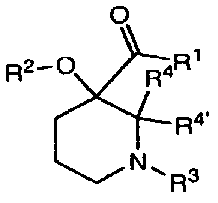
1つの態様においては、本発明の化合物は、式Iに示される一般的構造: In one embodiment, the compounds of the invention have the general structure shown in Formula I:
R1は、ヘテロシクリル、ヘテロシクレニル、またはヘテロアリールであり、ここでは、上記ヘテロシクリル、ヘテロシクレニル、またはヘテロアリールにはそれぞれ、別々に、環上の1〜3個のヘテロ原子が含まれ、そしてさらに、上記ヘテロシクリル、またはヘテロシクレニル、またはヘテロアリールはそれぞれ、式Iの中のカルボニルに対して、そのヘテロ原子のうちの1つによって結合され、なおさらに、上記ヘテロシクリル、ヘテロシクレニル、またはヘテロアリールはそれぞれ、非置換であっても、また、少なくとも1つの部分で別々に置換されていてもよく、上記少なくとも1つの部分は、同じであっても、また異なっていてもよく、基Zから選択される;
または、
R1は、ヘテロアルキルまたはヘテロアルケニルであり、ここでは、上記ヘテロアルキルまたはヘテロアルケニルにはそれぞれ、1〜3個のヘテロ原子が含まれ、さらに、上記ヘテロアルキルまたはヘテロアルケニルはそれぞれ、式Iの中のカルボニルに対して、そのヘテロ原子のうちの1つによって結合され、なおさらに、上記ヘテロアルキルまたはヘテロアルケニルのそれぞれは、非置換であっても、また、少なくとも1つの部分で別々に置換されていてもよく、上記少なくとも1つの部分は、同じであっても、また異なっていてもよく、基Zから選択される;
式中、Zはそれぞれ、同じであっても、また異なっていてもよく、H、−OR9、−アルキルNR10R11、−アルケニルNR10R11、−CO2R9、−CONR10R11、−NR10CONR10R11、−NR10COR9、アルコキシアルキル、アルコキシアルケニル、シアノ、ハロゲン、トリハロアルキル、ジハロアルキル、モノハロアルキル、トリハロアルケニル、ジハロアルケニル、モノハロアルケニル、トリハロヘテロアルキル、ジハロヘテロアルキル、モノハロヘテロアルキル、トリハロヘテロアルケニル、ジハロヘテロアルケニル、モノハロヘテロアルケニル、アルキル、アルケニル、アルキニル、ヘテロアルキル、ヘテロアルケニル、アリール、アリールアルキル、アリールアルケニル、ヘテロアリール、ヘテロアリールアルキル、ヘテロアリールアルケニル、ヘテロシクレニル、ヘテロシクレニルアルキル、ヘテロシクレニルアルケニル、ヘテロシクリル、ヘテロシクリルアルキル、ヘテロシクリルアルケニル、シクロアルキル、シクロアルキルアルキル、シクロアルキルアルケニル、シクレニル、シクレニルアルキル、シクレニルアルケニル、−O−アルキル、−O−アルケニル、−O−アルキニル、−O−ヘテロアルキル、−O−ヘテロアルケニル、−O−アリール、O−アリールアルキル、O−アリールアルケニル、−O−ヘテロアリール、−O−ヘテロアリールアルキル、−O−ヘテロアリールアルケニル、−O−ヘテロシクレニル、−O−ヘテロシクレニルアルキル、−O−ヘテロシクレニルアルケニル、−O−ヘテロシクリル、−O−ヘテロシクリルアルキル、−O−ヘテロシクリルアルケニル、−O−シクロアルキル、−O−シクロアルキルアルキル、−O−シクロアルキルアルケニル、−O−シクレニル、−O−シクレニルアルキル、−O−シクレニルアルケニル、−S−アルキル、−S−アルケニル、−S−アルキニル、−S−ヘテロアルキル、−S−ヘテロアルケニル、−S−アリール、−S−アリールアルキル、−S−アリールアルケニル、−S−ヘテロアリール、−S−ヘテロアリールアルキル、−S−ヘテロアリールアルケニル、−S−ヘテロシクレニル、−S−ヘテロシクレニルアルキル、−S−ヘテロシクレニルアルケニル、−S−ヘテロシクリル、−S−ヘテロシクリルアルキル、−S−ヘテロシクリルアルケニル、−S−シクロアルキル、−S−シクロアルキルアルキル、−S−シクロアルキルアルケニル、−S−シクレニル、−S−シクレニルアルキル、−S−シクレニルアルケニル、−アルキル−SH、−NR10−アルキル、−NR10−アルケニル、−NR10−アルキニル、−NR10−ヘテロアルキル、−NR10−ヘテロアルケニル、−NR10−アリール、−NR10−アリールアルキル、−NR10−アリールアルケニル、−NR10−ヘテロアリール、−NR10−ヘテロアリールアルキル、−NR10−ヘテロアリールアルケニル、−NR10−ヘテロシクレニル、−NR10−ヘテロシクレニルアルキル、−NR10−ヘテロシクレニルアルケニル、−NR10−ヘテロシクリル、−NR10−ヘテロシクリルアルキル、−NR10−ヘテロシクリルアルケニル、−NR10−シクロアルキル、−NR10−シクロアルキルアルキル、−NR10−シクロアルキルアルケニル、−NR10−シクレニル、−NR10−シクレニルアルキル、−NR10−シクレニルアルケニル、−CO−アルキル、−CO−アルケニル、−CO−アルキニル、−CO−ヘテロアルキル、−CO−ヘテロアルケニル、−CO−アリール、−CO−アリールアルキル、−CO−アリールアルケニル、−CO−ヘテロアリール、−CO−ヘテロアリールアルキル、−CO−ヘテロアリールアルケニル、−CO−ヘテロシクレニル、−CO−ヘテロシクレニルアルキル、−CO−ヘテロシクレニルアルケニル、−CO−ヘテロシクリル、−CO−ヘテロシクリルアルキル、−CO−ヘテロシクリルアルケニル、−CO−シクロアルキル、−CO−シクロアルキルアルキル、−CO−シクロアルキルアルケニル、−CO−シクレニル、−CO−シクレニルアルキル、−CO−シクレニルアルケニル、−SO2−アルキル、−SO2−アルケニル、−SO2−アルキニル、−SO2−ヘテロアルキル、−SO2−ヘテロアルケニル、−SO2−アリール、−SO2−アリールアルキル、−SO2−アリールアルケニル、−SO2−ヘテロアリール、−SO2−ヘテロアリールアルキル、−SO2−ヘテロアリールアルケニル、−SO2−ヘテロシクレニル、−SO2−ヘテロシクレニルアルキル、−SO2−ヘテロシクレニルアルケニル、−SO2−ヘテロシクリル、−SO2−ヘテロシクリルアルキル、−SO2−ヘテロシクリルアルケニル、−SO2−シクロアルキル、−SO2−シクロアルキルアルキル、−SO2−シクロアルキルアルケニル、−SO2−シクレニル、−SO2−シクレニルアルキル、−SO2−シクレニルアルケニル、スピロヘテロアリール、スピロヘテロシクレニル、スピロヘテロシクリル、スピロシクロアルキル、スピロシクレニル、スピロアリールからなる群より別々に選択され、上記アルキル、アルケニル、アルキニル、ヘテロアルキル、ヘテロアルケニル、アリール、アリールアルキル、アリールアルケニル、ヘテロアリール、ヘテロアリールアルキル、ヘテロアリールアルケニル、ヘテロシクレニル、ヘテロシクレニルアルキル、ヘテロシクレニルアルケニル、ヘテロシクリル、ヘテロシクリルアルキル、ヘテロシクリルアルケニル、シクロアルキル、シクロアルキルアルキル、シクロアルキルアルケニル、シクレニル、シクレニルアルキル、シクレニルアルケニル、−O−アルキル、−O−アルケニル、−O−アルキニル、−O−ヘテロアルキル、−O−ヘテロアルケニル、−O−アリール、O−アリールアルキル、O−アリールアルケニル、−O−ヘテロアリール、−O−ヘテロアリールアルキル、−O−ヘテロアリールアルケニル、−O−ヘテロシクレニル、−O−ヘテロシクレニルアルキル、−O−ヘテロシクレニルアルケニル、−O−ヘテロシクリル、−O−ヘテロシクリルアルキル、−O−ヘテロシクリルアルケニル、−O−シクロアルキル、−O−シクロアルキルアルキル、−O−シクロアルキルアルケニル、−O−シクレニル、−O−シクレニルアルキル、−O−シクレニルアルケニル、−S−アルキル、−S−アルケニル、−S−アルキニル、−S−ヘテロアルキル、−S−ヘテロアルケニル、−S−アリール、−S−アリールアルキル、−S−アリールアルケニル、−S−ヘテロアリール、−S−ヘテロアリールアルキル、−S−ヘテロアリールアルケニル、−S−ヘテロシクレニル、−S−ヘテロシクレニルアルキル、−S−ヘテロシクレニルアルケニル、−S−ヘテロシクリル、−S−ヘテロシクリルアルキル、−S−ヘテロシクリルアルケニル、−S−シクロアルキル、−S−シクロアルキルアルキル、−S−シクロアルキルアルケニル、−S−シクレニル、−S−シクレニルアルキル、−S−シクレニルアルケニル、−アルキル−SH、−NR10−アルキル、−NR10−アルケニル、−NR10−アルキニル、−NR10−ヘテロアルキル、−NR10−ヘテロアルケニル、−NR10−アリール、−NR10−アリールアルキル、−NR10−アリールアルケニル、−NR10−ヘテロアリール、−NR10−ヘテロアリールアルキル、
−NR10−ヘテロアリールアルケニル、−NR10−ヘテロシクレニル、−NR10−ヘテロシクレニルアルキル、−NR10−ヘテロシクレニルアルケニル、−NR10−ヘテロシクリル、−NR10−ヘテロシクリルアルキル、−NR10−ヘテロシクリルアルケニル、−NR10−シクロアルキル、−NR10−シクロアルキルアルキル、−NR10−シクロアルキルアルケニル、−NR10−シクレニル、−NR10−シクレニルアルキル、−NR10−シクレニルアルケニル、−CO−アルキル、−CO−アルケニル、−CO−アルキニル、−CO−ヘテロアルキル、−CO−ヘテロアルケニル、−CO−アリール、−CO−アリールアルキル、−CO−アリールアルケニル、−CO−ヘテロアリール、−CO−ヘテロアリールアルキル、−CO−ヘテロアリールアルケニル、−CO−ヘテロシクレニル、−CO−ヘテロシクレニルアルキル、−CO−ヘテロシクレニルアルケニル、−CO−ヘテロシクリル、−CO−ヘテロシクリルアルキル、−CO−ヘテロシクリルアルケニル、−CO−シクロアルキル、−CO−シクロアルキルアルキル、−CO−シクロアルキルアルケニル、−CO−シクレニル、−CO−シクレニルアルキル、−CO−シクレニルアルケニル、−SO2−アルキル、−SO2−アルケニル、−SO2−アルキニル、−SO2−ヘテロアルキル、−SO2−ヘテロアルケニル、−SO2−アリール、−SO2−アリールアルキル、−SO2−アリールアルケニル、−SO2−ヘテロアリール、−SO2−ヘテロアリールアルキル、−SO2−ヘテロアリールアルケニル、−SO2−ヘテロシクレニル、−SO2−ヘテロシクレニルアルキル、−SO2−ヘテロシクレニルアルケニル、−SO2−ヘテロシクリル、−SO2−ヘテロシクリルアルキル、−SO2−ヘテロシクリルアルケニル、−SO2−シクロアルキル、−SO2−シクロアルキルアルキル、−SO2−シクロアルキルアルケニル、−SO2−シクレニル、−SO2−シクレニルアルキル、−SO2−シクレニルアルケニル、スピロヘテロアリール、スピロヘテロシクレニル、スピロヘテロシクリル、スピロシクロアルキル、スピロシクレニル、スピロアリールはそれぞれ非置換であっても、また、1つ以上の部分で置換されていてもよく、上記1つ以上の部分は、同じであっても、また異なっていてもよく、それぞれの部分は、ハロゲン、−CN、ヒドロキシアルキル、ヒドロキシアルケニル、アルキル、アルケニル、アルキニル、−O−アルキル、−O−アルケニル、−O−アルキニル、−S−アルキル、−S−アルケニル、−S−アルキニル、ヒドロキシル、カルボキシル、−CO2−アルキル、−CO−NR8R9、−NR8COR9、−NR8SO2R9、−NR8CONR8R9、−NR8CO2R9、−OR9、−SR9、−SO2R9、−COR9、−アルキルNR8R9、−アルケニルNR8R9、−NR8R9、−ヘテロアルキル、ヘテロアルケニル、トリハロアルキル、ジハロアルキル、モノハロアルキル、トリハロアルケニル、ジハロアルケニル、モノハロアルケニル、−トリハロヘテロアルキル、ジハロヘテロアルキル、モノハロヘテロアルキル、アルコキシアルキル、アルコキシアルコキシ、アルコキシ(アルコキシ)bアルコキシル、ヒドロキシアルコキシアルコキシル、ヒドロキシアルコキシ(アルコキシ)bアルコキシル、−S−アルキル−S−アルキル、−S−アルキル−O−アルキル、−O−アルキル−S−アルキル、−S−アルキル−(S−アルキル)b−S−アルキル、−S−アルキル−(O−アルキル)b−S−アルキル、−O−アルキル−(S−アルキル)b−O−アルキル、−S−アルキル−(S−アルキル)b−O−アルキル、−O−アルキル−(S−アルキル)b−S−アルキル、−S−アルキル−(S−アルキル−O−アルキル)b−S−アルキル、−O−アルキル−(S−アルキル−O−アルキル)b−O−アルキル、SH−アルコキシアルコキシル、−S−アルキル−S−アルキル−SH、−S−アルキル−(S−アルキル)b−SH、−O−アルキル−S−アルキル−SH、−O−アルキル−(S−アルキル)b−SH、ヘテロシクリル、ヘテロシクレニル、ヘテロアリール、シクロアルキル、シクレニル、アリール、ヘテロシクリルアルキル、ヘテロシクレニルアルキル、ヘテロアリールアルキル、シクロアルキルアルキル、シクレニルアルキル、アリールアルキル、−O−アルキル−NR10−アルキル、−NR10−アルキル−O−アルキル、および−NR10−アルキル−NR10−アルキル、−NR10−アルキル−S−アルキル、−S−アルキル−NR10−アルキル、−NR10−アルキル−(NR10−アルキル)b−NR10−アルキルからなる群より別々に選択される;
さらに、式中、R8およびR9は、別々に、水素、ヒドロキシル、−NH2、−N(アルキル)2、−N(アルケニル)2、−NHアルキル、−NHアルケニル、−NH−アルキル−O−アルキル、−NH−アルケニル−O−アルキル、−アルキル−S−アルキル、−アルキル−O−アルキル、−アルケニル−O−アルケニル、−アルキル−O−アルケニル、−アルケニル−S−アルキル、−アルケニル−S−アルケニル、トリフルオロアルキル、ジフルオロアルキル、モノフルオロアルキル、アルコキシ、−S−アルキル、−アルキル−S−アルキル、アルコキシアルキル、アルキル、アルケニル、アルキニル、シクロアルキル、シクレニル、アリール、ヘテロシクリル、ヘテロシクレニル、ヘテロアリール、シクロアルキルアルキル、シクレニルアルキル、アリールアルキル、ヘテロシクリルアルキル、ヘテロシクレニルアルキル、ヘテロアリールアルキル、ヘテロアルキル、ヘテロアルケニル、−アルキルN(アルキル)2、−アルキルNHアルキル、−アルキル−NH2、−アルケニル−N(アルキル)2、−アルキル−N(アルケニル)2、−アルキル−Nアルキル(アルケニル)、−アルケニル−NH2、ヒドロキシアルキル、ヒドロキシアルケニル、−アルキル−SH、−アルケニル−SH、−アルキルCO2H、−アルキルCO2アルキル、−アルキルCONHアルキル、−アルキルCONH2、−アルキルCON(アルキル)2、−アルキルCON(アルケニル)2からなる群より選択され、上記シクロアルキル、シクレニル、アリール、ヘテロシクリル、ヘテロシクレニル、ヘテロアリール、シクロアルキルアルキル、シクレニルアルキル、アリールアルキル、ヘテロシクリルアルキル、ヘテロシクレニルアルキル、ヘテロアリールアルキル、ヘテロアルキル、ヘテロアルケニルはそれぞれ、非置換であっても、また、1つ以上の部分で置換されていてもよく、上記1つ以上の部分は、同じであっても、また異なっていてもよく、アルキル、ヘテロアルキル、ヘテロアルケニル、アルケニル、アルキニル、アルコキシアルコキシ、−S−アルキル−S−アルキル、ヒドロキシアルキル、−アルキルSH、ヒドロキシアルケニル、−アルキル−NH2、−アルキル−N(アルキル)2、およびアルキルNHアルキルからなる群より別々に選択される;
bは0〜3である;
R10およびR11は、同じであっても、また異なっていてもよく、水素、アルキル、アルケニル、アルキニル、シクロアルキル、シクレニル、アリール、ヘテロシクリル、ヘテロシクレニル、ヘテロアリール、シクロアルキルアルキル、シクレニルアルキル、アリールアルキル、ヘテロシクリルアルキル、ヘテロシクレニルアルキル、ヘテロアリールアルキル、アルコキシアルキル、アルケノキシアルキル、アルキノキシアルキル、シクロアルコキシアルキル、シクロアルケノキシアルキル、アリールオキシアルキル、ヘテロシクロアルコキシアルキル、ヘテロシクロアルケノキシアルキル、ヘテロアリールオキシアルキル、シクロアルキルアルコキシアルキル、シクレニルアルコキシアルキル、アリールアルコキシアルキル、ヘテロシクリルアルコキシアルキル、ヘテロシクレニルアルコキシアルキル、ヘテロアリールアルコキシアルキル、−アルキル−S−アルキル、−アルキル−S−アルケニル、−アルキル−S−アルキニル、−アルキル−S−シクロアルキル、−アルキル−S−シクレニル、−アルキル−S−アリール、−アルキル−S−ヘテロシクリル、−アルキル−S−ヘテロシクレニル、−アルキル−S−ヘテロアリール、−アルキル−S−シクロアルキルアルキル、−アルキル−S−シクレニルアルキル、−アルキル−S−アリールアルキル、−アルキル−S−ヘテロシクリルアルキル、−アルキル−S−ヘテロシクレニルアルキル、−アルキル−S−ヘテロアリールアルキル、ヒドロキシアルキル、ヒドロキシアルケニル、−アルキル−SH、−アルケニル−SH、−アルキルNH2、−アルケニルNH2、−COR9、−CO2アルキル、−CO2アルケニル、−アルキルN(アルコキシ)2、−アルキルNHアルコキシ、−CONHSO2アルキル、−CONHSO2アルケニル、−CONアルキルSO2アルキル、−CONHアルキル、−CONHアルケニル、−アルキルCO2アルキル、−アルキルCONHアルキル、−アルキルCONH2、−アルキルCON(アルキル)2、−アルキルCON(アルケニル)2、−アルキルCO2H、−アルキルN(アルキル)2、−アルキルNHアルキル、−アルキル−NH2、−アルケニル−N(アルキル)2、−アルキル−N(アルケニル)2、−アルキル−Nアルキル(アルケニル)、−アルケニル−NH2からなる群より別々に選択される;
式中、上記シクロアルキル、シクレニル、アリール、ヘテロシクリル、ヘテロシクレニル、ヘテロアリール、シクロアルキルアルキル、シクレニルアルキル、アリールアルキル、ヘテロシクリルアルキル、ヘテロシクレニルアルキル、ヘテロアリールアルキル、シクロアルコキシアルキル、シクロアルケノキシアルキル、アリールオキシアルキル、ヘテロシクロアルコキシアルキル、ヘテロシクロアルケノキシアルキル、ヘテロアリールオキシアルキル、シクロアルキルアルコキシアルキル、シクレニルアルコキシアルキル、アリールアルコキシアルキル、ヘテロシクリルアルコキシアルキル、ヘテロシクレニルアルコキシアルキル、ヘテロアリールアルコキシアルキルはそれぞれ、非置換であっても、また、1つ以上の部分で置換されていてもよく、上記1つ以上の部分は、同じであっても、また異なっていてもよく、それぞれの部分は、アルキル、アルケニル、アルキニル、−CN、ヒドロキシル、−SH、−NH2、−N(アルキル)2、−N(アルケニル)2、−N(アルコキシアルキル)2、トリフルオロアルキル、ジフルオロアルキル、モノフルオロアルキル、アルコキシ、−S−アルキル、ハロゲン、ヒドロキシアルキル、ヒドロキシアルケニル、−アルキルSH、−COR9、−SO2R9、ヘテロアルキル、アルコキシアルコキシ、−S−アルキル−S−アルキル、−アルキルNH2、−アルキル−N(アルキル)2、および−アルキルNHアルキルからなる群より別々に選択される;
さらに式中、式Iの中の任意の−NR10R11においては、上記R10およびR11は、状況に応じて、上記−NR10R11のNと一緒に結合して、環を形成することができる;
Aは、O、CR8R9、S、SO2、NR10、またはCOである;
mは、0〜2である;
R2は、アリール、ヘテロアリール、シクリル、ヘテロシクリル、シクレニル、またはヘテロシクレニルであり、ここでは、上記アリール、ヘテロアリール、シクリル、ヘテロシクリル、シクレニル、またはヘテロシクレニルはそれぞれ、非置換であっても、また、1つ以上の部分で置換されていてもよく、上記1つ以上の部分は、同じであっても異なっていてもよく、それぞれの部分は、トリハロアルキル、ジハロアルキル、モノハロアルキル、トリハロアルケニル、ジハロアルケニル、モノハロアルケニル、ハロゲン、CN、ヒドロキシル、チオヒドロキシル、アミン、アルコキシ、アルケノキシ、アリールオキシ、シクレニルオキシ、シクロアルキルオキシ、ヘテロアリールオキシ、ヘテロシクレニルオキシ、ヘテロシクリルオキシ、アルキル、アルケニル、トリフルオロアルコキシ、ジフルオロアルコキシ、モノフルオロアルコキシ、ヘテロアルキル、ヘテロアルケニル、カルボキシル、−CONR10R11、−COOR9、−OCOR9、−NR10COR9、シクロアルキル、ヘテロシクリル、−NR10R11、−S−アルキル、−S−アルケニル、−S−シクロアルキル、−S−シクレニル、−S−アリール、−S−ヘテロシクリル、−S−ヘテロシクレニル、−S−ヘテロアリール、−S−トリフルオロアルキル、−S−ジフルオロアルキル、−S−モノフルオロアルキル、−S−トリフルオロアルケニル、−S−ジフルオロアルケニル、−S−モノフルオロアルケニルシクレニル、ヘテロシクレニル、アリール、ヘテロアリール、およびアルキニルからなる群より別々に選択される;
R3は、
R 1 is heterocyclyl, heterocyclenyl, or heteroaryl, wherein each of the heterocyclyl, heterocyclenyl, or heteroaryl separately contains 1 to 3 heteroatoms on the ring, and further Heterocyclyl, or heterocyclenyl, or heteroaryl, each is attached to the carbonyl in Formula I by one of its heteroatoms, and still further, said heterocyclyl, heterocyclenyl, or heteroaryl, each unsubstituted Or may be separately substituted with at least one moiety, and the at least one moiety may be the same or different and is selected from the group Z;
Or
R 1 is heteroalkyl or heteroalkenyl, wherein each of the above heteroalkyl or heteroalkenyl contains 1 to 3 heteroatoms, and each of the above heteroalkyl or heteroalkenyl is each of formula I Bonded to one of its heteroatoms to the carbonyl therein, and still further, each of the heteroalkyl or heteroalkenyl is unsubstituted or separately substituted with at least one moiety. The at least one moiety may be the same or different and is selected from the group Z;
In the formula, each Z may be the same or different, and H, -OR 9 , -alkyl NR 10 R 11 , -alkenyl NR 10 R 11 , -CO 2 R 9 , -CONR 10 R 11 , —NR 10 CONR 10 R 11 , —NR 10 COR 9 , alkoxyalkyl, alkoxyalkenyl, cyano, halogen, trihaloalkyl, dihaloalkyl, monohaloalkyl, trihaloalkenyl, dihaloalkenyl, monohaloalkenyl, trihaloheteroalkyl, Dihaloheteroalkyl, monohaloheteroalkyl, trihaloheteroalkenyl, dihaloheteroalkenyl, monohaloheteroalkenyl, alkyl, alkenyl, alkynyl, heteroalkyl, heteroalkenyl, aryl, arylalkyl, arylalkenyl, het Teloaryl, heteroarylalkyl, heteroarylalkenyl, heterocyclenyl, heterocyclenylalkyl, heterocyclenylalkenyl, heterocyclyl, heterocyclylalkyl, heterocyclylalkenyl, cycloalkyl, cycloalkylalkyl, cycloalkylalkenyl, cyclenyl, cyclenylalkyl, cyclenylalkenyl -O-alkyl, -O-alkenyl, -O-alkynyl, -O-heteroalkyl, -O-heteroalkenyl, -O-aryl, O-arylalkyl, O-arylalkenyl, -O-heteroaryl,- O-heteroarylalkyl, -O-heteroarylalkenyl, -O-heterocyclenyl, -O-heterocyclenylalkyl, -O-heterocyclenylalkenyl, -O-hete Cyclyl, -O-heterocyclylalkyl, -O-heterocyclylalkenyl, -O-cycloalkyl, -O-cycloalkylalkyl, -O-cycloalkylalkenyl, -O-cyclenyl, -O-cyclenylalkyl, -O-cyclene Nylalkenyl, -S-alkyl, -S-alkenyl, -S-alkynyl, -S-heteroalkyl, -S-heteroalkenyl, -S-aryl, -S-arylalkyl, -S-arylalkenyl, -S- Heteroaryl, -S-heteroarylalkyl, -S-heteroarylalkenyl, -S-heterocyclenyl, -S-heterocyclenylalkyl, -S-heterocyclenylalkenyl, -S-heterocyclyl, -S-heterocyclylalkyl,- S-heterocyclylalkenyl, -S-cycloa Kill, -S- cycloalkylalkyl, -S- cycloalkyl, cycloalkenyl, -S- Shikureniru, -S- Shikure sulfonyl alkyl, -S- Shikure alkenyl, cycloalkenyl, - alkyl -SH, -NR 10 - alkyl, -NR 10 - alkenyl, -NR 10 - alkynyl, -NR 10 - heteroalkyl, -NR 10 - heteroalkenyl, -NR 10 - aryl, -NR 10 - arylalkyl, -NR 10 - arylalkenyl, -NR 10 - heteroaryl, - NR 10 - heteroarylalkyl, -NR 10 - heteroarylalkenyl, -NR 10 - heterocyclenyl, -NR 10 - Heterocyclenylalkyl, -NR 10 - Heterocyclenylalkyl alkenyl, -NR 10 - heterocyclyl, -NR 10 - heterocyclyl Alkyl, NR 10 - heterocyclylalkenyl, -NR 10 - cycloalkyl, -NR 10 - cycloalkylalkyl, -NR 10 - cycloalkylalkenyl, -NR 10 - Shikureniru, -NR 10 - Shikure sulfonyl alkyl, -NR 10 - Shikure alkenyl alkenyl , -CO-alkyl, -CO-alkenyl, -CO-alkynyl, -CO-heteroalkyl, -CO-heteroalkenyl, -CO-aryl, -CO-arylalkyl, -CO-arylalkenyl, -CO-heteroaryl , -CO-heteroarylalkyl, -CO-heteroarylalkenyl, -CO-heterocyclenyl, -CO-heterocyclenylalkyl, -CO-heterocyclenylalkenyl, -CO-heterocyclyl, -CO-heterocyclylalkyl, -CO - heterocyclylalkenyl, -CO- cycloalkyl, -CO- cycloalkylalkyl, -CO- cycloalkylalkenyl, -CO- Shikureniru, -CO- Shikure sulfonyl alkyl, -CO- Shikure alkenyl alkenyl, -SO 2 - alkyl, - SO 2 - alkenyl, -SO 2 - alkynyl, -SO 2 - heteroalkyl, -SO 2 - heteroalkenyl, -SO 2 - aryl, -SO 2 - arylalkyl, -SO 2 - arylalkenyl, -SO 2 - heteroaryl aryl, -SO 2 - heteroarylalkyl, -SO 2 - heteroaryl alkenyl, -SO 2 - heterocyclenyl, -SO 2 - Heterocyclenylalkyl, -SO 2 - Heterocyclenylalkyl alkenyl, -SO 2 - heterocyclyl, -SO 2 - heterocyclyl al Le, -SO 2 - heterocyclylalkenyl, -SO 2 - cycloalkyl, -SO 2 - cycloalkylalkyl, -SO 2 - cycloalkylalkenyl, -SO 2 - Shikureniru, -SO 2 - Shikure alkenyl alkyl, -SO 2 - Selected from the group consisting of cyclenylalkenyl, spiroheteroaryl, spiroheterocyclenyl, spiroheterocyclyl, spirocycloalkyl, spirocyclenyl, spiroaryl, and the above alkyl, alkenyl, alkynyl, heteroalkyl, heteroalkenyl, aryl, arylalkyl , Arylalkenyl, heteroaryl, heteroarylalkyl, heteroarylalkenyl, heterocyclenyl, heterocyclenylalkyl, heterocyclenylalkenyl, heterocyclyl, heterocyclyl Alkyl, heterocyclylalkenyl, cycloalkyl, cycloalkylalkyl, cycloalkylalkenyl, cyclenyl, cyclenylalkyl, cyclenylalkenyl, -O-alkyl, -O-alkenyl, -O-alkynyl, -O-heteroalkyl, -O- Heteroalkenyl, -O-aryl, O-arylalkyl, O-arylalkenyl, -O-heteroaryl, -O-heteroarylalkenyl, -O-heteroarylalkenyl, -O-heterocyclenyl, -O-heterocyclenylalkyl , -O-heterocyclenylalkenyl, -O-heterocyclyl, -O-heterocyclylalkyl, -O-heterocyclylalkenyl, -O-cycloalkyl, -O-cycloalkylalkyl, -O-cycloalkylalkenyl, -O Cyclenyl, -O-cyclenylalkyl, -O-cyclenylalkenyl, -S-alkyl, -S-alkenyl, -S-alkynyl, -S-heteroalkyl, -S-heteroalkenyl, -S-aryl, -S -Arylalkyl, -S-arylalkenyl, -S-heteroaryl, -S-heteroarylalkyl, -S-heteroarylalkenyl, -S-heterocyclenyl, -S-heterocyclenylalkyl, -S-heterocyclenylalkenyl -S-heterocyclyl, -S-heterocyclylalkyl, -S-heterocyclylalkenyl, -S-cycloalkyl, -S-cycloalkylalkyl, -S-cycloalkylalkenyl, -S-cyclenyl, -S-cyclenylalkyl, -S-cyclenylalkenyl, -alkyl-SH, -N R 10 - alkyl, -NR 10 - alkenyl, -NR 10 - alkynyl, -NR 10 - heteroalkyl, -NR 10 - heteroalkenyl, -NR 10 - aryl, -NR 10 - arylalkyl, -NR 10 - arylalkenyl , -NR < 10 > -heteroaryl, -NR < 10 > -heteroarylalkyl,
-NR 10 - heteroarylalkenyl, -NR 10 - heterocyclenyl, -NR 10 - Heterocyclenylalkyl, -NR 10 - Heterocyclenylalkyl alkenyl, -NR 10 - heterocyclyl, -NR 10 - heterocyclylalkyl, -NR 10 - heterocyclyl alkenyl, -NR 10 - cycloalkyl, -NR 10 - cycloalkylalkyl, -NR 10 - cycloalkylalkenyl, -NR 10 - Shikureniru, -NR 10 - Shikure sulfonyl alkyl, -NR 10 - Shikure alkenyl alkenyl, -CO- Alkyl, -CO-alkenyl, -CO-alkynyl, -CO-heteroalkyl, -CO-heteroalkenyl, -CO-aryl, -CO-arylalkyl, -CO-arylalkenyl, -CO-heteroaryl, -C -Heteroarylalkyl, -CO-heteroarylalkenyl, -CO-heterocyclenyl, -CO-heterocyclenylalkyl, -CO-heterocyclenylalkenyl, -CO-heterocyclyl, -CO-heterocyclylalkyl, -CO-heterocyclylalkenyl, -CO- cycloalkyl, -CO- cycloalkylalkyl, -CO- cycloalkylalkenyl, -CO- Shikureniru, -CO- Shikure sulfonyl alkyl, -CO- Shikure alkenyl alkenyl, -SO 2 - alkyl, -SO 2 - alkenyl , -SO 2 - alkynyl, -SO 2 - heteroalkyl, -SO 2 - heteroalkenyl, -SO 2 - aryl, -SO 2 - arylalkyl, -SO 2 - arylalkenyl, -SO 2 - heteroaryl, -SO 2 - hetero Reel alkyl, -SO 2 - heteroaryl alkenyl, -SO 2 - heterocyclenyl, -SO 2 - Heterocyclenylalkyl, -SO 2 - Heterocyclenylalkyl alkenyl, -SO 2 - heterocyclyl, -SO 2 - heterocyclylalkyl, -SO 2 - heterocyclylalkenyl, -SO 2 - cycloalkyl, -SO 2 - cycloalkylalkyl, -SO 2 - cycloalkylalkenyl, -SO 2 - Shikureniru, -SO 2 - Shikure alkenyl alkyl, -SO 2 - Shikure alkenyl, cycloalkenyl, Spiroheteroaryl, spiroheterocyclenyl, spiroheterocyclyl, spirocycloalkyl, spirocyclenyl, spiroaryl each may be unsubstituted or substituted with one or more moieties, and the one or more moieties Is the same Each moiety may be halogen, —CN, hydroxyalkyl, hydroxyalkenyl, alkyl, alkenyl, alkynyl, —O-alkyl, —O-alkenyl, —O-alkynyl, -S- alkyl, -S- alkenyl, -S- alkynyl, hydroxyl, carboxyl, -CO 2 - alkyl, -CO-NR 8 R 9, -NR 8 COR 9, -NR 8 SO 2 R 9, -NR 8 CONR 8 R 9 , —NR 8 CO 2 R 9 , —OR 9 , —SR 9 , —SO 2 R 9 , —COR 9 , —alkyl NR 8 R 9 , —alkenyl NR 8 R 9 , —NR 8 R 9 , -Heteroalkyl, heteroalkenyl, trihaloalkyl, dihaloalkyl, monohaloalkyl, trihaloalkenyl, dihaloalkenyl , Monohaloalkyl alkenyl, - trihaloalkyl heteroalkyl, dihalo heteroalkyl, monohaloalkyl heteroalkyl, alkoxyalkyl, alkoxyalkoxy, alkoxy (alkoxy) b alkoxyl, hydroxy alkoxyalkoxyl, hydroxyalkoxy (alkoxy) b alkoxyl, -S- alkyl - S-alkyl, -S-alkyl-O-alkyl, -O-alkyl-S-alkyl, -S-alkyl- (S-alkyl) b -S-alkyl, -S-alkyl- (O-alkyl) b- S-alkyl, -O-alkyl- (S-alkyl) b -O-alkyl, -S-alkyl- (S-alkyl) b -O-alkyl, -O-alkyl- (S-alkyl) b -S- alkyl, -S- alkyl - (S- alkyl -O- alkyl) b -S- A Kill, -O- alkyl - (S- alkyl -O- alkyl) b -O- alkyl, SH- alkoxyalkoxyl, -S- alkyl -S- alkyl -SH, -S- alkyl - (S- alkyl) b - SH, -O-alkyl-S-alkyl-SH, -O-alkyl- (S-alkyl) b -SH, heterocyclyl, heterocyclenyl, heteroaryl, cycloalkyl, cyclenyl, aryl, heterocyclylalkyl, heterocyclenylalkyl, hetero arylalkyl, cycloalkylalkyl, Shikure alkenyl, arylalkyl, -O- alkyl -NR 10 - alkyl, -NR 10 - alkyl -O- alkyl, and -NR 10 - alkyl -NR 10 - alkyl, -NR 10 - Alkyl-S-alkyl, -S-alkyl-N 10 - alkyl, -NR 10 - alkyl - (NR 10 - alkyl) b -NR 10 - it is independently selected from the group consisting of alkyl;
Further, in the formula, R 8 and R 9 are each independently hydrogen, hydroxyl, —NH 2 , —N (alkyl) 2 , —N (alkenyl) 2 , —NHalkyl, —NHalkenyl, —NH-alkyl- O-alkyl, -NH-alkenyl-O-alkyl, -alkyl-S-alkyl, -alkyl-O-alkyl, -alkenyl-O-alkenyl, -alkyl-O-alkenyl, -alkenyl-S-alkyl, -alkenyl -S-alkenyl, trifluoroalkyl, difluoroalkyl, monofluoroalkyl, alkoxy, -S-alkyl, -alkyl-S-alkyl, alkoxyalkyl, alkyl, alkenyl, alkynyl, cycloalkyl, cyclenyl, aryl, heterocyclyl, heterocyclenyl, Heteroaryl, cycloalkylalkyl , Shikure alkenyl, arylalkyl, heterocyclylalkyl, Heterocyclenylalkyl, heteroarylalkyl, heteroalkyl, heteroalkenyl, - alkyl N (alkyl) 2, - alkyl NH-alkyl, - alkyl -NH 2, - alkenyl -N ( alkyl) 2, - alkyl -N (alkenyl) 2, - alkyl -N-alkyl (alkenyl), - alkenyl -NH 2, hydroxyalkyl, hydroxy alkenyl, - alkyl -SH, - alkenyl -SH, - alkyl CO 2 H, - alkyl CO 2 alkyl, - alkyl CONH-alkyl, - alkyl CONH 2, - alkyl CON (alkyl) 2, - alkyl CON selected from the group consisting of (alkenyl) 2, said cycloalkyl, Shikureniru, aryl, het Rocyclyl, heterocyclenyl, heteroaryl, cycloalkylalkyl, cyclenylalkyl, arylalkyl, heterocyclylalkyl, heterocyclenylalkyl, heteroarylalkyl, heteroalkyl, heteroalkenyl are each unsubstituted or one or more And the one or more moieties may be the same or different and are alkyl, heteroalkyl, heteroalkenyl, alkenyl, alkynyl, alkoxyalkoxy, -S-alkyl. -S- alkyl, hydroxyalkyl, - alkyl SH, hydroxy alkenyl, - alkyl -NH 2, - is independently selected from alkyl -N (alkyl) 2, and the group consisting of alkyl NH alkyl;
b is 0-3;
R 10 and R 11 may be the same or different and are hydrogen, alkyl, alkenyl, alkynyl, cycloalkyl, cyclenyl, aryl, heterocyclyl, heterocyclenyl, heteroaryl, cycloalkylalkyl, cyclenylalkyl, Arylalkyl, heterocyclylalkyl, heterocyclenylalkyl, heteroarylalkyl, alkoxyalkyl, alkenoxyalkyl, alkynoxyalkyl, cycloalkoxyalkyl, cycloalkenoxyalkyl, aryloxyalkyl, heterocycloalkoxyalkyl, heterocycloalkenyl Noxyalkyl, heteroaryloxyalkyl, cycloalkylalkoxyalkyl, cyclenylalkoxyalkyl, arylalkoxyalkyl, heterocy Arylalkoxyalkyl, heterocyclenylalkoxyalkyl, heteroarylalkoxyalkyl, -alkyl-S-alkyl, -alkyl-S-alkenyl, -alkyl-S-alkynyl, -alkyl-S-cycloalkyl, -alkyl-S-cyclenyl -Alkyl-S-aryl, -alkyl-S-heterocyclyl, -alkyl-S-heterocyclenyl, -alkyl-S-heteroaryl, -alkyl-S-cycloalkylalkyl, -alkyl-S-cyclenylalkyl, -alkyl -S-arylalkyl, -alkyl-S-heterocyclylalkyl, -alkyl-S-heterocyclenylalkyl, -alkyl-S-heteroarylalkyl, hydroxyalkyl, hydroxyalkenyl, -alkyl-SH, -alkenyl- SH, - alkyl NH 2, - alkenyl NH 2, -COR 9, -CO 2 alkyl, -CO 2 alkenyl, - alkyl N (alkoxy) 2, - alkyl NH alkoxy, -CONHSO 2 alkyl, -CONHSO 2 alkenyl, - CON alkyl SO 2 alkyl, -CONH alkyl, -CONH alkenyl, - alkyl CO 2 alkyl, - alkyl CONH-alkyl, - alkyl CONH 2, - alkyl CON (alkyl) 2, - alkyl CON (alkenyl) 2, - alkyl CO 2 H, -alkyl N (alkyl) 2 , -alkyl NH alkyl, -alkyl-NH 2 , -alkenyl-N (alkyl) 2 , -alkyl-N (alkenyl) 2 , -alkyl-N alkyl (alkenyl), -alkenyl -A group of NH 2 Selected separately;
In the formula, the above cycloalkyl, cyclenyl, aryl, heterocyclyl, heterocyclenyl, heteroaryl, cycloalkylalkyl, cyclenylalkyl, arylalkyl, heterocyclylalkyl, heterocyclenylalkyl, heteroarylalkyl, cycloalkoxyalkyl, cycloalkenyloxyalkyl , Aryloxyalkyl, heterocycloalkoxyalkyl, heterocycloalkenyloxyalkyl, heteroaryloxyalkyl, cycloalkylalkoxyalkyl, cyclenylalkoxyalkyl, arylalkoxyalkyl, heterocyclylalkoxyalkyl, heterocyclenylalkoxyalkyl, heteroarylalkoxyalkyl Each is unsubstituted or substituted with one or more moieties Even better, the one or more portions may be the same, may be the or different, each moiety are alkyl, alkenyl, alkynyl, -CN, hydroxyl, -SH, -NH 2, -N ( Alkyl) 2 , -N (alkenyl) 2 , -N (alkoxyalkyl) 2 , trifluoroalkyl, difluoroalkyl, monofluoroalkyl, alkoxy, -S-alkyl, halogen, hydroxyalkyl, hydroxyalkenyl, -alkylSH,- COR 9, -SO 2 R 9, heteroalkyl, alkoxyalkoxy, -S- alkyl -S- alkyl, - alkyl NH 2, - alkyl -N (alkyl) 2, and - independently selected from the group consisting of alkyl NH alkyl Done;
Further, in any of the formulas —NR 10 R 11 in formula I, R 10 and R 11 are optionally bonded together with N of —NR 10 R 11 to form a ring. can do;
A is O, CR 8 R 9 , S, SO 2 , NR 10 , or CO;
m is 0-2;
R 2 is aryl, heteroaryl, cyclyl, heterocyclyl, cyclenyl, or heterocyclenyl, where the aryl, heteroaryl, cyclyl, heterocyclyl, cyclenyl, or heterocyclenyl are each unsubstituted or The one or more moieties may be the same or different, and each moiety may be a trihaloalkyl, dihaloalkyl, monohaloalkyl, trihaloalkenyl, dihalo Alkenyl, monohaloalkenyl, halogen, CN, hydroxyl, thiohydroxyl, amine, alkoxy, alkenoxy, aryloxy, cyclenyloxy, cycloalkyloxy, heteroaryloxy, heterocyclenyloxy, heterocyclyloxy, Alkyl, alkenyl, trifluoromethyl alkoxy, difluoromethyl alkoxy, mono fluoroalkoxy, heteroalkyl, heteroalkenyl, carboxyl, -CONR 10 R 11, -COOR 9 , -OCOR 9, -NR 10 COR 9, cycloalkyl, heterocyclyl, -NR 10 R 11, -S- alkyl, -S- alkenyl, -S- cycloalkyl, -S- Shikureniru, -S- aryl, -S- heterocyclyl, -S- heterocyclenyl, -S- heteroaryl, -S- tri Fluoroalkyl, -S-difluoroalkyl, -S-monofluoroalkyl, -S-trifluoroalkenyl, -S-difluoroalkenyl, -S-monofluoroalkenylcyclenyl, heterocyclenyl, aryl, heteroaryl, and alkini Selected separately from the group consisting of
R 3 is
さらに、式中、上記X、アリール、ヘテロアリール、シクロアルキル、ヘテロシクリル、シクレニル、またはヘテロシクレニルはそれぞれ、非置換であっても、また、1つ以上の部分で置換されていてもよく、上記1つ以上の部分は、同じであっても、また異なっていてよく、それぞれの部分は、トリハロアルキル、ジハロアルキル、モノハロアルキル、トリハロアルケニル、ジハロアルケニル、モノハロアルケニル、ハロゲン、CN、ヒドロキシル、チオヒドロキシル、アミン、アルコキシ、アルケノキシ、アリールオキシ、シクレニルオキシ、シクロアルキルオキシ、ヘテロアリールオキシ、ヘテロシクレニルオキシ、ヘテロシクリルオキシ、アルキル、アルケニル、トリフルオロアルコキシ、ジフルオロアルコキシ、モノフルオロアルコキシ、ヘテロアルキル、ヘテロアルケニル、カルボキシル、−CONR10R11、−COOR9、−OCOR9、−NR10COR9、シクロアルキル、ヘテロシクリル、−NR10R11、−S−アルキル、−S−アルケニル、−S−シクロアルキル、−S−シクレニル、−S−アリール、−S−ヘテロシクリル、−S−ヘテロシクレニル、−S−ヘテロアリール、−S−トリフルオロアルキル、−S−ジフルオロアルキル、−S−モノフルオロアルキル、シクレニル、ヘテロシクレニル、アリール、ヘテロアリール、およびアルキニルからなる群より別々に選択される;
R4またはR4’は、同じであっても、また異なっていてもよく、水素、アルキル、アルケニル、アルキニル、ヘテロアルキル、ヘテロアルケニル、ヒドロキシアルキル、−アルキルCO2R9、アルキルOCOR9、−アルキルNR10COR9、ヒドロキシアルケニル、アルコキシアルキル、アルコキシアルケニル、アミノアルキル、アミノアルケニル、アルキルNR10R11、アルケニルNR10R11、シクロアルキルアルキル、シクロアルキルアルケニル、シクレニルアルキル、シクレニルアルケニル、シクロアルキルアルキニル、シクレニルアルキニル、ヘテロシクリルアルキル、ヘテロシクリルアルケニル、ヘテロシクレニルアルキル、ヘテロシクレニルアルケニル、アリールアルキル、アリールアルケニル、ヘテロアリールアルキル、およびヘテロアリールアルケニルからなる群より別々に選択され、ここでは、上記アルキル、アルケニル、アルキニル、ヘテロアルキル、ヘテロアルケニル、ヒドロキシアルキル、−アルキルCO2R9、アルキルOCOR9、−アルキルNR10COR9、ヒドロキシアルキル、ヒドロキシアルケニル、アルコキシアルキル、アルコキシアルケニル、アミノアルキル、アミノアルケニル、アルキルNR10R11、アルケニルNR10R11、シクロアルキルアルキル、シクロアルキルアルケニル、シクレニルアルキル、シクレニルアルケニル、シクロアルキルアルキニル、シクレニルアルキニル、ヘテロシクリルアルキル、ヘテロシクリルアルケニル、ヘテロシクレニルアルキル、ヘテロシクレニルアルケニル、アリールアルキル、アリールアルケニル、ヘテロアリールアルキル、およびヘテロアリールアルケニルはそれぞれ、非置換であっても、また、1つ以上の部分で置換されていてもよく、上記1つ以上の部分は、同じであっても、また異なっていてもよく、トリハロアルキル、ジハロアルキル、モノハロアルキル、トリハロアルケニル、ジハロアルケニル、モノハロアルケニル、ハロゲン、CN、ヒドロキシル、チオヒドロキシル、アミン、アルコキシ、アルケノキシ、アリールオキシ、シクレニルオキシ、シクロアルキルオキシ、ヘテロアリールオキシ、ヘテロシクレニルオキシ、ヘテロシクリルオキシ、アルキル、アルケニル、トロフルオロアルコキシ、ジフルオロアルコキシ、モノフルオロアルコキシ、ヘテロアルキル、ヘテロアルケニル、カルボキシル、−CONR10R11、−COOR9、−OCOR9、−NR10COR9、シクロアルキル、ヘテロシクリル、−NR10R11、−S−アルキル、−S−アルケニル、−S−シクロアルキル、−S−シクレニル、−S−アリール、−S−ヘテロシクリル、−S−ヘテロシクレニル、−S−ヘテロアリール、−S−トリフルオロアルキル、−S−ジフルオロアルキル、−S−モノフルオロアルキル、シクレニル、ヘテロシクレニル、アリール、ヘテロアリール、およびアルキニルからなる群より別々に選択される;
または、
式中、R4とR4’、またはR5とR5’、またはR6とR6’、またはR7とR7’は、それに対してそれぞれが結合される炭素と一緒に、別々にスピロ環基を形成し、ここでは、上記スピロ環基は、非置換であっても、また、1つ以上の部分で置換されていてもよく、上記1つ以上の部分は、同じであっても、また異なっていてもよく、トリハロアルキル、ジハロアルキル、モノハロアルキル、トリハロアルケニル、ジハロアルケニル、モノハロアルケニル、ハロゲン、CN、ヒドロキシル、チオヒドロキシル、アミン、アルコキシ、アルキル、アルケニル、トリフルオロアルコキシ、ジフルオロアルコキシ、モノフルオロアルコキシ、ヘテロアルキル、ヘテロアルケニル、カルボキシル、−CONR10R11、−COOR9、−OCOR9、−NR10COR9、シクロアルキル、ヘテロシクリル、−NR10R11、アルキルチオ、トリフルオロアルキルチオ、ジフルオロアルキルチオ、モノフルオロアルキルチオ、シクレニル、ヘテロシクレニル、アリール、ヘテロアリール、およびアルキニルからなる群より別々に選択される;
R4とR1は、それに対してそれぞれが結合される原子と一緒に環化して、もとの環とともに、縮合させられたヘテロシクリル、または縮合させられたヘテロシクレニルを形成することができ、ここでは、上記縮合させられたヘテロシクリル、または縮合させられたヘテロシクレニルはそれぞれ、非置換であっても、また、1つ以上の部分で別々に置換されていてもよく、それぞれの部分は、基Zから別々に選択される;
R5、R5’、R7、またはR7’は、同じであっても、また異なっていてもよく、水素、アルキル、アルケニル、アルキニル、アルコキシル、−S−アルキル、ヘテロアルキル、ヒドロキシアルキル、アルコキシアルキル、アミノアルキル、アルキルNR10R11、トリハロアルキル、ジハロアルキル、モノハロアルキル、アリール、ヘテロアリール、シクロアルキル、シクレニル、ヘテロシクリル、ヘテロシクレニル、アリールアルキル、ヘテロアリールアルキル、シクロアルキルアルキル、シクレニルアルキル、ヘテロシクリルアルキル、またはヘテロシクレニルアルキルからなる群より別々に選択され、ここでは、上記アリール、ヘテロアリール、シクロアルキル、シクレニル、ヘテロシクリル、ヘテロシクレニル、アリールアルキル、ヘテロアリールアルキル、シクロアルキルアルキル、シクレニルアルキル、ヘテロシクリルアルキル、ヘテロシクレニルアルキルはそれぞれ、非置換であっても、また1つ以上の部分で置換されていてもよく、上記1つ以上の部分は同じであっても、また異なっていてもよく、アルキル、アルケニル、ヒドロキシル、−SH、−NH2、ハロゲン、トリフルオロアルキル、ジフルオロアルキル、およびモノフルオロアルキルからなる群より別々に選択される;
R6またはR6’は、同じであっても、また異なっていてもよく、水素、アルキル、アルケニル、アルコキシル、トリハロアルキル、ジハロアルキル、およびモノハロアルキルからなる群より別々に選択される;
R6とR7、またはR5とR6、またはR5とR7は、それらに対してそれぞれが結合される炭素と一緒に、別々に環化して、もとの環と一緒に縮合させられたシクロアルキル、シクレニル、ヘテロシクリル、またはヘテロシクレニルを形成することができる;
ただし、本明細書中でグループA化合物と特定される以下の化合物は、またはその薬学的に許容される塩、溶媒和物、エステル、もしくはプロドラッグは式Iから排除される:
Further, in the formula, each of the above X, aryl, heteroaryl, cycloalkyl, heterocyclyl, cyclenyl, or heterocyclenyl may be unsubstituted or substituted with one or more moieties. The above moieties may be the same or different and each moiety is a trihaloalkyl, dihaloalkyl, monohaloalkyl, trihaloalkenyl, dihaloalkenyl, monohaloalkenyl, halogen, CN, hydroxyl, thiohydroxyl , Amine, alkoxy, alkenoxy, aryloxy, cyclenyloxy, cycloalkyloxy, heteroaryloxy, heterocyclenyloxy, heterocyclyloxy, alkyl, alkenyl, trifluoroalkoxy, difluoroalkoxy, monofluoroal Alkoxy, heteroalkyl, heteroalkenyl, carboxyl, -CONR 10 R 11, -COOR 9 , -OCOR 9, -NR 10 COR 9, cycloalkyl, heterocyclyl, -NR 10 R 11, -S- alkyl, -S- alkenyl , -S-cycloalkyl, -S-cyclenyl, -S-aryl, -S-heterocyclyl, -S-heterocyclenyl, -S-heteroaryl, -S-trifluoroalkyl, -S-difluoroalkyl, -S-mono Separately selected from the group consisting of fluoroalkyl, cyclenyl, heterocyclenyl, aryl, heteroaryl, and alkynyl;
R 4 or R 4 ′ may be the same or different, and may be hydrogen, alkyl, alkenyl, alkynyl, heteroalkyl, heteroalkenyl, hydroxyalkyl, -alkylCO 2 R 9 , alkylOCOR 9 , — Alkyl NR 10 COR 9 , hydroxyalkenyl, alkoxyalkyl, alkoxyalkenyl, aminoalkyl, aminoalkenyl, alkyl NR 10 R 11 , alkenyl NR 10 R 11 , cycloalkylalkyl, cycloalkylalkenyl, cyclenylalkyl, cyclenylalkenyl, cyclo Alkylalkynyl, cyclenylalkynyl, heterocyclylalkyl, heterocyclylalkenyl, heterocyclenylalkyl, heterocyclenylalkenyl, arylalkyl, arylalkenyl, Heteroarylalkyl, and they are independently selected from the group consisting of heteroaryl alkenyl, where said alkyl, alkenyl, alkynyl, heteroalkyl, heteroalkenyl, hydroxyalkyl, - alkyl CO 2 R 9, alkyl OCOR 9, - alkyl NR 10 COR 9 , hydroxyalkyl, hydroxyalkenyl, alkoxyalkyl, alkoxyalkenyl, aminoalkyl, aminoalkenyl, alkyl NR 10 R 11 , alkenyl NR 10 R 11 , cycloalkylalkyl, cycloalkylalkenyl, cyclenylalkyl, cyclenylalkenyl, Cycloalkylalkynyl, cyclenylalkynyl, heterocyclylalkyl, heterocyclylalkenyl, heterocyclenylalkyl, heterocyclenyl Each of the alkenyl, arylalkyl, arylalkenyl, heteroarylalkyl, and heteroarylalkenyl may be unsubstituted or substituted with one or more moieties, and the one or more moieties are the same Or may be different, trihaloalkyl, dihaloalkyl, monohaloalkyl, trihaloalkenyl, dihaloalkenyl, monohaloalkenyl, halogen, CN, hydroxyl, thiohydroxyl, amine, alkoxy, alkenoxy, aryloxy, Cyclenyloxy, cycloalkyloxy, heteroaryloxy, heterocyclenyloxy, heterocyclyloxy, alkyl, alkenyl, trifluoroalkoxy, difluoroalkoxy, monofluoroalkoxy, heteroalkyl, het Teroarukeniru, carboxyl, -CONR 10 R 11, -COOR 9 , -OCOR 9, -NR 10 COR 9, cycloalkyl, heterocyclyl, -NR 10 R 11, -S- alkyl, -S- alkenyl, -S- cycloalkyl Alkyl, -S-cyclenyl, -S-aryl, -S-heterocyclyl, -S-heterocyclenyl, -S-heteroaryl, -S-trifluoroalkyl, -S-difluoroalkyl, -S-monofluoroalkyl, cyclenyl, Separately selected from the group consisting of heterocyclenyl, aryl, heteroaryl, and alkynyl;
Or
In which R 4 and R 4 ′ , or R 5 and R 5 ′ , or R 6 and R 6 ′ , or R 7 and R 7 ′ , together with the carbon to which each is attached, separately A spirocyclic group, wherein the spirocyclic group may be unsubstituted or substituted with one or more moieties, wherein the one or more moieties are the same May also be different, trihaloalkyl, dihaloalkyl, monohaloalkyl, trihaloalkenyl, dihaloalkenyl, monohaloalkenyl, halogen, CN, hydroxyl, thiohydroxyl, amine, alkoxy, alkyl, alkenyl, trifluoroalkoxy, difluoro alkoxy, mono fluoroalkoxy, heteroalkyl, heteroalkenyl, carboxyl, -CONR 10 R 11, -COOR 9 , OCOR 9, -NR 10 COR 9, cycloalkyl, heterocyclyl, -NR 10 R 11, alkylthio, trifluoromethyl alkylthio, difluoromethyl alkyl thio, mono-fluoroalkyl thio, Shikureniru, heterocyclenyl, aryl, heteroaryl, and more separately group consisting alkynyl Selected;
R 4 and R 1 can be cyclized together with the atom to which each is attached to form a fused heterocyclyl or fused heterocyclenyl with the original ring, where Each of the fused heterocyclyl or fused heterocyclenyl may be unsubstituted or separately substituted with one or more moieties, each moiety being separated from the group Z Selected by
R 5 , R 5 ′ , R 7 , or R 7 ′ may be the same or different and are hydrogen, alkyl, alkenyl, alkynyl, alkoxyl, —S-alkyl, heteroalkyl, hydroxyalkyl, Alkoxyalkyl, aminoalkyl, alkyl NR 10 R 11 , trihaloalkyl, dihaloalkyl, monohaloalkyl, aryl, heteroaryl, cycloalkyl, cyclenyl, heterocyclyl, heterocyclenyl, arylalkyl, heteroarylalkyl, cycloalkylalkyl, cyclenylalkyl, Independently selected from the group consisting of heterocyclylalkyl, or heterocyclenylalkyl, wherein the aryl, heteroaryl, cycloalkyl, cyclenyl, heterocyclyl, heterocyclenyl, aryl Each of the alkyl, heteroarylalkyl, cycloalkylalkyl, cyclenylalkyl, heterocyclylalkyl, heterocyclenylalkyl may be unsubstituted or substituted with one or more moieties, and the one or more of the above The moieties may be the same or different and are selected separately from the group consisting of alkyl, alkenyl, hydroxyl, —SH, —NH 2, halogen, trifluoroalkyl, difluoroalkyl, and monofluoroalkyl;
R 6 or R 6 ′ may be the same or different and are independently selected from the group consisting of hydrogen, alkyl, alkenyl, alkoxyl, trihaloalkyl, dihaloalkyl, and monohaloalkyl;
R 6 and R 7 , or R 5 and R 6 , or R 5 and R 7 are cyclized separately together with the carbon to which they are respectively attached and fused together with the original ring. Formed cycloalkyl, cyclenyl, heterocyclyl, or heterocyclenyl;
However, the following compounds identified herein as Group A compounds, or pharmaceutically acceptable salts, solvates, esters, or prodrugs thereof are excluded from Formula I:
(発明の詳細な説明)
1つの実施形態においては、本発明により、上記のように、グループA化合物を除く、式(I)として記載された化合物、またはその薬学的に許容される塩、溶媒和物、エステル、もしくはプロドラッグが提供される。式中の様々な部分は上記に記載されたとおりである。
(Detailed description of the invention)
In one embodiment, the present invention provides, as described above, a compound described as Formula (I), or a pharmaceutically acceptable salt, solvate, ester or Drag is provided. Various parts in the formula are as described above.
別の実施形態においては、本発明の化合物は式II: In another embodiment, the compounds of the invention have formula II:
R1は、ヘテロシクリルまたはヘテロシクレニルであり、ここでは、上記ヘテロシクリルまたはヘテロシクレニルには、別々に、環上の1〜3個のヘテロ原子が含まれ、そしてさらに、上記ヘテロシクリルまたはヘテロシクレニルはそれぞれ、式IIの中のカルボニルに対して、そのヘテロ原子のうちの1つによって結合され、なおさらに、上記ヘテロシクリルまたはヘテロシクレニルのそれぞれは、非置換であってよく、また、少なくとも1つのZで、別々に置換することもできる;
または、
R1は、ヘテロアルキルまたはヘテロアルケニルであり、ここでは、上記ヘテロアルキルまたはヘテロアルケニルにはそれぞれ、1〜3個のヘテロ原子が含まれ、さらに、上記ヘテロアルキルまたはヘテロアルケニルのそれぞれは、式IIの中のカルボニルに対して、そのヘテロ原子のうちの1つによって結合され、なおさらに、上記ヘテロアルキルまたはヘテロアルケニルのそれぞれは、非置換であってよく、また、少なくとも1つのZで別々に置換されていてもよい;
式中、Zはそれぞれ、同じであっても、また異なっていてもよく、H、アミド、アミン、エステル、シアノ、ハロゲン、カルボキシル、トリハロアルキル、ジハロアルキル、ハロアルキル、アルキル、アルケニル、アルキニル、ヘテロアルキル、ヘテロアルケニル、アリール、ヘテロアリール、ヘテロシクレニル、ヘテロシクリル、シクロアルキル、シクロアルケニル、−O−アルキル、−O−アルケニル、−O−アルキニル、−O−ヘテロアルキル、−O−ヘテロアルケニル、−O−アリール、−O−ヘテロアリール、−O−ヘテロシクレニル、−O−ヘテロシクリル、−O−シクロアルキル、−O−シクロアルケニル、アルキルチオ、−S−アルケニル、−S−アルキニル、−S−ヘテロアルキル、−S−ヘテロアルケニル、−S−アリール、−S−ヘテロアリール、−S−ヘテロシクレニル、−S−ヘテロシクリル、−S−シクロアルキル、−S−シクロアルケニル、−NH−アルキル、−NH−アルケニル、−NH−アルキニル、−NH−ヘテロアルキル、−NH−ヘテロアルケニル、−NH−アリール、−NH−ヘテロアリール、−NH−ヘテロシクレニル、−NH−ヘテロシクリル、−NH−シクロアルキル、−NH−シクロアルケニル、スピロヘテロアリール、スピロヘテロシクレニル、スピロヘテロシクリル、スピロシクロアルキル、スピロシクレニル、スピロアリールからなる群より別々に選択され、ここでは、上記アルキル、アルケニル、アルキニル、ヘテロアルキル、ヘテロアルケニル、アリール、ヘテロアリール、ヘテロシクレニル、ヘテロシクリル、シクロアルキル、シクロアルケニル、−O−アルキル、−O−アルケニル、−O−アルキニル、−O−ヘテロアルキル、−O−ヘテロアルケニル、−O−アリール、−O−ヘテロアリール、−O−ヘテロシクレニル、−O−ヘテロシクリル、−O−シクロアルキル、−O−シクロアルケニル、アルキルチオ、−S−アルケニル、−S−アルキニル、−S−ヘテロアルキル、−S−ヘテロアルケニル、−S−アリール、−S−ヘテロアリール、−S−ヘテロシクレニル、−S−ヘテロシクリル、−S−シクロアルキル、−S−シクロアルケニル、−NH−アルキル、−NH−アルケニル、−NH−アルキニル、−NH−ヘテロアルキル、−NH−ヘテロアルケニル、−NH−アリール、−NH−ヘテロアリール、−NH−ヘテロシクレニル、−NH−ヘテロシクリル、−NH−シクロアルキル、−NH−シクロアルケニル、スピロヘテロシクレニル、スピロヘテロシクリル、スピロシクロアルキル、またはスピロシクレニルはそれぞれ、非置換であっても、また、1つ以上の部分で置換されていてもよく、それぞれの部分は、ハロゲン、アルキル、エーテル、チオエーテル、ヒドロキシル、カルボキシル、エステル、アミド、アミン、−ヘテロアルキル、−ヘテロアルキルトリハロアルキル、トリハロアルキル、ジハロアルキル、ハロアルキル、−CN、ヒドロキシアルキル、スルホンアミド、尿素、カルバメート、−NCO2アルケニル、−NCO2アルキル、−NCO2アルキニル、−NH−SO2CH2CF3、−NH−SO2CH3、アルコキシアルコキシ、アルキルチオアルキルチオ、アルコキシアルキルチオ、アルキルチオアルコキシ、−O−アルキル−NH−アルキル、−NH−アルキル−O−アルキル、および−NH−アルキル−NH−アルキルからなる群より別々に選択される;
Aは、O、CH2、S、SO2、NH、またはCOである;
mは、0〜2である;
R2は、アリール、ヘテロアリール、シクリル、ヘテロシクリル、シクレニル、またはヘテロシクレニルであり、ここでは、上記アリール、ヘテロアリール、シクリル、ヘテロシクリル、シクレニル、またはヘテロシクレニルはそれぞれ、非置換であっても、また、1つ以上の部分で置換されていてもよく、それぞれの部分は、水素、トリハロアルキル、ジハロアルキル、ハロアルキル、トリハロヘテロアルキル、ジハロヘテロアルキル、ハロヘテロアルキル、トリハロアルケニル、ジハロアルケニル、ハロアルケニル、トリハロヘテロアルケニル、ジハロヘテロアルケニル、ハロヘテロアルケニル、ハロゲン、CN、ヒドロキシル、チオヒドロキシル、アミン、アルコキシ、アルキル、ヘテロアルキル、カルボキシル、アミド、アミン、エステル、アルケニル、ヘテロアルケニル、シクロアルキル、ヘテロシクリル、−NH−アルキル、アルキルチオ、シクロアルケニル、ヘテロシクレニル、アリール、ヘテロアリール、およびアルキニルからなる群より別々に選択される;
R3は、アリール、ヘテロアリール、シクロアルキル、ヘテロシクリル、シクロアルケニル、ヘテロシクレニル、アリールアルキル、ヘテロアリールアルキル、シクロアルキル、ヘテロシクリルアルキル、シクロアルケニルアルキル、ヘテロシクレニルアルキル、
R 1 is heterocyclyl or heterocyclenyl, wherein the heterocyclyl or heterocyclenyl separately contains 1 to 3 heteroatoms on the ring, and further, the heterocyclyl or heterocyclenyl is each of formula II Bonded to one of its heteroatoms to the carbonyl therein, and still further, each of the above heterocyclyl or heterocyclenyl may be unsubstituted and substituted separately with at least one Z. Can also:
Or
R 1 is heteroalkyl or heteroalkenyl, wherein each of the heteroalkyl or heteroalkenyl contains 1 to 3 heteroatoms, and each of the heteroalkyl or heteroalkenyl has formula II Bonded to one of its heteroatoms by a carbonyl in the formula, and still further, each of the above heteroalkyl or heteroalkenyl may be unsubstituted and substituted separately with at least one Z May have been;
In the formula, each Z may be the same or different, and H, amide, amine, ester, cyano, halogen, carboxyl, trihaloalkyl, dihaloalkyl, haloalkyl, alkyl, alkenyl, alkynyl, heteroalkyl , Heteroalkenyl, aryl, heteroaryl, heterocyclenyl, heterocyclyl, cycloalkyl, cycloalkenyl, -O-alkyl, -O-alkenyl, -O-alkynyl, -O-heteroalkyl, -O-heteroalkenyl, -O-aryl , -O-heteroaryl, -O-heterocyclenyl, -O-heterocyclyl, -O-cycloalkyl, -O-cycloalkenyl, alkylthio, -S-alkenyl, -S-alkynyl, -S-heteroalkyl, -S- Heteroalkenyl, -S-ali , -S-heteroaryl, -S-heterocyclenyl, -S-heterocyclyl, -S-cycloalkyl, -S-cycloalkenyl, -NH-alkyl, -NH-alkenyl, -NH-alkynyl, -NH-heteroalkyl , -NH-heteroalkenyl, -NH-aryl, -NH-heteroaryl, -NH-heterocyclenyl, -NH-heterocyclyl, -NH-cycloalkyl, -NH-cycloalkenyl, spiroheteroaryl, spiroheterocyclenyl, spiro Independently selected from the group consisting of heterocyclyl, spirocycloalkyl, spirocyclenyl, spiroaryl, wherein said alkyl, alkenyl, alkynyl, heteroalkyl, heteroalkenyl, aryl, heteroaryl, heterocyclenyl, heterocyclyl, cycl B-alkyl, cycloalkenyl, —O-alkyl, —O-alkenyl, —O-alkynyl, —O-heteroalkyl, —O-heteroalkenyl, —O-aryl, —O-heteroaryl, —O-heterocyclenyl, —O -Heterocyclyl, -O-cycloalkyl, -O-cycloalkenyl, alkylthio, -S-alkenyl, -S-alkynyl, -S-heteroalkyl, -S-heteroalkenyl, -S-aryl, -S-heteroaryl, -S-heterocyclenyl, -S-heterocyclyl, -S-cycloalkyl, -S-cycloalkenyl, -NH-alkyl, -NH-alkenyl, -NH-alkynyl, -NH-heteroalkyl, -NH-heteroalkenyl,- NH-aryl, -NH-heteroaryl, -NH-heterocyclenyl, -NH -Heterocyclyl, -NH-cycloalkyl, -NH-cycloalkenyl, spiroheterocyclenyl, spiroheterocyclyl, spirocycloalkyl, or spirocyclenyl each is unsubstituted or substituted with one or more moieties Each moiety may be halogen, alkyl, ether, thioether, hydroxyl, carboxyl, ester, amide, amine, -heteroalkyl, -heteroalkyltrihaloalkyl, trihaloalkyl, dihaloalkyl, haloalkyl, -CN, hydroxyalkyl , Sulfonamide, urea, carbamate, —NCO 2 alkenyl, —NCO 2 alkyl, —NCO 2 alkynyl, —NH—SO 2 CH 2 CF 3 , —NH—SO 2 CH 3 , alkoxyalkoxy, alkylthio Independently selected from the group consisting of oalkylthio, alkoxyalkylthio, alkylthioalkoxy, -O-alkyl-NH-alkyl, -NH-alkyl-O-alkyl, and -NH-alkyl-NH-alkyl;
A is O, CH 2 , S, SO 2 , NH, or CO;
m is 0-2;
R 2 is aryl, heteroaryl, cyclyl, heterocyclyl, cyclenyl, or heterocyclenyl, where the aryl, heteroaryl, cyclyl, heterocyclyl, cyclenyl, or heterocyclenyl are each unsubstituted or It may be substituted with more than one moiety, each moiety being hydrogen, trihaloalkyl, dihaloalkyl, haloalkyl, trihaloheteroalkyl, dihaloheteroalkyl, haloheteroalkyl, trihaloalkenyl, dihaloalkenyl, haloalkenyl, Trihaloheteroalkenyl, dihaloheteroalkenyl, haloheteroalkenyl, halogen, CN, hydroxyl, thiohydroxyl, amine, alkoxy, alkyl, heteroalkyl, carboxyl, amide, amine, en Separately selected from the group consisting of steal, alkenyl, heteroalkenyl, cycloalkyl, heterocyclyl, -NH-alkyl, alkylthio, cycloalkenyl, heterocyclenyl, aryl, heteroaryl, and alkynyl;
R 3 is aryl, heteroaryl, cycloalkyl, heterocyclyl, cycloalkenyl, heterocyclenyl, arylalkyl, heteroarylalkyl, cycloalkyl, heterocyclylalkyl, cycloalkenylalkyl, heterocyclenylalkyl,
R4またはR4’は、同じであっても、また異なっていてもよく、別々に、水素、アルキル、アルケニル、アルキニル、ヘテロアルキル、ヘテロアルケニル、ヒドロキシアルキル、−アルキルアルキルエステル、エーテル、アルコキシアルコキシ、アルコキシアルキル、トリハロアルキル、ジハロアルキル、ハロアルキル、シクロアルキル、シクロアルケニル、ヘテロシクリル、ヘテロシクレニル、アリール、ヘテロアリール、アミノ、ヒドロキシル、カルボキシル、CN、エステル、またはアミドであり、ここでは、上記アルキル、アルケニル、アルキニル、ヘテロアルキル、ヘテロアルケニル、ヒドロキシアルキル、−アルキルアルキルエステル、アルコキシ、アルコキシアルコキシ、アルコキシアルキル、トリハロアルキル、ジハロアルキル、ハロアロキル、シクロアルキル、シクロアルケニル、ヘテロシクリル、ヘテロシクレニル、アリール、またはヘテロアリールは、非置換であっても、また1つ以上の部分で別々に置換されていてもよく、それぞれの部分は、別々に、水素、トリハロアルキル、ジハロアルキル、ハロアルキル、トリハロアルケニル、ジハロアルケニル、ハロアルケニル、水素、CN、ヒドロキシル、チオヒドロキシル、アミン、アルコキシ、アルキル、アルケニル、アルキニル、ヘテロアルキル、カルボキシル、アミド、アミン、エステル、ヘテロアルケニル、シクロアルキル、ヘテロシクリル、−NH−アルキル、アルキルチオ、−NH−アルケニル、−SH−アルケニル、シクロアルケニル、ヘテロシクレニル、アリール、ヘテロアリール、アルキニル、またはヘテロアルキニル(heteroakynyl)からなる群より選択される;
または、
R4とR4’、それに対して結合される炭素と一緒に、環化して、スピロ環、スピロヘテロ環、スピロシクレニル、またはスピロヘテロシクレニルを形成することができる;
R5、R5’、R6、R6’、R7、またはR7’は、それぞれ独立して、Hである;
ただし、本明細書中でグループA化合物と特定される化合物は式IIから排除される。
R 4 or R 4 ′ may be the same or different and are each independently hydrogen, alkyl, alkenyl, alkynyl, heteroalkyl, heteroalkenyl, hydroxyalkyl, -alkylalkyl ester, ether, alkoxyalkoxy , Alkoxyalkyl, trihaloalkyl, dihaloalkyl, haloalkyl, cycloalkyl, cycloalkenyl, heterocyclyl, heterocyclenyl, aryl, heteroaryl, amino, hydroxyl, carboxyl, CN, ester, or amide, wherein the alkyl, alkenyl, Alkynyl, heteroalkyl, heteroalkenyl, hydroxyalkyl, -alkylalkyl ester, alkoxy, alkoxyalkoxy, alkoxyalkyl, trihaloalkyl, dihaloa A kill, haloalkyl, cycloalkyl, cycloalkenyl, heterocyclyl, heterocyclenyl, aryl, or heteroaryl may be unsubstituted or separately substituted with one or more moieties, each moiety separately And hydrogen, trihaloalkyl, dihaloalkyl, haloalkyl, trihaloalkenyl, dihaloalkenyl, haloalkenyl, hydrogen, CN, hydroxyl, thiohydroxyl, amine, alkoxy, alkyl, alkenyl, alkynyl, heteroalkyl, carboxyl, amide, amine, Ester, heteroalkenyl, cycloalkyl, heterocyclyl, -NH-alkyl, alkylthio, -NH-alkenyl, -SH-alkenyl, cycloalkenyl, heterocyclenyl, aryl, heteroaryl, al Cycloalkenyl or is selected from the group consisting of heteroalkynyl (heteroakynyl),;
Or
Together with R 4 and R 4 ′ , and the carbon attached thereto, can be cyclized to form a spiro, spiro hetero, spiro cyclenyl, or spiro hetero cyclenyl;
R 5 , R 5 ′ , R 6 , R 6 ′ , R 7 , or R 7 ′ are each independently H;
However, compounds identified herein as Group A compounds are excluded from Formula II.
別の実施形態においては、式IまたはIIにおいて、R1はヘテロシクレニルであり、式中、上記ヘテロシクレニルは、非置換であるか、またはアリールで置換されている。 In another embodiment, in Formula I or II, R 1 is heterocyclenyl, wherein said heterocyclenyl is unsubstituted or substituted with aryl.
別の実施形態においては、式Iにおいて、R1は、 In another embodiment, in Formula I, R < 1 > is
別の実施形態においては、式Iにおいて、R1は、 In another embodiment, in Formula I, R < 1 > is
別の実施形態においては、式Iにおいて、R1は、 In another embodiment, in Formula I, R < 1 > is
別の実施形態においては、式Iにおいて、R1は、 In another embodiment, in Formula I, R < 1 > is
別の実施形態においては、式IまたはIIにおいて、R1は、Zで置換されたヘテロシクリルであり、式中、Zはフェニルであり、さらに式中、上記フェニルは、非置換であっても、また、少なくとも1つの部分で置換されていてもよく、上記少なくとも1つの部分は同じであっても、また異なっていてもよく、ハロゲン、−S−ヘテロアリール、ヘテロシクリル、−O−ヘテロシクリル、アルコキシアルコキシル、ヒドロキシアルコキシル、アルコキシ(アルコキシ)bアルコキシル、ヒドロキシアルコキシアルコキシル、ヘテロシクリルアルキル、−NHCONHアルキルCOOアルキル、−O−アルキルCONR8R9、−O−アルキルNR8R9、−O−アルキルCONSO2R9、−NCOアルキルカルボキシル、−CONHアルキル−O−アルキル、−O−ヘテロシクリルアルキルからなる群より別々に選択され、上記ヘテロシクリルアルキルは、非置換であるか、またはヒドロキシアルキルで置換されており、なおさらに、式中、R8およびR9は、水素、アルキル、アルコキシアルキル、およびシクロアルキルからなる群より別々に選択され、bは1である。 In another embodiment, in Formula I or II, R 1 is heterocyclyl substituted with Z, wherein Z is phenyl, and wherein the phenyl is unsubstituted, Moreover, it may be substituted with at least one moiety, and the at least one moiety may be the same or different, and may be halogen, -S-heteroaryl, heterocyclyl, -O-heterocyclyl, alkoxyalkoxyl. , hydroxyalkoxyl, alkoxy (alkoxy) b alkoxyl, hydroxy alkoxyalkoxyl, heterocyclylalkyl, -NHCONH alkyl COO-alkyl, -O- alkyl CONR 8 R 9, -O- alkyl NR 8 R 9, -O- alkyl CONSO 2 R 9 , -NCO alkyl carboxyl, -C NH alkyl -O- alkyl, independently selected from the group consisting of -O- heterocyclylalkyl, the heterocyclylalkyl is unsubstituted or is substituted with hydroxyalkyl, still further, wherein, R 8 and R 9 is independently selected from the group consisting of hydrogen, alkyl, alkoxyalkyl, and cycloalkyl, and b is 1.
別の実施形態においては、式IまたはIIにおいて、R1は、Zで置換されたピペラジニル、ピペリジニル、またはピロリジニルであり、式中、Zはフェニルであり、式中、上記フェニルは、非置換であっても、また、1つ以上の部分で置換されていてもよく、上記少なくとも1つの部分は、同じであっても、また異なっていてもよく、ハロゲン、−S−ヘテロアリール、ヘテロシクリル、−O−ヘテロシクリル、アルコキシアルコキシル、ヒドロキシアルコキシル、アルコキシ(アルコキシ)bアルコキシル、ヒドロキシアルコキシアルコキシル、ヘテロシクリルアルキル、−NHCONHアルキルCOOアルキル、−O−アルキルCONR8R9、−O−アルキルNR8R9、−O−アルキルCONSO2R9、−NCOアルキルカルボキシル、−CONHアルキル−O−アルキル、−O−ヘテロシクリルアルキルからなる群より別々に選択され、上記ヘテロシクリルアルキルは、非置換であるか、またはヒドロキシアルキルで置換されており、さらに式中、R8およびR9は、水素、アルキル、アルコキシアルキル、およびシクロアルキルからなる群より別々に選択され、なおさらに、式中、bは1である。 In another embodiment, in Formula I or II, R 1 is piperazinyl, piperidinyl, or pyrrolidinyl substituted with Z, wherein Z is phenyl, wherein said phenyl is unsubstituted And may be substituted with one or more moieties, and the at least one moiety may be the same or different and may be halogen, -S-heteroaryl, heterocyclyl,- O- heterocyclyl, alkoxyalkoxyl, hydroxyalkoxyl, alkoxy (alkoxy) b alkoxyl, hydroxy alkoxyalkoxyl, heterocyclylalkyl, -NHCONH alkyl COO-alkyl, -O- alkyl CONR 8 R 9, -O- alkyl NR 8 R 9, -O - alkyl CONSO 2 R 9, -NCO Al Le carboxyl, -CONH alkyl -O- alkyl, independently selected from the group consisting of -O- heterocyclylalkyl, the heterocyclylalkyl is unsubstituted or is substituted with hydroxyalkyl, further wherein, R 8 and R 9 are independently selected from the group consisting of hydrogen, alkyl, alkoxyalkyl, and cycloalkyl, and still further, b is 1.
別の実施形態においては、式IまたはIIにおいて、R1は、Zで置換されたヘテロシクリルであり、式中、Zは、 In another embodiment, in Formula I or II, R 1 is heterocyclyl substituted with Z, wherein Z is
別の実施形態においては、式IまたはIIにおいて、R1は、 In another embodiment, in Formula I or II, R 1 is
別の実施形態においては、式IまたはIIにおいて、R1は、 In another embodiment, in Formula I or II, R 1 is
別の実施形態においては、式IまたはIIにおいて、R1は、 In another embodiment, in Formula I or II, R 1 is
別の実施形態においては、式IまたはIIにおいて、R1は、 In another embodiment, in Formula I or II, R 1 is
別の実施形態においては、式IまたはIIにおいて、R1は、 In another embodiment, in Formula I or II, R 1 is
別の実施形態においては、式IまたはIIにおいて、R1は、 In another embodiment, in Formula I or II, R 1 is
別の実施形態においては、式IまたはIIにおいて、R1は、 In another embodiment, in Formula I or II, R 1 is
別の実施形態においては、式IまたはIIにおいて、R1は、 In another embodiment, in Formula I or II, R 1 is
別の実施形態においては、式IまたはIIにおいて、R1は、 In another embodiment, in Formula I or II, R 1 is
別の実施形態においては、式IまたはIIにおいて、R1は、 In another embodiment, in Formula I or II, R 1 is
別の実施形態においては、式IまたはIIにおいて、R1は、 In another embodiment, in Formula I or II, R 1 is
別の実施形態においては、式IまたはIIにおいて、R1は、 In another embodiment, in Formula I or II, R 1 is
別の実施形態においては、式IまたはIIにおいて、R1は、 In another embodiment, in Formula I or II, R 1 is
別の実施形態においては、式IまたはIIにおいて、R1は、 In another embodiment, in Formula I or II, R 1 is
別の実施形態においては、式IまたはIIにおいて、R1は、 In another embodiment, in Formula I or II, R 1 is
別の実施形態においては、式IまたはIIにおいて、R1は、 In another embodiment, in Formula I or II, R 1 is
別の実施形態においては、式IまたはIIにおいて、R1は、 In another embodiment, in Formula I or II, R 1 is
別の実施形態においては、式IまたはIIにおいて、R1は、 In another embodiment, in Formula I or II, R 1 is
別の実施形態においては、式IまたはIIにおいて、R1は、 In another embodiment, in Formula I or II, R 1 is
別の実施形態においては、式IまたはIIにおいて、R1は、 In another embodiment, in Formula I or II, R 1 is
別の実施形態においては、式IまたはIIにおいて、R1は、 In another embodiment, in Formula I or II, R 1 is
別の実施形態においては、式IまたはIIにおいて、R1は、 In another embodiment, in Formula I or II, R 1 is
別の実施形態においては、式IまたはIIにおいて、AはOである。 In another embodiment, in Formula I or II, A is O.
別の実施形態においては、式IまたはIIにおいて、R2はヘテロアリールまたはアリールであり、式中、上記ヘテロアリールまたはアリールは、非置換であっても、また、少なくとも1つの部分で置換されていてもよく、上記少なくとも1つの部分は同じであっても、また異なっていてもよく、トリフルオロアルキル、ジフルオロアルキル、−O−トリフルオロアルキル、−S−トリフルオロアルキル、−O−ジフルオロアルキル、アルキル、およびハロゲンからなる群より別々に選択される。 In another embodiment, in Formula I or II, R 2 is heteroaryl or aryl, wherein said heteroaryl or aryl is unsubstituted or substituted with at least one moiety. The at least one moiety may be the same or different, and may be trifluoroalkyl, difluoroalkyl, —O-trifluoroalkyl, —S-trifluoroalkyl, —O-difluoroalkyl, Separately selected from the group consisting of alkyl and halogen.
別の実施形態においては、式IまたはIIにおいて、R2は、チオフェン、フェニル、または4−H−ピラゾールであり、式中、上記チオフェン、4−H−ピラゾール、またはフェニルは、非置換であっても、また少なくとも1つの部分で置換されていてもよく、上記少なくとも1つの部分は、同じであっても、また異なっていてもよく、トリフルオロメチル、ジフルオロメチル、−O−トリフルオロメチル、−S−トリフルオロメチル、−O−ジフルオロメチル、メチル、F、Br、Cl、およびIからなる群より別々に選択される。 In another embodiment, in Formula I or II, R 2 is thiophene, phenyl, or 4-H-pyrazole, wherein the thiophene, 4-H-pyrazole, or phenyl is unsubstituted. Or may be substituted with at least one moiety, and the at least one moiety may be the same or different, trifluoromethyl, difluoromethyl, —O-trifluoromethyl, Separately selected from the group consisting of -S-trifluoromethyl, -O-difluoromethyl, methyl, F, Br, Cl, and I.
別の実施形態においては、式IまたはIIにおいて、R3は、−CO−Xまたは−SO2−Xであり、式中、Xは、ヘテロアリール、アリールアルキル、アリール、アルキル、またはトリフルオロアルキルであり、ここでは、上記ヘテロアリールまたはアリールアルキルは、非置換であっても、また、トリフルオロアルキル、ハロゲン、およびシクロアルキルからなる群より別々に選択される少なくとも1つの部分で置換されていてもよい。 In another embodiment, in Formula I or II, R 3 is —CO—X or —SO 2 —X, wherein X is heteroaryl, arylalkyl, aryl, alkyl, or trifluoroalkyl. Wherein the heteroaryl or arylalkyl is unsubstituted or substituted with at least one moiety separately selected from the group consisting of trifluoroalkyl, halogen, and cycloalkyl. Also good.
別の実施形態においては、式IまたはIIにおいて、R3は、−CO−Xまたは−SO2−Xであり、式中、Xは、ピリジニル、オキサゾリル、チオフェン、ピリミジニル、フェニルメチル、フェニル、2,2−ジメチルプロピル、エチル、またはトリフルオロエチルであり、ここでは、上記ピリジニル、オキサゾリル、チオフェン、ピリミジニル、またはフェニルメチルはそれぞれ、非置換であっても、また、トリフルオロメチル、メチル、クロロ、およびシクロプロピルからなる群より別々に選択される少なくとも1つの部分で置換されていてもよい。 In another embodiment, in Formula I or II, R 3 is —CO—X or —SO 2 —X, wherein X is pyridinyl, oxazolyl, thiophene, pyrimidinyl, phenylmethyl, phenyl, 2 , 2-dimethylpropyl, ethyl, or trifluoroethyl, where the pyridinyl, oxazolyl, thiophene, pyrimidinyl, or phenylmethyl, respectively, is unsubstituted or trifluoromethyl, methyl, chloro, And may be substituted with at least one moiety separately selected from the group consisting of cyclopropyl.
別の実施形態においては、式IまたはIIにおいて、R3は、−CO−Xであり、式中、Xは、 In another embodiment, in Formula I or II, R < 3 > is -CO-X, wherein X is
別の実施形態においては、式IまたはIIにおいて、R2は、 In another embodiment, in Formula I or II, R 2 is
別の実施形態においては、式IまたはIIにおいて、R3は、−SO2−Xであり、式中、Xは、エチルまたはトリフルオロエチルである。 In another embodiment, in Formula I or II, R 3 is -SO 2 -X, wherein, X is ethyl or trifluoroethyl.
別の実施形態においては、式IまたはIIにおいて、R3は、 In another embodiment, in Formula I or II, R 3 is
別の実施形態においては、式IまたはIIにおいて、R4またはR4’は、水素、アルキル、アルケニル、ヘテロシクリルアルキル、−アルキルNR10R11、ヒドロキシアルキル、シクロアルキルアルキル、アルキルエステルアルキル、およびアルコキシアルキルからなる群より別々に選択され、ここでは、上記ヘテロシクリルアルキル、ヒドロキシアルキル、またはアルキルはそれぞれ、非置換であっても、また、アルコキシ、アルコキシアルキル、ヒドロキシアルキル、およびヒドロキシルからなる群より選択される部分で置換されていてもよく、さらに、式中、上記R10およびR11は、同じであっても、また異なっていてもよく、水素およびアルキルからなる群より別々に選択される;
あるいは、R4およびR4’は、それらが結合される炭素と一緒に、シクロプロピルを形成する。
In another embodiment, in Formula I or II, R 4 or R 4 ′ is hydrogen, alkyl, alkenyl, heterocyclylalkyl, -alkylNR 10 R 11 , hydroxyalkyl, cycloalkylalkyl, alkylesteralkyl, and alkoxy Independently selected from the group consisting of alkyl, wherein the heterocyclylalkyl, hydroxyalkyl, or alkyl are each unsubstituted or selected from the group consisting of alkoxy, alkoxyalkyl, hydroxyalkyl, and hydroxyl And wherein R 10 and R 11 may be the same or different and are selected separately from the group consisting of hydrogen and alkyl;
Alternatively, R 4 and R 4 ′ together with the carbon to which they are attached form cyclopropyl.
別の実施形態においては、式IまたはIIにおいて、R4またはR4’は、水素、プロピル、プロペニル、ブテニル、アミノアルキル、シクロアルキルアルキル、メチルエステルエチル、 In another embodiment, in Formula I or II, R 4 or R 4 ′ is hydrogen, propyl, propenyl, butenyl, aminoalkyl, cycloalkylalkyl, methyl ester ethyl,
別の実施形態においては、式IまたはIIにおいて、R4と、もとの環に結合されたカルボニルに結合されたR1の窒素は、それらが結合された炭素と一緒に、縮合させられたピペリジン−2−オン環を形成する。 In another embodiment, in Formula I or II, R 4 and the nitrogen of R 1 bonded to the carbonyl bonded to the original ring were fused together with the carbon to which they were bonded. Forms a piperidin-2-one ring.
別の実施形態においては、式IまたはIIにおいて、R5、R5’、R6、R6’、R7、およびR7’は、それぞれ別々に水素である。 In another embodiment, in Formula I or II, R 5 , R 5 ′ , R 6 , R 6 ′ , R 7 , and R 7 ′ are each independently hydrogen.
別の実施形態においては、式Iにおいては、R7またはR7’はフェニルである;または、R6とR7は、それらが結合された炭素と一緒に、縮合させられたシクロプロピル環を形成する。 In another embodiment, in Formula I, R 7 or R 7 ′ is phenyl; or R 6 and R 7 are attached to the cyclopropyl ring fused to the carbon to which they are attached. Form.
別の実施形態においては、式IまたはIIにおいて、mは1である。 In another embodiment, in Formula I or II, m is 1.
別の実施形態においては、本発明により、式 In another embodiment, the present invention provides a compound of the formula
R2は、上記フェニルのパラ位でトリフルオロメチルで置換されたフェニルである;
R3は、フェニルである;
R4およびR4’は、それぞれHである;ただし、本明細書中でグループA化合物として同定された化合物は、上記式から排除される。
R 2 is phenyl substituted with trifluoromethyl at the para position of the phenyl;
R 3 is phenyl;
R 4 and R 4 ′ are each H; however, compounds identified herein as Group A compounds are excluded from the above formula.
別の実施形態においては、本発明により、式: In another embodiment, the present invention provides a compound of the formula:
R2は、上記フェニルのパラ位でトリフルオロメチルで置換されたフェニルである;
R3は、
R 2 is phenyl substituted with trifluoromethyl at the para position of the phenyl;
R 3 is
R4およびR4’は、それぞれHであり;ただし、本明細書中でグループA化合物として同定された化合物は、上記式から排除される。
R 4 and R 4 ′ are each H; however, compounds identified herein as Group A compounds are excluded from the above formula.
別の実施形態においては、本発明により、式: In another embodiment, the present invention provides a compound of the formula:
R2は、上記フェニルのパラ位でトリフルオロメチルで置換されたフェニルである;
R3は、ピラジン−2−イルである;
R4およびR4’は、それぞれHである;ただし、本明細書中でグループA化合物として同定された化合物は、上記式から排除される。
R 2 is phenyl substituted with trifluoromethyl at the para position of the phenyl;
R 3 is pyrazin-2-yl;
R 4 and R 4 ′ are each H; however, compounds identified herein as Group A compounds are excluded from the above formula.
別の実施形態においては、本発明により、式: In another embodiment, the present invention provides a compound of the formula:
R2は、上記フェニルのパラ位でトリフルオロメチルで置換されたフェニルである;
R3は、
R 2 is phenyl substituted with trifluoromethyl at the para position of the phenyl;
R 3 is
R4およびR4’は、それぞれHである;ただし、本明細書中でグループA化合物として同定された化合物は、上記式から排除される。
R 4 and R 4 ′ are each H; however, compounds identified herein as Group A compounds are excluded from the above formula.
なお別の実施形態においては、本発明により、式: In yet another embodiment, according to the present invention, the formula:
R2は、
R 2 is
R3は、
R 3 is
R4は、水素、プロピル、プロペニル、ブテニル、アミノアルキル、シクロアルキルアルキル、メチルエステルエチル、
R 4 is hydrogen, propyl, propenyl, butenyl, aminoalkyl, cycloalkylalkyl, methyl ester ethyl,
なお別の実施形態においては、本発明により、式: In yet another embodiment, according to the present invention, the formula:
R2は、
R 2 is
R3は、
R 3 is
R4は、プロピルである;ただし、本明細書中でグループA化合物として同定された化合物は、上記式から排除される。
R 4 is propyl; provided that compounds identified herein as Group A compounds are excluded from the above formula.
なお別の実施形態においては、本発明により、式: In yet another embodiment, according to the present invention, the formula:
R2は、上記フェニルのパラ位でトリフルオロメチルで置換されたフェニルである;
R3は、
R 2 is phenyl substituted with trifluoromethyl at the para position of the phenyl;
R 3 is
R4およびR4’は、それぞれHである;ただし、本明細書中でグループA化合物として同定された化合物は、上記式から排除される。
R 4 and R 4 ′ are each H; however, compounds identified herein as Group A compounds are excluded from the above formula.
なお別の実施形態においては、本発明により、式: In yet another embodiment, according to the present invention, the formula:
R2は、
R 2 is
R3は、
R 3 is
R4は、プロピルである;ただし、本明細書中でグループA化合物として同定された化合物は、上記式から排除される。
R 4 is propyl; provided that compounds identified herein as Group A compounds are excluded from the above formula.
なお別の実施形態においては、本発明により、式: In yet another embodiment, according to the present invention, the formula:
R2は、1つ以上の部分で置換されたフェニルであり、それぞれの部分は、トリフルオロメチルおよびハロゲンからなる群より別々に選択され、ここでは、上記フェニルは、メタ位、パラ位、またはメタ位とパラ位の両方で置換されている;
R3は、
R 2 is phenyl substituted with one or more moieties, each moiety selected separately from the group consisting of trifluoromethyl and halogen, wherein the phenyl is in the meta, para, or Substituted at both the meta and para positions;
R 3 is
R4およびR4’は、それぞれHである;ただし、本明細書中でグループA化合物として同定された化合物は、上記式から排除される。
R 4 and R 4 ′ are each H; however, compounds identified herein as Group A compounds are excluded from the above formula.
なお別の実施形態においては、本発明により、式: In yet another embodiment, according to the present invention, the formula:
R2は、
R 2 is
R3は、
R 3 is
R4は、
R 4 is
別の実施形態においては、本発明により、式: In another embodiment, the present invention provides a compound of the formula:
R2は、1つ以上の部分で置換されたフェニルであり、それぞれの部分は、トリフルオロメチルおよびハロゲンからなる群より別々に選択され、ここでは、上記フェニルは、メタ位、パラ位、またはメタ位とパラ位の両方で置換されている;
R3は、
R 2 is phenyl substituted with one or more moieties, each moiety selected separately from the group consisting of trifluoromethyl and halogen, wherein the phenyl is in the meta, para, or Substituted at both the meta and para positions;
R 3 is
R4またはR4’は、同じであっても、また異なっていてもよく、水素、アルキル、アルケニル、アルキニル、ヒドロキシアルキル、および−アルキルCOOアルキルからなる群より別々に選択される;あるいは、
R4およびR4’は、それらが結合される炭素原子と一緒に環化して、スピロ環形態を形成することができる;ただし、本明細書中でグループA化合物として同定された化合物は、上記式から排除される。
R 4 or R 4 ′ may be the same or different and are independently selected from the group consisting of hydrogen, alkyl, alkenyl, alkynyl, hydroxyalkyl, and -alkylCOOalkyl;
R 4 and R 4 ′ can be cyclized with the carbon atom to which they are attached to form a spiro ring form; provided that the compounds identified herein as Group A compounds are Excluded from the formula.
別の実施形態においては、本発明により、式: In another embodiment, the present invention provides a compound of the formula:
R2は、1つ以上の部分で置換されたフェニルであり、それぞれの部分は、トリフルオロメチルおよびハロゲンからなる群より別々に選択され、ここでは、上記フェニルは、メタ位、パラ位、またはメタ位とパラ位の両方で置換されている;
R3は、
R 2 is phenyl substituted with one or more moieties, each moiety selected separately from the group consisting of trifluoromethyl and halogen, wherein the phenyl is in the meta, para, or Substituted at both the meta and para positions;
R 3 is
R4またはR4’は、それぞれHである;ただし、本明細書中でグループA化合物として同定された化合物は、上記式から排除される。
R 4 or R 4 ′ are each H; however, compounds identified herein as Group A compounds are excluded from the above formula.
別の実施形態においては、本発明により、式: In another embodiment, the present invention provides a compound of the formula:
式中、R1は、
Where R 1 is
R2は、パラ位でトリフルオロメチルまたはハロゲンで置換されたフェニルである;
R3は、
R 2 is phenyl substituted at the para position with trifluoromethyl or halogen;
R 3 is
R4は、水素、プロピル、プロペニル、ブテニル、アミノアルキル、シクロアルキルアルキル、メチルエステルエチル、
R 4 is hydrogen, propyl, propenyl, butenyl, aminoalkyl, cycloalkylalkyl, methyl ester ethyl,
別の実施形態においては、本発明により、式: In another embodiment, the present invention provides a compound of the formula:
R2は、パラ位でトリフルオロメチルまたはハロゲンで置換されたフェニルである;
R3は、
R 2 is phenyl substituted at the para position with trifluoromethyl or halogen;
R 3 is
R7は、フェニルである;ただし、本明細書中でグループA化合物として同定された化合物は、上記式から排除される。
R 7 is phenyl; however, compounds identified herein as Group A compounds are excluded from the above formula.
別の実施形態においては、本発明により、式: In another embodiment, the present invention provides a compound of the formula:
R2は、パラ位でトリフルオロメチルまたはハロゲンで置換されたフェニルである;
R3は、
R 2 is phenyl substituted at the para position with trifluoromethyl or halogen;
R 3 is
R6およびR7は、それらがそれぞれ結合された炭素と一緒に、もとの環に対して縮合させられたシクロプロピル基を形成する;ただし、本明細書中でグループA化合物として同定された化合物は、上記式から排除される。
R 6 and R 7 together with the carbon to which they are attached form a cyclopropyl group fused to the original ring; however, herein identified as a Group A compound Compounds are excluded from the above formula.
別の実施形態においては、本発明により、式: In another embodiment, the present invention provides a compound of the formula:
R2は、パラ位でトリフルオロメチルで置換されたフェニルである;
R3は、
R 2 is phenyl substituted with trifluoromethyl in the para position;
R 3 is
R4およびR4’は、それぞれHである;ただし、本明細書中でグループA化合物として同定された化合物は、上記式から排除される。
R 4 and R 4 ′ are each H; however, compounds identified herein as Group A compounds are excluded from the above formula.
別の実施形態においては、本発明により、式: In another embodiment, the present invention provides a compound of the formula:
R2は、パラ位でトリフルオロメチルで置換されたフェニルである;
R3は、
R 2 is phenyl substituted with trifluoromethyl in the para position;
R 3 is
R4およびR4’は、それぞれHである;ただし、本明細書中でグループA化合物として同定された化合物は、上記式から排除される。
R 4 and R 4 ′ are each H; however, compounds identified herein as Group A compounds are excluded from the above formula.
なお別の実施形態においては、本発明により、式: In yet another embodiment, according to the present invention, the formula:
R2は、パラ位でトリフルオロメチルで置換されたフェニルである;
R3は、
R 2 is phenyl substituted with trifluoromethyl in the para position;
R 3 is
R4およびR4’はHである;ただし、本明細書中でグループA化合物として同定された化合物は、上記式から排除される。
R 4 and R 4 ′ are H; however, compounds identified herein as Group A compounds are excluded from the above formula.
なお別の実施形態においては、本発明により、式: In yet another embodiment, according to the present invention, the formula:
R2は、パラ位でトリフルオロメチルで置換されたフェニルである;
R3は、
R 2 is phenyl substituted with trifluoromethyl in the para position;
R 3 is
R4およびR4’はHである;ただし、本明細書中でグループA化合物として同定された化合物は、上記式から排除される。
R 4 and R 4 ′ are H; however, compounds identified herein as Group A compounds are excluded from the above formula.
別の実施形態においては、本発明により、式: In another embodiment, the present invention provides a compound of the formula:
R2は、パラ位でトリフルオロメチルで置換されたフェニルである;
R3は、
R 2 is phenyl substituted with trifluoromethyl in the para position;
R 3 is
R4およびR4’はHである;ただし、本明細書中でグループA化合物として同定された化合物は、上記式から排除される。
R 4 and R 4 ′ are H; however, compounds identified herein as Group A compounds are excluded from the above formula.
別の実施形態においては、本発明により、式: In another embodiment, the present invention provides a compound of the formula:
式IおよびIIの化合物の限定ではない例としては: Non-limiting examples of compounds of formulas I and II include:
上記、および本開示を通じて使用される場合は、以下の用語は、他の場所に明記されない限りは、以下の意味を有すると理解されるべきである:
「患者」には、ヒトと動物の両方が含まれる。
As used above and throughout this disclosure, the following terms should be understood to have the following meanings unless otherwise indicated:
“Patient” includes both humans and animals.
「哺乳動物」は、ヒトと、他の哺乳動物を意味する。 “Mammal” means humans and other mammalian animals.
「アルキル」は、直鎖である場合も、また分岐している場合もある、鎖の中に約1個から約20個の炭素原子を含む脂肪族炭化水素基を意味する。好ましいアルキル基は、鎖の中に約1個から約12個の炭素原子を含む。さらに好ましいアルキル基は、鎖の中に約1個から約6個の炭素原子を含む。「分岐」は、メチル、エチル、またはプロピルのような1つ以上の低級アルキル基が、直鎖のアルキル鎖に結合されていることを意味する。「低級アルキル」は、直鎖である場合も、また分岐している場合もある鎖の中に、約1個から約6個の炭素原子を有している基を意味する。「アルキル」は、非置換であっても、また、状況に応じて1つ以上の置換基によって置換されている場合もある。上記1つ以上の置換基は同じである場合も、また異なる場合もあり、それぞれの置換基は、ハロ、アルキル、アリール、シクロアルキル、シアノ、ヒドロキシ、アルコキシ、アルコキシアルコキシ、アルキルチオ、アミノ、−NH(アルキル)、−NH(シクロアルキル)、−N(アルキル)2、カルボキシ、および−C(O)O−アルキルからなる群より別々に選択される。適切なアルキル基の限定ではない例としては、メチル、エチル、n−プロピル、イソプロピル、およびt−ブチルが挙げられる。 “Alkyl” means an aliphatic hydrocarbon group containing about 1 to about 20 carbon atoms in the chain which may be straight or branched. Preferred alkyl groups contain about 1 to about 12 carbon atoms in the chain. More preferred alkyl groups contain about 1 to about 6 carbon atoms in the chain. “Branched” means that one or more lower alkyl groups such as methyl, ethyl, or propyl are attached to a linear alkyl chain. “Lower alkyl” means a group having about 1 to about 6 carbon atoms in the chain which may be straight or branched. “Alkyl” can be unsubstituted or optionally substituted with one or more substituents. The one or more substituents may be the same or different, and each substituent may be halo, alkyl, aryl, cycloalkyl, cyano, hydroxy, alkoxy, alkoxyalkoxy, alkylthio, amino, —NH (Alkyl), —NH (cycloalkyl), —N (alkyl) 2 , carboxy, and —C (O) O-alkyl are independently selected. Non-limiting examples of suitable alkyl groups include methyl, ethyl, n-propyl, isopropyl, and t-butyl.
「アルケニル」は、少なくとも1つの炭素−炭素二重結合を含む脂肪族炭化水素基を意味し、これは、直鎖である場合も、また分岐している場合もあり、鎖の中には約2個から約15個の炭素原子が含まれる。好ましいアルケニル基は、鎖の中に約2個から約12個の炭素原子を有し;さらに好ましくは、鎖の中に約2個から約6個の炭素原子を有する。「分岐」は、メチル、エチル、またはプロピルのような1つ以上の低級アルキル基が、直鎖のアルケニル鎖に結合されていることを意味する。「低級アルケニル」は、直鎖である場合も、また、分岐している場合もある、鎖の中の約2個から約6個の炭素原子を意味する。「アルケニル」は非置換である場合も、また、状況に応じて1つ以上の置換基で置換されている場合もあり、上記1つ以上の置換基は同じである場合も、また異なる場合もあり、それぞれの置換基は、ハロ、アルキル、アリール、シクロアルキル、シアノ、アルコキシ、および−S(アルキル)からなる群より別々に選択される。適切なアルケニル基の限定ではない例としては、エテニル、プロペニル、n−ブテニル、3−メチルブト−2−エニル、n−ペンテニル、オクテニル、およびデセニルが挙げられる。 “Alkenyl” means an aliphatic hydrocarbon group containing at least one carbon-carbon double bond, which may be straight or branched and contains about From 2 to about 15 carbon atoms are included. Preferred alkenyl groups have about 2 to about 12 carbon atoms in the chain; and more preferably about 2 to about 6 carbon atoms in the chain. “Branched” means that one or more lower alkyl groups such as methyl, ethyl, or propyl are attached to a linear alkenyl chain. “Lower alkenyl” means about 2 to about 6 carbon atoms in the chain which may be straight or branched. “Alkenyl” can be unsubstituted or optionally substituted with one or more substituents, and the one or more substituents can be the same or different. And each substituent is independently selected from the group consisting of halo, alkyl, aryl, cycloalkyl, cyano, alkoxy, and -S (alkyl). Non-limiting examples of suitable alkenyl groups include ethenyl, propenyl, n-butenyl, 3-methylbut-2-enyl, n-pentenyl, octenyl, and decenyl.
「アルキレン」は、上記で定義されたアルキル基からの水素原子の除去によって得られる二官能性の基を意味する。アルキレンの限定ではない例としては、メチレン、エチレン、およびプロピレンが挙げられる。 “Alkylene” means a difunctional group obtained by removal of a hydrogen atom from an alkyl group that is defined above. Non-limiting examples of alkylene include methylene, ethylene, and propylene.
「アルキニル」は、少なくとも1つの炭素−炭素三重結合を含む脂肪族炭化水素基を意味し、これは、直鎖である場合も、また分岐している場合もあり、鎖の中には約2個から約15個の炭素原子が含まれる。好ましいアルキニル基は、鎖の中に約2個から約12個の炭素原子を有し;さらに好ましくは、鎖の中に約2個から約4個の炭素原子を有する。「分岐」は、メチル、エチル、またはプロピルのような1つ以上の低級アルキルが、直鎖のアルキニル鎖に結合されていることを意味する。「低級アルキニル」は、直鎖である場合も、また分岐している場合もある、鎖の中の約2個から約6個の炭素原子を意味する。適切なアルキニル基の限定ではない例としては、エチニル、プロピニル、2−ブチニル、および3−メチルブチニルが挙げられる。「アルキニル」は、非置換である場合も、また、状況に応じて1つ以上の置換基によって置換されている場合もあり、上記1つ以上の置換基は、同じである場合も、また異なる場合もあり、それぞれの置換基は、アルキル、アリール、およびシクロアルキルからなる群より別々に選択される。 “Alkynyl” means an aliphatic hydrocarbon group containing at least one carbon-carbon triple bond, which may be straight or branched and contains about 2 From about 15 to about 15 carbon atoms are included. Preferred alkynyl groups have about 2 to about 12 carbon atoms in the chain; and more preferably about 2 to about 4 carbon atoms in the chain. “Branched” means that one or more lower alkyl, such as methyl, ethyl, or propyl, is attached to a linear alkynyl chain. “Lower alkynyl” means about 2 to about 6 carbon atoms in the chain which may be straight or branched. Non-limiting examples of suitable alkynyl groups include ethynyl, propynyl, 2-butynyl, and 3-methylbutynyl. “Alkynyl” can be unsubstituted or optionally substituted with one or more substituents, and the one or more substituents can be the same or different. In some cases, each substituent is independently selected from the group consisting of alkyl, aryl, and cycloalkyl.
「アリール」は、約6個から約14個の炭素原子、好ましくは、約6個から約10個の炭素原子を含む、芳香族の単環または多環システムを意味する。アリール基は、状況に応じて、1つ以上の「環システム置換基」(同じであっても、また異なっていてもよく、本明細書中で定義されるとおりである)で置換することができる。適切なアリール基の限定ではない例としては、フェニルおよびナフチルが挙げられる。 “Aryl” means an aromatic monocyclic or multicyclic ring system comprising about 6 to about 14 carbon atoms, preferably about 6 to about 10 carbon atoms. The aryl group may be optionally substituted with one or more “ring system substituents” (which may be the same or different, and as defined herein). it can. Non-limiting examples of suitable aryl groups include phenyl and naphthyl.
「ヘテロアリール」は、約5個から約14個の環原子、好ましくは、約5個から約10個の環原子を含み、上記環原子のうちの1つ以上が、単独で、または組み合わせて炭素以外の原子(例えば、窒素、酸素、または硫黄)である、芳香族の単環または多環システムを意味する。好ましいヘテロアリールには、約5から約6個の環原子が含まれる。「ヘテロアリール」は、状況に応じて、1つ以上の「環システム置換基」(同じであっても、また異なっていてもよく、本明細書中で定義されるとおりである)によって置換することができる。ヘテロアリールの名称の前につくアザ、オキサ、またはチアは、少なくとも1つの窒素、酸素、または硫黄原子がそれぞれ、環原子として存在することを意味する。ヘテロアリールの窒素原子は、状況に応じて、対応するN−オキサイドになるように酸化させることができる。「ヘテロアリール」にはまた、上記で定義されたアリールになるように縮合させられた上記で定義されたヘテロアリールもまた含まれ得る。適切なヘテロアリールの限定ではない例としては、ピリジル、ピラジニル、フラニル、チエニル、ピリミジニル、ピリドン(N−置換ピリドンを含む)、イソキサゾリル、イソチアゾリル、オキサゾリル、チアゾリル、ピラゾリル、フラザニル、ピロリル、ピラゾリル、トリアゾリル、1,2,4−チアジアゾリル、ピラジニル、ピリダジニル、キノキサリニル、フタラジニル、オキシインドリル、イミダゾ[1,2−a]ピリジニル、イミダゾ[2,1−b]チアゾリル、ベンゾフラザニル、インドリル、アザインドリル、ベンズイミダゾリル、ベンゾチエニル、キノリニル、イミダゾリル、チエノピリジル、キナゾリニル、チエノピリミジル、ピロロピリジル、イミダゾピリジル、イソキノリニル、ベンゾアザインドリル、1,2,4−トリアジニル、ベンゾチアゾリル、カルバゾリルなどが挙げられる。用語「ヘテロアリール」はまた、部分的に飽和したヘテロアリール部分(例えば、テトラヒドロイソキノリル、テトラヒドロキノリルなど)も意味する。 “Heteroaryl” includes about 5 to about 14 ring atoms, preferably about 5 to about 10 ring atoms, one or more of the above ring atoms being singly or in combination. By aromatic monocyclic or polycyclic system is an atom other than carbon (eg, nitrogen, oxygen, or sulfur). Preferred heteroaryls contain about 5 to about 6 ring atoms. “Heteroaryl” is optionally substituted by one or more “ring system substituents” (which may be the same or different, and are as defined herein). be able to. An aza, oxa or thia before the heteroaryl name means that at least a nitrogen, oxygen or sulfur atom respectively is present as a ring atom. Depending on the situation, the heteroaryl nitrogen atom can be oxidized to the corresponding N-oxide. “Heteroaryl” may also include a heteroaryl as defined above fused to an aryl as defined above. Non-limiting examples of suitable heteroaryls include pyridyl, pyrazinyl, furanyl, thienyl, pyrimidinyl, pyridone (including N-substituted pyridone), isoxazolyl, isothiazolyl, oxazolyl, thiazolyl, pyrazolyl, furazanyl, pyrrolyl, pyrazolyl, triazolyl, 1,2,4-thiadiazolyl, pyrazinyl, pyridazinyl, quinoxalinyl, phthalazinyl, oxyindolyl, imidazo [1,2-a] pyridinyl, imidazo [2,1-b] thiazolyl, benzofurazanyl, indolyl, azaindolyl, benzimidazolyl, benzo Thienyl, quinolinyl, imidazolyl, thienopyridyl, quinazolinyl, thienopyrimidyl, pyrrolopyridyl, imidazopyridyl, isoquinolinyl, benzoazaindolyl, 1,2,4- Riajiniru, benzothiazolyl, such as carbazolyl, and the like. The term “heteroaryl” also refers to partially saturated heteroaryl moieties (eg, tetrahydroisoquinolyl, tetrahydroquinolyl, etc.).
「アラルキル」または「アリールアルキル」は、アリール−アルキル−基を意味し、ここでは、アリールおよびアルキルは、先に記載したとおりである。好ましいアラルキルには、低級アルキル基が含まれる。適切なアラルキル基の限定ではない例としては、ベンジル、2−フェネチル、およびナフタレニルメチルが挙げられる。もとの部分に対する結合は、アルキルを介する。 “Aralkyl” or “arylalkyl” means an aryl-alkyl-group in which the aryl and alkyl are as previously described. Preferred aralkyls contain a lower alkyl group. Non-limiting examples of suitable aralkyl groups include benzyl, 2-phenethyl, and naphthalenylmethyl. The bond to the original moiety is through the alkyl.
「アルキルアリール」は、アルキル−アリール−基を意味し、ここでは、アルキルとアリールは先に記載されたとおりである。好ましいアルキルアリールには、低級アルキル基が含まれる。適切なアルキルアリール基の限定ではない例はトリルである。もとの部分に対する結合がアリールを介する。 “Alkylaryl” means an alkyl-aryl-group in which the alkyl and aryl are as previously described. Preferred alkylaryls include a lower alkyl group. A non-limiting example of a suitable alkylaryl group is tolyl. The bond to the original moiety is through the aryl.
「シクロアルキル」は、約3個から約10個の炭素原子、好ましくは、約5個から約10個の炭素原子が含まれている、非芳香族の単環または多環システムを意味する。好ましいシクロアルキル環には、約5個から約7個の環原子が含まれる。シクロアルキルは、状況に応じて、1つ以上の「環システム置換基」で置換することができ、環システム置換基は同じであっても、また異なっていてもよく、上記で定義されたとおりである。適切な単環シクロアルキルの限定ではない例としては、シクロプロピル、シクロペンチル、シクロヘキシル、シクロヘプチルなどが挙げられる。適切な多環シクロアルキルの限定ではない例としては、1−デカリニル、ノルボルニル、アダマンチルなどが挙げられる。 “Cycloalkyl” means a non-aromatic mono- or multicyclic system comprising about 3 to about 10 carbon atoms, preferably about 5 to about 10 carbon atoms. Preferred cycloalkyl rings contain about 5 to about 7 ring atoms. Cycloalkyls can be optionally substituted with one or more “ring system substituents”, which can be the same or different, as defined above. It is. Non-limiting examples of suitable monocyclic cycloalkyls include cyclopropyl, cyclopentyl, cyclohexyl, cycloheptyl and the like. Non-limiting examples of suitable multicyclic cycloalkyls include 1-decalinyl, norbornyl, adamantyl and the like.
「シクロアルキルアルキル」は、もとのコアに対してアルキル部分(上記で定義されたとおり)を介して連結させられた、上記で定義されたシクロアルキル部分を意味する。適切なシクロアルキルアルキルの限定ではない例としては、シクロヘキシルメチル、アダマンチルメチルなどが挙げられる。 “Cycloalkylalkyl” means a cycloalkyl moiety as defined above linked to the original core via an alkyl moiety (as defined above). Non-limiting examples of suitable cycloalkylalkyl include cyclohexylmethyl, adamantylmethyl and the like.
「シクロアルケニル」は、約3個から約10個の炭素原子、好ましくは、約5個から約10個の炭素原子が含まれている、少なくとも1つの炭素−炭素二重結合を含む、非芳香族の単環または多環システムを意味する。好ましいシクロアルケニル環には、約5個から約7個の環原子が含まれる。シクロアルケニルは、状況に応じて、1つ以上の「環システム置換基」で置換することができ、環システム置換基は同じであっても、また異なっていてもよく、上記で定義されたとおりである。適切な単環シクロアルケニルの限定ではない例としては、シクロペンテニル、シクロヘキセニル、シクロヘプタ−1,3−ジエニルなどが挙げられる。適切な多環シクロアルケニルの限定ではない例としては、ノルボルニレニルが挙げられる。 “Cycloalkenyl” is a non-aromatic containing at least one carbon-carbon double bond, comprising from about 3 to about 10 carbon atoms, preferably from about 5 to about 10 carbon atoms. Means a monocyclic or polycyclic system of the family. Preferred cycloalkenyl rings contain about 5 to about 7 ring atoms. The cycloalkenyl can be optionally substituted with one or more “ring system substituents”, which can be the same or different, as defined above. It is. Non-limiting examples of suitable monocyclic cycloalkenyl include cyclopentenyl, cyclohexenyl, cyclohepta-1,3-dienyl, and the like. Non-limiting example of a suitable multicyclic cycloalkenyl is norbornylenyl.
「シクロアルケニルアルキル」は、もとのコアに対してアルキル部分(上記で定義されたとおり)を介して連結させられた、上記で定義されたシクロアルケニル部分を意味する。適切なシクロアルケニルアルキルの限定ではない例としては、シクロペンテニルメチル、シクロヘキセニルメチルなどが挙げられる。 “Cycloalkenylalkyl” means a cycloalkenyl moiety as defined above linked through an alkyl moiety (as defined above) to the original core. Non-limiting examples of suitable cycloalkenylalkyl include cyclopentenylmethyl, cyclohexenylmethyl and the like.
「ハロゲン」は、フッ素、塩素、臭素、またはヨウ素を意味する。フッ素、塩素、および臭素が好ましい。 “Halogen” means fluorine, chlorine, bromine, or iodine. Fluorine, chlorine and bromine are preferred.
「環システム置換基」は、芳香環システムまたは非芳香環システムに結合された置換基を意味し、これは、環システム上の利用することができる水素に置き換わる。環システム置換基は同じであっても、また異なっていてもよく、それぞれは、アルキル、アルケニル、アルキニル、アリール、ヘテロアリール、アラルキル、アルキルアリール、ヘテロアラルキル、ヘテロアリールアルケニル、ヘテロアリールアルキニル、アルキルヘテロアリール、ヒドロキシ、ヒドロキシアルキル、アルコキシ、アリールオキシ、アラルコキシ、アルコキシアルコキシ、アシル、アロイル、ハロ、ニトロ、シアノ、カルボキシ、アルコキシカルボニル、アリールオキシカルボニル、アラルコキシカルボニル、アルキルスルホニル、アリールスルホニル、ヘテロアリールスルホニル、アルキルチオ、アリールチオ、ヘテロアリールチオ、アラルキルチオ、ヘテロアラルキルチオ、シクロアルキル、ヘテロシクリル、−C(=N−CN)−NH2、−C(=NH)−NH2、−C(=NH)−NH(アルキル)、Y1Y2N−、Y1Y2N−アルキル−、Y1Y2NC(O)−、Y1Y2NSO2−、および−SO2NY1Y2からなる群より別々に選択され、式中、Y1およびY2は、同じであっても、また異なっていてもよく、水素、アルキル、アリール、シクロアルキル、およびアラルキルからなる群より別々に選択される。「環システム置換基」はまた、環システム上の2つの隣接している炭素原子上の2つの利用することができる水素(それぞれの炭素上に1つのH)を同時に置き換える1つの部分をもまた意味する場合がある。そのような部分の例は、メチレンジオキシ、エチレンジオキシ、−C(CH3)2−などであり、これは、例えば、: “Ring system substituent” means a substituent attached to an aromatic or non-aromatic ring system that replaces an available hydrogen on the ring system. The ring system substituents may be the same or different and each is alkyl, alkenyl, alkynyl, aryl, heteroaryl, aralkyl, alkylaryl, heteroaralkyl, heteroarylalkenyl, heteroarylalkynyl, alkylhetero. Aryl, hydroxy, hydroxyalkyl, alkoxy, aryloxy, aralkoxy, alkoxyalkoxy, acyl, aroyl, halo, nitro, cyano, carboxy, alkoxycarbonyl, aryloxycarbonyl, aralkoxycarbonyl, alkylsulfonyl, arylsulfonyl, heteroarylsulfonyl , Alkylthio, arylthio, heteroarylthio, aralkylthio, heteroaralkylthio, cycloalkyl, heterocyclyl, -C (= -CN) -NH 2, -C (= NH) -NH 2, -C (= NH) -NH ( alkyl), Y 1 Y 2 N-, Y 1 Y 2 N- alkyl -, Y 1 Y 2 NC (O) —, Y 1 Y 2 NSO 2 —, and —SO 2 NY 1 Y 2 are independently selected from the group consisting of Y 1 and Y 2 being the same or different. Or independently selected from the group consisting of hydrogen, alkyl, aryl, cycloalkyl, and aralkyl. “Ring system substituent” also refers to one moiety that simultaneously replaces two available hydrogens on two adjacent carbon atoms (one H on each carbon) on the ring system. May mean. Examples of such moiety are methylene dioxy, ethylenedioxy, -C (CH 3) 2 - and the like, which, for example,:
「ヘテロアリールアルキル」は、もとのコアに対してアルキル部分(上記で定義されたとおり)を介して連結させられた、上記で定義されたヘテロアリール部分を意味する。適切なヘテロアリールの限定ではない例としては、2−ピリジニルメチル、キノリニルメチルなどが挙げられる。 “Heteroarylalkyl” means a heteroaryl moiety as defined above linked through an alkyl moiety (as defined above) to the original core. Non-limiting examples of suitable heteroaryl include 2-pyridinylmethyl, quinolinylmethyl, and the like.
「ヘテロアルキル」は、炭素と少なくとも1つのヘテロ原子を含む、飽和または不飽和の鎖(不飽和の鎖はまた、ヘテロアルケニルとしても互換的に呼ばれる場合がある)であり、ここでは、2つのヘテロ原子は隣接していない。ヘテロアルキル鎖には、鎖の中に2個から15個のメンバーである原子(炭素およびヘテロ原子)が、好ましくは、2個から10個、より好ましくは、2個から5個のメンバーである原子が含まれる。例えば、アルコキシ(すなわち、−−O−アルキルまたは−−O−ヘテロアルキル)ラジカルがヘテロアルキルに含まれる。ヘテロアルキル鎖は直鎖である場合も、また分岐している場合もある。好ましい分岐しているヘテロアルキルは、1つまたは2つの分岐を有し、1つの分岐を有していることが好ましい。好ましいヘテロアルキルは飽和である。不飽和ヘテロアルキルは、1つ以上の炭素−炭素二重結合、および/または1つ以上の炭素−炭素三重結合を有する。好ましい不飽和ヘテロアルキルは、1つ以上の二重結合または1つの三重結合を有し、1つの二重結合を有していることがより好ましい。ヘテロアルキル鎖は、非置換である場合も、また、1個から4個の置換基で置換される場合もある。好ましい置換されたヘテロアルキルは、1−、2−、または3−置換されている。ヘテロアルキルは、低級アルキル、ハロアルキル、ハロ、ヒドロキシ、アリールオキシ、ヘテロアリールオキシ、アシルオキシ、カルボキシ、単環アリール、ヘテロアリール、シクロアルキル、ヘテロシクロアルキル、スピロ環、アミノ、アシルアミノ、アミド、ケト、チオケト、シアノ、またはそれらの任意の組み合わせで置換される場合がある。 “Heteroalkyl” is a saturated or unsaturated chain (which may also be referred to interchangeably as a heteroalkenyl) containing carbon and at least one heteroatom, where two Heteroatoms are not adjacent. Heteroalkyl chains preferably have 2 to 15 members (carbon and heteroatoms) in the chain, preferably 2 to 10, more preferably 2 to 5 members Contains atoms. For example, an alkoxy (ie, —O-alkyl or —O-heteroalkyl) radical is included in heteroalkyl. Heteroalkyl chains can be straight or branched. Preferred branched heteroalkyl has one or two branches and preferably has one branch. Preferred heteroalkyl is saturated. An unsaturated heteroalkyl has one or more carbon-carbon double bonds and / or one or more carbon-carbon triple bonds. Preferred unsaturated heteroalkyls have one or more double bonds or one triple bond, more preferably one double bond. Heteroalkyl chains can be unsubstituted or substituted with 1 to 4 substituents. Preferred substituted heteroalkyl are 1-, 2-, or 3-substituted. Heteroalkyl is lower alkyl, haloalkyl, halo, hydroxy, aryloxy, heteroaryloxy, acyloxy, carboxy, monocyclic aryl, heteroaryl, cycloalkyl, heterocycloalkyl, spirocycle, amino, acylamino, amide, keto, thioketo , Cyano, or any combination thereof.
「ヘテロシクリル」は、約3個から約10個の環原子、好ましくは、約5個から約10個の環原子が含まれており、環システムの中の原子のうちの1つ以上が、単独で、または組み合わせて炭素以外の原子(例えば、窒素、酸素、または硫黄)である、非芳香族の単環または多環システムを意味する。環システムの中には、隣接する酸素および/または硫黄原子は存在しない。好ましいヘテロシクリルには、約5個から約6個の環原子が含まれる。ヘテロシクリルの名称の前につくアザ、オキサ、またはチアは、少なくとも1つの窒素、酸素、または硫黄原子がそれぞれ、環原子として存在することを意味する。ヘテロシクリル環の中の任意の−NHは、例えば、−N(Boc)、−N(CBz)、−N(Tos)基などとして、保護された状態で存在する場合があり;そのような保護もまた本発明の一部と考えられる。ヘテロシクリルは、状況に応じて1つ以上の「環システム置換基」で置換することができ、上記環システム置換基は同じであっても、また異なっていてもよく、本明細書中で定義されたとおりである。ヘテロシクリルの窒素原子または硫黄原子は、状況に応じて、対応するN−オキサイド、S−オキサイド、またはS,S−ジオキサイドになるように酸化させることができる。適切な単環ヘテロシクリル環の限定ではない例としては、ピペリジル、ピロリジニル、ピペラジニル、モルホリニル、チオモルホリニル、チアゾリジニル、1,4−ジオキサニル、テトラヒドロフラニル、テトラヒドロチオフェニル、ラクタム、ラクトンなどが挙げられる。適切な二環ヘテロシクリル環の限定ではない例としては、デカヒドロ−イソキノリン、デカヒドロ−[2,6]ナフチリジンなどが挙げられる。「ヘテロシクリル」はまた、環システム上の同じ炭素原子上の2つの利用することができる水素に同時に置き換わる1つの部分(例えば、カルボニル)を意味する場合もある。そのような部分の例はピロリドン: “Heterocyclyl” includes about 3 to about 10 ring atoms, preferably about 5 to about 10 ring atoms, wherein one or more of the atoms in the ring system is Or non-aromatic mono- or polycyclic systems that are atoms other than carbon (eg, nitrogen, oxygen, or sulfur). There are no adjacent oxygen and / or sulfur atoms present in the ring system. Preferred heterocyclyls contain about 5 to about 6 ring atoms. An aza, oxa or thia before the heterocyclyl name means that at least a nitrogen, oxygen or sulfur atom respectively is present as a ring atom. Any —NH in the heterocyclyl ring may be present in a protected state, eg, as a —N (Boc), —N (CBz), —N (Tos) group, etc .; It is also considered part of the present invention. The heterocyclyl can be optionally substituted with one or more “ring system substituents”, which can be the same or different and are defined herein. That's right. Depending on the situation, the nitrogen or sulfur atom of the heterocyclyl can be oxidized to the corresponding N-oxide, S-oxide, or S, S-dioxide. Non-limiting examples of suitable monocyclic heterocyclyl rings include piperidyl, pyrrolidinyl, piperazinyl, morpholinyl, thiomorpholinyl, thiazolidinyl, 1,4-dioxanyl, tetrahydrofuranyl, tetrahydrothiophenyl, lactam, lactone, and the like. Non-limiting examples of suitable bicyclic heterocyclyl rings include decahydro-isoquinoline, decahydro- [2,6] naphthyridine and the like. “Heterocyclyl” may also mean a moiety (eg, carbonyl) that simultaneously replaces two available hydrogens on the same carbon atom on a ring system. Examples of such parts are pyrrolidone:
「ヘテロシクリルアルキル」は、もとのコアに対してアルキル部分を介して連結させられた、上記で定義されたヘテロシクリル部分を意味する。適切なヘテロシクリルアルキルの限定ではない例としては、ピペリジニルメチル、ピペラジニルメチルなどが挙げられる。 “Heterocyclylalkyl” means a heterocyclyl moiety as defined above linked through an alkyl moiety to the original core. Non-limiting examples of suitable heterocyclylalkyl include piperidinylmethyl, piperazinylmethyl and the like.
「ヘテロシクリレニル」は、約3個から約15個の環原子、好ましくは、約5個から約14個の環原子を含み、環システムの中の原子のうちの1つ以上が、単独で、または組み合わせて炭素以外の原子(例えば、窒素、酸素、または硫黄)であり、少なくとも1つの炭素−炭素二重結合または炭素−窒素二重結合を含む、非芳香族の単環または多環システムを意味する。環システムの中には、隣接する酸素および/または硫黄原子は存在しない。好ましいヘテロシクレニル環には、約5個から約13個の環原子が含まれる。ヘテロシクレニルの名称の前につくアザ、オキサ、またはチアは、少なくとも1つの窒素、酸素、または硫黄原子がそれぞれ、環原子として存在することを意味する。ヘテロシクレニルは、状況に応じて、1つ以上の「環システム置換基」で置換することができ、ここでは、「環システム置換基」は、上記で定義されたとおりである。ヘテロシクレニルの窒素原子または硫黄原子は、状況に応じて、対応するN−オキサイド、S−オキサイド、またはS,S−ジオキサイドになるように酸化させることができる。適切なヘテロシクレニル基の限定ではない例としては、1,2,3,4−テトラヒドロピリジニル、1,2−ジヒドロピリジニル、1,4−ジヒドロピリジニル、1,2,3,6−テトラヒドロピリジニル、1,4,5,6−テトラヒドロピリミジニル、2−ピロリニル、3−ピロリニル、2−イミダゾリニル、2−ピラゾリニル、ジヒドロイミダゾリル、ジヒドロオキサゾリル、ジヒドロオキサジアゾリル、ジヒドロチアゾリル、3,4−ジヒドロ−2H−ピラニル、ジヒドロフラニル、フルオロジヒドロフラニル、1,2,3,4−テトラヒドロ−イソキノリニル、7−オキサビシクロ[2.2.1]ヘプテニル、ジヒドロチオフェニル、ジヒドロチオピラニルなどが挙げられる。「ヘテロシクレニル」はまた、環システム上の同じ炭素原子上の2つの利用することができる水素に同時に置き換わる1つの部分(例えば、カルボニル)を意味する場合もある。そのような部分の例はピロリジノン: “Heterocyclylenyl” contains about 3 to about 15 ring atoms, preferably about 5 to about 14 ring atoms, wherein one or more of the atoms in the ring system is A non-aromatic mono- or polycyclic ring that is a non-carbon atom (eg, nitrogen, oxygen, or sulfur) and that contains at least one carbon-carbon double bond or carbon-nitrogen double bond Mean system. There are no adjacent oxygen and / or sulfur atoms present in the ring system. Preferred heterocyclenyl rings contain about 5 to about 13 ring atoms. An aza, oxa or thia before the heterocyclenyl name means that at least a nitrogen, oxygen or sulfur atom respectively is present as a ring atom. A heterocyclenyl can be optionally substituted with one or more “ring system substituents,” where the “ring system substituent” is as defined above. Depending on the situation, the nitrogen or sulfur atom of the heterocyclenyl can be oxidized to the corresponding N-oxide, S-oxide, or S, S-dioxide. Non-limiting examples of suitable heterocyclenyl groups include 1,2,3,4-tetrahydropyridinyl, 1,2-dihydropyridinyl, 1,4-dihydropyridinyl, 1,2,3,6 -Tetrahydropyridinyl, 1,4,5,6-tetrahydropyrimidinyl, 2-pyrrolinyl, 3-pyrrolinyl, 2-imidazolinyl, 2-pyrazolinyl, dihydroimidazolyl, dihydrooxazolyl, dihydrooxadiazolyl, dihydrothiazolyl 3,4-dihydro-2H-pyranyl, dihydrofuranyl, fluorodihydrofuranyl, 1,2,3,4-tetrahydro-isoquinolinyl, 7-oxabicyclo [2.2.1] heptenyl, dihydrothiophenyl, dihydro And thiopyranyl. “Heterocyclenyl” may also mean one moiety (eg, carbonyl) that simultaneously replaces two available hydrogens on the same carbon atom on a ring system. Examples of such moieties are pyrrolidinone:
「ヘテロシクレニルアルキル」は、もとのコアに対してアルキル部分(上記で定義されたとおり)を介して連結させられた、上記で定義されたヘテロシクレニル部分を意味する。 “Heterocyclenylalkyl” means a heterocyclenyl moiety as defined above linked through an alkyl moiety (as defined above) to the original core.
ヘテロ原子を含む本発明の環システムにおいては、N、O、またはSに隣接している炭素原子上にはヒドロキシル基は存在せず、さらに、別のヘテロ原子に隣接している炭素原子上にはNまたはS基は存在しないことに留意されるべきである。したがって、例えば、環: In the ring system of the present invention containing a heteroatom, there is no hydroxyl group on the carbon atom adjacent to N, O, or S, and further on the carbon atom adjacent to another heteroatom. It should be noted that there are no N or S groups. Thus, for example, the ring:
互変異性体形態(例えば、以下の部分: Tautomeric forms (for example:
「アルキニルアルキル」は、アルキニル−アルキル−基を意味し、ここでは、アルキニルとアルキルは先に記載されたとおりである。好ましいアルキニルアルキルには、低級アルキニルと低級アルキル基が含まれる。もとの部分に対する結合はアルキルを介する。適切なアルキニルアルキル基の限定ではない例としては、プロパルギルメチルが挙げられる。 “Alkynylalkyl” means an alkynyl-alkyl-group in which the alkynyl and alkyl are as previously described. Preferred alkynylalkyls include lower alkynyl and lower alkyl groups. The bond to the original moiety is through the alkyl. Non-limiting example of a suitable alkynylalkyl group includes propargylmethyl.
「ヘテロアラルキル」は、ヘテロアリール−アルキル−基を意味し、ここでは、ヘテロアリールとアルキルは先に記載されたとおりである。好ましいヘテロアラルキルには、低級アルキル基が含まれる。適切なアラルキル基の限定ではない例としては、ピリジルメチル、およびキノリン−3−イルメチルが含まれる。もとの部分に対する結合はアルキルを介する。 “Heteroaralkyl” means a heteroaryl-alkyl-group in which the heteroaryl and alkyl are as previously described. Preferred heteroaralkyls contain a lower alkyl group. Non-limiting examples of suitable aralkyl groups include pyridylmethyl and quinolin-3-ylmethyl. The bond to the original moiety is through the alkyl.
「ヒドロキシアルキル」は、HO−アルキル−基を意味し、ここでは、アルキルは先に定義されたとおりである。好ましいヒドロキシアルキルには、低級アルキルが含まれる。適切なヒドロキシアルキル基の限定ではない例としては、ヒドロキシメチルおよび2−ヒドロキシエチルが挙げられる。 “Hydroxyalkyl” means a HO-alkyl-group in which alkyl is as previously defined. Preferred hydroxyalkyl include lower alkyl. Non-limiting examples of suitable hydroxyalkyl groups include hydroxymethyl and 2-hydroxyethyl.
「スピロ環システム」は、1つの共通する原子によって連結された2つ以上の環を有する。好ましいスピロ環システムとしては、スピロヘテロアリール、スピロヘテロシクレニル、スピロヘテロシクリル、スピロシクロアルキル、スピロシクレニル、およびスピロアリールが挙げられる。スピロ環システムは、状況に応じて1つ以上の環システム置換基で置換することができ、ここでは、「環システム置換基」は上記で定義されたとおりである。適切なスピロ環システムの限定ではない例としては、 A “spiro ring system” has two or more rings connected by one common atom. Preferred spiro ring systems include spiroheteroaryl, spiroheterocyclenyl, spiroheterocyclyl, spirocycloalkyl, spirocyclenyl, and spiroaryl. The spiro ring system can be optionally substituted with one or more ring system substituents, wherein “ring system substituent” is as defined above. Non-limiting examples of suitable spirocyclic systems include
「アシル」は、H−C(O)−、アルキル−C(O)−、またはシクロアルキル−C(O)−基を意味し、ここでは、様々な基は先に記載されたとおりである。もとの部分に対する結合は、カルボニルを介する。好ましいアシルには低級アルキルが含まれる。適切なアシル基の限定ではない例としては、ホルミル、アセチル、およびプロパノイルが挙げられる。 “Acyl” means an HC (O) —, alkyl-C (O) —, or cycloalkyl-C (O) — group in which the various groups are as previously described. . The bond to the original moiety is through the carbonyl. Preferred acyls include lower alkyl. Non-limiting examples of suitable acyl groups include formyl, acetyl, and propanoyl.
「アロイル」は、アリール−C(O)−基を意味し、ここでは、アリール基は先に記載されたとおりである。もとの部分に対する結合はカルボニルを介する。適切な基の限定ではない例としては、ベンゾイルおよび1−ナフトイルが挙げられる。 “Aroyl” means an aryl-C (O) — group in which the aryl group is as previously described. The bond to the original moiety is through the carbonyl. Non-limiting examples of suitable groups include benzoyl and 1-naphthoyl.
「アルコキシ」は、アルキル−O−基を意味し、ここでは、アルキル基は先に記載されたとおりである。適切なアルコキシ基の限定ではない例としては、メトキシ、エトキシ、n−プロポキシ、イソプロポキシ、およびn−ブトキシが挙げられる。もとの部分に対する結合はエーテル酸素を介する。別のアルコキシに対して直接連結させられたアルコキシは、「アルコキシアルコキシ」である。 “Alkoxy” means an alkyl-O— group in which the alkyl group is as previously described. Non-limiting examples of suitable alkoxy groups include methoxy, ethoxy, n-propoxy, isopropoxy, and n-butoxy. The bond to the original moiety is through ether oxygen. An alkoxy that is directly linked to another alkoxy is an “alkoxyalkoxy”.
「アリールオキシ」は、アリール−O−基を意味し、ここでは、アリール基は先に記載されたとおりである。適切なアリールオキシ基の限定ではない例としては、フェノキシおよびナフトキシが挙げられる。もとの部分に対する結合は、エーテル酸素を介する。 “Aryloxy” means an aryl-O— group in which the aryl group is as previously described. Non-limiting examples of suitable aryloxy groups include phenoxy and naphthoxy. The bond to the original moiety is through ether oxygen.
「アラルキルオキシ」は、アラルキル−O−基を意味し、ここでは、アラルキル基は先に記載されたとおりである。適切なアラルキルオキシ基の限定ではない例としては、ベンジルオキシ、および1−または2−ナフタレンメトキシが挙げられる。もとの部分に対する結合は、エーテル酸素を介する。 “Aralkyloxy” means an aralkyl-O— group in which the aralkyl group is as previously described. Non-limiting examples of suitable aralkyloxy groups include benzyloxy and 1- or 2-naphthalenemethoxy. The bond to the original moiety is through ether oxygen.
「アルキルチオ」または「チオアルコキシ」は、アルキル−S−基を意味し、ここでは、アルキル基は先に記載されたとおりである。適切なアルキルチオ基の限定ではない例としては、メチルチオおよびエチルチオが挙げられる。もとの部分に対する結合は、硫黄を介する。 “Alkylthio” or “thioalkoxy” means an alkyl-S— group in which the alkyl group is as previously described. Non-limiting examples of suitable alkylthio groups include methylthio and ethylthio. The bond to the original part is through sulfur.
「アリールチオ」は、アリール−S−基を意味し、ここでは、アリール基は先に記載されたとおりである。適切なアリールチオ基の限定ではない例としては、フェニルチオおよびナフチルチオが挙げられる。もとの部分に対する結合は硫黄を介する。 “Arylthio” means an aryl-S— group in which the aryl group is as previously described. Non-limiting examples of suitable arylthio groups include phenylthio and naphthylthio. The bond to the original part is through sulfur.
「アラルキルチオ」は、アラルキル−S−基を意味し、ここでは、アラルキル基は先に記載されたとおりである。適切なアラルキルチオ基の限定ではない例は、ベンジルチオである。もとの部分に対する結合は、硫黄を介する。 “Aralkylthio” means an aralkyl-S— group in which the aralkyl group is as previously described. Non-limiting example of a suitable aralkylthio group is benzylthio. The bond to the original part is through sulfur.
「アルコキシカルボニル」は、アルキル−O−CO−基を意味する。適切なアルコキシカルボニル基の限定ではない例としては、メトキシカルボニルおよびエトキシカルボニルが挙げられる。もとの部分に対する結合は、カルボニルを介する。 “Alkoxycarbonyl” means an alkyl-O—CO— group. Non-limiting examples of suitable alkoxycarbonyl groups include methoxycarbonyl and ethoxycarbonyl. The bond to the original moiety is through the carbonyl.
「アリールオキシカルボニル」は、アリール−O−C(O)−基を意味する。適切なアリールオキシカルボニル基の限定ではない例としては、フェノキシカルボニルおよびナフトキシカルボニルが挙げられる。もとの部分に対する結合は、カルボニルを介する。 “Aryloxycarbonyl” means an aryl-O—C (O) — group. Non-limiting examples of suitable aryloxycarbonyl groups include phenoxycarbonyl and naphthoxycarbonyl. The bond to the original moiety is through the carbonyl.
「アラルコキシカルボニル」は、アラルキル−O−C(O)−基を意味する。適切なアラルコキシカルボニル基の限定ではない例は、ベンジルオキシカルボニルである。もとの部分に対する結合は、カルボニルを介する。 “Aralkoxycarbonyl” means an aralkyl-O—C (O) — group. Non-limiting example of a suitable aralkoxycarbonyl group is benzyloxycarbonyl. The bond to the original moiety is through the carbonyl.
「アルキルスルホニル」は、アルキル−S(O2)−基を意味する。好ましい基は、アルキル基が低級アルキルである基である。もとの部分に対する結合は、スルホニルを介する。 “Alkylsulfonyl” means an alkyl-S (O 2 ) — group. Preferred groups are those in which the alkyl group is lower alkyl. The bond to the original moiety is through the sulfonyl.
「アリールスルホニル」は、アリール−S(O2)−基を意味する。もとの部分に対する結合は、スルホニルを介する。 “Arylsulfonyl” means an aryl-S (O 2 ) — group. The bond to the original moiety is through the sulfonyl.
用語「置換された」は、存在する環境下での指定された原子の通常の価数は超えない、そして置換によって安定な化合物が生じるという条件で、指定された原子上の1つ以上の水素が、示された基から選択されて置換されていることを意味する。置換基および/または変数の組み合わせは、そのような組み合わせによって安定な化合物が生じる場合にのみ容認される。「安定な化合物」または「安定な構造」によっては、反応混合物から有用な純度までの単離、および有効な治療薬への処方を生き残るために十分に頑丈(robust)である化合物を意味する。 The term “substituted” refers to one or more hydrogens on a specified atom, provided that the normal valence of the specified atom in the environment in which it exists is not exceeded and the substitution results in a stable compound. Means selected and substituted from the indicated groups. Combinations of substituents and / or variables are acceptable only if such combinations result in stable compounds. By “stable compound” or “stable structure” is meant a compound that is sufficiently robust to survive isolation from a reaction mixture to a useful purity and formulation into an effective therapeutic agent.
用語「状況に応じて置換された」は、特定の基、ラジカル、または部分での随意の置換を意味する。 The term “optionally substituted” means optional substitution with the specified groups, radicals or moieties.
化合物についての用語「精製された」、「精製された形態」、または「単離され、精製された形態」は、合成プロセス(例えば、反応混合物から)、または天然の供給源、またはそれらの組み合わせから単離された後の上記化合物の物理的状態をいう。したがって、化合物についての用語「精製された」、「精製された形態」、または「単離され、精製された形態」は、本明細書中に記載されるかまたは当業者に周知の標準的な分析技術によって特性決定することができるために十分な純度で、本明細書中に記載されるか、または当業者に周知の精製プロセス(単数または複数)(例えば、クロマトグラフィー、再結晶化など)によって得られた後の上記化合物の物理的状態をいう。 The term “purified”, “purified form”, or “isolated and purified form” for a compound refers to a synthetic process (eg, from a reaction mixture), or a natural source, or combinations thereof The physical state of the above compound after being isolated from. Thus, the terms “purified”, “purified form”, or “isolated and purified form” for a compound are those described in the specification or standard known to those skilled in the art. The purification process (s) described herein or known to those skilled in the art in sufficient purity to be characterized by analytical techniques (eg, chromatography, recrystallization, etc.) Refers to the physical state of the compound after it has been obtained.
本明細書中の文章、スキーム、実施例、および表において、満たされていない価数を有している任意の炭素、さらにはヘテロ原子が、価数を満たすための十分な数の水素原子(単数または複数)を有していると推測されることにもまた留意されるべきである。 In the text, schemes, examples, and tables herein, any carbon having an unsatisfied valence, as well as a heteroatom, has a sufficient number of hydrogen atoms to satisfy the valence ( It should also be noted that it is inferred to have one or more).
化合物の中の官能基が「保護されている」と言われる場合には、これは、この基が、化合物が反応に供された場合の、保護された部位での望ましくない副反応を防ぐための修飾された形態であることを意味する。適切な保護基は、当業者によって理解されており、さらには、例えば、T.W.Greeneら、Protective Groups in organic Synthesis(1991),Wiley,New Yorkのような標準的なテキストを参照して理解されるであろう。 When a functional group in a compound is said to be “protected”, this is to prevent unwanted side reactions at the protected site when the compound is subjected to reaction. Is a modified form of Suitable protecting groups are understood by those skilled in the art and are further described, for example, in T.W. W. It will be understood with reference to standard texts such as Greene et al., Protective Groups in Organic Synthesis (1991), Wiley, New York.
任意の変化(例えば、アリール、ヘテロ環、R2など)が、任意の構成成分において、または式IもしくはIIにおいて1回以上起こる場合には、それぞれの発生事象についてのその定義は、互いの発生事象のその定義とは無関係である。 When any change (eg, aryl, heterocycle, R 2, etc.) occurs in any constituent or more than once in Formula I or II, its definition for each occurrence is It has nothing to do with its definition of an event.
本明細書中で使用される場合は、用語「組成物」は、特定の量で特定の成分が含まれている生成物、ならびに、特定の量の特定の成分の組み合わせによって直接または間接的に生じる任意の生成物を含むように意図される。 As used herein, the term “composition” refers directly or indirectly to a product containing a particular component in a particular amount, as well as a combination of a particular amount of a particular component. It is intended to include any product that results.
本発明の化合物のプロドラッグおよび溶媒和物もまた、本明細書中で意図される。プロドラッグについての議論は、T.Higuchi and V.Stella,Pro−drugs as Novel Delivery Systems(1987),A.C.S.Symposium Seriesの第14巻、およびBioreversible Carriers in Drug Design,(1987)Edward B.Roche編,American Pharmaceutical Association and Pergamon Pressに提供されている。用語「プロドラッグ」は、インビボで変換されて、式(I)の化合物、または上記化合物の薬学的に許容される塩、水和物、または溶媒和物を生じる化合物(例えば、薬物前駆体)を意味する。変換は、様々な機構(例えば、代謝または化学的プロセスによる)によって、例えば、血液中での加水分解によって起こり得る。プロドラッグの使用についての議論は、T.Higuchi and W.Stella,「Pro−drugs as Novel Delivery Systems」,A.C.S.Symposium Seriesの第14巻、およびBioreversible Carriers in Drug Design,Edward B.編,Roche,American Pharmaceutical Association and Pergamon Press,1987によって提供されている。 Prodrugs and solvates of the compounds of the invention are also contemplated herein. For a discussion of prodrugs see T.W. Higuchi and V. Stella, Pro-drugs as Novel Delivery Systems (1987), A.M. C. S. Symposium Series, Volume 14, and Bioreversible Carriers in Drug Design, (1987) Edward B. Supplied in Roche, American Pharmaceutical Association and Pergamon Press. The term “prodrug” is a compound that is converted in vivo to yield a compound of formula (I), or a pharmaceutically acceptable salt, hydrate, or solvate of the compound (eg, a drug precursor). Means. Transformation can occur by various mechanisms (eg, by metabolic or chemical processes), for example, by hydrolysis in blood. For a discussion of the use of prodrugs, see T.W. Higuchi and W.H. Stella, “Pro-drugs as Novel Delivery Systems”, A.A. C. S. Symposium Series Vol. 14, and Bioreversible Carriers in Drug Design, Edward B. Ed., Roche, American Pharmaceutical Association and Pergamon Press, 1987.
例えば、式(I)の化合物、または上記化合物の薬学的に許容される塩、水和物、もしくは溶媒和物に、カルボン酸官能基が含まれる場合は、プロドラッグには、以下のような基での酸基の水素原子の置換によって形成されたエステルが含まれ得る:例えば、(C1−C8)アルキル、(C2−C12)アルカノイルオキシメチル、4個から9個の炭素原子を有している1−(アルカノイルオキシ)エチル、5個から10個の炭素原子を有している1−メチル−1−(アルカノイルオキシ)−エチル、3個から6個の炭素原子を有しているアルコキシカルボニルオキシメチル、4個から7個の炭素原子を有している1−(アルコキシカルボニルオキシ)エチル、5個から8個の炭素原子を有している1−メチル−1−(アルコキシカルボニルオキシ)エチル、3個から9個の炭素原子を有しているN−(アルコキシカルボニル)アミノメチル、4個から10個の炭素原子を有している1−(N−(アルコキシカルボニル)アミノ)エチル、3−フタリジル、4−クロトノラクトニル、γ−ブチロラクトン−4−イル、ジ−N,N−(C1−C2)アルキルアミノ(C2−C3)アルキル(例えば、β−ジメチルアミノエチル)、カルバモイル−(C1−C2)アルキル、N,N−ジ(C1−C2)アルキルカルバモイル−(C1−C2)アルキル、およびピペリジノ−、ピロリジノ−、またはモルホリノ(C2−C3)アルキルなど。 For example, if the compound of formula (I) or a pharmaceutically acceptable salt, hydrate, or solvate of the above compound contains a carboxylic acid functional group, the prodrug may be Esters formed by substitution of a hydrogen atom of an acid group with a group may be included: for example, (C 1 -C 8 ) alkyl, (C 2 -C 12 ) alkanoyloxymethyl, 4 to 9 carbon atoms 1- (alkanoyloxy) ethyl having 1-methyl-1- (alkanoyloxy) -ethyl having 5 to 10 carbon atoms, 3 to 6 carbon atoms Alkoxycarbonyloxymethyl, 1- (alkoxycarbonyloxy) ethyl having 4 to 7 carbon atoms, 1-methyl-1- (alkoxy having 5 to 8 carbon atoms Cal Nyloxy) ethyl, N- (alkoxycarbonyl) aminomethyl having 3 to 9 carbon atoms, 1- (N- (alkoxycarbonyl) amino) having 4 to 10 carbon atoms Ethyl, 3-phthalidyl, 4-crotonolactonyl, γ-butyrolactone-4-yl, di-N, N- (C 1 -C 2 ) alkylamino (C 2 -C 3 ) alkyl (eg, β-dimethyl) Aminoethyl), carbamoyl- (C 1 -C 2 ) alkyl, N, N-di (C 1 -C 2 ) alkylcarbamoyl- (C 1 -C 2 ) alkyl, and piperidino-, pyrrolidino-, or morpholino (C 2- C 3 ) alkyl and the like.
同様に、式(I)の化合物にアルコール官能基が含まれる場合には、プロドラッグには、アルコール基の水素原子の、例えば以下のような基でのアルコール基の水素原子の置換によって形成させることができるアルコール官能基が含まれる:(C1−C6)アルカノイルオキシメチル、1−((C1−C6)アルカノイルオキシ)エチル、1−メチル−1−((C1−C6)アルカノイルオキシ)エチル、(C1−C6)アルコキシカルボニルオキシメチル、N−(C1−C6)アルコキシカルボニルアミノメチル、スクシノイル、(C1−C6)アルカノイル、α−アミノ(C1−C4)アルカニル、アリールアシル、およびα−アミノアシル、またはα−アミノアシル−α−アミノアシル。式中、α−アミノアシル基は、自然界に存在しているL−アミノ酸、P(O)(OH)2、−P(O)(O(C1−C6)アルキル)2、またはグリコシル(炭水化物のヘミアセタール形態のヒドロキシル基の除去によって生じるラジカル)などから別々に選択される。 Similarly, if the compound of formula (I) contains an alcohol functional group, the prodrug is formed by substitution of a hydrogen atom of the alcohol group with a hydrogen atom of the alcohol group, for example with a group such as Alcohol functional groups that can be included include: (C 1 -C 6 ) alkanoyloxymethyl, 1-((C 1 -C 6 ) alkanoyloxy) ethyl, 1-methyl-1-((C 1 -C 6 ) alkanoyloxy) ethyl, (C 1 -C 6) alkoxycarbonyloxymethyl, N-(C 1 -C 6) alkoxycarbonylamino-methyl, succinoyl, (C 1 -C 6) alkanoyl, alpha-amino (C 1 -C 4 ) Alkanyl, arylacyl, and α-aminoacyl, or α-aminoacyl-α-aminoacyl. In the formula, the α-aminoacyl group is a naturally occurring L-amino acid, P (O) (OH) 2 , —P (O) (O (C 1 -C 6 ) alkyl) 2 , or glycosyl (carbohydrate) Radicals generated by removal of the hydroxyl group in the form of hemiacetal, etc.).
式Iの化合物にアミン官能基が取り込まれている場合には、プロドラッグは、例えば、R−カルボニル、RO−カルボニル、NRR’−カルボニルのような基でのアミノ基の中の水素原子の置換によって形成させることができる。式中、RおよびR’は、それぞれ別々に、(C1−C10)アルキル、(C3−C7)シクロアルキル、ベンジルであるか、またはR−カルボニルは、自然界に存在しているα−アミノアシル、もしくは自然界に存在しているα−アミノアシル、−C(OH)C(O)OY1であり、式中、Y1は、H、(C1−C6)アルキル、またはベンジル、−C(OY2)Y3であり、式中、Y2は、(C1−C4)アルキルであり、Y3は、(C1−C6)アルキル、カルボキシ(C1−C6)アルキル、アミノ(C1−C4)アルキル、または、モノ−N−もしくはジ−N,N−(C1−C6)アルキルアミノアルキル、−C(Y4)Y5であり、式中、Y4は、Hまたはメチルであり、Y5は、モノ−N−もしくはジ−N,N−(C1−C6)アルキルアミノモルホリノ、ピペリジン−1−イルまたはピロリジン−1−イルなどである。 If the compound of formula I incorporates an amine function, the prodrug is substituted for a hydrogen atom in the amino group with a group such as, for example, R-carbonyl, RO-carbonyl, NRR′-carbonyl. Can be formed. Wherein R and R ′ are each independently (C 1 -C 10 ) alkyl, (C 3 -C 7 ) cycloalkyl, benzyl, or R-carbonyl is a naturally occurring α -Aminoacyl, or naturally occurring α-aminoacyl, -C (OH) C (O) OY 1 , wherein Y 1 is H, (C 1 -C 6 ) alkyl, or benzyl, C (OY 2 ) Y 3 , wherein Y 2 is (C 1 -C 4 ) alkyl and Y 3 is (C 1 -C 6 ) alkyl, carboxy (C 1 -C 6 ) alkyl. , Amino (C 1 -C 4 ) alkyl, or mono-N- or di-N, N— (C 1 -C 6 ) alkylaminoalkyl, —C (Y 4 ) Y 5 , wherein Y 4 is H or methyl and Y 5 is mono-N- or And di-N, N- (C 1 -C 6 ) alkylaminomorpholino, piperidin-1-yl or pyrrolidin-1-yl.
本発明の1つ以上の化合物は、溶媒和されていない形態で存在する場合も、さらには、水、エタノールなどのような薬学的に許容される溶媒で溶媒和された形態で存在する場合もあり、本発明に、溶媒和された形態と溶媒和されていない形態の両方が含まれることが意図される。「溶媒和物」は、本発明の化合物の、1つ以上の溶媒分子との物理的な会合を意味する。この物理的会合には、様々な程度のイオン結合および共有結合(水素結合を含む)が含まれる。特定の例においては、溶媒和物は単離することができ、例えば、1つ以上の溶媒分子が、結晶固体の結晶格子の中に取り込まれている場合である。「溶媒和物」には、溶液相の溶媒和物と、単離することができる溶媒和物の両方が含まれる。適切な溶媒和物の限定ではない例としては、エタノレート、メタノレートなどが挙げられる。「水和物」は、溶媒分子がH2Oである溶媒和物である。 One or more compounds of the present invention may exist in unsolvated forms or may exist in solvated forms with pharmaceutically acceptable solvents such as water, ethanol, and the like. And it is intended that the present invention include both solvated and unsolvated forms. “Solvate” means a physical association of a compound of this invention with one or more solvent molecules. This physical association involves varying degrees of ionic and covalent bonding (including hydrogen bonding). In certain instances, solvates can be isolated, for example, when one or more solvent molecules are incorporated into the crystal lattice of a crystalline solid. “Solvates” include both solution-phase solvates and solvates that can be isolated. Non-limiting examples of suitable solvates include ethanolate, methanolate and the like. “Hydrate” is a solvate wherein the solvent molecule is H 2 O.
本発明の1つ以上の化合物は、状況に応じて、溶媒和物に変換させられる場合がある。溶媒和物の調製は、一般的に公知である。したがって、例えば、M.Cairaら、J.Pharmaceutical Sci.,93(3),601−611(2004)には、酢酸エチル中での、さらには水からの抗菌性フルコナゾールの溶媒和物の調製が記載されている。溶媒和物、半溶媒和物(hemisolvate)、水和物などの同様の調製が、E.C.van Tonderら、AAPS PharmSciTech.,5(1),article 12(2004);およびA.L.Binghamら、Chem.Commun.,603−604(2001)によって記載されている。通常は(限定的ではないが)、プロセスには、本発明の化合物を、室温よりも高い温度で、所望される量の所望される溶媒(有機溶媒または水またはそれらの混合物)の中に溶解させる工程、および結晶を形成させるために十分な速度で溶液を冷却させる工程が含まれる。結晶は、その後、標準的な方法によって単離される。分析技術(例えば、I.R.スペクトル分析法)は、溶媒和物(または水和物)としての、結晶中の溶媒(または水)の存在を示す。 Depending on the circumstances, one or more compounds of the invention may be converted to a solvate. The preparation of solvates is generally known. Thus, for example, M.M. Caira et al. Pharmaceutical Sci. 93 (3), 601-611 (2004) describe the preparation of solvates of antimicrobial fluconazole in ethyl acetate and even from water. Similar preparations of solvates, hemisolvates, hydrates, etc. are described in E.C. C. van Tonder et al., AAPS PharmSciTech. , 5 (1), article 12 (2004); L. Bingham et al., Chem. Commun. 603-604 (2001). Usually (but not exclusively), the process involves dissolving a compound of the invention in the desired amount of the desired solvent (organic solvent or water or mixtures thereof) at a temperature above room temperature. And cooling the solution at a rate sufficient to form crystals. The crystals are then isolated by standard methods. Analytical techniques (eg IR spectral analysis) indicate the presence of the solvent (or water) in the crystals as a solvate (or hydrate).
「有効量」または「治療有効量」は、上記疾患を阻害し、したがって、所望される治療効果、緩和効果、阻害作用、または予防作用を生じることにおいて有効な、本発明の化合物または組成物の量を記載するように意味される。 An “effective amount” or “therapeutically effective amount” of a compound or composition of the invention that is effective in inhibiting the disease and thus producing the desired therapeutic, palliative, inhibitory, or prophylactic effect. It is meant to describe the quantity.
式IまたはIIの化合物は、塩を形成することができ、これもまた本発明の範囲に含まれる。本明細書中の式IまたはIIの化合物との言及は、他の場所に明記されない限りは、その塩についての言及を含むように理解される。用語「塩(単数または複数)」は、本明細書中で使用される場合は、無機酸および/または有機酸とともに形成された酸性塩、ならびに、無機塩基および/または有機塩基とともに形成された塩基性塩を記載する。加えて、式IまたはIIの化合物に、塩基性部分(例えば、ピリジンまたはイミダゾールであるがこれらに限定されない)と酸性部分(例えば、カルボン酸であるがこれに限定されない)の両方が含まれる場合は、両性イオン(「内塩」)が形成される場合があり、これは、本明細書中で使用される場合には、用語「塩(単数または複数)」に含まれる。薬学的に許容される(すなわち、非毒性の生理学的に許容される)塩が好ましいが、他の塩もまた有用である。式IまたはIIの化合物の塩は、例えば、式IまたはIIの化合物を、ある量(例えば、等量)の酸または塩基と、媒体(例えば、その中で塩が沈殿するもの)の中または水性媒体の中で反応させ、その後、凍結乾燥させることによって、形成させることができる。 Compounds of formula I or II can form salts, which are also within the scope of the invention. References herein to a compound of formula I or II are to be understood to include reference to salts thereof, unless otherwise specified. The term “salt (s)” as used herein refers to acidic salts formed with inorganic and / or organic acids, and bases formed with inorganic and / or organic bases. The salt is described. In addition, a compound of Formula I or II contains both a basic moiety (eg, but not limited to pyridine or imidazole) and an acidic moiety (eg, but not limited to a carboxylic acid) May form zwitterions (“inner salts”), which are included in the term “salt (s)” as used herein. Pharmaceutically acceptable (ie non-toxic, physiologically acceptable) salts are preferred, but other salts are also useful. A salt of a compound of formula I or II is, for example, a compound of formula I or II in an amount (eg, equivalent) of an acid or base and in a medium (eg, in which the salt precipitates) or It can be formed by reacting in an aqueous medium followed by lyophilization.
例示的な酸付加塩としては、酢酸塩、アスコルビン酸塩、安息香酸塩、ベンゼンスルホン酸塩、重硫酸塩、ホウ酸塩、酪酸塩、クエン酸塩、樟脳酸塩、樟脳スルホン酸塩(camphorsulfonates)、フマル酸塩、塩酸塩、臭化水素酸塩、ヨウ化水素酸塩、乳酸塩、マレイン酸塩、メタンスルホン酸塩、ナフタレンスルホン酸塩、硝酸塩、シュウ酸塩、リン酸塩、プロピオン酸塩、サリチル酸塩、コハク酸塩、硫酸塩、酒石酸塩、チオシアン酸塩、トルエンスルホン酸塩(トシラートとしても知られている)などが挙げられる。加えて、塩基性の薬学的化合物からの薬学的に有用な塩の形成に適していると一般的に考えられる酸は、例えば、P.Stahlら、Camille G.(編)Handbook of Pharmaceutical Salts.Properties,Selection and Use.(2002)Zurich:Wiley−VCH;S.Bergeら、Journal of Pharmaceutical Sciences(1977)66(1)1−19;P.Gould,International J.of Pharmaceutics(1986)33 201−217;Andersonら、The Practice of Medicinal Chemistry(1996),Academic Press,New York;およびThe Orange Book(Food & Drug Administration,Washington,D.C.、彼らのウェブサイト上)によって議論されている。これらの開示は、それらの引用により本明細書中に組み入れられる。 Exemplary acid addition salts include acetate, ascorbate, benzoate, benzenesulfonate, bisulfate, borate, butyrate, citrate, camphorate, camphorsulfonates ), Fumarate, hydrochloride, hydrobromide, hydroiodide, lactate, maleate, methanesulfonate, naphthalenesulfonate, nitrate, oxalate, phosphate, propionic acid Salts, salicylates, succinates, sulfates, tartrate, thiocyanate, toluenesulfonate (also known as tosylate), and the like. In addition, acids generally considered suitable for the formation of pharmaceutically useful salts from basic pharmaceutical compounds include, for example, P.I. Stahl et al., Camille G. et al. (Eds) Handbook of Pharmaceutical Salts. Properties, Selection and Use. (2002) Zurich: Wiley-VCH; Berge et al., Journal of Pharmaceutical Sciences (1977) 66 (1) 1-19; Gould, International J. et al. of Pharmaceutics (1986) 33 201-217; Anderson et al., The Practice of Medicinal Chemistry (1996), Academic Press, New York; and The Orange Book (Food. ). These disclosures are incorporated herein by reference.
例示的な塩基性塩としては、アンモニウム塩、アルカリ金属塩(例えば、ナトリウム塩、リチウム塩、およびカリウム塩)、アルカリ土類金属塩(例えば、カルシウム塩およびマグネシウム塩)、有機塩基(例えば、有機アミン)との塩(例えば、ジシクロヘキシルアミン、t−ブチルアミン)、ならびにアミノ酸(例えば、アルギニン、リジンなど)の塩が挙げられる。塩基性の窒素を含む基は、低級ハロゲン化アルキル(例えば、メチル、ブチル、およびブチルの塩化物、臭化物、およびヨウ化物)、硫酸ジアルキル(例えば、硫酸ジメチル、硫酸ジエチル、および硫酸ジブチル)、長鎖ハロゲン化物(例えば、デシル、ラウリル、およびステアリルの塩化物、臭化物、およびヨウ化物)、ハロゲン化アラルキル(例えば、臭化ベンジルおよび臭化フェネチル)などのような薬剤で四級化(quarternized)させられる場合がある。 Exemplary basic salts include ammonium salts, alkali metal salts (eg, sodium, lithium, and potassium salts), alkaline earth metal salts (eg, calcium and magnesium salts), organic bases (eg, organic Salts) (for example, dicyclohexylamine, t-butylamine), as well as salts of amino acids (for example, arginine, lysine, etc.). Basic nitrogen-containing groups include lower alkyl halides (eg, methyl, butyl, and butyl chloride, bromide, and iodide), dialkyl sulfates (eg, dimethyl sulfate, diethyl sulfate, and dibutyl sulfate), long Quaternized with agents such as chain halides (eg, decyl, lauryl, and stearyl chlorides, bromides, and iodides), aralkyl halides (eg, benzyl bromide and phenethyl bromide), and the like. May be.
全てのそのような酸性塩および塩基塩は、本発明の範囲内の薬学的に許容される塩であると意図され、全ての酸性塩および塩基塩は、本発明の目的については、対応する化合物の遊離の形態と等価であると考えられる。 All such acidic and base salts are intended to be pharmaceutically acceptable salts within the scope of the present invention, and all acidic and base salts are the corresponding compounds for the purposes of the present invention. Is considered equivalent to the free form of
本発明の化合物の薬学的に許容されるエステルには、以下のグループが含まれる:(1)ヒドロキシル基のエステル化によって得られるカルボン酸エステル(ここでは、エステル基のカルボン酸部分の非カルボニル部分は、直鎖のアルキルまたは分岐した鎖のアルキル(例えば、アセチル、n−プロピル、t−ブチル、またはn−ブチル)、アルコキシアルキル(例えば、メトキシメチル)、アラルキル(例えば、ベンジル)、アリールオキシアルキル(例えば、フェノキシメチル)、アリール(例えば、状況に応じて例えば、ハロゲン、C1−4アルキル、もしくはC1−4アルコキシ、またはアミノで置換されたフェニル)から選択される);(2)スルホン酸エステル、例えば、アルキルスルホニルまたはアラルキルスルホニル(例えば、メタンスルホニル);(3)アミノ酸エステル(例えば、L−バリルまたはL−イソロイシル);(4)リン酸エステル、ならびに、(5)モノ−、ジ−、またはトリ−リン酸エステル。リン酸エステルは、さらに、例えば、C1−20アルコールまたはその反応性誘導体によって、あるいは、2,3−ジ(C6−24)アシルグリセロールによってエステル化される場合がある。 Pharmaceutically acceptable esters of the compounds of the present invention include the following groups: (1) Carboxylic acid esters obtained by esterification of a hydroxyl group (here, the non-carbonyl portion of the carboxylic acid portion of the ester group) Is a straight chain or branched chain alkyl (eg, acetyl, n-propyl, t-butyl, or n-butyl), alkoxyalkyl (eg, methoxymethyl), aralkyl (eg, benzyl), aryloxyalkyl (e.g., phenoxymethyl), aryl (e.g., for example, depending on the situation, halogen, C 1 -4 alkyl or C 1-4 alkoxy, or phenyl substituted by amino) selected from); (2) sulfonate Acid esters such as alkylsulfonyl or aralkylsulfonyl (eg If, methanesulfonyl); (3) amino acid esters (e.g., L- valyl or L- isoleucyl); (4) phosphoric acid ester, and (5) mono-, - di - or tri - phosphoric acid esters. The phosphate ester may be further esterified, for example, by a C 1-20 alcohol or a reactive derivative thereof, or by a 2,3-di (C 6-24 ) acylglycerol.
式IまたはIIの化合物、ならびに、その塩、溶媒和物、エステル、およびプロドラッグは、それらの互変異性体形態で(例えば、アミドまたはイミノエーテルとして)存在する場合もある。そのような互変異性体形態は全て、本発明の一部として本明細書中で意図される。 Compounds of formula I or II, and salts, solvates, esters, and prodrugs thereof, may exist in their tautomeric form (for example, as an amide or imino ether). All such tautomeric forms are contemplated herein as part of the present invention.
式(I)の化合物には、非対称の、またはキラル中心が含まれる場合があり、したがって、様々な立体異性体形態で存在する場合がある。式(I)の化合物の全ての立体異性体形態、さらにはそれらの混合物(ラセミ混合物を含む)は、本発明の一部を形成するように意図される。加えて、本発明には、全ての幾何異性体と位置異性体が含まれる。例えば、式(I)の化合物に二重結合または縮合環が取り込まれている場合には、シス形態とトランス形態の両方、さらには混合物が、本発明の範囲に含まれる。 The compounds of formula (I) may contain asymmetric or chiral centers and therefore may exist in various stereoisomeric forms. All stereoisomeric forms of the compounds of formula (I) as well as mixtures thereof (including racemic mixtures) are intended to form part of the invention. In addition, the present invention includes all geometric and positional isomers. For example, where a double bond or fused ring is incorporated into the compound of formula (I), both cis and trans forms, as well as mixtures, are within the scope of the present invention.
ジアステレオマー混合物は、当業者に周知の方法によって、例えば、クロマトグラフィーおよび/または分別結晶法によって、それらの物理化学的差に基づいてそれぞれの個々のジアステレオマーに分離させることができる。鏡像異性体は、適切な光学活性のある化合物(例えば、キラル補助基(例えば、キラルアルコールまたはMosher’s酸塩化物))との反応、ジアステレオマーの分離、および対応する純粋な鏡像異性体への個々のジアステレオマーの変換(例えば、加水分解)によって鏡像異性体混合物からジアステレオマー混合物に変換させることによって分離することができる。また、式(I)のいくつかの化合物はアトロプ異性体(例えば、置換されたビアリール)である場合があり、これは本発明の一部と考えられる。鏡像異性体はまた、キラルHPLCカラムを使用して分離することもできる。 Diastereomeric mixtures can be separated into their individual diastereomers on the basis of their physical chemical differences by methods well known to those skilled in the art, for example, by chromatography and / or fractional crystallization. Enantiomers can be reacted with appropriate optically active compounds (eg, chiral auxiliary groups (eg, chiral alcohols or Mosher's acid chlorides), diastereomeric separations, and the corresponding pure enantiomers. Can be separated by converting the enantiomeric mixture to a diastereomeric mixture by conversion (eg, hydrolysis) of the individual diastereomers. Also, some compounds of formula (I) may be atropisomers (eg, substituted biaryls) and are considered part of this invention. Enantiomers can also be separated using a chiral HPLC column.
式(I)の化合物が、様々な互変異性体形態で存在し得、そしてそのような形態が全て本発明に含まれることもまた、可能である。また、例えば、化合物の全てのケト−エノール形態とイミン−エナミン形態が本発明に含まれる。 It is also possible that the compounds of formula (I) may exist in various tautomeric forms and all such forms are included in the invention. Also, for example, all keto-enol and imine-enamine forms of the compounds are included in the invention.
本発明の化合物(上記化合物の塩、溶媒和物、エステル、およびプロドラッグ、さらには、プロドラッグの塩、溶媒和物、およびエステルを含む)の全ての立体異性体(例えば、幾何異性体、光学異性体など)(例えば、様々な置換基上の非対称炭素が原因で存在し得るもの、鏡像異性体形態(非対称炭素が存在しない場合にもなお存在する場合がある)、回転異性体形態、アトロプ異性体、およびジアステレオマー形態を含む)は、これらが位置異性体(例えば、4−ピリジルおよび3−ピリジル)であるので、本発明の範囲内にあると考えられる。(例えば、式(I)の化合物に二重結合または縮合環が取り込まれている場合には、シス形態とトランス形態の両方、さらには混合物が、本発明の範囲に含まれる。また、例えば、化合物の全てのケト−エノール、およびイミン−エナミン形態が本発明に含まれる。)本発明の化合物の個々の立体異性体は、例えば、他の異性体を実質的に含まない場合も、あるいは、例えば、ラセミ体として混合されている場合も、また、全ての他の立体異性体もしくは他の選択された立体異性体と混合されている場合もある。本発明のキラル中心は、IUPAC 1974 Recommendationsによって定義されるように、SまたはR立体配置を有し得る。用語「塩」、「溶媒和物」、「エステル」、「プロドラッグ」などの使用は、鏡像異性体、立体異性体、回転異性体、互変異性体、位置異性体、ラセミ体、または本発明の化合物のプロドラッグの、塩、溶媒和物、エステル、およびプロドラッグに対しても同様に適用されることが意図される。 All stereoisomers (eg, geometric isomers) of the compounds of the present invention (including salts, solvates, esters and prodrugs of the above compounds, as well as salts, solvates and esters of prodrugs) Optical isomers, etc.) (eg, those that may exist due to asymmetric carbons on various substituents, enantiomeric forms (which may still be present in the absence of asymmetric carbons), rotamer forms, Atropisomers, including diastereomeric forms, are considered within the scope of the present invention because they are positional isomers (eg, 4-pyridyl and 3-pyridyl). (For example, where a double bond or fused ring is incorporated into the compound of formula (I), both cis and trans forms, and even mixtures, are within the scope of the present invention. All keto-enol and imine-enamine forms of the compounds are included in the present invention.) Individual stereoisomers of the compounds of the present invention may be, for example, substantially free of other isomers, or For example, it may be mixed as a racemate, or it may be mixed with all other stereoisomers or other selected stereoisomers. The chiral centers of the present invention can have the S or R configuration as defined by the IUPAC 1974 Recommendations. The use of the terms “salt”, “solvate”, “ester”, “prodrug”, etc., is enantiomer, stereoisomer, rotamer, tautomer, regioisomer, racemate, or this It is intended that the same applies to salts, solvates, esters, and prodrugs of prodrugs of the compounds of the invention.
本発明にはまた、本明細書中に記載されるものと同じであるが、自然界において通常見られる原子質量または質量数とは異なる原子質量または質量数を有している原子によって、1つ以上の原子が置き換えられている、同位体で標識された本発明の化合物も含まれる。本発明の化合物の中に取り込ませることができる同位体の例としては、水素、炭素、窒素、酸素、リン、硫黄、フッ素、および塩素の同意体(例えば、それぞれ、2H、3H、13C、14C、15N、18O、17O、31P、32P、35S、18F、および36Cl)が挙げられる。 The invention also includes one or more atoms that are the same as those described herein, but that have an atomic mass or mass number that is different from the atomic mass or mass number normally found in nature. Also included are isotope-labeled compounds of the present invention in which any atom is replaced. Examples of isotopes that can be incorporated into the compounds of the present invention include hydrogen, carbon, nitrogen, oxygen, phosphorus, sulfur, fluorine, and chlorine allotropes (eg, 2 H, 3 H, 13 , respectively). C, 14 C, 15 N, 18 O, 17 O, 31 P, 32 P, 35 S, 18 F, and 36 Cl).
特定の同位体で標識された式(I)の化合物(例えば、3Hおよび14Cで標識されたもの)は、化合物および/または物質の組織分布アッセイにおいて有用である。トリチウム化された(すなわち、3H)同位体および炭素−14(すなわち、14C)同位体は、それらの調製の容易さ、および可検出性のために特に好ましい。さらに、重水素(すなわち、2H)のようなより重い同位体での置換によって、さらに大きな代謝安定性(例えば、インビボでの半減期の延長、または必要用量の減少)によって生じる特定の治療的利点がもたらされる場合があり、したがって、これはいくつかの状況において好まれ得る。式(I)の同位体標識化合物は、一般的には、同位体標識されていない試薬を、適切な同位体標識試薬で置換することにより、本明細書中の以下のスキームおよび/または実施例に開示される手順と同様の手順にしたがって調製することができる。 Certain isotope-labelled compounds of formula (I) (eg, those labeled with 3 H and 14 C) are useful in compound and / or substance tissue distribution assays. Tritiated (ie, 3 H) and carbon-14 (ie, 14 C) isotopes are particularly preferred for their ease of preparation and detectability. In addition, certain therapeutics that result from greater metabolic stability (eg, increased half-life in vivo, or reduced dose required) by replacement with heavier isotopes such as deuterium (ie, 2 H) There may be benefits, so this may be preferred in some situations. The isotope-labeled compounds of formula (I) are generally obtained by substituting unisotopically labeled reagents with appropriate isotope-labeled reagents as described below in the schemes and / or examples below. Can be prepared according to procedures similar to those disclosed in.
式IまたはIIの化合物、ならびに、式IまたはIIの化合物の塩、溶媒和物、エステル、およびプロドラッグの多形形態は、本発明に含まれるように意図される。 Compounds of formula I or II and polymorphic forms of salts, solvates, esters, and prodrugs of compounds of formula I or II are intended to be included in the present invention.
HDM2、Hdm2、hDM2、およびdhm2は全て、Human Double Minute 2タンパク質と同等の標示である。同様に、MDM2、Mdm2、mDM2、およびmdm2は全て、マウスのDouble Minute 2タンパク質と同等の標示である。 HDM2, Hdm2, hDM2, and dhm2 are all equivalent to the Human Double Minute 2 protein. Similarly, MDM2, Mdm2, mDM2, and mdm2 are all equivalent to the mouse double minute 2 protein.
式IまたはIIの化合物は、P53タンパク質とのHuman Double Minute 2タンパク質またはMouse Double Minute 2タンパク質の相互作用の阻害因子あるいはアンタゴニストであり得、これは、細胞内でのP−53タンパク質の活性化因子であり得る。さらに、式(I)の化合物の薬理学的特性は、ガンを処置または予防するために、異常な細胞増殖を伴う他の疾患状態を処置または予防するために、そして、細胞の中でのP53タンパク質の不適切なレベルによって生じる疾患を処置または予防するために使用することができる。 The compound of formula I or II can be an inhibitor or antagonist of the interaction of Human Double Minute 2 protein with Mouse P53 protein, which is an activator of P-53 protein in the cell It can be. Furthermore, the pharmacological properties of the compounds of formula (I) are indicated for treating or preventing cancer, for treating or preventing other disease states with abnormal cell proliferation, and for P53 in cells. It can be used to treat or prevent diseases caused by inappropriate levels of protein.
当業者には、用語「ガン」が、体内の細胞が異常となり、制御されずに分裂する疾患の名称であることを理解するであろう。式(I)の化合物は、以下を含むが、これらに限定されない様々なガンの処置に有用であり得る:ガン腫(膀胱ガン、乳ガン、結腸ガン、直腸ガン、子宮内膜がン、腎臓ガン、肝臓がン、肺ガン、頭頸部ガン、食道ガン、胆嚢がン、子宮頸ガン、膵臓ガン、前立腺ガン、喉頭ガン、卵巣ガン、胃ガン、子宮ガン、肉腫、および甲状腺ガンを含むが、これらに限定されない);
リンパ系の造血器腫瘍(白血病、急性リンパ球性白血病、慢性リンパ球性白血病、急性リンパ芽球性白血病、B細胞リンパ腫、T細胞リンパ腫、ホジキンリンパ腫、非ホジキンリンパ腫、ヘアリー細胞リンパ腫、マントル細胞リンパ腫、骨髄腫、およびバーキットリンパ腫を含む);
骨髄系の造血器腫瘍(急性および慢性の骨髄性白血病、骨髄異形成症候群、および前骨髄球性白血病を含む);
間葉に由来する腫瘍(線維肉腫および横紋筋肉腫を含む);
中枢神経系および末梢神経系の腫瘍(星状細胞腫、神経芽細胞腫、神経膠腫、および神経鞘腫を含む);ならびに、
他の腫瘍(黒色腫、皮膚の(黒色腫ではない)ガン、中皮腫(細胞)、セミノーマ、奇形ガン、骨肉腫、色素性乾皮症、ケラトクタントーマ(keratoctanthoma)、濾胞性甲状腺ガン、およびカポジ肉腫が含まれる)。
Those skilled in the art will understand that the term “cancer” is the name of a disease in which cells in the body become abnormal and divide uncontrolled. The compounds of formula (I) may be useful in the treatment of various cancers, including but not limited to: carcinomas (bladder cancer, breast cancer, colon cancer, rectal cancer, endometrial cancer, kidney cancer) Including liver cancer, lung cancer, head and neck cancer, esophageal cancer, gallbladder cancer, cervical cancer, pancreatic cancer, prostate cancer, laryngeal cancer, ovarian cancer, stomach cancer, uterine cancer, sarcoma, and thyroid cancer, But not limited to these);
Hematopoietic tumors of the lymphatic system (leukemia, acute lymphocytic leukemia, chronic lymphocytic leukemia, acute lymphoblastic leukemia, B cell lymphoma, T cell lymphoma, Hodgkin lymphoma, non-Hodgkin lymphoma, hairy cell lymphoma, mantle cell lymphoma , Myeloma, and Burkitt lymphoma);
Hematopoietic tumors of the myeloid lineage (including acute and chronic myelogenous leukemia, myelodysplastic syndrome, and promyelocytic leukemia);
Tumors derived from mesenchyme (including fibrosarcoma and rhabdomyosarcoma);
Tumors of the central and peripheral nervous system (including astrocytoma, neuroblastoma, glioma, and schwannomas); and
Other tumors (melanoma, cancer of the skin (not melanoma), mesothelioma (cells), seminoma, teratocarcinoma, osteosarcoma, xeroderma pigmentosum, keratoctanthoma, follicular thyroid cancer, And Kaposi's sarcoma).
細胞性のアポトーシス(細胞死)の調節におけるP53の重要な役割の理由から、式IまたはIIの化合物は、細胞死を誘導する因子として作用することができ、これは、異常な細胞増殖を特徴とする任意の疾患プロセス(例えば、様々な起源および組織タイプのガン、炎症、免疫疾患)の処置に有用であり得る。 Because of the important role of P53 in the regulation of cellular apoptosis (cell death), compounds of formula I or II can act as factors that induce cell death, which is characterized by abnormal cell proliferation. Can be useful in the treatment of any disease process (eg, cancers of various origins and tissue types, inflammation, immune diseases).
細胞増殖の調節におけるHDM2およびP53の重要な役割の理由から、式IまたはIIの化合物は、異常な細胞増殖を特徴とする任意の疾患プロセスの処置において有用である可能性がある可逆的な細胞増殖抑制剤として作用する可能性があり、阻害剤は、異常な細胞増殖を特徴とする任意の疾患プロセス(例えば、良性の前立腺肥大、家族性の腺腫症ポリープ、神経線維腫症、アテローム性動脈硬化症、肺線維症、関節炎、乾癬、糸球体腎炎、血管形成術または血管手術後の再狭窄、肥厚性瘢痕、炎症性腸疾患、移植拒絶、内毒素性ショック、および真菌感染症)の処置に有用である可能性がある可逆性の細胞増殖抑制因子として作用することができる。 Because of the important role of HDM2 and P53 in the regulation of cell proliferation, compounds of formula I or II are reversible cells that may be useful in the treatment of any disease process characterized by abnormal cell proliferation. It can act as a growth inhibitor, and the inhibitor can be any disease process characterized by abnormal cell growth (eg, benign prostatic hypertrophy, familial adenomatous polyps, neurofibromatosis, atheromatous arteries) Treatment of sclerosis, pulmonary fibrosis, arthritis, psoriasis, glomerulonephritis, restenosis after angioplasty or vascular surgery, hypertrophic scar, inflammatory bowel disease, transplant rejection, endotoxic shock, and fungal infection) It can act as a reversible cell growth inhibitor that may be useful for
式IまたはIIの化合物はまた、ガンの化学的予防に有用である場合もある。化学的予防は、最初の突然変異事象をブロックするか、またはすでに損傷してしまった前悪性細胞の進行をブロックするか、または、腫瘍の再発を阻害するかのいずれかにより、侵襲性のガンの発症を阻害することとして定義される。 Compounds of formula I or II may also be useful for the chemoprevention of cancer. Chemoprophylaxis is an aggressive cancer that either blocks the first mutational event, blocks the progression of premalignant cells that have already been damaged, or inhibits tumor recurrence. Is defined as inhibiting the onset of
式IまたはIIの化合物はまた、腫瘍の血管形成および転移を阻害することにおいても有用である場合がある。 Compounds of formula I or II may also be useful in inhibiting tumor angiogenesis and metastasis.
本発明の別の態様は、HDM2が関係している疾患または症状を有している哺乳動物(例えば、ヒト)を処置する方法であり、この方法は、治療有効量の式IまたはIIのうちの少なくとも1つの化合物、あるいは上記化合物の薬学的に許容される塩、溶媒和物、エステル、またはプロドラッグを、上記哺乳動物に投与することによる。 Another aspect of the invention is a method of treating a mammal (eg, a human) having a disease or condition related to HDM2, wherein the method comprises a therapeutically effective amount of Formula I or II. Or at least one pharmaceutically acceptable salt, solvate, ester or prodrug of said compound by administering to said mammal.
好ましい投与量は、約0.001から500mg/kg体重/日の式IまたはIIの化合物である。特に好ましい投与量は、約0.01から25mg/kg体重/日の式IまたはIIの化合物、あるいは上記化合物の薬学的に許容される塩、溶媒和物、エステル、またはプロドラッグである。 A preferred dosage is about 0.001 to 500 mg / kg body weight / day of a compound of formula I or II. Particularly preferred dosages are about 0.01 to 25 mg / kg body weight / day of a compound of formula I or II, or a pharmaceutically acceptable salt, solvate, ester or prodrug of the above compound.
本発明の化合物はまた、1つ以上のガンに対する処置(例えば、放射線治療)、および/または式IもしくはIIの化合物とは異なる1つ以上の抗ガン剤との組み合わせ(一緒に、または逐次投与される)においても有用である場合がある。本発明の化合物は、抗ガン剤と同じ投薬単位の中に存在させることができ、また、別の投薬単位の中にも存在させることができる。 The compounds of the present invention may also be treated (eg, radiation therapy) against one or more cancers, and / or in combination with one or more anti-cancer agents that are different from the compound of Formula I or II (together or sequentially) May also be useful. The compounds of the present invention can be present in the same dosage unit as the anti-cancer agent or can be present in a separate dosage unit.
本発明の別の態様は、HDM2が関係している1つ以上の疾患を処置する方法である。この方法には、そのような処置が必要な哺乳動物に対して、ある量の第1の化合物(これは、本発明の化合物、またはその薬学的に許容される塩、溶媒和物、エステル、もしくはプロドラッグである);およびある量の少なくとも1つの第2の化合物を投与する工程が含まれる。第2の化合物は、本発明の化合物とは異なる抗ガン剤である。ここでは、第1の化合物の量と第2の化合物の量が、治療効果を生じる。 Another aspect of the invention is a method of treating one or more diseases in which HDM2 is implicated. This method involves subjecting a mammal in need of such treatment to an amount of a first compound (which includes a compound of the invention, or a pharmaceutically acceptable salt, solvate, ester, Or a prodrug); and administering an amount of at least one second compound. The second compound is an anticancer agent different from the compound of the present invention. Here, the amount of the first compound and the amount of the second compound produce a therapeutic effect.
適切な抗ガン剤の限定ではない例としては、細胞増殖抑制剤、細胞毒性薬、ガンおよび新生物性の疾患に対して標的化させられた治療薬(低分子、生物製剤、siRNA、およびマイクロRNA)が挙げられる:
1)代謝拮抗物質(例えば、メトトレキセート、5−フルオロウラシル、ゲムシタビン、フルダラビン、カペシタビン);
2)アルキル化剤(例えば、テモゾロミド、シクロホスファミド);
3)DNA相互作用剤およびDNA損傷剤(例えば、シスプラチン、オキサリプラチン、ドキソルビシン);
4)放射線照射(lonizing irradiation)(例えば、放射線治療);
5)トポイソメラーゼII阻害剤(例えば、エトポシド、ドキソルビシン);
6)トポイソメラーゼI阻害剤(例えば、イリノテカン、トポテカン);
7)チューブリン相互作用剤(例えば、パクリタキセル、ドセタキセル、アブラキサン(Abraxane)、エポチロン);
8)キネシンスピンドルタンパク質阻害剤(kinesin spindle protein inhibitors);
9)スピンドルチェックポイント阻害剤(spindle checkpoint inhibitors);
10)ポリ(ADP−リボース)ポリメラーゼ(PARP)阻害剤;
11)マトリックスメタロプロテアーゼ(MMP)阻害剤;
12)プロテアーゼ阻害剤(例えば、カテプシンD、およびカテプシンK阻害剤);
13)プロテオソームまたはユビキチン化阻害剤(例えば、ボルテゾミブ(bortezomib));
14)その野生型P53活性を回復させるための、変異体P53の活性化因子;
15)アデノウイルス−P53
16)Bcl−2阻害剤(例えば、ABT−263)
17)熱ショックタンパク質(HSP)調節因子(例えば、ゲルダナマイシンおよび17−AAG);
18)ヒストン脱アセチル化酵素(HDAC)阻害剤(例えば、ボリノスタット(SAHA));
19)性ホルモン調節因子、
a.抗エストロゲン(例えば、タモキシフェン、フルヴェストラント)、
b.選択的エストロゲン受容体調節因子(SERM)(例えば、ラロキシフェン)、
c.抗アンドロゲン(例えば、ビカルタミド、フルタミド)、
d.LHRHアゴニスト(例えば、ロイプロリド)、
e.5α−レダクターゼ阻害剤(例えば、フィナステリド)、
f.チトクロームP450 C17リアーゼ(CYP450c17)阻害剤(例えば、アビラテロン(Abiraterone))、
g.アロマターゼ阻害剤(例えば、レトロゾール、アナストロゾール、エキセメスタン);
20)EGFRキナーゼ阻害剤(例えば、ゲフチニブ、エルロチニブ、ラプチニブ);
21)二重erbB1およびerbB2阻害剤(例えば、ラプチニブ(Laptinib));
22)マルチ標的化キナーゼ(セリン/スレオニンおよび/またはチロシンキナーゼ)阻害剤、
a.ABLキナーゼ阻害剤(イマチニブおよびニロチニブ、ダサチニブ)、
b.VEGFR−1、VEGFR−2、PDGFR、KDR、FLT、c−Kit、Tie2、Raf、MEK、およびERK阻害剤(例えば、サニチニブ、ソラフェニブ、バンデタニブ(Vandetanib)、パゾパニブ、アキシチニブ、PTK787)、
c.Polo様キナーゼ阻害剤、
d.Auroraキナーゼ阻害剤、
e.JAK阻害剤、
f.c−METキナーゼ阻害剤、
g.サイクリン依存性キナーゼ阻害剤(例えば、CDK1およびCDK2阻害剤、SCH727965)、
h.PI3K阻害剤、
i.mTOR阻害剤(例えば、ラパマイシン、テムシロリムス、およびRAD001);ならびに、
23)他の抗ガン剤(抗新生物薬としても知られている)(これには、ara−C、アドリアマイシン、サイトキサン、カルボプラチン(Carboplatin)、ウラシルマスタード(Uracil mustard)、クロルメチン(Clormethine)、イフォスファミド(Ifosfsmide)、メルファラン(Melphalan)、クロラムブシル(Chlorambucil)、ピポブロマン(Pipobroman)、トリエチレンメラミン(Triethylenemelamine)、トリエチレンチオホスホルアミン(Triethylenethiophosphoramine)、ブスルファン(Busulfan)、カルムスチン(Carmustine)、ロムスチン(Lomustine)、ストレプトゾシン(Streptozocin)、ダカルバジン(Dacarbazine)、フロキシウリジン(Floxuridine)、シタラビン(Cytarabine)、6−メルカプトプリン(6−Mercaptopurine)、6−チオグアニン(6−Thioguanine)、リン酸フルダラビン(Fludarabine phosphate)、ペントスタチン(Pentostatine)、ビンブラスチン(Vinblastine)、ビンクリスチン(Vincristine)、ビンデシン(Vindesine)、ビノレルビン(Vinorelbine)、ナベルビン(Navelbine)、ブレオマイシン(Bleomycin)、ダクチノマイシン(Dactinomycin)、ダウノルビシン(Daunorubicin)、ドキソルビシン(Doxorubicin)、エピルビシン(Epirubicin)、テニポシド、シタラビン、ペメトレキセド、イダルビシン(Idarubicin)、ミトラマイシン(Mithramycin)、デオキシコホルマイシン(Deoxycoformycin)、マイトマイシン−C(Mitomycin−C)、L−アスパラギナーゼ(L−Asparaginase)、テニポシド17α−エチニルエストラジオール(Teniposide 17α−Ethinylestradiol)、ジエチルスチルベストロール(Diethylstilbestrol)、テストステロン(Testosterone)、プレドニゾン(Prednisone)、フルオキシメステロン(Fluoxymesterone)、プロピオン酸ドロモスタノロン(Dromostanolone propionate)、テストラクトン(Testolactone)、酢酸メゲストロール(Megestrolacetate)、メチルプレドニソロン(Methylprednisolone)、メチルテストステロン(Methyltestosterone)、プレドニソロン(Prednisolone)、トリアムシノロン(Triamcinolone)、クロロトリアニセン(Chlorotrianisene)、ヒドロキシプロゲステロン(Hydroxyprogesterone)、アミノグルテチミド(Aminoglutethimide)、エストラムスチン(Estramustine)、酢酸メドロキシプロゲステロンフルタミド(Flutamide Medroxyprogesteroneacetate)、トレミフェン(Toremifene)、ゴセレリン、カルボプラチン、ヒドロキシ尿素(Hydroxyurea)、アムサクリン(Amsacrine)、プロカルバジン(Procarbazine)、ミトタン(Mitotane)、ミトキサントロン(Mitoxantrone)、レバミソール(Levamisole)、ドロロキサフィン(Drolloxafine)、ヘキサメチルメラミン(Hexamethylmelamine)、ベグザー(Bexxar)、ゼバリン(Zevalin)、トリセノックス(Trisenox)、プロフィメール(Profimer)、チオテパ(Thiotepa)、アルトレタミン(Altretamine)、ドキシール(Doxil)、オンタック(Ontak)、デポサイト(Depocyt)、アラネスプ(Aranesp)、ノイポジン(Neupogen)、ニューラスタ(Neulasta)、ケピバンス(Kepivance)が含まれるが、これらに限定されない);
24)ファルネシルタンパク質トランスフェラーゼ阻害剤(例えば、SARASAR(登録商標)(4−[2−[4−[(11R)−3,10−ジブロモ−8−クロロ−6,11−ジヒドロ−5H−ベンゾ[5,6]シクロヘプタ[1,2−b]ピリジン−11−イル−]−1−ピペリジニル]−2−オキソエチル]−ピペリジンカルボキサミド、チピファルニブ;
25)インターフェロン(例えば、イントロンA、Peg−イントロン);
26)抗erbB1抗体(例えば、セツキシマブ、パニツムマブ);
27)抗erbB2抗体(例えば、トラスツズマブ);
28)抗CD52抗体(例えば、アレムツズマブ(Alemtuzumab));
29)抗CD20抗体(例えば、リツキシマブ(Rituximab));
30)抗CD33抗体(例えば、ゲムツズマブオゾガマイシン(Gemtuzumab ozogamicin));
31)抗VEGF抗体(例えば、アバスチン(Avastin));
32)TRIALリガンド(例えば、レキサツムマブ(Lexatumumab)、マパツムマブ、およびAMG−655);
33)CTLA−4、CTA1、CEA、CD5、CD19、CD22、CD30、CD44、CD44V6、CD55、CD56、EpCAM、FAP、MHCII、HGF、IL−6、MUC1、PSMA、TAL6、TAG−72、TRAILR、VEGFR、IGF−2、FGFに対する抗体;
34)抗IGF−1R抗体(例えば、SCH717454)。
Non-limiting examples of suitable anti-cancer agents include cytostatics, cytotoxic agents, therapeutic agents targeted against cancer and neoplastic diseases (small molecules, biologics, siRNA, and micro RNA) include:
1) Antimetabolites (eg, methotrexate, 5-fluorouracil, gemcitabine, fludarabine, capecitabine);
2) alkylating agents (eg temozolomide, cyclophosphamide);
3) DNA interacting agents and DNA damaging agents (eg cisplatin, oxaliplatin, doxorubicin);
4) Radiating irradiation (eg, radiation therapy);
5) Topoisomerase II inhibitors (eg etoposide, doxorubicin);
6) Topoisomerase I inhibitors (eg irinotecan, topotecan);
7) Tubulin interacting agents (eg, paclitaxel, docetaxel, Abraxane, epothilone);
8) kinesin spindle protein inhibitors;
9) Spindle checkpoint inhibitors;
10) Poly (ADP-ribose) polymerase (PARP) inhibitor;
11) Matrix metalloprotease (MMP) inhibitors;
12) Protease inhibitors (eg, cathepsin D and cathepsin K inhibitors);
13) Proteosome or ubiquitination inhibitors (eg, bortezomib);
14) an activator of mutant P53 to restore its wild-type P53 activity;
15) Adenovirus-P53
16) Bcl-2 inhibitor (eg ABT-263)
17) Heat shock protein (HSP) modulators (eg, geldanamycin and 17-AAG);
18) Histone deacetylase (HDAC) inhibitors (eg, vorinostat (SAHA));
19) sex hormone regulator,
a. Antiestrogens (eg, tamoxifen, fulvestrant),
b. A selective estrogen receptor modulator (SERM) (eg, raloxifene),
c. Antiandrogens (eg bicalutamide, flutamide),
d. An LHRH agonist (eg, leuprolide),
e. A 5α-reductase inhibitor (eg finasteride),
f. Cytochrome P450 C17 lyase (CYP450c17) inhibitor (eg, Abiraterone),
g. Aromatase inhibitors (eg, letrozole, anastrozole, exemestane);
20) an EGFR kinase inhibitor (eg, geftinib, erlotinib, laptinib);
21) Dual erbB1 and erbB2 inhibitors (eg, Laptinib);
22) multitargeting kinase (serine / threonine and / or tyrosine kinase) inhibitors,
a. ABL kinase inhibitors (imatinib and nilotinib, dasatinib),
b. VEGFR-1, VEGFR-2, PDGFR, KDR, FLT, c-Kit, Tie2, Raf, MEK, and ERK inhibitors (eg, sanitinib, sorafenib, vandetanib, pazopanib, axitinib, PTK787),
c. Polo-like kinase inhibitor,
d. An Aurora kinase inhibitor,
e. JAK inhibitor,
f. c-MET kinase inhibitor,
g. Cyclin dependent kinase inhibitors (eg, CDK1 and CDK2 inhibitors, SCH 727965),
h. A PI3K inhibitor,
i. an mTOR inhibitor (eg, rapamycin, temsirolimus, and RAD001); and
23) Other anti-cancer drugs (also known as antineoplastic drugs) (including ara-C, adriamycin, cytoxan, carboplatin, uracil mustard, chlormethine, Ifosfamide, Melphalan, Chlorambucil, Pipobroman, Triethylenemelamine, Triethylenethiophosphorusamine, Triethylenethiophosphorusamine ), Strike Streptozocin, Dacarbazine, Floxuridine, Cytarabine, 6-Mercaptopurine, 6-Thioguanine, 6-Thioguanine, 6-Thioguanine, 6 Pentostatin, Vinblastine, Vincristine, Vindesine, Vinoresine, Navelbine, Bleomycin, Dactinomycin, Dactinomycin (Daunorubicin), doxorubicin (Edorubicin), epirubicin (Epirubicin), teniposide, cytarabine, pemetrexed, idarubicin (Midarmycin), deoxycoinmycin (ormycomycin) Asparaginase (L-Asparaginase), Teniposide 17α-Ethynylestradiol (Teniposide 17α-Ethynystradiol), Diethylstilbestrol, Testosterone, Prednisone (Prednisone) Fluoxyesterone, Dromostanolone propionate, Test lactone, Testolactone, Megestrolacetone, Methylprednisolone, Methyltestosterone. (Chlorotrianisene), Hydroxyprogesterone, Aminoglutethimide, Estramustine, Acetic acid Droxyprogesterone flutamide (Flutamide Prodromone) , Droloxafine, Hexamethylmelamine, Bexar, Zevalin, Trisenox, Profimer, Thiotepa pa), Altretamine, Doxil, Ontak, Depocyt, Aranesp, Neupogen, Neulastagen, Kepivans, and Kepivans. Not limited to);
24) Farnesyl protein transferase inhibitors (for example, SARASAR® (4- [2- [4-[(11R) -3,10-dibromo-8-chloro-6,11-dihydro-5H-benzo [5 , 6] cyclohepta [1,2-b] pyridin-11-yl-]-1-piperidinyl] -2-oxoethyl] -piperidinecarboxamide, tipifarnib;
25) Interferon (eg intron A, Peg-intron);
26) anti-erbB1 antibodies (eg, cetuximab, panitumumab);
27) anti-erbB2 antibodies (eg, trastuzumab);
28) an anti-CD52 antibody (eg, alemtuzumab);
29) an anti-CD20 antibody (eg, Rituximab);
30) an anti-CD33 antibody (eg, Gemtuzumab ozogamicin);
31) an anti-VEGF antibody (eg, Avastin);
32) TRIAL ligands (eg, Lexatumumab, Mapatumumab, and AMG-655);
33) CTLA-4, CTA1, CEA, CD5, CD19, CD22, CD30, CD44, CD44V6, CD55, CD56, EpCAM, FAP, MHCII, HGF, IL-6, MUC1, PSMA, TAL6, TAG-72, TRAILR, Antibodies against VEGFR, IGF-2, FGF;
34) An anti-IGF-1R antibody (eg, SCH717454).
固定された用量として処方される場合には、そのような組み合わせの生成物は、本明細書中に記載される投与量範囲内の本発明の化合物と、その投与量範囲内の他の薬学的活性のある薬剤または処置を使用する。式IまたはIIの化合物はまた、組み合わせ処方物が不適切である場合には、公知の抗ガン剤または細胞毒性剤と連続して投与される場合もある。本発明は、投与の順序については限定されず;式IまたはIIの化合物は、公知の抗ガン剤もしくは細胞毒性剤と同時に、公知の抗ガン剤もしくは細胞毒性剤の投与前またはその後のいずれで投与される場合もある。そのような技術は、当業者、さらにはかかりつけの医師の能力の範囲内である。 When formulated as a fixed dose, the product of such a combination is a compound of the invention within the dosage range described herein and other pharmaceuticals within that dosage range. Use active agents or treatments. Compounds of formula I or II may also be administered sequentially with known anti-cancer or cytotoxic agents if a combination formulation is inappropriate. The present invention is not limited in the order of administration; the compound of formula I or II may be combined with a known anti-cancer or cytotoxic agent, either before or after administration of the known anti-cancer or cytotoxic agent. May be administered. Such techniques are within the abilities of those skilled in the art, as well as the attending physician.
したがって、1つの態様においては、本発明には、ある量の式IもしくはII、またはそれらの薬学的に許容される塩、溶媒和物、エステル、もしくはプロドラッグのうちの少なくとも1つと、ある量の上記に列挙された1つ以上のガンの処置および抗ガン剤が含まれている組成物が含まれる。ここでは、上記化合物/処置の量によって所望される治療効果が生じる。 Accordingly, in one aspect, the invention includes an amount of Formula I or II, or a pharmaceutically acceptable salt, solvate, ester, or prodrug thereof, and an amount And a composition comprising one or more of the above listed cancer treatments and anti-cancer agents. Here, the desired therapeutic effect is produced by the amount of the compound / treatment.
本発明の別の態様は、哺乳動物の正常な健常な細胞を、細胞傷害性によって誘導される副作用から防御する方法であって、この方法には、本発明の化合物、またはその薬学的に許容される塩、溶媒和物、エステル、もしくはプロドラッグのうちの少なくとも1つをガン患者(特に、変異したP53を保有しているガン患者)に対して、本発明の化合物以外の抗ガン剤(例えば、パクリタキセル)の投与前に投与する工程が含まれる。 Another aspect of the present invention is a method of protecting normal healthy cells of a mammal from side effects induced by cytotoxicity, comprising: a compound of the present invention, or a pharmaceutically acceptable salt thereof. An anti-cancer agent other than the compound of the present invention (especially a cancer patient carrying a mutated P53) against at least one of a salt, a solvate, an ester, or a prodrug For example, a step of administering before administration of paclitaxel) is included.
1つ以上のHDM2タンパク質を、その必要がある患者において阻害する方法であって、治療有効量の、請求項1に記載される化合物、またはその薬学的に許容される塩、溶媒和物、エステル、もしくはプロドラッグのうちの少なくとも1つを投与する工程が含まれる。 A method of inhibiting one or more HDM2 proteins in a patient in need thereof, wherein the compound is a therapeutically effective amount, or a pharmaceutically acceptable salt, solvate, ester thereof. Or administering at least one of the prodrugs.
本発明の別の態様は、患者の、1つ以上のHDM2タンパク質が関係している疾患を処置するかまたはその進行を遅らせる方法であり、この方法には、その必要がある患者に対して、治療有効量の、本発明の化合物、またはその薬学的に許容される塩、溶媒和物、エステル、もしくはプロドラッグのうちの少なくとも1つを投与する工程が含まれる。 Another aspect of the invention is a method of treating or delaying the progression of a patient's disease in which one or more HDM2 proteins are involved, the method comprising: Administering a therapeutically effective amount of at least one of a compound of the present invention, or a pharmaceutically acceptable salt, solvate, ester, or prodrug thereof.
本発明の別の態様は、患者の、不適切なP53レベルが関係している疾患を処置するかまたはその進行を遅らせる方法であり、この方法には、その必要がある患者に対して、治療有効量の、本発明の化合物、またはその薬学的に許容される塩、溶媒和物、エステル、もしくはプロドラッグのうちの少なくとも1つを投与する工程が含まれる。 Another aspect of the invention is a method of treating or slowing the progression of a disease associated with inappropriate P53 levels in a patient, wherein the method involves treating patients in need thereof Administering an effective amount of at least one of a compound of the invention, or a pharmaceutically acceptable salt, solvate, ester, or prodrug thereof.
本発明のなお別の態様は、HDMが関係している1つ以上の疾患を処置する方法であり、この方法には、そのような処置が必要な哺乳動物に対して、ある量の第1の化合物(これは、本発明の化合物、またはその薬学的に許容される塩、溶媒和物、エステル、もしくはプロドラッグである);およびある量の少なくとも1つの第2の化合物を投与する工程が含まれる。第2の化合物は抗ガン剤である。ここでは、第1の化合物の量と第2の化合物の量が、治療効果を生じる。 Yet another aspect of the present invention is a method of treating one or more diseases in which HDM is implicated, comprising a certain amount of a first amount for a mammal in need of such treatment. Administering a compound of the present invention (which is a compound of the invention, or a pharmaceutically acceptable salt, solvate, ester, or prodrug thereof); and an amount of at least one second compound. included. The second compound is an anticancer agent. Here, the amount of the first compound and the amount of the second compound produce a therapeutic effect.
本発明の別の態様は、不適切なP53レベルが関係している1つ以上の疾患を処置する方法であり、この方法には、そのような処置が必要な哺乳動物に対して、ある量の第1の化合物(これは、本発明の化合物、またはその薬学的に許容される塩、溶媒和物、エステル、もしくはプロドラッグである);およびある量の少なくとも1つの第2の化合物を投与する工程が含まれる。第2の化合物は抗ガン剤である。ここでは、第1の化合物の量と第2の化合物の量が、治療効果を生じる。 Another aspect of the invention is a method of treating one or more diseases associated with inappropriate P53 levels, comprising a certain amount for a mammal in need of such treatment. A first compound of the invention, which is a compound of the invention, or a pharmaceutically acceptable salt, solvate, ester, or prodrug thereof; and an amount of at least one second compound The process of carrying out is included. The second compound is an anticancer agent. Here, the amount of the first compound and the amount of the second compound produce a therapeutic effect.
本発明の別の態様は、HDM2タンパク質が関係している疾患の処置、またはその進行を遅らせる方法であり、この方法には、その必要がある患者に対して、少なくとも1つの薬学的に許容される担体と、本発明の化合物、またはその薬学的に許容される塩、溶媒和物、エステル、もしくはプロドラッグのうちの少なくとも1つが組み合わせて含まれている治療有効量の薬学的組成物を投与する工程が含まれる。 Another aspect of the invention is a method of treating or delaying the progression of a disease involving HDM2 protein, the method comprising at least one pharmaceutically acceptable for a patient in need thereof. A therapeutically effective amount of a pharmaceutical composition comprising a combination of a carrier and a compound of the present invention, or at least one of a pharmaceutically acceptable salt, solvate, ester or prodrug thereof. The process of carrying out is included.
本発明の別の態様は、患者の、不適切なP53レベルが関係している疾患を処置、またはその進行を遅らせる方法であり、この方法には、その必要がある患者に対して、少なくとも1つの薬学的に許容される担体と、本発明の化合物、またはその薬学的に許容される塩、溶媒和物、エステル、もしくはプロドラッグのうちの少なくとも1つが組み合わせて含まれている治療有効量の薬学的組成物を投与する工程が含まれる。 Another aspect of the invention is a method of treating or delaying the progression of a disease associated with inappropriate P53 levels in a patient, the method comprising at least one for a patient in need thereof. A therapeutically effective amount comprising a combination of one pharmaceutically acceptable carrier and at least one of a compound of the present invention, or a pharmaceutically acceptable salt, solvate, ester, or prodrug thereof. The step of administering the pharmaceutical composition is included.
用語「薬学的組成物」はまた、1種類以上(例えば、2種類)の薬学的有効成分(例えば、本発明の化合物、および本明細書中に記載されるさらに別の薬剤のリストから選択されるさらに別の薬剤)が、薬学的に不活性な賦形剤とともに含まれている、バルクの組成物と個々の投薬単位の両方が含まれるように意図される。バルクの組成物と、それぞれの個々の投薬単位には、固定された量の上記「1種類以上の薬学的有効成分」が含まれ得る。バルクの組成物は、個々の投薬単位になるようにはまだ形成されていない材料である。例示的な投薬単位は、錠剤、丸剤などの経口投薬単位である。同様に、本明細書中に記載される、本発明の薬学的組成物を投与することによる患者の処置方法はまた、上記バルクの組成物と個々の投薬単位の投与を含むように意図される。 The term “pharmaceutical composition” is also selected from a list of one or more (eg, two) pharmaceutically active ingredients (eg, compounds of the present invention, and additional agents described herein). Is intended to include both bulk compositions and individual dosage units, which are included with pharmaceutically inert excipients. The bulk composition and each individual dosage unit may contain a fixed amount of the “one or more pharmaceutically active ingredients” described above. Bulk compositions are materials that have not yet been formed into individual dosage units. Exemplary dosage units are oral dosage units such as tablets, pills and the like. Similarly, methods of treating a patient by administering a pharmaceutical composition of the invention as described herein are also intended to include administration of the bulk composition and individual dosage units. .
本発明の別の実施形態では、上記に開示された置換された化合物を作成する方法が開示される。化合物は、当該分野で周知のいくつかのプロセスによって調製することができる。1つの方法においては、出発物質1−ベンジル−3−(4−トリフルオロメチル−フェノキシ)−ピペリジン−3−カルボン酸が、ジカルボン酸エステルのそのジイソプロピルエチルアンモニウム塩へと変換される。このエステルは、1−(2−メトキシ−フェニル)−ピペラジンと混合されて、4−(2−メトキシ−フェニル)−ピパラジニル−イル]−[3−(4−トリフルオロメチルフェノキシ)−ピペリジン−3−イル]−メタノンのHCL塩が形成させられる。これは、4−トリフルオロメチル−ニコチン酸と混合されて、目的の化合物が形成させられる。本発明の他の置換された化合物を作製することができる。 In another embodiment of the present invention, a method of making the substituted compounds disclosed above is disclosed. The compounds can be prepared by several processes well known in the art. In one method, the starting material 1-benzyl-3- (4-trifluoromethyl-phenoxy) -piperidine-3-carboxylic acid is converted to its diisopropylethylammonium salt of a dicarboxylic acid ester. This ester is mixed with 1- (2-methoxy-phenyl) -piperazine to give 4- (2-methoxy-phenyl) -piparazinyl-yl]-[3- (4-trifluoromethylphenoxy) -piperidine-3. -Hil salt of -yl] -methanone is formed. This is mixed with 4-trifluoromethyl-nicotinic acid to form the desired compound. Other substituted compounds of the invention can be made.
反応の様々な段階での化合物の単離は、標準的な技術(例えば、濾過、溶媒の蒸発など)によって行うことができる。生成物、中間体などの精製もまた、標準的な技術(例えば、再結晶、蒸留、凝華、クロマトグラフィー、適切な誘導体(これは、再結晶させることができ、もとの化合物にもどるように変換させることができる)への変換などによって行うことができる。そのような技術は、当業者に周知である。 Isolation of the compound at various stages of the reaction can be accomplished by standard techniques (eg, filtration, evaporation of the solvent, etc.). Purification of products, intermediates, etc. can also be accomplished by standard techniques (eg, recrystallization, distillation, coagulation, chromatography, appropriate derivatives (which can be recrystallized and returned to the original compound). For example, such as a technique such as that known to those skilled in the art.
以下の化合物はグループA化合物と特定され、これらは本発明の化合物から除外される: The following compounds are identified as Group A compounds and are excluded from the compounds of the present invention:
本発明の化合物は、それらの組成および純度について分析することができ、さらには、標準的な分析技術(例えば、元素分析、NMR、質量スペクトル、およびIRスペクトル)によって特性決定することができる。 The compounds of the present invention can be analyzed for their composition and purity, and further characterized by standard analytical techniques (eg, elemental analysis, NMR, mass spectra, and IR spectra).
別の実施形態においては、本発明により、有効成分として上記の本発明の置換された化合物が含まれている薬学的組成物が提供される。薬学的組成物には、一般的にはさらに、薬学的に許容される担体希釈剤、賦形剤、または担体(まとめて、担体材料と本明細書中で呼ばれる)が含まれる。それらのHDM2またはMdm2アンタゴニスト活性の理由から、そのような薬学的組成物は、ガン、異常な細胞増殖、および同様の疾患を処置することにおいて有用性を有する。 In another embodiment, the present invention provides a pharmaceutical composition comprising the above-described substituted compound of the present invention as an active ingredient. Pharmaceutical compositions generally further include a pharmaceutically acceptable carrier diluent, excipient, or carrier (collectively referred to herein as a carrier material). Because of their HDM2 or Mdm2 antagonist activity, such pharmaceutical compositions have utility in treating cancer, abnormal cell proliferation, and similar diseases.
なお別の実施形態においては、本発明により、有効成分として本発明の化合物が含まれている薬学的組成物を調製するための方法が開示される。本発明の薬学的組成物および方法においては、有効成分は、通常、意図される投与形態(すなわち、経口用の錠剤、カプセル剤(固体が充填されたカプセル、半固体が充填されたカプセル、または液体が充填されたカプセル)、構成用の散剤、経口用ゲル剤、エリキシル剤、分散させることができる顆粒剤、シロップ剤、懸濁剤など)に関して適切に選択され、そして従来の薬務と矛盾しない適切な担体材料と混合されて、投与されるであろう。例えば、錠剤またはカプセル剤の形態での経口投与のためには、有効な薬物成分は、任意の経口用の非毒性の薬学的に許容される不活性な担体(例えば、ラクトース、デンプン、スクロース、セルロース、ステアリン酸マグネシウム、リン酸ニカルシウム、硫酸カルシウム、タルク、マンニトール、エチルアルコール(液体形態)など)と混合することができる。さらに、所望されるか、または必要である場合には、適切な結合剤、潤滑剤、崩壊剤、および着色剤もまた、混合物の中に取り込ませることができる。散剤および錠剤は、その5%から95%が本発明の組成物から構成され得る。適切な結合剤としては、デンプン、ゼラチン、天然の糖、コーンシロップ、天然および合成のゴム(例えば、アカシア、アルギン酸ナトリウム、カルボキシメチルセルロース、ポリエチレングリコール)、およびワックスが挙げられる。これらの投薬形態の中の潤滑剤としては、ホウ酸、安息香酸ナトリウム、酢酸ナトリウム、塩化ナトリウムなどが挙げられる。崩壊剤としては、デンプン、メチルセルロース、グアーガムなどが挙げられる。甘味剤および香料および保存剤もまた、適切である場合には含めることができる。上記用語のうちのいくつか、すなわち、崩壊剤、希釈剤、潤滑剤、結合剤などは、以下でさらに詳細に議論される。 In yet another embodiment, the present invention discloses a method for preparing a pharmaceutical composition comprising a compound of the present invention as an active ingredient. In the pharmaceutical compositions and methods of the present invention, the active ingredient is usually administered in the intended dosage form (i.e., oral tablets, capsules (solid-filled capsules, semi-solid-filled capsules, or Liquid-filled capsules), powders for constitution, oral gels, elixirs, dispersible granules, syrups, suspensions, etc.) and are incompatible with conventional pharmaceutical practice Not mixed with a suitable carrier material will be administered. For example, for oral administration in the form of a tablet or capsule, the active drug component can be any oral non-toxic pharmaceutically acceptable inert carrier such as lactose, starch, sucrose, It can be mixed with cellulose, magnesium stearate, dicalcium phosphate, calcium sulfate, talc, mannitol, ethyl alcohol (liquid form, etc.). In addition, if desired or necessary, suitable binders, lubricants, disintegrating agents, and coloring agents can also be incorporated into the mixture. Powders and tablets may be composed of 5% to 95% of the composition of the present invention. Suitable binders include starch, gelatin, natural sugar, corn syrup, natural and synthetic gums (eg, acacia, sodium alginate, carboxymethylcellulose, polyethylene glycol), and waxes. Lubricants in these dosage forms include boric acid, sodium benzoate, sodium acetate, sodium chloride and the like. Examples of the disintegrant include starch, methylcellulose, guar gum and the like. Sweetening and flavoring agents and preservatives may also be included where appropriate. Some of the above terms are discussed in more detail below, namely disintegrants, diluents, lubricants, binders, and the like.
加えて、本発明の組成物は、治療効果(すなわち、細胞増殖を抑える活性など)を最適にするために、任意の1つ以上の成分または有効成分の速度制御された放出がもたらされるように、徐放形態で処方される場合がある。徐放のための適切な投薬形態としては、様々な崩壊速度または制御されて放出されるポリマーマトリックスの層に有効成分が浸透させられた層状の錠剤、およびそのような浸透させられたかまたはカプセル化された多孔性のポリマーマトリックスが含まれている錠剤の形態またはカプセル剤に成型されたものが含まれる。 In addition, the compositions of the present invention may provide a rate-controlled release of any one or more ingredients or active ingredients to optimize therapeutic effects (ie, activity that inhibits cell proliferation, etc.). In some cases, it is prescribed in sustained release form. Suitable dosage forms for sustained release include layered tablets with various disintegration rates or controlled release polymer matrix layers in which the active ingredient is infiltrated, and such infiltrated or encapsulated In the form of tablets or capsules containing a modified porous polymer matrix.
液体形態の調製物としては、溶液剤、懸濁剤、およびエマルジョンが挙げられる。例えば、水または水−プロピレングリコール溶液が、非経口の注射のために含められる場合があり、また、甘味剤および落ち着かせる物質(pacifiers)が、経口用の溶液剤、懸濁剤、およびエマルジョンに加えられる場合もある。液体形態の調製物にはまた、鼻腔内投与のための溶液剤も含まれ得る。 Liquid form preparations include solutions, suspensions, and emulsions. For example, water or water-propylene glycol solutions may be included for parenteral injection, and sweeteners and pacifiers are added to oral solutions, suspensions, and emulsions. Sometimes added. Liquid form preparations may also include solutions for intranasal administration.
吸入に適しているエアゾール調製物としては、溶液剤、および散剤の形態の固体が挙げられ得る。散剤の形態の固体は、不活性な圧縮ガス(例えば、窒素)のような薬学的に許容される担体と組み合わせられ得る。 Aerosol preparations suitable for inhalation may include solutions and solids in powder form. The solid in powder form can be combined with a pharmaceutically acceptable carrier such as an inert compressed gas (eg, nitrogen).
坐剤を調製するためには、低融点ワックス(例えば、脂肪酸グリセリド(例えば、ココアバター)の混合物)が最初に融解し、そして有効成分が、攪拌または同様の混合によって、その中に均質に分散させられる。その後、融解した均質な混合物は、ちょうどよい大きさの型に注がれ、冷却して固化させられる。 For preparing suppositories, a low melting wax (eg, a mixture of fatty acid glycerides (eg, cocoa butter)) is first melted and the active component is dispersed homogeneously therein, as by stirring or similar mixing. Be made. The molten homogeneous mixture is then poured into a mold of the right size and allowed to cool and solidify.
使用の直前に、経口投与用、または非経口投与用のいずれかの液体形態の調製物に変換させられることが意図される固体形態の調製物もまた含まれる。そのような液体形態としては、溶液剤、懸濁剤、およびエマルジョンが挙げられる。 Also included are solid form preparations that are intended to be converted, shortly before use, to liquid form preparations for either oral or parenteral administration. Such liquid forms include solutions, suspensions, and emulsions.
本発明の化合物はまた、経皮投与される場合もある。経皮用の組成物は、クリーム剤、ローション剤、エアゾール、および/またはエマルジョンの形態とすることができ、経皮用の組成物は、この目的について当該分野で一般的であるように、マトリックスの経皮パッチの中に、またはレザーバーのタイプの中に含めることができる。 The compounds of the present invention may also be administered transdermally. The transdermal composition can be in the form of a cream, lotion, aerosol, and / or emulsion, the transdermal composition being a matrix, as is common in the art for this purpose. Can be included in a transdermal patch or in a type of leather bar.
化合物が経口投与されることが好ましい。 Preferably the compound is administered orally.
薬学的調製物が単位投薬形態であることが好ましい。そのような形態においては、調製物は、適切な量の有効成分(例えば、所望される目的を達成するための有効量)が含まれている適切な大きさの単位用量に分けられる。 It is preferred that the pharmaceutical preparation is in unit dosage form. In such form, the preparation is subdivided into suitably sized unit doses containing appropriate quantities of the active component, eg, an effective amount to achieve the desired purpose.
単位用量の調製物の中の本発明の活性のある組成物の量は、一般的には、特定の用途に応じて、約1.0ミリグラムから約1,000ミリグラム、好ましくは、約1.0から約500ミリグラム、通常は、約1から約250ミリグラムまでで変化させられ得るか、または調整され得る。使用される実際の投与量は、患者の年齢、性別、体重、および処置される症状の重篤度に応じて様々であり得る。そのような技術は、当業者に周知である。 The amount of the active composition of the present invention in a unit dose preparation will generally be from about 1.0 milligrams to about 1,000 milligrams, preferably about 1. It can be varied or adjusted from 0 to about 500 milligrams, usually from about 1 to about 250 milligrams. The actual dosage used may vary depending on the age, sex, weight of the patient, and the severity of the condition being treated. Such techniques are well known to those skilled in the art.
使用される実際の投与量は、患者の要求、および処置される症状の重篤度に応じて様々であり得る。特定の状況について適している投与レジュメの決定は当業者の能力の範囲内である。便宜上、一日量の合計は分けることができ、必要に応じて、1日の間に複数回に分けて投与することができる。 The actual dosage used may vary depending on the needs of the patient and the severity of the condition being treated. The determination of a suitable dosage regime for a particular situation is within the ability of those skilled in the art. For convenience, the total daily dose can be divided and administered as needed in multiple doses during the day.
一般的には、有効成分が含まれているヒトでの経口投与形態は、1日に1回または2回投与することができる。投与量と頻度は、かかりつけの医師の判断にしたがって調整されるであろう。一般的に推奨される一日の投与レジュメは、経口投与については、1用量で、または分割用量で、1日あたり約1.0ミリグラムから約1,000ミリグラムまでの範囲であり得る。 In general, oral dosage forms in humans containing active ingredients can be administered once or twice daily. Dosage and frequency will be adjusted according to the judgment of your physician. A generally recommended daily dosage regimen may range from about 1.0 milligrams to about 1,000 milligrams per day for a single dose or in divided doses for oral administration.
本発明の別の態様は、式IまたはIIの化合物、あるいは上記化合物の薬学的に許容される塩、溶媒和物、エステル、もしくはプロドラッグのうちの少なくとも1つの治療有効量と、薬学的に許容される担体、媒体、または希釈剤が含まれているキットである。 Another aspect of the present invention provides a therapeutically effective amount of at least one of a compound of Formula I or II, or a pharmaceutically acceptable salt, solvate, ester, or prodrug of the above compound, and pharmaceutically A kit containing an acceptable carrier, medium, or diluent.
本発明のなお別の態様は、ある量の式IまたはIIの化合物、あるいは、上記化合物の薬学的に許容される塩、溶媒和物、エステル、もしくはプロドラッグのうちの少なくとも1つと、ある量の上記に列挙された少なくとも1つのガンに対する治療および/または抗ガン剤が含まれているキットである。ここでは、2つ以上の有効成分の量によって所望される治療効果が生じる。 Yet another aspect of the present invention provides an amount of a compound of Formula I or II, or at least one of a pharmaceutically acceptable salt, solvate, ester, or prodrug of the above compound and an amount A kit comprising a therapeutic and / or anti-cancer agent for at least one cancer listed above. Here, the desired therapeutic effect is produced by the amount of two or more active ingredients.
カプセルは、有効成分が含まれている組成物を保持するまたは含めるための、メチルセルロース、ポリビニルアルコール、または変性させられたゼラチンもしくはデンプン製の特別な容器または囲いをいう。堅い殻のカプセルは、通常、比較的高いゲル強度の骨とブタの皮膚のゼラチンの混合物からなる。カプセル自体には、少量の色素、不透明化剤、可塑剤、および保存剤が含まれる場合がある。 Capsules refer to special containers or enclosures made of methylcellulose, polyvinyl alcohol, or modified gelatin or starch to hold or contain a composition containing the active ingredient. Hard shell capsules usually consist of a mixture of relatively high gel strength bone and porcine skin gelatin. The capsule itself may contain small amounts of pigments, opacifiers, plasticizers, and preservatives.
錠剤は、適切な希釈剤とともに有効成分が含まれている、圧縮させられたかまたは成型された固体の投薬形態をいう。錠剤は、湿った顆粒、乾燥した顆粒から得られる混合物または顆粒(複数)の圧縮によって、あるいは圧密(compaction)によって調製することができる。 A tablet refers to a compressed or molded solid dosage form containing the active ingredients with suitable diluents. Tablets can be prepared by compression of wet granules, mixtures obtained from dry granules or granules, or by compaction.
経口用のゲル剤は、親水性の半固体のマトリックスの中に分散させられたかまたは可溶化させられた有効成分をいう。 Oral gels refer to active ingredients dispersed or solubilized in a hydrophilic semi-solid matrix.
構成用の散剤は、水または果汁の中に懸濁させることができる有効成分と適切な希釈剤が含まれている、粉末混合物をいう。 Constituent powder refers to a powder mixture containing an active ingredient that can be suspended in water or fruit juice and a suitable diluent.
希釈剤は、通常は、組成物または投薬形態の主要な部分を構成する物質をいう。適切な希釈剤としては、糖(例えば、乳糖、スクロース、マンニトール、およびソルビトール);小麦、トウモロコシ、コメ、およびジャガイモに由来するデンプン;ならびに、セルロース(例えば、微結晶性セルロース)が挙げられる。組成物中の希釈剤の量は、全組成物のうちの約10重量%から約90重量%、好ましくは、約25重量%から約75重量%、より好ましくは、約30重量%から約60重量%、なおさらに好ましくは、約12重量%から約60重量%までの範囲であり得る。 Diluent refers to substances that usually make up the major portion of the composition or dosage form. Suitable diluents include sugars (eg, lactose, sucrose, mannitol, and sorbitol); starches derived from wheat, corn, rice, and potato; and celluloses (eg, microcrystalline cellulose). The amount of diluent in the composition is from about 10% to about 90%, preferably from about 25% to about 75%, more preferably from about 30% to about 60% of the total composition. % By weight, and even more preferably, can range from about 12% to about 60% by weight.
崩壊剤は、それがばらばらになり(崩壊し)、医薬品を放出することを助ける組成物に対して加えられる物質をいう。適切な崩壊剤としては、デンプン;「冷水に可溶な」改良されたデンプン(例えば、カルボキシメチルデンプンナトリウム);天然のおよび合成のゴム(例えば、ローカストビーンゴム、カラヤゴム、グアーガム、トラガカントガム、および寒天);セルロース誘導体(例えば、メチルセルロース、およびカルボキシメチルセルロースナトリウム);微結晶性セルロース、および架橋された微結晶性セルロース(例えば、クロスカルメロースナトリウム);アルギン酸塩(例えば、アルギン酸およびアルギン酸ナトリウム);クレイ(例えば、ベントナイト);ならびに、発泡性の混合物が挙げられる。組成物中の崩壊剤の量は、組成物の約2重量%から15重量%まで、より好ましくは、約4重量%から約10重量%までの範囲であり得る。 A disintegrant refers to a substance added to a composition that helps it break apart (disintegrate) and release the medicament. Suitable disintegrants include starch; “cold water soluble” modified starch (eg, sodium carboxymethyl starch); natural and synthetic gums (eg locust bean gum, karaya gum, guar gum, tragacanth gum, and agar ); Cellulose derivatives (eg, methylcellulose and sodium carboxymethylcellulose); microcrystalline cellulose, and crosslinked microcrystalline cellulose (eg, croscarmellose sodium); alginates (eg, alginic acid and sodium alginate); clay ( For example, bentonite); and effervescent mixtures. The amount of disintegrant in the composition can range from about 2% to 15%, more preferably from about 4% to about 10% by weight of the composition.
結合剤は、粉末を互いに結合させるかまたは「接着させ」て、顆粒を形成させることによってそれらを密着させ、したがって、処方物の中で「接着剤」としての役割を果たす物質をいう。結合剤は、希釈剤または増量剤においてすでに利用することができる結合強度を付与する。適切な結合剤としては、糖(例えば、スクロース);小麦、トウモロコシ、コメ、およびジャガイモに由来するデンプン;天然ゴム(例えば、アカシア、ゼラチン、およびトラガカント);海草誘導体(例えば、アルギン酸、アルギン酸ナトリウム、およびアルギン酸カルシウムアンモニウム);セルロース系材料(例えば、メチルセルロース、およびカルボキシメチルセルロースナトリウム、およびヒドロキシプロピルメチルセルロース);ポリビニルピロリドン;ならびに、無機物(例えば、ケイ酸アルミニウムマグネシウム)が挙げられる。組成物中の結合剤の量は、組成物のうちの約2重量%から約20重量%、より好ましくは、約3重量%から約10重量%、なおさらに好ましくは、約3重量%から約6重量%までの範囲であり得る。 Binder refers to a substance that binds or “glues” powders together to form granules and thus serves as an “adhesive” in the formulation. The binder imparts bond strength that can already be utilized in diluents or extenders. Suitable binders include sugars (eg, sucrose); starches derived from wheat, corn, rice, and potato; natural gums (eg, acacia, gelatin, and tragacanth); seaweed derivatives (eg, alginic acid, sodium alginate, And cellulosic materials (eg, methylcellulose and sodium carboxymethylcellulose and hydroxypropylmethylcellulose); polyvinylpyrrolidone; and inorganics (eg, aluminum magnesium silicate). The amount of binder in the composition is from about 2% to about 20% by weight of the composition, more preferably from about 3% to about 10%, and even more preferably from about 3% to about It can range up to 6% by weight.
潤滑剤は、鋳型から放出されるように、あるいは、減摩または磨耗により磨り減る(die)ように、それが圧縮された後に、錠剤、顆粒剤などにできるように投薬形態に加えられる物質をいう。適切な潤滑剤としては、金属のステアリン酸塩(例えば、ステアリン酸マグネシウム、ステアリン酸カルシウム、またはステアリン酸カリウム);ステアリン酸;高融点ワックス;および水溶性潤滑剤(例えば、塩化ナトリウム、安息香酸ナトリウム、酢酸ナトリウム、オレイン酸ナトリウム、ポリエチレングリコール、d,l−ロイシン)が挙げられる。潤滑剤は、通常、圧縮前の最後の工程で添加される。なぜなら、これらは、顆粒の表面上に、そしてそれらと錠剤のプレス部分との間に存在しなければならないからである。組成物中の潤滑剤の量は、組成物のうちの約0.2重量%から約5重量%、好ましくは、約0.5重量%から約2重量%、より好ましくは、約0.3重量%から約1.5重量%までの範囲であり得る。 Lubricant is a substance that is added to the dosage form so that it can be made into tablets, granules, etc. after it has been compressed so that it is released from the mold or worn away by wear or abrasion. Say. Suitable lubricants include metal stearates (eg, magnesium stearate, calcium stearate, or potassium stearate); stearic acid; high melting point waxes; and water soluble lubricants (eg, sodium chloride, sodium benzoate, Sodium acetate, sodium oleate, polyethylene glycol, d, l-leucine). Lubricants are usually added in the last step before compression. This is because they must be present on the surface of the granules and between them and the pressed part of the tablet. The amount of lubricant in the composition is from about 0.2% to about 5%, preferably from about 0.5% to about 2%, more preferably from about 0.3% by weight of the composition. It can range from wt% to about 1.5 wt%.
グリデント(glident)は、流動がスムーズであり、均一であるように、固化を防ぎ、顆粒の流動特性を改善する物質である。適切なグリデントとしては、二酸化ケイ素およびタルクが挙げられる。組成物中のグリデントの量は、組成物全体の約0.1重量%から約5重量%、好ましくは、約0.5重量%から約2重量%までの範囲であり得る。 A glident is a substance that prevents solidification and improves the flow properties of the granules so that the flow is smooth and uniform. Suitable gridents include silicon dioxide and talc. The amount of grident in the composition can range from about 0.1% to about 5%, preferably from about 0.5% to about 2% by weight of the total composition.
着色剤は、組成物または投薬形態に対して着色を提供する賦形剤である。そのような賦形剤としては、食品用の色素、および適切な吸着剤(例えば、クレイまたは酸化アルミニウム)上に吸着させられた食品用の色素を挙げることができる。着色剤の量は、組成物のうちの約0.1重量%から約5重量%、好ましくは、約0.1重量%から約1重量%までの範囲で変化し得る。 Coloring agents are excipients that provide coloration to the composition or dosage form. Such excipients can include food grade dyes and food grade dyes adsorbed onto a suitable adsorbent (eg, clay or aluminum oxide). The amount of colorant can vary from about 0.1% to about 5%, preferably from about 0.1% to about 1% by weight of the composition.
生体利用性は、活性のある薬物成分または治療部分が、標準物または対照と比較して、投与された投薬形態から全身的循環の中に吸収される速度および程度をいう。 Bioavailability refers to the rate and extent to which an active drug component or therapeutic moiety is absorbed into the systemic circulation from an administered dosage form as compared to a standard or control.
錠剤を調製するための従来の方法は公知である。そのような方法としては、乾式法(例えば、直接的な圧縮、および圧縮によって生産された顆粒の圧縮)、または湿式法、または他の特殊な手順が挙げられる。投与のための他の形態(例えば、カプセル剤、坐剤など)を作成するための従来の方法もまた、周知である。 Conventional methods for preparing tablets are known. Such methods include dry methods (eg, direct compression, and compression of granules produced by compression), or wet methods, or other special procedures. Conventional methods for making other forms for administration (eg, capsules, suppositories, etc.) are also well known.
本明細書中に開示される発明は以下の調製および実施例によって説明され、以下の調製および実施例は、開示の範囲を限定するようには解釈されるべきではない。別の機構経路および同様の構造は、当業者には明らかであろう。 The invention disclosed herein is illustrated by the following preparations and examples, which should not be construed to limit the scope of the disclosure. Alternative mechanistic pathways and similar structures will be apparent to those skilled in the art.
以下の省略形は、他の場所に明記されない限りは、以下の意味を有する:
ACN アセトニトリル
AcOH 酢酸
DAST (ジエチルアミノ)サルファートリフルオライド
DCC ジシクロヘキシルカルボジイミド
DCU ジシクロヘキシル尿素
DCM ジクロロメタン
DI 脱イオン水
DIAD ジイソプロピルアゾジカルボキシレート
DIEA ジイソプロピルエチルアミン
DMAP 4−ジメチルアミノピリジン
DME ジメトキシエタン
DMF ジメチルホルムアミド
DMFDMA N,N−ジメチルホルムアミドジメチルアセタール
DMSO ジメチルスルホキシド
DTT ジチオスレイトール
EDCl 1−(3−ジメチルアミノ−プロピル)−3−エチルカルボジイミドヒドロクロライド
EtOAc 酢酸エチル
EtOH エタノール
HATU N,N,N’,N’−テトラメチル−O−(7−アザベンゾトリアゾール−1−イル)ウロニウムヘキサフルオロホスフェート
Hex ヘキサン
HOBt 1−ヒドロキシルベンゾトリアゾール
HPLC 高速液体クロマトグラフィー
LCMS 液体クロマトグラフィー質量分析法
LDA リチウムジイソプロピルアミド
mCPBA メタ−クロロペルオキシ安息香酸
MeOH メタノール
MTT (3−[4,5−ジメチル−チアゾール−2−イル]−2,5−ジフェニルテトラゾリウムブロマイド、チアゾリルブルー)
NMR 核磁気共鳴分析法
PFP ペンタフルオロフェノール
PMB p−メトキシベンジル
Pyr ピリジン
Rb 丸底フラスコ
Rbt 丸底フラスコ
RT 室温
SEMCI 2−(トリメチルシリル)エトキシメチルクロライド
TBTU O−(ベンゾトリアゾール−1−イル)−N,N,N’,N’−テトラメチルウロニウムテトラフルオロボラート
TEA トリエチルアミン
Tr トリフェニルメタン
Trt トリフェニルメタン
TrCl 塩化トリフェニルメタン
TFA トリフルオロ酢酸
THF テトラヒドロフラン
TLC 薄層クロマトグラフィー
TMS トリメチルシリル。
The following abbreviations have the following meanings unless stated otherwise:
ACN Acetonitrile AcOH Acetic acid DAST (Diethylamino) Sulfur trifluoride DCC Dicyclohexylcarbodiimide DCU Dicyclohexylurea DCM Dichloromethane DI Deionized water DIAD Diisopropyl azodicarboxylate DIEA Diisopropylethylamine DMAP 4-dimethylaminopyridine DME Dimethoxyethane DMF Dimethylformamide DMF Formamide dimethyl acetal DMSO dimethyl sulfoxide DTT dithiothreitol EDCl 1- (3-dimethylamino-propyl) -3-ethylcarbodiimide hydrochloride EtOAc ethyl acetate EtOH ethanol HATU N, N, N ′, N′-tetramethyl-O— ( 7-Azabenzotriazo Ru-1-yl) uronium hexafluorophosphate Hex hexane HOBt 1-hydroxylbenzotriazole HPLC high performance liquid chromatography LCMS liquid chromatography mass spectrometry LDA lithium diisopropylamide mCPBA meta-chloroperoxybenzoic acid MeOH methanol MTT (3- [4 , 5-Dimethyl-thiazol-2-yl] -2,5-diphenyltetrazolium bromide, thiazolyl blue)
NMR nuclear magnetic resonance analysis PFP pentafluorophenol PMB p-methoxybenzyl Pyr pyridine Rb round bottom flask Rbt round bottom flask RT room temperature SEMCI 2- (trimethylsilyl) ethoxymethyl chloride TBTU O- (benzotriazol-1-yl) -N, N, N ′, N′-tetramethyluronium tetrafluoroborate TEA triethylamine Tr triphenylmethane Trt triphenylmethane TrCl chloride triphenylmethane TFA trifluoroacetic acid THF tetrahydrofuran TLC thin layer chromatography TMS trimethylsilyl.
一般的な合成スキーム
スキーム1
General synthetic scheme Scheme 1
本発明の化合物は、以下の実施例において説明される。以下の実施例は本開示の範囲の限定とは解釈されるべきではない。本発明の範囲に含まれる別の機構経路および同様の構造は、当業者には明らかであろう。 The compounds of the invention are illustrated in the following examples. The following examples should not be construed as limiting the scope of the disclosure. Alternative mechanistic pathways and similar structures within the scope of the invention will be apparent to those skilled in the art.
ラセミ体の分離:ラセミ中間体および/または最終化合物を、キラルHPLCを使用して分離させる(分解する)と、光学的に富化された化合物が得られた。この分離は、合成の様々な段階で、また、最終産物を伴って行うことができた。生化学的または生物物理学的アッセイにおける試験の際には、通常、より活性の高い異性体が、ラセミ混合物の2倍の効力(ラセミIC50および/またはKiの2分の1)を示す。典型的な分離条件としては以下が挙げられる:キラルHPLCカラム:ChiralPak AD−5cm 20μ;移動相:ヘキサン/イソプロパノールまたはヘキサン/エタノール;条件:25mL/min、25℃。いくつかの例については、以下の化合物27および30を参照されたい。活性な異性体の対掌性は、X線結晶解析法によって決定した。NMR実験はまた、立体化学的評価によってもサポートされた。 Racemic separation: Racemic intermediates and / or final compounds were separated (decomposed) using chiral HPLC to yield optically enriched compounds. This separation could be performed at various stages of the synthesis and with the final product. When tested in biochemical or biophysical assays, the more active isomers usually show twice the potency of the racemic mixture (racemic IC 50 and / or half of Ki). Typical separation conditions include: chiral HPLC column: ChiralPak AD-5 cm 20μ; mobile phase: hexane / isopropanol or hexane / ethanol; conditions: 25 mL / min, 25 ° C. See compounds 27 and 30 below for some examples. The enantiotropy of the active isomer was determined by X-ray crystallography. NMR experiments were also supported by stereochemical evaluation.
スキーム2:4−ArO置換ピペリジンを調製するための一般的なプロトコール Scheme 2: General protocol for preparing 4-ArO substituted piperidines
MeOH中の1.0等量のエーテルIの溶液に対して、ジオキサン中の5等量の4MのHClを添加した。反応溶液を室温で2時間攪拌した。溶液の除去により、所望されるピペリジンHCl塩Jが得られた。 To a solution of 1.0 equivalent of ether I in MeOH, 5 equivalents of 4M HCl in dioxane was added. The reaction solution was stirred at room temperature for 2 hours. Removal of the solution gave the desired piperidine HCl salt J.
経路2:
0℃で、乾燥THF中の1.0等量のアルコールG、1.0等量のヒドロキシル−ヘテロ環K、および1.3等量のPPh3の溶液に対して、1.3等量のDEADを1滴ずつ添加した。反応溶液を室温で一晩攪拌した。標準的な水性の精密分析と、シリカゲルクロマトグラフィーを用いた精製の後、所望されるエーテルLが得られた。
Path 2:
At 0 ° C., 1.3 equivalents of a solution of 1.0 equivalent of alcohol G, 1.0 equivalent of hydroxyl-heterocycle K, and 1.3 equivalent of PPh 3 in dry THF DEAD was added dropwise. The reaction solution was stirred overnight at room temperature. After standard aqueous precision analysis and purification using silica gel chromatography, the desired ether L was obtained.
MeOH中の1.0等量のエーテルLの溶液に対して、ジオキサン中の5等量の4MのHClを添加した。反応溶液を室温で2時間攪拌した。溶液の除去により、Mの所望されるピペリジンHCl塩が得られた。 To a solution of 1.0 equivalent of ether L in MeOH, 5 equivalents of 4M HCl in dioxane was added. The reaction solution was stirred at room temperature for 2 hours. Removal of the solution gave the desired piperidine HCl salt of M.
スキーム2:置換されたN−アリール−ピペラジンを調製するための一般的なプロトコール
アリールのアミノ化経路
Scheme 2: General protocol for the preparation of substituted N-aryl-piperazines Aryl amination route
方法2:CuI(0.10等量)、プロリン(0.40等量)、およびK2CO3(2等量)に対して、アルゴン下で、DMF(0.1M)中のO(1.O等量)およびP(1.5等量)等量の溶液を添加し、反応混合物を90℃で16時間加熱した。反応混合物を室温に冷却し、セライトを通過させて濾過し、減圧下で濃縮させ、そしてフラッシュシリカゲルクロマトグラフィーによって精製すると、Q1が得られた。 Method 2: O (1 M in DMF (0.1 M) under argon against CuI (0.10 eq), proline (0.40 eq), and K 2 CO 3 (2 eq) .O equivalents) and P (1.5 equivalents) equivalents of solution were added and the reaction mixture was heated at 90 ° C. for 16 hours. The reaction mixture was cooled to room temperature, filtered through celite, concentrated under reduced pressure, and purified by flash silica gel chromatography to give Q1.
ヒドロキシフェニルピペラジン経路 Hydroxyphenyl piperazine pathway
ピペラジンの環化経路 Piperazine cyclization pathway
1−ベンジル−4−アリールピペラジンの一般的な脱保護 General deprotection of 1-benzyl-4-arylpiperazine
方法2:1,2−ジクロロエタン(0.1M)中のQ(1.0等量)の攪拌溶液に対して、室温で、1−クロロギ酸クロロエチル(4等量)を添加し、そして反応混合物を85℃で16時間加熱した。混合物を減圧下で濃縮させ、エタノール(0.1M)の中に再度溶解させ、そして85℃で1時間加熱した。混合物を減圧下で濃縮させ、酢酸エチルで稀釈し、10%のNaOHで洗浄し、乾燥させ(Na2SO4)、溶媒を蒸発させると、Wが得られた。これを、さらに精製することなく使用した。 Method 2: To a stirred solution of Q (1.0 eq) in 1,2-dichloroethane (0.1 M) at room temperature is added chloroethyl 1-chloroformate (4 eq) and the reaction mixture Was heated at 85 ° C. for 16 hours. The mixture was concentrated under reduced pressure, redissolved in ethanol (0.1 M) and heated at 85 ° C. for 1 hour. The mixture was concentrated under reduced pressure, diluted with ethyl acetate, washed with 10% NaOH, dried (Na 2 SO 4 ) and the solvent was evaporated to give W. This was used without further purification.
スキーム3:アリールホウ酸、例AA、AB、AE、およびAFの調製 Scheme 3: Preparation of aryl boric acids, examples AA, AB, AE, and AF
4−ブロモ−3−メトキシメチル−5−メチルイソキサゾール(Z):N−ブロモスクシンイミド(590mg、3.31mmol)を、DMF(3.5mL)中の3−メトキシメチル−5−メチルイソキサゾール(351mg、2.76mmol)に対して、室温、窒素下で添加した。反応物を60℃で15時間加熱し、その後、室温に冷却した。エーテル(50mL)を反応混合物に添加し、その後、水(3×10mL)、飽和炭酸水素ナトリウム水溶液(10mL)、および食塩水(10mL)で洗浄した。有機層を硫酸マグネシウム上で乾燥させ、濾過し、そして蒸発させると、526mg(92%の収率)の4−ブロモ−3−メトキシメチル−5−メチルイソキサゾールが透明な液体として得られた。これを、さらに精製することなく次の工程において使用した。: 4-Bromo-3-methoxymethyl-5-methylisoxazole (Z): N-bromosuccinimide (590 mg, 3.31 mmol) was added to 3-methoxymethyl-5-methylisoxa in DMF (3.5 mL). To the sol (351 mg, 2.76 mmol) was added at room temperature under nitrogen. The reaction was heated at 60 ° C. for 15 hours and then cooled to room temperature. Ether (50 mL) was added to the reaction mixture and then washed with water (3 × 10 mL), saturated aqueous sodium bicarbonate (10 mL), and brine (10 mL). The organic layer was dried over magnesium sulfate, filtered and evaporated to give 526 mg (92% yield) of 4-bromo-3-methoxymethyl-5-methylisoxazole as a clear liquid. . This was used in the next step without further purification. :
S−メトキシメチル−5−メチルイソキサゾール−4−ボロン酸(AA):n−ブチルリチウム(ヘキサン中の2.5M、2.20mmol)を、THF(8mL)中の4−ブロモ−3−メトキシメチル−5−メチルイソキサゾール(412mg、2.00mmol)に対して、−78℃、窒素下で、1滴ずつ添加した。−78℃で30分間の攪拌の後、トリイソプロピルボラート(triisopropylborate)(564mg、3.00mmol)を1滴ずつ添加した、温度を、−78℃で2時間維持し、その後、反応物を室温にまで温め、そして15時間攪拌した。反応混合物を、1Nの塩酸と水の混合物(1:1、100mL)に注ぎ、すぐに1時間攪拌した。有機層を分離し、水層をエーテルで抽出した(3×25mL)。合わせた有機層を食塩水(25mL)で洗浄し、硫酸マグネシウム上で乾燥させ、濾過し、そして蒸発させて乾燥させた。残渣をヘキサン(30mL)とともに挽いて粉にし、その後、高真空下で乾燥させると、89mg(29%の収率)の3−メトキシメチル−5−メチルイソキサゾール−4−ボロン酸が、ロウ質の黄褐色の固体として得られた。これについて、すぐに次の反応を行った: S-methoxymethyl-5-methylisoxazole-4-boronic acid (AA): n-butyllithium (2.5 M in hexane, 2.20 mmol) was added 4-bromo-3- in THF (8 mL). To methoxymethyl-5-methylisoxazole (412 mg, 2.00 mmol) was added dropwise at −78 ° C. under nitrogen. After stirring at −78 ° C. for 30 minutes, triisopropylproporate (564 mg, 3.00 mmol) was added dropwise, the temperature was maintained at −78 ° C. for 2 hours, after which the reaction was allowed to proceed to room temperature. And stirred for 15 hours. The reaction mixture was poured into a mixture of 1N hydrochloric acid and water (1: 1, 100 mL) and immediately stirred for 1 hour. The organic layer was separated and the aqueous layer was extracted with ether (3 × 25 mL). The combined organic layers were washed with brine (25 mL), dried over magnesium sulfate, filtered and evaporated to dryness. The residue was triturated with hexane (30 mL) and then dried under high vacuum to yield 89 mg (29% yield) of 3-methoxymethyl-5-methylisoxazole-4-boronic acid as a wax. Obtained as a quality tan solid. The following reaction was immediately performed on this:
3−(2−メトキシエトキシ)チオフェン−2−ボロン酸(AE):n−ブチルリチウム(ヘキサン中の2.5M、3.95mmol)を、無水THF(10mL)中の7(568mg、3.59mmol)に対して、−78℃で1滴ずつ添加した。反応混合物を−78℃で30分間、0℃で30分間、そして室温で1時間攪拌し、その後、−78℃に再度冷却し、そしてホウ酸トリイソプロピル(0.81g、4.31mmol)を1滴ずつ添加した。−78℃で1時間の攪拌の後、反応物を室温にし、4時間攪拌した。その後、反応物を、1Nの塩酸とエーテルの混合物(1:1、50mL)の中に注ぎ、0.5時間激しく攪拌した。有機層を分離し、水層をエーテル(3×25mL)で抽出した。合わせた有機層を食塩水で洗浄し(25mL)、硫酸マグネシウム上で乾燥させ、濾過し、そして蒸発させて乾燥させた。油状の残渣を、エーテルとヘキサンの混合物(1:10、55mL)の中で挽いて粉にし、その後、高真空下で乾燥させると、170mg(23%の収率)の3−(2−メトキシエトキシ)チオフェン−2−ボロン酸が、油状の茶色の固体として得られた。これについて、すぐに次の反応を行った: 3- (2-Methoxyethoxy) thiophene-2-boronic acid (AE): n-butyllithium (2.5 M in hexane, 3.95 mmol) was added 7 (568 mg, 3.59 mmol) in anhydrous THF (10 mL). ) Was added dropwise at -78 ° C. The reaction mixture was stirred at −78 ° C. for 30 minutes, 0 ° C. for 30 minutes and at room temperature for 1 hour, then cooled again to −78 ° C. and triisopropyl borate (0.81 g, 4.31 mmol) was added to 1 Added dropwise. After stirring at −78 ° C. for 1 hour, the reaction was allowed to reach room temperature and stirred for 4 hours. The reaction was then poured into a mixture of 1N hydrochloric acid and ether (1: 1, 50 mL) and stirred vigorously for 0.5 h. The organic layer was separated and the aqueous layer was extracted with ether (3 × 25 mL). The combined organic layers were washed with brine (25 mL), dried over magnesium sulfate, filtered and evaporated to dryness. The oily residue was triturated in a mixture of ether and hexane (1:10, 55 mL) and then dried under high vacuum to give 170 mg (23% yield) of 3- (2-methoxy). Ethoxy) thiophene-2-boronic acid was obtained as an oily brown solid. The following reaction was immediately performed on this:
スキーム4 ピロリジンビルディングブロック 例AIの合成 Scheme 4 Pyrrolidine Building Block Synthesis of Example AI
(R)−3−(シクロプロピルメトキシ)ピロリジン(AI):無水塩酸(1,4−ジオキサン中の4M、2mL)を、DCM(2mL)中ピロリジンAH(352mg、1.46mmol)に対して、室温で添加した。1時間後、反応物を蒸発させて乾燥させ、そして残ったHClを、クロロホルムの中に白色固体を懸濁させ、そして溶媒を真空下で蒸発させることによって(4回繰り返した)除去した。白色固体を真空下で乾燥させると、264mgの(R)−3−(シクロプロピルメトキシ)ピロリジンAI(定量的収率)が得られた: (R) -3- (cyclopropylmethoxy) pyrrolidine (AI): anhydrous hydrochloric acid (4M in 1,4-dioxane, 2 mL) against pyrrolidine AH (352 mg, 1.46 mmol) in DCM (2 mL). Added at room temperature. After 1 hour, the reaction was evaporated to dryness and the remaining HCl was removed by suspending the white solid in chloroform and evaporating the solvent under vacuum (repeated 4 times). The white solid was dried under vacuum to give 264 mg of (R) -3- (cyclopropylmethoxy) pyrrolidine AI (quantitative yield):
(実施例1)
化合物1:
1−ベンジル−3−(4−トリフルオロメチル−フェノキシ)−ピペリジン−3−カルボン酸
Example 1
Compound 1:
1-Benzyl-3- (4-trifluoromethyl-phenoxy) -piperidine-3-carboxylic acid
水酸化ナトリウム(12.1g、0.302mol)を、無水テトラヒドロフラン(165mL)中の4−ヒドロキシベンゾトリ−フルオライド(5.5g、0.034mol)の攪拌溶液に対して添加した。3時間後、1−ベンジル−3−ピペリドン(25.6g、0.135mol)をこの混合物に対して添加し、混合物を0℃に冷却し、そして無水クロロホルム(16.5mL、0.21mol)を1滴ずつ添加した。反応混合物を1時間、0℃に維持し、2〜3時間かけて40℃に温め、その後、室温で一晩攪拌した。テトラヒドロフランを減圧下で除去した。残渣を水(150mL)の中に懸濁し、ジエチルエーテル(150mL)で洗浄した。水層を6Nの塩酸でpH7になるように酸性化させ、濾過し、そして塩化メチレンで洗浄すると、化合物1が所望される物質として得られた(実測値[M+H]+:380.2)。 Sodium hydroxide (12.1 g, 0.302 mol) was added to a stirred solution of 4-hydroxybenzotri-fluoride (5.5 g, 0.034 mol) in anhydrous tetrahydrofuran (165 mL). After 3 hours, 1-benzyl-3-piperidone (25.6 g, 0.135 mol) was added to the mixture, the mixture was cooled to 0 ° C., and anhydrous chloroform (16.5 mL, 0.21 mol) was added. One drop was added. The reaction mixture was maintained at 0 ° C. for 1 hour, warmed to 40 ° C. over 2-3 hours and then stirred overnight at room temperature. Tetrahydrofuran was removed under reduced pressure. The residue was suspended in water (150 mL) and washed with diethyl ether (150 mL). The aqueous layer was acidified to pH 7 with 6N hydrochloric acid, filtered and washed with methylene chloride to give compound 1 as the desired material (actual value [M + H] + : 380.2).
化合物6:
[4−(2−メトキシ−フェニル)−ピペラジン−1−イル]−[3−(4−トリフルオロメチル−フェノキシ)−1−(4−トリフルオロメチル−ピリジン−3−カルボニル)−ピペリジン−3−イル]−メタノン
Compound 6:
[4- (2-Methoxy-phenyl) -piperazin-1-yl]-[3- (4-trifluoromethyl-phenoxy) -1- (4-trifluoromethyl-pyridine-3-carbonyl) -piperidine-3 -Il] -Methanone
工程2: Step 2:
工程3: Step 3:
化合物13:
(1,3,4,9−テトラヒドロ−b−カルボリン−2−イル)−[3−(4−トリフルオロメチル−フェノキシ)−1−(4−トリフルオロメチル−ピリジン−3−カルボニル)−ピペリジン−3−イル]−メタノン
Compound 13:
(1,3,4,9-Tetrahydro-b-carbolin-2-yl)-[3- (4-trifluoromethyl-phenoxy) -1- (4-trifluoromethyl-pyridine-3-carbonyl) -piperidine -3-yl] -methanone
工程2: Step 2:
工程4: Step 4:
10(1.0等量、1.9mmol、987mg)に対して、1,4−ジオキサン(10mL)中の4Nの塩酸を添加し、反応混合物を攪拌し、そして55℃になるように2時間かけて加熱した。溶媒を真空下で除去すると、11が得られた。これを、さらに精製することなく使用した。
To 10 (1.0 eq, 1.9 mmol, 987 mg) 4N hydrochloric acid in 1,4-dioxane (10 mL) was added, the reaction mixture was stirred and 2 hours to 55 ° C. And heated. The solvent was removed under vacuum to give 11. This was used without further purification.
工程5: Step 5:
(実施例2)
化合物19への別の反応経路(これは、上記の化合物11と同様である):
(Example 2)
Alternative reaction route to compound 19 (this is similar to compound 11 above):
工程2: Step 2:
工程3: Step 3:
ピペリジン環の修飾 Modification of piperidine ring
ベンゼン(25mL)中の17(1.7g、6.25mmol)に対してピロリジンを添加した。混合物を室温で2時間攪拌した。その後、これを加熱し、約15mLの溶媒を蒸留させた。残りの溶液に対して、アセトニトリル(10mL)中の臭化アリルを添加し、反応物を70℃で16時間加熱した。溶媒を蒸発させ、そして得られた残渣を、30mLの稀重炭酸ナトリウム溶液の中に懸濁し、80℃で1時間攪拌した。混合物を室温に冷却し、酢酸エチルで3回抽出した。合わせた有機相をMgSO4上で乾燥させた。溶媒の蒸発により粗生成物21が得られた。これを、カラムクロマトグラフィー(酢酸エチル/ヘキサン=1:2)によって精製した(収量、800mg、約40%)。
Pyrrolidine was added to 17 (1.7 g, 6.25 mmol) in benzene (25 mL). The mixture was stirred at room temperature for 2 hours. This was then heated to distill about 15 mL of solvent. To the remaining solution was added allyl bromide in acetonitrile (10 mL) and the reaction was heated at 70 ° C. for 16 hours. The solvent was evaporated and the resulting residue was suspended in 30 mL of dilute sodium bicarbonate solution and stirred at 80 ° C. for 1 hour. The mixture was cooled to room temperature and extracted three times with ethyl acetate. The combined organic phases were dried over MgSO4. The crude product 21 was obtained by evaporation of the solvent. This was purified by column chromatography (ethyl acetate / hexane = 1: 2) (yield, 800 mg, about 40%).
標的化合物22の調製のための一般的な手順
化合物19への別の経路における上記と同様の手順。ここでは、化合物18を17に添加した。
General Procedure for Preparation of Target Compound 22 Similar procedure as above in another route to compound 19. Here, compound 18 was added to 17.
(実施例3) (Example 3)
工程2: Step 2:
工程3a Step 3a
工程3b Step 3b
Ar下のさらなる乾燥THF(6mL)中の乾燥NaOH(5等量、14.6mmol、0.58g)に対して、さらなる乾燥THF(2mL)中の5−トリフルオロメチルチオフェン−3−オール(24a、1.25等量、3.65mmol、0.61g)を添加し、反応混合物を室温で1時間攪拌した。溶液を0℃に冷却し、さらなる乾燥THF(2mL)中の24(1.0等量、2.92mmol、0.58g)の溶液を、攪拌しながら20分かけて添加した。さらなる乾燥クロロホルム(4.5等量、13.12mmol、1.1mL)を、さらに別の漏斗から約30分かけて1滴ずつ添加し、そしてさらに2.5時間、0℃で攪拌した。反応混合物を2時間、室温に温め、その後、45℃になるように一晩かけて加熱した。溶媒を真空下で除去し、残渣を約20mLの3NのNaOHの中に再度溶解させ、そしてジエチルエーテルで洗浄した(2×30mL)。pHを濃HClでpH1になるように調整し、その後、水溶液を酢酸エチルで抽出した(3×30mL)。合わせた抽出物をNa2SO4上で乾燥させ、濾過し、そして蒸発させた。得られた残渣26をさらに精製することなく使用した。 5-Trifluoromethylthiophen-3-ol (24a) in additional dry THF (2 mL) versus dry NaOH (5 eq, 14.6 mmol, 0.58 g) in additional dry THF (6 mL) under Ar. 1.25 equivalents, 3.65 mmol, 0.61 g) was added and the reaction mixture was stirred at room temperature for 1 hour. The solution was cooled to 0 ° C. and a solution of 24 (1.0 eq, 2.92 mmol, 0.58 g) in additional dry THF (2 mL) was added over 20 minutes with stirring. Additional dry chloroform (4.5 eq, 13.12 mmol, 1.1 mL) was added dropwise from another funnel over about 30 minutes and stirred for an additional 2.5 hours at 0 ° C. The reaction mixture was warmed to room temperature for 2 hours and then heated to 45 ° C. overnight. The solvent was removed in vacuo and the residue was redissolved in about 20 mL of 3N NaOH and washed with diethyl ether (2 × 30 mL). The pH was adjusted with concentrated HCl to pH 1 and then the aqueous solution was extracted with ethyl acetate (3 × 30 mL). The combined extracts were dried over Na2SO4, filtered and evaporated. The resulting residue 26 was used without further purification.
工程4a Step 4a
工程4b
Step 4b
1:1のアセトニトリルとメタノール(8mL)中の26(未処理、1.0等量、約1.69mmol、約0.7g)に対して、0℃で、トリメチルシリルジアゾメタン(4等量、6.78mmol、3.4mL)の溶液を添加し、反応混合物を室温に温め、3時間攪拌した。溶媒を真空下で除去し、粗残渣をフラッシュシリカゲルクロマトグラフィー(5:1から3:1のヘキサン/酢酸エチル)によって精製すると、28が鏡像異性体のラセミ混合物として、淡い黄色の油の形態で得られた(0.6g)。 Trimethylsilyldiazomethane (4 equivalents, 6. equivalents) at 0 ° C. against 26 (untreated, 1.0 equivalents, approx. 1.69 mmol, approx. 0.7 g) in 1: 1 acetonitrile and methanol (8 mL). 78 mmol, 3.4 mL) was added and the reaction mixture was warmed to room temperature and stirred for 3 h. The solvent is removed in vacuo and the crude residue is purified by flash silica gel chromatography (5: 1 to 3: 1 hexane / ethyl acetate) to give 28 as a racemic mixture of enantiomers in the form of a pale yellow oil. Obtained (0.6 g).
工程5a Step 5a
工程5b Step 5b
無水CH2Cl2(6mL)中の28(1.0等量、1.24mmol、0.5g)に対して、室温で、ヨードトリメチルシラン(3等量、3.7mmol、0.52mL)を1滴ずつ(30秒間)添加し、反応混合物を室温で2時間攪拌した。溶媒を真空下で除去し、粗残渣をEtOAc(20mL)および1NのNaOH(15mL)の中に溶解させ、EtOAcで抽出し(3×20mL)、乾燥させ(Na2SO4)、そして溶媒を真空下で除去すると、ラセミ化合物30(0.44g)が得られた。その後、このラセミ化合物をキラルHPLCを使用して分離させると、30の活性のある鏡像異性体(drawn)が、先に溶離するピーク(earlier−eluting peak)として得られた(約0.2g)。注釈:活性のある異性体の対掌性をX線結晶解析法を使用して決定した。キラルHPLC:カラム:ChiralPak AD−5cm 20μ;移動相:90/10のヘキサン/イソプロピルアルコール;条件:25mL/分、25℃
工程6:
To 28 (1.0 eq, 1.24 mmol, 0.5 g) in anhydrous CH 2 Cl 2 (6 mL) at room temperature iodotrimethylsilane (3 eq, 3.7 mmol, 0.52 mL) Drops were added (30 seconds) and the reaction mixture was stirred at room temperature for 2 hours. The solvent is removed in vacuo, the crude residue is dissolved in EtOAc (20 mL) and 1N NaOH (15 mL), extracted with EtOAc (3 × 20 mL), dried (Na 2 SO 4 ), and the solvent is removed. Removal under vacuum gave racemic compound 30 (0.44 g). The racemate was then separated using chiral HPLC to yield 30 active enantiomers (early-eluting peak) as an earlier eluting peak (approximately 0.2 g). . Note: The enantiotropy of the active isomer was determined using X-ray crystallography. Chiral HPLC: column: ChiralPak AD-5cm 20μ; mobile phase: 90/10 hexane / isopropyl alcohol; conditions: 25 mL / min, 25 ° C.
Step 6:
工程7: Step 7:
工程8: Step 8:
注釈:様々なアミンを同様のアミド化反応に使用した。 Note: Various amines were used for similar amidation reactions.
工程9:アルケンの酸化 Process 9: Alkene oxidation
あるいは、オゾン分解をベースとする手順も使用することができるが、通常、収率は低い。 Alternatively, a procedure based on ozonolysis can be used, but usually the yield is low.
工程10:例示的な還元的アミノ化 Step 10: Exemplary reductive amination
工程11:アリールピペラジンアルキルアミンへの例示的な経路 Step 11: Exemplary Route to Aryl Piperazine Alkylamine
(実施例4)
オルト−N−アシルアリールピペラジン関連標的化合物を調製するための一般的なスキーム
(Example 4)
General scheme for the preparation of ortho-N-acylarylpiperazine related target compounds
方法2:DMF(0.1M)中の44(1.0等量)の攪拌溶液に対して、塩化錫(II)(2等量)を添加し、反応混合物を室温で16攪拌した。溶媒を真空下で除去し、粗残渣をフラッシュシリカゲルクロマトグラフィーで精製すると、45が得られた。 Method 2: To a stirred solution of 44 (1.0 equivalent) in DMF (0.1 M), tin (II) chloride (2 equivalents) was added and the reaction mixture was stirred at room temperature for 16 minutes. The solvent was removed in vacuo and the crude residue was purified by flash silica gel chromatography to give 45.
(実施例5)
実施例54の調製のための一般的な手順
(Example 5)
General procedure for the preparation of Example 54
粉末状のK3PO4(2.5等量)とPdCl2(dppf)(0.05等量)をチャージしたパイレックス(登録商標)チューブ(pyrex tube)または丸底フラスコを真空にし、その後、窒素を充填した(2回繰り返した)。トリフラート47(1.0等量)を含む溶液と、5%の1,4−ジオキサン水溶液(3mL)中の市販の、もしくは合成したボロン酸(またはエステル)48のいずれか(1.05等量)を窒素下で添加した。得られた混合物を、完了するまで55℃で加熱した。続いて、反応物についてTLCを行い、完了時間は、通常、1〜24時間であった。反応混合物を室温に冷却し、溶媒を真空下で除去した。粗残渣をEtOAc(5mL)で稀釈し、その後、飽和NH4Cl水溶液(5mL)、飽和NaHCO3水溶液(5mL)、および食塩水(5mL)で洗浄した。有機層をMgSO4上で乾燥させ、濾過し、溶媒を真空下で除去した。粗生成物をCombi−フラッシュまたはフラッシュクロマトグラフィー(シリカゲル、ヘキサン/酢酸エチル)によって精製すると、3−アリールジヒドロピロール50が得られた。
Pyrex tube or round bottom flask charged with powdered K 3 PO 4 (2.5 eq) and PdCl 2 (dppf) (0.05 eq) is evacuated, then Filled with nitrogen (repeated twice). One of commercially available or synthesized boronic acid (or ester) 48 (1.05 equivalents) in a solution containing triflate 47 (1.0 equivalents) and 5% aqueous 1,4-dioxane (3 mL). ) Was added under nitrogen. The resulting mixture was heated at 55 ° C. until complete. Subsequently, TLC was performed on the reaction product, and the completion time was usually 1 to 24 hours. The reaction mixture was cooled to room temperature and the solvent was removed under vacuum. The crude residue was diluted with EtOAc (5 mL) and then washed with saturated aqueous NH 4 Cl (5 mL), saturated aqueous NaHCO 3 (5 mL), and brine (5 mL). The organic layer was dried over MgSO 4 , filtered and the solvent removed in vacuo. The crude product was purified by Combi-flash or flash chromatography (silica gel, hexane / ethyl acetate) to give 3-aryl dihydropyrrole 50.
2)3−アリールジヒドロピロール(50)の調製のためのスティルカップリング:
KF(3.0等量)、PdCl2(dppf)(0.10等量)、およびトリフラート47(1.0等量)をチャージしたパイレックス(登録商標)チューブまたは丸底フラスコを真空にし、その後、窒素を充填した(2回繰り返した)。1,4−ジオキサン(4mL)を、続いて、スタンナン49(2.0等量)を添加し、得られた混合物を、完了するまで85℃で加熱した。続いて反応物についてTLCを行い、完了時間は、通常は、3〜18時間であった。反応混合物を室温に冷却し、溶媒を真空下で除去した。粗残渣をEtOAc(10mL)で稀釈し、水(5mL)、10%のクエン酸水溶液(5mL)、飽和NaHCO3水溶液(5mL)、および食塩水(5mL)で洗浄した。有機層をMgSO4上で乾燥させ、濾過し、溶媒を真空下で除去した。粗生成物を、Combi−フラッシュ、またはフラッシュクロマトグラフィー(シリカゲル、ヘキサン/酢酸エチル)によって精製すると、3−アリールジヒドロピロール50が得られた。
2) Stille coupling for the preparation of 3-aryl dihydropyrrole (50):
Pyrex tube or round bottom flask charged with KF (3.0 eq), PdCl 2 (dppf) (0.10 eq), and triflate 47 (1.0 eq) is evacuated and then And filled with nitrogen (repeated twice). 1,4-Dioxane (4 mL) was added followed by stannane 49 (2.0 eq) and the resulting mixture was heated at 85 ° C. until complete. The reaction was then TLCed and the completion time was usually 3-18 hours. The reaction mixture was cooled to room temperature and the solvent was removed under vacuum. The crude residue was diluted with EtOAc (10 mL) and washed with water (5 mL), 10% aqueous citric acid (5 mL), saturated aqueous NaHCO 3 (5 mL), and brine (5 mL). The organic layer was dried over MgSO 4 , filtered and the solvent removed in vacuo. The crude product was purified by Combi-flash or flash chromatography (silica gel, hexane / ethyl acetate) to give 3-aryl dihydropyrrole 50.
3−アリールピロリジン(51)への50の水素化のための一般的な手順:
化合物50を溶媒(通常は、メタノール、またはメタノールと酢酸の混合物(2:1))の中にとり、その後、窒素をパージした。窒素のベッド下で、5%のPd/C、10%のPd/C、またはPtO2から選択した触媒を、一度に添加した。反応物全体の雰囲気を真空にし、その後、水素を満たした(3回繰り返した)。これは、水素バルーン、またはParr振盪装置の中の50psiで行うことができた。反応が完了したら、触媒を濾過によって除去し、溶媒を真空下で除去すると、3−アリールピロリジン51が得られた。これを、さらに精製することなく次を行ったか、あるいは、必要に応じて、Combi−フラッシュまたはフラッシュクロマトグラフィー(シリカゲル、ヘキサン/酢酸エチル)によって精製した。
General procedure for 50 hydrogenations to 3-arylpyrrolidines (51):
Compound 50 was taken up in a solvent (usually methanol or a mixture of methanol and acetic acid (2: 1)) and then purged with nitrogen. Under a bed of nitrogen, a catalyst selected from 5% Pd / C, 10% Pd / C, or PtO 2 was added in one portion. The atmosphere of the entire reaction was evacuated and then filled with hydrogen (repeated 3 times). This could be done at 50 psi in a hydrogen balloon or Parr shaker. When the reaction was complete, the catalyst was removed by filtration and the solvent was removed in vacuo to give 3-arylpyrrolidine 51. This was done without further purification or, if necessary, purified by Combi-flash or flash chromatography (silica gel, hexane / ethyl acetate).
ピロリジン(52)への51の脱保護のための一般的な手順:
DCM(0.5mL)中の51の溶液を0℃に冷却し、1,4−ジオキサン(0.5mL)中のTFA/DCM(1:1、1.0mL)または4MのHClの混合物を添加した。反応混合物を室温にまで温め、その後、30〜60分間攪拌した。溶媒を真空下で除去し、残渣をDCMまたはトルエン(5mL)の中に溶解させ、溶媒を真空下で除去すると(2〜3回繰り返した)、ピロリジン52が得られた。これを、さらに精製することなく次を行った。
General procedure for deprotection of 51 to pyrrolidine (52):
Cool a solution of 51 in DCM (0.5 mL) to 0 ° C. and add a mixture of TFA / DCM (1: 1, 1.0 mL) or 4 M HCl in 1,4-dioxane (0.5 mL). did. The reaction mixture was allowed to warm to room temperature and then stirred for 30-60 minutes. The solvent was removed under vacuum, the residue was dissolved in DCM or toluene (5 mL) and the solvent removed under vacuum (repeated 2-3 times) to give pyrrolidine 52. This was done without further purification.
例54を提供する、ピロリジン52への酸53のカップリングのための一般的な手順:
4−メチルモルホリン(5.0等量)を、DMF(0.4〜0.6mL)中の、カルボン酸53(1.0等量)、HATU(1.2等量)、および3−アリールピロリジン52a、市販されているピロリジンビルディングブロック52b、または合成されたピロリジンビルディングブロック52c(1.0−2.0等量)のいずれかに対して添加した。得られた溶液を、N2下で室温で一晩攪拌した。溶媒を真空下で除去した。残渣をEtOAc(5mL)に溶解させ、飽和NH4Cl水溶液(5mL)、飽和NaHCO3水溶液(5mL)、および食塩水(5mL)で洗浄した。有機層をMgSO4上で乾燥させ、濾過し、溶媒を真空下で除去した。粗生成物をC18分取HPLCによって精製し、そして水/アセトニトリル(1:1、2mL)および2NのHCl(0.2mL)から凍結乾燥させると、54が得られた。
General procedure for coupling acid 53 to pyrrolidine 52, providing Example 54:
4-Methylmorpholine (5.0 eq) was added to carboxylic acid 53 (1.0 eq), HATU (1.2 eq), and 3-aryl in DMF (0.4-0.6 mL). Added to either pyrrolidine 52a, commercially available pyrrolidine building block 52b, or synthesized pyrrolidine building block 52c (1.0-2.0 equivalents). The resulting solution was stirred overnight at room temperature under N 2. The solvent was removed under vacuum. The residue was dissolved in EtOAc (5 mL) and washed with saturated aqueous NH 4 Cl (5 mL), saturated aqueous NaHCO 3 (5 mL), and brine (5 mL). The organic layer was dried over MgSO 4 , filtered and the solvent removed in vacuo. The crude product was purified by C18 preparative HPLC and lyophilized from water / acetonitrile (1: 1, 2 mL) and 2N HCl (0.2 mL) to give 54.
実施例55の修飾 Modification of Example 55
化合物57の調製:DMF(0.4mL)中の56(16mg、0.024mmol)およびCs2CO3(12mg、0.037mmol)の懸濁液に対して、2−ブロモエチルメチルエーテルを添加した。反応混合物を室温で一晩攪拌し、その後、飽和NH4Cl水溶液(10mL)に注ぎ、そして酢酸エチル(3×5mL)で抽出した。合わせた有機層を食塩水で洗浄し(10mL)、Na2SO4上で乾燥させ、濾過し、そして蒸発させて乾燥させた。粗残渣をC18分取HPLCによって精製し、水/アセトニトリル(1:1、2.0mL)および2NのHCl(0.2mL)から凍結乾燥させると、8mg(47%の収率)の57が白色固体として得られた。 Preparation of Compound 57: To a suspension of 56 (16 mg, 0.024 mmol) and Cs 2 CO 3 (12 mg, 0.037 mmol) in DMF (0.4 mL) was added 2-bromoethyl methyl ether. . The reaction mixture was stirred at room temperature overnight then poured into saturated aqueous NH 4 Cl (10 mL) and extracted with ethyl acetate (3 × 5 mL). The combined organic layers were washed with brine (10 mL), dried over Na 2 SO 4 , filtered and evaporated to dryness. The crude residue was purified by C18 preparative HPLC and lyophilized from water / acetonitrile (1: 1, 2.0 mL) and 2N HCl (0.2 mL) to yield 8 mg (47% yield) of 57 white. Obtained as a solid.
化合物59の調製:
59は、実施例3に記載した様式と同様の様式において58から調製した。ここでは、39は38から作成した。
Preparation of compound 59:
59 was prepared from 58 in a manner similar to that described in Example 3. Here, 39 was created from 38.
(実施例6)
化合物例60
(Example 6)
Compound Example 60
工程2: Step 2:
化合物例66 Compound Example 66
化合物例69 Compound Example 69
化合物例71、72 Compound Examples 71 and 72
DMF(40mL)中の市販されているBoc−ピペラジン73(10mmol、2.8g)の溶液に対して、室温で、K2CO3(2等量、20mmol、2.8g)を、続いて、1.5等量のブロモ−2−(2−メトキシエトキシ)エタン(15mmol、2.75g)を添加した。反応物を85℃で3日間攪拌した。反応物を酢酸エチルで稀釈し、水および食塩水で洗浄した。有機層をMgSO4上で乾燥させ、濾過し、そして濃縮した。
To a solution of commercially available Boc-piperazine 73 (10 mmol, 2.8 g) in DMF (40 mL) at room temperature, K 2 CO 3 (2 eq, 20 mmol, 2.8 g), followed by 1.5 equivalents of bromo-2- (2-methoxyethoxy) ethane (15 mmol, 2.75 g) were added. The reaction was stirred at 85 ° C. for 3 days. The reaction was diluted with ethyl acetate and washed with water and brine. The organic layer was dried over MgSO4, filtered and concentrated.
工程2:
ジオキサン(4.0N、100mL)中のHClを上記残渣に加え、反応混合物を2時間攪拌し、その後、これを濃縮して乾燥させると、74が明るい黄色の固体として得られた。化合物74を、中間体64とのカップリング反応に使用すると、化合物71が得られた。化合物72を、本発明で使用した一般的な手順にしたがって、化合物71から作成した。
Step 2:
HCl in dioxane (4.0 N, 100 mL) was added to the residue and the reaction mixture was stirred for 2 hours, after which it was concentrated to dryness to give 74 as a light yellow solid. When compound 74 was used in the coupling reaction with intermediate 64, compound 71 was obtained. Compound 72 was made from compound 71 according to the general procedure used in the present invention.
化合物例75 Compound Example 75
中間体76は、工程1において、ブロモ−2−(2−メトキシエトキシ)エタンをブロモ酢酸エチルで置き換えて、化合物例71に記載した手順と同じ手順にしたがって調製した。
Intermediate 76 was prepared according to the same procedure as described in compound example 71 in step 1, replacing bromo-2- (2-methoxyethoxy) ethane with ethyl bromoacetate.
本発明で使用した一般的な手順にしたがって、化合物76を中間体64とのカップリング反応に使用すると、化合物77が得られた。1mLのTHF中の77(49mg、0.065mmol)に対して、1MのLiOH(0.19mL、0.19mmol、3等量)を、0℃で添加した。反応物を室温で18時間攪拌し、その後、濃縮して乾燥させ、水で稀釈した。水溶液をEt2Oで洗浄し、1MのHClを使用してpHが約4になるように酸性化させ、そしてこれを20mLのEtOAcで2回抽出した。合わせた有機層を20mLの食塩水で洗浄し、MgSO4上で乾燥させ、濾過し、そして真空下で濃縮すると、75(47mg、100%)が得られた。
Following the general procedure used in the present invention, compound 76 was used in the coupling reaction with intermediate 64 to give compound 77. To 77 (49 mg, 0.065 mmol) in 1 mL of THF, 1M LiOH (0.19 mL, 0.19 mmol, 3 eq) was added at 0 ° C. The reaction was stirred at room temperature for 18 hours, then concentrated to dryness and diluted with water. The aqueous solution was washed with Et 2 O, acidified using 1M HCl to a pH of about 4 and extracted twice with 20 mL EtOAc. The combined organic layers were washed with 20 mL brine, dried over MgSO4, filtered and concentrated in vacuo to give 75 (47 mg, 100%).
化合物例78、79 Compound Examples 78 and 79
化合物79を、NH4Clをカップリング工程の間に様々な置換されたアミンで置き換えることによって、同様の様式で調製した。 Compound 79 was prepared in a similar manner by replacing NH4Cl with various substituted amines during the coupling step.
化合物例80 Compound Example 80
工程2: Step 2:
工程3:
アシルスルホンアミド(acyclsulfonamide)に対して、ジオキサン中の5mLの4.0NのHClを添加した。反応混合物を室温で2時間攪拌し、その後、これを真空下で濃縮すると、83(127mg)が明るい黄色の固体として得られた。本発明で使用した一般的な手順にしたがって、化合物83を中間体64とのカップリング反応に使用すると、化合物80が得られた。
Step 3:
To the acylsulfonamide, 5 mL of 4.0 N HCl in dioxane was added. The reaction mixture was stirred at room temperature for 2 hours, after which it was concentrated in vacuo to give 83 (127 mg) as a light yellow solid. Following the general procedure used in the present invention, compound 83 was used in the coupling reaction with intermediate 64 to give compound 80.
他の置換されたアシルスルホンアミドを、工程2のメタンスルホンアミドを他の置換されたスルホンアミドで置き換えることによって、同じ手順にしたがって調製した。 Other substituted acylsulfonamides were prepared according to the same procedure by replacing the methanesulfonamide from step 2 with other substituted sulfonamides.
化合物例84 Compound Example 84
工程1:
中間体85を、工程1のブロモ酢酸エチルをブロモプロピオン酸エチルで置き換えることによって、化合物例75に記載した手順と同じ手順にしたがって調製した。
Intermediate 85 was prepared according to the same procedure as described in Compound Example 75 by replacing the ethyl bromoacetate from step 1 with ethyl bromopropionate.
工程2:
化合物84を、工程2の中間体76を中間体85で置き換えることによって、化合物例75に記載した手順と同じ手順にしたがって調製した。
Step 2:
Compound 84 was prepared according to the same procedure as described in Compound Example 75 by replacing intermediate 76 in step 2 with intermediate 85.
化合物例86、87 Compound Examples 86 and 87
化合物例88 Compound Example 88
工程2: Step 2:
化合物90(1等量、86mg、0.25mmol)に対して、ジオキサン(4.0M、6mL、24mmol)中のHClの溶液を、室温で、攪拌しながら添加した。30分後、反応混合物を濃縮して乾燥させた。生成物91は黄色の固体であった(80mg、100%の粗物質の収率)。
工程3: Step 3:
工程4: Step 4:
化合物例93、94 Compound Examples 93 and 94
化合物例95 Compound Example 95
DCM(5mL)中の4−BOC−1−(2−安息香酸)−ピペラジン96(1等量、100mg、0.33mmol)に対して、メトキシエチルアミン97(1.5等量、43uL、0.50mmol)、HATU(1.5等量、190mg、0.50mmol)、およびN−メチルモルホリン(5等量、1.66mmol、180uL)を添加した。反応物を窒素下で一晩攪拌し、その後、酢酸エチルおよび水で稀釈した。有機相を抽出し、飽和重炭酸ナトリウム溶液および食塩水で洗浄した。生成物を硫酸ナトリウム上で乾燥させ、濃縮した。その後、生成物をRS−12シリカゲルカラムを使用し、0〜50%までの酢酸エチル/ヘキサンの勾配を用いて精製した。次いで、この化合物をジオキサン中のHClの溶液で、化合物例88の工程2に記載したように処理すると、化合物98が得られた。
化合物例99 Compound Example 99
DCM(5mL)中の4−Boc−1−(2−アニリン)−ピペラジン61(1等量、200mg、0.72mmol)に対して、エチルイソシアナトアセテート100(1.5等量、1.08mmol、123uL)およびトリエチルアミン(6等量、4.32mmol、470uL)を添加した。反応物を、窒素下で一晩、室温で攪拌し、その後、酢酸エチルおよび飽和重炭酸ナトリウム溶液で稀釈した。有機相を食塩水で洗浄し、硫酸ナトリウム上で乾燥させ、そして濃縮した。生成物を、RS−12シリカゲルカラムと、0〜40%までの酢酸エチル/ヘキサンの勾配を使用して精製した。その後、化合物例88の工程2において先に記載したように、生成物をジオキサン中のHCl溶液で処理すると、101が得られた。
工程2 Process 2
工程3: Step 3:
化合物例103 Compound Example 103
工程2: Step 2:
工程3: Step 3:
工程4: Step 4:
KOH水溶液(9.2mL、32.2mmol、15等量)および13.8mLのMeOH中の化合物106(1.140、2.15mmol)を、63℃で18時間攪拌した。TLCおよびMS分析は、反応が完了したことを示した。反応混合物を真空下で濃縮して、MeOHを除去した。残渣を約10mLのH2Oで稀釈し、水層を3NのHClおよび10%のクエン酸で、室温で、PHが約3.5になるように酸性化させ、そしてEtOAcで抽出した。合わせた抽出物をMgSO4上で乾燥させ、濃縮して乾燥させると、107が得られた(1.05g、95%)。
中間体107を、実施例3の39の調製において記載した手順にしたがって阻害剤103の調製に使用した。 Intermediate 107 was used in the preparation of inhibitor 103 according to the procedure described in the preparation of 39 in Example 3.
(実施例7)
化合物例108
(Example 7)
Compound Example 108
工程2: Step 2:
中間体113は、本発明において記載した一般的なアミド形成の手順にしたがって調製した。
工程3:
中間体113の化合物108への変換は、113のBoc基の脱保護、続いて、本発明において記載した一般的なアミド形成の手順を使用して行った。
Step 3:
Conversion of intermediate 113 to compound 108 was accomplished using the deprotection of the Boc group of 113, followed by the general amide formation procedure described in the present invention.
化合物例114 Compound Example 114
工程2: Step 2:
工程3: Step 3:
工程4: Step 4:
工程5: Step 5:
工程6: Step 6:
化合物例115、116: Compound Examples 115 and 116:
化合物115および116は、本発明に記載した手順と同様の手順にしたがって、117から調製した。 Compounds 115 and 116 were prepared from 117 following procedures similar to those described in this invention.
化合物例119 Compound Example 119
(実施例8)
化合物例120
(Example 8)
Compound Example 120
工程2: Step 2:
THF(100mL)中の123(4g、17.3mmol)のRT溶液に対して、LAH(2.5等量、44mmol、1.76g)を添加した。反応物を一晩還流させた(60℃)。TLC(70/30のHex/EtOAc)は反応が完了したことを示した。反応物を室温に冷却し、作業溶液(work−up)を乾燥させた(Na2SO4/H2O、1滴ずつ、その後、MgSO4、そして濾過(filter))。濾液を真空下で濃縮させると、125(3.81g)が無色の油として得られた。
工程3: Step 3:
THF(30mL)中のピロリノール125(17mmol)の−78℃の溶液に対して、1.2等量のTFAA(2.82mL)を添加し、反応物を−78℃で30分間攪拌し、その後、1時間30分かけて室温に温めた。再び−78℃に冷却し、Et3N(9.7mL)を添加し、反応物を15分間攪拌し、その後、加熱して一晩還流させた。18時間後、3.3等量のNaOH(2.5N、56.1mmol、22.5mL)を加え、反応物を3時間攪拌した。反応混合物をDCMで稀釈し、NH4Cl、NaHCO3、および食塩水で連続して洗浄し、有機層をMgSO4上で乾燥させ、その後、真空下で濃縮した。HPFC、40+M、5から20%のヘキサン中のEtOAcによって精製すると、126が、90%の単離収量で得られた。
To a −78 ° C. solution of pyrrolinol 125 (17 mmol) in THF (30 mL), 1.2 eq. TFAA (2.82 mL) is added and the reaction is stirred at −78 ° C. for 30 minutes, after which Warmed to room temperature over 1 hour 30 minutes. Cooled again to −78 ° C., Et 3 N (9.7 mL) was added and the reaction was stirred for 15 minutes, then heated to reflux overnight. After 18 hours, 3.3 equivalents of NaOH (2.5N, 56.1 mmol, 22.5 mL) were added and the reaction was stirred for 3 hours. The reaction mixture was diluted with DCM and washed successively with NH4Cl, NaHCO3, and brine, the organic layer was dried over MgSO4 and then concentrated in vacuo. Purification by HPFC, 40 + M, 5 to 20% EtOAc in hexanes afforded 126 in 90% isolated yield.
工程4: Step 4:
工程5: Step 5:
同様の手順を、それぞれ、中間体122および124から化合物129および130を作成するために使用した。 A similar procedure was used to make compounds 129 and 130 from intermediates 122 and 124, respectively.
化合物131の調製に使用した中間体134は、実施例120の工程3から5に記載したプロトコールと同様のプロトコールを使用して、133から調製した。 Intermediate 134 used for the preparation of compound 131 was prepared from 133 using a protocol similar to that described in steps 3 to 5 of Example 120.
化合物例137 Compound Example 137
化合物例139 Compound Example 139
(実施例9)
オレフィンの異性化および官能化のための一般的な手順
Example 9
General procedure for olefin isomerization and functionalization
3:1のジオキサン/水(0.1M)中の141(1.0等量)の攪拌溶液に対して、2,6−ルチジン(2等量)、tert−ブタノール(0.1等量)中のOsO4溶液、その後、NaIO4(5等量)を添加した。反応混合物を室温で2.5時間攪拌し、その後、これを水で稀釈し、CH2Cl2で抽出した(3回)。粗物質を、さらに精製することなく使用した。
以下の表1の第2列の化合物は、原則として、上記の調製例に示したものと同じ手順によって調製した。 The compounds in the second column of Table 1 below were prepared in principle by the same procedure as shown in the above preparation examples.
本発明の化合物は、公知の方法(例えば、最大活性の50%を得る阻害濃度(FP IC50)と、阻害剤の結合についての解離定数(FP Ki)を測定する、蛍光偏光スクリーニングアッセイ)によって、HDM2タンパク質に対する活性を決定するために容易に評価することができる(Zhangら、J.Analytical Biochemistry 331:138−146(2004))。 The compounds of the present invention can be obtained by known methods (eg, a fluorescence polarization screening assay that measures the inhibitory concentration (FP IC 50 ) to obtain 50% of maximal activity and the dissociation constant (FP Ki) for inhibitor binding). Can be readily assessed to determine activity against the HDM2 protein (Zhang et al., J. Analytical Biochemistry 331: 138-146 (2004)).
加えて、化合物は、特定の期間(例えば、72時間)の本発明の化合物での処理後に培養物中の生存している細胞の数を、存在するATPの量に基づいて測定する(細胞生存性IC50値(Cell Viability.IC50))細胞生存性アッセイ(Cell Viability Assay)を使用して、HDM2タンパク質に対する活性について試験される[PromegaによるCellTiter−Glo(登録商標)Luminescent Cell Viability Assay]。 In addition, compounds measure the number of viable cells in culture after treatment with a compound of the invention for a specified period (eg, 72 hours) based on the amount of ATP present (cell viability). Tested for activity against HDM2 protein using the Cell Viability.IC 50 value (Cell Viability.IC 50 )) Cell Viability Assay [CellTiter-Glo® Luminescent Cell Viability Assay by Promega].
本出願の化合物は、約50.0μM未満の、FP IC50、FP Ki、および細胞生存性IC50値を示す。 The compounds of the present application exhibit FP IC 50 , FP Ki, and cell viability IC 50 values less than about 50.0 μM.
本発明の代表的な化合物についてのHDM2阻害活性を、以下の表2に示す。 HDM2 inhibitory activity for representative compounds of the invention is shown in Table 2 below.
Claims (61)
R1は、ヘテロシクリル、ヘテロシクレニル、またはヘテロアリールであり、ここでは、前記ヘテロシクリル、ヘテロシクレニル、またはヘテロアリールにはそれぞれ、別々に、環上の1〜3個のヘテロ原子が含まれ、そしてさらに、前記ヘテロシクリル、またはヘテロシクレニル、またはヘテロアリールはそれぞれ、式Iの中のカルボニルに対して、そのヘテロ原子のうちの1つによって結合され、なおさらに、前記ヘテロシクリル、ヘテロシクレニル、またはヘテロアリールはそれぞれ、非置換であっても、また、少なくとも1つの部分で別々に置換されていてもよく、前記少なくとも1つの部分は、同じであっても、また異なっていてもよく、基Zから選択される;
または、
R1は、ヘテロアルキルまたはヘテロアルケニルであり、ここでは、前記ヘテロアルキルまたはヘテロアルケニルにはそれぞれ、1〜3個のヘテロ原子が含まれ、さらに、前記ヘテロアルキルまたはヘテロアルケニルはそれぞれ、式Iの中のカルボニルに対して、そのヘテロ原子のうちの1つによって結合され、なおさらに、前記ヘテロアルキルまたはヘテロアルケニルのそれぞれは、非置換であっても、また、少なくとも1つの部分で別々に置換されていてもよく、前記少なくとも1つの部分は、同じであっても、また異なっていてもよく、基Zから選択される;
式中、Zはそれぞれ、同じであっても、また異なっていてもよく、H、−OR9、−アルキルNR10R11、−アルケニルNR10R11、−CO2R9、−CONR10R11、−NR10CONR10R11、−NR10COR9、アルコキシアルキル、アルコキシアルケニル、シアノ、ハロゲン、トリハロアルキル、ジハロアルキル、モノハロアルキル、トリハロアルケニル、ジハロアルケニル、モノハロアルケニル、トリハロヘテロアルキル、ジハロヘテロアルキル、モノハロヘテロアルキル、トリハロヘテロアルケニル、ジハロヘテロアルケニル、モノハロヘテロアルケニル、アルキル、アルケニル、アルキニル、ヘテロアルキル、ヘテロアルケニル、アリール、アリールアルキル、アリールアルケニル、ヘテロアリール、ヘテロアリールアルキル、ヘテロアリールアルケニル、ヘテロシクレニル、ヘテロシクレニルアルキル、ヘテロシクレニルアルケニル、ヘテロシクリル、ヘテロシクリルアルキル、ヘテロシクリルアルケニル、シクロアルキル、シクロアルキルアルキル、シクロアルキルアルケニル、シクレニル、シクレニルアルキル、シクレニルアルケニル、−O−アルキル、−O−アルケニル、−O−アルキニル、−O−ヘテロアルキル、−O−ヘテロアルケニル、−O−アリール、O−アリールアルキル、O−アリールアルケニル、−O−ヘテロアリール、−O−ヘテロアリールアルキル、−O−ヘテロアリールアルケニル、−O−ヘテロシクレニル、−O−ヘテロシクレニルアルキル、−O−ヘテロシクレニルアルケニル、−O−ヘテロシクリル、−O−ヘテロシクリルアルキル、−O−ヘテロシクリルアルケニル、−O−シクロアルキル、−O−シクロアルキルアルキル、−O−シクロアルキルアルケニル、−O−シクレニル、−O−シクレニルアルキル、−O−シクレニルアルケニル、−S−アルキル、−S−アルケニル、−S−アルキニル、−S−ヘテロアルキル、−S−ヘテロアルケニル、−S−アリール、−S−アリールアルキル、−S−アリールアルケニル、−S−ヘテロアリール、−S−ヘテロアリールアルキル、−S−ヘテロアリールアルケニル、−S−ヘテロシクレニル、−S−ヘテロシクレニルアルキル、−S−ヘテロシクレニルアルケニル、−S−ヘテロシクリル、−S−ヘテロシクリルアルキル、−S−ヘテロシクリルアルケニル、−S−シクロアルキル、−S−シクロアルキルアルキル、−S−シクロアルキルアルケニル、−S−シクレニル、−S−シクレニルアルキル、−S−シクレニルアルケニル、−アルキル−SH、−NR10−アルキル、−NR10−アルケニル、−NR10−アルキニル、−NR10−ヘテロアルキル、−NR10−ヘテロアルケニル、−NR10−アリール、−NR10−アリールアルキル、−NR10−アリールアルケニル、−NR10−ヘテロアリール、−NR10−ヘテロアリールアルキル、−NR10−ヘテロアリールアルケニル、−NR10−ヘテロシクレニル、−NR10−ヘテロシクレニルアルキル、−NR10−ヘテロシクレニルアルケニル、−NR10−ヘテロシクリル、−NR10−ヘテロシクリルアルキル、−NR10−ヘテロシクリルアルケニル、−NR10−シクロアルキル、−NR10−シクロアルキルアルキル、−NR10−シクロアルキルアルケニル、−NR10−シクレニル、−NR10−シクレニルアルキル、−NR10−シクレニルアルケニル、−CO−アルキル、−CO−アルケニル、−CO−アルキニル、−CO−ヘテロアルキル、−CO−ヘテロアルケニル、−CO−アリール、−CO−アリールアルキル、−CO−アリールアルケニル、−CO−ヘテロアリール、−CO−ヘテロアリールアルキル、−CO−ヘテロアリールアルケニル、−CO−ヘテロシクレニル、−CO−ヘテロシクレニルアルキル、−CO−ヘテロシクレニルアルケニル、−CO−ヘテロシクリル、−CO−ヘテロシクリルアルキル、−CO−ヘテロシクリルアルケニル、−CO−シクロアルキル、−CO−シクロアルキルアルキル、−CO−シクロアルキルアルケニル、−CO−シクレニル、−CO−シクレニルアルキル、−CO−シクレニルアルケニル、−SO2−アルキル、−SO2−アルケニル、−SO2−アルキニル、−SO2−ヘテロアルキル、−SO2−ヘテロアルケニル、−SO2−アリール、−SO2−アリールアルキル、−SO2−アリールアルケニル、−SO2−ヘテロアリール、−SO2−ヘテロアリールアルキル、−SO2−ヘテロアリールアルケニル、−SO2−ヘテロシクレニル、−SO2−ヘテロシクレニルアルキル、−SO2−ヘテロシクレニルアルケニル、−SO2−ヘテロシクリル、−SO2−ヘテロシクリルアルキル、−SO2−ヘテロシクリルアルケニル、−SO2−シクロアルキル、−SO2−シクロアルキルアルキル、−SO2−シクロアルキルアルケニル、−SO2−シクレニル、−SO2−シクレニルアルキル、−SO2−シクレニルアルケニル、スピロヘテロアリール、スピロヘテロシクレニル、スピロヘテロシクリル、スピロシクロアルキル、スピロシクレニル、スピロアリールからなる群より別々に選択され、前記アルキル、アルケニル、アルキニル、ヘテロアルキル、ヘテロアルケニル、アリール、アリールアルキル、アリールアルケニル、ヘテロアリール、ヘテロアリールアルキル、ヘテロアリールアルケニル、ヘテロシクレニル、ヘテロシクレニルアルキル、ヘテロシクレニルアルケニル、ヘテロシクリル、ヘテロシクリルアルキル、ヘテロシクリルアルケニル、シクロアルキル、シクロアルキルアルキル、シクロアルキルアルケニル、シクレニル、シクレニルアルキル、シクレニルアルケニル、−O−アルキル、−O−アルケニル、−O−アルキニル、−O−ヘテロアルキル、−O−ヘテロアルケニル、−O−アリール、O−アリールアルキル、O−アリールアルケニル、−O−ヘテロアリール、−O−ヘテロアリールアルキル、−O−ヘテロアリールアルケニル、−O−ヘテロシクレニル、−O−ヘテロシクレニルアルキル、−O−ヘテロシクレニルアルケニル、−O−ヘテロシクリル、−O−ヘテロシクリルアルキル、−O−ヘテロシクリルアルケニル、−O−シクロアルキル、−O−シクロアルキルアルキル、−O−シクロアルキルアルケニル、−O−シクレニル、−O−シクレニルアルキル、−O−シクレニルアルケニル、−S−アルキル、−S−アルケニル、−S−アルキニル、−S−ヘテロアルキル、−S−ヘテロアルケニル、−S−アリール、−S−アリールアルキル、−S−アリールアルケニル、−S−ヘテロアリール、−S−ヘテロアリールアルキル、−S−ヘテロアリールアルケニル、−S−ヘテロシクレニル、−S−ヘテロシクレニルアルキル、−S−ヘテロシクレニルアルケニル、−S−ヘテロシクリル、−S−ヘテロシクリルアルキル、−S−ヘテロシクリルアルケニル、−S−シクロアルキル、−S−シクロアルキルアルキル、−S−シクロアルキルアルケニル、−S−シクレニル、−S−シクレニルアルキル、−S−シクレニルアルケニル、−アルキル−SH、−NR10−アルキル、−NR10−アルケニル、−NR10−アルキニル、−NR10−ヘテロアルキル、−NR10−ヘテロアルケニル、−NR10−アリール、−NR10−アリールアルキル、−NR10−アリールアルケニル、−NR10−ヘテロアリール、−NR10−ヘテロアリールアルキル、
−NR10−ヘテロアリールアルケニル、−NR10−ヘテロシクレニル、−NR10−ヘテロシクレニルアルキル、−NR10−ヘテロシクレニルアルケニル、−NR10−ヘテロシクリル、−NR10−ヘテロシクリルアルキル、−NR10−ヘテロシクリルアルケニル、−NR10−シクロアルキル、−NR10−シクロアルキルアルキル、−NR10−シクロアルキルアルケニル、−NR10−シクレニル、−NR10−シクレニルアルキル、−NR10−シクレニルアルケニル、−CO−アルキル、−CO−アルケニル、−CO−アルキニル、−CO−ヘテロアルキル、−CO−ヘテロアルケニル、−CO−アリール、−CO−アリールアルキル、−CO−アリールアルケニル、−CO−ヘテロアリール、−CO−ヘテロアリールアルキル、−CO−ヘテロアリールアルケニル、−CO−ヘテロシクレニル、−CO−ヘテロシクレニルアルキル、−CO−ヘテロシクレニルアルケニル、−CO−ヘテロシクリル、−CO−ヘテロシクリルアルキル、−CO−ヘテロシクリルアルケニル、−CO−シクロアルキル、−CO−シクロアルキルアルキル、−CO−シクロアルキルアルケニル、−CO−シクレニル、−CO−シクレニルアルキル、−CO−シクレニルアルケニル、−SO2−アルキル、−SO2−アルケニル、−SO2−アルキニル、−SO2−ヘテロアルキル、−SO2−ヘテロアルケニル、−SO2−アリール、−SO2−アリールアルキル、−SO2−アリールアルケニル、−SO2−ヘテロアリール、−SO2−ヘテロアリールアルキル、−SO2−ヘテロアリールアルケニル、−SO2−ヘテロシクレニル、−SO2−ヘテロシクレニルアルキル、−SO2−ヘテロシクレニルアルケニル、−SO2−ヘテロシクリル、−SO2−ヘテロシクリルアルキル、−SO2−ヘテロシクリルアルケニル、−SO2−シクロアルキル、−SO2−シクロアルキルアルキル、−SO2−シクロアルキルアルケニル、−SO2−シクレニル、−SO2−シクレニルアルキル、−SO2−シクレニルアルケニル、スピロヘテロアリール、スピロヘテロシクレニル、スピロヘテロシクリル、スピロシクロアルキル、スピロシクレニル、スピロアリールはそれぞれ非置換であっても、また、1つ以上の部分で置換されていてもよく、前記1つ以上の部分は、同じであっても、また異なっていてもよく、それぞれの部分は、ハロゲン、−CN、ヒドロキシアルキル、ヒドロキシアルケニル、アルキル、アルケニル、アルキニル、−O−アルキル、−O−アルケニル、−O−アルキニル、−S−アルキル、−S−アルケニル、−S−アルキニル、ヒドロキシル、カルボキシル、−CO2−アルキル、−CO−NR8R9、−NR8COR9、−NR8SO2R9、−NR8CONR8R9、−NR8CO2R9、−OR9、−SR9、−SO2R9、−COR9、−アルキルNR8R9、−アルケニルNR8R9、−NR8R9、−ヘテロアルキル、ヘテロアルケニル、トリハロアルキル、ジハロアルキル、モノハロアルキル、トリハロアルケニル、ジハロアルケニル、モノハロアルケニル、−トリハロヘテロアルキル、ジハロヘテロアルキル、モノハロヘテロアルキル、アルコキシアルキル、アルコキシアルコキシ、アルコキシ(アルコキシ)bアルコキシル、ヒドロキシアルコキシアルコキシル、ヒドロキシアルコキシ(アルコキシ)bアルコキシル、−S−アルキル−S−アルキル、−S−アルキル−O−アルキル、−O−アルキル−S−アルキル、−S−アルキル−(S−アルキル)b−S−アルキル、−S−アルキル−(O−アルキル)b−S−アルキル、−O−アルキル−(S−アルキル)b−O−アルキル、−S−アルキル−(S−アルキル)b−O−アルキル、−O−アルキル−(S−アルキル)b−S−アルキル、−S−アルキル−(S−アルキル−O−アルキル)b−S−アルキル、−O−アルキル−(S−アルキル−O−アルキル)b−O−アルキル、SH−アルコキシアルコキシル、−S−アルキル−S−アルキル−SH、−S−アルキル−(S−アルキル)b−SH、−O−アルキル−S−アルキル−SH、−O−アルキル−(S−アルキル)b−SH、ヘテロシクリル、ヘテロシクレニル、ヘテロアリール、シクロアルキル、シクレニル、アリール、ヘテロシクリルアルキル、ヘテロシクレニルアルキル、ヘテロアリールアルキル、シクロアルキルアルキル、シクレニルアルキル、アリールアルキル、−O−アルキル−NR10−アルキル、−NR10−アルキル−O−アルキル、および−NR10−アルキル−NR10−アルキル、−NR10−アルキル−S−アルキル、−S−アルキル−NR10−アルキル、−NR10−アルキル−(NR10−アルキル)b−NR10−アルキルからなる群より別々に選択される;
さらに、式中、R8およびR9は、別々に、水素、ヒドロキシル、−NH2、−N(アルキル)2、−N(アルケニル)2、−NHアルキル、−NHアルケニル、−NH−アルキル−O−アルキル、−NH−アルケニル−O−アルキル、−アルキル−S−アルキル、−アルキル−O−アルキル、−アルケニル−O−アルケニル、−アルキル−O−アルケニル、−アルケニル−S−アルキル、−アルケニル−S−アルケニル、トリフルオロアルキル、ジフルオロアルキル、モノフルオロアルキル、アルコキシ、−S−アルキル、−アルキル−S−アルキル、アルコキシアルキル、アルキル、アルケニル、アルキニル、シクロアルキル、シクレニル、アリール、ヘテロシクリル、ヘテロシクレニル、ヘテロアリール、シクロアルキルアルキル、シクレニルアルキル、アリールアルキル、ヘテロシクリルアルキル、ヘテロシクレニルアルキル、ヘテロアリールアルキル、ヘテロアルキル、ヘテロアルケニル、−アルキルN(アルキル)2、−アルキルNHアルキル、−アルキル−NH2、−アルケニル−N(アルキル)2、−アルキル−N(アルケニル)2、−アルキル−Nアルキル(アルケニル)、−アルケニル−NH2、ヒドロキシアルキル、ヒドロキシアルケニル、−アルキル−SH、−アルケニル−SH、−アルキルCO2H、−アルキルCO2アルキル、−アルキルCONHアルキル、−アルキルCONH2、−アルキルCON(アルキル)2、−アルキルCON(アルケニル)2からなる群より選択され、前記シクロアルキル、シクレニル、アリール、ヘテロシクリル、ヘテロシクレニル、ヘテロアリール、シクロアルキルアルキル、シクレニルアルキル、アリールアルキル、ヘテロシクリルアルキル、ヘテロシクレニルアルキル、ヘテロアリールアルキル、ヘテロアルキル、ヘテロアルケニルはそれぞれ、非置換であっても、また、1つ以上の部分で置換されていてもよく、前記1つ以上の部分は、同じであっても、また異なっていてもよく、アルキル、ヘテロアルキル、ヘテロアルケニル、アルケニル、アルキニル、アルコキシアルコキシ、−S−アルキル−S−アルキル、ヒドロキシアルキル、−アルキルSH、ヒドロキシアルケニル、−アルキル−NH2、−アルキル−N(アルキル)2、およびアルキルNHアルキルからなる群より別々に選択される;
bは0〜3である;
R10およびR11は、同じであっても、また異なっていてもよく、水素、アルキル、アルケニル、アルキニル、シクロアルキル、シクレニル、アリール、ヘテロシクリル、ヘテロシクレニル、ヘテロアリール、シクロアルキルアルキル、シクレニルアルキル、アリールアルキル、ヘテロシクリルアルキル、ヘテロシクレニルアルキル、ヘテロアリールアルキル、アルコキシアルキル、アルケノキシアルキル、アルキノキシアルキル、シクロアルコキシアルキル、シクロアルケノキシアルキル、アリールオキシアルキル、ヘテロシクロアルコキシアルキル、ヘテロシクロアルケノキシアルキル、ヘテロアリールオキシアルキル、シクロアルキルアルコキシアルキル、シクレニルアルコキシアルキル、アリールアルコキシアルキル、ヘテロシクリルアルコキシアルキル、ヘテロシクレニルアルコキシアルキル、ヘテロアリールアルコキシアルキル、−アルキル−S−アルキル、−アルキル−S−アルケニル、−アルキル−S−アルキニル、−アルキル−S−シクロアルキル、−アルキル−S−シクレニル、−アルキル−S−アリール、−アルキル−S−ヘテロシクリル、−アルキル−S−ヘテロシクレニル、−アルキル−S−ヘテロアリール、−アルキル−S−シクロアルキルアルキル、−アルキル−S−シクレニルアルキル、−アルキル−S−アリールアルキル、−アルキル−S−ヘテロシクリルアルキル、−アルキル−S−ヘテロシクレニルアルキル、−アルキル−S−ヘテロアリールアルキル、ヒドロキシアルキル、ヒドロキシアルケニル、−アルキル−SH、−アルケニル−SH、−アルキルNH2、−アルケニルNH2、−COR9、−CO2アルキル、−CO2アルケニル、−アルキルN(アルコキシ)2、−アルキルNHアルコキシ、−CONHSO2アルキル、−CONHSO2アルケニル、−CONアルキルSO2アルキル、−CONHアルキル、−CONHアルケニル、−アルキルCO2アルキル、−アルキルCONHアルキル、−アルキルCONH2、−アルキルCON(アルキル)2、−アルキルCON(アルケニル)2、−アルキルCO2H、−アルキルN(アルキル)2、−アルキルNHアルキル、−アルキル−NH2、−アルケニル−N(アルキル)2、−アルキル−N(アルケニル)2、−アルキル−Nアルキル(アルケニル)、−アルケニル−NH2からなる群より別々に選択される;
式中、前記シクロアルキル、シクレニル、アリール、ヘテロシクリル、ヘテロシクレニル、ヘテロアリール、シクロアルキルアルキル、シクレニルアルキル、アリールアルキル、ヘテロシクリルアルキル、ヘテロシクレニルアルキル、ヘテロアリールアルキル、シクロアルコキシアルキル、シクロアルケノキシアルキル、アリールオキシアルキル、ヘテロシクロアルコキシアルキル、ヘテロシクロアルケノキシアルキル、ヘテロアリールオキシアルキル、シクロアルキルアルコキシアルキル、シクレニルアルコキシアルキル、アリールアルコキシアルキル、ヘテロシクリルアルコキシアルキル、ヘテロシクレニルアルコキシアルキル、ヘテロアリールアルコキシアルキルはそれぞれ、非置換であっても、また、1つ以上の部分で置換されていてもよく、前記1つ以上の部分は、同じであっても、また異なっていてもよく、それぞれの部分は、アルキル、アルケニル、アルキニル、−CN、ヒドロキシル、−SH、−NH2、−N(アルキル)2、−N(アルケニル)2、−N(アルコキシアルキル)2、トリフルオロアルキル、ジフルオロアルキル、モノフルオロアルキル、アルコキシ、−S−アルキル、ハロゲン、ヒドロキシアルキル、ヒドロキシアルケニル、−アルキルSH、−COR9、−SO2R9、ヘテロアルキル、アルコキシアルコキシ、−S−アルキル−S−アルキル、−アルキルNH2、−アルキル−N(アルキル)2、および−アルキルNHアルキルからなる群より別々に選択される;
さらに式中、式Iの中の任意の−NR10R11においては、前記R10およびR11は、状況に応じて、前記−NR10R11のNと一緒に結合して、環を形成することができる;
Aは、O、CR8R9、S、SO2、NR10、またはCOである;
mは、0〜2である;
R2は、アリール、ヘテロアリール、シクリル、ヘテロシクリル、シクレニル、またはヘテロシクレニルであり、ここでは、前記アリール、ヘテロアリール、シクリル、ヘテロシクリル、シクレニル、またはヘテロシクレニルはそれぞれ、非置換であっても、また、1つ以上の部分で置換されていてもよく、前記1つ以上の部分は、同じであっても異なっていてもよく、それぞれの部分は、トリハロアルキル、ジハロアルキル、モノハロアルキル、トリハロアルケニル、ジハロアルケニル、モノハロアルケニル、ハロゲン、CN、ヒドロキシル、チオヒドロキシル、アミン、アルコキシ、アルケノキシ、アリールオキシ、シクレニルオキシ、シクロアルキルオキシ、ヘテロアリールオキシ、ヘテロシクレニルオキシ、ヘテロシクリルオキシ、アルキル、アルケニル、トリフルオロアルコキシ、ジフルオロアルコキシ、モノフルオロアルコキシ、ヘテロアルキル、ヘテロアルケニル、カルボキシル、−CONR10R11、−COOR9、−OCOR9、−NR10COR9、シクロアルキル、ヘテロシクリル、−NR10R11、−S−アルキル、−S−アルケニル、−S−シクロアルキル、−S−シクレニル、−S−アリール、−S−ヘテロシクリル、−S−ヘテロシクレニル、−S−ヘテロアリール、−S−トリフルオロアルキル、−S−ジフルオロアルキル、−S−モノフルオロアルキル、−S−トリフルオロアルケニル、−S−ジフルオロアルケニル、−S−モノフルオロアルケニルシクレニル、ヘテロシクレニル、アリール、ヘテロアリール、およびアルキニルからなる群より別々に選択される;
R3は、
さらに、式中、前記X、アリール、ヘテロアリール、シクロアルキル、ヘテロシクリル、シクレニル、またはヘテロシクレニルはそれぞれ、非置換であっても、また、1つ以上の部分で置換されていてもよく、前記1つ以上の部分は、同じであっても、また異なっていてよく、それぞれの部分は、トリハロアルキル、ジハロアルキル、モノハロアルキル、トリハロアルケニル、ジハロアルケニル、モノハロアルケニル、ハロゲン、CN、ヒドロキシル、チオヒドロキシル、アミン、アルコキシ、アルケノキシ、アリールオキシ、シクレニルオキシ、シクロアルキルオキシ、ヘテロアリールオキシ、ヘテロシクレニルオキシ、ヘテロシクリルオキシ、アルキル、アルケニル、トリフルオロアルコキシ、ジフルオロアルコキシ、モノフルオロアルコキシ、ヘテロアルキル、ヘテロアルケニル、カルボキシル、−CONR10R11、−COOR9、−OCOR9、−NR10COR9、シクロアルキル、ヘテロシクリル、−NR10R11、−S−アルキル、−S−アルケニル、−S−シクロアルキル、−S−シクレニル、−S−アリール、−S−ヘテロシクリル、−S−ヘテロシクレニル、−S−ヘテロアリール、−S−トリフルオロアルキル、−S−ジフルオロアルキル、−S−モノフルオロアルキル、シクレニル、ヘテロシクレニル、アリール、ヘテロアリール、およびアルキニルからなる群より別々に選択される;
R4またはR4’は、同じであっても、また異なっていてもよく、水素、アルキル、アルケニル、アルキニル、ヘテロアルキル、ヘテロアルケニル、ヒドロキシアルキル、−アルキルCO2R9、アルキルOCOR9、−アルキルNR10COR9、ヒドロキシアルケニル、アルコキシアルキル、アルコキシアルケニル、アミノアルキル、アミノアルケニル、アルキルNR10R11、アルケニルNR10R11、シクロアルキルアルキル、シクロアルキルアルケニル、シクレニルアルキル、シクレニルアルケニル、シクロアルキルアルキニル、シクレニルアルキニル、ヘテロシクリルアルキル、ヘテロシクリルアルケニル、ヘテロシクレニルアルキル、ヘテロシクレニルアルケニル、アリールアルキル、アリールアルケニル、ヘテロアリールアルキル、およびヘテロアリールアルケニルからなる群より別々に選択され、ここでは、前記アルキル、アルケニル、アルキニル、ヘテロアルキル、ヘテロアルケニル、ヒドロキシアルキル、−アルキルCO2R9、アルキルOCOR9、−アルキルNR10COR9、ヒドロキシアルキル、ヒドロキシアルケニル、アルコキシアルキル、アルコキシアルケニル、アミノアルキル、アミノアルケニル、アルキルNR10R11、アルケニルNR10R11、シクロアルキルアルキル、シクロアルキルアルケニル、シクレニルアルキル、シクレニルアルケニル、シクロアルキルアルキニル、シクレニルアルキニル、ヘテロシクリルアルキル、ヘテロシクリルアルケニル、ヘテロシクレニルアルキル、ヘテロシクレニルアルケニル、アリールアルキル、アリールアルケニル、ヘテロアリールアルキル、およびヘテロアリールアルケニルはそれぞれ、非置換であっても、また、1つ以上の部分で置換されていてもよく、前記1つ以上の部分は、同じであっても、また異なっていてもよく、トリハロアルキル、ジハロアルキル、モノハロアルキル、トリハロアルケニル、ジハロアルケニル、モノハロアルケニル、ハロゲン、CN、ヒドロキシル、チオヒドロキシル、アミン、アルコキシ、アルケノキシ、アリールオキシ、シクレニルオキシ、シクロアルキルオキシ、ヘテロアリールオキシ、ヘテロシクレニルオキシ、ヘテロシクリルオキシ、アルキル、アルケニル、トロフルオロアルコキシ、ジフルオロアルコキシ、モノフルオロアルコキシ、ヘテロアルキル、ヘテロアルケニル、カルボキシル、−CONR10R11、−COOR9、−OCOR9、−NR10COR9、シクロアルキル、ヘテロシクリル、−NR10R11、−S−アルキル、−S−アルケニル、−S−シクロアルキル、−S−シクレニル、−S−アリール、−S−ヘテロシクリル、−S−ヘテロシクレニル、−S−ヘテロアリール、−S−トリフルオロアルキル、−S−ジフルオロアルキル、−S−モノフルオロアルキル、シクレニル、ヘテロシクレニル、アリール、ヘテロアリール、およびアルキニルからなる群より別々に選択される;
または、
式中、R4とR4’、またはR5とR5’、またはR6とR6’、またはR7とR7’は、それに対してそれぞれが結合される炭素と一緒に、別々にスピロ環基を形成し、ここでは、前記スピロ環基は、非置換であっても、また、1つ以上の部分で置換されていてもよく、前記1つ以上の部分は、同じであっても、また異なっていてもよく、トリハロアルキル、ジハロアルキル、モノハロアルキル、トリハロアルケニル、ジハロアルケニル、モノハロアルケニル、ハロゲン、CN、ヒドロキシル、チオヒドロキシル、アミン、アルコキシ、アルキル、アルケニル、トリフルオロアルコキシ、ジフルオロアルコキシ、モノフルオロアルコキシ、ヘテロアルキル、ヘテロアルケニル、カルボキシル、−CONR10R11、−COOR9、−OCOR9、−NR10COR9、シクロアルキル、ヘテロシクリル、−NR10R11、アルキルチオ、トリフルオロアルキルチオ、ジフルオロアルキルチオ、モノフルオロアルキルチオ、シクレニル、ヘテロシクレニル、アリール、ヘテロアリール、およびアルキニルからなる群より別々に選択される;
R4とR1は、それに対してそれぞれが結合される原子と一緒に環化して、もとの環とともに、縮合させられたヘテロシクリル、または縮合させられたヘテロシクレニルを形成することができ、ここでは、前記縮合させられたヘテロシクリル、または縮合させられたヘテロシクレニルはそれぞれ、非置換であっても、また、1つ以上の部分で別々に置換されていてもよく、それぞれの部分は、基Zから別々に選択される;
R5、R5’、R7、またはR7’は、同じであっても、また異なっていてもよく、水素、アルキル、アルケニル、アルキニル、アルコキシル、−S−アルキル、ヘテロアルキル、ヒドロキシアルキル、アルコキシアルキル、アミノアルキル、アルキルNR10R11、トリハロアルキル、ジハロアルキル、モノハロアルキル、アリール、ヘテロアリール、シクロアルキル、シクレニル、ヘテロシクリル、ヘテロシクレニル、アリールアルキル、ヘテロアリールアルキル、シクロアルキルアルキル、シクレニルアルキル、ヘテロシクリルアルキル、またはヘテロシクレニルアルキルからなる群より別々に選択され、ここでは、前記アリール、ヘテロアリール、シクロアルキル、シクレニル、ヘテロシクリル、ヘテロシクレニル、アリールアルキル、ヘテロアリールアルキル、シクロアルキルアルキル、シクレニルアルキル、ヘテロシクリルアルキル、ヘテロシクレニルアルキルはそれぞれ、非置換であっても、また1つ以上の部分で置換されていてもよく、前記1つ以上の部分は同じであっても、また異なっていてもよく、アルキル、アルケニル、ヒドロキシル、−SH、−NH2、ハロゲン、トリフルオロアルキル、ジフルオロアルキル、およびモノフルオロアルキルからなる群より別々に選択される;
R6またはR6’は、同じであっても、また異なっていてもよく、水素、アルキル、アルケニル、アルコキシル、トリハロアルキル、ジハロアルキル、およびモノハロアルキルからなる群より別々に選択される;
R6とR7、またはR5とR6、またはR5とR7は、それらに対してそれぞれが結合される炭素と一緒に、別々に環化して、もとの環と一緒に縮合させられたシクロアルキル、シクレニル、ヘテロシクリル、またはヘテロシクレニルを形成することができる;
ただし、本明細書中でグループA化合物と特定される以下の化合物、またはその薬学的に許容される塩、溶媒和物、エステル、もしくはプロドラッグは、式Iから排除される:
R 1 is heterocyclyl, heterocyclenyl, or heteroaryl, wherein each of said heterocyclyl, heterocyclenyl, or heteroaryl separately contains 1-3 heteroatoms on the ring, and Heterocyclyl, or heterocyclenyl, or heteroaryl is each bonded to the carbonyl in Formula I by one of its heteroatoms, and still further, said heterocyclyl, heterocyclenyl, or heteroaryl is each unsubstituted Or may be separately substituted with at least one moiety, said at least one moiety being the same or different and selected from the group Z;
Or
R 1 is heteroalkyl or heteroalkenyl, wherein each heteroalkyl or heteroalkenyl contains 1 to 3 heteroatoms, and each said heteroalkyl or heteroalkenyl is each of formula I Bonded to one of its heteroatoms to the carbonyl therein, and still further, each of said heteroalkyl or heteroalkenyl is unsubstituted or separately substituted with at least one moiety. The at least one moiety may be the same or different and is selected from the group Z;
In the formula, each Z may be the same or different, and H, -OR 9 , -alkyl NR 10 R 11 , -alkenyl NR 10 R 11 , -CO 2 R 9 , -CONR 10 R 11 , —NR 10 CONR 10 R 11 , —NR 10 COR 9 , alkoxyalkyl, alkoxyalkenyl, cyano, halogen, trihaloalkyl, dihaloalkyl, monohaloalkyl, trihaloalkenyl, dihaloalkenyl, monohaloalkenyl, trihaloheteroalkyl, Dihaloheteroalkyl, monohaloheteroalkyl, trihaloheteroalkenyl, dihaloheteroalkenyl, monohaloheteroalkenyl, alkyl, alkenyl, alkynyl, heteroalkyl, heteroalkenyl, aryl, arylalkyl, arylalkenyl, het Teloaryl, heteroarylalkyl, heteroarylalkenyl, heterocyclenyl, heterocyclenylalkyl, heterocyclenylalkenyl, heterocyclyl, heterocyclylalkyl, heterocyclylalkenyl, cycloalkyl, cycloalkylalkyl, cycloalkylalkenyl, cyclenyl, cyclenylalkyl, cyclenylalkenyl -O-alkyl, -O-alkenyl, -O-alkynyl, -O-heteroalkyl, -O-heteroalkenyl, -O-aryl, O-arylalkyl, O-arylalkenyl, -O-heteroaryl,- O-heteroarylalkyl, -O-heteroarylalkenyl, -O-heterocyclenyl, -O-heterocyclenylalkyl, -O-heterocyclenylalkenyl, -O-hete Cyclyl, -O-heterocyclylalkyl, -O-heterocyclylalkenyl, -O-cycloalkyl, -O-cycloalkylalkyl, -O-cycloalkylalkenyl, -O-cyclenyl, -O-cyclenylalkyl, -O-cyclene Nylalkenyl, -S-alkyl, -S-alkenyl, -S-alkynyl, -S-heteroalkyl, -S-heteroalkenyl, -S-aryl, -S-arylalkyl, -S-arylalkenyl, -S- Heteroaryl, -S-heteroarylalkyl, -S-heteroarylalkenyl, -S-heterocyclenyl, -S-heterocyclenylalkyl, -S-heterocyclenylalkenyl, -S-heterocyclyl, -S-heterocyclylalkyl,- S-heterocyclylalkenyl, -S-cycloa Kill, -S- cycloalkylalkyl, -S- cycloalkyl, cycloalkenyl, -S- Shikureniru, -S- Shikure sulfonyl alkyl, -S- Shikure alkenyl, cycloalkenyl, - alkyl -SH, -NR 10 - alkyl, -NR 10 - alkenyl, -NR 10 - alkynyl, -NR 10 - heteroalkyl, -NR 10 - heteroalkenyl, -NR 10 - aryl, -NR 10 - arylalkyl, -NR 10 - arylalkenyl, -NR 10 - heteroaryl, - NR 10 - heteroarylalkyl, -NR 10 - heteroarylalkenyl, -NR 10 - heterocyclenyl, -NR 10 - Heterocyclenylalkyl, -NR 10 - Heterocyclenylalkyl alkenyl, -NR 10 - heterocyclyl, -NR 10 - heterocyclyl Alkyl, NR 10 - heterocyclylalkenyl, -NR 10 - cycloalkyl, -NR 10 - cycloalkylalkyl, -NR 10 - cycloalkylalkenyl, -NR 10 - Shikureniru, -NR 10 - Shikure sulfonyl alkyl, -NR 10 - Shikure alkenyl alkenyl , -CO-alkyl, -CO-alkenyl, -CO-alkynyl, -CO-heteroalkyl, -CO-heteroalkenyl, -CO-aryl, -CO-arylalkyl, -CO-arylalkenyl, -CO-heteroaryl , -CO-heteroarylalkyl, -CO-heteroarylalkenyl, -CO-heterocyclenyl, -CO-heterocyclenylalkyl, -CO-heterocyclenylalkenyl, -CO-heterocyclyl, -CO-heterocyclylalkyl, -CO - heterocyclylalkenyl, -CO- cycloalkyl, -CO- cycloalkylalkyl, -CO- cycloalkylalkenyl, -CO- Shikureniru, -CO- Shikure sulfonyl alkyl, -CO- Shikure alkenyl alkenyl, -SO 2 - alkyl, - SO 2 - alkenyl, -SO 2 - alkynyl, -SO 2 - heteroalkyl, -SO 2 - heteroalkenyl, -SO 2 - aryl, -SO 2 - arylalkyl, -SO 2 - arylalkenyl, -SO 2 - heteroaryl aryl, -SO 2 - heteroarylalkyl, -SO 2 - heteroaryl alkenyl, -SO 2 - heterocyclenyl, -SO 2 - Heterocyclenylalkyl, -SO 2 - Heterocyclenylalkyl alkenyl, -SO 2 - heterocyclyl, -SO 2 - heterocyclyl al Le, -SO 2 - heterocyclylalkenyl, -SO 2 - cycloalkyl, -SO 2 - cycloalkylalkyl, -SO 2 - cycloalkylalkenyl, -SO 2 - Shikureniru, -SO 2 - Shikure alkenyl alkyl, -SO 2 - Selected from the group consisting of cyclenylalkenyl, spiroheteroaryl, spiroheterocyclenyl, spiroheterocyclyl, spirocycloalkyl, spirocyclenyl, spiroaryl, said alkyl, alkenyl, alkynyl, heteroalkyl, heteroalkenyl, aryl, arylalkyl , Arylalkenyl, heteroaryl, heteroarylalkyl, heteroarylalkenyl, heterocyclenyl, heterocyclenylalkyl, heterocyclenylalkenyl, heterocyclyl, heterocyclyl Alkyl, heterocyclylalkenyl, cycloalkyl, cycloalkylalkyl, cycloalkylalkenyl, cyclenyl, cyclenylalkyl, cyclenylalkenyl, -O-alkyl, -O-alkenyl, -O-alkynyl, -O-heteroalkyl, -O- Heteroalkenyl, -O-aryl, O-arylalkyl, O-arylalkenyl, -O-heteroaryl, -O-heteroarylalkenyl, -O-heteroarylalkenyl, -O-heterocyclenyl, -O-heterocyclenylalkyl , -O-heterocyclenylalkenyl, -O-heterocyclyl, -O-heterocyclylalkyl, -O-heterocyclylalkenyl, -O-cycloalkyl, -O-cycloalkylalkyl, -O-cycloalkylalkenyl, -O Cyclenyl, -O-cyclenylalkyl, -O-cyclenylalkenyl, -S-alkyl, -S-alkenyl, -S-alkynyl, -S-heteroalkyl, -S-heteroalkenyl, -S-aryl, -S -Arylalkyl, -S-arylalkenyl, -S-heteroaryl, -S-heteroarylalkyl, -S-heteroarylalkenyl, -S-heterocyclenyl, -S-heterocyclenylalkyl, -S-heterocyclenylalkenyl -S-heterocyclyl, -S-heterocyclylalkyl, -S-heterocyclylalkenyl, -S-cycloalkyl, -S-cycloalkylalkyl, -S-cycloalkylalkenyl, -S-cyclenyl, -S-cyclenylalkyl, -S-cyclenylalkenyl, -alkyl-SH, -N R 10 - alkyl, -NR 10 - alkenyl, -NR 10 - alkynyl, -NR 10 - heteroalkyl, -NR 10 - heteroalkenyl, -NR 10 - aryl, -NR 10 - arylalkyl, -NR 10 - arylalkenyl , -NR < 10 > -heteroaryl, -NR < 10 > -heteroarylalkyl,
-NR 10 - heteroarylalkenyl, -NR 10 - heterocyclenyl, -NR 10 - Heterocyclenylalkyl, -NR 10 - Heterocyclenylalkyl alkenyl, -NR 10 - heterocyclyl, -NR 10 - heterocyclylalkyl, -NR 10 - heterocyclyl alkenyl, -NR 10 - cycloalkyl, -NR 10 - cycloalkylalkyl, -NR 10 - cycloalkylalkenyl, -NR 10 - Shikureniru, -NR 10 - Shikure sulfonyl alkyl, -NR 10 - Shikure alkenyl alkenyl, -CO- Alkyl, -CO-alkenyl, -CO-alkynyl, -CO-heteroalkyl, -CO-heteroalkenyl, -CO-aryl, -CO-arylalkyl, -CO-arylalkenyl, -CO-heteroaryl, -C -Heteroarylalkyl, -CO-heteroarylalkenyl, -CO-heterocyclenyl, -CO-heterocyclenylalkyl, -CO-heterocyclenylalkenyl, -CO-heterocyclyl, -CO-heterocyclylalkyl, -CO-heterocyclylalkenyl, -CO- cycloalkyl, -CO- cycloalkylalkyl, -CO- cycloalkylalkenyl, -CO- Shikureniru, -CO- Shikure sulfonyl alkyl, -CO- Shikure alkenyl alkenyl, -SO 2 - alkyl, -SO 2 - alkenyl , -SO 2 - alkynyl, -SO 2 - heteroalkyl, -SO 2 - heteroalkenyl, -SO 2 - aryl, -SO 2 - arylalkyl, -SO 2 - arylalkenyl, -SO 2 - heteroaryl, -SO 2 - hetero Reel alkyl, -SO 2 - heteroaryl alkenyl, -SO 2 - heterocyclenyl, -SO 2 - Heterocyclenylalkyl, -SO 2 - Heterocyclenylalkyl alkenyl, -SO 2 - heterocyclyl, -SO 2 - heterocyclylalkyl, -SO 2 - heterocyclylalkenyl, -SO 2 - cycloalkyl, -SO 2 - cycloalkylalkyl, -SO 2 - cycloalkylalkenyl, -SO 2 - Shikureniru, -SO 2 - Shikure alkenyl alkyl, -SO 2 - Shikure alkenyl, cycloalkenyl, Spiroheteroaryl, spiroheterocyclenyl, spiroheterocyclyl, spirocycloalkyl, spirocyclenyl, spiroaryl each may be unsubstituted or substituted with one or more moieties, said one or more moieties Is the same Each moiety may be halogen, —CN, hydroxyalkyl, hydroxyalkenyl, alkyl, alkenyl, alkynyl, —O-alkyl, —O-alkenyl, —O-alkynyl, -S- alkyl, -S- alkenyl, -S- alkynyl, hydroxyl, carboxyl, -CO 2 - alkyl, -CO-NR 8 R 9, -NR 8 COR 9, -NR 8 SO 2 R 9, -NR 8 CONR 8 R 9 , —NR 8 CO 2 R 9 , —OR 9 , —SR 9 , —SO 2 R 9 , —COR 9 , —alkyl NR 8 R 9 , —alkenyl NR 8 R 9 , —NR 8 R 9 , -Heteroalkyl, heteroalkenyl, trihaloalkyl, dihaloalkyl, monohaloalkyl, trihaloalkenyl, dihaloalkenyl , Monohaloalkyl alkenyl, - trihaloalkyl heteroalkyl, dihalo heteroalkyl, monohaloalkyl heteroalkyl, alkoxyalkyl, alkoxyalkoxy, alkoxy (alkoxy) b alkoxyl, hydroxy alkoxyalkoxyl, hydroxyalkoxy (alkoxy) b alkoxyl, -S- alkyl - S-alkyl, -S-alkyl-O-alkyl, -O-alkyl-S-alkyl, -S-alkyl- (S-alkyl) b -S-alkyl, -S-alkyl- (O-alkyl) b- S-alkyl, -O-alkyl- (S-alkyl) b -O-alkyl, -S-alkyl- (S-alkyl) b -O-alkyl, -O-alkyl- (S-alkyl) b -S- alkyl, -S- alkyl - (S- alkyl -O- alkyl) b -S- A Kill, -O- alkyl - (S- alkyl -O- alkyl) b -O- alkyl, SH- alkoxyalkoxyl, -S- alkyl -S- alkyl -SH, -S- alkyl - (S- alkyl) b - SH, -O-alkyl-S-alkyl-SH, -O-alkyl- (S-alkyl) b -SH, heterocyclyl, heterocyclenyl, heteroaryl, cycloalkyl, cyclenyl, aryl, heterocyclylalkyl, heterocyclenylalkyl, hetero arylalkyl, cycloalkylalkyl, Shikure alkenyl, arylalkyl, -O- alkyl -NR 10 - alkyl, -NR 10 - alkyl -O- alkyl, and -NR 10 - alkyl -NR 10 - alkyl, -NR 10 - Alkyl-S-alkyl, -S-alkyl-N 10 - alkyl, -NR 10 - alkyl - (NR 10 - alkyl) b -NR 10 - it is independently selected from the group consisting of alkyl;
Further, in the formula, R 8 and R 9 are each independently hydrogen, hydroxyl, —NH 2 , —N (alkyl) 2 , —N (alkenyl) 2 , —NHalkyl, —NHalkenyl, —NH-alkyl- O-alkyl, -NH-alkenyl-O-alkyl, -alkyl-S-alkyl, -alkyl-O-alkyl, -alkenyl-O-alkenyl, -alkyl-O-alkenyl, -alkenyl-S-alkyl, -alkenyl -S-alkenyl, trifluoroalkyl, difluoroalkyl, monofluoroalkyl, alkoxy, -S-alkyl, -alkyl-S-alkyl, alkoxyalkyl, alkyl, alkenyl, alkynyl, cycloalkyl, cyclenyl, aryl, heterocyclyl, heterocyclenyl, Heteroaryl, cycloalkylalkyl , Shikure alkenyl, arylalkyl, heterocyclylalkyl, Heterocyclenylalkyl, heteroarylalkyl, heteroalkyl, heteroalkenyl, - alkyl N (alkyl) 2, - alkyl NH-alkyl, - alkyl -NH 2, - alkenyl -N ( alkyl) 2, - alkyl -N (alkenyl) 2, - alkyl -N-alkyl (alkenyl), - alkenyl -NH 2, hydroxyalkyl, hydroxy alkenyl, - alkyl -SH, - alkenyl -SH, - alkyl CO 2 H, - alkyl CO 2 alkyl, - alkyl CONH-alkyl, - alkyl CONH 2, - alkyl CON (alkyl) 2, - it is selected from the group consisting of alkyl CON (alkenyl) 2, wherein cycloalkyl, Shikureniru, aryl, het Rocyclyl, heterocyclenyl, heteroaryl, cycloalkylalkyl, cyclenylalkyl, arylalkyl, heterocyclylalkyl, heterocyclenylalkyl, heteroarylalkyl, heteroalkyl, heteroalkenyl are each unsubstituted or one or more And the one or more moieties may be the same or different and may be alkyl, heteroalkyl, heteroalkenyl, alkenyl, alkynyl, alkoxyalkoxy, -S-alkyl. -S- alkyl, hydroxyalkyl, - alkyl SH, hydroxy alkenyl, - alkyl -NH 2, - is independently selected from alkyl -N (alkyl) 2, and the group consisting of alkyl NH alkyl;
b is 0-3;
R 10 and R 11 may be the same or different and are hydrogen, alkyl, alkenyl, alkynyl, cycloalkyl, cyclenyl, aryl, heterocyclyl, heterocyclenyl, heteroaryl, cycloalkylalkyl, cyclenylalkyl, Arylalkyl, heterocyclylalkyl, heterocyclenylalkyl, heteroarylalkyl, alkoxyalkyl, alkenoxyalkyl, alkynoxyalkyl, cycloalkoxyalkyl, cycloalkenoxyalkyl, aryloxyalkyl, heterocycloalkoxyalkyl, heterocycloalkenyl Noxyalkyl, heteroaryloxyalkyl, cycloalkylalkoxyalkyl, cyclenylalkoxyalkyl, arylalkoxyalkyl, heterocy Arylalkoxyalkyl, heterocyclenylalkoxyalkyl, heteroarylalkoxyalkyl, -alkyl-S-alkyl, -alkyl-S-alkenyl, -alkyl-S-alkynyl, -alkyl-S-cycloalkyl, -alkyl-S-cyclenyl -Alkyl-S-aryl, -alkyl-S-heterocyclyl, -alkyl-S-heterocyclenyl, -alkyl-S-heteroaryl, -alkyl-S-cycloalkylalkyl, -alkyl-S-cyclenylalkyl, -alkyl -S-arylalkyl, -alkyl-S-heterocyclylalkyl, -alkyl-S-heterocyclenylalkyl, -alkyl-S-heteroarylalkyl, hydroxyalkyl, hydroxyalkenyl, -alkyl-SH, -alkenyl- SH, - alkyl NH 2, - alkenyl NH 2, -COR 9, -CO 2 alkyl, -CO 2 alkenyl, - alkyl N (alkoxy) 2, - alkyl NH alkoxy, -CONHSO 2 alkyl, -CONHSO 2 alkenyl, - CON alkyl SO 2 alkyl, -CONH alkyl, -CONH alkenyl, - alkyl CO 2 alkyl, - alkyl CONH-alkyl, - alkyl CONH 2, - alkyl CON (alkyl) 2, - alkyl CON (alkenyl) 2, - alkyl CO 2 H, -alkyl N (alkyl) 2 , -alkyl NH alkyl, -alkyl-NH 2 , -alkenyl-N (alkyl) 2 , -alkyl-N (alkenyl) 2 , -alkyl-N alkyl (alkenyl), -alkenyl -A group of NH 2 Selected separately;
In the formula, said cycloalkyl, cyclenyl, aryl, heterocyclyl, heterocyclenyl, heteroaryl, cycloalkylalkyl, cyclenylalkyl, arylalkyl, heterocyclylalkyl, heterocyclenylalkyl, heteroarylalkyl, cycloalkoxyalkyl, cycloalkenyloxyalkyl , Aryloxyalkyl, heterocycloalkoxyalkyl, heterocycloalkenyloxyalkyl, heteroaryloxyalkyl, cycloalkylalkoxyalkyl, cyclenylalkoxyalkyl, arylalkoxyalkyl, heterocyclylalkoxyalkyl, heterocyclenylalkoxyalkyl, heteroarylalkoxyalkyl Each is unsubstituted or substituted with one or more moieties Even better, the one or more portions may be the same, may be the or different, each moiety are alkyl, alkenyl, alkynyl, -CN, hydroxyl, -SH, -NH 2, -N ( Alkyl) 2 , -N (alkenyl) 2 , -N (alkoxyalkyl) 2 , trifluoroalkyl, difluoroalkyl, monofluoroalkyl, alkoxy, -S-alkyl, halogen, hydroxyalkyl, hydroxyalkenyl, -alkylSH,- COR 9, -SO 2 R 9, heteroalkyl, alkoxyalkoxy, -S- alkyl -S- alkyl, - alkyl NH 2, - alkyl -N (alkyl) 2, and - independently selected from the group consisting of alkyl NH alkyl Done;
Further, in any of the formulas —NR 10 R 11 in formula I, R 10 and R 11 are optionally combined with N of the —NR 10 R 11 to form a ring. can do;
A is O, CR 8 R 9 , S, SO 2 , NR 10 , or CO;
m is 0-2;
R 2 is aryl, heteroaryl, cyclyl, heterocyclyl, cyclenyl, or heterocyclenyl, wherein the aryl, heteroaryl, cyclyl, heterocyclyl, cyclenyl, or heterocyclenyl are each unsubstituted or The one or more moieties may be the same or different and each moiety is a trihaloalkyl, dihaloalkyl, monohaloalkyl, trihaloalkenyl, dihalo Alkenyl, monohaloalkenyl, halogen, CN, hydroxyl, thiohydroxyl, amine, alkoxy, alkenoxy, aryloxy, cyclenyloxy, cycloalkyloxy, heteroaryloxy, heterocyclenyloxy, heterocyclyloxy, Alkyl, alkenyl, trifluoromethyl alkoxy, difluoromethyl alkoxy, mono fluoroalkoxy, heteroalkyl, heteroalkenyl, carboxyl, -CONR 10 R 11, -COOR 9 , -OCOR 9, -NR 10 COR 9, cycloalkyl, heterocyclyl, -NR 10 R 11, -S- alkyl, -S- alkenyl, -S- cycloalkyl, -S- Shikureniru, -S- aryl, -S- heterocyclyl, -S- heterocyclenyl, -S- heteroaryl, -S- tri Fluoroalkyl, -S-difluoroalkyl, -S-monofluoroalkyl, -S-trifluoroalkenyl, -S-difluoroalkenyl, -S-monofluoroalkenylcyclenyl, heterocyclenyl, aryl, heteroaryl, and alkini Selected separately from the group consisting of
R 3 is
Further, in the formula, each of the X, aryl, heteroaryl, cycloalkyl, heterocyclyl, cyclenyl, or heterocyclenyl may be unsubstituted or substituted with one or more moieties. The above moieties may be the same or different and each moiety is a trihaloalkyl, dihaloalkyl, monohaloalkyl, trihaloalkenyl, dihaloalkenyl, monohaloalkenyl, halogen, CN, hydroxyl, thiohydroxyl , Amine, alkoxy, alkenoxy, aryloxy, cyclenyloxy, cycloalkyloxy, heteroaryloxy, heterocyclenyloxy, heterocyclyloxy, alkyl, alkenyl, trifluoroalkoxy, difluoroalkoxy, monofluoroal Alkoxy, heteroalkyl, heteroalkenyl, carboxyl, -CONR 10 R 11, -COOR 9 , -OCOR 9, -NR 10 COR 9, cycloalkyl, heterocyclyl, -NR 10 R 11, -S- alkyl, -S- alkenyl , -S-cycloalkyl, -S-cyclenyl, -S-aryl, -S-heterocyclyl, -S-heterocyclenyl, -S-heteroaryl, -S-trifluoroalkyl, -S-difluoroalkyl, -S-mono Separately selected from the group consisting of fluoroalkyl, cyclenyl, heterocyclenyl, aryl, heteroaryl, and alkynyl;
R 4 or R 4 ′ may be the same or different, and may be hydrogen, alkyl, alkenyl, alkynyl, heteroalkyl, heteroalkenyl, hydroxyalkyl, -alkylCO 2 R 9 , alkylOCOR 9 , — Alkyl NR 10 COR 9 , hydroxyalkenyl, alkoxyalkyl, alkoxyalkenyl, aminoalkyl, aminoalkenyl, alkyl NR 10 R 11 , alkenyl NR 10 R 11 , cycloalkylalkyl, cycloalkylalkenyl, cyclenylalkyl, cyclenylalkenyl, cyclo Alkylalkynyl, cyclenylalkynyl, heterocyclylalkyl, heterocyclylalkenyl, heterocyclenylalkyl, heterocyclenylalkenyl, arylalkyl, arylalkenyl, Heteroarylalkyl, and they are independently selected from the group consisting of heteroaryl alkenyl, where said alkyl, alkenyl, alkynyl, heteroalkyl, heteroalkenyl, hydroxyalkyl, - alkyl CO 2 R 9, alkyl OCOR 9, - alkyl NR 10 COR 9 , hydroxyalkyl, hydroxyalkenyl, alkoxyalkyl, alkoxyalkenyl, aminoalkyl, aminoalkenyl, alkyl NR 10 R 11 , alkenyl NR 10 R 11 , cycloalkylalkyl, cycloalkylalkenyl, cyclenylalkyl, cyclenylalkenyl, Cycloalkylalkynyl, cyclenylalkynyl, heterocyclylalkyl, heterocyclylalkenyl, heterocyclenylalkyl, heterocyclenyl Each of the alkenyl, arylalkyl, arylalkenyl, heteroarylalkyl, and heteroarylalkenyl can be unsubstituted or substituted with one or more moieties, and the one or more moieties are the same Or may be different, trihaloalkyl, dihaloalkyl, monohaloalkyl, trihaloalkenyl, dihaloalkenyl, monohaloalkenyl, halogen, CN, hydroxyl, thiohydroxyl, amine, alkoxy, alkenoxy, aryloxy, Cyclenyloxy, cycloalkyloxy, heteroaryloxy, heterocyclenyloxy, heterocyclyloxy, alkyl, alkenyl, trifluoroalkoxy, difluoroalkoxy, monofluoroalkoxy, heteroalkyl, het Teroarukeniru, carboxyl, -CONR 10 R 11, -COOR 9 , -OCOR 9, -NR 10 COR 9, cycloalkyl, heterocyclyl, -NR 10 R 11, -S- alkyl, -S- alkenyl, -S- cycloalkyl Alkyl, -S-cyclenyl, -S-aryl, -S-heterocyclyl, -S-heterocyclenyl, -S-heteroaryl, -S-trifluoroalkyl, -S-difluoroalkyl, -S-monofluoroalkyl, cyclenyl, Separately selected from the group consisting of heterocyclenyl, aryl, heteroaryl, and alkynyl;
Or
In which R 4 and R 4 ′ , or R 5 and R 5 ′ , or R 6 and R 6 ′ , or R 7 and R 7 ′ , together with the carbon to which each is attached, separately Forming a spirocyclic group, wherein the spirocyclic group may be unsubstituted or substituted with one or more moieties, wherein the one or more moieties are the same, May also be different, trihaloalkyl, dihaloalkyl, monohaloalkyl, trihaloalkenyl, dihaloalkenyl, monohaloalkenyl, halogen, CN, hydroxyl, thiohydroxyl, amine, alkoxy, alkyl, alkenyl, trifluoroalkoxy, difluoro alkoxy, mono fluoroalkoxy, heteroalkyl, heteroalkenyl, carboxyl, -CONR 10 R 11, -COOR 9 , OCOR 9, -NR 10 COR 9, cycloalkyl, heterocyclyl, -NR 10 R 11, alkylthio, trifluoromethyl alkylthio, difluoromethyl alkyl thio, mono-fluoroalkyl thio, Shikureniru, heterocyclenyl, aryl, heteroaryl, and more separately group consisting alkynyl Selected;
R 4 and R 1 can be cyclized together with the atom to which each is attached to form a fused heterocyclyl or fused heterocyclenyl with the original ring, where Each of the fused heterocyclyl or fused heterocyclenyl can be unsubstituted or separately substituted with one or more moieties, each moiety being separated from the group Z Selected by
R 5 , R 5 ′ , R 7 , or R 7 ′ may be the same or different and are hydrogen, alkyl, alkenyl, alkynyl, alkoxyl, —S-alkyl, heteroalkyl, hydroxyalkyl, Alkoxyalkyl, aminoalkyl, alkyl NR 10 R 11 , trihaloalkyl, dihaloalkyl, monohaloalkyl, aryl, heteroaryl, cycloalkyl, cyclenyl, heterocyclyl, heterocyclenyl, arylalkyl, heteroarylalkyl, cycloalkylalkyl, cyclenylalkyl, Selected from the group consisting of heterocyclylalkyl, or heterocyclenylalkyl, wherein said aryl, heteroaryl, cycloalkyl, cyclenyl, heterocyclyl, heterocyclenyl, aryl Each of alkyl, heteroarylalkyl, cycloalkylalkyl, cyclenylalkyl, heterocyclylalkyl, heterocyclenylalkyl may be unsubstituted or substituted with one or more moieties, and The moieties may be the same or different and are selected separately from the group consisting of alkyl, alkenyl, hydroxyl, —SH, —NH 2, halogen, trifluoroalkyl, difluoroalkyl, and monofluoroalkyl;
R 6 or R 6 ′ may be the same or different and are independently selected from the group consisting of hydrogen, alkyl, alkenyl, alkoxyl, trihaloalkyl, dihaloalkyl, and monohaloalkyl;
R 6 and R 7 , or R 5 and R 6 , or R 5 and R 7 are cyclized separately together with the carbon to which they are respectively attached and fused together with the original ring. Formed cycloalkyl, cyclenyl, heterocyclyl, or heterocyclenyl;
However, the following compounds identified herein as Group A compounds, or pharmaceutically acceptable salts, solvates, esters, or prodrugs thereof are excluded from Formula I:
R1は、ヘテロシクリルまたはヘテロシクレニルであり、ここでは、前記ヘテロシクリルまたはヘテロシクレニルには、別々に、環上の1〜3個のヘテロ原子が含まれ、そしてさらに、前記ヘテロシクリルまたはヘテロシクレニルはそれぞれ、式IIの中のカルボニルに対して、そのヘテロ原子のうちの1つによって結合され、なおさらに、前記ヘテロシクリルまたはヘテロシクレニルのそれぞれは、非置換であってよく、また、少なくとも1つのZで、別々に置換することもできる;
または、
R1は、ヘテロアルキルまたはヘテロアルケニルであり、ここでは、前記ヘテロアルキルまたはヘテロアルケニルにはそれぞれ、1〜3個のヘテロ原子が含まれ、さらに、前記ヘテロアルキルまたはヘテロアルケニルのそれぞれは、式IIの中のカルボニルに対して、そのヘテロ原子のうちの1つによって結合され、なおさらに、前記ヘテロアルキルまたはヘテロアルケニルのそれぞれは、非置換であってよく、また、少なくとも1つのZで別々に置換されていてもよい;
式中、Zはそれぞれ、同じであっても、また異なっていてもよく、H、アミド、アミン、エステル、シアノ、ハロゲン、カルボキシル、トリハロアルキル、ジハロアルキル、ハロアルキル、アルキル、アルケニル、アルキニル、ヘテロアルキル、ヘテロアルケニル、アリール、ヘテロアリール、ヘテロシクレニル、ヘテロシクリル、シクロアルキル、シクロアルケニル、−O−アルキル、−O−アルケニル、−O−アルキニル、−O−ヘテロアルキル、−O−ヘテロアルケニル、−O−アリール、−O−ヘテロアリール、−O−ヘテロシクレニル、−O−ヘテロシクリル、−O−シクロアルキル、−O−シクロアルケニル、アルキルチオ、−S−アルケニル、−S−アルキニル、−S−ヘテロアルキル、−S−ヘテロアルケニル、−S−アリール、−S−ヘテロアリール、−S−ヘテロシクレニル、−S−ヘテロシクリル、−S−シクロアルキル、−S−シクロアルケニル、−NH−アルキル、−NH−アルケニル、−NH−アルキニル、−NH−ヘテロアルキル、−NH−ヘテロアルケニル、−NH−アリール、−NH−ヘテロアリール、−NH−ヘテロシクレニル、−NH−ヘテロシクリル、−NH−シクロアルキル、−NH−シクロアルケニル、スピロヘテロアリール、スピロヘテロシクレニル、スピロヘテロシクリル、スピロシクロアルキル、スピロシクレニル、スピロアリールからなる群より別々に選択され、ここでは、前記アルキル、アルケニル、アルキニル、ヘテロアルキル、ヘテロアルケニル、アリール、ヘテロアリール、ヘテロシクレニル、ヘテロシクリル、シクロアルキル、シクロアルケニル、−O−アルキル、−O−アルケニル、−O−アルキニル、−O−ヘテロアルキル、−O−ヘテロアルケニル、−O−アリール、−O−ヘテロアリール、−O−ヘテロシクレニル、−O−ヘテロシクリル、−O−シクロアルキル、−O−シクロアルケニル、アルキルチオ、−S−アルケニル、−S−アルキニル、−S−ヘテロアルキル、−S−ヘテロアルケニル、−S−アリール、−S−ヘテロアリール、−S−ヘテロシクレニル、−S−ヘテロシクリル、−S−シクロアルキル、−S−シクロアルケニル、−NH−アルキル、−NH−アルケニル、−NH−アルキニル、−NH−ヘテロアルキル、−NH−ヘテロアルケニル、−NH−アリール、−NH−ヘテロアリール、−NH−ヘテロシクレニル、−NH−ヘテロシクリル、−NH−シクロアルキル、−NH−シクロアルケニル、スピロヘテロシクレニル、スピロヘテロシクリル、スピロシクロアルキル、またはスピロシクレニルはそれぞれ、非置換であっても、また、1つ以上の部分で置換されていてもよく、それぞれの部分は、ハロゲン、アルキル、エーテル、チオエーテル、ヒドロキシル、カルボキシル、エステル、アミド、アミン、−ヘテロアルキル、−ヘテロアルキルトリハロアルキル、トリハロアルキル、ジハロアルキル、ハロアルキル、−CN、ヒドロキシアルキル、スルホンアミド、尿素、カルバメート、−NCO2アルケニル、−NCO2アルキル、−NCO2アルキニル、−NH−SO2CH2CF3、−NH−SO2CH3、アルコキシアルコキシ、アルキルチオアルキルチオ、アルコキシアルキルチオ、アルキルチオアルコキシ、−O−アルキル−NH−アルキル、−NH−アルキル−O−アルキル、および−NH−アルキル−NH−アルキルからなる群より別々に選択される;
Aは、O、CH2、S、SO2、NH、またはCOである;
mは、0〜2である;
R2は、アリール、ヘテロアリール、シクリル、ヘテロシクリル、シクレニル、またはヘテロシクレニルであり、ここでは、前記アリール、ヘテロアリール、シクリル、ヘテロシクリル、シクレニル、またはヘテロシクレニルはそれぞれ、非置換であっても、また、1つ以上の部分で置換されていてもよく、それぞれの部分は、水素、トリハロアルキル、ジハロアルキル、ハロアルキル、トリハロヘテロアルキル、ジハロヘテロアルキル、ハロヘテロアルキル、トリハロアルケニル、ジハロアルケニル、ハロアルケニル、トリハロヘテロアルケニル、ジハロヘテロアルケニル、ハロヘテロアルケニル、ハロゲン、CN、ヒドロキシル、チオヒドロキシル、アミン、アルコキシ、アルキル、ヘテロアルキル、カルボキシル、アミド、アミン、エステル、アルケニル、ヘテロアルケニル、シクロアルキル、ヘテロシクリル、−NH−アルキル、アルキルチオ、シクロアルケニル、ヘテロシクレニル、アリール、ヘテロアリール、およびアルキニルからなる群より別々に選択される;
R3は、アリール、ヘテロアリール、シクロアルキル、ヘテロシクリル、シクロアルケニル、ヘテロシクレニル、アリールアルキル、ヘテロアリールアルキル、シクロアルキル、ヘテロシクリルアルキル、シクロアルケニルアルキル、ヘテロシクレニルアルキル、
R4またはR4’は、同じであっても、また異なっていてもよく、別々に、水素、アルキル、アルケニル、アルキニル、ヘテロアルキル、ヘテロアルケニル、ヒドロキシアルキル、−アルキルアルキルエステル、エーテル、アルコキシアルコキシ、アルコキシアルキル、トリハロアルキル、ジハロアルキル、ハロアルキル、シクロアルキル、シクロアルケニル、ヘテロシクリル、ヘテロシクレニル、アリール、ヘテロアリール、アミノ、ヒドロキシル、カルボキシル、CN、エステル、またはアミドであり、ここでは、前記アルキル、アルケニル、アルキニル、ヘテロアルキル、ヘテロアルケニル、ヒドロキシアルキル、−アルキルアルキルエステル、アルコキシ、アルコキシアルコキシ、アルコキシアルキル、トリハロアルキル、ジハロアルキル、ハロアロキル、シクロアルキル、シクロアルケニル、ヘテロシクリル、ヘテロシクレニル、アリール、またはヘテロアリールは、非置換であっても、また1つ以上の部分で別々に置換されていてもよく、それぞれの部分は、別々に、水素、トリハロアルキル、ジハロアルキル、ハロアルキル、トリハロアルケニル、ジハロアルケニル、ハロアルケニル、水素、CN、ヒドロキシル、チオヒドロキシル、アミン、アルコキシ、アルキル、アルケニル、アルキニル、ヘテロアルキル、カルボキシル、アミド、アミン、エステル、ヘテロアルケニル、シクロアルキル、ヘテロシクリル、−NH−アルキル、アルキルチオ、−NH−アルケニル、−SH−アルケニル、シクロアルケニル、ヘテロシクレニル、アリール、ヘテロアリール、アルキニル、またはヘテロアルキニルからなる群より選択される;
または、
R4とR4’は、それに対してそれらが結合される炭素と一緒に、環化して、スピロ環、スピロヘテロ環、スピロシクレニル、またはスピロヘテロシクレニルを形成することができる;
ただし、本明細書中でグループA化合物と特定される以下の化合物、またはその薬学的に許容される塩、溶媒和物、エステル、もしくはプロドラッグは、式
IIから排除される:
R 1 is heterocyclyl or heterocyclenyl, wherein said heterocyclyl or heterocyclenyl separately contains 1 to 3 heteroatoms on the ring, and further said heterocyclyl or heterocyclenyl each of formula II Bonded to one of its heteroatoms to the carbonyl therein, and still further, each of said heterocyclyl or heterocyclenyl may be unsubstituted and substituted separately with at least one Z. Can also:
Or
R 1 is heteroalkyl or heteroalkenyl, wherein each of the heteroalkyl or heteroalkenyl includes 1 to 3 heteroatoms, and each of the heteroalkyl or heteroalkenyl has formula II Bonded to one of its heteroatoms by a carbonyl in the formula, and still further, each of said heteroalkyl or heteroalkenyl may be unsubstituted and substituted separately with at least one Z May have been;
In the formula, each Z may be the same or different, and H, amide, amine, ester, cyano, halogen, carboxyl, trihaloalkyl, dihaloalkyl, haloalkyl, alkyl, alkenyl, alkynyl, heteroalkyl , Heteroalkenyl, aryl, heteroaryl, heterocyclenyl, heterocyclyl, cycloalkyl, cycloalkenyl, -O-alkyl, -O-alkenyl, -O-alkynyl, -O-heteroalkyl, -O-heteroalkenyl, -O-aryl , -O-heteroaryl, -O-heterocyclenyl, -O-heterocyclyl, -O-cycloalkyl, -O-cycloalkenyl, alkylthio, -S-alkenyl, -S-alkynyl, -S-heteroalkyl, -S- Heteroalkenyl, -S-ali , -S-heteroaryl, -S-heterocyclenyl, -S-heterocyclyl, -S-cycloalkyl, -S-cycloalkenyl, -NH-alkyl, -NH-alkenyl, -NH-alkynyl, -NH-heteroalkyl , -NH-heteroalkenyl, -NH-aryl, -NH-heteroaryl, -NH-heterocyclenyl, -NH-heterocyclyl, -NH-cycloalkyl, -NH-cycloalkenyl, spiroheteroaryl, spiroheterocyclenyl, spiro Independently selected from the group consisting of heterocyclyl, spirocycloalkyl, spirocyclenyl, spiroaryl, wherein said alkyl, alkenyl, alkynyl, heteroalkyl, heteroalkenyl, aryl, heteroaryl, heterocyclenyl, heterocyclyl, cyclyl B-alkyl, cycloalkenyl, —O-alkyl, —O-alkenyl, —O-alkynyl, —O-heteroalkyl, —O-heteroalkenyl, —O-aryl, —O-heteroaryl, —O-heterocyclenyl, —O -Heterocyclyl, -O-cycloalkyl, -O-cycloalkenyl, alkylthio, -S-alkenyl, -S-alkynyl, -S-heteroalkyl, -S-heteroalkenyl, -S-aryl, -S-heteroaryl, -S-heterocyclenyl, -S-heterocyclyl, -S-cycloalkyl, -S-cycloalkenyl, -NH-alkyl, -NH-alkenyl, -NH-alkynyl, -NH-heteroalkyl, -NH-heteroalkenyl,- NH-aryl, -NH-heteroaryl, -NH-heterocyclenyl, -NH -Heterocyclyl, -NH-cycloalkyl, -NH-cycloalkenyl, spiroheterocyclenyl, spiroheterocyclyl, spirocycloalkyl, or spirocyclenyl each is unsubstituted or substituted with one or more moieties Each moiety may be halogen, alkyl, ether, thioether, hydroxyl, carboxyl, ester, amide, amine, -heteroalkyl, -heteroalkyltrihaloalkyl, trihaloalkyl, dihaloalkyl, haloalkyl, -CN, hydroxyalkyl , Sulfonamide, urea, carbamate, —NCO 2 alkenyl, —NCO 2 alkyl, —NCO 2 alkynyl, —NH—SO 2 CH 2 CF 3 , —NH—SO 2 CH 3 , alkoxyalkoxy, alkylthio Independently selected from the group consisting of oalkylthio, alkoxyalkylthio, alkylthioalkoxy, -O-alkyl-NH-alkyl, -NH-alkyl-O-alkyl, and -NH-alkyl-NH-alkyl;
A is O, CH 2 , S, SO 2 , NH, or CO;
m is 0-2;
R 2 is aryl, heteroaryl, cyclyl, heterocyclyl, cyclenyl, or heterocyclenyl, wherein the aryl, heteroaryl, cyclyl, heterocyclyl, cyclenyl, or heterocyclenyl are each unsubstituted or It may be substituted with more than one moiety, each moiety being hydrogen, trihaloalkyl, dihaloalkyl, haloalkyl, trihaloheteroalkyl, dihaloheteroalkyl, haloheteroalkyl, trihaloalkenyl, dihaloalkenyl, haloalkenyl, Trihaloheteroalkenyl, dihaloheteroalkenyl, haloheteroalkenyl, halogen, CN, hydroxyl, thiohydroxyl, amine, alkoxy, alkyl, heteroalkyl, carboxyl, amide, amine, en Separately selected from the group consisting of steal, alkenyl, heteroalkenyl, cycloalkyl, heterocyclyl, -NH-alkyl, alkylthio, cycloalkenyl, heterocyclenyl, aryl, heteroaryl, and alkynyl;
R 3 is aryl, heteroaryl, cycloalkyl, heterocyclyl, cycloalkenyl, heterocyclenyl, arylalkyl, heteroarylalkyl, cycloalkyl, heterocyclylalkyl, cycloalkenylalkyl, heterocyclenylalkyl,
R 4 or R 4 ′ may be the same or different and are each independently hydrogen, alkyl, alkenyl, alkynyl, heteroalkyl, heteroalkenyl, hydroxyalkyl, -alkylalkyl ester, ether, alkoxyalkoxy , Alkoxyalkyl, trihaloalkyl, dihaloalkyl, haloalkyl, cycloalkyl, cycloalkenyl, heterocyclyl, heterocyclenyl, aryl, heteroaryl, amino, hydroxyl, carboxyl, CN, ester, or amide, wherein the alkyl, alkenyl, Alkynyl, heteroalkyl, heteroalkenyl, hydroxyalkyl, -alkylalkyl ester, alkoxy, alkoxyalkoxy, alkoxyalkyl, trihaloalkyl, dihaloa A kill, haloalkyl, cycloalkyl, cycloalkenyl, heterocyclyl, heterocyclenyl, aryl, or heteroaryl may be unsubstituted or separately substituted with one or more moieties, each moiety separately And hydrogen, trihaloalkyl, dihaloalkyl, haloalkyl, trihaloalkenyl, dihaloalkenyl, haloalkenyl, hydrogen, CN, hydroxyl, thiohydroxyl, amine, alkoxy, alkyl, alkenyl, alkynyl, heteroalkyl, carboxyl, amide, amine, Ester, heteroalkenyl, cycloalkyl, heterocyclyl, -NH-alkyl, alkylthio, -NH-alkenyl, -SH-alkenyl, cycloalkenyl, heterocyclenyl, aryl, heteroaryl, al Cycloalkenyl or is selected from the group consisting of heteroalkynyl;
Or
R 4 and R 4 ′ , together with the carbon to which they are attached, can be cyclized to form a spiro, spiro hetero, spiro cyclenyl, or spiro hetero cyclenyl;
However, the following compounds identified herein as Group A compounds, or pharmaceutically acceptable salts, solvates, esters, or prodrugs thereof are excluded from Formula II:
bは1である、請求項1に記載の化合物。 R 1 is heterocyclyl substituted with Z, wherein Z is phenyl, further wherein said phenyl may be unsubstituted or substituted with at least one moiety The at least one moiety may be the same or different, and may be halogen, —S-heteroaryl, heterocyclyl, —O-heterocyclyl, alkoxyalkoxyl, hydroxyalkoxyl, alkoxy (alkoxy) b alkoxyl, hydroxyalkoxy. alkoxyl, heterocyclylalkyl, -NHCONH alkyl COO-alkyl, -O- alkyl CONR 10 R 11, -O- alkyl NR 10 R 11, -O- alkyl CONSO 2 R 9, -NCO alkyl carboxyl, -CONH alkyl -O- alkyl , -O-Hete Shi is independently selected from the group consisting of heterocyclylalkyl, wherein the heterocyclylalkyl is unsubstituted or is substituted with hydroxyalkyl, still further, wherein, R 10 and R 11 are hydrogen, alkyl, alkoxy Independently selected from the group consisting of alkyl and cycloalkyl;
The compound according to claim 1, wherein b is 1.
細胞増殖抑制剤、細胞毒性薬、ガンおよび新生物性の疾患に対して標的化された治療薬(低分子、生物製剤、siRNA、およびマイクロRNA)、
代謝拮抗物質(例えば、メトトレキセート、5−フルオロウラシル、ゲムシタビン、フルダラビン、カペシタビン)、
アルキル化剤、例えば、テモゾロミド、シクロホスファミド、
DNA相互作用剤およびDNA損傷剤、例えば、シスプラチン、オキサリプラチン、ドキソルビシン、
放射線照射、例えば、放射線治療、
トポイソメラーゼII阻害剤、例えば、エトポシド、ドキソルビシン、
トポイソメラーゼI阻害剤、例えば、イリノテカン、トポテカン、
チューブリン相互作用剤、例えば、パクリタキセル、ドセタキセル、アブラキサン、エポチロン、
キネシンスピンドルタンパク質阻害剤、
スピンドルチェックポイント阻害剤、
ポリ(ADP−リボース)ポリメラーゼ(PARP)阻害剤、
マトリックスメタロプロテアーゼ(MMP)阻害剤、
プロテアーゼ阻害剤、例えば、カテプシンD、およびカテプシンK阻害剤、
プロテオソームまたはユビキチン化阻害剤、例えば、ボルテゾミブ、
その野生型P53活性を回復させるための、変異体P53の活性化因子、
アデノウイルス−P53
Bcl−2阻害剤、ABT−263
熱ショックタンパク質(HSP)調節因子、例えば、ゲルダナマイシンおよび17−AAG
ヒストン脱アセチル化酵素(HDAC)阻害剤、例えば、ボリノスタット(SAHA)、
性ホルモン調節因子、
抗エストロゲン、例えば、タモキシフェン、フルヴェストラント、
選択的エストロゲン受容体調節因子(SERM)、例えば、ラロキシフェン、
抗アンドロゲン、例えば、ビカルタミド、フルタミド、
LHRHアゴニスト、例えば、ロイプロリド、
5α−レダクターゼ阻害剤、例えば、フィナステリド、
チトクロームP450 C17リアーゼ(CYP450c17)阻害剤、例えば、アビラテロン、
アロマターゼ阻害剤、例えば、レトロゾール、アナストロゾール、エキセメスタン、
EGFRキナーゼ阻害剤、例えば、ゲフチニブ、エルロチニブ、ラプチニブ
二重erbB1およびerbB2阻害剤、例えば、ラプチニブ
マルチ標的化キナーゼ(セリン/スレオニンおよび/またはチロシンキナーゼ)阻害剤、
ABLキナーゼ阻害剤、イマチニブおよびニロチニブ、ダサチニブ、
VEGFR−1、VEGFR−2、PDGFR、KDR、FLT、c−Kit、Tie2、Raf、MEK、およびERK阻害剤、例えば、サニチニブ、ソラフェニブ、バンデタニブ、パゾパニブ、アキシチニブ、PTK787、
Polo様キナーゼ阻害剤、
Auroraキナーゼ阻害剤、
JAK阻害剤、
c−METキナーゼ阻害剤、
サイクリン依存性キナーゼ阻害剤、例えば、CDK1およびCDK2阻害剤、SCH727965、
PI3K阻害剤、
mTOR阻害剤、例えば、ラパマイシン、テムシロリムス、およびRAD001、ならびに、
他の抗ガン剤(抗新生物薬としても知られている)であって、これには、ara−C、アドリアマイシン、サイトキサン、カルボプラチン、ウラシルマスタード、クロルメチン、イフォスファミド、メルファラン、クロラムブシル、ピポブロマン、トリエチレンメラミン、トリエチレンチオホスホルアミン、ブスルファン、カルムスチン、ロムスチン、ストレプトゾシン、ダカルバジン、フロキシウリジン、シタラビン、6−メルカプトプリン、6−チオグアニン、リン酸フルダラビン、ペントスタチン、ビンブラスチン、ビンクリスチン、ビンデシン、ビノレルビン、ナベルビン、ブレオマイシン、ダクチノマイシン、ダウノルビシン、ドキソルビシン、エピルビシン、テニポシド、シタラビン、ペメトレキセド、イダルビシン、ミトラマイシン、デオキシコホルマイシン、マイトマイシン−C、L−アスパラギナーゼ、テニポシド17α−エチニルエストラジオール、ジエチルスチルベストロール、テストステロン、プレドニゾン、フルオキシメステロン、プロピオン酸ドロモスタノロン、テストラクトン、酢酸メゲストロール、メチルプレドニソロン、メチルテストステロン、プレドニソロン、トリアムシノロン、クロロトリアニセン、ヒドロキシプロゲステロン、アミノグルテチミド、エストラムスチン、酢酸メドロキシプロゲステロンフルタミド、トレミフェン、ゴセレリン、カルボプラチン、ヒドロキシ尿素、アムサクリン、プロカルバジン、ミトタン、ミトキサントロン、レバミソール、ドロロキサフィン、ヘキサメチルメラミン、ベグザー、ゼバリン、トリセノックス、プロフィメール、チオテパ、アルトレタミン、ドキシール、オンタック、デポサイト、アラネスプ、ノイポジン、ニューラスタ、ケピバンスが含まれるが、これらに限定されない、
ファルネシルタンパク質トランスフェラーゼ阻害剤、例えば、SARASAR(登録商標)(4−[2−[4−[(11R)−3,10−ジブロモ−8−クロロ−6,11−ジヒドロ−5H−ベンゾ[5,6]シクロヘプタ[1,2−b]ピリジン−11−イル−]−1−ピペリジニル]−2−オキソエチル]−ピペリジンカルボキサミド、チピファルニブ
インターフェロン、例えば、イントロンA、Peg−イントロン、
抗erbB1抗体、例えば、セツキシマブ、パニツムマブ、
抗erbB2抗体、例えば、トラスツズマブ、
抗CD52抗体、例えば、アレムツズマブ、
抗CD20抗体、例えば、リツキシマブ、
抗CD33抗体、例えば、ゲムツズマブオゾガマイシン、
抗VEGF抗体、例えば、アバスチン、
TRIALリガンド、例えば、レキサツムマブ、マパツムマブ、およびAMG−655、
CTLA−4、CTA1、CEA、CD5、CD19、CD22、CD30、CD44、CD44V6、CD55、CD56、EpCAM、FAP、MHCII、HGF、IL−6、MUC1、PSMA、TAL6、TAG−72、TRAILR、VEGFR、IGF−2、FGFに対する抗体、
抗IGF−1R抗体、例えば、SCH717454。 44. The pharmaceutical composition of claim 43, wherein the anti-cancer agent is selected from the group consisting of:
Cytostatics, cytotoxic drugs, therapeutics targeted against cancer and neoplastic diseases (small molecules, biologics, siRNA, and microRNA),
Antimetabolites (eg, methotrexate, 5-fluorouracil, gemcitabine, fludarabine, capecitabine),
Alkylating agents such as temozolomide, cyclophosphamide,
DNA interacting and damaging agents such as cisplatin, oxaliplatin, doxorubicin,
Radiation, for example, radiation therapy,
Topoisomerase II inhibitors such as etoposide, doxorubicin,
Topoisomerase I inhibitors, such as irinotecan, topotecan,
Tubulin interacting agents such as paclitaxel, docetaxel, abraxane, epothilone,
Kinesin spindle protein inhibitor,
Spindle checkpoint inhibitor,
Poly (ADP-ribose) polymerase (PARP) inhibitor,
Matrix metalloprotease (MMP) inhibitors,
Protease inhibitors such as cathepsin D and cathepsin K inhibitors,
Proteosome or ubiquitination inhibitor such as bortezomib,
An activator of mutant P53 to restore its wild-type P53 activity;
Adenovirus-P53
Bcl-2 inhibitor, ABT-263
Heat shock protein (HSP) modulators such as geldanamycin and 17-AAG
Histone deacetylase (HDAC) inhibitors, such as vorinostat (SAHA),
Sex hormone regulator,
Antiestrogens, such as tamoxifen, fulvestrant,
A selective estrogen receptor modulator (SERM), such as raloxifene,
Antiandrogens such as bicalutamide, flutamide,
LHRH agonists such as leuprolide,
5α-reductase inhibitors, such as finasteride,
Cytochrome P450 C17 lyase (CYP450c17) inhibitors, such as abiraterone,
Aromatase inhibitors such as letrozole, anastrozole, exemestane,
EGFR kinase inhibitors, such as geftinib, erlotinib, laptinib dual erbB1 and erbB2 inhibitors, such as raptinib multitargeting kinase (serine / threonine and / or tyrosine kinase) inhibitors,
ABL kinase inhibitors, imatinib and nilotinib, dasatinib,
VEGFR-1, VEGFR-2, PDGFR, KDR, FLT, c-Kit, Tie2, Raf, MEK, and ERK inhibitors, such as sanitinib, sorafenib, vandetanib, pazopanib, axitinib, PTK787,
Polo-like kinase inhibitor,
An Aurora kinase inhibitor,
JAK inhibitor,
c-MET kinase inhibitor,
Cyclin dependent kinase inhibitors such as CDK1 and CDK2 inhibitors, SCH 727965,
A PI3K inhibitor,
mTOR inhibitors such as rapamycin, temsirolimus, and RAD001, and
Other anti-cancer agents (also known as anti-neoplastic agents), which include ara-C, adriamycin, cytoxan, carboplatin, uracil mustard, chlormethine, ifosfamide, melphalan, chlorambucil, pipobroman, Triethylenemelamine, triethylenethiophosphoramine, busulfan, carmustine, lomustine, streptozocin, dacarbazine, furoxyuridine, cytarabine, 6-mercaptopurine, 6-thioguanine, fludarabine phosphate, pentostatin, vinblastine, vincristine, vindesine, vinorelbine, navelbine , Bleomycin, dactinomycin, daunorubicin, doxorubicin, epirubicin, teniposide, cytarabine, pemetrexed, idarubicin, mitrama Syn, deoxycoformycin, mitomycin-C, L-asparaginase, teniposide 17α-ethynylestradiol, diethylstilbestrol, testosterone, prednisone, fluoxymesterone, drmostanolone propionate, test lactone, megestrol acetate, methylprednisolone, Methyltestosterone, prednisolone, triamcinolone, chlorotrianicene, hydroxyprogesterone, aminoglutethimide, estramustine, medroxyprogesterone acetate flutamide, toremifene, goserelin, carboplatin, hydroxyurea, amsacrine, procarbazine, mitoxantrone, mitoxantrone, levamisole, Droloxafine, Hexamethylmelamine, Beguser, Zevalin, Trisenok , Profimale, Thiotepa, Altretamine, Doxeal, Ontac, Depotite, Aranesp, Neupogin, Newrath, Kepivans, but not limited to these,
Farnesyl protein transferase inhibitors such as SARASAR® (4- [2- [4-[(11R) -3,10-dibromo-8-chloro-6,11-dihydro-5H-benzo [5,6 ] Cyclohepta [1,2-b] pyridin-11-yl-]-1-piperidinyl] -2-oxoethyl] -piperidinecarboxamide, tipifarnib interferon such as intron A, Peg-intron,
Anti-erbB1 antibodies, such as cetuximab, panitumumab,
An anti-erbB2 antibody, such as trastuzumab,
An anti-CD52 antibody, such as alemtuzumab,
An anti-CD20 antibody, such as rituximab,
Anti-CD33 antibodies, such as gemtuzumab ozogamicin,
Anti-VEGF antibodies, such as Avastin,
TRIAL ligands such as lexatumumab, mapatumumab, and AMG-655,
CTLA-4, CTA1, CEA, CD5, CD19, CD22, CD30, CD44, CD44V6, CD55, CD56, EpCAM, FAP, MHCII, HGF, IL-6, MUC1, PSMA, TAL6, TAG-72, TRAILR, VEGFR, Antibodies to IGF-2, FGF,
An anti-IGF-1R antibody, for example, SCH717454.
請求項1に記載の化合物、またはその薬学的に許容される塩、溶媒和物、もしくはエステルである第1の化合物のある量;
および
少なくとも1つの第2の化合物のある量を投与する工程が含まれ、前記第2の化合物が、請求項1に記載の化合物とは異なる抗ガン剤であり;
ここでは、第1の化合物の量と第2の化合物の量により治療効果が生じる、方法。 A method of treating one or more diseases in which HDM2 is implicated, wherein the mammal is in need of such treatment,
An amount of the compound of claim 1, or a first compound that is a pharmaceutically acceptable salt, solvate, or ester thereof;
And administering an amount of at least one second compound, wherein the second compound is a different anticancer agent than the compound of claim 1;
Here, a method wherein a therapeutic effect is produced by the amount of the first compound and the amount of the second compound.
請求項1に記載の化合物、またはその薬学的に許容される塩、溶媒和物、エステル、もしくはプロドラッグである第1の化合物のある量;
および
少なくとも1つの第2の化合物のある量を投与する工程が含まれ、前記第2の化合物が、請求項1に記載の化合物とは異なる抗ガン剤であり;
ここでは、第1の化合物の量と第2の化合物の量により治療効果が生じる、方法。 A method of treating one or more diseases associated with P53, wherein the mammal is in need of such treatment,
An amount of the compound of claim 1, or a first compound that is a pharmaceutically acceptable salt, solvate, ester, or prodrug thereof;
And administering an amount of at least one second compound, wherein the second compound is a different anticancer agent than the compound of claim 1;
Here, a method wherein a therapeutic effect is produced by the amount of the first compound and the amount of the second compound.
膀胱ガン、乳ガン、結腸ガン、直腸ガン、子宮内膜がン、腎臓ガン、肝臓がン、肺ガン、頭頸部ガン、食道ガン、胆嚢がン、子宮頸ガン、膵臓ガン、前立腺ガン、喉頭ガン、卵巣ガン、胃ガン、子宮ガン、肉腫、および甲状腺ガンを含むが、これらに限定されない、ガン腫;
白血病、急性リンパ球性白血病、慢性リンパ球性白血病、急性リンパ芽球性白血病、B細胞リンパ腫、T細胞リンパ腫、ホジキンリンパ腫、非ホジキンリンパ腫、ヘアリー細胞リンパ腫、マントル細胞リンパ腫、骨髄腫、およびバーキットリンパ腫を含む、リンパ系の造血器腫瘍;
急性および慢性の骨髄性白血病、骨髄異形成症候群、および前骨髄球性白血病を含む、骨髄系の造血器腫瘍;
線維肉腫および横紋筋肉腫を含む、間葉に由来する腫瘍;
星状細胞腫、神経芽細胞腫、神経膠腫、および神経鞘腫を含む、中枢神経系および末梢神経系の腫瘍;ならびに、
黒色腫、皮膚の(黒色腫ではない)ガン、中皮腫(細胞)、セミノーマ、奇形ガン、骨肉腫、色素性乾皮症、ケラトクタントーマ、濾胞性甲状腺ガン、およびカポジ肉腫を含む、他の腫瘍。 50. A method according to any of claims 45 to 49, wherein the disease is selected from the group consisting of:
Bladder cancer, breast cancer, colon cancer, rectal cancer, endometrial cancer, kidney cancer, liver cancer, lung cancer, head and neck cancer, esophageal cancer, gallbladder cancer, cervical cancer, pancreatic cancer, prostate cancer, laryngeal cancer Carcinoma, including but not limited to, ovarian cancer, stomach cancer, uterine cancer, sarcoma, and thyroid cancer;
Leukemia, acute lymphocytic leukemia, chronic lymphocytic leukemia, acute lymphoblastic leukemia, B cell lymphoma, T cell lymphoma, Hodgkin lymphoma, non-Hodgkin lymphoma, hairy cell lymphoma, mantle cell lymphoma, myeloma, and Burkitt Hematopoietic tumors of the lymphatic system, including lymphomas;
Myeloid hematopoietic tumors, including acute and chronic myelogenous leukemia, myelodysplastic syndrome, and promyelocytic leukemia;
Tumors derived from mesenchyme, including fibrosarcoma and rhabdomyosarcoma;
Tumors of the central and peripheral nervous system, including astrocytoma, neuroblastoma, glioma, and schwannoma; and
Others, including melanoma, cutaneous (not melanoma), mesothelioma (cells), seminoma, teratocarcinoma, osteosarcoma, xeroderma pigmentosum, keratoktanoma, follicular thyroid cancer, and Kaposi's sarcoma Tumor.
細胞増殖抑制剤、細胞毒性薬、ガンおよび新生物性の疾患に対して標的化された治療薬(低分子、生物製剤、siRNA、およびマイクロRNA)
代謝拮抗物質(例えば、メトトレキセート、5−フルオロウラシル、ゲムシタビン、フルダラビン、カペシタビン)、
アルキル化剤、例えば、テモゾロミド、シクロホスファミド、
DNA相互作用剤およびDNA損傷剤、例えば、シスプラチン、オキサリプラチン、ドキソルビシン、
放射線照射、例えば、放射線治療、
トポイソメラーゼII阻害剤、例えば、エトポシド、ドキソルビシン、
トポイソメラーゼI阻害剤、例えば、イリノテカン、トポテカン、
チューブリン相互作用剤、例えば、パクリタキセル、ドセタキセル、アブラキサン、エポチロン、
キネシンスピンドルタンパク質阻害剤、
スピンドルチェックポイント阻害剤、
ポリ(ADP−リボース)ポリメラーゼ(PARP)阻害剤、
マトリックスメタロプロテアーゼ(MMP)阻害剤、
プロテアーゼ阻害剤、例えば、カテプシンD、およびカテプシンK阻害剤、
プロテオソームまたはユビキチン化阻害剤、例えば、ボルテゾミブ、
その野生型P53活性を回復させるための、変異体P53の活性化因子、
アデノウイルス−P53
Bcl−2阻害剤、ABT−263
熱ショックタンパク質(HSP)調節因子、例えば、ゲルダナマイシンおよび17−AAG
ヒストン脱アセチル化酵素(HDAC)阻害剤、例えば、ボリノスタット(SAHA)、
性ホルモン調節因子、
抗エストロゲン、例えば、タモキシフェン、フルヴェストラント、
選択的エストロゲン受容体調節因子(SERM)、例えば、ラロキシフェン、
抗アンドロゲン、例えば、ビカルタミド、フルタミド、
LHRHアゴニスト、例えば、ロイプロリド、
5α−レダクターゼ阻害剤、例えば、フィナステリド、
チトクロームP450 C17リアーゼ(CYP450c17)阻害剤、例えば、アビラテロン、
アロマターゼ阻害剤、例えば、レトロゾール、アナストロゾール、エキセメスタン、
EGFRキナーゼ阻害剤、例えば、ゲフチニブ、エルロチニブ、ラプチニブ
二重erbB1およびerbB2阻害剤、例えば、ラプチニブ
マルチ標的化キナーゼ(セリン/スレオニンおよび/またはチロシンキナーゼ)阻害剤、
ABLキナーゼ阻害剤、イマチニブおよびニロチニブ、ダサチニブ、
VEGFR−1、VEGFR−2、PDGFR、KDR、FLT、c−Kit、Tie2、Raf、MEK、およびERK阻害剤、例えば、サニチニブ、ソラフェニブ、バンデタニブ、パゾパニブ、アキシチニブ、PTK787、
Polo様キナーゼ阻害剤、
Auroraキナーゼ阻害剤、
JAK阻害剤、
c−METキナーゼ阻害剤、
サイクリン依存性キナーゼ阻害剤、例えば、CDK1およびCDK2阻害剤、SCH727965、
PI3K阻害剤、
mTOR阻害剤、例えば、ラパマイシン、テムシロリムス、およびRAD001、ならびに、
他の抗ガン剤(抗新生物薬としても知られている)であって、これには、ara−C、アドリアマイシン、サイトキサン、カルボプラチン、ウラシルマスタード、クロルメチン、イフォスファミド、メルファラン、クロラムブシル、ピポブロマン、トリエチレンメラミン、トリエチレンチオホスホルアミン、ブスルファン、カルムスチン、ロムスチン、ストレプトゾシン、ダカルバジン、フロキシウリジン、シタラビン、6−メルカプトプリン、6−チオグアニン、リン酸フルダラビン、ペントスタチン、ビンブラスチン、ビンクリスチン、ビンデシン、ビノレルビン、ナベルビン、ブレオマイシン、ダクチノマイシン、ダウノルビシン、ドキソルビシン、エピルビシン、テニポシド、シタラビン、ペメトレキセド、イダルビシン、ミトラマイシン、デオキシコホルマイシン、マイトマイシン−C、L−アスパラギナーゼ、テニポシド17α−エチニルエストラジオール、ジエチルスチルベストロール、テストステロン、プレドニゾン、フルオキシメステロン、プロピオン酸ドロモスタノロン、テストラクトン、酢酸メゲストロール、メチルプレドニソロン、メチルテストステロン、プレドニソロン、トリアムシノロン、クロロトリアニセン、ヒドロキシプロゲステロン、アミノグルテチミド、エストラムスチン、酢酸メドロキシプロゲステロンフルタミド、トレミフェン、ゴセレリン、カルボプラチン、ヒドロキシ尿素、アムサクリン、プロカルバジン、ミトタン、ミトキサントロン、レバミソール、ドロロキサフィン、ヘキサメチルメラミン、ベグザー、ゼバリン、トリセノックス、プロフィメール、チオテパ、アルトレタミン、ドキシール、オンタック、デポサイト、アラネスプ、ノイポジン、ニューラスタ、ケピバンスが含まれるが、これらに限定されない、
ファルネシルタンパク質トランスフェラーゼ阻害剤、例えば、SARASAR(登録商標)(4−[2−[4−[(11R)−3,10−ジブロモ−8−クロロ−6,11−ジヒドロ−5H−ベンゾ[5,6]シクロヘプタ[1,2−b]ピリジン−11−イル−]−1−ピペリジニル]−2−オキソエチル]−ピペリジンカルボキサミド、チピファルニブ
インターフェロン、例えば、イントロンA、Peg−イントロン、
抗erbB1抗体、例えば、セツキシマブ、パニツムマブ、
抗erbB2抗体、例えば、トラスツズマブ、
抗CD52抗体、例えば、アレムツズマブ、
抗CD20抗体、例えば、リツキシマブ、
抗CD33抗体、例えば、ゲムツズマブオゾガマイシン、
抗VEGF抗体、例えば、アバスチン、
TRIALリガンド、例えば、レキサツムマブ、マパツムマブ、およびAMG−655、
CTLA−4、CTA1、CEA、CD5、CD19、CD22、CD30、CD44、CD44V6、CD55、CD56、EpCAM、FAP、MHCII、HGF、IL−6、MUC1、PSMA、TAL6、TAG−72、TRAILR、VEGFR、IGF−2、FGFに対する抗体、
抗IGF−1R抗体、例えば、SCH717454。 50. The method of claims 48 and 49, wherein the anti-cancer agent is selected from the group consisting of:
Cytostatics, cytotoxic drugs, therapeutics targeted against cancer and neoplastic diseases (small molecules, biologics, siRNA, and microRNA)
Antimetabolites (eg, methotrexate, 5-fluorouracil, gemcitabine, fludarabine, capecitabine),
Alkylating agents such as temozolomide, cyclophosphamide,
DNA interacting and damaging agents such as cisplatin, oxaliplatin, doxorubicin,
Radiation, for example, radiation therapy,
Topoisomerase II inhibitors such as etoposide, doxorubicin,
Topoisomerase I inhibitors, such as irinotecan, topotecan,
Tubulin interacting agents such as paclitaxel, docetaxel, abraxane, epothilone,
Kinesin spindle protein inhibitor,
Spindle checkpoint inhibitor,
Poly (ADP-ribose) polymerase (PARP) inhibitor,
Matrix metalloprotease (MMP) inhibitors,
Protease inhibitors such as cathepsin D and cathepsin K inhibitors,
Proteosome or ubiquitination inhibitor such as bortezomib,
An activator of mutant P53 to restore its wild-type P53 activity;
Adenovirus-P53
Bcl-2 inhibitor, ABT-263
Heat shock protein (HSP) modulators such as geldanamycin and 17-AAG
Histone deacetylase (HDAC) inhibitors, such as vorinostat (SAHA),
Sex hormone regulator,
Antiestrogens, such as tamoxifen, fulvestrant,
A selective estrogen receptor modulator (SERM), such as raloxifene,
Antiandrogens such as bicalutamide, flutamide,
LHRH agonists such as leuprolide,
5α-reductase inhibitors, such as finasteride,
Cytochrome P450 C17 lyase (CYP450c17) inhibitors, such as abiraterone,
Aromatase inhibitors such as letrozole, anastrozole, exemestane,
EGFR kinase inhibitors, such as geftinib, erlotinib, laptinib dual erbB1 and erbB2 inhibitors, such as raptinib multitargeting kinase (serine / threonine and / or tyrosine kinase) inhibitors,
ABL kinase inhibitors, imatinib and nilotinib, dasatinib,
VEGFR-1, VEGFR-2, PDGFR, KDR, FLT, c-Kit, Tie2, Raf, MEK, and ERK inhibitors, such as sanitinib, sorafenib, vandetanib, pazopanib, axitinib, PTK787,
Polo-like kinase inhibitor,
An Aurora kinase inhibitor,
JAK inhibitor,
c-MET kinase inhibitor,
Cyclin dependent kinase inhibitors such as CDK1 and CDK2 inhibitors, SCH 727965,
A PI3K inhibitor,
mTOR inhibitors such as rapamycin, temsirolimus, and RAD001, and
Other anti-cancer agents (also known as anti-neoplastic agents), which include ara-C, adriamycin, cytoxan, carboplatin, uracil mustard, chlormethine, ifosfamide, melphalan, chlorambucil, pipobroman, Triethylenemelamine, triethylenethiophosphoramine, busulfan, carmustine, lomustine, streptozocin, dacarbazine, furoxyuridine, cytarabine, 6-mercaptopurine, 6-thioguanine, fludarabine phosphate, pentostatin, vinblastine, vincristine, vindesine, vinorelbine, navelbine , Bleomycin, dactinomycin, daunorubicin, doxorubicin, epirubicin, teniposide, cytarabine, pemetrexed, idarubicin, mitrama Syn, deoxycoformycin, mitomycin-C, L-asparaginase, teniposide 17α-ethynylestradiol, diethylstilbestrol, testosterone, prednisone, fluoxymesterone, drmostanolone propionate, test lactone, megestrol acetate, methylprednisolone, Methyltestosterone, prednisolone, triamcinolone, chlorotrianicene, hydroxyprogesterone, aminoglutethimide, estramustine, medroxyprogesterone acetate flutamide, toremifene, goserelin, carboplatin, hydroxyurea, amsacrine, procarbazine, mitoxantrone, mitoxantrone, levamisole, Droloxafine, Hexamethylmelamine, Beguser, Zevalin, Trisenok , Profimale, Thiotepa, Altretamine, Doxeal, Ontac, Depotite, Aranesp, Neupogin, Newrath, Kepivans, but not limited to these,
Farnesyl protein transferase inhibitors such as SARASAR® (4- [2- [4-[(11R) -3,10-dibromo-8-chloro-6,11-dihydro-5H-benzo [5,6 ] Cyclohepta [1,2-b] pyridin-11-yl-]-1-piperidinyl] -2-oxoethyl] -piperidinecarboxamide, tipifarnib interferon such as intron A, Peg-intron,
Anti-erbB1 antibodies, such as cetuximab, panitumumab,
An anti-erbB2 antibody, such as trastuzumab,
An anti-CD52 antibody, such as alemtuzumab,
An anti-CD20 antibody, such as rituximab,
Anti-CD33 antibodies, such as gemtuzumab ozogamicin,
Anti-VEGF antibodies, such as Avastin,
TRIAL ligands such as lexatumumab, mapatumumab, and AMG-655,
CTLA-4, CTA1, CEA, CD5, CD19, CD22, CD30, CD44, CD44V6, CD55, CD56, EpCAM, FAP, MHCII, HGF, IL-6, MUC1, PSMA, TAL6, TAG-72, TRAILR, VEGFR, Antibodies to IGF-2, FGF,
An anti-IGF-1R antibody, for example, SCH717454.
請求項41に記載の化合物、またはその薬学的に許容される塩、溶媒和物、もしくはエステルである第1の化合物のある量;
および
少なくとも1つの第2の化合物のある量を投与する工程が含まれ、前記第2の化合物が、請求項1に記載の化合物とは異なる抗ガン剤であり;
ここでは、第1の化合物の量と第2の化合物の量により治療効果が生じる、方法。 A method of treating one or more diseases in which HDM2 is implicated, wherein the mammal is in need of such treatment,
42. An amount of a first compound that is the compound of claim 41, or a pharmaceutically acceptable salt, solvate, or ester thereof;
And administering an amount of at least one second compound, wherein the second compound is a different anticancer agent than the compound of claim 1;
Here, a method wherein a therapeutic effect is produced by the amount of the first compound and the amount of the second compound.
Applications Claiming Priority (2)
| Application Number | Priority Date | Filing Date | Title |
|---|---|---|---|
| US81775306P | 2006-06-30 | 2006-06-30 | |
| PCT/US2007/014958 WO2008005268A1 (en) | 2006-06-30 | 2007-06-27 | Substituted piperidines that increase p53 activity and the uses thereof |
Publications (1)
| Publication Number | Publication Date |
|---|---|
| JP2009542666A true JP2009542666A (en) | 2009-12-03 |
Family
ID=38656615
Family Applications (1)
| Application Number | Title | Priority Date | Filing Date |
|---|---|---|---|
| JP2009518257A Pending JP2009542666A (en) | 2006-06-30 | 2007-06-27 | Substituted piperidines that increase P53 activity and uses thereof |
Country Status (17)
| Country | Link |
|---|---|
| US (1) | US7884107B2 (en) |
| EP (1) | EP2035416A1 (en) |
| JP (1) | JP2009542666A (en) |
| KR (1) | KR20090042779A (en) |
| CN (1) | CN101595107A (en) |
| AR (1) | AR061726A1 (en) |
| AU (1) | AU2007269836A1 (en) |
| BR (1) | BRPI0713119A2 (en) |
| CA (1) | CA2656398A1 (en) |
| CO (1) | CO6150158A2 (en) |
| IL (1) | IL196152A0 (en) |
| MX (1) | MX2009000285A (en) |
| NO (1) | NO20090469L (en) |
| PE (1) | PE20081238A1 (en) |
| TW (1) | TW200808781A (en) |
| WO (1) | WO2008005268A1 (en) |
| ZA (1) | ZA200900204B (en) |
Cited By (5)
| Publication number | Priority date | Publication date | Assignee | Title |
|---|---|---|---|---|
| JP2012502887A (en) * | 2008-09-15 | 2012-02-02 | プリアクソン アーゲー | Pyrrolidin-2-one as an HDM2 ligand |
| JP2013508273A (en) * | 2009-10-14 | 2013-03-07 | メルク・シャープ・アンド・ドーム・コーポレーション | Substituted piperidines that increase p53 activity and uses thereof |
| JP2013518921A (en) * | 2010-02-09 | 2013-05-23 | エフ.ホフマン−ラ ロシュ アーゲー | Substituted pyrrolidine-2-carboxamide |
| WO2014024993A1 (en) * | 2012-08-09 | 2014-02-13 | 国立大学法人京都大学 | Piperazine derivative and use thereof |
| JP2022535609A (en) * | 2019-06-10 | 2022-08-09 | アーデーセー セラピューティクス ソシエテ アノニム | Combination therapy including anti-CD19 antibody drug conjugate and PI3K inhibitor or secondary agent |
Families Citing this family (78)
| Publication number | Priority date | Publication date | Assignee | Title |
|---|---|---|---|---|
| US8546404B2 (en) * | 2005-12-13 | 2013-10-01 | Merck Sharp & Dohme | Compounds that are ERK inhibitors |
| DE602007009932D1 (en) * | 2006-02-16 | 2010-12-02 | Schering Corp | PYRROLIDIN DERIVATIVES AS ERK HEMMER |
| CA2656393A1 (en) * | 2006-06-30 | 2008-01-10 | Schering Corporation | Method of using substituted piperidines that increase p53 activity |
| US20080051380A1 (en) * | 2006-08-25 | 2008-02-28 | Auerbach Alan H | Methods and compositions for treating cancer |
| US20080051375A1 (en) * | 2006-08-25 | 2008-02-28 | Auerbach Alan H | Methods for treating cancer comprising the administration of a vitamin d compound and an additional therapeutic agent, and compositions containing the same |
| WO2008095063A1 (en) | 2007-01-31 | 2008-08-07 | Dana-Farber Cancer Institute, Inc. | Stabilized p53 peptides and uses thereof |
| ES2430067T3 (en) | 2007-03-28 | 2013-11-18 | President And Fellows Of Harvard College | Sewn polypeptides |
| CA2690809A1 (en) | 2007-06-15 | 2008-12-24 | Microphage Incorporated | Method of detection of microorganisms with enhanced bacteriophage amplification |
| US20090124587A1 (en) * | 2007-07-12 | 2009-05-14 | Auerbach Alan H | METHODS FOR TREATING CANCER USING 17alpha-HYDROXYLASE/C17,20-LYASE INHIBITORS |
| CN102015693B (en) * | 2008-02-21 | 2014-10-29 | 默沙东公司 | Compounds as ERK inhibitors |
| WO2009117439A2 (en) | 2008-03-17 | 2009-09-24 | The Scripps Research Institute | Combined chemical and genetic approaches for generation of induced pluripotent stem cells |
| MX2011002976A (en) * | 2008-09-18 | 2011-04-11 | Hoffmann La Roche | Substituted pyrrolidine-2-carboxamides. |
| EP3312269A1 (en) | 2008-12-17 | 2018-04-25 | The Scripps Research Institute | Generation and maintenance of stem cells |
| US7928233B2 (en) | 2009-02-10 | 2011-04-19 | Hoffmann-La Roche Inc. | Spiroindolinone pyridine derivatives |
| US8217051B2 (en) | 2009-02-17 | 2012-07-10 | Hoffmann-La Roche Inc. | Spiroindolinone derivatives |
| US8076482B2 (en) | 2009-04-23 | 2011-12-13 | Hoffmann-La Roche Inc. | 3,3′-spiroindolinone derivatives |
| US8017607B2 (en) | 2009-10-14 | 2011-09-13 | Hoffmann-La Roche Inc. | N-substituted-pyrrolidines as inhibitors of MDM2-P-53 interactions |
| US9005968B2 (en) | 2009-10-16 | 2015-04-14 | The Scripps Research Institute | Induction of pluripotent cells |
| US8088815B2 (en) | 2009-12-02 | 2012-01-03 | Hoffman-La Roche Inc. | Spiroindolinone pyrrolidines |
| US8288431B2 (en) | 2010-02-17 | 2012-10-16 | Hoffmann-La Roche Inc. | Substituted spiroindolinones |
| AU2011235212B2 (en) | 2010-03-31 | 2014-07-31 | The Scripps Research Institute | Reprogramming cells |
| US8217044B2 (en) | 2010-04-28 | 2012-07-10 | Hoffmann-La Roche Inc. | Spiroindolinone pyrrolidines |
| JO2998B1 (en) | 2010-06-04 | 2016-09-05 | Amgen Inc | Piperidinone derivatives as mdm2 inhibitors for the treatment of cancer |
| JP5984217B2 (en) | 2010-06-15 | 2016-09-06 | セルラー ダイナミクス インターナショナル, インコーポレイテッド | Preparation of induced pluripotent stem cells from a small amount of peripheral blood |
| US8765470B2 (en) | 2010-08-04 | 2014-07-01 | Cellular Dynamics International, Inc. | Reprogramming immortalized B-cells to induced pluripotent stem cells |
| DK2603600T3 (en) | 2010-08-13 | 2019-03-04 | Aileron Therapeutics Inc | PEPTIDOMIMETIC MACROCYCLES |
| FR2967072B1 (en) | 2010-11-05 | 2013-03-29 | Univ Dundee | PROCESS FOR IMPROVING INFLUENZA PRODUCTION OF VACCINE AND SEEDS |
| KR20130088170A (en) * | 2010-12-16 | 2013-08-07 | 로슈 글리카트 아게 | Combination therapy of an afucosylated cd20 antibody with a mdm2 inhibitor |
| KR101975688B1 (en) | 2010-12-22 | 2019-05-07 | 페이트 세러퓨틱스, 인코포레이티드 | Cell culture platform for single cell sorting and enhanced reprogramming of iPSCs |
| ES2670596T3 (en) | 2011-06-14 | 2018-05-31 | Yeda Research And Development Co. Ltd. | Combination therapy to prevent the formation of DCIS and progression to breast cancer |
| EP2732029B1 (en) | 2011-07-11 | 2019-01-16 | FUJIFILM Cellular Dynamics, Inc. | Methods for cell reprogramming and genome engineering |
| EP2760845B1 (en) | 2011-09-27 | 2016-11-16 | Amgen Inc. | Heterocyclic compounds as mdm2 inhibitors for the treatment of cancer |
| CA2852468A1 (en) | 2011-10-18 | 2013-04-25 | Aileron Therapeutics, Inc. | Peptidomimetic macrocyles |
| EP2771008A4 (en) * | 2011-10-28 | 2015-04-08 | Merck Sharp & Dohme | MACROCYCLES INCREASING P53 ACTIVITY AND USES THEREOF |
| WO2013096150A1 (en) * | 2011-12-21 | 2013-06-27 | Merck Sharp & Dohme Corp. | Substituted piperidines as hdm2 inhibitors |
| SG10201606775YA (en) | 2012-02-15 | 2016-10-28 | Aileron Therapeutics Inc | Peptidomimetic macrocycles |
| HK1205454A1 (en) | 2012-02-15 | 2015-12-18 | Aileron Therapeutics, Inc. | Triazole-crosslinked and thioether-crosslinked peptidomimetic macrocycles |
| US20130245089A1 (en) * | 2012-03-19 | 2013-09-19 | Hoffmann-La Roche Inc. | Method for administration |
| CN102690826B (en) * | 2012-04-19 | 2014-03-05 | 山西医科大学 | A kind of shRNA that specifically reduces the expression of human Aurora-A gene and its application |
| WO2014066330A1 (en) * | 2012-10-22 | 2014-05-01 | Georgetown University | Compositions and methods for treating mammary tumors |
| CA2887285A1 (en) | 2012-11-01 | 2014-05-08 | Aileron Therapeutics, Inc. | Disubstituted amino acids and methods of preparation and use thereof |
| TW201429969A (en) | 2012-12-20 | 2014-08-01 | Merck Sharp & Dohme | Substituted imidazolium as an HDM2 inhibitor |
| US11407721B2 (en) | 2013-02-19 | 2022-08-09 | Amgen Inc. | CIS-morpholinone and other compounds as MDM2 inhibitors for the treatment of cancer |
| EP2961735B1 (en) | 2013-02-28 | 2017-09-27 | Amgen Inc. | A benzoic acid derivative mdm2 inhibitor for the treatment of cancer |
| AU2014236812B2 (en) | 2013-03-14 | 2018-03-01 | Amgen Inc. | Heteroaryl acid morpholinone compounds as MDM2 inhibitors for the treatment of cancer |
| JOP20200296A1 (en) | 2013-06-10 | 2017-06-16 | Amgen Inc | Processes of Making and Crystalline Forms of a MDM2 Inhibitor |
| EP3013833B1 (en) * | 2013-06-26 | 2019-03-06 | Universidade Do Porto | Tryptophanol-derived oxazoloisoindolinones: small-molecule p53 activators |
| WO2015134652A1 (en) | 2014-03-04 | 2015-09-11 | Bahram Valamehr | Improved reprogramming methods and cell culture platforms |
| JP6503386B2 (en) | 2014-07-03 | 2019-04-17 | ベーリンガー インゲルハイム インターナショナル ゲゼルシャフト ミット ベシュレンクテル ハフツング | Novel spiro [3H-indol-3,2'-pyrrolidine] -2 (1H) -one compounds and derivatives as MDM2-p53 inhibitors |
| KR20170042779A (en) | 2014-08-21 | 2017-04-19 | 베링거 인겔하임 인터내셔날 게엠베하 | New spiro[3h-indole-3,2'-pyrrolidin]-2(1h)-one compounds and derivatives as mdm2-p53 inhibitors |
| SG10201902598VA (en) | 2014-09-24 | 2019-04-29 | Aileron Therapeutics Inc | Peptidomimetic macrocycles and formulations thereof |
| JP2017533889A (en) | 2014-09-24 | 2017-11-16 | エルロン・セラピューティクス・インコーポレイテッドAileron Therapeutics,Inc. | Peptidomimetic macrocycles and uses thereof |
| CN105597090B (en) * | 2014-11-14 | 2022-08-23 | 中国科学院上海营养与健康研究所 | Reagent for improving survival rate and activity of CD4 positive T lymphocytes and application thereof |
| US11000548B2 (en) | 2015-02-18 | 2021-05-11 | Enlivex Therapeutics Ltd | Combination immune therapy and cytokine control therapy for cancer treatment |
| US11304976B2 (en) | 2015-02-18 | 2022-04-19 | Enlivex Therapeutics Ltd | Combination immune therapy and cytokine control therapy for cancer treatment |
| EP3258943B1 (en) | 2015-02-18 | 2021-05-12 | Enlivex Therapeutics Ltd. | Combination immune therapy and cytokine control therapy for cancer treatment |
| US11318163B2 (en) | 2015-02-18 | 2022-05-03 | Enlivex Therapeutics Ltd | Combination immune therapy and cytokine control therapy for cancer treatment |
| WO2016170541A1 (en) | 2015-04-21 | 2016-10-27 | Enlivex Therapeutics Ltd. | Therapeutic pooled blood apoptotic cell preparations and uses thereof |
| US11497767B2 (en) | 2015-02-18 | 2022-11-15 | Enlivex Therapeutics R&D Ltd | Combination immune therapy and cytokine control therapy for cancer treatment |
| US11596652B2 (en) | 2015-02-18 | 2023-03-07 | Enlivex Therapeutics R&D Ltd | Early apoptotic cells for use in treating sepsis |
| JP2018516844A (en) | 2015-03-20 | 2018-06-28 | エルロン・セラピューティクス・インコーポレイテッドAileron Therapeutics,Inc. | Peptidomimetic macrocycles and uses thereof |
| EP3824908A1 (en) | 2015-04-10 | 2021-05-26 | Capsugel Belgium NV | Abiraterone acetate lipid formulations |
| EP3347372A4 (en) | 2015-09-10 | 2019-09-04 | Aileron Therapeutics, Inc. | PEPTIDOMIMETIC MACROCYCLES AS MODULATORS OF MCL-1 |
| PL3359542T3 (en) | 2015-10-09 | 2021-09-20 | Boehringer Ingelheim International Gmbh | COMPOUNDS AND DERIVATIVES SPIRO [3H-INDOLO-3,2′-PYROLIDINE] -2 (1H) -ONE AS MDM2-P53 INHIBITORS |
| JP7263005B2 (en) | 2015-10-16 | 2023-04-24 | フェイト セラピューティクス,インコーポレイテッド | A platform for the induction and maintenance of ground-state pluripotency |
| AU2016343682A1 (en) | 2015-10-30 | 2018-06-14 | The Regents Of The University Of California | Methods of generating T-cells from stem cells and immunotherapeutic methods using the T-cells |
| KR20180110141A (en) | 2016-02-18 | 2018-10-08 | 엔리벡스 테라퓨틱스 리미티드 | Combination of immunotherapy and cytokine regulating therapy to treat cancer |
| SI3490560T1 (en) | 2016-07-29 | 2025-04-30 | Janssen Pharmaceutica, N.V. | Niraparib for use in a method of treating prostate cancer |
| TW201825458A (en) | 2016-09-20 | 2018-07-16 | 英商葛蘭素史克智慧財產(第二)有限公司 | TRPV 4 antagonists |
| EP3515889A1 (en) | 2016-09-20 | 2019-07-31 | GlaxoSmithKline Intellectual Property (No. 2) Limited | Trpv4 antagonists |
| CN109790116B (en) | 2016-09-20 | 2022-10-28 | 葛兰素史密斯克莱知识产权(第2 号)有限公司 | TRPV4 antagonists |
| BR112019021032A2 (en) | 2017-04-05 | 2020-05-05 | Boehringer Ingelheim International Gmbh | anticancer combination therapy |
| WO2019134070A1 (en) * | 2018-01-02 | 2019-07-11 | Rui Jin Hospital, Shanghai Jiao Tong University School Of Medicine | Panda as novel therapeutic |
| CN108864113B (en) * | 2018-08-03 | 2021-08-13 | 南方科技大学 | A kind of MDM2-HDAC dual target inhibitor, pharmaceutical composition and preparation and use thereof |
| CN109293630A (en) * | 2018-11-15 | 2019-02-01 | 山东大学 | Substituted pyrazole compounds and preparation method and application thereof |
| CN110628735B (en) * | 2019-04-23 | 2022-04-08 | 天津科技大学 | A 5α-reductase mutant, genetically engineered bacteria and its application in efficient catalysis of 5α-AD production |
| CA3148310A1 (en) * | 2019-09-13 | 2021-03-18 | Jun Qi | Kdm inhibitors and uses thereof |
| CN113633642A (en) * | 2021-08-26 | 2021-11-12 | 山东第一医科大学附属青岛眼科医院(山东省眼科研究所、青岛眼科医院) | Application of ABT-263 in preparation of medicine for inhibiting corneal transplantation immune rejection |
Citations (9)
| Publication number | Priority date | Publication date | Assignee | Title |
|---|---|---|---|---|
| JPH09249566A (en) * | 1996-03-19 | 1997-09-22 | Takeda Chem Ind Ltd | Piperidine-containing chemokine receptor antagonist |
| JP2000514838A (en) * | 1997-05-14 | 2000-11-07 | 藤沢薬品工業株式会社 | Piperidino derivatives that stimulate growth hormone release. |
| JP2001502319A (en) * | 1996-10-15 | 2001-02-20 | 藤沢薬品工業株式会社 | Benzoxepin derivatives enhance growth hormone release. |
| US6403584B1 (en) * | 2000-06-22 | 2002-06-11 | Merck & Co., Inc. | Substituted nipecotyl derivatives as inhibitors of cell adhesion |
| US20020099035A1 (en) * | 2001-01-24 | 2002-07-25 | Sandanayaka Vincent P. | Method for preparing alpha-sulfonyl hydroxamic acid derivatives |
| JP2002535390A (en) * | 1999-01-27 | 2002-10-22 | アメリカン・サイアナミド・カンパニー | Alkynyl-containing hydroxamic acid derivatives, methods for their preparation and their use as matrix metalloproteinase (MMP) inhibitors / TNF-alpha converting enzyme (TACE) inhibitors |
| CN1390833A (en) * | 2002-07-19 | 2003-01-15 | 中国科学院上海有机化学研究所 | 2,5-cis-bisubstituted pyrrolidine derivative and its preparing process and usage |
| JP2003527338A (en) * | 1999-11-10 | 2003-09-16 | ノボ ノルディスク アクティーゼルスカブ | Compounds having growth hormone releasing properties |
| JP2004500312A (en) * | 1998-05-11 | 2004-01-08 | ノボ ノルディスク アクティーゼルスカブ | Compounds having growth hormone releasing properties |
Family Cites Families (10)
| Publication number | Priority date | Publication date | Assignee | Title |
|---|---|---|---|---|
| EP0947494A1 (en) | 1998-03-30 | 1999-10-06 | F. Hoffmann-La Roche Ag | Derivatives of phenoxy acetic acid and phenoxymethyltetrazole having antitumor activity |
| GB9819860D0 (en) | 1998-09-12 | 1998-11-04 | Zeneca Ltd | Chemical compounds |
| SK287026B6 (en) * | 2000-06-15 | 2009-10-07 | Schering Corporation | Nor-seko-himbacine derivates, pharmaceutical composition comprising the same and their use |
| RU2305095C2 (en) | 2001-12-18 | 2007-08-27 | Ф.Хоффманн-Ля Рош Аг | Cis-2,4,5-triphenylimidazolines and pharmaceutical composition based on thereof |
| US6916833B2 (en) | 2003-03-13 | 2005-07-12 | Hoffmann-La Roche Inc. | Substituted piperidines |
| US7632920B2 (en) * | 2003-04-10 | 2009-12-15 | Schering Corporation | Soluble, stable form of HDM2, crystalline forms thereof and methods of use thereof |
| US7425638B2 (en) | 2003-06-17 | 2008-09-16 | Hoffmann-La Roche Inc. | Cis-imidazolines |
| US7132421B2 (en) | 2003-06-17 | 2006-11-07 | Hoffmann-La Roche Inc. | CIS-imidazoles |
| JP4814228B2 (en) | 2004-05-18 | 2011-11-16 | エフ.ホフマン−ラ ロシュ アーゲー | New CIS-imidazoline |
| WO2007070398A1 (en) | 2005-12-13 | 2007-06-21 | Schering Corporation | Polycyclic indazole derivatives that are erk inhibitors |
-
2007
- 2007-06-27 JP JP2009518257A patent/JP2009542666A/en active Pending
- 2007-06-27 BR BRPI0713119-4A patent/BRPI0713119A2/en not_active IP Right Cessation
- 2007-06-27 WO PCT/US2007/014958 patent/WO2008005268A1/en not_active Ceased
- 2007-06-27 EP EP07796521A patent/EP2035416A1/en not_active Withdrawn
- 2007-06-27 KR KR1020097001772A patent/KR20090042779A/en not_active Ceased
- 2007-06-27 CN CNA2007800306960A patent/CN101595107A/en active Pending
- 2007-06-27 MX MX2009000285A patent/MX2009000285A/en unknown
- 2007-06-27 CA CA002656398A patent/CA2656398A1/en not_active Abandoned
- 2007-06-27 AU AU2007269836A patent/AU2007269836A1/en not_active Abandoned
- 2007-06-27 US US11/769,030 patent/US7884107B2/en active Active
- 2007-06-28 AR ARP070102892A patent/AR061726A1/en not_active Application Discontinuation
- 2007-06-29 TW TW096123818A patent/TW200808781A/en unknown
- 2007-07-02 PE PE2007000844A patent/PE20081238A1/en not_active Application Discontinuation
-
2008
- 2008-12-23 IL IL196152A patent/IL196152A0/en unknown
-
2009
- 2009-01-09 ZA ZA200900204A patent/ZA200900204B/en unknown
- 2009-01-29 NO NO20090469A patent/NO20090469L/en not_active Application Discontinuation
- 2009-01-30 CO CO09008866A patent/CO6150158A2/en unknown
Patent Citations (9)
| Publication number | Priority date | Publication date | Assignee | Title |
|---|---|---|---|---|
| JPH09249566A (en) * | 1996-03-19 | 1997-09-22 | Takeda Chem Ind Ltd | Piperidine-containing chemokine receptor antagonist |
| JP2001502319A (en) * | 1996-10-15 | 2001-02-20 | 藤沢薬品工業株式会社 | Benzoxepin derivatives enhance growth hormone release. |
| JP2000514838A (en) * | 1997-05-14 | 2000-11-07 | 藤沢薬品工業株式会社 | Piperidino derivatives that stimulate growth hormone release. |
| JP2004500312A (en) * | 1998-05-11 | 2004-01-08 | ノボ ノルディスク アクティーゼルスカブ | Compounds having growth hormone releasing properties |
| JP2002535390A (en) * | 1999-01-27 | 2002-10-22 | アメリカン・サイアナミド・カンパニー | Alkynyl-containing hydroxamic acid derivatives, methods for their preparation and their use as matrix metalloproteinase (MMP) inhibitors / TNF-alpha converting enzyme (TACE) inhibitors |
| JP2003527338A (en) * | 1999-11-10 | 2003-09-16 | ノボ ノルディスク アクティーゼルスカブ | Compounds having growth hormone releasing properties |
| US6403584B1 (en) * | 2000-06-22 | 2002-06-11 | Merck & Co., Inc. | Substituted nipecotyl derivatives as inhibitors of cell adhesion |
| US20020099035A1 (en) * | 2001-01-24 | 2002-07-25 | Sandanayaka Vincent P. | Method for preparing alpha-sulfonyl hydroxamic acid derivatives |
| CN1390833A (en) * | 2002-07-19 | 2003-01-15 | 中国科学院上海有机化学研究所 | 2,5-cis-bisubstituted pyrrolidine derivative and its preparing process and usage |
Cited By (6)
| Publication number | Priority date | Publication date | Assignee | Title |
|---|---|---|---|---|
| JP2012502887A (en) * | 2008-09-15 | 2012-02-02 | プリアクソン アーゲー | Pyrrolidin-2-one as an HDM2 ligand |
| JP2013508273A (en) * | 2009-10-14 | 2013-03-07 | メルク・シャープ・アンド・ドーム・コーポレーション | Substituted piperidines that increase p53 activity and uses thereof |
| JP2013518921A (en) * | 2010-02-09 | 2013-05-23 | エフ.ホフマン−ラ ロシュ アーゲー | Substituted pyrrolidine-2-carboxamide |
| WO2014024993A1 (en) * | 2012-08-09 | 2014-02-13 | 国立大学法人京都大学 | Piperazine derivative and use thereof |
| JP2022535609A (en) * | 2019-06-10 | 2022-08-09 | アーデーセー セラピューティクス ソシエテ アノニム | Combination therapy including anti-CD19 antibody drug conjugate and PI3K inhibitor or secondary agent |
| JP7740994B2 (en) | 2019-06-10 | 2025-09-17 | アーデーセー セラピューティクス ソシエテ アノニム | Combination Therapies Comprising Anti-CD19 Antibody Drug Conjugates and PI3K Inhibitors or Second-Line Agents |
Also Published As
| Publication number | Publication date |
|---|---|
| WO2008005268A1 (en) | 2008-01-10 |
| AU2007269836A1 (en) | 2008-01-10 |
| US20080004287A1 (en) | 2008-01-03 |
| PE20081238A1 (en) | 2008-09-04 |
| ZA200900204B (en) | 2010-01-27 |
| BRPI0713119A2 (en) | 2012-04-17 |
| AR061726A1 (en) | 2008-09-17 |
| EP2035416A1 (en) | 2009-03-18 |
| TW200808781A (en) | 2008-02-16 |
| MX2009000285A (en) | 2009-06-08 |
| CA2656398A1 (en) | 2008-01-10 |
| US7884107B2 (en) | 2011-02-08 |
| NO20090469L (en) | 2009-03-27 |
| CO6150158A2 (en) | 2010-04-20 |
| KR20090042779A (en) | 2009-04-30 |
| CN101595107A (en) | 2009-12-02 |
| IL196152A0 (en) | 2009-09-22 |
Similar Documents
| Publication | Publication Date | Title |
|---|---|---|
| US7884107B2 (en) | Substituted piperidines that increase P53 activity and the uses thereof | |
| KR101485645B1 (en) | SUBSTITUTED PIPERIDINES THAT INCREASE p53 ACTIVITY AND THE USES THEREOF | |
| JP5031760B2 (en) | Imidazopyrazine as a protein kinase inhibitor | |
| TWI329110B (en) | Method of using substituted piperidines that increase p53 activity | |
| JP2021521112A (en) | Regulators of proteolysis and related uses | |
| JP2009515882A (en) | Methods for inhibiting protein kinases | |
| MX2013012243A (en) | Bicyclic heterocycle compounds and their uses in therapy. | |
| KR20100117123A (en) | Compounds that are erk inhibitors | |
| NZ567151A (en) | Pyrazolo [1,5 -A] pyrimidine derivatives and their use for inhibiting Checkpoint kinases | |
| CN101460463A (en) | Monocyclic and bicyclic himbacine derivatives useful as thrombin receptor antagonists | |
| CN119630644A (en) | Bifunctional compounds containing pyrimidine derivatives for degradation of cyclin-dependent kinase 2 via the ubiquitin proteasome pathway | |
| JP2009504756A (en) | Novel high-affinity thiophene-based and furan-based kinase ligands | |
| JP2009504753A (en) | A novel high affinity quinoline-based kinase ligand | |
| WO2007075809A2 (en) | Oxazoloisoquinoline derivatives as thrombin receptor antagonists | |
| US8598158B2 (en) | Fused tricyclic compounds for the treatment of inflammatory disorders |
Legal Events
| Date | Code | Title | Description |
|---|---|---|---|
| A131 | Notification of reasons for refusal |
Free format text: JAPANESE INTERMEDIATE CODE: A131 Effective date: 20111011 |
|
| A977 | Report on retrieval |
Free format text: JAPANESE INTERMEDIATE CODE: A971007 Effective date: 20111012 |
|
| A02 | Decision of refusal |
Free format text: JAPANESE INTERMEDIATE CODE: A02 Effective date: 20120229 |