JP2009541211A - Blood-brain barrier permeability - Google Patents
Blood-brain barrier permeability Download PDFInfo
- Publication number
- JP2009541211A JP2009541211A JP2009512315A JP2009512315A JP2009541211A JP 2009541211 A JP2009541211 A JP 2009541211A JP 2009512315 A JP2009512315 A JP 2009512315A JP 2009512315 A JP2009512315 A JP 2009512315A JP 2009541211 A JP2009541211 A JP 2009541211A
- Authority
- JP
- Japan
- Prior art keywords
- bbb
- permeability
- ngrh1
- agent
- ngr2
- Prior art date
- Legal status (The legal status is an assumption and is not a legal conclusion. Google has not performed a legal analysis and makes no representation as to the accuracy of the status listed.)
- Pending
Links
Images




Classifications
-
- C—CHEMISTRY; METALLURGY
- C07—ORGANIC CHEMISTRY
- C07K—PEPTIDES
- C07K14/00—Peptides having more than 20 amino acids; Gastrins; Somatostatins; Melanotropins; Derivatives thereof
- C07K14/435—Peptides having more than 20 amino acids; Gastrins; Somatostatins; Melanotropins; Derivatives thereof from animals; from humans
- C07K14/705—Receptors; Cell surface antigens; Cell surface determinants
-
- A—HUMAN NECESSITIES
- A01—AGRICULTURE; FORESTRY; ANIMAL HUSBANDRY; HUNTING; TRAPPING; FISHING
- A01K—ANIMAL HUSBANDRY; AVICULTURE; APICULTURE; PISCICULTURE; FISHING; REARING OR BREEDING ANIMALS, NOT OTHERWISE PROVIDED FOR; NEW BREEDS OF ANIMALS
- A01K67/00—Rearing or breeding animals, not otherwise provided for; New or modified breeds of animals
- A01K67/027—New or modified breeds of vertebrates
- A01K67/0275—Genetically modified vertebrates, e.g. transgenic
- A01K67/0276—Knock-out vertebrates
-
- A—HUMAN NECESSITIES
- A61—MEDICAL OR VETERINARY SCIENCE; HYGIENE
- A61K—PREPARATIONS FOR MEDICAL, DENTAL OR TOILETRY PURPOSES
- A61K49/00—Preparations for testing in vivo
- A61K49/0004—Screening or testing of compounds for diagnosis of disorders, assessment of conditions, e.g. renal clearance, gastric emptying, testing for diabetes, allergy, rheuma, pancreas functions
- A61K49/0008—Screening agents using (non-human) animal models or transgenic animal models or chimeric hosts, e.g. Alzheimer disease animal model, transgenic model for heart failure
-
- A—HUMAN NECESSITIES
- A61—MEDICAL OR VETERINARY SCIENCE; HYGIENE
- A61P—SPECIFIC THERAPEUTIC ACTIVITY OF CHEMICAL COMPOUNDS OR MEDICINAL PREPARATIONS
- A61P25/00—Drugs for disorders of the nervous system
-
- C—CHEMISTRY; METALLURGY
- C07—ORGANIC CHEMISTRY
- C07K—PEPTIDES
- C07K16/00—Immunoglobulins [IGs], e.g. monoclonal or polyclonal antibodies
- C07K16/18—Immunoglobulins [IGs], e.g. monoclonal or polyclonal antibodies against material from animals or humans
- C07K16/28—Immunoglobulins [IGs], e.g. monoclonal or polyclonal antibodies against material from animals or humans against receptors, cell surface antigens or cell surface determinants
-
- C—CHEMISTRY; METALLURGY
- C12—BIOCHEMISTRY; BEER; SPIRITS; WINE; VINEGAR; MICROBIOLOGY; ENZYMOLOGY; MUTATION OR GENETIC ENGINEERING
- C12N—MICROORGANISMS OR ENZYMES; COMPOSITIONS THEREOF; PROPAGATING, PRESERVING, OR MAINTAINING MICROORGANISMS; MUTATION OR GENETIC ENGINEERING; CULTURE MEDIA
- C12N15/00—Mutation or genetic engineering; DNA or RNA concerning genetic engineering, vectors, e.g. plasmids, or their isolation, preparation or purification; Use of hosts therefor
- C12N15/09—Recombinant DNA-technology
- C12N15/63—Introduction of foreign genetic material using vectors; Vectors; Use of hosts therefor; Regulation of expression
- C12N15/79—Vectors or expression systems specially adapted for eukaryotic hosts
- C12N15/85—Vectors or expression systems specially adapted for eukaryotic hosts for animal cells
- C12N15/8509—Vectors or expression systems specially adapted for eukaryotic hosts for animal cells for producing genetically modified animals, e.g. transgenic
-
- A—HUMAN NECESSITIES
- A01—AGRICULTURE; FORESTRY; ANIMAL HUSBANDRY; HUNTING; TRAPPING; FISHING
- A01K—ANIMAL HUSBANDRY; AVICULTURE; APICULTURE; PISCICULTURE; FISHING; REARING OR BREEDING ANIMALS, NOT OTHERWISE PROVIDED FOR; NEW BREEDS OF ANIMALS
- A01K2217/00—Genetically modified animals
- A01K2217/07—Animals genetically altered by homologous recombination
- A01K2217/075—Animals genetically altered by homologous recombination inducing loss of function, i.e. knock out
-
- A—HUMAN NECESSITIES
- A01—AGRICULTURE; FORESTRY; ANIMAL HUSBANDRY; HUNTING; TRAPPING; FISHING
- A01K—ANIMAL HUSBANDRY; AVICULTURE; APICULTURE; PISCICULTURE; FISHING; REARING OR BREEDING ANIMALS, NOT OTHERWISE PROVIDED FOR; NEW BREEDS OF ANIMALS
- A01K2227/00—Animals characterised by species
- A01K2227/10—Mammal
- A01K2227/105—Murine
-
- A—HUMAN NECESSITIES
- A01—AGRICULTURE; FORESTRY; ANIMAL HUSBANDRY; HUNTING; TRAPPING; FISHING
- A01K—ANIMAL HUSBANDRY; AVICULTURE; APICULTURE; PISCICULTURE; FISHING; REARING OR BREEDING ANIMALS, NOT OTHERWISE PROVIDED FOR; NEW BREEDS OF ANIMALS
- A01K2267/00—Animals characterised by purpose
- A01K2267/03—Animal model, e.g. for test or diseases
- A01K2267/035—Animal model for multifactorial diseases
- A01K2267/0356—Animal model for processes and diseases of the central nervous system, e.g. stress, learning, schizophrenia, pain, epilepsy
-
- A—HUMAN NECESSITIES
- A61—MEDICAL OR VETERINARY SCIENCE; HYGIENE
- A61K—PREPARATIONS FOR MEDICAL, DENTAL OR TOILETRY PURPOSES
- A61K38/00—Medicinal preparations containing peptides
Landscapes
- Health & Medical Sciences (AREA)
- Life Sciences & Earth Sciences (AREA)
- Chemical & Material Sciences (AREA)
- Organic Chemistry (AREA)
- Genetics & Genomics (AREA)
- General Health & Medical Sciences (AREA)
- Engineering & Computer Science (AREA)
- Zoology (AREA)
- Biomedical Technology (AREA)
- Veterinary Medicine (AREA)
- Immunology (AREA)
- Biophysics (AREA)
- Biotechnology (AREA)
- Molecular Biology (AREA)
- Biochemistry (AREA)
- Medicinal Chemistry (AREA)
- Animal Behavior & Ethology (AREA)
- Bioinformatics & Cheminformatics (AREA)
- Proteomics, Peptides & Aminoacids (AREA)
- Gastroenterology & Hepatology (AREA)
- General Engineering & Computer Science (AREA)
- Environmental Sciences (AREA)
- Toxicology (AREA)
- Wood Science & Technology (AREA)
- Public Health (AREA)
- Diabetes (AREA)
- Pathology (AREA)
- Rheumatology (AREA)
- Urology & Nephrology (AREA)
- Epidemiology (AREA)
- Endocrinology (AREA)
- Physics & Mathematics (AREA)
- Biodiversity & Conservation Biology (AREA)
- Plant Pathology (AREA)
- Animal Husbandry (AREA)
- Microbiology (AREA)
- Cell Biology (AREA)
- Neurosurgery (AREA)
- Neurology (AREA)
- Chemical Kinetics & Catalysis (AREA)
Abstract
これは、血液脳関門(BBB)の制御に関わる細胞表面タンパク質(とりわけ、NgR2)の発見に関連する。さらに、本発明は、BBBの透過性をモジュレートする薬剤を同定するための方法に関連する。さらに、本発明は、BBBの透過性を増大させることによって中枢神経系に治療剤を送達する方法に関連する。本発明は、候補薬剤がBBBの透過性をモジュレートし得るか否かを評価する方法をさらに提供する。NgRH1における遺伝的改変を含む非ヒトトランスジェニック動物もまた、本発明において提供される。This is related to the discovery of cell surface proteins (particularly NgR2) involved in the regulation of the blood brain barrier (BBB). Furthermore, the present invention relates to a method for identifying agents that modulate the permeability of the BBB. The present invention further relates to a method of delivering a therapeutic agent to the central nervous system by increasing the permeability of the BBB. The present invention further provides a method of assessing whether a candidate agent can modulate the permeability of the BBB. Non-human transgenic animals that include genetic modifications in NgRH1 are also provided in the present invention.
Description
(連邦支援研究)
本願における研究は、National Institutes of Health NIH1 RO1 NS045621−01による1つ以上の助成金によって部分的に資金提供された。政府は、本発明において特定の権利を有する。
(Federal support research)
The work in this application was partially funded by one or more grants from National Institutes of Health NIH1 RO1 NS045621-01. The government has certain rights in the invention.
(相互参照)
本願は、2006年5月24日出願の米国仮特許出願第60/808,323号(これはその全体が本明細書に参考として援用される)の利益を主張する。
(Cross-reference)
This application claims the benefit of US Provisional Patent Application No. 60 / 808,323, filed May 24, 2006, which is hereby incorporated by reference in its entirety.
(発明の背景)
複雑な神経系を有する全ての生物は、血液からCNSを分離する血液脳関門(BBB)を有する。この関門は、脳のホメオスタシスを維持するため、ならびに毒性分子、病原生物および身体が有する免疫系の脳への進入を妨げるために重要である。BBBがいかにして調節されるかを理解することは、広範な種々の神経学的疾患の処置を理解および開発するために意味を有する。
(Background of the Invention)
All organisms with a complex nervous system have a blood brain barrier (BBB) that separates the CNS from the blood. This barrier is important for maintaining brain homeostasis and preventing entry of toxic molecules, pathogenic organisms and the body's immune system into the brain. Understanding how the BBB is regulated has implications for understanding and developing the treatment of a wide variety of neurological diseases.
浮腫、脳外傷、卒中および多発性硬化症に罹患する患者は、一次発作の部位に近いBBBの崩壊を示す。崩壊のレベルは、これらの疾患の臨床成績に対して顕著な効果を有し得る。例えば、多発性硬化症(MS)に罹患する患者におけるBBBの崩壊の程度は、疾患の重篤度に相関する。人がMSの「攻撃」を受ける場合に、血液脳関門が脳または脊髄の切片において破壊され、Tリンパ球と称される白血球にミエリンを乗り越え、そしてミエリンを破壊させることが、磁気共鳴画像(MRI)を使用して示されている。 Patients suffering from edema, brain trauma, stroke and multiple sclerosis show BBB collapse close to the site of the primary attack. The level of disruption can have a significant effect on the clinical outcome of these diseases. For example, the degree of BBB disruption in patients with multiple sclerosis (MS) correlates with the severity of the disease. When a person undergoes an “attack” of MS, the blood-brain barrier is destroyed in a section of the brain or spinal cord, causing leukocytes called T lymphocytes to cross over myelin and destroying myelin. MRI).
BBBはまた、脳への薬物の送達を阻害することによって全てのCNS疾患の処置に対する障害となる。多くのCNS障害またはCNS状態の処置に対する主要な挑戦は、脳の特定の領域に治療剤を送達する困難性を克服することである。その神経保護的役割において、血液脳関門は、多くの潜在的に重要な診断剤および治療剤の脳への送達を妨げるように機能する。別な方法で診断または治療において有効であり得る治療用分子および治療用遺伝子は、適切な量ではBBBを通らない。例えば、化学療法は、非CNSの全身的位置におけるこれらの腫瘍の臨床的退縮およびさらに完全な寛解にかかわらず、全身性の癌(乳癌、小細胞肺癌、リンパ腫、および胚細胞性腫瘍)のCNS転移の処置において比較的無効である。多くの現在利用可能な化学療法剤は、BBBを透過可能な分子の代表的なカットオフサイズよりも大きい分子量を有するか、あるいはBBBの透過性に不適合性の水溶性または脂溶性を示す。 The BBB also becomes an obstacle to the treatment of all CNS diseases by inhibiting the delivery of drugs to the brain. A major challenge to the treatment of many CNS disorders or CNS conditions is to overcome the difficulty of delivering therapeutic agents to specific areas of the brain. In its neuroprotective role, the blood brain barrier functions to prevent delivery of many potentially important diagnostic and therapeutic agents to the brain. Therapeutic molecules and therapeutic genes that may otherwise be effective in diagnosis or therapy do not pass the BBB in appropriate amounts. For example, chemotherapy may treat CNS in systemic cancers (breast cancer, small cell lung cancer, lymphoma, and germ cell tumors) despite clinical regression and even complete remission of these tumors in non-CNS systemic locations. It is relatively ineffective in the treatment of metastases. Many currently available chemotherapeutic agents have a molecular weight greater than the typical cut-off size of molecules that can permeate the BBB, or exhibit water solubility or fat solubility that is incompatible with the permeability of the BBB.
BBBは、それが固有に区別する構造的特徴を有するので末梢組織の内皮と区別され得る。大脳毛細血管の内皮細胞は、隣接する内皮細胞間における細胞間の接触を封着させて連続する血管を形成する密着結合を含む。BBB内皮細胞間の密着結合は、他の組織における3〜33Ω・cm2と比較して1500〜2000Ω・cm2(軟膜脈管)の範囲の高い内皮電気抵抗をもたらす。非軟膜器官のインビボでの大脳微小脈管内皮細胞にわたる電気抵抗は、8000Ω・cm2と同程度に高いと推定されている。この高い抵抗の正味の結果は、低い傍細胞透過性である。BBBのさらなる構造的特徴は、内皮周囲の付属構造(例えば、周皮細胞、星状細胞、および基底膜)を含む。BBBの内皮細胞は、その脈管に沿って分布し、そして管腔を完全に取り囲む。薄い基底膜(即ち、基底層)は、内皮の管腔から離れた表面を支持する。上記基底層は、内皮細胞および周皮細胞;Virchow−Robin間隙として公知である領域を囲む。星状細胞は、代表的に、基底層を共有する星状細胞の末端(end feet)で内皮細胞に隣接して位置する。 The BBB can be distinguished from the endothelium of peripheral tissues because it has structural features that uniquely distinguish it. Endothelial cells of cerebral capillaries contain tight junctions that seal cell-to-cell contact between adjacent endothelial cells to form a continuous blood vessel. Tight junctions between BBB endothelial cells results in the range of high endothelial electrical resistance 1500~2000Ω · cm 2 (pial vessels) compared to 3~33Ω · cm 2 in other tissues. It is estimated that the electrical resistance across cerebral microvascular endothelial cells in vivo in non-puffy organs is as high as 8000 Ω · cm 2 . The net result of this high resistance is low paracellular permeability. Additional structural features of the BBB include periendothelial appendages (eg, pericytes, astrocytes, and basement membranes). BBB endothelial cells are distributed along the vessel and completely surround the lumen. A thin basement membrane (ie, the basement layer) supports the surface away from the lumen of the endothelium. The basal layer surrounds an area known as endothelial and pericytes; Virchow-Robin gap. Astrocytes are typically located adjacent to endothelial cells at the end feet of astrocytes that share the basal layer.
証拠は、毛細血管内皮内におけるBBBの生理学的特徴が遺伝子の特有のセットおよび/またはおそらく周囲の組織からの補因子の発現に関連することを示唆する。重要な移植研究は、これらの特性が内皮細胞に対して内因性とは限らないことを示している。脳内皮細胞によって脈管新生された腸組織は、漏出性の脈管を生成するが、腸内皮細胞によって脈管新生された脳組織は、BBBの不透過性の脈管を想起させる。この観察は、神経組織がこの重大な関門の形成を調節するという提案をもたらしている。多くの研究は、これらのグリア細胞が脈管を収納するプロセスを発するという事実に起因して、BBBを調節することにおける星状細胞の役割に集中している。星状細胞の正確な役割は、議論の余地があるが、いくつかの実験は、これらの細胞がBBBを調節する必須の役割を果たすことを示唆する。精製された星状細胞の移植は、ニワトリ絨毛尿膜およびラットの眼の前眼房における脈管の透過性を減少させるために十分であった。さらに、インビトロでの星状細胞と精製された内皮細胞との同時培養は、内皮単層の電気抵抗を上昇させる。しかし、他の研究は、BBBが損傷後の星状細胞による収納前に再編成することを示唆する。 Evidence suggests that the physiological characteristics of the BBB within the capillary endothelium are associated with a unique set of genes and / or possibly cofactor expression from surrounding tissues. Important transplantation studies show that these properties are not always endogenous to endothelial cells. Intestinal tissue vascularized by brain endothelial cells produces leaky vasculature, whereas brain tissue vascularized by intestinal endothelial cells is reminiscent of BBB impermeable vessels. This observation has led to the suggestion that neural tissue regulates the formation of this critical barrier. Much research has concentrated on the role of astrocytes in regulating the BBB due to the fact that these glial cells initiate the process of containing vessels. The exact role of astrocytes is controversial, but some experiments suggest that these cells play an essential role in regulating the BBB. The implantation of purified astrocytes was sufficient to reduce vascular permeability in the chick chorioallantoic membrane and the anterior chamber of the rat eye. Furthermore, co-culture of astrocytes and purified endothelial cells in vitro increases the electrical resistance of the endothelial monolayer. However, other studies suggest that the BBB reorganizes before storage by damaged astrocytes.
以前に特徴づけられていないラット脳抗原のうちの1つは、市販の抗体(SMI71)によって認識される内皮脳抗原(EBA)である。EBAは、視神経、網膜、虹彩、および脊髄の脈管、ならびに軟膜の脈管に存在することが示されている。しかし、EBAは、身体器官(例えば、腸、腎臓、肝臓、甲状腺および膵臓)の関門の特性を欠く内皮細胞にはなく、それらは、血液組織関門を有さないか、またはEBA抗原を発現しない
さらに、1つの研究は、静脈内に注射された抗EBA抗体がECに結合する、組織切片において検出可能であり、そしてBBBの破壊をもたらすことを示し、その破壊は、コントロール抗体を投与された動物において観察されなかった(非特許文献1)。EBAはBBBの透過性を破壊するために標的とされ得るが、記載されている一方で、特定の標的抗原は、同定されていない。
One of the previously uncharacterized rat brain antigens is the endothelial brain antigen (EBA) recognized by a commercially available antibody (SMI71). EBA has been shown to be present in the optic nerve, retina, iris, and spinal cord vessels, as well as in the buffy coat. However, EBA is not found in endothelial cells that lack the barrier properties of body organs (eg, intestine, kidney, liver, thyroid and pancreas) and they do not have a blood tissue barrier or express EBA antigens. In addition, one study showed that anti-EBA antibody injected intravenously was detectable in tissue sections that bind to EC and resulted in the destruction of BBB, which was administered a control antibody It was not observed in animals (Non-patent Document 1). While EBA can be targeted to disrupt the permeability of the BBB, while described, specific target antigens have not been identified.
この関門の重要性にかかわらず、BBBの完全性および/または透過性を制御する分子機構については、ほとんど知られていない。基礎をなす分子機構の研究は、モデル系、そしておよび、そのBBBの透過性を外部から操作することができる可逆的モデル系の継続する欠如によって妨げられている。したがって、このような研究を促進する組成物および方法、ならびに診断用途および/または治療用途のための組成物および方法に対する必要性が、存在し続ける。本発明は、これらの必要性に取り組み、そして同様に関連する利点を提供する。 Despite the importance of this barrier, little is known about the molecular mechanisms that control the integrity and / or permeability of the BBB. The study of the underlying molecular mechanisms has been hampered by the continued lack of model systems and reversible model systems that can externally manipulate their BBB permeability. Accordingly, a need continues to exist for compositions and methods that facilitate such research, and compositions and methods for diagnostic and / or therapeutic applications. The present invention addresses these needs and provides related advantages as well.
(発明の概要)
本発明の1つの局面は、NgRH1細胞表面レセプター(内皮細胞において優勢に発現される抗原)が血液脳関門(BBB)の透過性を調節することに関与することの発見である。したがって、本発明は、薬剤を被験体に投与する工程を包含する、BBBの透過性をモジュレートする方法を提供し、該薬剤は、脳に存在するヒトNgRH1細胞表面レセプターを標的とする。関連するが、しかし別個の実施形態において、BBBの透過性のモジュレーション方法は、NgRH1細胞表面レセプタータンパク質のリガンドを該被験体に投与することを含む。1つの局面において、投与される薬剤は、BBBの透過性を増大させるその能力によって特徴付けられる。このようなモジュレーションは、好ましくは、CNSに対する永久的損傷を回避するために可逆的または一過性である。1つの局面において、投与される薬剤は、BBBの透過性を減少させるその能力によって特徴付けられる。NgRH1を介してBBBの透過性をモジュレートするために有用な薬剤の非限定的な例としては、無機分子、ペプチド、ペプチド模倣物(mimetic)、抗体、リポソーム、低分子干渉RNA(small interfering RNA)、アンチセンス、アプタマー、および外部ガイド配列(external guide sequence)が挙げられる。
(Summary of Invention)
One aspect of the present invention is the discovery that NgRH1 cell surface receptors (antigens expressed predominantly in endothelial cells) are involved in regulating blood brain barrier (BBB) permeability. Accordingly, the present invention provides a method of modulating the permeability of the BBB comprising the step of administering an agent to a subject, wherein the agent targets a human NgRH1 cell surface receptor present in the brain. In a related but separate embodiment, the method of modulating the permeability of the BBB comprises administering to the subject a ligand of NgRH1 cell surface receptor protein. In one aspect, the administered drug is characterized by its ability to increase the permeability of the BBB. Such modulation is preferably reversible or transient to avoid permanent damage to the CNS. In one aspect, the administered drug is characterized by its ability to decrease BBB permeability. Non-limiting examples of agents useful for modulating BBB permeability through NgRH1 include inorganic molecules, peptides, peptidomimetics, antibodies, liposomes, small interfering RNA (small interfering RNA). ), Antisense, aptamer, and external guide sequence.
本発明はまた、治療剤を被験体の中枢神経系(CNS)に送達する方法を提供する。その方法は、代表的に、NgRH1細胞表面レセプターの活性および/または発現レベルをモジュレートする結果としてBBBの透過性の増大させることの前、それと同時、またはその後に上記治療剤をCNSに投与する工程を含む。1つの局面において、上記NgRH1レセプターは、ヒトNgRH1である。 The present invention also provides a method of delivering a therapeutic agent to a subject's central nervous system (CNS). The method typically involves administering the therapeutic agent to the CNS prior to, simultaneously with, or after increasing the permeability of the BBB as a result of modulating the activity and / or expression level of NgRH1 cell surface receptors. Process. In one aspect, the NgRH1 receptor is human NgRH1.
本発明は、候補薬剤がBBBの透過性をモジュレートし得るか否かを評価する方法をさらに提供する。この方法は、一般に、(a)被験体の中枢神経系に上記BBBの透過性のインジケーターを曝露する工程;(b)被験体にNgRH1細胞表面レセプターを標的とする候補薬剤を投与する工程であって、BBBの透過性の増大または減少は、その候補薬剤がBBBの透過性をモジュレートし得ることを示す、工程;を包含する。所望される場合、試験される薬剤は、NgRH1細胞表面レセプター(そのスプライス改変体を含む)のアゴニストまたはアンタゴニストであり得る。このような方法は、トランスジェニック動物を含む動物モデルにおいて行われ得る。 The present invention further provides a method of assessing whether a candidate agent can modulate the permeability of the BBB. This method generally consists of (a) exposing the subject's central nervous system to the BBB permeability indicator; (b) administering to the subject a candidate agent that targets the NgRH1 cell surface receptor. Thus, increasing or decreasing the permeability of the BBB includes the step of indicating that the candidate agent can modulate the permeability of the BBB. If desired, the agent to be tested can be an agonist or antagonist of the NgRH1 cell surface receptor (including splice variants thereof). Such methods can be performed in animal models including transgenic animals.
NgRH1における遺伝的改変を含む非ヒトトランスジェニック動物もまた、本発明において提供される。上記改変は、上記動物のCNSにおけるNgRH1の発現の減少または増大をもたらし得る。 Non-human transgenic animals that include genetic modifications in NgRH1 are also provided in the present invention. The modification may result in a decrease or increase in expression of NgRH1 in the CNS of the animal.
CNS状態、CNSにおける臨床症状発現を示すBBBに関連する障害および状態を処置するための他の方法も、同様に本明細書中に提供される。 Other methods for treating CNS conditions, disorders and conditions associated with BBB that exhibit clinical manifestations in the CNS are also provided herein.
(実施形態の詳細な説明)
本開示を通して、種々の刊行物、特許および公開された特許明細書は、引用を同定することによって参照される。これらの刊行物、特許および公開された特許明細書の開示は、本明細書によって、本発明が属する技術水準をより十分に記載する本開示に参考として援用される。
(Detailed description of embodiment)
Throughout this disclosure, various publications, patents and published patent specifications are referenced by identifying citations. The disclosures of these publications, patents and published patent specifications are hereby incorporated by reference into this disclosure, which more fully describes the state of the art to which this invention belongs.
本発明の他の目的、特徴、利点および局面は、以下の記載から以下の記載から当業者に明らかとなる。しかし、以下の記載及び特定の実施例は、本発明の好ましい実施例を示す一方で、例示目的でのみ与えられることが、理解されるべきである。開示された本発明の精神および範囲内における種々の変更および改変は、以下の記載および本開示の他の部分を読むことから当業者に容易に明らかとなる。 Other objects, features, advantages and aspects of the present invention will become apparent to those skilled in the art from the following description. However, it is to be understood that the following description and specific examples, while indicating preferred embodiments of the invention, are given for illustrative purposes only. Various changes and modifications within the spirit and scope of the disclosed invention will become readily apparent to those skilled in the art from reading the following description and other portions of the disclosure.
一般的技術:
本発明の実施は、他に示されない限り、当業者の技術範囲内である免疫学、生物化学、化学、分子生物学、微生物学、細胞生物学、ゲノミクスおよび組換えDNAの従来技術を使用する。Sambrook、Fritsch and Maniatis、MOLECULAR CLONING:A LABORATORY MANUAL、第2版(1989);CURRENT PROTOCOLS IN MOLECULAR BIOLOGY(F.M.Ausubelら編、(1987));METHODS IN ENZYMOLOGYのシリーズ(Academic Press,Inc.):PCR 2:A PRACTICAL APPROACH(MJ.MacPherson、B.D.HamesおよびG.R.Taylor編(1995))、HarlowおよびLane編(1988)ANTIBODIES、A LABORATORY MANUAL,and ANIMAL CELL CULTURE(R.I.Freshney編(1987))を参照のこと。
General technology:
The practice of the present invention uses conventional techniques of immunology, biochemistry, chemistry, molecular biology, microbiology, cell biology, genomics and recombinant DNA, unless otherwise indicated, within the skill of the art. . Sambrook, Fritsch and Maniatis, MOLECULAR CLONING: A LABORARY MANUAL, 2nd edition (1989); CURRENT PROTOCOLS IN MOLECULAR BIOLOGY (F. M. Ausubel et al., 1987) ): PCR 2: A PRACTICAL APPROACH (edited by MJ. MacPherson, BD Hames and GR Taylor (1995)), edited by Harlow and Lane (1988) ANTIBODIES, A LABORARY MANUAL, and ANIMAL CEL. I. Freshney (1987)) See.
定義:
明細書および特許請求の範囲において使用される場合、単数形「a」、「an」および「the」は、文脈が明らかに他のことを示さない限り複数を含む。例えば、用語「細胞」は、複数の細胞(その混合物を含む)を含む。
Definition:
As used in the specification and claims, the singular forms “a”, “an”, and “the” include the plural unless the context clearly indicates otherwise. For example, the term “cell” includes a plurality of cells (including mixtures thereof).
用語「ポリヌクレオチド」、「ヌクレオチド」、「ヌクレオチド配列」、「核酸」および「オリゴヌクレオチド」は、交換可能に使用される。それらは、任意の長さの、デオキシリボヌクレオチドまたはリボヌクレオチドのいずれか、あるいはそのアナログのヌクレオチドの重合体形態をいう。ポリヌクレオチドは、任意の3次元構造を有することができ、そして既知または未知の任意の機能を行い得る。以下は、ポリヌクレオチドの非限定的な例である:遺伝子または遺伝子フラグメントのコード領域または非コード領域、連鎖解析から規定された遺伝子座(遺伝子座)、エクソン、イントロン、メッセンジャーRNA(mRNA)、トランスファーRNA、リボソームRNA、リボザイム、cDNA、組換えポリヌクレオチド、分枝状ポリヌクレオチド、プラスミド、ベクター、任意の配列の単離されたDNA、任意の配列の単離されたRNA、核酸プローブ、およびプライマー。ポリヌクレオチドは、改変ヌクレオチド(例えば、メチル化ヌクレオチドおよびヌクレオチドアナログ)を含み得る。存在する場合、ヌクレオチド構造に対する改変は、重合体の組み立ての前後に与えられ得る。ヌクレオチドの配列は、非ヌクレオチド成分によって中断され得る。ポリヌクレオチドは、(例えば、標識成分との結合体化によって)重合体化後にさらに改変され得る。 The terms “polynucleotide”, “nucleotide”, “nucleotide sequence”, “nucleic acid” and “oligonucleotide” are used interchangeably. They refer to polymeric forms of nucleotides of any length, either deoxyribonucleotides or ribonucleotides, or analogs thereof. A polynucleotide can have any three-dimensional structure and can perform any known or unknown function. The following are non-limiting examples of polynucleotides: coding or non-coding regions of genes or gene fragments, loci (locus) defined from linkage analysis, exons, introns, messenger RNA (mRNA), transfer RNA, ribosomal RNA, ribozyme, cDNA, recombinant polynucleotide, branched polynucleotide, plasmid, vector, isolated DNA of any sequence, isolated RNA of any sequence, nucleic acid probe, and primer. A polynucleotide may comprise modified nucleotides (eg, methylated nucleotides and nucleotide analogs). If present, modifications to the nucleotide structure can be imparted before or after assembly of the polymer. The sequence of nucleotides can be interrupted by non-nucleotide components. The polynucleotide can be further modified after polymerization (eg, by conjugation with a labeling component).
本明細書中で使用される場合、「発現」とは、ポリヌクレオチドがmRNAへと転写されるプロセスおよび/または転写されたmRNA(「転写物」ともいう)が次いでペプチド、ポリペプチド、またはタンパク質へと翻訳されるプロセスをいう。転写物およびコードされたポリペプチドは、「遺伝子産物」と総称される。ポリヌクレオチドがゲノムDNAに由来する場合、発現は、真核生物細胞におけるmRNAのスプライシングを含み得る。 As used herein, “expression” refers to the process by which a polynucleotide is transcribed into mRNA and / or the transcribed mRNA (also referred to as “transcript”) is then a peptide, polypeptide, or protein. A process that translates into Transcripts and encoded polypeptides are collectively referred to as “gene products”. If the polynucleotide is derived from genomic DNA, expression can include splicing of mRNA in eukaryotic cells.
用語「示差的に発現される」とは、被験体においてヌクレオチド配列またはポリペプチド配列に適用される場合、コントロールにおいて検出されるものと比較してその配列の多い発現または少ない発現をいう。少ない発現はまた、コントロールと比較して試験被験体において検出可能な発現の欠如によって証明されるような特定の配列の発現の欠如を包含する。 The term “differentially expressed” refers to greater or less expression of a sequence when applied to a nucleotide or polypeptide sequence in a subject compared to that detected in a control. Low expression also includes a lack of expression of a particular sequence as evidenced by a lack of detectable expression in the test subject relative to the control.
用語「ポリペプチド」、「ペプチド」および「タンパク質」は、任意の長さのアミノ酸の重合体を称するために、交換可能に使用される。上記重合体は、直鎖状または分枝状であり得、それは改変されたアミノ酸を含み得、そしてそれは非アミノ酸によって中断され得る。用語はまた、以下で改変されたアミノ酸重合体を包含する;例えば、ジスルフィド結合形成、グリコシル化、脂質化、アセチル化、リン酸化、または任意の他の操作(例えば、標識成分との結合体化)。本明細書中で使用される場合、用語「アミノ酸」とは、天然アミノ酸および/または非天然アミノ酸のいずれかあるいは合成アミノ酸(グリシンおよびD光学異性体またはL光学異性体の両方、およびアミノ酸アナログおよびペプチド模倣物)をいう。 The terms “polypeptide”, “peptide” and “protein” are used interchangeably to refer to a polymer of amino acids of any length. The polymer can be linear or branched, it can contain modified amino acids, and it can be interrupted by non-amino acids. The term also encompasses amino acid polymers modified as follows; for example, disulfide bond formation, glycosylation, lipidation, acetylation, phosphorylation, or any other manipulation (eg, conjugation with a labeling component). ). As used herein, the term “amino acid” refers to either natural amino acids and / or unnatural amino acids or synthetic amino acids (both glycine and D or L optical isomers, and amino acid analogs and Peptidomimetic).
「被験体」、「個体」または「患者」は、本明細書中で交換可能に使用され、脊椎動物、好ましくは哺乳類、より好ましくはヒトをいう。哺乳類としては、マウス(マウス)、ラット、イヌ、ブタ、類人猿(サル)、家畜、競技用動物、およびペットが挙げられるが、これらに限定されない。組織、細胞およびインビボで得られた生物学的実体またはインビトロで培養された生物学的実体のそれらの子孫がまた、包含される。 “Subject”, “individual” or “patient” are used interchangeably herein and refer to a vertebrate, preferably a mammal, more preferably a human. Mammals include, but are not limited to, mice (mouses), rats, dogs, pigs, apes (monkeys), livestock, sport animals, and pets. Also included are tissues, cells and their progeny of biological entities obtained in vivo or biological entities cultured in vitro.
本明細書中で使用される場合、「細胞」は、通常の生物学的な意味において使用され、そして多細胞生物全体をいわない。細胞は、例えば、インビトロ(例えば、細胞培養)、多細胞生物(例えば、鳥、植物およびヒト、ウシ、ヒツジ、類人猿、サル、ブタ、イヌ、ネコ、マウスまたはラットなどの哺乳類が挙げられる)であり得る。 As used herein, “cell” is used in its normal biological sense and does not refer to an entire multicellular organism. The cells can be, for example, in vitro (eg, cell culture), multicellular organisms (eg, mammals such as birds, plants and humans, cows, sheep, apes, monkeys, monkeys, pigs, dogs, cats, mice or rats). possible.
用語「薬剤」および「生物学的に活性な薬剤」は、交換可能に使用され、そして記載される文脈における複数の参考文献を包含する。本明細書に記載される動物モデルアッセイまたは細胞培養アッセイにおいて使用される「生物学的に活性な薬剤」は、生物学的化合物または化学的化合物(例えば、単一または複数の有機分子または無機分子、ペプチド、ペプチド模倣物、タンパク質(例えば抗体)、炭水化物含有分子、リン脂質、リポソーム、低分子干渉RNA、またはポリヌクレオチド(例えばアンチセンス)からなる群から選択され得る。さらに、複雑な有機分子または無機分子を含むこのような薬剤は、化合物の不均一な混合物(例えば、粗植物抽出物または精製された植物抽出物)を含み得る。 The terms “agent” and “biologically active agent” are used interchangeably and encompass multiple references in the context described. A “biologically active agent” as used in the animal model assays or cell culture assays described herein is a biological or chemical compound (eg, single or multiple organic or inorganic molecules). , Peptides, peptidomimetics, proteins (eg, antibodies), carbohydrate-containing molecules, phospholipids, liposomes, small interfering RNA, or polynucleotides (eg, antisense), and complex organic molecules or Such agents that include inorganic molecules can include heterogeneous mixtures of compounds (eg, crude plant extracts or purified plant extracts).
用語「コントロール」は、比較目的のための実験において使用される代替的な被験体、細胞またはサンプルである。さらに、「コントロール」はまた、異なる時点の比較のための実験における同じ被験体、細胞またはサンプルを示し得る。 The term “control” is an alternative subject, cell or sample used in an experiment for comparison purposes. In addition, “control” can also refer to the same subject, cell or sample in an experiment for comparison at different time points.
用語「関門」は、血液脳関門(BBB)の参照において使用される。さらに、用語「関門」はまた、BBB機能に関与する細胞表面タンパク質をいうために使用される。 The term “barrier” is used in reference to the blood brain barrier (BBB). Furthermore, the term “barrier” is also used to refer to cell surface proteins involved in BBB function.
用語「標的」、「標的とする」、「標的とすること」とは、薬剤に適用される場合、使用される特定の文脈において直接的または間接的に機能または効果を及ぼす薬剤をいう。例えば、抗体が抗原を「標的とする」場合、抗体は、その抗原に特異的である。他の場合において、薬剤が抗原(例えば、NgRH1)を「標的とする」場合、例えば、その抗原との直接相互作用または同じかもしくは関連する経路において作用する他の中間体メッセンジャー分子を介する抗原との間接的会合による、抗原の活性(例えば、NgRH1活性またはシグナル伝達経路)および/または発現に対する効果を直接的または間接的に断定し得る。 The terms “target”, “targeting”, “targeting” when applied to an agent refer to an agent that exerts a function or effect directly or indirectly in the particular context in which it is used. For example, if an antibody “targets” an antigen, the antibody is specific to that antigen. In other cases, when an agent “targets” an antigen (eg, NgRH1), eg, with a direct interaction with that antigen or an antigen via other intermediate messenger molecules that act in the same or related pathway The indirect association of can directly or indirectly determine the effect on antigen activity (eg, NgRH1 activity or signaling pathway) and / or expression.
用語「回復すること」、「回復される」または「回復」は、交換可能に使用され、そして透過性の状況(context)に現在存在しない状態に復帰させることを意味する。 The terms “recovering”, “recovered” or “recovery” are used interchangeably and mean returning to a state that does not currently exist in the context of permeability.
用語「モジュレートすること」、「モジュレートされる」または「モジュレーション」は、交換可能に使用され、そして所定の状況の直接的または間接的な変化を意味する。例えば、透過性のモジュレーションは、減少または増大し得る。 The terms “modulating”, “modulated” or “modulation” are used interchangeably and mean a direct or indirect change in a given situation. For example, the permeability modulation can be reduced or increased.
タンパク質を称するために使用される場合、「NgR2」(Nogoレセプター2)としても知られる「NgRH1」(Nogoレセプターホモログ1)は、全長タンパク質のフラグメント、選択的スプライス改変体、対立遺伝子ホモログを包含し、それらは、BBBの透過性に関わる。 When used to refer to a protein, “NgRH1” (Nogo receptor homolog 1), also known as “NgR2” (Nogo receptor 2), includes fragments of the full-length protein, alternative splice variants, allelic homologs. They are involved in the permeability of the BBB.
「BBB関連障害」は、コントロールまたは参照(同じ被験体における時間的コントロールまたは参照を含む)と比較して閉鎖または開放する(即ち、透過性を減少または増大させる)BBBをもたらす任意の障害、状態または疾患を含む。 A “BBB-related disorder” is any disorder, condition that results in a BBB closing or opening (ie, reducing or increasing permeability) compared to a control or reference (including temporal control or reference in the same subject). Or include disease.
「相補性」とは、伝統的なWatson−Crick型または他の非伝統的な型のいずれかによって別のRNA配列と水素結合を形成する核酸の能力をいう。本発明の核酸分子に対する参照において、核酸分子とその標的または相補的配列との結合自由エネルギーは、核酸の関連する機能が進行(例えば、酵素的な核酸切断、アンチセンスまたは三重らせん体の阻害)することを可能にするために十分である。核酸分子の結合自由エネルギーの決定は、当該分野において周知である(例えば、Turnerら、1987、CSH Symp.Quant.Biol.LII pp.123−133;Frierら、1986、Proc.Nat.Acad.Sci USA 83:9373−9377;Turnerら、1987、J.Am.Chem.Soc.109:3783−3785を参照のこと)。%相補性は、第2の核酸配列と水素結合(例えば、Watson−Crick塩基対形成)を形成し得る核酸分子中の隣接する残基の%を示す(例えば、50%、60%、70%、80%、90%、および100%相補的である10個のうちの5個、6個、7個、8個、9個、10個)。「完全に相補的」は、核酸配列中の全ての隣接する残基が第2の核酸配列中の同じ数の隣接する残基と水素結合することを意味する。 “Complementarity” refers to the ability of a nucleic acid to form a hydrogen bond with another RNA sequence, either through the traditional Watson-Crick type or other non-traditional types. In reference to a nucleic acid molecule of the invention, the free energy of binding between the nucleic acid molecule and its target or complementary sequence is such that the relevant function of the nucleic acid proceeds (eg, enzymatic nucleic acid cleavage, antisense or triple helix inhibition). Enough to be able to do. Determination of the binding free energy of nucleic acid molecules is well known in the art (see, eg, Turner et al., 1987, CSH Symp. Quant. Biol. LII pp. 123-133; Frier et al., 1986, Proc. Nat. Acad. Sci. USA 83: 9373-9377; Turner et al., 1987, J. Am. Chem. Soc. 109: 3783-3785). % Complementarity indicates the percent of adjacent residues in a nucleic acid molecule that can form hydrogen bonds (eg, Watson-Crick base pairing) with a second nucleic acid sequence (eg, 50%, 60%, 70% , 80%, 90%, and 100% complementary out of 5, 6, 7, 8, 9, 10). “Completely complementary” means that all adjacent residues in a nucleic acid sequence hydrogen bond with the same number of adjacent residues in a second nucleic acid sequence.
用語「治療剤」、「治療可能な薬剤」または「治療薬」は、交換可能に使用され、そして被験体に対する投与の際にいくつかの有利な効果を与える分子または化合物をいう。上記有利な効果は、診断的決定の使用可能性、疾患、障害または病理学的状態の寛解、疾患、障害または状態の発症の減少または予防、そして一般に、疾患、障害または病理学的状態の相殺を含む。 The terms “therapeutic agent”, “therapeutic agent” or “therapeutic agent” are used interchangeably and refer to a molecule or compound that provides some beneficial effect upon administration to a subject. The beneficial effects include the availability of diagnostic decisions, the remission of a disease, disorder or pathological condition, the reduction or prevention of the onset of the disease, disorder or condition, and generally the offset of the disease, disorder or pathological condition including.
(BBB透過性のモジュレーション)
1つの局面において、本発明は、血液脳関門(BBB)の透過性をモジュレートする方法を提供する。その方法は、被験体に薬剤を投与することを包含し、その薬剤は、脳に存在するNgRH1細胞表面レセプターを標的とする。
(Modulation of BBB permeability)
In one aspect, the present invention provides a method of modulating blood brain barrier (BBB) permeability. The method includes administering an agent to a subject, the agent targets an NgRH1 cell surface receptor present in the brain.
上記方法は、部分的に、NgRH1がBBBを構成する内皮細胞(特に、内皮細胞の管腔の膜)において優勢に発現される関門タンパク質であるという観察を利用する。NgRH1は漏出性の脈管(肝臓、心臓、肺、筋肉、および脳室周囲の器官のものを含む)において低いレベルで発現されるか、または存在さえしないことが、本明細書中で示されている。 The above method utilizes, in part, the observation that NgRH1 is a barrier protein that is predominantly expressed in the endothelial cells that make up the BBB (particularly the membrane of the lumen of the endothelial cells). It is shown herein that NgRH1 is expressed at low levels or not even present in leaky vessels (including those of the liver, heart, lung, muscle, and periventricular organs). ing.
本方法の実施において、BBBの透過性に関与するNgRH1標的は、本明細書中に例示されるアミノ酸配列を有するタンパク質またはその任意のスプライス改変体(例えば、本明細書に添付された図面に例示される配列によってコードされる改変体)であり得る。少なくとも約70%、80%、90%、95%、98%、または99%でさえの配列相同性を示す他のNgRH1レセプターもまた、標的とされ得る。当業者は、配列アライメントを行うか、または相同性検索を実施することによって標的の選択を確認することができ、それらは、しばしばコンピューターによる方法の支援によって行われる。一般に、同定する%配列は、2つが最適に整列される場合、問い合わせ配列と既知の配列との間におけるヌクレオチドまたはアミノ酸の一致の数の割合によって規定される。種々のソフトウェアプログラムが、当該分野において利用可能である。これらのプログラムの非限定的な例は、BlastおよびFastaである。遺伝子またはそのセグメントに対応するDNA配列を含む任意の配列データベースは、配列分析のために使用され得る。一般的に使用されるデータベースとしては、GenBank、EMBL、DDBJ、PDB、SWISS−PROT、EST、STS、GSS、およびHTGSが挙げられるが、これらに限定されない。配列類似性は、推定上の標的配列を核酸配列データベースまたはタンパク質データベースに対して整列することによって識別され得る。 In the performance of this method, the NgRH1 target involved in BBB permeability is a protein having any of the amino acid sequences exemplified herein or any splice variant thereof (eg, illustrated in the figures attached to this specification). A variant encoded by the sequence to be encoded). Other NgRH1 receptors that exhibit at least about 70%, 80%, 90%, 95%, 98%, or even 99% sequence homology may also be targeted. One skilled in the art can confirm target selection by performing sequence alignments or performing homology searches, often with the aid of computational methods. In general, the% sequence to be identified is defined by the percentage of the number of nucleotide or amino acid matches between the query sequence and the known sequence when the two are optimally aligned. Various software programs are available in the art. Non-limiting examples of these programs are Blast and Fasta. Any sequence database containing DNA sequences corresponding to a gene or a segment thereof can be used for sequence analysis. Commonly used databases include, but are not limited to, GenBank, EMBL, DDBJ, PDB, SWISS-PROT, EST, STS, GSS, and HTGS. Sequence similarity can be identified by aligning putative target sequences against nucleic acid sequence databases or protein databases.
目的の薬剤は、レセプターに直接結合することによってか、またはレセプターの活性もしくはシグナル伝達経路に対する作用を間接的に会合することによってNgRH1レセプターを標的とし得る。特に、上記薬剤は、同じかまたは関連する経路において作用する他の中間体メッセンジャー分子を介するレセプターとの間接的に会合し得る。NgRH1レセプターを標的とするために使用され得る適切な薬剤としては、生物学的化合物または化学的化合物(例えば、単一または複数の有機分子または無機分子、ペプチド、ペプチド模倣物、タンパク質(例えば抗体)、炭水化物含有分子、リン脂質、リポソーム、低分子干渉RNA、アンチセンスおよび外部ガイド配列、ならびにハンマーヘッド型リボザイム、DNAザイム、アロザイム、アプタマー、およびデコイが挙げられるが、これらに限定されない。 The agent of interest may target the NgRH1 receptor by binding directly to the receptor or by indirectly associating an action on the activity or signaling pathway of the receptor. In particular, the agent may indirectly associate with the receptor via other intermediate messenger molecules that act in the same or related pathways. Suitable agents that can be used to target the NgRH1 receptor include biological or chemical compounds (eg, single or multiple organic or inorganic molecules, peptides, peptidomimetics, proteins (eg, antibodies)) , Carbohydrate-containing molecules, phospholipids, liposomes, small interfering RNAs, antisense and external guide sequences, and hammerhead ribozymes, DNAzymes, allozymes, aptamers, and decoys.
本発明のさらに別の局面において、1つ以上の抗NgRH1抗体が、被験体においてBBBの透過性をモジュレートするために投与される。いくつかの実施形態において、1つ以上の抗NgRH1抗体が、本明細書に記載される投与のための種々の投薬量および時間的局面を利用して被験体に投与される。 In yet another aspect of the invention, one or more anti-NgRH1 antibodies are administered to modulate BBB permeability in a subject. In some embodiments, one or more anti-NgRH1 antibodies are administered to a subject utilizing the various dosage and temporal aspects for administration described herein.
用語「抗体」とは、本明細書中で使用される場合、免疫グロブリン分子および免疫グロブリン分子の免疫学的に活性な部分(即ち、抗原と特異的に結合(「免疫反応」)する抗原結合部位を含む分子)をいう。構造的に、もっとも単純な天然に存在する抗体(例えば、IgG)は、4つのポリペプチド鎖(ジスルフィド結合によって相互接続された2つの重(H)鎖および2つの軽(L)鎖)を含む。免疫グロブリンは、分子のいくつかの型(例えば、IgD、IgG、IgA、IgMおよびIgE)を含む分子の大きなファミリーを示す。用語「免疫グロブリン分子」は、例えば、ハイブリッド抗体、または変化した抗体、およびそれらのフラグメントを含む。抗体の抗原結合機能が天然に存在する抗体のフラグメントによって行われ得ることを示している。 The term “antibody” as used herein refers to an immunoglobulin molecule and an immunologically active portion of an immunoglobulin molecule (ie, antigen binding that specifically binds to an antigen (“immune response”)). Molecule). Structurally, the simplest naturally occurring antibody (eg, IgG) contains four polypeptide chains (two heavy (H) chains and two light (L) chains interconnected by disulfide bonds). . Immunoglobulins represent a large family of molecules that include several types of molecules (eg, IgD, IgG, IgA, IgM and IgE). The term “immunoglobulin molecule” includes, for example, hybrid antibodies, or altered antibodies, and fragments thereof. It shows that the antigen-binding function of an antibody can be performed by naturally occurring antibody fragments.
本発明の適切な抗体は、非単鎖抗体および単鎖抗体を含み得る。非単鎖抗体の例としては、(i)米国特許第6,833,441号に記載されるccFvフラグメント;(ii)本明細書に記載される少なくとも1つのccFvフラグメントを含む任意の他の1価分子および多価分子;(iii)VLドメイン、VHドメイン、CLドメインおよびCH1ドメインからなるFabフラグメント;(iv)VHドメインおよびCH1ドメインからなるFdフラグメント;(v)抗体の単腕のVLドメインおよびVHドメインからなるFvフラグメント;(vi)F(ab’)2フラグメント(ヒンジ領域にてジスルフィド架橋によって連結された2つのFabフラグメントを含む2価フラグメント);ならびに(vii)ダイアボディ(diabody)が挙げられるが、これらに限定されない。 Suitable antibodies of the invention can include non-single chain antibodies and single chain antibodies. Examples of non-single chain antibodies include: (i) a ccFv fragment described in US Pat. No. 6,833,441; (ii) any other one comprising at least one ccFv fragment described herein. (Iii) a Fab fragment consisting of VL domain, VH domain, CL domain and CH1 domain; (iv) an Fd fragment consisting of VH domain and CH1 domain; (v) a single arm VL domain and Fv fragments consisting of VH domains; (vi) F (ab ′) 2 fragments (divalent fragments comprising two Fab fragments linked by a disulfide bridge at the hinge region); and (vii) diabody However, it is not limited to these.
本発明の抗体は、「1価」または「多価」のいずれかであり得る。前者が、抗原結合ユニットあたり1つの結合部位を有するのに対して、後者は、同じかまたは異なる種類の1つより多くの抗原に結合し得る複数の結合部位を含む。結合部位の数に依存して、本発明の抗体は、2価(2つの抗原結合部位を有する)、3価(3つの抗原結合部位を有する)、4価(4つの抗原結合部位を有する)などであり得る。多価抗体は、それらの結合特異性に基づいてさらに分類され得る。「単一特異性」抗体は、同種の1つ以上の抗原に結合し得る分子である。「多重特異性」抗体は、少なくとも2つの異なる抗原に対する結合特異性を有する分子である。 The antibodies of the present invention can be either “monovalent” or “multivalent”. The former has one binding site per antigen binding unit, while the latter contains multiple binding sites that can bind more than one antigen of the same or different types. Depending on the number of binding sites, the antibodies of the invention are bivalent (having two antigen binding sites), trivalent (having three antigen binding sites), and tetravalent (having four antigen binding sites). And so on. Multivalent antibodies can be further classified based on their binding specificity. A “monospecific” antibody is a molecule that can bind to one or more antigens of the same species. A “multispecific” antibody is a molecule that has binding specificities for at least two different antigens.
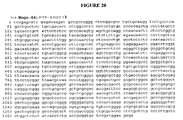
BBBの透過性をモジュレートするために、NgRH1レセプターの任意のエピトープに対する1価抗体または多価抗体(そのスプライス改変体を含む)を使用し得る。このようなエピトープは、上記レセプター配列のN末端、C末端、または中央に存在し得る(任意のロイシンが豊富な配列(例えば、図26を参照のこと))。上記エピトープは、少なくとも3個、好ましくは6個、7個、8個以上アミノ酸を含み得る。全長NgRH1レセプターに対する少なくとも1つの結合部位、およびNgRH1レセプターのスプライス改変体に対する別の結合部位を有する多重特異性抗体もまた、使用できる。所望される場合、上記多重特異性抗体は、CNS障害に関わる抗原に対する結合部位を含み得、この障害としては、脳腫瘍および別のBBBに関連する障害が挙げられるが、これらに限定されない。このような構造は、BBBの透過性に関わる抗原(例えば、NgRH1(そのスプライス改変体を含む))を標的させ、それによってBBBの透過性を増大させ、そして目的の疾患抗原を同時に標的させる。 In order to modulate the permeability of the BBB, monovalent or multivalent antibodies (including splice variants thereof) against any epitope of the NgRH1 receptor may be used. Such epitopes can be at the N-terminus, C-terminus, or center of the receptor sequence (any leucine-rich sequence (see, eg, FIG. 26)). The epitope may comprise at least 3, preferably 6, 7, 8 or more amino acids. Multispecific antibodies having at least one binding site for the full length NgRH1 receptor and another binding site for a splice variant of the NgRH1 receptor can also be used. If desired, the multispecific antibody may include a binding site for an antigen associated with a CNS disorder, including but not limited to a brain tumor and another BBB-related disorder. Such a structure targets antigens involved in BBB permeability (eg, NgRH1 (including its splice variants)), thereby increasing BBB permeability and simultaneously targeting the disease antigen of interest.
二重特異性抗原結合ユニットの例としては、BBBの透過性に関わる抗原に対する一方の腕、および細胞傷害性誘発分子(BBBを通って送達される)に対する他の腕を有するものが挙げられる(例えば、抗FcγRI/抗CD15、抗p185HER2 /FcγRIII(CD16)、抗CD3/抗悪性B細胞(1D10)、抗CD3/抗p185HER2、抗CD3/抗p97、抗CD3/抗腎細胞癌、抗CD3/抗OVCAR−3、抗CD3/L−Dl(抗結腸癌)、抗CD3/抗メラニン細胞刺激ホルモンアナログ、抗EGFレセプター/抗CD3、抗CD3/抗CAMA1、抗CD3/抗CD19、抗CD3/MoV18、抗神経細胞接着分子(NCAM)/抗CD3、抗葉酸結合タンパク質(FBP)/抗CD3、抗全癌腫関連抗原(pan carcinoma associated antigen)(AMOC−31)/抗CD3;腫瘍抗原に特異的に結合する1つの腕および毒素に結合する1つの腕を有する二重特異性抗体(例えば、抗サポリン/抗Id−1、抗CD22/抗サポリン、抗CD7/抗サポリン、抗CD38/抗サポリン、抗CEA/抗リシンA鎖、抗インターフェロン−α(IFN−α)/抗ハイブリドーマイディオタイプ、抗CEA/抗ビンカアルカロイド);酵素によって活性化されるプロドラッグを変換するためのBsAb(例えば、抗CD30/抗アルカリホスファターゼ(リン酸マイトマイシンプロドラッグのマイトマイシンアルコールへの変換を触媒する));線維素溶解剤として使用され得る二重特異性抗体(例えば、抗フィブリン/抗組織プラスミノーゲン活性化因子(tPA)、抗フィブリン/抗ウロキナーゼ型プラスミノーゲン活性化因子(uPA));細胞表面レセプターに対する免疫複合体を標的とするための二重特異性抗原結合ユニット(例えば、抗低密度リポタンパク質(LDL)/抗Fcレセプター(例えばFcγRI、FcγRIIまたはFcγRIII));感染症の治療に使用するための二重特異性抗体(例えば、抗CD3/抗単純ヘルペスウイルス(HSV)、抗T細胞レセプター:CD3複合体/抗インフルエンザ、抗FcγR/抗HIV);インビトロまたはインビボでの腫瘍検出のための二重特異性抗体(例えば、抗CEA/抗EOTUBE、抗CEA/抗DPTA、抗p185HER2/抗ハプテン;ワクチンアジュバントとしてのBsAb(Fangerら、前出を参照のこと);ならびに診断ツールとしての二重特異性抗体(例えば、抗ウサギIgG/抗フェリチン、抗西洋ワサビペルオキシダーゼ(HRP)/抗ホルモン、抗ソマトスタチン/抗サブスタンスP、抗HRP/抗FITC、抗CEA/抗β−ガラクトシダーゼ(Nolanら、前出を参照のこと))。三重特異性抗体の例としては、抗CD3/抗CD4/抗CD37、抗CD3/抗CD5/抗CD37および抗CD3/抗CD8/抗CD37が挙げられる。 Examples of bispecific antigen binding units include those having one arm for an antigen involved in BBB permeability and the other arm for a cytotoxic inducing molecule (delivered through the BBB) ( For example, anti-FcγRI / anti-CD15, anti-p185 HER2 / FcγRIII (CD16), anti-CD3 / anti-malignant B cell (1D10), anti-CD3 / anti-p185 HER2 , anti-CD3 / anti-p97, anti-CD3 / anti-renal cell carcinoma, anti CD3 / anti-OVCAR-3, anti-CD3 / L-Dl (anti-colon cancer), anti-CD3 / anti-melanocyte stimulating hormone analog, anti-EGF receptor / anti-CD3, anti-CD3 / anti-CAMA1, anti-CD3 / anti-CD19, anti-CD3 / MoV18, anti-neuronal cell adhesion molecule (NCAM) / anti-CD3, antifolate binding protein (FBP) / anti-CD3, anti-all-carcinoma Antibiological antibody (eg anti-saporin / anti-Id) having one arm that specifically binds to a tumor antigen and one arm that binds to a toxin; pan antigenic associated antigen (AMOC-31) / anti-CD3; -1, anti-CD22 / anti-saporin, anti-CD7 / anti-saporin, anti-CD38 / anti-saporin, anti-CEA / anti-ricin A chain, anti-interferon-α (IFN-α) / anti-hybrid mydiotype, anti-CEA / anti-vinca alkaloid ); BsAbs for converting prodrugs activated by enzymes (eg anti-CD30 / anti-alkaline phosphatase (catalyzing the conversion of mitomycin phosphate prodrug to mitomycin alcohol)); used as fibrinolytic agents Obtain bispecific antibodies (eg anti-fib) / Anti-tissue plasminogen activator (tPA), anti-fibrin / anti-urokinase-type plasminogen activator (uPA)); bispecific antigen binding to target immune complexes to cell surface receptors Units (eg, anti-low density lipoprotein (LDL) / anti-Fc receptor (eg, FcγRI, FcγRII or FcγRIII)); bispecific antibodies (eg, anti-CD3 / anti-herpes simplex virus) for use in the treatment of infection (HSV), anti-T cell receptor: CD3 complex / anti-influenza, anti-FcγR / anti-HIV); bispecific antibodies for tumor detection in vitro or in vivo (eg anti-CEA / anti-EOTUBE, anti-CEA / anti DPTA, anti-p185 HER2 / anti-hapten; B as a vaccine adjuvant Ab (see Fanger et al., Supra); as well as bispecific antibodies (eg anti-rabbit IgG / anti-ferritin, anti-horseradish peroxidase (HRP) / anti-hormone, anti-somatostatin / anti-substance P) as diagnostic tools Anti-HRP / anti-FITC, anti-CEA / anti-β-galactosidase (see Nolan et al., Supra)). Examples of trispecific antibodies include anti-CD3 / anti-CD4 / anti-CD37, anti-CD3 / anti-CD5 / anti-CD37 and anti-CD3 / anti-CD8 / anti-CD37.
適切な抗体は、無脊椎動物および脊椎動物を含む種々の種起源の免疫グロブリン分子である。好ましい抗体としては、ヒト遺伝子によって発現されるヒト抗体またはそのフラグメントが挙げられる。抗体はまた、非ヒト(例えば、げっ歯類または霊長類)抗体に適用されるようにヒト化され得、それは、ハイブリッド免疫グロブリン、免疫グロブリン鎖または非ヒト免疫グロブリンに由来する最小の配列を含むそのフラグメントである。ほとんどは、ヒト化抗体は、レシピエントの相補性決定領域(CDR)由来の残基が所望の特異性、親和性および能力を有するマウス、ラット、ウサギまたは霊長類などの非ヒト種のCDR由来の残基(ドナー抗体)によって置換されるヒト免疫グロブリン(レシピエント抗体)である。いくつかの場合において、ヒト免疫グロブリンのFvフレームワーク領域(FR)残基は、対応する非ヒト残基によって置換される。さらに、上記ヒト化抗体は、レシピエント抗体においても移入されたCDRまたはフレームワーク配列においても見出されない残基を含み得る。ヒトの身体に導入される場合、これらの改変は、抗体の性能をさらに洗練および最適化し、そして免疫原性を最小化するために行われる。一般に、上記ヒト化抗体は、少なくとも1つ、そして代表的に2つの可変ドメインの実質的に全てを含み、ここでCDR領域の全てまたは実質的に全ては、非ヒト免疫グロブリンのものに対応し、そしてFR領域の全てまたは実質的に全ては、ヒト免疫グロブリン配列のものである。上記ヒト化抗体はまた、免疫グロブリン定常領域(Fc)(代表的に、ヒト免疫グロブリンのもの)の少なくとも一部を含み得る。 Suitable antibodies are immunoglobulin molecules of various species origin including invertebrates and vertebrates. Preferred antibodies include human antibodies expressed by human genes or fragments thereof. Antibodies can also be humanized to apply to non-human (eg, rodent or primate) antibodies, which contain minimal sequences derived from hybrid immunoglobulins, immunoglobulin chains or non-human immunoglobulin. That fragment. For the most part, humanized antibodies are derived from CDRs of non-human species such as mice, rats, rabbits or primates in which residues from the complementarity determining region (CDR) of the recipient have the desired specificity, affinity and ability. Human immunoglobulin (recipient antibody) that is replaced by the residues of (donor antibody). In some cases, Fv framework region (FR) residues of the human immunoglobulin are replaced by corresponding non-human residues. Furthermore, the humanized antibody may comprise residues that are found neither in the recipient antibody nor in the imported CDR or framework sequences. When introduced into the human body, these modifications are made to further refine and optimize antibody performance and to minimize immunogenicity. Generally, the humanized antibody comprises at least one and typically substantially all of the two variable domains, wherein all or substantially all of the CDR regions correspond to those of non-human immunoglobulin. , And all or substantially all of the FR region is of human immunoglobulin sequence. The humanized antibody may also comprise at least a portion of an immunoglobulin constant region (Fc), typically that of a human immunoglobulin.
非ヒト抗体をヒト化するための方法は、当該分野において周知である。「ヒト化」抗体は、配列の少なくとも一部がむしろヒト免疫グロブリンに近くするためにその最初の形態から変更されている抗体である。1つのバージョンにおいて、H鎖C領域およびL鎖C領域は、ヒト配列によって置換される。これは、V領域および異種免疫グロブリンC領域を含む融合ポリペプチドである。別のバージョンにおいて、CDR領域は、非ヒト抗体配列を含む一方で、Vフレームワーク領域はまた、ヒト配列に変換されている。例えば、EP 0329400を参照のこと。第3のバージョンにおいて、V領域は、ヒトV領域およびマウスV領域のコンセンサス配列を設計し、そしてコンセンサス配列間で異なるCDRの外側の残基を変更することによってヒト化される。 Methods for humanizing non-human antibodies are well known in the art. A “humanized” antibody is an antibody in which at least a portion of the sequence has been altered from its original form to be more like human immunoglobulin. In one version, the H chain C region and the L chain C region are replaced by human sequences. This is a fusion polypeptide comprising a V region and a heterologous immunoglobulin C region. In another version, the CDR regions contain non-human antibody sequences, while the V framework regions have also been converted to human sequences. See, for example, EP 0329400. In the third version, the V region is humanized by designing human and mouse V region consensus sequences and changing residues outside the CDRs that differ between the consensus sequences.
ヒト化抗体の作製において、フレームワーク残基の選択は、高い結合親和性を維持することにおいて重要であり得る。原理において、任意のHuAb由来のフレームワーク配列は、CDR移植のための鋳型として機能し得る;しかし、このようなフレームワーク中への直鎖状CDR置換は、抗原に対する結合親和性の著しい喪失をもたらし得る。Glaser(1992)J.Immunol.149:2606;Tempestら(1992)Biotechnology 9:266;およびShalabyら(1992)J.Exp.Med.17:217。より相同的なHuAbは、元のmuAbに対するものであり、ヒトフレームワークが親和性を減少させ得るマウスCDRに歪みを導入することが少なくなるようである。抗体配列データベースに対する配列相同性検索に基づいて、HuAb IC4は、muM4TS.22に対するフレームワークの良好な相同性を提供するが、他の高度に相同的なHuAbも、同様に適切である(ヒトサブグループI由来のκ L鎖またはヒトサブグループIII由来のH鎖)。Kabatら(1987)。種々のコンピュータープログラム(例えば、ENCAD(Levittら(1983)J.Mol.Biol.168:595)は、V領域についての理想的な配列を予想するために利用可能である。したがって、本発明は、異なるV領域を有するHuAbを包含する。適切なV領域配列を決定することおよびこれらの配列を最適化することは、当業者の技術範囲内である。減少した免疫原性を有する抗体を得るための方法はまた、米国特許第5,270,202号およびEP 699,755に記載される。 In making humanized antibodies, the choice of framework residues can be important in maintaining high binding affinity. In principle, any HuAb-derived framework sequence can serve as a template for CDR grafting; however, linear CDR substitution into such a framework results in a significant loss of binding affinity for the antigen. Can bring. Glaser (1992) J. MoI. Immunol. 149: 2606; Tempest et al. (1992) Biotechnology 9: 266; and Shalaby et al. (1992) J. Biol. Exp. Med. 17: 217. The more homologous HuAb is to the original muAb, and it seems that the human framework is less likely to introduce strain into the mouse CDRs that can reduce affinity. Based on sequence homology searches against antibody sequence databases, HuAb IC4 is a muM4TS. While providing a good homology of the framework to 22, other highly homologous HuAbs are equally suitable (kappa light chains from human subgroup I or heavy chains from human subgroup III). Kabat et al. (1987). A variety of computer programs (eg, ENCAD (Levitt et al. (1983) J. Mol. Biol. 168: 595) are available to predict the ideal sequence for the V region. Including HuAbs with different V regions It is within the skill of the art to determine appropriate V region sequences and optimizing these sequences.To obtain antibodies with reduced immunogenicity Is also described in US Pat. No. 5,270,202 and EP 699,755.
所望される場合、上記抗体は、抗原に対する高い親和性の維持および他の好ましい生物学的特性を伴ってヒト化される。この目的を達成するために、好ましい方法に従って、ヒト化抗体は、親配列およびヒト化配列の3次元モデルを使用する親配列および種々の概念的なヒト化産物の分析プロセスによって調製される。3次元免疫グロブリンモデルは、当業者によく知られている。適切な選択された候補免疫グロブリン配列の3次元コンホメーション構造を例示および表示するコンピュータープログラムが、利用可能である。これらの表示の検討は、候補免疫グロブリン配列の機能における残基の考えられる役割の分析(即ち、その抗原に結合する候補免疫グロブリンの能力に影響を及ぼす残基の分析)を可能にする。この方法において、FR残基は、所望の抗体の特徴(例えば、標的抗原に対する親和性の増大)が達成されるように、コンセンサス配列および移入配列から選択され、そして組み合わせられ得る。 If desired, the antibody is humanized with maintenance of high affinity for the antigen and other favorable biological properties. To achieve this goal, according to a preferred method, humanized antibodies are prepared by a process of analysis of the parent sequence and various conceptual humanized products using a three-dimensional model of the parent sequence and the humanized sequence. Three-dimensional immunoglobulin models are well known to those skilled in the art. Computer programs are available that illustrate and display the three-dimensional conformational structure of suitable selected candidate immunoglobulin sequences. Review of these representations allows analysis of the possible role of residues in the function of a candidate immunoglobulin sequence (ie, analysis of residues that affect the ability of a candidate immunoglobulin to bind its antigen). In this way, FR residues can be selected and combined from the consensus and import sequences so that the desired antibody characteristic, such as increased affinity for the target antigen (s), is achieved.
本発明はまた、化学的に機能的な部分に結合体化される抗体を包含する。代表的に、上記部分は、検出可能なシグナルを生成し得る標識である。これらの結合体化抗体は、例えば、検出システム(例えば、ミエリン病変の定量、腫瘍量(tumor burden)の定量、ならびに転移病巣の画像化および腫瘍の画像化)において有用である。このような標識は、当該分野において公知であり、そしてその標識としては、放射性同位体、酵素、蛍光化合物、化学発光化合物、生物発光化合物、基質補因子およびインヒビターが挙げられるが、これらに限定されない。例えば、このような標識の使用を教示する特許、米国特許第第3,817,837号;同第3,850,752号;同第3,939,350号;同第3,996,345号;同第4,277,437号;同第4,275,149号;および同第4,366,241号を参照のこと。上記部分は、抗体に共有結合されても、第2の試薬(例えば、第2の抗体、プロテインA、またはビオチン−アビジン複合体)によって抗体に組換え的に結合されても、結合体化されてもよい。 The present invention also includes antibodies conjugated to chemically functional moieties. Typically, the moiety is a label that can produce a detectable signal. These conjugated antibodies are useful, for example, in detection systems (eg, quantification of myelin lesions, quantification of tumor burden, and imaging of metastatic lesions and imaging of tumors). Such labels are known in the art and include, but are not limited to, radioisotopes, enzymes, fluorescent compounds, chemiluminescent compounds, bioluminescent compounds, substrate cofactors and inhibitors. . For example, patents teaching the use of such labels, U.S. Pat. Nos. 3,817,837; 3,850,752; 3,939,350; 3,996,345. Nos. 4,277,437; 4,275,149; and 4,366,241. The moiety can be conjugated, whether covalently attached to the antibody, or recombinantly attached to the antibody by a second reagent (eg, second antibody, protein A, or biotin-avidin complex). May be.
他の機能的な部分としては、シグナルペプチド、免疫学的反応性を増強させる薬剤、固体支持体、ワクチンキャリア、生物応答改変因子、常磁性標識および薬物へのカップリングを容易にする薬剤が挙げられる。シグナルペプチドは、細胞膜、通常は、真核生物細胞中の小胞体、および細菌の内膜または内膜および外膜の両方のいずれかを通って新規に合成されたタンパク質を指向する短いアミノ酸配列である。シグナルペプチドは、代表的に、ポリペプチドのN末端部分にあり、そして代表的に、生合成および細胞からのポリペプチドの分泌との間において酵素的に除去される。このようなペプチドは、合成された分子の分泌を可能にするために本発明の抗体に組み込まれ得る。 Other functional moieties include signal peptides, agents that enhance immunological reactivity, solid supports, vaccine carriers, biological response modifiers, paramagnetic labels, and agents that facilitate coupling to drugs. It is done. A signal peptide is a short amino acid sequence directed to a cell membrane, usually the endoplasmic reticulum in a eukaryotic cell, and a newly synthesized protein either through the bacterial inner membrane or both the inner and outer membranes. is there. The signal peptide is typically at the N-terminal portion of the polypeptide and is typically removed enzymatically during biosynthesis and secretion of the polypeptide from the cell. Such peptides can be incorporated into the antibodies of the invention to allow secretion of the synthesized molecule.
本発明のさらなる局面は、1つ以上の抗NgRH1抗体に特異的でもあり、それによってその1つ以上の抗NgRH1抗体がその抗原およびそのNgRH1細胞表面レセプターの両方に結合し得る可溶性抗原を投与することに関する。好ましい実施形態において、上記抗原は、標的とされたNgRH1細胞表面レセプターおよび1つ以上の抗NgRH1抗体と比較して、1つ以上の抗NgRH1抗体に対して小さい結合特異性または大きい結合特異性のいずれかを有するか、または有するように改変される。いくつかの実施形態において、上記抗原は、上記1つ以上の抗体が被験体に投与される前、それと同時、またはその後に投与される。 A further aspect of the invention administers a soluble antigen that is also specific for one or more anti-NgRH1 antibodies, whereby the one or more anti-NgRH1 antibodies can bind to both the antigen and its NgRH1 cell surface receptor. About that. In a preferred embodiment, the antigen has a low or high binding specificity for one or more anti-NgRH1 antibodies as compared to the targeted NgRH1 cell surface receptor and one or more anti-NgRH1 antibodies. Have or are modified to have either. In some embodiments, the antigen is administered before, simultaneously with, or after the one or more antibodies are administered to the subject.
他の局面において、上記可溶性抗原は、上記NgRH1細胞表面レセプターに結合する1つ以上の抗NgRH1抗体と比較して、大きい結合特異性または小さい結合特異性で、NgRH1細胞表面レセプターに結合するように設計される。1つの実施形態において、上記抗原は、NgRH1細胞表面レセプターに結合する1つ以上の抗NgRH1抗体と競合する。別の実施形態において、上記可溶性抗原は、上記1つ以上の抗NgRH1抗体が被験体に投与される前、それと同時、またはその後に投与される。 In other aspects, the soluble antigen binds to the NgRH1 cell surface receptor with greater or lesser binding specificity compared to one or more anti-NgRH1 antibodies that bind to the NgRH1 cell surface receptor. Designed. In one embodiment, the antigen competes with one or more anti-NgRH1 antibodies that bind to the NgRH1 cell surface receptor. In another embodiment, the soluble antigen is administered before, simultaneously with, or after the one or more anti-NgRH1 antibodies are administered to a subject.
このような変化したNgRH1を有する可溶性抗原または抗NgRH1抗体は、当該分野において利用可能なプロテオミクスの計算的分析方法を利用して選択または設計され得る。特に、このような分析は、天然に存在する結合対と比較して異なる結合動態を有するタンパク質(即ち、可溶性抗原)を選択または設計するために使用される。KortemmeおよびBaker.Curr.Opin.Chem.Biol.2004;8:91−97;米国特許第第6,951,715号を参照のこと。 Soluble antigens or anti-NgRH1 antibodies having such altered NgRH1 can be selected or designed using proteomic computational analysis methods available in the art. In particular, such analysis is used to select or design proteins (ie, soluble antigens) that have different binding kinetics compared to naturally occurring binding pairs. Kortemme and Baker. Curr. Opin. Chem. Biol. 2004; 8: 91-97; U.S. Patent No. 6,951,715.
本発明に従う有用な他の生理活性ペプチド(または抗原)は、合成ペプチドコンビナトリアルライブラリー(例えば、Houghtonら、Biotechniques、13(3):412−421(1992)およびHoughtonら、Nature、354:84−86(1991)によって開示されるもの)の使用またはファージディスプレイ手順(例えば、Hartら、J.Biol.Chem.269:12468(1994)に記載されるもの)の使用によって同定され得る。Hartらは、哺乳動物細胞レセプターに対する新規ペプチドリガンドを同定するための線維状ファージディスプレイライブラリーを報告する。一般に、例えば、M13またはfdファージを使用するファージディスプレイライブラリーは、従来の手順(例えば、上述の参考文献に記載されるもの)を使用して調製される。上記ライブラリーは、4個〜80個のアミノ酸残基を含む挿入物を示す。上記挿入物は、必要に応じて、ペプチドの完全に変性した配列または偏った配列を示す.特定の分子(例えば、細胞表面レセプター)に選択的に結合するリガンドは、特定の分子を結合するリガンドをそれらの表面上に発現するファージを選択することによって得られる。所望の生物学的活性を有するリガンドは、公知の生物学的活性においてスクリーニングされ得、そしてその根拠に基づいて選択され得る。次いで、これらのファージは、もっとも有用な特徴を有するペプチド発現ファージを同定するためにいくつかのサイクルの再選択に供される。代表的に、結合特性(例えば、最も高い結合親和性または細胞刺激活性)を示すファージは、ファージ表面上に発現されるペプチドの特定のアミノ酸配列および最適な生物学的活性を達成する発現されるペプチドの最適な長さを同定するために核酸分析によってさらに特徴付けられる。 Other bioactive peptides (or antigens) useful according to the invention are synthetic peptide combinatorial libraries (eg, Houghton et al., Biotechniques, 13 (3): 412-421 (1992) and Houghton et al., Nature, 354: 84- 86 (disclosed by 1991)) or by the use of phage display procedures (such as those described in Hart et al., J. Biol. Chem. 269: 12468 (1994)). Hart et al. Report a filamentous phage display library to identify novel peptide ligands for mammalian cell receptors. In general, phage display libraries using, for example, M13 or fd phage are prepared using conventional procedures (eg, those described in the above references). The library shows inserts containing 4 to 80 amino acid residues. The insert represents the fully denatured or biased sequence of the peptide, as appropriate. Ligands that selectively bind to specific molecules (eg, cell surface receptors) are obtained by selecting phage that express ligands that bind specific molecules on their surface. Ligands having the desired biological activity can be screened for known biological activities and selected on the basis thereof. These phage are then subjected to several cycles of reselection to identify the peptide-expressing phage with the most useful characteristics. Typically, phage that exhibit binding properties (eg, highest binding affinity or cell stimulating activity) are expressed to achieve a specific amino acid sequence of the peptide expressed on the phage surface and optimal biological activity. Further characterized by nucleic acid analysis to identify the optimal length of the peptide.
あるいは、このようなペプチドは、1個以上のアミノ酸を含むペプチドのコンビナトリアルライブラリーから選択され得る。非ペプチド合成部分を含むこのようなライブラリーが、さらに合成され得、その非ペプチドの合成部分は、それらの天然に存在する対応物と比較してあまり酵素的分解に供されない。米国特許第5,591,646号は、生理活性ペプチドをスクリーニングおよび同定するために有用である生体分子ライブラリーに関する方法および装置を開示する。ペプチドライブラリーをスクリーニングするための方法はまた、米国特許第5,565,325号に開示される。コンビナトリアルライブラリーまたは他の供給源から得られるペプチドは、当該分野において公知である方法によって機能活性についてスクリーニングされ得る。したがって、当業者は、NgRH1に対してある程度のレベルの特異性を有するペプチドを同定することができ、そしてこのようなペプチドは、BBB透過性をモジュレートするために利用され得る。 Alternatively, such peptides can be selected from combinatorial libraries of peptides containing one or more amino acids. Such libraries containing non-peptide synthetic moieties can be further synthesized, with the non-peptide synthetic moieties subject to less enzymatic degradation compared to their naturally occurring counterparts. US Pat. No. 5,591,646 discloses methods and apparatus for biomolecular libraries that are useful for screening and identifying bioactive peptides. A method for screening peptide libraries is also disclosed in US Pat. No. 5,565,325. Peptides obtained from combinatorial libraries or other sources can be screened for functional activity by methods known in the art. Thus, one of skill in the art can identify peptides with some level of specificity for NgRH1, and such peptides can be utilized to modulate BBB permeability.
NgRH1を標的とするアプタマーは、特に有用なクラスの薬剤を示す。アプタマーは、特定の分子に対する特異的結合特性に基づいて選択されるDNA、RNAまたはペプチドを含む。例えば、アプタマーは、当該分野において公知である方法を使用してNgRH1の結合のために選択され得る。次いで、上記アプタマーは、BBBの透過性をモジュレートするために被験体に投与され得る。特定のタンパク質、DNA、アミノ酸およびヌクレオチドに対して親和性を有するいくつかのアプタマーが、記載されている(例えば、K.Y.Wangら、「A DNA Aptamer Which Binds to and Inhibits Thrombin Exhibits a New Structural Motif for DNA」、Biochemistry 32:1899−1904(1993);Pitnerら、米国特許第5,691,145号;Goldら、「Diversity of Oligonucleotide Function」、Ann.Rev.Biochem.64:763−97(1995);Szostakら、米国特許第5,631,146号)。高い親和性結合アプタマーおよび高い特異性結合アプタマーは、コンビナトリアルライブラリー(前出、Goldら)に由来している。アプタマーは、高い親和性を有し得、その親和性は、使用される選択に依存してマイクロモル〜ナノモル以下の範囲の平衡解離定数である。アプタマーはまた、例えば、7−メチルGとGとの間(Haller,A.A.、およびSarnow,P.、「In Vitro Selection of a 7−Methyl−Guanosine Binding RNA That Inhibits Translation of Capped mRNA molecules」、PNAS USA 94:8521−8526(1997))、またはD−トリプトファンとL−トリプトファンとの間(前出、Goldら)で1000倍の識別を示す高い選択性を示し得る。 Aptamers that target NgRH1 represent a particularly useful class of drugs. Aptamers include DNA, RNA or peptides that are selected based on specific binding properties for a particular molecule. For example, aptamers can be selected for binding of NgRH1 using methods known in the art. The aptamer can then be administered to a subject to modulate the permeability of the BBB. Several aptamers with affinity for specific proteins, DNA, amino acids and nucleotides have been described (see, eg, KY Wang et al., “A DNA Aptamer Which Binds to and Inhibits Thrombin Exhibits a New Structure. Motif for DNA ", Biochemistry 32: 1899-1904 (1993); Pitner et al., US Patent No. 5,691,145; Gold et al.," Diversity of Oligonucleotide Function ", Ann. Rev. Biochem. 1995); Szostak et al., US Pat. No. 5,631,146). High affinity binding aptamers and high specificity binding aptamers are derived from combinatorial libraries (supra, Gold et al.). Aptamers can have a high affinity, which is an equilibrium dissociation constant ranging from micromolar to nanomolar depending on the choice used. Aptamers can also be used, for example, between 7-methyl G and G (Haller, A.A., and Sarnow, P., “In Vitro Selection of a 7-Methyl-Guanoidine Binding RNA That Inhibits Trans Cap of mRNA”). PNAS USA 94: 8521-8526 (1997)), or high selectivity with a 1000-fold discrimination between D-tryptophan and L-tryptophan (supra, Gold et al.).
ランダム化されたオリゴヌクレオチドをアプタマー活性についてスクリーニングするための一般的方法は、記載されている。例えば、Goldら(米国特許第5,270,163号)は、「SELEX」(Systematic Evolution of Ligands by Exponential Enrichment)法を記載する。Goldらにおいて、ランダム化された配列の領域を有する一本鎖核酸の候補混合物は、標的分子と接触される。上記標的に対する増大した親和性を有する核酸は、候補混合物の残部から分割される。分割された核酸は、リガンドが豊富な混合物を産生するために増幅される。Szostakら(米国特許第5,631,146号)は、アデノシンまたはアデノシン−5’−リン酸に結合する一本鎖DNA分子を生成するための方法を記載する。 General methods for screening randomized oligonucleotides for aptamer activity have been described. For example, Gold et al. (US Pat. No. 5,270,163) describes the “SELEX” (Systematic Evolution of Ligand by Exponential Enrichment) method. In Gold et al., A candidate mixture of single stranded nucleic acids having a region of randomized sequence is contacted with a target molecule. Nucleic acids with increased affinity for the target are split from the remainder of the candidate mixture. The split nucleic acid is amplified to produce a ligand rich mixture. Szostak et al. (US Pat. No. 5,631,146) describe a method for generating single-stranded DNA molecules that bind to adenosine or adenosine-5'-phosphate.
本発明に従うアプタマーは、そのアプタマーがその標的モノマーに結合し、そしてそれを認識するその能力の一部を維持する限り、結合特異性または安定性を改善するために改変され得る。例えば、ヌクレオチドの塩基および糖を改変するための方法は、当該分野において公知である。代表的に、ホスホジエステル結合は、RNAまたはDNAのヌクレオチド間に存在する。本発明に従うアプタマーは、その安定性を増大させるために、そのヌクレオチド間にホスホジエステル、ホスホラミダイト、ホスホロチオエートまたは他の公知の結合を有し得るが、但しその結合は、アプタマーとその標的モノマーとの相互作用を実質的に妨害しない。 Aptamers according to the present invention can be modified to improve binding specificity or stability so long as the aptamer binds to the target monomer and retains some of its ability to recognize it. For example, methods for modifying nucleotide bases and sugars are known in the art. Typically, phosphodiester bonds are present between RNA or DNA nucleotides. An aptamer according to the present invention may have a phosphodiester, phosphoramidite, phosphorothioate or other known bond between its nucleotides to increase its stability, provided that the bond is an interaction between the aptamer and its target monomer. Does not substantially interfere with action.
本発明の方法において使用するために適したアプタマーは、ポリメラーゼ連鎖反応(PCR)(DNAポリメラーゼまたはRNAポリメラーゼ)、化学反応または当該分野において公知である標準的な方法による機械によって合成され得る。例えば、アプタマーは、標準的な化学を使用してApplied Biosystems,Inc.(Foster City、Calif.)からの自動化DNA合成機によって合成され得る。 Aptamers suitable for use in the methods of the present invention can be synthesized by polymerase chain reaction (PCR) (DNA polymerase or RNA polymerase), chemical reaction or machine by standard methods known in the art. For example, aptamers can be obtained using Applied Biosystems, Inc. using standard chemistry. Can be synthesized by an automated DNA synthesizer from (Foster City, Calif.).
さらに、NgRH1に結合するアプタマーは、選択後に最適化され得る。例えば、1つの改変が、タンパク質標的に対する親和性および特異性を増強する、チオリン酸ODN剤およびジチオリン酸ODN剤の「粘着性」である。既存の技術を上回る顕著な改善において、選択の方法は、同時に、非標的タンパク質に対する非特異的結合を減少させ、そして標的との特定の好ましい相互作用のみを増強するためにチオール化したリン酸の総数を制御および最適化する。したがって、本発明の方法において使用される選択されたアプタマーは、親和性、特異性およびヌクレアーゼ抵抗性の組み合わせた特性を有するアプタマーの選択的開発を可能にするために改変され得る。このような最適化方法は、当該分野において公知である(例えば、米国特許第6,867,289号の開示)。 In addition, aptamers that bind to NgRH1 can be optimized after selection. For example, one modification is the “stickiness” of thiophosphate and dithiophosphate ODN agents that enhances affinity and specificity for protein targets. In a significant improvement over existing technologies, the method of selection simultaneously reduces non-specific binding to non-target proteins and enhances the thiolated phosphate to enhance only certain favorable interactions with the target. Control and optimize the total number. Thus, the selected aptamers used in the methods of the invention can be modified to allow selective development of aptamers with combined properties of affinity, specificity and nuclease resistance. Such optimization methods are known in the art (eg, the disclosure of US Pat. No. 6,867,289).
上記薬剤はまた、デコイの形態をとり得る。「デコイ」によって、所定のリガンドまたは未知のリガンドに優勢に結合するように設計されている核酸分子(例えばRNAまたはDNA)、またはアプタマーが意味される。このような結合は、標的分子の阻害または活性化をもたらし得る。デコイまたはアプタマーは、特定のリガンドの結合に関して、天然に存在する結合標的と競合し得る。例えば、HIVトランス活性化応答(TAR)RNAの過剰発現は「デコイ」として機能し得、そしてHIV tatタンパク質に効率的に結合し、それによってHIV tatタンパク質がHIV RNAにコードされるTAR配列に対して結合することを妨げることが、示されている(Sullengerら、1990、Cell、63、601−608)。しかし、これは、具体例であり、そして当業者は、他の実施形態が一般に当該分野において公知である技術を使用して容易にもたらされ得ることを認識する(例えば、Goldら、1995、Annu.Rev.Biochem.、64、763;BrodyおよびGold、2000、J.Biotechnol、74、5;Sun、2000、Curr.Opin.Mol.Ther.、2、100;Kusser、2000、J.Biotechnol.、74、27;HermannおよびPatel、2000、Science、287、820;ならびにJayasena、1999、Clinical Chemistry、45、1628を参照のこと)。同様に、デコイは、NgRH1またはNgRH2に結合し、そしてそれらの結合をブロックするように設計され得るか、またはデコイは、NgRH1に結合し、そして別のリガンドタンパク質との相互作用を妨げるように設計され得る。 The agent can also take the form of a decoy. By “decoy” is meant a nucleic acid molecule (eg, RNA or DNA), or aptamer that is designed to bind preferentially to a given or unknown ligand. Such binding can result in inhibition or activation of the target molecule. A decoy or aptamer can compete with a naturally occurring binding target for binding of a specific ligand. For example, overexpression of HIV transactivation response (TAR) RNA can function as a “decoy” and binds efficiently to the HIV tat protein, whereby the HIV tat protein is against the TAR sequence encoded by the HIV RNA. Have been shown to prevent binding (Sullanger et al., 1990, Cell 63, 601-608). However, this is a specific example, and one of ordinary skill in the art will recognize that other embodiments can be readily achieved using techniques generally known in the art (see, eg, Gold et al., 1995, Annu. Rev. Biochem., 64, 763; Brody and Gold, 2000, J. Biotechnol, 74, 5; Sun, 2000, Curr.Opin.Mol.Ther., 2, 100; 74, 27; Hermann and Patel, 2000, Science, 287, 820; and Jayasena, 1999, Clinical Chemistry, 45, 1628). Similarly, decoys can be designed to bind to and block NgRH1 or NgRH2, or decoy can be designed to bind to NgRH1 and prevent interaction with another ligand protein. Can be done.
所望される場合、本発明の薬剤は、siRNAの形態である。本発明のsiRNA分子は、代表的に、二本鎖RNAを含み、そのRNAの一方の鎖は、NgRH1遺伝子またはNgRH2遺伝子のRNAに相補的である。別の実施形態において、本発明のsiRNA分子は、二本鎖RNAを含み、そのRNAの一方の鎖は、NgRH1遺伝子配列またはNgRH2遺伝子配列を有するRNAの配列の一部を含む。さらに別の実施形態において、本発明のsiRNA分子は、二本鎖RNAを含み、RNAの両方の鎖は、非ヌクレオチドリンカーによって連結される。あるいは、本発明のsiRNA分子は、二本鎖RNAを含み、RNAの両方の鎖は、ヌクレオチドリンカー(例えば、ループ構造またはステムループ構造)によって連結される。 If desired, the agents of the invention are in the form of siRNA. The siRNA molecules of the present invention typically comprise double stranded RNA, one strand of which is complementary to the RNA of the NgRH1 gene or the NgRH2 gene. In another embodiment, the siRNA molecule of the invention comprises a double stranded RNA, wherein one strand of the RNA comprises a portion of a sequence of RNA having an NgRH1 gene sequence or an NgRH2 gene sequence. In yet another embodiment, the siRNA molecules of the invention comprise double stranded RNA, and both strands of RNA are joined by a non-nucleotide linker. Alternatively, the siRNA molecules of the invention comprise double stranded RNA, where both strands of RNA are linked by a nucleotide linker (eg, a loop structure or a stem loop structure).
siRNAの設計における標準的な方法は、当該分野において公知である(Elbashirら、Methods 26:199−213(2002))。一般に、適切なsiRNAは、約10〜50ヌクレオチドの間、または約20〜25ヌクレオチドの間、または約20〜22ヌクレオチドの間である。標的部位は、代表的に、配列の3’末端にAAジヌクレオチドを有する。なぜならば、UUオーバーハングを有するsiRNAは、遺伝子サイレンシングにおいてより有効であり得るからである。残りのヌクレオチドは、一般に、AAジヌクレオチドのヌクレオチド3’に対する相同性を示す。一般に、上記siRNAは、代表的に、標的配列(例えば、NgRH1レセプター配列)に対する少なくとも約50%の相同性(好ましくは少なくとも約70%、約80%、90%または95%でさえの相同性)を示す。所望される場合、潜在的な標的部位はまた、適切なゲノムデータベースと比較されて、標的配列は、他の遺伝子に対する70%、60%、50%、40%、30%、20%、10%、5%、または1%未満でさえの相同性を有するべきである。NCBIサーバー、www.ncbi.nlm.nih.gov/BLAST上の容易に利用可能な公のデータベースは、配列相同性を決定するために使用される簡便なツールである。公のsiRNA設計ツールはまた、MITのWhitehead Institute of Biomedical Research、http://jura.wi.mit.edu/pubint/http://iona.wi.mit.edu/siRNAext/から容易に利用可能である。 Standard methods in siRNA design are known in the art (Elbashir et al., Methods 26: 199-213 (2002)). In general, suitable siRNAs are between about 10-50 nucleotides, or between about 20-25 nucleotides, or between about 20-22 nucleotides. The target site typically has an AA dinucleotide at the 3 'end of the sequence. This is because siRNAs with UU overhangs can be more effective in gene silencing. The remaining nucleotides generally exhibit homology to the nucleotide 3 'of the AA dinucleotide. In general, the siRNA typically has at least about 50% homology (preferably at least about 70%, about 80%, 90% or even 95% homology) to a target sequence (eg, NgRH1 receptor sequence). Indicates. If desired, potential target sites are also compared to the appropriate genomic database, and target sequences are 70%, 60%, 50%, 40%, 30%, 20%, 10% relative to other genes. It should have a homology of less than 5%, or even 1%. NCBI server, www. ncbi. nlm. nih. A readily available public database on gov / BLAST is a convenient tool used to determine sequence homology. Public siRNA design tools are also available from MIT's Whitehead Institute of Biomedical Research, http: // jura. wi. mit. edu / pubint / http: // iona. wi. mit. It is easily available from edu / siRNAext /.
適切なsiRNAはまた、ヘアピンsiRNAの形態をとり得る。適切なヘアピンsiRNAの設計において多くの公知である因子を変化させ得る。このような変数は、推定上のヘアピンのステムをコードする逆方向反復の長さ、逆方向反復の順序、ヘアピンのループをコードするスペーサー配列の長さおよび組成、ならびに標的および予想された逆方向領域に依存して変動し得る5’−オーバーハングの存在または非存在を含む;その全ては、当該分野における標準的な手順によって変化またはカスタマイズされ得る。上記ステムは、19〜20ヌクレオチド長、好ましくは 約19、21、25、または29ヌクレオチド長であり得る。上記ループは、3ヌクレオチド〜23ヌクレオチドの範囲であり得、好ましくは、約3、4、5、6、7および9ヌクレオチドのループのサイズであり得る。ヘアピンsiRNAの選択および設計を支援する公に利用可能なデータベースもまた、利用可能であり(例えば、www.RNAinterference.org)、そしてヘアピンsiRNAおよびsiRNAの両方についてのオンラインの設計ツールは、商業サイト(例えば、PromegaおよびAmbion)から利用可能である。 A suitable siRNA can also take the form of a hairpin siRNA. Many known factors can be varied in the design of a suitable hairpin siRNA. Such variables include the length of the inverted repeats encoding the putative hairpin stem, the order of the inverted repeats, the length and composition of the spacer sequence encoding the hairpin loop, and the target and expected reverse direction. Including the presence or absence of 5'-overhangs, which can vary depending on the region; all of which can be varied or customized by standard procedures in the art. The stem may be 19-20 nucleotides long, preferably about 19, 21, 25, or 29 nucleotides long. The loop can range from 3 nucleotides to 23 nucleotides, and can preferably be the size of a loop of about 3, 4, 5, 6, 7 and 9 nucleotides. Publicly available databases that support hairpin siRNA selection and design are also available (eg, www.RNAinterference.org), and online design tools for both hairpin siRNA and siRNA are available on commercial sites ( For example, it can be used from Promega and Ambion).
本発明の方法を実施するために有用な薬剤の別のクラスは、外部ガイド配列(EGS)である。EGSは、遺伝子サイレンシング剤として使用することができ、NgRH1の機能をダウンレギュレートするか、NgRH1のネガティブな調節因子を阻害することによってNgRH1の機能をアップレギュレートするために適用可能であり得る。EGSは、標的mRNAと水素結合機構によって塩基対形成してトランスファーRNA(tRNA)の分子構造と同様の分子構造を形成するように設計される。次いで、EGS/mRNA標的は、RNase Pによって切断および不活化される。RNase Pは、全ての生存可能な真核生物細胞中に大量に存在し、それは、プロセス前駆体転写物の切断によってトランスファーRNA(tRNA)をプロセシングするために機能する。一般に、EGSは、それが細胞メッセンジャーRNA(mRNA)内に含まれる別のRNA配列と生体分子複合体を形成する場合、tRNA分子の特定の構造的特徴を模倣するように設計される。したがって、任意のmRNAは、原則として、共触媒として関与するEGSおよびRNase Pの両方に関してRNase Pの基質として認識され得る。真核生物RNAase Pのための好ましいEGSは、標的RNA分子との複合体において、クローバー型tRNAまたはその部分に似ている二次構造を形成する配列からなる。所望の二次構造は、tRNAに似ている構造を形成するために、従来のWatson−Crick塩基対形成スキームを使用して決定される。RNase Pは、配列とは対照的に構造を認識するので、水素結合した領域の特定の配列は、形成される所望の構造よりも重要ではない。EGSおよび標的RNA基質は、RNAase Pによる標的RNAの切断をもたらすために、tRNAの二次構造および三次構造の十分な部分に似ているべきである。EGSの配列は、任意のtRNAから送達され得る。 Another class of agents useful for practicing the methods of the invention are external guide sequences (EGS). EGS can be used as a gene silencing agent and may be applicable to up-regulate NgRH1 function by down-regulating NgRH1 function or inhibiting negative regulators of NgRH1 . EGS is designed to form a molecular structure similar to that of transfer RNA (tRNA) by base pairing with the target mRNA through a hydrogen bonding mechanism. The EGS / mRNA target is then cleaved and inactivated by RNase P. RNase P is present in large quantities in all viable eukaryotic cells, which function to process transfer RNA (tRNA) by cleavage of the process precursor transcript. In general, EGS is designed to mimic certain structural features of a tRNA molecule when it forms a biomolecular complex with another RNA sequence contained within cellular messenger RNA (mRNA). Thus, any mRNA can in principle be recognized as a substrate for RNase P with respect to both EGS and RNase P involved as cocatalysts. A preferred EGS for eukaryotic RNAase P consists of sequences that form secondary structures resembling clover-type tRNA or portions thereof in complex with the target RNA molecule. The desired secondary structure is determined using a conventional Watson-Crick base pairing scheme to form a structure resembling tRNA. Since RNase P recognizes the structure as opposed to the sequence, the specific sequence of the hydrogen bonded region is less important than the desired structure that is formed. The EGS and target RNA substrate should resemble a sufficient portion of the secondary and tertiary structure of the tRNA to effect cleavage of the target RNA by RNAase P. The sequence of EGS can be delivered from any tRNA.
NgRH1(そのスプライス改変体を含む)のmRNA一次配列を含むEGSは、特に興味深い。EGSを設計する種々の方法は、例えば、Yuanらに対する米国特許第5,624,824号、Takleらに対する米国特許第6,610,478号、WO 93/22434、WO 95/24489、およびWO 96/21731に記載される。 Of particular interest are EGSs that contain the primary mRNA sequence of NgRH1 (including its splice variants). Various methods for designing EGS are described, for example, in US Pat. No. 5,624,824 to Yuan et al., US Pat. No. 6,610,478 to Takele et al., WO 93/22434, WO 95/24489, and WO 96. / 21731.
薬剤のさらに別のクラスは、NgRH1を標的とするアンチセンス分子である。例示的なアンチセンス核酸またはアンチセンス分子は、RNA−RNAまたはRNA−DNAまたはRNA−PNA(タンパク質核酸;Egholmら、1993 Nature 365、566)の相互作用によって標的RNAに結合し、そして標的RNAの活性を変化させる非酵素的核酸分子である(概説については、SteinおよびCheng、1993 Science 261、1004およびWoolfら、米国特許第5,849,902号を参照のこと)。代表的に、アンチセンス分子は、アンチセンス分子の単一の隣接する配列に沿って標的配列と相補的である。しかし、特定の実施形態において、アンチセンス分子は、基質分子がループを形成するように基質に結合し得、そして/またはアンチセンス分子は、アンチセンス分子がループを形成するように結合し得る。したがって、上記アンチセンス分子は、2つ(またはそれ以上)の隣接しない基質配列に相補的であっても、アンチセンス分子の2つ(またはそれ以上)の隣接しない配列部分は、標的配列に相補的であっても、その両方であってもよい。現在のアンチセンスストラテジーの概説については、Schmajukら、1999、J.Biol.Chem.、274、21783−21789、Delihasら、1997、Nature、15、751−753、Steinら、1997、Antisense N.A.DrugDev.、7、151、Crooke、2000、Methods Enzymol、313、3−45;Crooke、1998、Biotech.Genet.Eng.Rev.、15、121−157、Crooke、1997、Ad.Pharmacol、40、1−49を参照のこと。さらに、アンチセンスDNAは、DNA−RNA相互作用によってRNAを標的とし、それによってで標的RNAを消化するRNase Hを活性化するために使用され得る。上記アンチセンスオリゴヌクレオチドは、標的RNAのRNAse H切断を活性化し得る1つ以上のRNAse H活性化領域を含み得る。アンチセンスDNAは、化学的に合成され得るか、あるいは一本鎖DNA発現ベクターまたはその等価物の使用によって発現され得る。これは、非限定的な例であり、そして当業者は、他の実施形態が一般に当該分野において公知である技術(例えば、Goldら、米国特許第5,475,096号および同第5,270,163号;Goldら、1995、Annu.Rev.Biochem.、64、763;BrodyおよびGold、2000、J.Biotechnoi、74、5;Sun、2000、Curr.Opin.Mol.Ther.、2、100;Kusser、2000、J.Biotechnoi.、74、27;HermannおよびPatel、2000、Science、287、820;ならびにJayasena、1999、Clinical Chemistry、45、1628を参照のこと)を使用して容易にもたらされ得ることを認識する。
Yet another class of drugs are antisense molecules that target NgRH1. Exemplary antisense nucleic acids or antisense molecules bind to the target RNA by the interaction of RNA-RNA or RNA-DNA or RNA-PNA (protein nucleic acid; Egholm et al., 1993 Nature 365, 566) and A non-enzymatic nucleic acid molecule that alters activity (for review see Stein and Cheng, 1993
所望される場合、RNase H活性化領域は、核酸薬剤中に設計され得る。RNase H活性化領域は、細胞性RNase H酵素によって認識される非共有結合性の複合体を形成するために、標的RNAに結合し得る核酸分子の領域(一般に、4〜25ヌクレオチド長以上、好ましくは5〜11ヌクレオチド長)である(例えば、Arrowら、米国特許第5,849,902号;Arrowら、米国特許第5,989,912号を参照のこと)。RNase H酵素は、核酸分子−標的RNA複合体に結合し、そして標的RNA配列を切断する。RNase H活性化領域は、例えば、ホスホジエステル骨格化学、ホスホロチオエート骨格化学(好ましくは、ヌクレオチドのうちの少なくとも4個は、ホスホロチオエート置換である;より具体的には、ヌクレオチドのうちの4〜11個は、ホスホロチオエート置換である);ホスホロジチオエート骨格化学、5−チオホスフェート骨格化学、またはメチルホスホネート骨格化学あるいはその組合せを含む。上に記載される1つ以上の骨格化学に加えて、RNase H活性化領域はまた、種々の糖化学を含み得る。例えば、RNase H活性化領域は、デオキシリボース、アラビノ、フルオロアラビノまたはその組合せ、ヌクレオチド糖化学を含み得る。当業者は、前記のものが非限定的な例であること、ならびにRNase H酵素の活性を支持する核酸のリン酸化学、糖化学、および塩基化学の任意の組合せがRNase H活性化領域の定義および本発明の範囲内であることを認識する。 If desired, the RNase H activation region can be designed into a nucleic acid agent. The RNase H activation region is a region of a nucleic acid molecule that can bind to a target RNA (generally 4-25 nucleotides or more in length, preferably in order to form a non-covalent complex recognized by the cellular RNase H enzyme. Are 5-11 nucleotides long) (see, eg, Arrow et al., US Pat. No. 5,849,902; Arrow et al., US Pat. No. 5,989,912). The RNase H enzyme binds to the nucleic acid molecule-target RNA complex and cleaves the target RNA sequence. An RNase H activation region can be, for example, a phosphodiester backbone chemistry, a phosphorothioate backbone chemistry (preferably at least 4 of the nucleotides are phosphorothioate substituted; more specifically, 4-11 of the nucleotides are Phosphorodithioate backbone chemistry, 5-thiophosphate backbone chemistry, or methylphosphonate backbone chemistry or combinations thereof. In addition to one or more of the backbone chemistry described above, the RNase H activation region can also include various glycochemistry. For example, the RNase H activation region can include deoxyribose, arabino, fluoroarabino or combinations thereof, nucleotide sugar chemistry. Those skilled in the art will recognize that the foregoing is a non-limiting example and that any combination of phosphate chemistry, sugar chemistry, and base chemistry of the nucleic acid that supports the activity of the RNase H enzyme defines the RNase H activation region. And it is recognized that it is within the scope of the present invention.
所望される場合、NgRH1を標的とする酵素的核酸分子、アンチセンス核酸分子、デコイRNA、dsRNA、siRNA、EGS、またはアプタマー分子は、少なくとも1つの2’−糖改変を含む。別の実施形態において、その分子は、少なくとも1つの核酸改変を含む。別の実施形態において、その分子は、少なくとも1つの骨格改変を含む。 If desired, an enzymatic nucleic acid molecule, antisense nucleic acid molecule, decoy RNA, dsRNA, siRNA, EGS, or aptamer molecule that targets NgRH1 comprises at least one 2'-sugar modification. In another embodiment, the molecule comprises at least one nucleic acid modification. In another embodiment, the molecule comprises at least one backbone modification.
別の実施形態において、NgRH1を標的とする酵素的核酸またはアンチセンス核酸分子または本発明の他の核酸分子は、キャップ構造を含み、そのキャップ構造は、5’末端、または3’末端、または5末端および3末端の両方(例えば、3’、3’−連結または5’、5’−連結の脱デオキシ塩基(deoxyabasic)誘導体)にある。 In another embodiment, the enzymatic or antisense nucleic acid molecule or other nucleic acid molecule of the invention that targets NgRH1 comprises a cap structure, which cap structure is 5 ′ end, or 3 ′ end, or 5 At both the end and the 3 end (eg, 3 ′, 3′-linked or 5 ′, 5′-linked deoxybasic derivatives).
本発明のさらに別の実施形態において、本発明の核酸分子は、約10ヌクレオチド長と100ヌクレオチド長との間であり得る。例えば、本発明の酵素的核酸分子は、好ましくは約15ヌクレオチド長と50ヌクレオチド長との間、より好ましくは約25ヌクレオチド長と40ヌクレオチド長との間(例えば、34ヌクレオチド長、36ヌクレオチド長、または38ヌクレオチド長)である(例えば、Jarvisら、1996、J.Biol.Chem.、271、29107−29112を参照のこと)。本発明の例示的なDNAザイムは、好ましくは約15ヌクレオチド長と40ヌクレオチド長との間、より好ましくは約25ヌクレオチド長と35ヌクレオチド長との間(例えば、29ヌクレオチド長、30ヌクレオチド長、31ヌクレオチド長、または32ヌクレオチド長である(例えば、Santoroら、1998、Biochemistry、37、13330−13342;Chartrandら、1995、Nucleic Acids Research、23、4092−4096を参照のこと)。本発明の例示的なアンチセンス分子は、好ましくは約15ヌクレオチド長と75ヌクレオチド長との間、より好ましくは約20ヌクレオチド長と35ヌクレオチド長との間(例えば、25ヌクレオチド長、26ヌクレオチド長、27ヌクレオチド長、または28ヌクレオチド長)である(例えば、Woolfら、1992、PNAS.、89、7305−7309;Milnerら、1997、Nature Biotechnology、15、537−541を参照のこと)。本発明の例示的な三重鎖形成オリゴヌクレオチド分子は、好ましくは約10ヌクレオチド長と40ヌクレオチド長との間、より好ましくは約12ヌクレオチド長と25ヌクレオチド長との間(例えば、18ヌクレオチド長、19ヌクレオチド長、20ヌクレオチド長、または21ヌクレオチド長)である(例えば、Maherら、1990、Biochemistry、29、8820−8826;StrobelおよびDervan、1990、Science、249、73−75を参照のこと)。当業者は、核酸分子(即ち、NgRH1コードDNAまたはNgRH1コードRNA)がその標的と相互作用し、そして/または本明細書で企図される反応を触媒する上記核酸分子のための十分な長さおよび適切なコンホメーションであることが必要とされることを認識する。本発明の核酸分子の長さは、記載された一般的な境界内に限られるものではない。 In yet another embodiment of the invention, the nucleic acid molecule of the invention can be between about 10 and 100 nucleotides in length. For example, an enzymatic nucleic acid molecule of the invention is preferably between about 15 and 50 nucleotides long, more preferably between about 25 and 40 nucleotides long (eg, 34 nucleotides, 36 nucleotides long, Or 38 nucleotides long) (see, eg, Jarvis et al., 1996, J. Biol. Chem., 271, 29107-29112). Exemplary DNAzymes of the present invention are preferably between about 15 and 40 nucleotides in length, more preferably between about 25 and 35 nucleotides in length (eg, 29, 30, 31 (See, for example, Santoro et al., 1998, Biochemistry, 37, 13330-13342; Chartrand et al., 1995, Nucleic Acids Research, 23, 4092-4096). Such antisense molecules are preferably between about 15 and 75 nucleotides in length, more preferably between about 20 and 35 nucleotides in length (eg, 25, 26, 2 (See, eg, Woolf et al., 1992, PNAS., 89, 7305-7309; Milner et al., 1997, Nature Biotechnology, 15, 537-541). Exemplary triplex-forming oligonucleotide molecules are preferably between about 10 and 40 nucleotides long, more preferably between about 12 and 25 nucleotides long (eg, 18 nucleotides, 19 nucleotides long, (E.g., Maher et al., 1990, Biochemistry, 29, 8820-8826; Strobel and Dervan, 1990, Science, 249, 73-75). Those skilled in the art will be familiar with nucleic acid molecules (ie, NgRH1-encoding DNA or NgRH1-encoding RNA) that interact with their targets and / or catalyze the reactions contemplated herein. The length of the nucleic acid molecule of the present invention is not limited to the general boundaries described.
好ましくは、NgRH1発現をモジュレート(例えば、ダウンレギュレート)する核酸分子は、NgRH1のRNA分子に相補的な12個と100個との間の塩基を含む。さらにより好ましくは、例えば、NgRH1発現をモジュレートする核酸分子は、NgRH1のRNA分子に相補的な14個と24個との間の塩基を含む。 Preferably, the nucleic acid molecule that modulates (eg, downregulates) NgRH1 expression comprises between 12 and 100 bases complementary to the RNA molecule of NgRH1. Even more preferably, for example, the nucleic acid molecule that modulates NgRH1 expression comprises between 14 and 24 bases complementary to the RNA molecule of NgRH1.
本発明の核酸薬剤は、発現ベクターによって細胞に送達され得る。したがって、本発明のベクターは、本発明の少なくとも1つの酵素的核酸分子、アンチセンス、または他の核酸分子の核酸配列を、細胞(例えば、内皮細胞)における核酸分子の複製および/または発現を可能にする様式で含む。所望される場合、本発明の発現ベクターは、同じかまたは異なり得る2つ以上の酵素的核酸分子をコードする核酸配列を含む。 The nucleic acid agents of the invention can be delivered to cells by expression vectors. Thus, the vectors of the present invention allow the nucleic acid sequence of at least one enzymatic nucleic acid molecule, antisense, or other nucleic acid molecule of the present invention to replicate and / or express the nucleic acid molecule in a cell (eg, an endothelial cell). Include in the style to make. If desired, the expression vectors of the invention comprise a nucleic acid sequence encoding two or more enzymatic nucleic acid molecules that can be the same or different.
発現ベクターを設計する方法は、当該分野において公知である。所望される場合、本発明の特定の核酸分子は、真核生物プロモーターから細胞内で発現され得る(例えば、IzantおよびWeintraub、1985、Science、229、345;McGarryおよびLindquist、1986、Proc.Natl.Acad.Sci.,USA 83、399;Scanlonら、1991、Proc.Natl.Acad.Sci USA、88、10591−5;Kashani−Sabetら、1992、Antisense Res.Dev.、2、3−15;Dropulicら、1992、J.Virol.、66、1432−41 ;Weerasingheら、1991、J.Virol.、65、5531−4;Ojwangら、1992、Proc.Natl.Acad.Sci USA、89、10802−6;Chenら、1992、Nucleic Acids Res.、20、4581−9;Sarverら、1990 Science、247、1222−1225;Thompsonら、1995、Nucleic Acids Res.、23、2259;Goodら、1997、Gene Therapy、4、45;これらの参考文献の全ては、本明細書にその全体が参考として援用される)。当業者は、任意の核酸が適切なDNA/RNAベクターから真核生物細胞において発現され得ることを理解する。このような核酸の活性は、酵素的核酸による一次転写物からのそれらの放出によって増大し得る(Draperら、PCT WO 93/23569、およびSullivanら、PCT WO 94/02595;Ohkawaら、1992、Nucleic Acids Symp.Ser.、27、15−6;Tairaら、1991、Nucleic Acids Res.、19、5125−30;Venturaら、1993、Nucleic Acids Res.、21、3249−55;Chowriraら、1994、J.Biol.Chem.、269、25856;これらの参考文献の全ては、本明細書にその全体が参考として援用される)。CNSに特異的な遺伝子治療アプローチは、Bleschら、2000、Drug News Perspect.、13、269−280;Petersonら、2000、Cent.Nerv.Syst.Dis.、485−508;PeelおよびKlein、2000、J.Neurosci.Methods、98、95−104;Hagiharaら、2000、Gene Ther.、7、759−763;ならびにHerrlingerら、2000、Methods Mol.Med.、35、287−312によって記載される。核酸の神経系の細胞に対するAAV媒介性送達は、Kaplittら、米国特許第6,180,613号によってさらに記載される。 Methods for designing expression vectors are known in the art. If desired, certain nucleic acid molecules of the invention can be expressed in cells from eukaryotic promoters (see, eg, Izant and Weintraub, 1985, Science, 229, 345; McGarry and Lindquist, 1986, Proc. Natl. Acad.Sci., USA 83,399; Scanlon et al., 1991, Proc.Natl.Acad.Sci USA, 88, 10591-5; Kashani-Sabet et al., 1992, Antisense Res.Dev. 1992, J. Virol., 66, 1432-41; Weerasinghe et al., 1991, J. Virol., 65, 5531-4; Ojwang et al., 1992, Proc. Natl. Ad. Sci USA, 89, 10802-6; Chen et al., 1992, Nucleic Acids Res., 20, 4581-9; Sarver et al., 1990 Science, 247, 1222-1225; 2259; Good et al., 1997, Gene Therapy 4, 45; all of these references are hereby incorporated by reference in their entirety). One skilled in the art will appreciate that any nucleic acid can be expressed in eukaryotic cells from a suitable DNA / RNA vector. The activity of such nucleic acids can be increased by their release from primary transcripts by enzymatic nucleic acids (Draper et al., PCT WO 93/23569, and Sullivan et al., PCT WO 94/02595; Ohkawa et al., 1992, Nucleic. Acids Symp. Ser., 27, 15-6; Taira et al., 1991, Nucleic Acids Res., 19, 5125-30; Ventura et al., 1993, Nucleic Acids Res., 21, 3249-55; Biol.Chem., 269, 25856; all of these references are hereby incorporated by reference in their entirety). A gene therapy approach specific to the CNS is described by Bresch et al., 2000, Drug News Perspect. 13, 269-280; Peterson et al., 2000, Cent. Nerv. Syst. Dis. 485-508; Peel and Klein, 2000, J. MoI. Neurosci. Methods, 98, 95-104; Hagihara et al., 2000, Gene Ther. , 7, 759-763; and Herringer et al., 2000, Methods Mol. Med. 35, 287-312. AAV-mediated delivery of nucleic acids to cells of the nervous system is further described by Kaplitt et al., US Pat. No. 6,180,613.
インビボ方法またはインビトロ方法において使用されるベクターは、SV−40、アデノウイルス、レトロウイルスに由来するDNA配列ならびに機能的な哺乳動物ベクターおよび機能的なプラスミドの組合せに由来するシャトルベクターならびにファージDNAの誘導体を含み得る。真核生物発現ベクターは、周知である(例えば、P J SouthernおよびP Berg、J Mol Appl Genet 1:327−341(1982);Subraminiら、Mol Cell.Biol.1:854−864(1981)、KaufinannおよびSharp、J Mol.Biol.159:601−621(1982);Scahillら、PNAS USA 80:4654−4659(1983)ならびにUrlaubおよびChasin PNAS USA 77:4216−4220(1980)(これらは、本明細書に参考として援用される)によって記載されるもの)。本発明の方法において使用されるベクターは、ウイルスベクター、好ましくはレトロウイルスベクターであり得る。複製欠損アデノウイルスが、好ましい。例えば、末端反復配列に含まれるウイルス調節配列の制御下でレトロウイルスの構造遺伝子が目的の単一遺伝子によって置換されている「単一遺伝子ベクター」が、使用され得る(例えば、EglitisおよびAndersen、BioTechniques 6(7):608−614(1988)(これらは、本明細書に参考として援用される)によって記載されるような、Moloneyマウス白血病ウイルス(MoMuIV)、Harveyマウス肉腫ウイルス(HaMuSV)、マウス乳癌ウイルス(MuMTV)およびマウス骨髄増殖性肉腫ウイルス(MuMPSV)、ならびにトリレトロウイルス(例えば、細胞内皮症ウイルス(Rev)およびラウス肉腫ウイルス)。 Vectors used in in vivo methods or in vitro methods include DNA sequences derived from SV-40, adenoviruses, retroviruses and shuttle vectors derived from combinations of functional mammalian vectors and functional plasmids and derivatives of phage DNA Can be included. Eukaryotic expression vectors are well known (eg, P J Southern and P Berg, J Mol Appl Genet 1: 327-341 (1982); Subramini et al., Mol Cell. Biol. 1: 854-864 (1981), Kaufinann and Sharp, J MoI.Biol.159: 601-621 (1982); Scahill et al. Which is incorporated by reference in the description). The vector used in the method of the present invention may be a viral vector, preferably a retroviral vector. Replication deficient adenoviruses are preferred. For example, “single gene vectors” in which the retroviral structural gene is replaced by a single gene of interest under the control of viral regulatory sequences contained in the terminal repeats can be used (eg, Eglitis and Andersen, BioTechniques). 6 (7): 608-614 (1988), which are incorporated herein by reference, Moloney murine leukemia virus (MoMuIV), Harvey murine sarcoma virus (HaMuSV), mouse breast cancer. Virus (MuMTV) and mouse myeloproliferative sarcoma virus (MuMPSV), and avian retroviruses (eg, cellular endothelium virus (Rev) and Rous sarcoma virus).
複数遺伝子が導入され得る組換えレトロウイルスベクターがまた、本発明の方法によって使用され得る。独立プロモーターの調節下でcDNAを含む内部プロモーターを有するベクター(例えば、ヒトアデノシンデアミナーゼ(hADA)のcDNAがその独自の調節配列(SV40ウイルス(SV40)由来の初期プロモーター)と一緒に挿入された選択マーカー(noe.sup.R)を有するN2ベクターに由来するSAXベクター)は、当該分野において公知である本発明の方法によって設計および使用され得る。 Recombinant retroviral vectors into which multiple genes can be introduced can also be used by the methods of the invention. A selectable marker in which a vector having an internal promoter containing cDNA under the control of an independent promoter (eg, human adenosine deaminase (hADA) cDNA is inserted together with its own regulatory sequences (early promoter from SV40 virus (SV40)) (SAX vectors derived from N2 vectors having (noe.sup.R)) can be designed and used by the methods of the present invention known in the art.
哺乳動物宿主細胞細胞において、多くのウイルスベースの発現系が、利用され得る。アデノウイルスが発現ベクターとして使用される場合において、目的のヌクレオチド配列(例えば、治療可能な薬剤をコードする)は、アデノウイルスの転写制御複合体または翻訳制御複合体(例えば、後期プロモーターおよびトリパータイトリーダー(tripartite leader)配列)に連結され得る。次いで、このキメラ遺伝子は、インビトロ組換えまたはインビボ組換えによってアデノウイルスゲノムに挿入され得る。ウイルスゲノムの非必須領域(例えば、領域E1またはE3)における挿入は、生存可能であり、そして感染した宿主においてAQP1遺伝子産物を発現し得る組換えウイルスを生じる。(例えば、LoganおよびShenk、Proc.Natl.Acad.Sci.USA 8 1:3655−3659(1984)を参照のこと)。 A number of viral-based expression systems may be utilized in mammalian host cell cells. In cases where an adenovirus is used as an expression vector, the nucleotide sequence of interest (e.g., encoding a therapeutic agent) may include an adenovirus transcriptional or translational control complex (e.g., late promoter and tripartite). Can be linked to a leader leader sequence). This chimeric gene can then be inserted into the adenovirus genome by in vitro recombination or in vivo recombination. Insertion in a non-essential region (eg, region E1 or E3) of the viral genome results in a recombinant virus that is viable and capable of expressing the AQP1 gene product in the infected host. (See, eg, Logan and Shenk, Proc. Natl. Acad. Sci. USA 8 1: 3655-3659 (1984)).
特定の開始シグナルもまた、挿入された治療用ヌクレオチド配列の効率的な翻訳に必要とされ得る。これらのシグナルは、ATG開始コドンおよび隣接配列を含む。その独自の開始コドンおよび隣接配列を含む治療用遺伝子または治療用cDNAの全体が適切な発現ベクターに挿入される場合において、さらなる翻訳制御シグナルが、必要とされる可能性がない。しかし、治療用コード配列の一部のみが挿入される場合において、外来性翻訳制御シグナル(おそらく、ATG開始コドンを含む)が、提供されなければならない。さらに、開始コドンは、挿入物全体の翻訳を確実にするにするために所望のコード配列のリーディングフレームと一致していなければならない。これらの外来性翻訳制御シグナルおよび開始コドンは、種々の起源(天然および合成の両方)のものであり得る。発現の効率は、適切な転写エンハンサーエレメント、転写ターミネーターなどを含むことによって増強され得る(例えば、Bittnerら、Methods in Enzymol、153:516−544(1987)を参照のこと)。細胞は、遺伝子発現の時間的制御のための種々の誘導性プロモーターを含むベクターまたは核酸分子(相同組換え)によってトランスフェクトされ得る。 A specific initiation signal may also be required for efficient translation of the inserted therapeutic nucleotide sequence. These signals include the ATG start codon and adjacent sequences. In cases where the entire therapeutic gene or therapeutic cDNA, including its unique initiation codon and adjacent sequences, is inserted into an appropriate expression vector, no additional translational control signals may be required. However, in cases where only a portion of the therapeutic coding sequence is inserted, an exogenous translational control signal (possibly including the ATG start codon) must be provided. Furthermore, the initiation codon must be consistent with the reading frame of the desired coding sequence to ensure translation of the entire insert. These exogenous translational control signals and initiation codons can be of a variety of origins (both natural and synthetic). The efficiency of expression can be enhanced by including appropriate transcription enhancer elements, transcription terminators, etc. (see, eg, Bittner et al., Methods in Enzymol, 153: 516-544 (1987)). Cells can be transfected with vectors or nucleic acid molecules (homologous recombination) containing various inducible promoters for temporal control of gene expression.
誘導性発現系は、本発明のモジュレーション方法の実施において特に有用である。誘導性発現系の非限定的な例は、以下に記載される。 Inducible expression systems are particularly useful in the practice of the modulation methods of the invention. Non-limiting examples of inducible expression systems are described below.
(一般的な真核生物の誘導性遺伝子発現系2) (General eukaryotic inducible gene expression system 2 )

1つの実施形態において、変化したBBBの透過性は、可逆的または一過性である。BBB透過性の一過性の増大は、BBB内皮に対する永久的な損傷を回避する。これは、BBBに対して不透過性である診断用物質および/または治療用物質の適用のために特に望ましい。所望される場合、上記薬剤は、BBBの透過性をある期間にわたって、BBBを通る薬剤が所望の生物学的効果をもたらすこと可能にするために十分である程度まで一過性に増大させる。例えば、抗NgRH1抗体の注射は、一過性のBBB透過性をもたらし、BBBの不透過性は、約2時間未満で回復した。BBBの透過性が増大する持続期間を制御するために適用される薬剤の量を、変化させ得る。意図される適用に依存して、約5分間、10分間、20分間、30分間、40分間、50分間、または60分間にわたってBBBの透過性を増大させ得る。あるいは、上記薬剤は、1時間、2時間、3時間、4時間、または5時間より長くBBBの透過性を増大させ得る。透過性の程度はまた、意図される適用に依存して調整され得る。上記薬剤は、短期間(例えば、約30分間、20分間、10分間、または5分間未満)にわたってBBBの透過性をわずかか、または劇的に増大させるように設計され得る。対照的に、薬剤は、BBBを締めるために適用され得、したがって、所望の期間および程度にわたってその透過性を減少させる。投薬時間/濃度を制御することによって、BBBの透過性のモジュレーションは、有効に持続性であり得るか、または所望の期間にわたって持続性であり得る。 In one embodiment, the altered BBB permeability is reversible or transient. A transient increase in BBB permeability avoids permanent damage to the BBB endothelium. This is particularly desirable for applications of diagnostic and / or therapeutic substances that are impermeable to the BBB. If desired, the drug transiently increases the BBB permeability over a period of time to a degree sufficient to allow the drug through the BBB to produce the desired biological effect. For example, injection of anti-NgRH1 antibody resulted in transient BBB permeability, and BBB opacity was restored in less than about 2 hours. The amount of drug applied to control the duration over which the BBB permeability increases can be varied. Depending on the intended application, the permeability of the BBB may be increased over about 5 minutes, 10 minutes, 20 minutes, 30 minutes, 40 minutes, 50 minutes, or 60 minutes. Alternatively, the agent may increase the permeability of the BBB for longer than 1, 2, 3, 4, or 5 hours. The degree of permeability can also be adjusted depending on the intended application. The agent can be designed to slightly or dramatically increase the permeability of the BBB over a short period of time (eg, less than about 30 minutes, 20 minutes, 10 minutes, or 5 minutes). In contrast, the drug can be applied to tighten the BBB, thus reducing its permeability over the desired period and extent. By controlling the dosing time / concentration, the modulation of BBB permeability can be effectively persistent or can be persistent over a desired period of time.
(BBB透過性のモジュレータの同定)
本発明はまた、候補薬剤がBBBの透過性をモジュレートするか否かを評価する方法を提供する。その方法は、(a)被験体の中枢神経系をBBBの透過性のインジケーターに曝露する工程;(b)被験体にNgRH1細胞表面レセプターを標的とする候補薬剤を投与する工程であって、BBBの透過性の増大または減少は、候補薬剤がBBBの透過性をモジュレートし得ることを示す、工程を包含する。
(Identification of modulator of BBB permeability)
The present invention also provides a method of assessing whether a candidate agent modulates BBB permeability. The method comprises (a) exposing a subject's central nervous system to a BBB permeability indicator; (b) administering to the subject a candidate agent that targets an NgRH1 cell surface receptor comprising: Increasing or decreasing the permeability includes a step indicating that the candidate agent can modulate the permeability of the BBB.
BBBの透過性は、当該分野において公知である種々のインジケーター(例えば、Olsonら 1994;Sarisら 1988;Rapoport 2000;SternbergerおよびSternberger 1987;Ghabrielら 2000)を利用することによって試験され得る。例えば、180Daよりも大きい分子量の色素、トレーサーまたはマーカー(例えば、フルオレセインナトリウムまたはエバンスブルー)は、インタクトなBBBの通過を妨げられる。アッセイは、実験動物において行われ得、その実験動物としては、マウス、ラット、イヌ、ブタ、またはサルが挙げられるが、これらに限定されない。 BBB permeability can be tested by utilizing various indicators known in the art (eg, Olson et al. 1994; Saris et al. 1988; Rapoport 2000; Sternberger and Sternberger 1987; Ghabiel et al. 2000). For example, dyes, tracers or markers with molecular weights greater than 180 Da (eg, sodium fluorescein or Evans blue) are prevented from passing through the intact BBB. The assay can be performed in laboratory animals, including but not limited to mice, rats, dogs, pigs, or monkeys.
適切なインジケーターは、血液脳関門透過性を決定、可視化、測定、同定、または定量するために利用される、当該分野において公知である任意の色素、マーカー、またはトレーサーを含む。非限定的な例としては、エバンスブルーおよびフルオレセインナトリウムが挙げられる。このようなインジケーターの例は、当業者に明らかであり、そしてインタクトなBBBを横切ることはできないが、より透過性であるBBBを横切ることができ、そして同定、測定、または定量し得る任意の化合物を本質的に含む。 Suitable indicators include any dye, marker, or tracer known in the art that is utilized to determine, visualize, measure, identify, or quantify blood brain barrier permeability. Non-limiting examples include Evans Blue and sodium fluorescein. Examples of such indicators will be apparent to those skilled in the art, and any compound that cannot cross the intact BBB but can cross the more permeable BBB and can be identified, measured, or quantified Is essentially included.
インジケーターは、BBBの透過性の変化を決定するために利用される酵素、トレーサーまたはマーカーであり得、それらの非限定的な例は、以下の通りである: The indicator can be an enzyme, tracer or marker utilized to determine the change in permeability of the BBB, non-limiting examples of which are as follows:
所望される場合、変化したBBBの透過性は、NgRH1(そのスプライス改変体を含む)の変化した発現および/または活性に相関し得る。NgRH1関連遺伝子またはNgRH1関連遺伝子産物は、候補薬剤の投与の前、間または後における対応する遺伝子のmRNAレベルの違いについてアッセイすることによって決定され得る。あるいは、NgRH1関連遺伝子またはNgRH1関連遺伝子産物の示差的発現は、コードされるポリペプチドまたは遺伝子産物のレベルの違いを検出することによって決定される。 If desired, altered BBB permeability may correlate with altered expression and / or activity of NgRH1 (including its splice variants). NgRH1-related genes or NgRH1-related gene products can be determined by assaying for differences in the mRNA levels of the corresponding genes before, during or after administration of the candidate agent. Alternatively, differential expression of an NgRH1-related gene or NgRH1-related gene product is determined by detecting a difference in the level of the encoded polypeptide or gene product.
広範な種々の定量的核酸分析が、当該分野において利用可能である。それらとしては、定量的PCR、DNAアレイハイブリダイゼーションなどが挙げられるが、これらに限定されない。上で概説された一般原理に基づくタンパク質分析のための多くの技術が、当該分野において利用可能である。それらとしては、ラジオイムノアッセイ、ELISA(酵素結合免疫吸着アッセイ)、「サンドイッチ」イムノアッセイ、免疫放射線アッセイ、インサイチュイムノアッセイ(例えば、コロイド金、酵素標識または放射性同位体標識を使用する)、ウェスタンブロット分析、免疫沈降アッセイ、免疫蛍光アッセイ、およびSDS−PAGEが挙げられるが、これらに限定されない。 A wide variety of quantitative nucleic acid analyzes are available in the art. These include, but are not limited to, quantitative PCR, DNA array hybridization, and the like. Many techniques for protein analysis based on the general principles outlined above are available in the art. These include radioimmunoassay, ELISA (enzyme-linked immunosorbent assay), “sandwich” immunoassay, immunoradioassay, in situ immunoassay (eg, using colloidal gold, enzyme label or radioisotope label), Western blot analysis, immunization These include, but are not limited to, precipitation assays, immunofluorescence assays, and SDS-PAGE.
NgRH1(そのスプライス改変体を含む)を特異的に認識または結合する抗体は、上述のタンパク質分析を行うために好ましい。これらの抗体は、従来のハイブリドーマ技術または当該分野において利用可能である他の方法によって産生され得る。 Antibodies that specifically recognize or bind to NgRH1 (including splice variants thereof) are preferred for performing the protein analysis described above. These antibodies can be produced by conventional hybridoma technology or other methods available in the art.
本発明の方法はまた、トランスジェニック動物の使用によって実施され得る。トランスジェニック動物は、以下の2つの型に大まかに分類され得る:「ノックアウト」および「ノックイン」。「ノックアウト」は、好ましくは標的遺伝子発現がわずかであるか、または検出不能であるように標的遺伝子の機能の低下をもたらすトランスジェニック配列の導入によって、標的遺伝子における変化を有する。「ノックイン」は、例えば、標的遺伝子のさらなるコピーの導入によってか、または標的遺伝子の内因性コピーの発現の増強を提供する調節配列を作動可能に挿入することによって標的遺伝子の増大した発現をもたらす宿主細胞ゲノムの変化を有する、トランスジェニック動物である。ノックイントランスジェニック動物またはノックアウトトランスジェニック動物は、標的遺伝子に関してヘテロ接合性またはホモ接合性であり得る。本発明のトランスジェニック動物は、NgRH1を過剰発現または過小発現し得るノックインとして大まかに分類され得る。 The methods of the invention can also be practiced through the use of transgenic animals. Transgenic animals can be broadly classified into two types: “knock-out” and “knock-in”. A “knockout” has a change in a target gene, preferably by the introduction of a transgenic sequence that results in decreased function of the target gene such that target gene expression is negligible or undetectable. A “knock-in” is a host that results in increased expression of a target gene, eg, by introduction of additional copies of the target gene or by operably inserting regulatory sequences that provide enhanced expression of an endogenous copy of the target gene. A transgenic animal with a change in the cell genome. Knock-in transgenic animals or knock-out transgenic animals can be heterozygous or homozygous for the target gene. The transgenic animals of the present invention can be broadly classified as knock-ins that can overexpress or underexpress NgRH1.
本発明において、トランスジェニック動物は、BBBの透過性のモジュレーションを決定、同定および/または定量するためのモデル系を提供するように設計される。このような決定は、BBBの透過性の破壊または改変の前または後を含む動物の寿命の間の任意の時間において起こり得る。トランスジェニックモデル系はまた、BBBの透過性を促進するか、または増大させる生物学的に活性な薬剤の開発のために使用され得る。さらに、上記モデル系は、試験薬剤が、例えば、外傷または疾患によって生じるBBBの開放などのBBBの「開放」後(即ち、透過性を増大させる)に上記関門を回復するか、または透過性を減少させるか否かをアッセイするために利用され得る。さらに、細胞は、エキソビボ技術を含む細胞ベースまたは細胞培養の設定において行われるさらなる研究またはアッセイのために、本発明のトランスジェニック動物から単離され得る。 In the present invention, the transgenic animals are designed to provide a model system for determining, identifying and / or quantifying BBB permeability modulation. Such a determination can occur at any time during the life of the animal, including before or after disruption or modification of the BBB permeability. Transgenic model systems can also be used for the development of biologically active agents that promote or increase the permeability of the BBB. In addition, the model system allows the test agent to restore the barrier or “permeate” the BBB after “opening” (ie, increasing permeability) such as, for example, BBB opening caused by trauma or disease. It can be used to assay whether to decrease or not. In addition, cells can be isolated from the transgenic animals of the invention for further studies or assays conducted in cell-based or cell culture settings, including ex vivo techniques.
本発明の動物モデルは、動物の神経系におけるBBBの透過性状態の改変をもたらす手順に従う任意の非ヒト脊椎動物を包含する。好ましいモデル生物としては、哺乳類、霊長類、およびげっ歯類が挙げられるが、これらに限定されない。好ましいモデルの非限定的な例は、ラット、マウス、モルモット、ネコ、イヌ、ウサギ、ブタ、チンパンジー、およびサルである。試験動物は、野生型またはトランスジェニックであり得る。 The animal model of the present invention encompasses any non-human vertebrate that follows procedures that result in alteration of the permeability state of the BBB in the nervous system of the animal. Preferred model organisms include, but are not limited to, mammals, primates, and rodents. Non-limiting examples of preferred models are rats, mice, guinea pigs, cats, dogs, rabbits, pigs, chimpanzees, and monkeys. The test animal can be wild type or transgenic.
本発明のいくつかの局面において、トランスジェニック動物は、NgRH1欠損である。本発明のなお他の局面において、NgRH1欠損動物は、さらなる遺伝子型/表現型のバックグラウンドを包含するように操作される。1つの実施形態において、さらなるバックグラウンドは、オクルディン、クローディン7、クローディン10およびクローディン11から選択される1つ以上の密着結合タンパク質が欠損している。なお他の実施形態において、動物は、クローディン2、クローディン5、クローディン6、クローディン12、クローディン15およびクローディン19から選択されるタンパク質を欠損し得る。
In some aspects of the invention, the transgenic animal is NgRH1-deficient. In still other aspects of the invention, NgRH1-deficient animals are engineered to include additional genotype / phenotype backgrounds. In one embodiment, the additional background is deficient in one or more tight junction proteins selected from occludin, claudin 7, claudin 10 and claudin 11. In still other embodiments, the animal may be deficient in a protein selected from
胚の顕微操作のための技術における利点は、ここで、受精した哺乳動物の卵子中への異種DNAの導入をも可能にする。例えば、全能性幹細胞または多能性幹細胞は、マイクロインジェクション、リン酸カルシウム媒介性沈殿、リポソーム融合、レトロウイルス感染または他の手段によって形質転換され得る。次いで、形質転換細胞は、胚に導入され、次いでその胚は、トランスジェニック動物に発生する。好ましい実施形態において、発生する胚を、導入遺伝子を発現するトランスジェニック動物が感染した胚から産生され得るように所望の導入遺伝子を含むウイルスベクターに感染させる。別の好ましい実施形態において、所望の導入遺伝子は、好ましくは、単一の細胞期において胚の前核または細胞質に同時注射され、その胚は、成熟トランスジェニック動物に発生することが可能になる。トランスジェニック動物を産生するためのこれらおよび他の改変体方法は、当該分野において良好に確立されており、したがって本明細書で詳述されない。例えば、米国特許第5,175,385号および同第5,175,384号を参照のこと。 The advantages in the technique for micromanipulation of embryos now also allow the introduction of heterologous DNA into fertilized mammalian eggs. For example, totipotent or pluripotent stem cells can be transformed by microinjection, calcium phosphate mediated precipitation, liposome fusion, retroviral infection or other means. The transformed cells are then introduced into the embryo, which then develops in the transgenic animal. In a preferred embodiment, the developing embryo is infected with a viral vector containing the desired transgene so that a transgenic animal expressing the transgene can be produced from the infected embryo. In another preferred embodiment, the desired transgene is preferably co-injected into the pronucleus or cytoplasm of the embryo at a single cell stage, allowing the embryo to develop into a mature transgenic animal. These and other variant methods for producing transgenic animals are well established in the art and are therefore not detailed herein. See, for example, US Pat. Nos. 5,175,385 and 5,175,384.
(治療剤のCNSに対する送達)
本発明はまた、被験体の中枢神経系(CNS)に治療剤を送達する方法を特徴とする。その方法は、NgRH1細胞表面レセプターの活性および/または発現レベルをモジュレートする結果としてBBBの透過性を増大させる前、それと同時、またはその後に治療剤をCNSに投与することを包含する。このような方法は、任意のCNS疾患、そして特に、BBBに関連する障害(例えば、関門の完全性が損なわれる場合)の処置において使用され得る。
(Delivery of therapeutic agent to CNS)
The invention also features a method of delivering a therapeutic agent to a subject's central nervous system (CNS). The method includes administering a therapeutic agent to the CNS before, simultaneously with, or after increasing the permeability of the BBB as a result of modulating the activity and / or expression level of NgRH1 cell surface receptors. Such methods can be used in the treatment of any CNS disease, and particularly disorders associated with the BBB (eg, when barrier integrity is compromised).
NgRH1(スプライス改変体を含む)を標的とする本明細書中に記載される任意の薬剤は、本発明の方法において使用され得る。いくつかの実施形態において、投与される薬剤は、BBBの透過性をモジュレートする、NgRH1(スプライス改変体を含む)を標的とする抗体である。 Any agent described herein that targets NgRH1 (including splice variants) can be used in the methods of the invention. In some embodiments, the agent administered is an antibody targeting NgRH1 (including splice variants) that modulates the permeability of the BBB.
抗体が使用される例として、その抗体は、NgRH1を標的とし、そして被験体においてBBBの透過性を増大させる。例えば、被験体は、BBB関連障害に罹患しているか、またはBBB関連障害に罹患しているようであり、増大した透過性は、治療性能を提供する。このような治療性能は、疾患を寛解させる治療剤のBBBを通る送達を含み得る。CNSに特異的な多くの状態は、治療剤がBBBを横切ることを妨げられるので、処置することが困難である。したがって、このような場合における抗体の投与は、NgRH1の機能または活性をダウンレギュレートし、透過性の増大を生じ、次いで特定の治療剤がCNSに送達されることを可能にする。 As an example where an antibody is used, the antibody targets NgRH1 and increases the permeability of the BBB in a subject. For example, the subject is suffering from, or appears to suffer from, a BBB-related disorder, and increased permeability provides therapeutic performance. Such therapeutic performance may include delivery through the BBB of a therapeutic agent that ameliorates the disease. Many conditions that are specific to the CNS are difficult to treat because therapeutic agents are prevented from crossing the BBB. Thus, administration of antibodies in such cases down-regulates the function or activity of NgRH1, results in increased permeability, and then allows certain therapeutic agents to be delivered to the CNS.
治療剤の送達は、NgRH1細胞表面レセプターの活性および/または発現レベルをモジュレートする結果としてBBBの透過性を増大させることと同時であり得るか、またはその後であり得る。 Delivery of the therapeutic agent can be concurrent with or subsequent to increasing the permeability of the BBB as a result of modulating the activity and / or expression level of the NgRH1 cell surface receptor.
このような方法は、任意のCNS疾患、そして特に、BBBに関連する障害(例えば、関門の完全性が損なわれる場合)の処置において使用され得る。別の実施形態において、BBB関連障害(例えば、BBBを「開放する」)に罹患する被験体において、抗体は、上記関門を有効に回復または維持するために投与される。例えば、抗体は、BBBを横切るアルブミン(またはインタクトなBBBを横切らないいくつかの任意のタンパク質)の有害作用に罹患する被験体に投与され得る。このような被験体において、NgRH1を標的とする抗体は、NgRH1の機能をアップレギュレートし、したがって透過性を減少させる。効果において、NgRH1のダウンレギュレーションは、BBBの回復と同じである。本発明の1つ以上の方法において使用するための抗体(このような抗体の薬学的に需要可能な形態を含む)を産生する方法は、当業者に公知である。(例えば、米国特許第5,585,097号;同第5,846,534号;同第6,706,265号;同第6,982,321号;同第6,491,916号;同第5,885,573号;またはWO 04/043386;EP 1098909;あるいは米国特許出願公開第2003/0216551号;同第2005/0037000号;同第2005/0064514号;または同第2005/0054832号)。 Such methods can be used in the treatment of any CNS disease, and in particular, disorders related to the BBB (eg, when barrier integrity is compromised). In another embodiment, in a subject suffering from a BBB-related disorder (eg, “opening” the BBB), the antibody is administered to effectively restore or maintain the barrier. For example, the antibody can be administered to a subject suffering from the adverse effects of albumin across the BBB (or some arbitrary protein that does not cross the intact BBB). In such subjects, antibodies that target NgRH1 up-regulate NgRH1 function and thus reduce permeability. In effect, down-regulation of NgRH1 is the same as BBB recovery. Methods of producing antibodies (including pharmaceutically acceptable forms of such antibodies) for use in one or more methods of the invention are known to those skilled in the art. (For example, U.S. Pat. Nos. 5,585,097; 5,846,534; 6,706,265; 6,982,321; 6,491,916; Or WO 04/043386; EP 1098909; or US 2003/0216551; 2005/0037000; 2005/0064514; or 2005/0054832). .
BBBに関連する状態/障害の例は、筋委縮性側索硬化症(ALS)、多発性硬化症(MS)、免疫機能不全性の筋中枢神経崩壊(Immune Dysfunction Muscular Central Nervous System Breakdown)、筋ジストロフィー(MD)、アルツハイマー病、パーキンソン病、ハンチントン病、脳虚血、脳性麻痺、皮質基底核神経節変性、クロイツフェルト−ヤコブ症候群、ダンディー−ウォーカー症候群、認知症、血管性脳炎、脳脊髄炎、癲癇、本態性振戦、クールー−ランドウ−クレフナー症候群、レビー小体病、マシャド−ジョセフ病、メージュ症候群、片頭痛、灰白脊髄炎、多系統委縮症、髄膜炎、ドレーガー症候群、トゥレット症候群、ハラーホルデン−スパッツ症候群、水頭症、オリーブ橋小脳委縮症、核上性麻痺、または脊髄空洞症を含む。 Examples of conditions / disorders associated with the BBB include: amyotrophic lateral sclerosis (ALS), multiple sclerosis (MS), immune dysfunction Muscular Central Breakdown, muscular dystrophy (MD), Alzheimer's disease, Parkinson's disease, Huntington's disease, cerebral ischemia, cerebral palsy, cortical basal ganglia degeneration, Creutzfeldt-Jakob syndrome, Dundee-Walker syndrome, dementia, vascular encephalitis, encephalomyelitis, epilepsy , Essential tremor, Kourou-Landau-Krefner syndrome, Lewy body disease, Machado-Joseph disease, Meige syndrome, migraine, gray myelitis, multisystem atrophy, meningitis, Dräger syndrome, Tourette syndrome, Hallerholden- Spats syndrome, water Including diseases, olivopontocerebellar atrophy, supranuclear palsy, or syringomyelia.
1つの実施形態において、化合物(抗体に結合し得るペプチドまたは他の分子であり得る)は、ヒトに投与される抗体の抗体結合部位に可逆的に結合される。上記化合物は、抗原に対する抗体の結合部位を占有し、それによって抗原に対する抗体の結合を阻害する。上記化合物は、抗体結合部位に可逆的に結合され、そして抗体結合の制限された低下を有するように選択されるので、抗体は、抗体が指向する抗原に結合し得る。そのようなものとして、上記抗体および化合物の組合せおよび濃度は、NgRH1の機能、したがってBBBの透過性をモジュレートするための1つの高感度な機構を提供する。 In one embodiment, the compound (which can be a peptide or other molecule capable of binding to an antibody) is reversibly bound to the antibody binding site of an antibody administered to a human. The compound occupies the binding site of the antibody to the antigen, thereby inhibiting the binding of the antibody to the antigen. Since the compound is reversibly bound to the antibody binding site and is selected to have a limited decrease in antibody binding, the antibody can bind to the antigen to which the antibody is directed. As such, the antibody and compound combinations and concentrations provide one sensitive mechanism for modulating the function of NgRH1, and thus the permeability of the BBB.
このような薬剤の投薬レベルは、BBBに関連する状態の処置に有用な、1キログラムの体重あたり約0.1mg〜約140mg、1キログラムの体重あたり0.01〜100mgのオーダーであり得る(患者または被験体につき1日あたり約0.5mg〜約7g)。上記量の薬剤は、処置される宿主および投与の特定の様式に依存して変動する単一投薬形態を産生するためにキャリア材料と合わせられ得る。投薬単位形態は、一般に、約1mg〜約500mgの活性成分を含む。任意の特定の患者または被験体に対する特定の用量レベルは種々の因子(使用される特定の化合物の活性、年齢、体重、全身的健康状態(general health)、性別、食事、投与時間、投与経路、および排泄速度、薬物の組合せおよび治療を受ける特定の疾患の重篤度を含む)に依存することが、理解される。本明細書に記載される投薬レジメンは、NgRH1を標的とする核酸、抗体、リガンド、ペプチまたはタンパク質分子に等しく適用可能である。 Dosage levels of such agents can be on the order of about 0.1 mg to about 140 mg per kilogram body weight and 0.01 to 100 mg per kilogram body weight useful for the treatment of conditions related to BBB (patients Or about 0.5 mg to about 7 g per subject per day). The above amounts of agent can be combined with the carrier material to produce a single dosage form that will vary depending upon the host treated and the particular mode of administration. Dosage unit forms will generally contain about 1 mg to about 500 mg of an active ingredient. The particular dose level for any particular patient or subject can vary according to various factors (activity of the particular compound used, age, weight, general health, sex, diet, time of administration, route of administration, And the excretion rate, drug combination and severity of the particular disease being treated. The dosing regimens described herein are equally applicable to nucleic acid, antibody, ligand, peptide or protein molecules that target NgRH1.
1つの局面において、本発明は、BBBの透過性をモジュレートするための方法に関し、その方法は、被験体に少なくとも1つのNgRH1特異的な生物学的に活性な薬剤またはその結合フラグメントを投与することを包含し、それらは、1つ以上の別個の用量で約20mg/kg〜40mg/kgの用量にて投与される。いくつかの実施形態において、上記生物学的に活性な薬剤は、抗体および/またはリガンドである。1つの実施形態において、抗体は、SMI71である。1つの実施形態において、リガンドは、MAGである。 In one aspect, the invention relates to a method for modulating the permeability of the BBB, which method administers to a subject at least one NgRH1-specific biologically active agent or binding fragment thereof. They are administered at a dose of about 20 mg / kg to 40 mg / kg in one or more separate doses. In some embodiments, the biologically active agent is an antibody and / or a ligand. In one embodiment, the antibody is SMI71. In one embodiment, the ligand is MAG.
1つの実施形態において、少なくとも1つのNgRH1特異的抗体および/またはNgRH1特異的リガンドは、約20mg/kgの用量で投与される。さらに、上記抗体は、1つ以上の用量で投与される。所望される場合、NgRH1抗体は、処置の間において抗NgRH1抗体の血清濃度を約20μg/mlのレベルに維持するために十分な用量で投与される。 In one embodiment, at least one NgRH1-specific antibody and / or NgRH1-specific ligand is administered at a dose of about 20 mg / kg. In addition, the antibody is administered at one or more doses. If desired, the NgRH1 antibody is administered at a dose sufficient to maintain the serum concentration of anti-NgRH1 antibody at a level of about 20 μg / ml during treatment.
本発明の1つ以上の方法に適用できるような1つの好ましい実施形態において、NgRH1を標的とする少なくとも1つの生物学的に活性な薬剤は、別個の機会において投与され、投与される用量の数は、少なくとも1、2、3、4、5、6、7、8、9、10、11、12、13、14、15、16、17、18、19、もしくは20用量であり、そして/または用量が投与される機会の数は、週、月、年(必要とされる場合)、被験体の寿命にわたって少なくとも1、2、3、4、5、6、7、8、9、10、11、12、13、14、15、16、17、18、19、もしくは20の異なる時点である。このような実施形態において、生物学的に活性な薬剤は、抗体またはリガンド(例えば、SMI71またはMAG)である。 In one preferred embodiment, as applicable to one or more methods of the invention, at least one biologically active agent targeting NgRH1 is administered on separate occasions and the number of doses administered Is at least 1, 2, 3, 4, 5, 6, 7, 8, 9, 10, 11, 12, 13, 14, 15, 16, 17, 18, 19, or 20 doses and / or The number of occasions when the dose is administered is at least 1, 2, 3, 4, 5, 6, 7, 8, 9, 10, 11 over the course of the subject, week, month, year (if required) , 12, 13, 14, 15, 16, 17, 18, 19, or 20 different time points. In such embodiments, the biologically active agent is an antibody or a ligand (eg, SMI71 or MAG).
別の局面において、本発明は、NgRH1の少なくとも1つの生物学的に活性な薬剤が処置の間に被験体において血管内皮細胞上のNgRH1部位の約85%の飽和を達成するために十分な用量で投与される、本発明の1つ以上の方法に関する。いくつかの実施形態において、約少なくとも50%、55%、60%、65%、70%、75%、80%、85%、90%、または95%のレベルから選択される。 In another aspect, the present invention provides a dosage sufficient for at least one biologically active agent of NgRH1 to achieve about 85% saturation of NgRH1 sites on vascular endothelial cells in a subject during treatment. In one or more methods of the present invention. In some embodiments, the level is selected from a level of at least about 50%, 55%, 60%, 65%, 70%, 75%, 80%, 85%, 90%, or 95%.
治療剤は、治療薬または予防薬(例えば、神経変性疾患の発症を阻害または予防する)として送達され得る。治療的利益によって、処置される基礎をなす障害の根絶または寛解が意味される。予防的利益のために、診断が依然として行われていないとしても、上記薬剤は、疾患を発症する危険性がある患者またはこのような疾患の生理学的症状の1つ以上を報告する患者に投与され得る。あるいは、予防的投与は、特に、症状が周期的に発現する場合、基礎をなす障害の生理学的症状の発症を回避するために適用され得る。この後者の実施形態において、治療は、基礎をなす徴候の代わりの関連する生理学的症状に関して予防的である。特定の適用に有効である実際の量は、とりわけ、処置される状態および投与経路に依存する。 The therapeutic agent can be delivered as a therapeutic or prophylactic agent (eg, inhibiting or preventing the development of a neurodegenerative disease). By therapeutic benefit is meant eradication or amelioration of the underlying disorder being treated. For prophylactic benefit, the drug is administered to patients who are at risk of developing a disease or who report one or more of the physiological symptoms of such a disease, even if the diagnosis has not yet been made. obtain. Alternatively, prophylactic administration may be applied to avoid the onset of the physiological symptoms of the underlying disorder, particularly when symptoms occur periodically. In this latter embodiment, the treatment is prophylactic with respect to the associated physiological symptoms instead of the underlying symptoms. The actual amount effective for a particular application will depend, inter alia, on the condition being treated and the route of administration.
本発明の1つの局面において、治療可能な薬剤は、免疫抑制剤、抗炎症剤、抗増殖剤、抗遊走剤、抗線維症剤(anti fibrotic agent)、アポトーシス促進剤、カルシウムチャンネル遮断剤、抗悪性腫瘍剤、抗体、抗血栓剤、抗血小板剤、IIbIIIIa因子、抗ウイルス剤、およびそれらの組合せからなる群より選択され得る。治療可能な薬剤の特定の例としては、以下が挙げられる:ミコフェノール酸、ミコフェノール酸モフェチル、ミゾリビン、メチルプレドニゾロン、デキサメタゾン、サーティカン、ラパマイシン、トリプトライド、メトトレキサート、ベニジピン、アスコマイシン、ワートマニン、LY294002、カンプトテシン、トポテカン、ヒドロキシ尿素、タクロリムス(FK 506)、シクロホスファミド、シクロスポリン、ダクリズマブ、アザチオプリン、プレドニゾン、ゲムシタビン、それらの誘導体、薬学的な塩および組合せ。 In one aspect of the invention, the therapeutic agent is an immunosuppressant, anti-inflammatory agent, anti-proliferative agent, anti-migratory agent, anti-fibrotic agent, pro-apoptotic agent, calcium channel blocker, anti-inflammatory agent. It may be selected from the group consisting of malignant tumor agents, antibodies, antithrombotic agents, antiplatelet agents, factor IIbIIIIa factors, antiviral agents, and combinations thereof. Specific examples of therapeutic agents include: mycophenolic acid, mycophenolate mofetil, mizoribine, methylprednisolone, dexamethasone, certican, rapamycin, triptolide, methotrexate, benidipine, ascomycin, wortmannin, LY294002 , Camptothecin, topotecan, hydroxyurea, tacrolimus (FK 506), cyclophosphamide, cyclosporine, daclizumab, azathioprine, prednisone, gemcitabine, their derivatives, pharmaceutical salts and combinations.
治療可能な薬剤のさらなる例は、抗癌剤;化学療法剤;血栓溶解剤;血管拡張剤;抗微生物剤または抗生物質;有糸分裂阻害剤;増殖因子アンタゴニスト;フリーラジカルスカベンジャー;生物製剤;放射線治療剤;放射線不透過剤;放射標識された薬剤;抗凝固剤(例えば、へパリンおよびその誘導体);血管新生抑制薬(例えば、サリドマイド;血管新生薬;PDGF−Bおよび/またはEGFインヒビター;乾癬剤を含む抗炎症剤;リボフラビン;チアゾフリン;ザフリン(zafurin);シクロオキシゲナーゼインヒビター(例えば、アセチルサリチル酸、ADPインヒビター(例えば、クロピドグレル(例えば、プラビックス)およびチクロピジン(例えば、チクリド(ticlid))、ホスホジエステラーゼI11インヒビター(例えば、シロスタゾール(例えば、プレタール)、糖タンパク質II/IIIIa因子(例えば、アブシキシマブ(例えば、RheoproTM);エプチフィバチド(例えば、Integrilin)、およびアデノシン再取り込みインヒビター(例えば、ジピリダモール)を含む抗血小板剤;抗酸化剤、窒素酸化物ドナーを含む治癒剤および/または促進剤;制吐剤;鎮吐剤;トリプディオライド(tripdiolide)、ジテルペン、トリテルペン、ジテルペンエポキシド、ジテルペノイドエポキシド、トリテルペノイド、またはtripterygium wifordii hook F(TWHF)、SDZ−RAD、RAD、RAD666、または40−0−(2−ヒドロキシ)エチル−ラパマイシン、それらの誘導体、薬学的な塩および組合せからなる群から選択される少なくとも1つの化合物を含む。 Further examples of therapeutic agents include anticancer agents; chemotherapeutic agents; thrombolytic agents; vasodilators; antimicrobial agents or antibiotics; mitotic inhibitors; growth factor antagonists; free radical scavengers; biologics; Radiopaque agents; radiolabeled agents; anticoagulants (eg, heparin and its derivatives); angiogenesis inhibitors (eg, thalidomide; angiogenic agents; PDGF-B and / or EGF inhibitors; psoriasis agents; Including anti-inflammatory agents; riboflavin; thiazofurin; zafurin; cyclooxygenase inhibitors (eg, acetylsalicylic acid, ADP inhibitors (eg, clopidogrel (eg, Plavix) and ticlopidine (eg, ticlide)), phosphodiesterase I11 inhibitors Anti-platelet agents, such as cis (eg, cilostazol (eg, pretal), glycoprotein II / IIIIa (eg, abciximab (eg, Rheopro ™); eptifibatide (eg, Integrilin), and adenosine reuptake inhibitors (eg, dipyridamole); Anti-oxidants, curatives and / or accelerators including nitric oxide donors; antiemetics; antiemetics; tripdiolides, diterpenes, triterpenes, diterpene epoxides, diterpenoid epoxides, triterpenoids, or tripterymium wifodiii hook F (TWF ), SDZ-RAD, RAD, RAD666, or 40-0- (2-hydroxy) ethyl-rapamycin, derivatives thereof Body, comprising at least one compound selected from the group consisting of pharmaceutical salts and combinations.
抗腫瘍剤または抗癌剤はまた、本発明の1つ以上の方法を利用して送達され得る。治療可能な抗腫瘍剤または治療可能な抗癌剤は、腫瘍の増殖のさらなる増大を減少または予防する分子であり、そしてそれらとしては、以下のような抗癌剤が挙げられる:アシビシン(Acivicin);アクラルビシン;塩酸アコダゾール(Acodazole);アクロニン;アドリアマイシン;アドゼレスチン(Adozelestin);アルデスロイキン(Aldesleukin);アルトレタミン(Altretamine);アンボマイシン(Ambomycin);酢酸アメタントロン(Ametantrone);アミノグルテチミド;アムサクリン;アナストロゾール(Anastrozole);アントラマイシン;アスパラギナーゼ;アスペルリン(Asperlin);アザシチジン;アゼテパ(Azetepa);アゾトマイシン(Azotomycin);バチマスタト(Batimastat);ベンゾデパ(Benzodepa);ビカルタミド(Bicalutamide);塩酸ビスアントレン(Bisantrene);ビスナフィドジメシラート(Bisnafide Dimesylate);ビゼレシン(Bizelesin);硫酸ブレオマイシン;ブレキナル(Brequinar)ナトリウム;ブロピリミン(Bropirimine);ブスルファン;カクチノマイシン;カルステロン;カラセミド(Caracemide);カルベチマー(Carbetimer);カルボプラチン;カルムスチン;塩酸カルビシン;カルゼレスチン(Carzelestin);セデフィンゴール(Cedefingol);クロラムブシル;シロレマイシン(Cirolemycin);シスプラチン;クラドリビン(Cladribine);クリスナトール(Crisnatol)メシラート;シクロホスファミド;シタラビン;ダカルバジン;ダクチノマイシン;塩酸ダウノルビシン;デシタビン(Decitabin );デキソルマプラチン(Dexormaplatin);デザグアニン(Dezaguanine);デザグアニンメシラート;ジアジクオン(Diaziquone);デセタキセル(Docetaxel);ドキソルビシン;塩酸ドキソルビシン;ドロロキシフェン(Droloxifene);クエン酸ドロロキシフェン;プロピオン酸ドロモスタノロン;デュアゾマイシン(Duazomycin);エダトレキセート(Edatrexate);塩酸エフロルニチン;エルサミトルシン(Elsamitrucin);エンロプラチン(Enloplatin);エンプロメート(Enpromate);エピプロピジン(Epipropidine);塩酸エピルビシン;エルブロゾール(Erbulozole);塩酸エソルビシン(Esorubicin);エストラムスチン;エストラムスチンリン酸ナトリウム;エタニダゾール(Etanidazole);エトポシド;リン酸エトポシド;エトプリン(Etoprine);塩酸ファドロゾール(Fadrozole);ファザラビン(Fazarabine);フェンレチニド(Fenretinide);フロクスウリジン;リン酸フルダラビン(Fludarabine);フルオロウラシル;フルロシタビン(Flurocitabine);ホスキドン(Fosquidone);ホストリエシン(Fostriecin)ナトリウム;ゲムシタビン(Gemcitabine);塩酸ゲムシタビン;ヒドロキシ尿素;塩酸イバルビシン(Ibarubicin);イホスファミド;イルモホスフィン(Ilmofosfine);インターフェロンα−2a;インターフェロンα−2b;インターフェロンα−n1;インターフェロンα−n3;インターフェロンβ−1a;インターフェロンγ−1b;イプロプラチン(Iproplatin);塩酸イリノテカン(Irinotecan);酢酸ランレオチド(Lanreotide);レトロゾール(Letrozole);酢酸ロイプロリド;塩酸リアロゾール(Liarozole);ロメトレキソル(Lometrexol)ナトリウム;ロムスチン;塩酸ロソキサントロン(Losoxantrone);マソプロコル(Masoprocol);メイタンシン;塩酸メクロレタミン;酢酸メゲストロール;酢酸メレンゲストロール;メルファラン;メノガリル(Menogaril);メルカプトプリン;メトトレキサート;メトトレキサートナトリウム;メトプリン;メツレデパ(Meturedepa);ミチンドミド(Mitindomide);ミトカルシン;ミトクロミン;ミトジリン(Mitogillin);ミトマルシン(Mitomalcin);マイトマイシン;ミトスペル(Mitosper);ミトタン(Mitotane);塩酸ミトザントロン;ミコフェノール酸;ノコダゾール(Nocodazole);ノガラマイシン(Nogalamycin);オルマプラチン(Ormaplatin);オキシスラン(Oxisuran);パクリタキセル(Paclitaxel);ペガスパルガーゼ(Pegaspargase);ペリオマイシン(Peliomycin);ペンタムスチン;硫酸ペプロマイシン;ペルホスファミド;ピポブロマン;ピポスルファン;塩酸ピロキサントロン;プリカマイシン(Plicamycin);プロメスタン(Plomestane);ポルフィマー(Porfimer)ナトリウム;ポルフィロマイシン;プレドニムスチン;塩酸プロカルバジン;プロマイシン;塩酸プロマイシン;ピラゾフリン(Pyrazofurin);リボプリン;ログレチミド(Rogletimide);サフィンゴル(Safingol);塩酸サフィンゴル;セムスチン;シムトラゼン(Simtrazene);スパルホサートナトリウム;スパルソマイシン(Sparsomycin);塩酸スピロゲルマニウム;スピロムスチン;スピロプラチン;ストレプトニグリン(Streptnigrin);ストレプトゾシン;スロフェヌル(Sulofenur);タリソマイシン(Talisomycin);テコガラン(Tecogalan)ナトリウム;テガフル;塩酸テロキサントロン;テモポルフィン(Temoporfin);テニポシド(Teniposide);テロキシロン;テストラクトン;チアミプリン;;チオグアニン;チオテパ;チアゾフリン;チラパザミン(Tirapazamine);塩酸トポテカン(Topotecan);クエン酸トレミフェン(Toremifen);酢酸トレストロン(Trestolone);リン酸トリシリビン(Triciribine);トリメトレキサート;グルクロン酸トリメトレキサート;トリプトレリン(Triptorelin);塩酸ツブロゾール(Tubulozole);ウラシルマスタード;ウレデパ(Uredepa);バプレオチド(Vapreotide);ベルテポルフィン(Verteporfin);硫酸ビンブラスチン;硫酸ビンクリスチン;ビンデシン;硫酸ビンデシン;硫酸ビネピジン(Vinepidine);硫酸ビングリシネート(Vinglycinate);硫酸ビンレウロシン(Vinleurosine);酒石酸ビノレルビン(Vinorelbine);硫酸ビンロシジン(Vinrosidine);硫酸ビンゾリジン(Vinzolidine);ボロゾール(Vorozole);ゼニプラチン(Zeniplatin);ジノスタチン;塩酸ゾルビシン;およびタキソール。 Anti-tumor or anti-cancer agents can also be delivered utilizing one or more methods of the present invention. A treatable anti-tumor agent or a treatable anti-cancer agent is a molecule that reduces or prevents further increase in tumor growth, and includes the following anti-cancer agents: acivicin; aclarubicin; hydrochloric acid Acodazole; Aclonin; Adriamycin; Adzelestin; Aldesleukin; Altretamine; Ambomycin; Amethantrone; Anthromycin; asparaginase; Asperlin; azacitidine; Azete azomycin; batimastat; benzodepa; bicalutamide; bisantrene hydrochloride; bisantrene dimesylate; Bropirimine; Busulfan; Kactinomycin; Carsterone; Caracemide; Carbetimer; Carboplatin; Carmustine; Carubicin hydrochloride; Carzelestin; Cedefolgor; Cilplatin; cisplatin; cladribine; crisnatol mesylate; cyclophosphamide; cytarabine; dacarbazine; dactinomycin; daunorubicin hydrochloride; decitabine (p); Dezaguanine; Dezaguanine mesylate; Diaziquane; Decetaxel; Doxorubicin; Doxorubicin hydrochloride; Droloxifene; z (Edat Ephrornitine hydrochloride; Elsamitrucin; Enloplatin; Enpromate; Epipropidine; Epirubicin hydrochloride; Erbrozine; Etanidazole (Etanidazole); Etoposide; Etoposide phosphate; Etoprine; Fadrozole hydrochloride; Fazalabine; Fenretinide; Fluxretine; Fludarabine phosphate; Frosquitin; Fosquidone; Hostriecin sodium; Gemcitabine; Gemcitabine hydrochloride; Hydroxyurea; Ibarubicin hydrochloride (Ibarubicin); Ifosfamide; Ilmophosinter; 2b; interferon α-n1; interferon α-n3; interferon β-1a; interferon γ-1b; iproplatin; irinotecan hydrochloride; lanreotide acetate; lanreotide acetate; letrozole; leuprolide hydrochloride; (Liarozo e); Lometrexol sodium; Lomustine; Losoxantrone hydrochloride; Masoprocol; Maytansine; Mechlorethamine hydrochloride; Megestrol acetate; Sodium; Metopurine; Mettedepa; Mitindomide; Mitocarcine; Mitochromin; Mitogillin; Mitomacin; Mitomycin; Mitosper; Mitoda acid; Nocodeazole; Nogalamycin; Ormaplatin; Oxisuran; Paclitaxel; Pegaspargase; Throne; Pricamycin; Promestane; Porfimer sodium; Porphyromycin; Prednimustine; Procarbazine hydrochloride; Puromycin; Puromycin hydrochloride; Pyrazofurin; Ribopurine; Safingol; Safingol; Semustine; Simtrazene; Sparfosate sodium; Sparsomycin; Spirogermanium hydrochloride; Spiroplatin; Spiroplatin; Streptnist; Streptnist; Sulofenur; Talisamycin; Tecogalan sodium; Tegaflu; Teloxanthrone hydrochloride; Temoporin; Teniposide; Tenoxyline; ); Hydrochloric acid Topotecan; Toremifen citrate; Trestron acetate; Trisiribine phosphate; Trimetrexate; Trimetrexate glucuronate; Triptorelin; Tripulosol hydrochloride; Tubulolazole master; (Uredepa); Vapretide; Verteporfin; Vineblastine sulfate; Vincristine sulfate; Vindesine; Vinedesine sulfate; Vinepididine sulfate; Lbine); sulfate Binroshijin (Vinrosidine); sulfate vinzolidine (Vinzolidine); vorozole (Vorozole); Zenipurachin (Zeniplatin); zinostatin; zorubicin; and taxol.
本発明の別の局面において、治療可能な薬剤は、生理活性タンパク質または生理活性ペプチドである。このような生理活性タンパク質または生理活性ペプチドの例としては、以下が挙げられる:細胞をモジュレートするペプチド、走化性ペプチド、抗凝固ペプチド、抗血栓ペプチド、抗腫瘍ペプチド、抗感染ペプチド、増殖増強ペプチド、および抗炎症ペプチド。タンパク質の例としては、抗体、酵素、ステロイド、増殖ホルモンおよび増殖ホルモン放出ホルモン、ゴナドトロピン放出ホルモン、およびそのアゴニストアナログおよびアンタゴニストアナログ、ソマトスタチンおよびそのアナログ、ゴナドトロピン(例えば、黄体形成ホルモンおよび卵胞刺激ホルモン、ペプチドT、チロカルシトニン、副甲状腺ホルモン、グルカゴン、バソプレシン、オキシトシン、アンギオテンシンIおよびアンギオテンシンII、ブラジキニン、カリジン、副腎皮質刺激ホルモン、甲状腺刺激ホルモン、インスリン、グルカゴンならびに上記分子の多数のアナログおよび同類物が挙げられる。上記治療剤は、インスリン、MMR(ムンプス、麻疹および風疹)ワクチン、腸チフスワクチン、A型肝炎ワクチン、B型肝炎ワクチン、単純ヘルペスウイルス、細菌トキソイド、これら毒素B−サブユニット、インフルエンザワクチンウイルス、bordetela pertussisウイルス、ワクシニアウイルス、アデノウイルス、カナリアポックス、ポリオワクチンウイルス、Plasmodium falciparum、カルメット・ゲラン桿菌(BCG)、klebsiella pneumoniae、HIVエンベロープ糖タンパク質およびサイトカインからなる群から選択される抗原、ならびにウシ成長ホルモン(時として、BSTと称される)、エストロゲン、アンドロゲン、インスリン増殖因子(時として、IGFと称される)、インターロイキンI、インターロイキンIIおよびサイトカインからなる群から選択される他の薬剤から選択され得る。3つのこのようなサイトカインは、インターフェロン−α、インターフェロン−βおよびタフトシンである。 In another aspect of the invention, the therapeutic agent is a bioactive protein or bioactive peptide. Examples of such bioactive proteins or bioactive peptides include: peptides that modulate cells, chemotactic peptides, anticoagulant peptides, antithrombotic peptides, antitumor peptides, antiinfective peptides, growth enhancement Peptides, and anti-inflammatory peptides. Examples of proteins include antibodies, enzymes, steroids, growth hormone and growth hormone releasing hormone, gonadotropin releasing hormone, and agonist and antagonist analogs thereof, somatostatin and analogs thereof, gonadotropins (eg luteinizing hormone and follicle stimulating hormone, peptides T, tyroscalcitonin, parathyroid hormone, glucagon, vasopressin, oxytocin, angiotensin I and angiotensin II, bradykinin, kallidin, corticotropin, thyroid stimulating hormone, insulin, glucagon and numerous analogs and the like of the above molecules The therapeutic agents are insulin, MMR (mumps, measles and rubella) vaccine, typhoid vaccine, hepatitis A vaccine, type B Flame vaccine, herpes simplex virus, bacterial toxoid, these toxin B-subunits, influenza vaccine virus, bordetela pertussis virus, vaccinia virus, adenovirus, canarypox, polio vaccine virus, Plasmodium falciparum, bacilli Calmette Guerin (BCG), klebsiella pneumoniae, an antigen selected from the group consisting of HIV envelope glycoproteins and cytokines, and bovine growth hormone (sometimes referred to as BST), estrogen, androgen, insulin growth factor (sometimes referred to as IGF), Selected from other drugs selected from the group consisting of interleukin I, interleukin II and cytokines .3 one such cytokine that may be, the interferon-.alpha., interferon -β and tuftsin.
本発明のいくつかの局面において、BBBの透過性は、抗生物質、または治療可能な抗感染剤を送達するために、上で本明細書に記載される1つ以上の方法によってモジュレートされる。このような抗感染剤は、微生物の活性を減少させるか、または微生物を殺し、そしてそれらとしては、以下が挙げられる:アズトレオナム; グルコン酸クロルヘキシジン;イミド尿素(Imidurea);リセタミン(Lycetamine);ニブロキサン(Nibroxane);ピラズモナム(Pirazmonam)ナトリウム;プロピオン酸;ピリチオンナトリウム;塩化サンギナリウム;チゲモナムジコリン(Tigemonam Dicholine);アセダプソン;アセトスルホンナトリウム;アラメシン(Alamecin);アレキシジン;アムジノシリン;アムジノシリンピボキシル;アミサイクリン;アミフロキサシン(Amifloxacin);アミフロキサシンメシラート;アミカシンサルフェート;アミノサリチル酸;アミノサリチル酸ナトリウム;アモキシシリン;アンホマイシン;アンピシリン;アンピシリンナトリウム;アパルシリンナトリウム;アプラマイシン;アスパルトシン;硫酸アストロミシン;アビラマイシン(Avilamycin);アボパルシン(Avoparcin);アジスロマイシン;アズロシリン;アズロシリンナトリウム;塩酸バカンピシリン;バシトラシン;バシトラシンメチレンジサリチル酸塩;バシトラシン亜鉛;バンベルマイシン;ベンゾイルパスカルシウム;ベリスロマイシン(Berythromycin);硫酸ベタマイシン;ビアペネム(Biapenem);ビニラマイシン(Biniramycin);塩酸ビフェナミン;ビスピリチオンマグスルフェクス(Bispyrithione Magsulfex);ブチカシン(Butikacin);硫酸ブチロシン;硫酸カプレオマイシン;カルバドックス;カルベニシリン二ナトリウム;カルベニシリンインダニルナトリウム;カルベニシリンフェニルナトリウム;カルベニシリンカリウム;カルモナム(Carumonam)ナトリウム;セファクロル;セファドロキシル;セファマンドール;セファマンドールナファート;セファマンドールナトリウム;セファパロール(Cefaparole);セファトリジン;セファザフルール(Cefazaflur)ナトリウム;セファゾリン;セファゾリンナトリウム;セフブペラゾン(Cefbuperazone);セフジニル(Cefdinir);セフェピメ(Cefepime);塩酸セフェピメ;セフェテコール(Cefetecol);セフィキシム(Cefixime);塩酸セフメノキシム;セフメタゾール;セフメタゾールナトリウム;セフォニシド一ナトリウム;セフォニシドナトリウム;セフォペラゾンナトリウム;セフォラニド;セフォタキシムナトリウム;セフォテタン;セフォテタン二ナトリウム;塩酸セフォチアム;セフォキシチン;セフォキシチンナトリウム;セフピミゾール(Cefpimizole);セフピミゾールナトリウム;セフピラミド(Cefpiramide);セフピラミドナトリウム;硫酸セフピローム(Cefpirome);セフポドキシムプロキセチル(Cefpodoxime Proxetil);セフプロジル(Cefprozil);セフロキサジン;セフスロジンナトリウム;セフタジジム;セフチブテン(Ceftibuten);セフチゾキシムナトリウム;セフトリアキソンナトリウム;セフロキシム;セフロキシムアクセチル(Axetil);セフロキシムピボキセチル(Pivoxetil);セフロキシムナトリウム;セファセトリル(Cephacetrile)ナトリウム;セファレキシン;塩酸セファレキシン;セファログリシン;セファロリジン;セファロチンナトリウム;セファピリンナトリウム;セフラジン;塩酸セトサイクリン;セトフェニコール;クロラムフェニコール;パルミチン酸クロラムフェニコール;パントテン酸クロラムフェニコール錯体;コハク酸クロラムフェニコールナトリウム;クロルヘキシジンホスファニラート;クロロキシレノール;二硫酸クロルテトラサイクリン;塩酸クロルテトラサイクリン;シノキサシン;シプロフロキサシン;塩酸シプロフロキサシン;シロレマイシン(Cirolemycin);クラリスロマイシン(Clarithromycin);塩酸クリナフロキサシン(Clinafloxacin);クリンダマイシン;塩酸クリンダマイシン;バルミチン酸クリンダマイシン塩酸塩;リン酸クリンダマイシン;クロファジミン;クロキサシリンベンザチン;クロキサシリンナトリウム;クロキシキン(Cloxyquin);コリスチメサートナトリウム;硫酸コリスチン;クメルマイシン(Coumermycin);クメルマイシンナトリウム;シクラシリン;シクロセリン;ダルフォプリスチン(Dalfopristin);ダプソン;ダプトマイシン;デメクロサイクリン;塩酸デメクロサイクリン;デメサイクリン;デノフンギン(Denofungin);ジアベリジン(Diaveridine);ジクロキサシリン;ジクロキサシリンナトリウム;硫酸ジヒドロストレプトマイシン;ジピリチオン;ジリスロマイシン;ドキシサイクリン;ドキシサイクリンカルシウム;ドキシサイクリンホスファテックス(Fosfatex);ドキシサイクリンヒクラート;ドロキサシン(Droxacin)ナトリウム;エノキサシン(Enoxacin);エピシリン;塩酸エピテトラサイクリン;エリスロマイシン;エリスロマイシンアシストレート(Acistrate);エリスロマイシンエストレート;エリスロマイシンエチルスクシネート;エリスロマイシングルセプテート(Gluceptate);ラクトビオン酸エリスロマイシン;プロピオン酸エリスロマイシン;ステアリン酸エリスロマイシン;塩酸エタンブトール;エチオナミド;フレロキサシン(Fleroxacin);フロキサシリン;フルダラニン(Fludalanine);フルメキン(Flumequine);ホスホマイシン;ホスホマイシントロメタミン;フモキシシリン(Fumoxicillin);塩化フラゾリウム;酒石酸フラゾリウム;フシジン酸ナトリウム;フシジン酸;硫酸ゲンタマイシン;グロキシモナム(Gloximonam);グラミシジン;ハロプロジン;ヘタシリン;ヘタシリンカリウム;ヘキセジン(Hexedine);イバフロキサシン(Ibafloxacin);イミペネム;イソコナゾール;イセパミシン(Isepamicin);イソニアジド;ジョサマイシン;硫酸カナマイシン;キタサマイシン;レボフラルタドン(Levofuraltadone);レボプロピルシリンカリウム;レキシスロマイシン;リノマイシン;塩酸リノマイシン;ロメフロキサシン(Lomefloxacin);塩酸ロメフロキサシン;ロメフロキサシンメシラート;ロラカルベフ(Loracarbef);マフェナイド;メクロサイクリン(Meclocycline);スルホサリチル酸メクロサイクリン;リン酸メガロミシン(Megalomicin)カリウム;メキドクス(Mequidox);メロペネム(Meropenem);メタサイクリン;塩酸メタサイクリン;メテナミン;馬尿酸メテナミン;マンデル酸メテナミン;メチシリンナトリウム;メチオプリム(Metioprim);塩酸メトロニダゾール;リン酸メトロニダゾール;メズロシリン;メズロシリンナトリウム;ミノサイクリン;塩酸ミノサイクリン;塩酸ミリンカマイシン(Mirincamycin);モネンシン;モネンシンナトリウム;ナフシリンナトリウム;ナリジクス酸ナトリウム;ナリジクス酸;ナタマイシン;ネブラマイシン;パルミチン酸ネオマイシン;硫酸ネオマイシン;ウンデシレン酸ネオマイシン;硫酸ネチルマイシン;ニュートラマイシン;ニフラデン(Nifuradene);ニフラルデゾン;ニフラテル;ニフラトロン(Nifuratrone);ニフルダジル;ニフリミド;ニフルピリノール;ニフルキナゾール;ニフルチアゾール;ニトロサイクリン;ニトロフラントイン;ニトロミド(Nitromide);ノルフロキサシン;ノボビオシンナトリウム;オフロキサシン;オルメトプリム(Ormetoprim);オキサシリンナトリウム;オキシモナム(Oximonam);オキシモナムナトリウム;オキソリン酸;オキシテトラサイクリン;オキシテトラサイクリンカルシウム;塩酸オキシテトラサイクリン;パルジマイシン(Paldimycin);パラクロロフェノール;パウロマイシン(Paulomycin);ペフロキサシン(Pefloxacin);ペフロキサシンメシラート;ペナメシリン(Penamecillin);ベンザチンペニシリンG;ペニシリンGカリウム;プロカインペニシリンG;ペニシリンGナトリウム;ペニシリンV;ベンザチンペニシリンV;ヒドラバミンペニシリンV;ペニシリンVカリウム;ペンチジドン(Pentizidone)ナトリウム;アミノサリチル酸フェニル;ピペラシリンナトリウム;ピルベニシリン(Pirbenicillin)ナトリウム;ピリジシリンナトリウム;塩酸ピルリマイシン(Pirlimycin);塩酸ピバンピシリン;ピバンピシリンパモエート;ピバンピシリンプロベネート;硫酸ポリミキシンB;ポルフィロマイシン;プロピカシン(Propikacin);ピラジンアミド;ピリチオン亜鉛;酢酸キンデカミン(Quindecamine);キヌプリスチン(Quinupristin);ラセフェニコール;ラモプラニン(Ramoplanin);ラニマイシン(Ranimycin);レロマイシン(Relomycin);レプロマイシン(Repromicin);リファブチン;リファメタン;リファメキシル;リファミド;リファンピン;リファペンチン;リファキシミン;ロリテトラサイクリン;硝酸ロリテトラサイクリン;ロサラマイシン(Rosaramicin);酪酸ロサラマイシン;プロピオン酸ロサラマイシン;リン酸ロサラマイシンナトリウム;ステアリン酸ロサラマイシン;ロソキサシン(Rosoxacin);ロキサルソン;ロキシスロマイシン;サンサイクリン(Sancycline);サンフェトリネン(Sanfetrinem)ナトリウム;サルモキシシリン(Sarmoxicillin);サルピシリン(Sarpicillin);スコパフンギン(Scopafungin);シソマイシン;硫酸シソマイシン;スパルフロキサシン(Sparfloxacin);塩酸スペクチノマイシン;スピラマイシン;塩酸スタリマイシン(Stallimycin);ステフィマイシン(Steffimycin);硫酸ストレプトマイシン;ストレプトニコジド;スルファベンズ;スルファベンザミド;スルファセトアミド;スルファセトアミドナトリウム;スルファシチン;スルファジアジン;スルファジアジンナトリウム;スルファドキシン;スルファレン;スルファメラジン;スルファメータ;スルファメタジン;スルファメチゾール;スルファメトキサゾール;スルファモノメトキシン;スルファモキソール;スルファニル酸亜鉛;スルファニトラン;スルファサラジン;スルファソミゾール;スルファチアゾール;スルファザメト(Sulfazamet);スルフィソキサゾール;スルフィソキサゾールアセチル;スルフィソキサゾールジオラミン;スルホミキシン;スロペネム(Sulopenem);スルタミシリン(Sultamicillin);サンシリン(Suncillin)ナトリウム;塩酸タランピシリン;テイコプラニン;塩酸テマフロキサシン(Temafloxacin);テモシリン;テトラサイクリン;塩酸テトラサイクリン;リン酸テトラサイクリン錯体;テトロキソプリム(Tetroxoprim);チアンフェニコール;チフェンシリン(Thiphencillin)カリウム;チカルシリンクレシルナトリウム;チカルシリン二ナトリウム;チカルシリン一ナトリウム;チクラトン(Ticlatone);塩化チドニウム(Tidonium);トブラマイシン;硫酸トブラマイシン;トスフロキサシン(Tosuf
loxacin);トリメトプリム;硫酸トリメトプリム;トリスルファピリミジン;トロレアンドマイシン;硫酸トロスペクトマイシン(Trospectomycin);チロスリシン;バンコマイシン;塩酸バンコマイシン;バージニアマイシン;ゾルバマイシン;塩酸ジフロキサシン(Difloxacin);ラウリルイソキノリニウムブロミド;モキサラクタム二ナトリウム;オルニダゾール;ペンチソマイシン(Pentisomicin);および塩酸サラフロキサシン(Sarafloxacin)、ならびにそれらの誘導体、および組合せ。
In some aspects of the invention, the permeability of the BBB is modulated by one or more of the methods described herein above to deliver antibiotics or therapeutic anti-infective agents. . Such anti-infectives reduce the activity of or kill the microorganisms and include: aztreonam; chlorhexidine gluconate; imidorea; lysetamine; lybramine; Pyrazmonam sodium; propionic acid; sodium pyrithione; sanguinarium chloride; tigemonam dicholine; acedapsone; acetosulfone sodium; alamesin; alaminocyline; Amifloxacin; amifloxacin mesylate; amikacin sulfate; Nosalicylic acid; sodium aminosalicylate; amoxicillin; amphomycin; ampicillin; ampicillin sodium; apalcillin sodium; apramycin; astromycin; avilamicin sulfate; Avoparcin; Bacitracin hydrochloride; bacitracin; bacitracin methylene disalicylate; bacitracin zinc; bambermycin; benzoylpath calcium; berythromycin; (Bispyrition Buticacin; Buterosin sulfate; Capreomycin sulfate; Carbadox; Carbenicillin disodium; Carbenicillin indanyl sodium; Carbenicillin phenyl sodium; Carbenicillin potassium; Carumonam sodium; Cefaclorxe; Cefapolole; Cefazurur sodium; Cefazoline; Cefazoline sodium; Cefbuperazone; Cefdinmepi cefef Cefixime hydrochloride; Cefmenoxime hydrochloride; Cefmetazole; Cefmetazole sodium; Cefoniside monosodium; Cefoniside sodium; Cefoperazone sodium; Cefolanid; Cefotaxim sodium; Cefotetan; Cefotetan disodium; Cefpimizole sodium; cefpimazole sodium; cefpyramide sodium; cefpirome sulfate (Cefpirome); cefpodoxime proxetil; Sulodin sodium; ceftazi Ceftibuten; ceftizoxime sodium; ceftriaxone sodium; cefuroxime; cefuroxime acceptyl (Axetil); cefuroxime pivoxetil; cefuroxime sodium; cefacetril hydrochloride; cephalexin hydrochloride; Cephalexin; cephaloglicin; cephaloridine; cephalotin sodium; cefapirin sodium; cefradine; cetocycline hydrochloride; cetophenicol; chloramphenicol; chloramphenicol palmitate; chloramphenicol pantothenate; chloram succinate Phenicol sodium; chlorhexidine phosphanylate; chloroxylenol; chlortetracycline disulfate; salt Cinnacin, ciprofloxacin; ciprofloxacin hydrochloride; cilolemycin; clarithromycin; clinafloxacin hydrochloride; clindamycin; clindamycin hydrochloride; clindamycin hydrochloride; Clamicin phosphate; clofazimine; cloxacillin benzathine; cloxacillin sodium; cloxyquin; colistimesate sodium; colistin sulfate; coumermycin; coumermycin sodium; cyclacillin; cycloserine; Dalfopristin; dapsone; daptomycin; demeclocycline Demeclocycline hydrochloride; demecycline; denofungin; diaveridine; dicloxacillin; dicloxacillin sodium; dihydrostreptomycin sulfate; dipyrithione; dirithromycin; doxycycline calcium; Droxacin sodium; Enoxacin; epicillin; epitetracycline hydrochloride; erythromycin; erythromycin assist rate (Acistrate); erythromycin estrate; erythromycin ethyl succinate; erythromycin single septate (Gluceptate) Erythromycin lactobionate; erythromycin propionate; erythromycin stearate; ethambutol hydrochloride; ethionamide; fleroxacin; floxacillin; fludaranine; flumequine; Sodium fusidate; fusidic acid; gentamicin sulfate; gloximonam; gramicidin; haloprozin; hetacillin; hetacillin potassium; hexedine; ibafloxacin (Ibafloxacin); imipenem; micin); isoniazid; josamycin; kanamycin sulfate; kitasamycin; levofurataladone; Maphenide; meclocycline; meclocycline sulfosalicylate; megalomicin potassium; mequidox; meropenem; metacycline; urine; Methicillin sodium Methioprim; metronidazole hydrochloride; metronidazole phosphate; mezlocillin; mezlocillin sodium; minocycline; minocycline hydrochloride; mirincamycin hydrochloride; monensin; monensin sodium; nafricline sodium; nalidixic acid sodium; Nebramycin; neomycin palmitate; neomycin sulfate; neomycin undecylate; netilmycin sulfate; neutramycin; nifuraden; Nitrofurantoin; Nitromide; norfloxacin; novobiocin sodium; ofloxacin; ormetoprim; oxacillin sodium; oximonam; oximonam sodium; oxophosphate; oxytetracycline; oxytetracycline calcium; Paulomycin, Pefloxacin; Pefloxacin mesylate; Penamecillin; Benzathine penicillin G; Penicillin G potassium; Procaine penicillin G; Penicillin V sodium; Penicillin V; Penicillin V; penicillin V potassium; pentizidone sodium; phenyl aminosalicylate; piperacillin sodium; pirbenicillin sodium; pyridicillin sodium; pirlimycin hydrochloride; pirampicillin hydrochloride; Provenate; Polymyxin B sulfate; Porphyromycin; Propicacin; Pyrazine amide; Zinc pyrithione; Quindecamine acetate; Quinupristin; Racefenicol; Ramopranin; Ramynin (R); Relomycin) Riprofin; rifabutin; rifamexil; rifamid; rifapentine; rifaximin; rifacycline; loritetracycline nitrate; rosaramycin; rosaramycin butyrate; rosalamicin propionate; rosalamicin sodium phosphate; Roxarson; roxithromycin; sancycline; sanfetrine sodium; salmoxillin; salpicillin; sarcafomycin; scopafomycin; Spectinomycin hydrochloride; spiramycin; Stalimycin hydrochloride; Steffimycin; streptomycin sulfate; streptomycin azide; sulfabenz; sulfabenzamide; sulfacetamide; sulfacetamide sodium Sulfacitin, sulfadiazine, sodium sulfadiazine, sulfadoxine, sulfalen, sulfamerazine, sulfamethazine, sulfamethizole, sulfamethoxazole, sulfamonomethoxine, sulfamoxol, zinc sulfanilate, sulfanitran; Sulfasalazine; sulfasomizole; sulfathiazole; sulfazam (Sulfazam) sulfisoxazole acetyl; sulfisoxazole diolamine; sulfomyxin; Sulopenem; Sultamiclin; sancillin sodium; talampicillin hydrochloride; teicoplanin; (Temafloxacin); temocillin; tetracycline; tetracycline hydrochloride; tetracycline phosphate complex; tetroxoprim; thianphenicol; thiphencillin potassium; ; Tidonium chloride (Tidonium , Tobramycin; tobramycin sulfate; tosufloxacin (Tosuf
loxacin); trimethoprim; trimethoprim sulfate; trisulfapyrimidine; troleandomycin; trospectomycin, tyroslicin; vancomycin; vancomycin hydrochloride; virginiamycin; solvamycin; difloxacin hydrochloride; Moxalactam disodium; ornidazole; pentisomicin; and sarafloxacin hydrochloride, and derivatives and combinations thereof.
本発明のいくつかの局面において、BBBの透過性は、治療可能な抗炎症剤を送達するためにモジュレートされる。このような抗炎症剤は、炎症応答を減少させ、そしてそれらとしては、以下のステロイド系化合物および非ステロイド系化合物が挙げられる:アルクロフェナック;ジプロピオン酸アルクロメタゾン;アルゲストンアセトニド;αアミラーゼ;アンシナファル(Amcinafal);アンシナフィド(Amcinafide);アンフェナクナトリウム;塩酸アミプリロース(Amiprilose);アナキンラ(Anakinra);アニロラク(Anirolac);アニトラザフェン(Anitrazafen);アパゾン;バルサラジド(Balsalazide)二ナトリウム;ベンダザック;ベノキサプロフェン;塩酸ベンジダミン;ブロメライン;ブロペラモル(Broperamole);ブデソニド;カルプロフェン;シクロプロフェン(Cicloprofen);シンタゾン(Cintazone);クリプロフェン(Cliprofen);プロピオン酸クロベタゾール;クロベタゾンブチラート;クロピラク(Clopirac);プロピオン酸クロチカゾン(Cloticasone);酢酸コルメタゾン(Cormethasone);コルトドキソン(Cortodoxone);デフラザコート(Deflazacort);デソニド;デスオキシメタゾン;デキサメタゾン;ジプロピオネート;ジクロフェナクカリウム;ジクロフェナクナトリウム;二酢酸ジフロラゾン;ジフルミドン(Diflumidone)ナトリウム;ジフルニサル;ジフルプレドネート(Difluprednate);ジフタロン(Diftalone);ジメチルスルホキシド;ドロシノニド(Drocinonide);エンドリソン;エンリモマブ(Enlimomab);エノリカム(Enolicam)ナトリウム;エピリゾール;エトドラク(Etodolac);エトフェナメート(Etofenamate);フェルビナク(Felbinac);フェナモル(Fenamole);フェンブフェン;フェンクロフェナク;フェンクロラク(Fenclorac);フェンドサール(Fendosal);フェンピパロン;フェンチアザク;フラザロン(Flazalone);フルアザコート(Fluazacort);フルフェナム酸;フルミゾール;酢酸フルニソリド;フルニキシン;フルニキシンメグルミン;フルオコルチンブチル;酢酸フルオロメトロン;フルカゾン(Fluquazone);フルルビプロフェン;フルレトフェン(Fluretofen);プロピオン酸フルチカゾン(Fluticazone);フラプロフェン(Fraprofen);フロブフェン(Furobufen);ハルシノニド;プロピオン酸ハロベタゾール;酢酸ハロプレドン;イブフェナク;イブプロフェン;イブプロフェンアルミニウム;イブプロフェンピコノール;イロニダプ(Ilonidap);インドメタシン;インドメタシンナトリウム;インドプロフェン;インドキソール;イントラゾール(Intrazole);酢酸イソフルプレドン;イソキセパク(Isoxepac);イソキシカム;ケトプロフェン;塩酸ロフェミゾール(Lofemizole);ロルノキシカム(Lornoxicam);ロテプレドノールエタボネート(Loteprednol Etabonate);メクロフェナム酸ナトリウム;メクロフェナム酸;メクロリソン(Meclorisone)ジブチラート;メフェナム酸;メサラミン;メセクラゾン(Meseclazone);メチルプレドニゾロンスレプタネート;モルニフルメート(Morniflumate);ナブメトン(Nabumetone);ナプロキセン;ナプロキセンナトリウム;ナプロキソール;ニマゾン(Nimazone);オルサラジン(Olsalazine)ナトリウム;オルゴテイン(Orgotein);オルパノキシン(Orpanoxin);オキサプロジン;オキシフェンブタゾン;塩酸パラニリン(Paranyline);ペントサンポリ硫酸ナトリウム;グリセリン酸フェンブタゾンナトリウム;ピルフェニドン(Pirfenidone);ピロキシカム;ケイ皮酸ピロキシカム;ピロキシカムオラミン;ピルプロフェン;プレドナザート(Prednazate);プリフェロン(Prifelone);プロドール酸;プロカゾン;プロキサゾール;クエン酸プロキサゾール;リメキソロン(Rimexolone);ロマザリト(Romazarit);サルコレクス(Salcolex);サルナセジン(Salnacedin);サルサラート;塩化サンギナリウム;セクラゾン(Seclazone);セルメタシン(Sermetacin);スドキシカム(Sudoxicam);スリンダク;スプロフェン;タルメタシン(Talmetacin);タルニフルメート(Talniflumate);タロサラート;テブフェロン(Tebufelone);テニダプ(Tenidap);テニダプナトリウム;テノキシカム;テシカム(Tesicam);テシミド;テトリダミン;チオピナク(Tiopinac);ピバル酸チキソコルトル(Tixocortol);トルメチン;トルメチンナトリウム;トリクロニド(Triclonide);トリフルミデート(Triflumidate);ジドメタシン(Zidometacin);ゾメピラックナトリウム。 In some aspects of the invention, the permeability of the BBB is modulated to deliver a therapeutic anti-inflammatory agent. Such anti-inflammatory agents reduce the inflammatory response and include the following steroidal and non-steroidal compounds: alclofenac; alcromethasone dipropionate; algestone acetonide; α-amylase; Ancinafal; Amcinafide; Amphenac sodium; Amiprilose hydrochloride; Anakinra; Anirolac; Anitrazafen; Apazon; Balsalazic; Benoxaprofen; benzydamine hydrochloride; bromelain; broperamol; budesonide; carprofen Cycloprofen; Cintazone; Cliprofen; Clobetasol propionate; Clobetazone butyrate; Clopirac; Cloticasone propionate; Cormethoson acetate; Cormethoson acetate; Deflazacort; Desonide; Desoxymethazone; Dexamethasone; Dipropionate; Diclofenac potassium; Diclofenac sodium; Diflorazone diacetate; Diflumidone sodium; Diflunisal; Methyl sulfoxide; Drocinonide; Endorison; Enlimomab; Enolicam sodium; Epirisol; Etodolac; Etofenamate; Etofenafen; Fenchlorac; Fendosal; Fenpisarone; Fenthiazac; Flazarone; Fluazacort; Flufenamic acid; Flumisole; Flunisolide acetate; Flunixin meglumine; Flunicorme flucazone; flurbiprofen; fluticen; flubetafen; ibuprofen acetate; fluprefen; ibuprofen acetate; fluprefen; Ilonidap; indomethacin; indomethacin sodium; indoprofen; indoxol; intrazole; isoflupredone acetate; isoxepac; isoxicam; ketoprofen; lofemizole hydrochloride (lofemizole); Loteprednol etabonate; meclofenamic acid sodium; meclofenamic acid; mechlorisone dibutyrate; mefenamic acid; mesalamine; meseclazone; Naproxen; Naproxen sodium; Naproxol; Nimazone; Olsalazine sodium; Orgotein; Orpanoxin; Oxaprozin; Oxyphenbutazone; Paranyline polysulfate; Fenbutazone glycerate; pirfenidone; piroxicam; piroxicam cinnamate; piroxicam olamine; pirprofen; prednazate; preferone; prodolic acid; procazone; proxazole; (Rexolone); Romazarit; Salcolex; Salnasedin; Salsalate; Sanguinarium chloride; Seclazone; Sermetacin; (Talniflumate); tarosalate; tebuferone; tenidap; tenidap sodium; tenoxicam; tesicam; tesimide; tetridamine; thiopinac; (Triclonide); Triflumidate; Zidometacin; Zomepirac sodium.
使用され得るさらなる非ステロイド系抗炎症剤としては、アスピリン、ジクロフェナク、フルビプロフェン、イブプロフェン、ケトロラク、ナプロキセン、およびスプロフェンが挙げられるが、これらに限定されない。さらなるバリエーションにおいて、上記抗炎症剤は、ステロイド系抗炎症剤である。 Additional non-steroidal anti-inflammatory agents that can be used include, but are not limited to, aspirin, diclofenac, flubiprofen, ibuprofen, ketorolac, naproxen, and suprofen. In a further variation, the anti-inflammatory agent is a steroidal anti-inflammatory agent.
本発明のいくつかの局面において、BBBの透過性は、抗凝固性である治療可能な薬剤を送達するためにモジュレートされる。このような抗凝固剤は、血液の凝固を妨げる分子であり、そしてそれらとしては、以下が挙げられるが、これらに限定されない:アンクロッド;抗凝固性クエン酸デキストロース溶液;抗凝固性クエン酸リン酸デキストロースアデノシン溶液;抗凝固性クエン酸リン酸デキストロース溶液;抗凝固性へパリン溶液;抗凝固性クエン酸ナトリウム溶液;アルデパリンナトリウム;ビバリルジン;ブロミンジオン;ダルテパリンナトリウム;デシルジン;ジクマロール;へパリンカルシウム;へパリンナトリウム;アポラート(Lyapolate)ナトリウム;メシル酸ナファモスタット;フェンプロクモン;チンザパリンナトリウム;ワルファリンナトリウム。 In some aspects of the invention, the permeability of the BBB is modulated to deliver a therapeutic agent that is anticoagulant. Such anticoagulants are molecules that interfere with blood clotting and include, but are not limited to: ancrod; anticoagulant citrate dextrose solution; anticoagulant citrate phosphate Dextrose adenosine solution; anticoagulant citrate phosphate dextrose solution; anticoagulant heparin solution; anticoagulant sodium citrate solution; aldeparin sodium; bivalirudin; brominedione; Sodium palin; sodium apolate; nafamostat mesylate; fenprocumone; tinzaparin sodium; warfarin sodium.
本発明のいくつかの局面において、BBBの透過性は、抗血栓性である治療可能な薬剤を送達するためにモジュレートされる。抗血栓分子は、本明細書中で使用される場合、血栓の形成を妨げる分子であり、そしてそれらとしては、以下が挙げられるが、これらに限定されない:塩酸アナグレリド;ビバリルジン;ダルテパリンナトリウム;ダナパロイドナトリウム;塩酸ダゾキシベン;硫酸エフェガトラン;エノキサパリンナトリウム;イフェトロバン;イフェトロバンナトリウム;チンザパリンナトリウム;トリフェナグレル。 In some aspects of the invention, the permeability of the BBB is modulated to deliver a therapeutic agent that is antithrombotic. Antithrombotic molecules, as used herein, are molecules that prevent thrombus formation and include, but are not limited to: anagrelide hydrochloride; bivalirudin; dalteparin sodium; Paroid sodium; dazoxibene hydrochloride; ephegatran sulfate; enoxaparin sodium; ifetroban; ifetroban sodium; tinzaparin sodium;
本発明のいくつかの局面において、造影剤(例えば、放射性同位体および蛍光性薬剤)は、変化したBBBを通って送達される。これらの薬剤は、CNSまたはCNSの特定の領域を画像化するために特に有用である。さらに、放射性同位体は、例えば、Harbert、「Nuclear Medicine Therapy」、New York、Thieme Medical Publishers、1987、pp.1−340に記載されるように、癌および他の病理学的状態の処置のために使用され得る。いくつかの実施形態においては、放射性同位体としては、短い半減期を有する同位体および同位体の塩が挙げられるが、これらに限定されない:例えば、Y−90、P−32、1−131、Au 198。 In some aspects of the invention, contrast agents (eg, radioisotopes and fluorescent agents) are delivered through the altered BBB. These agents are particularly useful for imaging the CNS or specific areas of the CNS. Furthermore, radioactive isotopes are described, for example, in Harbert, “Nuclear Medicine Therapeutics”, New York, Thime Medical Publishers, 1987, pp. It can be used for the treatment of cancer and other pathological conditions as described in 1-340. In some embodiments, radioactive isotopes include, but are not limited to, isotopes and isotope salts having a short half-life: eg, Y-90, P-32, 1-131, Au 198.
放射性同位体、薬物、および毒素が特定の細胞によって産生されるか、または特定の細胞に関連するマーカーに特異的に結合する抗体または抗体フラグメントに結合体化され得ること、およびこのような抗体結合体が、放射性同位体、薬物または毒素を腫瘍部位に対して標的化して、それらの治療効力を増強し、そして副作用を最小化するために使用され得ることもまた、周知である。これらの薬剤および方法の例は、WawrzynczakおよびThorpe(Cellular and Molecular Biology of Cancerに対する導入、L.M.FranksおよびN.M.Teich編、第18章、pp.378−410、Oxford University Press、Oxford、1986)、Immunoconjugates.Antibody Conjugates in Radioimaging and Therapy of Cancer(C.−W.Vogel編、3−300、Oxford University Press、New York、1987)、Dillman,R.O.(CRC Critical Reviews in Oncology/Hematology 1:357、CRC Press,Inc.、1984)、Pastanら(Cell 47:641、1986)、Vitettaら(Science 238:1098−1104、1987)およびBradyら(Int.J.Rad.Oncol.Biol.Phys.13:1535−1544、1987)において概説される。癌のための免疫結合体の使用および他の形態の治療の他の例は、とりわけ、Goldenberg、米国特許第4,331,647号、同第4,348,376号、同第4,361,544号、同第4,468,457号、同第4,444,744号、同第4,460,459号、同第4,460,561号および同第4,624,846号、ならびにRowland、米国特許第4,046,722号、Rodwellら、米国特許第4,671,958号、ならびにShihら、米国特許第4,699,784号(これらの全ての開示は、本明細書にその全体が参考として援用される)に開示されている。 That radioisotopes, drugs, and toxins are produced by specific cells or can be conjugated to antibodies or antibody fragments that specifically bind to markers associated with specific cells, and such antibody binding It is also well known that the body can be used to target radioisotopes, drugs or toxins to a tumor site to enhance their therapeutic efficacy and minimize side effects. Examples of these agents and methods are described by Wawrzynczak and Thorpe (Introduction to Cellular and Molecular Biology of Cancer, LM Franks and NM Tech ed., Chapter 18, pp. 378-410, Oxford Universe, United 1986), Immunoconjugates. Antibody Conjugates in Radioimaging and Therapy of Cancer (C.-W. Vogel ed., 3-300, Oxford University Press, New York, 1987), Dillman, R. O. (CRC Critical Reviews in Oncology / Hematology 1: 357, CRC Press, Inc., 1984), Pastan et al. (Cell 47: 641, 1986), Vitetta et al. (Science 238: 1098-1104, 1987) and Brad et al. J. Rad. Oncol. Biol.Phys.13: 1535-1544, 1987). Other examples of the use of immunoconjugates for cancer and other forms of treatment include, inter alia, Goldenberg, US Pat. Nos. 4,331,647, 4,348,376, 4,361, No. 544, No. 4,468,457, No. 4,444,744, No. 4,460,459, No. 4,460,561 and No. 4,624,846, and Rowland. U.S. Pat. No. 4,046,722, Rodwell et al., U.S. Pat. No. 4,671,958, and Shih et al., U.S. Pat. No. 4,699,784, the entire disclosures of which are hereby incorporated by reference herein. Which is incorporated by reference in its entirety).
血管新生因子または抗血管新生因子はまた、必要とされる場合、脳の状態を処置するために送達され得る。血管新生(組織における新規の血管の増殖)は、最近増加した研究の目的となっている。組織の領域に対する酸素負荷された血液の新規供給を提供するこのような血管増殖は、種々の組織および筋肉の病気、特に、虚血を治療する可能性を有する。主に、研究は、血管新生因子(例えば、遺伝子工学技術から産生されるヒト増殖因子)を完成させることに集中している。心筋組織へのこのような増殖因子の注入は新規の高密度な組織内の毛細血管網によって示されるその部位での血管新生を開始するが、報告されている。Schumacherら、「Induction of Neo−Angiogenesis in Ischemic Myocardium by Human Growth Factors」、Circulation、1998;97:645−650。血管新生因子としては、以下が挙げられるが、これらに限定されない:VEGF、低酸素誘導因子(HIF)、線維芽細胞増殖因子(FGF)、HO−1、SOD、NOSII、NOSIII、胎盤増殖因子(PLGF)、TGF−β、アンギオポエチン−1、bFGF、およびマクロファージ走化活性化タンパク質−1(MCP−1)、およびそれらの機能的誘導体または組合せ。 Angiogenic factors or anti-angiogenic factors can also be delivered to treat brain conditions, if needed. Angiogenesis (proliferation of new blood vessels in tissues) has been the object of recently increased research. Such vascular growth, which provides a new supply of oxygenated blood to a region of tissue, has the potential to treat various tissue and muscle diseases, particularly ischemia. Mainly, research is focused on completing angiogenic factors (eg, human growth factors produced from genetic engineering techniques). Infusion of such growth factors into myocardial tissue has been reported to initiate angiogenesis at that site as indicated by a new dense capillary network within the tissue. Schumacher et al., "Induction of Neo-Angiogenesis in Ischemic Myocardium by Human Growth Factors," Circulation, 1998; 97: 645-650. Angiogenic factors include but are not limited to: VEGF, hypoxia-inducible factor (HIF), fibroblast growth factor (FGF), HO-1, SOD, NOSII, NOSIII, placental growth factor ( PLGF), TGF-β, angiopoietin-1, bFGF, and macrophage chemotaxis activating protein-1 (MCP-1), and functional derivatives or combinations thereof.
処置の持続期間およびレジメンは、処置される特定の状態および被験体に依存して変動し得る。例えば、治療剤は、少なくとも1、7、14、30、60、90日、または数カ月、数年にわたってか、あるいは被験体の寿命を通して本発明の方法によって投与され得る。 The duration and regimen of treatment may vary depending on the particular condition being treated and the subject. For example, a therapeutic agent can be administered by the methods of the invention for at least 1, 7, 14, 30, 60, 90 days, or months, years, or throughout the life of a subject.
(本発明の薬学的組成物)
本明細書に開示される本発明の1つ以上の方法は、生物学的に活性な薬剤を選択するために利用され得、その生物学的に活性な薬剤は、次いで脱髄の処置に関与し得る。再ミエリン化をモジュレートするために有効な選択された生物学的に活性な薬剤は、ニューロンの脱髄障害を処置するための医薬の調製のために使用され得る。1つの局面において、本発明の同定/選択された生物学的に活性な薬剤は、病原体(例えば、細菌およびウイルス)によって与えられたニューロンの脱髄を処置するために投与され得る。別の局面において、上記選択された薬剤は、毒性物質によって引き起こされるニューロンの脱髄、または例えば、橋中央ミエリン溶解およびビタミン欠乏症などでの身体における毒性代謝産物の蓄積を処置するために使用され得る。なお他の局面において、上記薬剤は、身体的な傷害(例えば、脊髄傷害)によって引き起こされる脱髄を処置するために使用され得る。さらになお別の局面において、上記薬剤は、遺伝的特性を有する障害、遺伝的障害(白質ジストロフィー、副腎白質ジストロフィー、変性性多系統委縮症、ビンスワンガー脳症、中枢神経系における腫瘍、および多発性硬化症が挙げられるが、これらに限定されない)において発現される脱髄を処置するために投与され得る。
(Pharmaceutical composition of the present invention)
One or more methods of the invention disclosed herein can be utilized to select a biologically active agent that is then involved in the treatment of demyelination. Can do. Selected biologically active agents effective to modulate remyelination can be used for the preparation of a medicament for treating neuronal demyelination disorders. In one aspect, the identified / selected biologically active agents of the present invention can be administered to treat neuronal demyelination provided by pathogens (eg, bacteria and viruses). In another aspect, the selected agent can be used to treat neuronal demyelination caused by toxic substances, or the accumulation of toxic metabolites in the body, such as, for example, central pons myelination and vitamin deficiency . In yet other aspects, the agent can be used to treat demyelination caused by physical injury (eg, spinal cord injury). In yet another aspect, the agent is a disorder having genetic characteristics, a genetic disorder (white matter dystrophy, adrenoleukodystrophy, degenerative multiple system atrophy, binswanger encephalopathy, tumors in the central nervous system, and multiple sclerosis Can be administered to treat demyelination expressed in (but not limited to).
種々の送達系が、公知であり、そして本発明の生物学的に活性な薬剤を投与するために使用され得る(例えば、リポソーム中の封入、微粒子、マイクロカプセル、組換え細胞による発現、レセプター媒介性エンドサイトーシス(例えば、WuおよびWu、(1987)、J.Biol.Chem.262:4429−4432を参照のこと)、レトロウイルスまたは他のベクターの部分としての治療用核酸の構築など)。送達の方法としては、動脈内経路、筋肉内経路、静脈内経路、鼻腔内経路、および経口経路が挙げられるが、これらに限定されない。特定の実施形態において、本発明の薬学的組成物を処置が必要な領域に対して局所的に投与することが、望まれ得る;これは、例えば、限定のためではなく、外科手術の間の局所注入、注射、またはカテーテルによって達成され得る。特定の実施形態において、上記薬剤は、被験体の神経系、好ましくは中枢神経系に送達される。別の実施形態において、上記薬剤は、再ミエリン化を受けるニューロン組織に投与される。 A variety of delivery systems are known and can be used to administer the biologically active agents of the invention (eg, encapsulation in liposomes, microparticles, microcapsules, expression by recombinant cells, receptor mediated Sex endocytosis (see, eg, Wu and Wu, (1987), J. Biol. Chem. 262: 4429-4432, construction of therapeutic nucleic acids as part of retroviruses or other vectors). Methods of delivery include, but are not limited to, intraarterial routes, intramuscular routes, intravenous routes, intranasal routes, and oral routes. In certain embodiments, it may be desirable to administer the pharmaceutical composition of the invention locally to the area in need of treatment; this may be, for example, during a surgical procedure, not for limitation. It can be achieved by local infusion, injection, or catheter. In certain embodiments, the agent is delivered to the subject's nervous system, preferably the central nervous system. In another embodiment, the agent is administered to neuronal tissue undergoing remyelination.
選択された薬剤の投与は、処置の過程全体を通して連続的または間欠的に1つの用量で達成され得る。投与の最も有効な手段および投薬量を決定する方法は、当業者に周知であり、そして治療のために使用される組成物、治療の目的、処置される標的細胞、および処置される被験体に伴って変化する。単回投与または複数回投与は、処置する医師によって選択される用量のレベルおよび様式によって行われ得る。 Administration of the selected agent can be accomplished in one dose, continuously or intermittently throughout the course of treatment. Methods of determining the most effective means of administration and dosage are well known to those of skill in the art and will vary depending on the composition used for therapy, the purpose of the therapy, the target cell being treated, and the subject being treated. It changes with it. Single or multiple administrations can be carried out with the dose level and manner being selected by the treating physician.
本発明の薬学的組成物の調製は、薬学的調製物の調製のための一般に受容される手順に従って行われる。例えば、Remington’s Pharmaceutical Sciences 第18版(1990)、E.W.Martin編、Mack Publishing Co.、PAを参照のこと。投与の意図される用途および様式に依存して、薬学的組成物の調製において活性成分をさらに処理することが、望まれ得る。適切な処理は、適切な非毒性成分および非干渉成分と混合すること、滅菌すること、用量単位に分割すること、および送達デバイスに封入することを含み得る。 The preparation of the pharmaceutical composition of the invention is carried out according to generally accepted procedures for the preparation of pharmaceutical preparations. For example, Remington's Pharmaceutical Sciences 18th edition (1990), E.I. W. Edited by Martin, Mack Publishing Co. See PA. Depending on the intended use and mode of administration, it may be desirable to further process the active ingredient in the preparation of a pharmaceutical composition. Appropriate processing can include mixing with appropriate non-toxic and non-interfering components, sterilizing, dividing into dose units, and encapsulating in a delivery device.
経口投与、鼻腔内投与、または局所投与のための薬学的組成物は、固体形態、半固体形態または液体形態(錠剤、カプセル、粉末、液体、および懸濁物が挙げられる)で供給され得る。注射のための組成物は、液体溶液または懸濁物、エマルション、あるいは注射前の液体における溶解または懸濁に適した固体形態として供給され得る。気道を介する投与に関して、好ましい組成物は、適切なエアロゾル噴霧器(aerosolizer)デバイスと一緒に使用される場合に固体、粉末、またはエアロゾルを提供するものである。 Pharmaceutical compositions for oral, intranasal, or topical administration can be supplied in solid form, semi-solid form or liquid form including tablets, capsules, powders, liquids and suspensions. Compositions for injection can be supplied as liquid solutions or suspensions, emulsions, or solid forms suitable for dissolution or suspension in liquid prior to injection. For administration via the respiratory tract, preferred compositions are those that provide a solid, powder, or aerosol when used in conjunction with a suitable aerosolizer device.
薬学的に受容可能な液体組成物は、例えば、液体賦形剤(例えば、水、食塩水、水性デキストロース、グリセロール、またはエタノール)に本明細書中で例示されるポリペプチドを溶解または分散することによって調製され得る。上記組成物はまた、他の薬剤、医薬品、アジュバント、キャリア、または補助物質(例えば、湿潤剤または乳化剤、およびpH緩衝化剤)を含み得る。 A pharmaceutically acceptable liquid composition comprises, for example, dissolving or dispersing a polypeptide exemplified herein in a liquid excipient (eg, water, saline, aqueous dextrose, glycerol, or ethanol). Can be prepared. The composition may also include other drugs, pharmaceuticals, adjuvants, carriers, or auxiliary substances such as wetting or emulsifying agents and pH buffering agents.
(実施例1)
トレーサー透過性研究:ラットを、ケタミン/キシラジンカクテルによって麻酔した。胸腔を、切開し、そして右心房を、小さい解剖用剪刀によって切開した。ビオチン(DPBS中にl〜2mg/ml)を、dynamax蠕動ポンプを10分間にわたって使用して左心室に15分間にわたって灌流し、次いで、10〜15分間の4%パラホルムアルデヒドを灌流した。次いで、固定したラット脳/組織を、30%スクロース中に沈める前に4%パラホルムアルデヒド中で4度にて一晩インキュベートした。次いで、その脳および組織を、2:1 30%スクロース対OCT混合物中で凍結し、そして12〜16μmの凍結切片を、クリオスタットを使用して作製した。切片を、PBSにおいて再水和し、次いで、1:500ストレプトアビジンalexa−488と一緒にインキュベートする前に50%ヤギ血清によってブロックした。次いで、アビジン−ビオチン複合体を、蛍光顕微鏡検査によって可視化した。透過性をまた、ビオチンの代わりに10kDローダミン−デキストラン(DPBS中に0.5mg/ml)を使用して評価した。この場合において、デキストランを、切片した後に直接的に可視化した。
Example 1
Tracer permeability study: Rats were anesthetized with a ketamine / xylazine cocktail. The chest cavity was opened and the right atrium was opened with a small dissecting scissor. Biotin (1-2 mg / ml in DPBS) was perfused into the left ventricle for 15 minutes using a dynamax peristaltic pump for 10 minutes, followed by 10-15 minutes of 4% paraformaldehyde. The fixed rat brain / tissue was then incubated overnight at 4 degrees in 4% paraformaldehyde before being submerged in 30% sucrose. The brain and tissue were then frozen in a 2: 1 30% sucrose to OCT mixture and 12-16 μm frozen sections were made using a cryostat. Sections were rehydrated in PBS and then blocked with 50% goat serum before incubating with 1: 500 streptavidin alexa-488. The avidin-biotin complex was then visualized by fluorescence microscopy. Permeability was also assessed using 10 kD rhodamine-dextran (0.5 mg / ml in DPBS) instead of biotin. In this case, dextran was visualized directly after sectioning.
免疫組織化学を使用し、それは、EBA免疫反応性は成体ラット中枢神経系全体にわたる血管において特異的に可視化され得るが、末梢組織(例えば、肝臓、肺または筋肉)においては特異的に可視化されないことを示した(図23)。EBA反応性は、初期の出生後発達の間に可視化されないが、p17でCNS脈管のサブセットにおいて最初に観察され、次いでp20で全てのCNS脈管全体にわたって観察される(図23;C〜D)。このことは、胚形成においてCNS内皮細胞によって発現され始め、そして出生後の生活全体を通して持続するオクルディン、p−糖タンパク質、glut−1およびトランスフェリンレセプターを含む他の公知のBBBマーカーとは対照的である。 Using immunohistochemistry, it is that EBA immunoreactivity can be specifically visualized in blood vessels throughout the adult rat central nervous system, but not specifically in peripheral tissues (eg, liver, lung or muscle) (FIG. 23). EBA responsiveness is not visualized during early postnatal development, but is first observed in a subset of CNS vessels at p17 and then across all CNS vessels at p20 (FIG. 23; CD) ). This is in contrast to other known BBB markers including occludin, p-glycoprotein, glut-1 and transferrin receptors that begin to be expressed by CNS endothelial cells in embryogenesis and persist throughout life after birth. is there.
BBBの透過性は、分子トレーサーによってラットを灌流し、そしてこれらのトレーサーが脳実質中に拡散し得るか否かを可視化することによって決定される。BBBは、誕生後および出生後の発達および成人期を通して、ビオチン(MW−250ダルトン 1mg/ml)またはテトラメチル−ローダミンデキストラン(約10kD、2mg/ml)に対して不透過性であることが示され、このことは、BBB出生後の発達前に形成することを示す(図23;B〜E)。しかし、増大したビオチン濃度(例えば、2mg/ml)によって、BBBは、p18までこの高いレベルのトレーサーに感受性であった(図24;I〜K)。興味深いことに、これは、EBA発現の時期と一致する。
BBB permeability is determined by perfusing rats with molecular tracers and visualizing whether these tracers can diffuse into the brain parenchyma. BBB has been shown to be impermeable to biotin (MW-250
(実施例2)
SMI71(抗EBA抗体)による染色:成体ラット(Sprague Dawley)を、ケタミン/キシラジンカクテルの腹腔内注射によって麻酔した。そのラットの胸腔を、切開して心臓を露出させた。その心臓の右心房を、鋭利な剪刀によって切り、次いで、リン酸緩衝化生理食塩水を、その心臓の左心室に10分間にわたって灌流し、次いで4%パラホルムアルデヒドによる灌流を行った。固定した脳を、解剖し、そしてさらに、4% PFA中で一晩にわたって水浸固定し、次いで30%スクロースにおいてさらに一晩にわたって平衡化した。次いで、その脳および末梢組織を、30%スクロース:OCTの2:1混合物中で凍結し、そして10〜20ミクロンの切片を、クリオスタットを使用して切断した。脳および組織切片を、メタノール/0.3%過酸化水素混合物によって30分間にわたってブロックし、次いで50%ヤギ血清によってさらに30分間にわたってブロックした。次いで、SMI71抗体(Covance)を、4度にて一晩インキュベートした。
(Example 2)
Staining with SMI71 (anti-EBA antibody): Adult rats (Sprague Dawley) were anesthetized by intraperitoneal injection of ketamine / xylazine cocktail. The rat's thoracic cavity was incised to expose the heart. The right atrium of the heart was cut with a sharp scissors, and then phosphate buffered saline was perfused into the left ventricle of the heart for 10 minutes, followed by perfusion with 4% paraformaldehyde. Fixed brains were dissected and further fixed in water in 4% PFA overnight and then equilibrated in 30% sucrose overnight. The brain and peripheral tissues were then frozen in a 2: 1 mixture of 30% sucrose: OCT and 10-20 micron sections were cut using a cryostat. Brain and tissue sections were blocked with a methanol / 0.3% hydrogen peroxide mixture for 30 minutes and then with 50% goat serum for an additional 30 minutes. SMI71 antibody (Covance) was then incubated overnight at 4 degrees.
SMI71の可視化を、ベクタステインマウスIgG ABCキット(Vector labs PK6102)を使用し、次いで、DABペルオキシダーゼ基質反応(Vector labs SK−4100)を使用して行った。解離培養物のために、成体ラットを、二酸化炭素によって安楽死させた。脳の皮質領域を、解剖し、そしてL−システイン(0.4mg/ml)およびDNAse(125U/ml)を含む165ユニットのパパインによって30分間にわたって35度で酵素的に消化した。5mlピペットで粉砕することによる機械的分離の後、細胞を、1000gでの遠心分離によって回収し、そして24ウェルプレート(Falcon)においてポリD−リジンによってコーティングしたカバーガラスにプレートした。細胞を、Vector ABC HRPキットを使用して1:1000 SMI71抗体によって4度にて一晩染色し、次いで4% PFAによる固定を行い、50%ヤギ血清によってブロックし、その後ヤギ抗マウスalexa 488結合体化二次抗体と一緒にインキュベートした。同時標識実験のために、内皮細胞をまた、1:500抗VWF(DAKO)一次抗体およびヤギ抗ウサギalexa 594によって標識した。切片を、エタノールによって再水和し、キシレンによって洗浄し、そして光学顕微鏡下で見た。 Visualization of SMI71 was performed using the Vector stain mouse IgG ABC kit (Vector labs PK6102) followed by the DAB peroxidase substrate reaction (Vector labs SK-4100). For dissociation cultures, adult rats were euthanized with carbon dioxide. The cortical areas of the brain were dissected and enzymatically digested at 35 degrees for 30 minutes with 165 units of papain containing L-cysteine (0.4 mg / ml) and DNAse (125 U / ml). After mechanical separation by grinding with a 5 ml pipette, the cells were harvested by centrifugation at 1000 g and plated on polyD-lysine coated glass covers in a 24 well plate (Falcon). Cells were stained overnight at 4 degrees with 1: 1000 SMI71 antibody using the Vector ABC HRP kit, then fixed with 4% PFA, blocked with 50% goat serum and then goat anti-mouse alexa 488 binding Incubated with the conjugated secondary antibody. For co-labeling experiments, endothelial cells were also labeled with 1: 500 anti-VWF (DAKO) primary antibody and goat anti-rabbit alexa 594. Sections were rehydrated with ethanol, washed with xylene and viewed under a light microscope.
(実施例3)
発現クローニング:Biochainから購入した成体ラット脳cDNAライブラリーを、E.Coliに形質転換し、そして1プレートあたり2000個のコロニーであるようにLB−アンピシリンプレートに拡散した。各プレートからのコロニーを、一緒に擦過して、コロニーのプールを形成した。DNAを、Qiagenミニプレップ(miniprep)キットを使用して単離し、そしてリポフェクチン2000を使用してCOS−1細胞にトランスフェクトした。カバーガラス上で増殖させた細胞を、次いで、DPBS中の1:1000 SMI71抗体と一緒に4℃にて一晩インキュベートし、その後、4%の冷PFA中で10分間にわたって固定し、50%ヤギ血清によって30分間にわたってブロックし、その後、ヤギ抗マウスalexa 488抗体と一緒に1.5時間にわたって室温でインキュベートした。カバースリップを、次いで、DAPIを伴うvectashieldを使用してスライドガラス上にのせ、そして蛍光顕微鏡によって可視化した。ポジティブプール由来のDNAを、次いで、E.Coliに形質転換し、そして200個のコロニー/ディッシュでプレートした。
(Example 3)
Expression cloning: Adult rat brain cDNA library purchased from Biochain E. coli was transformed and spread to LB-ampicillin plates so that there were 2000 colonies per plate. Colonies from each plate were scraped together to form a pool of colonies. DNA was isolated using a Qiagen miniprep kit and transfected into COS-1 cells using Lipofectin 2000. Cells grown on cover slips were then incubated overnight at 4 ° C. with 1: 1000 SMI71 antibody in DPBS, then fixed in 4% cold PFA for 10 minutes and 50% goat Blocked with serum for 30 minutes and then incubated with goat anti-mouse alexa 488 antibody for 1.5 hours at room temperature. Cover slips were then placed on glass slides using a vectorshield with DAPI and visualized by fluorescence microscopy. The DNA from the positive pool is then Coli were transformed and plated with 200 colonies / dish.
COS−1細胞の染色を、上記のように免疫蛍光を使用して行った。ポジティブプールを、sib選択技術を使用して200個のプールへと分離した。簡単にいうと、ポジティブプールを、E.Coliに形質転換し、次いで、1プレートあたり200個のコロニーによってLB−Ampにプレートした。個々のプレートを、擦過して、200個のプールを産生した。DNAを、単離し、そして上記のようにCOS−1細胞にトランスフェクトした。ポジティブサブプールの同定後、次いで、これらを、20個のプールへと狭め、次いで個々のクローンへと狭めた。個々のポジティブクローンを、T7順方向プライマーおよびT7逆方向プライマーならびにM13順方向プライマーおよびM13逆方向プライマーを使用してStanford PAN施設によって配列決定した。 COS-1 cell staining was performed using immunofluorescence as described above. The positive pool was separated into 200 pools using the sib selection technique. Simply put, the positive pool is Coli was transformed and then plated on LB-Amp with 200 colonies per plate. Individual plates were abraded to produce 200 pools. DNA was isolated and transfected into COS-1 cells as described above. After identification of the positive subpools, they were then narrowed to 20 pools and then to individual clones. Individual positive clones were sequenced by the Stanford PAN facility using T7 forward and T7 reverse primers and M13 forward and M13 reverse primers.
発現クローニングがEBAの同定のために有用な技術であるか否かを試験するために、SMI71抗体の特異性を、決定した。これを達成するために、生(live)の免疫蛍光染色を、急性に解離した成体ラット皮質細胞において行った。これらの培養物において、SMI71抗体は、内皮細胞マーカーVWFによって二重標識した細胞の小さい円形の集塊を染色した(図24;F〜G)。上記抗体は、この懸濁物において他の細胞を染色せず、このことは、その抗体が内皮抗原に高度に特異的であることを示唆した。SMI71抗体の高い程度の特異性に起因して、成体ラット脳cDNAライブラリーからもたらされた任意の抗原はEBA抗原であることが、証明された。成体ラット脳cDNA発現ライブラリーを1500〜3000個のプールへと分離する工程を包含する分子クローニングアプローチを、利用した。COS−1細胞へのこれらのプールのトランスフェクション後、ポジティブクローンを含むプールを、SMI71抗体を用いた生の染色によって同定した。 To test whether expression cloning is a useful technique for EBA identification, the specificity of the SMI71 antibody was determined. To accomplish this, live immunofluorescent staining was performed on acutely dissociated adult rat cortical cells. In these cultures, SMI71 antibody stained small circular clumps of cells double labeled with the endothelial cell marker VWF (FIG. 24; FG). The antibody did not stain other cells in this suspension, suggesting that the antibody was highly specific for endothelial antigen. Due to the high degree of specificity of the SMI71 antibody, any antigen derived from an adult rat brain cDNA library proved to be an EBA antigen. A molecular cloning approach was utilized that involved separating the adult rat brain cDNA expression library into 1500-3000 pools. After transfection of these pools into COS-1 cells, pools containing positive clones were identified by live staining with SMI71 antibody.
300,000個のクローンに対するスクリーニング後、単一のポジティブプールを、同定した(図25)。sib選択技術を使用して、上記プール中のクローンの数を、単一のポジティブクローンが得られるまで減少させた(図25F)。配列決定後、このクローンがNgr2(ニューロンにおいて発現されると考えられるGPI連結分子)であることを、検証した。 After screening against 300,000 clones, a single positive pool was identified (Figure 25). Using the sib selection technique, the number of clones in the pool was reduced until a single positive clone was obtained (FIG. 25F). After sequencing, this clone was verified to be Ngr2 (a GPI-linked molecule that is thought to be expressed in neurons).
いくつかのアプローチを、正しいクローンが同定されたことを確認するために使用した。Ngr2トランスフェクトCOS−1細胞は、種々の非特異的IgMコントロール抗体、または利用したヤギ抗マウス二次抗体に結合せず(図24)、このことは、その結合がSMI71に特異的であることを示す。次に、Ngr2のsiRNAノックダウンは、Ngr2トランスフェクトCOS−1細胞に対するSMI71の結合を阻害し、そして標的分子のsiRNAノックダウンは、Ngr2トランスフェクトCOS−1細胞に対するSMI71の結合を阻害しなかった(図24;B、D、F)。さらに、PI−PLCの酵素作用によるGPI連結の除去もまた、Ngr2トランスフェクトCOS−1細胞に対するSMI71結合を妨害した(図24;E〜F)。さらに、SMI71抗体は、2つの相同的なタンパク質(NgrおよびNgr3)によってトランスフェクトされたCOS−1細胞を染色しなかった(図24Iおよび図24K)。これらの実験は、SMI71がCOS−1細胞においてNgr2に結合することを示し、このことは、観察された染色がSMI71抗体とNgr2タンパク質との間の特異的相互作用を示すことを実証する。 Several approaches were used to confirm that the correct clone was identified. Ngr2 transfected COS-1 cells do not bind to various non-specific IgM control antibodies, or the goat anti-mouse secondary antibody utilized (FIG. 24), indicating that the binding is specific for SMI71. Indicates. Next, siRNA knockdown of Ngr2 inhibited SMI71 binding to Ngr2 transfected COS-1 cells, and siRNA knockdown of the target molecule did not inhibit SMI71 binding to Ngr2 transfected COS-1 cells. (FIG. 24; B, D, F). Furthermore, removal of GPI linkage by the enzymatic action of PI-PLC also prevented SMI71 binding to Ngr2 transfected COS-1 cells (FIG. 24; EF). Furthermore, SMI71 antibody did not stain COS-1 cells transfected with two homologous proteins (Ngr and Ngr3) (FIGS. 24I and 24K). These experiments show that SMI71 binds to Ngr2 in COS-1 cells, which demonstrates that the observed staining shows a specific interaction between SMI71 antibody and Ngr2 protein.
(実施例4)
精製された内皮細胞に対するRT−PCR。成体ラットを、二酸化炭素によって安楽死させた。脳および脾臓を、切り出し、上記のように酵素的に解離させた。内皮細胞を、C5抗体によるネガティブパニング後に抗CD31抗体(Research Diagnostics)を用いてイムノパニングを行うことによって単離した。結合しなかった細胞を洗い流した後、残った内皮細胞を、RLT緩衝液によって溶解し、そしてRNAを、QiagenからのRNAeasyキットを使用して単離した。35サイクルのRT−PCRを、ラットNgrh1配列から得られ、medical geneticsウェブサイト(www2.eur.nl/fgg/chl/menu/menu2.html)において同定された多くのプライマー(アクセッション番号AF532860;順方向プライマー:cacagcgactcttcttgcag(配列番号1)、actggacctcggtgacaatc(配列番号2)、ttgcagaacaacctcattcg(配列番号3)、ctcaccctgtggctcttctc(配列番号4).逆方向プライマー:gattgtcaccgaggtccagt(配列番号5)、aggaaaaggtggctcaggtt(配列番号6)、gattgtcaccgaggtccagt(配列番号7)、tagtgactgcagcctctcca(配列番号8))を利用して行った。PCR産物を、臭化エチジウムを含む1%アガロースゲル上で分離し、そしてUV光によって可視化した。RT−PCRを、Ngr2 cDNAの異なる領域に対するプライマーを利用して、精製された脳内皮細胞および脾臓内皮細胞から単離されたmRNAに対して行った。興味深いことに、Ngr2は、脳内皮細胞および脾臓内皮細胞の両方において発現されたが、しかし、脳内皮細胞に特異的であるスプライス改変体は、存在しなかった(図26A)。この改変体の配列決定後、それは、オープンリーディングフレームシフトおよび早発の終止コドンをもたらす23塩基対の挿入を有する転写物を示した(図26B)。興味深いことに、このタンパク質は、細胞表面に分泌されるが、GPI連結されないと予想される。このことに一致して、PI−PLCの酵素的切断は、解離ラット皮質培養物中の内皮細胞に対するSMI71結合を妨害しなかった。
(Example 4)
RT-PCR on purified endothelial cells. Adult rats were euthanized with carbon dioxide. The brain and spleen were excised and enzymatically dissociated as described above. Endothelial cells were isolated by immunopanning with anti-CD31 antibody (Research Diagnostics) after negative panning with C5 antibody. After washing away unbound cells, the remaining endothelial cells were lysed with RLT buffer and RNA was isolated using the RNAeasy kit from Qiagen. A number of primers (accession number AF532860; order) were obtained from rat Ngrhl sequence and identified on the medical genetics website (www2.eur.nl/fgg/chl/menu/menu2.html). forward primer: cacagcgactcttcttgcag (SEQ ID NO: 1), actggacctcggtgacaatc (SEQ ID NO: 2), ttgcagaacaacctcattcg (SEQ ID NO: 3), ctcaccctgtggctcttctc (SEQ ID NO: 4) reverse primer:. gattgtcaccgaggtccagt (SEQ ID NO: 5), aggaaaaggtggctcaggtt (SEQ ID NO: 6), gattgtcaccgaggtccagt (Distribution Column number 7), taggactgcagcctctcca (SEQ ID NO: 8)). PCR products were separated on a 1% agarose gel containing ethidium bromide and visualized by UV light. RT-PCR was performed on mRNA isolated from purified brain and splenic endothelial cells utilizing primers for different regions of Ngr2 cDNA. Interestingly, Ngr2 was expressed in both brain and splenic endothelial cells, but there was no splice variant that was specific for brain endothelial cells (FIG. 26A). After sequencing this variant, it showed a transcript with an open reading frameshift and a 23 base pair insertion resulting in an early stop codon (FIG. 26B). Interestingly, this protein is secreted to the cell surface but is not expected to be GPI-linked. Consistent with this, enzymatic cleavage of PI-PLC did not interfere with SMI71 binding to endothelial cells in dissociated rat cortical cultures.
脳ホモジネートおよび脈管画分を、スプライス改変体の存在を確認するためにウェスタンブロットイムノアッセイによって分析した。市販のNgr2抗体(R&D systems)を、ウェスタンブロットアッセイのために利用した。なぜならば、それは、Ngr2トランスフェクトCOS−1細胞のバンドと反応するが、偽トランスフェクト細胞のバンドとは反応しないからである(図26C)。ラット脳脈管を、単離し、そしてDounceホモジナイザーを用いて、氷上のDPBS中でホモジナイズし、そして200Ogで10分間にわたって4℃にてスピンした。ペレットを、PBSに再懸濁し、そして15%デキストラン溶液(MW 35kD〜45kD)の上に積層し、そして3500gで55分間にわたって遠心分離した。次いで、ペレット中の脈管画分を、収集し、PBSによって洗浄し、RIPA緩衝液に再懸濁し、そして−80℃で保存した。脈管および脳ホモジネートを、1:500ヤギ抗Ngr2抗体を使用し、次いで、ロバ抗ヤギHRP結合体化二次抗体を使用してSDS−PAGEによって分析した。 Brain homogenates and vascular fractions were analyzed by Western blot immunoassay to confirm the presence of splice variants. A commercially available Ngr2 antibody (R & D systems) was utilized for the Western blot assay. This is because it reacts with the band of Ngr2-transfected COS-1 cells but not with the band of mock-transfected cells (FIG. 26C). Rat brain vessels were isolated and homogenized in DPBS on ice using a Dounce homogenizer and spun at 200 ° C. for 10 minutes at 4 ° C. The pellet was resuspended in PBS and layered on a 15% dextran solution (MW 35 kD-45 kD) and centrifuged at 3500 g for 55 minutes. The vascular fraction in the pellet was then collected, washed with PBS, resuspended in RIPA buffer and stored at -80 ° C. Vascular and brain homogenates were analyzed by SDS-PAGE using a 1: 500 goat anti-Ngr2 antibody followed by a donkey anti-goat HRP-conjugated secondary antibody.
興味深いことに、脳ホモジネートは、予想される全長Ngr2を含んだが、脈管画分は、より小さいダブレットを含んだ(図26C)。このダブレットは、予想される切断されたNgr2よりも大きく移動したが、翻訳後のグリコシル化を含み得る。 Interestingly, the brain homogenate contained the expected full length Ngr2, but the vascular fraction contained smaller doublets (FIG. 26C). This doublet migrated more than the expected truncated Ngr2, but may include post-translational glycosylation.
SMI71が内皮細胞に特異的であり、COS−1細胞によって発現される外来Ngr2に特異的であるという事実、およびNgr2がCNS内皮細胞において発現されるという事実は、Ngr2がEBAであることを示唆する。 The fact that SMI71 is specific for endothelial cells and specific for exogenous Ngr2 expressed by COS-1 cells, and the fact that Ngr2 is expressed in CNS endothelial cells suggests that Ngr2 is EBA. To do.
(実施例5)
脈管画分の単離:成体ラットを、二酸化炭素によって安楽死させた。脳を、切り出し、そして冷PBS中でホモジナイズした。1500gでの遠心分離によって回収した後、ペレットを、0.5Mスクロースに再懸濁し、そして1.0〜1.5Mスクロース勾配に対して積層した。遠心分離後、脈管画分ペレットを、脳実質界面と同様に回収した。これらのサンプルを、遠心分離し、そしてRIPA緩衝液に再懸濁して、ウェスタンブロットによって分析した。
(Example 5)
Isolation of vascular fraction: Adult rats were euthanized with carbon dioxide. Brains were excised and homogenized in cold PBS. After recovery by centrifugation at 1500 g, the pellet was resuspended in 0.5M sucrose and layered against a 1.0-1.5M sucrose gradient. After centrifugation, the vascular fraction pellet was collected in the same manner as the brain parenchyma interface. These samples were centrifuged and resuspended in RIPA buffer and analyzed by Western blot.
ウェスタンブロット:サンプルを、10% SDS−PAGEゲル上で分離し、そしてPVDF膜に転写した。5%ミルクにおいて1時間にわたって室温でブロックした後、膜を、1:100抗Ngrh1抗体(R&D systems)、次いで二次のロバ抗ヤギHRP結合体化二次抗体と一緒に、4度にて一晩インキュベートした。シグナルを、Chemiluminescence Substrateシステム(Pierce)を使用して現像し、そしてX線フィルム上に露出した。 Western blot: Samples were separated on a 10% SDS-PAGE gel and transferred to a PVDF membrane. After blocking at room temperature for 1 hour in 5% milk, the membrane was incubated at 4 ° C with a 1: 100 anti-Ngrh1 antibody (R & D systems) followed by a secondary donkey anti-goat HRP-conjugated secondary antibody. Incubated overnight. The signal was developed using a Chemiluminescence Substrate system (Pierce) and exposed on X-ray film.
RT−PCRを、Ngrh1が脳内皮細胞において発現されることだけでなく、脳内皮細胞に特異的であり、そして他の内皮細胞においては発現されないスプライス形態が存在することをも実証するために、精製された内皮細胞に対して使用する。さらに、分画されたラット脳に対する市販のNgrh1抗体を使用したウェスタンブロットによって、脳の残部からなくなる脈管画分に存在するNgrh1抗体によって認識される特異的な二重鎖バンドが存在することを示した。SMI71抗体の顕著な特異性および脳内皮細胞におけるNgrh1の存在に起因して、正しい標的が同定されたことが、検証された。 In order to demonstrate RT-PCR not only that Ngrh1 is expressed in brain endothelial cells, but also that there are splice forms that are specific for brain endothelial cells and not expressed in other endothelial cells. Used for purified endothelial cells. Furthermore, a Western blot using a commercially available Ngrh1 antibody on fractionated rat brain shows that there is a specific double-stranded band recognized by the Ngrh1 antibody present in the vascular fraction that disappears from the rest of the brain. Indicated. It was verified that the correct target was identified due to the remarkable specificity of the SMI71 antibody and the presence of Ngrh1 in brain endothelial cells.
本発明者らは、脳切片において、SMI71抗体染色が血管に限定されるが、解離培養物においては、SMI71抗体染色が内皮細胞を特異的に染色することを、観察した。 The present inventors have observed that SMI71 antibody staining is limited to blood vessels in brain sections, whereas SMI71 antibody staining specifically stains endothelial cells in dissociated cultures.
したがって、SMI71に結合されるラット脳cDNAライブラリーから発現される任意のタンパク質産物が所望の抗原であることが、分かる。成体ラット脳cDNA発現ライブラリー(biochain)を、2000〜4000個のクローンのプールへと分離し、そして各プールによってCOS−1細胞をトランスフェクトするために利用した。免疫蛍光顕微鏡検査を使用して、どの細胞がSMI71に結合するかを、決定した。300,000個を上回るクローンを含む84個のプールを分析した後、1個のポジティブプールを同定した。sib選択技術を使用して、上記プールのサイズを、単一のポジティブクローンが同定されるまで狭めた。このクローンは、多くのアイソタイプ特異的コントロールによって認識されず、このことは、結合がSMI71抗体に特異的であることを示唆する。配列決定後、分子標的を、Ngrh1として同定した。 Thus, it can be seen that any protein product expressed from a rat brain cDNA library bound to SMI71 is the desired antigen. An adult rat brain cDNA expression library (biochain) was separated into pools of 2000-4000 clones and utilized to transfect COS-1 cells with each pool. Immunofluorescence microscopy was used to determine which cells bound to SMI71. After analyzing 84 pools containing more than 300,000 clones, one positive pool was identified. Using sib selection techniques, the pool size was narrowed until a single positive clone was identified. This clone is not recognized by many isotype-specific controls, suggesting that binding is specific for the SMI71 antibody. After sequencing, the molecular target was identified as Ngrh1.
精製された内皮細胞に対するRT−PCRを、Ngrh1が脳内皮細胞において発現されることだけでなく、脳内皮細胞に特異的であり、そして他の内皮細胞において発現されないスプライス改変体形態が存在することをも実証するために利用した。さらに、分画されたラット脳に対する市販のNgrh1抗体を使用したウェスタンブロットによって、脳の残部からなくなる脈管画分に存在するNgrh1抗体によって認識される特異的なダブレットバンドが存在することを示した。SMI71抗体の顕著な特異性および脳内皮細胞におけるNgrh1の存在に起因して、正しい標的が同定されたことは、明白である。 RT-PCR on purified endothelial cells, not only that Ngrh1 is expressed in brain endothelial cells but also that there is a splice variant form that is specific for brain endothelial cells and not expressed in other endothelial cells Was also used to demonstrate. Furthermore, a Western blot using commercially available Ngrh1 antibody on fractionated rat brain showed that there was a specific doublet band recognized by the Ngrh1 antibody present in the vascular fraction that disappeared from the rest of the brain. . It is clear that the correct target has been identified due to the remarkable specificity of the SMI71 antibody and the presence of Ngrh1 in brain endothelial cells.
(実施例6)
NgRH1欠損マウスのBBB。興味深いことに、EBAは、BBBの成熟において遅くに発現され、その発現は、脳切片において約p15またはp17にて始まり、次いでp20で全CNSレベルにわたって始まるようである。
(Example 6)
BBB of NgRH1-deficient mice. Interestingly, EBA is expressed late in BBB maturation, and its expression appears to begin at about p15 or p17 in brain sections and then over the entire CNS level at p20.
Ngrh1欠損マウスのBBBを、トレーサーの全身送達によって機能を調べ、かつ電子顕微鏡検査によって超微細構造を調べる。Ngrh1欠損マウスは、生存可能であり、そしてこのことは、Ngrh1欠損マウスがBBBにおいて致命的(例えば、致死的出血)であるような大きな欠損を有さないことを示す。したがって、このようなマウスは、より高い濃度のトレーサーまたは超微細構造分析によって検出され得るより僅かな欠損を有し得る。このような場合は、トレーサーに対する正常な透過性を有するオクルディン欠損マウスにおいて観察されるが、脳のカルシウム沈着は、カルシウムに対するBBBの透過性の僅かな変化を示唆する。 The BBB of Ngrh1-deficient mice is examined for function by systemic delivery of tracer and the ultrastructure is examined by electron microscopy. Ngrh1-deficient mice are viable and this indicates that Ngrh1-deficient mice do not have such large defects that are fatal (eg, lethal bleeding) in the BBB. Thus, such mice may have fewer defects that can be detected by higher concentrations of tracer or ultrastructural analysis. Such cases are observed in occludin-deficient mice with normal permeability to the tracer, but brain calcification suggests a slight change in BBB permeability to calcium.
Ngrh1欠損マウスがBBBにおいて機能的欠損を有するか否かを決定するために、ヘテロ接合体マウスを、Ngrh1欠損マウスならびに野生型同腹仔およびヘテロ接合体同腹仔を産生するために繁殖させる。成体マウスを、ビオチン(500D)ならびに10kDテトラメチルローダミンデキストランおよび70kDテトラメチルローダミンデキストランを含む種々の分子量のトレーサーによって灌流する。これらのマウスの脳を、4%パラホルムアルデヒド中で固定し、30%スクロースに沈め、そしてOCT中に包理する。マウスの脳、脊髄および視神経の10ミクロンの凍結切片を作製した後、上記トレーサーを、蛍光顕微鏡検査によって可視化する。デキストラントレーサーは、直接的に可視化され得るが、ビオチントレーサーは、alexa−488に結合体化したストレプトアビジンによって染色後に可視化される。本発明者らはまた、トレーサーの濃度を変動させる。ビオチンを、1.0〜2.0mg/mlにて使用し、一方でデキストランを、0.5〜2.0mg/mlにて使用する。 In order to determine whether Ngrh1-deficient mice have a functional defect in the BBB, heterozygous mice are bred to produce Ngrh1-deficient mice and wild type and heterozygous littermates. Adult mice are perfused with various molecular weight tracers including biotin (500D) and 10 kD tetramethylrhodamine dextran and 70 kD tetramethylrhodamine dextran. The brains of these mice are fixed in 4% paraformaldehyde, submerged in 30% sucrose, and embedded in OCT. After making 10 micron frozen sections of mouse brain, spinal cord and optic nerve, the tracer is visualized by fluorescence microscopy. The dextran tracer can be visualized directly, whereas the biotin tracer is visualized after staining with streptavidin conjugated to alexa-488. We also vary the concentration of the tracer. Biotin is used at 1.0-2.0 mg / ml, while dextran is used at 0.5-2.0 mg / ml.
BBBの機能を評価するために、トレーサーを、それらが毛細血管の管腔内に存在するか、または脳実質全体に拡散する(即ち、透過性/関門崩壊の増大)かを決定するためにアッセイした。得られたデータは、BBBが高濃度のトレーサー(2.0mg/ml ビオチン)に対して損なわれるが、低濃度のトレーサー(1.0mg/ml ビオチン)に対しては損なわれないか否かを提供する。この高感度アッセイは、これらの動物のBBBが完全に成熟するか、または初期発育段階にとどまるかを決定する。これが上記の例である場合、そのことは、Ngrh1が成体における低い透過性をもたらすBBB成熟の最終段階に必要とされることを示唆する。このことは、いくつかの研究がBBBにおける小さな混乱が脳の発達および機能に対して大きな帰結をもたらし得ることを示唆するので、非常に興味深い。例えば、クローディン5における多形性が、ヒトの統合失調症に関連している一方で、Moody(ハエのBBBに必要とされるタンパク質)における変異は、一般的に乱用される薬物に対する変化した感受性をもたらす。 To assess BBB function, tracers are assayed to determine whether they are present in the lumen of the capillary or diffuse throughout the brain parenchyma (ie, increased permeability / barrier breakdown). did. The data obtained show whether BBB is impaired for high concentrations of tracer (2.0 mg / ml biotin) but not for low concentrations of tracer (1.0 mg / ml biotin). provide. This sensitive assay determines whether the BBB of these animals is fully mature or remains at an early developmental stage. If this is the above example, it suggests that Ngrh1 is required for the final stage of BBB maturation resulting in low permeability in adults. This is very interesting as some studies suggest that small disruptions in the BBB can have great consequences for brain development and function. For example, while polymorphisms in claudin 5 are associated with human schizophrenia, mutations in Moody (a protein required for the fly BBB) have changed for commonly abused drugs Brings sensitivity.
(実施例7)
NgRH1欠損マウスのBBB構造。成体げっ歯類の脳内皮細胞は、関門特性を欠く内皮細胞とは形態学的に異なる。脳内皮細胞は、密着結合によって一緒に保持され、細胞内小胞をほとんど含まず、そしてそれらの細胞膜において開口部を欠く。興味深いことに、SMI71抗体の全身注射は、これらの構造の各々に影響を及ぼすようである。電子顕微鏡検査は、この抗体を注射されたマウスのBBBが、より弱い密着結合、より多くの細胞内小胞を有し、そして開口部を形成するようであることを示した。実際に、SMI71の全身注射は、BBBを破壊する。
(Example 7)
BBB structure of NgRH1-deficient mice. Adult rodent brain endothelial cells are morphologically different from endothelial cells lacking barrier properties. Brain endothelial cells are held together by tight junctions, contain few intracellular vesicles, and lack openings in their cell membranes. Interestingly, systemic injection of SMI71 antibody appears to affect each of these structures. Electron microscopy showed that the BBB of mice injected with this antibody had weaker tight junctions, more intracellular vesicles, and appeared to form openings. Indeed, systemic injection of SMI71 destroys the BBB.
ラットに、生きた内皮細胞に結合する抗EBA抗体または抗CD31抗体コントロールのいずれかを注射した。20分後、そのラットを、ビオチントレーサーによって灌流し、そのビオチントレーサーは、次いで、パラホルムアルデヒド固定後に凍結切片において可視化された。上記抗EBA抗体は、BBBを破壊することができ、トレーサーが脳実質に漏出することを可能にした(図24A〜B)。このことは、皮質、小脳および視神経を含む脳の全ての領域において生じた。一方で、上記CD31抗体は、CNS脈管の透過性に対して作用を有さなかった。興味深いことに、灌流固定がトレーサーの灌流後に直接行われるので、セグメントが破壊される脈管の特定のセグメントが、可視化された(図24)。興味深いことに、40μl SMI71抗体/kgの用量において、脈管構造の少数の割合のみが、トレーサーに対して透過性であった
さらに、密着結合の存在、開口部の存在および細胞内小胞の数を、変異体と同腹仔との間で比較する。任意の超微細構造的欠損が成体Ngrh1変異体において観察される場合、比較を、出生後の発達初期(p2およびp8)(EBA発現前の時期)の変異体動物および野生型動物から行う。違いが成体において存在し、そして発達の間に存在しない場合、代替機構が、BBBの維持に関与する。成体Ngrh1変異体の実質における表現型の変化(脳の鉱化作用および神経細胞の変性を含む)は、特定のイオンまたは分子に対する関門の欠損を示す。
Rats were injected with either anti-EBA antibody or anti-CD31 antibody control that binds to live endothelial cells. After 20 minutes, the rats were perfused with a biotin tracer, which was then visualized in frozen sections after paraformaldehyde fixation. The anti-EBA antibody was able to destroy BBB, allowing the tracer to leak into the brain parenchyma (FIGS. 24A-B). This occurred in all areas of the brain including the cortex, cerebellum and optic nerve. On the other hand, the CD31 antibody had no effect on the permeability of CNS vessels. Interestingly, since perfusion fixation was performed directly after the perfusion of the tracer, the specific segment of the vessel where the segment was disrupted was visualized (FIG. 24). Interestingly, at a dose of 40 μl SMI71 antibody / kg, only a small percentage of the vasculature was permeable to the tracer. Furthermore, the presence of tight junctions, the presence of openings and the number of intracellular vesicles Are compared between the mutant and the litter. If any ultrastructural defects are observed in adult Ngrhl mutants, comparisons are made from mutant and wild-type animals in early post-natal development (p2 and p8) (time before EBA expression). If differences exist in adults and do not exist during development, alternative mechanisms are involved in maintaining the BBB. Phenotypic changes (including brain mineralization and neuronal degeneration) in the parenchyma of adult Ngrh1 mutants indicate a barrier defect for a particular ion or molecule.
Ngrh1欠損マウスの密着結合を、フリーズフラクチャー電子顕微鏡検査によって調べる。フリーズフラクチャー法は、膜間の結合を大きい分解能で可視化するために使用される技術である。デキストラン密度遠心分離によって単離した毛細血管標本を、グルタルアルデヒド中で固定し、液体窒素中で急速凍結し、ダブルレプリカデバイスにおいて割り、および透過型電子顕微鏡検査によって分析する。この技術は、膜の細胞外側(E−面)および原形質側(P−面)の間の密着結合の可視化を可能にする。密着結合数は、鎖の数の計数によって定量され得、そして複雑性は、結合の長さに対する分岐点の比を使用して算出され得る。脳内皮細胞は、フリーズフラクチャー法によって分析される場合、特徴的な密着結合形態学を有する。それらは、P−面およびE−面の膜の両方において55:45の比で粒子を含む。このことは、粒子がE−面上に多い非脳内皮細胞とは対照的である。フリーズフラクチャー法を、Ngrh1欠損マウスと同腹仔コントロールとのP−面:E−面の粒子の比を比較して、これらのマウスの密着結合において小さい混乱が存在するか否かを解明するために利用する。 Tight binding of Ngrh1-deficient mice is examined by freeze fracture electron microscopy. The freeze fracture method is a technique used to visualize bonds between membranes with high resolution. Capillary specimens isolated by dextran density centrifugation are fixed in glutaraldehyde, snap frozen in liquid nitrogen, split in a double replica device, and analyzed by transmission electron microscopy. This technique allows visualization of tight junctions between the extracellular side (E-plane) and the protoplasmic side (P-plane) of the membrane. The number of tight junctions can be quantified by counting the number of chains, and the complexity can be calculated using the ratio of the branch point to the length of the bond. Brain endothelial cells have a characteristic tight junction morphology when analyzed by freeze fracture methods. They contain particles in a 55:45 ratio in both P-plane and E-plane membranes. This is in contrast to non-brain endothelial cells where the particles are abundant on the E-plane. To elucidate whether there is a small perturbation in the tight junctions of these mice by comparing the P-plane: E-plane particle ratio of Ngrh1-deficient mice and littermate controls to the freeze fracture method Use.
BBB密着結合の密着結合タンパク質含量がまた、ウェスタンブロットおよび免疫蛍光顕微鏡検査の両方によって評価され得る。脳内皮細胞は、密着結合においてZO−1、オクルディン、クローディン5およびクローディン12(これらの各々について、市販の抗体が入手可能である)を発現する。Ngrh1欠損マウスおよび同腹仔コントロール由来の脳毛細血管は、密度遠心分離によって単離され得、そして各密着結合タンパク質のタンパク質レベルは、ウェスタンブロットによって測定される。さらに、変異体および同腹仔の各々の脳を、固定し、そして免疫蛍光顕微鏡検査によって分析して、任意のこれらのタンパク質の誤った局在が存在するか否か決定し得る。これらのデータは、密着結合(TJ)鎖が構造的にインタクトであるか否か、TJの発現/タンパク質レベルが正常であるか否か、およびこのようなタンパク質がTJに局在するか否かを決定する。 The tight junction protein content of the BBB tight junction can also be assessed by both Western blot and immunofluorescence microscopy. Brain endothelial cells express ZO-1, occludin, claudin 5 and claudin 12 (for each of these commercially available antibodies are available) in tight junctions. Brain capillaries from Ngrh1-deficient mice and littermate controls can be isolated by density centrifugation, and the protein level of each tight junction protein is measured by Western blot. In addition, the brains of each mutant and litter can be fixed and analyzed by immunofluorescence microscopy to determine if there is a mislocalization of any of these proteins. These data indicate whether the tight junction (TJ) chain is structurally intact, whether TJ expression / protein levels are normal, and whether such proteins are localized to TJ. To decide.
(実施例8)
NgRH1シグナル伝達およびBBBの透過性。EAE、卒中および神経の挫滅を含む一連の神経の発作後に、NgRH1のアゴニストおよびアンタゴニストをNgrh1欠損マウス、野生型同腹仔およびヘテロ接合体同腹仔に投与することによって、BBBの透過性の違いが、アッセイされ得る。SMI71抗体がBBBを一過性に破壊し得るという事実に起因して、Ngrh1モジュレートすることは、種々のCNS疾患についての治療薬および/または診断薬を投与するための方法を提供し得る。
(Example 8)
NgRH1 signaling and BBB permeability. By administering NgRH1 agonists and antagonists to Ngrh1-deficient mice, wild type littermates and heterozygous littermates after a series of nerve attacks, including EAE, stroke and nerve crush, the difference in BBB permeability is Can be assayed. Due to the fact that SMI71 antibody can transiently destroy the BBB, Ngrh1 modulating may provide a method for administering therapeutic and / or diagnostic agents for various CNS diseases.
したがって、上で本明細書に提供される通り、本発明の1つ以上の生物学的に活性な薬剤(治療薬)は、被験体に投与される。例えば、NgRH1を標的とする抗体(またはペプチド、核酸分子もしくはアプタマー)は、動物被験体および投薬量について当該分野において公知である測定学(米国特許第4938949号においても開示されるように、例えば、動物の重量、送達経路、選択される生物学的に活性な薬剤または年齢)に基づいて決定された有効用量で投与される。したがって、一旦動物が、BBB漏出を引き起こす神経の発作に供されると、選択された治療薬は、Ngr2シグナル伝達をブロックすることによってBBBを回復させ(即ち、関門の完全性)、したがって疾患または状態を寛解するために投与される。 Thus, as provided herein above, one or more biologically active agents (therapeutic agents) of the invention are administered to a subject. For example, an antibody (or peptide, nucleic acid molecule or aptamer) that targets NgRH1 can be obtained from an assay known in the art for animal subjects and dosages (as also disclosed in US Pat. No. 4,938,949, for example, Administered at an effective dose determined based on the weight of the animal, the route of delivery, the biologically active agent or age selected. Thus, once an animal is subjected to a neurological seizure that causes BBB leakage, the selected therapeutic agent restores the BBB by blocking Ngr2 signaling (ie, barrier integrity), and thus the disease or Administered to ameliorate the condition.
さらに、同じ動物は、ことなるNgRH1特異的候補化合物(またはNgRH1特異的薬剤)をスクリーニングして、このような化合物NgRH1アゴニストまたはNgRH1アンタゴニストであるか否かを決定するために利用され得る。換言すれば、候補薬剤がBBBを回復させる場合、その化合物はアゴニストであると決定され、一方でBBBの透過性がさらに増大する場合、その候補薬剤はアンタゴニストであると考えられる。透過性は、当該分野において公知である1つ以上の酵素、色素、トレーサーまたはマーカー(まとめて、「トレーサー」)の全身投与によって測定され得る。 Furthermore, the same animal can be utilized to screen different NgRH1-specific candidate compounds (or NgRH1-specific agents) to determine whether they are such compounds NgRH1 agonists or NgRH1 antagonists. In other words, if a candidate agent restores the BBB, the compound is determined to be an agonist, while if the BBB permeability further increases, the candidate agent is considered an antagonist. Permeability can be measured by systemic administration of one or more enzymes, dyes, tracers or markers (collectively “tracers”) known in the art.
(実施例9)
Ngr2リガンドの全身注射は、BBBを破壊する。Ngrは、共レセプターp75、lingoおよびtroyを介してシグナル伝達する一方で、リガンドNogo、OMgpおよびMAGの結合後の成長円錐の崩壊(growth cone collapse)に関与することが公知である。リガンドに対するNgr2の結合がBBBを崩壊させるために十分であったか否かを試験するために、CNS脈管の透過性を、MAGの全身注射後に分析した。興味深いことに、MAGの注射後において(コントロールタンパク質の注射後には存在しない)、BBBは、ビオチンに対して漏出性であり(図27)、したがってこのことは、Ngr2の活性化がBBBの崩壊をもたらし得ることを示す。MAGを、100μl食塩水に希釈した0.625mg/kgで、Sprague Dawleyラットの尾静脈に注射した。トレーサー研究を、注射の15分後に行った。
Example 9
Systemic injection of Ngr2 ligand destroys the BBB. Ngr is known to be involved in growth cone collapse after binding of the ligands Nogo, OMgp and MAG while signaling through the co-receptors p75, lingo and troy. To test whether binding of Ngr2 to the ligand was sufficient to disrupt the BBB, CNS vascular permeability was analyzed after systemic injection of MAG. Interestingly, after injection of MAG (not present after injection of control protein), BBB is leaky to biotin (FIG. 27), thus this suggests that activation of Ngr2 results in BBB decay. Show what can be done. MAG was injected into the tail vein of Sprague Dawley rats at 0.625 mg / kg diluted in 100 μl saline. Tracer studies were performed 15 minutes after injection.
(実施例10)
BBB、NgRH1および多発性硬化症。実験的アレルギー性脳骨髄炎(EAE)は、げっ歯類が特定のミエリン成分によって免疫される、多発性硬化症についてのマウスモデルである。ヒト疾患に関する通り、自己免疫応答を伴うBBBの崩壊が存在する。この崩壊は、それが脳および脊髄の実質への免疫分子および免疫細胞の接近を可能にするので、重要であり、その免疫分子および免疫細胞は白質を損傷し得る。
(Example 10)
BBB, NgRH1 and multiple sclerosis. Experimental allergic encephalomyelitis (EAE) is a mouse model for multiple sclerosis in which rodents are immunized with specific myelin components. As for human disease, there is a collapse of the BBB with an autoimmune response. This disruption is important because it allows access of immune molecules and immune cells to the brain and spinal cord parenchyma, which can damage white matter.
EAEは、当該分野において公知である方法を利用して、誘導され得る。BBBの透過性を比較するために、トレーサーを、試験動物、参照動物および/またはコントロール動物に投与する。Ngrh1マウスは、C57BL/6バックグラウンドにおいて発達している。この系統において、MOGエピトープ(Princeton Biomoleculesから入手可能)を、IFA中のM.Tuberculosis H37Aと混合し、そしてそれを、百日咳毒素のi.p.注射と組み合わせてマウスにs.c.注射する。この接種は、重篤度が尾および肢の強度によって1〜5の尺度でモニタリングできる慢性自己免疫疾患をもたらす。この実験において、本発明者らは、種々の時点(例えば、接種後の選択された日数)においてNgrh1欠損マウスと同腹仔コントロールとのBBB崩壊を比較する。 EAE can be induced using methods known in the art. In order to compare the permeability of the BBB, the tracer is administered to test animals, reference animals and / or control animals. Ngrh1 mice are developing in the C57BL / 6 background. In this line, the MOG epitope (available from Princeton Biomolecules) was transferred to M. coli in IFA. Mix with Tuberculosis H37A and mix it with i. p. In combination with injections, mice were s. c. Inject. This inoculation results in a chronic autoimmune disease whose severity can be monitored on a scale of 1-5 by tail and limb strength. In this experiment, we compare BBB decay between Ngrh1-deficient mice and littermate controls at various time points (eg, selected days after inoculation).
BBB漏出を、ビオチンの心灌流を行い、次いでPBSによって脈管を洗うことによって定量できる。解剖した脳、脊髄および視神経におけるビオチン含量を、ストレプトアビジン−HRPを使用するウェスタンブロットによって定量する。BBBの崩壊をまた、エバンスブルー色素の尾静脈注射によって定性的に分析できる。PBSの心灌流を行って脈管から色素を除去した後、次いで脳、脊髄および視神経を、解剖し、実質におけるエバンスブルー漏出の程度を、視覚的に比較する。したがって、上記で本明細書に記載される生物学的に活性な薬剤から選択したNgRH1のアゴニストまたはアンタゴニストを、MS動物に投与する。動物の尾および肢の強度を反映する得られたデータは、疾患の重篤度を決定する。したがって、アゴニストを投与する場合、BBBの透過性が、回復し、したがって誘導したMSモデルを寛解する。対照的に、アンタゴニストを投与する場合、尾および肢の強度は、さらに低下する(疾患状態が悪化する)。 BBB leakage can be quantified by performing cardiac perfusion with biotin and then washing the vessels with PBS. Biotin content in dissected brain, spinal cord and optic nerve is quantified by Western blot using streptavidin-HRP. BBB decay can also be qualitatively analyzed by tail vein injection of Evans Blue dye. After performing cardiac perfusion with PBS to remove the pigment from the vessels, the brain, spinal cord and optic nerve are then dissected and the extent of Evans blue leakage in the parenchyma visually compared. Accordingly, an agonist or antagonist of NgRH1 selected from the biologically active agents described herein above is administered to MS animals. The data obtained, which reflects the strength of the animal's tail and limbs, determines the severity of the disease. Thus, when agonists are administered, BBB permeability is restored, thus ameliorating the induced MS model. In contrast, when antagonists are administered, tail and limb strength is further reduced (disease of disease state).
(実施例11)
NgRH1および卒中。卒中の間において、虚血は、BBBの病巣崩壊をもたらす。この破壊は、患者において観察される神経の損傷および長期の症状に寄与すると考えられる。この実験において、本発明者らは、Ngrh1が虚血後におけるBBBの崩壊に必要であるか否かを決定する。これを達成するために、Ngrh1欠損マウスおよび同腹仔コントロールマウスを、1時間にわたる中大脳動脈閉鎖に供し、その中大脳動脈閉鎖は、この脈管の縫合によって行われる。BBBの崩壊を、閉鎖した半球およびコントロールの半球において、虚血後の1日目、2日目、および4日目にてビオチンの心灌流によって定量する。これらの時点において、BBBの破壊をまた、エバンスブルー色素の尾静脈注射によって定性的に分析する。
(Example 11)
NgRH1 and stroke. During stroke, ischemia results in BBB lesion collapse. This destruction is thought to contribute to the nerve damage and long-term symptoms observed in patients. In this experiment, we determine whether Ngrh1 is required for BBB decay after ischemia. To accomplish this, Ngrh1-deficient mice and littermate control mice are subjected to 1 hour of middle cerebral artery occlusion, which is performed by this vascular suture. BBB disintegration is quantified by biotin cardiac perfusion on the first, second, and fourth days after ischemia in the closed and control hemispheres. At these time points, BBB destruction is also qualitatively analyzed by tail vein injection of Evans Blue dye.
Ngrh1変異体マウスが卒中にBBBの破壊をあまり示さない場合、変異体および野生型の両方のこの傷害からの回復が、決定される。虚血後における運動の良好な回復を判定するいくつかの標準的な方法が、存在する。回転ロッド試験において、上記マウスを、速度が周期的に上昇する回転する円柱状のロッド上におく。ロッド上にいる時間の長さは、上記マウスの運動機能がどの程度かを判定する。オープンフィールド活動試験(open field activity test)において、上記マウスを、赤外線検出光電池を有する自動化されたケージにおく。経路の長さならびに後ろ足立ちの回数および持続時間を含む動物の動きを、運動活動をモニタリングするために記録する。これらの実験は、卒中の病理に対するBBBの寄与の大きさの測定を提供する。 If Ngrh1 mutant mice do not show much BBB destruction in stroke, recovery from both this mutant and wild type injury is determined. There are several standard methods for determining good recovery of exercise after ischemia. In the rotating rod test, the mouse is placed on a rotating cylindrical rod whose speed increases periodically. The length of time on the rod determines how well the mouse has a motor function. In an open field activity test, the mouse is placed in an automated cage with an infrared detection photocell. Animal movements, including the length of the pathway and the number and duration of hind limbs, are recorded for monitoring motor activity. These experiments provide a measure of the magnitude of the BBB's contribution to stroke pathology.
(実施例12)
BBBおよび神経傷害。末梢神経に対する挫滅傷害後に、血液神経関門(BNB)は、(例えば、PNS傷害の後の)挫滅部位に対して遠位の神経の全長にそって崩壊するが、BBBは、傷害の部位においてのみ崩壊する。この崩壊は、ミエリン破片を除去するために血清成分および細胞をその神経に供給し、そして迅速な再生を容易にする。EBAは、末梢神経の内皮細胞によって発現され、そして発現は、このような崩壊の間に喪失する。したがって、Ngrh1シグナル伝達は、坐骨神経挫滅後の血液神経関門の崩壊に必要とされる。CNSおよびPNSにおける関門崩壊の違いは、ミエリン破片の除去における違いから生じ得る。さらに、if全てのNgrファミリーレセプターによるシグナル伝達がBBBの崩壊のために十分である場合、OMgpおよびNogoもまた、同じ観点で使用され得る。
Example 12
BBB and nerve injury. After a crush injury to the peripheral nerve, the blood nerve barrier (BNB) collapses along the entire length of the nerve distal to the crush site (eg, after a PNS injury), while the BBB is only at the site of injury. Collapse. This disruption supplies serum components and cells to the nerve to remove myelin debris and facilitates rapid regeneration. EBA is expressed by endothelial cells of peripheral nerves and expression is lost during such disruption. Thus, Ngrh1 signaling is required for blood nerve barrier disruption after sciatic nerve crush. Differences in barrier breakdown in CNS and PNS can arise from differences in the removal of myelin debris. Furthermore, OMgp and Nogo can also be used in the same respect, if signaling by all Ngr family receptors is sufficient for BBB disruption.
例えば、アゴニストまたはアンタゴニストを、Ngrh1欠損マウスおよび同腹仔の血液神経関門(BNB)に投与し、そして透過性を、挫滅傷害に対して遠位の坐骨神経において評価する。挫滅傷害を、坐骨神経に対して行い、そしてBNBの透過性を、挫滅後の2〜6日目に、ビオチントレーサーおよびデキストラントレーサーの灌流によってモニタリングする。実験室における他の研究において、本発明者らは、血清成分がミエリンの迅速な除去および速い再生に必要とされることを示した。Ngrh1マウスのBNBが挫滅傷害に対して遠位で崩壊しない場合、そのようなマウスは、ウォーラー変性(WD)を完了も再生もしない。これらのマウスにおけるWDを、P0およびMBPについての坐骨神経の遠位セグメントのウェスタンブロットによって測定する一方で、再生を、電気生理学によってモニタリングする。興味深いことに、Ngrおよびそのホモログは、ミエリンタンパク質NogoおよびMAGの結合によって、再生のインヒビターとして関係している。したがって、NgRH1変異体は、CNSにおけるさらなる再生を示す。しかし、Ngrh1アゴニストは、BNBの開放によって、PNSにおける再生を支援することができ、したがってNgRH1アンタゴニストは、より少ない再生を与える。 For example, agonists or antagonists are administered to the blood nerve barrier (BNB) of Ngrh1-deficient mice and litters, and permeability is assessed in the sciatic nerve distal to crush injury. Crush injury is performed on the sciatic nerve and BNB permeability is monitored by perfusion of biotin and dextran tracers on days 2-6 after crush. In other studies in the laboratory, we have shown that serum components are required for rapid removal and fast regeneration of myelin. If the Ngrh1 mouse BNB does not disintegrate distal to the crush injury, then such mice do not complete or regenerate Wallerian degeneration (WD). WD in these mice is measured by Western blot of distal segments of the sciatic nerve for P0 and MBP, while regeneration is monitored by electrophysiology. Interestingly, Ngr and its homologues are implicated as regeneration inhibitors by the binding of the myelin proteins Nogo and MAG. Thus, NgRH1 mutants show further regeneration in the CNS. However, Ngrh1 agonists can support regeneration in the PNS through the release of BNB, and thus NgRH1 antagonists give less regeneration.
(実施例13)
内皮細胞培養アッセイ。ヒト脳微小血管内皮細胞(BMEC)は、20%熱非働化FBS(Omega Scientific Inc.、Tarzana、Calif.)、2mM L−グルタミン、1mM MEMピルビン酸ナトリウム(GIBCO)、1×MEM非必須アミノ酸溶液(Sigma)、および1×MEMビタミン溶液(Sigma)を補充したRPMI 1640培地において成長させることができる。血液脳関門の内皮の顕著な特徴を示すことが示されているこれらの細胞は、細菌(Escherichia coli、B群StreptococcusおよびStreptococcus pneumoniae、およびCitrobacter spp.)、単球、ウイルス(ヒト免疫不全ウイルス)、および真菌(Candida albicans)がいかにして脳に進入するのかを調べるために広範に使用されている。A549細胞とヒト臍静脈内皮細胞(HUVEC)との融合体として得られるEA.hy926細胞は、全身性内皮細胞のモデルとして頻繁に使用される。このような細胞は、10%熱非働化FBSおよび1(×)ヒポキサンチン−チミンサプリメント(GIBCO)を補充した高濃度グルコース(4.5g/リットル)のダルベッコ改変イーグル培地(GIBCO)において増殖させることができる。両方の内皮細胞培養物を、プレートし、そして25−cm2フラスコ(Sarstedt Inc.、Newton、N.C.)において成長させることができる。
(Example 13)
Endothelial cell culture assay. Human brain microvascular endothelial cells (BMEC) are composed of 20% heat-inactivated FBS (Omega Scientific Inc., Tarzana, Calif.), 2 mM L-glutamine, 1 mM MEM sodium pyruvate (GIBCO), 1 × MEM non-essential amino acid solution. (Sigma), and RPMI 1640 medium supplemented with 1 × MEM vitamin solution (Sigma). These cells, which have been shown to show prominent features of the blood brain barrier endothelium, are bacteria (Escherichia coli, Group B Streptococcus and Streptococcus pneumoniae, and Citrobacter spp.), Monocytes, viruses (human immunodeficiency virus) And widely used to investigate how fungi (Candida albicans) enter the brain. EA. Obtained as a fusion of A549 cells and human umbilical vein endothelial cells (HUVEC). hy926 cells are frequently used as a model for systemic endothelial cells. Such cells are grown in Dulbecco's Modified Eagle Medium (GIBCO) in high glucose (4.5 g / liter) supplemented with 10% heat-inactivated FBS and 1 (x) hypoxanthine-thymine supplement (GIBCO). Can do. Both endothelial cell cultures can be plated and grown in 25-cm 2 flasks (Sarstedt Inc., Newton, NC).
コンフルエント(confluent)の細胞は、トリプシン−EDTA溶液を使用して上記フラスコから取り出され、そして105/mlに調整され得る。ヒトBMECおよびEA.hy926細胞を、コラーゲンでコーティングした半透性Transwellポリカーボネート組織培養挿入物(直径6.5mm 0.33cm、孔径3.0μm;Corning Costar Corp.)の上に接種した(200μl)。このインビトロモデルは、上の区画(血液側)および下の区画(脳側または組織側)への分離した接近を可能にする。上記細胞を、5〜7日間にわたって適切な培地において培養することができる。上のチャンバーおよび下のチャンバーの両方の培地は、通常、毎日交換される。実験の前日、培養培地を、20% FBSおよび2mM Lグルタミン(実験培地)を補充した培地M199によって1:1に希釈したHam F−12栄養培地からなる実験培地に交換し、そして一晩インキュベートする。EVOM電圧計(World Precision Instruments、Sarasota、Fla.)を備えるEndohmチャンバーを使用する電気抵抗測定を、単層の完全性を決定するために使用することができ、そして膜自体の抵抗についての調整後に、製造業者の推奨に従って、オーム 時間 センチメートル2として表す。 Confluent cells can be removed from the flask using a trypsin-EDTA solution and adjusted to 10 5 / ml. Human BMEC and EA. Hy926 cells were seeded (200 μl) on collagen-coated semi-permeable Transwell polycarbonate tissue culture inserts (diameter 6.5 mm 0.33 cm, pore size 3.0 μm; Corning Costar Corp.). This in vitro model allows separate access to the upper compartment (blood side) and the lower compartment (brain side or tissue side). The cells can be cultured in a suitable medium for 5-7 days. The media in both the upper and lower chambers is usually changed daily. The day before the experiment, the culture medium is replaced with experimental medium consisting of Ham F-12 nutrient medium diluted 1: 1 with medium M199 supplemented with 20% FBS and 2 mM L-glutamine (experimental medium) and incubated overnight. . Electrical resistance measurements using an Endomm chamber equipped with an EVOM voltmeter (World Precision Instruments, Sarasota, Fla.) Can be used to determine monolayer integrity and after adjustment for the resistance of the membrane itself Expressed as ohm-hour centimeter 2 according to manufacturer's recommendations.
したがって、本明細書に記載される1つ以上の方法によって得られた候補のNgRH1特異的薬剤(例えば、アプタマー、アンチセンス、タンパク質、ペプチドまたは抗体)は、その候補薬剤が電気抵抗によって測定した場合に透過性を増大または減少させるか否かを決定するために、細胞培養物に投与され得る。そのようなものとして、電気抵抗の上昇は、アゴニストを同定し、一方で電気抵抗の低下は、アゴニストを同定する。 Thus, a candidate NgRH1-specific agent (eg, aptamer, antisense, protein, peptide or antibody) obtained by one or more of the methods described herein is such that the candidate agent is measured by electrical resistance. Can be administered to cell cultures to determine whether to increase or decrease permeability. As such, an increase in electrical resistance identifies an agonist, while a decrease in electrical resistance identifies an agonist.
(実施例14)
3−D培養。別の例において、単離された内皮細胞、周皮細胞および星状細胞(内皮−周皮細胞−星状細胞、またはEPA)は、本明細書に記載される1つ以上の方法を利用して単離され得、次いで神経親和性の増殖因子血管性の増殖因子を補充した適切な培地において培養され得る。そのようなものとして、EPA培養は、BBBモデルを提供し、そのBBBモデルは、次いで、BBBトレーサーアッセイにおいて利用され得、そして本発明の1つ以上の方法では、関門透過性のアゴニストおよびアンタゴニストのスクリーニングにおいて利用され得る。
(Example 14)
3-D culture. In another example, isolated endothelial cells, pericytes and astrocytes (endothelium-pericytes-astrocytic cells, or EPA) utilize one or more methods described herein. And then cultured in a suitable medium supplemented with neurophilic growth factor vascular growth factor. As such, the EPA culture provides a BBB model, which can then be utilized in a BBB tracer assay, and in one or more methods of the present invention for barrier-permeable agonists and antagonists. Can be used in screening.
本質的に、上記培養は、EPA 3−次元細胞培養系を提供する。これらの培養物は、1:1の比で混合された細胞からなり、および室温にて固化するコラーゲンマトリックスに懸濁され、次いで培地によって覆われる。24時間後、3−次元培養物中で、上記内皮細胞は、再配列し、そして星状細胞の末端が接触する管様構造を形成する。 In essence, the culture provides an EPA 3-dimensional cell culture system. These cultures consist of cells mixed in a 1: 1 ratio and are suspended in a collagen matrix that solidifies at room temperature and then covered with medium. After 24 hours, in endothelial cells, the endothelial cells rearrange and form a tube-like structure that contacts the ends of the astrocytes.
当該分野において公知であるさらなるマトリックス(例えば、マトリゲル、ペプチド骨格またはフィブロネクチン)は、3−D培養物の産生において利用され得る。マトリゲルの使用は、それが費用においてより有効なので好ましい。細胞および関門の表現型の区別はまた、蛍光顕微鏡検査および/またはウェスタンブロッティングによって確認され、このことは、形態学的分析を可能にし、そして培養物内での細胞の位置確認を正確にする。 Additional matrices known in the art (eg, matrigel, peptide backbone or fibronectin) can be utilized in the production of 3-D cultures. The use of matrigel is preferred because it is more cost effective. The distinction between cell and barrier phenotypes is also confirmed by fluorescence microscopy and / or Western blotting, which allows morphological analysis and corrects cell localization within the culture.
さらに、1つ以上の細胞型は、トランスフェクトされて所望の遺伝子を発現し得る(例えば、NgRH1の変化した発現レベルを提供する内皮細胞)。これに関して、所望の遺伝子の発現は、当該分野において公知である誘導性プロモーター(例えば、tet−応答性)によってか、または上で本明細書に記載される通りに調節され得る。前出、表1。さらに、他の細胞型との接触の結果としての遺伝子発現およびタンパク質発現の変化は、分子生物学技術、公知の細胞特異的マーカーにおけるFACS分析分類、ならびに培養培地中への異なるサイトカインおよび増殖因子(例えば、VEGFおよびEpo)の放出を測定するためのELISA技術およびRIA技術を使用して、同定およびモニタリングされ得る。これらの方法は、通常の生理学的条件下でBBBにおいて発現されたタンパク質の同定を可能にする。 In addition, one or more cell types can be transfected to express a desired gene (eg, endothelial cells that provide altered expression levels of NgRH1). In this regard, expression of the desired gene can be regulated by inducible promoters known in the art (eg, tet-responsiveness) or as described herein above. Above, Table 1. In addition, changes in gene and protein expression as a result of contact with other cell types can be attributed to molecular biology techniques, FACS analysis classifications of known cell-specific markers, and different cytokines and growth factors ( For example, it can be identified and monitored using ELISA and RIA techniques to measure the release of VEGF and Epo). These methods allow for the identification of proteins expressed in the BBB under normal physiological conditions.
さらに、上記細胞培養アッセイは、特定の遺伝子産物がBBBの透過性に与える影響を決定するために、構成的または時間的に調節される状況における種々の遺伝子発現プロフィールからの作用をアッセイし、分析するための効率的な手段を提供し得る。透過性は、上で本明細書に記載される蛍光染色技術を利用して評価されても、関連分野において公知である蛍光検出技術において行われる通りに評価されてもよい。 In addition, the cell culture assays assay and analyze effects from various gene expression profiles in a constitutively or temporally regulated situation to determine the impact of a particular gene product on BBB permeability. It can provide an efficient means to do this. Permeability may be assessed using the fluorescent staining techniques described herein above or as performed in fluorescence detection techniques known in the relevant art.
1つ以上の細胞型をトランスフェクトすることの代わりか、またはそれに加えて、EPA培養は、種々の生物学的に活性な薬剤をスクリーニングしてBBBの透過性に対するそれらの薬剤の効果を決定するために利用され得る。例えば、種々の細胞表面レセプター(NgRH1を含む)を標的とする化合物、タンパク質、ペプチド、抗体、アンチセンスまたはsiRNAは、いかなる追加的な因子がBBBの透過性を調節するNgRH1シグナル伝達機構に関与するのかを決定するために、EPA培養においてスクリーニングされ得る。 As an alternative or in addition to transfecting one or more cell types, EPA culture screens various biologically active agents to determine their effects on BBB permeability. Can be used for. For example, compounds, proteins, peptides, antibodies, antisense or siRNA targeting various cell surface receptors (including NgRH1) are involved in the NgRH1 signaling mechanism where any additional factors modulate BBB permeability Can be screened in EPA cultures.
(実施例15)
内皮細胞の精製:視神経を、胚または出生後のSprague dawleyラットの1〜2匹の同腹仔から解剖した。単一細胞懸濁物を、40ユニットのパパインを用いた20分間にわたる酵素的解離を行い、次いで21ゲージおよび23ゲージの針を用いて粉砕することによる機械的分離を行うことで作製した。その細胞を、星状細胞系統の細胞、希乏突起神経膠細胞系統の細胞および小神経膠細胞を枯渇させるためにC5抗体によってコーティングしたディッシュ上でインキュベートした。次いで、これらのディッシュ由来の上清を、内皮細胞を結合するために、CD31に対する抗体によってコーティングしたペトリ皿上でインキュベートした。その上清由来の細胞を、洗い流し、そして内皮細胞を、トリプシン処理によって回収した。内皮細胞を、コラーゲンIVによってコーティングしたカバーガラス上でbFGFを含むNB−SATOにおいて培養した。
(Example 15)
Endothelial cell purification: Optic nerves were dissected from 1-2 littermates of embryos or postnatal Sprague dawley rats. Single cell suspensions were made by enzymatic dissociation for 20 minutes with 40 units of papain followed by mechanical separation by grinding with 21 gauge and 23 gauge needles. The cells were incubated on dishes coated with C5 antibody to deplete cells of astrocyte lineage, oligodendrocyte lineage cells and microglia. The supernatants from these dishes were then incubated on petri dishes coated with antibodies against CD31 to bind endothelial cells. Cells from the supernatant were washed away and endothelial cells were collected by trypsinization. Endothelial cells were cultured in NB-SATO containing bFGF on coverslips coated with collagen IV.
周皮細胞の精製:視神経を、出生後7日目のsprague dawleyラットの1〜2匹の同腹仔から解剖した。単一細胞懸濁物を、85ユニットのパパインを用いた45分間にわたる酵素的解離を行い、次いで21ゲージおよび23ゲージの針を用いて粉砕することによる機械的分離を行うことで作製した。その細胞を、30分間にわたって37度に放置して失われたエピトープを回復させ、次いで星状細胞系統の細胞、希乏突起神経膠細胞系統の細胞および小神経膠細胞を枯渇させるためにC5抗体によってコーティングしたディッシュ上でインキュベートした。次いで、これらのディッシュ由来の上清を、周皮細胞を結合するために、PDGFRβに対する抗体によってコーティングしたペトリ皿上でインキュベートした。その上清由来の細胞を、洗い流し、そして周皮細胞を、トリプシン処理によって回収した。次いで、その周皮細胞を、10% FCS、ペニシリン、ストレプトマイシン、グルタミン、インスリンおよびピルビン酸塩を含むDMEMにおいて培養した。 Purification of pericytes: The optic nerve was dissected from 1-2 litters of Sprague Dawley rats 7 days after birth. Single cell suspensions were made by enzymatic dissociation for 45 minutes with 85 units of papain followed by mechanical separation by grinding with 21 gauge and 23 gauge needles. The cells are allowed to stand at 37 degrees for 30 minutes to recover the lost epitope, and then C5 antibody to deplete cells of the astrocytic lineage, oligodendrocyte lineage and microglia Incubated on a dish coated with. The supernatants from these dishes were then incubated on petri dishes coated with antibodies against PDGFRβ to bind pericytes. Cells from the supernatant were washed away and pericytes were collected by trypsinization. The pericytes were then cultured in DMEM containing 10% FCS, penicillin, streptomycin, glutamine, insulin and pyruvate.
(実施例16)
精製した細胞の移植:精製した細胞を、1000rpmで10分間にわたって遠心分離した。次いで、細胞ペレットを、100,000個の細胞/μlでDPBSに再懸濁した。成体Sprague dawleyラットを、ケタミン/キシラジンカクテルを使用して安楽死させた。30ゲージの針を用いて、小さい穴を、眼球の前眼房に作製した。より小さい穴を、後眼房に作製して、圧力を同じにした。ワイヤツールマイクロピペット(wiretool micropipette)を利用して、5〜10μlの細胞を、前眼房に注射した。ラットを、回復のために、分析前に2週間にわたって放置した。
(Example 16)
Purified cell transplantation: Purified cells were centrifuged at 1000 rpm for 10 minutes. The cell pellet was then resuspended in DPBS at 100,000 cells / μl. Adult Sprague dawley rats were euthanized using a ketamine / xylazine cocktail. A small hole was made in the anterior chamber of the eyeball using a 30 gauge needle. Smaller holes were made in the posterior chamber to make the pressure the same. Using a wire tool micropipette, 5-10 μl of cells were injected into the anterior chamber. Rats were left for 2 weeks prior to analysis for recovery.
Claims (18)
a.被験体の中枢神経系を該BBBの透過性のインジケーターに曝露する工程;
b.該被験体にNgR2を標的とする該候補薬剤を投与する工程であって、BBBの透過性の増大または減少は、該候補薬剤がBBBの透過性をモジュレートし得ることを示す工程;
を包含する、方法。 A method for assessing whether a candidate agent modulates the permeability of the BBB, comprising:
a. Exposing the central nervous system of a subject to the BBB permeability indicator;
b. Administering the candidate agent targeting NgR2 to the subject, wherein increasing or decreasing BBB permeability indicates that the candidate agent can modulate BBB permeability;
Including the method.
Applications Claiming Priority (2)
| Application Number | Priority Date | Filing Date | Title |
|---|---|---|---|
| US80832306P | 2006-05-24 | 2006-05-24 | |
| PCT/US2007/069698 WO2007137303A2 (en) | 2006-05-24 | 2007-05-24 | Permeability of blood-brain barrier |
Publications (2)
| Publication Number | Publication Date |
|---|---|
| JP2009541211A true JP2009541211A (en) | 2009-11-26 |
| JP2009541211A5 JP2009541211A5 (en) | 2010-03-18 |
Family
ID=38724118
Family Applications (1)
| Application Number | Title | Priority Date | Filing Date |
|---|---|---|---|
| JP2009512315A Pending JP2009541211A (en) | 2006-05-24 | 2007-05-24 | Blood-brain barrier permeability |
Country Status (6)
| Country | Link |
|---|---|
| US (1) | US20080025959A1 (en) |
| EP (1) | EP2037945A4 (en) |
| JP (1) | JP2009541211A (en) |
| CA (1) | CA2653456A1 (en) |
| IL (1) | IL195330A0 (en) |
| WO (1) | WO2007137303A2 (en) |
Families Citing this family (53)
| Publication number | Priority date | Publication date | Assignee | Title |
|---|---|---|---|---|
| CA2398995C (en) | 2000-02-04 | 2014-09-23 | Children's Hospital Research Foundation | Lipid hydrolysis therapy for atherosclerosis and related diseases |
| US6994706B2 (en) | 2001-08-13 | 2006-02-07 | Minnesota Medical Physics, Llc | Apparatus and method for treatment of benign prostatic hyperplasia |
| CN102014959B (en) * | 2008-03-10 | 2016-01-20 | 康奈尔大学 | Regulation of blood-brain barrier permeability |
| US10117707B2 (en) | 2008-04-29 | 2018-11-06 | Virginia Tech Intellectual Properties, Inc. | System and method for estimating tissue heating of a target ablation zone for electrical-energy based therapies |
| US10238447B2 (en) | 2008-04-29 | 2019-03-26 | Virginia Tech Intellectual Properties, Inc. | System and method for ablating a tissue site by electroporation with real-time monitoring of treatment progress |
| US10272178B2 (en) | 2008-04-29 | 2019-04-30 | Virginia Tech Intellectual Properties Inc. | Methods for blood-brain barrier disruption using electrical energy |
| US9867652B2 (en) | 2008-04-29 | 2018-01-16 | Virginia Tech Intellectual Properties, Inc. | Irreversible electroporation using tissue vasculature to treat aberrant cell masses or create tissue scaffolds |
| US9283051B2 (en) | 2008-04-29 | 2016-03-15 | Virginia Tech Intellectual Properties, Inc. | System and method for estimating a treatment volume for administering electrical-energy based therapies |
| US11254926B2 (en) | 2008-04-29 | 2022-02-22 | Virginia Tech Intellectual Properties, Inc. | Devices and methods for high frequency electroporation |
| US9198733B2 (en) | 2008-04-29 | 2015-12-01 | Virginia Tech Intellectual Properties, Inc. | Treatment planning for electroporation-based therapies |
| EP2280741A4 (en) | 2008-04-29 | 2012-06-13 | Virginia Tech Intell Prop | IRREVERSIBLE ELECTROPORATION FOR CREATING TISSUE SCAFFOLDS |
| US10245098B2 (en) | 2008-04-29 | 2019-04-02 | Virginia Tech Intellectual Properties, Inc. | Acute blood-brain barrier disruption using electrical energy based therapy |
| US10702326B2 (en) | 2011-07-15 | 2020-07-07 | Virginia Tech Intellectual Properties, Inc. | Device and method for electroporation based treatment of stenosis of a tubular body part |
| US11272979B2 (en) | 2008-04-29 | 2022-03-15 | Virginia Tech Intellectual Properties, Inc. | System and method for estimating tissue heating of a target ablation zone for electrical-energy based therapies |
| US8992517B2 (en) | 2008-04-29 | 2015-03-31 | Virginia Tech Intellectual Properties Inc. | Irreversible electroporation to treat aberrant cell masses |
| EP2329265B1 (en) * | 2008-09-22 | 2013-09-11 | Entomopharm APS | Screening methods employing insects with blood brain barrier |
| US8372808B2 (en) * | 2008-10-31 | 2013-02-12 | Wisconsin Alumni Research Foundation | Suppression of glial fibrillary acidic protein |
| US8632534B2 (en) | 2009-04-03 | 2014-01-21 | Angiodynamics, Inc. | Irreversible electroporation (IRE) for congestive obstructive pulmonary disease (COPD) |
| US11638603B2 (en) | 2009-04-09 | 2023-05-02 | Virginia Tech Intellectual Properties, Inc. | Selective modulation of intracellular effects of cells using pulsed electric fields |
| US11382681B2 (en) | 2009-04-09 | 2022-07-12 | Virginia Tech Intellectual Properties, Inc. | Device and methods for delivery of high frequency electrical pulses for non-thermal ablation |
| WO2010138919A2 (en) | 2009-05-28 | 2010-12-02 | Angiodynamics, Inc. | System and method for synchronizing energy delivery to the cardiac rhythm |
| US9895189B2 (en) | 2009-06-19 | 2018-02-20 | Angiodynamics, Inc. | Methods of sterilization and treating infection using irreversible electroporation |
| EP2464971A1 (en) * | 2009-08-12 | 2012-06-20 | Entomopharm APS | Insect-based ex vivo model for testing blood-brain barrier penetration and method for exposing insect brain to chemical compounds |
| HUE062163T2 (en) | 2010-04-23 | 2023-09-28 | Alexion Pharma Inc | Lysosomal storage disease enzyme |
| EP3650039A1 (en) | 2010-09-09 | 2020-05-13 | Alexion Pharmaceuticals, Inc. | Use of lysosomal acid lipase for treating lysosomal acid lipase deficiency in patients |
| JP2013540748A (en) * | 2010-09-16 | 2013-11-07 | コーネル ユニバーシティー | Use of adenosine receptor signaling to regulate blood-brain barrier permeability |
| EP2627274B1 (en) | 2010-10-13 | 2022-12-14 | AngioDynamics, Inc. | System for electrically ablating tissue of a patient |
| DK201000969A (en) | 2010-10-25 | 2012-04-26 | Entomopharm Aps | Insect-based ex vivo model for testing blood-brainbarrier penetration and method for exposinginsect brain to nanoparticles |
| RU2475233C2 (en) * | 2010-12-01 | 2013-02-20 | Учреждение Российской академии наук Институт кристаллографии им. А.В. Шубникова РАН | Pharmacological composition for intranasal introduction for cerebral delivery of pharmacologically active component, and method for preparing it |
| WO2012088149A2 (en) | 2010-12-20 | 2012-06-28 | Virginia Tech Intellectual Properties, Inc. | High-frequency electroporation for cancer therapy |
| EP2675472A4 (en) | 2011-02-15 | 2014-09-17 | Synageva Biopharma Corp | Methods for treating lysosomal acid lipase deficiency |
| US9078665B2 (en) | 2011-09-28 | 2015-07-14 | Angiodynamics, Inc. | Multiple treatment zone ablation probe |
| DK177327B1 (en) * | 2011-12-23 | 2013-01-14 | Entomopharm Aps | OPTIMIZED INSECT BASED EX VIVO MODEL FOR EXAMINATION OF BLOOD BRAIN BARRIER penetration and method of exposing the insect brain to chemical compounds |
| US9414881B2 (en) | 2012-02-08 | 2016-08-16 | Angiodynamics, Inc. | System and method for increasing a target zone for electrical ablation |
| WO2014004424A1 (en) | 2012-06-26 | 2014-01-03 | Temple University - Of The Commonwealth System Of Higher Education | Method for detecting injury to the brian |
| US9888956B2 (en) | 2013-01-22 | 2018-02-13 | Angiodynamics, Inc. | Integrated pump and generator device and method of use |
| USD732234S1 (en) | 2014-03-26 | 2015-06-16 | Elite Lighting | Body for light fixture |
| US9447949B2 (en) | 2014-04-25 | 2016-09-20 | Elite Lighting | Light fixture |
| WO2015175570A1 (en) | 2014-05-12 | 2015-11-19 | Virginia Tech Intellectual Properties, Inc. | Selective modulation of intracellular effects of cells using pulsed electric fields |
| US12114911B2 (en) | 2014-08-28 | 2024-10-15 | Angiodynamics, Inc. | System and method for ablating a tissue site by electroporation with real-time pulse monitoring |
| WO2016100325A1 (en) | 2014-12-15 | 2016-06-23 | Virginia Tech Intellectual Properties, Inc. | Devices, systems, and methods for real-time monitoring of electrophysical effects during tissue treatment |
| USD790753S1 (en) | 2016-05-17 | 2017-06-27 | Elite Lighting | Body for a light fixture |
| USD797349S1 (en) | 2016-05-17 | 2017-09-12 | Elite Lighting | Ballast room cover for a light fixture |
| US10928023B2 (en) | 2016-06-10 | 2021-02-23 | Elite Lighting | High bay light fixture |
| US10905492B2 (en) | 2016-11-17 | 2021-02-02 | Angiodynamics, Inc. | Techniques for irreversible electroporation using a single-pole tine-style internal device communicating with an external surface electrode |
| US11607537B2 (en) | 2017-12-05 | 2023-03-21 | Virginia Tech Intellectual Properties, Inc. | Method for treating neurological disorders, including tumors, with electroporation |
| US12390262B2 (en) | 2018-03-13 | 2025-08-19 | Virginia Tech Intellectual Properties, Inc. | Treatment planning system for immunotherapy enhancement via non-thermal ablation |
| US11311329B2 (en) | 2018-03-13 | 2022-04-26 | Virginia Tech Intellectual Properties, Inc. | Treatment planning for immunotherapy based treatments using non-thermal ablation techniques |
| US11925405B2 (en) | 2018-03-13 | 2024-03-12 | Virginia Tech Intellectual Properties, Inc. | Treatment planning system for immunotherapy enhancement via non-thermal ablation |
| US11950835B2 (en) | 2019-06-28 | 2024-04-09 | Virginia Tech Intellectual Properties, Inc. | Cycled pulsing to mitigate thermal damage for multi-electrode irreversible electroporation therapy |
| US12214189B2 (en) | 2019-07-24 | 2025-02-04 | Virginia Tech Intellectual Properties, Inc. | Fourier analysis spectroscopy for monitoring tissue impedance changes and treatment outcome during electroporation-based-therapies |
| JP2023504191A (en) * | 2019-12-04 | 2023-02-01 | ザ・ボード・オブ・トラスティーズ・オブ・ザ・リーランド・スタンフォード・ジュニア・ユニバーシティ | Enhancement of blood-brain barrier drug transport by targeting endogenous regulators |
| US12485279B2 (en) | 2020-11-25 | 2025-12-02 | Virginia Tech Intellectual Properties, Inc. | Methods for modulating temporal infrastructure of pulsed electric fields |
Family Cites Families (5)
| Publication number | Priority date | Publication date | Assignee | Title |
|---|---|---|---|---|
| BR9915137A (en) * | 1998-11-06 | 2004-06-08 | Martin E Schwab | Protein, purified protein fragment, purified molecule, nucleic acid, vector, recombinant cell, methods of producing a recombinant protein, treatment of an individual with a central nervous system neoplastic disease and damage to the central nervous system, inducing regeneration or sprouting of neurons in an individual, promoting structural plasticity of an individual's central nervous system, and recombinant non-human animal, method of obtaining polyclonal antibodies to a protein, isolated antiserum sample, and method of immunization of a non-human animal |
| US7214711B2 (en) * | 1998-12-23 | 2007-05-08 | Neurotherapeutics Pharma Llc | Method of treating migraine headache without aura |
| CA2424834A1 (en) * | 2000-10-06 | 2002-04-11 | Yale University | Nogo receptor homologs |
| JP2005519584A (en) * | 2001-10-22 | 2005-07-07 | ノバルティス アクチエンゲゼルシャフト | NOGO receptor homologues and their use |
| CA2521469A1 (en) * | 2003-04-04 | 2004-10-21 | University Of Rochester | Identification of novel nogo-receptors and methods related thereto |
-
2007
- 2007-05-24 JP JP2009512315A patent/JP2009541211A/en active Pending
- 2007-05-24 WO PCT/US2007/069698 patent/WO2007137303A2/en not_active Ceased
- 2007-05-24 CA CA002653456A patent/CA2653456A1/en not_active Abandoned
- 2007-05-24 US US11/807,245 patent/US20080025959A1/en not_active Abandoned
- 2007-05-24 EP EP07784127A patent/EP2037945A4/en not_active Withdrawn
-
2008
- 2008-11-17 IL IL195330A patent/IL195330A0/en unknown
Non-Patent Citations (1)
| Title |
|---|
| JPN6012027980; Mounir N. Ghabriel et al: Brain Research 878, 2000, p.127-135 * |
Also Published As
| Publication number | Publication date |
|---|---|
| WO2007137303A2 (en) | 2007-11-29 |
| IL195330A0 (en) | 2009-08-03 |
| EP2037945A2 (en) | 2009-03-25 |
| CA2653456A1 (en) | 2007-11-29 |
| WO2007137303A3 (en) | 2008-01-17 |
| US20080025959A1 (en) | 2008-01-31 |
| EP2037945A4 (en) | 2012-07-04 |
| WO2007137303A8 (en) | 2009-07-23 |
Similar Documents
| Publication | Publication Date | Title |
|---|---|---|
| JP2009541211A (en) | Blood-brain barrier permeability | |
| da Fonseca et al. | The impact of microglial activation on blood-brain barrier in brain diseases | |
| US9217036B2 (en) | Prion protein as a receptor for amyloid-β oligomers | |
| Obermeier et al. | Development, maintenance and disruption of the blood-brain barrier | |
| ES2776029T3 (en) | Therapies based on the control of the stability and function of regulatory T cells by means of a neuropilin-1 axis: semaphorin | |
| US8894999B2 (en) | Use of DR6 and p75 antagonists to promote survival of cells of the nervous system | |
| US20210403540A1 (en) | Anti-apoe4 antigen-binding proteins and methods of use thereof | |
| Zhu et al. | Enhanced angiogenesis promoted by human umbilical mesenchymal stem cell transplantation in stroked mouse is Notch1 signaling associated | |
| US20120039865A1 (en) | Identification of sortilin as a neuronal receptor for the frontotemporal dementia protein, progranulin | |
| WO2019207159A1 (en) | Antibody directed against a tau-derived neurotoxic peptide and uses thereof | |
| WO2002070002A2 (en) | Methods for regulation of immune responses to conditions involving mediator-induced pathology | |
| US20130115222A1 (en) | Methods of limiting microvascular damage following acute myocardial ischemia | |
| CA3153932A1 (en) | Modulating lymphatic vessels in neurological disease | |
| Milazzo et al. | Therapeutic efficacy of intracerebral hematopoietic stem cell gene therapy in an Alzheimer’s disease mouse model | |
| US9095126B2 (en) | Targeting TGF-β as a therapy for Alzheimer's disease | |
| ES2358905T3 (en) | INHIBITING MOLECULES OF ANGIOGENESIS AND ITS USE IN THE TREATMENT AND DIAGNOSIS OF CANCER. | |
| US20230067811A1 (en) | Modulating lymphatic vessels in neurological disease | |
| WO2018042182A1 (en) | Compositions and uses thereof | |
| Santisteban et al. | Meningeal IL-17 producing T cells mediate cognitive impairment in salt-sensitive hypertension | |
| US20230087558A1 (en) | Methods and compositions for treating cerebral amyloid angiopathy | |
| Nguyen | Defining the function and molecular mechanisms of heparanase in atherosclerosis and diabetes-accelerated atherosclerosis | |
| Kuroda et al. | Inhibition of crosstalk between iNKT cells and macrophages mitigates ischemia-reperfusion injury in steatotic livers | |
| Starck | A high-throughput serum bactericidal assay in evaluating complement-mediated killing of key Gram-negative clinical bacterial isolates | |
| WO2005012351A2 (en) | Novel functions for decay accelerating factor (daf) in inflammation | |
| Masnata | The prion-like properties of the mutant huntingtin protein: demonstration in in vitro and in vivo systems |
Legal Events
| Date | Code | Title | Description |
|---|---|---|---|
| RD04 | Notification of resignation of power of attorney |
Free format text: JAPANESE INTERMEDIATE CODE: A7424 Effective date: 20091007 |
|
| A521 | Request for written amendment filed |
Free format text: JAPANESE INTERMEDIATE CODE: A523 Effective date: 20100201 |
|
| A621 | Written request for application examination |
Free format text: JAPANESE INTERMEDIATE CODE: A621 Effective date: 20100518 |
|
| A131 | Notification of reasons for refusal |
Free format text: JAPANESE INTERMEDIATE CODE: A131 Effective date: 20120531 |
|
| A02 | Decision of refusal |
Free format text: JAPANESE INTERMEDIATE CODE: A02 Effective date: 20121025 |