JP2009505550A - Video processing method and apparatus for depth extraction - Google Patents
Video processing method and apparatus for depth extraction Download PDFInfo
- Publication number
- JP2009505550A JP2009505550A JP2008526587A JP2008526587A JP2009505550A JP 2009505550 A JP2009505550 A JP 2009505550A JP 2008526587 A JP2008526587 A JP 2008526587A JP 2008526587 A JP2008526587 A JP 2008526587A JP 2009505550 A JP2009505550 A JP 2009505550A
- Authority
- JP
- Japan
- Prior art keywords
- video
- motion
- depth
- motion vectors
- frames
- Prior art date
- Legal status (The legal status is an assumption and is not a legal conclusion. Google has not performed a legal analysis and makes no representation as to the accuracy of the status listed.)
- Withdrawn
Links
Images




Classifications
-
- G—PHYSICS
- G06—COMPUTING OR CALCULATING; COUNTING
- G06V—IMAGE OR VIDEO RECOGNITION OR UNDERSTANDING
- G06V10/00—Arrangements for image or video recognition or understanding
- G06V10/40—Extraction of image or video features
- G06V10/42—Global feature extraction by analysis of the whole pattern, e.g. using frequency domain transformations or autocorrelation
-
- G—PHYSICS
- G06—COMPUTING OR CALCULATING; COUNTING
- G06T—IMAGE DATA PROCESSING OR GENERATION, IN GENERAL
- G06T7/00—Image analysis
- G06T7/50—Depth or shape recovery
-
- G—PHYSICS
- G06—COMPUTING OR CALCULATING; COUNTING
- G06T—IMAGE DATA PROCESSING OR GENERATION, IN GENERAL
- G06T7/00—Image analysis
- G06T7/50—Depth or shape recovery
- G06T7/55—Depth or shape recovery from multiple images
- G06T7/579—Depth or shape recovery from multiple images from motion
Landscapes
- Engineering & Computer Science (AREA)
- Computer Vision & Pattern Recognition (AREA)
- Physics & Mathematics (AREA)
- General Physics & Mathematics (AREA)
- Theoretical Computer Science (AREA)
- Multimedia (AREA)
- Testing, Inspecting, Measuring Of Stereoscopic Televisions And Televisions (AREA)
- Processing Or Creating Images (AREA)
Abstract
本発明は、三次元ディスプレイ上に二次元ビデオシーケンスを表示するために、符号化したビデオビットストリーム(102)の動きベクトルから三次元の奥行き情報を抽出することによって、奥行きマップ(112)を生成するための改良方法及び装置を提供する。特に本発明は、ビデオビットストリームに既に符号化した、インター符号化マクロブロックの動きベクトルを後処理することによって、奥行き抽出を行い、これによって、従来の動き推定技術に関連する厳しい処理要件をかなり軽減させる。The present invention generates a depth map (112) by extracting 3D depth information from motion vectors of the encoded video bitstream (102) to display a 2D video sequence on a 3D display. An improved method and apparatus are provided. In particular, the present invention performs depth extraction by post-processing the motion vectors of inter-coded macroblocks that have already been encoded into a video bitstream, thereby significantly reducing the strict processing requirements associated with conventional motion estimation techniques. Reduce.
Description
本発明はビデオ処理システムに関し、特に、二次元のビデオシーケンスから、ディスプレイ上に三次元画像の知覚をレンダリングするための方法及び装置に関する。 The present invention relates to video processing systems, and more particularly, to a method and apparatus for rendering perception of 3D images on a display from a 2D video sequence.
一般的に、1つ以上の二次元画像を用いることによって、現実の三次元界における物体の形状を表示し、且つ推定することは、コンピュータ・ビジョンの分野における根本的な問題である。我々の両目で同時に得られる視覚は、合成されて、距離を知覚することができるから、殆どの人間にはシーンや、物体の奥行き知覚が分かる。しかしながら人間は、幾つかの特殊な状況において、照明、陰影、干渉、模様又は相対サイズのような付加的な情報がある場合には、片目でもシーン又は物体の奥行きを知覚することができる。だから、例えば、単眼カメラでも、シーン又は物体の奥行きを推定することが可能である。 In general, displaying and estimating the shape of an object in a real three-dimensional field by using one or more two-dimensional images is a fundamental problem in the field of computer vision. The vision that we obtain simultaneously with both eyes can be synthesized and perceive distance, so most people know the scene and the depth perception of the object. However, in some special situations, humans can perceive the depth of a scene or object with one eye if there is additional information such as lighting, shading, interference, pattern or relative size. Therefore, for example, the depth of a scene or an object can be estimated even with a monocular camera.
新たなレンチキュラー液晶ディスプレイ(LCD)技術は、例えば、立体三次元眼鏡を用いなくても、ユーザーに静止画像及び動画像を三次元知覚で表示させることができる。言い換えれば、三次元LCDでは、シリンドリカルレンズのシート(レンチキュラー)を、LCDの画像平面がレンズの焦点面に位置付けられるような方法で、LCDの頂部に載せる。これは、レンズを垂直に見る観察者の目からの視線が、各レンズ下のLCDの中央の部分に集中されることを意味する。同様に、横向きの角度からスクリーンを見る目からの視線は、各レンズ下のLCDの中心を外れた部分に集中する。各レンズの下のLCDを異なるサブピクセルに分割すれば、異なる角度でスクリーンを見る目(両目)は、異なるピクセルを見ることになる。さらに、正しい画像情報を異なるピクセル(すなわち、画像のステレオペア)に与えれば、観察者は三次元的に見ることになる。従って、画像処理及びLCDの駆動には、平坦な2D画像と共に奥行きマップを用立てる必要がある。 The new lenticular liquid crystal display (LCD) technology enables a user to display still images and moving images with a three-dimensional perception without using stereoscopic three-dimensional glasses, for example. In other words, in a three-dimensional LCD, a cylindrical lens sheet (lenticular) is placed on top of the LCD in such a way that the image plane of the LCD is positioned at the focal plane of the lens. This means that the line of sight from the eyes of the observer looking vertically at the lens is concentrated in the central part of the LCD under each lens. Similarly, the line of sight from the eyes looking at the screen from a horizontal angle is concentrated in a portion off the center of the LCD under each lens. If the LCD under each lens is divided into different sub-pixels, eyes looking at the screen at different angles (both eyes) will see different pixels. Furthermore, if the correct image information is given to different pixels (ie, a stereo pair of images), the viewer will see in three dimensions. Therefore, it is necessary to use a depth map together with a flat 2D image for image processing and LCD driving.
三次元ディスプレイの市場が増え続けていても、全てのビデオコンテンツは早急には「三次元」になり得ない。そのため、二次元情報を三次元感覚で解釈する能力をユーザーに提供することができる、三次元技術の開発が強く切望されている。二次元のビデオシーケンスから三次元の画像又はモデルを再構築することは、認証、監視、部位のモデリング、エンターテイメント、マルチメディア、医学画像、ビデオ通信、及び無数の他の有用な技術用途を有する様々な分野において重要な効果を有する。この擬似的な三次元のケースは、平坦なビデオコンテンツから関連する奥行き情報を抽出することにある。特に、平坦な二次元コンテンツからの奥行き情報の抽出は、研究段階の分野にあり、幾つかの技術が知られている。例えば、当面の物体の動きに基づいて奥行きマップを生成する特定の設計技術が知られている。 Even if the 3D display market continues to grow, all video content cannot quickly become “3D”. Therefore, the development of 3D technology that can provide users with the ability to interpret 2D information in a 3D sense is strongly desired. Reconstructing a three-dimensional image or model from a two-dimensional video sequence has various authentication, surveillance, site modeling, entertainment, multimedia, medical imaging, video communications, and a myriad of other useful technical applications It has important effects in various fields. This pseudo three-dimensional case is to extract relevant depth information from flat video content. In particular, the extraction of depth information from flat two-dimensional content is in the field of research, and several techniques are known. For example, a specific design technique for generating a depth map based on the current movement of an object is known.
このような問題に取り組む共通の方法は、例えば、ステレオペアのディスパリティを解析するように、異なる視点から、同時に取得される幾つかの画像を解析したり、例えば、ビデオシーケンスの連続フレームを解析するように、単一視点から異なる時間に得た幾つかの画像を解析したり、動きを抽出したり、閉塞部位を解析したりするやり方である。さらに他の技術は、デフォーカス手法のような、他の奥行き手掛かりを使用するものである。さらに他の技術は、信頼性のある奥行き推定を得るために、幾つかの奥行き手掛かりを組み合わせるものである。 A common way to address such problems is to analyze several images acquired simultaneously from different viewpoints, for example to analyze the disparity of a stereo pair, or to analyze consecutive frames of a video sequence, for example. As described above, it is a method of analyzing several images obtained at different times from a single viewpoint, extracting a motion, or analyzing an occlusion site. Yet another technique uses other depth cues, such as defocusing techniques. Yet another technique combines several depth cues to obtain a reliable depth estimate.
例えば、KonyaによるEP 1379063 A1には、画像セグメンテーションに基づく二次元画像からの奥行き抽出の一例が開示されている。ここでは特に、人の頭部、首及び肩の二次元の静止画像を撮影するための単一カメラと、二次元の静止画像に視差情報を与えて三次元画像を作成する、三次元画像作成部と、三次元画像を表示するためのディスプレイユニットとを備えた、携帯電話について記載されている。 For example, EP 1379063 A1 by Konya discloses an example of depth extraction from a two-dimensional image based on image segmentation. Here, in particular, a single camera for capturing two-dimensional still images of the human head, neck and shoulders, and three-dimensional image creation, which creates parallax information for two-dimensional still images and creates three-dimensional images And a mobile phone comprising a display unit for displaying a three-dimensional image.
しかしながら、三次元設計のための上述の従来技術は、要因数が多いためにあまり満足でないことが多い。二次元ビデオシーケンスから奥行きを抽出することを提案しているシステムのほとんどは、時間的な動き推定に基づくものであり、これは、一般的に、近い物体が最高の動きを有すると見なしている。これは、計算機的に非常に激しい処理を意味し、かなりのコンピュータ解析を必要とする。さらに、従来の三次元設計手法は、低コストのコンシューマ機器に生じがちな、焦点距離が極めて短い光学機器、又は品質の劣る光学機器で画像を捕える場合のように、目立った焦点ディスパリティがない場合におけるデフォーカス解析に基づくシステムには及ばず、また幾つかの手掛かりを組み合わせるシステムは、実施するのが極めて複雑であり、低コストのプラットフォームとほとんど互換性を持たない。その結果、品質不足、ロバスト性及びコスト高が、こうした既存技術が直面する課題となっている。 However, the above-described conventional techniques for three-dimensional design are often not very satisfactory due to the large number of factors. Most systems that propose to extract depth from 2D video sequences are based on temporal motion estimation, which generally considers close objects to have the best motion . This means a very computationally intensive process and requires considerable computer analysis. In addition, traditional 3D design techniques have no noticeable focus disparity, such as when capturing images with very short focal length optical devices or poor quality optical devices that tend to occur in low-cost consumer devices. A system based on defocus analysis in some cases and combining several cues is extremely complex to implement and is hardly compatible with low-cost platforms. As a result, lack of quality, robustness and high costs are challenges facing these existing technologies.
従って、上述した問題をなくし、低コストで簡単に実施し得る改良した方法及びシステムを用いて、ビデオ及びアニメの画像シーケンスのような二次元オブジェクトから、三次元画像化のための奥行き知覚を生成することが切望されている。 Thus, depth perception for 3D imaging is generated from 2D objects such as video and animation image sequences using improved methods and systems that eliminate the above-mentioned problems and can be easily implemented at low cost. It is anxious to do.
従って、本発明の目的は、符号化したビデオビットストリームの動きベクトルから三次元の視差情報を抽出することによって二次元ビデオシーケンスを三次元ディスプレイ上へ表示するために、二次元の符号化したビデオビットストリームから奥行き抽出を行うことによって、ビデオ画像を処理すべく、改良した方法及び装置を提供することにある。 Accordingly, an object of the present invention is to provide a two-dimensional encoded video for displaying a two-dimensional video sequence on a three-dimensional display by extracting three-dimensional disparity information from the motion vector of the encoded video bitstream. It is an object to provide an improved method and apparatus for processing video images by performing depth extraction from a bitstream.
特に本発明は、ビデオ画像を有する二次元ビデオアプリケーションの符号化したビデオビットストリームを受信するステップと;前記符号化したビデオビットストリームの複数のフレームに関連する動きを復号化して、前記複数のフレームのブロックユニットによって複数の動きベクトルを抽出する動き復号化ステップと;動きマップを生成するステップと;同様なタイプの動きベクトルを有するブロックユニットがそれぞれの領域に一緒にグループ化されるように、同様なタイプの動きベクトルを有するブロックユニットをそれぞれの領域にグループ化することによって、複数の動きベクトルを用いて生成した動きマップを処理するステップであって、前記それぞれの領域における前記ブロックユニットが、それぞれの奥行き情報を含むようにする、動きマップ処理ステップと;ビデオ画像のブロックユニットに関連する動きベクトルのタイプに基づいて、動きマップのそれぞれの領域の奥行き情報を統合することによって、奥行きを抽出する奥行き抽出ステップと;二次元ビデオアプリケーションを三次元ディスプレイ上へレンダリングするための奥行きマップを生成するステップとを含む、ビデオ画像処理方法を提供する。 In particular, the present invention includes receiving an encoded video bitstream of a 2D video application having a video image; decoding motion associated with a plurality of frames of the encoded video bitstream, and A motion decoding step of extracting a plurality of motion vectors by a plurality of block units; a step of generating a motion map; and so that block units having similar types of motion vectors are grouped together in their respective regions Processing a motion map generated using a plurality of motion vectors by grouping block units having different types of motion vectors into respective regions, wherein the block units in the respective regions are respectively Includes depth information A depth extraction step for extracting depth by integrating depth information of respective regions of the motion map based on a type of motion vector associated with a block unit of the video image; Generating a depth map for rendering a three-dimensional video application onto a three-dimensional display.
本発明は、以下の特徴事項の1つ以上を含むことができる。 The present invention can include one or more of the following features.
本発明の一態様では、本発明の方法が、ギャップ充填ステップを含み、前記複数のフレームの複数の動きベクトルは、前のフレームから復号化した前記複数の動きベクトルから外挿されるか;前記前のフレームから復号化した前記複数の動きベクトルから複製されるか;又は、複数の隣接フレームから前記複数の動きベクトルを用いて内挿されるようにする。 In one aspect of the invention, the method of the invention includes a gap filling step, wherein the plurality of motion vectors of the plurality of frames are extrapolated from the plurality of motion vectors decoded from a previous frame; From a plurality of motion vectors decoded from a plurality of frames; or, interpolated using a plurality of motion vectors from a plurality of adjacent frames.
本発明の他の態様では、動き復号化ステップが、ビデオ圧縮標準によって圧縮したビデオストリームに含まれる動きベクトルを復号化することを含む。 In another aspect of the invention, the motion decoding step includes decoding a motion vector included in a video stream compressed according to a video compression standard.
本発明のさらに他の態様では、ビデオ圧縮標準はMPEG(Moving Picture Experts Group)標準とし、符号化したビデオビットストリームのフレームは、“I”、“P”又は“B”タイプのフレームを含むようにする。 In yet another aspect of the present invention, the video compression standard is the Moving Picture Experts Group (MPEG) standard, and the frames of the encoded video bitstream include “I”, “P” or “B” type frames. To.
ビデオ処理方法の他の特徴事項は、従属する請求項において更に詳述されている。 Other features of the video processing method are further detailed in the dependent claims.
本発明は、三次元ディスプレイ用のビデオ画像を処理するように構成したビデオ装置にも関し、当該ビデオ装置は、ビデオ画像を有する二次元ビデオアプリケーションの符号化したビデオビットストリームを受信するように構成した受信モジュールと;前記符号化したビデオビットストリームの複数のフレームに関連する動きを復号化して、前記複数のフレームのブロックユニットによって複数の動きベクトルを抽出するように構成したビデオデコーダと;同様なタイプの動きベクトルを有するブロックユニットがそれぞれの領域に一緒にグループ化されるように、同様なタイプの動きベクトルを有するブロックユニットをそれぞれの領域にグループ化することによって、複数の動きベクトルを用いて生成した動きマップを処理するように構成したモジュールであって、前記それぞれの領域における前記ブロックユニットが、それぞれの奥行き情報を含むようにした、動きマップ処理モジュールと;ビデオ画像のブロックユニットに関連する動きベクトルのタイプに基づいて、動きマップのそれぞれの奥行き情報を統合するように構成した奥行き抽出モジュールと;二次元ビデオアプリケーションを三次元ディスプレイ上へレンダリングするための奥行きマップを生成するように構成したモジュールとを備える。 The present invention also relates to a video device configured to process a video image for a 3D display, the video device configured to receive an encoded video bitstream of a 2D video application having a video image. A receiving module configured to decode motion associated with a plurality of frames of the encoded video bitstream and extract a plurality of motion vectors by block units of the plurality of frames; Using multiple motion vectors by grouping block units with similar types of motion vectors into each region so that block units with types of motion vectors are grouped together in each region Configure to process the generated motion map. A motion map processing module, wherein the block units in the respective regions include respective depth information; a motion map based on a type of motion vector associated with the block unit of the video image; A depth extraction module configured to integrate the respective depth information; and a module configured to generate a depth map for rendering the 2D video application onto the 3D display.
本発明は、以下の特徴事項の1つ以上を含むことができる。 The present invention can include one or more of the following features.
本発明の一態様では、前記ビデオ装置はデジタル携帯電話とする。 In one aspect of the invention, the video device is a digital mobile phone.
本発明の他の態様では、前記ビデオ装置はムービープレーヤとする。 In another aspect of the invention, the video device is a movie player.
前記装置は更に、前のフレームから復号化した動きベクトルから、動きベクトルを外挿するように構成したギャップ充填モジュールを有する。 The apparatus further comprises a gap filling module configured to extrapolate the motion vector from the motion vector decoded from the previous frame.
更にビデオデコーダは、ビデオ圧縮標準に従って圧縮したビデオストリームに含まれる動きベクトルを復号化する。ビデオ圧縮標準は、MPEG標準とする。 Further, the video decoder decodes motion vectors included in the video stream compressed according to the video compression standard. The video compression standard is the MPEG standard.
ビデオ処理装置の他の特徴事項は、従属する請求項に更に詳述されている。 Other features of the video processing device are further detailed in the dependent claims.
本発明はまた、装置のマイクロプロセッサによって実行される一連の命令を有するコンピュータ可読媒体にも関し、当該コンピュータ可読媒体はマイクロプロセッサに、ビデオ画像を有する二次元ビデオアプリケーションの符号化したビデオビットストリームを受信させ;複数のフレームのブロックユニットによって複数の動きベクトルを抽出するための、前記符号化したビデオビットストリームの複数のフレームに関連する動きを復号化させ;動きマップを生成させ;同様なタイプの動きベクトルを有するブロックユニットがそれぞれの領域に一緒にブループ化されるように、同様なタイプの動きベクトルを有するブロックユニットをそれぞれの領域にグループ化することによって、複数の動きベクトルを用いて生成した動きマップを処理させ、前記それぞれの領域における前記ブロックユニットが、それぞれの奥行き情報を含むものとし;ビデオ画像のブロックユニットに関連する動きベクトルのタイプに基づいて、動きマップのそれぞれの領域の奥行き情報を統合することによって、奥行きを抽出させ;二次元ビデオアプリケーションを三次元ディスプレイ上にレンダリングするための奥行きマップを生成させる。 The present invention also relates to a computer readable medium having a series of instructions executed by a microprocessor of the apparatus, the computer readable medium having an encoded video bitstream of a two-dimensional video application having a video image. Receiving; decoding motion associated with a plurality of frames of the encoded video bitstream for extracting a plurality of motion vectors by a block unit of a plurality of frames; generating a motion map; Generated with multiple motion vectors by grouping block units with similar types of motion vectors into each region so that block units with motion vectors are grouped together in each region Process motion map The block units in the respective areas include respective depth information; by integrating the depth information of the respective areas of the motion map based on the type of motion vector associated with the block unit of the video image; Extract depth; generate a depth map for rendering a 2D video application on a 3D display.
本発明の他の目的及び効果は、以下の図面及び好適例の説明を読み、理解することで、当業者によれば明らかになるであろう。本発明は、当業者に明らかなように、種々の形態とし、また様々なコンポーネント及びステップを含めたり、変更を加えたりすることが可能である。 Other objects and advantages of the present invention will become apparent to those of ordinary skill in the art upon reading and understanding the following drawings and description of the preferred embodiments. As will be apparent to those skilled in the art, the present invention may take a variety of forms, include various components and steps, and may be modified.
従って、本発明のこれら及び他の態様は、以下の説明で記載される好適例、図面及び請求項から明らかにされるが、これらの図面は本発明の好適例を例示するだけであって、本発明を制限するものとして解釈されるわけではない。 Accordingly, these and other aspects of the invention will become apparent from the preferred embodiments, drawings and claims set forth in the following description, which are merely illustrative of preferred embodiments of the invention, and It is not to be construed as limiting the invention.
図1を参照するに、フローチャート100は、二次元のビデオビットストリーム102から奥行きマップ112を計算して生成することに関する、本発明の必須のステップ規定している。二次元ビデオの或る特的領域の奥行きを他の領域と比較して示す奥行きマップ112は、例えば、サブピクセルをレンチキュラーLCDモニタに送る前にビデオのマルチビューレンダリングを計算するために必要な、一組のデータを含む。このマルチビューレンダリングの計算は、LCDモニタに統合させることができるが、これは必ずしもそのようにする必要はない。
Referring to FIG. 1,
奥行きマップの生成方法100は、二次元コンテンツの動きを復号化するステップ104から開始する。すなわち、二次元ビデオストリーム102のコンテンツは、各フレームを数個のブロックに分け、次いで各ブロックに、フレームとその先行フレームとの間における当該ブロックの動きを規定している動きベクトル(x,y)を関連付けることによって、各フレームを処理することにより、フレーム毎に解析する。動き復号化ステップ104の原理は、周知の「動き推定」技法に同化することができる。ここで、動きベクトルは画像解析に基づいて推定されるのではなく、ビットストリームのビデオファイルから復号化される。これについては後に図2につき詳細に説明する。
The depth
次に、ギャップ充填のステップ106を実行する。このステップ106では、動きベクトルをステップ104で行われるようにビデオファイルから復号化することができないビデオフレームに独特のタイプの処理を行う。この場合、これらのタイプのフレームに対する動きベクトルは、前のフレームから復号化したベクトルから外挿するか、前のフレームから復号化したベクトルから複製するか、隣接するフレームから復号化したベクトルを用いて内挿する。言い換えれば、ステップ104の間に生成される動きマップには幾つかの「ギャップ」が生じることになる。
Next, the
その後、動きマップを処理するステップ108を実行する。このステップでは、ステップ104及び106の間に収集した全ての動きベクトルの編成に基づいてビデオのマップを計算する。同様な動きベクトルを有する一群のブロックは、同じ領域に属する全てのブロックが一様な動きパターンをするように、個別の領域に再編成する。
Thereafter, step 108 of processing the motion map is executed. In this step, a video map is calculated based on the organization of all the motion vectors collected during
次に、奥行き抽出のステップ110が続く。ここでは、動きが高い程近い物体である、という事実に基づいて各領域に関連する奥行きを計算する。本来、動きマップの各領域は、動きによって特徴付けられる。フレーム内の動きを解析することによって、各領域の移動速度を決定することができる。従って、動きマップにおける高めの動きを伴う領域にはより近い奥行きが与えられ、一方、動きが低い領域には、近い領域よりもずっと離れた奥行きが与えられる。結果として、奥行きマップ112は、ビデオシーケンスの全ての動き領域に奥行き情報を与えることで作成される。
Next, step 110 of depth extraction follows. Here, the depth associated with each region is calculated based on the fact that the closer the object is, the closer the object is. Essentially, each region of the motion map is characterized by motion. By analyzing the motion in the frame, the moving speed of each region can be determined. Thus, regions with higher motion in the motion map are given closer depths, while regions with lower motion are given depths farther away than close regions. As a result, the
図2A−2Cは、動き復号化の処理を概略的に示している。前述したように、動き推定を行うために、従来技術では、ビデオのコンテンツをフレーム毎に処理して、各ブロックの動き推定を計算するやり方を定めている。この方法は多くの時間を消費し、動き推定をリアルタイムで行うために高い処理能力を有するプロセッサを必要とする。 2A-2C schematically illustrate the motion decoding process. As described above, in order to perform motion estimation, the conventional technology defines a method for processing video content for each frame and calculating motion estimation for each block. This method is time consuming and requires a processor with high processing power to perform motion estimation in real time.
本発明では、従来設計によって開示されているようにビデオそのものを解析することによって動き推定を行うのではなく、MPEG2、MPEG4等のようなビデオ符号化標準規格に従って圧縮する全ての圧縮ビデオストリームに本来含まれる動きベクトルを復号化することによって動き推定を行う。動きベクトルの抽出は外部のビデオデコーダ(すなわち一般に、ビデオを復号化するプレーヤのビデオ復号器)によって行われ、そのデータ量は少量であるので、三次元レンダリングのための処理オーバーヘッドが抑えられる。 In the present invention, the motion estimation is not performed by analyzing the video itself as disclosed in the conventional design, but all the compressed video streams compressed according to the video coding standard such as MPEG2, MPEG4, etc. Motion estimation is performed by decoding the included motion vectors. Motion vector extraction is performed by an external video decoder (that is, generally a video decoder of a player that decodes video), and the amount of data is small, so that processing overhead for three-dimensional rendering is suppressed.
図1に示す動き復号化ステップ104を説明するために、例えば、二次元のビデオストリームを符号化するための圧縮フォーマットとしてMPEG1を用いる場合を考える。MPEG1のビデオは、3つの異なるタイプのフレーム、すなわち、Iフレームと、Pフレームと、Bフレームとのシーケンスを含んでいる。図2Aには、模範的なMPEGビデオ200のフレームシーケンスを‘IPBPBBIBBPB’として示してある。202のようなIフレームは、他のフレームを参照することなく再構築することができるので、イントラ符号化フレームと称され、画像コンテンツは、このフレームで完全に符号化され、それはIフレームにコード化された情報のみに基づいて再構築することが可能である。他方では、204のようなPフレームは、最後のIフレーム又はPフレームから順方向予測される。従って、Pフレームは他のフレーム(I,P又はBフレーム)のデータを得ることなく、これらのPフレームを再構築することは不可能である。205のようなBフレームは、Iフレーム及びPフレームの両方の特性を有する。すなわちBフレームは、それらを再構築するのに必要となる2つの他のフレームがあることからして、最後と/次のIフレーム又はPフレームから順方向予測され、且つ後方予測される。従って、Pフレーム及びBフレームは、インター符号化フレームと称される。
In order to explain the
図2Bは、MPEG1のビデオ200からのIフレーム(以下、206と称する)を示す。このフレームは、幾つかのブロックに分割される。特に、ブロック210a,210b及び210cを示してある。同様に、図2Cは、Iフレーム206から順方向予測したPフレーム(以下、208と称する)を示す。このPフレーム208は、動きベクトルを格納することによって規定される。例えばPフレーム208では、ブロック210a’は、そのフレームのコンテンツによって規定されるのではなく、Iフレーム206にて完全に規定されたブロック210a(図2B)からの動きベクトル212a(+1,0)として規定される。同様に、Pフレーム208におけるブロック210c’に対する説明は、動き又は動きベクトル212c(+3,0)に要約される。
FIG. 2B shows an I frame (hereinafter referred to as 206) from an
従って、動き復号化ステップ104は、圧縮ビデオファイルに含まれる動きベクトル(212a,212b,212c)を復号化することにより、動き推定を行うことができる。このステップは、CPU処理が少なくて済み、また、ビデオストリームソース自体から情報を収集し、複雑な画像処理ステップに基づいて計算する必要がないから、精度も向上する。さらに、本発明の方法は、今日用いられている圧縮ビデオストリームの殆どの場面に適用される、動きベクトルをサポートする任意のビデオストリーム符号化アルゴリズムに拡張して、実施することができる。
Accordingly, the
本発明の方法は、システムの観点からも拡張することができる。MPEG標準は、動きベクトルとして符号化した奥行き情報を含むように転用することができる。これは画像圧縮効率を減少させるが、標準規格を順守し、且つ古典的なデコーダとの互換性を保ちつつ、二次元/三次元(2D-3D)用の真のサブ解像度(ブロックサイズ)の奥行き情報をビデオデコーダに気付かせるように埋め込むことができる。後処理のプロセスについては図4で更に説明する。動きマップを「真」の奥行きマップとして考慮すべきか、又は、図4で説明するような後処理をすべきかどうかを特定するために、例えば、ビデオコーデック及びピクセルフォーマットを識別するのに一般的に用いられている、FOURCC(Four Character Code)を使うことができる。FOURCCでは、4つの文字は、ビデオファイルに包含されるビデオストリームをどのコーデックが符号化している(例えば、DIV5、HFYU、XVID等)を識別する。本発明では、FOURCCコードによって、動きマップを「真」の奥行きマップとして考慮すべきか、又は、それを後処理すべきかどうかを指示することができる。 The method of the present invention can also be extended from a system perspective. The MPEG standard can be diverted to include depth information encoded as motion vectors. This reduces image compression efficiency, but maintains true sub-resolution (block size) for 2D / 3D (2D-3D) while adhering to standards and maintaining compatibility with classic decoders Depth information can be embedded to make the video decoder aware. The post-processing process will be further described with reference to FIG. In order to identify whether the motion map should be considered as a “true” depth map, or post-processing as described in FIG. 4, for example, generally identifying video codecs and pixel formats The used FOURCC (Four Character Code) can be used. In FOURCC, the four characters identify which codec is encoding the video stream contained in the video file (eg, DIV5, HFYU, XVID, etc.). In the present invention, the FOURCC code can indicate whether the motion map should be considered as a “true” depth map or whether it should be post-processed.
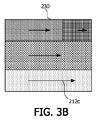
図3A−3Cには、動きマップと奥行きマップの生成とを示してある。前述したように、動きマップは、個別の規定領域に再編成される同様な動きベクトルを有するブロックの族を規定する。同じ領域に属する全てのブロックは、一様な動きを有する。図3Aでは、例えば、ブロック222a,222b…222nは一様な動きベクトルを有し、これらはビデオフレーム208の領域220に統合される。同様に、規定領域224、226及び228は、一様な動きベクトルを有するブロックを含んでいる。図3Bには、動きマップ230を示してあり、このマップの各領域は動きベクトルに関連し、すなわち、領域226は動きベクトル212cに関連する。
3A to 3C show the generation of the motion map and the depth map. As described above, the motion map defines a family of blocks having similar motion vectors that are reorganized into separate defined regions. All blocks belonging to the same region have a uniform motion. In FIG. 3A, for example, blocks 222 a, 222 b... 222 n have uniform motion vectors that are integrated into
図3Cは、図1の方法100の奥行き抽出ステップ110を実行することで計算し、且つ生成することができる奥行きマップ112を示す。これは例えば、高度の動きを有する物体は近くにあるに違いなく、従って奥行きが浅い、という仮定に基づいて、動きベクトル212cを、次の関係式、すなわちD = 1/M(ここでDは奥行きを表し、Mは動きを表す)によって与えられるように、奥行き値214cに変換することを伴う。従って、図3Cに示すように、奥行きマップ112は、動きマップ230から直接変換することができ、レンチキュラーLCDによって処理することができ、観察者/ユーザーは、三次元の知覚でレンダリングすることができる動きマップ230の種々の領域を、識別することができる。
FIG. 3C shows a
図4には、図1の方法100から派生した改良方法101を示してある。この方法101には、2つのステップ、すなわち画像安定化のステップ115及び奥行きフィルタリングのステップ117を組み込んでいる。
FIG. 4 shows an
動き復号化ステップから動きベクトル109をひとたび生成すると、画像安定化のステップ115は、二次元のビデオストリームを全面的に並進兼回転移動させる。画像安定化アルゴリズムは、一般的に、ビデオを撮っている(例えばハンドシェイキング)間における、寄生の動きへの影響を減らすのに用いられている。画像安定化のステップ115を組み入れる影響については、図5で更に説明する。
Once the
図4の方法101においては、後処理をした後に、デブロッキングフィルタを用いることによって奥行きマップ112を生成する。圧縮したMPEGデータからの再構築画像は、ブロッキング効果、リンギング効果、コーナーアウトライアーのように、知覚可能な画像劣化を有する。デブロッキングアルゴリズムは、画像コンテンツの鮮明さを劣化させることなく、ブロッキングのアーチファクトを取り除く。図1の方法100と比較すると、図4の方法101では、奥行き抽出ステップ110は、デブロッキングフィルタを用いてフィルタリングする(ステップ117)ことができる粗い奥行きマップ113を生成する。図1の方法100では、後処理は行わず、奥行き抽出ステップ110の結果が直接、最終的な奥行きマップ112となった。
In the
図5A−5Cを参照して、動きベクトルでの画像安定化ステップ115の結果を説明する。これは、図5Aに位置を示している、フレーム240のブロックAとブロックBに焦点を当てて明らかにすることができる。
The result of the
図5Bに示す継続のPフレーム242における動きベクトル(+1,+1)は、ブロックAによるものであり、動きベクトル246(+3,+1)はブロックBによるものである。しかし、ブロックAに関連する動きがあるように見えるにもかかわらず、ブロックAは動いていなくて、ブロックAの動きはハンドシェイキングのようなビデオを撮るカメラの動きによって生じる。この場合に、画像安定化アルゴリズムは(-1,-1)の並進と、0度の回転の補正を適用して、実際の動きベクトルを得るべく指示することになる。
The motion vector (+ 1, + 1) in the
従って、図5Cには、安定化アルゴリズムによって与えられる情報を用いて補正した、Bフレーム244のブロックA及びブロックBの位置を示してある。実際、ブロックAの動きベクトルは(0,0)に補正されるが、これは、ブロックAは動かなかったから正しいものである。ブロックBの補正動きベクトル248は(+2,0)として設定される。
Accordingly, FIG. 5C shows the positions of block A and block B of the
このように、図5A−5Cの例は、奥行きマップ112の正しい決定及び生成のための画像安定化補正の重要性を明示している。このような補正がないと、ブロックA及びBは、動きマップの不正確な領域に割り当てられることになり、従って、奥行きマップに間違った値を与えてしまうことになる。結果的にこれは、三次元のLCDディスプレイに不正確なレンダリングをすることになっている。
Thus, the examples of FIGS. 5A-5C demonstrate the importance of image stabilization correction for correct determination and generation of the
本発明の好適な実施例と見なされることについて詳述したが、本発明は、当業者によって、本発明の範囲から逸脱することなく、種々の修正及び変更をすることが可能であることは明らかである。 Although described in detail as being considered a preferred embodiment of the present invention, it is clear that the present invention can be subject to various modifications and changes by those skilled in the art without departing from the scope of the present invention. It is.
特に、前述の説明の大部分は携帯ビデオ記録機器に関するものであったが、上述した三次元のレンダリング方法は、コンピュータスクリーン、携帯電話機器、任意タイプのムービープレーヤ、三次元LCDディスプレイに内蔵される任意タイプのプラットフォーム、及び、PCのようなオフィスプラットフォーム等に実装されるような、任意タイプのビデオアプリケーションにも適用することができる。 In particular, most of the above description was for portable video recording devices, but the 3D rendering methods described above are built into computer screens, mobile phone devices, arbitrary types of movie players, and 3D LCD displays. It can also be applied to any type of video application, such as implemented on any type of platform and office platform such as a PC.
加えて、本願明細書にて記載した中心的な発明概念から逸脱することなく、特別な状況を本発明の教示に適用するために、多くの高度なビデオ処理の態様変更をすることができる。更に、本発明の実施例は、上述した全ての特徴事項を含むことができるわけではない。従って、本発明は、開示した特定の例に制限されるものではなく、特許請求の範囲及びこれらと均等の範囲内にある全ての実施例を含む。 In addition, many advanced video processing variations can be made to apply special circumstances to the teachings of the present invention without departing from the central inventive concept described herein. Furthermore, embodiments of the present invention may not include all of the features described above. Accordingly, the invention is not limited to the specific examples disclosed, but includes all examples that fall within the scope of the claims and their equivalents.
Claims (21)
‐ビデオ画像を有する二次元ビデオアプリケーションの符号化したビデオビットストリームを受信するステップと;
‐前記符号化したビデオビットストリームの複数のフレームに関連する動きを復号化して、前記複数のフレームのブロックユニットによって複数の動きベクトルを抽出する動き復号化ステップと;
‐動きマップを生成するステップと;
‐同様なタイプの動きベクトルを有するブロックユニットがそれぞれの領域に一緒にグループ化されるように、同様なタイプの動きベクトルを有するブロックユニットをそれぞれの領域にグループ化することによって、複数の動きベクトルを用いて生成した動きマップを処理するステップであって、前記それぞれの領域における前記ブロックユニットが、それぞれの奥行き情報を含むようにする、動きマップ処理ステップと;
‐ビデオ画像のブロックユニットに関連する動きベクトルのタイプに基づいて、動きマップのそれぞれの領域の奥行き情報を統合することによって、奥行きを抽出する奥行き抽出ステップと;
‐二次元ビデオアプリケーションを三次元ディスプレイ上へレンダリングするための奥行きマップを生成するステップと、
を含むことを特徴とする、ビデオ画像処理方法。 A method for processing a video image, comprising:
-Receiving an encoded video bitstream of a 2D video application having a video image;
A motion decoding step of decoding motion associated with a plurality of frames of the encoded video bitstream and extracting a plurality of motion vectors by block units of the plurality of frames;
-Generating a motion map;
A plurality of motion vectors by grouping block units with similar types of motion vectors into respective regions, such that block units with similar types of motion vectors are grouped together in respective regions; A motion map processing step, wherein the block unit in each of the regions includes respective depth information;
A depth extraction step of extracting depth by integrating depth information of respective regions of the motion map based on the type of motion vector associated with the block unit of the video image;
-Generating a depth map for rendering a 2D video application onto a 3D display;
A video image processing method comprising:
‐前のフレームから復号化した前記複数の動きベクトルから外挿されるか;
‐前記前のフレームから復号化した前記複数の動きベクトルから複製されるか;又は、
‐複数の隣接フレームから前記複数の動きベクトルを用いて内挿される、
請求項1に記載の方法。 A gap filling step, wherein the plurality of motion vectors of the plurality of frames are
-Extrapolated from the plurality of motion vectors decoded from the previous frame;
-Replicated from the plurality of motion vectors decoded from the previous frame; or
-Interpolated from a plurality of adjacent frames using the plurality of motion vectors;
The method of claim 1.
‐ビデオ画像を有する二次元ビデオアプリケーションの符号化したビデオビットストリームを受信するように構成した受信モジュールと;
‐前記符号化したビデオビットストリームの複数のフレームに関連する動きを復号化して、前記複数のフレームのブロックユニットによって複数の動きベクトルを抽出するように構成したビデオデコーダと;
‐同様なタイプの動きベクトルを有するブロックユニットがそれぞれの領域に一緒にグループ化されるように、同様なタイプの動きベクトルを有するブロックユニットをそれぞれの領域にグループ化することによって、複数の動きベクトルを用いて生成した動きマップを処理するように構成したモジュールであって、前記それぞれの領域における前記ブロックユニットが、それぞれの奥行き情報を含むようにした、動きマップ処理モジュールと;
‐ビデオ画像のブロックユニットに関連する動きベクトルのタイプに基づいて、動きマップのそれぞれの奥行き情報を統合するように構成した奥行き抽出モジュールと;
‐二次元ビデオアプリケーションを三次元ディスプレイ上へレンダリングするための奥行きマップを生成するように構成したモジュールと、
を備えていることを特徴とする、ビデオ装置。 A video device configured to process video images for a three-dimensional display, the device comprising:
A receiving module configured to receive an encoded video bitstream of a 2D video application having a video image;
A video decoder configured to decode motion associated with a plurality of frames of the encoded video bitstream and extract a plurality of motion vectors by block units of the plurality of frames;
A plurality of motion vectors by grouping block units with similar types of motion vectors into respective regions, such that block units with similar types of motion vectors are grouped together in respective regions; A motion map processing module configured to process a motion map generated by using the block unit, wherein the block units in the respective regions include respective depth information;
A depth extraction module configured to integrate the respective depth information of the motion map based on the type of motion vector associated with the block unit of the video image;
A module configured to generate a depth map for rendering a 2D video application on a 3D display;
A video apparatus comprising:
‐ビデオ画像を有する二次元ビデオアプリケーションの符号化したビデオビットストリームを受信させ;
‐前記複数のフレームのブロックユニットによって複数の動きベクトルを抽出するための、前記符号化したビデオビットストリームの複数のフレームに関連する動きを復号化させ;
‐動きマップを生成させ;
‐同様なタイプの動きベクトルを有するブロックユニットがそれぞれの領域に一緒にブループ化されるように、同様なタイプの動きベクトルを有するブロックユニットをそれぞれの領域にグループ化することによって、複数の動きベクトルを用いて生成した動きマップを処理させ、前記それぞれの領域における前記ブロックユニットが、それぞれの奥行き情報を含むものとし;
‐ビデオ画像のブロックユニットに関連する動きベクトルのタイプに基づいて、動きマップのそれぞれの領域の奥行き情報を統合することによって、奥行きを抽出させ;
‐二次元ビデオアプリケーションを三次元ディスプレイ上にレンダリングするための奥行きマップを生成させる、
ようにしたコンピュータ可読媒体。 A computer readable medium having a stored sequence of instructions upon execution of instructions by a microprocessor of the device;
-Receiving an encoded video bitstream of a 2D video application with video images;
Decoding a motion associated with a plurality of frames of the encoded video bitstream for extracting a plurality of motion vectors by the block unit of the plurality of frames;
-Generate a motion map;
A plurality of motion vectors by grouping block units having similar types of motion vectors into respective regions such that block units having similar types of motion vectors are grouped together in each region; And the block unit in each of the areas includes the depth information;
-Extracting depth by integrating depth information of respective regions of the motion map based on the type of motion vector associated with the block unit of the video image;
Generate depth maps for rendering 2D video applications on 3D displays,
Computer readable medium.
Applications Claiming Priority (2)
| Application Number | Priority Date | Filing Date | Title |
|---|---|---|---|
| EP05300669 | 2005-08-17 | ||
| PCT/IB2006/052761 WO2007020570A2 (en) | 2005-08-17 | 2006-08-10 | Video processing method and device for depth extraction |
Publications (1)
| Publication Number | Publication Date |
|---|---|
| JP2009505550A true JP2009505550A (en) | 2009-02-05 |
Family
ID=37757950
Family Applications (1)
| Application Number | Title | Priority Date | Filing Date |
|---|---|---|---|
| JP2008526587A Withdrawn JP2009505550A (en) | 2005-08-17 | 2006-08-10 | Video processing method and apparatus for depth extraction |
Country Status (5)
| Country | Link |
|---|---|
| US (1) | US8983175B2 (en) |
| EP (1) | EP1917642A2 (en) |
| JP (1) | JP2009505550A (en) |
| CN (1) | CN101223552A (en) |
| WO (1) | WO2007020570A2 (en) |
Cited By (4)
| Publication number | Priority date | Publication date | Assignee | Title |
|---|---|---|---|---|
| JP2012089931A (en) * | 2010-10-15 | 2012-05-10 | Sony Corp | Information processing apparatus, information processing method, and program |
| JP2013509022A (en) * | 2009-10-14 | 2013-03-07 | トムソン ライセンシング | Filtering and edge coding |
| JP2016123003A (en) * | 2014-12-25 | 2016-07-07 | キヤノン株式会社 | Image processing system, control method of the same, and program |
| JP2021533646A (en) * | 2018-08-02 | 2021-12-02 | フェイスブック・テクノロジーズ・リミテッド・ライアビリティ・カンパニーFacebook Technologies, Llc | Systems and methods for extrapolating 2D images using depth information |
Families Citing this family (33)
| Publication number | Priority date | Publication date | Assignee | Title |
|---|---|---|---|---|
| EP1965344B1 (en) * | 2007-02-27 | 2017-06-28 | Accenture Global Services Limited | Remote object recognition |
| CN101415116B (en) * | 2007-10-15 | 2011-08-03 | 华为技术有限公司 | Method and system for determining corresponding macro block |
| CN101459857B (en) * | 2007-12-10 | 2012-09-05 | 华为终端有限公司 | Communication terminal |
| CN101312539B (en) * | 2008-07-03 | 2010-11-10 | 浙江大学 | Hierarchical Image Depth Extraction Method for 3D Television |
| US8248410B2 (en) * | 2008-12-09 | 2012-08-21 | Seiko Epson Corporation | Synthesizing detailed depth maps from images |
| CN101815225B (en) * | 2009-02-25 | 2014-07-30 | 三星电子株式会社 | Method for generating depth map and device thereof |
| CN101631256B (en) * | 2009-08-13 | 2011-02-09 | 浙江大学 | Method for converting 2D video into 3D video in three-dimensional television system |
| KR101701342B1 (en) * | 2009-08-14 | 2017-02-01 | 삼성전자주식회사 | Method and apparatus for video encoding considering adaptive loop filtering, and method and apparatus for video decoding considering adaptive loop filtering |
| FR2951535B1 (en) * | 2009-10-15 | 2011-12-02 | Sagem Defense Securite | METHOD OF DETECTING PARASITE MOVEMENTS DURING THE ALIGNMENT OF AN INERTIAL POWER PLANT |
| KR101750046B1 (en) * | 2010-04-05 | 2017-06-22 | 삼성전자주식회사 | Method and apparatus for video encoding with in-loop filtering based on tree-structured data unit, method and apparatus for video decoding with the same |
| US9398313B2 (en) | 2010-12-29 | 2016-07-19 | Nokia Technologies Oy | Depth map coding |
| US9565449B2 (en) | 2011-03-10 | 2017-02-07 | Qualcomm Incorporated | Coding multiview video plus depth content |
| US20120236934A1 (en) * | 2011-03-18 | 2012-09-20 | Qualcomm Incorporated | Signaling of multiview video plus depth content with a block-level 4-component structure |
| RU2014118585A (en) * | 2011-10-10 | 2015-11-20 | Конинклейке Филипс Н.В. | DEPTH CARD PROCESSING |
| WO2013058735A1 (en) | 2011-10-18 | 2013-04-25 | Hewlett-Packard Development Company, L.P. | Depth mask assisted video stabilization |
| KR101977802B1 (en) * | 2012-10-10 | 2019-05-13 | 삼성전자주식회사 | Motion estimation apparatus and method thereof in a video system |
| CN103974055B (en) * | 2013-02-06 | 2016-06-08 | 城市图像科技有限公司 | 3D photo generation system and method |
| CN103281548B (en) * | 2013-05-13 | 2015-04-08 | 四川虹微技术有限公司 | Real-time high-definition depth estimation system |
| US10222932B2 (en) | 2015-07-15 | 2019-03-05 | Fyusion, Inc. | Virtual reality environment based manipulation of multilayered multi-view interactive digital media representations |
| US12261990B2 (en) | 2015-07-15 | 2025-03-25 | Fyusion, Inc. | System and method for generating combined embedded multi-view interactive digital media representations |
| US11095869B2 (en) | 2015-09-22 | 2021-08-17 | Fyusion, Inc. | System and method for generating combined embedded multi-view interactive digital media representations |
| US10242474B2 (en) * | 2015-07-15 | 2019-03-26 | Fyusion, Inc. | Artificially rendering images using viewpoint interpolation and extrapolation |
| US12495134B2 (en) | 2015-07-15 | 2025-12-09 | Fyusion, Inc. | Drone based capture of multi-view interactive digital media |
| US11783864B2 (en) | 2015-09-22 | 2023-10-10 | Fyusion, Inc. | Integration of audio into a multi-view interactive digital media representation |
| US9792671B2 (en) | 2015-12-22 | 2017-10-17 | Intel Corporation | Code filters for coded light depth acquisition in depth images |
| EP3404927A4 (en) * | 2016-01-13 | 2018-11-21 | Sony Corporation | Information processing device and information processing method |
| CN106548494A (en) * | 2016-09-26 | 2017-03-29 | 浙江工商大学 | A kind of video image depth extraction method based on scene Sample Storehouse |
| US10437879B2 (en) | 2017-01-18 | 2019-10-08 | Fyusion, Inc. | Visual search using multi-view interactive digital media representations |
| US20180227482A1 (en) | 2017-02-07 | 2018-08-09 | Fyusion, Inc. | Scene-aware selection of filters and effects for visual digital media content |
| US10313651B2 (en) | 2017-05-22 | 2019-06-04 | Fyusion, Inc. | Snapshots at predefined intervals or angles |
| US11069147B2 (en) | 2017-06-26 | 2021-07-20 | Fyusion, Inc. | Modification of multi-view interactive digital media representation |
| WO2019013430A1 (en) * | 2017-07-10 | 2019-01-17 | Samsung Electronics Co., Ltd. | Point cloud and mesh compression using image/video codecs |
| US10592747B2 (en) | 2018-04-26 | 2020-03-17 | Fyusion, Inc. | Method and apparatus for 3-D auto tagging |
Family Cites Families (25)
| Publication number | Priority date | Publication date | Assignee | Title |
|---|---|---|---|---|
| US5537488A (en) * | 1993-09-16 | 1996-07-16 | Massachusetts Institute Of Technology | Pattern recognition system with statistical classification |
| US5619337A (en) * | 1995-01-27 | 1997-04-08 | Matsushita Electric Corporation Of America | MPEG transport encoding/decoding system for recording transport streams |
| US5920572A (en) * | 1995-06-30 | 1999-07-06 | Divicom Inc. | Transport stream decoder/demultiplexer for hierarchically organized audio-video streams |
| US5825927A (en) * | 1996-01-16 | 1998-10-20 | Hitachi America, Ltd. | Methods and apparatus for encoding video data in a manner that is well suited for decoding by regular or downconverting decoders |
| US5963670A (en) * | 1996-02-12 | 1999-10-05 | Massachusetts Institute Of Technology | Method and apparatus for classifying and identifying images |
| US6011498A (en) * | 1996-12-20 | 2000-01-04 | Philips Electronics North America Corporation | Dual-speed variable length decoding architecture for MPEG-2 video data |
| US6058210A (en) * | 1997-09-15 | 2000-05-02 | Xerox Corporation | Using encoding cost data for segmentation of compressed image sequences |
| US6636222B1 (en) * | 1999-11-09 | 2003-10-21 | Broadcom Corporation | Video and graphics system with an MPEG video decoder for concurrent multi-row decoding |
| GB2362078B (en) * | 1999-01-22 | 2003-01-22 | Kent Ridge Digital Labs | Method and apparatus for indexing and retrieving images using visual keywords |
| US6411953B1 (en) * | 1999-01-25 | 2002-06-25 | Lucent Technologies Inc. | Retrieval and matching of color patterns based on a predetermined vocabulary and grammar |
| US7016540B1 (en) * | 1999-11-24 | 2006-03-21 | Nec Corporation | Method and system for segmentation, classification, and summarization of video images |
| US6944350B2 (en) * | 1999-12-17 | 2005-09-13 | Utah State University | Method for image coding by rate-distortion adaptive zerotree-based residual vector quantization and system for effecting same |
| US6683980B1 (en) * | 2000-07-28 | 2004-01-27 | Microsoft Corporation | System and method for compressing data |
| US6925249B1 (en) * | 2000-07-28 | 2005-08-02 | Microsoft Corporation | System and method for storing compressed data onto a storage medium |
| US7035468B2 (en) * | 2001-04-20 | 2006-04-25 | Front Porch Digital Inc. | Methods and apparatus for archiving, indexing and accessing audio and video data |
| US6870962B2 (en) * | 2001-04-30 | 2005-03-22 | The Salk Institute For Biological Studies | Method and apparatus for efficiently encoding chromatic images using non-orthogonal basis functions |
| US20050063596A1 (en) * | 2001-11-23 | 2005-03-24 | Yosef Yomdin | Encoding of geometric modeled images |
| US7035467B2 (en) * | 2002-01-09 | 2006-04-25 | Eastman Kodak Company | Method and system for processing images for themed imaging services |
| JP2004040445A (en) * | 2002-07-03 | 2004-02-05 | Sharp Corp | Portable device having 3D display function, and 3D conversion program |
| US7212676B2 (en) * | 2002-12-30 | 2007-05-01 | Intel Corporation | Match MSB digital image compression |
| CN1723476A (en) | 2003-01-06 | 2006-01-18 | 皇家飞利浦电子股份有限公司 | Method and apparatus for depth sorting of digital images |
| US7152209B2 (en) * | 2003-03-28 | 2006-12-19 | Microsoft Corporation | User interface for adaptive video fast forward |
| US7693339B2 (en) * | 2003-12-17 | 2010-04-06 | Andreas Wittenstein | Method and apparatus for faster-than-real-time lossless compression and decompression of images |
| JP4841553B2 (en) * | 2005-08-17 | 2011-12-21 | パナソニック株式会社 | Video scene classification apparatus, video scene classification method, program, recording medium, integrated circuit, and server-client system |
| US8094948B2 (en) * | 2007-04-27 | 2012-01-10 | The Regents Of The University Of California | Photo classification using optical parameters of camera from EXIF metadata |
-
2006
- 2006-08-10 JP JP2008526587A patent/JP2009505550A/en not_active Withdrawn
- 2006-08-10 US US12/063,854 patent/US8983175B2/en not_active Expired - Fee Related
- 2006-08-10 CN CNA2006800260604A patent/CN101223552A/en active Pending
- 2006-08-10 EP EP06780340A patent/EP1917642A2/en not_active Withdrawn
- 2006-08-10 WO PCT/IB2006/052761 patent/WO2007020570A2/en not_active Ceased
Cited By (7)
| Publication number | Priority date | Publication date | Assignee | Title |
|---|---|---|---|---|
| JP2013509022A (en) * | 2009-10-14 | 2013-03-07 | トムソン ライセンシング | Filtering and edge coding |
| JP2016146655A (en) * | 2009-10-14 | 2016-08-12 | トムソン ライセンシングThomson Licensing | Filtering and edge encoding |
| US10198792B2 (en) | 2009-10-14 | 2019-02-05 | Dolby Laboratories Licensing Corporation | Method and devices for depth map processing |
| US10417748B2 (en) | 2009-10-14 | 2019-09-17 | Dolby Laboratories Licensing Corporation | Filtering and edge encoding and decoding for depth maps |
| JP2012089931A (en) * | 2010-10-15 | 2012-05-10 | Sony Corp | Information processing apparatus, information processing method, and program |
| JP2016123003A (en) * | 2014-12-25 | 2016-07-07 | キヤノン株式会社 | Image processing system, control method of the same, and program |
| JP2021533646A (en) * | 2018-08-02 | 2021-12-02 | フェイスブック・テクノロジーズ・リミテッド・ライアビリティ・カンパニーFacebook Technologies, Llc | Systems and methods for extrapolating 2D images using depth information |
Also Published As
| Publication number | Publication date |
|---|---|
| WO2007020570A3 (en) | 2007-10-25 |
| EP1917642A2 (en) | 2008-05-07 |
| WO2007020570A2 (en) | 2007-02-22 |
| CN101223552A (en) | 2008-07-16 |
| US8983175B2 (en) | 2015-03-17 |
| US20080232716A1 (en) | 2008-09-25 |
Similar Documents
| Publication | Publication Date | Title |
|---|---|---|
| US8983175B2 (en) | Video processing method and device for depth extraction | |
| JP5763184B2 (en) | Calculation of parallax for 3D images | |
| JP5575908B2 (en) | Depth map generation technique for converting 2D video data to 3D video data | |
| US9986258B2 (en) | Efficient encoding of multiple views | |
| CN102549507B (en) | Selecting viewpoints for generating additional views in 3D video | |
| JP5243612B2 (en) | Intermediate image synthesis and multi-view data signal extraction | |
| CN101822068B (en) | Method and device for processing depth-map | |
| US8218855B2 (en) | Method and apparatus for receiving multiview camera parameters for stereoscopic image, and method and apparatus for transmitting multiview camera parameters for stereoscopic image | |
| US20080205791A1 (en) | Methods and systems for use in 3d video generation, storage and compression | |
| CN113243112B (en) | Streaming volumetric and non-volumetric video | |
| US20090015662A1 (en) | Method and apparatus for encoding and decoding stereoscopic image format including both information of base view image and information of additional view image | |
| US20140198182A1 (en) | Representation and Coding of Multi-View Images Using Tapestry Encoding | |
| US20130033586A1 (en) | System, Method and Apparatus for Generation, Transmission and Display of 3D Content | |
| US20100182403A1 (en) | File format for encoded stereoscopic image/video data | |
| US20150304640A1 (en) | Managing 3D Edge Effects On Autostereoscopic Displays | |
| CN102379127A (en) | Video processing device, video processing method, and computer program | |
| US20200413094A1 (en) | Method and apparatus for encoding/decoding image and recording medium for storing bitstream | |
| WO2009052730A1 (en) | Video encoding decoding method and device and video codec | |
| CN102256143A (en) | Video processing device and method | |
| WO2008030011A1 (en) | File format for encoded stereoscopic image/video data | |
| Schmeing et al. | Depth image based rendering: A faithful approach for the disocclusion problem | |
| KR20200143287A (en) | Method and apparatus for encoding/decoding image and recording medium for storing bitstream | |
| CN103081478A (en) | Method for configuring stereoscopic moving picture file | |
| US11064218B2 (en) | Method and apparatus for encoding/decoding image for virtual view synthesis | |
| Joachimiak et al. | Evaluation of depth-based super resolution on compressed mixed resolution 3d video |
Legal Events
| Date | Code | Title | Description |
|---|---|---|---|
| A761 | Written withdrawal of application |
Free format text: JAPANESE INTERMEDIATE CODE: A761 Effective date: 20090901 |