JP2009225443A - Automatic generation of photo guide - Google Patents
Automatic generation of photo guide Download PDFInfo
- Publication number
- JP2009225443A JP2009225443A JP2009056167A JP2009056167A JP2009225443A JP 2009225443 A JP2009225443 A JP 2009225443A JP 2009056167 A JP2009056167 A JP 2009056167A JP 2009056167 A JP2009056167 A JP 2009056167A JP 2009225443 A JP2009225443 A JP 2009225443A
- Authority
- JP
- Japan
- Prior art keywords
- image
- images
- content
- degradation
- image quality
- Prior art date
- Legal status (The legal status is an assumption and is not a legal conclusion. Google has not performed a legal analysis and makes no representation as to the accuracy of the status listed.)
- Granted
Links
Images


Classifications
-
- G—PHYSICS
- G03—PHOTOGRAPHY; CINEMATOGRAPHY; ANALOGOUS TECHNIQUES USING WAVES OTHER THAN OPTICAL WAVES; ELECTROGRAPHY; HOLOGRAPHY
- G03B—APPARATUS OR ARRANGEMENTS FOR TAKING PHOTOGRAPHS OR FOR PROJECTING OR VIEWING THEM; APPARATUS OR ARRANGEMENTS EMPLOYING ANALOGOUS TECHNIQUES USING WAVES OTHER THAN OPTICAL WAVES; ACCESSORIES THEREFOR
- G03B27/00—Photographic printing apparatus
- G03B27/72—Controlling or varying light intensity, spectral composition, or exposure time in photographic printing apparatus
- G03B27/73—Controlling exposure by variation of spectral composition, e.g. multicolor printers
- G03B27/735—Controlling exposure by variation of spectral composition, e.g. multicolor printers in dependence upon automatic analysis of the original
-
- G—PHYSICS
- G06—COMPUTING OR CALCULATING; COUNTING
- G06T—IMAGE DATA PROCESSING OR GENERATION, IN GENERAL
- G06T5/00—Image enhancement or restoration
- G06T5/60—Image enhancement or restoration using machine learning, e.g. neural networks
-
- G—PHYSICS
- G06—COMPUTING OR CALCULATING; COUNTING
- G06T—IMAGE DATA PROCESSING OR GENERATION, IN GENERAL
- G06T7/00—Image analysis
- G06T7/0002—Inspection of images, e.g. flaw detection
-
- G—PHYSICS
- G06—COMPUTING OR CALCULATING; COUNTING
- G06V—IMAGE OR VIDEO RECOGNITION OR UNDERSTANDING
- G06V10/00—Arrangements for image or video recognition or understanding
- G06V10/98—Detection or correction of errors, e.g. by rescanning the pattern or by human intervention; Evaluation of the quality of the acquired patterns
- G06V10/993—Evaluation of the quality of the acquired pattern
-
- G—PHYSICS
- G06—COMPUTING OR CALCULATING; COUNTING
- G06T—IMAGE DATA PROCESSING OR GENERATION, IN GENERAL
- G06T2207/00—Indexing scheme for image analysis or image enhancement
- G06T2207/20—Special algorithmic details
- G06T2207/20081—Training; Learning
-
- G—PHYSICS
- G06—COMPUTING OR CALCULATING; COUNTING
- G06T—IMAGE DATA PROCESSING OR GENERATION, IN GENERAL
- G06T2207/00—Indexing scheme for image analysis or image enhancement
- G06T2207/20—Special algorithmic details
- G06T2207/20084—Artificial neural networks [ANN]
-
- G—PHYSICS
- G06—COMPUTING OR CALCULATING; COUNTING
- G06T—IMAGE DATA PROCESSING OR GENERATION, IN GENERAL
- G06T2207/00—Indexing scheme for image analysis or image enhancement
- G06T2207/30—Subject of image; Context of image processing
- G06T2207/30168—Image quality inspection
Landscapes
- Engineering & Computer Science (AREA)
- Physics & Mathematics (AREA)
- General Physics & Mathematics (AREA)
- Quality & Reliability (AREA)
- Theoretical Computer Science (AREA)
- Spectroscopy & Molecular Physics (AREA)
- Multimedia (AREA)
- Computer Vision & Pattern Recognition (AREA)
- Image Processing (AREA)
- Television Signal Processing For Recording (AREA)
- Editing Of Facsimile Originals (AREA)
Abstract
【課題】オリジナル画像の画質及び完成した写真に適用された向上処理の効果に関して、クライアントにフィードバックを与えること。
【解決手段】本発明に係る機器は、1組の画像に対して画質ガイドドキュメントを生成する機器であって、画像に適用されている向上処理に基づき、前記組における画像に対して画質関連特徴を出力する手段と、前記組における画像に対して画像コンテンツ関連特徴を出力する手段と、前記出力された画質関連特徴及び画像コンテンツ関連特徴を受信し、前記組における前記画像の少なくとも1枚に対して、コンテンツベースの劣化を出力する手段と、前記組における画像に対して、サムネイルを生成する手段と、前記1組の画像に対して、1組の画像に対して画質ガイドドキュメントを生成する手段と、を具備する。
【選択図】図3Feedback is provided to a client regarding the quality of an original image and the effect of enhancement processing applied to a completed photograph.
An apparatus according to the present invention is an apparatus for generating an image quality guide document for a set of images, and based on an enhancement process applied to the image, image quality related features for the images in the set. Means for outputting image content related features for the images in the set, receiving the output image quality related features and image content related features, and for at least one of the images in the set Means for outputting content-based degradation, means for generating thumbnails for the images in the set, and means for generating an image quality guide document for the set of images for the set of images. And.
[Selection] Figure 3
Description
例示的な実施形態は、画像処理の分野に関する。例示的な実施形態は、デジタル画像の自動向上処理に関するフィードバックの備えと関連した特定の適用例を見出し、特にこの適用例を参照して説明される。 Exemplary embodiments relate to the field of image processing. Exemplary embodiments find a particular application in connection with providing feedback regarding automatic enhancement of digital images, and will be described with particular reference to this application.
写真家は現在、カメラ、携帯電話、及び光学スキャナなどのデジタル画像捕捉装置を用いて、デジタルフォーマットで画像を捕捉する。捕捉された画像は、多くの場合、写真現像サービス又はコンテンツ共有コミュニティに送信される。こうしたサービスは、多くの場合、自動化又は半自動化向上処理方法を使用して、画像に検出される劣化を補正する。 Photographers currently capture images in digital format using digital image capture devices such as cameras, cell phones, and optical scanners. Captured images are often sent to photo development services or content sharing communities. Such services often use an automated or semi-automated enhancement processing method to correct for any degradation detected in the image.
しかし、オリジナル画像の画質及び完成した写真に適用された向上処理の効果に関して、クライアントにフィードバックが与えられることはない。 However, no feedback is given to the client regarding the quality of the original image and the effect of the enhancement process applied to the finished photo.
1つの態様において、画質ガイドドキュメントを自動的に生成する方法は、画像向上処理を受けている1組の画像における少なくとも一枚の画像に対して、画像に適用されている向上処理に基づいて画像に対する画質関連特徴(IQRF)を識別し、画像コンテンツに基づいて画像コンテンツ関連特徴(ICRF)を識別し、識別されたIQRF及びICRFに基づき画像コンテンツベースの劣化を判断し、画像のサムネイルを生成するステップを含む。本方法は、サムネイルの少なくとも1つが、判断されたコンテンツベースの劣化に基づくそれぞれのテキスト記述と関連付けられる、1組の画像に対する画質ガイドドキュメントを生成するステップをさらに含む。 In one aspect, a method for automatically generating an image quality guide document is based on an enhancement process applied to an image for at least one image in a set of images undergoing an image enhancement process. Identify image quality-related features (IQRF) for the image, identify image content-related features (ICRF) based on the image content, determine image content-based degradation based on the identified IQRF and ICRF, and generate thumbnails of the images Includes steps. The method further includes generating an image quality guide document for the set of images in which at least one of the thumbnails is associated with a respective text description based on the determined content-based degradation.
本方法は、コンテンツベースの劣化に基づき、画像に対する写真撮影情報を取り出すステップをさらに含み、画質ガイドドキュメントにおいては、撮影情報は画像のサムネイルと関連付けられる。
画像に対するIQRFを識別するステップは、1組の予め定義された画質関連カテゴリに関連したIQRFを識別するステップを含むことができる。
The method further includes retrieving photography information for the image based on the content-based degradation, and in the image quality guide document, the photography information is associated with a thumbnail of the image.
Identifying an IQRF for an image can include identifying an IQRF associated with a set of predefined image quality related categories.
IQRFを識別するステップは、識別されたIQRFに基づく特徴ベクトルを計算するステップを含むことができる。 Identifying the IQRF can include calculating a feature vector based on the identified IQRF.
画像に対するIQRFを識別するステップは、実施される画像向上処理のログを調査するステップを含むことができる。 Identifying the IQRF for the image may include examining a log of the image enhancement process being performed.
IQRFを識別するステップは、向上処理を動作させる識別された画質パラメータが所定の閾値を満たす、画像に適用される画像向上処理を識別するステップを含むことができる。 Identifying the IQRF may include identifying an image enhancement process applied to the image for which the identified image quality parameter that operates the enhancement process meets a predetermined threshold.
ICRFを識別するステップは、1組の予め定められたコンテンツベースのカテゴリに関連した画像コンテンツ関連特徴を識別するステップを含むことができる。 Identifying the ICRF can include identifying image content-related features associated with a set of predetermined content-based categories.
ICRFを識別するステップは、識別されたICRFに基づく特徴ベクトルを計算するステップを含むことができる。 Identifying the ICRF may include calculating a feature vector based on the identified ICRF.
ICRFを識別するステップは、画像の低レベル特徴を識別し、1組の予め定められたコンテンツベースのカテゴリから選択されたカテゴリに各々割り当てられる画像において訓練された分類器を用いて、低レベル特徴に基づいて画像を分類するステップを含むことができる。 The step of identifying the ICRF identifies the low-level features of the image and uses a classifier trained in the images each assigned to a category selected from a set of predetermined content-based categories. Categorizing images based on.
画像のコンテンツベースの劣化を判断するステップは、識別されたIQRFを表す第1特徴ベクトルと、ICRFを表す第2特徴ベクトルを組み合わせるステップを含むことができる。 Determining content-based degradation of the image may include combining a first feature vector that represents the identified IQRF and a second feature vector that represents the ICRF.
テキスト記述は、コンテンツベースの劣化の記述及び適用される対応する画像向上処理を含むことができる。 The text description can include a content-based degradation description and a corresponding image enhancement process to be applied.
複数のサムネイルは各々、判断されたコンテンツベースの劣化に基づくそれぞれのテキスト記述と関連付けることができる。 Each of the plurality of thumbnails can be associated with a respective text description based on the determined content-based degradation.
組における画像は、写真を含むことができる。 The images in the set can include photographs.
画質ガイドドキュメントは、上述の方法で生成することができる。 The image quality guide document can be generated in the manner described above.
サムネイルは、画像から抽出される画像データを含むことができる。 The thumbnail can include image data extracted from the image.
コンピュータプログラム製品は、命令をエンコードすることができ、これはコンピュータ上で実行されたとき、コンピュータが上述の方法を実施するようにさせる。 A computer program product can encode instructions that, when executed on a computer, cause the computer to perform the methods described above.
別の態様において、1組の画像に対して画質ガイドドキュメントを生成する機器は、画像に適用されている向上処理に基づき、組における画像に対してIQRFを出力する向上処理検出器を含む。画像コンテンツアナライザは、組における画像に対してICRFを出力する。劣化分類器は、出力IQRF及びICRFを受信し、組における画像の少なくとも一枚に対して、コンテンツベースの劣化を出力する。サムネイルジェネレータは、組における画像に対してサムネイルを生成する。画質ガイドドキュメントジェネレータは、1組の画像に対して画質ガイドドキュメントを生成し、1組の画像においては、サムネイルの少なくとも1つが、判断されたコンテンツベースの劣化に基づくそれぞれのテキスト記述と関連付けられている。 In another aspect, an apparatus for generating an image quality guide document for a set of images includes an enhancement processing detector that outputs an IQRF for the images in the set based on the enhancement processing applied to the images. The image content analyzer outputs an ICRF for the images in the set. The degradation classifier receives the output IQRF and ICRF and outputs content-based degradation for at least one of the images in the set. The thumbnail generator generates thumbnails for the images in the set. The image quality guide document generator generates an image quality guide document for a set of images, in which at least one of the thumbnails is associated with a respective text description based on the determined content-based degradation. Yes.
画像処理システムは、述べられた機器と、適用されている向上処理に関連した向上処理モジュールに情報を出力する画像向上処理モジュールとを含むことができる。 The image processing system may include the described device and an image enhancement processing module that outputs information to the enhancement processing module associated with the enhancement processing being applied.
別の態様によれば、有形媒体にレンダリングされる画質ガイドドキュメントは、1組の処理された画像のサムネイル及びサムネイルの少なくとも幾つかと関連付けられた、自動的に生成された関連テキスト記述の配置を含み、各々のテキスト記述は、画像のコンテンツベースの劣化及び劣化を補正するのに適用された画像向上処理を記述している。 According to another aspect, an image quality guide document rendered on tangible media includes a set of processed image thumbnails and an arrangement of automatically generated associated text descriptions associated with at least some of the thumbnails. Each text description describes the content-based degradation of the image and the image enhancement process applied to correct the degradation.
サムネイルの少なくとも1つは、将来のコンテンツベースの劣化を避けるためのそれぞれの撮影情報に関連付けることができる。 At least one of the thumbnails can be associated with respective shooting information to avoid future content-based degradation.
例示的な実施形態の態様は、特に写真現像用途における、画質ガイドドキュメントを自動的に作成するシステム及び方法に関する。例示的な画質ガイドドキュメント又は「フォトガイド」は、画像のサムネイルと併せて、コンテンツベースの画像劣化に基づく人間可読形態で生成される付随のテキスト記述から成る。例示的な方法において、1組の入力画像の知覚品質及びコンテンツを説明する特徴が抽出される。画像劣化は、こうした特徴に基づいて分類し、参照テーブルを通して最終的な写真撮影情報に関連付けることができる。
デジタル画像は、一般的に二次元アレイのピクセルの各々のピクセルに対する画像データを含む。画像データは、グレースケール値の形態で存在することができ、このときグレーは、あらゆる色分解又はあらゆる他の段階的な色強度スケールを指すことができる。本明細書では、特に参照される画像は写真であるが、光学スキャナが取得した画像など、他のデジタル的に取得した画像も、同様に処理できることを理解するべきである。
Aspects of exemplary embodiments relate to systems and methods for automatically creating an image quality guide document, particularly in photographic development applications. An exemplary image quality guide document or “photo guide” consists of an accompanying text description generated in human-readable form based on content-based image degradation, along with thumbnails of images. In an exemplary method, features describing the perceptual quality and content of a set of input images are extracted. Image degradation can be classified based on these features and associated with the final photography information through a lookup table.
A digital image typically includes image data for each pixel of a two-dimensional array of pixels. The image data can exist in the form of gray scale values, where gray can refer to any color separation or any other graded color intensity scale. In this specification, the image specifically referred to is a photograph, but it should be understood that other digitally acquired images, such as an image acquired by an optical scanner, can be similarly processed.
図1は、一例として、例示的なフォトガイド10を示す。フォトガイド10は、1組の現像された画像に対して、画質劣化及び/又は劣化を補正するための向上処理方法を識別し、将来に同様の劣化を避けるようユーザを助けることを目的として、画像捕捉技術を改善するための情報を随意的に提供するデジタルドキュメント又はハードコピードキュメントとすることができる。
FIG. 1 shows an
向上処理のコンテクストにおいては、画像に適用される画像向上処理方法すべてが、観察者が改善されたと考えるものをもたらすわけではないことが理解される。さらに、観察者によって、視覚的な改善をどうとらえるか、異なることがある。しかし、説明を容易にするため、識別された劣化を補正するために実施されるすべての動作は、観察者がどう考えるかどうかに関わらず、「向上処理」と呼ぶことにする。 In the context of enhancement processing, it is understood that not all image enhancement processing methods applied to an image result in what the viewer thinks has improved. In addition, how observers perceive visual improvements can vary. However, for ease of explanation, all operations performed to correct the identified degradation will be referred to as “enhancement processing” regardless of what the observer thinks.
ガイド10は、1組の処理された画像における画像の各々について、1組のサムネイル画像12を含む。一般的に、各々のサムネイル画像は、それぞれの画像から抽出された画像データを含む。通常、サムネイル画像12は、オリジナル画像に比べ含まれる情報が少ない。例えば、各々のサムネイル画像12は、解像度が低い及び/又はトリミングされた、オリジナル画像又は処理されたオリジナル画像から生成されたデジタル画像とすることができる。組におけるすべてのサムネイルは、同じサイズとすることもできる。それ以外の場合、幾つかの実施形態において、画像は、サムネイルを作成する際に、例えばカラーから白黒への変換によってデジタル的に修正することができる(例えば、白黒サムネイル)。他の実施形態において、画像の代表的な部分は、自動的にサムネイルとして選択され、解像度を下げる又はサイズを変更する必要がない。実際、サムネイルは、組において画像を互いに区別することを可能にする、画像のあらゆる視覚表示とすることができる。1つの実施形態において、サムネイルは、例えば上記の特許文献1で説明されるような、コンテクスト依存の画像である。そうした手法において、サムネイルとして選択された画像の一部は、画像が用いられるコンテクストに依存することができる。例えば、ユーザが主に顔に興味を抱いていると知られている場合には、画像の領域は、好適な顔認識ソフトウェアで識別でき、好適なトリミング部分を判断するベースとして用いることができる。
各々のサムネイルと関連付けられているのは、例えば、ガイド10において各サムネイルに隣接しているテキスト記述14であり、これはガイドラインとしての役割を果たす。テキスト記述は、英語などの自然言語の語句、文又は他のテキスト文字列とすることもできる。自動画像向上処理工程を経た画像に対し、テキスト記述は、オリジナル画像に対する判断されたコンテンツベースの劣化から抽出され、知覚品質及びコンテンツベースの特徴に基づいている。例示的な実施形態において、フォトガイド10は、列で配置される。第1列は、対応する1組の処理済画像が出力される順序に配置される1組のサムネイルを含む。第2列は、各々のサムネイルに対して同じ順序でテキスト記述14を含む。したがって、各行は、サムネイル及び関連テキスト記述(テキスト記述が生成された場合)を含む。しかし、サムネイル12及びテキスト記述の他の配置方法が考えられる。例えば、サムネイルは、対応する内円又は外円を形成するテキスト記述と共に円形に配置することができる。或いは、テキスト記述をそれぞれのサムネイルと関連付けるため、リード線を用いることができる。又は、サムネイルを対応するテキスト記述と関連付けるために、ナンバリングシステム又は他の固有の識別子を用いることができる。
Associated with each thumbnail is, for example, a text description 14 adjacent to each thumbnail in the
撮影情報16は、サムネイル12とも関連付けられ、将来、判断されたコンテンツベースの劣化を防ぐ画像取得技術を識別する。一般的に、向上処理を経た画像だけが、関連テキスト記述14、及び随意的に撮影情報16も有する。デジタルガイド10の場合、情報アイコン18が、例えばアイコンをクリックすることによって起動したとき、別のウインドウで開くことができる。テキスト記述に関しては、撮影情報16を、対応するサムネイル12に関連付ける別の方法が考えられる。例示的な実施形態において、テキスト記述14及び撮影情報16は共に、画像に対して判断された劣化に基づいている。次に劣化は、画像のコンテンツベースのカテゴリ化、並びに、適用された向上処理に関する情報から抽出された画質関連要素に基づいており、以下に更なる詳細が説明される。
The shooting
フォトガイド10は、情報20を識別するステップをさらに含むことができる。例えば1組の画像は、特定のユーザ、日付及び組のタイトル(アルバムのタイトル)により識別することができ、或いは別の方法により一意的に識別することができる。
The
図2において、図1で説明される種類のフォトガイド10を生成する例示的な工程の概要が図示される。工程は、処理される1組のオリジナルデジタル画像22を入力とする。入力された画像22は、画像向上処理を経て、デジタルフォーマット又はハードコピーフォーマットで、1組の処理済画像24として出力される。画像に対して、サムネイル12が生成される。劣化分類では、適用される向上処理に関する情報と共に、画像コンテンツ分析が用いられる。自然言語ジェネレータによって処理されるように、出力された劣化は、フォトガイド10の作成に用いられる。撮影情報参照テーブル(LUT)は、劣化分類に基づいてガイド10に対する撮影情報を作成する。ガイド10は、処理済画像24と共に出力され、例えばユーザに送られる。
In FIG. 2, an overview of an exemplary process for generating a
図2に示されるように、例示的な方法は、2段階、つまり特徴抽出段階と、フォトガイド作成段階とに分割される。特徴抽出段階では、画像コンテンツ関連特徴(ICRF)fcと共に、画質関連特徴(IQRF)faが抽出される。IQRFfaは、画像に適用される向上処理及び/又は適用された向上処理の基準となる劣化に関連した情報から抽出することができる。ICRFfcは、画像コンテンツの分析から抽出される。こうした特徴は共に、フォトガイド作成段階で、各々の向上処理済画像に対するコンテンツベースの劣化d、及び随意的に関連撮影情報16を識別するために用いられる。
As shown in FIG. 2, the exemplary method is divided into two stages: a feature extraction stage and a photoguide creation stage. The feature extraction stage, together with the image content-related features (ICRF) f c, the image quality related characteristics (IQRF) f a is extracted. IQRFf a can be extracted from the information relating to the deterioration as a reference for enhancement and / or applied enhancement is applied to the image. ICRFf c is extracted from the analysis of the image content. Both of these features are used to identify the content-based degradation d for each enhanced image and, optionally, associated shooting
図3は、画像処理システムを説明する機能ブロック図であり、そのシステムにおいて、フォトガイド10を生成する例示的な装置30が動作する。フォトガイド生成装置30は、汎用コンピュータ、サーバ又は他の専用コンピューティング装置などのコンピューティング装置32において実施することができる。処理されるデジタル画像22の組33は、図示されるように、コンピューティング装置32に存在することができる画像向上処理モジュール34に入力され、又はそこに伝達可能にリンクされる。一般的には、入力画像が与えられると、画像向上処理モジュール34は、向上処理方法の組み合わせ(例えば、鮮鋭度、カラーバランス、彩度、大域的コントラスト、局所的コントラスト、ノイズなどに対する1つ又はそれ以上の補正)を適用することによって知覚品質を改善する。向上処理モジュール34は、1組の向上処理済画像24を生成するため、自動画像向上処理技術を実行することができる。一般的に、向上処理モジュール34は、画像が向上処理を認めるかどうか判断し、必要に応じて、1つ又はそれ以上の選択された向上処理を各々の画像22に適用する。向上処理モジュール34が、向上処理は必要ないと判断した場合には、当然どの組の画像に対しても、1つ又はそれ以上、又はさらにすべての画像22が、向上処理を経ないことになる。向上処理モジュール34は、ハードウェア又はソフトウェア、又はその両方で実施することができる。例示的な実施形態において、向上処理モジュール34は、画質関連パラメータを識別するため、及びそうしたパラメータを修正する向上処理を実施するための関連メモリ内に格納された命令を実行するプロセッサを含む。
FIG. 3 is a functional block diagram illustrating an image processing system in which an
パソコン、メモリ記憶装置、カメラ又はスキャナなどのデジタル画像取得装置といったデジタル画像ソース36から、画像向上処理モジュール34に画像22を入力することができる。例示的な実施形態において、デジタル画像ソース36は、ローカル・エリア・ネットワーク又はインターネットなどのワイド・エリア・ネットワークといった有線リンク又はワイヤレスリンク38によって、コンピューティング装置にリンクされる。
The image 22 can be input to the image
例示的なフォトガイド生成機器30は、ソフトウェア、ハードウェア、又はその両方の組み合わせで実施することができる。例示的な実施形態において、機器30は、本明細書で開示される例示的な方法を実施するための、関連メモリ42内に格納される命令を実行するプロセッサ40を含む。プロセッサ40は、向上処理モジュール34に用いられるのと同じプロセッサ又は異なるプロセッサとすることもできる。プロセッサ40は、別個のモジュールとすることができる種々の処理コンポーネントを含み/実行し、向上処理検出器44、画像コンテンツアナライザ46、劣化分類器48、自然言語ジェネレータ50、サムネイルジェネレータ52及びガイドアセンブラ54を含む。プロセッサ40は、メモリ42内に格納できる撮影情報LUT56にアクセスする。機器の処理コンポーネント44、46、48、50、52、54及びメモリ42は、データ制御バス58を介して通信できる。
The exemplary
メモリ42は、ランダム・アクセス・メモリ(RAM)、読み取り専用メモリ(ROM)などの、あらゆる種類のコンピュータ可読媒体を表すことができる。メモリ42、又は別のメモリは、入力された及び現像された画像を一時的に格納することに加え、例示的な方法を実施する命令を格納することができる。
The
向上処理検出器44は、所与の画像にどのような向上処理方法が適用されたかを判断する。例示的な実施形態において、検出器44は、オリジナル画像に実施される向上処理の記録を受信する。この記録は、画像向上処理モジュール34から出力される向上処理ログ60の形態でもよい。こうした記録60から、画像の知覚品質(劣化)及び/又は向上処理モジュール34によって画像に適用される処理を記述するIQRFfaが識別される。
The
画像コンテンツアナライザ46は、視覚コンテンツにより画像22を分析する。一般的に、アナライザ46は、定義済みの1組の視覚カテゴリにより、入力画像の視覚コンテンツについての一般的記述を提供する。1つの実施形態において、アナライザ46は、画像22からICRFfcを抽出する。アナライザ46は、1組の訓練画像で訓練された分類器(又は1組の分類器)を含むことができる。訓練画像は、画像コンテンツにより手動で分類され、したがって、新規な画像が識別される特徴により分類されることを可能にする確率モデルを開発できる。1つの実施形態において、アナライザ26は、各々が、1組の識別されたICRFfcに基づく視覚カテゴリ(すなわち、視覚カテゴリの一部であるかどうかといった)の1つに対して画像を分類する、1組の2進分類器を含む。別の実施形態において、アナライザ46は、1組のカテゴリの各々に対して、1組の識別されたICRFfcに基づいて、画像がそのカテゴリに存在する確率を出力する。 The image content analyzer 46 analyzes the image 22 by visual content. In general, the analyzer 46 provides a general description of the visual content of the input image with a predefined set of visual categories. In one embodiment, the analyzer 46 extracts the ICRFf c from the image 22. The analyzer 46 can include a classifier (or a set of classifiers) trained on a set of training images. Training images can be manually classified by image content, and thus a probability model can be developed that allows new images to be classified by the identified features. In one embodiment, the analyzer 26, each of which classifies the image to one of a visual category based on a set of identified ICRFf c (i.e., say whether or not it is part of the visual category), Contains a set of binary classifiers. In another embodiment, the analyzer 46, for each of a set of categories, based on a set of identified ICRFf c, and outputs the probability that the image exists in that category.
1組の視覚カテゴリは、例えば「冬(雪の反射の問題)」、「屋内(光量不足から生じる問題)」、「ポートレート(人物の肌色の正確な適合、赤目などの問題を引き起こす照明の問題)」、「風景(過剰露光)」、海辺の風景を含む「海景(過剰露光に加え、動いている水を撮影する問題)」、「都会(暗い建物と空とのコントラストの問題)」、「夜光(ノイズ及びコントラストの問題)」、「花(彩度の問題)」などの、異なる撮影上の問題によって類型化されるカテゴリを含むことがある。理解されるように、画像コンテンツ特徴を生成する際に用いられるカテゴリの数及び種類、及び随意的にこうしたカテゴリのサブカテゴリは、制限されるものではなく、例えば処理中の画像の種類によって変化することがある。 A set of visual categories includes, for example, “winter (snow reflection problems)”, “indoors (problems caused by insufficient light)”, “portraits (accurate matching of human skin color, red eyes, etc.) "Problems)", "Landscape (overexposure)", "Seascape (problem shooting moving water in addition to overexposure)", "Urban (contrast problem between dark buildings and the sky)" , “Nightlight (noise and contrast issues)”, “Flowers (saturation issues)”, and other categories that are categorized by different shooting problems. As will be appreciated, the number and type of categories used in generating image content features and, optionally, subcategories of such categories are not limited and may vary, for example, with the type of image being processed. There is.
劣化分類器48は、アナライザ46が出力する画像コンテンツ特徴fc及び適用された向上処理に基づくIQRFfaを考慮に入れることにより、画像22に影響を与えている劣化を判断する。劣化分類器48は、特徴fa及び特徴fcを入力として受信し、抽出されたICRFfc及びIQRFfa両方の関数である画像に対して、コンテンツ依存劣化dを出力する。
自然言語ジェネレータ50は、画像22に対して、テキスト記述14の一部としての役割を果たす、適用された向上処理fa及び割り当てられた劣化dに基づいて、人間可読形態でテキスト記述を生成する。特に、自然言語ジェネレータ50は、人間可読文(フォトガイドライン)で、写真の劣化、適用された向上処理をアセンブルする。ジェネレータはさらに、LUT56にアクセスすることによって、1つ又はそれ以上の撮影情報16を生成する。
Natural language generator 50, the image 22, serves as part of the text description 14, based on the applied enhancement f a and assigned deterioration d, generates a text written in a human-readable form . In particular, the natural language generator 50 assembles photo degradation and applied enhancement processing with human readable text (photo guidelines). The generator further generates one or
サムネイルジェネレータ52は、オリジナル画像又は向上処理された画像22に基づき、サムネイル画像を生成する。1つの実施形態において、サイズを縮小することによって、及び随意的にオリジナル画像又は向上処理済画像の解像度を減らすことによっても、サムネイルが生成される。典型的には、サムネイルは最大で約2から3センチであり、少なくとも6から10個のサムネイル群12は、フォトガイド10の1ページ上の列の形で配置可能である。
The thumbnail generator 52 generates a thumbnail image based on the original image or the improved image 22. In one embodiment, thumbnails are also generated by reducing the size and optionally reducing the resolution of the original or enhanced image. Typically, the thumbnail is a maximum of about 2 to 3 cm, and at least 6 to 10
撮影情報LUT56は、劣化dを、画像に影響を与える劣化を避ける方法に関する提案(情報)と関連付ける参照テーブル又は他のデータ構造である。例示的なLUT56は、劣化分類dによって索引を付けられた撮影情報を格納する。各々の劣化分類は、LUT内で、1つ又はそれ以上の関連撮影情報16と結びつけることができる。
The imaging information LUT 56 is a reference table or other data structure that associates the degradation d with a proposal (information) on a method for avoiding degradation that affects the image. The example LUT 56 stores imaging information indexed by the degradation classification d. Each degradation category can be associated with one or more
ガイドアセンブラ54は、フォトガイド10を形成するため、画像の組33に対して、画像サムネイル12、関連テキスト記述14及び撮影情報16をアセンブルする。ガイド10は、有形媒体の形で出力できる。有形媒体は、ハードコピードキュメント又はディスク、メモリスティックなど、ガイドが格納されるデータ記憶装置とすることができる。例えば、ガイド10はハードコピーの形でレンダリングされるように、レンダリング装置62に出力することができる。レンダリング装置62は、コピー用紙又は写真用紙などの好適な印刷材料に、ガイド10を印刷するプリンタとすることができる。プリンタ62は、写真24を印刷するのと同じ装置、又は別個の装置とすることもできる。或いは、ガイド10は電子形態で出力することができる。
The
図4は、フォトガイド10を生成する例示的な方法を説明する。本方法は、S100から開始する。
FIG. 4 illustrates an exemplary method for generating the
S102で、画像の組33が、処理のため提出される。写真現像店のオペレータは、Eメール、ファイル転送プロトコル(FTP)によるアップロード、例えばCD ROM又はDVDなどの有形データ記憶媒体を介して、ワークフロー管理ツールを通して、又は顧客がウェブブラウザを介して要求を入力するウェブインターフェースを通して、特定のクライアントから、印刷される画像の組33を受信することができる。カスタマーID、日付、画像枚数、ジョブの種類など、種々のデータを画像と関連付けることができる。他のフォーマットでは、画像と関連した要求が、こうした情報の幾つかの又はすべてを提供することができる。 At S102, image set 33 is submitted for processing. Photoshop operators can submit requests via email, file transfer protocol (FTP) uploads, eg via tangible data storage media such as CD ROM or DVD, through workflow management tools, or by customers via a web browser The set of images 33 to be printed can be received from a particular client through the web interface. Various data such as customer ID, date, number of images, and job type can be associated with images. In other formats, the request associated with the image can provide some or all of this information.
次にS104で、各々の画像22に対して、画像向上処理モジュール34によって画像が自動的に評価され、判断されたあらゆる劣化に適切な向上処理が適用される。
Next, in S104, for each image 22, the image is automatically evaluated by the image
S106で、適用された処理に関する情報を含むログ60を、画像向上処理モジュールから受信し、例えばメモリ42内に格納される。
In S106, the
S108で、サムネイル12が各々の画像に対して生成され、一時的にメモリ42内に格納することができる。 At S108, thumbnails 12 are generated for each image and can be temporarily stored in memory.
S110で、向上処理中の各々の画像に対して、適用される向上処理のログ60に基づき、IQRFfaが識別される。
In S110, for each of the images in the enhancement, based on the
S112で、各々の向上処理済画像に対して、ICRFfcが識別される。このステップは、すべての画像に又は向上処理が適用された画像だけに自動的に実施することができる。 In S112, for each of the enhancement processed images, ICRFf c is identified. This step can be performed automatically on all images or only on images that have been enhanced.
S114で、各々の向上処理済画像に対して、IQRFfa及びICRFfcに基づき、コンテンツベースの劣化dが画像に対して判断される。 In S114, for each of the enhancement processed image, on the basis of IQRFf a and ICRFf c, content-based degradation d is determined for the image.
S116で、劣化dに対して撮影情報を識別することができる。 In S116, shooting information can be identified for the degradation d.
S118で、向上処理方法及び/又は識別された劣化に基づいて、テキスト記述14が生成される。テキスト記述14は、文、語句又は複数の文とすることもできる。テキスト記述は、識別された劣化、用いられた画像向上処理法及び意図する結果を簡潔に説明することができる。 At S118, a text description 14 is generated based on the enhancement processing method and / or the identified degradation. The text description 14 may be a sentence, a phrase, or a plurality of sentences. The text description can briefly describe the identified degradation, the image enhancement method used, and the intended result.
S120で、各々の処理済画像24に対する画像サムネイル12、テキスト記述14及び撮影情報16は、フォトガイド10にアセンブルされる。1つの実施形態において、組33におけるすべての画像のサムネイルは、向上未処理画像用に空白のままであるテキスト記述と共にフォトガイドに含まれ、或いはそうした画像が向上未処理であることを示すようにされる。ユーザ名、ジョブタイトル、日付及び他の識別情報20などの追加情報を、フォトガイドに組み込むことができる。
In S120, the
S122で、完成したガイド10が出力される。ガイドは、紙に印刷するなどの方法で有形媒体にレンダリングすることができ、又はデジタル形態で格納することができる。印刷された向上処理済画像24及び印刷されたガイド10は、一緒に包装し、顧客に配送される及び/又は電子形態で送信することができる。
In S122, the completed
本方法はS124で終了し、処理される各々の新たな画像の組33に対して繰り返すことができる。 The method ends at S124 and can be repeated for each new image set 33 to be processed.
図4で説明される方法は、コンピュータで実行できるコンピュータプログラム製品で実施することができる。コンピュータプログラム製品は、ディスク、ハードドライブなど、制御プログラムが記録される有形コンピュータ可読記録媒体、又は制御プログラムがデータ信号として実施される、送信可能搬送波とすることができる。 The method illustrated in FIG. 4 can be implemented in a computer program product that can be executed on a computer. The computer program product may be a tangible computer readable recording medium on which a control program is recorded, such as a disk or a hard drive, or a transmittable carrier wave on which the control program is implemented as a data signal.
例示的な方法は、1台又はそれ以上の汎用コンピュータ、特殊用途コンピュータ、プログラミングされたマイクロプロセッサ又はマイクロコントローラ及び周辺集積回路要素などにおいて実施することができる。 Exemplary methods may be implemented on one or more general purpose computers, special purpose computers, programmed microprocessors or microcontrollers, peripheral integrated circuit elements, and the like.
例示的な装置及び方法の種々の態様が、ここでより詳細に説明される。 Various aspects of exemplary apparatus and methods are now described in greater detail.
画像向上処理
画像向上処理モジュール34は、自動画像向上処理(AIE)モジュールを含むことができる。
Image Enhancement Processing Image
向上処理モジュール34は、入力画像に対する多数の画質特徴を自動的に評価して、画像がこうした特徴に対する所定許容値(閾値、範囲などで表すことができる)を満たすかどうか判断する。向上処理を適用すべきかどうか判断するための例示的な画質特徴は、画像コントラスト値、彩度、露光、カラーバランス、明度、バックグラウンド・カラー、赤目検出、及びこれらの組み合わせから選択することができる。こうした特徴は、全体的(画像全体)又は局所的に評価することができ、画像の異なる領域が、異なるように向上処理されるようにする。
The
こうした特徴を判断する技術は、低解像度の画像のノイズ測定又は輝度、及びクロミナンス分散などの統計を生成することを含む。 Techniques for determining these features include generating statistics such as noise measurements or luminance and chrominance variance of low resolution images.
例示的な向上処理方法は、鮮明化、露光補正、カラーバランス及び彩度の調節、コントラスト及び縁の強調、遮断アーチファクト軽減、及びノイズ軽減を含む。他の向上処理は、赤目補正、自動トリミング又はガラスグレア除去などの特定の問題に重点を置いている。 Exemplary enhancement processing methods include sharpening, exposure correction, color balance and saturation adjustment, contrast and edge enhancement, blocking artifact reduction, and noise reduction. Other enhancement processes focus on specific issues such as red-eye correction, automatic trimming or glass glare removal.
1つの実施形態において、自動向上処理は、クラスをベースとした向上処理でもよく、自動向上処理モジュール34は、アナライザ46に出力されるとき、画像が割り当てられるクラスを入力とする。
In one embodiment, the auto-enhancement process may be a class-based improvement process, and the auto-
例示的な機器及び方法は、どのような特定の種類の自動画像向上処理方法にも限定されるものではないことが理解される。特徴faを生成するには、1組の可能性のある向上処理からどの向上処理が作用(適用)されたかという判断を可能にする何らかの記録、及び/又は、作用をもたらす画質パラメータで一般に十分である。 It will be appreciated that the exemplary devices and methods are not limited to any particular type of automatic image enhancement processing method. In order to generate the feature f a , any record and / or image quality parameter that provides an effect is generally sufficient to allow a determination of which enhancement process has been applied (applied) from a set of possible enhancement processes. It is.
画質向上処理の検出及び画質特徴の識別
ステップS110は、適用された向上処理の検出、及び向上処理がどのレベルで適用されるかを、例えば自動向上処理モジュール34により生成されたログ60内をキーワード検索することによって検出するステップ、を含むことができる。キーワードは、特定の向上処理方法と共に、向上処理モジュール34によって用いられることが知られている語を識別するのに用いられる。例えば、局所的コントラストの場合においては、ログは「LCE補正を実施中」と報告できる。
Detection of image quality enhancement processing and identification of image quality characteristics Step S110 is a keyword in the
向上処理モジュール34が採用する各々の向上処理方法に対して、活性化閾値が定義される。活性化閾値は、向上処理を作動させる識別された画質パラメータの最低値或いは最高値又は範囲を指定する。閾値に達した場合には、画質特徴を識別する目的のために、向上処理は適用されたと考えられる。活性化閾値は、画質特徴を識別する目的のために、わずかな向上処理は無視できるように設定することができる。
An activation threshold is defined for each improvement processing method employed by the
したがって、例えば向上処理が「ノイズ」に関するものであり、0.0などのように、閾値より大きい値を有する画質パラメータ(ノイズパラメータ)が取得される場合、ノイズ向上処理が適用されたと見なされる。同様に、「鮮明度」に対して、画質パラメータは、例えば1を下回る閾値をもつエッジ因数であり得る。この閾値が満たされた場合には、鮮明度は処理されたと見なされる。この閾値が満たされない場合、すなわち1を上回るエッジ因数が検出される場合には、画像向上処理モジュール34によってある程度の補正が適用された可能性があるとしても、鮮明度向上処理は行われなかったと見なされる。カラーバランスに対しては、いかなる白黒点の変化も、カラーバランスが向上処理中である、といったように指定するのに用いることができる。特徴faの各々は、向上処理方法及び向上処理が適用される対応レベルに基づくとすることができる。レベルは、バイナリ、例えば適用された向上処理(少なくとも閾値を満たしている)に対しては1、適用されなかった向上処理(閾値を満たさない)に対しては0とすることができる。又は、特徴は、0から1の間など、最大値と最低値の間で変化し得る値など、向上処理の程度のより具体的な定量化を可能にすることができる。
Therefore, for example, the improvement process relates to “noise”, and when an image quality parameter (noise parameter) having a value larger than the threshold value such as 0.0 is acquired, it is considered that the noise improvement process is applied. Similarly, for “sharpness”, the image quality parameter may be an edge factor with a threshold value less than 1, for example. If this threshold is met, the sharpness is considered processed. When this threshold value is not satisfied, that is, when an edge factor greater than 1 is detected, even if there is a possibility that a certain amount of correction has been applied by the image
特徴faの組を含む特徴ベクトルを生成することができる。向上処理方法の組の各々は、番号又は他のIDなどの固有の識別子を割り当てることができる。ベクトルは、向上処理IDにより索引を付けることができ、各々の向上処理方法に対して検出される活性化レベルを含む。例えば、バイナリベクトルは、[0、1、1、0、0、0、0]など、2番目及び3番目の向上処理だけが、少なくともそれぞれの閾値を満たすレベルで適用されたことを示す、7つの向上処理の各々に対する1つの値を含むことができる。 A feature vector including a set of features f a can be generated. Each set of enhancement processing methods can be assigned a unique identifier such as a number or other ID. The vector can be indexed by the enhancement processing ID and includes the activation level detected for each enhancement processing method. For example, a binary vector indicates that only the second and third enhancement processes such as [0, 1, 1, 0, 0, 0, 0] have been applied at a level that satisfies at least the respective threshold. One value can be included for each of the two enhancement processes.
画像コンテンツの分析及び画像コンテンツ関連特徴の識別
画像コンテンツの分析(S112)は、画像コンテンツに基づいて画像をカテゴリ化できるようにする、あらゆる好適な技術で実施することができる。例示的な実施形態において、画質及び画像コンテンツは独立していると仮定され、すなわち画質特徴faは、画像コンテンツ特徴fcを判断する際に考慮されない。他の実施形態において、画質は、画像コンテンツ特徴を割り当てる際に考慮することができる。
Image Content Analysis and Image Content Related Feature Identification Image content analysis (S112) can be performed with any suitable technique that allows images to be categorized based on image content. In the exemplary embodiment, it is assumed that the image quality and the image content are independent, ie the image quality feature f a is not considered in determining the image content feature f c . In other embodiments, image quality can be considered when assigning image content features.
1つの実施形態において、アナライザ46は、Xerox Generic Visual Classifier(GVC)などの一般型視覚分類器を含む。そうした分類器は、意味コンテンツに基づき、例えば各々のパッチに対して1つの、特徴ベクトルなどの低レベル特徴を生成することによって、画像のパッチ(小さな領域)をラベル表示する。抽出された低レベル特徴に基づき、画像に対する画像コンテンツ特徴fcが識別される。画像コンテンツ特徴fcの各々は、1組の画像コンテンツカテゴリ(冬、屋内、ポートレート、風景、海景、都会、夜光、花など)のうち、特定の1カテゴリと関連付けることができる。 In one embodiment, the analyzer 46 includes a general-purpose visual classifier, such as a Xerox Generic Visual Classifier (GVC). Such classifiers label patches (small areas) of an image based on semantic content, for example by generating low-level features, such as feature vectors, one for each patch. Based on the extracted low-level features, the image content features f c for the image are identified. Each image content features f c is a set of image content categories (winter, indoor, portrait, landscape, seascape, urban, luminous, flowers, etc.) of, may be associated with one particular category.
アナライザ46は、知覚された画像コンテンツに基づいて、予め定義された画像コンテンツカテゴリの組の1つ又はそれ以上に手動で割り当てられ、その低レベル特徴が計算された訓練画像の組において訓練されることができる。訓練されたアナライザ46は、画像コンテンツ特徴fcに基づいて、特徴ベクトルを出力することができる。ベクトルは、向上処理検出器46が出力した画質ベクトルと同じ方法で生成でき、各々の特徴fcは、固有のIDにより索引が付される。他の実施形態において、アナライザ46は、画像の組における各々の画像に対して、画像コンテンツ特徴fcを構成する、単一の、最も有望なカテゴリを出力する。 The analyzer 46 is manually assigned to one or more of a predefined set of image content categories based on the perceived image content and trained on the set of training images whose low-level features are calculated. be able to. Analyzer 46 trained on the basis of the image content features f c, can output a feature vector. Vectors, can be generated in the same way as the image quality vector enhancement detector 46 has outputted, each feature f c is is indexed by a unique ID. In another embodiment, the analyzer 46, for each image in the set of images, constituting the image content features f c, single, and outputs the most promising category.
本明細書で使用できる例示的な分類技術は、Florent Perronninによる特許文献2、及び特許文献3並びに特許文献4に見ることができる。一般的には、画像コンテンツに基づくこうしたカテゴリ化技術は、図形入力を、一般に理解できる記述に変換する1組の動作を含むことができる。高度なコンテンツに基づき、画像にキーワードを割り当てる自動化技術が開発された。こうした技術は、全体像を分析する又は画像内のオブジェクトに焦点を当てることが可能である。キーワードの割り当ては、信頼値と関連付けることができる。画像には次に、キーワードがラベル表示され、それに対して信頼値は信頼閾値を越える。最も一般的な作業は、認識、分類又は検出である。認識には、特定のオブジェクトインスタンスを識別することが関係する。オブジェクト及び情景の分類は、1つ又はそれ以上の一般タグを画像に割り当てる作業である。検出は、1つ又はそれ以上のオブジェクトのインスタンスが画像に発生するかどうかの判断に関する問題であり、典型的には、検出されたインスタンスの位置及び度合いを推定する。 Exemplary classification techniques that can be used herein can be found in US Pat. In general, such categorization techniques based on image content can include a set of operations that transform graphic input into a generally understandable description. An automated technology for assigning keywords to images based on advanced content has been developed. Such techniques can analyze the whole picture or focus on objects in the image. Keyword assignments can be associated with confidence values. The image is then labeled with keywords, whereas the confidence value exceeds the confidence threshold. The most common task is recognition, classification or detection. Recognition involves identifying a particular object instance. Object and scene classification is the task of assigning one or more general tags to an image. Detection is a matter of determining whether one or more object instances occur in an image, and typically estimates the position and degree of the detected instance.
幾つかのマルチクラスカテゴリ化システムにおいて、個々の画像ブロブ(セグメント)と1組の予め定義されたキーワードとの間の一種の辞書を訓練するために、統計モデルが用いられる。 In some multiclass categorization systems, statistical models are used to train a kind of dictionary between individual image blobs (segments) and a set of predefined keywords.
1つの実施形態において、分類は、バッグ・オブ・ビジュアル・ワード(BOV)ベースの手法を含む。この手法において、画像は最初に視覚ワードカウントのヒストグラムによって特徴付けられる。視覚語彙は、1組の訓練画像から自動的に作成される。これを実行するため、画像から幾つかの画像記述子が抽出される。一般的に、こうした記述子はテクスチャ、色、形状、構造、又はその組み合わせに基づいており、関心領域(ROI)で局所的に抽出される。ROIは、画像のセグメント化、特定の関心点検出器の適用、規則的格子の検討、又は単に画像パッチの無作為抽出によって取得可能である。例えば、Scale Invariant Feature Transform(SIFT)記述子は、各々の領域で計算することができる。 In one embodiment, the classification includes a bag of visual word (BOV) based approach. In this approach, the image is first characterized by a visual word count histogram. A visual vocabulary is automatically created from a set of training images. To do this, several image descriptors are extracted from the image. In general, these descriptors are based on texture, color, shape, structure, or a combination thereof and are extracted locally in the region of interest (ROI). The ROI can be obtained by image segmentation, application of a specific point of interest detector, regular grid review, or simply random sampling of image patches. For example, a Scale Invariant Feature Transform (SIFT) descriptor can be calculated for each region.
抽出されたすべての特徴は、次に特徴空間にマッピングされ、視覚語彙を取得するためにクラスタ化される。多くの場合、単純なK平均法が用いられるが、ソフトクラスタリングと同様の視覚ワードの連続的性質を取得するためにガウス混合モデル(GMM)を用いることができる。 All extracted features are then mapped to a feature space and clustered to obtain a visual vocabulary. In many cases, a simple K-means method is used, but a Gaussian mixture model (GMM) can be used to obtain the continuous nature of visual words similar to soft clustering.
分類される新たな画像があるとすると、各々の特徴ベクトルは、以前に訓練された語彙の中で最も近い視覚ワード、又は確率論的モデルの場合、確率的方法ですべての視覚ワードに割り当てられる。ヒストグラムは、各々の視覚ワードの出現を蓄積することによって計算される。最後に、ヒストグラムは1組の分類器、例えばK最近傍法の統計的潜在意味分類器又はサポート・ベクトル・マシンに送られる。こうした分類器の出力は、画像に対する全体的なカテゴリレベルfc又は画像に対する幾つかのカテゴリレベルfcとすることもできる。 Given that there are new images to be classified, each feature vector is assigned to all visual words in a probabilistic manner in the case of the closest visual word in the previously trained vocabulary, or in the case of a probabilistic model . The histogram is calculated by accumulating the occurrence of each visual word. Finally, the histogram is sent to a set of classifiers, such as K-nearest neighbor statistical latent semantic classifiers or support vector machines. The output of such a classifier may be a number of category level f c with respect to the overall category level f c or image to the image.
例示的なアナライザ46は、上述の種類のバッグ・オブ・ビジュアル・ワード(BOV)ベースのマルチラベル・カテゴライザを含むことができ、このカテゴライザは、観察者がカテゴリの組(都会、ポートレート、花、屋内、風景、雪及び空)の1つ(又はそれ以上)に手動で割り当てた代表的な画像(訓練画像)の大きい群において訓練された。こうしたカテゴリは、典型的な画像形成シナリオで見出された画像を代表する傾向があるが、他のカテゴリを選択してもよいし、又はより多くの又はより少ないカテゴリを用いてもよい。他の手法において、画像は勾配表現で特徴付けることが可能である。低レベル特徴を識別するため、Fisherカーネルを用いることができる。 The exemplary analyzer 46 may include a bag of visual word (BOV) based multi-label categorizer of the type described above, where the observer can set a category (city, portrait, flower, Trained in a large group of representative images (training images) manually assigned to one (or more), indoor, landscape, snow and sky). Such categories tend to be representative of images found in typical imaging scenarios, but other categories may be selected, or more or fewer categories may be used. In other approaches, the image can be characterized with a gradient representation. A Fisher kernel can be used to identify low-level features.
コンテンツベースの劣化の判断
コンテンツベースの劣化dは、視覚コンテンツ及び向上処理/劣化の両方に基づいており、すなわち、同様に向上処理されたが、異なるコンテンツを有する2枚の画像は、異なる劣化dを受ける。画像に対する劣化dの判断は、それぞれ画像コンテンツアナライザ46及び処理検出器44により出力された画像22に対し、識別された画像コンテンツ特徴fc及び画像向上処理特徴faを連結するステップを含むことができる。例えば、向上処理検出器44により出力される特徴ベクトルは、画像コンテンツアナライザ46により出力される特徴ベクトルと連結される。この連結されたベクトルfdは、劣化分類器48に入力され、分類器は画像に基づいて、画像に対するコンテンツベースの劣化dを出力する。分類器48は、劣化により手動で分類された大量の画像において訓練されたとすることができる。そうした分類器は、訓練において、サポート・ベクトル・マシン(SVM)、ニューラル・ネットワーク又は他の訓練モデルを採用することができる。
Determining content-based degradation Content-based degradation d is based on both visual content and enhancement / degradation, i.e., two images that have been similarly enhanced, but have different content, have different degradation d. Receive. Determination of deterioration d for image to the image 22 output by the image content analyzer 46 and processes the
1つの例示的な実施形態において、分類器48は、1組の有限コンテンツベースの劣化から取り出された、画像に対する1つのコンテンツベースの劣化dを出力する。出力された劣化dは、分類器48によって、最も可能性の高い劣化と判断される劣化であり得る。他の実施形態において、複数の劣化を出力することができ、割り当てられた確率によりランク付けされる。
In one exemplary embodiment, the
別の実施形態において、向上処理検出器44及びアナライザ46の両方が、1回の向上処理及びカテゴリを出力する場合、劣化分類器48は、コンテンツベースの劣化を識別するため、訓練された分類器ではなく参照テーブル又は他のデータ構造を採用することができる。各々の劣化クラスdは、LUT56から関連する撮影情報を取り出すため、数などの固有の識別子で識別することができる。
In another embodiment, if both
自然言語ジェネレータ
自然言語ジェネレータ50は、劣化情報を、人間可読フォーマットに変換する。自然言語ジェネレータは、クラスベースの劣化dに対応するメモリから、語句又は文を単純に取り出すことができる。一般的に、各々の取り出された記述は、画像カテゴリに特有のオブジェクトに関連した画像劣化を指す。例えば、「冬」とカテゴリ化された画像に対しては、記述は「雪は青く見える」などの「雪」オブジェクトを指すことができる。ポートレートに対しては、記述は「顔」、「赤目」などのオブジェクトに関連することができる。
Natural Language Generator The natural language generator 50 converts the degradation information into a human readable format. The natural language generator can simply retrieve a phrase or sentence from memory corresponding to the class-based degradation d. In general, each retrieved description refers to image degradation associated with an object specific to the image category. For example, for an image categorized as “winter”, the description may refer to a “snow” object such as “snow looks blue”. For portraits, the description can relate to objects such as “faces”, “red eyes” and the like.
1つの実施形態において、この記述は、実施された画質改善(向上処理)の説明に追加される。この向上処理記述は、画質特徴faから抽出することができる。幾つかの実施形態において、ジェネレータ50は、作成されたテキスト記述全体の流暢さを確認する、自然言語処理技術を適用することができる。 In one embodiment, this description is added to the description of the implemented image quality improvement (enhancement process). The improved process description can be extracted from the image quality characteristic f a. In some embodiments, the generator 50 can apply natural language processing techniques that confirm the fluency of the entire text description that has been created.
撮影情報参照テーブル
LUT56は、各々の劣化dに対する1つ又はそれ以上の情報16を含むことができる。例えば、フォトガイド10が、以前特定の顧客のために生成されたことが知られており、同じ劣化dが再度識別されるとき、又は同じ劣化が同じフォトガイドに再度現れるとき、LUT56は、撮影技術を、異なる方法で又はより詳細に説明する異なる撮影情報を出力することができ、又は以前に提供されたことのない他の情報を提供する。或いは、所与の劣化に対する撮影情報の各々は、劣化を補正する異なる技術を提供することができる。カメラは、多くの場合異なる機能を有することから、ユーザは、提案される撮影情報16を、ユーザのカメラに実施できないことがある。1つの実施形態において、撮影情報はカメラに特定的なものである。例えば、カメラの型及びモデルは、画像と関連したメタデータから又はユーザが提供する情報から取り出すことができ、カメラの型/モデルに特定的な撮影情報を取り出すのに用いることができる。
The shooting information reference table LUT 56 may include one or more pieces of
例示的な実施形態は、ウェブベースの現像サービス及び/又はコンテンツ共有コミュニティにおいて適用例を見出す。方法及びシステムは、さらに、パソコン用の画像向上処理プログラムにおいて適用例を見出すこともできる。 Exemplary embodiments find applications in web-based development services and / or content sharing communities. The method and system can also find application examples in an image enhancement processing program for a personal computer.
フォトガイド10は、写真現像業者又は他の画像処理サービス業者が、顧客自身の画像を用いて、用いられる画像向上処理技術の精巧化、及び顧客がこうした技術なしで写真を印刷することにより実現できるものと比較して、こうした技術が提供する違いを強調することにより、サービスの付加価値を示すことを可能にする。さらに、将来の劣化を防ぐ技術も識別する。
The
フォトガイド10は、以下の例で説明されるように、一般テンプレートにより、入力画像のサムネイル及び人間可読フォーマットのガイドラインを含むドキュメントに存在することができる。
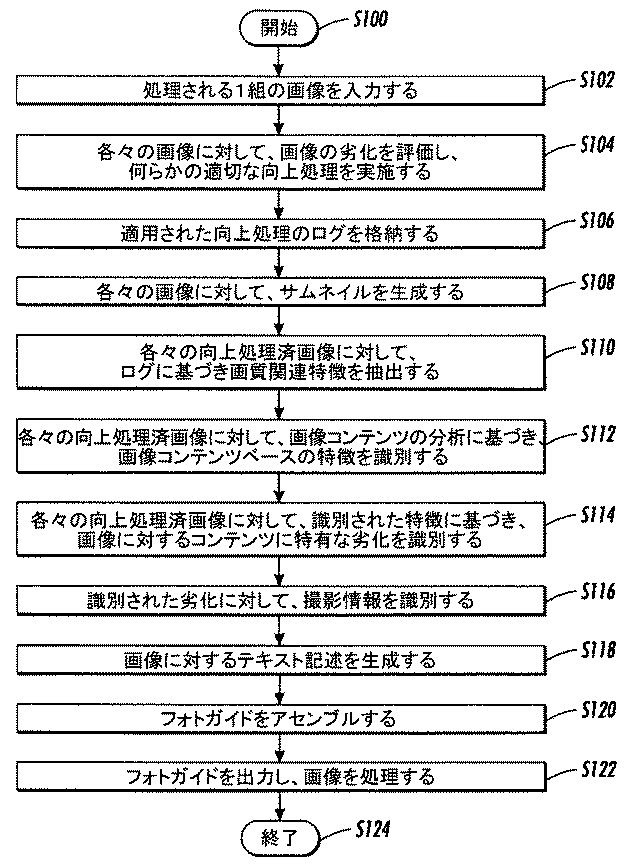
表1は、特徴ベクトル及び統計参照テーブルとしての関連撮影情報(すなわち、撮影時の劣化を防ぐ方法に関する提案)から推定できる、例示的な劣化クラス候補の一覧である。 Table 1 is a list of exemplary deterioration class candidates that can be estimated from the feature image and related shooting information as a statistical reference table (that is, a proposal regarding a method for preventing deterioration during shooting).
分類された劣化d及び適用された補正(向上処理)の一覧は、次に自然言語生成技術によって、人間可読の単純な文(フォトガイドライン)にアセンブルされる。画像サムネイルは、入力画像のサイズを、固定の大きさに縮小することで抽出される。フォトガイドアセンブラモジュール54は、予め定義されたドキュメントのテンプレートに配置することによって、サムネイルとガイドラインを統合する。
図1で説明されるように、フォトガイド10のレイアウトは、印刷された画像の組を補完し、写真現像店のクライアントに送給される。ドキュメントのヘッダは、処理された画像の組(アルバム)、画像の所有者名及び日付に関する情報を含む。
As illustrated in FIG. 1, the layout of the
ユーザは、サムネイル12を調べることで、印刷された画像24を、対応するガイドライン14と一致させることができる。各々のガイドラインは、どのような向上処理(すなわち補正)が適用されたか及び何が直されたか(すなわち劣化)を示す。ユーザの利益のため、情報16は、将来の撮影時の特定の劣化を防ぐために添付される。
By examining the
34:画像向上処理モジュール
36:画像ソース
42:メモリ
44:向上処理検出器
46:画像コンテンツアナライザ
48:劣化分類器
50:自然言語ジェネレータ
52:サムネイルジェネレータ
54:フォトガイドアセンブラ
56:画像撮影情報LUT
60:向上処理ログ
62:プリンタ
34: Image enhancement processing module 36: Image source 42: Memory 44: Enhancement processing detector 46: Image content analyzer 48: Degradation classifier 50: Natural language generator 52: Thumbnail generator 54: Photo guide assembler 56: Image shooting information LUT
60: Improvement processing log 62: Printer
Claims (5)
画像向上処理を受けている1組の画像における少なくとも1枚の画像に対し、
前記画像に適用されている向上処理に基づき、前記画像に対する画質関連特徴を識別し、
前記画像のコンテンツに基づき、画像コンテンツ関連特徴を識別し、
前記識別された画質関連特徴及び画像コンテンツ関連特徴に基づき、前記画像のコンテンツベースの劣化を決定し、
前記画像のサムネイルを生成する、
ステップと、
前記1組の画像に対する画質ガイドドキュメントを作成する
ステップを含み、前記サムネイルの少なくとも1つは、前記決定されたコンテンツベースの劣化に基づくそれぞれのテキスト記述と関連付けられることを特徴とする方法。 A method for automatically generating an image quality guide document,
For at least one image in a set of images undergoing image enhancement processing,
Identifying image quality-related features for the image based on enhancement processing applied to the image;
Identifying image content related features based on the content of the image;
Determining content-based degradation of the image based on the identified image quality-related features and image content-related features;
Generating a thumbnail of the image;
Steps,
Creating an image quality guide document for the set of images, wherein at least one of the thumbnails is associated with a respective text description based on the determined content-based degradation.
画像に適用されている向上処理に基づき、前記組における画像に対して画質関連特徴を出力する向上処理検出器と、
前記組における画像に対して画像コンテンツ関連特徴を出力する画像コンテンツアナライザと、
前記出力された画質関連特徴及び画像コンテンツ関連特徴を受信し、前記組における前記画像の少なくとも1枚に対して、コンテンツベースの劣化を出力する劣化分類器と、
前記組における画像に対して、サムネイルを生成するサムネイルジェネレータと、
前記1組の画像に対して、1組の画像に対して画質ガイドドキュメントを生成し、前記1組の画像においては、前記サムネイルの少なくとも1つが、決定されたコンテンツベースの劣化に基づくそれぞれのテキスト記述と関連付けられている、画質ガイドドキュメントジェネレータと、
を具備することを特徴とする機器。 A device that generates an image quality guide document for a set of images,
An enhancement processing detector that outputs image quality-related features for the images in the set, based on the enhancement processing applied to the image;
An image content analyzer that outputs image content related features for images in the set;
A degradation classifier that receives the output image quality-related features and image content-related features and outputs content-based degradation for at least one of the images in the set;
A thumbnail generator for generating thumbnails for the images in the set;
For the set of images, an image quality guide document is generated for the set of images, in which at least one of the thumbnails is the respective text based on the determined content-based degradation. An image quality guide document generator associated with the description;
The apparatus characterized by comprising.
Applications Claiming Priority (2)
| Application Number | Priority Date | Filing Date | Title |
|---|---|---|---|
| US12/049,520 US8340452B2 (en) | 2008-03-17 | 2008-03-17 | Automatic generation of a photo guide |
| US12/049,520 | 2008-03-17 |
Publications (2)
| Publication Number | Publication Date |
|---|---|
| JP2009225443A true JP2009225443A (en) | 2009-10-01 |
| JP5431754B2 JP5431754B2 (en) | 2014-03-05 |
Family
ID=41063100
Family Applications (1)
| Application Number | Title | Priority Date | Filing Date |
|---|---|---|---|
| JP2009056167A Expired - Fee Related JP5431754B2 (en) | 2008-03-17 | 2009-03-10 | Automatic generation of photo guides |
Country Status (2)
| Country | Link |
|---|---|
| US (2) | US8340452B2 (en) |
| JP (1) | JP5431754B2 (en) |
Families Citing this family (69)
| Publication number | Priority date | Publication date | Assignee | Title |
|---|---|---|---|---|
| US10528925B2 (en) | 2008-01-18 | 2020-01-07 | Mitek Systems, Inc. | Systems and methods for mobile automated clearing house enrollment |
| US9842331B2 (en) | 2008-01-18 | 2017-12-12 | Mitek Systems, Inc. | Systems and methods for mobile image capture and processing of checks |
| US7978900B2 (en) * | 2008-01-18 | 2011-07-12 | Mitek Systems, Inc. | Systems for mobile image capture and processing of checks |
| US10685223B2 (en) | 2008-01-18 | 2020-06-16 | Mitek Systems, Inc. | Systems and methods for mobile image capture and content processing of driver's licenses |
| US9292737B2 (en) | 2008-01-18 | 2016-03-22 | Mitek Systems, Inc. | Systems and methods for classifying payment documents during mobile image processing |
| US8983170B2 (en) | 2008-01-18 | 2015-03-17 | Mitek Systems, Inc. | Systems and methods for developing and verifying image processing standards for mobile deposit |
| US10102583B2 (en) | 2008-01-18 | 2018-10-16 | Mitek Systems, Inc. | System and methods for obtaining insurance offers using mobile image capture |
| EP2269367A4 (en) * | 2008-03-20 | 2012-04-04 | Hewlett Packard Development Co | Thumbnail based image quality inspection |
| US9066054B2 (en) | 2008-05-27 | 2015-06-23 | Xerox Corporation | Image indexed rendering of images for tuning images from single or multiple print engines |
| US8650634B2 (en) | 2009-01-14 | 2014-02-11 | International Business Machines Corporation | Enabling access to a subset of data |
| KR20100101204A (en) * | 2009-03-09 | 2010-09-17 | 한국전자통신연구원 | Method for retrievaling ucc image region of interest based |
| US20100312609A1 (en) * | 2009-06-09 | 2010-12-09 | Microsoft Corporation | Personalizing Selection of Advertisements Utilizing Digital Image Analysis |
| US20110122459A1 (en) * | 2009-11-24 | 2011-05-26 | International Business Machines Corporation | Scanning and Capturing digital Images Using Document Characteristics Detection |
| US8610924B2 (en) | 2009-11-24 | 2013-12-17 | International Business Machines Corporation | Scanning and capturing digital images using layer detection |
| US8441702B2 (en) | 2009-11-24 | 2013-05-14 | International Business Machines Corporation | Scanning and capturing digital images using residue detection |
| US8775424B2 (en) * | 2010-01-26 | 2014-07-08 | Xerox Corporation | System for creative image navigation and exploration |
| WO2011143223A2 (en) | 2010-05-10 | 2011-11-17 | Board Of Regents, The University Of Texas System | Determining quality of an image or a video using a distortion classifier |
| US10891475B2 (en) | 2010-05-12 | 2021-01-12 | Mitek Systems, Inc. | Systems and methods for enrollment and identity management using mobile imaging |
| US8332429B2 (en) | 2010-06-22 | 2012-12-11 | Xerox Corporation | Photography assistant and method for assisting a user in photographing landmarks and scenes |
| US8487955B2 (en) * | 2010-06-30 | 2013-07-16 | Xerox Corporation | Language-based color editing for mobile devices |
| US20130132377A1 (en) * | 2010-08-26 | 2013-05-23 | Zhe Lin | Systems and Methods for Localized Bag-of-Features Retrieval |
| US9055279B2 (en) * | 2011-04-15 | 2015-06-09 | Tektronix, Inc. | System for natural language assessment of relative color quality |
| EP2724530A4 (en) * | 2011-06-24 | 2015-02-25 | Thomson Licensing | METHOD AND DEVICE FOR EVALUATING PACKET DEFECT DUE DEGRADATION IN PACKET ENCODED VIDEO |
| TW201310982A (en) * | 2011-08-29 | 2013-03-01 | Novatek Microelectronics Corp | Image adjustment method |
| US8874557B2 (en) | 2011-09-02 | 2014-10-28 | Adobe Systems Incorporated | Object retrieval and localization using a spatially-constrained similarity model |
| US8781255B2 (en) | 2011-09-17 | 2014-07-15 | Adobe Systems Incorporated | Methods and apparatus for visual search |
| CN106961621A (en) * | 2011-12-29 | 2017-07-18 | 英特尔公司 | Use the communication of incarnation |
| CN107257403A (en) | 2012-04-09 | 2017-10-17 | 英特尔公司 | Use the communication of interaction incarnation |
| US8880563B2 (en) | 2012-09-21 | 2014-11-04 | Adobe Systems Incorporated | Image search by query object segmentation |
| ES2461635B1 (en) * | 2012-10-16 | 2015-02-13 | Universidad Carlos Iii De Madrid | METHOD AND SYSTEM OF CLASSIFICATION OF DIGITAL IMAGES |
| US10883303B2 (en) | 2013-01-07 | 2021-01-05 | WexEnergy LLC | Frameless supplemental window for fenestration |
| US8923650B2 (en) | 2013-01-07 | 2014-12-30 | Wexenergy Innovations Llc | System and method of measuring distances related to an object |
| US10196850B2 (en) | 2013-01-07 | 2019-02-05 | WexEnergy LLC | Frameless supplemental window for fenestration |
| US9845636B2 (en) | 2013-01-07 | 2017-12-19 | WexEnergy LLC | Frameless supplemental window for fenestration |
| US9230339B2 (en) | 2013-01-07 | 2016-01-05 | Wexenergy Innovations Llc | System and method of measuring distances related to an object |
| US9691163B2 (en) | 2013-01-07 | 2017-06-27 | Wexenergy Innovations Llc | System and method of measuring distances related to an object utilizing ancillary objects |
| US9116924B2 (en) | 2013-01-14 | 2015-08-25 | Xerox Corporation | System and method for image selection using multivariate time series analysis |
| US10963535B2 (en) | 2013-02-19 | 2021-03-30 | Mitek Systems, Inc. | Browser-based mobile image capture |
| US8873838B2 (en) * | 2013-03-14 | 2014-10-28 | Google Inc. | Method and apparatus for characterizing an image |
| US9525789B2 (en) * | 2013-03-15 | 2016-12-20 | Dropbox, Inc. | Shuffle algorithm and navigation |
| US9082047B2 (en) | 2013-08-20 | 2015-07-14 | Xerox Corporation | Learning beautiful and ugly visual attributes |
| US9398280B2 (en) | 2013-08-26 | 2016-07-19 | Intel Corporation | AWB using face detection |
| CN105659286B (en) * | 2013-09-18 | 2021-09-28 | 英特尔公司 | Automated image cropping and sharing |
| US9171352B1 (en) * | 2014-12-04 | 2015-10-27 | Google Inc. | Automatic processing of images |
| WO2016101131A1 (en) | 2014-12-23 | 2016-06-30 | Intel Corporation | Augmented facial animation |
| CN104463807B (en) * | 2014-12-24 | 2017-05-10 | 深圳市安健科技股份有限公司 | Method and system for self-adaptive enhancement of contrast ratio of X-ray image |
| US9626589B1 (en) * | 2015-01-19 | 2017-04-18 | Ricoh Co., Ltd. | Preview image acquisition user interface for linear panoramic image stitching |
| US9594980B1 (en) | 2015-01-19 | 2017-03-14 | Ricoh Co., Ltd. | Image acquisition user interface for linear panoramic image stitching |
| KR20160103398A (en) * | 2015-02-24 | 2016-09-01 | 삼성전자주식회사 | Method and apparatus for measuring the quality of the image |
| US9807473B2 (en) | 2015-11-20 | 2017-10-31 | Microsoft Technology Licensing, Llc | Jointly modeling embedding and translation to bridge video and language |
| US9971953B2 (en) * | 2015-12-10 | 2018-05-15 | Intel Corporation | Visual recognition using deep learning attributes |
| WO2017101094A1 (en) | 2015-12-18 | 2017-06-22 | Intel Corporation | Avatar animation system |
| US11205103B2 (en) | 2016-12-09 | 2021-12-21 | The Research Foundation for the State University | Semisupervised autoencoder for sentiment analysis |
| US10592776B2 (en) * | 2017-02-08 | 2020-03-17 | Adobe Inc. | Generating multimodal image edits for a digital image |
| WO2018222467A1 (en) | 2017-05-30 | 2018-12-06 | WexEnergy LLC | Frameless supplemental window for fenestration |
| WO2019188578A1 (en) * | 2018-03-28 | 2019-10-03 | ソニー株式会社 | Computing device, computing method, program, and discrimination system |
| CN109102457B (en) * | 2018-06-12 | 2023-01-17 | 杭州米绘科技有限公司 | Intelligent color changing system and method based on convolutional neural network |
| US10839502B2 (en) * | 2019-04-17 | 2020-11-17 | Shutterfly, Llc | Photography session assistant |
| US11961216B2 (en) | 2019-04-17 | 2024-04-16 | Shutterfly, Llc | Photography session assistant |
| US11402331B2 (en) * | 2019-05-08 | 2022-08-02 | City University Of Hong Kong | Imaging and manipulation of biological sample |
| US11532396B2 (en) * | 2019-06-12 | 2022-12-20 | Mind Medicine, Inc. | System and method for patient monitoring of gastrointestinal function using automated stool classifications |
| US11393272B2 (en) | 2019-09-25 | 2022-07-19 | Mitek Systems, Inc. | Systems and methods for updating an image registry for use in fraud detection related to financial documents |
| KR20210067699A (en) | 2019-11-29 | 2021-06-08 | 삼성전자주식회사 | Electronic apparatus and control method thereof |
| WO2022086533A1 (en) * | 2020-10-22 | 2022-04-28 | Hewlett-Packard Development Company, L.P. | Mobile scanning device and method of scanning |
| US11798136B2 (en) | 2021-06-10 | 2023-10-24 | Bank Of America Corporation | Automated teller machine for detecting security vulnerabilities based on document noise removal |
| KR20240069069A (en) * | 2022-11-11 | 2024-05-20 | 삼성전자주식회사 | Method and apparatus for image processing based on neural network |
| US20240412432A1 (en) * | 2023-06-12 | 2024-12-12 | Ulta Salon, Cosmetics & Fragrance, Inc. | Methods and Systems for Transferring Hair Characteristics from a Reference Image to a Digital Image |
| US20250191248A1 (en) * | 2023-12-07 | 2025-06-12 | L'oreal | Hair color simulation using a hair color classification guided network |
| US20250239026A1 (en) * | 2024-01-23 | 2025-07-24 | L'oreal | Method and system for 3d hair virtual try on |
Citations (4)
| Publication number | Priority date | Publication date | Assignee | Title |
|---|---|---|---|---|
| JP2000333045A (en) * | 1999-03-15 | 2000-11-30 | Fuji Photo Film Co Ltd | Digital still camera with composition advice function and its operation control method |
| JP2003009188A (en) * | 2001-06-20 | 2003-01-10 | Nikon Gijutsu Kobo:Kk | Camera abnormality diagnosis system and camera abnormality diagnosis method |
| JP2004112054A (en) * | 2002-09-13 | 2004-04-08 | Fuji Photo Film Co Ltd | Photographing advice camera |
| JP2006295507A (en) * | 2005-04-08 | 2006-10-26 | Canon Inc | Image supply apparatus and image processing apparatus |
Family Cites Families (26)
| Publication number | Priority date | Publication date | Assignee | Title |
|---|---|---|---|---|
| US5357352A (en) | 1993-10-04 | 1994-10-18 | Xerox Corporation | Image-dependent color shifting of strongly color shifted images |
| US5450502A (en) * | 1993-10-07 | 1995-09-12 | Xerox Corporation | Image-dependent luminance enhancement |
| US5414538A (en) | 1993-10-07 | 1995-05-09 | Xerox Corporation | Image-dependent exposure enhancement |
| US5371615A (en) | 1993-10-22 | 1994-12-06 | Xerox Corporation | Image-dependent color correction using black point and white point in a natural scene pictorial image |
| US5363209A (en) | 1993-11-05 | 1994-11-08 | Xerox Corporation | Image-dependent sharpness enhancement |
| US5347374A (en) * | 1993-11-05 | 1994-09-13 | Xerox Corporation | Cascaded image processing using histogram prediction |
| US5450217A (en) | 1994-05-23 | 1995-09-12 | Xerox Corporation | Image-dependent color saturation correction in a natural scene pictorial image |
| US5802214A (en) | 1995-12-08 | 1998-09-01 | Xerox Corporation | Method for determining and loading an image-dependent look-up table for generating an enhanced image representation |
| JPH104531A (en) * | 1996-06-14 | 1998-01-06 | Nikon Corp | Information processing device |
| US20020172419A1 (en) | 2001-05-15 | 2002-11-21 | Qian Lin | Image enhancement using face detection |
| EP1288859A1 (en) | 2001-09-03 | 2003-03-05 | Agfa-Gevaert AG | Method for automatic detection of red-eye defecs in photographic images |
| US7031534B2 (en) * | 2001-10-31 | 2006-04-18 | Xerox Corporation | Enhancement of compressed image data |
| US8059815B2 (en) * | 2001-12-13 | 2011-11-15 | Digimarc Corporation | Transforming data files into logical storage units for auxiliary data through reversible watermarks |
| US7362354B2 (en) | 2002-02-12 | 2008-04-22 | Hewlett-Packard Development Company, L.P. | Method and system for assessing the photo quality of a captured image in a digital still camera |
| US7039222B2 (en) | 2003-02-28 | 2006-05-02 | Eastman Kodak Company | Method and system for enhancing portrait images that are processed in a batch mode |
| US7532234B2 (en) | 2003-06-19 | 2009-05-12 | Microsoft Corporation | Automatic analysis and adjustment of digital images upon acquisition |
| JP2005212454A (en) | 2004-02-02 | 2005-08-11 | Mitsubishi Electric Corp | Thermal printer image quality improving apparatus and thermal printer image quality improving method |
| US7907786B2 (en) | 2005-06-06 | 2011-03-15 | Xerox Corporation | Red-eye detection and correction |
| US7756341B2 (en) | 2005-06-30 | 2010-07-13 | Xerox Corporation | Generic visual categorization method and system |
| US7426312B2 (en) | 2005-07-05 | 2008-09-16 | Xerox Corporation | Contrast enhancement of images |
| US7680341B2 (en) | 2006-05-05 | 2010-03-16 | Xerox Corporation | Generic visual classification with gradient components-based dimensionality enhancement |
| US7885466B2 (en) * | 2006-09-19 | 2011-02-08 | Xerox Corporation | Bags of visual context-dependent words for generic visual categorization |
| US20080144068A1 (en) | 2006-12-13 | 2008-06-19 | Xerox Corporation. | Printer with image categorization capability |
| US7898696B2 (en) * | 2007-05-09 | 2011-03-01 | Xerox Corporation | Print job aesthetics enhancements detection and modeling through combined user activity analysis and content matching |
| US7933454B2 (en) * | 2007-06-25 | 2011-04-26 | Xerox Corporation | Class-based image enhancement system |
| US8009921B2 (en) * | 2008-02-19 | 2011-08-30 | Xerox Corporation | Context dependent intelligent thumbnail images |
-
2008
- 2008-03-17 US US12/049,520 patent/US8340452B2/en active Active
-
2009
- 2009-03-10 JP JP2009056167A patent/JP5431754B2/en not_active Expired - Fee Related
-
2012
- 2012-11-19 US US13/680,360 patent/US8731325B2/en not_active Expired - Fee Related
Patent Citations (4)
| Publication number | Priority date | Publication date | Assignee | Title |
|---|---|---|---|---|
| JP2000333045A (en) * | 1999-03-15 | 2000-11-30 | Fuji Photo Film Co Ltd | Digital still camera with composition advice function and its operation control method |
| JP2003009188A (en) * | 2001-06-20 | 2003-01-10 | Nikon Gijutsu Kobo:Kk | Camera abnormality diagnosis system and camera abnormality diagnosis method |
| JP2004112054A (en) * | 2002-09-13 | 2004-04-08 | Fuji Photo Film Co Ltd | Photographing advice camera |
| JP2006295507A (en) * | 2005-04-08 | 2006-10-26 | Canon Inc | Image supply apparatus and image processing apparatus |
Also Published As
| Publication number | Publication date |
|---|---|
| US8731325B2 (en) | 2014-05-20 |
| US20090232409A1 (en) | 2009-09-17 |
| JP5431754B2 (en) | 2014-03-05 |
| US20130156341A1 (en) | 2013-06-20 |
| US8340452B2 (en) | 2012-12-25 |
Similar Documents
| Publication | Publication Date | Title |
|---|---|---|
| JP5431754B2 (en) | Automatic generation of photo guides | |
| US8285059B2 (en) | Method for automatic enhancement of images containing snow | |
| US6952286B2 (en) | Doubleprint photofinishing service with the second print having subject content-based modifications | |
| US7933454B2 (en) | Class-based image enhancement system | |
| US8094947B2 (en) | Image visualization through content-based insets | |
| US20120294514A1 (en) | Techniques to enable automated workflows for the creation of user-customized photobooks | |
| US9135278B2 (en) | Method and system to detect and select best photographs | |
| US6748097B1 (en) | Method for varying the number, size, and magnification of photographic prints based on image emphasis and appeal | |
| US8537409B2 (en) | Image summarization by a learning approach | |
| US8194992B2 (en) | System and method for automatic enhancement of seascape images | |
| AU2021201933B2 (en) | Hierarchical multiclass exposure defects classification in images | |
| US6738494B1 (en) | Method for varying an image processing path based on image emphasis and appeal | |
| US9349077B2 (en) | Computer-implemented method, a computer program product and a computer system for image processing | |
| US20030152289A1 (en) | Method and system for determining image orientation | |
| US20110314049A1 (en) | Photography assistant and method for assisting a user in photographing landmarks and scenes | |
| US7020330B2 (en) | Automatic content-analysis based use of color correction process | |
| CN117218336B (en) | An image search method for smart mobile terminals | |
| US20240202517A1 (en) | Document processing with efficient type-of-source classification | |
| US20240144711A1 (en) | Reliable determination of field values in documents with removal of static field elements | |
| CN110009646B (en) | Electronic album generation method and device, electronic equipment and storage medium | |
| CN117726850B (en) | Image classification method, device, equipment, readable storage medium and product | |
| CN121437973A (en) | Image processing method and electronic equipment | |
| CN117668336A (en) | Document processing method and device | |
| JP2006039657A (en) | Image processing method, image processor and image processing program |
Legal Events
| Date | Code | Title | Description |
|---|---|---|---|
| A621 | Written request for application examination |
Free format text: JAPANESE INTERMEDIATE CODE: A621 Effective date: 20120308 |
|
| A977 | Report on retrieval |
Free format text: JAPANESE INTERMEDIATE CODE: A971007 Effective date: 20130116 |
|
| A131 | Notification of reasons for refusal |
Free format text: JAPANESE INTERMEDIATE CODE: A131 Effective date: 20130121 |
|
| A521 | Request for written amendment filed |
Free format text: JAPANESE INTERMEDIATE CODE: A523 Effective date: 20130422 |
|
| TRDD | Decision of grant or rejection written | ||
| A01 | Written decision to grant a patent or to grant a registration (utility model) |
Free format text: JAPANESE INTERMEDIATE CODE: A01 Effective date: 20131105 |
|
| A61 | First payment of annual fees (during grant procedure) |
Free format text: JAPANESE INTERMEDIATE CODE: A61 Effective date: 20131205 |
|
| R150 | Certificate of patent or registration of utility model |
Free format text: JAPANESE INTERMEDIATE CODE: R150 |
|
| R250 | Receipt of annual fees |
Free format text: JAPANESE INTERMEDIATE CODE: R250 |
|
| LAPS | Cancellation because of no payment of annual fees |