JP2008537390A - System and method for simultaneous voice and data calls over a wireless infrastructure - Google Patents
System and method for simultaneous voice and data calls over a wireless infrastructure Download PDFInfo
- Publication number
- JP2008537390A JP2008537390A JP2008504414A JP2008504414A JP2008537390A JP 2008537390 A JP2008537390 A JP 2008537390A JP 2008504414 A JP2008504414 A JP 2008504414A JP 2008504414 A JP2008504414 A JP 2008504414A JP 2008537390 A JP2008537390 A JP 2008537390A
- Authority
- JP
- Japan
- Prior art keywords
- data
- communication
- server
- voice
- mobile
- Prior art date
- Legal status (The legal status is an assumption and is not a legal conclusion. Google has not performed a legal analysis and makes no representation as to the accuracy of the status listed.)
- Pending
Links
- 238000000034 method Methods 0.000 title claims abstract description 54
- 238000004891 communication Methods 0.000 claims abstract description 191
- 238000006243 chemical reaction Methods 0.000 claims abstract description 59
- 238000010295 mobile communication Methods 0.000 claims abstract description 53
- 230000005540 biological transmission Effects 0.000 claims abstract description 35
- 238000004590 computer program Methods 0.000 claims 1
- 238000000926 separation method Methods 0.000 abstract 1
- 230000001413 cellular effect Effects 0.000 description 19
- 230000008569 process Effects 0.000 description 18
- 238000013519 translation Methods 0.000 description 10
- 238000010586 diagram Methods 0.000 description 4
- 238000005516 engineering process Methods 0.000 description 4
- 238000003860 storage Methods 0.000 description 4
- 238000013500 data storage Methods 0.000 description 3
- 230000003287 optical effect Effects 0.000 description 3
- 238000001228 spectrum Methods 0.000 description 3
- 238000012546 transfer Methods 0.000 description 3
- 230000006870 function Effects 0.000 description 2
- 238000012552 review Methods 0.000 description 2
- 239000000969 carrier Substances 0.000 description 1
- 230000000694 effects Effects 0.000 description 1
- 238000004519 manufacturing process Methods 0.000 description 1
- 238000013507 mapping Methods 0.000 description 1
- 238000012986 modification Methods 0.000 description 1
- 230000004048 modification Effects 0.000 description 1
- 238000012544 monitoring process Methods 0.000 description 1
- 229920001690 polydopamine Polymers 0.000 description 1
- 238000012545 processing Methods 0.000 description 1
- 230000007480 spreading Effects 0.000 description 1
- 238000003892 spreading Methods 0.000 description 1
Images


Classifications
-
- H—ELECTRICITY
- H04—ELECTRIC COMMUNICATION TECHNIQUE
- H04W—WIRELESS COMMUNICATION NETWORKS
- H04W4/00—Services specially adapted for wireless communication networks; Facilities therefor
- H04W4/18—Information format or content conversion, e.g. adaptation by the network of the transmitted or received information for the purpose of wireless delivery to users or terminals
-
- H—ELECTRICITY
- H04—ELECTRIC COMMUNICATION TECHNIQUE
- H04L—TRANSMISSION OF DIGITAL INFORMATION, e.g. TELEGRAPHIC COMMUNICATION
- H04L12/00—Data switching networks
- H04L12/66—Arrangements for connecting between networks having differing types of switching systems, e.g. gateways
-
- H—ELECTRICITY
- H04—ELECTRIC COMMUNICATION TECHNIQUE
- H04W—WIRELESS COMMUNICATION NETWORKS
- H04W76/00—Connection management
- H04W76/20—Manipulation of established connections
-
- H—ELECTRICITY
- H04—ELECTRIC COMMUNICATION TECHNIQUE
- H04W—WIRELESS COMMUNICATION NETWORKS
- H04W8/00—Network data management
- H04W8/22—Processing or transfer of terminal data, e.g. status or physical capabilities
-
- H—ELECTRICITY
- H04—ELECTRIC COMMUNICATION TECHNIQUE
- H04W—WIRELESS COMMUNICATION NETWORKS
- H04W28/00—Network traffic management; Network resource management
- H04W28/02—Traffic management, e.g. flow control or congestion control
- H04W28/06—Optimizing the usage of the radio link, e.g. header compression, information sizing, discarding information
-
- H—ELECTRICITY
- H04—ELECTRIC COMMUNICATION TECHNIQUE
- H04W—WIRELESS COMMUNICATION NETWORKS
- H04W88/00—Devices specially adapted for wireless communication networks, e.g. terminals, base stations or access point devices
- H04W88/08—Access point devices
- H04W88/10—Access point devices adapted for operation in multiple networks, e.g. multi-mode access points
-
- H—ELECTRICITY
- H04—ELECTRIC COMMUNICATION TECHNIQUE
- H04W—WIRELESS COMMUNICATION NETWORKS
- H04W88/00—Devices specially adapted for wireless communication networks, e.g. terminals, base stations or access point devices
- H04W88/18—Service support devices; Network management devices
-
- H—ELECTRICITY
- H04—ELECTRIC COMMUNICATION TECHNIQUE
- H04W—WIRELESS COMMUNICATION NETWORKS
- H04W92/00—Interfaces specially adapted for wireless communication networks
- H04W92/02—Inter-networking arrangements
Landscapes
- Engineering & Computer Science (AREA)
- Computer Networks & Wireless Communication (AREA)
- Signal Processing (AREA)
- Databases & Information Systems (AREA)
- Mobile Radio Communication Systems (AREA)
- Telephonic Communication Services (AREA)
- Communication Control (AREA)
- Data Exchanges In Wide-Area Networks (AREA)
Abstract
ワイヤレス通信ネットワークにおいて、単一の割り当てられたウォルシュコード対を有する通信チャネルを通して同時音声およびデータ通信を可能にするシステムおよび方法。変換サーバは移動体通信デバイスからの到来データ、および、移動体通信デバイスへの出発データを中継し、音声データをデータパケットに、好ましくはIPプロトコルに変換する。送信において、音声データを備えるパケットは、移動体デバイスに対する通信チャネルをホスティングする通信サーバに送られ、非音声データパケットとともに、他の移動体デバイスに対して単一の通信チャネルで搬送する。受信において、音声データパケットは変換サーバにおいてアナログ音声データに戻すことができ、または、代わりに、移動体デバイスが受信データパケットからの音声データの分離および変換を取り扱ってもよい。
【選択図】 図4A system and method for enabling simultaneous voice and data communication over a communication channel having a single assigned Walsh code pair in a wireless communication network. The conversion server relays incoming data from the mobile communication device and departure data to the mobile communication device, and converts voice data into data packets, preferably IP protocol. In transmission, packets comprising voice data are sent to a communication server that hosts a communication channel for the mobile device and are carried along with non-voice data packets on a single communication channel to other mobile devices. Upon reception, the voice data packet can be converted back to analog voice data at the conversion server, or alternatively, the mobile device may handle the separation and conversion of voice data from the received data packet.
[Selection] Figure 4
Description
本発明はワイヤレス電気通信インフラストラクチャを通してのコンピュータデバイス間の音声およびデータ通信に関連する。さらに詳細には、本発明は単一の確立されたデータ通信チャネルを通してワイヤレス電気通信デバイスに対して音声およびデータパケットの両方を送信することに関連する。 The present invention relates to voice and data communication between computing devices through a wireless telecommunications infrastructure. More particularly, the present invention relates to transmitting both voice and data packets to a wireless telecommunications device over a single established data communication channel.
最初のセルラネットワークは、AMPS(高度移動体電話システム)のようなアナログ無線送信技術を使用して1980年代初期に導入された。数年以内に、何百万人もの新しい加入者が増加エアタイムを必要とするサービスに対して契約するにつれて、セルラシステムは容量限度に打ち当たり始めた。通話が途切れることや、ネットワーク使用中信号が多くのエリアで一般的になった。限られた量の無線スペクトラム内でより多くのトラフィックを収容するために、TDMA(時分割多元接続)、GSM(移動体用グローバルシステム)、および、CDMA(コード分割多元接続)と呼ばれる新しい組のデジタルワイヤレス技術を業界は開発した。TDMAおよびGSMは時間共有プロトコルを使用して、アナログシステムよりも3から4倍より多くの容量を提供する。しかしながら、CDMAはお互いに情報チャネルを別に保つための直交コードを使用する多重接続技術に基づいている。 The first cellular network was introduced in the early 1980s using analog radio transmission technology such as AMPS (Advanced Mobile Phone System). Within a few years, cellular systems began to hit capacity limits as millions of new subscribers contracted for services requiring increased airtime. Calls are interrupted and network busy signals are common in many areas. To accommodate more traffic within a limited amount of radio spectrum, a new set of TDMA (Time Division Multiple Access), GSM (Mobile Global System), and CDMA (Code Division Multiple Access) The industry has developed digital wireless technology. TDMA and GSM use time sharing protocols to provide 3 to 4 times more capacity than analog systems. However, CDMA is based on a multiple access technique that uses orthogonal codes to keep information channels separate from each other.
CDMAはウォルシュ関数として知られる直交コードのファミリを特に使用する。デジタル化されたスピーチ情報がウォルシュエンコーディングと結合され、搬送波信号に変調されるとき、異なるウォルシュコードでコード化された他のスピーチ信号は、同じ信号上で搬送することができ、ウォルシュコードの直交特性のために、スピーチ情報はお互いに干渉しない。直交拡散は、同じコードを備える受信機だけが、そのエンコードされた信号を復号できるようにし、別のウォルシュコードを使用する他の通信信号は受信機にとって雑音のように受け取られる。例えば、64ビットの共通ウォルシュコーディングを使用して、各通信チャネルは0から63までのユニークウォルシュコードが割り当てられる。したがって、64の異なるウォルシュコード対が、同じユーザのチャネル内で一意的であり、また、同じ受信エリア中の異なるユーザの間でも一意的である。 CDMA specifically uses a family of orthogonal codes known as Walsh functions. When the digitized speech information is combined with Walsh encoding and modulated into a carrier signal, other speech signals encoded with different Walsh codes can be carried on the same signal, and the orthogonal characteristics of the Walsh code For this reason, the speech information does not interfere with each other. Orthogonal spreading allows only receivers with the same code to decode the encoded signal, and other communication signals using different Walsh codes are received like noise by the receiver. For example, using a 64-bit common Walsh coding, each communication channel is assigned a unique Walsh code from 0 to 63. Thus, 64 different Walsh code pairs are unique within the channel of the same user, and are also unique among different users in the same reception area.
しかしながら、所定の周波数スペクトラム中のデータチャネルに対して利用可能なウォルシュコードの数は制限されている。1つは(音声を電話機に対して送る)フォワード通信に対して、1つは(電話機から音声を受け取る)リバース通信に対して、ウォルシュコードの対が移動体デバイスとの通信のために必須である。結果として、ウォルシュエンコーディングに対して割り当てるために有限なビット数しかない狭い周波数のブロードキャストスペクトラム応用では、移動体デバイスとのフォワード通信チャネルおよびリバース通信チャネルに対して、限られた数のコードしか利用可能でない。 However, the number of Walsh codes that can be used for data channels in a given frequency spectrum is limited. Walsh code pairs are mandatory for communication with mobile devices, one for forward communication (sending voice to the phone) and one for reverse communication (receiving voice from the phone). is there. As a result, only a limited number of codes are available for forward and reverse communication channels with mobile devices in narrow frequency broadcast spectrum applications that have only a finite number of bits to allocate for Walsh encoding. Not.
CDMA技術の現代の標準規格、CDMA2000は、標準CDMA通信チャネルを通しての音声およびデータサービスの両方をサポートする。CDMA2000に規定されるように、ワイヤレス加入者がアクティブパケットデータセッションを使用中の場合、その加入者は、IS−2000の高度な機能に依拠することなくしては、従来の音声通話を同時にサポートすることができず、IS−2000の高度な機能は、移動体デバイスごとに単一の専用ウォルシュチャネル対よりも多くのものに対する状態を同時に維持およびサポートすることを、インフラストラクチャ要素に要求する。IS−2000標準規格は、移動体デバイスが追加的通信チャネルを要求することなく、すなわち、基本チャネル(FCH)を音声データに対して、そして専用制御チャネル(DCCH)をパケットデータに対して専用にすることなく、パケットデータ活動にアクティブにかかわっている移動体デバイスにより、従来の音声通話(1つのサービス)が配信およびサポートされることを許容しない。 A modern standard for CDMA technology, CDMA2000, supports both voice and data services over standard CDMA communication channels. As defined in CDMA2000, when a wireless subscriber is using an active packet data session, the subscriber simultaneously supports traditional voice calls without relying on the advanced features of IS-2000. The advanced capabilities of IS-2000 require infrastructure elements to maintain and support state for more than a single dedicated Walsh channel pair per mobile device at the same time. The IS-2000 standard specifies that the mobile device does not require an additional communication channel, ie, the basic channel (FCH) is dedicated to voice data and the dedicated control channel (DCCH) is dedicated to packet data. Without allowing a mobile device that is actively involved in packet data activity to allow a traditional voice call (one service) to be delivered and supported.
IS−2000標準規格は、音声パケット2(VP2)モードを規定することによってこの問題を取り扱っており、インフラストラクチャはフォワード基本チャネル(F−FCH)およびリバース基本チャネル(R−FCH)に対してウォルシュコードを割り当て、これらのチャネルを音声通話のサポート専用にし、次に、二重パケットデータに対してウォルシュコードを同時に割り当てる。しかしながら、この解決法は2つのウォルシュコード対の問題のある割当を依然として必要とする。 The IS-2000 standard addresses this problem by defining voice packet 2 (VP2) mode, where the infrastructure is Walsh for forward fundamental channel (F-FCH) and reverse fundamental channel (R-FCH). Codes are assigned, these channels are dedicated to support voice calls, and then Walsh codes are assigned simultaneously to the double packet data. However, this solution still requires a problematic assignment of two Walsh code pairs.
したがって、単一ウォルシュ対の通信チャネルを通しての、同時音声およびデータ通信を可能にするシステムおよび方法を提供することが好都合である。そのようなシステムおよび方法は、最小のハードウェアオーバーヘッドを要求するだけで、移動体通信デバイスに対する音声およびデータパケットの両方の送信を可能にする。さらに、そのようなシステムおよび方法は、移動体デバイスに対する追加的帯域が要求される場合、移動体デバイスに対してさらなる通信チャネルを利用できるようにすべきであり、この場合、各追加的通信チャネルは同時音声およびデータ送信を取り扱うことができる。したがって、本発明が主に目的とするのは、単一のデータ通信チャネルを通してワイヤレス電気通信デバイスに対する音声およびデータパケット両方を同時に送信するそのようなシステムおよび方法を提供することである。 Accordingly, it would be advantageous to provide a system and method that enables simultaneous voice and data communication over a single Walsh pair communication channel. Such systems and methods allow the transmission of both voice and data packets to mobile communication devices with minimal hardware overhead required. In addition, such systems and methods should be able to utilize additional communication channels for the mobile device if additional bandwidth is required for the mobile device, in which case each additional communication channel Can handle simultaneous voice and data transmission. Accordingly, it is a primary object of the present invention to provide such a system and method for simultaneously transmitting both voice and data packets to a wireless telecommunications device over a single data communication channel.
本発明は、ワイヤレス加入者が音声オーバーIPベースの通話または他の適切なフォーマットに対するアクティブパケットデータ通信にかかわっている間に、受信された到来音声通話を変換することにより、1対のウォルシュコードが音声およびデータ通信を同時にサポート可能にするシステムおよび方法であり、方法は、既存のフォワード/リバースDCCH接続を使用して到来通話信号を移動体デバイスに対して配信する。アクティブデータパケットサービスは維持され、何らかのユーザパケットデータトラフィックは、音声データを搬送するパケットとともにインタリーブされて、送信され続ける。移動体デバイスでより広い帯域を達成するためにウォルシュコード対および他のチャネルのさらなる割当が許容し得るが、同時音声およびデータ通信のためには必ずしも必要ではない。 The present invention converts a received incoming voice call while a wireless subscriber is engaged in an active packet data communication for a voice over IP-based call or other suitable format so that a pair of Walsh codes A system and method that enables simultaneous support of voice and data communications, where the method uses an existing forward / reverse DCCH connection to deliver incoming call signals to mobile devices. Active data packet service is maintained, and any user packet data traffic continues to be transmitted, interleaved with packets carrying voice data. Further allocation of Walsh code pairs and other channels may be allowed to achieve wider bandwidth at the mobile device, but is not necessary for simultaneous voice and data communications.
1つの実施形態では、ワイヤレス電気通信ネットワーク中で単一通信チャネルを通して同時音声およびデータ通信を可能にするシステムは、1以上の移動体通信デバイスに対して1以上の通信チャネルを提供する第1の通信サーバと、第1の通信サーバによって提供される1以上の通信チャネルを通して、少なくとも、第1のプロトコルを有するデータを選択的に通信する、少なくとも1つの移動体通信デバイスと、少なくとも1つの移動体通信デバイスとデータを通信する少なくとも1つのデータサーバと、第1のプロトコルを有する音声データを、1以上の通信チャネルを通して送信可能な第2のプロトコルを有するデータに変換する変換サーバとを具備する。変換サーバは、少なくとも1つの通信チャネルを通して少なくとも1つの移動体通信デバイスに対して送信するために、第2のプロトコルを有する変換された音声データを第1の通信サーバに対して送る。変換サーバは、少なくとも1つの移動体デバイスから第2のプロトコルを有する変換された音声データをさらに受信し、受信された音声データを第1のプロトコルを有する通常の音声データに変換し、送信する。 In one embodiment, a system that enables simultaneous voice and data communication over a single communication channel in a wireless telecommunication network provides a first one or more communication channels for one or more mobile communication devices. At least one mobile communication device and at least one mobile that selectively communicates data having at least a first protocol through a communication server and one or more communication channels provided by the first communication server At least one data server for communicating data with a communication device; and a conversion server for converting voice data having a first protocol into data having a second protocol that can be transmitted through one or more communication channels. The conversion server sends the converted voice data having the second protocol to the first communication server for transmission to the at least one mobile communication device over the at least one communication channel. The conversion server further receives converted voice data having the second protocol from at least one mobile device, converts the received voice data into normal voice data having the first protocol, and transmits the converted voice data.
1つの実施形態では、ワイヤレス電気通信ネットワーク中で単一通信チャネルを通して同時音声およびデータ通信を可能にする方法は、第1の通信サーバを通して、1以上の移動体通信デバイスに対して1以上の通信チャネルを提供するステップと、第1の通信サーバによって提供される1以上の通信チャネルを通して、移動体通信デバイスから少なくとも1つのデータサーバに、少なくとも、第1のプロトコルを有するデータを選択的に通信するステップと、変換サーバにおいて、音声データを1以上の通信チャネルを通して送信可能な第2のプロトコルを有するデータに変換するステップと、少なくとも1つの通信チャネルを通して少なくとも1つの移動体通信デバイスに対して送信するために、第2のプロトコルを有する変換された音声データを変換サーバから第1の通信サーバに対して送るステップとを含む。 In one embodiment, a method for enabling simultaneous voice and data communication over a single communication channel in a wireless telecommunications network is performed via a first communication server to one or more mobile communication devices. Providing a channel and selectively communicating at least the data having the first protocol from the mobile communication device to the at least one data server through one or more communication channels provided by the first communication server. Translating voice data into data having a second protocol that can be transmitted through one or more communication channels at the conversion server and transmitting to the at least one mobile communication device through the at least one communication channel. For converted sound with a second protocol The data from the conversion server and a sending to the first communications server.
1つの実施形態では、本発明は、1以上のデータサーバと1以上の移動体通信デバイスとの間のワイヤレス電気通信ネットワークにおける1以上の通信チャネルを通して送信可能なデータに音声データを変換する変換サーバを含み、1以上の通信チャネルは第1の通信サーバにより1以上の移動体通信デバイスに提供され、それにより、移動体通信デバイスは1以上の通信チャネルを通して、少なくともデータを選択的に通信し、変換サーバは少なくとも1つの通信チャネルを通して少なくとも1つの移動体通信デバイスに対して送信するために、変換された音声データを第1の通信サーバに送る。 In one embodiment, the present invention provides a conversion server that converts voice data into data that can be transmitted over one or more communication channels in a wireless telecommunication network between one or more data servers and one or more mobile communication devices. One or more communication channels are provided by the first communication server to the one or more mobile communication devices, whereby the mobile communication device selectively communicates at least data through the one or more communication channels; The conversion server sends the converted voice data to the first communication server for transmission to the at least one mobile communication device over the at least one communication channel.
1つの実施形態では、本発明は、ワイヤレス電気通信ネットワーク中で単一通信チャネルを通して同時音声およびデータ通信を可能にする方法を含む。方法は、変換サーバにおいて音声データを受信するステップと、送信プロトコルを有する音声パケットデータに音声データを変換し、音声データパケットは、送信プロトコルを有する他のデータパケットで1以上の第2の移動体通信デバイスに対して1以上の通信チャネルを介して送信可能であるステップとを含み、音声データは少なくとも第1の移動体電気通信デバイスから発信され、少なくとも第1の移動体電気通信デバイスは、1以上の通信サーバにより少なくとも第1の移動体通信デバイスに提供される1以上の通信チャネルを通して、ワイヤレス電気通信ネットワークを通して選択的に通信する。次に方法は、1以上の通信チャネルを通して1以上の第2の移動体通信デバイスに対して送信するために、音声データパケットを1以上の通信サーバに対して送るステップを含む。 In one embodiment, the present invention includes a method for enabling simultaneous voice and data communication over a single communication channel in a wireless telecommunication network. The method receives voice data at a conversion server and converts the voice data into voice packet data having a transmission protocol, the voice data packet being one or more second mobiles in other data packets having a transmission protocol. Audio data is transmitted from at least a first mobile telecommunications device, and at least the first mobile telecommunications device is 1 capable of transmitting to the communication device via one or more communication channels. The communication server selectively communicates through the wireless telecommunication network through at least one communication channel provided to at least the first mobile communication device. The method then includes sending voice data packets to one or more communication servers for transmission to the one or more second mobile communication devices over the one or more communication channels.
したがって、ウォルシュコード対を使用して、単一通信チャネルを通しての同時音声およびデータ通信を可能にすることが、システムおよび方法の目的である。システムおよび方法は、データストリーム中で音声およびインタリーブされたデータパケットの両方を移動体通信デバイスに対して、および、移動体通信デバイスから送信することをさらに可能にし、移動体通信デバイスは、好ましくは変換サーバネットワークサイドで発生する音声データのパケットデータへの変換に関して必要とされる、最小のハードウェアを備える。システムおよび方法は、帯域が要求されるべき移動体デバイスに対して、さらなる通信チャネルを提供し、各追加的通信チャネルは音声およびデータ送信を同時に取り扱うことができる。 Accordingly, it is an object of the system and method to use Walsh code pairs to enable simultaneous voice and data communication over a single communication channel. The systems and methods further allow both voice and interleaved data packets in the data stream to be transmitted to and from the mobile communication device, the mobile communication device preferably The minimum hardware required for conversion of voice data to packet data generated on the conversion server network side is provided. The systems and methods provide additional communication channels for mobile devices that require bandwidth, and each additional communication channel can handle voice and data transmission simultaneously.
本発明の他の目的、利点および特徴は、以下に述べる、図面の簡単な説明、発明の詳細な説明および特許請求の範囲を概観した後で、明らかになるだろう。 Other objects, advantages and features of the present invention will become apparent after review of the following brief description of the drawings, detailed description of the invention and the claims.
全体として同じ番号が同じ要素を表す図面を参照すると、図1はワイヤレスネットワーク20を通して、ワイヤレス電話機12、14、スマートページャ16およびパーソナルデジタルアシスタント(PDA)18のような、1以上のワイヤレス電気通信デバイスと、他のワイヤレス電気通信デバイスとの間の通信チャネルを可能にするためのワイヤレス電気通信システム10を図示する。システム10は、ワイヤレスネットワーク20に対する単一の通信チャネルを通して、同時音声およびデータ通信を特に可能にする。第1の通信サーバ26は、デバイス12、14、16、18のような1以上の移動体通信デバイスに対して、および、セルラ電話機12のような少なくとも1つの移動体通信デバイスに対して1以上の通信チャネルを提供し、セルラ電話機12は第1の通信サーバ26により提供される1以上の通信チャネルを通して少なくともデータを選択的に通信する。少なくとも1つのデータサーバ28は移動体通信デバイス12、14、16、18とデータを通信し、変換サーバ32は音声データを1以上の通信チャネルを通して送信可能なデータに変換し、変換サーバ32は少なくとも1つの通信チャネルを通して、セルラ電話機14のような少なくとも1つの移動体通信デバイスに対して送信するために、変換された音声データを第1の通信サーバ26に対して送る。
Referring to the drawings in which like numerals generally represent like elements, FIG. 1 illustrates one or more wireless telecommunications devices, such as
図1に示すように、セルラ電話機12はワイヤレスネットワーク20に対して、一般的に第1の通信サーバ26に対して、一般的にフレームまたはパケットで音声データを送り、第1の通信サーバ26はワイヤレスネットワークを通してサーバサイドLAN22上に存在する。第1の通信サーバ26は、データを変換サーバ32に対して中継する。他の実施形態では、ここでさらに説明するように、他のコンピュータデバイスが、サーバサイドLAN22上に常駐していてもよく、または、ワイヤレスネットワーク20を通してワイヤレスデバイスに対してアクセス可能であってもよい。第1の通信サーバ26は加入者データ24のような、付属のまたはアクセス可能なデータベースを持つことができ、加入者データ24はワイヤレスデバイスに対する加入者の識別データを記憶し、これにより、さまざまな加入者に対する通信がシステム10によって知られることができるようになり、すなわち、どの移動体デバイス12、14、16、18がどのフォーマットで通信できるかを記憶する。ワイヤレスネットワーク20を通して、または、インターネット一般を通してサーバサイドLAN22上に常駐するコンピュータコンポーネントの数は、制限されていないことを理解すべきである。
As shown in FIG. 1, the cellular telephone 12 sends voice data, typically in frames or packets, to the wireless network 20, typically to the
1つの実施形態では、移動体デバイス12、14、16、18は、ワイヤレス電気通信ネットワーク20を通して音声データおよびデータ通信の両方を受信することができる。また、帯域のために必要なとき、システム10は、第1の通信サーバ26と移動体デバイス12、14、16、18との間に第2の通信チャネルを確立することができ、第2の通信は音声およびインタリーブされたデータパケットの両方をサポートすることができる。さらに、ここで示すように、変換サーバ32は音声データをインターネットプロトコル(IP)データパケットに変換することが好ましいが、代わりに、音声データと他のコンピュータ読取可能データが同時にエンコードされ得る何らかのデータフレームフォーマットを使用することができる。したがって、図1の実施形態では、変換サーバ32はセルラ電話機12のような移動体デバイスから音声データを受信し、受信した音声データをIPプロトコルの音声パケットデータに変換し、そして、戻りIPパケットデータを音声アナログデータまたは適切なフレームの音声データに反対の変換を行うことができ、音声データを第1の通信サーバ26に送ることができる。そして、移動体通信デバイス12、14、16、18がそのように実現されている場合、デバイスは送信されたデータパケットを音声データに変換することができ、そのような実施形態では、通信サーバ26はIPパケットデータを移動体デバイス12、14、16、18に対して中継するだけでよく、音声データに対する変換が移動体デバイス12、14、16、18において発生するので、変換サーバ32は不要である。
In one embodiment, the
図2は、共通CDMAセルラ電気通信構成31におけるワイヤレスネットワークの1つの実施形態を代表する図であり、共通CDMAセルラ電気通信構成31は、単一のウォルシュ対のチャネルを通しての一体化音声およびデータ送信のためにIPプロトコルのようなデータパケットプロトコルを使用して互いに通信する能力を移動体デバイス12、14、16、18に対して提供する変換サーバ32のアレイを有する。ワイヤレスネットワークは単に例示的なものであり、遠隔モジュールが互いの間を無線で通信し、ならびに/あるいは、ワイヤレスネットワークキャリアおよび/またはサーバを制限なく含むワイヤレスネットワーク20のコンポーネント間を無線で通信する、何らかのシステムを含むことができる。一連の変換サーバ32は、グループ通信サーバLAN50に結合されている。さまざまな移動体デバイスのために、変換サーバ32が音声データをIPパケットデータに、そして、IPパケットデータから音声データに変換できるように、IPプロトコル多重(MUX)/多重分離(DEMUX)として、各変換サーバ32がここで示されている。ワイヤレス電話機は、データサービスオプションを使用して、変換サーバ32からパケットデータセッションを要求することができる。
FIG. 2 is a diagram representing one embodiment of a wireless network in a common CDMA
変換サーバ32は、ここではキャリアネットワーク54に常駐して示されている、PSDN52のようなワイヤレスサービスプロバイダのパケットサービスノード(PDSN)に接続されている。各PDSN52は、パケット制御機能(PCF)62を通して基地局60の基地局制御装置64とインターフェイスすることができる。PCF62は基地局60中に一般的に位置している。キャリアネットワーク54は、メッセージングサービス制御装置(“MSC”)58に送られる(一般的にデータパケットの形態の)メッセージを制御する。キャリアネットワーク30は、ネットワーク、インターネットおよび/またはPOTS(“プレーン通常電話システム”)によりMSC32と通信する。一般的に、キャリアネットワーク54とMSC58との間のネットワークまたはインターネット接続はデータを転送し、POTSは音声情報を転送する。MSC58は1以上の基地局60に接続することができる。キャリアネットワークに対するものと類似した方法で、データ転送に対するネットワークおよび/またはインターネット と、音声情報に対するPOTSとの両方によって、MSC58は一般的にブランチ−対−ソース(BTS)66に接続されている。BTS66は移動体デバイス12、14、16、18のようなワイヤレスデバイスに対して、および、ワイヤレスデバイスから、ショートメッセージングサービス(“SMS”)によって、または、当業者に周知の他の無線方法によって、ワイヤレスでメッセージを最終的に放送および受信する。
ワイヤレス電話機14のようなセルラ電話機および電気通信デバイスは、増加したコンピューティング能力を備えて製造されており、パーソナルコンピュータおよびハンドヘルドPDAと同等になってきており、したがって、音声データと同じくらい多くのコンピュータデータを通信する。これらの“スマート”セルラ電話機は、ワイヤレスデバイスのプロセッサ上にダウンロード可能で、実行可能なソフトウェアアプリケーションをソフトウェア開発者が作成できるようにする。セルラ電話機14のようなワイヤレスデバイスは、ウェブページ、アプレット、MIDIレット、ゲームおよび在庫監視のような数多くのタイプのアプリケーションを、または、ニュースおよびスポーツ関連データのような単なるデータをダウンロードして、送ることができる。直接通信において、セルラ電話機12のような移動体デバイスは、その音声および/またはコンピュータデータをワイヤレスネットワークに送信し、また、ワイヤレスネットワークのデバイスはグループ通信サーバ32を通して、もしくはグループ通信サーバ32の制御の下に発生させるだろう。デバイスのすべてのデータパケットが、必ずしもグループ通信サーバ32自体を通して移動する必要はないが、サーバ32は最終的に通信を制御できなければならない。このことは、サーバ32が、セット12のメンバの識別子を知っている、および/または、検索することができる、あるいは、セット12のメンバの識別子を、マッピングサーバ36のような他のコンピュータデバイスに対して転送できる、一般的に唯一のサーバサイド30コンポーネントであるためである。
Cellular telephones and telecommunications devices such as
さらに図2に示すように、セルラ電話機14は、基地局60との通信チャネルを使用し、フォワード基本チャネル(F−FCH)およびリバース(R−FCH)基本チャネルを確立する。各基本チャネルは通信のためにウォルシュコードを使用しており、したがって、ウォルシュコードの対を必要とする専用チャネルを確立する。音声データに対して、データは一般的にデータフレーム中にカプセル化されており、PCF60によって取り扱われる。この実施形態では、変換サーバ32はPDSN52から標準音声パケットのストリームを受信し、音声パケットをデータパケットに、好ましくは当業者に周知の共通音声オーバーIPプロトコルのようなIPプロトコルで、変換するだろう。
As further shown in FIG. 2,
電気通信において、“フレーム”は、アドレス付けと、必要なプロトコル制御情報とを備えた単位として、ネットワークポイント間で送信されるデータである。フレームは一般的にシリアルに送信され、データに境界を付ける、ヘッダフィールドとトレーラフィールドを含む。(いくつかの制御フレームはデータを何も含まないことを理解すべきである。)フレームの基本的な表現は以下のようである。

上の図では、開始フラグとアドレスフィールドがヘッダを構成し、フレームチェックシーケンスと終了フラグフィールドがトレーラを構成する。フレーム中の情報またはデータは、より高いレベルで、または、異なるプロトコルで使用される他のカプセル化されたフレームを含んでいてもよい。実際、数多くのインスタンスにおいて、データ中継のために構成されたフレームは、従来のプロトコルプログラムによってフレーム化されたデータを一般的に搬送する。したがって、CDMA通信プロトコルにおいて使用される音声パケットは、一般的に第1の送信プロトコルのフレームまたはパケット中にあり、変換サーバ32は、中継のために(第2の送信プロトコルの)IPプロトコルフレーム内で第1の送信プロトコルの音声パケットフレームをカプセル化するか、または、音声データをIPパケットデータに完全に変換するかのいずれかを行ってよい。そのように実現された場合、変換サーバ32は同様に、IPプロトコルフレームから音声データを取り出し、抽出し、または、変換することができ、移動体デバイス12、14、16、18に対して中継するために、一般的に共通音声パケット中継形態で音声データを中継する。
In the figure above, the start flag and the address field constitute a header, and the frame check sequence and the end flag field constitute a trailer. The information or data in the frame may include other encapsulated frames used at a higher level or with different protocols. In fact, in many instances, a frame configured for data relay generally carries data framed by a conventional protocol program. Thus, voice packets used in the CDMA communication protocol are generally in a frame or packet of the first transmission protocol, and the
図3は、常駐IP音声パケットMUX/DEMUXデバイス92を備えるワイヤレスデバイス(セルラ電話機14)のコンピュータプラットフォーム82を図示するブロック図である。ワイヤレスデバイス14はコンピュータプラットフォーム82を含み、コンピュータプラットフォーム82は、音声およびデータパケットを取り扱うことができ、そして、ワイヤレスネットワーク20を通して送信されたソフトウェアアプリケーションを受信して、実行することができる。コンピュータプラットフォーム80は、他のコンポーネントもある中でとりわけ、特定用途向け集積回路(“ASIC”)84、あるいは、他のプロセッサ、マイクロプロセッサ、ロジック回路、プログラム可能ゲートアレイ、または、他のデータ処理デバイスを含む。ASIC84は、ワイヤレスデバイスの製造のときにおいてインストールされ、通常はアップグレード不可能である。ASIC84または他のプロセッサは、アプリケーションプログラミングインターフェイス(“API”)階層86を実行し、API階層86は常駐アプリケーション環境を含み、ASIC84上にロードされたオペレーティングシステムを含むことができる。常駐アプリケーション環境は、ワイヤレスデバイスのメモリ88中の何らかの常駐プログラムとインターフェイスする。常駐アプリケーション環境の例は、ワイヤレスデバイスプラットフォームのためにQualcomm(登録商標)によって開発された“ワイヤレス用バイナリランタイム環境”(BREW)ソフトウェアである。
FIG. 3 is a block diagram illustrating a
ここで示すように、ワイヤレスデバイスはグラフィックディスプレイを備えるセルラ電話機14であってもよいが、パーソナルデジタルアシスタント(PDA)、グラフィックディスプレイを備えるページャ、または、当業者に周知のコンピュータプラットフォームを備える何らかのワイヤレスデバイスであってもよく、当業者に周知のコンピュータプラットフォームはワイヤレス通信ポータルを有し、さもなければ、ネットワークもしくはインターネットにワイヤード接続を有する別のコンピュータプラットフォームでさえあってもよい。さらに、メモリ88は読取専用またはランダムアクセスメモリ(RAMおよびROM)、EPROM、EEPROM、フラッシュカード、あるいは、コンピュータプラットフォームに共通の任意のメモリからなるものとすることができる。コンピュータプラットフォーム82は、メモリ88でアクティブに使用されていないソフトウェアアプリケーションを記憶するためのローカルデータベース90も含むことができる。ローカルデータベース90は一般的に1以上のフラッシュメモリセルからなるが、当業者に知られている、磁気媒体、EPROM、EEPROM、光学媒体、テープ、または、ソフトもしくはハードディスクのような、何らかの2次または3次の記憶デバイスとすることができる。
As shown here, the wireless device may be a
図4は、変換サーバ32において、移動体デバイス12、14、16、18からデータフレームを受信し、変換を実行するプロセスの1つの実施形態のフローチャートである。ステップ100に示すように、変換サーバ32は移動体デバイス12、14、16、18からデータを受信する。移動体デバイスユーザがワイヤレスネットワーク20を通して他のデバイスと通信を開始したとき、プロセスは一般的に自動的に開始するだろう。(音声またはデータのいずれでもよい)データが一般的に第1のプロトコルパケットで、または、フレーム形態で受信された後、判断102に示すように、変換サーバ32はデータが音声データであるかどうかに関して決定を行う。判断102においてデータが音声データでない場合、次にプロセスは判断110に進む。そうではなく、判断102においてデータが音声データである場合、次に判断104に示すように、音声データがIPデータパケットまたはフレームへの変換を必要とするかどうかに関して決定が行われる。
FIG. 4 is a flowchart of one embodiment of a process for receiving data frames from the
判断104において音声データがIPデータパケットまたはフレームへの変換を要求しない場合、プロセスは終了する。この決定の例は、受信移動体デバイス12、14、16、18、または、受信デバイスに通信データを中継する他のデバイスが、IPパケットデータを取り扱うことができない場合であるだろう。そうではなく、判断104において音声データが変換を必要とする場合、次に、ステップ108に示すように、受信された音声アナログデータからIPデータパケットが作成され、そして、その特定の音声データを取り扱うためのプロセスは終了する。
If in
プロセスのこの実施形態では、変換サーバは受信移動体デバイス12、14、16、18に対して中継する前に、IPパケットデータを音声アナログデータ(または、元のプロトコルの従来の音声パケット)に変換することができる。判断102において到来データが音声データでない場合、判断110に示すように、データがパケットデータ、すなわち、コンピュータまたは他の情報データであるかどうかに関して決定を行う。判断110において到来データがパケットデータでない場合、プロセスは終了する。そうではなく、判断110において、到来データがパケットデータである場合、判断112に示すように、音声データがパケット中に存在しているかもしれないかどうか、すなわち、パケット中にカプセル化された音声データがあるかどうかに関して決定を行う。判断112においてデータパケット中に何の音声データも存在しない場合、プロセスは終了する。そうではなく、データパケット中に音声データが存在する場合、判断114に示すように、中継のために音声データが音声アナログデータへの変換を必要とするかどうかに関して決定を行う。言い換えると、変換サーバ32は意図する受信移動体デバイス12、14、16、18がIPパケットを取り扱うことができるかどうか、およびIPパケットから音声データを取得できるかどうかを決定するだろう。結果として、判断114において、音声データが変換を必要としない場合、プロセスは終了し、データパケットは受信移動体デバイス12、14、16、18に送ることが可能になる。そうではなく、音声データが判断114において変換を必要とする場合、ステップ116に示すように、変換サーバ32はパケット中の各音声データに対して、音声アナログデータまたは他の従来の音声パケットを作成し、次に、ステップ118に示すように、移動体デバイス12、14、16、18における最終的な受信のために音声データが通信サーバ26に中継される。そしてプロセスは終了する。
In this embodiment of the process, the translation server converts the IP packet data to voice analog data (or conventional voice packets of the original protocol) before relaying to the receiving
図5Aは、図3における移動体通信デバイス14の実施形態で実行する、到来データパケットトラフィックを取り扱うプロセスの1つの実施形態のフローチャートである。ステップ120に示すように、移動体デバイス14は到来パケット送信を受信し、次に、判断122に示すように、到来パケットが音声データを含むかどうかに関して決定を行う。この例では、移動体デバイス14は、IPデータパケットをレビューして、IPデータパケットがコンピュータデータまたは音声データを含んでいるかどうか確認するだろう。判断122において、到来パケットが音声データを含んでいないと決定される場合、次に判断128においてパケットがコンピュータデータを含んでいるかどうかに関して決定を行う。そうではなく、判断122において到来パケットが音声データを含んでいる場合、ステップ124に示すように、常駐音声パケットMUX/DEMUX92の使用を通して、データパケットは音声データに変換される。変換されたパケットのオーディオ出力がユーザに送られ、パケット取扱プロセスは終了する。
FIG. 5A is a flowchart of one embodiment of a process for handling incoming data packet traffic, performed in the embodiment of
そうではなく、判断122においてパケットが音声データを含んでいない場合、判断128においてパケットがコンピュータデータを含んでいるかどうかに関して決定を行う。判断128においてパケットがコンピュータデータを含んでいない場合、パケット取扱プロセスは終了する。パケットが制御パケットまたは他の非通信的パケットであった場合に、このことは発生するだろう。判断128においてパケットがコンピュータデータを含んでいる場合、コンピュータデータはASIC84のようなプロセッサに中継され、パケット取扱プロセスは終了する。
Otherwise, if at
図5Bは、図3における移動体通信デバイスの実施形態で実行する、ユーザからの音声データを送信用音声パケットデータに変換するプロセスの1つの実施形態のフローチャートである。ステップ132に示すように、音声送信が開始し、次に、ステップ134に示すように、移動体デバイスは常駐音声パケットMUX/DEMUX92からIP音声データパケットを作成する。次に、ステップ136に示すように、通信チャネルと移動体デバイス14とをブリッジングする通信サーバ26に対して音声データパケットが送られ、音声送信プロセスは終了する。
FIG. 5B is a flowchart of one embodiment of a process for converting voice data from a user into voice packet data for transmission, performed in the embodiment of the mobile communication device in FIG. Voice transmission begins, as shown at
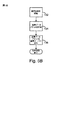
したがって、ワイヤレス電気通信ネットワーク20中で単一の通信チャネルを通しての同時音声およびデータ通信を可能にする方法を、システム10が提供するということが分かり、方法は、第1の通信サーバ26を通して、1以上の移動体通信デバイス12、14、16、18に対して1以上の通信チャネルを提供するステップと、第1の通信サーバ26によって提供される1以上の通信チャネルを通して、移動体通信デバイス12、14、16、18から少なくとも1つのデータサーバ28(PSDN52)に、少なくともデータを選択的に通信するステップと、変換サーバ32において、CDMA音声フレームのような第1のプロトコルを有する音声データを、1以上の通信チャネルを通して送信可能なIPパケットデータのような第2のプロトコルのデータに変換するステップと、少なくとも1つの通信チャネルを通して、セルラ電話機14のような少なくとも1つの移動体通信デバイスに対して送信するために、変換されたデータを変換サーバ32から第1の通信サーバ26に対して送るステップとを含む。方法は、ワイヤレス電気通信ネットワーク20を通して音声データおよびデータ通信の両方を受信するステップと、第1の通信サーバ26と少なくとも1つの移動体デバイス12、14、16、18との間に第2の通信チャネルを選択的に確立するステップとをさらに含むことができ、第2の通信チャネルはセルラ電話機14のような少なくとも1つの移動体デバイスとの追加的データ通信を提供する。図4の実施形態で示すように、方法は、変換サーバ32において、少なくとも1つの移動体デバイスからIPパケットデータのような第2のプロトコルを有するデータを受信するステップと、第2のプロトコルの受信データを、CDMA音声フレームのような他のプロトコルの音声データに変換するステップとをさらに含むことができる。
Thus, it can be seen that the system 10 provides a method that enables simultaneous voice and data communication over a single communication channel in the wireless telecommunications network 20, which can be accomplished through the
1つの実施形態では、変換サーバ32において音声データを受信するステップ(ステップ100)を通して、変換サーバ32はワイヤレス電気通信ネットワーク20中で単一の通信チャネルを通しての同時音声およびデータ通信を可能にする方法を実行し、音声データはセルラ電話機12のような少なくとも第1の移動体電気通信デバイスから発信され、少なくとも第1の移動体電気通信デバイスは、通信サーバ26を通して少なくとも第1の移動体通信デバイスに対して提供される1以上の通信チャネルを介して、ワイヤレス電気通信ネットワーク20を通して選択的に通信する。次に、方法は、音声データを、送信プロトコル(好ましくはIPプロトコル)を有する音声パケットデータに変換するステップと、次に、1以上の通信チャネルを通して1以上の第2の移動体通信デバイス14、16、18に対して送信するために、通信サーバ26に対して音声データパケットを送るステップとを含み、音声データパケットは、送信プロトコルを有する他のデータパケットとともに、1以上の通信チャネルを通して移動体デバイス14、16、18のような1以上の第2の移動体通信デバイスに対して送信可能である。
In one embodiment, through the step of receiving voice data at the conversion server 32 (step 100), the
変換サーバ32の方法は、ワイヤレス電気通信ネットワーク20を通して変換サーバ32から音声データパケットおよびデータパケットの両方を送信するステップをさらに含むことができる。方法は、図4に示すように、少なくとも第1の移動体デバイス12からデータパケットを受信するステップと、受信したデータパケットを音声データに変換するステップとを含むことができる。音声データパケットを送るステップは、音声データパケットを通信サーバ26に直接送ることであってもよい。
The method of the
したがって、方法は、コンピュータプラットフォーム82のメモリ88、または、変換サーバ32のようなコンピュータ読取可能媒体に保持されたプログラムの実行によって実現することができる。命令はさまざまなタイプの信号担持、または、1次、2次、3次データ記憶媒体中に常駐することができる。媒体は、例えば、ワイヤレスデバイスによりアクセス可能であってもよく、または、ワイヤレスデバイス内に常駐していてもよい(示していない)RAMを含んでいてもよい。RAM、ディスケット、または、他の2次記憶媒体中のいずれに含まれているものであれ、命令は、(例えば、従来の“ハードドライブ”またはRAIDアレイのような)DASD記憶、磁気テープ、(例えば、ROM、EPROMまたはEEPROMのような)電子的読取専用メモリ、フラッシュメモリカード、(例えば、CD−ROM、WORM、DVD、デジタル光学テープのような)光学記憶装置、紙“パンチ”カード、あるいは、デジタルおよびアナログ送信媒体を含む他の適切なデータ記憶媒体のような、さまざまな機械読み出し可能データ記憶媒体に記憶させてもよい。
Thus, the method can be implemented by execution of a program held in the
前述の開示は本発明の例示的実施形態を示したが、添付の特許請求の範囲により規定される本発明の範囲を逸脱することなく、さまざまな変更および変形をここで行えることを理解すべきである。さらに、本発明の要素は単数形で説明し、または、特許請求の範囲に記載したが、明示的に単数であると述べられていない限り、むしろ複数を意図している。 While the foregoing disclosure has shown exemplary embodiments of the invention, it should be understood that various changes and modifications can be made herein without departing from the scope of the invention as defined by the appended claims. It is. Further, although elements of the invention have been described in the singular or recited in the claims, the plural is intended rather than the express singular unless explicitly stated to be singular.
Claims (29)
1以上の移動体通信デバイスに対して1以上の通信チャネルを提供する第1の通信サーバと、
前記第1の通信サーバによって提供される前記1以上の通信チャネルを通して、少なくとも、第1のプロトコルを有するデータを選択的に通信する、少なくとも1つの移動体通信デバイスと、
前記少なくとも1つの移動体通信デバイスとデータを通信する少なくとも1つのデータサーバと、
第1のプロトコルを有する音声データを、前記1以上の通信チャネルを通して送信可能な第2のプロトコルを有するデータに変換し、少なくとも1つの通信チャネルを通して前記少なくとも1つの移動体通信デバイスに対して送信するために、前記第2のプロトコルを有するデータを前記第1の通信サーバに対して送る変換サーバと
を具備するシステム。 In a system that enables simultaneous voice and data communication over a single communication channel in a wireless telecommunication network,
A first communication server that provides one or more communication channels to one or more mobile communication devices;
At least one mobile communication device that selectively communicates data having at least a first protocol through the one or more communication channels provided by the first communication server;
At least one data server in communication with said at least one mobile communication device;
Voice data having a first protocol is converted to data having a second protocol that can be transmitted through the one or more communication channels and transmitted to the at least one mobile communication device through at least one communication channel. Therefore, a system comprising: a conversion server that sends data having the second protocol to the first communication server.
1以上のワイヤレス通信チャネルを提供する第1の通信手段と、
前記第1の通信手段によって提供される前記1以上の通信チャネルを通して、少なくともデータを選択的に通信する移動体通信手段と、
前記移動体通信手段とデータを通信するデータサービング手段と、
音声データを、前記1以上の通信チャネルを通して送信可能なデータに変換し、少なくとも1つの通信チャネルを通して前記移動体通信手段に対して送信するために前記変換された音声データを前記第1の通信手段に対してさらに送る変換手段と
を具備するシステム。 In a system that enables simultaneous voice and data communication over a single communication channel in a wireless telecommunication network,
First communication means for providing one or more wireless communication channels;
Mobile communication means for selectively communicating at least data through the one or more communication channels provided by the first communication means;
Data serving means for communicating data with the mobile communication means;
The voice data is converted into data that can be transmitted through the one or more communication channels, and the converted voice data is transmitted to the mobile communication means through the at least one communication channel. And a conversion means for sending further to the system.
第1の通信サーバを通して、1以上の移動体通信デバイスに対して1以上の通信チャネルを提供するステップと、
前記第1の通信サーバによって提供される前記1以上の通信チャネルを通して、前記移動体通信デバイスから少なくとも1つのデータサーバに、少なくともデータを選択的に通信するステップと、
変換サーバにおいて、第1のプロトコルを有する音声データを、前記1以上の通信チャネルを通して送信可能な第2のプロトコルを有するデータに変換するステップと、
少なくとも1つの通信チャネルを通して前記少なくとも1つの移動体通信デバイスに対して送信するために、前記第2のプロトコルを有するデータを前記変換サーバから前記第1の通信サーバに対して送るステップと
を含む方法。 In a method for enabling simultaneous voice and data communication over a single communication channel in a wireless telecommunication network,
Providing one or more communication channels to one or more mobile communication devices through a first communication server;
Selectively communicating at least data from the mobile communication device to at least one data server through the one or more communication channels provided by the first communication server;
Converting voice data having a first protocol into data having a second protocol that can be transmitted through the one or more communication channels in a conversion server;
Sending data having the second protocol from the conversion server to the first communication server for transmission to the at least one mobile communication device over at least one communication channel. .
前記第2のプロトコルを有する受信データを第1のプロトコルを有する音声データに変換するステップと
をさらに含む、請求項8記載の方法。 Further receiving at the conversion server data having a second protocol from the at least one mobile device;
9. The method of claim 8, further comprising: converting received data having the second protocol into audio data having the first protocol.
第1の通信サーバを通して、1以上の移動体通信デバイスに対して1以上の通信チャネルを提供するステップと、
前記第1の通信サーバによって提供される前記1以上の通信チャネルを通して、前記移動体通信デバイスから少なくとも1つのデータサーバに、少なくともデータを選択的に通信するステップと、
変換サーバにおいて、音声データを前記1以上の通信チャネルを通して送信可能なデータに変換するステップと、
少なくとも1つの通信チャネルを通して前記少なくとも1つの移動体通信デバイスに対して送信するために、変換された音声データを前記変換サーバから前記第1の通信サーバに対して送るステップと
を含む方法。 In a method for enabling simultaneous voice and data communication over a single communication channel in a wireless telecommunication network,
Providing one or more communication channels to one or more mobile communication devices through a first communication server;
Selectively communicating at least data from the mobile communication device to at least one data server through the one or more communication channels provided by the first communication server;
Converting audio data into data that can be transmitted through the one or more communication channels in a conversion server;
Sending converted voice data from the conversion server to the first communication server for transmission to the at least one mobile communication device over at least one communication channel.
前記1以上の通信チャネルは第1の通信サーバにより前記1以上の移動体通信デバイスに提供され、それにより、前記移動体通信デバイスは前記1以上の通信チャネルを通して、少なくともデータを選択的に通信し、前記変換サーバは前記少なくとも1つの通信チャネルを通して前記少なくとも1つの移動体通信デバイスに送信するために、変換された音声データを前記第1の通信サーバに送るサーバ。 A conversion server that converts voice data into data that can be transmitted over one or more communication channels in a wireless telecommunication network between one or more data servers and one or more mobile communication devices.
The one or more communication channels are provided to the one or more mobile communication devices by a first communication server, whereby the mobile communication device selectively communicates at least data through the one or more communication channels. The conversion server sends the converted voice data to the first communication server for transmission to the at least one mobile communication device through the at least one communication channel.
変換サーバにおいて音声データを受信し、前記音声データは少なくとも第1の移動体電気通信デバイスから発信され、前記少なくとも第1の移動体電気通信デバイスは、1以上の通信サーバにより前記少なくとも第1の移動体通信デバイスに提供される1以上の通信チャネルを介して、ワイヤレス電気通信ネットワークを通して選択的に通信するステップと、
送信プロトコルを有する音声パケットデータに前記音声データを変換し、前記音声データパケットは、前記送信プロトコルを有する他のデータパケットで1以上の第2の移動体通信デバイスに対して1以上の通信チャネルを通して送信可能であるステップと、
前記1以上の通信チャネルを通して前記1以上の第2の移動体通信デバイスに対して送信するために、前記音声データパケットを前記1以上の通信サーバに対して送るステップと
を含む方法。 In a method for enabling simultaneous voice and data communication over a single communication channel in a wireless telecommunication network,
Voice data is received at the conversion server, the voice data is transmitted from at least a first mobile telecommunications device, and the at least first mobile telecommunications device is sent to the at least first mobile by one or more communication servers. Selectively communicating through a wireless telecommunication network via one or more communication channels provided to a body communication device;
Converting the voice data into voice packet data having a transmission protocol, the voice data packet being transmitted through one or more communication channels to one or more second mobile communication devices in another data packet having the transmission protocol. A step that can be sent, and
Sending the voice data packet to the one or more communication servers for transmission to the one or more second mobile communication devices over the one or more communication channels.
受信データパケットを音声データに変換するステップと
をさらに含む、請求項20記載の方法。 Receiving a data packet from the at least first mobile device;
21. The method of claim 20, further comprising the step of converting received data packets into voice data.
変換サーバにおいて音声データを受信し、前記音声データは前記少なくとも第1の移動体電気通信デバイスから発信され、前記少なくとも第1の移動体電気通信デバイスは、1以上の通信サーバにより前記少なくとも第1の移動体通信デバイスに提供される1以上の通信チャネルを介して、ワイヤレス電気通信ネットワークを通して選択的に通信するステップと、
送信プロトコルを有する音声パケットデータに前記音声データを変換し、前記音声データパケットは、前記送信プロトコルを有する他のデータパケットで1以上の第2の移動体通信デバイスに対して前記1以上の通信チャネルを通して送信可能であるステップと、
前記1以上の通信チャネルを通して前記1以上の第2の移動体通信デバイスに対して送信するために、前記音声データパケットを1以上の通信サーバに対して送るステップと
を実行することを通して、ワイヤレス電気通信ネットワーク中で単一通信チャネルを通して同時音声およびデータ通信することを前記コンピュータサーバに可能にさせるコンピュータプログラム。 When executed by a computer server
Voice data is received at a conversion server, the voice data is transmitted from the at least first mobile telecommunications device, and the at least first mobile telecommunications device is sent to the at least first by one or more communication servers. Selectively communicating through a wireless telecommunications network via one or more communication channels provided to a mobile communication device;
Converting the voice data into voice packet data having a transmission protocol, the voice data packet being another data packet having the transmission protocol to the one or more second mobile communication devices; Steps that can be transmitted through,
Sending the voice data packet to one or more communication servers for transmission to the one or more second mobile communication devices through the one or more communication channels. A computer program that enables the computer server to perform simultaneous voice and data communication over a single communication channel in a communication network.
受信データパケットを音声データに変換するステップと
を前記サーバにさらに実行させる、請求項25記載のプログラム。 Receiving a data packet from the at least first mobile device;
26. The program according to claim 25, further causing the server to execute a step of converting received data packets into voice data.
Applications Claiming Priority (2)
| Application Number | Priority Date | Filing Date | Title |
|---|---|---|---|
| US11/096,869 US20060221939A1 (en) | 2005-03-31 | 2005-03-31 | System and method for simultaneous voice and data call over wireless infrastructure |
| PCT/US2006/011856 WO2006105378A2 (en) | 2005-03-31 | 2006-03-29 | System and method for simultaneous voice and data call over wireless infrastructure |
Publications (1)
| Publication Number | Publication Date |
|---|---|
| JP2008537390A true JP2008537390A (en) | 2008-09-11 |
Family
ID=37054167
Family Applications (1)
| Application Number | Title | Priority Date | Filing Date |
|---|---|---|---|
| JP2008504414A Pending JP2008537390A (en) | 2005-03-31 | 2006-03-29 | System and method for simultaneous voice and data calls over a wireless infrastructure |
Country Status (12)
| Country | Link |
|---|---|
| US (1) | US20060221939A1 (en) |
| EP (1) | EP1869905A4 (en) |
| JP (1) | JP2008537390A (en) |
| KR (1) | KR100925904B1 (en) |
| CN (1) | CN101180894B (en) |
| BR (1) | BRPI0608747A2 (en) |
| CA (1) | CA2601791A1 (en) |
| IL (1) | IL186176A0 (en) |
| MX (1) | MX2007011787A (en) |
| RU (1) | RU2007140238A (en) |
| TW (1) | TW200706018A (en) |
| WO (1) | WO2006105378A2 (en) |
Families Citing this family (16)
| Publication number | Priority date | Publication date | Assignee | Title |
|---|---|---|---|---|
| US7633913B2 (en) * | 2004-11-05 | 2009-12-15 | Nextel Communications Inc. | Wireless communication system using joint detection to compensate for poor RF condition based on user priority |
| US7924778B2 (en) * | 2005-08-12 | 2011-04-12 | Nextel Communications Inc. | System and method of increasing the data throughput of the PDCH channel in a wireless communication system |
| US7751848B2 (en) * | 2005-11-23 | 2010-07-06 | Envio Networks Inc. | Systems and methods for providing concurrent mobile applications to mobile communication devices |
| US7978603B2 (en) * | 2006-10-10 | 2011-07-12 | Qualcomm Incorporated | Traffic optimization in a heterogeneous wireless cabin network |
| US8199697B2 (en) * | 2006-10-19 | 2012-06-12 | At&T Mobility Ii Llc | Sharing data with an emergency response service over a mobile network |
| US8090366B2 (en) | 2006-10-19 | 2012-01-03 | At&T Mobility Ii Llc | Systems and methods for file sharing through mobile devices |
| US20090094531A1 (en) * | 2007-10-05 | 2009-04-09 | Microsoft Corporation | Telephone call as rendezvous mechanism for data sharing between users |
| US7899037B1 (en) | 2009-03-06 | 2011-03-01 | Sprint Communications Company L.P. | Voice session and data session coordination in a communication device |
| US8270377B1 (en) | 2009-11-17 | 2012-09-18 | Sprint Communications Company L.P. | Multiple communication sessions in wireless communication devices |
| US20110158222A1 (en) * | 2009-12-28 | 2011-06-30 | Duncan Kerr | Cellular telephone systems with support for converting voice calls to data sessions |
| US8797999B2 (en) * | 2010-03-10 | 2014-08-05 | Apple Inc. | Dynamically adjustable communications services and communications links |
| US9967881B1 (en) | 2014-12-18 | 2018-05-08 | Sprint Spectrum L.P. | Management of data transmission over radio-link encompassing multiple component carriers |
| US9820289B1 (en) | 2014-12-18 | 2017-11-14 | Sprint Spectrum L.P. | Method and system for managing quantity of carriers in air interface connection based on type of content |
| US11178287B1 (en) | 2015-09-30 | 2021-11-16 | Sprint Spectrum L.P. | Use of a single channel for voice communications and multiple channels for non-voice communications |
| US10045359B1 (en) | 2016-03-08 | 2018-08-07 | Sprint Spectrum L.P. | Method and system for managing carriers based on simultaneous voice and data communication |
| JP7631960B2 (en) * | 2021-03-24 | 2025-02-19 | 村田機械株式会社 | Wireless communication system, controller, wireless base station, and data packet transfer method |
Citations (7)
| Publication number | Priority date | Publication date | Assignee | Title |
|---|---|---|---|---|
| JP2001237897A (en) * | 2000-02-22 | 2001-08-31 | Nec Corp | Hybrid type telephony system |
| JP2001312443A (en) * | 2000-02-21 | 2001-11-09 | Ntt Docomo Inc | Information distribution method and information distribution system |
| US20030182374A1 (en) * | 2001-10-24 | 2003-09-25 | Debashis Haldar | Method and system for controlling scope of user participation in a communication session |
| US20040013109A1 (en) * | 2000-10-03 | 2004-01-22 | Kai Vaananen | Method of setting up a connection for calls |
| JP2004104531A (en) * | 2002-09-10 | 2004-04-02 | Ricoh Co Ltd | Extension telephone system |
| JP2004535727A (en) * | 2001-07-12 | 2004-11-25 | クゥアルコム・インコーポレイテッド | System and method for paging for voice over IP |
| JP2005039724A (en) * | 2003-07-18 | 2005-02-10 | Motorola Inc | Communication control method and communication controller |
Family Cites Families (11)
| Publication number | Priority date | Publication date | Assignee | Title |
|---|---|---|---|---|
| US6389010B1 (en) * | 1995-10-05 | 2002-05-14 | Intermec Ip Corp. | Hierarchical data collection network supporting packetized voice communications among wireless terminals and telephones |
| FI103700B (en) | 1994-09-20 | 1999-08-13 | Nokia Mobile Phones Ltd | Simultaneous transmission of voice and data in mobile telecommunication systems |
| US6104726A (en) * | 1997-03-31 | 2000-08-15 | Motorola, Inc. | Simultaneous transfer of voice and data information using multi-rate vocoder and bit control protocol |
| US6282182B1 (en) | 2000-01-07 | 2001-08-28 | Motorola, Inc. | Method and apparatus for simultaneous circuit switched voice and GPRS data interchange |
| EP1172975A4 (en) * | 2000-02-21 | 2005-01-05 | Ntt Docomo Inc | METHOD, SYSTEM AND INFORMATION DISSEMINATION SERVER, MOBILE COMMUNICATIONS NETWORK SYSTEM AND COMMUNICATION SERVICE FOR CARRYING OUT SAID METHOD |
| US6571212B1 (en) | 2000-08-15 | 2003-05-27 | Ericsson Inc. | Mobile internet protocol voice system |
| DE10046345A1 (en) | 2000-08-17 | 2002-03-14 | Siemens Ag | Data packet transmission method between mobile station and to packet-oriented communications networks provides simultaneous multi-media session and internet session |
| US7068684B1 (en) * | 2001-02-01 | 2006-06-27 | Estech Systems, Inc. | Quality of service in a voice over IP telephone system |
| US7269188B2 (en) * | 2002-05-24 | 2007-09-11 | Airbiquity, Inc. | Simultaneous voice and data modem |
| US7003303B2 (en) * | 2002-08-23 | 2006-02-21 | Motorola, Inc. | Dedicated high priority access channel |
| US7117001B2 (en) * | 2003-11-04 | 2006-10-03 | Motorola, Inc. | Simultaneous voice and data communication over a wireless network |
-
2005
- 2005-03-31 US US11/096,869 patent/US20060221939A1/en not_active Abandoned
-
2006
- 2006-03-29 EP EP06740164A patent/EP1869905A4/en not_active Withdrawn
- 2006-03-29 JP JP2008504414A patent/JP2008537390A/en active Pending
- 2006-03-29 KR KR1020077024915A patent/KR100925904B1/en not_active Expired - Fee Related
- 2006-03-29 RU RU2007140238/09A patent/RU2007140238A/en not_active Application Discontinuation
- 2006-03-29 BR BRPI0608747-7A patent/BRPI0608747A2/en not_active Application Discontinuation
- 2006-03-29 MX MX2007011787A patent/MX2007011787A/en not_active Application Discontinuation
- 2006-03-29 WO PCT/US2006/011856 patent/WO2006105378A2/en not_active Ceased
- 2006-03-29 CA CA002601791A patent/CA2601791A1/en not_active Abandoned
- 2006-03-29 CN CN2006800176708A patent/CN101180894B/en not_active Expired - Fee Related
- 2006-03-31 TW TW095111682A patent/TW200706018A/en unknown
-
2007
- 2007-09-23 IL IL186176A patent/IL186176A0/en unknown
Patent Citations (7)
| Publication number | Priority date | Publication date | Assignee | Title |
|---|---|---|---|---|
| JP2001312443A (en) * | 2000-02-21 | 2001-11-09 | Ntt Docomo Inc | Information distribution method and information distribution system |
| JP2001237897A (en) * | 2000-02-22 | 2001-08-31 | Nec Corp | Hybrid type telephony system |
| US20040013109A1 (en) * | 2000-10-03 | 2004-01-22 | Kai Vaananen | Method of setting up a connection for calls |
| JP2004535727A (en) * | 2001-07-12 | 2004-11-25 | クゥアルコム・インコーポレイテッド | System and method for paging for voice over IP |
| US20030182374A1 (en) * | 2001-10-24 | 2003-09-25 | Debashis Haldar | Method and system for controlling scope of user participation in a communication session |
| JP2004104531A (en) * | 2002-09-10 | 2004-04-02 | Ricoh Co Ltd | Extension telephone system |
| JP2005039724A (en) * | 2003-07-18 | 2005-02-10 | Motorola Inc | Communication control method and communication controller |
Also Published As
| Publication number | Publication date |
|---|---|
| CN101180894A (en) | 2008-05-14 |
| MX2007011787A (en) | 2007-12-05 |
| CA2601791A1 (en) | 2006-10-05 |
| RU2007140238A (en) | 2009-05-10 |
| EP1869905A4 (en) | 2012-05-16 |
| KR100925904B1 (en) | 2009-11-09 |
| EP1869905A2 (en) | 2007-12-26 |
| IL186176A0 (en) | 2008-01-20 |
| BRPI0608747A2 (en) | 2010-01-26 |
| WO2006105378A2 (en) | 2006-10-05 |
| KR20070118274A (en) | 2007-12-14 |
| WO2006105378A3 (en) | 2007-07-12 |
| TW200706018A (en) | 2007-02-01 |
| CN101180894B (en) | 2013-03-20 |
| US20060221939A1 (en) | 2006-10-05 |
Similar Documents
| Publication | Publication Date | Title |
|---|---|---|
| US8340710B2 (en) | Domain ID mapping for wireless device identifiers | |
| US8254276B2 (en) | Packet data services using version and capability information | |
| CN103260191B (en) | Method and system for processing packet switched data transmission | |
| KR101116459B1 (en) | System and method for resolving contention among applications requiring data connections between a mobile communications device and a wireless network | |
| CN101180894B (en) | System and method for simultaneous voice and data call over wireless infrastructure | |
| CN101496431B (en) | Seamless handoff between access networks with saved session information | |
| KR101274869B1 (en) | Wireless communications network incorporating voice over ip using shared supplemental spreading codes | |
| US8867566B2 (en) | Methods of header compression within a wireless communications network | |
| JP2002516552A (en) | Access request in a predetermined random access channel slot to carry additional information | |
| KR100442611B1 (en) | Apparatus and method for transmitting a voice frame in an all-ip-based mobile communication system | |
| US8055290B1 (en) | Method to reduce push-to-talk call setup time | |
| US9391890B2 (en) | Network-initiated method and system for establishing data communication using IP with a wireless terminal | |
| EP1698125A1 (en) | Directed flood of push-to-talk announce message | |
| US20040203821A1 (en) | System and method for dynamic scheduling of channels in a code division multiple access system | |
| KR100718790B1 (en) | Method and apparatus for processing WCDMA short message (SMS) in CDMA network | |
| HK1113889A (en) | System and method for simultaneous voice and data call over wireless infrastructure |
Legal Events
| Date | Code | Title | Description |
|---|---|---|---|
| A977 | Report on retrieval |
Free format text: JAPANESE INTERMEDIATE CODE: A971007 Effective date: 20100128 |
|
| A131 | Notification of reasons for refusal |
Free format text: JAPANESE INTERMEDIATE CODE: A131 Effective date: 20100202 |
|
| A601 | Written request for extension of time |
Free format text: JAPANESE INTERMEDIATE CODE: A601 Effective date: 20100506 |
|
| A602 | Written permission of extension of time |
Free format text: JAPANESE INTERMEDIATE CODE: A602 Effective date: 20100513 |
|
| A521 | Request for written amendment filed |
Free format text: JAPANESE INTERMEDIATE CODE: A523 Effective date: 20100702 |
|
| A02 | Decision of refusal |
Free format text: JAPANESE INTERMEDIATE CODE: A02 Effective date: 20101026 |