JP2006517398A - Identification of therapeutic compounds based on physical-chemical properties - Google Patents
Identification of therapeutic compounds based on physical-chemical properties Download PDFInfo
- Publication number
- JP2006517398A JP2006517398A JP2005502210A JP2005502210A JP2006517398A JP 2006517398 A JP2006517398 A JP 2006517398A JP 2005502210 A JP2005502210 A JP 2005502210A JP 2005502210 A JP2005502210 A JP 2005502210A JP 2006517398 A JP2006517398 A JP 2006517398A
- Authority
- JP
- Japan
- Prior art keywords
- physical
- compound
- oxidation
- potential
- parameter
- Prior art date
- Legal status (The legal status is an assumption and is not a legal conclusion. Google has not performed a legal analysis and makes no representation as to the accuracy of the status listed.)
- Granted
Links
- 150000001875 compounds Chemical class 0.000 title claims abstract description 183
- 239000000126 substance Substances 0.000 title claims abstract description 118
- 230000001225 therapeutic effect Effects 0.000 title claims abstract description 73
- 238000000034 method Methods 0.000 claims abstract description 117
- 239000000203 mixture Substances 0.000 claims abstract description 62
- 230000003647 oxidation Effects 0.000 claims description 128
- 238000007254 oxidation reaction Methods 0.000 claims description 128
- 230000009467 reduction Effects 0.000 claims description 88
- 238000003556 assay Methods 0.000 claims description 48
- 230000004071 biological effect Effects 0.000 claims description 29
- 239000000546 pharmaceutical excipient Substances 0.000 claims description 26
- 230000036542 oxidative stress Effects 0.000 claims description 24
- 208000037265 diseases, disorders, signs and symptoms Diseases 0.000 claims description 23
- 208000028867 ischemia Diseases 0.000 claims description 23
- 150000002215 flavonoids Chemical group 0.000 claims description 18
- 230000004054 inflammatory process Effects 0.000 claims description 18
- 230000004770 neurodegeneration Effects 0.000 claims description 18
- 206010061218 Inflammation Diseases 0.000 claims description 17
- 238000005259 measurement Methods 0.000 claims description 17
- 230000001590 oxidative effect Effects 0.000 claims description 17
- 238000011282 treatment Methods 0.000 claims description 16
- WHUUTDBJXJRKMK-VKHMYHEASA-N L-glutamic acid Chemical compound OC(=O)[C@@H](N)CCC(O)=O WHUUTDBJXJRKMK-VKHMYHEASA-N 0.000 claims description 15
- 229910021607 Silver chloride Inorganic materials 0.000 claims description 13
- 230000015572 biosynthetic process Effects 0.000 claims description 13
- 208000035475 disorder Diseases 0.000 claims description 13
- 229910052709 silver Inorganic materials 0.000 claims description 13
- 239000004332 silver Substances 0.000 claims description 13
- HKZLPVFGJNLROG-UHFFFAOYSA-M silver monochloride Chemical compound [Cl-].[Ag+] HKZLPVFGJNLROG-UHFFFAOYSA-M 0.000 claims description 13
- 125000001424 substituent group Chemical group 0.000 claims description 12
- 238000012360 testing method Methods 0.000 claims description 12
- 125000000449 nitro group Chemical group [O-][N+](*)=O 0.000 claims description 11
- PJANXHGTPQOBST-UHFFFAOYSA-N stilbene Chemical group C=1C=CC=CC=1C=CC1=CC=CC=C1 PJANXHGTPQOBST-UHFFFAOYSA-N 0.000 claims description 11
- 238000006467 substitution reaction Methods 0.000 claims description 11
- 108010024212 E-Selectin Proteins 0.000 claims description 10
- 230000008569 process Effects 0.000 claims description 10
- 229930195712 glutamate Natural products 0.000 claims description 9
- 125000002887 hydroxy group Chemical group [H]O* 0.000 claims description 9
- 125000001997 phenyl group Chemical group [H]C1=C([H])C([H])=C(*)C([H])=C1[H] 0.000 claims description 9
- 208000024827 Alzheimer disease Diseases 0.000 claims description 8
- 102000013455 Amyloid beta-Peptides Human genes 0.000 claims description 8
- 108010090849 Amyloid beta-Peptides Proteins 0.000 claims description 8
- 238000004166 bioassay Methods 0.000 claims description 8
- 238000000423 cell based assay Methods 0.000 claims description 8
- 238000001075 voltammogram Methods 0.000 claims description 8
- 230000000977 initiatory effect Effects 0.000 claims description 7
- 230000030833 cell death Effects 0.000 claims description 6
- 230000000971 hippocampal effect Effects 0.000 claims description 6
- 125000004151 quinonyl group Chemical group 0.000 claims description 6
- 229940124598 therapeutic candidate Drugs 0.000 claims description 6
- JADVWWSKYZXRGX-UHFFFAOYSA-M thioflavine T Chemical compound [Cl-].C1=CC(N(C)C)=CC=C1C1=[N+](C)C2=CC=C(C)C=C2S1 JADVWWSKYZXRGX-UHFFFAOYSA-M 0.000 claims description 6
- 125000004122 cyclic group Chemical group 0.000 claims description 5
- 238000000159 protein binding assay Methods 0.000 claims description 5
- 239000003795 chemical substances by application Substances 0.000 claims description 3
- 230000007423 decrease Effects 0.000 claims description 3
- 238000010822 cell death assay Methods 0.000 claims description 2
- 102100023471 E-selectin Human genes 0.000 claims 6
- 230000001939 inductive effect Effects 0.000 claims 1
- 210000004027 cell Anatomy 0.000 description 60
- OKKJLVBELUTLKV-UHFFFAOYSA-N Methanol Chemical compound OC OKKJLVBELUTLKV-UHFFFAOYSA-N 0.000 description 42
- 239000000243 solution Substances 0.000 description 36
- 210000002569 neuron Anatomy 0.000 description 26
- 230000000694 effects Effects 0.000 description 24
- 239000012981 Hank's balanced salt solution Substances 0.000 description 16
- 238000002484 cyclic voltammetry Methods 0.000 description 16
- XLYOFNOQVPJJNP-UHFFFAOYSA-N water Substances O XLYOFNOQVPJJNP-UHFFFAOYSA-N 0.000 description 16
- 239000002609 medium Substances 0.000 description 14
- VMWNQDUVQKEIOC-CYBMUJFWSA-N apomorphine Chemical compound C([C@H]1N(C)CC2)C3=CC=C(O)C(O)=C3C3=C1C2=CC=C3 VMWNQDUVQKEIOC-CYBMUJFWSA-N 0.000 description 13
- 206010021143 Hypoxia Diseases 0.000 description 12
- FAPWRFPIFSIZLT-UHFFFAOYSA-M Sodium chloride Chemical compound [Na+].[Cl-] FAPWRFPIFSIZLT-UHFFFAOYSA-M 0.000 description 12
- 238000002751 oxidative stress assay Methods 0.000 description 12
- WQZGKKKJIJFFOK-GASJEMHNSA-N Glucose Natural products OC[C@H]1OC(O)[C@H](O)[C@@H](O)[C@@H]1O WQZGKKKJIJFFOK-GASJEMHNSA-N 0.000 description 11
- WQZGKKKJIJFFOK-VFUOTHLCSA-N beta-D-glucose Chemical compound OC[C@H]1O[C@@H](O)[C@H](O)[C@@H](O)[C@@H]1O WQZGKKKJIJFFOK-VFUOTHLCSA-N 0.000 description 11
- 230000001537 neural effect Effects 0.000 description 11
- 201000010099 disease Diseases 0.000 description 10
- 229910052760 oxygen Inorganic materials 0.000 description 10
- BASFCYQUMIYNBI-UHFFFAOYSA-N platinum Chemical compound [Pt] BASFCYQUMIYNBI-UHFFFAOYSA-N 0.000 description 10
- AZQWKYJCGOJGHM-UHFFFAOYSA-N 1,4-benzoquinone Chemical group O=C1C=CC(=O)C=C1 AZQWKYJCGOJGHM-UHFFFAOYSA-N 0.000 description 9
- IAZDPXIOMUYVGZ-UHFFFAOYSA-N Dimethylsulphoxide Chemical compound CS(C)=O IAZDPXIOMUYVGZ-UHFFFAOYSA-N 0.000 description 9
- ZMXDDKWLCZADIW-UHFFFAOYSA-N N,N-Dimethylformamide Chemical compound CN(C)C=O ZMXDDKWLCZADIW-UHFFFAOYSA-N 0.000 description 9
- 238000009472 formulation Methods 0.000 description 9
- 238000002360 preparation method Methods 0.000 description 9
- 208000024891 symptom Diseases 0.000 description 9
- XKRFYHLGVUSROY-UHFFFAOYSA-N Argon Chemical compound [Ar] XKRFYHLGVUSROY-UHFFFAOYSA-N 0.000 description 8
- 210000004556 brain Anatomy 0.000 description 8
- 239000008103 glucose Substances 0.000 description 8
- 229940049906 glutamate Drugs 0.000 description 8
- 208000015122 neurodegenerative disease Diseases 0.000 description 8
- UCSJYZPVAKXKNQ-HZYVHMACSA-N streptomycin Chemical compound CN[C@H]1[C@H](O)[C@@H](O)[C@H](CO)O[C@H]1O[C@@H]1[C@](C=O)(O)[C@H](C)O[C@H]1O[C@@H]1[C@@H](NC(N)=N)[C@H](O)[C@@H](NC(N)=N)[C@H](O)[C@H]1O UCSJYZPVAKXKNQ-HZYVHMACSA-N 0.000 description 8
- 239000000725 suspension Substances 0.000 description 8
- 102000015689 E-Selectin Human genes 0.000 description 7
- ZDXPYRJPNDTMRX-VKHMYHEASA-N L-glutamine Chemical compound OC(=O)[C@@H](N)CCC(N)=O ZDXPYRJPNDTMRX-VKHMYHEASA-N 0.000 description 7
- 239000004480 active ingredient Substances 0.000 description 7
- QVGXLLKOCUKJST-UHFFFAOYSA-N atomic oxygen Chemical compound [O] QVGXLLKOCUKJST-UHFFFAOYSA-N 0.000 description 7
- 239000000872 buffer Substances 0.000 description 7
- 238000006243 chemical reaction Methods 0.000 description 7
- 210000001320 hippocampus Anatomy 0.000 description 7
- 239000001301 oxygen Substances 0.000 description 7
- 102000004169 proteins and genes Human genes 0.000 description 7
- 108090000623 proteins and genes Proteins 0.000 description 7
- 239000011780 sodium chloride Substances 0.000 description 7
- LFQSCWFLJHTTHZ-UHFFFAOYSA-N Ethanol Chemical compound CCO LFQSCWFLJHTTHZ-UHFFFAOYSA-N 0.000 description 6
- PEDCQBHIVMGVHV-UHFFFAOYSA-N Glycerine Chemical compound OCC(O)CO PEDCQBHIVMGVHV-UHFFFAOYSA-N 0.000 description 6
- 208000006011 Stroke Diseases 0.000 description 6
- 238000010521 absorption reaction Methods 0.000 description 6
- 238000005273 aeration Methods 0.000 description 6
- YZXBAPSDXZZRGB-DOFZRALJSA-N arachidonic acid Chemical compound CCCCC\C=C/C\C=C/C\C=C/C\C=C/CCCC(O)=O YZXBAPSDXZZRGB-DOFZRALJSA-N 0.000 description 6
- 229910002091 carbon monoxide Inorganic materials 0.000 description 6
- VZWXIQHBIQLMPN-UHFFFAOYSA-N chromane Chemical group C1=CC=C2CCCOC2=C1 VZWXIQHBIQLMPN-UHFFFAOYSA-N 0.000 description 6
- 239000002552 dosage form Substances 0.000 description 6
- 229930003935 flavonoid Natural products 0.000 description 6
- 235000017173 flavonoids Nutrition 0.000 description 6
- RWSXRVCMGQZWBV-WDSKDSINSA-N glutathione Chemical compound OC(=O)[C@@H](N)CCC(=O)N[C@@H](CS)C(=O)NCC(O)=O RWSXRVCMGQZWBV-WDSKDSINSA-N 0.000 description 6
- 230000001146 hypoxic effect Effects 0.000 description 6
- 230000005764 inhibitory process Effects 0.000 description 6
- 239000007788 liquid Substances 0.000 description 6
- HQKMJHAJHXVSDF-UHFFFAOYSA-L magnesium stearate Chemical compound [Mg+2].CCCCCCCCCCCCCCCCCC([O-])=O.CCCCCCCCCCCCCCCCCC([O-])=O HQKMJHAJHXVSDF-UHFFFAOYSA-L 0.000 description 6
- 239000003642 reactive oxygen metabolite Substances 0.000 description 6
- 238000004365 square wave voltammetry Methods 0.000 description 6
- 238000005556 structure-activity relationship Methods 0.000 description 6
- 238000005481 NMR spectroscopy Methods 0.000 description 5
- 238000004458 analytical method Methods 0.000 description 5
- 238000013459 approach Methods 0.000 description 5
- 230000008901 benefit Effects 0.000 description 5
- 230000000903 blocking effect Effects 0.000 description 5
- 238000004113 cell culture Methods 0.000 description 5
- 230000001419 dependent effect Effects 0.000 description 5
- 210000002889 endothelial cell Anatomy 0.000 description 5
- 238000005516 engineering process Methods 0.000 description 5
- 230000001965 increasing effect Effects 0.000 description 5
- 230000000626 neurodegenerative effect Effects 0.000 description 5
- 231100000252 nontoxic Toxicity 0.000 description 5
- 230000003000 nontoxic effect Effects 0.000 description 5
- 239000008194 pharmaceutical composition Substances 0.000 description 5
- 230000002829 reductive effect Effects 0.000 description 5
- 239000007787 solid Substances 0.000 description 5
- 241000894007 species Species 0.000 description 5
- 239000006228 supernatant Substances 0.000 description 5
- 238000013268 sustained release Methods 0.000 description 5
- IPJDHSYCSQAODE-UHFFFAOYSA-N 5-chloromethylfluorescein diacetate Chemical compound O1C(=O)C2=CC(CCl)=CC=C2C21C1=CC=C(OC(C)=O)C=C1OC1=CC(OC(=O)C)=CC=C21 IPJDHSYCSQAODE-UHFFFAOYSA-N 0.000 description 4
- KDXKERNSBIXSRK-RXMQYKEDSA-N D-lysine Chemical compound NCCCC[C@@H](N)C(O)=O KDXKERNSBIXSRK-RXMQYKEDSA-N 0.000 description 4
- WHUUTDBJXJRKMK-UHFFFAOYSA-N Glutamic acid Natural products OC(=O)C(N)CCC(O)=O WHUUTDBJXJRKMK-UHFFFAOYSA-N 0.000 description 4
- 229930182816 L-glutamine Natural products 0.000 description 4
- 229930182555 Penicillin Natural products 0.000 description 4
- JGSARLDLIJGVTE-MBNYWOFBSA-N Penicillin G Chemical compound N([C@H]1[C@H]2SC([C@@H](N2C1=O)C(O)=O)(C)C)C(=O)CC1=CC=CC=C1 JGSARLDLIJGVTE-MBNYWOFBSA-N 0.000 description 4
- 208000027418 Wounds and injury Diseases 0.000 description 4
- 229910052786 argon Inorganic materials 0.000 description 4
- 239000011575 calcium Substances 0.000 description 4
- 230000005779 cell damage Effects 0.000 description 4
- 208000037887 cell injury Diseases 0.000 description 4
- 230000006378 damage Effects 0.000 description 4
- 239000003814 drug Substances 0.000 description 4
- 230000000670 limiting effect Effects 0.000 description 4
- 239000000463 material Substances 0.000 description 4
- 229940049954 penicillin Drugs 0.000 description 4
- 229910052697 platinum Inorganic materials 0.000 description 4
- 238000005498 polishing Methods 0.000 description 4
- 238000010926 purge Methods 0.000 description 4
- 230000004044 response Effects 0.000 description 4
- 238000012552 review Methods 0.000 description 4
- 238000012216 screening Methods 0.000 description 4
- 239000002002 slurry Substances 0.000 description 4
- 229960005322 streptomycin Drugs 0.000 description 4
- 239000012730 sustained-release form Substances 0.000 description 4
- 239000003826 tablet Substances 0.000 description 4
- GUBGYTABKSRVRQ-XLOQQCSPSA-N Alpha-Lactose Chemical compound O[C@@H]1[C@@H](O)[C@@H](O)[C@@H](CO)O[C@H]1O[C@@H]1[C@@H](CO)O[C@H](O)[C@H](O)[C@H]1O GUBGYTABKSRVRQ-XLOQQCSPSA-N 0.000 description 3
- 239000012583 B-27 Supplement Substances 0.000 description 3
- 201000006474 Brain Ischemia Diseases 0.000 description 3
- 206010008120 Cerebral ischaemia Diseases 0.000 description 3
- UHDGCWIWMRVCDJ-CCXZUQQUSA-N Cytarabine Chemical compound O=C1N=C(N)C=CN1[C@H]1[C@@H](O)[C@H](O)[C@@H](CO)O1 UHDGCWIWMRVCDJ-CCXZUQQUSA-N 0.000 description 3
- GUBGYTABKSRVRQ-QKKXKWKRSA-N Lactose Natural products OC[C@H]1O[C@@H](O[C@H]2[C@H](O)[C@@H](O)C(O)O[C@@H]2CO)[C@H](O)[C@@H](O)[C@H]1O GUBGYTABKSRVRQ-QKKXKWKRSA-N 0.000 description 3
- 241000699670 Mus sp. Species 0.000 description 3
- 241000700159 Rattus Species 0.000 description 3
- 229920002472 Starch Polymers 0.000 description 3
- PJANXHGTPQOBST-VAWYXSNFSA-N Stilbene Natural products C=1C=CC=CC=1/C=C/C1=CC=CC=C1 PJANXHGTPQOBST-VAWYXSNFSA-N 0.000 description 3
- 229930006000 Sucrose Natural products 0.000 description 3
- CZMRCDWAGMRECN-UGDNZRGBSA-N Sucrose Chemical compound O[C@H]1[C@H](O)[C@@H](CO)O[C@@]1(CO)O[C@@H]1[C@H](O)[C@@H](O)[C@H](O)[C@@H](CO)O1 CZMRCDWAGMRECN-UGDNZRGBSA-N 0.000 description 3
- 206010002026 amyotrophic lateral sclerosis Diseases 0.000 description 3
- 229960004046 apomorphine Drugs 0.000 description 3
- 229940114079 arachidonic acid Drugs 0.000 description 3
- 235000021342 arachidonic acid Nutrition 0.000 description 3
- 230000037396 body weight Effects 0.000 description 3
- 239000002775 capsule Substances 0.000 description 3
- 230000003833 cell viability Effects 0.000 description 3
- 239000001913 cellulose Substances 0.000 description 3
- 229920002678 cellulose Polymers 0.000 description 3
- 235000010980 cellulose Nutrition 0.000 description 3
- 210000003169 central nervous system Anatomy 0.000 description 3
- 206010008118 cerebral infarction Diseases 0.000 description 3
- 238000009792 diffusion process Methods 0.000 description 3
- 210000005064 dopaminergic neuron Anatomy 0.000 description 3
- 229940079593 drug Drugs 0.000 description 3
- 238000002848 electrochemical method Methods 0.000 description 3
- 239000002158 endotoxin Substances 0.000 description 3
- 230000006870 function Effects 0.000 description 3
- 239000011521 glass Substances 0.000 description 3
- 229960002989 glutamic acid Drugs 0.000 description 3
- ZDXPYRJPNDTMRX-UHFFFAOYSA-N glutamine Natural products OC(=O)C(N)CCC(N)=O ZDXPYRJPNDTMRX-UHFFFAOYSA-N 0.000 description 3
- 229960003180 glutathione Drugs 0.000 description 3
- 239000001963 growth medium Substances 0.000 description 3
- 238000013537 high throughput screening Methods 0.000 description 3
- 230000007954 hypoxia Effects 0.000 description 3
- 238000010348 incorporation Methods 0.000 description 3
- 239000007924 injection Substances 0.000 description 3
- 238000002347 injection Methods 0.000 description 3
- 239000000543 intermediate Substances 0.000 description 3
- 230000000302 ischemic effect Effects 0.000 description 3
- 239000008101 lactose Substances 0.000 description 3
- 229920006008 lipopolysaccharide Polymers 0.000 description 3
- 235000019359 magnesium stearate Nutrition 0.000 description 3
- 239000006187 pill Substances 0.000 description 3
- 239000013641 positive control Substances 0.000 description 3
- 239000000843 powder Substances 0.000 description 3
- 235000018102 proteins Nutrition 0.000 description 3
- 230000002468 redox effect Effects 0.000 description 3
- 230000027756 respiratory electron transport chain Effects 0.000 description 3
- 230000002441 reversible effect Effects 0.000 description 3
- 230000035945 sensitivity Effects 0.000 description 3
- 239000008107 starch Substances 0.000 description 3
- 235000019698 starch Nutrition 0.000 description 3
- 235000021286 stilbenes Nutrition 0.000 description 3
- 230000035882 stress Effects 0.000 description 3
- 239000005720 sucrose Substances 0.000 description 3
- 239000000454 talc Substances 0.000 description 3
- 229910052623 talc Inorganic materials 0.000 description 3
- 239000012085 test solution Substances 0.000 description 3
- DZUOQMBJJSBONO-CQSZACIVSA-N (6ar)-10-methoxy-6-methyl-5,6,6a,7-tetrahydro-4h-dibenzo[de,g]quinoline-11-ol Chemical compound CN1CCC2=CC=CC3=C2[C@H]1CC1=CC=C(OC)C(O)=C13 DZUOQMBJJSBONO-CQSZACIVSA-N 0.000 description 2
- ICLYJLBTOGPLMC-KVVVOXFISA-N (z)-octadec-9-enoate;tris(2-hydroxyethyl)azanium Chemical compound OCCN(CCO)CCO.CCCCCCCC\C=C/CCCCCCCC(O)=O ICLYJLBTOGPLMC-KVVVOXFISA-N 0.000 description 2
- WOAHJDHKFWSLKE-UHFFFAOYSA-N 1,2-benzoquinone Chemical group O=C1C=CC=CC1=O WOAHJDHKFWSLKE-UHFFFAOYSA-N 0.000 description 2
- KBPLFHHGFOOTCA-UHFFFAOYSA-N 1-Octanol Chemical compound CCCCCCCCO KBPLFHHGFOOTCA-UHFFFAOYSA-N 0.000 description 2
- JKMHFZQWWAIEOD-UHFFFAOYSA-N 2-[4-(2-hydroxyethyl)piperazin-1-yl]ethanesulfonic acid Chemical compound OCC[NH+]1CCN(CCS([O-])(=O)=O)CC1 JKMHFZQWWAIEOD-UHFFFAOYSA-N 0.000 description 2
- XZIIFPSPUDAGJM-UHFFFAOYSA-N 6-chloro-2-n,2-n-diethylpyrimidine-2,4-diamine Chemical compound CCN(CC)C1=NC(N)=CC(Cl)=N1 XZIIFPSPUDAGJM-UHFFFAOYSA-N 0.000 description 2
- 208000002874 Acne Vulgaris Diseases 0.000 description 2
- 206010001052 Acute respiratory distress syndrome Diseases 0.000 description 2
- QGZKDVFQNNGYKY-UHFFFAOYSA-O Ammonium Chemical compound [NH4+] QGZKDVFQNNGYKY-UHFFFAOYSA-O 0.000 description 2
- 208000023275 Autoimmune disease Diseases 0.000 description 2
- 108010074051 C-Reactive Protein Proteins 0.000 description 2
- 102100032752 C-reactive protein Human genes 0.000 description 2
- 102000016289 Cell Adhesion Molecules Human genes 0.000 description 2
- 108010067225 Cell Adhesion Molecules Proteins 0.000 description 2
- 206010008089 Cerebral artery occlusion Diseases 0.000 description 2
- 229920002785 Croscarmellose sodium Polymers 0.000 description 2
- FBPFZTCFMRRESA-KVTDHHQDSA-N D-Mannitol Chemical compound OC[C@@H](O)[C@@H](O)[C@H](O)[C@H](O)CO FBPFZTCFMRRESA-KVTDHHQDSA-N 0.000 description 2
- 201000004624 Dermatitis Diseases 0.000 description 2
- LYCAIKOWRPUZTN-UHFFFAOYSA-N Ethylene glycol Chemical compound OCCO LYCAIKOWRPUZTN-UHFFFAOYSA-N 0.000 description 2
- 108010010803 Gelatin Proteins 0.000 description 2
- 102000018899 Glutamate Receptors Human genes 0.000 description 2
- 108010027915 Glutamate Receptors Proteins 0.000 description 2
- 108010024636 Glutathione Proteins 0.000 description 2
- 108010043121 Green Fluorescent Proteins Proteins 0.000 description 2
- 208000010496 Heart Arrest Diseases 0.000 description 2
- 208000032087 Hereditary Leber Optic Atrophy Diseases 0.000 description 2
- 201000000639 Leber hereditary optic neuropathy Diseases 0.000 description 2
- 229930195725 Mannitol Natural products 0.000 description 2
- HOKKHZGPKSLGJE-GSVOUGTGSA-N N-Methyl-D-aspartic acid Chemical compound CN[C@@H](C(O)=O)CC(O)=O HOKKHZGPKSLGJE-GSVOUGTGSA-N 0.000 description 2
- 239000004677 Nylon Substances 0.000 description 2
- 208000024777 Prion disease Diseases 0.000 description 2
- REFJWTPEDVJJIY-UHFFFAOYSA-N Quercetin Chemical compound C=1C(O)=CC(O)=C(C(C=2O)=O)C=1OC=2C1=CC=C(O)C(O)=C1 REFJWTPEDVJJIY-UHFFFAOYSA-N 0.000 description 2
- 208000013616 Respiratory Distress Syndrome Diseases 0.000 description 2
- 206010039792 Seborrhoea Diseases 0.000 description 2
- VMHLLURERBWHNL-UHFFFAOYSA-M Sodium acetate Chemical compound [Na+].CC([O-])=O VMHLLURERBWHNL-UHFFFAOYSA-M 0.000 description 2
- UIIMBOGNXHQVGW-UHFFFAOYSA-M Sodium bicarbonate Chemical compound [Na+].OC([O-])=O UIIMBOGNXHQVGW-UHFFFAOYSA-M 0.000 description 2
- 239000004809 Teflon Substances 0.000 description 2
- 229920006362 Teflon® Polymers 0.000 description 2
- 206010052428 Wound Diseases 0.000 description 2
- DPXJVFZANSGRMM-UHFFFAOYSA-N acetic acid;2,3,4,5,6-pentahydroxyhexanal;sodium Chemical compound [Na].CC(O)=O.OCC(O)C(O)C(O)C(O)C=O DPXJVFZANSGRMM-UHFFFAOYSA-N 0.000 description 2
- 206010000496 acne Diseases 0.000 description 2
- 239000002671 adjuvant Substances 0.000 description 2
- 208000011341 adult acute respiratory distress syndrome Diseases 0.000 description 2
- 201000000028 adult respiratory distress syndrome Diseases 0.000 description 2
- 239000000443 aerosol Substances 0.000 description 2
- 206010064930 age-related macular degeneration Diseases 0.000 description 2
- 238000013019 agitation Methods 0.000 description 2
- PNEYBMLMFCGWSK-UHFFFAOYSA-N aluminium oxide Inorganic materials [O-2].[O-2].[O-2].[Al+3].[Al+3] PNEYBMLMFCGWSK-UHFFFAOYSA-N 0.000 description 2
- 238000010171 animal model Methods 0.000 description 2
- 239000003242 anti bacterial agent Substances 0.000 description 2
- 230000000259 anti-tumor effect Effects 0.000 description 2
- 229940088710 antibiotic agent Drugs 0.000 description 2
- 239000003963 antioxidant agent Substances 0.000 description 2
- 235000006708 antioxidants Nutrition 0.000 description 2
- 230000006907 apoptotic process Effects 0.000 description 2
- 239000007864 aqueous solution Substances 0.000 description 2
- 239000012298 atmosphere Substances 0.000 description 2
- 201000008937 atopic dermatitis Diseases 0.000 description 2
- 208000010668 atopic eczema Diseases 0.000 description 2
- 230000001413 cellular effect Effects 0.000 description 2
- 239000002537 cosmetic Substances 0.000 description 2
- 229960001681 croscarmellose sodium Drugs 0.000 description 2
- 235000010947 crosslinked sodium carboxy methyl cellulose Nutrition 0.000 description 2
- 231100000433 cytotoxic Toxicity 0.000 description 2
- 230000001472 cytotoxic effect Effects 0.000 description 2
- 230000003247 decreasing effect Effects 0.000 description 2
- 238000001514 detection method Methods 0.000 description 2
- 239000008121 dextrose Substances 0.000 description 2
- 206010012601 diabetes mellitus Diseases 0.000 description 2
- 229910003460 diamond Inorganic materials 0.000 description 2
- 239000010432 diamond Substances 0.000 description 2
- 239000012153 distilled water Substances 0.000 description 2
- 238000009826 distribution Methods 0.000 description 2
- 238000003411 electrode reaction Methods 0.000 description 2
- 239000003995 emulsifying agent Substances 0.000 description 2
- 239000000839 emulsion Substances 0.000 description 2
- 230000003511 endothelial effect Effects 0.000 description 2
- 230000002708 enhancing effect Effects 0.000 description 2
- 230000001815 facial effect Effects 0.000 description 2
- 239000007850 fluorescent dye Substances 0.000 description 2
- 239000006260 foam Substances 0.000 description 2
- 239000008273 gelatin Substances 0.000 description 2
- 229920000159 gelatin Polymers 0.000 description 2
- 239000007903 gelatin capsule Substances 0.000 description 2
- 235000019322 gelatine Nutrition 0.000 description 2
- 235000011852 gelatine desserts Nutrition 0.000 description 2
- 229910021397 glassy carbon Inorganic materials 0.000 description 2
- 235000013922 glutamic acid Nutrition 0.000 description 2
- 239000004220 glutamic acid Substances 0.000 description 2
- PCHJSUWPFVWCPO-UHFFFAOYSA-N gold Chemical compound [Au] PCHJSUWPFVWCPO-UHFFFAOYSA-N 0.000 description 2
- 229910052737 gold Inorganic materials 0.000 description 2
- 239000010931 gold Substances 0.000 description 2
- 230000012010 growth Effects 0.000 description 2
- 238000004770 highest occupied molecular orbital Methods 0.000 description 2
- 239000001257 hydrogen Substances 0.000 description 2
- 229910052739 hydrogen Inorganic materials 0.000 description 2
- ARRNBPCNZJXHRJ-UHFFFAOYSA-M hydron;tetrabutylazanium;phosphate Chemical compound OP(O)([O-])=O.CCCC[N+](CCCC)(CCCC)CCCC ARRNBPCNZJXHRJ-UHFFFAOYSA-M 0.000 description 2
- 238000010874 in vitro model Methods 0.000 description 2
- 230000002757 inflammatory effect Effects 0.000 description 2
- 230000028709 inflammatory response Effects 0.000 description 2
- 208000014674 injury Diseases 0.000 description 2
- 230000003993 interaction Effects 0.000 description 2
- 230000003834 intracellular effect Effects 0.000 description 2
- 238000001990 intravenous administration Methods 0.000 description 2
- MWDZOUNAPSSOEL-UHFFFAOYSA-N kaempferol Natural products OC1=C(C(=O)c2cc(O)cc(O)c2O1)c3ccc(O)cc3 MWDZOUNAPSSOEL-UHFFFAOYSA-N 0.000 description 2
- 239000006210 lotion Substances 0.000 description 2
- 238000004768 lowest unoccupied molecular orbital Methods 0.000 description 2
- 208000002780 macular degeneration Diseases 0.000 description 2
- 239000011777 magnesium Substances 0.000 description 2
- ZLNQQNXFFQJAID-UHFFFAOYSA-L magnesium carbonate Chemical compound [Mg+2].[O-]C([O-])=O ZLNQQNXFFQJAID-UHFFFAOYSA-L 0.000 description 2
- 239000001095 magnesium carbonate Substances 0.000 description 2
- 229910000021 magnesium carbonate Inorganic materials 0.000 description 2
- 239000000594 mannitol Substances 0.000 description 2
- 235000010355 mannitol Nutrition 0.000 description 2
- 230000004060 metabolic process Effects 0.000 description 2
- 201000007309 middle cerebral artery infarction Diseases 0.000 description 2
- 239000003068 molecular probe Substances 0.000 description 2
- 208000031225 myocardial ischemia Diseases 0.000 description 2
- 239000002547 new drug Substances 0.000 description 2
- 229920001778 nylon Polymers 0.000 description 2
- 239000003921 oil Substances 0.000 description 2
- 235000019198 oils Nutrition 0.000 description 2
- -1 osmotic pumps Substances 0.000 description 2
- 239000006179 pH buffering agent Substances 0.000 description 2
- 238000007911 parenteral administration Methods 0.000 description 2
- 238000005192 partition Methods 0.000 description 2
- VLTRZXGMWDSKGL-UHFFFAOYSA-M perchlorate Inorganic materials [O-]Cl(=O)(=O)=O VLTRZXGMWDSKGL-UHFFFAOYSA-M 0.000 description 2
- VLTRZXGMWDSKGL-UHFFFAOYSA-N perchloric acid Chemical compound OCl(=O)(=O)=O VLTRZXGMWDSKGL-UHFFFAOYSA-N 0.000 description 2
- 208000033808 peripheral neuropathy Diseases 0.000 description 2
- 230000035699 permeability Effects 0.000 description 2
- 230000000704 physical effect Effects 0.000 description 2
- 238000000053 physical method Methods 0.000 description 2
- 239000004033 plastic Substances 0.000 description 2
- 229920003023 plastic Polymers 0.000 description 2
- 238000012545 processing Methods 0.000 description 2
- 239000000047 product Substances 0.000 description 2
- RUOJZAUFBMNUDX-UHFFFAOYSA-N propylene carbonate Chemical compound CC1COC(=O)O1 RUOJZAUFBMNUDX-UHFFFAOYSA-N 0.000 description 2
- 230000002685 pulmonary effect Effects 0.000 description 2
- 238000011002 quantification Methods 0.000 description 2
- 229960001285 quercetin Drugs 0.000 description 2
- CVHZOJJKTDOEJC-UHFFFAOYSA-N saccharin Chemical compound C1=CC=C2C(=O)NS(=O)(=O)C2=C1 CVHZOJJKTDOEJC-UHFFFAOYSA-N 0.000 description 2
- 239000012266 salt solution Substances 0.000 description 2
- HFHDHCJBZVLPGP-UHFFFAOYSA-N schardinger α-dextrin Chemical class O1C(C(C2O)O)C(CO)OC2OC(C(C2O)O)C(CO)OC2OC(C(C2O)O)C(CO)OC2OC(C(O)C2O)C(CO)OC2OC(C(C2O)O)C(CO)OC2OC2C(O)C(O)C1OC2CO HFHDHCJBZVLPGP-UHFFFAOYSA-N 0.000 description 2
- 238000000926 separation method Methods 0.000 description 2
- 150000003384 small molecules Chemical class 0.000 description 2
- 239000001632 sodium acetate Substances 0.000 description 2
- 235000017281 sodium acetate Nutrition 0.000 description 2
- DAEPDZWVDSPTHF-UHFFFAOYSA-M sodium pyruvate Chemical compound [Na+].CC(=O)C([O-])=O DAEPDZWVDSPTHF-UHFFFAOYSA-M 0.000 description 2
- 239000002904 solvent Substances 0.000 description 2
- 229940035044 sorbitan monolaurate Drugs 0.000 description 2
- 238000001179 sorption measurement Methods 0.000 description 2
- 230000002459 sustained effect Effects 0.000 description 2
- 235000012222 talc Nutrition 0.000 description 2
- QAIPRVGONGVQAS-DUXPYHPUSA-N trans-caffeic acid Chemical compound OC(=O)\C=C\C1=CC=C(O)C(O)=C1 QAIPRVGONGVQAS-DUXPYHPUSA-N 0.000 description 2
- 150000003626 triacylglycerols Chemical class 0.000 description 2
- 235000015112 vegetable and seed oil Nutrition 0.000 description 2
- 239000008158 vegetable oil Substances 0.000 description 2
- 238000004832 voltammetry Methods 0.000 description 2
- 239000000080 wetting agent Substances 0.000 description 2
- 239000001100 (2S)-5,7-dihydroxy-2-(3-hydroxy-4-methoxyphenyl)chroman-4-one Substances 0.000 description 1
- MHPQCGZBAVXCGA-GFCCVEGCSA-N (6ar)-5,6,6a,7-tetrahydro-4h-dibenzo[de,g]quinoline-10,11-diol Chemical compound N1CCC2=CC=CC3=C2[C@H]1CC1=CC=C(O)C(O)=C13 MHPQCGZBAVXCGA-GFCCVEGCSA-N 0.000 description 1
- BTGAJCKRXPNBFI-OAHLLOKOSA-N (8R)-7-propyl-5,6,6a,7-tetrahydro-4H-dibenzo[de,g]quinoline-13,14-diol Chemical compound C([C@H]1N(CCC)CC2)C3=CC=C(O)C(O)=C3C3=C1C2=CC=C3 BTGAJCKRXPNBFI-OAHLLOKOSA-N 0.000 description 1
- ACEAELOMUCBPJP-UHFFFAOYSA-N (E)-3,4,5-trihydroxycinnamic acid Natural products OC(=O)C=CC1=CC(O)=C(O)C(O)=C1 ACEAELOMUCBPJP-UHFFFAOYSA-N 0.000 description 1
- 150000000191 1,4-naphthoquinones Chemical class 0.000 description 1
- BTLXPCBPYBNQNR-UHFFFAOYSA-N 1-hydroxyanthraquinone Chemical compound O=C1C2=CC=CC=C2C(=O)C2=C1C=CC=C2O BTLXPCBPYBNQNR-UHFFFAOYSA-N 0.000 description 1
- QNBCPLWFVGLFHO-UHFFFAOYSA-N 6-methyl-5,6,6a,7-tetrahydro-4h-dibenzo[de,g]quinoline-2,10,11-triol Chemical compound C1CN(C)C2CC3=CC=C(O)C(O)=C3C3=C2C1=CC(O)=C3 QNBCPLWFVGLFHO-UHFFFAOYSA-N 0.000 description 1
- RZVHIXYEVGDQDX-UHFFFAOYSA-N 9,10-anthraquinone Chemical group C1=CC=C2C(=O)C3=CC=CC=C3C(=O)C2=C1 RZVHIXYEVGDQDX-UHFFFAOYSA-N 0.000 description 1
- 244000215068 Acacia senegal Species 0.000 description 1
- 206010049001 Acute endocarditis Diseases 0.000 description 1
- 201000004384 Alopecia Diseases 0.000 description 1
- 208000037259 Amyloid Plaque Diseases 0.000 description 1
- 206010059245 Angiopathy Diseases 0.000 description 1
- 206010002660 Anoxia Diseases 0.000 description 1
- 102000011730 Arachidonate 12-Lipoxygenase Human genes 0.000 description 1
- 108010076676 Arachidonate 12-lipoxygenase Proteins 0.000 description 1
- 206010003445 Ascites Diseases 0.000 description 1
- 206010003591 Ataxia Diseases 0.000 description 1
- 201000001320 Atherosclerosis Diseases 0.000 description 1
- 206010004446 Benign prostatic hyperplasia Diseases 0.000 description 1
- 206010066091 Bronchial Hyperreactivity Diseases 0.000 description 1
- OYPRJOBELJOOCE-UHFFFAOYSA-N Calcium Chemical compound [Ca] OYPRJOBELJOOCE-UHFFFAOYSA-N 0.000 description 1
- 206010007558 Cardiac failure chronic Diseases 0.000 description 1
- 206010007559 Cardiac failure congestive Diseases 0.000 description 1
- 208000031229 Cardiomyopathies Diseases 0.000 description 1
- 208000035484 Cellulite Diseases 0.000 description 1
- 201000006082 Chickenpox Diseases 0.000 description 1
- 208000006545 Chronic Obstructive Pulmonary Disease Diseases 0.000 description 1
- 208000032544 Cicatrix Diseases 0.000 description 1
- 206010009900 Colitis ulcerative Diseases 0.000 description 1
- 208000020406 Creutzfeldt Jacob disease Diseases 0.000 description 1
- 208000003407 Creutzfeldt-Jakob Syndrome Diseases 0.000 description 1
- 208000010859 Creutzfeldt-Jakob disease Diseases 0.000 description 1
- 208000011231 Crohn disease Diseases 0.000 description 1
- 229920000858 Cyclodextrin Polymers 0.000 description 1
- 230000005778 DNA damage Effects 0.000 description 1
- 231100000277 DNA damage Toxicity 0.000 description 1
- 206010012289 Dementia Diseases 0.000 description 1
- 206010012434 Dermatitis allergic Diseases 0.000 description 1
- 206010012438 Dermatitis atopic Diseases 0.000 description 1
- 206010012442 Dermatitis contact Diseases 0.000 description 1
- 208000032131 Diabetic Neuropathies Diseases 0.000 description 1
- 206010056340 Diabetic ulcer Diseases 0.000 description 1
- 235000019739 Dicalciumphosphate Nutrition 0.000 description 1
- 201000010374 Down Syndrome Diseases 0.000 description 1
- 206010013801 Duchenne Muscular Dystrophy Diseases 0.000 description 1
- 108090000371 Esterases Proteins 0.000 description 1
- 208000024412 Friedreich ataxia Diseases 0.000 description 1
- 206010017711 Gangrene Diseases 0.000 description 1
- 229920000084 Gum arabic Polymers 0.000 description 1
- 239000007995 HEPES buffer Substances 0.000 description 1
- 206010019196 Head injury Diseases 0.000 description 1
- 206010019280 Heart failures Diseases 0.000 description 1
- 208000023105 Huntington disease Diseases 0.000 description 1
- UFHFLCQGNIYNRP-UHFFFAOYSA-N Hydrogen Chemical compound [H][H] UFHFLCQGNIYNRP-UHFFFAOYSA-N 0.000 description 1
- 206010020649 Hyperkeratosis Diseases 0.000 description 1
- 208000001953 Hypotension Diseases 0.000 description 1
- 208000022559 Inflammatory bowel disease Diseases 0.000 description 1
- 206010022680 Intestinal ischaemia Diseases 0.000 description 1
- 208000032382 Ischaemic stroke Diseases 0.000 description 1
- 208000001126 Keratosis Diseases 0.000 description 1
- 208000019693 Lung disease Diseases 0.000 description 1
- 241000124008 Mammalia Species 0.000 description 1
- 201000009906 Meningitis Diseases 0.000 description 1
- 229930192392 Mitomycin Natural products 0.000 description 1
- 239000004909 Moisturizer Substances 0.000 description 1
- 241001529936 Murinae Species 0.000 description 1
- 206010049565 Muscle fatigue Diseases 0.000 description 1
- 208000009525 Myocarditis Diseases 0.000 description 1
- 240000001307 Myosotis scorpioides Species 0.000 description 1
- NWIBSHFKIJFRCO-WUDYKRTCSA-N Mytomycin Chemical compound C1N2C(C(C(C)=C(N)C3=O)=O)=C3[C@@H](COC(N)=O)[C@@]2(OC)[C@@H]2[C@H]1N2 NWIBSHFKIJFRCO-WUDYKRTCSA-N 0.000 description 1
- 206010028851 Necrosis Diseases 0.000 description 1
- 206010028980 Neoplasm Diseases 0.000 description 1
- 206010030124 Oedema peripheral Diseases 0.000 description 1
- 206010033892 Paraplegia Diseases 0.000 description 1
- 208000018737 Parkinson disease Diseases 0.000 description 1
- 206010049752 Peau d'orange Diseases 0.000 description 1
- 208000012896 Peritoneal disease Diseases 0.000 description 1
- 239000002202 Polyethylene glycol Substances 0.000 description 1
- 208000008348 Post-Concussion Syndrome Diseases 0.000 description 1
- 241000241413 Propolis Species 0.000 description 1
- DNIAPMSPPWPWGF-UHFFFAOYSA-N Propylene glycol Chemical class CC(O)CO DNIAPMSPPWPWGF-UHFFFAOYSA-N 0.000 description 1
- 206010060862 Prostate cancer Diseases 0.000 description 1
- 208000004403 Prostatic Hyperplasia Diseases 0.000 description 1
- 208000000236 Prostatic Neoplasms Diseases 0.000 description 1
- 201000004681 Psoriasis Diseases 0.000 description 1
- ZVOLCUVKHLEPEV-UHFFFAOYSA-N Quercetagetin Natural products C1=C(O)C(O)=CC=C1C1=C(O)C(=O)C2=C(O)C(O)=C(O)C=C2O1 ZVOLCUVKHLEPEV-UHFFFAOYSA-N 0.000 description 1
- 206010063562 Radiation skin injury Diseases 0.000 description 1
- 206010063897 Renal ischaemia Diseases 0.000 description 1
- 206010063837 Reperfusion injury Diseases 0.000 description 1
- 208000017442 Retinal disease Diseases 0.000 description 1
- 206010038923 Retinopathy Diseases 0.000 description 1
- HWTZYBCRDDUBJY-UHFFFAOYSA-N Rhynchosin Natural products C1=C(O)C(O)=CC=C1C1=C(O)C(=O)C2=CC(O)=C(O)C=C2O1 HWTZYBCRDDUBJY-UHFFFAOYSA-N 0.000 description 1
- 241001303601 Rosacea Species 0.000 description 1
- 206010039491 Sarcoma Diseases 0.000 description 1
- 206010039966 Senile dementia Diseases 0.000 description 1
- 208000021386 Sjogren Syndrome Diseases 0.000 description 1
- 206010040799 Skin atrophy Diseases 0.000 description 1
- 206010040954 Skin wrinkling Diseases 0.000 description 1
- 208000036982 Spinal cord ischaemia Diseases 0.000 description 1
- 241000159243 Toxicodendron radicans Species 0.000 description 1
- 206010044688 Trisomy 21 Diseases 0.000 description 1
- GLNADSQYFUSGOU-GPTZEZBUSA-J Trypan blue Chemical compound [Na+].[Na+].[Na+].[Na+].C1=C(S([O-])(=O)=O)C=C2C=C(S([O-])(=O)=O)C(/N=N/C3=CC=C(C=C3C)C=3C=C(C(=CC=3)\N=N\C=3C(=CC4=CC(=CC(N)=C4C=3O)S([O-])(=O)=O)S([O-])(=O)=O)C)=C(O)C2=C1N GLNADSQYFUSGOU-GPTZEZBUSA-J 0.000 description 1
- 206010067584 Type 1 diabetes mellitus Diseases 0.000 description 1
- 201000006704 Ulcerative Colitis Diseases 0.000 description 1
- 206010046980 Varicella Diseases 0.000 description 1
- 230000005856 abnormality Effects 0.000 description 1
- 239000000205 acacia gum Substances 0.000 description 1
- 235000010489 acacia gum Nutrition 0.000 description 1
- 239000000370 acceptor Substances 0.000 description 1
- 230000004913 activation Effects 0.000 description 1
- 230000032683 aging Effects 0.000 description 1
- 229930013930 alkaloid Natural products 0.000 description 1
- 231100000360 alopecia Toxicity 0.000 description 1
- VREFGVBLTWBCJP-UHFFFAOYSA-N alprazolam Chemical compound C12=CC(Cl)=CC=C2N2C(C)=NN=C2CN=C1C1=CC=CC=C1 VREFGVBLTWBCJP-UHFFFAOYSA-N 0.000 description 1
- 206010002022 amyloidosis Diseases 0.000 description 1
- 239000012491 analyte Substances 0.000 description 1
- 230000033115 angiogenesis Effects 0.000 description 1
- 229930014669 anthocyanidin Natural products 0.000 description 1
- 150000001452 anthocyanidin derivatives Chemical class 0.000 description 1
- 235000008758 anthocyanidins Nutrition 0.000 description 1
- 229940045799 anthracyclines and related substance Drugs 0.000 description 1
- 230000001093 anti-cancer Effects 0.000 description 1
- 239000003146 anticoagulant agent Substances 0.000 description 1
- 229940127219 anticoagulant drug Drugs 0.000 description 1
- 238000003782 apoptosis assay Methods 0.000 description 1
- OHDRQQURAXLVGJ-HLVWOLMTSA-N azane;(2e)-3-ethyl-2-[(e)-(3-ethyl-6-sulfo-1,3-benzothiazol-2-ylidene)hydrazinylidene]-1,3-benzothiazole-6-sulfonic acid Chemical compound [NH4+].[NH4+].S/1C2=CC(S([O-])(=O)=O)=CC=C2N(CC)C\1=N/N=C1/SC2=CC(S([O-])(=O)=O)=CC=C2N1CC OHDRQQURAXLVGJ-HLVWOLMTSA-N 0.000 description 1
- 230000006399 behavior Effects 0.000 description 1
- XXJFCCXVBKGMRM-UHFFFAOYSA-N benzo[b][4,7]phenanthroline Chemical class C1=CC=C2C3=CC4=CC=CC=C4N=C3C=CC2=N1 XXJFCCXVBKGMRM-UHFFFAOYSA-N 0.000 description 1
- 239000011230 binding agent Substances 0.000 description 1
- 230000008033 biological extinction Effects 0.000 description 1
- 230000031018 biological processes and functions Effects 0.000 description 1
- 210000004369 blood Anatomy 0.000 description 1
- 239000008280 blood Substances 0.000 description 1
- 230000017531 blood circulation Effects 0.000 description 1
- 230000006931 brain damage Effects 0.000 description 1
- 231100000874 brain damage Toxicity 0.000 description 1
- 208000029028 brain injury Diseases 0.000 description 1
- 239000006227 byproduct Substances 0.000 description 1
- 235000004883 caffeic acid Nutrition 0.000 description 1
- 229940074360 caffeic acid Drugs 0.000 description 1
- 229910052791 calcium Inorganic materials 0.000 description 1
- 230000009460 calcium influx Effects 0.000 description 1
- 239000001506 calcium phosphate Substances 0.000 description 1
- 239000000969 carrier Substances 0.000 description 1
- 230000015556 catabolic process Effects 0.000 description 1
- 230000004663 cell proliferation Effects 0.000 description 1
- 230000017455 cell-cell adhesion Effects 0.000 description 1
- 230000036232 cellulite Effects 0.000 description 1
- 239000003638 chemical reducing agent Substances 0.000 description 1
- 238000001567 chrono-coulometry Methods 0.000 description 1
- 238000004769 chrono-potentiometry Methods 0.000 description 1
- QAIPRVGONGVQAS-UHFFFAOYSA-N cis-caffeic acid Natural products OC(=O)C=CC1=CC=C(O)C(O)=C1 QAIPRVGONGVQAS-UHFFFAOYSA-N 0.000 description 1
- 238000004590 computer program Methods 0.000 description 1
- 239000004020 conductor Substances 0.000 description 1
- 208000010247 contact dermatitis Diseases 0.000 description 1
- 238000013270 controlled release Methods 0.000 description 1
- 239000012059 conventional drug carrier Substances 0.000 description 1
- 210000004351 coronary vessel Anatomy 0.000 description 1
- 238000012937 correction Methods 0.000 description 1
- XUJNEKJLAYXESH-UHFFFAOYSA-N cysteine Natural products SCC(N)C(O)=O XUJNEKJLAYXESH-UHFFFAOYSA-N 0.000 description 1
- 235000018417 cysteine Nutrition 0.000 description 1
- 231100000135 cytotoxicity Toxicity 0.000 description 1
- 230000003013 cytotoxicity Effects 0.000 description 1
- 230000003412 degenerative effect Effects 0.000 description 1
- 238000006731 degradation reaction Methods 0.000 description 1
- 230000035614 depigmentation Effects 0.000 description 1
- 238000011161 development Methods 0.000 description 1
- 230000018109 developmental process Effects 0.000 description 1
- NEFBYIFKOOEVPA-UHFFFAOYSA-K dicalcium phosphate Chemical compound [Ca+2].[Ca+2].[O-]P([O-])([O-])=O NEFBYIFKOOEVPA-UHFFFAOYSA-K 0.000 description 1
- 229940038472 dicalcium phosphate Drugs 0.000 description 1
- 229910000390 dicalcium phosphate Inorganic materials 0.000 description 1
- 150000005690 diesters Chemical class 0.000 description 1
- 235000005911 diet Nutrition 0.000 description 1
- 230000037213 diet Effects 0.000 description 1
- 239000003085 diluting agent Substances 0.000 description 1
- 238000010790 dilution Methods 0.000 description 1
- 239000012895 dilution Substances 0.000 description 1
- 239000007919 dispersible tablet Substances 0.000 description 1
- 210000004002 dopaminergic cell Anatomy 0.000 description 1
- 229940000406 drug candidate Drugs 0.000 description 1
- 239000003937 drug carrier Substances 0.000 description 1
- 239000000890 drug combination Substances 0.000 description 1
- 238000009509 drug development Methods 0.000 description 1
- 239000000975 dye Substances 0.000 description 1
- 230000004064 dysfunction Effects 0.000 description 1
- 238000003487 electrochemical reaction Methods 0.000 description 1
- 230000005672 electromagnetic field Effects 0.000 description 1
- 210000002257 embryonic structure Anatomy 0.000 description 1
- 230000001804 emulsifying effect Effects 0.000 description 1
- 238000005538 encapsulation Methods 0.000 description 1
- 206010014599 encephalitis Diseases 0.000 description 1
- 239000003623 enhancer Substances 0.000 description 1
- 230000002255 enzymatic effect Effects 0.000 description 1
- 206010015037 epilepsy Diseases 0.000 description 1
- 238000011067 equilibration Methods 0.000 description 1
- 238000011156 evaluation Methods 0.000 description 1
- 230000005284 excitation Effects 0.000 description 1
- 230000003492 excitotoxic effect Effects 0.000 description 1
- 231100000063 excitotoxicity Toxicity 0.000 description 1
- 230000007717 exclusion Effects 0.000 description 1
- 238000002474 experimental method Methods 0.000 description 1
- 239000003527 fibrinolytic agent Substances 0.000 description 1
- 238000002795 fluorescence method Methods 0.000 description 1
- IAODRFIZLKITMK-UHFFFAOYSA-N furan-2,3-dione Chemical compound O=C1OC=CC1=O IAODRFIZLKITMK-UHFFFAOYSA-N 0.000 description 1
- 230000002496 gastric effect Effects 0.000 description 1
- 239000000499 gel Substances 0.000 description 1
- 208000007565 gingivitis Diseases 0.000 description 1
- 235000001727 glucose Nutrition 0.000 description 1
- 230000007946 glucose deprivation Effects 0.000 description 1
- 230000004190 glucose uptake Effects 0.000 description 1
- 150000002334 glycols Chemical class 0.000 description 1
- 230000036541 health Effects 0.000 description 1
- 230000010224 hepatic metabolism Effects 0.000 description 1
- AIONOLUJZLIMTK-UHFFFAOYSA-N hesperetin Natural products C1=C(O)C(OC)=CC=C1C1OC2=CC(O)=CC(O)=C2C(=O)C1 AIONOLUJZLIMTK-UHFFFAOYSA-N 0.000 description 1
- AIONOLUJZLIMTK-AWEZNQCLSA-N hesperetin Chemical compound C1=C(O)C(OC)=CC=C1[C@H]1OC2=CC(O)=CC(O)=C2C(=O)C1 AIONOLUJZLIMTK-AWEZNQCLSA-N 0.000 description 1
- 229960001587 hesperetin Drugs 0.000 description 1
- 235000010209 hesperetin Nutrition 0.000 description 1
- 210000004295 hippocampal neuron Anatomy 0.000 description 1
- FTODBIPDTXRIGS-UHFFFAOYSA-N homoeriodictyol Natural products C1=C(O)C(OC)=CC(C2OC3=CC(O)=CC(O)=C3C(=O)C2)=C1 FTODBIPDTXRIGS-UHFFFAOYSA-N 0.000 description 1
- WGCNASOHLSPBMP-UHFFFAOYSA-N hydroxyacetaldehyde Natural products OCC=O WGCNASOHLSPBMP-UHFFFAOYSA-N 0.000 description 1
- 230000036543 hypotension Effects 0.000 description 1
- 230000028993 immune response Effects 0.000 description 1
- 238000000338 in vitro Methods 0.000 description 1
- 238000001727 in vivo Methods 0.000 description 1
- 238000005462 in vivo assay Methods 0.000 description 1
- 230000006698 induction Effects 0.000 description 1
- 230000004968 inflammatory condition Effects 0.000 description 1
- 208000027866 inflammatory disease Diseases 0.000 description 1
- 238000001802 infusion Methods 0.000 description 1
- 230000000297 inotrophic effect Effects 0.000 description 1
- 238000001361 intraarterial administration Methods 0.000 description 1
- 238000007918 intramuscular administration Methods 0.000 description 1
- 238000007912 intraperitoneal administration Methods 0.000 description 1
- 238000007913 intrathecal administration Methods 0.000 description 1
- 238000007914 intraventricular administration Methods 0.000 description 1
- 238000002955 isolation Methods 0.000 description 1
- CSFWPUWCSPOLJW-UHFFFAOYSA-N lawsone Chemical compound C1=CC=C2C(=O)C(O)=CC(=O)C2=C1 CSFWPUWCSPOLJW-UHFFFAOYSA-N 0.000 description 1
- 230000023404 leukocyte cell-cell adhesion Effects 0.000 description 1
- 239000008297 liquid dosage form Substances 0.000 description 1
- 230000007774 longterm Effects 0.000 description 1
- 239000000314 lubricant Substances 0.000 description 1
- 210000004072 lung Anatomy 0.000 description 1
- LRDGATPGVJTWLJ-UHFFFAOYSA-N luteolin Natural products OC1=CC(O)=CC(C=2OC3=CC(O)=CC(O)=C3C(=O)C=2)=C1 LRDGATPGVJTWLJ-UHFFFAOYSA-N 0.000 description 1
- IQPNAANSBPBGFQ-UHFFFAOYSA-N luteolin Chemical compound C=1C(O)=CC(O)=C(C(C=2)=O)C=1OC=2C1=CC=C(O)C(O)=C1 IQPNAANSBPBGFQ-UHFFFAOYSA-N 0.000 description 1
- 235000009498 luteolin Nutrition 0.000 description 1
- 229920002521 macromolecule Polymers 0.000 description 1
- 230000014759 maintenance of location Effects 0.000 description 1
- 238000004519 manufacturing process Methods 0.000 description 1
- 230000007246 mechanism Effects 0.000 description 1
- 238000002844 melting Methods 0.000 description 1
- 230000008018 melting Effects 0.000 description 1
- 210000002418 meninge Anatomy 0.000 description 1
- 208000030159 metabolic disease Diseases 0.000 description 1
- 239000002207 metabolite Substances 0.000 description 1
- VNWKTOKETHGBQD-UHFFFAOYSA-N methane Chemical compound C VNWKTOKETHGBQD-UHFFFAOYSA-N 0.000 description 1
- 125000000956 methoxy group Chemical group [H]C([H])([H])O* 0.000 description 1
- 210000004925 microvascular endothelial cell Anatomy 0.000 description 1
- 230000005787 mitochondrial ATP synthesis coupled electron transport Effects 0.000 description 1
- 229960004857 mitomycin Drugs 0.000 description 1
- 238000002156 mixing Methods 0.000 description 1
- 230000001333 moisturizer Effects 0.000 description 1
- 230000009456 molecular mechanism Effects 0.000 description 1
- LPUQAYUQRXPFSQ-DFWYDOINSA-M monosodium L-glutamate Chemical compound [Na+].[O-]C(=O)[C@@H](N)CCC(O)=O LPUQAYUQRXPFSQ-DFWYDOINSA-M 0.000 description 1
- 230000000877 morphologic effect Effects 0.000 description 1
- 206010028417 myasthenia gravis Diseases 0.000 description 1
- 208000010125 myocardial infarction Diseases 0.000 description 1
- 210000000107 myocyte Anatomy 0.000 description 1
- SYSQUGFVNFXIIT-UHFFFAOYSA-N n-[4-(1,3-benzoxazol-2-yl)phenyl]-4-nitrobenzenesulfonamide Chemical class C1=CC([N+](=O)[O-])=CC=C1S(=O)(=O)NC1=CC=C(C=2OC3=CC=CC=C3N=2)C=C1 SYSQUGFVNFXIIT-UHFFFAOYSA-N 0.000 description 1
- FRASJONUBLZVQX-UHFFFAOYSA-N naphthoquinone group Chemical group C1(C=CC(C2=CC=CC=C12)=O)=O FRASJONUBLZVQX-UHFFFAOYSA-N 0.000 description 1
- 230000017074 necrotic cell death Effects 0.000 description 1
- 239000013642 negative control Substances 0.000 description 1
- 208000004296 neuralgia Diseases 0.000 description 1
- 210000002682 neurofibrillary tangle Anatomy 0.000 description 1
- 230000003955 neuronal function Effects 0.000 description 1
- 208000021722 neuropathic pain Diseases 0.000 description 1
- 201000001119 neuropathy Diseases 0.000 description 1
- 230000007823 neuropathy Effects 0.000 description 1
- 230000037312 oily skin Effects 0.000 description 1
- 239000002674 ointment Substances 0.000 description 1
- 230000003287 optical effect Effects 0.000 description 1
- 210000003463 organelle Anatomy 0.000 description 1
- 230000003204 osmotic effect Effects 0.000 description 1
- 201000008482 osteoarthritis Diseases 0.000 description 1
- 239000007800 oxidant agent Substances 0.000 description 1
- 230000036284 oxygen consumption Effects 0.000 description 1
- 239000012188 paraffin wax Substances 0.000 description 1
- 230000035515 penetration Effects 0.000 description 1
- 229940124531 pharmaceutical excipient Drugs 0.000 description 1
- 230000004962 physiological condition Effects 0.000 description 1
- 210000003281 pleural cavity Anatomy 0.000 description 1
- 229920001223 polyethylene glycol Polymers 0.000 description 1
- 239000001267 polyvinylpyrrolidone Substances 0.000 description 1
- 229920000036 polyvinylpyrrolidone Polymers 0.000 description 1
- 235000013855 polyvinylpyrrolidone Nutrition 0.000 description 1
- 239000011148 porous material Substances 0.000 description 1
- 230000003334 potential effect Effects 0.000 description 1
- 238000011533 pre-incubation Methods 0.000 description 1
- 230000035935 pregnancy Effects 0.000 description 1
- 230000002265 prevention Effects 0.000 description 1
- 230000005522 programmed cell death Effects 0.000 description 1
- 230000000750 progressive effect Effects 0.000 description 1
- 210000001176 projection neuron Anatomy 0.000 description 1
- 229940069949 propolis Drugs 0.000 description 1
- 230000001681 protective effect Effects 0.000 description 1
- 230000001823 pruritic effect Effects 0.000 description 1
- 238000006862 quantum yield reaction Methods 0.000 description 1
- 235000005875 quercetin Nutrition 0.000 description 1
- 150000004059 quinone derivatives Chemical class 0.000 description 1
- 150000004053 quinones Chemical class 0.000 description 1
- 150000005838 radical anions Chemical class 0.000 description 1
- 102000005962 receptors Human genes 0.000 description 1
- 108020003175 receptors Proteins 0.000 description 1
- 238000006479 redox reaction Methods 0.000 description 1
- 230000006697 redox regulation Effects 0.000 description 1
- 230000010282 redox signaling Effects 0.000 description 1
- 230000001603 reducing effect Effects 0.000 description 1
- 238000011946 reduction process Methods 0.000 description 1
- 230000002207 retinal effect Effects 0.000 description 1
- 208000032253 retinal ischemia Diseases 0.000 description 1
- 206010039073 rheumatoid arthritis Diseases 0.000 description 1
- 201000004700 rosacea Diseases 0.000 description 1
- 239000012488 sample solution Substances 0.000 description 1
- 231100000241 scar Toxicity 0.000 description 1
- 230000037387 scars Effects 0.000 description 1
- 208000008742 seborrheic dermatitis Diseases 0.000 description 1
- 230000009759 skin aging Effects 0.000 description 1
- 235000017557 sodium bicarbonate Nutrition 0.000 description 1
- 229910000030 sodium bicarbonate Inorganic materials 0.000 description 1
- 239000001509 sodium citrate Substances 0.000 description 1
- NLJMYIDDQXHKNR-UHFFFAOYSA-K sodium citrate Chemical compound O.O.[Na+].[Na+].[Na+].[O-]C(=O)CC(O)(CC([O-])=O)C([O-])=O NLJMYIDDQXHKNR-UHFFFAOYSA-K 0.000 description 1
- 229940054269 sodium pyruvate Drugs 0.000 description 1
- 239000007909 solid dosage form Substances 0.000 description 1
- 239000006104 solid solution Substances 0.000 description 1
- 208000020431 spinal cord injury Diseases 0.000 description 1
- 230000003393 splenic effect Effects 0.000 description 1
- 238000000141 square-wave voltammogram Methods 0.000 description 1
- 230000006641 stabilisation Effects 0.000 description 1
- 238000011105 stabilization Methods 0.000 description 1
- 238000010186 staining Methods 0.000 description 1
- 238000007619 statistical method Methods 0.000 description 1
- 238000003950 stripping voltammetry Methods 0.000 description 1
- 238000007920 subcutaneous administration Methods 0.000 description 1
- 239000000758 substrate Substances 0.000 description 1
- 239000013589 supplement Substances 0.000 description 1
- 239000000829 suppository Substances 0.000 description 1
- 238000001356 surgical procedure Methods 0.000 description 1
- 230000003977 synaptic function Effects 0.000 description 1
- 208000011580 syndromic disease Diseases 0.000 description 1
- 238000007910 systemic administration Methods 0.000 description 1
- 201000000596 systemic lupus erythematosus Diseases 0.000 description 1
- 229940124597 therapeutic agent Drugs 0.000 description 1
- 229960000103 thrombolytic agent Drugs 0.000 description 1
- 230000036962 time dependent Effects 0.000 description 1
- 238000011200 topical administration Methods 0.000 description 1
- 230000000699 topical effect Effects 0.000 description 1
- 231100000331 toxic Toxicity 0.000 description 1
- 230000002588 toxic effect Effects 0.000 description 1
- 231100000419 toxicity Toxicity 0.000 description 1
- 230000001988 toxicity Effects 0.000 description 1
- 238000006276 transfer reaction Methods 0.000 description 1
- 230000001052 transient effect Effects 0.000 description 1
- 238000002054 transplantation Methods 0.000 description 1
- 229940117013 triethanolamine oleate Drugs 0.000 description 1
- UPCXAARSWVHVLY-UHFFFAOYSA-N tris(2-hydroxyethyl)azanium;acetate Chemical compound CC(O)=O.OCCN(CCO)CCO UPCXAARSWVHVLY-UHFFFAOYSA-N 0.000 description 1
- 238000001665 trituration Methods 0.000 description 1
- 210000004291 uterus Anatomy 0.000 description 1
- 238000005406 washing Methods 0.000 description 1
- 238000009736 wetting Methods 0.000 description 1
- 230000037303 wrinkles Effects 0.000 description 1
Images


Classifications
-
- G—PHYSICS
- G01—MEASURING; TESTING
- G01N—INVESTIGATING OR ANALYSING MATERIALS BY DETERMINING THEIR CHEMICAL OR PHYSICAL PROPERTIES
- G01N33/00—Investigating or analysing materials by specific methods not covered by groups G01N1/00 - G01N31/00
- G01N33/48—Biological material, e.g. blood, urine; Haemocytometers
- G01N33/50—Chemical analysis of biological material, e.g. blood, urine; Testing involving biospecific ligand binding methods; Immunological testing
- G01N33/68—Chemical analysis of biological material, e.g. blood, urine; Testing involving biospecific ligand binding methods; Immunological testing involving proteins, peptides or amino acids
- G01N33/6893—Chemical analysis of biological material, e.g. blood, urine; Testing involving biospecific ligand binding methods; Immunological testing involving proteins, peptides or amino acids related to diseases not provided for elsewhere
- G01N33/6896—Neurological disorders, e.g. Alzheimer's disease
-
- A—HUMAN NECESSITIES
- A61—MEDICAL OR VETERINARY SCIENCE; HYGIENE
- A61P—SPECIFIC THERAPEUTIC ACTIVITY OF CHEMICAL COMPOUNDS OR MEDICINAL PREPARATIONS
- A61P1/00—Drugs for disorders of the alimentary tract or the digestive system
- A61P1/04—Drugs for disorders of the alimentary tract or the digestive system for ulcers, gastritis or reflux esophagitis, e.g. antacids, inhibitors of acid secretion, mucosal protectants
-
- A—HUMAN NECESSITIES
- A61—MEDICAL OR VETERINARY SCIENCE; HYGIENE
- A61P—SPECIFIC THERAPEUTIC ACTIVITY OF CHEMICAL COMPOUNDS OR MEDICINAL PREPARATIONS
- A61P11/00—Drugs for disorders of the respiratory system
-
- A—HUMAN NECESSITIES
- A61—MEDICAL OR VETERINARY SCIENCE; HYGIENE
- A61P—SPECIFIC THERAPEUTIC ACTIVITY OF CHEMICAL COMPOUNDS OR MEDICINAL PREPARATIONS
- A61P11/00—Drugs for disorders of the respiratory system
- A61P11/08—Bronchodilators
-
- A—HUMAN NECESSITIES
- A61—MEDICAL OR VETERINARY SCIENCE; HYGIENE
- A61P—SPECIFIC THERAPEUTIC ACTIVITY OF CHEMICAL COMPOUNDS OR MEDICINAL PREPARATIONS
- A61P13/00—Drugs for disorders of the urinary system
- A61P13/08—Drugs for disorders of the urinary system of the prostate
-
- A—HUMAN NECESSITIES
- A61—MEDICAL OR VETERINARY SCIENCE; HYGIENE
- A61P—SPECIFIC THERAPEUTIC ACTIVITY OF CHEMICAL COMPOUNDS OR MEDICINAL PREPARATIONS
- A61P13/00—Drugs for disorders of the urinary system
- A61P13/12—Drugs for disorders of the urinary system of the kidneys
-
- A—HUMAN NECESSITIES
- A61—MEDICAL OR VETERINARY SCIENCE; HYGIENE
- A61P—SPECIFIC THERAPEUTIC ACTIVITY OF CHEMICAL COMPOUNDS OR MEDICINAL PREPARATIONS
- A61P15/00—Drugs for genital or sexual disorders; Contraceptives
- A61P15/08—Drugs for genital or sexual disorders; Contraceptives for gonadal disorders or for enhancing fertility, e.g. inducers of ovulation or of spermatogenesis
-
- A—HUMAN NECESSITIES
- A61—MEDICAL OR VETERINARY SCIENCE; HYGIENE
- A61P—SPECIFIC THERAPEUTIC ACTIVITY OF CHEMICAL COMPOUNDS OR MEDICINAL PREPARATIONS
- A61P17/00—Drugs for dermatological disorders
-
- A—HUMAN NECESSITIES
- A61—MEDICAL OR VETERINARY SCIENCE; HYGIENE
- A61P—SPECIFIC THERAPEUTIC ACTIVITY OF CHEMICAL COMPOUNDS OR MEDICINAL PREPARATIONS
- A61P17/00—Drugs for dermatological disorders
- A61P17/02—Drugs for dermatological disorders for treating wounds, ulcers, burns, scars, keloids, or the like
-
- A—HUMAN NECESSITIES
- A61—MEDICAL OR VETERINARY SCIENCE; HYGIENE
- A61P—SPECIFIC THERAPEUTIC ACTIVITY OF CHEMICAL COMPOUNDS OR MEDICINAL PREPARATIONS
- A61P17/00—Drugs for dermatological disorders
- A61P17/08—Antiseborrheics
-
- A—HUMAN NECESSITIES
- A61—MEDICAL OR VETERINARY SCIENCE; HYGIENE
- A61P—SPECIFIC THERAPEUTIC ACTIVITY OF CHEMICAL COMPOUNDS OR MEDICINAL PREPARATIONS
- A61P17/00—Drugs for dermatological disorders
- A61P17/12—Keratolytics, e.g. wart or anti-corn preparations
-
- A—HUMAN NECESSITIES
- A61—MEDICAL OR VETERINARY SCIENCE; HYGIENE
- A61P—SPECIFIC THERAPEUTIC ACTIVITY OF CHEMICAL COMPOUNDS OR MEDICINAL PREPARATIONS
- A61P17/00—Drugs for dermatological disorders
- A61P17/14—Drugs for dermatological disorders for baldness or alopecia
-
- A—HUMAN NECESSITIES
- A61—MEDICAL OR VETERINARY SCIENCE; HYGIENE
- A61P—SPECIFIC THERAPEUTIC ACTIVITY OF CHEMICAL COMPOUNDS OR MEDICINAL PREPARATIONS
- A61P17/00—Drugs for dermatological disorders
- A61P17/16—Emollients or protectives, e.g. against radiation
-
- A—HUMAN NECESSITIES
- A61—MEDICAL OR VETERINARY SCIENCE; HYGIENE
- A61P—SPECIFIC THERAPEUTIC ACTIVITY OF CHEMICAL COMPOUNDS OR MEDICINAL PREPARATIONS
- A61P19/00—Drugs for skeletal disorders
- A61P19/02—Drugs for skeletal disorders for joint disorders, e.g. arthritis, arthrosis
-
- A—HUMAN NECESSITIES
- A61—MEDICAL OR VETERINARY SCIENCE; HYGIENE
- A61P—SPECIFIC THERAPEUTIC ACTIVITY OF CHEMICAL COMPOUNDS OR MEDICINAL PREPARATIONS
- A61P19/00—Drugs for skeletal disorders
- A61P19/08—Drugs for skeletal disorders for bone diseases, e.g. rachitism, Paget's disease
-
- A—HUMAN NECESSITIES
- A61—MEDICAL OR VETERINARY SCIENCE; HYGIENE
- A61P—SPECIFIC THERAPEUTIC ACTIVITY OF CHEMICAL COMPOUNDS OR MEDICINAL PREPARATIONS
- A61P21/00—Drugs for disorders of the muscular or neuromuscular system
-
- A—HUMAN NECESSITIES
- A61—MEDICAL OR VETERINARY SCIENCE; HYGIENE
- A61P—SPECIFIC THERAPEUTIC ACTIVITY OF CHEMICAL COMPOUNDS OR MEDICINAL PREPARATIONS
- A61P21/00—Drugs for disorders of the muscular or neuromuscular system
- A61P21/04—Drugs for disorders of the muscular or neuromuscular system for myasthenia gravis
-
- A—HUMAN NECESSITIES
- A61—MEDICAL OR VETERINARY SCIENCE; HYGIENE
- A61P—SPECIFIC THERAPEUTIC ACTIVITY OF CHEMICAL COMPOUNDS OR MEDICINAL PREPARATIONS
- A61P25/00—Drugs for disorders of the nervous system
-
- A—HUMAN NECESSITIES
- A61—MEDICAL OR VETERINARY SCIENCE; HYGIENE
- A61P—SPECIFIC THERAPEUTIC ACTIVITY OF CHEMICAL COMPOUNDS OR MEDICINAL PREPARATIONS
- A61P25/00—Drugs for disorders of the nervous system
- A61P25/08—Antiepileptics; Anticonvulsants
-
- A—HUMAN NECESSITIES
- A61—MEDICAL OR VETERINARY SCIENCE; HYGIENE
- A61P—SPECIFIC THERAPEUTIC ACTIVITY OF CHEMICAL COMPOUNDS OR MEDICINAL PREPARATIONS
- A61P25/00—Drugs for disorders of the nervous system
- A61P25/14—Drugs for disorders of the nervous system for treating abnormal movements, e.g. chorea, dyskinesia
-
- A—HUMAN NECESSITIES
- A61—MEDICAL OR VETERINARY SCIENCE; HYGIENE
- A61P—SPECIFIC THERAPEUTIC ACTIVITY OF CHEMICAL COMPOUNDS OR MEDICINAL PREPARATIONS
- A61P25/00—Drugs for disorders of the nervous system
- A61P25/14—Drugs for disorders of the nervous system for treating abnormal movements, e.g. chorea, dyskinesia
- A61P25/16—Anti-Parkinson drugs
-
- A—HUMAN NECESSITIES
- A61—MEDICAL OR VETERINARY SCIENCE; HYGIENE
- A61P—SPECIFIC THERAPEUTIC ACTIVITY OF CHEMICAL COMPOUNDS OR MEDICINAL PREPARATIONS
- A61P25/00—Drugs for disorders of the nervous system
- A61P25/28—Drugs for disorders of the nervous system for treating neurodegenerative disorders of the central nervous system, e.g. nootropic agents, cognition enhancers, drugs for treating Alzheimer's disease or other forms of dementia
-
- A—HUMAN NECESSITIES
- A61—MEDICAL OR VETERINARY SCIENCE; HYGIENE
- A61P—SPECIFIC THERAPEUTIC ACTIVITY OF CHEMICAL COMPOUNDS OR MEDICINAL PREPARATIONS
- A61P27/00—Drugs for disorders of the senses
- A61P27/02—Ophthalmic agents
-
- A—HUMAN NECESSITIES
- A61—MEDICAL OR VETERINARY SCIENCE; HYGIENE
- A61P—SPECIFIC THERAPEUTIC ACTIVITY OF CHEMICAL COMPOUNDS OR MEDICINAL PREPARATIONS
- A61P29/00—Non-central analgesic, antipyretic or antiinflammatory agents, e.g. antirheumatic agents; Non-steroidal antiinflammatory drugs [NSAID]
-
- A—HUMAN NECESSITIES
- A61—MEDICAL OR VETERINARY SCIENCE; HYGIENE
- A61P—SPECIFIC THERAPEUTIC ACTIVITY OF CHEMICAL COMPOUNDS OR MEDICINAL PREPARATIONS
- A61P3/00—Drugs for disorders of the metabolism
- A61P3/08—Drugs for disorders of the metabolism for glucose homeostasis
- A61P3/10—Drugs for disorders of the metabolism for glucose homeostasis for hyperglycaemia, e.g. antidiabetics
-
- A—HUMAN NECESSITIES
- A61—MEDICAL OR VETERINARY SCIENCE; HYGIENE
- A61P—SPECIFIC THERAPEUTIC ACTIVITY OF CHEMICAL COMPOUNDS OR MEDICINAL PREPARATIONS
- A61P31/00—Antiinfectives, i.e. antibiotics, antiseptics, chemotherapeutics
- A61P31/04—Antibacterial agents
-
- A—HUMAN NECESSITIES
- A61—MEDICAL OR VETERINARY SCIENCE; HYGIENE
- A61P—SPECIFIC THERAPEUTIC ACTIVITY OF CHEMICAL COMPOUNDS OR MEDICINAL PREPARATIONS
- A61P37/00—Drugs for immunological or allergic disorders
- A61P37/02—Immunomodulators
-
- A—HUMAN NECESSITIES
- A61—MEDICAL OR VETERINARY SCIENCE; HYGIENE
- A61P—SPECIFIC THERAPEUTIC ACTIVITY OF CHEMICAL COMPOUNDS OR MEDICINAL PREPARATIONS
- A61P37/00—Drugs for immunological or allergic disorders
- A61P37/08—Antiallergic agents
-
- A—HUMAN NECESSITIES
- A61—MEDICAL OR VETERINARY SCIENCE; HYGIENE
- A61P—SPECIFIC THERAPEUTIC ACTIVITY OF CHEMICAL COMPOUNDS OR MEDICINAL PREPARATIONS
- A61P43/00—Drugs for specific purposes, not provided for in groups A61P1/00-A61P41/00
-
- A—HUMAN NECESSITIES
- A61—MEDICAL OR VETERINARY SCIENCE; HYGIENE
- A61P—SPECIFIC THERAPEUTIC ACTIVITY OF CHEMICAL COMPOUNDS OR MEDICINAL PREPARATIONS
- A61P9/00—Drugs for disorders of the cardiovascular system
- A61P9/04—Inotropic agents, i.e. stimulants of cardiac contraction; Drugs for heart failure
-
- A—HUMAN NECESSITIES
- A61—MEDICAL OR VETERINARY SCIENCE; HYGIENE
- A61P—SPECIFIC THERAPEUTIC ACTIVITY OF CHEMICAL COMPOUNDS OR MEDICINAL PREPARATIONS
- A61P9/00—Drugs for disorders of the cardiovascular system
- A61P9/10—Drugs for disorders of the cardiovascular system for treating ischaemic or atherosclerotic diseases, e.g. antianginal drugs, coronary vasodilators, drugs for myocardial infarction, retinopathy, cerebrovascula insufficiency, renal arteriosclerosis
-
- G—PHYSICS
- G01—MEASURING; TESTING
- G01N—INVESTIGATING OR ANALYSING MATERIALS BY DETERMINING THEIR CHEMICAL OR PHYSICAL PROPERTIES
- G01N33/00—Investigating or analysing materials by specific methods not covered by groups G01N1/00 - G01N31/00
- G01N33/48—Biological material, e.g. blood, urine; Haemocytometers
- G01N33/50—Chemical analysis of biological material, e.g. blood, urine; Testing involving biospecific ligand binding methods; Immunological testing
- G01N33/68—Chemical analysis of biological material, e.g. blood, urine; Testing involving biospecific ligand binding methods; Immunological testing involving proteins, peptides or amino acids
- G01N33/6893—Chemical analysis of biological material, e.g. blood, urine; Testing involving biospecific ligand binding methods; Immunological testing involving proteins, peptides or amino acids related to diseases not provided for elsewhere
-
- G—PHYSICS
- G01—MEASURING; TESTING
- G01N—INVESTIGATING OR ANALYSING MATERIALS BY DETERMINING THEIR CHEMICAL OR PHYSICAL PROPERTIES
- G01N2500/00—Screening for compounds of potential therapeutic value
-
- G—PHYSICS
- G01—MEASURING; TESTING
- G01N—INVESTIGATING OR ANALYSING MATERIALS BY DETERMINING THEIR CHEMICAL OR PHYSICAL PROPERTIES
- G01N2800/00—Detection or diagnosis of diseases
- G01N2800/52—Predicting or monitoring the response to treatment, e.g. for selection of therapy based on assay results in personalised medicine; Prognosis
Landscapes
- Health & Medical Sciences (AREA)
- Life Sciences & Earth Sciences (AREA)
- Engineering & Computer Science (AREA)
- Chemical & Material Sciences (AREA)
- Medicinal Chemistry (AREA)
- General Health & Medical Sciences (AREA)
- Bioinformatics & Cheminformatics (AREA)
- Public Health (AREA)
- Pharmacology & Pharmacy (AREA)
- Chemical Kinetics & Catalysis (AREA)
- Animal Behavior & Ethology (AREA)
- Nuclear Medicine, Radiotherapy & Molecular Imaging (AREA)
- General Chemical & Material Sciences (AREA)
- Veterinary Medicine (AREA)
- Organic Chemistry (AREA)
- Biomedical Technology (AREA)
- Immunology (AREA)
- Neurology (AREA)
- Urology & Nephrology (AREA)
- Hematology (AREA)
- Neurosurgery (AREA)
- Molecular Biology (AREA)
- Dermatology (AREA)
- Physical Education & Sports Medicine (AREA)
- Microbiology (AREA)
- Cell Biology (AREA)
- Physics & Mathematics (AREA)
- Orthopedic Medicine & Surgery (AREA)
- Food Science & Technology (AREA)
- Biochemistry (AREA)
- Analytical Chemistry (AREA)
- Biotechnology (AREA)
- Pathology (AREA)
- Proteomics, Peptides & Aminoacids (AREA)
- General Physics & Mathematics (AREA)
- Rheumatology (AREA)
- Cardiology (AREA)
- Diabetes (AREA)
- Pulmonology (AREA)
- Psychology (AREA)
Abstract
本発明は、治療用化合物を同定する迅速かつ有効な方法に関し、この方法は、最も好ましい分子のみが、その物理的−化学的プロフィールに基づいて最初に選択されることを可能にすることによって治療用化合物を同定し、この物理的−化学的プロフィールは、アッセイされるべき同じコア構造を有する、予め試験された小さいサブセットの化合物の物理的−化学的/生物学的関係によって、予め規定された範囲内におさまる。本発明は、この方法によって同定される治療用組成物に関する。The present invention relates to a rapid and effective method for identifying therapeutic compounds, which treats by allowing only the most preferred molecules to be initially selected based on their physical-chemical profile. This physical-chemical profile is pre-determined by the physical-chemical / biological relationship of a small subset of pre-tested compounds with the same core structure to be assayed Fits within range. The present invention relates to therapeutic compositions identified by this method.
Description
(発明の分野)
本発明は、治療用化合物をその物理的特性および化学的特性に基づいて同定するための新規な方法に、そしてこのような方法によって同定された治療用組成物に関する。
(Field of Invention)
The present invention relates to novel methods for identifying therapeutic compounds based on their physical and chemical properties, and to therapeutic compositions identified by such methods.
(発明の背景)
種々の障害の有効な処置において有用な新規な化合物の需要がこれまで増大していることに応じて、新規な治療剤を発見および最大限に活用するための種々のストラテジーが開発されている。これらのストラテジーの大部分は、所定の生物学的標的に結合する分子の同定を可能にする技術に依存する。
(Background of the Invention)
In response to the ever increasing demand for new compounds useful in the effective treatment of various disorders, various strategies have been developed to discover and make maximum use of new therapeutic agents. Most of these strategies rely on techniques that allow the identification of molecules that bind to a given biological target.
このようなストラテジーの1つでは、化合物ライブラリーをスクリーニングすること、およびどの化合物が最高の治療特性を有するかを決定することによって新規な薬物を同定し、そして構造的に関連するアナログを合成することによってこのような特性を最適化する。このようなアプローチの限界は、全ての可能性のある分子のうちの極めて小さいサブセットのみを合成して試験することしかできず、それによって最も有効な分子が失われる可能性が高くなるということである。 One such strategy is to identify new drugs by screening compound libraries and determining which compounds have the best therapeutic properties and synthesize structurally related analogs By optimizing such characteristics. The limitation of such an approach is that only a very small subset of all possible molecules can be synthesized and tested, thereby increasing the likelihood of losing the most effective molecules. is there.
別のアプローチでは、基礎的な生物学的活性を標的するために分子の共通の構造的特徴に関連する構造活性関係(structure activity relationship)(SAR)を決定することによって、新規な薬物を同定する。この方法は広範に用いられているが常に活性なアナログが得られるわけではなく、これによってSAR単独では、全ての場合に生物学的活性を保証するのには十分ではないかもしれないということが示される。 Another approach is to identify new drugs by determining the structure activity relationship (SAR) associated with common structural features of molecules to target basal biological activities . Although this method is widely used, it does not always yield active analogs, which suggests that SAR alone may not be sufficient to guarantee biological activity in all cases. Indicated.
米国特許第5,698,401号に記載されるようなNMRによるSAR活性は、特定の標的分子に結合する化合物を同定するためのプロセスに関する。このアプローチでは、標的タンパク質の物理的構造は、核磁気共鳴解析(NMR)によって決定され、そしてタンパク質表面の近位でこのタンパク質に結合する低分子構築単位が同定される。次いで隣接して結合する低分子は、リンカーと一緒に結合されて、連結していない化合物単独よりも高い親和性を有する標的タンパク質に結合する化合物が得られる。従って、標的タンパク質の利用可能なNMR構造を得ることによって、2つの隣接して結合する分子を結合するためのリンカーの長さを決定することが可能になり、そして低分子が合理的に設計できる。これらの方法は強力であるが、それらは、重大な限界、例えば、標的タンパク質の必要な量、およびこのタンパク質がNMR研究に有用であるように15N標識されなければならないという事実を有する。 SAR activity by NMR as described in US Pat. No. 5,698,401 relates to a process for identifying compounds that bind to specific target molecules. In this approach, the physical structure of the target protein is determined by nuclear magnetic resonance analysis (NMR), and small building blocks that bind to the protein proximal to the protein surface are identified. Small molecules that bind adjacently are then combined with a linker to yield a compound that binds to the target protein with a higher affinity than the unlinked compound alone. Thus, by obtaining an available NMR structure of the target protein, it is possible to determine the length of the linker to join two adjacent binding molecules, and a small molecule can be rationally designed. . While these methods are powerful, they have significant limitations, such as the required amount of target protein and the fact that the protein must be 15 N labeled to be useful for NMR studies.
コンビナトリアルケミストリーおよびハイスループットスクリーニングの到来とともに、薬物開発のために化学的スペースを分類して優先順位を決定する、多くの目立った概説が文献に出現した。Lipinskiら、Adv.Drug.Deliv.Rev.,3〜25,1997は、広く引用された概説であり、透過性および吸着の物理的−化学的特性と生物学的活性とを相関させる。この概説によって、分子が「薬物様(drug−like)」分子の状態を供与されるように一般に妨害されるべきではないという「5の規則(rule of 5)」が規定される。「5の規則」とは、5より多いH結合のドナー(OHおよびNHの合計で表される)があり;10より多いH結合のアクセプター(NおよびOの合計で表される)があり;分子量が500以上であり;そしてlogPが5より大きい場合、吸着または浸透が乏しい可能性が高いということをいう。 With the advent of combinatorial chemistry and high-throughput screening, many prominent reviews have emerged in the literature that classify and prioritize chemical space for drug development. Lipinski et al., Adv. Drug. Deliv. Rev. 3-25, 1997 is a widely cited review that correlates the physical-chemical properties of permeability and adsorption with biological activity. This review defines a “rule of 5” that molecules should generally not be disturbed to be given the state of a “drug-like” molecule. “Rule of 5” has more than 5 H-bond donors (represented by the sum of OH and NH); more than 10 H-bond acceptors (represented by the sum of N and O); If the molecular weight is 500 or more; and log P is greater than 5, it means that adsorption or penetration is likely to be poor.
Ghoseら、J.Comb.Chem.,1:55〜68,1999は、包括的薬用化学(comprehensive Medicinal Chemistry)(CMC)データベースにおいて利用可能な公知の薬物分子および7つの公知の薬物クラスのうちのいくつかの計算可能な物理的−化学的特性および化学的構成の解析を提供する。彼らの研究によって、算出されたlog P、屈折度、分子量および原子の総数についての範囲の定量が示された。 Gose et al. Comb. Chem. , 1: 55-68, 1999 are known drug molecules available in the Comprehensive Medicinal Chemistry (CMC) database and several computable physical-of the seven known drug classes- Provides analysis of chemical properties and chemical composition. Their study showed a range of quantification for the calculated log P, refractive index, molecular weight and total number of atoms.
近年では、電気的に活性な分子、例えば、抗酸化剤および還元剤が、免疫応答、細胞間接着(例えば、アテローム性動脈硬化症)、細胞増殖、炎症、代謝、グルコース取り込み(糖尿病)、およびプログラムされた細胞死(アポトーシス)のような重要な生物学的プロセスの酸化還元調節において機能することが認識されている。 In recent years, electrically active molecules such as antioxidants and reducing agents have become immune responses, cell-cell adhesion (eg, atherosclerosis), cell proliferation, inflammation, metabolism, glucose uptake (diabetes), and It is recognized that it functions in the redox regulation of important biological processes such as programmed cell death (apoptosis).
特定の化合物の生物学的活性は、それらが1つまたは2つの電子を受け取って対応するラジカルアニオンまたはジアニオンを形成する能力に関するということ、およびこれらの物質の電子受容能力は、コア構造に対する置換基の直接付与によって修飾され得るということが当該分野で記載されている。これらのタイプの化合物について、この置換基の誘引またはドナー効果は、電子伝達を促進するかもしくは妨害する、コア構造系の酸化還元特性に影響するのに極めて重要である(例えば、キノン部分の酸化還元特性に対する置換の効果の研究である、Aguilar−Martinezら、J.Org.Chem.,64,3684〜3694,1999を参照のこと)。分子のコア構造がその置換基によって影響される場合、そのボルタンモグラムの変化が、電子伝達(酸化還元)特性における変化に対応して生じ得る。 The biological activity of certain compounds is related to their ability to accept one or two electrons to form the corresponding radical anion or dianion, and the electron accepting ability of these substances depends on the substituents on the core structure. It has been described in the art that it can be modified by direct application of. For these types of compounds, the attraction or donor effect of this substituent is critical to affect the redox properties of the core structural system that promote or interfere with electron transfer (eg, oxidation of the quinone moiety). (See Aguilar-Martinez et al., J. Org. Chem., 64, 3684-3694, 1999, a study of the effect of substitution on reducing properties). When the core structure of a molecule is affected by its substituents, changes in its voltammogram can occur in response to changes in electron transfer (redox) properties.
生理学的条件下で一連の構造的に関連したフラボノイドの酸化還元挙動は、Hodnik,W.F.ら、Biochem.Pharmacol.,37(13)、2607〜11,1988によって検討されており、そして肝代謝に対するフラボノイド酸化電位および効果の関係は、Hendrickson,H.P.ら、J.Pharm.Biomed.Anal.,12(3),335〜41,1994を参照のこと。フラボノイドの酸化のハーフ・ピークは測定されており、Saskiaら、Free Radic.Biol.Med.20(3),331〜342,1996におけるLPO阻害データに対して関連し、そしてプロポリス由来のフラボノイドおよびカフェー酸エステルの酸化還元中間体を、サイクリック・ボルタンメトリーによって研究した。Rapta,Pら、Free Radic,Biol.Med.18(5),901〜8,1995を参照のこと。 The redox behavior of a series of structurally related flavonoids under physiological conditions is described by Hodnik, W. et al. F. Et al., Biochem. Pharmacol. 37 (13), 2607-11, 1988, and the relationship between flavonoid oxidation potential and effect on liver metabolism is described by Hendrickson, H. et al. P. Et al. Pharm. Biomed. Anal. , 12 (3), 335-41, 1994. Flavonoid oxidation half-peaks have been measured, see Saskia et al., Free Radic. Biol. Med. 20 (3), 331-342, 1996 related to LPO inhibition data, and propolis-derived flavonoids and caffeic acid redox intermediates were studied by cyclic voltammetry. Rapta, P et al., Free Radic, Biol. Med. 18 (5), 901-8, 1995.
アポモルフィンおよびその誘導体に対する構造活性関係研究は、その全体が参考として援用されている、Lashuei,H.A.ら、Journal of Biol.Chem.,45,42881〜42890,2002によって記載されている。 Structure-activity relationship studies on apomorphine and its derivatives are described in Lashuei, H., which is incorporated by reference in its entirety. A. Et al., Journal of Biol. Chem. , 45, 42881-42890, 2002.
Ashnagar A.ら,Biochim.Biophys.Acta,801,361〜9,1984は、ヒドロキシ−1,4−ナフトキノンおよびヒドロキシ−9.10−アントラキノン、ならびに対応するメトキシおよびアセトキシキノンの還元電位の測定、ならびにアントラサイクリン抗腫瘍キノンの酸化還元化学に対する内部水素結合およびその保有の役割を記載している。抗腫瘍活性、キノン還元電位および分配係数の対数(log P)の間の相関は、Kuntzら.,J.Med.Chem.,34,2281〜6,1991によって得られた。還元の電位、酵素的還元の動態、増強された酸素消費および細胞毒性の関係を、7つの臨床的に関連するマイトマイシン抗生物質について、Pan S.S.ら、Mol.Pharmacol.,37,966〜70,1997によって決定した。12の1,4−ナフトキノンを肉腫の腹水の形態に対して試験して、この腫瘍を保有するマウスの寿命を延長するのにおけるその有効性を決定する最も重要な分子パラメーターがそれらの酸化還元電位であったことが統計的解析によって示された。Hodnett E.M.ら、J.Med.Chem.,26,570〜4,1983を参照のこと。いくつかの生物学的に活性なキノン誘導体であるフランンキノン、ピリドキノンおよびジプラミン(細胞傷害性ピリドアクリジンアルカロイド)の電気化学的特性は、Crawford、P.W.ら、J.Electrochem.Soc.,144,3710〜3715,1997において報告されており、これが還元電位と抗ガン活性との間の可能性のある関係を示している。 Ashnagar A.A. Et al., Biochim. Biophys. Acta, 801, 361-9, 1984 measures the reduction potential of hydroxy-1,4-naphthoquinone and hydroxy-9.10-anthraquinone, and the corresponding methoxy and acetoxyquinones, and the redox chemistry of anthracycline antitumor quinones. Describes the internal hydrogen bonds and the role of their retention. The correlation between antitumor activity, quinone reduction potential and logarithm of the partition coefficient (log P) is described in Kuntz et al. , J .; Med. Chem. , 34, 2281-6, 1991. The relationship between the potential of reduction, the kinetics of enzymatic reduction, enhanced oxygen consumption, and cytotoxicity has been investigated for Pan clinically in seven clinically relevant mitomycin antibiotics. S. Et al., Mol. Pharmacol. 37,966-70,1997. Twelve 1,4-naphthoquinones are tested against sarcoma ascites morphology and the most important molecular parameter to determine their effectiveness in extending the lifespan of mice bearing this tumor is their redox potential Statistical analysis showed that Hodnett E .; M.M. Et al. Med. Chem. 26, 570-4, 1983. The electrochemical properties of some biologically active quinone derivatives, furanquinone, pyridoquinone and zipramine (cytotoxic pyridoacridine alkaloids) are described in Crawford, P. et al. W. Et al. Electrochem. Soc. , 144, 3710-3715, 1997, indicating a possible relationship between reduction potential and anticancer activity.
サイクリック・ボルタンメトリーは、種々の溶液中(例えばKilmartin,P.Antioxidants and Redox Signaling,3(6),941〜955,2001を参照のこと)、および酸化還元コントロール中における化合物の検出、および別の検出器と組み合わせて用いられるハイスループットスクリーニングプラットフォームをモニタリングするために用いられている(米国出願2002/0123069を参照のこと)が、従ってサイクリック・ボルタンメトリーは、可能性のある治療用候補物の演繹的な同定のためには用いられてはいない。 Cyclic voltammetry can be used to detect compounds in various solutions (see, for example, Kilmartin, P. Antioxidants and Redox Signaling, 3 (6), 941-955, 2001), and other Although it has been used to monitor high throughput screening platforms used in combination with detectors (see US Application 2002/0123069), cyclic voltammetry is therefore a deduction of potential therapeutic candidates. It is not used for specific identification.
治療効果を有することができる分子化合物を迅速かつ有効に同定するために有用な新規な技術が必要とされていることが明らかである。 Clearly, there is a need for new techniques that are useful to quickly and effectively identify molecular compounds that can have therapeutic effects.
驚くべき事に、少なくとも1つの酸化還元パラメーターを含み、そして以前に試験された小さいサブセットの化合物と同じコア構造との物理的−化学的/生物学的関係によって予め規定されている範囲内におさまる新規な治療分子が、その物理的−化学的特性によって、同定され得ることが見出されている。 Surprisingly, it contains at least one redox parameter and falls within the range predefined by the physical-chemical / biological relationship with the same core structure as the small subset of compounds previously tested It has been found that novel therapeutic molecules can be identified by their physical-chemical properties.
(発明の要旨)
本発明は、治療用化合物の迅速かつ有効な同定方法であって、そのコア構造およびさらにアッセイされるべきその物理的−化学的特徴に基づいて最も好ましい分子のみが最初に選択されることを可能にすることによる方法に関する。
(Summary of the Invention)
The present invention is a rapid and effective method for the identification of therapeutic compounds, allowing only the most preferred molecules to be initially selected based on their core structure and further their physical-chemical characteristics to be assayed On how to make it.
本発明は、特定の障害を選択的に標的する特定のコア構造を有する分子を、以前に試験したサブセットの化合物の物理的−化学的/生物学的関係によって予め規定される範囲内におさまるその物理的−化学的プロフィールに基づいて同定する方法に関する。本発明では、特定のコア構造を有する化合物の小さいサブセットのメンバーを、その酸化還元プロフィールを含む特定の物理的−化学的特徴について、およびその生物学的活性について、試験する。この2つのパラメーターの間の関係は、確立されており、他の潜在的な薬物候補物は、このような物理的−化学的/生物学的関係によって予め規定される範囲内におさまるその物理的測定に基づいてスクリーニングされる。この物理的−化学的プロフィールが以前に試験された化合物のサブセットの物理的−化学的および生物学的活性の関係によって規定される範囲内である場合、それらは治療用候補物であると考えられる物質である。この物理的特性測定は、生物学的アッセイよりも経時的にさらに良好な反復性、再現性およびさらに低い可変性を示し得る。なぜならそれらは生きている生物体に関与せず、時間がかからずかつ安価であり得るからである。 The present invention relates to molecules having a specific core structure that selectively target a specific disorder within a range that is pre-defined by the physical-chemical / biological relationships of a subset of previously tested compounds. It relates to a method for identification based on a physical-chemical profile. In the present invention, members of a small subset of compounds having a specific core structure are tested for specific physical-chemical characteristics, including their redox profile, and for their biological activity. A relationship between the two parameters has been established, and other potential drug candidates may have physical properties that fall within the range predefined by such physical-chemical / biological relationships. Screened based on measurements. If this physical-chemical profile is within the range defined by the physical-chemical and biological activity relationships of a subset of previously tested compounds, they are considered therapeutic candidates. It is a substance. This physical property measurement may show better repeatability, reproducibility and even lower variability over time than biological assays. Because they are not involved in living organisms, they can be time consuming and inexpensive.
本発明においては、本発明者らは、標準的なコンビナトリアルライブラリーまたはSARアプローチにおいて必要であるような、生物学的アッセイを用いた全ての可能性のある化合物およびその組み合わせのスクリーニングの必要なしに、酸化還元に基づく代謝障害、例えば虚血性障害、神経変性障害および/または炎症障害について治療上の利点の重要な決定因子である構造および電気化学的特質を有する治療上の分子を同定する方法を記載している。 In the present invention, we do not need to screen for all potential compounds and combinations thereof using biological assays, as is necessary in standard combinatorial libraries or SAR approaches. A method for identifying therapeutic molecules with structural and electrochemical properties that are important determinants of therapeutic benefit for redox-based metabolic disorders such as ischemic disorders, neurodegenerative disorders and / or inflammatory disorders It is described.
本発明は、本発明をさらに明確に理解して実行するために、スチルベン、フラボノイド、アポモルフィン、クロマンまたはキノンコア構造を有する骨格を有する分子で例示される。それらは本発明の範囲の限定ではないはずであり、単にその代表であるに過ぎない。本発明はまた、この方法によって同定されたコア構造を含む組成物に関する。 The present invention is illustrated with molecules having a skeleton having a stilbene, flavonoid, apomorphine, chroman or quinone core structure to more clearly understand and implement the present invention. They should not be limiting of the scope of the invention, but are merely representative thereof. The invention also relates to a composition comprising a core structure identified by this method.
1つの実施形態では、本発明は、所定のコア構造を有する治療用化合物を同定および選択する迅速かつ有効な方法に関するが、この方法は、以下:
・物理的−化学的プロフィールと生物学的活性との間の関係を確立する工程であって;この物理的−化学的プロフィールが、酸化の開始、酸化電位、還元電位、酸化の可逆性、還元の可逆性、酸化電流または還元電流から選択される1つ以上のパラメーターを含み;この生物学的活性が標的とする障害の処置のための化合物を検出するのに有効な細胞ベースのアッセイで測定される、工程と;
・このコア構造を有するさらなる潜在的な治療候補物をその物理的−化学的特性について試験する工程と;
・治療用化合物を、以前に試験された化合物のサブセットの物理的−化学的/生物学的関係によって所定の範囲内におさまるその化合物の物理的−化学的パラメーターに基づいて選択する工程と;
を包含する。
In one embodiment, the present invention relates to a rapid and effective method for identifying and selecting therapeutic compounds having a predetermined core structure, the method comprising:
• establishing the relationship between the physical-chemical profile and the biological activity; this physical-chemical profile is the onset of oxidation, oxidation potential, reduction potential, reversibility of oxidation, reduction One or more parameters selected from reversibility, oxidation currents or reduction currents; measured in a cell-based assay effective to detect compounds for the treatment of disorders targeted by this biological activity A process;
Testing further potential therapeutic candidates having this core structure for their physical-chemical properties;
Selecting a therapeutic compound based on the physical-chemical parameters of the compound that fall within a predetermined range by a physical-chemical / biological relationship of a subset of previously tested compounds;
Is included.
特定の実施形態では、この分子は、酸化の開始についてのパラメーターが所定の範囲内におさまる場合、選択される。別の特定の実施形態では、この分子は、第1の酸化波の電位についてのパラメーターが所定の範囲内におさまる場合に選択される。別の特定の実施形態では、この分子は、1つ以上の酸化波の可逆性についてのパラメーターが所定の範囲内におさまる場合に選択される。別の特定の実施形態では、この分子は、1つ以上の還元波の可逆性についてのパラメーターが所定の範囲内におさまる場合に選択される。別の特定の実施形態では、この分子は、この第1の還元波の電位についてのパラメーターが所定の範囲内におさまる場合に選択される。 In certain embodiments, the molecule is selected if the parameter for initiation of oxidation falls within a predetermined range. In another specific embodiment, the molecule is selected if the parameter for the potential of the first oxidation wave falls within a predetermined range. In another specific embodiment, the molecule is selected if the parameter for reversibility of one or more oxidation waves falls within a predetermined range. In another specific embodiment, the molecule is selected when the parameter for the reversibility of one or more reduction waves falls within a predetermined range. In another specific embodiment, the molecule is selected if the parameter for the potential of the first reduction wave falls within a predetermined range.
特定の実施形態では、この分子を、エネルギープロフィールパラメーターおよび輸送プロフィールパラメーターから選択される1つ以上のパラメーターをさらに含む、物理的−化学的プロフィールに基づいて最初にスクリーニングして、選択する。 In certain embodiments, the molecule is initially screened and selected based on a physical-chemical profile that further includes one or more parameters selected from energy profile parameters and transport profile parameters.
別の実施形態では、本発明は、物理的−化学的プロフィールに基づいて最初に選択された有機分子の集団を用いることによって治療分子を同定および選択する迅速かつ有効な方法に関するが、この物理的−化学的プロフィールはサイクリック・ボルタンメトリーなプロフィールを含む。 In another embodiment, the present invention relates to a rapid and effective method for identifying and selecting therapeutic molecules by using a population of organic molecules initially selected based on a physical-chemical profile. -Chemical profiles include cyclic voltammetric profiles.
別の実施形態では、本発明は、化合物および/または治療上受容可能な賦形剤を含む治療用組成物に関するが、ここでは
・物理的−化学的プロフィールと生物学的活性との間で関係が確立され、この物理的−化学的プロフィールが、酸化の開始、酸化電位、還元電位、酸化の可逆性、還元の可逆性、酸化電流または還元電流から選択される1つ以上のパラメーターを含み;この生物学的活性が標的とする障害の処置のための化合物を検出するのに有効な細胞ベースのアッセイで測定され;
・このコア構造を有するさらなる潜在的な治療候補物が、その物理的−化学的特性について試験され;そして
・治療用化合物が、以前に試験された化合物のサブセットの物理的−化学的/生物学的関係によって所定の範囲内におさまるその化合物の物理的−化学的パラメーターに基づいて選択される、
方法によって選択される。
In another embodiment, the present invention relates to a therapeutic composition comprising a compound and / or a therapeutically acceptable excipient, wherein the relationship between physical-chemical profile and biological activity. And the physical-chemical profile includes one or more parameters selected from oxidation initiation, oxidation potential, reduction potential, oxidation reversibility, reduction reversibility, oxidation current or reduction current; This biological activity is measured in a cell-based assay effective to detect compounds for treatment of the targeted disorder;
Additional potential therapeutic candidates with this core structure are tested for their physical-chemical properties; andthe therapeutic compound is a physical-chemical / biological subset of a previously tested compound Selected based on the physical-chemical parameters of the compound that fall within a given range depending
Selected by the method.
別の実施形態では、スチルベンコアを含む化合物の物理的−化学的プロフィールが、最初の酸化または還元波の電位、この酸化または還元波の可逆性、およびこの酸化または還元波の電流から選択される1つ以上のパラメーターを含む物理的−化学的プロフィールの間の関係によって予め規定された範囲内で規定される;そして以前に試験された化合物のサブセットにおける細胞アッセイにおいて、および別の実施形態の細胞アッセイにおいて、試験された細胞のうち少なくとも約20%、好ましくは少なくとも約30%において効力および有効性を有するエネルギー的に適格な細胞をこの化合物が保護する能力を測定するこの生物学的活性は、高グルタミン誘導性酸化的ストレスアッセイおよびEセレクチン(ELAM)アッセイから選択される。 In another embodiment, the physical-chemical profile of the compound comprising a stilbene core is selected from the initial oxidation or reduction wave potential, the oxidation or reduction wave reversibility, and the oxidation or reduction wave current. Defined within a pre-defined range by a relationship between a physical-chemical profile comprising one or more parameters; and in a cell assay in a subset of previously tested compounds, and in another embodiment of a cell In the assay, the biological activity, measuring the ability of the compound to protect energetically qualified cells that have potency and efficacy in at least about 20%, preferably at least about 30% of the cells tested, is Select from high glutamine-induced oxidative stress assay and E-selectin (ELAM) assay It is.
別の実施形態では、本発明は、炎症、神経変性または虚血などが挙げられるがこれらに限定されない酸化的ストレスによって特徴付けられる状態を処置するためのスチルベンコア構造を有する治療用化合物を同定および選択する方法に関するが、この方法は以下を含む物理的−化学的プロフィールに基づく:
・約800mV〜1400mVにおさまる第1の酸化波の電位についてのパラメーター、および/または
・約20%以上の第1の酸化波の可逆性についてのパラメーター。
In another embodiment, the present invention identifies and identifies therapeutic compounds having a stilbene core structure for treating conditions characterized by oxidative stress, including but not limited to inflammation, neurodegeneration or ischemia and the like. This method is based on a physical-chemical profile that includes:
A parameter for the potential of the first oxidation wave falling between about 800 mV and 1400 mV, and / or a parameter for the reversibility of the first oxidation wave of about 20% or more.
別の実施形態では、この物理的−化学的プロフィールは、約800mV〜1400mVにおさまる第1の酸化波の電位についてのパラメーターを含む。別の実施形態では、この物理的−化学的プロフィールのパラメーターは、20%以上の第1の酸化波の可逆性のパラメーターを含む。 In another embodiment, the physical-chemical profile includes a parameter for the potential of the first oxidation wave that falls between about 800 mV and 1400 mV. In another embodiment, the physical-chemical profile parameter comprises a reversibility parameter of the first oxidation wave of 20% or more.
別の実施形態では、本発明は、炎症、神経変性または虚血などが挙げられるがこれらに限定されない酸化的ストレスによって特徴付けられる状態を処置するための治療用化合物を同定する方法に関するが、この治療用化合物は、以下の式I: In another embodiment, the present invention relates to a method for identifying a therapeutic compound for treating a condition characterized by oxidative stress, including but not limited to inflammation, neurodegeneration or ischemia. The therapeutic compounds have the following formula I:
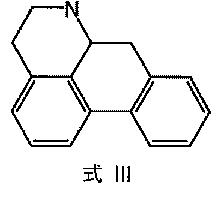
のコア構造を含む酸化還元活性分子を含み、
ここでフェニル環におけるさらなる置換はニトロ基を含まない。
Comprising a redox active molecule comprising the core structure of
Here further substitutions in the phenyl ring do not include nitro groups.
別の実施形態では、フェニル環におけるさらなる置換がニトロ基を含まない式Iの化合物の物理的−化学的プロフィールは、酸化または還元波の電位、この酸化または還元波の可逆性、およびこの酸化または還元波の電流から選択される1つ以上のパラメーターを含む物理的−化学的プロフィールの間の関係によって予め規定される範囲内に規定される;そして以前に試験された化合物のサブセットにおいて、および別の実施形態の細胞アッセイにおいて、試験された細胞のうち少なくとも約20%、好ましくは少なくとも約30%において効力および有効性を有するエネルギー的に適格な細胞をこの化合物が保護する能力を測定するこの生物学的活性は、高グルタミン誘導性酸化的ストレスアッセイおよびEセレクチン(ELAM)アッセイから選択される。 In another embodiment, the physical-chemical profile of the compound of Formula I wherein the further substitution on the phenyl ring does not include a nitro group is the oxidation or reduction wave potential, the reversibility of the oxidation or reduction wave, and the oxidation or reduction Defined within a pre-defined range by a relationship between physical-chemical profiles including one or more parameters selected from the reduction wave current; and in a subset of previously tested compounds and separately The organism measuring the ability of the compound to protect energetically qualified cells having potency and efficacy in at least about 20%, preferably at least about 30% of the cells tested in the cellular assay of Activity is determined by high glutamine-induced oxidative stress assay and E-selectin (ELAM) assay. It is selected from.
別の実施形態では、本発明は、約1000mV以下におさまる第1の酸化の電位のパラメーターを含むその物理的−化学的プロフィールに基づいて;炎症、神経変性または虚血などが挙げられるがこれらに限定されない酸化的ストレスによって特徴付けられる状態を処置するための治療用化合物を同定および選択する方法に関しているが、この治療用化合物は、以下の式I: In another embodiment, the invention is based on its physical-chemical profile including a first oxidation potential parameter that falls below about 1000 mV; including inflammation, neurodegeneration or ischemia, etc. Although related to methods of identifying and selecting therapeutic compounds for treating conditions characterized by non-limiting oxidative stress, the therapeutic compounds are represented by the following formula I:
のコア構造を有し、このフェニル環におけるさらなる置換は、ニトロ基を含まない。 Further substitutions on this phenyl ring do not include a nitro group.
別の実施形態では、本発明は、炎症、神経変性または虚血などが挙げられるがこれらに限定されない酸化的ストレスによって特徴付けられる状態を処置するための治療用化合物を同定する方法に関するが、この治療用化合物は、以下の式I: In another embodiment, the present invention relates to a method for identifying a therapeutic compound for treating a condition characterized by oxidative stress, including but not limited to inflammation, neurodegeneration or ischemia. The therapeutic compounds have the following formula I:
のコア構造を含む酸化還元活性分子を含み、
このフェニル環におけるさらなる置換はニトロ基を含む。
Comprising a redox active molecule comprising the core structure of
Further substitutions on this phenyl ring include nitro groups.
別の実施形態では、フェニル環におけるさらなる置換がニトロ基を含む式Iの化合物の物理的−化学的プロフィールは、酸化または還元波の電位、この酸化または還元波の可逆性、およびこの酸化または還元波の電流から選択される1つ以上のパラメーターを含む物理的−化学的プロフィールの間の関係によって予め規定される範囲内に規定される;そして以前に試験された化合物のサブセットにおいて、および別の実施形態の細胞アッセイにおいて、試験された細胞のうち少なくとも約20%、好ましくは少なくとも約30%において効力および有効性を有するエネルギー的に適格な細胞をこの化合物が保護する能力を測定するこの生物学的活性は、高グルタミン誘導性酸化的ストレスアッセイおよびEセレクチン(ELAM)アッセイから選択される。 In another embodiment, the physical-chemical profile of the compound of Formula I wherein the further substitution on the phenyl ring comprises a nitro group is the oxidation or reduction wave potential, the reversibility of the oxidation or reduction wave, and the oxidation or reduction. Defined within a pre-defined range by a relationship between a physical-chemical profile comprising one or more parameters selected from wave currents; and in a subset of previously tested compounds and The biology of measuring the ability of the compound to protect energetically competent cells having potency and efficacy in at least about 20%, preferably at least about 30% of the cells tested in an embodiment cell assay. Activity is high glutamine-induced oxidative stress assay and E-selectin (ELAM) assay? It is selected.
別の実施形態では、本発明は、以下を含む物理的−化学的プロフィールに基づいて、炎症、神経変性または虚血などが挙げられるがこれらに限定されない酸化的ストレスによって特徴付けられる状態を処置するための、フェニル環におけるさらなる置換がニトロ基を含む式Iのコア構造を有する治療用化合物を同定する方法に関する:
・約950mV〜1250mVにおさまる第1の酸化波の電位についてのパラメーター、および/または
・20%を超えるその測定におさまる第1の酸化波の可逆性についてのパラメーター。
In another embodiment, the present invention treats a condition characterized by oxidative stress, including but not limited to inflammation, neurodegeneration or ischemia, based on a physical-chemical profile including: For the identification of therapeutic compounds having a core structure of formula I, wherein further substitution in the phenyl ring comprises a nitro group:
A parameter for the potential of the first oxidation wave that falls between about 950 mV and 1250 mV, and / or a parameter for the reversibility of the first oxidation wave that falls within its measurement by more than 20%.
別の実施形態では、物理的−化学的プロフィールは、約950mV〜1250mVにおさまる第1の酸化波の電位についてのパラメーターを含む。別の実施形態では、この物理的−化学的プロフィールは、20%を超えて測定する第1の酸化波の可逆性のパラメーターを含む。 In another embodiment, the physical-chemical profile includes a parameter for the potential of the first oxidation wave that falls between about 950 mV and 1250 mV. In another embodiment, the physical-chemical profile includes a reversibility parameter of the first oxidation wave that measures greater than 20%.
別の実施形態では、本発明は、ある化合物および/または治療上受容可能な賦形剤を含む治療用組成物に関するが、この化合物は、スチルベンコア構造に基づいて本明細書に記載される方法によって選択され、そしてその物理的−化学的プロフィールは、
・約800mV〜1500mVにおさまる第1の酸化波の電位についてのパラメーター、および/または
・約20%以上の第1の酸化波の可逆性についてのパラメーター、
を含む。
In another embodiment, the invention relates to a therapeutic composition comprising a compound and / or a therapeutically acceptable excipient, wherein the compound is a method described herein based on a stilbene core structure. And its physical-chemical profile is
A parameter for the potential of the first oxidation wave falling between about 800 mV and 1500 mV, and / or a parameter for the reversibility of the first oxidation wave of about 20% or more,
including.
別の実施形態では、本発明は、以下の式I: In another embodiment, the present invention provides compounds of formula I:
のフェニル基におけるさらなる置換がニトロ基を含むコア構造に基づいて;そしてその物理的−化学的プロフィールであって、約1000mV未満におさまる第1の酸化波の電位についてのパラメーターを含むプロフィールに基づいて、本明細書に記載されるような方法によって選択される、化合物および/または治療上受容可能な賦形剤を含む治療用組成物に関する。 Further substitution in the phenyl group of the nitro group; and based on a profile that includes a parameter for the potential of the first oxidation wave that falls below about 1000 mV, and its physical-chemical profile; Relates to a therapeutic composition comprising a compound and / or a therapeutically acceptable excipient selected by a method as described herein.
別の実施形態では、本発明は、以下の式I: In another embodiment, the present invention provides compounds of formula I:
のフェニル基におけるさらなる置換がニトロ基を含むコア構造に基づいて;
そしてその物理的−化学的プロフィールであって、
・約950mV〜1250mVにおさまる第1の酸化波の電位についてのパラメーター、および/または
・20%を超えて測定する第1の酸化波の可逆性についてのパラメーター、
を含むプロフィールに基づいて;本明細書に記載される方法によって選択される、化合物および/または治療上受容可能な賦形剤を含む治療用組成物に関する。
Further substitution at the phenyl group of
And its physical-chemical profile,
A parameter for the potential of the first oxidation wave falling between about 950 mV and 1250 mV, and / or a parameter for the reversibility of the first oxidation wave measured above 20%,
A therapeutic composition comprising a compound and / or a therapeutically acceptable excipient selected by a method described herein.
別の実施形態では、本発明は、治療化合物の物理的−化学的プロフィールが、酸化の開始、酸化または還元波の電位、この酸化または還元波の可逆性、およびこの酸化または還元波の電流から選択される1つ以上のパラメーターを含む物理的−化学的プロフィールと;約30μM未満、好ましくは約20μM未満の範囲内のEC50でE−セレクチン(ELAM)の発現を化合物が低下させる能力を測定する生物学的活性との間の関係によって予め規定される範囲内で規定される場合、フラボノイドコア構造を有する酸化還元活性分子を含む、酸化的ストレスによって特徴付けられる状態を処置するための治療化合物を同定する方法に関する。別の実施形態では、フラボノイドコアを含む化合物の物理的−化学的プロフィールは、酸化の開始、酸化または還元波の電位、この酸化または還元波の可逆性、およびこの酸化または還元波の電流から選択される1つ以上のパラメーターを含む物理的−化学的プロフィールと;高グルタミン酸誘導性酸化的ストレス(High Glutamate−induced Oxidative Stress)(HGOS)アッセイにおいて試験された細胞のうち少なくとも約30%において効力および有効性を有するエネルギー的に適格な細胞を保護する化合物の能力を測定する生物学的活性との間の関係によって予め規定される範囲内で規定される。 In another embodiment, the invention provides that the physical-chemical profile of the therapeutic compound is derived from the onset of oxidation, the potential of the oxidation or reduction wave, the reversibility of the oxidation or reduction wave, and the current of the oxidation or reduction wave. Measures the ability of a compound to reduce the expression of E-selectin (ELAM) with an EC 50 in the range of less than about 30 μM, preferably less than about 20 μM, including a physical-chemical profile comprising one or more parameters selected A therapeutic compound for treating a condition characterized by oxidative stress comprising a redox-active molecule having a flavonoid core structure, as defined within a range pre-defined by the relationship between the biological activity Relates to a method of identifying In another embodiment, the physical-chemical profile of the compound comprising a flavonoid core is selected from the onset of oxidation, the potential of the oxidation or reduction wave, the reversibility of the oxidation or reduction wave, and the current of the oxidation or reduction wave A physico-chemical profile comprising one or more of the following parameters; potency in at least about 30% of cells tested in a High Glutamate-Induced Oxidative Stress (HGOS) assay and It is defined within a pre-defined range by the relationship between the biological activity measuring the ability of the compound to protect energetically qualified cells with efficacy.
別の実施形態では、本発明は、約1050mV〜1450mVにおさまる第1の酸化波の電位についてのパラメーターを含む物理的−化学的プロフィールに基づいて;神経変性または虚血のような酸化的ストレスによって特徴付けられる状態を処置するためのフラボノイドコア構造を有する治療化合物を同定および選択する方法に関する。 In another embodiment, the invention is based on a physical-chemical profile that includes a parameter for the potential of the first oxidative wave that falls between about 1050 mV and 1450 mV; by oxidative stress such as neurodegeneration or ischemia It relates to a method for identifying and selecting therapeutic compounds having a flavonoid core structure for treating a characterized condition.
別の実施形態では、本発明は、化合物および/または治療上受容可能な賦形剤を含む治療用組成物であって、そのフラボノイド構造および約1050mV〜1450mVにおさまる第1の酸化波の電位についてのパラメーターを含む物理的−化学的プロフィールに基づいて、本明細書に記載のような方法によって選択される化合物および/または治療上受容可能な賦形剤を含む治療用組成物に関する。 In another embodiment, the present invention relates to a therapeutic composition comprising a compound and / or a therapeutically acceptable excipient, the flavonoid structure and the potential of the first oxidation wave falling between about 1050 mV and 1450 mV. It relates to a therapeutic composition comprising a compound selected by a method as described herein and / or a therapeutically acceptable excipient based on a physical-chemical profile comprising the following parameters:
別の実施形態では、本発明は、酸化の開始、酸化または還元波の電位、この酸化または還元波の可逆性、およびこの酸化または還元波の電流から選択される1つ以上のパラメーターを含む物理的−化学的プロフィールに基づいて、炎症によって特徴付けられる状態を処置するための、以下の式II: In another embodiment, the invention provides a physics comprising one or more parameters selected from the onset of oxidation, the potential of the oxidation or reduction wave, the reversibility of the oxidation or reduction wave, and the current of the oxidation or reduction wave. Based on the chemical-chemical profile, the following formula II for treating conditions characterized by inflammation:
の置換基の1つ以上がヒドロキシ基であるフラボノイドコア構造を有する治療用化合物を、これが約850mV〜1050mVの間におさまる酸化の開始についてのパラメーターを含む場合、同定および選択する方法に関する。 It relates to a method for identifying and selecting therapeutic compounds having a flavonoid core structure in which one or more of the substituents is a hydroxy group, if this includes a parameter for the onset of oxidation falling between about 850 mV and 1050 mV.
別の実施形態では、本発明は、置換基のどれもがヒドロキシ基でない式IIのフラボノイドコア構造に基づいて本明細書に記載される方法によって選択される、そしてその物理的−化学的プロフィールが約850mV〜1050mVの間におさまる酸化波の開始についてのパラメーターを含む、化合物および/または治療上受容可能な賦形剤を含む治療用組成物に関する。 In another embodiment, the present invention is selected by the methods described herein based on a flavonoid core structure of formula II in which none of the substituents are hydroxy groups, and the physical-chemical profile is It relates to a therapeutic composition comprising a compound and / or a therapeutically acceptable excipient comprising a parameter for the onset of an oxidative wave that falls between about 850 mV and 1050 mV.
別の実施形態では、本発明は、酸化の開始、酸化または還元波の電位、この酸化または還元波の可逆性、およびこの酸化または還元波の電流から選択される1つ以上のパラメーターを含む物理的−化学的プロフィールに基づいて、炎症によって特徴付けられる状態を処置するための、以下の式II: In another embodiment, the invention provides a physics comprising one or more parameters selected from the onset of oxidation, the potential of the oxidation or reduction wave, the reversibility of the oxidation or reduction wave, and the current of the oxidation or reduction wave. Based on the chemical-chemical profile, the following formula II for treating conditions characterized by inflammation:
の置換基の1つ以上がヒドロキシ基であるフラボノイドコア構造を有する治療用化合物を;これが約350mV〜650mVの間におさまる酸化の開始についてのパラメーターを含む場合、同定および選択する方法に関する。 Relates to a method of identifying and selecting a therapeutic compound having a flavonoid core structure in which one or more of the substituents is a hydroxy group; if this includes a parameter for the onset of oxidation falling between about 350 mV to 650 mV.
別の実施形態では、本発明は、置換基の1つ以上がヒドロキシル基であり、その物理的−化学的プロフィールが約350mV〜650mVにおさまる第1の酸化波の電位についてのパラメーターを含む、式IIのフラボノイドコア構造に基づいて、本明細書に記載のような方法によって選択される、化合物および/または治療上受容可能な賦形剤を含む治療組成物に関する。 In another embodiment, the invention includes a parameter comprising a parameter for the potential of the first oxidation wave where one or more of the substituents is a hydroxyl group and whose physical-chemical profile falls between about 350 mV and 650 mV. It relates to a therapeutic composition comprising a compound and / or a therapeutically acceptable excipient selected by a method as described herein based on the flavonoid core structure of II.
別の実施形態では、本発明は、治療用化合物を同定および選択する迅速かつ有効な方法に関するが、この方法は、酸化の開始、酸化または還元波の電位、この酸化または還元波の可逆性、およびこの酸化または還元波の電流から選択される1つ以上のパラメーターを含む物理的−化学的プロフィールについて;そして目的のアッセイにおける生物学的活性について;以下の式III: In another embodiment, the present invention relates to a rapid and effective method for identifying and selecting therapeutic compounds, the method comprising the initiation of oxidation, the potential of an oxidation or reduction wave, the reversibility of the oxidation or reduction wave, And for a physical-chemical profile comprising one or more parameters selected from the oxidation or reduction wave current; and for biological activity in the assay of interest;
のアポモルフィンコア構造を有する化合物の小さいサブセットをスクリーニングする工程と;物理的−化学的プロフィールと生物学的活性との間の関係を確立する工程と;物理的−化学的特性についてさらなる潜在的な治療用候補物をスクリーニングする工程と;以前に試験された化合物のサブセットの物理的−化学的/生物学的関係によって予め規定された範囲内におさまる物理的−化学的特性に基づいて、治療用分子を選択する工程とを包含する。 Screening a small subset of compounds having an apomorphine core structure; establishing a relationship between physical-chemical profile and biological activity; further potential treatments for physical-chemical properties Screening therapeutic candidates; and therapeutic molecules based on physical-chemical properties that fall within a pre-defined range by physical-chemical / biological relationships of a subset of previously tested compounds Selecting.
別の実施形態では、生物学的アッセイは、神経変性アッセイであり、詳細には生物学的アッセイは、脳における、例えば、アルツハイマー病における、細胞外アミロイド斑および神経細胞内の神経原線維変化の存在によって特徴付けられた進行性の神経変性疾患の処置のために有効な分子を検出できるアミロイドβ原繊維形成アッセイである。別の実施形態では、このアッセイはLashuelら(前出を参照のこと)において記載されたようなチオフラビンTアッセイである。別の実施形態では、このアッセイは高グルタミン酸酸化的ストレス(High Glutamate Oxidative Stress)(HGOS)アッセイである。 In another embodiment, the biological assay is a neurodegenerative assay, particularly a biological assay for extracellular amyloid plaques and neurofibrillary tangles in neurons in the brain, eg, in Alzheimer's disease. An amyloid β fibril formation assay capable of detecting molecules effective for the treatment of progressive neurodegenerative diseases characterized by their presence. In another embodiment, the assay is a thioflavin T assay as described in Lashuel et al. (See above). In another embodiment, the assay is a High Glutamate Oxidative Stress (HGOS) assay.
別の実施形態では、生物学的アッセイは炎症性アッセイである。別の実施形態では、物理的−化学的プロフィールは、酸化波の電位を含む。別の実施形態では、物理的−化学的プロフィールは、還元波の電位を含む。 In another embodiment, the biological assay is an inflammatory assay. In another embodiment, the physical-chemical profile includes an oxidation wave potential. In another embodiment, the physical-chemical profile includes a reduction wave potential.
別の実施形態では、アポモルフィンコアを含む化合物の物理的−化学的プロフィールは、酸化の開始、酸化または還元波の電位、この酸化または還元波の可逆性、およびこの酸化または還元波の電流から選択される1つ以上のパラメーターを含む物理的−化学的プロフィールと;定量的チオフラビンT結合アッセイに基づいてアミロイドβ原繊維形成を約30%未満まで低下させる化合物の能力を測定する生物学的活性との間の関係によって予め規定される範囲内で規定される。別の実施形態では、アポモルフィンコアを含む化合物の物理的−化学的プロフィールは、物理的−化学的プロフィールとELAMにおいて炎症をEC50で約50μM未満、好ましくは約30μM未満の範囲で低下させる化合物の能力を測定する生物学的活性との間の関係によって予め規定される範囲内で規定される。 In another embodiment, the physical-chemical profile of the compound comprising an apomorphine core is selected from the onset of oxidation, the potential of the oxidation or reduction wave, the reversibility of the oxidation or reduction wave, and the current of the oxidation or reduction wave A physical-chemical profile comprising one or more of the following parameters; a biological activity that measures the ability of a compound to reduce amyloid β fibril formation to less than about 30% based on a quantitative thioflavin T binding assay; It is defined within the range defined in advance by the relationship between. In another embodiment, the physical-chemical profile of the compound comprising an apomorphine core is that of the compound that reduces inflammation in the physical-chemical profile and ELAM with an EC 50 of less than about 50 μM, preferably less than about 30 μM. It is defined within a pre-defined range by the relationship between the biological activity measuring ability.
別の実施形態では、本発明は、神経変性状態、詳細にはアミロイドβ原線維形成の阻害によって特徴付けられる状態、例えばアルツハイマー病を処置するためのアポモルフィンコア構造を有する治療用化合物を;約1250mV未満におさまる第1の酸化波の電位についてのパラメーターを含む物理的−化学的プロフィールに基づいて、同定および選択する方法に関する。 In another embodiment, the invention provides a therapeutic compound having an apomorphine core structure for treating a neurodegenerative condition, particularly a condition characterized by inhibition of amyloid β fibril formation, eg, Alzheimer's disease; about 1250 mV It relates to a method for identification and selection based on a physical-chemical profile including parameters for the potential of the first oxidation wave that falls below.
別の実施形態では、本発明は、神経変性状態、詳細にはアミロイドβ原線維形成の阻害によって特徴付けられる状態を処置するためのアポモルフィンコア構造を有する治療用化合物を;約−790mVより負である第1の還元波の電位についてのパラメーターを含む物理的−化学的プロフィールに基づいて、同定および選択する方法に関する。 In another embodiment, the invention provides a therapeutic compound having an apomorphine core structure for treating a neurodegenerative condition, particularly a condition characterized by inhibition of amyloid β fibril formation; more negative than about −790 mV The present invention relates to a method for identification and selection based on a physical-chemical profile including a parameter for a potential of a first reduction wave.
別の実施形態では、本発明は、神経変性状態、詳細にはアミロイドβ原線維形成の阻害によって特徴付けられる状態の処置のための、化合物および/または治療上受容可能な賦形剤を含む治療用組成物に関するが、ここでこの化合物は、そのアポモルフィンコア構造に基づいて本明細書に記載される方法によって選択され、その物理的化学的プロフィールは、約1250mV未満におさまる第1の酸化波の電位についてのパラメーター、および/または約−790mVより負である第1の還元波の電位についてのパラメーターを含む。 In another embodiment, the present invention provides a therapeutic comprising a compound and / or therapeutically acceptable excipient for the treatment of a neurodegenerative condition, particularly a condition characterized by inhibition of amyloid beta fibril formation. Wherein the compound is selected by the method described herein based on its apomorphine core structure, and the physicochemical profile of the first oxidation wave is less than about 1250 mV. A parameter for the potential and / or a parameter for the potential of the first reduction wave that is more negative than about -790 mV.
別の実施形態では、本発明は、治療用化合物を同定および選択する迅速かつ有効な方法に関するが、この方法は、酸化の開始、酸化または還元波の電位、この酸化または還元波の可逆性、およびこの酸化または還元波の電流から選択される1つ以上のパラメーターを含む物理的−化学的プロフィール、およびE−セレクチン(ELAM)の発現をEC50で約50μM未満、好ましくは約30μM未満の範囲で低下させる化合物の能力を測定する生物学的活性について、キノンコア構造を有する化合物の小さいサブセットをスクリーニングする工程と;ならびに以前に試験した化合物のサブセットの物理的−化学的/生物学的関係によって規定された範囲内におさまる物理的−化学的特性に基づいて治療用分子を選択する工程を包含する。 In another embodiment, the present invention relates to a rapid and effective method for identifying and selecting therapeutic compounds, the method comprising the initiation of oxidation, the potential of an oxidation or reduction wave, the reversibility of the oxidation or reduction wave, And a physical-chemical profile comprising one or more parameters selected from the oxidation or reduction wave current, and expression of E-selectin (ELAM) in an EC 50 of less than about 50 μM, preferably less than about 30 μM Screening for a small subset of compounds having a quinone core structure for biological activity measuring the ability of the compound to be reduced by: and as defined by the physical-chemical / biological relationship of the subset of compounds previously tested Selecting a therapeutic molecule based on physical-chemical properties that fall within the specified range.
別の実施形態では、本発明は、酸化的ストレスによって特徴付けられる状態を処置するためのキノンコア構造を有する治療用化合物を、これが約75%以上の還元の総可逆性についてのパラメーターを含む場合、同定および選択する方法に関する。 In another embodiment, the present invention provides a therapeutic compound having a quinone core structure for treating a condition characterized by oxidative stress, when it contains a parameter for total reversibility of reduction of about 75% or more, It relates to a method for identification and selection.
別の実施形態では、本発明は、化合物および/または治療上受容可能な賦形剤を含む酸化的ストレスの処置のための治療用組成物に関するが、この化合物はそのキノンコア、および約75%以上の還元の総可逆性についてのパラメーターを含む物理的−化学的プロフィールに基づいて、本明細書に記載される方法によって選択される。 In another embodiment, the invention relates to a therapeutic composition for the treatment of oxidative stress comprising a compound and / or a therapeutically acceptable excipient, wherein the compound has its quinone core and about 75% or more Selected by the methods described herein based on a physical-chemical profile that includes parameters for the total reversibility of the reduction.
本発明の特定の実施形態では、処置されるべき状態は炎症である。本発明の他の実施形態では、処置されるべき状態は虚血である。本発明の他の実施形態では、処置されるべき状態は神経変性状態である。特定の実施形態では、処置されるべき状態はアルツハイマー病である。 In certain embodiments of the invention, the condition to be treated is inflammation. In other embodiments of the invention, the condition to be treated is ischemia. In other embodiments of the invention, the condition to be treated is a neurodegenerative condition. In certain embodiments, the condition to be treated is Alzheimer's disease.
別の実施形態では、本発明は、以下の式IV: In another embodiment, the present invention provides compounds of formula IV:
のクロマンコア構造を有する酸化還元活性分子を含む、酸化的ストレスによって特徴付けられる状態を処置するための治療用化合物を、その物理的−化学的プロフィールが、酸化の開始、酸化または還元波の電位、この酸化または還元波の可逆性、およびこの酸化または還元波の電流から選択される1つ以上のパラメーターを含む物理的−化学的プロフィールと;以前に試験された化合物のサブセットにおいて試験された細胞のうち少なくとも約20%、好ましくは少なくとも約30%において効力および有効性を有するエネルギー的に適格な細胞を保護する化合物の能力を測定する生物学的活性との間の関係によって予め規定される範囲内で規定される場合、同定する方法に関する。別の実施形態では、式IVのクロマンコア構造を含む化合物の物理的−化学的プロフィールは、酸化の開始、酸化または還元波の電位、この酸化または還元波の可逆性、およびこの酸化または還元波の電流から選択される1つ以上のパラメーターを含む物理的−化学的プロフィールと;高グルタミン酸塩誘導性酸化的ストレス(HGOS)アッセイにおいて試験された細胞のうち少なくとも約30%において効力および有効性を有するエネルギー的に適格な細胞を保護する化合物の能力を測定する生物学的活性との間の関係によって予め規定される範囲内で規定される。 A therapeutic compound for treating a condition characterized by oxidative stress, comprising a redox-active molecule having a chroman core structure of: the onset of oxidation, the potential of an oxidation or reduction wave, A physical-chemical profile comprising the reversibility of the oxidation or reduction wave and one or more parameters selected from the current of the oxidation or reduction wave; and of cells tested in a subset of previously tested compounds Within a range pre-determined by the relationship between the biological activity measuring the ability of the compound to protect energetically competent cells having potency and efficacy in at least about 20%, preferably at least about 30% The method of identification. In another embodiment, the physical-chemical profile of a compound comprising a chroman core structure of formula IV includes the onset of oxidation, the potential of the oxidation or reduction wave, the reversibility of the oxidation or reduction wave, and the oxidation or reduction wave. A physical-chemical profile comprising one or more parameters selected from current; and has potency and efficacy in at least about 30% of cells tested in a high glutamate-induced oxidative stress (HGOS) assay It is defined within a pre-defined range by the relationship between the biological activity measuring the ability of the compound to protect energetically qualified cells.
別の実施形態では、本発明は、約850mV〜1200mVの間におさまる第1の酸化波の電位のパラメーターを含む物理的−化学的プロフィールに基づいて;神経変性または虚血のような酸化的ストレスによって特徴付けられる状態を処置するための、式IVの構造のクロマンコアを有する治療化合物を同定および選択する方法に関する。 In another embodiment, the invention is based on a physico-chemical profile comprising a first oxidative wave potential parameter that falls between about 850 mV and 1200 mV; oxidative stress such as neurodegeneration or ischemia Relates to a method for identifying and selecting therapeutic compounds having a chroman core of the structure of formula IV for treating a condition characterized by:
別の実施形態では、本発明は、式IVのクロマンコア構造、および約850mV〜1200mVにおさまる第1の酸化波の電位についてのパラメーターを含むその物理的−化学的プロフィールに基づいて、本明細書に記載されるような方法によって選択される、化合物および/または治療上受容可能な賦形剤を含む治療用組成物に関する。 In another embodiment, the present invention is based on a chroman core structure of formula IV and its physical-chemical profile comprising parameters for the potential of the first oxidation wave falling between about 850 mV and 1200 mV. It relates to a therapeutic composition comprising a compound and / or a therapeutically acceptable excipient, selected by a method as described.
本発明の特徴、局面および利点は、以下の説明、特許請求の範囲および添付の図面を参照してさらに良好に理解される。 The features, aspects and advantages of the present invention may be better understood with reference to the following description, appended claims and accompanying drawings.
(発明の詳細な説明)
分子と生物学的標的との相互作用は、構造上の認識のみには限定され得ない。他のタイプの相互作用も生じ得、それらのいくつかは1つ以上の変化の交換を含んでもよい。その明白な電気的分布によって、分子は、異なる物理的−化学的プロフィール、特に酸化還元プロフィール、すなわち、変化を生じるかまたは受容する能力の測定、交換された変化の数、プロセスの動態、および変化の付加または置換を伴う引き続く分子機構を示す。種々の電気分析的技術は、物理的−化学的プロフィールを決定するために使用されてもよい。サイクリック・ボルタンメトリーは、上記のパラメーターに対して定量的情報を与える技術である。ある分子の酸化還元プロフィールは、そのサイクリック・ボルタンモグラムによって十分に特徴付けられる。
(Detailed description of the invention)
Interactions between molecules and biological targets cannot be limited to structural recognition alone. Other types of interactions may also occur, some of which may involve the exchange of one or more changes. Due to its unambiguous electrical distribution, the molecule has a different physical-chemical profile, in particular a redox profile, i.e. a measure of the ability to make or accept changes, the number of changes exchanged, the dynamics of the process, and the changes The subsequent molecular mechanism with the addition or substitution of is shown. Various electroanalytical techniques may be used to determine the physical-chemical profile. Cyclic voltammetry is a technique that provides quantitative information for the above parameters. The redox profile of a molecule is well characterized by its cyclic voltammogram.
例えば、シングル・サイクリック・ボルタンメトリー、連続的サイクリック・ボルタンメトリー(電流の組みこみの有無による)、方形波ボルタンメトリー、方形波ストリッピングボルタンメトリー、ACボルタンメトリー、クロモアンペロメトリー(choromoamperometry)、クロノコウロメトリー(chronocoulometry)、クロノポテンチオメトリー(chronopotentiometry)のような、他の特定の電気分析技術も、酸化還元プロフィールを測定するために用いることが可能であり、そして種々の定電圧技術およびガルバノスタティツク(galvanostatic)技術を使用することができる。種々の電気分析技術の説明は、多くのテキストブック、例えば、Monk S,Fundamentals of Electroanalytical Chemistry,Wiley & Sons,New York,156〜175,2001またはBard A.J.ら、Electrochemical Methods,Wiley&Sons,New York,Ch.6.1980に見出すことができる。上述の電気分技術は、本発明の範囲を限定するとみなされるべきではく、単にその例示および代表である。 For example, single cyclic voltammetry, continuous cyclic voltammetry (with or without current incorporation), square wave voltammetry, square wave stripping voltammetry, AC voltammetry, chromoamperometry, chronocholometry ( Other specific electroanalytical techniques, such as chronocoulometry, chronopotentiometry, can also be used to measure the redox profile, and various constant voltage techniques and galvanostatic ( galvanostatic) technology can be used. A description of various electroanalytical techniques can be found in many textbooks such as Monk S, Fundamentals of Electrochemical Chemistry, Wiley & Sons, New York, 156-175, 2001 or Bard A. et al. J. et al. Et al., Electrochemical Methods, Wiley & Sons, New York, Ch. 6. Found in 1980. The electrical distribution techniques described above should not be considered as limiting the scope of the invention, but are merely exemplary and representative.
ある分子の酸化還元特性は、サイクリック・ボルタンメトリーを含む種々の供給源から獲得できるが、ここではこの化合物は、例えば、白金、金またはガラス状炭素電極のような電極で示される電流−電位関係によって特徴付けられる。この技術では、静止電極の電位は、経時的に直線的に変更され、固定電位から開始してさらに還元的または酸化的な電位に動く。1つ以上の電極反応が生じる電位領域が移動した後、線形掃引の方向は逆転されて、このフォワードスキャンの間に形成されているかもしれない中間体および生成物の電極反応が検出され得る。これには、以前のスキャンで生じた電極の移動反応の生成物が電流スキャンにおいて再度プローブできるという利点がある。サイクリック・ボルタンメトリーは、酸化型および還元型の両方が電流−電圧曲線を得るのに必要な時間の間に安定である場合、半反応の正式な電位を測定するための単純かつ直接的な方法である。電流対電位として得られたプロットは、サイクリック・ボルタンモグラムと命名される。サイクリック・ボルタンモグラムは多数の物理的および化学的パラメーターの複雑な時間依存性の関数である。これによってアノードおよびカソードのピーク電位、酸化波のハーフ・ピーク電位、ピーク分離、アノードピークとカソードピークとの間の電位中間についての情報が得られる。酸化還元系が平衡のままである場合のみ、電位スキャン全体が可逆性のボルタンモグラムである。ボルタンモグラムの形状は、電気化学的プロセスの前後のいずれかに連動された化学反応が存在する場合、有意に変更できる。このプロセスの機構、速度および平衡定数は全てが、特定の分子を特徴付けるボルタンモグラムの最終形状においてある役割を果たし得る。サイクリック・ボルタメントリーは、正式な酸化還元電位の決定、電気化学的反応に先行するかまたはそれに続く化学的反応の検出、および電子伝達動態の評価のための強力なツールである。 The redox properties of a molecule can be obtained from a variety of sources, including cyclic voltammetry, where the compound is a current-potential relationship exhibited by electrodes such as platinum, gold or glassy carbon electrodes. Is characterized by In this technique, the potential of the stationary electrode is linearly changed over time, starting with a fixed potential and moving further to a reductive or oxidative potential. After the potential region in which one or more electrode reactions occur is shifted, the direction of the linear sweep can be reversed to detect intermediate and product electrode reactions that may have formed during this forward scan. This has the advantage that the product of the electrode transfer reaction that occurred in the previous scan can be probed again in the current scan. Cyclic voltammetry is a simple and direct method for measuring the formal potential of a half-reaction when both the oxidized and reduced forms are stable during the time required to obtain a current-voltage curve. It is. The plot obtained as current versus potential is termed a cyclic voltammogram. Cyclic voltammograms are complex time-dependent functions of a number of physical and chemical parameters. This provides information about anode and cathode peak potential, oxidation wave half-peak potential, peak separation, and potential intermediate between the anode and cathode peaks. The entire potential scan is a reversible voltammogram only if the redox system remains in equilibrium. The shape of the voltammogram can be changed significantly if there is a chemical reaction linked to either before or after the electrochemical process. The mechanism, rate, and equilibrium constant of this process can all play a role in the final shape of the voltammogram that characterizes a particular molecule. Cyclic voltamentary is a powerful tool for the determination of formal redox potential, detection of chemical reactions preceding or following electrochemical reactions, and evaluation of electron transfer kinetics.
サイクリック・ボルタンモグラムによって、分子が酸化電位によって測定される1つ以上の電子をはじく能力、酸化電流によって測定される変化した電子の相対数、対応する還元電流に対する酸化電流の比によって測定される酸化過程の可逆性、およびスキャン速度の変動を通じて測定される酸化された種の動態;ならびに還元電位によって測定される1つ以上の電極をこの分子が受容する能力、還元電流によって測定される交換された電子の数、対応する酸化電流に対する還元電流の比によって測定される還元過程の可逆性;およびスキャン速度の変動を通じて測定された還元種の安定性に対するデータが得られる。 Cyclic voltammograms allow the molecule to repel one or more electrons as measured by the oxidation potential, the relative number of changed electrons as measured by the oxidation current, and the oxidation as measured by the ratio of the oxidation current to the corresponding reduction current. Oxidized species kinetics measured through process reversibility, and variation in scan rate; and the ability of this molecule to accept one or more electrodes as measured by reduction potential, exchanged as measured by reduction current Data are obtained on the reversibility of the reduction process as measured by the number of electrons, the ratio of the reduction current to the corresponding oxidation current; and the stability of the reduced species measured through variations in scan rate.
方形波ボルタンメトリーは、そのパルスされたボルタメントリー技術に起因する極めて低い検出限界で1つ以上の電子をはじくかまたは受容する分子の能力についての定量的な情報を得る技術である。パルスボルタメントリー技術の主な利点は、充電電流に対してそれらが区別する能力である。結果としてパルス技術は従来のボルタメントリーよりも酸化および還元の電流に対して鋭敏である。方形波ボルタンメトリーによって誘導電流のプロセスについてのピークが得られ、ここではピーク高さは溶液中の種の濃度に直接比例する。これによって、複合分析システムについての解像度が向上して、さらに都合の良い定量が得られる。例えば、O’Cea,J.ら「Theory of Square Wave Voltammetry for Kinetic Systems」Anal.Chem.53(4)、695,1981およびKrause,Jら「Analytical Application of Square Wave Voltammetry」Anal.Chem.41(11),1365,1969を参照のこと。 Square wave voltammetry is a technique that obtains quantitative information about the ability of a molecule to repel or accept one or more electrons with a very low detection limit due to its pulsed voltamentary technique. The main advantage of pulse voltamentary technology is their ability to distinguish against charging current. As a result, the pulse technique is more sensitive to oxidation and reduction currents than conventional voltamentaries. Square wave voltammetry provides a peak for the induced current process, where the peak height is directly proportional to the concentration of the species in solution. This improves the resolution for the complex analysis system and provides a more convenient quantification. For example, O'Cea, J .; "Theory of Square Wave Voltammetry for Kinetic Systems" Anal. Chem. 53 (4), 695, 1981 and Krause, J et al. "Analytical Application of Square Wave Voltammetry" Anal. Chem. 41 (11), 1365, 1969.
測定を行なった場合、ストリッピング方形波ボルタンメトリーを用いることによってさらに高い感度を得ることができるが、ここでは目的の種は、分析を行なう前の電気化学的手段によって作用電極に濃縮される。十分長い濃縮工程を用いれば、物質の濃度は、サンプル溶液においてよりも電極においてかなり高い。電極電位をスキャンする場合、その物質は電極から剥がされ、これによってこのプロセスの発生につれて細胞電流における増大が生じる。線形掃引を上回る方形波ストリッピングボルタメントリーの利点は以下である:
・これはパルスされた波形を組みこみ、これによって同じ分析種の反復された酸化および還元によって感度を増強する;
・これは、純粋に減算的技術であって、これによって分析シグナルを妨害しない酸素のような溶存種に起因する電流を制限する;
・これは迅速な技術であり、瞬間的に得ることができる
・これによって、順電流および逆電流の両方を分析する能力のおかげで動態の情報が得られ、そして正味の電流、反応可逆性についての情報、および電極構造を容易に得ることができる。
When measurements are taken, higher sensitivity can be obtained by using stripping square wave voltammetry, where the species of interest is concentrated on the working electrode by electrochemical means prior to analysis. With a sufficiently long concentration step, the concentration of the substance is much higher at the electrode than in the sample solution. When scanning the electrode potential, the material is stripped from the electrode, which causes an increase in cell current as this process occurs. The advantages of a square wave stripping voltamentary over a linear sweep are:
It incorporates a pulsed waveform, thereby enhancing sensitivity by repeated oxidation and reduction of the same analyte;
This is a purely subtractive technique that limits the current due to dissolved species such as oxygen that does not interfere with the analytical signal;
This is a quick technique and can be obtained instantaneously. This gives kinetic information thanks to the ability to analyze both forward and reverse currents, and about net current, reaction reversibility. Information and electrode structure can be easily obtained.
シグナルを測定するために、例えば、水素発生反応または酸素発生反応のような競合する酸化還元反応は妨害しない電極を利用することが有利である。これは、限定はしないが、白金、金およびガラス状炭素などの、競合する反応に向かう十分に高い過電圧によって特徴付けられる電極を使用することによって得ることができる。作用電極は、任意の形状の固定式または回転式であってもよく、対流による混合があってもよい。この測定は、酸化されるかまたは酸化されない環境、およびプロトン化されたおよびプロトン化されていない環境を含むがこれらに限定されない種々の系において行なうことができる。 To measure the signal, it is advantageous to utilize an electrode that does not interfere with competing redox reactions such as, for example, hydrogen evolution or oxygen evolution. This can be obtained by using electrodes characterized by a sufficiently high overvoltage towards competing reactions, such as, but not limited to, platinum, gold and glassy carbon. The working electrode may be fixed or rotating in any shape, and there may be convective mixing. This measurement can be performed in a variety of systems, including but not limited to oxidized or non-oxidized environments and protonated and non-protonated environments.
本明細書において達成される電極−化学的測定は代表的には、3つの電極システム(作用電極/対極/基準電極)、または可能性としては2つの電極システム(作用電極/対電極)において行なわれる。対電極の面積は代表的には、測定電極の面積よりも大きいかもしれない。 The electrode-chemical measurements achieved herein are typically performed on a three electrode system (working electrode / counter electrode / reference electrode) or possibly two electrode systems (working electrode / counter electrode). It is. The area of the counter electrode may typically be larger than the area of the measurement electrode.
本発明の化合物の酸化還元プロフィールは、実施例1に記載されるようなサイクリック・ボルタンメトリーによって、または実施例2に記載されるような方形波ボルタンメントリーによって測定された。全ての述べられた電位の値は、実施例1および2に記載される銀/塩化銀基準電極に対して述べられる。当業者は、銀/塩化銀電極が、他の基準電極で置き換えられ得ること、およびこのような置き換えによって異なる値が得られ得るが、これは本発明の真の趣旨および範囲から逸脱はしないということを理解する。 The redox profile of the compounds of the invention was measured by cyclic voltammetry as described in Example 1 or by square wave voltammentary as described in Example 2. All stated potential values are stated for the silver / silver chloride reference electrode described in Examples 1 and 2. Those skilled in the art will appreciate that the silver / silver chloride electrode can be replaced with other reference electrodes and that such replacement can yield different values, but this does not depart from the true spirit and scope of the present invention. I understand that.
本発明の物理的−化学的プロフィールは、酸化還元プロフィールおよびその関連の物理的測定値を、必要に応じてエネルギープロフィールおよび/または輸送プロフィールおよびそれらの関連する物理的測定値と組み合わせて含む。 The physical-chemical profile of the present invention includes a redox profile and its associated physical measurements, optionally in combination with an energy profile and / or transport profile and their associated physical measurements.
分子のエネルギープロフィールは、線発光、線吸収および非線形吸収のようなその光学的値から得ることができる。線発光は、最大蛍光の波長λem、すなわち、高エネルギーレベル(LUMO)から低エネルギーレベル(HOMO)の電子の安定化によって放出される放射エネルギーによって;そして/または蛍光Φの量子収量、すなわち高エネルギーレベル(LUMO)から低エネルギーレベル(HOMO)へ電子を安定化する分子の確率によって測定される。線吸収は、最大吸収の波長λmax、すなわち分子の主なエネルギーレベルから最高の確率を有する次の高いエネルギーレベルへの電子の放出に必要なエネルギーの量;および/または分子消衰係数ε、すなわち電子を、それが適切な量のエネルギーを受容したとき、その主なエネルギーレベルから次の高いエネルギーレベルに放出させる分子の確率;および/または吸収の最長の波長λend、すなわち分子の主なエネルギーレベルからの電子の放出に必要な最小エネルギーによって、測定される。分極率Δλpolは、分子の電子雲が外部電磁場によって形成される能力によって測定される。分極率測定は、ソルバトクロミズムによって行なわれ、これによって最大吸収の波長のシフトを溶媒極性の関数として測定する(例えば、オクタノールとDMSOとの間)。 The energy profile of a molecule can be obtained from its optical values such as line emission, line absorption and nonlinear absorption. Line emission depends on the wavelength of maximum fluorescence λ em , ie the radiant energy emitted by stabilization of electrons from high energy level (LUMO) to low energy level (HOMO); and / or the quantum yield of fluorescence Φ, ie high It is measured by the probability of a molecule that stabilizes an electron from an energy level (LUMO) to a low energy level (HOMO). The linear absorption is the wavelength of maximum absorption λ max , ie the amount of energy required for the emission of electrons from the main energy level of the molecule to the next higher energy level with the highest probability; and / or the molecular extinction coefficient ε, That is, the probability of a molecule that releases an electron from its primary energy level to the next higher energy level when it receives an appropriate amount of energy; and / or the longest wavelength of absorption λ end , ie, the primary It is measured by the minimum energy required to emit electrons from the energy level. The polarizability Δλ pol is measured by the ability of a molecular electron cloud to be formed by an external electromagnetic field. Polarizability measurements are made by solvatochromism, which measures the wavelength shift of maximum absorption as a function of solvent polarity (eg, between octanol and DMSO).
分子の輸送プロフィールは、その分配係数、および/または拡散定数、および/または分子量および/または融点から得ることができる。 The transport profile of a molecule can be obtained from its partition coefficient, and / or diffusion constant, and / or molecular weight and / or melting point.
分子の小さいサブセットの物理的−化学的プロフィールと生物学的活性との間の関係を確立するため、このような分子の定量的な物理的パラメーターの全てを特定の生物学的アッセイ値に対してプロットし、そして十分規定された集団については、任意の物理的パラメーターが生物学的活性に関する場合、相関が判明する場合がある。プロットすることは、手動で、またはMicrosoft Excel(登録商標)のような当該分野で周知のコンピュータープログラムの補助によって行なうことができる。 In order to establish a relationship between the physical-chemical profile and biological activity of a small subset of molecules, all of the quantitative physical parameters of such molecules are determined for a particular biological assay value. For plotted and well-defined populations, a correlation may be found if any physical parameter relates to biological activity. The plotting can be done manually or with the aid of computer programs well known in the art such as Microsoft Excel®.
化合物の小さいサブセットの生物学的活性は、目的の標的に関するとみなされた任意のアッセイによって評価することができる。本発明では、これらの化合物のいくつかの生物学的活性は、ストレスに曝された場合の細胞の機能不全の程度を決定するための、当該分野で周知のインビトロモデルを用いて決定された。虚血のインビトロモデルは、例えば、神経細胞培養物を大型の嫌気性の低酸素チャンバ中に入れることおよび脱酸素して定義したイオン性組成物培地で培養培地を交換することによって、インビボ状態を模倣する酸素およびグルコースの剥奪に近似する。神経細胞のグルタミン酸レセプター、特にN−メチル−D−アスパラギン酸(NMDA)レセプターの毒性過剰刺激は、各々が神経変性のカスケードを生じる、低酸素−虚血神経細胞傷害(Choi、D.M.,Neuron,1:623〜634,1988)、反応性酸素種(ROS)の虚血性誘導(Watson、B.D.ら、Ann NY Acad Sci.,59:269〜281,1988)、過剰なカルシウム流入(Grotta、J.C.,Stroke,19:447〜454,1988)、アラキドン酸増大(Siesjo,B.K.J.Cereb.Blood Flow Metab.,1:155〜186,1981)、およびDNAのダメージ(MacManus、J.P.ら、Neurosci.Lett.,164:89〜92,1993)に寄与する。 The biological activity of a small subset of compounds can be assessed by any assay deemed relevant for the target of interest. In the present invention, several biological activities of these compounds have been determined using in vitro models well known in the art to determine the extent of cellular dysfunction when exposed to stress. In vitro models of ischemia can be achieved by, for example, placing a neuronal cell culture in a large anaerobic hypoxic chamber and replacing the culture medium with an ionic composition medium defined as deoxygenated in vivo. Approximate mimicking oxygen and glucose deprivation. Toxic overstimulation of neuronal glutamate receptors, in particular N-methyl-D-aspartate (NMDA) receptors, results in hypoxic-ischemic neuronal injury (Choi, DM ,, each of which results in a cascade of neurodegeneration. Neuron, 1: 623-634, 1988), ischemic induction of reactive oxygen species (ROS) (Watson, BD et al., Ann NY Acad Sci., 59: 269-281, 1988), excessive calcium influx. (Grotta, J.C., Stroke, 19: 447-454, 1988), increased arachidonic acid (Siesjo, BKJ Cereb. Blood Flow Metab., 1: 155-186, 1981), and of DNA Damage (MacManus, JP et al., Neurosci. Lett., 1 64: 89-92, 1993).
酸化的ストレスは、神経変性疾患における主な要因の1つとして見られており、虚血由来の神経細胞傷害に寄与し得る(例えば、Coyle、J,T,ら、Science 262,689〜695,1993;またはBeal M.F,Curr.Opin.Neurobiol.;6,661〜666,1996を参照のこと)。ミトコンドリアの電子伝達鎖(Tan Sら、J.Cell Biol.141,1423〜1432,1998)、モノアミン代謝物(Maher Pら、J.Neurosci.16,6394〜6401,1996)およびアラキドン酸酸化(Li Yら、Neuron 19,453〜463,1997)を含む多くの代謝性プロセスの副産物として生成される、反応性酸素種(ROS)は、酸化的ストレスを受けた神経細胞における細胞死についての主なメディエーターであり得る(Chan P.H.,Role of oxidants in ischemic brain damage;Stroke 27,1124〜1129,1996およびHosler B.A.ら;Curr.Opin.Neurol.9,486〜491,1996)。ROSとの化学的反応による細胞小器官および高分子に対する傷害は、細胞死のアポトーシス性プログラムを開始し得るか(Hosler B.A.ら、を参照のこと(前出)、または壊死をもたらし得る(Choi D.W.Curr.Opin.Neurobiol.8,667〜672,1996)。 Oxidative stress is seen as one of the major factors in neurodegenerative diseases and can contribute to ischemia-derived neuronal cell injury (eg, Coyle, J, T, et al., Science 262, 689-695). 1993; or Beal MF, Curr. Opin. Neurobiol .; 6,661-666, 1996). Mitochondrial electron transport chain (Tan S et al., J. Cell Biol. 141, 1423-1432, 1998), monoamine metabolites (Maher P et al., J. Neurosci. 16, 6394-6401, 1996) and arachidonic acid oxidation (Li Reactive oxygen species (ROS), produced as a by-product of many metabolic processes, including Y et al., Neuron 19, 453-463, 1997), is a major cause of cell death in oxidatively stressed neurons. Can be a mediator (Chan PH, Role of oxidants in ischemic brain damage; Stroke 27, 1124-1129, 1996 and Hosler BA et al .; Curr. Opin. Neurol. 9,486-4. 91, 1996). Damage to organelles and macromolecules by chemical reaction with ROS can initiate an apoptotic program of cell death (see Hosler BA et al., Supra) or can lead to necrosis. (Choi DW Curr. Opin. Neurobiol. 8, 667-672, 1996).
マウスドーパミン作動性ニューロン細胞株は、高グルタミン酸誘導性酸化的ストレス(HGOS)を検査するために有用である。グルタミン酸の細胞毒性効果は、興奮毒性には起因しない。なぜならこの細胞株は、変力性グルタミン酸レセプターを欠くからである。むしろ、ドーパミン作動性細胞のグルタミン酸誘導性毒性は、システイン輸送の阻害に関連し(Murphy T.H,.ら、Neuron 2,1547〜1558,1989)、これが次に細胞内グルタチオン(GSH)レベルの枯渇(Murphy T.H.ら、Neuron 2,1547〜1558,1989)、ニューロン12−リポキシゲナーゼの活性化(Li,Yら(前出)を参照のこと)、ROS産生の増大(Tan Sら、(前出)を参照のこと)および細胞内Ca2+の増大(Li,Yら(前出)を参照のこと)をもたらす。いくつかの分子を、グルタミン酸誘導性ストレスに対してこのような細胞を保護する能力について測定しており、そのアッセイは実施例4に詳細である。
Murine dopaminergic neuron cell lines are useful for testing high glutamate-induced oxidative stress (HGOS). The cytotoxic effect of glutamate is not due to excitotoxicity. This cell line lacks the inotropic glutamate receptor. Rather, glutamate-induced toxicity of dopaminergic cells is associated with inhibition of cysteine transport (Murphy TH, et al.
主な胚性海馬ニューロン細胞は、神経細胞の機能のモデルにおいて有用であることが認識されている。海馬は、一般に中枢神経系(CNS)のニューロンに代表的な十分特徴付けられた特性を有するニューロンの比較的均一な集団の供給源である。海馬における主な細胞タイプである錘体ニューロンは、総ニューロン集団の85%〜90%を占めると見積もられている(BankerおよびGoslin,Culturing Nerve Cells,第二版、1998.The MIT Press,Cambridge,Massachusetts)。海馬はまた、長期の相乗作用のような、シナプス機能における活性依存性の変化についての顕著な能力を示す(Hawkins RD、kandel ER、Siegelbaum SA.Learning to modulate transmitter release:themes and variations in synaptic plasticity[review],Ann.Rev.Neurosci.,16,625〜665,1993)。 Major embryonic hippocampal neuronal cells are recognized to be useful in models of neuronal function. The hippocampus is a source of a relatively uniform population of neurons that have well-characterized characteristics that are typically representative of central nervous system (CNS) neurons. The main cell type in the hippocampus, the pyramidal neurons, is estimated to account for 85% to 90% of the total neuronal population (Banker and Goslin, Cultured Nerve Cells, 2nd edition, 1998. The MIT Press, Cambridge). , Massachusetts). The hippocampus also shows significant ability for activity-dependent changes in synaptic function, such as long-term synergism (Hawkins RD, Kandel ER, Siegelbaum SA. Learning to modulate transmitter release: themes and variations in it review], Ann. Rev. Neurosci., 16, 625-665, 1993).
エネルギー的に適格な細胞を保護する能力を測定する海馬ニューロンの主な培養物を用いて、ニューロンの保護における活性について化合物を試験した。低酸素を含む1つ以上の標準的ストレッサーに対して細胞を保護する能力について、いくつかの分子を測定して、そのアッセイを実施例3に詳細に示す。 Compounds were tested for activity in protecting neurons using primary cultures of hippocampal neurons that measure their ability to protect energetically qualified cells. Several molecules were measured for their ability to protect cells against one or more standard stressors, including hypoxia, and the assay is detailed in Example 3.
本発明の目的のためには、当該分野で周知の他のインビトロの細胞ベースのアッセイ、例えば、炎症アッセイ、例えば、e−セレクチン(内皮白血球接着分子またはELAMとも呼ばれる)またはC反応性タンパク質(CRP)、または筋細胞カルシウム収縮性アッセイ、またはインビボアッセイ、例えば脳虚血アッセイのラット中大脳動脈閉塞(MCAO)モデル、ラット脚浮腫アッセイまたは局所アラキドン酸アッセイに対するマウス耳炎症応答または皮膚保護アッセイも用いることができる。規定の障害を標的する化合物の活性を確立するためにどのアッセイが用いられるかを当業者は容易に決定することができる。上述のアッセイは、本発明の範囲を限定すると解釈されるべきではなく、単にその例示および代表である。 For purposes of the present invention, other in vitro cell-based assays well known in the art, such as inflammation assays, such as e-selectin (also called endothelial leukocyte adhesion molecule or ELAM) or C-reactive protein (CRP) ), Or a myocyte calcium contractility assay, or an in vivo assay, such as a rat middle cerebral artery occlusion (MCAO) model of a cerebral ischemia assay, a rat leg edema assay or a mouse ear inflammatory response or skin protection assay against a local arachidonic acid assay be able to. One skilled in the art can readily determine which assay is used to establish the activity of a compound that targets a defined disorder. The assays described above should not be construed as limiting the scope of the invention, but are merely exemplary and representative.
本発明はまた、酸化的ストレスによって特徴付けられる状態を処置するための組成物に関するが、ここでこのような組成物は、本明細書に記載されるように、酸化電位、酸化的可逆性、還元電位およびエネルギー的に適格な細胞を保護する能力によって特徴付けられる酸化還元活性分子を含み、この分子は本発明の方法によって同定される。酸化的ストレスに関連する疾患、障害または症候群としては、虚血後の再灌流障害、心筋炎、心筋症、急性心内膜炎、心外膜炎、うっ血性心不全、糖尿病の炎症性合併症、筋萎縮性側索硬化症、神経変性疾患、例えば、アルツハイマー病および痴呆、自己免疫疾患、シェーグレン症候群、網膜酸化障害、網膜症、クローン病、潰瘍性大腸炎、血管形成、腹膜の障害、骨盤腔および胸膜腔、成人呼吸窮迫症候群(ARDS)、肺障害、気管支過敏症、慢性閉塞性肺疾患(COPD)および本明細書に記載のような炎症状態が挙げられるがこれらに限定されない。 The present invention also relates to a composition for treating a condition characterized by oxidative stress, wherein such composition comprises an oxidation potential, oxidative reversibility, as described herein, It includes a redox-active molecule characterized by a reduction potential and the ability to protect energetically eligible cells, which molecule is identified by the methods of the invention. Diseases, disorders or syndromes associated with oxidative stress include post-ischemic reperfusion injury, myocarditis, cardiomyopathy, acute endocarditis, epicarditis, congestive heart failure, inflammatory complications of diabetes, Amyotrophic lateral sclerosis, neurodegenerative diseases such as Alzheimer's disease and dementia, autoimmune diseases, Sjogren's syndrome, retinal oxidative disorder, retinopathy, Crohn's disease, ulcerative colitis, angiogenesis, peritoneal disorder, pelvic cavity And pleural cavity, adult respiratory distress syndrome (ARDS), lung disorders, bronchial hypersensitivity, chronic obstructive pulmonary disease (COPD) and inflammatory conditions as described herein, but are not limited thereto.
本明細書において用いる場合、「炎症(inflammation)」または「炎症状態(inflammation conditions)」としては、筋疲労、自己免疫疾患、例えば、全身性エリテマトーデス、関節リウマチ、変形性関節炎、炎症性腸疾患、自己免疫性糖尿病、皮膚炎症、例えばアトピー性皮膚炎、接触性皮膚炎、アレルギー性皮膚炎、乾燥症、湿疹、酒さ、脂漏症、乾癬、火傷および放射線やけど、座瘡、油性肌、皺、過剰なセルライト、過剰な細孔サイズ、真性皮膚加齢、光による加齢、光による傷害、有害なUV障害、角化異常、脱毛症、色素脱落、創傷に起因する炎症、瘢痕または妊娠線、弾性の消失、皮膚萎縮症および歯肉炎が挙げられるがこれらに限定されない。 As used herein, “inflamation” or “inflammation conditions” includes muscle fatigue, autoimmune diseases such as systemic lupus erythematosus, rheumatoid arthritis, osteoarthritis, inflammatory bowel disease, Autoimmune diabetes, skin inflammation, eg atopic dermatitis, contact dermatitis, allergic dermatitis, dryness, eczema, rosacea, seborrhea, psoriasis, burns and radiation burns, acne, oily skin, wrinkles , Excessive cellulite, excessive pore size, true skin aging, light aging, light injury, harmful UV damage, keratosis abnormalities, alopecia, depigmentation, inflammation caused by wounds, scars or pregnancy lines Loss of elasticity, skin atrophy and gingivitis, but are not limited to these.
本明細書において用いる場合、「虚血(ischemia)」としては、心停止、低酸素、一過性虚血性発作、脳卒中または重篤な低血圧から生じる中枢神経系虚血;ある程度の脳障害を生じ得る脳卒中を含む脳虚血;虚血性心疾患(心筋虚血);脊髄虚血および対麻痺;加齢性黄斑変性症(ARMD)を含む網膜虚血;腎虚血;皮膚虚血;陰茎虚血;肺虚血;胃の虚血;腸の虚血;脾臓虚血;膵臓虚血;骨格筋虚血;および糖尿病性潰瘍に関連する虚血、壊疽性状態、外傷後症候群、良性前立腺肥大(BPH)、後前立腺癌手術、心停止救急蘇生、末梢神経障害または神経障害が挙げられるがこれらに限定されない。 As used herein, “ischemia” includes central nervous system ischemia resulting from cardiac arrest, hypoxia, transient ischemic stroke, stroke or severe hypotension; Cerebral ischemia, including possible stroke; ischemic heart disease (myocardial ischemia); spinal cord ischemia and paraplegia; retinal ischemia including age-related macular degeneration (ARMD); renal ischemia; skin ischemia; Ischemia, gangrene status, posttraumatic syndrome, benign prostatic hypertrophy associated with diabetic ulcers; blood; pulmonary ischemia; gastric ischemia; intestinal ischemia; splenic ischemia; pancreatic ischemia; (BPH), post prostate cancer surgery, cardiac arrest emergency resuscitation, peripheral neuropathy or neuropathy.
本明細書において用いる場合、「神経変性疾患もしくは障害、または神経変性(neurodegenerative diseases or disorders,or neurodegeneration)」とは、ニューロンの損失によって特徴付けられる疾患または障害をいい、そして炎症性過程を含んでも含まなくてもよい。神経変性疾患または障害としては、脳卒中、頭部外傷、脳虚血、脊髄損傷、てんかん、老人性痴呆症、アルツハイマー病、筋萎縮性側索硬化症(ALS)、脳のアミロイド・アンギオパチー、HIV関連痴呆、パーキンソン病、フリードライヒ失調症または他の変性失調症、アミロイドーシス、レーバー遺伝性視神経障害(LHON)、ハンチントン病、プリオン病、重症筋無力症、ダウン症、クロイツフェルトヤコブ病などのプリオン病、テイ・サックス病、糖尿病性神経障害、神経因性疼痛、脳炎、髄膜炎およびデュシェンヌ型筋ジストロフィーが挙げられる。 As used herein, “neurodegenerative diseases or disorders, or neurodegeneration” refers to a disease or disorder characterized by neuronal loss, and includes inflammatory processes. It does not have to be included. Neurodegenerative diseases or disorders include stroke, head injury, cerebral ischemia, spinal cord injury, epilepsy, senile dementia, Alzheimer's disease, amyotrophic lateral sclerosis (ALS), brain amyloid angiopathy, HIV-related Prion diseases such as dementia, Parkinson's disease, Friedreich's ataxia or other degenerative ataxia, amyloidosis, Leber hereditary optic neuropathy (LHON), Huntington's disease, prion disease, myasthenia gravis, Down's syndrome, Creutzfeldt-Jakob disease • Sax disease, diabetic neuropathy, neuropathic pain, encephalitis, meningitis and Duchenne muscular dystrophy.
本明細書において用いる場合、「物理的−化学的プロフィール(physical−chemical profile)」としては、本明細書に規定されるように、必要に応じて、エネルギープロフィールおよび/または輸送プロフィールと組み合わせて、酸化の開始、酸化または還元波の電位、この酸化または還元波の可逆性、およびこの酸化または還元波の電流から選択される1つ以上のパラメーターを含む酸化還元プロフィールが挙げられるがこれらに限定されない。 As used herein, a “physical-chemical profile”, as defined herein, optionally in combination with an energy profile and / or a transport profile, A redox profile including, but not limited to, one or more parameters selected from the onset of oxidation, the potential of the oxidation or reduction wave, the reversibility of the oxidation or reduction wave, and the current of the oxidation or reduction wave. .
本明細書において用いる場合、「酸化の開始(onset of oxidation)」とは、電流が最大電流の1%である電位を意味する。 As used herein, “onset of oxidation” means a potential at which the current is 1% of the maximum current.
本明細書において用いる場合、「プロフィール(profile)」とは、1つ以上のパラメーターまたは測定値を含む。 As used herein, a “profile” includes one or more parameters or measurements.
本明細書において用いる場合、「酸化還元パラメーター(redox parameter)」または「酸化還元特性(redox property)」または「酸化還元(redox)」とは、測定され得る酸化還元過程に関する量、例えば電位、電流、可逆性を意味する。 As used herein, “redox parameters” or “redox properties” or “redox” refers to a quantity relating to a redox process that can be measured, eg, potential, current, Means reversible.
本明細書において用いる場合、「可逆性(reversibility)」とは、反応動態の測定を意味する。これは、以下のパラメーターの1つ以上によってモニターされ得る:アノードピークおよびカソードピークのピーク電流の比、ピークの幅の半分、および/またはピークの分離。本明細書に記載される「酸化波の可逆性(reversibility of oxidation wave)」は、還元波の対応する電流ピークに対する酸化波の電流ピークの比、または2つ以上の波の場合は、再酸素化波の電流ピークの数学的加算を超える還元波の電流ピークの数学的加算の比によって測定される。 As used herein, “reversibility” means measurement of reaction kinetics. This can be monitored by one or more of the following parameters: the ratio of the peak current of the anode peak and the cathode peak, half the width of the peak, and / or the separation of the peaks. As described herein, “reversibility of oxidation wave” is the ratio of the current peak of the oxidation wave to the corresponding current peak of the reduction wave, or, in the case of two or more waves, reoxygenation. Measured by the ratio of the mathematical addition of the reduction wave current peaks over the mathematical addition of the wave current peaks.
本明細書において用いる場合、「治療上有効な量(therapeutically effective amount)」とは、目的の症状を軽減または緩和するのに有効な化合物または組成物の量を意味する。 As used herein, “therapeutically effective amount” means the amount of a compound or composition effective to reduce or alleviate the desired symptoms.
本明細書において用いる場合、「処置(treatment)」または「処置する(treating)」とは、症状、疾患または障害、すなわち疾患の臨床的症状が発症することに対する予防または保護;疾患の阻害、すなわち、臨床症状の発生を停止または抑制すること;および/または疾患を軽減すること、すなわち臨床症状の退行を生じることを含む、哺乳動物における症状、疾患または障害の任意の処置を意味する。 As used herein, “treatment” or “treating” means prevention or protection against the onset of a symptom, disease or disorder, ie, the clinical manifestation of the disease; Means any treatment of a symptom, disease or disorder in a mammal, including stopping or suppressing the development of clinical symptoms; and / or alleviating the disease, ie, causing regression of clinical symptoms.
本明細書において用いる場合、「フラボノイドコア構造(flavonoid core structure)」とは、以下の構造: As used herein, “flavonoid core structure” refers to the following structure:
の骨格である。 The skeleton.
このグループ内のいくつかの例は、ケルセチン、ルテオリン、ヘスペレチン、8−アセチルケルセチン、6,8−ジブロモ−ケルセチン、アントシアニジン、および8−(2−ヒドロキシ)−エチルケルセチンである。 Some examples within this group are quercetin, luteolin, hesperetin, 8-acetylquercetin, 6,8-dibromo-quercetin, anthocyanidin, and 8- (2-hydroxy) -ethylquercetin.
本明細書において用いる場合、「キノンコア(quinone core)」とは、シクロヘキサジエン−ジオン部分を含む骨格である。「キノンコア」という用語は、限定はしないが、o−キノン骨格、p−キノン骨格、ナフトキン骨格およびアントラキノン骨格を包含する。 As used herein, a “quinone core” is a skeleton that includes a cyclohexadiene-dione moiety. The term “quinone core” includes, but is not limited to, o-quinone skeleton, p-quinone skeleton, naphthoquinone skeleton and anthraquinone skeleton.
本明細書において用いる場合、「スチルベンコア(stilbene core)」は、以下の構造の骨格である: As used herein, a “stilbene core” is a skeleton with the following structure:
「スチルベンコア(stilbene core)」という用語は、シスおよびトランス(またはZおよびE)の単一の異性体、ならびに異性体の混合物を含む。 The term “stilbene core” includes single isomers of cis and trans (or Z and E), as well as mixtures of isomers.
本明細書において用いる場合、「障害(disorder)」とは、任意の疾患、状態、症状または徴候を意味する。 As used herein, “disorder” means any disease, condition, symptom, or indication.
本発明において利用される薬学的組成物は、経口、静脈、筋肉内、動脈内、髄内、くも膜下腔内、脳室内、経皮、皮下、腹腔内、経鼻、腸内、局所、舌下または直腸の手段が挙げられるがこれらに限定されない多数の経路によって投与され得る。活性成分に加えて、これらの薬学的組成物は、薬学的に、治療上、または栄養補助的に用いられ得る調製物への活性化合物の処理を促進する賦形剤および補助剤を含む適切な治療上受容可能なキャリアを含んでもよい。処方および投与のための技術のさらなる詳細は、全体が参考として本明細書に援用されるRemington’s Pharmaceutical Sciences(Mack Publishing Co.,Easton,Pa)の最終版に見出すことができる。 The pharmaceutical composition utilized in the present invention is oral, intravenous, intramuscular, intraarterial, intramedullary, intrathecal, intraventricular, transdermal, subcutaneous, intraperitoneal, nasal, enteral, topical, tongue It can be administered by a number of routes including, but not limited to, inferior or rectal means. In addition to the active ingredient, these pharmaceutical compositions are suitable containing excipients and adjuvants that facilitate the processing of the active compound into preparations that can be used pharmaceutically, therapeutically or nutritionally. A therapeutically acceptable carrier may also be included. Further details of techniques for formulation and administration can be found in the final edition of Remington's Pharmaceutical Sciences (Mack Publishing Co., Easton, Pa.), Which is incorporated herein by reference in its entirety.
本発明における使用に適切な薬学的組成物は、意図される目的を達成するために活性成分が有効量で含まれている組成物を包含する。有効な用量の決定は、十分に当業者の能力の範囲内である。任意の化合物について、治療上有効な用量は、細胞培養アッセイ(例えばニューロン細胞)において、または動物モデル(通常マウスまたはラット)において最初に評価され得る。動物モデルはまた、適切な濃度範囲および投与経路を決定するためにも用いられ得る。次いで、このような情報を用いて有用な用量および投与経路を決定することができる。 Pharmaceutical compositions suitable for use in the present invention include compositions that contain an effective amount of the active ingredient to achieve its intended purpose. The determination of an effective dose is well within the ability of those skilled in the art. For any compound, the therapeutically effective dose can be estimated initially either in cell culture assays (eg, neuronal cells) or in animal models (usually mice or rats). The animal model can also be used to determine the appropriate concentration range and route of administration. Such information can then be used to determine useful doses and routes for administration.
正確な投薬量は、処置を必要とする被験体に関する要因を参照して医師によって決定される。投薬量および投与は、十分なレベルの活性部分を提供するように、または所望の効果を維持するように調節される。考慮され得る因子としては、疾患状態の重篤度、全身的健康状態または被験体の年齢、体重および被験体の性別、食餌、投与の時間および頻度、薬物の組み合わせ、反応感度、および治療に対する耐性/応答が挙げられる。 The exact dosage will be determined by the practitioner, with reference to factors related to the subject that requires treatment. Dosage amount and administration are adjusted to provide a sufficient level of the active moiety or to maintain the desired effect. Factors that may be considered include severity of disease state, general health or subject age, weight and subject sex, diet, time and frequency of administration, drug combination, response sensitivity, and resistance to treatment / Response.
本発明の組成物の投与は、類似の有用性を担う因子についての投与の任意の受容される方式を介してであってもよい。 Administration of the compositions of the present invention may be via any accepted mode of administration for factors responsible for similar utility.
ヒト投薬量レベルは本発明の化合物についてまだ最適化されなければならないが、一般には、1日用量は、体重あたり約0.01〜15.0mg/kg、好ましくは体重あたり約0.1〜7.5mg/kg、そして最も好ましくは体重あたり約0.3〜1.5mg/kgである。従って、70kgの人に対する投与のためには、投薬範囲は、1日あたり約0.7〜1,000mg、好ましくは1日あたり約7.0〜500mg、そして最も好ましくは1日あたり約21〜100mgである。投与される活性化合物の量は、当然ながら、処置されている被験体および疾患状態、苦痛の重篤度、投与の様式およびスケジュール、ならびに処方する医師の判断に依存する。 Although human dosage levels must still be optimized for the compounds of the present invention, in general, the daily dose is about 0.01 to 15.0 mg / kg per body weight, preferably about 0.1 to 7 per body weight 0.5 mg / kg, and most preferably about 0.3-1.5 mg / kg per body weight. Thus, for administration to a 70 kg person, the dosage range is about 0.7-1,000 mg per day, preferably about 7.0-500 mg per day, and most preferably about 21-1,000 per day. 100 mg. The amount of active compound administered will, of course, be dependent on the subject being treated and the disease state, the severity of the affliction, the manner and schedule of administration and the judgment of the prescribing physician.
本発明の組成物は、炎症応答の低下が所望される任意の皮膚治療適用において使用され得る。例えば、本発明の組成物は、つけたままのそして洗い流せる座瘡調製物、顔用乳液、およびコンディショナー、シャワージェル、発泡および非発泡顔用クレンザー、化粧品、ハンドローションおよびボディローション、つけたままの保湿剤、化粧品および拭き取り布、ツタウルシ、水痘、掻痒用の軟膏などに組み込んでもよい。一般的には、経皮適用のためには、局所投与が好ましい;しかし、本明細書のいずれかに記載されるとおり全身投与も可能である。 The compositions of the present invention can be used in any skin treatment application where a reduced inflammatory response is desired. For example, the compositions of the present invention can be applied on and washed off acne preparations, facial emulsions and conditioners, shower gels, foam and non-foam facial cleansers, cosmetics, hand lotions and body lotions, leave on It may be incorporated into moisturizers, cosmetics and wipes, poison ivy, chickenpox, pruritic ointments and the like. In general, topical administration is preferred for transdermal applications; however, systemic administration is possible as described elsewhere herein.
上記の状態の処置のために本発明の組成物を使用することにおいて、投与の任意の治療上受容可能な様式を用いてもよい。酸化還元活性の分子は、単独で、または他の治療上受容可能な賦形剤と組み合わせて投与されてもよく、これには、固体、半固体、液体またはエアロゾル投薬形態、例えば、錠剤、カプセル、粉末、液体、懸濁液、坐剤、エアロゾルなどが挙げられる。組成物はまた、所定の速度の化合物の延長した投与のために、デポ注射物、浸透圧ポンプ、丸剤、経皮(電気的輸送を含む)パッチなどを含む、徐放性または制御放出の投薬形態で、好ましくは正確な投薬の単回投与のために適切な単位投薬形態で、投与されてもよい。組成物は代表的には、従来の薬学的キャリアまたは賦形剤、および酸化還元活性分子を含む。さらに、これらの組成物は、他の医学的因子、薬学的因子、キャリア、アジュバントなどを含んでもよく、これには限定はしないが、抗凝固剤、血栓溶解剤、透過性増強剤および徐放性処方物が挙げられる。 In using the compositions of the present invention for the treatment of the above conditions, any therapeutically acceptable mode of administration may be used. The redox-active molecule may be administered alone or in combination with other therapeutically acceptable excipients, including solid, semi-solid, liquid or aerosol dosage forms such as tablets, capsules , Powder, liquid, suspension, suppository, aerosol and the like. The compositions also include sustained or controlled release, including depot injections, osmotic pumps, pills, transdermal (including electrotransport) patches, etc., for extended administration of a compound at a given rate. It may be administered in dosage forms, preferably in unit dosage forms suitable for single administration of precise dosages. The composition typically comprises a conventional pharmaceutical carrier or excipient and a redox active molecule. In addition, these compositions may include other medical factors, pharmaceutical factors, carriers, adjuvants, and the like, including but not limited to anticoagulants, thrombolytic agents, permeability enhancers and sustained release. Sex formulations.
一般には、意図される投与様式に依存して、治療上受容可能な組成物は、約0.1重量%〜90重量%、好ましくは約0.5重量%〜50重量%の酸化還元活性分子を含み、その残りは適切な薬学的賦形剤、キャリアなどである。 In general, depending on the intended mode of administration, a therapeutically acceptable composition will comprise from about 0.1% to 90%, preferably from about 0.5% to 50% by weight of the redox active molecule. With the remainder being suitable pharmaceutical excipients, carriers, and the like.
上記に詳細に示した状態のための好ましい投与様式の1つは経口であり、苦痛の程度に従って調節され得る従来の1日投薬レジメンを用いる。このような経口投与のためには、任意の正常に使用される賦形剤、例えば、マンニトール、ラクトース、デンプン、ステアリン酸マグネシウム、サッカリンナトリウム、滑石材、セルロース、クロスカルメロースナトリウム、グルコース、ゼラチン、スクロース、炭酸マグネシウムなどの組みこみによって、治療上受容可能な非毒性組成物が形成される。このような組成物は、溶液、懸濁物、錠剤、分散性錠剤、丸剤、カプセル、粉末、徐放性処方物などの形態をとる。 One preferred mode of administration for the conditions detailed above is oral, using a conventional daily dosing regimen that can be adjusted according to the degree of affliction. For such oral administration, any commonly used excipient such as mannitol, lactose, starch, magnesium stearate, sodium saccharine, talc, cellulose, croscarmellose sodium, glucose, gelatin, sucrose Incorporation of magnesium carbonate or the like forms a therapeutically acceptable non-toxic composition. Such compositions take the form of solutions, suspensions, tablets, dispersible tablets, pills, capsules, powders, sustained release formulations and the like.
好ましくは、この組成物は、丸剤または錠剤の形態をとり、従ってこの組成物は、活性成分とともに、ラクトース、スクロース、リン酸二カルシウムなどのような希釈剤;ステアリン酸マグネシウムなどのような潤滑剤;ならびにデンプン、アラビアゴム、ポリビニルピロリドン、ゼラチン、セルロースおよびその誘導体のような結合剤、などを含む。 Preferably, the composition takes the form of a pill or tablet, so that the composition, together with the active ingredient, is a diluent such as lactose, sucrose, dicalcium phosphate, etc .; a lubricant such as magnesium stearate, etc. Agents; and binders such as starch, gum arabic, polyvinylpyrrolidone, gelatin, cellulose and derivatives thereof, and the like.
液体の治療上投与可能な組成物は、キャリア、例えば水、生理食塩水、デキストロース水溶液、グリセロール、グリコール、エタノールなどの中で、酸化還元活性化合物および必要に応じて薬学的補助剤を、例えば、溶解、分散などを行い、これによって溶液または懸濁液を形成することによって調製され得る。所望される場合、投与されるべき薬学的組成物はまた、わずかな量の非毒性補助物質、例えば、湿潤剤、乳化剤または可溶化剤、pH緩衝剤など、例えば、酢酸ナトリウム、クエン酸ナトリウム、シクロデキストリン誘導体、ソルビタンモノラウレート、酢酸トリエタノールアミン、オレイン酸トリエタノールアミンなどを含んでもよい。このような投薬形態を調製する実際の方法は、公知であるか、または当業者には明白である;例えば、Remington’s Pharmaceutical Sciences,Mack Publishing Company,Easton,Pennsylvania,第15版、1975を参照のこと。投与されるべき組成物または処方物は、いずれにせよ、処置されるべき被験体の症状を緩和するのに有効な量の活性化合物を含む。 Liquid therapeutically administrable compositions comprise a redox-active compound and optionally a pharmaceutical adjunct in a carrier such as water, saline, aqueous dextrose, glycerol, glycol, ethanol, etc. It can be prepared by dissolving, dispersing, etc., thereby forming a solution or suspension. If desired, the pharmaceutical composition to be administered can also contain minor amounts of non-toxic auxiliary substances such as wetting agents, emulsifying or solubilizing agents, pH buffering agents such as sodium acetate, sodium citrate, Cyclodextrin derivatives, sorbitan monolaurate, triethanolamine acetate, triethanolamine oleate and the like may also be included. Actual methods of preparing such dosage forms are known or will be apparent to those skilled in the art; see, for example, Remington's Pharmaceutical Sciences, Mack Publishing Company, Easton, Pennsylvania, 15th Edition, 1975. That. The composition or formulation to be administered will, in any event, contain an amount of the active compound effective to alleviate the symptoms of the subject to be treated.
非毒性のキャリアで平衡にして活性成分を0.005%〜95%の範囲で含む投与形態または組成物を調製し得る。 Dosage forms or compositions containing active ingredient in the range of 0.005% to 95% can be prepared by equilibration with a nontoxic carrier.
経口投与のために、正常に使用される任意の賦形剤、例えば、製薬等級のマンニトール、ラクトース、デンプン、ステアリン酸マグネシウム、滑石材、セルロース誘導体、クロスカルメロースナトリウム、グルコース、スクロース、炭酸マグネシウム、サッカリンナトリウム、滑石材などの組み合わせによって、治療上受容可能な非毒性組成物が形成される。このような組成物は、溶液、懸濁液、錠剤、カプセル、粉末、徐放性処方物などの形態をとる。このような組成物は、0.01%〜95%の活性成分、好ましくは0.1〜50%を含み得る。 For oral administration, any commonly used excipient such as pharmaceutical grade mannitol, lactose, starch, magnesium stearate, talc, cellulose derivatives, croscarmellose sodium, glucose, sucrose, magnesium carbonate, A combination of sodium saccharin, talc, etc. forms a therapeutically acceptable non-toxic composition. Such compositions take the form of solutions, suspensions, tablets, capsules, powders, sustained release formulations and the like. Such compositions may contain 0.01% to 95% active ingredient, preferably 0.1 to 50%.
固体投薬形態のためには、溶液または懸濁液、例えば、プロピレン・カーボネート、植物油またはトリグリセリドが好ましくはゼラチンカプセル中にカプセル化される。このようなジエステル溶液、ならびにその調製およびカプセル化は、米国特許第4,328,245号;同第4,409,239号および同第4,410,545号に開示される。液体投薬形態については、例えば、ポリエチレングリコール中の溶液は、投与のために容易に測定されるように、十分な量の治療上受容可能な液体キャリア、例えば、水で希釈してもよい。 For solid dosage forms, solutions or suspensions such as propylene carbonate, vegetable oils or triglycerides are preferably encapsulated in gelatin capsules. Such diester solutions, and their preparation and encapsulation are disclosed in U.S. Pat. Nos. 4,328,245; 4,409,239 and 4,410,545. For liquid dosage forms, for example, a solution in polyethylene glycol may be diluted with a sufficient amount of a therapeutically acceptable liquid carrier, such as water, as readily determined for administration.
あるいは、液体または半固体の経口処方物は、植物油、グリコール、トリグリセリド、プロピレングリコールエステル(例えば、プロピレン・カーボネート)などに酸化還元活性化合物を溶解または分散することによって、そしてこれらの溶液または懸濁液を硬性または軟性のゼラチンカプセルシェルにカプセル化することによって調製できる。 Alternatively, liquid or semi-solid oral formulations are prepared by dissolving or dispersing redox-active compounds in vegetable oils, glycols, triglycerides, propylene glycol esters (eg, propylene carbonate) and the like and solutions or suspensions thereof. Can be prepared by encapsulating in a hard or soft gelatin capsule shell.
他の有用な処方物としては、米国再発行特許第28,819号および米国特許第4,358,603号に記載される処方物が挙げられる。 Other useful formulations include those described in US Reissue Pat. No. 28,819 and US Pat. No. 4,358,603.
処方物は、連続的処置のための1回単位の投薬形態で、または症状の救済が特に必要である場合、1回単位の投薬形態で随意に投与できる。例えば、この処方物は、発作、心筋梗塞または慢性心不全の症状の発症後に、ボーラスとして投与されても、または連続静脈内注入として投与されてもよい。 The formulation can optionally be administered in a single unit dosage form for continuous treatment, or where a symptom relief is particularly needed. For example, the formulation may be administered as a bolus or as a continuous intravenous infusion after the onset of symptoms of stroke, myocardial infarction or chronic heart failure.
非経口投与は一般に、皮下、筋肉内または静脈内のいずれかの注射によって特徴付けられる。注射物質は、従来の形態で、溶液または懸濁液として、注射の前の液体に含まれる溶液または懸濁液に適切な固体形態、またはエマルジョンとして調製され得る。適切な賦形剤は、例えば、水、生理食塩水、デキストロース、グリセロール、エタノールなどである。さらに、所望の場合、投与される薬学的組成物はまた、少量の非毒性の補助物質、例えば、湿潤剤または乳化剤、pH緩衝剤、溶解度増強剤など、例えば、酢酸ナトリウム、ソルビタンモノラウレート、オレイン酸トリエタノールアミン、シクロデキストリンなどを含んでもよい。 Parenteral administration is generally characterized by injection, either subcutaneously, intramuscularly or intravenously. Injectables can be prepared in conventional forms, as solutions or suspensions, solid forms suitable for solutions or suspensions contained in liquids prior to injection, or as emulsions. Suitable excipients are, for example, water, saline, dextrose, glycerol, ethanol and the like. In addition, if desired, the administered pharmaceutical composition can also contain small amounts of non-toxic auxiliary substances such as wetting or emulsifying agents, pH buffering agents, solubility enhancing agents, etc., such as sodium acetate, sorbitan monolaurate, Oleic acid triethanolamine, cyclodextrin and the like may also be included.
非経口投与のための別の工夫されたアプローチは、持続放出性または徐放性のシステムの組み込みを使用して、それによって一定レベルの投薬量を維持する。例えば、米国特許第3,710,795号を参照のこと。このような非経口組成物に含まれる活性化合物の割合は、その特異的な性質、ならびに化合物の活性および被験体の必要性に高度に依存する。しかし、溶液中に含まれる0.01%〜10%という活性成分の割合が使用可能であり、そしてこの組成物が固体であり、上記の割合まで続いて希釈される場合はさらに高い。好ましくはこの組成物は、溶液中に0.2〜2%の活性成分を含む。活性化合物単独、または他の治療上受容可能な賦形剤と組み合わせた経鼻溶液も投与され得る。 Another devised approach for parenteral administration uses the incorporation of sustained or sustained release systems, thereby maintaining a constant level of dosage. See, for example, US Pat. No. 3,710,795. The percentage of active compound contained in such parenteral compositions is highly dependent on the specific nature thereof, as well as the activity of the compound and the needs of the subject. However, a proportion of 0.01% to 10% active ingredient contained in the solution can be used, and even higher if the composition is solid and is subsequently diluted to the above proportions. Preferably the composition comprises 0.2-2% active ingredient in solution. Nasal solutions alone or in combination with other therapeutically acceptable excipients can also be administered.
(実施例)
(実施例1)
(サイクリック・ボルタメントリー測定)
サイクリック・ボルタメントリー測定は、全てBioanalytical Systems(West Lafayette,IN)の、C−3セルを有するボルタメントリーアナライザーEpsilon上の、白金からなる微小電極(1.6mm2面積のディスク)、コイル状に巻かれた白金ワイヤからなる対電極、および銀/塩化銀基準電極を含む、3つの電極システムで行なった。
(Example)
(Example 1)
(Cyclic voltamentary measurement)
Cyclic voltamentary measurements were performed on platinum microelectrodes (1.6 mm 2 area disc), coils on a voltamentary analyzer Epsilon with C-3 cell, all from Bioanalytical Systems (West Lafayette, IN). A three electrode system was used, including a counter electrode consisting of a platinum wire wound into a shape and a silver / silver chloride reference electrode.
(a.溶液の調製)
N,N−ジメチルホルムアミド(DMF)(5mL)に含まれるテトラブチル過塩素酸アンモニウム(TBAP)(最終濃度500mM)の溶液を目盛り付フラスコ中に調製した。この化合物を10mMの濃度に達するまで添加した。この化合物が完全に溶解されることを確実にする必要がある場合、この溶液を撹拌して超音波処理した。
(A. Preparation of solution)
A solution of ammonium tetrabutyl perchlorate (TBAP) (
(b.電極の調製)
蒸留水に含まれる3MのNaCl溶液に基準電極を保持した。基準電極を水で、次にメタノールでリンスして、通気によって乾燥させた。必要に応じて、基準電極を穏やかに振盪して、ベース内の気泡を除いた。
(B. Preparation of electrode)
The reference electrode was held in a 3M NaCl solution in distilled water. The reference electrode was rinsed with water and then with methanol and dried by aeration. If necessary, the reference electrode was gently shaken to remove bubbles in the base.
補助電極を水で、次にメタノールでリンスして、通気によって乾燥させた。 The auxiliary electrode was rinsed with water and then with methanol and dried by aeration.
オイルに含まれる1μmのダイアモンドスラリーを用いてコーティングしたナイロンパッドで作用電極を研磨して、次いでメタノールで徹底的にリンスした。次いでこれを、水に含まれる0.15μmのアルミナスラリーを用いてコーティングしたコーデュロイパッドで研磨して、次いで水およびメタノールを用いて徹底的にリンスして、次いで通気によって乾燥した。 The working electrode was polished with a nylon pad coated with 1 μm diamond slurry contained in the oil and then thoroughly rinsed with methanol. This was then polished with a corduroy pad coated with 0.15 μm alumina slurry in water, then rinsed thoroughly with water and methanol and then dried by aeration.
測定の開始の前および化合物溶液を変化する場合、電気化学的セルを、メタノールで徹底的に浄化したが、これにはガラスリザーバ、Teflon capおよびパージ・ラインを備える。同様に、測定の間の作用電極の研磨の前を含む、任意の理由のために除去の際にメタノールを用いて、全ての電極を浄化した。作用電極を研磨しながら、基準電極を試験溶液から取り出して、メタノールおよび水でリンスして、3M NaCl水溶液に保管した。 Before the start of the measurement and when changing the compound solution, the electrochemical cell was thoroughly cleaned with methanol, which includes a glass reservoir, a Teflon cap and a purge line. Similarly, all electrodes were cleaned using methanol upon removal for any reason, including before polishing of the working electrode during measurement. While polishing the working electrode, the reference electrode was removed from the test solution, rinsed with methanol and water, and stored in 3M NaCl aqueous solution.
(c.方法パラメーター)
(還元) (酸化)
初期電位:0mV 初期電位:0mV
切り替え電位:#1:−1800mV 切り替え電位:#1:1800mV
切り替え電位:#2:1800mV 切り替え電位:#2:−1800mV
最終電位:−800 最終電位:800
セグメント数:3 セグメント数:3
スキャン速度:100mV/s、 スキャン速度:100mV/s、
2000mV/s、 2000mV/s、
20mV/s 20mV/s
最初の酸化および還元の実行後に他のパラメーターを検討してもよい。このような実行のパラメーターは、高度に化合物依存性であって、それらの収集データの判断にまで達するが、上記のパラメーターは最小限に用いなければならない。
(C. Method parameters)
(Reduction) (Oxidation)
Initial potential: 0 mV Initial potential: 0 mV
Switching potential: # 1: -1800 mV Switching potential: # 1: 1800 mV
Switching potential: # 2: 1800 mV Switching potential: # 2: -1800 mV
Final potential: -800 Final potential: 800
Number of segments: 3 Number of segments: 3
Scan speed: 100 mV / s, scan speed: 100 mV / s,
2000 mV / s, 2000 mV / s,
20 mV / s 20 mV / s
Other parameters may be considered after performing the initial oxidation and reduction. The parameters of such execution are highly compound dependent and reach the judgment of their collected data, but the above parameters should be used to a minimum.
(d.セルおよびパージのアセンブル)
化合物を含む溶液を、セルに移して、ここにこの3つの電極を浸した。この溶液を撹拌して、少なくとも1分間ドライアルゴンでパージして酸素を除去して、その後にアルゴンのブランケットをこの溶液の上に保持して酸素の拡散を防いだ。データを収集する前に撹拌を停止した。電気化学的測定を開始する前にいずれの電極に結合した泡もないことを確実にするために対処を行なった。
(D. Assemble cell and purge)
The solution containing the compound was transferred to a cell where the three electrodes were immersed. The solution was stirred and purged with dry argon for at least 1 minute to remove oxygen, after which an argon blanket was held over the solution to prevent oxygen diffusion. Agitation was stopped before collecting data. Steps were taken to ensure that there were no bubbles attached to any electrode before starting the electrochemical measurements.
(e.iR補償の実行)
溶液は完全導体ではなく、その抵抗性Rによって、電流が作用電極から補助電極に流れる場合、電圧低下がもたらされる。電圧低下によって、ボルタメトリアナライザーによって課されるわずかな電圧と、作用電極と補助電極との間の実際の電圧との間の誤差がもたらされる。この装置は、ソフトウェアの「iR 補償(iR compensation)」特徴を用いて、自動的にiR低下について測定して補償することができる。正常な値は以下である:
セル抵抗性R<1000オーム
RC定数>10μs
補償されるべき抵抗性%:50〜100%
補償されない抵抗性<(R−300オーム)
(f.実行)
サイクリック・ボルタンモグラムを記録した。各々のサイクリック・ボルタンモグラムを記録した後に、上記のとおり、作用電極を再度研磨して、清浄な電気活性表面を再生した。
(E. Execution of iR compensation)
The solution is not a perfect conductor, and its resistance R causes a voltage drop when current flows from the working electrode to the auxiliary electrode. The voltage drop results in an error between the slight voltage imposed by the voltammetry analyzer and the actual voltage between the working electrode and the auxiliary electrode. This device can automatically measure and compensate for iR degradation using the software's “iR compensation” feature. Normal values are:
Cell resistance R <1000 ohm RC constant> 10 μs
Resistance to be compensated%: 50-100%
Uncompensated resistance <(R-300 ohms)
(F. Execution)
A cyclic voltammogram was recorded. After recording each cyclic voltammogram, the working electrode was again polished as described above to regenerate a clean electroactive surface.
(実施例2)
(方形波ボルタメントリー測定)
方形波ボルタメントリー測定は、全てBioanalytical Systems(West Lafayette,IN)の、C−3セルを有するボルタメントリーアナライザーCV−50W上の、白金からなる微小電極(1.6mm2面積のディスク)、コイル状に巻かれた白金ワイヤからなる対電極、および銀/塩化銀基準電極を含む、3つの電極システムで行なった。
(Example 2)
(Square wave voltamentary measurement)
Square wave voltamentary measurements were all made from a platinum microelectrode (1.6 mm 2 area disk) on a Voltamentary Analyzer CV-50W with a C-3 cell from Bioanalytical Systems (West Lafayette, IN), This was done with a three electrode system including a counter electrode consisting of a coiled platinum wire and a silver / silver chloride reference electrode.
(手順)
(a.溶液を調製する)
N,N−ジメチルホルムアミド(DMF)(5mL)に含まれるテトラブチル過塩素酸アンモニウム(TBAP)(最終濃度500mM)の溶液を目盛り付フラスコ中に調製した。この化合物を任意の濃度(10mMが所望されるが、それより少なくても受容可能である)に達するまで添加する。この方法は、DMFに溶解することが困難であるかまたは低量でしか利用できない分子の低濃度分析に特に有用である。この化合物が最高限度まで溶解されることを確実にする必要がある場合、この溶液を撹拌して超音波処理した。
(procedure)
(A. Preparing a solution)
A solution of ammonium tetrabutyl perchlorate (TBAP) (
(b.電極を調製する)
蒸留水に含まれる3MのNaCl溶液に基準電極を保持した。基準電極を水で、次にメタノールでリンスして、通気によって乾燥させた。必要に応じて、基準電極を穏やかに振盪して、ベース内の気泡を除いた。
補助電極を水で、次にメタノールでリンスして、通気によって乾燥させた。
(B. Prepare electrode)
The reference electrode was held in a 3M NaCl solution in distilled water. The reference electrode was rinsed with water and then with methanol and dried by aeration. If necessary, the reference electrode was gently shaken to remove bubbles in the base.
The auxiliary electrode was rinsed with water and then with methanol and dried by aeration.
オイルに含まれる1μmのダイアモンドスラリーを用いてコーティングしたナイロンパッドで作用電極を研磨して、次いでメタノールで徹底的にリンスした。次いでこれを、水に含まれる0.15μmのアルミナスラリーを用いてコーティングしたコーデュロイパッドで研磨して、次いで水およびメタノールを用いて徹底的にリンスして、次いで通気によって乾燥した。 The working electrode was polished with a nylon pad coated with 1 μm diamond slurry contained in the oil and then thoroughly rinsed with methanol. This was then polished with a corduroy pad coated with 0.15 μm alumina slurry in water, then rinsed thoroughly with water and methanol and then dried by aeration.
開始の前および化合物溶液を変える際に、電気化学的セルを、ガラスリザーバ、Teflon capおよびパージ・ラインを含むメタノールで徹底的に浄化する必要がある。同様に、全ての電極を実施の間の作用電極の研磨の前を含む、任意の理由のために除去の際にメタノールを用いて、適切に浄化すべきである。作用電極を研磨しながら、基準電極を試験溶液から取り出して、メタノールおよび水でリンスして、3M NaCl水溶液に保管した。 Before initiation and when changing compound solutions, the electrochemical cell needs to be thoroughly cleaned with methanol, which includes a glass reservoir, a Teflon cap and a purge line. Similarly, all electrodes should be properly cleaned with methanol during removal for any reason, including before polishing the working electrode during the run. While polishing the working electrode, the reference electrode was removed from the test solution, rinsed with methanol and water, and stored in 3M NaCl aqueous solution.
(c.方法パラメーターを入力する)
(還元) (酸化)
初期電位:1800mV 初期電位:−1800mV
切り替え電位:#1:−1800mV 切り替え電位:#1:1800mV
停止電位:4 停止電位:4
振幅:25 振幅:25
周波数:15 周波数:15
上記の状態は、段階的な電位、振幅および周波数の以下のセットについて繰り返すべきである(4、50、30)、(2、25、15)。
(C. Enter method parameters)
(Reduction) (Oxidation)
Initial potential: 1800 mV Initial potential: -1800 mV
Switching potential: # 1: -1800 mV Switching potential: # 1: 1800 mV
Stop potential: 4 Stop potential: 4
Amplitude: 25 Amplitude: 25
Frequency: 15 Frequency: 15
The above state should be repeated for the following set of stepped potentials, amplitudes and frequencies (4, 50, 30), (2, 25, 15).
最初の酸化および還元の実施後に他のパラメーターを検討してもよい。このような実施のパラメーターは、高度に化合物依存性であって、それらの収集データの判断にまで達するが、上記のパラメーターは最小限に用いなければならない。 Other parameters may be considered after performing the initial oxidation and reduction. Although such implementation parameters are highly compound dependent and reach the judgment of their collected data, the above parameters should be used to a minimum.
(d.セルおよびパージをアセンブルする)
化合物を含む溶液を、セルに移して、ここにこの3つの電極を浸した。この溶液を撹拌して、少なくとも1分間ドライアルゴンでパージして酸素を除去して、その後にアルゴンのブランケットをこの溶液の上に保持して酸素の拡散を防いだ。データを収集する前に撹拌を停止した。電気化学的測定を開始する前にいずれの電極に結合した泡もないことを確実にするために対処を行なった。
(D. Assemble cell and purge)
The solution containing the compound was transferred to a cell where the three electrodes were immersed. The solution was stirred and purged with dry argon for at least 1 minute to remove oxygen, after which an argon blanket was held over the solution to prevent oxygen diffusion. Agitation was stopped before collecting data. Steps were taken to ensure that there were no bubbles attached to any electrode before starting the electrochemical measurements.
(d.実行)
次いでボルタンモグラムを記録してもよい。各々の方形波ボルタンモグラムを記録した後、上記のとおり、作用電極を再度研磨して、清浄な電気活性表面を再生した。
(D. Execution)
A voltammogram may then be recorded. After recording each square wave voltammogram, the working electrode was again polished as described above to regenerate a clean electroactive surface.
(実施例3)
(細胞Elamアッセイを利用する活性の決定)
内皮性白血球接着分子(ELAM)はEセレクチンとしても公知であるが、これは内皮細胞の表面で発現される。このアッセイでは、リポポリサッカライド(LPS)およびIL−1βを用いてELAMの発現を刺激した;内皮細胞表面に対する白血球接着の低下が細胞損傷の低下を伴うということを示す研究に従って、試験因子がこの発現を低下する能力について試験した(例えば、Takada,Mら、Transplantation 64:1520〜25,1997;Steinberg,J.B.ら、J.Heart Lung Trans.13:306〜313,1994)。
(Example 3)
(Determining activity using cellular Elam assay)
Endothelial leukocyte adhesion molecule (ELAM), also known as E-selectin, is expressed on the surface of endothelial cells. In this assay, lipopolysaccharide (LPS) and IL-1β were used to stimulate ELAM expression; according to studies showing that decreased leukocyte adhesion to endothelial cell surfaces is associated with decreased cell damage, Tested for ability to reduce expression (eg, Takada, M et al., Transplantation 64: 1520-25, 1997; Steinberg, JB et al., J. Heart Lung Trans. 13: 306-313, 1994).
内皮細胞は、例えば、冠動脈内皮細胞、ヒト脳微小血管内皮細胞(HBMEC;Hess,D.C.ら、Neurosci.Lett.213(1):37〜40,1996)または肺内皮細胞を含む、任意の多数の供給源から選択して、当該分野で公知の方法に従って培養することができる。細胞を96ウェルプレート中に小分けして培養した。試験因子の存在下で、6時間、10μg/ml LPSおよび100pg/ml IL−1βを含む各々のウェルに溶液を添加することによって細胞を刺激した(特定の濃度および時間は、細胞タイプに依存して調節できる)。処理緩衝液を取り除き、室温で25分間、予め温めたFixing Solution(登録商標)(100μL/ウェル)で置き換えた。次いで細胞を3回洗浄して、次いでブロッキング緩衝液(PBS+2% FBS)を用いて25分間室温でインキュベートさせた。モノクローナルE−Selectin抗体(1:750,Sigmaカタログ#S−9555)を含むブロッキング緩衝液を各々のウェルに添加した。プレートをシールして、4℃で一晩保管した。1ウェルあたり160μLのブロッキング緩衝液を用いてプレートを4×洗浄した。次いで、ブロッキング緩衝液に1:5000で希釈した二次抗体HRPを添加し(100μL/ウェル)、プレートを室温で(光から保護して)2時間インキュベートした。次いでプレートを、ブロッキング緩衝液を用いて4×洗浄して、その後に100μLのABTS基質溶液(Zymed,カタログ#00−2024)を室温で添加した。ウェルを35分間発色させて、その後に10秒間の振盪プログラムを用いてFluoroskan(登録商標)Readerにおいて402nmで測定した。陽性の結果を、コントロールのウェルに比較して、試験したウェル中のELAM濃度の低下として記録した。 Endothelial cells include, for example, coronary artery endothelial cells, human brain microvascular endothelial cells (HBMEC; Hess, DC, et al., Neurosci. Lett. 213 (1): 37-40, 1996) or any pulmonary endothelial cells Can be selected according to methods known in the art. Cells were cultured in 96 well plates. Cells were stimulated by adding solution to each well containing 10 μg / ml LPS and 100 pg / ml IL-1β for 6 hours in the presence of test factors (the specific concentration and time depend on the cell type) Can be adjusted). Processing buffer was removed and replaced with pre-warmed Fixing Solution® (100 μL / well) for 25 minutes at room temperature. Cells were then washed 3 times and then incubated with blocking buffer (PBS + 2% FBS) for 25 minutes at room temperature. Blocking buffer containing monoclonal E-Selectin antibody (1: 750, Sigma catalog # S-9555) was added to each well. The plate was sealed and stored at 4 ° C. overnight. Plates were washed 4 × with 160 μL blocking buffer per well. The secondary antibody HRP diluted 1: 5000 in blocking buffer was then added (100 μL / well) and the plate was incubated for 2 hours at room temperature (protected from light). The plates were then washed 4 × with blocking buffer, after which 100 μL ABTS substrate solution (Zymed, catalog # 00-2024) was added at room temperature. The wells were allowed to develop for 35 minutes, after which they were measured at 402 nm in a Fluoroskan® Reader using a 10 second shaking program. Positive results were recorded as a decrease in ELAM concentration in the tested wells compared to control wells.
(実施例4)
(ニューロン細胞ストレスアッセイを利用する活性の決定)
このアッセイを用いて、培養した海馬ニューロン細胞における無酸素−再酸素化により虚血を誘導した。試験化合物を添加して、虚血誘導性ニューロン細胞傷害および細胞死に対する効力および有効性を評価した。
Example 4
(Determination of activity using neuronal cell stress assay)
Using this assay, ischemia was induced by anoxia-reoxygenation in cultured hippocampal neuronal cells. Test compounds were added to assess efficacy and efficacy against ischemia-induced neuronal cell injury and cell death.
(初代海馬ニューロン細胞の単離および培養)
材料:
Neurobasal/B27i:神経細胞培養基礎培地(Neurobasal medium)(Invitrogen,San Diego,CAから入手可能)とともに1×B27サプリメント(Invitrogen)、0.5μM L−グルタミン、25μM L−グルタミン酸、および1×ペニシリン/ストレプトマイシン。
(Isolation and culture of primary hippocampal neuronal cells)
material:
Neurobasal / B27i: 1 × B27 supplement (Invitrogen), 0.5 μM L-glutamine, 25 μM L-glutamic acid, and 1 × penicillin / with Neurobasal medium (available from Invitrogen, San Diego, Calif.) streptomycin.
HEPES(10mM、pH7.3)、重炭酸ナトリウム(0.35%)、1×ペニシリン/ストレプトマイシンおよび1mM MEMピルビン酸ナトリウムを補充した1×Hanks CMF(Gibco)を調製することによって、ハンクス基礎塩溶液(HBSS、Ca/Mgなし)を調製する。 Hanks basal salt solution by preparing 1x Hanks CMF (Gibco) supplemented with HEPES (10 mM, pH 7.3), sodium bicarbonate (0.35%), 1x penicillin / streptomycin and 1 mM MEM sodium pyruvate (HBSS, no Ca / Mg) is prepared.
ポリ−D−リジン(Sigma,St.Louis,MO)50μg/ml溶液。 Poly-D-lysine (Sigma, St. Louis, MO) 50 μg / ml solution.
Sigmacote(Sigma,St.Louis,MO)。 Sigmacote (Sigma, St. Louis, MO).
ポリ−D−リジンで処理したPlastic Culture Flasks(T75cm2)または24ウェル細胞培養プレート(Sigma,St.Louis,MO)。 Plastic Culture Flasks (T75 cm 2 ) or 24-well cell culture plates (Sigma, St. Louis, MO) treated with poly-D-lysine.
実験設定:
妊娠雌性マウス(E18−E19)を、CO2を用いて安楽死させて、続いて子宮を取り出して、次いでこれを滅菌プラスチックペトリ皿に入れた。胚をsacから取り出して、胚の脳を取り出して、小さいペトリ皿に含まれる冷(4℃)緩衝化塩溶液(HBSS;Ca/Mgなし;Life Technologies)に浸した。次いで解剖顕微鏡の下で海馬を脳から取り出して、パラフィンでカバーした皿に入れた。髄膜を剥がして、解剖した海馬を小さいペトリ皿のHBSSに収集した。HBSSを充填した15mlの遠心分離管(正常には10〜12脳)に海馬を移した。脳を含む管を卓上型遠心分離機で2分間1000rpmにて遠心分離した。上清を取り出して、2mlのHBSSを管の海馬に添加して、得られた上清を各々2回倍散するが、このとき徐々に細くなる開口部を有する先端の長いシリコン化ガラスピペットを用い、標準的サイズの開口部(約1.0mmの直径)を有するピペットで開始して、続いて半分の標準的なサイズの開口部(約0.5mmの直径)を有するピペットを用い、次いで約2分の1のサイズの開口部(0.25mmの直径)を有するピペットを用いる。次いで、上清を卓上型遠心分離機において2分間1000rpmで再度遠心分離して、この上清を廃棄して、2mlのNeurobasal/B27i(抗生物質を含む)をこの管に添加した。次いで、この上清で上記の倍散手順を繰り返した。
Experimental setup:
The pregnant female mice (E18-E19), were euthanized with CO 2, then removed the uterus, then placed in a sterile plastic petri dish. Embryos were removed from the sac and embryonic brains were removed and immersed in cold (4 ° C.) buffered salt solution (HBSS; no Ca / Mg; Life Technologies) contained in a small petri dish. The hippocampus was then removed from the brain under a dissecting microscope and placed in a dish covered with paraffin. The meninges were peeled and the dissected hippocampus was collected in a small Petri dish HBSS. The hippocampus was transferred to a 15 ml centrifuge tube (normally 10-12 brains) filled with HBSS. The tube containing the brain was centrifuged at 1000 rpm for 2 minutes in a tabletop centrifuge. Remove the supernatant, add 2 ml of HBSS to the hippocampus of the tube, and double the resulting supernatant twice. At this time, use a siliconized glass pipette with a long tip with an opening that gradually narrows. Start with a pipette with a standard size opening (about 1.0 mm diameter), followed by a pipette with a half standard size opening (about 0.5 mm diameter), then Use a pipette with an opening of about one-half size (0.25 mm diameter). The supernatant was then centrifuged again at 1000 rpm for 2 minutes in a tabletop centrifuge, the supernatant discarded, and 2 ml Neurobasal / B27i (containing antibiotics) added to the tube. The above trituration procedure was then repeated with this supernatant.
トリパンブルー染色排除によって細胞生存度について、標準カウント手順および補正を用いて小さいアリコートの細胞で細胞密度を決定した。この手順を用いて、期待される収率は3×10⁵〜6×10⁵細胞/脳である。次いでこの細胞をPDLコーティングした24ウェルプレート、フラスコまたはMetTek皿(Neurobasal/B27I)に、約1.5×106細胞(T75フラスコ)の密度で、または24ウェルプレートの1ウェルあたり約100,000細胞/ウェルで添加した。プレートした細胞を5%CO2/95%O2の雰囲気下で37℃にてインキュベートした。5μMシトシンアラビノシド(Ara−C)を含む、新鮮Neurobasal/B27m培地を用いて半分を置き換えることによって培地を3〜4日後に更新させた。最初の培養から7〜8日で、半分を取り出すかまたはそれを等量の新鮮Neurobasal/B27m培地(Ara−Cなし)で置き換えることによって、この培地を再度更新した。 Cell density was determined in small aliquots of cells for cell viability by exclusion of trypan blue staining using standard counting procedures and corrections. Using this procedure, the expected yield is 3 × 10 5 to 6 × 10 5 cells / brain. The cells are then placed in a PDL-coated 24-well plate, flask or MetTek dish (Neurobasal / B27I) at a density of about 1.5 × 10 6 cells (T75 flask) or about 100,000 per well of a 24-well plate. Added in cells / well. Plated cells were incubated at 37 ° C. in an atmosphere of 5% CO 2 /95% O 2 . The medium was renewed after 3-4 days by replacing half with fresh Neurobasal / B27m medium containing 5 μM cytosine arabinoside (Ara-C). Seven to eight days after the initial culture, this medium was renewed by removing half or replacing it with an equal volume of fresh Neurobasal / B27m medium (no Ara-C).
(海馬低酸素−再酸素化細胞死アッセイ)
材料:
神経細胞培養基礎培地(Neurobasal media)、NoG neurobasal培地、B27サプリメントおよびB27サプリメント、マイナスAO(Invitrogen)。
(Hippocampal Hypoxia-Reoxygenated Cell Death Assay)
material:
Neurobasal media (Neurobasal media), NoG neurobasal media, B27 supplement and B27 supplement, minus AO (Invitrogen).
Neurobasal/B27培地を2×B27マイナスAOサプリメント、0.5mM L−グルタミンおよび0.25×ペニシリン/ストレプトマイシンを用いて調製する。 Neurobasal / B27 medium is prepared using 2 × B27 minus AO supplement, 0.5 mM L-glutamine and 0.25 × penicillin / streptomycin.
Cell Trackr GreenをMolecular Probesから入手して、新鮮5μM溶液を使用の直前に10mMストックから調製した。 Cell Trackr Green was obtained from Molecular Probes and a fresh 5 μM solution was prepared from a 10 mM stock just prior to use.
NoG−Neurobasalは、NoG 神経細胞基本栄養培地(neurobasal medium)に加えて0.5mMグルコース、0.1mM L−グルタミンおよび0.25×ペニシリン/ストレプトマイシンを含む。 NoG-Neurobasal contains 0.5 mM glucose, 0.1 mM L-glutamine and 0.25 × penicillin / streptomycin in addition to NoG neurobasal medium.
実験設定:
上記の方法に従って初代海馬ニューロン細胞を調製して、ポリ−D−リジンコーティングした24ウェルプレート中で使用前に10〜11日間培養した。
Experimental setup:
Primary hippocampal neuronal cells were prepared according to the method described above and cultured for 10-11 days prior to use in poly-D-lysine coated 24-well plates.
脱酸素化したLoG−Neurobasal培地(100ml)を、T150cm2フラスコに含まれる培地を低酸素チャンバ中で一晩、事前に平衡することによって調製した。低酸素条件下でのプレインキュベーション後、LoG−Neurobasal培地を100%のN2を用いて30分間軽くバブリングして培地を完全に脱酸素した。さらなる20mlのLoG−NeurobasalをT75cm2フラスコ中で事前に平衡化して、100mlのNeurobasal/B27AOを正常なインキュベーター(5%CO2)中で一晩インキュベートした。使用の前に培養インキュベーター(5%CO2/95%O2)中で一晩培地を置き換えることによって、再酸素化した培地を調製した。 Deoxygenated LoG-Neurobasal medium (100 ml) was prepared by pre-equilibrating the medium contained in a T150 cm 2 flask overnight in a hypoxic chamber. After pre-incubation under hypoxic conditions, LoG-Neurobasal medium was lightly bubbled with 100% N 2 for 30 minutes to completely deoxygenate the medium. An additional 20 ml LoG-Neurobasal was pre-equilibrated in a T75 cm 2 flask and 100 ml Neurobasal / B27AO was incubated overnight in a normal incubator (5% CO 2 ). Reoxygenated media was prepared by replacing the media overnight in a culture incubator (5% CO 2 /95% O 2 ) prior to use.
既存の培養培地(Neurobasal/B27m)を吸引によって細胞から取り出した。2ml/ウェル(24ウェル培養プレート)のグルコースなしのBSSを用いて細胞を1回洗浄した。脱酸素化したLoG−Neurobasalを用いた最初の培養後にニューロンを10〜11日間再補充した(24ウェルプレートの各々のウェルについて1ウェルあたり1ml)。各々のウェルに試験化合物を直接添加した(3つの濃度の化合物に加えて陽性コントロールを、各々三連で)。ほとんどの試験化合物を100%DMSOに溶解した;細胞培地中のDMSOの最終濃度が決して0.5%を超えないように濃度を調節した。細胞とともに試験化合物を含むプレートを、プレートのフタをやや開けたまま5時間低酸素チャンバ中に入れた。低酸素コントロールのために、予備的に平衡化した低酸素LoG−Neurobasal培地をセルの各々のウェルに添加して、そのプレートを正常な培養インキュベーター中で5時間置き換えた。低酸素の5時間後、既存の培地を注意深く吸引して、2mLの新しい再酸素化された(事前に平衡化した)Neurobasal/B27AOを各々のウェルに添加した。同じ試験化合物(同じ濃度で)を対応するウェルに添加して戻した。プレートを細胞培養インキュベーター(5%CO2/95%O2)に入れて、20〜24時間再酸素化した。20〜24時間の再酸素化後、下記の細胞トラッカー緑色蛍光法(cell tracker green fluorescence method)を用いて、生きたニューロンを定量した。 Existing culture medium (Neurobasal / B27m) was removed from the cells by aspiration. Cells were washed once with 2 ml / well (24-well culture plate) BSS without glucose. Neurons were re-supplemented for 10-11 days after initial culture with deoxygenated LoG-Neurobasal (1 ml per well for each well of a 24-well plate). Test compounds were added directly to each well (positive control in triplicate in addition to 3 concentrations of compound). Most test compounds were dissolved in 100% DMSO; the concentration was adjusted so that the final concentration of DMSO in the cell culture never exceeded 0.5%. The plate containing the test compound along with the cells was placed in a hypoxic chamber for 5 hours with the plate lid slightly opened. For hypoxic control, pre-equilibrated hypoxic LoG-Neurobasal medium was added to each well of the cell and the plate was replaced in a normal culture incubator for 5 hours. After 5 hours of hypoxia, the existing medium was carefully aspirated and 2 mL of fresh reoxygenated (pre-equilibrated) Neurobasal / B27AO was added to each well. The same test compound (at the same concentration) was added back to the corresponding well. Plates were placed in a cell culture incubator (5% CO 2/95% O 2), and 20 to 24 hours reoxygenation. After 20-24 hours of reoxygenation, live neurons were quantified using the cell tracker green fluorescence method described below.
細胞生存度を試験するために、既存の培養培地を24ウェルプレートの各々のウェルから吸引して、ニューロンを2mlのHBSS(pH7.4、30〜37℃に予備的に温めた)を用いて1回洗浄した。各々のウェルにHBSSに溶解した1ミリリットルの5μMCell Tracker Green蛍光色素を添加した。プレートを暗野で室温に15分間おいて、次いで2mlのHBSSを用いて洗浄した。次いで1mlのHBSSを各々のウェルに添加して、蛍光細胞を、蛍光顕微鏡を用いてカウントした。コントロール細胞に比較して有意に増大した細胞生存度が、防御的化合物の指標であった。 To test cell viability, the existing culture medium was aspirated from each well of the 24-well plate and the neurons were used with 2 ml HBSS (pH 7.4, pre-warmed to 30-37 ° C.). Washed once. To each well, 1 ml of 5 μM Cell Tracker Green fluorescent dye dissolved in HBSS was added. Plates were left in the dark for 15 minutes at room temperature and then washed with 2 ml HBSS. 1 ml of HBSS was then added to each well and fluorescent cells were counted using a fluorescent microscope. Significantly increased cell viability compared to control cells was an indicator of protective compounds.
(実施例5)
(高グルタミン酸誘導性酸化的ストレスアッセイ(HGOS))
この手順を用いて、ドーパミン作動性ニューロン細胞株において高グルタミン酸誘導性酸化的ストレス(HGOS)を誘導した。このアッセイを用いて、HGOSニューロン細胞損傷および細胞死に対する試験物質の効力および有効性は、ハイスループット様式で確立することができる。
(Example 5)
(High glutamate-induced oxidative stress assay (HGOS))
This procedure was used to induce high glutamate-induced oxidative stress (HGOS) in dopaminergic neuron cell lines. Using this assay, the potency and efficacy of test substances against HGOS neuron cell damage and cell death can be established in a high-throughput manner.
(材料)
・ドーパミン作動性ニューロン細胞株
・DMEM−No Glucose(Life Technologiesカタログ番号11966−025)
・L−グルタミン(Life Technologiesカタログ番号25030−081)
・L−グルタミン酸、モノナトリウム塩(Sigmaカタログ番号G5889)
・D−グルコース(Sigmaカタログ番号G−6151)
・10×HBSS緩衝液(pH7.4)(950ml パイロジェンフリー水、2.44g/L MgCl2・6H2O、3.73g/L KCl、59.58g/L Hepes,58.44g/L NaCl、1.36g/L KH2PO4、1.91g/L CaCl2・2H2O、そしてHClを用いてpH4.5に)。
(material)
Dopaminergic neuron cell line DMEM-No Glucose (Life Technologies Catalog No. 11966-025)
L-glutamine (Life Technologies catalog number 25030-081)
L-glutamic acid, monosodium salt (Sigma catalog number G5889)
D-glucose (Sigma catalog number G-6151)
10 × HBSS buffer (pH 7.4) (950 ml pyrogen-free water, 2.44 g / L MgCl 2 .6H 2 O, 3.73 g / L KCl, 59.58 g / L Hepes, 58.44 g / L NaCl, 1.36 g / L KH 2 PO 4 , 1.91 g / L CaCl 2 .2H 2 O, and HCl to pH 4.5).
・Cell Tracker Green蛍光色素(Molecular Probes,カタログ番号2925)。使用の直前に予め温めたHBSS中で5μMの溶液を調製する。 Cell Tracker Green fluorescent dye (Molecular Probes, catalog number 2925). Prepare a 5 μM solution in pre-warmed HBSS just prior to use.
・ポリ−D−リジンを用いてプレコーティングした無菌96ウェルプレート(Corning Catalog#3665)。 • A sterile 96-well plate (Corning Catalog # 3665) pre-coated with poly-D-lysine.
・96ウェルの深底ウェルマザープレート(96−well deep well mother plate)、DyNA Block 1000(VWR カタログ番号40002−008)。 96 well deep bottom mother plate (96-well deep well mother plate), DyNA Block 1000 (VWR catalog number 40002-008).
(ニューロン細胞)
細胞を1ウェルあたり2000の密度で96ウェルプレートに播種して、空気雰囲気において5%CO2を用いて33℃インキュベーター中で72時間増殖させた。各々のアッセイ実験についての細胞の継代数は、実験の変動を最小にするためにp11を超えなかった。
(Neuronal cells)
Cells were seeded in 96-well plates at a density of 2000 per well and grown for 72 hours in a 33 ° C. incubator with 5% CO 2 in an air atmosphere. The cell passage number for each assay experiment did not exceed p11 to minimize experimental variability.
(深底ウェルマザープレートにおける化合物調製)
VWRBrand DyNA Block 1000、深底ウェルマザープレート(VERカタログ番号40002−008)を試験化合物の調製のために用いた。
(Compound preparation in deep bottom mother plate)
A VWR
1mMグルコース、30mMグルタミン酸および1×Pen/Strepを含むDMEM−No Gluに全ての化合物を溶解した。1mMグルコースおよび1×P/Sを含むDMEM−No Gluを陰性コントロールとして用い、1mMグルコース、100Mグルタミン酸を含むDMEM−No Glusoseを陽性コントロールとして用い、そして100μMグルタチオンを、標準として陽性コントロールに加えた。化合物の作製および希釈を包含するこのための全ての手順は、無菌条件を用い、光を最小にして行なった。 All compounds were dissolved in DMEM-No Glu containing 1 mM glucose, 30 mM glutamic acid and 1 × Pen / Strep. DMEM-No Glu containing 1 mM glucose and 1 × P / S was used as a negative control, DMEM-No Gluose containing 1 mM glucose, 100 M glutamic acid was used as a positive control, and 100 μM glutathione was added as a standard to the positive control. All procedures for this, including compound preparation and dilution, were performed using aseptic conditions and minimizing light.
(細胞調製)
プレートをインキュベーターから取り出して、形態学的外観および密度について顕微鏡下で試験した。無菌技術および8チャネルのアスピレーターを用いて、培地を細胞から注意深く取り出して、200μlの1×HBSSで置換した。細胞が乾燥しないように、これはできるだけ迅速に行なった。ついで、このプレートをBiomek 2000 Side Loaderの37℃の湿潤インキュベーターに入れた。化合物を試験溶液に添加する前に1×HBSS中で細胞を撹拌する時間が最小になるように、4つのプレートをある時間洗浄した。
(Cell preparation)
Plates were removed from the incubator and examined under a microscope for morphological appearance and density. Using aseptic technique and an 8-channel aspirator, the media was carefully removed from the cells and replaced with 200 μl of 1 × HBSS. This was done as quickly as possible so that the cells did not dry out. The plate was then placed in a
(実験設定)
Beckman Biomekワークステーションを用いて、無菌条件下においてHBSSで予備洗浄した細胞プレート上にマザープレート由来の化合物およびコントロールをロードした。このプレートを正確に16時間、5%CO2中において37℃で、上部HTSインキュベーター中でインキュベートした。翌日、Beckman Biomekワークステーションを用いて、このプレートをインキュベーターから取り出した。Cell Trackerの添加を用いて、この化合物をプレートから取り出して、200μMの予め温めた1×HBSSを用いて1回洗浄して、次いで100μLの5μM Cell Tracker Greenを各々のウェルに添加した。このプレートを37℃で30分間インキュベートして、色素が細胞に入ることを可能にして、エステラーゼによって切断させた。予め温めた1×HBSSで細胞を2回洗浄した後、このプレートを485の励起;538発光フィルター対を用いてFluoroskanで読み取った。
(Experimental settings)
Using a Beckman Biomek workstation, compounds and controls from the mother plate were loaded onto cell plates prewashed with HBSS under aseptic conditions. The plate was incubated in the upper HTS incubator for exactly 16 hours at 37 ° C. in 5% CO 2 . The next day, the plate was removed from the incubator using a Beckman Biomek workstation. The compound was removed from the plate using Cell Tracker addition, washed once with 200 μM pre-warmed 1 × HBSS, and then 100 μL of 5 μM Cell Tracker Green was added to each well. The plate was incubated at 37 ° C. for 30 minutes to allow the dye to enter the cells and cleaved by esterase. After washing the cells twice with pre-warmed 1 × HBSS, the plate was read on a Fluoroskan using 485 excitation; 538 emission filter pairs.
Claims (35)
・物理的−化学的プロフィールと生物学的活性との間の関係を確立する工程であって;該物理的−化学的プロフィールが、酸化の開始、酸化電位、還元電位、酸化の可逆性、還元の可逆性、酸化電流または還元電流から選択される1つ以上のパラメーターを含み;該生物学的活性が標的とする障害の処置のための化合物を検出するのに有効なアッセイで測定される、工程;
・該コア構造を有するさらなる潜在的な治療候補物をその物理的−化学的特性について試験する工程;および
・治療用化合物を、以前に試験された化合物のサブセットの物理的−化学的/生物学的関係によって予め規定された範囲内におさまるその化合物の物理的−化学的パラメーターに基づいて選択する工程
を包含する、方法。 A method for identifying and selecting therapeutic compounds having a predetermined core structure, the method comprising:
Establishing a relationship between the physical-chemical profile and the biological activity; the physical-chemical profile is the onset of oxidation, oxidation potential, reduction potential, reversibility of oxidation, reduction One or more parameters selected from reversibility, oxidation current or reduction current; measured by an assay effective to detect a compound for treatment of a disorder targeted by the biological activity; Process;
Testing further potential therapeutic candidates having the core structure for their physical-chemical properties; and • treating the therapeutic compound with a physical-chemical / biological subset of previously tested compounds. Comprising selecting based on the physical-chemical parameters of the compound that fall within a range predefined by the chemical relationship.
のコア構造(ここで、該フェニル環におけるさらなる置換がニトロ基を含まない)を含む場合、そしてその物理的−化学的プロフィールが銀/塩化銀基準電極に対して1000mV未満におさまる第一の酸化波の電位についてのパラメーターを含む場合に、該治療用化合物が選択される、方法。 10. The method of claim 9, wherein the therapeutic compound is of the following formula I:
A first oxidation where the physical-chemical profile falls below 1000 mV relative to the silver / silver chloride reference electrode, where the further substitution on the phenyl ring does not contain a nitro group A method wherein the therapeutic compound is selected if it contains a parameter for the wave potential.
のコア構造(ここで、該フェニル環におけるさらなる置換がニトロ基を含む)を含む場合、そしてその物理的−化学的プロフィールが銀/塩化銀基準電極に対して約950mVと1250mVの間におさまる第一の酸化波の電位についてのパラメーター、および20%を超える第一の酸化波測定の可逆性についてのパラメーターから選択される1つ以上のパラメーターを含む場合に、該治療用化合物が選択される、方法。 10. The method of claim 9, wherein the therapeutic compound is of the following formula I:
And wherein the physical-chemical profile falls between about 950 mV and 1250 mV relative to the silver / silver chloride reference electrode. The therapeutic compound is selected if it comprises one or more parameters selected from a parameter for one oxidation wave potential and a parameter for reversibility of the first oxidation wave measurement of greater than 20%. Method.
のフラボノイドコア(ここで、該置換基のいずれもがヒドロキシ基ではない)を含む場合、
そしてその物理的−化学的プロフィールが銀/塩化銀基準電極に対して約850mVと1050mVの間におさまる酸化の開始についてのパラメーターを含む場合に、該治療用化合物が選択される、方法。 16. The method of claim 15, wherein the therapeutic compound is of the following formula II:
In which none of the substituents are hydroxy groups,
And wherein the therapeutic compound is selected if the physical-chemical profile includes a parameter for the onset of oxidation that falls between about 850 mV and 1050 mV relative to a silver / silver chloride reference electrode.
のフラボノイドコア構造(ここで、該置換基の1つ以上がヒドロキシ基である)を含む場合、そしてその物理的−化学的プロフィールが銀/塩化銀基準電極に対して約350mVと650mVの間におさまる酸化の開始についてのパラメーターを含む場合に、該治療用化合物が選択される、方法。 16. The method of claim 15, wherein the therapeutic compound is of the following formula II:
And wherein the physico-chemical profile is between about 350 mV and 650 mV with respect to a silver / silver chloride reference electrode, wherein the one or more of the substituents are hydroxy groups A method wherein the therapeutic compound is selected if it contains parameters for the onset of subdued oxidation.
のアポモルフィンコアを含む場合、そして前記物理的−化学的プロフィールが銀/塩化銀基準電極に対して1250mV未満におさまる第一の酸化波の電位についてのパラメーターを含む場合に、該化合物が選択される、方法。 25. The method of claim 24, wherein the compound has the following formula III:
And the compound is selected if the physical-chemical profile includes a parameter for the potential of the first oxidation wave that falls below 1250 mV relative to a silver / silver chloride reference electrode ,Method.
のアポモルフィンコアを含む場合、そして前記物理的−化学的プロフィールが銀/塩化銀基準電極に対して約−790mVよりも負である第1の還元電位についてのパラメーターを含む場合に、該化合物が選択される、方法。 25. The method of claim 24, wherein the compound has the following formula III:
And the compound is selected if the physical-chemical profile includes a parameter for a first reduction potential that is more negative than about -790 mV relative to a silver / silver chloride reference electrode The way it is.
のクロマンコア構造を含む場合、そしてその物理的−化学的プロフィールが銀/塩化銀基準電極に対して約850mVと1200mVとの間におさまる酸化電位についてのパラメーターを含む場合に、該治療用化合物が選択される、方法。 21. The method of claim 20, wherein the therapeutic compound is of the following formula IV:
The therapeutic compound is selected if it contains a parameter for an oxidation potential that falls between about 850 mV and 1200 mV with respect to a silver / silver chloride reference electrode. The way it is.
Applications Claiming Priority (3)
| Application Number | Priority Date | Filing Date | Title |
|---|---|---|---|
| US42272702P | 2002-10-30 | 2002-10-30 | |
| US48773403P | 2003-07-16 | 2003-07-16 | |
| PCT/US2003/034420 WO2004042353A2 (en) | 2002-10-30 | 2003-10-29 | Identifying therapeutic compounds based on their physical-chemical properties |
Publications (3)
| Publication Number | Publication Date |
|---|---|
| JP2006517398A true JP2006517398A (en) | 2006-07-27 |
| JP2006517398A5 JP2006517398A5 (en) | 2010-09-24 |
| JP4599292B2 JP4599292B2 (en) | 2010-12-15 |
Family
ID=32314462
Family Applications (1)
| Application Number | Title | Priority Date | Filing Date |
|---|---|---|---|
| JP2005502210A Expired - Fee Related JP4599292B2 (en) | 2002-10-30 | 2003-10-29 | Identification of therapeutic compounds based on physical-chemical properties |
Country Status (6)
| Country | Link |
|---|---|
| US (3) | US7491312B2 (en) |
| EP (1) | EP1558922B1 (en) |
| JP (1) | JP4599292B2 (en) |
| AU (2) | AU2003287250B9 (en) |
| CA (1) | CA2504334A1 (en) |
| WO (1) | WO2004042353A2 (en) |
Cited By (1)
| Publication number | Priority date | Publication date | Assignee | Title |
|---|---|---|---|---|
| JP2011106954A (en) * | 2009-11-17 | 2011-06-02 | Mitsui Eng & Shipbuild Co Ltd | Monitoring method of concentration of polyhydric phenol |
Families Citing this family (34)
| Publication number | Priority date | Publication date | Assignee | Title |
|---|---|---|---|---|
| AU2003287250B9 (en) * | 2002-10-30 | 2010-01-28 | Ptc Therapeutics, Inc. | Identifying therapeutic compounds based on their physical-chemical properties |
| US7470798B2 (en) | 2003-09-19 | 2008-12-30 | Edison Pharmaceuticals, Inc. | 7,8-bicycloalkyl-chroman derivatives |
| US8088773B2 (en) | 2005-05-12 | 2012-01-03 | The Texas A&M University System | Therapeutic compositions and methods |
| HUE033304T2 (en) * | 2005-06-01 | 2017-11-28 | Bioelectron Tech Corp | Redox-active therapeutics for treatment of mitochondrial diseases and other conditions and modulation of energy biomarkers |
| US8410109B2 (en) | 2005-07-29 | 2013-04-02 | Resverlogix Corp. | Pharmaceutical compositions for the prevention and treatment of complex diseases and their delivery by insertable medical devices |
| JP2009508867A (en) | 2005-09-15 | 2009-03-05 | エジソン ファーマシューティカルズ, インコーポレイテッド | Tail variants of redox-active therapeutic agents for the treatment of mitochondrial diseases and related aspects and for modulation of energy biomarkers |
| JP5374162B2 (en) | 2006-02-22 | 2013-12-25 | エジソン ファーマシューティカルズ, インコーポレイテッド | Modulation of redox-activated therapeutic side chain variants and energy biomarkers for the treatment of mitochondrial diseases and other conditions |
| EP3456707B1 (en) | 2007-11-06 | 2020-04-15 | PTC Therapeutics, Inc. | 4- (p-quinonyl)-2-hydroxybutanamide derivatives for treatment of mitochondrial diseases |
| EP2237664A4 (en) * | 2008-01-08 | 2013-05-22 | Edison Pharmaceuticals Inc | (HET) ARYL-p-QUINONE DERIVATIVES FOR TREATMENT OF MITOCHONDRIAL DISEASES |
| WO2009111576A2 (en) | 2008-03-05 | 2009-09-11 | Edison Pharmaceuticals, Inc. | 2-SUBSTITUTED-p-QUINONE DERIVATIVES FOR TREATMENT OF OXIDATIVE STRESS DISEASES |
| JP5798481B2 (en) | 2008-06-25 | 2015-10-21 | エジソン ファーマシューティカルズ, インコーポレイテッド | 2-Heterocyclylaminoalkyl- (p-quinone) derivatives for treating oxidative stress diseases |
| BRPI0918139B1 (en) | 2008-09-10 | 2024-04-30 | Ptc Therapeutics, Inc | COMPOSITION, MEDICAL OR FUNCTIONAL FOOD, FOOD OR DIETARY SUPPLEMENT FOR TREATMENT OF PERVASIVE DEVELOPMENTAL DISORDERS WITH REDOX-ACTIVE THERAPEUTICS |
| WO2010045220A1 (en) | 2008-10-14 | 2010-04-22 | Edison Pharmaceuticals, Inc. | Treatment of oxidative stress disorders including contrast nephropathy, radiation damage and disruptions in the function of red cells |
| HUE041714T2 (en) | 2008-10-28 | 2019-05-28 | Bioelectron Tech Corp | Composition containing alpha-tocotrienol quinone,and intermediates thereof |
| WO2010126911A1 (en) | 2009-04-28 | 2010-11-04 | Edison Pharmaceuticals, Inc. | Treatment of leber's hereditary optic neuropathy and dominant optic atrophy with tocotrienol quinones |
| EA028677B1 (en) * | 2009-08-26 | 2017-12-29 | Биоэлектрон Текнолоджи Корпорейшн | Method for the treatment, prevention and/or amelioration of neuronal damage associated with cerebral ischemia |
| WO2011113018A1 (en) * | 2010-03-12 | 2011-09-15 | Ampere Life Sciences, Inc. | Measurement and control of biological time |
| US9464016B2 (en) | 2011-06-14 | 2016-10-11 | Edison Pharmaceuticals, Inc. | Catechol derivatives for treatment of oxidative stress diseases |
| EP2734512B1 (en) | 2011-07-19 | 2019-11-20 | Bioelectron Technology Corporation | Methods for selective oxidation of alpha tocotrienol in the presence of non-alpha tocotrienols |
| WO2013188217A1 (en) | 2012-06-11 | 2013-12-19 | Macuclear, Inc. | Therapeutic formulation and methods of treatment |
| WO2014039917A1 (en) * | 2012-09-07 | 2014-03-13 | Edison Pharmaceuticals, Inc. | Benzoquinone derivatives for treating oxidative stress disorders |
| US9868711B2 (en) | 2013-03-15 | 2018-01-16 | Bioelectron Technology Corporation | Phenazine-3-one and phenothiazine-3-one derivatives for treatment of oxidative stress disorders |
| US9296712B2 (en) | 2013-03-15 | 2016-03-29 | Edison Pharmaceuticals, Inc. | Resorufin derivatives for treatment of oxidative stress disorders |
| US10189830B2 (en) | 2013-03-15 | 2019-01-29 | Bioelectron Technology Corporation | Alkyl-heteroaryl substituted quinone derivatives for treatment of oxidative stress disorders |
| US9670170B2 (en) | 2013-03-15 | 2017-06-06 | Bioelectron Technology Corporation | Resorufin derivatives for treatment of oxidative stress disorders |
| RU2770091C2 (en) | 2014-12-16 | 2022-04-14 | ПиТиСи ТЕРАПЬЮТИКС, ИНК. | Polymorphous and amorphous forms of (r)-2-hydroxy-2-methyl-4-(2,4,5-trimethyl-3,6-dioxocyclohexa-1,4-dienyl)butanamide |
| US10702571B2 (en) | 2015-12-03 | 2020-07-07 | The University Of North Carolina At Pembroke | Materials for cathepsin B enhancement and methods of use |
| WO2017106786A1 (en) | 2015-12-16 | 2017-06-22 | Bioelectron Technology Corporation | Improved methods for enriching alpha-tocotrienol from mixed tocol compositions |
| AU2016369616B2 (en) | 2015-12-17 | 2021-03-25 | Ptc Therapeutics, Inc. | Fluoroalkyl, fluoroalkoxy, phenoxy, heteroaryloxy, alkoxy, and amine 1,4-benzoquinone derivatives for treatment of oxidative stress disorders |
| JP2018083799A (en) | 2016-11-15 | 2018-05-31 | バイオエレクトロン テクノロジー コーポレイション | 2-SUBSTITUTED AMINO-NAPHTHO[1,2-d]IMIDAZOLE-5-ONE COMPOUND OR PHARMACEUTICALLY ALLOWABLE SALTS THEREOF |
| WO2018201251A1 (en) * | 2017-05-02 | 2018-11-08 | The University Of British Columbia | Apparatus, systems and methods for in situ measurement of an oxidation / reduction potential and ph of a solution |
| HUE066196T2 (en) | 2018-10-17 | 2024-07-28 | Ptc Therapeutics Inc | 2,3,5-trimethyl-6-nonylcyclohexa-2,5-diene-1,4-dione for suppressing and treating alpha-synucleinopathies, tauopathies, and other disorders |
| CA3225266A1 (en) | 2021-07-08 | 2023-01-12 | Swathi PINNAMANENI | Pharmaceutical compositions comprising 2,3,5-trimethyl-6-nonylcyclohexa-2,5-diene-1,4-dione |
| US12529134B1 (en) | 2023-01-04 | 2026-01-20 | Rhythmlink International, Llc | Methods of making silver/silver chloride electrodes by vapor deposition techniques |
Citations (1)
| Publication number | Priority date | Publication date | Assignee | Title |
|---|---|---|---|---|
| US20020123069A1 (en) * | 2000-09-22 | 2002-09-05 | Jay Johnson | Redox control/monitoring platform for high throughput screening/drug discovery applications |
Family Cites Families (16)
| Publication number | Priority date | Publication date | Assignee | Title |
|---|---|---|---|---|
| US4997526A (en) | 1985-03-19 | 1991-03-05 | Eic Laboratories, Inc. | Assaying for a biologically active component |
| DE69231222T2 (en) | 1991-02-04 | 2001-03-01 | Ks Biomedix Ltd., Esher | Naphtoquinone derivatives for the treatment of chronic inflammation |
| US5705335A (en) | 1993-11-26 | 1998-01-06 | Hendry; Lawrence B. | Design of drugs involving receptor-ligand-DNA interactions |
| US5463564A (en) | 1994-09-16 | 1995-10-31 | 3-Dimensional Pharmaceuticals, Inc. | System and method of automatically generating chemical compounds with desired properties |
| ES2176354T3 (en) * | 1994-12-28 | 2002-12-01 | Janssen Pharmaceutica Nv | USE OF NEBIVOLOL AS AN ANTI-ATEROGENIC AGENT. |
| US5716928A (en) * | 1995-06-07 | 1998-02-10 | Avmax, Inc. | Use of essential oils to increase bioavailability of oral pharmaceutical compounds |
| US5807708A (en) * | 1996-07-30 | 1998-09-15 | Millennium Pharmaceuticals, Inc. | Conservin nucleic acid molecules and compositions |
| EP0935789A1 (en) | 1996-11-04 | 1999-08-18 | 3-Dimensional Pharmaceuticals, Inc. | System, method, and computer program product for the visualization and interactive processing and analysis of chemical data |
| US6372772B1 (en) | 1997-08-01 | 2002-04-16 | Prolx Pharmaceuticals Corporation | Inhibitors of redox signaling and methods of using same |
| US6344330B1 (en) | 1998-03-27 | 2002-02-05 | The Regents Of The University Of California | Pharmacophore recombination for the identification of small molecule drug lead compounds |
| GB2360007A (en) * | 2000-03-10 | 2001-09-12 | Chen Yang Shiau | Welded heat sink/heat pipe for CPU |
| US6387945B2 (en) | 2000-04-11 | 2002-05-14 | The Regents Of The University Of California | Lipoic acid analogs |
| PL366025A1 (en) | 2000-05-03 | 2005-01-24 | Munich Biotech Ag | Cationic diagnostic, imaging and therapeutic agents associated with activated vascular sites |
| CA2430415A1 (en) * | 2000-12-15 | 2002-06-20 | Galileo Laboratories, Inc. | Use of tocopherol, metabolites or derivatives thereof or flavonoid metabolites or derivatives thereof in the manufacture of a medicament for the treatment of tissue ischemia |
| WO2002053152A1 (en) * | 2001-01-08 | 2002-07-11 | Imperial College Of Science, Technology & Medicine | Composition containing flavonoids for treatment brain disorders |
| AU2003287250B9 (en) * | 2002-10-30 | 2010-01-28 | Ptc Therapeutics, Inc. | Identifying therapeutic compounds based on their physical-chemical properties |
-
2003
- 2003-10-29 AU AU2003287250A patent/AU2003287250B9/en not_active Ceased
- 2003-10-29 JP JP2005502210A patent/JP4599292B2/en not_active Expired - Fee Related
- 2003-10-29 US US10/696,752 patent/US7491312B2/en not_active Expired - Fee Related
- 2003-10-29 EP EP03781483A patent/EP1558922B1/en not_active Expired - Lifetime
- 2003-10-29 CA CA002504334A patent/CA2504334A1/en not_active Abandoned
- 2003-10-29 WO PCT/US2003/034420 patent/WO2004042353A2/en not_active Ceased
-
2008
- 2008-12-16 US US12/336,449 patent/US20090162890A1/en not_active Abandoned
- 2008-12-24 US US12/344,025 patent/US20090163529A1/en not_active Abandoned
-
2009
- 2009-10-22 AU AU2009227912A patent/AU2009227912A1/en not_active Abandoned
Patent Citations (1)
| Publication number | Priority date | Publication date | Assignee | Title |
|---|---|---|---|---|
| US20020123069A1 (en) * | 2000-09-22 | 2002-09-05 | Jay Johnson | Redox control/monitoring platform for high throughput screening/drug discovery applications |
Cited By (1)
| Publication number | Priority date | Publication date | Assignee | Title |
|---|---|---|---|---|
| JP2011106954A (en) * | 2009-11-17 | 2011-06-02 | Mitsui Eng & Shipbuild Co Ltd | Monitoring method of concentration of polyhydric phenol |
Also Published As
| Publication number | Publication date |
|---|---|
| EP1558922A4 (en) | 2008-08-06 |
| US20090162890A1 (en) | 2009-06-25 |
| EP1558922B1 (en) | 2013-02-27 |
| JP4599292B2 (en) | 2010-12-15 |
| AU2003287250B9 (en) | 2010-01-28 |
| CA2504334A1 (en) | 2004-05-21 |
| WO2004042353A8 (en) | 2005-07-07 |
| US20090163529A1 (en) | 2009-06-25 |
| AU2003287250B2 (en) | 2009-07-23 |
| AU2009227912A1 (en) | 2009-11-12 |
| AU2003287250A1 (en) | 2004-06-07 |
| US7491312B2 (en) | 2009-02-17 |
| WO2004042353A3 (en) | 2004-08-19 |
| EP1558922A2 (en) | 2005-08-03 |
| US20040105817A1 (en) | 2004-06-03 |
| WO2004042353A2 (en) | 2004-05-21 |
Similar Documents
| Publication | Publication Date | Title |
|---|---|---|
| JP4599292B2 (en) | Identification of therapeutic compounds based on physical-chemical properties | |
| Liu et al. | A near-infrared fluorescent probe with large Stokes shift for imaging Cys in tumor mice | |
| Hillard et al. | Electrochemical parameters and techniques in drug development, with an emphasis on quinones and related compounds | |
| McKeithan et al. | Reengineering an antiarrhythmic drug using patient hiPSC cardiomyocytes to improve therapeutic potential and reduce toxicity | |
| JP4908215B2 (en) | Treatment of disease | |
| Yang et al. | A ratiometric two-photon fluorescent probe for selective detection of endogenous formaldehyde via Aza-Cope reaction | |
| An et al. | A dual-functional fluorescence probe for detection of Aβ aggregates and hydroxyl radicals | |
| Zhang et al. | Hemicyanine based naked-eye ratiometric fluorescent probe for monitoring lysosomal pH and its application | |
| Mi et al. | Unraveling the coptisine–ctDNA binding mechanism by multispectroscopic, electrochemical and molecular docking methods | |
| Zheng et al. | Cysteine‐Mediated Intracellular Building of Luciferin to Enhance Probe Retention and Fluorescence Turn‐On | |
| Zhou et al. | A sensitive pH fluorescent probe based on triethylenetetramine bearing double dansyl groups in aqueous solutions and its application in cells | |
| Arachchige et al. | Highly Sensitive Cyanine Dyes for Rapid Sensing of NAD (P) H in Mitochondria and First-Instar Larvae of Drosophila melanogaster | |
| Wang et al. | A two-photon fluorescent probe sensitive to NADPH reveals metabolic aberrations in brain cells arising from mitochondrial dysfunction in Alzheimer’s disease | |
| Lin et al. | A mitochondrial myopathy-associated tRNASer (UCN) 7453G> A mutation alters tRNA metabolism and mitochondrial function | |
| Pang et al. | Fluorogenic chemical probe strategy for precise tracking of mitochondrial polarity | |
| He et al. | Energy stress induced cardiac autophagy detection via a chronic and dynamic cardiomyocytes-based biosensing platform | |
| US8188070B2 (en) | Method of treating neurological diseases and disorders | |
| US20170360964A1 (en) | Chemical model of a neurodegenerative disease, method for preparation and uses of same | |
| Zhou et al. | Hypoxia-activated prodrugs with dual COX-2/CA inhibitory effects on attenuating cardiac inflammation under hypoxia | |
| Zhao et al. | Technical applications of microelectrode array and patch clamp recordings on human induced pluripotent stem cell-derived cardiomyocytes | |
| Dai et al. | Decreased lysosomal polarity during acute alcoholic liver injury revealed by a near-infrared fluorescent probe | |
| Huang et al. | Construction of a mitochondria-targeted NIR probe with large Stokes shift for real-time monitoring viscosity changes during ferroptosis | |
| US20140228441A1 (en) | Novel Compounds Modulating The Hedgehog Protein Signaling Pathway, Marked Forms Thereof, And Applications | |
| Liu et al. | A fluorogenic sensor for in situ tracking of viscosity in response to cellular inflammatory stress | |
| Zhao et al. | Visualizing Kv7 channels in living cells using a novel fluorescent probe |
Legal Events
| Date | Code | Title | Description |
|---|---|---|---|
| A524 | Written submission of copy of amendment under article 19 pct |
Free format text: JAPANESE INTERMEDIATE CODE: A524 Effective date: 20061026 |
|
| A621 | Written request for application examination |
Free format text: JAPANESE INTERMEDIATE CODE: A621 Effective date: 20061026 |
|
| A711 | Notification of change in applicant |
Free format text: JAPANESE INTERMEDIATE CODE: A711 Effective date: 20080929 |
|
| A521 | Request for written amendment filed |
Free format text: JAPANESE INTERMEDIATE CODE: A821 Effective date: 20080929 |
|
| A131 | Notification of reasons for refusal |
Free format text: JAPANESE INTERMEDIATE CODE: A131 Effective date: 20091109 |
|
| A521 | Request for written amendment filed |
Free format text: JAPANESE INTERMEDIATE CODE: A523 Effective date: 20100209 |
|
| A131 | Notification of reasons for refusal |
Free format text: JAPANESE INTERMEDIATE CODE: A131 Effective date: 20100305 |
|
| A524 | Written submission of copy of amendment under article 19 pct |
Free format text: JAPANESE INTERMEDIATE CODE: A524 Effective date: 20100604 |
|
| TRDD | Decision of grant or rejection written | ||
| A01 | Written decision to grant a patent or to grant a registration (utility model) |
Free format text: JAPANESE INTERMEDIATE CODE: A01 Effective date: 20100901 |
|
| A01 | Written decision to grant a patent or to grant a registration (utility model) |
Free format text: JAPANESE INTERMEDIATE CODE: A01 |
|
| A61 | First payment of annual fees (during grant procedure) |
Free format text: JAPANESE INTERMEDIATE CODE: A61 Effective date: 20100927 |
|
| R150 | Certificate of patent or registration of utility model |
Ref document number: 4599292 Country of ref document: JP Free format text: JAPANESE INTERMEDIATE CODE: R150 Free format text: JAPANESE INTERMEDIATE CODE: R150 |
|
| FPAY | Renewal fee payment (event date is renewal date of database) |
Free format text: PAYMENT UNTIL: 20131001 Year of fee payment: 3 |
|
| FPAY | Renewal fee payment (event date is renewal date of database) |
Free format text: PAYMENT UNTIL: 20131001 Year of fee payment: 3 |
|
| S111 | Request for change of ownership or part of ownership |
Free format text: JAPANESE INTERMEDIATE CODE: R313113 |
|
| FPAY | Renewal fee payment (event date is renewal date of database) |
Free format text: PAYMENT UNTIL: 20131001 Year of fee payment: 3 |
|
| R350 | Written notification of registration of transfer |
Free format text: JAPANESE INTERMEDIATE CODE: R350 |
|
| R250 | Receipt of annual fees |
Free format text: JAPANESE INTERMEDIATE CODE: R250 |
|
| R250 | Receipt of annual fees |
Free format text: JAPANESE INTERMEDIATE CODE: R250 |
|
| S111 | Request for change of ownership or part of ownership |
Free format text: JAPANESE INTERMEDIATE CODE: R313113 |
|
| R350 | Written notification of registration of transfer |
Free format text: JAPANESE INTERMEDIATE CODE: R350 |
|
| R250 | Receipt of annual fees |
Free format text: JAPANESE INTERMEDIATE CODE: R250 |
|
| R250 | Receipt of annual fees |
Free format text: JAPANESE INTERMEDIATE CODE: R250 |
|
| S533 | Written request for registration of change of name |
Free format text: JAPANESE INTERMEDIATE CODE: R313533 |
|
| R350 | Written notification of registration of transfer |
Free format text: JAPANESE INTERMEDIATE CODE: R350 |
|
| R250 | Receipt of annual fees |
Free format text: JAPANESE INTERMEDIATE CODE: R250 |
|
| R250 | Receipt of annual fees |
Free format text: JAPANESE INTERMEDIATE CODE: R250 |
|
| LAPS | Cancellation because of no payment of annual fees |