JP2005316779A - Unauthorized access detector, detection rule generation device, detection rule generation method, and detection rule generation program - Google Patents
Unauthorized access detector, detection rule generation device, detection rule generation method, and detection rule generation program Download PDFInfo
- Publication number
- JP2005316779A JP2005316779A JP2004134668A JP2004134668A JP2005316779A JP 2005316779 A JP2005316779 A JP 2005316779A JP 2004134668 A JP2004134668 A JP 2004134668A JP 2004134668 A JP2004134668 A JP 2004134668A JP 2005316779 A JP2005316779 A JP 2005316779A
- Authority
- JP
- Japan
- Prior art keywords
- detection rule
- detection
- unauthorized access
- access
- rule generation
- Prior art date
- Legal status (The legal status is an assumption and is not a legal conclusion. Google has not performed a legal analysis and makes no representation as to the accuracy of the status listed.)
- Pending
Links
- 238000001514 detection method Methods 0.000 title claims abstract description 357
- 238000000034 method Methods 0.000 title claims description 123
- 238000004891 communication Methods 0.000 claims abstract description 25
- 238000012545 processing Methods 0.000 claims description 62
- 238000013138 pruning Methods 0.000 claims description 33
- 238000000605 extraction Methods 0.000 claims description 14
- 230000007704 transition Effects 0.000 claims description 11
- 230000004044 response Effects 0.000 claims description 10
- 230000008569 process Effects 0.000 description 72
- 238000010586 diagram Methods 0.000 description 11
- 230000008901 benefit Effects 0.000 description 6
- 238000011156 evaluation Methods 0.000 description 6
- ZPUCINDJVBIVPJ-LJISPDSOSA-N cocaine Chemical compound O([C@H]1C[C@@H]2CC[C@@H](N2C)[C@H]1C(=O)OC)C(=O)C1=CC=CC=C1 ZPUCINDJVBIVPJ-LJISPDSOSA-N 0.000 description 5
- 238000002474 experimental method Methods 0.000 description 5
- 238000006243 chemical reaction Methods 0.000 description 4
- 238000004458 analytical method Methods 0.000 description 3
- 238000004519 manufacturing process Methods 0.000 description 3
- 230000007423 decrease Effects 0.000 description 2
- 230000000694 effects Effects 0.000 description 2
- 230000007717 exclusion Effects 0.000 description 2
- 238000001914 filtration Methods 0.000 description 2
- 238000003860 storage Methods 0.000 description 2
- 230000001502 supplementing effect Effects 0.000 description 2
- 238000012360 testing method Methods 0.000 description 2
- 230000004075 alteration Effects 0.000 description 1
- 230000005540 biological transmission Effects 0.000 description 1
- 238000007796 conventional method Methods 0.000 description 1
- 235000014510 cooky Nutrition 0.000 description 1
- 238000009434 installation Methods 0.000 description 1
- 238000007781 pre-processing Methods 0.000 description 1
- 238000002360 preparation method Methods 0.000 description 1
- 238000003672 processing method Methods 0.000 description 1
- 238000011160 research Methods 0.000 description 1
- 238000012546 transfer Methods 0.000 description 1
Images



Landscapes
- Computer And Data Communications (AREA)
Abstract
Description
この発明は、ネットワークに対して行われる不正アクセスの検出に関するものであり、特に、新種や未知の不正アクセスに対処可能な不正アクセス検出装置ならびに、これらの新種や未知の不正アクセスに迅速に対処するための検知ルールを自動生成可能な検知ルール生成装置、検知ルール生成方法および検知ルール生成プログラムに関するものである。 The present invention relates to detection of unauthorized access performed on a network, and in particular, an unauthorized access detection apparatus capable of dealing with new and unknown unauthorized access, and promptly copes with these new and unknown unauthorized access. The present invention relates to a detection rule generation device, a detection rule generation method, and a detection rule generation program that can automatically generate detection rules for the above.
近年、インターネットが社会的に重要なメディアとなり、その上で様々なサービスが提供されている。例えば、従来から利用されているメール、webによるブラウジングや掲示板などに加え、オンラインショッピングや銀行決済、企業間の取引などにもインターネットが利用されるようになってきている。 In recent years, the Internet has become a socially important medium on which various services are provided. For example, in addition to conventional email, web browsing, bulletin boards, etc., the Internet has also been used for online shopping, bank settlements, transactions between companies, and the like.
一方、これらへの利用に伴い、悪意のあるユーザによる不正アクセスによって、サービスの停止や、情報の改ざん、情報の漏洩などが起こった場合の社会的活動に与える影響が以前に比べて重大かつ深刻なものになってきている。そのため、不正アクセスをいち早く検出し対策をとることが求められている。 On the other hand, the impact on social activities in the event of service interruption, information alteration, information leakage, etc. due to unauthorized access by malicious users due to the use of these will be more serious and serious than before. It's becoming something. Therefore, it is required to detect unauthorized access as soon as possible and take countermeasures.
上述のような不正アクセスを早期に検出するための検出手段の一つとして、侵入検知システム(IDS:Intrusion Detection System)があり、その中でも、“Snort”と呼ばれるシグネチャマッチング型のIDSが実用化され、各所で使用されている。 One of detection means for early detection of unauthorized access as described above is an intrusion detection system (IDS: Intrusion Detection System). Among them, a signature matching type IDS called “Snort” has been put into practical use. , Used everywhere.
ところで、シグネチャマッチング型のIDSは、既知の不正アクセスの通信内容に含まれる特徴的な文字列を予めデータベースとして保有するとともに、その文字列に一致するものが監視対象のネットワークで発見され場合に、管理者に対してアラートを通知するように動作する。したがって、この方式は、動作の高速性があり、誤検出が少ないといった利点を有している反面、対応する検知ルールが明らかでない新種や未知の不正アクセスについては、全く検知することはできないという問題点が存在しており、新種や未知の不正アクセスが発見されたときにいかにして、迅速に検知ルールを作成するかが重要な課題として残っている。 By the way, the signature matching type IDS has a characteristic character string included in the communication contents of known unauthorized access as a database in advance, and when a matching character string is found in the monitored network, Operates to notify the administrator of alerts. Therefore, while this method has the advantages of high-speed operation and few false detections, it cannot detect new types or unknown unauthorized accesses whose corresponding detection rules are not clear. The point remains, and how to quickly create a detection rule when a new species or unknown unauthorized access is discovered remains an important issue.
このような状況下において、不正アクセスから自己のシステムを防御するための従来技術として、コンピュータネットワークのセキュリティサポート契約者に対し、不正侵入を検知した契約者のネットワーク機器からの情報により、不正侵入者をおとりサーバに誘導する手段を提供した管理システムが開示されている(例えば、特許文献1)。この特許文献1では、この管理システムを利用することの利点として、おとりサーバの設置やログ解析、応答パケットの作成といった対処を専門のサービス業者に委託することによりネットワーク管理のコストを軽減することができるという第1の利点と、サービス提供者側が、サービス利用者のネットワーク機器の状況を遠隔地から常時把握することができ、サービス利用者のところに出向かずとも迅速な対応が可能となるという第2の利点とが挙げられている。
Under these circumstances, as a conventional technique for protecting one's own system from unauthorized access, a computer network security support contractor is identified with information from the network device of the contractor who detected the unauthorized intrusion. A management system that provides a means for guiding a decoy server to a decoy server is disclosed (for example, Patent Document 1). In this
しかしながら、上述した従来のシグネチャマッチング型のIDSや、上記特許文献1に開示された管理システムにおいては、根本的な問題点が内在しているという点で両者には共通点がある。すなわち、特許文献1の発明ではログ解析や不正アクセスに対する応答パケットの作成といった対処を専門のサービス業者に委託することが前提であり、従来のシグネチャマッチング型のIDSに固有な「新種や未知の不正アクセスが発見されたときに迅速な対処ができない」という課題は依然として解決されていない。
However, the above-described conventional signature matching type IDS and the management system disclosed in
この発明は、上述した従来の欠点に鑑みてなされたものであり、検知ルールが明らかでない新種や未知の不正アクセスに対処することができる不正アクセス検出装置を提供することを目的とする。また、これらの新種や未知の不正アクセスに対処するための検知ルールの生成を迅速かつ自動的に行うことができる検知ルール生成装置、検知ルール生成方法および検知ルール生成プログラムを提供することを目的とする。 The present invention has been made in view of the above-described conventional drawbacks, and an object of the present invention is to provide an unauthorized access detection apparatus capable of dealing with a new type of unknown detection rule and an unknown unauthorized access. It is another object of the present invention to provide a detection rule generation device, a detection rule generation method, and a detection rule generation program that can quickly and automatically generate detection rules for dealing with these new types and unknown unauthorized accesses. To do.
上記目的を達成するため、請求項1にかかる不正アクセス検出装置は、ネットワークに対して行われる不正アクセスを検出する不正アクセス検出装置であって、自己の存在を知らせることなく自己宛の通信を検出するパッシブホストセンサと、不正アクセスを特徴づける検知ルールを生成して出力する検知ルール生成装置と、観測されたアクセスの不正性を判定するシグネチャマッチング型IDSと、を備え、前記検知ルール生成装置は、前記パッシブホストセンサから通知されたアクセスログに基づいて前記検知ルールを自動生成する自動生成手段を備えたことを特徴とする。
In order to achieve the above object, an unauthorized access detection apparatus according to
また、請求項2にかかる不正アクセス検出装置は、上記の発明において、前記自動生成手段は、前記アクセスログのプロトコルまたは当該アクセスログを構成するフィールドの特性に応じて検知ルールの自動生成処理を行わせるか否かを判定する第1の剪定手段を備えたことを特徴とする。 According to a second aspect of the present invention, there is provided the unauthorized access detection apparatus according to the above invention, wherein the automatic generation means performs an automatic generation process of a detection rule according to a protocol of the access log or characteristics of a field constituting the access log. It is characterized by comprising first pruning means for determining whether or not to perform.
また、請求項3にかかる不正アクセス検出装置は、上記の発明において、前記自動生成手段は、前記アクセスログに基づいて仮の検知ルールを生成する仮の検知ルール生成手段と、該仮の検知ルールに対して所定の抽出処理を施して真の検知ルールを生成する抽出手段と、を具備する第2の剪定手段を備えたことを特徴とする。
The unauthorized access detection apparatus according to
また、請求項4にかかる不正アクセス検出装置は、上記の発明において、前記仮の検知ルール生成手段は、前記アクセスログのメッセージ部を段階的に分割し、分割途中の段階を含め各段階で生成された文字列の全てを仮の検知ルールとして残しておくことを特徴とする。 According to a fourth aspect of the present invention, in the above invention, the provisional detection rule generating means divides the message part of the access log in stages, and generates it in each stage including a stage in the middle of the division. All the character strings that have been set are left as temporary detection rules.
また、請求項5にかかる不正アクセス検出装置は、上記の発明において、前記仮の検知ルール生成手段は、分割途中の各段階で検知ルールとして生成される文字列に対し、当該文字列の両端に分割時に付加されていた区切り文字を残しておくことを特徴とする。
The unauthorized access detection apparatus according to
また、請求項6にかかる不正アクセス検出装置は、上記の発明において、前記所定の抽出処理では、不正アクセスを含まないトラフィックデータである通常トラフィックデータに基づいて頻出文字列リストが生成され、前記仮の検知ルールから、当該頻出文字列リストの所定の順位以上に位置する頻出文字列が除去されることを特徴とする。
In the unauthorized access detection apparatus according to
また、請求項7にかかる不正アクセス検出装置は、上記の発明において、前記アクセスログのプロトコルがアプリケーション層の通信プロトコルであることを特徴とする。
The unauthorized access detection apparatus according to
また、請求項8にかかる不正アクセス検出装置は、上記の発明において、前記第1の剪定手段は、前記アプリケーション層の通信プロトコルで通信されたリクエストに含まれるメッセージヘッダを構成するフィールド名のセッションごとの出現頻度と、該フィールドの種類ごとに算出された所定の第1のしきい値と、に基づいて前記検知ルールの自動生成処理を行わせるか否かを判定することを特徴とする。
The unauthorized access detection apparatus according to
また、請求項9にかかる不正アクセス検出装置は、上記の発明において、前記第1の剪定手段は、前記アプリケーション層の通信プロトコルで通信されたリクエストに含まれるメッセージヘッダのフィールド値を構成する文字列の任意の文字種間の遷移確率の平均値と、所定の第2のしきい値とに基づいて前記検知ルールの自動生成処理を行わせるか否かを判定することを特徴とする。
The unauthorized access detection apparatus according to
また、請求項10にかかる不正アクセス検出装置は、上記の発明において、観測された不正アクセスから生成される複数の検知ルールに対し、当該検知ルールの性能を表す重要度で重み付け処理した合計値である得点が所定値以上の場合にアラートを発生させることを特徴とする。
The unauthorized access detection apparatus according to
また、請求項11にかかる不正アクセス検出装置は、上記の発明において、前記重要度は、過去のトラヒックデータに対する反応数に基づいて算出されることを特徴とする。
The unauthorized access detection apparatus according to
また、請求項12にかかる不正アクセス検出装置は、上記の発明において、設定された許容F.P.数と、検知ルールごとの前記得点の傾向とに基づいて決定される判定しきい値が設定され、当該判定しきい値よりも上位順位にある検知ルールに反応したときにアラートを発生させることを特徴とする。
The unauthorized access detection apparatus according to
また、請求項13にかかる不正アクセス検出装置は、上記の発明において、観測された不正アクセスが新種の不正アクセスの場合に、当該観測された不正アクセスに基づいて検知ルールを生成し、生成された検知ルールを所定のデータベースに追加する追加モードと、登録済の検知ルールに基づいて観測されたアクセスが不正か否かを判定する判定モードと、を有することを特徴とする。
Further, in the invention described above, the unauthorized access detection device according to
また、請求項14にかかる不正アクセス検出装置は、上記の発明において、前記検知ルールを新規に構築するための生成モードを有することを特徴とする。 An unauthorized access detection apparatus according to a fourteenth aspect is characterized in that, in the above-mentioned invention, a generation mode for newly constructing the detection rule is provided.
また、請求項15にかかる不正アクセス検出装置は、上記の発明において、検知ルールの追加および判定処理を同時に行う追加・判定モードを有することを特徴とする。
The unauthorized access detection apparatus according to
また、請求項16にかかる検知ルール生成装置は、上記の発明において、ネットワークに対して行われる不正アクセスを検出するための検知ルールを生成する検知ルール生成装置であって、入力されたアクセスログに基づいて不正アクセスを特徴づける検知ルールを自動生成する自動生成手段を備えたことを特徴とする。 According to a sixteenth aspect of the present invention, there is provided a detection rule generation device according to the above invention, wherein the detection rule generation device generates a detection rule for detecting unauthorized access to the network, and the input access log An automatic generation means for automatically generating a detection rule characterizing unauthorized access based on this is provided.
また、請求項17にかかる検知ルール生成装置は、上記の発明において、前記自動生成手段は、前記アクセスログのプロトコルまたは当該アクセスログを構成するフィールドの特性に応じて検知ルールの自動生成処理を行わせるか否かを判定する第1の剪定手段を備えたことを特徴とする。 According to a seventeenth aspect of the present invention, in the detection rule generation device according to the above invention, the automatic generation means performs automatic detection rule generation processing according to a protocol of the access log or a characteristic of a field constituting the access log. It is characterized by comprising first pruning means for determining whether or not to perform.
また、請求項18にかかる検知ルール生成装置は、上記の発明において、前記自動生成手段は、前記アクセスログに基づいて仮の検知ルールを生成する仮の検知ルール生成手段と、該仮の検知ルールに対して所定の抽出処理を施して真の検知ルールを生成する抽出手段と、を具備する第2の剪定手段を備えたことを特徴とする。 The detection rule generation device according to claim 18 is the above invention, wherein the automatic generation means includes a temporary detection rule generation means for generating a temporary detection rule based on the access log, and the temporary detection rule. And a second pruning unit including an extraction unit that performs a predetermined extraction process to generate a true detection rule.
また、請求項19にかかる検知ルール生成装置は、上記の発明において、前記仮の検知ルール生成手段は、前記アクセスログのメッセージ部を段階的に分割し、分割途中の段階を含め各段階で生成された文字列の全てを仮の検知ルールとして残しておくことを特徴とする。 The detection rule generation device according to claim 19 is the above invention, wherein the provisional detection rule generation means divides the message part of the access log step by step and generates it at each step including a step in the middle of the division. All the character strings that have been set are left as temporary detection rules.
また、請求項20にかかる検知ルール生成装置は、上記の発明において、前記仮の検知ルール生成手段は、分割途中の各段階で検知ルールとして生成される文字列に対し、当該文字列の両端に分割時に付加されていた区切り文字を残しておくことを特徴とする。
The detection rule generation device according to
また、請求項21にかかる検知ルール生成装置は、上記の発明において、前記検知ルールを新規に構築するための生成モードを有することを特徴とする。 According to a twenty-first aspect of the present invention, there is provided the detection rule generation device according to the above invention, wherein the detection rule generation device has a generation mode for newly constructing the detection rule.
また、請求項22にかかる検知ルール生成装置は、上記の発明において、仮の検知ルールデータから前記検知ルールが一括生成されることを特徴とする。 According to a twenty-second aspect of the present invention, in the detection rule generating device according to the above invention, the detection rules are collectively generated from temporary detection rule data.
また、請求項23にかかる不正アクセス検出方法は、ネットワークに対して行われる不正アクセスを検出するための検知ルールを生成する検知ルール生成方法であって、入力されたアクセスログに基づいて不正アクセスを特徴づける検知ルールを自動生成する自動生成ステップと、前記アクセスログのプロトコルまたは当該アクセスログを構成するフィールドの特性に応じて検知ルールの自動生成処理を行わせるか否かを判定する第1の剪定ステップと、を含むことを特徴とする。
An unauthorized access detection method according to
また、請求項24にかかる不正アクセス検出方法は、上記の発明において前記自動生成ステップは、前記アクセスログに基づいて仮の検知ルールを生成する仮の検知ルール生成ステップと、該仮の検知ルールに対して所定の抽出処理を施して真の検知ルールを生成する抽出ステップと、を具備する第2の剪定ステップを備えたことを特徴とする。
In the unauthorized access detection method according to
また、請求項25にかかる不正アクセス検出方法は、上記の発明において前記仮の検知ルール生成ステップは、前記アクセスログのメッセージ部を段階的に分割し、分割途中の段階を含め各段階で生成された文字列の全てを仮の検知ルールとして残しておくことを特徴とする。
In the unauthorized access detection method according to
また、請求項26にかかる不正アクセス検出方法は、上記の発明において前記仮の検知ルール生成ステップは、分割途中の各段階で検知ルールとして生成される文字列に対し、当該文字列の両端に分割時に付加されていた区切り文字を残しておくことを特徴とする。 In the unauthorized access detection method according to a twenty-sixth aspect, in the above invention, the provisional detection rule generation step divides the character string generated as a detection rule at each stage during the division into both ends of the character string. It is characterized by leaving the delimiter added at times.
また、請求項27にかかる検知ルール生成プログラムは、請求項23〜26のいずれか一つに記載の方法を電子計算機に実行させることを特徴とする。 According to a twenty-seventh aspect of the present invention, a detection rule generating program causes an electronic computer to execute the method according to any one of the twenty-third to twenty-sixth aspects.
この発明にかかる不正アクセス検出装置によれば、パッシブホストセンサから通知されたアクセスログに基づいて検知ルールを自動生成するようにしているので、検知ルールが明らかでない新種や未知の不正アクセスに対処することができる。 According to the unauthorized access detection device according to the present invention, the detection rule is automatically generated based on the access log notified from the passive host sensor. Therefore, it is possible to cope with a new type or an unknown unauthorized access whose detection rule is not clear. be able to.
また、この発明にかかる検知ルール生成装置によれば、入力されたアクセスログに基づいて不正アクセスを特徴づける検知ルールを自動生成するようにしているので、新種や未知の不正アクセスに対処するための検知ルールの生成を迅速かつ自動的に行うことができる。 In addition, according to the detection rule generation device according to the present invention, since detection rules that characterize unauthorized access are automatically generated based on the input access log, it is possible to cope with new types and unknown unauthorized access. Detection rules can be generated quickly and automatically.
以下、図面を参照して、この発明の実施の形態である不正アクセス検出装置ならびに検知ルール生成装置および検知ルール生成方法について説明する。なお、この実施の形態によりこの発明が限定されるものではない。 Hereinafter, an unauthorized access detection device, a detection rule generation device, and a detection rule generation method according to embodiments of the present invention will be described with reference to the drawings. Note that the present invention is not limited to the embodiments.
(実施の形態1)
図1は、この発明の実施の形態1にかかる不正アクセス検出装置の構成を示すブロック図である。同図に示す接続構成は、不正アクセス検出装置10が接続されるネットワークがインターネットや他のネットワークなどの任意のネットワークに接続されている状態を示すものである。
(Embodiment 1)
1 is a block diagram showing the configuration of an unauthorized access detection apparatus according to
図1において、不正アクセス検出装置10は、ネットワーク2,3およびインターネット4に接続されたネットワーク1に接続されている。一方、ネットワーク1には、ネットワーク1の通信ログなどを常時記録するためのトラフィックデータベース5が接続されている。不正アクセス検出装置10は、パッシブホストセンサ11と、検知ルール生成装置12と、検知ルールデータベース13と、IDS14とを備えている。不正アクセス検出装置10を構成する各構成部は、パッシブホストセンサ11と、IDS14とがネットワーク1にそれぞれ接続され、パッシブホストセンサ11に接続される検知ルール生成装置12と、IDS14に接続される検知ルールデータベース13とがそれぞれ接続されている。また、検知ルール生成装置12およびIDS14は、トラフィックデータベース5にも接続されている。
In FIG. 1, an unauthorized
例えば、パッシブホストセンサ11、検知ルール生成装置12およびIDS14は、ワークステーションまたはパーソナルコンピュータなどのプラットフォームと、このプラットフォームに搭載される処理ソフトウェアなどから構成される。また、検知ルールデータベース13は磁気ディスク等の記憶装置から構成される。なお、これらの各構成部は、図1に示すようにそれぞれが異なるハードウェアで処理させる構成としてもよいし、また、それぞれの処理能力に応じて、各構成部で行われる幾つかの処理機能を統合して同一ハードウェア上で処理させる構成としてもよい。例えば、パッシブホストセンサ11内に検知ルール生成装置12の機能を組み込むように構成してもよい。また、検知ルール生成装置12内に検知ルールの記憶領域を確保し、検知ルールデータベース13の機能を組み込むように構成してもよい。
For example, the
つぎに、図1に示す不正アクセス検出装置10の3つの処理モードについて説明する。不正アクセス検出装置10は、つぎに示す3つの処理モードを有する。
(1) 検知ルールデータベース13を新規に構築するための生成モード
(2) 観測された不正アクセスが新種の不正アクセスの場合に、この観測された不正アクセスに基づいて不正アクセス検知ルール(以下、単に「検知ルール」と呼称)を生成し、生成された検知ルールを検知ルールデータベース13に追加する追加モード
(3) 登録済の検知ルールに基づいて観測されたアクセスが不正か否かを判定する判定モード
また、上記3つの処理モードの他に検知ルールの自動生成と、生成された検知ルールの登録を迅速に行うことができるという特徴を活用し、検知ルールの追加および判定処理を同時に行う追加・判定モードも存在するが、この追加・判定モードは、システムの運用上のモードであり機能的には追加モードおよび判定モードの機能を組み合わせたものに相当するので、上記3つの処理モードに含めて考えることにする。 なお、ここでいう検知ルールという用語は、一般的なIDSなどに設定されている不正パケットの特徴情報を示すシグネチャと同義であると考えて差しつかえない。
Next, three processing modes of the unauthorized
(1) Generation Mode for Constructing a New Detection Rule Database 13 (2) When the observed unauthorized access is a new type of unauthorized access, an unauthorized access detection rule (hereinafter simply referred to as an unauthorized access detection rule) An additional mode for generating a detection rule) and adding the generated detection rule to the
上述の3つの処理モードにおいて、以下のような処理が行われる。生成モードでは、予め記録されているアクセスログ(例えば、トラフィックデータベース5などに記録されているログデータ)に基づいて検知ルールが生成され、生成された検知ルールが検知ルールデータベース13に登録される。なお、検知ルールの生成に際しては、上述したSnortなどに記述されているルールセットなどを活用することができる。追加モードでは、パッシブホストセンサ11において観測されたアクセスログに基づいて生成される検知ルールが検知ルールデータベース13に追加される。判定モードでは、IDS14において観測されたアクセスの不正性が判定される。
In the above three processing modes, the following processing is performed. In the generation mode, a detection rule is generated based on an access log recorded in advance (for example, log data recorded in the
なお、パッシブホストセンサ11は、一種のおとりシステムであり、故意に脆弱性を設けたホストセンサをおとりとしてネットワークに設置して不正アクセスの挙動を観測するためのものである。パッシブホストセンサ11を用いる理由は、「通常、このおとりシステムであるパッシブホストセンサ11をクライアントとして利用するユーザはなく、また、外部に対するアナウンスも行われていないので、パッシブホストセンサ11に対して行われる通信は全て何らかの悪意を持って行われる」、という考え方に基づいている。
The
また、パッシブホストセンサ11を侵入検知システムとして見た場合にはつぎのような利点がある。すなわち、従来は実際に被害が出るか、もしくはネットワーク上の通信ログを詳細に解析しなければ不正アクセスが行われたか否かの判断を行うことができなかったが、その判断を即座に行うことができる。さらに、不正アクセスの解析に先立ち、必要な不正アクセスログの分離作業も必要なくなる。
Further, when the
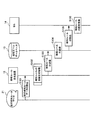
つぎに、上記3つの処理モードの各処理手順について各図面を参照しながら説明する。図2は、生成モード時の処理手順を示すフローチャートである。なお、同図に示すように、アクセスログなどのトラフィックデータに基づいて仮の検知ルールデータ21が生成されて記録されているものとする。例えば、仮の検知ルールデータ21には、任意のトラフィックデータに対して上述のSnortなどのルールセットを適用し、このルールセットに反応した複数のセッション(セッション群)などが記録されている。
Next, each processing procedure in the above three processing modes will be described with reference to the drawings. FIG. 2 is a flowchart showing a processing procedure in the generation mode. As shown in the figure, it is assumed that temporary
図2のフローに戻り、まず、仮の検知ルールデータ21に記録されている仮の検知ルールデータが検知ルール生成装置12に読み込まれる(ステップS101)。検知ルール生成装置12は、不正アクセスを特徴づける検知ルールの自動生成処理(詳細は後述)を行う(ステップS102)。自動生成された検知ルールは、検知ルールデータベース13に送信され(ステップS103)、登録される(ステップS104)。また、この検知ルールはIDS14に送信され(ステップS105)、設定登録される(ステップS106)。ここで、自動生成された検知ルールを検知ルールデータベース13に加えてIDS14にも設定登録するようにしているが、この理由は不正アクセスの検出処理を迅速に行うためである。ただし、検出処理に対する時間的要求がさほど厳しくない場合には自動生成された検知ルールをIDS14に設定登録しなくてもよい。この場合には、不正アクセスの判定処理を行う際に、IDS14側から検知ルールデータベース13を参照するような処理方式を採用すればよい。
Returning to the flow of FIG. 2, first, the provisional detection rule data recorded in the provisional
ところで、上記でいうセッションという概念は、「接続要求」があった時点から「終了通知」または「タイムアウト」になった時点までの期間を意味するものである。例えば、TCPの場合では、SYNパケット(接続要求パケット)からFIN(終了通知)、または、RST(切断要求パケット)送信されるまでか、あるいは通信が途絶えて(通信相手からのパケット送信が途絶えて)から設定したタイムアウトになった時点までの期間を意味する。 By the way, the concept of session as described above means a period from the time when a “connection request” is made to the time when “end notification” or “timeout” is reached. For example, in the case of TCP, until a FIN (end notification) or RST (disconnect request packet) is transmitted from a SYN packet (connection request packet), or communication is interrupted (packet transmission from the communication partner is interrupted) ) To the time when the set timeout is reached.
つぎに、追加モード時の処理手順について説明する。図3は、追加モード時の処理手順を示すフローチャートである。同図において、パッシブホストセンサ11は、ネットワーク1から自身に対して行われたアクセスを検出する(ステップS111)。上述のように、「パッシブホストセンサ11に対して行われる通信は全て何らかの悪意を持って行われる」ということを前提としているため、パッシブホストセンサ11は、ステップS111で検出されたアクセスを不正アクセスと判定し、不正アクセスがあったことをトラフィックデータベース5に対して通知(ステップS112)するとともに、当該アクセスにかかるアクセスログを検知ルール生成装置12に送信する(ステップS113)。
Next, a processing procedure in the addition mode will be described. FIG. 3 is a flowchart showing a processing procedure in the addition mode. In the figure, the
トラフィックデータベース5は、ネットワーク1で行われているアクセスデータを、常時、所定の間隔で記録しているが、パッシブホストセンサ11から不正アクセスが通知された場合には、通常トラフィックデータの更新処理を行う(ステップS114)。なお、ここでいう「通常トラフィックデータ」とは、不正アクセス以外のトラフィックデータのみで構成されたトラフィックデータのことを指しており、この更新処理では、トラフィックデータベース5に蓄積されているトラフィックデータ(通信ログデータ)の中から不正アクセスにかかるセッションのトラフィックデータが除去される。
The
一方、検知ルール生成装置12は、検知ルールの自動生成処理に先立ってトラフィックデータベース5から通常トラフィックデータを読み込み(ステップS115)、この通常トラフィックデータとパッシブホストセンサ11から送信されたアクセスログとに基づいて検知ルールの自動生成処理を行う(ステップS116)。なお、ステップS116の処理は、「生成モード時における検知ルールの自動生成処理」である図2のステップS102の処理と同等である。その後のステップS117〜S120処理、すなわち、検知ルール生成装置12で自動生成された検知ルールが検知ルールデータベース13や、IDS14に登録される処理については、生成モード時と同様な処理であり、その説明を省略する。
On the other hand, the detection
ところで、上記の処理では、通常トラフィックデータを生成する際には、パッシブホストセンサ11からの不正アクセスの通知に基づいて、常時記録しているトラフィックデータからパッシブホストセンサ11で観測されたセッション「のみ」を除去するようにしている。一方、このような除去処理とは異なるつぎのような処理を適用することも可能である。例えば、パッシブホストセンサで観測されたセッションだけでなく、同種と考えられる不正を含むセッションを除去するような処理を行う場合には、上記ステップS116の処理後に、不正アクセスを通知するとともに、生成された検知ルールセットをトラフィックデータベース5に対して通知することもできる。
By the way, in the above processing, when normal traffic data is generated, based on the notification of unauthorized access from the
なお、図3に示す追加モード時の通常トラフィックデータの読込処理(ステップS115)では、通常トラフィックデータの全体を読み込む処理と、ステップS114の処理にて更新された通常トラフィックデータの更新分のデータ(差分データ)だけを読み込む処理とが考えられ、いずれの処理を適用してもよい。ただし、通常トラフィックデータは膨大な量のデータ群であり、検知ルールの生成の都度、通常トラフィックデータを読み込むことは得策ではなく、後者のように通常トラフィックデータの差分データだけを読み込むようにすれば、処理負荷の低減化や、処理時間の短縮化が可能となる。 Note that in the normal traffic data reading process in the addition mode shown in FIG. 3 (step S115), the process for reading the entire normal traffic data and the data for updating the normal traffic data updated in the process of step S114 ( (Difference data) is considered, and any process may be applied. However, normal traffic data is a huge amount of data group, and it is not a good idea to read normal traffic data every time a detection rule is generated. If only the difference data of normal traffic data is read like the latter, Thus, it is possible to reduce the processing load and the processing time.
また、図2に示す生成モード時の処理手順の中では、頻出文字列リストの除外処理を行わない場合、あるいは予め検知ルール自動生成装置内に頻出文字列リストが保持されている場合を想定しているので、検知ルールの自動生成処理(ステップS102)において、通常トラフィックデータの読込処理を行ってはいない。しかしながら、生成モード時の処理手順においても、図3に示す追加モード時の処理手順のように、通常トラフィックデータを読み込んだ後に頻出文字列リストを生成するとともに、生成された頻出文字列を仮の検知ルールから除外する処理を行うようにしてもよい。 Further, in the processing procedure in the generation mode shown in FIG. 2, it is assumed that the frequent character string list is not excluded, or the frequent character string list is stored in the detection rule automatic generation device in advance. Therefore, the normal traffic data reading process is not performed in the detection rule automatic generation process (step S102). However, in the processing procedure in the generation mode, as in the processing procedure in the addition mode shown in FIG. 3, the frequent character string list is generated after the normal traffic data is read, and the generated frequent character string is temporarily stored. You may make it perform the process excluded from a detection rule.
つぎに、判定モード時の処理手順について説明する。図4は、判定モード時の処理手順を示すフローチャートである。同図において、IDS14は、ネットワーク1で行われたアクセスを検出し(ステップS121)、検出したアクセスが自身に設定登録されている検知ルールに反応するか否かを判定し(ステップS122)、検知ルールに反応した場合(ステップS122,Yes)にはアラートを出力する(ステップS125)。一方、全ての検知ルールに反応しない場合(ステップS122,No)にはアラートを出力しない。なお、検知ルールに反応した場合(ステップS122,Yes)には、不正アクセスがあったことをトラフィックデータベース5に対して通知する(ステップS123)。トラフィックデータベース5は、IDS14からの通知に基づいて、通常トラフィックデータの更新処理を行う(ステップS124)。
Next, a processing procedure in the determination mode will be described. FIG. 4 is a flowchart showing a processing procedure in the determination mode. In the figure, the
つぎに、検知ルールの自動生成処理について説明する。図5は、図2に示すステップS102の処理や、図3に示すステップS116の処理に対応するものであり、自動生成処理の一例としてHTTP(Hyper Text Transfer Protocol)通信に適用した検知ルール自動生成処理の処理手順を示すフローチャートである。図5に示すフローには、同一の不正行為だけでなく、同種の不正行為をも含んだリクエストを検出する一方で、不正でないものを不正と判断するフォールスポジティブ(以下「F.P.」と標記)や、不正なものを不正でないと判断するフォールスネガティブ(以下「F.N.」と標記)を極力少なくするための処理が含まれている。なお、このフローは、好適な一例としてHTTP通信の場合について説明するものであり、必ずしもHTTPプロトコルに限定されるものではない。例えば、SMTPプロトコルや、FTPプロトコルなどのアプリケーション層の通信プロトコルにも適用できる。この場合、HTTPプロトコルのメッセージと同等の構造を有しているものに対して適用することができ、同等な構造がないものに対しては当該処理をスキップしてもよい。 Next, detection rule automatic generation processing will be described. FIG. 5 corresponds to the processing in step S102 shown in FIG. 2 and the processing in step S116 shown in FIG. 3, and automatic detection rule generation applied to HTTP (Hyper Text Transfer Protocol) communication as an example of automatic generation processing. It is a flowchart which shows the process sequence of a process. In the flow shown in FIG. 5, a false positive (hereinafter referred to as “FP”) that detects a request including not only the same fraud but also the same kind of fraud, while determining that the fraud is not fraudulent. And a process for reducing false negatives (hereinafter referred to as “F.N.”) to determine that an illegal one is not illegal. In addition, this flow demonstrates the case of HTTP communication as a suitable example, and is not necessarily limited to an HTTP protocol. For example, the present invention can also be applied to application layer communication protocols such as the SMTP protocol and the FTP protocol. In this case, the present invention can be applied to a message having a structure equivalent to an HTTP protocol message, and the process may be skipped for a message having no equivalent structure.
ここで、図5のフローチャートの説明に際し、以降の説明の理解を容易にするため、HTTPリクエストメッセージの構造について説明する。図6は、HTTPリクエストメッセージの構造を示す図である。HTTPリクエストメッセージはRFC2616によって定義されており、同図に示すように、スタートライン、メッセージヘッダ部、メッセージボディの3つの部分から構成される。 Here, in the description of the flowchart of FIG. 5, the structure of the HTTP request message will be described in order to facilitate understanding of the following description. FIG. 6 is a diagram showing the structure of the HTTP request message. The HTTP request message is defined by RFC 2616, and is composed of three parts, a start line, a message header part, and a message body, as shown in FIG.
スタートラインには、主としてリクエストの動作および対象となるファイルが記述され、空白を区切り文字として、メソッド、URI、HTTPバージョンの3つの部分に分けられる。URIには、“?”に続けてクエリ文字列が続く場合がある。クエリ文字列はサーバ側で実行されるプログラムにデータを渡すために用いられる。なお、サーバ側のプログラムによって形式は異なるが、一般には、変数名と値が“=”で結ばれ、それが複数個の“&”を区切りとして連結したものである場合が多い。一方、メッセージヘッダ部は、クライアント側の情報をサーバ側に伝えるために用いられる。なお、メッセージヘッダ部では、一つの行に記述されるメッセージヘッダが複数記述され、各メッセージヘッダは“:”で区切られた“フィールド名”と“フィールド値”から構成される。また、メッセージボディは、サーバ側で実行されるプログラムにデータ渡す際に用いられるものであり、上記URIのクエリ文字列と同様の形式である場合が多い。 The start line mainly describes the operation of the request and the target file, and is divided into three parts: a method, a URI, and an HTTP version, with a blank as a delimiter. The URI may be followed by “?” Followed by a query string. The query string is used to pass data to a program executed on the server side. Although the format differs depending on the server-side program, in general, the variable name and the value are connected by “=”, and in many cases, this is a concatenation of a plurality of “&”. On the other hand, the message header part is used to convey information on the client side to the server side. In the message header part, a plurality of message headers described in one line are described, and each message header is composed of “field name” and “field value” separated by “:”. The message body is used when data is transferred to a program executed on the server side, and often has the same format as the URI query character string.
つぎに、図5に戻り、検知ルール生成装置12で行われる検知ルールの自動生成処理について説明する。同図に示すように、この自動生成処理ステップは、ステップS201〜S204の第1の剪定処理ステップと、ステップS205〜S207の第2の剪定処理ステップとに分解することができる。ここで、第1の剪定処理ステップは、検知ルール自動生成の前処理に相当するものであり、処理対象の種類(通信プロトコル)や、処理対象を構成するメッセージフィールドの特性に応じて、後続の第2の剪定処理を行わせるか否かのフィルタリングを行うものである。一方、第2の剪定処理ステップは、検知ルール自動生成の本処理に相当するものであり、実際に検知ルールの自動生成処理を行うものである。ただし、後述のように、一旦、仮の検知ルールセットを生成し、生成された仮の検知ルールセットから所定の文字列を除外するようなフィルタリング処理を併用している。これらの第1、第2の剪定処理ステップを行うことで、単純に自動生成処理を行う場合に比べて、処理時間、処理負荷を大幅に低減させることができ、また、誤検知の確率を大幅に低下させることができるという利点がある。
Next, returning to FIG. 5, the detection rule automatic generation process performed by the detection
図5において、検知ルール生成装置12は、パッシブホストセンサ11から送信された不正アクセスログ(HTTPリクエスト)に対して、その処理対象を特定する。例えば、“スタートライン”、“メッセージヘッダ”、“メッセージボディ”のいずれに該当するのかを特定する(ステップS201)。処理対象が“メッセージヘッダ”以外(ステップS202、No)ならば、第1の剪定処理ステップを抜けて第2の剪定処理ステップ(ステップS205)の処理に移行する。一方、処理対象が“メッセージヘッダ”の場合には(ステップS202、Yes)、メッセージヘッダを構成する“フィールド名”および“フィールド値”のそれぞれに対して、それぞれ異なる判定処理が行われる。まず、フィールド名に対しては、各セッションにおけるフィールド名の出現頻度と、ヘッダフィールドの種類(例えば、Cookieヘッダフィールド、If−Modified−Sinceヘッダフィールド)ごとに算出された所定のしきい値としての第1のしきい値との間で比較処理が行われる(ステップS203)。フィールド名の出現頻度が第1のしきい値以下の場合には(ステップS203、No)、第1の剪定処理ステップを抜けて第2の剪定処理ステップ(ステップS205)の処理に移行し、フィールド名の出現頻度が第1のしきい値よりも大きい場合には(ステップS203、Yes)、ステップS204に移行する。
In FIG. 5, the detection
また、フィールド値に対しては、各セッションにおいて、フィールド値を構成する文字列の任意の文字種間の遷移確率の平均値と、所定のしきい値としての第2のしきい値との間で比較処理が行われる(ステップS203)。このフィールド値の遷移確率の平均値が第2のしきい値より大きい場合には(ステップS204、No)、第2の剪定処理ステップに移行することなく自動生成処理を終了し、フィールド値の遷移確率の平均値が第2のしきい値以下の場合には(ステップS204、Yes)、第2の剪定処理ステップのステップS205に移行する。なお、上記の説明の中で、ステップS204で行われる平均処理は、相乗平均、相加平均などの任意の平均処理を適用することができる。また、上記の説明の中の「文字種間の遷移確率」については、以下にその詳細について補足する。 For each field value, between each session, an average value of transition probabilities between arbitrary character types of the character string constituting the field value and a second threshold value as a predetermined threshold value. A comparison process is performed (step S203). If the average value of the field value transition probabilities is larger than the second threshold value (No in step S204), the automatic generation process is terminated without proceeding to the second pruning process step, and the field value transition When the average value of the probabilities is equal to or smaller than the second threshold (step S204, Yes), the process proceeds to step S205 of the second pruning process step. In the above description, any average process such as a geometric average or an arithmetic average can be applied as the average process performed in step S204. The “transition probability between character types” in the above description will be supplemented in detail below.
「文字種間の遷移確率」とは、メッセージヘッダなどに含まれる文字列の各文字の移り変わりを確率的に表したものである。通常、文字列は左から右へ向かって変化するという前提であり、文字列のある2文字に着目した場合、左側の文字種が観測された後、右側の文字種が出現する確率は、左側の文字種と、右側の文字種との関係で決定され、文字種ごとに異なる確率値をとる。この確率値を「文字種間の遷移確率」と定義している。例えば、日本語の場合、文末に「です。」という文字列が頻繁に出現するので、「で」という文字種のつぎに「す」という文字種に遷移する確率は高くなる。このように、ステップS203の処理では、メッセージヘッダに現れる文字を対象として、上記のように定義された文字種間の遷移確率を予め算出するようにしている。 The “transition probability between character types” is a stochastic representation of the transition of each character in a character string included in a message header or the like. Normally, it is assumed that the character string changes from left to right. When focusing on two characters in the character string, the probability that the right character type will appear after the left character type is observed is the left character type. And the character type on the right side, and different probability values are taken for each character type. This probability value is defined as “transition probability between character types”. For example, in the case of Japanese, since the character string “” appears frequently at the end of the sentence, the probability of transition to the character type “su” next to the character type “de” increases. Thus, in the process of step S203, the transition probability between the character types defined as described above is calculated in advance for characters appearing in the message header.
つぎに、図5のフローチャートに戻って、第2の剪定処理ステップについて説明する。検知ルール生成装置12は、スタートライン、メッセージボディなどのリクエストデータや、第1の剪定処理ステップの処理でフィルタリングされたメッセージヘッダから不正アクセスを検出するための文字列を抽出した仮の検知ルールセットを生成し(ステップS205)、その一方で、通常トラフィックデータに基づいて頻出文字列リストを生成し、あるいは頻出文字列リストに新たな検知ルールを追加する(ステップS206)。検知ルール生成装置12は、検知ルールセットから頻出文字列リストの上位に位置する所定の頻出文字列を除去した検知ルール(真の検知ルール)を生成して出力する(ステップS207)。なお、この検知ルールが、検知ルールデータベース13に登録され、IDS14に反映されることは前述のとおりである。
Next, returning to the flowchart of FIG. 5, the second pruning process step will be described. The detection
このように、図5に示す第1の剪定処理ステップおよび第2の剪定処理ステップの処理に基づいて、同種の不正行為を含んだリクエストの検出を可能とする一方で、F.P.数やF.N.数を局限可能な検知ルールを自動生成することができる。なお、上述の説明の中で、ステップS205の仮の検知ルールセットの生成処理、ステップS206の頻出文字列の生成処理およびステップS207の頻出文字列による除外処理の各説明が不足しているので、さらに説明を加える。 Thus, based on the processes of the first pruning process step and the second pruning process step shown in FIG. 5, it is possible to detect a request including the same type of fraud, while the F.P. Detection rules capable of localizing the FN number can be automatically generated. In addition, in the above description, the provisional detection rule set generation process in step S205, the frequent character string generation process in step S206, and the frequent character string exclusion process in step S207 are insufficient. Further explanation will be given.
図7および図8は、仮の検知ルールセットの生成処理について補足するための図であり、より詳細には、図7は、同種の不正アクセスを検出するための検知ルールの一例を示す説明図であり、図8は、プロトコル構文を考慮した階層的な分割手法の一例を示す説明図である。まず、図7において、上段部には、HTTPプロトコルのリクエストメッセージ(A)が示されている。中上段部には、リクエストメッセージ(A)から抽出された3つの検知ルール(a),(b),(c)が示されている。このような検知ルールが生成されている場合に、例えば、中下段部に示される不正なリクエストメッセージ(B),(C)が検出された場合を考える。このとき、検知ルール(a)ではリクエストメッセージ(B),(C)ともに検知することができず、検知ルール(c)ではリクエストメッセージ(B),(C)ともに検知することができるが、不正なアクセス以外にも反応する可能性がある。一方、検知ルール(b)ではリクエストメッセージ(B),(C)ともに検知することができ、また、不正なアクセス以外に反応する可能性は検知ルール(c)よりも小さい。このように、検知ルール(b)は不正な部分の特徴部分のみが適切に記述された例としての一例を示すものである。 7 and 8 are diagrams for supplementing the provisional detection rule set generation process. More specifically, FIG. 7 is an explanatory diagram illustrating an example of a detection rule for detecting the same type of unauthorized access. FIG. 8 is an explanatory diagram showing an example of a hierarchical division method considering the protocol syntax. First, in FIG. 7, an HTTP protocol request message (A) is shown in the upper part. In the upper middle part, three detection rules (a), (b), (c) extracted from the request message (A) are shown. When such a detection rule is generated, for example, consider a case where an invalid request message (B) or (C) shown in the middle lower section is detected. At this time, both the request messages (B) and (C) cannot be detected by the detection rule (a), and both the request messages (B) and (C) can be detected by the detection rule (c). There is a possibility of reacting to other than access. On the other hand, in the detection rule (b), both the request messages (B) and (C) can be detected, and the possibility of reacting other than unauthorized access is smaller than that in the detection rule (c). Thus, the detection rule (b) shows an example as an example in which only the characteristic part of the illegal part is appropriately described.
また、図8には、HTTPプロトコルのスタートラインの記述例が示されている。例えば、スタートラインでは、空白によって、メソッド、URI、バージョンに分割し、URIは“?”によってファイル指定部およびクエリ文字列に分割し、さらに、ファイル指定部は、“/”によって分割する。なお、分割途中の段階を含め、各段階で生成された文字列の全てを、仮の検知ルールとして残しておくことが重要なポイントである。このような分割途中の段階で生成された文字列を含めることで、同種の不正アクセスを検出する確率を増大させることができる。なお、同図には示していないが、メッセージヘッダや、メッセージボディについても同様な手法で分割することができる。 FIG. 8 shows a description example of the start line of the HTTP protocol. For example, in the start line, a method, a URI, and a version are divided by a blank, a URI is divided into a file designation part and a query character string by “?”, And the file designation part is divided by “/”. It is important to keep all the character strings generated at each stage including the stage in the middle of division as a temporary detection rule. By including the character string generated in the middle of such division, the probability of detecting the same kind of unauthorized access can be increased. Although not shown in the figure, the message header and message body can also be divided by the same method.
分割に際して、他の考慮すべき事項として、生成した検知ルールが全く関係のない文字列や、当該文字列を部分的に含む文字列に偶然に一致することを避ける必要がある。このため、図8の下段部に示すように、一旦分割された文字列の両端に分割に用いた区切り文字を残すようにする。例えば、URI部分を分割した、“arch”という文字列が生成された場合には、分割に用いた文字“/”を両端に残し、“/arch/”を検知ルールとする。この処理により、“research”や、“architecture”などの文字列に偶然に一致するような状況が回避され、また、URIから生成された検知ルールがURI部分により限定的にマッチするようになり、F.P.数の増加防止に効果的である。 As another matter to be considered in the division, it is necessary to avoid accidentally matching a character string in which the generated detection rule is irrelevant or a character string partially including the character string. For this reason, as shown in the lower part of FIG. 8, the delimiter used for the division is left at both ends of the character string once divided. For example, when a character string “arch” is generated by dividing the URI portion, the character “/” used for the division is left at both ends, and “/ arch /” is set as the detection rule. This process avoids a situation that coincides with a character string such as “research” or “architecture”, and the detection rule generated from the URI is limitedly matched by the URI part. It is effective in preventing the increase in the FP number.
一方、図9は、頻出文字列の生成処理および仮の検知ルールに対する頻出文字列の除外処理を補足するための図であり、より詳細には、通常トラフィックデータの中に含まれる文字列の出現頻度の一例を示す図である。同図に示すグラフは横軸が文字列を出現頻度順に並べたときの順位であり、縦軸は当該順位文字列の総リクエスト数に対する出現頻度である。例えば、同図の例では、縦軸上の切片に';q=’という文字列の総リクエスト数に対する出現頻度である“246049”の値がプロットされ、以下、右隣の所定の位置に'image/’、'text/’、・・・のそれぞれの値がプロットされる。同図では、好適な例として、面積の80%を占めるまでの文字列を高頻度で出現する文字列(頻出文字列)として定義し、これらの文字列は不正の特徴を表していないものとして取り扱われる。すなわち、仮の検知ルールの中にこれらの文字列を含んでいる場合には、検知ルールから取り除かれる。 On the other hand, FIG. 9 is a diagram for supplementing the frequent character string generation process and the frequent character string exclusion process for the provisional detection rule, and more specifically, the appearance of the character string included in the normal traffic data. It is a figure which shows an example of frequency. In the graph shown in the figure, the horizontal axis indicates the rank when character strings are arranged in the order of appearance frequency, and the vertical axis indicates the appearance frequency with respect to the total number of requests of the rank character string. For example, in the example shown in the figure, the value “246049”, which is the appearance frequency with respect to the total number of requests of the character string “; q =”, is plotted on the intercept on the vertical axis. Each value of image / ',' text / ', ... is plotted. In this figure, as a preferred example, character strings up to 80% of the area are defined as character strings that appear frequently (frequent character strings), and these character strings do not represent illegal features. Handled. That is, when these character strings are included in the provisional detection rule, they are removed from the detection rule.
先に述べたように、通常トラヒックデータの大部分は正規の通信によって占められている。したがって、不正な通信に特有の文字列は通常トラヒックデータ中には高頻度では存在しないはずである。そこで、通常トラヒックデータ中にあるしきい値以上で高頻度に出現する文字列は、通常の通信にも含まれる一般的な語と判断して検知ルールから除くという処理を行うことで、同種の不正行為を含んだリクエストの検出を可能とし、その一方で、不正でないものを不正と判定するF.P.数を局限することができる。 As mentioned above, most of the normal traffic data is occupied by regular communication. Therefore, character strings specific to unauthorized communication should not exist frequently in normal traffic data. Therefore, the character string that appears frequently in the normal traffic data above a certain threshold is judged to be a general word also included in normal communication and is removed from the detection rule. While it is possible to detect requests including fraudulent activities, it is possible to limit the number of F.P.
なお、この実施の形態では、専用の装置を用いた構造について説明したが、本発明の適用対象は、必ずしも実施の形態に限定して解釈する必要はない。また、具体的構造についても、図1のブロック図に示されるものに限定して解釈する必要はなく、上記の手法を用いてネットワークの不正アクセスを検出できるものであればよい。 In this embodiment, a structure using a dedicated device has been described. However, an application target of the present invention is not necessarily limited to the embodiment. Also, the specific structure need not be interpreted as being limited to that shown in the block diagram of FIG. 1, and any structure that can detect unauthorized access to the network using the above-described method may be used.
(実施の形態2)
実施の形態2にかかる不正アクセス検出装置の構成は、図1に示す実施の形態1の構成と同一、あるいは同等である。一方、この実施の形態の処理は、実施の形態1の処理と比較して以下のような特徴を有している。
(1) 実施の形態1の処理では、検知ルールに一つでも反応すればアラートを発生していたが、この実施の形態の判定処理では、反応した検知ルールに重要度を設定し、セッション単位での重要度の合計(以下「得点」と呼称)が所定値以上の場合にアラートを発生させる。
(2) 実施の形態1の処理では、許容F.P.数による制御という概念が存在しなかったが、この実施の形態では、許容F.P.数に基づいた制御を行う。
(3) 上記(2)に関連するが、設定された許容F.P.数と、検知ルールごとの得点の傾向とに基づいて決定される判定しきい値を設定し、当該判定しきい値よりも上位順位にある検知ルールに反応したときにアラートを発生させる。
(Embodiment 2)
The configuration of the unauthorized access detection apparatus according to the second embodiment is the same as or equivalent to the configuration of the first embodiment shown in FIG. On the other hand, the process of this embodiment has the following characteristics as compared with the process of the first embodiment.
(1) In the process of the first embodiment, an alert is generated if even one detection rule responds. However, in the determination process of this embodiment, the importance level is set for the reacted detection rule, and a session unit is set. An alert is generated when the total importance (hereinafter referred to as “score”) is greater than or equal to a predetermined value.
(2) In the processing of the first embodiment, the concept of control based on the allowable FP number does not exist, but in this embodiment, control based on the allowable FP number is performed.
(3) Although related to (2) above, a determination threshold value determined based on the set allowable FP number and the tendency of the score for each detection rule is set, and the determination threshold value Raise an alert when it reacts to a higher-level detection rule.
つぎに、上述した実施の形態2の特徴に含まれる「重要度」および「判定しきい値」の概念について説明する。実施の形態1のところで説明したように、パッシブホストセンサ11が観測した1つの不正アクセスから複数個の検知ルールが生成される。これらの検知ルールには、リクエストメッセージ中の不正な部分を適切に記述しF.P.を発生させない理想的なものから、逆にF.P.を多く発生させるものまで、その性能にはばらつきがある。そこで、「重要度」という概念を導入し、検知ルールに対して、この「重要度」で重み付け処理を行うことを考える。具体的には、F.P.の発生具合によって検知ルールの性能を評価し、検知ルールが持つ情報量の観点から、F.P.の発生が少ない検知ルールの重要度は高く、逆にF.P.を多く発生させる検知ルールの重要度は低くなるように、それぞれの重要度に傾きを付けるように処理する。
Next, the concept of “importance” and “determination threshold” included in the features of the second embodiment described above will be described. As described in the first embodiment, a plurality of detection rules are generated from one unauthorized access observed by the
ここで、重要度は次式のように定義する。
重要度=1/(過去のトラヒックデータに対する反応数) ・・・(1)
なお、過去のトラフィックデータとして上記で定義した通常トラフィックデータを用いるのが好適である。なぜなら、通常トラフィックデータ中には不正なトラフィック(セッション)の含まれる可能性が低いので、重要度の適正性を確保することができるからである。ところで、式(1)において、過去のトラヒックデータに対する反応数が0のときは、重要度の値が∞になってしまうので、適度な値を設定する必要がある。同式によれば、過去のトラヒックデータに対する反応数=1のときに重要度=1となるので、過去のトラヒックデータに対する反応数が0のときは、例えば、重要度=2に設定することができる。なお、過去のトラヒックデータに反応する場合より反応しない場合の方が重要度を高く設定するという意味では、過去のトラヒックデータに対する反応数が0のときに、1を超える重要度が設定されていればよい。
Here, the importance is defined as follows.
Importance = 1 / (Number of responses to past traffic data) (1)
It is preferable to use the normal traffic data defined above as past traffic data. This is because normal traffic data is unlikely to contain unauthorized traffic (sessions), so that appropriateness of importance can be ensured. By the way, in Equation (1), when the number of responses to the past traffic data is 0, the importance value becomes ∞, so an appropriate value needs to be set. According to this equation, since the importance = 1 when the number of responses to the past traffic data = 1, when the number of responses to the past traffic data is 0, for example, the importance = 2 can be set. it can. In the sense that importance is set higher when there is no response than when responding to past traffic data, if the number of responses to past traffic data is 0, an importance exceeding 1 may be set. That's fine.
具体的には、検知ルールの1つを通常トラヒックデータに対して適用し、通常トラヒックデータに反応した数をフォールスポジティブと見なす。このようにして算出された検知ルールごとの反応数に基づき、反応数が少ない検知ルールは重要度を高く、反応数が多いものは重要度を低く設定するように処理する。なお、この重要度の設定処理は、予め実施しておくことができる。例えば、図2に示した検知ルールの自動生成処理(ステップS102)時に、仮の検知ルールデータ21内に含ませた通常トラフィックデータに基づいて重要度を設定すればよい。また、図3に示した検知ルールの自動生成処理(ステップS116)時に、通常トラフィックデータに追加されたセッションに対する各検知ルールの重要度の更新処理を行うようにすればよい。
Specifically, one of the detection rules is applied to the normal traffic data, and the number that reacts to the normal traffic data is regarded as false positive. Based on the number of reactions for each detection rule calculated in this way, a detection rule with a small number of reactions is processed to have a high importance level, and a rule with a large number of reactions is set to have a low importance level. The importance level setting process can be performed in advance. For example, the importance may be set based on the normal traffic data included in the temporary
つぎに、判定しきい値について説明する。この実施の形態では各検知ルールに上述のような重要度を導入したことにより、アラートを発生させる基準を、従来の、検知ルールが1つでも反応したセッションに対してアラートを発生させるという処理から、判定しきい値と呼ばれる基準を設定し、この判定しきい値を基準とした判定処理を導入する。 Next, the determination threshold value will be described. In this embodiment, by introducing the importance as described above to each detection rule, the standard for generating an alert is based on the conventional process of generating an alert for a session in which even one detection rule reacts. A criterion called a determination threshold is set, and a determination process based on this determination threshold is introduced.
判定しきい値の設定方法としては、例えば、以下の手順に示される。
(1) 許容F.P.数をNに設定
(2) 通常トラフィックデータの各セッションに検知ルールを適用
(3) 各セッションごとに反応した検知ルールの重要度の合計(以下「得点」と呼称)を算出
(4) 得点を降順でソート
(5) 上位N番目のセッションとN+1番目の間の所定の得点に判定しきい値を設定
As a determination threshold value setting method, for example, the following procedure is shown.
(1) Set the number of allowed FPs to N. (2) Apply detection rules to each session of normal traffic data. (3) Sum of importance of detection rules that responded to each session (hereinafter referred to as “score” ) (4) Sort score in descending order (5) Set judgment threshold to a predetermined score between the top Nth session and N + 1th
図10は、判定しきい値の概念をさらに詳細に説明するための図である。同図の例では、1日以上(通常は、複数日分)の通常トラフィックデータに対して検知ルールを適用し、各セッションごとに反応した検知ルールの得点を算出し、得点の降順に整列させたものである。同図の例では、1日当たりの許容F.P.数が5に設定されるので、得点が209のセッションSと、得点が134のセッションLとの間に判定しきい値を設定するためのラインが引かれ、134以上で209以下の任意の値に判定しきい値が設定される。なお、判定しきい値を209に近い値に設定した場合と、134に近い値に設定した場合とでは、前者の方が、後者に比較して、F.P.数が減少する一方で、未検知数が増加する傾向になる。したがって、これらの判定しきい値や、許容F.P.数の設定については、管理者の判断に委ねられる部分となる。 FIG. 10 is a diagram for explaining the concept of the determination threshold value in more detail. In the example in the figure, the detection rule is applied to normal traffic data of one day or more (usually for multiple days), the score of the detection rule that reacts for each session is calculated, and the score is arranged in descending order. It is a thing. In the example of the figure, the allowable number of FPs per day is set to 5, so that a determination threshold is set between the session S with a score of 209 and the session L with a score of 134. A line is drawn and the determination threshold is set to an arbitrary value between 134 and 209. In the case where the determination threshold value is set to a value close to 209 and the case where the determination threshold value is set to a value close to 134, the FP number decreases in the former case compared to the latter. The number of undetected items tends to increase. Accordingly, the setting of the determination threshold value and the allowable FP number is a part left to the administrator's judgment.
つぎに、上述のような「重要度」および「判定しきい値」の概念が導入された実施の形態2の不正アクセス検出装置の動作について説明する。図11は、この発明の実施の形態2にかかる不正アクセス検出装置の判定モード時の処理手順を示すフローチャートである。なお、生成モード時および追加モード時の処理手順は、それぞれ図2および図4に示す実施の形態1の処理手順に上述の重要度の設定処理手順を含めたものと同一または同等であるので、説明を省略する。 Next, the operation of the unauthorized access detection apparatus according to the second embodiment in which the concepts of “importance” and “determination threshold” as described above are introduced will be described. FIG. 11 is a flowchart showing a processing procedure in the determination mode of the unauthorized access detection apparatus according to the second embodiment of the present invention. The processing procedure in the generation mode and the addition mode is the same as or equivalent to the processing procedure of the first embodiment shown in FIGS. 2 and 4 including the above-described importance setting processing procedure. Description is omitted.
図11において、IDS14は、ネットワーク1で行われたアクセスを検出し、検出したアクセスが自身に設定登録されている検知ルールに反応するか否かの判定処理を全ての検知ルールに対して行う(ステップS301)。つぎに、IDS14は、検出したアクセスが1以上の検知ルール反応したか否かを判定し(ステップS302)、全ての検知ルールに反応しない場合(ステップS302,No)にはアラートを出力せずにこの判定モードの処理から抜け出るが、1以上の検知ルールに反応した場合(ステップS302,Yes)には、通常トラフィックデータに基づいて予め算出されている重要度を参照して、各セッションごとの得点の算出処理を行う(ステップS304)。IDS14は、各セッションの得点と、上述した手順などにより予め設定された判定しきい値とをそれぞれ比較し(ステップS305)、全てのセッションが判定しきい値未満の場合(ステップS305,No)にはアラートを出力せずにこの判定モードの処理から抜け出るが、判定しきい値以上の得点を有する1以上のセッションが存在する場合(ステップS305,Yes)にはアラート(要すれば当該セッション番号や、当セッションの内容も含む)を出力する(ステップS306)。なお、アラートが出力された場合には、不正アクセスがトラフィックデータベース5に通知され(ステップS307)、爾後の判定処理に備えて通常トラフィックデータが更新される(ステップS308)。
In FIG. 11, the
なお、上記の処理手順の中で、重要度の重み付けを行わず(すなわち、重要度は全て同一)、判定しきい値のみで判定してもよい。この場合、ステップS304の処理をバイパスすることができる。 In the above processing procedure, the importance level may not be weighted (that is, the importance levels are all the same), and the determination may be made using only the determination threshold value. In this case, the process of step S304 can be bypassed.
(実施の形態2の装置の評価)
図12は、実施の形態2の不正アクセス検出装置の評価実験を行った結果を示す図である。図12において、横軸を設定した1ルールセットあたりの許容F.P.数とし、縦軸を検出率およびF.P.数とした。また、実線部分は重要度と判定しきい値の両者を導入した場合の波形であり、破線部分は判定しきい値のみを導入した場合の波形である。
(Evaluation of the apparatus of Embodiment 2)
FIG. 12 is a diagram illustrating a result of an evaluation experiment performed on the unauthorized access detection device according to the second embodiment. In FIG. 12, the horizontal axis represents the allowable FP number per rule set, and the vertical axis represents the detection rate and FP number. Also, the solid line portion is a waveform when both importance and the determination threshold are introduced, and the broken line portion is a waveform when only the determination threshold is introduced.
ここで、評価実験の環境を簡単に説明する。まず、100台規模のホストが接続するLANを出入りする1日分のトラヒックデータにSnortに付属のルールセットを適用し、反応したセッションを、パッシブホストセンサ11で観測された新種の不正アクセス手法と想定し、反応しなかったトラヒックデータを通常トラヒックデータと想定してこれらをテストデータとした。つぎに、不正なリクエストデータの1つをパッシブホストセンサ11で観測された未知の不正と想定し、本発明の処理手順に基づいて検知ルールを生成した。また、生成した検知ルールセットを不正アクセスのトラヒックに適用し、同種の不正リクエストを検知できるかどうかを調べた。さらに、通常トラヒックデータに適用にしたときのF.P.数についてもカウントした。
Here, the environment of the evaluation experiment will be briefly described. First, a rule set attached to Snort is applied to traffic data for one day entering and exiting a LAN connected to a 100-scale host, and a new type of unauthorized access method observed by the
図12の結果に示されるように、重要度および判定しきい値を導入した場合、ならびに判定しきい値のみを導入した場合の両者ともに殆どの領域において95%前後の良好な検出率が維持されている。また、許容F.P.数を50から10程度に軽減させた場合であっても、検出率の低下がほとんどなく、良好な検出性能が維持され、実運用に十分耐えうる検出性能が得られている。 As shown in the results of FIG. 12, a good detection rate of around 95% is maintained in most regions both when the importance and the judgment threshold are introduced and when only the judgment threshold is introduced. ing. In addition, even when the allowable FP number is reduced from about 50 to about 10, there is almost no decrease in detection rate, good detection performance is maintained, and detection performance that can sufficiently withstand actual operation is obtained. ing.
図13は、実運用上のデータを用いて評価実験を行った結果を示す図表であり、より詳細には、ある年月の21日〜28日までの8日間に観測されたHTTPリクエストに対する検知結果を示す図表である。図12の実験結果はSnortに付属の標準ルールセットを未知の不正と想定し、人為的に生成したテストデータを用いて行ったものであるが、図13に示す実験結果は、この実施の形態の不正アクセス検出装置を実稼働のネットワーク上に実際に設置して評価したものである。このネットワークには100台程度のホストが接続され、常時約30のホストが外部のwebサーバにアクセスしている。また、ネットワーク内にはwebサーバが10台稼働し、ネットワークの入口では全てのトラヒックが観測されダンプデータとして保存されている。なお、ネットワーク入口を出入りするトラヒックは、1日あたり約30,000セッションである。 FIG. 13 is a chart showing the results of an evaluation experiment using actual operational data. More specifically, FIG. 13 shows the detection of HTTP requests observed for 8 days from the 21st to the 28th of a certain month. It is a chart which shows a result. The experimental results in FIG. 12 were obtained by using artificially generated test data assuming that the standard rule set attached to Snort is unknown fraud. The experimental results shown in FIG. The unauthorized access detection device is actually installed on a production network and evaluated. About 100 hosts are connected to this network, and about 30 hosts always access an external web server. In addition, ten web servers operate in the network, and all traffic is observed and stored as dump data at the entrance of the network. The traffic entering / exiting the network entrance is about 30,000 sessions per day.
図13に示すように、8日間の全てにおいて検知率が100%であり、良好な結果が得られている。また、フォールスポジティブ数も平均して1日あたり9個に抑えられており、実運用に耐えられる値を示している。この結果により、この実施の形態の不正アクセス検出装置の有用性が十分に証明されているものと考える。 As shown in FIG. 13, the detection rate is 100% in all 8 days, and good results are obtained. Moreover, the average number of false positives is suppressed to 9 per day, which is a value that can withstand actual operation. From this result, it is considered that the usefulness of the unauthorized access detection device of this embodiment is sufficiently proved.
以上のように、この発明にかかる不正アクセス検出装置は、シグネチャマッチング型のIDSをベースとしているものの、検知ルールが明らかでない新種や未知の不正アクセスに対処することのできるIDSとして有用である。 As described above, the unauthorized access detection apparatus according to the present invention is useful as an IDS that can deal with new types and unknown unauthorized access whose detection rules are not clear, although it is based on a signature matching type IDS.
1,2,3 ネットワーク
4 インターネット
5 トラフィックデータベース
10 不正アクセス検出装置
11 パッシブホストセンサ
12 検知ルール生成装置
13 検知ルールデータベース
21 仮の検知ルールデータ
1, 2, 3
Claims (27)
自己の存在を知らせることなく自己宛の通信を検出するパッシブホストセンサと、
不正アクセスを特徴づける検知ルールを生成して出力する検知ルール生成装置と、
観測されたアクセスの不正性を判定するシグネチャマッチング型のIDSと、
を備え、
前記検知ルール生成装置は、
前記パッシブホストセンサから通知されたアクセスログに基づいて前記検知ルールを自動生成する自動生成手段を備えたことを特徴とする不正アクセス検出装置。 An unauthorized access detection device for detecting unauthorized access to a network,
A passive host sensor that detects communication addressed to itself without notifying its existence,
A detection rule generation device that generates and outputs a detection rule that characterizes unauthorized access; and
A signature matching type IDS for determining the fraud of the observed access;
With
The detection rule generation device includes:
An unauthorized access detection apparatus comprising: automatic generation means for automatically generating the detection rule based on an access log notified from the passive host sensor.
前記アクセスログのメッセージ部を段階的に分割し、分割途中の段階を含め各段階で生成された文字列の全てを仮の検知ルールとして残しておくことを特徴とする請求項3に記載の不正アクセス検出装置。 The provisional detection rule generating means is
4. The fraud according to claim 3, wherein the message part of the access log is divided step by step, and all character strings generated at each step including the step in the middle of the division are left as temporary detection rules. Access detection device.
前記アプリケーション層の通信プロトコルで通信されたリクエストに含まれるメッセージヘッダを構成するフィールド名のセッションごとの出現頻度と、該フィールドの種類ごとに算出された所定の第1のしきい値と、に基づいて前記検知ルールの自動生成処理を行わせるか否かを判定することを特徴とする請求項7に記載の不正アクセス検出装置。 The first pruning means includes
Based on the appearance frequency for each session of the field name constituting the message header included in the request communicated by the communication protocol of the application layer, and a predetermined first threshold value calculated for each type of the field The unauthorized access detection apparatus according to claim 7, wherein it is determined whether or not to perform automatic generation processing of the detection rule.
前記アプリケーション層の通信プロトコルで通信されたリクエストに含まれるメッセージヘッダのフィールド値を構成する文字列の任意の文字種間の遷移確率の平均値と、所定の第2のしきい値とに基づいて前記検知ルールの自動生成処理を行わせるか否かを判定することを特徴とする請求項7に記載の不正アクセス検出装置。 The first pruning means includes
Based on an average value of transition probabilities between arbitrary character types of a character string constituting a field value of a message header included in a request communicated by the communication protocol of the application layer, and a predetermined second threshold value The unauthorized access detection apparatus according to claim 7, wherein it is determined whether or not to perform detection rule automatic generation processing.
登録済の検知ルールに基づいて観測されたアクセスが不正か否かを判定する判定モードと、
を有することを特徴とする請求項1〜12のいずれか一つに記載の不正アクセス検出装置。 When the observed unauthorized access is a new type of unauthorized access, an additional mode for generating a detection rule based on the observed unauthorized access and adding the generated detection rule to a predetermined database;
A determination mode for determining whether the observed access is illegal based on the registered detection rule;
The unauthorized access detection device according to claim 1, comprising:
入力されたアクセスログに基づいて不正アクセスを特徴づける検知ルールを自動生成する自動生成手段を備えたことを特徴とする検知ルール生成装置。 A detection rule generation device that generates a detection rule for detecting unauthorized access to a network,
A detection rule generation apparatus comprising an automatic generation means for automatically generating a detection rule that characterizes unauthorized access based on an input access log.
前記アクセスログのメッセージ部を段階的に分割し、分割途中の段階を含め各段階で生成された文字列の全てを仮の検知ルールとして残しておくことを特徴とする請求項18に記載の検知ルール生成装置。 The provisional detection rule generating means is
19. The detection according to claim 18, wherein the message part of the access log is divided step by step, and all character strings generated at each step including a step in the middle of the division are left as temporary detection rules. Rule generator.
入力されたアクセスログに基づいて不正アクセスを特徴づける検知ルールを自動生成する自動生成ステップと、
前記アクセスログのプロトコルまたは当該アクセスログを構成するフィールドの特性に応じて検知ルールの自動生成処理を行わせるか否かを判定する第1の剪定ステップと、
を含むことを特徴とする検知ルール生成方法。 A detection rule generation method for generating a detection rule for detecting unauthorized access to a network,
An automatic generation step for automatically generating detection rules characterizing unauthorized access based on the input access log;
A first pruning step for determining whether or not to automatically perform detection rule generation processing in accordance with the protocol of the access log or the characteristics of the field constituting the access log;
The detection rule generation method characterized by including.
前記アクセスログのメッセージ部を段階的に分割し、分割途中の段階を含め各段階で生成された文字列の全てを仮の検知ルールとして残しておくことを特徴とする請求項24に記載の検知ルール生成方法。 The provisional detection rule generation step includes:
25. The detection according to claim 24, wherein the message part of the access log is divided step by step, and all character strings generated at each step including the step in the middle of the division are left as temporary detection rules. Rule generation method.
Priority Applications (1)
| Application Number | Priority Date | Filing Date | Title |
|---|---|---|---|
| JP2004134668A JP2005316779A (en) | 2004-04-28 | 2004-04-28 | Unauthorized access detector, detection rule generation device, detection rule generation method, and detection rule generation program |
Applications Claiming Priority (1)
| Application Number | Priority Date | Filing Date | Title |
|---|---|---|---|
| JP2004134668A JP2005316779A (en) | 2004-04-28 | 2004-04-28 | Unauthorized access detector, detection rule generation device, detection rule generation method, and detection rule generation program |
Publications (1)
| Publication Number | Publication Date |
|---|---|
| JP2005316779A true JP2005316779A (en) | 2005-11-10 |
Family
ID=35444127
Family Applications (1)
| Application Number | Title | Priority Date | Filing Date |
|---|---|---|---|
| JP2004134668A Pending JP2005316779A (en) | 2004-04-28 | 2004-04-28 | Unauthorized access detector, detection rule generation device, detection rule generation method, and detection rule generation program |
Country Status (1)
| Country | Link |
|---|---|
| JP (1) | JP2005316779A (en) |
Cited By (11)
| Publication number | Priority date | Publication date | Assignee | Title |
|---|---|---|---|---|
| JP2010525459A (en) * | 2007-04-20 | 2010-07-22 | ニューラルアイキュー,インコーポレーテッド | System and method for analyzing unauthorized intrusion into a computer network |
| US8656493B2 (en) | 2006-05-22 | 2014-02-18 | Neuraliq, Inc. | Decoy network technology with automatic signature generation for intrusion detection and intrusion prevention systems |
| WO2014103115A1 (en) * | 2012-12-26 | 2014-07-03 | 三菱電機株式会社 | Illicit intrusion sensing device, illicit intrusion sensing method, illicit intrusion sensing program, and recording medium |
| US8789189B2 (en) | 2010-06-24 | 2014-07-22 | NeurallQ, Inc. | System and method for sampling forensic data of unauthorized activities using executability states |
| US9106697B2 (en) | 2010-06-24 | 2015-08-11 | NeurallQ, Inc. | System and method for identifying unauthorized activities on a computer system using a data structure model |
| WO2015141640A1 (en) * | 2014-03-19 | 2015-09-24 | 日本電信電話株式会社 | Extraction condition determination method, communication monitoring system, extraction condition determination device, and extraction condition determination program |
| JP2018093331A (en) * | 2016-12-01 | 2018-06-14 | 住友電気工業株式会社 | Detection device, detection method, and detection program |
| US10104099B2 (en) | 2015-01-07 | 2018-10-16 | CounterTack, Inc. | System and method for monitoring a computer system using machine interpretable code |
| US10282542B2 (en) | 2013-10-24 | 2019-05-07 | Mitsubishi Electric Corporation | Information processing apparatus, information processing method, and computer readable medium |
| CN113454623A (en) * | 2019-02-21 | 2021-09-28 | 三菱电机株式会社 | Detection rule set adjustment device and detection rule set adjustment program |
| JPWO2022113895A1 (en) * | 2020-11-30 | 2022-06-02 |
-
2004
- 2004-04-28 JP JP2004134668A patent/JP2005316779A/en active Pending
Cited By (19)
| Publication number | Priority date | Publication date | Assignee | Title |
|---|---|---|---|---|
| US8656493B2 (en) | 2006-05-22 | 2014-02-18 | Neuraliq, Inc. | Decoy network technology with automatic signature generation for intrusion detection and intrusion prevention systems |
| US9866584B2 (en) | 2006-05-22 | 2018-01-09 | CounterTack, Inc. | System and method for analyzing unauthorized intrusion into a computer network |
| JP2010525459A (en) * | 2007-04-20 | 2010-07-22 | ニューラルアイキュー,インコーポレーテッド | System and method for analyzing unauthorized intrusion into a computer network |
| JP2013240114A (en) * | 2007-04-20 | 2013-11-28 | Neuraliq Inc | System and method for analyzing unauthorized intrusion into computer network |
| US8789189B2 (en) | 2010-06-24 | 2014-07-22 | NeurallQ, Inc. | System and method for sampling forensic data of unauthorized activities using executability states |
| US9954872B2 (en) | 2010-06-24 | 2018-04-24 | Countertack Inc. | System and method for identifying unauthorized activities on a computer system using a data structure model |
| US9106697B2 (en) | 2010-06-24 | 2015-08-11 | NeurallQ, Inc. | System and method for identifying unauthorized activities on a computer system using a data structure model |
| WO2014103115A1 (en) * | 2012-12-26 | 2014-07-03 | 三菱電機株式会社 | Illicit intrusion sensing device, illicit intrusion sensing method, illicit intrusion sensing program, and recording medium |
| US10282542B2 (en) | 2013-10-24 | 2019-05-07 | Mitsubishi Electric Corporation | Information processing apparatus, information processing method, and computer readable medium |
| US10257213B2 (en) | 2014-03-19 | 2019-04-09 | Nippon Telegraph And Telephone Corporation | Extraction criterion determination method, communication monitoring system, extraction criterion determination apparatus and extraction criterion determination program |
| WO2015141640A1 (en) * | 2014-03-19 | 2015-09-24 | 日本電信電話株式会社 | Extraction condition determination method, communication monitoring system, extraction condition determination device, and extraction condition determination program |
| JPWO2015141640A1 (en) * | 2014-03-19 | 2017-04-13 | 日本電信電話株式会社 | Extraction condition determination method, communication monitoring system, extraction condition determination apparatus, and extraction condition determination program |
| US10104099B2 (en) | 2015-01-07 | 2018-10-16 | CounterTack, Inc. | System and method for monitoring a computer system using machine interpretable code |
| JP2018093331A (en) * | 2016-12-01 | 2018-06-14 | 住友電気工業株式会社 | Detection device, detection method, and detection program |
| US11392683B2 (en) | 2016-12-01 | 2022-07-19 | Sumitomo Electric Industries, Ltd. | Detection device, detection method and recording medium |
| CN113454623A (en) * | 2019-02-21 | 2021-09-28 | 三菱电机株式会社 | Detection rule set adjustment device and detection rule set adjustment program |
| JPWO2022113895A1 (en) * | 2020-11-30 | 2022-06-02 | ||
| WO2022113895A1 (en) * | 2020-11-30 | 2022-06-02 | 三菱電機株式会社 | Development-side security analysis support device, operation-side security analysis support device, and security analysis support system |
| JP7403686B2 (en) | 2020-11-30 | 2023-12-22 | 三菱電機株式会社 | Development side security analysis support device and security analysis support system |
Similar Documents
| Publication | Publication Date | Title |
|---|---|---|
| CN109951500B (en) | Network attack detection method and device | |
| US9369479B2 (en) | Detection of malware beaconing activities | |
| US8805995B1 (en) | Capturing data relating to a threat | |
| RU2589310C2 (en) | System and method of calculating interval of repeated determination of categories of network resource | |
| CN109194680B (en) | Network attack identification method, device and equipment | |
| CN110598404B (en) | Security risk monitoring method, monitoring device, server and storage medium | |
| KR102280845B1 (en) | Method and apparatus for detecting abnormal behavior in network | |
| US20160226893A1 (en) | Methods for optimizing an automated determination in real-time of a risk rating of cyber-attack and devices thereof | |
| JP6401424B2 (en) | Log analysis apparatus, log analysis method, and log analysis program | |
| US8561179B2 (en) | Method for identifying undesirable features among computing nodes | |
| CN103918222A (en) | Systems and methods for detecting denial of service attacks | |
| CN113965419B (en) | Method and device for judging attack success through reverse connection | |
| CN110677438A (en) | Attack chain construction method, device, equipment and medium | |
| JP6174520B2 (en) | Malignant communication pattern detection device, malignant communication pattern detection method, and malignant communication pattern detection program | |
| CN112532631A (en) | Equipment safety risk assessment method, device, equipment and medium | |
| WO2016014014A1 (en) | Remedial action for release of threat data | |
| CN116451215A (en) | Correlation analysis method and related equipment | |
| JP2005316779A (en) | Unauthorized access detector, detection rule generation device, detection rule generation method, and detection rule generation program | |
| EP3331211B1 (en) | Apparatus, method, and non-transitory computer-readable storage medium for attacking node detection | |
| KR102347525B1 (en) | Method for detecting malicious traffic and Apparatus thereof | |
| RU2481633C2 (en) | System and method for automatic investigation of safety incidents | |
| JPWO2018143097A1 (en) | Judgment apparatus, judgment method, and judgment program | |
| CN112671736B (en) | Attack flow determination method, device, equipment and storage medium | |
| CN114301689B (en) | Campus network security protection method and device, computing equipment and storage medium | |
| KR101983997B1 (en) | System and method for detecting malignant code |
Legal Events
| Date | Code | Title | Description |
|---|---|---|---|
| A711 | Notification of change in applicant |
Free format text: JAPANESE INTERMEDIATE CODE: A711 Effective date: 20060915 |
|
| A521 | Request for written amendment filed |
Free format text: JAPANESE INTERMEDIATE CODE: A821 Effective date: 20060915 |