JP2004531975A - Method and system for reducing interference across a coverage cell - Google Patents
Method and system for reducing interference across a coverage cell Download PDFInfo
- Publication number
- JP2004531975A JP2004531975A JP2003506111A JP2003506111A JP2004531975A JP 2004531975 A JP2004531975 A JP 2004531975A JP 2003506111 A JP2003506111 A JP 2003506111A JP 2003506111 A JP2003506111 A JP 2003506111A JP 2004531975 A JP2004531975 A JP 2004531975A
- Authority
- JP
- Japan
- Prior art keywords
- cell
- wireless device
- interference
- wireless
- wireless devices
- Prior art date
- Legal status (The legal status is an assumption and is not a legal conclusion. Google has not performed a legal analysis and makes no representation as to the accuracy of the status listed.)
- Pending
Links
- 238000000034 method Methods 0.000 title claims abstract description 61
- 238000005259 measurement Methods 0.000 claims abstract description 56
- 230000002452 interceptive effect Effects 0.000 claims abstract description 21
- 238000004891 communication Methods 0.000 claims description 36
- 238000012545 processing Methods 0.000 claims description 21
- 230000005540 biological transmission Effects 0.000 claims description 14
- 230000000694 effects Effects 0.000 claims description 14
- 238000013442 quality metrics Methods 0.000 claims description 10
- 230000004044 response Effects 0.000 claims description 2
- 238000012544 monitoring process Methods 0.000 claims 1
- 238000001514 detection method Methods 0.000 abstract description 11
- 238000010586 diagram Methods 0.000 description 10
- 230000001413 cellular effect Effects 0.000 description 5
- 230000008569 process Effects 0.000 description 5
- 230000000737 periodic effect Effects 0.000 description 4
- 238000001228 spectrum Methods 0.000 description 4
- 206010009944 Colon cancer Diseases 0.000 description 3
- 239000000969 carrier Substances 0.000 description 3
- 230000007480 spreading Effects 0.000 description 3
- 230000001960 triggered effect Effects 0.000 description 3
- 238000005516 engineering process Methods 0.000 description 2
- 230000006870 function Effects 0.000 description 2
- 108010003272 Hyaluronate lyase Proteins 0.000 description 1
- 230000003044 adaptive effect Effects 0.000 description 1
- 230000023402 cell communication Effects 0.000 description 1
- 230000008859 change Effects 0.000 description 1
- 125000004122 cyclic group Chemical group 0.000 description 1
- 230000000593 degrading effect Effects 0.000 description 1
- 238000013461 design Methods 0.000 description 1
- 239000000835 fiber Substances 0.000 description 1
- 230000006872 improvement Effects 0.000 description 1
- 230000010354 integration Effects 0.000 description 1
- 238000012986 modification Methods 0.000 description 1
- 230000004048 modification Effects 0.000 description 1
- 230000009467 reduction Effects 0.000 description 1
- 230000001172 regenerating effect Effects 0.000 description 1
Images




Classifications
-
- H—ELECTRICITY
- H04—ELECTRIC COMMUNICATION TECHNIQUE
- H04B—TRANSMISSION
- H04B1/00—Details of transmission systems, not covered by a single one of groups H04B3/00 - H04B13/00; Details of transmission systems not characterised by the medium used for transmission
- H04B1/69—Spread spectrum techniques
- H04B1/707—Spread spectrum techniques using direct sequence modulation
- H04B1/7097—Interference-related aspects
- H04B1/7103—Interference-related aspects the interference being multiple access interference
- H04B1/7107—Subtractive interference cancellation
-
- H—ELECTRICITY
- H04—ELECTRIC COMMUNICATION TECHNIQUE
- H04W—WIRELESS COMMUNICATION NETWORKS
- H04W24/00—Supervisory, monitoring or testing arrangements
- H04W24/02—Arrangements for optimising operational condition
-
- H—ELECTRICITY
- H04—ELECTRIC COMMUNICATION TECHNIQUE
- H04W—WIRELESS COMMUNICATION NETWORKS
- H04W72/00—Local resource management
- H04W72/50—Allocation or scheduling criteria for wireless resources
- H04W72/54—Allocation or scheduling criteria for wireless resources based on quality criteria
-
- H—ELECTRICITY
- H04—ELECTRIC COMMUNICATION TECHNIQUE
- H04B—TRANSMISSION
- H04B2201/00—Indexing scheme relating to details of transmission systems not covered by a single group of H04B3/00 - H04B13/00
- H04B2201/69—Orthogonal indexing scheme relating to spread spectrum techniques in general
- H04B2201/707—Orthogonal indexing scheme relating to spread spectrum techniques in general relating to direct sequence modulation
- H04B2201/70702—Intercell-related aspects
Landscapes
- Engineering & Computer Science (AREA)
- Computer Networks & Wireless Communication (AREA)
- Signal Processing (AREA)
- Quality & Reliability (AREA)
- Mobile Radio Communication Systems (AREA)
Abstract
パケットネットワークによって相互接続された基地局を使用して、カバレージセル全体にわたる干渉を削減するために、方法およびシステムが提供される。無線デバイスは、そのサービス提供セルおよび隣接するセルのチャネル信号強度を監視する(902)。サービス提供セルは、そのセル内の無線デバイスから測定値を集め(904、906)、無線デバイスのうちの1つが隣接するセルに重大な干渉を発生させている可能性がある場合に、隣接するセルに通知する(910)。隣接するセルはこの情報を集め(912)、これらの干渉無線デバイスのサブセットでマルチユーザ検出および除去アルゴリズムを実行する。Methods and systems are provided for reducing interference across a coverage cell using base stations interconnected by a packet network. The wireless device monitors 902 the channel signal strength of its serving cell and neighboring cells. The serving cell collects measurements (904, 906) from the wireless devices in the cell and becomes adjacent when one of the wireless devices may be causing significant interference to an adjacent cell. The cell is notified (910). Neighboring cells gather this information (912) and perform a multi-user detection and cancellation algorithm on a subset of these interfering wireless devices.
Description
【技術分野】
【0001】
本出願と同時に出願された、Paul ProctorおよびPaul Zablockyによる「Methods and Systems for Adjusting Sectors Across Coverage Cells」という名称の出願は、本出願の主題に関する主題を含み、参照によりその全文が本明細書に組み込まれる。
【0002】
本発明は、一般に無線通信システムにおいて干渉を削減することに関し、より具体的には、隣接するセル内にある無線デバイスから送信された干渉無線信号を除去(cancel)することによって、干渉を削減するための方法およびシステムに関する。
【背景技術】
【0003】
無線通信がより幅広く使用されるようになるにつれて、使用可能な電磁帯域幅などの無線リソースの需要にますます追いつかなくなってきている。これらの問題のうちいくつかを緩和するために、電磁スペクトルの共用部分を介して複数の信号を同時に伝送できるようにすることによって、符号分割多重アクセス(「CDMA」)として知られる無線通信技法が導入されてきた。これは、データに一意の符号を割り当てるためのスペクトラム拡散技法を使用すること、および結果を無線周波数搬送波信号に変調することによって実施される。次に受信機が無線信号を検出し、その一意の拡散符号を使用して無線信号を復調することにより、データを回復する。スペクトラム拡散技法の結果、受信機は、ノイズおよび他の信号に関して検出された信号のパワー内で利得を生成することができる。したがって、いくつかの送信機からの信号を、同じ帯域幅を介して、異なる拡散符合を使用して同時に送信することができる。
【0004】
理論上は、一意の拡散符号が完全に直交する場合、帯域幅容量は、受信機で使用可能な処理能力および符号長さによってのみ制限されることになる。しかし実際には、信号間の時間オフセットがランダムであるとすれば、これらの一意の符号が完全に直交するように設計することは不可能である。したがって、結果的に多重アクセス干渉(「MAI」;multiple access interference)と呼ばれる同時信号間での干渉が発生し、従来のCDMAシステムの容量および性能に影響を与えることになる。単一の信号によって発生するMAIは通常は小さいが、MAIの量は、信号数が増えるにつれてかなりの量になる。
【0005】
さらにMAIの量は、高データレート通信によっても激増する可能性がある。一部のCDMAシステムでは、高データレート通信を複数のデータチャネルに分割することが可能であり、これによって拡散係数が低くなりすぎるのを防ぐ。こうした状況では、各データチャネルが異なるコードを使用し、その結果、各高データレート通信が複数の符号を使用する。したがって、高データレート通信は人工的なホットスポットを作成する可能性があり、すなわち1つの高データレート通信が、いくつかの低データレート通信を1つにまとめたものに相当する。このため、高データレート通信のMAIの影響は、低データレート通信のMAIの影響よりも大きくなる可能性がある。同様に、カバレージ(coverage)の端部付近から発信される信号は、カバレージセルの端部からそれらの信号を送信するにはより大きなパワーが必要であることにより、MAIを激増させる可能性もある。
【0006】
従来のCDMA検出器では、MAIの影響を緩和するためにいくつかの方法が使用されてきた。たとえば、すべての信号が距離に関係なく必要最低パワーで基地局に到着するように、パワー制御を使用して遠近効果問題が緩和されてきた。ただし、高データレート信号に必要な最低パワーは、他の信号をかき消すかまたはかなり干渉するのに十分なほど大きいものである可能性がある。さらに一般には、伝送パワーを制限することにより、セルサイズが小さくなるという望ましくない結果が生じることになる。
【0007】
無線通信システムにおいてMAIを減少させる他の試みには、受信信号から干渉信号を引き去ることが含まれる。2つの周知の減法干渉除去検出器は、逐次干渉除去(「SIC」;successive interference cancellation)検出器および並列干渉除去(「PIC」;parallel interference cancellation)検出器である。SIC検出器は、干渉を除去するために連続した方式をとる。この検出器の各ステージでは、受信信号からの1つの追加信号について、ビットの決定、再生、および除去を行い、その結果、次のステージでは残りの信号が検出するMAIが少なくなる。SIC検出器とは対照的に、PIC検出器では、各信号のすべてのMAIの推定および減法を平行して行う。SICおよびPIC検出器に関するさらなる情報が開示された文献があり、それらは参照により本明細書に組み込まれている(たとえば、非特許文献1参照)。
【0008】
ただし、従来技術の除去技法には少なくとも2つの欠点がある。第1に、受信側セルが知っている信号しか引き去ることができない。これは、受信信号全体から復調して引き去るために、受信機が所望の信号の一意の符号を必要とするからである。従来のCDMAシステムでは、これらの信号は、セル内の無線デバイスからの信号、およびソフトハンドオフ(soft−handoff)を受けている無線デバイスからの信号に限定される。したがって、ソフトハンドオフ中でないかまたはサービス提供セル内で発生したものでない信号の干渉は無視される。
【0009】
さらに、従来の除去技法は、残りの信号の信号再構築を改善するためにどの信号を引き去るべきかを判定しない。通常は干渉信号の復調および減法に必要な処理能力が制限されているため、こうした判定は重要である。従来技術は、MAIを大幅に削減するために、高データレート信号などの戦略的信号(strategic signal)を引き去ることもない。
【0010】
【非特許文献1】
Multi-User Detection for DS-CDMA Communications, S. Moshavi, IEEE Communications Magazine, Oct 1996, Vol 34, No. 10
【発明の開示】
【発明が解決しようとする課題】
【0011】
本発明の目的は、従来技術の上記の問題および他の問題を克服するための方法およびシステムを提供することである。
【課題を解決するための手段】
【0012】
本明細書で実施され広義に記載されたような本発明に適合する方法およびシステムは、無線通信システムにおける干渉を削減する。本発明の一実施形態では、第1のセルによってサービスが提供されている第1の無線デバイスが測定を実行し、測定値を第1のセルに伝送する。第1のセルは測定値を受け取ると、第1の無線デバイスが第2のセルで干渉を発生させている可能性があるかどうかを判定し、第1の無線デバイスが第2のセルで干渉を発生していると判定された場合には、干渉情報を第2のセルに伝送する。第2のセルは、第1のセルからの干渉情報を受け取ると、干渉情報に基づいて第1の無線デバイスを復調および除去する。
【0013】
他の実施形態では、無線デバイス間の干渉が、無線デバイスにサービスを提供している複数のセル内で除去される。セルの信号強度が無線デバイスによって監視され、無線デバイスからの情報がサービス提供セルで集められる。その情報に基づいて、1つまたは複数の無線デバイスが、1つまたは複数の干渉無線デバイスにサービスを提供するサービス提供セルに隣接する1つまたは複数のセル内で、干渉を発生させていることが判定される。次に、隣接セルがそのように選択した場合は、干渉を除去するために干渉に関する情報が隣接セルに伝送される。
【0014】
前述の一般的な説明および以下の詳細な説明は、どちらも例示および説明のために示したものにすぎず、特許請求の範囲に示されるような、本発明を制限するものではないことを理解されよう。本発明の追加の目的および利点は、一部は以下の説明に記載し、一部は説明から明らかになるか、あるいは本発明の実施によって確認することができる。本発明の目的および利点は、添付の特許請求の範囲で具体的に示された要素および組合せによって、実現および達成されることになる。本明細書に組み込まれ、その一部を構成する添付の図面は、本発明のいくつかの実施形態を示し、その説明と共に本発明の原理を説明する働きをするものである。
【発明を実施するための最良の形態】
【0015】
本発明は、無線通信カバレージセル内の干渉を削減するために、基地局間で情報を共用するためのシステムおよび方法を対象とするものである。基地局間で情報を共用することにより、干渉通信信号を検出および復調して、干渉通信を除去することができる。
【0016】
当業者であれば、隣接セル通信のわずかな部分だけを除去すれば、MAIを大幅に削減できることを理解されよう。より具体的に言えば、最高MAI生成通信を注意深く選択することによって、処理パワー要件を最低限に維持しながら、隣接セル干渉の大幅な削減を実行することができる。最もひどい隣接セルの干渉通信を除去することによって、容量の増加、信頼性の向上、データレートの上昇、およびパワー利用の改善などの、性能利得を達成することができる。さらに、高データレート通信の干渉影響を削減することによって、サービスプロバイダは、セル全体にわたって均一なカバレージを提供することができるようになる。
【0017】
次に、本発明の好適実施形態について詳細に参照するが、その例は添付の図面に示されている。図面全体にわたり、同じまたは同様の部分を参照する際には、可能であれば必ず同じ参照番号が使用されている。
【0018】
図1は、本発明に適合する方法およびシステムに従った無線システム100を示す構成図である。図に示されるように、1つまたは複数の基地局110が、たとえばインターネットまたは任意の他のタイプのネットワークを含むことが可能な、ネットワーク140に接続される。基地局110は、ネットワーク140に直接接続するか、またはサブネットワーク(図示せず)を介してネットワーク140に接続することができる。
【0019】
図に示されるように、各基地局110はアンテナ120に接続され、それを介して無線デバイスとの通信を確立する。現在のセルラ式システムと同様に、各基地局110は特定のセル内に位置する無線デバイスと通信し、各セルは特定の地理的領域をカバーしている。セルラ式無線システム100での通信に使用される無線デバイス(図示せず)は、たとえば標準的な無線電話、第三世代セルラ式デバイス、または任意の他のタイプの無線デバイスを含むことができる。
【0020】
セルラ式無線システム100では、従来のシステムでは基地受信機システム(「BTS」;base transceiver systems)、基地局コントローラ(「BSC」;base station controllers)、および移動交換センタ(「MSC」;mobile switching centers)内に存在していたインテリジェンス(intelligence)を、基地局110間で配信することができる。
【0021】
たとえば、各基地局110は自律的に動作可能であり、基地局のカバレージ領域を調整するため、基地局間で無線デバイスをハンドオフするため、および基地局110がネットワーク140にプラグインされる場合は自動的に他の基地局を突き止めてそれ自体を構成するために、他の基地局と情報を交換するためのインテリジェンスを含むことができる。さらに各基地局110は、MultiPCプラットフォーム上でプログラム可能なソフトウェアを使用して構成することができる。すなわち、基地局110は特定のハードウェアを必要としなくてよく、むしろ基地局のすべての機能を、汎用プロセッサを使用してソフトウェア内で実行することができる。
【0022】
中央MSCまたはBSCが存在しないため、単に無線システムに基地局110を追加するだけで、無線システムを拡大することができる。したがって、この解決方法は、かなり小規模な構成およびかなり大規模な構成のどちらにも使用することができる。また、基地局110は、時空間適応信号処理(「STAP」;space time adaptive processing)、マルチユーザ検出(「MUD」;multi-user detection)、およびセル全体マルチユーザ検出(「MUDAC」;multi-user detection across cells)などの、高度な信号処理を使用することができる。さらに基地局110は、ネットワーク性能を向上させるためにそれらの方向を動的に適応させる、セクタ化されたアンテナを使用することができる。
【0023】
基地局110は、ネットワーク140を介して通信するために、標準インターネットプロトコルを使用することもできる。たとえば基地局は、モバイルIP、DHCP、VPNなどを使用して、相互に通信することができる。また基地局は、IS−95、cdma2000、UWC−136、W−CDMA、UMTS−3GPP−W−CDMAなどの、標準のエアインタフェース(air interface)を使用することもできる。さらに、標準のエアインタフェースを使用できることから、既存のセルラ式電話またはネットワークに変更を加える必要がない。
【0024】
図2は、本発明に適合する方法およびシステムに従った、基地局110を示す構成図である。図に示されるように、基地局110は、ネットワークインタフェース210、プロセッサ220、メモリ230、記憶デバイス240、アンテナインタフェース250、およびバス260を含む。好ましくは、ネットワークインタフェース210は、基地局110がネットワーク140に接続するために使用するイーサネット(登録商標)タイプのインタフェースである。プロセッサ220は、コンピュータタイプのオペレーションを実行するための任意のタイプのプロセッサであってよい。メモリ230は、ランダムアクセスメモリ(「RAM」)などの任意のタイプのメモリであってよい。記憶デバイス240は、ハードドライブ、CD−ROMなどの任意のタイプの記憶デバイスであってよい。アンテナインタフェース250は、無線デバイスと通信するためのアンテナに基地局を接続する。アンテナインタフェース250は、無線送受信デバイス(図示せず)を含むことができる。
【0025】
上述のように、各基地局はプラグアンドプレイタイプのデバイスであってよい。たとえば、基地局110がネットワーク140などのネットワークに接続している場合、ネットワークに接続されている任意の他の基地局110も自動的に識別する。次に基地局110は、ネットワーク内の新しい基地局および既存の基地局に関するカバレージ領域を自動的に判定するために、相互に通信する。次に基地局は、1つの基地局から他の基地局への無線デバイスのハンドオフなどの様々な機能を実施するために、相互間で通信することができる。
【0026】
図3は、本発明に適合する方法およびシステムに従った無線システム300を示す図である。図に示されるように、基地局110_1および110_2はネットワーク310_1に接続され、このネットワークはゲートウェイ312_1を介してネットワーク340に接続される。ネットワーク310_1は、動的ホスト制御プロトコル(「DHCP」)サーバ370およびドメインネームサーバ(「DNS」)372を含むことができる。
【0027】
基地局110_3、110_4、および110_5はネットワーク310_2に接続され、このネットワークはゲートウェイ312_2を介してネットワーク340に接続される。ネットワーク310_2に接続されたキャリアデータベース350は、キャリアのネットワーク内にある基地局に関する情報を格納する。たとえば、キャリアデータベース350は、キャリアのネットワーク内にあるそれぞれの基地局に関するIPアドレスを格納することができる。キャリアとは、無線サービスを提供する会社のことである。
【0028】
ネットワーク310_1および310_2は、イーサネット(登録商標)、Fiber Distributed Date Interface(「FDDI」)ネットワークなどの任意のタイプのネットワークを含むことができる。ネットワーク340も、インターネットなどの任意のタイプのネットワークを含むことができる。
【0029】
無線ネットワークの中央データベース(「CDWN」;central database of wireless networks)360は、キャリアデータベース350に関するネットワークアドレス(たとえばIPアドレス)に関する情報を格納する。たとえば、Bell Atlantic、Sprintなどの無線サービスを提供する、複数のキャリアが存在する場合がある。こうした実施形態では、CDWN 360は、各キャリアに関するキャリアデータベース350のネットワークアドレスを格納することができる。したがって、基地局が特定のキャリアのキャリアデータベース350の位置を突き止める必要がある場合、CDWN 360にアクセスしてキャリアデータベース350のネットワークアドレスを取得することができる。
【0030】
例示的なオペレーティング環境に関する上記の序文と共に、次に、本発明の好適実施形態の態様を示す残りの図4〜9について説明する。
【0031】
図4は、本発明に適合する方法およびシステムに従って動作する無線通信システムにおける、ネットワーク480に接続された2つの例示的な基地局410および450を示す図である。2つの例示的な基地局410および450はパケットネットワーク480を介して相互に接続されるように示されており、データ速度が十分に速く、遅延が十分に少ない任意のネットワークを使用して、基地局を接続することができる。前述のように、本発明の一実施形態では、パケットネットワーク480は、一般に「インターネット」と呼ばれるグローバルコンピュータネットワークを含むことができる。パケットネットワーク480は、モバイルIPなどの、当業者に周知のプロトコルを使用することができる。
【0032】
基地局410および450は、それぞれ、複数の無線デバイス420a、420b、420c、...、420nおよび460a、460b、460c、...、460nにサービスを提供しているようにも示されている。無線デバイスは、典型的には限定された領域を有し、無線通信システムのそれぞれのカバレージセル内で通信している。こうしたシステム内では、無線デバイスが、所与のセル内でのその既存の基地局コンタクトの領域外に移動すると、ハンドオフが発生する。呼接続信号をノイズレベルまで悪化させる代わりに、呼接続は、移動する無線デバイスとの通信を維持するために、他のセルに転送またはハンドオーバされる。
【0033】
基地局410および450のカバレージ領域は、それぞれの無線デバイス420および460で無線通信がその中で実施可能なおおよその境界を示すように働く、6角形のセル430および470として示されている。データは、無線信号の送信および受信によって、その無線カバレージ領域内で動作する無線デバイスと、それぞれの基地局との間で通信される。
【0034】
この実施形態では、無線デバイスは、広帯域符号分割多重アクセス(「W−CDMA」)に従い、アンテナを介してそれらそれぞれの基地局と通信する。W−CDMAを使用してデータを通信する方法の詳細な説明は、以下の3GPP標準に記載されており、そのコンテンツは、その全文が参照により本明細書に組み込まれている。
【0035】
物理レイヤ:3GPP TS 25−200シリーズ(リリース1999)
UE−UTRAN無線インタフェース:3GPP TS 25−300シリーズ(リリース1999)
UTRAN lu、lur、lubインタフェース:3GPP TS 25−400シリーズ(リリース1999)
【0036】
本発明のいくつかの実施形態は、W−CDMA無線通信システムの状況で一般に記載されるが、スペクトラム拡散CDMAなどの他の通信方式または技法を代わりに使用することができる。
【0037】
各基地局410および450は、複数の無線デバイスから複数の通信を受信することのできる少なくとも1本のアンテナを備える、アンテナアレイを含む。各無線デバイスはセル内で別個に位置するため、アンテナと無線デバイスとの間の伝送パスが複数存在する。次に各伝送パスは、その受信アンテナに関して、対応するパス遅延および信号強度を有する。たとえば、カバレージセル470の外縁部付近に位置するように示された無線デバイス460aは、基地局450の近くに位置する無線デバイス460bよりも伝送パスが長く、典型的には伝送パワーレベルが高い。背景のセクションで記載したように、無線デバイスが高いパワーレベルで伝送すると、重大な干渉を引き起こす可能性がある。無線デバイスがそのサービス提供基地局に効率良く伝送するためには高いパワーが必要であるが、信号が強すぎると隣接する基地局にも効率良く到達してしまうため、干渉が発生するのである。隣接する基地局が干渉信号を復調しない、すなわちソフトハンドオフを実施しないと想定すると、隣接する基地局には干渉を除去する方法がない。この実施形態では、こうした干渉ならびに、高データレートデバイスなどの任意の他の無線デバイスによって引き起こされる干渉は、基地局間で無線デバイスに関する情報を交換することによって削減される。その後、交換された情報を使用して、セル全体にわたって干渉信号を復調および除去することができる。
【0038】
高伝送パワーおよび高データレートデバイスなどの干渉デバイスの信号を除去すると、干渉を削減するだけでなく、必要な伝送パワーも削減し、隣接セル内で使用可能な容量も増加させる。さらに、以前は基地局周囲の狭い領域に限定されていた高データレートデバイスを、そのサービス提供セル内でより広くアクセス可能にすることもできる。
【0039】
次に図5から8を参照しながら、本発明の一実施形態に従って、カバレージセル全体にわたって干渉を削減するためのシステムのプロセス図について説明する。図5では、基地局450がサービスを提供しているカバレージセル470内に、無線デバイス460aが示されている。無線デバイス460aは、隣接する基地局410で干渉を発生させるだけの十分なパワーレベルで送信しているようにも示されている。たとえば、無線デバイス460aは、高データレートで伝送しているか、またはそのカバレージセルの縁部付近に位置することができる。特定の無線デバイスを基準にして、本明細書で使用される「隣接するセル」または「隣接する基地局」とは、現在はその無線デバイスにサービスを提供していない任意の基地局を意味するものである。
【0040】
一実施形態によれば、無線デバイス460aなどの無線デバイスは、それらのサービス提供基地局および隣接する基地局の両方について、ダウンリンクチャネルの測定を実行する。たとえば、無線デバイス460aは、その隣接する基地局それぞれについて、信号強度の測定を実行することができる。本発明の他の実施形態では、無線デバイス460aは、隣接する各基地局についての信号対ノイズ比の測定、または隣接する各基地局についての信号強度および信号対ノイズ比の両方の組合せの測定を実行することができる。信号強度を測定する方法およびシステムは、無線技術の分野の技術者であれば、だれにでもよく知られているものである。同様に、信号対ノイズ比の測定を実行する方法も、CDMA無線技術の分野の技術者であれば、だれにでもよく知られているものである。
【0041】
次に図6を参照すると、これらの測定の結果は、無線デバイス460aから基地局450にデータメッセージを送信することによって、サービス提供基地局450に送られる。一実施形態によれば、無線デバイスは、それらのサービス提供基地局が要求したときに、測定メッセージを送信することができる。他の実施形態では、サービス提供基地局が、特定の測定報告基準に基づいて測定情報の伝送を指定することができる。たとえば、測定報告基準は、定期的な報告、隣接する基地局の信号強度測定値が所定のしきい値を超えたときなどのイベント起動型報告、または定期的およびイベント起動型の両方を組み合わせた報告を指定することができる。無線デバイスは、隣接セルとサービス提供セルとの周波数の比較に応じて、周波数内および/または周波数間の測定を実行することができる。たとえば、すべての隣接セルがサービス提供セルと同じ周波数であった場合、無線デバイスは周波数内測定のみを実行する。イベント1e、2e、6a、および6bの4つのイベント起動型測定、ならびに1つの定期的内部測定レポート、UE伝送パワーは、W−CDMAシステムとの単純な統合を提供するように、初期に3GPP W−CDMA標準から直接定義されている。イベント1eおよび2eの場合、無線デバイスは、パイロットが絶対しきい値よりも強くなったときにパイロット測定を報告する。イベント1eは周波数内測定用であり、イベント2eは周波数間測定用である。イベント6aおよび6bの場合、無線デバイスは、無線デバイスパワーが絶対しきい値よりも大きいかまたは小さくなったときに、その伝送パワー測定を繰り返す。
【0042】
測定情報を受け取ると、基地局450はその情報を評価して、無線デバイス460aが、基地局410などの隣接基地局で干渉を発生させている可能性があるかどうかを判定する。たとえば、基地局の信号のその測定値が、とりわけ無線デバイスのデータレートおよび位置に依存する可能性のある所定のしきい値を超えたときに、無線デバイス460aは特定の隣接する基地局を潜在的に干渉しているとみなすことができる。
【0043】
次に図7を参照すると、無線デバイス460aが隣接する基地局410で干渉を発生させている可能性があると判定すると、基地局450は、ネットワーク480を介して基地局410に干渉報告を伝送する。干渉報告は、1)隣接する基地局410の信号強度の測定情報、2)伝送パワー、3)一意のスクランブル符号、および4)無線リンク構成という、無線デバイス460aに関する情報を含むことができる。基地局450は、隣接する基地局410で干渉を発生させている無線デバイス460aのシンボルのまたはビットのシーケンスを、基地局410に対して別に送信することもできる。これは、無線デバイス460aが基地局410に対して干渉を発生させている可能性があるが、基地局410での無線デバイス460aからの信号は首尾よく復調するには弱すぎることが基地局450にわかっている場合に、実行することができる。
【0044】
次に図8を参照すると、潜在的な干渉信号に関する情報を基地局450から受け取ると、次に基地局410は、さらに情報を評価した後に、無線デバイス460aの干渉影響、基地局450および410におけるローディング(loading)(たとえば使用可能なキャリアの数の)、基地局410での所望の容量、無線デバイス460aの処理負担、および基地局410で使用可能な処理パワーに基づいて、干渉信号を除去することができる。次に測定情報を使用して、基地局410がマルチユーザ検出(「MUD」)アルゴリズムを使用して、無線デバイス460aからの干渉信号を復調および除去するかどうかが判定される。MUDアルゴリズムについての詳細は、図9Cを参照しながら以下で論じる。
【0045】
図9A、9B、および9Cは、本発明の実施形態に従って、単一の無線デバイスからの通信を除去するための例示的な方法を示す図である。この方法は、1つの無線デバイス、そのサービス提供基地局、およびその隣接する基地局のみが関与する、単純な例について記載するものであるが、この例示的な方法は、任意数の無線デバイス、任意数の基地局、およびセルごとの任意数のセクタに適用可能である。
【0046】
次に図9Aを参照すると、無線デバイス460aなどの無線デバイスが、まず初めにそのサービス提供基地局450および隣接する基地局410で、ダウンリンクチャネル測定を実行する(ステップ902)。隣接する基地局情報は、無線通信ネットワークによって同報通信される隣接リストで入手可能であり、無線デバイスはそれぞれのサービス提供基地局を介して入手することができる。測定を実行した後、無線デバイス460aは、測定情報をそのサービス提供基地局450に送信する(ステップ904)。前述のように、サービス提供基地局450は、測定制御メッセージを使用し、特定の測定報告基準に基づいて測定情報の伝送を指定することができる。たとえば、測定報告基準は、定期的報告、イベント起動型報告、または定期的報告とイベント起動型報告の両方の組合せを指定することができる。あるいは、測定情報を要求時にのみ伝送することができる。したがって、サービス提供基地局450は、無線デバイス460aに測定を要求することができる。この場合、無線デバイス460aは、隣接する基地局で測定を実行し、その情報をサービス提供基地局450に伝送する。
【0047】
無線デバイス460aから測定値を受け取ると、サービス提供基地局450は、基地局410の信号強度測定値が所定の強度しきい値を超えているかどうかを判定することによって、隣接する基地局410で無線デバイス460aが発生させた潜在的干渉を査定する(ステップ908)。あるいは、サービス提供基地局450は、隣接する基地局410の信号強度測定値ならびに無線デバイス460aのデータレートおよび位置の両方を含む組合せに基づいて、隣接する基地局410で無線デバイス460aが発生させた潜在的干渉を査定する。
【0048】
このしきい値は経時的に、データレートごとに、および基地局ごとに変化する可能性がある。たとえば隣接する基地局410は、一定の話中期間には処理パワーが使用できないために、干渉信号の除去は実行不可能であると判定することができる。したがって、こうした時間には、サービス提供基地局450は、隣接する基地局410に送信される必要のない測定値を送信する必要がない。最大のフレキシビリティを提供し、リソースを予約するために、隣接する基地局410は、強度しきい値の設定および報告状況を定期的に基地局450に送信することができる。報告状況は、指定された報告期間に基づいて、報告なしまたは報告の2つの値のうちの1つを取ることができる。
【0049】
信号強度測定値が強度しきい値を超えていないと判定された場合、または隣接する基地局410が報告状況を要求しなかった場合、サービス提供基地局450は、無線デバイス460aからの次の測定報告まで待機する(ステップ906)。ただし、信号強度測定値が所定のしきい値を超えた場合、および隣接する基地局410が指定された報告期間に基づく報告を要求した場合、サービス提供基地局450は、ネットワーク接続480を介して隣接する基地局410に干渉報告を送信し(ステップ910)、次にこの報告は隣接する基地局410によって受け取られる(ステップ912)。干渉報告は、1)隣接する基地局410の信号強度の測定情報、2)伝送パワー、3)一意の符号、および4)無線リンク構成という、無線デバイス460aに関する情報を含むことができる。基地局450は、隣接する基地局410による無線デバイス460aの復調および除去を容易にするために、干渉無線デバイス460aのシンボルのまたはビットのシーケンスを、基地局410に対して別に送信することもできる。
【0050】
次に図9Bを参照すると、隣接する基地局410は干渉報告を受け取ると、無線デバイス460aのおおよその干渉影響を判定し、これを無線デバイス(「WD」)リストに挿入する(ステップ920)。干渉影響は、干渉レベル測定を介して測定するか、または、干渉無線デバイス460aと隣接する基地局410との間のパス損失および無線デバイス460aの伝送パワーに基づいて計算することが可能な、干渉影響を介して概算することができる。
【0051】
隣接する基地局410は、次に、概算された干渉影響および/または測定された干渉レベルに基づいて、WDリストの順番をランク付けする(ステップ922)。WDリストは、隣接するセル410の隣にあるセルからの他の無線デバイスに関してすでに配置されている(populated)可能性がある。実際に、WDリストは以前の干渉報告から無線デバイス460aをすでに含んでいる可能性がある。その場合、無線デバイス460aは、その新しい干渉影響に基づいて単に更新される。
【0052】
WDリストはさらに解析され、順序付けられたWDリスト、基地局410およびその隣接する基地局におけるローディング(loading)(たとえば使用可能なキャリアの数の)、基地局410での所望の容量、個々の無線デバイスの処理負担、および基地局410で使用可能な処理パワーに基づいて、マルチユーザ検出(「MUD」)リストに凝縮される(ステップ924)。たとえば、基地局410がほぼフル容量で動作している場合、基地局410が一部の容量で動作している場合よりも、MUDリストにはより多くの制限が付けられることになる。
【0053】
Mフレームごとに(ステップ925)、隣接する基地局410は復調し、ビットおよびチャネル推定値を判定し、MUDリスト内のすべての無線デバイスに関する干渉レベルを測定および格納する(ステップ926)。W−CDMAフレームは10msであり、Mフレームは通常は、データブロックが符号化およびインタリーブされた伝送時間間隔を下回らない値に設定される。
【0054】
他の基地局は、1つまたは複数の基地局が過負荷となるビットおよびチャネル推定値の復調および判定を支援することができる。さらに基地局450は、基地局410が首尾よく復調するには無線デバイス460aの干渉信号が弱すぎる場合に、干渉無線デバイス460aからの実際のビットのまたはシンボルのシーケンスを提供することによって、基地局410が無線デバイス460aのビットまたはシンボルの推定値を判定するのを支援することもできる。他の基地局が支援するかどうかは、ターゲット基地局がこの追加情報を伴うかまたは伴わない通信を復調する能力、およびIPネットワーク上の負荷および遅延に依存する。この決定は、これらのビットの送信によって発生する性能利得にも依存する。
【0055】
Nフレームごとに(ステップ928)、隣接する基地局410は、ステップ926で以前に復調されなかったWDリスト内の各無線デバイスの干渉レベルを測定および格納する(ステップ929)。さらに隣接する基地局410は、ステップ926で取得されたビットおよびチャネルの推定値に基づいて、MUDアルゴリズムを実行する(ステップ930)。
【0056】
従来のMUDアルゴリズムの主な欠点は、マルチユーザ検出を実施するためにかなりの処理パワーを必要とすることである。たとえば、PIC MUDアルゴリズムの各段階では、K人のユーザが復調され、K人のユーザそれぞれについて、ビットおよびチャネルの推定値が取得される。次に、Kビット推定値それぞれが、チャネル推定値によってスケーリングされ、再分配される。各出力で1つの入力信号以外のすべてを合計し、受信した信号の合計から引いて、K人のユーザそれぞれのより鮮明な信号を取得する。より鮮明な信号は、最終的に従来のMUDアルゴリズムの次の段階にフィードバックされる。
【0057】
図9Cは、本発明の実施形態に従ったMUDアルゴリズムを示す流れ図である。本発明の実施形態のMUDアルゴリズムは、いくつかの方法で従来のアルゴリズムが必要とする処理パワーの使用率を引き下げる。先ず初めに、MUDリストに含まれる無線デバイスのみが復調される。また前述のように、MUDリストは処理パワーの可用性に応じて拡大または縮小することができる。たとえば処理パワーは、修正済みのPIC MUDアルゴリズムを使用することで、さらに削減することができる。マルチユーザ検出アルゴリズムのあらゆる段階で、MUD LIST内のあらゆるユーザを復調および再構築する代わりに、巡回冗長検査(「CRC」)でのエラーなどの優良度測定基準(goodness metric)を使用して、ユーザを1回だけ推定および除去するか、またはユーザが除去される回数を最小限にすることができる。
【0058】
次に図9Cを参照すると、隣接する基地局410は、任意のビット推定値が優良度測定基準に合致するかどうかを判定する(ステップ940)。優良度測定基準は、MUDアルゴリズムで使用され、干渉無線デバイスのビット推定値を、再構築し、受け取った信号の合計から完全に除去するべきであるか、またはMUDアルゴリズムの次の段階で再度推定するべきかどうか、が判定される。優良度測定基準は、アルゴリズムのあらゆる段階で、すべての無線デバイスから信号を再生成しなければならない場合の処理の複雑さを軽減するためにも使用される。MUDアルゴリズムの前に復号が実行される場合、優良度測定基準は、符号化パスの差異および/またはCRCチェックに基づくものであってよい。CRCで障害のない無線デバイスからの信号は直接除去され、MUDアルゴリズムの次の段階で再生成されないため、アルゴリズムの処理の複雑さが軽減される。
【0059】
任意のビット推定値が優良度測定基準に合致した場合、隣接する基地局410は、ビット推定値に対応する無線デバイスについて推定値を再生成する(ステップ942)。他の基地局も推定値の再生成を支援することができる。言い換えれば、サービス提供基地局450は、隣接する基地局410がこの無線デバイス460aを復調できないことをそのサービス提供基地局450が検出したときに、干渉無線デバイス460aのシンボルシーケンスを、その隣接する基地局410に直接送ることができる。場合によっては、これらのシンボルを受け取るのに必要な遅延は性能の向上に値しないため、サービス提供基地局450は、これらのシンボル推定値を送信しないことを決定する場合がある。
【0060】
推定値は、いったん再生成され、かつ/または受け取られると、次に、隣接する基地局410によって受け取られた信号から引き去られる(ステップ944)。次に、隣接する基地局410は、引き去られる任意の追加の無線デバイス信号が残っていないかどうかを判定する(ステップ946)。残っている場合、隣接する基地局410は、MUDアルゴリズムの最高段階数に達したかどうかを判定する(ステップ948)。最高段階数は、使用可能な処理パワーならびに性能利得に依存する。新しい段階から取得された性能利得が重要であれば、割増の段階をマルチユーザ検出器に追加することができる。最高段階数に達していない場合、隣接する基地局410は、ステップ940で優良度測定基準に合致しなかった無線デバイスの復調を試みることができる(ステップ950)。これに対して、最高段階数に達している場合、隣接する基地局410はステップ922に戻る。
【0061】
以上、本発明の好適実施形態および方法と現在みなされているものについて、例示および説明してきたが、当業者であれば、様々な変更および修正が実行可能であること、ならびに本発明の真の範囲から逸脱することなくその要素を均等物に置き換えることが可能であることを理解されよう。したがって本発明は、本明細書に開示された特定の実施形態および方法に限定されることを意図するものではないが、本発明は添付の特許請求の範囲内に入るすべての実施形態を含むものである。
【図面の簡単な説明】
【0062】
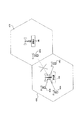
【図1】本発明に適合する方法およびシステムに従った無線システムを示す図である。
【図2】本発明に適合する方法およびシステムに従った基地局を示す構成図である。
【図3】本発明に適合する方法およびシステムに従った無線システムを示す図である。
【図4】本発明に適合する方法およびシステムに従って動作する無線通信システムにおける、2つの例示的な基地局を示す図である。
【図5】本発明に適合する方法およびシステムに従って、カバレージセル全体にわたって干渉を削減するためのシステムのプロセス図を示す図である。
【図6】本発明に適合する方法およびシステムに従って、カバレージセル全体にわたって干渉を削減するためのシステムのプロセス図を示す図である。
【図7】本発明に適合する方法およびシステムに従って、カバレージセル全体にわたって干渉を削減するためのシステムのプロセス図を示す図である。
【図8】本発明に適合する方法およびシステムに従って、カバレージセル全体にわたって干渉を削減するためのシステムのプロセス図を示す図である。
【図9A】本発明に適合する方法およびシステムに従って、セル全体にわたって干渉を除去するために実行されるステップを示すフローチャートである。
【図9B】本発明に適合する方法およびシステムに従って、セル全体にわたって干渉を除去するために実行されるステップを示すフローチャートである。
【図9C】本発明に適合する方法およびシステムに従って、セル全体にわたって干渉を除去するために実行されるステップを示すフローチャートである。【Technical field】
[0001]
An application filed concurrently with this application, entitled "Methods and Systems for Adjusting Sectors Across Coverage Cells," by Paul Proctor and Paul Zablocky, includes the subject matter relating to the subject matter of this application and is hereby incorporated by reference in its entirety. It is.
[0002]
The present invention relates generally to reducing interference in wireless communication systems, and more particularly, to reducing interference by canceling interfering wireless signals transmitted from wireless devices in neighboring cells. And a method and system therefor.
[Background Art]
[0003]
As wireless communications become more widely used, they are increasingly unable to keep up with the demand for wireless resources such as available electromagnetic bandwidth. To alleviate some of these problems, a wireless communication technique known as code division multiple access ("CDMA") has been developed by allowing multiple signals to be transmitted simultaneously over a shared portion of the electromagnetic spectrum. Has been introduced. This is implemented by using spread spectrum techniques to assign a unique code to the data and by modulating the result onto a radio frequency carrier signal. The receiver then detects the radio signal and recovers the data by demodulating the radio signal using its unique spreading code. As a result of the spread spectrum technique, the receiver can generate gain within the power of the detected signal with respect to noise and other signals. Thus, signals from several transmitters can be transmitted simultaneously using different spreading codes over the same bandwidth.
[0004]
In theory, if the unique spreading codes are perfectly orthogonal, the bandwidth capacity will be limited only by the processing power and code length available at the receiver. However, in practice, if the time offset between the signals is random, it is impossible to design these unique codes to be completely orthogonal. Therefore, as a result, interference between simultaneous signals called multiple access interference ("MAI") occurs, affecting the capacity and performance of conventional CDMA systems. The MAI generated by a single signal is usually small, but the amount of MAI becomes significant as the number of signals increases.
[0005]
In addition, the amount of MAI can increase dramatically with high data rate communications. In some CDMA systems, high data rate communications can be split into multiple data channels, which prevents the spreading factor from becoming too low. In such a situation, each data channel uses a different code, so that each high data rate communication uses multiple codes. Thus, high data rate communications can create artificial hot spots, i.e., one high data rate communication is equivalent to combining several low data rate communications. Thus, the effect of MAI for high data rate communication may be greater than the effect of MAI for low data rate communication. Similarly, signals originating near the edge of coverage may dramatically increase MAI due to the need for more power to transmit those signals from the edge of the coverage cell. .
[0006]
In conventional CDMA detectors, several methods have been used to mitigate the effects of MAI. For example, power control has been used to mitigate the near-far effect problem so that all signals arrive at the base station at the required minimum power regardless of distance. However, the minimum power required for a high data rate signal may be large enough to negate or significantly interfere with other signals. More generally, limiting the transmission power will have the undesirable consequence of reducing cell size.
[0007]
Other attempts to reduce MAI in wireless communication systems include subtracting the interfering signal from the received signal. Two well-known subtractive interference cancellation detectors are the successive interference cancellation ("SIC") and parallel interference cancellation ("PIC") detectors. The SIC detector uses a continuous scheme to eliminate interference. Each stage of the detector determines, recovers, and removes bits from one additional signal from the received signal, so that in the next stage the remaining signals detect less MAI. In contrast to the SIC detector, the PIC detector performs all MAI estimation and subtraction of each signal in parallel. There are documents that have disclosed additional information regarding SIC and PIC detectors, which are incorporated herein by reference (see, for example, Non-Patent Document 1).
[0008]
However, prior art removal techniques have at least two disadvantages. First, only signals known to the receiving cell can be subtracted. This is because the receiver needs the unique code of the desired signal to demodulate and subtract from the entire received signal. In conventional CDMA systems, these signals are limited to signals from wireless devices in the cell and from wireless devices undergoing soft-handoff. Therefore, signal interference that is not in soft handoff or that has not occurred in the serving cell is ignored.
[0009]
Further, conventional cancellation techniques do not determine which signals should be subtracted to improve signal reconstruction of the remaining signals. This determination is important because the processing power required to demodulate and subtract the interfering signal is usually limited. The prior art also does not strip out strategic signals, such as high data rate signals, to significantly reduce MAI.
[0010]
[Non-patent document 1]
Multi-User Detection for DS-CDMA Communications, S. Moshavi, IEEE Communications Magazine, Oct 1996, Vol 34, No. 10
DISCLOSURE OF THE INVENTION
[Problems to be solved by the invention]
[0011]
It is an object of the present invention to provide a method and system for overcoming the above and other problems of the prior art.
[Means for Solving the Problems]
[0012]
Methods and systems consistent with the present invention as implemented and described broadly herein reduce interference in wireless communication systems. In one embodiment of the present invention, a first wireless device served by a first cell performs a measurement and transmits the measurement to the first cell. When the first cell receives the measurement, the first cell determines whether the first wireless device may be causing interference in the second cell, and the first wireless device determines whether the first wireless device is causing interference in the second cell. Is transmitted, the interference information is transmitted to the second cell. Upon receiving the interference information from the first cell, the second cell demodulates and removes the first wireless device based on the interference information.
[0013]
In another embodiment, interference between wireless devices is canceled in multiple cells serving the wireless device. The signal strength of the cell is monitored by the wireless device and information from the wireless device is collected at the serving cell. Based on the information, the one or more wireless devices are causing interference in one or more cells adjacent to a serving cell serving the one or more interfering wireless devices Is determined. The information about the interference is then transmitted to the neighbor cell to remove the interference, if the neighbor cell has so selected.
[0014]
It is understood that both the foregoing general description and the following detailed description are exemplary and explanatory only and are not restrictive of the invention, as set forth in the following claims. Let's do it. Additional objects and advantages of the invention will be set forth in part in the description which follows, and in part will be obvious from the description, or may be learned by practice of the invention. The objects and advantages of the invention will be realized and attained by means of the elements and combinations particularly pointed out in the appended claims. The accompanying drawings, which are incorporated in and constitute a part of this specification, illustrate several embodiments of the invention and, together with the description, serve to explain the principles of the invention.
BEST MODE FOR CARRYING OUT THE INVENTION
[0015]
The present invention is directed to a system and method for sharing information between base stations to reduce interference in a wireless communication coverage cell. By sharing information between base stations, interference communication signals can be detected and demodulated to eliminate interference communication.
[0016]
One skilled in the art will appreciate that removing only a small portion of the neighbor cell communication can significantly reduce the MAI. More specifically, by carefully selecting the highest MAI-generated communication, a significant reduction in adjacent cell interference can be performed while keeping processing power requirements to a minimum. By eliminating the worst neighboring cell interfering communications, performance gains such as increased capacity, increased reliability, increased data rates, and improved power utilization can be achieved. Further, reducing the interference effects of high data rate communications allows service providers to provide uniform coverage throughout the cell.
[0017]
Reference will now be made in detail to preferred embodiments of the invention, examples of which are illustrated in the accompanying drawings. Wherever possible, the same reference numbers will be used throughout the drawings to refer to the same or like parts.
[0018]
FIG. 1 is a block diagram illustrating a
[0019]
As shown, each
[0020]
In a
[0021]
For example, each
[0022]
Since there is no central MSC or BSC, the wireless system can be expanded simply by adding a
[0023]
[0024]
FIG. 2 is a block diagram illustrating a
[0025]
As mentioned above, each base station may be a plug and play type device. For example, if
[0026]
FIG. 3 is a diagram illustrating a
[0027]
Base stations 110_3, 110_4, and 110_5 are connected to a network 310_2, which is connected to a
[0028]
Networks 310_1 and 310_2 may include any type of network, such as Ethernet, Fiber Distributed Date Interface (“FDDI”) networks.
[0029]
A central database of wireless networks (“CDWN”) 360 stores information about network addresses (eg, IP addresses) for
[0030]
With the above preface to an exemplary operating environment, reference is now made to the remaining FIGS. 4-9, which illustrate aspects of the preferred embodiment of the present invention.
[0031]
FIG. 4 is a diagram illustrating two
[0032]
[0033]
The coverage areas of the
[0034]
In this embodiment, the wireless devices communicate with their respective base stations via antennas according to Wideband Code Division Multiple Access ("W-CDMA"). A detailed description of how to communicate data using W-CDMA is set forth in the following 3GPP standard, the contents of which are incorporated herein by reference in their entirety:
[0035]
Physical layer: 3GPP TS 25-200 series (Release 1999)
UE-UTRAN radio interface: 3GPP TS 25-300 series (Release 1999)
UTRAN lu, lur, lub interfaces: 3GPP TS 25-400 series (release 1999)
[0036]
Although some embodiments of the invention are described generally in the context of a W-CDMA wireless communication system, other communication schemes or techniques such as spread spectrum CDMA may be used instead.
[0037]
Each
[0038]
Removing signals from interfering devices, such as high transmission power and high data rate devices, not only reduces interference, but also reduces the required transmission power and increases the available capacity in adjacent cells. In addition, high data rate devices that were previously limited to a small area around the base station may be made more widely accessible within their serving cell.
[0039]
Referring now to FIGS. 5-8, a process diagram of a system for reducing interference across a coverage cell according to one embodiment of the present invention will be described. In FIG. 5, a
[0040]
According to one embodiment, wireless devices, such as
[0041]
Referring now to FIG. 6, the results of these measurements are sent to the serving
[0042]
Upon receiving the measurement information,
[0043]
Referring now to FIG. 7, upon determining that
[0044]
Referring now to FIG. 8, upon receiving information about potential interfering signals from the
[0045]
9A, 9B, and 9C illustrate an exemplary method for removing communication from a single wireless device, according to an embodiment of the present invention. Although the method describes a simple example involving only one wireless device, its serving base station, and its neighboring base stations, the exemplary method describes any number of wireless devices, It is applicable to any number of base stations and any number of sectors per cell.
[0046]
Referring now to FIG. 9A, a wireless device, such as
[0047]
Upon receiving the measurements from the
[0048]
This threshold may change over time, from data rate to data, and from base station to base station. For example, the
[0049]
If it is determined that the signal strength measurement does not exceed the strength threshold, or if the neighboring
[0050]
Referring now to FIG. 9B, upon receiving the interference report, the neighboring
[0051]
The neighboring
[0052]
The WD list is further analyzed and ordered WD list, loading at
[0053]
For every M frames (step 925), the neighboring
[0054]
Other base stations may assist in demodulating and determining bit and channel estimates that one or more base stations may overload. Further,
[0055]
Every N frames (step 928), neighboring
[0056]
A major drawback of conventional MUD algorithms is that they require significant processing power to perform multi-user detection. For example, at each stage of the PIC MUD algorithm, K users are demodulated, and bit and channel estimates are obtained for each of the K users. Next, each of the K-bit estimates is scaled by the channel estimate and redistributed. At each output, all but one input signal is summed and subtracted from the sum of the received signals to obtain a sharper signal for each of the K users. The sharper signal is finally fed back to the next stage of the conventional MUD algorithm.
[0057]
FIG. 9C is a flowchart illustrating a MUD algorithm according to an embodiment of the present invention. The MUD algorithm of embodiments of the present invention reduces the processing power usage required by conventional algorithms in several ways. First, only the wireless devices included in the MUD list are demodulated. Also, as described above, the MUD list can be expanded or reduced depending on the availability of processing power. For example, processing power can be further reduced by using a modified PIC MUD algorithm. Instead of demodulating and reconstructing every user in the MUD LIST at every stage of the multi-user detection algorithm, using a goodness metric such as an error in a cyclic redundancy check ("CRC"), The user can be estimated and removed only once, or the number of times the user is removed can be minimized.
[0058]
Referring next to FIG. 9C, the neighboring
[0059]
If any bit estimates match the quality metric, the
[0060]
Once the estimate has been regenerated and / or received, it is then subtracted from the signal received by the adjacent base station 410 (step 944). Next, the neighboring
[0061]
While the preferred embodiments and methods of the present invention have been illustrated and described above, it will be apparent to those skilled in the art that various changes and modifications can be made and the true nature of the present invention It will be appreciated that elements can be replaced with equivalents without departing from the scope. Therefore, it is not intended that the invention be limited to the specific embodiments and methods disclosed herein, but that the invention includes all embodiments that fall within the scope of the appended claims. .
[Brief description of the drawings]
[0062]
FIG. 1 illustrates a wireless system according to a method and system consistent with the present invention.
FIG. 2 is a block diagram illustrating a base station according to a method and system consistent with the present invention.
FIG. 3 illustrates a wireless system according to a method and system consistent with the present invention.
FIG. 4 illustrates two exemplary base stations in a wireless communication system operating in accordance with the methods and systems consistent with the present invention.
FIG. 5 illustrates a process diagram of a system for reducing interference across a coverage cell in accordance with a method and system consistent with the present invention.
FIG. 6 illustrates a process diagram of a system for reducing interference across a coverage cell in accordance with a method and system consistent with the present invention.
FIG. 7 illustrates a process diagram of a system for reducing interference across a coverage cell in accordance with a method and system consistent with the present invention.
FIG. 8 illustrates a process diagram of a system for reducing interference across a coverage cell in accordance with a method and system consistent with the present invention.
FIG. 9A is a flowchart illustrating steps performed to remove interference across a cell in accordance with a method and system consistent with the present invention.
FIG. 9B is a flowchart illustrating steps performed to remove interference across a cell in accordance with a method and system consistent with the present invention.
FIG. 9C is a flowchart illustrating steps performed to remove interference across a cell in accordance with a method and system consistent with the present invention.
Claims (22)
第1のセルで、該第1のセルによってサービスが提供される第1の無線デバイスから、前記第1の無線デバイスが前記第1のセルにある間に測定情報を受け取るステップと、
前記第1の無線デバイス以外の無線デバイスにサービスを提供している第2のセルで、前記第1の無線デバイスが干渉を発生させていることを、前記測定情報に基づいて判定するステップと、
前記干渉に関する情報を前記第2のセルに送信するステップと、
前記第2のセルで干渉情報を受け取るステップと、
前記干渉情報に基づいて信号を判定するステップと、
前記干渉を削減するために前記第2のセルで前記信号を引き去るステップと
を備えることを特徴とする方法。A method for reducing interference in a wireless communication system,
Receiving, in a first cell, measurement information from a first wireless device served by the first cell while the first wireless device is in the first cell;
In a second cell serving a wireless device other than the first wireless device, determining that the first wireless device is causing interference based on the measurement information;
Transmitting information about the interference to the second cell;
Receiving interference information at the second cell;
Determining a signal based on the interference information;
Subtracting the signal at the second cell to reduce the interference.
前記第1および第2の無線デバイスのおおよその干渉影響を判定するステップと、
それぞれのおおよその干渉影響に基づいて前記第1および第2の無線デバイスをランク付けするステップと、
前記第1および第2の無線デバイスの前記干渉影響に基づいて、無線デバイスのリストを作成するステップと、
前記リスト上の無線デバイスの信号を引き去るステップとを含むことを特徴とする請求項6に記載の方法。The withdrawing step comprises:
Determining an approximate interference effect of the first and second wireless devices;
Ranking the first and second wireless devices based on respective approximate interference effects;
Creating a list of wireless devices based on the interference effects of the first and second wireless devices;
Subtracting the signal of the wireless device on the list.
前記第1および第2の無線デバイスの測定された干渉レベルを判定するステップと、
それぞれの測定された干渉レベルに基づいて前記第1および第2の無線デバイスをランク付けするステップと、
前記第1および第2の無線デバイスの測定された干渉レベルに基づいて、無線デバイスのリストを作成するステップと、
前記リスト上の前記無線デバイスの信号を引き去るステップとを含む
ことを特徴とする請求項6に記載の方法。The withdrawing step comprises:
Determining a measured interference level of the first and second wireless devices;
Ranking the first and second wireless devices based on respective measured interference levels;
Creating a list of wireless devices based on the measured interference levels of the first and second wireless devices;
Subtracting the signal of the wireless device on the list.
前記リスト上の無線デバイスの信号を復調するステップと、
前記リスト上の無線デバイスの復調された信号のビット推定値およびチャネル推定値を決定するステップと、
前記リスト上の無線デバイスの前記信号は優良度測定基準に合致することを判定するステップとを含む
ことを特徴とする請求項7に記載の方法。The withdrawing step comprises:
Demodulating the signals of the wireless devices on the list;
Determining a bit estimate and a channel estimate of the demodulated signal of the wireless device on the list;
Determining that the signal of the wireless device on the list meets a quality metric.
第1のセルによってサービスが提供される第1の無線デバイスから、前記第1の無線デバイスが前記第1のセルにある間に信号を受け取るステップと、
前記信号が、前記第1の無線デバイス以外の無線デバイスにサービスを提供している第2のセルで、少なくとも1つの他の無線デバイスを干渉していることを判定するステップと、
前記第1の無線デバイスに関する情報を前記第2のセルに送信するステップと、
前記第2のセルで前記信号によって発生した干渉を、前記伝送された情報に基づいて削減するステップと
を備えることを特徴とする方法。A method for reducing interference in a wireless communication system,
Receiving a signal from a first wireless device served by a first cell while the first wireless device is in the first cell;
Determining that the signal is interfering with at least one other wireless device in a second cell serving a wireless device other than the first wireless device;
Transmitting information about the first wireless device to the second cell;
Reducing interference caused by said signal in said second cell based on said transmitted information.
第1の無線デバイスを含む複数の無線デバイスと、
第1のセルおよび第2のセルを含む複数のセルと、
パケットネットワークとを備え、
前記第1のセルは、前記第1の無線デバイスから測定情報を受け取り、前記第1の無線デバイスが前記第2のセルで干渉を発生させているかどうかを判定し、前記干渉に関する情報を前記パケットネットワークを介して前記第2のセルに伝送し、
前記第2のセルは、前記第1のセルから前記干渉情報を受け取り、前記第1の無線デバイスによって発生した前記干渉を前記干渉情報に基づいて除去する
ことを特徴とするシステム。A system for reducing interference between wireless devices,
A plurality of wireless devices, including a first wireless device;
A plurality of cells including a first cell and a second cell;
With a packet network,
The first cell receives measurement information from the first wireless device, determines whether the first wireless device is causing interference in the second cell, and passes information about the interference to the packet. Transmitting to the second cell via a network,
The system of claim 2, wherein the second cell receives the interference information from the first cell and removes the interference generated by the first wireless device based on the interference information.
複数の無線デバイスにサービスを提供する複数のセルを提供するステップと、
セルの信号強度を監視するステップと、
サービス提供セルで、前記複数の無線デバイスに関する情報を集めるステップと、
無線デバイスのうちの1つまたは複数が、該1つまたは複数の無線デバイスにサービスを提供する前記サービス提供セルのうちの他の1つに隣接する前記サービス提供セルのうちの1つまたは複数で、干渉を発生させていることを判定するステップと、
前記干渉を除去するために、前記干渉に関する情報を隣接する前記サービス提供セルに伝送するステップと
を備えることを特徴とする方法。A method for removing interference between wireless devices, comprising:
Providing a plurality of cells serving a plurality of wireless devices;
Monitoring the signal strength of the cell;
Collecting information about the plurality of wireless devices in a serving cell;
One or more of the wireless devices is connected to one or more of the serving cells adjacent to another one of the serving cells serving the one or more wireless devices. Determining that interference is occurring;
Transmitting the information on the interference to the neighboring serving cell to remove the interference.
Applications Claiming Priority (2)
| Application Number | Priority Date | Filing Date | Title |
|---|---|---|---|
| US09/884,637 US6771934B2 (en) | 2001-06-19 | 2001-06-19 | Methods and systems for reducing interference across coverage cells |
| PCT/US2002/019550 WO2002103920A2 (en) | 2001-06-19 | 2002-06-19 | Methods and systems for reducing interference across coverage cells |
Related Child Applications (1)
| Application Number | Title | Priority Date | Filing Date |
|---|---|---|---|
| JP2006327426A Division JP4785720B2 (en) | 2001-06-19 | 2006-12-04 | Method and system for reducing interference across coverage cells |
Publications (2)
| Publication Number | Publication Date |
|---|---|
| JP2004531975A true JP2004531975A (en) | 2004-10-14 |
| JP2004531975A5 JP2004531975A5 (en) | 2005-11-17 |
Family
ID=25385029
Family Applications (2)
| Application Number | Title | Priority Date | Filing Date |
|---|---|---|---|
| JP2003506111A Pending JP2004531975A (en) | 2001-06-19 | 2002-06-19 | Method and system for reducing interference across a coverage cell |
| JP2006327426A Expired - Fee Related JP4785720B2 (en) | 2001-06-19 | 2006-12-04 | Method and system for reducing interference across coverage cells |
Family Applications After (1)
| Application Number | Title | Priority Date | Filing Date |
|---|---|---|---|
| JP2006327426A Expired - Fee Related JP4785720B2 (en) | 2001-06-19 | 2006-12-04 | Method and system for reducing interference across coverage cells |
Country Status (6)
| Country | Link |
|---|---|
| US (1) | US6771934B2 (en) |
| EP (1) | EP1400025B1 (en) |
| JP (2) | JP2004531975A (en) |
| CA (1) | CA2448521C (en) |
| DE (1) | DE60231978D1 (en) |
| WO (1) | WO2002103920A2 (en) |
Cited By (19)
| Publication number | Priority date | Publication date | Assignee | Title |
|---|---|---|---|---|
| JP2007502091A (en) * | 2003-05-14 | 2007-02-01 | インターディジタル テクノロジー コーポレイション | Method and apparatus for network management using periodic measurement of indicators |
| JP2009506660A (en) * | 2005-08-22 | 2009-02-12 | クゥアルコム・インコーポレイテッド | Reverse link interference cancellation |
| JP2009534927A (en) * | 2006-04-21 | 2009-09-24 | アルカテル−ルーセント ユーエスエー インコーポレーテッド | Method for controlling the effects of out-of-cell interference in wireless cellular systems utilizing backhaul transmission of decoded data and format |
| JP2010518723A (en) * | 2007-02-09 | 2010-05-27 | テレコム・イタリア・エッセ・ピー・アー | Characterizing co-channel interference in wireless communication systems |
| JP2012213163A (en) * | 2005-08-01 | 2012-11-01 | Ubiquisys Ltd | Local area cellular base station |
| JP2013507075A (en) * | 2009-10-01 | 2013-02-28 | クゥアルコム・インコーポレイテッド | Scalable channel feedback for wireless communication |
| US8594252B2 (en) | 2005-08-22 | 2013-11-26 | Qualcomm Incorporated | Interference cancellation for wireless communications |
| US8630602B2 (en) | 2005-08-22 | 2014-01-14 | Qualcomm Incorporated | Pilot interference cancellation |
| JP2014007763A (en) * | 2003-07-17 | 2014-01-16 | Interdigital Technology Corp | Signaling method for wlan network control and management device |
| US8743909B2 (en) | 2008-02-20 | 2014-06-03 | Qualcomm Incorporated | Frame termination |
| US8781005B2 (en) | 2009-10-01 | 2014-07-15 | Qualcomm Incorporated | Scalable quantization of channel state information for MIMO transmission |
| US8787509B2 (en) | 2009-06-04 | 2014-07-22 | Qualcomm Incorporated | Iterative interference cancellation receiver |
| US8831149B2 (en) | 2009-09-03 | 2014-09-09 | Qualcomm Incorporated | Symbol estimation methods and apparatuses |
| US8995417B2 (en) | 2008-06-09 | 2015-03-31 | Qualcomm Incorporated | Increasing capacity in wireless communication |
| US9055545B2 (en) | 2005-08-22 | 2015-06-09 | Qualcomm Incorporated | Interference cancellation for wireless communications |
| US9160577B2 (en) | 2009-04-30 | 2015-10-13 | Qualcomm Incorporated | Hybrid SAIC receiver |
| US9237515B2 (en) | 2008-08-01 | 2016-01-12 | Qualcomm Incorporated | Successive detection and cancellation for cell pilot detection |
| US9277487B2 (en) | 2008-08-01 | 2016-03-01 | Qualcomm Incorporated | Cell detection with interference cancellation |
| US9673837B2 (en) | 2009-11-27 | 2017-06-06 | Qualcomm Incorporated | Increasing capacity in wireless communications |
Families Citing this family (108)
| Publication number | Priority date | Publication date | Assignee | Title |
|---|---|---|---|---|
| JP3607854B2 (en) * | 2001-11-22 | 2005-01-05 | 松下電器産業株式会社 | Base station apparatus, mobile station apparatus, and transmission power control method |
| CN100352304C (en) * | 2001-11-29 | 2007-11-28 | Sk电信有限公司 | Method of Controlling Base Station Data |
| US7502614B2 (en) * | 2002-02-18 | 2009-03-10 | Sony Corporation | Radio communication system, radio communication apparatus and radio communication method, and computer program |
| EP1337068A1 (en) * | 2002-02-19 | 2003-08-20 | TELEFONAKTIEBOLAGET LM ERICSSON (publ) | Interference measurement |
| US20030162573A1 (en) * | 2002-02-19 | 2003-08-28 | Jyhchau Horng | Down-link interference cancellation for high-data-rate channels in advanced digital wireless networks |
| FR2847110A1 (en) * | 2002-11-08 | 2004-05-14 | Melco Mobile Comm Europ | METHOD FOR REDUCING DEAD ZONES IN A UMTS SYSTEM, CORRESPONDING MOBILE TELECOMMUNICATION SYSTEM AND MOBILE STATION |
| FR2847108A1 (en) * | 2002-11-08 | 2004-05-14 | Mitsubishi Electric Telecom Eu | METHOD AND SYSTEM FOR REDUCING DEAD ZONES IN A UMTS SYSTEM |
| EP1427233A1 (en) * | 2002-12-02 | 2004-06-09 | Mitsubishi Electric Information Technology Centre Europe B.V. | Method and device for simulating operating conditions of a mobile telecommunication system |
| US9661519B2 (en) | 2003-02-24 | 2017-05-23 | Qualcomm Incorporated | Efficient reporting of information in a wireless communication system |
| US8811348B2 (en) | 2003-02-24 | 2014-08-19 | Qualcomm Incorporated | Methods and apparatus for generating, communicating, and/or using information relating to self-noise |
| US7218948B2 (en) | 2003-02-24 | 2007-05-15 | Qualcomm Incorporated | Method of transmitting pilot tones in a multi-sector cell, including null pilot tones, for generating channel quality indicators |
| US9544860B2 (en) | 2003-02-24 | 2017-01-10 | Qualcomm Incorporated | Pilot signals for use in multi-sector cells |
| KR100606129B1 (en) * | 2003-04-30 | 2006-07-28 | 삼성전자주식회사 | Channel Quality Measurement and Reporting Method in Broadband Wireless Access Communication Systems |
| US20040242233A1 (en) * | 2003-06-02 | 2004-12-02 | Navini Networks, Inc. | Method and system for providing a mobile node proxy service to a traveling mobile node |
| US20050111408A1 (en) * | 2003-11-25 | 2005-05-26 | Telefonaktiebolaget Lm Ericsson (Publ) | Selective interference cancellation |
| US20050111405A1 (en) * | 2003-11-25 | 2005-05-26 | Emmanuel Kanterakis | Interference cancellation method and apparatus |
| DE102004007975B3 (en) * | 2004-02-18 | 2005-07-07 | Siemens Ag | Communication method for radio communications system with increase in transmission power of first radio access point until reception of information from radio station in region covered by second radio access point |
| GB2414366A (en) * | 2004-05-20 | 2005-11-23 | Ipwireless Inc | Multi-user detector for use in a communication system |
| US8503938B2 (en) | 2004-10-14 | 2013-08-06 | Qualcomm Incorporated | Methods and apparatus for determining, communicating and using information including loading factors which can be used for interference control purposes |
| RU2007117711A (en) * | 2004-10-14 | 2008-11-20 | Квэлкомм Флэрион Текнолоджиз, Инк. (Us) | METHODS AND DEVICE FOR DETERMINING, TRANSMITTING, AND USING INFORMATION THAT MAY BE USED FOR INTERFERENCE MANAGEMENT |
| US8848574B2 (en) * | 2005-03-15 | 2014-09-30 | Qualcomm Incorporated | Interference control in a wireless communication system |
| CN1925662A (en) | 2005-09-02 | 2007-03-07 | 华为技术有限公司 | Method for collecting interfering status information of terminals by concomitant base station |
| KR100810231B1 (en) * | 2005-09-28 | 2008-03-06 | 삼성전자주식회사 | Signal transmission method and apparatus using multiple antennas in wireless communication system |
| US8694042B2 (en) | 2005-10-14 | 2014-04-08 | Qualcomm Incorporated | Method and apparatus for determining a base station's transmission power budget |
| US9191840B2 (en) * | 2005-10-14 | 2015-11-17 | Qualcomm Incorporated | Methods and apparatus for determining, communicating and using information which can be used for interference control |
| WO2007049998A1 (en) * | 2005-10-26 | 2007-05-03 | Telefonaktiebolaget Lm Ericsson (Publ) | Methods and arrangements in a mobile telecommunication network |
| US20070249360A1 (en) | 2005-12-22 | 2007-10-25 | Arnab Das | Methods and aparatus related to determining, communicating, and/or using delay information in a wireless communications system |
| US9125093B2 (en) | 2005-12-22 | 2015-09-01 | Qualcomm Incorporated | Methods and apparatus related to custom control channel reporting formats |
| US9473265B2 (en) | 2005-12-22 | 2016-10-18 | Qualcomm Incorporated | Methods and apparatus for communicating information utilizing a plurality of dictionaries |
| US9137072B2 (en) | 2005-12-22 | 2015-09-15 | Qualcomm Incorporated | Methods and apparatus for communicating control information |
| US9572179B2 (en) | 2005-12-22 | 2017-02-14 | Qualcomm Incorporated | Methods and apparatus for communicating transmission backlog information |
| US9338767B2 (en) | 2005-12-22 | 2016-05-10 | Qualcomm Incorporated | Methods and apparatus of implementing and/or using a dedicated control channel |
| US9451491B2 (en) | 2005-12-22 | 2016-09-20 | Qualcomm Incorporated | Methods and apparatus relating to generating and transmitting initial and additional control information report sets in a wireless system |
| US20070149132A1 (en) | 2005-12-22 | 2007-06-28 | Junyl Li | Methods and apparatus related to selecting control channel reporting formats |
| US8514771B2 (en) | 2005-12-22 | 2013-08-20 | Qualcomm Incorporated | Methods and apparatus for communicating and/or using transmission power information |
| US9148795B2 (en) | 2005-12-22 | 2015-09-29 | Qualcomm Incorporated | Methods and apparatus for flexible reporting of control information |
| US9125092B2 (en) | 2005-12-22 | 2015-09-01 | Qualcomm Incorporated | Methods and apparatus for reporting and/or using control information |
| US9119220B2 (en) | 2005-12-22 | 2015-08-25 | Qualcomm Incorporated | Methods and apparatus for communicating backlog related information |
| US8437251B2 (en) | 2005-12-22 | 2013-05-07 | Qualcomm Incorporated | Methods and apparatus for communicating transmission backlog information |
| US20070243882A1 (en) | 2006-04-12 | 2007-10-18 | Qualcomm Incorporated | Method and apparatus for locating a wireless local area network associated with a wireless wide area network |
| KR100964577B1 (en) * | 2006-06-02 | 2010-06-21 | 삼성전자주식회사 | Power control method and system in communication system |
| KR100959336B1 (en) | 2006-06-23 | 2010-05-20 | 삼성전자주식회사 | Apparatus and method for reducing neighbor cell interference in broadband wireless communication system |
| US7675846B2 (en) * | 2006-06-23 | 2010-03-09 | Telefonaktiebolaget L M Ericsson (Publ) | Method and system for using the synchronization channel to obtain measurements in a cellular communications system |
| CN101485121B (en) * | 2006-07-12 | 2012-03-21 | 艾利森电话股份有限公司 | Method and apparatus for interference reduction |
| JP2008160380A (en) * | 2006-12-22 | 2008-07-10 | Nec Corp | Inter-cell interference suppression method, radio base station, and user terminal |
| US7738530B2 (en) * | 2006-12-26 | 2010-06-15 | Motorola, Inc. | Interference suppression for partial usage of subchannels uplink |
| GB2445779B (en) | 2007-01-11 | 2009-07-08 | Samsung Electronics Co Ltd | Wireless communication system |
| JP4703577B2 (en) * | 2007-01-17 | 2011-06-15 | 株式会社エヌ・ティ・ティ・ドコモ | Logical interface setting method, radio base station, communication management device |
| ES2393767T3 (en) * | 2007-01-31 | 2012-12-27 | Sharp Kabushiki Kaisha | Exchange of an interface table between base stations |
| US20080207209A1 (en) * | 2007-02-22 | 2008-08-28 | Fujitsu Limited | Cellular mobile radio communication system |
| CN101657976B (en) * | 2007-04-20 | 2013-06-26 | Lm爱立信电话有限公司 | Improve Inter-Cell Interference Coordination |
| KR100959038B1 (en) * | 2007-06-14 | 2010-05-20 | 삼성전자주식회사 | Parameter Rollback Device and Method in Self-Configurable Broadband Wireless Communication System |
| US8433292B2 (en) * | 2007-06-29 | 2013-04-30 | Alcatel Lucent | Network based mobile user proxy and agent |
| US8504091B2 (en) | 2008-02-01 | 2013-08-06 | Qualcomm Incorporated | Interference mitigation for control channels in a wireless communication network |
| US8599705B2 (en) | 2008-02-01 | 2013-12-03 | Qualcomm Incorporated | Interference management based on enhanced pilot measurement reports |
| US9246541B2 (en) * | 2008-02-01 | 2016-01-26 | Qualcomm Incorporated | UTRAN enhancements for the support of inter-cell interference cancellation |
| WO2009110572A1 (en) * | 2008-03-05 | 2009-09-11 | 日本電気株式会社 | Mobile communication system, base station, transmission power control method, and program |
| KR101457690B1 (en) * | 2008-03-05 | 2014-11-04 | 삼성전자주식회사 | Receiving apparatus and method for removing an interference signal in a communication system |
| CN101541012A (en) * | 2008-03-21 | 2009-09-23 | 夏普株式会社 | Interference overload indication generation method, interference overload indication triggering method, interference overload indication method and base station |
| US8559359B2 (en) * | 2008-04-29 | 2013-10-15 | Qualcomm Incorporated | Information exchange mechanisms to achieve network QoS in wireless cellular systems |
| US8675550B2 (en) * | 2008-06-14 | 2014-03-18 | Alcatel Lucent | Method for backhaul interference management with access terminal router |
| US9026123B2 (en) * | 2008-07-09 | 2015-05-05 | Broadcom Corporation | Method and apparatus for managing uplink communication in wireless communication network |
| US9867203B2 (en) | 2008-07-11 | 2018-01-09 | Qualcomm Incorporated | Synchronous TDM-based communication in dominant interference scenarios |
| US9397866B2 (en) | 2008-09-15 | 2016-07-19 | Alcatel Lucent | Distributed multi-cell successive interference cancellation for uplink cellular networks |
| EP2374326A1 (en) * | 2008-12-05 | 2011-10-12 | Nokia Siemens Networks Oy | Apparatus and method |
| ES2353481B1 (en) | 2009-02-05 | 2012-01-13 | Vodafone España, S.A.U | BASE BAND RESOURCE MANAGEMENT PROCEDURE IN MOBILE COMMUNICATIONS NETWORKS THAT IMPLEMENT INTERFERENCE CANCELLATION TECHNIQUES. |
| US9402193B2 (en) * | 2009-03-19 | 2016-07-26 | Qualcomm Incorporated | Systems, apparatus and methods for interference management in wireless networks |
| US8346173B2 (en) * | 2009-03-20 | 2013-01-01 | Qualcomm Incorporated | Apparatus and methods for intercell interference cancellation via RNTI |
| US20100296405A1 (en) * | 2009-05-22 | 2010-11-25 | Qualcomm Incorporated | Systems, apparatus and methods for interference management on uplink channels in wireless communication systems |
| EP2280492A1 (en) * | 2009-07-07 | 2011-02-02 | ST-Ericsson (France) SAS | Process for inter-cell interference cancellation in a synchronized OFDM system, and apparatus for the same |
| US8774135B2 (en) * | 2009-08-17 | 2014-07-08 | Motorola Mobility Llc | Method and apparatus for radio link failure recovery |
| KR101376676B1 (en) | 2009-11-27 | 2014-03-20 | 퀄컴 인코포레이티드 | Increasing capacity in wireless communications |
| US9859949B2 (en) * | 2010-01-11 | 2018-01-02 | Qualcomm Incorporated | Blind uplink interference cancellation in wireless networking |
| US9179363B2 (en) * | 2011-08-12 | 2015-11-03 | Telefonaktiebolaget Lm Ericsson (Publ) | Systems and methods for determining a coupling characteristic in a radio communications network |
| GB2496431B (en) * | 2011-11-11 | 2014-11-05 | Vodafone Ip Licensing Ltd | Coexisting wireless systems |
| GB2496908B (en) | 2011-11-28 | 2017-04-26 | Ubiquisys Ltd | Power management in a cellular system |
| EP2832150B1 (en) | 2012-03-25 | 2017-11-22 | Intucell Ltd. | Communication apparatus and method for optimizing performance of a communication network |
| US8989730B2 (en) * | 2012-06-29 | 2015-03-24 | At&T Mobility Ii Llc | Detection of faulty radio oscillator or faulty mobile timing measurements |
| IL222709A (en) | 2012-10-25 | 2016-02-29 | Intucell Ltd | Method and apparatus for using inter cell interference coordination mechanism in cellular systems |
| US9014004B2 (en) | 2012-12-04 | 2015-04-21 | Cisco Technology, Inc. | Method for managing load balance in a cellular heterogeneous network |
| US9167444B2 (en) | 2012-12-04 | 2015-10-20 | Cisco Technology, Inc. | Method for managing heterogeneous cellular networks |
| IL224926A0 (en) | 2013-02-26 | 2013-07-31 | Valdimir Yanover | Method and system for dynamic allocation of resources in a cellular network |
| US9026077B2 (en) * | 2013-03-30 | 2015-05-05 | International Business Machines Corporation | Delayed delivery with bounded interference in a cellular data network |
| US20140302796A1 (en) * | 2013-04-09 | 2014-10-09 | Eden Rock Communications, Llc | Downlink interference detection using transmission matrices |
| GB2518584B (en) | 2013-07-09 | 2019-12-25 | Cisco Tech Inc | Power setting |
| CN105432110A (en) * | 2013-07-30 | 2016-03-23 | 中兴通讯(美国)公司 | Method and apparatus for cell identification for further enhanced non-CA based ICIC for LTE |
| US9438283B2 (en) * | 2014-05-23 | 2016-09-06 | Intel Corporation | Baseband time domain cancellation of data bus interference |
| US9655102B2 (en) * | 2014-06-20 | 2017-05-16 | Cisco Technology, Inc. | Interference control in a cellular communications network |
| US9772900B2 (en) * | 2014-07-10 | 2017-09-26 | Samsung Electronics Co., Ltd. | Tiered ECC single-chip and double-chip Chipkill scheme |
| US9402195B2 (en) | 2014-09-07 | 2016-07-26 | Cisco Technology, Inc. | Operation of base station in a cellular communications network |
| US9844070B2 (en) | 2014-09-10 | 2017-12-12 | Cisco Technology, Inc. | System and method for decoupling long term evolution media access control scheduling from subframe rate procedures |
| US9729396B2 (en) | 2014-11-04 | 2017-08-08 | Cisco Technology, Inc. | System and method for providing dynamic radio access network orchestration |
| US9918314B2 (en) | 2015-04-14 | 2018-03-13 | Cisco Technology, Inc. | System and method for providing uplink inter cell interference coordination in a network environment |
| US10244422B2 (en) | 2015-07-16 | 2019-03-26 | Cisco Technology, Inc. | System and method to manage network utilization according to wireless backhaul and radio access network conditions |
| US9860852B2 (en) | 2015-07-25 | 2018-01-02 | Cisco Technology, Inc. | System and method to facilitate small cell uplink power control in a network environment |
| US9648569B2 (en) | 2015-07-25 | 2017-05-09 | Cisco Technology, Inc. | System and method to facilitate small cell uplink power control in a network environment |
| US9854535B2 (en) | 2015-07-28 | 2017-12-26 | Cisco Technology, Inc. | Determining fractional frequency reuse power levels for downlink transmissions |
| US9854536B2 (en) | 2015-08-03 | 2017-12-26 | Cisco Technology, Inc. | User equipment power level selection for downlink transmissions |
| US9848389B2 (en) | 2015-08-03 | 2017-12-19 | Cisco Technology, Inc. | Selecting cells for downlink inter-cell interference coordination |
| US10154415B2 (en) | 2015-08-04 | 2018-12-11 | Cisco Technology, Inc. | Resource adaptation for frequency domain downlink inter-cell interference coordination |
| US9967067B2 (en) | 2015-09-08 | 2018-05-08 | Cisco Technology, Inc. | Serving noise/macro interference limited user equipment for downlink inter-cell interference coordination |
| US9826408B2 (en) | 2015-12-07 | 2017-11-21 | Cisco Technology, Inc. | System and method to provide uplink interference coordination in a network environment |
| US10143002B2 (en) | 2016-01-12 | 2018-11-27 | Cisco Technology, Inc. | System and method to facilitate centralized radio resource management in a split radio access network environment |
| US9813970B2 (en) | 2016-01-20 | 2017-11-07 | Cisco Technology, Inc. | System and method to provide small cell power control and load balancing for high mobility user equipment in a network environment |
| US10420134B2 (en) | 2016-02-02 | 2019-09-17 | Cisco Technology, Inc. | System and method to facilitate subframe scheduling in a split medium access control radio access network environment |
| US10091697B1 (en) | 2016-02-08 | 2018-10-02 | Cisco Technology, Inc. | Mitigation of uplink interference within heterogeneous wireless communications networks |
| US10129768B1 (en) * | 2016-11-17 | 2018-11-13 | Sprint Spectrum L.P. | Determining potential interference in a wireless network |
| US11689952B1 (en) | 2021-04-28 | 2023-06-27 | T-Mobile Innovations Llc | Identifying a worst interfering sector |
Family Cites Families (10)
| Publication number | Priority date | Publication date | Assignee | Title |
|---|---|---|---|---|
| FI107854B (en) * | 1994-03-21 | 2001-10-15 | Nokia Networks Oy | A method for eliminating interference in a CDMA cellular network |
| US5649303A (en) * | 1994-09-02 | 1997-07-15 | Motorola, Inc. | Method and apparatus for reducing interference among communication systems |
| US5594946A (en) * | 1995-02-28 | 1997-01-14 | Motorola, Inc. | Method and apparatus for mitigating interference produced by a communication unit in a communication system |
| US5799243A (en) * | 1996-12-30 | 1998-08-25 | Nokia Telecommunications Oy | Cellular radio system and a method for measuring the interference level |
| FI102866B (en) * | 1997-04-09 | 1999-02-26 | Nokia Telecommunications Oy | Reduction of interference in mobile phone systems |
| SE9702046L (en) * | 1997-05-30 | 1998-12-01 | Ericsson Telefon Ab L M | Systems and methods related to cellular communication systems |
| US5894500A (en) * | 1997-06-13 | 1999-04-13 | Motorola, Inc. | Method and apparatus for canceling signals in a spread-spectrum communication system |
| US6516196B1 (en) * | 1999-04-08 | 2003-02-04 | Lucent Technologies Inc. | Intelligent burst control functions for wireless communications systems |
| US6404760B1 (en) * | 1999-07-19 | 2002-06-11 | Qualcomm Incorporated | CDMA multiple access interference cancellation using signal estimation |
| US6486831B1 (en) * | 2001-04-23 | 2002-11-26 | Itt Manufacturing Enterprises, Inc. | Methods and apparatus for estimating accuracy of measurement signals |
-
2001
- 2001-06-19 US US09/884,637 patent/US6771934B2/en not_active Expired - Lifetime
-
2002
- 2002-06-19 DE DE60231978T patent/DE60231978D1/en not_active Expired - Lifetime
- 2002-06-19 EP EP02744479A patent/EP1400025B1/en not_active Expired - Lifetime
- 2002-06-19 JP JP2003506111A patent/JP2004531975A/en active Pending
- 2002-06-19 WO PCT/US2002/019550 patent/WO2002103920A2/en not_active Ceased
- 2002-06-19 CA CA002448521A patent/CA2448521C/en not_active Expired - Fee Related
-
2006
- 2006-12-04 JP JP2006327426A patent/JP4785720B2/en not_active Expired - Fee Related
Cited By (28)
| Publication number | Priority date | Publication date | Assignee | Title |
|---|---|---|---|---|
| JP2007502091A (en) * | 2003-05-14 | 2007-02-01 | インターディジタル テクノロジー コーポレイション | Method and apparatus for network management using periodic measurement of indicators |
| JP2014007763A (en) * | 2003-07-17 | 2014-01-16 | Interdigital Technology Corp | Signaling method for wlan network control and management device |
| US8676265B2 (en) | 2005-08-01 | 2014-03-18 | Ubiquisys Limited | Local area cellular basestation |
| US8909294B2 (en) | 2005-08-01 | 2014-12-09 | Ubiquisys Limited | Local area cellular basestation |
| US8738084B2 (en) | 2005-08-01 | 2014-05-27 | Ubiquisys Limited | Local area cellular basestation |
| JP2012213163A (en) * | 2005-08-01 | 2012-11-01 | Ubiquisys Ltd | Local area cellular base station |
| JP2009506660A (en) * | 2005-08-22 | 2009-02-12 | クゥアルコム・インコーポレイテッド | Reverse link interference cancellation |
| US9055545B2 (en) | 2005-08-22 | 2015-06-09 | Qualcomm Incorporated | Interference cancellation for wireless communications |
| JP2012023739A (en) * | 2005-08-22 | 2012-02-02 | Qualcomm Inc | Reverse link interference cancellation |
| US8594252B2 (en) | 2005-08-22 | 2013-11-26 | Qualcomm Incorporated | Interference cancellation for wireless communications |
| US8630602B2 (en) | 2005-08-22 | 2014-01-14 | Qualcomm Incorporated | Pilot interference cancellation |
| JP4922394B2 (en) * | 2006-04-21 | 2012-04-25 | アルカテル−ルーセント ユーエスエー インコーポレーテッド | Method for controlling the effects of out-of-cell interference in wireless cellular systems utilizing backhaul transmission of decoded data and format |
| JP2009534927A (en) * | 2006-04-21 | 2009-09-24 | アルカテル−ルーセント ユーエスエー インコーポレーテッド | Method for controlling the effects of out-of-cell interference in wireless cellular systems utilizing backhaul transmission of decoded data and format |
| KR101427143B1 (en) | 2007-02-09 | 2014-08-07 | 텔레콤 이탈리아 소시에떼 퍼 아찌오니 | Characterization of co-channel interference in a wireless communication system |
| JP2010518723A (en) * | 2007-02-09 | 2010-05-27 | テレコム・イタリア・エッセ・ピー・アー | Characterizing co-channel interference in wireless communication systems |
| US8743909B2 (en) | 2008-02-20 | 2014-06-03 | Qualcomm Incorporated | Frame termination |
| US8995417B2 (en) | 2008-06-09 | 2015-03-31 | Qualcomm Incorporated | Increasing capacity in wireless communication |
| US9014152B2 (en) | 2008-06-09 | 2015-04-21 | Qualcomm Incorporated | Increasing capacity in wireless communications |
| US9237515B2 (en) | 2008-08-01 | 2016-01-12 | Qualcomm Incorporated | Successive detection and cancellation for cell pilot detection |
| US9277487B2 (en) | 2008-08-01 | 2016-03-01 | Qualcomm Incorporated | Cell detection with interference cancellation |
| US9160577B2 (en) | 2009-04-30 | 2015-10-13 | Qualcomm Incorporated | Hybrid SAIC receiver |
| US8787509B2 (en) | 2009-06-04 | 2014-07-22 | Qualcomm Incorporated | Iterative interference cancellation receiver |
| US8831149B2 (en) | 2009-09-03 | 2014-09-09 | Qualcomm Incorporated | Symbol estimation methods and apparatuses |
| JP2013507075A (en) * | 2009-10-01 | 2013-02-28 | クゥアルコム・インコーポレイテッド | Scalable channel feedback for wireless communication |
| US8781005B2 (en) | 2009-10-01 | 2014-07-15 | Qualcomm Incorporated | Scalable quantization of channel state information for MIMO transmission |
| US9961579B2 (en) | 2009-10-01 | 2018-05-01 | Qualcomm Incorporated | Scalable channel feedback for wireless communication |
| US9673837B2 (en) | 2009-11-27 | 2017-06-06 | Qualcomm Incorporated | Increasing capacity in wireless communications |
| US10790861B2 (en) | 2009-11-27 | 2020-09-29 | Qualcomm Incorporated | Increasing capacity in wireless communications |
Also Published As
| Publication number | Publication date |
|---|---|
| US20030003906A1 (en) | 2003-01-02 |
| US6771934B2 (en) | 2004-08-03 |
| WO2002103920A3 (en) | 2003-04-10 |
| EP1400025B1 (en) | 2009-04-15 |
| DE60231978D1 (en) | 2009-05-28 |
| CA2448521A1 (en) | 2002-12-27 |
| EP1400025A2 (en) | 2004-03-24 |
| JP2007074755A (en) | 2007-03-22 |
| WO2002103920A2 (en) | 2002-12-27 |
| EP1400025A4 (en) | 2006-01-11 |
| JP4785720B2 (en) | 2011-10-05 |
| CA2448521C (en) | 2010-01-12 |
Similar Documents
| Publication | Publication Date | Title |
|---|---|---|
| JP4785720B2 (en) | Method and system for reducing interference across coverage cells | |
| US7437164B2 (en) | Soft handoff for reverse link in a wireless communication system with frequency reuse | |
| US8478283B2 (en) | Method and system for capacity and coverage enhancement in wireless networks with relays | |
| JP4611536B2 (en) | Handoff method in CDMA system and method using adaptive handoff algorithm | |
| JP5701987B2 (en) | Switching-based downlink aggregation for multipoint HSDPA | |
| JP6534673B2 (en) | End-to-end transport quality determination | |
| US8081985B2 (en) | Load management for a mobility management entity of a cellular communication system | |
| RU2417525C2 (en) | Power control using noise indication at multiple speeds | |
| US20120063383A1 (en) | Methods and apparatus for best-effort radio backhaul among cells on unlicensed or shared spectrum | |
| JP2007511150A (en) | Method and apparatus for combining macro diversity and time slot reuse in a communication system | |
| TW201414335A (en) | Intra frequency cell reselection in TD-SCDMA | |
| JP2016536835A (en) | Measurement and signaling for network support to enable data ICs in small cell clusters | |
| US11825372B2 (en) | Network environment health monitoring | |
| CN102047723A (en) | Method and arrangement in a telecommunication system | |
| JP2004248315A (en) | Dynamic code allocation code division multiple access communication method, and base station and radio terminal for realizing the method | |
| US12470290B2 (en) | Dynamic multipath searcher revisit rate for a WCDMA receiver | |
| US20210112440A1 (en) | Distributing UEs for Service with Throughput and Delay Guarantees | |
| WO2013158002A1 (en) | Scheduling based on ue probing | |
| Xia et al. | A CDMA-based approach for highly efficient medium access control in mesh wireless networks |
Legal Events
| Date | Code | Title | Description |
|---|---|---|---|
| A977 | Report on retrieval |
Free format text: JAPANESE INTERMEDIATE CODE: A971007 Effective date: 20060525 |
|
| A131 | Notification of reasons for refusal |
Free format text: JAPANESE INTERMEDIATE CODE: A131 Effective date: 20060602 |
|
| A601 | Written request for extension of time |
Free format text: JAPANESE INTERMEDIATE CODE: A601 Effective date: 20060904 |
|
| A602 | Written permission of extension of time |
Free format text: JAPANESE INTERMEDIATE CODE: A602 Effective date: 20060912 |
|
| A02 | Decision of refusal |
Free format text: JAPANESE INTERMEDIATE CODE: A02 Effective date: 20070529 |