FR2786485A1 - PROCESS FOR THE PREPARATION OF 3-CHROMENE DERIVATIVES, NEW 3-CHROMENE DERIVATIVES AND USE OF THESE DERIVATIVES FOR THE PREPARATION OF THIAZOLIDINONES - Google Patents
PROCESS FOR THE PREPARATION OF 3-CHROMENE DERIVATIVES, NEW 3-CHROMENE DERIVATIVES AND USE OF THESE DERIVATIVES FOR THE PREPARATION OF THIAZOLIDINONES Download PDFInfo
- Publication number
- FR2786485A1 FR2786485A1 FR9814988A FR9814988A FR2786485A1 FR 2786485 A1 FR2786485 A1 FR 2786485A1 FR 9814988 A FR9814988 A FR 9814988A FR 9814988 A FR9814988 A FR 9814988A FR 2786485 A1 FR2786485 A1 FR 2786485A1
- Authority
- FR
- France
- Prior art keywords
- alkyl
- group
- aryl
- optionally substituted
- substituted
- Prior art date
- Legal status (The legal status is an assumption and is not a legal conclusion. Google has not performed a legal analysis and makes no representation as to the accuracy of the status listed.)
- Pending
Links
- 238000000034 method Methods 0.000 title claims abstract description 26
- 238000002360 preparation method Methods 0.000 title claims description 16
- KYNSBQPICQTCGU-UHFFFAOYSA-N Benzopyrane Chemical class C1=CC=C2C=CCOC2=C1 KYNSBQPICQTCGU-UHFFFAOYSA-N 0.000 title description 5
- 150000001875 compounds Chemical class 0.000 claims abstract description 74
- ISWSIDIOOBJBQZ-UHFFFAOYSA-N Phenol Chemical compound OC1=CC=CC=C1 ISWSIDIOOBJBQZ-UHFFFAOYSA-N 0.000 claims abstract description 14
- 125000000217 alkyl group Chemical group 0.000 claims description 89
- -1 hydroxyimino Chemical group 0.000 claims description 83
- 125000003118 aryl group Chemical group 0.000 claims description 41
- 125000005843 halogen group Chemical group 0.000 claims description 35
- 229910052757 nitrogen Inorganic materials 0.000 claims description 33
- 125000004435 hydrogen atom Chemical group [H]* 0.000 claims description 29
- 229910052717 sulfur Inorganic materials 0.000 claims description 28
- 125000003342 alkenyl group Chemical group 0.000 claims description 25
- 125000004448 alkyl carbonyl group Chemical group 0.000 claims description 25
- 238000006243 chemical reaction Methods 0.000 claims description 24
- 125000002887 hydroxy group Chemical group [H]O* 0.000 claims description 23
- 125000001997 phenyl group Chemical group [H]C1=C([H])C([H])=C(*)C([H])=C1[H] 0.000 claims description 22
- 125000004169 (C1-C6) alkyl group Chemical group 0.000 claims description 20
- 125000005842 heteroatom Chemical group 0.000 claims description 20
- 125000000449 nitro group Chemical group [O-][N+](*)=O 0.000 claims description 20
- YMWUJEATGCHHMB-UHFFFAOYSA-N Dichloromethane Chemical compound ClCCl YMWUJEATGCHHMB-UHFFFAOYSA-N 0.000 claims description 18
- 125000000623 heterocyclic group Chemical group 0.000 claims description 18
- 125000004433 nitrogen atom Chemical group N* 0.000 claims description 16
- 125000001424 substituent group Chemical group 0.000 claims description 16
- 125000005129 aryl carbonyl group Chemical group 0.000 claims description 11
- 229910052760 oxygen Inorganic materials 0.000 claims description 11
- 125000003178 carboxy group Chemical group [H]OC(*)=O 0.000 claims description 10
- 125000001010 sulfinic acid amide group Chemical group 0.000 claims description 10
- 125000006828 (C2-C7) alkoxycarbonyl group Chemical group 0.000 claims description 9
- 125000005018 aryl alkenyl group Chemical group 0.000 claims description 9
- 125000002915 carbonyl group Chemical group [*:2]C([*:1])=O 0.000 claims description 9
- 125000001072 heteroaryl group Chemical group 0.000 claims description 9
- 125000004434 sulfur atom Chemical group 0.000 claims description 9
- 125000006773 (C2-C7) alkylcarbonyl group Chemical group 0.000 claims description 8
- 125000006775 (C3-C7) alkenylcarbonyl group Chemical group 0.000 claims description 8
- 125000006778 (C3-C7) alkynylcarbonyl group Chemical group 0.000 claims description 8
- MYMOFIZGZYHOMD-UHFFFAOYSA-N Dioxygen Chemical compound O=O MYMOFIZGZYHOMD-UHFFFAOYSA-N 0.000 claims description 8
- 125000004093 cyano group Chemical group *C#N 0.000 claims description 8
- 239000001301 oxygen Substances 0.000 claims description 8
- 150000003456 sulfonamides Chemical class 0.000 claims description 8
- 125000003545 alkoxy group Chemical group 0.000 claims description 7
- 125000002947 alkylene group Chemical group 0.000 claims description 7
- 125000001797 benzyl group Chemical group [H]C1=C([H])C([H])=C(C([H])=C1[H])C([H])([H])* 0.000 claims description 7
- 229910002091 carbon monoxide Inorganic materials 0.000 claims description 7
- 125000000753 cycloalkyl group Chemical group 0.000 claims description 7
- 229920000642 polymer Polymers 0.000 claims description 7
- 229940124530 sulfonamide Drugs 0.000 claims description 7
- 125000004178 (C1-C4) alkyl group Chemical group 0.000 claims description 6
- 125000005193 alkenylcarbonyloxy group Chemical group 0.000 claims description 6
- 125000005196 alkyl carbonyloxy group Chemical group 0.000 claims description 6
- 125000005161 aryl oxy carbonyl group Chemical group 0.000 claims description 6
- 125000004429 atom Chemical group 0.000 claims description 6
- HFFXLYHRNRKAPM-UHFFFAOYSA-N 2,4,5-trichloro-n-(5-methyl-1,2-oxazol-3-yl)benzenesulfonamide Chemical compound O1C(C)=CC(NS(=O)(=O)C=2C(=CC(Cl)=C(Cl)C=2)Cl)=N1 HFFXLYHRNRKAPM-UHFFFAOYSA-N 0.000 claims description 5
- 125000003903 2-propenyl group Chemical group [H]C([*])([H])C([H])=C([H])[H] 0.000 claims description 5
- UFHFLCQGNIYNRP-UHFFFAOYSA-N Hydrogen Chemical compound [H][H] UFHFLCQGNIYNRP-UHFFFAOYSA-N 0.000 claims description 5
- 125000003282 alkyl amino group Chemical group 0.000 claims description 5
- 125000005103 alkyl silyl group Chemical group 0.000 claims description 5
- 125000005198 alkynylcarbonyloxy group Chemical group 0.000 claims description 5
- 230000015572 biosynthetic process Effects 0.000 claims description 5
- 239000000460 chlorine Substances 0.000 claims description 5
- NLFBCYMMUAKCPC-KQQUZDAGSA-N ethyl (e)-3-[3-amino-2-cyano-1-[(e)-3-ethoxy-3-oxoprop-1-enyl]sulfanyl-3-oxoprop-1-enyl]sulfanylprop-2-enoate Chemical compound CCOC(=O)\C=C\SC(=C(C#N)C(N)=O)S\C=C\C(=O)OCC NLFBCYMMUAKCPC-KQQUZDAGSA-N 0.000 claims description 5
- 125000005204 heteroarylcarbonyloxy group Chemical group 0.000 claims description 5
- 229910052739 hydrogen Inorganic materials 0.000 claims description 5
- 239000001257 hydrogen Substances 0.000 claims description 5
- 125000003808 silyl group Chemical group [H][Si]([H])([H])[*] 0.000 claims description 5
- 238000003786 synthesis reaction Methods 0.000 claims description 5
- 125000006376 (C3-C10) cycloalkyl group Chemical group 0.000 claims description 4
- 125000001313 C5-C10 heteroaryl group Chemical group 0.000 claims description 4
- 229910017711 NHRa Inorganic materials 0.000 claims description 4
- 125000001624 naphthyl group Chemical group 0.000 claims description 4
- 125000000008 (C1-C10) alkyl group Chemical group 0.000 claims description 3
- HTSGKJQDMSTCGS-UHFFFAOYSA-N 1,4-bis(4-chlorophenyl)-2-(4-methylphenyl)sulfonylbutane-1,4-dione Chemical compound C1=CC(C)=CC=C1S(=O)(=O)C(C(=O)C=1C=CC(Cl)=CC=1)CC(=O)C1=CC=C(Cl)C=C1 HTSGKJQDMSTCGS-UHFFFAOYSA-N 0.000 claims description 3
- 125000005090 alkenylcarbonyl group Chemical group 0.000 claims description 3
- 125000004390 alkyl sulfonyl group Chemical group 0.000 claims description 3
- 125000004414 alkyl thio group Chemical group 0.000 claims description 3
- 125000005087 alkynylcarbonyl group Chemical group 0.000 claims description 3
- 125000006254 cycloalkyl carbonyl group Chemical group 0.000 claims description 3
- 125000004400 (C1-C12) alkyl group Chemical group 0.000 claims description 2
- 239000004215 Carbon black (E152) Substances 0.000 claims description 2
- 125000001931 aliphatic group Chemical group 0.000 claims description 2
- 125000005194 alkoxycarbonyloxy group Chemical group 0.000 claims description 2
- 125000005199 aryl carbonyloxy group Chemical group 0.000 claims description 2
- 125000000732 arylene group Chemical group 0.000 claims description 2
- 238000007334 copolymerization reaction Methods 0.000 claims description 2
- 229910052736 halogen Inorganic materials 0.000 claims description 2
- 150000002367 halogens Chemical class 0.000 claims description 2
- 125000005549 heteroarylene group Chemical group 0.000 claims description 2
- 229930195733 hydrocarbon Natural products 0.000 claims description 2
- 239000000178 monomer Substances 0.000 claims description 2
- 238000006116 polymerization reaction Methods 0.000 claims description 2
- 125000000020 sulfo group Chemical group O=S(=O)([*])O[H] 0.000 claims description 2
- 125000004356 hydroxy functional group Chemical group O* 0.000 claims 14
- 125000004430 oxygen atom Chemical group O* 0.000 claims 2
- 125000000041 C6-C10 aryl group Chemical group 0.000 claims 1
- NINIDFKCEFEMDL-UHFFFAOYSA-N Sulfur Chemical compound [S] NINIDFKCEFEMDL-UHFFFAOYSA-N 0.000 claims 1
- 150000002430 hydrocarbons Chemical class 0.000 claims 1
- 125000002924 primary amino group Chemical group [H]N([H])* 0.000 claims 1
- 239000011593 sulfur Substances 0.000 claims 1
- 125000003396 thiol group Chemical class [H]S* 0.000 claims 1
- 239000002253 acid Substances 0.000 abstract description 6
- 150000003254 radicals Chemical class 0.000 description 37
- XEKOWRVHYACXOJ-UHFFFAOYSA-N Ethyl acetate Chemical compound CCOC(C)=O XEKOWRVHYACXOJ-UHFFFAOYSA-N 0.000 description 28
- 101100192367 Mus musculus Ptpn6 gene Proteins 0.000 description 28
- 239000002904 solvent Substances 0.000 description 27
- HEDRZPFGACZZDS-MICDWDOJSA-N Trichloro(2H)methane Chemical compound [2H]C(Cl)(Cl)Cl HEDRZPFGACZZDS-MICDWDOJSA-N 0.000 description 26
- 125000004432 carbon atom Chemical group C* 0.000 description 18
- YXFVVABEGXRONW-UHFFFAOYSA-N Toluene Chemical compound CC1=CC=CC=C1 YXFVVABEGXRONW-UHFFFAOYSA-N 0.000 description 17
- JUJWROOIHBZHMG-UHFFFAOYSA-N Pyridine Chemical compound C1=CC=NC=C1 JUJWROOIHBZHMG-UHFFFAOYSA-N 0.000 description 16
- UHOVQNZJYSORNB-UHFFFAOYSA-N Benzene Chemical compound C1=CC=CC=C1 UHOVQNZJYSORNB-UHFFFAOYSA-N 0.000 description 15
- VYPSYNLAJGMNEJ-UHFFFAOYSA-N Silicium dioxide Chemical compound O=[Si]=O VYPSYNLAJGMNEJ-UHFFFAOYSA-N 0.000 description 14
- 239000002585 base Substances 0.000 description 12
- 238000005481 NMR spectroscopy Methods 0.000 description 11
- 125000002496 methyl group Chemical group [H]C([H])([H])* 0.000 description 11
- 229920006395 saturated elastomer Polymers 0.000 description 10
- WFDIJRYMOXRFFG-UHFFFAOYSA-N Acetic anhydride Chemical compound CC(=O)OC(C)=O WFDIJRYMOXRFFG-UHFFFAOYSA-N 0.000 description 9
- CSCPPACGZOOCGX-UHFFFAOYSA-N Acetone Chemical compound CC(C)=O CSCPPACGZOOCGX-UHFFFAOYSA-N 0.000 description 9
- OKKJLVBELUTLKV-UHFFFAOYSA-N Methanol Chemical compound OC OKKJLVBELUTLKV-UHFFFAOYSA-N 0.000 description 9
- 125000002485 formyl group Chemical group [H]C(*)=O 0.000 description 9
- FVAUCKIRQBBSSJ-UHFFFAOYSA-M sodium iodide Chemical compound [Na+].[I-] FVAUCKIRQBBSSJ-UHFFFAOYSA-M 0.000 description 9
- ZOBPZXTWZATXDG-UHFFFAOYSA-N 1,3-thiazolidine-2,4-dione Chemical compound O=C1CSC(=O)N1 ZOBPZXTWZATXDG-UHFFFAOYSA-N 0.000 description 8
- XDTMQSROBMDMFD-UHFFFAOYSA-N Cyclohexane Chemical compound C1CCCCC1 XDTMQSROBMDMFD-UHFFFAOYSA-N 0.000 description 8
- CSNNHWWHGAXBCP-UHFFFAOYSA-L Magnesium sulfate Chemical compound [Mg+2].[O-][S+2]([O-])([O-])[O-] CSNNHWWHGAXBCP-UHFFFAOYSA-L 0.000 description 8
- 150000001412 amines Chemical class 0.000 description 8
- UMJSCPRVCHMLSP-UHFFFAOYSA-N pyridine Natural products COC1=CC=CN=C1 UMJSCPRVCHMLSP-UHFFFAOYSA-N 0.000 description 8
- 239000012429 reaction media Substances 0.000 description 8
- QTBSBXVTEAMEQO-UHFFFAOYSA-N Acetic acid Chemical compound CC(O)=O QTBSBXVTEAMEQO-UHFFFAOYSA-N 0.000 description 7
- 238000001644 13C nuclear magnetic resonance spectroscopy Methods 0.000 description 6
- ZMXDDKWLCZADIW-UHFFFAOYSA-N N,N-Dimethylformamide Chemical compound CN(C)C=O ZMXDDKWLCZADIW-UHFFFAOYSA-N 0.000 description 6
- 239000000543 intermediate Substances 0.000 description 6
- 239000012074 organic phase Substances 0.000 description 6
- BWHMMNNQKKPAPP-UHFFFAOYSA-L potassium carbonate Chemical compound [K+].[K+].[O-]C([O-])=O BWHMMNNQKKPAPP-UHFFFAOYSA-L 0.000 description 6
- 239000000377 silicon dioxide Substances 0.000 description 6
- 150000003512 tertiary amines Chemical class 0.000 description 6
- YLQBMQCUIZJEEH-UHFFFAOYSA-N Furan Chemical compound C=1C=COC=1 YLQBMQCUIZJEEH-UHFFFAOYSA-N 0.000 description 5
- 229910052799 carbon Inorganic materials 0.000 description 5
- VHYFNPMBLIVWCW-UHFFFAOYSA-N 4-Dimethylaminopyridine Chemical compound CN(C)C1=CC=NC=C1 VHYFNPMBLIVWCW-UHFFFAOYSA-N 0.000 description 4
- QTBSBXVTEAMEQO-UHFFFAOYSA-M Acetate Chemical compound CC([O-])=O QTBSBXVTEAMEQO-UHFFFAOYSA-M 0.000 description 4
- FIWILGQIZHDAQG-UHFFFAOYSA-N NC1=C(C(=O)NCC2=CC=C(C=C2)OCC(F)(F)F)C=C(C(=N1)N)N1N=C(N=C1)C1(CC1)C(F)(F)F Chemical compound NC1=C(C(=O)NCC2=CC=C(C=C2)OCC(F)(F)F)C=C(C(=N1)N)N1N=C(N=C1)C1(CC1)C(F)(F)F FIWILGQIZHDAQG-UHFFFAOYSA-N 0.000 description 4
- NQRYJNQNLNOLGT-UHFFFAOYSA-N Piperidine Chemical compound C1CCNCC1 NQRYJNQNLNOLGT-UHFFFAOYSA-N 0.000 description 4
- RWRDLPDLKQPQOW-UHFFFAOYSA-N Pyrrolidine Chemical group C1CCNC1 RWRDLPDLKQPQOW-UHFFFAOYSA-N 0.000 description 4
- CDBYLPFSWZWCQE-UHFFFAOYSA-L Sodium Carbonate Chemical compound [Na+].[Na+].[O-]C([O-])=O CDBYLPFSWZWCQE-UHFFFAOYSA-L 0.000 description 4
- UIIMBOGNXHQVGW-UHFFFAOYSA-M Sodium bicarbonate Chemical compound [Na+].OC([O-])=O UIIMBOGNXHQVGW-UHFFFAOYSA-M 0.000 description 4
- WYURNTSHIVDZCO-UHFFFAOYSA-N Tetrahydrofuran Chemical compound C1CCOC1 WYURNTSHIVDZCO-UHFFFAOYSA-N 0.000 description 4
- YTPLMLYBLZKORZ-UHFFFAOYSA-N Thiophene Chemical compound C=1C=CSC=1 YTPLMLYBLZKORZ-UHFFFAOYSA-N 0.000 description 4
- 125000002777 acetyl group Chemical group [H]C([H])([H])C(*)=O 0.000 description 4
- 150000001299 aldehydes Chemical class 0.000 description 4
- 125000000304 alkynyl group Chemical group 0.000 description 4
- 230000003197 catalytic effect Effects 0.000 description 4
- 238000001914 filtration Methods 0.000 description 4
- 229910052731 fluorine Inorganic materials 0.000 description 4
- 229910052943 magnesium sulfate Inorganic materials 0.000 description 4
- 235000019341 magnesium sulphate Nutrition 0.000 description 4
- 239000000203 mixture Substances 0.000 description 4
- 239000000243 solution Substances 0.000 description 4
- 125000000999 tert-butyl group Chemical group [H]C([H])([H])C(*)(C([H])([H])[H])C([H])([H])[H] 0.000 description 4
- PBKONEOXTCPAFI-UHFFFAOYSA-N 1,2,4-trichlorobenzene Chemical compound ClC1=CC=C(Cl)C(Cl)=C1 PBKONEOXTCPAFI-UHFFFAOYSA-N 0.000 description 3
- RFFLAFLAYFXFSW-UHFFFAOYSA-N 1,2-dichlorobenzene Chemical compound ClC1=CC=CC=C1Cl RFFLAFLAYFXFSW-UHFFFAOYSA-N 0.000 description 3
- WEVYAHXRMPXWCK-UHFFFAOYSA-N Acetonitrile Chemical compound CC#N WEVYAHXRMPXWCK-UHFFFAOYSA-N 0.000 description 3
- OKTJSMMVPCPJKN-UHFFFAOYSA-N Carbon Chemical compound [C] OKTJSMMVPCPJKN-UHFFFAOYSA-N 0.000 description 3
- VEXZGXHMUGYJMC-UHFFFAOYSA-N Hydrochloric acid Chemical compound Cl VEXZGXHMUGYJMC-UHFFFAOYSA-N 0.000 description 3
- 238000006000 Knoevenagel condensation reaction Methods 0.000 description 3
- JGFZNNIVVJXRND-UHFFFAOYSA-N N,N-Diisopropylethylamine (DIPEA) Chemical compound CCN(C(C)C)C(C)C JGFZNNIVVJXRND-UHFFFAOYSA-N 0.000 description 3
- KDLHZDBZIXYQEI-UHFFFAOYSA-N Palladium Chemical compound [Pd] KDLHZDBZIXYQEI-UHFFFAOYSA-N 0.000 description 3
- KWYUFKZDYYNOTN-UHFFFAOYSA-M Potassium hydroxide Chemical compound [OH-].[K+] KWYUFKZDYYNOTN-UHFFFAOYSA-M 0.000 description 3
- HEMHJVSKTPXQMS-UHFFFAOYSA-M Sodium hydroxide Chemical compound [OH-].[Na+] HEMHJVSKTPXQMS-UHFFFAOYSA-M 0.000 description 3
- 239000003377 acid catalyst Substances 0.000 description 3
- 239000007864 aqueous solution Substances 0.000 description 3
- 125000003710 aryl alkyl group Chemical group 0.000 description 3
- WPYMKLBDIGXBTP-UHFFFAOYSA-N benzoic acid Chemical compound OC(=O)C1=CC=CC=C1 WPYMKLBDIGXBTP-UHFFFAOYSA-N 0.000 description 3
- GDTBXPJZTBHREO-UHFFFAOYSA-N bromine Substances BrBr GDTBXPJZTBHREO-UHFFFAOYSA-N 0.000 description 3
- 229910052794 bromium Inorganic materials 0.000 description 3
- 125000000484 butyl group Chemical group [H]C([*])([H])C([H])([H])C([H])([H])C([H])([H])[H] 0.000 description 3
- 229910052801 chlorine Inorganic materials 0.000 description 3
- 229940125904 compound 1 Drugs 0.000 description 3
- 125000000113 cyclohexyl group Chemical group [H]C1([H])C([H])([H])C([H])([H])C([H])(*)C([H])([H])C1([H])[H] 0.000 description 3
- 238000001035 drying Methods 0.000 description 3
- 125000001495 ethyl group Chemical group [H]C([H])([H])C([H])([H])* 0.000 description 3
- 230000007062 hydrolysis Effects 0.000 description 3
- 238000006460 hydrolysis reaction Methods 0.000 description 3
- RAXXELZNTBOGNW-UHFFFAOYSA-N imidazole Natural products C1=CNC=N1 RAXXELZNTBOGNW-UHFFFAOYSA-N 0.000 description 3
- 125000000959 isobutyl group Chemical group [H]C([H])([H])C([H])(C([H])([H])[H])C([H])([H])* 0.000 description 3
- 125000001449 isopropyl group Chemical group [H]C([H])([H])C([H])(*)C([H])([H])[H] 0.000 description 3
- VLKZOEOYAKHREP-UHFFFAOYSA-N n-Hexane Chemical compound CCCCCC VLKZOEOYAKHREP-UHFFFAOYSA-N 0.000 description 3
- 235000015320 potassium carbonate Nutrition 0.000 description 3
- 229910000027 potassium carbonate Inorganic materials 0.000 description 3
- 125000001436 propyl group Chemical group [H]C([*])([H])C([H])([H])C([H])([H])[H] 0.000 description 3
- 238000000746 purification Methods 0.000 description 3
- 239000000376 reactant Substances 0.000 description 3
- 238000010992 reflux Methods 0.000 description 3
- 238000000926 separation method Methods 0.000 description 3
- 235000009518 sodium iodide Nutrition 0.000 description 3
- 239000000725 suspension Substances 0.000 description 3
- XLYOFNOQVPJJNP-UHFFFAOYSA-N water Substances O XLYOFNOQVPJJNP-UHFFFAOYSA-N 0.000 description 3
- 238000005160 1H NMR spectroscopy Methods 0.000 description 2
- GQHTUMJGOHRCHB-UHFFFAOYSA-N 2,3,4,6,7,8,9,10-octahydropyrimido[1,2-a]azepine Chemical compound C1CCCCN2CCCN=C21 GQHTUMJGOHRCHB-UHFFFAOYSA-N 0.000 description 2
- UTFALEFWZGEXSV-UHFFFAOYSA-N 4-(4,4-dimethoxy-2-methylbut-2-enoxy)benzonitrile Chemical compound COC(OC)C=C(C)COC1=CC=C(C#N)C=C1 UTFALEFWZGEXSV-UHFFFAOYSA-N 0.000 description 2
- PHPNESYULVYEPR-UHFFFAOYSA-N 4-[(6-hydroxy-2,5,7,8-tetramethylchromen-2-yl)methoxy]benzaldehyde Chemical compound C1=CC=2C(C)=C(O)C(C)=C(C)C=2OC1(C)COC1=CC=C(C=O)C=C1 PHPNESYULVYEPR-UHFFFAOYSA-N 0.000 description 2
- NWXAXTQMYRQNKU-UHFFFAOYSA-N 4-bromo-1,1-dimethoxy-3-methylbut-2-ene Chemical compound COC(OC)C=C(C)CBr NWXAXTQMYRQNKU-UHFFFAOYSA-N 0.000 description 2
- RGHHSNMVTDWUBI-UHFFFAOYSA-N 4-hydroxybenzaldehyde Chemical compound OC1=CC=C(C=O)C=C1 RGHHSNMVTDWUBI-UHFFFAOYSA-N 0.000 description 2
- QGZKDVFQNNGYKY-UHFFFAOYSA-N Ammonia Chemical compound N QGZKDVFQNNGYKY-UHFFFAOYSA-N 0.000 description 2
- IJGRMHOSHXDMSA-UHFFFAOYSA-N Atomic nitrogen Chemical compound N#N IJGRMHOSHXDMSA-UHFFFAOYSA-N 0.000 description 2
- IAZDPXIOMUYVGZ-UHFFFAOYSA-N Dimethylsulphoxide Chemical compound CS(C)=O IAZDPXIOMUYVGZ-UHFFFAOYSA-N 0.000 description 2
- PXGOKWXKJXAPGV-UHFFFAOYSA-N Fluorine Chemical compound FF PXGOKWXKJXAPGV-UHFFFAOYSA-N 0.000 description 2
- 241000276426 Poecilia Species 0.000 description 2
- KYQCOXFCLRTKLS-UHFFFAOYSA-N Pyrazine Chemical compound C1=CN=CC=N1 KYQCOXFCLRTKLS-UHFFFAOYSA-N 0.000 description 2
- KAESVJOAVNADME-UHFFFAOYSA-N Pyrrole Chemical compound C=1C=CNC=1 KAESVJOAVNADME-UHFFFAOYSA-N 0.000 description 2
- QAOWNCQODCNURD-UHFFFAOYSA-N Sulfuric acid Chemical compound OS(O)(=O)=O QAOWNCQODCNURD-UHFFFAOYSA-N 0.000 description 2
- DTQVDTLACAAQTR-UHFFFAOYSA-N Trifluoroacetic acid Chemical compound OC(=O)C(F)(F)F DTQVDTLACAAQTR-UHFFFAOYSA-N 0.000 description 2
- CIUQDSCDWFSTQR-UHFFFAOYSA-N [C]1=CC=CC=C1 Chemical compound [C]1=CC=CC=C1 CIUQDSCDWFSTQR-UHFFFAOYSA-N 0.000 description 2
- DHKHKXVYLBGOIT-UHFFFAOYSA-N acetaldehyde Diethyl Acetal Natural products CCOC(C)OCC DHKHKXVYLBGOIT-UHFFFAOYSA-N 0.000 description 2
- 150000001241 acetals Chemical class 0.000 description 2
- 238000006640 acetylation reaction Methods 0.000 description 2
- 230000002378 acidificating effect Effects 0.000 description 2
- 150000007513 acids Chemical class 0.000 description 2
- 238000005917 acylation reaction Methods 0.000 description 2
- 150000001338 aliphatic hydrocarbons Chemical class 0.000 description 2
- 229910052784 alkaline earth metal Inorganic materials 0.000 description 2
- 150000004996 alkyl benzenes Chemical class 0.000 description 2
- PNEYBMLMFCGWSK-UHFFFAOYSA-N aluminium oxide Inorganic materials [O-2].[O-2].[O-2].[Al+3].[Al+3] PNEYBMLMFCGWSK-UHFFFAOYSA-N 0.000 description 2
- 229940107816 ammonium iodide Drugs 0.000 description 2
- 150000001450 anions Chemical class 0.000 description 2
- 230000003178 anti-diabetic effect Effects 0.000 description 2
- 239000003849 aromatic solvent Substances 0.000 description 2
- 125000005098 aryl alkoxy carbonyl group Chemical group 0.000 description 2
- 150000005840 aryl radicals Chemical class 0.000 description 2
- FUSUHKVFWTUUBE-UHFFFAOYSA-N buten-2-one Chemical compound CC(=O)C=C FUSUHKVFWTUUBE-UHFFFAOYSA-N 0.000 description 2
- 150000001732 carboxylic acid derivatives Chemical class 0.000 description 2
- 239000003054 catalyst Substances 0.000 description 2
- 239000003153 chemical reaction reagent Substances 0.000 description 2
- 238000004587 chromatography analysis Methods 0.000 description 2
- RWGFKTVRMDUZSP-UHFFFAOYSA-N cumene Chemical compound CC(C)C1=CC=CC=C1 RWGFKTVRMDUZSP-UHFFFAOYSA-N 0.000 description 2
- 125000001511 cyclopentyl group Chemical group [H]C1([H])C([H])([H])C([H])([H])C([H])(*)C1([H])[H] 0.000 description 2
- 125000002704 decyl group Chemical group [H]C([H])([H])C([H])([H])C([H])([H])C([H])([H])C([H])([H])C([H])([H])C([H])([H])C([H])([H])C([H])([H])C([H])([H])* 0.000 description 2
- 238000010511 deprotection reaction Methods 0.000 description 2
- 238000000605 extraction Methods 0.000 description 2
- 238000003818 flash chromatography Methods 0.000 description 2
- 239000011737 fluorine Substances 0.000 description 2
- 125000001153 fluoro group Chemical group F* 0.000 description 2
- 125000004051 hexyl group Chemical group [H]C([H])([H])C([H])([H])C([H])([H])C([H])([H])C([H])([H])C([H])([H])* 0.000 description 2
- 238000005984 hydrogenation reaction Methods 0.000 description 2
- PNDPGZBMCMUPRI-UHFFFAOYSA-N iodine Chemical compound II PNDPGZBMCMUPRI-UHFFFAOYSA-N 0.000 description 2
- 125000004491 isohexyl group Chemical group C(CCC(C)C)* 0.000 description 2
- 125000001972 isopentyl group Chemical group [H]C([H])([H])C([H])(C([H])([H])[H])C([H])([H])C([H])([H])* 0.000 description 2
- 125000000956 methoxy group Chemical group [H]C([H])([H])O* 0.000 description 2
- GRVDJDISBSALJP-UHFFFAOYSA-N methyloxidanyl Chemical compound [O]C GRVDJDISBSALJP-UHFFFAOYSA-N 0.000 description 2
- 150000007522 mineralic acids Chemical class 0.000 description 2
- 125000002950 monocyclic group Chemical group 0.000 description 2
- 125000001971 neopentyl group Chemical group [H]C([*])([H])C(C([H])([H])[H])(C([H])([H])[H])C([H])([H])[H] 0.000 description 2
- 125000002347 octyl group Chemical group [H]C([*])([H])C([H])([H])C([H])([H])C([H])([H])C([H])([H])C([H])([H])C([H])([H])C([H])([H])[H] 0.000 description 2
- 150000007524 organic acids Chemical class 0.000 description 2
- 125000001147 pentyl group Chemical group C(CCCC)* 0.000 description 2
- NLKNQRATVPKPDG-UHFFFAOYSA-M potassium iodide Inorganic materials [K+].[I-] NLKNQRATVPKPDG-UHFFFAOYSA-M 0.000 description 2
- 125000006239 protecting group Chemical group 0.000 description 2
- 229930195734 saturated hydrocarbon Natural products 0.000 description 2
- 125000002914 sec-butyl group Chemical group [H]C([H])([H])C([H])([H])C([H])(*)C([H])([H])[H] 0.000 description 2
- 150000003335 secondary amines Chemical class 0.000 description 2
- 235000017557 sodium bicarbonate Nutrition 0.000 description 2
- 229910000030 sodium bicarbonate Inorganic materials 0.000 description 2
- 235000017550 sodium carbonate Nutrition 0.000 description 2
- 229910000029 sodium carbonate Inorganic materials 0.000 description 2
- 239000000126 substance Substances 0.000 description 2
- LMBFAGIMSUYTBN-MPZNNTNKSA-N teixobactin Chemical compound C([C@H](C(=O)N[C@@H]([C@@H](C)CC)C(=O)N[C@@H](CO)C(=O)N[C@H](CCC(N)=O)C(=O)N[C@H]([C@@H](C)CC)C(=O)N[C@@H]([C@@H](C)CC)C(=O)N[C@@H](CO)C(=O)N[C@H]1C(N[C@@H](C)C(=O)N[C@@H](C[C@@H]2NC(=N)NC2)C(=O)N[C@H](C(=O)O[C@H]1C)[C@@H](C)CC)=O)NC)C1=CC=CC=C1 LMBFAGIMSUYTBN-MPZNNTNKSA-N 0.000 description 2
- 229930192474 thiophene Natural products 0.000 description 2
- JOXIMZWYDAKGHI-UHFFFAOYSA-N toluene-4-sulfonic acid Chemical compound CC1=CC=C(S(O)(=O)=O)C=C1 JOXIMZWYDAKGHI-UHFFFAOYSA-N 0.000 description 2
- GXPHKUHSUJUWKP-UHFFFAOYSA-N troglitazone Chemical compound C1CC=2C(C)=C(O)C(C)=C(C)C=2OC1(C)COC(C=C1)=CC=C1CC1SC(=O)NC1=O GXPHKUHSUJUWKP-UHFFFAOYSA-N 0.000 description 2
- 229960001641 troglitazone Drugs 0.000 description 2
- GXPHKUHSUJUWKP-NTKDMRAZSA-N troglitazone Natural products C([C@@]1(OC=2C(C)=C(C(=C(C)C=2CC1)O)C)C)OC(C=C1)=CC=C1C[C@H]1SC(=O)NC1=O GXPHKUHSUJUWKP-NTKDMRAZSA-N 0.000 description 2
- 125000006710 (C2-C12) alkenyl group Chemical group 0.000 description 1
- SCZNXLWKYFICFV-UHFFFAOYSA-N 1,2,3,4,5,7,8,9-octahydropyrido[1,2-b]diazepine Chemical compound C1CCCNN2CCCC=C21 SCZNXLWKYFICFV-UHFFFAOYSA-N 0.000 description 1
- WSLDOOZREJYCGB-UHFFFAOYSA-N 1,2-Dichloroethane Chemical compound ClCCCl WSLDOOZREJYCGB-UHFFFAOYSA-N 0.000 description 1
- ZPQOPVIELGIULI-UHFFFAOYSA-N 1,3-dichlorobenzene Chemical compound ClC1=CC=CC(Cl)=C1 ZPQOPVIELGIULI-UHFFFAOYSA-N 0.000 description 1
- OCJBOOLMMGQPQU-UHFFFAOYSA-N 1,4-dichlorobenzene Chemical compound ClC1=CC=C(Cl)C=C1 OCJBOOLMMGQPQU-UHFFFAOYSA-N 0.000 description 1
- 125000001637 1-naphthyl group Chemical group [H]C1=C([H])C([H])=C2C(*)=C([H])C([H])=C([H])C2=C1[H] 0.000 description 1
- 125000004214 1-pyrrolidinyl group Chemical group [H]C1([H])N(*)C([H])([H])C([H])([H])C1([H])[H] 0.000 description 1
- 125000001462 1-pyrrolyl group Chemical group [*]N1C([H])=C([H])C([H])=C1[H] 0.000 description 1
- YQTCQNIPQMJNTI-UHFFFAOYSA-N 2,2-dimethylpropan-1-one Chemical group CC(C)(C)[C]=O YQTCQNIPQMJNTI-UHFFFAOYSA-N 0.000 description 1
- HIXDQWDOVZUNNA-UHFFFAOYSA-N 2-(3,4-dimethoxyphenyl)-5-hydroxy-7-methoxychromen-4-one Chemical compound C=1C(OC)=CC(O)=C(C(C=2)=O)C=1OC=2C1=CC=C(OC)C(OC)=C1 HIXDQWDOVZUNNA-UHFFFAOYSA-N 0.000 description 1
- XZXYQEHISUMZAT-UHFFFAOYSA-N 2-[(2-hydroxy-5-methylphenyl)methyl]-4-methylphenol Chemical compound CC1=CC=C(O)C(CC=2C(=CC=C(C)C=2)O)=C1 XZXYQEHISUMZAT-UHFFFAOYSA-N 0.000 description 1
- 125000006176 2-ethylbutyl group Chemical group [H]C([H])([H])C([H])([H])C([H])(C([H])([H])*)C([H])([H])C([H])([H])[H] 0.000 description 1
- 125000004493 2-methylbut-1-yl group Chemical group CC(C*)CC 0.000 description 1
- 125000001622 2-naphthyl group Chemical group [H]C1=C([H])C([H])=C2C([H])=C(*)C([H])=C([H])C2=C1[H] 0.000 description 1
- 125000005917 3-methylpentyl group Chemical group 0.000 description 1
- CVNOWLNNPYYEOH-UHFFFAOYSA-N 4-cyanophenol Chemical compound OC1=CC=C(C#N)C=C1 CVNOWLNNPYYEOH-UHFFFAOYSA-N 0.000 description 1
- OTLNPYWUJOZPPA-UHFFFAOYSA-N 4-nitrobenzoic acid Chemical compound OC(=O)C1=CC=C([N+]([O-])=O)C=C1 OTLNPYWUJOZPPA-UHFFFAOYSA-N 0.000 description 1
- 239000005711 Benzoic acid Substances 0.000 description 1
- WKBOTKDWSSQWDR-UHFFFAOYSA-N Bromine atom Chemical compound [Br] WKBOTKDWSSQWDR-UHFFFAOYSA-N 0.000 description 1
- 229910014585 C2-Ce Inorganic materials 0.000 description 1
- BVKZGUZCCUSVTD-UHFFFAOYSA-L Carbonate Chemical compound [O-]C([O-])=O BVKZGUZCCUSVTD-UHFFFAOYSA-L 0.000 description 1
- 208000002177 Cataract Diseases 0.000 description 1
- KZBUYRJDOAKODT-UHFFFAOYSA-N Chlorine Chemical compound ClCl KZBUYRJDOAKODT-UHFFFAOYSA-N 0.000 description 1
- ZAMOUSCENKQFHK-UHFFFAOYSA-N Chlorine atom Chemical compound [Cl] ZAMOUSCENKQFHK-UHFFFAOYSA-N 0.000 description 1
- SNRUBQQJIBEYMU-UHFFFAOYSA-N Dodecane Natural products CCCCCCCCCCCC SNRUBQQJIBEYMU-UHFFFAOYSA-N 0.000 description 1
- 208000031226 Hyperlipidaemia Diseases 0.000 description 1
- 239000002841 Lewis acid Substances 0.000 description 1
- GRYLNZFGIOXLOG-UHFFFAOYSA-N Nitric acid Chemical compound O[N+]([O-])=O GRYLNZFGIOXLOG-UHFFFAOYSA-N 0.000 description 1
- CTQNGGLPUBDAKN-UHFFFAOYSA-N O-Xylene Chemical compound CC1=CC=CC=C1C CTQNGGLPUBDAKN-UHFFFAOYSA-N 0.000 description 1
- PCNDJXKNXGMECE-UHFFFAOYSA-N Phenazine Natural products C1=CC=CC2=NC3=CC=CC=C3N=C21 PCNDJXKNXGMECE-UHFFFAOYSA-N 0.000 description 1
- ZLMJMSJWJFRBEC-UHFFFAOYSA-N Potassium Chemical compound [K] ZLMJMSJWJFRBEC-UHFFFAOYSA-N 0.000 description 1
- CZPWVGJYEJSRLH-UHFFFAOYSA-N Pyrimidine Chemical compound C1=CN=CN=C1 CZPWVGJYEJSRLH-UHFFFAOYSA-N 0.000 description 1
- 239000007868 Raney catalyst Substances 0.000 description 1
- 229910000564 Raney nickel Inorganic materials 0.000 description 1
- NPXOKRUENSOPAO-UHFFFAOYSA-N Raney nickel Chemical compound [Al].[Ni] NPXOKRUENSOPAO-UHFFFAOYSA-N 0.000 description 1
- 206010038923 Retinopathy Diseases 0.000 description 1
- KJTLSVCANCCWHF-UHFFFAOYSA-N Ruthenium Chemical compound [Ru] KJTLSVCANCCWHF-UHFFFAOYSA-N 0.000 description 1
- FZWLAAWBMGSTSO-UHFFFAOYSA-N Thiazole Chemical compound C1=CSC=N1 FZWLAAWBMGSTSO-UHFFFAOYSA-N 0.000 description 1
- GSEJCLTVZPLZKY-UHFFFAOYSA-N Triethanolamine Chemical group OCCN(CCO)CCO GSEJCLTVZPLZKY-UHFFFAOYSA-N 0.000 description 1
- 230000021736 acetylation Effects 0.000 description 1
- 238000005903 acid hydrolysis reaction Methods 0.000 description 1
- 150000003855 acyl compounds Chemical class 0.000 description 1
- 230000010933 acylation Effects 0.000 description 1
- 239000003513 alkali Substances 0.000 description 1
- 150000008044 alkali metal hydroxides Chemical class 0.000 description 1
- 229910001516 alkali metal iodide Inorganic materials 0.000 description 1
- 125000004453 alkoxycarbonyl group Chemical group 0.000 description 1
- 150000001408 amides Chemical class 0.000 description 1
- 125000003277 amino group Chemical group 0.000 description 1
- 229910021529 ammonia Inorganic materials 0.000 description 1
- 239000003472 antidiabetic agent Substances 0.000 description 1
- 239000000010 aprotic solvent Substances 0.000 description 1
- 150000001491 aromatic compounds Chemical class 0.000 description 1
- 125000006615 aromatic heterocyclic group Chemical group 0.000 description 1
- 150000004945 aromatic hydrocarbons Chemical class 0.000 description 1
- 125000005099 aryl alkyl carbonyl group Chemical group 0.000 description 1
- 125000002102 aryl alkyloxo group Chemical group 0.000 description 1
- 125000005015 aryl alkynyl group Chemical group 0.000 description 1
- 125000005279 aryl sulfonyloxy group Chemical group 0.000 description 1
- 235000010233 benzoic acid Nutrition 0.000 description 1
- 125000003236 benzoyl group Chemical group [H]C1=C([H])C([H])=C(C([H])=C1[H])C(*)=O 0.000 description 1
- SIPUZPBQZHNSDW-UHFFFAOYSA-N bis(2-methylpropyl)aluminum Chemical compound CC(C)C[Al]CC(C)C SIPUZPBQZHNSDW-UHFFFAOYSA-N 0.000 description 1
- 125000004063 butyryl group Chemical group O=C([*])C([H])([H])C([H])([H])C([H])([H])[H] 0.000 description 1
- 125000002837 carbocyclic group Chemical group 0.000 description 1
- 150000001721 carbon Chemical group 0.000 description 1
- 150000001733 carboxylic acid esters Chemical class 0.000 description 1
- 150000001735 carboxylic acids Chemical class 0.000 description 1
- 238000009903 catalytic hydrogenation reaction Methods 0.000 description 1
- 239000003795 chemical substances by application Substances 0.000 description 1
- MVPPADPHJFYWMZ-UHFFFAOYSA-N chlorobenzene Chemical compound ClC1=CC=CC=C1 MVPPADPHJFYWMZ-UHFFFAOYSA-N 0.000 description 1
- 238000006482 condensation reaction Methods 0.000 description 1
- 238000001816 cooling Methods 0.000 description 1
- 239000013078 crystal Substances 0.000 description 1
- 125000004122 cyclic group Chemical group 0.000 description 1
- 125000000582 cycloheptyl group Chemical group [H]C1([H])C([H])([H])C([H])([H])C([H])([H])C([H])(*)C([H])([H])C1([H])[H] 0.000 description 1
- 150000001934 cyclohexanes Chemical class 0.000 description 1
- 125000000640 cyclooctyl group Chemical group [H]C1([H])C([H])([H])C([H])([H])C([H])([H])C([H])(*)C([H])([H])C([H])([H])C1([H])[H] 0.000 description 1
- 206010012601 diabetes mellitus Diseases 0.000 description 1
- 125000004663 dialkyl amino group Chemical group 0.000 description 1
- 125000003438 dodecyl group Chemical group [H]C([H])([H])C([H])([H])C([H])([H])C([H])([H])C([H])([H])C([H])([H])C([H])([H])C([H])([H])C([H])([H])C([H])([H])C([H])([H])C([H])([H])* 0.000 description 1
- SUNVJLYYDZCIIK-UHFFFAOYSA-N durohydroquinone Chemical compound CC1=C(C)C(O)=C(C)C(C)=C1O SUNVJLYYDZCIIK-UHFFFAOYSA-N 0.000 description 1
- 150000002148 esters Chemical class 0.000 description 1
- RTZKZFJDLAIYFH-UHFFFAOYSA-N ether Substances CCOCC RTZKZFJDLAIYFH-UHFFFAOYSA-N 0.000 description 1
- 150000002170 ethers Chemical class 0.000 description 1
- 238000001704 evaporation Methods 0.000 description 1
- 230000008020 evaporation Effects 0.000 description 1
- 239000012634 fragment Substances 0.000 description 1
- 150000002373 hemiacetals Chemical class 0.000 description 1
- 125000000268 heptanoyl group Chemical group O=C([*])C([H])([H])C([H])([H])C([H])([H])C([H])([H])C([H])([H])C([H])([H])[H] 0.000 description 1
- 125000003187 heptyl group Chemical group [H]C([*])([H])C([H])([H])C([H])([H])C([H])([H])C([H])([H])C([H])([H])C([H])([H])[H] 0.000 description 1
- UQEAIHBTYFGYIE-UHFFFAOYSA-N hexamethyldisiloxane Chemical class C[Si](C)(C)O[Si](C)(C)C UQEAIHBTYFGYIE-UHFFFAOYSA-N 0.000 description 1
- 125000003104 hexanoyl group Chemical group O=C([*])C([H])([H])C([H])([H])C([H])([H])C([H])([H])C([H])([H])[H] 0.000 description 1
- 239000012442 inert solvent Substances 0.000 description 1
- 229910052500 inorganic mineral Inorganic materials 0.000 description 1
- 229910052740 iodine Inorganic materials 0.000 description 1
- 239000011630 iodine Substances 0.000 description 1
- ZLTPDFXIESTBQG-UHFFFAOYSA-N isothiazole Chemical compound C=1C=NSC=1 ZLTPDFXIESTBQG-UHFFFAOYSA-N 0.000 description 1
- CTAPFRYPJLPFDF-UHFFFAOYSA-N isoxazole Chemical compound C=1C=NOC=1 CTAPFRYPJLPFDF-UHFFFAOYSA-N 0.000 description 1
- 150000002576 ketones Chemical class 0.000 description 1
- 150000007517 lewis acids Chemical class 0.000 description 1
- 229910001496 lithium tetrafluoroborate Inorganic materials 0.000 description 1
- 238000004519 manufacturing process Methods 0.000 description 1
- 238000002844 melting Methods 0.000 description 1
- 230000008018 melting Effects 0.000 description 1
- 235000010755 mineral Nutrition 0.000 description 1
- 239000011707 mineral Substances 0.000 description 1
- 125000004573 morpholin-4-yl group Chemical group N1(CCOCC1)* 0.000 description 1
- 125000005244 neohexyl group Chemical group [H]C([H])([H])C(C([H])([H])[H])(C([H])([H])[H])C([H])([H])C([H])([H])* 0.000 description 1
- 201000001119 neuropathy Diseases 0.000 description 1
- 230000007823 neuropathy Effects 0.000 description 1
- 229910017604 nitric acid Inorganic materials 0.000 description 1
- 150000002829 nitrogen Chemical class 0.000 description 1
- 125000001400 nonyl group Chemical group [H]C([*])([H])C([H])([H])C([H])([H])C([H])([H])C([H])([H])C([H])([H])C([H])([H])C([H])([H])C([H])([H])[H] 0.000 description 1
- 238000010534 nucleophilic substitution reaction Methods 0.000 description 1
- JRZJOMJEPLMPRA-UHFFFAOYSA-N olefin Natural products CCCCCCCC=C JRZJOMJEPLMPRA-UHFFFAOYSA-N 0.000 description 1
- AICOOMRHRUFYCM-ZRRPKQBOSA-N oxazine, 1 Chemical compound C([C@@H]1[C@H](C(C[C@]2(C)[C@@H]([C@H](C)N(C)C)[C@H](O)C[C@]21C)=O)CC1=CC2)C[C@H]1[C@@]1(C)[C@H]2N=C(C(C)C)OC1 AICOOMRHRUFYCM-ZRRPKQBOSA-N 0.000 description 1
- MUMZUERVLWJKNR-UHFFFAOYSA-N oxoplatinum Chemical compound [Pt]=O MUMZUERVLWJKNR-UHFFFAOYSA-N 0.000 description 1
- 125000003232 p-nitrobenzoyl group Chemical group [N+](=O)([O-])C1=CC=C(C(=O)*)C=C1 0.000 description 1
- 125000003538 pentan-3-yl group Chemical group [H]C([H])([H])C([H])([H])C([H])(*)C([H])([H])C([H])([H])[H] 0.000 description 1
- 229910003446 platinum oxide Inorganic materials 0.000 description 1
- 239000003880 polar aprotic solvent Substances 0.000 description 1
- 125000003367 polycyclic group Chemical group 0.000 description 1
- 235000011118 potassium hydroxide Nutrition 0.000 description 1
- LJCNRYVRMXRIQR-OLXYHTOASA-L potassium sodium L-tartrate Chemical compound [Na+].[K+].[O-]C(=O)[C@H](O)[C@@H](O)C([O-])=O LJCNRYVRMXRIQR-OLXYHTOASA-L 0.000 description 1
- 150000003141 primary amines Chemical class 0.000 description 1
- 230000001737 promoting effect Effects 0.000 description 1
- BDERNNFJNOPAEC-UHFFFAOYSA-N propan-1-ol Chemical compound CCCO BDERNNFJNOPAEC-UHFFFAOYSA-N 0.000 description 1
- 125000001501 propionyl group Chemical group O=C([*])C([H])([H])C([H])([H])[H] 0.000 description 1
- PBMFSQRYOILNGV-UHFFFAOYSA-N pyridazine Chemical compound C1=CC=NN=C1 PBMFSQRYOILNGV-UHFFFAOYSA-N 0.000 description 1
- 125000000168 pyrrolyl group Chemical group 0.000 description 1
- 125000001453 quaternary ammonium group Chemical group 0.000 description 1
- 239000011541 reaction mixture Substances 0.000 description 1
- 230000008929 regeneration Effects 0.000 description 1
- 238000011069 regeneration method Methods 0.000 description 1
- 229920005989 resin Polymers 0.000 description 1
- 239000011347 resin Substances 0.000 description 1
- 229910052703 rhodium Inorganic materials 0.000 description 1
- 239000010948 rhodium Substances 0.000 description 1
- MHOVAHRLVXNVSD-UHFFFAOYSA-N rhodium atom Chemical compound [Rh] MHOVAHRLVXNVSD-UHFFFAOYSA-N 0.000 description 1
- 229910052707 ruthenium Inorganic materials 0.000 description 1
- 150000003839 salts Chemical class 0.000 description 1
- 235000011121 sodium hydroxide Nutrition 0.000 description 1
- 239000001476 sodium potassium tartrate Substances 0.000 description 1
- 235000011006 sodium potassium tartrate Nutrition 0.000 description 1
- 238000003756 stirring Methods 0.000 description 1
- 125000003107 substituted aryl group Chemical group 0.000 description 1
- 150000003462 sulfoxides Chemical class 0.000 description 1
- 125000001973 tert-pentyl group Chemical group [H]C([H])([H])C([H])([H])C(*)(C([H])([H])[H])C([H])([H])[H] 0.000 description 1
- DPKBAXPHAYBPRL-UHFFFAOYSA-M tetrabutylazanium;iodide Chemical compound [I-].CCCC[N+](CCCC)(CCCC)CCCC DPKBAXPHAYBPRL-UHFFFAOYSA-M 0.000 description 1
- 150000003573 thiols Chemical class 0.000 description 1
- 125000003944 tolyl group Chemical group 0.000 description 1
- 150000003918 triazines Chemical class 0.000 description 1
- 125000002827 triflate group Chemical group FC(S(=O)(=O)O*)(F)F 0.000 description 1
- 125000001889 triflyl group Chemical group FC(F)(F)S(*)(=O)=O 0.000 description 1
- RIOQSEWOXXDEQQ-UHFFFAOYSA-N triphenylphosphine Chemical compound C1=CC=CC=C1P(C=1C=CC=CC=1)C1=CC=CC=C1 RIOQSEWOXXDEQQ-UHFFFAOYSA-N 0.000 description 1
- 229930195735 unsaturated hydrocarbon Natural products 0.000 description 1
- 125000003774 valeryl group Chemical group O=C([*])C([H])([H])C([H])([H])C([H])([H])C([H])([H])[H] 0.000 description 1
- 208000019553 vascular disease Diseases 0.000 description 1
- 238000005406 washing Methods 0.000 description 1
- 239000011995 wilkinson's catalyst Substances 0.000 description 1
- UTODFRQBVUVYOB-UHFFFAOYSA-P wilkinson's catalyst Chemical compound [Cl-].C1=CC=CC=C1P(C=1C=CC=CC=1)(C=1C=CC=CC=1)[Rh+](P(C=1C=CC=CC=1)(C=1C=CC=CC=1)C=1C=CC=CC=1)P(C=1C=CC=CC=1)(C=1C=CC=CC=1)C1=CC=CC=C1 UTODFRQBVUVYOB-UHFFFAOYSA-P 0.000 description 1
- 239000008096 xylene Substances 0.000 description 1
Classifications
-
- C—CHEMISTRY; METALLURGY
- C07—ORGANIC CHEMISTRY
- C07D—HETEROCYCLIC COMPOUNDS
- C07D417/00—Heterocyclic compounds containing two or more hetero rings, at least one ring having nitrogen and sulfur atoms as the only ring hetero atoms, not provided for by group C07D415/00
- C07D417/02—Heterocyclic compounds containing two or more hetero rings, at least one ring having nitrogen and sulfur atoms as the only ring hetero atoms, not provided for by group C07D415/00 containing two hetero rings
- C07D417/12—Heterocyclic compounds containing two or more hetero rings, at least one ring having nitrogen and sulfur atoms as the only ring hetero atoms, not provided for by group C07D415/00 containing two hetero rings linked by a chain containing hetero atoms as chain links
-
- C—CHEMISTRY; METALLURGY
- C07—ORGANIC CHEMISTRY
- C07D—HETEROCYCLIC COMPOUNDS
- C07D311/00—Heterocyclic compounds containing six-membered rings having one oxygen atom as the only hetero atom, condensed with other rings
- C07D311/02—Heterocyclic compounds containing six-membered rings having one oxygen atom as the only hetero atom, condensed with other rings ortho- or peri-condensed with carbocyclic rings or ring systems
- C07D311/04—Benzo[b]pyrans, not hydrogenated in the carbocyclic ring
- C07D311/58—Benzo[b]pyrans, not hydrogenated in the carbocyclic ring other than with oxygen or sulphur atoms in position 2 or 4
-
- C—CHEMISTRY; METALLURGY
- C07—ORGANIC CHEMISTRY
- C07D—HETEROCYCLIC COMPOUNDS
- C07D311/00—Heterocyclic compounds containing six-membered rings having one oxygen atom as the only hetero atom, condensed with other rings
- C07D311/02—Heterocyclic compounds containing six-membered rings having one oxygen atom as the only hetero atom, condensed with other rings ortho- or peri-condensed with carbocyclic rings or ring systems
- C07D311/04—Benzo[b]pyrans, not hydrogenated in the carbocyclic ring
- C07D311/58—Benzo[b]pyrans, not hydrogenated in the carbocyclic ring other than with oxygen or sulphur atoms in position 2 or 4
- C07D311/70—Benzo[b]pyrans, not hydrogenated in the carbocyclic ring other than with oxygen or sulphur atoms in position 2 or 4 with two hydrocarbon radicals attached in position 2 and elements other than carbon and hydrogen in position 6
Landscapes
- Chemical & Material Sciences (AREA)
- Organic Chemistry (AREA)
- Pharmaceuticals Containing Other Organic And Inorganic Compounds (AREA)
- Organic Low-Molecular-Weight Compounds And Preparation Thereof (AREA)
Abstract
Description
<Desc/Clms Page number 1> <Desc / Clms Page number 1>
L'invention concerne un procédé pour la préparation de dérivés du 2H-1-benzopyrane (ou 3-chromène) qui sont des intermédiaires de synthèse dans la préparation de thiazolidinones pharmacologiquement actives. The invention relates to a process for the preparation of 2H-1-benzopyran (or 3-chromene) derivatives which are synthetic intermediates in the preparation of pharmacologically active thiazolidinones.
Depuis une dizaine d'années, l'activité hypolipidémiante et antidiabétique des thiazolidinones de formule A :

est étudiée. Les brevets US 4 572 912, US 4 873 255 et US 5 104 888 révèlent l'utilité de ces composés dans le traitement du diabète sucré et de ses complications telles que la cataracte, les rétinopathies, les neuropathies, les néphropaties et certaines maladies vasculaires, mais également dans le

traitement de ['hyperlipidémie. Parmi ces composés, la troglitazone de formule IX :

présente un intérêt tout particulier en tant qu'antidiabétique (cf. US 4 572 912). For about ten years, the lipid-lowering and anti-diabetic activity of thiazolidinones of formula A:
is studied. US Patents 4,572,912, US 4,873,255 and US 5,104,888 disclose the utility of these compounds in the treatment of diabetes mellitus and its complications such as cataracts, retinopathies, neuropathies, nephropaties and certain vascular diseases. , but also in the
treatment of hyperlipidemia. Among these compounds, the troglitazone of formula IX:
is of very particular interest as an antidiabetic (cf. US Pat. No. 4,572,912).
FR 97 09 826 décrit des intermédiaires de synthèse utiles dans la préparation des thiazolidinones de formule A ci-dessus, ainsi qu'un procédé de préparation de ces intermédiaires. FR 97 09 826 describes synthetic intermediates useful in the preparation of the thiazolidinones of formula A above, as well as a process for the preparation of these intermediates.
Plus précisément, FR 97 09 826 concerne un procédé de préparation de composés de formule 1 : More specifically, FR 97 09 826 relates to a process for preparing compounds of formula 1:
<Desc/Clms Page number 2> <Desc / Clms Page number 2>

comprenant la réaction d'un dérivé phénolique de formule Il :

avec un composé de formule III :

où E représente -CHO ou bien le groupe de formule

comprising the reaction of a phenolic derivative of formula II:
with a compound of formula III:
where E represents -CHO or the group of formula

où Tu représente un atome d'hydrogène, (C 1-Ce)alkyle, (C2C7)alkylcarbonyle ou tri-(Cl-C6)alkylsilyle; et T2 représente (C1-Ce)alkyle, (C2-C7)alkylcarbonyle ou tri-(C 1- C6)alkylsilyle, ou bien
T1 et T2 forment ensemble -alk- ou la chaîne

alk représentant une chaîne alkylène en C1-C3 éventuellement

substituée par un ou plusieurs (CI-C6)alkyle et R , R, R' et R" représentant (Ci- C6)alkyle; en présence d'un acide minéral ou organique.
where Tu represents a hydrogen atom, (C 1-Ce) alkyl, (C2C7) alkylcarbonyl or tri- (C1-C6) alkylsilyl; and T2 represents (C1-Ce) alkyl, (C2-C7) alkylcarbonyl or tri- (C 1- C6) alkylsilyl, or else
T1 and T2 together form -alk- or the chain
alk representing a C1-C3 alkylene chain optionally
substituted by one or more (CI-C6) alkyl and R, R, R 'and R "representing (C-C6) alkyl, in the presence of an inorganic or organic acid.
<Desc/Clms Page number 3> <Desc / Clms Page number 3>
L'acide minéral ou organique mis en oeuvre dans cette réaction est soit un acide de Lewis, soit un acide protonique fort. The mineral or organic acid used in this reaction is either a Lewis acid or a strong protonic acid.
Selon ce document, les acides protoniques forts utilisables sont notamment l'acide chlorhydrique, l'acide sulfurique, l'acide nitrique, l'acide trifluorométhanesuifonique, l'acide acétique, l'acide trifluoroacétique, l'acide p- nitrobenzoïque et l'acide p-toluènesulfonique. According to this document, the strong protonic acids which can be used are in particular hydrochloric acid, sulfuric acid, nitric acid, trifluoromethanesuifonic acid, acetic acid, trifluoroacetic acid, p-nitrobenzoic acid and p-toluenesulfonic acid.
La présente invention fournit un procédé amélioré permettant la préparation des composés de formule :

Ce procédé met en jeu la réaction du dérivé phénolique de formule Il ci-dessus avec le composé de formule III en présence d'un catalyseur acide particulier qui est un dérivé sulfinamide ou sulfonamide choisi parmi (a) un composé de formule F :

RF# S(O)x# NH - S(O)y- RH F dans laquelle : - RF représente un halogène ; un radical alkyle perhalogéné dont la chaîne perhalogénoalkyle est éventuellement interrompue par un atome d'oxygène ou de soufre ; ou un radical choisi parmi RA-CF2, RA-CF2-CF2-, RA-CF2-CF(CF3)- et CF3-C(RA)F- ; - RA prend l'une quelconque des significations données ci-dessous pour RH, étant entendu que RA ne représente ni un atome d'halogène, ni un radical organique perhalogéné ; - x et y représentent indépendamment 1 ou 2 ; - RH représente (i) un atome d'halogène ; (ii) une chaîne alkyle éventuellement interrompue par un atome d'oxygène ou de soufre ou par un groupe carbonyle et éventuellement substituée par un ou plusieurs atomes d'halogène ou groupes carboxyle ou silyle ; This process involves the reaction of the phenolic derivative of formula II above with the compound of formula III in the presence of a particular acid catalyst which is a sulfinamide or sulphonamide derivative chosen from (a) a compound of formula F:
RF # S (O) x # NH - S (O) y- RH F in which: - RF represents a halogen; a perhalogenated alkyl radical in which the perhaloalkyl chain is optionally interrupted by an oxygen or sulfur atom; or a radical chosen from RA-CF2, RA-CF2-CF2-, RA-CF2-CF (CF3) - and CF3-C (RA) F-; - RA takes any one of the meanings given below for RH, it being understood that RA represents neither a halogen atom, nor a perhalogenated organic radical; - x and y independently represent 1 or 2; - RH represents (i) a halogen atom; (ii) an alkyl chain optionally interrupted by an oxygen or sulfur atom or by a carbonyl group and optionally substituted by one or more halogen atoms or carboxyl or silyl groups;
<Desc/Clms Page number 4><Desc / Clms Page number 4>
(iii) une chaîne alcényle éventuellement interrompue par un atome d'oxygène ou de soufre ou par un groupe carbonyle et éventuellement substituée par un ou plusieurs atomes d'haiogène ou groupes carboxyle ou silyle ; (iv) un groupe aryle éventuellement substitué par un ou plusieurs atomes d'halogène ou groupes alkyle (lesdits groupes alkyle étant eux-mêmes éventuellement substitués par un ou plusieurs atomes d'halogène) ou alcényle (lesdits groupes alcényle étant éventuellement substitués par un ou plusieurs atomes d'halogène) - (v) un groupe arylalkyle éventuellement substitué par un ou plusieurs atomes d'halogène , (vi) un groupe arylalcényle éventuellement substitué par un ou plusieurs atomes d'halogène ,

(vii) un groupe -0-CRcRD-RB où RB représente un radical alkylperfluoré ; et Rc et RD sont indépendamment l'un de l'autre un radical choisi parmi (ii), (iii), (iv), (v) et (vi) ci-dessus, étant entendu que Rc et RD ne portent pas d'atome d'halogène (b) un polymère résultant de la polymérisation ou copolymérisation de monomères de formule F tels que définie ci-dessus dans laquelle :
RA ou RH représente une chaîne alcényle éventuellement substituée et éventuellement interrompue par 0, S ou CO ; groupe aryle substitué par un groupe alcényle et portant éventuellement au moins un autre substituant ; un groupe arylalcényle éventuellement substitué ; ou un groupe -O-CRcRo-RB dans lequel l'un au moins l'un de Rc ou Ro représente une chaîne alcényle éventuellement substituée et éventuellement interrompue par 0, S ou CO, un groupe aryle substitué par un groupe alcényle et portant éventuellement au moins un autre substituant, ou un groupe arylalcényle éventuellement substitué ;

(c) un polymère comprenant un ou plusieurs groupes -NH-S(O)x-RF où RF et x sont tels que définis ci-dessus pour (a), étant entendu que ledit polymère ne possède aucune fonction réactive avec l'un ou l'autre des composés de formule il et III. (iii) an alkenyl chain optionally interrupted by an oxygen or sulfur atom or by a carbonyl group and optionally substituted by one or more halogen atoms or carboxyl or silyl groups; (iv) an aryl group optionally substituted by one or more halogen atoms or alkyl groups (said alkyl groups themselves being optionally substituted by one or more halogen atoms) or alkenyl (said alkenyl groups being optionally substituted by one or more halogen atoms) several halogen atoms) - (v) an arylalkyl group optionally substituted by one or more halogen atoms, (vi) an arylalkenyl group optionally substituted by one or more halogen atoms,
(vii) a group -O-CRcRD-RB where RB represents an alkyl perfluorinated radical; and Rc and RD are independently of each other a radical selected from (ii), (iii), (iv), (v) and (vi) above, it being understood that Rc and RD do not carry d 'halogen atom (b) a polymer resulting from the polymerization or copolymerization of monomers of formula F as defined above in which:
RA or RH represents an alkenyl chain optionally substituted and optionally interrupted by O, S or CO; an aryl group substituted with an alkenyl group and optionally carrying at least one other substituent; an optionally substituted arylalkenyl group; or a group -O-CRcRo-RB in which at least one of Rc or Ro represents an alkenyl chain optionally substituted and optionally interrupted by 0, S or CO, an aryl group substituted by an alkenyl group and optionally carrying at least one other substituent, or an optionally substituted arylalkenyl group;
(c) a polymer comprising one or more -NH-S (O) x-RF groups where RF and x are as defined above for (a), it being understood that said polymer has no reactive function with one or the other of the compounds of formula II and III.
<Desc/Clms Page number 5> <Desc / Clms Page number 5>
Lorsque RF représente un atome d'halogène, il peut être fluor, chlore, brome ou iode, de préférence fluor. Lorsque RF, RH ou RB représente un radical alkyl éventuellement halogéné, celui-ci contient de préférence de 1 à 12 atomes de carbone et est linéaire ou ramifié. De même, lorsque RH est alcényle, celui-ci présente de 2 à 12 atomes de carbone et est soit linéaire, soit ramifié. When RF represents a halogen atom, it can be fluorine, chlorine, bromine or iodine, preferably fluorine. When RF, RH or RB represents an optionally halogenated alkyl radical, the latter preferably contains from 1 to 12 carbon atoms and is linear or branched. Likewise, when RH is alkenyl, the latter has from 2 to 12 carbon atoms and is either linear or branched.
Lorsque RH représente aryle, celui-ci est préférablement (CeC10)aryle tel que, par exemple, phényle ou naphtyle. When RH represents aryl, this is preferably (CeC10) aryl such as, for example, phenyl or naphthyl.
Lorsque RH représente aryle éventuellement substitué, le groupe aryle est substitué par un ou plusieurs radicaux choisis parmi : - un atome d'halogène (F, CI, Br ou 1) ;

- un groupe (C1-C12)alkyle éventuellement halogéné (par exemple perhalogéné), notamment (d-C6)a!kyle éventuellement halogéné ; - un groupe (C2-C,2)alcényle éventuellement halogéné (par exemple perhalogéné), notamment (C2-Cs)alcényle éventuellement halogéné. When RH represents optionally substituted aryl, the aryl group is substituted by one or more radicals chosen from: - a halogen atom (F, Cl, Br or 1);
an optionally halogenated (for example perhalogenated) (C1-C12) alkyl group, in particular (d-C6) alkyl optionally halogenated; - a (C2-C, 2) alkenyl group optionally halogenated (for example perhalogenated), in particular (C2-Cs) alkenyl optionally halogenated.
Lorsque RH représente un groupe alkyle, alcényle ou aryle éventuellement substitué par un ou plusieurs groupes silyle, celui-ci est de

préférence un groupe -SfV3V4V5 où V3, V4 et Vs représentent indépendamment (CI-Cl2)alkyle, mieux encore (C1-Cs)alkyle. When RH represents an alkyl, alkenyl or aryl group optionally substituted with one or more silyl groups, the latter is
preferably a group -SfV3V4V5 where V3, V4 and Vs independently represent (CI-Cl2) alkyl, better still (C1-Cs) alkyl.
Lorsque RH représente arylalkyle, celui-ci est de préférence (CsClo)aryl-(Cl-Cl2)alkyle où le groupe alkyle est linéaire ou ramifié. Dans ce cas, les parties aryle et/ou alkyle sont éventuellement halogénées. De même, lorsque RH représente arylalcényle, celui-ci est de préférence (c6-clo)aryl-(C2- C12)alcényle dans lequel les parties aryle et/ou alcényle sont éventuellement halogénées
Les définitions données ci-dessus pour alkyle, aryle, alcényle, arylalkyle et arylalcényle sont également valables pour Rc et RD, étant entendu que dans ce cas ces radicaux ne sont pas halogénés. When RH represents arylalkyl, this is preferably (CsClo) aryl- (Cl-Cl2) alkyl where the alkyl group is linear or branched. In this case, the aryl and / or alkyl parts are optionally halogenated. Likewise, when RH represents arylalkenyl, the latter is preferably (c6-clo) aryl- (C2-C12) alkenyl in which the aryl and / or alkenyl parts are optionally halogenated.
The definitions given above for alkyl, aryl, alkenyl, arylalkyl and arylalkenyl are also valid for Rc and RD, it being understood that in this case these radicals are not halogenated.
Des significations préférées de RF et RH sont un atome d'halogène et un radical perhalogéné tel que alkyle perhalogéné. Preferred meanings of RF and RH are a halogen atom and a perhalogen radical such as perhalogenated alkyl.
Des exemples de polymère comprenant un ou plusieurs groupes -NH-S(O)x-RF convenant particulièrement bien sont notamment les résines benzènesulfoniques. Examples of a polymer comprising one or more —NH — S (O) x-RF groups which are particularly suitable are in particular benzenesulfonic resins.
<Desc/Clms Page number 6> <Desc / Clms Page number 6>
Dans un mode de réalisation préféré de l'invention, le dérivé sulfinamide ou sulfonamide porte un radical -SO-RF ou -S02-RF dans lequel l'atome de carbone du groupe RF qui est en position a par rapport au groupe SO-, respectivement -SO2-, porte au moins un atome d'halogène. Comme exemple de tels radicaux, on peut citer RACF2-, RACF2CF2-, RACF2CF(CF3)- ou CF3C(RA)F- où RA est tel que défini ci-dessus. In a preferred embodiment of the invention, the sulfinamide or sulfonamide derivative carries an -SO-RF or -S02-RF radical in which the carbon atom of the RF group which is in position a with respect to the SO- group, respectively -SO2-, carries at least one halogen atom. As an example of such radicals, there may be mentioned RACF2-, RACF2CF2-, RACF2CF (CF3) - or CF3C (RA) F- where RA is as defined above.
Un groupe préféré de dérivés sulfinamide/sulfonamide est constitué des composés de formule F définis ci-dessus. A preferred group of sulfinamide / sulfonamide derivatives consists of the compounds of formula F defined above.
Parmi ces dérivés préférés, on compte les composés de formule F dans lesquels les groupes -S(O)x-RF et -S(O)y-RH sont identiques. Among these preferred derivatives are the compounds of formula F in which the groups -S (O) x-RF and -S (O) y-RH are identical.
De même, les composés de formule F dans lesquels au moins l'un de x et y représente 2 sont préférés. Likewise, compounds of formula F in which at least one of x and y represents 2 are preferred.
Un second groupe de dérivés sulfinamide/sulfonamide préférés est constitué des composés de formule F1 :

RF- SOz - NH - S02 - RF F1 dans laquelle RF représente un atome d'halogène ; (Ci-Ci2)aiky!e perhalogéné dans lequel la chaîne alkyle est éventuellement interrompue par 0 ou S ; un radical choisi parmi RACF2-, RACFzCFz-, RACF2CF(CF3)- et CF3C (RA)F- dans lequel RA, qui ne comprend pas d'atome d'halogène,

représente une chaîne (Cl-Cl2)alkyle (éventuellement interrompue par un atome d'oxygène ou de soufre ou un groupe carbonyle), une chaîne (C2-C12) alcényle (éventuellement interrompue par un atome d'oxygène ou de soufre ou un groupe

carbonyle), un groupe (C6-Cic aryle, un groupe (C6-Ci0)aryl-(Ci-Ci2)alkyle, ou un groupe (C6-C,o)aryl-(C2-C,2)alcényle. A second group of preferred sulfinamide / sulfonamide derivatives consists of compounds of formula F1:
RF- SOz - NH - SO2 - RF F1 in which RF represents a halogen atom; (Ci-Ci2) perhalogenated in which the alkyl chain is optionally interrupted by 0 or S; a radical chosen from RACF2-, RACFzCFz-, RACF2CF (CF3) - and CF3C (RA) F- in which RA, which does not contain a halogen atom,
represents a (Cl-Cl2) alkyl chain (optionally interrupted by an oxygen or sulfur atom or a carbonyl group), a (C2-C12) alkenyl chain (optionally interrupted by an oxygen or sulfur atom or a group
carbonyl), a (C6-Cic aryl group, a (C6-C10) aryl- (C1-C12) alkyl group, or a (C6-C, o) aryl- (C2-C, 2) alkenyl group.
Parmi ces composés, on préfère notamment ceux pour lesquels RF contient un ou plusieurs atomes de fluor. Among these compounds, preference is given in particular to those for which RF contains one or more fluorine atoms.
Les dérivés sulfonamide/sulfinamide particulièrement avantageux sont ceux de formule F2 :

RF-SOz-NN-SOz- RF F2 dans laquelle RF représente (Cl-Cl2)alkyle perhalogéné et notamment perfluoré. The particularly advantageous sulfonamide / sulfinamide derivatives are those of formula F2:
RF-SOz-NN-SOz- RF F2 in which RF represents (Cl-Cl2) perhalogenated and in particular perfluorinated alkyl.
<Desc/Clms Page number 7><Desc / Clms Page number 7>
A titre de composés préférés, on peut citer CF3-S02-NH-

S02-CF3, (C4F9)2NH et (C$F)2NH. As preferred compounds, mention may be made of CF3-S02-NH-
SO2-CF3, (C4F9) 2NH and (C $ F) 2NH.
Plus précisément, l'invention concerne un procédé pour la préparation d'un composé de formule 1 :

dans laquelle -
R1, R2, R3 et R4 identiques ou différents sont choisis parmi un

atome d'hydrogène; un atome d'halogène; thiol; (Cl-C25)alkylthio; (CiC25)alkyle; (C1-C2s)alkyle substitué par un ou plusieurs groupes YY; (C6C12)aryl-(CI-C6)alkyle; (C3-Cio)cycloalkyie éventuellement substitué par un ou plusieurs groupes (C1-Ce)alkyle; (C6-Cl2)aryle; hydroxy; hydroxy protégé par un groupe WW; (Cl-C7)alkylcarbonyle, (C2-C7)alkylcarbonyle substitué par un ou plusieurs groupes ZZ; (C7-Ci3)arylcarbonyle; (C3-Cio)cycloalkyie-carbonyle éventuellement substitué sur la partie cycloalkyle par un ou plusieurs (CiC6)alkyle; carboxy; (C2-C7)alkoxycarbonyle; (C6-Cl2)aryloxy-carbonyle; (CeCi2)aryl-(Ci-C6)- alkoxycarbonyle; nitro; cyano; un groupe de formule A :

(dans lequel Re et R7 représentent indépendamment un radical choisi parmi un

atome d'hydrogène, (Cl-C6)alkyle, (C6-Cl2)aryi-(Cl-C6)alkyle, (C3C1o)cycloalkyle, (C6-Cl2)aryle, (C1-C7) alkylcarbonyle, (C6-Cl2)aryl-(Cl-Cs)alkylcarbonyle, (C6-Cl2)aryl-carbonyle et (C2-C7)alkoxycarbonyle ou bien R6 et R7 forment ensemble avec l'atome d'azote qui les portent un hétérocycle de 5 à 10 chaînons comprenant éventuellement 1 à 3 hétéroatomes endocycliques additionnels choisis parmi N, 0 et S, ledit hétérocycle étant éventuellement

substitué par un ou plusieurs groupes choisis parmi (C1-Ce)alkyle, (C1-C7) More specifically, the invention relates to a process for the preparation of a compound of formula 1:
in which -
Identical or different R1, R2, R3 and R4 are chosen from a
hydrogen atom; a halogen atom; thiol; (C1-C25) alkylthio; (CiC25) alkyl; (C1-C2s) alkyl substituted with one or more YY groups; (C6C12) aryl- (CI-C6) alkyl; (C3-Cio) cycloalkyl optionally substituted with one or more (C1-Ce) alkyl groups; (C6-Cl2) aryl; hydroxy; hydroxy protected by a WW group; (C1-C7) alkylcarbonyl, (C2-C7) alkylcarbonyl substituted with one or more ZZ groups; (C7-C13) arylcarbonyl; (C3-Cio) cycloalkyl-carbonyl optionally substituted on the cycloalkyl part by one or more (CiC6) alkyl; carboxy; (C2-C7) alkoxycarbonyl; (C6-Cl2) aryloxycarbonyl; (CeC12) aryl- (C1-C6) -alkoxycarbonyl; nitro; cyano; a group of formula A:
(in which Re and R7 independently represent a radical chosen from a
hydrogen atom, (Cl-C6) alkyl, (C6-Cl2) aryi- (Cl-C6) alkyl, (C3C1o) cycloalkyl, (C6-Cl2) aryl, (C1-C7) alkylcarbonyl, (C6-Cl2) aryl- (Cl-Cs) alkylcarbonyl, (C6-Cl2) aryl-carbonyl and (C2-C7) alkoxycarbonyl or else R6 and R7 form together with the nitrogen atom which carry them a 5 to 10 membered heterocycle optionally comprising 1 to 3 additional endocyclic heteroatoms chosen from N, 0 and S, said heterocycle optionally being
substituted by one or more groups chosen from (C1-Ce) alkyl, (C1-C7)
<Desc/Clms Page number 8> <Desc / Clms Page number 8>

alkylcarbonyle, (C3-C7)alcénylcarbonY[e, (C3-C7)-alcynylcarbonyle et (Ce- C12)aryl-carbonyle); et un groupe de formule B :

(dans lequel R'6 et R'7 sont choisis indépendamment parmi un atome

d'hydrogène, (CI-C6)alkyle, (C6-Cl2)aryl-(Cl-C6)alkyle, (C3-C10)cycloalkyle et (C6-Cl2)aryle, ou bien R'6 et R'7 forment ensemble avec l'atome d'azote qui les portent un hétérocycle de 5 à 10 chaînons comprenant éventuellement 1 à 3 hétéroatomes endocycliques additionnels choisis parmi N, 0 et S, ledit hétérocycle étant éventuellement substitué par un ou plusieurs groupes choisis parmi (Ci-

C6)alkyle, (Ci-C7)atkytcarbony)e, (C3-C7)alcénylcarbonyle, (C3C7)alcynylcarbonyle et (C6-Cl2)aryl-carbonyle); ou bien R1 représente un radical choisi parmi hétéroaryl-carbonyloxy dans lequel la partie hétéroaryle présente de 5 à 10 chaînons et comprend 1 à 3 hétéroatomes

0, N ou S; (C6-Cl2)aryl-(Cl-CS)alkyl-carbonyloxy; (C6-C12)arYl-{C2C6)alcényl-carbonyloxy; (C6-Ci2)aryl-(C2-C6)alcynyl-carbonyloxy; (CeC12)ary(-(C1-C)alkoxy-carbonyloxy; (C6-Ci2)aryl-(C2-Cô)alcényloxycarbonyloxy et (C6-Ci2)aryl-(C2-C6)alcynyloxycarbonyloxy, lesdits radicaux étant éventuellement substitués sur le noyau aryle ou hétéroaryle par un ou plusieurs substituants Z ; bien
R1 représente le groupe -0-S03L dans lequel L représente un

atome d'hydrogène ; (Cg-C10)aryl-(C1-C3)alkyle ou (C1-C5)alkyle éventuellement substitué par un ou plusieurs groupes hydroxy ou (C1-C)aEkaxy; ou bien R5 représente un atome d'hydrogène ; un groupe (Ci-C25)alkyle ; (C6-Cl2)arYle-(Cl-C6)aikyle ; (C3-Clo)cycloalkyle éventuellement substitué par un ou plusieurs (C1-Cg)alkyle ; hétéroaryle de 5 à 10 chaînons comprenant 1 à 3 hétéroatomes choisis parmi N, 0 et S, éventuellement substitué par un ou
alkylcarbonyl, (C3-C7) alkenylcarbonY (e, (C3-C7) -alkynylcarbonyl and (Ce-C12) aryl-carbonyl); and a group of formula B:
(wherein R'6 and R'7 are independently selected from an atom
of hydrogen, (CI-C6) alkyl, (C6-Cl2) aryl- (Cl-C6) alkyl, (C3-C10) cycloalkyl and (C6-Cl2) aryl, or else R'6 and R'7 together form with the nitrogen atom which carries them a 5 to 10 membered heterocycle optionally comprising 1 to 3 additional endocyclic heteroatoms chosen from N, 0 and S, said heterocycle being optionally substituted by one or more groups chosen from (Ci-
C6) alkyl, (C1-C7) atkytcarbony) e, (C3-C7) alkenylcarbonyl, (C3C7) alkynylcarbonyl and (C6-Cl2) aryl-carbonyl); or else R1 represents a radical chosen from heteroaryl-carbonyloxy in which the heteroaryl part has 5 to 10 members and comprises 1 to 3 heteroatoms
0, N or S; (C6-Cl2) aryl- (C1-CS) alkyl-carbonyloxy; (C6-C12) arYl- (C2C6) alkenyl-carbonyloxy; (C6-C12) aryl- (C2-C6) alkynyl-carbonyloxy; (CeC12) ary (- (C1-C) alkoxy-carbonyloxy; (C6-Ci2) aryl- (C2-C6) alkenyloxycarbonyloxy and (C6-Ci2) aryl- (C2-C6) alkynyloxycarbonyloxy, said radicals being optionally substituted on the aryl or heteroaryl ring with one or more Z substituents;
R1 represents the group -0-S03L in which L represents a
hydrogen atom; (Cg-C10) aryl- (C1-C3) alkyl or (C1-C5) alkyl optionally substituted by one or more hydroxy groups or (C1-C) aEkaxy; or else R5 represents a hydrogen atom; a (Ci-C25) alkyl group; (C6-Cl2) arYl- (C1-C6) aikyl; (C3-Clo) cycloalkyl optionally substituted by one or more (C1-Cg) alkyl; 5 to 10 membered heteroaryl comprising 1 to 3 heteroatoms chosen from N, 0 and S, optionally substituted by one or
<Desc/Clms Page number 9> <Desc / Clms Page number 9>

plusieurs (Ci-C6)alkyle; ou, (C6-Cl2)aryle éventuellement substitué par un ou plusieurs (C1-C6)alkyle; n représente un nombre entier de 1 à 10;

Ar est un radical choisi parmi (C6-Cl2)arYle ou hétéroaryle de 5 à 10 chaînons comprenant 1 à 5 hétéroatomes endocycliques choisis parmi 0, N et S, ledit radical étant substitué par un ou plusieurs groupes - CHO;

/L1 -cl " où Li et Lz représentent indépendamment (C1-Ce)alkyle ou bien OL2 L1 et L2 forment ensemble une chaîne (C2-C6)alkylène; -CH20P; nitro ou -

NHRa, où Ra représente (Cl-C4)alkyle éventuellement substitué par nitro; (C2C5)alkylcarbonyle éventuellement substitué par nitro; (Cl-C4)alkylsulfonyle éventuellement substitué par nitro; allyle ou benzyle et où P représente un

groupe protecteur d'une fonction hydroxyle; ou bien Ar est un (Ce-Ci2)aryle, tel qu'un phényle, substitué par un groupe

dans lequel Rg et R10 identiques ou différents, sont choisis indépendamment

parmi un atome d'hydrogène, un groupe (C1-C10)alkyle et un groupe (CiCio)alkyl8 substitué par un ou plusieurs radicaux choisis parmi hydroxy, (C1C5)aikoxy, (C6-Cl2)arYle, (C1-C23) alkylcarbonyle, (C3- C23)alcénylcarbonyloxy, (C3-C23)alcynylcarbonyloxy, (C1-C23) alkylcarbonyloxy substitué par un ou plusieurs substituants ZZ, (C3C23)alcénylcarbonyloxy substitué par un ou plusieurs substituants ZZ, (C3-

023)alcynylcarbonyioxy substitué par un ou plusieurs substituants ZZ, (Ce- 3i2)aryl-carbonyloxy, hétéroarylcarbonyloxy dans lequel le noyau hétéroaryle comporte de 5 à 10 chaînons et de 1 à 5 hétéroatomes endocycliques choisis
several (C1-C6) alkyl; or, (C6-Cl2) aryl optionally substituted by one or more (C1-C6) alkyl; n represents an integer of 1 to 10;
Ar is a radical chosen from (C6-Cl2) arYl or 5 to 10 membered heteroaryl comprising 1 to 5 endocyclic heteroatoms chosen from 0, N and S, said radical being substituted by one or more groups - CHO;
/ L1 -cl "where Li and Lz independently represent (C1-Ce) alkyl or else OL2 L1 and L2 together form a chain (C2-C6) alkylene; -CH20P; nitro or -
NHRa, where Ra represents (C1-C4) alkyl optionally substituted by nitro; (C2C5) alkylcarbonyl optionally substituted with nitro; (Cl-C4) alkylsulfonyl optionally substituted with nitro; allyl or benzyl and where P represents a
a group protecting a hydroxyl function; or Ar is a (Ce-C12) aryl, such as phenyl, substituted with a group
in which Rg and R10, which are identical or different, are independently chosen
from a hydrogen atom, a (C1-C10) alkyl group and a (CiCio) alkyl8 group substituted with one or more radicals chosen from hydroxy, (C1C5) aikoxy, (C6-Cl2) arYl, (C1-C23) alkylcarbonyl , (C3- C23) alkenylcarbonyloxy, (C3-C23) alkynylcarbonyloxy, (C1-C23) alkylcarbonyloxy substituted with one or more ZZ substituents, (C3C23) alkenylcarbonyloxy substituted with one or more ZZ substituents, (C3-
023) alkynylcarbonyioxy substituted by one or more substituents ZZ, (Ce- 3i2) aryl-carbonyloxy, heteroarylcarbonyloxy in which the heteroaryl ring has 5 to 10 members and from 1 to 5 selected endocyclic heteroatoms
<Desc/Clms Page number 10><Desc / Clms Page number 10>
parmi 0, S et N, un groupe de formule -COOR11 et un groupe de formule - CONR12R13;

R11 représente un atome d'hydrogène, (C6-C2)aryl-(C1C3)alkyle, ou (Cl -C5)alkyle éventuellement substitué une ou plusieurs fois par hydroxy ou (Ct-C5)aikoxy; R12 et R13, identiques ou différents, sont indépendamment choisis

parmi un atome d'hydrogène et (Cl-C5)alkyle, ou bien R12 et R13, ensemble avec l'atome d'azote qui les porte, représentent un hétérocycle de 5 à 7 chaînons, ledit hétérocycle pouvant comporter 1 ou 2 hétéroatomes endocycliques supplémentaires choisis parmi 0, S et N et pouvant être substitué

sur l'atome d'azote supplémentaire par (Cl-C5)alkyle, (Cl-C5) alkylcarbonyle, (C3-C5)alcénylcarbonyle ou (C3-C5)alcynylcarbonyle; R14 représente un atome d'hydrogène ; bien
R14 et Rg forment ensemble une liaison;

Z représente (Cl-C5)alkyle éventuellement substitué par un ou plusieurs atomes d'halogène; (Ci-C5)a!koxy; un atome d'halogène; un groupe amino ; (Ci-C5)alkylamino; di-(Cl-C5)alkylamino; nitro; cyano; hydroxy ou -CONL3L4 où L3 et L4 sont indépendamment choisis parmi (Cl-C5)alkyle et (Ce-Ci2)aryie; YY représente hydroxy ; protégé par un groupe WW; (Ci- C7) alkylcarbonyle éventuellement substitué par un ou plusieurs groupes ZZ; (C3-C7)alcénylcarbonyle éventuellement substitué par un ou plusieurs groupes ZZ; (C3-C7)alcynylcarbonyle éventuellement substitué par un ou plusieurs

groupes ZZ; (C6-Ci2)aryl-carbonyle; (C3-Clo)cycloalkyl-carbonyle éventuellement substitué par un ou plusieurs (Ci-Ce)alkyle; carboxy; (C2C7)alkoxycarbonyle; (C6-Ci2)aryloxy-carbonyle; (Ce-Ci2)aryl-(Ci -C6)-alkoxy- carbonyle; hydroxyimino ; hydroxyimino dans lequel le groupe hydroxy est protégé par un groupe WW; un groupe de formule A ; ou un groupe de formule B ; les groupes A et B étant tels que définis ci-dessus;

ZZ représente carboxy, (C2-C7)alkoxycarbonyle ou (C6-C 1 2)aryle; WW représente (C1-Ce)alkyle; (Ci-Cs)alkyle substitué par un ou plusieurs groupes ZZ; (C1-C7) alkylcarbonyle éventuellement substitué par un from 0, S and N, a group of formula -COOR11 and a group of formula - CONR12R13;
R11 represents a hydrogen atom, (C6-C2) aryl- (C1C3) alkyl, or (Cl -C5) alkyl optionally substituted one or more times by hydroxy or (Ct-C5) aikoxy; R12 and R13, identical or different, are independently chosen
from a hydrogen atom and (Cl-C5) alkyl, or else R12 and R13, together with the nitrogen atom which carries them, represent a 5 to 7 membered heterocycle, said heterocycle possibly comprising 1 or 2 endocyclic heteroatoms additional selected from 0, S and N and may be substituted
on the additional nitrogen atom by (Cl-C5) alkyl, (Cl-C5) alkylcarbonyl, (C3-C5) alkenylcarbonyl or (C3-C5) alkynylcarbonyl; R14 represents a hydrogen atom; good
R14 and Rg together form a bond;
Z represents (Cl-C5) alkyl optionally substituted by one or more halogen atoms; (C1-C5) a! Koxy; a halogen atom; an amino group; (C1-C5) alkylamino; di- (C1-C5) alkylamino; nitro; cyano; hydroxy or -CONL3L4 where L3 and L4 are independently selected from (C1-C5) alkyl and (Ce-C12) aryie; YY represents hydroxy; protected by a WW group; (C1-C7) alkylcarbonyl optionally substituted with one or more ZZ groups; (C3-C7) alkenylcarbonyl optionally substituted with one or more ZZ groups; (C3-C7) alkynylcarbonyl optionally substituted by one or more
ZZ groups; (C6-C12) aryl-carbonyl; (C3-Clo) cycloalkyl-carbonyl optionally substituted by one or more (Ci-Ce) alkyl; carboxy; (C2C7) alkoxycarbonyl; (C6-C12) aryloxycarbonyl; (Ce-C12) aryl- (C1 -C6) -alkoxycarbonyl; hydroxyimino; hydroxyimino in which the hydroxy group is protected by a WW group; a group of formula A; or a group of formula B; groups A and B being as defined above;
ZZ represents carboxy, (C2-C7) alkoxycarbonyl or (C6-C 1 2) aryl; WW represents (C1-Ce) alkyl; (Ci-Cs) alkyl substituted with one or more ZZ groups; (C1-C7) alkylcarbonyl optionally substituted with a
<Desc/Clms Page number 11><Desc / Clms Page number 11>
ou plusieurs groupes ZZ; (C3-C7)alcénylcarbonyle éventuellement substitué par un ou plusieurs groupes ZZ ; (C3-C7)alcynylcarbonyle éventuellement substitué

par un ou plusieurs groupes ZZ; (C6-Cl2)aryl-carbonyle; (C3-Cio)cycioalkylcarbonyle; (C2-C7)alkoxycarbonyle; (C6-Ci2)aryloxy-carbonyle; sulfo; ou un groupe de formule B tel que défini ci-dessus; ledit procédé comprenant la réaction du dérivé phénolique de formule Il

dans laquelle R1, R2, R3 et R4 sont tels que définis ci-dessus avec un composé de formule III :

dans laquelle Ar, n et R5 sont tels que définis ci-dessus et E représente-CHO ou bien le groupe de formule :

by one or more ZZ groups; (C6-Cl2) aryl-carbonyl; (C3-Cio) cycioalkylcarbonyl; (C2-C7) alkoxycarbonyl; (C6-C12) aryloxycarbonyl; sulfo; or a group of formula B as defined above; said process comprising the reaction of the phenolic derivative of formula II
in which R1, R2, R3 and R4 are as defined above with a compound of formula III:
in which Ar, n and R5 are as defined above and E represents -CHO or else the group of formula:

où Tu représente un atome d'hydrogène, (Cl-C6)alkyle, (C2C7)alkylcarbonyle ou tri-(Cl-C6)alkylsilyle; et T2 représente (CI-C6)alkyle, (C2-C7)alkylcarbonyle ou tri-(Ci- C6)alkylsilyle, ou bien
T1 et T2 forment ensemble -alk- ou la chaîne

where Tu represents a hydrogen atom, (Cl-C6) alkyl, (C2C7) alkylcarbonyl or tri- (Cl-C6) alkylsilyl; and T2 represents (CI-C6) alkyl, (C2-C7) alkylcarbonyl or tri- (Ci- C6) alkylsilyl, or else
T1 and T2 together form -alk- or the chain
<Desc/Clms Page number 12><Desc / Clms Page number 12>
alk représentant une chaîne alkylène en C1-C3 éventuellement

substituée par un ou plusieurs (C1-C6)alkyle et R , R, R' et R" représentant (c- C6)alkyle; en présence d'un dérivé sulfinamide ou sulfinimide tel que défini cidessus. alk representing a C1-C3 alkylene chain optionally
substituted by one or more (C1-C6) alkyl and R, R, R 'and R "representing (c-C6) alkyl, in the presence of a sulfinamide or sulfinimide derivative as defined above.
Le procédé de l'invention est plus particulièrement approprié à la préparation des SOUS-GROUPES (A), (B) et (C) ci-dessous, des composés de formule I. The process of the invention is more particularly suitable for the preparation of SUB-GROUPS (A), (B) and (C) below, of compounds of formula I.
SOUS-GROUPE (A) : ce sous-groupe est constitué des composés de formule !dans laquelle
R1 représente un groupe hydroxy ou hydroxy protégé par un groupe WW, WW étant tel que défini ci-dessus ;
R2, R3, R4 et R5 identiques ou différents représentent un atome

d'hydrogène ou (Cl-C4)aikyie; n représente 1; et
Ar représente phényle ou naphtyle, substitué en positions para et/ou méta par un ou plusieurs groupes -CHO;

/L1 repré--sentent indépendamment (Cl -C6)alkyle bien - CH "'OL2 où L1 et L2 représentent indépendamment (C1-Ce)alkyle ou bien \OL2 L1 et L2 forment ensemble une chaîne (C2-Ce)alkylène; -CH20P; nitro ou NHRa,

où Ra représente (Ci-C4)aikyle éventuellement substitué par nitro, (C2C5)alkylcarbonyle éventuellement substitué par nitro; (Ci-C4)alkylsulfonyle éventuellement substitué par nitro; allyle ou benzyle, et où P représente un groupe protecteur d'une fonction hydroxyle; ou bien Ar représente un groupe phényle substitué par un groupe de formule : SUB-GROUP (A): this sub-group consists of compounds of formula! In which
R1 represents a hydroxy or hydroxy group protected by a WW group, WW being as defined above;
Identical or different R2, R3, R4 and R5 represent an atom
hydrogen or (Cl-C4) aikyie; n represents 1; and
Ar represents phenyl or naphthyl, substituted in the para and / or meta positions by one or more -CHO groups;
/ L1 independently represent (C1 -C6) alkyl; - CH "'OL2 where L1 and L2 independently represent (C1-Ce) alkyl or \ OL2 L1 and L2 together form a (C2-Ce) alkylene chain; CH20P; nitro or NHRa,
where Ra represents (C1-C4) alkyl optionally substituted by nitro, (C2C5) alkylcarbonyl optionally substituted by nitro; (Ci-C4) alkylsulfonyl optionally substituted with nitro; allyl or benzyl, and where P represents a group protecting a hydroxyl function; or else Ar represents a phenyl group substituted by a group of formula:
<Desc/Clms Page number 13> <Desc / Clms Page number 13>

dans laquelle Rg, R10 et R14 sont tels que définis ci-dessus.
in which Rg, R10 and R14 are as defined above.
SOUS-GROUPE (B) : ce sous-groupe est constitué des composés de formule 1 dans laquelle
R1 représente hydroxy ou hydroxy protégé par (Ci-
C7)alkylcarbonyle ; et
Ar représente phényle substitué par un groupe-CHO ou par un groupe -

dans lequel Rg, R10 et R14 sont tels que définis ci-dessus. SUB-GROUP (B): this sub-group consists of compounds of formula 1 in which
R1 represents hydroxy or hydroxy protected by (Ci-
C7) alkylcarbonyl; and
Ar represents phenyl substituted by a -CHO group or by a - group
in which Rg, R10 and R14 are as defined above.
SOUS-GROUPE (C) :ce sous-groupe est constitué des composés de formule # du sous-groupe (B) pour lesquels Ar représente phényle substitué en position para par le groupe -CHO ou par le groupe :

Dans le cadre de l'invention, on entend par alkyle un radical hydrocarboné saturé linéaire ou ramifié; cette définition est également valable pour les groupes alkyle des radicaux arylalkyle, alkoxy, alkylthio, arylalkoxy, alkylcarbonyle, alkoxycarbonyle, arylalkoxycarbonyle, arylalkylcarbonyle, arylalkoxycarbonyle, arylalkylcarbonyloxy, arylalkoxycarbonyloxy, alkylamino et In the context of the invention, the term “alkyl” is understood to mean a linear or branched saturated hydrocarbon radical; this definition is also valid for the alkyl groups of the radicals arylalkyl, alkoxy, alkylthio, arylalkoxy, alkylcarbonyl, alkoxycarbonyl, arylalkoxycarbonyl, arylalkylcarbonyl, arylalkoxycarbonyl, arylalkylcarbonyloxy, arylalkoxycarbonyloxy, alkylamino and
<Desc/Clms Page number 14><Desc / Clms Page number 14>
dialkylamino. Des exemples de groupes alkyle sont les radicaux méthyle, éthyle, propyle, isopropyle, butyle, isobutyle, t-butyle, pentyle, isopentyle, néopentyle, 2- méthylbutyle, 1-éthylpropyle, hexyle, isohexyle, néohexyle, 1-méthylpentyle, 3- méthylpentyle, 1,1-diméthylbutyle, 1,3-diméthylbutyle, 2-éthylbutyle, 1-méthyl-1- éthylpropyle, heptyle, 1-méthylhexyle, 1-propylbutyle, 4,4-diméthylpentyle, octyle, 1-méthylheptyle, 2-éthylhexyle, 5,5-diméthylhexyle, nonyle, décyle, 1méthylnonyle, 3,7-diméthyloctyle et 7,7-diméthyloctyle
Les radicaux alkyle peuvent présenter jusqu'à 25 atomes de carbone. Ils contiennent de préférence de 1 à 12 atomes de carbone, mieux encore de 1 à 6 atomes de carbone. dialkylamino. Examples of alkyl groups are methyl, ethyl, propyl, isopropyl, butyl, isobutyl, t-butyl, pentyl, isopentyl, neopentyl, 2-methylbutyl, 1-ethylpropyl, hexyl, isohexyl, neohexyl, 1-methylpentyl, 3- methylpentyl, 1,1-dimethylbutyl, 1,3-dimethylbutyl, 2-ethylbutyl, 1-methyl-1-ethylpropyl, heptyl, 1-methylhexyl, 1-propylbutyl, 4,4-dimethylpentyl, octyl, 1-methylheptyl, 2- ethylhexyl, 5,5-dimethylhexyl, nonyl, decyl, 1methylnonyl, 3,7-dimethyloctyl and 7,7-dimethyloctyl
The alkyl radicals can have up to 25 carbon atoms. They preferably contain from 1 to 12 carbon atoms, more preferably from 1 to 6 carbon atoms.
On entend par alcényle, un radical hydrocarboné insaturé linéaire ou ramifié présentant une ou plusieurs doubles liaisons. De même, un groupe alcynyle est un radical insaturé linéaire ou ramifié présentant une ou plusieurs triples liaisons. Ces définitions s'appliquent naturellement aux fragments alcényle et alcynyle des groupes arylalcényle, arylalcynyle, arylalcénylcarbonyloxy, arylalcynylcarbonyloxy, arylalcényloxycarbonyloxy et arylalcynyloxycarbonyloxy. The term “alkenyl” is understood to mean a linear or branched unsaturated hydrocarbon radical having one or more double bonds. Likewise, an alkynyl group is a linear or branched unsaturated radical having one or more triple bonds. These definitions naturally apply to the alkenyl and alkynyl moieties of the arylalkenyl, arylalkynyl, arylalkenylcarbonyloxy, arylalkynylcarbonyloxy, arylalkenyloxycarbonyloxy and arylalkynyloxycarbonyloxy groups.
Les groupes alcényle et alcynyle peuvent présenter jusqu'à 25 atomes de carbone. Ils comprennent de préférence de 2 à 12 atomes de carbone, mieux encore de 2 à 6 atomes de carbone. Alkenyl and alkynyl groups can have up to 25 carbon atoms. They preferably comprise from 2 to 12 carbon atoms, more preferably from 2 to 6 carbon atoms.
Les groupes cycloalkyle sont des radicaux hydrocarbonés saturés cycliques présentant de préférence de 3 à 10 atomes de carbone, tels que cyclopentyle, cyclohexyle, cycloheptyle et cyclooctyle. Cycloalkyl groups are cyclic saturated hydrocarbon radicals preferably having from 3 to 10 carbon atoms, such as cyclopentyl, cyclohexyl, cycloheptyl and cyclooctyl.
Les groupes aryle en C6-C12 sont des groupes aromatiques carbocycliques de 6 à 12 atomes de carbone mono- ou polycycliques tels que phényle ou naphtyle (de préférence 1- ou 2-naphtyle). C6-C12 aryl groups are carbocyclic aromatic groups of 6 to 12 mono- or polycyclic carbon atoms such as phenyl or naphthyl (preferably 1- or 2-naphthyl).
Les groupes hétéroaryle de 5 à 10 chaînons comprenant de 1 à 5 hétéroatomes endocycliques sont mono- ou polycycliques. Des exemples sont la pyridine, le furane, le thiophène, le pyrrole, le pyrrazole, l'imidazole, le thiazole, l'isoxazole, l'isothiazole, la pyridazine, la pyrimidine, la pyrazine et les triazines. The 5 to 10 membered heteroaryl groups comprising from 1 to 5 endocyclic heteroatoms are mono- or polycyclic. Examples are pyridine, furan, thiophene, pyrrole, pyrrazole, imidazole, thiazole, isoxazole, isothiazole, pyridazine, pyrimidine, pyrazine, and triazines.
Il doit être entendu que les noyaux pyridine, furane, thiophène et pyrrole sont particulièrement préférés. It should be understood that the pyridine, furan, thiophene and pyrrole rings are particularly preferred.
<Desc/Clms Page number 15> <Desc / Clms Page number 15>
Les groupes protecteurs d'une fonction hydroxyle sont ceux généralement utilisés dans la technique. Ils sont notamment décrits dans Protective Groups in Organic Synthesis, Greene T. W. et Wutz P.G.M., ed. John Wiley et Sons, 1991. The groups protecting a hydroxyl function are those generally used in the art. They are in particular described in Protective Groups in Organic Synthesis, Greene T. W. and Wutz P.G.M., ed. John Wiley and Sons, 1991.
On peut citer, à titre d'exemple, les groupes-OP de type éthers (tels que les éthers méthyliques, tert-butyfiques, allyliques, benzyliques, triméthylsilyliques et les éthers de trityle), les groupes-OP de type acétals et cétals (tels que le groupe 2-tétrahydropyranyloxy, le groupe 2-tétrahydrothiofuranyloxy ou le groupe 2-tétrahydrothiopyranyloxy), les groupes-OP de type acétates ou benzoates (tels que ceux pour lesquels P représente le groupe acétyle, le groupe benzoyle ou p-nitrobenzoyle), les groupes-OP de type carbonates, les groupes-OP de type esters carboxyliques ou non carboxyliques. Mention may be made, by way of example, of groups-OP of ethers type (such as methyl, tert-butyl, allyl, benzyl, trimethylsilyl ethers and trityl ethers), groups-OP of acetal and ketal type ( such as the 2-tetrahydropyranyloxy group, the 2-tetrahydrothiofuranyloxy group or the 2-tetrahydrothiopyranyloxy group), the -O groups of acetate or benzoate type (such as those for which P represents the acetyl group, the benzoyl group or p-nitrobenzoyl) , groups-OP of carbonate type, groups-OP of carboxylic or non-carboxylic ester type.
Lorsque -NR6R7 ou -NR'eR'7 forment un hétérocycle de 5 à 10 chaînons comportant éventuellement en plus de l'atome d'azote, 1 à 3 hétéroatomes endocycliques additionnels choisis parmi 0, S et N, celui-ci peut être aromatique ou non. Les hétéroaryles particuliers mentionnés ci-dessus comprenant au moins un atome d'azote et leurs dérivés partiellement ou complètement saturés sont des exemples d'hétérocycles. On peut citer en outre la morphofine. Des exemples préférés d'hétérocycles -NR6R7 et -NR'6R'7 éventuellement substitués sont 1-pyrrolyle, 1-imidazolyle, 3-thiazolidinyle, 1pyrrolidinyle, 1-pyrrolinyle, 1-imidazolinyle, 1-imidazolidinyle, 3-méthyl-1-

imidazolidinyle, 3-éthyl-1-imidazolidinyle, 3-acétyl-1-imidazolidinyle, 3-valéryl-1- imidazolidinyle, pipéridino, 1-pipérazinyle, 4-propyl-1-pipérazinyle, 4-pentyl-1pipérazinyle, 4-formyl-1-pipérazinyle, 4-benzoyl-1-pipérazinyle, 4-acryloyl-1pipérazinyle, 4-butyryl-1-pipérazinyle et morpholino. When -NR6R7 or -NR'eR'7 form a 5 to 10 membered heterocycle optionally comprising, in addition to the nitrogen atom, 1 to 3 additional endocyclic heteroatoms chosen from 0, S and N, the latter may be aromatic or not. The particular heteroaryls mentioned above comprising at least one nitrogen atom and their partially or completely saturated derivatives are examples of heterocycles. Mention may also be made of morphofine. Preferred examples of optionally substituted -NR6R7 and -NR'6R'7 heterocycles are 1-pyrrolyl, 1-imidazolyl, 3-thiazolidinyl, 1pyrrolidinyl, 1-pyrrolinyl, 1-imidazolinyl, 1-imidazolidinyl, 3-methyl-1-
imidazolidinyl, 3-ethyl-1-imidazolidinyl, 3-acetyl-1-imidazolidinyl, 3-valeryl-1-imidazolidinyl, piperidino, 1-piperazinyl, 4-propyl-1-piperazinyl, 4-pentyl-1piperazinyl, 4-formyl- 1-piperazinyl, 4-benzoyl-1-piperazinyl, 4-acryloyl-1piperazinyl, 4-butyryl-1-piperazinyl and morpholino.
A titre d'exemple de radical alkyfcarbonyle, on peut mentionner les groupes formyle, acétyle, propionyle, butyryle, isobutyryle, valéryle, isovaléryle, pivaloyle, hexanoyle et heptanoyle. By way of example of an alkyl carbonyl radical, mention may be made of formyl, acetyl, propionyl, butyryl, isobutyryl, valeryl, isovaleryl, pivaloyl, hexanoyl and heptanoyl groups.
Par atome d'halogène, on entend un atome de chlore, de brome, d'iode ou de fluor. By halogen atom is meant a chlorine, bromine, iodine or fluorine atom.
La taille de chacun des substituants R1 à R7, R'6, R'7, Ar, Z, WW, YY et ZZ est telle que précisée ci-dessus. Il doit être entendu que l'expression The size of each of the substituents R1 to R7, R'6, R'7, Ar, Z, WW, YY and ZZ is as specified above. It should be understood that the expression
<Desc/Clms Page number 16> <Desc / Clms Page number 16>
16 (Cx-Cy) précédant le nom d'un radical indique que ce radical comprend de x à y atomes de carbone. A titre d'exemple (C3-C7)alcénylcarbonyle est un radical alcénylcarbonyle comprenant au total (y compris le radical carbonyle) de 3 à 7 atomes de carbone. Dans le cadre de l'invention, lorsque le nom chimique du radical comprend un tiret, l'expression (Cx-Cy) se rapporte exclusivement au

fragment du radical accolé à la parenthèse. Ainsi, (Cg-C12)aryl-carbonyle signifie que le fragment aryle du radical arylcarbonyle comprend de 6 à 12 atomes de carbone, ce qui implique que le radical arylcarbonyle en question comprend de 7 à 11atomes de carbone. 16 (Cx-Cy) preceding the name of a radical indicates that this radical comprises from x to y carbon atoms. By way of example (C3-C7) alkenylcarbonyl is an alkenylcarbonyl radical comprising in total (including the carbonyl radical) from 3 to 7 carbon atoms. In the context of the invention, when the chemical name of the radical includes a hyphen, the expression (Cx-Cy) relates exclusively to the
fragment of the radical attached to the parenthesis. Thus, (Cg-C12) aryl-carbonyl means that the aryl moiety of the arylcarbonyl radical comprises 6 to 12 carbon atoms, which implies that the arylcarbonyl radical in question comprises 7 to 11 carbon atoms.
Lorsque R14 et R9 forment ensemble une liaison dans la définition

des composés de formule 1 ci-dessus, Ar représente un groupe (C6-Cl2)aryle substitué par le radical -

où r10 est tel que défini ci-dessus. When R14 and R9 together form a bond in the definition
compounds of formula 1 above, Ar represents a (C6-Cl2) aryl group substituted by the radical -
where r10 is as defined above.
Selon un mode de réalisation préféré de l'invention, la réaction du phénol Il sur le composé III est réalisée dans un solvant inerte, de préférence un solvant aprotique. Le solvant, qui est poiaire ou non polaire, est choisi de façon à solubiliser les réactifs en présence, et notamment les composés de formules Il et III. Des exemples de solvant sont, par exemple, les hydrocarbures aliphatiques, cycloaliphatiques ou aromatiques éventuellement halogénés, les alkylbenzènes dans lesquels le noyau phényle est substitué par un ou plusieurs

radicaux (C1-Cg)alkyle. According to a preferred embodiment of the invention, the reaction of phenol II with compound III is carried out in an inert solvent, preferably an aprotic solvent. The solvent, which is polar or non-polar, is chosen so as to dissolve the reagents in the presence, and in particular the compounds of formulas II and III. Examples of solvent are, for example, aliphatic, cycloaliphatic or aromatic hydrocarbons optionally halogenated, alkylbenzenes in which the phenyl ring is substituted by one or more
(C1-Cg) alkyl radicals.
On mentionnera par exemple le cyclohexane, le benzène, les alkylbenzènes dans lesquels le noyau phényle est substitué par un ou plusieurs

radicaux (C,-C6)alkyle tels que le toluène, le xylène et le cumène et les dichlorométhane, 1,2-dichloroéthane, monochlorobenzène, 1,2-dichlorobenzène, 1,3-dichlorobenzène, 1,4-dichlorobenzène, 1,2,4-trichlorobenzène et cyclohexane halogéné. Mention will be made, for example, of cyclohexane, benzene, alkylbenzenes in which the phenyl ring is substituted by one or more
(C, -C6) alkyl radicals such as toluene, xylene and cumene and dichloromethane, 1,2-dichloroethane, monochlorobenzene, 1,2-dichlorobenzene, 1,3-dichlorobenzene, 1,4-dichlorobenzene, 1, 2,4-trichlorobenzene and halogenated cyclohexane.
<Desc/Clms Page number 17> <Desc / Clms Page number 17>
Selon un mode de réalisation préféré, ie solvant est un hydrocarbure aliphatique halogéné, tel que le dichlorométhane. According to a preferred embodiment, the solvent is a halogenated aliphatic hydrocarbon, such as dichloromethane.
La réaction du dérivé Il sur le composé Il[ est stoechiométrique. On peut néanmoins opérer en présence d'un excès du composé de formule II. Ainsi, le rapport molaire du composé de formule Il au dérivé III est-il généralement compris entre 1 et 2, de préférence entre 1 et 1,5, mieux encore entre 1 et 1,2. The reaction of derivative II with compound II [is stoichiometric. It is nevertheless possible to operate in the presence of an excess of the compound of formula II. Thus, the molar ratio of the compound of formula II to derivative III is generally between 1 and 2, preferably between 1 and 1.5, better still between 1 and 1.2.
La quantité dudit catalyseur acide de type sulfinamide ou sulfonamide pouvant être mise en jeu dans la réaction est variable. De manière avantageuse, le rapport molaire dudit catalsyeur acide au composé Il est compris entre 0,01 et 3, de préférence entre 0,1 et 1,5, mieux encore entre 0,3 et 1. The amount of said sulfinamide or sulfonamide type acid catalyst which can be brought into play in the reaction is variable. Advantageously, the molar ratio of said acid catalyst to compound II is between 0.01 and 3, preferably between 0.1 and 1.5, better still between 0.3 and 1.
La concentration des réactifs dans le solvant n'est pas critique selon l'invention. Elle est de préférence comprise entre 0,01 et 2 molli, mieux encore entre 0,1 et 1 molli. The concentration of the reactants in the solvent is not critical according to the invention. It is preferably between 0.01 and 2 molli, more preferably between 0.1 and 1 molli.
La réaction du dérivé phénolique Il sur le composé III est avantageusement mise en oeuvre sous atmosphère inerte à la pression atmosphérique, à une température qui est comprise entre -78 C et 50 C, de préférence à une température comprise entre -78 C et 0 C, par exemple à une température comprise entre -78 C et -10 C. The reaction of the phenolic derivative II on the compound III is advantageously carried out under an inert atmosphere at atmospheric pressure, at a temperature which is between -78 C and 50 C, preferably at a temperature between -78 C and 0 C , for example at a temperature between -78 C and -10 C.
Lorsque le solvant est un hydrocarbure aliphatique halogéné, la température est de préférence maintenue entre -78 C et -50 C. When the solvent is a halogenated aliphatic hydrocarbon, the temperature is preferably maintained between -78 C and -50 C.
Les composés de formule III dans lesquels E représente le groupe de formule :

où T1 et T2 sont tels que définis ci-dessus pour I, peuvent être préparés simplement en faisant réagir un dérivé aromatique de formule VI . ArOH dans laquelle Ar est tel que défini pourci-dessus, avec un composé de formule VII : The compounds of formula III in which E represents the group of formula:
where T1 and T2 are as defined above for I, can be prepared simply by reacting an aromatic derivative of formula VI. ArOH in which Ar is as defined above, with a compound of formula VII:
<Desc/Clms Page number 18> <Desc / Clms Page number 18>

dans laquelle R5 et n sont tels que définis pour1 ci-dessus; E représente le groupe de formule

où t1 et T2 sont tels que définis ci-dessus ; X est un groupe partant, en présence d'une base et, éventuellement, d'une quantité catalytique d'ions iodures.
wherein R5 and n are as defined for1 above; E represents the group of formula
where t1 and T2 are as defined above; X is a leaving group, in the presence of a base and, optionally, a catalytic amount of iodide ions.
Comme groupe partant, on peut citer les atomes d'halogène (CI, Br,

1), le groupe trifluorométhanesulfonate, un groupe (C1-C4)alkylsuffonyfoxy ou (C6-Cl2)arylsulfonyloxy éventuellement substitué par (C1-C.)alkyle, comme par exemple le groupe p-toluènesulfonyloxy. Il va sans dire que la nature exacte du groupe partant n'est pas fondamentale selon l'invention, dès lors que celui-ci peut être déplacé par action, sur le carbone sp3 qui le porte, d'un anion de type ArO-. As a leaving group, mention may be made of halogen atoms (CI, Br,
1), the trifluoromethanesulfonate group, a (C1-C4) alkylsuffonyfoxy or (C6-Cl2) arylsulfonyloxy group optionally substituted by (C1-C.) Alkyl, such as for example the p-toluenesulfonyloxy group. It goes without saying that the exact nature of the leaving group is not fundamental according to the invention, since it can be displaced by the action, on the sp3 carbon which carries it, of an anion of the ArO- type.
La base utilisée dans cette étape permet la formation, à partir de ArOH, de l'anion ArO- dans le milieu réactionnel. The base used in this step allows the formation, from ArOH, of the ArO- anion in the reaction medium.
Il doit être entendu en effet que l'entité réactive est ici l'anion ArO'. It should in fact be understood that the reactive entity here is the anion ArO '.
Ainsi, la base utilisée doit être suffisamment forte pour arracher le proton de l'hydroxyle de ArOH. Des bases appropriées sont notamment les carbonates de métaux alcalins et alcalino-terreux, les hydroxydes de métaux alcalins et les amines tertiaires non quaternisabies. Des exemples en sont KOH, NaOH, K2C03 et Na2C03. Thus, the base used must be strong enough to tear the proton from the hydroxyl of ArOH. Suitable bases are in particular alkali and alkaline earth metal carbonates, alkali metal hydroxides and non-quaternizable tertiary amines. Examples are KOH, NaOH, K2CO3 and Na2CO3.
Les amines tertiaires non quaternisables présentent un atome d'azote fortement encombré. Cet atome d'azote porte au moins deux groupes encombrants. Des exemples d'une amine tertiaire non quaternisabie sont le 1,8-

diazabicyclo[5.4.0]undéc-7-ène (DBU), le 1,5-diazabicycio[4.3.0]non-5-ène Non-quaternizable tertiary amines have a strongly hindered nitrogen atom. This nitrogen atom carries at least two bulky groups. Examples of a non-quaternizable tertiary amine are 1,8-
diazabicyclo [5.4.0] undec-7-ene (DBU), 1,5-diazabicycio [4.3.0] non-5-ene
<Desc/Clms Page number 19><Desc / Clms Page number 19>
(DBN) et la diisopropyléthylamine. D'autres exemples d'amines tertiaires non quaternisables sont des amines tertiaires dont au moins l'un des radicaux portés par l'azote, est un radical aliphatique ramifié, et de préférence dont au moins deux des radicaux sont un radical aliphatique ramifié. (DBN) and diisopropylethylamine. Other examples of non-quaternizable tertiary amines are tertiary amines in which at least one of the radicals borne by nitrogen is a branched aliphatic radical, and preferably of which at least two of the radicals are a branched aliphatic radical.
Comme exemples d'amines convenant à l'invention, on peut citer celles qui répondent à la formule suivante :

dans laquelle Si, S2 et S3 identiques ou différents représentent : - un radical aliphatique linéaire ou ramifié, saturé ou insaturé ayant de 1 à 12 atomes de carbone, - un radical cycloaliphatique saturé ou insaturé ayant de 5 à 7 atomes de carbone, ou - un radical phényle, étant entendu qu'au moins l'un des radicaux Si, S2 et S3 représente un radical aliphatique ramifié et qu'au plus l'un des radicaux S1, S2 et S3 est un radical phényle. As examples of amines suitable for the invention, mention may be made of those which correspond to the following formula:
in which Si, S2 and S3 which are identical or different represent: - a linear or branched, saturated or unsaturated aliphatic radical having from 1 to 12 carbon atoms, - a saturated or unsaturated cycloaliphatic radical having from 5 to 7 carbon atoms, or - a phenyl radical, it being understood that at least one of the radicals Si, S2 and S3 represents a branched aliphatic radical and that at most one of the radicals S1, S2 and S3 is a phenyl radical.
A titre de radical ramifié, on choisit, de préférence, un radical aliphatique ramifié présentant une ramification sur le carbone en position a, par rapport à l'atome d'azote. As branched radical, one chooses, preferably, a branched aliphatic radical having a branching on the carbon in position a, with respect to the nitrogen atom.
Parmi ces amines, on choisit préférentiellement celles pour lesquelles au moins deux des radicaux Si, S2 et S3 sont des radicaux aliphatiques ramifiés dont les ramifications sont situées sur le carbone en position a par rapport à l'atome d'azote. Among these amines, those for which at least two of the Si, S2 and S3 radicals are branched aliphatic radicals whose branches are located on the carbon in position a relative to the nitrogen atom are preferably chosen.
A titre d'exemples de radicaux Si, S2 et S3, on peut mentionner les radicaux méthyle, éthyle, propyle, isopropyle, butyle, isobutyle, sec-butyle, tertbutyle, pentyle, isopentyle, néopentyle, tert-pentyle, hexyle, isohexyle, octyle, isooctyle, décyle, dodécyle, cyclohexyle, phényle. As examples of Si, S2 and S3 radicals, mention may be made of methyl, ethyl, propyl, isopropyl, butyl, isobutyl, sec-butyl, tertbutyl, pentyl, isopentyl, neopentyl, tert-pentyl, hexyl, isohexyl, octyl, isooctyl, decyl, dodecyl, cyclohexyl, phenyl.
Comme exemples d'amines tertiaires convenant bien à l'invention, on peut citer : - la N,N-diisopropylméthylamine., As examples of tertiary amines which are well suited to the invention, there may be mentioned: - N, N-diisopropylmethylamine.,
<Desc/Clms Page number 20><Desc / Clms Page number 20>
- la N,N-diisopropyléthylamine, - la N,N-diisopropylpropyiamine, - la N, N-di sec-butyléthylamine, - la triisopropylamine, - la N,N-diisopropylallylamine, - la N,N-di-sec-butylallylamine, - la N,N-dicyclohexyléthylamine, - la N,N-diisopropyléthanolamine. - N, N-diisopropylethylamine, - N, N-diisopropylpropyiamine, - N, N-di sec-butylethylamine, - triisopropylamine, - N, N-diisopropylallylamine, - N, N-di-sec-butylallylamine , - N, N-dicyclohexylethylamine, - N, N-diisopropylethanolamine.
La réaction de ArOH sur le composé de formule VII peut être effectuée en présence d'une quantité catalytique d'ions iodures. La source d'ions iodure est indifférente. Ce peut être un iodure de métal alcalin (tel que l'iodure de potassium ou de sodium) ou un iodure d'ammonium, par exemple un iodure d'ammonium quaternaire (tel que l'iodure de tétrabutylammonium). The reaction of ArOH with the compound of formula VII can be carried out in the presence of a catalytic amount of iodide ions. The source of iodide ions is irrelevant. It can be an alkali metal iodide (such as potassium or sodium iodide) or an ammonium iodide, for example a quaternary ammonium iodide (such as tetrabutylammonium iodide).
A cette étape, il est clair qu'une mole de ArOH réagit sur une mole du composé de formule VII. Cependant, on peut opérer en présence d'un léger excès de l'un ou l'autre des composés de formule VI (ArOH) ou de formule VII. At this step, it is clear that one mole of ArOH reacts with one mole of the compound of formula VII. However, it is possible to operate in the presence of a slight excess of one or the other of the compounds of formula VI (ArOH) or of formula VII.
De manière générale, le rapport molaire de ces deux réactifs varie de 1 à 1,5, mieux encore de 1 à 1,2. In general, the molar ratio of these two reactants varies from 1 to 1.5, better still from 1 to 1.2.
De préférence, la réaction peut être conduite en présence d'un excès du composé de formule VI (ArOH). Preferably, the reaction can be carried out in the presence of an excess of the compound of formula VI (ArOH).
La quantité de base utilisée doit être suffisante pour transformer la totalité de ArOH en ArO-. Dans ce but, il est préférable qu'elle soit en excès. The amount of base used should be sufficient to convert all of the ArOH to ArO-. For this purpose, it is preferable that it is in excess.
Ainsi, le rapport molaire de la base au composé aromatique de formule VI sera fixé dans l'intervalle allant de 1 à 3. Thus, the molar ratio of the base to the aromatic compound of formula VI will be set in the range from 1 to 3.
Selon l'invention, une quantité catalytique d'ions iodure suffit; ainsi, la quantité d'ions iodure introduite dans le milieu réactionnel varie de préférence entre 0,1et 1 mole par mole du composé VII. According to the invention, a catalytic quantity of iodide ions is sufficient; thus, the quantity of iodide ions introduced into the reaction medium preferably varies between 0.1 and 1 mole per mole of compound VII.
La réaction de ArOH avec le composé VII peut être réalisée à température ambiante (# 25 C). Néanmoins, il est possible de monter cette température jusqu'à 200 C. De préférence, cependant, la température sera comprise entre 50 et 100 C. The reaction of ArOH with compound VII can be carried out at room temperature (# 25 C). Nevertheless, it is possible to raise this temperature up to 200 C. Preferably, however, the temperature will be between 50 and 100 C.
<Desc/Clms Page number 21> <Desc / Clms Page number 21>
La réaction du composé VI sur le composé de formule VII en présence d'une base sera conduite dans un solvant, de préférence un solvant favorisant les substitutions nucléophiles, tel qu'un solvant aprotique polaire. Les solvants de ce type sont par exemple les sulfoxydes (tel que le diméthylsulfoxyde), les amides (du type du diméthylformamide), les cétones (comme l'acétone ou la méthylvinylcétone), les esters (tel que l'acétate d'éthyle)

et les sulfamides de formule : BlB2N- SO2 - NB3B4 dans laquelle B,, 82, B3 et B4 sont indépendamment choisis parmi (C1-C4)alkyle. The reaction of compound VI on the compound of formula VII in the presence of a base will be carried out in a solvent, preferably a solvent promoting nucleophilic substitutions, such as a polar aprotic solvent. Solvents of this type are for example sulfoxides (such as dimethylsulfoxide), amides (such as dimethylformamide), ketones (such as acetone or methyl vinyl ketone), esters (such as ethyl acetate)
and sulfonamides of formula: B1B2N-SO2 - NB3B4 in which B ,, 82, B3 and B4 are independently selected from (C1-C4) alkyl.
La concentration des réactifs dans le solvant n'est pas déterminante selon l'invention. On préfère néanmoins que les concentrations respectives des composés VI et VII soient comprises dans l'intervalle allant de 0,01 à 2 molli, mieux encore de 0,1à 1 molli, par exemple 0,2 mol/l. The concentration of the reactants in the solvent is not critical according to the invention. It is nevertheless preferred that the respective concentrations of compounds VI and VII are in the range from 0.01 to 2 moli, more preferably from 0.1 to 1 mol, for example 0.2 mol / l.
En variante, on peut former dans une première étape l'entité réactive ArO-, l'isoler puis, dans une deuxième étape, la faire réagir directement sur le composé de formule VII. Selon cette variante, la réaction de ArO- sur le composé VII peut être réalisée en l'absence de solvant, la base étant uniquement utilisée lors de la première étape pour la formation de ArO-. L'entité ArO- est isolée sous forme de sel de façon connue dans la technique. Pour le reste, les conditions opératoires de cette seconde variante sont semblables à celles préconisées ci-dessus dans le cas de la réaction de ArOH sur le composé VII. As a variant, it is possible to form the reactive ArO- entity in a first step, to isolate it and then, in a second step, to react it directly with the compound of formula VII. According to this variant, the reaction of ArO- with compound VII can be carried out in the absence of solvent, the base being only used during the first step for the formation of ArO-. The ArO- entity is isolated in the form of a salt in a manner known in the art. For the rest, the operating conditions of this second variant are similar to those recommended above in the case of the reaction of ArOH with compound VII.
Les composés de formule III dans lesquels E =-CHO sont obtenus à partir des composés correspondants de formule III dans lesquels E représente le groupe

par hydrolyse acide. Les conditions opératoires seront facilement déterminées par l'homme du métier selon les valeurs de T1 et T2. The compounds of formula III in which E = -CHO are obtained from the corresponding compounds of formula III in which E represents the group
by acid hydrolysis. The operating conditions will be easily determined by a person skilled in the art according to the values of T1 and T2.
<Desc/Clms Page number 22> <Desc / Clms Page number 22>
Lorsque T1 représente un atome d'hydrogène ou un groupe alkyle et T2 représente un groupe alkyle, ou bien lorsque T1 et T2 forment ensemble la chaîne -alk-, le groupe

représente notamment respectivement un acétal ou un hémiacétal. When T1 represents a hydrogen atom or an alkyl group and T2 represents an alkyl group, or when T1 and T2 together form the chain -alk-, the group
represents in particular respectively an acetal or a hemiacetal.
Il est connu de régénérer en ce cas l'aldéhyde correspondant en milieu acide et par exemple par action de HCI, HBr ou HI. In this case, it is known to regenerate the corresponding aldehyde in an acidic medium and for example by the action of HCl, HBr or HI.
On peut également utiliser LiBF4 dans de l'acétonitrile humide ou bien simplement de la silice. LiBF4 can also be used in wet acetonitrile or simply silica.
Plus généralement, les méthodes de régénération d'aldéhyde par hydrolyse sont amplement décrites dans Protective Groups in Organic Synthesis, Greene T W. et Wuts P.G.M., ed. John Wiley and Sons, 1991, et l'homme du métier s'y rapportera en vue de préparer les aldéhydes de formule III. More generally, the methods of aldehyde regeneration by hydrolysis are amply described in Protective Groups in Organic Synthesis, Greene T W. and Wuts P.G.M., ed. John Wiley and Sons, 1991, and those skilled in the art will refer to them in order to prepare the aldehydes of formula III.
Les composés de formules VI et VII sont commerciaux ou bien facilement obtenus par l'homme du métier à partir de produits commerciaux par mise en oeuvre de procédés conventionnels. The compounds of formulas VI and VII are commercial or else easily obtained by a person skilled in the art from commercial products by carrying out conventional processes.
Les composés de formule Il sont commerciaux ou facilement obtenus à partir de produits commerciaux par mise en oeuvre d'étapes simples de transformation à la portée de l'homme du métier. Certains composés de formule1 sont nouveaux et forment un autre objet de l'invention. The compounds of formula II are commercial or easily obtained from commercial products by carrying out simple processing steps within the reach of a person skilled in the art. Certain compounds of formula 1 are new and form another subject of the invention.
Un premier groupe de composés nouveau répond à la formule suivante .

dans laquelle : A first group of new compounds corresponds to the following formula.
in which :
<Desc/Clms Page number 23> <Desc / Clms Page number 23>
R1 représente hydroxy ou hydroxy protégé par (Ci- C7)alkylcarbonyle ;
R2, R3, R4 et R5 identiques ou différents représentent un atome

d'hydrogène ou (C1-Ce)alkyle ; n représente 1 ;
Ar représente phényle substitué par -CHO
Un second groupe de composés nouveaux répond à la formule suivante :

dans laquelle :

Ri représente (Cl-C7)alkylcarbonyloxy ; R2, R3, R4 et R5 identiques ou différents représentent un atome

d'hydrogène ou (Cl-C6)alkyle - n représente 1 ; Ar représente phényle substitué par le groupe :

Identical or different R2, R3, R4 and R5 represent an atom
hydrogen or (C1-Ce) alkyl; n represents 1;
Ar represents phenyl substituted with -CHO
A second group of new compounds corresponds to the following formula:
in which :
R 1 represents (C1-C7) alkylcarbonyloxy; Identical or different R2, R3, R4 and R5 represent an atom
hydrogen or (C1-C6) alkyl - n represents 1; Ar represents phenyl substituted by the group:
Les composés de formule !dans lesquels n représente 1, sont des intermédiaires dans la synthèse des composés suivants de formule V : The compounds of formula! In which n represents 1, are intermediates in the synthesis of the following compounds of formula V:
<Desc/Clms Page number 24> <Desc / Clms Page number 24>

dans laquelle R1, R2, R3, R4 et R5 sont tels que définis ci-dessus pour 1,
U est un radical divalent choisi parmi un groupe (C6-C12)arylène et un hétéroarylène de 5 à 10 chaînons comprenant 1 à 5 hétéroatomes endocyciiques choisis parmi 0, S et N;
Rg et R10, identiques ou différents, sont tels que définis ci-dessus.
in which R1, R2, R3, R4 and R5 are as defined above for 1,
U is a divalent radical chosen from a (C6-C12) arylene group and a 5 to 10 membered heteroarylene comprising 1 to 5 endocyclic heteroatoms chosen from 0, S and N;
Rg and R10, identical or different, are as defined above.
A titre d'exemple, le schéma de synthèse ci-dessous illustre la synthèse de la troglitazone à partir d'un intermédiaire de synthèse de formule I. By way of example, the synthetic scheme below illustrates the synthesis of troglitazone from a synthetic intermediate of formula I.
<Desc/Clms Page number 25> <Desc / Clms Page number 25>

L'étape a) implique l'acétylation de la fonction hydroxyle aromatique. Cette réaction d'acétylation peut être effectuée par mise en oeuvre de l'un quelconque des procédés connus dans la technique. Step a) involves the acetylation of the aromatic hydroxyl function. This acetylation reaction can be carried out by carrying out any of the methods known in the art.
L'utilisation d'anhydride acétique comme agent acylant conduit de façon conventionnelle au composé acylé Ib souhaité. Cette réaction est généralement effectuée en présence d'une base telle que la pyridine ou la 4diméthylaminopyridine. Lorsque la 4-diméthyiaminopyridine est sélectionnée The use of acetic anhydride as acylating agent leads in a conventional manner to the desired acyl compound Ib. This reaction is generally carried out in the presence of a base such as pyridine or 4dimethylaminopyridine. When 4-dimethyliaminopyridine is selected
<Desc/Clms Page number 26><Desc / Clms Page number 26>
comme base, la réaction d'acylation a généralement lieu dans un solvant permettant de solubiliser les réactifs tel qu'un éther, et notamment le tétrahydrofurane
La base utilisée peut également jouer le rôle de solvant. C'est ainsi que l'on peut réaliser l'acylation du composé la par action d'anhydride acétique dans la pyridine. as base, the acylation reaction generally takes place in a solvent making it possible to dissolve the reagents such as an ether, and in particular tetrahydrofuran
The base used can also act as a solvent. Thus, the acylation of compound la can be achieved by the action of acetic anhydride in pyridine.
La concentration du composé la dans le solvant n'est pas critique selon l'invention. Généralement, la concentration du phénol la varie entre 0,01 et 1 M, de préférence entre 0,05 et 0.5M, mieux encore entre 0,1et 0,2M. The concentration of compound la in the solvent is not critical according to the invention. Generally, the concentration of phenol 1a varies between 0.01 and 1M, preferably between 0.05 and 0.5M, better still between 0.1 and 0.2M.
La réaction de l'acétate Ib sur la 2,4-thiazolidinedione est réalisée dans les conditions de Knoevenagel sous pression atmosphérique (étape b)). The reaction of acetate Ib with 2,4-thiazolidinedione is carried out under Knoevenagel conditions at atmospheric pressure (step b)).
Plus précisément, la réaction de Ib sur la 2,4-thiazolidinedione est stoechiométrique. Néanmoins, il est préférable d'utiliser un excès de la 2,4thiazolidinedione par rapport au composé Ib. De façon avantageuse, le rapport

de la 2,4-thiazolidinedione sur le composé lb varie entre 1 et 5, préférablement entre 1 et 2, mieux encore entre 1,1 et 1,5. More precisely, the reaction of Ib on 2,4-thiazolidinedione is stoichiometric. Nevertheless, it is preferable to use an excess of the 2,4thiazolidinedione relative to the compound Ib. Advantageously, the ratio
2,4-thiazolidinedione on compound lb varies between 1 and 5, preferably between 1 and 2, more preferably between 1.1 and 1.5.
La réaction est généralement mise en oeuvre dans un solvant aromatique. Par solvant aromatique, on entend un solvant contenant au moins un noyau aromatique carbocyclique ou hétérocyclique. Des exemples de tels solvants sont plus particulièrement la pyridine et le benzène éventuellement

substitué par un ou plusieurs groupes (Cl-C6)alkyle, par exemple le toluène. The reaction is generally carried out in an aromatic solvent. By aromatic solvent is meant a solvent containing at least one carbocyclic or heterocyclic aromatic nucleus. Examples of such solvents are more particularly pyridine and benzene, optionally.
substituted with one or more (C1-C6) alkyl groups, for example toluene.
Les solvants préférés utilisables dans cette réaction sont notamment la pyridine, le benzène et le toluène. The preferred solvents which can be used in this reaction are in particular pyridine, benzene and toluene.
La température à laquelle on doit chauffer le milieu réactionnel en vue de faire réagir la 2,4-thiazolidinedione sur l'acétate, Ib est facilement déterminée par l'homme du métier. Généralement, cette température est comprise entre 20 et 150 C, préférablement entre 50 et 130 C, mieux encore entre 70 et 120 C. The temperature to which the reaction medium must be heated in order to react the 2,4-thiazolidinedione with the acetate, Ib is easily determined by a person skilled in the art. Generally, this temperature is between 20 and 150 C, preferably between 50 and 130 C, more preferably between 70 and 120 C.
Lorsque le solvant est le toluène ou le benzène, la réaction de la 2,4-thiazolidinedione sur le composé Ib est avantageusement réalisée au reflux du solvant. When the solvent is toluene or benzene, the reaction of 2,4-thiazolidinedione with compound Ib is advantageously carried out at reflux of the solvent.
<Desc/Clms Page number 27> <Desc / Clms Page number 27>
Les conditions de Knoevenagel impliquent la présence d'une amine dans le milieu réactionnel. Une quantité catalytique de cette amine est nécessaire. Ainsi, le rapport de l'amine au composé Ib varie habituellement entre 0,01 et 1. The Knoevenagel conditions imply the presence of an amine in the reaction medium. A catalytic amount of this amine is required. Thus, the ratio of amine to compound Ib usually varies between 0.01 and 1.
Cependant, une quantité comprise entre 5 et 20 % en mole, de préférence entre 8 et 12 % en mole, d'amine par rapport au composé Ib suffit généralement. However, an amount of between 5 and 20 mol%, preferably between 8 and 12 mol%, of amine relative to compound Ib is generally sufficient.
L'amine utilisable selon l'invention est choisie parmi l'ammoniac, la pyridine et une amine primaire ou une amine secondaire de formule X :

dans laquelle les groupes V1 et V2 sont choisis indépendamment parmi un atome d'hydrogène ; un radical aliphatique linéaire ou ramifié, saturé ou insaturé, ayant de 1 à 8 atomes de carbone ; un radical cycloaliphatique saturé ou insaturé mais non aromatique, ayant de 5 à 7 atomes de carbone ; ou un radical aryle ayant de 6 à 10 atomes de carbone éventuellement substitué par

un ou plusieurs radicaux (C1-C6)alkyfe ; ou bien encore V1 et V2 ensemble avec l'atome d'azote qui les porte forment un hétérocycle saturé ou insaturé, mais non aromatique, de 5 à 7 chaînons, tel que par exemple un noyau pipéridine ou pyrrolidine. The amine which can be used according to the invention is chosen from ammonia, pyridine and a primary amine or a secondary amine of formula X:
in which the groups V1 and V2 are independently selected from a hydrogen atom; a linear or branched, saturated or unsaturated aliphatic radical having from 1 to 8 carbon atoms; a saturated or unsaturated but non-aromatic cycloaliphatic radical having 5 to 7 carbon atoms; or an aryl radical having from 6 to 10 carbon atoms optionally substituted by
one or more (C1-C6) alkyl radicals; or else V1 and V2 together with the nitrogen atom which carries them form a saturated or unsaturated, but non-aromatic, 5 to 7 membered heterocycle, such as, for example, a piperidine or pyrrolidine ring.
Par radical aliphatique saturé ou insaturé, on entend les radicaux hydrocarbonés tels que alkyle, alcényle ou alcynyle linéaires ou ramifiés. Des exemples préférés de radicaux aliphatiques sont notamment méthyle, éthyle, propyle, isopropyle, butyle, sec-butyle, isobutyle et tert-butyle. By saturated or unsaturated aliphatic radical is meant hydrocarbon radicals such as linear or branched alkyl, alkenyl or alkynyl. Preferred examples of aliphatic radicals are especially methyl, ethyl, propyl, isopropyl, butyl, sec-butyl, isobutyl and tert-butyl.
Des exemples de radicaux cycloaliphatiques sont les radicaux

cyclopentyle, cyclohexyle et cycloheptyl--. Examples of cycloaliphatic radicals are radicals
cyclopentyl, cyclohexyl and cycloheptyl--.
En tant que radical aryle, on citera le groupe phényle. As an aryl radical, mention will be made of the phenyl group.
Parmi les amines décrites ci-dessus, on préfère la pipéridine et la pyrrolidine en vue de réaliser la condensation de Knoevenagel du composé Ib sur la 2,4-thiazolidinedione. En variante, on peut utiliser la pyridine. On notera Among the amines described above, piperidine and pyrrolidine are preferred for the purpose of carrying out the Knoevenagel condensation of compound Ib with 2,4-thiazolidinedione. Alternatively, pyridine can be used. We will note
<Desc/Clms Page number 28><Desc / Clms Page number 28>
cependant que les amines secondaires sont plus particulièrement préférées pour la mise en oeuvre de la condensation de Knoevenagel. however, the secondary amines are more particularly preferred for carrying out the Knoevenagel condensation.
Bien que cela ne soit pas essentiel, selon l'invention, il est possible d'ajouter un acide carboxylique au milieu réactionnel de façon à faciliter la réaction de condensation, cet acide jouant le rôle de catalyseur. Although this is not essential, according to the invention, it is possible to add a carboxylic acid to the reaction medium so as to facilitate the condensation reaction, this acid playing the role of catalyst.
Des exemples de tels acides carboxyliques sont les acides

alcano'iques (tel que l'acide acétique) ou bien les acides carboxyliques aromatiques du type de l'acide benzoïque éventuellement substitué au niveau du noyau aromatique par un ou plusieurs groupes. Examples of such carboxylic acids are the acids
alkano'iques (such as acetic acid) or else aromatic carboxylic acids of the benzoic acid type optionally substituted at the level of the aromatic nucleus by one or more groups.
La quantité nécessaire de l'acide carboxylique varie généralement entre 0 et 1 équivalent molaire par rapport au composé Ib. The required amount of the carboxylic acid generally varies between 0 and 1 molar equivalent relative to the compound Ib.
L'étape c) du schéma 1 ci-dessus correspond à la réduction de la double liaison éthylénique du composé Ic résultant de la condensation de Knoevenagel. Step c) of scheme 1 above corresponds to the reduction of the ethylenic double bond of compound Ic resulting from the Knoevenagel condensation.
Cette réduction peut être réalisée de façon conventionnelle selon l'une quelconque des méthodes connues dans la technique. This reduction can be carried out in a conventional manner according to any of the methods known in the art.
L'une de ces méthodes passe par l'hydrogénation catalytique du composé ic. One of these methods involves the catalytic hydrogenation of the compound ic.
Comme catalyseur, l'oxyde de platine, le palladium sur charbon, le rhodium, le ruthénium, le nickel de Raney, le catalyseur de Wilkinson (RhCI(Ph3P)3) sont utilisables. As catalyst, platinum oxide, palladium on carbon, rhodium, ruthenium, Raney nickel, Wilkinson's catalyst (RhCl (Ph3P) 3) can be used.
L'hydrogénation est généralement effectuée à température ambiante à une pression légèrement supérieure à la pression atmosphérique (de 1,5 à 10 bars, de préférence de 2 à 5 bars) dans un solvant ou un mélange de solvants appropriés. The hydrogenation is generally carried out at room temperature at a pressure slightly above atmospheric pressure (from 1.5 to 10 bars, preferably from 2 to 5 bars) in a solvent or a mixture of suitable solvents.
Les solvants généralement utilisés sont les alcools aliphatiques en C1-C5 (C1-C5 alcanols) tels que le méthanol ou le propanol, ou bien encore le diméthylformamide éventuellement en mélange avec du benzène. The solvents generally used are C1-C5 aliphatic alcohols (C1-C5 alkanols) such as methanol or propanol, or else dimethylformamide optionally mixed with benzene.
La concentration dans le milieu réactionnel du dérivé Ic est de préférence comprise entre 1 10-4 et 1 molli, par exemple entre 1.10-3 et 0,01 mol/l. The concentration in the reaction medium of derivative Ic is preferably between 1 10-4 and 1 moli, for example between 1.10-3 and 0.01 mol / l.
<Desc/Clms Page number 29> <Desc / Clms Page number 29>
Le composé IX est obtenu à l'étape d) par déprotection de la fonction hydroxyle et par exemple par hydrolyse de la fonction acétate. Compound IX is obtained in step d) by deprotection of the hydroxyl function and for example by hydrolysis of the acetate function.
Les conditions d'hydrolyse de la fonction acétyle sont connues dans la technique : elles impliquent généralement la réaction de l'acétate avec une base. Cependant, la déprotection en milieu acide de la fonction acétyle est également possible ' Certains des composés intermédiaires de formule III sont des composés nouveaux et forment un autre objet de l'invention. Ces composés répondent à la formule générale suivante :

dans laquelle n représente 1 ;

R5 représente un atome d'hydrogène ou un groupe (C1-Cg)alkyle ; E est tel que défini à la revendication 1 ; Ar représente phényle substitué par formyle ou par le groupe :

in which n represents 1;
R5 represents a hydrogen atom or a (C1-Cg) alkyl group; E is as defined in claim 1; Ar represents phenyl substituted by formyl or by the group:
Les exemples suivants illustrent plus précisément l'invention. The following examples illustrate the invention more precisely.
Dans les données de résonance magnétique nucléaire (RMN) du proton, les abréviations suivantes ont été utilisées . s pour singulet, d pour doublet, t pour triplet, q pour quadruplet, o pour octuplet et m pour massif complexe. Les déplacements chimiques 8 pour exprimés en ppm
Préparation 1

4-(-frayip6;nxy-1,1-irsëthxy-3-ëy(-s-2-èe (III : Ar = 4-formylphényle ; n = 1 ; R5 = -CH3 ; E = -CH(OCH3)2) : composé 1 In proton nuclear magnetic resonance (NMR) data, the following abbreviations have been used. s for singlet, d for doublet, t for triplet, q for quadruplet, o for octuplet and m for complex mass. Chemical shifts 8 for expressed in ppm
Preparation 1
4 - (- frayip6; nxy-1,1-irsëthxy-3-ëy (-s-2-èe (III: Ar = 4-formylphenyl; n = 1; R5 = -CH3; E = -CH (OCH3) 2 ): compound 1
<Desc/Clms Page number 30> <Desc / Clms Page number 30>

a) 4-4-cyanophénoxy}-1, i-iméthoxy-3-méthyl-bu--ène :
Une suspension contenant du 4-bromo-1,1-diméthoxy-3-méthylbut- 2-ène (3,00 g, 15,60 mmol, 1 équiv. ), du Nal (0,234 g, 1,56 mmol, 0,1équiv.), du K2C03 (3,23 g, 23,37 mmol, 1,5 équiv. ) et du 4-cyanophénol (1,86 g, 15,60 mmol, 1 équiv. ) dans l'acétone (70 ml) est chauffée à reflux. Après 12 h le mélange est refroidi, filtré sur Célite et le solvant est évaporé. Le résidu est repris dans de l'acétate d'éthyle (100 ml) et la phase organique est lavée avec de l'eau (2 x 100 ml). Après séchage de la phase organique sur Na2C03 et filtration, le solvant est évaporé sous vide. Une purification sur colonne d'alumine Rf 0,20 (cyclohexane/AcOEt : 90/10) est réalisée. Le composé du titre est obtenu sous forme de deux isomères Z et E (E/Z = 63/37).
a) 4-4-cyanophenoxy} -1, i-imethoxy-3-methyl-bu - ene:
A suspension containing 4-bromo-1,1-dimethoxy-3-methylbut-2-ene (3.00 g, 15.60 mmol, 1 equiv.), NaI (0.234 g, 1.56 mmol, 0, 1equiv.), K2CO3 (3.23 g, 23.37 mmol, 1.5 equiv.) And 4-cyanophenol (1.86 g, 15.60 mmol, 1 equiv.) In acetone (70 ml ) is heated to reflux. After 12 h the mixture is cooled, filtered through Celite and the solvent is evaporated off. The residue is taken up in ethyl acetate (100 ml) and the organic phase is washed with water (2 x 100 ml). After drying the organic phase over Na2CO3 and filtration, the solvent is evaporated off in vacuo. Purification on an Rf 0.20 alumina column (cyclohexane / AcOEt: 90/10) is carried out. The title compound is obtained in the form of two isomers Z and E (E / Z = 63/37).
Rendement -2,58 g (67 %) IR: 1608, 1509,1259, 1182, 1133, 1052 cm-1. Yield -2.58 g (67%) IR: 1608, 1509,1259, 1182, 1133, 1052 cm-1.
Isomère Z
RMN1 H (300 MHz, CDC13) 8 (ppm) : 7,59 (d, J = 8,8 Hz, 2H, 2

HCPh=CPh-CN), 6,98 (d, J = 8,8 Hz, 2H, 2 HCPh=CPh-O), 5,54 (dq, J = 5.9 Hz, J = 1,7 Hz, 1 H, H2), 5,12 (d, J = 5,9 Hz, 1 H, H1), 4,65 (s, 2H, H4), 3,32 (s, 6H, 2 CH30), 1,87 (m, 3H, CH3-C=). Z isomer
1 H NMR (300 MHz, CDCl 3) 8 (ppm): 7.59 (d, J = 8.8 Hz, 2H, 2
HCPh = CPh-CN), 6.98 (d, J = 8.8 Hz, 2H, 2 HCPh = CPh-O), 5.54 (dq, J = 5.9 Hz, J = 1.7 Hz, 1 H , H2), 5.12 (d, J = 5.9Hz, 1H, H1), 4.65 (s, 2H, H4), 3.32 (s, 6H, 2 CH30), 1.87 ( m, 3H, CH3-C =).
RMN13C (75 MHz, CDCl3) # (ppm) : 161,8 (s, CPh-O), 136,5 (s, Cquat=), 133,8 (d, 2 HCph=Cph-CN), 126,6 (d, C2), 119,0 (s, CN), 115,2 (d, 2 HCph=CphO), 104,0 (s), 99,0 (d, C1), 66,9 (t, C4), 52,0 (q, CH30), 20,6 (q, CH3-C=).

SM (El, 70 eV) : mz 247 (M+, 1), 216 {45), 215 (100), 184 (51 ), 129 (99), 128 (15), 98 (49), 97 (68), 83 (43), 75 (23), 67 (25), 55 (48). MS (E1, 70 eV): mz 247 (M +, 1), 216 (45), 215 (100), 184 (51), 129 (99), 128 (15), 98 (49), 97 (68) , 83 (43), 75 (23), 67 (25), 55 (48).
Isomère E
RMN1 H (300 MHz, CDCI3) # (ppm) '7,58 (d, J = 9.2 Hz, 2H, 2 HCPh=CPh-CN), 6,96 (d, J = 9,2 Hz, 2H, 2 HCPh=CPh-O), 5,63 (dq, J = 6,2 Hz, J = 1,5 Hz, 1H, H2), 5,10 (d, J = 6.2 Hz, 1H, H1), 4,48 (s, 2H, H4), 3,31 (s, 6H, 2 CH30), 1,83 (d, J = 1,1 Hz, 3H, CH3). Isomer E
1 H NMR (300 MHz, CDCl3) # (ppm) '7.58 (d, J = 9.2 Hz, 2H, 2 HCPh = CPh-CN), 6.96 (d, J = 9.2 Hz, 2H, 2 HCPh = CPh-O), 5.63 (dq, J = 6.2 Hz, J = 1.5 Hz, 1H, H2), 5.10 (d, J = 6.2 Hz, 1H, H1), 4, 48 (s, 2H, H4), 3.31 (s, 6H, 2 CH3O), 1.83 (d, J = 1.1Hz, 3H, CH3).
<Desc/Clms Page number 31> <Desc / Clms Page number 31>
31
RMN13C (75 MHz, CDCI3) # (ppm) : 161,6 (s, CPh-O), 135,7 (s, Cquat=), 133,8 (d, 2 HCph=Cph-CN), 124,9 (d, C2), 119,0 (s, CN), 115,2 (d, 2 HCPh=CPhO), 104,1 (s), 99,5 (d, C 1 ), 72,3 (t, C4), 52,2 (q, 2CH30), 14,2 (q, CH3-C=).

13C NMR (75 MHz, CDCl3) # (ppm): 161.6 (s, CPh-O), 135.7 (s, Cquat =), 133.8 (d, 2 HCph = Cph-CN), 124.9 (d, C2), 119.0 (s, CN), 115.2 (d, 2 HCPh = CPhO), 104.1 (s), 99.5 (d, C 1), 72.3 (t, C4), 52.2 (q, 2CH30), 14.2 (q, CH3-C =).
SM (El, 70 eV) : mz 247 (M+, 1), 216 (45), 215 (100), 184 (51 ), 129 (99), 128 (15), 98 (49), 97 (68), 83 (43), 75 (23), 67 (25), 55 (48). b) 4-4(formyl phénoxy)-1, 1-diméthoxy-3-méthylbut-2-ène
A une solution contenant le 4-(4-cyanophénoxy)-1,1-diméthoxy-3méthylbut-2-ène obtenu à l'étape précédente (0,93 g, 3,76 mmol, 1 équiv. ) dans du toluène anhydre (20 ml), à -78 C, est ajouté de l'hydrure de diisobutylaluminium (4,14 ml, 1,1 équiv., en solution 1M dans l'hexane). Le mélange est agité pendant 2 h à -78 C, puis à -30 C. De l'acétate d'éthyle (15 ml) et une solution aqueuse saturée de tartrate double de sodium et de potassium (10 ml) sont ajoutés. Après une nuit à température ambiante, le mélange est extrait avec de l'acétate d'éthyle (2 x 250 ml) et la phase organique est lavée à l'eau et séchée sur MgS04. L'aldéhyde du titre est obtenu sous forme de 2 isomères Z et E (E/Z 63/37) après une purification sur colonne de silice Rf 0,20 (cyclohexane/AcOEt : 90/10). MS (El, 70 eV): mz 247 (M +, 1), 216 (45), 215 (100), 184 (51), 129 (99), 128 (15), 98 (49), 97 (68) , 83 (43), 75 (23), 67 (25), 55 (48). b) 4-4 (formyl phenoxy) -1, 1-dimethoxy-3-methylbut-2-ene
To a solution containing 4- (4-cyanophenoxy) -1,1-dimethoxy-3methylbut-2-ene obtained in the previous step (0.93 g, 3.76 mmol, 1 equiv.) In anhydrous toluene ( 20 ml), at -78 C, is added diisobutylaluminum hydride (4.14 ml, 1.1 equiv., In 1M solution in hexane). The mixture is stirred for 2 h at -78 C, then at -30 C. Ethyl acetate (15 ml) and a saturated aqueous solution of double sodium potassium tartrate (10 ml) are added. After overnight at room temperature, the mixture is extracted with ethyl acetate (2 x 250 mL) and the organic phase is washed with water and dried over MgSO4. The title aldehyde is obtained in the form of 2 isomers Z and E (E / Z 63/37) after purification on a silica column Rf 0.20 (cyclohexane / AcOEt: 90/10).
Rendement : 0,21 g (22 %). isomère Z
RMN1 H (300 MHz, CDCI3) # (ppm) : 9 89 (s, 1 H, CHO), 7,84 (d, J =

8,8 Hz, 2H, 2 HCPh=CPh-CHO), 7,03 (d, J = 8,8 Hz, 2H, 2 HCPh=CPh-0), 5,53 (dq, J = 5,9 Hz,J = 1,5 Hz, 1 H, H2), 5,14 (dd, J = 5,9 Hz, J = 0,7 Hz, 1 H, H1), 4,68 (m, J = 0,7 Hz, 2H, H4), 3,31 (s, 6H, 2 CH30), 1,89 (d, J = 0,7 Hz, 3H, CH3C=)
SM (El, 70 eV) : mz 250 (M+, 1 ), 219 (37), 218 (100), 187 (14), 129 (81), 128 (22), 109 (17), 98 (34), 97 (54), 83 (39), 75 (20), 69 (20), 67 (26), 55 (48). Yield: 0.21 g (22%). Z isomer
1 H NMR (300 MHz, CDCl3) # (ppm): 989 (s, 1H, CHO), 7.84 (d, J =
8.8 Hz, 2H, 2 HCPh = CPh-CHO), 7.03 (d, J = 8.8 Hz, 2H, 2 HCPh = CPh-0), 5.53 (dq, J = 5.9 Hz , J = 1.5Hz, 1H, H2), 5.14 (dd, J = 5.9Hz, J = 0.7Hz, 1H, H1), 4.68 (m, J = 0, 7 Hz, 2H, H4), 3.31 (s, 6H, 2 CH30), 1.89 (d, J = 0.7 Hz, 3H, CH3C =)
MS (El, 70 eV): mz 250 (M +, 1), 219 (37), 218 (100), 187 (14), 129 (81), 128 (22), 109 (17), 98 (34) , 97 (54), 83 (39), 75 (20), 69 (20), 67 (26), 55 (48).
<Desc/Clms Page number 32> <Desc / Clms Page number 32>
Isomère E RMN1 H (300 MHz, CDCI3) # (ppm) : 9,88 (s, 1 H, CHO), 7,83 (d, J =

8,8 Hz, 2H, 2 HCph=Cph-CHO), 7,01 (d, J = 8,8 Hz, 2H, 2 HCph=CPh-O), 5,65 (dq, J = 6.2 Hz, J = 1,5 Hz, 1 H, H2), 5,10 (dd, J = 6,2 Hz, 1 H, H1), 4,51 (m, J = 0,7 Hz, 2H, H4), 3,31 (s, 6H, 2 CH30), 1,84 (d, J = 1,1 Hz, 3H, CH3-C=). Isomer E 1 H NMR (300 MHz, CDCl3) # (ppm): 9.88 (s, 1H, CHO), 7.83 (d, J =
8.8 Hz, 2H, 2 HCph = Cph-CHO), 7.01 (d, J = 8.8 Hz, 2H, 2 HCph = CPh-O), 5.65 (dq, J = 6.2 Hz, J = 1.5Hz, 1H, H2), 5.10 (dd, J = 6.2Hz, 1H, H1), 4.51 (m, J = 0.7Hz, 2H, H4), 3 , 31 (s, 6H, 2 CH3O), 1.84 (d, J = 1.1Hz, 3H, CH3-C =).
SM (El, 70 eV) : 249 (M-1+, <1), 219 (31), 218 (31), 187 (15), 186 (22), 129 (100), 109 (15), 98 (25), 97 (37), 83 (27), 75 (13), 69 (14), 67 (20), 55 (33). MS (El, 70 eV): 249 (M-1 +, <1), 219 (31), 218 (31), 187 (15), 186 (22), 129 (100), 109 (15), 98 (25), 97 (37), 83 (27), 75 (13), 69 (14), 67 (20), 55 (33).
Isomères E et Z
RMN 13C (75 MHz, CDC13) 8 (ppm) : 190,6 (d, CHO), 163,4 (s, CPh-O), 136,0 (s, Cquat=), 131,8 (d, 2HCPh=CPh-CHO), 129,9 (s, Cph-CHO),

124,7 (d, C2), 114,9 (d, 2 HCPh=CPh-0), 99,6 (d, C1 ), 72,3 (t, C4), 52,2 (q, 2 CH30), 14,1 (q, CH3-C=).
Préparation 2

4-44-frenylphérxy)-3-rnéthyi-1,1-dimèthy-but-2-èee (III : Ar = 4-formylphényle ; n = 1 ; R5 = -CH3 ; E = -CH(OCH3)2) : composé 1. E and Z isomers
13C NMR (75 MHz, CDCl3) 8 (ppm): 190.6 (d, CHO), 163.4 (s, CPh-O), 136.0 (s, Cquat =), 131.8 (d, 2HCPh = CPh-CHO), 129.9 (s, Cph-CHO),
124.7 (d, C2), 114.9 (d, 2 HCPh = CPh-0), 99.6 (d, C1), 72.3 (t, C4), 52.2 (q, 2 CH30) , 14.1 (q, CH3-C =).
Preparation 2
4-44-frenylphérxy) -3-rnethyl-1,1-dimethy-but-2-èee (III: Ar = 4-formylphenyl; n = 1; R5 = -CH3; E = -CH (OCH3) 2): compound 1.
Le mode préparatoire est identique à celui utilisé pour la

préparation du 4-( 4-cyanophénoxy)-1, 1-diméthoxy-3-méthylbut-2-ène à la préparation 1a. Du 4-bromo-1,1-diméthoxy-3-méthylbut-2-ène (2,00 g, 8,18 mmol, 1 équiv ), du 4-hydroxybenzaldéhyde (1,00 g, 8,18 mmol, 1 équiv.), du Nal (0,121 g, 0,81 mmol, 0,1 équiv), du K2C03 (1,70 g, 12,27 mmol) et de l'acétone (50 ml) sont utilisés. Après le même traitement que ci-dessus et purification sur colonne d'alumine (cyclohexane/AcOEt : 90/10 ; Rf = 0,27) on obtient le composé du titre sous forme de deux isomères Z et E (E/Z 63:37). Quantité obtenue 1,13 g. The preparatory mode is identical to that used for the
preparation of 4- (4-cyanophenoxy) -1, 1-dimethoxy-3-methylbut-2-ene in preparation 1a. 4-Bromo-1,1-dimethoxy-3-methylbut-2-ene (2.00 g, 8.18 mmol, 1 equiv), 4-hydroxybenzaldehyde (1.00 g, 8.18 mmol, 1 equiv .), NaI (0.121g, 0.81mmol, 0.1 equiv), K2CO3 (1.70g, 12.27mmol) and acetone (50ml) are used. After the same treatment as above and purification on an alumina column (cyclohexane / AcOEt: 90/10; Rf = 0.27), the title compound is obtained in the form of two isomers Z and E (E / Z 63: 37). Quantity obtained 1.13 g.
EXEMPLE 1

8-hydroxy-2-(4-formyfphénoxyméthyf)-2,5,7J8-tétraméthy!-2H-1- benzopyrane (I :R1 = OH ; R2 = R3 = R4 = R5 = -CH3 ; n = 1 ; Ar = 4- formylphényle) EXAMPLE 1
8-hydroxy-2- (4-formyfphenoxymethyl) -2,5,7J8-tetramethyl! -2H-1-benzopyran (I: R1 = OH; R2 = R3 = R4 = R5 = -CH3; n = 1; Ar = 4- formylphenyl)
<Desc/Clms Page number 33> <Desc / Clms Page number 33>
A une suspension de tétraméthylhydroquinone (0,45 g, 2,97 mmol, 1,2 équiv.) dans du dichlorométhane, à -75 C sont additionnés du HN(S02CF3) 2 (5 ml, 1 équiv., en solution 0,5M dans du dichlorométhane) et puis lentement (sur 1,5 h), le composé 1 obtenu à la préparation 1 b ou à la préparation 2 (0,62 g, 2,48 mmol, 1 équiv ) diluée dans du dichlorométhane (5 ml). To a suspension of tetramethylhydroquinone (0.45 g, 2.97 mmol, 1.2 equiv.) In dichloromethane, at -75 C are added HN (SO2CF3) 2 (5 ml, 1 equiv., In solution 0, 5M in dichloromethane) and then slowly (over 1.5 h), compound 1 obtained in preparation 1 b or in preparation 2 (0.62 g, 2.48 mmol, 1 equiv) diluted in dichloromethane (5 ml).
La température est remontée à -10 C et le mélange réactionnel est alors agité pendant 1,5 h. Une solution aqueuse saturée de NaHCO3 est ensuite ajoutée jusqu'à pH 7 Après extraction avec de l'acétate d'éthyle (2 x 50 ml), séchage de la phase organique sur MgS04 et filtration, le solvant est évaporé. The temperature rose to -10 C and the reaction mixture is then stirred for 1.5 h. A saturated aqueous solution of NaHCO3 is then added until pH 7. After extraction with ethyl acetate (2 x 50 ml), drying of the organic phase over MgSO4 and filtration, the solvent is evaporated.
Une séparation par chromatographie flash sur colonne de silice Rf 0,35 (cyclohexane/AcOEt : 80/20 ; Rf = 0,35) permet de vérifier par RMN 1 H et RMN 13C que le 2-(4-formylphénoxyméthyl)-6-hydroxy-2,5,7,8-tétraméthyl-2H-1- benzopyrane a été obtenu. Separation by flash chromatography on a silica column Rf 0.35 (cyclohexane / AcOEt: 80/20; Rf = 0.35) makes it possible to verify by 1 H NMR and 13 C NMR that 2- (4-formylphenoxymethyl) -6- hydroxy-2,5,7,8-tetramethyl-2H-1-benzopyran was obtained.
RMN1 H (300 MHz, CDC13) 5 (ppm) : 9,87 (s, 1H, CHO), 7,81 (d, J

= 8,8 Hz, 2H, 2 HCph=Cph-CHO), 6,99 (d, J = 8,8 Hz, 2H, 2 HCph=Cph-O), 6,69 (d, J = 9,9 Hz, 1 H, HC4), 5,73 (d, J = 9,9 Hz, 1 H, HC3), 4,09 (d, J = 9,5 Hz, 1 H, CH20Ph), 4,03 (d J = 9,5 Hz, 1 H, CH20Ph), 2,20 ; 2,14 ;2,07 (3s, 9H, 3 CH3-Ar), 1,57 (s, 3H, CH3C2). 1 H NMR (300 MHz, CDCl 3) 5 (ppm): 9.87 (s, 1H, CHO), 7.81 (d, J
= 8.8 Hz, 2H, 2 HCph = Cph-CHO), 6.99 (d, J = 8.8 Hz, 2H, 2 HCph = Cph-O), 6.69 (d, J = 9.9 Hz, 1H, HC4), 5.73 (d, J = 9.9Hz, 1H, HC3), 4.09 (d, J = 9.5Hz, 1H, CH20Ph), 4.03 ( d J = 9.5Hz, 1H, CH20Ph), 2.20; 2.14; 2.07 (3s, 9H, 3CH3-Ar), 1.57 (s, 3H, CH3C2).
RMN 13 C (75 MHz, CDCI3) # (ppm) :190,6 (d, CHO), 163,9 (s, Cph-O), 145,6 (s), 143,7 (s), 131,7 (d, 2 HCph=Cph-CHO), 129,9 (s, CPhCHO), 125,6 (d, C4), 123,4 (s), 122,5 (s), 122,3 (d, C3), 117,3 (s), 116,3 (s), 114,9 (d, 2 HCPh=CPhO), 75,4 (s, C2), 71,8 (t, CH20Ph), 22,9 (q, CH3-C2), 12,2 ; 11,4 ; 10,7 (3q, 3 CH3-Ar). 13 C NMR (75 MHz, CDCl3) # (ppm): 190.6 (d, CHO), 163.9 (s, Cph-O), 145.6 (s), 143.7 (s), 131, 7 (d, 2 HCph = Cph-CHO), 129.9 (s, CPhCHO), 125.6 (d, C4), 123.4 (s), 122.5 (s), 122.3 (d, C3), 117.3 (s), 116.3 (s), 114.9 (d, 2 HCPh = CPhO), 75.4 (s, C2), 71.8 (t, CH20Ph), 22.9 (q, CH3-C2), 12.2; 11.4; 10.7 (3q, 3 CH3-Ar).
EXEMPLE 2

-acétoxy-2-4-frrylahérxymctlhy!}-,,7,-téraéf6y!-2H-1 ~ benzopyrane (I : Ar = 4-formylphenyle ; Ri = -O-CO-CH3 ; R2 = R3 = R4 = R5 = -CH3 ; n = 1)

Le 2-( 4-formylphénoxyméthyl)-6-hydroxy-2, 5, 7, 8-tétraméthyl-2H-1- benzopyrane préparé comme à l'exemple 1 à partir du composé 1 (0.62 g, EXAMPLE 2
-acetoxy-2-4-frrylahérxymctlhy!} - ,, 7, -teref6y! -2H-1 ~ benzopyran (I: Ar = 4-formylphenyl; Ri = -O-CO-CH3; R2 = R3 = R4 = R5 = -CH3; n = 1)
2- (4-formylphenoxymethyl) -6-hydroxy-2, 5, 7, 8-tetramethyl-2H-1-benzopyran prepared as in Example 1 from compound 1 (0.62 g,
<Desc/Clms Page number 34><Desc / Clms Page number 34>
2,48 mmol), est mis en solution dans du THF (20 mL) et traité par de l'anhydride acétique (1,5 mL, 15,90 mmol) et de la 4-diméthylaminopyridine (0,01 g, 0,08 mmol). Après 1 h d'agitation à température ambiante, du méthanol (2 mL) est ajouté et le milieu réactionnel est ensuite neutralisé avec une solution aqueuse saturée de NaHCO3. Après extraction avec de l'acétate d'éthyle (2 x 50 mL), séchage de la phase organique sur MgS04 et filtration, le solvant est évaporé sous vide. Le composé du titre est obtenu après séparation par chromatographie sur colonne de silice. Quantité obtenue : 0,28 g. 2.48 mmol), is dissolved in THF (20 mL) and treated with acetic anhydride (1.5 mL, 15.90 mmol) and 4-dimethylaminopyridine (0.01 g, 0, 08 mmol). After stirring for 1 h at room temperature, methanol (2 mL) is added and the reaction medium is then neutralized with a saturated aqueous solution of NaHCO3. After extraction with ethyl acetate (2 x 50 mL), drying the organic phase over MgSO4 and filtration, the solvent is evaporated in vacuo. The title compound is obtained after separation by chromatography on a silica column. Quantity obtained: 0.28 g.
Rf = 0,27 (cyclohexane/AcOEt : 80/20). Rf = 0.27 (cyclohexane / AcOEt: 80/20).
IR: 1754, 1687, 1602, 1576, 1508,1368, 1260,1224, 1160 cm-1
RMN 1 H (300 MHz, CDC13) # (ppm) : 9,86 (s, 1 H, CHO), 7,80 (d, J = 8,8 Hz, 2H, 2 HCPh=CPh-CHO), 6,98 (d, J = 8,8 Hz, 2H, 2 HCPh=CPh-O), 6,65 (d, J = 9,9 Hz, 1H, HC4), 5,71 (d, J = 9,9 Hz, 1 H, HC3), 4,10 (d, J = 9,6 Hz, 1 H, CH20Ph), 4,05 (d, J = 9,6 Hz, 1 H, CH20Ph), 2,33 (s, 3H, CH3COO), 2,07 ; 2,05 ;2,01 (3s, 9H, 3 CH3-Ar), 1,57 (s, 3H, CH3-C2). IR: 1754, 1687, 1602, 1576, 1508,1368, 1260,1224, 1160 cm-1
1H NMR (300 MHz, CDCl3) # (ppm): 9.86 (s, 1H, CHO), 7.80 (d, J = 8.8Hz, 2H, 2 HCPh = CPh-CHO), 6 , 98 (d, J = 8.8Hz, 2H, 2HCPh = CPh-O), 6.65 (d, J = 9.9Hz, 1H, HC4), 5.71 (d, J = 9, 9Hz, 1H, HC3), 4.10 (d, J = 9.6Hz, 1H, CH20Ph), 4.05 (d, J = 9.6Hz, 1H, CH20Ph), 2.33 (s, 3H, CH3COO), 2.07; 2.05; 2.01 (3s, 9H, 3CH3-Ar), 1.57 (s, 3H, CH3-C2).
RMN 13C (75 MHz, CDCI3) # (ppm) : 190,6 (d, CHO), 169.2 (s, CO), 163,7 (s, CPh-O), 147,6 (s), 141,7 (s), 131,7 (d, 2 HCPh=CPh-CHO), 130,0 (s), 129,6 (s), 125,4 (d, C4), 122,8 (s), 122,7 (s), 121,9 (d, C3), 117,3 (s), 114,9 (d, 2 HCPh=CPh-O), 76,0 (s, C2), 72,2 (t, CH20Ph), 23,3 (q, CH3-C2), 20,3 (q, CH3COO), 13,0 ; 11,43 , 11,42 (3q, 3 CH3-Ar). 13C NMR (75 MHz, CDCl3) # (ppm): 190.6 (d, CHO), 169.2 (s, CO), 163.7 (s, CPh-O), 147.6 (s), 141.7 (s), 131.7 (d, 2 HCPh = CPh-CHO), 130.0 (s), 129.6 (s), 125.4 (d, C4), 122.8 (s), 122, 7 (s), 121.9 (d, C3), 117.3 (s), 114.9 (d, 2 HCPh = CPh-O), 76.0 (s, C2), 72.2 (t, CH20Ph), 23.3 (q, CH3-C2), 20.3 (q, CH3COO), 13.0; 11.43, 11.42 (3q, 3 CH3-Ar).
EXEMPLE 3

5-[4-[(6-acétoxy-2,5,7,8-tétraméthyl-2H-1-benzopyran-2- 6cét; y]eczi6idèse,-2,-t6saz6cïinedine (1 : Ri = -0-CO-CH3 ; R2 = R3 = R4 = R5 = -C H3 ; n = 1 ; et

5- [4 - [(6-acetoxy-2,5,7,8-tetramethyl-2H-1-benzopyran-2-6cet; y] eczi6idesis, -2, -t6saz6cininedine (1: Ri = -0-CO- CH3; R2 = R3 = R4 = R5 = -C H3; n = 1; and
Une solution contenant du 6-acétoxy-2-(4-formylphénoxyméthyl)- 2,5,7,8-tétraméthyl-2H-1-benzopyrane préparé à l'exemple 2 (0,68 g, 1,78 mmol, A solution containing 6-acetoxy-2- (4-formylphenoxymethyl) - 2,5,7,8-tetramethyl-2H-1-benzopyran prepared in Example 2 (0.68 g, 1.78 mmol,
<Desc/Clms Page number 35> <Desc / Clms Page number 35>

<tb>
<tb> 5
<tb> 10
<tb> 15
<tb> 20
<tb> 25
<tb>
1 équiv. ), de la 2,4-thiazolidinedione (0,25 g, 2,14 mmol, 1,2 équiv.), de la pipéndine (0,017 g, 0,20 mmol, 0,1 équiv. ) dans le toluène (20 ml) est chauffée à reflux pendant 16 h. Après refroidissement du milieu réactionnel, addition d'acétate d'éthyle (50 ml) et lavage à l'eau, la phase organique est séchée sur MgS04, filtrée et le solvant est évaporé sous vide. Le composé du titre est obtenu sous forme de cristaux jaunes après séparation par chromatographie sur colonne de silice. <tb>
<tb> 5
<tb> 10
<tb> 15
<tb> 20
<tb> 25
<tb>
1 equiv. ), 2,4-thiazolidinedione (0.25 g, 2.14 mmol, 1.2 equiv.), pipendine (0.017 g, 0.20 mmol, 0.1 equiv.) in toluene (20 ml) is heated at reflux for 16 h. After cooling the reaction medium, addition of ethyl acetate (50 ml) and washing with water, the organic phase is dried over MgSO4, filtered and the solvent is evaporated in vacuo. The title compound is obtained in the form of yellow crystals after separation by chromatography on a silica column.
Rf = 0,30 (cyclohexane/AcOEt : 75/25). Rf = 0.30 (cyclohexane / AcOEt: 75/25).
Rendement : 0,52 g (60 %). Yield: 0.52 g (60%).
Point de fusion :206 C.

IR' 3156, 1738, 1693, 1597, 1513, 1257, 1216, 1181, 1 149 cm-1
RMN 1 H (300 MHz, CDCI3) # (ppm) 8,56 (m, 1 H, NH), 7,79 (s, 1 H, =CH-Ph), 7,42 (d, J = 8,8 Hz, 2H, 2 HCPh=CPh-CH=), 6,96 (d, J = 8,8 Hz, 2H, 2 HCPh=CPh-O), 6,65 (d, J = 10,3 Hz, 1 H, HC4), 5,72 (d, J = 10.3 Hz, 1 H, HC3), 4,06 (d, J = 9,6 Hz, 1 H, CH20Ph), 4,01 (d, J = 9,6 Hz, 1 H, CH20Ph), 2,34 (s, 3H, CH3COO), 2,07 ;2,04 ; 2,01 (3s, 9H, 3 CH3-Ar), 1,56 (s, 3H, CH3-C2). IR '3156, 1738, 1693, 1597, 1513, 1257, 1216, 1181, 1149 cm-1
1 H NMR (300 MHz, CDCl3) # (ppm) 8.56 (m, 1H, NH), 7.79 (s, 1H, = CH-Ph), 7.42 (d, J = 8, 8 Hz, 2H, 2 HCPh = CPh-CH =), 6.96 (d, J = 8.8 Hz, 2H, 2 HCPh = CPh-O), 6.65 (d, J = 10.3 Hz, 1H, HC4), 5.72 (d, J = 10.3Hz, 1H, HC3), 4.06 (d, J = 9.6Hz, 1H, CH20Ph), 4.01 (d, J = 9.6Hz, 1H, CH20Ph), 2.34 (s, 3H, CH3COO), 2.07, 2.04; 2.01 (3s, 9H, 3CH3-Ar), 1.56 (s, 3H, CH3-C2).
RMN 13C (75 MHz, CDCI3) 8 (ppm) : 169,0 (s, CH3COO), 167,9 (s, CO), 167,4 (s, CO), 160,3 (s, CPh-O), 147,2 (s), 141,7 (s, C6), 131,9 (d, 2 HCPh=CPh-CH=), 131,7 (d, =CH-Ph), 129,2 (s), 126,5 (d, C4), 125,7 (s), 122,7 (s), 121,9 (s), 121,5 (d, C3), 120,4 (s), 117,2 (s), 115,6 (d, 2 HCPh=CPh-O), 81,0 (s, C2), 71,9 (t, CH20Ar), 22,7 (q, CH3-C2), 20,2 (q, CH3COO), 12,9 ; 11,3 , 11,2 (3q, 3 CH3-Ar). 13C NMR (75 MHz, CDCl3) 8 (ppm): 169.0 (s, CH3COO), 167.9 (s, CO), 167.4 (s, CO), 160.3 (s, CPh-O) , 147.2 (s), 141.7 (s, C6), 131.9 (d, 2 HCPh = CPh-CH =), 131.7 (d, = CH-Ph), 129.2 (s) , 126.5 (d, C4), 125.7 (s), 122.7 (s), 121.9 (s), 121.5 (d, C3), 120.4 (s), 117.2 (s), 115.6 (d, 2 HCPh = CPh-O), 81.0 (s, C2), 71.9 (t, CH20Ar), 22.7 (q, CH3-C2), 20.2 (q, CH3COO), 12.9; 11.3, 11.2 (3q, 3 CH3-Ar).
EXEMPLE 4

5 -j-ace./.99g~fes-saethi^3-dly9s--2-'i iaenzaprs-a-2-Is-éhabezt-2,4-th'saz6iisedine (1 : R1 = -O-CO-CH3; R2 = R3 = R4 = R5 = -CH3 ; n = 1 ; Ar=

5 -j-ace./.99g~fes-saethi^3-dly9s--2-'i iaenzaprs-a-2-Is-éhabezt-2,4-th'saz6iisedine (1: R1 = -O-CO- CH3; R2 = R3 = R4 = R5 = -CH3; n = 1; Ar =
<Desc/Clms Page number 36><Desc / Clms Page number 36>
Une suspension contenant de la 5-[4-[(6-acétoxy-2,5,7,8-

tétraméthyl-2H-1-benzopyran-2-yl)méthoxyjbenzifidène]-2,4-thiazolidi nedione préparé à l'exemple 3 (0,189 g, 0,39 mmol, 1 équiv. ) et de Pd/C (10 %) (0; 128 g, 0,3 équiv ) dans du méthanol (100 ml) est mise sous agitation dans un appareil à hydrogénation pendant 24 h. Après filtration sur Célite et évaporation du solvant, le composé du titre est séparé par chromatographie flash sur colonne de silice (cyclohexane/AcOEt: 80/20 ; Rf = 0,22). Rendement : 0,125 g (66 %). A suspension containing 5- [4 - [(6-acetoxy-2,5,7,8-
tetramethyl-2H-1-benzopyran-2-yl) methoxyjbenzifidene] -2,4-thiazolidi nedione prepared in Example 3 (0.189 g, 0.39 mmol, 1 equiv.) and Pd / C (10%) ( 0.128 g, 0.3 equiv) in methanol (100 ml) is stirred in a hydrogenation apparatus for 24 h. After filtration through Celite and evaporation of the solvent, the title compound is separated by flash chromatography on a silica column (cyclohexane / AcOEt: 80/20; Rf = 0.22). Yield: 0.125 g (66%).
IR , 1759,1710, 1702,1512 cm-1
RMN 1 H (300 MHz, CDCI3) # (ppm) : 9,09 (s, 1 H, NH), 7,14 (d, J = 8,4 Hz, 2H, 2 HCPh=CPh-CH2), 6,87 (d, J = 8,4 Hz, 2H, 2 HCPh=CPh-O), 4,45 (dd, J = 9,9 Hz, J = 4,0 Hz, 1 H, -COCHS-), 3,99 (d, J = 9,2 Hz, 1 H, CH20Ar), 3,88 (d, J = 9,2 Hz, 1 H, CH20Ar), 3,46 (dd, J,= 14,0 Hz, J = 4,0 Hz, 1 H, CH2Ph), 3,05 (dd, J = 14,0 Hz, J = 9,9 Hz, 1 H, CH2Ph), 2.65 (t, J = 6,6 Hz, 2H, H2C4), 2,36 (s, 3H, CH3COO), 2,16 (m, 1 H, HC3), 2,10 , 2,05 ; 2,00 (3s, 9H, 3 CH3-Ar), 1,90 (m, 1 H, HC3), 1,43 (s, 3H, CH3-C2). IR, 1759,1710, 1702,1512 cm-1
1H NMR (300 MHz, CDCl3) # (ppm): 9.09 (s, 1H, NH), 7.14 (d, J = 8.4Hz, 2H, 2 HCPh = CPh-CH2), 6 , 87 (d, J = 8.4 Hz, 2H, 2 HCPh = CPh-O), 4.45 (dd, J = 9.9 Hz, J = 4.0 Hz, 1H, -COCHS-), 3.99 (d, J = 9.2Hz, 1H, CH20Ar), 3.88 (d, J = 9.2Hz, 1H, CH20Ar), 3.46 (dd, J, = 14.0 Hz, J = 4.0Hz, 1H, CH2Ph), 3.05 (dd, J = 14.0Hz, J = 9.9Hz, 1H, CH2Ph), 2.65 (t, J = 6.6 Hz, 2H, H2C4), 2.36 (s, 3H, CH3COO), 2.16 (m, 1H, HC3), 2.10, 2.05; 2.00 (3s, 9H, 3CH3-Ar), 1.90 (m, 1H, HC3), 1.43 (s, 3H, CH3-C2).
RMN 13C (75 MHz, CDC13) 8 (ppm) :174,4 ; 170,6 ; 170,0 (3s, CO), 158,3 (s), 148,7 (s), 140,8 (s), 130,0 (d, 2 HCPh=CPh-CH2), 128,0 (s), 126,9 (s), 125,0 (s), 123,0 (s), 117,3 (s), 114,9 (d, 2 HCPh=CPh-O), 74,4 (s, C2), 53,6 (d), 37,6 (t), 28,1 (t), 26,7 (t), 20,4 (q, CH3COO), 20,0 (t), 14,0 (s), 12,8 , 11,9 ; 11,7 (3q, 3 CH3-Ar). 13C NMR (75 MHz, CDCl3) 8 (ppm): 174.4; 170.6; 170.0 (3s, CO), 158.3 (s), 148.7 (s), 140.8 (s), 130.0 (d, 2 HCPh = CPh-CH2), 128.0 (s) , 126.9 (s), 125.0 (s), 123.0 (s), 117.3 (s), 114.9 (d, 2 HCPh = CPh-O), 74.4 (s, C2 ), 53.6 (d), 37.6 (t), 28.1 (t), 26.7 (t), 20.4 (q, CH3COO), 20.0 (t), 14.0 ( s), 12.8, 11.9; 11.7 (3q, 3 CH3-Ar).
Claims (14)


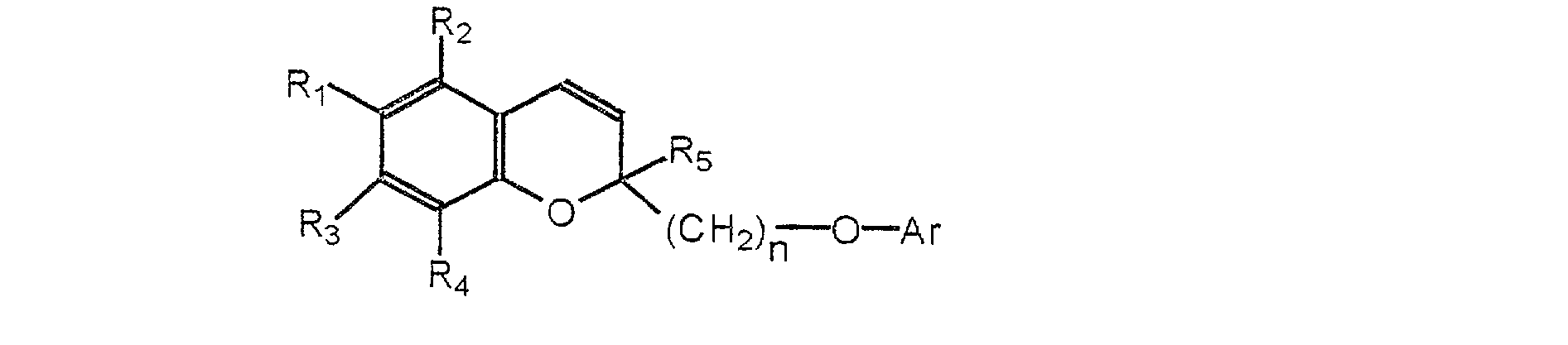


Priority Applications (2)
| Application Number | Priority Date | Filing Date | Title |
|---|---|---|---|
| FR9814988A FR2786485A1 (en) | 1998-11-27 | 1998-11-27 | PROCESS FOR THE PREPARATION OF 3-CHROMENE DERIVATIVES, NEW 3-CHROMENE DERIVATIVES AND USE OF THESE DERIVATIVES FOR THE PREPARATION OF THIAZOLIDINONES |
| PCT/FR1999/002948 WO2000032586A1 (en) | 1998-11-27 | 1999-11-29 | Method for preparing 3-chromene derivatives, use of said derivatives for preparing thiazolidinones |
Applications Claiming Priority (1)
| Application Number | Priority Date | Filing Date | Title |
|---|---|---|---|
| FR9814988A FR2786485A1 (en) | 1998-11-27 | 1998-11-27 | PROCESS FOR THE PREPARATION OF 3-CHROMENE DERIVATIVES, NEW 3-CHROMENE DERIVATIVES AND USE OF THESE DERIVATIVES FOR THE PREPARATION OF THIAZOLIDINONES |
Publications (1)
| Publication Number | Publication Date |
|---|---|
| FR2786485A1 true FR2786485A1 (en) | 2000-06-02 |
Family
ID=9533291
Family Applications (1)
| Application Number | Title | Priority Date | Filing Date |
|---|---|---|---|
| FR9814988A Pending FR2786485A1 (en) | 1998-11-27 | 1998-11-27 | PROCESS FOR THE PREPARATION OF 3-CHROMENE DERIVATIVES, NEW 3-CHROMENE DERIVATIVES AND USE OF THESE DERIVATIVES FOR THE PREPARATION OF THIAZOLIDINONES |
Country Status (2)
| Country | Link |
|---|---|
| FR (1) | FR2786485A1 (en) |
| WO (1) | WO2000032586A1 (en) |
Citations (2)
| Publication number | Priority date | Publication date | Assignee | Title |
|---|---|---|---|---|
| EP0454501A2 (en) * | 1990-04-27 | 1991-10-30 | Sankyo Company Limited | Benzylidenethiazolidine derivatives, their preparation and their use for the inhibition of lipid peroxides |
| EP0629619A1 (en) * | 1993-06-18 | 1994-12-21 | Bristol-Myers Squibb Company | Process for the preparation of intermediates useful in the preparation of pyranyl cyanoguanidine derivatives |
-
1998
- 1998-11-27 FR FR9814988A patent/FR2786485A1/en active Pending
-
1999
- 1999-11-29 WO PCT/FR1999/002948 patent/WO2000032586A1/en not_active Ceased
Patent Citations (2)
| Publication number | Priority date | Publication date | Assignee | Title |
|---|---|---|---|---|
| EP0454501A2 (en) * | 1990-04-27 | 1991-10-30 | Sankyo Company Limited | Benzylidenethiazolidine derivatives, their preparation and their use for the inhibition of lipid peroxides |
| EP0629619A1 (en) * | 1993-06-18 | 1994-12-21 | Bristol-Myers Squibb Company | Process for the preparation of intermediates useful in the preparation of pyranyl cyanoguanidine derivatives |
Also Published As
| Publication number | Publication date |
|---|---|
| WO2000032586A1 (en) | 2000-06-08 |
Similar Documents
| Publication | Publication Date | Title |
|---|---|---|
| KR0149679B1 (en) | Aromatic amino-alcohol derivatives having anti-diabetic and anti-obesity properties, their preparation and their therapeutic uses | |
| FR2963006A1 (en) | PROCESS FOR THE PREPARATION OF NITRO-BENZOFURAN DERIVATIVES | |
| CA2794648A1 (en) | Process for preparing aminobenzofuran derivatives | |
| FR2983198A1 (en) | PROCESS FOR THE PREPARATION OF 5-AMINO-BENZOYL-BENZOFURAN DERIVATIVES | |
| EP0927173B1 (en) | substituted [2-(1-piperazinyl)ethoxy]methyl | |
| KR101618198B1 (en) | Process for the synthesis of 3,6-dihydro-1,3,5-triazine derivatives | |
| EP3154669B1 (en) | Compositions of mono-alkyl ethers of monoanhydro-hexitols, production methods thereof and use of same | |
| FI101222B (en) | Process for the preparation of therapeutically active quinolin-2-ylmethoxy phenyl derivatives | |
| FR2904311A1 (en) | NEW PROCESS FOR THE SYNTHESIS OF (E) STILBENIC DERIVATIVES PERM TO OBTAIN RESVERATROL AND PICEATANNOL | |
| FR2927900A1 (en) | PROCESS FOR THE PREPARATION OF OPTICALLY ACTIVE ALPHA-AMINOACETALS | |
| EP0705243B1 (en) | Beta-aminovinyl ketones, preparation method therefor and use thereof for preparing beta diketones | |
| FR2786485A1 (en) | PROCESS FOR THE PREPARATION OF 3-CHROMENE DERIVATIVES, NEW 3-CHROMENE DERIVATIVES AND USE OF THESE DERIVATIVES FOR THE PREPARATION OF THIAZOLIDINONES | |
| CA2261829C (en) | Intermediates for the preparation of 2-imidazoline-5-ones | |
| EP1218366B1 (en) | Method for producing cox-2 inhibitors | |
| JP7370152B2 (en) | Method for producing α-(aminooxy)carboxylic acids | |
| US7132535B2 (en) | Process for preparing hexahydropyridazine-3-carboxylic acid derivatives | |
| FR2540873A1 (en) | NOVEL INTERMEDIATES FOR THE PRODUCTION OF 2- (2-AMINOTHIAZOL-4-YL) GLYOXYLIC ACID DERIVATIVES OR ONE OF ITS SALTS AND THE PROCESS FOR THE PRODUCTION OF SAID INTERMEDIATES | |
| FR2689890A1 (en) | Process for the manufacture of a benzo [b] thiophenyl-5 derivative and intermediate of manufacture | |
| FR2766820A1 (en) | PROCESS FOR THE PREPARATION OF 2H-1-BENZOPYRANS AND SYNTHESIS INTERMEDIATES USEFUL IN THE IMPLEMENTATION OF THE PROCESS | |
| CA2187941C (en) | Process for preparing 2-amino-alkane-1,3,4-triols | |
| KR0161552B1 (en) | Intermediates in the preparation of aromatic amino-alcohol derivatives having anti-diabetic and anti-obesity properties | |
| JP2000229920A (en) | Production of amide derivative | |
| US20240140916A1 (en) | Method for manufacturing azole derivative | |
| WO2005058918A1 (en) | Novel phenyl-boronic acid derivatives and methods for the production thereof | |
| FR2799460A1 (en) | PROCESS FOR THE PREPARATION OF HYDROXIMIC COMPOUND |