ES2725784T3 - Hydrophobic ceragenin compounds and devices incorporating it - Google Patents
Hydrophobic ceragenin compounds and devices incorporating it Download PDFInfo
- Publication number
- ES2725784T3 ES2725784T3 ES12740853T ES12740853T ES2725784T3 ES 2725784 T3 ES2725784 T3 ES 2725784T3 ES 12740853 T ES12740853 T ES 12740853T ES 12740853 T ES12740853 T ES 12740853T ES 2725784 T3 ES2725784 T3 ES 2725784T3
- Authority
- ES
- Spain
- Prior art keywords
- csa
- hydrophobic
- compound
- polymer
- ceragenin
- Prior art date
- Legal status (The legal status is an assumption and is not a legal conclusion. Google has not performed a legal analysis and makes no representation as to the accuracy of the status listed.)
- Active
Links
Classifications
-
- A—HUMAN NECESSITIES
- A61—MEDICAL OR VETERINARY SCIENCE; HYGIENE
- A61K—PREPARATIONS FOR MEDICAL, DENTAL OR TOILETRY PURPOSES
- A61K31/00—Medicinal preparations containing organic active ingredients
- A61K31/56—Compounds containing cyclopenta[a]hydrophenanthrene ring systems; Derivatives thereof, e.g. steroids
- A61K31/575—Compounds containing cyclopenta[a]hydrophenanthrene ring systems; Derivatives thereof, e.g. steroids substituted in position 17 beta by a chain of three or more carbon atoms, e.g. cholane, cholestane, ergosterol, sitosterol
-
- C—CHEMISTRY; METALLURGY
- C07—ORGANIC CHEMISTRY
- C07J—STEROIDS
- C07J41/00—Normal steroids containing one or more nitrogen atoms not belonging to a hetero ring
- C07J41/0033—Normal steroids containing one or more nitrogen atoms not belonging to a hetero ring not covered by C07J41/0005
- C07J41/0055—Normal steroids containing one or more nitrogen atoms not belonging to a hetero ring not covered by C07J41/0005 the 17-beta position being substituted by an uninterrupted chain of at least three carbon atoms which may or may not be branched, e.g. cholane or cholestane derivatives, optionally cyclised, e.g. 17-beta-phenyl or 17-beta-furyl derivatives
-
- A—HUMAN NECESSITIES
- A01—AGRICULTURE; FORESTRY; ANIMAL HUSBANDRY; HUNTING; TRAPPING; FISHING
- A01N—PRESERVATION OF BODIES OF HUMANS OR ANIMALS OR PLANTS OR PARTS THEREOF; BIOCIDES, e.g. AS DISINFECTANTS, AS PESTICIDES OR AS HERBICIDES; PEST REPELLANTS OR ATTRACTANTS; PLANT GROWTH REGULATORS
- A01N45/00—Biocides, pest repellants or attractants, or plant growth regulators, containing compounds having three or more carbocyclic rings condensed among themselves, at least one ring not being a six-membered ring
-
- A—HUMAN NECESSITIES
- A61—MEDICAL OR VETERINARY SCIENCE; HYGIENE
- A61L—METHODS OR APPARATUS FOR STERILISING MATERIALS OR OBJECTS IN GENERAL; DISINFECTION, STERILISATION OR DEODORISATION OF AIR; CHEMICAL ASPECTS OF BANDAGES, DRESSINGS, ABSORBENT PADS OR SURGICAL ARTICLES; MATERIALS FOR BANDAGES, DRESSINGS, ABSORBENT PADS OR SURGICAL ARTICLES
- A61L27/00—Materials for grafts or prostheses or for coating grafts or prostheses
- A61L27/14—Macromolecular materials
-
- A—HUMAN NECESSITIES
- A61—MEDICAL OR VETERINARY SCIENCE; HYGIENE
- A61L—METHODS OR APPARATUS FOR STERILISING MATERIALS OR OBJECTS IN GENERAL; DISINFECTION, STERILISATION OR DEODORISATION OF AIR; CHEMICAL ASPECTS OF BANDAGES, DRESSINGS, ABSORBENT PADS OR SURGICAL ARTICLES; MATERIALS FOR BANDAGES, DRESSINGS, ABSORBENT PADS OR SURGICAL ARTICLES
- A61L27/00—Materials for grafts or prostheses or for coating grafts or prostheses
- A61L27/14—Macromolecular materials
- A61L27/18—Macromolecular materials obtained otherwise than by reactions only involving carbon-to-carbon unsaturated bonds
-
- A—HUMAN NECESSITIES
- A61—MEDICAL OR VETERINARY SCIENCE; HYGIENE
- A61L—METHODS OR APPARATUS FOR STERILISING MATERIALS OR OBJECTS IN GENERAL; DISINFECTION, STERILISATION OR DEODORISATION OF AIR; CHEMICAL ASPECTS OF BANDAGES, DRESSINGS, ABSORBENT PADS OR SURGICAL ARTICLES; MATERIALS FOR BANDAGES, DRESSINGS, ABSORBENT PADS OR SURGICAL ARTICLES
- A61L27/00—Materials for grafts or prostheses or for coating grafts or prostheses
- A61L27/28—Materials for coating prostheses
- A61L27/34—Macromolecular materials
-
- A—HUMAN NECESSITIES
- A61—MEDICAL OR VETERINARY SCIENCE; HYGIENE
- A61L—METHODS OR APPARATUS FOR STERILISING MATERIALS OR OBJECTS IN GENERAL; DISINFECTION, STERILISATION OR DEODORISATION OF AIR; CHEMICAL ASPECTS OF BANDAGES, DRESSINGS, ABSORBENT PADS OR SURGICAL ARTICLES; MATERIALS FOR BANDAGES, DRESSINGS, ABSORBENT PADS OR SURGICAL ARTICLES
- A61L27/00—Materials for grafts or prostheses or for coating grafts or prostheses
- A61L27/50—Materials characterised by their function or physical properties, e.g. injectable or lubricating compositions, shape-memory materials, surface modified materials
- A61L27/52—Hydrogels or hydrocolloids
-
- A—HUMAN NECESSITIES
- A61—MEDICAL OR VETERINARY SCIENCE; HYGIENE
- A61L—METHODS OR APPARATUS FOR STERILISING MATERIALS OR OBJECTS IN GENERAL; DISINFECTION, STERILISATION OR DEODORISATION OF AIR; CHEMICAL ASPECTS OF BANDAGES, DRESSINGS, ABSORBENT PADS OR SURGICAL ARTICLES; MATERIALS FOR BANDAGES, DRESSINGS, ABSORBENT PADS OR SURGICAL ARTICLES
- A61L27/00—Materials for grafts or prostheses or for coating grafts or prostheses
- A61L27/50—Materials characterised by their function or physical properties, e.g. injectable or lubricating compositions, shape-memory materials, surface modified materials
- A61L27/54—Biologically active materials, e.g. therapeutic substances
-
- A—HUMAN NECESSITIES
- A61—MEDICAL OR VETERINARY SCIENCE; HYGIENE
- A61L—METHODS OR APPARATUS FOR STERILISING MATERIALS OR OBJECTS IN GENERAL; DISINFECTION, STERILISATION OR DEODORISATION OF AIR; CHEMICAL ASPECTS OF BANDAGES, DRESSINGS, ABSORBENT PADS OR SURGICAL ARTICLES; MATERIALS FOR BANDAGES, DRESSINGS, ABSORBENT PADS OR SURGICAL ARTICLES
- A61L29/00—Materials for catheters, medical tubing, cannulae, or endoscopes or for coating catheters
- A61L29/04—Macromolecular materials
-
- A—HUMAN NECESSITIES
- A61—MEDICAL OR VETERINARY SCIENCE; HYGIENE
- A61L—METHODS OR APPARATUS FOR STERILISING MATERIALS OR OBJECTS IN GENERAL; DISINFECTION, STERILISATION OR DEODORISATION OF AIR; CHEMICAL ASPECTS OF BANDAGES, DRESSINGS, ABSORBENT PADS OR SURGICAL ARTICLES; MATERIALS FOR BANDAGES, DRESSINGS, ABSORBENT PADS OR SURGICAL ARTICLES
- A61L29/00—Materials for catheters, medical tubing, cannulae, or endoscopes or for coating catheters
- A61L29/08—Materials for coatings
- A61L29/085—Macromolecular materials
-
- A—HUMAN NECESSITIES
- A61—MEDICAL OR VETERINARY SCIENCE; HYGIENE
- A61L—METHODS OR APPARATUS FOR STERILISING MATERIALS OR OBJECTS IN GENERAL; DISINFECTION, STERILISATION OR DEODORISATION OF AIR; CHEMICAL ASPECTS OF BANDAGES, DRESSINGS, ABSORBENT PADS OR SURGICAL ARTICLES; MATERIALS FOR BANDAGES, DRESSINGS, ABSORBENT PADS OR SURGICAL ARTICLES
- A61L29/00—Materials for catheters, medical tubing, cannulae, or endoscopes or for coating catheters
- A61L29/14—Materials characterised by their function or physical properties, e.g. lubricating compositions
- A61L29/145—Hydrogels or hydrocolloids
-
- A—HUMAN NECESSITIES
- A61—MEDICAL OR VETERINARY SCIENCE; HYGIENE
- A61L—METHODS OR APPARATUS FOR STERILISING MATERIALS OR OBJECTS IN GENERAL; DISINFECTION, STERILISATION OR DEODORISATION OF AIR; CHEMICAL ASPECTS OF BANDAGES, DRESSINGS, ABSORBENT PADS OR SURGICAL ARTICLES; MATERIALS FOR BANDAGES, DRESSINGS, ABSORBENT PADS OR SURGICAL ARTICLES
- A61L29/00—Materials for catheters, medical tubing, cannulae, or endoscopes or for coating catheters
- A61L29/14—Materials characterised by their function or physical properties, e.g. lubricating compositions
- A61L29/16—Biologically active materials, e.g. therapeutic substances
-
- A—HUMAN NECESSITIES
- A61—MEDICAL OR VETERINARY SCIENCE; HYGIENE
- A61L—METHODS OR APPARATUS FOR STERILISING MATERIALS OR OBJECTS IN GENERAL; DISINFECTION, STERILISATION OR DEODORISATION OF AIR; CHEMICAL ASPECTS OF BANDAGES, DRESSINGS, ABSORBENT PADS OR SURGICAL ARTICLES; MATERIALS FOR BANDAGES, DRESSINGS, ABSORBENT PADS OR SURGICAL ARTICLES
- A61L31/00—Materials for other surgical articles, e.g. stents, stent-grafts, shunts, surgical drapes, guide wires, materials for adhesion prevention, occluding devices, surgical gloves, tissue fixation devices
- A61L31/04—Macromolecular materials
-
- A—HUMAN NECESSITIES
- A61—MEDICAL OR VETERINARY SCIENCE; HYGIENE
- A61L—METHODS OR APPARATUS FOR STERILISING MATERIALS OR OBJECTS IN GENERAL; DISINFECTION, STERILISATION OR DEODORISATION OF AIR; CHEMICAL ASPECTS OF BANDAGES, DRESSINGS, ABSORBENT PADS OR SURGICAL ARTICLES; MATERIALS FOR BANDAGES, DRESSINGS, ABSORBENT PADS OR SURGICAL ARTICLES
- A61L31/00—Materials for other surgical articles, e.g. stents, stent-grafts, shunts, surgical drapes, guide wires, materials for adhesion prevention, occluding devices, surgical gloves, tissue fixation devices
- A61L31/08—Materials for coatings
- A61L31/10—Macromolecular materials
-
- A—HUMAN NECESSITIES
- A61—MEDICAL OR VETERINARY SCIENCE; HYGIENE
- A61L—METHODS OR APPARATUS FOR STERILISING MATERIALS OR OBJECTS IN GENERAL; DISINFECTION, STERILISATION OR DEODORISATION OF AIR; CHEMICAL ASPECTS OF BANDAGES, DRESSINGS, ABSORBENT PADS OR SURGICAL ARTICLES; MATERIALS FOR BANDAGES, DRESSINGS, ABSORBENT PADS OR SURGICAL ARTICLES
- A61L31/00—Materials for other surgical articles, e.g. stents, stent-grafts, shunts, surgical drapes, guide wires, materials for adhesion prevention, occluding devices, surgical gloves, tissue fixation devices
- A61L31/14—Materials characterised by their function or physical properties, e.g. injectable or lubricating compositions, shape-memory materials, surface modified materials
- A61L31/145—Hydrogels or hydrocolloids
-
- A—HUMAN NECESSITIES
- A61—MEDICAL OR VETERINARY SCIENCE; HYGIENE
- A61L—METHODS OR APPARATUS FOR STERILISING MATERIALS OR OBJECTS IN GENERAL; DISINFECTION, STERILISATION OR DEODORISATION OF AIR; CHEMICAL ASPECTS OF BANDAGES, DRESSINGS, ABSORBENT PADS OR SURGICAL ARTICLES; MATERIALS FOR BANDAGES, DRESSINGS, ABSORBENT PADS OR SURGICAL ARTICLES
- A61L31/00—Materials for other surgical articles, e.g. stents, stent-grafts, shunts, surgical drapes, guide wires, materials for adhesion prevention, occluding devices, surgical gloves, tissue fixation devices
- A61L31/14—Materials characterised by their function or physical properties, e.g. injectable or lubricating compositions, shape-memory materials, surface modified materials
- A61L31/16—Biologically active materials, e.g. therapeutic substances
-
- A—HUMAN NECESSITIES
- A61—MEDICAL OR VETERINARY SCIENCE; HYGIENE
- A61P—SPECIFIC THERAPEUTIC ACTIVITY OF CHEMICAL COMPOUNDS OR MEDICINAL PREPARATIONS
- A61P31/00—Antiinfectives, i.e. antibiotics, antiseptics, chemotherapeutics
-
- A—HUMAN NECESSITIES
- A61—MEDICAL OR VETERINARY SCIENCE; HYGIENE
- A61P—SPECIFIC THERAPEUTIC ACTIVITY OF CHEMICAL COMPOUNDS OR MEDICINAL PREPARATIONS
- A61P31/00—Antiinfectives, i.e. antibiotics, antiseptics, chemotherapeutics
- A61P31/04—Antibacterial agents
-
- C—CHEMISTRY; METALLURGY
- C07—ORGANIC CHEMISTRY
- C07C—ACYCLIC OR CARBOCYCLIC COMPOUNDS
- C07C211/00—Compounds containing amino groups bound to a carbon skeleton
-
- A—HUMAN NECESSITIES
- A61—MEDICAL OR VETERINARY SCIENCE; HYGIENE
- A61L—METHODS OR APPARATUS FOR STERILISING MATERIALS OR OBJECTS IN GENERAL; DISINFECTION, STERILISATION OR DEODORISATION OF AIR; CHEMICAL ASPECTS OF BANDAGES, DRESSINGS, ABSORBENT PADS OR SURGICAL ARTICLES; MATERIALS FOR BANDAGES, DRESSINGS, ABSORBENT PADS OR SURGICAL ARTICLES
- A61L2300/00—Biologically active materials used in bandages, wound dressings, absorbent pads or medical devices
- A61L2300/20—Biologically active materials used in bandages, wound dressings, absorbent pads or medical devices containing or releasing organic materials
- A61L2300/204—Biologically active materials used in bandages, wound dressings, absorbent pads or medical devices containing or releasing organic materials with nitrogen-containing functional groups, e.g. aminoxides, nitriles, guanidines
- A61L2300/208—Quaternary ammonium compounds
-
- A—HUMAN NECESSITIES
- A61—MEDICAL OR VETERINARY SCIENCE; HYGIENE
- A61L—METHODS OR APPARATUS FOR STERILISING MATERIALS OR OBJECTS IN GENERAL; DISINFECTION, STERILISATION OR DEODORISATION OF AIR; CHEMICAL ASPECTS OF BANDAGES, DRESSINGS, ABSORBENT PADS OR SURGICAL ARTICLES; MATERIALS FOR BANDAGES, DRESSINGS, ABSORBENT PADS OR SURGICAL ARTICLES
- A61L2300/00—Biologically active materials used in bandages, wound dressings, absorbent pads or medical devices
- A61L2300/40—Biologically active materials used in bandages, wound dressings, absorbent pads or medical devices characterised by a specific therapeutic activity or mode of action
- A61L2300/404—Biocides, antimicrobial agents, antiseptic agents
-
- A—HUMAN NECESSITIES
- A61—MEDICAL OR VETERINARY SCIENCE; HYGIENE
- A61L—METHODS OR APPARATUS FOR STERILISING MATERIALS OR OBJECTS IN GENERAL; DISINFECTION, STERILISATION OR DEODORISATION OF AIR; CHEMICAL ASPECTS OF BANDAGES, DRESSINGS, ABSORBENT PADS OR SURGICAL ARTICLES; MATERIALS FOR BANDAGES, DRESSINGS, ABSORBENT PADS OR SURGICAL ARTICLES
- A61L2300/00—Biologically active materials used in bandages, wound dressings, absorbent pads or medical devices
- A61L2300/60—Biologically active materials used in bandages, wound dressings, absorbent pads or medical devices characterised by a special physical form
- A61L2300/602—Type of release, e.g. controlled, sustained, slow
-
- A—HUMAN NECESSITIES
- A61—MEDICAL OR VETERINARY SCIENCE; HYGIENE
- A61L—METHODS OR APPARATUS FOR STERILISING MATERIALS OR OBJECTS IN GENERAL; DISINFECTION, STERILISATION OR DEODORISATION OF AIR; CHEMICAL ASPECTS OF BANDAGES, DRESSINGS, ABSORBENT PADS OR SURGICAL ARTICLES; MATERIALS FOR BANDAGES, DRESSINGS, ABSORBENT PADS OR SURGICAL ARTICLES
- A61L2300/00—Biologically active materials used in bandages, wound dressings, absorbent pads or medical devices
- A61L2300/60—Biologically active materials used in bandages, wound dressings, absorbent pads or medical devices characterised by a special physical form
- A61L2300/606—Coatings
Landscapes
- Health & Medical Sciences (AREA)
- Life Sciences & Earth Sciences (AREA)
- Chemical & Material Sciences (AREA)
- General Health & Medical Sciences (AREA)
- Veterinary Medicine (AREA)
- Public Health (AREA)
- Animal Behavior & Ethology (AREA)
- Epidemiology (AREA)
- Medicinal Chemistry (AREA)
- Transplantation (AREA)
- Oral & Maxillofacial Surgery (AREA)
- Dermatology (AREA)
- Engineering & Computer Science (AREA)
- Organic Chemistry (AREA)
- Biomedical Technology (AREA)
- Molecular Biology (AREA)
- Surgery (AREA)
- Heart & Thoracic Surgery (AREA)
- Vascular Medicine (AREA)
- Dispersion Chemistry (AREA)
- Chemical Kinetics & Catalysis (AREA)
- Pharmacology & Pharmacy (AREA)
- General Chemical & Material Sciences (AREA)
- Nuclear Medicine, Radiotherapy & Molecular Imaging (AREA)
- Oncology (AREA)
- Communicable Diseases (AREA)
- Pest Control & Pesticides (AREA)
- Plant Pathology (AREA)
- Dentistry (AREA)
- Wood Science & Technology (AREA)
- Zoology (AREA)
- Environmental Sciences (AREA)
- Agronomy & Crop Science (AREA)
- Pharmaceuticals Containing Other Organic And Inorganic Compounds (AREA)
- Medicinal Preparation (AREA)
- Steroid Compounds (AREA)
- Materials For Medical Uses (AREA)
- Preparation Of Compounds By Using Micro-Organisms (AREA)
- Medicines That Contain Protein Lipid Enzymes And Other Medicines (AREA)
- Organic Low-Molecular-Weight Compounds And Preparation Thereof (AREA)
Abstract
Un compuesto hidrófobo esteroideo catiónico antimicrobiano (CSA) que tiene una estructura de Fórmula I:**Fórmula** en la que q= 0 y p= 1; R3, R7 y R12 incluyen independientemente un grupo catiónico; R17 es un sustituyente hidrófobo que incluye un oxígeno y un hidrocarburo de cadena lineal con al menos 9 átomos de carbono distales al oxígeno; y R1, R2, R4-R6, R8-R16 son cualquier sustituyente; en el que el compuesto CSA tiene un valor CLogP de al menos 6,5.An antimicrobial cationic steroidal hydrophobic compound (CSA) having a structure of Formula I: ** Formula ** in which q = 0 and p = 1; R3, R7 and R12 independently include a cationic group; R17 is a hydrophobic substituent that includes an oxygen and a linear chain hydrocarbon with at least 9 carbon atoms distal to oxygen; and R1, R2, R4-R6, R8-R16 are any substituent; wherein the CSA compound has a CLogP value of at least 6.5.
Description
DESCRIPCIÓNDESCRIPTION
Compuestos de ceragenina hidrófobos y dispositivos que incorporan al mismoHydrophobic ceragenin compounds and devices incorporating it
Antecedentes de la invenciónBackground of the invention
1. El campo de la invención.1. The field of the invention.
La presente invención se refiere a compuestos de ceragenina hidrófobos y dispositivos que incorporan los compuestos de ceragenina hidrófobos. Los compuestos de ceragenina tienen sustituyentes hidrófobos que dan a los compuestos un valor de CLogP relativamente alto que permite que los compuestos se enlacen de forma no covalente a los materiales poliméricos.The present invention relates to hydrophobic ceragenin compounds and devices incorporating hydrophobic ceragenin compounds. Ceragenin compounds have hydrophobic substituents that give the compounds a relatively high CLogP value that allows the compounds to bind non-covalently to polymeric materials.
2. La tecnología relevante2. The relevant technology
Los compuestos de ceragenina, también conocidos en el presente documento como compuestos antimicrobianos esteroideos catiónicos (CSA), son compuestos químicos de molécula pequeña producidos sintéticamente que incluyen un esqueleto de esterol que tiene diversos grupos cargados (por ejemplo, amina y sustituyentes catiónicos) unidos al esqueleto. El esqueleto se puede usar para orientar los grupos amina o guanidina en una cara o plano del esqueleto de esterol. Por ejemplo, un esquema que muestra un compuesto que tiene grupos amino primarios en una cara o plano, de un esqueleto se muestra a continuación en el Esquema I:Ceragenin compounds, also known herein as cationic steroidal antimicrobial compounds (CSA), are synthetically produced small molecule chemical compounds that include a sterol skeleton that has various charged groups (e.g., amine and cationic substituents) attached to the skeleton. The skeleton can be used to target the amine or guanidine groups on a face or plane of the sterol skeleton. For example, a scheme showing a compound that has primary amino groups on a face or plane of a skeleton is shown below in Scheme I:

Las cerageninas son catiónicas y anfifílicas, con base en los grupos funcionales unidos al esqueleto. Son facialmente anfifílicas con una cara hidrófoba y una cara policatiónica. Sin desear estar ligado a ninguna teoría particular, los compuestos de ceragenina antimicrobianos descritos aquí actúan como agentes antimicrobianos (por ejemplo, antibacterianos, antifúngicos y antivíricos). Se cree, por ejemplo, que los compuestos de ceragenina antimicrobianos descritos en el presente documento actúan como antibacterianos al enlazarse a la membrana celular externa de las bacterias y otros microbios e insertarse en la membrana celular formando un poro que permite la fuga de iones que son críticos para la supervivencia del microbio y que conduce a la muerte del microbio afectado. Además, el compuesto de ceragenina antimicrobiano descrito en el presente documento también puede actuar para sensibilizar las bacterias a otros antibióticos. Por ejemplo, a concentraciones de los compuestos de ceragenina antimicrobianos por debajo de la concentración bacteriostática mínima correspondiente, las cerageninas hacen que las bacterias se vuelvan más susceptibles a otros antibióticos al aumentar la permeabilidad de la membrana externa de las bacterias.Ceragenins are cationic and amphiphilic, based on functional groups attached to the skeleton. They are facially amphiphilic with a hydrophobic face and a polycationic face. Without wishing to be bound by any particular theory, the antimicrobial ceragenin compounds described herein act as antimicrobial agents (eg, antibacterial, antifungal and antiviral). It is believed, for example, that the antimicrobial ceragenin compounds described herein act as antibacterials by binding to the outer cell membrane of bacteria and other microbes and inserting into the cell membrane forming a pore that allows the leakage of ions that are critical for the survival of the microbe and that leads to the death of the affected microbe. In addition, the antimicrobial ceragenin compound described herein can also act to sensitize the bacteria to other antibiotics. For example, at concentrations of the antimicrobial ceragenin compounds below the corresponding minimum bacteriostatic concentration, the ceragenins make the bacteria more susceptible to other antibiotics by increasing the permeability of the outer membrane of the bacteria.
Los grupos cargados son responsables de perturbar la membrana celular bacteriana y sin los grupos cargados, el compuesto de ceragenina no puede perturbar la membrana para causar la muerte celular o la sensibilización. P.B. Savage et al., "Thin Films Containing Ceragenins Prevent Biofilm Formation on Endotracheal Tubes", 9th International Federation of Infection Control Congress, Santiago, Chile (2008) divulga un tubo endotraqueal que está recubierto con una solución de ceragenina y un poliuretano ácido, donde se forma una película que libera ceragenina durante un período prolongado de tiempo.The charged groups are responsible for disrupting the bacterial cell membrane and without the charged groups, the ceragenin compound cannot disturb the membrane to cause cell death or sensitization. P.B. Savage et al., "Thin Films Containing Ceragenins Prevent Biofilm Formation on Endotracheal Tubes", 9th International Federation of Infection Control Congress, Santiago, Chile (2008) discloses an endotracheal tube that is coated with a solution of ceragenin and an acid polyurethane, where a film that releases ceragenin is formed for a prolonged period of time.
Entre la técnica anterior adicional, el documento WO 2012/061651 A1 divulga un artículo absorbente que incluye un polímero absorbente y un compuesto de ceragenina, en el que el compuesto de ceragenina tiene un grupo esterol y una pluralidad de grupos catiónicos que imitan a los péptidos antimicrobianos de origen natural. Además, el documento WO 2013/163359 A1 divulga composiciones de lavado antimicrobianas y procedimientos para usar tales composiciones para controlar el crecimiento de microbios en un producto alimenticio no cárnico, en el que las composiciones de lavado antimicrobianas incluyen un compuesto de ceragenina. Among the additional prior art, WO 2012/061651 A1 discloses an absorbent article that includes an absorbent polymer and a ceragenin compound, wherein the ceragenin compound has a sterol group and a plurality of cationic groups that mimic the peptides. Antimicrobials of natural origin. In addition, WO 2013/163359 A1 discloses antimicrobial wash compositions and methods for using such compositions to control the growth of microbes in a non-meat food product, in which the antimicrobial wash compositions include a ceragenin compound.
Breve sumarioBrief Summary
La presente invención se refiere a compuestos de ceragenina que son relativamente hidrófobos a pesar de tener una cara catiónica hidrófila, como se define en las reivindicaciones 1-5 y a dispositivos que comprenden una estructura de polímero y un compuesto de ceragenina incorporados en la estructura de polímero con interacciones no covalentes, como se define en las reivindicacaciones 6-11. Se ha encontrado que la alta hidrofobicidad tiene una capacidad sorprendente e inesperada para enlazarse con polímeros y luego liberarse selectivamente de los materiales poliméricos para matar microbios.The present invention relates to ceragenin compounds that are relatively hydrophobic despite having a hydrophilic cationic face, as defined in claims 1-5 and to devices comprising a polymer structure and a ceragenin compound incorporated into the polymer structure. with non-covalent interactions, as defined in claims 6-11. It has been found that high hydrophobicity has a surprising and unexpected ability to bind with polymers and then selectively free from polymeric materials to kill microbes.
La presente invención divulga un compuesto antimicrobiano esteroideo catiónico hidrófobo (CSA) que tiene una estructura de Fórmula I:The present invention discloses a hydrophobic cationic steroidal antimicrobial compound (CSA) having a structure of Formula I:

en la quein which
q= 0 y p= 1;q = 0 and p = 1;
R3 , R7 y R12 incluyen independientemente un grupo catiónico;R 3 , R 7 and R 12 independently include a cationic group;
R17 es un sustituyente hidrófobo que incluye un oxígeno y un hidrocarburo de cadena lineal con al menos 9 átomos de carbono distales al oxígeno; yR 17 is a hydrophobic substituent that includes an oxygen and a linear chain hydrocarbon with at least 9 carbon atoms distal to oxygen; Y
R1, R2, R4-R6, R8-R16 son cualquier sustituyente;R 1 , R 2 , R 4 -R 6 , R 8 -R 16 are any substituent;
en el que el compuesto CSA tiene un valor CLogP de al menos 6,5. Además, la presente invención divulga compuestos de ceragenina de acuerdo con las reivindicaciones 4 y 5.wherein the CSA compound has a CLogP value of at least 6.5. In addition, the present invention discloses ceragenin compounds according to claims 4 and 5.
El valor de CLogP se logra seleccionando un sustituyente o sustituyentes hidrófobos apropiados en combinación con sustituyentes catiónicos apropiados. Los sustituyentes catiónicos y el sustituyente o sustituyentes hidrófobos se seleccionan para dar un valor de CLogP de 6,5 o mayor, 7,5 o mayor o incluso 10 o mayor. Para lograr el valor de CLogP deseado, se necesita una mayor hidrofobicidad en el sustituyente hidrófobo cuando se usan sustituyentes catiónicos con menos hidrofobicidad.The CLogP value is achieved by selecting an appropriate hydrophobic substituent or substituents in combination with appropriate cationic substituents. The cationic substituents and the hydrophobic substituent or substituents are selected to give a CLogP value of 6.5 or greater, 7.5 or greater or even 10 or greater. To achieve the desired CLogP value, greater hydrophobicity in the hydrophobic substituent is needed when cationic substituents with less hydrophobicity are used.
El alto valor de CLogP permite que los compuestos se enlacen de forma no covalente a polímeros que tienen fracciones hidrófobas. Por ejemplo, los compuestos hidrófobos descritos en el presente documento pueden enlazarse de manera no covalente a materiales de hidrogel. El enlace hidrófobo permite que los compuestos de ceragenina se asocien con el polímero mientras tienen un impacto mínimo en la capacidad de matar microbios. Sorprendente e inesperadamente, se ha encontrado que al enlazar de forma no covalente la ceragenina a un material polimérico utilizando interacciones hidrófobas/hidrófilas, el compuesto de ceragenina hidrófobo puede liberar selectivamente del polímero en presencia de microbios, teniendo así un efecto destructor a menor concentración de lo que uno podría predecir y durante un período prolongado de tiempo. Esto contrasta con los estudios realizados con cerageninas enlazadas covalentemente donde la inmovilización impidió las tasas de muerte más allá de la exposición inicial. La capacidad de los compuestos de ceragenina hidrófobos para liberar selectivamente de un polímero para matar microbios es altamente deseable y un resultado sorprendente e inesperado.The high value of CLogP allows the compounds to be non-covalently linked to polymers having hydrophobic fractions. For example, the hydrophobic compounds described herein can be non-covalently linked to hydrogel materials. The hydrophobic bond allows ceragenin compounds to associate with the polymer while having a minimal impact on the ability to kill microbes. Surprisingly and unexpectedly, it has been found that by binding non-covalently ceragenin to a polymeric material using hydrophobic / hydrophilic interactions, the hydrophobic ceragenin compound can selectively release the polymer in the presence of microbes, thus having a destructive effect at a lower concentration of what one could predict and for a prolonged period of time. This contrasts with studies conducted with covalently linked ceragenins where immobilization prevented death rates beyond initial exposure. The ability of hydrophobic ceragenin compounds to selectively release a polymer to kill microbes is highly desirable and a surprising and unexpected result.
Además, se ha encontrado que las cerageninas, como se usan en la presente invención, sorprendentemente matan a microbios dañinos preferentemente sobre la flora normal, lo que significa que las cerageninas se pueden usar en concentraciones más bajas en comparación con otros antimicrobianos mientras se logra la misma o mejor efectividad. Esta característica evita muchos de los efectos nocivos de los antimicrobianos de la técnica anterior, muchos de los cuales tienden a matar a los "microbios buenos". In addition, it has been found that ceragenins, as used in the present invention, surprisingly kill harmful microbes preferably over normal flora, which means that ceragenins can be used in lower concentrations compared to other antimicrobials while achieving Same or better effectiveness. This feature avoids many of the harmful effects of prior art antimicrobials, many of which tend to kill "good microbes."
Los compuestos de ceragenina hidrófobos pueden incorporarse en o formarse en dispositivos médicos tales como dispositivos médicos para ser implantados en un ser humano u otro animal. Por ejemplo, los hidrogeles pueden recubrirse en un dispositivo médico o incorporarse a un producto polimérico tal como un producto oftálmico. Los dispositivos médicos que incorporan los compuestos hidrófobos pueden liberar de forma controlable el compuesto de ceragenina en una concentración suficiente para cumplir con los requisitos reglamentarios para las cargas bacterianas máximas durante semanas o incluso meses.Hydrophobic ceragenin compounds may be incorporated into or formed in medical devices such as medical devices to be implanted in a human or other animal. For example, the hydrogels may be coated in a medical device or incorporated into a polymeric product such as an ophthalmic product. Medical devices incorporating hydrophobic compounds can controllably release the ceragenin compound in a concentration sufficient to meet the regulatory requirements for maximum bacterial loads for weeks or even months.
Estas y otras características de la presente invención se harán más evidentes a partir de la siguiente descripción y las reivindicaciones adjuntas o pueden aprenderse mediante la práctica de la invención tal como se expone a continuación.These and other features of the present invention will become more apparent from the following description and the appended claims or can be learned by practicing the invention as set forth below.
Breve descripción de los dibujosBrief description of the drawings
Para aclarar aún más las ventajas y características anteriores y otras de la presente invención, se hará una descripción más particular de la invención por referencia a realizaciones específicas de la misma que se ilustran en los dibujos adjuntos. Se aprecia que estos dibujos representan solo realizaciones ilustradas de la invención y por lo tanto, no deben considerarse limitantes de su alcance. La invención se describirá y explicará con mayor especificidad y detalle mediante el uso de los dibujos adjuntos, en los que:To further clarify the above and other advantages and characteristics of the present invention, a more particular description of the invention will be made by reference to specific embodiments thereof that are illustrated in the accompanying drawings. It is appreciated that these drawings represent only illustrated embodiments of the invention and therefore should not be construed as limiting their scope. The invention will be described and explained in greater specificity and detail through the use of the attached drawings, in which:
La Figura 1A ilustra ejemplos de compuestos de ceragenina con un valor de ClogP inferior a 6,3 (no de acuerdo con la invención);Figure 1A illustrates examples of ceragenin compounds with a ClogP value of less than 6.3 (not according to the invention);
La Figura IB ilustra ejemplos de compuestos de ceragenina con un valor de ClogP mayor que 6,5; La figura 2 es una representación esquemática de un sustrato con un recubrimiento polimérico;Figure IB illustrates examples of ceragenin compounds with a ClogP value greater than 6.5; Figure 2 is a schematic representation of a substrate with a polymeric coating;
La figura 3 es un gráfico que muestra la elución de una ceragenina a partir de un hidrogel en solución salina tamponada con fosfato;Figure 3 is a graph showing the elution of a ceragenin from a hydrogel in phosphate buffered saline;
La figura 4 es un gráfico que muestra la elución de una ceragenina a partir de un hidrogel después de esterilización en autoclave;Figure 4 is a graph showing the elution of a ceragenin from a hydrogel after autoclaving;
La figura 5 es un gráfico que muestra la elución de una ceragenina a partir de un hidrogel en solución salina tamponada con fosfato y caldo de soja tríptico;Figure 5 is a graph showing the elution of a ceragenin from a hydrogel in phosphate buffered saline and tryptic soy broth;
La figura 6 es un gráfico que muestra la elución de una ceragenina a partir de un hidrogel en tampón y 106 CFU de S. aureus; yFigure 6 is a graph showing the elution of a ceragenin from a hydrogel in buffer and 106 CFU of S. aureus; Y
La Figura 7 es un gráfico que muestra la elución de una ceragenina de un hidrogel en tampón y 106 CFU de P. aeruginosa. Figure 7 is a graph showing the elution of a ceragenin from a hydrogel in buffer and 106 CFU of P. aeruginosa.
Descripción detalladaDetailed description
I. Cerageninas HidrófobasI. Hydrophobic Ceragenins
En una realización, los compuestos de ceragenina hidrófobos divulgados en el presente documento se definen de acuerdo con las reivindicaciones 1 y 5.In one embodiment, the hydrophobic ceragenin compounds disclosed herein are defined in accordance with claims 1 and 5.
El valor de CLogP se logra seleccionando un sustituyente o sustituyentes hidrófobos apropiados en combinación con los sustituyentes catiónicos apropiados. Los sustituyentes catiónicos y el sustituyente o sustituyentes hidrófobos se seleccionan para dar un valor de CLogP de 6,5 o mayor, 7,5 o mayor o incluso 10 o mayor.The CLogP value is achieved by selecting an appropriate hydrophobic substituent or substituents in combination with the appropriate cationic substituents. The cationic substituents and the hydrophobic substituent or substituents are selected to give a CLogP value of 6.5 or greater, 7.5 or greater or even 10 or greater.
De acuerdo con la reivindicación 1, el compuesto ceragenina tiene una estructura como se muestra en la Fórmula I: According to claim 1, the ceragenin compound has a structure as shown in Formula I:

en la que los anillos A, B, C y D forman un sistema de anillo fusionado.in which rings A, B, C and D form a fused ring system.
De acuerdo con la invención, p= 1 y q= 0 y R3, R7 y R12 incluyen independientemente un sustituyente catiónico unido al sistema de anillo fusionado y R17 es un sustituyente hidrófobo que incluye un grupo hidrófobo seleccionado para dar al compuesto de ceragenina sus características hidrófobas/hidrófilas, que permiten que el compuesto de ceragenina se enlace de manera no covalente a un polímero y se eluya con el tiempo y/o se exponga selectivamente a los microbios. El sustituyente R17 es hidrófobo, pero aún incluye oxígeno como un heteroátomo y un hidrocarburo de cadena lineal con al menos 9 átomos de carbono distales al oxígeno, unidos al mismo para formar un grupo hidrófobo.According to the invention, p = 1 and q = 0 and R 3 , R 7 and R 12 independently include a cationic substituent attached to the fused ring system and R 17 is a hydrophobic substituent that includes a hydrophobic group selected to give the compound of Ceragenin its hydrophobic / hydrophilic characteristics, which allow the ceragenin compound to be noncovalently bound to a polymer and eluted over time and / or selectively exposed to microbes. The R 17 substituent is hydrophobic, but still includes oxygen as a heteroatom and a linear chain hydrocarbon with at least 9 carbon atoms distal to oxygen, attached thereto to form a hydrophobic group.
En la Figura 1B se ilustran varios ejemplos de compuestos de Fórmula I que se pueden usar en las realizaciones descritas en el presente documento. Los ejemplos adecuados de cerageninas hidrófobas útiles para producir una composición que se eluirá selectivamente de un polímero incluyen CSA-131, CSA-134, CSA-137, CSA-138. CSA-144, y CSA-145. Los compuestos anteriores tienen un valor CLogP mayor que 6,5, 7,5, 8,5 y en algunos casos mayor que 10. La Figura 1A (no de acuerdo con la invención) ilustra compuestos que tienen un valor CLogP menor que 6,5. Cuando se contrastan con los compuestos de la Figura 1B, los compuestos de la Figura 1A ilustran los tipos de cambios que imparten la hidrofobicidad deseada de un valor de CLogP mayor que 6,5, 7,5, 8,5 o 10. Por ejemplo, donde el heteroátomo es parte de un grupo éster, una longitud de cadena de hidrocarburo de 9 o mayor es suficiente para impartir la hidrofobicidad deseada. Donde un grupo amina es el heteroátomo, 11 átomos de carbono son más que suficiente. Se pueden agregar otras fracciones, como el trimetil silano, para permitir el uso de grupos amina con longitudes de cadena más cortas o para proporcionar hidrofobicidad adicional.Several examples of compounds of Formula I that can be used in the embodiments described herein are illustrated in Figure 1B. Suitable examples of hydrophobic ceragenins useful for producing a selectively eluted composition of a polymer include CSA-131, CSA-134, CSA-137, CSA-138. CSA-144, and CSA-145. The above compounds have a CLogP value greater than 6.5, 7.5, 8.5 and in some cases greater than 10. Figure 1A (not according to the invention) illustrates compounds that have a CLogP value less than 6, 5. When contrasted with the compounds of Figure 1B, the compounds of Figure 1A illustrate the types of changes that impart the desired hydrophobicity of a CLogP value greater than 6.5, 7.5, 8.5 or 10. For example , where the heteroatom is part of an ester group, a hydrocarbon chain length of 9 or greater is sufficient to impart the desired hydrophobicity. Where an amine group is the heteroatom, 11 carbon atoms are more than enough. Other fractions, such as trimethyl silane, can be added to allow the use of amine groups with shorter chain lengths or to provide additional hydrophobicity.
Con referencia nuevamente a la Fórmula I, más específicamente, cada uno de los anillos fusionados A, B, C y D está saturado, en el que los anillos A, B, C y D forman un sistema de anillos; cada uno de m, n, p y q es independientemente 0 o 1; R1, R2, R4-R6 , R8-R16 es cualquier sustituyente y puede seleccionarse independientemente del grupo que consiste en hidrógeno, hidroxilo, un alquilo (C1-C10) sustituido o no sustituido, hidroxialquilo (C1-C10), alquiloxi (C1-C10) alquilo (C1-C10), alquilcarboxi (C1-C10) alquilo, (C1-C10) alquilamino (C1-C10) alquilo, (C1-C10) alquilamino (C1-C10) alquilamino, (C1-C10) alquilamino (C1-C10) alquilamino (C1-C10) alquilamino, un aminoalquilo (C1-C10) sustituido o no sustituido, un arilo sustituido o no sustituido, un arilamino (C1-C10) alquilo sustituido o no sustituido, haloalquilo (C1-C10), alquenilo C2-C6, alquinilo C2-C6 , oxo, un grupo de enlace unido a un segundo esteroide, un aminoalquiloxi (C1-C10) sustituido o no sustituido, un (C1-C10) aminoalquiloxi (C1-C10) alquilo sustituido o no sustituido, un aminoalquilcarboxi (C1-C10) sustituido o no sustituido, un aminoalquilaminocarbonilo (C1-C10) sustituido o no sustituido, un aminoalquilcarboxamido (C1-C10) sustituido o no sustituido, H2N-HC(Q5)-C(0)-0-, H2N-HC(Q5)-C(0) -N(H)-, azidoalquiloxi (C1-C10), cianoalquiloxi (C1-C10), P.G.-HN-HC(Q5)-C(0)-0-, guanidinoalquiloxi (C1-C10), cuaternarioamonioalquilcarboxi (C1-C10) y guanidinoalquilcarboxi (C1-C10), donde Q5 es una cadena lateral de cualquier aminoácido (incluida una cadena lateral de glicina, es decir, H), P.G. es un grupo protector amino, y cada uno de R5 , R8, R9 , R10, R13 y R14 se elimina independientemente cuando uno de los anillos fusionados A, B, C o D está insaturado para completar la valencia del átomo de carbono en ese sitio o seleccionado del grupo que consiste en hidrógeno, hidroxilo, un alquilo (C1-C10) sustituido o no sustituido, hidroxialquilo (C1-C10), (C1-C10) alquiloxi (C1-C10) alquilo, un aminoalquilo (C1-C10) sustituido o no sustituido, un arilo sustituido o no sustituido, haloalquilo (C1-C10), alquenilo C2-C6 , alquinilo C2-C6 , oxo, un grupo de enlace unido a un segundo esteroide, aminoalquiloxi (C1-C10) sustituido o no sustituido, un aminoalquilcarboxi (C1-C10) sustituido o no sustituido, un aminoalquilaminocarbonilo (C1-C10) sustituido o no sustituido, H2N-HC(Q5)-C(0) -0-, H2N-HC(Q5)-C(0)-N(H)-, azidoalquiloxi (C1-C10), cianoalquiloxi (C1-C10), P.G.-HN-HC(Q5)-C(0 ) -0-, guanidinoalquiloxi (C1-C10) y guanidinoalquilcarboxi (C1-C10), donde Q5 es una cadena lateral de cualquier aminoácido, PG. es un grupo protector de amino, siempre que al menos dos o tres de R1-4, R6, R7 , R11, R12, R15, R16, R17, y R18 se seleccionen independientemente del grupo que consiste en un grupo aminoalquilo (C1-C10) sustituido o no sustituido, un aminoalquiloxi (C1-C10) sustituido o no sustituido, (C1-C10) alquilcarboxi (C1-C1o)-alquilo (C1-C10), alquilamino (C1-C10)- alquilamino(C1-C1o), alquilamino (C1-C10)- alquilamino (C1-C10) alquilamino (C1-C10), un aminoalquilcarboxi (C1-C10) sustituido o no sustituido, un arilamino (C1-C10) alquilo sustituido o no sustituido, un aminoalquiloxi (C1-C10) aminoalquilaminocarbonilo (C1-C10) sustituido o no sustituido, un aminoalquilaminocarbonilo (C1-C10) sustituido o no sustituido, un aminoalquilcarboxiamido (C1-C10) sustituido o no sustituido, un cuaternarioamonioalquilcarboxi (C1-C10), H2N-HC(Q5)- C(0)-0-, H2N-HC(Q5)-C(0 )-N(H)-, azidoalquiloxi (C1-C10), cianoalquiloxi (C1-C10), P.G.-HN-HC(Q5)-C(0)-O-, guanidinoalquiloxi (C1-C10) y un guanidinoalquilcarboxi (C1-C10); o una sal farmacéuticamente aceptable de estos. Ejemplos adicionales de compuestos CSA específicos se divulgan en la Solicitud de Estados Unidos No. 13/288,902 presentada conjuntamente por el solicitante presentada el 3 de noviembre de 2012.With reference again to Formula I, more specifically, each of the fused rings A, B, C and D is saturated, in which rings A, B, C and D form a ring system; each of m, n, p and q is independently 0 or 1; R 1 , R 2 , R 4 -R 6 , R 8 -R 16 is any substituent and can be independently selected from the group consisting of hydrogen, hydroxyl, a substituted or unsubstituted (C 1 -C 10 ) alkyl, hydroxyalkyl (C 1 -C 10) -alkyl, (C1 - C10) alkyl (C1 - C10) alkylcarboxy (C1 - C10) alkyl, (C 1 -C 10) alkylamino (C 1 -C 10) alkyl, (C 1 -C 10 ) alkylamino (C 1 -C 10 ) alkylamino, (C 1 -C 10 ) alkylamino (C 1 -C 10 ) alkylamino (C 1 -C 10 ) alkylamino, an aminoalkyl (C 1 -C 10 ) substituted or unsubstituted, a substituted or unsubstituted aryl, arylamino (C1 - C10) alkyl substituted or unsubstituted, haloalkyl (C1 - C10) alkyl , C2 - C6 alkynyl , C2 - C6 , oxo, a linking group attached to a second steroid, amino (C1 - C10) substituted or unsubstituted, a (C1 - C10) amino (C 1 -C 10) alkyl substituted or unsubstituted, one substituted or unsubstituted (C 1 -C 10 ) aminoalkylcarboxy, (C 1 - aminoalkylaminocarbonyl) C 10 ) substituted or unsubstituted, an aminoalkylcarboxamido (C 1 -C 10 ) substituted or unsubstituted, H2N-HC (Q5) -C (0) -0-, H2N-HC (Q5) -C (0) -N (H) -, azidoalkyloxy (C 1 -C 10 ), cyanoalkyloxy (C 1 -C 10 ), PG-HN-HC (Q5) -C (0) -0-, guanidinoalkyloxy (C 1 -C 10 ), quaternary ammonium alkylcarboxy (C 1 -C 10 ) and guanidinoalkylcarboxy (C 1 -C 10 ), where Q 5 is a side chain of any amino acid (including a glycine side chain, that is, H), PG is an amino protecting group, and each one of R 5 , R8, R 9 , R 10 , R 13 and R 14 is independently removed when one of the fused rings A, B, C or D is unsaturated to complete the valence of the carbon atom at that site or selected from the group consisting of hydrogen, hydroxy, alkyl (C 1 -C 10) substituted or unsubstituted hydroxy (C1 - C10) (C1 - C10) alkyloxy (C1 - C10) alkyl, aminoalkyl (C 1 -C 10 ) substituted or unsubstituted, a substituted or unsubstituted aryl, haloalkyl (C 1 -C 10 ), C2 - C6 alkenyl, C2 - C6 alkynyl, oxo, a linking group attached to a second steroid, amino (C 1 -C 10) substituted or unsubstituted, one aminoalquilcarboxi (C1 - C10) substituted or unsubstituted, an aminoalkylaminocarbonyl (C 1 -C 10 ) substituted or unsubstituted, H2N-HC (Q5) -C (0) -0-, H2N-HC (Q5) -C (0) -N (H) -, azidoalkyloxy (C 1 -C 10 ), cyanoalkyloxy (C 1 -C 10 ), PG-HN-HC (Q 5 ) -C ( 0 ) -0-, guanidinoalkyloxy (C 1 -C 10 ) and guanidinoalkylcarboxy (C 1 -C 10 ), where Q 5 is a side chain of any amino acid, PG. it is an amino protecting group, provided that at least two or three of R 1-4 , R6, R 7 , R 11 , R 12 , R 15 , R 16 , R 17 , and R 18 are independently selected from the group consisting in a group aminoalkyl (C1 - C10) substituted or unsubstituted, one amino (C1 - C10) substituted or unsubstituted (C1 - C10) alkylcarboxy (C 1 -C 1 o) cycloalkyl- (C 1 -C 10 ), alkylamino (C 1 -C 10 ) - alkylamino (C 1 -C 1 o), alkylamino (C 1 -C 10 ) - alkylamino (C 1 -C 10 ) alkylamino (C 1 -C 10 ), an aminoalkylcarboxy (C 1 -C 10 ) substituted or unsubstituted, a substituted or unsubstituted arylamino (C 1 -C 10 ), a substituted or unsubstituted (C 1 -C 10 ) aminoalkylaminocarbonyl (C 1 -C 10 ) aminoalkylaminocarbonyl, a substituted or unsubstituted aminoalkylaminocarbonyl (C 1 -C 10 ), a substituted or unsubstituted aminoalkylcarboxyamido (C 1 -C 10 ), a quaternary ammonium alkylcarboxy (C 1 -C 10 ), H 2 N-HC (Q 5 ) - C (0 ) -0-, H 2 N-HC (Q 5 ) -C ( 0 ) -N (H) -, azidoalkyloxy (C 1 -C 10 ), cyanoalkyloxy (C 1 -C 10 ), PG-HN-HC ( Q5) -C (0) -O-, guanidinoalkyloxy (C 1 -C 10 ) and a guanidinoalkylcarboxy (C 1 -C 10 ); or a pharmaceutically acceptable salt thereof. Additional examples of specific CSA compounds are disclosed in US Application No. 13 / 288,902 filed jointly by the applicant filed on November 3, 2012.
Un "anillo" como se usa en el presente documento es carbocíclico. El término "saturado" utilizado en el presente documento se refiere al anillo fusionado de Fórmula I que tiene cada átomo en el anillo fusionado ya sea hidrogenado o sustituido de tal manera que se llena la valencia de cada átomo.A "ring" as used herein is carbocyclic. The term "saturated" used herein refers to the fused ring of Formula I having each atom in the fused ring either hydrogenated or substituted such that the valence of each atom is filled.
El término "no sustituido" utilizado en el presente documento se refiere a una fracción que tiene cada átomo hidrogenado de manera que se llena la valencia de cada átomo.The term "unsubstituted" used herein refers to a fraction that has each hydrogenated atom so that the valence of each atom is filled.
El término "halo" utilizado en el presente documento se refiere a un átomo de halógeno tal como flúor, cloro, bromo o yodo.The term "halo" used herein refers to a halogen atom such as fluorine, chlorine, bromine or iodine.
Los ejemplos de cadenas laterales de aminoácidos incluyen, pero no se limitan a H (glicina), metil (alanina), -CH2-(C=0)-NH2 (asparagina), -CH2-SH (cisteína) y-CH(OH)-CH3 (treonina).Examples of amino acid side chains include, but are not limited to H (glycine), methyl (alanine), -CH2- (C = 0) -NH2 (asparagine), -CH 2 -SH (cysteine) and -CH ( OH) -CH3 (threonine).
Un grupo alquilo es un hidrocarburo ramificado o no ramificado que puede estar sustituido o no sustituido. Los ejemplos de grupos alquilo ramificados incluyen isopropilo, sec-butilo, isobutilo, terc-butilo, sec-pentilo, isopentilo, tert-pentilo, isohexilo. Los grupos alquilo sustituidos pueden tener uno, dos, tres o más sustituyentes, que pueden ser iguales o diferentes, cada uno reemplazando un átomo de hidrógeno. Los sustituyentes son halógeno (por ejemplo, F, CI, Br e I), hidroxilo, hidroxilo protegido, amino, amino protegido, carboxi, carboxi protegido, cian, metilsulfonilamino, alcoxi, aciloxi, nitro y haloalquilo inferior.An alkyl group is a branched or unbranched hydrocarbon that can be substituted or unsubstituted. Examples of branched alkyl groups include isopropyl, sec-butyl, isobutyl, tert-butyl, sec-pentyl, isopentyl, tert-pentyl, isohexyl. The substituted alkyl groups may have one, two, three or more substituents, which may be the same or different, each replacing a hydrogen atom. The substituents are halogen (for example, F, CI, Br and I), hydroxyl, protected hydroxyl, amino, protected amino, carboxy, protected carboxy, cyan, methylsulfonylamino, alkoxy, acyloxy, nitro and lower haloalkyl.
El término "sustituido" utilizado en el presente documento se refiere a fracciones que tienen uno, dos, tres o más sustituyentes, que pueden ser iguales o diferentes, cada uno de los cuales reemplaza un átomo de hidrógeno. Los ejemplos de sustituyentes incluyen, pero no se limitan a halógeno (por ejemplo, F, CI, Br e I), hidroxilo, hidroxilo protegido, amino, amino protegido, carboxi, carboxi protegido, cian, metilsulfonilamino, alcoxi, alquilo, arilo, aralquilo aciloxi, nitro y haloalquilo inferior.The term "substituted" used herein refers to fractions having one, two, three or more substituents, which may be the same or different, each of which replaces a hydrogen atom. Examples of substituents include, but are not limited to halogen (for example, F, CI, Br and I), hydroxyl, protected hydroxyl, amino, protected amino, carboxy, protected carboxy, cyan, methylsulfonylamino, alkoxy, alkyl, aryl, aralkyl acyloxy, nitro and lower haloalkyl.
Un grupo arilo es un anillo aromático C6-20, en el que el anillo está formado por átomos de carbono (por ejemplo, grupos C6-C14, arilo C6-10). Los ejemplos de haloalquilo incluyen fluorometilo, diclorometilo, trifluorometilo, 1,1-difluoroetilo y 2,2-dibromoetilo.An aryl group is a C 6-20 aromatic ring, in which the ring is formed by carbon atoms (for example, C 6 -C 14 groups , C 6-10 aryl). Examples of haloalkyl include fluoromethyl, dichloromethyl, trifluoromethyl, 1,1-difluoroethyl and 2,2-dibromoethyl.
Un grupo aralquilo es un grupo que contiene 6-20 átomos de carbono que tiene al menos un anillo arilo y al menos una cadena de alquilo o alquileno conectada a ese anillo. Un ejemplo de un grupo aralquilo es un grupo bencilo.An aralkyl group is a group containing 6-20 carbon atoms having at least one aryl ring and at least one alkyl or alkylene chain connected to that ring. An example of an aralkyl group is a benzyl group.
Un grupo de enlace es cualquier fracción divalente usada para unir un compuesto a otro. Por ejemplo, un grupo de enlace puede unir un segundo compuesto a un compuesto de Fórmula I. Un ejemplo de un grupo de enlace es (C1-C10) alquiloxi (C1-C10) alquilo.A linking group is any divalent fraction used to bind a compound to another. For example, a linking group may bind a second compound to a compound of Formula I. An example of a linking group is (C 1 -C 10 ) alkyloxy (C 1 -C 10 ) alkyl.
Los grupos protectores de amino son conocidos por las personas experimentadas en la técnica. En general, la especie de grupo protector no es crítica, siempre que sea estable a las condiciones de cualquier reacción o reacciones posteriores en otras posiciones del compuesto y se pueda eliminar en el punto apropiado sin afectar adversamente al resto de la molécula. Además, un grupo protector puede sustituirse por otro después de que se completen las transformaciones sintéticas sustantivas. Claramente, donde un compuesto difiere de un compuesto divulgado en el presente documento solo en que uno o más grupos protectores del compuesto divulgado han sido sustituidos con un grupo protector diferente, ese compuesto está dentro de la divulgación. Otros ejemplos y condiciones se encuentran en T.W. Greene, Protective Groups in Organic Chemistry, (1st ed., 1981, 2nd ed., 1991).The amino protecting groups are known to those skilled in the art. In general, the species of protective group is not critical, provided that it is stable to the conditions of any subsequent reaction or reactions in other positions of the compound and can be removed at the appropriate point without adversely affecting the rest of the molecule. In addition, a protecting group can be replaced by another after the substantive synthetic transformations are completed. Clearly, where a compound differs from a compound disclosed herein only in that one or more protecting groups of the disclosed compound have been substituted with a different protecting group, that compound is within the disclosure. Other examples and conditions are found in T.W. Greene, Protective Groups in Organic Chemistry, (1st ed., 1981, 2nd ed., 1991).
Una persona experimentada reconocerá que diversos compuestos de ceragenina descritos en el presente documento conservan ciertas características estereoquímicas y electrónicas que se encuentran en los esteroides. El término "cara única", como se usa en el presente documento, se refiere a los sustituyentes en el esqueleto de esterol fusionado que tienen la misma orientación estereoquímica de manera que se proyectan desde un lado de la molécula. Por ejemplo, los sustituyentes enlazados a R3 , R7 y R12 de Fórmula I pueden estar todos sustituidos en 13 o sustituidos en a. La configuración de las fracciones R3 , R7 y R12 puede ser importante para la interacción con la membrana celular. An experienced person will recognize that various ceragenin compounds described herein retain certain stereochemical and electronic characteristics found in steroids. The term "single face", as used herein, refers to the substituents in the fused sterol skeleton that have the same stereochemical orientation so that they project from one side of the molecule. For example, the substituents linked to R 3 , R 7 and R 12 of Formula I may all be substituted at 13 or substituted at a. The configuration of the R 3 , R 7 and R 12 fractions may be important for interaction with the cell membrane.
Los compuestos de la invención tienen sustituyentes catiónicos (por ejemplo, grupos amina o guanidina) unidos covalentemente a un esqueleto o armazón de esterol en cualquier posición de carbono, por ejemplo, ácido cólico. En diversas realizaciones, un grupo está unido covalentemente a cualquiera, o más, de las posiciones R3, R7 y R12 del esqueleto de esterol. En realizaciones adicionales, un grupo está ausente de cualquiera, o más, de las posiciones R3, R7 y R12 del esqueleto de esterol.The compounds of the invention have cationic substituents (eg, amine or guanidine groups) covalently linked to a sterol skeleton or framework in any carbon position, for example, colic acid. In various embodiments, a group is covalently linked to any, or more, of the R 3 , R 7 and R 12 positions of the sterol skeleton. In further embodiments, a group is absent from any, or more, of the R 3 , R 7, and R 12 positions of the sterol skeleton.
También se pueden usar otros sistemas de anillos, por ejemplo, anillos fusionados de 5 miembros. También se contemplan compuestos con esqueletos que tienen una combinación de anillos de 5 y 6 miembros. Los grupos funcionales catiónicos (por ejemplo, grupos amina o guanidina) se pueden separar del esqueleto por al menos uno, dos, tres, cuatro o más átomos.Other ring systems can also be used, for example, fused 5-member rings. Compounds with skeletons having a combination of 5 and 6 member rings are also contemplated. Cationic functional groups (for example, amine or guanidine groups) can be separated from the skeleton by at least one, two, three, four or more atoms.
Las cerageninas con sustituyentes hidrófobos pueden prepararse utilizando las técnicas descritas en la Patente de Estados Unidos del Solicitante 6,767,904, siendo la modificación utilizar alquilos de cadena más larga para formar un sustituyente más hidrófobo. Por ejemplo, en lugar de usar una octil amina para formar el grupo funcional en R17, se puede usar una amina de cadena más larga correspondiente.Ceragenins with hydrophobic substituents can be prepared using the techniques described in US Pat. No. 6,767,904, the modification being to use longer chain alkyls to form a more hydrophobic substituent. For example, instead of using an octyl amine to form the functional group in R 17 , a corresponding longer chain amine can be used.
II. Incorporación no covalente de cerageninas en un polímeroII. Non-covalent incorporation of ceragenins in a polymer
Los compuestos de ceragenina hidrófobos incorporados en un polímero pueden asociarse no covalentemente con el polímero. Tras el contacto con la humedad, la ceragenina puede lixiviar o eluir del polímero. Las cerageninas son generalmente solubles en agua y las cerageninas pueden asociarse con polímeros para controlar las tasas de liberación. La selección de estructuras apropiadas de polímero y ceragenina permite un período prolongado de liberación de la ceragenina.Hydrophobic ceragenin compounds incorporated in a polymer can be non-covalently associated with the polymer. After contact with moisture, ceragenin can leach or elute from the polymer. Ceragenins are generally water soluble and ceragenins can be associated with polymers to control release rates. The selection of appropriate polymer and ceragenin structures allows a prolonged period of release of ceragenin.
Por ejemplo, la cadena que se extiende desde un heteroátomo (por ejemplo, N) en R17 (Fórmula I) se puede adaptar para permitir tasas de elución variadas de un polímero de hidrogel. Las cadenas de ejemplo incluyen, lípidos, cadenas hidrófobas (por ejemplo, alifáticas), hidrófilas (por ejemplo, óxido de polietileno) o cualquier cadena que interactúe con el polímero es una forma que permite la modificación de la tasa de elución. Las longitudes de cadena más largas retendrán la ceragenina dentro de la matriz del polímero (en particular los dominios hidrófobos). En una realización, el compuesto de ceragenina puede tener una cadena de carbono de al menos 9 carbonos unidos al anillo D del grupo esterol (Fórmula I). Por ejemplo, la cadena de carbono de al menos 9 carbonos puede unirse al grupo R17 de Fórmula I, o al carbono C24 u otro carbono similar de un esqueleto de esterol.For example, the chain extending from a heteroatom (for example, N) in R 17 (Formula I) can be adapted to allow varying elution rates of a hydrogel polymer. Example chains include, lipids, hydrophobic (for example, aliphatic), hydrophilic (for example, polyethylene oxide) chains or any chain that interacts with the polymer is a form that allows modification of the elution rate. Longer chain lengths will retain ceragenin within the polymer matrix (in particular hydrophobic domains). In one embodiment, the ceragenin compound may have a carbon chain of at least 9 carbons attached to the ring D of the sterol group (Formula I). For example, the carbon chain of at least 9 carbons can be attached to the R 17 group of Formula I, or to the C 24 carbon or other similar carbon of a sterol skeleton.
Las cerageninas particulares incorporadas en el polímero pueden ser solubles o parcialmente solubles en soluciones acuosas. Además, las cerageninas cuando se mezclan con el agua y el tensioactivo apropiado se pueden manejar en forma de geles o emulsiones. Los copolímeros de bloques con base en óxido de etileno y/u óxido de propileno, en particular, tensioactivos de tipo Pluronic, son especialmente útiles para este propósito. Pluronic es un producto de BASF, una empresa con oficinas en Port Arthur, Texas, Estados Unidos.The particular ceragenins incorporated in the polymer can be soluble or partially soluble in aqueous solutions. In addition, ceragenins when mixed with water and the appropriate surfactant can be handled in the form of gels or emulsions. Block copolymers based on ethylene oxide and / or propylene oxide, in particular, Pluronic surfactants, are especially useful for this purpose. Pluronic is a product of BASF, a company with offices in Port Arthur, Texas, United States.
Los compuestos de ceragenina pueden incorporarse en un polímero en cualquier etapa adecuada durante la fabricación de un material o producto de hidrogel. Por ejemplo, en una realización, un polímero puede ponerse en contacto con una solución de cerageninas por inmersión, aspersión, impresión o recubrimiento, etc. Los disolventes adecuados incluyen alcoholes de cadena corta como etanol, metanol, alcohol isopropílico y similares. Si se desea, el disolvente utilizado para incorporar la ceragenina se puede eliminar, por ejemplo, por evaporación. Si es necesario, el polímero puede secarse utilizando aire caliente forzado, secado en horno, aire a temperatura ambiente, secado por microondas, o el uso de tambores calientes de secado, cámaras de vacío, etc. En algunos sistemas de fabricación, el flujo de aire normal y la temperatura secan el sustrato lo suficiente sin proceso de secado discreto.Ceragenin compounds can be incorporated into a polymer at any suitable stage during the manufacture of a hydrogel material or product. For example, in one embodiment, a polymer can be contacted with a solution of ceragenins by immersion, sprinkling, printing or coating, etc. Suitable solvents include short chain alcohols such as ethanol, methanol, isopropyl alcohol and the like. If desired, the solvent used to incorporate the ceragenin can be removed, for example, by evaporation. If necessary, the polymer can be dried using forced hot air, oven drying, room temperature air, microwave drying, or the use of hot drying drums, vacuum chambers, etc. In some manufacturing systems, normal air flow and temperature dry the substrate sufficiently without discrete drying process.
Se sabe que los compuestos de ceragenina son solubles en agua. Alternativamente, los compuestos de ceragenina también son solubles en materiales como el etanol (y otros alcoholes), propilenglicol, glicerina y polioles, o mezclas de estos con o sin agua pueden usarse para incorporar compuestos de ceragenina en un material polimérico. Además, las cerageninas se pueden incorporar como geles, emulsiones, suspensiones y en forma seca.It is known that ceragenin compounds are soluble in water. Alternatively, the ceragenin compounds are also soluble in materials such as ethanol (and other alcohols), propylene glycol, glycerin and polyols, or mixtures thereof with or without water can be used to incorporate ceragenin compounds in a polymeric material. In addition, ceragenins can be incorporated as gels, emulsions, suspensions and in dry form.
En otra realización, la ceragenina se incorpora a un polímero durante la polimerización de los monómeros. En estos procesos, la ceragenina se puede incluir en la mezcla de monómeros durante la polimerización. La ceragenina en el polímero final puede incorporarse de manera no covalente en el polímero y en consecuencia, se eluye cuando se pone en contacto con un disolvente tal como agua.In another embodiment, ceragenin is incorporated into a polymer during polymerization of the monomers. In these processes, ceragenin can be included in the monomer mixture during polymerization. The ceragenin in the final polymer can be incorporated non-covalently in the polymer and consequently elutes when contacted with a solvent such as water.
III. EluciónIII. Elution
Cuando el compuesto de ceragenina se incorpora a un material polimérico, la hidrofobicidad/hidrofilicidad del polímero y el compuesto de ceragenina se seleccionan para hacer que el compuesto de ceragenina se enlace de manera no covalente al polímero de hidrogel. El enlace no covalente evita que el compuesto de ceragenina se libere todo de una vez en presencia de un disolvente. Más bien, el enlace permite que el compuesto de ceragenina se libere a lo largo del tiempo en presencia de un disolvente. When the ceragenin compound is incorporated into a polymeric material, the hydrophobicity / hydrophilicity of the polymer and the ceragenin compound are selected to make the ceragenin compound non-covalently bind to the hydrogel polymer. The non-covalent bond prevents the ceragenin compound from being released all at once in the presence of a solvent. Rather, the bond allows the ceragenin compound to be released over time in the presence of a solvent.
El enlace no covalente depende de la composición tanto del polímero como de la ceragenina y por lo tanto, deben seleccionarse juntas para producir la elución deseada. La selección se lleva a cabo típicamente seleccionando un polímero particular que tiene propiedades químicas y mecánicas deseadas para una solicitud particular. Por ejemplo, si el polímero está recubierto en un dispositivo médico para ser implantado en el tejido vascular, el polímero se selecciona para la compatibilidad con el tejido vascular y la sangre. Si el polímero se usa para formar una lente de contacto, el polímero se selecciona por su compatibilidad con el ojo y la necesidad de formar el polímero en una forma que corrija la visión. La hidrofobicidad/hidrofilicidad del material polimérico está, por lo tanto, restringida por la solicitud particular.The non-covalent bond depends on the composition of both the polymer and the ceragenin and therefore, they must be selected together to produce the desired elution. Selection is typically carried out by selecting a particular polymer that has desired chemical and mechanical properties for a particular application. For example, if the polymer is coated in a medical device to be implanted in vascular tissue, the polymer is selected for compatibility with vascular tissue and blood. If the polymer is used to form a contact lens, the polymer is selected for its compatibility with the eye and the need to form the polymer in a way that corrects vision. The hydrophobicity / hydrophilicity of the polymeric material is, therefore, restricted by the particular request.
El compuesto de ceragenina tiene una hidrofobicidad seleccionada para proporcionar un enlace no covalente al polímero particular. La ceragenina se puede seleccionar para tener grupos R que enlazan de manera no covalente a los grupos funcionales del polímero. Por ejemplo, un polímero a base de poliacrilato puede tener un cierto porcentaje de grupos hidrófobos y grupos hidrófilos en la matriz polimérica y el compuesto de ceragenina puede seleccionarse para tener un sustituyente R17 hidrófobo (donde q= 0 en la Fórmula I) que se enlaza de manera no covalente a los grupos hidrófobos del polímero para causar una elución relativamente constante durante un período de días o semanas.The ceragenin compound has a hydrophobicity selected to provide a non-covalent bond to the particular polymer. Ceragenin can be selected to have R groups that bind noncovalently to the functional groups of the polymer. For example, a polyacrylate-based polymer can have a certain percentage of hydrophobic groups and hydrophilic groups in the polymer matrix and the ceragenin compound can be selected to have a hydrophobic R 17 substituent (where q = 0 in Formula I) which is non-covalently bonds to the hydrophobic groups of the polymer to cause a relatively constant elution over a period of days or weeks.
En algunos casos, el disolvente también puede influir en la elución. En una realización, el disolvente es agua. En algunas realizaciones, el disolvente puede ser solución salina.In some cases, the solvent can also influence elution. In one embodiment, the solvent is water. In some embodiments, the solvent may be saline.
En una realización, el polímero de hidrogel y el compuesto de ceragenina se seleccionan para producir un enlace no covalente que proporciona una tasa de liberación de 0,1-100 pg/ml, 0,5 a 50 pg/ml o 1-10 pg/ml a los tres días, una semana o un mes en agua o solución salina. En una realización, la tasa de elución anterior permanece dentro de los intervalos anteriores durante al menos 3 días, una semana o un mes. Estas tasas de elución se logran en parte por el enlace no covalente que evita la rápida liberación del compuesto, lo que hace que haya más compuesto disponible en una fecha posterior.In one embodiment, the hydrogel polymer and the ceragenin compound are selected to produce a non-covalent bond that provides a release rate of 0.1-100 pg / ml, 0.5 to 50 pg / ml or 1-10 pg / ml at three days, one week or one month in water or saline. In one embodiment, the above elution rate remains within the above ranges for at least 3 days, a week or a month. These elution rates are achieved in part by the non-covalent bond that prevents rapid release of the compound, which makes more compound available at a later date.
Como se mencionó anteriormente, se ha encontrado sorprendentemente que las cerageninas enlazadas no covalentemente en hidrogeles se eluyen selectivamente en presencia de microbios. Este es un resultado sorprendente e inesperado que hace que el uso de compuestos de polímero-ceragenina sea particularmente ventajoso en comparación con otros materiales, tales como cerageninas enlazadas covalentemente a la superficie de un polímero.As mentioned above, it has been surprisingly found that non-covalently bonded ceragenins in hydrogels selectively elute in the presence of microbes. This is a surprising and unexpected result that makes the use of polymer-ceragenin compounds particularly advantageous compared to other materials, such as ceragenins covalently bonded to the surface of a polymer.
Aquellas personas experimentadas en la técnica reconocerán que la selección del polímero particular y el compuesto de ceragenina dependerán de la aplicación particular y la selección apropiada puede ser realizada por una persona experimentada en la técnica usando las enseñanzas y los ejemplos proporcionados en el presente documento.Those skilled in the art will recognize that the selection of the particular polymer and the ceragenin compound will depend on the particular application and the appropriate selection may be made by a person skilled in the art using the teachings and examples provided herein.
IV. Polímeros de hidrogelIV. Hydrogel polymers
Un tipo de polímero que es particularmente útil para incorporar compuestos de ceragenina hidrófobos son los polímeros de hidrogel.One type of polymer that is particularly useful for incorporating hydrophobic ceragenin compounds are hydrogel polymers.
Los ejemplos de polímeros de hidrogel adecuados incluyen alcohol polivinílico, poliacrilato de sodio, polímeros de acrilato, óxido de polietileno, poli(2 -acrilamido-2 -metil-1 - ácido propanosulfónico) (poliAMP S), polivinilpirrolidona, poliacrilamida, silicona, agarosa, metilcelulosa, hialuronano, nitrilopoliacrílico hidrolizado, combinaciones de estos. Los hidrogeles pueden ser copolímeros. Los copolímeros pueden incluir unidades hidrófobas e hidrófilas.Examples of suitable hydrogel polymers include polyvinyl alcohol, sodium polyacrylate, acrylate polymers, polyethylene oxide, poly ( 2- acrylamido- 2- methyl- 1 -propanesulfonic acid) (polyAMP S), polyvinylpyrrolidone, polyacrylamide, silicone, agarose , methylcellulose, hyaluronan, hydrolyzed nitrilopolyacrylic, combinations of these. The hydrogels can be copolymers. The copolymers can include hydrophobic and hydrophilic units.
El hidrogel es adecuado para la fabricación de una lente de contacto. Las lentes de contacto hidrófilas pueden formarse a partir de polímeros entrecruzados con base en derivados hidrófilos de ácido acrílico o metacrílico, monómeros vinílicos hidrófilos tales como vinilpirrolidona y similares. Los hidrogeles incluyen preferiblemente regiones hidrófobas hechas de bloques o monómeros que son hidrófobos.The hydrogel is suitable for the manufacture of a contact lens. Hydrophilic contact lenses can be formed from crosslinked polymers based on hydrophilic derivatives of acrylic or methacrylic acid, hydrophilic vinyl monomers such as vinyl pyrrolidone and the like. Hydrogels preferably include hydrophobic regions made of blocks or monomers that are hydrophobic.
Un ejemplo de un hidrogel para lentes de contacto adecuado se divulga en la patente de Estados Unidos 8,011,784.An example of a suitable contact lens hydrogel is disclosed in US Patent 8,011,784.
Los polímeros de hidrogel se pueden formar en una lente de contacto que tiene una forma y estructura adecuadas para corregir la visión. Las personas experimentadas en la técnica están familiarizadas con las formas y estructuras de los polímeros de hidrogel que pueden proporcionar corrección para la visión. Otros dispositivos que pueden formarse a partir de los hidrogeles incluyen dispositivos de curación de heridas tales como armazones tisulares y apósitos para heridas.Hydrogel polymers can be formed in a contact lens that has a suitable shape and structure to correct vision. People skilled in the art are familiar with the shapes and structures of hydrogel polymers that can provide vision correction. Other devices that can be formed from hydrogels include wound healing devices such as tissue frames and wound dressings.
V. Dispositivos médicos y recubrimientosV. Medical devices and coatings
Los polímeros descritos en el presente documento pueden usarse en diversas aplicaciones, que incluyen dispositivos médicos, recubrimientos, vendajes, implantes, armazones tisulares y similares. La Figura 2 es una representación esquemática de un dispositivo 100 médico que incluye un sustrato 110 y un recubrimiento 120 polimérico.The polymers described herein can be used in various applications, including medical devices, coatings, bandages, implants, tissue frames and the like. Figure 2 is a Schematic representation of a medical device 100 that includes a substrate 110 and a polymeric coating 120.
El sustrato 110 puede estar hecho de cualquier material adecuado para soportar y/o adherirse a un material de hidrogel. El sustrato puede ser polimérico, metálico, una aleación, inorgánico y/u orgánico. En una realización, el sustrato es un material biocompatible o bioabsorbible. Los materiales metálicos biocompatibles adecuados incluyen, pero no se limitan a, acero inoxidable, tántalo, aleaciones de titanio (incluido el nitinol) y aleaciones de cobalto (incluidas aleaciones de cobalto-cromo-níquel). Los materiales biocompatibles no metálicos adecuados incluyen, pero no se limitan a, poliamidas, poliolefinas (es decir, polipropileno, polietileno, etc.), poliésteres no absorbibles (es decir, tereftalato de polietileno) y poliésteres alifáticos bioabsorbibles (es decir, homopolímeros y copolímeros de ácido láctico, ácido glicólico, láctido, glicólida, paradioxanona, carbonato de trimetileno, £-caprolactona y similares, y combinaciones de estos).The substrate 110 may be made of any suitable material to support and / or adhere to a hydrogel material. The substrate can be polymeric, metallic, an alloy, inorganic and / or organic. In one embodiment, the substrate is a biocompatible or bioabsorbable material. Suitable biocompatible metal materials include, but are not limited to, stainless steel, tantalum, titanium alloys (including nitinol) and cobalt alloys (including cobalt-chromium-nickel alloys). Suitable non-metallic biocompatible materials include, but are not limited to, polyamides, polyolefins (i.e., polypropylene, polyethylene, etc.), non-absorbable polyesters (i.e., polyethylene terephthalate) and bioabsorbable aliphatic polyesters (i.e. homopolymers and copolymers of lactic acid, glycolic acid, lactide, glycolide, paradioxanone, trimethylene carbonate, caprolactone and the like, and combinations thereof).
El grosor del sustrato dependerá del dispositivo y del material, pero puede ser 0,1, 1,0, 10 mm o más y/o 100, 10, o 1 mm o menos y/o dentro de un intervalo de estos.The thickness of the substrate will depend on the device and the material, but may be 0.1, 1.0, 10 mm or more and / or 100, 10, or 1 mm or less and / or within a range of these.
El grosor del recubrimiento 120 polimérico es generalmente menor que el grosor del sustrato 110. El recubrimiento 120 polimérico puede tener un grosor de 0,01, 0,1, 1,0 o 10 mm o más y 100, 10, 1,0 o 0,1 mm o menos o dentro de un intervalo de estos.The thickness of the polymeric coating 120 is generally less than the thickness of the substrate 110. The polymeric coating 120 may have a thickness of 0.01, 0.1, 1.0 or 10 mm or more and 100, 10, 1.0 or 0.1 mm or less or within a range of these.
El recubrimiento 120 polimérico puede ser continuo o no continuo. El recubrimiento se puede aplicar al sustrato utilizando técnicas tales como recubrimiento por inmersión, recubrimiento por rotación o similares.The polymeric coating 120 may be continuous or non-continuous. The coating can be applied to the substrate using techniques such as dip coating, rotation coating or the like.
Los ejemplos de dispositivos médicos que pueden formarse a partir de un polímero que contiene compuestos de ceragenina hidrófobos o pueden tener tal polímero recubierto sobre ellos incluye, pero no se limita a, implantes óseos, clavos óseos, tornillos óseos, injertos de tejidos, dispositivos de vías respiratorias como tubos endotraqueales, dispositivos implantables como cánula intraluminal coronaria, cánula intraluminal periférica, catéteres, injertos arteriovenosos, injertos de desviación, marcapasos y conductores desfibriladores, clips de anastomosis, dispositivos de cierre arterial, dispositivos de cierre de foramen oval permeable y globos de administración de fármacos. El polímero puede recubrirse sobre o formar cualquier porción de las estructuras de dichos dispositivos y está preferiblemente en una superficie exterior y más preferiblemente en un servicio externo que contacta con el tejido o una interfase de aire y tejido (cuando se implanta el dispositivo).Examples of medical devices that may be formed from a polymer containing hydrophobic ceragenin compounds or may have such a polymer coated thereon include, but are not limited to, bone implants, bone nails, bone screws, tissue grafts, devices airways such as endotracheal tubes, implantable devices such as coronary intraluminal cannula, peripheral intraluminal cannula, catheters, arteriovenous grafts, diversion grafts, pacemakers and defibrillator conductors, anastomosis clips, arterial closure devices, permeable foramen closure devices, and balloon drug administration The polymer can be coated on or form any portion of the structures of said devices and is preferably on an outer surface and more preferably in an external service that contacts the tissue or an air and tissue interface (when the device is implanted).
VI. Estabilización de cerageninas por pHSAW. Stabilization of ceragenins by pH
Un compuesto de ceragenina puede tener enlaces hidrolizables que unen los sustituyentes catiónicos al grupo esterol (por ejemplo, enlaces éster). La hidrólisis de estos enlaces inactiva la ceragenina. Para hacer que la ceragenina sea estable, se puede agregar un ácido para lograr un pH inferior a 6, 5,5, 5 o 4,5 y, opcionalmente, mayor que 2, 2,5 o 3 o un intervalo de estos. La estabilidad antes del uso es importante para dar una vida útil deseada y la inestabilidad durante y después del uso puede ser deseable para prevenir la acumulación a largo plazo de cerageninas en sistemas biológicos.A ceragenin compound may have hydrolysable bonds that bind cationic substituents to the sterol group (eg, ester bonds). Hydrolysis of these bonds inactivates ceragenin. To make the ceragenin stable, an acid can be added to achieve a pH lower than 6, 5.5, 5 or 4.5 and, optionally, greater than 2, 2.5 or 3 or a range thereof. Stability before use is important to give a desired shelf life and instability during and after use may be desirable to prevent long-term accumulation of ceragenins in biological systems.
Puede ser ventajoso ajustar el grado de neutralización del polímero para mejorar la estabilidad de la ceragenina. El grado de neutralización del polímero se puede ajustar durante su proceso de fabricación, o posteriormente. Alternativamente, la ceragenina se puede suspender o disolver en una solución ácida; y cuando la suspensión o solución de ceragenina se agrega al polímero de hidrogel, el grado de neutralización del hidrogel se ajustaría de ese modo.It may be advantageous to adjust the degree of neutralization of the polymer to improve the stability of ceragenin. The degree of neutralization of the polymer can be adjusted during its manufacturing process, or later. Alternatively, ceragenin can be suspended or dissolved in an acid solution; and when the ceragenin suspension or solution is added to the hydrogel polymer, the degree of neutralization of the hydrogel would be adjusted in that way.
VII. EjemplosVII. Examples
Para comprender mejor el mecanismo por el cual los compuestos de ceragenina hidrófobos pueden prevenir la colonización bacteriana, se evaluó el enlace entre CSA-138 y un hidrogel utilizado en lentes de contacto. En un primer ejemplo, se determinó la tasa a la que CSA-138 se eluye de un hidrogel adecuado para usar en lentes de contacto. Para cuantificar la cantidad de ceragenina que se eluye del hidrogel, se utilizó LC/MS utilizando un estándar interno marcado en masa. Sin embargo, este procedimiento solo proporcionó límites de detección de aproximadamente 2 pg/ml, y se logró matar efectivamente las bacterias a tasas de elución constantes por debajo del límite de detección. Por ejemplo, la elución cayó por debajo de los límites de detección dentro de los cinco días posteriores a la elución de lentes en las que se había incorporado CSA-138 al 1%, sin embargo, las cerageninas parecían todavía proporcionar tasas de muerte adecuadas.To better understand the mechanism by which hydrophobic ceragenin compounds can prevent bacterial colonization, the link between CSA-138 and a hydrogel used in contact lenses was evaluated. In a first example, the rate at which CSA-138 is eluted from a hydrogel suitable for use in contact lenses was determined. To quantify the amount of ceragenin eluted from the hydrogel, LC / MS was used using an internal standard labeled mass. However, this procedure only provided detection limits of approximately 2 pg / ml, and the bacteria were effectively killed at constant elution rates below the detection limit. For example, elution fell below the detection limits within five days after elution of lenses in which CSA-138 had been incorporated at 1%, however, ceragenins still seemed to provide adequate death rates.
Para disminuir el límite de detección para CSA-138, se preparó una versión radiomarcada de CSA-138 (CSA-138T2), se incorporó a las lentes de contacto y se cuantificó su elución de las lentes utilizando el recuento por centelleo.To decrease the detection limit for CSA-138, a radiolabeled version of CSA-138 (CSA-138T2) was prepared, incorporated into the contact lenses and its lens elution was quantified using scintillation counting.
Ejemplo 1Example 1
Las lentes que contenían CSA-138 al 1% se almacenaron en 0,5 ml de solución salina tamponada con fosfato (PBS) antes de la prueba. Un conjunto de lentes se esterilizó en autoclave durante 45 minutos antes de realizar los estudios de elución. Para los estudios de elución, las lentes se suspendieron en alícuotas de 2 ml de PBS, medio de crecimiento de TSB al 10%, medio de crecimiento de t Sb al 10% que contenía 106 CFU de Staphylococcus aureus, o medio de crecimiento de TSB al 10% que contenía 106 CFU de Pseudomonas aeruginosa. Alícuotas correspondientes se intercambiaron cada 24 horas, incluyendo inóculos bacterianos. Las muestras se extrajeron cada 24 horas y se analizaron para detectar la presencia de CSA-138 utilizando el recuento por centelleo. Se generó una curva estándar para correlacionar los recuentos por minuto con la concentración de CSA-138. Todos los experimentos fueron realizados por triplicado.Lenses containing 1% CSA-138 were stored in 0.5 ml phosphate buffered saline (PBS) before the test. A set of lenses was autoclaved for 45 minutes before performing elution studies. For elution studies, the lenses were suspended in 2 ml aliquots of PBS, 10% TSB growth medium, 10% t Sb growth medium containing 106 CFU of Staphylococcus aureus, or TSB growth medium 10% containing 106 CFU of Pseudomonas aeruginosa. Corresponding aliquots were exchanged every 24 hours, including bacterial inoculums. Samples were taken every 24 hours and analyzed for the presence of CSA-138 using scintillation counting. A standard curve was generated to correlate the counts per minute with the concentration of CSA-138. All experiments were performed in triplicate.
Aunque se observaron algunas variaciones de día a día, se observó una tendencia reconocible en el perfil de elución de lentes suspendidas en PBS (Figura 3). Como se esperaba, la elución en el primer día fue relativamente alta (aproximadamente 2,2 pg/ml). En el transcurso de los siguientes 19 días, la elución diaria cambió de aproximadamente 1,6 a 1,4 pg/ml por día.Although some day-to-day variations were observed, a recognizable trend was observed in the elution profile of suspended lenses in PBS (Figure 3). As expected, elution on the first day was relatively high (approximately 2.2 pg / ml). Over the next 19 days, the daily elution changed from approximately 1.6 to 1.4 pg / ml per day.
Se observó un perfil de elución comparable con lentes que se esterilizaron en autoclave antes del inicio del estudio, excepto que la cantidad inicial de material que se eluyó disminuyó algo (Figura 4). Esta disminución de la elución se debe probablemente a una mayor elución en la solución de almacenamiento durante el proceso de esterilización en autoclave. En el transcurso del estudio (desde el día 2 al 20), la cantidad de CSA-138 que se eluyó cambió de aproximadamente 1,4 a 1,2 pg/ml por día.An elution profile comparable to lenses that were sterilized in an autoclave was observed before the start of the study, except that the initial amount of material eluted decreased somewhat (Figure 4). This decrease in elution is probably due to greater elution in the storage solution during the autoclave sterilization process. Over the course of the study (from day 2 to 20), the amount of CSA-138 that was eluted changed from approximately 1.4 to 1.2 pg / ml per day.
Se anticipó que un aumento en la osmolalidad de una solución acuosa disminuiría la solubilidad de CSA-13 y ralentizaría la elución. Se determinó el perfil de elución en TSB al 10% en PBS y según se esperaba, la elución disminuyó (Figura 5) para coincidir con la observada con lentes que se habían esterilizado en autoclave.It was anticipated that an increase in the osmolality of an aqueous solution would decrease the solubility of CSA-13 and slow down the elution. The elution profile was determined in 10% TSB in PBS and as expected, the elution decreased (Figure 5) to match that observed with lenses that had been autoclaved.
Debido a que las tasas de muerte parecían estar ocurriendo en concentraciones tan bajas, se planteó la hipótesis de que la presencia de bacterias estaba influyendo en la elución de CSA-138 de las lentes. Para probar esta hipótesis, las lentes se incubaron con S. aureus o P. aeruginosa y se monitorizó la elución. Estos experimentos se realizaron durante nueve y ocho días, respectivamente. La elución de CSA-138 fluctuó sustancialmente y a un grado mucho mayor que fuera de la presencia de bacterias (Figuras 6 y 7). Debido a estas variaciones, los experimentos se acortaron en relación con los experimentos de elución sin bacterias. Aunque hubo una variación sustancial en la elución en presencia de bacterias, fue posible determinar la importancia de las diferencias en la elución en comparación con muestras con y sin bacterias. Después del primer día, las diferencias dieron un valor de p de 0,05 y durante muchos de los días, el valor de p fue inferior a 0,01. Estos resultados argumentan que las bacterias afectan la elución de CSA-138 de las lentes.Because death rates appeared to be occurring at such low concentrations, the hypothesis was raised that the presence of bacteria was influencing the elution of CSA-138 from the lenses. To test this hypothesis, the lenses were incubated with S. aureus or P. aeruginosa and the elution was monitored. These experiments were performed for nine and eight days, respectively. The elution of CSA-138 fluctuated substantially and to a much greater extent than outside the presence of bacteria (Figures 6 and 7). Due to these variations, the experiments were shortened in relation to the elution experiments without bacteria. Although there was a substantial variation in elution in the presence of bacteria, it was possible to determine the importance of differences in elution compared to samples with and without bacteria. After the first day, the differences gave a p-value of 0.05 and for many of the days, the p-value was less than 0.01. These results argue that bacteria affect the elution of CSA-138 from the lenses.
Los valores de MIC de CSA-138 para S. aureus y para P. aeruginosa son 0,5 y 1,0 pg/ml, respectivamente. La elución de CSA-138 de las lentes proporciona concentraciones que solo son capaces de eliminar los inóculos introducidos. La esterilización en autoclave de las lentes, aumentar la osmolalidad en la solución circundante y la presencia de bacterias afecta modestamente el perfil de elución.The MIC values of CSA-138 for S. aureus and for P. aeruginosa are 0.5 and 1.0 pg / ml, respectively. Elution of CSA-138 from the lenses provides concentrations that are only capable of eliminating introduced inoculums. Autoclave sterilization of the lenses, increase osmolality in the surrounding solution and the presence of bacteria modestly affects the elution profile.
Si se toma el perfil de elución dado en la Figura 5 y se extiende la tendencia hasta que la elución de CSA-138 caiga por debajo de 1 pg/ml, esto requeriría aproximadamente 40 días (la elución disminuye de 1,4 a 1,2 pg/ml por día entre los días dos y 20; se espera que una disminución de 1,2 a 1,0 pg/ml por día requiera otros 19 días). Por lo tanto, se esperaría que la elución de CSA-138 fuera suficiente para eliminar los inóculos razonables de bacterias durante hasta 40 días. Como se señaló en un informe anterior, la elución de CSA-138 de las lentes evita la colonización por S. aureus durante 30 días consecutivos y por P. aeruginosa durante 19 días. Estos estudios se realizan con inóculos relativamente altos (106 CFU) y se anticipa que la CSA-138 que eluye después de 30 días sería suficiente para eliminar los inóculos más pequeños.If the elution profile given in Figure 5 is taken and the trend is extended until the elution of CSA-138 falls below 1 pg / ml, this would require approximately 40 days (elution decreases from 1.4 to 1, 2 pg / ml per day between days two and 20; a decrease of 1.2 to 1.0 pg / ml per day is expected to require another 19 days). Therefore, the elution of CSA-138 would be expected to be sufficient to eliminate reasonable bacterial inoculums for up to 40 days. As noted in a previous report, the elution of CSA-138 from the lenses prevents colonization by S. aureus for 30 consecutive days and by P. aeruginosa for 19 days. These studies are performed with relatively high inoculums (106 CFU) and it is anticipated that CSA-138 eluting after 30 days would be sufficient to eliminate smaller inoculums.
La optimización de la estructura de CSA-138 ha dado como resultado un potente agente antimicrobiano que se asocia con el material de lentes de contacto y se eluye en la concentración necesaria para eliminar inóculos sustanciales de bacterias Gram positivas y negativas. Teniendo en cuenta la cantidad de bacterias a las que están expuestas normalmente las lentes, es probable que se puedan usar concentraciones más bajas de CSA-138 mientras se continúa previniendo el crecimiento de bacterias en las lentes.The optimization of the structure of CSA-138 has resulted in a potent antimicrobial agent that is associated with the contact lens material and eluted at the concentration necessary to eliminate substantial inoculums of Gram positive and negative bacteria. Given the amount of bacteria to which the lenses are normally exposed, it is likely that lower concentrations of CSA-138 can be used while preventing the growth of bacteria in the lenses.
Para los fines de esta invención, las "condiciones fisiológicas" son condiciones acuosas en las que el pH, temperatura y concentraciones de sal son generalmente adecuadas para mantener la vida (por ejemplo, para muchos, pero no todos los dispositivos, las condiciones fisiológicas son a menudo un pH cercano a 7, temperaturas cercanas a 37 °C y la concentración de sal cerca de 150 mM). For the purposes of this invention, "physiological conditions" are aqueous conditions in which the pH, temperature and salt concentrations are generally adequate to maintain life (for example, for many, but not all devices, the physiological conditions are often a pH close to 7, temperatures close to 37 ° C and salt concentration near 150 mM).
Claims (11)
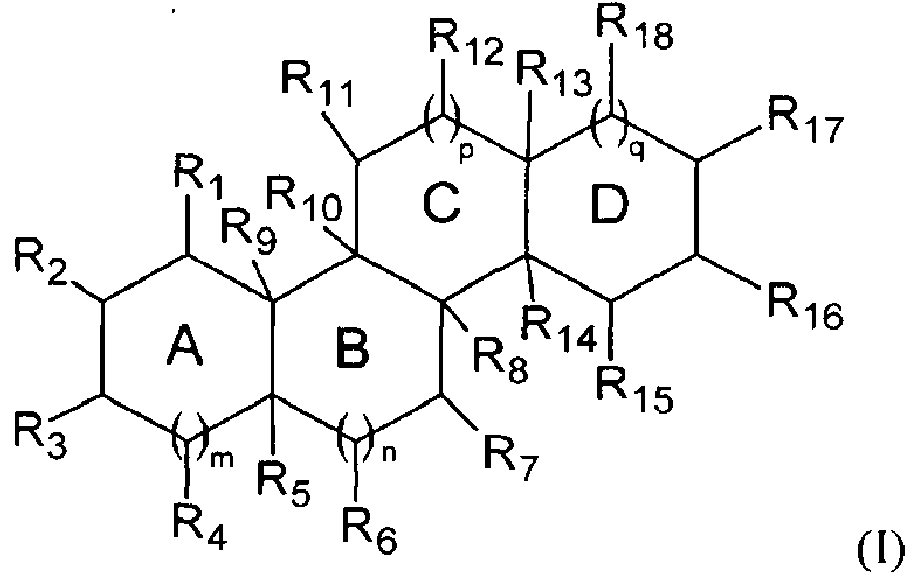


Applications Claiming Priority (3)
| Application Number | Priority Date | Filing Date | Title |
|---|---|---|---|
| US201161572714P | 2011-07-20 | 2011-07-20 | |
| US201261642431P | 2012-05-03 | 2012-05-03 | |
| PCT/US2012/047746 WO2013013221A1 (en) | 2011-07-20 | 2012-07-20 | Hydrophobic ceragenin compounds and devices incorporating same |
Publications (1)
| Publication Number | Publication Date |
|---|---|
| ES2725784T3 true ES2725784T3 (en) | 2019-09-27 |
Family
ID=46584416
Family Applications (2)
| Application Number | Title | Priority Date | Filing Date |
|---|---|---|---|
| ES12740855T Active ES2728135T3 (en) | 2011-07-20 | 2012-07-20 | Hydrogel materials incorporating a ceragenin elution compound |
| ES12740853T Active ES2725784T3 (en) | 2011-07-20 | 2012-07-20 | Hydrophobic ceragenin compounds and devices incorporating it |
Family Applications Before (1)
| Application Number | Title | Priority Date | Filing Date |
|---|---|---|---|
| ES12740855T Active ES2728135T3 (en) | 2011-07-20 | 2012-07-20 | Hydrogel materials incorporating a ceragenin elution compound |
Country Status (12)
| Country | Link |
|---|---|
| US (5) | US8975310B2 (en) |
| EP (2) | EP2734247B1 (en) |
| JP (1) | JP6272224B2 (en) |
| KR (2) | KR102220710B1 (en) |
| CN (2) | CN104053458B (en) |
| AU (2) | AU2012285818B2 (en) |
| BR (1) | BR112014001444A2 (en) |
| CA (2) | CA2842462C (en) |
| ES (2) | ES2728135T3 (en) |
| IL (1) | IL230520B (en) |
| MX (1) | MX340644B (en) |
| WO (2) | WO2013013221A1 (en) |
Families Citing this family (42)
| Publication number | Priority date | Publication date | Assignee | Title |
|---|---|---|---|---|
| WO2010036427A1 (en) | 2008-06-17 | 2010-04-01 | Brigham Young University | Cationic steroid antimicrobial diagnostic, detection, screening and imaging methods |
| CA2842462C (en) | 2011-07-20 | 2020-01-28 | Brigham Young University | Hydrogel materials incorporating eluting ceragenin compound |
| US8932614B2 (en) | 2011-08-25 | 2015-01-13 | Paul B. Savage | Incorporation of particulate ceragenins in polymers |
| US9694019B2 (en) | 2011-09-13 | 2017-07-04 | Brigham Young University | Compositions and methods for treating bone diseases and broken bones |
| KR101966293B1 (en) | 2011-09-13 | 2019-04-08 | 브라이엄 영 유니버시티 | Products for healing of tissue wounds |
| US9603859B2 (en) | 2011-09-13 | 2017-03-28 | Brigham Young University | Methods and products for increasing the rate of healing of tissue wounds |
| CA2852989C (en) | 2011-09-13 | 2021-06-29 | Brigham Young University | Compositions for treating bone diseases and broken bones |
| EP3449900A1 (en) | 2011-12-21 | 2019-03-06 | Brigham Young University | Oral care compositions |
| US9533063B1 (en) | 2012-03-01 | 2017-01-03 | Brigham Young University | Aerosols incorporating ceragenin compounds and methods of use thereof |
| CA2872399C (en) * | 2012-05-02 | 2021-01-12 | Brigham Young University | Ceragenin particulate materials and methods for making same |
| CA2888259C (en) | 2012-10-17 | 2019-05-28 | Brigham Young University | Treatment and prevention of mastitis |
| CN105451742B (en) | 2013-01-07 | 2021-04-06 | 布莱阿姆青年大学 | Methods for reducing cell proliferation and treating certain diseases |
| US11524015B2 (en) | 2013-03-15 | 2022-12-13 | Brigham Young University | Methods for treating inflammation, autoimmune disorders and pain |
| CA2907082C (en) | 2013-03-15 | 2021-05-04 | Brigham Young University | Methods for treating inflammation, autoimmune disorders and pain |
| US10568893B2 (en) | 2013-03-15 | 2020-02-25 | Brigham Young University | Methods for treating inflammation, autoimmune disorders and pain |
| US9387215B2 (en) | 2013-04-22 | 2016-07-12 | Brigham Young University | Animal feed including cationic cholesterol additive and related methods |
| EP3052051B1 (en) * | 2013-09-30 | 2019-06-12 | Teleflex Medical Incorporated | Stabilized enzyme compositions |
| US11690855B2 (en) | 2013-10-17 | 2023-07-04 | Brigham Young University | Methods for treating lung infections and inflammation |
| US20150203527A1 (en) | 2014-01-23 | 2015-07-23 | Brigham Young University | Cationic steroidal antimicrobials |
| CA2844321C (en) | 2014-02-27 | 2021-03-16 | Brigham Young University | Cationic steroidal antimicrobial compounds |
| US10220045B2 (en) | 2014-03-13 | 2019-03-05 | Brigham Young University | Compositions and methods for forming stabilized compositions with reduced CSA agglomeration |
| US9867836B2 (en) | 2014-03-13 | 2018-01-16 | Brigham Young University | Lavage and/or infusion using CSA compounds for increasing fertility in a mammal |
| US9931350B2 (en) | 2014-03-14 | 2018-04-03 | Brigham Young University | Anti-infective and osteogenic compositions and methods of use |
| US9686966B2 (en) | 2014-04-30 | 2017-06-27 | Brigham Young University | Methods and apparatus for cleaning or disinfecting a water delivery system |
| US10238665B2 (en) | 2014-06-26 | 2019-03-26 | Brigham Young University | Methods for treating fungal infections |
| US10441595B2 (en) | 2014-06-26 | 2019-10-15 | Brigham Young University | Methods for treating fungal infections |
| US10227376B2 (en) | 2014-08-22 | 2019-03-12 | Brigham Young University | Radiolabeled cationic steroid antimicrobials and diagnostic methods |
| US10155788B2 (en) | 2014-10-07 | 2018-12-18 | Brigham Young University | Cationic steroidal antimicrobial prodrug compositions and uses thereof |
| WO2016115228A1 (en) * | 2015-01-13 | 2016-07-21 | Northeastern University | Electrostatic charge-induced coating of medical devices with biomolecules |
| US10370403B2 (en) | 2015-04-22 | 2019-08-06 | Brigham Young University | Methods for the synthesis of ceragenins |
| WO2016172553A1 (en) | 2015-04-22 | 2016-10-27 | Savage Paul B | Methods for the synthesis of ceragenins |
| US9434759B1 (en) | 2015-05-18 | 2016-09-06 | Brigham Young University | Cationic steroidal antimicrobial compounds and methods of manufacturing such compounds |
| US20170080128A1 (en) * | 2015-09-21 | 2017-03-23 | Brigham Young University | Novel endotracheal tube for the reduction of intubation-related complication in neonates and babies |
| US10226550B2 (en) | 2016-03-11 | 2019-03-12 | Brigham Young University | Cationic steroidal antimicrobial compositions for the treatment of dermal tissue |
| US20180272034A1 (en) * | 2017-03-21 | 2018-09-27 | Brigham Young University | Use of csa compounds to prevent microbial build-up or fouling of medical implants |
| US10959433B2 (en) | 2017-03-21 | 2021-03-30 | Brigham Young University | Use of cationic steroidal antimicrobials for sporicidal activity |
| WO2019173642A1 (en) * | 2018-03-07 | 2019-09-12 | Genberg Carl | Method of treating ciliated tissue using csa micelles |
| EP3829666B1 (en) * | 2018-08-01 | 2023-08-30 | Boston Scientific Scimed Inc. | Drug release coating compositions |
| KR102726475B1 (en) | 2019-03-19 | 2024-11-04 | 주식회사 엘지에너지솔루션 | A battery module having an insulating pad having an extended length, a battery pack and a vehicle comprising the same |
| US12186328B2 (en) | 2019-05-23 | 2025-01-07 | Brigham Young University | Use of CSA compounds to stimulate stem cells and hair growth |
| US12215126B2 (en) * | 2020-05-21 | 2025-02-04 | Brigham Young University | Cationic steroidal antimicrobial compounds with endogenous groups |
| CN115322240B (en) * | 2022-08-17 | 2023-09-12 | 南宁师范大学 | Cholesterol selenocyanate compound, and preparation method and application thereof |
Family Cites Families (162)
| Publication number | Priority date | Publication date | Assignee | Title |
|---|---|---|---|---|
| DE1037074B (en) | 1957-03-25 | 1958-08-21 | Schering Ag | Oral care products |
| US3843779A (en) | 1971-03-22 | 1974-10-22 | Colgate Palmolive Co | Process for preparing stable dentifrice |
| US4248236A (en) | 1978-12-26 | 1981-02-03 | Linder Gerald S | Packaged medical appliance |
| US4473988A (en) | 1979-10-24 | 1984-10-02 | Colgate-Palmolive Company | Dentifrice packaging process |
| US4296206A (en) | 1980-04-30 | 1981-10-20 | United States Of America | Irreversible anti-glucocorticoids |
| US4289755A (en) | 1980-11-03 | 1981-09-15 | Richardson-Vicks Inc. | Stable mouthwash compositions containing zinc and fluoride compounds |
| FR2558107B3 (en) | 1984-01-12 | 1987-03-20 | Dechaume Geoffroy | SANDWICH MATERIAL WITH INTERNAL PAPER RIPPING AND EXTERIOR PROTECTION BY PLASTIC FILM AND METHODS OF MAKING SUCH MATERIAL |
| US4661341A (en) | 1984-10-30 | 1987-04-28 | The Procter & Gamble Company | Oral compositions |
| US4723950A (en) | 1984-12-12 | 1988-02-09 | C. R. Bard, Inc. | Urine drainage bag outlet with barrier against microbial infection |
| US5380841A (en) | 1985-09-12 | 1995-01-10 | The Upjohn Company | Pyridinylpiperazinyl steroids |
| US4842593A (en) | 1987-10-09 | 1989-06-27 | The Procter & Gamble Company | Disposable absorbent articles for incontinent individuals |
| US4865855A (en) | 1988-01-11 | 1989-09-12 | Kimberly-Clark Corporation | Antimicrobial absorbent food pad |
| US4990338A (en) | 1988-05-09 | 1991-02-05 | Dow Corning Corporation | Antimicrobial superabsorbent compositions and methods |
| US5356630A (en) | 1989-02-22 | 1994-10-18 | Massachusetts Institute Of Technology | Delivery system for controlled release of bioactive factors |
| US4972848A (en) | 1989-08-23 | 1990-11-27 | Medtronic, Inc. | Medical electrical lead with polymeric monolithic controlled release device and method of manufacture |
| US5025754A (en) | 1990-02-01 | 1991-06-25 | David Plyler | Apparatus and method for providing drinking water to poultry |
| GB9020075D0 (en) | 1990-09-14 | 1990-10-24 | Filler Aaron G | Contrast agents for magnetic resonance imaging of axonal transport |
| US5310545A (en) | 1991-04-11 | 1994-05-10 | Drore Eisen | Method of treatment using mouthwashes containing steroids and antifungal agents and compositions of matter |
| MX9204281A (en) | 1991-07-24 | 1993-04-01 | Smithkline Beecham Corp | ANTIBIOTIC FOOD COMPOSITIONS AND METHOD TO IMPROVE FOOD EFFICIENCY AND PROMOTE GROWTH IN MONOGASTRIC ANIMALS |
| US5286479A (en) | 1991-12-10 | 1994-02-15 | The Dow Chemical Company | Oral compositions for suppressing mouth odors |
| US5234703A (en) | 1992-10-31 | 1993-08-10 | Guthery B Eugene | Disinfecting product and process |
| JP2877636B2 (en) | 1992-11-18 | 1999-03-31 | 積水化成品工業株式会社 | Antibacterial drip sheet |
| US5352682A (en) | 1993-03-08 | 1994-10-04 | Digestive Care Inc. | Compositions containing salts of bile acid-aminosalicylate conjugates |
| WO1994020505A1 (en) | 1993-03-12 | 1994-09-15 | The Upjohn Company | Crystalline ceftiofur free acid |
| US5407573A (en) | 1993-06-01 | 1995-04-18 | Alpine Water Purification, Inc. | Continuous flow water-purifying device |
| EP0749437B1 (en) | 1994-03-10 | 2001-12-05 | Magainin Pharmaceuticals Inc. | Pharmaceutical uses of steroid derivatives |
| US5856535A (en) | 1994-08-18 | 1999-01-05 | Magainin Pharmaceuticals, Inc. | Aminosterol ester compounds |
| US5624704A (en) | 1995-04-24 | 1997-04-29 | Baylor College Of Medicine | Antimicrobial impregnated catheters and other medical implants and method for impregnating catheters and other medical implants with an antimicrobial agent |
| US5763430A (en) | 1995-06-07 | 1998-06-09 | Magainin Pharmaceuticals Inc. | Method of treating a viral infection by administering a steroid compound |
| US5687714A (en) | 1995-10-10 | 1997-11-18 | The United States Of America As Represented By The Department Of Health And Human Services | Self-cleaning endotracheal tube apparatus |
| JP3044367B2 (en) | 1995-11-13 | 2000-05-22 | 三洋化成工業株式会社 | Antimicrobial water-absorbing composition and method for producing the same |
| US6132765A (en) | 1996-04-12 | 2000-10-17 | Uroteq Inc. | Drug delivery via therapeutic hydrogels |
| US5897770A (en) | 1997-10-23 | 1999-04-27 | Plymouth Products, Inc. | Center core cartridge feeder insert |
| US20040170563A1 (en) | 1997-10-27 | 2004-09-02 | Meade Thomas J. | Magnetic resonance imaging agents for the delivery of therapeutic agents |
| GB9804861D0 (en) | 1998-03-06 | 1998-04-29 | Res Inst Medicine Chem | Chemical compounds |
| BR9815711B1 (en) | 1998-03-06 | 2014-10-29 | Univ Brigham Young | STEROID DERIVATIVE ANTIBIOTIC COMPOUND |
| US6350738B1 (en) | 1998-03-06 | 2002-02-26 | Brigham Young University | Steroid derived antibiotics |
| US6767904B2 (en) | 1998-03-06 | 2004-07-27 | Bringham Young University | Steroid derived antibiotics |
| US6632457B1 (en) | 1998-08-14 | 2003-10-14 | Incept Llc | Composite hydrogel drug delivery systems |
| US6329488B1 (en) | 1998-11-10 | 2001-12-11 | C. R. Bard, Inc. | Silane copolymer coatings |
| US6667299B1 (en) * | 2000-03-16 | 2003-12-23 | Hollis-Eden Pharmaceuticals, Inc. | Pharmaceutical compositions and treatment methods |
| NO307168B1 (en) | 1999-03-01 | 2000-02-21 | Orix As | Oral preparation effective against halitosis |
| US6217896B1 (en) * | 1999-04-01 | 2001-04-17 | Uab Research Foundation | Conjunctival inserts for topical delivery of medication or lubrication |
| US6773717B1 (en) | 1999-07-09 | 2004-08-10 | Pennfield Oil Company | Process and apparatus for the preparation of chlortetracycline-containing animal feed compositions |
| US6673771B1 (en) | 1999-07-28 | 2004-01-06 | The Trustees Of The University Of Pennsylvania | Methods of inhibiting osteoclast activity |
| WO2001014406A1 (en) | 1999-08-23 | 2001-03-01 | Chugai Seiyaku Kabushiki Kaisha | Antiandrogen agents |
| US6737089B2 (en) | 1999-08-27 | 2004-05-18 | Morinda, Inc. | Morinda citrifolia (Noni) enhanced animal food product |
| US6551608B2 (en) * | 2000-03-06 | 2003-04-22 | Porex Technologies Corporation | Porous plastic media with antiviral or antimicrobial properties and processes for making the same |
| EP1272231A1 (en) | 2000-04-06 | 2003-01-08 | University Technology Corporation | Compositions and methods for promoting wound healing |
| WO2002014342A1 (en) | 2000-08-15 | 2002-02-21 | Brigham Young University | Steroid derived antibiotics |
| JP3435405B2 (en) | 2000-11-24 | 2003-08-11 | 株式会社ティーセル研究所 | Livestock mastitis therapeutic agent and method for treating mastitis using the same |
| US6514556B2 (en) | 2000-12-15 | 2003-02-04 | Ecolab Inc. | Method and composition for washing poultry during processing |
| US6803066B2 (en) | 2001-01-18 | 2004-10-12 | Praxair Technology, Inc. | Sanitizing food products |
| PL370310A1 (en) | 2001-02-26 | 2005-05-16 | The University Of Sydney | Method of improving the growth performance of an animal |
| JP4674980B2 (en) | 2001-02-26 | 2011-04-20 | サンスター株式会社 | Alcohol-free liquid oral composition |
| ES2189649B1 (en) | 2001-06-15 | 2004-09-16 | Oftrai S.L. | NEW DISINFECTANT AND ANTISEPTIC COMPOSITION. |
| US6921390B2 (en) | 2001-07-23 | 2005-07-26 | Boston Scientific Scimed, Inc. | Long-term indwelling medical devices containing slow-releasing antimicrobial agents and having a surfactant surface |
| US9056048B2 (en) | 2001-08-16 | 2015-06-16 | The Trustees Of The University Of Pennsylvania | Synthesis and use of cationic steroids for anti-inflammatory drug therapy |
| AU2002324723B2 (en) | 2001-08-16 | 2007-10-25 | The Trustees Of The University Of Pennsylvania | Synthesis and use of reagents for improved DNA lipofection and/or slow release pro-drug and drug therapies |
| US6939376B2 (en) | 2001-11-05 | 2005-09-06 | Sun Biomedical, Ltd. | Drug-delivery endovascular stent and method for treating restenosis |
| US6887270B2 (en) | 2002-02-08 | 2005-05-03 | Boston Scientific Scimed, Inc. | Implantable or insertable medical device resistant to microbial growth and biofilm formation |
| US7048956B2 (en) | 2002-03-05 | 2006-05-23 | The Penn State Research Foundation | Process for antimicrobial treatment of fresh produce, particularly mushrooms |
| DE10218147B4 (en) | 2002-04-23 | 2005-12-22 | Stockhausen Gmbh | Water-absorbing polymer particles retarding decomposition of body fluids, their preparation and use |
| US7334580B2 (en) | 2002-05-07 | 2008-02-26 | Smaldone Gerald C | Methods, devices and formulations for targeted endobronchial therapy |
| US6689342B1 (en) | 2002-07-29 | 2004-02-10 | Warner-Lambert Company | Oral care compositions comprising tropolone compounds and essential oils and methods of using the same |
| AU2003282806A1 (en) | 2002-09-23 | 2004-04-08 | Schering Corporation | Use of posaconazole for the treatment of fungal infections |
| US6966990B2 (en) | 2002-10-11 | 2005-11-22 | Ferro Corporation | Composite particles and method for preparing |
| US9211259B2 (en) | 2002-11-29 | 2015-12-15 | Foamix Pharmaceuticals Ltd. | Antibiotic kit and composition and uses thereof |
| US7659061B2 (en) | 2002-11-19 | 2010-02-09 | Pharmacia & Upjohn Company | Pharmaceutical compositions having a modified vehicle |
| US7282214B2 (en) * | 2002-12-19 | 2007-10-16 | Johnson & Johnson Vision Care, Inc. | Biomedical devices with antimicrobial coatings |
| US6928893B2 (en) | 2003-01-15 | 2005-08-16 | General Motors Corporation | Method of making a gas diffusion media and quality controls for same |
| DK1608407T3 (en) | 2003-03-20 | 2006-12-04 | Pharmacia Corp | Dispersible formulation of an anti-inflammatory agent |
| US6872306B2 (en) | 2003-04-22 | 2005-03-29 | Albert Shen | Multifunctional pure water maker |
| NZ543643A (en) | 2003-06-23 | 2007-09-28 | Beiersdorf Ag | Antimicrobial wound dressing with two layers and antimicrobial metal between layers but not on exterior |
| DE10328261B4 (en) | 2003-06-23 | 2007-10-25 | Beiersdorf Ag | Disinfecting coating with silver coating and its use |
| GB0318901D0 (en) | 2003-08-12 | 2003-09-17 | Univ Bath | Improvements in or relating to bone substitute material |
| US6872303B2 (en) | 2003-08-12 | 2005-03-29 | Ian M. Knapp | Water treatment cartridge |
| US20050267051A1 (en) | 2003-12-19 | 2005-12-01 | Lee Henry J | Antineoplastic and anti-HIV conjugates of steroid acid and nucleosides |
| US8119154B2 (en) | 2004-04-30 | 2012-02-21 | Allergan, Inc. | Sustained release intraocular implants and related methods |
| US20060062773A1 (en) | 2004-09-21 | 2006-03-23 | The Procter & Gamble Company | Compositions for maintaining and restoring normal gastrointestinal flora |
| US20100092398A1 (en) | 2004-09-30 | 2010-04-15 | Max Reynolds | Antimicrobial compositions and applications therefore |
| HUE025071T2 (en) | 2005-08-26 | 2016-01-28 | Becton Dickinson Co | Method for sterilizing elastomeric articles |
| EP1923065B1 (en) | 2005-09-08 | 2010-12-01 | Kabushiki Kaisha Yakult Honsha | Cholesterol absorption inhibitor |
| ES2747978T3 (en) | 2005-10-03 | 2020-03-12 | Mark A Pinsky | Non-phospholipid liposomes comprising hyaluronic acid |
| US20100226884A1 (en) | 2009-01-20 | 2010-09-09 | Immunomedics, Inc. | Novel Class of Monospecific and Bispecific Humanized Antibodies that Target the Insulin-like Growth Factor Type I Receptor (IGF-1R) |
| US7842312B2 (en) | 2005-12-29 | 2010-11-30 | Cordis Corporation | Polymeric compositions comprising therapeutic agents in crystalline phases, and methods of forming the same |
| WO2007089906A2 (en) | 2006-02-01 | 2007-08-09 | Brigham Young University | Cationic steroid antimicrobial compositions for treating or preventing herpes infections |
| US20070191322A1 (en) | 2006-02-01 | 2007-08-16 | Savage Paul B | Cationic Steroid Microbial Compositions and Methods of Use |
| WO2008048340A2 (en) * | 2006-02-01 | 2008-04-24 | Brigham Young University | Cationic steroid antimicrobial compositions for treating poxvirus infections |
| CN102145005A (en) | 2006-02-01 | 2011-08-10 | 杨百翰大学 | Cationic steroid antimicrobial compositions and methods of use |
| WO2007134176A2 (en) | 2006-05-10 | 2007-11-22 | Microban Products Company | Antimicrobial food pad |
| US7858000B2 (en) * | 2006-06-08 | 2010-12-28 | Novartis Ag | Method of making silicone hydrogel contact lenses |
| WO2007149868A2 (en) | 2006-06-20 | 2007-12-27 | The Regents Of The University Of California | Controlled release encapsulated anti-bacterial and anti-inflammatory nanoparticles |
| US8685421B2 (en) * | 2006-07-07 | 2014-04-01 | Surmodics, Inc. | Beaded wound spacer device |
| US20100022481A1 (en) * | 2006-08-02 | 2010-01-28 | Dong Wang | Drug Carriers, Their Synthesis, and Methods of Use Thereof |
| WO2008038965A1 (en) | 2006-09-26 | 2008-04-03 | Kyungpook National University Industry-Academic Cooperation Foundation | 7alpha-aminosteroid derivatives or pharmaceutically acceptable salts thereof, preparation method thereof and composition for anticancer or antibiotics containing the same as an active ingredient |
| US9186511B2 (en) | 2006-10-13 | 2015-11-17 | Cyberonics, Inc. | Obstructive sleep apnea treatment devices, systems and methods |
| KR101454041B1 (en) * | 2006-11-06 | 2014-10-27 | 노파르티스 아게 | Eye devices and methods of making and using the same |
| MX2009008364A (en) | 2007-02-07 | 2009-08-20 | Astrazeneca Ab | New salt. |
| US7854941B2 (en) | 2007-02-12 | 2010-12-21 | The University Of Southern Mississippi | Method of attaching drug compounds to non-reactive polymer surfaces |
| US9125807B2 (en) | 2007-07-09 | 2015-09-08 | Incept Llc | Adhesive hydrogels for ophthalmic drug delivery |
| US20090016973A1 (en) | 2007-07-09 | 2009-01-15 | Micropure, Inc. | Composition and Method for the Prevention of Oral Disease |
| US8558051B2 (en) | 2007-07-18 | 2013-10-15 | The Procter & Gamble Company | Disposable absorbent article having odor control system |
| US8772220B2 (en) | 2007-08-24 | 2014-07-08 | Sekisui Specialty Chemicals America, Llc | Chemical delivery product and process for making the same |
| US20090068122A1 (en) | 2007-09-06 | 2009-03-12 | Shira Pilch | Dentifrice Compositions for Treating Xerostomia |
| WO2009079066A2 (en) | 2007-09-26 | 2009-06-25 | Aparna Biosciences | Therapeutic and vaccine polyelectrolyte nanoparticle compositions |
| US20090099531A1 (en) | 2007-10-15 | 2009-04-16 | Griesbach Iii Henry Louis | Packaging for selectivity lubricating part of a medical device |
| CN104666318A (en) | 2007-10-16 | 2015-06-03 | 普罗吉恩制药有限公司 | Novel sulfated oligosaccharide derivatives |
| GB0724278D0 (en) | 2007-12-13 | 2008-01-30 | Syntopix Ltd | uses for antimicrobial agents |
| WO2009091728A2 (en) | 2008-01-14 | 2009-07-23 | Coopervision International Holding Company, Lp | Polymerizable contact lens formulations and contact lenses obtained therefrom |
| WO2009144708A1 (en) | 2008-04-14 | 2009-12-03 | Ganot, Arie | Augmentation and treatment of gingival defects |
| WO2010036427A1 (en) * | 2008-06-17 | 2010-04-01 | Brigham Young University | Cationic steroid antimicrobial diagnostic, detection, screening and imaging methods |
| US20090324517A1 (en) | 2008-06-30 | 2009-12-31 | Dan Kline | Halitosis treatment |
| DE602008005728D1 (en) | 2008-07-07 | 2011-05-05 | Rustydog Inc | Packaging for food and a method for packaging food |
| JP5771143B2 (en) | 2008-07-09 | 2015-08-26 | ボード オブ リージェンツ オブ ザ ユニバーシティ オブ ネブラスカ | Functional micelles for chemical delivery targeted to hard tissue |
| US8247435B2 (en) | 2009-02-19 | 2012-08-21 | Thornthwaite Jerry T | Formulations for treating human and animal diseases |
| US8623416B2 (en) | 2009-11-25 | 2014-01-07 | Michael Zasloff | Formulations comprising aminosterols |
| US8529681B1 (en) | 2010-01-07 | 2013-09-10 | Sandia Corporation | Biofouling-resistant ceragenin-modified materials and structures for water treatment |
| AU2011222612A1 (en) | 2010-03-04 | 2012-09-20 | The Trustees Of The University Of Pennsylvania Center For Technology Transfer | Antimicrobial cationic stereoids and methods of use |
| JP5720103B2 (en) | 2010-03-18 | 2015-05-20 | 東レ株式会社 | Silicone hydrogels, ophthalmic lenses and contact lenses |
| KR101134342B1 (en) | 2010-04-22 | 2012-04-09 | 주식회사 메가젠임플란트 | Dental implant fixture and implant set having the same |
| US8871716B2 (en) | 2010-10-08 | 2014-10-28 | Korea Advanced Institute Of Science And Technology | Use of antimicrobial peptides in regeneration of skin cells |
| EP2635117B1 (en) * | 2010-11-03 | 2018-09-19 | Brigham Young University | Storage-stable, anti-microbial compositions including ceragenin compounds and methods of use |
| GB201021937D0 (en) | 2010-12-24 | 2011-02-02 | Reckitt & Colman Overseas | Skin sanitizer compositions comprising alcohol based emulsion |
| CN102172356B (en) | 2011-03-03 | 2013-04-03 | 山东农业大学 | Use of taurochenodeoxycholic acid in prevention and treatment of osteoporosis |
| EP2537415A1 (en) | 2011-06-24 | 2012-12-26 | David Vachon | Biologically efficacious compositions, articles of manufacture and processes for producing and/or using same |
| CA2842462C (en) | 2011-07-20 | 2020-01-28 | Brigham Young University | Hydrogel materials incorporating eluting ceragenin compound |
| US8932614B2 (en) | 2011-08-25 | 2015-01-13 | Paul B. Savage | Incorporation of particulate ceragenins in polymers |
| WO2013029059A1 (en) | 2011-08-25 | 2013-02-28 | Brigham Young University | Medical devices incorporating ceragenin-containing composites |
| WO2013029055A1 (en) | 2011-08-25 | 2013-02-28 | Brigham Young University | Incorporation of particulate ceragenins in polymers |
| CA2852989C (en) | 2011-09-13 | 2021-06-29 | Brigham Young University | Compositions for treating bone diseases and broken bones |
| KR101966293B1 (en) | 2011-09-13 | 2019-04-08 | 브라이엄 영 유니버시티 | Products for healing of tissue wounds |
| SG11201402061UA (en) | 2011-12-15 | 2014-06-27 | Colgate Palmolive Co | Aqueous oral care compositions |
| US20140363780A1 (en) | 2011-12-21 | 2014-12-11 | Brigham Young University | Oral care compositions |
| EP3449900A1 (en) | 2011-12-21 | 2019-03-06 | Brigham Young University | Oral care compositions |
| EP2819531B1 (en) | 2012-03-01 | 2016-01-20 | Brigham Young University | Anti-microbial food processing compositions including ceragenin compounds and methods of use |
| US9533063B1 (en) * | 2012-03-01 | 2017-01-03 | Brigham Young University | Aerosols incorporating ceragenin compounds and methods of use thereof |
| JP5803795B2 (en) | 2012-04-20 | 2015-11-04 | 富士通株式会社 | Receiver, frequency deviation calculation method, and computer program |
| US20130280391A1 (en) | 2012-04-24 | 2013-10-24 | Brigham Young University | Anti-microbial wash compositions including ceragenin compounds and methods of use for treating non-meat food products |
| CA2872399C (en) | 2012-05-02 | 2021-01-12 | Brigham Young University | Ceragenin particulate materials and methods for making same |
| AU2013257951A1 (en) | 2012-05-11 | 2015-01-22 | Akron Molecules Ag | Use of compounds for the treatment of pain |
| CA2888259C (en) | 2012-10-17 | 2019-05-28 | Brigham Young University | Treatment and prevention of mastitis |
| MX379460B (en) | 2012-12-13 | 2025-03-11 | Immunomedics Inc | DOSES OF ANTIBODY IMMUNOCONJUGATES AND SN-38 FOR ENHANCED EFFICACY AND REDUCED TOXICITY. |
| CN105451742B (en) | 2013-01-07 | 2021-04-06 | 布莱阿姆青年大学 | Methods for reducing cell proliferation and treating certain diseases |
| CA2907082C (en) | 2013-03-15 | 2021-05-04 | Brigham Young University | Methods for treating inflammation, autoimmune disorders and pain |
| US11524015B2 (en) | 2013-03-15 | 2022-12-13 | Brigham Young University | Methods for treating inflammation, autoimmune disorders and pain |
| US9387215B2 (en) | 2013-04-22 | 2016-07-12 | Brigham Young University | Animal feed including cationic cholesterol additive and related methods |
| US11690855B2 (en) | 2013-10-17 | 2023-07-04 | Brigham Young University | Methods for treating lung infections and inflammation |
| US20150203527A1 (en) | 2014-01-23 | 2015-07-23 | Brigham Young University | Cationic steroidal antimicrobials |
| CA2844321C (en) | 2014-02-27 | 2021-03-16 | Brigham Young University | Cationic steroidal antimicrobial compounds |
| US10220045B2 (en) | 2014-03-13 | 2019-03-05 | Brigham Young University | Compositions and methods for forming stabilized compositions with reduced CSA agglomeration |
| US9867836B2 (en) | 2014-03-13 | 2018-01-16 | Brigham Young University | Lavage and/or infusion using CSA compounds for increasing fertility in a mammal |
| US9931350B2 (en) | 2014-03-14 | 2018-04-03 | Brigham Young University | Anti-infective and osteogenic compositions and methods of use |
| US10441595B2 (en) | 2014-06-26 | 2019-10-15 | Brigham Young University | Methods for treating fungal infections |
| US10238665B2 (en) | 2014-06-26 | 2019-03-26 | Brigham Young University | Methods for treating fungal infections |
| CA2960824A1 (en) * | 2014-09-13 | 2016-03-17 | Novartis Ag | Combination therapies of alk inhibitors |
| WO2016172553A1 (en) | 2015-04-22 | 2016-10-27 | Savage Paul B | Methods for the synthesis of ceragenins |
| AU2016250816B2 (en) | 2015-04-22 | 2020-10-22 | Brigham Young University | Cationic steroidal antimicrobial salts |
| US10370403B2 (en) | 2015-04-22 | 2019-08-06 | Brigham Young University | Methods for the synthesis of ceragenins |
| US9434759B1 (en) | 2015-05-18 | 2016-09-06 | Brigham Young University | Cationic steroidal antimicrobial compounds and methods of manufacturing such compounds |
| US20170080128A1 (en) | 2015-09-21 | 2017-03-23 | Brigham Young University | Novel endotracheal tube for the reduction of intubation-related complication in neonates and babies |
| US10226550B2 (en) | 2016-03-11 | 2019-03-12 | Brigham Young University | Cationic steroidal antimicrobial compositions for the treatment of dermal tissue |
-
2012
- 2012-07-20 CA CA2842462A patent/CA2842462C/en active Active
- 2012-07-20 AU AU2012285818A patent/AU2012285818B2/en active Active
- 2012-07-20 WO PCT/US2012/047746 patent/WO2013013221A1/en not_active Ceased
- 2012-07-20 EP EP12740855.7A patent/EP2734247B1/en active Active
- 2012-07-20 KR KR1020197007349A patent/KR102220710B1/en active Active
- 2012-07-20 BR BR112014001444A patent/BR112014001444A2/en not_active Application Discontinuation
- 2012-07-20 MX MX2014000787A patent/MX340644B/en active IP Right Grant
- 2012-07-20 KR KR1020147004478A patent/KR20140063616A/en not_active Ceased
- 2012-07-20 CN CN201280045861.0A patent/CN104053458B/en active Active
- 2012-07-20 CN CN201280045894.5A patent/CN104039369B/en active Active
- 2012-07-20 AU AU2012285816A patent/AU2012285816B2/en active Active
- 2012-07-20 EP EP12740853.2A patent/EP2734246B1/en active Active
- 2012-07-20 JP JP2014521854A patent/JP6272224B2/en active Active
- 2012-07-20 ES ES12740855T patent/ES2728135T3/en active Active
- 2012-07-20 ES ES12740853T patent/ES2725784T3/en active Active
- 2012-07-20 US US13/554,957 patent/US8975310B2/en active Active
- 2012-07-20 US US13/554,930 patent/US10676501B2/en active Active
- 2012-07-20 WO PCT/US2012/047750 patent/WO2013013223A1/en not_active Ceased
- 2012-07-20 CA CA2842460A patent/CA2842460C/en active Active
-
2014
- 2014-01-19 IL IL230520A patent/IL230520B/en active IP Right Grant
-
2015
- 2015-01-22 US US14/602,499 patent/US9546195B2/en active Active
-
2017
- 2017-01-14 US US15/406,666 patent/US20170137459A1/en not_active Abandoned
- 2017-01-14 US US15/406,667 patent/US20170121364A1/en not_active Abandoned
Also Published As
Similar Documents
| Publication | Publication Date | Title |
|---|---|---|
| ES2725784T3 (en) | Hydrophobic ceragenin compounds and devices incorporating it | |
| EP2075014B9 (en) | Compositions and methods for coating medical implants | |
| ES2252962T5 (en) | Medicinal products with delayed pharmacological activity, and procedure for their preparation | |
| US20240374794A1 (en) | Coating compositions, polymeric coatings, and methods | |
| Omri et al. | Artificial implants–new developments and associated problems |