EP4529834A2 - Shunt implant devices with over-channel sensor arms - Google Patents
Shunt implant devices with over-channel sensor arms Download PDFInfo
- Publication number
- EP4529834A2 EP4529834A2 EP25158429.8A EP25158429A EP4529834A2 EP 4529834 A2 EP4529834 A2 EP 4529834A2 EP 25158429 A EP25158429 A EP 25158429A EP 4529834 A2 EP4529834 A2 EP 4529834A2
- Authority
- EP
- European Patent Office
- Prior art keywords
- sensor
- implant device
- shunt
- arm
- pressure
- Prior art date
- Legal status (The legal status is an assumption and is not a legal conclusion. Google has not performed a legal analysis and makes no representation as to the accuracy of the status listed.)
- Pending
Links
Images




Classifications
-
- A—HUMAN NECESSITIES
- A61—MEDICAL OR VETERINARY SCIENCE; HYGIENE
- A61B—DIAGNOSIS; SURGERY; IDENTIFICATION
- A61B5/00—Measuring for diagnostic purposes; Identification of persons
- A61B5/0002—Remote monitoring of patients using telemetry, e.g. transmission of vital signals via a communication network
- A61B5/0031—Implanted circuitry
-
- A—HUMAN NECESSITIES
- A61—MEDICAL OR VETERINARY SCIENCE; HYGIENE
- A61B—DIAGNOSIS; SURGERY; IDENTIFICATION
- A61B5/00—Measuring for diagnostic purposes; Identification of persons
- A61B5/02—Detecting, measuring or recording for evaluating the cardiovascular system, e.g. pulse, heart rate, blood pressure or blood flow
- A61B5/021—Measuring pressure in heart or blood vessels
- A61B5/0215—Measuring pressure in heart or blood vessels by means inserted into the body
-
- A—HUMAN NECESSITIES
- A61—MEDICAL OR VETERINARY SCIENCE; HYGIENE
- A61B—DIAGNOSIS; SURGERY; IDENTIFICATION
- A61B5/00—Measuring for diagnostic purposes; Identification of persons
- A61B5/68—Arrangements of detecting, measuring or recording means, e.g. sensors, in relation to patient
- A61B5/6846—Arrangements of detecting, measuring or recording means, e.g. sensors, in relation to patient specially adapted to be brought in contact with an internal body part, i.e. invasive
- A61B5/6867—Arrangements of detecting, measuring or recording means, e.g. sensors, in relation to patient specially adapted to be brought in contact with an internal body part, i.e. invasive specially adapted to be attached or implanted in a specific body part
- A61B5/6869—Heart
-
- A—HUMAN NECESSITIES
- A61—MEDICAL OR VETERINARY SCIENCE; HYGIENE
- A61B—DIAGNOSIS; SURGERY; IDENTIFICATION
- A61B5/00—Measuring for diagnostic purposes; Identification of persons
- A61B5/68—Arrangements of detecting, measuring or recording means, e.g. sensors, in relation to patient
- A61B5/6846—Arrangements of detecting, measuring or recording means, e.g. sensors, in relation to patient specially adapted to be brought in contact with an internal body part, i.e. invasive
- A61B5/6879—Means for maintaining contact with the body
- A61B5/6882—Anchoring means
Definitions
- the present disclosure generally relates to the field of medical implant devices.
- Described herein are one or more methods and/or devices to facilitate monitoring of physiological parameter(s) associated with certain chambers and/or vessels of the heart, such as the left atrium, using one or more sensor implant devices.
- the present disclosure relates to a sensor implant device comprising a shunt body that forms a fluid conduit, a first anchor structure associated with a first axial end of the shunt body, a second anchor structure associated with a second axial end of the shunt body, and a first sensor device coupled to the first anchor structure, the first anchor structure being configured to hold the first sensor device in a sensing position over a channel area of the fluid conduit.
- the first sensor device when in the sensing position, is aligned with an axis of the fluid conduit.
- the first sensor device when in the sensing position, may be coaxial with the fluid conduit.
- the first anchor structure can be wrapped around a body of the first sensor device.
- the first anchor structure may comprise a first arm that extends from the shunt body over the channel area and holds the first sensor device.
- the first anchor structure can further comprise a second arm that extends from the shunt body over the channel area and holds the first sensor device.
- the first arm and the second arm emanate from opposite sides of the shunt body.
- both the first arm and the second arm may wrap around a circumference of a body of the first sensor device.
- an axial blood flow gap is present between the first sensor device and the first axial end of the shunt body.
- the shunt body comprises a helical wireform.
- the first anchor structure may comprise a spiraled arm that is an integrated form with the helical wireform of the shunt body.
- the shunt body further comprises a cover disposed outside at least a portion of the helical wireform.
- the shunt body can further comprise a cover disposed within at least a portion of the helical wireform.
- the sensor implant device can further comprise a second sensor device coupled to the second anchor structure, the second anchor structure being configured to hold the second sensor device over the channel area of the fluid conduit.
- a sensor transducer of the first sensor device and a sensor transducer of the second sensor device may face in opposite directions.
- the first sensor device and the second sensor device are coaxial.
- the present disclosure relates to a sensor implant device comprising a coil wireform.
- the coil wireform comprises, in a deployed configuration, a body portion formed of a plurality of winds of coil of the coil wireform and having a first diameter, a first flange anchor portion emanating from a first axial end of the body portion and having a second diameter that is greater than the first diameter, a first sensor-support arm emanating from the first flange portion and deflected radially over a channel area defined by the body portion, a distal portion of the first sensor-support arm including a sensor-retention means holding a first sensor device, and a second flange anchor portion emanating from a second axial end of the body portion.
- the sensor implant device can further comprise a second sensor-support arm emanating from the second flange portion and deflected radially over the channel area.
- the sensor implant device further comprises a second sensor-support arm emanating from the first flange portion and deflected radially over the channel area, a distal portion of the second sensor-support arm being secured to the first sensor device.
- the first sensor-support arm is deflected axially with respect to an axis of the body portion at a greater angle than a deflection angle of the plurality of winds of coil of the body portion.
- the sensor-retention means can comprise one or more winds of coil.
- the sensor-retention means can comprise a mechanical clip.
- the sensor implant device can further comprise a sealing means associated with the body portion.
- the sealing means can comprise a fabric layer.
- the coil wireform comprises shape memory material configured to assume the deployed configuration when deployed from a delivery catheter.
- the coil wireform can be configured to be compressed into a delivery configuration in which the body portion and the first flange anchor portion have a third diameter that is smaller than the first diameter.
- spatially relative terms are intended to encompass different orientations of the element(s)/structures(s), in use or operation, in addition to the orientations depicted in the drawings.
- an element/structure described as "above” another element/structure may represent a position that is below or beside such other element/structure with respect to alternate orientations of the subject patient or element/structure, and vice-versa.
- the present disclosure relates to systems, devices, and methods for monitoring of one or more physiological parameters of a patient (e.g., blood pressure) using sensor-integrated cardiac shunts and/or other medical implant devices.
- a patient e.g., blood pressure
- the present disclosure relates to cardiac shunts and/or other cardiac implant devices that incorporate or are associated with pressure sensors or other sensor devices.
- the term "associated with” is used herein according to its broad and ordinary meaning.
- first feature, element, component, device, or member is described as being "associated with" a second feature, element, component, device, or member
- such description should be understood as indicating that the first feature, element, component, device, or member is physically coupled, attached, or connected to, integrated with, embedded at least partially within, or otherwise physically related to the second feature, element, component, device, or member, whether directly or indirectly.
- Certain embodiments are disclosed herein in the context of cardiac implant devices. However, although certain principles disclosed herein are particularly applicable to the anatomy of the heart, it should be understood that sensor implant devices in accordance with the present disclosure may be implanted in, or configured for implantation in, any suitable or desirable anatomy.
- the heart In humans and other vertebrate animals, the heart generally comprises a muscular organ having four pumping chambers, wherein the flow thereof is at least partially controlled by various heart valves, namely, the aortic, mitral (or bicuspid), tricuspid, and pulmonary valves.
- the valves may be configured to open and close in response to a pressure gradient present during various stages of the cardiac cycle (e.g., relaxation and contraction) to at least partially control the flow of blood to a respective region of the heart and/or to blood vessels (e.g., pulmonary, aorta, etc.).
- FIGS 1 and 2 illustrate vertical/frontal and horizontal/superior cross-sectional views, respectively, of an example heart 1 having various features/anatomy relevant to certain aspects of the present inventive disclosure.
- the heart 1 includes four chambers, namely the left atrium 2, the left ventricle 3, the right ventricle 4, and the right atrium 5.
- blood generally flows from the right ventricle 4 into the pulmonary artery 11 via the pulmonary valve 9, which separates the right ventricle 4 from the pulmonary artery 11 and is configured to open during systole so that blood may be pumped toward the lungs and close during diastole to prevent blood from leaking back into the heart from the pulmonary artery 11.
- the pulmonary artery 11 carries deoxygenated blood from the right side of the heart to the lungs.
- the heart 1 includes three additional valves for aiding the circulation of blood therein, including the tricuspid valve 8, the aortic valve 7, and the mitral valve 6.
- the tricuspid valve 8 separates the right atrium 5 from the right ventricle 4.
- the tricuspid valve 8 generally has three cusps or leaflets and may generally close during ventricular contraction (i.e., systole) and open during ventricular expansion (i.e., diastole).
- the mitral valve 6 generally has two cusps/leaflets and separates the left atrium 2 from the left ventricle 3.
- the mitral valve 6 is configured to open during diastole so that blood in the left atrium 2 can flow into the left ventricle 3, and, when functioning properly, closes during systole to prevent blood from leaking back into the left atrium 2.
- the aortic valve 7 separates the left ventricle 3 from the aorta 12.
- the aortic valve 7 is configured to open during systole to allow blood leaving the left ventricle 3 to enter the aorta 12, and close during diastole to prevent blood from leaking back into the left ventricle 3.
- the heart valves may generally comprise a relatively dense fibrous ring, referred to herein as the annulus, as well as a plurality of leaflets or cusps attached to the annulus.
- the size of the leaflets or cusps may be such that when the heart contracts the resulting increased blood pressure produced within the corresponding heart chamber forces the leaflets at least partially open to allow flow from the heart chamber.
- the pressure in the heart chamber subsides, the pressure in the subsequent chamber or blood vessel may become dominant and press back against the leaflets.
- the leaflets/cusps come in apposition to each other, thereby closing the flow passage.
- Disfunction of a heart valve and/or associated leaflets e.g., pulmonary valve disfunction
- the atrioventricular (i.e., mitral and tricuspid) heart valves may further comprise a collection of chordae tendineae and papillary muscles (not shown) for securing the leaflets of the respective valves to promote and/or facilitate proper coaptation of the valve leaflets and prevent prolapse thereof.
- the papillary muscles may generally comprise finger-like projections from the ventricle wall.
- the valve leaflets are connected to the papillary muscles by the chordae tendineae.
- a wall of muscle, referred to as the septum separates the left-side chambers from the right-side chambers.
- an atrial septum wall portion 18 (referred to herein as the "atrial septum,” “atrial septum,” or “septum”) separates the left atrium 2 from the right atrium 5, whereas a ventricular septum wall portion 17 (referred to herein as the “ventricular septum,” “interventricular septum,” or “septum”) separates the left ventricle 3 from the right ventricle 4.
- the inferior tip 14 of the heart 1 is referred to as the apex and is generally located on or near the midclavicular line, in the fifth intercostal space.
- the coronary sinus 16 comprises a collection of veins joined together to form a relatively large vessel that collects blood from the heart muscle (myocardium).
- the ostium of the coronary sinus 16 which can be guarded at least in part by a Thebesian valve in some patients, is open to the right atrium 5, as shown.
- the coronary sinus runs along a posterior aspect of the left atrium 2 and delivers less-oxygenated blood to the right atrium 5.
- the coronary sinus generally runs transversely in the left atrioventricular groove on the posterior side of the heart.
- congestive heart failure is a condition associated with the relatively slow movement of blood through the heart and/or body, which causes the fluid pressure in one or more chambers of the heart to increase.
- the heart does not pump sufficient oxygen to meet the body's needs.
- the various chambers of the heart may respond to pressure increases by stretching to hold more blood to pump through the body or by becoming relatively stiff and/or thickened.
- the walls of the heart can eventually weaken and become unable to pump as efficiently.
- the kidneys may respond to cardiac inefficiency by causing the body to retain fluid.
- congestive heart failure Acute decompensated congestive heart failure is a leading cause of morbidity and mortality, and therefore treatment and/or prevention of congestive heart failure is a significant concern in medical care.
- the treatment and/or prevention of heart failure can advantageously involve the monitoring of pressure in one or more chambers or regions of the heart or other anatomy.
- pressure buildup in one or more chambers or areas of the heart can be associated with congestive heart failure.
- treatments or approaches not involving direct or indirect pressure monitoring may involve measuring or observing other present physiological conditions of the patient, such as measuring body weight, thoracic impedance, right heart catheterization, or the like.
- pulmonary capillary wedge pressure can be measured as a surrogate of left atrial pressure.
- a pressure sensor may be disposed or implanted in the pulmonary artery, and readings associated therewith may be used as a surrogate for left atrial pressure.
- catheter-based pressure measurement in the pulmonary artery or certain other chambers or regions of the heart use of invasive catheters may be required to maintain such pressure sensors, which may be uncomfortable or difficult to implement.
- certain lung-related conditions may affect pressure readings in the pulmonary artery, such that the correlation between pulmonary artery pressure and left atrial pressure may be undesirably attenuated.
- pressure measurements in the right ventricle outflow tract may relate to left atrial pressure as well.
- the correlation between such pressure readings and left atrial pressure may not be sufficiently strong to be utilized in congestive heart failure diagnostics, prevention, and/or treatment.
- the E/A ratio which is a marker of the function of the left ventricle of the heart representing the ratio of peak velocity blood flow from gravity in early diastole (the E wave) to peak velocity flow in late diastole caused by atrial contraction (the A wave), can be used as a surrogate for measuring left atrial pressure.
- the E/A ratio may be determined using echocardiography or other imaging technology; generally, abnormalities in the E/A ratio may suggest that the left ventricle cannot fill with blood properly in the period between contractions, which may lead to symptoms of heart failure, as explained above.
- E/A ratio determination generally does not provide absolute pressure measurement values.
- Various methods for identifying and/or treating congestive heart failure involve the observation of worsening congestive heart failure symptoms and/or changes in body weight.
- signs may appear relatively late and/or be relatively unreliable.
- daily bodyweight measurements may vary significantly (e.g., up to 9% or more) and may be unreliable in signaling heart-related complications.
- treatments guided by monitoring signs, symptoms, weight, and/or other biomarkers have not been shown to substantially improve clinical outcomes.
- such treatments may necessitate remote telemedicine systems.
- the present disclosure provides systems, devices, and methods for guiding the administration of medication relating to the treatment of congestive heart failure at least in part by directly monitoring pressure in the left atrium, or other chamber or vessel for which pressure measurements are indicative of left atrial pressure and/or pressure levels in one or more other vessels/chambers, such as for congestive heart failure patients in order to reduce hospital readmissions, morbidity, and/or otherwise improve the health prospects of the patient.
Landscapes
- Health & Medical Sciences (AREA)
- Life Sciences & Earth Sciences (AREA)
- Engineering & Computer Science (AREA)
- Cardiology (AREA)
- Molecular Biology (AREA)
- General Health & Medical Sciences (AREA)
- Pathology (AREA)
- Biomedical Technology (AREA)
- Heart & Thoracic Surgery (AREA)
- Medical Informatics (AREA)
- Physics & Mathematics (AREA)
- Surgery (AREA)
- Animal Behavior & Ethology (AREA)
- Biophysics (AREA)
- Public Health (AREA)
- Veterinary Medicine (AREA)
- Vascular Medicine (AREA)
- Physiology (AREA)
- Computer Networks & Wireless Communication (AREA)
- Prostheses (AREA)
- External Artificial Organs (AREA)
- Measuring Pulse, Heart Rate, Blood Pressure Or Blood Flow (AREA)
- Electrotherapy Devices (AREA)
Abstract
Description
- This application claims priority to
U.S. Provisional Patent Application Serial No. 63/161,385, filed March 15, 2021 - The present disclosure generally relates to the field of medical implant devices.
- Various medical procedures involve the implantation of a medical implant devices within the anatomy of the heart. Certain physiological parameters associated with such anatomy, such as fluid pressure, can have an impact on patient health prospects.
- Described herein are one or more methods and/or devices to facilitate monitoring of physiological parameter(s) associated with certain chambers and/or vessels of the heart, such as the left atrium, using one or more sensor implant devices.
- In some implementations, the present disclosure relates to a sensor implant device comprising a shunt body that forms a fluid conduit, a first anchor structure associated with a first axial end of the shunt body, a second anchor structure associated with a second axial end of the shunt body, and a first sensor device coupled to the first anchor structure, the first anchor structure being configured to hold the first sensor device in a sensing position over a channel area of the fluid conduit.
- In some embodiments, when in the sensing position, the first sensor device is aligned with an axis of the fluid conduit. For example, when in the sensing position, the first sensor device may be coaxial with the fluid conduit.
- The first anchor structure can be wrapped around a body of the first sensor device.
- The first anchor structure may comprise a first arm that extends from the shunt body over the channel area and holds the first sensor device. For example, the first anchor structure can further comprise a second arm that extends from the shunt body over the channel area and holds the first sensor device. In some embodiments, the first arm and the second arm emanate from opposite sides of the shunt body. For example, both the first arm and the second arm may wrap around a circumference of a body of the first sensor device.
- In some embodiments, when the first sensor device is in held in the sensing position, an axial blood flow gap is present between the first sensor device and the first axial end of the shunt body.
- In some embodiments, the shunt body comprises a helical wireform. For example, the first anchor structure may comprise a spiraled arm that is an integrated form with the helical wireform of the shunt body. In some embodiments, the shunt body further comprises a cover disposed outside at least a portion of the helical wireform.
- The shunt body can further comprise a cover disposed within at least a portion of the helical wireform.
- The sensor implant device can further comprise a second sensor device coupled to the second anchor structure, the second anchor structure being configured to hold the second sensor device over the channel area of the fluid conduit. For example, a sensor transducer of the first sensor device and a sensor transducer of the second sensor device may face in opposite directions. The first sensor device and the second sensor device are coaxial.
- In some implementations, the present disclosure relates to a sensor implant device comprising a coil wireform. The coil wireform comprises, in a deployed configuration, a body portion formed of a plurality of winds of coil of the coil wireform and having a first diameter, a first flange anchor portion emanating from a first axial end of the body portion and having a second diameter that is greater than the first diameter, a first sensor-support arm emanating from the first flange portion and deflected radially over a channel area defined by the body portion, a distal portion of the first sensor-support arm including a sensor-retention means holding a first sensor device, and a second flange anchor portion emanating from a second axial end of the body portion.
- The sensor implant device can further comprise a second sensor-support arm emanating from the second flange portion and deflected radially over the channel area.
- In some embodiments, the sensor implant device further comprises a second sensor-support arm emanating from the first flange portion and deflected radially over the channel area, a distal portion of the second sensor-support arm being secured to the first sensor device.
- In some embodiments, the first sensor-support arm is deflected axially with respect to an axis of the body portion at a greater angle than a deflection angle of the plurality of winds of coil of the body portion.
- The sensor-retention means can comprise one or more winds of coil.
- The sensor-retention means can comprise a mechanical clip.
- The sensor implant device can further comprise a sealing means associated with the body portion. For example, the sealing means can comprise a fabric layer.
- In some embodiments, the coil wireform comprises shape memory material configured to assume the deployed configuration when deployed from a delivery catheter. For example, the coil wireform can be configured to be compressed into a delivery configuration in which the body portion and the first flange anchor portion have a third diameter that is smaller than the first diameter.
- For purposes of summarizing the disclosure, certain aspects, advantages, and novel features have been described. It is to be understood that not necessarily all such advantages may be achieved in accordance with any particular embodiment. Thus, the disclosed embodiments may be carried out in a manner that achieves or optimizes one advantage or group of advantages as taught herein without necessarily achieving other advantages as may be taught or suggested herein.
- Various embodiments are depicted in the accompanying drawings for illustrative purposes and should in no way be interpreted as limiting the scope of the inventions. In addition, various features of different disclosed embodiments can be combined to form additional embodiments, which are part of this disclosure. Throughout the drawings, reference numbers may be reused to indicate correspondence between reference elements.
-
Figure 1 illustrates an example representation of a human heart in accordance with one or more embodiments. -
Figure 2 illustrates a superior view of a human heart in accordance with one or more embodiments. -
Figure 3 illustrates example pressure waveforms associated with various chambers and vessels of the heart according to one or more embodiments. -
Figure 4 illustrates a graph showing left atrial pressure ranges. -
Figure 5 is a block diagram representing a sensor implant device in accordance with one or more embodiments. -
Figure 6 is a block diagram representing a system for monitoring one or more physiological parameters associated with a patient according to one or more embodiments. -
Figure 7-1 illustrates a side view of a sensor implant device in accordance with one or more embodiments. -
Figure 7-2 illustrates a sensor assembly/device in accordance with one or more embodiments. -
Figures 8A and 8B illustrate axial views an embodiment of a shunt-type sensor implant device in accordance with one or more embodiments. -
Figures 9-1A, 9-1B, 9-2, 9-3A, and 9-3B show example channel areas associated with respective shunt body fluid conduits in accordance with one or more embodiments. -
Figure 10 shows a sensor implant device having a barrel cover associated therewith in accordance with one or more embodiments. -
Figures 11A and 11B show side and axial views, respectively, of a sensor implant device having a dual-arm sensor holder in accordance with one or more embodiments. -
Figures 12A and12B show a sensor implant device implanted in a coronary sinus tissue wall in accordance with one or more embodiments. -
Figure 13 shows a sensor implant device implanted in an atrial septum with a sensor of the device exposed in a left atrium in accordance with one or more embodiments. -
Figures 14 shows a sensor implant device implanted in an atrial septum with a sensor of the device exposed in a right atrium in accordance with one or more embodiments. -
Figure 15 shows a dual-sensor implant device implanted in a tissue wall in accordance with one or more embodiments. -
Figure 16 shows a dual-sensor implant device implanted in a tissue wall in accordance with one or more embodiments. -
Figures 17-1 ,17-2 ,17-3 ,17-4 , and17-5 provide a flow diagram illustrating a process for implanting a sensor implant device in accordance with one or more embodiments. -
Figures 18-1 ,18-2 ,18-3 ,18-4 , and18-5 provide images of cardiac anatomy and certain devices/systems corresponding to operations of the process ofFigures 17-1 ,17-2 ,17-3 ,17-4 , and17-5 in accordance with one or more embodiments. -
Figure 19 is a cutaway view of a human heart and associated vasculature showing certain catheter access paths for pulmonary vein shunting procedures in accordance with one or more embodiments. - The headings provided herein are for convenience only and do not necessarily affect the scope or meaning of the claimed invention.
- Although certain preferred embodiments and examples are disclosed below, inventive subject matter extends beyond the specifically disclosed embodiments to other alternative embodiments and/or uses and to modifications and equivalents thereof. Thus, the scope of the claims that may arise herefrom is not limited by any of the particular embodiments described below. For example, in any method or process disclosed herein, the acts or operations of the method or process may be performed in any suitable sequence and are not necessarily limited to any particular disclosed sequence. Various operations may be described as multiple discrete operations in turn, in a manner that may be helpful in understanding certain embodiments; however, the order of description should not be construed to imply that these operations are order dependent. Additionally, the structures, systems, and/or devices described herein may be embodied as integrated components or as separate components. For purposes of comparing various embodiments, certain aspects and advantages of these embodiments are described. Not necessarily all such aspects or advantages are achieved by any particular embodiment. Thus, for example, various embodiments may be carried out in a manner that achieves or optimizes one advantage or group of advantages as taught herein without necessarily achieving other aspects or advantages as may also be taught or suggested herein.
- Certain reference numbers are re-used across different figures of the figure set of the present disclosure as a matter of convenience for devices, components, systems, features, and/or modules having features that may be similar in one or more respects. However, with respect to any of the embodiments disclosed herein, re-use of common reference numbers in the drawings does not necessarily indicate that such features, devices, components, or modules are identical or similar. Rather, one having ordinary skill in the art may be informed by context with respect to the degree to which usage of common reference numbers can imply similarity between referenced subject matter. Use of a particular reference number in the context of the description of a particular figure can be understood to relate to the identified device, component, aspect, feature, module, or system in that particular figure, and not necessarily to any devices, components, aspects, features, modules, or systems identified by the same reference number in another figure. Furthermore, aspects of separate figures identified with common reference numbers can be interpreted to share characteristics or to be entirely independent of one another.
- Certain standard anatomical terms of location are used herein to refer to the anatomy of animals, and namely humans, with respect to the preferred embodiments. Although certain spatially relative terms, such as "outer," "inner," "upper," "lower," "below," "above," "vertical," "horizontal," "top," "bottom," and similar terms, are used herein to describe a spatial relationship of one device/element or anatomical structure to another device/element or anatomical structure, it is understood that these terms are used herein for ease of description to describe the positional relationship between element(s)/structures(s), as illustrated in the drawings. It should be understood that spatially relative terms are intended to encompass different orientations of the element(s)/structures(s), in use or operation, in addition to the orientations depicted in the drawings. For example, an element/structure described as "above" another element/structure may represent a position that is below or beside such other element/structure with respect to alternate orientations of the subject patient or element/structure, and vice-versa.
- The present disclosure relates to systems, devices, and methods for monitoring of one or more physiological parameters of a patient (e.g., blood pressure) using sensor-integrated cardiac shunts and/or other medical implant devices. In some implementations, the present disclosure relates to cardiac shunts and/or other cardiac implant devices that incorporate or are associated with pressure sensors or other sensor devices. The term "associated with" is used herein according to its broad and ordinary meaning. For example, where a first feature, element, component, device, or member is described as being "associated with" a second feature, element, component, device, or member, such description should be understood as indicating that the first feature, element, component, device, or member is physically coupled, attached, or connected to, integrated with, embedded at least partially within, or otherwise physically related to the second feature, element, component, device, or member, whether directly or indirectly. Certain embodiments are disclosed herein in the context of cardiac implant devices. However, although certain principles disclosed herein are particularly applicable to the anatomy of the heart, it should be understood that sensor implant devices in accordance with the present disclosure may be implanted in, or configured for implantation in, any suitable or desirable anatomy.
- The anatomy of the heart is described below to assist in the understanding of certain inventive concepts disclosed herein. In humans and other vertebrate animals, the heart generally comprises a muscular organ having four pumping chambers, wherein the flow thereof is at least partially controlled by various heart valves, namely, the aortic, mitral (or bicuspid), tricuspid, and pulmonary valves. The valves may be configured to open and close in response to a pressure gradient present during various stages of the cardiac cycle (e.g., relaxation and contraction) to at least partially control the flow of blood to a respective region of the heart and/or to blood vessels (e.g., pulmonary, aorta, etc.).
-
Figures 1 and2 illustrate vertical/frontal and horizontal/superior cross-sectional views, respectively, of anexample heart 1 having various features/anatomy relevant to certain aspects of the present inventive disclosure. Theheart 1 includes four chambers, namely theleft atrium 2, theleft ventricle 3, theright ventricle 4, and theright atrium 5. In terms of blood flow, blood generally flows from theright ventricle 4 into thepulmonary artery 11 via thepulmonary valve 9, which separates theright ventricle 4 from thepulmonary artery 11 and is configured to open during systole so that blood may be pumped toward the lungs and close during diastole to prevent blood from leaking back into the heart from thepulmonary artery 11. Thepulmonary artery 11 carries deoxygenated blood from the right side of the heart to the lungs. - In addition to the
pulmonary valve 9, theheart 1 includes three additional valves for aiding the circulation of blood therein, including thetricuspid valve 8, theaortic valve 7, and themitral valve 6. Thetricuspid valve 8 separates theright atrium 5 from theright ventricle 4. Thetricuspid valve 8 generally has three cusps or leaflets and may generally close during ventricular contraction (i.e., systole) and open during ventricular expansion (i.e., diastole). Themitral valve 6 generally has two cusps/leaflets and separates theleft atrium 2 from theleft ventricle 3. Themitral valve 6 is configured to open during diastole so that blood in theleft atrium 2 can flow into theleft ventricle 3, and, when functioning properly, closes during systole to prevent blood from leaking back into theleft atrium 2. Theaortic valve 7 separates theleft ventricle 3 from theaorta 12. Theaortic valve 7 is configured to open during systole to allow blood leaving theleft ventricle 3 to enter theaorta 12, and close during diastole to prevent blood from leaking back into theleft ventricle 3. - The heart valves may generally comprise a relatively dense fibrous ring, referred to herein as the annulus, as well as a plurality of leaflets or cusps attached to the annulus. Generally, the size of the leaflets or cusps may be such that when the heart contracts the resulting increased blood pressure produced within the corresponding heart chamber forces the leaflets at least partially open to allow flow from the heart chamber. As the pressure in the heart chamber subsides, the pressure in the subsequent chamber or blood vessel may become dominant and press back against the leaflets. As a result, the leaflets/cusps come in apposition to each other, thereby closing the flow passage. Disfunction of a heart valve and/or associated leaflets (e.g., pulmonary valve disfunction) can result in valve leakage and/or other health complications.
- The atrioventricular (i.e., mitral and tricuspid) heart valves may further comprise a collection of chordae tendineae and papillary muscles (not shown) for securing the leaflets of the respective valves to promote and/or facilitate proper coaptation of the valve leaflets and prevent prolapse thereof. The papillary muscles, for example, may generally comprise finger-like projections from the ventricle wall. The valve leaflets are connected to the papillary muscles by the chordae tendineae. A wall of muscle, referred to as the septum, separates the left-side chambers from the right-side chambers. In particular, an atrial septum wall portion 18 (referred to herein as the "atrial septum," "atrial septum," or "septum") separates the
left atrium 2 from theright atrium 5, whereas a ventricular septum wall portion 17 (referred to herein as the "ventricular septum," "interventricular septum," or "septum") separates theleft ventricle 3 from theright ventricle 4. Theinferior tip 14 of theheart 1 is referred to as the apex and is generally located on or near the midclavicular line, in the fifth intercostal space. - The
coronary sinus 16 comprises a collection of veins joined together to form a relatively large vessel that collects blood from the heart muscle (myocardium). The ostium of thecoronary sinus 16, which can be guarded at least in part by a Thebesian valve in some patients, is open to theright atrium 5, as shown. The coronary sinus runs along a posterior aspect of theleft atrium 2 and delivers less-oxygenated blood to theright atrium 5. The coronary sinus generally runs transversely in the left atrioventricular groove on the posterior side of the heart. - As referenced above, certain physiological conditions or parameters associated with the cardiac anatomy can impact the health of a patient. For example, congestive heart failure is a condition associated with the relatively slow movement of blood through the heart and/or body, which causes the fluid pressure in one or more chambers of the heart to increase. As a result, the heart does not pump sufficient oxygen to meet the body's needs. The various chambers of the heart may respond to pressure increases by stretching to hold more blood to pump through the body or by becoming relatively stiff and/or thickened. The walls of the heart can eventually weaken and become unable to pump as efficiently. In some cases, the kidneys may respond to cardiac inefficiency by causing the body to retain fluid. Fluid build-up in arms, legs, ankles, feet, lungs, and/or other organs can cause the body to become congested, which is referred to as congestive heart failure. Acute decompensated congestive heart failure is a leading cause of morbidity and mortality, and therefore treatment and/or prevention of congestive heart failure is a significant concern in medical care.
- The treatment and/or prevention of heart failure (e.g., congestive heart failure) can advantageously involve the monitoring of pressure in one or more chambers or regions of the heart or other anatomy. As described above, pressure buildup in one or more chambers or areas of the heart can be associated with congestive heart failure. Without direct or indirect monitoring of cardiac pressure, it can be difficult to infer, determine, or predict the presence or occurrence of congestive heart failure. For example, treatments or approaches not involving direct or indirect pressure monitoring may involve measuring or observing other present physiological conditions of the patient, such as measuring body weight, thoracic impedance, right heart catheterization, or the like. In some solutions, pulmonary capillary wedge pressure can be measured as a surrogate of left atrial pressure. For example, a pressure sensor may be disposed or implanted in the pulmonary artery, and readings associated therewith may be used as a surrogate for left atrial pressure. However, with respect to catheter-based pressure measurement in the pulmonary artery or certain other chambers or regions of the heart, use of invasive catheters may be required to maintain such pressure sensors, which may be uncomfortable or difficult to implement. Furthermore, certain lung-related conditions may affect pressure readings in the pulmonary artery, such that the correlation between pulmonary artery pressure and left atrial pressure may be undesirably attenuated. As an alternative to pulmonary artery pressure measurement, pressure measurements in the right ventricle outflow tract may relate to left atrial pressure as well. However, the correlation between such pressure readings and left atrial pressure may not be sufficiently strong to be utilized in congestive heart failure diagnostics, prevention, and/or treatment.
- Additional solutions may be implemented for deriving or inferring left atrial pressure. For example, the E/A ratio, which is a marker of the function of the left ventricle of the heart representing the ratio of peak velocity blood flow from gravity in early diastole (the E wave) to peak velocity flow in late diastole caused by atrial contraction (the A wave), can be used as a surrogate for measuring left atrial pressure. The E/A ratio may be determined using echocardiography or other imaging technology; generally, abnormalities in the E/A ratio may suggest that the left ventricle cannot fill with blood properly in the period between contractions, which may lead to symptoms of heart failure, as explained above. However, E/A ratio determination generally does not provide absolute pressure measurement values.
- Various methods for identifying and/or treating congestive heart failure involve the observation of worsening congestive heart failure symptoms and/or changes in body weight. However, such signs may appear relatively late and/or be relatively unreliable. For example, daily bodyweight measurements may vary significantly (e.g., up to 9% or more) and may be unreliable in signaling heart-related complications. Furthermore, treatments guided by monitoring signs, symptoms, weight, and/or other biomarkers have not been shown to substantially improve clinical outcomes. In addition, for patients that have been discharged, such treatments may necessitate remote telemedicine systems.
- The present disclosure provides systems, devices, and methods for guiding the administration of medication relating to the treatment of congestive heart failure at least in part by directly monitoring pressure in the left atrium, or other chamber or vessel for which pressure measurements are indicative of left atrial pressure and/or pressure levels in one or more other vessels/chambers, such as for congestive heart failure patients in order to reduce hospital readmissions, morbidity, and/or otherwise improve the health prospects of the patient.
- Cardiac pressure monitoring in accordance with embodiments of the present disclosure may provide a proactive intervention mechanism for preventing or treating congestive heart failure and/or other physiological conditions. Generally, increases in ventricular filling pressures associated with diastolic and/or systolic heart failure can occur prior to the occurrence of symptoms that lead to hospitalization. For example, cardiac pressure indicators may present weeks prior to hospitalization with respect to some patients. Therefore, pressure monitoring systems in accordance with embodiments of the present disclosure may advantageously be implemented to reduce instances of hospitalization by guiding the appropriate or desired titration and/or administration of medications before the onset of heart failure.
- Dyspnea represents a cardiac pressure indicator characterized by shortness of breath or the feeling that one cannot breathe sufficiently. Dyspnea may result from elevated atrial pressure, which may cause fluid buildup in the lungs from pressure back-up. Pathological dyspnea can result from congestive heart failure. However, a significant amount of time may elapse between the time of initial pressure elevation and the onset of dyspnea, and therefore symptoms of dyspnea may not provide sufficiently-early signaling of elevated atrial pressure. By monitoring pressure directly according to embodiments of the present disclosure, normal ventricular filling pressures may advantageously be maintained, thereby preventing or reducing effects of heart failure, such as dyspnea.
- As referenced above, with respect to cardiac pressures, pressure elevation in the left atrium may be particularly correlated with heart failure.
Figure 3 illustrates example pressure waveforms associated with various chambers and vessels of the heart according to one or more embodiments. The various waveforms illustrated inFigure 3 may represent waveforms obtained using right heart catheterization to advance one or more pressure sensors to the respective illustrated and labeled chambers or vessels of the heart. As illustrated inFigure 3 , thewaveform 125, which represents left atrial pressure, may be considered to provide the best feedback for early detection of congestive heart failure. Furthermore, there may generally be a relatively strong correlation between increases and left atrial pressure and pulmonary congestion. - Left atrial pressure may generally correlate well with left ventricular end-diastolic pressure. However, although left atrial pressure and end-diastolic pulmonary artery pressure can have a significant correlation, such correlation may be weakened when the pulmonary vascular resistance becomes elevated. That is, pulmonary artery pressure generally fails to correlate adequately with left ventricular end-diastolic pressure in the presence of a variety of acute conditions, which may include certain patients with congestive heart failure. For example, pulmonary hypertension, which affects approximately 25% to 83% of patients with heart failure, can affect the reliability of pulmonary artery pressure measurement for estimating left-sided filling pressure. Therefore, pulmonary artery pressure measurement alone, as represented by the
waveform 124, may be an insufficient or inaccurate indicator of left ventricular end-diastolic pressure, particularly for patients with comorbidities, such as lung disease and/or thromboembolism. Left atrial pressure may further be correlated at least partially with the presence and/or degree of mitral regurgitation. - Left atrial pressure readings may be relatively less likely to be distorted or affected by other conditions, such as respiratory conditions or the like, compared to the other pressure waveforms shown in
Figure 3 . Generally, left atrial pressure may be significantly predictive of heart failure, such as up two weeks before manifestation of heart failure. For example, increases in left atrial pressure, and both diastolic and systolic heart failure, may occur weeks prior to hospitalization, and therefore knowledge of such increases may be used to predict the onset of congestive heart failure, such as acute debilitating symptoms of congestive heart failure. - Cardiac pressure monitoring, such as left atrial pressure monitoring, can provide a mechanism to guide administration of medication to treat and/or prevent congestive heart failure. Such treatments may advantageously reduce hospital readmissions and morbidity, as well as provide other benefits. An implanted pressure sensor in accordance with embodiments of the present disclosure may be used to predict heart failure up two weeks or more before the manifestation of symptoms or markers of heart failure (e.g., dyspnea). When heart failure predictors are recognized using cardiac pressure sensor embodiments in accordance with the present disclosure, certain prophylactic measures may be implemented, including medication intervention, such as modification to a patient's medication regimen, which may help prevent or reduce the effects of cardiac dysfunction. Direct pressure measurement in the left atrium can advantageously provide an accurate indicator of pressure buildup that may lead to heart failure or other complications. For example, trends of atrial pressure elevation may be analyzed or used to determine or predict the onset of cardiac dysfunction, wherein drug or other therapy may be augmented to cause reduction in pressure and prevent or reduce further complications.
-
Figure 4 illustrates agraph 300 showing left atrial pressure ranges including anormal range 301 of left atrial pressure that is not generally associated with substantial risk of postoperative atrial fibrillation, acute kidney injury, myocardial injury, heart failure and/or other health conditions. Embodiments of the present disclosure provide systems, devices, and methods for determining whether a patient's left atrial pressure is within thenormal range 301, above thenormal range 303, or below thenormal range 302 through the use of certain sensor implant devices. For detected left atrial pressure above the normal range, which may be correlated with an increased risk of heart failure, embodiments of the present disclosure as described in detail below can inform efforts to reduce the left atrial pressure until it is brought within thenormal range 301. Furthermore, for detected left atrial pressure that is below thenormal range 301, which may be correlated with increased risks of acute kidney injury, myocardial injury, and/or other health complications, embodiments of the present disclosure as described in detail below can serve to facilitate efforts to increase the left atrial pressure to bring the pressure level within thenormal range 301. - In some implementations, the present disclosure relates to sensors associated or integrated with cardiac shunts or other implant devices. Such integrated devices may be used to provide controlled and/or more effective therapies for treating and preventing heart failure and/or other health complications related to cardiac function.
Figure 5 is a block diagram illustrating animplant device 30 comprising a shunt (or other type of implant)structure 39. In some embodiments, theshunt structure 39 is physically integrated with and/or connected to asensor device 37. Thesensor device 37 may be, for example, a pressure sensor, or other type of sensor. In some embodiments, thesensor 37 comprises atransducer 32, such as a pressure transducer, as well ascertain control circuitry 34, which may be embodied in, for example, an application-specific integrated circuit (ASIC). - The
control circuitry 34 may be configured to process signals received from thetransducer 32 and/or communicate signals associated therewith wirelessly through biological tissue using theantenna 38. The term "control circuitry" is used herein according to its broad and ordinary meaning, and may refer to any collection of processors, processing circuitry, processing modules/units, chips, dies (e.g., semiconductor dies including come or more active and/or passive devices and/or connectivity circuitry), microprocessors, microcontrollers, digital signal processors, microcomputers, central processing units, field programmable gate arrays, programmable logic devices, state machines (e.g., hardware state machines), logic circuitry, analog circuitry, digital circuitry, and/or any device that manipulates signals (analog and/or digital) based on hard coding of the circuitry and/or operational instructions. Control circuitry referenced herein may further comprise one or more, storage devices, which may be embodied in a single memory device, a plurality of memory devices, and/or embedded circuitry of a device. Such data storage may comprise read-only memory, random access memory, volatile memory, non-volatile memory, static memory, dynamic memory, flash memory, cache memory, data storage registers, and/or any device that stores digital information. It should be noted that in embodiments in which control circuitry comprises a hardware and/or software state machine, analog circuitry, digital circuitry, and/or logic circuitry, data storage device(s)/register(s) storing any associated operational instructions may be embedded within, or external to, the circuitry comprising the state machine, analog circuitry, digital circuitry, and/or logic circuitry. The transducer(s) 32 and/or antenna(s) 38 can be considered part of thecontrol circuitry 34. - The
antenna 38 may comprise one or more coils or loops of conductive material, such as copper wire or the like. In some embodiments, at least a portion of thetransducer 32,control circuitry 34, and/or theantenna 38 are at least partially disposed or contained within asensor housing 36, which may comprise any type of material, and may advantageously be at least partially hermetically sealed. For example, thehousing 36 may comprise glass or other rigid material in some embodiments, which may provide mechanical stability and/or protection for the components housed therein. In some embodiments, thehousing 36 is at least partially flexible. For example, the housing may comprise polymer or other flexible structure/material, which may advantageously allow for folding, bending, or collapsing of thesensor 37 to allow for transportation thereof through a catheter or other introducing means. - The
transducer 32 may comprise any type of sensor means or mechanism. For example, thetransducer 32 may be a force-collector-type pressure sensor. In some embodiments, thetransducer 32 comprises a diaphragm, piston, bourdon tube, bellows, or other strain- or deflection-measuring component(s) to measure strain or deflection applied over an area/surface thereof. Thetransducer 32 may be associated with thehousing 36, such that at least a portion thereof is contained within or attached to thehousing 36. With respect to sensor devices/components being "associated with" a stent or other implant structure, such terminology may refer to a sensor device or component being physically coupled, attached, or connected to, or integrated with, the implant structure. - In some embodiments, the
transducer 32 comprises or is a component of a piezoresistive strain gauge, which may be configured to use a bonded or formed strain gauge to detect strain due to applied pressure, wherein resistance increases as pressure deforms the component/material. Thetransducer 32 may incorporate any type of material, including but not limited to silicon (e.g., monocrystalline), polysilicon thin film, bonded metal foil, thick film, silicon-on-sapphire, sputtered thin film, and/or the like. - In some embodiments, the
transducer 32 comprises or is a component of a capacitive pressure sensor including a diaphragm and pressure cavity configured to form a variable capacitor to detect strain due to pressure applied to the diaphragm. The capacitance of the capacitive pressure sensor may generally decrease as pressure deforms the diaphragm. The diaphragm may comprise any material(s), including but not limited to metal, ceramic, silicon, and the like. In some embodiments, thetransducer 32 comprises or is a component of an electromagnetic pressure sensor, which may be configured to measure the displacement of a diaphragm by means of changes in inductance, linear variable displacement transducer (LVDT) functionality, Hall Effect, or eddy current sensing. In some embodiments, thetransducer 32 comprises or is a component of a piezoelectric strain sensor. For example, such a sensor may determine strain (e.g., pressure) on a sensing mechanism based on the piezoelectric effect in certain materials, such as quartz. - In some embodiments, the
transducer 32 comprises or is a component of a strain gauge. For example, a strain gauge embodiment may comprise a pressure sensitive element on or associated with an exposed surface of thetransducer 32. In some embodiments, a metal strain gauge is adhered to a surface of the sensor, or a thin-film gauge may be applied on the sensor by sputtering or other technique. The measuring element or mechanism may comprise a diaphragm or metal foil. Thetransducer 32 may comprise any other type of sensor or pressure sensor, such as optical, potentiometric, resonant, thermal, ionization, or other types of strain or pressure sensors. -
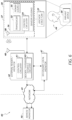
Figure 6 shows asystem 40 for monitoring one or more physiological parameters (e.g., left atrial pressure and/or volume) in a patient 44 according to one or more embodiments. The patient 44 can have amedical implant device 30 implanted in, for example, the heart (not shown), or associated physiology, of thepatient 44. For example, theimplant device 30 can be implanted at least partially within the left atrium and/or coronary sinus of the patient's heart. Theimplant device 30 can include one ormore sensor transducers 32, such as one or more microelectromechanical system (MEMS) devices (e.g., MEMS pressure sensors, or other type of sensor transducer). - In certain embodiments, the
monitoring system 40 can comprise at least two subsystems, including an implantable internal subsystem ordevice 30 that includes the sensor transducer(s) 32, as well ascontrol circuitry 34 comprising one or more microcontroller(s), discrete electronic component(s), and one or more power and/or data transmitter(s) 38 (e.g., antennae coil). Themonitoring system 40 can further include an external (e.g., non-implantable) subsystem that includes an external reader 42 (e.g., coil), which may include a wireless transceiver that is electrically and/or communicatively coupled tocertain control circuitry 41. In certain embodiments, both the internal 30 and external 42 subsystems include a corresponding coil antenna for wireless communication and/or power delivery through patient tissue disposed therebetween. Thesensor implant device 30 can be any type of implant device. For example, in some embodiments, theimplant device 30 comprises a pressure sensor integrated with anotherfunctional implant structure 39, such as a prosthetic shunt or stent device/structure. - Certain details of the
implant device 30 are illustrated in theenlarged block 30 shown. Theimplant device 30 can comprise an implant/anchor structure 39 as described herein. For example, the implant/anchor structure 39 can include a percutaneously-deliverable shunt device configured to be secured to and/or in a tissue wall to provide a flow path between two chambers and/or vessels of the heart, as described in detail throughout the present disclosure. The implant/anchor structure 39 can comprise a helical/coiled wireform in some embodiments, as disclosed in detail herein. - Although certain components are illustrated in
Figure 6 as part of theimplant device 30, it should be understood that thesensor implant device 30 may only comprise a subset of the illustrated components/modules and can comprise additional components/modules not illustrated. The implant device may represent an embodiment of the implant device shown inFigure 5 , and vice versa. Theimplant device 30 can advantageously include one ormore sensor transducers 32, which can be configured to provide a response indicative of one or more physiological parameters of thepatient 44, such as atrial pressure. Although pressure transducers are described, the sensor transducer(s) 32 can comprise any suitable or desirable types of sensor transducer(s) for providing signals relating to physiological parameters or conditions associated with theimplant device 30 and/orpatient 44. - The sensor transducer(s) 32 can comprise one or more MEMS sensors, optical sensors, piezoelectric sensors, electromagnetic sensors, strain sensors/gauges, accelerometers, gyroscopes, diaphragm-based sensors, and/or other types of sensors, which can be positioned in the patient 44 to sense one or more parameters relevant to the health of the patient. The
transducer 32 may be a force-collector-type pressure sensor. In some embodiments, thetransducer 32 comprises a diaphragm, piston, bourdon tube, bellows, or other strain- or deflection-measuring component(s) to measure strain or deflection applied over an area/surface thereof. Thetransducer 32 may be associated with thesensor housing 36, such that at least a portion thereof is contained within, or attached to, thehousing 36. - In some embodiments, the
transducer 32 comprises or is a component of a strain gauge, which may be configured to use a bonded or formed strain gauge to detect strain due to applied pressure. For example, thetransducer 32 may comprise or be a component of a piezoresistive strain gauge, wherein resistance increases as pressure deforms the component/material of the strain gauge. Thetransducer 32 may incorporate any type of material, including but not limited to silicone, polymer, silicon (e.g., monocrystalline), polysilicon thin film, bonded metal foil, thick film, silicon-on-sapphire, sputtered thin film, and/or the like. In some embodiments, a metal strain gauge is adhered to the sensor surface, or a thin-film gauge may be applied on the sensor by sputtering or other technique. The measuring element or mechanism may comprise a diaphragm or metal foil. Thetransducer 32 may comprise any other type of sensor or pressure sensor, such as optical, potentiometric, resonant, thermal, ionization, or other types of strain or pressure sensors. - In some embodiments, the
transducer 32 comprises or is a component of a capacitive pressure sensor including a diaphragm and pressure cavity configured to form a variable capacitor to detect strain due to pressure applied to the diaphragm. The capacitance of the capacitive pressure sensor may generally decrease as pressure deforms the diaphragm. The diaphragm may comprise any material(s), including but not limited to metal, ceramic, silicone, silicon or other semiconductor, and the like. In some embodiments, thetransducer 32 comprises or is a component of an electromagnetic pressure sensor, which may be configured to measures the displacement of a diaphragm by means of changes in inductance, linear variable displacement transducer (LVDT) functionality, Hall Effect, or eddy current sensing. In some embodiments, thetransducer 32 comprises or is a component of a piezoelectric strain sensor. For example, such a sensor may determine strain (e.g., pressure) on a sensing mechanism based on the piezoelectric effect in certain materials, such as quartz. - In some embodiments, the transducer(s) 32 is/are electrically and/or communicatively coupled to the
control circuitry 34, which may comprise one or more application-specific integrated circuit (ASIC) microcontrollers or chips. Thecontrol circuitry 34 can further include one or more discrete electronic components, such as tuning capacitors, resistors, diodes, inductors, or the like. - In certain embodiments, the sensor transducer(s) 32 can be configured to generate electrical signals that can be wirelessly transmitted to a device outside the patient's body, such as the illustrated local
external monitor system 42. In order to perform such wireless data transmission, theimplant device 30 can include radio frequency (RF) (or other frequency band) transmission circuitry, such as signal processing circuitry and anantenna 38. Theantenna 38 can comprise an antenna coil implanted within the patient. Thecontrol circuitry 34 may comprise any type of transceiver circuitry configured to transmit an electromagnetic signal, wherein the signal can be radiated by theantenna 38, which may comprise one or more conductive wires, coils, plates, or the like. Thecontrol circuitry 34 of theimplant device 30 can comprise, for example, one or more chips or dies configured to perform some amount of processing on signals generated and/or transmitted using thedevice 30. However, due to size, cost, and/or other constraints, theimplant device 30 may not include independent processing capability in some embodiments. - The wireless signals generated by the
implant device 30 can be received by the local external monitor device orsubsystem 42, which can include a reader/antenna-interface circuitry module 43 configured to receive the wireless signal transmissions from theimplant device 30, which is disposed at least partially within thepatient 44. For example, themodule 43 may include transceiver device(s)/circuitry. - The external
local monitor 42 can receive the wireless signal transmissions from theimplant device 30 and/or provide wireless power to theimplant device 30 using anexternal antenna 48, such as a wand device. The reader/antenna-interface circuitry 43 can include radio-frequency (RF) (or other frequency band) front-end circuitry configured to receive and amplify the signals from theimplant device 30, wherein such circuitry can include one or more fillers (e.g., band-pass filters), amplifiers (e.g., low-noise amplifiers), analog-to-digital converters (ADC) and/or digital control interface circuitry, phase-locked loop (PLL) circuitry, signal mixers, or the like. The reader/antenna-interface circuitry 43 can further be configured to transmit signals over anetwork 49 to a remote monitor subsystem ordevice 46. The RF circuitry of the reader/antenna-interface circuitry 43 can further include one or more of digital-to-analog converter (DAC) circuitry, power amplifiers, low-pass filters, antenna switch modules, antennas or the like for treatment/processing of transmitted signals over thenetwork 49 and/or for receiving signals from theimplant device 30. In certain embodiments, thelocal monitor 42 includescontrol circuitry 41 for performing processing of the signals received from theimplant device 30. Thelocal monitor 42 can be configured to communicate with thenetwork 49 according to a known network protocol, such as Ethernet, Wi-Fi, or the like. In certain embodiments, thelocal monitor 42 comprises a smartphone, laptop computer, or other mobile computing device, or any other type of computing device. - In certain embodiments, the
implant device 30 includes some amount of volatile and/or non-volatile data storage. For example, such data storage can comprise solid-state memory utilizing an array of floating-gate transistors, or the like. Thecontrol circuitry 34 may utilize data storage for storing sensed data collected over a period of time, wherein the stored data can be transmitted periodically to thelocal monitor 42 or another external subsystem. In certain embodiments, theimplant device 30 does not include any data storage. Thecontrol circuitry 34 may be configured to facilitate wireless transmission of data generated by the sensor transducer(s) 32, or other data associated therewith. Thecontrol circuitry 34 may further be configured to receive input from one or more external subsystems, such as from thelocal monitor 42, or from aremote monitor 46 over, for example, thenetwork 49. For example, theimplant device 30 may be configured to receive signals that at least partially control the operation of theimplant device 30, such as by activating/deactivating one or more components or sensors, or otherwise affecting operation or performance of theimplant device 30. - The one or more components of the
implant device 30 can be powered by one ormore power sources 35. Due to size, cost and/or electrical complexity concerns, it may be desirable for thepower source 35 to be relatively minimalistic in nature. For example, high-power driving voltages and/or currents in theimplant device 30 may adversely affect or interfere with operation of the heart or other body part associated with the implant device. In certain embodiments, thepower source 35 is at least partially passive in nature, such that power can be received from an external source wirelessly by passive circuitry of theimplant device 30, such as through the use of short-range, or near-field wireless power transmission, or other electromagnetic coupling mechanism. For example, thelocal monitor 42 may serve as an initiator that actively generates an RF field that can provide power to theimplant device 30, thereby allowing the power circuitry of the implant device to take a relatively simple form factor. In certain embodiments, thepower source 35 can be configured to harvest energy from environmental sources, such as fluid flow, motion, or the like. Additionally or alternatively, thepower source 35 can comprise a battery, which can advantageously be configured to provide enough power as needed over the monitoring period (e.g., 3, 5, 10, 20, 30, 40, or 90 days, or other period of time). - In some embodiments, the
local monitor device 42 can serve as an intermediate communication device between theimplant device 30 and theremote monitor 46. Thelocal monitor device 42 can be a dedicated external unit designed to communicate with theimplant device 30. For example, thelocal monitor device 42 can be a wearable communication device, or other device that can be readily disposed in proximity to thepatient 44 andimplant device 30. Thelocal monitor device 42 can be configured to continuously, periodically, or sporadically interrogate theimplant device 30 in order to extract or request sensor-based information therefrom. In certain embodiments, thelocal monitor 42 comprises a user interface, wherein a user can utilize the interface to view sensor data, request sensor data, or otherwise interact with thelocal monitor system 42 and/orimplant device 30. - The
system 40 can include a secondarylocal monitor 47, which can be, for example, a desktop computer or other computing device configured to provide a monitoring station or interface for viewing and/or interacting with the monitored cardiac pressure data. In an embodiment, thelocal monitor 42 can be a wearable device or other device or system configured to be disposed in close physical proximity to the patient and/orimplant device 30, wherein thelocal monitor 42 is primarily designed to receive/transmit signals to and/or from theimplant device 30 and provide such signals to the secondarylocal monitor 47 for viewing, processing, and/or manipulation thereof. The externallocal monitor system 42 can be configured to receive and/or process certain metadata from or associated with theimplant device 30, such as device ID or the like, which can also be provided over the data coupling from theimplant device 30. - The
remote monitor subsystem 46 can be any type of computing device or collection of computing devices configured to receive, process and/or present monitor data received over thenetwork 49 from thelocal monitor device 42, secondarylocal monitor 47, and/orimplant device 30. For example, theremote monitor subsystem 46 can advantageously be operated and/or controlled by a healthcare entity, such as a hospital, doctor, or other care entity associated with thepatient 44. Although certain embodiments disclosed herein describe communication with theremote monitor subsystem 46 from the implant device indirectly through thelocal monitor device 42, in certain embodiments, theimplant device 30 can comprise a transmitter capable of communicating over thenetwork 49 with theremote monitor subsystem 46 without the necessity of relaying information through thelocal monitor device 42. - In some embodiments, at least a portion of the
transducer 32,control circuitry 34,power source 35 and/or theantenna 38 are at least partially disposed or contained within thesensor housing 36, which may comprise any type of material, and may advantageously be at least partially hermetically sealed. For example, thehousing 36 may comprise glass or other rigid material in some embodiments, which may provide mechanical stability and/or protection for the components housed therein. In some embodiments, thehousing 36 is at least partially flexible. For example, the housing may comprise polymer or other flexible structure/material, which may advantageously allow for folding, bending, or collapsing of thesensor 30 to allow for transportation thereof through a catheter or other percutaneous introducing means. - As referenced above, shunt and other implant devices/structures may be integrated with sensor, antenna/transceiver, and/or other components to facilitate in vivo monitoring of pressure and/or other physiological parameter(s). Sensor devices in accordance with embodiments of the present disclosure may be integrated with cardiac shunt structures/devices or other implant devices using any suitable or desirable attachment or integration mechanism or configuration.
Figure 7-1 illustrates a side view of asensor implant device 70 in accordance with one or more embodiments.Figure 7-2 illustrates an example sensor assembly/device 60 that can be a component of a sensor implant device, such as thesensor implant device 70 shown inFigure 7-1 .Figures 8A and 8B illustrate axial views of the shunt-typesensor implant device 70 ofFigure 7-1 in accordance with one or more embodiments. - The
sensor implant device 70 comprises ashunt structure 90, which may have a coil form including one or more wires or other material or structure shaped into one or more winds of coil forming a fluid conduit/barrel portion 98 andaxial end flanges shunt structure 90 may represent an embodiment of a cardiac implant (e.g., anchor and/orcardiac implant structure 39 associated withFigure 5 or6 ) that may be integrated with pressure sensor functionality in accordance with certain embodiments disclosed herein. Theshunt structure 90 is configured to hold asensor device 60 configured to provide sensor readings relating to one or more physiological parameters associated with a target implantation site. - The
sensor device 60 may be associated with either axial side/end of theshunt structure 90, wherein the different axial sides/ends of theshunt structure 90 are exposed on opposite sides (S1, S 2) of a tissue wall when theimplant device 70 is implanted in the tissue wall. As described herein, references to axial sides of a shunt structure may refer to opposite sides of a plane P1 axially (and/or diagonally) bisecting theshunt structure 90 and/orbarrel portion 98 thereof. The plane P1 may be orthogonal to an axis of thebarrel portion 98 of theshunt structure 90 and/or may be substantially parallel with (e.g., on/within) a tissue wall in which theshunt structure 90 is configured to be implanted. Description herein of axial sides of an implant structure can be understood to refer to different sides of the tissue-engagement plane P1. The plane P1 may be aligned (e.g., within 5° or 10° of exact alignment) with at least some of the coils/winds 91 of the barrel/conduit portion 98 of theshunt structure 90. - Furthermore, description herein of sensor devices and/or sensor arms being disposed on different radial sides of a shunt structure may refer to diametrically opposite sides of a diametrical plane P2 , as shown in
Figure 7-1 . For example, where a shunt structure includes sensor arms on a given axial side of the shunt structure that emanate from substantially opposite circumferential portions of a barrel/conduit portion of the shunt structure and/or project in substantially opposite radial directions with respect to an axis of the barrel/conduit of the shunt structure, such arms may be considered to be on, or emanate from, different and/or opposite radial sides of the shunt structure. - The
barrel portion 98 of theshunt structure 90 may advantageously be self-adjusting with respect to an axial length thereof. For example, the shape/form of the helical wire coil can allow for thebarrel 98 to be axially expanded, thereby introducing gaps betweenadjacent winds 91 of thecoil barrel 98. Therefore, theshunt structure 90 may be configured to be implanted in range of anatomies and or tissue walls having various characteristics and/or dimensions. In some embodiments, thebarrel coil 98 is biased in an axially compacted configuration, as shown inFigure 7-1 , in which adjacent winds of the coil are in contact or relatively close proximity with each other. Thebarrel portion 98 may be considered a body portion of theshunt structure 90. - The
sensor device 60 may advantageously be disposed, positioned, secured, oriented, and/or otherwise situated in a configuration in which thesensor transducer component 65 thereof is disposed within achannel area 88 of theshunt structure 90. The term "channel area" is used herein according to its broad and ordinary meaning and may refer to a three-dimensional space defined by a radial boundary of a fluid conduit and extending axially from the fluid conduit. For example, with respect to a given fluid conduit structure, such as the fluid conduit/barrel structure 98 of theshunt structure 90, achannel area 88 associated therewith may be considered to be defined according to any of the illustrated and described channel areas shown inFigures 9-1A, 9-1B, 9-2, 9-3A, and 9-3B . - The
shunt structure 90 may be a radially expandable shunt. When expanded, acentral flow channel 96 of theshunt 90 may define a generally circular or oval opening. Thechannel 96 may be configured to hold the sides of a puncture opening in a tissue wall to form a blood flow path between chamber(s) or vessel(s) of the heart (or other anatomy) that are separated by the tissue wall. For example, theshunt structure 90 may be configured to be implanted in the wall separating the coronary sinus and the left atrium. Thecentral flow channel 96 may be partly formed by one ormore winds 91 of thecoliform structure 90. In some embodiments, substantially theentire shunt 90 is formed by super-elastic wire(s) (e.g., memory metal; nitinol) that is/are configured to be radially and/or otherwise compressed and fit into a catheter (not shown) and subsequently expanded back to the relaxed shape as shown inFigure 7-1 . - The shunt structure/
frame 90 may have a helical shape in one or more portions thereof, including one or more distal and/or proximal curved arms at one or both ends of theframe 90, which may form therespective flanges barrel 98 and/orflange frame 90 may be pre-shaped to assume the deployed form ofFigure 7-1 when deployed from a delivery system/catheter. For example, the shunt structure wireform(s) can be constrained or compressed for insertion into the delivery system/catheter, wherein such compression is reversed substantially automatically when theshunt structure 90 is deployed from the catheter/system. - Formation of the
shunt 90 using one or more elongate wires may serve to at least partially increase the flexibility of the shunt, thereby enabling compression thereof and expansion at the implant site. As mentioned above, the coilform shunt structure 90 may include a barrel/body portion 98 and one ormore flange portions barrel portion 98 may include one ormore winds 91 of coil having a diameter D1, wherein the wind(s) 91 define a barrel orfluid conduit structure 98 through which fluid may be shunted in accordance with aspects of the present disclosure. That is, the inside of thebarrel 98 and/or coil winds 91 can define a fluid pathway/conduit. In some embodiments,such conduit 98 is substantially fluid tight. For example, thewinds 91 may be compressed tightly enough together in the deployed configuration shown inFigure 7-1 to substantially prevent leakage of fluid (e.g., blood) through thebarrel portion 98. In some embodiments, some amount of fluid leakage between the coil winds 91 is permitted in the implanted/deployed configuration. The diameter D1 of theshunt barrel 98 may have any suitable or desirable dimension, such as, for example, approximately 20 mm or less, such as approximately 10 mm or less (e.g., 7.5 mm). In some embodiments, gap(s) may be present between thewinds 91 of thebarrel portion 98 of theshunt structure 90 between at least one adjacent pair ofwinds 91, and/or between awind 91 of thebarrel portion 98 and one or more of theflange portions - The coil winds 91 forming the
central flow channel 96 advantageously provide a tube having sufficient rigidity and structure to hold the tissue at the puncture site in an open position. Thebarrel portion 98 extends axially between the distal 94 and proximal 95 flanges, or coils, on each side. For example, theflange portions coil form 90 can generally be associated with proximal and distal axial ends, respectively, of theshunt structure 90. In some embodiments, theflange portions shunt structure 90 or dislodgment of theshunt structure 90 from the tissue wall in which it is implanted. For example, one or both of theflanges barrel 98, such that when theimplant structure 90 is implanted sufficiently tightly within a tissue wall, with thebarrel 98 occupying, at least in part, an area within/through the tissue wall, the expanded diameter D2 of the flange(s) prevents thebarrel 98 andshunt structure 90 from passing through the opening in the tissue wall in one or more directions. The diameter D2 of the flange(s) may have any suitable or desirable dimension, such as, for example, approximately 40 mm or less, such as approximately 30 mm or less (e.g., 10-15 mm). Although both proximal 95 and distal 94 flange portions are shown inFigure 7-1 and described in connection with various embodiments disclosed herein, it should be understood that sensor implant devices having anchor flanges in accordance with aspects of the present disclosure may include a flange on only one axial end of a shunt structure in some embodiments. Although distal and proximal sides/portions of shunt structures are described in some contexts herein, it should be understood that identified distal portions/sides may be outlet or inlet sides of the relevant shunt structure, as with identified proximal portions/sides. Furthermore, the terms "distal" and "proximal" are used for convenience and may or may not refer to relative orientation with respect to a delivery system/device used to implant the relevant sensor implant device and/or shunt structure. - Although certain embodiments of shunt structures disclosed herein comprise flow channels having substantially circular cross-sections, in some embodiments, shunt structures in accordance with the present disclosure have oval-shaped, rectangular, diamond-shaped, or elliptical flow channel configurations. For example, the one or more coils/winds 91 or other structural features of the
shunt structure 90 ofFigure 7-1 can form an oval, circular, oblong, and/or elliptical cylindrical fluid conduit. It should be understood that references herein to fluid conduits, cylinders, and/or barrel structures of, and/or formed by, a shunt structure may have any axial cross-sectional shape. - In some embodiments, each of the distal and proximal flanges/coils 94, 95 is configured to radiate outward in a spiral form from the
perimeter 87 of thebarrel 98. Such spiral flange coils/wires Figure 7-1 . The expanded flanges/coils 94, 95 may serve to secure theshunt 90 to the target tissue wall. Although certain embodiments are disclosed herein in the context of shunt structures similar to that shown inFigure 7-1 , it should be understood that shunt structures or other implant devices integrated with pressure sensor functionality in accordance with embodiments of the present disclosure may have any type, form, structure, configuration, and/or may be used or configured to be used for any purpose, whether for shunting or other purpose or functionality. - The
coil form shunt 90 further includes one ormore sensor arms 92, which may emanate from one or more of theflanges shunt structure 90 comprises one or more coiled wires, such coil forms may have one or more wire ends, which may generally be associated with either or both of the proximal 702 and distal 701 ends and/or associated flanges of theshunt structure 90. One or more of such wire end portions may be implemented as a sensor arm configured to hold and retain asensor device 60 for the purpose of facilitating physiological parameter monitoring/sensing in accordance with aspects of the present disclosure. With respect to the illustrated embodiment ofFigure 7-1 , thesensor arm 92 may include an extension/base portion 75, which may generally extend over thechannel area 88 of thebarrel 98 of theshunt structure 90 such as to allow for the positioning of thesensor device 60 held and/or retained by thesensor arm 92 generally within thechannel area 88, at least in part. - In some embodiments, the
sensor arm 92 is deflected axially with respect to the tissue-engagement plane P1 of theshunt structure 90 and/or the plane Pf of theflange 94 from which thearm 92 emanates by an amount/angle θ1 . AlthoughFigure 7-1 shows thesensor implant device 70 in a configuration in which thesensor arm 92 is axially deflected distally with respect to the tissue-engagement plane P1 , it should be understood that embodiments of the present disclosure may be implemented without such axial deflection. For example, thesensor arm 92 may lie substantially in the plane Pf of theflange 94, such that thesensor 60 is held in a position axially closer to thebarrel 98 than in other embodiments in which deployed shunt structures have axially deflected sensor arms as shown inFigure 7-1 . - Deflection of the
sensor 60 andsensor arm 92 distally from theflange 94 can be important to provide a flow path for fluid being shunted around thesensor 60 and/or through thefluid conduit 98 of theshunt structure 90. For example, thesensor 92 may be deflected in a manner as to provide an axial gap G between thesensor 60 and/or sensor-retention portion 93 of theshunt structure 90 and theflange 94 and/orfluid conduit opening 96. The axial flow gap G can provide an area for the blood or other fluid to flow around thesensor arm 92 and into theopening 96 of thefluid conduit 98. The angle θ1 may be any desirable angle between theextension portion 75 of thesensor arm 92 and the tissue-engagement plane P1 and/or plane Pf of theflange 94. In some embodiments, the deflection angle θ1 is between about 30° and 60°, such as about 35°, 40°, or 45°. For embodiments in which thearm 92 is deflected by an angle greater than 90°, such implementations may place at least a portion of thesensor device 60 outside of thechannel area 88. Therefore, it may be desirable to implement a sensor arm deflection angle θ1 that is less than 90° to maintain thesensor device 60 and/ortransducer component 65 thereof within thechannel area 88 of theshunt structure 90. Furthermore, by deflecting thesensor arm 92 in a manner as to position thesensor 60 at or near the center of theflow channel 88 and/or the axis A1 of thefluid conduit 98, the fluid flow gap area may be maximized with respect to a given gap distance G. For example, in such embodiments, a substantially equal amount of blood flow may be permitted from around theperimeter 87 of thefluid conduit 98. In some embodiments, thearm 92 may be deflected in a manner as to position thesensor 60 andsensor arm 92 on one side or area of thefluid conduit 98 to allow for a greater area or amount of fluid flow in a desired area of the fluid conduit and/or from a desired direction. -
Figure 8A shows an axial view that corresponds to an axial side of theimplant device 70 associated with thesensor device 60. That is, thesensor component 65 is attached to, integrated with, or otherwise associated with thearm 92, the side of which is shown facing out of the page inFigure 8A . The side shown facing out of the page inFigure 8A may be a distal or proximal side.Figure 8B shows an axial view that corresponds to an axial side of theimplant device 70 that is opposite thesensor device 60. The side shown facing out of the page inFigure 8B may be a distal or proximal side. - As shown in
Figure 8A , thesensor arm 92 may further be radially deflected inward by an amount θ2 relative to atangent line 801 of theflange coil 94 at the base of theextension portion 75 of thearm 92, wherein such radial deflection may serve to position thesensor 60 within thechannel area 88, at least in part. For example, were thesensor arm 92 not deflected radially inward as inFigure 8A , thesensor arm 92 would hold thesensor 60 in an area at or near theouter perimeter 89 of theflange 94, and possibly radially outside of thechannel area 88, at least in part. By radially deflecting thearm 92, as shown inFigures 8A and 8B , thesensor arm 92 may project from theouter perimeter 89 of theflange 94 to an area within thechannel area 88 of thebarrel 98. In some embodiments, thesensor arm 92 is deflected radially by an amount sufficient to place thesensor 60 in substantial coaxial alignment with the axis A1 of thebarrel 98, although such coaxial alignment with thebarrel 98 is not necessary and embodiments of the present disclosure may be configured such that thesensor device 60 is held in a position within thechannel area 88 but at least partially off-axis with respect to thebarrel 98. - The
sensor arm 92 may further include a sensor-retention portion 93, which may comprise one or more wraps/winds 99 of thecoil arm 92 in a relatively tightly-wrapped configuration around the body/housing 69 of thesensor device 60 to thereby restrain/retain, at least in part, thesensor device 60 and hold thesensor device 60 in the desired sensing position. It may be desirable for thewinds 99 of the coil in theretention portion 93 of thesensor arm 92 to be sufficiently tight and/or secured to reduce the risk of dislodgment/escape of thesensor device 60 in the presence of fluid flow and/or other fluid conditions (e.g., pressure) in the implantation environment. AlthoughFigure 7-1 shows the sensor-retention portion 93 of thesensor arm 92 as comprisingwinds 99 of the coil form wrapped around thebody 69 of thesensor 60, it should be understood that thesensor device 60 may be coupled to thesensor arm 92 in any suitable or desirable manner. Thesensor device 60 may be secured to theanchor arm 94 using any suitable means or mechanism. For example, securement/attachment means/mechanisms that may be suitable for attaching thesensor device 60 to a sensor arm of theshunt structure 90 may be any of the features disclosed inPCT Application No. PCT/US20/56746, Filed on October 22, 2020 , and entitled "Sensor Integration in Cardiac Implant Devices," the contents of which are hereby expressly incorporated by reference in their entirety. For example, theshunt structure 90 and/or sensor arm(s) thereof may include one or more sensor-retention fingers, clamps, wraps, bands, belts, clips, pouches, housings, encasements, and/or the like configured to secure thesensor device 60 to an arm and/or strut or another structural feature of theshunt structure 90. For example, one or more clips, hooks, adhesives, or other attachment feature(s) may be associated with the sensor-retention portion 93 of thesensor arm 92, wherein such feature(s) are configured to secure thesensor 60 to thesensor arm 92. - In some embodiments, the sensor-
retention portion 93 of thesensor arm 92 includes a plurality of coil winds 99 separated by gap(s) 71.Bridge wire portions 97 may connect between thecoils 99, spanning the gap(s) 71. In some embodiments, no such gap(s) is/are present between adjacent sensor-retention coil winds 99. - With reference to
Figure 7-2 , which shows a detailed view of an example embodiment of asensor device 60 that may be associated with any of the sensor implant devices disclosed herein, such as thesensor implant device 70 shown inFigures 7-1 ,8A, and 8B , in some embodiments, the sensor device/assembly 60 includes asensor transducer component 65 and anantenna component 61. Thesensor transducer component 65 may comprise any type of sensor transducer as described in detail above. In some embodiments, thesensor device 60 may be attached to or integrated with anarm member 92 of theshunt structure 90, as shown inFigures 7-1 ,8A, and 8B . - The
sensor transducer component 65 includes asensor element 67, such as a pressure sensor transducer/membrane. As described herein, thesensor device 60 may be configured to implement wireless data and/or power transmission. Thesensor device 60 may include theantenna component 61 for such purpose. Theantenna 61, as well as one or more other components of thesensor device 60, may be contained at least partially within asensor housing 69, which may further have disposed thereincertain control circuitry 62 configured to facilitate wireless data and/or power communication functionality. In some embodiments, theantenna component 61 comprises one or more conductive coils/winds 67, which may facilitate inductive powering and/or data transmission. In embodiments comprising conductive coil(s), such coil(s) may be wrapped/disposed at least partially around a magnetic (e.g., ferrite, iron)core 79. - The
sensor device 60 may advantageously be biocompatible. For example, thehousing 69 may advantageously be biocompatible, such as a housing comprising glass or other biocompatible material. However, at least a portion of the sensor transducer element/membrane 67, such as a diaphragm or other component, may be exposed to the external environment in some embodiments in order to allow for pressure readings, or other parameter sensing, to be implemented. Thehousing 69 may comprise an at least partially rigid cylindrical or tube-like form, such as a glass cylinder form. In some embodiments, thesensor transducer component 65/67 is approximately 3 mm or less in diameter. Theantenna 61 may be approximately 20 mm or less in length. - The
sensor device 60 may be configured to communicate with an external system when implanted in a heart or other area of a patient's body. For example, theantenna 61 may receive power wirelessly from the external system and/or communicate sensed data or waveforms to and/or from the external system. Thesensor element 67 may comprise a pressure transducer. For example, the pressure transducer may be a microelectromechanical system (MEMS) transducer comprising a semiconductor diaphragm component. In some embodiments, the transducer may include an at least partially flexible or compressible diaphragm component, which may be made from silicone or other flexible material. The diaphragm component may be configured to be flexed or compressed in response to changes in environmental pressure. Thecontrol circuitry 62 may be configured to process signals generated in response to said flexing/compression to provide pressure readings. In some embodiments, the diaphragm component is associated with a biocompatible layer on the outside surface thereof, such as silicon nitride (e.g., doped silicon nitride) or the like. The diaphragm component and/or other components of thepressure transducer 67 may advantageously be fused or otherwise sealed to/with thehousing 69 of thesensor device 60 in order to provide hermetic sealing of at least some of the sensor components. - The
control circuitry 62 may comprise one or more electronic application-specific integrated circuit (ASIC) chips or die, which may be programmed and/or customized or configured to perform monitoring functionality as described herein and/or facilitate transmission of sensor signals wirelessly. Theantenna 61 may comprise aferrite core 79 wrapped with conductive material in the form of a plurality of coils/winds 63 (e.g., wire coil). In some embodiments, the coils/winds comprise copper or other metal. Theantenna 61 may advantageously be configured with coil geometry that does not result in substantial displacement or heating in the presence of magnetic resonance imaging. In some implementations, thesensor implant device 70 may be delivered to a target implant site using a delivery catheter (not shown), wherein the delivery catheter includes a cavity or channel configured to accommodate the advancement of thesensor device 60 therethrough. - As described above, some embodiments of the present disclosure include shunt structures having sensor arms configured to hold a sensor in a channel area of the shunt structure, which can advantageously facilitate sensing of fluid dynamics relating to fluid flow through the shunt structure.
Figures 9-1A, 9-1B, 9-2, 9-3A, and 9-3B showexample channel areas 88 associated with respective shuntbody fluid conduits 98 in accordance with one or more embodiments. In particular,Figures 9-1A, 9-2, and 9-3A show side views of fluid conduits and associated channel areas, whereasFigure 9-1B, and 9-3B show axial and/or top-down views of the respective fluid conduits and channel areas. -
Figures 9-1A and 9-1B show anexample fluid conduit 98 formed by one or moreouter walls 93, wherein thefluid conduit 98 is associated with a tissue plane P1 . For example, as described above, the tissue plane P1 may generally represent a plane that lies in or parallel to a tissue wall in which thefluid conduit 98 is configured to be implanted/disposed. For example, thefluid conduit 98 may represent a conduit structure (e.g., formed of a plurality of winds of a coil wireform) of a shunt implant device as described herein. In the particular embodiment ofFigures 9-1A and 9-1B , thefluid conduit 98 has an axis A1 that is generally orthogonal, perpendicular, and/or normal to the tissue plane P1 . In such an embodiment/configuration, thechannel area 88 associated with thefluid conduit 98 can be considered to be a three-dimensional projection/extension of the area of the fluid conduit around the axis A1 , and bounded by the wall(s) 93, in one or more directions, as shown. Therefore, thechannel area 88 may be a three-dimensional area enclosed by a cylinder having the same axial cross-sectional area as thefluid conduit 98 and being disposed about the axis A1 of thefluid conduit 98. A sensor transducer disposed within thechannel area 88 of thefluid conduit 98 shown inFigures 9-1A and 9-1B may be considered to be disposed in an area defined by the radial boundary of thefluid conduit 98 around the axis A1 of thefluid conduit 98. Furthermore, the sensor transducer may be disposed in an area of thechannel area 88 that is axially outside of thefluid conduit structure 98, as with the illustratedsensor implant device 70 shown inFigure 7-1 , wherein thesensor transducer 65 is disposed in thechannel area 88 axially outside of theshunt barrel structure 98. -
Figure 9-2 shows anotherexample fluid conduit 98 formed by one or moreouter walls 93, wherein thefluid conduit 98 is associated with a tissue plane P1, which may be defined/represented in a manner as described in detail above. Thefluid conduit 98 of the embodiment ofFigure 9-2 may be configured to be implanted in a tissue wall (e.g., tissue wall coplanar with the tissue plane P1 ), wherein an axis A1 of thefluid conduit 98 is angled with respect to the tissue plane P1 (i.e., the axis A1 of theconduit 98 is not perpendicular, orthogonal, or normal to the tissue plane P1 ). That is, thefluid conduit 98 may be an oblique cylinder, as shown. Therefore, in some embodiments, with respect to an oblique/angledfluid conduit 98 as shown inFigure 9-2 , achannel area 88 associated therewith may be considered a three-dimensional area defined by the radial boundary of thefluid conduit 98 about the axis A1 of the fluid conduit extending in one or more directions axially away from thefluid conduit 98, such that the boundary of thechannel area 88 is defined by a cylinder that has an axis that is angled with respect to the tissue plane P1, as shown. -
Figures 9-3A and 9-3B show anotherexample fluid conduit 98 formed by one or moreouter walls 93, wherein thefluid conduit 98 is associated with a tissue plane P1, which may be defined/represented in a manner as described in detail above. Thefluid conduit 98 of the embodiment ofFigures 9-3A and 9-3B may be configured to be implanted in a tissue wall (e.g., tissue wall coplanar with the tissue plane P1 ) wherein an axis A1 of theconduit 98 is angled with respect to the tissue plane P1 (i.e., the axis A1 of theconduit 98 is not perpendicular, orthogonal, or normal to the tissue plane P1 ). However, it may be desirable to identify thechannel area 88 associated with thefluid conduit 98 as being a channel area having an axis A2 (with respect toFigures 9-1A, 9-1B, 9-2, 9-3A, and 9-3B , A1 represents the axis of the respective fluid conduit, whereas A2 represents the axis (or axes) of thechannel area 88 of the fluid conduit; in some cases A1 and A2 may be the same) that is parallel, orthogonal, and/or normal to the plane P1 , as shown. Therefore, thechannel area 88 ofFigures 9-3A and 9-3B may not be coaxial with theconduit 98, but rather may be defined on one end by the radial boundary of theopening 96 of theconduit 98, wherein thechannel area 88 extends therefrom in an orientation/direction that is perpendicular, orthogonal, and/or normal to the plane P1, as shown inFigures 9-3A and 9-3B . Thechannel area 88 identified inFigures 9-3A and 9-3B may correspond to a primary orientation/path of a true flow channel of fluid that may flow through thefluid conduit 98 when theconduit 98 is implanted in a tissue wall between two blood vessels/chambers. That is, fluid may flow into theopening 96 of thefluid conduit 98 primarily in a direction that is perpendicular to the tissue plane P1 in some cases. -
Figure 10 shows asensor implant device 170 having abarrel cover 150 associated therewith in accordance with one or more embodiments. Thesensor implant device 170 may be similar in certain respects to any of the embodiments of sensor implant devices disclosed herein. For example, thesensor implant device 170 may include abarrel portion 198 and one ormore flange portions implant device 170 are formed of respective winds of coil of a coil/wireform shunt structure 190. - As referenced, the
sensor implant device 170 includes a seal or cover 150, which may comprise any suitable or desirable material and/or structure/form, such as, cloth/fabric, polymer, mesh, or the like formed of any type of material. Thecover 150 can be disposed over one or more portions or areas of theshunt structure 190. For example, as shown inFigure 10 , thecover 150 may be disposed over and/or within thebarrel portion 198 of theshunt structure 190. Although thecover 150 is illustrated as being disposed around an outside of thebarrel 198. it should be understood that embodiments of the present disclosure may include covers disposed inside the barrel portion of a shunt structure. - In some embodiments, the
cover 150 is at least partially fluid-tight, such that thecover 150 serves to prevent or reduce fluid leakage outside of theimplant device 170 when implanted. Furthermore, in some embodiments, thecover 150 may be configured to facilitate or promote tissue ingrowth between theimplant device 170 and the surrounding tissue of the tissue wall in which theimplant device 170 is implanted. Although illustrated as a covering/skirt-type structure, thecover 150 may be a coating or other application to the wireform shunt structure 190 (e.g., to the barrel 198) in some implementations. Thecover 150 is advantageously biocompatible to allow for prolonged maintenance of theimplant device 170 in the implanted location. -
Figures 11A and 11B show side and axial views, respectively, of asensor implant device 50 having a dual-arm sensor holder in accordance with one or more embodiments. Thesensor implant device 50 may be similar in certain respects thesensor implant device 70 shown inFigure 7-1 and described in detail above. For example, thesensor implant device 50 ofFigures 11A and 11B can comprise one or more wireforms formed into abarrel portion 28, and distal 24 and/or proximal 25 flange portions. Furthermore, theimplant device 50 may include asensor arm 22 including a base orextension portion 76 and a sensor-retention portion 23. Thearm 22 may emanate from thedistal flange 24 and/or aspiraling wire 24a associated therewith in the manner as described above with respect toFigure 7-1 . - The
sensor implant device 50 can further include asecond sensor arm 27, which may be configured to secure and/or hold, at least in part, thesensor device 60, such as in the area of the sensor-retention portion 23 of thesensor arms second sensor arm 27 may be similar to thefirst sensor arm 22, and may emanate from an opposite side and/or circumferential area of theflange 24 and/or shuntstructure 20, which may advantageously provide a desirable degree of stability for sensor retention. For example, in single-arm embodiments as shown inFigure 7-1 , such sensor arm may be prone to post-implantation arm deflection caused by certain fluid dynamics (e.g., flow, pressure, etc.) at the implantation site, which may affect sensor readings and/or compromise the structural integrity of the shunt structure. Therefore, embodiments having more than one sensor arm, such as the embodiment shown inFigures 11A and 11B , can provide increased stability. Such embodiments may prevent and/or reduce post-implantation movement or deflection of thesensor 60 and/or associated support arm(s). - In some embodiments, the
second sensor arm 27 may have a radial deflection θ3 that is similar to the deflection θ 2 of thefirst sensor arm 22. Although twoarms Figures 11A and 11B , it should be understood that embodiments of the present disclosure may have any suitable or desirable number of sensor arms, including three arms, four arms, or more. - In some embodiments, the
shunt structure 20 and/or thesensor arms shunt structure 20 may be made up of at least two separate wires, which may be coiled/wound together to provide theshunt structure 20. In some such embodiments, both/all wires may traverse thebarrel portion 28 and may each have an end on each axial side of theshunt structure 20. In some embodiments, two separate wires of theshunt structure 20 may be helical in the same direction (e.g., both clockwise or counterclockwise winding in a given axial direction), or may be wound/coiled in opposite directions. - In some embodiments, the two
sensor arms sensor 60 in the sensor-retention portion 23 at thesensor arm 22, and traverse thedistal flange 24,barrel 28,proximal flange 25, and back, terminating at the end of thesensor arm 27 in the sensor-retention area/portion 23. In some embodiments, the ends of the wire are not in the area of thesensor arms 22, 27 (e.g., not in the sensor-retention area/portion 23), but rather in another area of theshunt structure 20, such as at or near theproximal flange 25. For example, the wire may start at the proximal end/flange 25 and traverse to the sensor-retention portion 23 through thebarrel 98,flange 24, andsensor arm 22, wherein the wire is wrapped around thesensor 60 in the sensor-retention area 23 and travels/traverses back to theproximal end 25 via thesensor arm 27,flange 24, andbarrel 28 in the proximal direction. It should be understood that theshunt structure 20 can comprise any number of wires, and such wire(s) can be wound to form theproximal flange 25barrel 28,distal flange 24, and thesensor arms structure 23, in any suitable or desirable way. - In some implementations, shunt devices/structures in accordance with embodiments of the present disclosure may be implanted in a wall separating the coronary sinus from the left atrium, such that interatrial shunting may be achieved through the coronary sinus.
Figures 12A and12B show a shunt-type sensor implant device 80 implanted in atissue wall 21 between thecoronary sinus 16 and theleft atrium 2.Figure 12 , as well as a number of the following figures, shows a section of the heart from a top-down, superior perspective with the posterior aspect oriented at the top of the page. - In some cases, left-to-right shunting through implantation of the shunt device 80 in the
wall 21 between theleft atrium 2 and thecoronary sinus 16 can be preferable to shunting through theatrial septum 18. For example, shunting through thecoronary sinus 16 can provide reduced risk of thrombus and embolism. Generally, the coronary sinus can be less likely to have thrombus/emboli present for several reasons. First, the blood draining from the coronary vasculature into theright atrium 5 has just passed through capillaries, so it is essentially filtered blood. Second, theostium 14 of the coronary sinus in the right atrium is often partially covered by a pseudo-valve called the Thebesian valve (not shown). The Thebesian valve is not always present, but some studies show it is present in most hearts and can block thrombus or other emboli from entering in the event of a spike in right atrial pressure. Third, the pressure gradient between the coronary sinus and the right atrium into which it drains is generally relatively low, such that thrombus or other emboli in the right atrium is likely to remain there. Fourth, in the event that thrombus/emboli do enter the coronary sinus, there is typically a much greater gradient between the right atrium and the coronary vasculature than between the right atrium and the left atrium. Most likely, thrombus/emboli would travel further down the coronary vasculature until right atrium pressure returned to normal and then the emboli would return directly to the right atrium. - Some additional advantages to locating the sensor implant device 80 in the wall between the left atrium and the coronary sinus relate to the consideration that such anatomy is generally more stable than the interatrial septal tissue. By diverting left atrial blood into the coronary sinus, sinus pressures may increase by a small amount. This can cause blood in the coronary vasculature to travel more slowly through the heart, possibly increasing perfusion and oxygen transfer, which can be more efficient and also can help a dying heart muscle to recover. In addition, by implanting the shunt device/
structure 83 in the wall of the coronary sinus, damage to theatrial septum 18 may be prevented. Therefore, theatrial septum 18 may be preserved for later transseptal access for other therapies. The preservation of transseptal access may be advantageous for various reasons. For example, heart failure patients often have a number of other comorbidities, such as atrial fibrillation and/or mitral regurgitation; certain therapies for treating these conditions require a transseptal access. - It should be noted, that in addition to the various benefits of placing the sensor implant device 80 between the
coronary sinus 16 and theleft atrium 2, certain drawbacks may be considered. For example, by shunting blood from theleft atrium 2 to thecoronary sinus 16, oxygenated blood from theleft atrium 2 may be passed to theright atrium 5 and/or non-oxygenated blood from theright atrium 5 may be passed to theleft atrium 2, both of which may be undesirable with respect to proper functioning of the heart. - With further reference to
Figures 12A and12B , thecoronary sinus 16 is generally contiguous around theleft atrium 2, and therefore there are a variety of possible acceptable placements for the implant device 80. The target site selected for placement of the implant device 80 may be made in an area where the tissue of the particular patient is less thick or less dense, as determined beforehand by non-invasive diagnostic means, such as a CT scan or radiographic technique, such as fluoroscopy or intravascular coronary echo (IVUS). - As with other embodiments, the sensor implant device 80 includes a
sensor device 60 having asensor transducer component 65 and certain connectivity component(s) (e.g., an antenna component and/or other control circuitry). The sensor implant device 80 is disposed, attached, and/or otherwise secured to or associated with one ormore sensor arms 82 of an implant structure 81 (e.g., shunt structure) of the sensor implant device 80 in a manner such that thesensor transducer 65 is disposed within or near a channel area associated with the barrel/conduit portion 78 of theshunt structure 81. For example, the implant device 80 may be configured such that thesensor transducer component 65 is at least partially exposed on the atrial side of thetissue wall 21, as shown. With thesensor transducer component 65 disposed in the channel area of theshunt conduit 78, thesensor transducer 65 may advantageously be disposed in an area of flow that is relatively high, thereby allowing for sensor readings to be generated indicating characteristics of the flow through theconduit 78 of theshunt structure 81. -
Figure 13 shows a sensor implant device 80 implanted in anatrial septum 18 in accordance with one or more embodiments. The particular position in theatrial septum wall 18 may be selected or determined to provide a relatively secure anchor location for theshunt structure 81 of the sensor implant device 80. Furthermore, the implant device 80 may be implanted at a position that is desirable in consideration of future re-crossing of theseptal wall 18 for future interventions. Implantation of the sensor implant device 80 in theatrial septum wall 18 may advantageously allow for fluid communication between the left 2 and right 5 atria. - Interatrial shunting using the sensor implant device 80 may be well-suited for patients that are relatively highly sensitive to atrial pressure increases. For example, as pressure increases in the ventricles and/or atria and is applied against the myocardial cells, the muscles of the heart may generally be prone to contract relatively harder to process the excess blood. Therefore, as the ventricle dilates or stretches, for patients with compromised contractility of the ventricle, such patients may become more sensitive to higher pressures in the ventricle and/or atria because the heart may be unable to adequately respond or react thereto. Furthermore, increases in left atrial pressure can results in dyspnea, and therefore reduction in left atrial pressure to reduce dyspnea and/or reduce incidences of hospital readmission may be desirable through interatrial shunting. For example, when the ventricle experiences dysfunction such that is unable to accommodate build-up in fluid pressure, such fluid may backup into the atria, thereby increasing atrial pressure. With respect to heart failure, minimization of left ventricular end-diastolic pressure may be paramount. Because left ventricular end-diastolic pressure can be related to left atrial pressure, backup of fluid in the atrium can cause backup of fluid in the lungs, thereby causing undesirable and/or dangerous fluid buildup in the lungs. Interatrial shunting, such as using shunt devices in accordance with embodiments of the present disclosure, can divert extra fluid in the left atrium to the right atrium, which may be able to accommodate the additional fluid due to the relatively high compliance in the right atrium.
- As with other embodiments, the sensor implant device 80 shown in
Figure 13 can include asensor device 60 including asensor transducer component 65 and a cylindrical (or other-shaped)housing 69. The sensor device is disposed, attached, and/or otherwise secured or to or associated with thesensor arm 82 in a manner such that thesensor transducer 65 is disposed in a channel area associated with the barrel/conduit portion 78 of theshunt structure 81, the relevant channel area being within the left atrium. Thesensor arm 82 and sensor-retention portion 83 thereof may have any of the characteristics of sensor arms and associated sensor-retention portions disclosed herein in connection with any of the embodiments of the present disclosure. -
Figure 14 shows a sensor implant device 80 implanted in anatrial septum 18 with asensor 60 of the device exposed in aright atrium 2 in accordance with one or more embodiments. As with other embodiments, the sensor implant device 80 shown inFigure 14 can include asensor device 60 including asensor transducer component 65 and a cylindrical (or other-shaped)housing 69. Thesensor device 60 is disposed, attached, and/or otherwise secured or to or associated with asensor arm 82 of theshunt structure 81 of the implant device 80 in a manner such that the sensor transducer 6.5 is disposed in a channel area associated with the barrel/conduit portion 78 of theshunt structure 81, the relevant channel area being within theright atrium 2. -
Figure 15 shows a dual-sensor implant device 220 implanted in anatrial septum 18 in accordance with one or more embodiments. Although certain embodiments are disclosed herein in the context of sensor implant devices including a single sensor device associated with a shunt structure, it should be understood that shunt sensor implant devices in accordance with aspects of the present disclosure may have any suitable or desirable number of sensor devices associated therewith. For example, thesensor implant device 220 shown inFigure 15 includes twosensor devices sensor devices 260 is associated with afirst sensor arm 292, whereas theother sensor device 262 is associated with asecond sensor arm 297. Thesensors shunt structure 290 of thesensor implant device 220 on respective sides of theseptum 18, as shown. For example, thesenor arm 292 may emanate from afirst flange 294, whereas thesensor arm 297 may emanate from asecond flange 295, theflanges barrel portion 298 of theshunt structure 290. Utilizing two or more sensors, with one or more sensors on each axial side/end of the relevant shunt structure, can provide improved shunt flow information in addition to atrial pressure information. Furthermore, where the sensor transducers of the two sensor devices face in opposite/opposing directions, as in the embodiment ofFigure 15 , improved directional flow information may be derivable. -
Figure 15 shows thesensor implant device 220 implanted in theatrial septum wall 18 such that thefirst sensor 260 and associatedsensor transducer 265 are exposed in theleft atrium 2, whereas thesecond sensor 262 and associatedsensor transducer 267 are exposed to theright atrium 5. In some embodiments of dual-sensor implant devices that may be similar in certain respects to theimplant device 220, both the sensors may be exposed in theleft atrium 2 or in theright atrium 5. With respect to multi-sensor shunt implant devices in accordance with aspects of the present disclosure, sensor transducers associated with at least one of the sensor devices may advantageously be disposed at least partially within a channel area associated with the relevant conduit/barrel structure. Furthermore, it should be understood that any description herein relating to the disposition/presence of a sensor transducer within a channel area associated with a shunt structure can be interpreted to mean that the sensor transducer is disposed wholly within the relevant channel area or partially within the channel area. - Although the illustration of
Figure 15 shows the twosensor devices sensor arms barrel structure 298, such that the sensor devices are exposed on opposite sides of thetissue wall 18, it should be understood that dual-sensor shunt implant devices in accordance with aspects of the present disclosure may have sensor devices associated with any sensor arm/feature. For example, as an alternative to the particular illustrated embodiment ofFigure 15 , thesensor implant device 220 may include sensor devices associated with sensor arms associated with and/or emanating from a common axial side of the conduit/barrel structure 298 and/or common anchor flange, such that both sensors are exposed on a common side of a tissue wall in which thesensor implant device 220 is implanted. -
Figure 16 shows a dual-sensor implant device 330 implanted in anatrial septum 18 in accordance with one or more embodiments. The sensor implant device 330 may be similar in any respect to thesensor implant device 220 shown inFigure 15 and described above, with the exception that the sensor implant device 330 includes sensor-retention structures that comprise multiple sensor arms supporting each (or at least one) of the twosensor devices - The sensor implant device 330 includes two (or more)
sensors Figures 11A and 11B . Thesensor 360 is supported at least in part by afirst sensor arm 392 on a givenaxial side 304 of theshunt structure 390. Asecond sensor 393 arm that may be similar to thefirst sensor arm 392, and may emanate from an opposite side and/or circumferential area of theflange 394 and/orshunt structure 390, may further be included as part of theshunt structure 390 and may advantageously provide a desirable degree of stability for retention of thesensor 360. One ormore arms axial side 305 of the shunt structure. Each of thesensor arms shunt structure 390. Although two arms are shown associated with each of the axial sides of theshunt structure 390 inFigure 16 , it should be understood that embodiments of the present disclosure may have any suitable or desirable number of sensor arms on a given axial side of a shunt structure, including three arms, four arms, or more. - In some embodiments, the
shunt structure 390 and/or thesensor arms shunt structure 390 may be made up of at least two separate wires, which may be coiled/wound together to provide theshunt structure 390. In some such embodiments, both/all wires may traverse thebarrel portion 398 and may each have an end on each axial side of theshunt structure 390. In some embodiments, two separate wires of theshunt structure 390 may be helical (i.e., wound/coiled) in the same direction (e.g., both clockwise or counterclockwise winding in a given axial direction), or may be wound/coiled in opposite directions. - In some embodiments, the two
sensor arms axial side 304 of theshunt structure 390 are associated with opposite ends of the same wire. For example, such wire may be wrapped around thesensor 360 in the sensor-retention portion 383 at thesensor arm 392, and traverse theflange 394,barrel 398, andflange 395 to thesensor arm 396, wherein the wire further wraps around thesensor 362 or otherwise is secured/attached to thesensor device 362 at the sensor-retention portion 384 and further forms thesensor arm 397 and traverses back through theflange 395,barrel 398,flange 394 and forms thesensor arm 393 and wraps around or otherwise secures or attaches to thesensor 360 on theside 304. In some embodiments, thesensor structure 390 comprises two wires, wherein opposite ends of each wire wrap around or otherwise are secured to thesensors retention regions - Although
Figures 15 and 16 are described in the context of sensor implant devices implanted in an atrial septum, it should be understood that, as with any other embodiment disclosed herein, such sensor implant devices may be implanted in any tissue wall or anatomy. Furthermore, the identifiedsides shunt structure 390 may be implanted on either side of an atrial septum or other wall. -
Figures 17-1 ,17-2 ,17-3 ,17-4 , and17-5 provide a flow diagram illustrating aprocess 1700 for implanting a sensor implant device in accordance with one or more embodiments.Figures 18-1 ,18-2 ,18-3 ,18-4 , and18-5 provide images of cardiac anatomy and certain devices/systems corresponding to operations of theprocess 1700 ofFigures 17-1 ,17-2 ,17-3 ,17-4 , and17-5 in accordance with one or more embodiments. - At
block 1702, theprocess 1700 involves providing adelivery system 55 with asensor implant device 70 disposed therein in a delivery configuration, such as a wireform shunt-type sensor implant device as disclosed in detail herein.Image 1802 ofFigure 18-1 shows a partial cross-sectional view of thedelivery system 55 andsensor implant device 70 in accordance with one or more embodiments of the present disclosure. Theimage 1802 shows thesensor implant device 70 disposed within anouter sheath 51 of thedelivery system 55. Although a particular embodiment of a delivery system is shown inFigure 18-1 , it should be understood that sensor implant devices in accordance with aspects of the present disclosure may be delivered and/or implanted using any suitable or desirable delivery system and/or delivery system components. - The illustrated
delivery system 55 includes aninner catheter 52, which may be disposed at least partially within theouter sheath 51 during one or more periods of theprocess 1700. In some embodiments, theshunt structure 90 of thesensor implant device 70 may be wound/disposed at least partially around theinner catheter 52, wherein theshunt structure 90 is disposed at least partially within theouter sheath 51 during one or more periods of theprocess 1700. For example, theinner catheter 55 may be disposed within at least thebarrel portion 98 of theshunt structure 90, as shown. - In some embodiments, the
delivery system 51 may be configured such that aguidewire 54 may be disposed at least partially therein. For example, theguidewire 54 may run in the area of an axis of thesheath 51 and/orinner catheter 52, such as within theinner catheter 52, as shown. Thedelivery system 55 may be configured to be advanced over theguidewire 54 to guide thedelivery system 55 to a target implantation site. - Although not shown in
Figure 18-1 , in some embodiments, thedelivery system 55 can include a tapered nosecone feature, which may be associated with a distal end of thesheath 51,catheter 52, and/ordelivery system 55. Such nosecone feature(s) may be utilized to dilate an opening in a tissue wall into which thesensor implant device 70 is to be implanted, or through which the delivery system is to be advanced. Furthermore, a nosecone feature may facilitate advancement of the distal end of thedelivery system 55 through the tortuous anatomy of the patient and/or within the outer delivery sheath or other conduit/path. In some embodiments, the delivery system may include a nosecone feature that comprises and/or is formed of multiple flap-type forms that can be urged/spread apart when thesensor implant device 70 and/or any portions thereof, theinterior catheter 55, or other device(s) are advanced therethrough. - In some embodiments, the
sensor implant device 70 may be disposed in thedelivery system 55 with asensor device 60, as described in detail herein, attached thereto or otherwise associated therewith. In some embodiments, theinner catheter 52 includes one or more sensor-accommodation features (not shown), such as one or more cut-outs, indentations, recesses, gaps, openings, apertures, holes, slits, or other features configured to accommodate the presence of thesensor device 60 and/or other feature(s) or aspect(s) of theimplant device 70. Such sensor accommodation feature(s) may be longitudinal and circumferential cut-outs of theinner catheter 52, for example, and may be dimensioned to correspond to the size and/or profile of the sensor device and may allow for the sensor device to radially project into an inner diameter/space of theinner catheter 55. In some embodiments, as shown inimage 1802, thesensor 60 and sensor-retention portion 93 of thesensor arm 92 may be disposed distally beyond the distal end of theinner catheter 52 when in the delivery configuration. - The
sensor implant device 70 can be positioned within thedelivery system 55 with a first/distal end thereof disposed distally with respect to thebarrel 98 of theshunt structure 90. One or more of the distal coils/winds of theshunt structure 90 can be associated with and/or form asensor arm 92 as described herein. Further, one or more of the winds/coils of theshunt structure 90 in a distal portion thereof can be associated with and/or form adistal flange 94 when deployed and expanded. A second/proximal end is positioned at least partially proximally with respect to thebarrel 98 of theshunt structure 90 and/or thesensor device 60. One or more of the winds/coils of theshunt structure 90 in a proximal portion thereof can be associated with and/or form aproximal flange 95 when deployed and expanded. - The
outer sheath 50 may be used to transport thesensor implant device 70 to the target implantation site. That is, thesensor implant device 70 may be advanced to the target implantation site at least partially within a lumen of theouter sheath 51, such that thesensor implant device 70 is held and/or secured at least partially within a distal portion of theouter sheath 51. - The
delivery system 55 can further include apusher 53, which may comprise an at least partially hollow tube configured to slide over theinner catheter 52, wherein distal advancement of thepusher 53 relative to theinner catheter 52 when the distal end of thepusher 53 is in contact with the proximal end of theshunt structure 90 causes theshunt structure 90 to be moved over/off theinner catheter 52. - At
block 1704, theprocess 1700 involves accessing aright atrium 5 of a heart of a patient using thedelivery system 55 with thesensor implant device 70 disposed therein. In some implementations, accessing the cardiac anatomy with thedelivery system 55 may be performed following one or more procedures or steps to place theguidewire 54 and/or form and/or dilate an opening in theatrial septum 18, such as in the area of the fossa ovalis 1811, the details of which are omitted for convenience and clarity. - At
block 1706, theprocess 1700 involves advancing thedelivery system 55 into theleft atrium 2 through theatrial septum 18. Access to theseptum 18 and leftatrium 2 via theright atrium 5 may be achieved using any suitable or desirable procedure. For example, various access pathways may be utilized in maneuvering guidewires and catheters in and around the heart to deploy an expandable shunt integrated or associated with a pressure sensor in accordance with embodiments of the present disclosure. In some embodiments, access may be achieved through the subclavian or jugular vein into the superior vena cava (not shown) and from there into theright atrium 5. Alternatively, the access path may start in the femoral vein and through the inferior vena cava (not shown) into the heart. Other access routes may also be used, each of which may typically utilize a percutaneous incision through which the guidewire and catheter are inserted into the vasculature, normally through a sealed introducer, and from there the system may be designed or configured to allow the physician to control the distal ends of the devices from outside the body. - In some implementations, the
guidewire 54 is introduced through the subclavian or jugular vein, through thesuperior vena cava 19, and into theright atrium 5. In some implementations, theguidewire 54 can be disposed in a spiral configuration within theleft atrium 2, which may help to secure the guidewire in place. Once theguidewire 54 provides a path, an introducer sheath may be routed along theguidewire 54 and into the patient's vasculature, such as with the use of a dilator. The delivery catheter may be advanced through the superior vena cava to theright atrium 5, wherein the introducer sheath may provide a hemostatic valve to prevent blood loss. In some embodiments, a deployment catheter may function to form and prepare an opening in theseptum 18, and a separateplacement delivery system 55, as shown, is used for delivery of thesensor implant device 70. In other embodiments, thedelivery system 55 may be used as the both the puncture preparation and implant delivery catheter with full functionality. In the present application, the term "delivery system" is used to represent a catheter or introducer with one or both of these functions. - Advancement of the
delivery system 55 through theseptum 18 may or may not be facilitated by a nosecone or other feature of thedelivery system 55. With thedelivery system 55 advanced through theseptum 18, thesheath 51 may be open in the left atrium to allow for deployment of thesensor implant device 70 therefrom. Theguidewire 54 may be disposed as running through the opening in theseptum 18 prior to penetration thereof by thesheath 51. The opening in theseptum 18 may originally be formed using a needle (not shown) associated with thedelivery system 55 or other delivery system implemented prior to block 1706. In some implementations, the opening in theseptum 18 may have been previously dilated using a balloon dilator or other instrument. - At
block 1708, theprocess 1700 involves deploying one or more distal coils of theshunt structure 90, such that the coil(s) expand to form thesensor arm 92 anddistal flange 94 of thesensor implant device 90 on the left atrial side of theseptum 18. Deploying the coil(s) of theshunt structure 90 can be performed at least in part by advancing a pusher or other component of thedelivery system 55 relative to thesheath 51. Theanchor arm 92 can have associated therewith asensor device 60, wherein asensor transducer 65 of thesensor device 60 is exposed within theleft atrium 2 such that thesensor transducer 65 can be used to obtain signals indicating physiological parameters associated with the left atrium, such as pressure. - At
block 1710, theprocess 1700 involves deploying one or more proximal coils of theshunt structure 90 such that the coil(s) expand to form theproximal flange 95 on the right atrium side of theseptum 18 to thereby sandwich portions of theseptal wall 18 between the distal 94 and proximal 95 flanges of theshunt structure 90. Such deployment of the coil(s) of theshunt structure 90 can be performed at least in part by advancing a pusher or other component of thedelivery system 55 relative to thesheath 51. - At block 1712, the
process 1700 involves withdrawing thedelivery system 55, leaving thesensor implant device 70 implanted in theseptum 18, thereby allowing blood flow to be shunted through theimplant device 70 from theleft atrium 2 into the right side of the heart. Although theimplant device 70 is shown in theatrial septum 18, in some implementations, theimplant device 70 may be positioned in a wall separating theleft atrium 2 and coronary sinus, or between other cardiac chambers. -
Figure 19 shows various catheters 111 that may be used to implant sensor devices in accordance with aspects of the present disclosure. The catheters 111 can advantageously be steerable and relatively small in cross-sectional profile to allow for traversal of the various blood vessels and chambers through which they may be advanced en route to, for example, theright atrium 5,coronary sinus 16, leftatrium 2 or other anatomy or chamber. Catheter access to theright atrium 5,coronary sinus 16, or leftatrium 2 in accordance with certain transcatheter solutions may be made via the inferior vena cava 16 (as shown by thecatheter 111a) or the superior vena cava 19 (as shown by thecatheter 111b). Further access to the left atrium may involve crossing the atrial septum (e.g., in the area at or near the fossa ovalis). - Although access to the left atrium is illustrated and described in connection with certain examples as being via the right atrium and/or vena cavae, such as through a transfemoral or other transcatheter procedure, other access paths/methods may be implemented in accordance with examples of the present disclosure. For example, in cases in which septal crossing through the interatrial septal wall is not possible, other access routes may be taken to the
left atrium 2. In patients suffering from a weakened and/or damaged atrial septum, further engagement with the septal wall can be undesirable and result in further damage to the patient. Furthermore, in some patients, the septal wall may be occupied with one or more implant devices or other treatments, wherein it is not tenable to traverse the septal wall in view of such treatment(s). As alternatives to transseptal access, transaortic access may be implemented, wherein adelivery catheter 111c is passed through the descendingaorta 32,aortic arch 12, ascending aorta, andaortic valve 7, and into theleft atrium 2 through themitral valve 6. Alternatively, transapical access may be implemented to access the target anatomy, as shown bydelivery catheter 111d. - Depending on the embodiment, certain acts, events, or functions of any of the processes or algorithms described herein can be performed in a different sequence, may be added, merged, or left out altogether. Thus, in certain embodiments, not all described acts or events are necessary for the practice of the processes.
- Conditional language used herein, such as, among others, "can," "could," "might," "may," "e.g.," and the like, unless specifically stated otherwise, or otherwise understood within the context as used, is intended in its ordinary sense and is generally intended to convey that certain embodiments include, while other embodiments do not include, certain features, elements and/or steps. Thus, such conditional language is not generally intended to imply that features, elements and/or steps are in any way required for one or more embodiments or that one or more embodiments necessarily include logic for deciding, with or without author input or prompting, whether these features, elements and/or steps are included or are to be performed in any particular embodiment. The terms "comprising," "including," "having," and the like are synonymous, are used in their ordinary sense, and are used inclusively, in an open-ended fashion, and do not exclude additional elements, features, acts, operations, and so forth. Also, the term "or" is used in its inclusive sense (and not in its exclusive sense) so that when used, for example, to connect a list of elements, the term "or" means one, some, or all of the elements in the list. Conjunctive language such as the phrase "at least one of X, Y and Z," unless specifically stated otherwise, is understood with the context as used in general to convey that an item, term, element, etc. may be either X, Y or Z. Thus, such conjunctive language is not generally intended to imply that certain embodiments require at least one of X. at least one of Y and at least one of Z to each be present.
- It should be appreciated that in the above description of embodiments, various features are sometimes grouped together in a single embodiment, Figure, or description thereof for the purpose of streamlining the disclosure and aiding in the understanding of one or more of the various inventive aspects. This method of disclosure, however, is not to be interpreted as reflecting an intention that any claim require more features than are expressly recited in that claim. Moreover, any components, features, or steps illustrated and/or described in a particular embodiment herein can be applied to or used with any other embodiment(s). Further, no component, feature, step, or group of components, features, or steps are necessary or indispensable for each embodiment. Thus, it is intended that the scope of the inventions herein disclosed and claimed below should not be limited by the particular embodiments described above, but should be determined only by a fair reading of the claims that follow.
- It should be understood that certain ordinal terms (e.g., "first" or "second") may be provided for ease of reference and do not necessarily imply physical characteristics or ordering. Therefore, as used herein, an ordinal term (e.g., "first," "second," "third," etc.) used to modify an element, such as a structure, a component, an operation, etc., does not necessarily indicate priority or order of the element with respect to any other element, but rather may generally distinguish the element from another element having a similar or identical name (but for use of the ordinal term). In addition, as used herein, indefinite articles ("a" and "an") may indicate "one or more" rather than "one." Further, an operation performed "based on" a condition or event may also be performed based on one or more other conditions or events not explicitly recited.
- Unless otherwise defined, all terms (including technical and scientific terms) used herein have the same meaning as commonly understood by one of ordinary skill in the art to which example embodiments belong. It be further understood that terms, such as those defined in commonly used dictionaries, should be interpreted as having a meaning that is consistent with their meaning in the context of the relevant art and not be interpreted in an idealized or overly formal sense unless expressly so defined herein.
- The spatially relative terms "outer," "inner," "upper," "lower," "below," "above," "vertical," "horizontal," and similar terms, may be used herein for ease of description to describe the relations between one element or component and another element or component as illustrated in the drawings. It be understood that the spatially relative terms are intended to encompass different orientations of the device in use or operation, in addition to the orientation depicted in the drawings. For example, in the case where a device shown in the drawing is turned over, the device positioned "below" or "beneath" another device may be placed "above" another device. Accordingly, the illustrative term "below" may include both the lower and upper positions. The device may also be oriented in the other direction, and thus the spatially relative terms may be interpreted differently depending on the orientations.
- Unless otherwise expressly stated, comparative and/or quantitative terms, such as "less," "more," "greater," and the like, are intended to encompass the concepts of equality. For example, "less" can mean not only "less" in the strictest mathematical sense, but also, "less than or equal to."
-
- 1. A sensor implant device comprising:
- a shunt body that forms a fluid conduit;
- a first anchor structure associated with a first axial end of the shunt body;
- a second anchor structure associated with a second axial end of the shunt body; and
- a first sensor device coupled to the first anchor structure, the first anchor structure being configured to hold the first sensor device in a sensing position over a channel area of the fluid conduit
- 2. The sensor implant device of
clause 1, wherein, when in the sensing position, the first sensor device is aligned with an axis of the fluid conduit - 3. The sensor implant device of
clause 2, wherein, when in the sensing position, the first sensor device is coaxial with the fluid conduit. - 4. The sensor implant device of
clause 1, wherein the first anchor structure is wrapped around a body of the first sensor device. - 5. The sensor implant device of any of clauses 1-4, wherein the first anchor structure comprises a first arm that extends from the shunt body over the channel area and holds the first sensor device.
- 6. The sensor implant device of
clause 5, wherein the first anchor structure further comprises a second arm that extends from the shunt body over the channel area and holds the first sensor device. - 7. The sensor implant device of
clause 6, wherein the first arm and the second arm emanate from opposite sides of the shunt body. - 8. The sensor implant device of
clause 7, wherein both the first arm and the second arm wrap around a circumference of a body of the first sensor device. - 9. The sensor implant device of any of clauses 1-8, wherein when the first sensor device is in held in the sensing position, an axial blood flow gap is present between the first sensor device and the first axial end of the shunt body.
- 10. The sensor implant device of any of clauses 1-9, wherein the shunt body comprises a helical wireform.
- 11. The sensor implant device of clause 10, wherein the first anchor structure comprises a spiraled arm that is an integrated form with the helical wireform of the shunt body.
- 12. The sensor implant device of clause 10 or
clause 11, wherein the shunt body further comprises a cover disposed outside at least a portion of the helical wireform. - 13. The sensor implant device of any of clauses 1-12, wherein the shunt body further comprises a cover disposed within at least a portion of the helical wireform.
- 14. The sensor implant device of any of clauses 1-13, further comprising a second sensor device coupled to the second anchor structure, the second anchor structure being configured to hold the second sensor device over the channel area of the fluid conduit
- 15. The sensor implant device of
clause 14, wherein a sensor transducer of the first sensor device and a sensor transducer of the second sensor device face in opposite directions. - 16. The sensor implant device of
clause 15, wherein the first sensor device and the second sensor device are coaxial. - 17. A sensor implant device comprising:
a coil wireform comprising, in a deployed configuration:- a body portion formed of a plurality of winds of coil of the coil wireform and having a first diameter;
- a first flange anchor portion emanating from a first axial end of the body portion and having a second diameter that is greater than the first diameter;
- a first sensor-support arm emanating from the first flange portion and deflected radially over a channel area radially defined by the body portion, a distal portion of the first sensor-support arm including a sensor-retention means holding a first sensor device; and
- a second flange anchor portion emanating from a second axial end of the body portion.
- 18. The sensor implant device of
clause 17, further comprising a second sensor-support arm emanating from the second flange portion and deflected radially over the channel area defined by the body portion. - 19. The sensor implant device of
clause 17 orclause 18, further comprising a second sensor-support arm emanating from the first flange portion and deflected radially over the channel area defined by the body portion, a distal portion of the second sensor-support arm being secured to the first sensor device. - 20. The sensor implant device of any of clauses 17-19, wherein the first sensor-support arm is deflected axially with respect to an axis of the body portion at a greater angle than a deflection angle of the plurality of winds of coil of the body portion.
- 21. The sensor implant device of any of clauses 17-20, wherein the sensor-retention means comprises one or more winds of coil.
- 22. The sensor implant device of any of clauses 17-21, wherein the sensor-retention means comprises a mechanical clip.
- 23. The sensor implant device of any of clauses 17-22, further comprising a sealing means associated with the body portion.
- 24. The sensor implant device of
clause 23, wherein the sealing means comprises a fabric layer. - 25. The sensor implant device of any of clauses 17-24, wherein the coil wireform comprises shape memory material configured to assume the deployed configuration when deployed from a delivery catheter.
- 26. The sensor implant device of
clause 25, wherein the coil wireform is configured to be compressed into a delivery configuration in which the body portion and the first flange anchor portion have a third diameter that is smaller than the first diameter.
Claims (15)
- A sensor implant device comprising:a shunt body that forms a fluid conduit;a first anchor structure associated with a first axial end of the shunt body;a second anchor structure associated with a second axial end of the shunt body;a first sensor device coupled to the first anchor structure, the first anchor structure being configured to hold the first sensor device in a sensing position over a channel area of the fluid conduit; anda second sensor device coupled to the second anchor structure, the second anchor structure being configured to hold the second sensor device over the channel area of the fluid conduit.
- The sensor implant device of claim 1, wherein the first and second sensor devices each comprise control circuitry and one or more transducers, optionally wherein:a.) the one or more transducers are pressure transducers; and/orb.) the one or more transducers are configured to generate electrical signals that can be wirelessly transmitted to an external reader.
- The sensor implant device of any preceding claim, wherein the sensor implant device is configured to be implanted in the atrial septum or in the wall separating the coronary sinus and the left atrium.
- The sensor implant device of any preceding claim, further comprising one or more power sources for powering the one or more components of the implant device.
- The sensor implant device of any preceding claim, wherein the first and/or second sensor devices comprise a cylindrical housing.
- The sensor implant device of any of claims 2 to 5, wherein the sensor implant device is configured such that, when implanted in the atrial septum, the first sensor and the associated sensor transducer are exposed in the left atrium, and the second sensor and the associated sensor transducer are exposed in the right atrium.
- The sensor implant device of any of claims 2 to 6, wherein a sensor transducer of the first sensor device and a sensor transducer of the second sensor device face in opposite directions, and optionally wherein the first sensor device and the second sensor device are coaxial.
- The sensor implant device of any preceding claim, wherein, when in the sensing position, the first sensor device is aligned with an axis of the fluid conduit, and optionally wherein, when in the sensing position, the first sensor device is coaxial with the fluid conduit.
- The sensor implant device of any preceding claim, wherein the first anchor structure is wrapped around a body of the first sensor device.
- The sensor implant device of any preceding claim, wherein the first anchor structure comprises a first sensor arm that extends from the shunt body over the channel area and holds the first sensor device.
- The sensor implant device of claim 10, wherein the first anchor structure further comprises a second sensor arm that extends from the shunt body over the channel area and holds the first sensor device, optionally wherein the first sensor arm and the second sensor arm emanate from opposite sides of the shunt body and further optionally wherein both the first sensor arm and the second sensor arm wrap around a circumference of a body of the first sensor device.
- The sensor implant device of any preceding claim, wherein when the first sensor device is in held in the sensing position, an axial blood flow gap is present between the first sensor device and the first axial end of the shunt body.
- The sensor implant device of any preceding claim, wherein the shunt body comprises a helical wireform, optionally wherein:a.) the first anchor structure comprises a spiraled arm that is an integrated form with the helical wireform of the shunt body; and/orb.) the shunt body further comprises a cover disposed outside at least a portion of the helical wireform.
- The sensor implant device of claim 13, wherein the shunt body further comprises a cover disposed within at least a portion of the helical wireform.
- The sensor implant device of any preceding claim, wherein the shunt body, first anchor structure, second anchor structure and the first and second sensor arms, where present, form a shunt, and substantially the entire shunt is formed by super-elastic wires that are configured to be radially expandable and compressible, optionally wherein the one or more wires are formed of nitinol.
Applications Claiming Priority (3)
| Application Number | Priority Date | Filing Date | Title |
|---|---|---|---|
| US202163161385P | 2021-03-15 | 2021-03-15 | |
| EP22717292.1A EP4280940B1 (en) | 2021-03-15 | 2022-03-03 | Shunt implant devices with over-channel sensor arms |
| PCT/US2022/018748 WO2022197454A1 (en) | 2021-03-15 | 2022-03-03 | Shunt implant devices with over-channel sensor arms |
Related Parent Applications (1)
| Application Number | Title | Priority Date | Filing Date |
|---|---|---|---|
| EP22717292.1A Division EP4280940B1 (en) | 2021-03-15 | 2022-03-03 | Shunt implant devices with over-channel sensor arms |
Publications (2)
| Publication Number | Publication Date |
|---|---|
| EP4529834A2 true EP4529834A2 (en) | 2025-04-02 |
| EP4529834A3 EP4529834A3 (en) | 2025-04-16 |
Family
ID=81327516
Family Applications (2)
| Application Number | Title | Priority Date | Filing Date |
|---|---|---|---|
| EP22717292.1A Active EP4280940B1 (en) | 2021-03-15 | 2022-03-03 | Shunt implant devices with over-channel sensor arms |
| EP25158429.8A Pending EP4529834A3 (en) | 2021-03-15 | 2022-03-03 | Shunt implant devices with over-channel sensor arms |
Family Applications Before (1)
| Application Number | Title | Priority Date | Filing Date |
|---|---|---|---|
| EP22717292.1A Active EP4280940B1 (en) | 2021-03-15 | 2022-03-03 | Shunt implant devices with over-channel sensor arms |
Country Status (6)
| Country | Link |
|---|---|
| US (1) | US20230414117A1 (en) |
| EP (2) | EP4280940B1 (en) |
| JP (1) | JP2024511986A (en) |
| CN (1) | CN117098492A (en) |
| CA (1) | CA3212289A1 (en) |
| WO (1) | WO2022197454A1 (en) |
Families Citing this family (3)
| Publication number | Priority date | Publication date | Assignee | Title |
|---|---|---|---|---|
| CN114568015A (en) | 2019-08-22 | 2022-05-31 | 爱德华兹生命科学公司 | Puncture needle |
| CR20220218A (en) | 2019-11-14 | 2022-08-22 | Edwards Lifesciences Corp | Transcatheter medical implant delivery |
| US12527942B2 (en) | 2021-02-01 | 2026-01-20 | Edwards Lifesciences Corporation | Pulmonary vein shunting |
Family Cites Families (10)
| Publication number | Priority date | Publication date | Assignee | Title |
|---|---|---|---|---|
| CA2244079A1 (en) * | 1996-02-02 | 1997-08-07 | Transvascular, Inc. | Methods and apparatus for connecting openings formed in adjacent blood vessels or other anatomical structures |
| CN104971390B (en) * | 2004-02-03 | 2018-03-16 | V波有限公司 | Apparatus and method for pressure in control volume |
| US8945209B2 (en) * | 2011-05-20 | 2015-02-03 | Edwards Lifesciences Corporation | Encapsulated heart valve |
| US20180035971A1 (en) * | 2016-08-03 | 2018-02-08 | Pi-Harvest Holding Ag | System And Method For Non-Invasive Measurement Of Pressure Inside A Body Including Intravascular Blood Pressure |
| GB201805309D0 (en) * | 2018-03-29 | 2018-05-16 | Imperial Innovations Ltd | Method and apparatus |
| EP4129162A3 (en) * | 2018-12-12 | 2023-04-19 | Edwards Lifesciences Corporation | Cardiac implant devices with integrated pressure sensing |
| CN111317516A (en) * | 2018-12-14 | 2020-06-23 | 杭州唯强医疗科技有限公司 | A plugging device capable of monitoring intracavity pressure |
| US11911135B2 (en) * | 2018-12-21 | 2024-02-27 | W. L. Gore & Associates, Inc. | Implantable medical device with adjustable blood flow |
| EP4666960A2 (en) * | 2019-02-08 | 2025-12-24 | Edwards Lifesciences Corporation | Direct cardiac pressure monitoring |
| US11234702B1 (en) * | 2020-11-13 | 2022-02-01 | V-Wave Ltd. | Interatrial shunt having physiologic sensor |
-
2022
- 2022-03-03 CN CN202280024298.2A patent/CN117098492A/en active Pending
- 2022-03-03 EP EP22717292.1A patent/EP4280940B1/en active Active
- 2022-03-03 WO PCT/US2022/018748 patent/WO2022197454A1/en not_active Ceased
- 2022-03-03 CA CA3212289A patent/CA3212289A1/en active Pending
- 2022-03-03 EP EP25158429.8A patent/EP4529834A3/en active Pending
- 2022-03-03 JP JP2023556831A patent/JP2024511986A/en active Pending
-
2023
- 2023-09-13 US US18/466,670 patent/US20230414117A1/en active Pending
Also Published As
| Publication number | Publication date |
|---|---|
| EP4280940A1 (en) | 2023-11-29 |
| CN117098492A (en) | 2023-11-21 |
| JP2024511986A (en) | 2024-03-18 |
| EP4280940B1 (en) | 2025-02-19 |
| EP4529834A3 (en) | 2025-04-16 |
| US20230414117A1 (en) | 2023-12-28 |
| WO2022197454A1 (en) | 2022-09-22 |
| CA3212289A1 (en) | 2022-09-22 |
Similar Documents
| Publication | Publication Date | Title |
|---|---|---|
| US20230414177A1 (en) | Shunt implant devices with offset sensor arms | |
| US20230371902A1 (en) | Shunt sensor implant devices | |
| US20240090842A1 (en) | Shunt barrel sensor implant anchoring | |
| US20230414117A1 (en) | Shunt implant devices with over-channel sensor arms | |
| US20230389811A1 (en) | Implant devices with shunt channel sensors | |
| US20240399123A1 (en) | Shunt implant with adjustable barrel | |
| US20230181114A1 (en) | Sensor stabilizer | |
| US20240081743A1 (en) | Sensor implant device anchoring | |
| US20240081744A1 (en) | Embedded sensor implant devices | |
| US20250025106A1 (en) | Sensor implant device with stabilizing appendage |
Legal Events
| Date | Code | Title | Description |
|---|---|---|---|
| PUAI | Public reference made under article 153(3) epc to a published international application that has entered the european phase |
Free format text: ORIGINAL CODE: 0009012 |
|
| STAA | Information on the status of an ep patent application or granted ep patent |
Free format text: STATUS: THE APPLICATION HAS BEEN PUBLISHED |
|
| REG | Reference to a national code |
Ref country code: DE Ref legal event code: R079 Free format text: PREVIOUS MAIN CLASS: A61B0005021500 Ipc: A61B0005000000 |
|
| PUAL | Search report despatched |
Free format text: ORIGINAL CODE: 0009013 |
|
| AC | Divisional application: reference to earlier application |
Ref document number: 4280940 Country of ref document: EP Kind code of ref document: P |
|
| AK | Designated contracting states |
Kind code of ref document: A2 Designated state(s): AL AT BE BG CH CY CZ DE DK EE ES FI FR GB GR HR HU IE IS IT LI LT LU LV MC MK MT NL NO PL PT RO RS SE SI SK SM TR |
|
| AK | Designated contracting states |
Kind code of ref document: A3 Designated state(s): AL AT BE BG CH CY CZ DE DK EE ES FI FR GB GR HR HU IE IS IT LI LT LU LV MC MK MT NL NO PL PT RO RS SE SI SK SM TR |
|
| RIC1 | Information provided on ipc code assigned before grant |
Ipc: A61B 5/0215 20060101ALI20250307BHEP Ipc: A61B 5/00 20060101AFI20250307BHEP |
|
| STAA | Information on the status of an ep patent application or granted ep patent |
Free format text: STATUS: REQUEST FOR EXAMINATION WAS MADE |
|
| 17P | Request for examination filed |
Effective date: 20250923 |
|
| STAA | Information on the status of an ep patent application or granted ep patent |
Free format text: STATUS: EXAMINATION IS IN PROGRESS |
|
| 17Q | First examination report despatched |
Effective date: 20251215 |