EP4524135A1 - Kinesin kif18a inhibitor and use thereof - Google Patents
Kinesin kif18a inhibitor and use thereof Download PDFInfo
- Publication number
- EP4524135A1 EP4524135A1 EP23802999.5A EP23802999A EP4524135A1 EP 4524135 A1 EP4524135 A1 EP 4524135A1 EP 23802999 A EP23802999 A EP 23802999A EP 4524135 A1 EP4524135 A1 EP 4524135A1
- Authority
- EP
- European Patent Office
- Prior art keywords
- mmol
- give
- stirred
- solution
- lcms
- Prior art date
- Legal status (The legal status is an assumption and is not a legal conclusion. Google has not performed a legal analysis and makes no representation as to the accuracy of the status listed.)
- Pending
Links
Classifications
-
- A—HUMAN NECESSITIES
- A61—MEDICAL OR VETERINARY SCIENCE; HYGIENE
- A61P—SPECIFIC THERAPEUTIC ACTIVITY OF CHEMICAL COMPOUNDS OR MEDICINAL PREPARATIONS
- A61P35/00—Antineoplastic agents
-
- C—CHEMISTRY; METALLURGY
- C07—ORGANIC CHEMISTRY
- C07D—HETEROCYCLIC COMPOUNDS
- C07D401/00—Heterocyclic compounds containing two or more hetero rings, having nitrogen atoms as the only ring hetero atoms, at least one ring being a six-membered ring with only one nitrogen atom
- C07D401/14—Heterocyclic compounds containing two or more hetero rings, having nitrogen atoms as the only ring hetero atoms, at least one ring being a six-membered ring with only one nitrogen atom containing three or more hetero rings
-
- C—CHEMISTRY; METALLURGY
- C07—ORGANIC CHEMISTRY
- C07D—HETEROCYCLIC COMPOUNDS
- C07D405/00—Heterocyclic compounds containing both one or more hetero rings having oxygen atoms as the only ring hetero atoms, and one or more rings having nitrogen as the only ring hetero atom
- C07D405/14—Heterocyclic compounds containing both one or more hetero rings having oxygen atoms as the only ring hetero atoms, and one or more rings having nitrogen as the only ring hetero atom containing three or more hetero rings
-
- C—CHEMISTRY; METALLURGY
- C07—ORGANIC CHEMISTRY
- C07D—HETEROCYCLIC COMPOUNDS
- C07D413/00—Heterocyclic compounds containing two or more hetero rings, at least one ring having nitrogen and oxygen atoms as the only ring hetero atoms
- C07D413/14—Heterocyclic compounds containing two or more hetero rings, at least one ring having nitrogen and oxygen atoms as the only ring hetero atoms containing three or more hetero rings
-
- C—CHEMISTRY; METALLURGY
- C07—ORGANIC CHEMISTRY
- C07D—HETEROCYCLIC COMPOUNDS
- C07D417/00—Heterocyclic compounds containing two or more hetero rings, at least one ring having nitrogen and sulfur atoms as the only ring hetero atoms, not provided for by group C07D415/00
- C07D417/14—Heterocyclic compounds containing two or more hetero rings, at least one ring having nitrogen and sulfur atoms as the only ring hetero atoms, not provided for by group C07D415/00 containing three or more hetero rings
-
- C—CHEMISTRY; METALLURGY
- C07—ORGANIC CHEMISTRY
- C07D—HETEROCYCLIC COMPOUNDS
- C07D471/00—Heterocyclic compounds containing nitrogen atoms as the only ring hetero atoms in the condensed system, at least one ring being a six-membered ring with one nitrogen atom, not provided for by groups C07D451/00 - C07D463/00
- C07D471/02—Heterocyclic compounds containing nitrogen atoms as the only ring hetero atoms in the condensed system, at least one ring being a six-membered ring with one nitrogen atom, not provided for by groups C07D451/00 - C07D463/00 in which the condensed system contains two hetero rings
- C07D471/04—Ortho-condensed systems
-
- C—CHEMISTRY; METALLURGY
- C07—ORGANIC CHEMISTRY
- C07D—HETEROCYCLIC COMPOUNDS
- C07D487/00—Heterocyclic compounds containing nitrogen atoms as the only ring hetero atoms in the condensed system, not provided for by groups C07D451/00 - C07D477/00
- C07D487/02—Heterocyclic compounds containing nitrogen atoms as the only ring hetero atoms in the condensed system, not provided for by groups C07D451/00 - C07D477/00 in which the condensed system contains two hetero rings
- C07D487/04—Ortho-condensed systems
-
- C—CHEMISTRY; METALLURGY
- C07—ORGANIC CHEMISTRY
- C07D—HETEROCYCLIC COMPOUNDS
- C07D491/00—Heterocyclic compounds containing in the condensed ring system both one or more rings having oxygen atoms as the only ring hetero atoms and one or more rings having nitrogen atoms as the only ring hetero atoms, not provided for by groups C07D451/00 - C07D459/00, C07D463/00, C07D477/00 or C07D489/00
- C07D491/02—Heterocyclic compounds containing in the condensed ring system both one or more rings having oxygen atoms as the only ring hetero atoms and one or more rings having nitrogen atoms as the only ring hetero atoms, not provided for by groups C07D451/00 - C07D459/00, C07D463/00, C07D477/00 or C07D489/00 in which the condensed system contains two hetero rings
- C07D491/04—Ortho-condensed systems
- C07D491/044—Ortho-condensed systems with only one oxygen atom as ring hetero atom in the oxygen-containing ring
- C07D491/048—Ortho-condensed systems with only one oxygen atom as ring hetero atom in the oxygen-containing ring the oxygen-containing ring being five-membered
-
- C—CHEMISTRY; METALLURGY
- C07—ORGANIC CHEMISTRY
- C07D—HETEROCYCLIC COMPOUNDS
- C07D498/00—Heterocyclic compounds containing in the condensed system at least one hetero ring having nitrogen and oxygen atoms as the only ring hetero atoms
- C07D498/02—Heterocyclic compounds containing in the condensed system at least one hetero ring having nitrogen and oxygen atoms as the only ring hetero atoms in which the condensed system contains two hetero rings
- C07D498/08—Bridged systems
Definitions
- the present invention belongs to the field of medicine and relates to a class of kinesin KIF18A inhibitors and their use for inhibiting cancer cell proliferation and treating cancers.
- KIF18A is a member of the kinesin-8 family. It moves towards the plus ends of microtubules within cells using microtubules as tracks, relying on the energy released from ATP hydrolysis. Upon reaching the plus ends of microtubules, KIF 18A regulates the dynamic instability of microtubules and exerts an activity similar to that of microtubule depolymerase. During mitosis, KIF18A regulates spindle microtubule dynamics and chromosome amplitude, playing a critical role in the timely completion of chromosome alignment at mitosis, maintenance of genomic stability and successful completion of mitosis.
- the KIF18A gene belongs to the kinesin-8 subfamily and is a plus-end directed motor. KIF18A is believed to influence the dynamics of the plus ends of centromeric microtubules, thereby regulating correct chromosome orientation and spindle tension. Depletion of human KIF18A results in longer spindles, increased chromosome oscillation at metaphase and activated mitotic spindle assembly checkpoint in HeLa cervical cancer cells ( MI Mayr et al., Current Biology 17, 488-98, 2007 ). KIF18A appears to be a viable target for cancer therapy. KIF18A is overexpressed in multiple types of cancers, including but not limited to colon, breast, lung, pancreatic, prostatic, bladder, head, neck, cervical and ovarian cancers.
- KIF18A inhibition affects the mitotic spindle apparatus.
- inhibition of KIF18A has been found to induce mitotic cell arrest, a vulnerability known to promote mitotic cell death via apoptosis, mitotic catastrophe or death following polyphasic-driven lethality or interphase mitotic slippage.
- KIF18A ATPase activity is a promising approach to developing new anticancer agents.
- the present invention belongs to the field of medicine and relates to a class of kinesin KIF18A inhibitors, specifically to the said compounds or their stereoisomers, tautomers, mesomers, racemates, enantiomers, diastereoisomers or their mixture forms or pharmaceutically acceptable salts, co-crystals, metabolites, solvates, prodrugs or isotopic labels, their preparation methods and pharmaceutical compositions containing such compounds and their use as therapeutic agents, especially the use to inhibit cancer cell proliferation and treat cancers.
- the present invention provides a novel class of compounds that modulate KIF18A protein, alone or in microtubule-bound complexes, for the treatment of KIF18A-mediated disorders and/or diseases, including cancer, inflammation or ciliopathy.
- the compounds of the present invention exhibit MT-based regulatory activity on KIF 18A, specifically inhibitory activity on KIF 18A.
- the present invention also provides the use of these compounds and their pharmaceutically acceptable salts in the preparation and manufacture of pharmaceutical compositions or medicines for therapeutic, prophylactic, acute or chronic treatment of KIF 18A-mediated diseases and disorders (including but not limited to cancers).
- the present invention provides an example: a compound having the structure of formula (I), or its pharmaceutically acceptable salts, stereoisomers, isotope isomers, prodrugs, hydrates, or solvates:
- the Cy 1 may be optionally substituted with 0-3 substituents selected from the following: halogen, C 1 -C 6 alkyl, C 1 -C 6 haloalkyl, hydroxy C 1 -C 6 alkyl, OR a , -O-C 1 -C 6 haloalkyl, 5-6-membered heteroaryl, phenyl, -SR a , -SF 5 , cyano, nitro, -NR a R b , -NR a C(O)R b , -C(O)NR a R b , -OC(O)R a , -C(O)R a , -P(O)R a R b , -C(O)OR a , -S(O)R a , -S(O) 2 R a , and -S(O) 2 NR a R b ;
- W 1 represents CH or N.
- W 2 represents CH or N.
- L 3 represents -NR a SO 2 -.
- R 3 represents hydrogen, or C 1 -C 6 alkyl or C 3 -C 6 cycloalkyl substituted with 0-3 substituents selected from halogen, -OR a , -NR a R b , cyano, and -O-C 1 -C 6 haloalkyl.
- R 3 represents C 1 -C 6 alkyl substituted with 0-3 substituents selected from halogen, -OR a , -NR a R b , cyano and -O- C 1 -C 6 haloalkyl.
- Z represents NR S R S' .
- Z represents: wherein, R a and R b each independently represent hydrogen, C 1 -C 6 alkyl, C 3 -C 6 cycloalkyl, C 1 -C 6 haloalkyl or hydroxy C 1 -C 6 alkyl; or R a and R b , together with the atom they are attached to, form a 3-6-membered saturated or unsaturated ring which may optionally contain 0-2 heteroatoms selected from O, S and N.
- Z represents: wherein, R a and R b each independently represent hydrogen, C 1 -C 6 alkyl, C 3 -C 6 cycloalkyl, C 1 -C 6 haloalkyl or hydroxy C 1 -C 6 alkyl; or R a and R b , together with the atom they are attached to, form a 3-6-membered saturated or unsaturated ring which may optionally contain 0-2 heteroatoms selected from O, S and N.
- Z represents:
- L 1 represents -C(O)NH-, -HNC(O)-, 5-6 membered heteroaryl,
- L 1 represents -C(O)NH-.
- Cy 1 represents the following groups:
- L 1 represents -C(O)NH-, -HNC(O)-, 5-6 membered heteroaryl,
- L 1 represents any one of the following groups:
- L 2 represents absence, -C 1 -C 6 alkylene- or -NH-.
- L 2 represents absence.
- Cy 2 represents a saturated, partially saturated or unsaturated 3-, 4-, 5-, 6-, 7-membered monocyclic ring, or a 3-, 4-, 5-, 6-, 7-membered fused ring, which contains 0-3 N heteroatoms and 0-2 O or S heteroatoms and is substituted with 0-3 substituents selected from the following: halogen, cyano, nitro, hydroxy C 1 -C 6 alkyl, C 1 -C 6 alkyl, C 3 -C 8 cycloalkyl, C 1 -C 6 haloalkyl, -OR a , -SO 3 R a , -S(O)R a , -O- C 1 -C 6 haloalkyl, -SR a , -SF 5 or NR a R b -substituted morpholinyl, piperidinyl, azetidine, pyrrolidinyl, cycl
- Cy 2 represents:
- the present invention provides compounds having the following structures: 1 2 3 4 5 6 7 8 9 10 11 12 13 14 15 16 17 18 19 20 21 22 23 24 25 26 27 28 29 30 31 32 33 34 35 36 37 38 39 40 41 42 43 44 45 46 47 48 49 50 51 52 53 54 55 56 57 58 59 60 61 62 63 64 65 66 67 68 69 70 71 72 73 74 75 76 77 78 79 80 81 82 83 84 85 86 87 88 89 90 91 92 93 94 95 96 97 98 99 100 101 102
- the present invention provides a pharmaceutical composition that contains any one of the compounds in the examples of the present invention or its pharmaceutically acceptable salts, stereoisomers, isotope isomers, prodrugs, hydrates or solvates and pharmaceutically acceptable carriers.
- the present invention provides a method for treating tumors by inhibiting KIF 18A, comprising administering any one of the compounds of the present invention or its pharmaceutically acceptable salts, stereoisomers, isotope isomers, prodrugs, hydrates or solvates to an individual in need.
- the compounds of the present invention may be extended to include, in addition to their specific structures, their pharmaceutically acceptable salts, stereoisomers, isotope isomers (e.g. deuterated compounds), solvates, hydrates, prodrugs and metabolites, meaning that the pharmaceutically acceptable salts, stereoisomers, isotope isomers, solvates, hydrates, prodrugs and metabolites of these compounds also fall within the scope of protection.
- alkyl refers to a linear or branched saturated aliphatic hydrocarbyl or linker, comprising 1-20 carbon atoms, preferably 1-12 carbon atoms, more preferably 1-8 carbon atoms, 1-6 carbon atoms or 1-4 carbon atoms.
- “Lower alkyl” refers in particular to an alkyl comprising 1-4 carbon atoms. Examples of alkyl include -(CH 2 ) 3 -, methyl, trifluoromethyl, ethyl, propyl, isopropyl, n-butyl, isobutyl, tert-butyl and pentyl. Alkyl may be either substituted or unsubstituted.
- Typical substituents include cycloalkyl, aryl, heteroaryl, heterocycloalkyl, hydroxyl, alkoxy, aryloxy, mercapto, alkylthio, arylthio, cyano, halo, carbonyl, thiocarbonyl, O-carbamoyl, N-carbamoyl, O-thiocarbamoyl, N-thiocarbamoyl, C-acylamino, N-amido, C-carboxyl, O-carboxyl, nitro, silyl, amino and -NR x R y ; wherein, R ⁇ and R y are independently selected from hydrogen, alkyl, cycloalkyl, aryl, carbonyl, acetyl, sulfonyl, trifluoromethanesulfonyl and a fused 5- or 6-membered heterocyclyl ring.
- alkenyl refers to a linear or branched hydrocarbyl containing one or more double bonds and typically comprising 2-20 carbon atoms.
- C 2 -C 6 alkenyl comprises 2-6 carbon atoms.
- alkenyl include, but are not limited to, vinyl, propenyl, butenyl and 1-methyl-2-buten-1-yl.
- alkynyl refers to a linear or branched hydrocarbyl containing one or more triple bonds and typically comprising 2-20 carbon atoms.
- C2-C6 alkynyl comprises 2-6 carbon atoms.
- alkynyl include, but are not limited to, ethynyl, 1-propynyl and 1-butynyl.
- alkoxy refers to -O-alkyl.
- C 1 -C 6 alkoxy (or alkyloxy) is intended to include C 1 , C 2 , C 3 , C 4 , C 5 and C 6 alkoxy.
- alkoxy include, but are not limited to, methoxy, ethoxy, propoxy (e.g., n-propoxy and isopropoxy) and tert-butoxy.
- alkylthio or “thioalkoxy” refers to sulfur-bridged alkyl comprising a specified number of carbon atoms as defined above; for example, methyl-S- and ethyl-S-.
- cycloalkyl refers to a 3- to 8-membered all-carbon monocyclic or bicyclic ring, a 5-/6- or 6-/6-membered fused all-carbon bicyclic ring, or a fused polycyclic ring (in a "fused" ring system, each ring shares at least one adjacent carbon atom with other rings) group, in which one or more of the rings may contain one or more double bonds but none of such rings has an intact conjugated ⁇ -electron system, or two rings forms a spiro by sharing one carbon.
- cycloalkyl examples include, but are not limited to, cyclopropane, cyclobutane, cyclopentane, cyclopentene, cyclohexane, cyclohexadiene, adamantane, cycloheptane and cycloheptatriene.
- Bicyclic alkyl includes bridged, spiro or fused-ring cycloalkyl.
- Illustrative examples of cycloalkyl are derived from but not limited to the following:
- aryl refers to an all-carbon monocyclic or fused-ring polycyclic group comprising 6-12 carbon atoms, with an intact conjugated ⁇ -electron system. Examples of aryl include, but are not limited to, phenyl, naphthyl and anthracenyl. Aryl may be either substituted or unsubstituted.
- Typical substituents include halo, trihalomethyl, alkyl, hydroxyl, alkoxy, aryloxy, mercapto, alkylthio, arylthio, cyano, nitro, carbonyl, thiocarbonyl, C-carboxyl, O-carbamoyl, N-carbamoyl, O-thiocarbamoyl, N-thiocarbamoyl, C-acylamino, N-amido, sulfinyl, sulfonyl, amino and -NR a R b , wherein R a and R b are as defined above.
- the aryl-fused saturated or unsaturated cycloalkyl/saturated or unsaturated heterocycloalkyl may be regarded as a special substituent of aryl, and typical examples include but are not limited to:
- heteroaryl refers to a monocyclic or fused ring comprising 5-12 ring atoms, with one, two, three or four ring heteroatoms selected from N, O and S and the remaining ring atoms being C, having an intact conjugated ⁇ -electron system.
- heteroaryl examples include, but are not limited to, acridinyl, azetidinyl, azocinyl, benzimidazolyl, benzofuryl, benzothiofuranyl, benzothienyl, benzoxazolyl, benzoxazolinyl, benzothiazolyl, benzotriazolyl, benzotetrazolyl, benzoisoxazolyl, benzisothiazolyl, benzimidazolinyl, carbazolyl, 4aH-carbazolyl, carbolinyl, chromanyl, chromenyl, cinnolinyl, decahydroquinolyl, 2H,6H-1,5,2-dithiazinyl, dihydrofura[2,3-b]tetrahydrofuryl, furanyl, furazanyl, imidazolidinyl, imidazolinyl, imidazolyl, 1H-indazoly
- heteroaryl may also include biaryl structures formed by the above-defined “aryl” and monocyclic “heteroaryl”, including but not limited to "-phenylbipyridyl-", “-phenylbipyrimidinyl”, “-pyridylbiphenyl”, “-pyridylbipyrimidinyl-” and “-pyrimidinylbiphenyl-”; wherein the present invention also includes fused ring and spiro ring compounds containing, for example, heterocyclic rings mentioned above.
- a pharmaceutically acceptable heteroaryl is sufficiently stable to be linked to a compound of the present invention for formulation into a pharmaceutical composition and subsequent administration to patients in need.
- R a (or R b ) is independent across different substituents. Specifically, when one definition is selected for R a (or R b ) in a substituent, it does not imply that the same definition applies to R a (or R b ) in other substituents. More specifically, when R a (or R b ) is defined as hydrogen in NR a R b , for example (non-exhaustive), it does not imply that R a (or R b ) in -C(O)-NR a R b must be hydrogen.
- Halo or halogen includes fluorine, chlorine, bromine and iodine.
- Haloalkyl is intended to include branched and linear saturated aliphatic hydrocarbyl having a specified number of carbon atoms substituted with 1 or more halogens.
- haloalkyl include, but are not limited to, fluoromethyl, difluoromethyl, trifluoromethyl, trichloromethyl, pentafluoroethyl, pentachloroethyl, 2,2,2-trifluoroethyl, heptafluoropropyl and heptachloropropyl.
- haloalkyl also include "fluoroalkyl” which is intended to include branched and linear saturated aliphatic hydrocarbyl having a specified number of carbon atoms and substituted with 1 or more fluorine atoms.
- Haloalkoxy or “haloalkyloxy” refers to oxygen-bridged haloalkyl having a specified number of carbon atoms as defined above.
- C1-C6 haloalkoxy is intended to include C 1 , C 2 , C 3 , C 4 , C 5 and C 6 haloalkoxy.
- Examples of haloalkoxy include, but are not limited to, trifluoromethoxy, 2,2,2-trifluoroethoxy and pentafluoroethoxy.
- haloalkylthio or “thiohaloalkoxy” refers to sulfur-bridged haloalkyl comprising a specified number of carbon atoms as defined above; for example, trifluoromethyl-S- and pentafluoroethyl-S-.
- Cx1-Cx2 is used when referring to some substituents, which means that the number of carbon atoms in the substituent may be x1 to x2.
- C 0 -C 8 means that the group contains 0, 1, 2, 3, 4, 5, 6, 7 or 8 carbon atoms
- C 1 -C 8 means that the group contains 1, 2, 3, 4, 5, 6, 7 or 8 carbon atoms
- C 2 -C 8 means that the group contains 2, 3, 4, 5, 6, 7 or 8 carbon atoms
- C 3 -C 8 means that the group contains 3, 4, 5, 6, 7 or 8 carbon atoms
- C 4 -C 8 means that the group contains 4, 5, 6, 7 or 8 carbon atoms
- C 0 -C 6 means that the group contains 0, 1, 2, 3, 4, 5 or 6 carbon atoms
- C 1 -C 6 means that the group contains 1, 2, 3, 4, 5 or 6 carbon atoms
- C 2 -C 6 means that the group contains 2, 3, 4, 5 or 6 carbon atoms
- C 3 -C 6 means that the group contains 3,
- x1-x2-membered ring is used when referring to cyclic groups (e.g., aryl, heteroaryl, cycloalkyl and heterocycloalkyl), which means that the number of ring atoms in the group may be x1 to x2.
- cyclic groups e.g., aryl, heteroaryl, cycloalkyl and heterocycloalkyl
- 3-12-membered cyclic group may be a 3, 4, 5, 6, 7, 8, 9, 10, 11 or 12-membered ring comprising 3, 4, 5, 6, 7, 8, 9, 10, 11 or 12 ring atoms; 3-6-membered cyclic group may be a 3, 4, 5 or 6-membered ring comprising 3, 4, 5 or 6 ring atoms; 3-8-membered cyclic group may be a 3, 4, 5, 6, 7 or 8-membered ring comprising 3, 4, 5, 6, 7 or 8 ring atoms; 3-9-membered cyclic group may be a 3, 4, 5, 6, 7, 8 or 9-membered ring comprising 3, 4, 5, 6, 7, 8 or 9 ring atoms; 4-7-membered cyclic group may be a 4, 5, 6 or 7-membered ring comprising 4, 5, 6 or 7 ring atoms; 5-8-membered cyclic group may be a 5, 6, 7 or 8-membered ring comprising 5, 6, 7 or 8 ring atoms; 5-12-member
- the ring atoms may be carbon atoms or heteroatoms, such as heteroatoms selected from N, O and S.
- the heterocyclic rings may contain 1, 2, 3, 4, 5, 6, 7, 8, 9, 10 or more ring heteroatoms, such as heteroatoms selected from N, O and S.
- one or more halogens may be each independently selected from fluorine, chlorine, bromine and iodine.
- substituted means that at least one hydrogen atom is substituted by a non-hydrogen group, provided that normal valence is maintained and the substitution results in a stable compound.
- nitrogen atoms e.g. amines
- these nitrogen atoms may be converted to N-oxides by treatment with an oxidizing agent (e.g. mCPBA and/or hydrogen peroxide) to obtain other compounds of the invention. Therefore, the nitrogen atoms shown and claimed are deemed to encompass the nitrogen atoms shown and their N-oxides to obtain derivatives of the present invention.
- an oxidizing agent e.g. mCPBA and/or hydrogen peroxide
- any variable occurs more than once in any composition or formula of a compound, its definition in each occurrence is independent of its definition in every other occurrence Therefore, for example, if a group is shown substituted with 0-3 Rs, the group may be optionally substituted with up to three R groups, with R defined independently in each occurrence. Furthermore, combinations of substituents and/or variables are permitted only if such combinations result in stable compounds.
- patient refers to an organism to be treated by a method of the present invention.
- organisms preferably include, but are not limited to, mammals (e.g. rodents, apes/monkeys, horses, cattle, pigs, dogs and cats) and most preferably humans.
- an effective amount refers to an amount of a drug or agent (i.e., a compound of the invention) that will elicit, for example, a biological or medical response in a tissue, a system, an animal or a human sought by a researcher or clinician.
- a therapeutically effective amount refers to an amount that results in improved treatment, cure, prevention or alleviation of a disease, condition or side effect, or reduction in the progression rate of a disease or condition, as compared to a corresponding subject who does not receive such amount.
- An effective amount may be administered in one or more doses and is not intended to be limited to a particular formulation or route of administration.
- the term also includes an amount effective to enhance normal physiological functions within its range.
- therapeutic agent also includes agents or reagents used in the therapeutic and/or prophylactic treatment of an object.
- pharmaceutical or “pharmaceutically acceptable” as used herein refer to compounds, substances, compositions and/or dosage forms that, within the scope of sound medical judgment, are suitable for contact with human and animal tissues without excessive toxicity, irritation, allergic reactions and/or other issues or complications, and commensurate with a reasonable benefit/risk ratio.
- cancer refers to an abnormal growth of cells that is uncontrollable and, under certain conditions, capable of metastasis (spread).
- This type of cancer includes, but is not limited to, solid tumors [such as bladder, intestine, brain, chest, uterus, heart, kidney, lung, lymphoid tissue (lymphoma), ovary, pancreas or other endocrine organs (e.g. thyroid gland), prostate and skin (melanoma)] or blood tumors (e.g. non-leukemic leukemia).
- combined administration refers to the administration of several selected therapeutic agents to a patient in the same or different modes of administration and at the same or different times.
- enhancement or “capable of enhancing” as used herein refers to an expected outcome of an increase or extension in either potency or duration.
- capable of enhancing refers to the ability of the drug to increase or extend its potency or duration within the system.
- adjustment value refers to the ability to maximize the efficacy of another therapeutic agent in an ideal system.
- immune disease refers to a disease or condition resulting from an adverse or harmful response to endogenous or exogenous antigens, typically leading to cellular dysfunction, or functional damage and impairment, or damage to organs or tissues that may produce immune symptoms.
- kit is synonymous with “product packaging.”
- object include both mammals and non-mammals.
- Mammals include, but are not limited to, mammals including humans and non-human primates (such as orangutans, apes and monkeys), agricultural animals (such as cattle, horses, goats, sheep and pigs), domestic animals (such as rabbits and dogs), and laboratory animals including rodents (such as rats, mice and guinea pigs).
- Non-mammals include, but are not limited to, birds and fish.
- the selected mammal is human.
- a compound or pharmaceutical composition after administered, can relieve a disease, symptom or condition, particularly to reduce severity, delay onset, slow down progression or shorten duration. This applies whether the administration is fixed or temporary, continuous or intermittent, and can be attributed to or associated with the administration.
- Suitable routes of administration include, but are not limited to, oral, intravenous, rectal, aerosol, parenteral, ocular, pulmonary, transdermal, vaginal, ear canal, nasal and topical.
- routes of parenteral administration include intramuscular, subcutaneous, intravenous, intramedullary, ventricular, intraperitoneal, intralymphatic and intranasal.
- the mode of administration of the compounds of the present invention may be topical.
- long-acting formulations are administered by (subcutaneous or intramuscular) implantation or intramuscular injection.
- administration is achieved by a targeted drug delivery system.
- liposomes coated with organ-specific antibodies are selectively directed to and absorbed by specific organs.
- pharmaceutical carrier refers to a pharmaceutical substance, composition or vehicle, such as a liquid or solid filler, a diluent, an excipient, a manufacturing aid (e.g., lubricant, talc, magnesium stearate, calcium stearate or zinc stearate or stearic acid) or a solvent-encapsulated substance, used to carry or deliver the target compound from one organ or part of the body to another.
- a manufacturing aid e.g., lubricant, talc, magnesium stearate, calcium stearate or zinc stearate or stearic acid
- solvent-encapsulated substance used to carry or deliver the target compound from one organ or part of the body to another.
- composition refers to a composition comprising a compound of the present invention and optionally a pharmaceutical carrier.
- pharmaceutical carrier refers to a medium generally accepted in the art for delivering a biologically active agent to animals (particularly mammals), including (i.e.) adjuvants, excipients or vehicles such as diluents, preservatives, fillers, flow regulators, disintegrants, wetting agents, emulsifiers, suspending agents, sweeteners, corrigents, perfuming agents, antibacterial agents, antifungal agents, lubricants and dispersants, depending on the mode of administration and nature of the dosage form.
- adjuvants such as diluents, preservatives, fillers, flow regulators, disintegrants, wetting agents, emulsifiers, suspending agents, sweeteners, corrigents, perfuming agents, antibacterial agents, antifungal agents, lubricants and dispersants, depending on the mode of administration and nature of the dosage form.
- the pharmaceutical composition of the present invention may comprise a therapeutically effective amount of one or more compounds described in the present invention formulated with optionally one or more pharmaceutical carriers (additives) and/or diluents, and optionally one or more other therapeutic agents.
- the compounds of the present invention may be administered by any suitable means for any of the above uses, for example orally, such as in the form of tablets, pills, powders, granules, elixirs, tinctures, suspensions (including nanosuspensions, microsuspensions and spray-dried dispersions), syrups and emulsions; sublingually; buccally; parenterally, such as by subcutaneous, intravenous, intramuscular or intrasternal injection or infusion techniques (e.g.
- nasally including administering to the nasal membrane, such as by inhalation spray; topically, such as in the form of creams or ointments; rectally, such as in the form of suppositories; or intratumorally.
- nasally including administering to the nasal membrane, such as by inhalation spray; topically, such as in the form of creams or ointments; rectally, such as in the form of suppositories; or intratumorally.
- nasal membrane such as by inhalation spray
- topically such as in the form of creams or ointments
- rectally such as in the form of suppositories
- intratumorally intratumorally.
- They may be administered alone; however, they are typically administered via a drug carrier selected based on the chosen route of administration and standard pharmaceutical practice.
- Pharmaceutical carriers are formulated based on various factors known to those skilled in the art. These factors include, but are not limited to: the type and nature of the active agent formulated; the subject to whom the composition containing the active agent is to be administered; the intended route of administration of the composition; and the targeted therapeutic indication. Pharmaceutical carriers include aqueous and non-aqueous liquid media and various solid and semisolid dosage forms.
- the above-mentioned carriers may comprise many different ingredients and additives in addition to the active agent. These ingredients are included in the formulation for various reasons known to those skilled in the art, such as stabilizing active agents and binding agents. Descriptions of suitable pharmaceutical carriers and factors involved in carrier selection can be obtained from several readily available sources, such as Allen L. V. Jr. et al. Remington: The Science and Practice of Pharmacy( 2 Volumes), 22nd Edition (2012), Pharmaceutical Press .
- Dosage regimens of the compounds of the present invention will, of course, vary depending on known factors such as the pharmacodynamic properties of the particular agent and its mode and route of administration; the species, age, sex, health status, medical condition and weight of the recipient; the nature and severity of symptoms; the type of concurrent treatment; the frequency of treatment; the route of administration, renal and hepatic function of the patient and expected effects.
- the daily oral dose of each active ingredient when used for a given effect should range from about 0.001 mg/day to 10-5000 mg/day, preferably from about 0.01 mg/day to 1000 mg/day, and most preferably from about 0.1 mg/day to 250 mg/day.
- the most preferred intravenous dose should range from about 0.01 mg/kg/min to 10 mg/kg/min.
- the compounds of the present invention may be administered in a single daily dose, or divided into two, three or four doses daily.
- the compounds are typically administered in the form of mixtures with suitable pharmaceutical diluents, excipients or carriers (collectively referred to herein as pharmaceutical carriers) appropriately selected according to the intended form of administration (e.g., oral tablets, capsules, elixirs and syrups) and conventional pharmaceutical practice.
- suitable pharmaceutical diluents, excipients or carriers e.g., oral tablets, capsules, elixirs and syrups
- a dosage form (pharmaceutical composition) suitable for administration may contain about 1 mg-2000 mg of active ingredient per dosage unit.
- the active ingredient will generally be present in an amount of about 0.1-95% by weight based on the total weight of the composition.
- compositions comprising a therapeutically effective amount of at least one compound of the invention as an active ingredient, alone or in combination with a pharmaceutical carrier.
- the compounds of the invention may be used alone, in combination with other compounds of the invention or in combination with one or more other therapeutic agents (e.g. anticancer agents or other pharmaceutically active substances).
- the compounds of the present invention (which may be used in a suitable hydrated form) and/or the pharmaceutical compositions of the present invention are formulated into pharmaceutical dosage forms by conventional methods known to those skilled in the art, regardless of the selected route of administration.
- the actual dose level of the active ingredient in a pharmaceutical composition of the present invention may be adjusted to reach an amount effective for achieving the desired therapeutic response, composition and mode of administration and ensuring nontoxicity for a particular patient.
- the dosage level will be selected depending on a variety of factors, including the activity of the particular compound of the invention or its ester, salt or amide; route of administration; duration of administration; the excretion rate of the particular compound; the rate and extent of absorption; duration of treatment; other medications, compounds and/or substances used in combination with the particular compound; factors well known in the medical art such as age, sex, weight, condition, general health and previous medical history of the patient to be treated.
- a physician or veterinarian of ordinary skill in the art can readily determine and prescribe an effective amount of a desired pharmaceutical composition. For example, to achieve a desired therapeutic effect, a physician or veterinarian may start with a dose level lower than the desired level for any compound of the present invention incorporated in a pharmaceutical composition, and then gradually increase the dose level until the desired effect is achieved.
- a suitable daily dose for a compound of the invention will be the lowest dose of the compound effective to produce a therapeutic effect. This effective dose usually depends on the factors mentioned above.
- oral, intravenous, intracerebroventricular and subcutaneous doses for compounds of the invention range from about 0.01 to 50 mg/kg body weight per day for use in patients.
- an effective daily dose of the active compound may be administered in two, three, four, five, six or more sub-doses at a suitable interval throughout the day, optionally in unit dosage form. In certain examples of the present invention, administration is once daily.
- compositions may be administered alone, they are preferably administered in the form of pharmaceutical formulations (compositions).
- kit/product packaging is also described herein.
- a kit may consist of a delivery device, a drug pack, or a container box which may be divided into several compartments to accommodate one or more containers such as vials, tubes and the like, each containing a separate ingredient involved in a method described herein.
- Suitable containers include bottles, vials, syringes and test tubes. These containers are made of acceptable materials such as glass or plastic.
- a container may contain one or more compounds described herein, either as a pharmaceutical ingredient or in a mixture with other ingredients described herein.
- the container may have a sterile outlet (e.g. the container may be an intravenous infusion bag or bottle, and its stopper can be pierced by a hypodermic needle).
- a kit may contain a compound and a description, label or instructions for use for a method described herein.
- a typical kit may comprise one or more containers, each containing one or more materials (e.g. reagents, concentrated stock solutions and/or devices) to accommodate commercial promotion and user needs for the use of the compound.
- materials include, but are not limited to, buffers, diluents, filters, needles, syringes, delivery devices, bags, containers, bottles and/or test tubes, accompanied by a list of contents and/or instructions for use, and a description of built-in packaging (if any).
- the entire set of instructions should be included in the kit.
- a label may appear on or closely associated with a container.
- the presence of a label on a container means that letters, numbers or other features are pasted, molded and engraved onto the container; the label may also appear inside a container box or transport box containing multiple containers, such as in a product insert.
- a label may be used to indicate a specific therapeutic use of the contents.
- the label may also carry instructions for the use of the contents, such as described in the methods above.
- the unit of weight-to-volume percentage in the present invention is well known to those skilled in the art, for example, it refers to the weight of solute in 100 mL of solution. Unless otherwise defined, all technical and scientific terms used herein have the same meanings as those familiar to those skilled in the art. In addition, any methods and materials similar or equivalent to those described herein may be used in the methods of the present invention. The preferred methods and materials described herein are for exemplary purposes only.
- NMR is measured using Bruker AVANCE-400 NMR spectrometer. Solvents used for measurement are indicated in the spectrum analysis.
- MS measurement is conducted using Agilent 1200-G1956A/1200-6110A/1200-6140A/1260-6125B/Prime-6125B/1260-6120 liquid chromatograph-mass spectrometer (LC/MS), SHIMADZU 20A-2010/20A-2020 LC/MS and Waters ACQ-QDA LC/MS.
- LC/MS liquid chromatograph-mass spectrometer
- HPLC analysis is performed using a SHIMADZU 20A high performance liquid chromatograph.
- SFC separation is conducted using The Berger MG II, MG III, Sepiatec's Prep SFC 100 system, Waters Prep 80Q SFC SYSTEM, Prep 150 AP SFC SYSTEM, Prep 200 SFC SYSTEM and Prep 350 SFC SYSTEM.
- Flash column chromatography separation is conducted using Biotage IsoleraOne flash-preparative chromatograph.
- the GF254 acrylic adhesive silica gel plate manufactured by Anhui Liangchen Silicon Material Co., Ltd. is used for thin-layer chromatography (TLC).
- TLC thin-layer chromatography
- the specification of the TLC silica gel plate is 0.25 mm and that for products separated and purified by TLC is 0.5 mm.
- Pressurized hydrogenation reaction is conducted using hydrogenation bottles and hydrogen gas cylinders.
- Microwave reaction is conducted using Biotage Initiator + microwave synthesizer.
- the glove box used is customized by DELLIX.
- the present invention is further described through the following examples, which are not intended to impose any limitations on the present invention.
- the compounds of the present invention can be prepared by a variety of synthetic methods known to those skilled in the art, including the specific examples listed below, examples formed by their combination with other chemical synthesis methods and equivalent alternatives well known to those skilled in the art.
- Preferred examples include, but are not limited to, the examples of the present invention. It will be apparent to those skilled in the art that various changes and improvements can be made to specific examples of the present invention without departing from the spirit and scope of the present invention.
- LCMS (ESI): [M+H] + 144.1.
- Step 2 To a solution of 2-chloro-6-methylpyrimidin-4-amine (7.50 g, 41.79 mmol) and 4,4-difluoropiperidine hydrochloride (12.00 g, 76.13 mmol) in N -methylpyrrolidone (75 mL) was added N,N-Diisopropylethylamine (25 mL) at 25°C. The reaction solution was stirred at 160°C for 6 h. The reaction mixture was concentrateddissolved in dichloromethane (50 mL), and purified by flash column chromatography (silica gel, 0-10% gradient of methanol/dichloromethane) to give a yellow oil crude.
- Step 1 To a stirred solution of 4-bromo-2-fluorobenzoic acid (20.00 g, 90.41 mmol), and sodium carbonate (14.52 g, 135.61 mmol) in N,N-dimethylformamide (200 mL) was addedbenzyl bromide (17.18 g, 99.45 mmol) at 30°C. The reaction mixture was stirred at 30°C for 15 h.
- Step 2 To a solution of benzyl 4-bromo-2-fluorobenzoate (20.00 g, 59.79 mmol) in DMSO (120 mL) was add sodium carbonate (21.82 g, 203.8 mmol), and 6-azaspiro[2.5]octane hydrochloride (13.38 g, 89.69 mmol). The reaction mixture was stirred at 100°C for 15 h. The reaction mixture was quenched with water (200 mL) and extracted with methyl tert-butyl ether (3 ⁇ 200 mL).
- Step 3 To a solution of benzyl 4-bromo-2-(6-azaspiro[2.5]octan-6-yl)benzoate (7.00 g, 16.24 mmol) in methanol/water (60 mL/15 mL) was added lithium hydroxide monohydrate (1.15 g, 48.72 mmol), and the reaction solution was stirred at 35°C for 15 h. The reaction mixture was concentrated, dissolved the residue in water (50 mL), washed the aqueous phase with ethyl acetate (3 ⁇ 70 mL), adjusted the pH to 5 with aqueous hydrogen chloride solution (1 M, 20 mL), and extracted with ethyl acetate (3 ⁇ 50 mL).
- Step 4 To a solution of 4-bromo-2-(6-azaspiro[2.5]oct-6-yl) benzoic acid (1000 mg, 3.22 mmol) in dichloromethane (10 mL) and N,N-dimethylformamide (0.2 mL) was added thionyl chloride (1.10 g, 9.67 mmol), and the reaction solution was stirred at ambient temperature for 2 h. The reaction solution was concentrated, and toluene (10 mL) was added, then concentrated. The operation was repeated for 3 times.
- reaction solution was filtered, concentrated, and purified by flash column chromatography (silica gel, 0-25% gradient of ethyl acetate/petroleum ether) to give 4-bromo-N-(2-(4,4-difluoropiperidin-1-yl)-6-methylpyrimidin-4-yl)-2-(6-azaspiro[2.5] oct-6-yl)benzamide (600 mg, yield: 35%) as a pale yellow solid.
- Step 1 To a stirred solution of 2-fluoro-4-nitrobenzoic acid (10.00 g, 53.48 mmol), potassium carbonate (22.60 g, 160.45 mmol) in DMSO (50 mL) was added 6-azaspiro[2.5]octane hydrochloride (8.69 g, 58.83 mmol). Then the reaction was stirred at 140°C for 12 h. 2 M aqueous hydrochloric acid solution was added dropwise to the reaction solution to adjust the pH to about 5. Then, the solution was filtered and dried the cake to give 4-nitro-2-(6-azaspiro[2.5]octan-6-yl)benzoic acid (10.60 g) as a yellow solid.
- Step 2 4-nitro-2-(6-azaspiro[2.5]octan-6-yl)benzoic acid (500 mg, 1.81 mmol) was added to the solvent of thionyl chloride (5 mL). Then the reaction was stirred at 90°C for 1 h. The reaction solution was concentrated with dichloromethane to give 4-nitro-2-(6-azaspiro[2.5]octan-6-yl)benzoyl chloride (620 mg) as a yellow solid compound.
- LCMS (ESI): [M+H] + 291.1.
- Step 1 Ethyl 2-(chlorosulfonyl)acetate (5.00 g, 26.53 mmol) was added to the solvent of dichloromethane (25 mL), and the reaction solution was cooled to 0°C.hexamethyldisilazane (4.32 g, 26.53 mmol) was slowly added dropwise to the reaction solution. The reaction solution was stirred at 25°C for 1 h. The reaction solution was concentrated to dryness to give the residue. The residue was dissolved in ethanol (20 mL) at 0°C, and The reaction solution was stirred at 25°C for 1 h. The reaction solution was concentrated to dryness to give ethyl 2-sulfamoylacetate (4.20 g, yield: 94%) as a white solid.
- Step 1 To the solvent of THF (40 mL) was added 2,2,6,6-tetramethylpiperidine (8.91 g, 62.50 mmol) under nitrogen atmosphere and the reaction solution was stirred at -70°C for 1 h. Then, n-butyllithium solution (72 mL, 125 mmol, 2.5M n-hexane solution) was slowly added dropwise and the mixture was stirred at -70°C for 3 h. 2,6-dichloronicotinic acid (6.0 g, 31.2 mmol) in THF (40 mL) was added slowlyinto the reaction system by injecting.
- 2,2,6,6-tetramethylpiperidine 8.91 g, 62.50 mmol
- n-butyllithium solution 72 mL, 125 mmol, 2.5M n-hexane solution
- the solution was stirred at -70°C for 1 h, then was slowly heated to ambient temperature and stirred for 4 h.
- the reaction temperature was controled to -70°C again and acetaldehyde solution (13.76 g, 312.50 mmol) was slowly added dropwise, then heated to ambient temperature and stirred for 24 h.
- the reaction was adjusted the pH to 2 with diluted hydrochloric acid (200 mL, 6M aqueous solution). extracted with ethyl acetate (200 mL ⁇ 3), the organic phases was combined, washed once with saturated saline (100 mL), dried over anhydrous sodium sulfate, filtered, and concentrated under reduced pressure to give the crude.
- Step 2 4,6-dichloro-1-methylhydrofurano[3,4-c]pyridin-3-one (4.00 g, 18.30 mmol) was dissolved in THF (40 mL) under nitrogen atmosphere and the solution was stirred at -78°C for 1 h. Then, diisobutylaluminium hydride (46 mL, 45.87 mmol, 1.0M n-hexane solution) was slowly added dropwise. The reaction mixture was stirred at -78°C for 1.5 h and quenched by dropwise addition of saturated ammonium chloride (30 mL) at -78°C. The mixture was slowly heated to ambient temperature and stirred for 30 min.
- THF 40 mL
- diisobutylaluminium hydride 46 mL, 45.87 mmol, 1.0M n-hexane solution
- Step 3 To a stirred solution of 4,6-dichloro-1-methyl-1,3-dihydrofuro[3,4-c]pyridin-3-ol (2.40 g, 10.80 mmol) in dichloromethane (30 mL)were added trifluoroacetic acid (6.15 g, 54.00 mmol) and triethylsilane (3.76 g, 32.40 mmol), and the reaction mixture was stirred at 25°C for 5 h. The solvent was removed under reduced pressure, the residue was dissolved in water (50 mL), then the pH was adjusted to 8 with saturated aqueous sodium bicarbonate solution and extracted with ethyl acetate (50 mL ⁇ 3).
- Step 1 To a stirred solution of diisopropylamine (15.8 g, 156 mmol) in THF (50 mL) was added n-butyllithium (52.1 mL, 130 mmol) dropwise at -70°C and stirred at -70°C for 40 min. The solution of 2,6-dichloronicotinic acid (10.0 g, 52.1 mmol) in THF (100.00 mL) was added dropwise to the reaction system at -70°C and stirred at -70°C for 3 h. Then, butanone (33.8 g, 468 mmol) was added dropwise to the reaction at -70°C, heated to 25°C, and stirred for 16 h.
- Step 2 To a stirred solution of 4,6-dichloro-1-ethyl-1-methylfuro[3,4-c]pyridin-3(1H)-one (1.90 g, 7.72 mmol) in toluene (40 mL), was added diisobutylaluminium hydride (17.76 mL, 17.76 mmol) dropwise at -70°C, and the mixture was stirred at -70°C for 2 h. The reaction solution was quenched with water (200 mL), extracted with ethyl acetate (200 mL ⁇ 2) after filtration, The combined organic layer was dried over anhydrous sodium sulfate , filtered, and concentrated under reduced pressure.
- Step 3 To a stirred solution of 4,6-dichloro-1-ethyl-1-methyl-1,3-dihydrofuro[3,4-c]pyridine-3-phenol (1.80 g, 7.25 mmol) in dichloromethane (36 mL), was added trifluoroacetic acid (3.52 g, 36.3 mmol) at 0°C and stirred at 0°C for 30 min, triethylsilane (2.56 g, 21.7 mmol) was added at 0°C, heated to 25°C, and stirred for 3 h. The reaction solution was poured into water (50 mL).
- Step 1 To a stirred solution of methyl 2-pyrrolecarboxylate (37.0 g, 296 mmol) in N,N-dimethylformamide (400 mL) were added 2-chloroacetamide (33.2 g, 355 mmol) and cesium carbonate (128 g, 384 mmol) , and the mixture was stirred the mixture at 20°C for 14 h. The reaction solution was poured into ice water (500 mL) and extracted with ethyl acetate (300 mL ⁇ 3).
- Step 2 To a solution of 1-(2-amino-2-oxyethylene)-1H-pyrrole-2-carboxylic acid methyl ester (17.4 g, 95.5 mmol) in THF (200 mL) was added potassium tert-butoxide (32.7 g, 288 mmol) , and the mixture was stirred at 70°C for 14 h. The pH of the reaction solution was adjusted to 6 with 2 eN hydrochloric acid and extracted with ethyl acetate (200 mL ⁇ 3). The combined the organic layer was dried over anhydrous sodium sulfate, filtered, and concentrated under reduced pressure to give the residue.
- Step 3 To a stirred solution of pyrrolo[1,2-a]pyrazine-1,3(2H,4H)-dione (6.50 g, 43.3 mmol) in dioxane (60 mL). was added phosphorus oxybromide (24.8 g, 86.6 mmol). The reaction mixture was heated to 100°C and stirred at 100°C for 2 h. The reaction solution was concentrated, ethyl acetate was added , and the pH was adjusted to 7 with aqueous sodium bicarbonate solution.
- Step 1 To a stirred solution of 3,5-dichloropyrazine-2-carbonitrile (25.0 g, 144 mmol) in acetic acid (250 mL)was added Raney nickel (2.50 g). The mixture was replaced with hydrogen three times, heated to 50°C under hydrogen atmosphere (50 psi), and stired at 50°C for 24 h. The reaction solution was filtered and concentrated under reduced pressure to give (3,5-dichloropyrazin-2-yl)methanamine (12.3 g, 69.1 mmol, yield: 48%) as a green solid.
- LCMS (ESI): [M+H] + 177.9.
- Step 2 (3,5-dichloropyrazin-2-yl)methanamine (12.0 g, 67.4 mmol) was dissolved in acetic anhydride (60 mL) and the mixture was stirred at 25°C for 16 h. Ethyl acetate (250 mL) was added to the reaction solution and washed with saturated aqueous sodium bicarbonate solution. The combined organic layer was washed with saturated saline (250 mL), dried over anhydrous sodium sulfate, filtered, and concentrated under reduced pressure to give N-((3,5-dichloropyrazin-2-yl)methyl)acetamide (10.8 g, 49.1 mmol, yield: 73%) as a yellow solid.
- LCMS (ESI): [M+H] + 219.9.
- Step 3 N-((3,5-dichloropyrazin-2-yl)methyl)acetamide (10.8 g, 49.1 mmol) was added to phosphorus oxychloride (110 mL). The mixture was stirred at 100°C for 2 h. The reaction solution was added dropwise to water (500 mL), extracted with ethyl acetate (300 mL ⁇ 3), and washed with saturated aqueous sodium bicarbonate solution. The combinedorganic layerwas washed with saturated saline (300 mL), dried over anhydrous sodium sulfate, filtered and concentrated under reduced pressure to give a residue.
- Step 1 To a stirred solution of 3,5-dibromopyrazine-2-amine (20.00 g, 79.08 mmol) in ethanol (200 mL) was added N,N-dimethylformamide dimethyl acetal (48.08 g, 395.41 mmol). The mixture was heated to 70°C under nitrogen atmosphere, reacted at 70°C for 4 h. The reaction solution was cooled to ambient temperature to precipitate a large amount of solids, filtered, and The cake was dried to give (E)-N'-(3,5-dibromopyrazine-2-yl)-N,N-dimethylformamide (23.00 g, yield: 94%).
- LCMS (SI): [M+H] + 308.6
- Step 2 To a stirred solution of (E)-N'-(3,5-dibromopyrazine-2-yl)-N,N-dimethylformamide (20.00 g, 64.94 mmol) in methanol (200 mL)wasadded hydroxylamine hydrochloride (6.77 g, 97.41 mmol). The mixture was heated to 60°C and reacted at 60°C for 16 h under nitrogen atmosphere. The reaction solution was cooled to ambient temperature, filtered and the cake was dried to give (E)-N-(3,5-dibromopyrazin-2-yl)-N'-hydroxyformamide (10.00 g, yield: 52%) as a bright yellow solid.
- LCMS (ESI): [M+H] + 295.6.
- Step 3 To a stirred solution of (E)-N-(3,5-dibromopyrazin-2-yl)-N'-hydroxyformamide (10.00 g, 33.79 mmol) in toluene (100 mL) wereadded trifluoroacetic anhydride (35.49 g, 168.97 mmol) and p-toluenesulfonyl chloride (7.23 g, 37.17 mmol). The mixture wasstirred at 90°C under nitrogen atmospherefor 16 h. The reaction solution was slowly pourede into saturated sodium bicarbonate (50 mL) and extracted with ethyl acetate (50 mL*3).
- Step 1 To a stirred solution of 2,3-dichloropyrazine (25.00 g, 167.81 mmol) in ethanol (50 mL)was added hydrazine hydrate (80%, 21.53 g, 344.00 mmol). The reaction solution was stirrd at 85°C for 2 h. The reaction solution was concentrated , filtered, washed the solid with water (50 mL ⁇ 3), and dried to give 2-chloro-3-hydrazinopyrazine (19.00 g, 78.32%) as an orange solid.
- LCMS (ESI): [M+H] + 145.1, 147.1.
- Step 2 To a stirred solution of 2-chloro-3-hydrazinopyrazine (19.00 g, 131.43 mmol) in dichloromethane (50 mL) was added N,N-diisopropylethylamine (34.67 g, 262.87 mmol). The reaction solution was cooled to 0°C. Trifluoroacetic anhydride (30.67 g, 144.58 mmol) was added dropwise to the reaction solution, and the reaction solution was stirred at 25°C for 1 h.
- Step 3 N'-(3-chloropyrazin-2-yl)-2,2,2-trifluoroacetohydrazide (14.00 g, 58.20 mmol) was added to N,N-dimethylformamide (45 mL), and The reaction solution was cooled to 0°C. N-bromosuccinimide (11.39 g, 64.02 mmol) was slowly added to the reaction solution in 3 portions, and the reaction solution was stirred at 25°C for 4 h.
- Step 4 To a stirred solution of N'-(5-bromo-3-chloropyrazin-2-yl)-2,2,2-trifluoroacetohydrazide (5.90 g, 18.47 mmol) in ethanol (50 mL)was added concentrated hydrochloric acid (12 M, 10 mL) and the reaction solution was stirred at 80°C for 4 h.
- Step 5 To a stirred solution of 5-bromo-3-chloro-2-hydrazinopyrazine (3.50 g, 15.73 mmol) in triethyl orthoformate (10 mL) was added p-toluenesulfonic acid monohydrate (138 mg, 0.79 mmol) and the reaction solution was stirredat 130°C for 4 h. The reactionsolution was poured into water (50 mL), extracted with ethyl acetate (50 mL ⁇ 3), the combined organic layer was dried over anhydrous sodium sulfate and concentrated to give 6-bromo-8-chloro-[1,2,4]triazolo[4,3-a]pyrazine (2.10 g, 57.17%) as a brown solid.
- LCMS (ESI): [M+H] + 234.9
- Step 1 To a stirred solution of 2,4,6-trichloropyrimidine (35.0 g, 191 mmol) and triethylamine (57.9 g, 572 mmol) in ethanol (700 mL) was added hydrazine monohydrochloride (12.0 mL, 28.5 mmol) , and the mixture was stirred at 25°C for 2 h. The reaction solution was concentrated under reduced pressure and was slurried with ethanol (200 mL) to give 2,4-dichloro-6-hydrazinopyrimidine (60.0 g, 175 mmol, yield: 86%) as a yellow solid.
- LCMS (ESI): [M+H] + 179.1
- Step 2 To the solvent of acetic anhydride (200 mL) was added formic acid (100 mL) dropwise at 0°C. The mixture was stirred at 0°C for 10 min, and then heated to 50°C, and stirred at 50°C for 15 min. Then, the solution was cooled to 0°C and 2,4-dichloro-6-hydrazinopyrimidine (55.0 g, 307 mmol) was added to the mixture solution, which was stirred 0-25°C for another 2 h. The reaction solution was diluted with water (500 mL) and extracted with ethyl acetate (800 mL ⁇ 3).
- Step 3 N'-(2,6-dichloropyrimidin-4-yl)formylhydrazine (22.0 g, 106 mmol) was added to the solvent of phosphorus oxychloride (180 mL, 1937 mmol) under nitrogen atmosphere. The mixture was heated to 100°C, and stirred for 4 h. Most of the phosphorus oxychloride was removed, The remainder solution was poured slowly into water (500 mL) . The solution was extracted with dichloromethane (500 ⁇ 3 mL) and the combined organic layer was washed with saturated sodium chloride (500 mL) and dried over anhydrous sodium sulfate, filtered, and concentrated to give the residue.
- Step 1 A2,4-dichloro-6-hydrazinopyrimidine (30.0 g, 168 mmol) was added to the solvent of acetic anhydride (30 mL). The mixture was heated to 50°C, and stirred at 50°C for 1 h. water (500 mL) was added to the reaction mixture, and extracted with ethyl acetate (200 mL ⁇ 3). The combined organic layer was dried over anhydrous magnesium sulfate, filtered, and concentrated under reduced pressure to give the residue.
- Step 2 N'-(2,6-dichloropyrimidin-4-yl)acetylhydrazine (6.00 g, 27.1 mmol) was slowly added to the solvent of phosphorus oxychloride (60 mL), and the reaction mixture was stirred at 100°C for 4 h. The reaction mixture was quenched with water (200 mL) at 25°C and extracted with ethyl acetate (200 mL ⁇ 2). The combined organic layer was dried over anhydrous magnesium sulfate, filtered, and concentrated to give the residue.
- Step 1 To a solution of methyl 3-methylthiophene-2-carboxylate (20.0 g, 128 mmol) in carbon tetrachloride (400 mL) were added 2,2'-azobis(2-methylpropanonitrile) (6.31 g, 38.4 mmol) and N-bromosuccinimide (27.3 g, 153 mmol) . The mixture was heated to 80°C, stirrd for at 80°C 16 h. water (200 mL) was added to the reaction mixture, and extracted with ethyl acetate (200 mL ⁇ 2).
- Step 2 To the stirred solution of methyl 3-(bromomethyl)thiophene-2-carboxylate (43.0 g, 182 mmol) in methanol (350 mL) was added the solution of sodium cyanide (11.6 g, 237 mmol) in water (170 mL) under an ice bath. The reaction mixture was heated to 55°C, and stirred at 55°C for 2 h. Water (100 mL) was added to the reaction solution and extracted with dichloromethane (300 mL ⁇ 3). The combined organic layer was dried over anhydrous magnesium sulfate, filtered and concentrated under reduced pressure to give the residue.
- Step 3 To a stirred solution of methyl 3-(cyanomethyl)thiophene-2-carboxylate (8.50 g, 46.9 mmol) in methanol (45.0 mL) and water (45.0 mL) was added lithium hydroxide monohydrate (5.96 g, 140 mmol). The mixture was stirred at 25°C for 4 h. The reaction mixture was concentrated under reduced pressure to give 3-(cyanomethyl)thiophene-2-carboxylic acid (6.00 g, 46.9 mmol, crude) as a white solid.
- LCMS (ESI): [M+H] + 168.0
- Step 4 To a solution of bromophos (20.0 mL) in N,N-dimethylformamide (4.00 mL) was added 3-(cyanomethyl)thiophene-2-carboxylic acid (2.70 g, 16.17 mmol) at 0°C. The reaction mixture was heated to 120°C, and stirred at 120°C for 3 h. The reaction mixture was cooled to ambient temperature with an ice-water bath. The reaction mixture was poured into ice water and the precipitate was collected by filtration to give 5,7-dibromothieno[2,3-c]pyridine (2.1 g, crude) as a brown solid.
- LCMS (ESI): [M+H] + 293.7
- Step 1 To a solution of 6-dibromopyridin-3-ol (10.0 g, 39.5 mmol) and sodium bicarbonate (11.7 g, 138 mmol) in water (200 mL) was added iodine (17.2 g, 67.2 mmol). The mixture was stirred at 25°C for 16 h. The reaction solution was diluted with saturated sodium thiosulfate solution (200 mL) and the pH was adjusted to 2 with diluted hydrochloric acid. The solution was extracted with dichloromethane (900 mL*2). The combined organic layer was washed with saturated saline (1000 mL), dried over sodium sulfate, filtered, and concentrated under reduced pressure to give the residue.
- Step 2 To a solution of 2,6-dibromo-4-iodopyridin-3-phenol (6.00 g, 15.8 mmol), ethynyltrimethylsilane (2.33 g, 23.7 mmol), cuprous iodide (0.31 g, 1.58 mmol) and triethylamine (4.91 g, 47.5 mmol) in chloroform (2.00 mL) and THF (120 mL) was added bis(triphenylphosphine)palladium(ll) dichloride (1.12 g, 1.58 mmol) . The mixture was replaced with nitrogen 3 times and the mixture was heated to 100°C and stirred at 100°C for 16 h.
- Step 3 To the solvent of triethylamine (10.0 mL)/ethanol (10.0 mL) were added 2,6-dibromo-4-((trimethylsilyl)ethynyl)pyridine-3-phenol (1.20 g, 3.44 mmol) and cuprous iodide (0.33 g, 1.72 mmol). The mixture was replaced with nitrogen 3 times. The mixture was heated to 70°C under nitrogen atmosphere, and stirred for 4 h. water (20 mL) was added to the reaction solution and extracted with dichloromethane (60 mL ⁇ 2). The combined organic layer was dried over anhydrous sodium sulfate, filtered and concentrated under reduced pressure to give the residue.
- Step 1 To a stirred solution of 4-chlorofuro[3,2-c]pyridine (5.00 g, 32.6 mmol) in chloroform (100 mL) was added meta-chloroperoxybenzoic acid (9.92 g, 48.8 mmol). The mixture was stirred at 25°C for 16 h. Water (100 mL) was added to the reaction solution and extracted with ethyl acetate (100 mL ⁇ 3). The combined organic layer was dried over anhydrous sodium sulfate, filtered and concentrated under reduced pressure to give the residue.
- Step 2 To a stirred solvent of 1,2-dichloroethane (30.0 mL) and phosphorus oxychloride (3.00 mL) was slowly added 4-chlorofuro[3,2-c]pyridine 5-oxide (3.00 g, 17.7 mmol) . The mixture was heated to 85°C and stirrd for 16 h. water (20 mL) was added to the reaction solution and extracted with dichloromethane (20 mL ⁇ 3). The combined organic layer was dried over anhydrous sodium sulfate, filtered and concentrated under reduced pressure to give the residue.
- Step 1 To a stirred solution of iron powder (27.1 g, 480.76 mmol), ammonium chloride (26.0 g, 480.76 mmol) in ethanol (100 mL) and water (20 mL) was added 4-amino-2,6-dichloro-3-nitropyridine (10 g, 48.08 mmol). The mixture was stirredat 60°C for 2 h. The reaction solution was filtered and concentrated, then extracted with ethyl acetate (100 mL ⁇ 3).
- Step 2 2,6-dichloropyridine-3,4-diamine (8 g, 44.94 mmol) was added to the solvent of thionyl chloride (80 mL). The mixture was stirred at 90°C for 12 h. The reaction solution was concentrated, and saturated aqueous sodium bicarbonate solution (200 mL) was added to the solution, which pH was adjusted to be close to 8.
- Step 1 To a stirred solution of 4-bromo-2-fluoro-6-nitroaniline (5.00 g, 21.30 mmol) in THF (50 mL)ethanol (10 mL), and water (5 mL), were added iron powder (6.00 g, 106.30 mmol) and ammonium chloride (1.72 g, 31.90 mmol), and the mixture was stirred at 90°C for 22 h.
- the reaction solution was cooled to ambient temperature, filtered and the solid was washed with ethanol until the washings passing through the filter are colorless.
- the filtrate was concentrated, and the residue was dissolved in ethyl acetate (50.00 mL), and extracted 3 times.
- Step 2 To a stirred solution of 5-bromo-3-fluorophenylenediamine (3.00 g, 14.50 mmol) in dichloromethane (30.00 mL)were added triethylamine (5.89 g, 58.00 mmol) and thionyl chloride (2.81 g, 31.9 mmol). The mixture was refluxed at 60°C for 12 h. The mixture was concentrated, and he residue was dissolved in water (20.00 mL), and extracted with ethyl acetate (30.00 mL) 3 times.
- Step 1 To a solution of 4-bromo-2-iodoaniline (10.0 g, 33.6 mmol) in acetic acid (100 mL) was added potassium thiocyanate (16.3 g, 168 mmol) at 25°C. The mixture was stirred at 20°C for 10 min, liquid bromine (5.36 g, 33.57 mmol) was added dropwise and the reaction solution was stirred at 25°C for 3 h. The reaction solution was filtered, and the cake was washed with acetic acid (30 mL), then the cake was dissolved in hot water (100 mL), and the pH was adjusted to 11 with liquor ammonia.
- Step 2 To a stirred solution of 6-bromo-4-iodo-1,3-benzothiazole-2-amine (1.20 g, 3.38 mmol) in THF (20 mL), was added tert-butyl nitrite (0.42 g, 4.06 mmol) and DMSO (2.00 mL) dropwise at 25°C , and the reaction solution was stirred at 50°C for 4 h. water (50 mL) was added to the reaction solution and extracted with ethyl acetate (80 mL ⁇ 3). The combined organic layer was dried over anhydrous magnesium sulfate, filtered and concentrated under reduced pressure to give the residue.
- Step 1 To a solution of methyl 2,6-dichloro-4-methylpyridine-3-carboxylate (3.00 g, 13.6 mmol) in N,N-diisopropylethylamine (30 mL) was added N,N-dimethylformamide dimethyl acetal (4.97 g, 40.9 mmol) at 25°C, and the mixture was stirred at 100°C for 12 h.
- Step 2 To a stirred solution of methyl 4-[(1E)-2-(dimethylamino)vinyl]-2,6-dichloropyridine-3-carboxylate (2.10 g, 7.63 mmol) in THF (30 mL), was added concentrated hydrochloric acid (18 mL) dropwise at 25°C, and the reaction solution was stirred at 25°C for 4 h. saline (100 mL) was added to the reaction solution and extracted with ethyl acetate (100 mL ⁇ 3).
- Step 3 To a stirred solution of methyl 2,6-dichloro-4-(2-oxoethylidene)pyridine-3-carboxylate (1.8 g, 7.26 mmol) in isopropanol (18 mL) and methanol (18 mL) was added 4-methoxybenzylamine (1.01 g, 7.26 mmol) at 25°C, and the mixture was stirred at 25°C for 2 h. Then, acetic acid (1.31 g, 21.8 mmol) and sodium cyanoborohydride (1.35 g, 21.8 mmol) was added to the reaction solution, the reaction solution was heated to 80°C, and stirred for 12 h.
- Step 1 To a stirred solution of methyl 3-aminopyridine-4-carboxylate (10 g, 65.73 mmol) in N,N-dimethylformamide (100 mL) was added N-chlorosuccinimide (19.3 g, 144.59 mmol) in portions .
- Step 2 To a solution of 3-amino-2,6-dichloropyridine-4-carboxylic acid methyl ester (10 g, 45.24 mmol) in THF (200 mL) was added diisobutylaluminium hydride (113 mL, 113 mmol) dropwise at -78°C under nitrogen atmosphere. Then the reaction was heated to 20°C, and stirred at 20°C for 12 h. The reaction solution was quenched by adding sodium sulfate decahydrate, then, filtered and concentrated to give (3-amino-2,6-dichloropyridin-4-yl)methanol (6 g, 31.08 mmol, yield: 68.7%) as a white solid compound.
- LCMS (ESI): [M+H] + 193.0.
- Step 3 To a stirred solution of (3-amino-2,6-dichloro-4-pyridinyl)methane-1-ol (6 g, 31.08 mmol) in dichloromethane (60 mL) and THF (60 mL) was added Dess-Martin periodinane (20 g, 46.63 mmol) in portions . The reaction solution was stirred at 20°C for 12 h, and aqueous sodium bicarbonate solution (500 mL) was added to the reaction system to quench the reaction solution, which was then extracted with ethyl acetate (100 mL ⁇ 3).
- Step 4 To a stirred solution of 3-amino-2,6-dichloropyridine-4-carbaldehyde (1.5 g, 7.85 mmol) and formamidine acetate (1.24 g, 11.78 mmol), in pyridine (3.3 g, 39.26 mmol) and tert-butanol (70 mL) were added 4,4-difluoropiperidine hydrochloride (6.25 g, 39.26 mmol) and triethylamine (8.11 g, 78.53 mmol). The mixture solution was stirred at 90°C for 12 h.
- Step 1 To a stirred solution of 4-bromo-2-iodoaniline (25.00 g, 84.17 mmol) in THF (250 mL),were added (E)-3-ethoxyacryloyl chloride (22.70 g, 168.34 mmol) and N,N-diisopropylethylamine (43.70 g, 336.68 mmol), and the mixture was stirred at 25°C for 12 h.
- Step 2 (E)-N-4-bromo-2-iodophenyl-3-ethoxyacrylamide (17.00 g, 42.90 mmol) was added to the solvent of concentrated sulfuric acid (34 mL) in portions. The reaction mixture was stirred at 25°C for 3 h. The reaction solution was slowly added to ice water (100 mL) and stired for 1 h until the precipitation of white solids. The mixture was filtered, and the white solid was collected , and dried to give 6-bromo-8-iodoquinolin-2(1H)one (11.00 g, 73%) as a white solid.
- LCMS (ESI): [M+H] + 350.0
- Step 3 6-bromo-8-iodoquinolin-2(1H)one (11.00 g, 31.40 mmol) was dissolved in phosphorus oxychloride (50 mL), and the reaction mixture was stirred at 100°C for 5 h.
- Step 4 To a stirred solution of 6-bromo-2-chloro-8-iodoquinoline (5.00 g, 13.50 mmol) in methanol (50 mL) was added sodium methoxide (5.10 g, 9.50 mmol) and the reactionmixture was stirred at 70°C for 8 h. The solvent was removed under reduced pressure, the residue was dissolved in water (100 mL), and extracted with ethyl acetate (50 mL ⁇ 3).
- Step 1 To a solution of 4-bromo-2-iodoaniline (5.00 g, 16.62 mmol) and glycerol (7.73 g, 83.08 mmol) in concentrated sulfuric acid (30 mL) and water (20 mL) was added sodium 3-nitrobenzenesulfonate (4.91 g, 21.60 mmol) . The reaction solution was stirred at 120°C for 16 h.
- Step 2 6-bromo-8-iodoquinoline (3.00 g, 8.98 mmol) and meta-chloroperoxybenzoic acid (4.56 g, 22.16 mmol) were addd to dichloromethane (50 mL), and the reaction solution was stirred at 30°C for 16 h. the reaction solution was poured into saturated sodium bicarbonate solution (50 mL), extracted with dichloromethane (30 mL ⁇ 3).
- Step 3 6-bromo-8-iodoquinoline-1-oxide (1.10 g, 3.14 mmol), trimethylsilyl cyanide (955 mg, 9.43 mmol), and iodobenzene acetate (3.10 g, 9.43 mmol) were added to 1,2-dichloroethane (10 mL), and the reaction solution was stirred at 80°C for 16 h.
- Step 1 To a solution of 4-bromo-2-iodoaniline (5.00 g, 16.78 mmol) in acetonitrile (50 mL) was added 4-ethoxy-1,1,1-trifluoro-3-buten-2-one (4.27 g, 25.17 mmol) at 25°C. The resulting reaction mixture was stirred at 50°C for 4 h.
- Step 2 (3E)-4-[(4-bromo-2-iodophenyl)amino]-1,1,1-trifluorobut-3-en-2-one (3.00 g, 7.14 mmol) and 4-bromo-2-iodoaniline (2.15 g, 7.14 mmol) were added to phosphorus oxychloride (7.5 mL) at 25°C. The reaction mixture was stirred at 100°C for 16 h . The reaction mixture was concentrated, diluted with ethyl acetate (100 mL), and washed with saturated sodium bicarbonate solution (100 mL ⁇ 3). The organic layer was dried with anhydrous sodium sulfate, filteredd, and concentrate to give the residue.
- Step 1 To a stirred solution of iron powder (10.00 g, 177.90 mmol), ammonium chloride (9.60 g, 177.90 mmol) in ethanol (100 mL) and water (20 mL) was added 3-fluoro-2-iodo-1-nitrobenzene (9.50 g, 35.58 mmol) at 60°C for 1 h.
- Step 2 To a stirred solution of 3-fluoro-2-iodoaniline (6.70 g, 28.27 mmol) in N,N-dimethylformamide (60 mL) was added N-bromosuccinimide (5.0 g, 28.27 mmol). The reaction solution was stirred at 20°C for 1 h.
- Step 3 To a solution containing concentrated sulfuric acid (20 mL) and water (15 mL) were added glycerol (5.60 g, 59.83 mmol) and sodium 3-nitrobenzenesulfonate (5.40 g, 23.93 mmol). The mixture was heated to 110°C, then 4-bromo-3-fluoro-2-iodoaniline (6.30 g, 19.94 mmol) was slowly added , and the resulting mixture was stirred at 130°C for 12 h.
- Step 1 To a solution of 2-fluoro-3-(trifluoromethyl)aniline (9.00 g, 50 mmol) in N,N-dimethylformamide (100 mL) was added N-bromosuccinimide (9.80 g, 55 mmol) at 25°C, and the reaction mixture was stirred at 25°C for 16 h. The reaction solution was diluted with ethyl acetate (300 mL), and washed with saturated sodium chloride solution (200 mL ⁇ 3) and water (200 mL ⁇ 2). The organic layer was dried with anhydrous sodium sulfate, filtered, and concentrated to give the residue.
- N-bromosuccinimide 9.80 g, 55 mmol
- Step 2 glycerol (11.00 g, 116 mmol) and sodium 3-nitrobenzenesulfonate (9.70 g, 42 mmol) were added into water (70 mL) and concentrated sulfuric acid (30 mL). Then the mixture was heated to 100°C. 4-bromo-2-fluoro-3-(trifluoromethyl)aniline (10.00 g, 39.00 mmol) was slowly added to the reaction mixture. The reactionmixture was stirred at 100°C for 36 h. The reaction mixture was poured into crushed ice (400 mL), the pH was adjusted to 8 with saturated sodium bicarbonate solution, and extracted with ethyl acetate (200 mL ⁇ 2).
- Step 3 To a solution of 6-bromo-8-fluoro-7-(trifluoromethyl)quinoline (3.7 g, 12 mmol) and 4,4-difluoropiperidine hydrochloride (3.0 g, 19 mmol) in DMSO (50 mL) was added cesium carbonate (5.3 g, 38 mmol) at 25°C, and the reactionmixture was stirred at 100°C for 24 h. The reaction mixture was filtered and diluted with ethyl acetate (200 mL). the organic phase was washed with saturated sodium chloride solution (50 mL ⁇ 3), dried over anhydrous sodium sulfate, filtered, and concentrated to give a residue.
- cesium carbonate 5.3 g, 38 mmol
- Step 1 glycerol (12.40 g, 133.65 mmol) and sodium 3-nitrobenzenesulfonate (12.20 g, 53.46 mmol) were added to water (60 mL) and concentrated sulfuric acid (80 mL). The mixture was heated to 100°C. 4-bromo-3-chloro-2-fluoroaniline (10.00 g, 44.55 mmol) was added to the mixture, and The mixture was stirred at 120°C for 12 h. The reaction solution was poured into water (300 mL), extracted with ethyl acetate (300 mL ⁇ 3).
- Step 1 To a solution of 3-bromo-2-fluoroaniline (10.00 g, 52.63 mmol) in N,N-dimethylacetamide (100 mL) was added chlorosuccinimide (7.00 g, 52.60 mmol) at 25°C, and the resulting reaction mixture was stirred at 55°C for 16 h. The reaction mixture was diluted with ethyl acetate (150 mL) and washed with saturated saline (150 mL ⁇ 3).The organic phase was concentrated, dried, and filtered to give the residue.
- Step 2 glycerol (10.00 g, 111.4 mmol) was dissolved in concentrated sulfuric acid (50 mL) and water (30 mL). The reaction was stirred at 100°C for 15 min, then the mixture was cooled to 40°C. 3-bromo-4-chloro-2-fluoroaniline (5.00 g, 22.3 mmol) and sodium 3-nitrobenzenesulfonate (5.57 g, 24.50 mmol) were added to the reaction mixture. The reactionmixture was stirred at 100°C for 16 h. The reaction mixture was poured into ice water (500 mL), the pH was adjusted to 8 with potassium carbonate, and extracted with ethyl acetate (200 mL ⁇ 2).
- Step 3 To a mixture of 7-bromo-6-chloro-8-fluoroquinoline (2.50 g, 9.60 mmol), zinc cyanide (5.17 g, 43.19 mmol) in N,N-dimethylformamide (40 mL) was added tetrakis(triphenylphosphine)palladium (1.13 g, 0.96 mmol) at 25°C. The resulting reaction mixture was bubbled by nitrogen for 1 min and stirred at 120°C for 16 h. The reaction solution was filtered, diluted with ethyl acetate (100 mL), and the organic phase was washed with saturated sodium chloride (50 mL ⁇ 3).
- Step 1 To a stirred solution of (2E)crotonaldehyde (3.90 g, 56.00 mmol) in hydrochloric acid (116 mL, 6M) was added 4-bromo-3-fluoro-2-iodoaniline (4.40 g, 14.00 mmol). The solution was stirredat 100°C for 16 h. The reaction mixture was poured into crushed ice (500 mL) and the pH was adjusted to 8. The mixture was extrated with ethyl acetate (150 mL ⁇ 3). The combined organic layer was dried over anhydrous sodium sulfate, filtered, and concentrated to give the residue.
- Step 1 To a stirred solution of 4-bromo-2-fluorobenzaldehyde (5.00 g, 24.63 mmol) in toluene (100 mL) wasadded 2,2-dimethoxyethan-1-amine (3.88 g, 36.94 mmol). The reaction solution was heated to 140°C, and stirred for 16 h. The reaction solution was cooled to ambient temperature and concentrated to give (E)-1-(4-bromo-2-fluorophenyl)-N-(2,2-dimethoxyethyl)methanamine (7.00 g, crude) as a brown oil crude for the next step without purification.
- Step 2 (E)-1-(4-bromo-2-fluorophenyl)-N-(2,2-dimethoxyethyl)methanamine (3.00 g, 10.34 mmol) was dissolved in methanol (30 mL), Then the reaction solution was cooled to 0°C, sodium cyanoborohydride (270 mg, 7.24 mmol), was added. Then the reaction solution was heated to ambient temperature, and stirred for 2 h. ice water was added to the reaction solution, Then solution was concentrated and extracted with ethyl acetate (30 mL ⁇ 3). The combined organic layer was washed with saturated sodium chloride solution, dried over anhydrous sodium sulfate, and concentrated to give the residue.
- Step 3 To a stirred solution of N-(4-bromo-2-fluorobenzyl)-2,2-dimethoxyethan-1-amine (2.50 g, 8.50 mmol) in dichloromethane (20 mL) were added 4-dimethylaminopyridine (156 mg, 1.28 mmol) and triethylamine (2.59 g, 25.5 mmol) successively. The reaction solution was cooled to 0°C under nitrogen atmosphere, and p-Toluenesulfonyl chloride (2.44 g, 12.75 mmol) was added.
- Step 4 To a stirred solution of aluminum trichloride (1.34 g, 10.08 mmol) in dichloromethane (20 mL) was added the solution of N-(4-bromo-2-fluorobenzyl)-N-(2,2-dimethoxyethyl)-4-methylbenzenesulfonamide (3.00 g, 6.72 mmol) in dichloromethane (10 mL) at 0°C under nitrogen atmosphere . The reaction solution was heated to ambient temperature, and stirred for 16 h, then the reaction solution was quenched with ice water (30 mL), the solution pH was adjusted to 10 with liquor ammonia, and extracted with dichloromethane (50 mL ⁇ 3).
- Step 1 (1E)-1-(4-bromo-2-ethynyl-6-fluorophenyl)-3,3-diethyltriaza-1-ene (2.00 g, 6.71 mmol) was added to 1,2-dichlorobenzene (20.0 mL). Then the reaction solution was stirred at 200°C for 5 h. The reaction mixture was purified by flash column chromatography (silica gel, 0-20% gradient of ethyl acetate/petroleum ether) to give 6-bromo-8-fluorophosphorine (500 mg, 2.14 mmol, yield: 33%) as a black solid.
- LCMS (ESI): [M+H]+ 229.0
- Step 1 To a mixture of 4-bromo-6-iodo-2-nitroaniline (5.00 g, 14.00 mmol) and iron (2.5 g, 44 mmol) in water (10 mL) and ethanol (50 mL) was added ammonium chloride (3.90 g, 73.00 mmol) at 25°C, and the resulting reaction mixture was stirred at 50°C for 1 h. The reaction mixture was filtered, and washed with ethanol (20 mL ⁇ 2). The organic phase dried, filtered, and concentrated to give the brown solid residue (4.50 g, 98%) for the next step without purification.
- LCMS (ESI): [M+H] + 312.9.
- Step 2 To a solution of 5-bromo-3-iodobenzene-1,2-diamine (4.50 g, 14.00 mmol) and glyoxal (1.70 g, 29.00 mmol) in ethanol (50 mL) was added potassium carbonate (6.00 g, 43.00 mmol) at 25°C. The reactionmixture was stirred at 80°C for 16 h. The reaction mixture was filtered and extracted with ethyl acetate (30 mL). The the filtrate was washed with saturated sodium chloride solution (20 mL ⁇ 3). The organic layer was dried over anhydrous sodium sulfate, filtered, and concentrated to give the residue.
- Step 1 To a stirred solution of sodium 3-nitrobenzenesulfonate (23.2 g, 102 mmol) and glycerol (32.2 g, 346 mmol) in pure water (308 mL) was added concentrated sulfuric acid (400 mL) dropwise , the reaction solution was heated to 110°C, 4-bromo-2,3-difluoroaniline (20.0 g, 96.2 mmol) was added portionwise, and stirted at 140°C for 16 h. the reaction solution was slowly added to 500 mL of ice water under stirring, and the pH was adjusted to 7 with sodium hydroxide solution (2000 mL, 600 g).
- Step 2 To a solution of 6-bromo-7,8-difluoroquinoline (9.50 g, 59%) in acetic acid (160 mL), was added N-iodosuccinimide (17.7 g, 78.7 mmol), and stired at 95°C for 16 h. The reaction solution was poured into saturated sodium bicarbonate solution (1500 mL), extracted with ethyl acetate (500 mL ⁇ 2). the organic phases was washed with saturated saline (400 mL), and dried, filtered, concentrated to give the residue.
- Step 1 To a stirred solution of 2,4-dichloro-6,7-dihydro-5H-cyclopenta[d]pyrimidine (5.00 g, 26.45 mmol) in ethanol (50 mL) was added liquor ammonia (9.90 g, 79.35 mmol). The reaction solution was stirred at 40°C for 12 h. The reaction solution was directly concentrated to give 2-chloro-6,7-dihydro-5H-cyclopenta[d]pyrimidin-4-amine (4.60 g) as a white solid compound.
- LCMS (ESI): [M+H] + 170.1.
- Step 2 To a stirred solution of 2-chloro-6,7-dihydro-5H-cyclopenta[d]pyrimidin-4-amine (4.60 g, 27.12 mmol), in dioxane (50 mL) were added 4,4-difluoropiperidine (3.90 g, 32.55 mmol) and N,N-diisopropylethylamine (10.70 g, 81.36 mmol). The reaction solution was stirred at 100°C for 12 h.
- Step 3 To a stirred solution of 2-(4,4-difluoropiperidin-1-yl)-6,7-dihydro-5H-cyclopenta[d]pyrimidin-4-amine (1.00 g, 3.93 mmol), potassium tert-butoxide (1.30 g, 11.80 mmol)in THF (10 mL) was added the solution of 4-nitro-2-(6-azaspiro[2.5]octan-6-yl)benzoyl chloride (2.10 g, 7.08 mmol) in THF (10 mL) . The reaction was stirred at ambient temperature for 30 min.
- Step 4 To a stirred solution of iron (341 mg, 6.05 mmol), ammonium chloride (327 mg, 6.05 mmol) in ethanol (5 mL), water (2 mL) and THF (5 mL) was added N-(2-(4,4-difluoropiperidin-1-yl)-6,7-dihydro-5H-cyclopenta[d]pyrimidin-4-yl)-4-nitr o-2-(6-azaspiro[2.5]octan-6-yl)benzamide (620 mg, 1.21 mmol). The reaction was stirred at 60°C for 30 min.
- Step 5 To a stirred solution containing 4-amino-N-(2-(4,4-difluoropiperidin-1-yl)-6,7-dihydro-5H-cyclopenta[d]pyrimidin-4-yl)-2-(6-azaspiro[2.5]octan-6-yl)benzamide (290 mg, 0.60 mmol), N,N-diisopropylethylamine (238 mg, 1.80 mmol) in dichloromethane (2 mL) was added ethyl chlorosulfonylacetate (136 mg, 0.721 mmol) dropwise at 0°C.
- Step 6 To a reaction solution containing 2-(N-(4-((2-(4,4-difluoropiperidin-1-yl)-6,7-dihydro-5H-cyclopentyl[d]pyrimidin-4-yl) carbamoyl)-3-(6-azaspiro[2.5]octan-6-yl)phenyl)sulfamoyl) ethyl acetate (100 mg, 0.16 mmol) in THF (3 mL) was added lithium tetrahydridoaluminate (17 mg, 0.474 mmol). The reaction was stirred at 25°C for 30 min.
- Step 1:2,4-dichloro-5,6-trimethylpyrimidine (2.00 g, 10.47 mmol), 4,4-difluoropiperidine hydrochloride (1.75 g, 10.99 mmol), and N,N-diisopropylethylamine (4.14 g, 31.42 mmol) were added to acetonitrile (10 mL), and the reaction solution was heated to 60°C and stirred for 4 h. The reaction solution was cooled to ambient temperature, diluted with water (50 mL) extracted with ethyl acetate (50 mL ⁇ 3), washed with saturated aqueous sodium chloride solution (50 mL ⁇ 3).
- Step 2 To a stirred solution of 4-methoxybenzylamine (1.70 g, 12.28 mmol), and cesium carbonate (11.90 g, 35.80 mmol) in N,N-dimethylformamide (30 mL) was added 2-chloro-4-(4,4-difluoropiperidin-1-yl)-6,7-dihydro-5H-cyclopenta[d]pyrimidine (2.80 g, 10.23 mmol) , and the reaction solution was heated to 140°C and stirredfor 6 h.
- Step 3 4-(4,4-difluoropiperidin-1-yl)-N-(4-methoxybenzyl)-6,7-dihydro-5H-cyclopenta[d]py rimidine-2-amine (3.70 g, 9.88 mmol) was added to THF (20 mL) and trifluoroacetic acid (20 mL), and the reaction solution was heated to 50°C and stirred for 30 min. The reaction solution was cooled to ambient temperature, diluted with water (50 mL), the pH was adjusted to 7 with saturated aqueous sodium bicarbonate solution, extracted with dichloromethane (50 mL ⁇ 3), The combined organic layer was dried over anhydrous sodium sulfate and concentrated.
- Step 4 To a stirred solution of 4-bromo-2-(6-azaspiro[2.5]oct-6-yl) benzoic acid (878 mg, 2.83 mmol) in dichloromethane (5 mL) were added a drop of N,N-dimethylformamide and thionyl chloride (1.13 g, 9.44 mmol)., The reaction solution was stirred at 25°C for 2 h. The reaction solution was concentrated to dryness to give the residue.
- Step 5 potassium phosphate (159 mg, 0.73 mmol), (1S,2S)-N,N'-dimethyl-1,2-cyclohexanediamine (53 mg, 0.37 mmol) and ethyl 2-sulfamoylacetate (62 mg, 0.37 mmol) in N,N-dimethylformamide (4 mL) were added 4-bromo-N-(4-(4,4-difluoropiperidin-1-yl)-6,7-dihydro-5H-cyclopenta[d]pyrimidin-2-yl)-2-(6-azaspiro[2.5]octan-6-yl) benzamide (200 mg, 0.37 mmol) and cuprous iodide (71 mg, 0.37 mmol) under nitrogen atmosphere, and the reaction solution was heated to 100°C and stired for 6 h.
- reaction solution was cooled to ambient temperature, diluted with water (30 mL) , extracted with dichloromethane (30 mL ⁇ 3), washed with saturated aqueous sodium chloride solution (30 mL ⁇ 3). The combined organic layer was concentrated to give the residue.
- Step 6 ethyl 2-(N-(4-((4-(4,4-difluoropiperidin-1-yl)-6,7-dihydro-5H-cyclopenta[d]pyrimidin-2-yl) carbamoyl)-3-(6-azaspiro[2.5]oct-6-yl)phenyl)sulfamoyl)acetate (100 mg, 0.16 mmol) was added to THF (2 mL), and The reaction solution was cooled to 0°C. lithium aluminum hydride (12 mg, 0.32 mmol) was added to the reaction solution in 3 portions over 30 min, and the reaction solution was stirred at 0°C for 1 h.
- Step 1 To a solution of tert-butyl 4-(4,4-difluoropiperidin-1-yl)-2-(4-(2-hydroxyethylsulfonamido)-2-(6-azaspiro[2.5]oc tan-6-yl)benzoylamino)-5H-pyrrolo[3,4-d]pyrimidine-6(7H)-carboxylate (40.0 mg, 0.06 mmol) in dichloromethane (6.00 mL) was added trifluoroacetic acid (1.00 mL). The mixture was stirred at 25°C for 2 h.
- Step 1 To a solution of N-(4-(4,4-difluoropiperidin-1-yl)-6,7-dihydro-5H-pyrrolo[3,4-d]pyrimidin-2-yl)-4-(2-hydroxyethylsulfonamido)-2-(6-azaspiro[2.5]octan-6-yl)benzamide (40.0 mg, 0.07 mmol) and triethylamine (13.9 mg, 0.14 mmol) in acetonitrile (1.00 mL) were added aqueous formaldehyde solution (9.23 mg, 0.10 mmol) and sodium borohydride acetate (14.6 mg, 0.07 mmol).
- 1 H NMR 400 MHz, DMSO-d 6 ) ⁇ ppm 12.62 - 12.88 (m, 1H), 9.98 -10.41 (m, 1H), 8.64 - 8.87 (m, 1H), 8.02 (s, 1H), 7.69 - 7.83 (m, 1H), 7.26 - 7.33 (m, 1H), 7.09 - 7.21 (m, 1H), 6.81 - 6.90 (m, 1H), 6.68 - 6.79 (m, 1H), 3.86 - 3.92 (m, 4H), 2.97 - 3.06 (m, 4H), 2.12 - 2.24 (m, 4H), 1.78 (br s, 4H), 1.26 (s, 4H), 0.34 - 0.48 (m, 4H)
- Example 12 N-(8-(4,4-difluoropiperidin-1-yl)-3-methylimidazo[1,5-a]pyrazin-6-yl)-4-(2-hydro xyethylsulfonamido)-2-(6-azaspiro[2.5]octan-6-yl)benzamide
- Example 13 N-(8-(4,4-difluoropiperidin-1-yl)imidazolo[1,2-a]pyrazin-6-yl)-4-((2-hydroxyethyl) sulfonamide)-2-(6-azaspiro[2.5]octan-6-yl)benzamide
- Step 1 To a stirred solution of iron powder (2.40 g, 43.38 mmol), ammonium chloride (2.30 g, 43.38 mmol) in ethanol (50 mL) and water (10 mL) was added 8-bromo-6-nitro-4-hydroimidazo[1,2-a]pyridine (3.50 g, 14.46 mmol). The mixture was stirred at 90°C for 6 h.
- Step 2 To a stirred solution containing 8-bromo-4-hydroimidazo[1,2-a]pyridine-6-ylamine (3.00 g, 14.15 mmol) in N,N-diisopropylethylamine (5.60 g, 42.44 mmol) and dichloromethane (20 mL) was added di-tert-butyl dicarbonate (3.70 g, 16.98 mmol).
- Step 3 To a stirred solution containing tert-butyl(8-bromoimidazo[1,2-a]pyridin-6-yl)carbamate (1.80 g, 5.77 mmol), 4,4-difluoropiperidine hydrochloride (1.40 g, 8.65 mmol), cesium carbonate (7.70 g, 23.07 mmol) in 1,4-dioxane (20 mL) was added 4,5-bis(diphenylphosphino)-9,9-dimethylxanthene (340 mg, 0.58 mmol) and tris(dibenzylideneacetone) dipalladium (539 mg, 0.58 mmol) under nitrogen atmosphere, and the reaction solution was stirred at 100°C for 12 h.
- Step 4 To a stirred solution containing tert-butyl (8-(4,4-difluoropiperidin-1-yl)imidazo[1,2-a]pyridin-6-yl)carbamate (500 mg, 1.42 mmol) in dichloromethane (5 mL) was added trifluoroacetic acid (5 mL). The reaction was stirred at 20°C for 1 h, the reaction solution was concentrated. The pH was adjusted to be close to 8 by adding aqueous sodium bicarbonate solution and the mixture was extracted with ethyl acetate (30 mL ⁇ 3).
- Step 5 To the solution of 8-(4,4-difluoropiperidin-1-yl)imidazo[1,2-a]pyridine-6-amine (350 mg, 1.39 mmol), N,N-diisopropylethylamine (915 mg, 6.94 mmol) in THF (5 mL) was added 2-(6-azaspiro[2.5]oct-6-yl)-4-bromobenzoyl chloride (502 mg, 1.53 mmol).
- reaction solution was stirred at 20°C for 30 min, The reaction solution was poured into water (30 mL), extracted with ethyl acetate (30 mL ⁇ 3), and the combined organic layer was dried over anhydrous sodium sulfate, filtered and concentrated to give the residue, which was further purified by column chromatography (silica gel, 0-30% gradient of ethyl acetate/petroleum ether) to give 4-bromo-N-(8-(4,4-difluoropiperidin-1-yl)imidazo[1,2-a]pyridin-6-yl)-2-(6-azaspiro[2.
- Step 6 To a stirred solution of 2-hydroxyethanesulfonamide (174 mg, 1.36 mmol), potassium phosphate (442 mg, 2.04 mmol), 2-di-tert-butylphosphino-2',4',6'-triisopropylbiphenyl (29 mg, 0.068 mmol), tris(dibenzylideneacetone) dipalladium (64 mg, 0.068 mmol) in 1,4-dioxane (5 mL) was added 4-bromo-N-(8-(4,4-difluoropiperidin-1-yl)imidazo[1,2-a]pyridin-6-yl)-2-(6-azaspiro[2.
- Example 15 N-(8-(4,4-difluoropiperidin-1-yl)-2,3-dimethylimidazo[1,2-a]pyrazin-6-yl)-4-(2-hy droxyethyl)sulfonamide)-2-(6-azaspiro[2.5]octan-6-yl)benzamide
- Step 1 To a stirres solution of 4,4-difluoropiperidine hydrochloride (2.27 g, 14.25 mmol), and potassium carbonate (4.02 g, 28.50 mmol) in N-methylpyrrolidone (5 mL) was added 5-bromo-3-chloropyrazin-2-amine (2.00 g, 9.50 mmol) , and the reaction solution was stirred at 130°C for 16 h. the reaction solution was filtered under reduced pressure.
- Step 2 5-bromo-3-(4,4-difluoropiperidin-1-yl)pyrazine-2-amine (2.20 g, 6.38 mmol), 3-bromo-2-butanone (1.49 g, 9.57 mmol), and 1,4-dioxane (5 mL) were added into a 100 mL closed reactor, and the reaction solution was stirred at 120°C for 24 h. The reaction solution was poured into water (30 mL), extracted with ethyl acetate (30 mL ⁇ 3), The combined organic layer was dried over anhydrous sodium sulfate, and concentrated to obtain the crude.
- Step 3 6-bromo-8-(4,4-difluoropiperidin-1-yl)-2,3-dimethylimidazo[1,2-a]pyrazine (1.90 g, 4.13 mmol), benzophenonimine (1.53 g, 8.26 mmol), 2,2'-bis(diphenylphosphino)-1,1'-binaphthyl (262 mg, 0.41 mmol), tris(dibenzylideneacetone) dipalladium (193 mg, 0.21 mmol), and cesium carbonate (2.74 g, 8.26 mmol) were added to 1,4-dioxane (20 mL), and the reaction solution was stirred at 115°C for 16 h.
- reaction solution was filtered under reduced pressure.the filtrate was poured into water (50 mL), extracted with ethyl acetate (30 mL ⁇ 3), The combined organic layer was dried over anhydrous sodium sulfate, and concentrated to obtain the crude.
- the crude was purified by flash column chromatography (silica gel, 0-6% gradient of ethyl acetate/petroleum ether) to give N-(8-(4,4-difluoropiperidin-1-yl)-2,3-dimethylimidazo[1,2-a]pyrazin-6-yl)-1,1-diphen ylmethanimine (990 mg, 54%) as a yellow solid.
- Step 4 To a stirred solution of N-(8-(4,4-difluoropiperidin-1-yl)-2,3-dimethylimidazo[1,2-a]pyrazin-6-yl)-1,1-diphen ylmethanimine (500 mg, 1.12 mmol) in dichloromethane (5 mL), was slowly add 4 M HCl in dioxane (1.5 mL), and the reaction solution was stirred at 25°C for 30 min. the reaction solution was concentrated to give the crude.
- Step 5 N-(8-(4,4-difluoropiperidin-1-yl)-2,3-dimethylimidazo[1,2-a]pyrazin-6-yl)-2-fluoro-4 -iodobenzamide (320 mg, 0.60 mmol), 6-aza-spiro[2.5]octane hydrochloride (135 mg, 0.91 mmol), and potassium carbonate (256 mg, 1.81 mmol) were added to toluene (5 mL), and the reaction solution was stirred at 130°C for 18 h.
- reaction solution was filtered under reduced pressure., The filtrate was poured into saturated ammonium chloride solution (30 mL), extracted with ethyl acetate (30 mL ⁇ 3), The combined organic layer was dried over anhydrous sodium sulfate, and concentrated to obtain the crude.
- Step 6 N-(8-(4,4-difluoropiperidin-1-yl)-2,3-dimethylimidazo[1,2-a]pyrazin-6-yl)-4-iodo-2-( 6-azaspiro[2.5]octan-6-yl)benzamide (120 mg, 0.19 mmol), 2-hydroxy-1-sulfonamide (37 mg, 0.19 mmol), potassium phosphate (126 mg, 0.58 mmol), cuprous iodide (38 mg, 0.19 mmol) and (1S,2S)-(+)-N,N'-dimethyl-1,2-cyclohexanediamine (56 mg, 0.38 mmol) were added to N,N-dimethylformamide (2 mL).
- the reaction solution was replaced with nitrogen, and stirred at 115°C for 2 h.
- the reaction solution was filtered under reduced pressure. , The filtrate was poured into the saturated ammonium chloride solution (30 mL), extracted with ethyl acetate (30 mL ⁇ 3),The combined organic layer was washed with the saturated sodium chloride solution (30 mL ⁇ 3), dried with anhydrous sodium sulfate, and concentrated to obtain the crude.
- Example 16 Azaspiro[2.5]octan-6-yl)-4- ⁇ (2-hydroxyethylsulfonyl]amino ⁇ phenyl)- N -[8-(4,4-dif luoropiperidinyl)(4-hydro-1,2,4-triazolo[1,5-a]pyrazin-6-yl)]formamide
- Example 17 N-(4-(4,4-difluoropiperidin-1-yl)pyrazolo[1,5-a]pyrazin-6-yl)-4-(2-hydroxyethyl)s ulfonamido)-2-(6-azaspiro[2.5]octan-6-yl)benzamide
- Example 18 N-(8-(4,4-difluoropiperidin-1-yl)-[1,2,4]triazolo[1,5-a]pyridin-6-yl)-4-(2-hydroxye thyl)sulfonamido)-2-(6-azaspiro[2.5]octan-6-yl)benzamide
- Example 19 N-(8-(4,4-difluoropiperidin-1-yl)-[1,2,4]triazolo[4,3-a]pyrazin-6-yl)-4-((2-hydroxy ethyl)sulfonamido)-2-(6-azaspiro[2.5]oct-6-yl)benzamide
- Step 1 To a solution of ( ⁇ )-benzyloxycarbonyl- ⁇ -phosphonoglycine trimethyl ester (17.8 g, 53.7 mmol) in dichloromethane (170 mL) was added tetramethylguanidine (6.66 g, 57.8 mmol), and The mixture was stirred at 25°C for 15 min. Then, a solution of 2-pyrrolecarbaldehyde (5.00 g, 52.5 mmol) in dichloromethane (12 mL) was slowly added to the mixture at -30°C and stirred for 45 min. The mixture was heated to 50°C and stirred for 24 h.
- 2-pyrrolecarbaldehyde 5.00 g, 52.5 mmol
- Step 2 To a solution of methyl 1-hydroxypyrrolo[1,2-c]pyrimidine-3-carboxylate (5.00 g, 26.01 mmol) in phosphorus oxychloride (50 mL) was added N,N-diisopropylethylamine (10.1 g, 78.0 mmol), and the reactionmixture was stirred at 100°C for 16 h. the reaction solution was concentrated. water (100 mL) was added to the reaction mixture, which was thenextracted with ethyl acetate (100 mL ⁇ 3). The combined organic layer was dried over anhydrous sodium sulfate, filtered and concentrated under reduced pressure to give the residue.
- N,N-diisopropylethylamine 10.1 g, 78.0 mmol
- Step 3 To a solution of methyl 1-chloropyrrolo[1,2-c]pyrimidine-3-carboxylate (1.20 g, 5.70 mmol) and 4,4-difluoropiperidine hydrochloride (1.08 g, 6.84 mmol) in tert-butanol (24 mL) was added triethylamine (1.73 g, 17.1 mmol). The mixture was heated to 90°C and stirred for 16 h. water (20 mL) was added to the reaction solution, which was then extracted with ethyl acetate (20 mL ⁇ 3). The combined organic layer was dried over anhydrous sodium sulfate, filtered and concentrated under reduced pressure to give the residue.
- Step 4 To a solution of methyl 1-(4,4-difluoropiperidin-1-yl)pyrrolo[1,2-c]pyrimidine-3-carboxylate (1.70 g, 5.76 mmol) in methanol (17 mL) and water (17 mL) was added sodium hydroxide (0.69 g, 17.2 mmol). The mixture was stirred at 25°C for 16 h. the reaction solution was concentrated, and the pH of the remaining aqueous phase was adjusted to 4 with 1 N HCl and extracted with ethyl acetate (20 mL ⁇ 3).
- Step 5 To a solution of 1-(4,4-difluoropiperidin-1-yl)pyrrolo[1,2-c]pyrimidine-3-carboxylic acid (1.00 g, 3.13 mmol), benzyl alcohol (0.52 g, 4.80 mmol) and triethylamine (0.65 g, 6.40 mmol) in toluene (9 mL) was added diphenylphosphoryl azide (1.32 g, 4.80 mmol). The mixture was heated to 90°C and stirred for 16 h. water (10 mL) was added to the reaction solution, which was thenextracted with ethyl acetate (10 mL ⁇ 2).
- Step 6 To a solution of benzyl (1-(4,4-difluoropiperidin-1-yl)pyrrolo[1,2-c]pyrimidin-3-yl)carbamate (600 mg, 1.55 mmol) in acetonitrile (3 mL) and water (3 mL) was added a solution of hydrobromic acid in acetic acid (6 mL, 35%). The mixture was stirred at 25°C for 48 h. the reaction solution was concentrated.
- Step 7 To a solution of 1-(4,4-difluoropiperidin-1-yl)pyrrolo[1,2-c]pyrimidin-3-amine (200 mg, 0.79 mmol) and 4-iodo-2-(6-azaspiro[2.5]octan-6-yl)benzoyl chloride (357 mg, 0.95 mmol) in THF (4 mL) was added the solution of triethylamine (0.65 g, 6.40 mmol) in toluene (9 mL) and N,N-diisopropylethylamine (313 mg, 2.38 mmol) . The mixture was stirred at 25°C for 16 h.
- Step 8 To a solution of 2-hydroxyethanesulfonamide (67.4 mg, 0.54 mmol), 2-(methylamino)acetic acid (36.9 mg, 0.41 mmol), and potassium phosphate (358 mg, 1.66 mmol) in N,N-dimethylformamide (5 mL) was added cuprous iodide (40.2 mg, 0.21 mmol) . The mixture was stirred at 50°C for 5 min. Then, N-(1-(4,4-difluoropiperidin-1-yl)pyrrolo[1,2-c]pyrimidin-3-yl)-4-iodo-2-(6-azaspiro[2.
- Example 22 N-(7-(4,4-difluoropiperidin-1-yl)imidazolo[1,2-c]pyrimidin-5-yl)-4-((2-hydroxyet hyl)sulfamoyl)-2-(6-azaspiro[2.5]octan-6-yl)benzamide
- Example 24 N-(5-(4,4-difluoropiperidin-1-yl)-[1,2,4]triazolo[4,3-c]pyrimidin-7-yl)-4-(2-hydro xyethylsulfonamido)-2-(6-azaspiro[2.5]octan-6-yl)benzamide
- Example 25 (2-(6-azaspiro[2.5]oct-6-yl)-5-fluoro-4- ⁇ [(2-hydroxyethyl)sulphonyl]amino ⁇ pheny l)-N-[5-(4,4-difluoropiperidinyl)(4-hydro-1,2,4-triazolo[4,3-e]pyrimidin-7-yl)]for mamide
- Example 32 N-(4-(4,4-difluoropiperidin-1-yl)furo[3,2-d]pyrimidin-2-yl)-4-((2-hydroxyethyl)su lfanilamide)-2-(6-azaspiro[2.5]octan-6-yl)benzamide
- Example 33 N-(4-chloro-7-(4,4-difluoropiperidin-1-yl)furo[2,3-c]pyridin-5-yl)-4-(2-hydroxyet hylsulfonamido)-2-(6-azaspiro[2.5]octan-6-yl)benzamide
- Step 1 To a solution of N-(7-(4,4-difluoropiperidin-1-yl)furo[2,3-c]pyridin-5-yl)-4-(2-hydroxyethylsulfonami do)-2-(6-azaspiro[2.5]octan-6-yl)benzamide (30.0 mg, 0.05 mmol) in acetonitrile (1.00 mL) was added N-chlorosuccinimide (8.15 mg, 0.06 mmol). The mixture was heated to 50°C and stirred for 4 h. water (5 mL) was added to the reaction mixture which was thenextracted with ethyl acetate (5 mL ⁇ 3).
- Example 34 4-(4,4-Difluoropiperidinyl)-3-methyl-3H-imidazopyridine-6-yl-4-hydroxyethylsul fonamido-2-(2-hydroxyethyl)benzamide
- Example 35 N-(4-(4,4-difluoropiperidin-1-yl)-1-methyl-1H-imidazolo[4,5-c]pyridin-6-yl)-4-((2 -hydroxyethyl)sulfonamido)-2-(6-azaspiro[2.5]octan-6-yl)benzamide
- Example 36 2-(4-Cyclopropylpiperazin-1-yl)-N-(2-(4,4-difluoropiperidin-1-yl)-6-methylpyrim idin-4-yl)-4-((2-hydroxyethyl)sulfonamido)benzamide
- Example 37 N-(7-(4,4-difluoropiperidin-1-yl)-1-methyl-1H-pyrrolo[2,3-c]pyridin-5-yl)-4-(2-hy droxyethyl)sulfamoyl)-2-(6-azaspiro[2.5]octan-6-yl)benzamide
- Example 39 N-(4-(4,4-difluoropiperidin-1-yl)-[1,2,5]thiadiazolo[3,4-c]pyridin-6-yl)-4-(2-hydro xyethyl)sulfamoyl)-2-(6-azaspiro[2.5]octan-6-ylbenzamide
- Example 40 2-(6-Azaspiro[2.5]oct-6-yl)-4-(2-hydroxyethylsulfonyl)aminophenyl)-N-[4-(4,4-dif luoroieridinyl)benzo[3,4-c]1,2,5-thiadiazole-5-ylcarboxamide
- Example 42 N-[2-amino-4-(4,4-difluoropiperidin-1-yl)-5-fluoro-1,3-benzothiazol-6-yl]-2- ⁇ 6-az aspiro[2.5]octan-6-yl ⁇ -4-(2-hydroxyethanesulfonamido) benzamide
- Step 1 To a solution of 1-bromo-2,3-difluoro-4-nitrobenzene (10.0 g, 42.0 mmol) and 4,4-difluoropiperidine hydrochloride (7.28 g, 46.2 mmol) in DMSO (200 mL) was added potassium carbonate (17.8 g, 126 mmol). The mixture was heated to 100°C and stirred for 16 h under nitrogen atmosphere. water (200 mL) was added to the reaction solution, which was thenextracted with ethyl acetate (200 mL ⁇ 3).
- Step 2 To a solution of 1-(3-bromo-2-fluoro-6-nitrophenyl)-4,4-difluoropiperidine (12.0 g, 35.4 mmol) and ammonium chloride (7.64 g, 141 mmol) in methanol (240 mL) and water (80 mL) was added iron powder (13.3 g, 236 mmol) portionwise . The mixture was heated to 60°C and stirred for 16 h under nitrogen atmosphere. he reaction solution was filtered. The reaction solution was diluted with water (160 mL) and extracted with ethyl acetate (200 mL ⁇ 3).
- Step 3 To a solution of 4-bromo-2-(4,4-difluoropiperidin-1-yl)-3-fluoroaniline (1.00 g, 2.73 mmol) and di-tert-butyl dicarbonate (1.79 g, 8.19 mmol) in dichloromethane (20.0 mL) was added triethylamine (846 mg, 8.19 mmol) and 4-dimethylaminopyridine (34.0 mg, 0.27 mmol). The mixture was stirred at 25°C for 16 h. The reaction solution was diluted with water (20 mL) and extracted with ethyl acetate (20 mL ⁇ 3).
- Step 4 To a solution of tert-butyl N-[6-bromo-4-(4,4-difluoropiperidin-1-yl)-5-fluoro-1,3-benzothiazol-2-yl]carbamate (480 mg, 1.03 mmol), diphenylmethanimine (280 mg, 1.54 mmol) and cesium carbonate (1027 mg, 3.09 mmol) in dioxane (20.0 mL) were added 4,5-bis(diphenylphosphino)-9,9-dimethylxanthene (60.1 mg, 0.10 mmol) and (2-amino-1,1-biphenyl-2-yl) palladium (II) (96.2 mg, 0.10 mmol).
- Step 5 To a mixed solution of tert-butyl N-[6-bromo-4-(4,4-difluoropiperidin-1-yl)-5-fluoro-1,3-benzothiazol-2-yl] carbamate (240 mg, 0.42 mmol) and methanol (2.00 mL) were added hydroxylamine hydrochloride (59.0 mg, 0.85 mmol) and sodium acetate (104 mg, 1.27 mmol) . The mixture was stirred at 25°C for 1 h. the reaction solution was diluted with water (5 mL), extracted with dichloromethane (15 mL ⁇ 2).
- Step 6 To a solution of tert-butyl N-[6-amino-4-(4,4-difluoropiperidin-1-yl)-5-fluoro-1,3-benzothiazol-2-yl] carbamate (120 mg, 0.30 mmol) and 4-iodo-2-(6-azaspiro[2.5]octan-6-yl)benzoyl chloride (168 mg, 0.45 mmol) in THF (4.00 mL) was added N,N-diisopropylethylamine (118 mg, 0.89 mmol) , and the mixture was stirred at 25°C for 3 h.
- reaction solution was diluted with water (5 mL), extracted with dichloromethane (15 mL ⁇ 2), the combined organic layer was washed with saturated saline (20 mL), dried over magnesium sulfate, filtered, and concentrated under reduced pressure to give the residue.
- Step 7 To a solution of 2-hydroxyethanesulfonamide (23.6 mg, 0.19 mmol), trans-N,N-dimethyl-1,2-cyclohexanediamine (13.6 mg, 0.09 mmol), potassium phosphate (80.1 mg, 0.38 mmol) in N,N-dimethylformamide (4.00 mL) was added cuprous iodide (9.17 mg, 0.05 mmol) . The mixture was stirred at 50°C for 5 min.
- tert-butyl N -[6-(2- ⁇ 6-azaspiro[2.5]octan-6-yl ⁇ -4-iodobenzoylamino)-4-(4,4-difluoropiperidin-1-yl)-5-fluoro-1,3-benzothiazol-2-yl]carbamate 70.0 mg, 0.09 mmol was added to the reaction mixture at 50°C, and the mixture was heated to 100°C and stire at 100°C for 4 h under nitrogen atmosphere.
- Step 8 To a mixed solution of trifluoroacetic acid (1.00 mL) and dichloromethane (3.00 mL) was added tert-butyl N-[6-(2- ⁇ 6-azaspiro[2.5]octan-6-yl ⁇ -4-(2-hydroxyethanesulfonamido)benzoylamino)-4-(4,4-difluoropiperidin-1-yl)-5-fluoro-1,3-benzothiazol-2-yl]carbamate (60.0 mg, 0.08 mmol). The mixture was stirred at 25°C for 16 h. the reaction solution was diluted with water (5 mL) and extracted with ethyl acetate (5 mL ⁇ 2).
- Example 43 N-(1-(4,4-difluoropiperidin-1-yl)-8-oxo-5,6,7,8-tetrahydro-2,7-naphthyridin-3-yl) -4-(2-hydroxyethylsulfonamido)-2-(6-azaspiro[2.5]octan-6-yl)benzamide
- Step 1 To a stirred solution containing 4,4-difluoropiperidine hydrochloride (1.7 g, 10.71 mmol), cesium carbonate (3.6 g, 10.71 mmol) in DMF (20 mL) was added 8-bromo-1,7-naphthyridine-6-amine (2 g, 8.93 mmol).
- Step 2 To a stirred solution of 2-fluoro-4-nitrobenzoic acid (1.5 g, 7.91 mmol), propylphosphoric tricyclic anhydride (9.2 g, 14.38 mmol, 50% in EA), N,N-diisopropylethylamine (2.8 g, 21.57 mmol) in 1,2-dichloroethane (20 mL) was added 8-(4,4-difluoropiperidin-1-yl)-1,7-naphthyridin-6-amine (1.9 g, 7.19 mmol). The mixture was stirred at 80°C for 12 h.
- Step 3 To a stirred solution of 6-aza-spiro[2.5]octane hydrochloride (373 mg, 2.50 mmol), potassium carbonate (883 mg, 6.26 mmol) in DMSO (10 mL) was added N-(8-(4,4-difluoropiperidin-1-yl)-1,7-naphthyridin-6-yl)-2-fluoro-4-nitrobenzamide (900 mg, 2.09 mmol). The mixture was stitted at 110°C for 12 h.
- Step 4 To a stirred solution of iron powder (756 mg, 13.40 mmol), ammonium chloride (724 mg, 13.40 mmol) in ethanol/water (5:1) (24 mL) was added N-(8-(4,4-difluoropiperidin-1-yl)-1,7-naphthyridin-6-yl)-4-nitro-2-(6-azaspiro[2.5]oct an-6-yl)benzamide (700 mg, 1.34 mmol). The mixture was stirred at 60°C for 30 min.
- Step 5 To a stirred solution containing 4-amino-N-(8-(4,4-difluoropiperidin-1-yl)-1,7-naphthyridin-6-yl)-2-(6-azaspiro[2.5]o ctan-6-yl)benzamide (500 mg, 1.02 mmol),N,N-diisopropylethylamine (402 mg, 3.05 mmol) in THF (5 mL) was added ethyl chlorosulfonylacetate (230 mg, 1.22 mmol) dropwise at 0°C. The reaction solution was stirred at 20°C for 1 h.
- Step 6 To a solution containing ethyl 2-(N-(4-(8-(4,4-difluoropiperidin-1-yl)-1,7-naphthyridin-6-yl)carbamoyl)-3-(6-azaspir o[2.5]octan-6-yl)phenyl)sulfamoyl)acetate (300 mg, 0.467 mmol) in THF (5 mL) was added lithium aluminum hydride (50 mg, 1.40 mmol) at 0°C in portions. The reaction solution was stirred at 20°C for 30 min, and sodium sulfate decahydrate to added the reaction solution.
- Example 45 N-(8-(4,4-difluoropiperidin-1-yl)-1,7-naphthyridin-6-yl)-5-fluoro-4-((2-hydroxyet hyl)sulfonamide)-2-(6-azaspiro[2.5]octan-6-yl)benzamide
- Example 46 N-(8-(4,4-difluoropiperidin-1-yl)-1,7-naphthyridin-6-yl)-2-fluoro-4-((2-hydroxyet hyl)sulfonamido)-6-(6-azaspiro[2.5]octan-6-yl)benzamide
- Example 48 4-(2-hydroxyethyl)sulfamoyl)-N-(8-(4-methylpiperazin-1-yl)-1,7-naphthalidin-6-y 1)-2-(6-azaspiro [2.5] octan-6-methyl)benzamide
- Example 49 4-(2-hydroxyethylsulfonamido)-2-(6-azaspiro[2.5]octan-6-yl)-N-(8-(4-(2,2,2-triflu oroethyl)piperazin-1-yl)-1,7-naphthyridin-6-yl)benzamide
- Example 50 4-(2-hydroxyethylsulfonamido)-2-(6-azaspiro[2.5]octan-6-yl)-N-(8-(1-(2,2,2-triflu oroethyl)piperidin-4-yl)-1,7-naphthyridin-6-yl)benzamide
- Step 1 To a solution of 8-bromo-1,7-naphthyridine-6-amine (2.00 g, 8.93 mmol) and tert-butyl 4-(4,4,5,5-tetramethyl-1,3,2-dioxolan-2-yl)-1,2,5,6-tetrahydropyridinyl ester (3.31 g, 10.7 mmol) in dioxane (16.0 mL)/water (4.00 mL) were added 1,1-bis(tert-butylphosphorus)ferrocene palladium chloride (0.60 g, 0.89 mmol) and potassium carbonate (3.78 g, 26.8 mmol) .
- Step 2 To a solution of tert-butyl 4-(6-amino-1,7-naphthyridin-8-yl)-5,6-dihydropyridine-1(2H)-formate (1.50 g, 4.60 mmol) in methanol (20.0 mL) was added wet palladium/carbon (0.50 g, 10% purity) and then hydrogen was introduced. The mixture was stirred at 25°C for 2 h. the solution was concentrated to give the residue.
- Step 3 To a solution of tert-butyl 4-(6-amino-1,7-naphthyridin-8-yl)piperidine-1-carboxylate (200 mg, 0.61 mmol) and 2-(6-azaspiro[2.5]octan-6-yl)-4-iodobenzoyl chloride (343 mg, 0.91 mmol) in THF (4 mL) were added a solution of potassium tert-butoxide (1.83 mL, 1M) in THF and N,N-diisopropylethylamine (241 mg, 1.83 mmol) The mixture was stirred at 25°C for 16 h.
- reaction solution was diluted with water (20 mL) and extracted with ethyl acetate (20 mL ⁇ 3). The combined organic layer was washed with saturated saline (20 mL), dried over anhydrous sodium sulfate, filtered and concentrated to give a residue.
- Step 4 To a solution of tert-butyl 4-(6-(4-iodo-2-(6-azaspiro[2.5]octan-6-yl)benzoylamino)-1,7-naphthyridin-8-yl)piperi dine-1-carboxylate (230 mg, 0.34 mmol) in dioxane (2 mL) was added HCl in dioxane (2 mL). The mixture was stirred at 25°C for 2 h.
- Step 5 To a solution of 4-iodo-N-(8-(piperidin-4-yl)-1,7-naphthyridin-6-yl)-2-(6-azaspiro[2.5]octan-6-yl)benz amide hydrochloride (200 mg, crude) (330 mg, 0.58 mmol) and 2,2,2-trifluoroethyl triflate (202 mg, 0.87 mmol) in acetonitrile (5.00 mL) was added triethylamine (180 mg, 1.74 mmol) . The mixture was stirred at 70°C for 16 h. the solution was concentrated to give the residue.
- Step 6 To a solution of potassium phosphate (133 mg, 0.62 mmol), 2-hydroxyethanesulfonamide (38.5 mg, 0.31 mmol), and sarcosine (14.0 mg, 0.15 mmol) in dimethylformamide (5.00 mL) was added cuprous iodide (29.9 mg, 0.15 mmol). The mixture was heated to 50°C and stirred for 5 min.
- Example 51 N-(8-(4,4-difluoropiperidin-1-yl)-2-methyl-1,7-naphthyridin-6-yl)-4-(2-hydroxyet hylsulfonamido)-2-(6-azaspiro[2.5]octan-6-yl)benzamide
- Step 1 Hydrogen peroxide (55.1 g, 584 mmol, 36% purity) was added to a solution of 2-(pyridine-3-yl)acetonitrile (23.0 g, 194 mmol) in acetic acid (200 mL). The mixture was stirred at 95°C for 16 h. The reaction solution was concentrated under reduced pressure to give 3-(cyanomethyl)pyridine 1-oxide (24.0 g, 178 mmol, yield: 91.9%) as a yellow solid.
- Step 2 Dimethylcarbamic chloride (19.2 g, 178 mmol) and trimethylsilyl cyanide (21.7 g, 214 mmol) were added to a solution of 3-(cyanomethyl)pyridine 1-oxide (24.0 g, 178 mmol) in toluene (240 mL). The mixture was stirred at 60°C for 16 h. Quench the reaction solution with potassium carbonate solution (240 mL, 1M) and then extracted withethyl acetate (240 mL ⁇ 2). The combined organic layer was dried over anhydrous sodium sulfate, filtered and concentrated under reduced pressure to give the residue.
- Step 3 Add hydrogen peroxide (18.5 g, 196 mmol, 36% purity) to a solution of 3-(cyanomethyl)cyanopyridine (14.0 g, 97.8 mmol) in acetic acid (140 mL), and The mixture was stirred at 90°C for 16 h. The reaction solution was concentrated under reduced pressure to give 2-cyano-3-(cyanomethyl)pyridine 1-oxide (15.6 g, 75.4 mmol, yield: 77.1%).
- Step 4 Phosphorus oxychloride (6 mL) was added to a solution of 2-cyano-3-(cyanomethyl)pyridine 1-oxide (6.00 g, 37.7 mmol) in dichloroethane (60 mL), and the mixture was stirred at 90°C for 16 h.
- the reaction solution was diluted with water (100 mL), extracted with dichloromethane (100 mL ⁇ 2). Then the combined organic layer was washed with saturated saline (100 mL ⁇ 2), dried over magnesium sulfate, filtered, and concentrated under reduced pressure to give the residue.
- Step 5 6-chloro-3-(cyanomethyl)cyanopyridine (3.50 g, 19.7 mmol) was added to a mixture of hydrobromic acid and acetic acid (30 mL). And the mixture was stirred at 25°C for 16 h. The reaction solution was poured into water (100 mL) and the pH was adjusted to 8 with sodium carbonate solution (240 mL, 1M), and extracted with ethyl acetate (500 mL ⁇ 3).
- Step 6 4,4-difluoropiperidine (3.33 g, 21.1 mmol) and N,N-diisopropylethylamine (6.97 g, 52.8 mmol) were successively added to a solution of 2,8-dibromo-1,7-naphthyridin-6-amine (3.20 g, 10.6 mmol) in tert-butanol (60 mL). The mixture was stirred at 140°C for 16 h.
- Step 7 1,1-bis(tert-butylphosphine)ferrocene palladium chloride (59.0 mg, 0.09 mmol) was added to a solution of 2-bromo-8-(4,4-difluoropiperidin-1-yl)-1,7-naphthyridin-6-amine (300 mg, 0.87 mmol), potassium carbonate (247 mg, 1.75 mmol), and trimethylboroxine (ca. 50% in THF) (0.37 mL, 1.31 mol) in dioxane (6 mL) and water (1.2 mL). The mixture was heated to 90°C and stirred for 16 h under nitrogen.
- Step 8 Potassium tert-butoxide (1.08 mL, 1.08 mmol, 1M) and N,N-diisopropylethylamine (142 mg, 1.08 mol) were successively added to a solution of 8-(4,4-difluoropiperidin-1-yl)-2-methyl-1,7-naphthyridin-6-amine (100 mg, 0.36 mmol) and 4-iodo-2-(6-azaspiro[2.5]octan-6-yl)benzoyl chloride (162 mg, 0.43 mmol) in THF (1.00 mL). The mixture was stirred at 25°C for 16 h.
- Step 9 Cuprous iodide (18.9 mg, 0.10 mmol) was added to a solution of 2-hydroxyethanesulfonamide (48.6 mg, 0.39 mmol), sarcosine (17.3 mg, 0.19 mmol), and potassium phosphate (168 mg, 0.78 mmol) in N,N-dimethylformamide (2 mL). The mixture was stirred at 100°C for 16 h.
- N-(8-(4,4-difluoropiperidin-1-yl)-2-methyl-1,7-naphthyridin-6-yl)-4-iodo-2-(6-azaspir o[2.5]octan-6-yl)benzamide 120 mg, 0.19 mmol was added to the reaction mixture at 50°C, and the mixture was heated to 100°C with stirring for 16 h under nitrogen atmosphere.
- Add water (20 mL) was added to the reaction solution and extracted with ethyl acetate (20 mL ⁇ 2). The combined organic layer was dried over anhydrous sodium sulfate, filtered and concentrated under reduced pressure to give the residue.
- Example 52 N-(8-(4,4-difluoropiperidin-1-yl)-2-methoxy-1,7-naphthyridin-6-yl)-4-(2-hydroxy ethylsulfonamido)-2-(6-azaspiro[2.5]octan-6-yl)benzamide
- Step 1 Triethylamine (451 mg, 4.37 mmol), 4-dimethylaminopyridine (36.3 mg, 0.29 mmol) and di-tert-butyl dicarbonate (954 mg, 4.37 mmol) were successively added to a solution of 2-bromo-8-(4,4-difluoropiperidin-1-yl)-1,7-naphthyridin-6-amine (500 mg, 1.46 mmol) in dichloromethane (10 mL). The mixture was stirred at 25°C for 16 h.
- Step 2 Methanol (53.1 mg, 1.66 mmol), potassium hydroxide (93.9 mg, 1.66 mmol), and methanesulfonic acid (2-dicyclohexylphosphino-3,6-dimethoxy-2,4,6-triisopropyl-1,1-biphenyl)(2-amino-1, 1-biphenyl-2-yl) palladium (II) (50.5 mg, 0.06 mmol) were successively added to a solution of tert-butyl (2-bromo-8-(4,4-difluoropiperidin-1-yl)-1,7-naphthyridin-6-yl) tert-butoxycarbonylcarbamate (300 mg, 0.55 mmol) in dioxane (1 mL), and the mixture was heated to 100°C with stirring for 16 h under nitrogen atmosphere.
- methanesulfonic acid (2-dicyclohexylphosphino-3,6-dimethoxy-2
- Step 3 Trifluoroacetic acid (1 mL) was added to a solution of tert-butyl (8-(4,4-difluoropiperidin-1-yl)-2-methoxy-1,7-naphthyridin-6-yl)carbamate (200 mg, 0.51 mmol) in dichloromethane (4 mL). The mixture was stirred at 25°C for 2 h.
- Step 4 Add 4-iodo-2-(6-azaspiro[2.5]octan-6-yl)benzoyl chloride (199 mg, 0.53 mmol) and N,N-diisopropylethylamine (174 mg, 132 mmol) to a solution of 8-(4,4-difluoropiperidin-1-yl)-2-methoxy-1,7-naphthyridin-6-amine (130 mg, 0.44 mmol) in THF (4 mL). The mixture was stirred at 25°C for 16 h.
- reaction solution was cooled to ambient temperature and extracted with water (10 mL) and ethyl acetate (10 mL ⁇ 2), The organic phases were combined and washed with saturated saline (10 mL ⁇ 2), dried over anhydrous magnesium sulfate, filtered and concentrated under reduced pressure to give a residue.
- Step 5 Cuprous iodide (15.3 mg, 0.08 mmol) was added to a solution of 2-hydroxyethanesulfonamide (39.5.0 mg, 0.32 mmol), sarcosine (22.7 mg, 0.16 mmol), and potassium phosphate (137 mg, 0.63 mmol) in N,N-dimethylformamide (2 mL). The mixture was stirred at 50°C for 5 min.
- N-(8-(4,4-difluoropiperidin-1-yl)-2-methoxy-1,7-naphthyridin-6-yl)-4-iodo-2-(6-azas piro[2.5]octan-6-yl)benzamide 100 mg, 0.16 mmol was added to the reaction mixture at 50°C, and the mixture was heated to 100°C with stirring for 16 h under nitrogen atmosphere. Water (20 mL) was added to the reaction solution and extracted with ethyl acetate (20 mL ⁇ 2).
- Step 1 Cesium carbonate (1709 mg, 5.25 mmol) and tert-butyl carbamate (310 mg, 2.62 mmol) were added successively to a solution of 2-bromo-8-(4,4-difluoropiperidin-1-yl)-1,7-naphthyridin-6-amine (600 mg, 1.75 mmol) in dioxane (12 mL), and then add chloro(2-dicyclohexylphosphino-2,4,6-triisopropyl-1,1-biphenyl)[2-(2-amino-1,1-bip henyl)] palladium (II) (137 mg, 0.17 mmol).
- Step 2 4-iodo-2-(6-azaspiro[2.5]octan-6-yl)benzoyl chloride (238 mg, 0.63 mmol) and N,N-diisopropylethylamine (209 mg, 1.58 mmol) were added successively to a solution of tert-butyl(6-amino-8-(4,4-difluoropiperidin-1-yl)-1,7-naphthyridin-2-yl)carbamate (200 mg, 0.53 mmol) in THF (4 mL). The mixture was stirred at 25°C for 16 h.
- reaction solution was cooled to ambient temperature and extracted withwater (10 mL) and ethyl acetate (10 mL ⁇ 2). The organic phases were combined and washed with saturated saline (10 mL ⁇ 2), dried over anhydrous sodium sulfate, filtered and concentrated under reduced pressure to give a residue.
- Step 3 Cuprous iodide (13.5 mg, 0.07 mmol) was added to a solution of 2-hydroxyethanesulfonamide (34.8 mg, 0.28 mmol), sarcosine (19.9 mg, 0.14 mmol), and potassium phosphate (121 mg, 0.56 mmol) in N,N-dimethylformamide (2 mL). The mixture was stirred at 50°C for 5 min.
- tert-butyl (8-(4,4-difluoropiperidin-1-yl)-6-(4-iodo-2-(6-azaspiro[2.5]octan-6-yl)benzoylamino) -1,7-naphthyridin-2-yl)carbamate 100 mg, 0.14 mmol was added to the reaction mixture at 50°C, and the mixture was heated to 100°C with stirring for 16 h under nitrogen atmosphere. The reaction solution was cooled to ambient temperature, extracted with water (20 mL) and ethyl acetate (20 mL ⁇ 2).
- Step 4 Trifluoroacetic acid (0.40 mL) was added to a solution of tert-butyl (8-(4,4-difluoropiperidin-1-yl)-6-(4-(2-hydroxyethylsulfonamido)-2-(6-azaspiro[2.5]o ctan-6-yl)benzoylamino)-1,7-naphthyridin-2-yl)carbamate (80 mg, 0.11 mmol) in dichloromethane (2 mL), and the mixture was stirred at 25°C for 2 h.
- Example 54 2- ⁇ 6-azaspiro[2.5]octan-6-yl ⁇ -N-[8-(4,4-difluoropiperidin-1-yl)-2-hydroxy-1,7-nap hthyridin-6-yl]-4-(2-hydroxyethanesulfonamido)benzamide
- Step 1 Triethylamine (902 mg, 8.74 mmol), 4-dimethylaminopyridine (36.3 mg, 2.91 mmol) and di-tert-butyl dicarbonate (1.91 mg, 8.74 mmol) were successively added to a solution of 2-bromo-8-(4,4-difluoropiperidin-1-yl)-1,7-naphthyridin-6-amine (1.00 mg, 2.91 mmol) in dichloromethane (20 mL). The mixture was stirred at 25°C for 16 h. Water (10 mL) was added to the reaction solution and extracted withethyl acetate (10 mL ⁇ 2).
- Step 2 Water (0.22 g, 12.3 mmol), potassium hydroxide (0.69 g, 12.3 mmol), and methanesulfonic acid (2-dicyclohexylphosphino-3,6-dimethoxy-2,4,6-triisopropyl-1,1-biphenyl)(2-amino-1, 1-biphenyl-2-yl) palladium (II) (0.11 g, 0.122 mmol) were successively added to a solution of tert-butyl N-[2-bromo-8-(4,4-difluoropiperidin-1-yl)-1,7-naphthyridin-6-yl]-N- ⁇ [2-bromo-8-(4, 4-difluoropiperidin-1-yl)-1,7-naphthyridin-6-yl]aminocarbonyl ⁇ carbamate (1.00 g, 1.23 mmol) in dioxane (20 mL).
- Step 3 Trifluoroacetic acid (1 mL) was added to a solution of tert-butyl N-[8-(4,4-difluoropiperidin-1-yl)-2-hydroxy-1,7-naphthyridin-6-yl]carbamate (300 mg, 0.78 mmol) in dichloromethane (6 mL). The mixture was stirred at 25°C for 2 h.
- Step 4 2- ⁇ 6-azaspiro[2.5]octan-6-yl ⁇ -4-iodobenzoyl chloride (723 mg, 1.92 mmol) and N,N-diisopropylethylamine (635 mg, 4.81 mmol) were added successively to a solution of 6-amino-8-(4,4-difluoropiperidin-1-yl)-1,7-naphthyridin-2-ol (450 mg, 1.60 mmol) in THF (10 mL). The mixture was stirred at 25°C for 16 h. The reaction solution was cooled to ambient temperature and extracted with water (10 mL) and ethyl acetate (10 mL ⁇ 2).
- Step 5 Sodium hydroxide (25.3 mg, 0.60 mmol) was added to a solution of 6-(2- ⁇ 6-azaspiro[2.5]octan-6-yl ⁇ -4-iodobenzoylamino)-8-(4,4-difluoropiperidin-1-yl) -1,7-naphthyridin-2-yl 2- ⁇ 6-azaspiro[2.5]octan-6-yl ⁇ -4-iodobenzoate (200 mg, 0.20 mmol) in THF (2 mL) and water (2 mL). The mixture was stirred at 25°C for 16 h. The reaction solution was extracted with water (10 mL) and ethyl acetate (10 mL ⁇ 2).
- Step 6 Cuprous iodide (36.9 mg, 0.19 mmol) was added to a solution of 2-hydroxyethanesulfonamide (48.5 mg, 0.38 mmol), trans-N,N-dimethyl-1,2-cyclohexanediamine (27.8 mg, 0.19 mmol), potassium phosphate (164 mg, 0.77 mmol) in N,N-dimethylformamide (3 mL). The mixture was stirred at 50°C for 5 min.
- Example 56 N-(1-(4,4-difluoropiperidin-1-yl)-2,7-naphthyridin-3-yl)-4-(2-hydroxyethyl)sulfon amide)-2-(6-azaspiro[2.5]octan-6-yl)benzamide
- Step 1 4-methylnicotinonitrile (5.00 g, 42.32 mmol) and diethyl oxalate (9.37 g, 63.48 mmol) were added successively to toluene (50 mL), and the reaction solution was stirred at 25°C for 5 min. Potassium tert-butoxide (19.18 g, 169.30 mmol) was then added to the reaction solution within half an hour in 3 portions and stir at 25°C for 48 h. The reaction solution was filtered under reduced pressure, then the solid obtained was dissolved by filtration in water (2 L), the pH was adjusted to 3 with 1 M hydrochloric acid, and stir for 24 h at 25°C.
- the solution was extracted with dichloromethane (300 mL ⁇ 4). The combined organic layer was dried over anhydrous sodium sulfate, and concentrated under reduced pressure to give the crude.
- the crude residue was added to phosphorus oxychloride (10 mL), and the reaction solution was stirred at 95°C for 2 h. The reaction solution was concentrated and slowly added to ice water (100 mL) while stirring. The pH of the resulting solution was adjusted to 7 with sodium bicarbonate solids, extracted with dichloromethane (100 mL ⁇ 3). The combined organic layer was dried over anhydrous sodium sulfate, and concentrate to give the crude.
- Step 2 Ethyl 1-chloro-2,7-naphthyridine-3-carboxylate (2.40 g, 10.14 mmol), 4,4-difluoropiperidine hydrochloride (1.94 g, 12.17 mmol), and potassium carbonate (5.00 g, 35.49 mmol) were successively added to N-methylpyrrolidone (5 mL), and the reaction solution was stirred at 95°C for 24 h. The reaction solution was poured into the saturated ammonium chloride solution (50 mL), extracted with ethyl acetate (50 mL ⁇ 3).
- Step 3 Ethyl 1-(4,4-difluoropiperidin-1-yl)-2,7-naphthyridine-3-carboxylate (1.00 g, 3.11 mmol) was added to a 100 mL sealed tube, and 7 M ammonia methanol solution (5 mL) was added to a reaction tube, then the tube was sealed and the reaction system was stirred at 85°C for 16 h. The reaction solution was cooled to ambient temperature and concentrated to give 1-(4,4-difluoropiperidin-1-yl)-2,7-naphthyridine-3-carboxamide (850 mg, 93%) as a pale yellow solid.
- LCMS (ESI): [M+H] + 293.1.
- Step 4 1-(4,4-difluoropiperidin-1-yl)-2,7-naphthyridine-3-carboxamide (600 mg, 2.05 mmol) was added to 1,4-dioxane (60 mL) and potassium hydroxide (291 mg, 5.13 mmol) was added to the reaction solution. The reaction solution was stirred at 25°C for 5 min, and 8% sodium hypochlorite solution (4.25 g) was added dropwise to the reaction solution. The reaction solution was stirred at ambient temperature for 6 h.
- Step 5 1-(4,4-difluoropiperidin-1-yl)-2,7-naphthyridin-3-amine (420 mg, 1.59 mmol), 2-fluoro-4-iodobenzoic acid (635 mg, 2.38 mmol), N,N-diisopropylethylamine (1.05 g, 7.95 mmol), and 50% solution of 1-propylphosphonic anhydride in ethyl acetate (3.03 g, 4.77 mmol) were successively added to acetonitrile (5 mL), and the reaction solution was stirred at 85°C for 16 h.
- Step 6 N-(1-(4,4-difluoropiperidin-1-yl)-2,7-naphthyridin-3-yl)-2-fluoro-4-iodobenzamide (190 mg, 0.37 mmol), 6-aza-spiro[2.5]octane hydrochloride (83 mg, 0.56 mmol), and potassium carbonate (131 mg, 0.93 mmol) were added successively to toluene (5 mL), and the reaction solution was stirred at 130°C for 16 h. The reaction solution was poured into saturated aqueous ammonium chloride solution (30 mL), extracted with ethyl acetate (30 mL ⁇ 3).
- Step 7 N -(1-(4,4-difluoropiperidin-1-yl)-2,7-naphthyridin-3-yl)-4-iodo-2-(6-azaspiro[2.5]oct an-6-yl)benzamide (200 mg, 0.33 mmol), 2-hydroxyethanesulfonamide (63 mg, 0.50 mmol), cuprous iodide (64 mg, 0.33 mmol), (1 S ,2 S )-(+)- N,N' -dimethyl-1,2-cyclohexanediamine (48 mg, 0.33 mmol), and potassium phosphate (179 mg, 0.83 mmol) were successively added to N,N -dimethylformamide (2 mL), and the reaction solution was stirred at 115°C for 4 h under nitrogen atmosphere.
- reaction solution was poured into the saturated aqueous ammonium chloride solution (30 mL), extracted with ethyl acetate (30 mL ⁇ 3).
- the combined organic layer was washed with the saturated aqueous sodium chloride solution (30 mL ⁇ 3), the combined organic layer was dried over anhydrous sodium sulfate, and concentrate to obtain the crude.
- Example 58 N-(8-(4,4-difluoropiperidin-1-yl)pyrido[3,4-d]pyrimidin-6-yl)-4-((2-hydroxyethyl) sulfonamide)-2-(6-azaspiro[2.5]octan-6-methyl)benzamide
- Example 60 N-(8-(4,4-difluoropiperidin-1-yl)-3-methoxypyrido[3,4-c]pyridazin-6-yl)-4-(2-hyd roxyethylsulfonamido)-2-(6-azaspiro[2.5]octan-6-yl)benzamide
- Step 1 Sodium hydrogen (4.25 g, 106 mmol, 60% purity) was added to a solution of tert-butyl ethyl malonate (21.8 g, 116 mmol) in N,N-dimethylformamide (220 mL). The mixture was stirred at 0°C for 1 h, then methyl 4,6-dichloropyridazine-3-carboxylate (20.0 g, 96.6 mmol) was added to the reaction mixture at 0°C. And the mixture was stirred at 25°C for 16 h under nitrogen atmosphere.
- Step 2 Trifluoroacetic acid (160 mL) was added to a solution of 1-tert-butyl 3-ethyl 2-(6-chloro-3-(methylester)pyridazin-4-yl)malonate (32.0 g, 89.2 mmol) in dichloromethane (320 mL), and the mixture was stirred at 25°C for 16 h.
- Step 3 Methyl 6-chloro-4-(2-ethoxy-2-oxoethylidene)pyridazine-3-carboxylate (20.0 g, 77.3 mmol) was dissolved in ammonia methanol solution (200 mL). The mixture was stirred at 90°C for 16 h. The reaction solution was concentrated under reduced pressure to give ammonium 3-chloro-6-hydroxypyrido[3,4-c]pyridazin-8-ol anion (15.0 g, 75.9 mmol, yield: 98.2%) as a yellow solid.
- LCMS (ESI): [M+H] + 198.0.
- 1 H NMR 400 MHz, DMSO-d6) ⁇ 10.67 - 9.72 (m, 1H), 7.64 - 6.86 (m, 4H), 6.81 (s, 1H), 4.65 (s, 1H)
- Step 4 N,N-diisopropylethylamine (10.0 g, 75.9 mol) was added to a solution of ammonium 3-chloro-6-hydroxypyrido[3,4-c]pyridazin-8-ol anion (7.50 g, 38.0 mmol) in phosphorus oxychloride (150 mL), and the mixture was stirred at 100°C for 6 h. The reaction solution was concentrated under reduced pressure to give the residue.
- Step 5 4,4-difluoropiperidine (4.37 g, 27.7 mmol) and N,N-diisopropylethylamine (36.6 g, 277 mol) were successively added to a solution of 3,6,8-trichloropyrido[3,4-c]pyridazine (6.50 g, 27.7 mmol) in tert-butanol (130 mL). The mixture was stirred at 100°C for 16 h.
- the reaction solution was diluted with water (100 mL), extracted with ethyl acetate (100 mL ⁇ 2), the combined organic layer was washed with saturated saline (100 mL ⁇ 2), dried over magnesium sulfate, filtered, and concentrated under reduced pressure to give the residue.
- the residue was purified by column chromatography (silica gel, 0-20% gradient of ethyl acetate/petroleum ether) to give 3,6-dichloro-8-(4,4-difluoropiperidin-1-yl)pyrido[3,4-c]pyridazine (6.10 g, 19.1 mmol, yield: 69.0%) as a yellow solid.
- Step 6 3,6-dichloro-8-(4,4-difluoropiperidin-1-yl)pyrido[3,4-c]pyridazine (150 mg, 0.47 mmol) was dissolved in a solution of sodium methoxide (3 mL). The mixture was stirred at 25°C for 16 h.
- Step 7 Cesium carbonate (311 mg, 0.95 mmol), chloro(2-dicyclohexylphosphino-2,4,6-triisopropyl-1,1-biphenyl)[2-(2-amino-1,1-bip henyl)] palladium (II) (29.1 mg, 0.03 mmol), 5-bis(diphenylphosphine)-9,9-dimethoxyanthracene (36.7 mg, 0.06 mmol) and benzophenonimine (70.5 mg, 0.38 mmol) were successively added to a solution of 6-chloro-8-(4,4-difluoropiperidin-1-yl)-3-methoxypyrido[3,4-c]pyridazine (100 mg, 0.31 mmol) in dioxane (2 mL).
- the mixture was exchanged with nitrogen three times and stirred at 100°C for 16 h.
- the reaction solution was cooled to ambient temperature and extracted with water (10 mL) and ethyl acetate (10 mL ⁇ 2).
- the organic phases were combined and washed with saturated saline (10 mL ⁇ 2), dried over anhydrous magnesium sulfate, filtered and concentrated under reduced pressure to give a residue.
- Step 8 Sodium acetate (53.6 mg, 0.65 mmol) and hydroxylamine hydrochloride (30.3 mg, 0.44 mol) were added successively to a solution of 8-(4,4-difluoropiperidin-1-yl)-N-(diphenylmethylene)-3-methoxypyrido[3,4-c]pyridaz in-6-amine (100 mg, 0.22 mmol) in methanol (2 mL). The mixture was stirred at 25°C for 2 h.
- Step 9 The solution of N,N-diisopropylethylamine (60.3 mg, 0.46 mmol) and potassium tert-butoxide (0.45 mL, 0.18 mmol, 1M) in THF was added to a solution of 8-(4,4-difluoropiperidin-1-yl)-3-methoxypyrido[3,4-c]pyridazine-6-amine (45 mg, 0.15 mmol) and 4-iodo-2-(6-azaspiro[2.5]octan-6-yl)benzoyl chloride (68.7 mg, 0.18 mmol) in THF (2 mL). The mixture was stirred at 25°C for 16 h.
- reaction solution was cooled to ambient temperature and extracted with water (10 mL) and ethyl acetate (10 mL ⁇ 2), the organic phases were combined and washed with saturated saline (10 mL ⁇ 2), dried over anhydrous magnesium sulfate, filtered and concentrated under reduced pressure to give a residue.
- Step 10 Cuprous iodide (12.3 mg, 0.06 mmol) was added to a solution of 2-hydroxyethanesulfonamide (31.6 mg, 0.25 mmol), sarcosine (11.2 mg, 0.13 mmol), and potassium phosphate (109 mg, 0.50 mmol) in N,N-dimethylformamide (2 mL). The mixture was stirred at 50°C for 5 min.
- N-(8-(4,4-difluoropiperidin-1-yl)-3-methoxypyrido[3,4-c]pyridazin-6-yl)-4-iodo-2-(6-azaspiro[2.5]octan-6-yl)benzamide 80 mg, 0.13 mmol was added to the reaction mixture at 50°C, and the mixture was heated to 100°C with stirring for 16 h under nitrogen atmosphere. The reaction solution was cooled to ambient temperature and extracted with water (20 mL) and ethyl acetate (20 mL ⁇ 2).
- Step 1 The solution of sodium methoxide (6 mL, 5.4 M) was added to the solution of 1- ⁇ 3,6-dichloropyrido[3,4-c]pyridazin-8-yl ⁇ -4,4-difluoropiperidine (600 mg, 1.88 mmol) in THF (6 mL). The mixture was stirred at 25°C for 2 h. The reaction solution was poured into ice water (20 mL) and extracted withethyl acetate (20 mL ⁇ 3).
- Step 2 Benzophenonimine (151 mg, 0.83 mmol), cesium carbonate (528 mg, 1.59 mmol), 4,5-bis(diphenylphosphino)-9,9-dimethylxanthene (93.8 mg, 0.16 mmol) and tris(dibenzylideneacetone) dipalladium (74.2 mg, 0.08 mmol) were successively added to a solution of 1- ⁇ 6-chloro-3-methoxypyrido[3,4-c]pyridazin-8-yl ⁇ -4,4-difluoropiperidine (250 mg, 0.79 mmol) in dioxane (5 mL).
- reaction solution was heated to 100°C under nitrogen atmosphere and stirred for 16 h.
- the reaction solution was cooled to ambient temperature and extracted withwater (20 mL) and ethyl acetate (20 mL ⁇ 3). The organic phases were combined and washed with saturated saline (20 mL), dried over anhydrous sodium sulfate, filtered and concentrated under reduced pressure to give a residue.
- Step 3 Sodium acetate (112 mg, 1.37 mmol) and hydroxylamine hydrochloride (63.7 mg, 0.91 mmol) were successively added to a solution of N-[8-(4,4-difluoropiperidin-1-yl)-3-methoxypyrido[3,4-c]pyridazin-6-yl]-1,1-dipheny lmethanimine (210 mg, 0.46 mmol) in methanol (4 mL). The mixture was stirred at 25°C for 2 h. The reaction solution was poured into ice water (20 mL) and extracted with ethyl acetate (20 mL ⁇ 3).
- Step 4 Potassium tert-butoxide (1.02 mL, 1M) in THF and N,N-diisopropylethylamine (134 mg, 1.02 mmol) was added to a solution of 8-(4,4-difluoropiperidin-1-yl)-3-methoxypyrido[3,4-c]pyridazine-6-amine (100 mg, 0.34 mmol) and 2-(6-azaspiro[2.5]octan-6-yl)-4-iodobenzoyl chloride (165 mg, 0.44 mmol) in THF (2 mL). The mixture was stirred at 25°C for 16 h.
- reaction solution was extracted with water (20 mL) and ethyl acetate (20 mL ⁇ 3).
- the organic phases were combined and washed with saturated saline (20 mL), dried over anhydrous sodium sulfate, filtered and concentrated under reduced pressure to give a residue.
- Step 5 Pyridine hydrochloride (200 mg, 1.73 mmol) was added to a solution of 2- ⁇ 6-azaspiro[2.5]octan-6-yl ⁇ -N-[8-(4,4-difluoropiperidin-1-yl)-3-methoxypyrido[3,4 -c]pyridazin-6-yl]-4-iodobenzamide (110 mg, 0.17 mmol) in N,N-dimethylformamide (5.00 mL). The mixture was stirred at 120°C for 16 h. The reaction solution was cooled to ambient temperature and extracted with water (20 mL) and ethyl acetate (20 mL ⁇ 3).
- Step 6 Cuprous iodide (12.5 mg, 0.06 mmol) and potassium phosphate (112 mg, 0.52 mmol) were successively added to a solution of 2-hydroxyethanesulfonamide (21.0 mg, 0.17 mmol) and (1R,2R)-(-)-N,N-dimethylcyclohexane-1,2-diamine (18.5 mg, 0.13 mmol) in N,N-dimethylformamide (2 mL). The mixture was heated to 50°C and stir for 5 min.
- Example 62 N-[3-amino-8-(4,4-difluoropiperidin-1-yl)pyrido[3,4-c]pyridazin-6-yl]-2- ⁇ 6-azaspi ro[2.5]octan-6-yl ⁇ -4-(2-hydroxyethanesulfonamido)benzamide
- Step 1 4,5-bis(diphenylphosphino)-9,9-dimethylxanthene (420 mg, 0.711 mmol) and tris(dibenzylideneacetone) dipalladium (665 mg, 0.81 mmol) under nitrogen atmosphere were successively added to a mixed solution containing 8-bromo-6-nitroquinoline (1.8 g, 7.11 mmol), 4,4-difluoropiperidine hydrochloride (1.7 g, 10.67 mmol), cesium carbonate (9.9 g, 29.64 mmol) and dioxane (20 mL). The resulting mixture was stirred at 120°C for 12 h.
- Step 2 The mixed solution containing 8-(4,4-difluoropropidine)-6-nitroquinoline (500 mg, 1.70 mmol), iron powder (962 mg, 17.05 mmol), ammonium chloride (921 mg, 17.05 mmol), ethanol (10 mL) and water (2 mL) was stirred at 60°C for 1 h. The reaction solution was filtered while hot then the filtrate was poured into water (30 mL).
- Step 3 2-(6-azaspiro[2.5]octan-6-yl)-4-bromobenzoyl chloride (599 mg, 1.82 mmol) was added to a mixed solution containing 8-(4,4-difluoropiperidinyl)-6-quinolinamine (400 mg, 1.52 mmol), N,N-diisopropylethylamine (601 mg, 4.56 mmol) and THF (10 mL).
- Step 4 2-di-tert-butylphosphino-2',4',6'-triisopropylbiphenyl (23 mg, 0.054 mmol) and tris(dibenzylideneacetone) dipalladium (50 mg, 0.054 mmol) under nitrogen atmosphere were successively added to a mixed solution containing [2-(6-azaspiro[2.5]octan-6-yl)-4-bromophenyl]-N-[8-(4.4-difluoropropiperidinyl)(6-quinolinyl)] carboxamide (300 mg.
- Example 64 N-(8-(4,4-difluoropiperidin-1-yl)-2-methylquinolin-6-yl)-4-(2-hydroxyethyl)sulfo namide)-2-(6-azaspiro[2.5]octan-6-yl)benzamide
- Step 1 4-bromo-2-fluoro-1-nitrobenzene (10.00 g, 45.45 mmol), 4,4-difluoropiperidine hydrochloride (8.59 g, 54.55 mmol), and potassium carbonate (19.23 g, 136.36 mmol) were successively added to N,N-dimethylformamide (100 mL), and the reaction solution was stirred at 120°C for 6 h. The reaction solution was filtered under reduced pressure. The filtrate was poured into the saturated ammonium chloride solution (200 mL), extracted with ethyl acetate (100 mL ⁇ 3).
- Step 2 1-(5-bromo-2-nitrophenyl)-4,4-difluoropiperidine (4.00 g, 12.46 mmol), iron powder (3.51 g, 62.28 mmol) and ammonium chloride (1.01 g, 18.69 mmol) were successively added to water (4 mL), ethanol (20 mL) and THF (20 mL), and the reaction solution was stirred at 85°C for 16 h. The reaction solution was filtered under reduced pressure. The filtrate was poured into water (50 mL), extracted with ethyl acetate (50 mL ⁇ 3). The combined organic layer was dried over anhydrous sodium sulfate, and concentrated to obtain the crude.
- Step 3 4-bromo-2-(4,4-difluoropiperidin-1-yl)aniline (3.50 g, 12.02 mmol) and crotonaldehyde (4.26 g, 60.11 mmol) were successively added to hydrochloric acid (6 M, 20 mL), and the reaction solution was stirred under reflux at 100°C for 16 h. Slowly The reaction solution was poured into water (100 mL), the pH was adjusted to 7 with sodium hydroxide solid, extracted with ethyl acetate (50 mL ⁇ 3). The combined organic layer was dried over anhydrous sodium sulfate, and concentrate to give the crude.
- Step 4 6-bromo-8-(4,4-difluoropiperidin-1-yl)-2-methylquinoline (1.10 g, 3.22 mmol), tert-butyl carbamate (572 mg, 4.84 mmol), 4,5-bis(diphenylphosphino)-9,9-dimethylxanthene (190 mg, 0.32 mmol), tris(dibenzylideneacetone) dipalladium (301 mg, 0.32 mmol), and cesium carbonate (2.14 g, 6.45 mmol) were successively added to 1,4-dioxane (10 mL), and the reaction solution was stirred at 100°C for 16 h. The reaction solution was filtered under reduced pressure.
- the filtrate was poured into water (50 mL), extracted with ethyl acetate (30 mL ⁇ 3). The combined organic layer was dried over anhydrous sodium sulfate, and concentrated to obtain the crude.
- the crude was added to dichloromethane (10 mL) and trifluoroacetic acid (5 mL) was added to the reaction solution, and the reaction solution was stirred at 50°C for 2 h. Slowly The reaction solution was poured into water (50 mL), the pH was adjusted to 7 with sodium bicarbonate solid, extracted with ethyl acetate (50 mL ⁇ 3), The combined organic layer was dried over anhydrous sodium sulfate, and concentrate to give the crude.
- Step 5 8-(4,4-difluoropiperidin-1-yl)-2-methylquinolin-6-amine (200 mg, 0.72 mmol) and N,N-diisopropylethylamine (285 mg, 2.16 mmol) to THF (10 mL), and 4-bromo-2-(6-azaspiro[2.5]octan-6-yl) benzoyl chloride (355 mg, 1.08 mmol) was added to the reaction solution, and the reaction solution was stirred at 25°C for 2 h. The reaction solution was poured into saturated aqueous ammonium chloride solution (30 mL), extracted with ethyl acetate (30 mL ⁇ 3).
- Step 6 4-bromo-N-(8-(4,4-difluoropiperidin-1-yl)-2-methylquinolin-6-yl)-2-(6-azaspiro[2.5] octan-6-yl) benzamide (300 mg, 0.53 mmol), 2-hydroxyethanesulfonamide (101 mg, 0.79 mmol), cuprous iodide (102 mg, 0.53 mmol), (1S,2S)-(+)-N,N'-dimethyl-1,2-cyclohexanediamine (113 mg, 0.79 mmol) and potassium phosphate (342 mg, 1.58 mmol) were successively added to N,N-dimethylformamide (4 mL), and the reaction solution was stirred at 115°C for 4 h under nitrogen atmosphere.
- reaction solution was poured into the saturated aqueous ammonium chloride solution (30 mL), extracted with ethyl acetate (30 mL ⁇ 3).
- the combined organic layer was washed with the saturated aqueous sodium chloride solution (30 mL ⁇ 3), the combined organic layer was dried over anhydrous sodium sulfate, and concentrated to obtain the crude.
- Example 65 N-(8-(4,4-difluoropiperidin-1-yl)-2-methoxyquinolin-6-yl)-4-(2-hydroxyethylsulfo namide)-2-(6-azaspiro[2.5]octan-6-yl)benzamide
- Step 1 The solution of pyridine hydrochloride (276 mg, 2.39 mmol) was added to the solution of 4-bromo-N-(8-(4,4-difluoropiperidin-1-yl)-2-methoxyquinolin-6-yl)-2-(6-azaspiro[2.5] octan-6-yl) benzamide (200 mg, 0.34 mmol) in THF (4 mL), and The mixture was stirred at 105°C for 8 h.
- Step 2 2-(6-Azaspiro[2.5]oct-6-yl)-4-bromophenyl]-N-[8-(4,4-difluoropiperidinyl)-2-hydrox y(6-quinolinyl)]formamide (100 mg, 0.17 mmol), 2- hydroxyethanesulfonamide (44 mg, 0.30 mmol), cuprous iodide (34 mg, 0.17 mmol), potassium phosphate (150 mg, 0.70 mmol), and N,N'-dimethyl-1,2-cyclohexanediamine (100 mg, 0.70 mmol) were successively added to N,N-dimethylformamide (3 mL).
- Step 1 8-bromoquinoline-2(1H)-one (5.00 g, 22.32 mmol) was added to concentrated sulfuric acid (20 mL), and the reaction solution was stirred for 15 min in an ice bath. Concentrated nitric acid (65%, 12 mL) was slowly added dropwise to the reaction solution, and the temperature of the reaction solution was kept below 5°C. After dropwise addition, the reaction solution was warmed to 25°C and stirred for 16 h. Slowly the reaction solution was poured into ice water (200 mL), stirring vigorously, and perform suction filtration.
- Step 2 8-bromo-6-nitroquinoline-2(1H)-one (50% purity, 5.70 g, 10.59 mmol) was added to phosphorus oxychloride (10 mL), and the reaction solution was stirred at 90°C for 4 h. The reaction solution was slowly poured into ice water (200 mL). After stirring, the pH was adjusted to 7 with saturated sodium bicarbonate solution, extracted with ethyl acetate (50 mL ⁇ 3), The combined organic layer was dried over anhydrous sodium sulfate, and concentrated to give the crude.
- Step 3 8-bromo-2-chloro-6-nitroquinoline (2.60 g, 9.04 mmol), 4-methoxybenzylamine (1.88 g, 13.56 mmol), and cesium carbonate (4.51 g, 13.56 mmol) were successively added to N,N-dimethylformamide (5 mL), and the reaction solution was stirred at 95°C for 16 h.
- the reaction solution was poured into the saturated aqueous ammonium chloride solution (50 mL), extracted with ethyl acetate (50 mL ⁇ 3),The combined organic layer was washed with saturated sodium chloride solution (30 mL ⁇ 3), the combined organic layer was dried with anhydrous sodium sulfate, and concentrated to obtain the crude.
- Step 4 8-bromo-N-(4-methoxybenzyl)-6-nitroquinoline-2-amine (2.90 g, 7.47 mmol), 4,4-difluoropiperidine hydrochloride (1.78 g, 11.20 mmol), cesium carbonate (7.45 g, 22.41 mmol), and methanesulfonic acid (2-dicyclohexylphosphino-2',6'-diisopropoxy-1,1'-biphenyl)(2-amino-1,1'-biphenyl-2-yl) palladium (II) (319 mg, 0.37 mmol) were successively added to 1,4-dioxane (10 mL).
- Step 5 8-(4,4-difluoropiperidin-1-yl)-N-(4-methoxybenzyl)-6-nitroquinoline-2-amine (800 mg, 1.87 mmol), iron powder (527 mg, 9.34 mmol), and ammonium chloride (151 mg, 2.80 mmol) were successively added to a solution of water (1 mL), ethanol (5 mL), and THF (5 mL), and the reaction solution was stirred at 90°C for 16 h.
- Step 6 8-(4,4-difluoropiperidin-1-yl)-N2-(4-methoxybenzyl)quinoline-2,6-diamine (700 mg, 1.76 mmol) was added to trifluoroacetic acid (4 mL), and the reaction solution was stirred at 50°C for 16 h. The reaction solution was poured slowly into saturated ammonium chloride solution (50 mL), extracted with dichloromethane (30 mL ⁇ 3), The combined organic layer was dried over anhydrous sodium sulfate, and concentrated to obtain the crude.
- Step 7 8-(4,4-difluoropiperidin-1-yl)quinoline-2,6-diamine (140 mg, 0.50 mmol) and N,N-diisopropylethylamine (133 mg, 1.01 mmol) were successively added to THF (2 mL), the reaction solution was stirred at 25°C for 10 min, then 4-bromo-2-(6-azaspiro[2.5]octan-6-yl) benzoyl chloride (174 mg, 0.53 mmol) was added to the reaction solution, and the reaction solution was stirred at 25°C for 2 h.
- Step 8 N-(2-amino-8-(4,4-difluoropiperidin-1-yl)quinolin-6-yl)-4-bromo-2-(6-azaspiro[2.5]o ctan-6-yl) benzamide (140 mg, 0.25 mmol), potassium phosphate (159 mg, 0.74 mmol), cuprous iodide (48 mg, 0.25 mmol), (1S,2S)-(+)-N,N'-dimethyl-1,2-cyclohexanediamine (35 mg, 0.25 mmol), and 2-hydroxyethanesulfonamide (47 mg, 0.37 mmol) were successively added to N,N-dimethylformamide (1 mL).
- reaction solution was stirred at 110°C for 16 h.
- the reaction solution was poured into the saturated ammonium chloride solution (30 mL), extracted with ethyl acetate (30 mL ⁇ 3),The combined organic layer was washed with the saturated sodium chloride solution (30 mL ⁇ 3), the combined organic layer was dried with anhydrous sodium sulfate, and concentrate to obtain the crude.
- Example 68 N-(2-cyano-8-(4,4-difluoropiperidin-1-yl)quinolin-6-yl)-4-((2-hydroxyethyl)sulfon amido)-2-(6-azaspiro[2.5]oct-6-yl)benzamide
- Example 70 N-(8-(4,4-difluoropiperidin-1-yl)quinolin-6-yl-7-d)-4-((2-hydroxyethyl)sulphona mino)-2-(6-azaspiro[2.5]octan-6-yl)benzamide
- Example 71 N-(8-(4,4-difluoropiperidin-1-yl)-7-fluoroquinolin-6-yl)-4-((2-hydroxyethyl)sulfo namido)-2-(6-azaspiro[2.5]octan-6-yl]benzamide
- Example 72 N-(8-(4,4-difluoropiperidin-1-yl)-7-(trifluoromethyl)quinolin-6-yl)-4-((2-hydroxy ethyl)sulfonamido)-2-(6-azaspiro[2.5]octan-6-yl)
- Example 73 N-(7-chloro-8-(4,4-difluoropiperidin-1-yl)quinolin-6-yl)-4-((2-hydroxyethyl)sulfo namido)-2-(6-azaspiro[2.5]oct-6-yl)benzamide
- Example 75 N-(8-(4,4-difluoropiperidin-1-yl)-7-fluoro-2-methylquinolin-6-yl)-4-((2-hydroxyet hyl)sulfonamido)-2-(6-azaspiro[2.5]octan-6-yl)benzamide
- Example 76 N-(8-(4,4-difluoropiperidin-1-yl)-7-fluoro-2-hydroxyquinolin-6-yl)-4-((2-hydroxy ethyl)sulfonamido)-2-(6-azaspiro[2.5]oct-6-yl)benzamide
- Step 1 The solution containing 3-fluoro-2-iodo-1-nitrobenzene (25.00 g, 93.63 mmol), iron powder (10.00 g, 177.90 mmol), ammonium chloride (9.60 g, 177.90 mmol), ethanol (100 mL) and water (20 mL) was stirred at 60°C for 1 h.
- Step 2 Add N-bromosuccinimide (16.50 g, 92.82 mmol) to a solution containing 3-fluoro-2-iodoaniline (22.00 g, 92.82 mmol) and N,N-dimethylformamide (200 mL), the reaction solution was stirred at 20°C for 1 h, The reaction solution was poured into water (300 mL), extracted withethyl acetate (100 mL ⁇ 3), and the combined organic layer was dried s over anhydrous sodium sulfate, filtered and concentrated to give the residue, which was further purified by column chromatography (silica gel, 0-20% gradient of ethyl acetate/petroleum ether) to give 4-bromo-3-fluoro-2-iodoaniline (21.50 g, 68.06 mmol, yield: 73.3%) as a gray solid compound.
- LCMS (ESI): [M+H] + 317.9
- Step 3 3-ethoxyacryloyl chloride (9.00 g, 66.48 mmol) was added to a solution containing 4-bromo-3-fluoro-2-iodoaniline (21.00 g, 66.48 mmol), N,N-diisopropylethylamine (26.30 g, 199.42 mmol) and THF (210 mL), and the reaction solution was stirred at 20°C for 12 h.
- Step 4 The solution containing (2E)-N-(4-bromo-2-fluoro-2-iodophenyl)-3-methoxypropyl-2-enamide (15.00 g, 36.23 mmol) and concentrated sulfuric acid (100 mL) was stirred at 20°C for 12 h, and The reaction mixture was poured into ice water and filtered to give 6-bromo-7-fluoro-8-iodoquinolin-2(1H)-one (12.00 g, 32.61 mmol, yield: 90.0%) as a yellow solid compound.
- LCMS (ESI): [M+H] + 369.9
- Step 5 The reaction solution containing 6-bromo-7-fluoro-8-iodoquinolin-2(1H)-one (12.00 g, 32.61 mmol) and phosphorus oxychloride (80 mL) was stirred at 25°C for 2 h, the reaction solution was concentrated, poured into water (30 mL), and filtered to give 6-bromo-2-chloro-7-fluoro-8-iodoquinoline (9.00 g, 23.29 mmol, yield: 71.4%) as a yellow solid compound.
- LCMS (ESI): [M+H] + 385.9
- Step 6 The reaction solution containing 6-bromo-2-chloro-7-fluoro-8-iodoquinoline (1.00 g, 2.59 mmol), sodium methoxide (30%) (2.30 g, 12.94 mmol), and methanol (10 mL) was stirred at 20°C for 12 h.
- Step 7 4,5-bis(diphenylphosphino)-9,9-dimethylxanthene (124 mg, 0.21 mmol) and tris(dibenzylideneacetone) dipalladium (196 mg, 0.21 mmol) were successively added to a mixed solution containing 6-bromo-7-fluoro-8-iodo-2-methoxyquinoline (800 mg, 2.09 mmol), 4,4-difluoropiperidine hydrochloride (367 mg, 2.30 mmol), cesium carbonate (2.10 g, 6.28 mmol) and 1,4-dioxane (10 mL) under nitrogen atmosphere, and the reaction solution was stirred at 100°C for 12 h.
- 6-bromo-7-fluoro-8-iodo-2-methoxyquinoline 800 mg, 2.09 mmol
- 4,4-difluoropiperidine hydrochloride 367 mg, 2.30 mmol
- cesium carbonate (2.10 g, 6.28
- Step 8 4,5-bis(diphenylphosphino)-9,9-dimethylxanthene (94 mg, 0.16 mmol) and tris(dibenzylideneacetone) dipalladium (149 mg, 0.16 mmol) were successively added to a solution of 6-bromo-8-(4,4-difluoropiperidin-1-yl)-7-fluoro-2-methoxyquinoline (600 mg, 1.60 mmol), tert-butyl carbamate (227 mg, 1.92 mmol), cesium carbonate (1.60 g, 4.80 mmol) and 1,4-dioxane (10 mL) under nitrogen atmosphere, and the reaction solution was stirred at 100°C for 12 h.
- Step 9 The reaction solution containing N-[8-(4,4-difluoropiperidinyl)-7-fluoro-2-methoxy(6-quinolinyl)](tert-butoxy)formam ide (400 mg, 0.97 mmol) and trifluoroacetic acid (2 mL) was stirred at 20°C for 1 h. After the concentration of the reaction solution, add the saturated aqueous sodium bicarbonate solution to the pH was adjusted of the reaction solution to be close to 8, then extracted with ethyl acetate (30 mL ⁇ 3).
- Step 10 2-(6-azaspiro[2.5]oct-6-yl)-4-bromobenzoyl chloride (380 mg, 1.16 mmol) was added to a solution containing 8-(4,4-difluoropiperidinyl)-7-fluoro-2-methoxy-6-quinolinamine (300 mg, 0.96 mmol), N,N-diisopropylethylamine (635 mg, 4.82 mmol) and THF (5 mL).
- Step 11 The solution containing [2-(6-azaspiro[2.5]oct-6-yl)-4-bromophenyl]-N-[8-(4,4-difluoropiperidinyl)-7-fluoro-2-methoxy(6-quinolinyl)]formamide (200 mg, 0.33 mmol), pyridine hydrochloride (391 mg, 3.31 mmol) and N,N-dimethylformamide (5 mL) was stirred at 100°C for 12 h.
- Step 12 The reaction solution containing [2-(6-azaspiro[2.5]oct-6-yl)-4-bromophenyl]-N-[8-(4,4-difluoropiperidinyl)-7-fluoro-2-hydroxy(6-quinolinyl)]formamide (140 mg, 0.24 mmol), 2-hydroxyethanesulfonamide (45 mg, 0.36 mmol), potassium phosphate (154 mg, 0.71 mmol), cuprous iodide (46 mg, 0.24 mmol), trans-N,N'-dimethylcyclohexane-1,2-diamine (34 mg, 0.24 mmol) and 1,4-dioxane (5 mL) was stirred at 100°C for 12 h under nitrogen atmosphere.
- Example 77 N-(8-(4,4-difluoropiperidin-1-yl)-7-fluoro-2-methoxyquinolin-6-yl)-4-((2-hydroxy ethyl)sulfonamido)-2-(6-azaspiro[2.5]oct-6-yl)benzamide
- Step 1 The reaction solution containing [2-(6-azaspiro[2.5]oct-6-yl)-4-bromophenyl]-N-[8-(4,4-difluoropiperidinyl)-7-fluoro-2-methoxy(6-quinolinyl)]formamide (40 mg, 0.07 mmol), 2-hydroxyethanesulfonamide (13 mg, 0.10 mmol), potassium phosphate (43 mg, 0.20 mmol), cuprous iodide (13 mg, 0.066 mmol), trans-N,N'-dimethylcyclohexane-1,2-diamine (10 mg, 0.066 mmol) and 1,4-dioxane (5 mL) was stirred for 12 h under nitrogen atmosphere.
- Example 78 N-(2-amino-8-(4,4-difluoropiperidin-1-yl)-7-fluoroquinolin-6-yl)-4-((2-hydroxyet hyl)sulfonamido)-2-(6-azaspiro[2.5]octan-6-yl)benzamide
- Step 1 The reaction solution containing 6-bromo-2-chloro-7-fluoro-8-iodoquinoline (1.00 g, 2.59 mmol), p-methoxybenzylamine (2.30 g, 12.94 mmol), N,N-diisopropylethylamine (3.10 g, 23.29 mmol) and acetonitrile (30 mL) was stirred at 60°C for 12 h.
- Step 2 4,5-bis(diphenylphosphino)-9,9-dimethylxanthene (145 mg, 0.25 mmol) and tris(dibenzylideneacetone) dipalladium (230 mg, 0.25 mmol) were successively added to a mixed solution containing 6-bromo-7-fluoro-8-iodo-N-(4-methoxybenzyl)quinolin-2-amine (1.20 g, 2.46 mmol), 4,4-difluoropiperidine hydrochloride (431 mg, 2.71 mmol), cesium carbonate (2.50 g, 7.39 mmol) and 1,4-dioxane (20 mL) under nitrogen atmosphere, and the reaction solution was stirred at 100°C for 12 h.
- Step 3 4,5-bis(diphenylphosphino)-9,9-dimethylxanthene (43 mg, 0.073 mmol) and tris(dibenzylideneacetone) dipalladium (68 mg, 0.073 mmol) were successively added to a solution of 6-bromo-8-(4,4-difluoropiperidin-1-yl)-7-fluoro-N-(4-methoxybenzyl)quinolin-2-ami ne (350 mg.
- Step 4 The reaction solution containing tert-butyl (8-(4,4-difluoropiperidin-1-yl)-7-fluoro-2-((4-methoxybenzyl)amino)quinolin-6-yl)ca rbamate (240 mg, 0.46 mmol) and trifluoroacetic acid (2 mL) was stirred at 20°C for 1 h. After the concentration of the reaction solution, saturated aqueous sodium bicarbonate solution was added to and the pH of the reaction solution was adjusted to be close to 8. Then extracted with ethyl acetate (30 mL ⁇ 3), the combined organic layer was dried.
- Step 5 2-(6-azaspiro[2.5]oct-6-yl)-4-bromobenzoyl chloride (186 mg, 0.57 mmol) was added to a solution containing 8-(4,4-difluoropiperidin-1-yl)-7-fluoroquinoline-2,6-diamine (140 mg, 0.47 mmol), N,N-diisopropylethylamine (312 mg, 2.36 mmol) and THF (5 mL).
- Step 6 The reaction solution containing N-(2-amino-8-(4,4-difluoropiperidin-1-yl)-7-fluoroquinolin-6-yl)-4-bromo-2-(6-azasp iro[2.5]octan-6-yl) benzamide (80 mg, 0.14 mmol), 2-hydroxyethanesulfonamide (26 mg, 0.20 mmol), potassium phosphate (88 mg, 0.41 mmol), cuprous iodide (26 mg, 0.14 mmol), trans-N,N'-dimethylcyclohexane-1,2-diamine (20 mg, 0.14 mmol) and 1,4-dioxane (5 mL) was stirred at 100°C for 12 h under nitrogen atmosphere.
- Example 80 N-(8-(4,4-difluoropiperidin-1-yl)-7-fluoroquinolin-6-yl)-6-((2-hydroxyethyl)sulfo namido)-4-(6-azaspiro[2.5]oct-6-yl)nicotinamide
- Example 81 N-(8-(4,4-difluoropiperidin-1-yl)isoquinolin-6-yl)-4-(2-hydroxyethylsulfonamido) -2-(6-azaspiro[2.5]octan-6-yl)benzamide
- Example 83 N-(8-(4,4-difluoropiperidin-1-yl)quinoxalin-6-yl)-4-((2-hydroxyethyl)sulfonamido) -2-(6-azaspiro[2.5]octan-6-yl)benzamide
- Example 84 N-(2-amino-8-(4,4-difluoropiperidin-1-yl)quinazolin-6-yl)-4-((2-hydroxyethyl)sulf onamido)-2-(6-azaspiro[2.5]oct-6-yl)benzamide
- Step 1 3-fluoro-2-nitrobenzaldehyde (5.00 g, 28.68 mmol), ethylene glycol (2.68 g, 43.01 mmol) and p-toluenesulfonic acid monohydrate (278 mg, 1.43 mmol) were successively added to toluene (40 mL), and the reaction solution was stirred at 100°C for 4 h. The reaction solution was poured into water (50 mL), extracted with ethyl acetate (50 mL ⁇ 3), The combined organic layer was dried over anhydrous sodium sulfate, and concentrate to obtain the crude.
- Step 2 2-(3-Fluoro-2-nitrophenyl)-1,3-dioxolane (5.10 g, 23.93 mmol), 4,4-difluoropiperidine hydrochloride (5.71 g, 35.89 mmol) and potassium carbonate (8.43 g, 59.81 mmol) were successively added to DMSO (40 mL), and the reaction solution was stirred at 130°C for 16 h.
- Step 3 1-(3-(1,3-dioxolan-2-yl)-2-nitrophenyl)-4,4-difluoropiperidine (5.00 g, 15.91 mmol), ammonium chloride (1.72 g, 31.82 mmol), and iron powder (4.49 g, 79.54 mmol) were successively added to a solution of THF (20 mL), ethanol (20 mL), and water (5 mL), and the reaction solution was heated to 80°C and reacted for 16 h.
- Step 4 2-amino-3-(4,4-difluoropiperidin-1-yl)benzaldehyde (1.80 g, 7.49 mmol) was added to N,N-dimethylformamide (15 mL), then N-bromosuccinimide (1.47 g, 8.24 mmol) was added to the reaction solution, and the reaction solution was stirred at 20°C for 12 h.
- the reaction solution was poured into water (30 mL), extracted with ethyl acetate (30 mL ⁇ 3), The combined organic layer was washed with the saturated aqueous sodium chloride solution (30 mL ⁇ 3), dried over anhydrous sodium sulfate, and concentrated to obtain the crude.
- Step 5 2-amino-5-bromo-3-(4,4-difluoropiperidin-1-yl) benzaldehyde (1.60 g, 5.01 mmol) and guanidine carbonate (9.12 g, 50.13 mmol) were successively added to N,N-dimethylacetamide (10 mL), and the reaction solution was heated to 130°C and stirred for 2 h.
- Step 6 6-bromo-8-(4,4-difluoropiperidin-1-yl)quinazoline-2-amine (1.45 g, 4.22 mmol), di-tert-butyl dicarbonate (4.61 g, 21.13 mmol), 4-dimethylaminopyridine (105 mg, 0.85 mmol), and triethylamine (2.18 g, 21.13 mmol) were successively added to dichloromethane (20 mL), and the reaction solution was stirred at 50°C for 4 h. The reaction solution was poured into water (30 mL), extracted with dichloromethane (30 mL ⁇ 3), The combined organic layer was dried over anhydrous sodium sulfate, and concentrated to obtain the crude.
- the crude was purified by flash column chromatography (silica gel, 0-9% gradient of ethyl acetate/petroleum ether) to give tert-butyl(6-bromo-8-(4,4-difluoropiperidin-1-yl)quinazolin-2-yl)(tert-butoxycarbonyl) carbamate (1.72 g, 3.16 mmol, yield: 74.9%) as a pale yellow solid crude.
- Step 7 tert-butyl(6-bromo-8-(4,4-difluoropiperidin-1-yl)quinazolin-2-yl)(tert-butoxycarbonyl) carbamate (1.00 g, 1.84 mmol), tert-butyl carbamate (653 mg, 5.52 mmol), methanesulfonic acid [9,9-dimethyl-4,5-bis(diphenylphosphine)xanthracene][2'-amino-1,1'- biphenyl] palladium (II) dichloromethane adduct (178 mg, 0.18 mmol), and cesium carbonate (1.23 g, 3.68 mmol) were successively added to 1,4-dioxane (10 mL) under nitrogen atmosphere.
- reaction solution was heated to 110°C and stir for 3 h.
- the reaction solution was poured into water (30 mL), extracted withethyl acetate (30 mL ⁇ 3), The combined organic layer was dried over anhydrous sodium sulfate, and concentrate to obtain the crude.
- Step 8 tert-butyl(tert-butoxycarbonyl)(6-(tert-butoxycarbonyl)amino)-8-(4,4-difluoropiperidi n-1-yl)quinazolin-2-yl)carbamate (1.00 g, 1.72 mmol) was added to a mixed solution of dichloromethane (5 mL) and trifluoroacetic acid (5 mL), and the reaction solution was stirred at 25°C for 4 h.
- reaction solution was concentrated to give the crude, the pH of the crude was adjusted to 7 with saturated aqueous sodium bicarbonate solution, extracted withdichloromethane (20 mL ⁇ 3), The combined organic layer was dried over anhydrous sodium sulfate, and concentrated to give 8-(4,4-difluoropiperidin-1-yl)quinazoline-2,6-diamine (200 mg, 0.72 mmol, yield: 41.5%) as a green solid.
- Step 9 8-(4,4-difluoropiperidin-1-yl)quinazoline-2,6-diamine (200 mg, 0.72 mmol), N,N-diisopropylethylamine (236 mg, 1.79 mmol), and 4-bromo-2-(6-azaspiro[2.5]octan-6-yl) benzoyl chloride (471 mg, 1.43 mmol) were successively added to dichloromethane (5 mL), and the reaction solution was stirred at 25°C for 2 h. The reaction solution was poured into water (20 mL), extracted with dichloromethane (20 mL ⁇ 3), The combined organic layer was dried over anhydrous sodium sulfate, and concentrated to obtain the crude.
- Step 10 N-(2-amino-8-(4,4-difluoropiperidin-1-yl)quinazolin-6-yl)-4-bromo-2-(6-azaspiro[2.5] octan-6-yl) benzamide (60 mg, 0.10 mmol), 2-hydroxyethanesulfonamide (27 mg, 0.21 mmol), potassium phosphate (91 mg, 0.42 mmol), cuprous iodide (41 mg, 0.21 mmol) and (1S,2S)-(+)-N,N'-dimethyl-1,2-cyclohexanediamine (60 mg, 0.42 mmol) were successively added to N,N-dimethylformamide (1 mL) under nitrogen atmosphere.
- reaction solution was stirred at 115°C for 2 h.
- the reaction solution was filtered under reduced pressure, , The filtrate was poured into the saturated ammonium chloride solution (30 mL), extracted with ethyl acetate (30 mL ⁇ 3), The combined organic layer was washed with the saturated sodium chloride solution (30 mL ⁇ 3), dried with anhydrous sodium sulfate, and concentrated to obtain the crude.
- Example 85 N-(8-(4,4-difluoropiperidin-1-yl)-3-(dimethylphosphoryl)quinolin-6-yl)-4-(2-hydr oxyethylsulfonamido)-2-(6-azaspiro[2.5]octan-6-yl)benzamide
- Step 1 Glycerol (63.00 g, 684.17 mmol) was added to a mixed solution of concentrated sulfuric acid (20 mL) and water (15 mL), and the mixture was heated to 100°C and stirred for 15 min. The mixture was cooled to 40°C then 4-bromo-2-fluoroaniline (10.00 g, 52.63 mmol) and sodium 3-nitrobenzenesulfonate (11.96 g, 52.63 mmol) were added thereto, and the mixture was heated to 100°C and stirred for 15 h. After completion of the reaction, water (100 mL) was added to the reaction mixture and extracted with ethyl acetate (100 mL ⁇ 3).
- Step 2 N-iodosuccinimide (11.94 g, 53.08 mmol) was added to a solution of 6-bromo-8-fluoroquinoline (8.00 g, 35.39 mmol) in acetic acid (80 mL), and the mixture was heated to 120°C with stirring for 36 h. After completion of the reaction, The reaction solution was poured into saturated aqueous sodium bicarbonate solution (200 mL) and extracted with ethyl acetate (200 mL ⁇ 3).
- Step 3 Potassium carbonate (4.81 g, 34.09 mmol) was added to the solution of 6-bromo-8-fluoro-3-iodoquinoline (4.00 g, 11.36 mmol) and 4,4-difluoropiperidine hydrochloride (2.71 g, 17.05 mmol) in N,N-dimethylformamide (40 mL), and The mixture was stirred at 100°C for 24 h. After completion of the reaction, water (40 mL) was added to the reaction mixture and extracted with ethyl acetate (100 mL ⁇ 3). The combined organic layer was dried over anhydrous sodium sulfate, filtered and concentrated under reduced pressure to give the residue.
- Step 4 The solution of triphenylphosphine (231 mg, 0.88 mmol), palladium acetate (101 mg, 0.44 mmol) and triethylamine (1367 mg, 13.24 mmol) were successively added to the solution of 8-(4,4-difluoropiperidinyl)-6-bromo-3-iodoquinoline (2.00 g, 4.41 mmol) and dimethylphosphine oxide (344 mg, 4.41 mmol) in ethanol (20 mL) under nitrogen atmosphere, and The mixture was stirred at 80°C for 6 h. After completion of the reaction, water (40 mL) was added to the reaction mixture and extracted with dichloromethane (50 mL ⁇ 3).
- Step 5 6-bromo-8-(4,4-difluoropiperidin-1-yl)quinolin-3-yl)dimethylphosphine oxide (1.00 g, 2.48 mmol), tert-butyl carbamate (435 mg, 3.72 mmol), tris(dibenzylideneacetone) dipalladium (227 mg, 0.25 mmol), 4,5-bis(diphenylphosphino)-9,9-dimethylxanthene (287 mg, 0.50 mmol), and cesium carbonate (2.42 g, 7.44 mmol) were successively added in a vial under nitrogen atmosphere.
- Step 6 Dissolve tert-butyl (8-(4,4-difluoropiperidin-1-yl)-3-(dimethylphosphoryl)quinolin-6-yl)carbamate (500 mg, 1.13 mmol) in dichloromethane (5 mL), add trifluoroacetic acid (2.5 mL) dropwise, and The reactionmixture was stirred at 25°C for 5 h.
- Step 7 N,N,N',N'-tetramethyl-O-(7-azabenzotriazol-1-yl) hexafluorophosphate urea (686 mg, 1.77 mmol) and N,N-diisopropylethylamine (466 mg, 3.54 mmol) were successively added to the solution of 6-amino-8-(4,4-difluoropiperidin-1-yl)quinolin-3-yl)dimethylphosphine oxide (400 mg, 1.17 mmol) and 2-(6-azaspiro[2.5]oct-6-yl)-4-bromobenzoic acid (402 mg, 1.30 mmol) in dichloromethane (8 mL), and The mixture was stirred at 100°C for 24 h.
- Step 8 2-hydroxyethanesulfonamide (61 mg, 0.47 mmol), cuprous iodide (61 mg, 0.32 mmol), potassium phosphate (274 mg, 1.27 mmol), and trans-N,N'-dimethylcyclohexane-1,2-diamine (91 mg, 0.63 mmol) were successively added in a vial under nitrogen atmosphere.
- N,N-dimethylformamide (4 mL) was added to the reaction vial, The mixture was stirred at 50°C for 0.5 h, then 4-bromo-N-(8-(4,4-difluoropiperidin-1-yl)-3-(dimethylphosphoryl)quinolin-6-yl)-2-(6 -azaspiro[2.5]octan-6-yl) benzamide (200 mg, 0.32 mmol) was added to the vial, and The mixture was stirred at 50°C for 5 min. The reaction system was heated to 120°C and stirred for 5 h.
- Step 1 2-amino-5-bromo-3-fluorobenzoic acid (5.00 g, 21.3 mmol) was dissolved in THF (50.0 mL), then borane THF (64.1 mL, 64.1 mmol) was added at 0°C under nitrogen atmosphere, and stirred at 20-40°C for 48 h. The reaction solution was quenched with methanol (100 mL) at 0°C and concentrated under reduced pressure. The residue was purified by flash column chromatography (silica gel, 0-10% gradient of THF/petroleum ether) to give (2-amino-5-bromo-3-fluorophenyl)methanol (4.48 g, 14.9 mmol, yield: 70.0%) as a white solid.
- Step 2 (2-amino-5-bromo-3-fluorophenyl)methanol (4.28 g, 19.4 mmol) was dissolved in 1,2-dichloroethane (84.0 mL), and manganese dioxide (19.7 g, 194 mmol) was added, and stirred at 25°C for 16 h. The reaction solution was filter and concentrated under reduced pressure to give 2-amino-5-bromo-3-fluorobenzene (formaldehyde) (4.00 g, 16.5 mmol, yield: 85.0%) as a brown solid.
- Step 3 2-amino-5-bromo-3-fluorobenzene (formaldehyde) (4.00 g, 18.3 mmol) and ethyl prop-2-ynyl ester (2.16 g, 22.0 mmol) were successively dissolved in ethanol (80.0 mL), then L-proline (1.07 g, 9.17 mmol) was added, and stirred at 80°C for 16 h. Water (100 mL) was added into the reaction solution, extracted with ethyl acetate (200 mL ⁇ 2), the combined organic layer was dried , filtered, and concentrated.
- Step 4 Ethyl 6-bromo-8-fluoroquinoline-3-carboxylate (4.67 g, 15.6 mmol) was dissolved in N-methylpyrrolidone (90.0 mL), 4,4-difluoropiperidine hydrochloride (3.21 g, 20.3 mmol) and potassium carbonate (6.50 g, 47.0 mmol) were successively added, and stirred at 140°C for 16 h. Water (200 mL) was added into the reaction solution, extracted with ethyl acetate (200 mL ⁇ 2), the combined organic layer was dried, filtered, and concentrated.
- Step 5 Ethyl 6-bromo-8-(4,4-difluoropiperidin-1-yl)quinolin-3-carboxyl ester (2.68 g, 8.17 mmol) and diphenylmethanimine (1.78 g, 9.80 mmol) were successively added in dioxane (50.0 mL), then cesium carbonate (7.98 g, 24.5 mmol), 4,5-bis(diphenylphosphino)-9,9-dimethylxanthene (0.95 g, 1.63 mmol), and tris(dibenzylideneacetone) dipalladium (0.75 g, 0.82 mmol) were successively added, and stirred for 16 h at 80°C under nitrogen atmosphere.
- Step 6 Ethyl 8-(4,4-difluoropiperidin-1-yl)-6-[(diphenylmethyl anionene)amino]quinoline-3-carboxylate (3.10 g, 6.21 mmol) was dissolved in ethanol (60.0 mL), then sodium acetate (1.53 g, 18.6 mmol) and hydroxylamine hydrochloride (0.86 g, 12.4 mmol) were successively added, and stirred for 2 h at 25°C. Water (100 mL) was added into the reaction solution, extracted withethyl acetate (200 mL ⁇ 2), the combined organic layer was dried, filtered, and concentrated.
- Step 7 Ethyl 6-amino-8-(4,4-difluoropiperidin-1-yl)quinoline-3-carboxylate (1.70 g, 5.07 mmol) was dissolved in THF (34.0 mL), then diisopropylethylamine (6.55 g, 50.6 mmol) and 4-iodo-2-(6-azaspiro[2.5]octan-6-yl)benzoyl chloride (2.86 g, 7.60 mmol) were successively added, and stirred at 25°C for 16 h. Water (100 mL) was added into the reaction solution, extracted with ethyl acetate (200 mL ⁇ 2), the combined organic layer was dried, filtered, and concentrated.
- Step 8 Ethyl 6-(2- ⁇ 6-azaspiro[2.5]octan-6-yl ⁇ -4-iodobenzoylamino)-8-(4,4-difluoropiperidin-1-yl) quinoline-3-carboxylate (600 mg, 0.89 mmol) and 2-hydroxyethanesulfonamide (144 mg, 1.16 mmol) were successively added in N,N-dimethylformamide (6.00 mL), then potassium phosphate (566 mg, 2.67 mmol), (1R,2R)-N1,N2-dimethylcyclohexane-1,2-diamine (127 mg, 0.89 mmol), and cuprous iodide (169 mg, 0.89 mmol) were added successively, and stirred at 100°C for 4 h under nitrogen atmosphere.
- Step 1 Ethyl 6-(2- ⁇ 6-azaspiro[2.5]octan-6-yl ⁇ -4-iodobenzoylamino)-8-(4,4-difluoropiperidin-1-yl) quinoline-3-carboxylate (600 mg, 0.89 mmol) and 2-hydroxyethanesulfonamide (144 mg, 1.16 mmol) were successively dissolved in N,N -dimethylformamide (6.00 mL), then potassium phosphate (566 mg, 2.67 mmol), (1 R ,2 R )- N 1, N 2-dimethylcyclohexane-1,2-diamine (127 mg, 0.89 mmol), and cuprous iodide (169 mg, 0.89 mmol) were successively added, and stirred at 100°C for 4 h under nitrogen atmosphere.
- Step 2 Ethyl 6-(2- ⁇ 6-azaspiro[2.5]octan-6-yl ⁇ -4-(2-hydroxyethanesulfonamido)benzoylamino)-8-( 4,4-difluoropiperidin-1-yl)quinoline-3-carboxylate (220 mg, 0.33 mmol) was dissolved in ethanol (2.00 mL), and lithium hydroxide monohydrate (41.2 mg, 0.98 mmol) was added in pure water (2.00 mL), and the reaction system was stirred at 50°C for 16 h. Water (10.0 mL) was added into the reaction solution, the pH was adjusted to 4 with diluted hydrochloric acid, and extracted withethyl acetate (50.0 mL ⁇ 2).
- Step 1 Ethyl 6-(2- ⁇ 6-azaspiro[2.5]octan-6-yl ⁇ -4-iodobenzoylamino)-8-(4,4-difluoropiperidin-1-yl) quinoline-3-carboxylate (220 mg, 0.33 mmol) was added in ethanol (2.00 mL), and lithium hydroxide monohydrate (37.3 mg, 0.89 mmol) was added in pure water (2.00 mL), and stirred at 70°C for 16 h. Water (5.00 mL) was added into the reaction solution, the pH was adjusted to 4 with diluted hydrochloric acid (1 M), and extracted with ethyl acetate (20.0 mL ⁇ 2).
- Step 2 6-(2- ⁇ 6-azaspiro[2.5]octan-6-yl ⁇ -4-iodobenzoylamino)-8-(4,4-difluoropiperidin-1-yl) quinoline-3-carboxylic acid (170 mg, 0.26 mmol) was dissolved in N,N-dimethylformamide (4.00 mL), then 1-hydroxy-1H-benzotriazole ammonium salt (240 mg, 1.58 mmol), N,N-diisopropylethylamine (271 mg, 2.10 mmol), and O-(7-azabenzotriazol-1-yl)-N,N,N,N-tetramethylurea hexafluorophosphonate (299 mg, 0.79 mmol) were successively added into the reaction system and stirred at 25°C for 2 h.
- 1-hydroxy-1H-benzotriazole ammonium salt 240 mg, 1.58 mmol
- Step 3 6-(2- ⁇ 6-azaspiro[2.5]octan-6-yl ⁇ -4-iodobenzoylamino)-8-(4,4-difluoropiperidin-1-yl) quinoline-3-carboxamide (90.0 mg, 0.14 mmol) and 2-hydroxyethanesulfonamide (22.6 mg, 0.18 mmol) were successively dissolved in N,N-dimethylformamide (3.60 mL) and potassium phosphate (88.7 mg, 0.42 mmol), (1R,2R)-N1,N2-dimethylcyclohexane-1,2-diamine (20.0 mg, 0.14 mmol), and cuprous iodide (26.5 mg, 0.14 mmol) were successively added, and stirred at 100°C for 4 h under nitrogen atmosphere.
- Step 1 Trifluoroacetic acid was added to the solution of 2-amino-5-bromobenzaldehyde (5.00 g, 24.97 mmol) and iodosuccinimide (6.72 g, 30.04 mmol) in acetonitrile (50 mL) at 25°C, and the resulting reaction mixture was stirred at 25°C for 2 h. The reaction mixture was diluted with ethyl acetate (100 mL) and washed with saturated saline (50 mL ⁇ 3).
- Step 2 Sodium hydride (480 mg, 12.13 mmol, 60 % in mineral oil) was added to the solution of 2-(diethoxycarbonylphosphate)propionitrile (2.10 g, 11.00 mmol) in THF (40 mL) at 0°C. The resulting reaction mixture was stirred for 30 min at 25°C and then the solution of 2-amino-5-bromo-3-iodobenzaldehyde (2.50 g, 7.73 mmol) in THF (10 mL) was added. The reactionmixture was stirred at 25°C for 3 h. The reaction system was quenched with saturated ammonium chloride solution (100 mL) and extracted with ethyl acetate (200 mL ⁇ 2).
- Step 3 Potassium tert-butoxide (1.81 g, 15.98 mmol) was added to the solution of (2E)-3-(2-amino-5-bromo-3-iodophenyl)-2-methylprop-2-enenitrile (2.90 g, 7.99 mmol) in THF (50 mL) at 25°C, and the resulting reaction mixture was stirred for 16 h at 50°C. The reaction mixture was diluted with ethyl acetate (100 mL) and washed with saturated saline (50 mL ⁇ 3). The combined organic layer was dried with anhydrous sodium sulfate, filtered, and concentrated to give the residue.
- Step 4 tert-butyl carbamate (1.92 g, 8.82 mmol) was added to the solution of 6-bromo-8-iodo-3-methyl-2-quinolinamine (1.60 g, 4.41 mmol), 4-dimethylaminopyridine (110 mg, 0.88 mmol), and N,N-diisopropylethylamine (1.16 mL, 8.81 mmol) in dichloromethane (20 mL) at 25°C. The reaction mixture was stirred at 50°C for 3 h.
- Step 5 1,4-dioxane (10 mL) was added to the mixture of tert-butyl(6-bromo-8-iodo-3-methylquinolin-2-yl)(tert-butoxycarbonyl)carbamate (1.00 g, 1.77 mmol), 4,4-difluoropiperidine hydrochloride (0.31 g, 1.95 mmol), tris(dibenzylideneacetone) dipalladium (170 mg, 0.18 mmol), 2,2'-bis(diphenylphosphino)-1,1'-binaphthyl (210 mg, 0.36 mmol) and cesium carbonate (1.77 g, 5.33 mmol) at 25°C.
- Step 6 1,4-dioxane (10 mL) was added to the mixture of tert-butyl(6-bromo-8-(4,4-difluoropiperidin-1-yl)-3-methylquinolin-2-yl)(tert-butoxy) carbamate (1.50 g, 3.29 mmol), tert-butyl carbamate (580 mg, 4.93 mmol), tris(dibenzylideneacetone) dipalladium (310 mg, 0.33 mmol), 2,2'-bis(diphenylphosphino)-1,1'-binaphthyl (390 mg, 0.66 mmol), and cesium carbonate (3.28 g, 9.86 mmol) at 25°C, perform nitrogen bubbling for 5 min, and the resulting reaction mixture was stirredat 100°C for 3 h.
- Step 7 Trifluoroacetic acid (0.50 mL) was added to the solution of N- ⁇ 8-(4,4-difluoropiperidinyl)-6-[(tert-butoxy)carbonylamino]-3-methyl(2-quinolinyl) ⁇ (tert-butoxy)formamide (50.00 mg, 0.08 mmol) in dichloromethane (1 mL) at 25°C, and The reaction mixture was stirred for 3 h at 25°C. The reaction solution was concentrated to give the residue, then the residue was diluted with ethyl acetate (10 mL), and washed with saturated sodium bicarbonate solution (10 mL ⁇ 2).
Landscapes
- Chemical & Material Sciences (AREA)
- Organic Chemistry (AREA)
- Health & Medical Sciences (AREA)
- Chemical Kinetics & Catalysis (AREA)
- General Chemical & Material Sciences (AREA)
- Medicinal Chemistry (AREA)
- Nuclear Medicine, Radiotherapy & Molecular Imaging (AREA)
- Pharmacology & Pharmacy (AREA)
- Life Sciences & Earth Sciences (AREA)
- Animal Behavior & Ethology (AREA)
- General Health & Medical Sciences (AREA)
- Public Health (AREA)
- Veterinary Medicine (AREA)
- Pharmaceuticals Containing Other Organic And Inorganic Compounds (AREA)
- Medicines That Contain Protein Lipid Enzymes And Other Medicines (AREA)
- Plural Heterocyclic Compounds (AREA)
Abstract
Description
- This application claims priority from the following applications:
- 1) A
Chinese patent application submitted to China National Intellectual Property Administration on May 13, 2022, with the application number 202210520744.0 - 2) A
Chinese patent application submitted to China National Intellectual Property Administration on July 25, 2022, with the application number 202210878192.0 - 3) A
Chinese patent application submitted to China National Intellectual Property Administration on September 27, 2022, with the application number 202211183092.2 - 4) A
Chinese patent application submitted to China National Intellectual Property Administration on December 02, 2022, with the application number 202211537992.2 - 5) A
Chinese patent application submitted to China National Intellectual Property Administration on January 16, 2023, with the application number 202310071265.X - 6) A
Chinese patent application submitted to China National Intellectual Property Administration on March 22, 2023, with the application number 202310288871.7 - 7) A
Chinese patent application submitted to China National Intellectual Property Administration on April 27, 2023, with the application number 202310475180.8 - The entire contents of which are incorporated herein by reference.
- The present invention belongs to the field of medicine and relates to a class of kinesin KIF18A inhibitors and their use for inhibiting cancer cell proliferation and treating cancers.
- KIF18A is a member of the kinesin-8 family. It moves towards the plus ends of microtubules within cells using microtubules as tracks, relying on the energy released from ATP hydrolysis. Upon reaching the plus ends of microtubules, KIF 18A regulates the dynamic instability of microtubules and exerts an activity similar to that of microtubule depolymerase. During mitosis, KIF18A regulates spindle microtubule dynamics and chromosome amplitude, playing a critical role in the timely completion of chromosome alignment at mitosis, maintenance of genomic stability and successful completion of mitosis.
- The KIF18A gene belongs to the kinesin-8 subfamily and is a plus-end directed motor. KIF18A is believed to influence the dynamics of the plus ends of centromeric microtubules, thereby regulating correct chromosome orientation and spindle tension. Depletion of human KIF18A results in longer spindles, increased chromosome oscillation at metaphase and activated mitotic spindle assembly checkpoint in HeLa cervical cancer cells (MI Mayr et al., Current Biology 17, 488-98, 2007). KIF18A appears to be a viable target for cancer therapy. KIF18A is overexpressed in multiple types of cancers, including but not limited to colon, breast, lung, pancreatic, prostatic, bladder, head, neck, cervical and ovarian cancers. Furthermore, in cancer cell lines, gene deletion or knockout or KIF18A inhibition affects the mitotic spindle apparatus. In particular, inhibition of KIF18A has been found to induce mitotic cell arrest, a vulnerability known to promote mitotic cell death via apoptosis, mitotic catastrophe or death following polyphasic-driven lethality or interphase mitotic slippage. As a result, there is a strong interest in finding inhibitors of KIF 18A protein. Therefore, inhibition of KIF18A ATPase activity is a promising approach to developing new anticancer agents.
- The present invention belongs to the field of medicine and relates to a class of kinesin KIF18A inhibitors, specifically to the said compounds or their stereoisomers, tautomers, mesomers, racemates, enantiomers, diastereoisomers or their mixture forms or pharmaceutically acceptable salts, co-crystals, metabolites, solvates, prodrugs or isotopic labels, their preparation methods and pharmaceutical compositions containing such compounds and their use as therapeutic agents, especially the use to inhibit cancer cell proliferation and treat cancers.
- The present invention provides a novel class of compounds that modulate KIF18A protein, alone or in microtubule-bound complexes, for the treatment of KIF18A-mediated disorders and/or diseases, including cancer, inflammation or ciliopathy.
- The compounds of the present invention exhibit MT-based regulatory activity on KIF 18A, specifically inhibitory activity on KIF 18A. To this end, the present invention also provides the use of these compounds and their pharmaceutically acceptable salts in the preparation and manufacture of pharmaceutical compositions or medicines for therapeutic, prophylactic, acute or chronic treatment of KIF 18A-mediated diseases and disorders (including but not limited to cancers).
- The present invention provides an example: a compound having the structure of formula (I), or its pharmaceutically acceptable salts, stereoisomers, isotope isomers, prodrugs, hydrates, or solvates:
A compound having the structure of formula (I), or its pharmaceutically acceptable salts, stereoisomers, isotope isomers, prodrugs, hydrates, or solvates: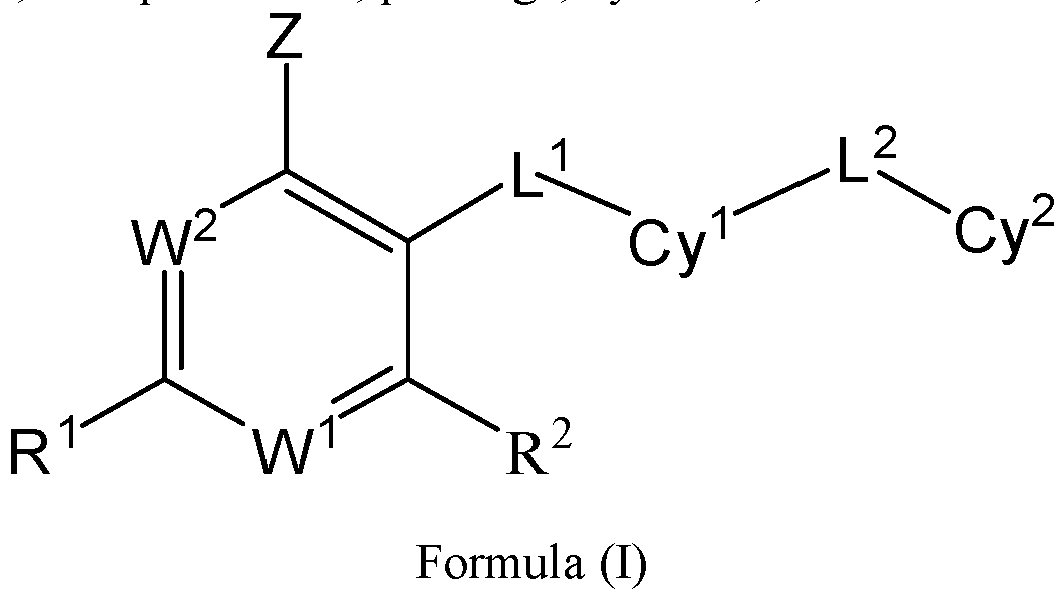
- wherein, W1 represents CRW1 or N;
- wherein, W2 represents CRW2 or N;
- wherein, Z represents -CRTRT' or -NRSRS';
- wherein, RT and RT', together with the C atom they are attached to, form a ring having a structure selected from the following:
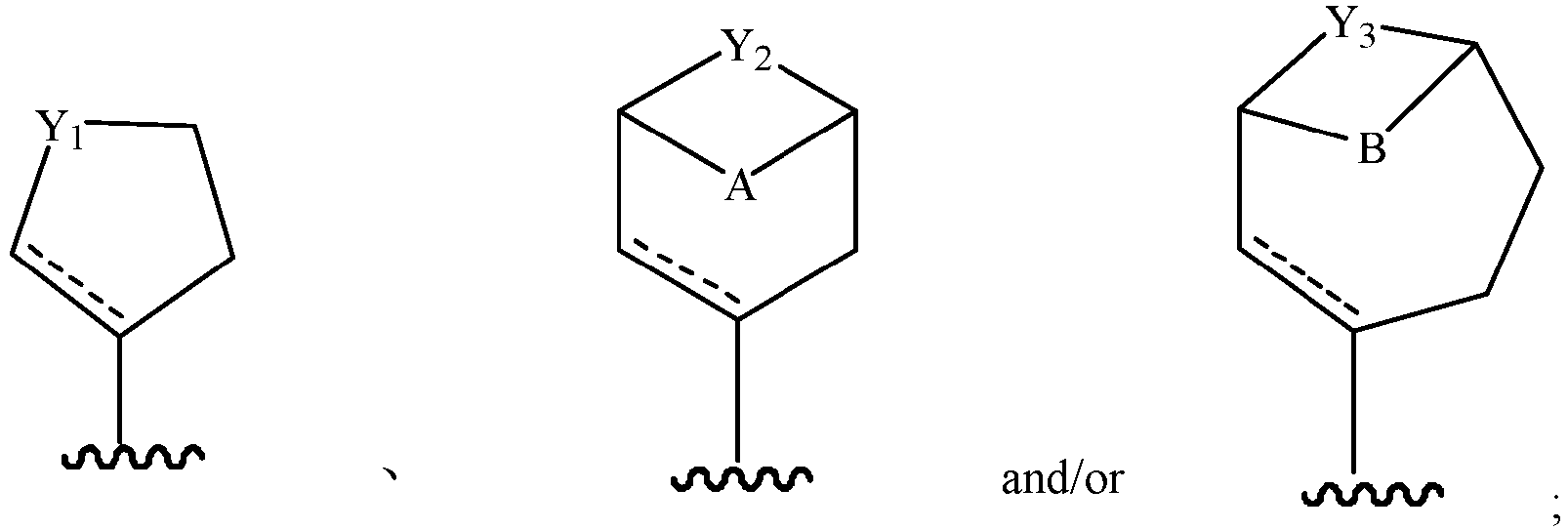
- wherein, RS and RS', together with the N atom they are attached to, form a ring having a structure selected from the following:

- wherein, Y1, Y2 and Y3 each independently represent -(CRaRb)o-(NRa)p-(CRa'Rb')q-;
- wherein, A and B each independently represent -(CRaRb)m-;
- Wherein L1 represents -C(O)NH-, -HNC(O)-, 5-6 membered heteroaryl,

- wherein, L2 represents absence, -C1-C6 alkylene-, -NRa-, -NRa(C1-C6 alkylene)-, -C(O)NRa(C1-C6 alkylene)-, -O-, -O-(C1-C6 alkylene), -S-, -S(O)-, -S(O)2-, -S(O)2NRa- or -S(O)(NRa)-;
- wherein, R1 represents L3-R3;
- wherein, R2 represents hydrogen, halogen, cyano, nitro, hydroxy C1-C6 alkyl, C1-C6 alkyl, C3-C8 cycloalkyl, C1-C6 haloalkyl, -ORa, -SO3Ra, -SRa, -SF5, -S(O)Ra, -O- C1-C6 haloalkyl or -NRaRb;
- wherein, L3 represents absence, C1-C6 alkylene, -NRa-, -NRaSO2-, -SO2NRa-, -S(=O)(NRa)-, -P(O)(ORa)2, -NRaP(O)(ORa)2 or -NRaP(O)(Ra)2;
- wherein, R3 represents absence, hydrogen, or C1-C6 alkyl or C3-C6 cycloalkyl substituted with 0-3 substituents selected from halogen, -ORa, -NRaRb, cyano and -O-C1-C6 haloalkyl;
- wherein, RW1 and RW2 each independently represent hydrogen, halogen, cyano, nitro, hydroxy C1-C6 alkyl, C1-C6 alkyl, C3-C8 cycloalkyl, C1-C6 haloalkyl, -ORa, -SO3Ra, -S(O)Ra, -O-C1-C6 haloalkyl, -SRa, -SF5 or -NRaRb;
- Wherein Cy1 represents groups with the following structure;































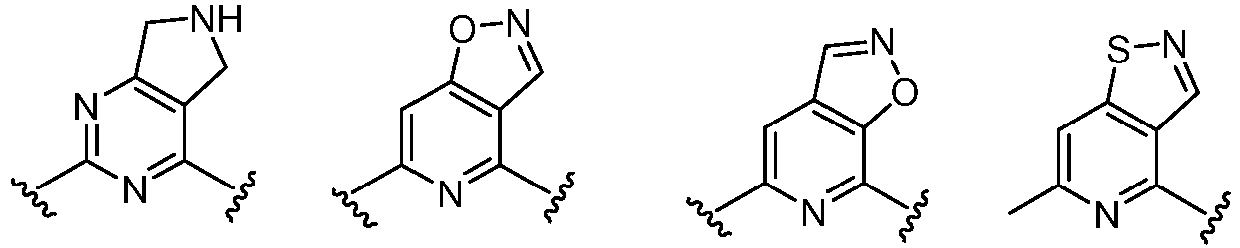
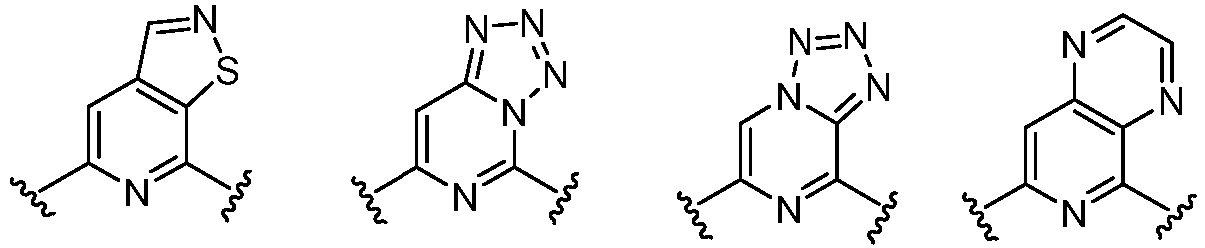
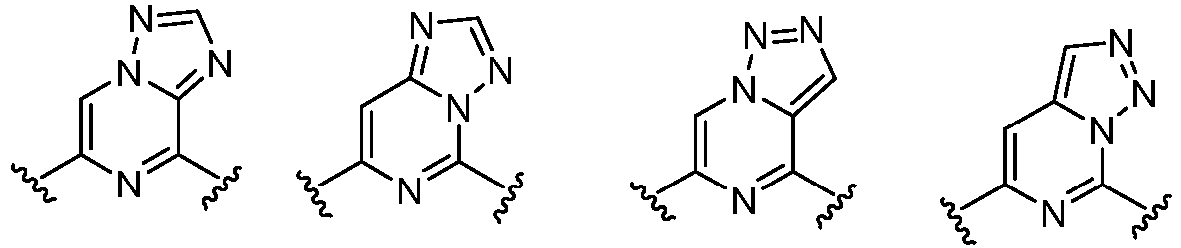



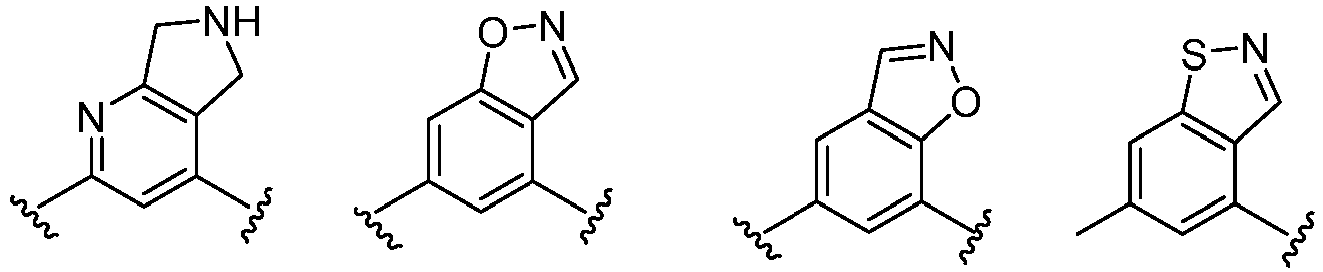
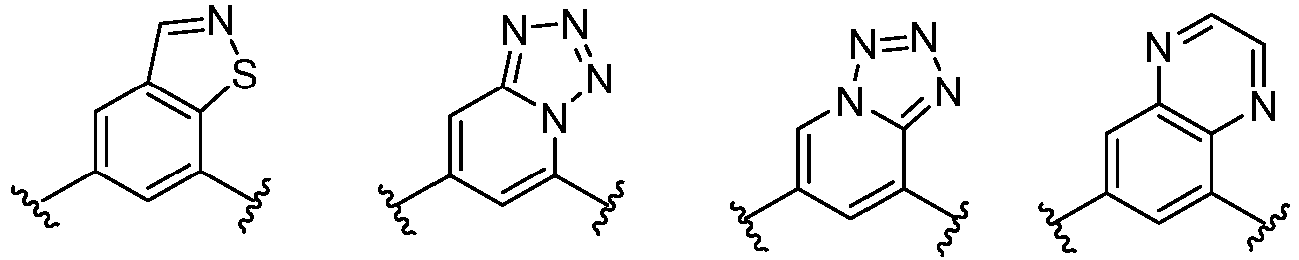

- The Cy1 may be optionally substituted with 0-3 substituents selected from the following: halogen, C1-C6 alkyl, C1-C6 haloalkyl, hydroxy C1-C6 alkyl, ORa, -O-C1-C6 haloalkyl, 5-6-membered heteroaryl, phenyl, -SRa, -SF5, cyano, nitro, -NRaRb, -NRaC(O)Rb, -C(O)NRaRb, -OC(O)Ra, -C(O)Ra, -P(O)RaRb, -C(O)ORa, -S(O)Ra, -S(O)2Ra, and -S(O)2NRaRb;
- wherein, Cy2 represents a 3-12-membered saturated or unsaturated monocyclic or bicyclic ring which may optionally contain 0-3 heteroatoms selected from O, N and S; the Cy2 may be optionally substituted with 0-3 substituents selected from the following: halogen, C1-C6 alkyl, C1-C6 haloalkyl, hydroxy C1-C6 alkyl, -ORa, -O- C1-C6 haloalkyl, -SRa, -SF5, cyano, nitro, -NRaRb, -NRaC(O)Rb, -C(O)NRaRb, -OC(O)Ra, -C(O)ORa, -S(O)Ra, -S(O)2Ra and -S(O)2NRaRb;
- wherein, Ra, Rb, Ra' and Rb' each independently represent hydrogen, halogen, C1-C6 alkyl, C3-C6 cycloalkyl, C1-C6 haloalkyl or hydroxy C1-C6 alkyl; or Ra and Rb, together with the atom they are attached to, form a 3-6-membered saturated or unsaturated ring which may optionally contain 0-2 heteroatoms selected from O, S and N; or Ra' and Rb', together with the atom they are attached to, form a 3-6-membered saturated or unsaturated ring which may optionally contain 0-2 heteroatoms selected from O, S and N;
- wherein, the dashed line represents a single or double bond;
- wherein, m, o, p and q represent integers from 0 to 3.
- In a preferred example of the present invention, W1 represents CH or N.
- In a preferred example of the present invention, W2 represents CH or N.
- In a preferred example of the present invention, L3 represents -NRaSO2-, -SO2NRa- or -S(=O)(NRa)-.
- In a preferred example of the present invention, L3 represents -NRaSO2-.
- In a preferred example of the present invention, R3 represents hydrogen, or C1-C6 alkyl or C3-C6 cycloalkyl substituted with 0-3 substituents selected from halogen, -ORa, -NRaRb, cyano, and -O-C1-C6 haloalkyl.
- In a preferred example of the present invention, R3 represents C1-C6 alkyl substituted with 0-3 substituents selected from halogen, -ORa, -NRaRb, cyano and -O- C1-C6 haloalkyl.
- In a preferred example of the present invention, Z represents NRSRS'.
- In a preferred example of the present invention, Z represents:

- In a preferred example of the present invention, Z represents:

- In a preferred example of the present invention, Z represents:
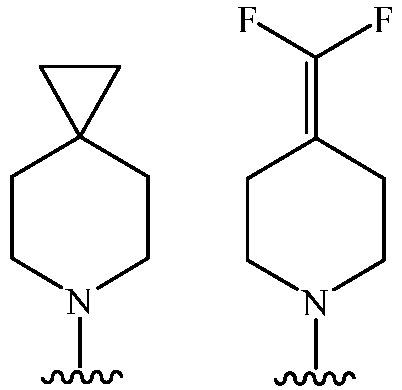
- In the preferred example of the present invention, L1 represents -C(O)NH-, -HNC(O)-, 5-6 membered heteroaryl,

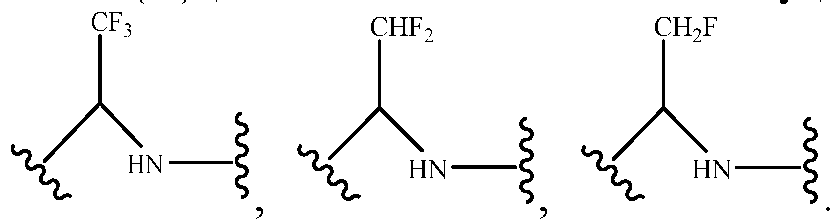
- In a preferred example of the present invention, L1 represents -C(O)NH-.
- In a preferred example of the present invention, Cy1 represents the following groups:


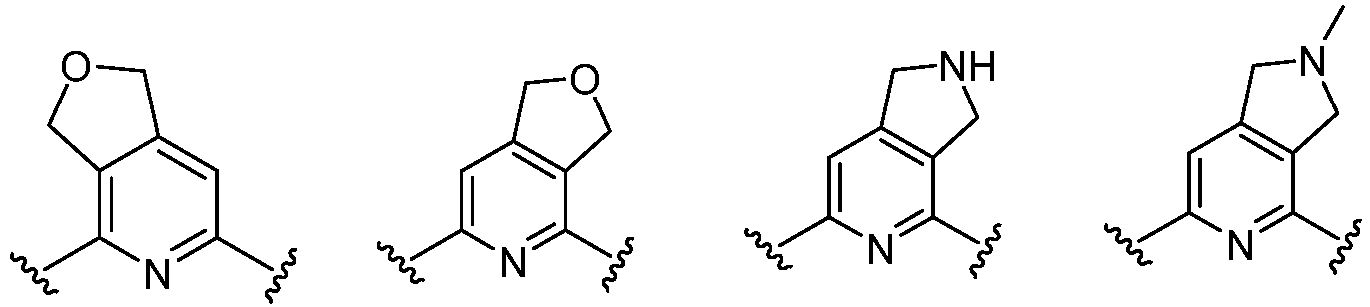
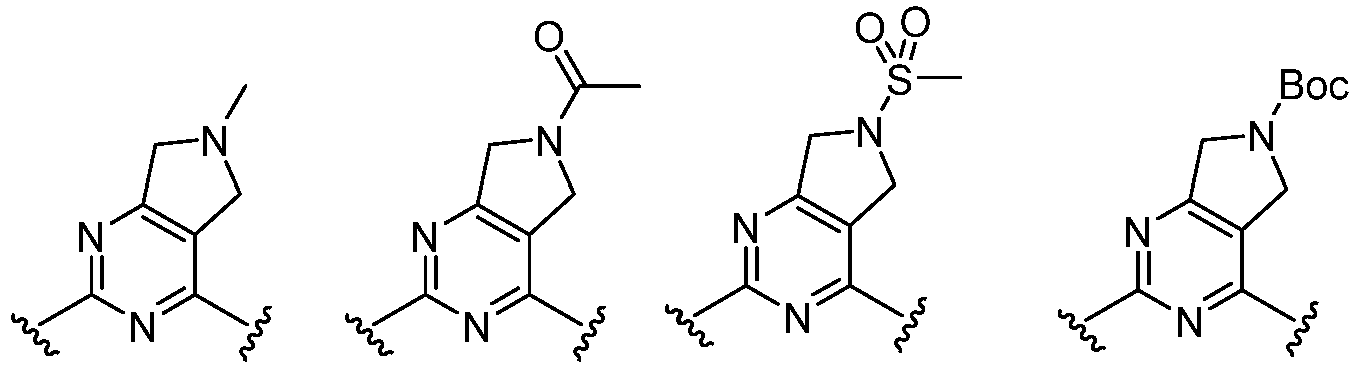



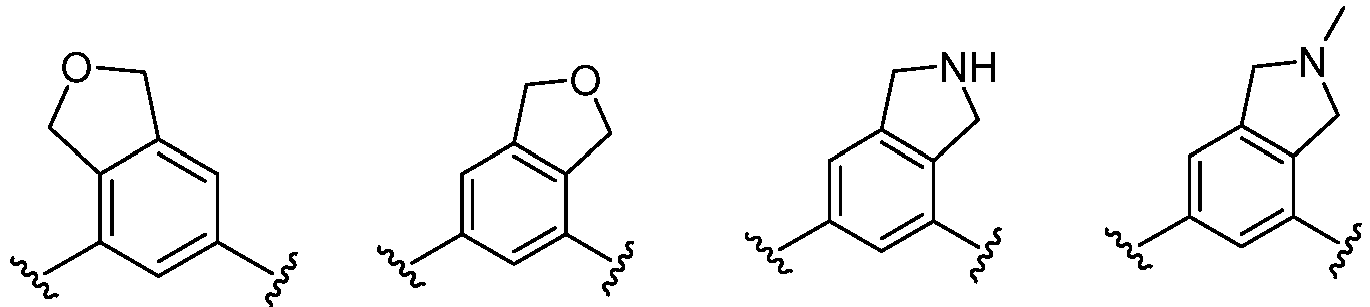
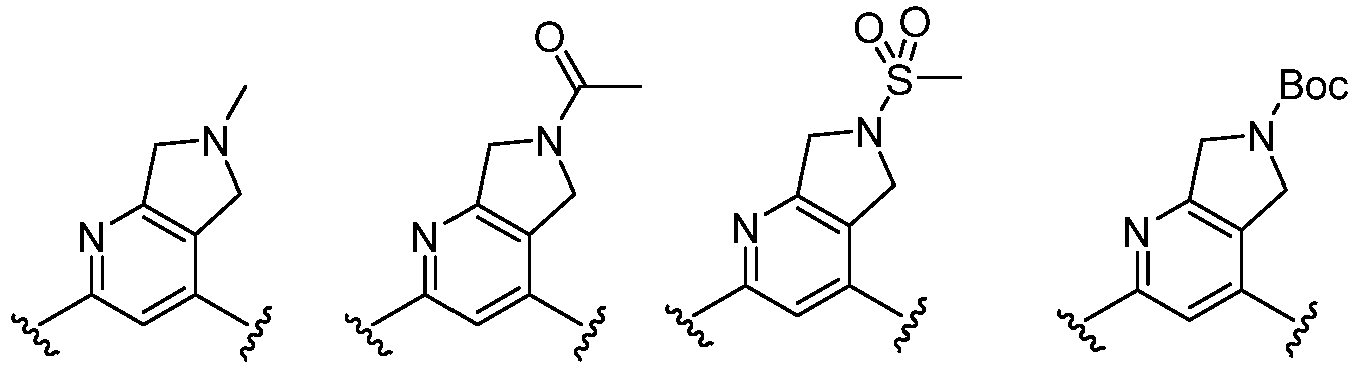

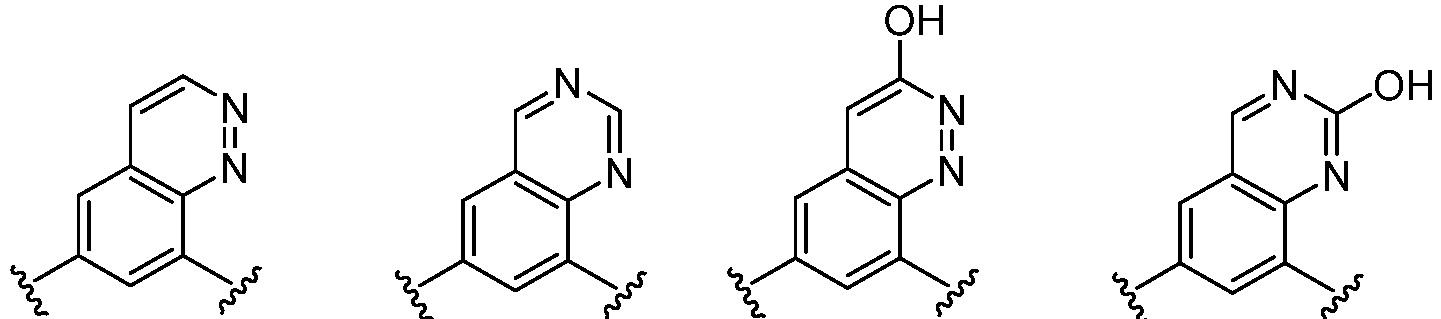
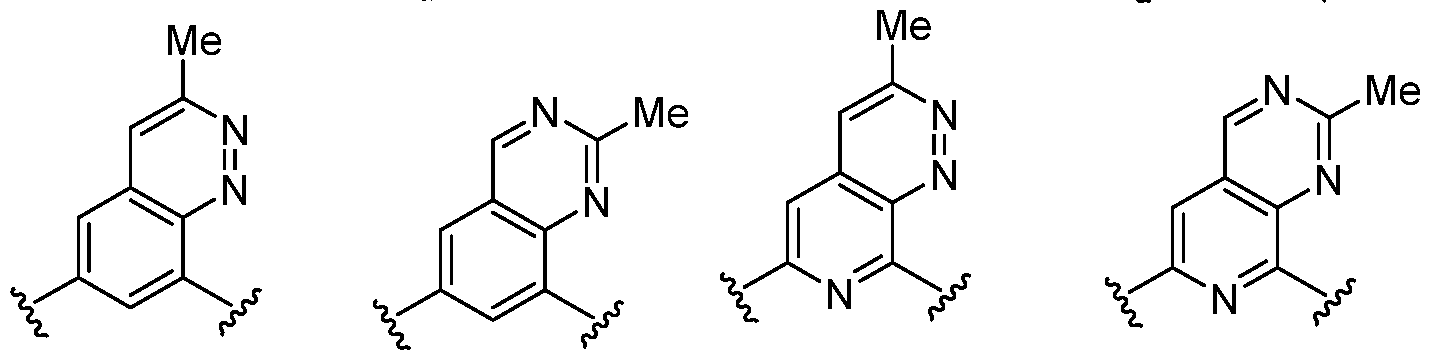
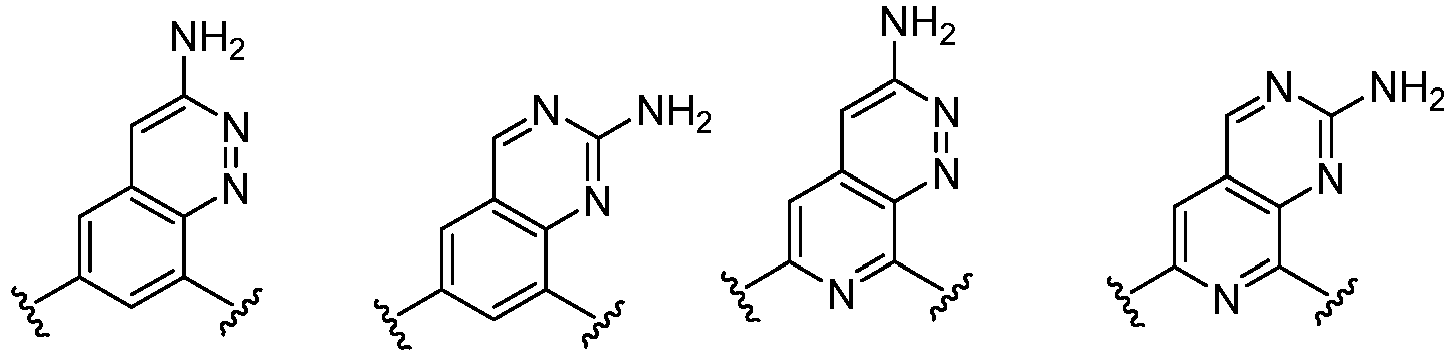


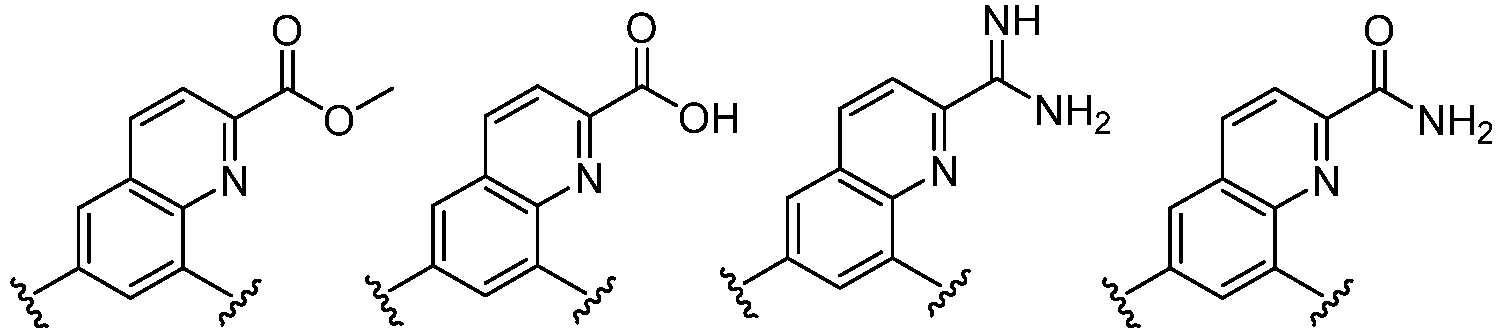

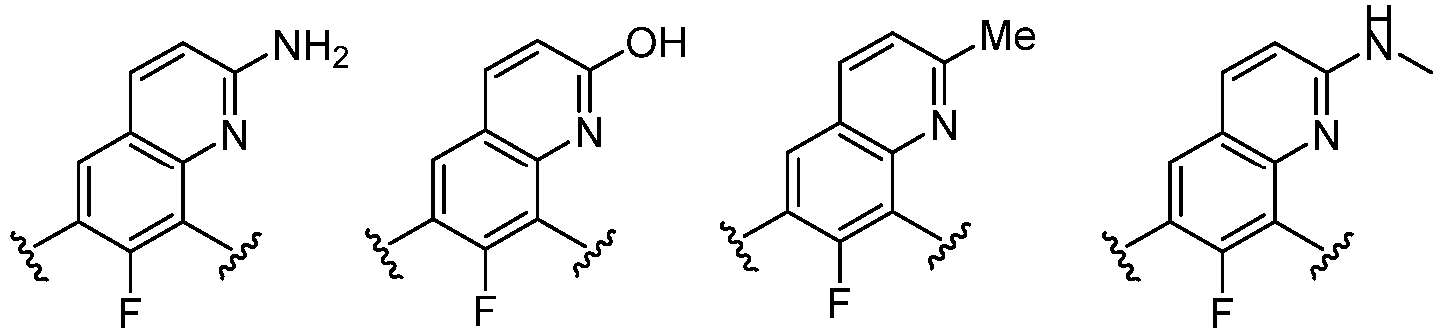


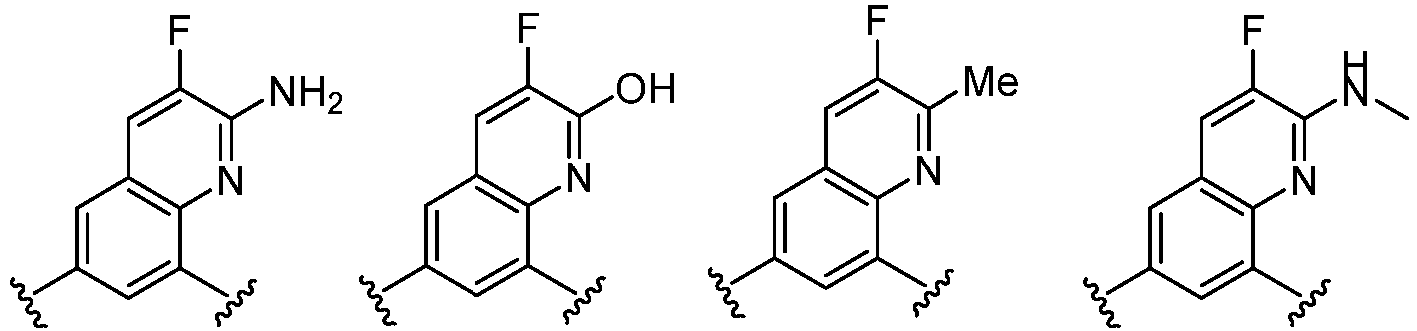
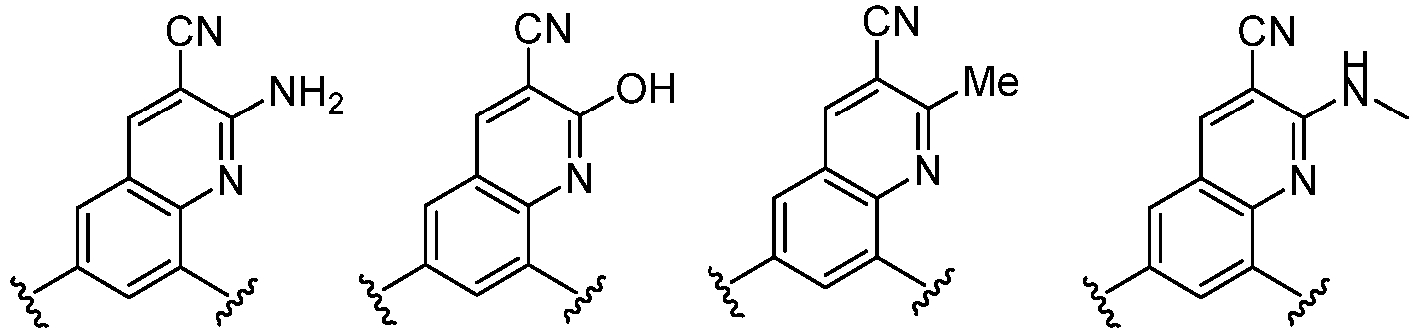



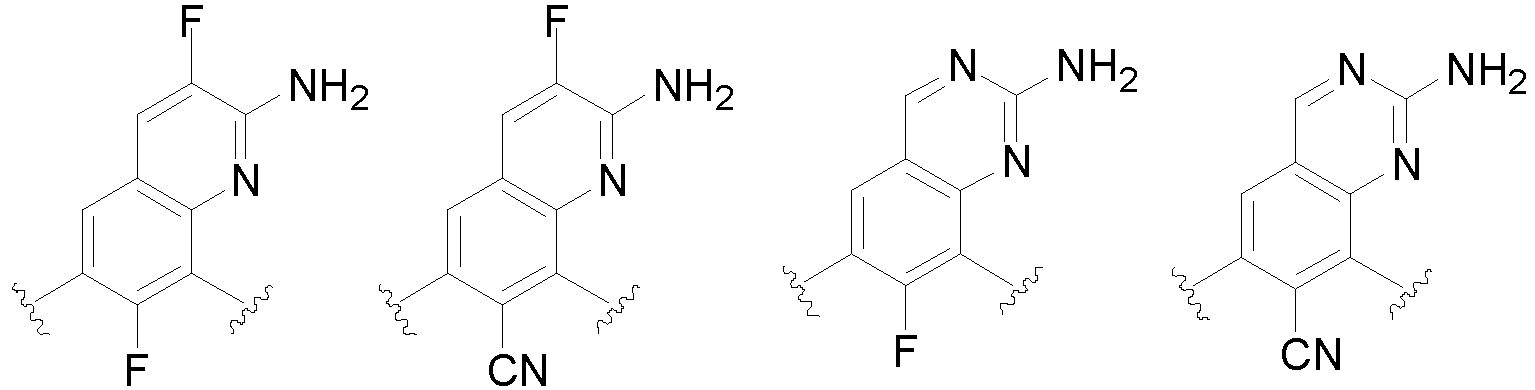
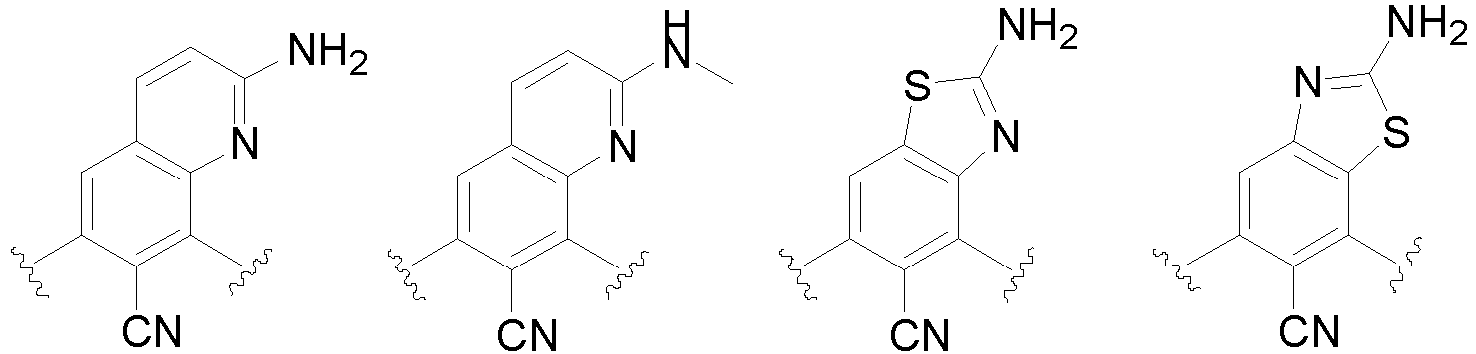
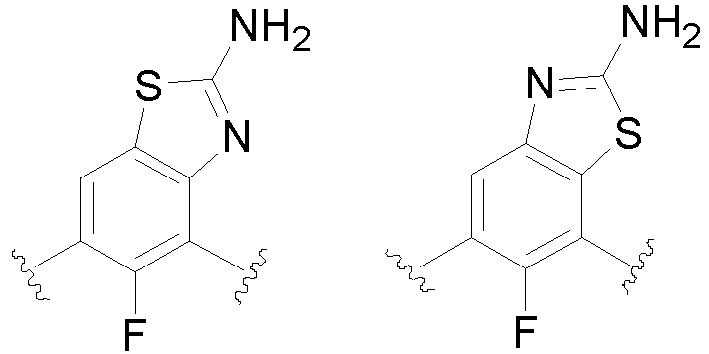
- In the preferred example of the present invention, L1 represents -C(O)NH-, -HNC(O)-, 5-6 membered heteroaryl,

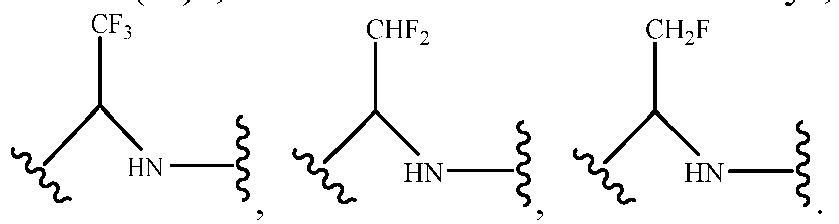
- In a preferred example of the present invention, L1 represents any one of the following groups:






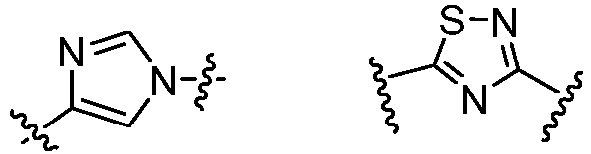
- In a preferred example of the present invention, L2 represents absence, -C1-C6 alkylene- or -NH-.
- In a preferred example of the present invention, L2 represents absence.
- In a preferred example of the present invention, Cy2 represents a saturated, partially saturated or unsaturated 3-, 4-, 5-, 6-, 7-membered monocyclic ring, or a 3-, 4-, 5-, 6-, 7-membered fused ring, which contains 0-3 N heteroatoms and 0-2 O or S heteroatoms and is substituted with 0-3 substituents selected from the following: halogen, cyano, nitro, hydroxy C1-C6 alkyl, C1-C6 alkyl, C3-C8 cycloalkyl, C1-C6 haloalkyl, -ORa, -SO3Ra, -S(O)Ra, -O- C1-C6 haloalkyl, -SRa, -SF5 or NRaRb-substituted morpholinyl, piperidinyl, azetidine, pyrrolidinyl, cyclopropyl, cyclobutyl, cyclopentyl, cyclohexyl, piperazinyl or tetrahydrofuryl; wherein, Ra and Rb each independently represent hydrogen, halogen, C1-C6 alkyl, C3-C8 cycloalkyl, C1-C6 haloalkyl or hydroxy C1-C6 alkyl; or Ra and Rb, together with the atom they are attached to, form a 3-6 membered ring which contains 0-2 heteroatoms selected from O, N and S.
- In a preferred example of the present invention, Cy2 represents:





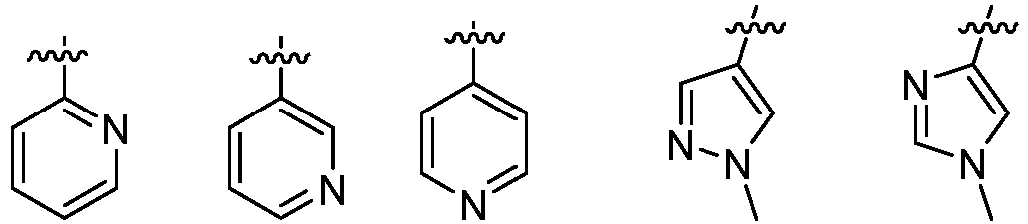
- In particular, the present invention provides compounds having the following structures:
1 
2 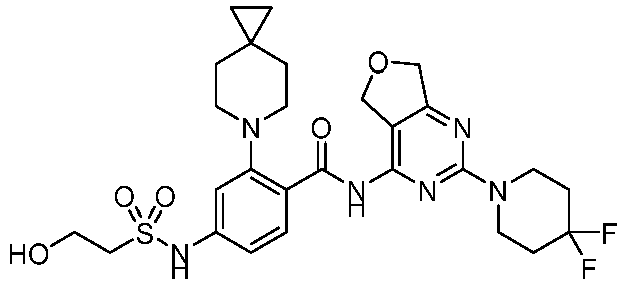
3 
4 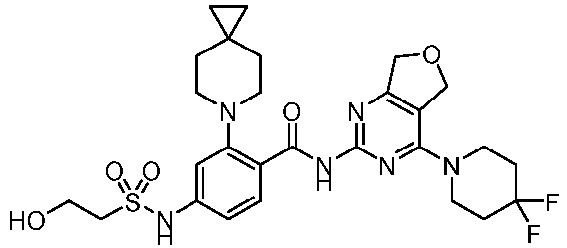
5 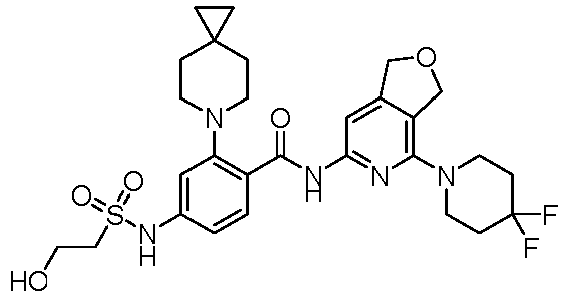
6 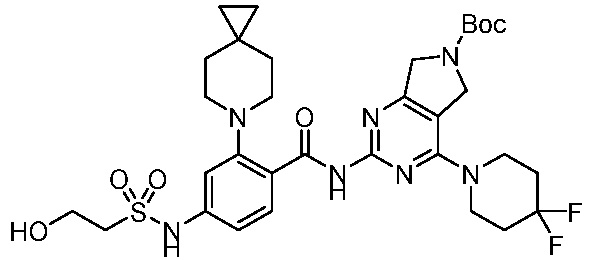
7 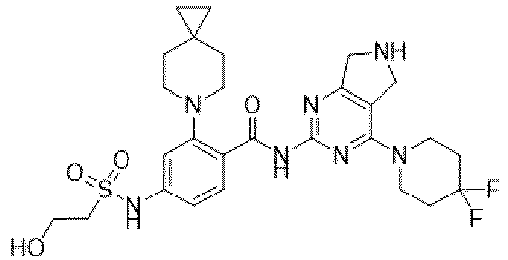
8 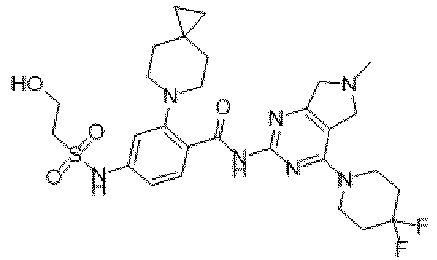
9 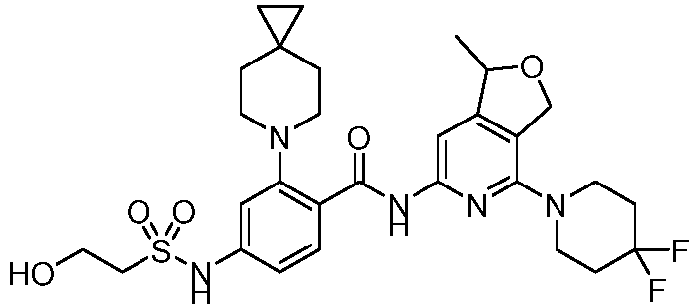
10 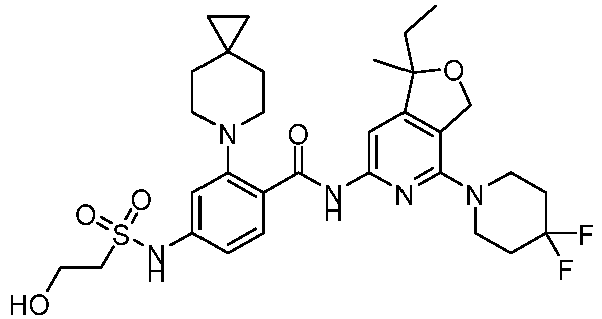
11 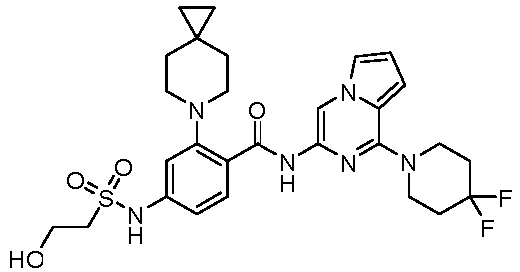
12 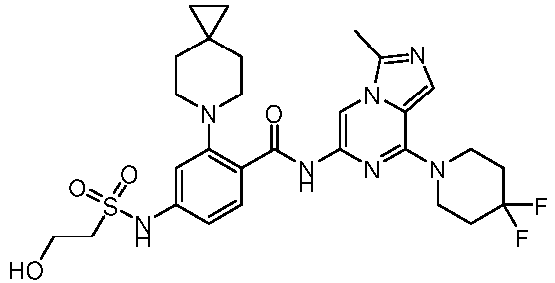
13 
14 
15 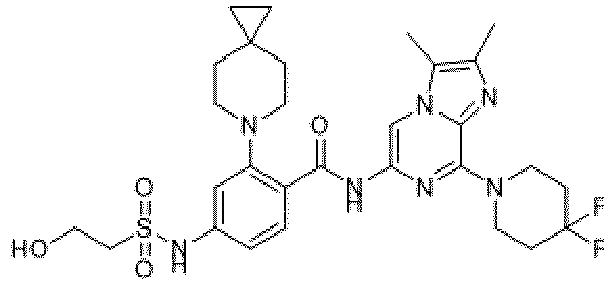
16 
17 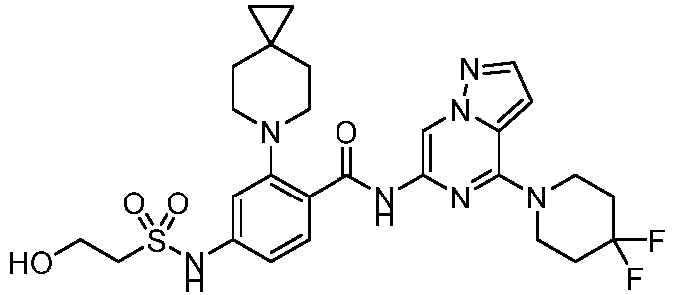
18 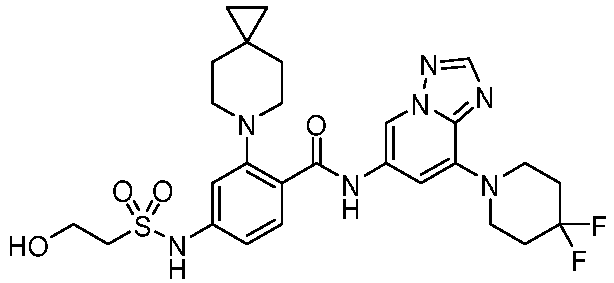
19 
20 
21 
22 
23 
24 
25 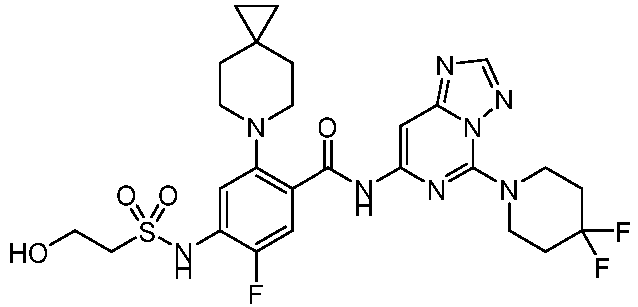
26 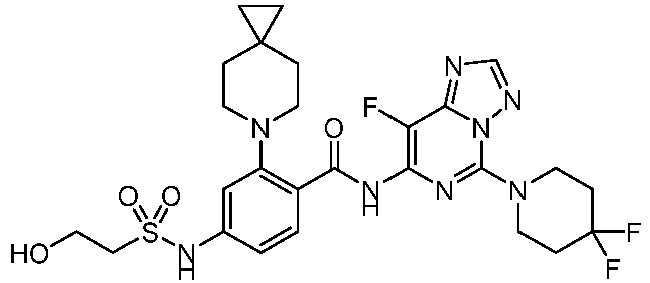
27 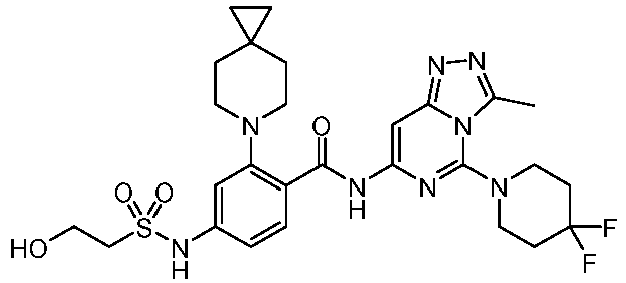
28 
29 
30 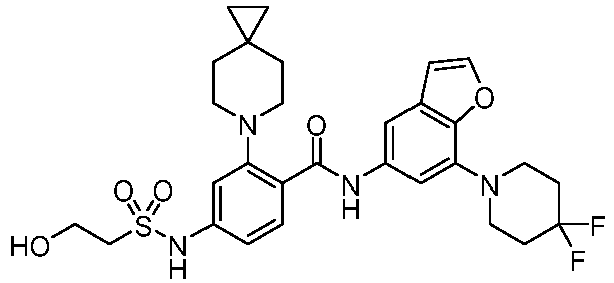
31 
32 
33 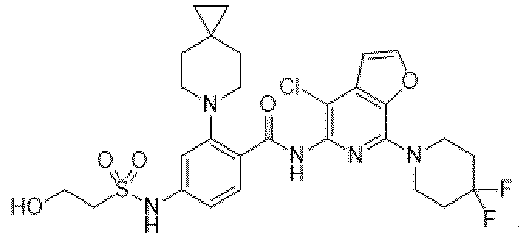
34 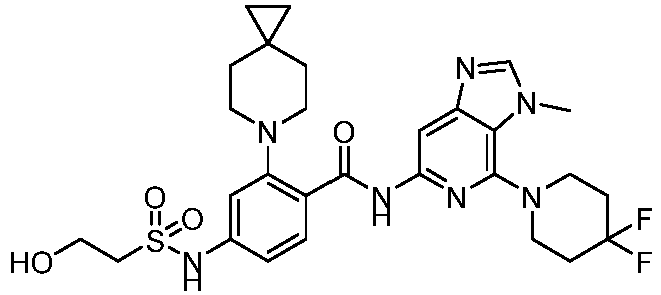
35 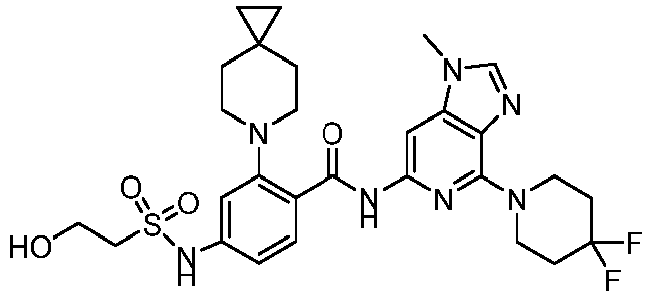
36 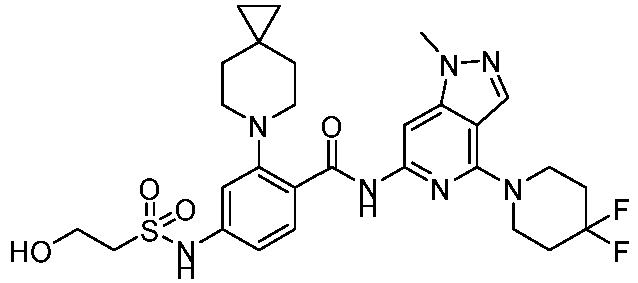
37 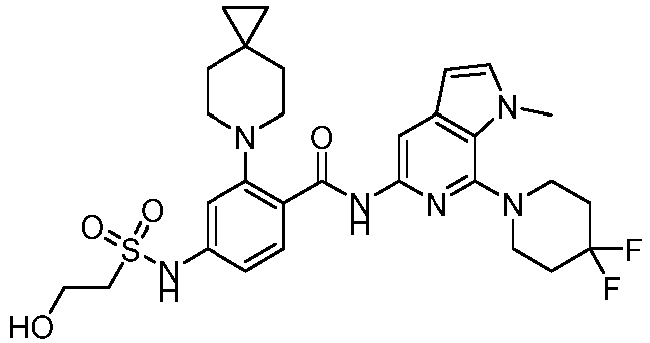
38 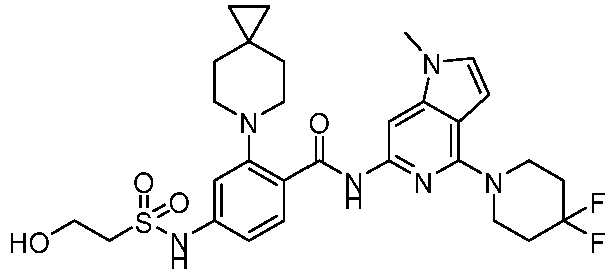
39 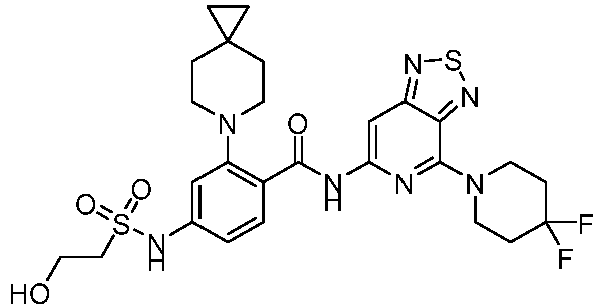
40 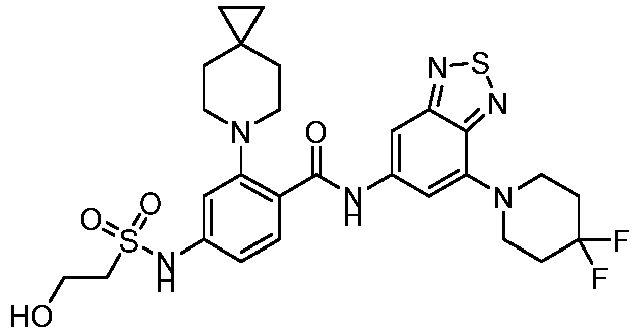
41 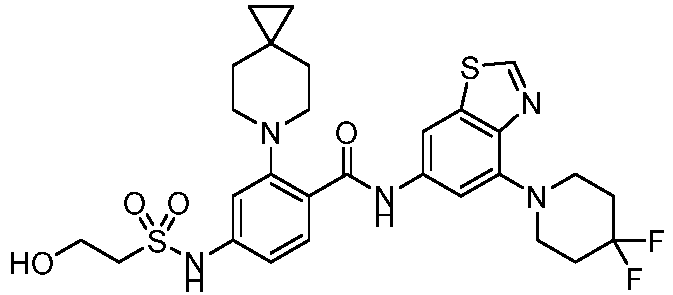
42 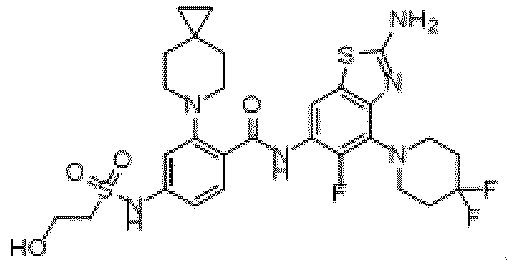
43 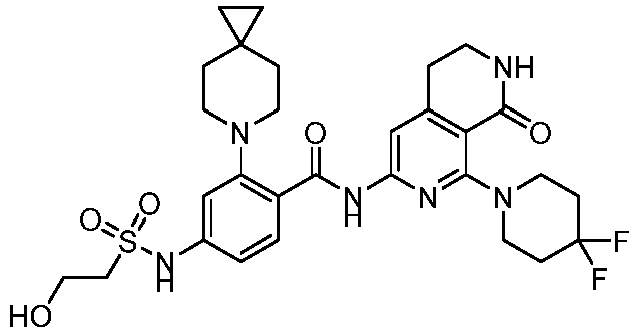
44 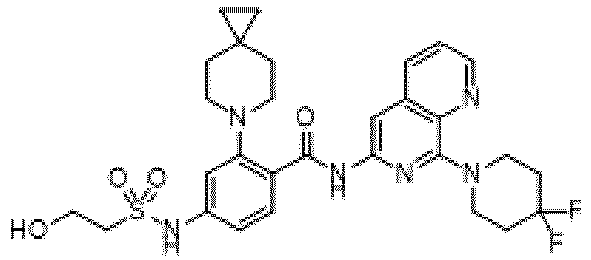
45 
46 
47 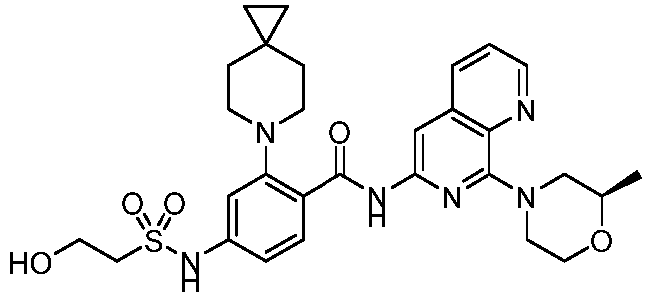
48 
49 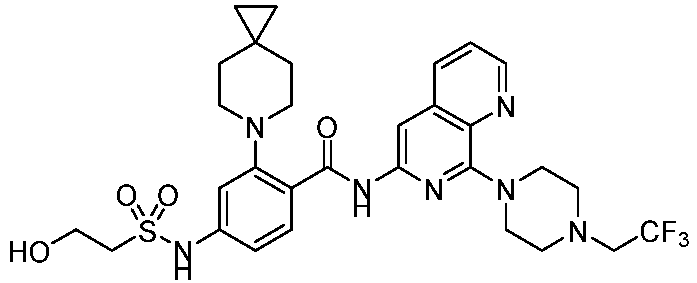
50 
51 
52 
53 
54 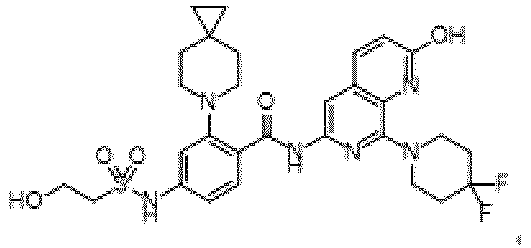
55 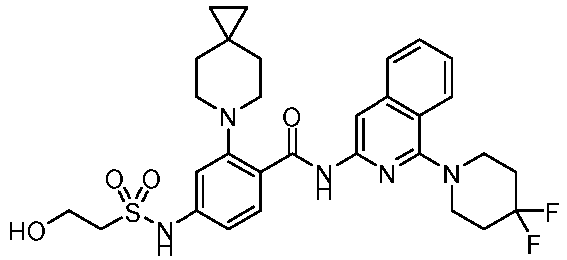
56 
57 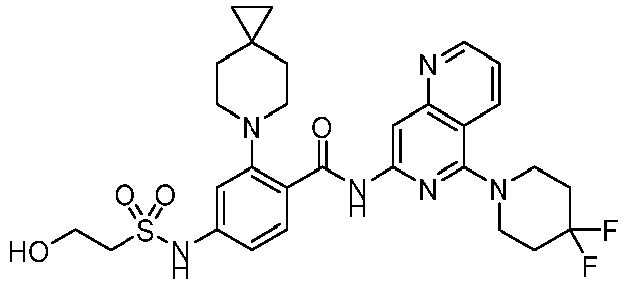
58 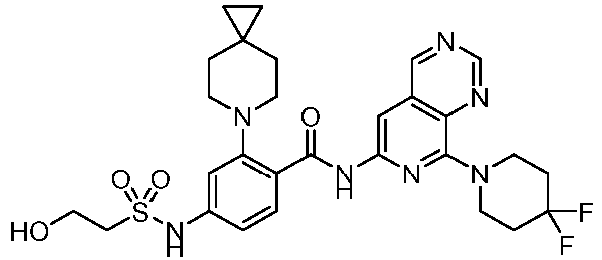
59 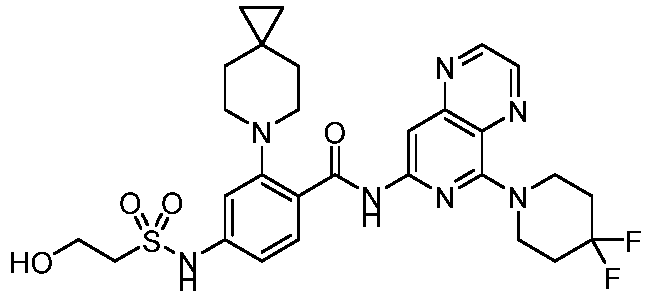
60 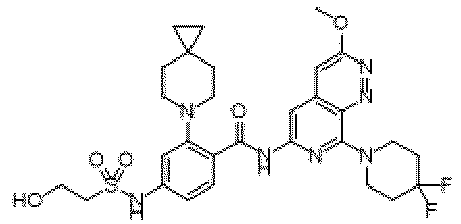
61 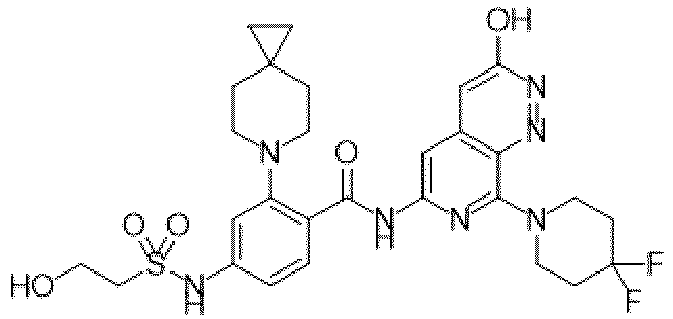
62 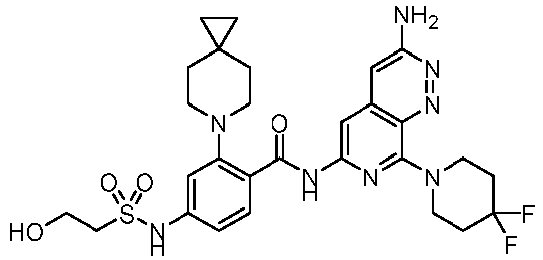
63 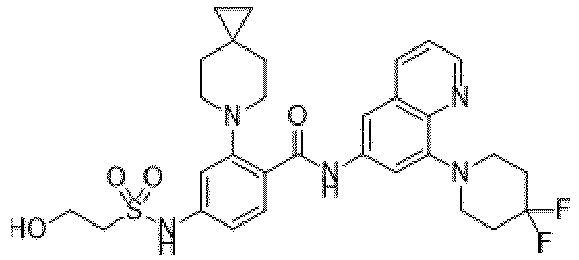
64 
65 
66 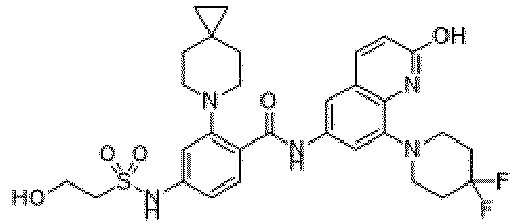
67 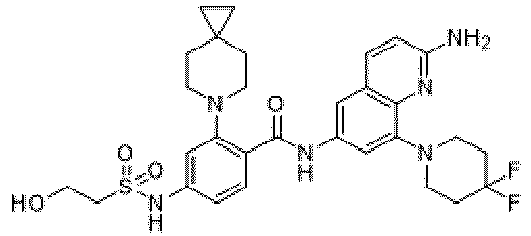
68 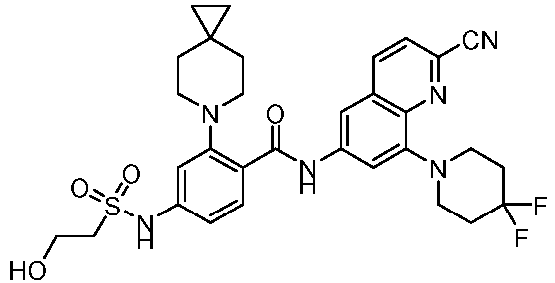
69 
70 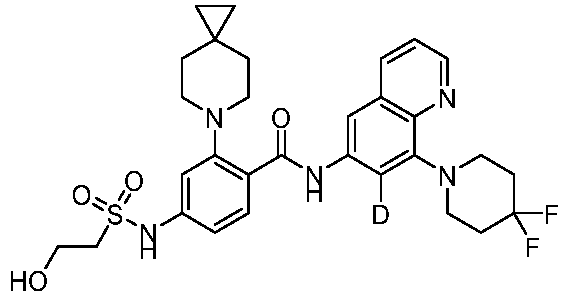
71 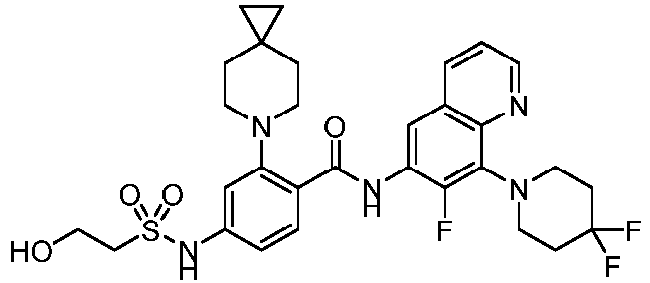
72 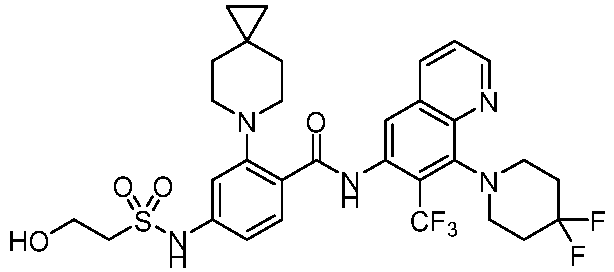
73 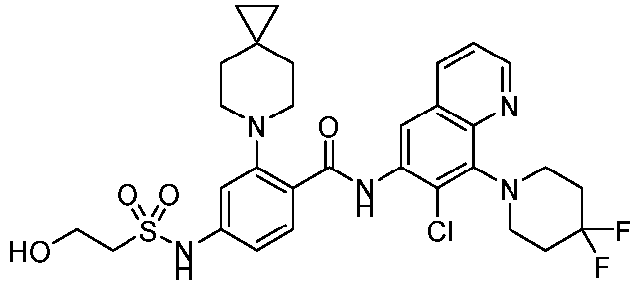
74 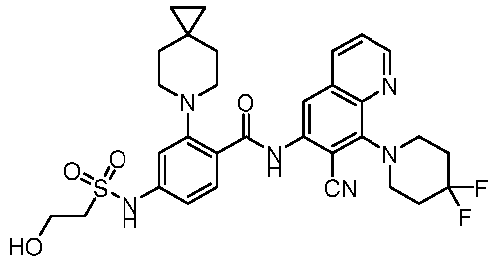
75 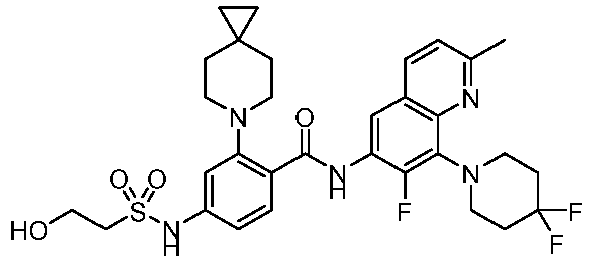
76 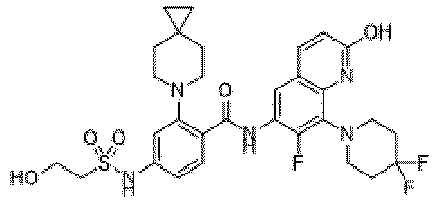
77 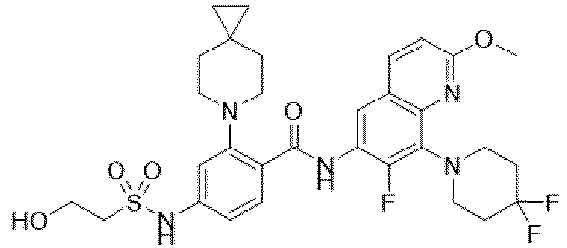
78 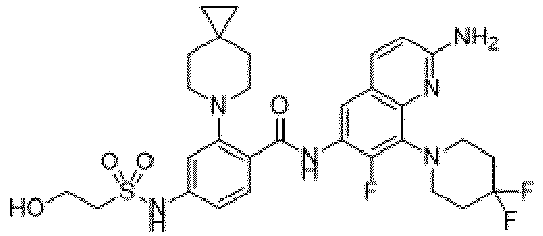
79 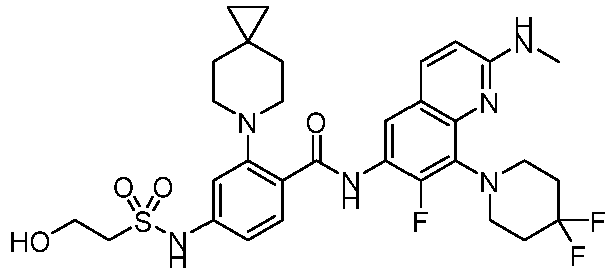
80 
81 
82 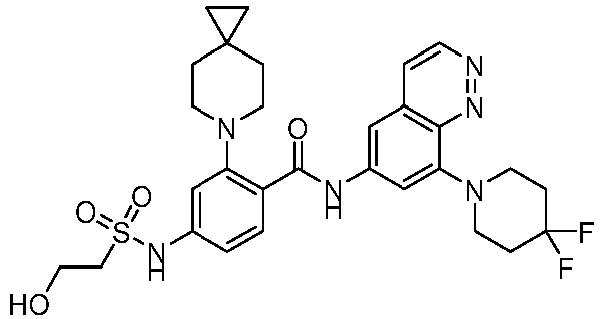
83 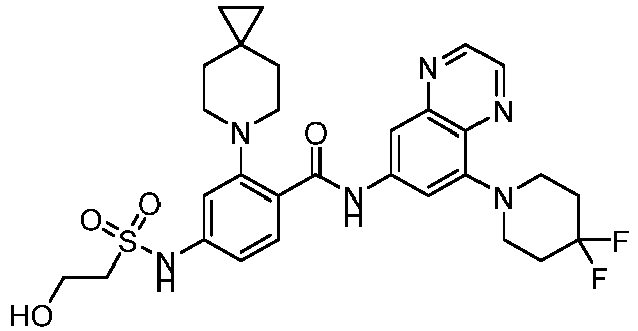
84 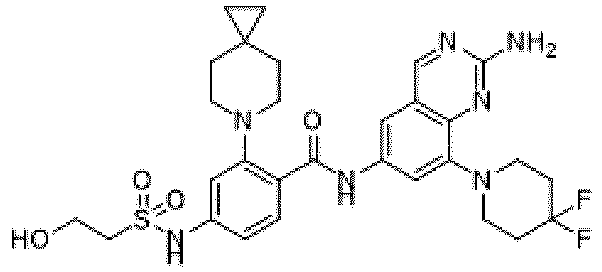
85 
86 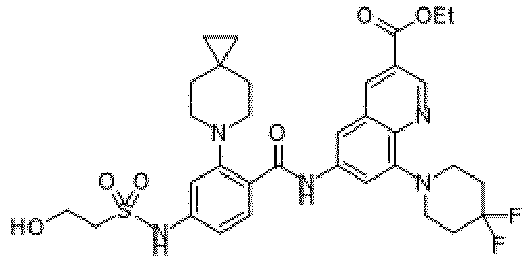
87 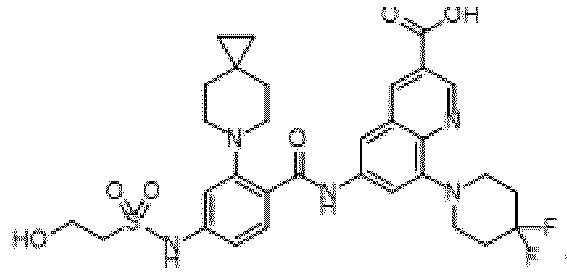
88 
89 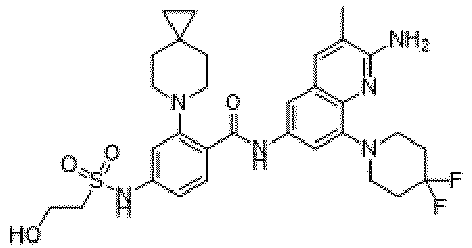
90 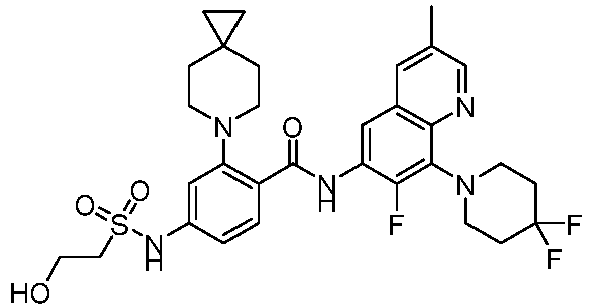
91 
92 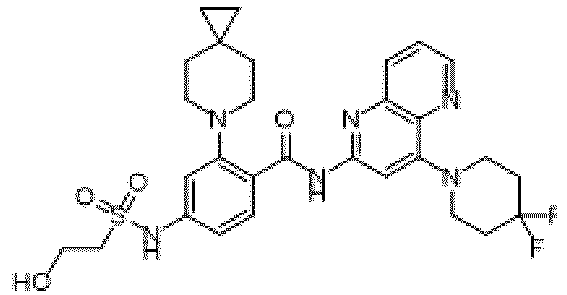
93 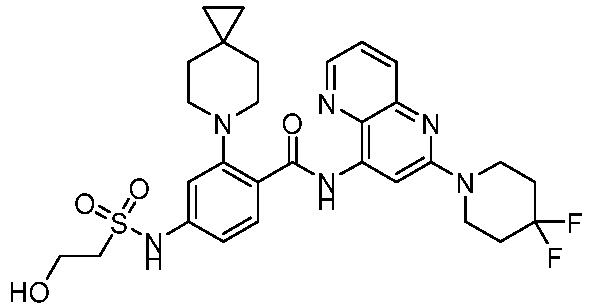
94 
95 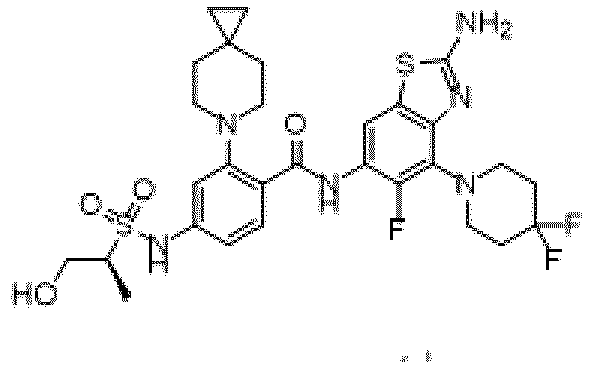
96 
97 
98 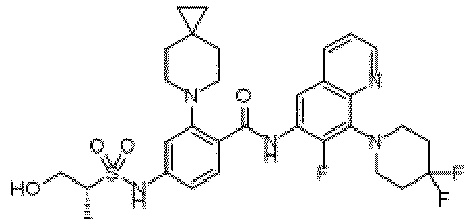
99 
100 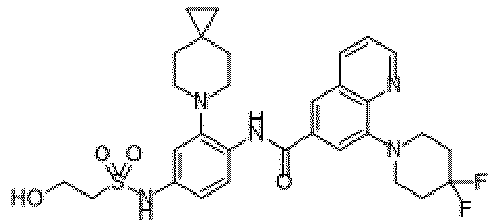
101 
102 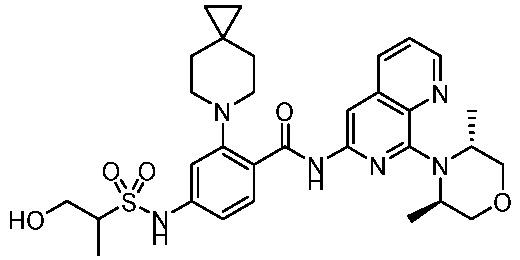
- In addition, the present invention provides a pharmaceutical composition that contains any one of the compounds in the examples of the present invention or its pharmaceutically acceptable salts, stereoisomers, isotope isomers, prodrugs, hydrates or solvates and pharmaceutically acceptable carriers.
- In addition, the present invention provides a method for treating tumors by inhibiting KIF 18A, comprising administering any one of the compounds of the present invention or its pharmaceutically acceptable salts, stereoisomers, isotope isomers, prodrugs, hydrates or solvates to an individual in need.
- Unless indicated to the contrary, the compounds of the present invention may be extended to include, in addition to their specific structures, their pharmaceutically acceptable salts, stereoisomers, isotope isomers (e.g. deuterated compounds), solvates, hydrates, prodrugs and metabolites, meaning that the pharmaceutically acceptable salts, stereoisomers, isotope isomers, solvates, hydrates, prodrugs and metabolites of these compounds also fall within the scope of protection.
- Unless otherwise mentioned, the following terms used in this patent specification and claims have the meanings discussed below. Furthermore, many of the groups defined herein may be optionally substituted. A list of typical substituents is presented in Definitions by way of example and is not intended to limit the substituents defined elsewhere in this patent specification and claims.
- The term "alkyl" refers to a linear or branched saturated aliphatic hydrocarbyl or linker, comprising 1-20 carbon atoms, preferably 1-12 carbon atoms, more preferably 1-8 carbon atoms, 1-6 carbon atoms or 1-4 carbon atoms. "Lower alkyl" refers in particular to an alkyl comprising 1-4 carbon atoms. Examples of alkyl include -(CH2)3-, methyl, trifluoromethyl, ethyl, propyl, isopropyl, n-butyl, isobutyl, tert-butyl and pentyl. Alkyl may be either substituted or unsubstituted. Typical substituents include cycloalkyl, aryl, heteroaryl, heterocycloalkyl, hydroxyl, alkoxy, aryloxy, mercapto, alkylthio, arylthio, cyano, halo, carbonyl, thiocarbonyl, O-carbamoyl, N-carbamoyl, O-thiocarbamoyl, N-thiocarbamoyl, C-acylamino, N-amido, C-carboxyl, O-carboxyl, nitro, silyl, amino and -NRxRy; wherein, R× and Ry are independently selected from hydrogen, alkyl, cycloalkyl, aryl, carbonyl, acetyl, sulfonyl, trifluoromethanesulfonyl and a fused 5- or 6-membered heterocyclyl ring.
- The term "alkenyl" refers to a linear or branched hydrocarbyl containing one or more double bonds and typically comprising 2-20 carbon atoms. For example, "C2-C6 alkenyl" comprises 2-6 carbon atoms. Examples of alkenyl include, but are not limited to, vinyl, propenyl, butenyl and 1-methyl-2-buten-1-yl.
- The term "alkynyl" refers to a linear or branched hydrocarbyl containing one or more triple bonds and typically comprising 2-20 carbon atoms. For example, "C2-C6 alkynyl" comprises 2-6 carbon atoms. Examples of alkynyl include, but are not limited to, ethynyl, 1-propynyl and 1-butynyl.
- The term "alkoxy" or "alkyloxy" refers to -O-alkyl. "C1-C6 alkoxy" (or alkyloxy) is intended to include C1, C2, C3, C4, C5 and C6 alkoxy. Examples of alkoxy include, but are not limited to, methoxy, ethoxy, propoxy (e.g., n-propoxy and isopropoxy) and tert-butoxy. Similarly, "alkylthio" or "thioalkoxy" refers to sulfur-bridged alkyl comprising a specified number of carbon atoms as defined above; for example, methyl-S- and ethyl-S-.
- The term "cycloalkyl" refers to a 3- to 8-membered all-carbon monocyclic or bicyclic ring, a 5-/6- or 6-/6-membered fused all-carbon bicyclic ring, or a fused polycyclic ring (in a "fused" ring system, each ring shares at least one adjacent carbon atom with other rings) group, in which one or more of the rings may contain one or more double bonds but none of such rings has an intact conjugated π-electron system, or two rings forms a spiro by sharing one carbon. Examples of cycloalkyl include, but are not limited to, cyclopropane, cyclobutane, cyclopentane, cyclopentene, cyclohexane, cyclohexadiene, adamantane, cycloheptane and cycloheptatriene. Bicyclic alkyl includes bridged, spiro or fused-ring cycloalkyl. Illustrative examples of cycloalkyl are derived from but not limited to the following:



- The term "aryl" refers to an all-carbon monocyclic or fused-ring polycyclic group comprising 6-12 carbon atoms, with an intact conjugated π-electron system. Examples of aryl include, but are not limited to, phenyl, naphthyl and anthracenyl. Aryl may be either substituted or unsubstituted. Typical substituents include halo, trihalomethyl, alkyl, hydroxyl, alkoxy, aryloxy, mercapto, alkylthio, arylthio, cyano, nitro, carbonyl, thiocarbonyl, C-carboxyl, O-carbamoyl, N-carbamoyl, O-thiocarbamoyl, N-thiocarbamoyl, C-acylamino, N-amido, sulfinyl, sulfonyl, amino and -NRaRb, wherein Ra and Rb are as defined above. The aryl-fused saturated or unsaturated cycloalkyl/saturated or unsaturated heterocycloalkyl may be regarded as a special substituent of aryl, and typical examples include but are not limited to:


- The term "heteroaryl" refers to a monocyclic or fused ring comprising 5-12 ring atoms, with one, two, three or four ring heteroatoms selected from N, O and S and the remaining ring atoms being C, having an intact conjugated π-electron system. Typical examples of heteroaryl include, but are not limited to, acridinyl, azetidinyl, azocinyl, benzimidazolyl, benzofuryl, benzothiofuranyl, benzothienyl, benzoxazolyl, benzoxazolinyl, benzothiazolyl, benzotriazolyl, benzotetrazolyl, benzoisoxazolyl, benzisothiazolyl, benzimidazolinyl, carbazolyl, 4aH-carbazolyl, carbolinyl, chromanyl, chromenyl, cinnolinyl, decahydroquinolyl, 2H,6H-1,5,2-dithiazinyl, dihydrofura[2,3-b]tetrahydrofuryl, furanyl, furazanyl, imidazolidinyl, imidazolinyl, imidazolyl, 1H-indazolyl, imidazopyridinyl, indolenyl, dihydroindolyl, indolizinyl, indolyl, 3H-indolyl, isatinoyl, isobenzofuranyl, isochromanyl, isoindazolyl, isoindolinyl, isoindolyl, isoquinolinyl, isothiazolyl, isothiazolopyridyl, isoxazolyl, isoxazolopyridyl, methylenedioxyphenyl, morpholinyl, diazanaphthyl, octahydroisoquinolinyl, oxadiazolyl, 1,2,3-oxadiazolyl, 1,2,4-oxadiazolyl, 1,2,5-oxadiazolyl, 1,3,4-oxadiazolyl, oxazolidinyl, oxazolyl, oxazolopyridinyl, oxazolidinyl, perimidinyl, oxindolyl, pyrimidinyl, phenanthridinyl, phenanthrolinyl, phenazinyl, phenothiazinyl, phenoxathiinyl, phenoxazinyl, phthalazinyl, piperazinyl, piperidinyl, piperidonyl, 4-piperidonyl, piperonyl, pteridinyl, purinyl, pyranyl, pyrazinyl, pyrazolidinyl, pyrazolinyl, pyrazolopyridinyl, pyrazolyl, pyridazinyl, pyridoxazolyl, pyridinoimidazolyl, pyridothiazolyl, pyridyl, pyrimidinyl, pyrrolidinyl, pyrrolinyl, 2-pyrrolidonyl, 2H-pyrrolyl, pyrrolyl, quinazolinyl, quinolyl, 4H-quinolizinyl, quinoxalinyl, quinuclidinyl, tetrazolyl, tetrahydrofuryl, tetrahydroisoquinolyl, tetrahydroquinolyl, 6H-1,2,5-thiadiazinyl, 1,2,3-thiadiazolyl, 1,2,4-thiadiazolyl, 1,2,5-thiadiazolyl, 1,3,4-thiadiazolyl, thianthrenyl, thiazolyl, thienyl, thiazolopyridyl, thienothiazolyl, thienoxazolyl, thienoimidazolyl, thienyl, triazinyl, 1,2,3-triazolyl, 1,2,4-triazolyl, 1,2,5-triazolyl, 1,3,4-triazolyl and xanthyl, quinolyl, isoquinolinyl, phthalazinyl, quinazolinyl, indolyl, isoindolyl, dihydroindolyl, 1H-indazolyl, benzimidazolyl, 1,2,3,4-tetrahydroquinolyl, 1,2,3,4-tetrahydroisoquinolyl, 5,6,7,8-tetrahydro-quinolyl, 2,3-dihydro-benzofuranyl, chromanyl, 1,2,3,4-tetrahydro-quinoxalinyl and 1,2,3,4-tetrahydro-quinazolinyl. The term "heteroaryl" may also include biaryl structures formed by the above-defined "aryl" and monocyclic "heteroaryl", including but not limited to "-phenylbipyridyl-", "-phenylbipyrimidinyl", "-pyridylbiphenyl", "-pyridylbipyrimidinyl-" and "-pyrimidinylbiphenyl-"; wherein the present invention also includes fused ring and spiro ring compounds containing, for example, heterocyclic rings mentioned above.
- A pharmaceutically acceptable heteroaryl is sufficiently stable to be linked to a compound of the present invention for formulation into a pharmaceutical composition and subsequent administration to patients in need.
- Unless otherwise defined, the definitions of substituents in the present invention are independent and not interrelated. For example, the definition of Ra (or Rb) is independent across different substituents. Specifically, when one definition is selected for Ra (or Rb) in a substituent, it does not imply that the same definition applies to Ra (or Rb) in other substituents. More specifically, when Ra (or Rb) is defined as hydrogen in NRaRb, for example (non-exhaustive), it does not imply that Ra (or Rb) in -C(O)-NRaRb must be hydrogen.
- "Halo" or "halogen" includes fluorine, chlorine, bromine and iodine. "Haloalkyl" is intended to include branched and linear saturated aliphatic hydrocarbyl having a specified number of carbon atoms substituted with 1 or more halogens. Examples of haloalkyl include, but are not limited to, fluoromethyl, difluoromethyl, trifluoromethyl, trichloromethyl, pentafluoroethyl, pentachloroethyl, 2,2,2-trifluoroethyl, heptafluoropropyl and heptachloropropyl. Examples of haloalkyl also include "fluoroalkyl" which is intended to include branched and linear saturated aliphatic hydrocarbyl having a specified number of carbon atoms and substituted with 1 or more fluorine atoms.
- "Haloalkoxy" or "haloalkyloxy" refers to oxygen-bridged haloalkyl having a specified number of carbon atoms as defined above. For example, "C1-C6 haloalkoxy" is intended to include C1, C2, C3, C4, C5 and C6 haloalkoxy. Examples of haloalkoxy include, but are not limited to, trifluoromethoxy, 2,2,2-trifluoroethoxy and pentafluoroethoxy. Similarly, "haloalkylthio" or "thiohaloalkoxy" refers to sulfur-bridged haloalkyl comprising a specified number of carbon atoms as defined above; for example, trifluoromethyl-S- and pentafluoroethyl-S-.
- In the present disclosure, the expression Cx1-Cx2 is used when referring to some substituents, which means that the number of carbon atoms in the substituent may be x1 to x2. For example, C0-C8 means that the group contains 0, 1, 2, 3, 4, 5, 6, 7 or 8 carbon atoms, C1-C8 means that the group contains 1, 2, 3, 4, 5, 6, 7 or 8 carbon atoms, C2-C8 means that the group contains 2, 3, 4, 5, 6, 7 or 8 carbon atoms, C3-C8 means that the group contains 3, 4, 5, 6, 7 or 8 carbon atoms, C4-C8 means that the group contains 4, 5, 6, 7 or 8 carbon atoms, C0-C6 means that the group contains 0, 1, 2, 3, 4, 5 or 6 carbon atoms, C1-C6 means that the group contains 1, 2, 3, 4, 5 or 6 carbon atoms, C2-C6 means that the group contains 2, 3, 4, 5 or 6 carbon atoms, and C3-C6 means that the group contains 3, 4, 5 or 6 carbon atoms.
- In the present disclosure, the expression " x1-x2-membered ring" is used when referring to cyclic groups (e.g., aryl, heteroaryl, cycloalkyl and heterocycloalkyl), which means that the number of ring atoms in the group may be x1 to x2. For example, 3-12-membered cyclic group may be a 3, 4, 5, 6, 7, 8, 9, 10, 11 or 12-membered ring comprising 3, 4, 5, 6, 7, 8, 9, 10, 11 or 12 ring atoms; 3-6-membered cyclic group may be a 3, 4, 5 or 6-membered ring comprising 3, 4, 5 or 6 ring atoms; 3-8-membered cyclic group may be a 3, 4, 5, 6, 7 or 8-membered ring comprising 3, 4, 5, 6, 7 or 8 ring atoms; 3-9-membered cyclic group may be a 3, 4, 5, 6, 7, 8 or 9-membered ring comprising 3, 4, 5, 6, 7, 8 or 9 ring atoms; 4-7-membered cyclic group may be a 4, 5, 6 or 7-membered ring comprising 4, 5, 6 or 7 ring atoms; 5-8-membered cyclic group may be a 5, 6, 7 or 8-membered ring comprising 5, 6, 7 or 8 ring atoms; 5-12-membered cyclic group may be a 5, 6, 7, 8, 9, 10, 11 or 12-membered ring comprising 5, 6, 7, 8, 9, 10, 11 or 12 ring atoms; 6-12-membered cyclic group may be a 6, 7, 8, 9, 10, 11 or 12-membered ring comprising 6, 7, 8, 9, 10, 11 or 12 ring atoms. The ring atoms may be carbon atoms or heteroatoms, such as heteroatoms selected from N, O and S. The heterocyclic rings may contain 1, 2, 3, 4, 5, 6, 7, 8, 9, 10 or more ring heteroatoms, such as heteroatoms selected from N, O and S.
- In the present invention, one or more halogens may be each independently selected from fluorine, chlorine, bromine and iodine.
- The term "substituted" as used herein means that at least one hydrogen atom is substituted by a non-hydrogen group, provided that normal valence is maintained and the substitution results in a stable compound. The term "cyclic double bond" as used herein refers to a double bond formed between two adjacent ring atoms (e.g. C=C, C=N or N=N).
- Where nitrogen atoms (e.g. amines) are present on the compounds of the invention, these nitrogen atoms may be converted to N-oxides by treatment with an oxidizing agent (e.g. mCPBA and/or hydrogen peroxide) to obtain other compounds of the invention. Therefore, the nitrogen atoms shown and claimed are deemed to encompass the nitrogen atoms shown and their N-oxides to obtain derivatives of the present invention.
- When any variable occurs more than once in any composition or formula of a compound, its definition in each occurrence is independent of its definition in every other occurrence Therefore, for example, if a group is shown substituted with 0-3 Rs, the group may be optionally substituted with up to three R groups, with R defined independently in each occurrence. Furthermore, combinations of substituents and/or variables are permitted only if such combinations result in stable compounds.
- The term "patient" as used herein refers to an organism to be treated by a method of the present invention. Such organisms preferably include, but are not limited to, mammals (e.g. rodents, apes/monkeys, horses, cattle, pigs, dogs and cats) and most preferably humans.
- The term "effective amount" as used herein refers to an amount of a drug or agent (i.e., a compound of the invention) that will elicit, for example, a biological or medical response in a tissue, a system, an animal or a human sought by a researcher or clinician. Furthermore, the term "therapeutically effective amount" refers to an amount that results in improved treatment, cure, prevention or alleviation of a disease, condition or side effect, or reduction in the progression rate of a disease or condition, as compared to a corresponding subject who does not receive such amount. An effective amount may be administered in one or more doses and is not intended to be limited to a particular formulation or route of administration. The term also includes an amount effective to enhance normal physiological functions within its range.
- The term "treatment" as used herein includes its broad sense and encompasses both therapeutic and/or prophylactic treatment of an object. Specifically, "treatment" includes any treatment that results in the alleviation, inhibition, elimination and relief and/or prevention of a condition, disease and disorder, such as alleviation, reduction, regulation, relief, elimination, prophylaxis, prevention or remission of symptoms thereof. The therapeutic treatment includes alleviating, inhibiting or relieving symptoms or conditions of a disease; inhibiting the occurrence of complications; alleviating the underlying metabolic syndrome; inhibiting the occurrence of a disease or condition such as controlling the progression of the disease or condition; alleviating a disease or condition; reducing a disease or condition; alleviating complications caused by a disease or condition, or treating signs caused by a disease or condition. The prophylactic treatment includes a prior treatment to prevent, block or delay, slow the onset or progression of a disease or condition or reduce the severity of the disease or condition.
- Similarly, the term "therapeutic agent" also includes agents or reagents used in the therapeutic and/or prophylactic treatment of an object.
- The terms "pharmaceutical" or "pharmaceutically acceptable" as used herein refer to compounds, substances, compositions and/or dosage forms that, within the scope of sound medical judgment, are suitable for contact with human and animal tissues without excessive toxicity, irritation, allergic reactions and/or other issues or complications, and commensurate with a reasonable benefit/risk ratio.
- The term "cancer" as used herein refers to an abnormal growth of cells that is uncontrollable and, under certain conditions, capable of metastasis (spread). This type of cancer includes, but is not limited to, solid tumors [such as bladder, intestine, brain, chest, uterus, heart, kidney, lung, lymphoid tissue (lymphoma), ovary, pancreas or other endocrine organs (e.g. thyroid gland), prostate and skin (melanoma)] or blood tumors (e.g. non-leukemic leukemia).
- The term "combined administration" or similar terms thereof, as used herein, refers to the administration of several selected therapeutic agents to a patient in the same or different modes of administration and at the same or different times.
- The term "enhancement" or "capable of enhancing" as used herein refers to an expected outcome of an increase or extension in either potency or duration. Thus, in the context of enhancing the therapeutic effect of a drug, the term "capable of enhancing" refers to the ability of the drug to increase or extend its potency or duration within the system. The term "enhancement value" as used herein refers to the ability to maximize the efficacy of another therapeutic agent in an ideal system.
- The term "immune disease" refers to a disease or condition resulting from an adverse or harmful response to endogenous or exogenous antigens, typically leading to cellular dysfunction, or functional damage and impairment, or damage to organs or tissues that may produce immune symptoms.
- The term "kit" is synonymous with "product packaging."
- The terms "object", "subject" or "patient" include both mammals and non-mammals. Mammals include, but are not limited to, mammals including humans and non-human primates (such as orangutans, apes and monkeys), agricultural animals (such as cattle, horses, goats, sheep and pigs), domestic animals (such as rabbits and dogs), and laboratory animals including rodents (such as rats, mice and guinea pigs). Non-mammals include, but are not limited to, birds and fish. In a preferred example, the selected mammal is human.
- As used herein, a compound or pharmaceutical composition, after administered, can relieve a disease, symptom or condition, particularly to reduce severity, delay onset, slow down progression or shorten duration. This applies whether the administration is fixed or temporary, continuous or intermittent, and can be attributed to or associated with the administration.
- Suitable routes of administration include, but are not limited to, oral, intravenous, rectal, aerosol, parenteral, ocular, pulmonary, transdermal, vaginal, ear canal, nasal and topical. In addition, by way of example only, routes of parenteral administration include intramuscular, subcutaneous, intravenous, intramedullary, ventricular, intraperitoneal, intralymphatic and intranasal.
- The mode of administration of the compounds of the present invention may be topical. In certain examples, long-acting formulations are administered by (subcutaneous or intramuscular) implantation or intramuscular injection. In another example, administration is achieved by a targeted drug delivery system. For example, liposomes coated with organ-specific antibodies. In this example, the liposomes are selectively directed to and absorbed by specific organs.
- The term "pharmaceutical carrier" as used herein refers to a pharmaceutical substance, composition or vehicle, such as a liquid or solid filler, a diluent, an excipient, a manufacturing aid (e.g., lubricant, talc, magnesium stearate, calcium stearate or zinc stearate or stearic acid) or a solvent-encapsulated substance, used to carry or deliver the target compound from one organ or part of the body to another. Each carrier must be "acceptable" in the sense of being compatible with other ingredients of the formulation and harmless to patients.
- The term "pharmaceutical composition" refers to a composition comprising a compound of the present invention and optionally a pharmaceutical carrier. The "pharmaceutical carrier" refers to a medium generally accepted in the art for delivering a biologically active agent to animals (particularly mammals), including (i.e.) adjuvants, excipients or vehicles such as diluents, preservatives, fillers, flow regulators, disintegrants, wetting agents, emulsifiers, suspending agents, sweeteners, corrigents, perfuming agents, antibacterial agents, antifungal agents, lubricants and dispersants, depending on the mode of administration and nature of the dosage form.
- The pharmaceutical composition of the present invention may comprise a therapeutically effective amount of one or more compounds described in the present invention formulated with optionally one or more pharmaceutical carriers (additives) and/or diluents, and optionally one or more other therapeutic agents. The compounds of the present invention may be administered by any suitable means for any of the above uses, for example orally, such as in the form of tablets, pills, powders, granules, elixirs, tinctures, suspensions (including nanosuspensions, microsuspensions and spray-dried dispersions), syrups and emulsions; sublingually; buccally; parenterally, such as by subcutaneous, intravenous, intramuscular or intrasternal injection or infusion techniques (e.g. in the form of sterile injectable aqueous or non-aqueous solutions or suspensions); nasally, including administering to the nasal membrane, such as by inhalation spray; topically, such as in the form of creams or ointments; rectally, such as in the form of suppositories; or intratumorally. They may be administered alone; however, they are typically administered via a drug carrier selected based on the chosen route of administration and standard pharmaceutical practice.
- Pharmaceutical carriers are formulated based on various factors known to those skilled in the art. These factors include, but are not limited to: the type and nature of the active agent formulated; the subject to whom the composition containing the active agent is to be administered; the intended route of administration of the composition; and the targeted therapeutic indication. Pharmaceutical carriers include aqueous and non-aqueous liquid media and various solid and semisolid dosage forms.
- The above-mentioned carriers may comprise many different ingredients and additives in addition to the active agent. These ingredients are included in the formulation for various reasons known to those skilled in the art, such as stabilizing active agents and binding agents. Descriptions of suitable pharmaceutical carriers and factors involved in carrier selection can be obtained from several readily available sources, such as Allen L. V. Jr. et al. Remington: The Science and Practice of Pharmacy( 2 Volumes), 22nd Edition (2012), Pharmaceutical Press.
- Dosage regimens of the compounds of the present invention will, of course, vary depending on known factors such as the pharmacodynamic properties of the particular agent and its mode and route of administration; the species, age, sex, health status, medical condition and weight of the recipient; the nature and severity of symptoms; the type of concurrent treatment; the frequency of treatment; the route of administration, renal and hepatic function of the patient and expected effects. According to general guidance, the daily oral dose of each active ingredient when used for a given effect should range from about 0.001 mg/day to 10-5000 mg/day, preferably from about 0.01 mg/day to 1000 mg/day, and most preferably from about 0.1 mg/day to 250 mg/day. During constant-rate infusion, the most preferred intravenous dose should range from about 0.01 mg/kg/min to 10 mg/kg/min. The compounds of the present invention may be administered in a single daily dose, or divided into two, three or four doses daily.
- The compounds are typically administered in the form of mixtures with suitable pharmaceutical diluents, excipients or carriers (collectively referred to herein as pharmaceutical carriers) appropriately selected according to the intended form of administration (e.g., oral tablets, capsules, elixirs and syrups) and conventional pharmaceutical practice.
- A dosage form (pharmaceutical composition) suitable for administration may contain about 1 mg-2000 mg of active ingredient per dosage unit. In any of these pharmaceutical compositions, the active ingredient will generally be present in an amount of about 0.1-95% by weight based on the total weight of the composition.
- The scope of the present invention includes pharmaceutical compositions comprising a therapeutically effective amount of at least one compound of the invention as an active ingredient, alone or in combination with a pharmaceutical carrier. Optionally, the compounds of the invention may be used alone, in combination with other compounds of the invention or in combination with one or more other therapeutic agents (e.g. anticancer agents or other pharmaceutically active substances).
- The compounds of the present invention (which may be used in a suitable hydrated form) and/or the pharmaceutical compositions of the present invention are formulated into pharmaceutical dosage forms by conventional methods known to those skilled in the art, regardless of the selected route of administration.
- The actual dose level of the active ingredient in a pharmaceutical composition of the present invention may be adjusted to reach an amount effective for achieving the desired therapeutic response, composition and mode of administration and ensuring nontoxicity for a particular patient.
- The dosage level will be selected depending on a variety of factors, including the activity of the particular compound of the invention or its ester, salt or amide; route of administration; duration of administration; the excretion rate of the particular compound; the rate and extent of absorption; duration of treatment; other medications, compounds and/or substances used in combination with the particular compound; factors well known in the medical art such as age, sex, weight, condition, general health and previous medical history of the patient to be treated.
- A physician or veterinarian of ordinary skill in the art can readily determine and prescribe an effective amount of a desired pharmaceutical composition. For example, to achieve a desired therapeutic effect, a physician or veterinarian may start with a dose level lower than the desired level for any compound of the present invention incorporated in a pharmaceutical composition, and then gradually increase the dose level until the desired effect is achieved. Typically, a suitable daily dose for a compound of the invention will be the lowest dose of the compound effective to produce a therapeutic effect. This effective dose usually depends on the factors mentioned above. Typically, oral, intravenous, intracerebroventricular and subcutaneous doses for compounds of the invention range from about 0.01 to 50 mg/kg body weight per day for use in patients. If desired, an effective daily dose of the active compound may be administered in two, three, four, five, six or more sub-doses at a suitable interval throughout the day, optionally in unit dosage form. In certain examples of the present invention, administration is once daily.
- Although the compounds of the present invention may be administered alone, they are preferably administered in the form of pharmaceutical formulations (compositions).
- For use in the treatment of the above indications, kit/product packaging is also described herein. A kit may consist of a delivery device, a drug pack, or a container box which may be divided into several compartments to accommodate one or more containers such as vials, tubes and the like, each containing a separate ingredient involved in a method described herein. Suitable containers include bottles, vials, syringes and test tubes. These containers are made of acceptable materials such as glass or plastic.
- For example, a container may contain one or more compounds described herein, either as a pharmaceutical ingredient or in a mixture with other ingredients described herein. The container may have a sterile outlet (e.g. the container may be an intravenous infusion bag or bottle, and its stopper can be pierced by a hypodermic needle). A kit may contain a compound and a description, label or instructions for use for a method described herein.
- A typical kit may comprise one or more containers, each containing one or more materials (e.g. reagents, concentrated stock solutions and/or devices) to accommodate commercial promotion and user needs for the use of the compound. These materials include, but are not limited to, buffers, diluents, filters, needles, syringes, delivery devices, bags, containers, bottles and/or test tubes, accompanied by a list of contents and/or instructions for use, and a description of built-in packaging (if any). The entire set of instructions should be included in the kit.
- A label may appear on or closely associated with a container. The presence of a label on a container means that letters, numbers or other features are pasted, molded and engraved onto the container; the label may also appear inside a container box or transport box containing multiple containers, such as in a product insert. A label may be used to indicate a specific therapeutic use of the contents. The label may also carry instructions for the use of the contents, such as described in the methods above.
- All features described in the specification (including any stated claim, abstract and figure) and/or all steps involved in any method or process may exist in any combination unless some features or steps are mutually exclusive in the same combination.
- The above-mentioned features in the present invention or the features mentioned in examples may be combined arbitrarily. All features disclosed in the specification may be used in conjunction with any composition form. Each feature disclosed in the specification may be replaced by any alternative feature that provides the same, equivalent or similar purpose. Therefore, unless otherwise specified, the features disclosed are only general examples of equivalent or similar features.
- The present invention will be further described below in conjunction with specific examples. It should be noted that these examples are not intended to define the scope of the present invention but merely to describe the present invention. The experimental methods with no specific conditions indicated in the following examples usually follow conventional conditions or the conditions recommended by manufacturers. Unless otherwise stated, all percentages, ratios, proportions or parts are measured by weight.
- The unit of weight-to-volume percentage in the present invention is well known to those skilled in the art, for example, it refers to the weight of solute in 100 mL of solution. Unless otherwise defined, all technical and scientific terms used herein have the same meanings as those familiar to those skilled in the art. In addition, any methods and materials similar or equivalent to those described herein may be used in the methods of the present invention. The preferred methods and materials described herein are for exemplary purposes only.
- The present invention is further described through the following specific examples, which are not intended to limit the scope of the present invention to these examples. Experimental methods with no specific conditions indicated in the following examples should be selected according to conventional methods and conditions, or commercial specifications.
- NMR is measured using Bruker AVANCE-400 NMR spectrometer. Solvents used for measurement are indicated in the spectrum analysis.
- MS measurement is conducted using Agilent 1200-G1956A/1200-6110A/1200-6140A/1260-6125B/Prime-6125B/1260-6120 liquid chromatograph-mass spectrometer (LC/MS), SHIMADZU 20A-2010/20A-2020 LC/MS and Waters ACQ-QDA LC/MS.
- HPLC analysis is performed using a SHIMADZU 20A high performance liquid chromatograph.
- SFC analysis and determination are conducted using Waters UPCC with PDA Detector and QDa Detector ultra-high performance convergence chromatograph, Waters UPC2 with PDA detector ultra-high performance convergence chromatograph, Agilent 1260 with DAD detector high-performance liquid chromatograph, Shimadzu LC-20AB with PDA detector high-performance liquid chromatograph and Shimadzu LC-20AD with PDA detector high-performance liquid chromatograph.
- Preparative HPLC separation is conducted using Shimadzu LC-20AP pump, Shimadzu LH-40 Liquid Handler, Shimadzu SPD-20A Detector, Gilson GX-281 Liquid Handler, Gilson 322 pump and Gilson 156 UV Detector preparative chromatographs.
- SFC separation is conducted using The Berger MG II, MG III, Sepiatec's Prep SFC 100 system, Waters Prep 80Q SFC SYSTEM, Prep 150 AP SFC SYSTEM, Prep 200 SFC SYSTEM and Prep 350 SFC SYSTEM.
- Flash column chromatography separation is conducted using Biotage IsoleraOne flash-preparative chromatograph.
- The GF254 acrylic adhesive silica gel plate manufactured by Anhui Liangchen Silicon Material Co., Ltd. is used for thin-layer chromatography (TLC). The specification of the TLC silica gel plate is 0.25 mm and that for products separated and purified by TLC is 0.5 mm.
- Pressurized hydrogenation reaction is conducted using hydrogenation bottles and hydrogen gas cylinders.
- Microwave reaction is conducted using Biotage Initiator + microwave synthesizer. The glove box used is customized by DELLIX.
- The present invention is further described through the following examples, which are not intended to impose any limitations on the present invention. The compounds of the present invention can be prepared by a variety of synthetic methods known to those skilled in the art, including the specific examples listed below, examples formed by their combination with other chemical synthesis methods and equivalent alternatives well known to those skilled in the art. Preferred examples include, but are not limited to, the examples of the present invention. It will be apparent to those skilled in the art that various changes and improvements can be made to specific examples of the present invention without departing from the spirit and scope of the present invention.
-

- Step 1: To a solution of 2,4-dichloro-6-methylpyrimidine (3.00 g, 18.40 mmol) in DMSO (30 mL) was added liquor ammonia (2.5 mL, 18.04 mmol) at 25°C, and the reaction solution was stirred at 25°C for 16 h. The reaction solution was extracted with ethyl acetate (50 mL×3). The combined organic layer was dried over anhydrous sodium sulfate, filtered, concentrated and purified by slurrying (ethyl acetate: petroleum ether=1:1, 10 mL) to give 2-chloro-6-methylpyrimidin-4-amine (2.00 g, yield: 75%) as a white solid. LCMS (ESI): [M+H]+ = 144.1.
- Step 2: To a solution of 2-chloro-6-methylpyrimidin-4-amine (7.50 g, 41.79 mmol) and 4,4-difluoropiperidine hydrochloride (12.00 g, 76.13 mmol) in N-methylpyrrolidone (75 mL) was added N,N-Diisopropylethylamine (25 mL) at 25°C. The reaction solution was stirred at 160°C for 6 h.The reaction mixture was concentrateddissolved in dichloromethane (50 mL), and purified by flash column chromatography (silica gel, 0-10% gradient of methanol/dichloromethane) to give a yellow oil crude. The crude product was dissolved in ethyl acetate (50 mL) and washed with water (50 mL×2). The organic phase was dried over anhydrous sodium sulfate, filtered, and concentrated to give a pale yellow solid. The yellow solid was stirred in petroleum ether (30 mL) for 30 min. The white precipitate was filtered to give 2-(4,4-difluoropiperidin-1-yl)-6-methylpyrimidin-4-amine (3.00 g, yield: 38%). LCMS (ESI): [M+H]+ = 229.1.
-
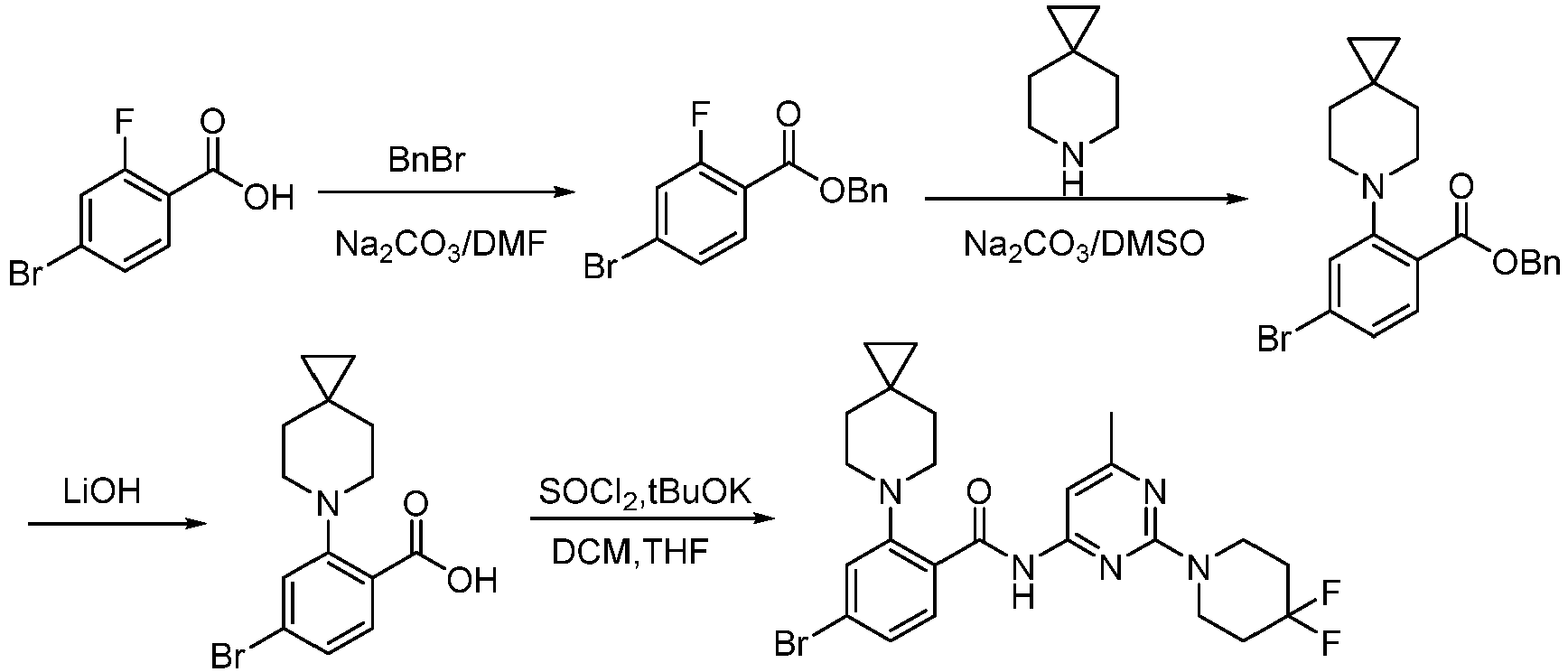
- Step 1: To a stirred solution of 4-bromo-2-fluorobenzoic acid (20.00 g, 90.41 mmol), and sodium carbonate (14.52 g, 135.61 mmol) in N,N-dimethylformamide (200 mL) was addedbenzyl bromide (17.18 g, 99.45 mmol) at 30°C. The reaction mixture was stirred at 30°C for 15 h. The reaction mixture was quenched with water (400 mL) and extracted with methyl tert-butyl ether (3×300 mL).The combined organic layer was washed with saline (400 mL), dried over anhydrous sodium sulfate, filtered, and concentrated under reduced pressure to give benzyl 4-bromo-2-fluorobenzoate (29.00 g) as a white solid crude. LCMS (ESI): [M+H]+ = 308.
- Step 2: To a solution of benzyl 4-bromo-2-fluorobenzoate (20.00 g, 59.79 mmol) in DMSO (120 mL) was add sodium carbonate (21.82 g, 203.8 mmol), and 6-azaspiro[2.5]octane hydrochloride (13.38 g, 89.69 mmol). The reaction mixture was stirred at 100°C for 15 h. The reaction mixture was quenched with water (200 mL) and extracted with methyl tert-butyl ether (3 × 200 mL). The combined organic layer was washed with saline (3×200 mL), dried over anhydrous sodium sulfate, filtered, and concentrated under reduced pressure to give benzyl 4-bromo-2-(6-azaspiro[2.5]octan-6-yl)benzoate (23.00 g, yield: 89%) as a red oil. LCMS (ESI): [M+H]+ = 402.1.
- Step 3: To a solution of benzyl 4-bromo-2-(6-azaspiro[2.5]octan-6-yl)benzoate (7.00 g, 16.24 mmol) in methanol/water (60 mL/15 mL) was added lithium hydroxide monohydrate (1.15 g, 48.72 mmol), and the reaction solution was stirred at 35°C for 15 h. The reaction mixture was concentrated, dissolved the residue in water (50 mL), washed the aqueous phase with ethyl acetate (3 × 70 mL), adjusted the pH to 5 with aqueous hydrogen chloride solution (1 M, 20 mL), and extracted with ethyl acetate (3 × 50 mL). The organic layer was washed with saturated aqueous sodium chloride solution (100 mL), dried over anhydrous sodium sulfate, and concentrated to give 2-(6-azaspiro[2.5]octan-6-yl)-4-bromobenzoic acid (4.00 g, yield: 73%) as a red solid. LCMS (ESI): [M+H]+ = 311.7.
- Step 4: To a solution of 4-bromo-2-(6-azaspiro[2.5]oct-6-yl) benzoic acid (1000 mg, 3.22 mmol) in dichloromethane (10 mL) and N,N-dimethylformamide (0.2 mL) was added thionyl chloride (1.10 g, 9.67 mmol), and the reaction solution was stirred at ambient temperature for 2 h. The reaction solution was concentrated, and toluene (10 mL) was added, then concentrated. The operation was repeated for 3 times. To a solution of potassium tert-butoxide (1096 mg, 9.67 mmol) in THF (10 mL) were added 2-(4,4-difluoropiperidin-1-yl)-6-methylpyrimidin-4-amine (735 mg, 3.22 mmol). and the crude product from the above step in the solution of THF (20 mL).The reaction solution was stirred at ambient temperature for 4 h. The reaction solution was filtered, concentrated, and purified by flash column chromatography (silica gel, 0-25% gradient of ethyl acetate/petroleum ether) to give 4-bromo-N-(2-(4,4-difluoropiperidin-1-yl)-6-methylpyrimidin-4-yl)-2-(6-azaspiro[2.5] oct-6-yl)benzamide (600 mg, yield: 35%) as a pale yellow solid.
-

- Step 1: To a stirred solution of 2-fluoro-4-nitrobenzoic acid (10.00 g, 53.48 mmol), potassium carbonate (22.60 g, 160.45 mmol) in DMSO (50 mL) was added 6-azaspiro[2.5]octane hydrochloride (8.69 g, 58.83 mmol). Then the reaction was stirred at 140°C for 12 h. 2 M aqueous hydrochloric acid solution was added dropwise to the reaction solution to adjust the pH to about 5. Then, the solution was filtered and dried the cake to give 4-nitro-2-(6-azaspiro[2.5]octan-6-yl)benzoic acid (10.60 g) as a yellow solid.
- Step 2: 4-nitro-2-(6-azaspiro[2.5]octan-6-yl)benzoic acid (500 mg, 1.81 mmol) was added to the solvent of thionyl chloride (5 mL). Then the reaction was stirred at 90°C for 1 h. The reaction solution was concentrated with dichloromethane to give 4-nitro-2-(6-azaspiro[2.5]octan-6-yl)benzoyl chloride (620 mg) as a yellow solid compound. LCMS (ESI): [M+H]+ = 291.1.
-

- Step 1: Ethyl 2-(chlorosulfonyl)acetate (5.00 g, 26.53 mmol) was added to the solvent of dichloromethane (25 mL), and the reaction solution was cooled to 0°C.hexamethyldisilazane (4.32 g, 26.53 mmol) was slowly added dropwise to the reaction solution. The reaction solution was stirred at 25°C for 1 h. The reaction solution was concentrated to dryness to give the residue. The residue was dissolved in ethanol (20 mL) at 0°C, and The reaction solution was stirred at 25°C for 1 h. The reaction solution was concentrated to dryness to give ethyl 2-sulfamoylacetate (4.20 g, yield: 94%) as a white solid.
-
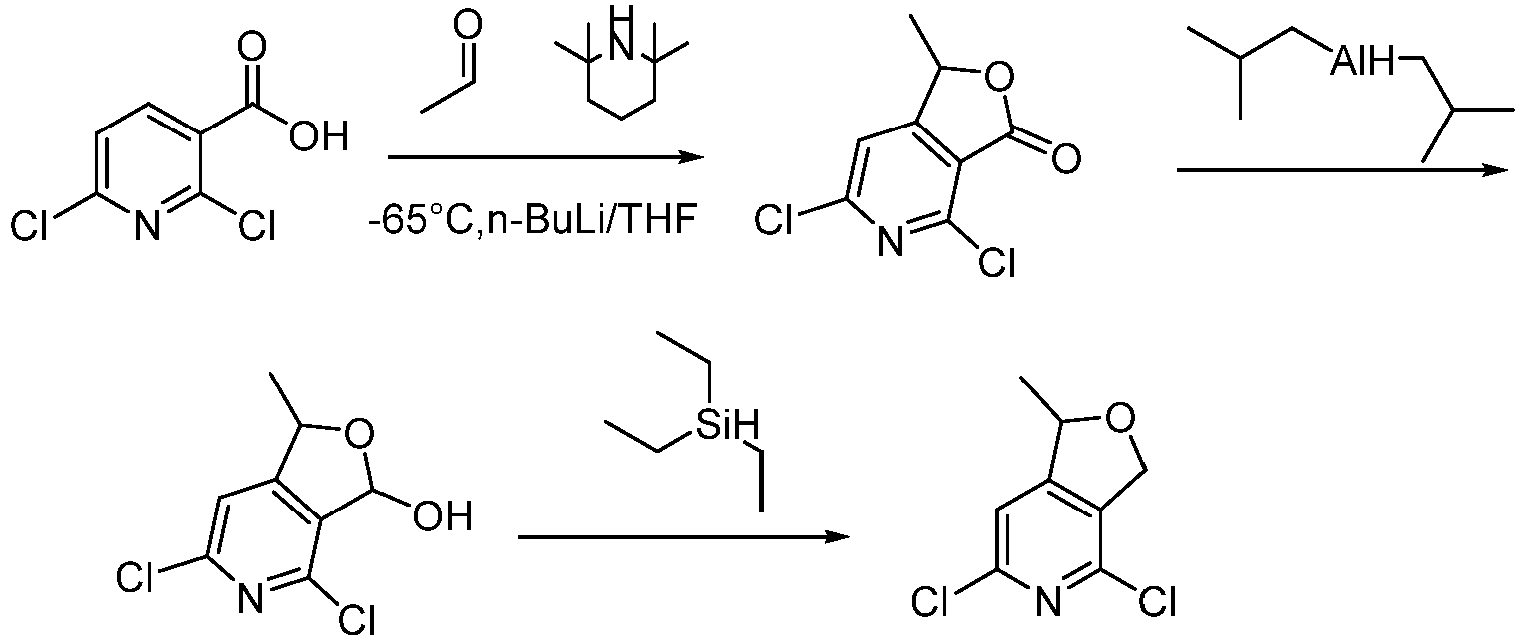
- Step 1: To the solvent of THF (40 mL) was added 2,2,6,6-tetramethylpiperidine (8.91 g, 62.50 mmol) under nitrogen atmosphere and the reaction solution was stirred at -70°C for 1 h. Then, n-butyllithium solution (72 mL, 125 mmol, 2.5M n-hexane solution) was slowly added dropwise and the mixture was stirred at -70°C for 3 h. 2,6-dichloronicotinic acid (6.0 g, 31.2 mmol) in THF (40 mL) was added slowlyinto the reaction system by injecting. The solution was stirred at -70°C for 1 h, then was slowly heated to ambient temperature and stirred for 4 h. The reaction temperature was controled to -70°C again and acetaldehyde solution (13.76 g, 312.50 mmol) was slowly added dropwise, then heated to ambient temperature and stirred for 24 h. The reaction was adjusted the pH to 2 with diluted hydrochloric acid (200 mL, 6M aqueous solution). extracted with ethyl acetate (200 mL × 3), the organic phases was combined, washed once with saturated saline (100 mL), dried over anhydrous sodium sulfate, filtered, and concentrated under reduced pressure to give the crude. The crude product was slurried with methanol (50 mL), stired for 1 h, and filtered to give 4,6-dichloro-1-methylhydrofuro[3,4-c]pyridin-3-one (4.00 g, 59%) as a white solid. LCMS (ESI): [M+H]+ = 218.0
- Step 2: 4,6-dichloro-1-methylhydrofurano[3,4-c]pyridin-3-one (4.00 g, 18.30 mmol) was dissolved in THF (40 mL) under nitrogen atmosphere and the solution was stirred at -78°C for 1 h. Then, diisobutylaluminium hydride (46 mL, 45.87 mmol, 1.0M n-hexane solution) was slowly added dropwise. The reaction mixture was stirred at -78°C for 1.5 h and quenched by dropwise addition of saturated ammonium chloride (30 mL) at -78°C. The mixture was slowly heated to ambient temperature and stirred for 30 min. The reaction mixture was filtered and extracted with ethyl acetate (30 mL×3). The combined organic layer was dried over sodium sulfate and concentrated to dryness in vacuo. The residue was purified by column chromatography to give 4,6-dichloro-1-methyl-1,3-dihydrofuro[3,4-c]pyridin-3-ol (2.40 g, 59%). LCMS (ESI): [M+H]+ = 221.0
- Step 3: To a stirred solution of 4,6-dichloro-1-methyl-1,3-dihydrofuro[3,4-c]pyridin-3-ol (2.40 g, 10.80 mmol) in dichloromethane (30 mL)were added trifluoroacetic acid (6.15 g, 54.00 mmol) and triethylsilane (3.76 g, 32.40 mmol), and the reaction mixture was stirred at 25°C for 5 h. The solvent was removed under reduced pressure, the residue was dissolved in water (50 mL), then the pH was adjusted to 8 with saturated aqueous sodium bicarbonate solution and extracted with ethyl acetate (50 mL × 3). The combined organic layer was washed with saturated aqueous sodium chloride solution (50 mL), dried over anhydrous sodium sulfate, concentrated under reduced pressure, and The crude product was purified by flash column chromatography (silica gel, 0-20% gradient of ethyl acetate/petroleum ether) to give 4,6-dichloro-1-methyl-1,3-dihydrofuro[3,4-c]pyridine (1.70 g, 77%) as a colorless oil. LCMS (ESI): [M+H]+ = 204.0
-

- Step 1: To a stirred solution of diisopropylamine (15.8 g, 156 mmol) in THF (50 mL) was added n-butyllithium (52.1 mL, 130 mmol) dropwise at -70°C and stirred at -70°C for 40 min. The solution of 2,6-dichloronicotinic acid (10.0 g, 52.1 mmol) in THF (100.00 mL) was added dropwise to the reaction system at -70°C and stirred at -70°C for 3 h. Then, butanone (33.8 g, 468 mmol) was added dropwise to the reaction at -70°C, heated to 25°C, and stirred for 16 h. The reaction was quenched with saturated ammonium chloride solution (200 mL), diluted with water (100 mL), extracted with ethyl acetate (200 mL × 2), dried over anhydrous sodium sulfate , filtered, and concentrated under reduced pressure to afford the residue. The residue was purified by flash column chromatography (silica gel, 0-11% gradient of THF/petroleum ether) to give 4,6-dichloro-1-ethyl-1-methylfuro[3,4-c]pyridin-3(1H)-one (1.90 g, 7.29 mmol, yield: 14%) as a yellow solid. LCMS (ESI): [M+H]+ = 246.0. H NMR (400 MHz, DMSO-d6 ) δ 8.11 (s, 1H), 2.10 - 1.93 (m, 2H), 1.63 (s, 3H), 0.71 (t, J = 7.6 Hz, 3H)
- Step 2: To a stirred solution of 4,6-dichloro-1-ethyl-1-methylfuro[3,4-c]pyridin-3(1H)-one (1.90 g, 7.72 mmol) in toluene (40 mL), was added diisobutylaluminium hydride (17.76 mL, 17.76 mmol) dropwise at -70°C, and the mixture was stirred at -70°C for 2 h. The reaction solution was quenched with water (200 mL), extracted with ethyl acetate (200 mL×2) after filtration, The combined organic layer was dried over anhydrous sodium sulfate , filtered, and concentrated under reduced pressure. The residue was purified by flash column chromatography (silica gel, 0-15% gradient of THF/petroleum ether) to give 4,6-dichloro-1-ethyl-1-methyl-1,3-dihydrofuro[3,4-c]pyridine-3-phenol (1.80 g, 7.02 mmol, yield: 91%) as a yellow oil. LCMS (ESI): [M+H]+ = 247.9. 1H NMR (400 MHz, DMSO-d6 ) δ ppm 7.69 (d, J = 2.8 Hz, 1H), 7.23 - 7.11 (m, 1H), 6.29 (dd, J = 6.8, 14.0 Hz, 1H), 1.81 - 1.76 (m, 2H), 1.53 - 1.38 (m, 3H), 0.86 - 0.60 (m, 3H)
- Step 3: To a stirred solution of 4,6-dichloro-1-ethyl-1-methyl-1,3-dihydrofuro[3,4-c]pyridine-3-phenol (1.80 g, 7.25 mmol) in dichloromethane (36 mL), was added trifluoroacetic acid (3.52 g, 36.3 mmol) at 0°C and stirred at 0°C for 30 min, triethylsilane (2.56 g, 21.7 mmol) was added at 0°C, heated to 25°C, and stirred for 3 h. The reaction solution was poured into water (50 mL). The pH was adjusted to 7 with saturated sodium bicarbonate solution, extracted with ethyl acetate (100 mL×2), The combined organic layer was dried over anhydrous sodium sulfate , filtered, and concentrated under reduced pressure. The residue was purified by flash column chromatography (silica gel, 0-5% gradient of THF/petroleum ether) to give 4,6-dichloro-1-ethyl-1-methyl-1,3-dihydrofuro[3,4-c]pyridine (1.40 g, 5.94 mmol, yield: 82%) as a white solid. LCMS (ESI): [M+H]+ = 232.0. 1H NMR (400 MHz, DMSO-d6 ) δ ppm 7.64 (s, 1H), 5.09 - 4.90 (m, 2H), 1.80 (td, J = 7.2, 14.0 Hz, 2H), 1.42 (s, 3H), 0.73 (t, J= 7.6 Hz, 3H)
-

- Step 1: To a stirred solution of methyl 2-pyrrolecarboxylate (37.0 g, 296 mmol) in N,N-dimethylformamide (400 mL) were added 2-chloroacetamide (33.2 g, 355 mmol) and cesium carbonate (128 g, 384 mmol) , and the mixture was stirred the mixture at 20°C for 14 h. The reaction solution was poured into ice water (500 mL) and extracted with ethyl acetate (300 mL×3). The combined organic layer was washed with saturated saline (300 mL×3), dried over anhydrous sodium sulfate, filtered, and concentrated to give 1-(2-amino-2-oxyethylene)-1H-pyrrole-2-carboxylic acid methyl ester (17.4 g crude) as a white solid. LCMS (ESI): [M+H]+ = 182.9.
- Step 2: To a solution of 1-(2-amino-2-oxyethylene)-1H-pyrrole-2-carboxylic acid methyl ester (17.4 g, 95.5 mmol) in THF (200 mL) was added potassium tert-butoxide (32.7 g, 288 mmol) , and the mixture was stirred at 70°C for 14 h. The pH of the reaction solution was adjusted to 6 with 2 eN hydrochloric acid and extracted with ethyl acetate (200 mL×3). The combined the organic layer was dried over anhydrous sodium sulfate, filtered, and concentrated under reduced pressure to give the residue. The residue was slurried with ethanol and filtered to give pyrrolo[1,2-a]pyrazine-1,3(2H,4H)-dione (6.50 g, 43.3 mmol, yield: 45%) as a brown solid. LCMS (ESI): [M+H]+ = 151.1. 1H NMR (400 MHz, DMSO-d6) δ ppm 11.31 (br s, 1H), 7.17 (s, 1H), 6.89 (m, 1H), 6.35 (m, 1H), 4.99 (s, 2H)
- Step 3: To a stirred solution of pyrrolo[1,2-a]pyrazine-1,3(2H,4H)-dione (6.50 g, 43.3 mmol) in dioxane (60 mL). was added phosphorus oxybromide (24.8 g, 86.6 mmol). The reaction mixture was heated to 100°C and stirred at 100°C for 2 h. The reaction solution was concentrated, ethyl acetate was added , and the pH was adjusted to 7 with aqueous sodium bicarbonate solution. The mixture was extracted with ethyl acetate (200 mL×3), The combined organic layer was washed with saturated saline (200 mL), dried over anhydrous sodium sulfate, filtered, and concentrated under reduced pressure to give the residue. The residue was purified by flash column chromatography (silica gel, 0-5% gradient of ethyl acetate/petroleum ether) to give 1,3-dibromopyrrolo[1,2-a]pyrazine (3.19 g, 11.6 mmol, yield: 27%) as a yellow solid. LCMS (ESI): [M+H]+ = 276.9.
-

- Step 1: To a stirred solution of 3,5-dichloropyrazine-2-carbonitrile (25.0 g, 144 mmol) in acetic acid (250 mL)was added Raney nickel (2.50 g). The mixture was replaced with hydrogen three times, heated to 50°C under hydrogen atmosphere (50 psi), and stired at 50°C for 24 h. The reaction solution was filtered and concentrated under reduced pressure to give (3,5-dichloropyrazin-2-yl)methanamine (12.3 g, 69.1 mmol, yield: 48%) as a green solid. LCMS (ESI): [M+H]+ = 177.9.
- Step 2: (3,5-dichloropyrazin-2-yl)methanamine (12.0 g, 67.4 mmol) was dissolved in acetic anhydride (60 mL) and the mixture was stirred at 25°C for 16 h. Ethyl acetate (250 mL) was added to the reaction solution and washed with saturated aqueous sodium bicarbonate solution. The combined organic layer was washed with saturated saline (250 mL), dried over anhydrous sodium sulfate, filtered, and concentrated under reduced pressure to give N-((3,5-dichloropyrazin-2-yl)methyl)acetamide (10.8 g, 49.1 mmol, yield: 73%) as a yellow solid. LCMS (ESI): [M+H]+ = 219.9.
- Step 3: N-((3,5-dichloropyrazin-2-yl)methyl)acetamide (10.8 g, 49.1 mmol) was added to phosphorus oxychloride (110 mL). The mixture was stirred at 100°C for 2 h. The reaction solution was added dropwise to water (500 mL), extracted with ethyl acetate (300 mL×3), and washed with saturated aqueous sodium bicarbonate solution. The combinedorganic layerwas washed with saturated saline (300 mL), dried over anhydrous sodium sulfate, filtered and concentrated under reduced pressure to give a residue. The residue was purified by flash column chromatography (silica gel, 0-100% gradient of ethyl acetate/petroleum ether) to give 6,8-dichloro-3-methylimidazo[1,5-a]pyrazine (2.7 g, 13.3 mmol, yield: 27%) as a yellow solid. LCMS (ESI): [M+H]+ = 201.9.
-

- Step 1: To a stirred solution of 3,5-dibromopyrazine-2-amine (20.00 g, 79.08 mmol) in ethanol (200 mL) was added N,N-dimethylformamide dimethyl acetal (48.08 g, 395.41 mmol). The mixture was heated to 70°C under nitrogen atmosphere, reacted at 70°C for 4 h.The reaction solution was cooled to ambient temperature to precipitate a large amount of solids, filtered, and The cake was dried to give (E)-N'-(3,5-dibromopyrazine-2-yl)-N,N-dimethylformamide (23.00 g, yield: 94%). LCMS (SI): [M+H]+ = 308.6
- Step 2: To a stirred solution of (E)-N'-(3,5-dibromopyrazine-2-yl)-N,N-dimethylformamide (20.00 g, 64.94 mmol) in methanol (200 mL)wasadded hydroxylamine hydrochloride (6.77 g, 97.41 mmol). The mixture was heated to 60°C and reacted at 60°C for 16 h under nitrogen atmosphere. The reaction solution was cooled to ambient temperature, filtered and the cake was dried to give (E)-N-(3,5-dibromopyrazin-2-yl)-N'-hydroxyformamide (10.00 g, yield: 52%) as a bright yellow solid. LCMS (ESI): [M+H]+ = 295.6.
- Step 3: To a stirred solution of (E)-N-(3,5-dibromopyrazin-2-yl)-N'-hydroxyformamide (10.00 g, 33.79 mmol) in toluene (100 mL) wereadded trifluoroacetic anhydride (35.49 g, 168.97 mmol) and p-toluenesulfonyl chloride (7.23 g, 37.17 mmol). The mixture wasstirred at 90°C under nitrogen atmospherefor 16 h. The reaction solution was slowly pourede into saturated sodium bicarbonate (50 mL) and extracted with ethyl acetate (50 mL*3). The combined organic layer was washed once with saturated saline (50 mL), dried over anhydrous sodium sulfate, concentrated under reduced pressure, and purified by flash column chromatography (silica gel, 5-20% gradient of ethyl acetate/petroleum ether) to give 6,8-dibromo-[1,2,4]triazolo[1,5-a]pyrazine (5.8 g, yield: 62%) as a yellow solid. LCMS (ESI): [M+H]+ =444.2
-
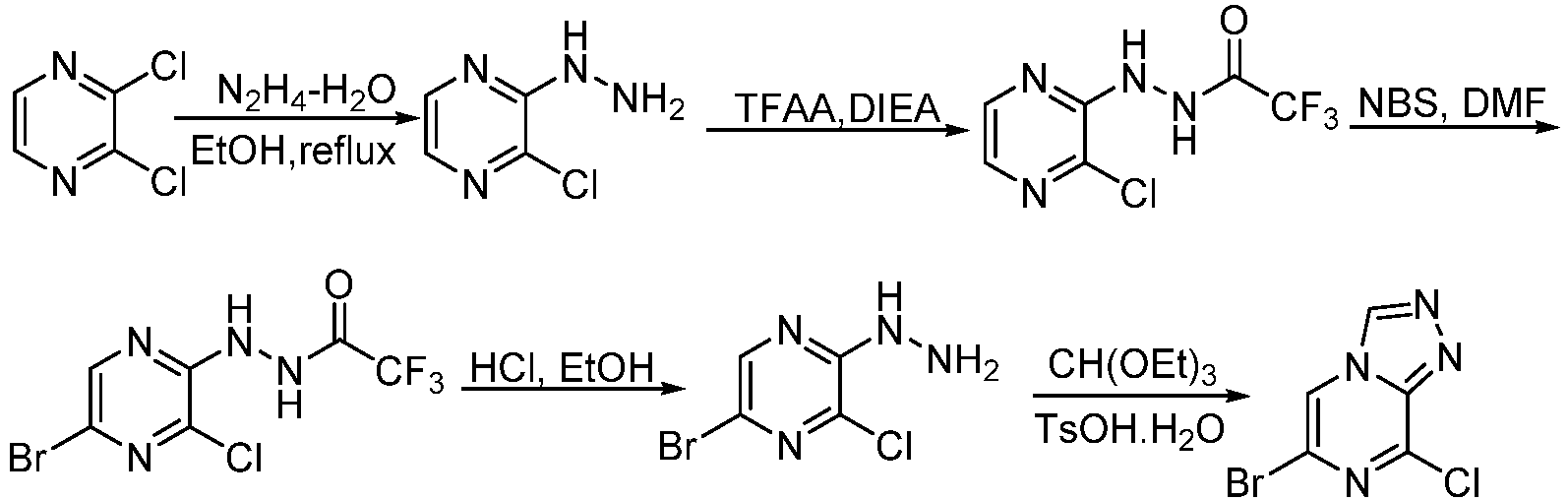
- Step 1: To a stirred solution of 2,3-dichloropyrazine (25.00 g, 167.81 mmol) in ethanol (50 mL)was added hydrazine hydrate (80%, 21.53 g, 344.00 mmol). The reaction solutionwas stirrd at 85°C for 2 h. The reaction solution was concentrated , filtered, washed the solid with water (50 mL×3), and dried to give 2-chloro-3-hydrazinopyrazine (19.00 g, 78.32%) as an orange solid. LCMS (ESI): [M+H]+ =145.1, 147.1.
- Step 2: To a stirred solution of 2-chloro-3-hydrazinopyrazine (19.00 g, 131.43 mmol) in dichloromethane (50 mL) was added N,N-diisopropylethylamine (34.67 g, 262.87 mmol). The reaction solution was cooled to 0°C. Trifluoroacetic anhydride (30.67 g, 144.58 mmol) was added dropwise to the reaction solution, and the reaction solution was stirred at 25°C for 1 h. The reaction solution was poured into water (100 mL), extracted with ethyl acetate (50 mL × 3), The combined organic layer was washed with the saturated aqueous sodium chloride solution (50 mL × 3), dried over anhydrous sodium sulfate, and concentrated to obtain the crude product. The crude product was purified by flash column chromatography (silica gel, 0-25% gradient of ethyl acetate/petroleum ether) to give N'-(3-chloropyrazin-2-yl)-2,2,2-trifluoroacetohydrazide (14.00 g, 44.28%) as a pale yellow solid. LCMS (ESI): [M+H]+ =241.0
- Step 3: N'-(3-chloropyrazin-2-yl)-2,2,2-trifluoroacetohydrazide (14.00 g, 58.20 mmol) was added to N,N-dimethylformamide (45 mL), and The reaction solution was cooled to 0°C. N-bromosuccinimide (11.39 g, 64.02 mmol) was slowly added to the reaction solution in 3 portions, and the reaction solution was stirred at 25°C for 4 h. The reaction solution was quenched slowly with water (50 mL), extracted with ethyl acetate (50 mL × 3), The combined organic layer was washed with the saturated aqueous sodium chloride solution (50 mL × 3), dried over anhydrous sodium sulfate, and concentrated to obtain the crude product. The crude product was purified by flash column chromatography (silica gel, 0-25% gradient of ethyl acetate/petroleum ether) to give N'-(5-bromo-3-chloropyrazin-2-yl)-2,2,2-trifluoroacetohydrazide (5.90 g, 31.73%) as a white solid. LCMS (ESI): [M+H]+ = 321.0.
- Step 4: To a stirred solution of N'-(5-bromo-3-chloropyrazin-2-yl)-2,2,2-trifluoroacetohydrazide (5.90 g, 18.47 mmol) in ethanol (50 mL)was added concentrated hydrochloric acid (12 M, 10 mL) and the reaction solution was stirred at 80°C for 4 h. The reaction solution was concentrated to give the crude solution, which pH was neutralized to 7 with saturated aqueous sodium bicarbonate solution, extracted with ethyl acetate (50 mL×3), the combined organic layer was dried over anhydrous sodium sulfate, and concentrated to give 5-bromo-3-chloro-2-hydrazinopyrazine (3.50 g, 85%) as a brown solid. LCMS (ESI): [M+H]+ = 225.0.
- Step 5: To a stirred solution of 5-bromo-3-chloro-2-hydrazinopyrazine (3.50 g, 15.73 mmol) in triethyl orthoformate (10 mL)was added p-toluenesulfonic acid monohydrate (138 mg, 0.79 mmol) and the reaction solution was stirredat 130°C for 4 h.The reactionsolution was poured into water (50 mL), extracted with ethyl acetate (50 mL×3), the combined organic layer was dried over anhydrous sodium sulfate and concentrated to give 6-bromo-8-chloro-[1,2,4]triazolo[4,3-a]pyrazine (2.10 g, 57.17%) as a brown solid. LCMS (ESI): [M+H]+ =234.9
-

- Step 1: To a stirred solution of 6-chloro-2-(methylthio)pyrimidin-4-amine (5.00 g, 28.47 mmol), in dioxane/water=4/1 (50 mL) was added 2-bromo-1,1-dimethoxyethane (5.77 g, 34.16 mmol). The mixture was stirred at 100°C for 12 h. The reaction solution was poured into water (100 mL), and extracted with ethyl acetate (50 mL×3). The combined organic layer was dried over anhydrous sodium sulfate, filtered, and concentrated to give 7-chloro-5-(methylthio)imidazo[1,2-c]pyrimidine (7.90 g) as a brown solid compound. LCMS (ESI): [M+H]+ = 200.0.
- Step 2: To a stirred solution of 7-chloro-5-(methylthio)imidazo[1,2-c]pyrimidine (7.90 g, 39.57 mmol) in methanol (20 mL) was added aqueous potassium hydroxide solution (60 mL, 2 M). The mixture was stirred at 100°C for 12 h. The reaction solution was extracted with ethyl acetate (50 mL×3), The combined organic layer was dried over anhydrous sodium sulfate, filtered, and concentrated to give 7-chloroimidazo[1,2-c]pyrimidin-5-ol (3.50 g) as a yellow solid compound. LCMS (ESI): [M+H]+ = 170.0.
- Step 3: 7-chloroimidazo[1,2-c]pyrimidin-5-ol (3.40 g, 20.05 mmol)was added to phosphorus oxychloride (20 mL). The mixture was stirred at 90°C for 2 h. The reaction solution was concentrated, and the pH was adjusted to about 8 by adding saturated aqueous sodium bicarbonate solution (100 mL). Then, extracted with ethyl acetate (30 mL × 3). the combined organic layer was dried over anhydrous sodium sulfate, filtered, and concentrated to give 5,7-dichloroimidazol[1,2-c]pyrimidine (2.80 g) as a brown solid compound. LCMS (ESI): [M+H]+ = 188.0.
-

- Step 1: To a stirred solution of 2,4,6-trichloropyrimidine (35.0 g, 191 mmol) and triethylamine (57.9 g, 572 mmol) in ethanol (700 mL) was added hydrazine monohydrochloride (12.0 mL, 28.5 mmol) , and the mixture was stirred at 25°C for 2 h. The reaction solution was concentrated under reduced pressure and was slurried with ethanol (200 mL) to give 2,4-dichloro-6-hydrazinopyrimidine (60.0 g, 175 mmol, yield: 86%) as a yellow solid. LCMS (ESI): [M+H]+ = 179.1
- Step 2: To the solvent of acetic anhydride (200 mL) was added formic acid (100 mL) dropwise at 0°C. The mixture was stirred at 0°C for 10 min, and then heated to 50°C, and stirred at 50°C for 15 min. Then, the solution was cooled to 0°C and 2,4-dichloro-6-hydrazinopyrimidine (55.0 g, 307 mmol) was added to the mixture solution, which was stirred 0-25°C for another 2 h. The reaction solution was diluted with water (500 mL) and extracted with ethyl acetate (800 mL × 3). The combined organic layer was dried over anhydrous magnesium sulfate, filtered, and concentrated to give the residue. The residue was slurried with methyl tert-butyl ether (200 mL) to give N-[(2,6-dichloropyrimidin-4-yl)amino]formamide (22.0 g, 106 mmol, yield: 35%) as a pink solid. LCMS (ESI): [M+H]+ = 207.1
- Step 3: N'-(2,6-dichloropyrimidin-4-yl)formylhydrazine (22.0 g, 106 mmol) was added to the solvent of phosphorus oxychloride (180 mL, 1937 mmol) under nitrogen atmosphere. The mixture was heated to 100°C, and stirred for 4 h. Most of the phosphorus oxychloride was removed, The remainder solution was poured slowly into water (500 mL) . The solution was extracted with dichloromethane (500×3 mL) and the combined organic layer was washed with saturated sodium chloride (500 mL) and dried over anhydrous sodium sulfate, filtered, and concentrated to give the residue. The residue was purified by flash column chromatography (silica gel, 0-50% gradient of ethyl acetate/petroleum ether) to give 5,7-dichloro-[1,2,4]triazolo[4,3-c]pyrimidine (1.04 g, 5.3 mmol, yield: 5%) as a pale brown solid. LCMS (ESI): [M+H]+ = 189.1.
-

- Step 1: A2,4-dichloro-6-hydrazinopyrimidine (30.0 g, 168 mmol) was added to the solvent of acetic anhydride (30 mL). The mixture was heated to 50°C, and stirred at 50°C for 1 h. water (500 mL) was added to the reaction mixture, and extracted with ethyl acetate (200 mL × 3). The combined organic layer was dried over anhydrous magnesium sulfate, filtered, and concentrated under reduced pressure to give the residue. The residue was sluuried with methyl tert-butyl ether (200 mL) and filtered to give N'-(2,6-dichloropyrimidin-4-yl)acetylhydrazine (6.00 g, 27.1 mmol, yield: 16%) as a yellow solid. LCMS (ESI): [M+H]+ = 221.0
- Step 2: N'-(2,6-dichloropyrimidin-4-yl)acetylhydrazine (6.00 g, 27.1 mmol) was slowly added to the solvent of phosphorus oxychloride (60 mL), and the reaction mixture was stirred at 100°C for 4 h. The reaction mixture was quenched with water (200 mL) at 25°C and extracted with ethyl acetate (200 mL×2). The combined organic layer was dried over anhydrous magnesium sulfate, filtered, and concentrated to give the residue. The residue was purified by flash column chromatography (silica gel, 0-25% gradient of ethyl acetate/petroleum ether) to give 5,7-dichloro-3-methyl-[1,2,4]triazolo[4,3-c]pyrimidine (2.00 g, 9.85 mmol, yield: 36%) as a yellow solid. LCMS (ESI): [M+H]+ = 203.0. 1H NMR (400 MHz, DMSO-d6 ) δ ppm 8.11 (s, 1H), 2.55 (s, 3H)
-

- Step 1: To a solution of methyl 3-methylthiophene-2-carboxylate (20.0 g, 128 mmol) in carbon tetrachloride (400 mL) were added 2,2'-azobis(2-methylpropanonitrile) (6.31 g, 38.4 mmol) and N-bromosuccinimide (27.3 g, 153 mmol) . The mixture was heated to 80°C, stirrd for at 80°C 16 h. water (200 mL) was added to the reaction mixture, and extracted with ethyl acetate (200 mL×2). The combined organic layer was dried over anhydrous magnesium sulfate, filtered and concentrated under reduced pressure to give methyl 3-(bromomethyl)thiophene-2-carboxylate (43.0 g, 128 mmol, crude) as a yellow oil
- Step 2: To the stirred solution of methyl 3-(bromomethyl)thiophene-2-carboxylate (43.0 g, 182 mmol) in methanol (350 mL) was added the solution of sodium cyanide (11.6 g, 237 mmol) in water (170 mL) under an ice bath. The reaction mixture was heated to 55°C, and stirred at 55°C for 2 h. Water (100 mL) was added to the reaction solution and extracted with dichloromethane (300 mL×3). The combined organic layer was dried over anhydrous magnesium sulfate, filtered and concentrated under reduced pressure to give the residue. The residue was purified by flash column chromatography (silica gel, 0-4% gradient of ethyl acetate/petroleum ether) to give methyl 3-(cyanomethyl)thiophene-2-carboxylate (8.5 g, 182 mmol, yield: 26%) as a white solid. LCMS (ESI): [M+H]+ = 182.0
- Step 3: To a stirred solution of methyl 3-(cyanomethyl)thiophene-2-carboxylate (8.50 g, 46.9 mmol) in methanol (45.0 mL) and water (45.0 mL) was added lithium hydroxide monohydrate (5.96 g, 140 mmol). The mixture was stirred at 25°C for 4 h. The reaction mixture was concentrated under reduced pressure to give 3-(cyanomethyl)thiophene-2-carboxylic acid (6.00 g, 46.9 mmol, crude) as a white solid. LCMS (ESI): [M+H]+ = 168.0
- Step 4: To a solution of bromophos (20.0 mL) in N,N-dimethylformamide (4.00 mL) was added 3-(cyanomethyl)thiophene-2-carboxylic acid (2.70 g, 16.17 mmol) at 0°C. The reaction mixture was heated to 120°C, and stirred at 120°C for 3 h. The reaction mixture was cooled to ambient temperature with an ice-water bath. The reaction mixture was poured into ice water and the precipitate was collected by filtration to give 5,7-dibromothieno[2,3-c]pyridine (2.1 g, crude) as a brown solid. LCMS (ESI): [M+H]+ = 293.7
-

- Step 1: To a solution of 6-dibromopyridin-3-ol (10.0 g, 39.5 mmol) and sodium bicarbonate (11.7 g, 138 mmol) in water (200 mL) was added iodine (17.2 g, 67.2 mmol). The mixture was stirred at 25°C for 16 h. The reaction solution was diluted with saturated sodium thiosulfate solution (200 mL) and the pH was adjusted to 2 with diluted hydrochloric acid. The solution was extracted with dichloromethane (900 mL*2). The combined organic layer was washed with saturated saline (1000 mL), dried over sodium sulfate, filtered, and concentrated under reduced pressure to give the residue. The residue was purified by flash column chromatography (silica gel, 0-0% gradient of ethyl acetate/petroleum ether) to give 2,6-dibromo-4-iodopyridin-3-phenol (12.0 g, 39.5 mmol, yield: 76%) as a white solid. LCMS (ESI): [M+H]+ = 379.7.
- Step 2: To a solution of 2,6-dibromo-4-iodopyridin-3-phenol (6.00 g, 15.8 mmol), ethynyltrimethylsilane (2.33 g, 23.7 mmol), cuprous iodide (0.31 g, 1.58 mmol) and triethylamine (4.91 g, 47.5 mmol) in chloroform (2.00 mL) and THF (120 mL) was added bis(triphenylphosphine)palladium(ll) dichloride (1.12 g, 1.58 mmol) . The mixture was replaced with nitrogen 3 times and the mixture was heated to 100°C and stirred at 100°C for 16 h. water (100 mL) was addedto the reaction solution and extracted with ethyl acetate (300 mL × 2). The combined organic layer was dried over anhydrous sodium sulfate, filtered and concentrated under reduced pressure to give the residue. The residue was purified by flash column chromatography (silica gel, 0-1% gradient of ethyl acetate/petroleum ether) to give 2,6-dibromo-4-((trimethylsilyl)ethynyl)pyridine-3-phenol (1.0 g, 15.8 mmol, yield: 18.1%) as a white solid. LCMS (ESI): [M+H]+ = 349.8.
- Step 3: To the solvent of triethylamine (10.0 mL)/ethanol (10.0 mL) were added 2,6-dibromo-4-((trimethylsilyl)ethynyl)pyridine-3-phenol (1.20 g, 3.44 mmol) and cuprous iodide (0.33 g, 1.72 mmol). The mixture was replaced with nitrogen 3 times. The mixture was heated to 70°C under nitrogen atmosphere, and stirred for 4 h. water (20 mL) was added to the reaction solution and extracted with dichloromethane (60 mL × 2). The combined organic layer was dried over anhydrous sodium sulfate, filtered and concentrated under reduced pressure to give the residue. The residue was purified by flash column chromatography (silica gel, 0-1% gradient of ethyl acetate/petroleum ether) to give 5,7-dibromofuro[2,3-c]pyridine (0.40 g, 3.44 mmol, yield: 42%) as a yellow solid. LCMS (ESI): [M+H]+ = 277.8
-

- Step 1: To a stirred solution of 4-chlorofuro[3,2-c]pyridine (5.00 g, 32.6 mmol) in chloroform (100 mL) was added meta-chloroperoxybenzoic acid (9.92 g, 48.8 mmol). The mixture was stirred at 25°C for 16 h. Water (100 mL) was added to the reaction solution and extracted with ethyl acetate (100 mL × 3). The combined organic layer was dried over anhydrous sodium sulfate, filtered and concentrated under reduced pressure to give the residue. The residue was purified by flash column chromatography (silica gel, 0-2% gradient of methanol/dichloromethane) to give 4-chlorofuro[3,2-c]pyridine 5-oxide (3.00 g, 32.5 mmol, yield: 54%) as a brown solid. LCMS (ESI): [M+H]+ =170.0
- Step 2: To a stirred solvent of 1,2-dichloroethane (30.0 mL) and phosphorus oxychloride (3.00 mL) was slowly added 4-chlorofuro[3,2-c]pyridine 5-oxide (3.00 g, 17.7 mmol) . The mixture was heated to 85°C and stirrd for 16 h. water (20 mL) was added to the reaction solution and extracted with dichloromethane (20 mL × 3). The combined organic layer was dried over anhydrous sodium sulfate, filtered and concentrated under reduced pressure to give the residue. The residue was purified by flash column chromatography (silica gel, 0-35% gradient of THF/petroleum ether) to give 4,6-dichlorofuro[3,2-c]pyridine (1.00 g, 17.7 mmol, yield: 30%) as a yellow solid. LCMS (ESI): [M+H]+ =188.0
-

- Step 1: To a stirred solution of iron powder (27.1 g, 480.76 mmol), ammonium chloride (26.0 g, 480.76 mmol) in ethanol (100 mL) and water (20 mL) was added 4-amino-2,6-dichloro-3-nitropyridine (10 g, 48.08 mmol).The mixture was stirredat 60°C for 2 h. The reaction solution was filtered and concentrated, then extracted with ethyl acetate (100 mL × 3). The combined organic layer was dried over anhydrous sodium sulfate, filtered, and concentrated to give 2,6-dichloropyridine-3,4-diamine (8 g, 44.94 mmol, yield: 93%) as a pale yellow solid compound. LCMS (ESI): [M+H]+ = 178.0.
- Step 2: 2,6-dichloropyridine-3,4-diamine (8 g, 44.94 mmol) was added to the solvent of thionyl chloride (80 mL). The mixture was stirred at 90°C for 12 h. The reaction solution was concentrated, and saturated aqueous sodium bicarbonate solution (200 mL) was added to the solution, which pH was adjusted to be close to 8. Then, extracted with ethyl acetate (100 mL × 3), and the combined organic layer was dried over anhydrous sodium sulfate, filtered and concentrated to give the residue which was purified by column chromatography (silica gel, 0-100% gradient of ethyl acetate/petroleum ether) to give 4,6-dichloro-[1,2,5]thiadiazolo[3,4-c]pyridine (2.1 g, 10.19 mmol, yield: 23%) as a yellow solid compound. LCMS (ESI): [M+H]+ = 223.1.
-

- Step 1: To a stirred solution of 4-bromo-2-fluoro-6-nitroaniline (5.00 g, 21.30 mmol) in THF (50 mL)ethanol (10 mL), and water (5 mL), were added iron powder (6.00 g, 106.30 mmol) and ammonium chloride (1.72 g, 31.90 mmol), and the mixture was stirred at 90°C for 22 h. The reaction solution was cooled to ambient temperature, filtered and the solid was washed with ethanol until the washings passing through the filter are colorless. The filtrate was concentrated, and the residue was dissolved in ethyl acetate (50.00 mL), and extracted 3 times. the combined organic layer was washed once with saturated saline (10 mL), dried over anhydrous sodium sulfate, filtered, and concentrated under reduced pressure to give 5-bromo-3-fluorophenylenediamine (3.10 g, 71%) as a brown solid. LCMS (ESI): [M+H]+ = 205.0
- Step 2: To a stirred solution of 5-bromo-3-fluorophenylenediamine (3.00 g, 14.50 mmol) in dichloromethane (30.00 mL)were added triethylamine (5.89 g, 58.00 mmol) and thionyl chloride (2.81 g, 31.9 mmol). The mixture was refluxed at 60°C for 12 h. The mixture was concentrated, and he residue was dissolved in water (20.00 mL), and extracted with ethyl acetate (30.00 mL) 3 times. The combined organic layer was washed once with saturated saline (30 mL), dried over anhydrous sodium sulfate, filtered, concentrated under reduced pressure, and the crude was purified by flash column chromatography (silica gel, 0-50% ethyl acetate/petroleum ether) to give 6-bromo-4-fluorobenzo[c]1,2,5-thiadiazole (3.10 g, 91%). 1H NMR (400 MHz, DMSO) δ 8.34 (d, J = 1.6 Hz, 1H), 7.89 - 7.86 (m, 1H)
-

- Step 1: To a solution of 4-bromo-2-iodoaniline (10.0 g, 33.6 mmol) in acetic acid (100 mL) was added potassium thiocyanate (16.3 g, 168 mmol) at 25°C. The mixture was stirred at 20°C for 10 min, liquid bromine (5.36 g, 33.57 mmol) was added dropwise and the reaction solution was stirred at 25°C for 3 h.The reaction solution was filtered, and the cake was washed with acetic acid (30 mL), then the cake was dissolved in hot water (100 mL), and the pH was adjusted to 11 with liquor ammonia. The resulting precipitate was filtered, washed with water, and dried to give 6-bromo-4-iodo-1,3-benzothiazole-2-amine (3.30 g, 9.41 mmol, yield: 28%) as a yellow solid product. LCMS (ESI): [M+H]+ = 356.6
- Step 2: To a stirred solution of 6-bromo-4-iodo-1,3-benzothiazole-2-amine (1.20 g, 3.38 mmol) in THF (20 mL), was added tert-butyl nitrite (0.42 g, 4.06 mmol) and DMSO (2.00 mL) dropwise at 25°C , and the reaction solution was stirred at 50°C for 4 h. water (50 mL) was added to the reaction solution and extracted with ethyl acetate (80 mL × 3). The combined organic layer was dried over anhydrous magnesium sulfate, filtered and concentrated under reduced pressure to give the residue. The residue was purified by flash column chromatography (silica gel, 0-6% gradient of THF/petroleum ether) to give 6-bromo-4-iodo-1,3-benzothiazole-2-amine (0.69 g, 2.03 mmol, yield: 60%) as a brown solid product. LCMS (ESI): [M+H]+ = 339.6
-

- Step 1: To a solution of methyl 2,6-dichloro-4-methylpyridine-3-carboxylate (3.00 g, 13.6 mmol) in N,N-diisopropylethylamine (30 mL) was added N,N-dimethylformamide dimethyl acetal (4.97 g, 40.9 mmol) at 25°C, and the mixture was stirred at 100°C for 12 h. The reaction solution was slowly added to water (60 mL) dropwise, the yellow precipitate was separated, then precipitate was collected, and dried with an oil pump to give methyl 4-[(1E)-2-(dimethylamino)vinyl]-2,6-dichloropyridine-3-carboxylate (3.60 g, 39.3 mmol, yield: 96%) as a yellow solid crude.
- Step 2: To a stirred solution of methyl 4-[(1E)-2-(dimethylamino)vinyl]-2,6-dichloropyridine-3-carboxylate (2.10 g, 7.63 mmol) in THF (30 mL), was added concentrated hydrochloric acid (18 mL) dropwise at 25°C, and the reaction solution was stirred at 25°C for 4 h. saline (100 mL) was added to the reaction solution and extracted with ethyl acetate (100 mL × 3). The combined organic layer was dried over anhydrous magnesium sulfate, filtered and concentrated under reduced pressure to give methyl 2,6-dichloro-4-(2-oxoethylidene)pyridine-3-carboxylate (1.80 g, 7.25 mmol, yield: 95%) as a yellow oil crude. 1H NMR (400 MHz, CHLOROFORM-d) δ ppm 9.65 (s, 1H), 7.18 - 7.10 (m, 1H), 3.88 (s, 3H), 3.76 (s, 2H)
- Step 3: To a stirred solution of methyl 2,6-dichloro-4-(2-oxoethylidene)pyridine-3-carboxylate (1.8 g, 7.26 mmol) in isopropanol (18 mL) and methanol (18 mL) was added 4-methoxybenzylamine (1.01 g, 7.26 mmol) at 25°C, and the mixture was stirred at 25°C for 2 h. Then, acetic acid (1.31 g, 21.8 mmol) and sodium cyanoborohydride (1.35 g, 21.8 mmol) was added to the reaction solution, the reaction solution was heated to 80°C, and stirred for 12 h. saturated sodium bicarbonate solution (100 mL) was slowly poured into the reaction solution in portions to adjust the solution pH to 7-8, then ethyl acetate (150×2 mL) was added. The combined organic layer was washed with saturated sodium chloride (100 mL), dried over anhydrous magnesium sulfate, filtered and concentrated under reduced pressure to give the residue. The residue was purified by flash column chromatography (silica gel, 0-50% gradient of ethyl acetate/petroleum ether) to give 6,8-dichloro-2-[(4-methoxyphenyl)methyl]-2,3,4-trihydropyrido[3,4-c]pyridin-1-one (1.60 g, 4.72 mmol, yield: 65%) as a white solid. LCMS (ESI): [M+H]+ = 336.6
-

- Step 1: To a stirred solution of methyl 3-aminopyridine-4-carboxylate (10 g, 65.73 mmol) in N,N-dimethylformamide (100 mL) was added N-chlorosuccinimide (19.3 g, 144.59 mmol) in portions . The reaction solution was stirred at 20°C for 12 h, pouredinto water (500 mL), extracted with ethyl acetate (100 mL×3), and the combined organic layer was dried over anhydrous sodium sulfate, filtered and concentrated to give the residue, which was purified by column chromatography (silica gel, 0-100% gradient of ethyl acetate/petroleum ether) to give methyl 3-amino-2,6-dichloroisonicotinate (11 g, 49.76 mmol, yield: 75.7%) as a white solid compound. LCMS (ESI): [M+H]+ = 221.0.
- Step 2: To a solution of 3-amino-2,6-dichloropyridine-4-carboxylic acid methyl ester (10 g, 45.24 mmol) in THF (200 mL) was added diisobutylaluminium hydride (113 mL, 113 mmol) dropwise at -78°C under nitrogen atmosphere. Then the reaction was heated to 20°C, and stirred at 20°C for 12 h. The reaction solution was quenched by adding sodium sulfate decahydrate, then, filtered and concentrated to give (3-amino-2,6-dichloropyridin-4-yl)methanol (6 g, 31.08 mmol, yield: 68.7%) as a white solid compound. LCMS (ESI): [M+H]+ = 193.0.
- Step 3: To a stirred solution of (3-amino-2,6-dichloro-4-pyridinyl)methane-1-ol (6 g, 31.08 mmol) in dichloromethane (60 mL) and THF (60 mL) was added Dess-Martin periodinane (20 g, 46.63 mmol) in portions . The reaction solution was stirred at 20°C for 12 h, and aqueous sodium bicarbonate solution (500 mL) was added to the reaction system to quench the reaction solution, which was then extracted with ethyl acetate (100 mL×3). The combined organic layer was dried over anhydrous sodium sulfate, filtered and concentrated to give the residue, which was purified by column chromatography (silica gel, 0-100% gradient of ethyl acetate/petroleum ether) to give the compound 3-amino-2,6-dichloroisonicotinaldehyde (2 g, 10.47 mmol, yield: 33.7%). LCMS (ESI): [M+H]+ = 228.3.
- Step 4: To a stirred solution of 3-amino-2,6-dichloropyridine-4-carbaldehyde (1.5 g, 7.85 mmol) and formamidine acetate (1.24 g, 11.78 mmol), in pyridine (3.3 g, 39.26 mmol) and tert-butanol (70 mL) were added 4,4-difluoropiperidine hydrochloride (6.25 g, 39.26 mmol) and triethylamine (8.11 g, 78.53 mmol). The mixture solution was stirred at 90°C for 12 h. the reaction solution was poured into water (50 mL), extracted with ethyl acetate (50 mL×3), and the combined organic layer was dried over anhydrous sodium sulfate, filtered and concentrated to give the residue, which was further purified by column chromatography (silica gel, 0-100% gradient of ethyl acetate/petroleum ether) to give 6-chloro-8-(4,4-difluoropiperidin-1-yl)pyrido[3,4-d]pyrimidine (700 mg, 2.46 mmol, yield: 31.3%) as a yellow solid compound. LCMS (ESI): [M+H]+ = 285.10
-
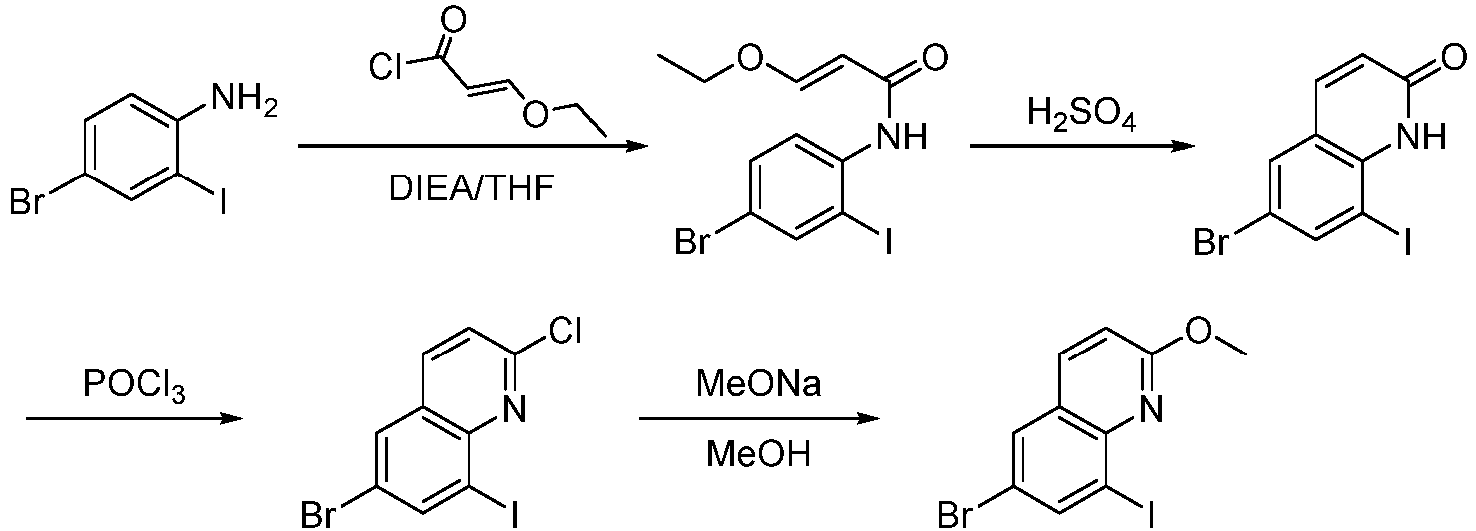
- Step 1: To a stirred solution of 4-bromo-2-iodoaniline (25.00 g, 84.17 mmol) in THF (250 mL),were added (E)-3-ethoxyacryloyl chloride (22.70 g, 168.34 mmol) and N,N-diisopropylethylamine (43.70 g, 336.68 mmol), and the mixture was stirred at 25°C for 12 h. The reaction solution was slowly poured into water (200 mL), then extracted with ethyl acetate (200 mL × 3), The combined organic layer was washed once with saturated saline (100 mL), dried over anhydrous sodium sulfate, filtered and concentrated under reduced pressure to give a crude. The crude was slurried with methanol (50 mL) stirred for 1 h, and filtered to give (E)-N-4-bromo-2-iodophenyl-3-ethoxyacrylamide (17.00 g, 51%) as a white solid crude. LCMS (ESI): [M+H]+ = 396.0.
- Step 2: (E)-N-4-bromo-2-iodophenyl-3-ethoxyacrylamide (17.00 g, 42.90 mmol) was added to the solvent of concentrated sulfuric acid (34 mL) in portions. The reaction mixture was stirred at 25°C for 3 h. The reaction solution was slowly added to ice water (100 mL) and stired for 1 h until the precipitation of white solids. The mixture was filtered, and the white solid was collected , and dried to give 6-bromo-8-iodoquinolin-2(1H)one (11.00 g, 73%) as a white solid. LCMS (ESI): [M+H]+ = 350.0
- Step 3: 6-bromo-8-iodoquinolin-2(1H)one (11.00 g, 31.40 mmol) was dissolved in phosphorus oxychloride (50 mL), and the reaction mixture was stirred at 100°C for 5 h. phosphorus oxychloride was removed under reduced pressure, the residue was dissolved in water (50 mL), then the pH of the aqueous layer was adjusted to 8 with saturated aqueous sodium bicarbonate solution (40 mL) and extracted with ethyl acetate (50 mL × 3).The combined organic layer was washed with saturated aqueous sodium chloride solution (50 mL), dried over anhydrous sodium sulfate, concentrated under reduced pressure, and the crude was purifed by flash column chromatography (silica gel, 0-50% gradient of ethyl acetate/petroleum ether) to give 6-bromo-2-chloro-8-iodoquinoline (8.00 g. 69%). LCMS (ESI): [M+H]+ = 367.9
- Step 4: To a stirred solution of 6-bromo-2-chloro-8-iodoquinoline (5.00 g, 13.50 mmol) in methanol (50 mL) was added sodium methoxide (5.10 g, 9.50 mmol) and the reactionmixture was stirred at 70°C for 8 h. The solvent was removed under reduced pressure, the residue was dissolved in water (100 mL), and extracted with ethyl acetate (50 mL×3). The combined organic layer was washed with saturated aqueous sodium chloride solution (50 mL), and dried over anhydrous sodium sulfate to give 6-bromo-8-iodo-2-methoxyquinoline (4.00 g, 80%) as a white solid. LCMS (ESI): [M+H]+ = 364.0
-

- Step 1: , To a solution of 4-bromo-2-iodoaniline (5.00 g, 16.62 mmol) and glycerol (7.73 g, 83.08 mmol) in concentrated sulfuric acid (30 mL) and water (20 mL) was added sodium 3-nitrobenzenesulfonate (4.91 g, 21.60 mmol) . The reaction solution was stirred at 120°C for 16 h. The reaction solution was poured into water (100 mL), and the pH was adjusted to 10 with 2 M aqueous sodium hydroxide solution, the resulting solution was filtered, the solid was washed with water (50 mL×3), and dried to give 6-bromo-8-iodoquinoline (3.00 g, crude) as a pale yellow solid. LCMS (ESI): [M+H]+ =333.9
- Step 2: 6-bromo-8-iodoquinoline (3.00 g, 8.98 mmol) and meta-chloroperoxybenzoic acid (4.56 g, 22.16 mmol) were addd to dichloromethane (50 mL), and the reaction solution was stirred at 30°C for 16 h. the reaction solution was poured into saturated sodium bicarbonate solution (50 mL), extracted with dichloromethane (30 mL × 3). The combined organic layer was dried over anhydrous sodium sulfate, and concentrated to obtain the crude, which was purified by flash column chromatography (silica gel, 0-8% gradient of methanol/dichloromethane) to give 6-bromo-8-iodoquinoline-1-oxide (1.20 g, 3.44 mmol, yield: 38.2%) as a pale yellow solid. LCMS (ESI): [M+H]+ =349.9
- Step 3: 6-bromo-8-iodoquinoline-1-oxide (1.10 g, 3.14 mmol), trimethylsilyl cyanide (955 mg, 9.43 mmol), and iodobenzene acetate (3.10 g, 9.43 mmol) were added to 1,2-dichloroethane (10 mL), and the reaction solution was stirred at 80°C for 16 h. The reaction solution was poured into water (30 mL), extracted with dichloromethane (30 mL × 3), The combined organic layer was dried over anhydrous sodium sulfate, and concentrated to obtain the crude, which was purified by flash column chromatography (silica gel, 5-10% gradient of ethyl acetate/petroleum ether) to give 6-bromo-8-iodoquinoline-2-nitrile (800 mg, 2.23 mmol, yield: 70.9%) as a white solid. LCMS (ESI): [M+H]+ =358.9
-

- Step 1: To a solution of 4-bromo-2-iodoaniline (5.00 g, 16.78 mmol) in acetonitrile (50 mL) was added 4-ethoxy-1,1,1-trifluoro-3-buten-2-one (4.27 g, 25.17 mmol) at 25°C. The resulting reaction mixture was stirred at 50°C for 4 h. The residue was purified by flash column chromatography (silica gel, 0-20% gradient of ethyl acetate/petroleum ether) to give (3E)-4-[(4-bromo-2-iodophenyl)amino]-1,1,1-trifluorobut-3-en-2-one (6.00 g, 14.18 mmol, yield: 84.5%) as a yellow solid. LCMS (ESI): [M+H]+ =421.9, 1H NMR (400 MHz, DMSO) δ 11.81 (d, J = 12.9 Hz, 1H), 8.29 (dd, J = 12.9, 7.6 Hz, 1H), 8.13 (d, J = 2.2 Hz, 1H), 7.68 (dd, J = 8.8, 2.2 Hz, 1H), 7.59 (d, J = 8.8 Hz, 1H), 5.79 (d, J = 7.4 Hz, 1H).
- Step 2: (3E)-4-[(4-bromo-2-iodophenyl)amino]-1,1,1-trifluorobut-3-en-2-one (3.00 g, 7.14 mmol) and 4-bromo-2-iodoaniline (2.15 g, 7.14 mmol) were added to phosphorus oxychloride (7.5 mL) at 25°C. The reaction mixture was stirred at 100°C for 16 h . The reaction mixture was concentrated, diluted with ethyl acetate (100 mL), and washed with saturated sodium bicarbonate solution (100 mL×3). The organic layer was dried with anhydrous sodium sulfate, filteredd, and concentrate to give the residue. The residue was purified by flash column chromatography (silica gel, 0-20% gradient of ethyl acetate/petroleum ether) to give 6-bromo-8-iodo-2-(trifluoromethyl)quinoline (2.30 g, 5.72 mmol, yield: 80.1%) as a pale yellow solid. LCMS (ESI): [M+H]+ =402.0, 1H NMR (400 MHz, DMSO) δ 8.70 - 8.62 (m, 2H), 8.51 (q, J = 1.7 Hz, 1H), 8.09 (dd, J = 8.5, 1.5 Hz, 1H).
-

- Step 1: To a stirred solution of iron powder (10.00 g, 177.90 mmol), ammonium chloride (9.60 g, 177.90 mmol) in ethanol (100 mL) and water (20 mL) was added 3-fluoro-2-iodo-1-nitrobenzene (9.50 g, 35.58 mmol) at 60°C for 1 h. the hot reaction solution was filtered, concentrated, extracted with ethyl acetate (50 mL × 3), and the combined organic layer was dried over anhydrous sodium sulfatefiltered and concentrated and the residue was purified by column chromatography (silica gel, 0-50% gradient of ethyl acetate/petroleum ether) to give 3-fluoro-2-iodoaniline (6.70 g, 79.5%) as a white solid compound. LCMS (ESI): [M+H]+ = 238.0
- Step 2: To a stirred solution of 3-fluoro-2-iodoaniline (6.70 g, 28.27 mmol) in N,N-dimethylformamide (60 mL) was added N-bromosuccinimide (5.0 g, 28.27 mmol). The reaction solution was stirred at 20°C for 1 h. The reaction solution was poured into water (300 mL), extracted with ethyl acetate (100 mL×3), and the combined organic layer was dried over anhydrous sodium sulfate, filtered and concentrated to give the residue, which was further purified by column chromatography (silica gel, 0-30% gradient of ethyl acetate/petroleum ether) to give 4-bromo-3-fluoro-2-iodoaniline (7.00 g, 78.7%) as a gray solid compound. LCMS (ESI): [M+H]+ = 317.9.
- Step 3: To a solution containing concentrated sulfuric acid (20 mL) and water (15 mL) were added glycerol (5.60 g, 59.83 mmol) and sodium 3-nitrobenzenesulfonate (5.40 g, 23.93 mmol). The mixture was heated to 110°C, then 4-bromo-3-fluoro-2-iodoaniline (6.30 g, 19.94 mmol) was slowly added , and the resulting mixture was stirred at 130°C for 12 h. The reaction solution was poured into ice water, extracted with ethyl acetate (50 mL×3), and the combined organic layer was dried over anhydrous sodium sulfate, filtered and concentrated to give the residue, which was further purified by column chromatography (silica gel, 0-50% gradient of ethyl acetate/petroleum ether) to give 6-bromo-7-fluoro-8-iodoquinoline (2.20 g, 31%) as a gray solid compound. LCMS (ESI): [M+H]+ = 353.9.
-

- Step 1: To a solution of 2-fluoro-3-(trifluoromethyl)aniline (9.00 g, 50 mmol) in N,N-dimethylformamide (100 mL) was added N-bromosuccinimide (9.80 g, 55 mmol) at 25°C, and the reaction mixture was stirred at 25°C for 16 h. The reaction solution was diluted with ethyl acetate (300 mL), and washed with saturated sodium chloride solution (200 mL×3) and water (200 mL×2). The organic layer was dried with anhydrous sodium sulfate, filtered, and concentrated to give the residue. The residue was purified by flash column chromatography (silica gel, 0-15% gradient of ethyl acetate/petroleum ether) to give 4-bromo-2-fluoro-3-(trifluoromethyl)aniline (12.00 g, yield: 93%) as a violet solid. LCMS (ESI): [M+H]+ = 259.9.
- Step 2: glycerol (11.00 g, 116 mmol) and sodium 3-nitrobenzenesulfonate (9.70 g, 42 mmol) were added into water (70 mL) and concentrated sulfuric acid (30 mL). Then the mixture was heated to 100°C. 4-bromo-2-fluoro-3-(trifluoromethyl)aniline (10.00 g, 39.00 mmol) was slowly added to the reaction mixture. The reactionmixture was stirred at 100°C for 36 h. The reaction mixture was poured into crushed ice (400 mL), the pH was adjusted to 8 with saturated sodium bicarbonate solution, and extracted with ethyl acetate (200 mL×2). The combined organic layer was dried with anhydrous sodium sulfate, filtered, and concentrated to give the residue. The residue was purified by flash column chromatography (silica gel, 0-20% gradient of ethyl acetate/petroleum ether) to give 6-bromo-8-fluoro-7-(trifluoromethyl)quinoline (6.70 g, 59%) as a violet solid. LCMS (ESI): [M+H]+ =296.0.
- Step 3: To a solution of 6-bromo-8-fluoro-7-(trifluoromethyl)quinoline (3.7 g, 12 mmol) and 4,4-difluoropiperidine hydrochloride (3.0 g, 19 mmol) in DMSO (50 mL) was added cesium carbonate (5.3 g, 38 mmol) at 25°C, and the reactionmixture was stirred at 100°C for 24 h. The reaction mixture was filtered and diluted with ethyl acetate (200 mL). the organic phase was washed with saturated sodium chloride solution (50 mL×3), dried over anhydrous sodium sulfate, filtered, and concentrated to give a residue. the residue was stirred in a solution of petroleum ether: ethyl acetate (10:1, 11 mL) for 10 min, filtered, and concentrated to give a residue, which was further purified by flash column chromatography (silica gel, 0-50% gradient of ethyl acetate/petroleum ether) to give 8-(4,4-difluoropiperidinyl)-6-bromo-7-(trifluoromethyl)quinoline (450 mg, 9%) as a white solid. LCMS (ESI): [M+H]+ =395.1.
-
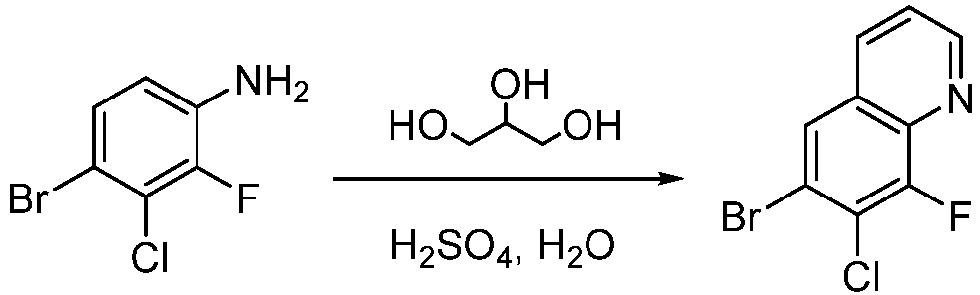
- Step 1: glycerol (12.40 g, 133.65 mmol) and sodium 3-nitrobenzenesulfonate (12.20 g, 53.46 mmol) were added to water (60 mL) and concentrated sulfuric acid (80 mL). The mixture was heated to 100°C. 4-bromo-3-chloro-2-fluoroaniline (10.00 g, 44.55 mmol) was added to the mixture, and The mixture was stirred at 120°C for 12 h. The reaction solution was poured into water (300 mL), extracted with ethyl acetate (300 mL×3). The combined organic layer was dried over anhydrous sodium sulfate, filtered, and concentrated to give 6-bromo-7-chloro-8-fluoroquinoline (9.50 g, 36.47 mmol, yield: 81.9%) as a brown solid compound. LCMS (ESI): [M+H]+ =260.1
-

- Step 1: To a solution of 3-bromo-2-fluoroaniline (10.00 g, 52.63 mmol) in N,N-dimethylacetamide (100 mL) was added chlorosuccinimide (7.00 g, 52.60 mmol) at 25°C, and the resulting reaction mixture was stirred at 55°C for 16 h. The reaction mixture was diluted with ethyl acetate (150 mL) and washed with saturated saline (150 mL×3).The organic phase was concentrated, dried, and filtered to give the residue. The residue was purifiedby flash column chromatography (silica gel, 0-30% gradient of ethyl acetate/petroleum ether) to give 3-bromo-4-chloro-2-fluoroaniline (6.00 g, 26.67 mmol, yield: 55.0%) as a violet solid. LCMS (ESI): [M+H]+=226.0; 1H NMR (400 MHz, DMSO) δ 7.12 (dd, J = 8.8, 1.8 Hz, 1H), 6.82 - 6.74 (m, 1H), 5.60 (s, 2H)
- Step 2: glycerol (10.00 g, 111.4 mmol) was dissolved in concentrated sulfuric acid (50 mL) and water (30 mL). The reaction was stirred at 100°C for 15 min, then the mixture was cooled to 40°C. 3-bromo-4-chloro-2-fluoroaniline (5.00 g, 22.3 mmol) and sodium 3-nitrobenzenesulfonate (5.57 g, 24.50 mmol) were added to the reaction mixture. The reactionmixture was stirred at 100°C for 16 h. The reaction mixture was poured into ice water (500 mL), the pH was adjusted to 8 with potassium carbonate, and extracted with ethyl acetate (200 mL×2). The combined organic layer was dried over anhydrous sodium sulfate, filtered, and concentrated to give the crude.The crude product was purified by flash column chromatography (silica gel, 0-20% gradient of ethyl acetate/petroleum ether) to give 7-bromo-6-chloro-8-fluoroquinoline (3.80 g, 14.56 mmol, yield: 65.5%) as a gray solid. LCMS (ESI): [M+H]+ =262.1; 1H NMR (400 MHz, DMSO) δ 9.04 - 9.00 (m, 1H), 8.46 (dq, J = 8.4, 1.5 Hz, 1H), 8.26 (t, J = 2.0 Hz, 1H), 7.74 (dd, J = 8.4, 4.2 Hz, 1H).
- Step 3: To a mixture of 7-bromo-6-chloro-8-fluoroquinoline (2.50 g, 9.60 mmol), zinc cyanide (5.17 g, 43.19 mmol) in N,N-dimethylformamide (40 mL) was added tetrakis(triphenylphosphine)palladium (1.13 g, 0.96 mmol) at 25°C. The resulting reaction mixture was bubbled by nitrogen for 1 min and stirred at 120°C for 16 h. The reaction solution was filtered, diluted with ethyl acetate (100 mL), and the organic phase was washed with saturated sodium chloride (50 mL × 3). The combined organic layer was dried , filtered, and concentrated to give the residue. The residue was purified by flash column chromatography (silica gel, 0-30% gradient of ethyl acetate/petroleum ether) to give 6-chloro-8-fluoroquinoline-7-nitrile (650 mg, 3.15 mmol, yield: 32.8%) as a white solid. LCMS (ESI): [M+H]+ =207.1
-
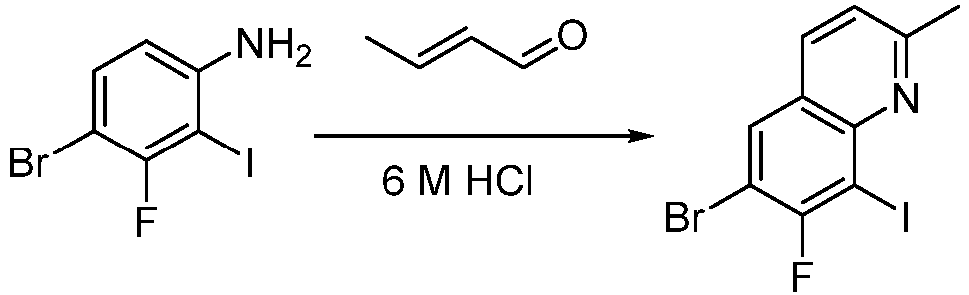
- Step 1: To a stirred solution of (2E)crotonaldehyde (3.90 g, 56.00 mmol) in hydrochloric acid (116 mL, 6M) was added 4-bromo-3-fluoro-2-iodoaniline (4.40 g, 14.00 mmol). The solution was stirredat 100°C for 16 h. The reaction mixture was poured into crushed ice (500 mL) and the pH was adjusted to 8. The mixture was extrated with ethyl acetate (150 mL×3). The combined organic layer was dried over anhydrous sodium sulfate, filtered, and concentrated to give the residue. The residue was purified by flash column chromatography (silica gel, 0-20% ethyl acetate/petroleum ether) to give 6-bromo-7-fluoro-8-iodo-2-methylquinoxaline (1.00 g, 20%) as a white solid. LCMS (ESI): [M+H]+ =365.9.
-

- Step 1: To a stirred solution of 4-bromo-2-fluorobenzaldehyde (5.00 g, 24.63 mmol) in toluene (100 mL) wasadded 2,2-dimethoxyethan-1-amine (3.88 g, 36.94 mmol). The reaction solution was heated to 140°C, and stirred for 16 h. The reaction solution was cooled to ambient temperature and concentrated to give (E)-1-(4-bromo-2-fluorophenyl)-N-(2,2-dimethoxyethyl)methanamine (7.00 g, crude) as a brown oil crude for the next step without purification.
- Step 2: (E)-1-(4-bromo-2-fluorophenyl)-N-(2,2-dimethoxyethyl)methanamine (3.00 g, 10.34 mmol) was dissolved in methanol (30 mL), Then the reaction solution was cooled to 0°C, sodium cyanoborohydride (270 mg, 7.24 mmol), was added. Then the reaction solution was heated to ambient temperature, and stirred for 2 h. ice water was added to the reaction solution, Then solution was concentrated and extracted with ethyl acetate (30 mL×3). The combined organic layer was washed with saturated sodium chloride solution, dried over anhydrous sodium sulfate, and concentrated to give the residue. The residue was purified by flash column chromatography (silica gel, 10-20% gradient of ethyl acetate/petroleum ether) to give N-(4-bromo-2-fluorobenzyl)-2,2-dimethoxyethan-1-amine (2.50 g, 8.50 mmol, yield: 83.3%) as a white solid. LCMS (ESI): [M+H]+ = 292.0
- Step 3:To a stirred solution of N-(4-bromo-2-fluorobenzyl)-2,2-dimethoxyethan-1-amine (2.50 g, 8.50 mmol) in dichloromethane (20 mL) were added 4-dimethylaminopyridine (156 mg, 1.28 mmol) and triethylamine (2.59 g, 25.5 mmol) successively. The reaction solution was cooled to 0°C under nitrogen atmosphere, and p-Toluenesulfonyl chloride (2.44 g, 12.75 mmol) was added. The reaction solution was heated to ambient temperature, and stirred for 16 h, then the solution was quenched with ice water (20 mL), and extracted with dichloromethane (30 mL×3). the combined organic layer was dried with anhydrous sodium sulfate, concentrated to give the residue. The residue was purified by flash column chromatography (silica gel, 0-10% gradient of ethyl acetate/petroleum ether) to give N-(4-bromo-2-fluorobenzyl)-N-(2,2-dimethoxyethyl)-4-methylbenzenesulfonamide (3.04 g, 6.81 mmol, yield: 80.2%). LCMS (ESI): [M+H]+ = 446.0
- Step 4: To a stirred solution of aluminum trichloride (1.34 g, 10.08 mmol) in dichloromethane (20 mL) was added the solution of N-(4-bromo-2-fluorobenzyl)-N-(2,2-dimethoxyethyl)-4-methylbenzenesulfonamide (3.00 g, 6.72 mmol) in dichloromethane (10 mL) at 0°C under nitrogen atmosphere . The reaction solution was heated to ambient temperature, and stirred for 16 h, then the reaction solution was quenched with ice water (30 mL), the solution pH was adjusted to 10 with liquor ammonia, and extracted with dichloromethane (50 mL×3). The combined organic phases was dried over anhydrous sodium sulfate and concentrated to give the residue. The residue was purified by flash column chromatography (silica gel, 10-20% gradient of ethyl acetate/petroleum ether) to give 6-bromo-8-fluoroisoquinoline (1.36 g, 6.00 mmol, yield: 89.4%). LCMS (ESI): [M+H]+ = 228.0
-

- Step 1: (1E)-1-(4-bromo-2-ethynyl-6-fluorophenyl)-3,3-diethyltriaza-1-ene (2.00 g, 6.71 mmol) was added to 1,2-dichlorobenzene (20.0 mL). Then the reaction solution was stirred at 200°C for 5 h. The reaction mixture was purified by flash column chromatography (silica gel, 0-20% gradient of ethyl acetate/petroleum ether) to give 6-bromo-8-fluorophosphorine (500 mg, 2.14 mmol, yield: 33%) as a black solid. LCMS (ESI): [M+H]+ = 229.0
-

- Step 1: To a mixture of 4-bromo-6-iodo-2-nitroaniline (5.00 g, 14.00 mmol) and iron (2.5 g, 44 mmol) in water (10 mL) and ethanol (50 mL) was added ammonium chloride (3.90 g, 73.00 mmol) at 25°C, and the resulting reaction mixture was stirred at 50°C for 1 h. The reaction mixture was filtered, and washed with ethanol (20 mL×2). The organic phase dried, filtered, and concentrated to give the brown solid residue (4.50 g, 98%) for the next step without purification. LCMS (ESI): [M+H]+ =312.9.
- Step 2: To a solution of 5-bromo-3-iodobenzene-1,2-diamine (4.50 g, 14.00 mmol) and glyoxal (1.70 g, 29.00 mmol) in ethanol (50 mL) was added potassium carbonate (6.00 g, 43.00 mmol) at 25°C. The reactionmixture was stirred at 80°C for 16 h.The reaction mixture was filtered and extracted with ethyl acetate (30 mL). The the filtrate was washed with saturated sodium chloride solution (20 mL×3). The organic layer was dried over anhydrous sodium sulfate, filtered, and concentrated to give the residue. The residue was purified by flash column chromatography (silica gel, 0-20% gradient of ethyl acetate/petroleum ether) to give 7-bromo-5-iodoquinoxaline (970 mg, 20%) as a pale yellow solid. LCMS (ESI): [M+H]+ = 336.9. 1H NMR (400 MHz, DMSO) δ 9.04 (d, J = 1.8 Hz, 1H), 8.98 (d, J = 1.8 Hz, 1H), 8.62 (d, J = 2.1 Hz, 1H), 8.40 (d, J = 2.1 Hz, 1H).
-

- Step 1: To a stirred solution of sodium 3-nitrobenzenesulfonate (23.2 g, 102 mmol) and glycerol (32.2 g, 346 mmol) in pure water (308 mL) was added concentrated sulfuric acid (400 mL) dropwise , the reaction solution was heated to 110°C, 4-bromo-2,3-difluoroaniline (20.0 g, 96.2 mmol) was added portionwise, and stirted at 140°C for 16 h. the reaction solution was slowly added to 500 mL of ice water under stirring, and the pH was adjusted to 7 with sodium hydroxide solution (2000 mL, 600 g). After filtration, the cake was dispersed in water (1000 mL), extracted with ethyl acetate (1000 mL × 2), the organic phase was washed with saturated saline (400 mL), dried, filtered, and concentrated. The residue was slurried with methyl tert-butyl ether (250 mL) and filtered to give 6-bromo-7,8-difluoroquinoline (22.0 g, 88.5 mmol, yield: 92.0%) as a brown solid. LCMS (ESI): [M+H]+ = 245.9; 1H NMR (400 MHz, DMSO-d6 ) δ ppm 9.01 (d, J = 4.0 Hz, 1H), 8.44 (br d, J = 8.4 Hz, 1H), 8.34 (dd, J = 2.0, 7.2 Hz, 1H), 7.67 (dd, J = 4.4, 8.4 Hz, 1H)
- Step 2: To a solution of 6-bromo-7,8-difluoroquinoline (9.50 g, 59%) in acetic acid (160 mL), was added N-iodosuccinimide (17.7 g, 78.7 mmol), and stired at 95°C for 16 h. The reaction solution was poured into saturated sodium bicarbonate solution (1500 mL), extracted with ethyl acetate (500 mL × 2). the organic phases was washed with saturated saline (400 mL), and dried, filtered, concentrated to give the residue. The residue was purified by flash column chromatography (silica gel, 0-7% gradient of THF/petroleum ether) to give 6-bromo-7,8-difluoro-3-iodoquinoline (6.40 g, 17.1 mmol, yield: 26.0%) as a brown solid. LCMS (ESI): [M+H]+ = 371.7; 1H NMR (400 MHz, CHLOROFORM-d) δ ppm 9.02 (d, J = 1.6 Hz, 1H), 8.40 (s, 1H), 7.70 (dd, J = 2.4, 6.4 Hz, 1H)
-

- Step 1: To a stirred solution of 2,4-dichloro-6,7-dihydro-5H-cyclopenta[d]pyrimidine (5.00 g, 26.45 mmol) in ethanol (50 mL) was added liquor ammonia (9.90 g, 79.35 mmol). The reaction solution was stirred at 40°C for 12 h. The reaction solution was directly concentrated to give 2-chloro-6,7-dihydro-5H-cyclopenta[d]pyrimidin-4-amine (4.60 g) as a white solid compound. LCMS (ESI): [M+H]+ = 170.1.
- Step 2: To a stirred solution of 2-chloro-6,7-dihydro-5H-cyclopenta[d]pyrimidin-4-amine (4.60 g, 27.12 mmol), in dioxane (50 mL) were added 4,4-difluoropiperidine (3.90 g, 32.55 mmol) and N,N-diisopropylethylamine (10.70 g, 81.36 mmol). The reaction solution was stirred at 100°C for 12 h. The reaction solution was poured into water (100 mL), extracted with ethyl acetate (100 mL×3), and the combined organic layer was dried over anhydrous sodium sulfate, filtered and concentrated to give the residue, which was further purified by column chromatography (silica gel, 0-50% gradient of ethyl acetate/petroleum ether) to give 2-(4,4-difluoropiperidin-1-yl)-6,7-dihydro-5H-cyclopenta[d]pyrimidin-4-amine (3.60 g) as a white solid compound. LCMS (ESI): [M+H]+ = 255.1
- Step 3: To a stirred solution of 2-(4,4-difluoropiperidin-1-yl)-6,7-dihydro-5H-cyclopenta[d]pyrimidin-4-amine (1.00 g, 3.93 mmol), potassium tert-butoxide (1.30 g, 11.80 mmol)in THF (10 mL) was added the solution of 4-nitro-2-(6-azaspiro[2.5]octan-6-yl)benzoyl chloride (2.10 g, 7.08 mmol) in THF (10 mL) . The reaction was stirred at ambient temperature for 30 min. The reaction solution was poured into water (50 mL), extracted with ethyl acetate (50 mL × 3), and the combined organic layer was dried over anhydrous sodium sulfate, filtered and concentrated to give the residue, which was further purified by column chromatography (silica gel, 0-100% gradient of ethyl acetate/petroleum ether) to give N-(2-(4,4-difluoropiperidin-1-yl)-6,7-dihydro-5H-cyclopenta[d]pyrimidin-4-yl)-4-nitr o-2-(6-azaspiro[2.5]octan-6-yl)benzamide (620 mg, containing isomers) as a yellow solid compound. LCMS (ESI): [M+H]+ = 513.3.
- Step 4: To a stirred solution of iron (341 mg, 6.05 mmol), ammonium chloride (327 mg, 6.05 mmol) in ethanol (5 mL), water (2 mL) and THF (5 mL) was added N-(2-(4,4-difluoropiperidin-1-yl)-6,7-dihydro-5H-cyclopenta[d]pyrimidin-4-yl)-4-nitr o-2-(6-azaspiro[2.5]octan-6-yl)benzamide (620 mg, 1.21 mmol). The reaction was stirred at 60°C for 30 min. the hot reaction solution was filtered, then poured into water (20 mL), extracted with ethyl acetate (20 mL × 3), and the combined organic layer was dried over anhydrous sodium sulfate, filtered and concentrated to give the residue, which was further purified by column chromatography (silica gel, 0-100% gradient of ethyl acetate/petroleum ether) to give 4-amino-N-(2-(4,4-difluoropiperidin-1-yl)-6,7-dihydro-5H-cyclopenta[d]pyrimidin-4-yl)-2-(6-azaspiro[2.5]octan-6-yl)benzamide (290 mg) as a yellow solid compound. LCMS (ESI): [M+H]+ = 483.4.
- Step 5: To a stirred solution containing 4-amino-N-(2-(4,4-difluoropiperidin-1-yl)-6,7-dihydro-5H-cyclopenta[d]pyrimidin-4-yl)-2-(6-azaspiro[2.5]octan-6-yl)benzamide (290 mg, 0.60 mmol), N,N-diisopropylethylamine (238 mg, 1.80 mmol) in dichloromethane (2 mL) was added ethyl chlorosulfonylacetate (136 mg, 0.721 mmol) dropwise at 0°C. Stir at 25°C for 1 h, The reaction solution was poured into water (30 mL), extracted withethyl acetate (30 mL × 3), and the combined organic layer was dried over anhydrous sodium sulfate, filtered and concentrated to give the residue, which was further purified by column chromatography (silica gel, 0-100% gradient of ethyl acetate/petroleum ether) to give 2-(N-(4-((2-(4,4-difluoropiperidin-1-yl)-6,7-dihydro-5H-cyclopentyl[d]pyrimidin-4-yl) carbamoyl)-3-(6-azaspiro[2.5]octan-6-yl)phenyl)sulfamoyl) ethyl acetate (100 mg) as a yellow solid compound. LCMS (ESI): [M+H]+ = 633.3.
- Step 6: To a reaction solution containing 2-(N-(4-((2-(4,4-difluoropiperidin-1-yl)-6,7-dihydro-5H-cyclopentyl[d]pyrimidin-4-yl) carbamoyl)-3-(6-azaspiro[2.5]octan-6-yl)phenyl)sulfamoyl) ethyl acetate (100 mg, 0.16 mmol) in THF (3 mL) was added lithium tetrahydridoaluminate (17 mg, 0.474 mmol). The reaction was stirred at 25°C for 30 min. saturated aqueous ammonium chloride solution (20 mL) was added dropwise to the reaction solution, which was extracted with ethyl acetate (20 mL × 3), and the combined organic layer was dried over anhydrous sodium sulfate, filtered and concentrated to give the residue, which was further purified by HPLC (C18, 30%-100% gradient of water/acetonitrile) to give N-(2-(4,4-difluoropiperidin-1-yl)-6,7-dihydro-5H-cyclopenta[d]pyrimidin-4-yl)-4-((2-hydroxyethyl)sulfamoyl)-2-(6-azaspiro[2.5]octan-6-yl)benzamide (16.3 mg) as a white solid compound. LCMS (ESI): [M+H]+ = 591.3; 1H NMR (400 MHz, DMSO) δ 12.70 (s, 1H), 10.22 (s, 1H), 7.94 (d, J = 8.8 Hz, 1H), 7.24 (d, J = 2.4 Hz, 1H), 7.10 (dd, J = 8.4, 2.0 Hz, 1H), 4.96 (s, 1H), 3.75 (t, J = 6.8 Hz, 2H), 3.29-3.43 (m, 6H), 2.91-3.04 (m, 4H), 2.88 (t, J = 7.2 Hz, 2H), 2.78 (t, J = 7.6 Hz, 2H), 2.08 (s, 2H), 1.86 -2.03(m, 6H), 1.66-1.74 (m, 2H), 0.38 (s, 4H).
-
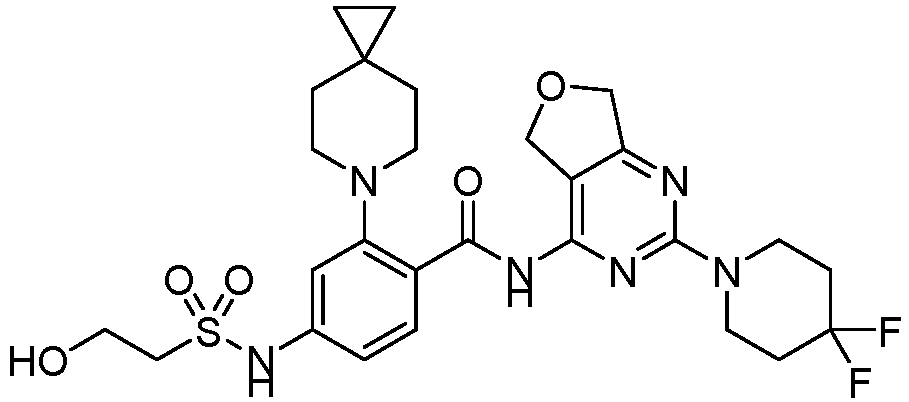
- The preparations in Example 2 follow the synthetic route of Example 1: LCMS (ESI): [M+H]+ = 593.4; 1H NMR (500 MHz, DMSO) δ 13.29 (s, 1H), 10.32 (s, 1H), 9.06 (s, 1H), 8.01 (d, J = 7.2 Hz, 1H), 7.28-7.32 (m, 1H), 7.14 (dd, J = 6.8, 1.6 Hz, 1H), 5.19 (s, 3H), 4.79 (s, 2H), 3.87-4.01 (m, 4H), 3.75 (t, J = 5.2 Hz, 2H), 3.36 (t, J = 5.2 Hz, 2H), 2.92-3.04 (m, 4H), 1.93-2.09 (m, 4H), 1.61-1.84 (m, 3H), 1.54 (d, J = 5.6 Hz, 2H), 0.39 (s, 4H).
-

- Step 1:2,4-dichloro-5,6-trimethylpyrimidine (2.00 g, 10.47 mmol), 4,4-difluoropiperidine hydrochloride (1.75 g, 10.99 mmol), and N,N-diisopropylethylamine (4.14 g, 31.42 mmol) were added to acetonitrile (10 mL), and the reaction solution was heated to 60°C and stirred for 4 h. The reaction solution was cooled to ambient temperature, diluted with water (50 mL) extracted with ethyl acetate (50 mL × 3), washed with saturated aqueous sodium chloride solution (50 mL × 3). The combined organic layer was dried over anhydrous sodium sulfate, and concentrated to give 2-chloro-4-(4,4-difluoropiperidin-1-yl)-6,7-dihydro-5H-cyclopenta[d]pyrimidine (2.60 g, yield: 90%) as a brown solid crude. LCMS (ESI): [M+H]+= 274.1,276.1.
- Step 2: To a stirred solution of 4-methoxybenzylamine (1.70 g, 12.28 mmol), and cesium carbonate (11.90 g, 35.80 mmol) in N,N-dimethylformamide (30 mL) was added 2-chloro-4-(4,4-difluoropiperidin-1-yl)-6,7-dihydro-5H-cyclopenta[d]pyrimidine (2.80 g, 10.23 mmol) , and the reaction solution was heated to 140°C and stirredfor 6 h. The reaction solution was cooled to ambient temperature, diluted with water (50 mL), extracted with dichloromethane (50 mL × 3), washed with saturated aqueous sodium chloride solution (50 mL × 3), The combined organic layer was dried over anhydrous sodium sulfate, and concentrated to give 4-(4,4-difluoropiperidin-1-yl)-N-(4-methoxybenzyl)-6,7-dihydro-5H-cyclopenta[d]py rimidine-2-amine (3.70 g, yield: 96%) as a brown solid crude. LCMS (ESI): [M+H]+ = 375.3.
- Step 3: 4-(4,4-difluoropiperidin-1-yl)-N-(4-methoxybenzyl)-6,7-dihydro-5H-cyclopenta[d]py rimidine-2-amine (3.70 g, 9.88 mmol) was added to THF (20 mL) and trifluoroacetic acid (20 mL), and the reaction solution was heated to 50°C and stirred for 30 min. The reaction solution was cooled to ambient temperature, diluted with water (50 mL), the pH was adjusted to 7 with saturated aqueous sodium bicarbonate solution, extracted with dichloromethane (50 mL×3), The combined organic layer was dried over anhydrous sodium sulfate and concentrated. The residue was purified by flash column chromatography (silica gel, 0-6% gradient of methanol/dichloromethane) to give 4-(4,4-difluoropiperidin-1-yl)-6,7-dihydro-5H-cyclopenta[d]pyrimidine-2-amine (1.50 g, 59%) as a pale yellow solid. LCMS (ESI): [M+H]+= 255.3.
- Step 4: To a stirred solution of 4-bromo-2-(6-azaspiro[2.5]oct-6-yl) benzoic acid (878 mg, 2.83 mmol) in dichloromethane (5 mL) were added a drop of N,N-dimethylformamide and thionyl chloride (1.13 g, 9.44 mmol)., The reaction solution was stirred at 25°C for 2 h. The reaction solution was concentrated to dryness to give the residue. To another solution of 4-(4,4-difluoropiperidin-1-yl)-6,7-dihydro-5H-cyclopenta[d]pyrimidine-2-amine (600 mg, 2.36 mmol) and potassium tert-butoxide (802 mg, 7.08 mmol) in THF (5 mL) was added the residue from the previous step in THF (5 mL)., and the reaction solution was stirred at 25°C for 2 h. The reaction solution was filtered under reduced pressure, concentrated, and purified by flash column chromatography (silica gel, 0-10% gradient of methanol/dichloromethane) to give 4-bromo-N-(4-(4,4-difluoropiperidin-1-yl)-6,7-dihydro-5H-cyclopenta[d]pyrimidin-2-yl)-2-(6-azaspiro[2.5]octan-6-yl) benzamide (450 mg, yield: 35%) as a brown solid. LCMS (ESI): [M+H]+= 546.2, 548.2.
- Step 5: potassium phosphate (159 mg, 0.73 mmol), (1S,2S)-N,N'-dimethyl-1,2-cyclohexanediamine (53 mg, 0.37 mmol) and ethyl 2-sulfamoylacetate (62 mg, 0.37 mmol) in N,N-dimethylformamide (4 mL) were added 4-bromo-N-(4-(4,4-difluoropiperidin-1-yl)-6,7-dihydro-5H-cyclopenta[d]pyrimidin-2-yl)-2-(6-azaspiro[2.5]octan-6-yl) benzamide (200 mg, 0.37 mmol) and cuprous iodide (71 mg, 0.37 mmol) under nitrogen atmosphere, and the reaction solution was heated to 100°C and stired for 6 h. The reaction solution was cooled to ambient temperature, diluted with water (30 mL) , extracted with dichloromethane (30 mL×3), washed with saturated aqueous sodium chloride solution (30 mL×3). The combined organic layer was concentrated to give the residue. The residue was purified by flash column chromatography (silica gel, 0-10% gradient of methanol/dichloromethane) to give ethyl 2-(N-(4-((4-(4,4-difluoropiperidin-1-yl)-6,7-dihydro-5H-cyclopenta[d]pyrimidin-2-yl) carbamoyl)-3-(6-azaspiro[2.5]oct-6-yl)phenyl)sulfamoyl)acetate (100 mg, yield: 43%) as a pale yellow solid. LCMS (ESI): [M+H]+= 633.4.
- Step 6: ethyl 2-(N-(4-((4-(4,4-difluoropiperidin-1-yl)-6,7-dihydro-5H-cyclopenta[d]pyrimidin-2-yl) carbamoyl)-3-(6-azaspiro[2.5]oct-6-yl)phenyl)sulfamoyl)acetate (100 mg, 0.16 mmol) was added to THF (2 mL), and The reaction solution was cooled to 0°C. lithium aluminum hydride (12 mg, 0.32 mmol) was added to the reaction solution in 3 portions over 30 min, and the reaction solution was stirred at 0°C for 1 h. saturated aqueous ammonium chloride solution (30 mL) was added to the reaction solution, which was extracted with ethyl acetate (30 mL×3). The combined organic layer was dried over anhydrous sodium sulfate, and concentrated to give the residue. The residue was purified by preparative HPLC (40-60% gradient of acetonitrile/water) to give N-(4-(4,4-difluoropiperidin-1-yl)-6,7-dihydro-5H-cyclopenta[d]pyrimidin-2-yl)-4-((2-hydroxyethyl)sulfonamide)-2-(6-azaspiro[2.5]oct-6-yl)benzamide (5 mg, 5.98%). LCMS (ESI): [M+H]+ = 591.4. 1HNMR (400 MHz, DMSO) δ ppm 13.20-13.00 (m,1H), 10.23 (s, 1H), 7.97(s, 1H), 7.23(s, 1H), 7.12-7.09(m, 1H), 4.96(s, 1H), 3.83-3.74(m,6H), 3.01-2.98(m, 6H), 2.97-2.80(m, 2H), 2.62-2.53(m, 2H), 2.10-2.00(m, 6H), 1.66(s,4H), 0.38(s, 4H).
-
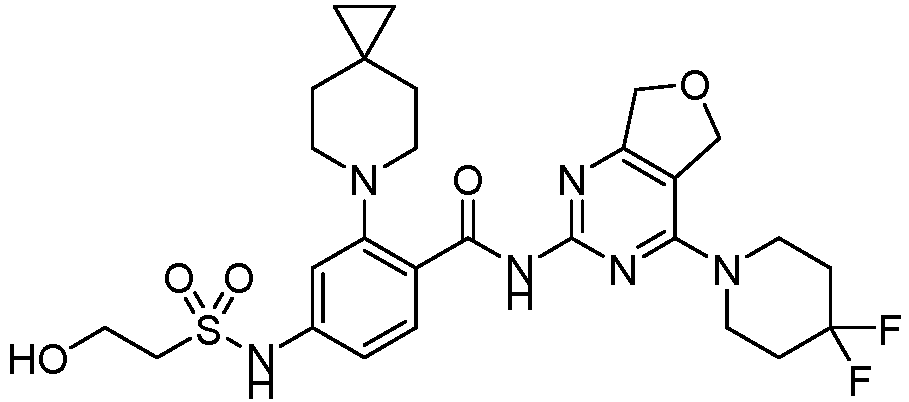
- The preparations in Example 4 follow the synthetic route of Example 3: LCMS (ESI): [M+H]+ = 593.3. 1H NMR (400 MHz, DMSO-d6) δ ppm 12.72 (s, 1H), 10.15 (s, 1H), 7.93 (br d, J =8.4 Hz, 1H), 7.20 (s, 1H), 7.07 (dd, J = 1.8, 8.6 Hz, 1H), 5.19 (s, 2H), 4.79 (s, 2H), 3.75 (t, J =6.5 Hz, 2H), 3.62 - 3.72 (m, 4H), 3.34 - 3.40 (m, 3H), 2.92 - 3.00 (m, 4H), 1.96 - 2.09 (m, 4H), 1.48 - 1.80 (m, 4H), 0.37 (s, 4H)
-

- The preparations in Example 5 follow the synthetic route of Example 3: LCMS (ESI): [M+H]+ = 592.2. 1H NMR (400 MHz, DMSO-d6) δ ppm 12.87 (s, 1H), 10.19 (s, 1H), 8.04 (d, J =8.6 Hz, 1H), 7.69 (s, 1H), 7.24 (d, J =1.6 Hz, 1H), 7.10 (dd, J = 1.9, 8.6 Hz, 1H), 5.07 (s, 2H), 4.94 (s, 2H), 3.75 (t, J =6.4 Hz, 2H), 3.57 (br t, J =4.9 Hz, 4H), 3.35 - 3.38 (m, 3H), 2.90 - 3.05(m, 4H), 1.96-2.08 (m, 4H), 1.37-1.93 (m, 4H), 0.38 (s, 4H)
-

- The preparations in Example 6 follow the synthetic route of Example 3: LCMS (ESI): [M+H]+ = 692.5. 1H NMR (400 MHz, DMSO-d6) δ ppm 12.68 (br s, 1H), 10.17 (br s, 1H), 7.95 (d, J = 1.2 Hz, 1H), 7.22 (s, 1H), 7.09 (br d, J = 8.8 Hz, 1H), 5.08 - 4.84 (m, 1H), 4.80 - 4.62 (m, 2H), 4.49 - 4.27 (m, 2H), 3.76 (m, 7H), 2.96 (m, 4H), 2.15 - 1.98 (m, 4H), 1.73 - 1.58 (m, 4H), 1.50 - 1.44 (m, 9H), 0.38 (s, 4H)
-
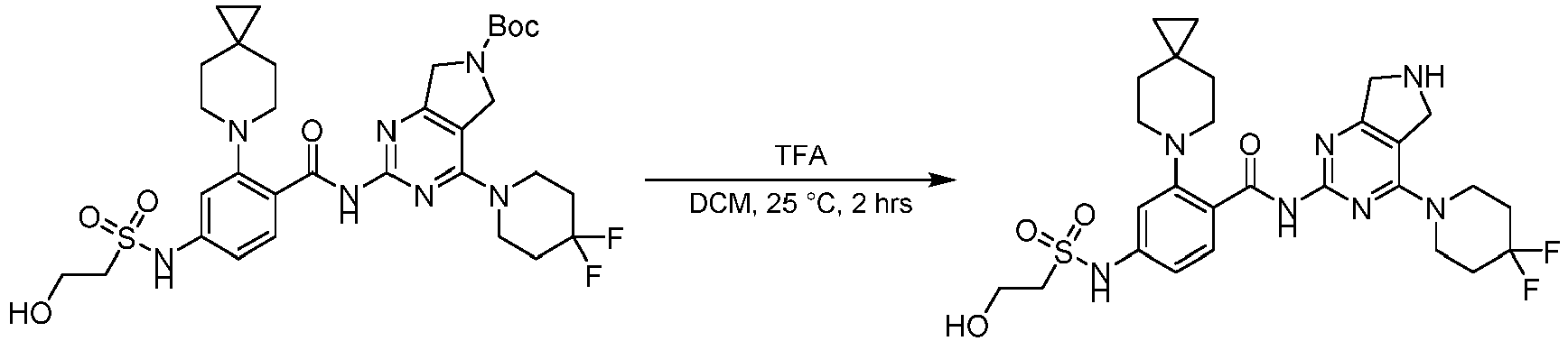
- Step 1: To a solution of tert-butyl 4-(4,4-difluoropiperidin-1-yl)-2-(4-(2-hydroxyethylsulfonamido)-2-(6-azaspiro[2.5]oc tan-6-yl)benzoylamino)-5H-pyrrolo[3,4-d]pyrimidine-6(7H)-carboxylate (40.0 mg, 0.06 mmol) in dichloromethane (6.00 mL) was added trifluoroacetic acid (1.00 mL). The mixture was stirred at 25°C for 2 h. The mixture was purified by preparative HPLC (C18, 0-38% gradient of water (formic acid)/acetonitrile) to give N-(4-(4,4-difluoropiperidin-1-yl)-6,7-dihydro-5H-pyrrolo[3,4-d]pyrimidin-2-yl)-4-(2-hydroxyethylsulfonamido)-2-(6-azaspiro[2.5]octan-6-yl)benzamide (15 mg, 0.06 mmol, yield: 44%) as a white solid compound. LCMS (ESI): [M+H]+ =592.5. 1H NMR (400 MHz, DMSO-d6) δ ppm 12.44 (s, 1H), 8.17 (s, 1H), 7.94 (br d, J = 8.4 Hz, 1H), 7.21 (s, 1H), 7.08 (dd, J = 2.0, 8.8 Hz, 1H), 4.30 - 4.21 (m, 2H), 3.96 - 3.88 (m, 2H), 3.79 - 3.70 (m, 6H), 3.36 - 3.34 (m, 2H), 3.01 - 2.93 (m, 4H), 2.10 - 1.98 (m, 4H), 1.83 - 1.46 (m, 4H), 0.38 (s, 4H)
-
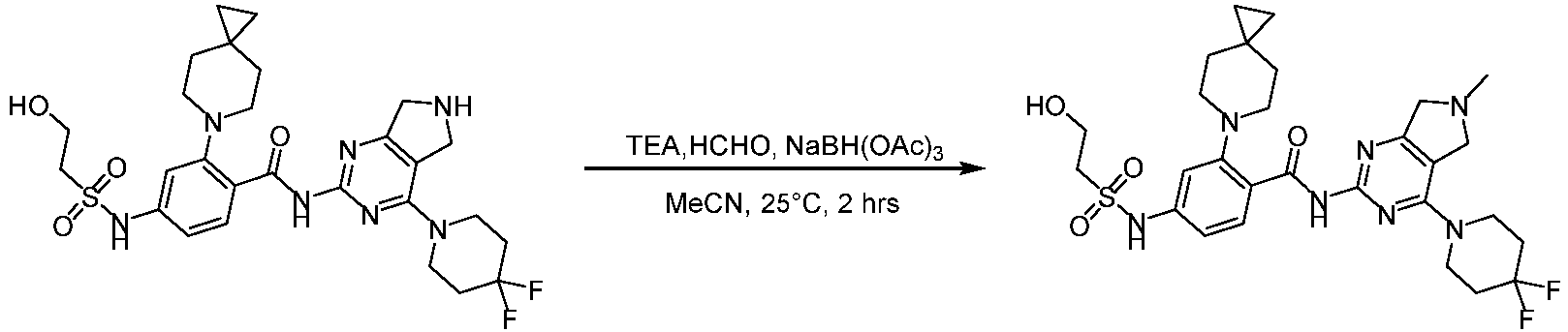
- Step 1: To a solution of N-(4-(4,4-difluoropiperidin-1-yl)-6,7-dihydro-5H-pyrrolo[3,4-d]pyrimidin-2-yl)-4-(2-hydroxyethylsulfonamido)-2-(6-azaspiro[2.5]octan-6-yl)benzamide (40.0 mg, 0.07 mmol) and triethylamine (13.9 mg, 0.14 mmol) in acetonitrile (1.00 mL) were added aqueous formaldehyde solution (9.23 mg, 0.10 mmol) and sodium borohydride acetate (14.6 mg, 0.07 mmol). The mixture was stirred at 25°C for 2 h. the reaction solution was extracted with ethyl acetate, filtered under reduced pressure. the solid was slurried with pure water (5 mL) at 25°C for 1 h, and purified to give the crude, which was diluted with pure water (5 mL) and lyophilized to give N-(4-(4,4-difluoropiperidin-1-yl)-6-methyl-6,7-dihydro-5H-pyrrolo[3,4-d]pyrimidin-2 -yl)-4-(2-hydroxyethylsulfonamido)-2-(6-azaspiro[2.5]octan-6-yl)benzamide (12 mg, 0.07 mmol, yield: 29%) as a white solid. LCMS (ESI): [M+H]+ =606.5. 1H NMR (400 MHz, DMSO-d6) δ ppm 12.62 (br s, 1H), 10.16 (br s, 1H), 7.93 (br d, J = 8.0 Hz, 1H), 7.20 (br s, 1H), 7.12 - 7.02 (dd, J =1.6 Hz, 8.4Hz, 1H), 5.19 - 4.72 (m, 1H), 4.03 - 3.97 (m, 2H), 3.81 - 3.62 (m, 8H), 3.36 - 3.34 (m, 2H), 3.04 - 2.90 (m, 4H), 2.49 (s, 3H), 2.09 - 1.95 (m, 4H), 1.81 - 1.47 (m, 4H), 0.37 (s, 4H)
-
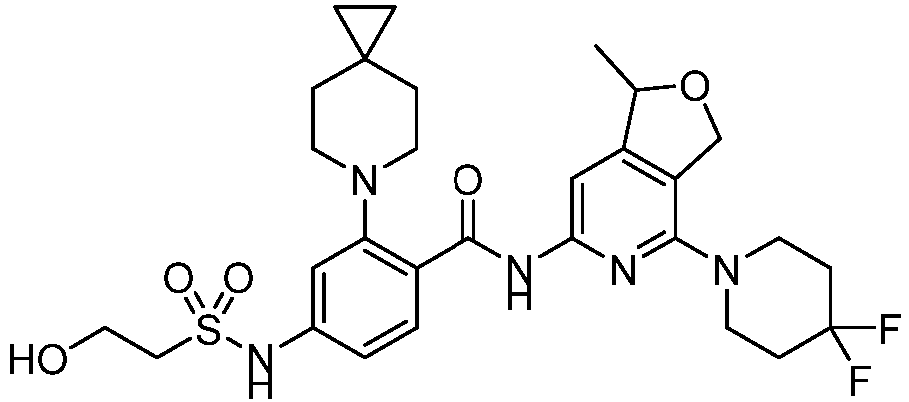
- The preparations in Example 9 follow the synthetic route of Example 3: LCMS (ESI): [M+1]+ = 606.1. 1H NMR (400 MHz, DMSO) δ 12.89 (s, 1H), 9.98 (s, 1H), 8.05 (d, J = 8.6 Hz, 1H), 7.63 (s, 1H), 7.26 (d, J = 2.0 Hz, 1H), 7.12 (dd, J = 8.8, 2.0 Hz, 1H), 6.25 - 4.36 (m, 4H), 3.76 (t, J = 6.4 Hz, 2H), 3.57 (dt, J = 7.2, 3.8 Hz, 4H), 3.33 (d, J = 3.2 Hz, 2H), 2.97 (d, J = 5.6 Hz, 4H), 2.11 - 2.00 (m, 4H), 2.00 - 1.47 (m, 4H), 1.39 (d, J = 6.4 Hz, 3H), 0.38 (s, 4H).
-
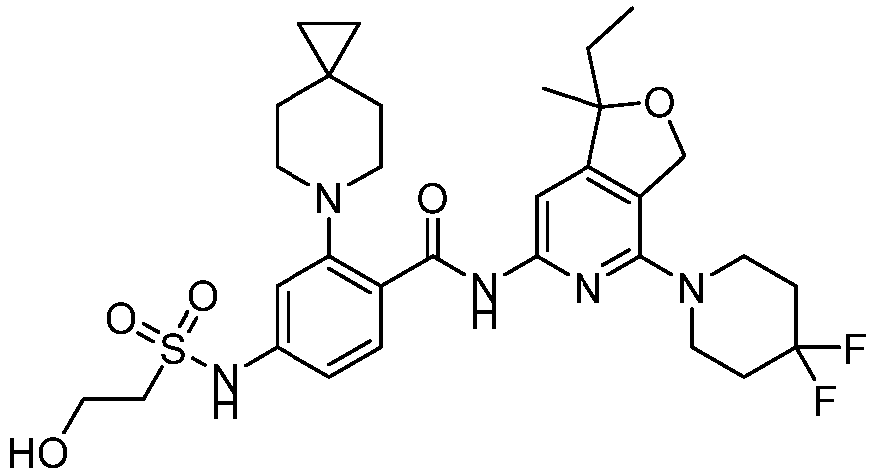
- The preparations in Example 10 follow the synthetic route of Example 3: LCMS (ESI): [M+H]+ = 634.3. 1H NMR (400 MHz, DMSO-d6 ) δ ppm 12.96 (s, 1H), 11.06 - 9.21 (m, 1H), 8.06 (d, J = 8.8 Hz, 1H), 7.57 (s, 1H), 7.26 (d, J = 2.0 Hz, 1H), 7.12 (dd, J = 2.0, 8.4 Hz, 1H), 5.04 (d, J = 1.6 Hz, 3H), 3.76 (t, J = 6.8 Hz, 2H), 3.56 (br d, J = 4.0 Hz, 4H), 3.38 - 3.34 (m, 2H), 3.06 - 2.92 (m, 4H), 2.10 - 1.99 (m, 4H), 1.98 - 1.40 (m, 6H), 1.37 (s, 3H), 0.76 (t, J = 7.2 Hz, 3H), 0.38 (s, 4H)
-
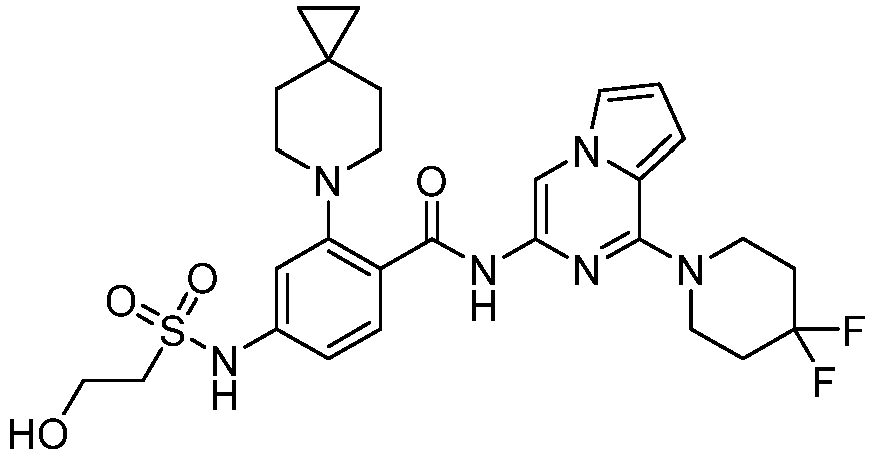
- The preparations in Example 11 follow the synthetic route of Example 3: LCMS (ESI): [M+H]+ = 589.1. 1H NMR (400 MHz, DMSO-d6) δ ppm 12.62 - 12.88 (m, 1H), 9.98 -10.41 (m, 1H), 8.64 - 8.87 (m, 1H), 8.02 (s, 1H), 7.69 - 7.83 (m, 1H), 7.26 - 7.33 (m, 1H), 7.09 - 7.21 (m, 1H), 6.81 - 6.90 (m, 1H), 6.68 - 6.79 (m, 1H), 3.86 - 3.92 (m, 4H), 2.97 - 3.06 (m, 4H), 2.12 - 2.24 (m, 4H), 1.78 (br s, 4H), 1.26 (s, 4H), 0.34 - 0.48 (m, 4H)
-

- The preparations in Example 12 follow the synthetic route of Example 3 LCMS (ESI): [M+H]+ = 604.4. 1H NMR (400 MHz, DMSO-d6) δ ppm 12.81 (s, 1H), 10.38 - 10.05 (m, 1H), 8.36 (s, 1H), 8.07 (d, J = 8.8 Hz, 1H), 7.81 (s, 1H), 7.27 (d, J = 2.0 Hz, 1H), 7.13 (dd, J = 2.0, 8.8 Hz, 1H), 5.14 - 4.77 (m, 1H), 4.03 -3.88 (m, 4H), 3.76 (t, J = 6.4 Hz, 2H), 3.40 - 3.34 (m, 2H), 3.07-2.85 (m, 4H), 2.53 (s, 3H), 2.20 - 2.04 (m, 4H), 2.04 - 1.32 (m, 4H), 0.40 (s, 4H)
-

- The preparations in Example 13 follow the synthetic route of Example 3: LCMS (ESI): [M+H]+ = 590.0. 1HNMR (400 MHz, DMSO) δ 12.89 (s, 1H), 10.21 (s, 1H), 8.84 (s, 1H), 8.08 (d, J = 8.8 Hz, 2H), 7.56 (d, J = 0.8 Hz, 1H), 7.28 (d, J = 2.0 Hz, 1H), 7.14 (dd, J = 8.6, 2.0 Hz, 1H), 4.43 (s, 5H), 3.76 (t, J = 6.6 Hz, 2H), 3.34 (s, 2H), 2.99 (s, 4H), 2.54 (s, 4H), 2.16 - 2.06 (m, 4H), 0.41 (s, 4H).
-
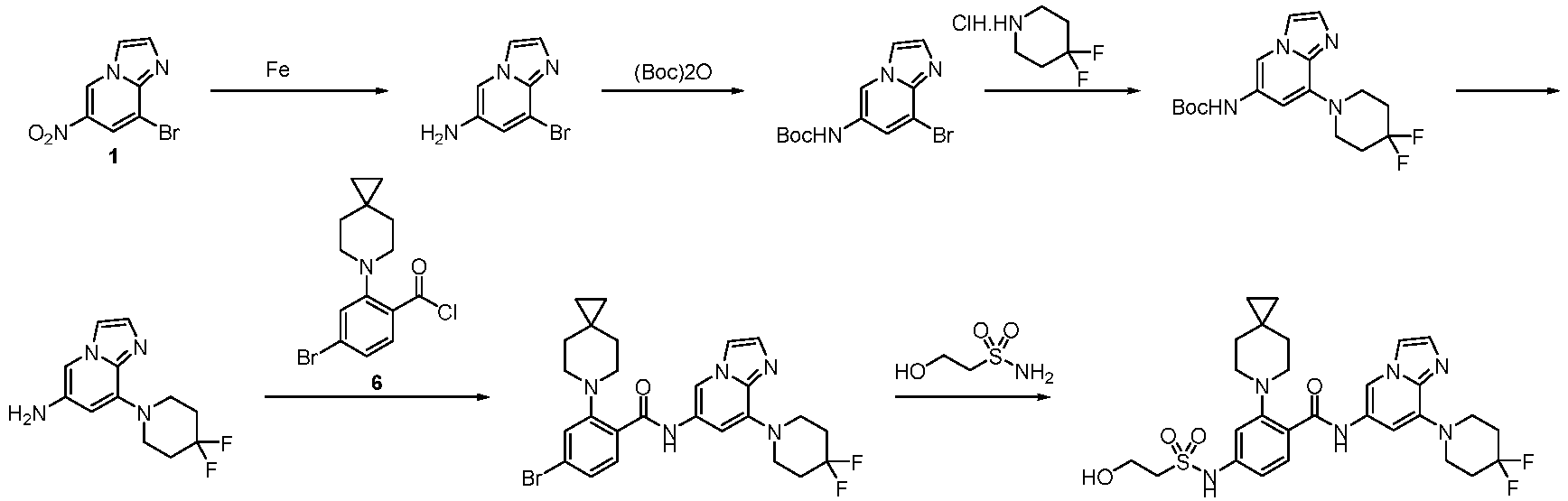
- Step 1: To a stirred solution of iron powder (2.40 g, 43.38 mmol), ammonium chloride (2.30 g, 43.38 mmol) in ethanol (50 mL) and water (10 mL) was added 8-bromo-6-nitro-4-hydroimidazo[1,2-a]pyridine (3.50 g, 14.46 mmol). The mixture was stirred at 90°C for 6 h. the reaction solution was concentrated, extracted with ethyl acetate (50 mL × 3), and the organic layer was dried over anhydrous sodium sulfate, filtered and concentrated to give the residue, which was further purified by column chromatography (silica gel, 0-100% gradient of ethyl acetate/petroleum ether) to give 8-bromoimidazo[1,2-a]pyridine-6-amine (3.00 g, 14.15 mmol, yield: 97.8%) as a black solid compound. LCMS (ESI): [M+H]+ =214.0
- Step 2: To a stirred solution containing 8-bromo-4-hydroimidazo[1,2-a]pyridine-6-ylamine (3.00 g, 14.15 mmol) in N,N-diisopropylethylamine (5.60 g, 42.44 mmol) and dichloromethane (20 mL) was added di-tert-butyl dicarbonate (3.70 g, 16.98 mmol). The reaction was stirred at 50°C for 12 h, The reaction mixture was concentrated, and The residue was purified by column chromatography (silica gel, 0-50% gradient of ethyl acetate/petroleum ether) to give tert-butyl(8-bromoimidazo[1,2-a]pyridin-6-yl)carbamate (1.80 g, 5.77 mmol, yield: 40.8%) as a white solid compound. LCMS (ESI): [M+H]+ =312.1
- Step 3 : To a stirred solution containing tert-butyl(8-bromoimidazo[1,2-a]pyridin-6-yl)carbamate (1.80 g, 5.77 mmol), 4,4-difluoropiperidine hydrochloride (1.40 g, 8.65 mmol), cesium carbonate (7.70 g, 23.07 mmol) in 1,4-dioxane (20 mL) was added 4,5-bis(diphenylphosphino)-9,9-dimethylxanthene (340 mg, 0.58 mmol) and tris(dibenzylideneacetone) dipalladium (539 mg, 0.58 mmol) under nitrogen atmosphere, and the reaction solution was stirred at 100°C for 12 h. The reaction mixture was poured into water (30 mL), extracted with ethyl acetate (30 mL×3), and the combined organic layer was dried over anhydrous sodium sulfate, filtered and concentrated to give the residue, which was further purified by column chromatography (silica gel, 0-30% gradient of ethyl acetate/petroleum ether) to give tert-butyl (8-(4,4-difluoropiperidin-1-yl)imidazo[1,2-a]pyridin-6-yl)carbamate (500 mg, 1.42 mmol, yield: 24.6%) as a yellow solid compound. LCMS (ESI): [M+H]+ = 353.3
- Step 4: To a stirred solution containing tert-butyl (8-(4,4-difluoropiperidin-1-yl)imidazo[1,2-a]pyridin-6-yl)carbamate (500 mg, 1.42 mmol) in dichloromethane (5 mL) was added trifluoroacetic acid (5 mL). The reaction was stirred at 20°C for 1 h, the reaction solution was concentrated. The pH was adjusted to be close to 8 by adding aqueous sodium bicarbonate solution and the mixture was extracted with ethyl acetate (30 mL × 3). the organic layer was dried over anhydrous sodium sulfate, filtered, and concentrated to give 8-(4,4-difluoropiperidin-1-yl)imidazo[1,2-a]pyridine-6-amine (360 mg, crude) as a brown solid compound. LCMS (ESI): [M+H]+ = 253.1
- Step 5: To the solution of 8-(4,4-difluoropiperidin-1-yl)imidazo[1,2-a]pyridine-6-amine (350 mg, 1.39 mmol), N,N-diisopropylethylamine (915 mg, 6.94 mmol) in THF (5 mL) was added 2-(6-azaspiro[2.5]oct-6-yl)-4-bromobenzoyl chloride (502 mg, 1.53 mmol). The reaction solution was stirred at 20°C for 30 min, The reaction solution was poured into water (30 mL), extracted with ethyl acetate (30 mL×3), and the combined organic layer was dried over anhydrous sodium sulfate, filtered and concentrated to give the residue, which was further purified by column chromatography (silica gel, 0-30% gradient of ethyl acetate/petroleum ether) to give 4-bromo-N-(8-(4,4-difluoropiperidin-1-yl)imidazo[1,2-a]pyridin-6-yl)-2-(6-azaspiro[2. 5]oct-6-yl) benzamide (390 mg, 0.72 mmol, yield: 51.6%) as a yellow solid compound. LCMS (ESI): [M+H]+ = 544.3; 1HNMR (400 MHz, DMSO) δ 11.25 (s, 1H), 9.04 (d, J = 1.6 Hz, 1H), 8.00 (d, J = 1.2 Hz, 1H), 7.67 (d, J = 8.4 Hz, 1H), 7.46 (dd, J = 2.8, 1.6 Hz, 2H), 7.39 (dd, J = 8.4, 2.0 Hz, 1H), 6.59 (d, J = 1.6 Hz, 1H), 3.77 (t, J = 5.6 Hz, 4H), 3.03 (t, J = 5.2 Hz, 4H), 2.26-2.05 (m, 4H), 1.58-1.44 (m, 4H), 0.32 (s, 4H).
- Step 6: To a stirred solution of 2-hydroxyethanesulfonamide (174 mg, 1.36 mmol), potassium phosphate (442 mg, 2.04 mmol), 2-di-tert-butylphosphino-2',4',6'-triisopropylbiphenyl (29 mg, 0.068 mmol), tris(dibenzylideneacetone) dipalladium (64 mg, 0.068 mmol) in 1,4-dioxane (5 mL) was added 4-bromo-N-(8-(4,4-difluoropiperidin-1-yl)imidazo[1,2-a]pyridin-6-yl)-2-(6-azaspiro[2. 5]oct-6-yl) benzamide (370 mg, 0.68 mmol).The reaction was stirred at 100°C for 12 h under nitrogen atmosphere. The reaction solution was poured into water (30 mL), extracted with ethyl acetate (30 mL × 3), and the combined organic layer was dried over anhydrous sodium sulfate, filtered and concentrated to give the residue, which was further purified by column chromatography (silica gel, 0-100% gradient of ethyl acetate/petroleum ether) to give N-(8-(4,4-difluoropiperidin-1-yl)imidazo[1,2-a]pyridin-6-yl)-4-((2-hydroxyethyl)sulf onamido)-2-(6-azaspiro[2.5]oct-6-yl)benzamide (50.04 mg, 0.085 mmol, yield: 12.5%) as a white solid compound. LCMS (ESI): [M+H]+ = 589.4; 1HNMR (400 MHz, DMSO) δ 11.60 (s, 1H), 10.15 - 10.02 (m, 1H), 9.05 (d, J = 1.6 Hz, 1H), 7.98 (d, J = 1.2 Hz, 1H), 7.80 (d, J = 8.4 Hz, 1H), 7.46 (d, J = 1.2 Hz, 1H), 7.16 (d, J = 2.0 Hz, 1H), 7.04 (dd, J = 8.4, 2.0 Hz, 1H), 6.57 (d, J = 1.6 Hz, 1H), 4.96 (s, 1H), 3.86-3.66 (m, 6H), 3.37-3.32 (m, 2H), 2.98 (t, J = 5.2 Hz, 4H), 2.25-2.09 (m, 4H), 1.67-1.48 (m, 4H), 0.35 (s, 4H).
-
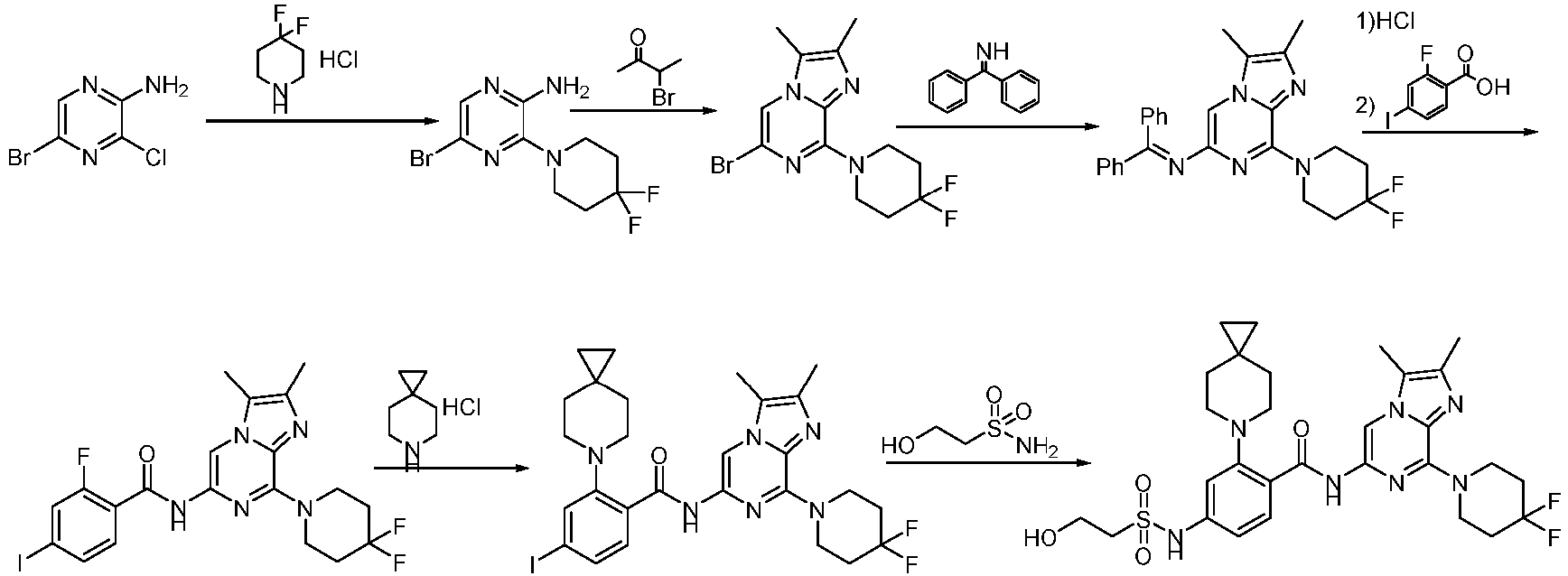
- Step 1: To a stirres solution of 4,4-difluoropiperidine hydrochloride (2.27 g, 14.25 mmol), and potassium carbonate (4.02 g, 28.50 mmol) in N-methylpyrrolidone (5 mL) was added 5-bromo-3-chloropyrazin-2-amine (2.00 g, 9.50 mmol) , and the reaction solution was stirred at 130°C for 16 h. the reaction solution was filtered under reduced pressure. the filtrate was poured into the saturated ammonium chloride solution (50 mL), extracted with ethyl acetate (30 mL × 3),The combined organic layer was washed with the saturated aqueous sodium chloride solution (50 mL × 3), dried with anhydrous sodium sulfate, and concentrated to obtain the crude. the crude was purified by flash column chromatography (silica gel, 10-15% gradient of ethyl acetate/petroleum ether) to give 5-bromo-3-(4,4-difluoropiperidin-1-yl)pyrazine-2-amine (2.20 g, 67%) as a brown solid. LCMS (ESI): [M+H]+ = 293.1, 295.1.
- Step 2: 5-bromo-3-(4,4-difluoropiperidin-1-yl)pyrazine-2-amine (2.20 g, 6.38 mmol), 3-bromo-2-butanone (1.49 g, 9.57 mmol), and 1,4-dioxane (5 mL) were added into a 100 mL closed reactor, and the reaction solution was stirred at 120°C for 24 h. The reaction solution was poured into water (30 mL), extracted with ethyl acetate (30 mL × 3), The combined organic layer was dried over anhydrous sodium sulfate, and concentrated to obtain the crude. the crude was purified by flash column chromatography (silica gel, 0-10% gradient of ethyl acetate/petroleum ether) to give 6-bromo-8-(4,4-difluoropiperidin-1-yl)-2,3-dimethylimidazo[1,2-a]pyrazine (1.85 g, 85%) as a pale yellow solid. LCMS (ESI): [M+H]+ = 345.1, 347.1.
- Step 3: 6-bromo-8-(4,4-difluoropiperidin-1-yl)-2,3-dimethylimidazo[1,2-a]pyrazine (1.90 g, 4.13 mmol), benzophenonimine (1.53 g, 8.26 mmol), 2,2'-bis(diphenylphosphino)-1,1'-binaphthyl (262 mg, 0.41 mmol), tris(dibenzylideneacetone) dipalladium (193 mg, 0.21 mmol), and cesium carbonate (2.74 g, 8.26 mmol) were added to 1,4-dioxane (20 mL), and the reaction solution was stirred at 115°C for 16 h. the reaction solution was filtered under reduced pressure.the filtrate was poured into water (50 mL), extracted with ethyl acetate (30 mL × 3), The combined organic layer was dried over anhydrous sodium sulfate, and concentrated to obtain the crude. The crude was purified by flash column chromatography (silica gel, 0-6% gradient of ethyl acetate/petroleum ether) to give N-(8-(4,4-difluoropiperidin-1-yl)-2,3-dimethylimidazo[1,2-a]pyrazin-6-yl)-1,1-diphen ylmethanimine (990 mg, 54%) as a yellow solid.
- Step 4: To a stirred solution of N-(8-(4,4-difluoropiperidin-1-yl)-2,3-dimethylimidazo[1,2-a]pyrazin-6-yl)-1,1-diphen ylmethanimine (500 mg, 1.12 mmol) in dichloromethane (5 mL), was slowly add 4 M HCl in dioxane (1.5 mL), and the reaction solution was stirred at 25°C for 30 min. the reaction solution was concentrated to give the crude. the crude was dissolved in acetonitrile (5 mL), and 2-fluoro-4-iodobenzoic acid (508 mg, 1.91 mmol), N,N-diisopropylethylamine (1.01 g, 7.63 mmol), and 50% solution of 1-propylphosphonic anhydride in ethyl acetate (2.43 g, 3.81 mmol) were added into the reaction solution, which was stirred at 85°C for 16 h. The reaction solution was poured into water (30 mL), extracted with ethyl acetate (30 mL × 3), The combined organic layer was dried over anhydrous sodium sulfate, and concentrated to obtain the crude. The crude was purified by flash column chromatography (silica gel, 0-9% gradient of ethyl acetate/petroleum ether) to give N-(8-(4,4-difluoropiperidin-1-yl)-2,3-dimethylimidazo[1,2-a]pyrazin-6-yl)-2-fluoro-4 -iodobenzamide (320 mg, 48%). LCMS (ESI): [M+H]+ =530.1. 1H NMR (400 MHz, DMSO-d6) δ 10.44-10.40 (m, 1H), 8.34 (s, 1H), 7.80 (ddd, J = 9.2, 8.1, 1.5 Hz, 1H), 7.70 (ddd, J = 9.8, 8.1, 1.5 Hz, 1H), 7.48 - 7.32 (m, 1H), 4.36 (s, 4H), 2.33 (d, J = 12.4 Hz, 6H), 2.09 - 1.95 (m, 4H).
- Step 5: N-(8-(4,4-difluoropiperidin-1-yl)-2,3-dimethylimidazo[1,2-a]pyrazin-6-yl)-2-fluoro-4 -iodobenzamide (320 mg, 0.60 mmol), 6-aza-spiro[2.5]octane hydrochloride (135 mg, 0.91 mmol), and potassium carbonate (256 mg, 1.81 mmol) were added to toluene (5 mL), and the reaction solution was stirred at 130°C for 18 h. The reaction solution was filtered under reduced pressure., The filtrate was poured into saturated ammonium chloride solution (30 mL), extracted with ethyl acetate (30 mL × 3), The combined organic layer was dried over anhydrous sodium sulfate, and concentrated to obtain the crude. The crude was purified by flash column chromatography (silica gel, 5-15% gradient of ethyl acetate/petroleum ether) to give N-(8-(4,4-difluoropiperidin-1-yl)-2,3-dimethylimidazo[1,2-a]pyrazin-6-yl)-4-iodo-2-( 6-azaspiro[2.5]octan-6-yl)benzamide (120 mg, 32%) as a pale yellow solid.
- Step 6: N-(8-(4,4-difluoropiperidin-1-yl)-2,3-dimethylimidazo[1,2-a]pyrazin-6-yl)-4-iodo-2-( 6-azaspiro[2.5]octan-6-yl)benzamide (120 mg, 0.19 mmol), 2-hydroxy-1-sulfonamide (37 mg, 0.19 mmol), potassium phosphate (126 mg, 0.58 mmol), cuprous iodide (38 mg, 0.19 mmol) and (1S,2S)-(+)-N,N'-dimethyl-1,2-cyclohexanediamine (56 mg, 0.38 mmol) were added to N,N-dimethylformamide (2 mL). The reaction solution was replaced with nitrogen, and stirred at 115°C for 2 h. The reaction solution was filtered under reduced pressure. , The filtrate was poured into the saturated ammonium chloride solution (30 mL), extracted with ethyl acetate (30 mL × 3),The combined organic layer was washed with the saturated sodium chloride solution (30 mL × 3), dried with anhydrous sodium sulfate, and concentrated to obtain the crude. The crude was purified by preparative HPLC (C18, 25-55% gradient of acetonitrile/water) to give N-(8-(4,4-difluoropiperidin-1-yl)-2,3-dimethylimidazo[1,2-a]pyrazin-6-yl)-4-(2-hydro xyethyl)sulfonamide)-2-(6-azaspiro[2.5]octan-6-yl)benzamide as a white solid. LCMS (ESI): [M+H]+ =618.3. 1H NMR (400 MHz, DMSO-d 6) δ 12.90 (s, 1H), 10.21 (s, 1H), 8.46 (s, 1H), 8.09 (d, J = 8.7 Hz, 1H), 7.29 (d, J = 2.1 Hz, 1H), 7.14 (dd, J = 8.6, 2.1 Hz, 1H), 4.95 (s, 1H), 4.41 (t, J = 5.6 Hz, 4H), 3.77 (t, J = 6.5 Hz, 2H), 3.37 (d, J = 6.4 Hz, 2H), 2.99 (t, J = 5.3 Hz, 4H), 2.35 (d, J = 14.3 Hz, 6H), 2.16 - 2.01 (m, 4H), 1.60 (d, J = 111.7 Hz, 4H), 0.42 (s, 4H).
-
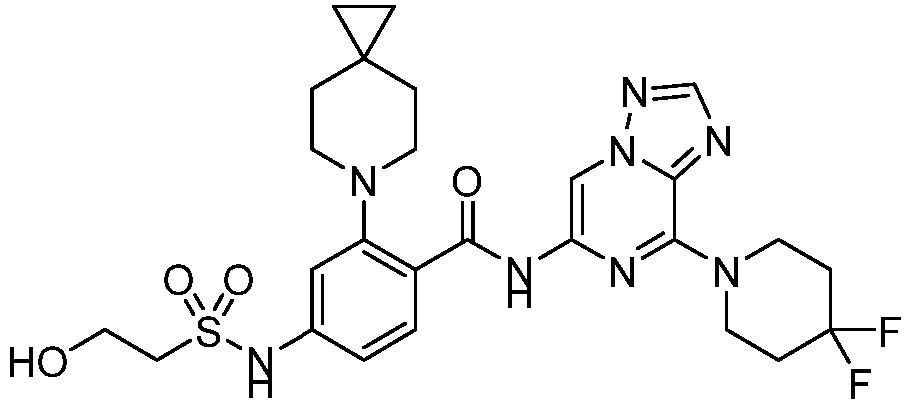
- The preparations in Example 16 follow the synthetic route of Example 3: LCMS (ESI): [M+H]+ =591.3; 1H NMR (400 MHz, DMSO) δ 13.39 (s, 1H), 8.91 (s, 1H), 8.42 (s, 1H), 7.90 (d, J = 8.7 Hz, 1H), 7.15 (s, 1H), 7.03 (s, 1H), 6.87 (d, J = 8.3 Hz, 1H), 6.61 (s, 1H), 6.06 (s, 1H), 5.26 (t, J = 4.8 Hz, 1H), 4.32 (m, 4H), 3.67 (t, J = 6.6 Hz, 2H), 3.31 (m, 2H), 3.09 (s, 2H), 2.91 (s, 4H), 2.09 (dd, J = 15.2, 9.5 Hz, 4H), 1.94 (dd, J = 14.4, 6.8 Hz, 4H), 0.35 (s, 4H).
-

- The preparations in Example 17 follow the synthetic route of Example 3: LCMS (ESI): [M+1]+ = 590.0. 1H NMR (400 MHz, DMSO) δ 13.06 (s, 1H), 10.24 (s, 1H), 8.95 (d, J = 0.9 Hz, 1H), 8.09 (d, J = 8.6 Hz, 1H), 7.98 (d, J = 2.4 Hz, 1H), 7.30 (d, J = 2.2 Hz, 1H), 7.15 (dd, J = 8.7, 2.1 Hz, 1H), 7.06 (d, J = 2.7 Hz, 1H), 3.95 (dd, J = 7.1, 4.5 Hz, 4H), 3.77 (d, J = 6.5 Hz, 3H), 3.36 (t, J = 6.5 Hz, 2H), 2.99 (d, J = 10.5 Hz, 4H), 2.17 (td, J = 13.6, 6.6 Hz, 4H), 1.76 (s, 4H), 0.41 (s, 4H).
-

- The preparations in Example 18 follow the synthetic route of Example 3: LCMS (ESI): [M+1]+ = 590.0. 1H NMR (400 MHz, DMSO) δ 12.23 - 12.16 (m, 1H), 9.23 (d, J= 1.6 Hz, 1H), 8.37 (s, 1H), 7.76 (d, J = 8.6 Hz, 1H), 7.03 (d, J = 2.0 Hz, 1H), 6.95 - 6.85 (m, 2H), 5.99 (s, 1H), 3.81 (t, J = 5.6 Hz, 4H), 3.74 (t, J = 6.8 Hz, 2H), 3.18 (d, J = 13.4 Hz, 3H), 2.97 (t, J = 5.2 Hz, 4H), 2.21 - 2.12 (m, 4H), 1.58 (t, J = 5.2 Hz, 4H), 0.36 (s, 4H).
-
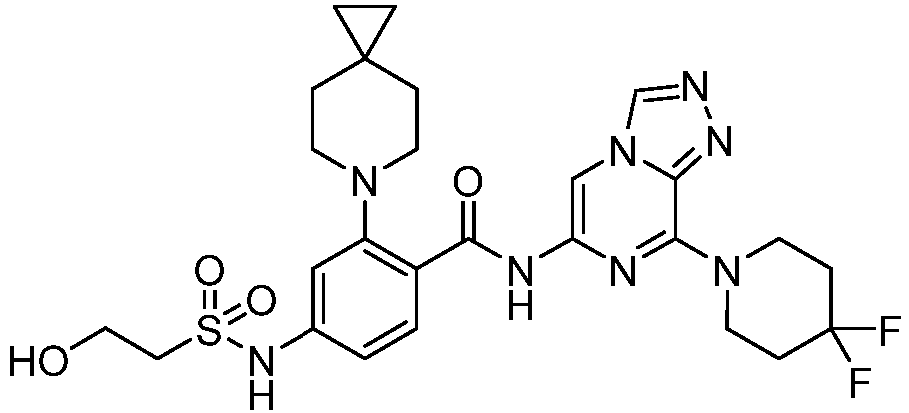
- The preparations in Example 19 follow the synthetic route of Example 3: LCMS (ESI): [M+H]+ =591.1. 1H NMR (400 MHz, DMSO-d 6) δ 13.08 (s, 1H), 10.20 (s, 1H), 9.37 (d, J = 1.1 Hz, 1H), 8.79 (d, J = 1.1 Hz, 1H), 8.08 (d, J = 8.6 Hz, 1H), 7.29 (d, J = 2.2 Hz, 1H), 7.15 (dd, J = 8.8, 1.9 Hz, 1H), 4.97 (s, 1H), 4.45 (s, 4H), 3.76 (t, J = 6.4 Hz, 2H), 3.17 (d, J = 5.1 Hz, 2H), 2.98 (t, J = 5.2 Hz, 4H), 2.22 - 2.11 (m, 4H), 1.74 (s, 4H), 0.42 (s, 4H).
-

- Step 1: To a solution of (±)-benzyloxycarbonyl-α-phosphonoglycine trimethyl ester (17.8 g, 53.7 mmol) in dichloromethane (170 mL) was added tetramethylguanidine (6.66 g, 57.8 mmol), and The mixture was stirred at 25°C for 15 min. Then, a solution of 2-pyrrolecarbaldehyde (5.00 g, 52.5 mmol) in dichloromethane (12 mL) was slowly added to the mixture at -30°C and stirred for 45 min. The mixture was heated to 50°C and stirred for 24 h. water (100 mL) was added to the reaction mixture, which was thenextracted with dichloromethane (100 mL × 2). The combined organic layer was dried over anhydrous sodium sulfate, filtered and concentrated under reduced pressure to give the residue. The residue was purified by flash column chromatography (silica gel, 0-15% gradient of ethyl acetate/petroleum ether) to give methyl 1-hydroxypyrrolo[1,2-c]pyrimidine-3-carboxylate (5.00 g, 52.5 mmol, yield: 49%) as a yellow solid. LCMS (ESI): [M+H]+ =193.2.
- Step 2: To a solution of methyl 1-hydroxypyrrolo[1,2-c]pyrimidine-3-carboxylate (5.00 g, 26.01 mmol) in phosphorus oxychloride (50 mL) was added N,N-diisopropylethylamine (10.1 g, 78.0 mmol), and the reactionmixture was stirred at 100°C for 16 h. the reaction solution was concentrated. water (100 mL) was added to the reaction mixture, which was thenextracted with ethyl acetate (100 mL × 3). The combined organic layer was dried over anhydrous sodium sulfate, filtered and concentrated under reduced pressure to give the residue. The residue was purified by flash column chromatography (silica gel, 0-15% gradient of ethyl acetate/petroleum ether) to give methyl 1-chloropyrrolo[1,2-c]pyrimidine-3-carboxylate (1.20 g, 26.0 mmol, yield: 21.9%) as a yellow solid. LCMS (ESI): [M+H]+ = 210.9.
- Step 3: To a solution of methyl 1-chloropyrrolo[1,2-c]pyrimidine-3-carboxylate (1.20 g, 5.70 mmol) and 4,4-difluoropiperidine hydrochloride (1.08 g, 6.84 mmol) in tert-butanol (24 mL) was added triethylamine (1.73 g, 17.1 mmol). The mixture was heated to 90°C and stirred for 16 h. water (20 mL) was added to the reaction solution, which was then extracted with ethyl acetate (20 mL × 3). The combined organic layer was dried over anhydrous sodium sulfate, filtered and concentrated under reduced pressure to give the residue. The residue was purified by flash column chromatography (silica gel, 0-10% gradient of ethyl acetate/petroleum ether) to give methyl 1-(4,4-difluoropiperidin-1-yl)pyrrolo[1,2-c]pyrimidine-3-carboxylate (1.70 g, 5.69 mmol, yield: 96%) as a yellow solid. LCMS (ESI): [M+H]+ = 295.9.
- Step 4: To a solution of methyl 1-(4,4-difluoropiperidin-1-yl)pyrrolo[1,2-c]pyrimidine-3-carboxylate (1.70 g, 5.76 mmol) in methanol (17 mL) and water (17 mL) was added sodium hydroxide (0.69 g, 17.2 mmol). The mixture was stirred at 25°C for 16 h. the reaction solution was concentrated, and the pH of the remaining aqueous phase was adjusted to 4 with 1 N HCl and extracted with ethyl acetate (20 mL×3). The combined organic layer was dried over anhydrous magnesium sulfate, filtered and concentrated under reduced pressure to give the residue 1-(4,4-difluoropiperidin-1-yl)pyrrolo[1,2-c]pyrimidine-3-carboxylic acid (1.70 g, 5.75 mmol, yield: 100%). LCMS (ESI): [M+H]+ = 281.9.
- Step 5: To a solution of 1-(4,4-difluoropiperidin-1-yl)pyrrolo[1,2-c]pyrimidine-3-carboxylic acid (1.00 g, 3.13 mmol), benzyl alcohol (0.52 g, 4.80 mmol) and triethylamine (0.65 g, 6.40 mmol) in toluene (9 mL) was added diphenylphosphoryl azide (1.32 g, 4.80 mmol). The mixture was heated to 90°C and stirred for 16 h. water (10 mL) was added to the reaction solution, which was thenextracted with ethyl acetate (10 mL × 2). The combined organic layer was dried over anhydrous sodium sulfate, filtered and concentrated under reduced pressure to give the residue. The residue was purified by flash column chromatography (silica gel, 0-10% gradient of ethyl acetate/petroleum ether) to give benzyl (1-(4,4-difluoropiperidin-1-yl)pyrrolo[1,2-c]pyrimidin-3-yl)carbamate (0.70 g, 3.19 mmol, yield: 56.6%) as a yellow solid. LCMS (ESI): [M+H]+ = 387.0.
- Step 6: To a solution of benzyl (1-(4,4-difluoropiperidin-1-yl)pyrrolo[1,2-c]pyrimidin-3-yl)carbamate (600 mg, 1.55 mmol) in acetonitrile (3 mL) and water (3 mL) was added a solution of hydrobromic acid in acetic acid (6 mL, 35%). The mixture was stirred at 25°C for 48 h. the reaction solution was concentrated. The residue was purified by preparative HPLC (C18, 0-60% gradient of acetonitrile/water) to give 1-(4,4-difluoropiperidin-1-yl)pyrrolo[1,2-c]pyrimidin-3-amine (200 mg, 1.55 mmol, yield: 51%) as a yellow solid compound. LCMS (ESI): [M+H]+ =253.2.
- Step 7: To a solution of 1-(4,4-difluoropiperidin-1-yl)pyrrolo[1,2-c]pyrimidin-3-amine (200 mg, 0.79 mmol) and 4-iodo-2-(6-azaspiro[2.5]octan-6-yl)benzoyl chloride (357 mg, 0.95 mmol) in THF (4 mL) was added the solution of triethylamine (0.65 g, 6.40 mmol) in toluene (9 mL) and N,N-diisopropylethylamine (313 mg, 2.38 mmol) . The mixture was stirred at 25°C for 16 h. water (10 mL) was added to the reaction solution, which was thenextracted with ethyl acetate (10 mL × 2). The combined organic layer was dried over anhydrous sodium sulfate, filtered and concentrated under reduced pressure to give the residue. The residue was purified by flash column chromatography (silica gel, 0-10% gradient of ethyl acetate/petroleum ether) to give N-(1-(4,4-difluoropiperidin-1-yl)pyrrolo[1,2-c]pyrimidin-3-yl)-4-iodo-2-(6-azaspiro[2. 5]octan-6-yl)benzamide (255 mg, 0.79 mmol, yield: 54.3%) as a yellow solid. LCMS (ESI): [M+H]+ = 592.3.
- Step 8: To a solution of 2-hydroxyethanesulfonamide (67.4 mg, 0.54 mmol), 2-(methylamino)acetic acid (36.9 mg, 0.41 mmol), and potassium phosphate (358 mg, 1.66 mmol) in N,N-dimethylformamide (5 mL) was added cuprous iodide (40.2 mg, 0.21 mmol) . The mixture was stirred at 50°C for 5 min. Then, N-(1-(4,4-difluoropiperidin-1-yl)pyrrolo[1,2-c]pyrimidin-3-yl)-4-iodo-2-(6-azaspiro[2. 5]octan-6-yl)benzamide (245 mg, 0.41 mmol) was added to the reaction mixture at 50°C, and the mixture was heated to 100°C and stirred at 100°C for 16 h under nitrogen atmosphere. water (10 mL) was added to the reaction solution, which was thenextracted with ethyl acetate (10 mL × 2). The combined organic layer was dried over anhydrous sodium sulfate, filtered and concentrated under reduced pressure to give the residue. The residue was purified by preparative HPLC (C18, 0-60% gradient of acetonitrile/water) to give N-(1-(4,4-difluoropiperidin-1-yl)pyrrolo[1,2-c]pyrimidin-3-yl)-4-(2-hydroxyethylsulf onamido)-2-(6-azaspiro[2.5]octan-6-yl)benzamide (29 mg, 0.41 mmol, yield: 11%) as a yellow solid compound. LCMS (ESI): [M+H]+ = 589.5. 1H NMR (400 MHz, DMSO-d6) δ ppm 13.15 - 12.87 (m, 1H), 10.39 - 9.98 (m, 1H), 8.16 - 8.02 (m, 1H), 7.98 - 7.82 (m, 1H), 7.46 - 7.36 (m, 1H), 7.31 - 7.23 (m, 1H), 7.20 - 7.05 (m, 1H), 6.94 - 6.74 (m, 1H), 6.49 - 6.28 (m, 1H), 5.05 - 4.81 (m, 1H), 3.81 - 3.70 (m, 2H), 3.57 - 3.45 (m, 4H), 3.42 - 3.35 (m, 2H), 3.06 - 2.91 (m, 4H), 2.35 - 2.19 (m, 4H), 2.05 - 1.49 (m, 4H), 0.49 - 0.32 (m, 4H)
-

- The preparations in Example 21 follow the synthetic route of Example 3: LCMS (ESI): [M+H]+ = 590.3; 1H NMR (400 MHz, DMSO) δ 13.86 (s, 1H), 10.37 (s, 1H), 8.13 (s, 1H), 8.11 (s, 2H), 8.03 (s, 1H), 7.32-7.36 (m, 1H), 7.16-7.22 (m, 1H), 3.77 (t, J = 6.4 Hz, 2H), 3.66-3.73 (m, 4H), 2.96-3.04 (m, 4H), 2.22-2.32 (m, 4H), 1.65-1.83 (s, 4H), 1.54 (d, J = 6.8 Hz, 1H), 1.20-1.34 (m, 2H), 0.42 (s, 4H).
-

- The preparations in Example 22 follow the synthetic route of Example 3: LCMS(ESI): [M+H]+=590.4. 1H-NMR (400 MHz, DMSO) δ 12.27 (s, 1H), 10.13 (s, 1H), 7.79 - 7.61 (m, 2H), 7.40 (d, J = 1.5 Hz, 1H), 7.05 (d, J = 7.2 Hz, 2H), 6.53 (s, 1H), 4.96 (s, 1H), 3.77 (t, J = 6.5 Hz, 2H), 3.46 - 3.32 (m, 6H), 2.80 (s, 4H), 1.89 (d, J = 16.2 Hz, 4H), 1.28 (s, 4H), 0.25 (s, 4H).
-
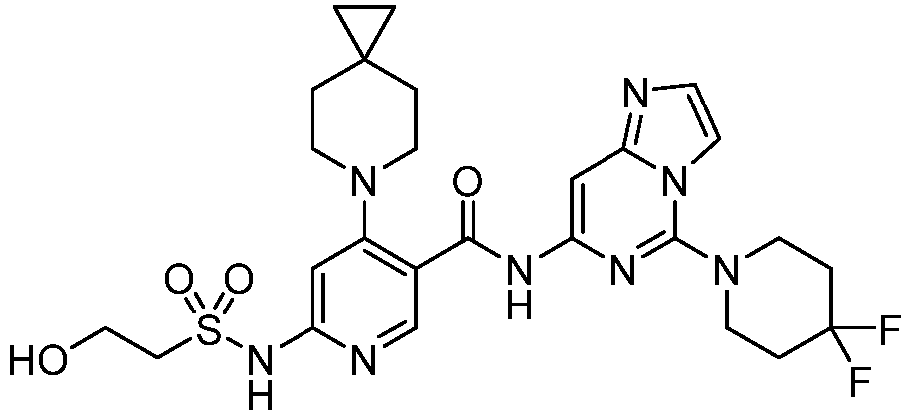
- The preparations in Example 23 follow the synthetic route of Example 3: LCMS (ESI): [M+H]+=633.3.
-
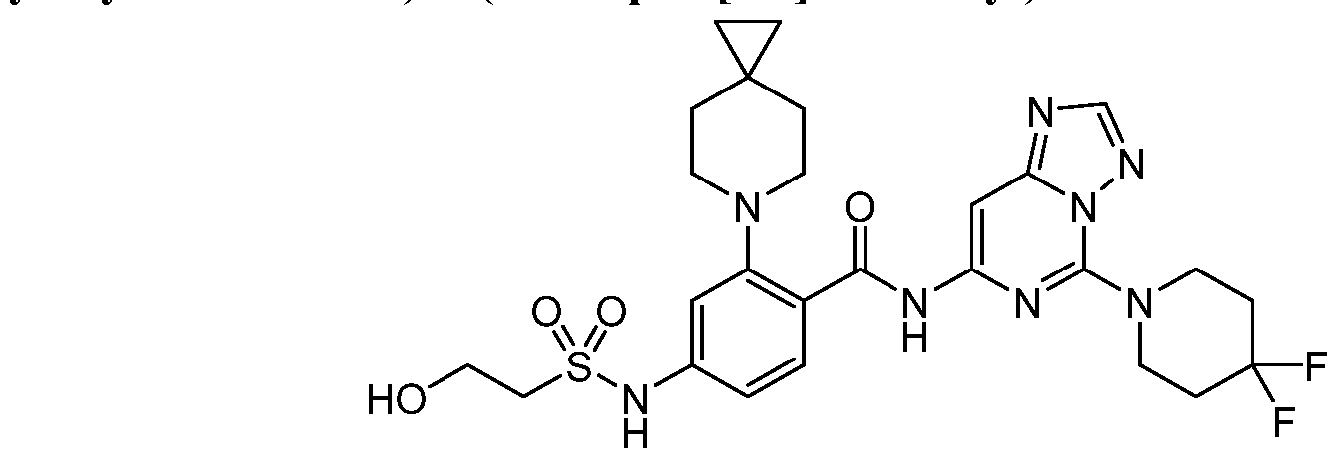
- The preparations in Example 24 follow the synthetic route of Example 3: LCMS (ESI): [M+H]+ =591.5. 1H NMR (400 MHz, DMSO-d6) δ ppm 13.37 (s, 1H), 10.27 (br s, 1H), 8.42 (s, 1H), 8.11 (d, J = 8.6 Hz, 1H), 7.91 (s, 1H), 7.30 (d, J = 1.9 Hz, 1H), 7.16 (dd, J = 1.9, 8.7 Hz, 1H), 4.96 (br s, 1H), 4.23 (br t, J = 5.2 Hz, 4H), 3.77 (br s, 2H), 3.40 - 3.35 (m, 2H), 3.00 (br s, 4H), 2.31 - 2.11 (m, 4H), 2.01 - 1.30 (m, 4H), 0.41 (s, 4H)
-

- The preparations in Example 25 follow the synthetic route of Example 3: LCMS (ESI): [M+H]+ =609.2. 1H NMR (400 MHz, DMSO-d6) δ ppm 13.69 (s, 1H), 10.12 (br s, 1H), 8.44 (s, 1H), 7.97 - 7.84 (m, 2H), 7.61 (d, J = 7.2 Hz, 1H), 5.17 - 4.80 (m, 1H), 4.31 - 4.17 (m, 4H), 3.88 - 3.76 (m, 2H), 3.43 - 3.40 (m, 2H), 3.05 - 2.95 (m, 4H), 2.28 - 1.51 (m, 8H), 0.42 (s, 4H)
-
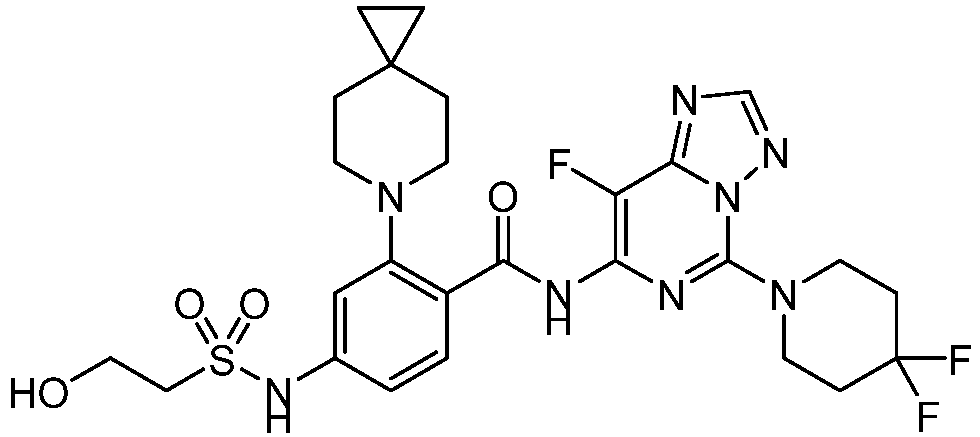
- The preparations in Example 26 follow the synthetic route of Example 3: LCMS (ESI): [M+H]+ = 609.2. 1H NMR (400 MHz, DMSO-d6) δ ppm 12.68 (s, 1H), 10.12 (s, 1H), 8.55 (s, 1H), 7.94 (br d, J = 8.4 Hz, 1H), 7.24 (br s, 1H), 7.10 (dd, J = 1.6, 8.4 Hz, 1H), 5.11 (s, 1H), 4.10 (br s, 4H), 3.76 (t, J = 6.4 Hz, 2H), 3.33 - 3.31 (m, 2H), 3.03 - 2.91 (m, 4H), 2.26 - 2.08 (m, 4H), 1.80 - 1.55 (m, 4H), 0.39 (s, 4H)
-

- The preparations in Example 27 follow the synthetic route of Example 3: LCMS (ESI): [M+H]+ = 605.0. 1H NMR (400 MHz, DMSO-d6) δ ppm 13.34 (s, 1H), 10.31 (s, 1H), 8.10 (d, J = 8.4 Hz, 1H), 7.81 (s, 1H), 7.30 (s, 1H), 7.15 (br d, J = 8.4 Hz, 1H), 5.29 - 4.67 (m, 1H), 4.21 (br s, 4H), 3.77 (br t, J = 6.4 Hz, 2H), 3.39 - 3.38 (m, 2H), 2.99 (br s, 4H), 2.47 - 2.40 (m, 3H), 2.25 - 2.14 (m, 4H), 1.92 - 1.58 (m, 4H), 0.41 (s, 4H)
-

- The preparations in Example 28 follow the synthetic route of Example 3: LCMS (ESI): [M+H]+ = 606.5. 1H NMR (400 MHz, DMSO-d6) δ ppm 12.91 (s, 1H), 10.21 (s, 1H), 8.30 (s, 1H), 8.09 (d, J = 8.6 Hz, 1H), 8.01 (d, J = 5.4 Hz, 1H), 7.51 (d, J = 5.4 Hz, 1H), 7.27 (d, J = 1.9 Hz, 1H), 7.13 (dd, J = 2.0, 8.6 Hz, 1H), 3.82-3.80 (m, 4H), 3.76 (t, J = 6.5 Hz, 2H), 3.37 (br d, J = 6.5 Hz, 2H), 3.05-2.95 (m, 4H), 2.25 - 2.10 (m, 4H), 2.06 - 1.40 (m, 4H), 0.47 - 0.35 (m, 4H)
-
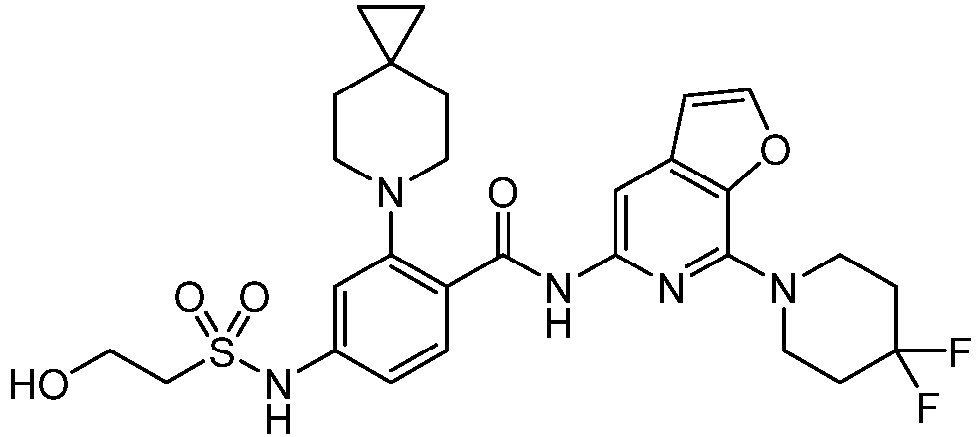
- The preparations in Example 29 follow the synthetic route of Example 3: LCMS (ESI): [M+H]+ = 590.5. 1H NMR (400 MHz, DMSO-d6) δ ppm 12.82 (s, 1H), 10.18 (s, 1H), 8.12 - 8.05 (m, 2H), 7.99 (s, 1H), 7.27 (d, J = 1.9 Hz, 1H), 7.12 (dd, J = 1.8, 8.6 Hz, 1H), 6.99 (d, J= 2.0 Hz, 1H), 4.95 (br d, J = 1.4 Hz, 1H), 3.97 (br t, J = 5.6 Hz, 4H), 3.76 (br t, J = 5.9 Hz, 2H), 3.37 - 3.36 (m, 2H), 2.98 (br s, 4H), 2.22 - 2.03 (m, 4H), 1.99 - 1.37 (m, 4H), 0.40 (s, 4H)
-

- The preparations in Example 30 follow the synthetic route of Example 3: LCMS (ESI): [M+H]+ = 589.3. 1H NMR (400 MHz, DMSO-d6) δ ppm 11.68 (s, 1H), 10.09 (s, 1H), 7.96 (d, J = 2.0 Hz, 1H), 7.84 (d, J = 1.2 Hz, 2H), 7.17 (d, J = 2.0 Hz, 1H), 7.10 (d, J = 1.6 Hz, 1H), 7.04 (dd, J = 2.0, 8.4 Hz, 1H), 6.96 (d, J = 2.0 Hz, 1H), 5.33 - 4.50 (m, 1H), 3.80 - 3.72 (m, 2H), 3.48 - 3.44 (m, 4H), 3.33 - 3.29 (m, 2H), 3.01 - 2.95 (m, 4H), 2.23 - 2.13 (m, 4H), 1.60 - 1.53 (m, 4H), 0.35 (s, 4H)
-

- The preparations in Example 31 follow the synthetic route of Example 3: LCMS (ESI): [M+H]+ =590.5. 1H NMR (400 MHz, DMSO-d6) δ ppm 12.98 (s, 1H), 10.22 (br s, 1H), 8.08 (d, J = 8.8 Hz, 1H), 7.95 (d, J= 0.8 Hz, 1H), 7.91 (d, J = 2.4 Hz, 1H), 7.27 (d, J = 2.0 Hz, 1H), 7.18 (d, J = 1.2 Hz, 1H), 7.12 (dd, J = 2.0, 8.6 Hz, 1H), 5.14 - 4.79 (m, 1H), 3.87 - 3.81 (m, 4H), 3.78 - 3.73 (m, 2H), 3.38 - 3.35 (m, 2H), 3.02 - 2.94 (m, 4H), 2.16 - 2.05 (m, 4H), 1.99 - 1.25 (m, 4H), 0.40 (s, 4H)
-
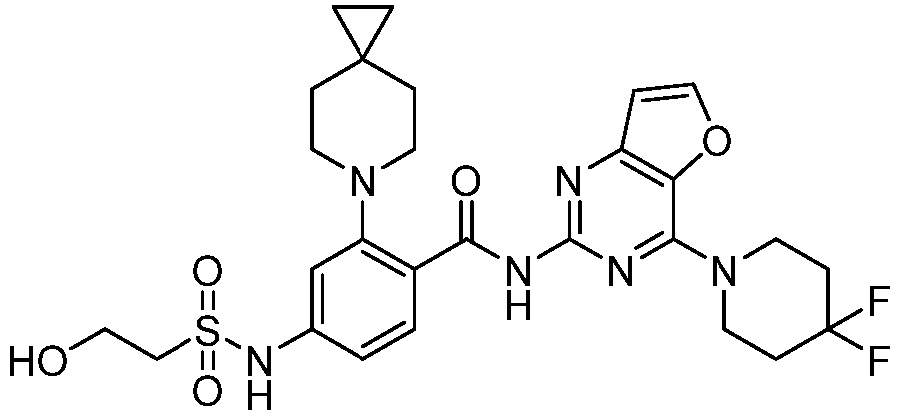
- The preparations in Example 32 follow the synthetic route of Example 3: LCMS (ESI): [M+H]+ =591.4. 1H NMR (400 MHz, DMSO-d 6) δ 12.69 (s, 1H), 9.90 (s, 1H), 8.24 (d, J = 2.2 Hz, 1H), 7.97 (d, J = 8.6 Hz, 1H), 7.22 (s, 1H), 7.09 (dd, J = 8.6, 2.1 Hz, 1H), 6.96 (d, J = 2.2 Hz, 1H), 5.47 (s, 1H), 4.07 (t, J = 5.7 Hz, 4H), 3.76 (t, J = 6.5 Hz, 2H), 3.35 (d, J = 6.7 Hz, 2H), 2.96 (d, J = 5.5 Hz, 4H), 2.13 (s, 4H), 1.85 - 1.43 (m, 4H), 0.38 (s, 4H).
-

- Step 1: To a solution of N-(7-(4,4-difluoropiperidin-1-yl)furo[2,3-c]pyridin-5-yl)-4-(2-hydroxyethylsulfonami do)-2-(6-azaspiro[2.5]octan-6-yl)benzamide (30.0 mg, 0.05 mmol) in acetonitrile (1.00 mL) was added N-chlorosuccinimide (8.15 mg, 0.06 mmol). The mixture was heated to 50°C and stirred for 4 h. water (5 mL) was added to the reaction mixture which was thenextracted with ethyl acetate (5 mL × 3). The combined organic layer was dried over anhydrous magnesium sulfate, filtered and concentrated under reduced pressure to give the residue, which was purified by preparative HPLC (C18, 18-58% gradient of water (formic acid)/acetonitrile) to give N-(4-chloro-7-(4,4-difluoropiperidin-1-yl)furo[2,3-c]pyridin-5-yl)-4-(2-hydroxyethyls ulfonamido)-2-(6-azaspiro[2.5]octan-6-yl)benzamide (8.00 mg, 0.05 mmol, yield: 25%) as a white solid. LCMS (ESI): [M+H]+ = 624.2. 1H NMR (400 MHz, DMSO-d6) δ ppm 11.72 (s, 1H), 10.13 (br s, 1H), 8.26 (d, J = 2.1 Hz, 1H), 7.90 (br d, J = 8.3 Hz, 1H), 7.21 (br s, 1H), 7.14 - 6.99 (m, 2H), 4.95(br s, 1H), 4.08 - 3.85 (m, 4H), 3.82 - 3.72 (m, 2H), 3.43 - 3.37 (m, 2H), 3.07 - 2.95 (m, 4H), 2.18 - 2.02 (m, 4H), 1.76 - 1.55 (m, 4H), 0.37 (s, 4H)
-

- The preparations in Example 34 follow the synthetic route of Example 3: LCMS (ESI) m/z: 604[M+H]+; 1H NMR (400 MHz, DMSO) δ 13.05 (s, 1H), 10.18 (s, 1H), 8.24 (d, J = 18.6 Hz, 2H), 8.10 (d, J = 8.6 Hz, 1H), 7.27 (d, J = 2.2 Hz, 1H), 7.13 (dd, J = 8.6, 2.1 Hz, 1H), 4.95 (s, 1H), 4.04 (s, 3H), 3.76 (q, J = 5.4, 4.7 Hz, 2H), 3.38 - 3.33 (m, 5H), 3.17 (d, J = 5.2 Hz, 1H), 2.99 (t, J = 5.2 Hz, 5H), 2.22 (td, J = 13.6, 12.7, 6.6 Hz, 4H), 1.78 (s, 4H), 0.39 (s, 5H).
-
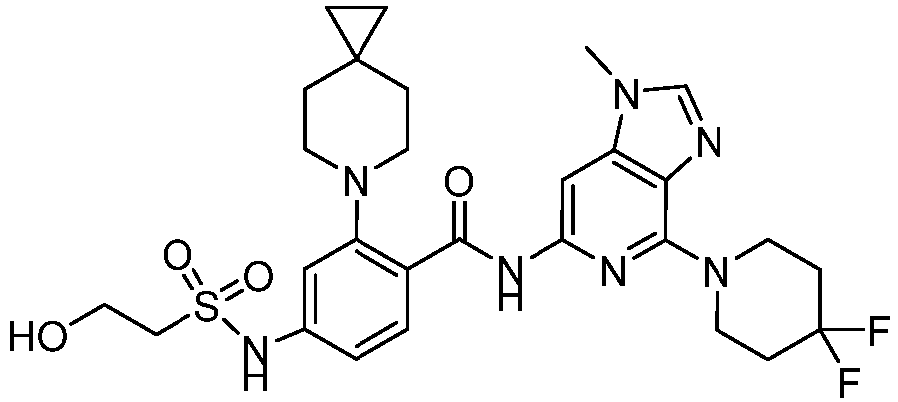
- The preparations in Example 35 follow the synthetic route of Example 3: LCMS (ESI): [M+H]+ = 604.4. 1H NMR (400 MHz, DMSO) δ 12.71 (s, 1H), 10.18 (s, 1H), 8.10 - 8.02 (m, 2H), 7.86 (s, 1H), 7.26 (d, J = 2.2 Hz, 1H), 7.13 (dd, J = 8.6, 2.1 Hz, 1H), 4.94 (s, 1H), 4.29 (t, J = 5.7 Hz, 4H), 3.77 (s, 5H), 3.36 (t, J = 6.5 Hz, 2H), 2.99 (s, 4H), 2.12 - 1.98 (m, 4H), 1.74 (s, 4H), 0.40 (s, 4H).
-
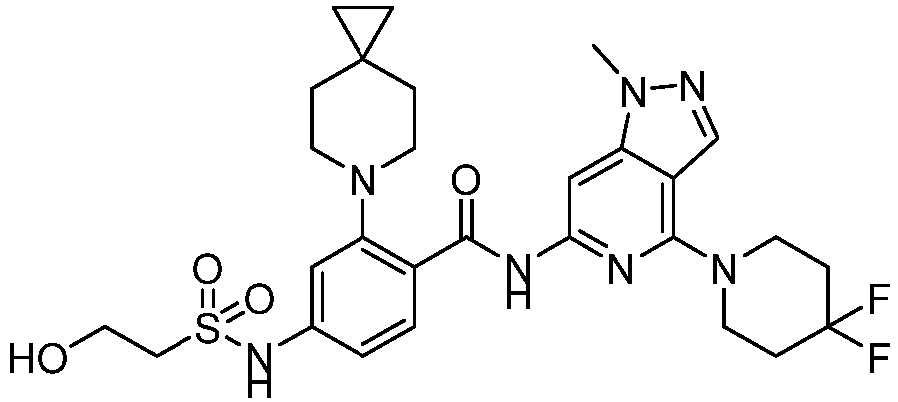
- The preparations in Example 36 follow the synthetic route of Example 3: LCMS (ESI) m/z: 604[M+H]+; 1H NMR (400 MHz, DMSO) δ 12.80 (s, 1H), 8.24 (d, J = 1.0 Hz, 1H), 8.08 (d, J = 8.6 Hz, 1H), 7.79 (d, J = 0.8 Hz, 1H), 7.26 (d, J = 2.2 Hz, 1H), 7.13 (dd, J = 8.6, 2.1 Hz, 1H), 4.99 (s, 1H), 3.97 (dd, J = 6.8, 4.6 Hz, 4H), 3.92 (s, 3H), 3.77 (t, J = 6.4 Hz, 2H), 3.36 (t, J = 6.4 Hz, 2H), 2.98 (d, J = 5.6 Hz, 4H), 2.10 (dt, J = 14.8, 5.5 Hz, 4H), 1.23 (s, 1H), 0.39 (s, 4H).
-
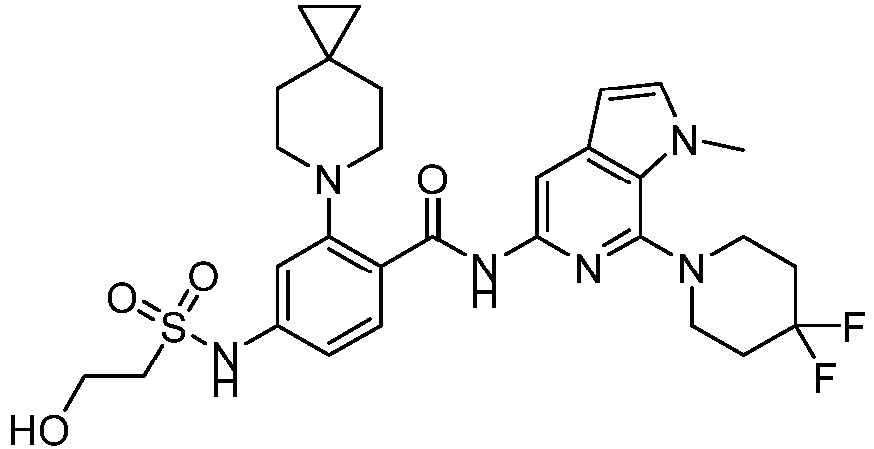
- The preparations in Example 37 follow the synthetic route of Example 3: LCMS (ESI): [M+H]+ = 603.4. 1H NMR (400 MHz, DMSO) δ 12.86 (s, 1H), 10.15 (s, 1H), 8.16 (s, 1H), 8.08 (d, J = 8.4 Hz, 1H), 7.45 (d, J = 3.2 Hz, 1H), 7.26 (d, J = 2.4 Hz, 1H), 7.12 (dd, J = 8.4, 2.0 Hz, 1H), 6.46 (d, J = 3.2 Hz, 1H), 4.94 (s, 1H), 4.05 (s, 3H), 3.76 (t, J = 6.4 Hz, 2H), 3.35 (t, J = 6.4 Hz, 2H), 3.30 (d, J = 6.4 Hz, 4H), 2.98 (t, J = 5.2 Hz, 4H), 2.25-2.08 (m, 4H), 1.75 (s, 4H), 0.39 (s, 4H).
-
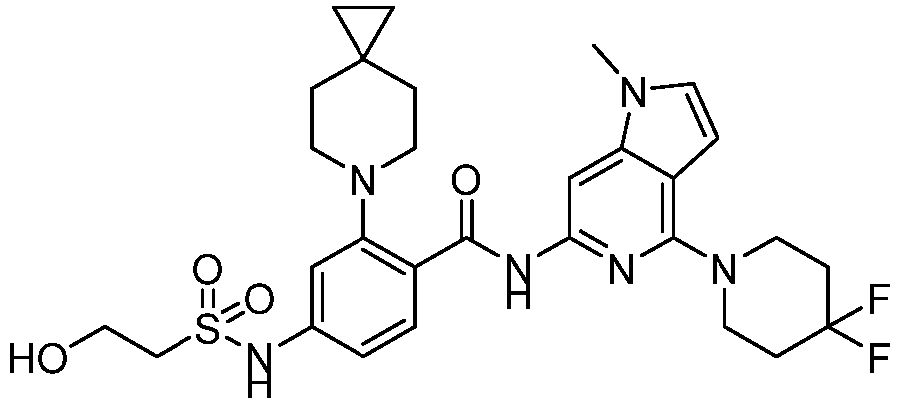
- The preparations in Example 38 follow the synthetic route of Example 3: LCMS (ESI): [M+1]+ = 603. 1H NMR (400 MHz, DMSO) δ 12.79 (s, 1H), 10.27 (s, 1H), 7.96 (d, J = 8.6 Hz, 1H), 7.90 (d, J = 0.8 Hz, 1H), 7.20 (d, J = 3.2 Hz, 1H), 7.07 (d, J = 2.0 Hz, 1H), 6.93 (dd, J = 8.6, 2.0 Hz, 1H), 6.55 (dd, J = 3.2, 0.8 Hz, 1H), 5.80 (s, 2H), 3.87 - 3.77 (m, 4H), 3.72 (d, J = 9.8 Hz, 5H), 3.17 (t, J = 6.6 Hz, 3H), 2.97 (t, J = 5.2 Hz, 4H), 2.34 (s, 4H), 2.09 (ddd, J = 14.3, 7.6, 3.5 Hz, 4H), 0.38 (s, 4H).
-

- The preparations in Example 39 follow the synthetic route of Example 3: LCMS (ESI): [M+H]+ = 608.3. 1H NMR (400 MHz, DMSO) δ 12.92 (s, 1H), 10.23 (s, 1H), 8.10 (d, J = 8.4 Hz, 1H), 8.06 (s, 1H), 7.29 (d, J = 2.0 Hz, 1H), 7.14 (dd, J = 8.4, 2.0 Hz, 1H), 4.95 (t, J = 5.6 Hz, 1H), 4.43 (t, J = 5.6 Hz, 4H), 3.77 (q, J = 6.4 Hz, 2H), 3.37 (t, J = 6.4 Hz, 2H), 3.00 (t, J = 5.2 Hz, 4H), 2.24 - 2.14 (m, 4H), 1.74 (s, 4H), 0.41 (s, 4H).
-

- The preparations in Example 40 follow the synthetic route of Example 3: LCMS (ESI): [M+1]+ = 607. 1H NMR (400 MHz, DMSO) δ 11.95 (s, 1H), 10.10 (s, 1H), 8.29 (d, J = 1.6 Hz, 1H), 7.85 (d, J = 8.4 Hz, 1H), 7.18 (d, J = 2.4 Hz, 1H), 7.10 - 7.02 (m, 2H), 4.99 (s, 1H), 3.78 (d, J = 6.4 Hz, 2H), 3.76 - 3.72 (m, 4H), 3.35 (d, J = 6.4 Hz, 2H), 3.00 (t, J = 5.2 Hz, 4H), 2.21 (tt, J = 13.6, 5.5 Hz, 4H), 1.57 (t, J = 5.2 Hz, 4H), 0.35 (s, 4H).
-
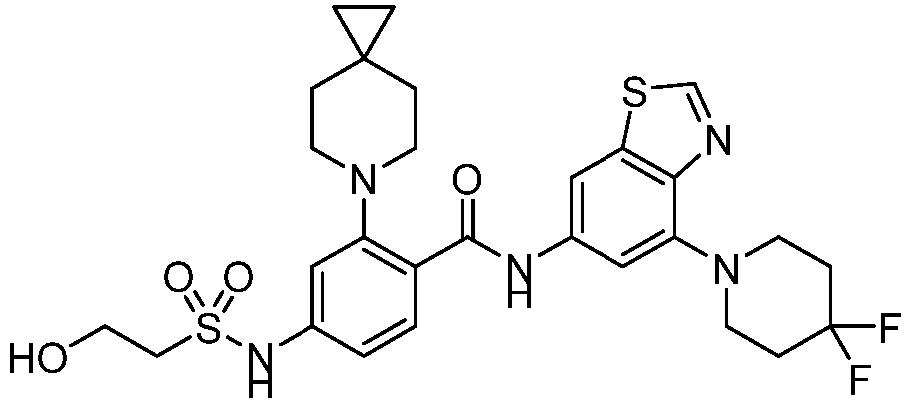
- The preparations in Example 41 follow the synthetic route of Example 3: LCMS (ESI): [M+H]+ = 606.2, 1H NMR (400 MHz, DMSO-d6) δ ppm 11.88 (s, 1H), 10.11 (s, 1H), 9.20 (s, 1H), 8.37 (d, J = 1.2 Hz, 1H), 7.85 (d, J = 8.4 Hz, 1H), 7.17 (dd, J = 1.6, 14.0 Hz, 2H), 7.05 (dd, J = 2.0, 8.4 Hz, 1H), 5.06 - 4.86 (m, 1H), 3.77 (br t, J = 6.4 Hz, 2H), 3.65 (br s, 4H), 3.36 (br s, 2H), 2.99 (br s, 4H), 2.26 - 2.11 (m, 4H), 1.58 (br s, 4H), 0.36 (s, 4H)
-
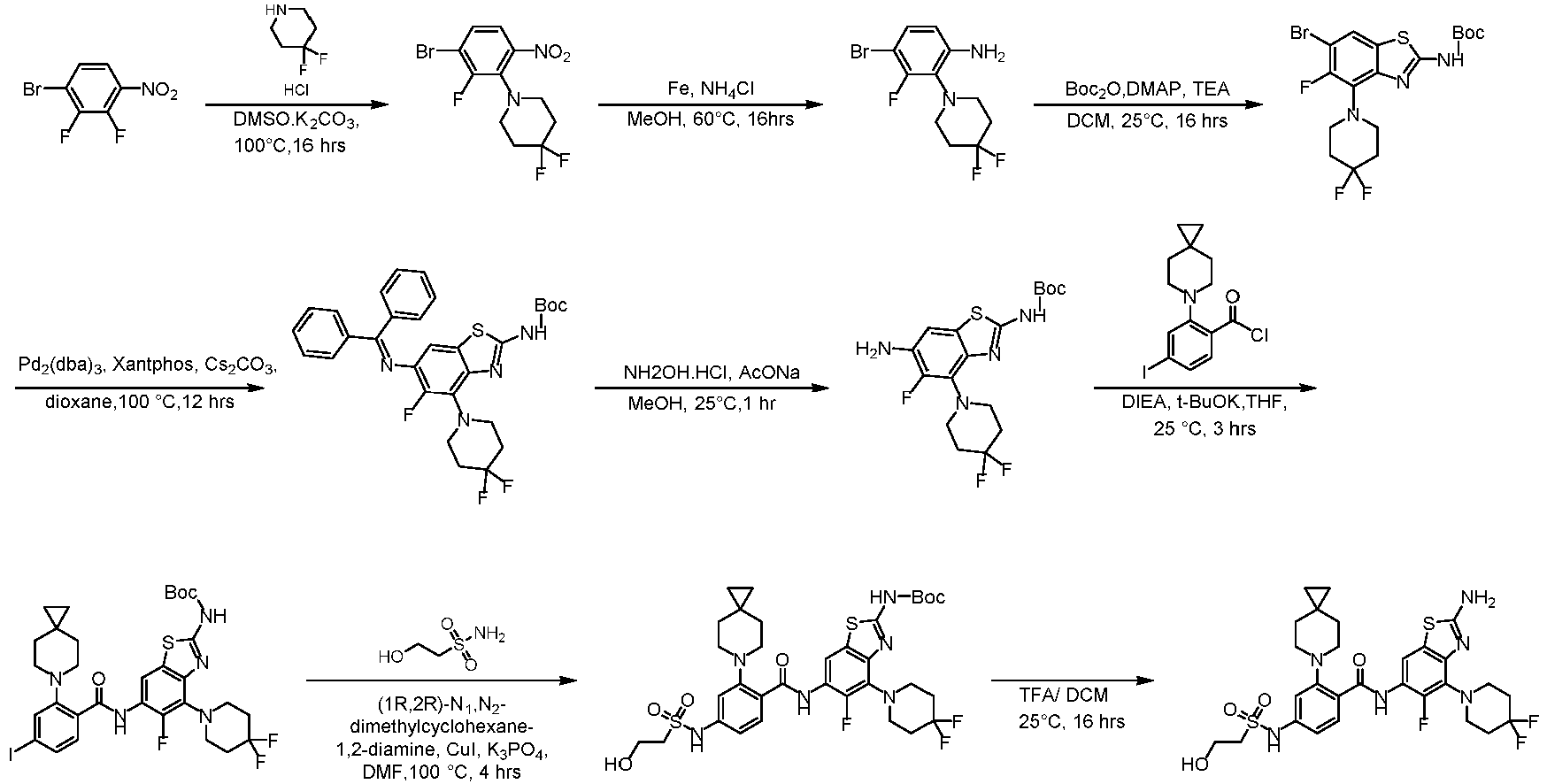
- Step 1: To a solution of 1-bromo-2,3-difluoro-4-nitrobenzene (10.0 g, 42.0 mmol) and 4,4-difluoropiperidine hydrochloride (7.28 g, 46.2 mmol) in DMSO (200 mL) was added potassium carbonate (17.8 g, 126 mmol). The mixture was heated to 100°C and stirred for 16 h under nitrogen atmosphere. water (200 mL) was added to the reaction solution, which was thenextracted with ethyl acetate (200 mL × 3). The combined organic layer was dried over anhydrous sodium sulfate, filtered and concentrated under reduced pressure to give 1-(3-bromo-2-fluoro-6-nitrophenyl)-4,4-difluoropiperidine (12.0 g, 35.3 mmol, yield: 84%) as a yellow solid. LCMS (ESI): [M+H]+ =338.9; 1H NMR (400 MHz, DMSO-d6) δ 7.72 - 7.61 (m, 2H), 3.16 (br t, J = 5.3 Hz, 4H), 2.16 - 2.01 (m, 4H)
- Step 2: To a solution of 1-(3-bromo-2-fluoro-6-nitrophenyl)-4,4-difluoropiperidine (12.0 g, 35.4 mmol) and ammonium chloride (7.64 g, 141 mmol) in methanol (240 mL) and water (80 mL) was added iron powder (13.3 g, 236 mmol) portionwise . The mixture was heated to 60°C and stirred for 16 h under nitrogen atmosphere. he reaction solution was filtered. The reaction solution was diluted with water (160 mL) and extracted with ethyl acetate (200 mL × 3). The combined organic layer was dried over anhydrous sodium sulfate, filtered and concentrated under reduced pressure to give 4-bromo-2-(4,4-difluoropiperidin-1-yl)-3-fluoroaniline (10.8 g, 34.9 mmol, yield: 98.7%) as a yellow solid. LCMS (ESI): [M+H]+ = 308.9;
- Step 3: To a solution of 4-bromo-2-(4,4-difluoropiperidin-1-yl)-3-fluoroaniline (1.00 g, 2.73 mmol) and di-tert-butyl dicarbonate (1.79 g, 8.19 mmol) in dichloromethane (20.0 mL) was added triethylamine (846 mg, 8.19 mmol) and 4-dimethylaminopyridine (34.0 mg, 0.27 mmol). The mixture was stirred at 25°C for 16 h. The reaction solution was diluted with water (20 mL) and extracted with ethyl acetate (20 mL × 3). The combined organic layer was dried over anhydrous sodium sulfate, filtered, concentrated to give the residue. The residue was purified by flash column chromatography (silica gel, 0-8% gradient of ethyl acetate/petroleum ether) to give tert-butyl N-[6-bromo-4-(4,4-difluoropiperidin-1-yl)-5-fluoro-1,3-benzothiazol-2-yl]carbamate (490 mg, 1.04 mmol, yield: 38%) as a yellow oil. LCMS (ESI): [M+H]+ =465.9; 1H NMR (400 MHz, DMSO-d6) δ ppm 11.86 (s, 1H), 7.93 (d, J = 6.4 Hz, 1H), 3.44 (br t, J = 5.2 Hz, 4H), 2.18 - 2.01 (m, 4H), 1.50 (s, 9H)
- Step 4: To a solution of tert-butyl N-[6-bromo-4-(4,4-difluoropiperidin-1-yl)-5-fluoro-1,3-benzothiazol-2-yl]carbamate (480 mg, 1.03 mmol), diphenylmethanimine (280 mg, 1.54 mmol) and cesium carbonate (1027 mg, 3.09 mmol) in dioxane (20.0 mL) were added 4,5-bis(diphenylphosphino)-9,9-dimethylxanthene (60.1 mg, 0.10 mmol) and (2-amino-1,1-biphenyl-2-yl) palladium (II) (96.2 mg, 0.10 mmol). the mixture was replaced with nitrogen 3 times. The mixture was heated to 100°C under nitrogen atmosphere, and stirred for 12 h. The reaction solution was diluted with water (5 mL), extracted with dichloromethane (15 mL × 2). the combined organic layer was washed with saturated saline (20 mL), dried over magnesium sulfate, filtered, and concentrated under reduced pressure to give the residue. The residue was purified by flash column chromatography (silica gel, 0-6% gradient of ethyl acetate/petroleum ether) to give tert-butyl N-[6-bromo-4-(4,4-difluoropiperidin-1-yl)-5-fluoro-1,3-benzothiazol-2-yl] carbamate (260 mg, 0.46 mmol, yield: 45%) as a yellow solid. LCMS (ESI): [M+H]+ =567.1; 1H NMR (400 MHz, DMSO-d6) δ ppm 11.61 (br s, 1H), 7.71 - 7.65 (m, 2H), 7.60 - 7.54 (m, 1H), 7.52 - 7.46 (m, 2H), 7.34 - 7.32 (m, 2H), 7.16 (dd, J = 2.8, 6.4 Hz, 2H), 6.99 (d, J= 7.2 Hz, 1H), 3.27 (br t, J= 5.6 Hz, 4H), 2.10 - 2.00 (m, 4H), 1.48 (s, 10H)
- Step 5: To a mixed solution of tert-butyl N-[6-bromo-4-(4,4-difluoropiperidin-1-yl)-5-fluoro-1,3-benzothiazol-2-yl] carbamate (240 mg, 0.42 mmol) and methanol (2.00 mL) were added hydroxylamine hydrochloride (59.0 mg, 0.85 mmol) and sodium acetate (104 mg, 1.27 mmol) . The mixture was stirred at 25°C for 1 h. the reaction solution was diluted with water (5 mL), extracted with dichloromethane (15 mL × 2). the combined organic layer was washed with saturated saline (20 mL), dried over magnesium sulfate, filtered, and concentrated under reduced pressure to give the residue. The residue was purified by flash column chromatography (silica gel, 0-50% gradient of ethyl acetate/petroleum ether) to give tert-butyl N-[6-amino-4-(4,4-difluoropiperidin-1-yl)-5-fluoro-1,3-benzothiazol-2-yl] carbamate (120 mg, 0.30 mmol, yield: 70%) as a yellow solid. LCMS (ESI): [M+H]+ =403.0.
- Step 6: To a solution of tert-butyl N-[6-amino-4-(4,4-difluoropiperidin-1-yl)-5-fluoro-1,3-benzothiazol-2-yl] carbamate (120 mg, 0.30 mmol) and 4-iodo-2-(6-azaspiro[2.5]octan-6-yl)benzoyl chloride (168 mg, 0.45 mmol) in THF (4.00 mL) was added N,N-diisopropylethylamine (118 mg, 0.89 mmol) , and the mixture was stirred at 25°C for 3 h. the reaction solution was diluted with water (5 mL), extracted with dichloromethane (15 mL × 2), the combined organic layer was washed with saturated saline (20 mL), dried over magnesium sulfate, filtered, and concentrated under reduced pressure to give the residue. The residue was purified by flash column chromatography (silica gel, 0-10% gradient of ethyl acetate/petroleum ether) to give tert-butyl N-[6-(2-{6-azaspiro[2.5]octan-6-yl}-4-iodobenzoylamino)-4-(4,4-difluoropiperidin-1-yl)-5-fluoro-1,3-benzothiazol-2-yl] carbamate (80 mg, 0.10 mmol, yield: 36%) as a yellow solid. LCMS (ESI): [M+H]+ =742.2
- Step 7: To a solution of 2-hydroxyethanesulfonamide (23.6 mg, 0.19 mmol), trans-N,N-dimethyl-1,2-cyclohexanediamine (13.6 mg, 0.09 mmol), potassium phosphate (80.1 mg, 0.38 mmol) in N,N-dimethylformamide (4.00 mL) was added cuprous iodide (9.17 mg, 0.05 mmol) . The mixture was stirred at 50°C for 5 min. Then, tert-butyl N-[6-(2-{6-azaspiro[2.5]octan-6-yl}-4-iodobenzoylamino)-4-(4,4-difluoropiperidin-1-yl)-5-fluoro-1,3-benzothiazol-2-yl]carbamate (70.0 mg, 0.09 mmol) was added to the reaction mixture at 50°C, and the mixture was heated to 100°C and stire at 100°C for 4 h under nitrogen atmosphere. The reaction solution was diluted with water (5 mL) and extracted with ethyl acetate (5 mL × 2).The combined organic layer was washed with liquor ammonia (5 mL × 2), driede over anhydrous magnesium sulfate, filterd and concentrated to give tert-butyl N-[6-(2-6-azaspiro[2.5]octan-6-yl}-4-(2-hydroxyethanesulfonamido)benzoylamino)-4-(4,4-difluoropiperidin-1-yl)-5-fluoro-1,3-benzothiazol-2-yl]carbamate (69 mg, crude) as a yellow solid compound. LCMS (ESI): [M+H]+ =739.2.
- Step 8: To a mixed solution of trifluoroacetic acid (1.00 mL) and dichloromethane (3.00 mL) was added tert-butyl N-[6-(2-{6-azaspiro[2.5]octan-6-yl}-4-(2-hydroxyethanesulfonamido)benzoylamino)-4-(4,4-difluoropiperidin-1-yl)-5-fluoro-1,3-benzothiazol-2-yl]carbamate (60.0 mg, 0.08 mmol). The mixture was stirred at 25°C for 16 h. the reaction solution was diluted with water (5 mL) and extracted with ethyl acetate (5 mL × 2). The combined the organic phases was washed with liquor ammonia (5 mL × 2), dried over anhydrous magnesium sulfate, filtered and concentrated to give a residue. The residue was purified by preparative HPLC (C18, 30%-70% gradient of water (formic acid)/acetonitrile) to give N-[2-amino-4-(4,4-difluoropiperidin-1-yl)-5-fluoro-1,3-benzothiazol-6-yl]-2-{6-azasp iro[2.5]octan-6-yl}-4-(2-hydroxyethanesulfonamido) benzamide (2.5 mg, 0.04 mmol, yield: 4.8%) as a white solid. LCMS (ESI): [M+H]+ =639.2; 1H NMR (400 MHz, DMSO-d6) δ ppm 12.07 (s, 1H), 10.17 (s, 1H), 8.43 (d, J = 6.4 Hz, 1H), 8.23 - 7.44 (m, 3H), 7.27 (d, J = 1.6 Hz, 1H), 7.11 (dd, J = 2.0, 8.4 Hz, 1H), 3.77 - 3.74 (m, 2H), 3.41 - 3.34 (m, 6H), 3.03 - 2.94 (m, 4H), 2.24 - 2.05 (m, 4H), 1.67 - 1.50 (m, 4H), 0.37 (s, 4H)
-

- The preparations in Example 43 follow the synthetic route of Example 3: LCMS (ESI): [M+H]+ = 619.3. 1H NMR (400 MHz, DMSO-d6) δ ppm 13.30 (s, 1H), 10.53 - 9.86 (m, 1H), 8.06 (d, J = 8.8 Hz, 1H), 7.83 (br s, 1H), 7.63 (s, 1H), 7.26 (d, J = 2.0 Hz, 1H), 7.13(dd, J = 2.0, 6.8 Hz, 1H), 5.14 - 4.76 (m, 1H), 3.76 (br t, J = 6.4 Hz, 2H), 3.56 - 3.46 (m, 4H), 3.30 (br d, J = 5.6 Hz, 4H), 2.90 - 3.00 (m, 4H), 2.84 (br t, J = 5.6 Hz, 2H), 2.20 - 1.35 (m, 8H), 0.39 (s, 4H)
-

- Step 1: To a stirred solution containing 4,4-difluoropiperidine hydrochloride (1.7 g, 10.71 mmol), cesium carbonate (3.6 g, 10.71 mmol) in DMF (20 mL) was added 8-bromo-1,7-naphthyridine-6-amine (2 g, 8.93 mmol). The mixture was stirred at 100°C for 12 h, The reaction solution was poured into water (50 mL), extracted with ethyl acetate (50 mL×3), and the combined organic layer was dried over anhydrous sodium sulfate, filtered and concentrated to give the residue, which was further purified by column chromatography (silica gel, 0-50% gradient of ethyl acetate/petroleum ether) to give 8-(4,4-difluoropiperidin-1-yl)-1,7-naphthyridin-6-amine (1.9 g) as a yellow solid compound. LCMS (ESI): [M+H]+ = 265.1.
- Step 2: To a stirred solution of 2-fluoro-4-nitrobenzoic acid (1.5 g, 7.91 mmol), propylphosphoric tricyclic anhydride (9.2 g, 14.38 mmol, 50% in EA), N,N-diisopropylethylamine (2.8 g, 21.57 mmol) in 1,2-dichloroethane (20 mL) was added 8-(4,4-difluoropiperidin-1-yl)-1,7-naphthyridin-6-amine (1.9 g, 7.19 mmol). The mixture was stirred at 80°C for 12 h. The reaction solution was poured into water (50 mL), extracted with ethyl acetate (50 mL × 3), and the combined organic layer was dried over anhydrous sodium sulfate, filtered and concentrated to give the residue, which was further purified by column chromatography (silica gel, 0-100% gradient of ethyl acetate/petroleum ether) to give N-(8-(4,4-difluoropiperidin-1-yl)-1,7-naphthyridin-6-yl)-2-fluoro-4-nitrobenzamide (1.7 g) as a yellow solid compound. LCMS (ESI): [M+H]+ = 432.2.
- Step 3: To a stirred solution of 6-aza-spiro[2.5]octane hydrochloride (373 mg, 2.50 mmol), potassium carbonate (883 mg, 6.26 mmol) in DMSO (10 mL) was added N-(8-(4,4-difluoropiperidin-1-yl)-1,7-naphthyridin-6-yl)-2-fluoro-4-nitrobenzamide (900 mg, 2.09 mmol). The mixture was stitted at 110°C for 12 h. The reaction solution was poured into water (30 mL), extracted with ethyl acetate (30 mL×3), and the combined organic layer was dried over anhydrous sodium sulfate, filtered and concentrated to give the residue, which was further purified by column chromatography (silica gel, 0-20% gradient of methanol/dichloromethane) to give N-(8-(4,4-difluoropiperidin-1-yl)-1,7-naphthyridin-6-yl)-4-nitro-2-(6-azaspiro[2.5]oct an-6-yl)benzamide (820 mg) as a yellow solid compound. LCMS (ESI): [M+H]+ = 523.3.
- Step 4: To a stirred solution of iron powder (756 mg, 13.40 mmol), ammonium chloride (724 mg, 13.40 mmol) in ethanol/water (5:1) (24 mL) was added N-(8-(4,4-difluoropiperidin-1-yl)-1,7-naphthyridin-6-yl)-4-nitro-2-(6-azaspiro[2.5]oct an-6-yl)benzamide (700 mg, 1.34 mmol). The mixture was stirred at 60°C for 30 min. The hot reaction solution was filtered and the filtrate was poured into water (30 mL), extracted with ethyl acetate (30 mL × 3), dried over anhydrous sodium sulfate, filtered and concentrated to give 4-amino-N-(8-(4,4-difluoropiperidin-1-yl)-1,7-naphthyridin-6-yl)-2-(6-azaspiro[2.5]o ctan-6-yl)benzamide (500 mg, yield: 88.5%) as a yellow solid compound. LCMS (ESI): [M+H]+ = 493.4
- Step 5: To a stirred solution containing 4-amino-N-(8-(4,4-difluoropiperidin-1-yl)-1,7-naphthyridin-6-yl)-2-(6-azaspiro[2.5]o ctan-6-yl)benzamide (500 mg, 1.02 mmol),N,N-diisopropylethylamine (402 mg, 3.05 mmol) in THF (5 mL) was added ethyl chlorosulfonylacetate (230 mg, 1.22 mmol) dropwise at 0°C. The reaction solution was stirred at 20°C for 1 h. The reaction solution was poured into water (30 mL), extracted with ethyl acetate (30 mL×3). The combined organic layer was dried over anhydrous sodium sulfate, filtered, and concentrated to give ethyl 2-(N-(4-(8-(4,4-difluoropiperidin-1-yl)-1,7-naphthyridin-6-yl)carbamoyl)-3-(6-azaspir o[2.5]octan-6-yl)phenyl)sulfamoyl)acetate (310 mg) as a yellow solid compound. LCMS (ESI): [M+H]+ = 643.4.
- Step 6: To a solution containing ethyl 2-(N-(4-(8-(4,4-difluoropiperidin-1-yl)-1,7-naphthyridin-6-yl)carbamoyl)-3-(6-azaspir o[2.5]octan-6-yl)phenyl)sulfamoyl)acetate (300 mg, 0.467 mmol) in THF (5 mL) was added lithium aluminum hydride (50 mg, 1.40 mmol) at 0°C in portions. The reaction solution was stirred at 20°C for 30 min, and sodium sulfate decahydrate to added the reaction solution. After stirring for 30 min, the reaction solution was filtered and concentrated, and then purified by column chromatography (silica gel, 0-100% gradient of ethyl acetate/petroleum ether) to give N-(8-(4,4-difluoropiperidin-1-yl)-1,7-naphthyridin-6-yl)-4-(2-hydroxyethyl)sulfamoyl) -2-(6-azaspiro[2.5]octan-6-yl)benzamide (35.77 mg) as a yellow solid compound. LCMS (ESI): [M+H]+ = 601.4. 1H NMR (400 MHz, DMSO) δ 12.90 (s, 1H), 10.65-9.58(m, 1H), 8.75 - 8.68 (m, 1H), 8.24 (dd, J = 8.4, 2.0 Hz, 1H), 8.10 (t, J = 4.4 Hz, 2H), 7.61 (dd, J = 8.4, 4.0 Hz, 1H), 7.28 (d, J = 2.4 Hz, 1H), 7.14 (dd, J = 8.4, 2.0 Hz, 1H), 5.23-4.64 (m, 1H), 4.20 (t, J = 5.6 Hz, 4H), 3.77 (t, J = 6.4 Hz, 2H), 3.01 (d, J = 5.2 Hz, 6H), 2.22 - 2.13 (m, 4H), 1.76 (s, 4H), 0.41 (s, 4H).
-

- The preparations in Example 45 follow the synthetic route of Example 3: LCMS (ESI): [M+H]+ = 619.4. 1H NMR (400 MHz, DMSO) δ 13.22 (s, 1H), 10.07 (s, 1H), 8.73 (dd, J = 4.0, 1.6 Hz, 1H), 8.25 (dd, J = 8.4, 2.0 Hz, 1H), 8.10 (s, 1H), 7.91 (d, J = 11.6 Hz, 1H), 7.62 (dd, J = 8.4, 4.0 Hz, 1H), 7.58 (d, J = 7.2 Hz, 1H), 5.01 (s, 1H), 4.27 - 4.11 (m, 4H), 3.81 (t, J = 6.4 Hz, 2H), 3.42 (t, J = 6.4 Hz, 2H), 3.00 (t, J = 5.2 Hz, 4H), 2.23-2.12 (m, 4H), 1.76 (s, 4H), 0.42 (s, 4H).
-
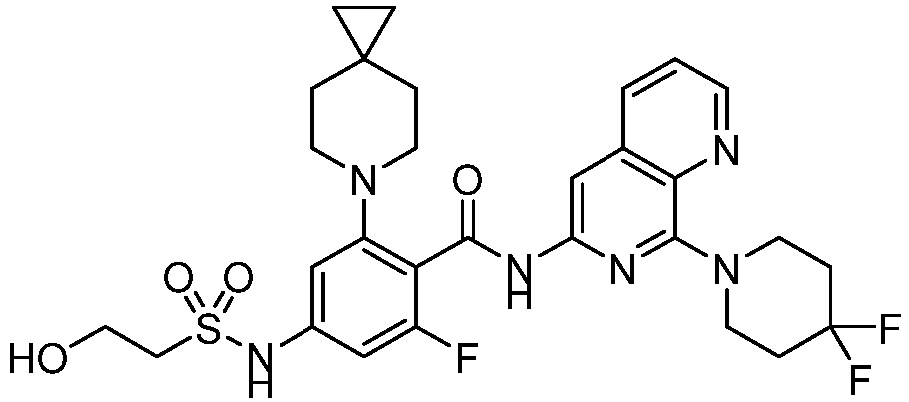
- The preparations in Example 46 follow the synthetic route of Example 3: LCMS (ESI): [M+H]+ =310.30. 1H NMR (400 MHz, DMSO) δ 10.69 (s, 1H), 10.17 (s, 1H), 8.72 (dd, J = 4.1, 1.7 Hz, 1H), 8.26 (dd, J = 8.5, 1.7 Hz, 1H), 7.96 (s, 1H), 7.61 (dd, J = 8.4, 4.1 Hz, 1H), 6.80 (d, J = 2.0 Hz, 1H), 6.71 (dd, J = 11.9, 1.9 Hz, 1H), 4.97 (s, 1H), 4.21 (t, J = 5.7 Hz, 4H), 3.77 (d, J = 6.9 Hz, 2H), 3.37 (t, J = 6.5 Hz, 2H), 3.02 (t, J = 5.2 Hz, 4H), 2.13 (td, J = 14.2, 7.0 Hz, 4H), 1.44 (t, J = 5.2 Hz, 4H), 0.27 (s, 4H).
-
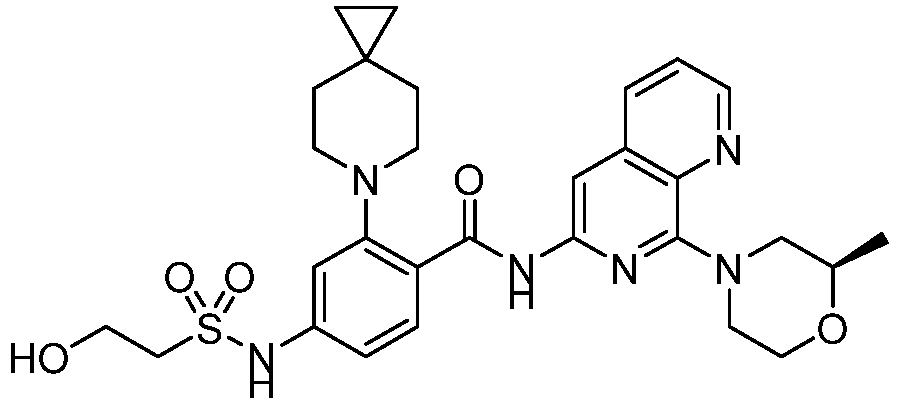
- The preparations in Example 47 follow the synthetic route of Example 3: LCMS (ESI): [M+H/2]+ = 581.4. 1H NMR (400 MHz, DMSO) δ 12.81 (s, 1H), 10.21 (s, 1H), 8.70 (dd, J = 4.0, 2.0 Hz, 1H), 8.22 (dd, J = 8.4, 1.8 Hz, 1H), 8.14 -8.04 (m, 2H), 7.59 (dd, J = 8.4, 4.0 Hz, 1H), 7.29 (d, J = 2.0 Hz, 1H), 7.14 (dd, J = 8.4, 2.0 Hz, 1H), 5.00 - 4.80 (m, 3H), 3.99-3.91 (m, 1H), 3.85-3.73 (m, 4H), 3.37 (t, J = 6.4 Hz, 2H), 3.17-3.07 (m, 1H), 3.01 (d, J = 5.6 Hz, 4H), 2.83 (dd, J = 12.8, 10.2 Hz, 1H), 2.55-2.47 (m, 4H), 1.76 (s, 4H), 1.19 (d, J = 6.0 Hz, 3H), 0.41 (s, 4H).
-
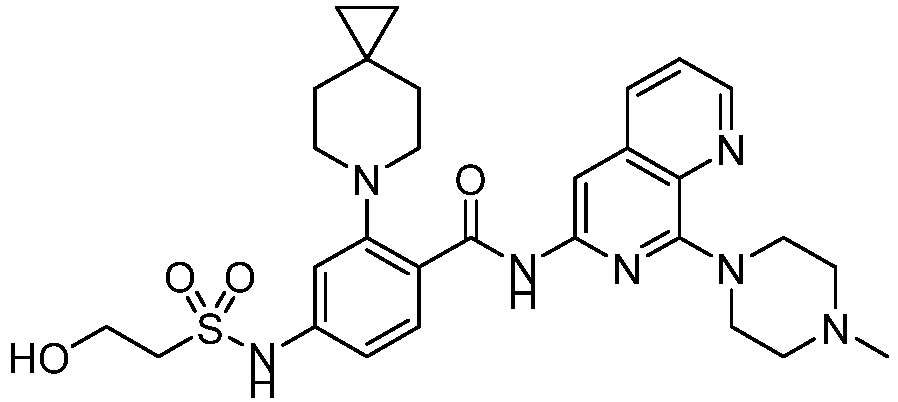
- The preparations in Example 48 follow the synthetic route of Example 3: LCMS (ESI): [M+H/2]+ = 580.4. 1H NMR (400 MHz, DMSO) δ 12.95 (s, 1H), 10.74-9.50(m, 1H), 8.69 (d, J = 4.0 Hz, 1H), 8.20 (d, J = 8.0 Hz, 1H), 8.11 (d, J = 8.4 Hz, 1H), 8.04 (s, 1H), 7.58 (dd, J = 8.4, 4.0 Hz, 1H), 7.29 (d, J = 2.0 Hz, 1H), 7.14 (dd, J = 8.8, 2.0 Hz, 1H), 5.48-4.58(m, 1H), 4.07 (d, J = 6.0 Hz, 4H), 3.77 (t, J = 6.4 Hz, 2H), 3.37 (d, J = 6.4 Hz, 2H), 3.00 (t, J = 5.2 Hz, 4H), 2.52 - 2.48 (m, 4H), 2.28 (s, 3H), 1.77 (s, 4H), 0.41 (s, 4H).
-

- The preparations in Example 49 follow the synthetic route of Example 3: LCMS (ESI): [M+H]+ = 648.3. 1H NMR (400 MHz, DMSO-d6) δ ppm 13.02 (s, 1H), 10.21 (br s, 1H), 8.69 (dd, J = 1.6, 4.0 Hz, 1H), 8.21 (dd, J = 1.6, 8.4 Hz, 1H), 8.11 (d, J = 8.8 Hz, 1H), 8.05 (s, 1H), 7.59 (dd, J = 4.0, 8.4 Hz, 1H), 7.29 (d, J = 2.0 Hz, 1H), 7.14 (dd, J = 2.0, 8.8 Hz, 1H), 5.23 - 4.71 (m, 1H), 4.16 - 3.99 (m, 4H), 3.83 - 3.70 (m, 2H), 3.33 - 3.11 (m, 4H), 3.08 - 2.93 (m, 4H), 2.91 - 2.77 (m, 4H), 2.31 - 1.27 (m, 4H), 0.40 (s, 4H)
-
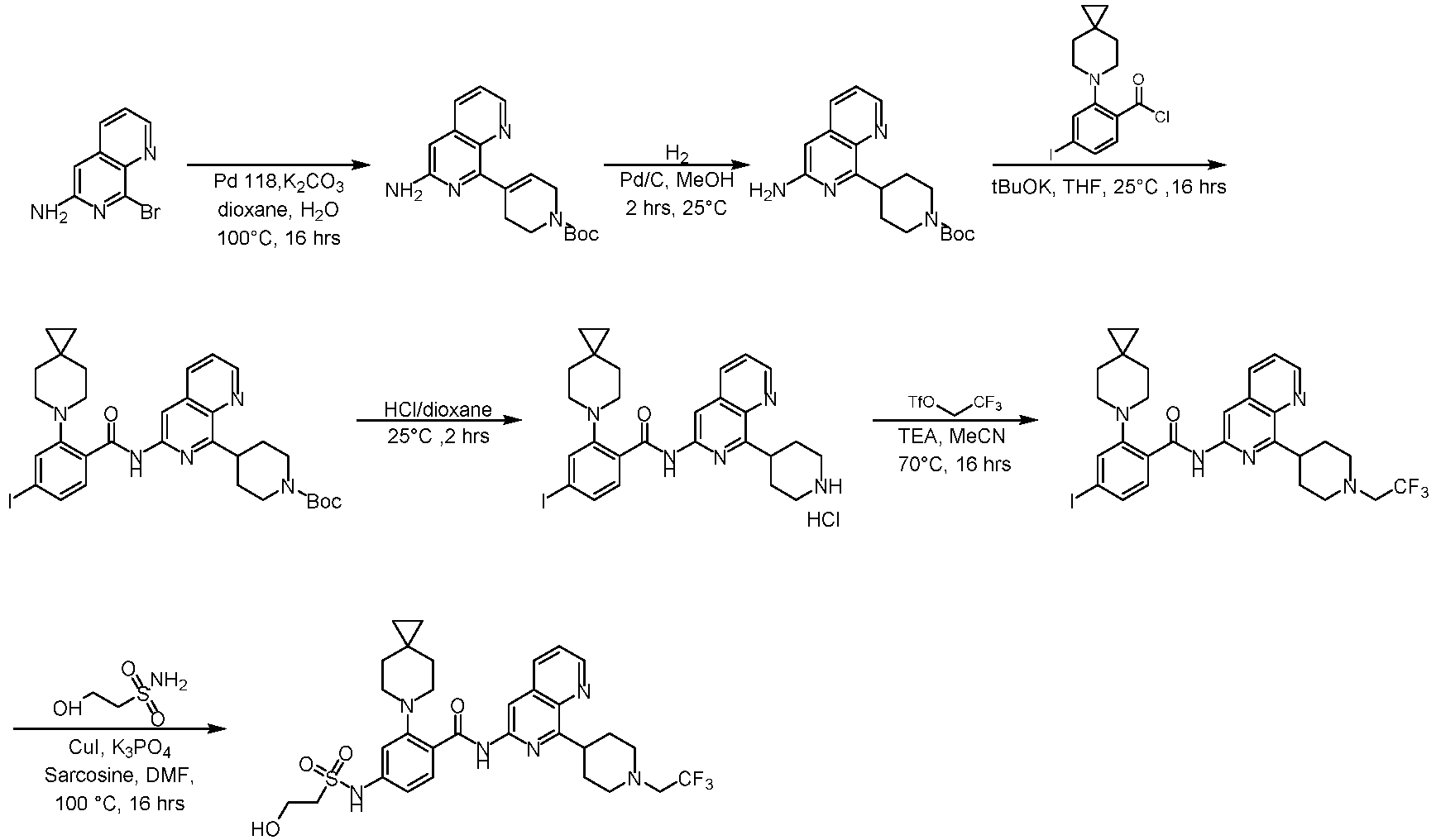
- Step 1: To a solution of 8-bromo-1,7-naphthyridine-6-amine (2.00 g, 8.93 mmol) and tert-butyl 4-(4,4,5,5-tetramethyl-1,3,2-dioxolan-2-yl)-1,2,5,6-tetrahydropyridinyl ester (3.31 g, 10.7 mmol) in dioxane (16.0 mL)/water (4.00 mL) were added 1,1-bis(tert-butylphosphorus)ferrocene palladium chloride (0.60 g, 0.89 mmol) and potassium carbonate (3.78 g, 26.8 mmol) . Then the mixture was heated to 100°C and stirred at 100°C for 16 h under nitrogen atmosphere. the reaction solution was diluted with water (10 mL) and extracted with dichloromethane (10 mL × 3). The combined organic layer was dried over anhydrous sodium sulfate, filtered and concentrated under reduced pressure to give the residue. The residue was purified by flash column chromatography (silica gel, 0-25% gradient of ethyl acetate/petroleum ether) to give tert-butyl 4-(6-amino-1,7-naphthyridin-8-yl)-5,6-dihydropyridine-1(2H)-formate (1.90 g, 5.78 mmol, yield: 65%) as a yellow oil. LCMS (ESI): [M+H]+ = 327.1
- Step 2: To a solution of tert-butyl 4-(6-amino-1,7-naphthyridin-8-yl)-5,6-dihydropyridine-1(2H)-formate (1.50 g, 4.60 mmol) in methanol (20.0 mL) was added wet palladium/carbon (0.50 g, 10% purity) and then hydrogen was introduced. The mixture was stirred at 25°C for 2 h. the solution was concentrated to give the residue. The residue was purified by preparative HPLC (C18, 18-58% gradient of water (formic acid)/acetonitrile) to give tert-butyl 4-(6-amino-1,7-naphthyridin-8-yl)piperidine-1-carboxylate (210 mg, 0.60 mmol, yield: 8%) as a yellow oil. LCMS (ESI): [M+H]+ = 329.1
- Step 3 : To a solution of tert-butyl 4-(6-amino-1,7-naphthyridin-8-yl)piperidine-1-carboxylate (200 mg, 0.61 mmol) and 2-(6-azaspiro[2.5]octan-6-yl)-4-iodobenzoyl chloride (343 mg, 0.91 mmol) in THF (4 mL) were added a solution of potassium tert-butoxide (1.83 mL, 1M) in THF and N,N-diisopropylethylamine (241 mg, 1.83 mmol) The mixture was stirred at 25°C for 16 h. The reaction solution was diluted with water (20 mL) and extracted with ethyl acetate (20 mL×3). The combined organic layer was washed with saturated saline (20 mL), dried over anhydrous sodium sulfate, filtered and concentrated to give a residue. The residue was purified by flash column chromatography (silica gel, 0-13% gradient of ethyl acetate/petroleum ether) to give tert-butyl 4-(6-(4-iodo-2-(6-azaspiro[2.5]octan-6-yl)benzoylamino)-1,7-naphthyridin-8-yl)piperi dine-1-carboxylate (250 mg, 0.23 mmol, yield: 61%) as a yellow solid. LCMS (ESI): [M+Na]+ = 690.1
- Step 4: To a solution of tert-butyl 4-(6-(4-iodo-2-(6-azaspiro[2.5]octan-6-yl)benzoylamino)-1,7-naphthyridin-8-yl)piperi dine-1-carboxylate (230 mg, 0.34 mmol) in dioxane (2 mL) was added HCl in dioxane (2 mL). The mixture was stirred at 25°C for 2 h. the reaction solution was concentrated to give 4-iodo-N-(8-(piperidin-4-yl)-1,7-naphthyridin-6-yl)-2-(6-azaspiro[2.5]octan-6-yl)benz amide hydrochloride (200 mg, crude).
- Step 5: To a solution of 4-iodo-N-(8-(piperidin-4-yl)-1,7-naphthyridin-6-yl)-2-(6-azaspiro[2.5]octan-6-yl)benz amide hydrochloride (200 mg, crude) (330 mg, 0.58 mmol) and 2,2,2-trifluoroethyl triflate (202 mg, 0.87 mmol) in acetonitrile (5.00 mL) was added triethylamine (180 mg, 1.74 mmol) . The mixture was stirred at 70°C for 16 h. the solution was concentrated to give the residue. The residue was purified by flash column chromatography (silica gel, 0-8% gradient of ethyl acetate/petroleum ether) to give 4-iodo-2-(6-azaspiro[2.5]octan-6-yl)-N-(8-(1-(2,2,2-trifluoroethyl)piperidin-4-yl)-1,7-naphthyridin-6-yl)benzamide (130 mg, 0.19 mmol, yield: 34%) as a white solid. LCMS (ESI): [M+H]+ = 650.1
- Step 6: To a solution of potassium phosphate (133 mg, 0.62 mmol), 2-hydroxyethanesulfonamide (38.5 mg, 0.31 mmol), and sarcosine (14.0 mg, 0.15 mmol) in dimethylformamide (5.00 mL) was added cuprous iodide (29.9 mg, 0.15 mmol). The mixture was heated to 50°C and stirred for 5 min. 4-iodo-2-(6-azaspiro[2.5]octan-6-yl)-N-(8-(1-(2,2,2-trifluoroethyl)piperidin-4-yl)-1,7-naphthyridin-6-yl)benzamide (100 mg, 0.15 mmol) was added to the mixture, and then heated to 100°C with stirring for 16 h under nitrogen atmosphere. The reaction solution was diluted with water (10 mL) and extracted with dichloromethane (10 mL × 3). The combined organic layer was dried over anhydrous sodium sulfate, filtered and concentrated under reduced pressure to give the residue. The residue was purified by preparative HPLC (C18, 46-86% gradient of water (formic acid)/acetonitrile) to give 4-(2-hydroxyethylsulfonamido)-2-(6-azaspiro[2.5]octan-6-yl)-N-(8-(1-(2,2,2-trifluoro ethyl)piperidin-4-yl)-1,7-naphthyridin-6-yl)benzamide (33 mg, 0.05 mmol, yield: 33%) as a white solid. LCMS (ESI): [M+H]+ = 647.3. 1H NMR (400 MHz, DMSO-d 6) δ ppm 13.57 (s, 1H), 10.26 (br s, 1H), 8.89 (dd, J = 1.2 Hz, 1H), 8.53 (s, 1H), 8.39 (d, J = 8.0 Hz, 1H), 8.14 (d, J = 8.4 Hz, 1H), 7.71 (dd, J = 4.0, 8.4 Hz, 1H), 7.31 (s, 1H), 7.17 (br d, J = 8.4 Hz, 1H), 5.07 - 4.87 (m, 1H), 4.24 - 4.06 (m, 1H), 3.84 - 3.72 (m, 2H), 3.41 - 3.35 (m, 2H), 3.27 - 3.16 (m, 2H), 3.14 - 2.93 (m, 6H), 2.63 - 2.52 (m, 2H), 2.37 - 1.32 (m, 8H), 0.41 (s, 4H)
-

- Step 1: Hydrogen peroxide (55.1 g, 584 mmol, 36% purity) was added to a solution of 2-(pyridine-3-yl)acetonitrile (23.0 g, 194 mmol) in acetic acid (200 mL). The mixture was stirred at 95°C for 16 h. The reaction solution was concentrated under reduced pressure to give 3-(cyanomethyl)pyridine 1-oxide (24.0 g, 178 mmol, yield: 91.9%) as a yellow solid.
- Step 2: Dimethylcarbamic chloride (19.2 g, 178 mmol) and trimethylsilyl cyanide (21.7 g, 214 mmol) were added to a solution of 3-(cyanomethyl)pyridine 1-oxide (24.0 g, 178 mmol) in toluene (240 mL). The mixture was stirred at 60°C for 16 h. Quench the reaction solution with potassium carbonate solution (240 mL, 1M) and then extracted withethyl acetate (240 mL×2). The combined organic layer was dried over anhydrous sodium sulfate, filtered and concentrated under reduced pressure to give the residue. Separate the residue by column chromatography (silica gel, 0-45% gradient of ethyl acetate/petroleum ether) to give 3-(cyanomethyl)cyanopyridine (21.0 g, 146 mmol, yield: 81.9%).
- Step 3: Add hydrogen peroxide (18.5 g, 196 mmol, 36% purity) to a solution of 3-(cyanomethyl)cyanopyridine (14.0 g, 97.8 mmol) in acetic acid (140 mL), and The mixture was stirred at 90°C for 16 h. The reaction solution was concentrated under reduced pressure to give 2-cyano-3-(cyanomethyl)pyridine 1-oxide (15.6 g, 75.4 mmol, yield: 77.1%). 1H NMR (400 MHz, DMSO-d6) δ 8.46 (br d, J = 6.4 Hz, 1H), 7.73 (br t, J = 7.2 Hz, 1H), 7.54 (br d, J = 8.0 Hz, 1H), 4.31 (s, 2H)
- Step 4: Phosphorus oxychloride (6 mL) was added to a solution of 2-cyano-3-(cyanomethyl)pyridine 1-oxide (6.00 g, 37.7 mmol) in dichloroethane (60 mL), and the mixture was stirred at 90°C for 16 h. The reaction solution was diluted with water (100 mL), extracted with dichloromethane (100 mL × 2). Then the combined organic layer was washed with saturated saline (100 mL × 2), dried over magnesium sulfate, filtered, and concentrated under reduced pressure to give the residue. The residue was separated by column chromatography (silica gel, 0-30% gradient of ethyl acetate/petroleum ether) to give 6-chloro-3-(cyanomethyl)cyanopyridine (3.50 g, 19.7 mmol, yield: 52.3%). 1H NMR (400 MHz, DMSO-d6) δ 8.17 (d, J = 8.4 Hz, 1H), 7.96 (d, J = 8.4 Hz, 1H), 4.36 (s, 2H)
- Step 5: 6-chloro-3-(cyanomethyl)cyanopyridine (3.50 g, 19.7 mmol) was added to a mixture of hydrobromic acid and acetic acid (30 mL). And the mixture was stirred at 25°C for 16 h. The reaction solution was poured into water (100 mL) and the pH was adjusted to 8 with sodium carbonate solution (240 mL, 1M), and extracted with ethyl acetate (500 mL×3). The combined organic layer was washed with saturated saline (100 mL×2), dried over magnesium sulfate, filtered, and concentrated under reduced pressure to give 2,8-Dibromo-1,7-naphthyridin-6-amine (3.70 g, 12.2 mmol, yield: 62.0%). LCMS (ESI): [M+H]+ =303.9
- Step 6: 4,4-difluoropiperidine (3.33 g, 21.1 mmol) and N,N-diisopropylethylamine (6.97 g, 52.8 mmol) were successively added to a solution of 2,8-dibromo-1,7-naphthyridin-6-amine (3.20 g, 10.6 mmol) in tert-butanol (60 mL). The mixture was stirred at 140°C for 16 h. The reaction solution was diluted with water (100 mL), extracted with ethyl acetate (100 mL × 2) and the combined organic layer was washed with saturated saline (100 mL × 2), dried over magnesium sulfate, filtered, and concentrated under reduced pressure to give the residue. The residue was separated by column chromatography (silica gel, 0-15% gradient of ethyl acetate/petroleum ether) to give 2-bromo-8-(4,4-difluoropiperidin-1-yl)-1,7-naphthyridin-6-amine (1.50 g, 4.38 mmol, yield: 41.4%). LCMS (ESI): [M+H]+ =342.9
- Step 7: 1,1-bis(tert-butylphosphine)ferrocene palladium chloride (59.0 mg, 0.09 mmol) was added to a solution of 2-bromo-8-(4,4-difluoropiperidin-1-yl)-1,7-naphthyridin-6-amine (300 mg, 0.87 mmol), potassium carbonate (247 mg, 1.75 mmol), and trimethylboroxine (ca. 50% in THF) (0.37 mL, 1.31 mol) in dioxane (6 mL) and water (1.2 mL). The mixture was heated to 90°C and stirred for 16 h under nitrogen. Water (10 mL) was added to the reaction solution and extracted with ethyl acetate (10 mL × 2). The combined organic layer was dried over anhydrous sodium sulfate, filtered and concentrated under reduced pressure to give the residue. The residue was separated by column chromatography (silica gel, 0-20% gradient of ethyl acetate/petroleum ether) to give 8-(4,4-difluoropiperidin-1-yl)-2-methyl-1,7-naphthyridin-6-amine (110 mg, 0.39 mmol, yield: 45.2%). LCMS (ESI): [M+H]+ =279.2
- Step 8: Potassium tert-butoxide (1.08 mL, 1.08 mmol, 1M) and N,N-diisopropylethylamine (142 mg, 1.08 mol) were successively added to a solution of 8-(4,4-difluoropiperidin-1-yl)-2-methyl-1,7-naphthyridin-6-amine (100 mg, 0.36 mmol) and 4-iodo-2-(6-azaspiro[2.5]octan-6-yl)benzoyl chloride (162 mg, 0.43 mmol) in THF (1.00 mL). The mixture was stirred at 25°C for 16 h. Add water (10 mL) was added to the reaction solution and extracted withethyl acetate (10 mL × 2). The organic phases was combined and the combined organic layer was washed with saturated saline (200 mL), dried over anhydrous sodium sulfate, filtered and concentrated under reduced pressure to give a residue. The residue was purified by column chromatography (silica gel, 0-10% gradient of ethyl acetate/petroleum ether) to give N-(8-(4,4-difluoropiperidin-1-yl)-2-methyl-1,7-naphthyridin-6-yl)-4-iodo-2-(6-azaspir o[2.5]octan-6-yl)benzamide (120 mg, 0.19 mmol, yield: 54.1%). LCMS (ESI): [M+H]+ =618.2
- Step 9: Cuprous iodide (18.9 mg, 0.10 mmol) was added to a solution of 2-hydroxyethanesulfonamide (48.6 mg, 0.39 mmol), sarcosine (17.3 mg, 0.19 mmol), and potassium phosphate (168 mg, 0.78 mmol) in N,N-dimethylformamide (2 mL). The mixture was stirred at 100°C for 16 h. Then N-(8-(4,4-difluoropiperidin-1-yl)-2-methyl-1,7-naphthyridin-6-yl)-4-iodo-2-(6-azaspir o[2.5]octan-6-yl)benzamide (120 mg, 0.19 mmol) was added to the reaction mixture at 50°C, and the mixture was heated to 100°C with stirring for 16 h under nitrogen atmosphere. Add water (20 mL) was added to the reaction solution and extracted with ethyl acetate (20 mL × 2). The combined organic layer was dried over anhydrous sodium sulfate, filtered and concentrated under reduced pressure to give the residue. The residue was purified by preparative HPLC (C18, 50-90% gradient of water (formic acid)/acetonitrile) to give N-(8-(4,4-difluoropiperidin-1-yl)-2-methyl-1,7-naphthyridin-6-yl)-4-(2-hydroxyethyls ulfonamido)-2-(6-azaspiro[2.5]octan-6-yl)benzamide (51.0 mg, 0.08 mmol, yield: 42.7%) as a white solid compound. LCMS (ESI): [M+H]+ =615.1. 1H NMR (400 MHz, DMSO-d6) δ 12.85 (s, 1H), 10.22 (s, 1H), 8.22 - 8.01 (m, 3H), 7.52 (d, J = 8.4 Hz, 1H), 7.28 (d, J = 1.6 Hz, 1H), 7.14 (dd, J =2.0, 8.8 Hz, 1H), 5.06 - 4.85 (m, 1H), 4.31 - 4.05 (m, 4H), 3.77 (br t, J = 6.4 Hz, 2H), 3.40 - 3.36 (m, 2H), 3.12 - 2.88 (m, 4H), 2.63 (s, 3H), 2.28 - 2.10 (m, 4H), 1.98 - 1.42 (m, 4H), 0.41 (s, 4H)
-
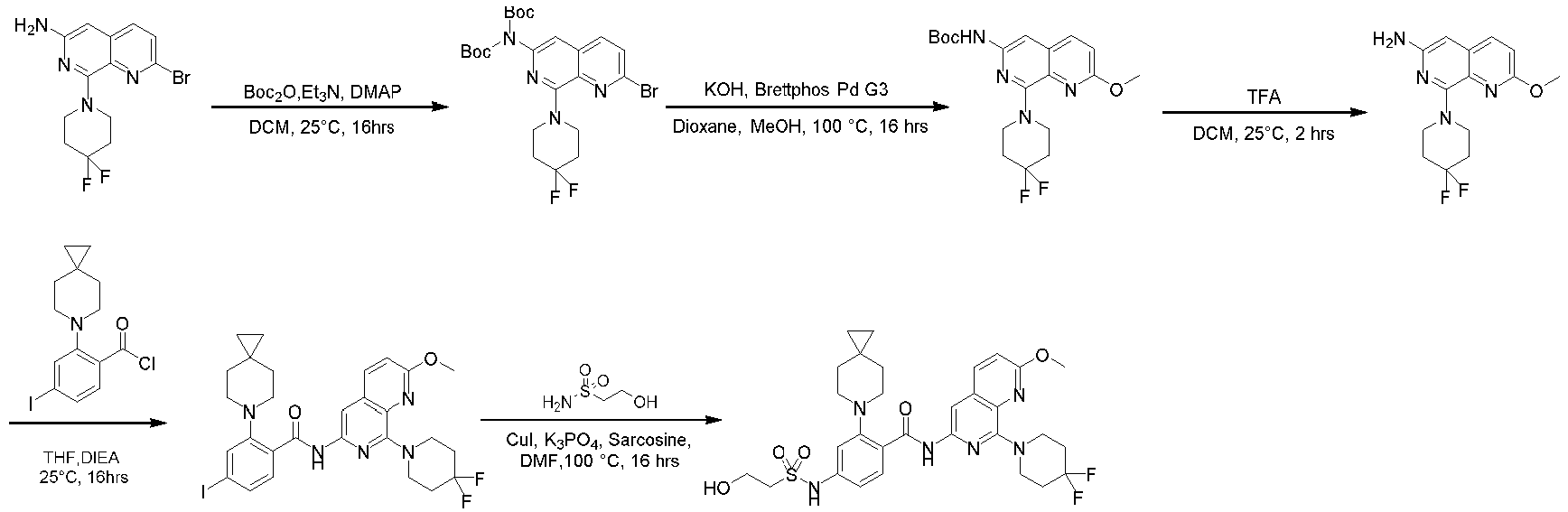
- Step 1: Triethylamine (451 mg, 4.37 mmol), 4-dimethylaminopyridine (36.3 mg, 0.29 mmol) and di-tert-butyl dicarbonate (954 mg, 4.37 mmol) were successively added to a solution of 2-bromo-8-(4,4-difluoropiperidin-1-yl)-1,7-naphthyridin-6-amine (500 mg, 1.46 mmol) in dichloromethane (10 mL). The mixture was stirred at 25°C for 16 h. Water (10 mL) was added to the reaction solution and extracted withethyl acetate (10 mL × 2).The combined organic layer was washed with saturated saline (10 mL), dried over magnesium sulfate, filtered, and concentrated under reduced pressure to give the residue. The residue was purified by column chromatography (silica gel, 0-20% gradient of ethyl acetate/petroleum ether) to give tert-butyl (2-bromo-8-(4,4-difluoropiperidin-1-yl)-1,7-naphthyridin-6-yl) tert-butoxycarbonylcarbamate (200 mg, 1.46 mmol, yield: 25.3%). LCMS (ESI): [M+H]+ =543.1.
- Step 2: Methanol (53.1 mg, 1.66 mmol), potassium hydroxide (93.9 mg, 1.66 mmol), and methanesulfonic acid (2-dicyclohexylphosphino-3,6-dimethoxy-2,4,6-triisopropyl-1,1-biphenyl)(2-amino-1, 1-biphenyl-2-yl) palladium (II) (50.5 mg, 0.06 mmol) were successively added to a solution of tert-butyl (2-bromo-8-(4,4-difluoropiperidin-1-yl)-1,7-naphthyridin-6-yl) tert-butoxycarbonylcarbamate (300 mg, 0.55 mmol) in dioxane (1 mL), and the mixture was heated to 100°C with stirring for 16 h under nitrogen atmosphere. The reaction solution washed with water (10 mL), extracted with ethyl acetate (10 mL × 2), the combined organic layer was washed with saturated saline (10 mL × 2), dried over magnesium sulfate, filtered, and concentrated under reduced pressure to give the residue. The residue was purified by column chromatography (silica gel, 0-20% gradient of ethyl acetate/petroleum ether) to give tert-butyl (8-(4,4-difluoropiperidin-1-yl)-2-methoxy-1,7-naphthyridin-6-yl)carbamate (200 mg, 0.55 mmol, yield: 91.9%) as a yellow solid. LCMS (ESI): [M+H]+ =395.1.
- Step 3: Trifluoroacetic acid (1 mL) was added to a solution of tert-butyl (8-(4,4-difluoropiperidin-1-yl)-2-methoxy-1,7-naphthyridin-6-yl)carbamate (200 mg, 0.51 mmol) in dichloromethane (4 mL). The mixture was stirred at 25°C for 2 h. Quench the reaction solution with sodium bicarbonate (5 mL), extracted with dichloromethane (10 mL × 2), the combined organic layer was washed with saturated saline (10 mL × 2), dried over magnesium sulfate, filtered, and concentrated under reduced pressure to give 8-(4,4-difluoropiperidin-1-yl)-2-methoxy-1,7-naphthyridin-6-amine (130 mg, 0.44 mmol, yield: 87.1%) as a yellow solid. LCMS (ESI): [M+H]+ =295.1.
- Step 4: Add 4-iodo-2-(6-azaspiro[2.5]octan-6-yl)benzoyl chloride (199 mg, 0.53 mmol) and N,N-diisopropylethylamine (174 mg, 132 mmol) to a solution of 8-(4,4-difluoropiperidin-1-yl)-2-methoxy-1,7-naphthyridin-6-amine (130 mg, 0.44 mmol) in THF (4 mL). The mixture was stirred at 25°C for 16 h. The reaction solution was cooled to ambient temperature and extracted with water (10 mL) and ethyl acetate (10 mL × 2), The organic phases were combined and washed with saturated saline (10 mL×2), dried over anhydrous magnesium sulfate, filtered and concentrated under reduced pressure to give a residue. The residue was purified by flash column chromatography (silica gel, 0-10% gradient of ethyl acetate/petroleum ether) to give N-(8-(4,4-difluoropiperidin-1-yl)-2-methoxy-1,7-naphthyridin-6-yl)-4-iodo-2-(6-azas piro[2.5]octan-6-yl)benzamide (200 mg, 0.31 mmol, yield: 71.5%) as a yellow solid. LCMS (ESI): [M+H]+ =634.5.
- Step 5: Cuprous iodide (15.3 mg, 0.08 mmol) was added to a solution of 2-hydroxyethanesulfonamide (39.5.0 mg, 0.32 mmol), sarcosine (22.7 mg, 0.16 mmol), and potassium phosphate (137 mg, 0.63 mmol) in N,N-dimethylformamide (2 mL). The mixture was stirred at 50°C for 5 min. Then N-(8-(4,4-difluoropiperidin-1-yl)-2-methoxy-1,7-naphthyridin-6-yl)-4-iodo-2-(6-azas piro[2.5]octan-6-yl)benzamide (100 mg, 0.16 mmol) was added to the reaction mixture at 50°C, and the mixture was heated to 100°C with stirring for 16 h under nitrogen atmosphere. Water (20 mL) was added to the reaction solution and extracted with ethyl acetate (20 mL × 2). The organic phases were combined and washed with liquor ammonia (20 mL × 2), dried over anhydrous magnesium sulfate, filtered and concentrated under reduced pressure to give a residue. The residue was purified by preparative HPLC (C18, 50-90% gradient of water (formic acid)/acetonitrile) to give N-(8-(4,4-difluoropiperidin-1-yl)-2-methoxy-1,7-naphthyridin-6-yl)-4-(2-hydroxyethy lsulfonamido)-2-(6-azaspiro[2.5]octan-6-yl)benzamide (43 mg, 0.07 mmol, yield: 43.2%) as a white solid compound. LCMS (ESI): [M+H]+ =631.2. 1H NMR (400 MHz, DMSO-d6) δ 12.90 (s, 1H), 10.22 (s, 1H), 8.18 (d, J = 9.2 Hz, 1H), 8.12 - 8.06 (m, 2H), 7.27 (d, J = 2.0 Hz, 1H), 7.19 - 7.10 (m, 2H), 4.97 (br s, 1H), 4.07 (br s, 4H), 3.96 (s, 3H), 3.76 (br t, J = 6.0 Hz, 2H), 3.44 (br s, 2H), 2.99 (br s, 4H), 2.27 - 2.15 (m, 4H), 2.01 - 1.40 (m, 4H), 0.40 (s, 4H)
-

- Step 1: Cesium carbonate (1709 mg, 5.25 mmol) and tert-butyl carbamate (310 mg, 2.62 mmol) were added successively to a solution of 2-bromo-8-(4,4-difluoropiperidin-1-yl)-1,7-naphthyridin-6-amine (600 mg, 1.75 mmol) in dioxane (12 mL), and then add chloro(2-dicyclohexylphosphino-2,4,6-triisopropyl-1,1-biphenyl)[2-(2-amino-1,1-bip henyl)] palladium (II) (137 mg, 0.17 mmol). Replace the mixture with nitrogen three times and stir at 100°C for 16 h. The reaction solution was cooled to ambient temperature and extracted with water (50 mL) and ethyl acetate (50 mL × 2), the organic phases were combined and washed with saturated saline (50 mL × 2), dried over anhydrous magnesium sulfate, filtered and concentrated under reduced pressure to give a residue. The residue was purified by flash column chromatography (silica gel, 0-10% gradient of ethyl acetate/petroleum ether) to give tert-butyl(6-amino-8-(4,4-difluoropiperidin-1-yl)-1,7-naphthyridin-2-yl)carbamate (200 mg, 0.52 mmol, yield: 30.2%) as a yellow solid. LCMS (ESI): [M+H]+ =380.1.
- Step 2: 4-iodo-2-(6-azaspiro[2.5]octan-6-yl)benzoyl chloride (238 mg, 0.63 mmol) and N,N-diisopropylethylamine (209 mg, 1.58 mmol) were added successively to a solution of tert-butyl(6-amino-8-(4,4-difluoropiperidin-1-yl)-1,7-naphthyridin-2-yl)carbamate (200 mg, 0.53 mmol) in THF (4 mL). The mixture was stirred at 25°C for 16 h. The reaction solution was cooled to ambient temperature and extracted withwater (10 mL) and ethyl acetate (10 mL × 2). The organic phases were combined and washed with saturated saline (10 mL×2), dried over anhydrous sodium sulfate, filtered and concentrated under reduced pressure to give a residue. The residue was purified by flash column chromatography (silica gel, 0-10% gradient of ethyl acetate/petroleum ether) to give tert-butyl (8-(4,4-difluoropiperidin-1-yl)-6-(4-iodo-2-(6-azaspiro[2.5]octan-6-yl)benzoylamino) -1,7-naphthyridin-2-yl)carbamate (110 mg, 0.15 mmol, yield: 29.0%). LCMS (ESI): [M+H]+ =719.1
- Step 3: Cuprous iodide (13.5 mg, 0.07 mmol) was added to a solution of 2-hydroxyethanesulfonamide (34.8 mg, 0.28 mmol), sarcosine (19.9 mg, 0.14 mmol), and potassium phosphate (121 mg, 0.56 mmol) in N,N-dimethylformamide (2 mL). The mixture was stirred at 50°C for 5 min. Then tert-butyl (8-(4,4-difluoropiperidin-1-yl)-6-(4-iodo-2-(6-azaspiro[2.5]octan-6-yl)benzoylamino) -1,7-naphthyridin-2-yl)carbamate (100 mg, 0.14 mmol) was added to the reaction mixture at 50°C, and the mixture was heated to 100°C with stirring for 16 h under nitrogen atmosphere. The reaction solution was cooled to ambient temperature, extracted with water (20 mL) and ethyl acetate (20 mL × 2). The combined organic layer was washed with liquor ammonia (20 mL × 2), dried over anhydrous magnesium sulfate, filtered and concentrated under reduced pressure to give tert-butyl (8-(4,4-difluoropiperidin-1-yl)-6-(4-(2-hydroxyethylsulfonamido)-2-(6-azaspiro[2.5]o ctan-6-yl)benzoylamino)-1,7-naphthyridin-2-yl)carbamate (80.0 mg, 0.11 mmol, yield: 80.0%) as the crude. LCMS (ESI): [M+H]+ =716.2
- Step 4: Trifluoroacetic acid (0.40 mL) was added to a solution of tert-butyl (8-(4,4-difluoropiperidin-1-yl)-6-(4-(2-hydroxyethylsulfonamido)-2-(6-azaspiro[2.5]o ctan-6-yl)benzoylamino)-1,7-naphthyridin-2-yl)carbamate (80 mg, 0.11 mmol) in dichloromethane (2 mL), and the mixture was stirred at 25°C for 2 h. The reaction solution was concentrated to give a residue, and purified by preparative HPLC (C18, 10-50% gradient of water (formic acid)/acetonitrile) to give N-(2-amino-8-(4,4-difluoropiperidin-1-yl)-1,7-naphthyridin-6-yl)-4-(2-hydroxyethyls ulfonamido)-2-(6-azaspiro[2.5]octan-6-yl)benzamide (19.0 mg, 0.03 mmol, yield: 28.0%) as a yellow solid. LCMS (ESI): [M+H]+ =616.1. 1H NMR (400 MHz, DMSO-d6) δ 12.68 (s, 1H), 10.44 - 9.80 (m, 1H), 8.07 (br d, J = 8.4 Hz, 1H), 7.94 (s, 1H), 7.83 (br d, J = 8.9 Hz, 1H), 7.25 (br s, 1H), 7.11 (br d, J = 8.5 Hz, 1H), 6.87 (br d, J = 8.8 Hz, 1H), 6.43 (br s, 2H), 4.96 (br s, 1H), 4.01 (br s, 4H), 3.86 - 3.64 (m, 2H), 3.59 - 3.47 (m, 2H), 2.98 (br s, 4H), 2.24 - 2.05 (m, 4H), 1.96 - 1.38 (m, 4H), 0.39 (br s, 4H)
-
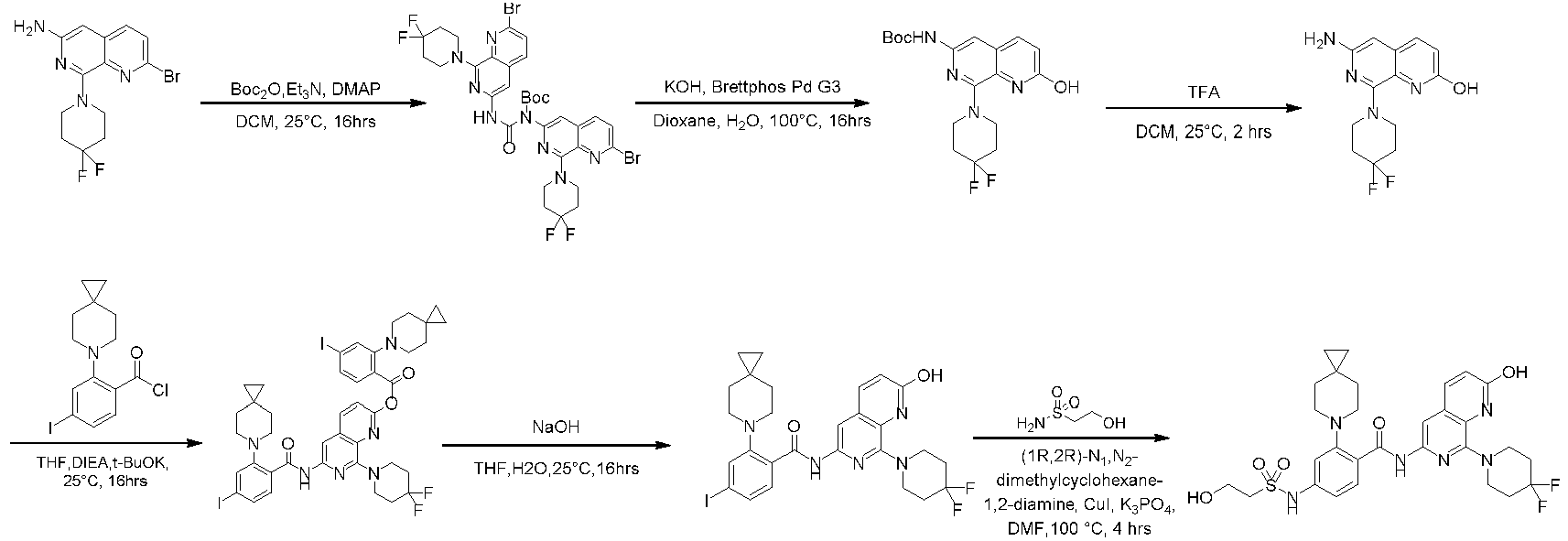
- Step 1: Triethylamine (902 mg, 8.74 mmol), 4-dimethylaminopyridine (36.3 mg, 2.91 mmol) and di-tert-butyl dicarbonate (1.91 mg, 8.74 mmol) were successively added to a solution of 2-bromo-8-(4,4-difluoropiperidin-1-yl)-1,7-naphthyridin-6-amine (1.00 mg, 2.91 mmol) in dichloromethane (20 mL). The mixture was stirred at 25°C for 16 h. Water (10 mL) was added to the reaction solution and extracted withethyl acetate (10 mL × 2). The combined organic layer was washedthe combined organic layer was washed with saturated saline (10 mL), dried over magnesium sulfate, filtered, and concentrated under reduced pressure to give the residue. The residue was purified by column chromatography (silica gel, 0-20% gradient of ethyl acetate/petroleum ether) to give tert-butyl N-[2-bromo-8-(4,4-difluoropiperidin-1-yl)-1,7-naphthyridin-6-yl]-N-{[2-bromo-8-(4, 4-difluoropiperidin-1-yl)-1,7-naphthyridin-6-yl]aminocarbonyl}carbamate (1.00 g, 1.22 mmol, yield: 42%). LCMS (ESI): [M+H]+ =812.9.
- Step 2: Water (0.22 g, 12.3 mmol), potassium hydroxide (0.69 g, 12.3 mmol), and methanesulfonic acid (2-dicyclohexylphosphino-3,6-dimethoxy-2,4,6-triisopropyl-1,1-biphenyl)(2-amino-1, 1-biphenyl-2-yl) palladium (II) (0.11 g, 0.122 mmol) were successively added to a solution of tert-butyl N-[2-bromo-8-(4,4-difluoropiperidin-1-yl)-1,7-naphthyridin-6-yl]-N-{[2-bromo-8-(4, 4-difluoropiperidin-1-yl)-1,7-naphthyridin-6-yl]aminocarbonyl}carbamate (1.00 g, 1.23 mmol) in dioxane (20 mL). The mixture was heated to 100°C with stirring for 16 h under nitrogen atmosphere and the reaction solution was diluted with water (10 mL), extracted with ethyl acetate (50 mL × 2). Then the combined organic layer was washed with saturated saline (50 mL × 2), dried over magnesium sulfate, filtered, and concentrated under reduced pressure to give the residue. The residue was purified by column chromatography (silica gel, 0-10% gradient of ethyl acetate/petroleum ether) to give tert-butyl N-[8-(4,4-difluoropiperidin-1-yl)-2-hydroxy-1,7-naphthyridin-6-yl]carbamate (301 mg, 0.78 mmol, yield: 64.0%) as a yellow solid. LCMS (ESI): [M+H]+ =381.1.
- Step 3: Trifluoroacetic acid (1 mL) was added to a solution of tert-butyl N-[8-(4,4-difluoropiperidin-1-yl)-2-hydroxy-1,7-naphthyridin-6-yl]carbamate (300 mg, 0.78 mmol) in dichloromethane (6 mL). The mixture was stirred at 25°C for 2 h. The reaction solution was quenched with sodium bicarbonate (5 mL), extracted with dichloromethane (10 mL × 2), the combined organic layer was washed with saturated saline (10 mL × 2), dried over magnesium sulfate, filtered, and concentrated under reduced pressure to give 6-amino-8-(4,4-difluoropiperidin-1-yl)-1,7-naphthyridin-2-ol (452 mg, crude) as a yellow solid. LCMS (ESI): [M+H]+ =281.0.
- Step 4: 2-{6-azaspiro[2.5]octan-6-yl}-4-iodobenzoyl chloride (723 mg, 1.92 mmol) and N,N-diisopropylethylamine (635 mg, 4.81 mmol) were added successively to a solution of 6-amino-8-(4,4-difluoropiperidin-1-yl)-1,7-naphthyridin-2-ol (450 mg, 1.60 mmol) in THF (10 mL). The mixture was stirred at 25°C for 16 h. The reaction solution was cooled to ambient temperature and extracted with water (10 mL) and ethyl acetate (10 mL × 2). The organic phases were combined and washed with saturated saline (10 mL×2), dried over anhydrous magnesium sulfate, filtered and concentrated under reduced presurre to give a residue. The residue was purified by flash column chromatography (silica gel, 0-10% gradient of ethyl acetate/petroleum ether) to give 6-(2-{6-azaspiro[2.5]octan-6-yl}-4-iodobenzoylamino)-8-(4,4-difluoropiperidin-1-yl) -1,7-naphthyridin-2-yl 2-{6-azaspiro[2.5]octan-6-yl}-4-iodobenzoate (200 mg, 0.21 mmol, yield: 13.0%) as a yellow solid. LCMS (ESI): [M+H]+ =959.0.
- Step 5: Sodium hydroxide (25.3 mg, 0.60 mmol) was added to a solution of 6-(2-{6-azaspiro[2.5]octan-6-yl}-4-iodobenzoylamino)-8-(4,4-difluoropiperidin-1-yl) -1,7-naphthyridin-2-yl 2-{6-azaspiro[2.5]octan-6-yl}-4-iodobenzoate (200 mg, 0.20 mmol) in THF (2 mL) and water (2 mL). The mixture was stirred at 25°C for 16 h. The reaction solution was extracted with water (10 mL) and ethyl acetate (10 mL × 2). The combined organic layer was washed with saturated saline (10 mL × 2), dried over anhydrous magnesium sulfate, filtered and concentrated under reduced pressure to give 2-{6-azaspiro[2.5]octan-6-yl}-N-[8-(4,4-difluoropiperidin-1-yl)-2-hydroxy-1,7-napht hyridin-6-yl]-4-iodobenzamide (120 mg, 0.19 mmol, yield: 93.8%) as a yellow solid. LCMS (ESI): [M+H]+ =620.1
- Step 6: Cuprous iodide (36.9 mg, 0.19 mmol) was added to a solution of 2-hydroxyethanesulfonamide (48.5 mg, 0.38 mmol), trans-N,N-dimethyl-1,2-cyclohexanediamine (27.8 mg, 0.19 mmol), potassium phosphate (164 mg, 0.77 mmol) in N,N-dimethylformamide (3 mL). The mixture was stirred at 50°C for 5 min. Then 2-{6-Azaspiro[2.5]octan-6-yl}-N-[8-(4,4-difluoropiperidin-1-yl)-2-hydroxy-1,7-napht hyridin-6-yl]-4-iodobenzamide was added to the reaction mixture at 50°C, and the mixture was heated to 100°C with stirring for 4 h under nitrogen atmosphere. Water (20 mL) was added to the reaction solution and extracted withethyl acetate (20 mL × 2). The organic phases were combined and washed with liquor ammonia (20 mL × 2), dried over anhydrous magnesium sulfate, filtered and concentrated under reduced pressure to give a residue. The residue was purified by preparative HPLC (C18, 26-66% gradient of water (formic acid)/acetonitrile) to give 2-{6-azaspiro[2.5]octan-6-yl}-N-[8-(4,4-difluoropiperidin-1-yl)-2-hydroxy-1,7-napht hyridin-6-yl]-4-(2-hydroxyethanesulfonamido)benzamide (23 mg, 0.03 mmol, yield: 19.2 %) as a white solid compound. LCMS (ESI): [M+H]+ =632.5. 1H NMR (400 MHz, DMSO-d6) δ 13.15 (s, 1H), 11.53 - 10.45 (m, 1H), 10.16 (s, 1H), 8.12 (s, 1H), 8.01 (d, J = 8.8 Hz, 1H), 7.90 (d, J = 9.6 Hz, 1H), 7.19 (d, J = 1.6 Hz, 1H), 7.06 (dd, J = 1.6, 8.8 Hz, 1H), 6.69 (d, J = 9.6 Hz, 1H), 5.30 - 4.75 (m, 1H), 3.69 (br t, J = 6.4 Hz, 2H), 3.29 - 3.27 (m, 2H), 3.22 - 3.16 (m, 4H), 2.94 - 2.82 (m, 4H), 2.27 - 2.16 (m, 4H), 1.98 - 1.42 (m, 4H), 0.31 (s, 4H)
-

- The preparations in Example 55 follow the synthetic route of Example 3: LCMS (ESI) m/z: [M+H]+ = 600.4. 1H-NMR (400 MHz, DMSO) δ 13.14 (s, 1H), 10.21 (s, 1H), 8.27 (s, 1H), 8.09 (dd, J = 18.6, 8.4 Hz, 2H), 7.85 (d, J = 8.2 Hz, 1H), 7.66 (ddd, J = 8.0, 6.8, 1.2 Hz, 1H), 7.47 (ddd, J = 8.4, 6.8, 1.2 Hz, 1H), 7.29 (d, J = 2.4 Hz, 1H), 7.15 (dd, J= 8.8, 2.0 Hz, 1H), 4.95 (s, 1H), 3.77 (s, 2H), 3.51 (t, J = 5.6 Hz, 4H), 3.37 (t, J = 6.4 Hz, 2H), 3.00 (s, 4H), 2.34 - 2.23 (m, 4H), 2.08 - 1.54 (m, 5H), 1.24 (s, 1H), 0.40 (s, 4H).
-

- Step 1: 4-methylnicotinonitrile (5.00 g, 42.32 mmol) and diethyl oxalate (9.37 g, 63.48 mmol) were added successively to toluene (50 mL), and the reaction solution was stirred at 25°C for 5 min. Potassium tert-butoxide (19.18 g, 169.30 mmol) was then added to the reaction solution within half an hour in 3 portions and stir at 25°C for 48 h. The reaction solution was filtered under reduced pressure, then the solid obtained was dissolved by filtration in water (2 L), the pH was adjusted to 3 with 1 M hydrochloric acid, and stir for 24 h at 25°C. The solution was extracted with dichloromethane (300 mL × 4). The combined organic layer was dried over anhydrous sodium sulfate, and concentrated under reduced pressure to give the crude. The crude residue was added to phosphorus oxychloride (10 mL), and the reaction solution was stirred at 95°C for 2 h. The reaction solution was concentrated and slowly added to ice water (100 mL) while stirring. The pH of the resulting solution was adjusted to 7 with sodium bicarbonate solids, extracted with dichloromethane (100 mL × 3). The combined organic layer was dried over anhydrous sodium sulfate, and concentrate to give the crude. The crude was purified by flash column chromatography (silica gel, 0-10% gradient of ethyl acetate/petroleum ether) to give ethyl 1-chloro-2,7-naphthyridine-3-carboxylate (2.40 g, 37%) as a white solid. LCMS (ESI): [M+H]+ =237.1, 239.1. 1H NMR (400 MHz, DMSO-d 6) δ 9.73 (d, J = 1.0 Hz, 1H), 8.99 (d, J = 5.6 Hz, 1H), 8.72 (d, J = 0.9 Hz, 1H), 8.23 (dd, J = 5.7, 1.1 Hz, 1H), 4.43 (q, J= 7.1 Hz, 2H), 1.39 (t, J = 7.1 Hz, 3H).
- Step 2: Ethyl 1-chloro-2,7-naphthyridine-3-carboxylate (2.40 g, 10.14 mmol), 4,4-difluoropiperidine hydrochloride (1.94 g, 12.17 mmol), and potassium carbonate (5.00 g, 35.49 mmol) were successively added to N-methylpyrrolidone (5 mL), and the reaction solution was stirred at 95°C for 24 h. The reaction solution was poured into the saturated ammonium chloride solution (50 mL), extracted with ethyl acetate (50 mL × 3). The combined organic layer was washed with the saturated sodium chloride solution (30 mL × 3), the combined organic layer was dried over anhydrous sodium sulfate, and concentrated to obtain the crude. The crude was purified by flash column chromatography (silica gel, 0-10% gradient of ethyl acetate/petroleum ether) to give ethyl 1-(4,4-difluoropiperidin-1-yl)-2,7-naphthyridine-3-carboxylate (2.20 g, 68%) as a pale yellow solid. LCMS (ESI): [M+H]+ = 322.2.
- Step 3: Ethyl 1-(4,4-difluoropiperidin-1-yl)-2,7-naphthyridine-3-carboxylate (1.00 g, 3.11 mmol) was added to a 100 mL sealed tube, and 7 M ammonia methanol solution (5 mL) was added to a reaction tube, then the tube was sealed and the reaction system was stirred at 85°C for 16 h. The reaction solution was cooled to ambient temperature and concentrated to give 1-(4,4-difluoropiperidin-1-yl)-2,7-naphthyridine-3-carboxamide (850 mg, 93%) as a pale yellow solid. LCMS (ESI): [M+H]+ = 293.1.
- Step 4: 1-(4,4-difluoropiperidin-1-yl)-2,7-naphthyridine-3-carboxamide (600 mg, 2.05 mmol) was added to 1,4-dioxane (60 mL) and potassium hydroxide (291 mg, 5.13 mmol) was added to the reaction solution. The reaction solution was stirred at 25°C for 5 min, and 8% sodium hypochlorite solution (4.25 g) was added dropwise to the reaction solution. The reaction solution was stirred at ambient temperature for 6 h. Saturated sodium thiosulfate solution (30 mL) was added to the reaction solution, stirred at ambient temperature for 15 min, extracted withethyl acetate (30 mL×3), The combined organic layer was dried over anhydrous sodium sulfate, and concentrate to give the crude. The crude was purified by flash column chromatography (silica gel, 10-33% gradient of ethyl acetate/dichloromethane) to give 1-(4,4-difluoropiperidin-1-yl)-2,7-naphthyridin-3-amine (420 mg, 77%) as a yellow solid. LCMS (ESI): [M+H]+= 265.1.
- Step 5: 1-(4,4-difluoropiperidin-1-yl)-2,7-naphthyridin-3-amine (420 mg, 1.59 mmol), 2-fluoro-4-iodobenzoic acid (635 mg, 2.38 mmol), N,N-diisopropylethylamine (1.05 g, 7.95 mmol), and 50% solution of 1-propylphosphonic anhydride in ethyl acetate (3.03 g, 4.77 mmol) were successively added to acetonitrile (5 mL), and the reaction solution was stirred at 85°C for 16 h. The reaction solution was poured into water (30 mL), extracted with ethyl acetate (30 mL × 3). The combined organic layer was dried over anhydrous sodium sulfate, and concentrated to obtain the crude. The crude was purified by flash column chromatography (silica gel, 30-50% gradient of ethyl acetate/petroleum ether) to give N-(1-(4,4-difluoropiperidin-1-yl)-2,7-naphthyridin-3-yl)-2-fluoro-4-iodobenzamide (560 mg, 69%) as a pale yellow solid. LCMS (ESI): [M+H]+ = 513.1.
- Step 6: N-(1-(4,4-difluoropiperidin-1-yl)-2,7-naphthyridin-3-yl)-2-fluoro-4-iodobenzamide (190 mg, 0.37 mmol), 6-aza-spiro[2.5]octane hydrochloride (83 mg, 0.56 mmol), and potassium carbonate (131 mg, 0.93 mmol) were added successively to toluene (5 mL), and the reaction solution was stirred at 130°C for 16 h. The reaction solution was poured into saturated aqueous ammonium chloride solution (30 mL), extracted with ethyl acetate (30 mL × 3). The combined organic layer was dried over anhydrous sodium sulfate, and concentrate to obtain the crude. The crude was purified by flash column chromatography (silica gel, 20-50% gradient of ethyl acetate/dichloromethane) to give N-(1-(4,4-difluoropiperidin-1-yl)-2,7-naphthyridin-3-yl)-4-iodo-2-(6-azaspiro[2.5]oct an-6-yl)benzamide (200 mg, 89%) as a pale yellow solid. LCMS (ESI): [M+H]+ = 604.3.
- Step 7: N-(1-(4,4-difluoropiperidin-1-yl)-2,7-naphthyridin-3-yl)-4-iodo-2-(6-azaspiro[2.5]oct an-6-yl)benzamide (200 mg, 0.33 mmol), 2-hydroxyethanesulfonamide (63 mg, 0.50 mmol), cuprous iodide (64 mg, 0.33 mmol), (1S,2S)-(+)-N,N'-dimethyl-1,2-cyclohexanediamine (48 mg, 0.33 mmol), and potassium phosphate (179 mg, 0.83 mmol) were successively added to N,N-dimethylformamide (2 mL), and the reaction solution was stirred at 115°C for 4 h under nitrogen atmosphere. The reaction solution was poured into the saturated aqueous ammonium chloride solution (30 mL), extracted with ethyl acetate (30 mL×3). The combined organic layer was washed with the saturated aqueous sodium chloride solution (30 mL × 3), the combined organic layer was dried over anhydrous sodium sulfate, and concentrate to obtain the crude. The crude was purified by flash column chromatography (silica gel, 10-50% gradient of ethyl acetate/dichloromethane) to give N-(1-(4,4-difluoropiperidin-1-yl)-2,7-naphthyridin-3-yl)-4-(2-hydroxyethyl)sulfonami de)-2-(6-azaspiro[2.5]octan-6-yl)benzamide (93 mg, 47%) as a white solid. LCMS (ESI): [M+H]+ =601.4. 1HNMR(400MHz, DMSO-d 6) δ13.32 (s, 1H),10.49(s, 1H), 9.33 (s, 1H), 8.53 (d, J = 5.8 Hz, 1H), 8.18 (s, 1H), 8.10 (d, J = 8.6 Hz, 1H), 7.72 (d, J = 5.8 Hz, 1H), 7.30 (d, J = 2.2 Hz, 1H), 7.15 (dd, J = 8.6, 2.1 Hz, 1H), 5.76 (s, 1H), 3.77 (t, J = 6.4 Hz, 2H), 3.65 (dd, J = 7.2, 4.2 Hz, 4H), 3.40-3.32 (m, 2H), 3.00 (t, J = 5.3 Hz, 4H), 2.29 (tt, J = 14.3, 5.6 Hz, 4H), 1.89 (d, J = 84.2 Hz, 4H), 0.41 (s, 4H).
-

- The preparations in Example 57 follow the synthetic route of Example 3: LCMS (ESI): [M+H]+ = 601.3. 1H NMR (400 MHz, DMSO) δ 13.29 (s, 1H), 10.24 (s, 1H), 8.95 (d, J = 4.0 Hz, 1H), 8.44 (d, J = 8.4 Hz, 1H), 8.32 (s, 1H), 8.13 (d, J = 8.8 Hz, 1H), 7.44 (dd, J = 8.4, 4.4 Hz, 1H), 7.30 (s, 1H), 7.15 (d, J = 8.8 Hz, 1H), 5.16 - 4.84 (m, 1H), 3.77 (q, J = 6.0 Hz, 2H), 3.56 (t, J = 5.6 Hz, 4H), 3.17 (s, 2H), 3.01 (s, 4H), 2.47-2.10 (m, 4H), 1.78 (s, 4H), 0.41 (s, 4H).
-
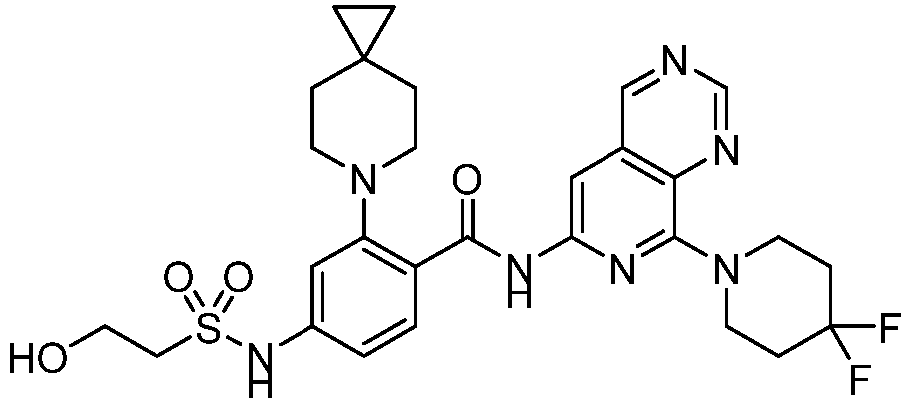
- The preparations in Example 58 follow the synthetic route of Example 3: LCMS (ESI): [M+H]+ = 602.10. 1H NMR (400 MHz, CDCl3) δ 12.99 (s, 1H), 9.30 (d, J = 2.0 Hz, 1H), 9.14 (s, 1H), 8.28 (d, J = 8.4 Hz, 1H), 8.20 (s, 1H), 7.35 (d, J = 7.2 Hz, 1H), 7.11 (s, 2H), 5.46 - 5.29 (m, 1H), 4.30 (t, J = 6.0 Hz, 4H), 4.15 (t, J = 5.2 Hz, 2H), 3.35 (t, J = 5.2 Hz, 2H), 3.11 (s, 4H), 2.21 (dd, J = 12.8, 6.8 Hz, 4H), 1.43 (s, 4H), 0.44 (s, 4H).
-
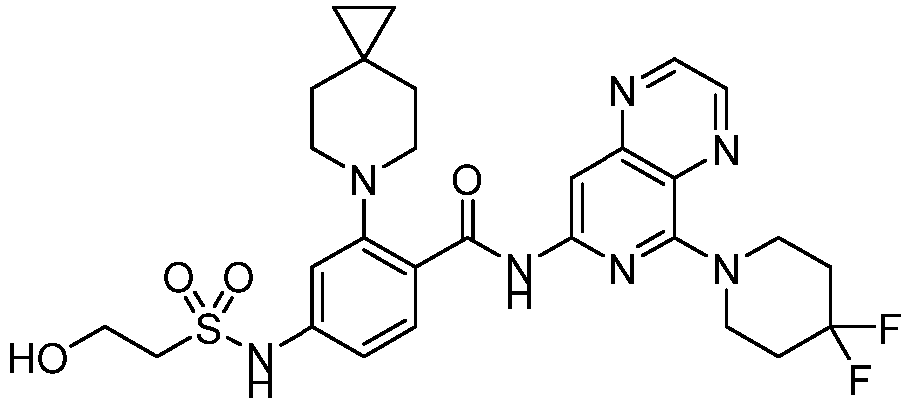
- The preparations in Example 59 follow the synthetic route of Example 3: LCMS (ESI) m/z: [M+H]+ = 602.4. 1H NMR (400 MHz, DMSO) δ 13.07 (s, 1H), 10.24 (s, 1H), 8.93 (d, J = 1.6 Hz, 1H), 8.69 (d, J = 2.0 Hz, 1H), 8.17 - 8.08 (m, 2H), 7.30 (d, J = 2.0 Hz, 1H), 7.15 (d, J = 8.4, 2.1 Hz, 1H), 4.95 (s, 1H), 4.25-4.21 (m, 4H), 3.78 (t, J = 5.6 Hz, 2H), 3.37 (t, J = 6.4 Hz, 2H), 3.06-2.96 (m, 4H), 2.22 - 2.15 (m, 4H), 1.77-1.73 (m, 4H), 0.41 (s, 4H).
-
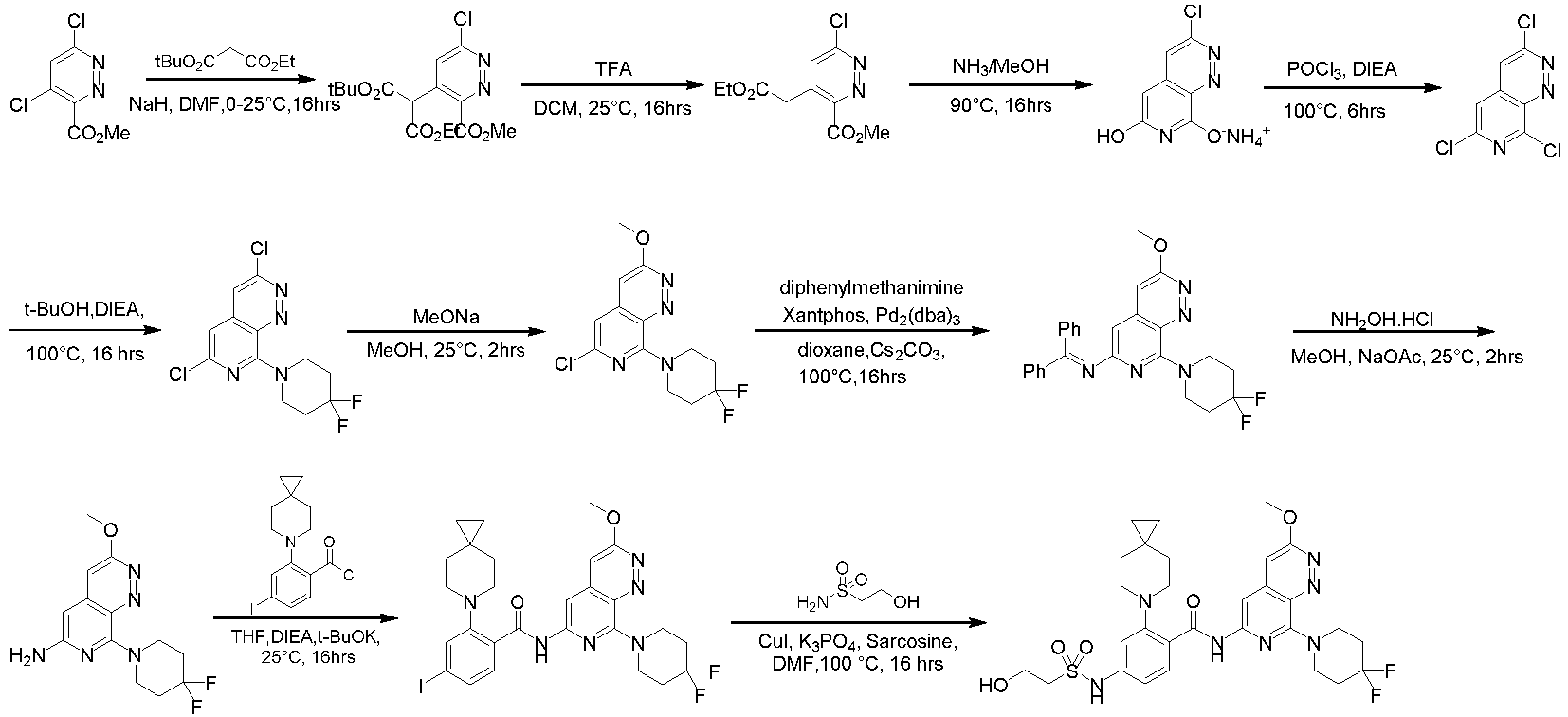
- Step 1: Sodium hydrogen (4.25 g, 106 mmol, 60% purity) was added to a solution of tert-butyl ethyl malonate (21.8 g, 116 mmol) in N,N-dimethylformamide (220 mL). The mixture was stirred at 0°C for 1 h, then methyl 4,6-dichloropyridazine-3-carboxylate (20.0 g, 96.6 mmol) was added to the reaction mixture at 0°C. And the mixture was stirred at 25°C for 16 h under nitrogen atmosphere. The reaction solution was slowly poured into water (50 mL), extracted with ethyl acetate (100 mL×2), dried over magnesium sulfate, filtered, and concentrated under reduced pressure to give the residue. The residue was purified by column chromatography (silica gel, 0-15% gradient of ethyl acetate/petroleum ether) to give 1-tert-butyl 3-ethyl 2-(6-chloro-3-(methylester)pyridazin-4-yl)malonate (32.0 g, 89.2 mmol, yield: 92.3%) as a yellow oil. LCMS (ESI): [M+H]+ =359.1
- Step 2: Trifluoroacetic acid (160 mL) was added to a solution of 1-tert-butyl 3-ethyl 2-(6-chloro-3-(methylester)pyridazin-4-yl)malonate (32.0 g, 89.2 mmol) in dichloromethane (320 mL), and the mixture was stirred at 25°C for 16 h. The pH of the reaction solution was adjusted to 7 with saturated sodium bicarbonate, extracted with dichloromethane (500 mL×2), the combined organic layer was washed with saturated saline (500 mL×2), dried over magnesium sulfate, filtered, and concentrated under reduced pressure to give methyl 6-chloro-4-(2-ethoxy-2-oxoethylidene)pyridazine-3-carboxylate (22.0 g, 85.1 mmol, yield: 95.4%) as a white solid. LCMS (ESI): [M+H]+ =259.0.
- Step 3: Methyl 6-chloro-4-(2-ethoxy-2-oxoethylidene)pyridazine-3-carboxylate (20.0 g, 77.3 mmol) was dissolved in ammonia methanol solution (200 mL). The mixture was stirred at 90°C for 16 h. The reaction solution was concentrated under reduced pressure to give ammonium 3-chloro-6-hydroxypyrido[3,4-c]pyridazin-8-ol anion (15.0 g, 75.9 mmol, yield: 98.2%) as a yellow solid. LCMS (ESI): [M+H]+ =198.0. 1H NMR (400 MHz, DMSO-d6) δ 10.67 - 9.72 (m, 1H), 7.64 - 6.86 (m, 4H), 6.81 (s, 1H), 4.65 (s, 1H)
- Step 4: N,N-diisopropylethylamine (10.0 g, 75.9 mol) was added to a solution of ammonium 3-chloro-6-hydroxypyrido[3,4-c]pyridazin-8-ol anion (7.50 g, 38.0 mmol) in phosphorus oxychloride (150 mL), and the mixture was stirred at 100°C for 6 h. The reaction solution was concentrated under reduced pressure to give the residue. The residue was purified by column chromatography (silica gel, 0-15% gradient of ethyl acetate/petroleum ether) to give 3,6,8-trichloropyrido[3,4-c]pyridazine (6.50 g, 27.7 mmol, yield: 73.0%). LCMS (ESI): [M+H]+ =233.9.
- Step 5: 4,4-difluoropiperidine (4.37 g, 27.7 mmol) and N,N-diisopropylethylamine (36.6 g, 277 mol) were successively added to a solution of 3,6,8-trichloropyrido[3,4-c]pyridazine (6.50 g, 27.7 mmol) in tert-butanol (130 mL). The mixture was stirred at 100°C for 16 h. The reaction solution was diluted with water (100 mL), extracted with ethyl acetate (100 mL × 2), the combined organic layer was washed with saturated saline (100 mL × 2), dried over magnesium sulfate, filtered, and concentrated under reduced pressure to give the residue. The residue was purified by column chromatography (silica gel, 0-20% gradient of ethyl acetate/petroleum ether) to give 3,6-dichloro-8-(4,4-difluoropiperidin-1-yl)pyrido[3,4-c]pyridazine (6.10 g, 19.1 mmol, yield: 69.0%) as a yellow solid. LCMS (ESI): [M+H]+ =319.0. 1H NMR (400 MHz, DMSO-d6) δ 8.21 (s, 1H), 7.10 (s, 1H), 4.40 - 4.30 (m, 4H), 2.27 - 2.14 (m, 4H)
- Step 6: 3,6-dichloro-8-(4,4-difluoropiperidin-1-yl)pyrido[3,4-c]pyridazine (150 mg, 0.47 mmol) was dissolved in a solution of sodium methoxide (3 mL). The mixture was stirred at 25°C for 16 h. The reaction solution was poured into ice water (10 mL), extracted with ethyl acetate (10 mL×3), and the combined organic layer was washed with saturated saline (10 mL×2), dried over magnesium sulfate, filtered, and concentrated under reduced pressure to give 6-chloro-8-(4,4-difluoropiperidin-1-yl)-3-methoxypyrido[3,4-c]pyridazine (125 mg, 0.39 mmol, yield: 84.5%) as a yellow solid. LCMS (ESI): [M+H]+ =315.0. 1H NMR (400 MHz, DMSO-d6) δ 7.37 (s, 1H), 7.04 (s, 1H), 4.47 - 4.34 (m, 4H), 4.16 (s, 3H), 2.25 - 2.15 (m, 4H)
- Step 7: Cesium carbonate (311 mg, 0.95 mmol), chloro(2-dicyclohexylphosphino-2,4,6-triisopropyl-1,1-biphenyl)[2-(2-amino-1,1-bip henyl)] palladium (II) (29.1 mg, 0.03 mmol), 5-bis(diphenylphosphine)-9,9-dimethoxyanthracene (36.7 mg, 0.06 mmol) and benzophenonimine (70.5 mg, 0.38 mmol) were successively added to a solution of 6-chloro-8-(4,4-difluoropiperidin-1-yl)-3-methoxypyrido[3,4-c]pyridazine (100 mg, 0.31 mmol) in dioxane (2 mL). The mixture was exchanged with nitrogen three times and stirred at 100°C for 16 h. The reaction solution was cooled to ambient temperature and extracted with water (10 mL) and ethyl acetate (10 mL × 2). The organic phases were combined and washed with saturated saline (10 mL× 2), dried over anhydrous magnesium sulfate, filtered and concentrated under reduced pressure to give a residue. The residue was purified by flash column chromatography (silica gel, 0-15% gradient of ethyl acetate/petroleum ether) to give 8-(4,4-difluoropiperidin-1-yl)-N-(diphenylmethylene)-3-methoxypyrido[3,4-c]pyridaz in-6-amine (110 mg, 0.24 mmol, yield: 75.3%) as a white solid. LCMS (ESI): [M+H]+ =460.2
- Step 8: Sodium acetate (53.6 mg, 0.65 mmol) and hydroxylamine hydrochloride (30.3 mg, 0.44 mol) were added successively to a solution of 8-(4,4-difluoropiperidin-1-yl)-N-(diphenylmethylene)-3-methoxypyrido[3,4-c]pyridaz in-6-amine (100 mg, 0.22 mmol) in methanol (2 mL). The mixture was stirred at 25°C for 2 h. The reaction solution was diluted with water (10 mL), extracted with ethyl acetate (10 mL × 2), the combined organic layer was washed with saturated saline (10 mL × 2), dred over magnesium sulfate, filtered, and concentrated under reduced pressure to give the residue. The residue was purified by column chromatography (silica gel, 0-10% gradient of ethyl acetate/petroleum ether) to give 8-(4,4-difluoropiperidin-1-yl)-3-methoxypyrido[3,4-c]pyridazine-6-amine (50.0 mg, 0.17 mmol, yield: 77.8%) as a yellow solid. LCMS (ESI): [M+H]+ =296.1
- Step 9: The solution of N,N-diisopropylethylamine (60.3 mg, 0.46 mmol) and potassium tert-butoxide (0.45 mL, 0.18 mmol, 1M) in THF was added to a solution of 8-(4,4-difluoropiperidin-1-yl)-3-methoxypyrido[3,4-c]pyridazine-6-amine (45 mg, 0.15 mmol) and 4-iodo-2-(6-azaspiro[2.5]octan-6-yl)benzoyl chloride (68.7 mg, 0.18 mmol) in THF (2 mL). The mixture was stirred at 25°C for 16 h. The reaction solution was cooled to ambient temperature and extracted with water (10 mL) and ethyl acetate (10 mL × 2), the organic phases were combined and washed with saturated saline (10 mL×2), dried over anhydrous magnesium sulfate, filtered and concentrated under reduced pressure to give a residue. The residue was purified by flash column chromatography (silica gel, 0-10% gradient of ethyl acetate/petroleum ether) to give N-(8-(4,4-difluoropiperidin-1-yl)-3-methoxypyrido[3,4-c]pyridazin-6-yl)-4-iodo-2-(6-azaspiro[2.5]octan-6-yl)benzamide (80.0 mg, 0.124 mmol, yield: 82.7%) as a yellow solid. LCMS (ESI): [M+H]+ =635.1
- Step 10: Cuprous iodide (12.3 mg, 0.06 mmol) was added to a solution of 2-hydroxyethanesulfonamide (31.6 mg, 0.25 mmol), sarcosine (11.2 mg, 0.13 mmol), and potassium phosphate (109 mg, 0.50 mmol) in N,N-dimethylformamide (2 mL). The mixture was stirred at 50°C for 5 min. Then N-(8-(4,4-difluoropiperidin-1-yl)-3-methoxypyrido[3,4-c]pyridazin-6-yl)-4-iodo-2-(6-azaspiro[2.5]octan-6-yl)benzamide (80 mg, 0.13 mmol) was added to the reaction mixture at 50°C, and the mixture was heated to 100°C with stirring for 16 h under nitrogen atmosphere. The reaction solution was cooled to ambient temperature and extracted with water (20 mL) and ethyl acetate (20 mL×2). The organic phases were combined and wash with ammonia (20 mL×2), dried over anhydrous magnesium sulfate, filtered and concentrated under reduced pressure to give a residue. The residue was purified by preparative HPLC (C18, 42-82% gradient of water (formic acid)/acetonitrile) to give N-(8-(4,4-difluoropiperidin-1-yl)-3-methoxypyrido[3,4-c]pyridazin-6-yl)-4-(2-hydrox yethylsulfonamido)-2-(6-azaspiro[2.5]octan-6-yl)benzamide (31.0 mg, 0.05 mmol, yield: 38.9%) as a yellow solid. LCMS (ESI): [M+H]+ =632.5. 1H NMR (400 MHz, DMSO-d6) δ 12.99 (s, 1H), 10.26 (s, 1H), 8.09 (d, J = 8.8 Hz, 1H), 7.87 (d, J = 1.2 Hz, 1H), 7.39 (d, J = 2.0 Hz, 1H), 7.29 (d, J = 2.0 Hz, 1H), 7.15 (dd, J = 2.0, 8.4 Hz, 1H), 4.97 (br t, J = 5.6 Hz, 1H), 4.50 - 4.28 (m, 4H), 4.14 (s, 3H), 3.85 - 3.67 (m, 2H), 3.45 - 3.37 (m, 2H), 3.12 - 2.91 (m, 4H), 2.30 - 2.12 (m, 4H), 2.02 - 1.47 (m, 4H), 0.41 (s, 4H)
-
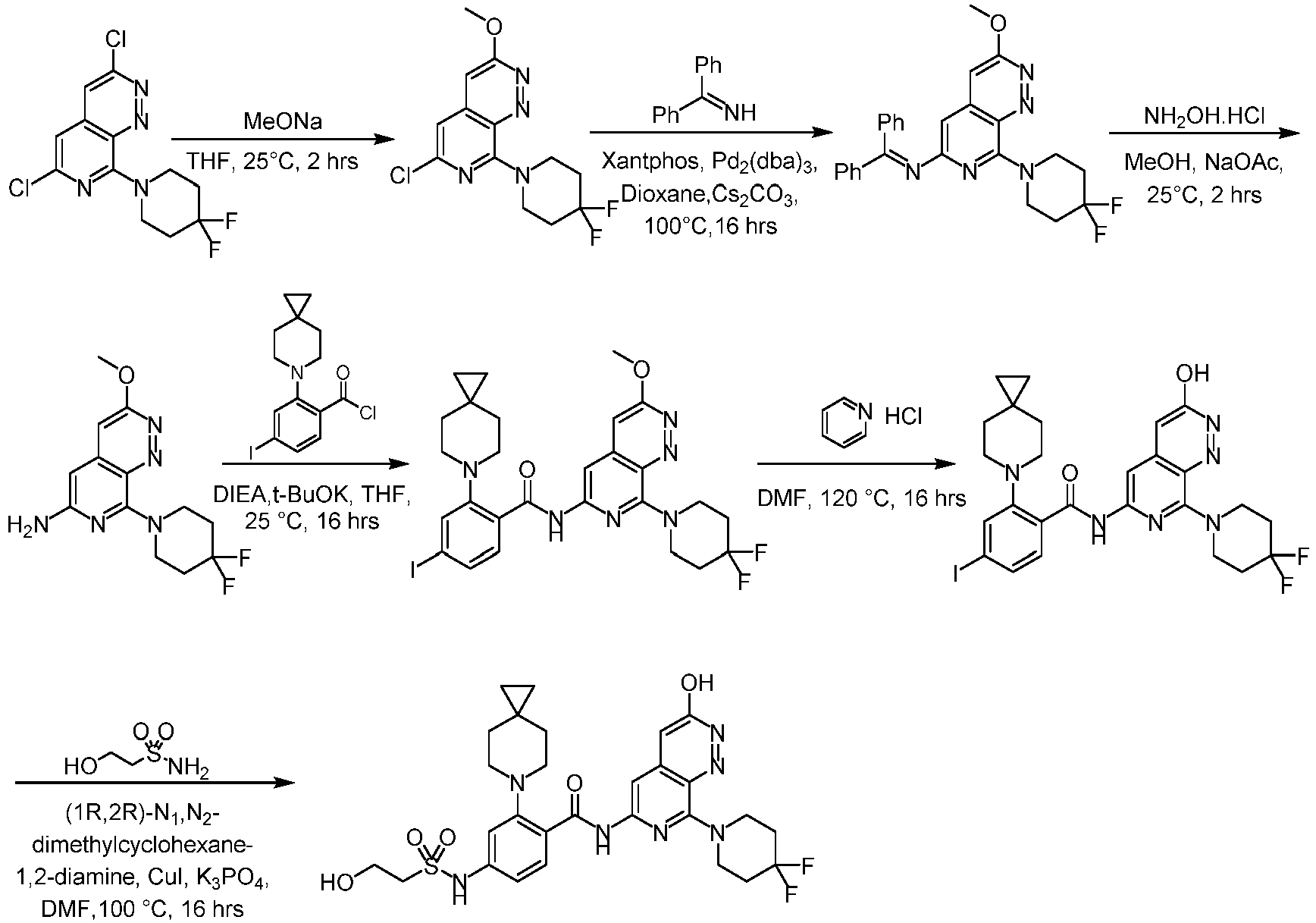
- Step 1: The solution of sodium methoxide (6 mL, 5.4 M) was added to the solution of 1-{3,6-dichloropyrido[3,4-c]pyridazin-8-yl}-4,4-difluoropiperidine (600 mg, 1.88 mmol) in THF (6 mL). The mixture was stirred at 25°C for 2 h. The reaction solution was poured into ice water (20 mL) and extracted withethyl acetate (20 mL × 3). The combined organic layer was dried over anhydrous sodium sulfate, filtered and concentrated under reduced pressure to give 1-{6-chloro-3-methoxypyrido[3,4-c]pyridazin-8-yl}-4,4-difluoropiperidine (250 mg, 0.79 mmol, yield: 42%) as a yellow solid. LCMS (ESI): [M+H]+ = 315.0. 1H NMR (400 MHz, DMSO-d6) δ ppm 7.37 (s, 1H), 7.04 (s, 1H), 4.46 - 4.27 (m, 4H), 4.16 (s, 3H), 2.26 - 2.12 (m, 4H)
- Step 2: Benzophenonimine (151 mg, 0.83 mmol), cesium carbonate (528 mg, 1.59 mmol), 4,5-bis(diphenylphosphino)-9,9-dimethylxanthene (93.8 mg, 0.16 mmol) and tris(dibenzylideneacetone) dipalladium (74.2 mg, 0.08 mmol) were successively added to a solution of 1-{6-chloro-3-methoxypyrido[3,4-c]pyridazin-8-yl}-4,4-difluoropiperidine (250 mg, 0.79 mmol) in dioxane (5 mL). Replace the reaction solution with nitrogen three times, then the reaction system was heated to 100°C under nitrogen atmosphere and stirred for 16 h. The reaction solution was cooled to ambient temperature and extracted withwater (20 mL) and ethyl acetate (20 mL × 3). The organic phases were combined and washed with saturated saline (20 mL), dried over anhydrous sodium sulfate, filtered and concentrated under reduced pressure to give a residue. The residue was purified by flash column chromatography (silica gel, 0-9% gradient of THF/petroleum ether) to give N-[8-(4,4-difluoropiperidin-1-yl)-3-methoxypyrido[3,4-c]pyridazin-6-yl]-1,1-dipheny lmethanimine (230 mg, 0.50 mmol, yield: 63%) as a yellow solid. LCMS (ESI): [M+H]+ = 460.2
- Step 3: Sodium acetate (112 mg, 1.37 mmol) and hydroxylamine hydrochloride (63.7 mg, 0.91 mmol) were successively added to a solution of N-[8-(4,4-difluoropiperidin-1-yl)-3-methoxypyrido[3,4-c]pyridazin-6-yl]-1,1-dipheny lmethanimine (210 mg, 0.46 mmol) in methanol (4 mL). The mixture was stirred at 25°C for 2 h. The reaction solution was poured into ice water (20 mL) and extracted with ethyl acetate (20 mL × 3). The combined organic layer was dried over anhydrous sodium sulfate, filtered and concentrated under reduced pressure to give the residue. The residue was purified by flash column chromatography (silica gel, 0-12% gradient of THF/petroleum ether) to give 8-(4,4-difluoropiperidin-1-yl)-3-methoxypyrido[3,4-c]pyridazine-6-amine (130 mg, 0.44 mmol, yield: 96%) as a yellow solid. LCMS (ESI): [M+H]+ = 296.0. 1H NMR (400 MHz, DMSO-d6) δ ppm 6.77 (s, 1H), 6.42 (br s, 2H), 5.70 (s, 1H), 4.29 - 4.18 (m, 4H), 4.02 (s, 3H), 2.21 - 2.04 (m, 4H)
- Step 4: Potassium tert-butoxide (1.02 mL, 1M) in THF and N,N-diisopropylethylamine (134 mg, 1.02 mmol) was added to a solution of 8-(4,4-difluoropiperidin-1-yl)-3-methoxypyrido[3,4-c]pyridazine-6-amine (100 mg, 0.34 mmol) and 2-(6-azaspiro[2.5]octan-6-yl)-4-iodobenzoyl chloride (165 mg, 0.44 mmol) in THF (2 mL). The mixture was stirred at 25°C for 16 h. The reaction solution was extracted with water (20 mL) and ethyl acetate (20 mL×3). The organic phases were combined and washed with saturated saline (20 mL), dried over anhydrous sodium sulfate, filtered and concentrated under reduced pressure to give a residue. The residue was purified by flash column chromatography (silica gel, 0-10% gradient of ethyl acetate/petroleum ether) to give 2-{6-azaspiro[2.5]octan-6-yl}-N-[8-(4,4-difluoropiperidin-1-yl)-3-methoxypyrido[3,4 -c]pyridazin-6-yl]-4-iodobenzamide (110 mg, 0.17 mmol, yield: 51%) as a yellow solid. LCMS (ESI): [M+H]+ = 635.1
- Step 5: Pyridine hydrochloride (200 mg, 1.73 mmol) was added to a solution of 2-{6-azaspiro[2.5]octan-6-yl}-N-[8-(4,4-difluoropiperidin-1-yl)-3-methoxypyrido[3,4 -c]pyridazin-6-yl]-4-iodobenzamide (110 mg, 0.17 mmol) in N,N-dimethylformamide (5.00 mL). The mixture was stirred at 120°C for 16 h. The reaction solution was cooled to ambient temperature and extracted with water (20 mL) and ethyl acetate (20 mL × 3). The organic phases were combined and washed with saturated saline (20 mL), dried over anhydrous sodium sulfate, filtered and concentrated under reduced pressure to give a residue. The residue was purified by flash column chromatography (silica gel, 0-7% gradient of methanol/dichloromethane) to give 2-{6-azaspiro[2.5]octan-6-yl}-N-[8-(4,4-difluoropiperidin-1-yl)-3-hydroxypyrido[3,4-c]pyridazin-6-yl]-4-iodobenzamide (100 mg, 0.16 mmol, yield: 93%) as an orange solid. LCMS (ESI): [M+H]+ = 621.4
- Step 6: Cuprous iodide (12.5 mg, 0.06 mmol) and potassium phosphate (112 mg, 0.52 mmol) were successively added to a solution of 2-hydroxyethanesulfonamide (21.0 mg, 0.17 mmol) and (1R,2R)-(-)-N,N-dimethylcyclohexane-1,2-diamine (18.5 mg, 0.13 mmol) in N,N-dimethylformamide (2 mL). The mixture was heated to 50°C and stir for 5 min. 2-{6-Azaspiro[2.5]octan-6-yl}-N-[8-(4,4-difluoropiperidin-1-yl)-3-hydroxypyrido[3,4 -c]pyridazin-6-yl]-4-iodobenzamide (80.0 mg, 0.13 mmol) was added to the mixture and then heat to 100°C with stirring for 16 h under nitrogen atmosphere. The reaction solution was cooled to ambient temperature and extracted with water (20 mL) and ethyl acetate (20 mL × 3). The organic phases were combined and washed with saturated saline (20 mL), dried over anhydrous sodium sulfate, filtered and concentrated under reduced pressure to give a residue. The residue was purified by preparative HPLC (C18, 22-62% gradient of water (formic acid)/acetonitrile) to give 2-{6-azaspiro[2.5]octan-6-yl}-N-[8-(4,4-difluoropiperidin-1-yl)-3-hydroxypyrido[3,4-c]pyridazin-6-yl]-4-(2-hydroxyethanesulfonamido)benzamide (2.50 mg, 0.005 mmol, yield: 3%) as an orange solid. LCMS (ESI): [M+H]+ = 618.4. 1H NMR (400 MHz, DMSO-d6) δ ppm 13.82 (s, 1H), 12.81 (s, 1H), 10.27 (s, 1H), 8.05 (d, J = 8.8 Hz, 1H), 7.52 (s, 1H), 7.24 (s, 1H), 7.11 (br d, J = 8.8 Hz, 1H), 6.79 (s, 1H), 5.01 (s, 1H), 4.18 (br s, 4H), 3.76 (t, J = 6.4 Hz, 2H), 3.31 - 3.30 (m, 2H), 2.98 (br s, 4H), 2.22 - 2.11 (m, 4H), 1.88 - 1.55 (m, 4H), 0.40 (s, 4H)
-
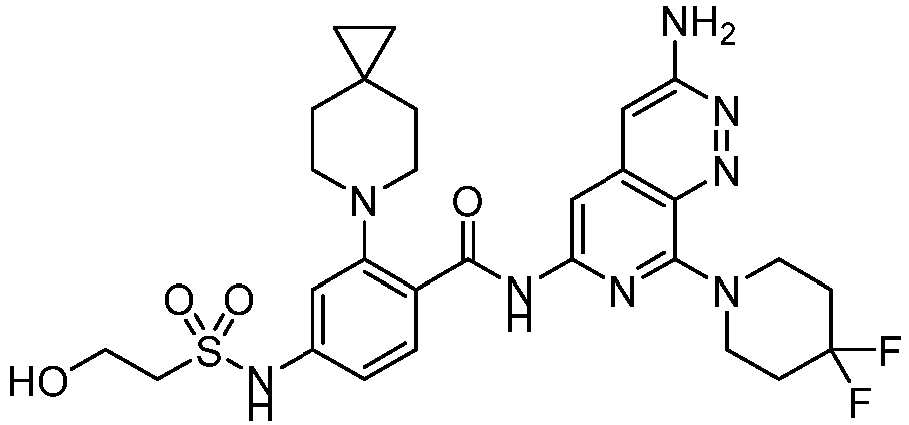
- The preparations in Example 62 follow the synthetic route of Example 3: LCMS (ESI): [M+H]+ =617.3, 1H NMR (400 MHz, DMSO-d6) δ 12.80 (s, 1H), 10.94 - 9.71 (m, 1H), 8.07 (d, J = 8.4 Hz, 1H), 7.63 (s, 1H), 7.27 (d, J = 1.6 Hz, 1H), 7.13 (dd, J = 1.8, 8.8 Hz, 1H), 6.71 (s, 2H), 6.62 (s, 1H), 5.32 - 4.67 (m, 1H), 4.30 (br s, 4H), 3.76 (t, J = 6.4 Hz, 2H), 3.52 - 3.41 (m, 2H), 2.99 (br s, 4H), 2.24 - 2.10 (m, 4H), 1.92 - 1.49 (m, 4H), 0.41 (s, 4H)
-

- Step 1: 4,5-bis(diphenylphosphino)-9,9-dimethylxanthene (420 mg, 0.711 mmol) and tris(dibenzylideneacetone) dipalladium (665 mg, 0.81 mmol) under nitrogen atmosphere were successively added to a mixed solution containing 8-bromo-6-nitroquinoline (1.8 g, 7.11 mmol), 4,4-difluoropiperidine hydrochloride (1.7 g, 10.67 mmol), cesium carbonate (9.9 g, 29.64 mmol) and dioxane (20 mL). The resulting mixture was stirred at 120°C for 12 h. The reaction solution was poured into water (50 mL), extracted with ethyl acetate (50 mL×3), and the combined organic layer was dried over anhydrous sodium sulfate, filtered and concentrated to give the residue, which was further purified by column chromatography (silica gel, 0-50% gradient of ethyl acetate/petroleum ether) to give 8-(4,4-difluoropiperidin-1-yl)-6-nitroquinoline (1.4 g, 4.77 mmol, yield: 67%) as a yellow solid compound. LCMS (ESI): [M+H]+ = 294.1.
- Step 2: The mixed solution containing 8-(4,4-difluoropropidine)-6-nitroquinoline (500 mg, 1.70 mmol), iron powder (962 mg, 17.05 mmol), ammonium chloride (921 mg, 17.05 mmol), ethanol (10 mL) and water (2 mL) was stirred at 60°C for 1 h. The reaction solution was filtered while hot then the filtrate was poured into water (30 mL). The mixture was extrated with ethyl acetate (30 mL), the combined organic layer was dried over anhydrous sodium sulfate, filtered, and concentrated to give 8-(4,4-difluoropiperidin-1-yl)quinolin-6-amine (420 mg, 1.60 mmol, yield: 93.6%) as a yellow solid compound. LCMS (ESI): [M+H]+ = 264.2.
- Step 3: 2-(6-azaspiro[2.5]octan-6-yl)-4-bromobenzoyl chloride (599 mg, 1.82 mmol) was added to a mixed solution containing 8-(4,4-difluoropiperidinyl)-6-quinolinamine (400 mg, 1.52 mmol), N,N-diisopropylethylamine (601 mg, 4.56 mmol) and THF (10 mL). Stir the resulting mixture at 20°C for 1 h, The reaction solution was poured into water (30 mL), extracted with ethyl acetate (30 mL×3), and the combined organic layer was dried over anhydrous sodium sulfate, filtered and concentrated to give the residue, which was further purified by column chromatography (silica gel, 0-50% gradient of ethyl acetate/petroleum ether) to give the compound 4-bromo-N-(8-(4,4-difluoropiperidin-1-yl)quinolin-6-yl)-2-(6-azaspiro[2.5]octan-6-yl) benzamide (700 mg, 1.26 mmol, yield: 83%). LCMS (ESI): [M+H]+ = 555.3.
- Step 4: 2-di-tert-butylphosphino-2',4',6'-triisopropylbiphenyl (23 mg, 0.054 mmol) and tris(dibenzylideneacetone) dipalladium (50 mg, 0.054 mmol) under nitrogen atmosphere were successively added to a mixed solution containing [2-(6-azaspiro[2.5]octan-6-yl)-4-bromophenyl]-N-[8-(4.4-difluoropropiperidinyl)(6-quinolinyl)] carboxamide (300 mg. 0.54 mmol), 2-hydroxyethanesulfonamide (83 mg, 0.648 mmol), potassium phosphate (351 mg, 1.62 mmol) and dioxane (5 mL). The resulting mixture was stirred at 100°C for 12 h. The reaction solution was poured into water (30 mL), extracted withethyl acetate (30 mL×3), and the combined organic layer was dried over anhydrous sodium sulfate, filtered and concentrated to give the residue, which was further purified by column chromatography (silica gel, 0-50% gradient of ethyl acetate/petroleum ether) to give N-(8-(4,4-difluoropiperidin-1-yl)quinolin-6-yl)-4-((2-hydroxyethyl)sulfamoyl)-2-(6-a zaspiro[2.5]octan-6-yl)benzamide (115.74 mg, 0.19 mmol, yield: 35.7%) as a white solid compound. LCMS (ESI): [M+H/2]+ = 300.8. 1H NMR (400 MHz, DMSO) δ 11.95 (s, 1H), 10.12 (s, 1H), 8.76 (dd, J = 4.0, 2.0 Hz, 1H), 8.30 - 8.20 (m, 2H), 7.87 (d, J = 8.4 Hz, 1H), 7.48 (dd, J = 8.4, 4.0 Hz, 1H), 7.33 (d, J = 2.0 Hz, 1H), 7.19 (d, J = 2.0 Hz, 1H), 7.07 (dd, J = 8.4, 2.0 Hz, 1H), 4.97 (s, 1H), 3.76 (d, J = 6.8 Hz, 2H), 3.54 (t, J = 5.6 Hz, 4H), 3.36 (d, J = 6.4 Hz, 2H), 3.00 (t, J = 5.2 Hz, 4H), 2.30 - 2.17 (m, 4H), 1.67 - 1.51 (m, 4H), 0.35 (s, 4H).
-

- Step 1: 4-bromo-2-fluoro-1-nitrobenzene (10.00 g, 45.45 mmol), 4,4-difluoropiperidine hydrochloride (8.59 g, 54.55 mmol), and potassium carbonate (19.23 g, 136.36 mmol) were successively added to N,N-dimethylformamide (100 mL), and the reaction solution was stirred at 120°C for 6 h. The reaction solution was filtered under reduced pressure. The filtrate was poured into the saturated ammonium chloride solution (200 mL), extracted with ethyl acetate (100 mL × 3). The combined organic layer was washed with the saturated sodium chloride solution (100 mL × 3), dried over anhydrous sodium sulfate, and concentrated to obtain the crude. The crude was purified by flash column chromatography (silica gel, 0-20% gradient of ethyl acetate/petroleum ether) to give 1-(5-bromo-2-nitrophenyl)-4,4-difluoropiperidine (22.00 g, 75%) as a yellow solid. LCMS (ESI): [M+H]+ =321.0
- Step 2: 1-(5-bromo-2-nitrophenyl)-4,4-difluoropiperidine (4.00 g, 12.46 mmol), iron powder (3.51 g, 62.28 mmol) and ammonium chloride (1.01 g, 18.69 mmol) were successively added to water (4 mL), ethanol (20 mL) and THF (20 mL), and the reaction solution was stirred at 85°C for 16 h. The reaction solution was filtered under reduced pressure. The filtrate was poured into water (50 mL), extracted with ethyl acetate (50 mL × 3). The combined organic layer was dried over anhydrous sodium sulfate, and concentrated to obtain the crude. The crude was purified by flash column chromatography (silica gel, 10-15% gradient of ethyl acetate/petroleum ether) to give 4-bromo-2-(4,4-difluoropiperidin-1-yl)aniline (3.50 g, 96%) as a yellow solid. LCMS (ESI): [M+H]+ =291.0
- Step 3: 4-bromo-2-(4,4-difluoropiperidin-1-yl)aniline (3.50 g, 12.02 mmol) and crotonaldehyde (4.26 g, 60.11 mmol) were successively added to hydrochloric acid (6 M, 20 mL), and the reaction solution was stirred under reflux at 100°C for 16 h. Slowly The reaction solution was poured into water (100 mL), the pH was adjusted to 7 with sodium hydroxide solid, extracted with ethyl acetate (50 mL × 3). The combined organic layer was dried over anhydrous sodium sulfate, and concentrate to give the crude. The crude was purified by flash column chromatography (silica gel, 0-10% gradient of ethyl acetate/petroleum ether) to give 6-bromo-8-(4,4-difluoropiperidin-1-yl)-2-methylquinoline (1.20 g, 29%) as a pale yellow solid. LCMS (ESI): [M+H]+ =341.0
- Step 4: 6-bromo-8-(4,4-difluoropiperidin-1-yl)-2-methylquinoline (1.10 g, 3.22 mmol), tert-butyl carbamate (572 mg, 4.84 mmol), 4,5-bis(diphenylphosphino)-9,9-dimethylxanthene (190 mg, 0.32 mmol), tris(dibenzylideneacetone) dipalladium (301 mg, 0.32 mmol), and cesium carbonate (2.14 g, 6.45 mmol) were successively added to 1,4-dioxane (10 mL), and the reaction solution was stirred at 100°C for 16 h. The reaction solution was filtered under reduced pressure. The filtrate was poured into water (50 mL), extracted with ethyl acetate (30 mL × 3). The combined organic layer was dried over anhydrous sodium sulfate, and concentrated to obtain the crude. The crude was added to dichloromethane (10 mL) and trifluoroacetic acid (5 mL) was added to the reaction solution, and the reaction solution was stirred at 50°C for 2 h. Slowly The reaction solution was poured into water (50 mL), the pH was adjusted to 7 with sodium bicarbonate solid, extracted with ethyl acetate (50 mL × 3), The combined organic layer was dried over anhydrous sodium sulfate, and concentrate to give the crude. The crude was purified by flash column chromatography (silica gel, 10-25% gradient of ethyl acetate/dichloromethane) to give 8-(4,4-difluoropiperidin-1-yl)-2-methylquinolin-6-amine (450 mg, 50%) as a brown solid. LCMS (ESI): [M+H]+ =278.2
- Step 5: 8-(4,4-difluoropiperidin-1-yl)-2-methylquinolin-6-amine (200 mg, 0.72 mmol) and N,N-diisopropylethylamine (285 mg, 2.16 mmol) to THF (10 mL), and 4-bromo-2-(6-azaspiro[2.5]octan-6-yl) benzoyl chloride (355 mg, 1.08 mmol) was added to the reaction solution, and the reaction solution was stirred at 25°C for 2 h. The reaction solution was poured into saturated aqueous ammonium chloride solution (30 mL), extracted with ethyl acetate (30 mL × 3). The combined organic layer was dried over anhydrous sodium sulfate, and concentrated to obtain the crude. The crude was purified by flash column chromatography (silica gel, 10-25% gradient of ethyl acetate/dichloromethane) to give 4-bromo-N-(8-(4,4-difluoropiperidin-1-yl)-2-methylquinolin-6-yl)-2-(6-azaspiro[2.5] octan-6-yl) benzamide (300 mg, 73%) as a pale yellow solid. LCMS (ESI): [M+H]+ =569.3
- Step 6: 4-bromo-N-(8-(4,4-difluoropiperidin-1-yl)-2-methylquinolin-6-yl)-2-(6-azaspiro[2.5] octan-6-yl) benzamide (300 mg, 0.53 mmol), 2-hydroxyethanesulfonamide (101 mg, 0.79 mmol), cuprous iodide (102 mg, 0.53 mmol), (1S,2S)-(+)-N,N'-dimethyl-1,2-cyclohexanediamine (113 mg, 0.79 mmol) and potassium phosphate (342 mg, 1.58 mmol) were successively added to N,N-dimethylformamide (4 mL), and the reaction solution was stirred at 115°C for 4 h under nitrogen atmosphere. The reaction solution was poured into the saturated aqueous ammonium chloride solution (30 mL), extracted with ethyl acetate (30 mL×3). The combined organic layer was washed with the saturated aqueous sodium chloride solution (30 mL × 3), the combined organic layer was dried over anhydrous sodium sulfate, and concentrated to obtain the crude. The crude was purified by flash column chromatography (silica gel, 30-50% gradient of ethyl acetate/dichloromethane) to give N-(8-(4,4-difluoropiperidin-1-yl)-2-methylquinolin-6-yl)-4-(2-hydroxyethyl)sulfonam ide)-2-(6-azaspiro[2.5]octan-6-yl)benzamide (165 mg, 51%). LCMS (ESI): [M+H]+ =614.4. 1H NMR (400 MHz, DMSO-d 6) δ 11.92 (s, 1H), 10.11 (s, 1H), 8.17 (d, J = 2.0 Hz, 1H), 8.13 (d, J = 8.4 Hz, 1H), 7.87 (d, J = 8.5 Hz, 1H), 7.37 (d, J = 8.4 Hz, 1H), 7.29 (d, J = 2.2 Hz, 1H), 7.19 (d, J = 2.1 Hz, 1H), 7.07 (dd, J = 8.5, 2.1 Hz, 1H), 4.96 (s, 1H), 3.77 (q, J = 5.6, 5.0 Hz, 2H), 3.53 (t, J = 5.5 Hz, 4H), 3.36 (d, J = 6.5 Hz, 2H), 3.00 (t, J = 5.2 Hz, 4H), 2.64 (s, 3H), 2.30 - 2.19 (m, 4H), 1.59 (t, J = 5.0 Hz, 4H), 0.35 (s, 4H).
-
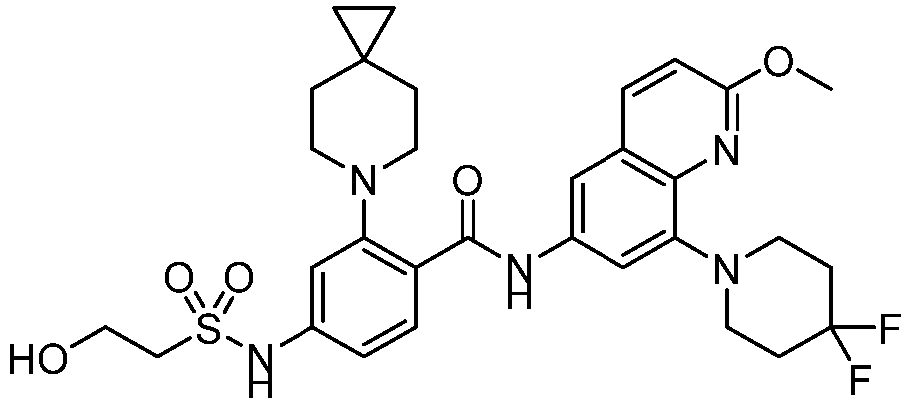
- The preparations in Example 65 follow the synthetic route of Example 3: LCMS (ESI): [M+1]+ = 630.3. 1H NMR (400 MHz, DMSO) δ 11.89 (s, 1H), 10.06 (s, 1H), 8.18 - 8.11 (m, 2H), 7.86 (d, J = 8.4 Hz, 1H), 7.32 (d, J = 2.0 Hz, 1H), 7.19 (d, J = 2.0 Hz, 1H), 7.06 (dd, J = 8.4, 2.0 Hz, 1H), 6.99 (d, J = 8.8 Hz, 1H), 5.04 (s, 1H), 3.98 (s, 3H), 3.77 (t, J = 6.4 Hz, 2H), 3.49 (t, J = 5.6 Hz, 4H), 3.35 (d, J = 6.4 Hz, 2H), 3.00 (t, J = 5.2 Hz, 4H), 2.26 (td, J = 14.4, 13.0, 6.9 Hz, 4H), 1.59 (t, J = 5.2 Hz, 4H), 0.36 (s, 4H).
-

- Step 1: The solution of pyridine hydrochloride (276 mg, 2.39 mmol) was added to the solution of 4-bromo-N-(8-(4,4-difluoropiperidin-1-yl)-2-methoxyquinolin-6-yl)-2-(6-azaspiro[2.5] octan-6-yl) benzamide (200 mg, 0.34 mmol) in THF (4 mL), and The mixture was stirred at 105°C for 8 h. Stirring is stopped once solid compounds were precipitated, then the system was diluted with water (8 mL), filtered out the solids, the cake was rinsed with methanol (1 mL), the cake was collected, and dried to give 2-(6-azaspiro[2.5]oct-6-yl)-4-bromophenyl]-N-[8-(4,4-difluoropiperidinyl)-2-hydroxy (6-quinolinyl)]formamide (150 mg, 77%) as a white solid. LCMS (ESI): [M+H]+ = 571.3. 1H NMR (400 MHz, DMSO) δ 11.30 (s, 1H), 10.61 (s, 1H), 8.02 (d, J = 2.0 Hz, 1H), 7.96 - 7.92 (m, 1H), 7.71 - 7.64 (m, 2H), 7.44 (d, J = 2.0 Hz, 1H), 7.38 (dd, J = 8.4, 1.9 Hz, 1H), 6.55 (d, J = 9.6 Hz, 1H), 3.03 (t, J = 5.2 Hz, 4H), 2.89 (s, 6H), 2.73 (s, 2H), 1.49 (t, J = 5.2 Hz, 4H), 0.31 (s, 4H).
- Step 2: 2-(6-Azaspiro[2.5]oct-6-yl)-4-bromophenyl]-N-[8-(4,4-difluoropiperidinyl)-2-hydrox y(6-quinolinyl)]formamide (100 mg, 0.17 mmol), 2- hydroxyethanesulfonamide (44 mg, 0.30 mmol), cuprous iodide (34 mg, 0.17 mmol), potassium phosphate (150 mg, 0.70 mmol), and N,N'-dimethyl-1,2-cyclohexanediamine (100 mg, 0.70 mmol) were successively added to N,N-dimethylformamide (3 mL). After replacing nitrogen for three times, the reaction mixture was heated to 110°C and stirred for 2 h. The reaction solution was quenched with water (25 mL), extracted with ethyl acetate (25 mL×3),The combined organic layer was washed with saturated aqueous sodium chloride solution (50 mL), dried over anhydrous sodium sulfate, concentrated under reduced pressure and The crude was purified with preparative liquid phase (C18, 30-55% gradient of acetonitrile/water) to give N-(8-(4,4-difluoropiperidin-1-yl)-2-hydroxyquinolin-6-yl)-4-(2-hydroxyethyl)sulfona mide)-2-(6-azaspiro[2.5]octan-6-yl)benzamide (32 mg, 29%) as a white solid. LCMS (ESI): [M+1]+ = 616. 1H NMR (400 MHz, DMSO) δ 11.73 (s, 1H), 10.60 (s, 1H), 9.76 (s, 1H), 8.03 (d, J = 2.1 Hz, 1H), 7.93 (d, J = 9.6 Hz, 1H), 7.81 (d, J = 8.4 Hz, 1H), 7.67 (d, J = 2.0 Hz, 1H), 7.15 (d, J = 2.0 Hz, 1H), 7.02 (dd, J = 8.4, 2.1 Hz, 1H), 6.55 (d, J = 9.6 Hz, 1H), 5.07 (s, 1H), 3.76 (t, J = 6.4 Hz, 2H), 3.30 (d, J = 6.4 Hz, 2H), 3.08 - 2.80 (m, 8H), 2.01 (s, 4H), 1.55 (t, J = 5.2 Hz, 4H), 0.34 (s, 4H).
-

- Step 1: 8-bromoquinoline-2(1H)-one (5.00 g, 22.32 mmol) was added to concentrated sulfuric acid (20 mL), and the reaction solution was stirred for 15 min in an ice bath. Concentrated nitric acid (65%, 12 mL) was slowly added dropwise to the reaction solution, and the temperature of the reaction solution was kept below 5°C. After dropwise addition, the reaction solution was warmed to 25°C and stirred for 16 h. Slowly the reaction solution was poured into ice water (200 mL), stirring vigorously, and perform suction filtration. The solid obtained by filtration was washed with water (200 mL), saturated sodium bicarbonate solution (200 mL), and water (200 mL), and dried to give 8-bromo-6-nitroquinoline-2(1H)-one (50% purity, 5.77 g, 47%) as a pale yellow solid crude. LCMS (ESI): [M+H]+ = 269.0, 271.0.
- Step 2: 8-bromo-6-nitroquinoline-2(1H)-one (50% purity, 5.70 g, 10.59 mmol) was added to phosphorus oxychloride (10 mL), and the reaction solution was stirred at 90°C for 4 h. The reaction solution was slowly poured into ice water (200 mL). After stirring, the pH was adjusted to 7 with saturated sodium bicarbonate solution, extracted with ethyl acetate (50 mL×3), The combined organic layer was dried over anhydrous sodium sulfate, and concentrated to give the crude. The crude was purified by flash column chromatography (silica gel, 0-10% gradient of ethyl acetate/petroleum ether) to give 8-bromo-2-chloro-6-nitroquinoline (2.60 g, 73%) as a pale yellow solid. LCMS(ESI): [M+H]+ =286.9. 1H NMR (400 MHz, DMSO-d 6) δ 9.15 (d, J = 2.5 Hz, 1H), 8.83 (d, J = 8.6 Hz, 1H), 8.80 (d, J = 2.5 Hz, 1H), 7.91 (d, J = 8.6 Hz, 1H).
- Step 3: 8-bromo-2-chloro-6-nitroquinoline (2.60 g, 9.04 mmol), 4-methoxybenzylamine (1.88 g, 13.56 mmol), and cesium carbonate (4.51 g, 13.56 mmol) were successively added to N,N-dimethylformamide (5 mL), and the reaction solution was stirred at 95°C for 16 h. The reaction solution was poured into the saturated aqueous ammonium chloride solution (50 mL), extracted with ethyl acetate (50 mL × 3),The combined organic layer was washed with saturated sodium chloride solution (30 mL × 3), the combined organic layer was dried with anhydrous sodium sulfate, and concentrated to obtain the crude. The crude was purified by flash column chromatography (silica gel, 0-15% gradient of ethyl acetate/petroleum ether) to give 8-bromo-N-(4-methoxybenzyl)-6-nitroquinoline-2-amine (2.90 g, 83%) as a brown solid. LCMS(ESI): [M+H]+ =388.0
- Step 4: 8-bromo-N-(4-methoxybenzyl)-6-nitroquinoline-2-amine (2.90 g, 7.47 mmol), 4,4-difluoropiperidine hydrochloride (1.78 g, 11.20 mmol), cesium carbonate (7.45 g, 22.41 mmol), and methanesulfonic acid (2-dicyclohexylphosphino-2',6'-diisopropoxy-1,1'-biphenyl)(2-amino-1,1'-biphenyl-2-yl) palladium (II) (319 mg, 0.37 mmol) were successively added to 1,4-dioxane (10 mL). After nitrogen replacement, the reaction solution was stirred at 100°C for 16 h. The reaction solution was poured into saturated aqueous ammonium chloride solution (50 mL), extracted with ethyl acetate (50 mL × 3), The combined organic layer was dried over anhydrous sodium sulfate, and concentrated to obtain the crude. The crude was purified by flash column chromatography (silica gel, 10-25% gradient of ethyl acetate/petroleum ether) to give 8-(4,4-difluoropiperidin-1-yl)-N-(4-methoxybenzyl)-6-nitroquinoline-2-amine (1.70 g, 53%) as a red solid. LCMS (ESI): [M+H]+ = 429.3.
- Step 5: 8-(4,4-difluoropiperidin-1-yl)-N-(4-methoxybenzyl)-6-nitroquinoline-2-amine (800 mg, 1.87 mmol), iron powder (527 mg, 9.34 mmol), and ammonium chloride (151 mg, 2.80 mmol) were successively added to a solution of water (1 mL), ethanol (5 mL), and THF (5 mL), and the reaction solution was stirred at 90°C for 16 h. The reaction solution was filtered under reduced pressure, then the filtrate was concentrated, poured into water (30 mL), extracted with ethyl acetate (30 mL × 3), The combined organic layer was dried over anhydrous sodium sulfate, and concentrated to give 8-(4,4-difluoropiperidin-1-yl)-N2-(4-methoxybenzyl)quinoline-2,6-diamine (700 mg, 94%) as the crude. LCMS (ESI): [M+H]+ = 399.3.
- Step 6: 8-(4,4-difluoropiperidin-1-yl)-N2-(4-methoxybenzyl)quinoline-2,6-diamine (700 mg, 1.76 mmol) was added to trifluoroacetic acid (4 mL), and the reaction solution was stirred at 50°C for 16 h. The reaction solution was poured slowly into saturated ammonium chloride solution (50 mL), extracted with dichloromethane (30 mL × 3), The combined organic layer was dried over anhydrous sodium sulfate, and concentrated to obtain the crude. The crude was purified by flash column chromatography (silica gel, 0-10% gradient of methanol/dichloromethane) to give 8-(4,4-difluoropiperidin-1-yl)quinoline-2,6-diamine (220 mg, 45%). LCMS (ESI): [M+H]+ = 279.1.
- Step 7: 8-(4,4-difluoropiperidin-1-yl)quinoline-2,6-diamine (140 mg, 0.50 mmol) and N,N-diisopropylethylamine (133 mg, 1.01 mmol) were successively added to THF (2 mL), the reaction solution was stirred at 25°C for 10 min, then 4-bromo-2-(6-azaspiro[2.5]octan-6-yl) benzoyl chloride (174 mg, 0.53 mmol) was added to the reaction solution, and the reaction solution was stirred at 25°C for 2 h. The reaction solution was poured into saturated ammonium chloride solution (30 mL), extracted withdichloromethane (30 mL × 3), The combined organic layer was dried over anhydrous sodium sulfate, and concentrate to obtain the crude. The crude was purified by flash column chromatography (silica gel, 0-10% gradient of methanol/dichloromethane) to give N-(2-amino-8-(4,4-difluoropiperidin-1-yl)quinolin-6-yl)-4-bromo-2-(6-azaspiro[2.5]o ctan-6-yl) benzamide (140 mg, 49%) as a brown solid. LCMS(ESI): [M+H]+ =570.3
- Step 8: N-(2-amino-8-(4,4-difluoropiperidin-1-yl)quinolin-6-yl)-4-bromo-2-(6-azaspiro[2.5]o ctan-6-yl) benzamide (140 mg, 0.25 mmol), potassium phosphate (159 mg, 0.74 mmol), cuprous iodide (48 mg, 0.25 mmol), (1S,2S)-(+)-N,N'-dimethyl-1,2-cyclohexanediamine (35 mg, 0.25 mmol), and 2-hydroxyethanesulfonamide (47 mg, 0.37 mmol) were successively added to N,N-dimethylformamide (1 mL). After nitrogen replacement, the reaction solution was stirred at 110°C for 16 h. The reaction solution was poured into the saturated ammonium chloride solution (30 mL), extracted with ethyl acetate (30 mL × 3),The combined organic layer was washed with the saturated sodium chloride solution (30 mL × 3), the combined organic layer was dried with anhydrous sodium sulfate, and concentrate to obtain the crude. The crude was purified by flash column chromatography (C18, 10-40% gradient of acetonitrile/water) to give N-(2-amino-8-(4,4-difluoropiperidin-1-yl)quinolin-6-yl)-4-(2-hydroxyethyl)sulfonami de)-2-(6-azaspiro[2.5]octan-6-yl)benzamide (27 mg, 18%) as a pale yellow solid. LCMS(ESI): [M+H]+ =615.4. 1H NMR (400 MHz, DMSO-d 6) δ 11.81 (d, J = 4.2 Hz, 1H), 10.09 (s,1H), 7.94 (q, J = 2.1 Hz, 1H), 7.85 (ddd, J = 18.0, 8.7, 4.3 Hz, 2H), 7.18 (dt, J = 6.0, 2.9 Hz, 2H), 7.06 (dq, J = 7.3, 2.1 Hz, 1H), 6.75 (dd, J = 8.8, 4.2 Hz, 1H), 6.25 (s, 2H), 4.98 (s, 1H), 3.77 (q, J = 5.9 Hz, 2H), 3.46 - 3.40 (m, 6H), 2.99 (q, J = 4.9 Hz, 4H), 2.23 (t, J = 10.4 Hz, 4H), 1.59 (d, J = 6.6 Hz, 4H), 0.36 (d, J = 4.2 Hz, 4H).
-
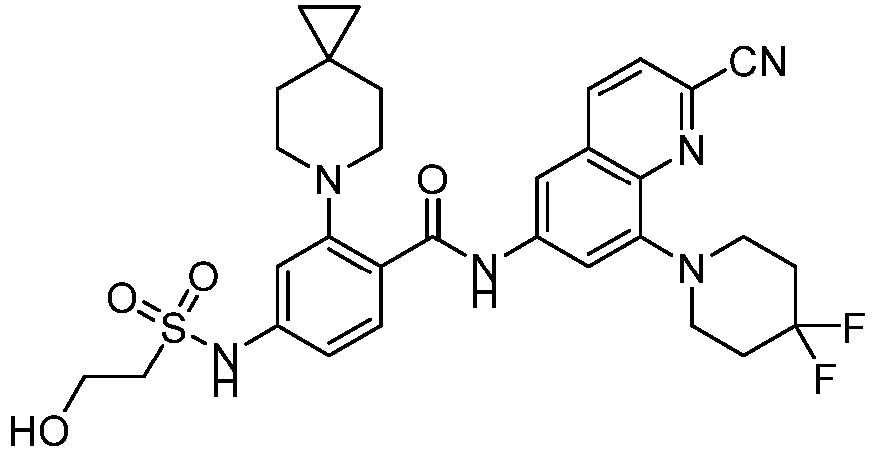
- The preparations in Example 68 follow the synthetic route of Example 3: LCMS (ESI): [M+H]+ =625.4, 1H NMR (400 MHz, DMSO-d 6) δ 12.01 (s, 1H), 10.13 (s, 1H), 8.52 (d, J = 8.6 Hz, 1H), 8.34 (d, J = 2.0 Hz, 1H), 7.95 (d, J = 8.4 Hz, 1H), 7.84 (d, J = 8.5 Hz, 1H), 7.43 (d, J = 2.2 Hz, 1H), 7.18 (d, J = 2.1 Hz, 1H), 7.06 (dd, J = 8.5, 2.1 Hz, 1H), 4.97 (s, 1H), 3.77 (s, 2H), 3.55 (d, J = 6.2 Hz, 4H), 3.36(m, 2H), 3.00 (t, J = 5.2 Hz, 4H), 2.23 (d, J = 15.1 Hz, 4H), 1.56 (s, 4H), 0.34 (s, 4H).
-
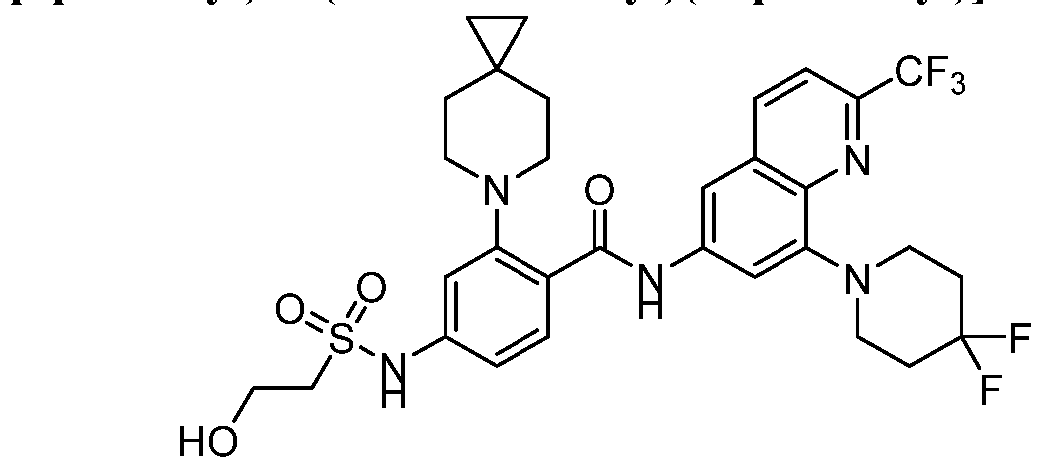
- The preparations in Example 69 follow the synthetic route of Example 3: LCMS (ESI): [M+H]+ =668.4, 1H NMR (400 MHz, DMSO) δ 11.99 (s, 1H), 10.13 (s, 1H), 8.57 (d, J = 8.6 Hz, 1H), 8.35 (d, J = 2.0 Hz, 1H), 7.87 (dd, J = 13.1, 8.5 Hz, 2H), 7.43 (d, J = 2.1 Hz, 1H), 7.19 (d, J = 2.1 Hz, 1H), 7.06 (dd, J = 8.5, 2.1 Hz, 1H), 4.97 (s, 1H), 3.77 (t, J = 5.1 Hz, 2H), 3.58 (t, J = 5.5 Hz, 4H), 3.35 (t, J = 6.6 Hz, 2H), 3.00 (t, J = 5.2 Hz, 4H), 2.25 (dt, J = 14.4, 8.5 Hz, 4H), 1.57 (s, 4H), 0.35 (s, 4H).
-
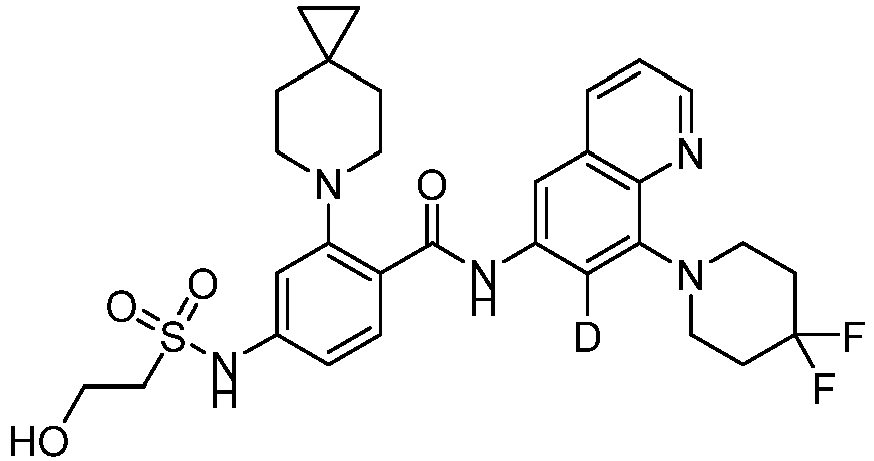
- The preparations in Example 70 follow the synthetic route of Example 3: LCMS (ESI): [M+H]+ = 601.2;1H NMR (400 MHz, DMSO-d 6) δ ppm 11.95 (s, 1H), 10.53 - 9.68 (m, 1H), 8.75 (dd, J = 1.2, 4.0 Hz, 1H), 8.35 - 8.16 (m, 2H), 7.87 (d, J = 8.8 Hz, 1H), 7.47 (dd, J = 4.0, 8.0 Hz, 1H), 7.19 (s, 1H), 7.07 (dd, J = 1.6, 8.4 Hz, 1H), 5.16 - 4.76 (m, 1H), 3.77 (t, J = 6.4 Hz, 2H), 3.57 - 3.49 (m, 4H), 3.35 (br t, J = 6.4 Hz, 2H), 3.00 (br t, J = 4.4 Hz, 4H), 2.31 - 2.16 (m, 4H), 1.63 - 1.53 (m, 4H), 0.35 (s, 4H)
-
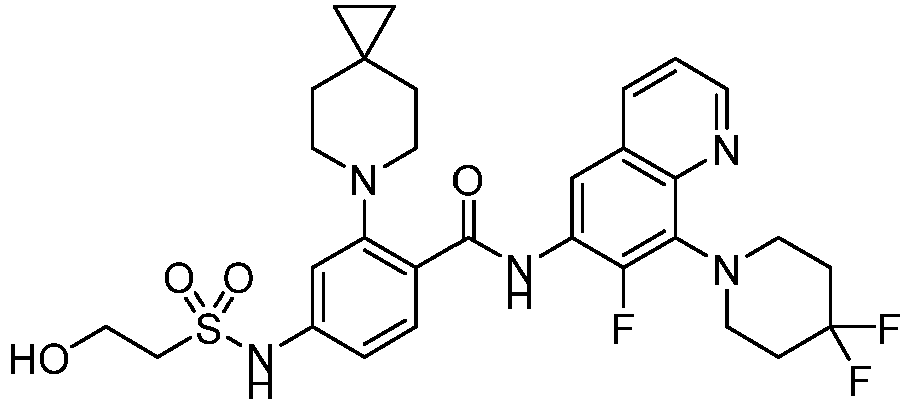
- The preparations in Example 71 follow the synthetic route of Example 3: LCMS (ESI): [M+H]+ = 618.4.1H NMR (400 MHz, DMSO) δ 12.48 (d, J = 2.7 Hz, 1H), 10.22 (s, 1H), 8.82 (dd, J = 4.2, 1.7 Hz, 1H), 8.74 (d, J = 7.9 Hz, 1H), 8.32 (dd, J = 8.4, 1.7 Hz, 1H), 8.05 (d, J = 8.5 Hz, 1H), 7.49 (dd, J = 8.3, 4.2 Hz, 1H), 7.31 (d, J = 2.2 Hz, 1H), 7.14 (dd, J = 8.6, 2.1 Hz, 1H), 4.95 (t, J = 5.7 Hz, 1H), 3.77 (q, J = 5.8 Hz, 2H), 3.58 (t, J = 5.6 Hz, 4H), 3.38 (t, J = 6.5 Hz, 2H), 2.99 (t, J = 5.3 Hz, 4H), 2.19 (tt, J = 14.1, 5.6 Hz, 4H), 1.60 (s, 4H), 0.38 (s, 4H).
-
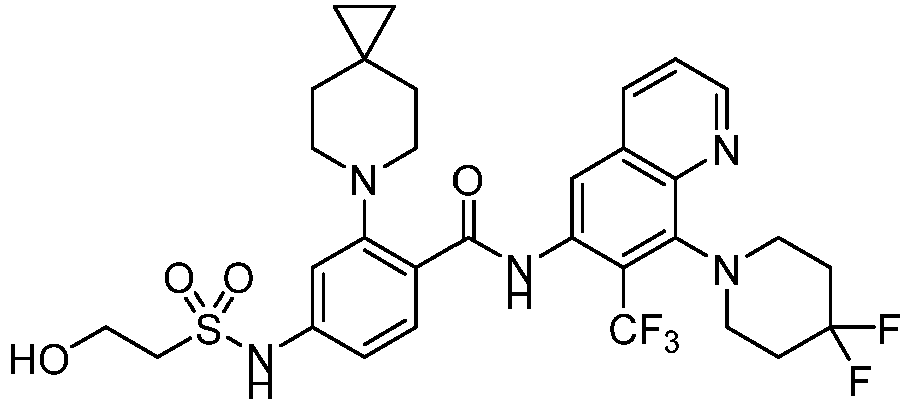
- The preparations in Example 72 follow the synthetic route of Example 3: LCMS (ESI): [M+H]+ =668.4. 1H NMR (400 MHz, DMSO) δ 12.00 (s, 1H), 10.18 (s, 1H), 9.02 (dd, J = 4.1, 1.7 Hz, 1H), 8.47 (dd, J = 8.5, 1.7 Hz, 1H), 8.30 (s, 1H), 7.98 (d, J = 8.5 Hz, 1H), 7.68 (dd, J = 8.4, 4.1 Hz, 1H), 7.27 (d, J = 2.1 Hz, 1H), 7.10 (dd, J = 8.6, 2.1 Hz, 1H), 4.95 (s, 1H), 4.18 - 3.96 (m, 2H), 3.78 (s, 2H), 3.37 (t, J = 6.5 Hz, 2H), 3.02 (t, J = 5.4 Hz, 6H), 2.08 (d, J = 35.4 Hz, 4H), 1.48 (s, 4H), 0.33 (s, 4H).
-
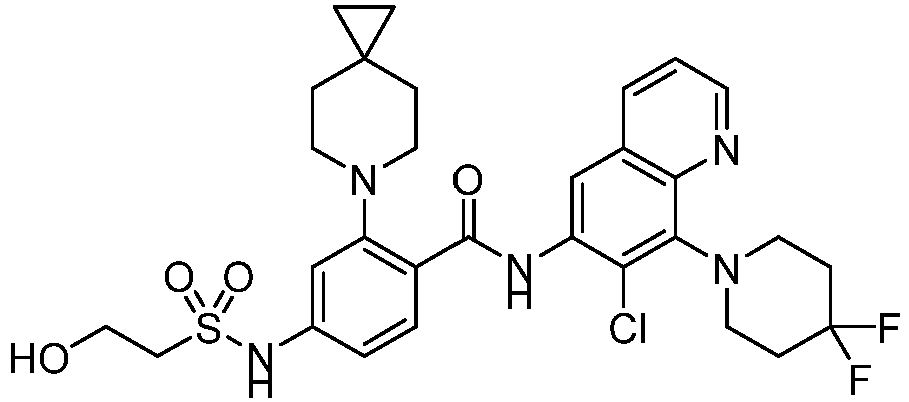
- The preparations in Example 73 follow the synthetic route of Example 3: LCMS (ESI): [M+H]+ = 634.6; 1H NMR (400 MHz, DMSO) δ 11.66 (s, 1H), 10.20 (s, 1H), 8.90 - 8.83 (m, 1H), 8.78 (s, 1H), 8.38 (d, J = 8.4 Hz, 1H), 7.96 (d, J = 8.4 Hz, 1H), 7.54 (dd, J = 8.3, 4.1 Hz, 1H), 7.26 (d, J = 2.1 Hz, 1H), 7.09 (dd, J = 8.4, 2.0 Hz, 1H), 4.96 (t, J = 5.6 Hz, 1H), 3.98 -3.62 (m, 4H), 3.47 - 3.30 (m, 4H), 3.04 (t, J = 5.2 Hz, 4H), 2.27 - 2.03 (m, 4H), 1.65 - 1.47 (m, 4H), 0.34 (s, 4H).
-
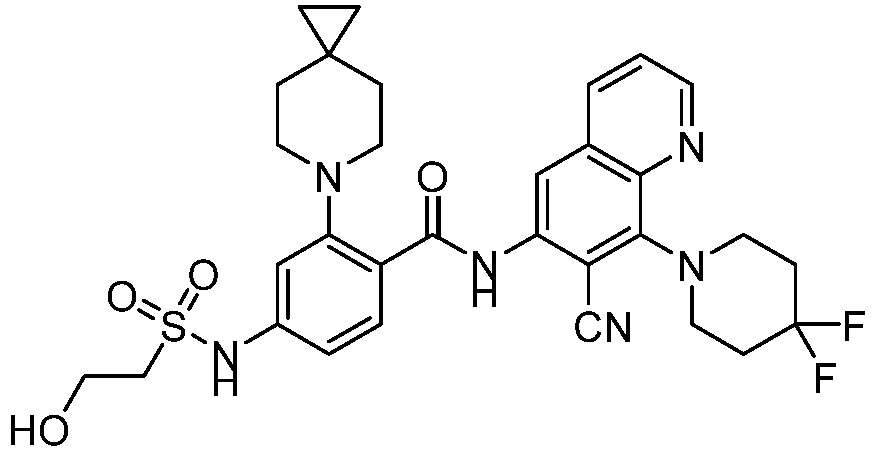
- The preparations in Example 74 follow the synthetic route of Example 3: LCMS (ESI): [M+H]+ = 625.4; 1H NMR (400 MHz, DMSO) δ 11.71 (s, 1H), 10.19 (s, 1H), 8.91 (dd, J = 4.0, 1.6 Hz, 1H), 8.40 (dd, J = 8.4, 2.0 Hz, 1H), 8.26 (s, 1H), 7.92 (d, J = 8.4 Hz, 1H), 7.64 (dd, J = 8.4, 4.0 Hz, 1H), 7.24 (d, J = 2.0 Hz, 1H), 7.08 (dd, J = 8.4, 2.0 Hz, 1H), 4.96 (d, J = 5.6 Hz, 1H), 3.79-3.62 (m, 6H), 3.38 (t, J = 6.4 Hz, 2H), 3.04 (t, J = 5.2 Hz, 4H), 2.28-2.14 (m, 4H), 1.58-1.47 (m, 4H), 0.34 (s, 4H).
-
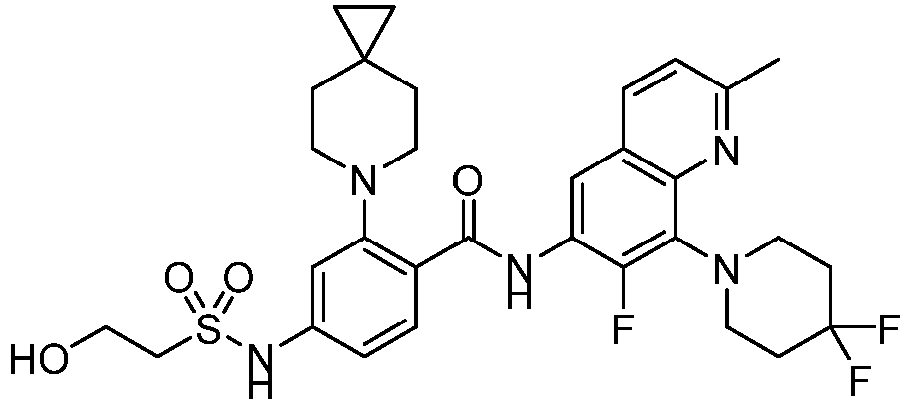
- The preparations in Example 75 follow the synthetic route of Example 3: LCMS (ESI): [M+H]+ =632.4. 1H NMR (400 MHz, DMSO) δ 12.40 (d, J = 2.5 Hz, 1H), 10.21 (s, 1H), 8.66 (d, J = 7.9 Hz, 1H), 8.19 (d, J = 8.4 Hz, 1H), 8.04 (d, J = 8.6 Hz, 1H), 7.37 (d, J = 8.3 Hz, 1H), 7.30 (d, J = 2.1 Hz, 1H), 7.14 (dd, J = 8.6, 2.1 Hz, 1H), 4.95 (s, 1H), 3.77 (t, J = 6.5 Hz, 2H), 3.57 (t, J = 5.9 Hz, 4H), 3.37 (t, J = 6.5 Hz, 2H), 2.99 (t, J = 5.2 Hz, 4H), 2.66 (s, 3H), 2.20 (tt, J = 14.3, 5.6 Hz, 4H), 1.60 (s, 4H), 0.38 (s, 4H).
-

- Step 1: The solution containing 3-fluoro-2-iodo-1-nitrobenzene (25.00 g, 93.63 mmol), iron powder (10.00 g, 177.90 mmol), ammonium chloride (9.60 g, 177.90 mmol), ethanol (100 mL) and water (20 mL) was stirred at 60°C for 1 h. The reaction solution was filtered while hot, then concentrated, extracted with ethyl acetate (100 mL × 3), and the organic layer was dried over anhydrous sodium sulfate, filtered and concentrated to give the residue, which was further purified by column chromatography (silica gel, 0-50% gradient of ethyl acetate/petroleum ether) to give 3-fluoro-2-iodoaniline (22.00 g, 92.82 mmol, yield: 99.1%) as a white solid compound. LCMS (ESI): [M+H]+ = 238.0
- Step 2: Add N-bromosuccinimide (16.50 g, 92.82 mmol) to a solution containing 3-fluoro-2-iodoaniline (22.00 g, 92.82 mmol) and N,N-dimethylformamide (200 mL), the reaction solution was stirred at 20°C for 1 h, The reaction solution was poured into water (300 mL), extracted withethyl acetate (100 mL×3), and the combined organic layer was dried s over anhydrous sodium sulfate, filtered and concentrated to give the residue, which was further purified by column chromatography (silica gel, 0-20% gradient of ethyl acetate/petroleum ether) to give 4-bromo-3-fluoro-2-iodoaniline (21.50 g, 68.06 mmol, yield: 73.3%) as a gray solid compound. LCMS (ESI): [M+H]+ = 317.9
- Step 3: 3-ethoxyacryloyl chloride (9.00 g, 66.48 mmol) was added to a solution containing 4-bromo-3-fluoro-2-iodoaniline (21.00 g, 66.48 mmol), N,N-diisopropylethylamine (26.30 g, 199.42 mmol) and THF (210 mL), and the reaction solution was stirred at 20°C for 12 h. The reaction mixture was poured into water (100 mL), extracted with ethyl acetate (100 mL×3), and the combined organic layer was dried over anhydrous sodium sulfate, filtered and concentrated to give the residue, which was further purified by column chromatography (silica gel, 0-50% gradient of ethyl acetate/petroleum ether) to give (E)-N-(4-bromo-3-fluoro-2-iodophenyl)-3-ethoxyacrylamide (15.00 g, 36.23 mmol, yield: 54.5%) as a yellow solid compound. LCMS (ESI): [M+H]+ = 416.1
- Step 4: The solution containing (2E)-N-(4-bromo-2-fluoro-2-iodophenyl)-3-methoxypropyl-2-enamide (15.00 g, 36.23 mmol) and concentrated sulfuric acid (100 mL) was stirred at 20°C for 12 h, and The reaction mixture was poured into ice water and filtered to give 6-bromo-7-fluoro-8-iodoquinolin-2(1H)-one (12.00 g, 32.61 mmol, yield: 90.0%) as a yellow solid compound. LCMS (ESI): [M+H]+ = 369.9
- Step 5: The reaction solution containing 6-bromo-7-fluoro-8-iodoquinolin-2(1H)-one (12.00 g, 32.61 mmol) and phosphorus oxychloride (80 mL) was stirred at 25°C for 2 h, the reaction solution was concentrated, poured into water (30 mL), and filtered to give 6-bromo-2-chloro-7-fluoro-8-iodoquinoline (9.00 g, 23.29 mmol, yield: 71.4%) as a yellow solid compound. LCMS (ESI): [M+H]+ = 385.9
- Step 6: The reaction solution containing 6-bromo-2-chloro-7-fluoro-8-iodoquinoline (1.00 g, 2.59 mmol), sodium methoxide (30%) (2.30 g, 12.94 mmol), and methanol (10 mL) was stirred at 20°C for 12 h. The reaction solution was poured into water (30 mL), extracted withethyl acetate (30 mL×3), and the combined organic layer was dried over anhydrous sodium sulfate, filtered and concentrated to give the residue, which was further purified by column chromatography (silica gel, 0-20% gradient of ethyl acetate/petroleum ether) to give 6-bromo-7-fluoro-8-iodo-2-methoxyquinoline (800 mg, 2.09 mmol, yield: 80.9%) as a yellow solid compound. LCMS (ESI): [M+H]+ = 383.9
- Step 7: 4,5-bis(diphenylphosphino)-9,9-dimethylxanthene (124 mg, 0.21 mmol) and tris(dibenzylideneacetone) dipalladium (196 mg, 0.21 mmol) were successively added to a mixed solution containing 6-bromo-7-fluoro-8-iodo-2-methoxyquinoline (800 mg, 2.09 mmol), 4,4-difluoropiperidine hydrochloride (367 mg, 2.30 mmol), cesium carbonate (2.10 g, 6.28 mmol) and 1,4-dioxane (10 mL) under nitrogen atmosphere, and the reaction solution was stirred at 100°C for 12 h. The reaction mixture was poured into water (30 mL), extracted with ethyl acetate (30 mL × 3), and the combined organic layer was dried over anhydrous sodium sulfate, filtered and concentrated to give the residue, which was further purified by column chromatography (silica gel, 0-20% gradient of ethyl acetate/petroleum ether) to give 6-bromo-8-(4,4-difluoropiperidin-1-yl)-7-fluoro-2-methoxyquinoline (600 mg, 1.60 mmol, yield: 76.4%) as a yellow solid compound. LCMS (ESI): [M+H]+ = 377.1
- Step 8: 4,5-bis(diphenylphosphino)-9,9-dimethylxanthene (94 mg, 0.16 mmol) and tris(dibenzylideneacetone) dipalladium (149 mg, 0.16 mmol) were successively added to a solution of 6-bromo-8-(4,4-difluoropiperidin-1-yl)-7-fluoro-2-methoxyquinoline (600 mg, 1.60 mmol), tert-butyl carbamate (227 mg, 1.92 mmol), cesium carbonate (1.60 g, 4.80 mmol) and 1,4-dioxane (10 mL) under nitrogen atmosphere, and the reaction solution was stirred at 100°C for 12 h. The reaction solution was poured into water (30 mL), extracted withethyl acetate (30 mL × 3), and the combined organic layer was dried over anhydrous sodium sulfate, filtered and concentrated to give the residue, which was further purified by column chromatography (silica gel, 0-20% gradient of ethyl acetate/petroleum ether) to give N-[8-(4,4-difluoropiperidinyl)-7-fluoro-2-methoxy(6-quinolinyl)](tert-butoxy)formam ide (400 mg, 0.97 mmol, yield: 60.8%) as a yellow solid compound. LCMS (ESI): [M+H]+ = 412.3
- Step 9: The reaction solution containing N-[8-(4,4-difluoropiperidinyl)-7-fluoro-2-methoxy(6-quinolinyl)](tert-butoxy)formam ide (400 mg, 0.97 mmol) and trifluoroacetic acid (2 mL) was stirred at 20°C for 1 h. After the concentration of the reaction solution, add the saturated aqueous sodium bicarbonate solution to the pH was adjusted of the reaction solution to be close to 8, then extracted with ethyl acetate (30 mL×3). The combined organic layer was dried The combined organic layer was dried over anhydrous sodium sulfate, filtered, and concentrated to give 8-(4,4-difluoropiperidinyl)-7-fluoro-2-methoxy-6-quinolinamine (300 mg, crude) as a yellow solid compound. LCMS (ESI): [M+H]+ = 312.1
- Step 10: 2-(6-azaspiro[2.5]oct-6-yl)-4-bromobenzoyl chloride (380 mg, 1.16 mmol) was added to a solution containing 8-(4,4-difluoropiperidinyl)-7-fluoro-2-methoxy-6-quinolinamine (300 mg, 0.96 mmol), N,N-diisopropylethylamine (635 mg, 4.82 mmol) and THF (5 mL). The reaction solution was stirred at 20°C for 12 h, poured into water (30 mL), extracted with ethyl acetate (30 mL×3), and the combined organic layer was dried over anhydrous sodium sulfate, filtered and concentrated to give the residue, which was further purified by column chromatography (silica gel, 0-20% gradient of ethyl acetate/petroleum ether) to give [2-(6-azaspiro[2.5]oct-6-yl)-4-bromophenyl]-N-[8-(4,4-difluoropiperidinyl)-7-fluoro-2-methoxy(6-quinolinyl)]formamide (260 mg, 0.43 mmol, yield: 44.7%) as a yellow solid compound. LCMS (ESI): [M+H]+ = 603.3
- Step 11: The solution containing [2-(6-azaspiro[2.5]oct-6-yl)-4-bromophenyl]-N-[8-(4,4-difluoropiperidinyl)-7-fluoro-2-methoxy(6-quinolinyl)]formamide (200 mg, 0.33 mmol), pyridine hydrochloride (391 mg, 3.31 mmol) and N,N-dimethylformamide (5 mL) was stirred at 100°C for 12 h. The reaction solution was filtered to give 4-bromo-N-(8-(4,4-difluoropiperidin-1-yl)-7-fluoro-2-hydroxyquinolin-6-yl)-2-(6-aza spiro[2.5]octan-6-yl) benzamide (140 mg, 0.24 mmol, yield: 71.7%) as a white solid compound. LCMS (ESI): [M+H]+ = 589.1
- Step 12: The reaction solution containing [2-(6-azaspiro[2.5]oct-6-yl)-4-bromophenyl]-N-[8-(4,4-difluoropiperidinyl)-7-fluoro-2-hydroxy(6-quinolinyl)]formamide (140 mg, 0.24 mmol), 2-hydroxyethanesulfonamide (45 mg, 0.36 mmol), potassium phosphate (154 mg, 0.71 mmol), cuprous iodide (46 mg, 0.24 mmol), trans-N,N'-dimethylcyclohexane-1,2-diamine (34 mg, 0.24 mmol) and 1,4-dioxane (5 mL) was stirred at 100°C for 12 h under nitrogen atmosphere. The reaction solution was poured into water (20 mL), extracted withethyl acetate (20 mL×3), and the combined organic layer was dried over anhydrous sodium sulfate, filtered and concentrated to give the residue, which was further purified by flash column chromatography (C18, 0-100% gradient of acetonitrile/water) to give N-(8-(4,4-difluoropiperidin-1-yl)-7-fluoro-2-hydroxyquinolin-6-yl)-4-((2-hydroxyeth yl)sulfonamido)-2-(6-azaspiro[2.5]oct-6-yl)benzamide (22.2 mg, 0.035 mmol, yield: 14.8%) as a white solid compound. LCMS (ESI): [M+H]+ = 634.4, 1H NMR (400 MHz, DMSO) δ 12.30 (s, 1H), 10.90 (s, 1H), 8.62 (s, 1H), 8.04 - 7.97 (m, 1H), 7.95 (d, J = 9.6 Hz, 1H), 7.26-6.98 (m, 2H), 7.08 (s, 1H), 6.52 (d, J = 9.6 Hz, 1H), 3.76 (t, J = 6.0 Hz, 2H), 3.23-2.97 (m, 4H), 2.87-2.76 (m, 4H), 2.72-2.58 (m, 2H), 2.06 - 1.97 (m, 4H), 1.57 (s, 4H), 0.37 (s, 4H).
-

- Step 1: The reaction solution containing [2-(6-azaspiro[2.5]oct-6-yl)-4-bromophenyl]-N-[8-(4,4-difluoropiperidinyl)-7-fluoro-2-methoxy(6-quinolinyl)]formamide (40 mg, 0.07 mmol), 2-hydroxyethanesulfonamide (13 mg, 0.10 mmol), potassium phosphate (43 mg, 0.20 mmol), cuprous iodide (13 mg, 0.066 mmol), trans-N,N'-dimethylcyclohexane-1,2-diamine (10 mg, 0.066 mmol) and 1,4-dioxane (5 mL) was stirred for 12 h under nitrogen atmosphere. The reaction solution was poured into water (20 mL), extracted with ethyl acetate (20 mL×3), and the combined organic layer was dried over anhydrous sodium sulfate, filtered and concentrated to give the residue, which was further purified by flash column chromatography (C18, 0-100% gradient of acetonitrile/water) to give N-(8-(4,4-difluoropiperidin-1-yl)-7-fluoro-2-methoxyquinolin-6-yl)-4-((2-hydroxyeth yl)sulfonamido)-2-(6-azaspiro[2.5]oct-6-yl)benzamide (4.0 mg, 6.2 umol, yield: 9.3%) as a white solid compound. LCMS (ESI): [M+H]+ = 648.4; 1H NMR (400 MHz, DMSO) δ 12.38 - 12.32 (m, 1H), 10.21 (s, 1H), 8.67 (d, J = 8.0 Hz, 1H), 8.23 (d, J = 8.8 Hz, 1H), 8.05 (d, J = 8.4 Hz, 1H), 7.31 (d, J = 2.0 Hz, 1H), 7.15 (dd, J = 8.4, 2.0 Hz, 1H), 7.01 (d, J = 8.8 Hz, 1H), 4.99 (s, 1H), 4.02 (s, 3H), 3.79 (t, J = 6.4 Hz, 2H), 3.58 (t, J = 5.6 Hz, 4H), 3.37 (s, 2H), 3.01 (t, J = 5.2 Hz, 4H), 2.26-2.15 (m, 4H), 1.61 (s, 4H), 0.40 (s, 4H).
-
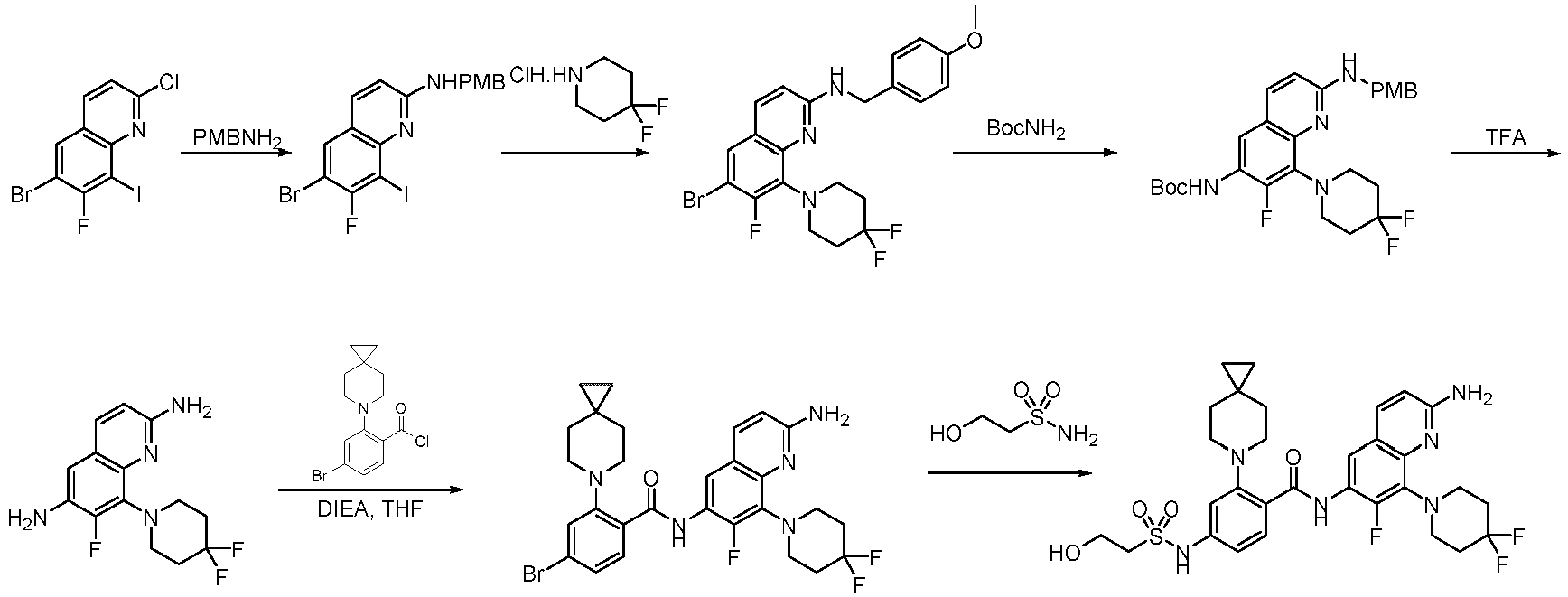
- Step 1: The reaction solution containing 6-bromo-2-chloro-7-fluoro-8-iodoquinoline (1.00 g, 2.59 mmol), p-methoxybenzylamine (2.30 g, 12.94 mmol), N,N-diisopropylethylamine (3.10 g, 23.29 mmol) and acetonitrile (30 mL) was stirred at 60°C for 12 h. The reaction solution was poured into water (20 mL), extracted with ethyl acetate (20 mL×3), and the combined organic layer was dried over anhydrous sodium sulfate, filtered and concentrated to give the residue, which was further purified by column chromatography (silica gel, 0-50% gradient of ethyl acetate/petroleum ether) to give 6-bromo-7-fluoro-8-iodo-N-(4-methoxybenzyl)quinolin-2-amine (1.20 g, 2.46 mmol, yield: 31.7%) as a yellow solid compound. LCMS (ESI): [M+H]+ = 487.0
- Step 2: 4,5-bis(diphenylphosphino)-9,9-dimethylxanthene (145 mg, 0.25 mmol) and tris(dibenzylideneacetone) dipalladium (230 mg, 0.25 mmol) were successively added to a mixed solution containing 6-bromo-7-fluoro-8-iodo-N-(4-methoxybenzyl)quinolin-2-amine (1.20 g, 2.46 mmol), 4,4-difluoropiperidine hydrochloride (431 mg, 2.71 mmol), cesium carbonate (2.50 g, 7.39 mmol) and 1,4-dioxane (20 mL) under nitrogen atmosphere, and the reaction solution was stirred at 100°C for 12 h. The reaction mixture was poured into water (30 mL), extracted with ethyl acetate (30 mL×3), and the combined organic layer was dried over anhydrous sodium sulfate, filtered and concentrated to give the residue, which was further purified by column chromatography (silica gel, 0-40% gradient of ethyl acetate/petroleum ether) to give 6-bromo-8-(4,4-difluoropiperidin-1-yl)-7-fluoro-N-(4-methoxybenzyl)quinolin-2-ami ne (400 mg, 0.83 mmol, yield: 33.8%) as a yellow solid compound. LCMS (ESI): [M+H]+ = 480.2
- Step 3: 4,5-bis(diphenylphosphino)-9,9-dimethylxanthene (43 mg, 0.073 mmol) and tris(dibenzylideneacetone) dipalladium (68 mg, 0.073 mmol) were successively added to a solution of 6-bromo-8-(4,4-difluoropiperidin-1-yl)-7-fluoro-N-(4-methoxybenzyl)quinolin-2-ami ne (350 mg. 0.73 mmol), tert-butyl carbamate (103 mg, 0.87 mmol), cesium carbonate (727 mg, 2.19 mmol) and 1,4-dioxane (5 mL) under nitrogen atmosphere, and the reaction solution was stirred at 100°C for 12 h. The reaction solution was poured into water (30 mL), extracted with ethyl acetate (30 mL × 3), and the combined organic layer was dried over anhydrous sodium sulfate, filtered and concentrated to give the residue, which was further purified by column chromatography (silica gel, 0-20% gradient of ethyl acetate/petroleum ether) to give tert-butyl (8-(4,4-difluoropiperidin-1-yl)-7-fluoro-2-((4-methoxybenzyl)amino)quinolin-6-yl)ca rbamate (240 mg, 0.46 mmol, yield: 63.8%) as a yellow solid compound. LCMS (ESI): [M+H]+ = 517.3
- Step 4: The reaction solution containing tert-butyl (8-(4,4-difluoropiperidin-1-yl)-7-fluoro-2-((4-methoxybenzyl)amino)quinolin-6-yl)ca rbamate (240 mg, 0.46 mmol) and trifluoroacetic acid (2 mL) was stirred at 20°C for 1 h. After the concentration of the reaction solution, saturated aqueous sodium bicarbonate solution was added to and the pH of the reaction solution was adjusted to be close to 8. Then extracted with ethyl acetate (30 mL×3), the combined organic layer was dried. The combined organic layer was dried over anhydrous sodium sulfate, filtered, and concentrated to give 8-(4,4-difluoropiperidin-1-yl)-7-fluoroquinoline-2,6-diamine (140 mg, crude) as a yellow solid compound. LCMS (ESI): [M+H]+ = 297.1
- Step 5: 2-(6-azaspiro[2.5]oct-6-yl)-4-bromobenzoyl chloride (186 mg, 0.57 mmol) was added to a solution containing 8-(4,4-difluoropiperidin-1-yl)-7-fluoroquinoline-2,6-diamine (140 mg, 0.47 mmol), N,N-diisopropylethylamine (312 mg, 2.36 mmol) and THF (5 mL). The reaction solution was stirred at 20°C for 12 h, poured into water (30 mL), extracted with ethyl acetate (30 mL×3), and the combined organic layer was dried over anhydrous sodium sulfate, filtered and concentrated to give the residue, which was further purified by column chromatography (silica gel, 0-100% gradient of ethyl acetate/petroleum ether) to give N-(2-amino-8-(4,4-difluoropiperidin-1-yl)-7-fluoroquinolin-6-yl)-4-bromo-2-(6-azasp iro[2.5]octan-6-yl) benzamide (80 mg, 0.14 mmol, yield: 28.8%) as a yellow solid compound. LCMS (ESI): [M+H]+ = 590.3
- Step 6: The reaction solution containing N-(2-amino-8-(4,4-difluoropiperidin-1-yl)-7-fluoroquinolin-6-yl)-4-bromo-2-(6-azasp iro[2.5]octan-6-yl) benzamide (80 mg, 0.14 mmol), 2-hydroxyethanesulfonamide (26 mg, 0.20 mmol), potassium phosphate (88 mg, 0.41 mmol), cuprous iodide (26 mg, 0.14 mmol), trans-N,N'-dimethylcyclohexane-1,2-diamine (20 mg, 0.14 mmol) and 1,4-dioxane (5 mL) was stirred at 100°C for 12 h under nitrogen atmosphere. The reaction solution was poured into water (20 mL), extracted withethyl acetate (20 mL × 3), and the combined organic layer was dried over anhydrous sodium sulfate, filtered and concentrated to give the residue, which was further purified by flash column chromatography (C18, 0-100% gradient of acetonitrile/water) to give N-(2-amino-8-(4,4-difluoropiperidin-1-yl)-7-fluoroquinolin-6-yl)-4-((2-hydroxyethyl) sulfonamido)-2-(6-azaspiro[2.5]octan-6-yl)benzamide (3.60 mg, 5.7 umol, yield: 4.2%) as a yellow solid compound. LCMS (ESI): [M+H]+ = 633.4, 1H NMR (400 MHz, DMSO) δ 12.19 (s, 1H), 10.21 (s, 1H), 8.43 (s, 1H), 8.01 (d, J = 8.4 Hz, 1H), 7.29 (d, J = 2.0 Hz, 1H), 7.13 (dd, J = 8.4, 2.0 Hz, 1H), 6.76 (s, 3H), 6.40 (s, 1H), 4.94 (t, J = 5.6 Hz, 1H), 3.78 - 3.76 (m, 2H), 3.32-3.27(m, 4H), 3.15 (t, J = 6.8 Hz, 2H), 2.97 (d, J = 5.6 Hz, 4H), 2.17 (s, 4H), 1.58 (s, 4H), 0.37 (s, 4H).
-

- The preparations in Example 79 follow the synthetic route of Example 3: LCMS (ESI): [M+H]+ = 647.4; 1HNMR (400MHz, DMSO) δ 12.10 (s, 1H), 10.16 (s, 1H), 8.40 (d, J = 8.0 Hz, 1H), 8.00 (d, J = 8.4 Hz, 1H), 7.80 (d, J = 8.8 Hz, 1H), 7.27 (d, J = 2.4 Hz, 1H), 7.11 (dd, J = 8.4, 2.0 Hz, 1H), 7.06 (d, J = 4.8 Hz, 1H), 6.71 (d, J = 8.8 Hz, 1H), 4.94 (t, J = 5.6 Hz, 1H), 3.76 (q, J = 6.4 Hz, 2H), 3.54 (d, J = 5.6 Hz, 4H), 3.36 (d, J = 6.4 Hz, 2H), 2.98 (d, J = 5.2 Hz, 4H), 2.91 (d, J = 4.8 Hz, 3H), 2.16 (q, J = 15.2, 13.6 Hz, 4H), 1.58 (s, 4H), 0.37 (s, 4H).
-
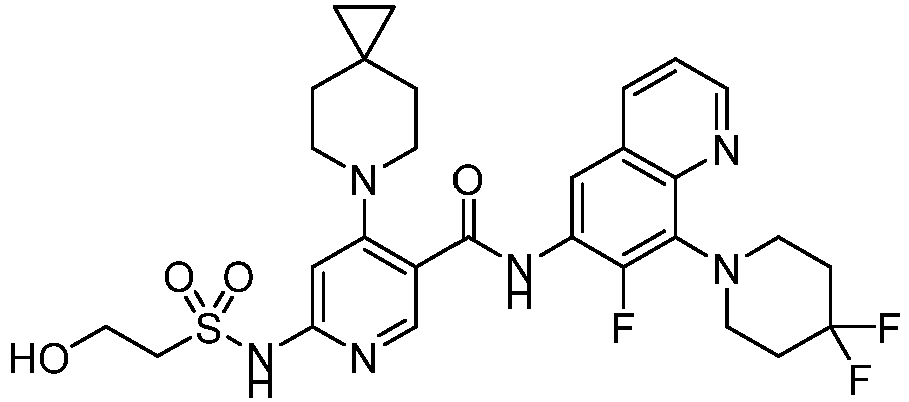
- The preparations in Example 80 follow the synthetic route of Example 3: LCMS (ESI): [M+H]+ = 619.4, 1H NMR (400 MHz, DMSO) δ 10.69 (s, 1H), 8.84 (dd, J = 4.0, 1.6 Hz, 1H), 8.43 (d, J = 7.6 Hz, 1H), 8.38 - 8.30 (m, 1H), 8.23 (s, 1H), 7.50 (dd, J = 8.4, 4.0 Hz, 1H), 6.66 (s, 1H), 3.78 (t, J = 6.8 Hz, 2H), 3.55 (t, J = 5.6 Hz, 4H), 3.42 (s, 2H), 3.23 - 3.05 (m, 4H), 2.26 - 2.08 (m, 4H), 1.52 - 1.44 (m, 4H), 0.34 (s, 4H).
-
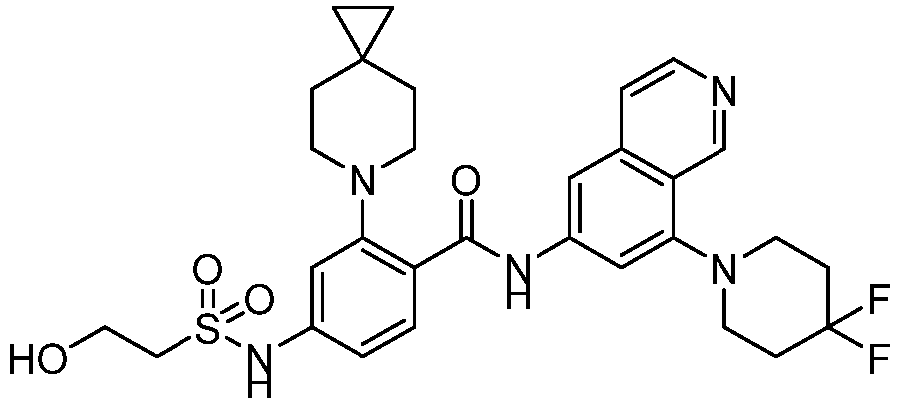
- The preparations in Example 81 follow the synthetic route of Example 3: LCMS (ESI): [M+H]+ = 600.4, 1H NMR (400 MHz, DMSO) δ 11.96 (s, 1H), 10.18 (s, 1H), 9.18 (s, 1H), 8.26 (d, J = 5.8 Hz, 1H), 8.11 (d, J = 1.6 Hz, 1H), 7.68 (d, J = 8.4 Hz, 1H), 7.56 (d, J = 5.6 Hz, 1H), 7.22 (d, J = 1.8 Hz, 1H), 6.99 (d, J = 2.0 Hz, 1H), 6.86 (dd, J = 8.4, 2.1 Hz, 1H), 5.28 - 4.88 (m, 1H), 3.60 (t, J = 6.4 Hz, 2H), 3.17 (s, 2H), 3.10 (dd, J = 26.0, 6.2 Hz, 4H), 2.83 (t, J = 5.2 Hz, 4H), 2.15 (tt, J = 13.6, 11.6, 5.4 Hz, 4H), 1.41 (t, J = 5.2 Hz, 4H), 0.18 (s, 4H).
-

- The preparations in Example 82 follow the synthetic route of Example 3: LCMS (ESI): [M+H]+ = 601.2, 1H NMR (400 MHz, DMSO-d6) δ ppm 12.06 (s, 1H), 10.15 (s, 1H), 9.24 (br s, 1H), 8.24 (s, 1H), 8.12 (br s, 1H), 7.84 (d, J = 8.4 Hz, 1H), 7.35 (s, 1H), 7.18 (s, 1H), 7.06 (dd, J = 1.6, 8.4 Hz, 1H), 5.53 - 4.23 (m, 1H), 3.77 (t, J = 6.4 Hz, 2H), 3.72 - 3.64 (m, 4H), 3.42 - 3.39 (m, 2H), 3.07 - 2.94 (m, 4H), 2.33 - 2.22 (m, 4H), 1.64 - 1.52 (m, 4H), 0.35 (s, 4H)
-

- The preparations in Example 83 follow the synthetic route of Example 3: LCMS (ESI): [M+H]+ =601.4. 1H NMR (400 MHz, CDCl3) δ 12.95 (s, 1H), 8.80 (d, J = 1.9 Hz, 1H), 8.69 (d, J = 1.9 Hz, 1H), 8.21 (d, J = 8.6 Hz, 1H), 7.98 (d, J = 2.1 Hz, 1H), 7.91 (d, J = 2.2 Hz, 1H), 7.39 (d, J = 2.2 Hz, 1H), 7.15 (dd, J = 8.6, 2.1 Hz, 1H), 4.02 (t, J = 5.6 Hz, 2H), 3.59 (t, J = 5.7 Hz, 4H), 3.33 (s, 2H), 3.11 (t, J = 5.4 Hz, 4H), 2.31 (tt, J = 12.9, 5.5 Hz, 4H), 1.71 (s, 4H), 0.45 (s, 4H).
-

- Step 1: 3-fluoro-2-nitrobenzaldehyde (5.00 g, 28.68 mmol), ethylene glycol (2.68 g, 43.01 mmol) and p-toluenesulfonic acid monohydrate (278 mg, 1.43 mmol) were successively added to toluene (40 mL), and the reaction solution was stirred at 100°C for 4 h. The reaction solution was poured into water (50 mL), extracted with ethyl acetate (50 mL × 3), The combined organic layer was dried over anhydrous sodium sulfate, and concentrate to obtain the crude. The crude was purified by flash column chromatography (silica gel, 10-25% gradient of ethyl acetate/petroleum ether) to give 2-(3-fluoro-2-nitrophenyl)-1,3-dioxolane (6.40 g, crude) as a pale yellow oily liquid. LCMS (ESI): [M+H]+ =214.1
- Step 2: 2-(3-Fluoro-2-nitrophenyl)-1,3-dioxolane (5.10 g, 23.93 mmol), 4,4-difluoropiperidine hydrochloride (5.71 g, 35.89 mmol) and potassium carbonate (8.43 g, 59.81 mmol) were successively added to DMSO (40 mL), and the reaction solution was stirred at 130°C for 16 h. The reaction solution was poured into water (50 mL), extracted with ethyl acetate (50 mL×3),The combined organic layer was washed with saturated sodium chloride solution (30 mL×3), dried over anhydrous sodium sulfate, and concentrated to give 1-(3-(1,3-dioxolan-2-yl)-2-nitrophenyl)-4,4-difluoropiperidine (6.00 g, crude). LCMS (ESI): [M+H]+ =315.2
- Step 3: 1-(3-(1,3-dioxolan-2-yl)-2-nitrophenyl)-4,4-difluoropiperidine (5.00 g, 15.91 mmol), ammonium chloride (1.72 g, 31.82 mmol), and iron powder (4.49 g, 79.54 mmol) were successively added to a solution of THF (20 mL), ethanol (20 mL), and water (5 mL), and the reaction solution was heated to 80°C and reacted for 16 h. The reaction solution was filtered under reduced pressure, , The filtrate was poured into water (30 mL), extracted with ethyl acetate (30 mL × 3), The combined organic layer was dried over anhydrous sodium sulfate, and concentrate to obtain the crude. The crude was purified by flash column chromatography (silica gel, 0-9% gradient of ethyl acetate/petroleum ether) to give 2-amino-3-(4,4-difluoropiperidin-1-yl)benzaldehyde (2.10 g, 8.75 mmol, yield: 54.9%) as a yellow solid crude. LCMS (ESI): [M+H]+ =241.1
- Step 4: 2-amino-3-(4,4-difluoropiperidin-1-yl)benzaldehyde (1.80 g, 7.49 mmol) was added to N,N-dimethylformamide (15 mL), then N-bromosuccinimide (1.47 g, 8.24 mmol) was added to the reaction solution, and the reaction solution was stirred at 20°C for 12 h. The reaction solution was poured into water (30 mL), extracted with ethyl acetate (30 mL × 3), The combined organic layer was washed with the saturated aqueous sodium chloride solution (30 mL × 3), dried over anhydrous sodium sulfate, and concentrated to obtain the crude. The crude was purified by flash column chromatography (silica gel, 0-9% gradient of ethyl acetate/petroleum ether) to give 2-amino-5-bromo-3-(4,4-difluoropiperidin-1-yl)benzaldehyde (1.60 g, 5.01 mmol, yield: 66.9%) as a yellow solid crude. LCMS (ESI): [M+H]+ =319.1
- Step 5: 2-amino-5-bromo-3-(4,4-difluoropiperidin-1-yl) benzaldehyde (1.60 g, 5.01 mmol) and guanidine carbonate (9.12 g, 50.13 mmol) were successively added to N,N-dimethylacetamide (10 mL), and the reaction solution was heated to 130°C and stirred for 2 h. The reaction solution was cooled to ambient temperature, poured into water (30 mL), suction filtration, and dried the solid obtained by filtration to give 6-bromo-8-(4,4-difluoropiperidin-1-yl)quinazoline-2-amine (1.60 g, 4.66 mmol, yield: 93.0%) as a yellow solid. LCMS (ESI): [M+H]+ =343.1; 1H NMR (400 MHz, DMSO-d 6) δ 9.82 (s, 1H), 7.59 (d, J = 2.2 Hz, 1H), 7.30 (d, J = 2.3 Hz, 1H), 6.98 (s, 2H), 2.91 (s, 4H), 2.29 - 2.06 (m, 4H).
- Step 6: 6-bromo-8-(4,4-difluoropiperidin-1-yl)quinazoline-2-amine (1.45 g, 4.22 mmol), di-tert-butyl dicarbonate (4.61 g, 21.13 mmol), 4-dimethylaminopyridine (105 mg, 0.85 mmol), and triethylamine (2.18 g, 21.13 mmol) were successively added to dichloromethane (20 mL), and the reaction solution was stirred at 50°C for 4 h. The reaction solution was poured into water (30 mL), extracted with dichloromethane (30 mL × 3), The combined organic layer was dried over anhydrous sodium sulfate, and concentrated to obtain the crude. The crude was purified by flash column chromatography (silica gel, 0-9% gradient of ethyl acetate/petroleum ether) to give tert-butyl(6-bromo-8-(4,4-difluoropiperidin-1-yl)quinazolin-2-yl)(tert-butoxycarbonyl) carbamate (1.72 g, 3.16 mmol, yield: 74.9%) as a pale yellow solid crude. LCMS (ESI): [M+H]+ =369.1; 1H NMR (400 MHz, Chloroform-d) δ 9.22 (s, 1H), 7.64 (d, J = 2.0 Hz, 1H), 7.28 (d, J = 2.0 Hz, 1H), 3.54 (t, J = 5.5 Hz, 4H), 2.24 (tt, J = 13.2, 5.3 Hz, 4H), 1.50 (s, 18H).
- Step 7: tert-butyl(6-bromo-8-(4,4-difluoropiperidin-1-yl)quinazolin-2-yl)(tert-butoxycarbonyl) carbamate (1.00 g, 1.84 mmol), tert-butyl carbamate (653 mg, 5.52 mmol), methanesulfonic acid [9,9-dimethyl-4,5-bis(diphenylphosphine)xanthracene][2'-amino-1,1'- biphenyl] palladium (II) dichloromethane adduct (178 mg, 0.18 mmol), and cesium carbonate (1.23 g, 3.68 mmol) were successively added to 1,4-dioxane (10 mL) under nitrogen atmosphere. After nitrogen replacement, the reaction solution was heated to 110°C and stir for 3 h. The reaction solution was poured into water (30 mL), extracted withethyl acetate (30 mL × 3), The combined organic layer was dried over anhydrous sodium sulfate, and concentrate to obtain the crude. The crude was purifiedby flash column chromatography (silica gel, 10-25% gradient of ethyl acetate/petroleum ether) to give tert-butyl(tert-butoxycarbonyl)(6-(tert-butoxycarbonyl)amino)-8-(4,4-difluoropiperidi n-1-yl)quinazolin-2-yl)carbamate (800 mg, 1.38 mmol, yield: 75.0%) as a yellow solid. LCMS (ESI): [M+H]+ =580.6
- Step 8: tert-butyl(tert-butoxycarbonyl)(6-(tert-butoxycarbonyl)amino)-8-(4,4-difluoropiperidi n-1-yl)quinazolin-2-yl)carbamate (1.00 g, 1.72 mmol) was added to a mixed solution of dichloromethane (5 mL) and trifluoroacetic acid (5 mL), and the reaction solution was stirred at 25°C for 4 h. The reaction solution was concentrated to give the crude, the pH of the crude was adjusted to 7 with saturated aqueous sodium bicarbonate solution, extracted withdichloromethane (20 mL × 3), The combined organic layer was dried over anhydrous sodium sulfate, and concentrated to give 8-(4,4-difluoropiperidin-1-yl)quinazoline-2,6-diamine (200 mg, 0.72 mmol, yield: 41.5%) as a green solid. LCMS (ESI): [M+H]+ =280.4; 1H NMR (400 MHz, DMSO-d 6) δ 8.73 (s, 1H), 6.66 (d, J = 2.3 Hz, 1H), 6.37 (d, J = 2.2 Hz, 1H), 6.14 (s, 2H), 5.05 (s, 2H), 3.34 (s, 4H), 2.17 (td, J = 14.1, 13.5, 6.4 Hz, 4H).
- Step 9: 8-(4,4-difluoropiperidin-1-yl)quinazoline-2,6-diamine (200 mg, 0.72 mmol), N,N-diisopropylethylamine (236 mg, 1.79 mmol), and 4-bromo-2-(6-azaspiro[2.5]octan-6-yl) benzoyl chloride (471 mg, 1.43 mmol) were successively added to dichloromethane (5 mL), and the reaction solution was stirred at 25°C for 2 h. The reaction solution was poured into water (20 mL), extracted with dichloromethane (20 mL × 3), The combined organic layer was dried over anhydrous sodium sulfate, and concentrated to obtain the crude. The crude was purified by flash column chromatography (silica gel, 25-50% gradient of ethyl acetate/dichloromethane) to give N-(2-amino-8-(4,4-difluoropiperidin-1-yl)quinazolin-6-yl)-4-bromo-2-(6-azaspiro[2.5] octan-6-yl) benzamide (190 mg, 0.33 mmol, yield: 46.4%) as a blue-green solid. LCMS (ESI): [M+H]+ =573.3
- Step 10: N-(2-amino-8-(4,4-difluoropiperidin-1-yl)quinazolin-6-yl)-4-bromo-2-(6-azaspiro[2.5] octan-6-yl) benzamide (60 mg, 0.10 mmol), 2-hydroxyethanesulfonamide (27 mg, 0.21 mmol), potassium phosphate (91 mg, 0.42 mmol), cuprous iodide (41 mg, 0.21 mmol) and (1S,2S)-(+)-N,N'-dimethyl-1,2-cyclohexanediamine (60 mg, 0.42 mmol) were successively added to N,N-dimethylformamide (1 mL) under nitrogen atmosphere. After nitrogen replacement, the reaction solution was stirred at 115°C for 2 h. The reaction solution was filtered under reduced pressure, , The filtrate was poured into the saturated ammonium chloride solution (30 mL), extracted with ethyl acetate (30 mL × 3), The combined organic layer was washed with the saturated sodium chloride solution (30 mL × 3), dried with anhydrous sodium sulfate, and concentrated to obtain the crude. The crude was purified by flash column chromatography (C18, 25-45% gradient of acetonitrile/water) to give N-(2-amino-8-(4,4-difluoropiperidin-1-yl)quinazolin-6-yl)-4-((2-hydroxyethyl)sulfon amido)-2-(6-azaspiro[2.5]oct-6-yl)benzamide (15 mg, 0.105 mmol, yield: 23.2%) as a grayish green solid. LCMS (ESI): [M+H]+ =616.6; 1H NMR (400 MHz, DMSO-d 6) δ 11.89 (s, 1H), 9.02 (s, 1H), 8.08 (s, 1H), 7.85 (d, J = 7.2 Hz, 1H), 7.14 (d, J = 95.5 Hz, 3H), 6.64 (s, 2H), 3.75 (d, J = 6.0 Hz, 2H), 3.45 (d, J = 5.5 Hz, 6H), 2.98 (t, J = 5.0 Hz, 4H), 2.21 (dd, J = 16.6, 10.2 Hz, 4H), 1.58 (s, 4H), 0.35 (s, 4H).
-
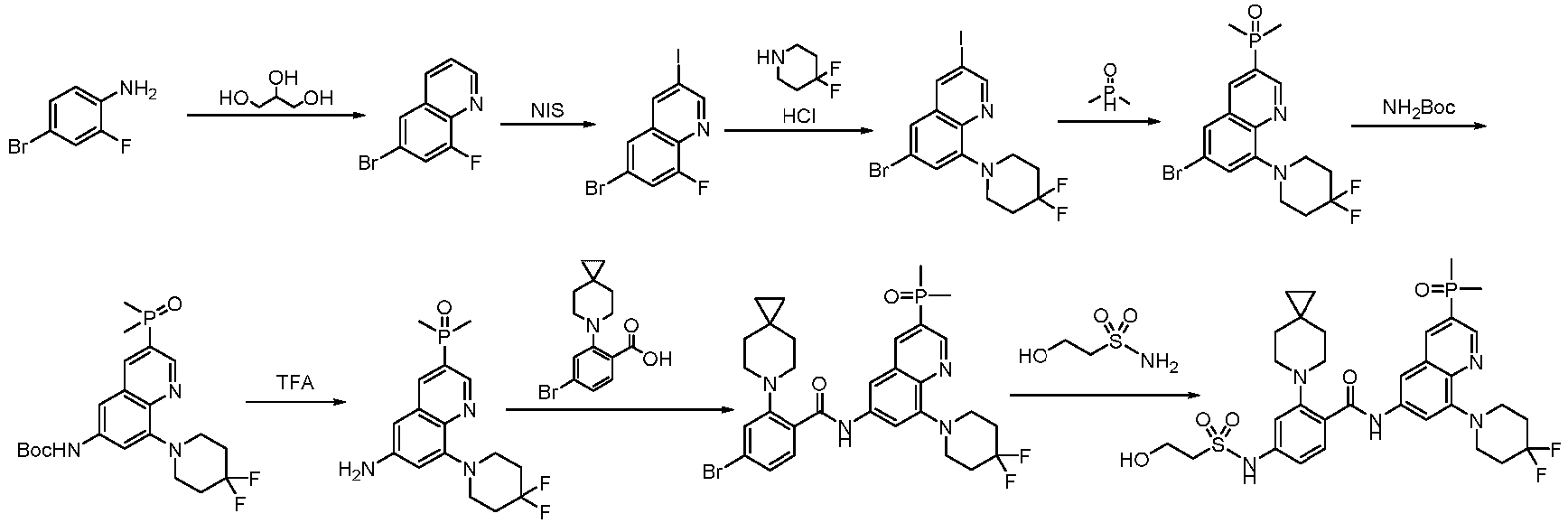
- Step 1: Glycerol (63.00 g, 684.17 mmol) was added to a mixed solution of concentrated sulfuric acid (20 mL) and water (15 mL), and the mixture was heated to 100°C and stirred for 15 min. The mixture was cooled to 40°C then 4-bromo-2-fluoroaniline (10.00 g, 52.63 mmol) and sodium 3-nitrobenzenesulfonate (11.96 g, 52.63 mmol) were added thereto, and the mixture was heated to 100°C and stirred for 15 h. After completion of the reaction, water (100 mL) was added to the reaction mixture and extracted with ethyl acetate (100 mL × 3). The combined organic layer was dried over anhydrous sodium sulfate, filtered and concentrated under reduced pressure to give the residue. The residue was purified by flash column chromatography (silica gel, 0-25% gradient of ethyl acetate/petroleum ether) to give 6-bromo-8-fluoroquinoline (10.00 g, 44.25 mmol, yield: 84.0%) as a yellow solid. LCMS (ESI): [M+H]+ = 226.0
- Step 2: N-iodosuccinimide (11.94 g, 53.08 mmol) was added to a solution of 6-bromo-8-fluoroquinoline (8.00 g, 35.39 mmol) in acetic acid (80 mL), and the mixture was heated to 120°C with stirring for 36 h. After completion of the reaction, The reaction solution was poured into saturated aqueous sodium bicarbonate solution (200 mL) and extracted with ethyl acetate (200 mL×3). The combined organic layer was washed with saturated aqueous sodium chloride solution (100 mL), dried over anhydrous sodium sulfate, concentrated under reduced pressure, and The crude was purifiedby flash column chromatography (silica gel, 0-20% gradient of ethyl acetate/petroleum ether) to give 6-bromo-8-fluoro-3-iodoquinoline (4.20 g, 11.93 mmol, yield: 33.7%) as a yellow solid. LCMS (ESI): [M+H]+ = 351.9; 1HNMR (400 MHz, DMSO) δ 9.12 (d, J = 2.0 Hz, 1H), 8.92 (t, J = 1.7 Hz, 1H), 8.07 (t, J = 1.6 Hz, 1H), 7.92 (dd, J = 10.2, 2.1 Hz, 1H).
- Step 3: Potassium carbonate (4.81 g, 34.09 mmol) was added to the solution of 6-bromo-8-fluoro-3-iodoquinoline (4.00 g, 11.36 mmol) and 4,4-difluoropiperidine hydrochloride (2.71 g, 17.05 mmol) in N,N-dimethylformamide (40 mL), and The mixture was stirred at 100°C for 24 h. After completion of the reaction, water (40 mL) was added to the reaction mixture and extracted with ethyl acetate (100 mL×3). The combined organic layer was dried over anhydrous sodium sulfate, filtered and concentrated under reduced pressure to give the residue. The residue was purified by flash column chromatography (silica gel, 0-50% gradient of ethyl acetate/petroleum ether) to give 8-(4,4-difluoropiperidinyl)-6-bromo-3-iodoquinoline (4.20 g, 9.27 mmol, yield: 81.6%) as a yellow solid. LCMS (ESI): [M+H]+ = 453.0
- Step 4: The solution of triphenylphosphine (231 mg, 0.88 mmol), palladium acetate (101 mg, 0.44 mmol) and triethylamine (1367 mg, 13.24 mmol) were successively added to the solution of 8-(4,4-difluoropiperidinyl)-6-bromo-3-iodoquinoline (2.00 g, 4.41 mmol) and dimethylphosphine oxide (344 mg, 4.41 mmol) in ethanol (20 mL) under nitrogen atmosphere, and The mixture was stirred at 80°C for 6 h. After completion of the reaction, water (40 mL) was added to the reaction mixture and extracted with dichloromethane (50 mL × 3). The combined organic layer was dried over anhydrous sodium sulfate, filtered and concentrated under reduced pressure to give the residue. The residue was purified by flash column chromatography (silica gel, 0-20% gradient of methanol/dichloromethane) to give 6-bromo-8-(4,4-difluoropiperidin-1-yl)quinolin-3-yl)dimethylphosphine oxide (1.10 g, 2.73 mmol, yield: 61.8%) as a yellow solid. LCMS (ESI): [M+H]+ = 403.1; 1HNMR (400 MHz, DMSO) δ 9.16 (dd, J = 4.2, 2.0 Hz, 1H), 8.71 (dd, J = 12.5, 2.1 Hz, 1H), 7.94 (d, J = 2.0 Hz, 1H), 7.34 (d, J = 2.1 Hz, 1H), 3.53 (t, J = 5.7 Hz, 4H), 2.20 (td, J = 14.0, 6.9 Hz, 4H), 1.80 (d, J = 13.6 Hz, 6H).
- Step 5: 6-bromo-8-(4,4-difluoropiperidin-1-yl)quinolin-3-yl)dimethylphosphine oxide (1.00 g, 2.48 mmol), tert-butyl carbamate (435 mg, 3.72 mmol), tris(dibenzylideneacetone) dipalladium (227 mg, 0.25 mmol), 4,5-bis(diphenylphosphino)-9,9-dimethylxanthene (287 mg, 0.50 mmol), and cesium carbonate (2.42 g, 7.44 mmol) were successively added in a vial under nitrogen atmosphere. Then 1,4-dioxane (10 mL) was added to the reaction vial, and The mixture was stirred at 110°C for 8 h. After the completion of reaction, the reaction was cooled to ambient temperature, diluted the mixture with water (30 mL), extracted withethyl acetate (50 mL×3), and the combined organic layer was dried with anhydrous sodium sulfate, filtered and concentrated to give the residue, which was further purified by column chromatography (silica gel, 0-10% gradient of methanol/dichloromethane) to give tert-butyl (8-(4,4-difluoropiperidin-1-yl)-3-(dimethylphosphoryl)quinolin-6-yl)carbamate (600 mg, 1.36 mmol, yield: 55.0%) as a yellow solid. LCMS (ESI): [M+H]+ = 440.3
- Step 6: Dissolve tert-butyl (8-(4,4-difluoropiperidin-1-yl)-3-(dimethylphosphoryl)quinolin-6-yl)carbamate (500 mg, 1.13 mmol) in dichloromethane (5 mL), add trifluoroacetic acid (2.5 mL) dropwise, and The reactionmixture was stirred at 25°C for 5 h. Remove the solvent under reduced pressure, dissolve the residue in water (10 mL), the pH was adjusted of the aqueous layer to 8 with saturated aqueous sodium bicarbonate solution (40 mL), and extracted withdichloromethane (50 mL×3).The combined organic layer was washedthe combined organic layer was washed with saturated aqueous sodium chloride solution (50 mL), dry over anhydrous sodium sulfate, and concentrate under reduced pressure to give 6-amino-8-(4,4-difluoropiperidin-1-yl)quinolin-3-yl)dimethylphosphine oxide (400 mg, 1.17 mmol, yield: 93.2%) as a green solid. LCMS (ESI): [M+H]+ = 340.2
- Step 7: N,N,N',N'-tetramethyl-O-(7-azabenzotriazol-1-yl) hexafluorophosphate urea (686 mg, 1.77 mmol) and N,N-diisopropylethylamine (466 mg, 3.54 mmol) were successively added to the solution of 6-amino-8-(4,4-difluoropiperidin-1-yl)quinolin-3-yl)dimethylphosphine oxide (400 mg, 1.17 mmol) and 2-(6-azaspiro[2.5]oct-6-yl)-4-bromobenzoic acid (402 mg, 1.30 mmol) in dichloromethane (8 mL), and The mixture was stirred at 100°C for 24 h. After completion of the reaction, water (10 mL) was added to the reaction mixture and extracted with dichloromethane (20 mL × 3). The combined organic layer was dried over anhydrous sodium sulfate, filtered and concentrated under reduced pressure to give the residue. The residue was purified by flash column chromatography (silica gel, 0-20% gradient of methanol/dichloromethane) to give 4-bromo-N-(8-(4,4-difluoropiperidin-1-yl)-3-(dimethylphosphoryl)quinolin-6-yl)-2-(6 -azaspiro[2.5]octan-6-yl) benzamide (500 mg, 0.792 mmol, yield: 67.2%) as a yellow solid. LCMS (ESI): [M+H]+ = 631.3
- Step 8: 2-hydroxyethanesulfonamide (61 mg, 0.47 mmol), cuprous iodide (61 mg, 0.32 mmol), potassium phosphate (274 mg, 1.27 mmol), and trans-N,N'-dimethylcyclohexane-1,2-diamine (91 mg, 0.63 mmol) were successively added in a vial under nitrogen atmosphere. N,N-dimethylformamide (4 mL) was added to the reaction vial, The mixture was stirred at 50°C for 0.5 h, then 4-bromo-N-(8-(4,4-difluoropiperidin-1-yl)-3-(dimethylphosphoryl)quinolin-6-yl)-2-(6 -azaspiro[2.5]octan-6-yl) benzamide (200 mg, 0.32 mmol) was added to the vial, and The mixture was stirred at 50°C for 5 min. The reaction system was heated to 120°C and stirred for 5 h. After completion of the reaction, the system was cooled to ambient temperature, The reaction solution was poured into water (10 mL), extracted with dichloromethane (30 mL × 3), and the combined organic layer was dried with anhydrous sodium sulfate. After filtration and concentration and purified by HPLC purification (C18, 0-100% gradient of acetonitrile/water) to give N-(8-(4,4-difluoropiperidin-1-yl)-3-(dimethylphosphoryl)quinolin-6-yl)-4-(2-hydroxy ethylsulfonamido)-2-(6-azaspiro[2.5]octan-6-yl)benzamide (105 mg, 0.15 mmol, yield: 49.0%) as a white solid compound. LCMS(ESI)m/z: [M+H]+ =676.4; 1H NMR (400 MHz, DMSO) δ 11.94 (s, 1H), 10.12 (s, 1H), 9.02 (dd, J = 4.3, 2.0 Hz, 1H), 8.64 (dd, J = 12.7, 2.0 Hz, 1H), 8.29 (d, J = 2.0 Hz, 1H), 7.86 (d, J = 8.5 Hz, 1H), 7.50 (d, J = 2.2 Hz, 1H), 7.19 (d, J = 2.1 Hz, 1H), 7.06 (dd, J = 8.5, 2.0 Hz, 1H), 4.97 (s, 1H), 3.77 (ddt, J = 8.0, 6.1, 2.0 Hz, 2H), 3.55 (t, J = 5.6 Hz, 4H), 3.35 (t, J = 6.7 Hz, 2H), 3.01 (t, J = 5.3 Hz, 4H), 2.24 (s, 4H), 1.80 (d, J = 13.5 Hz, 6H), 1.58 (s, 4H), 0.35 (s, 4H).
-

- Step 1: 2-amino-5-bromo-3-fluorobenzoic acid (5.00 g, 21.3 mmol) was dissolved in THF (50.0 mL), then borane THF (64.1 mL, 64.1 mmol) was added at 0°C under nitrogen atmosphere, and stirred at 20-40°C for 48 h. The reaction solution was quenched with methanol (100 mL) at 0°C and concentrated under reduced pressure. The residue was purified by flash column chromatography (silica gel, 0-10% gradient of THF/petroleum ether) to give (2-amino-5-bromo-3-fluorophenyl)methanol (4.48 g, 14.9 mmol, yield: 70.0%) as a white solid. LCMS (ESI): [M+H]+ = 221.9; 1H NMR (400 MHz, DMSO-d 6) δ ppm 7.19 (dd, J = 2.4, 10.8 Hz, 1H), 7.13 (s, 1H), 5.27 (t, J = 5.6 Hz, 1H), 5.07 (br s, 2H), 4.41 (d, J = 5.6 Hz, 2H)
- Step 2: (2-amino-5-bromo-3-fluorophenyl)methanol (4.28 g, 19.4 mmol) was dissolved in 1,2-dichloroethane (84.0 mL), and manganese dioxide (19.7 g, 194 mmol) was added, and stirred at 25°C for 16 h. The reaction solution was filter and concentrated under reduced pressure to give 2-amino-5-bromo-3-fluorobenzene (formaldehyde) (4.00 g, 16.5 mmol, yield: 85.0%) as a brown solid. LCMS (ESI): [M+H]+ = 220.0; 1H NMR (400 MHz, DMSO-d 6) δ ppm 9.85 (s, 1H), 7.67 (br s, 1H), 7.58 (br d, J = 10.8 Hz, 1H), 7.14 (br s, 2H)
- Step 3: 2-amino-5-bromo-3-fluorobenzene (formaldehyde) (4.00 g, 18.3 mmol) and ethyl prop-2-ynyl ester (2.16 g, 22.0 mmol) were successively dissolved in ethanol (80.0 mL), then L-proline (1.07 g, 9.17 mmol) was added, and stirred at 80°C for 16 h. Water (100 mL) was added into the reaction solution, extracted with ethyl acetate (200 mL×2), the combined organic layer was dried , filtered, and concentrated. The residue was purified by flash column chromatography (silica gel, 0-9% gradient of THF/petroleum ether) to give ethyl 6-bromo-8-fluoroquinoline-3-carboxylate (4.77 g, 14.3 mmol, yield: 78.0%) as an orange solid. LCMS (ESI): [M+H]+ = 297.9; 1H NMR (400 MHz, DMSO-d 6) δ ppm 9.31 (d, J = 2.0 Hz, 1H), 8.99 - 8.96 (m, 1H), 8.36 - 8.32 (m, 1H), 8.01 (dd, J = 2.0, 10.0 Hz, 1H), 4.43 (q, J = 7.2 Hz, 2H), 1.39 (t, J = 7.2 Hz, 3H)
- Step 4: Ethyl 6-bromo-8-fluoroquinoline-3-carboxylate (4.67 g, 15.6 mmol) was dissolved in N-methylpyrrolidone (90.0 mL), 4,4-difluoropiperidine hydrochloride (3.21 g, 20.3 mmol) and potassium carbonate (6.50 g, 47.0 mmol) were successively added, and stirred at 140°C for 16 h. Water (200 mL) was added into the reaction solution, extracted with ethyl acetate (200 mL × 2), the combined organic layer was dried, filtered, and concentrated. The residue was purified by flash column chromatography (silica gel, 0-5% gradient of THF/petroleum ether) to give ethyl 6-bromo-8-(4,4-difluoropiperidin-1-yl)quinoline-3-carboxylate (2.50 g, 5.95 mmol, yield: 38.0%) as a yellow solid. LCMS (ESI): [M+H]+ = 399.0; 1H NMR (400 MHz, CHLOROFORM-d) δ ppm 9.33 (d, J = 1.6 Hz, 1H), 8.60 (d, J = 2.0 Hz, 1H), 7.63 (d, J = 1.6 Hz, 1H), 7.21 (d, J = 1.6 Hz, 1H), 4.40 (q, J = 7.2 Hz, 2H), 3.46 (br t, J = 4.8 Hz, 4H), 2.34 - 2.13 (m, 4H), 1.38 (t, J = 7.2 Hz, 3H)
- Step 5: Ethyl 6-bromo-8-(4,4-difluoropiperidin-1-yl)quinolin-3-carboxyl ester (2.68 g, 8.17 mmol) and diphenylmethanimine (1.78 g, 9.80 mmol) were successively added in dioxane (50.0 mL), then cesium carbonate (7.98 g, 24.5 mmol), 4,5-bis(diphenylphosphino)-9,9-dimethylxanthene (0.95 g, 1.63 mmol), and tris(dibenzylideneacetone) dipalladium (0.75 g, 0.82 mmol) were successively added, and stirred for 16 h at 80°C under nitrogen atmosphere. Water (100 mL) was added into the reaction solution, extracted withethyl acetate (200 mL×2), the combined organic layer was dried , filtered, and concentrated. The residue was purified by flash column chromatography (silica gel, 0-9% gradient of THF/petroleum ether) to give ethyl 8-(4,4-difluoropiperidin-1-yl)-6-[(diphenylmethyl anionene)amino]quinoline-3-carboxylate (3.20 g, 6.28 mmol, yield: 77.0%) as a yellow solid. LCMS (ESI): [M+H]+ = 429.1; 1H NMR (400 MHz, DMSO-d 6) δ ppm 8.89 - 8.56 (m, 1H), 8.07 (br d, J = 8.0 Hz, 1H), 7.72 (br d, J = 7.2 Hz, 2H), 7.56 (br d, J = 7.2 Hz, 1H), 7.53 - 7.47 (m, 2H), 7.39 (dd, J = 4.0, 8.0 Hz, 1H), 7.34 - 7.27 (m, 3H), 7.27 - 7.19 (m, 2H), 6.85 (s, 1H), 3.31 - 3.25 (m, 4H), 2.18 - 2.02 (m, 4H)
- Step 6: Ethyl 8-(4,4-difluoropiperidin-1-yl)-6-[(diphenylmethyl anionene)amino]quinoline-3-carboxylate (3.10 g, 6.21 mmol) was dissolved in ethanol (60.0 mL), then sodium acetate (1.53 g, 18.6 mmol) and hydroxylamine hydrochloride (0.86 g, 12.4 mmol) were successively added, and stirred for 2 h at 25°C. Water (100 mL) was added into the reaction solution, extracted withethyl acetate (200 mL×2), the combined organic layer was dried, filtered, and concentrated. The residue was purified by flash column chromatography (silica gel, 0-27% gradient of THF/petroleum ether) to give ethyl 6-amino-8-(4,4-difluoropiperidin-1-yl)quinoline-3-carboxylate (1.70 g, 4.90 mmol, yield: 79.0%) as a yellow solid. LCMS (ESI): [M+H]+ = 336.1; 1H NMR (400 MHz, CHLOROFORM-d) δ ppm 9.16 (d, J = 2.0 Hz, 1H), 8.53 (d, J = 2.0 Hz, 1H), 6.76 - 6.63 (m, 2H), 4.46 (q, J = 7.2 Hz, 2H), 4.01 (br s, 2H), 3.49 (br t, J = 5.6 Hz, 4H), 2.39 - 2.26 (m, 4H), 1.48 - 1.43 (m, 3H)
- Step 7: Ethyl 6-amino-8-(4,4-difluoropiperidin-1-yl)quinoline-3-carboxylate (1.70 g, 5.07 mmol) was dissolved in THF (34.0 mL), then diisopropylethylamine (6.55 g, 50.6 mmol) and 4-iodo-2-(6-azaspiro[2.5]octan-6-yl)benzoyl chloride (2.86 g, 7.60 mmol) were successively added, and stirred at 25°C for 16 h. Water (100 mL) was added into the reaction solution, extracted with ethyl acetate (200 mL×2), the combined organic layer was dried, filtered, and concentrated. The residue was purified by flash column chromatography (silica gel, 0-17% gradient of THF/petroleum ether) to give ethyl 6-(2-{6-azaspiro[2.5]octan-6-yl}-4-iodobenzoylamino)-8-(4,4-difluoropiperidin-1-yl) quinoline-3-carboxylate (3.50 g, 4.46 mmol, yield: 88.0%) as a yellow solid. LCMS (ESI): [M+H]+ = 675.1; 1H NMR (400 MHz, CHLOROFORM-d) δ ppm 12.93 (s, 1H), 9.34 (d, J = 2.0 Hz, 1H), 8.79 (d, J = 2.0 Hz, 1H), 8.21 (d, J = 1.6 Hz, 1H), 8.03 (d, J = 8.8 Hz, 1H), 7.74 - 7.68 (m, 2H), 7.57 (d, J = 1.6 Hz, 1H), 4.49 (q, J = 7.2 Hz, 2H), 3.64 - 3.54 (m, 4H), 3.14 (br t, J = 5.2 Hz, 4H), 2.42 - 2.29 (m, 4H), 1.87 - 1.60 (m, 4H), 1.48 (t, J = 6.8 Hz, 3H), 0.49 (s, 4H)
- Step 8: Ethyl 6-(2-{6-azaspiro[2.5]octan-6-yl}-4-iodobenzoylamino)-8-(4,4-difluoropiperidin-1-yl) quinoline-3-carboxylate (600 mg, 0.89 mmol) and 2-hydroxyethanesulfonamide (144 mg, 1.16 mmol) were successively added in N,N-dimethylformamide (6.00 mL), then potassium phosphate (566 mg, 2.67 mmol), (1R,2R)-N1,N2-dimethylcyclohexane-1,2-diamine (127 mg, 0.89 mmol), and cuprous iodide (169 mg, 0.89 mmol) were added successively, and stirred at 100°C for 4 h under nitrogen atmosphere. Water (50.0 mL + 0.50 mL liquor ammonia) was added into the reaction solution, and extracted withethyl acetate (100 mL × 2). The combined organic layer was dried , filtered, and concentrated. 1/3 of the residue was purified by preparative HPLC (C18, 32%-72% gradient of water (liquor ammonia + ammonium bicarbonate)/acetonitrile) to give ethyl 6-(2-{6-azaspiro[2.5]octan-6-yl}-4-(2-hydroxyethanesulfonamido)benzoylamino)-8-( 4,4-difluoropiperidin-1-yl)quinoline-3-carboxylate (24.19 mg, 0.04 mmol, yield: 6.00%) as a white solid. LCMS (ESI): [M+H]+ = 672.3; 1H NMR (400 MHz, DMSO-d 6) δ ppm 12.01 (s, 1H), 10.62 - 9.65 (m, 1H), 9.16 (d, J = 2.4 Hz, 1H), 8.83 (d, J = 2.0 Hz, 1H), 8.34 (d, J = 1.6 Hz, 1H), 7.88 (d, J = 8.8 Hz, 1H), 7.53 (d, J = 1.6 Hz, 1H), 7.20 (d, J = 1.6 Hz, 1H), 7.07 (dd, J = 2.0, 8.4 Hz, 1H), 5.38 - 4.72 (m, 1H), 4.42 (q, J = 7.2 Hz, 2H), 3.78 (t, J = 6.4 Hz, 2H), 3.62-3.48 (m, 4H), 3.35 (t, J = 6.4 Hz, 2H), 3.01 (br t, J = 4.4 Hz, 4H), 2.32 - 2.15 (m, 4H), 1.65-1.50 (m, 4H), 1.40 (t, J = 7.2 Hz, 3H), 0.36 (s, 4H)
-

- Step 1: Ethyl 6-(2-{6-azaspiro[2.5]octan-6-yl}-4-iodobenzoylamino)-8-(4,4-difluoropiperidin-1-yl) quinoline-3-carboxylate (600 mg, 0.89 mmol) and 2-hydroxyethanesulfonamide (144 mg, 1.16 mmol) were successively dissolved in N,N-dimethylformamide (6.00 mL), then potassium phosphate (566 mg, 2.67 mmol), (1R,2R)-N1,N2-dimethylcyclohexane-1,2-diamine (127 mg, 0.89 mmol), and cuprous iodide (169 mg, 0.89 mmol) were successively added, and stirred at 100°C for 4 h under nitrogen atmosphere. Water (50.0 mL + 0.50 mL of liquor ammonia) was added into the reaction solution, extracted withethyl acetate (100 mL × 2), the combined organic layer was dried, filtered, and concentrated. 2/3 of the residue was purified by flash column chromatography (silica gel, 0-17% gradient of THF/petroleum ether) to give ethyl 6-(2-{6-azaspiro[2.5]octan-6-yl}-4-(2-hydroxyethanesulfonamido)benzoylamino)-8-( 4,4-difluoropiperidin-1-yl)quinoline-3-carboxylate (270 mg, 0.39 mmol, yield: 66.0%) as a yellow solid. LCMS (ESI): [M+H]+ = 672.1
- Step 2: Ethyl 6-(2-{6-azaspiro[2.5]octan-6-yl}-4-(2-hydroxyethanesulfonamido)benzoylamino)-8-( 4,4-difluoropiperidin-1-yl)quinoline-3-carboxylate (220 mg, 0.33 mmol) was dissolved in ethanol (2.00 mL), and lithium hydroxide monohydrate (41.2 mg, 0.98 mmol) was added in pure water (2.00 mL), and the reaction system was stirred at 50°C for 16 h. Water (10.0 mL) was added into the reaction solution, the pH was adjusted to 4 with diluted hydrochloric acid, and extracted withethyl acetate (50.0 mL × 2). The combined organic layer was dried , filtered, and concentrated. The residue was purified by preparative HPLC (C18, 24%-64% gradient of water (formic acid)/acetonitrile) to give 6-(2-{6-azaspiro[2.5]octan-6-yl}-4-(2-hydroxyethanesulfonamido)benzoylamino)-8-( 4,4-difluoropiperidin-1-yl)quinoline-3-carboxylic acid (172 mg, 0.27 mmol, yield: 82.0%) as a yellow solid. LCMS (ESI): [M+H]+ = 644.3; 1H NMR (400 MHz, DMSO-d 6) δ ppm 14.08 - 12.87 (m, 1H), 12.01 (s, 1H), 10.14 (br s, 1H), 9.14 (d, J = 2.0 Hz, 1H), 8.77 (d, J = 2.0 Hz, 1H), 8.30 (s, 1H), 7.88 (d, J = 8.4 Hz, 1H), 7.51 (s, 1H), 7.19 (d, J = 1.6 Hz, 1H), 7.07 (dd, J = 1.6, 8.4 Hz, 1H), 4.97 (br s, 1H), 3.77 (br t, J = 6.4 Hz, 2H), 3.59-3.49 (m, 4H), 3.40-3.35 (m, 2H), 3.00 (br d, J = 4.4 Hz, 4H), 2.32 - 2.15 (m, 4H), 1.68 - 1.50 (m, 4H), 0.35 (s, 4H)
-
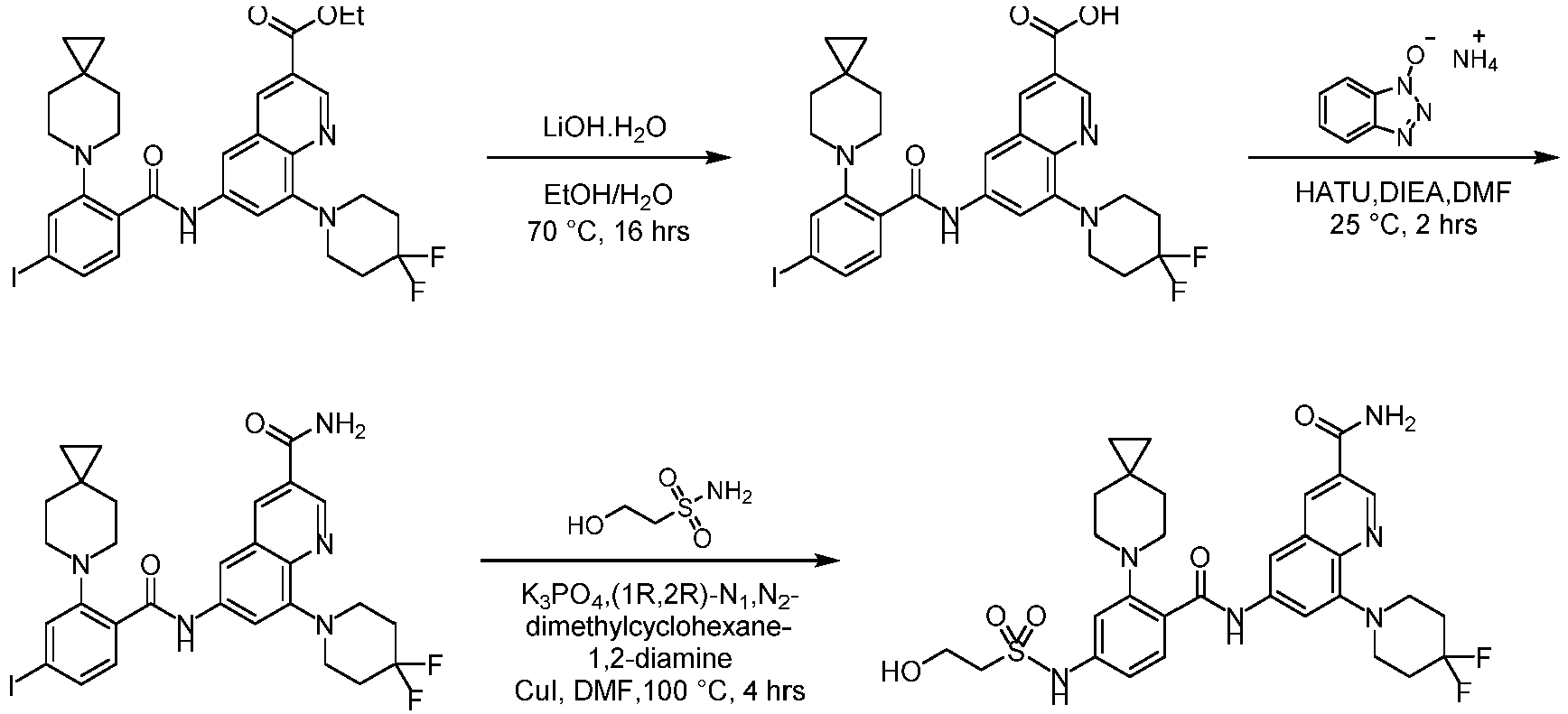
- Step 1: Ethyl 6-(2-{6-azaspiro[2.5]octan-6-yl}-4-iodobenzoylamino)-8-(4,4-difluoropiperidin-1-yl) quinoline-3-carboxylate (220 mg, 0.33 mmol) was added in ethanol (2.00 mL), and lithium hydroxide monohydrate (37.3 mg, 0.89 mmol) was added in pure water (2.00 mL), and stirred at 70°C for 16 h. Water (5.00 mL) was added into the reaction solution, the pH was adjusted to 4 with diluted hydrochloric acid (1 M), and extracted with ethyl acetate (20.0 mL × 2). The combined organic layer was dried, filtered, and concentrated. The residue was purified by flash column chromatography (silica gel, 0-20-100% gradient of THF/petroleum ether) to give 6-(2-{6-azaspiro[2.5]octan-6-yl}-4-iodobenzoylamino)-8-(4,4-difluoropiperidin-1-yl) quinoline-3-carboxylic acid (140 mg, 0.19 mmol, yield: 66.0%) as a yellow solid. LCMS (ESI): [M+H]+ = 647.1
- Step 2: 6-(2-{6-azaspiro[2.5]octan-6-yl}-4-iodobenzoylamino)-8-(4,4-difluoropiperidin-1-yl) quinoline-3-carboxylic acid (170 mg, 0.26 mmol) was dissolved in N,N-dimethylformamide (4.00 mL), then 1-hydroxy-1H-benzotriazole ammonium salt (240 mg, 1.58 mmol), N,N-diisopropylethylamine (271 mg, 2.10 mmol), and O-(7-azabenzotriazol-1-yl)-N,N,N,N-tetramethylurea hexafluorophosphonate (299 mg, 0.79 mmol) were successively added into the reaction system and stirred at 25°C for 2 h. Water (10.0 mL) was added into the reaction solution, extracted with ethyl acetate (50 mL × 2) Then the combined organic layer was dried , filtered, and concentrated. The residue was purified by flash column chromatography (silica gel, 0-43% gradient of THF/petroleum ether) to give 6-(2-{6-azaspiro[2.5]octan-6-yl}-4-iodobenzoylamino)-8-(4,4-difluoropiperidin-1-yl) quinoline-3-carboxamide (100 g, 0.16 mmol, yield: 44.0%) as a yellow oil. LCMS (ESI): [M+H]+ = 646.1;1H NMR (400 MHz, DMSO-d 6) δ ppm 11.70 (s, 2H), 9.14 (s, 1H), 8.72 (s, 1H), 8.33 - 8.16 (m, 2H), 7.68 (br s, 1H), 7.65 (s, 1H), 7.59 (br d, J = 8.4 Hz, 1H), 7.46 (s, 1H), 3.54 (br s, 4H), 3.05 (br s, 4H), 2.30 - 2.20 (m, 4H), 1.56 - 1.49 (m, 4H), 0.32 (s, 4H)
- Step 3: 6-(2-{6-azaspiro[2.5]octan-6-yl}-4-iodobenzoylamino)-8-(4,4-difluoropiperidin-1-yl) quinoline-3-carboxamide (90.0 mg, 0.14 mmol) and 2-hydroxyethanesulfonamide (22.6 mg, 0.18 mmol) were successively dissolved in N,N-dimethylformamide (3.60 mL) and potassium phosphate (88.7 mg, 0.42 mmol), (1R,2R)-N1,N2-dimethylcyclohexane-1,2-diamine (20.0 mg, 0.14 mmol), and cuprous iodide (26.5 mg, 0.14 mmol) were successively added, and stirred at 100°C for 4 h under nitrogen atmosphere. Water (50.0 mL + 0.50 mL liquor ammonia) was added into the reaction solution, and extracted with ethyl acetate (100 mL × 2). The combined organic layer was dried , filtered, and concentrated. The residue was purified by preparative HPLC (C18, 14%-54% gradient of water (liquor ammonia + ammonium bicarbonate)/acetonitrile) to give 6-(2-{6-azaspiro[2.5]octan-6-yl}-4-(2-hydroxyethanesulfonamido)benzoylamino)-8-( 4,4-difluoropiperidin-1-yl)quinoline-3-carboxamide (33.18 mg, 0.05 mmol, yield: 37.0%) as a white solid. LCMS (ESI): [M+H]+ = 643.3;1H NMR (400 MHz, DMSO-d 6) δ ppm 12.51 (s, 1H), 9.12 (d, J = 2.0 Hz, 1H), 8.69 (d, J = 2.0 Hz, 1H), 8.33 - 8.18 (m, 2H), 7.82 (d, J = 8.4 Hz, 1H), 7.66 (s, 1H), 7.42 (s, 1H), 7.03 (d, J = 1.6 Hz, 1H), 6.89 (dd, J = 1.6, 8.4 Hz, 1H), 6.10 - 5.77 (m, 2H), 3.74 (t, J = 6.4 Hz, 2H), 3.55 (br s, 4H), 3.15 (t, J = 6.8 Hz, 2H), 3.00 (br t, J = 4.4 Hz, 4H), 2.31 - 2.18 (m, 4H), 1.68 - 1.58 (m, 4H), 0.38 (s, 4H)
-

- Step 1: Trifluoroacetic acid was added to the solution of 2-amino-5-bromobenzaldehyde (5.00 g, 24.97 mmol) and iodosuccinimide (6.72 g, 30.04 mmol) in acetonitrile (50 mL) at 25°C, and the resulting reaction mixture was stirred at 25°C for 2 h. The reaction mixture was diluted with ethyl acetate (100 mL) and washed with saturated saline (50 mL×3). The organic phase was concentrated, dried, filtered to give the residue, and purified by flash column chromatography (silica gel, 0-30% gradient of ethyl acetate/petroleum ether) to give 2-amino-5-bromo-3-iodobenzaldehyde (6.00 g, 18.46 mmol, yield: 73.6%) as a violet solid. LCMS (ESI): [M+H]+ =325.9, 1H NMR (400 MHz, DMSO) δ 9.70 (s, 1H), 8.03 (d, J = 2.3 Hz, 1H), 7.89 (d, J = 2.3 Hz, 1H), 7.15 (s, 2H).
- Step 2: Sodium hydride (480 mg, 12.13 mmol, 60 % in mineral oil) was added to the solution of 2-(diethoxycarbonylphosphate)propionitrile (2.10 g, 11.00 mmol) in THF (40 mL) at 0°C. The resulting reaction mixture was stirred for 30 min at 25°C and then the solution of 2-amino-5-bromo-3-iodobenzaldehyde (2.50 g, 7.73 mmol) in THF (10 mL) was added. The reactionmixture was stirred at 25°C for 3 h. The reaction system was quenched with saturated ammonium chloride solution (100 mL) and extracted with ethyl acetate (200 mL×2). The combined organic layer was dried with anhydrous sodium sulfate, filtered, concentrated to give the crude, and purified by flash column chromatography (silica gel, 0-30% gradient of ethyl acetate/petroleum ether) to give (2E)-3-(2-amino-5-bromo-3-iodophenyl)-2-methylprop-2-enenitrile (2.90 g, 7.99 mmol, yield: 72.7%) as a yellow solid. LCMS (ESI): [M+H]+ =363.0
- Step 3: Potassium tert-butoxide (1.81 g, 15.98 mmol) was added to the solution of (2E)-3-(2-amino-5-bromo-3-iodophenyl)-2-methylprop-2-enenitrile (2.90 g, 7.99 mmol) in THF (50 mL) at 25°C, and the resulting reaction mixture was stirred for 16 h at 50°C. The reaction mixture was diluted with ethyl acetate (100 mL) and washed with saturated saline (50 mL×3). The combined organic layer was dried with anhydrous sodium sulfate, filtered, and concentrated to give the residue. The residue was purified by flash column chromatography (silica gel, 0-30% gradient of ethyl acetate/petroleum ether) to give 6-bromo-8-iodo-3-methyl-2-quinolinamine (1.80 g, 4.96 mmol, yield: 62.1%) as a pale brown solid. LCMS (ESI): [M+H]+ =363.0
- Step 4: tert-butyl carbamate (1.92 g, 8.82 mmol) was added to the solution of 6-bromo-8-iodo-3-methyl-2-quinolinamine (1.60 g, 4.41 mmol), 4-dimethylaminopyridine (110 mg, 0.88 mmol), and N,N-diisopropylethylamine (1.16 mL, 8.81 mmol) in dichloromethane (20 mL) at 25°C. The reaction mixture was stirred at 50°C for 3 h. The reaction mixture was concentrated to give the residue and purified by flash column chromatography (silica gel, 0-10% gradient of ethyl acetate/petroleum ether) to give tert-butyl(6-bromo-8-iodo-3-methylquinolin-2-yl)(tert-butoxycarbonyl)carbamate (2.00 g, 3.55 mmol, yield: 80.6%) as a pale yellow solid. LCMS (ESI): [M+H]+ =565.1. 1H NMR (400 MHz, DMSO) δ 8.45 (d, J = 2.1 Hz, 1H), 8.30 (t, J = 1.9 Hz, 2H), 2.35 (d, J = 1.0 Hz, 3H), 1.37 (s, 18H).
- Step 5: 1,4-dioxane (10 mL) was added to the mixture of tert-butyl(6-bromo-8-iodo-3-methylquinolin-2-yl)(tert-butoxycarbonyl)carbamate (1.00 g, 1.77 mmol), 4,4-difluoropiperidine hydrochloride (0.31 g, 1.95 mmol), tris(dibenzylideneacetone) dipalladium (170 mg, 0.18 mmol), 2,2'-bis(diphenylphosphino)-1,1'-binaphthyl (210 mg, 0.36 mmol) and cesium carbonate (1.77 g, 5.33 mmol) at 25°C. Nitrogen was bubbled through the mixture for 5 minutes, and then the resulting reaction mixture was stirred at 100°C for 3 hours. The reaction mixture was filtered and washed with ethyl acetate (30 mL). The filtrate was washed with saturated sodium chloride solution (15 mL×3). The combined organic layer was dried with anhydrous sodium sulfate, filtered, and concentrated to give the residue. The residue was purified by flash column chromatography (silica gel, 0-20% gradient of ethyl acetate/petroleum ether) to give tert-butyl (6-bromo-8-(4,4-difluoropiperidin-1-yl)-3-methylquinolin-2-yl)(tert-butoxy)carbamat e (800 mg, 1.44 mmol, yield: 81.0%) as a pale yellow oil. LCMS (ESI): [M+H]+ =558.3.
- Step 6: 1,4-dioxane (10 mL) was added to the mixture of tert-butyl(6-bromo-8-(4,4-difluoropiperidin-1-yl)-3-methylquinolin-2-yl)(tert-butoxy) carbamate (1.50 g, 3.29 mmol), tert-butyl carbamate (580 mg, 4.93 mmol), tris(dibenzylideneacetone) dipalladium (310 mg, 0.33 mmol), 2,2'-bis(diphenylphosphino)-1,1'-binaphthyl (390 mg, 0.66 mmol), and cesium carbonate (3.28 g, 9.86 mmol) at 25°C, perform nitrogen bubbling for 5 min, and the resulting reaction mixture was stirredat 100°C for 3 h. Filter the reaction mixture and wash the cake with ethyl acetate (30 mL). Wash the filtrate with saturated sodium chloride solution (15 mL×3). The combined organic layer was dried with anhydrous sodium sulfate, filter, and concentrate to give the residue. The residue was purified by flash column chromatography (silica gel, 0-40% gradient ethyl acetate/petroleum ether) to give tert-butyl (tert-butoxycarbonyl)(6-(tert-butoxycarbonyl)amino)-8-(4,4-difluoropiperidin-1-yl)-3-methylquinolin-2-yl)carbamate (650 mg, 1.31 mmol, yield: 40.2%) as a pale yellow solid. LCMS (ESI): [M+H]+ =593.5. 1H NMR (400 MHz, DMSO) δ 9.61 (s, 1H), 8.14 (s, 1H), 7.74 (d, J = 2.0 Hz, 1H), 7.31 (d, J = 2.1 Hz, 1H), 3.45 (t, J = 5.6 Hz, 4H), 2.32 (s, 3H), 2.28 - 2.15 (m, 4H), 1.57 (s, 9H), 1.44 (s, 18H).
- Step 7: Trifluoroacetic acid (0.50 mL) was added to the solution of N-{8-(4,4-difluoropiperidinyl)-6-[(tert-butoxy)carbonylamino]-3-methyl(2-quinolinyl) }(tert-butoxy)formamide (50.00 mg, 0.08 mmol) in dichloromethane (1 mL) at 25°C, and The reaction mixture was stirred for 3 h at 25°C. The reaction solution was concentrated to give the residue, then the residue was diluted with ethyl acetate (10 mL), and washed with saturated sodium bicarbonate solution (10 mL × 2). The combined organic layer was dried with anhydrous sodium sulfate, filtered, and concentrated to give 8-(4,4-difluoropiperidyl)-3-methylquinoline-2,6-diamine (44 mg, crude) as a brown solid for the next step without purification. LCMS (ESI): [M+H]+ =293.2
- Step 8: N,N-diisopropylethylamine (300 µL, 1.64 mmol) was added to the solution of 2-(6-azaspiro[2.5]octan-6-yl)-4-bromobenzoyl chloride (580 mg, 1.70 mmol) and 8-(4,4-difluoropiperidinyl)-3-methylquinoline-2,6-amine (160 mg, 0.55 mmol) in THF (5 mL) at 20°C, and the resulting reaction mixture was stirred at 20°C for 1 h. The reaction solution was diluted with ethyl acetate (10 mL) and diluted with saturated sodium chloride solution (10 mL×3). The combined organic layer was dried over anhydrous sodium sulfate, filtered, and concentrated to give N-[2-amino-8-(4,4-difluoropiperidinyl)-3-methyl(6-quinolinyl)] [2-(6-azaspiro[2.5]octan-6-yl)-4-bromophenyl]formamide (70 mg, 0.12 mmol, yield: 21.7%) as a pale brown solid crude. LCMS (ESI): [M+H]+=586.3
- Step 9: 1,4-dioxane (2 mL) was added to the mixture of N-[2-amino-8-(4,4-difluoropiperidinyl)-3-methyl(6-quinolinyl)] [2-(6-azaspiro[2.5]octan-6-yl)-4-bromophenyl]formamide (60 mg, 0.10 mmol), 2-hydroxyethylsulfonamide (26 mg, 0.21 mmol), tris(dibenzylideneacetone) dipalladium (9 mg, 0.01 mmol), 2-di-tert-butylphosphine-2',4',6'-triisopropylbiphenyl (9 mg, 0.02 mmol), and potassium phosphate (67 mg, 0.15 mmol) at 25°C. Perform nitrogen bubbling for 1 min, and the resulting reaction mixture was stirred at 100°C for 6 h. The reaction mixture was purified by column chromatography (silica gel, 50% gradient of ethyl acetate/petroleum ether, 5-15% gradient of methanol/dichloromethane containing 3% liquor ammonia) to give the crude. Diluted with ethyl acetate (20 mL), washed with water (20 mL × 2), dried, filtered, and concentrated to give N-[2-amino-8-(4,4-difluoropiperidinyl)-3-methyl(6-quinolinyl)](2-(6-azaspiro[2.5]oct an-6-yl)-4-{[(2-hydroxyethyl)sulfonyl]amino}phenyl)formamide (34 mg, 0.054 mmol, yield: 54.0%) as a pale yellow solid. LCMS (ESI): [M+H]+ =629.4, 1H NMR (400 MHz, DMSO) δ 11.83 (s, 1H), 10.05 (s, 1H), 7.91 - 7.84 (m, 2H), 7.65 (s, 1H), 7.18 (d, J = 2.1 Hz, 1H), 7.14 (d, J = 2.2 Hz, 1H), 7.05 (dd, J = 8.5, 2.0 Hz, 1H), 6.05 (s, 2H), 4.95 (s, 1H), 3.76 (t, J = 6.5 Hz, 2H), 3.43 (t, J = 5.4 Hz, 4H), 3.34 (d, J = 6.8 Hz, 2H), 2.99 (t, J = 5.3 Hz, 4H), 2.21 (s, 7H), 1.60 (s, 4H), 0.36 (s, 4H).
-
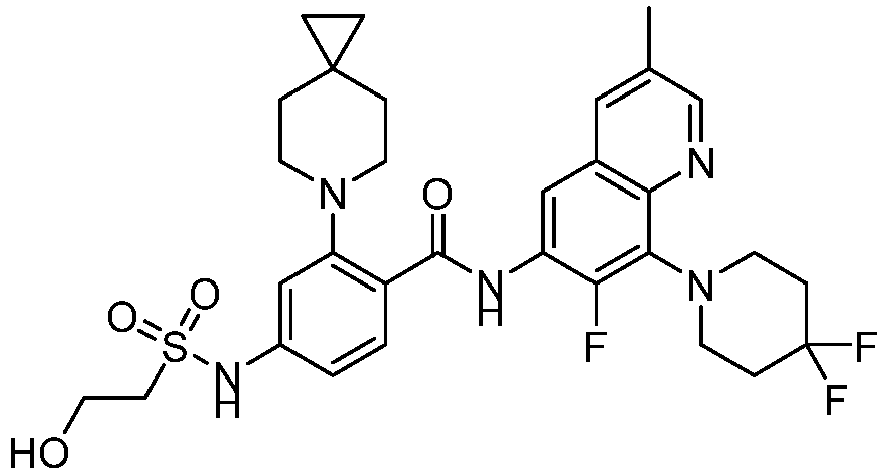
- The preparations in Example 90 follow the synthetic route of Example 3: LCMS (ESI): [M+H]+ = 632.3; 1H NMR (400 MHz, DMSO-d 6) δ ppm 10.06 (br s, 1H), 8.91 (d, J = 3.6 Hz, 1H), 7.52 (d, J = 8.4 Hz, 1H), 7.48 (d, J = 3.6 Hz, 1H), 7.14 (d, J = 2.0 Hz, 1H), 7.03 (dd, J = 1.6, 8.4 Hz, 1H), 5.40 - 4.58 (m, 1H), 3.78 (t, J = 6.4 Hz, 2H), 3.65 - 3.50 (m, 4H), 3.42 - 3.33 (m, 2H), 2.66 (br d, J = 4.8 Hz, 4H), 2.42 (s, 3H), 2.20 - 2.04 (m, 4H), 1.35 - 1.15 (m, 4H), 0.24 (s, 4H)
-
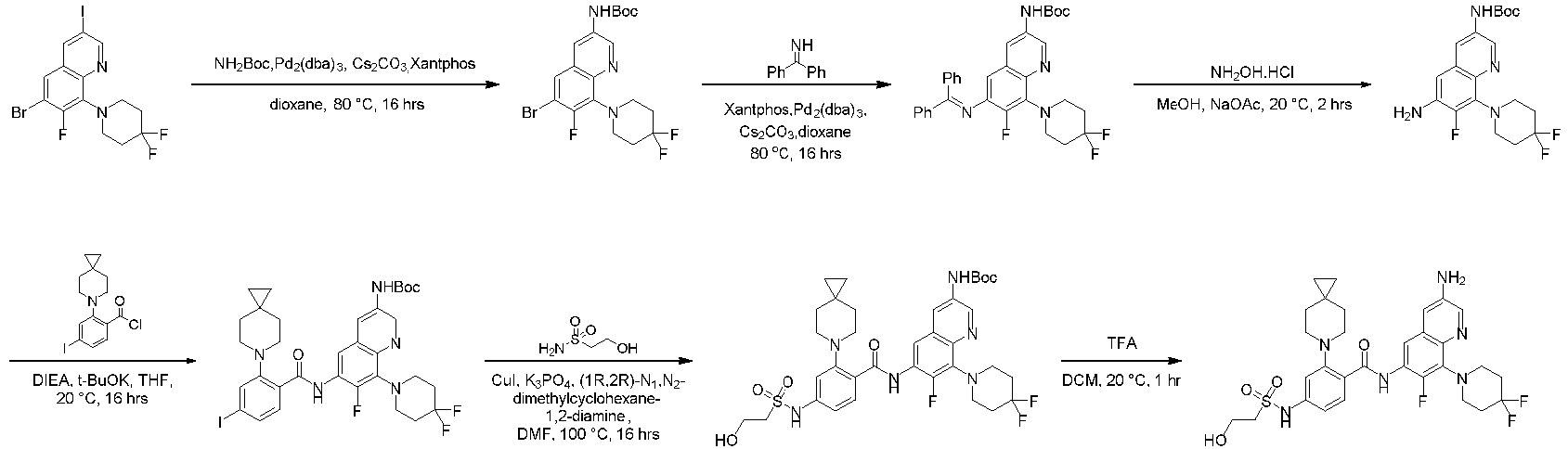
- Step 1: 6-bromo-8-(4,4-difluoropiperidin-1-yl)-7-fluoro-3-iodoquinoline (1.50 g, 3.18 mmol) and tert-butyl carbamate (0.17 g, 1.45 mmol) were dissolved successively in dioxane (30.0 mL), and cesium carbonate (1.59 g, 4.87 mmol), 4,5-bis(diphenylphosphino)-9,9-dimethylxanthene (0.19 g, 0.32 mmol), and tris(dibenzylideneacetone) dipalladium (0.15 g, 0.16 mmol) were added successively, and stirred for 16 h at 80°C under nitrogen atmosphere. The reaction solution was diluted with water (100 mL), extracted with ethyl acetate (400 mL, 200 mL × 2), the combined organic layer was dried , filtered, and concentrated. The residue was purified by flash column chromatography (silica gel, 0-6% gradient of THF/petroleum ether) to give tert-butyl N-[6-bromo-8-(4,4-difluoropiperidin-1-yl)-7-fluoroquinolin-3-yl]carbamate (0.60 g, 1.23 mmol, yield: 76.0%) as a yellow solid. LCMS (ESI): [M+H]+ = 462.0; 1H NMR (400 MHz, CHLOROFORM-d) δ ppm 8.54 (br s, 1H), 8.28 (br s, 1H), 7.58 (br d, J = 6.4 Hz, 1H), 6.64 (br s, 1H), 3.51 (br s, 4H), 2.20 - 2.08 (m, 4H), 1.49 (s, 9H)
- Step 2: tert-butyl N-[6-bromo-8-(4,4-difluoropiperidin-1-yl)-7-fluoroquinolin-3-yl]carbamate (580 mg, 1.26 mmol) and diphenylmethanimine (274 mg, 1.51 mmol) were successively dissolved in dioxane (15.0 mL), then cesium carbonate (1.23 g, 3.78 mmol), 4,5-bis(diphenylphosphino)-9,9-dimethylxanthene (145 mg, 0.25 mmol), and tris(dibenzylideneacetone) dipalladium (0.15 g, 0.16 mmol) were successively added, and stirred for 16 h at 80°C under nitrogen atmosphere. The reaction solution was diluted with water (50.0 mL), extracted with ethyl acetate (200 mL, 100 mL × 2), the combined organic layer was dried , filtered, and concentrated. The residue was purified by flash column chromatography (silica gel, 0-8% gradient of THF/petroleum ether) to give tert-butyl N-[8-(4,4-difluoropiperidin-1-yl)-6-[(diphenylmethyl anion)amino]-7-fluoroquinolin-3-yl]carbamate (800 mg, 1.20 mmol, yield: 95.0%) as a yellow solid. LCMS (ESI): [M+H]+ = 562.0; 1H NMR (400 MHz, CHLOROFORM-d) δ ppm 8.43 (d, J = 2.4 Hz, 1H), 8.25 (br s, 1H), 7.85 - 7.77 (m, 2H), 7.60 (br d, J = 6.8 Hz, 1H), 7.53 - 7.50 (m, 1H), 7.47 - 7.44 (m, 2H), 7.23 (br d, J = 6.4 Hz, 2H), 7.20 - 7.15 (m, 2H), 6.77 (d, J = 8.0 Hz, 1H), 6.71 (s, 1H), 3.40 (br d, J = 4.4 Hz, 4H), 2.21 - 2.09 (m, 4H), 1.62 - 1.50 (m, 9H)
- Step 3: tert-butyl N-[8-(4,4-difluoropiperidin-1-yl)-6-[(diphenylmethyl anion)amino]-7-fluoroquinolin-3-yl]carbamate (780 mg, 1.39 mmol) was dissolved in methanol (16.0 mL), then sodium acetate (342 mg, 4.17 mmol) and hydroxylamine hydrochloride (193 mg, 2.78 mmol) were successively added, and stirred at 20°C for 2 h. Water (50.0 mL) was added into the reaction solution, extracted with ethyl acetate (100 mL × 2), the combined organic layer was dried , filtered, and concentrated. The residue was purified by flash column chromatography (silica gel, 0-18% gradient of THF/petroleum ether) to give tert-butyl N-[6-amino-8-(4,4-difluoropiperidin-1-yl)-7-fluoroquinolin-3-yl]carbamate (0.78 g, 0.92 mmol, yield: 66.0%) as a yellow solid. LCMS (ESI): [M+H]+ = 397.1; 1H NMR (400 MHz, CHLOROFORM-d) δ ppm 8.36 (d, J = 2.4 Hz, 1H), 8.22 (br s, 1H), 6.66 (br d, J = 8.8 Hz, 2H), 4.04 (s, 2H), 3.58 (br t, J = 4.4 Hz, 4H), 2.29 - 2.16 (m, 4H), 1.57 (s, 9H)
- Step 4: Dissolve tert-butyl N-[6-amino-8-(4,4-difluoropiperidin-1-yl)-7-fluoroquinolin-3-yl]carbamate (340 mg, 0.86 mmol) in THF (15.0 mL), add diisopropylethylamine (332 mg, 2.57 mmol) and 4-iodo-2-(6-azaspiro[2.5]octan-6-yl)benzoyl chloride (690 mg, 1.29 mmol), and stir at 20°C for 16 h. Add water (50.0 mL) into the reaction solution, extracted withethyl acetate (100 mL × 2), the combined organic layer was dried , filter, and concentrate. The residue was purified by flash column chromatography (silica gel, 0-12% gradient of THF/petroleum ether) to give tert-butyl N-[6-(2-{6-azaspiro[2.5]octan-6-yl}-4-iodobenzoylamino)-8-(4,4-difluoropiperidin-1-yl)-7-fluoroquinolin-3-yl]carbamate (340 mg, 0.41 mmol, yield: 48.0%) as a yellow solid. LCMS (ESI): [M+H]+ = 736.1; 1H NMR (400 MHz, CHLOROFORM-d) δ ppm 12.40 (br s, 1H), 8.74 (d, J = 8.0 Hz, 1H), 8.65 (br d, J = 2.4 Hz, 1H), 8.31 (br s, 1H), 7.97 (d, J = 8.4 Hz, 1H), 7.69 (s, 1H), 7.66 (d, J = 8.4 Hz, 1H), 6.65 (br s, 1H), 3.63 (br s, 4H), 3.08 (br t, J = 4.8 Hz, 4H), 2.30 - 2.19 (m, 4H), 1.70 - 1.60 (m, 4H), 1.57 (s, 9H), 0.41 (s, 4H)
- Step 5: tert-butyl N-[6-(2-{6-azaspiro[2.5]octan-6-yl}-4-iodobenzoylamino)-8-(4,4-difluoropiperidin-1-yl)-7-fluoroquinolin-3-yl]carbamate (300 mg, 0.41 mmol) and 2-hydroxyethanesulfonamide (102 mg, 0.82 mmol) were dissolved in N,N-dimethylformamide (15.0 mL), then potassium phosphate (259 mg, 1.22 mmol), (1R,2R)-N1,N2-dimethylcyclohexane-1,2-diamine (58.6 mg, 0.41 mmol) and cuprous iodide (77.6 mg, 0.41 mmol) were successively added, and stirred at 100°C for 16 h. 50 mL of water (0.5 mL of liquor ammonia) was added into the reaction solution, extracted with ethyl acetate (200 mL × 2), the combined organic layer was dried , filtered, and concentrated. The residue was purified by flash column chromatography (silica gel, 0-37% gradient of THF/petroleum ether) to give tert-butyl N-[6-(2-{6-azaspiro[2.5]octan-6-yl}-4-(2-hydroxyethanesulfonamido)benzoylamino)-8-(4,4-difluoropiperidin-1-yl)-7-fluoroquinolin-3-yl]carbamate (300 mg, 0.36 mmol, yield: 89.0%) as a yellow solid. LCMS (ESI): [M+H]+ = 733.2; 1H NMR (400 MHz, CHLOROFORM-d) δ ppm 12.44 (br d, J = 2.0 Hz, 1H), 8.71 (d, J = 8.0 Hz, 1H), 8.67 (d, J = 2.4 Hz, 1H), 8.28 (br s, 1H), 8.19 (d, J = 8.4 Hz, 1H), 8.03 (s, 1H), 7.62 (br s, 1H), 7.35 (d, J = 1.6 Hz, 1H), 7.07 (dd, J = 2.0, 8.4 Hz, 1H), 6.82 (s, 1H), 4.14 (br t, J = 4.8 Hz, 2H), 3.66 - 3.58 (m, 4H), 3.36 (t, J = 5.6 Hz, 2H), 3.06 (br t, J = 4.8 Hz, 4H), 2.28 - 2.16 (m, 4H), 1.72 - 1.59 (m, 4H), 1.57 (s, 9H), 0.39 (s, 4H)
- Step 6: Tert-butyl N-[6-(2-{6-azaspiro[2.5]octan-6-yl}-4-(2-hydroxyethanesulfonamido)benzoylamino)-8-(4,4-difluoropiperidin-1-yl)-7-fluoroquinolin-3-yl]carbamate (260 mg, 0.35 mmol) was dissolved in dichloromethane (2.40 mL) and trifluoroacetic acid (0.60 mL), and stirred for 1 h at 20°C. The reaction solution was quenched with 50 mL of saturated sodium bicarbonate solution, extracted withethyl acetate (100 mL × 2), the combined organic layer was dried , filtered, and concentrated. The residue was purified by preparative HPLC (C18, 12%-52% gradient of water (formic acid)/acetonitrile) to give N-[3-amino-8-(4,4-difluoropiperidin-1-yl)-7-fluoroquinolin-6-yl]-2-{6-azaspiro[2.5]o ctan-6-yl}-4-(2-hydroxyethanesulfonamido)benzamide (132 mg, 0.21 mmol, yield: 59.0%) as a yellow solid. LCMS (ESI): [M+H]+ = 633.3; 1H NMR (400 MHz, DMSO-d 6) δ ppm 12.29 (br s, 1H), 11.13 - 9.36 (m, 1H), 8.48 - 8.28 (m, 2H), 8.15 (s, 1H), 8.03 (d, J = 8.8 Hz, 1H), 7.28 (s, 1H), 7.13 (br d, J = 8.4 Hz, 1H), 7.08 (br d, J = 2.0 Hz, 1H), 5.60 (br s, 2H), 5.27 - 4.55 (m, 1H), 3.77 (br t, J = 6.4 Hz, 2H), 3.56 - 3.48 (m, 4H), 3.37 (br t, J = 6.4 Hz, 2H), 2.98 (br s, 4H), 2.25 - 2.07 (m, 4H), 1.65 - 1.50 (m, 4H), 0.37 (s, 4H)
-
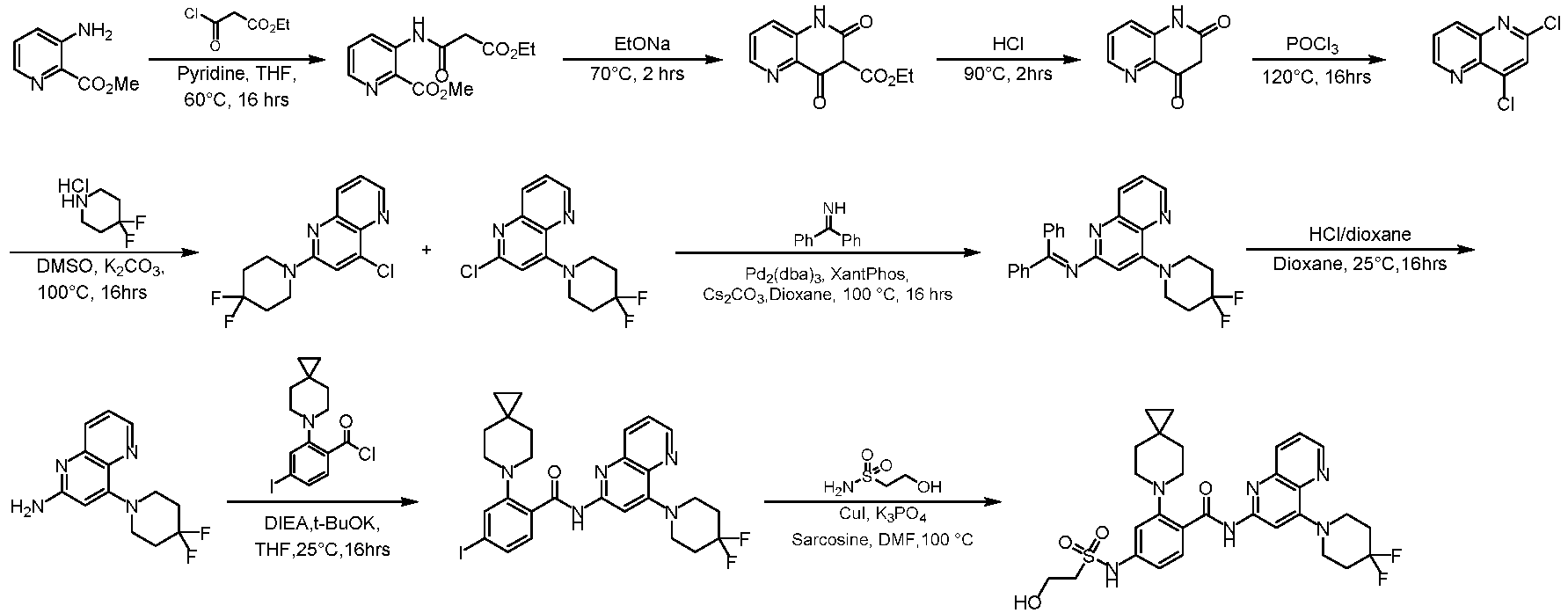
- Step 1: Ethyl 3-chloro-3-oxopropanoate (3.56 g, 23.6 mmol) was added to the solution of methyl 3-aminomethylpyridine ester (3.00 g, 53.7 mmol) and pyridine (4.92 g, 59.1 mmol) in THF (30 mL), and the mixture was stirred at 60°C for 16 h. Water (60 mL) was added to the reaction mixture and extracted with ethyl acetate (60 mL × 2). The combined organic layer was dried over anhydrous sodium sulfate, filtered and concentrated under reduced pressure to give the residue. The residue was purified by flash column chromatography (silica gel, 0-30% gradient of ethyl acetate/petroleum ether) to give methyl 3-(3-ethoxy-3-oxopropionylamino)methylpyridinyl ester (1.50 g, 5.63 mmol, yield: 28.5%) as a yellow solid. LCMS (ESI): [M+H]+ =266.9.
- Step 2: Heat the solution of methyl 3-(3-ethoxy-3-oxopropionylamino)methylpyridinyl ester (1.00 g, 3.75 mmol) in sodium ethylate (1.91 g, 5.63 mmol) to 70°C and stir for 2 h. Concentrate and spin dry the mixture to give ethyl 2,4-dioxylidene-1,2,3,4-tetrahydro-1,5-naphthyridine-3-carboxylate (1.40 g, crude) as a yellow solid. LCMS (ESI): [M+H]+ = 234.9.
- Step 3 : The solution of ethyl 2,4-dioxylidene-1,2,3,4-tetrahydro-1,5-naphthyridine-3-carboxylate (1.00 g, 4.85 mmol) in hydrochloric acid (20 mL, 30%) was heated to 90°C and stir for 2 h. The reaction solution was cooled to ambient temperature, filtered and the cake was collected and dried under reduced pressure to give 1,5-naphthyridine-2,4(1H,3H)-dione (0.50 g, 3.08 mmol, yield: 63%) as a yellow solid. LCMS (ESI): [M+H]+ = 162.8.
- Step 4: Heat the solution of 1,5-naphthyridine-2,4(1H,3H)-dione (7.00 g, 5.76 mmol) in phosphorus oxychloride (80 mL) to 120°C and stir for 16 h. Concentrate the reaction solution and spin dry to give the residue. Pour the residue into water (100 mL) and extracted withethyl acetate (100 mL × 3). The combined organic layer was dried over anhydrous magnesium sulfate, filtered and concentrated under reduced pressure to give the residue 2,4-dichloro-1,5-naphthyridine (2.60 g, 12.9 mmol, yield: 30%). LCMS (ESI): [M+H]+ = 198.9.
- Step 5: 4,4-difluoropiperidine hydrochloride (2.18 g, 13.8 mmol) was added to the solution of 2,4-dichloro-1,5-naphthyridine (2.50 g, 12.5 mmol) and N,N-diisopropylethylamine (4.96 g, 37.7 mmol) in DMSO (50 mL). The mixture was heated to 100°C with stirring for 16 h. Water (100 mL) was added to the reaction solution and extracted with ethyl acetate (100 mL × 2). The combined organic layer was dried over anhydrous sodium sulfate, filtered and concentrated under reduced pressure to give the residue. The residue was purified by flash column chromatography (silica gel, 0-20% gradient of ethyl acetate/petroleum ether) to give the mixture of yellow solids 2-chloro-4-(4,4-difluoropiperidin-1-yl)-1,5-naphthyridine and 4-chloro-2-(4,4-difluoropiperidin-1-yl)-1,5-naphthyridine (2.80 g, 9.86 mmol, yield: 78%). LCMS (ESI): [M+H]+ = 283.9.
- Step 6: 4,5-bis(diphenylphosphino)-9,9-dimethylxanthene (1.30 g, 2.25 mmol) and tris(dibenzylideneacetone) dipalladium (1.03 g, 1.12 mmol) were added successively to the mixture of 2-chloro-4-(4,4-difluoropiperidin-1-yl)-1,5-naphthyridine and 4-chloro-2-(4,4-difluoropiperidin-1-yl)-1,5-naphthyridine (3.20 g, 11.3 mmol) and the solution of diphenylmethanimine (2.50 g, 13.5 mmol) and cesium carbonate (10.3 g, 31.7 mmol) in dioxane (60 mL). The mixture was heated to 100°C with stirring for 16 h under nitrogen atmosphere Add water (100 mL) to the reaction solution and extracted withethyl acetate (100 mL × 2). The combined organic layer was dried over anhydrous sodium sulfate, filtered and concentrated under reduced pressure to give the residue. The residue was purified by flash column chromatography (silica gel, 0-15% gradient of ethyl acetate/petroleum ether) to give 4-(4,4-difluoropiperidin-1-yl)-N-(diphenylmethylene)-1,5-naphthyridin-2-amine (3.40 g, 7.93 mmol, yield: 70%) as a yellow solid. LCMS (ESI): [M+H]+ = 429.3.
- Step 7: HCl in dioxane (34 mL, 4M) was added to the solution of 4-(4,4-difluoropiperidin-1-yl)-N-(diphenylmethylene)-1,5-naphthyridin-2-amine (3.40 g, 7.93 mmol) in dioxane (34 mL). The mixture was stirred at 25°C for 16 h. Then, filter the reaction solution, and concentrate and spin dry the solids to give 4-(4,4-difluoropiperidin-1-yl)-1,5-naphthyridin-2-amine (2.20 g, 7.48 mmol, yield: 94.4%). LCMS (ESI): [M+H]+ = 265.1.
- Step 8: The solution of potassium tert-butoxide in THF (5.67 mL, 5.67 mmol, 1 mol/L) and N,N-diisopropylethylamine (748 mg, 5.67 mmol) were successively added to the solution of 4-(4,4-difluoropiperidin-1-yl)-1,5-naphthyridin-2-amine (0.50 g, 1.89 mmol) and 4-iodo-2-(6-azaspiro[2.5]octan-6-yl)benzoyl chloride (852 mg, 2.27 mmol) in THF (10 mL). The reactionmixture was stirred at 25°C for 16 h. Water (50 mL) was added to the reaction mixture and extracted withethyl acetate (50 mL×2). The combined organic layer was dried over anhydrous sodium sulfate, filtered and concentrated under reduced pressure to give the residue. The residue was purified by flash column chromatography (silica gel, 0-5% gradient of ethyl acetate/petroleum ether) to give N-(4-(4,4-difluoropiperidin-1-yl)-1,5-naphthyridin-2-yl)-4-iodo-2-(6-azaspiro[2.5]oct an-6-yl)benzamide (519 mg, 0.87 mmol, yield: 46.1%) as a yellow solid. LCMS (ESI):
- [M+H]+ = 604.2
- Step 9: Cuprous iodide (80.5 mg, 0.41 mmol) was added to a solution of 2-hydroxyethanesulfonamide (207 mg, 1.65 mmol), 2-(methylamino)acetic acid (73.8 mg, 0.82 mmol), and potassium phosphate (717 mg, 3.31 mmol) in N,N-dimethylformamide (10 mL). The mixture was stirred at 50°C for 5 min. Then N-(4-(4,4-difluoropiperidin-1-yl)-1,5-naphthyridin-2-yl)-4-iodo-2-(6-azaspiro[2.5]oct an-6-yl)benzamide (500 mg, 0.83 mmol) was added to the reaction mixture at 50°C, and the mixture was heated to 100°C with stirring for 16 h under nitrogen atmosphere. And water (10 mL) was added to the reaction solution and extracted withethyl acetate (10 mL × 2). The combined organic layer was dried over anhydrous sodium sulfate, filtered and concentrated under reduced pressure to give the residue. The residue was purified by preparative HPLC (C18, 36-76% gradient of water (formic acid)/acetonitrile) to give N-(4-(4,4-difluoropiperidin-1-yl)-1,5-naphthyridin-2-yl)-4-(2-hydroxyethylsulfonami do)-2-(6-azaspiro[2.5]octan-6-yl)benzamide (188 mg, 0.31 mmol, yield: 37.7%) as a yellow solid compound. LCMS (ESI): [M+H]+ = 601.3. 1H NMR (400 MHz, DMSO-d 6) δ 13.16 (s, 1H), 10.25 (s, 1H), 8.76 (dd, J = 1.6, 4.0 Hz, 1H), 8.21 (s, 1H), 8.09 (d, J = 8.8 Hz, 1H), 8.03 (dd, J = 1.2, 8.4 Hz, 1H), 7.69 (dd, J = 4.0, 8.4 Hz, 1H), 7.30 (d, J = 2.0 Hz, 1H), 7.14 (dd, J = 2.0, 8.4 Hz, 1H), 5.09 - 4.82 (m, 1H), 3.92 - 3.83 (m, 4H), 3.78 (br t, J = 6.4 Hz, 2H), 3.38 (br t, J = 6.4 Hz, 2H), 3.08 - 2.95 (m, 4H), 2.31 - 2.14 (m, 4H), 1.96 - 1.50 (m, 4H), 0.41 (s, 4H)
-
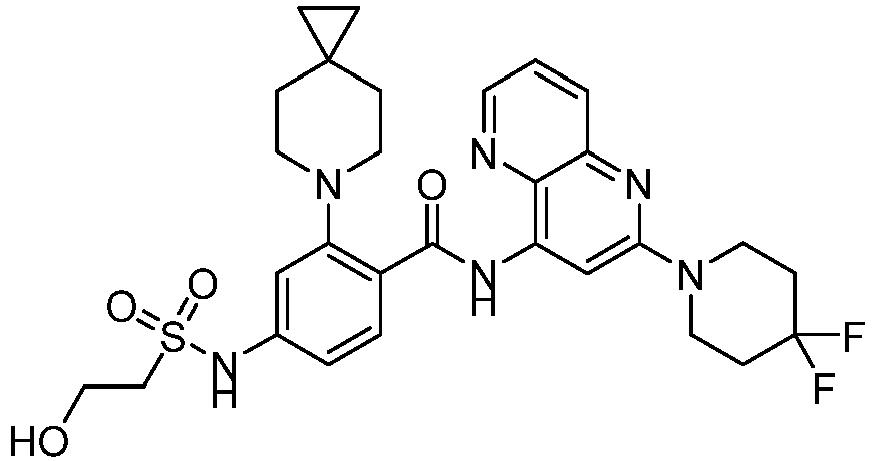
- The preparations in Example 93 follow the synthetic route of Example 3: LCMS (ESI): [M+H]+ = 601.3. 1H NMR (400 MHz, DMSO-d 6) δ 12.90 (s, 1H), 10.52 - 9.97 (m, 1H), 8.68 (s, 1H), 8.61 (dd, J = 1.6, 4.4 Hz, 1H), 8.03 - 7.97 (m, 2H), 7.69 (dd, J = 4.0, 8.4 Hz, 1H), 7.27 (d, J = 2.0 Hz, 1H), 7.09 (dd, J = 2.0, 8.4 Hz, 1H), 5.10 - 4.81 (m, 1H), 3.96 - 3.82 (m, 4H), 3.77 (t, J = 6.4 Hz, 2H), 3.38 (t, J = 6.4 Hz, 2H), 3.13 - 2.93 (m, 4H), 2.20 - 1.99 (m, 4H), 1.90 - 1.43 (m, 4H), 0.30 (s, 4H)
-
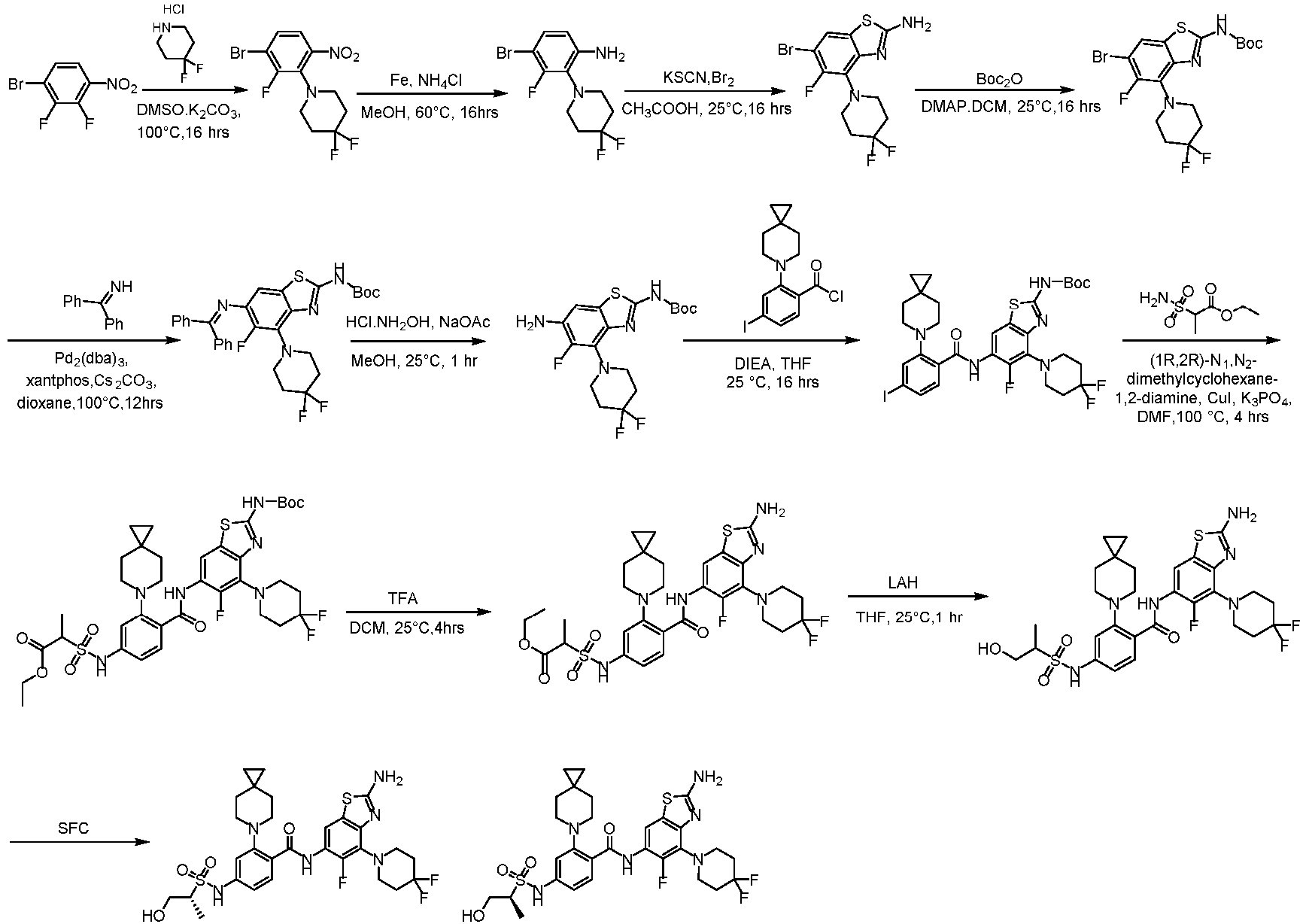
- Step 1: Potassium carbonate (17.8 g, 126 mmol) was added to a solution of 1-bromo-2,3-difluoro-4-nitrobenzene (10.0 g, 42.0 mmol) and 4,4-difluoropiperidine hydrochloride (7.28 g, 46.2 mmol) in DMSO (200 mL). The mixture was heated to 100°C and stirred for 16 h under nitrogen atmosphere. And water (200 mL) was added to the reaction solution and extracted withethyl acetate (200 mL × 3). The combined organic layer was dried over anhydrous sodium sulfate, filtered and concentrated under reduced pressure to give 1-(3-bromo-2-fluoro-6-nitrophenyl)-4,4-difluoropiperidine (12.0 g, 35.3 mmol, yield: 84%) as a yellow solid. LCMS (ESI): [M+H]+ =338.9; 1H NMR (400 MHz, DMSO-d6) δ 7.72 - 7.61 (m, 2H), 3.16 (br t, J = 5.3 Hz, 4H), 2.16 - 2.01 (m, 4H) Step 2: Iron powder (13.3 g, 236 mmol) was added portionwise to a solution of 1-(3-bromo-2-fluoro-6-nitrophenyl)-4,4-difluoropiperidine (12.0 g, 35.4 mmol) and ammonium chloride (7.64 g, 141 mmol) in methanol (240 mL) and water (80 mL). The mixture was heated to 60°C and stir for 16 h under nitrogen atmosphere. Filter the reaction solution. Add water (160 mL) to the reaction solution and extracted withethyl acetate (200 mL × 3). The combined organic layer was dried over anhydrous sodium sulfate, filtered and concentrated under reduced pressure to give 4-bromo-2-(4,4-difluoropiperidin-1-yl)-3-fluoroaniline (10.8 g, 34.9 mmol, yield: 98.7%) as a yellow solid. LCMS (ESI): [M+H]+ =308.9; 1H NMR (400 MHz, DMSO-d6) δ 7.09 (br t, J = 8.0 Hz, 1H), 6.47 (br d, J = 8.8 Hz, 1H), 5.54 (br s, 2H), 3.13 - 2.90 (m, 4H), 2.27 - 1.98 (m, 4H)
- Step 3: Potassium thiocyanate (15.7 g, 161 mmol) was added to the solution of 4-bromo-2-(4,4-difluoropiperidin-1-yl)-3-fluoroaniline (10.0 g, 32.3 mmol) in acetic acid (200 mL). Then liquid bromine (5.17 g, 32.3 mmol) was added to the reaction solution. The mixture was heated to 25°C and stir for 16 h under nitrogen. The reaction solution was filtered and the cake was washed with THF (100 mL×5). And water (100 mL) was added to the filtrate and the pH was adjusted to 10 with liquor ammonia, and extracted with ethyl acetate (200 mL×3). The combined organic layer was dried over anhydrous sodium sulfate, filtered and concentrated under reduced pressure to give the residue. The residue was purified by flash column chromatography (silica gel, 0-30% gradient of THF/petroleum ether) to give 6-bromo-4-(4,4-difluoropiperidin-1-yl)-5-fluoro-1,3-benzothiazole-2-amine (5.00 g, 13.5 mmol, yield: 42%) as a yellow solid. LCMS (ESI): [M+H]+ =367.8; 1H NMR (400 MHz, DMSO-d6) δ 11.47 - 9.30 (m, 2H), 7.84 (br d, J = 5.8 Hz, 1H), 3.36 - 3.27 (m, 4H), 2.19 - 2.05 (m, 4H)
- Step 4: Triethylamine (846 mg, 8.19 mmol) and 4-dimethylaminopyridine (34.0 mg, 0.27 mmol) were successively added to a solution of 6-bromo-4-(4,4-difluoropiperidin-1-yl)-5-fluoro-1,3-benzothiazole-2-amine (1.00 g, 2.73 mmol) and di-tert-butyl dicarbonate (1.79 g, 8.19 mmol) in dichloromethane (20.0 mL). The mixture was stirred at 25°C for 16 h. Add water (20 mL) to the reaction solution and extracted withethyl acetate (20 mL × 3). The combined organic layer was dried over anhydrous sodium sulfate, filter, spin dry the filtrate, and the residue was purified by flash column chromatography (silica gel, 0-8% gradient of ethyl acetate/petroleum ether) to give tert-butyl N-[6-bromo-4-(4,4-difluoropiperidin-1-yl)-5-fluoro-1,3-benzothiazol-2-yl]carbamate (490 mg, 1.04 mmol, yield: 38%) as a yellow oil. LCMS (ESI): [M+H]+ =465.9; 1H NMR (400 MHz, DMSO-d 6) δ ppm 11.86 (s, 1H), 7.93 (d, J = 6.4 Hz, 1H), 3.44 (br t, J = 5.2 Hz, 4H), 2.18 - 2.01 (m, 4H), 1.50 (s, 9H)
- Step 5: 4,5-bis(diphenylphosphino)-9,9-dimethylxanthene (60.1 mg, 0.10 mmol) and (2-amino-1,1-biphenyl-2-yl) palladium (II) (96.2 mg, 0.10 mmol) were successively added to a solution of tert-butyl N-[6-bromo-4-(4,4-difluoropiperidin-1-yl)-5-fluoro-1,3-benzothiazol-2-yl]carbamate (480 mg, 1.03 mmol), diphenylmethanimine (280 mg, 1.54 mmol) and cesium carbonate (1027 mg, 3.09 mmol) in dioxane (20.0 mL). Replace the mixture 3 times with nitrogen, then the mixture was heated to 100°C under nitrogen atmosphere, and stirred for 12 h. The reaction solution was diluted with water (5 mL), extracted with dichloromethane (15 mL × 2), the combined organic layer was washed with saturated saline (20 mL), dried over magnesium sulfate, filtered, and concentrated under reduced pressure to give the residue. The residue was purified by flash column chromatography (silica gel, 0-6% gradient of ethyl acetate/petroleum ether) to give tert-butyl N-[6-bromo-4-(4,4-difluoropiperidin-1-yl)-5-fluoro-1,3-benzothiazol-2-yl] carbamate (260 mg, 0.46 mmol, yield: 45%) as a yellow solid. LCMS (ESI): [M+H]+ =567.1; 1H NMR (400 MHz, DMSO-d 6) δ ppm 11.61 (br s, 1H), 7.71 - 7.65 (m, 2H), 7.60 - 7.54 (m, 1H), 7.52 - 7.46 (m, 2H), 7.34 - 7.32 (m, 2H), 7.16 (dd, J = 2.8, 6.4 Hz, 2H), 6.99 (d, J = 7.2 Hz, 1H), 3.27 (br t, J = 5.6 Hz, 4H), 2.10 - 2.00 (m, 4H), 1.48 (s, 9H)
- Step 6: Hydroxylamine hydrochloride (59.0 mg, 0.85 mmol) and sodium acetate (104 mg, 1.27 mmol) were succesilly added to the mixed solution of tert-butyl (4-(4,4-difluoropiperidin-1-yl)-6-((diphenylmethylene)amino)-5-fluorobenzo[d]thiazo l-2-yl)carbamate (240 mg, 0.42 mmol) and methanol (2.00 mL). The mixture was stirred at 25°C for 1 h. The reaction solution was diluted with water (5 mL), extracted with dichloromethane (15 mL × 2), the combined organic layer was washed with saturated saline (20 mL), dried over magnesium sulfate, filtered, and concentrated under reduced pressure to give the residue. The residue was purified by flash column chromatography (silica gel, 0-50% gradient of ethyl acetate/petroleum ether) to give tert-butyl N-[6-amino-4-(4,4-difluoropiperidin-1-yl)-5-fluoro-1,3-benzothiazol-2-yl]carbamate (120 mg, 0.30 mmol, yield: 70%) as a yellow solid. LCMS (ESI): [M+H]+ =403.0.
- Step 7: N,N-diisopropylethylamine (118 mg, 0.89 mmol) was added to a solution of tert-butyl N-[6-amino-4-(4,4-difluoropiperidin-1-yl)-5-fluoro-1,3-benzothiazol-2-yl]carbamate (120 mg, 0.30 mmol) and 4-iodo-2-(6-azaspiro[2.5]octan-6-yl)benzoyl chloride (168 mg, 0.45 mmol) in THF (4.00 mL), and the mixture was stirred at 25°C for 16 h. The reaction solution was diluted with water (5 mL), extracted with dichloromethane (15 mL × 2), the combined organic layer was washed with saturated saline (20 mL), dried over magnesium sulfate, filtered, and concentrated under reduced pressure. The residue was purified by flash column chromatography (silica gel, 0-10% gradient of ethyl acetate/petroleum ether) to give tert-butyl N-[6-(2-{6-azaspiro[2.5]octan-6-yl}-4-iodobenzoylamino)-4-(4,4-difluoropiperidin-1-yl)-5-fluoro -1,3-benzothiazol-2-yl]carbamate (80 mg, 0.10 mmol, yield: 36%) as a yellow solid. LCMS (ESI): [M+H]+ =742.2
- Step 8: Cuprous iodide (249 mg, 1.30 mmol) was added to a solution of ethyl 2-sulfamoylpropyl ester (307 mg, 1.69 mmol), trans-N,N-dimethyl-1,2-cyclohexanediamine (187 mg, 1.30 mmol), potassium phosphate (832 mg, 3.90 mmol) in N,N-dimethylformamide (20 mL). The mixture was stirred at 50°C for 5 min. Then, tert-butyl N-[6-(2-{6-azaspiro[2.5]octan-6-yl}-4-iodobenzoylamino)-4-(4,4-difluoropiperidin-1-yl)-5-fluoro-1,3-benzothiazol-2-yl]carbamate (1100 mg, 1.30 mmol) was add to the reaction mixture at 50°C, and the mixture was heated to 100°C with stirring for 4 h under nitrogen atmosphere. And water (50 mL) was added to the reaction solution and extracted with ethyl acetate (50 mL × 2). The combined organic layer was dried over anhydrous magnesium sulfate, filtered, and the filtrate was concentrated to dryness. The residue was purified by flash column chromatography (silica gel, 0-30% gradient of ethyl acetate/petroleum ether) to give ethyl 2-[(3-{6-azaspiro[2.5]octan-6-yl}-4-[(2-{[(tert-butoxy)carbonyl]amino}-4-(4,4-difluo ropiperidin-1-yl)-5-fluoro-1,3-benzothiazol-6-yl)aminocarbonyl]phenyl)sulfamoyl]pr opyl ester (1100 mg, crude) as a yellow solid compound. LCMS (ESI): [M+H]+ =795.2.
- Step 9: Ethyl 2-[(3-{6-azaspiro[2.5]octan-6-yl}-4-[(2-{[(tert-butoxy)carbonyl]amino}-4-(4,4-difluo ropiperidin-1-yl)-5-fluoro-1,3-benzothiazol-6-yl)aminocarbonyl]phenyl)sulfamoyl]pr opyl ester (1000 mg, 1.12 mmol) was added to the mixed solution of trifluoroacetic acid (5.00 mL) and dichloromethane (20.0 mL). The mixture was stirred at 25°C for 4 h. And saturated aqueous sodium bicarbonate solution (20 mL) was added to the reaction solution and extracted with dichloromethane (20 mL×2). The combined organic layer was dried over anhydrous magnesium sulfate, filtered and concentrated under reduced pressure to give ethyl 2-[(4-{[2-amino-4-(4,4-difluoropiperidin-1-yl)-5-fluoro-1,3-benzothiazol-6-yl]aminoc arbonyl}-3-{6-azaspiro[2.5]octan-6-yl}phenyl)sulfamoyl]propyl ester (700 mg, 1.01 mmol. yield: 90.2%) as a white solid. LCMS (ESI): [M+H]+ =695.2.
- Step 10: Ethyl 2-[(4-{[2-amino-4-(4,4-difluoropiperidin-1-yl)-5-fluoro-1,3-benzothiazol-6-yl]aminoc arbonyl}-3-{6-azaspiro[2.5]octan-6-yl}phenyl)sulfamoyl]propyl ester (700 mg, 1.01 mmol) was added to a solution of THF (14 mL), then lithium tetrahydridoaluminate (54.0 mg, 1.51 mmol) was added portionwise at 25°C, and The mixture was stirred at 25°C for 1 h. The reaction solution was quenched by successively adding water (0.05 mL) and 15% aqueous sodium hydroxide solution (0.05 mL), then water (0.1 mL), then filtered and concentrated under reduced pressure to give the residue. The residue was purified by flash column chromatography (silica gel, 0-30% gradient of THF/petroleum ether) to give a yellow solid compound, and then perform SFC separation (IG, system: carbon dioxide/ethanol (0.1% liquor ammonia)) to give N-[2-amino-4-(4,4-difluoropiperidin-1-yl)-5-fluoro-1,3-benzothiazol-6-yl]-2-{6-azasp iro[2.5]octan-6-yl}-4-[(2R)-1-hydroxypropane-2-sulfonamido]benzamide (103 mg, 0.15 mmol, yield: 15.6%) and N-[2-amino-4-(4,4-difluoropiperidin-1-yl)-5-fluoro-1,3-benzothiazol-6-yl]-2-{6-azasp iro[2.5]octan-6-yl}-4-[(2S)-1-hydroxypropane-2-sulfonamido]benzamide (142 mg, 0.22 mmol, yield: 21.5%) as white solid compounds.
- Example 94: LCMS (ESI): [M+H]+ = 653.2; 1H NMR (400 MHz, DMSO-d6) δ ppm 12.01 (s, 1H), 10.37 - 9.92 (m, 1H), 8.37 (d, J = 6.8 Hz, 1H), 7.97 (d, J = 8.4 Hz, 1H), 7.52 (s, 2H), 7.28 (d, J = 1.6 Hz, 1H), 7.12 (dd, J = 1.6, 8.8 Hz, 1H), 5.24 - 4.84 (m, 1H), 3.85 (dd, J = 4.4, 10.8 Hz, 1H), 3.49 (br dd, J = 8.0, 10.8 Hz, 1H), 3.41 (br t, J = 5.2 Hz, 4H), 3.28 - 3.22 (m, 1H), 3.06 - 2.84 (m, 4H), 2.20 - 2.03 (m, 4H), 1.72 - 1.43 (m, 4H), 1.30 (d, J = 6.8 Hz, 3H), 0.37 (s, 4H)
- Example 95: LCMS (ESI): [M+H]+ = 653.3; 1H NMR (400 MHz, DMSO-d6) δ ppm 12.01 (s, 1H), 10.38 - 9.92 (m, 1H), 8.37 (d, J = 6.8 Hz, 1H), 7.97 (d, J = 8.4 Hz, 1H), 7.52 (s, 2H), 7.28 (d, J = 1.6 Hz, 1H), 7.12 (dd, J = 1.6, 8.8 Hz, 1H), 5.23 - 4.92 (m, 1H), 3.85 (dd, J = 4.4, 10.8 Hz, 1H), 3.49 (dd, J = 8.0, 10.8 Hz, 1H), 3.41 (br t, J = 5.2 Hz, 4H), 3.29 - 3.25 (m, 1H), 3.08 - 2.79 (m, 4H), 2.19 - 2.04 (m, 4H), 1.68 - 1.44 (m, 4H), 1.30 (d, J = 6.8 Hz, 3H), 0.37 (s, 4H)
-
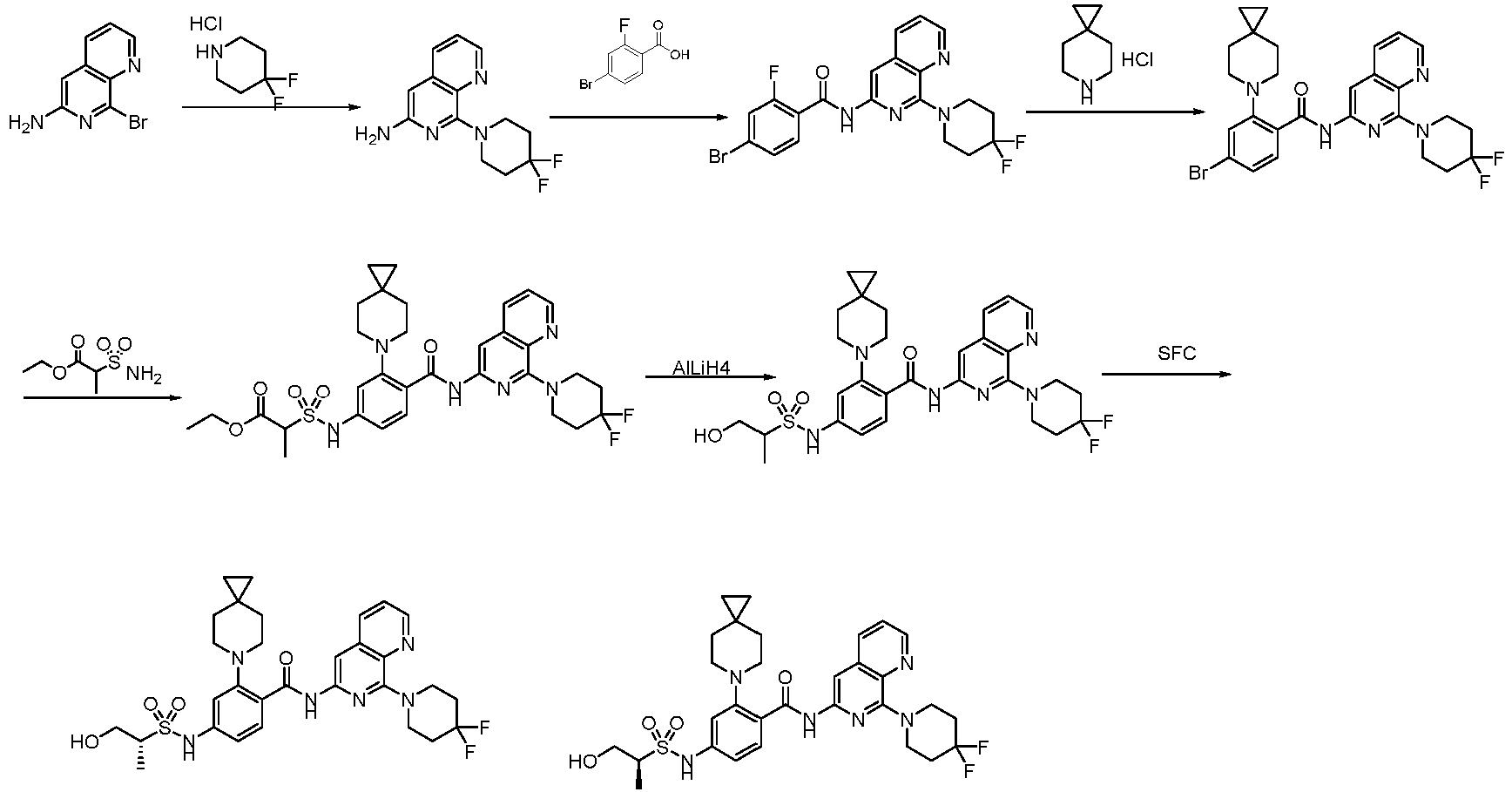
- Step 1: The solution of 8-bromo-1,7-naphthyridine-6-amine (4.50 g, 20.08 mmol), 4,4-difluoropiperidine hydrochloride (3.84 g, 24.10 mmol), and cesium carbonate (13.36 g, 40.17 mmol) in N,N-dimethylformamide (50.00 mL) was stirred at 100°C for 5 h. The reaction mixture was filtered, and the cake was washed with ethyl acetate (200 mL), and the organic phase was concentrated to give 8-(4,4-difluoropiperidinyl)pyridyl[2,3-c]pyridine-6-ylamine (4.00 g, 15.10 mmol, yield: 75.1%) as a yellow oil. LCMS (ESI): [M+H]+ =265.2; 1HNMR (400 MHz, DMSO) δ 8.34 (dd, J = 4.0, 1.7 Hz, 1H), 7.79 (dd, J = 8.5, 1.7 Hz, 1H), 7.32 (dd, J = 8.4, 4.0 Hz, 1H), 6.04 (s, 1H), 5.75 (s, 2H), 4.05 (dt, J = 6.7, 2.5 Hz, 4H), 2.09 (tt, J = 14.3, 5.6 Hz, 4H).
- Step 2: 1-propylphosphoric cyclic anhydride (726 mg, 1.14 mmol) and N,N-diisopropylethylamine (180 mg, 1.37 mmol) was added to a solution of 4-bromo-2-fluorobenzoic acid (2.60 g, 11.87 mmol) and 8-(4,4-difluoropiperidinyl)pyridyl[2,3-c]pyridine-6-ylamine (3.73 g, 13.98 mmol) in N,N-dimethylformamide (10.00 mL) at 20°C. The reactionmixture was stirred at 70°C for 16 h. The reaction mixture was poured into water, extracted with ethyl acetate (100 mL×2), and the organic phases was washed with water (100 mL×2) and saturated sodium chloride solution (100 mL). The organic phase was concentrated, dried, and filtered to give the residue and purified by flash column chromatography (silica gel, 0-30% gradient of ethyl acetate/petroleum ether) to give N-[8-(4,4-difluoropiperidinyl)pyridylo[3,2-d]pyridin-6-yl](2-fluoro-4-iodophenyl)car boxylamide (2.60 g, 5.07 mmol, yield: 43.5%) as a yellow solid. LCMS (ESI): [M+H]+ =513.2
- Step 3: Potassium carbonate (1.43 g, 10.15 mmol) was added in a solution of N-[8-(4,4-difluoropiperidinyl)pyridylo[3,2-d]pyridin-6-yl](2-fluoro-4-iodophenyl)car boxylamide (1.30 g, 2.54 mmol) and 6-azaspiro[2.5]octane hydrochloride (760 mg, 5.08 mmol) in DMSO (15 mL) at 20°C, and The reactionmixture was stirred at 130°C for 7 h. The reaction mixture was filtered and the cake was washed with ethyl acetate (50 mL). Filter and dry the turbid organic phases to give [2-(6-azaspiro[2.5]octan-6-yl)-4-iodophenyl]-N-[8-(4,4-difluoropiperidinyl)pyridyl[3, 2-d]pyridin-6-yl]ammonium carboxylate (990 mg, 1.64 mmol, yield: 64.6%) as a yellow solid. LCMS (ESI): [M+H]+ =604.3; 1HNMR (400 MHz, DMSO) δ 12.92 (s, 1H), 8.73 (dd, J = 4.1, 1.7 Hz, 1H), 8.26 (dd, J = 8.5, 1.8 Hz, 1H), 8.10 (s, 1H), 7.88 (d, J = 8.3 Hz, 1H), 7.82 (d, J = 1.7 Hz, 1H), 7.74 (dd, J = 8.3, 1.6 Hz, 1H), 7.62 (dd, J = 8.3, 4.1 Hz, 1H), 4.20 (t, J = 5.8 Hz, 4H), 3.05 (t, J = 5.3 Hz, 4H), 2.16 (dq, J = 13.8, 7.1, 5.8 Hz, 4H), 1.83 - 1.60 (m, 4H), 0.40 (s, 4H).
- Step 4: Cuprous iodide (257 mg, 1.32 mmol) and (1R, 2R)-(-)-N,N'-dimethyl-1,2-cyclohexanediamine (190 mg, 1.32 mmol) were successively added to a solution of [2-(6-azaspiro[2.5]octan-6-yl)-4-iodophenyl]-N-[8-(4,4-difluoropiperidinyl)pyridyl[3, 2-d]pyridin-6-yl]ammonium carboxylate (800 mg, 1.33 mmol), ethyl 2-aminosulfonyl propionate (720.70 mg, 3.98 mmol), and potassium phosphate (861 mg, 3.98 mmol) in N,N-dimethylformamide (12 mL) at 20°C, perform nitrogen bubbling for 2 min and the resulting reaction mixture was stirred at 100°C for 6 h. The reaction mixture was poured into water (50 mL), extracted with ethyl acetate (30 mL × 3), the combined organic layer was dried The combined organic layer was dried over anhydrous sodium sulfate, filtered, and concentrated to give the residue. Purified by flash column chromatography (silica, 30-60% gradient of ethyl acetate/petroleum ether) to give ethyl 2-{[(3-(6-azaspiro[2.5]octan-6-yl)-4-{N-[8-(4,4-difluoropiperidinyl)pyridyl[3,2-d]pyr idin-6-yl]carbamoyl}phenyl)amino]sulfonyl}propionate (730 mg, 1.11 mmol, yield: 84%) as a yellow solid. LCMS (ESI): [M+H]+ =657.4; 1H NMR (400 MHz, DMSO) δ 12.87 (s, 1H), 10.66 (s, 1H), 8.72 (dd, J = 4.1, 1.7 Hz, 1H), 8.24 (dd, J = 8.5, 1.8 Hz, 1H), 8.12 (d, J = 8.8 Hz, 2H), 7.61 (dd, J = 8.4, 4.1 Hz, 1H), 7.32 (d, J = 2.2 Hz, 1H), 7.20 - 7.09 (m, 2H), 4.32 (q, J = 7.0 Hz, 1H), 4.19 (q, J = 4.9, 4.1 Hz, 4H), 4.12 - 4.05 (m, 2H), 3.01 (t, J = 5.2 Hz, 4H), 2.17 (td, J = 13.9, 6.4 Hz, 4H), 1.67 (s, 3H), 1.51 - 1.43 (m, 4H), 1.16 (d, J = 7.1 Hz, 3H), 0.41 (s, 4H).
- Step 5: Lithium aluminum hydride (114 mg, 3.20 mmol) was added to a solution of ethyl 2-{[(3-(6-azaspiro[2.5]octan-6-yl)-4-{N-[8-(4,4-difluoropiperidinyl)pyridyl[3,2-d]pyr idin-6-yl]carbamoyl}phenyl)amino]sulfonyl}propionate (700 mg, 1.06 mmol) in THF (10 mL) at 0°C, and the reaction solution was stirred at 0°C for 1.5 h. Ethyl acetate (50 mL) and saturated ammonium chloride solution (50 mL) was added to the reaction solution. The mixture was stirred at ambient temperature for 3 h. The combined organic layer was dried, filtered, and concentrated to give the residue. Purified by flash column chromatography (silica, 0-5% gradient of methanol/dichloromethane) to give 330 mg of yellow solid product. Purify 100 mg of the product by preparative HPLC (C18, 40-90% gradient of acetonitrile/water) to give nitrogen-(8-(4,4-difluoropiperidin-1-yl)-1,7-naphthopyridin-6-yl)-4-((2-hydroxyethyl-1-methylethyl)sulfonamido)-2-(6-azaspiro[2.5]octan-6-yl)benzamide (45 mg, 0.073 mmol, yield: 7%) as a pale yellow solid. LCMS (ESI): [M+H]+ =615.4; 1H NMR (400 MHz, DMSO) δ 12.90 (s, 1H), 10.23 (s, 1H), 8.74 (dd, J = 4.1, 1.7 Hz, 1H), 8.26 (dd, J = 8.5, 1.7 Hz, 1H), 8.12 (d, J = 8.1 Hz, 2H), 7.64 (dd, J = 8.3, 4.1 Hz, 1H), 7.33 (d, J = 2.1 Hz, 1H), 7.18 (dd, J = 8.6, 2.1 Hz, 1H), 5.05 (s, 1H), 4.22 (t, J = 5.8 Hz, 4H), 3.87 (dd, J = 11.1, 4.4 Hz, 1H), 3.52 (dd, J = 11.1, 7.6 Hz, 1H), 3.30 (dt, J = 7.3, 3.6 Hz, 1H), 3.03 (d, J = 5.4 Hz, 4H), 2.19 (dq, J = 13.8, 6.7, 5.6 Hz, 4H), 1.78 (s, 4H), 1.32 (d, J = 6.9 Hz, 3H), 0.43 (s, 4H).
- Step 6: Perform SFC separation (IG, system: carbon dioxide/ethanol (0.1% liquor ammonia)) for the compound 2-{6-azaspiro[2.5]octan-6-yl}-N-[8-(4,4-difluoropiperidin-1-yl)-1,7-naphthyridin-6-yl] -4-(1-hydroxypropane-2-sulfonamido)benzamide (230 mg, 0.37 mmol) to give 2-{6-azaspiro[2.5]octan-6-yl}-N-[8-(4,4-difluoropiperidin-1-yl)-1,7-naphthyridin-6-yl] -4-[(2R)-1-hydroxypropane-2-sulfonamido]benzamide (100 mg, 0.16 mmol, yield: 43.5%) and 2-{6-azaspiro[2.5]octan-6-yl}-N-[8-(4,4-difluoropiperidin-1-yl)-1,7-naphthyridin-6-yl] -4-[(2S)-1-hydroxypropane-2-sulfonamido]benzamide (100 mg, 0.16 mmol, yield: 43.5%) as yellow solid compounds.
- Example 96: LCMS (ESI): [M+H]+ = 615.1; 1H NMR (400 MHz, DMSO-d6) δ ppm 12.88 (s, 1H), 10.54 - 9.91 (m, 1H), 8.72 (dd, J = 1.6, 4.0 Hz, 1H), 8.24 (dd, J = 1.6, 8.4 Hz, 1H), 8.15 - 8.05 (m, 2H), 7.61 (dd, J = 4.0, 8.4 Hz, 1H), 7.30 (d, J = 2.0 Hz, 1H), 7.16 (dd, J = 2.0, 8.8 Hz, 1H), 5.30 - 4.71 (m, 1H), 4.20 (br t, J = 5.2 Hz, 4H), 3.85 (dd, J = 4.4, 11.2 Hz, 1H), 3.49 (dd, J = 7.6, 11.2 Hz, 1H), 3.30 - 3.24 (m, 1H), 3.00 (br s, 4H), 2.27 - 2.11 (m, 4H), 2.05 - 1.39 (m, 4H), 1.30 (d, J = 6.8 Hz, 3H), 0.41 (s, 4H)
- Example 97: LCMS (ESI): [M+H]+ = 603.1; 1H NMR (400 MHz, DMSO-d6) δ ppm 12.88 (s, 1H), 10.50 - 9.92 (m, 1H), 8.72 (dd, J = 1.6, 4.0 Hz, 1H), 8.24 (dd, J = 1.6, 8.4 Hz, 1H), 8.15 - 8.05 (m, 2H), 7.61 (dd, J = 4.0, 8.4 Hz, 1H), 7.30 (d, J = 2.0 Hz, 1H), 7.15 (dd, J = 2.0, 8.8 Hz, 1H), 5.23 - 4.78 (m, 1H), 4.20 (br t, J = 5.2 Hz, 4H), 3.84 (dd, J = 4.4, 11.2 Hz, 1H), 3.49 (dd, J = 7.6, 11.2 Hz, 1H), 3.29 - 3.21 (m, 1H), 3.00 (br s, 4H), 2.27 - 2.11 (m, 4H), 2.05 - 1.39 (m, 4H), 1.30 (d, J = 6.8 Hz, 3H), 0.41 (s, 4H)
-
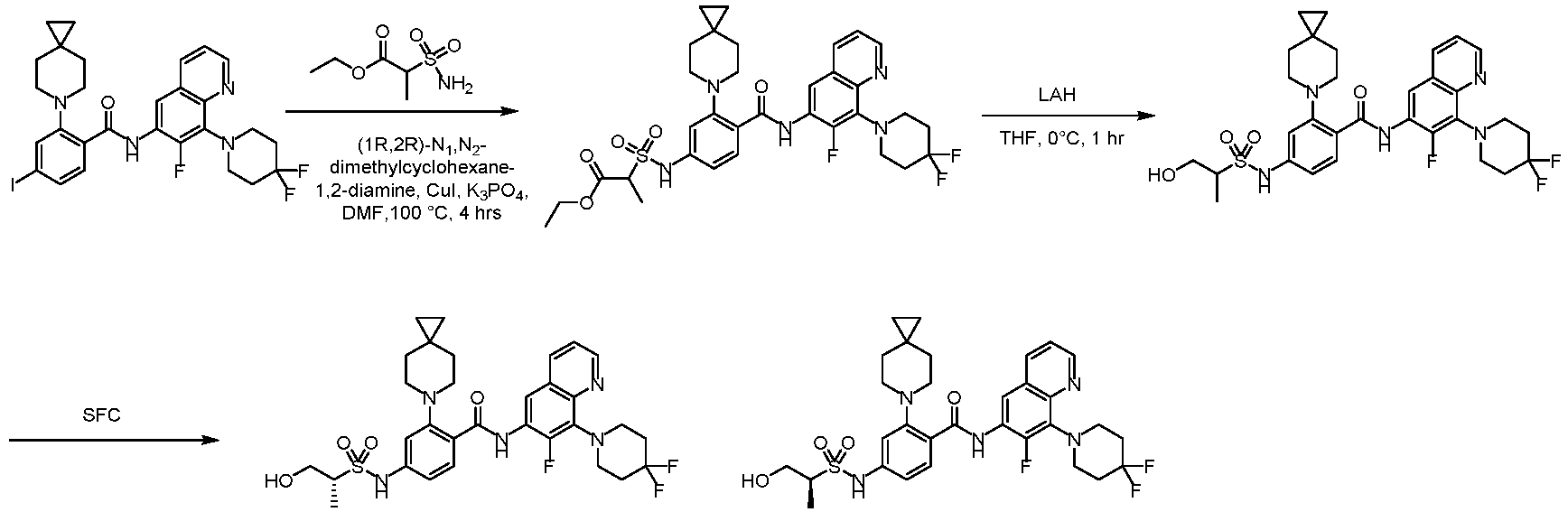
- Step 1: Cuprous iodide (13.6 mg, 0.07 mmol) was added to a solution of ethyl 2-sulfamoylpropyl ester (190 mg, 1.05 mmol), trans-N,N-dimethyl-1,2-cyclohexanediamine (100 mg, 0.70 mmol), potassium phosphate (454 mg, 2.10 mmol) in N,N-dimethylformamide (5.0 mL). The mixture was stirred at 50°C for 5 min. Then 2-{6-Azaspiro[2.5]octan-6-yl}-N-[8-(4,4-difluoropiperidin-1-yl)-7-fluoroquinolin-6-y l]-4-iodobenzamide (434 mg, 0.70 mmol) was added to the reaction mixture at 50°C, and the mixture was heated to 100°C with stirring for 4 h under nitrogen atmosphere. Water (10 mL) was added to the reaction solution and extracted with ethyl acetate (10 mL × 2). The combined organic layer was dried over anhydrous sodium sulfate, filtered and concentrated under reduced pressure to give the residue. The residue was purified by flash column chromatography (silica gel, 0-33% gradient of ethyl acetate/petroleum ether) to give ethyl 2-[(3-{6-azaspiro[2.5]octan-6-yl}-4-{[8-(4,4-difluoropiperidin-1-yl)-7-fluoroquinolin-6-yl]aminocarbonyl}phenyl)sulfamoyl]propyl ester (280 mg, 0.412 mmol, yield: 56%) as a white solid. LCMS (ESI): [M+H]+ = 674.2; 1H NMR (400 MHz, DMSO-d6) δ = 12.55 - 12.38 (m, 1H), 10.77 - 10.55 (m, 1H), 8.86 - 8.78 (m, 1H), 8.76 - 8.67 (m, 1H), 8.42 - 8.27 (m, 1H), 8.12 - 8.01 (m, 1H), 7.54 - 7.42 (m, 1H), 7.37 - 7.26 (m, 1H), 7.21 - 7.08 (m, 1H), 4.08 (br dd, J = 4.4, 7.1 Hz, 2H), 3.67 - 3.51 (m, 5H), 3.11 - 2.92 (m, 4H), 2.24 - 2.11 (m, 4H), 1.68 - 1.54 (m, 4H), 1.51 - 1.45 (m, 3H), 1.19 - 1.08 (m, 3H), 0.48 - 0.25 (m, 4H)
- Step 2: Ethyl 2-[(3-{6-azaspiro[2.5]octan-6-yl}-4-{[8-(4,4-difluoropiperidin-1-yl)-7-fluoroquinolin-6-yl]aminocarbonyl}phenyl)sulfamoyl]propyl ester (400.00 mg, 0.63 mmol) was added to a solution of THF (5 mL), lithium tetrahydridoaluminate (33.91 mg, 0.95 mmol) was added portionwise at 0°C, and The mixture was stirred at 0°C for 1 h. The reaction solution was quenched with water (0.05 mL) and 10% aqueous sodium hydroxide solution (0.10 mL), filtered and concentrated under reduced pressure to give a residue. The residue was purified by preparative HPLC (C18, 34-74% gradient of water (formic acid)/acetonitrile) and resolve by chiral SFC (IG, system: carbon dioxide/methanol (0.1% liquor ammonia)) to give 2-{6-azaspiro[2.5]octan-6-yl}-N-[8-(4,4-difluoropiperidin-1-yl)-7-fluoroquinolin-6-yl] -4-[(2R)-1-hydroxypropane-2-sulfonamido]benzamide (61.7 mg, 0.095 mmol, yield: 15%) and 2-{6-azaspiro[2.5]octan-6-yl}-N-[8-(4,4-difluoropiperidin-1-yl)-7-fluoroquinolin-6-yl] -4-[(2R)-1-hydroxypropane-2-sulfonamido]benzamide (69.7 mg, 0.12 mmol, yield: 17%) as white solid compounds.
- Example 98: LCMS (ESI): [M+H]+ = 632.3; 1H NMR (400 MHz, DMSO-d6) δ = 12.52 (br s, 1H), 8.82 (dd, J = 1.6, 4.0 Hz, 1H), 8.75 (d, J = 8.0 Hz, 1H), 8.33 (dd, J = 1.6, 8.4 Hz, 1H), 8.01 (d, J = 8.4 Hz, 1H), 7.49 (dd, J = 4.2, 8.4 Hz, 1H), 7.27 (br s, 1H), 7.11 (br d, J = 8.4 Hz, 1H), 3.90 - 3.78 (m, 1H), 3.58 (br d, J = 4.4 Hz, 4H), 3.53 - 3.46 (m, 1H), 3.28 - 3.21 (m, 1H), 2.98 (br t, J = 4.8 Hz, 4H), 2.25 - 2.13 (m, 4H), 1.67 - 1.51 (m, 4H), 1.29 (d, J = 6.8 Hz, 3H), 0.38 (s, 4H)
- Example 99: LCMS (ESI): [M+H]+ = 632.7; 1H NMR (400 MHz, DMSO-d6) δ = 12.74 - 12.41 (m, 1H), 8.86 - 8.79 (m, 1H), 8.78 - 8.71 (m, 1H), 8.32 (dd, J = 1.6, 8.4 Hz, 1H), 7.99 (d, J = 8.8 Hz, 1H), 7.49 (dd, J = 4.0, 8.4Hz, 1H), 7.23 (s, 1H), 7.06 (br d, J= 8.4 Hz, 1H), 3.89 - 3.77 (m, 1H), 3.66 - 3.54 (m, 4H), 3.52 - 3.45 (m, 1H), 3.26 - 3.16 (m, 1H), 3.08 - 2.88 (m, 4H), 2.30 - 2.13 (m, 4H), 1.73 - 1.50 (m, 4H), 1.32 - 1.25 (m, 3H), 0.47 - 0.28 (m, 4H)
-
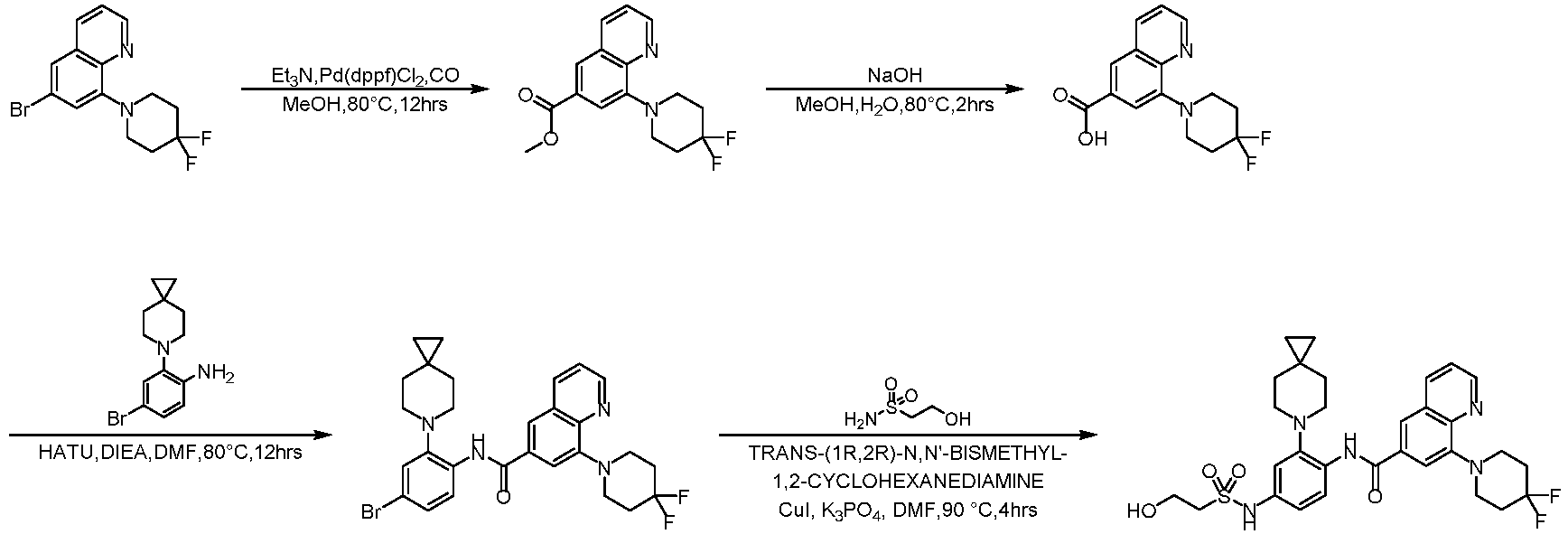
- Step 1: 1,1-bis(tert-butylphosphorus)ferrocene palladium chloride (0.69 g, 0.92 mmol) was added to a solution of 6-bromo-8-(4,4-difluoropiperidin-1-yl)quinoline (3.00 g, 9.17 mmol) and triethylamine (2.78 g, 27.5 mmol) in methanol (60 mL), and replace the reaction mixture three times with argon at ambient temperature. Then the reaction system was exchanged with carbon monoxide for three times and finally the reaction solution was stirred at 80°C for 12 h under carbon monoxide atmosphere (50 psi). The reaction mixture was added to water (200 mL) and extracted with ethyl acetate (300 mL × 2). The organic phases were combined and washed once with saturated saline (200 mL), dried over anhydrous magnesium sulfate, filtered and concentrated under reduced pressure to give a residue. The residue was purified by flash column chromatography (silica gel, 0-33% gradient of ethyl acetate/petroleum ether) to give methyl 8-(4,4-difluoropiperidin-1-yl)quinoline-6-carboxylate (2.60 g, 8.53 mmol, yield: 93%) as a white solid. LCMS (ESI): [M+H]+ = 307.1
- Step 2: Sodium hydroxide (400 mg, 9.79 mmol) was added to a mixed solution of 8-(4,4-difluoropiperidin-1-yl)quinoline-6-carboxylate (1.00 g, 3.26 mmol) in methanol (10 mL), THF (5 mL) and water (5 mL). The reactionmixture was stirred at 80°C for 2 h. Methanol and THF were removed from the reaction mixture, and the pH was adjusted of the remaining aqueous phase to about 3 with 1 M aqueous hydrochloric acid solution. The white solids precipitated from the solution was collected by filtration and dried under reduced pressure to give 8-(4,4-difluoropiperidin-1-yl)quinoline-6-carboxylic acid (0.90, 3.06 mmol, yield: 94%) as a pure white solid product. LCMS (ESI): [M+H]+ = 293.0
- Step 3: Add 2-{ 6-azaspiro[2.5]octan-6-yl }-4-bromoaniline (370 mg, 1.32 mmol) and N,N-diisopropylethylamine (464 mg, 3.59 mmol) to a solution of 8-(4,4-difluoropiperidin-1-yl)quinoline-6-carboxylic acid (350 mg, 1.20 mmol) in N,N-dimethylformamide (7 mL), add O-(7-azabenzotriazol-1-yl)-N,N,N,N-tetramethylurea hexafluorophosphonate (592 mg, 1.56 mmol) to the reaction vial, and The reactionmixture was stirred at 80°C for 12 h. Add the reaction mixture to water (20 mL) and extracted withethyl acetate (30 mL × 3). Combine the organic phases and wash once with saturated saline (30 mL), dry over anhydrous magnesium sulfate, filter and spin dry the filtrate to give a residue. Dilute the residue with ethyl acetate (20 mL), and then slowly titrate with petroleum ether until the precipitation of white solids, which are then collected by filtration to give the expected product N-(2-{6-azaspiro[2.5]octan-6-yl}-4-bromophenyl)-8-(4,4-difluoropiperidin-1-yl)quin oline-6-carboxamide (150 mg, 0.28 mmol, yield: 23%). LCMS (ESI): [M+H]+ = 556.6
- Step 4: 2-hydroxyethyl sulfonamide (50.7 mg, 0.41 mmol) and (1R,2R)-N1,N2-dimethylcyclohexane-1,2- diamine (38.8 mg, 0.27 mmol) were added successively to N,N-dimethylformamide (3.00 mL), then cuprous iodide (26.0 mg, 0.14 mmol) and potassium phosphate (223 mg, 1.08 mmol) were added successively at 25°C. The reaction system was stirred at 50°C for 5 min. Subsequently, N-(2-{6-azaspiro[2.5]octan-6-yl}-4-bromophenyl)-8-(4,4-difluoropiperidin-1-yl)quin oline-6-carboxamide (150 mg, 0.27 mmol) was added in one portion and the mixture was heated to 90°C with stirring for 4 h under nitrogen atmosphere. Liquor ammonia (5 mL) and water (15 mL) were successively added to the reaction mixture and extracted with ethyl acetate (20 mL × 3). The organic phases were combined and washed with saturated saline (20 mL × 1), dried over anhydrous magnesium sulfate, filtered and concentrated under reduced pressure to give a residue. The residue was purified by preparative HPLC (C18, 36-76% gradient of water (formic acid)/acetonitrile) to give N-(2-{6-azaspiro[2.5]octan-6-yl}-4-(2-hydroxyethanesulfonamido)phenyl)-8-(4,4-difl uoropiperidin-1-yl)quinoline-6-carboxamide (80 mg, 0.20 mmol, yield: 49%) as a yellow solid compound. LCMS (ESI): [M+H]+ = 661.2, 1H NMR (400 MHz, DMSO-d6) δ ppm 9.68 (d, J = 11.6 Hz, 2H), 9.00 (dd, J = 1.6, 4.0Hz, 1H), 8.50 (dd, J = 1.2, 8.4 Hz, 1H), 8.22 (s, 1H), 8.01 (d, J = 8.8 Hz, 1H), 7.73 - 7.61 (m, 2H), 7.14 (d, J= 2.0 Hz, 1H), 7.00 (dd, J = 2.4, 8.8 Hz, 1H), 4.92 (s, 1H), 3.76 (t, J = 6.8 Hz, 2H), 3.58 (br s, 4H), 3.25 (br t, J = 6.8 Hz, 2H), 2.88 (br d, J = 4.8 Hz, 4H), 2.32 - 2.21 (m, 4H), 1.53 (br s, 4H), 0.34 (s, 4H)
-

- Step 1: Add 4-bromo-2-{spiro[2.5]oct-5-en-6-yl}benzoyl chloride (500 mg, 1.54 mmol) and N,N-diisopropylethylamine (595 mg, 4.61 mmol) to a solution of tert-butyl N-[6-amino-4-(4,4-difluoropiperidin-1-yl)-5-fluoro-1,3-benzothiazol-2-yl]-N-[(tert-bu toxy)carbonyl]carbamate (772 mg, 1.54 mmol) in THF (10 mL), and The reactionmixture was stirred at 25°C for 12 h. Add the reaction mixture to water (60 mL) and extracted withethyl acetate (60 mL × 3). Combine the organic phases and wash once with saturated saline (40 mL), dry over anhydrous magnesium sulfate, filter and spin dry the filtrate to give a residue. The residue was purified by flash column chromatography (silica gel, 0-2% gradient of THF/petroleum ether) to give tert-butyl N-[6-(4-bromo-2-{spiro[2.5]oct-5-en-6-yl}benzoylamino)-4-(4,4-difluoropiperidin-1-yl)-5-fluoro-1,3-benzothiazol-2-yl]-N-[(tert-butoxy)carbonyl]carbamate (0.58 g, 0.74 mmol, yield: 48%) as a yellow solid. LCMS (ESI): [M+H]+ = 793.1; 1H NMR (400 MHz, DMSO-d6) δ ppm 9.96 (s, 1H), 8.07 (d, J = 6.4 Hz, 1H), 7.57 (dd, J = 1.6, 8.4 Hz, 1H), 7.50 (d, J = 1.2 Hz, 1H), 7.42 (s, 1H), 5.79 (br s, 1H), 3.40 (br d, J = 5.2 Hz, 4H), 2.39 (br s, 2H), 2.18 - 2.02 (m, 4H), 1.97 (br s, 2H), 1.55 (s, 18H), 1.42 (br t, J = 6.0 Hz, 2H), 0.32 - 0.11 (m, 4H)
- Step 2: 2-di-tert-butylphosphine-2',4',6'-triisopropylbiphenyl (53.6 mg, 0.13 mmol), potassium phosphate (410 mg, 1.89 mmol), and tris(dibenzylideneacetone) dipalladium (59.1 mg, 0.06 mmol) were successively added to a solution of tert-butyl N-[6-(4-bromo-2-{spiro[2.5]oct-5-en-6-yl}benzoylamino)-4-(4,4-difluoropiperidin-1-yl)-5-fluoro-1,3-benzothiazol-2-yl]-N-[(tert-butoxy)carbonyl]carbamate (500 mg, 0.63 mmol) and ethyl 2-sulfamoylpropyl ester (172 mg, 0.95 mmol) in dioxane (10 mL). The reaction solution was exchanged with nitrogen for three times, then heated to 80°C under nitrogen atmosphere and stirred for 4 h. The reaction solution was cooled to ambient temperature and extracted with water (50 mL) and ethyl acetate (80 mL × 3). The organic phases were combined and washed with saturated saline (50 mL), dried over anhydrous magnesium sulfate, filtered and concentrated under reduced pressure to give a residue. The residue was purified by flash column chromatography (silica gel, 0-18% gradient of THF/petroleum ether) to give ethyl 2-({4-[(2-{bis[(tert-butoxy)carbonyl]amino}-4-(4,4-difluoropiperidin-1-yl)-5-fluoro-1, 3-benzothiazol-6-yl)aminocarbonyl]-3-{spiro[2.5]oct-5-en-6-yl}phenyl}sulfamoyl)pr opyl ester (400 mg, 0.45 mmol, yield: 71%) as a yellow solid. LCMS (ESI): [M+H]+ = 892.2
- Step 3: Trifluoroacetic acid (2 mL) was added to a solution of ethyl 2-({4-[(2-{bis[(tert-butoxy)carbonyl]amino}-4-(4,4-difluoropiperidin-1-yl)-5-fluoro-1, 3-benzothiazol-6-yl)aminocarbonyl]-3-{spiro[2.5]oct-5-en-6-yl}phenyl}sulfamoyl)pr opyl ester (0.40 g, 0.45 mmol) in dichloromethane (10 mL). The mixture was stirred at 25°C for 2 h. The reaction solution was poured into water (40 mL), the pH was adjusted to 7 by adding 10% aqueous sodium bicarbonate solution (50 mL), and extracted with ethyl acetate (100 mL×3). The combined organic layer was dried over anhydrous magnesium sulfate, filtered and concentrated under reduced pressure to give ethyl 2-(N-(4-((2-amino-4-(4,4-difluoropiperidin-1-yl)-5-fluorobenzo[d]thiazol-6-yl)amino carbonyl)-3-(spiro[2.5]oct-5-en-6-yl)phenyl)sulfamoyl)propyl ester (0.37 g, 0.43 mmol, yield: 95%) as a yellow crude solid. LCMS (ESI): [M+H]+ = 692.2
- Step 4: Ethyl 2-(N-(4-((2-amino-4-(4,4-difluoropiperidin-1-yl)-5-fluorobenzo[d]thiazol-6-yl)amino carbonyl)-3-(spiro[2.5]oct-5-en-6-yl)phenyl)sulfamoyl)propyl ester (350 mg, 0.51 mmol) was added to a solution of THF (8 mL), lithium tetrahydridoaluminate (36.1 mg, 1.01 mmol) was added portionwise at 0°C, and The mixture was stirred at 0-25°C for 1 h. The reaction solution was quenched with water (0.05 mL) and 10% aqueous sodium hydroxide solution (0.1 mL), then filtered and concentrated under reduced pressure to give a residue. The residue was purified by preparative HPLC (C18, 24-64% gradient of water (liquor ammonia and ammonium bicarbonate)/acetonitrile) to give N-(2-amino-4-(4,4-difluoropiperidin-1-yl)-5-fluorobenzo[d]thiazol-6-yl)-4-((2-hydrox y-1-methylethyl)sulfonamido)-2-(spiro[2.5]oct-5-en-6-yl) benzamide (60 mg, 0.09 mmol, yield: 18%) as a white solid compound. LCMS (ESI): [M+H]+ = 650.1; 1H NMR (400 MHz, DMSO-d6) δ ppm 10.18 - 9.80 (m, 1H), 9.52 (s, 1H), 7.70 (d, J = 6.8 Hz, 1H), 7.55 (s, 2H), 7.45 (d, J = 8.4 z, 1H), 7.19 (dd, J = 2.0, 8.4 Hz, 1H), 7.09 (d, J = 2.0 Hz, 1H), 5.75 (br s, 1H), 5.25 - 4.74 (m, 1H), 3.85 (dd, J = 4.4, 11.2 Hz, 1H), 3.46 (dd, J = 8.0, 10.8 Hz, 1H), 3.39 - 3.34 (m, 4H), 3.20 (dt, J = 4.4, 7.2 Hz, 1H), 2.33 (br s, 2H), 2.18 - 2.03 (m, 4H), 1.99 (br s, 2H), 1.42 (br t, J = 5.6 Hz, 2H), 1.29 (d, J = 6.8 Hz, 3H), 0.37 - 0.17 (m, 4H)
-
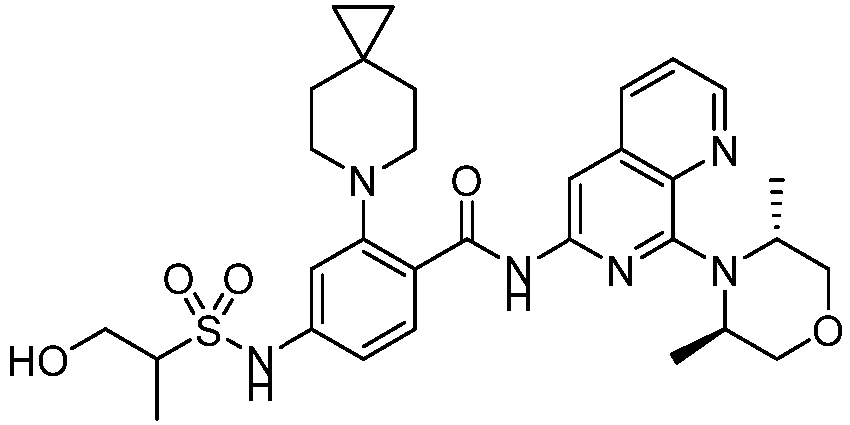
- The preparations in Example 102 follow the synthetic route of Example 94: LCMS (ESI): [M+H]+ = 609.3; 1H NMR (400 MHz, DMSO) δ 12.97 (s, 1H), 10.21 (s, 1H), 8.77 (dd, J = 4.1, 1.7 Hz, 1H), 8.34-8.24 (m, 2H), 8.10 (d, J = 8.6 Hz, 1H), 7.64 (dd, J = 8.4, 4.1 Hz, 1H), 7.31 (d, J = 2.2 Hz, 1H), 7.17 (dd, J = 8.6, 2.2 Hz, 1H), 5.02 (s, 1H), 4.44 (s, 2H), 3.96 (dd, J = 11.1, 3.4 Hz, 2H), 3.85 (dd, J = 11.3, 4.3 Hz, 1H), 3.62-3.46 (m, 3H), 3.29 (t, J = 7.9 Hz, 1H), 3.02 (d, J = 29.5 Hz, 4H), 2.11-1.38 (m, 4H), 1.30 (dd, J = 6.8, 1.7 Hz, 3H), 0.98 (d, J = 6.2 Hz, 6H), 0.42 (s, 4H).
- Materials: Human KIF18A (amino acid sequence 1-417) was purchased from Viva Biotech (Shanghai) Ltd.; the ADP-Glo™ protein kinase kit was acquired from Promega, USA; tubulin was sourced from Cytoskeleton, USA; and the 384-well assay plate and Envision multifunctional microplate reader were obtained from PerkinElmer, USA.
- Enzymatic Activity Test: Dissolve the compound powder in DMSO to prepare a stock solution of 10 mM. Then perform gradient dilution for the compounds in the microplate to achieve a final concentration of 0-10 µM. Then, add 2.5 µL each of tubulin, compound, ATP, and KIF18A protein to the microplate in sequence for reaction at ambient temperature for 120 min. The final concentrations in the enzyme reaction are 60 µg/mL for microtubules, 25 µM for ATP, and 2.5 nM for KIF18A protein. After the enzyme reaction, add 10 µL of ADP-GLO reaction reagent to each well and incubate at ambient temperature for 30 min. After that, add 20 µL of detection reagent to each well and incubate at ambient temperature for 30 min in the dark. Finally, perform chemiluminescence detection using the PerkinElmer Envision.
Table 1: Enzymatic Activity Biological Data for Compounds of the Present Invention Example KIF18A_nM Example KIF18A_nM Example KIF18A_nM 1 190 35 29 69 1034 2 251 36 39 70 43 3 68 37 121 71 128 4 29 38 131 72 >3000 5 28 39 38 73 >3000 6 241 40 32 74 >3000 7 100 41 38 75 387 8 280 42 213 76 46 9 49 43 28.7 77 848 10 2755 44 105 78 193 11 191 45 28 79 943 12 80 46 39 80 9 13 27 47 39 81 35 14 32 48 108 82 33 15 205 49 1220 83 27 16 29 50 1490 84 40 17 28 51 455 85 >3000 18 12 52 149 86 223 19 13 53 94 87 10 20 218 54 27 88 41 21 38 55 250 89 179 22 1936 56 34 90 341 23 42 57 77 91 173 24 7 58 32 92 2258 25 5 59 38 93 >3000 26 31 60 66 94 255 27 13 61 15 95 242 28 46 62 28 96 153 29 28 63 35 97 153 30 27 64 116 98 166 31 71 65 232 99 174 32 8 66 23 100 24 33 1637 67 53 101 139 34 63 68 306 102 150 - Materials and Cells: OVCAR3 cells were purchased from Nanjing Cobioer Biosciences Co., Ltd. RPMI-1640 medium, fetal bovine serum, and the CyQUANT Direct Cell Proliferation Assay kit were purchased from Thermo Fisher Scientific, USA; 96-well cell culture plates were sourced from Coming, USA.
- Cell Culture: Culture OVCAR3 cells with RPMI-1640 medium containing 10% fetal bovine serum and incubate them in a 5% CO2 incubator at 37°C. Only cells in the logarithmic growth phase can be used for the test.
- Inoculate OVCAR3 cells into a 96-well cell culture plate at 90 µL per well and incubate overnight in a 5% CO2 incubator at 37°C. Dissolve the compound powder in DMSO to prepare a stock solution of 10 mM. Then perform gradient dilution for the compounds in the microplate to achieve a final concentration of 0-10 µM. Add 10 µL of cell culture medium containing compounds to each well to make the final DMSO content 0.2%. Incubate the cell plates in a 5% CO2 incubator at 37°C for 3 days. Add 100 µL of CyQUANT detection reagent to each well, react at 37°C for 60 min, and perform fluorescence detection using the PerkinElmer Envision.
Table 2: OVCAR-3 Cell Viability Biological Data for Compounds of the Present Invention Example OVCAR-3 _IC50_nM Example OVCAR-3 _IC50_nM Example OVCAR-3 _IC50_nM 1 1027 34 166 67 7 2 899 35 27 68 119 3 566 36 64 69 1038 4 1348 37 121 70 9 5 6 38 NT 71 18 6 1485 39 15 72 >3000 7 >10000 40 12 73 1028 8 >3000 41 4 74 1526 9 55 42 7 75 83 10 614 43 7 76 34 11 28 44 21 77 745 12 80 45 18 78 12 13 9 46 12 79 47 14 9 47 48 80 18 15 71 48 236 81 18 16 33 49 1342 82 13 17 20 50 NT 83 15 18 16 51 385 84 11 19 18 52 83 86 34 20 18 53 4 87 >3000 21 358 54 6 88 154 22 NT 55 112 89 32 23 >10000 56 12 90 96 24 20 57 NT 91 13 25 46 58 12 92 NT 26 592 59 14 93 NT 27 23 60 18 94 5.9 28 26 61 74 95 4.7 29 13 62 13 96 11.3 30 7 63 11 97 13.9 31 8 64 76 98 17 32 347 65 420 99 17 33 NT 66 35 100 11 NT means no test - Materials and Cells: HT29 cells were purchased from Nanjing Cobioer Biosciences Co., Ltd.; RPMI-1640 medium, fetal bovine serum, Trypsin-EDTA (0.25%), 96-well plates, and CyQuant reagents were purchased from ThermoFisher (USA); DMSO was purchased from SIGMA (USA).
- Cell Culture: Culture HT29 cells with RPMI-1640 containing 10% fetal bovine serum under the condition of 37°C and 5% CO2. Only cells in the logarithmic growth phase can be used for the test.
- Cell Proliferation Activity Test: Use the CyQuant reagent to detect the proliferation inhibitory activity of compounds on HT29 cells. Adjust the cell density and inoculate 100 µL per well into the 96-well plate (HT29 at 2000 cells per well), then incubate overnight under the condition of 37°C and 5% CO2. Add compounds of various target concentrations (initial concentration of 3000 nM, 3-fold dilution, 9 concentration gradients), and make the DMSO content 0.2%. Incubate the cell plates at 37°C and 5% CO2 for 3 days. Incubate with CyQuant reagent for 1 h, read the plate by Envision, and calculate IC50 using XLFIT.
Table 3: HT-29 Cell Viability Biological Data for Compounds of the Present Invention Example HT29 _IC50_nM Example HT29 _IC50_nM Example HT29 _IC50_nM 1 NT 36 62 71 17 2 NT 37 25 72 >3000 3 NT 38 126 73 1411 4 2016 39 18 74 1793 5 7 40 10 75 44 6 NT 41 4 76 31 7 >10,000 42 17 77 NT 8 >3000 43 17 78 11 9 37 44 26 79 55 10 1267 45 31 80 20 11 28 46 14 81 8 12 102 47 40 82 14 13 13 48 360 83 NT 14 17 49 1426 84 25 15 97 50 NT 85 NT 16 56 51 387 86 56 17 30 52 92 87 >3,000 18 35 53 6 88 425 19 28 54 18 89 32 20 23 55 89 90 106 21 NT 56 13 91 16 22 NT 57 NT 92 NT 23 NT 58 17 93 NT 24 26 59 22 94 NT 25 84 60 13 95 NT 26 >3000 61 111 96 17 27 33 62 12 97 17 28 9 63 15 98 21 29 11 64 82 99 22 30 10 65 372 100 12 31 9 66 80 32 927 67 13 33 NT 68 100 34 446 69 1106 35 57 70 16 NT means no test - Materials: One donor for cytotoxicity testing. Information on human primary hepatocytes is provided in the table below.
Donor Race Source 1 Caucasian BioIVT Note: Hepatocytes of other races may be used, and specific information will be reflected in the test report. 1) CellTiter-Glo Luminescent Cell Viability Assay System was purchased from Promega (Madison, WI). - Instruments:
Instruments Supplier Cat# or Model 96-well plate Corning 354407 Centrifuge Eppendorf 5804R&5810R CO2 incubator Thermo Scientific 371 Cell counter Nexcelom Bioscience LLC Cellmeter K2 Oscillator IKA MS3 BASIC Microplate reader TECAN INFINITE 200 PRO - Warm the following media to 37°C in a water bath: Prepare hepatocyte recovery medium, inoculation medium, and incubation medium according to the table below.
-
Reagent Initial Concentration Final Concentration Volume Williams' Medium E - - 31.2 mL Isotonic Percoll - 30% 13.5 mL DPBS (10×) - - 1.5 mL GlutaMAX™-1 (100×) 200 mM/100× 2 mM 500 µL HEPES 1 M 15 mM 750 µL FBS - 5% 2.5 mL Human recombination insulin 4 mg/mL 4 µg/mL 50 µL Dexamethasone 10 mM 1 µM 5 µL -
Reagent Initial Concentration Final Concentration Volume Williams' Medium E - - 45.7 mL FBS - 5% 2.5 mL Dexamethasone 10 mM 1 µM 5 µL Penicillin-streptomycin mixed solution Penicillin: 10,000 u/mL Penicillin: 100 u/mL 500 µL Streptomycin: 10,000 µg/mL Streptomycin: 100 µg/mL Human recombination insulin 4 mg/mL 4 µg/mL 50 µL GlutaMAX™-1 (100×) 200 mM/100× 2 mM 500 µL HEPES 1 M 15 mM 750 µL -
Reagent Initial Concentration Final Concentration Volume Williams' Medium E 48 mL Dexamethasone 10mM 0.1 µM 0.5 µL ITS (100×) 500 µL Penicillin-streptomycin mixed solution Penicillin: 10,000 u/mL Penicillin: 50 u/mL 250 µL Streptomycin: 10,000 µg/mL Streptomycin: 50 µg/mL GlutaMAX™-1 (100×) 200 mM/100× 2 mM 500 µL HEPES 1 M 15 mM 750 µL 1) Take one tube of cryopreserved hepatocytes and ensure that the hepatocytes are cryogenically frozen until recovery. Quickly place the hepatocytes in a 37°C water bath and gently shake until all ice crystals are completely dispersed, spray with 75% ethanol and transfer to a biosafety cabinet.
2) Transfer the contents of the hepatocyte tube (1 mL, approximately 5 × 10⁶ cells) into a 50 mL centrifuge tube containing 50 mL of recovery medium and centrifuge at 100 g for 10 min. After centrifugation, aspirate the recovery medium and add sufficient inoculation medium to obtain a cell suspension with a cell density of approximately 1.0 × 10⁶ cells/mL. Count hepatocytes and determine viable cell density with the cell counter Cellometer®. Make sure that the viability of hepatocytes is greater than 80%. Adjust the cell density to 0.2 × 10⁶ cells/mL with inoculation medium, and inoculate into 96-well plates coated with collagen I at 100 µL per well. Incubate the plates at 37°C for 4-6 h in a 5% CO2 incubator with 95% relative humidity.
3) Prepare a 200X stock solution of the test compound in DMSO (the stock concentration of the test compound can be reduced depending on solubility). Make the final concentration of DMSO 0.5%
4) Prepare the working solutions on sterile 96-well plates by adding 2.5 µL of the test compound stock solution to 497.5 µL of hepatocyte culture medium.
5) Remove the hepatocyte culture medium from the cell plate, and add 125 µL of working solution to the corresponding wells in triplicate. Incubate the plate at 37°C and 5% CO2 for 72 h. After every 24 h of treatment, replace the medium in cell plates with freshly diluted test and positive control compounds from hepatocyte culture media. Return the plate to the incubator, and add 50 µL of CellTiter-Glo reagent directly into each well of the 96-well plate. Shake on a shaker for 10 min at ambient temperature. After 10 min, transfer 100 µL of the above incubation to a new white and opaque flat-bottom 96-well plate and record the fluorescence. - All calculations are performed using Microsoft Excel.
- The viability of the test compound can be calculated using the following formula:

- The % Vehicle is fitted to the concentration of the test compound, and then GraphPad Prism 5.0 is used to model the data as a sigmoidal dose-response curve with a variable slope. The IC50 of this compound is calculated from the curve using the following formula

- Cells: Donor information: Male, Caucasian, 36 years old (Lot No. NFX, BioIVT)
-
Instruments Brand Cat. No./Model 96-well ultra-low Corning 4515 adsorption culture plate Centrifuge Eppendorf 5804R Cell incubator Thermo Scientific 371 Cell counter Invitrogen Countess II Oscillator IKA MS 3 Microplate reader Tecan Infinite M200 -
- 1) Take one tube of cryopreserved hepatocytes and ensure that the hepatocytes are cryogenically frozen until recovery. Quickly place the hepatocytes in a 37°C water bath and gently shake until all ice crystals are completely dispersed, spray with 70% ethanol and transfer to a biosafety cabinet.
- 2) Transfer the contents of the hepatocyte tube into a 50 mL centrifuge tube containing 50 mL of recovery medium and centrifuge at 100 g for 3 min. After centrifugation, aspirate the recovery medium and add sufficient incubation medium to obtain a cell suspension with a cell density of approximately 1.0 × 10⁶ cells/mL.
- 3) Count hepatocytes and determine viable cell density with Cellometer Vision. Make sure that the viability of hepatocytes is greater than 80%. Adjust the cell density to 4000 cells/well with inoculation medium, and inoculate 100 µL per well.
- 4) Incubate in a cell incubator at 37°C for 7-9 days until microspheres are formed.
-
- 1) Dilute the compound with the cell culture medium according to the three-fold dilution method, and the dilution gradient is shown in the table below. The maximum concentration of the control compound is 200 µM, the maximum concentration of the test compound (according to customer requirement) is 5 µM and the final concentration of DMSO is 0.1%.
- 2) Perform administration after the microspheres are formed. Aspirate the medium in the cell culture plate wells and add 100 µL of the compound working solution before each administration. Perform administration every three days until the fourteenth day after microsphere formation.
-
- 1) After 14 days of culture, remove the cell culture plates from the incubator and transfer 80 µL of supernatant to determine the albumin and lactate dehydrogenase content.
- 2) Thaw CellTiter-Fluor™ Cell Viability Kit at ambient temperature, add 10 µL of GF-AFC substrate to 10 mL of 2× working solution, and dilute into 1× working solution with an equal volume of PBS.
- 3) Add 100 µL of working solution to each well of the cell culture plate and incubate at 37°C for 30 min, then pipette 80 µL of supernatant into a 96-well black plate and detect the absorbance at an excitation wavelength of 400 nm and an emission wavelength of 505 nm.
-
- 1) The cell viability (% Vehicle) is calculated using the following formula:

- 2) The IC50 is calculated using GraphPad Prism 8.0.2 with the following software calculation formula:

Claims (21)
- A compound having the structure of formula (I), or its pharmaceutically acceptable salts, stereoisomers, isotope isomers, prodrugs, hydrates, or solvates:
 wherein, W1 represents CRW1 or N;wherein, W2 represents CRW2 or N;wherein, Z represents -CRTRT' or - NRSRS';wherein, RT and RT', together with the C atom they are attached to, form a ring having a structure selected from the following:
 wherein, RS and RS', together with the N atom they are attached to, form a ring having a structure selected from the following:
 wherein, Y1, Y2 and Y3 each independently represent -(CRaRb)o-(NRa)p-(CRa'Rb')q-;wherein, A and B each independently represent -(CRaRb)m-;Wherein L1 represents -C(O)NH-, -HNC(O)-, 5-6 membered heteroaryl,
 wherein, L2 represents absence, -C1-C6 alkylene-, -NRa-, -NRa(C1-C6 alkylene)-, -C(O)NRa(C1-C6 alkylene)-, -O-, -O-(C1-C6 alkylene), -S-, -S(O)-, -S(O)2-, -S(O)2NRa- or -S(O)(NRa)-;wherein, R1 represents L3-R3;wherein, R2 represents hydrogen, halogen, cyano, nitro, hydroxy C1-C6 alkyl, C1-C6 alkyl, C3-C8 cycloalkyl, C1-C6 haloalkyl, -ORa, -SO3Ra, -SRa, -SF5, -S(O)Ra, -O- C1-C6 haloalkyl or -NRaRb;wherein, L3 represents absence, C1-C6 alkylene, -NRa-, -NRaSO2-, -SO2NRa-, -S(=O)(NRa)-, -P(O)(ORa)2, -NRaP(O)(ORa)2 or -NRaP(O)(Ra)2;wherein, R3 represents absence, hydrogen, or C1-C6 alkyl or C3-C6 cycloalkyl substituted with 0-3 substituents selected from halogen, -ORa, -NRaRb, cyano and -O- C1-C6 haloalkyl;wherein, RW1 and RW2 each independently represent hydrogen, halogen, cyano, nitro, hydroxy C1-C6 alkyl, C1-C6 alkyl, C3-C8 cycloalkyl, C1-C6 haloalkyl, -ORa, -SO3Ra, -S(O)Ra, -O- C1-C6 haloalkyl, -SRa, -SF5 or -NRaRb;Wherein Cy1 represents groups with the following structure;





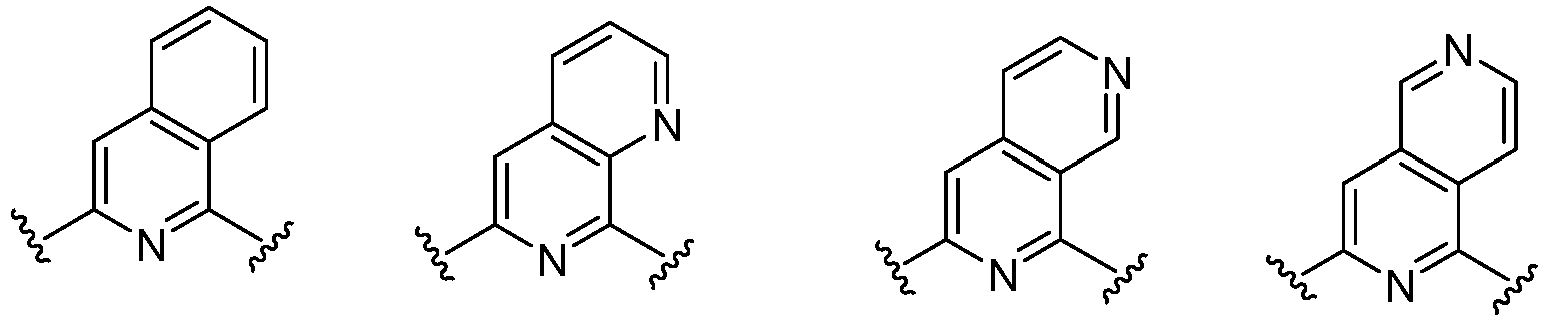






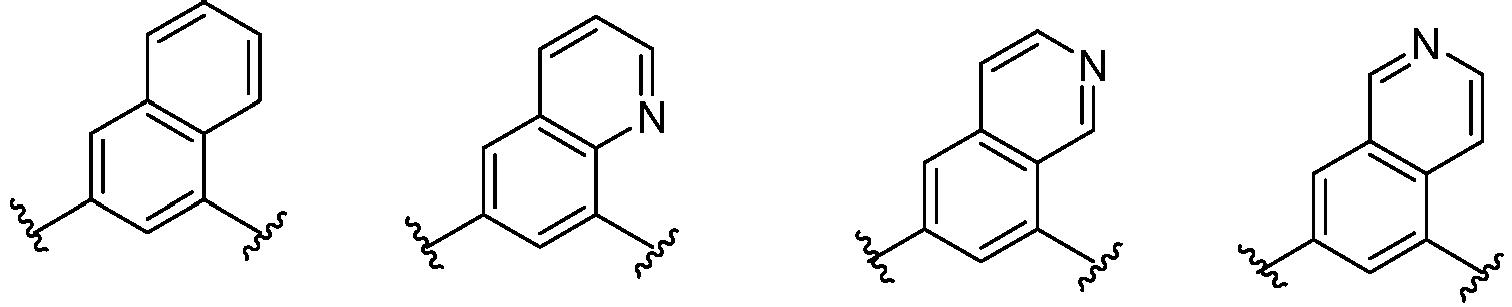

















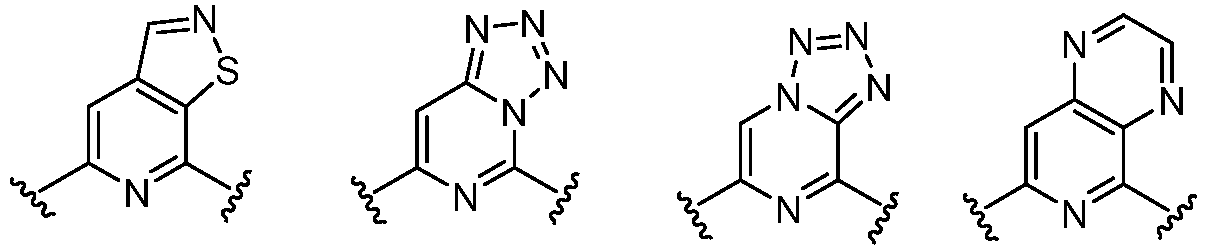
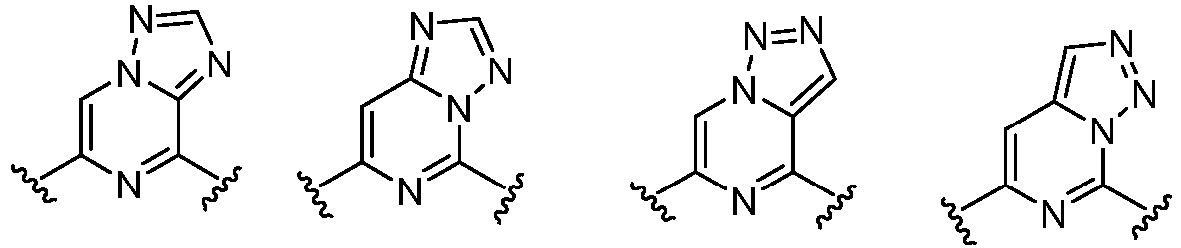





 The Cy1 may be optionally substituted with 0-3 substituents selected from the following: halogen, C1-C6 alkyl, C1-C6 haloalkyl, hydroxy C1-C6 alkyl, ORa, -O-C1-C6 haloalkyl, 5-6-membered heteroaryl, phenyl, -SRa, -SF5, cyano, nitro, -NRaRb, -NRaC(O)Rb, -C(O)NRaRb, -OC(O)Ra, -C(O)Ra, -P(O)RaRb, -C(O)ORa, -S(O)Ra, -S(O)2Ra, and -S(O)2NRaRb;wherein, Cy2 represents a 3-12-membered saturated or unsaturated monocyclic or bicyclic ring which may optionally contain 0-3 heteroatoms selected from O, N and S; the Cy2 may be optionally substituted with 0-3 substituents selected from the following: halogen, C1-C6 alkyl, C1-C6 haloalkyl, hydroxy C1-C6 alkyl, -ORa, -O- C1-C6 haloalkyl, -SRa, -SF5, cyano, nitro, -NRaRb, -NRaC(O)Rb, -C(O)NRaRb, -OC(O)Ra, -C(O)ORa, -S(O)Ra, -S(O)2Ra and -S(O)2NRaRb;wherein, Ra, Rb, Ra' and Rb' each independently represent hydrogen, halogen,C1-C6 alkyl, C3-C6 cycloalkyl, C1-C6 haloalkyl or hydroxy C1-C6 alkyl; or Ra and Rb, together with the atom they are attached to, form a 3-6-membered saturated or unsaturated ring which may optionally contain 0-2 heteroatoms selected from O, S and N; or Ra' and Rb', together with the atom they are attached to, form a 3-6-membered saturated or unsaturated ring which may optionally contain 0-2 heteroatoms selected from O, S and N;wherein, the dashed line represents a single or double bond;wherein, m, o, p and q represent integers from 0 to 3.
 - A compound according to claim 1 or its pharmaceutically acceptable salts, stereoisomers, isotope isomers, prodrugs, hydrates, or solvates, wherein W1 represents CH or N.
- A compound according to claim 1 or claim 2, or its pharmaceutically acceptable salts, stereoisomers, isotope isomers, prodrugs, hydrates, or solvates, wherein W2 represents CH or N.
- A compound according to any one of claims 1-3 or its pharmaceutically acceptable salts, stereoisomers, isotope isomers, prodrugs, hydrates, or solvates, wherein L3 represents -NRaSO2-, -SO2NRa- or -S(=O)(NRa)-.
- A compound according to any one of claims 1-4 or its pharmaceutically acceptable salts, stereoisomers, isotope isomers, prodrugs, hydrates, or solvates, wherein L3 represents -NRaSO2-.
- A compound according to any one of claims 1-5 or its pharmaceutically acceptable salts, stereoisomers, isotope isomers, prodrugs, hydrates, or solvates, wherein R3 represents hydrogen, or C1-C6 alkyl or C3-C6 cycloalkyl substituted with 0-3 substituents selected from halogen, -ORa, -NRaRb, cyano and -O-halo C1-C6 alkyl.
- A compound according to any one of claims 1-6 or its pharmaceutically acceptable salts, stereoisomers, isotope isomers, prodrugs, hydrates, or solvates, wherein R3 represents C1-C6 alkyl substituted with 0-3 substituents selected from halogen, -ORa, -NRaRb, cyano and -O-halo C1-C6 alkyl.
- A compound according to any one of claims 1-7 or its pharmaceutically acceptable salts, stereoisomers, isotope isomers, prodrugs, hydrates, or solvates, wherein Z represents -NRSRS'.
- A compound according to any one of claims 1-8 or its pharmaceutically acceptable salts, stereoisomers, isotope isomers, prodrugs, hydrates, or solvates, wherein Z represents:
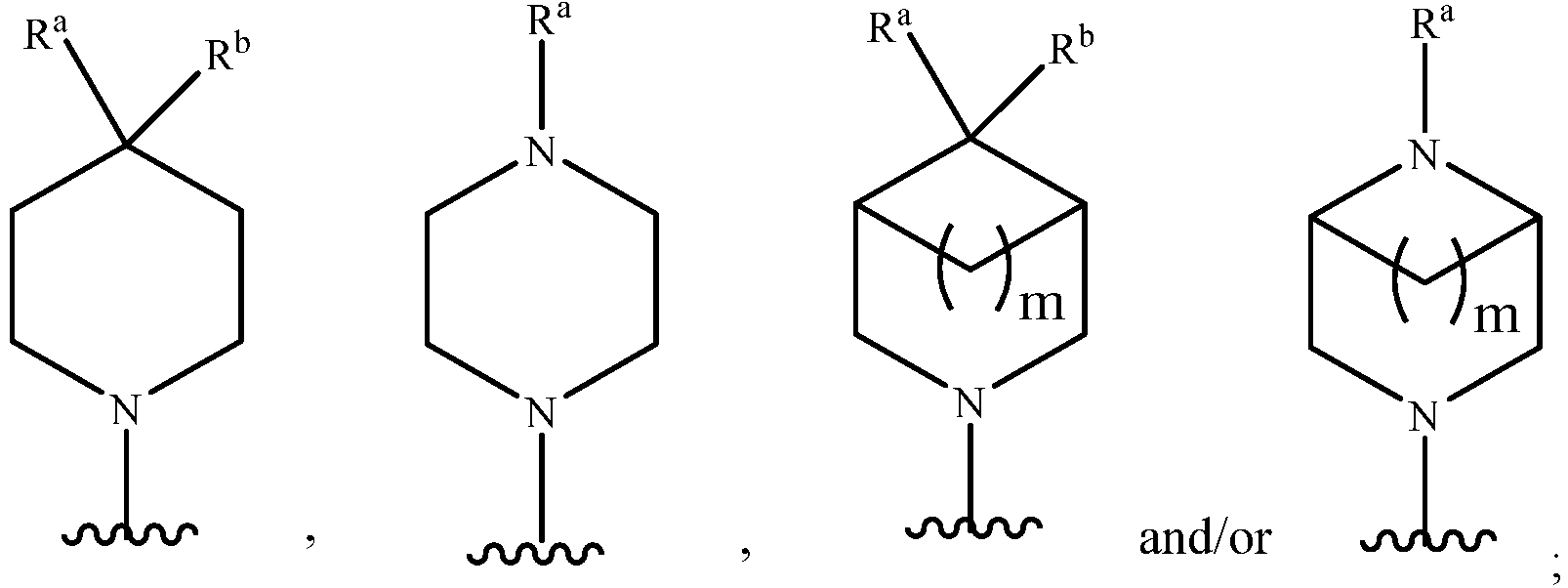
- A compound according to any one of claims 1-9 or its pharmaceutically acceptable salts, stereoisomers, isotope isomers, prodrugs, hydrates, or solvates, wherein, Z represents:
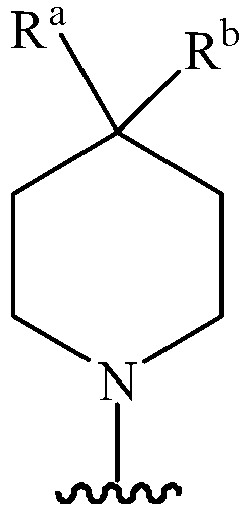
- A compound according to any one of claims 1-10 or its pharmaceutically acceptable salts, stereoisomers, isotope isomers, prodrugs, hydrates, or solvates, wherein Z represents:
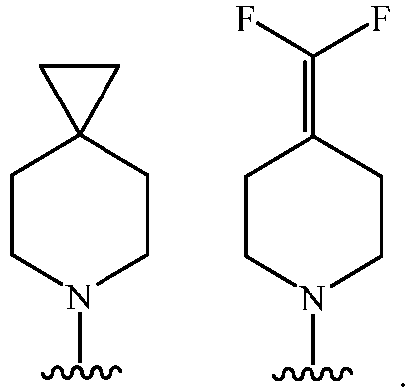
- A compound according to any one of claims 1-11 or its pharmaceutically acceptable salts, stereoisomers, isotope isomers, prodrugs, hydrates, or solvates, wherein L1 represents: -C(O)NH-, -HNC(O)-, 5-6-membered heteroaryl,
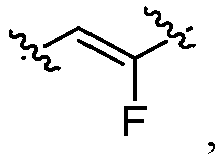

- A compound according to any one of claims 1-12 or its pharmaceutically acceptable salts, stereoisomers, isotope isomers, prodrugs, hydrates, or solvates, wherein L1 represents -C(O)NH-.
- A compound according to claim 13 or its pharmaceutically acceptable salts, stereoisomers, isotope isomers, prodrugs, hydrates, or solvates, wherein Cy1 represents the following groups:







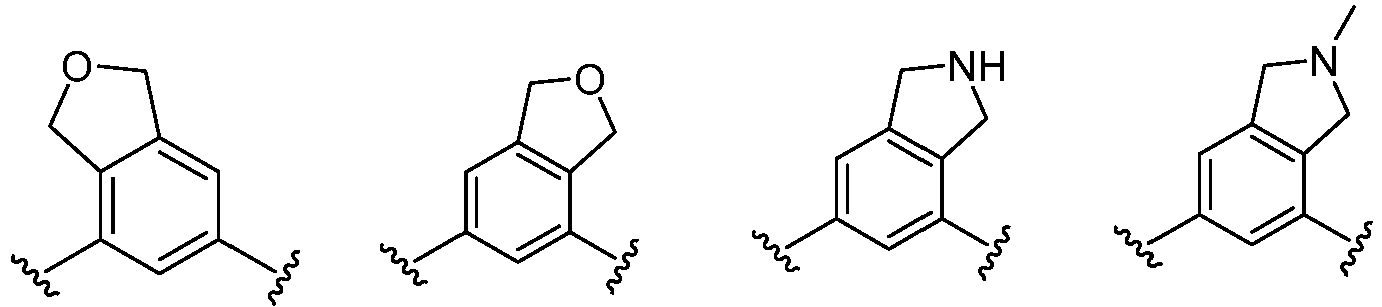
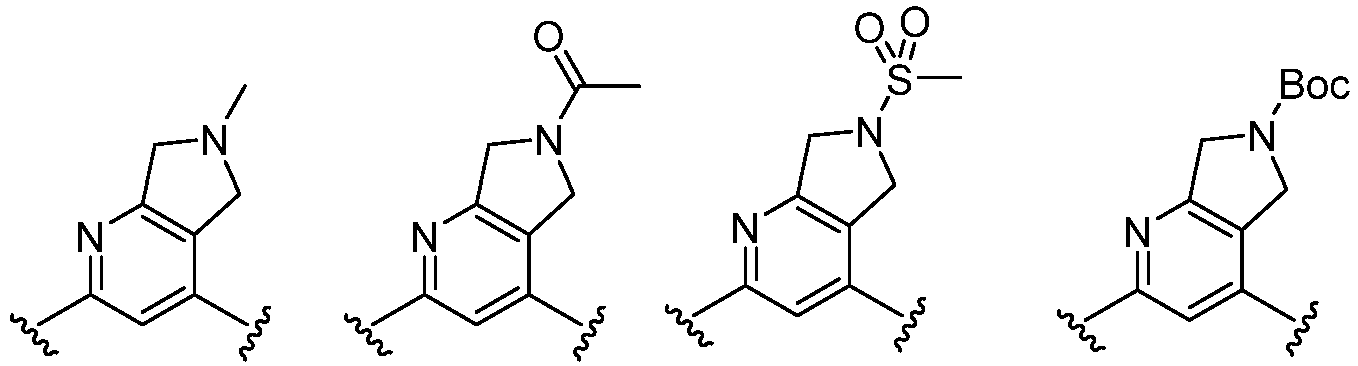





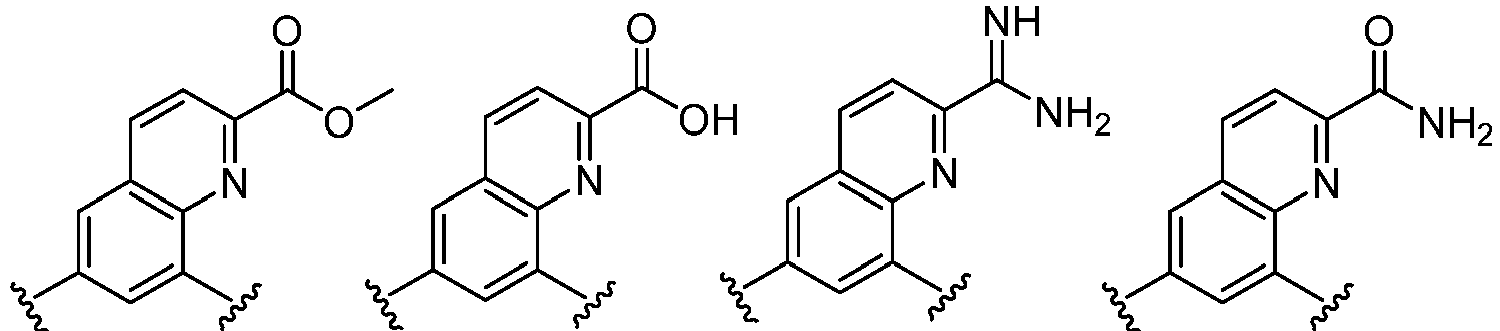

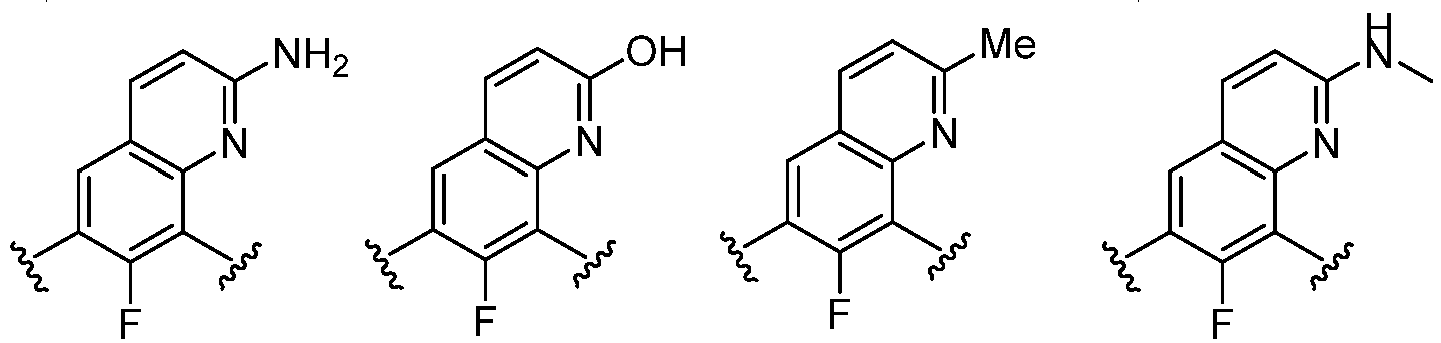
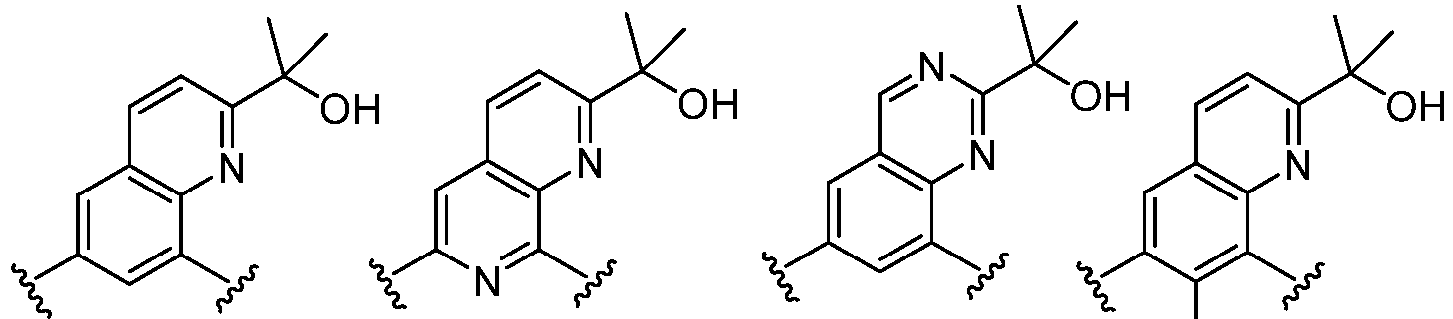

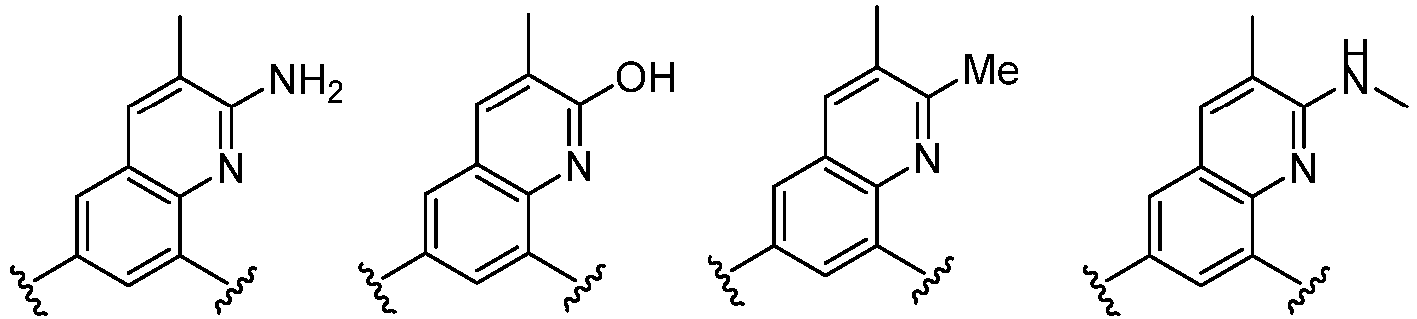
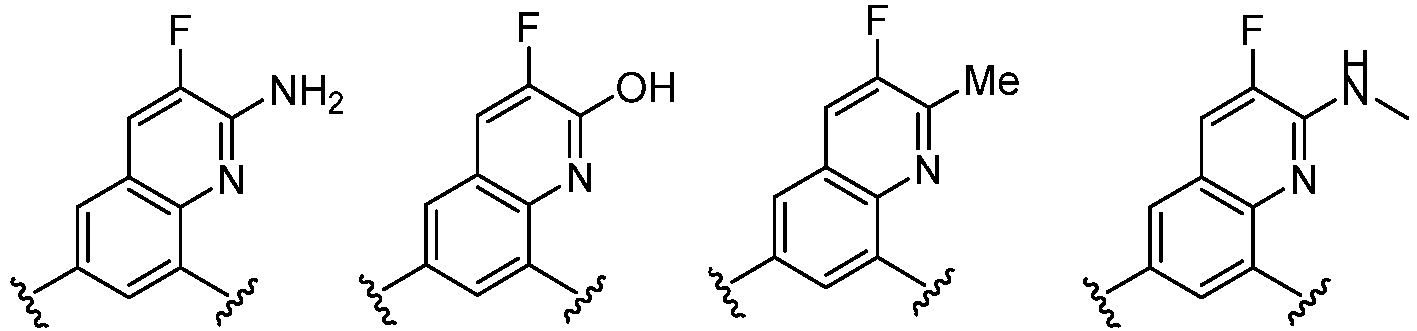
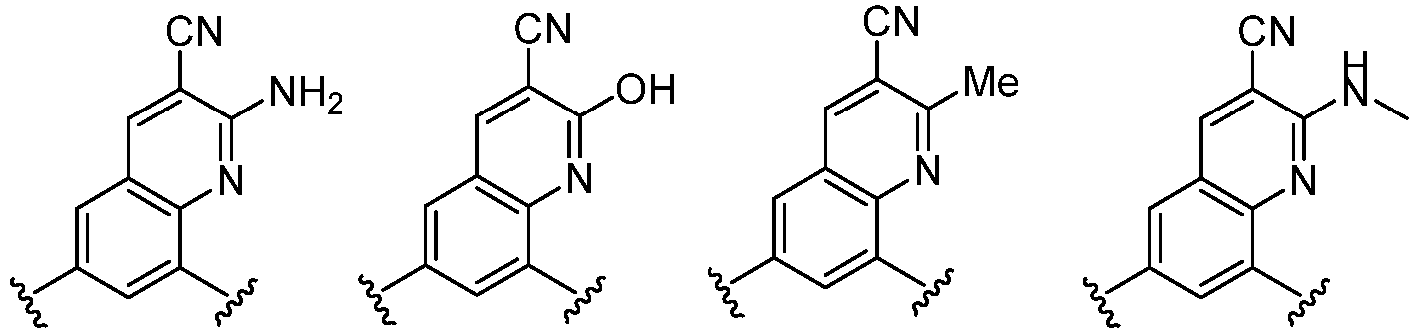



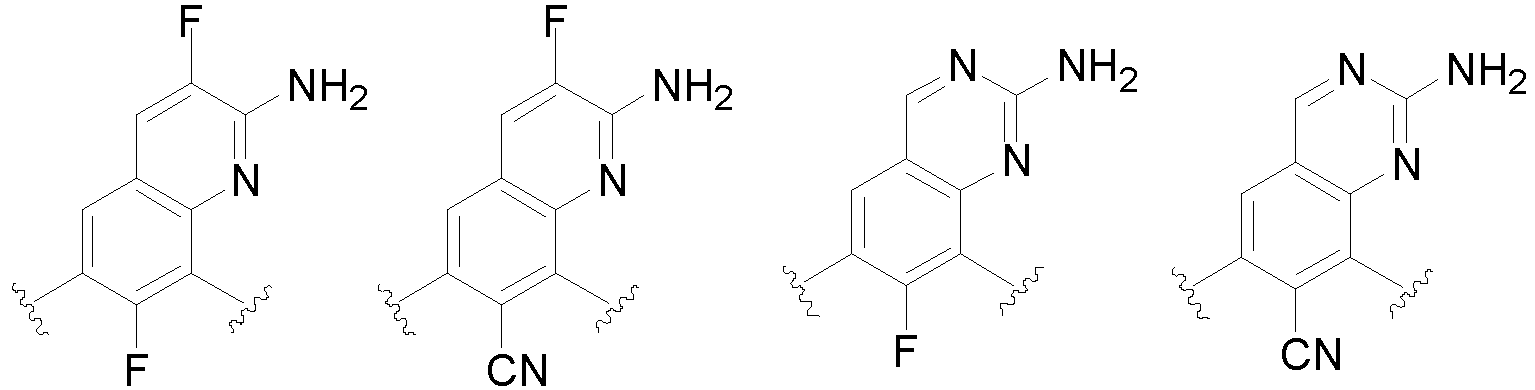
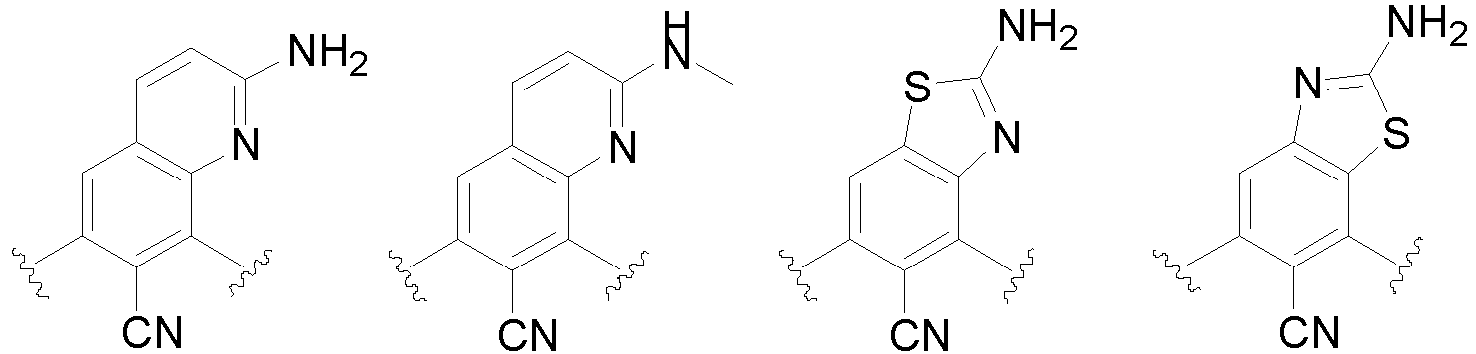
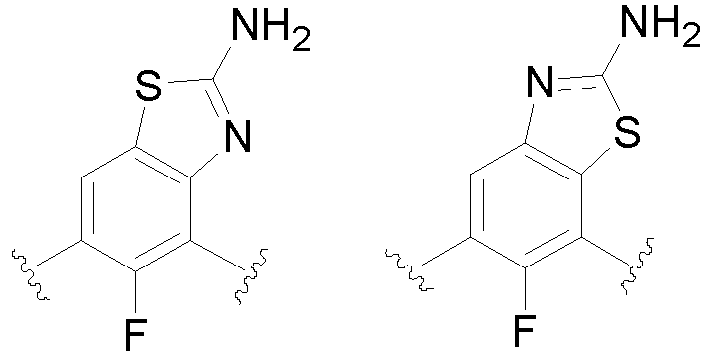
- A compound according to any one of claims 1-14 or its pharmaceutically acceptable salts, stereoisomers, isotope isomers, prodrugs, hydrates, or solvates, wherein L1 represents: -C(O)NH-, -HNC(O)-, 5-6-membered heteroaryl,

- A compound according to claim 15 or its pharmaceutically acceptable salts, stereoisomers, isotope isomers, prodrugs, hydrates, or solvates, wherein L1 represents any one of the following groups:






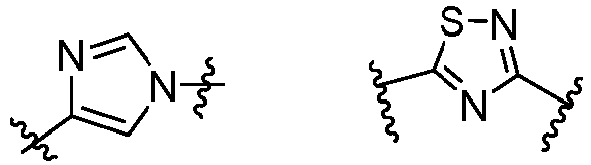
- A compound according to any one of claims 1-16 or its pharmaceutically acceptable salts, stereoisomers, isotope isomers, prodrugs, hydrates, or solvates, wherein L2 represents absence, -C1-C6 alkylene- or -NH-.
- A compound according to any one of claims 1-17 or its pharmaceutically acceptable salts, stereoisomers, isotope isomers, prodrugs, hydrates, or solvates, wherein L2 represents absence.
- A compound according to any one of claims 1-18 or its pharmaceutically acceptable salts, stereoisomers, isotope isomers, prodrugs, hydrates, or solvates, wherein Cy2 represents a saturated, partially saturated or unsaturated 3-, 4-, 5-, 6-, 7-membered monocyclic ring, or a 3-, 4-, 5-, 6-, 7-membered fused ring, which contains 0-3 N heteroatoms and 0-2 O or S heteroatoms and is substituted with 0-3 substituents selected from the following: halogen, cyano, nitro, hydroxy C1-C6 alkyl, C1-C6 alkyl, C3-C8 cycloalkyl, C1-C6 haloalkyl, -ORa, -SO3Ra, -S(O)Ra, -O C1-C6 haloalkyl, -SRa, -SF5 or NRaRb-substituted morpholinyl, piperidinyl, azetidine, pyrrolidinyl, cyclopropyl, cyclobutyl, cyclopentyl, cyclohexyl, piperazinyl or tetrahydrofuranyl; wherein, Ra and Rb each independently represent hydrogen, halogen, C1-C6 alkyl, C3-C8 cycloalkyl, C1-C6 haloalkyl or hydroxy C1-C6 alkyl; or Ra and Rb, together with the atom they are attached to, form a 3-6 membered ring which contains 0-2 heteroatoms selected from O, N and S.
- A compound according to any one of claims 1-19 or its pharmaceutically acceptable salts, stereoisomers, isotope isomers, prodrugs, hydrates, or solvates, wherein Cy2 represents:






- Compounds with the following structures:
1 
2 
3 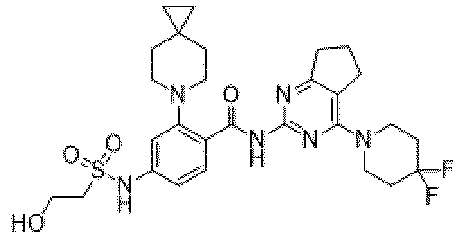
4 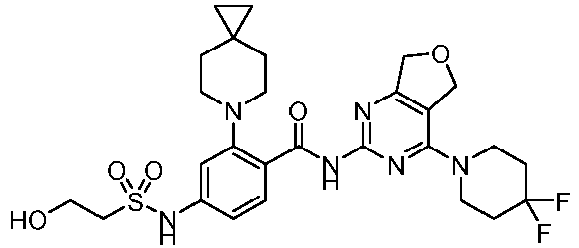
5 
6 
7 
8 
9 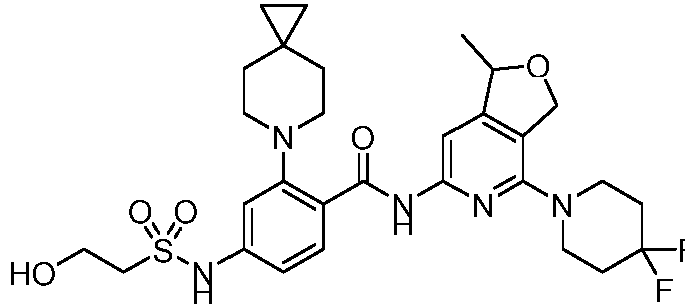
10 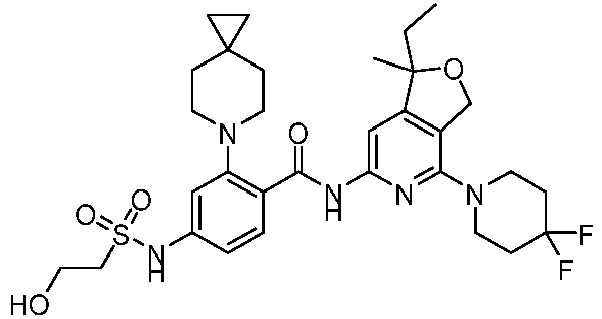
11 
12 
13 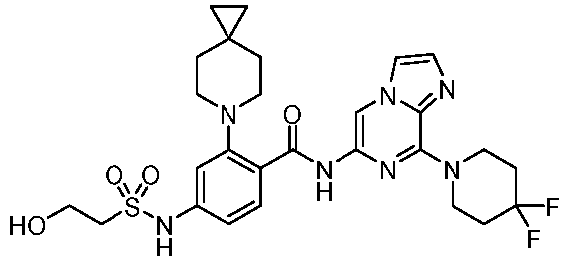
14 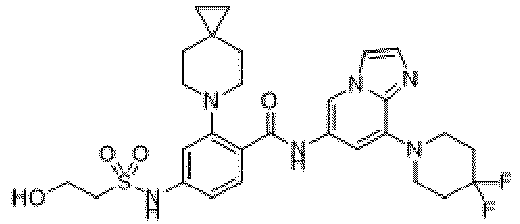
15 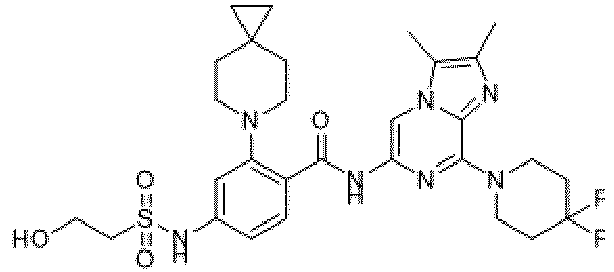
16 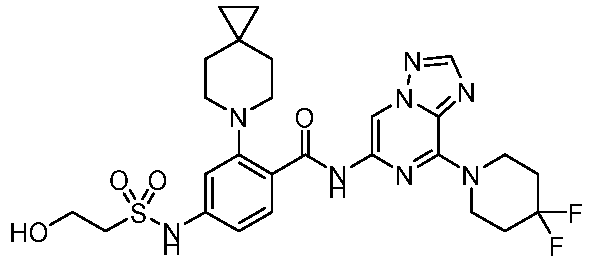
17 
18 
19 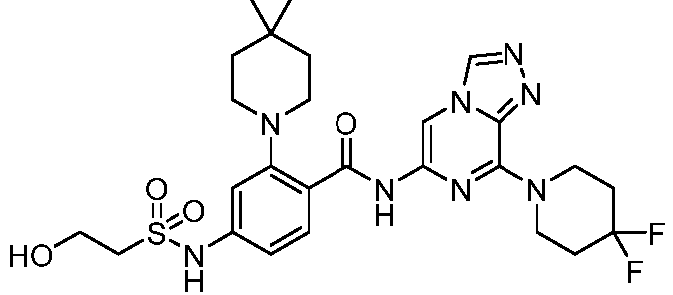
20 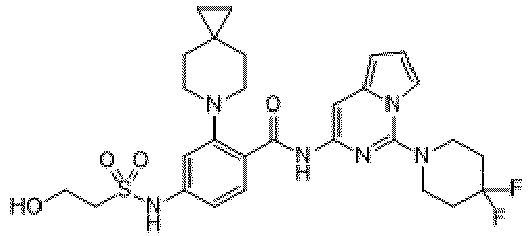
21 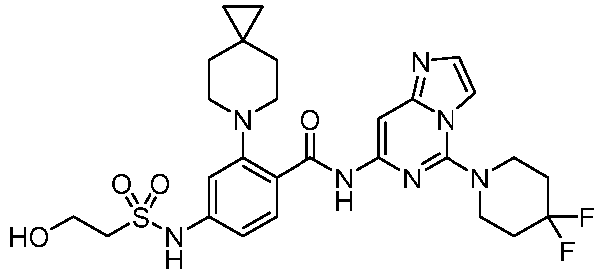
22 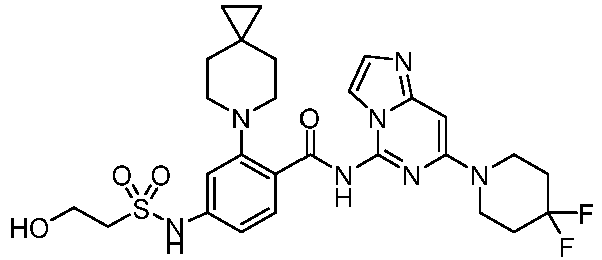
23 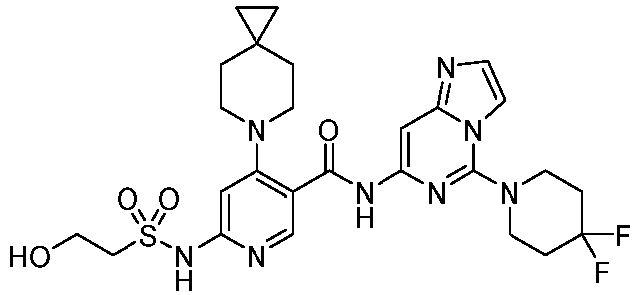
24 
25 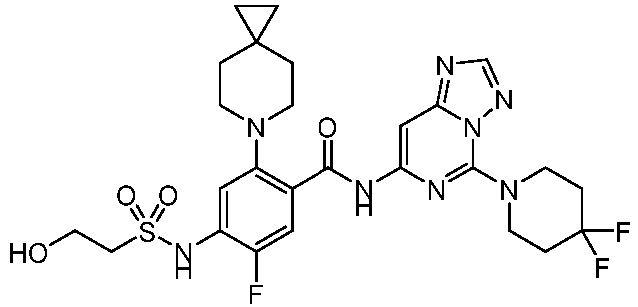
26 
27 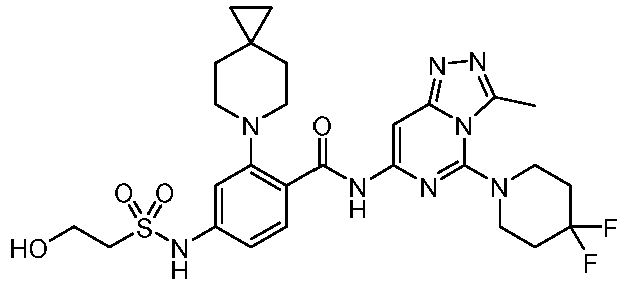
28 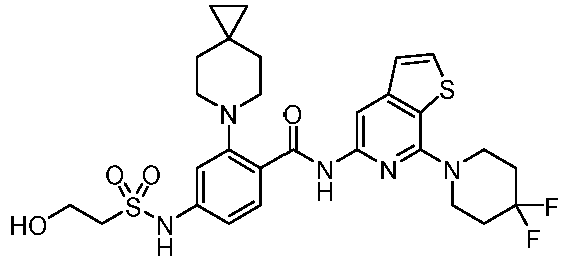
29 
30 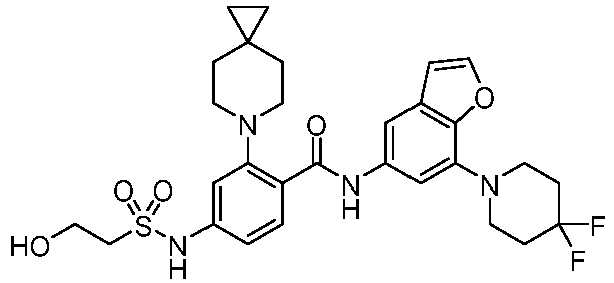
31 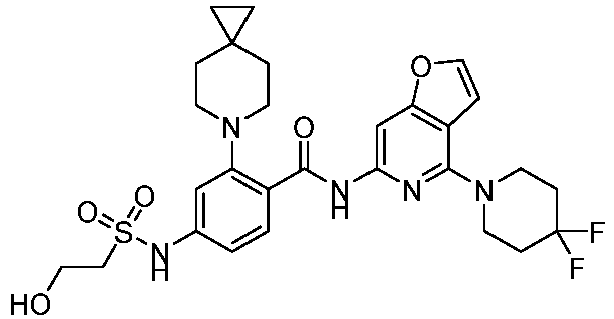
32 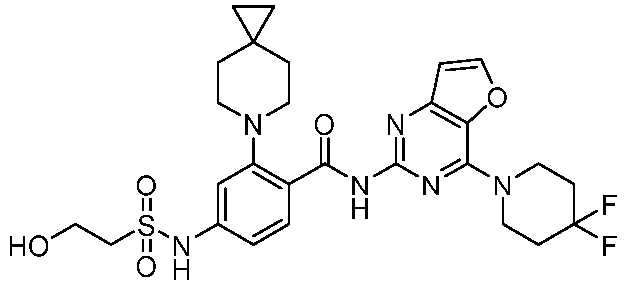
33 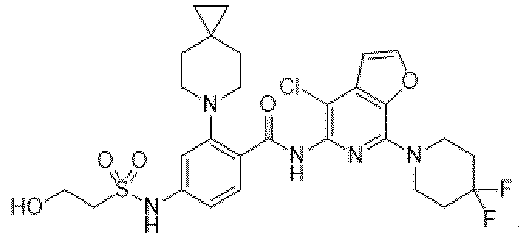
34 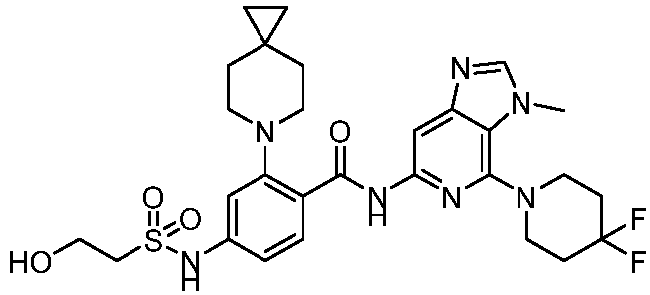
35 
36 
37 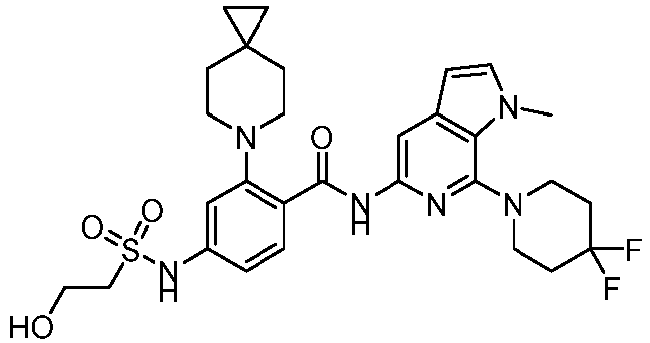
38 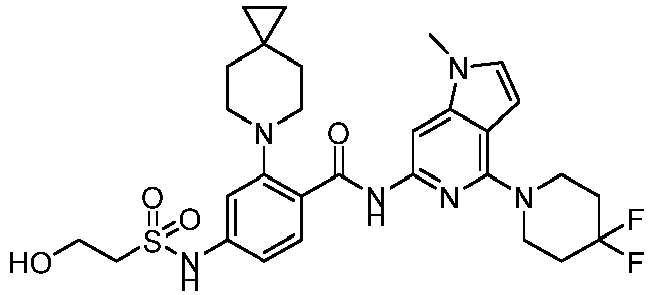
39 
40 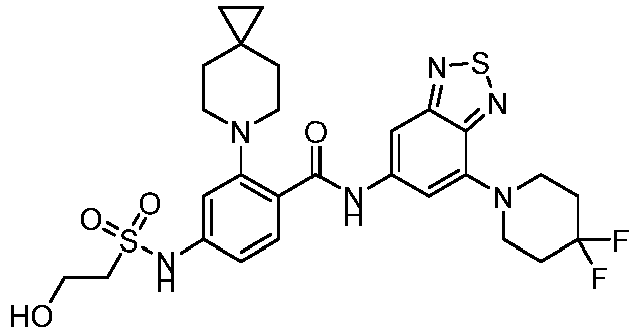
41 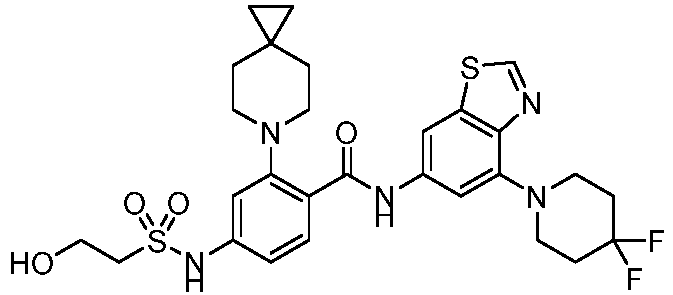
42 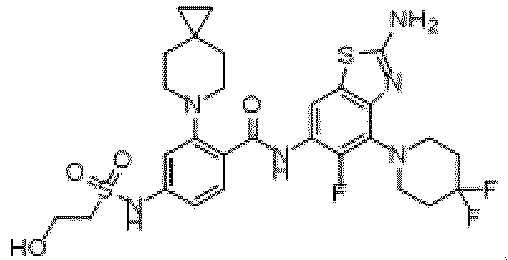
43 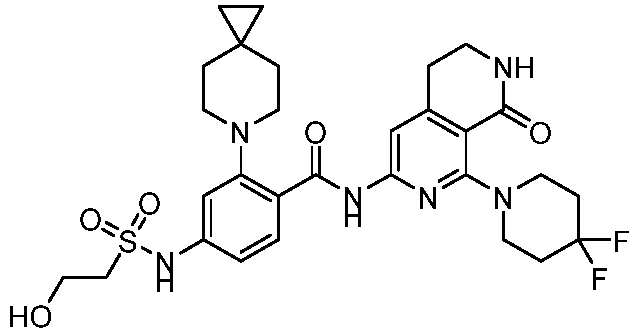
44 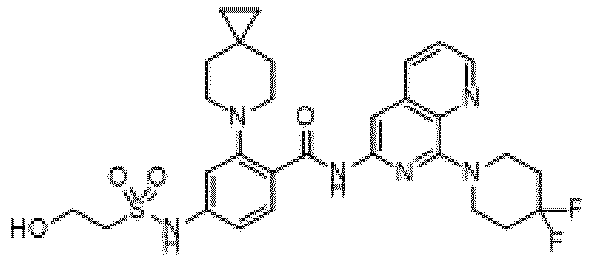
45 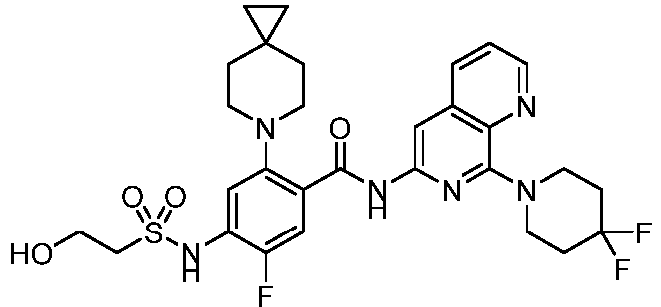
46 
47 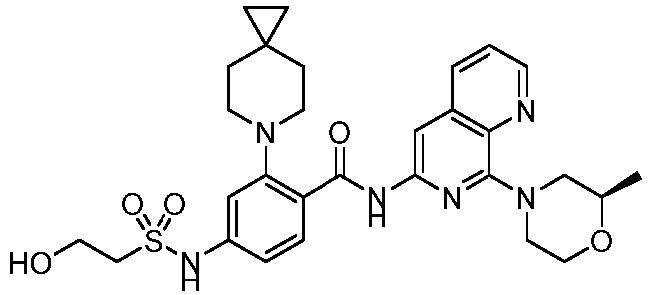
48 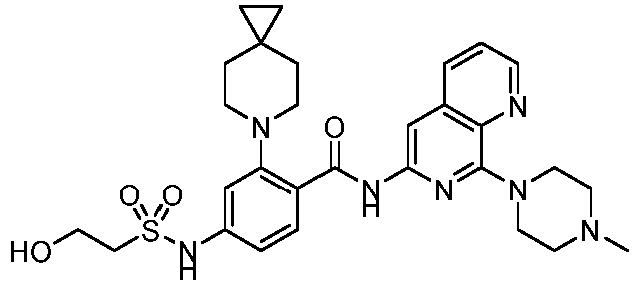
49 
50 
51 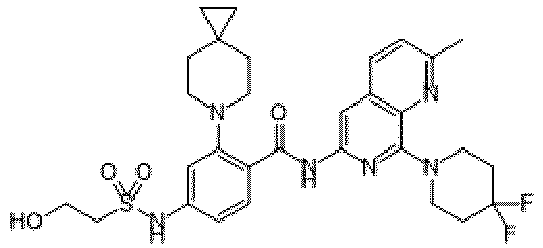
52 
53 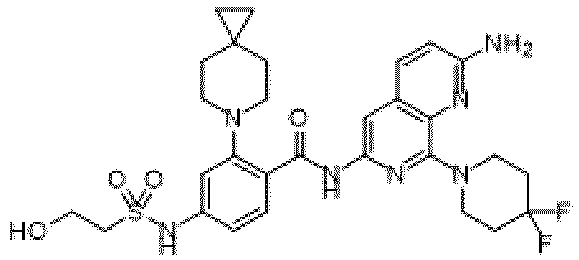
54 
55 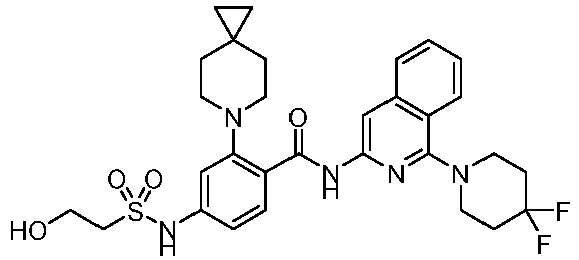
56 
57 
58 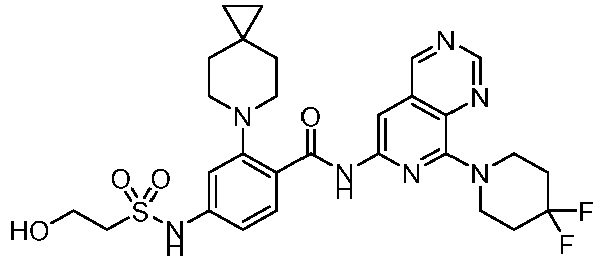
59 
60 
61 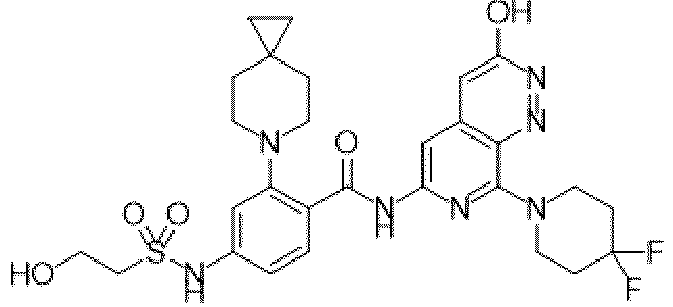
62 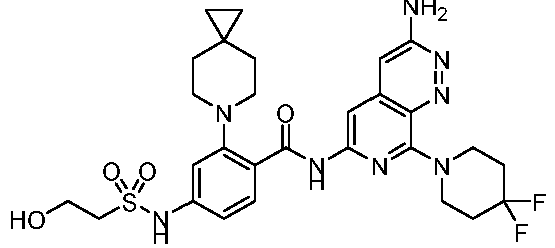
63 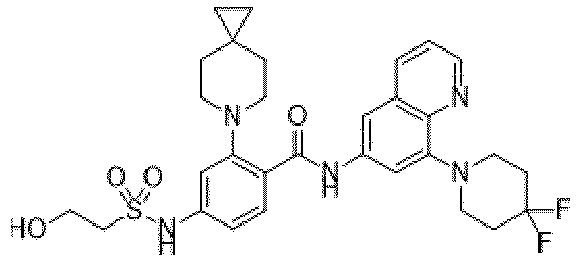
64 
65 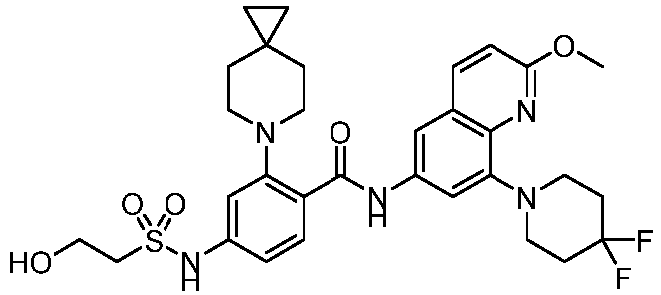
66 
67 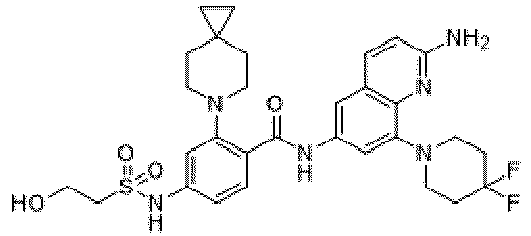
68 
69 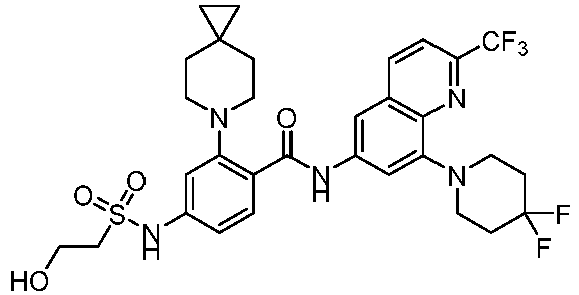
70 
71 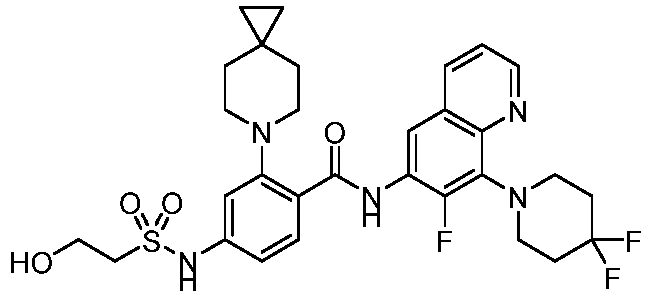
72 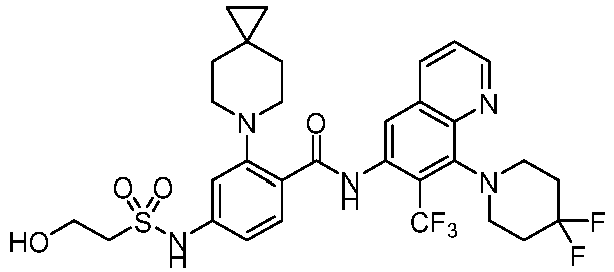
73 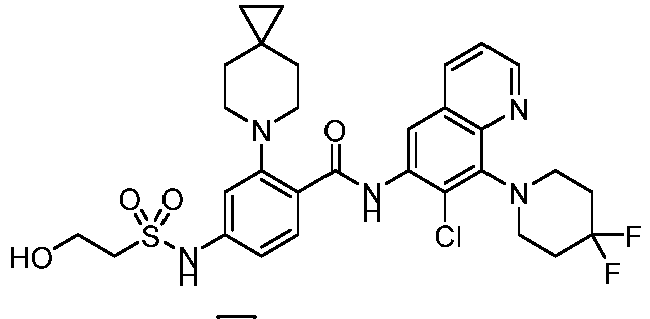
74 
75 
76 
77 
78 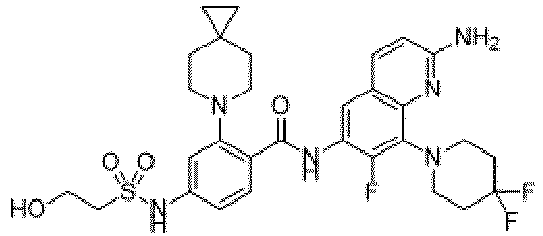
79 
80 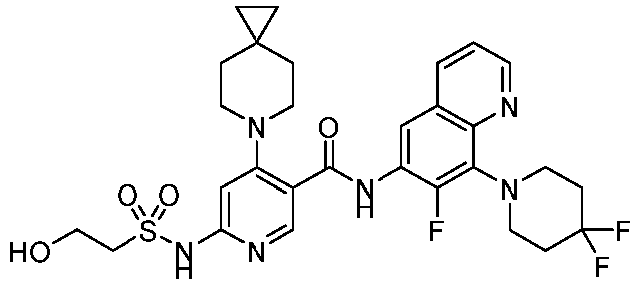
81 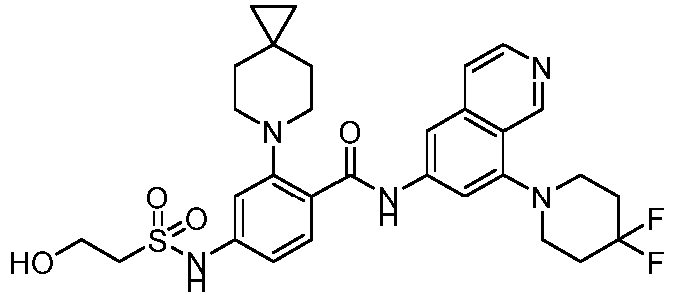
82 
83 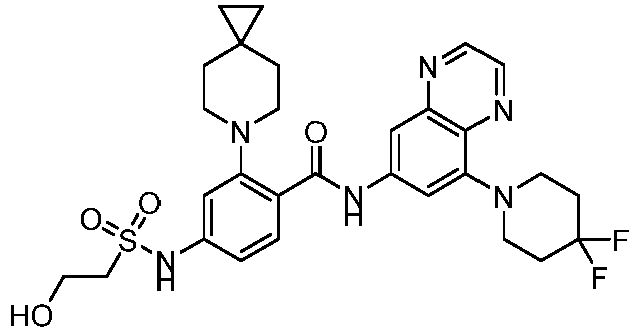
84 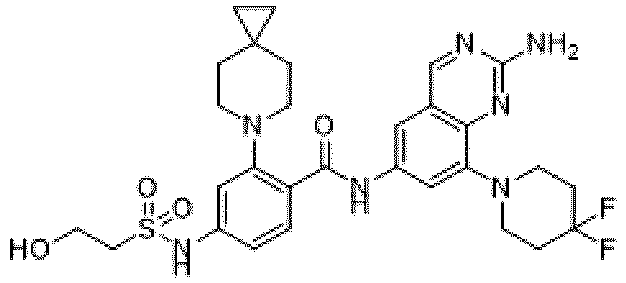
85 
86 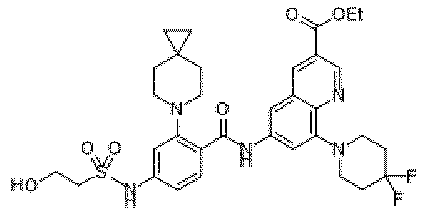
87 
88 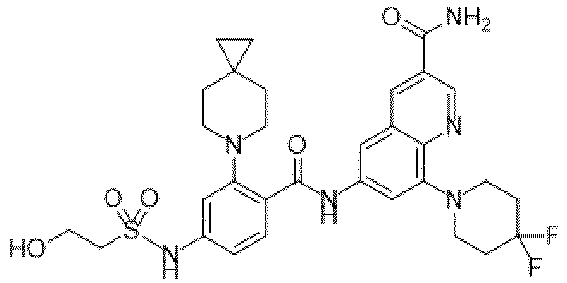
89 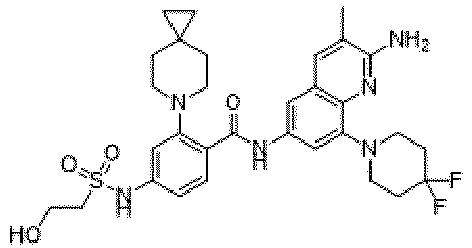
90 
91 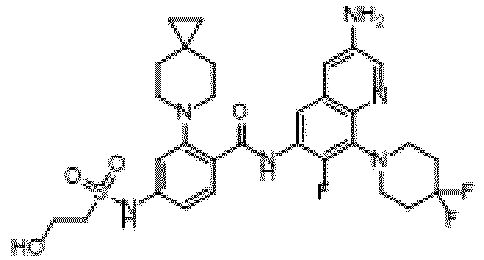
92 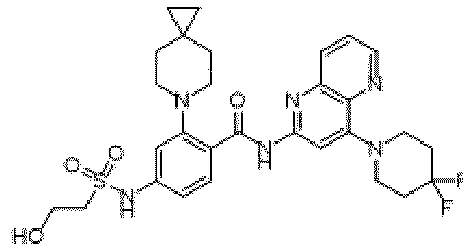
93 
94 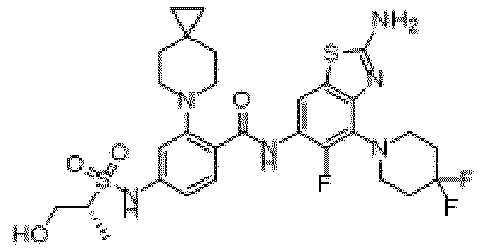
95 
96 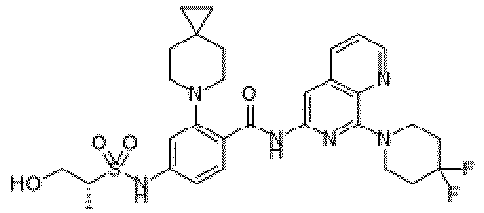
97 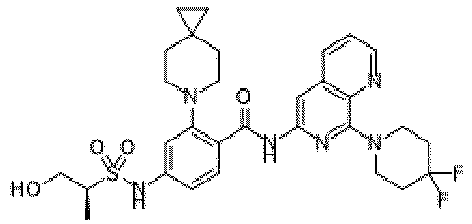
98 
99 
100 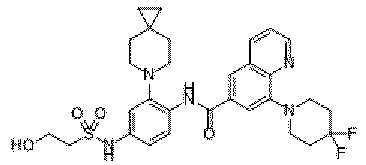
101 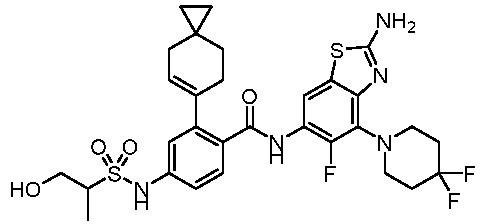
102 
Applications Claiming Priority (8)
| Application Number | Priority Date | Filing Date | Title |
|---|---|---|---|
| CN202210520744 | 2022-05-13 | ||
| CN202210878192 | 2022-07-25 | ||
| CN202211183092 | 2022-09-27 | ||
| CN202211537992 | 2022-12-02 | ||
| CN202310071265 | 2023-01-16 | ||
| CN202310288871 | 2023-03-22 | ||
| CN202310475180 | 2023-04-27 | ||
| PCT/CN2023/093528 WO2023217230A1 (en) | 2022-05-13 | 2023-05-11 | Kinesin kif18a inhibitor and use thereof |
Publications (2)
| Publication Number | Publication Date |
|---|---|
| EP4524135A1 true EP4524135A1 (en) | 2025-03-19 |
| EP4524135A4 EP4524135A4 (en) | 2025-08-20 |
Family
ID=88729740
Family Applications (2)
| Application Number | Title | Priority Date | Filing Date |
|---|---|---|---|
| EP23802999.5A Pending EP4524135A4 (en) | 2022-05-13 | 2023-05-11 | Kinesin-KIF18A inhibitors and uses thereof |
| EP23803001.9A Pending EP4524136A4 (en) | 2022-05-13 | 2023-05-11 | Kinesin-KIF18A inhibitors and uses thereof |
Family Applications After (1)
| Application Number | Title | Priority Date | Filing Date |
|---|---|---|---|
| EP23803001.9A Pending EP4524136A4 (en) | 2022-05-13 | 2023-05-11 | Kinesin-KIF18A inhibitors and uses thereof |
Country Status (5)
| Country | Link |
|---|---|
| US (1) | US20250304551A1 (en) |
| EP (2) | EP4524135A4 (en) |
| CN (3) | CN119156382A (en) |
| TW (3) | TW202344249A (en) |
| WO (3) | WO2023217233A1 (en) |
Families Citing this family (23)
| Publication number | Priority date | Publication date | Assignee | Title |
|---|---|---|---|---|
| CA3260194A1 (en) * | 2022-06-30 | 2025-06-07 | Suzhou Genhouse Bio Co., Ltd. | Nitrogen-containing compound and use thereof |
| CN120187733A (en) | 2022-08-18 | 2025-06-20 | 埃克森特治疗公司 | KIF18A inhibitors and uses thereof |
| TW202415648A (en) * | 2022-09-30 | 2024-04-16 | 大陸商長春金賽藥業有限責任公司 | Polycyclic kif18a inhibitor, and pharmaceutical composition, preparation method and use thereof |
| KR20250112279A (en) * | 2022-11-24 | 2025-07-23 | 인벤티스바이오 컴퍼니 리미티드 | Heterocyclic compounds, methods for their preparation and uses |
| EP4628486A1 (en) * | 2022-12-02 | 2025-10-08 | Shenzhen Zhongge Biological Technology Co., Ltd. | Amide or urea compound |
| WO2024125626A1 (en) * | 2022-12-16 | 2024-06-20 | Nuphase Therapeutics (Hangzhou) Limited., Co. | Nitrogenous compound, pharmaceutical composition and use thereof |
| WO2024137984A1 (en) * | 2022-12-22 | 2024-06-27 | Accent Therapeutics, Inc. | Inhibitors of kif18a and uses thereof |
| EP4642777A1 (en) * | 2022-12-28 | 2025-11-05 | Insilico Medicine IP Limited | Inhibitors of kif18a and uses thereof |
| CN120418237A (en) * | 2023-01-09 | 2025-08-01 | 浙江海正药业股份有限公司 | Aromatic amide derivative and preparation method and application thereof |
| WO2024188086A1 (en) * | 2023-03-10 | 2024-09-19 | 浙江海正药业股份有限公司 | Aromatic amide derivative, and preparation method therefor and use thereof |
| WO2024217348A1 (en) * | 2023-04-18 | 2024-10-24 | 南京同诺康医药科技有限公司 | Kif18a inhibitor, preparation method therefor and use thereof |
| CN121100117A (en) * | 2023-05-16 | 2025-12-09 | 浙江海正药业股份有限公司 | Aromatic amide derivative, preparation method thereof and application thereof in medicine |
| WO2025020624A1 (en) * | 2023-07-25 | 2025-01-30 | 捷思英达控股有限公司 | Benzene ring derivative, and preparation method therefor and use thereof in medicine |
| WO2025026392A1 (en) * | 2023-08-02 | 2025-02-06 | 上海湃隆生物科技有限公司 | Kinesin kif18a inhibitor and use thereof |
| WO2025036479A1 (en) * | 2023-08-16 | 2025-02-20 | 上海湃隆生物科技有限公司 | Kinesin kif18a inhibitor and use thereof |
| WO2025090640A1 (en) * | 2023-10-23 | 2025-05-01 | Volastra Therapeutics, Inc. | Solid formulations and polymorphic forms of indoline inhibitors of kif18a |
| WO2025109540A1 (en) * | 2023-11-22 | 2025-05-30 | Aurigene Oncology Limited | Macrocyclic compounds as kif18a inhibitors |
| WO2025167861A1 (en) * | 2024-02-06 | 2025-08-14 | 上海齐鲁制药研究中心有限公司 | Spiro kif18a inhibitor |
| WO2025201407A1 (en) * | 2024-03-27 | 2025-10-02 | 上海齐鲁制药研究中心有限公司 | Kinesin kif18a inhibitor and method for using same |
| WO2025201531A1 (en) * | 2024-03-29 | 2025-10-02 | 深圳众格生物科技有限公司 | Tricyclic compound and use thereof |
| WO2025232650A1 (en) * | 2024-05-07 | 2025-11-13 | 南京同诺康医药科技有限公司 | Kif18a inhibitor as well as preparation method therefor and use thereof |
| WO2025242166A1 (en) * | 2024-05-22 | 2025-11-27 | InventisBio Co., Ltd. | Heterocyclic compounds, preparation methods and uses thereof |
| WO2026021411A1 (en) * | 2024-07-23 | 2026-01-29 | Insilico Medicine Ip Limited | Inhibitors of kif18a and uses thereof |
Family Cites Families (13)
| Publication number | Priority date | Publication date | Assignee | Title |
|---|---|---|---|---|
| EP1572682A4 (en) * | 2002-12-20 | 2008-01-23 | Pharmacia Corp | Acyclic pyrazole compounds |
| CA2599992A1 (en) * | 2005-03-03 | 2006-09-08 | Sirtris Pharmaceuticals, Inc. | Acridine and quinoline dervatives as sirtuin modulators |
| JP5255559B2 (en) * | 2006-03-31 | 2013-08-07 | アボット・ラボラトリーズ | Indazole compound |
| ES2526966T3 (en) * | 2008-06-05 | 2015-01-19 | Glaxo Group Limited | Novel compounds |
| KR102875569B1 (en) * | 2018-12-20 | 2025-10-23 | 암젠 인크 | KIF18A inhibitor |
| US12441736B2 (en) * | 2018-12-20 | 2025-10-14 | Amgen Inc. | KIF18A inhibitors |
| MX419368B (en) * | 2018-12-20 | 2025-01-14 | Amgen Inc | Heteroaryl amides useful as kif18a inhibitors |
| US12459932B2 (en) * | 2018-12-20 | 2025-11-04 | Amgen Inc. | KIF18A inhibitors |
| WO2021026101A1 (en) * | 2019-08-02 | 2021-02-11 | Amgen Inc. | Kif18a inhibitors |
| WO2021026100A1 (en) * | 2019-08-02 | 2021-02-11 | Amgen Inc. | Pyridine derivatives as kif18a inhibitors |
| WO2021026099A1 (en) * | 2019-08-02 | 2021-02-11 | Amgen Inc. | Kif18a inhibitors |
| EP4007752B1 (en) * | 2019-08-02 | 2025-09-24 | Amgen Inc. | Kif18a inhibitors |
| US20220402916A1 (en) * | 2019-09-18 | 2022-12-22 | Merck Sharp & Dohme Corp. | Small molecule inhibitors of kras g12c mutant |
-
2023
- 2023-05-11 CN CN202380039486.7A patent/CN119156382A/en active Pending
- 2023-05-11 EP EP23802999.5A patent/EP4524135A4/en active Pending
- 2023-05-11 CN CN202380039484.8A patent/CN119278199A/en active Pending
- 2023-05-11 TW TW112117564A patent/TW202344249A/en unknown
- 2023-05-11 CN CN202380039485.2A patent/CN119212988A/en active Pending
- 2023-05-11 WO PCT/CN2023/093541 patent/WO2023217233A1/en not_active Ceased
- 2023-05-11 EP EP23803001.9A patent/EP4524136A4/en active Pending
- 2023-05-11 WO PCT/CN2023/093538 patent/WO2023217232A1/en not_active Ceased
- 2023-05-11 TW TW112117569A patent/TW202400582A/en unknown
- 2023-05-11 WO PCT/CN2023/093528 patent/WO2023217230A1/en not_active Ceased
- 2023-05-11 US US18/865,349 patent/US20250304551A1/en active Pending
- 2023-05-11 TW TW112117566A patent/TW202400581A/en unknown
Also Published As
| Publication number | Publication date |
|---|---|
| TW202400581A (en) | 2024-01-01 |
| WO2023217232A1 (en) | 2023-11-16 |
| EP4524135A4 (en) | 2025-08-20 |
| WO2023217233A1 (en) | 2023-11-16 |
| TW202344249A (en) | 2023-11-16 |
| EP4524136A1 (en) | 2025-03-19 |
| WO2023217230A1 (en) | 2023-11-16 |
| CN119278199A (en) | 2025-01-07 |
| CN119212988A (en) | 2024-12-27 |
| EP4524136A4 (en) | 2025-08-06 |
| CN119156382A (en) | 2024-12-17 |
| TW202400582A (en) | 2024-01-01 |
| US20250304551A1 (en) | 2025-10-02 |
Similar Documents
| Publication | Publication Date | Title |
|---|---|---|
| EP4524135A1 (en) | Kinesin kif18a inhibitor and use thereof | |
| CN112778276B (en) | Compounds as SHP2 inhibitors and uses thereof | |
| US12398146B2 (en) | Heterobicyclic amides as inhibitors of CD38 | |
| CN109906227B (en) | 8,9-Dihydroimidazo[1,2-a]pyrimido[5,4-e]pyrimidin-5(6H)-ones | |
| KR101793807B1 (en) | Fused heterocyclic compounds as protein kinase inhibitors | |
| AU2016228660B2 (en) | Substituted 2-hydrogen-pyrazole derivative serving as anticancer drug | |
| KR100883289B1 (en) | 5-amino-2,4,7-trioxo-3,4,7,8-tetrahydro-2H-pyrido [2,3-D] pyrimidine derivatives and related compounds for cancer treatment | |
| EP2681221B1 (en) | Tricyclic inhibitors of kinases | |
| EP2168966B1 (en) | Bicycloaniline derivative | |
| US20210393623A1 (en) | Novel Heterocyclic Derivatives Useful as SHP2 Inhibitors | |
| JP2021518395A (en) | SHP2 Inhibitors and Their Use | |
| BR112016014151B1 (en) | PYRIRMIDOPYRIMIDINONES USEFUL AS WEE-1 KINASE INHIBITORS | |
| EP4223759B1 (en) | Pyrazolopyridazinone compound, and pharmaceutical composition and use thereof | |
| US20250215013A1 (en) | Substituted tricyclic compounds as parp inhibitors and the use thereof | |
| AU2017364720A1 (en) | Novel oxoisoquinoline derivative | |
| MX2014008155A (en) | Thienopyrimidine compounds. | |
| US12473303B2 (en) | 4-[[(7-aminopyrazolo[1,5-a]pyrimidin-5-yl)amino methyl]piperidin-3-ol compounds and their therapeutic use | |
| AU2022412821A1 (en) | Aromatic heterocyclic compounds, preparation method therefor and uses thereof | |
| KR20260005337A (en) | Tricyclic heterocyclic derivatives and compositions and applications thereof | |
| AU2019363657B2 (en) | 5-azaindazole derivatives as adenosine receptor antagonists | |
| EP3998268B1 (en) | Compound for inhibiting egfr kinase and preparation method and use thereof | |
| WO2025035108A2 (en) | Inhibitors of parg | |
| CN109020981A (en) | 8,9- glyoxalidine [1,2-a] pyrimido [5,4-e] pyrimidine -5 (6H) -one class compound | |
| CN116731013A (en) | Heterocyclic compound, preparation method and medical application thereof | |
| CN121159575A (en) | Amino-substituted heteroaromatic ring compound, preparation method and medical application thereof |
Legal Events
| Date | Code | Title | Description |
|---|---|---|---|
| STAA | Information on the status of an ep patent application or granted ep patent |
Free format text: STATUS: THE INTERNATIONAL PUBLICATION HAS BEEN MADE |
|
| PUAI | Public reference made under article 153(3) epc to a published international application that has entered the european phase |
Free format text: ORIGINAL CODE: 0009012 |
|
| STAA | Information on the status of an ep patent application or granted ep patent |
Free format text: STATUS: REQUEST FOR EXAMINATION WAS MADE |
|
| 17P | Request for examination filed |
Effective date: 20241212 |
|
| AK | Designated contracting states |
Kind code of ref document: A1 Designated state(s): AL AT BE BG CH CY CZ DE DK EE ES FI FR GB GR HR HU IE IS IT LI LT LU LV MC ME MK MT NL NO PL PT RO RS SE SI SK SM TR |
|
| A4 | Supplementary search report drawn up and despatched |
Effective date: 20250722 |
|
| DAV | Request for validation of the european patent (deleted) | ||
| DAX | Request for extension of the european patent (deleted) | ||
| RIC1 | Information provided on ipc code assigned before grant |
Ipc: C07D 401/14 20060101AFI20250716BHEP Ipc: C07D 487/04 20060101ALI20250716BHEP Ipc: C07D 491/04 20060101ALI20250716BHEP Ipc: C07D 471/04 20060101ALI20250716BHEP Ipc: C07D 498/04 20060101ALI20250716BHEP Ipc: C07D 513/04 20060101ALI20250716BHEP Ipc: C07D 519/00 20060101ALI20250716BHEP Ipc: C07D 491/048 20060101ALI20250716BHEP Ipc: A61K 31/63 20060101ALI20250716BHEP Ipc: A61K 31/438 20060101ALI20250716BHEP Ipc: A61K 31/38 20060101ALI20250716BHEP Ipc: A61K 31/41 20060101ALI20250716BHEP Ipc: A61P 35/00 20060101ALI20250716BHEP |