-
The present invention relates to a compound or a combination of compounds which can be used as anti-fungal agents directed against plant pathogenic basidiomycete fungi, and especially for inhibiting the virulence of corn smut fungus Ustilago maydis and related smut fungi, and of rust fungus Uromyces fabae and related rust fungi, as well as compositions comprising at least one of those compounds and/or agriculturally acceptable salts thereof as agriculturally active ingredients.
Background of the invention
-
Fungicides are compounds of natural or synthetic origin, which act to protect and cure plants against damage caused by agriculturally relevant fungi. Generally, no single fungicide is useful in all situations. Consequently, research is ongoing to produce fungicides that may have better performance, are easier to use, and cost-effective.
The basidiomycete fungus Ustilago maydis is a biotrophic fungal pathogen that causes smut disease in its host plant maize, a disease of considerable relevance in agriculture.
The smut fungus U. maydis is an important pathogen of corn (Maize, Zea mays). Primary disease symptoms are plant tumors in which fungal hyphae differentiate into spores. U. maydis is a biotrophic pathogen requiring living plant tissue for proliferation. In its dikaryotic form U. maydis develops appressoria that penetrate the plant cuticle and cell wall. Invading hyphae become encased by the plant plasma membrane resulting in an extended interaction zone. Plant responses elicited at this stage by fungal MAMPs (microbe associated molecular patterns) are actively suppressed by a cocktail of mostly novel secreted effectors. A large number of these effectors are expressed during establishment of the biotrophic stage and in this group are all six U. maydis virulence promoting effectors functionally studied to date. These effectors all interact with specific plant proteins and modulate their function either in the interface between fungus and surrounding plant plasma membrane or after translocation into invaded host cells. The molecular mechanisms by which translocation is achieved are largely unknown.
-
Uromyces fabae (U. vicia-fabae) attacks several important crop species such as broad bean (Vicia faba), pea, and lentil, as well as more than 50 other Vicia species, and about 20 Lathyrus species. However, it is most commonly referred to as rust of faba bean where yield losses of up to 50% have been reported. The pathogen has served as a model organism for almost half a century.
-
Infestation of crops by pathogenic basidiomycete fungi has continued to have a major impact by reducing yield and quality, emphasizing the need to identify new targets and develop new agents to improve methods of crop protection.
-
It is the objective of the present invention to provide compounds and/or agriculturally acceptable salts thereof which can be used as anti-fungal agents, especially for inhibiting the virulence of plant pathogenic basidiomycete fungi, and especially of corn smut fungus Ustilago maydis and related smut fungi, and of rust fungus Uromyces fabae and related rust fungi, as well as compositions comprising at least one of those compounds and/or agriculturally acceptable salts thereof as agriculturally active ingredients.
-
The objective of the present invention is solved by the teaching of the independent claims. Further advantageous features, aspects and details of the invention are evident from the dependent claims, the description, the figures, and the examples of the present application.
Brief description of the invention
-
The present invention relates to a compound for use or a combination of compounds for use in inhibiting virulence of one or more plant pathogenic basidiomycete fungi, wherein the compound(s) is/are selected from the general formula (I) - (III) which are defined as follows:
wherein
- R1 and R2 represent independently of each other -H, -OH, -OCH3, -OC2H5, -OC3H7, -O-cyclo-C3H5, -OCH(CH3)2, -OC(CH3)3, -OC4H9, -OPh, -OCH2-Ph, -CH2-OCH3, -CH2-OC2H5, -SH, -SCH3, -SC2H5, -SC3H7, -S-cyclo-C3H5, -SCH(CH3)2, -SC(CH3)3, -NO2, -F, -CI, -Br, -P(O)(OH)2, -P(O)(OCH3)2, -P(O)(OC2H5)2, -P(O)(OCH(CH3)2)2, -N3, -CN, -OCN, -NCO, -SCN, -NCS, -CHO, -COCH3, -COC2H5, -COC3H7, -CO-cyclo-C3H5, -COCH(CH3)2, -COC(CH3)3, -COOH, -COCN, -COOCH3, -COOC2H5, -COOC3H7, -COO-cyclo-C3H5, -COOCH(CH3)2, -COOC(CH3)3, -OOC-CH3, -OOC-C2H5, -OOC-C3H7, -OOC-cyclo-C3H5, -OOC-CH(CH3)2, -OOC-C(CH3)3, -CONH2, -CONHCH3, -CONHC2H5, -CONHC3H7, -CONH-cyclo-C3H5, -CONH[CH(CH3)2], -CONH[C(CH3)3], -CON(CH3)2, -CON(C2H5)2, -CON(C3H7)2, -CON(cyclo-C3H5)2, -CON[CH(CH3)2]2, -CON[C(CH3)3]2, -NHCOCH3, -NHCOC2H5, -NHCOC3H7, -NHCO-cyclo-C3H5, -NHCO-CH(CH3)2, -NHCO-C(CH3)3, -NHCO-OCH3, -NHCO-OC2H5, -NHCO-OC3H7, -NHCO-O-cyclo-C3H5, -NHCO-OCH(CH3)2, -NHCO-OC(CH3)3, -NH2, -NHCH3, -NHC2H5, -NHC3H7, -NH-cyclo-C3H5, -NHCH(CH3)2, -NHC(CH3)3, -N(CH3)2, -N(C2H5)2, -N(C3H7)2, -N(cyclo-C3H5)2, -N[CH(CH3)2]2, -N[C(CH3)3]2, -SOCH3, -SOC2H5, -SOC3H7, -SO-cyclo-C3H5, -SOCH(CH3)2, -SOC(CH3)3, -SO2CH3, -SO2C2H5, -SO2C3H7, -SO2-cyclo-C3H5, -SO2CH(CH3)2, -SO2C(CH3)3, -SO3H, -SO3CH3, -SO3C2H5, -SO3C3H7, -SO3-cyclo-C3H5, -SO3CH(CH3)2, -SO3C(CH3)3, -SO2NH2, -SO2NHCH3, -SO2NHC2H5, -SO2NHC3H7, -SO2NH-cyclo-C3H5, -SO2NHCH(CH3)2, -SO2NHC(CH3)3, -SO2N(CH3)2, -SO2N(C2H5)2, -SO2N(C3H7)2, -SO2N(cyclo-C3H5)2, -SO2N[CH(CH3)2]2, -SO2N[C(CH3)3]2, -O-S(=O)CH3, -O-S(=O)C2H5, -O-S(=O)C3H7, -O-S(=O)-cyclo-C3H5, -O-S(=O)CH(CH3)2, -O-S(=O)C(CH3)3, , -S(=O)(=NH)CH3, -S(=O)(=NH)C2H5, -S(=O)(=NH)C3H7, -S(=O)(=NH)-cyclo-C3H5, -S(=O)(=NH)CH(CH3)2, -S(=O)(=NH)C(CH3)3, -NH-SO2-CH3, -NH-SO2-C2H5, -NH-SO2-C3H7, -NH-SO2-cyclo-C3H6, -NH-SO2-CH(CH3)2, -NH-SO2-C(CH3)3, -O-SO2-CH3, -O-SO2-C2H5, -O-SO2-C3H7, -O-SO2-cyclo-C3H5, -O-SO2-CH(CH3)2, -O-SO2-C(CH3)3, -OCF3, -CH2-OCF3, -C2H4-OCF3, -C3H6-OCF3, -OC2F5, -CH2-OC2F5, -C2H4-OC2F5, -C3H6-OC2F5, -O-COOCH3, -O-COOC2H5, -O-COOC3H7, -O-COO-cyclo-C3H5, -O-COOCH(CH3)2, -O-COOC(CH3)3, -NH-CO-NH2, -NH-CO-NHCH3, -NH-CO-NHC2H5, -NH-CS-N(C3H7)2, -NH-CO-NHC3H7, -NH-CO-N(C3H7)2, -NH-CO-NH[CH(CH3)2], -NH-CO-NH[C(CH3)3], -NH-CO-N(CH3)2, -NH-CO-N(C2H5)2, -NH-CO-NH-cyclo-C3H5, -NH-CON(cyclo-C3H5)2, -NH-CO-N[CH(CH3)2]2, -NH-CS-N(C2H5)2, -NH-CON[C(CH3)3]2, -NH-CS-NH2, -NH-CS-NHCH3, -NH-CS-N(CH3)2, -NH-CS-NHC2H5, -NH-CS-NHC3H7, -NH-CS-NH-cyclo-C3H5, -NH-CS-NH[CH(CH3)2], -NH-CS-NH[C(CH3)3], -NH-CS-N(cyclo-C3H5)2, -NH-CS-N[CH(CH3)2]2, -NH-CS-N[C(CH3)3]2, -NH-C(=NH)-NH2, -NH-C(=NH)-NHCH3, -NH-C(=NH)-NHC2H5, -NH-C(=NH)-NHC3H7, -O-CO-NH-cyclo-C3H5, -NH-C(=NH)-NH-cyclo-C3H5, -NH-C(=NH)-NH[CH(CH3)2], -O-CO-NH[CH(CH3)2], -NH-C(=NH)-NH[C(CH3)3], -NH-C(=NH)-N(CH3)2, -NH-C(=NH)-N(C2H5)2, -NH-C(=NH)-N(C3H7)2, -NH-C(=NH)-N(cyclo-C3H5)2, -O-CO-NHC3H7, -NH-C(=NH)-N[CH(CH3)2]2, -NH-C(=NH)-N[C(CH3)3]2, -O-CO-NH2, -O-CO-NHCH3, -O-CO-NHC2H5, -O-CO-NH[C(CH3)3], -O-CO-N(CH3)2, -O-CO-N(C2H5)2, -O-CO-N(C3H7)2, -O-CO-N(cyclo-C3H5)2, -O-CO-N[CH(CH3)2]2, -O-CO-N[C(CH3)3]2, -O-CO-OCH3, -O-CO-OC2H5, -O-CO-OC3H7, -O-CO-O-cyclo-C3H5, -O-CO-OCH(CH3)2, -O-CO-OC(CH3)3, -CH3, -C2H5, -C3H7, -CH(CH3)2, -CH2F, -CHF2, -CF3, -CH2Cl, -CH2Br, -CH2-CH2F, -CH2-CHF2, -CH2-CF3, -CH2-CH2Cl, or -CH2-CH2Br, and wherein R1 or R2 is different from hydrogen;
- R3 represents -H, -CH3, -C2H5, -C3H7, cyclo-C3H5, -CH(CH3)2 or -C(CH3)3;
- RN represents -CH3, -C2H5, -C3H7, -CH(CH3)2, -C4H9, -CH2-CH(CH3)2, -CH(CH3)-C2H5, -C(CH3)3, -C5H11, -C6H13, -Ph, -L-Ph, -L- cyclo-C5H9, -L-R3, -L-R*, cyclo-C3H5, cyclo-C4H7, cyclo-C5H9, cyclo-C6H11, cyclo-C7H13,
RS represents -CH3, -C2H5, -C3H7, cyclo-C3H5, -CH(CH3)2, -CH2-CN, -CH2-Ar, -CH(NH2)-Ar, Ar represents -Ph,
R* represents -OCH3, -OC2H5, -OC3H7, -O-cyclo-C3H5, -OCH(CH3)2, -OC(CH3)3, -OC4H9, -COCH3, -COC2H5, -COC3H7, -CO-cyclo-C3H5, -COCH(CH3)2, or -COC(CH3)3;
- L represents -CH2-, -C2H4-, -C3H6-, or -CH2-CO-O-;
- X represents -O-, -OCH3, -OC2H5, or -OC3H7;
- and salts especially agriculturally acceptable salts thereof.
-
The present invention also relates to a compound for use or the combination of compounds for use in inhibiting virulence of one or more plant pathogenic basidiomycete fungi, wherein the compound(s) is/are selected from the general formula (I) - (III) as follows:
wherein
- R1 and R2 represent independently of each other -H, -OCH3, -OC2H5, -NO2, -F, -Cl, -Br, -N3, -CN, -OCN, -NCO, -SCN, -NCS, -CHO, -COCH3, -COC2H5, -COOH, -COCN, -COOCH3, -COOC2H5, -OOC-CH3, -OOC-C2H5, -CONH2, -CONHCH3, -CONHC2H5, -CON(CH3)2, -CON(C2H5)2, -NHCOCH3, -NHCOC2H5, -NH2, -NHCH3, -NHC2H5, -N(CH3)2, -N(C2H5)2, -SOCH3, -SOC2H5, -SO2CH3, -SO2C2H5, -SO3H, -SO3CH3, -SO3C2H5, -SO2NH2, -SO2NHCH3, -SO2NHC2H5, -SO2N(CH3)2, -SO2N(C2H5)2, -O-S(=O)CH3, -O-S(=O)C2H5, -NH-SO2-CH3, -NH-SO2-C2H5, -O-SO2-CH3, -O-SO2-C2H5, -OCF3, -CH2-OCF3, -OC2F5, -O-COOCH3, -O-COOC2H5, -NH-CO-NH2, -NH-CS-NH2, -NH-C(=NH)-NH2, -O-CO-NH2, -O-CO-OCH3, -O-CO-OC2H5, -CH3, -C2H5, -C3H7, -CH(CH3)2, -CH2F, -CHF2, -CF3, -CH2Cl, -CH2Br, and wherein R1 or R2 is different from hydrogen;
- R3 represents -H or -CH3;
- X represents -O- or -OCH3;
- and salts especially agriculturally acceptable salts thereof;
wherein
- R1 and R2 represent independently of each other -H, -OCH3, -OC2H5, -NO2, -F, -Cl, -Br, -N3, -CN, -OCN, -NCO, -SCN, -NCS, -CHO, -COCH3, -COC2H5, -COOH, -COCN, -COOCH3, -COOC2H5, -OOC-CH3, -OOC-C2H5, -CONH2, -CONHCH3, -CONHC2H5, -CON(CH3)2, -CON(C2H5)2, -NHCOCH3, -NHCOC2H5, -NH2, -NHCH3, -NHC2H5, -N(CH3)2, -N(C2H5)2, -SOCH3, -SOC2H5, -SO2CH3, -SO2C2H5, -SO3H, -SO3CH3, -SO3C2H5, -SO2NH2, -SO2NHCH3, -SO2NHC2H5, -SO2N(CH3)2, -SO2N(C2H5)2, -O-S(=O)CH3, -O-S(=O)C2H5, -NH-SO2-CH3, -NH-SO2-C2H5, -O-SO2-CH3, -O-SO2-C2H5, -OCF3, -CH2-OCF3, -OC2F5, -O-COOCH3, -O-COOC2H5, -NH-CO-NH2, -NH-CS-NH2, -NH-C(=NH)-NH2, -O-CO-NH2, -O-CO-OCH3, -O-CO-OC2H5, -CH3, -C2H5, -C3H7, -CH(CH3)2, -CH2F, -CHF2, -CF3, -CH2Cl, -CH2Br, and wherein R1 or R2 is different from hydrogen;
- RN represents -CH3, -C2H5, -C3H7, -CH(CH3)2, -C4H9, -CH2-CH(CH3)2, -C(CH3)3, -C5H11, -Ph, -L-Ph, -L-R3, cyclo-C3H5, cyclo-C4H7, cyclo-C5H9, cyclo-C6H11, cyclo-C7H13;
- L represents -CH2-, -C2H4-, or -CH2-CO-O-;
- R3 represents -H, -CH3, -C2H5, -C3H7, cyclo-C3H5, -CH(CH3)2 or -C(CH3)3;
and salts especially agriculturally acceptable salts thereof;
wherein
- RN represents -CH3, -C2H5, -C3H7, -CH(CH3)2, -C4H9, -CH2-CH(CH3)2, -CH(CH3)-C2H5, -C(CH3)3, -C5H11, -C6H13, -Ph, -L-Ph, -L- cyclo-C5H9, -L-R3, -L-R*, cyclo-C3H5, cyclo-C4H7, cyclo-C5H9, cyclo-C6H11, cyclo-C7H13,
- RS represents -CH3, -C2H5, -C3H7, cyclo-C3H5, -CH(CH3)2, -CH2-CN, -CH2-Ar, -CH(NH2)-Ar,
- Ar represents -Ph,
- R* represents -OCH3, -OC2H5, -OC3H7, -O-cyclo-C3H5, -OCH(CH3)2, -COCH3, -COC2H5, -COC3H7, -CO-cyclo-C3H5, or -COCH(CH3)2;
- R1 and R2 represent independently of each other -H, -OCH3, -OC2H5, -NO2, -F, -Cl, -Br, -N3, -CN, -OCN, -NCO, -SCN, -NCS, -CHO, -COCH3, -COC2H5, -COOH, -COCN, -COOCH3, -COOC2H5, -OOC-CH3, -OOC-C2H5, -CONH2, -CONHCH3, -CONHC2H5, -CON(CH3)2, -CON(C2H5)2, -NHCOCH3, -NHCOC2H5, -NH2, -NHCH3, -NHC2H5, -N(CH3)2, -N(C2H5)2, -SOCH3, -SOC2H5, -SO2CH3, -SO2C2H5, -SO3H, -SO3CH3, -SO3C2H5, -SO2NH2, -SO2NHCH3, -SO2NHC2H5, -SO2N(CH3)2, -SO2N(C2H5)2, -O-S(=O)CH3, -O-S(=O)C2H5, -NH-SO2-CH3, -NH-SO2-C2H5, -O-SO2-CH3, -O-SO2-C2H5, -OCF3, -CH2-OCF3, -OC2F5, -O-COOCH3, -O-COOC2H5, -NH-CO-NH2, -NH-CS-NH2, -NH-C(=NH)-NH2, -O-CO-NH2, -O-CO-OCH3, -O-CO-OC2H5, -CH3, -C2H5, -C3H7, -CH(CH3)2, -CH2F, -CHF2, -CF3, -CH2Cl, -CH2Br, and wherein R1 or R2 is different from hydrogen;
- R3 represents -H, -CH3, or -C2H5;
- L represents -CH2-, -C2H4-, or -C3H6-;
- and salts especially agriculturally acceptable salts thereof.
-
The present invention further relates to a compound for use or the combination of compounds for use in inhibiting virulence of one or more plant pathogenic, wherein the compound(s) is/are selected from:
and salts especially agriculturally acceptable salts thereof.
-
A preferred embodiment of the invention is directed to a compound for use or the combination of compounds for use as described above, wherein the one or more plant pathogenic basidiomycete fungi are selected from the group consisting of smut fungi and rust fungi, wherein the smut fungi are Ustilago hordei, Ustilago avenae, Ustilago nuda, Ustilago nigra, Ustilago tritici, Ustilago maydis, Ustilago scitaminea, Ustilago esculenta, Ustilago striiformis, Ustilago trichophora, Sporisorium reilianum, Sporisorium reilianum f.sp. zeae, Sporisorium reilianum f.sp. reilianum, Sporisorium scitamineum, Angiosorus solani, Urocystis agropyri, Urocystis occulta, Tilletia indica, Tilletia caries, Tilletia barclayana or Tilletia controversa, or wherein the rust fungi is Uromyces fabae, Uromyces appendiculatus, Uromyces beticola, Puccinia graminis f. sp. tritici, Puccinia striiformis f. sp. tritici, Puccinia triticina, Puccinia graminis f. sp. secalis, Puccinia arachidis, Puccinia coronata f. sp. avenae, Puccinia sorghi, Puccinia melanocephala, Puccinia kuehnii, Puccinia recondita, Puccinia pitteriana, Puccinia graminis, Puccinia polysora, Phakopsora pachyrhizi, Phakopsora meibomiae, Hemileia vastatrix, Melampsora-larici-populina, Melampsora lini, Cronartium ribicola, Cronartium quercuum f. sp. fusiforme, Gymnosporangium sabinae, Gymnosporangium yamadae, Gymnosporangium juniperi-virginianae.
-
Another preferred embodiment of the invention is directed to a compound for use or the combination of compounds for use as described above, wherein the one or more plant pathogenic basidiomycete fungi are selected from the group consisting of smut fungi and rust fungi, wherein the smut fungi are Ustilago maydis, Ustilago esculenta, Ustilago trichophora, Ustilago tritici, Sporisorium reilianum f.sp. zeae, Sporisorium reilianum f.sp. reilianum, Sporisorium scitamineum, Ustilago hordei, or wherein the rust fungi is Uromyces fabae.
-
Another embodiment of the invention provides a fungicidal composition comprising a compound for use or a combination of compounds for use in treating, preventing, inhibiting, or eliminating the virulence of one or more plant pathogenic basidiomycete fungi in a plant or a plant material, wherein the compound(s) is/are selected from the general formula (I) - (III) as defined above,
wherein the fungicidal composition further comprises at least one suitable agriculturally acceptable carrier, excipient, solvent and/or adjuvant.
-
A preferred embodiment of the invention provides a fungicidal composition comprising a compound for use or a combination of compounds for use in treating, preventing, inhibiting, or eliminating the virulence of one or more plant pathogenic basidiomycete fungi in a plant or a plant material as described above, wherein the one or more plant pathogenic basidiomycete fungi are selected from the group consisting of smut fungi and rust fungi, wherein the smut fungi are Ustilago hordei, Ustilago avenae, Ustilago nuda, Ustilago nigra, Ustilago tritici, Ustilago maydis, Ustilago scitaminea, Ustilago esculenta, Ustilago striiformis, Ustilago trichophora, Sporisorium reilianum, Sporisorium reilianum f.sp. zeae, Sporisorium reilianum f.sp. reilianum, Sporisorium scitamineum, Angiosorus solani, Urocystis agropyri, Urocystis occulta, Tilletia indica, Tilletia caries, Tilletia barclayana or Tilletia controversa, or wherein the rust fungi is Uromyces fabae, Uromyces appendiculatus, Uromyces beticola, Puccinia graminis f. sp. tritici, Puccinia striiformis f. sp. tritici, Puccinia triticina, Puccinia graminis f. sp. secalis, Puccinia arachidis, Puccinia coronata f. sp. avenae, Puccinia sorghi, Puccinia melanocephala, Puccinia kuehnii, Puccinia recondita, Puccinia pitteriana, Puccinia graminis, Puccinia polysora, Phakopsora pachyrhizi, Phakopsora meibomiae, Hemileia vastatrix, Melampsora-larici-populina, Melampsora lini, Cronartium ribicola, Cronartium quercuum f. sp. fusiforme, Gymnosporangium sabinae, Gymnosporangium yamadae, Gymnosporangium juniperi-virginianae.
-
A further preferred embodiment of the invention provides a fungicidal composition comprising a compound for use or a combination of compounds for use in treating, preventing, inhibiting, or eliminating the virulence of one or more plant pathogenic basidiomycete fungi in a plant or a plant material as described above, wherein the one or more plant pathogenic basidiomycete fungi are selected from the group consisting of smut fungi and rust fungi, wherein the smut fungi are Ustilago maydis, Ustilago esculenta, Ustilago trichophora, Ustilago tritici, Sporisorium reilianum f.sp. zeae, Sporisorium reilianum f.sp. reilianum, Sporisorium scitamineum, Ustilago hordei, or wherein the rust fungi is Uromyces fabae.
-
In another aspect, the present invention provides a method of treating, preventing, inhibiting, or eliminating virulence of one or more plant pathogenic basidiomycete fungi in a plant or a plant material comprising the step of applying onto a plant, to a plant material or in the vicinity of said plant or plant material a compound or a combination of compounds or a fungicidal composition comprising the same, wherein the compound(s) is/are selected from the general formula (I) - (III) as defined above.
-
In a particular aspect, the present invention provides the method of treating, preventing, inhibiting, or eliminating the virulence of one or more plant pathogenic basidiomycete fungi in a plant or a plant material as defined above, wherein the one or more plant pathogenic basidiomycete fungi are selected from the group consisting of smut fungi and rust fungi, wherein the smut fungi are Ustilago hordei, Ustilago avenae, Ustilago nuda, Ustilago nigra, Ustilago tritici, Ustilago maydis, Ustilago scitaminea, Ustilago esculenta, Ustilago striiformis, Ustilago trichophora, Sporisorium reilianum, Sporisorium reilianum f.sp. zeae, Sporisorium reilianum f.sp. reilianum, Sporisorium scitamineum, Angiosorus solani, Urocystis agropyri, Urocystis occulta, Tilletia indica, Tilletia caries, Tilletia barclayana or Tilletia controversa, or wherein the rust fungi is Uromyces fabae, Uromyces appendiculatus, Uromyces beticola, Puccinia graminis f. sp. tritici, Puccinia striiformis f. sp. tritici, Puccinia triticina, Puccinia graminis f. sp. secalis, Puccinia arachidis, Puccinia coronata f. sp. avenae, Puccinia sorghi, Puccinia melanocephala, Puccinia kuehnii, Puccinia recondita, Puccinia pitteriana, Puccinia graminis, Puccinia polysora, Phakopsora pachyrhizi, Phakopsora meibomiae, Hemileia vastatrix, Melampsora-larici-populina, Melampsora lini, Cronartium ribicola, Cronartium quercuum f. sp. fusiforme, Gymnosporangium sabinae, Gymnosporangium yamadae, Gymnosporangium juniperi-virginianae.
-
In a further particular aspect, the present invention provides the method of treating, preventing, inhibiting, or eliminating the virulence of one or more plant pathogenic basidiomycete fungi in a plant or a plant material as defined above, wherein the one or more plant pathogenic basidiomycete fungi are selected from the group consisting of smut fungi and rust fungi, wherein the smut fungi are Ustilago maydis, Ustilago esculenta, Ustilago trichophora, Ustilago tritici, Sporisorium reilianum f.sp. zeae, Sporisorium reilianum f.sp. reilianum, Sporisorium scitamineum, Ustilago hordei, or wherein the rust fungi is Uromyces fabae.
Description of the invention
-
The basidiomycete fungus Ustilago maydis is a biotrophic fungal pathogen that causes smut disease in its host plant maize, a disease of considerable relevance in agriculture. There are about 1500 different smut species which parasitize different grasses including important crop plants like maize, sorghum, sugar cane, wheat and barley. To allow colonization U. maydis secretes a cocktail of novel effector proteins which suppress plant defense responses and manipulate the physiology of the host to support fungal growth and nutrition acquisition. Such effector proteins function either in the apoplast, i.e. a compartment between fungal hyphae and surrounding plant plasma membrane or are taken up by plant cells and function inside defined plant cell compartments. The mechanism how such effectors are translocated to the host is unknown.
-
By analyzing effectors that are induced during the stage when biotrophy is established, i.e. 2 days after infection, Ludwig et al. have identified three effector mutants where single gene deletions, thereafter named stp1, stp2, and stp3, abolish virulence completely (Ludwig et al., A protein complex with an essential virulence function in a fungal plant pathogen. Manuscript under review). Co-immunoprecipitation and mass spectrometry (Co-IP-MS) analysis showed that these effectors form a complex with two additional effector proteins, Stp4 and Pep1, and two fungal transmembrane proteins, Stp5 and Stp6. This complex was termed Stp, Stop after penetration, complex. Mutants in the additional four genes also abolished virulence completely. The genes were termed stp1, stp2, stp3, stp4, stp5, stp6 and pep1. Pep1 was previously published as an apoplastic inhibitor of maize peroxidase (Hemetsberger et al., The Ustilago maydis effector Pep1 suppresses plant immunity by inhibition of host peroxidase activity. PLoS Pathog. 2012, 8, e1002684). Individual mutants were still able to penetrate the epidermis, but become arrested in the epidermal cell layer and did not manage to suppress plant defense responses. Immunoelectron microscopy analysis showed that the complex members reside in structures extending from the fungus into host cells. Moreover, it was shown that the complex interacts with pore-forming proteins residing in the plant plasma membrane, which encases biotrophic hyphae. Reconstitution of the complex by constitutively expressing all seven genes in U. maydis revealed surface-exposed structures. The inability of complex mutants to suppress defense after infection of a susceptible host as well as to elicit non-host resistance after barley infection, processes likely depending on translocated effectors, strongly suggests that Stp complex mediates effector translocation to the host, which is of crucial importance for successful infection.
-
Based on the crucial importance of the Stp complex for successful plant colonization of U. maydis, the complex was considered as an interesting new fungicide target. A screening platform to analyse interaction of several complex members was developed in a Saccharomyces cerevisiae 2-hybrid system, strain named NL73, where gene activation relies on protein interaction. Results showed interaction between Stp1, Stp3 and Stp4 to form a stable subcomplex ( Figure 1 ) and this could be also verified by Co-IP-MS analysis (Table 3).
-
The compounds of the COMAS library (http://comas.mpi-dortmund.mpg.de/) were tested for their activity on yeast viability using an engineered NL73 strain, in which viability depends on formation of a stable Stp1, Stp3 and Stp4 complex and is assessed with the Alamar Blue viability assay. In these experiments, 10 compounds from 10 different chemical classes showed activity in the nanomolar or low micromolar range (listed in Table 4).
-
These identified 10 hit compounds were then tested for their effect on virulence of U. maydis in Zea mays. The results revealed significant reductions in virulence by compounds 1-C, 1-B and 1-A (Table 4).
-
Activity of these compounds and of other structurally related compounds was thereafter tested using three types of assays: Alamar Blue viability assay in the NL73 strain, virulence inhibition in U. maydis and virulence inhibition in Uromyces fabae. Indeed, previous data suggest that rust fungi might possess a Stp complex related structure (Kemen et al., The Plant Journal 2013, 75, 767-780).
-
Several imidazopyridines, like 1-A, showed nanomolar potency in the Alamar Blue assay with NL73 (Table 5). Moreover, three imidazopyridines compounds (1-A, 2-A, 6-A) were able to inhibit virulence of U. maydis with a concentration dependent inhibitory effect ( Figure 2A - 2C ). Moreover, five imidazopyridines compounds (1-A, 2-A, 3-A, 5-A, and 6-A) were able to inhibit pustule formation of U. fabae at 1mM ( Figure 3 ), and two of them also at 0.5 mM final concentration in the inoculum ( Figure 4 ).
-
Among the tetrahydro-cyclopentapyrimidine, compound 1-C showed strong inhibitory activity on U. maydis virulence ( Figure 5 ), and on U. fabae virulence ( Figure 6 ). Among the pyrazolopyridin-benzenesulfonamide, 1-B showed an IC50 of 2.5 µM in the Alamar Blue viability assay of NL73. Compound 1-B inhibited U. maydis virulence very strongly at 5 mM and 1 mM ( Figure 7 ), and also U. fabae virulence at 1mM ( Figure 8 ).
-
These data show that the inventors were able to discover novel anti-fungicidal compounds able to efficiently and specifically targeting the Stp complex in smut fungi and a related structure in rust fungi, resulting in inhibition of their virulence.
-
Moreover, the inventors showed that the Stp complex members Stp1 - Stp6 and Pep1 are expressed in different smut fungi (Example 7), suggesting that the Stp complex is also present in others basidiomycete fungi, so that the inventive compounds are able to inhibit virulence also of these other basidiomycete fungi relying on the Stp complex for plant colonization.
-
Currently, the use of fungicides to combat diseases caused by smut and rust fungi is a common practice and the most used chemicals belong to three classes. The compounds "succinate dehydrogenase inhibitors" (SDHI) inhibit succinate dehydrogenase, "quinone outside inhibitors" (QoI) inhibit mitochondrial respiration, and demethylation inhibitors (DMIs) inhibit sterol biosynthesis. These are all rather general targets and compounds from these 3 classes are usually used in combination (Carmona et al., Role of Fungicide Applications on the Integrated Management of Wheat Stripe Rust. Front. Plant Sci., 2020, 11:733; Foster , Identification of Fungicide Targets in Pathogenic Fungi, In: Anke T., Schüffler A. (eds) Physiology and Genetics. The Mycota 2018, vol 15. Springer, Cham.) to avoid development of fungicide resistant strains.
-
In contrast, the Stp complex has an essential role for disease progression, represents a highly specific target that is expressed only during colonization of plants by plant pathogenic basidiomycete fungi. Therefore, use of the compounds described here either alone or in combination with the existing compound classes could become a treatment not easily overcome by development of resistant fungal strains.
-
Thus, the present invention provides a compound for use or a combination of compounds for use in inhibiting virulence of one or more plant pathogenic basidiomycete fungi, wherein the compound(s) is/are selected from the general formula (I) - (III) which are defined as follows:
wherein
- R1 and R2 represent independently of each other -H, -OH, -OCH3, -OC2H5, -OC3H7, -O-cyclo-C3H5, -OCH(CH3)2, -OC(CH3)3, -OC4H9, -OPh, -OCH2-Ph, -CH2-OCH3, -CH2-OC2H5, -SH, -SCH3, -SC2H5, -SC3H7, -S-cyclo-C3H5, -SCH(CH3)2, -SC(CH3)3, -NO2, -F, -CI, -Br, -P(O)(OH)2, -P(O)(OCH3)2, -P(O)(OC2H5)2, -P(O)(OCH(CH3)2)2, -N3, -CN, -OCN, -NCO, -SCN, -NCS, -CHO, -COCH3, -COC2H5, -COC3H7, -CO-cyclo-C3H5, -COCH(CH3)2, -COC(CH3)3, -COOH, -COCN, -COOCH3, -COOC2H5, -COOC3H7, -COO-cyclo-C3H5, -COOCH(CH3)2, -COOC(CH3)3, -OOC-CH3, -OOC-C2H5, -OOC-C3H7, -OOC-cyclo-C3H5, -OOC-CH(CH3)2, -OOC-C(CH3)3, -CONH2, -CONHCH3, -CONHC2H5, -CONHC3H7, -CONH-cyclo-C3H5, -CONH[CH(CH3)2], -CONH[C(CH3)3], -CON(CH3)2, -CON(C2H5)2, -CON(C3H7)2, -CON(cyclo-C3H5)2, -CON[CH(CH3)2]2, -CON[C(CH3)3]2, -NHCOCH3, -NHCOC2H5, -NHCOC3H7, -NHCO-cyclo-C3H5, -NHCO-CH(CH3)2, -NHCO-C(CH3)3, -NHCO-OCH3, -NHCO-OC2H5, -NHCO-OC3H7, -NHCO-O-cyclo-C3H5, -NHCO-OCH(CH3)2, -NHCO-OC(CH3)3, -NH2, -NHCH3, -NHC2H5, -NHC3H7, -NH-cyclo-C3H5, -NHCH(CH3)2, -NHC(CH3)3, -N(CH3)2, -N(C2H5)2, -N(C3H7)2, -N(cyclo-C3H5)2, -N[CH(CH3)2]2, -N[C(CH3)3]2, -SOCH3, -SOC2H5, -SOC3H7, -SO-cyclo-C3H5, -SOCH(CH3)2, -SOC(CH3)3, -SO2CH3, -SO2C2H5, -SO2C3H7, -SO2-cyclo-C3H5, -SO2CH(CH3)2, -SO2C(CH3)3, -SO3H, -SO3CH3, -SO3C2H5, -SO3C3H7, -SO3-cyclo-C3H5, -SO3CH(CH3)2, -SO3C(CH3)3, -SO2NH2, -SO2NHCH3, -SO2NHC2H5, -SO2NHC3H7, -SO2NH-cyclo-C3H5, -SO2NHCH(CH3)2, -SO2NHC(CH3)3, -SO2N(CH3)2, -SO2N(C2H5)2, -SO2N(C3H7)2, -SO2N(cyclo-C3H5)2, -SO2N[CH(CH3)2]2, -SO2N[C(CH3)3]2, -O-S(=O)CH3, -O-S(=O)C2H5, -O-S(=O)C3H7, -O-S(=O)-cyclo-C3H5, -O-S(=O)CH(CH3)2, -O-S(=O)C(CH3)3, -S(=O)(=NH)CH3, -S(=O)(=NH)C2H5, -S(=O)(=NH)C3H7, -S(=O)(=NH)-cyclo-C3H5, -S(=O)(=NH)CH(CH3)2, -S(=O)(=NH)C(CH3)3, -NH-SO2-CH3, -NH-SO2-C2H5, -NH-SO2-C3H7, -NH-SO2-cyclo-C3H6, -NH-SO2-CH(CH3)2, -NH-SO2-C(CH3)3, -O-SO2-CH3, -O-SO2-C2H5, -O-SO2-C3H7, -O-SO2-cyclo-C3H5, -O-SO2-CH(CH3)2, -O-SO2-C(CH3)3, -OCF3, -CH2-OCF3, -C2H4-OCF3, -C3H6-OCF3, -OC2F5, -CH2-OC2F5, -C2H4-OC2F5, -C3H6-OC2F5, -O-COOCH3, -O-COOC2H5, -O-COOC3H7, -O-COO-cyclo-C3H5, -O-COOCH(CH3)2, -O-COOC(CH3)3, -NH-CO-NH2, -NH-CO-NHCH3, -NH-CO-NHC2H5, -NH-CS-N(C3H7)2, -NH-CO-NHC3H7, -NH-CO-N(C3H7)2, -NH-CO-NH[CH(CH3)2], -NH-CO-NH[C(CH3)3], -NH-CO-N(CH3)2, -NH-CO-N(C2H5)2, -NH-CO-NH-cyclo-C3H5, -NH-CO-N(cyclo-C3H5)2, -NH-CO-N[CH(CH3)2]2, -NH-CS-N(C2H5)2, -NH-CO-N[C(CH3)3]2, -NH-CS-NH2, -NH-CS-NHCH3, -NH-CS-N(CH3)2, -NH-CS-NHC2H5, -NH-CS-NHC3H7, -NH-CS-NH-cyclo-C3H5, -NH-CS-NH[CH(CH3)2], -NH-CS-NH[C(CH3)3], -NH-CS-N(cyclo-C3H5)2, -NH-CS-N[CH(CH3)2]2, -NH-CS-N[C(CH3)3]2, -NH-C(=NH)-NH2, -NH-C(=NH)-NHCH3, -NH-C(=NH)-NHC2H5, -NH-C(=NH)-NHC3H7, -O-CO-NH-cyclo-C3H5, -NH-C(=NH)-NH-cyclo-C3H5, -NH-C(=NH)-NH[CH(CH3)2], -O-CO-NH[CH(CH3)2], -NH-C(=NH)-NH[C(CH3)3], -NH-C(=NH)-N(CH3)2, -NH-C(=NH)-N(C2H5)2, -NH-C(=NH)-N(C3H7)2, -NH-C(=NH)-N(cyclo-C3H5)2, -O-CO-NHC3H7, -NH-C(=NH)-N[CH(CH3)2]2, -NH-C(=NH)-N[C(CH3)3]2, -O-CO-NH2, -O-CO-NHCH3, -O-CO-NHC2H5, -O-CO-NH[C(CH3)3], -O-CO-N(CH3)2, -O-CO-N(C2H5)2, -O-CO-N(C3H7)2, -O-CO-N(cyclo-C3H5)2, -O-CO-N[CH(CH3)2]2, -O-CO-N[C(CH3)3]2, -O-CO-OCH3, -O-CO-OC2H5, -O-CO-OC3H7, -O-CO-O-cyclo-C3H5, -O-CO-OCH(CH3)2, -O-CO-OC(CH3)3, -CH3, -C2H5, -C3H7, -CH(CH3)2, -CH2F, -CHF2, -CF3, -CH2Cl, -CH2Br, -CH2-CH2F, -CH2-CHF2, -CH2-CF3, -CH2-CH2Cl, or -CH2-CH2Br, and
- wherein R1 or R2 is different from hydrogen;
- R3 represents -H, -CH3, -C2H5, -C3H7, cyclo-C3H5, -CH(CH3)2 or -C(CH3)3;
- RN represents -CH3, -C2H5, -C3H7, -CH(CH3)2, -C4H9, -CH2-CH(CH3)2, -CH(CH3)-C2H5, -C(CH3)3, -C5H11, -C6H13, -Ph, -L-Ph, -L-cyclo-C5H9, -L-R3, -L-R*, cyclo-C3H5, cyclo-C4H7, cyclo-C5H9, cyclo-C6H11, cyclo-C7H13,
- RS represents -CH3, -C2H5, -C3H7, cyclo-C3H5, -CH(CH3)2, -CH2-CN, -CH2-Ar, -CH(NH2)-Ar,
- Ar represents -Ph,
- R* represents -OCH3, -OC2H5, -OC3H7, -O-cyclo-C3H5, -OCH(CH3)2, -OC(CH3)3, -OC4H9, -COCH3, -COC2H5, -COC3H7, -CO-cyclo-C3H5, -COCH(CH3)2, or -COC(CH3)3;
- L represents -CH2-, -C2H4-, -C3H6-, or -CH2-CO-O-;
- X represents -O-, -OCH3, -OC2H5, or -OC3H7;
- and salts especially agriculturally acceptable salts thereof.
-
The present invention also relates to a compound for use or the combination of compounds for use in inhibiting virulence of one or more plant pathogenic basidiomycete fungi, wherein the compound(s) is/are selected from the general formula (I) - (III) which are defined as follows:
wherein
- R1 and R2 represent independently of each other -H, -OCH3, -OC2H5, -NO2, -F, -Cl, -Br, -N3, -CN, -OCN, -NCO, -SCN, -NCS, -CHO, -COCH3, -COC2H5, -COOH, -COCN, -COOCH3, -COOC2H5, -OOC-CH3, -OOC-C2H5, -CONH2, -CONHCH3, -CONHC2H5, -CON(CH3)2, -CON(C2H5)2, -NHCOCH3, -NHCOC2H5, -NH2, -NHCH3, -NHC2H5, -N(CH3)2, -N(C2H5)2, -SOCH3, -SOC2H5, -SO2CH3, -SO2C2H5, -SO3H, -SO3CH3, -SO3C2H5, -SO2NH2, -SO2NHCH3, -SO2NHC2H5, -SO2N(CH3)2, -SO2N(C2H5)2, -O-S(=O)CH3, -O-S(=O)C2H5, -NH-SO2-CH3, -NH-SO2-C2H5, -O-SO2-CH3, -O-SO2-C2H5, -OCF3, -CH2-OCF3, -OC2F5, -O-COOCH3, -O-COOC2H5, -NH-CO-NH2, -NH-CS-NH2, -NH-C(=NH)-NH2, -O-CO-NH2, -O-CO-OCH3, -O-CO-OC2H5, -CH3, -C2H5, -C3H7, -CH(CH3)2, -CH2F, -CHF2, -CF3, -CH2Cl, -CH2Br, and wherein R1 or R2 is different from hydrogen;
- R3 represents -H or -CH3;
- X represents -O- or -OCH3;
- and salts especially agriculturally acceptable salts thereof;
wherein
- R1 and R2 represent independently of each other -H, -OCH3, -OC2H5, -NO2, -F, -Cl, -Br, -N3, -CN, -OCN, -NCO, -SCN, -NCS, -CHO, -COCH3, -COC2H5, -COOH, -COCN, -COOCH3, -COOC2H5, -OOC-CH3, -OOC-C2H5, -CONH2, -CONHCH3, -CONHC2H5, -CON(CH3)2, -CON(C2H5)2, -NHCOCH3, -NHCOC2H5, -NH2, -NHCH3, -NHC2H5, -N(CH3)2, -N(C2H5)2, -SOCH3, -SOC2H5, -SO2CH3, -SO2C2H5, -SO3H, -SO3CH3, -SO3C2H5, -SO2NH2, -SO2NHCH3, -SO2NHC2H5, -SO2N(CH3)2, -SO2N(C2H5)2, -O-S(=O)CH3, -O-S(=O)C2H5, -NH-SO2-CH3, -NH-SO2-C2H5, -O-SO2-CH3, -O-SO2-C2H5, -OCF3, -CH2-OCF3, -OC2F5, -O-COOCH3, -O-COOC2H5, -NH-CO-NH2, -NH-CS-NH2, -NH-C(=NH)-NH2, -O-CO-NH2, -O-CO-OCH3, -O-CO-OC2H5, -CH3, -C2H5, -C3H7, -CH(CH3)2, -CH2F, -CHF2, -CF3, -CH2Cl, -CH2Br, and wherein R1 or R2 is different from hydrogen;
- RN represents -CH3, -C2H5, -C3H7, -CH(CH3)2, -C4H9, -CH2-CH(CH3)2, -C(CH3)3, -C5H11, -Ph, -L-Ph, -L-R3, cyclo-C3H5, cyclo-C4H7, cyclo-C5H9, cyclo-C6H11, cyclo-C7H13;
- L represents -CH2-, -C2H4-, or -CH2-CO-O-;
- R3 represents -H, -CH3, -C2H5, -C3H7, cyclo-C3H5, -CH(CH3)2 or -C(CH3)3;
- and salts especially agriculturally acceptable salts thereof;
wherein
- RN represents -CH3, -C2H5, -C3H7, -CH(CH3)2, -C4H9, -CH2-CH(CH3)2, -CH(CH3)-C2H5, -C(CH3)3, -C5H11, -C6H13, -Ph, -L-Ph, -L- cyclo-C5H9, -L-R3, -L-R* cyclo-C3H5, cyclo-C4H7, cyclo-C5H9, cyclo-C6H11, cyclo-C7H13,
- RS represents -CH3, -C2H5, -C3H7, cyclo-C3H5, -CH(CH3)2, -CH2-CN, -CH2-Ar, -CH(NH2)-Ar,
- Ar represents -Ph,
- R* represents -OCH3, -OC2H5, -OC3H7, -O-cyclo-C3H5, -OCH(CH3)2, -COCH3, -COC2H5, -COC3H7, -CO-cyclo-C3H5, or -COCH(CH3)2;
- R1 and R2 represent independently of each other -H, -OCH3, -OC2H5, -NO2, -F, -CI, -Br, -N3, -CN, -OCN, -NCO, -SCN, -NCS, -CHO, -COCH3, -COC2H5, -COOH, -COCN, -COOCH3, -COOC2H5, -OOC-CH3, -OOC-C2H5, -CONH2, -CONHCH3, -CONHC2H5, -CON(CH3)2, -CON(C2H5)2, -NHCOCH3, -NHCOC2H5, -NH2, -NHCH3, -NHC2H5, -N(CH3)2, -N(C2H5)2, -SOCH3, -SOC2H5, -SO2CH3, -SO2C2H5, -SO3H, -SO3CH3, -SO3C2H5, -SO2NH2, -SO2NHCH3, -SO2NHC2H5, -SO2N(CH3)2, -SO2N(C2H5)2, -O-S(=O)CH3, -O-S(=O)C2H5, -NH-SO2-CH3, -NH-SO2-C2H5, -O-SO2-CH3, -O-SO2-C2H5, -OCF3, -CH2-OCF3, -OC2F5, -O-COOCH3, -O-COOC2H5, -NH-CO-NH2, -NH-CS-NH2, -NH-C(=NH)-NH2, -O-CO-NH2, -O-CO-OCH3, -O-CO-OC2H5, -CH3, -C2H5, -C3H7, -CH(CH3)2, -CH2F, -CHF2, -CF3, -CH2Cl, -CH2Br, and wherein R1 or R2 is different from hydrogen;
- R3 represents -H, -CH3, or -C2H5;
- L represents -CH2-, -C2H4-, or -C3H6-;
- and salts especially agriculturally acceptable salts thereof.
-
The present invention further relates to a compound for use or the combination of compounds for use in inhibiting virulence of one or more plant pathogenic basidiomycete fungi, wherein the compound(s) is/are selected from:
and salts especially agriculturally acceptable salts thereof.
-
More in particular, the present invention provides a compound for use or a combination of compounds for use in inhibiting virulence of one or more plant pathogenic basidiomycete fungi, wherein the compound(s) is/are selected from the general formula (I) - (III) which are defined as described above, and wherein the one or more plant pathogenic basidiomycete fungi are selected from the group consisting of smut fungi and rust fungi.
Definitions
Target plant pathogenic fungi
-
The terms "plant pathogenic basidiomycete fungi" and "phytopathogenic basidiomycete fungi" are used interchangeably to refer to fungi of the phyla Basidiomycota causing plant diseases. Basidiomycota (informally, basidiomycetes) is a large group, comprising about 32,000 known species. Morphologically, ecologically, and taxonomically this is a very diverse group, but its members share the feature that their sexual spores are exospores, formed on a basidium (and are therefore called basidiospores). Basidiomycota includes the plant pathogens that cause smut and rust diseases, ectomycorrhizal species which are of key significance to forest ecosystems, saprotrophic species that can decay the lignin ('white-rot fungi') as well the cellulose of plant litter, and the most noticeable and frequently encountered mushroom fungi.
-
The "smut fungi" represent the largest known group of plant pathogens following rusts, with more than 1,500 known species. Many smut fungi infect members of the Poaceae, which includes economically important cereal crops such as maize, wheat, barley, sorghum, and sugarcane. Smut fungi are characterized by their ability to produce massive amounts of black or dark brown teliospores. These cells are typically produced in the host's floral organs, directly affecting reproduction in infected plants. An exception with regard to infection style is Ustilago maydis, which causes common smut in maize. The smut fungi were traditionally divided into the phragmobasidiate Ustilaginaceae and the holobasidiate Tilletiaceae families. The last comprehensive compilation of taxonomy for smut fungi was produced in the book publication "Smut Fungi of the World" by K. G. Vánky (2012, The American Phytopathological Society, St. Paul, MN). In it, Vánky listed 1,650 recognized species of smut fungi, which he believed to only represent one third of all basidiomycetous smut fungi. These species within basidiomycota were found across two subphyla, four classes, eight orders, 26 families, and 93 genera. The classification system in use today applies classical methods of taxonomic classification relying on morphological characteristics of teliospores and basidiospores but has been augmented by molecular techniques, including DNA and, especially, comparative genome analyses.
-
The "rust fungi" form the order of the Pucciniales representing one of the largest fungal orders (Lorrain et al. 2019, Advances in understanding obligate biotrophy in rust fungi, New Phytologist 222: 1190-1206) with > 8000 species already described. These intriguing parasites have the ability to infect a wide variety of host plants, from ferns to monocots and gymnosperms to angiosperms, which suggests an ancestral adaptation to the biotrophic lifestyle. Worldwide, rust fungi are considered among the most serious threats to both agricultural crops (e.g. wheat (Triticum aestivum), soybean (Glycine max) or coffee), and tree species used for wood production and bioenergy (e.g. poplar, eucalypt or pines). To fend off rust diseases, the plant breeding industry primarily prioritized developing disease-resistant plants. Over the years, rust fungi have adapted to completely overcome plant resistances. The recent literature provides examples of loss estimates directly attributed to rust fungi. Overall, annual global losses in wheat production associated with rust fungi are estimated at US $4-5 billion.
-
Table 1 provides examples of smut fungi und rust fungi, and plant diseases associated therewith, that can be treated or prevented using the compounds or a combination of compounds and related methods described herein.
Table 1: Smut fungi and rungi examples | Order | Example species | Host | Disease |
| Smut fungi |
| Ustilaginales | Ustilago avenae | oat | loose smut |
| Ustilaginales | Ustilago hordei | barley | covered smut |
| Ustilaginales | Ustilago nuda | barley | loose smut |
| Ustilaginales | Ustilago nigra | barley | false loose smut |
| Ustilaginales | Ustilago tritici | barley, rye, wheat | loose smut |
| Ustilaginales | Ustilago maydis | maize, teosinte | smut |
| Ustilaginales | Ustilago scitaminea | sugarcane | smut |
| Ustilaginales | Ustilago esculenta | asian wild rice, Zizania latifolia | smut |
| Ustilaginales | Ustilago striiformis | grasses | stripe smut |
| Ustilaginales | Ustilago trichophora | barnyard grasses | smut |
| Microbotryales | Sporisorium reilianum | maize, sorghum | head smut |
| Microbotryales | Sporisorium reilianum f.sp. | maize | head smut |
| Microbotryales | Sporisorium reilianum f.sp. reilianum | sorghum | head smut |
| Ustilaginales | Sporisorium scitamineum | sugarcane | smut |
| Urocystales | Angiosorus solani | potato | smut |
| Urocystales | Urocystis agropyri | wheat | flag smut |
| Urocystales | Urocystis occulta | rye | flag smut |
| Tilletiales | Tilletia indica | wheat, durum wheat, triticale | karnal bunt |
| Tilletiales | Tilletia caries | wheat, rye, other grasses | stinking smut of wheat |
| Tilletiales | Tilletia controversa | winter wheat | TCK smut |
| Tilletiales | Tilletia barclayana | rice, pearl millet | |
| Rust Fungi |
| Uromyces | Uromyces appendiculatus | bean | common bean rust |
| Uromyces | Uromyces beticola | beet | rust of beet |
| Uromyces | Uromyces fabae | broad bean, pea, lentil | broad bean rust |
| Pucciniales | Puccinia graminis f. sp. tritici | wheat | wheat stem rust |
| Pucciniales | Puccinia striiformis f. sp. tritici | wheat | wheat yellow rust |
| Pucciniales | Puccinia triticina | wheat | wheat leaf rust |
| Pucciniales | Puccinia graminis f. sp. secalis | rye | rye stem rust |
| Pucciniales | Puccinia arachidis | peanut | peanut rust |
| Pucciniales | Puccinia coronata f. sp. avenae | oat | oat crown rust |
| Pucciniales | Puccinia sorghi | maize | common maize rust |
| Pucciniales | Puccinia melanocephala | sugarcane | sugarcane brown rust |
| Pucciniales | Puccinia kuehnii | sugarcane | orange rust |
| Pucciniales | Puccinia recondita | wheat and rye | leaf rust |
| | Puccinia pitteriana | potato and tomato | common potato and tomato rust |
| Pucciniales | Puccinia graminis | oat | oat stem rust |
| | Puccinia po/ysora | maize | rust, southern corn |
| Pucciniales | Phakopsora pachyrhizi | soybean | asian soybean rust |
| Pucciniales | Phakopsora meibomiae | soybean | (American) soybean rust |
| Pucciniales | Hemileia vastatrix | coffee | coffee leaf rust |
| Pucciniales | Melampsora-larici-populina | Populus, Salicaceae | poplar rust |
| Pucciniales | Melampsora lini | flax | flax rust |
| Pucciniales | Cronartium ribicola | five-needle pines | white pine blister |
| Pucciniales | Cronartium quercuum f. sp. fusiforme | pines | fusiform rust |
| Pucciniales | Gymnosporangium sabinae | pear, juniper | pear rust |
| Pucciniales | Gymnosporangium yamadae | japanese apple | rust |
| Pucciniales | Gymnosporangium juniperi-virginianae | cedar, apple | rust |
| TCK smut = tilletia controversa kuhn |
-
Therefore, the present invention is directed to the compound for use or the combination of compounds for use, wherein the compound(s) is/are selected from the general formula (I) - (III) as disclosed in this invention, for use in inhibiting virulence of one or more plant pathogenic basidiomycete fungi selected from the group consisting of smut fungi and rust fungi.
-
More in particular, the present invention is directed to the compound for use or the combination of compounds for use, wherein the compound(s) is/are selected from the general formula (I) - (III) as disclosed in this invention, for use in inhibiting virulence of one or more plant pathogenic basidiomycete fungi selected from the group consisting of smut fungi and rust fungi, wherein the smut fungi are Ustilago hordei, Ustilago avenae, Ustilago nuda, Ustilago nigra, Ustilago tritici, Ustilago maydis, Ustilago scitaminea, Ustilago esculenta, Ustilago striiformis, Ustilago trichophora, Sporisorium reilianum, Sporisorium reilianum f.sp. zeae, Sporisorium reilianum f.sp. reilianum, Sporisorium scitamineum, Angiosorus solani, Urocystis agropyri, Urocystis occulta, Tilletia indica, Tilletia caries, Tilletia barclayana or Tilletia controversa, or wherein the rust fungi is Uromyces fabae, Uromyces appendiculatus, Uromyces beticola, Puccinia graminis f. sp. tritici, Puccinia striiformis f. sp. tritici, Puccinia triticina, Puccinia graminis f. sp. secalis, Puccinia arachidis, Puccinia coronata f. sp. avenae, Puccinia sorghi, Puccinia melanocephala, Puccinia kuehnii, Puccinia recondita, Puccinia pitteriana, Puccinia graminis, Puccinia polysora, Phakopsora pachyrhizi, Phakopsora meibomiae, Hemileia vastatrix, Melampsora-larici-populina, Melampsora lini, Cronartium ribicola, Cronartium quercuum f. sp. fusiforme, Gymnosporangium sabinae, Gymnosporangium yamadae, Gymnosporangium juniperi-virginianae.
-
More preferably, the one or more plant pathogenic basidiomycete fungi as disclosed in this invention are selected from the group consisting of smut fungi and rust fungi, wherein the smut fungi are Ustilago maydis, Ustilago esculenta, Ustilago trichophora, Ustilago tritici, Sporisorium reilianum f.sp. zeae, Sporisorium reilianum f.sp. reilianum, Sporisorium scitamineum, Ustilago hordei, or wherein the rust fungi is Uromyces fabae.
-
Therefore, the present invention is directed to a compound for use or a combination of compounds for use in inhibiting virulence of one or more plant pathogenic basidiomycete fungi, wherein the compound(s) is/are selected from the general formula (I) - (III) which are defined as follows:
wherein
- R1 and R2 represent independently of each other -H, -OH, -OCH3, -OC2H5, -OC3H7, -O-cyclo-C3H5, -OCH(CH3)2, -OC(CH3)3, -OC4H9, -OPh, -OCH2-Ph, -CH2-OCH3, -CH2-OC2H5, -SH, -SCH3, -SC2H5, -SC3H7, -S-cyclo-C3H5, -SCH(CH3)2, -SC(CH3)3, -NO2, -F, -Cl, -Br, -P(O)(OH)2, -P(O)(OCH3)2, -P(O)(OC2H5)2, -P(O)(OCH(CH3)2)2, -N3, -CN, -OCN, -NCO, -SCN, -NCS, -CHO, -COCH3, -COC2H5, -COC3H7, -CO-cyclo-C3H5, -COCH(CH3)2, -COC(CH3)3, -COOH, -COCN, -COOCH3, -COOC2H5, -COOC3H7, -COO-cyclo-C3H5, -COOCH(CH3)2, -COOC(CH3)3, -OOC-CH3, -OOC-C2H5, -OOC-C3H7, -OOC-cyclo-C3H5, -OOC-CH(CH3)2, -OOC-C(CH3)3, -CONH2, -CONHCH3, -CONHC2H5, -CONHC3H7, -CONH-cyclo-C3H5, -CONH[CH(CH3)2], -CONH[C(CH3)3], -CON(CH3)2, -CON(C2H5)2, -CON(C3H7)2, -CON(cyclo-C3H5)2, -CON[CH(CH3)2]2, -CON[C(CH3)3]2, -NHCOCH3, -NHCOC2H5, -NHCOC3H7, -NHCO-cyclo-C3H5, -NHCO-CH(CH3)2, -NHCO-C(CH3)3, -NHCO-OCH3, -NHCO-OC2H5, -NHCO-OC3H7, -NHCO-O-cyclo-C3H5, -NHCO-OCH(CH3)2, -NHCO-OC(CH3)3, -NH2, -NHCH3, -NHC2H5, -NHC3H7, -NH-cyclo-C3H5, -NHCH(CH3)2, -NHC(CH3)3, -N(CH3)2, -N(C2H5)2, -N(C3H7)2, -N(cyclo-C3H5)2, -N[CH(CH3)2]2, -N[C(CH3)3]2, -SOCH3, -SOC2H5, -SOC3H7, -SO-cyclo-C3H5, -SOCH(CH3)2, -SOC(CH3)3, -SO2CH3, -SO2C2H5, -SO2C3H7, -SO2-cyclo-C3H5, -SO2CH(CH3)2, -SO2C(CH3)3, -SO3H, -SO3CH3, -SO3C2H5, -SO3C3H7, -SO3-cyclo-C3H5, -SO3CH(CH3)2, -SO3C(CH3)3, -SO2NH2, -SO2NHCH3, -SO2NHC2H6, -SO2NHC3H7, -SO2NH-cyclo-C3H5, -SO2NHCH(CH3)2, -SO2NHC(CH3)3, -SO2N(CH3)2, -SO2N(C2Hs)2, -SO2N(C3H7)2, -SO2N(cyclo-C3H5)2, -SO2N[CH(CH3)2]2, -SO2N[C(CH3)3]2, -O-S(=O)CH3, -O-S(=O)C2H6, -O-S(=O)C3H7, -O-S(=O)-cyclo-C3H5, -O-S(=O)CH(CH3)2, -O-S(=O)C(CH3)3, -S(=O)(=NH)CH3, -S(=O)(=NH)C2H5, -S(=O)(=NH)C3H7, -S(=O)(=NH)-cyclo-C3H5, -S(=O)(=NH)CH(CH3)2, -S(=O)(=NH)C(CH3)3, -NH-SO2-CH3, -NH-SO2-C2H5, -NH-SO2-C3H7, -NH-SO2-cyclo-C3H5, -NH-SO2-CH(CH3)2, -NH-SO2-C(CH3)3, -O-SO2-CH3, -O-SO2-C2H5, -O-SO2-C3H7, -O-SO2-cyclo-C3H5, -O-SO2-CH(CH3)2, -O-SO2-C(CH3)3, -OCF3, -CH2-OCF3, -C2H4-OCF3, -C3H6-OCF3, -OC2F5, -CH2-OC2F5, -C2H4-OC2F5, -C3H6-OC2F5, -O-COOCH3, -O-COOC2H5, -O-COOC3H7, -O-COO-cyclo-C3H5, -O-COOCH(CH3)2, -O-COOC(CH3)3, -NH-CO-NH2, -NH-CO-NHCH3, -NH-CO-NHC2H5, -NH-CS-N(C3H7)2, -NH-CO-NHC3H7, -NH-CO-N(C3H7)2, -NH-CO-NH[CH(CH3)2], -NH-CO-NH[C(CH3)3], -NH-CO-N(CH3)2, -NH-CO-N(C2H5)2, -NH-CO-NH-cyclo-C3H5, -NH-CO-N(cyclo-C3H5)2, -NH-CO-N[CH(CH3)2]2, -NH-CS-N(C2H5)2, -NH-CO-N[C(CH3)3]2, -NH-CS-NH2, -NH-CS-NHCH3, -NH-CS-N(CH3)2, -NH-CS-NHC2H5, -NH-CS-NHC3H7, -NH-CS-NH-cyclo-C3H5, -NH-CS-NH[CH(CH3)2], -NH-CS-NH[C(CH3)3], -NH-CS-N(cyclo-C3H5)2, -NH-CS-N[CH(CH3)2]2, -NH-CS-N[C(CH3)3]2, -NH-C(=NH)-NH2, -NH-C(=NH)-NHCH3, -NH-C(=NH)-NHC2H5, -NH-C(=NH)-NHC3H7, -O-CO-NH-cyclo-C3H5, -NH-C(=NH)-NH-cyclo-C3H5, -NH-C(=NH)-NH[CH(CH3)2], -O-CO-NH[CH(CH3)2], -NH-C(=NH)-NH[C(CH3)3], -NH-C(=NH)-N(CH3)2, -NH-C(=NH)-N(C2H5)2, -NH-C(=NH)-N(C3H7)2, -NH-C(=NH)-N(cyclo-C3H5)2, -O-CO-NHC3H7, -NH-C(=NH)-N[CH(CH3)2]2, -NH-C(=NH)-N[C(CH3)3]2, -O-CO-NH2, -O-CO-NHCH3, -O-CO-NHC2H5, -O-CO-NH[C(CH3)3], -O-CO-N(CH3)2, -O-CO-N(C2H5)2, -O-CO-N(C3H7)2, -O-CO-N(cyclo-C3H5)2, -O-CO-N[CH(CH3)2]2, -O-CO-N[C(CH3]2, -O-CO-OCH3, -O-CO-OC2H5, -O-CO-OC3H7, -O-CO-O-cyclo-C3H5, -O-CO-OCH(CH3)2, -O-CO-OC(CH3)3, -CH3, -C2H5, -C3H7, -CH(CH3)2, -CH2F, -CHF2, -CF3, -CH2Cl, -CH2Br, -CH2-CH2F, -CH2-CHF2, -CH2-CF3, -CH2-CH2Cl, or -CH2-CH2Br, and
- wherein R1 or R2 is different from hydrogen;
- R3 represents -H, -CH3, -C2H5, -C3H7, cyclo-C3H5, -CH(CH3)2 or -C(CH3)3;
- RN represents -CH3, -C2H5, -C3H7, -CH(CH3)2, -C4H9, -CH2-CH(CH3)2, -CH(CH3)-C2H5, -C(CH3)3, -C5H11, -C6H13, -Ph, -L-Ph, -L- cyclo-C5H9, -L-R3, -L-R* cyclo-C3H5, cyclo-C4H7, cyclo-C5H9, cyclo-C6H11, cyclo-C7H13,
- RS represents -CH3, -C2H5, -C3H7, cyclo-C3H5, -CH(CH3)2, -CH2-CN, -CH2-Ar, -CH(NH2)-Ar,
- Ar represents -Ph,
- R* represents -OCH3, -OC2H5, -OC3H7, -O-cyclo-C3H5, -OCH(CH3)2, -OC(CH3)3, -OC4H9, -COCH3, -COC2H5, -COC3H7, -CO-cyclo-C3H5, -COCH(CH3)2, or -COC(CH3)3;
- L represents -CH2-, -C2H4-, -C3H6-, or -CH2-CO-O-;
- X represents -O-, -OCH3, -OC2H5, or -OC3H7;
- and salts especially agriculturally acceptable salts thereof,
- wherein the one or more plant pathogenic basidiomycete fungi are selected from the group consisting of smut fungi and rust fungi, wherein the smut fungi are Ustilago hordei, Ustilago avenae, Ustilago nuda, Ustilago nigra, Ustilago tritici, Ustilago maydis, Ustilago scitaminea, Ustilago esculenta, Ustilago striiformis, Ustilago trichophora, Sporisorium reilianum, Sporisorium reilianum f.sp. zeae, Sporisorium reilianum f.sp. reilianum, Sporisorium scitamineum, Angiosorus solani, Urocystis agropyri, Urocystis occulta, Tilletia indica, Tilletia caries, Tilletia barclayana or Tilletia controversa, or wherein the rust fungi is Uromyces fabae, Uromyces appendiculatus, Uromyces beticola, Puccinia graminis f. sp. tritici, Puccinia striiformis f. sp. tritici, Puccinia triticina, Puccinia graminis f. sp. secalis, Puccinia arachidis, Puccinia coronata f. sp. avenae, Puccinia sorghi, Puccinia melanocephala, Puccinia kuehnii, Puccinia recondita, Puccinia pitteriana, Puccinia graminis, Puccinia polysora, Phakopsora pachyrhizi, Phakopsora meibomiae, Hemileia vastatrix, Melampsora-larici-populina, Melampsora lini, Cronartium ribicola, Cronartium quercuum f. sp. fusiforme, Gymnosporangium sabinae, Gymnosporangium yamadae, Gymnosporangium juniperi-virginianae.
-
The present invention is also directed to a compound for use or the combination of compounds for use in inhibiting virulence of one or more plant pathogenic basidiomycete fungi, wherein the compound(s) is/are selected from the general formula (I) - (III) which are defined as follows:
wherein
- R1 and R2 represent independently of each other -H, -OCH3, -OC2H5, -NO2, -F, -Cl, -Br, -N3, -CN, -OCN, -NCO, -SCN, -NCS, -CHO, -COCH3, -COC2H5, -COOH, -COCN, -COOCH3, -COOC2H5, -OOC-CH3, -OOC-C2H5, -CONH2, -CONHCH3, -CONHC2H5, -CON(CH3)2, -CON(C2H5)2, -NHCOCH3, -NHCOC2H5, -NH2, -NHCH3, -NHC2H5, -N(CH3)2, -N(C2H5)2, -SOCH3, -SOC2H5, -SO2CH3, -SO2C2H5, -SO3H, -SO3CH3, -SO3C2H5, -SO2NH2, -SO2NHCH3, -SO2NHC2H5, -SO2N(CH3)2, -SO2N(C2Hs)2, -O-S(=O)CH3i -O-S(=O)C2H5, -NH-SO2-CH3, -NH-SO2-C2H5, -O-SO2-CH3, -O-SO2-C2H5, -OCF3, -CH2-OCF3, -OC2F5, -O-COOCH3, -O-COOC2H5, -NH-CO-NH2, -NH-CS-NH2, -NH-C(=NH)-NH2, -O-CO-NH2, -O-CO-OCH3, -O-CO-OC2H5, -CH3, -C2H5, -C3H7, -CH(CH3)2, -CH2F, -CHF2, -CF3, -CH2Cl, -CH2Br, and wherein R1 or R2 is different from hydrogen;
- R3 represents -H or -CH3;
- X represents -O- or -OCH3;
- and salts especially agriculturally acceptable salts thereof;
wherein
- R1 and R2 represent independently of each other -H, -OCH3, -OC2H5, -NO2, -F, -Cl, -Br, -N3, -CN, -OCN, -NCO, -SCN, -NCS, -CHO, -COCH3, -COC2H5, -COOH, -COCN, -COOCH3, -COOC2H5, -OOC-CH3, -OOC-C2H5, -CONH2, -CONHCH3, -CONHC2H5, -CON(CH3)2, -CON(C2H5)2, -NHCOCH3, -NHCOC2H5, -NH2, -NHCH3, -NHC2H5, -N(CH3)2, -N(C2H5)2, -SOCH3, -SOC2H5, -SO2CH3, -SO2C2H5, -SO3H, -SO3CH3, -SO3C2H5, -SO2NH2, -SO2NHCH3, -SO2NHC2H5, -SO2N(CH3)2, -SO2N(C2H5)2, -O-S(=O)CH3, -O-S(=O)C2H5, -NH-SO2-CH3, -NH-SO2-C2H5, -O-SO2-CH3, -O-SO2-C2H5, -OCF3, -CH2-OCF3, -OC2F5, -O-COOCH3, -O-COOC2H6, -NH-CO-NH2, -NH-CS-NH2, -NH-C(=NH)-NH2, -O-CO-NH2, -O-CO-OCH3, -O-CO-OC2H5, -CH3, -C2H5, -C3H7, -CH(CH3)2, -CH2F, -CHF2, -CF3, -CH2Cl, -CH2Br, and wherein R1 or R2 is different from hydrogen;
- RN represents -CH3, -C2H5, -C3H7, -CH(CH3)2, -C4H9, -CH2-CH(CH3)2, -C(CH3)3, -C5H11, -Ph, -L-Ph, -L-R3, cyclo-C3H5, cyclo-C4H7, cyclo-C5H9, cyclo-C6H11, cyclo-C7H13;
- L represents -CH2-, -C2H4-, or -CH2-CO-O-;
- R3 represents -H, -CH3, -C2H5, -C3H7, cyclo-C3H5, -CH(CH3)2 or -C(CH3)3;
- and salts especially agriculturally acceptable salts thereof;
wherein
- RN represents -CH3, -C2H5, -C3H7, -CH(CH3)2, -C4H9, -CH2-CH(CH3)2, -CH(CH3)-C2H5, -C(CH3)3, -C5H11, -C6H13, -Ph, -L-Ph, -L- cyclo-C5H9, -L-R3, -L-R* cyclo-C3H5, cyclo-C4H7, cyclo-C5H9, cyclo-C6H11, cyclo-C7H13,
- RS represents -CH3, -C2H5, -C3H7, cyclo-C3H5, -CH(CH3)2, -CH2-CN, -CH2-Ar, -CH(NH2)-Ar,
- Ar represents -Ph,
- R* represents -OCH3, -OC2H5, -OC3H7, -O-cyclo-C3H5, -OCH(CH3)2, -COCH3, -COC2H5, -COC3H7, -CO-cyclo-C3H5, or -COCH(CH3)2;
- R1 and R2 represent independently of each other -H, -OCH3, -OC2H5, -NO2, -F, -Cl, -Br, -N3, -CN, -OCN, -NCO, -SCN, -NCS, -CHO, -COCH3, -COC2H5, -COOH, -COCN, -COOCH3, -COOC2H5, -OOC-CH3, -OOC-C2H5, -CONH2, -CONHCH3, -CONHC2H5, -CON(CH3)2, -CON(C2H5)2, -NHCOCH3, -NHCOC2H5, -NH2, -NHCH3, -NHC2H5, -N(CH3)2, -N(C2H5)2, -SOCH3, -SOC2H5, -SO2CH3, -SO2C2H5, -SO3H, -SO3CH3, -SO3C2H5, -SO2NH2, -SO2NHCH3, -SO2NHC2H5, -SO2N(CH3)2, -SO2N(C2H5)2, -O-S(=O)CH3, -O-S(=O)C2H5, -NH-SO2-CH3, -NH-SO2-C2H5, -O-SO2-CH3, -O-SO2-C2H5, -OCF3, -CH2-OCF3, -OC2F5, -O-COOCH3, -O-COOC2H5, -NH-CO-NH2, -NH-CS-NH2, -NH-C(=NH)-NH2, -O-CO-NH2, -O-CO-OCH3, -O-CO-OC2H5, -CH3, -C2H5, -C3H7, -CH(CH3)2, -CH2F, -CHF2, -CF3, -CH2Cl, -CH2Br, and wherein R1 or R2 is different from hydrogen;
- R3 represents -H, -CH3, or -C2H5;
- L represents -CH2-, -C2H4-, or -C3H6-;
- and salts especially agriculturally acceptable salts thereof,
- wherein the one or more plant pathogenic basidiomycete fungi are selected from the group consisting of smut fungi and rust fungi, wherein the smut fungi are Ustilago hordei, Ustilago avenae, Ustilago nuda, Ustilago nigra, Ustilago tritici, Ustilago maydis, Ustilago scitaminea, Ustilago esculenta, Ustilago striiformis, Ustilago trichophora, Sporisorium reilianum, Sporisorium reilianum f.sp. zeae, Sporisorium reilianum f.sp. reilianum, Sporisorium scitamineum, Angiosorus solani, Urocystis agropyri, Urocystis occulta, Tilletia indica, Tilletia caries, Tilletia barclayana or Tilletia controversa, or wherein the rust fungi is Uromyces fabae, Uromyces appendiculatus, Uromyces beticola, Puccinia graminis f. sp. tritici, Puccinia striiformis f. sp. tritici, Puccinia triticina, Puccinia graminis f. sp. secalis, Puccinia arachidis, Puccinia coronata f. sp. avenae, Puccinia sorghi, Puccinia melanocephala, Puccinia kuehnii, Puccinia recondita, Puccinia pitteriana, Puccinia graminis, Puccinia polysora, Phakopsora pachyrhizi, Phakopsora meibomiae, Hemileia vastatrix, Melampsora-larici-populina, Melampsora lini, Cronartium ribicola, Cronartium quercuum f. sp. fusiforme, Gymnosporangium sabinae, Gymnosporangium yamadae, Gymnosporangium juniperi-virginianae.
-
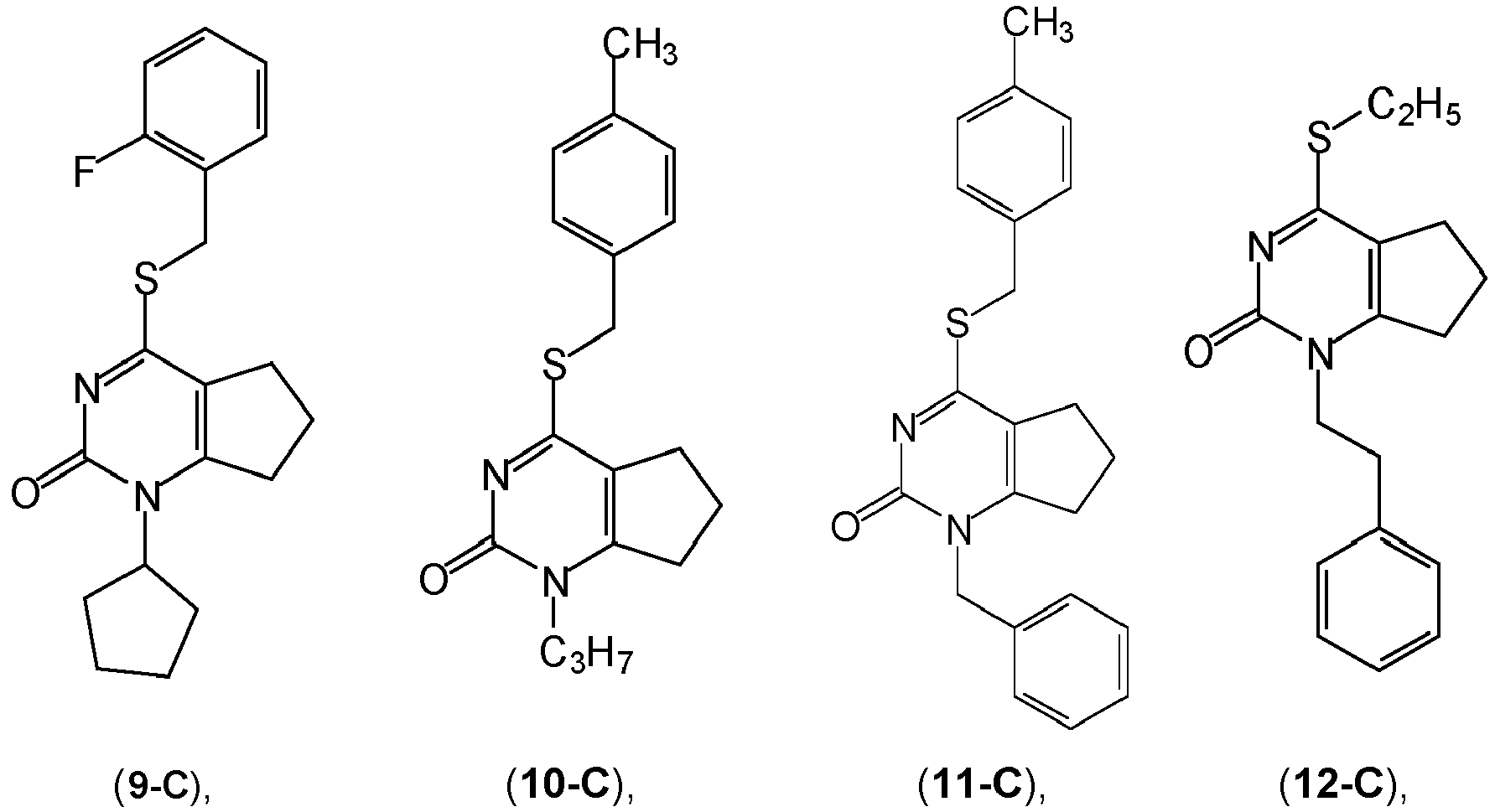
The present invention is further directed to a compound for use or the combination of compounds for use in inhibiting virulence of one or more plant pathogenic basidiomycete fungi, wherein the compound(s) is/are selected from: 1-A, 2-A, 3-A, 4-A, 5-A, 6-A, 1-B, 2-B, 3-B, 4-B, 5-B, 6-B, 7-B, 1-C, 2-C, 3-C, 4-C, 5-C, 6-C, 7-C, 8-C, 9-C, 10-C, 11-C, 12-C, 13-C, 14-C, 15-C, 16-C, 17-C, 18-C, 19-C, 20-C, 21-C, 22-C, 23-C, 24-C, and 25-C, and salts especially agriculturally acceptable salts thereof,
wherein the one or more plant pathogenic basidiomycete fungi are selected from the group consisting of smut fungi and rust fungi, wherein the smut fungi are Ustilago hordei, Ustilago avenae, Ustilago nuda, Ustilago nigra, Ustilago tritici, Ustilago maydis, Ustilago scitaminea, Ustilago esculenta, Ustilago striiformis, Ustilago trichophora, Sporisorium reilianum, Sporisorium reilianum f.sp. zeae, Sporisorium reilianum f.sp. reilianum, Sporisorium scitamineum, Angiosorus solani, Urocystis agropyri, Urocystis occulta, Tilletia indica, Tilletia caries, Tilletia barclayana or Tilletia controversa, or wherein the rust fungi is Uromyces fabae, Uromyces appendiculatus, Uromyces beticola, Puccinia graminis f. sp. tritici, Puccinia striiformis f. sp. tritici, Puccinia triticina, Puccinia graminis f. sp. secalis, Puccinia arachidis, Puccinia coronata f. sp. avenae, Puccinia sorghi, Puccinia melanocephala, Puccinia kuehnii, Puccinia recondita, Puccinia pitteriana, Puccinia graminis, Puccinia polysora, Phakopsora pachyrhizi, Phakopsora meibomiae, Hemileia vastatrix, Melampsora-larici-populina, Melampsora lini, Cronartium ribicola, Cronartium quercuum f. sp. fusiforme, Gymnosporangium sabinae, Gymnosporangium yamadae, Gymnosporangium juniperi-virginianae.
-
Moreover, the present invention is directed to a compound for use or a combination of compounds for use in inhibiting virulence of one or more plant pathogenic basidiomycete fungi, wherein the compound(s) is/are selected from the general formula (I) - (III) which are defined as follows:
- wherein R1, R2, R3, RN, RS, R*, Ar, L and X have the meanings as disclosed herein and salts especially agriculturally acceptable salts thereof,
- wherein the one or more plant pathogenic basidiomycete fungi are selected from the group consisting of smut fungi and rust fungi.
-
The present invention is further directed to a compound for use or the combination of compounds for use in inhibiting virulence of one or more plant pathogenic basidiomycete fungi, wherein the compound(s) is/are selected from 1-A, 2-A, 3-A, 4-A, 5-A, 6-A, 1-B, 2-B, 3-B, 4-B, 5-B, 6-B, 7-B, 1-C, 2-C, 3-C, 4-C, 5-C, 6-C, 7-C, 8-C, 9-C, 10-C, 11-C, 12-C, 13-C, 14-C, 15-C, 16-C, 17-C, 18-C, 19-C, 20-C, 21-C, 22-C, 23-C, 24-C, and 25-C, and salts especially agriculturally acceptable salts thereof, wherein the one or more plant pathogenic basidiomycete fungi are selected from the group consisting of smut fungi and rust fungi.
-
Further, the present invention is directed to a compound for use or a combination of compounds for use in inhibiting virulence of one or more plant pathogenic basidiomycete fungi, wherein the compound(s) is/are selected from the general formula (I) - (III) which are defined as follows:
- wherein R1, R2, R3, RN, RS, R*, Ar, L and X have the meanings as disclosed herein and salts especially agriculturally acceptable salts thereof,
- wherein the one or more plant pathogenic basidiomycete fungi are selected from the group consisting of smut fungi and rust fungi, wherein the smut fungi are Ustilago maydis, Ustilago esculenta, Ustilago trichophora, Ustilago tritici, Sporisorium reilianum f.sp. zeae, Sporisorium reilianum f.sp. reilianum, Sporisorium scitamineum, Ustilago hordei, or wherein the rust fungi is Uromyces fabae.
-
The present invention is further directed to a compound for use or the combination of compounds for use in inhibiting virulence of one or more plant pathogenic basidiomycete fungi, wherein the compound(s) is/are selected from 1-A, 2-A, 3-A, 4-A, 5-A, 6-A, 1-B, 2-B, 3-B, 4-B, 5-B, 6-B, 7-B, 1-C, 2-C, 3-C, 4-C, 5-C, 6-C, 7-C, 8-C, 9-C, 10-C, 11-C, 12-C, 13-C, 14-C, 15-C, 16-C, 17-C, 18-C, 19-C, 20-C, 21-C, 22-C, 23-C, 24-C, and 25-C, and salts especially agriculturally acceptable salts thereof,
wherein the one or more plant pathogenic basidiomycete fungi are selected from the group consisting of smut fungi and rust fungi, wherein the smut fungi are Ustilago maydis, Ustilago esculenta, Ustilago trichophora, Ustilago tritici, Sporisorium reilianum f.sp. zeae, Sporisorium reilianum f.sp. reilianum, Sporisorium scitamineum, Ustilago hordei, or wherein the rust fungi is Uromyces fabae.
-
As used herein, the terms "fungicide", "fungicidal compound", "fungicidal composition", "antifungal agent", "antifungal compound", and "antifungal composition" are used interchangeably to refer to a substance that kills or inhibits the growth, proliferation, division, reproduction, virulence or spread of fungi, such as plant pathogenic fungi.
-
The term "fungi pathogenicity" refers to the capacity of a fungus to cause damage in a host.
"Virulence" is the degree of pathogenicity, i.e., the amount of measureable disease or damage that fungi can cause. Virulence may be determined for example by mortality due to a strain or mix of strains. More in particular, virulence of plant pathogenic fungi may be determined for example by quantification of the damages or symptoms to the host plant.
Fungicidal composition
-
A further embodiment of the invention provides a fungicidal composition comprising a compound for use or a combination of compounds for use in treating, preventing, inhibiting, or eliminating the virulence of one or more plant pathogenic basidiomycete fungi in a plant or a plant material, wherein the compound(s) is/are selected from the general formula (I) - (III) as follows:
- wherein R1, R2, R3, RN, RS, R*, Ar, L and X have the meanings as disclosed herein and salts especially agriculturally acceptable salts thereof; and
- wherein the fungicidal composition further comprises at least one suitable agriculturally acceptable carrier, excipient, solvent and/or adjuvant.
-
A further more particular embodiment of the invention provides a fungicidal composition comprising a compound for use or a combination of compounds for use in treating, preventing, inhibiting, or eliminating the virulence of one or more plant pathogenic basidiomycete fungi in a plant or a plant material, wherein the compound(s) is/are selected from 1-A, 2-A, 3-A, 4-A, 5-A, 6-A, 1-B, 2-B, 3-B, 4-B, 5-B, 6-B, 7-B, 1-C, 2-C, 3-C, 4-C, 5-C, 6-C, 7-C, 8-C, 9-C, 10-C, 11-C, 12-C, 13-C, 14-C, 15-C, 16-C, 17-C, 18-C, 19-C, 20-C, 21-C, 22-C, 23-C, 24-C, and 25-C, and salts especially agriculturally acceptable salts thereof;
wherein the fungicidal composition further comprises at least one suitable agriculturally acceptable carrier, excipient, solvent and/or adjuvant.
-
A further embodiment of the invention provides a fungicidal composition comprising a compound for use or a combination of compounds for use in treating, preventing, inhibiting, or eliminating the virulence of one or more plant pathogenic basidiomycete fungi in a plant or a plant material, wherein the compound(s) is/are selected from the general formula (I) - (III) as follows:
- wherein R1, R2, R3, RN, RS, R*, Ar, L and X have the meanings as disclosed herein and salts especially agriculturally acceptable salts thereof; and
- wherein the fungicidal composition further comprises at least one suitable agriculturally acceptable carrier, excipient, solvent and/or adjuvant, and
- wherein the one or more plant pathogenic basidiomycete fungi are selected from the group consisting of smut fungi and rust fungi.
-
A further embodiment of the invention provides a fungicidal composition comprising a compound for use or a combination of compounds for use in treating, preventing, inhibiting, or eliminating the virulence of one or more plant pathogenic basidiomycete fungi in a plant or a plant material, wherein the compound(s) is/are selected from the general formula (I) - (III) as follows:
- wherein R1, R2, R3, RN, RS, R*, Ar, L and X have the meanings as disclosed herein and salts especially agriculturally acceptable salts thereof; and
- wherein the fungicidal composition further comprises at least one suitable agriculturally acceptable carrier, excipient, solvent and/or adjuvant, and
- wherein the one or more plant pathogenic basidiomycete fungi are selected from the group consisting of smut fungi and rust fungi, wherein the smut fungi are Ustilago hordei, Ustilago avenae, Ustilago nuda, Ustilago nigra, Ustilago tritici, Ustilago maydis, Ustilago scitaminea, Ustilago esculenta, Ustilago striiformis, Ustilago trichophora, Sporisorium reilianum, Sporisorium reilianum f.sp. zeae, Sporisorium reilianum f.sp. reilianum, Sporisorium scitamineum, Angiosorus solani, Urocystis agropyri, Urocystis occulta, Tilletia indica, Tilletia caries, Tilletia barclayana or Tilletia controversa, or wherein the rust fungi is Uromyces fabae, Uromyces appendiculatus, Uromyces beticola, Puccinia graminis f. sp. tritici, Puccinia striiformis f. sp. tritici, Puccinia triticina, Puccinia graminis f. sp. secalis, Puccinia arachidis, Puccinia coronata f. sp. avenae, Puccinia sorghi, Puccinia melanocephala, Puccinia kuehnii, Puccinia recondita, Puccinia pitteriana, Puccinia graminis, Puccinia polysora,Phakopsora pachyrhizi, Phakopsora meibomiae, Hemileia vastatrix, Melampsora-larici-populina, Melampsora lini, Cronartium ribicola, Cronartium quercuum f. sp. fusiforme, Gymnosporangium sabinae, Gymnosporangium yamadae, Gymnosporangium juniperi-virginianae.
-
A further still more particular embodiment of the invention provides a fungicidal composition comprising a compound for use or a combination of compounds for use in treating, preventing, inhibiting, or eliminating the virulence of one or more plant pathogenic basidiomycete fungi in a plant or a plant material, wherein the compound(s) is/are selected from 1-A, 2-A, 3-A, 4-A, 5-A, 6-A, 1-B, 2-B, 3-B, 4-B, 5-B, 6-B, 7-B, 1-C, 2-C, 3-C, 4-C, 5-C, 6-C, 7-C, 8-C, 9-C, 10-C, 11-C, 12-C, 13-C, 14-C, 15-C, 16-C, 17-C, 18-C, 19-C, 20-C, 21-C, 22-C, 23-C, 24-C, and 25-C, and salts especially agriculturally acceptable salts thereof;
wherein the fungicidal composition further comprises at least one suitable agriculturally acceptable carrier, excipient, solvent and/or adjuvant, and
wherein the one or more plant pathogenic basidiomycete fungi are selected from the group consisting of smut fungi and rust fungi, wherein the smut fungi are Ustilago hordei, Ustilago avenae, Ustilago nuda, Ustilago nigra, Ustilago tritici, Ustilago maydis, Ustilago scitaminea, Ustilago esculenta, Ustilago striiformis, Ustilago trichophora, Sporisorium reilianum, Sporisorium reilianum f.sp. zeae, Sporisorium reilianum f.sp. reilianum, Sporisorium scitamineum, Angiosorus solani, Urocystis agropyri, Urocystis occulta, Tilletia indica, Tilletia caries, Tilletia barclayana or Tilletia controversa, or wherein the rust fungi is Uromyces fabae, Uromyces appendiculatus, Uromyces beticola, Puccinia graminis f. sp. tritici, Puccinia striiformis f. sp. tritici, Puccinia triticina, Puccinia graminis f. sp. secalis, Puccinia arachidis, Puccinia coronata f. sp. avenae, Puccinia sorghi, Puccinia melanocephala, Puccinia kuehnii, Puccinia recondita, Puccinia pitteriana, Puccinia graminis, Puccinia polysora,Phakopsora pachyrhizi, Phakopsora meibomiae, Hemileia vastatrix, Melampsora-larici-populina, Melampsora lini, Cronartium ribicola, Cronartium quercuum f. sp. fusiforme, Gymnosporangium sabinae, Gymnosporangium yamadae, Gymnosporangium juniperi-virginianae.
-
A further embodiment of the invention provides a fungicidal composition comprising a compound for use or a combination of compounds for use in treating, preventing, inhibiting, or eliminating the virulence of one or more plant pathogenic basidiomycete fungi in a plant or a plant material, wherein the compound(s) is/are selected from the general formula (I) - (III) as follows:
- wherein R1, R2, R3, RN, RS, R*, Ar, L and X have the meanings as disclosed herein and salts especially agriculturally acceptable salts thereof; and
- wherein the fungicidal composition further comprises at least one suitable agriculturally acceptable carrier, excipient, solvent and/or adjuvant, and
- wherein the one or more plant pathogenic basidiomycete fungi are selected from the group consisting of smut fungi and rust fungi, wherein the smut fungi are Ustilago maydis, Ustilago esculenta, Ustilago trichophora, Ustilago tritici, Sporisorium reilianum f.sp. zeae, Sporisorium reilianum f.sp. reilianum, Sporisorium scitamineum, Ustilago hordei, or wherein the rust fungi is Uromyces fabae.
-
Another more particular embodiment of the invention provides a fungicidal composition comprising a compound for use or a combination of compounds for use in treating, preventing, inhibiting, or eliminating the virulence of one or more plant pathogenic basidiomycete fungi in a plant or a plant material, wherein the compound(s) is/are selected from 1-A, 2-A, 3-A, 4-A, 5-A, 6-A, 1-B, 2-B, 3-B, 4-B, 5-B, 6-B, 7-B, 1-C, 2-C, 3-C, 4-C, 5-C, 6-C, 7-C, 8-C, 9-C, 10-C, 11-C, 12-C, 13-C, 14-C, 15-C, 16-C, 17-C, 18-C, 19-C, 20-C, 21-C, 22-C, 23-C, 24-C, and 25-C, and salts especially agriculturally acceptable salts thereof;
wherein the fungicidal composition further comprises at least one suitable agriculturally acceptable carrier, excipient, solvent and/or adjuvant, and
wherein the one or more plant pathogenic basidiomycete fungi are selected from the group consisting of smut fungi and rust fungi, wherein the smut fungi are Ustilago maydis, Ustilago esculenta, Ustilago trichophora, Ustilago tritici, Sporisorium reilianum f.sp. zeae, Sporisorium reilianum f.sp. reilianum, Sporisorium scitamineum, Ustilago hordei, or wherein the rust fungi is Uromyces fabae.
-
In the context of the present invention, "treating or inhibiting the virulence of a plant pathogenic fungus" means a reduction in infection or infestation by the plant pathogenic fungus, compared with the untreated plant, preferably a reduction by 25 - 50 %, compared with the untreated plant (100 %), more preferably a reduction by 40-79 %, compared with the untreated plant (100 %); even more preferably, the infection by the plant pathogenic fungus is almost entirely suppressed or eliminated (by 70-100 %).
In the context of the present invention, "eliminating the virulence of a plant pathogenic fungus" means a reduction in infection or infestation by the plant pathogenic fungus, compared with the untreated plant, by 100 %, compared with the untreated plant (100 %), i.e. the infection by the plant pathogenic fungus is entirely suppressed.
In the context of the present invention, "preventing the virulence of a plant pathogenic fungus" means to decrease the likelihood of infection by said fungus relative to the likelihood of infection in an untreated plant. For example, the method can decrease the likelihood of infection by 1%, 2%, 5%, 10%, 20%, 30%, 40%, 50%, 60%, 70%, 80%, 90%, 95%, 99%, 100%, or more than 100% relative to an untreated plant. In some instances, the method can decrease the likelihood of infection by about 2x-fold, 5x-fold, 10x-fold, 25x-fold, 50x-fold, 75x-fold, 100x-fold, or more than 100x-fold relative to an untreated plant.
-
The infection or infestation by the plant pathogenic fungus can be determined by using a particular method depending on the fungus and plant being tested. Infection and associated symptoms can be identified by any means of identifying infection or related symptoms. In one aspect, the methods may involve macroscopic or microscopic screening for infection and/or symptoms, quantitative PCR, or the use of microarrays for detection of infection related genes (e.g. Systemic Acquired Resistance genes, defensin genes, and the like). Macroscopic and microscopic methods for determining infestation in a plant are known in the art and include the identification of damage on plant tissue caused by the infection or by the presence of lesions, necrosis, pustules, tumors, spores, hyphae, growth of fungal mycelium, wilts, blights, spots on fruits, rots, galls and stunts, or the like. Such symptoms can be compared to non-infested plants, photos, or illustrations of infected plants or combinations thereof to determine the presence of an infection or the identity of the pathogen or both. Photos and illustrations of the symptoms of pathogen infection are widely available in the art. In some instances, the symptoms are visible to the naked eye or by a specified magnification (e.g., 2x, 3x, 4x, 5x, 10x, or 50x). In some instances, the infection or associated symptom can be identified using commercially available test kits to identify pests in plants. Such test kits are available, for example, from local agricultural extensions or cooperatives. In some instances, identifying a crop plant in need of treatment is by prediction of weather and environmental conditions conducive for disease development.
-
The infection or infestation by the plant pathogenic fungus is determined for example by quantification of tumor formation when analysing U. maydis infection in corn (Kamper et al. 2006), or of formation of spore pustules when analysing U. fabae infection in Vicia faba plants (Sillero and Rubiales 2002, Histological Characterization of Resistance to Uromyces viciae-fabae in Faba Bean, Phytopathology 92 (3), 294-299).
-
An "fungicidally effective amount" or " fungicidally effective phytologically acceptable amount" means an amount of the inventive compound or composition which is sufficient to treating, preventing, inhibiting, or eliminating the virulence of one plant pathogenic basidiomycete fungus in a plant or a plant material, and which, at the same time, does not cause any significant symptoms of phytotoxicity in the treated plant or plant material.
In general, the effective amount may vary within a relatively wide range. It depends on several factors, for example on the fungus to be controlled, the stage of growth thereof, the plant, or the part of the plant or other plant material to be contacted with the compound, the climatic conditions and the ingredients of the inventive compositions.
-
Suitable organic solvents include all polar and non-polar organic solvents usually employed for formulation purposes. Preferable the solvents are selected from ketones, e.g. methyl-isobutyl-ketone and cyclohexanone, amides, e.g. dimethyl formamide and alkanecarboxylic acid amides, e.g. N,N-dimethyl decaneamide and N,N-dimethyl octanamide, furthermore cyclic solvents, e.g. N-methyl-pyrrolidone, N-octyl-pyrrolidone, N-dodecyl-pyrrolidone, N-octyl-caprolactame, N-dodecyl-caprolactame and butyrolactone, furthermore strong polar solvents, e.g. dimethylsulfoxide, and aromatic hydrocarbons, e.g. xylol, Solvesso™, mineral oils, e.g. white spirit, petroleum, alkyl benzenes and spindle oil, also esters, e.g. propyleneglycol-monomethylether acetate, adipic acid dibutylester, acetic acid hexylester, acetic acid heptylester, citric acid tri-n-butylester and phthalic acid di-n-butylester, and also alkohols, e.g. benzyl alcohol and 1-methoxy-2-propanol.
-
According to the invention, carrier is to be understood as meaning a natural or synthetic, organic or inorganic substance, which is mixed or combined with the active compounds for better applicability, in particular for application to plants or plant parts or seeds. The carrier, which may be solid or liquid, is generally inert and should be suitable for use in agriculture.
According to the invention, a carrier is a natural or synthetic, organic or inorganic substance with which the active ingredients are mixed or combined for better applicability, in particular for application to plants or plant parts or seed. The carrier, which may be solid or liquid, is generally inert and should be suitable for use in agriculture.
Useful solid or liquid carriers include for example ammonium salts and natural rock dusts, such as kaolins, clays, talc, chalk, quartz, attapulgite, montmorillonite or diatomaceous earth, and synthetic rock dusts, such as finely divided silica, alumina and natural or synthetic silicates, resins, waxes, solid fertilizers, water, alcohols, especially butanol, organic solvents, mineral and vegetable oils, and derivatives thereof. Mixtures of such carriers can likewise be used. Suitable solid carrier include inorganic particles, e.g. carbonates, silikates, sulphates and oxides with an average particle size of between 0.005 and 20 mm, preferably of between 0.02 to 10 mm, for example ammonium sulphate, ammonium phosphate, urea, calcium carbonate, calcium sulphate, magnesium sulphate, magnesium oxide, aluminium oxide, silicium dioxide, so-called fine-particle silica, silica gels, natural or synthetic silicates, and alumosilicates and plant products like cereal flour, wood powder/sawdust and cellulose powder. Useful solid carriers for granules include for example crushed and fractionated natural rocks such as calcite, marble, pumice, sepiolite, dolomite, and synthetic granules of inorganic and organic meals, and also granules of organic material such as sawdust, coconut shells, maize cobs and tobacco stalks. Useful liquefied gaseous carriers are those liquids which are gaseous at standard temperature and under standard pressure, for example aerosol propellants such as halohydrocarbons, and also butane, propane, nitrogen and carbon dioxide.
-
The fungicidal compositions according to the invention may comprise additional further components, such as, for example, surfactants. Suitable surfactants are emulsifiers, dispersants or wetting agents having ionic or nonionic properties, or mixtures of these surfactants. Examples of these are salts of polyacrylic acid, salts of lignosulphonic acid, salts of phenolsulphonic acid or naphthalenesulphonic acid, polycondensates of ethylene oxide with fatty alcohols or with fatty acids or with fatty amines, substituted phenols (preferably alkylphenols or arylphenols), salts of sulphosuccinic esters, taurine derivatives (preferably alkyl taurates), phosphoric esters of polyethoxylated alcohols or phenols, fatty esters of polyols, and derivatives of the compounds containing sulphates, sulphonates and phosphates. The presence of a surfactant is required if one of the active compounds and/or one of the inert carriers is insoluble in water and when the application takes place in water. The proportion of surfactants is between 5 and 40 per cent by weight of the composition according to the invention.
Suitable surfactants (adjuvants, emulsifiers, dispersants, protective colloids, wetting agent and adhesive) include all common ionic and non-ionic substances, for example ethoxylated nonylphenols, polyalkylene glycolether of linear or branched alcohols, reaction products of alkyl phenols with ethylene oxide and/or propylene oxide, reaction products of fatty acid amines with ethylene oxide and/or propylene oxide, furthermore fattic acid esters, alkyl sulfonates, alkyl sulphates, alkyl ethersulphates, alkyl etherphosphates, arylsulphate, ethoxylated arylalkylphenols, e.g. tristyrylphenol-ethoxylates, furthermore ethoxylated and propoxylated arylalkylphenols like sulphated or phosphated arylalkylphenol-ethoxylates and -ethoxy- and -propoxylates. Further examples are natural and synthetic, water soluble polymers, e.g. lignosulphonates, gelatine, gum arabic, phospholipides, starch, hydrophobic modified starch and cellulose derivatives, in particular cellulose ester and cellulose ether, further polyvinyl alcohol, polyvinyl acetate, polyvinyl pyrrolidone, polyacrylic acid, polymethacrylic acid and co-polymerisates of (meth)acrylic acid and (meth)acrylic acid esters, and further co-polymerisates of methacrylic acid and methacrylic acid esters which are neutralized with alkalimetal hydroxide and also condensation products of optionally substituted naphthalene sulfonic acid salts with formaldehyde.
-
If appropriate, other additional components may also be present, for example protective colloids, binders, adhesives, thickeners, thixotropic substances, penetrants, stabilizers, sequestering agents, complex formers. In general, the active compounds can be combined with any solid or liquid additive customarily used for formulation purposes.
-
The inventive fungicidal compositions can be used as such or, depending on their particular physical and/or chemical properties, in the form of their formulations or the use forms prepared therefrom, such as liquids, gels, solutions, suspensions, sprays, powders, pellets, briquettes, bricks aerosols, capsule suspensions, cold-fogging concentrates, warm-fogging concentrates, encapsulated granules, fine granules, flowable concentrates for the treatment of seed, ready-to-use solutions, dustable powders, emulsifiable concentrates, oil-in-water emulsions, water-in-oil emulsions, macrogranules, microgranules, oil-dispersible powders, oil-miscible flowable concentrates, oil miscible liquids, gas (under pressure), gas generating product, foams, pastes, pesticide coated seed, suspension concentrates, suspoemulsion concentrates, soluble concentrates, suspensions, wettable powders, soluble powders, dusts and granules, water-soluble and water-dispersible granules or tablets, water-soluble and water-dispersible powders for the treatment of seed, wettable powders, natural products and synthetic substances impregnated with active ingredient, and also microencapsulations in polymeric substances and in coating materials for seed, and also ULV cold-fogging and warm-fogging formulations.
-
In general, the fungicidal compositions according to the invention comprise between 0.05 and 99 per cent by weight, 0.01 and 98 per cent by weight, preferable between 0.1 and 95 per cent by weight, particularly preferred between 0.5 and 90 per cent by weight of a compound of general formula (I) - (III) as described herein or of a combination of compounds according to the invention.
-
The fungicidal compositions according to the invention can be prepared using the standard method known in the art.
-
The fungicidal compositions according to the invention do not only comprise ready-to-use compositions which can be applied with suitable apparatus to the plant or the seed, but also commercial concentrates which have to be diluted with water prior to use.
-
According to the invention all plants, plant materials or plant parts can be treated. By plants is meant all plants and plant populations such as desirable and undesirable wild plants, cultivars and plant varieties, whether or not protectable by plant variety or plant breeder's rights. Cultivars and plant varieties can be plants obtained by conventional propagation and breeding methods which can be assisted or supplemented by one or more biotechnological methods such as by use of double haploids, protoplast fusion, random and directed mutagenesis, molecular or genetic markers or by bioengineering and genetic engineering methods. By plant materials or parts is meant all above ground and below ground parts and organs of plants such as shoot, leaves, needles, stems, branches, petioles, internodes, bark, pubescence, tillers,blossoms, fruiting bodies, fruits, stipules, seed (including embryo, endosperm, cotyledons, and seed coat), as well as roots, corms, tubers, rhizomes, fronds, blades, flowers and floral organs/structures (e.g., bracts, sepals, petals, stamens, carpels, anthers and ovules), plant tissue (e.g., vascular tissue, ground tissue, and the like), cells (e.g., guard cells, egg cells, and the like), and the like. Crops and vegetative and generative propagating material, for example cuttings, corms, rhizomes, runners and seeds also belong to plant parts.
-
Examples of plants which can be treated in accordance with the invention are listed in Table 1.
Methods using the fungicidal compounds or compositions.
-
An embodiment of the present invention relates to a method of treating, preventing, inhibiting, or eliminating virulence of one or more plant pathogenic basidiomycete fungi in a plant or a plant material comprising the step of applying onto a plant, to a plant material or in the vicinity of said plant or plant material a compound or a combination of compounds or a fungicidal composition comprising the same, wherein the compound(s) is/are selected from the general formula (I) - (III) as follows:
wherein R
1, R
2, R
3, R
N, R
S, R*, Ar, L and X have the meanings as disclosed herein and salts especially agriculturally acceptable salts thereof.
-
A particular embodiment of the present invention relates to a method of treating, preventing, inhibiting, or eliminating virulence of one or more plant pathogenic basidiomycete fungi in a plant or a plant material comprising the step of applying onto a plant, to a plant material or in the vicinity of said plant or plant material a compound or a combination of compounds or a fungicidal composition comprising the same, wherein the compound(s) is/are selected from 1-A, 2-A, 3-A, 4-A, 5-A, 6-A, 1-B, 2-B, 3-B, 4-B, 5-B, 6-B, 7-B, 1-C, 2-C, 3-C, 4-C, 5-C, 6-C, 7-C, 8-C, 9-C, 10-C, 11-C, 12-C, 13-C, 14-C, 15-C, 16-C, 17-C, 18-C, 19-C, 20-C, 21-C, 22-C, 23-C, 24-C, and 25-C, and salts especially agriculturally acceptable salts thereof.
-
A further embodiment of the present invention relates to a method of treating, preventing, inhibiting, or eliminating virulence of one or more plant pathogenic basidiomycete fungi in a plant or a plant material comprising the step of applying onto a plant, to a plant material or in the vicinity of said plant or plant material a compound or a combination of compounds or a fungicidal composition comprising the same, wherein the compound(s) is/are selected from the general formula (I) - (III) as follows:
- wherein R1, R2, R3, RN, RS, R*, Ar, L and X have the meanings as disclosed herein and salts especially agriculturally acceptable salts thereof, and
- wherein the one or more plant pathogenic basidiomycete fungi are selected from the group consisting of smut fungi and rust fungi, wherein the smut fungi are Ustilago hordei, Ustilago avenae, Ustilago nuda, Ustilago nigra, Ustilago tritici, Ustilago maydis, Ustilago scitaminea, Ustilago esculenta, Ustilago striiformis, Ustilago trichophora, Sporisorium reilianum, Sporisorium reilianum f.sp. zeae, Sporisorium reilianum f.sp. reilianum, Sporisorium scitamineum, Angiosorus solani, Urocystis agropyri, Urocystis occulta, Tilletia indica, Tilletia caries, Tilletia barclayana or Tilletia controversa, or wherein the rust fungi is Uromyces fabae, Uromyces appendiculatus, Uromyces beticola, Puccinia graminis f. sp. tritici, Puccinia striiformis f. sp. tritici, Puccinia triticina, Puccinia graminis f. sp. secalis, Puccinia arachidis, Puccinia coronata f. sp. avenae, Puccinia sorghi, Puccinia melanocephala, Puccinia kuehnii, Puccinia recondita, Puccinia pitteriana, Puccinia graminis, Puccinia polysora,Phakopsora pachyrhizi, Phakopsora meibomiae, Hemileia vastatrix, Melampsora-larici-populina, Melampsora lini, Cronartium ribicola, Cronartium quercuum f. sp. fusiforme, Gymnosporangium sabinae, Gymnosporangium yamadae, Gymnosporangium juniperi-virginianae.
-
A particular embodiment of the present invention relates to a method of treating, preventing, inhibiting, or eliminating virulence of one or more plant pathogenic basidiomycete fungi in a plant or a plant material comprising the step of applying onto a plant, to a plant material or in the vicinity of said plant or plant material a compound or a combination of compounds or a fungicidal composition comprising the same, wherein the compound(s) is/are selected from 1-A, 2-A, 3-A, 4-A, 5-A, 6-A, 1-B, 2-B, 3-B, 4-B, 5-B, 6-B, 7-B, 1-C, 2-C, 3-C, 4-C, 5-C, 6-C, 7-C, 8-C, 9-C, 10-C, 11-C, 12-C, 13-C, 14-C, 15-C, 16-C, 17-C, 18-C, 19-C, 20-C, 21-C, 22-C, 23-C, 24-C, and 25-C, and salts especially agriculturally acceptable salts thereof, and
wherein the one or more plant pathogenic basidiomycete fungi are selected from the group consisting of smut fungi and rust fungi, wherein the smut fungi are Ustilago hordei, Ustilago avenae, Ustilago nuda, Ustilago nigra, Ustilago tritici, Ustilago maydis, Ustilago scitaminea, Ustilago esculenta, Ustilago striiformis, Ustilago trichophora, Sporisorium reilianum, Sporisorium reilianum f.sp. zeae, Sporisorium reilianum f.sp. reilianum, Sporisorium scitamineum, Angiosorus solani, Urocystis agropyri, Urocystis occulta, Tilletia indica, Tilletia caries, Tilletia barclayana or Tilletia controversa, or wherein the rust fungi is Uromyces fabae, Uromyces appendiculatus, Uromyces beticola, Puccinia graminis f. sp. tritici, Puccinia striiformis f. sp. tritici, Puccinia triticina, Puccinia graminis f. sp. secalis, Puccinia arachidis, Puccinia coronata f. sp. avenae, Puccinia sorghi, Puccinia melanocephala, Puccinia kuehnii, Puccinia recondita, Puccinia pitteriana, Puccinia graminis, Puccinia polysora,Phakopsora pachyrhizi, Phakopsora meibomiae, Hemileia vastatrix, Melampsora-larici-populina, Melampsora lini, Cronartium ribicola, Cronartium quercuum f. sp. fusiforme, Gymnosporangium sabinae, Gymnosporangium yamadae, Gymnosporangium juniperi-virginianae.
-
An embodiment of the present invention relates to a method of treating, preventing, inhibiting, or eliminating virulence of one or more plant pathogenic basidiomycete fungi in a plant or a plant material comprising the step of applying onto a plant, to a plant material or in the vicinity of said plant or plant material a compound or a combination of compounds or a fungicidal composition comprising the same, wherein the compound(s) is/are selected from the general formula (I) - (III) as follows:
- wherein R1, R2, R3, RN, RS, R*, Ar, L and X have the meanings as disclosed herein and salts especially agriculturally acceptable salts thereof, and
- wherein the one or more plant pathogenic basidiomycete fungi are selected from the group consisting of smut fungi and rust fungi, wherein the smut fungi are Ustilago maydis, Ustilago esculenta, Ustilago trichophora, Ustilago tritici, Sporisorium reilianum f.sp. zeae, Sporisorium reilianum f.sp. reilianum, Sporisorium scitamineum, Ustilago hordei, or wherein the rust fungi is Uromyces fabae.
-
A particular embodiment of the present invention relates to a method of treating, preventing, inhibiting, or eliminating virulence of one or more plant pathogenic basidiomycete fungi in a plant or a plant material comprising the step of applying onto a plant, to a plant material or in the vicinity of said plant or plant material a compound or a combination of compounds or a fungicidal composition comprising the same, wherein the compound(s) is/are selected from 1-A, 2-A, 3-A, 4-A, 5-A, 6-A, 1-B, 2-B, 3-B, 4-B, 5-B, 6-B, 7-B, 1-C, 2-C, 3-C, 4-C, 5-C, 6-C, 7-C, 8-C, 9-C, 10-C, 11-C, 12-C, 13-C, 14-C, 15-C, 16-C, 17-C, 18-C, 19-C, 20-C, 21-C, 22-C, 23-C, 24-C, and 25-C, and salts especially agriculturally acceptable salts thereof, and
wherein the one or more plant pathogenic basidiomycete fungi are selected from the group consisting of smut fungi and rust fungi, wherein the smut fungi are Ustilago maydis, Ustilago esculenta, Ustilago trichophora, Ustilago tritici, Sporisorium reilianum f.sp. zeae, Sporisorium reilianum f.sp. reilianum, Sporisorium scitamineum, Ustilago hordei, or wherein the rust fungi is Uromyces fabae.
-
An embodiment of the present invention relates to a method of treating, preventing, inhibiting, or eliminating virulence of one or more plant pathogenic basidiomycete fungi in a plant or a plant material comprising the step of applying onto a plant, to a plant material or in the vicinity of said plant or plant material a compound or a combination of compounds or a fungicidal composition comprising the same, wherein the compound(s) is/are selected from the general formula (I) - (III) as follows:
- wherein R1, R2, R3, RN, RS, R*, Ar, L and X have the meanings as disclosed herein and salts especially agriculturally acceptable salts thereof, and
- wherein the one or more plant pathogenic basidiomycete fungi are selected from the group consisting of smut fungi and rust fungi.
-
A particular embodiment of the present invention relates to a method of treating, preventing, inhibiting, or eliminating virulence of one or more plant pathogenic basidiomycete fungi in a plant or a plant material comprising the step of applying onto a plant, to a plant material or in the vicinity of said plant or plant material a compound or a combination of compounds or a fungicidal composition comprising the same, wherein the compound(s) is/are selected from 1-A, 2-A, 3-A, 4-A, 5-A, 6-A, 1-B, 2-B, 3-B, 4-B, 5-B, 6-B, 7-B, 1-C, 2-C, 3-C, 4-C, 5-C, 6-C, 7-C, 8-C, 9-C, 10-C, 11-C, 12-C, 13-C, 14-C, 15-C, 16-C, 17-C, 18-C, 19-C, 20-C, 21-C, 22-C, 23-C, 24-C, and 25-C, and salts especially agriculturally acceptable salts thereof, and
wherein the one or more plant pathogenic basidiomycete fungi are selected from the group consisting of smut fungi and rust fungi.
-
The step of applying in the vicinity of said plant or plant material a compound or a combination of compounds or a fungicidal composition comprises applying to the surroundings, habitat, soil, or culture medium of said plant or plant material (for example, roots, foliage, flower or a locus of the fungus), a "fungicidally effective amount" of one or more of the compounds of general formula (I) - (III) described above, or of a combination of said compounds or a fungicidal composition comprising said compounds.. For example, the compound may be applied to the roots or foliage of plants for the control of various fungi, without damaging the commercial value of the plants.
-
The "fungicidally effective amount" to be applied is dependent on several factors, for example on the fungus to be controlled, the stage of growth thereof, the plant, or the part of the plant or other plant material to be contacted with the compound, the climatic conditions and the ingredients of the inventive compositions. Thus, all the compounds, and fungicidal compositions comprising the same, may not be equally effective at similar concentrations against the same fungal species. The compounds are effective in use with plants in a "fungicidally effective amount", which is also a "fungicidally effective phytologically acceptable amount".
-
The term "fungicidally effective amount" and "fungicidally effective phytologically acceptable amount" refers to an amount of a compound or a combination of compounds that treats, prevents, inhibits, or eliminate virulence of one plant pathogenic basidiomycete fungus for which control is desired, but is not significantly toxic to the plant. The exact fungicidally effective amount of a compound varies with the fungal disease to be controlled, the type of formulation employed, the method of application, the particular plant species, climate conditions, and the like. A suitable application rate can be for example 0.0001 , 0.001, 0.005, 0.01, 0.1 , 1, 2, 10, 100, 1,000, 2,000, 5,000 kg/ha (kg/hectare), or any range between about 0.0001 and 5,000. For example, about 0.0001 to about 0.01 , about 0.01 to about 10, about 10 to about 1,000, about 1 ,000 to about 5,000 kg/ha.
-
Any range or desired value given herein may be extended or altered without losing the effects sought, as is apparent to the skilled person for an understanding of the teachings herein.
-
The step of applying onto a plant, to a plant material or in the vicinity of said plant or plant material a compound or a combination of compounds or a fungicidal composition comprising the same is carried out directly or by action on their surroundings, habitat, soil, or culture medium using customary treatment methods, for example by dipping, spraying, atomizing, irrigating, evaporating, dusting, fogging, broadcasting, foaming, painting, spreading-on, watering (drenching), drip irrigating and, in the case of propagation material, in particular in the case of seeds, furthermore as a powder for dry seed treatment, a solution for seed treatment, a water-soluble powder for slurry treatment, by incrusting, by coating with one or more layers, etc. It is furthermore possible to apply the active compounds by the ultra-low volume method, or to inject the active compound preparation or the active compound itself into the soil.
-
A compound or a combination of compounds or a fungicidal composition comprising the same as defined in the present invention may be applied in the form of any of the generally used formulation types, for example, as solutions, dusts, wettable powders, flowable concentrate, or emulsifiable concentrates.
-
Preferably, the compounds of the present disclosure are applied in the form of a formulation, comprising one or more of the compounds of general formula (I) - (III) described above with a suitable "agriculturally acceptable carrier". Concentrated formulations may be dispersed in water, or other liquids, for application, or formulations may be dust-like or granular, which may then be applied without further treatment. The formulations can be prepared according to procedures that are conventional in the agricultural chemical art.
The present disclosure contemplates all carriers by which one or more of the compounds may be formulated for delivery and used as a fungicide. Typically, formulations are applied as aqueous suspensions or emulsions. Such suspensions or emulsions may be produced from water-soluble, water-suspendible, or emulsifiable formulations which are solids, usually known as wettable powders; or liquids, usually known as emulsifiable concentrates, aqueous suspensions, or suspension concentrates. As will be readily appreciated, any material to which these compounds may be added may be used, provided it yields the desired utility without significant interference with the activity of these compounds as antifungal agents.
-
Wettable powders, which may be compacted to form water-dispersible granules, comprise an intimate mixture of one or more of the compounds of general formula (I) - (III) described above, an inert carrier and surfactants. The concentration of the compound in the wettable powder may be from about 10 percent to about 90 percent by weight based on the total weight of the wettable powder, more preferably about 25 weight percent to about 75 weight percent. In the preparation of wettable powder formulations, the compounds may be compounded with any finely divided solid, such as prophyllite, talc, chalk, gypsum, Fuller's earth, bentonite, attapulgite, starch, casein, gluten, montmorillonite clays, diatomaceous earths, purified silicates or the like. In such operations, the finely divided carrier and surfactants are typically blended with the compound(s) and milled.
-
Emulsifiable concentrates of the compounds of general formula (I) - (III) described above may comprise a convenient concentration, such as from about 1 weight percent to about 50 weight percent of the compound, in a suitable liquid, based on the total weight of the concentrate. The compounds may be dissolved in an inert carrier, which is either a water-miscible solvent or a mixture of water-immiscible organic solvents, and emulsifiers. The concentrates may be diluted with water and oil to form spray mixtures in the form of oil-in-water emulsions. Useful organic solvents include aromatics, especially the high-boiling naphthalenic and olefmic portions of petroleum such as heavy aromatic naphtha. Other organic solvents may also be used, for example, terpenic solvents, including rosin derivatives, aliphatic ketones, such as cyclohexanone, and complex alcohols, such as 2-ethoxyethanol.
-
The compounds of general formula (I) - (III) described above also be applied as granular formulations, which are particularly useful for applications to the soil. Granular formulations generally contain from about 0.5 to about 10 weight percent, based on the total weight of the granular formulation of the compound(s), dispersed in an inert carrier which consists entirely or in large part of coarsely divided inert material such as attapulgite, bentonite, diatomite, clay or a similar inexpensive substance. Such formulations are usually prepared by dissolving the compounds in a suitable solvent and applying it to a granular carrier, which has been preformed to the appropriate particle size, in the range of from about 0.5 to about 3 mm. A suitable solvent is a solvent in which the compound is substantially or completely soluble. Such formulations may also be prepared by making a dough or paste of the carrier and the compound and solvent, and crushing and drying to obtain the desired granular particle.
-
The compounds of general formula (I) - (III) described above may be used alone, in composition or in combination, such as for example in a fungicidal composition, or in a combination wherein the compounds are administered in a simultaneous, separate or sequential application. If the single fungicidal compounds are applied in a sequential manner, i.e. at different times, they are applied one after the other within a reasonably short period, such as a few hours or days.
-
In a combination or in a fungicidal composition, the compounds of general formula (I) - (III) described above may be used in a wide variety of weight ratios. For example, in a two-component combination or composition, the following weight ratios can be used: 100:1 to 1:100, 50:1 to 1:50, 20:1 to 1:20, 10:1 to 1:10, 5:1 to 1:5, 3:1 to 1:3, 2:1 to 1:2, or 1:1.
Applications Rates and Timing
-
When using the inventive compounds or fungicidal combinations, the application rates can be varied within a relatively wide range, depending on the kind of application. The application rate of the inventive active ingredients is
- a) in the case of treatment of plant parts, for example leaves: from 0.1 to 10 000 g/ha, preferably from 10 to 1000 g/ha, more preferably from 10 to 800 g/ha, even more preferably from 50 to 300 g/ha (in the case of application by watering or dripping, it is even possible to reduce the application rate, especially when inert substrates such as rockwool or perlite are used);
- b) in the case of seed treatment: from 2 to 200 g per 100 kg of seed, preferably from 3 to 150 g per 100 kg of seed, more preferably from 2.5 to 25 g per 100 kg of seed, even more preferably from 2.5 to 12.5 g per 100 kg of seed;
- c) in the case of soil treatment: from 0.1 to 10 000 g/ha, preferably from 1 to 5000 g/ha.
-
These application rates are merely by way of example and are not limiting for the purposes of the invention. The inventive compositions can thus be used to protect plants from attack by the pathogens mentioned for a certain period of time after treatment.
Description of the Figures:
-
- Figure 1
- shows yeast 2-hybrid analysis of complex members. A) Pairwise interaction screens of proteins listed on the left reveal strong interaction between Stp3 and Stp1 as well as between Pep1 and Stp1. Stp1 and Stp4 interact only weakly. B) The weak interaction between Stp4 and Stp1 is enhanced when either Stp3 or Pep1 are additionally expressed.
- Figure 2
- shows that imidazopyridines can inhibit virulence of U. maydis. Four plants per assay (number on column) were infected with FB1xFB2 and compounds were added directly to the inoculum. A) Indicated compounds were added at 1 mM final concentration. B) Retesting of compounds inactive in A) at 1 mM final concentration. C) Restesting of compounds active in A) in 1 mM, 0.5 mM and 0.1 mM final concentration. The color scheme indicates symptom severity based on the strongest symptoms scored. Symptom severity of each infected plant was assessed according to Table 2 and plants were categorized according to the most severe symptoms they displayed. For example, 50% in the dark red category indicates that two of the four tested plants had heavy tumors.
- Figure 3
- shows that imidazopyridines can inhibit virulence of U. fabae. Infections were done by applying indicated compounds at 1mM or DMSO to left and right parts of the same leaf together with spores of U. fabae
- Figure 4
- shows that imidazopyridines can inhibit virulence of U. fabae. Infections were done by applying indicated compounds at 0.5 mM or DMSO to left and right parts of the same leaf together with spores of U. fabae. Because spore pustules are small all pustules present on leaflets are marked by black arrow tips.
- Figure 5
- shows that tetrahydro-cyclopentapyrimidines can inhibit virulence of U. maydis. Per assay, 4-5 plants (number on column) were infected with FB1xFB2 and 1-C was added directly to the inoculum at the indicated final concentrations. The color scheme indicates symptom severity based on the strongest symptoms scored.
- Figure 6
- shows that tetrahydro-cyclopentapyrimidines can inhibit virulence of U. fabae. Infections were done by applying 1-C in a dilution series or DMSO to left and right parts of the same leaf.
- Figure 7
- shows that pyrazolopyridin-benzenesulfonamides can inhibit virulence of U. maydis. Per assay, 4 5 plants (number on column) were infected with FB1xFB2 and 1-B was added directly to the inoculum at the indicated final concentrations. The color scheme indicates symptom severity based on the strongest symptoms scored.
- Figure 8
- shows that pyrazolopyridin-benzenesulfonamides can inhibit virulence of U. fabae. Infections were done by applying 1 mM 1-B or DMSO to left and right parts of the same leaf together with spores of U. fabae.
- Figure 9
- shows alignment of the protein sequences of Stp1 in the indicated fungi. MEPE: Melanopsichium pennsylvanicum; UESC: Ustilago esculenta; SPSC: Sporisorium scitamineum; SPRZ: Sporisorium reilianum f. sp. zeae; SPRS: Sporisorium reilianum f. sp. sorghi; UTCP: Ustilago trichophora; UTRI: Ustilago tritici; UMAG: U. maydis; UBRO: Ustilago bromivira; UHOR: Ustilago hordei (host: barley); UHOO: Ustilago hordei (host: oat).
- Figure 10
- shows alignment of the protein sequences of Stp2 in the indicated fungi. Abbreviations as in Figure 9.
- Figure 11
- shows alignment of the protein sequences of Stp3 in the indicated fungi. Abbreviations as in Figure 9.
- Figure 12
- shows alignment of the protein sequences of Stp4 in the indicated fungi. Abbreviations as in Figure 9.
- Figure 13
- shows alignment of the protein sequences of Stp5 in the indicated fungi. Abbreviations as in Figure 9.
- Figure 14
- shows alignment of the protein sequences of Stp6 in the indicated fungi. Abbreviations as in Figure 9.
- Figure 15
- shows alignment of the protein sequences of Pep1 in the indicated fungi. Abbreviations as in Figure 9.
-
The following examples are included to demonstrate preferred embodiments of the invention. It should be appreciated by those of skill in the art that the techniques disclosed in the following examples represent techniques discovered by the inventor to function well in the practice of the invention, and thus can be considered to constitute preferred modes for its practice. However, those of skill in the art should, in light of the present disclosure, appreciate that many changes can be made in the specific embodiments which are disclosed and still obtain a like or similar result without departing from the spirit and scope of the invention.
-
Further modifications and alternative embodiments of various aspects of the invention will be apparent to those skilled in the art in view of this description. Accordingly, this description is to be construed as illustrative only and is for the purpose of teaching those skilled in the art the general manner of carrying out the invention. It is to be understood that the forms of the invention shown and described herein are to be taken as examples of embodiments. Elements and materials may be substituted for those illustrated and described herein, parts and processes may be reversed, and certain features of the invention may be utilized independently, all as would be apparent to one skilled in the art after having the benefit of this description of the invention. Changes may be made in the elements described herein without departing from the spirit and scope of the invention as described in the following claims.
EXAMPLES
METHODS:
Synthesis of the compounds
-
The imidazopyrimines compounds (Formula I) were synthetized according to the method published by Manna et al. 2015. Regioselective annulation of nitrosopyridine with alkynes: straightforward synthesis of N-oxide-imidazopyridines. Chem. Commun. 51, 6119.
The tetrahydro-cyclopentapyrimidine compounds (Formula III) were purchased from ChemDiv using the "search for catalog numbers" option https://chemistryondemand.com:8443/eShop/. Catalog numbers are listed in Table 6 and 7.
-
The hit compound 1-B of pyrazolopyridin-benzenesulfonamides (Formula II) was purchased from Enamine, catalog nr. #Z365137036. The further pyrazolopyridin-benzenesulfonamide analogs were synthetized in house with the procedure described below.
Chemical synthesis of pyrazolopyridin-benzenesulfonamide analogs.
-
Reactions were performed in heat gun dried flasks under an argon atmosphere. All reagents purchased from commercial sources were used directly without further purification. Thin-layer chromatography was performed on pre-coated silica gel F-254 plates from Merck. The spots were visualized by UV light and/or by staining of the TLC plate with potassium permanganate stain followed, if necessary, by heating with a heat gun. For column chromatography, silica gel 60 from Merck with a particle size of 0.040-0.063 mm was used. 1H- and 13C-NMR spectra were recorded on Bruker AV 400 Avance III HD NanoBay (400 MHz), Bruker AV 500 Avance III HD (500 MHz), Bruker AV 600 Avance III HD (600 MHz) and Bruker AV 700 Avance III HD (700 MHz) spectrometers at room temperature. HPLC-MS analyses were performed with an Agilent 1100 Series connected to a Thermo LCQ Advantage mass spectrometer using a C18 HPLC column 3 µm from Macherey Nagel.
General procedure A: pyrazole alkylation
-
To a solution of 3 (1.0 equiv.) in DMF (0.2-0.3 M) was added the respective alkyl halide (1.1 equiv.) and Cs2CO3 (1.5 equiv.) and it was stirred at room temperature for 18-20 h. The reaction mixture was poured into EtOAc, washed with sat. aq. NaCl solution (2 ×), dried over MgSO4 and the solvent was removed under reduced pressure. Column chromatography (PE/EtOAc) afforded the N1-alkylated pyrazole and in some cases also the N2-alkylated pyrazole as minor product.
General procedure B: reduction of the nitro group
-
To a degassed solution of the aromatic nitro compound 3 or 4 (1.0 equiv.) in EtOH (0.2-0.3 M) was added Pd/C (10 wt%) followed by dropwise addition of triethylsilane (5.0 equiv.) and it was stirred at room temperature for 1 h. The reaction mixture was filtered over Celite, washed with EtOAc and the solvent was removed under reduced pressure. The corresponding aniline was used in the next step without further purification.
General procedure C: sulfonamide formation
-
To a solution of the aniline 5 (1.0 equiv.) in THF (0.1 M) at 0 °C was added NEt
3 (1.2 equiv.) and the corresponding sulfonyl chloride (1.1 equiv.) and it was allowed to reach room temperature over 16-18 h. The solvent was removed under reduced pressure. Column chromatography (PE/EtOAc) afforded the sulfonamide.
Sodium nitromalonaldehyde (2) (Org. Synth. 1952, 32, 95).
-
-
To a solution of NaNO2 (25.0 g, 362 mmol) in H2O (25 mL) was added dropwise a solution of Mucobromic acid (25.0 g, 97.0 mmol) in EtOH (25 mL) at 60 °C over 1 h, and the mixture was stirred at the same temperature for 15 min. The reaction was cooled to 0 °C and the solid was filtered, washed with cold EtOH and dried in the air to give an orange/beige colored wet solid (15.3 g). It was used without further purification in the next step.
5-Nitro-1H-pyrazolor3,4-b]pyridine (3) (Eur. J. Med Chem. 2017, 131, 1-13).
-
-
To a solution of sodium nitromalonaldehyde (15.3 g) in H2O (100 mL) was added 1H-Pyrazol-3-amine (3.00 g, 36.1 mmol, 1.0 equiv.) and it was stirred at 90 °C for 19 h. After cooling to room temperature the reaction mixture was adjusted to pH 5 using AcOH. EtOAc was added, the reaction mixture was filtered, extracted with EtOAc (2 × 75 mL), dried over MgSO4 and the solvent was removed under reduced pressure. Column chromatography (DCM/MeOH 50:1) afforded a light yellow solid (1.47 g, 8.96 mmol, 9 % over 2 steps).
1H-NMR (DMSO-d6, 700 MHz): δ = 8.44 (s, 1 H, Ar-H), 9.19 (d, J = 2.5 Hz, 1 H, Ar-H), 9.33 (d, J = 2.5 Hz, 1 H, Ar-H), 14.37 (s, 1 H, NH).
13C-NMR (DMSO-d6, 175 MHz): δ = 113.5, 127.8, 136.6, 139.1, 144.6, 152.6.
MS (ESI) m/z (%) = 165.0 (100) [M+H]+.
1-Methyl-5-nitro-1H-pyrazolo[3,4-b]pyridine (4.1a)
-
-
Following general procedure A: From 3 (150 mg, 0.914 mmol) and lodomethane (63 µL, 1.01 mmol). Purification by column chromatography (PE/EtOAc 3:1) afforded a colorless solid (111 mg, 0.623 mmol, 68 %).
1H-NMR (CDCl3, 500 MHz): δ = 4.22 (s, 3 H, CH3), 8.24 (s, 1 H, Ar-H), 8.95 (d, J = 2.4 Hz, 1 H, Ar-H), 9.41 (d, J = 2.4 Hz, 1 H, Ar-H).
13C-NMR (CDCl3, 125 MHz): δ = 34.67, 114.2, 127.1, 134.7, 139.5, 144.9, 151.3. MS (ESI) m/z (%) = 179.0 (100) [M+H]+.
1-Isopropyl-5-nitro-1H-pyrazolo[3,4-b]pyridine (4.2a)
-
-
Following general procedure A: From 3 (150 mg, 0.914 mmol) and 2-lodopropane (101 µL, 1.01 mmol). Purification by column chromatography (PE/EtOAc 3:1 → 1:1) afforded a slightly yellow oil (83.0 mg, 0.403 mmol, 44 %).
1H-NMR (CDCl3, 700 MHz): δ = 1.62 (d, J = 6.7 Hz, 6 H, 2 × CH3), 5.35 (hept, J = 6.7 Hz, 1 H, CH), 8.24 (s, 1 H, Ar-H), 8.93 (d, J = 2.4 Hz, 1 H, Ar-H), 9.39 (d, J = 2.4 Hz, 1 H, Ar-H).
13C-NMR (CDCl3, 175 MHz): δ = 22.10, 49.79, 114.4, 127.0, 134.5, 139.4, 144.5, 150.3.
MS (ESI) m/z (%) = 207.0 (100) [M+H]+.
1-Allyl-5-nitro-1H-pyrazolo[3,4-b]pyridine (4.3a)
-
-
Following general procedure A: From 3 (150 mg, 0.914 mmol) and allyl bromide (85 µL, 1.01 mmol). Purification by column chromatography (PE/EtOAc 3:1 → 1:1) afforded a slightly yellow oil (95.0 mg, 0.465 mmol, 51 %).
1H-NMR (CDCl3, 400 MHz): δ = 5.18-5.31 (m, 4 H, 2 × CH, CH2), 6.09 (ddt, J = 17.0, 10.3, 5.9 Hz, 1 H, CH), 8.27 (s, 1 H, Ar-H), 8.96 (d, J = 2.4 Hz, 1 H, Ar-H), 9.41 (d, J = 2.4 Hz, 1 H, Ar-H).
13C-NMR (CDCl3, 100 MHz): δ = 50.16, 114.4, 119.0, 127.1, 131.9, 135.1, 139.7, 145.0, 151.0.
MS (ESI) m/z (%) = 205.0 (100) [M+H]+.
1-(Cyclohex-2-en-1-yl)-5-nitro-1H-pyrazolo[3,4-b]pyridine (4.4a)
-
-
Following general procedure A: From 3 (150 mg, 0.914 mmol) and 3-bromocyclohexene (116 µL, 1.01 mmol). Purification by column chromatography (PE/EtOAc 3:1 → 1:1) afforded a slightly yellow oil (96.0 mg, 0.393 mmol, 43 %).
1H-NMR (CDCl3, 500 MHz): δ = 1.76-1.88 (m, 1 H, CH), 1.93-2.04 (m, 1 H, CH), 2.07-2.23 (m, 3 H, 3 × CH), 2.23-2.34 (m, 1 H, CH), 5.72-5.81 (m, 2 H, 2 × CH), 6.08-6.19 (m, 1 H, CH), 8.26 (s, 1 H, Ar-H), 8.95 (d, J = 2.4 Hz, 1 H, Ar-H), 9.40 (d, J = 2.4 Hz, 1 H, Ar-H).
13C-NMR (CDCl3, 125 MHz): δ = 20.55, 24.65, 29.67, 53.50, 114.4, 125.7, 127.1, 132.4, 134.8, 139.5, 144.6, 150.7.
MS (ESI) m/z (%) = 245.0 (100) [M+H]+.
1-Benzyl-5-nitro-1H-pyrazolo[3,4-b]pyridine (4.5a)
-
-
Following general procedure A: From 3 (150 mg, 0.914 mmol) and benzyl bromide (119 µL, 1.01 mmol). Purification by column chromatography (PE/EtOAc 3:1 → 1:1) afforded a slightly yellow oil (112 mg, 0.441 mmol, 48 %).
1H-NMR (CDCl3, 500 MHz): δ = 5.75 (s, 2 H, CH2), 7.27-7.41 (m, 5 H, 5 × Ar-H), 8.25 (s, 1 H, Ar-H), 8.95 (d, J = 2.4 Hz, 1 H, Ar-H), 9.44 (d, J = 2.4 Hz, 1 H, Ar-H). 13C-NMR (CDCl3, 125 MHz): δ = 51.59, 114.4, 127.2, 128.3, 128.4, 129.0, 135.2, 135.9, 139.7, 145.1, 151.1.
MS (ESI) m/z (%) = 255.1 (100) [M+H]+.
tert-Butyl 2-(5-nitro-1H-pyrazolo[3,4-b]pyridin-1-yl)acetate (4.6a)
-
-
Following general procedure A: From 3 (150 mg, 0.914 mmol) and tert-butyl bromoacetate (149 µL, 1.01 mmol). Purification by column chromatography (PE/EtOAc 3:1 → 1:1) afforded a colorless solid (91.0 mg, 0.327 mmol, 36 %).
1H-NMR (CDCl3, 500 MHz): δ = 1.46 (s, 9 H, 3 × CH3), 5.26, (s, 2 H, CH2), 8.30 (s, 1 H, Ar-H), 8.97 (d, J = 2.4 Hz, 1 H, Ar-H), 9.42 (d, J = 2.4 Hz, 1 H, Ar-H).
13C-NMR (CDCl3, 125 MHz): δ = 28.13, 49.51, 83.52, 114.5, 127.2, 135.7, 139.9, 145.2, 151.9, 166.3.
MS (ESI) m/z (%) = 223.0 (100) [M-tBu+2H]+.
2,5-Difluoro-N-(1H-pyrazolo[3,4-b]pyridin-5-yl)benzenesulfonamide (6.1)
-
-
Following general procedure B: From 3 (40.0 mg, 0.244 mmol).
Following general procedure C: From aniline 5.1 (0.244 mmol) and 2,5-Difluorobenzenesulfonyl chloride (36 µL, 0.268 mmol, 1.1 equiv.). Purification by column chromatography (PE/EtOAc 1:1) afforded a beige colored solid (19.0 mg, 61.2 µmol, 25 %).
1H-NMR (DMSO-d6, 500 MHz): δ = 7.48-7.64 (m, 3 H, 3 × Ar-H), 7.93 (d, J = 2.4 Hz, 1 H, Ar-H), 8.11 (s, 1 H, Ar-H), 8.25 (d, J = 2.4 Hz, 1 H, Ar-H), 10.8 (s, 1 H, NH), 13.7 (Sbr, 1 H, NH).
13C-NMR (DMSO-d6, 125 MHz): δ = 114.1, 116.73 (d, J = 27.1 Hz), 119.47 (dd, J = 24.4, 8.8 Hz), 122.7 (dd, J = 24.1, 9.2 Hz), 123.6, 126.5, 127.9 (dd, J = 17.1, 7.4 Hz), 133.5, 145.0, 149.8, 154.4 (d, J = 251 Hz), 157.3 (d, J = 247 Hz).
MS (ESI) m/z (%) = 311.1 (100) [M+H]+.
2,5-Difluoro-N-(1-methyl-1H-pyrazolo[3,4-b]pyridin-5-yl)benzenesulfonamide (6.2)
-
-
Following general procedure B: From 4.1a (40.0 mg, 0.225 mmol).
-
Following general procedure C: From aniline 5.2 (0.225 mmol) and 2,5-Difluorobenzenesulfonyl chloride (33 µL, 0.247 mmol, 1.1 equiv.). Purification by column chromatography (PE/EtOAc 2:1 → 1:1) afforded a colorless oil (49.0 mg, 0.151 mmol, 67%).
1H-NMR (CDCl3, 500 MHz): δ = 4.10 (s, 3 H, CH3), 7.19-7.25 (m, 2 H, 2 × Ar-H), 7.40-7.45 (m, 1 H, Ar-H), 7.50 (Sbr, 1 H, NH), 7.96 (d, J = 2.4 Hz, 1 H, Ar-H), 7.97 (s, 1 H, Ar-H), 8.28 (d, J = 2.4 Hz, 1 H, Ar-H).
13C-NMR (CDCl3, 125 MHz): δ = 34.27, 115.4, 117.86 (d, J = 27.1 Hz), 118.55 (dd, J = 24.1, 7.8 Hz), 122.44 (dd, J = 24.0, 8.7 Hz), 125.5, 126.1, 127.80 (dd, J = 16.2, 6.9 Hz), 132.1, 145.7, 154.74 (dd, J = 250, 2.8 Hz), 157.97 (dd, J = 249, 2.6 Hz).
MS (ESI) m/z (%) = 325.2 (100) [M+H]+.
N-(1-isopropyl-1H-pyrazolo[3,4-b]pyridin-5-yl)methanesulfonamide (6.3)
-
-
Following general procedure B: From 4.2a (30.0 mg, 0.170 mmol).
Following general procedure C: From aniline 5.3 (0.170 mmol) and Methanesulfonyl chloride (15 µL, 0.187 mmol, 1.1 equiv.). Purification by column chromatography (PE/EtOAc 2:1 → 1:1) afforded a yellow oil (37.0 mg, 0.145 mmol, 85 %).
1H-NMR (CDCl3, 700 MHz): δ = 1.59 (d, J = 6.8 Hz, 6 H, 2 × CH3), 3.03 (s, 3 H, CH3), 5.27 (hept, J = 6.7 Hz, 1 H, CH), 7.03 (Sbr, 1 H, NH), 8.02 (s, 1 H, Ar-H), 8.08 (d, J = 2.4 Hz, 1 H, Ar-H), 8.45 (d, J = 2.4 Hz, 1 H, Ar-H).
13C-NMR (CDCl3, 175 MHz): δ = 22.18, 39.52, 49.17, 115.7, 125.6, 126.6, 131.9, 145.4, 148.0.
MS (ESI) m/z (%) = 255.1 (100) [M+H]+.
2,5-Difluoro-N-(1-isopropyl-1H-pyrazolo[3,4-b]pyridin-5-yl)benzenesulfonamide (6.4)
-
-
Following general procedure B: From 4.2a (30.0 mg, 0.170 mmol).
Following general procedure C: From aniline 5.3 (0.170 mmol) and 2,5-Difluorobenzenesulfonyl chloride (25 µL, 0.187 mmol, 1.1 equiv.). Purification by column chromatography (PE/EtOAc 3:1 → 2-1) afforded a colorless solid (43.0 mg, 0.122 mmol, 72 %).
1H-NMR (CDCl3, 700 MHz): δ = 1.55 (d, J = 6.8 Hz, 6 H, 2 × CH3), 5.21 (hept, J = 6.7 Hz, 1 H, CH), 7.12 (Sbr, 1 H, NH), 7.20-7.26 (m, 2 H, 2 × Ar-H), 7.42-7.47 (m, 1 H, Ar-H), 7.93 (d, J = 2.4 Hz, 1 H, Ar-H), 7.98 (s, 1 H, Ar-H), 8.25 (d, J = 2.4 Hz, 1 H, Ar-H).
13C-NMR (CDCl3, 175 MHz): δ = 22.17, 49.09, 115.1, 117.9 (d, J = 27.0 Hz), 118.6 (dd, J = 24.1, 7.8 Hz), 122.4 (dd, J = 24.0, 8.7 Hz), 125.4, 126.1, 128.0 (dd, J = 16.1, 7.0 Hz), 131.9, 145.3, 148.0, 154.8 (dd, J = 250.3, 3.0 Hz), 158.0 (dd, J = 249.0, 2.5 Hz).
MS (ESI) m/z (%) = 353.2 (100) [M+H]+.
2,5-Difluoro-N-(1-propyl-1H-pyrazolo[3,4-b]pyridin-5-yl)benzenesulfonamide (6.5)
-
-
Following general procedure B: From 4.3a (40.0 mg, 0.196 mmol).
Following general procedure C: From aniline 5.4 (0.196 mmol) and 2,5-Difluorobenzenesulfonyl chloride (29 µL, 0.215 mmol, 1.1 equiv.). Purification by column chromatography (PE/EtOAc 4:1) afforded a colorless solid (32.0 mg, 90.8 µmοl, 46 %).
1H-NMR (CDCl3, 400 MHz): δ = 0.90 (t, J = 7.4 Hz, 3 H, CH3), 1.89-1.99 (m, 2 H, CH2), 4.39- 4.44 (m, 2 H, CH2), 7.20-7.27 (m, 2 H, , 2 × Ar-H), 7.41-7.47 (m, 1 H, Ar-H), 7.95 (d, J = 2.4 Hz, 1 H, Ar-H), 7.97 (s, 1 H, Ar-H), 8.26 (d, J = 2.4 Hz, 1 H, Ar-H).
13C-NMR (CDCl3, 100 MHz): δ = 11.36, 23.19, 49.15, 115.4, 117.9 (d, J = 26.9 Hz), 118.6 (dd, J = 24.1, 7.9 Hz), 122.4 (dd, J = 24.1, 8.8 Hz), 125.4, 126.2, 128.0 (dd, J = 16.1, 7.1 Hz), 132.1, 145.5, 148.8, 154.8 (dd, J = 251, 2.8 Hz), 158.0 (dd, J = 249, 2.4 Hz).
MS (ESI) m/z (%) = 353.2 (100) [M+H]+.
N-(1-cyclohexyl-1H-pyrazolo[3,4-b]pyridin-5-yl)-2,5-difluorobenzenesulfonamide (6.6)
-
-
Following general procedure B: From 4.4a (40.0 mg, 0.164 mmol).
Following general procedure C: From aniline 5.5 (0.164 mmol) and 2,5-Difluorobenzenesulfonyl chloride (24 µL, 0.181 mmol, 1.1 equiv.). Purification by column chromatography (PE/EtOAc 4:1 → 3:1) afforded a yellow oil (40.0 mg, 0.102 mmol, 62 %).
1H-NMR (CDCl3, 500 MHz): δ = 1.26-1.37 (m, 1 H, CH), 1.40-1.54 (m, 2 H, 2 × CH), 1.70- 1.78 (m, 1 H, CH), 1.85-1.94 (m, 2 H, 2 × CH), 1.95-2.01 (m, 4 H, 4 × CH), 4.73-4.86 (m, 1 H, CH), 7.18 -7.27 (m, 2 H, 2 × Ar-H), 7.40-7.47 (m, 1 H, Ar-H), 7.94 (d, J = 2.4 Hz, 1 H, Ar-H), 7.97 (s, 1 H, Ar-H), 8.25 (d, J = 2.4 Hz, 1 H, Ar-H).
13C-NMR (CDCl3, 125 MHz): δ = 25.43, 25.75, 32.57, 56.44, 115.4, 117.9 (d, J = 26.9 Hz), 118.54(dd, J = 24.0, 8.0 Hz), 122.4 (dd, J = 24.1, 8.6 Hz), 125.3, 126.2, 127.9 (dd, J = 16.2, 6.9 Hz), 131.8, 142.3, 148.0, 154.8 (dd, J = 250, 2.7 Hz), 154.8 (dd, J = 250, 2.7 Hz).
MS (ESI) m/z (%) = 393.2 (100) [M+H]+.
N-(-benzyl-1H-pyrazolo[3,4-b]pyridin-5-yl)-2,5-difluorobenzenesulfonamide (6.7)
-
-
Following general procedure B: From 4.5a (40.0 mg, 0.157 mmol).
-
Following general procedure C: From aniline 5.6 (0.157 mmol) and 2,5-Difluorobenzenesulfonyl chloride (23 µL, 0.173 mmol, 1.1 equiv.). Purification by column chromatography (PE/EtOAc 3:1) afforded a colorless oil (26.0 mg, 64.9 µmol, 41 %).
1H-NMR (CDCl3, 400 MHz): δ = 5.64 (s, 2 H, CH2), 7.18-7.34 (m, 7 H, 7 × Ar-H), 7.41-7.51 (m, 1 H, Ar-H), 7.94 (d, J = 2.3 Hz, 1 H, Ar-H), 7.99 (s, 1 H, Ar-H), 8.29 (d, J = 2.3 Hz, 1 H, Ar-H).
13C-NMR (CDCl3, 100 MHz): δ = 51.12, 115.5, 117.9 (d, J = 27.0 Hz), 118.6 (dd, J = 24.0, 7.9 Hz), 122.5 (dd, J = 24.2, 8.8 Hz), 125.7, 126.0, 128.1, 128.1, 128.8, 132.7, 136.6, 145.8, 148.8, 154.8 (d, J = 254 Hz), 158.0 (d, J = 246 Hz).
MS (ESI) m/z (%) = 401.2 (100) [M+H]+.
tert-Butyl 2-(5-((2,5-difluorophenyl)sulfonamido)-1H-pyrazolo[3,4-b]pyridin-1-yl)acetate (5.9)
-
-
Following general procedure B: From 4.6a (80.0 mg, 0.288 mmol).
Following general procedure C: From aniline 5.5 (0.288 mmol) and 2,5-Difluorobenzenesulfonyl chloride (43 µL, 0.316 mmol, 1.1 equiv.). Purification by column chromatography (PE/EtOAc 2:1) afforded a colorless solid (72.0 mg, 0.170 mmol, 59 %).
1H-NMR (DMSO-d6, 500 MHz): δ = 1.33 (s, 9 H, 3 × CH3), 5.17 (s, 2 H, CH2), 7.47-7.63 (m, 3 H, 3 × Ar-H), 7.98 (d, J = 2.4 Hz, 1 H, Ar-H), 8.17 (s, 1 H, Ar-H), 8.28 (d, J = 2.3 Hz, 1 H, Ar-H), 10.9 (s, 1 H, NH).
13C-NMR (DMSO-d6, 125 MHz): δ = 27.57, 48,93, 81.85, 114.9, 116.8 (d, J = 27.2 Hz), 119.5 (dd, J = 24.0, 8.4 Hz), 122.8 (dd, J = 24.0, 8.7 Hz), 124.2, 127.2, 127.8 (dd, J = 16.5, 6.5 Hz), 133.2, 145.1, 148.4, 154.4 (d, J = 249 Hz), 157.3 (d, J = 244 Hz), 166.9.
MS (ESI) m/z (%) = 424.8 (100) [M+H]+, 369.1 (45) [M-tBu+H]+,
2,5-Difluoro-N-(1-isopropyl-1H-pyrazolo[3,4-b]pyhdin-5-yl)-N-methylbenzenesulfonamide (7.2)
-
-
To a solution of 6.4 (25.0 mg, 71.0 µmmol) in DMF (0.5 mL) was added lodomethane (5 µL, 78.1 µmmol, 1.1 equiv.) and CS2CO3 (34.7 mg, 0.106 mmol, 1.5 equiv.) and it was stirred at room temperature for 18 h. The reaction mixture was poured into EtOAc (15 mL), washed with sat. aq. NaCl solution (2 × 15 mL), dried over MgSO4 and the solvent was removed under reduced pressure. Column chromatography (PE/EtOAc 3:1) afforded a colorless oil (19.0 mg, 51.9 µmmol, 73 %).
1H-NMR (CDCl3, 500 MHz): δ = 1.58 (d, J = 6.8 Hz, 6 H, 2 × CH3), 3.45 (d, J = 2.1 Hz, 3 H, CH3), 5.26 (hept, J = 6.7 Hz, 1 H, CH), 7.18-7.31 (m, 2 H, 2 × Ar-H), 7.35-7.42 (m, 1 H, Ar-H), 7.88 (d, J = 2.3 Hz, 1 H, Ar-H), 7.99 (s, 1 H, Ar-H), 8.31 (d, J = 2.3 Hz, 1 H, Ar-H).
13C-NMR (CDCl3, 125 MHz): δ = 22.21, 39.95 (d, J = 4.0 Hz), 49.03, 115.5., 118.3 (d, J = 26.8 Hz), 118.83 (dd, J = 24.9, 7.8 Hz), 122.1 (dd, J = 24.0, 8.5 Hz), 127.43 (dd, J = 17.4, 6.6 Hz), 129.1, 130.9, 132.1, 147.9, 148.1, 155.0 (dd, J = 252, 2.8 Hz), 157.9 (dd, J = 248, 2.6 Hz).
MS (ESI) m/z (%) = 367.2 (100) [M+H]+.
Preparation and storing of chemical compounds.
-
The candidate chemical compounds of the COMAS library (http://comas.mpi-dortmund.mpg.de/index.php/workflow) were obtained from the chemical providers ChemDiv and Enamine in form of dry film which was dissolved in DMSO to yield a 10 mM stock solution and stored at -20°C for long term storage and at room temperature for short term storage. Additional compounds were obtained from academic collaboration partners, including Andrey Antonchick from Technical University of Dortmund in the form of 10 mM DMSO solution and stored at -20°C for long term storage and at room temperature for short term storage.
Before use in the screening campaign, the compounds were not diluted but directly added from 10 mM DMSO stocks to assay plates using acoustic nanoliter dispensing technology.
Establishment of a S. cerevisiae 2-hybrid system to assay Stp complex formation.
-
To develop a screening platform based on Stp complex formation, a Saccharomyces cerevisiae 2-hybrid system was used. The stp1(gene ID: 23563214, UMAG_02475), stp3 (gene ID: 23561938, UMAG_00715), stp4 (gene ID: 23567950, UMAG_12197) and pep1 (gene ID: 23562847, UMAG_01987) genes were cloned into both the bait vector pGBKT7 and the prey vector pGADT7, generating in-frame fusions with the gene encoding the yeast GAL4 binding (BD) and activation domain (AD), respectively. After co-transformation, reporter gene transcription is activated only if the two fusion proteins interact in the yeast nucleus. Moreover, the S. cerevisiae strain AH109 harbours the reporter genes ADE2 and HIS3, which encode for two enzymes that are crucial for adenine (Ade) and histidine (His) biosynthesis and thereby enable nutritional selection as a read-out for the interaction between proteins. In the following experiments, growth on high-stringency synthetic defined (SD) medium (SD -Leu -Trp -Ade -His) was used to identify if the complex members interact between them causing expression of ADE2 and HIS3. Additionally, strains were also grown on low-stringency medium (SD -Leu -Trp) to confirm their viability. Expression of all fusion proteins was confirmed by analyzing total cell extracts via western blot using anti-HA (AD fusion proteins) and anti-myc (BD fusion proteins) antibodies (not shown). All experiments were done with three independent transformants to exclude false positives due to spontaneous mutations. When tested for autoactivation, BD-Stp4 showed an activation of the reporter genes and was therefore used exclusively when fused to the AD. Neither BD-Stp1, BD-Stp3 nor BD-Pep1 showed autoactivation (not shown).
Preparation of yeast NL73 strain and NL70 control.
-
The S. cerevisiae strain AH109 from Clontech (Saint-Germain-en-Laye, France) is auxotrophic for tryptophan, leucine, adenine and histidine. In addition, lacz is under control of the MEL1 UAS to be used as readout for quantitative β-galactosidase assays. AH109Aabc9 is a derivative of AH109. In this strain, nine ABC transporter- related genes are deleted by standard methods using PCR product-mediated homologous recombination, making it highly permeable and sensitive for small molecules (Wong, et al., 2017. A yeast two-hybrid system for the screening and characterization of small-molecule inhibitors of protein-protein interactions identifies a novel putative Mdm2-binding site in p53. BMC Biology 15, 108).
-
To prove that ABC9Δ behaves like its progenitor strain AH109 with regard to expression and growth after expression of complex member combinations, several representative interaction assays for complex members were conducted. In all cases, the results were comparable to those previously observed in AH109 (not shown). The resulting test strain NL73 (AD-Stp4/BD-Stp1/myc-Stp3) expresses the Stp1/Stp4/Stp3 subcomplex. NL73 carries the following three plasmids:
pGBKT7-stp1: pGBKT7 vector expressing proteins fused to the GAL4 DNA binding domain (DNA-BD). pGBKT7 also contains the T7 promoter, a c-Myc epitope tag, and a MCS. The vector carries a Kanamycin resistance gene (Kanr) for selection in E. coli and the TRP1 nutritional marker for selection in yeast.
pGAD-stp4: pGADT7 vector expressing proteins fused to a GAL4 activation domain (AD). The GAL4 AD fusion contains an N-terminal nuclear localization signal that targets the protein to the yeast nucleus, and a HA Tag, located between the GAL4 AD and the protein of interest. The vector carries an ampicillin resistance gene (Ampr) for selection in E. coli and a LEU2 nutritional marker for selection in yeast.
pYEA-stp3-myc: pYEA vector expressing proteins under the control of the phosphoglycerate kinase promoter. The vector carries an ampicillin resistance gene (Ampr) for selection in E. coli and an ADE2 nutritional marker for selection in yeast. As control strain, NL70 containing empty vectors was generated (AH109Δabc9 pGAD::LEU2 pGBK::TRP1 pYEA::ADE2).
Incubation of NL73 and NL70 with candidate compounds and viability assay
-
Overnight cultures of the NL73 test strain and NL70 control strain (unable to grow on high stringency medium) were harvested by centrifugation, washed 2 times and resuspended in high stringency medium (0.67% (w/v) yeast nitrogen base (BD #291920), 0.16% (w/v) dropout supplements without adenine, histidine, leucine and tryptophan (Clonetech #630428), 2% glucose) to an OD600 of 0.5.
-
25 µl of compound stock solution were pre-dispensed into black 384-well assay plates (Corning 4513) using Echo520 Nanoliter dispenser (Labcyte). After that, 25 µl of NL73 cell suspension were dispensed into the assay plates using Multidrop Combi (Thermofisher Scientific) giving a final screening concentration of 10 µM. One column of the assay plate was filled with 25 µl of NL70 control strain cell suspension as negative control. Plates were sealed with Breathe-Easy sealing membrane (Sigma, Z380059), lidded and incubated in a humid chamber over night at 30°C and 140 rpm in an HT Multitron Pro (Infors). After approximately 19 h, plates were centrifuged for 1 min at 500 rpm (Eppendorf centrifuge 5804R). For the viability assay, the alamar Blue HS Cell Viability reagent (Invitrogen, #A50101) was pre-diluted using an equal amount of dVE-H2O and 5 µl of diluted Alamar Blue were added to the screening plates using Multidrop Combi. The plates were sealed again and incubated for 4 h at room temperature, unlidded. Fluorescence readout was carried out on a Spectramax Paradigm detection platform (Molecular Devices) at Ex/Em 535nm/595nm for 0.14 s. Screening data was normalized to DMSO-treated NL73 cells (that received DMSO in the same concentration as in samples where compounds dissolved in DMSO were added) being 100% and DMSO-treated NL70 cells representing 0% viability and analyzed with Quattro Software Suite (Quattro Research GmbH).
-
To determine whether reduced viability of NL73 in the presence of the compound did result from toxicity of the compound rather than from destruction of the complex, an Alamar Blue based toxicity counter-assay was developed. To this end an overnight culture of the control strain NL70 was harvested by centrifugation, washed 2 times and resuspended in low stringency medium (high stringency medium + 0.02 g/L histidine (Sigma) to an OD600 of 0.5. 25 µl of compound stock solution were pre-dispensed into black 384-well assay plates using Echo520 Nanoliter dispenser. After that, 25 µl of NL70 cell suspension were dispensed into the assay plates using Multidrop Combi giving a final screening concentration of 10 µM. One column of the assay plate was filled with 25 µl of NL70 cell suspension in high stringency medium as negative control. Plates were sealed with Breathe-Easy sealing membrane, lidded and incubated in a humid chamber over night at 30°C and 140 rpm in an Infors HT Multitron Pro. After approximately 19 h, plates were centrifuged for 1 min at 500 rpm. Alamar Blue HS Cell Viability reagent was pre-diluted using an equal amount of dVE-H2O and 5 µl of Alamar Blue were added using Multidrop Combi. The plates were sealed again and incubated for 4 h at room temperature, unlidded. Fluorescence readout was carried out on a Spectramax Paradigm detection platform at Ex/Em 535nm/595nm for 0.14 s. Data were normalized using DMSO-treated NL70 cells in low stringency vs. high stringency medium. Screening data was analysed with Quattro Software Suite (Quattro Research GmbH).
-
Hits which affected growth of NL73 but showed no toxicity at 10 µM concentration in NL70 were subjected to a confirmatory assay using the Beta-Glo assay system (Promega #E4740). This system allows luminescence-based quantification of β-galactosidase expression in cells which serves as a readout for promoter activation by interacting complex members Stp1, Stp3 and Stp4. Overnight cultures of NL73 and NL70 strains were harvested as described above. Dilution series of compound stock solution were pre-dispensed into black 384-well assay plates (Corning 4513) using Echo520 Nanoliter dispenser starting from 10 µM with 3-fold dilution over 8 steps. In the viability setup, 15 µl of NL73 cell suspension were dispensed into the assay plates using Multidrop Combi. One column of the assay plate was filled with 15 µl of NL70 cell suspension. In the toxicity setup, 15 µl of NL70 cell suspension in low stringency medium were dispensed into the assay plates with one column being filled with 15 µl of NL70 cell suspension in high stringency medium. Plates were sealed with Breathe-Easy sealing membrane, lidded and incubated in a humid chamber over night at 30°C and 140 rpm in an Infors HT Multitron Pro. After approximately 19 h, plates were centrifuged for 1 min at 500 rpm. 4 µl of Beta-Glo assay solution were added using Multidrop Combi. The plates were sealed again and incubated for 2.5 h at room temperature, unlidded. Luminescence readout was determined on a Spectramax Paradigm detection platform for 0.2 s. Dose response data was analysed with Quattro Software Suite.
Activity of the hit compounds in a maize U. maydis infection model
-
To test whether the identified ten hit compounds had an effect on virulence of U. maydis, Zea mays seedlings of the variety Golden Bantam (Bingenheimer Saatgut#G455) were infected with U. maydis strains FB1 and FB2 following an established protocol. Compounds to be tested were added to the inoculum. Briefly, 6 day old maize seedlings were syringe-infected with about 0.5 ml of fungal suspension in H2O which was amended with the hit compound. The infection and symptoms assessment were done as described in Kämper et al., (Insights from the genome of the biotrophic fungal plant pathogen Ustilago maydis. Nature 2006, 444, 97-101). During the syringe-infection into the stem, the fungal-compound mix is dispersed between the rolled-up leaves and fills the leaf whorl. The compounds were applied only at the stage of mixing with the inoculum, which is subsequently diluted with existing apoplastic fluid, during the infection. In addition, compounds have to reach the Stp complex in biotrophic hyphae from the initial inoculum. This explains that significantly higher concentrations are needed compared to the tests in yeast strain NL73. Since compounds are dissolved in DMSO, the tolerance of U. maydis towards DMSO was tested by adding DMSO to the inoculum at concentrations between 10 and 50% final concentration. Results showed that up to 20% are tolerated in the inoculum without adverse effects on virulence (not shown).
-
Symptom scoring was done 12 days post infection (dpi) in case of
U. maydis seedling infections. Symptom scoring occurred according to the categories described in
Table 2.
Table 2: Categories of virulence symptoms of U. maydis maize seedling infection (according to Kämper et al., 2006). | Plant symptom | Description |
| No symptoms | No symptoms observable |
| Chlorosis / necrosis | Plant shows discoloration |
| Small tumors | Small tumors (< 1 mm) on leaves or very few tumors (> 1 mm) |
| Normal tumors | Tumors on leaves and/or stem |
| Heavy tumors | Tumors on base of stem and/or change of growth axis |
| Dead | Plant died due to the infection |
Uromyces fabae - Vicia faba system
-
A previous study of Kemen et al. showed by immunoelectron microscopy that Uromyces fabae possesses structures highly similar to the Stp complex structures of U. maydis. Of particular relevance is that the RTP1 effector of U. fabae was revealed to reside in structures extending from fungal feeding structures, i.e. haustoria, into neighboring plant cells (Kemen et al., 2013). These data suggest that rust fungi might possess a Stp complex related structure.
-
The Uromyces fabae - Vicia faba system was established by initially obtaining spores as well as broad bean seeds from the Institut für Phytomedizin at Hohenheim University, Germany. Briefly, Vicia faba plants (Bingenheimer Saatgut Frühe Weißkeimige, G142) were propagated in soil up to about the 4 leaf stage (2-3 plants per pot). Plants were transferred to a chamber lined with wet paper. 100 mg U. fabae spores were mixed with 160 mg skimmed milk powder in 200 ml sterile H2O. Tween 20 was added to a final concentration of 0.01 % and the mixture was stirred in the dark for 45 min. Leaves were sprayed with the suspension on both the upper and lower side and afterwards the entire compartment was fogged with H2O before closure and kept in the dark for 20 h. Plants were then gradually allowed to dry and were placed in a growth chamber under a light regime of 16 h light (24°C) and 8 h (20°C) dark until symptoms developed (10-12 days). Plants were tossed and spores were collected on underlying aluminum foil, and aliquots were frozen at -80°C.
-
For the infection with compounds added, 10 mg of U. fabae spores were mixed with 16 mg skimmed milk powder in 20 ml sterile H2O. Tween 20 was added to a final concentration of 0.01 % and the mixture was stirred in the dark for 45 min. Compounds were diluted to the desired concentration into in the spore suspension. The controls received the same amount of DMSO. Per bean plant, one pinnate leaf with two leaflets was selected and one of the leaflets was infected with spores + compound and the other with spores + DMSO, respectively. To this end leaves were lightly sprayed with H2O and the 100µl spore solution containing the compound or DMSO respectively was applied on the upper part of the using a small painting brush. Afterwards the plants were placed in a chamber lined with wet paper, fogged with H2O before closure and kept in the dark for 20 h. Plants were then gradually allowed to dry and were placed in a growth chamber under a light regime of 16 h light (24°C) and 8 h (20°C) dark until symptoms developed. The symptoms were quantified by using a previously described method (Sillero and Rubiales, 2002) with minor modifications. Comparisons of pustule formation were done as follow: leaf treated with spores plus DMSO (control) versus leaf treated with spores plus compound in DMSO (test). A single bifurcated leaf was used for this assay, and one half received the control and the other half receive spores with compound. Then it was determined whether pustule formation occurs or is inhibited. Leaves were scored for the development of brownish-red pustules. Only when brownish-red pustules containing powdery spores (urediniospores) appeared on the control leaf an infection was counted as valid. All compounds were tested in three biological replicates. Pictures were taken at 12-14 days post infection.
Example 1. Establishment of Stp complex in yeast
-
Based on the crucial importance of the Stp complex for successful plant colonization of U. maydis, the inventors have considered it as a potential new fungicide target. A screening platform based on Stp complex formation was developed using a Saccharomyces cerevisiae 2-hybrid system as described in the methods. The stp1 stp3, stp4, and pep1 genes were cloned in order to have each of them expressed with AD or BD fusion proteins.
-
Testing strains containing all possible combinations of four complex members revealed that all strains could grow on low-stringency plates (SD -Leu -Trp). The yeast strains expressing AD-Stp3/BD-Stp1 and AD-Pep1/BD-Stp1 were able to grow on high-stringency plates (SD -Leu -Trp -Ade -His), illustrating direct interaction between the respective protein pairs ( Figure 1A ). For the ADStp4/BD-Stp1 expressing strains, growth could be observed on high-stringency plates, but appeared much weaker, suggesting a weaker, more transient interaction between Stp4 and Stp1 ( Figure 1A ). Combinations of AD-Stp3/BD-Pep1, AD-Stp4/BD-Stp3 and AD-Stp4/BD-Pep1 failed to provide for growth on high-stringency plates, indicating that there is no direct interaction between the respective protein pairs ( Figure 1A ). Next we tested whether expression of an additional complex member could increase interaction between the weakly interacting AD-Stp4/BD-Stp1 and the non-interacting effectors Stp3, Stp4 and Pep1. To this end, both myc-Pep1 and myc-Stp3 were cloned separately into the vector pYEA and co-transformed with AD-Stp4/BD-Stp1. pYEA contains an ADE2 nutritional marker allowing the selection on medium lacking adenine. The yeast strains expressing AD-Stp4/BD-Stp1/myc-Stp3 or AD-Stp4/BD-Stp1/myc-Pep1 showed full growth on both low (SD -Leu -Trp -Ade) and high (SD -Ade -His -Leu -Trp) stringency plates ( Figure 1B ). This demonstrates that the weak interaction between Stp1 and Stp4 is strengthened when either Stp3 or Pep1 are present.
-
The interaction of the respective three complex components revealed by yeast 2-Hybrid analysis was verified in a co-immunoprecipitation in combination with mass spectrometry (co-IP/MS) experiment in which the total lysate of strain AH109 AD-Stp4/BD-Stp1/myc-Stp3 was incubated with HA-coated magnetic beads to immunoprecipitate the HA-tagged AD-Stp4. Samples were analyzed by LC-MS/MS. Shortly, a total lysate of NL73 was incubated with HA-coated magnetic beads to immunoprecipitate the HA-tagged AD-Stp4 protein and interacting proteins. Precipitated proteins were analyzed by MS and numbers in
Table 3 are spectral counts representing the unique peptides of the respective proteins. The presence of spectral counts of Stp3 and Stp1 indicates that these proteins interacted with Stp4. The results showed an interaction between Stp1, Stp3 and Stp4 (
Table 3), confirming the existence of a stable subcomplex.
Table 3: Interaction between Stp1, Stp3 and Stp4 in S. cerevisiae revealed by co-IP/MS. | Peptides | Protein Stp4-HA |
| Stp1 | 26 |
| Stp3 | 14 |
| Stp4 | 58 |
Example 2: Yeast 2Hybrid-analysis for HTS screening of small molecules
-
The interaction of Stp1, Stp3 and Stp4 in the yeast 2Hybrid-system was monitored for HTS screening of small molecules inhibiting growth and thus, complex formation. Small compounds identified by virtue of inhibiting the three-component complex in S. cerevisiae, would most probably inhibit also biotrophic development of U. maydis.
-
To this end, the HTS test strain NL73 (AD-Stp4/BD-Stp1/myc-Stp3) expressing the Stp1/Stp4/Stp3 subcomplex, and the control strain NL70 were prepared as described in the methods. The growth of NL73 on high stringency medium depends on the interaction of Stp1, Stp4, and Stp3. Any compound interfering with assembly of the complex should eliminate or reduce growth/viability on high stringency medium. NL73 test strain and NL70 control strain were incubated with the compounds as described in the methods, and then tested for viability with the Alamar Blue based viability assay. To determine whether reduced viability of NL73 in the presence of the compound did result from toxicity of the compound rather than from destruction of the complex, an Alamar Blue based toxicity counter-assay was used. Hits which affected growth of NL73 but showed no toxicity at 10 µM concentration in NL70 were also subjected to a confirmatory assay using the Beta-Glo assay system (see methods). Briefly, this system allows luminescence-based quantification of β-galactosidase expression in cells which serves as a readout for promoter activation by interacting complex members Stp1, Stp3 and Stp4.
-
The established assay system was used to screen the compounds of the COMAS library (http://comas.mpi-dortmund.mpg.de/index.php) consisting mostly of screening compounds from ChemDiv and Enamine and also includes compounds with known mode of action as well as proprietary compounds from the Department of Chemical Biology (MPI Dortmund) as well as national and international collaboration partners. A primary screening of around 200,000 molecules was carried out using the Alamar Blue viability screening assay. Typically, signal-over-background factors of 10-15 and Z' of approximatively 0.6 were achieved. Hits were defined as having a residual viability of <50% with regard to the DMSO treated control cells. 1700 hits were picked from the compound storage and validated in the screening assay, the toxicity and the confirmatory beta-glo assays with a triplicate measurement at 10 µM. Hits that showed a mean residual viability of <40% in both the Alamar Blue and the Beta-Glo assays while displaying not more than 25% toxicity in the respective counter-assays were chosen for further analysis in dose response mode. This reduced the initial hits to 237 compounds, which were further analyzed in all assays in triplicate. Ten compounds from ten different chemical classes showed activity in the nanomolar or low micromolar range. Some compounds were part of a small hit cluster, while others were singletons. Eight of ten compounds were commercially available and were thus re-ordered from the supplier as powder.
Example 3: Activity of the hit compounds identified in the S. cerevisiae in a maize infection model with U. maydis
-
To test whether the identified ten hit compounds had an effect on virulence of U. maydis, Zea mays seedlings of the variety Golden Bantam were infected with U. maydis strains FB1 and FB2 following an established protocol, as described in the methods.
-
The ten hits from the HTS screen were assessed by applying the compounds at a final concentration of 5 mM in the inoculum of FB1xFB2 (Table 4) using 4-7 plants per assay. The results revealed significant reductions in virulence by compounds 1-A, 1-B, 1-C, and 1-D. Retesting of those four compounds for an inhibition of virulence, confirmed the results for 1-C (a tetrahydro-cyclopentapyrimidine), 1-B (a pyrazolopyridin-benzenesulfonamide) and 1-A (a imidazopyridine). These results showed that three of the ten hit compounds initially detected in the yeast assay also inhibited virulence of U. maydis.
-
Considering the three identified hit compounds, activity of structurally related compounds was also tested both with the Alamar Blue viability assay as well as with respect to virulence inhibition in
U. maydis and
U. fabae.
Table 4: Virulence of U. maydis with 5 mM hit compound added to inoculum | Compound | Severity of disease symptoms |
| First infection | Second infection |
| DMSO control | XXXXX* | XXXXX |
| 1-A | X | X |
| 1-B | XX | X |
| 1-C | XXX | XXX |
| 1-D | XX | XXXXX |
| 1-E | XXXXX | Not retested |
| 1-F | XXXX | Not retested |
| 1-G | XXXXX | Not retested |
| 1-H | XXXXX | Not retested |
| 1-I | XXXX | Not retested |
| 1-L | XXXXX | |
| *Full virulence is symbolized by (XXXXX) attenuated virulence is indicated (XXX - slightly reduced virulence; XX - reduced virulence; x - strongly reduced virulence) |
Example 4: Testing of imidazopyridines
-
Imidazopyridines (
Manna et al. 2015. Regioselective annulation of nitrosopyridine with alkynes: straightforward synthesis of N-oxide-imidazopyridines. Chem. Commun. 51, 6119) showed nanomolar potency in the Alamar Blue assay with NL73 strain (
Table 5 below).
Table 5: | COMPOUND | A-blue IC50 | B-glo IC50 |
| 1-A | 0.14 µM | 0.76 µM |
| 2-A | 0.02 µM | 0.23 µM |
| 3-A | 0.25 µM | 0.86 µM |
-
Imidazopyridines compounds (Table 5) were then tested for virulence inhibition of U. maydis ( Figure 2A) at 1 mM final concentration in the inoculum of Zea Mays. 5-A was unable to inhibit virulence while 3-A only mildly ( Figure 2A , B). The three compounds 1-A, 2-A, and 6-A, able to reduce virulence were next tested at 1 mM, 0.5 mM and 0.1 mM final concentration in the inoculum. In all three cases the inhibitory effect was concentration dependent ( Figure 2C ).
-
Selected imidazopyridines compounds were also tested for virulence inhibition of U. fabae at 1 mM final concentration in the inoculum of Vicia faba ( Figure 3 ). The five tested compounds 1-A, 2-A, 3-A, 5-A, and 6-A, were all able to inhibit pustule formation ( Figure 3 ). This result could be confirmed in three biological replicates (not shown). Next, we tested all compounds at 0.5 mM final concentration in the inoculum. Whereas plants treated with 1-A, 3-A and 5-A now also developed symptoms, 2-A and 6-A were still able to fully inhibit pustule formation ( Figure 4 ).
Example 5: Testing of tetrahydro-cyclopentapyrimidines
-
The second hit class was tetrahydro-cyclopentapyrimidines, like
1-C, which was found to be active in the nanomolar range with NL73. Structure searching revealed further analogs, which had been inactive in the primary screening. Upon IC
50 determination, some analogs showed inhibitory activity on NL73 viability (
Table 6 below).
Table 6: | COMPOUND | ChemDiv IDs | IC50 |
| 1-C | D468-0807 | 0.67 µM |
| 2-C | D468-0522 | 6.2 µM |
| 3-C | D468-0555 | 6.4 µM |
| 4-C | D468-0823 | 2 µM |
| 5-C | D468-0520 | 2 µM |
| 6-C | D468-1059 | 4.9 µM |
| 7-C | D468-1112 | 9.4 µM |
-
Based on these results, a collection of further analogs was selected and acquired from the supplier. A further round of testing revealed that analogs
8-C, 9-C, and
10-C showed appreciable activity in the Alamar Blue assay (
Table 7, below).
Table 7: | COMPOUND | ChemDiv IDs | IC50 |
| 1-C | D468-0807 | 0.67 µM |
| 8-C | D468-0808 | 0.81 µM |
| 9-C | D468-0809 | 0.6 µM |
| 10-C | D468-0553 | 5 µM |
-
Effect on U. maydis virulence was investigated with compound 1-C. In a dilution series, 1-C was tested between 5 mM and 0.01 mM final concentration. Virulence inhibition with 1-C resulted concentration dependent ( Figure 5 ).
Also U. fabae virulence was investigated with compound 1-C. In a dilution series, 1-C was tested at 1 mM, 0.5mM and 0.1 mM final concentration. Results showed that 1-C inhibited pustule formation at all three tested concentrations ( Figure 6 ).
Example 6: Testing of pyrazolopyridin-benzenesulfonamides
-
The third validated hit compound that revealed activity in NL73 was the pyrazolopyridin-benzenesulfonamide
1-B. As no close analogs were available in the COMAS library, close analogs of
1-B were synthesized
in-house as described in the Method section. A round of testing revealed that some analogs of
1-B showed appreciable activity in the Alamar Blue assay as shown in
Table 8 below.
Table 8 | COMPOUND | IC50 |
| 1-B | 2.5 µM |
| 2-B | 4.74 µM |
| 3-B | 2.20 µM |
| 4-B | 10.18 µM |
| Ref1-B | inactive |
| Ref2-B | inactive |
-
Effect of 1-B on U. maydis virulence was investigated in a dilution series between 5 mM and 0.01 mM final concentration. Virulence inhibition was very strong at 5 mM and 1 mM but negligible at 0.5 mM ( Figure 7 ).
Effect of 1-B on U. fabae virulence was investigated with 1mM final compound concentration. At this concentration pustule formation was completely inhibited ( Figure 8 ).
Example 7: Alignment of Stp orthologs from eleven sequenced smut fungi.
-
The sequence of the orthologs of the seven members of the Stp complex were alligned to investigate the presence of the complex in different smut fungi.
-
For genomes lacking annotation amino acid sequences were extracted with the program CLC benchtop by running tBlastn predictions of the genome sequence data using the respective U. maydis (UMAG) or the U. hordei (UHOR) protein as a reference. The Stp members have, respectively, the following protein IDs in Ustilago maydis 521, and NCBI Reference Sequence IDs: Stp1: UMAG_02475, XP_011388756.1, Stp2: UMAG_10067, XP_011388794.1; Stp3: UMAG_00715, XP_011386505.1; Stp4: UMAG_12197, XP_011389576.1; Stp5: UMAG_04342, XP_011391052.1; Stp6: UMAG_01695, XP_011387671.1; Pep1: UMAG_01987, XP_011387901.1, and in UHOR: Stp1: UHOR_12209, CCF47935.1; Stp2: UHOR_03606, CCF52300.1; Stp3: UHOR_01096, CCF51205.1; Stp4: UHOR_04531, CCF52452.1; Stp5: UHOR_06791, CCF50905.1; Stp6: UHOR_02518, CCF53394.1; Pep1: UHOR_02965, CCF53137.1.
The alignments were generated with MAFFT (v7.475). "*" indicates perfect alignment. ":" indicates a site belonging to group exhibiting strong similarity. "." indicates a site belonging to a group exhibiting weak similarity. MEPE: Melanopsichium pennsylvanicum; UESC: Ustilago esculenta; SPSC: Sporisorium scitamineum; SPRZ: Sporisorium reilianum f. sp. zeae; SPRS: Sporisorium reilianum f. sp. sorghi; UTCP: Ustilago trichophora; UTRI: Ustilago tritici; UMAG: U. maydis; UBRO: Ustilago bromivira; UHOR: Ustilago hordei (host: barley); UHOO: Ustilago hordei (host: oats).
-
DNA sequences of Stp orthologues from the 11 sequenced smuts were derived from the following data sources: MEPE: ENA (European Nucleotide Archive) study no. PRJEB4565, sequence IDs HG529494 to HG52992869; UESC: Genbank accession JTLW00000000, version JTLW01000000; SPSC: ENA sequence IDs LK056649-LK05669566; SPRZ: EMBL sequence IDs FQ311430 - FQ311474; SPRS: ENA sequence IDs LT795054-LT795076; UTCP: Genbank accession LVYE00000000, version LVYE01000000; UTRI: Genbank accession LVYE00000000, version LVYE010000006; UBRO: ENA study no. PRJEB7751; UMAG: https://mycocosm.jgi.doe.gov/Ustma2_2/Ustma2_2.home.html; UHOR: ENA sequence IDs CAGI01000001 - CAGI01000713; UHOO: GenBank accession NSDP00000000 version NSDP01000000.
-


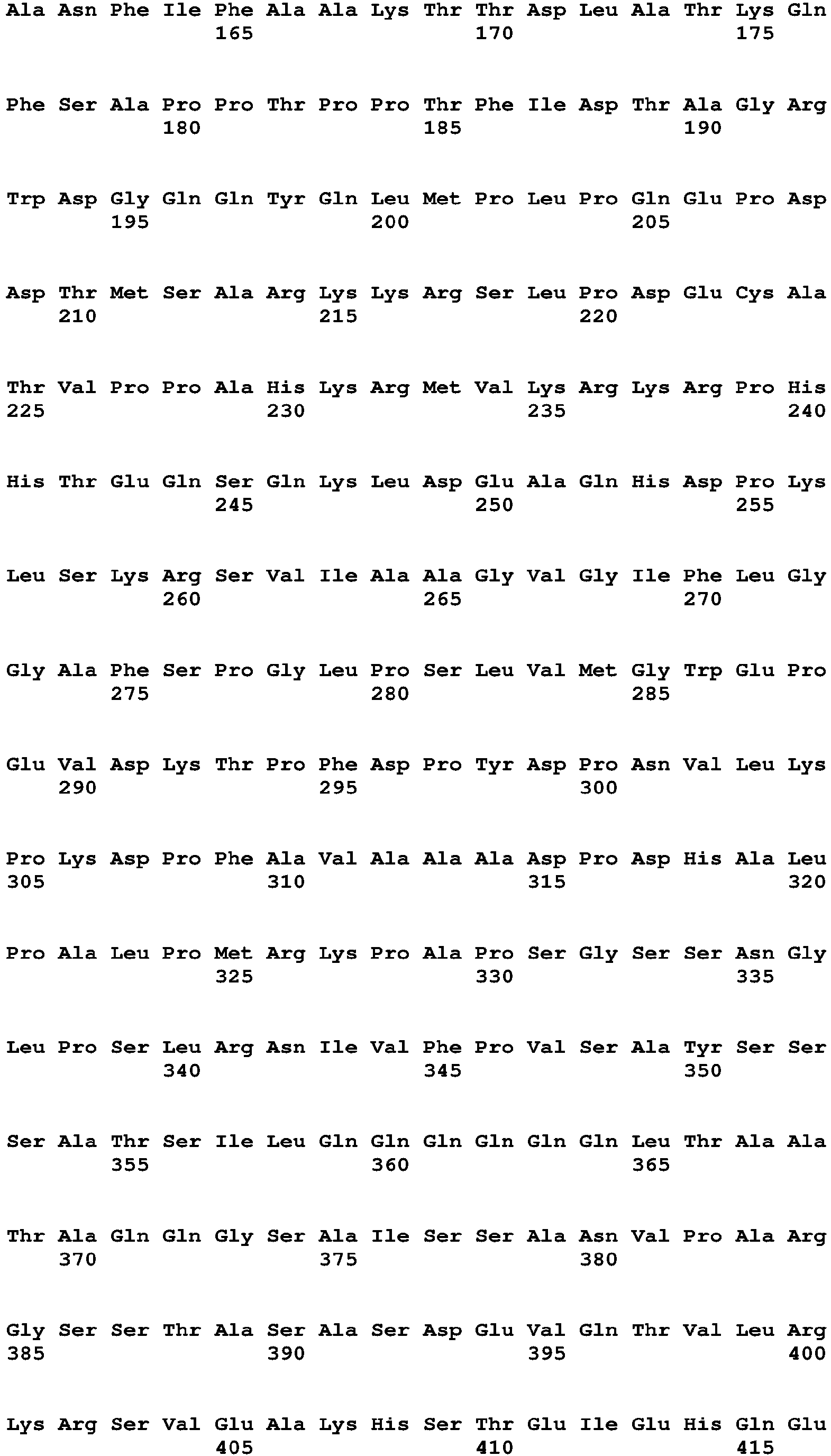


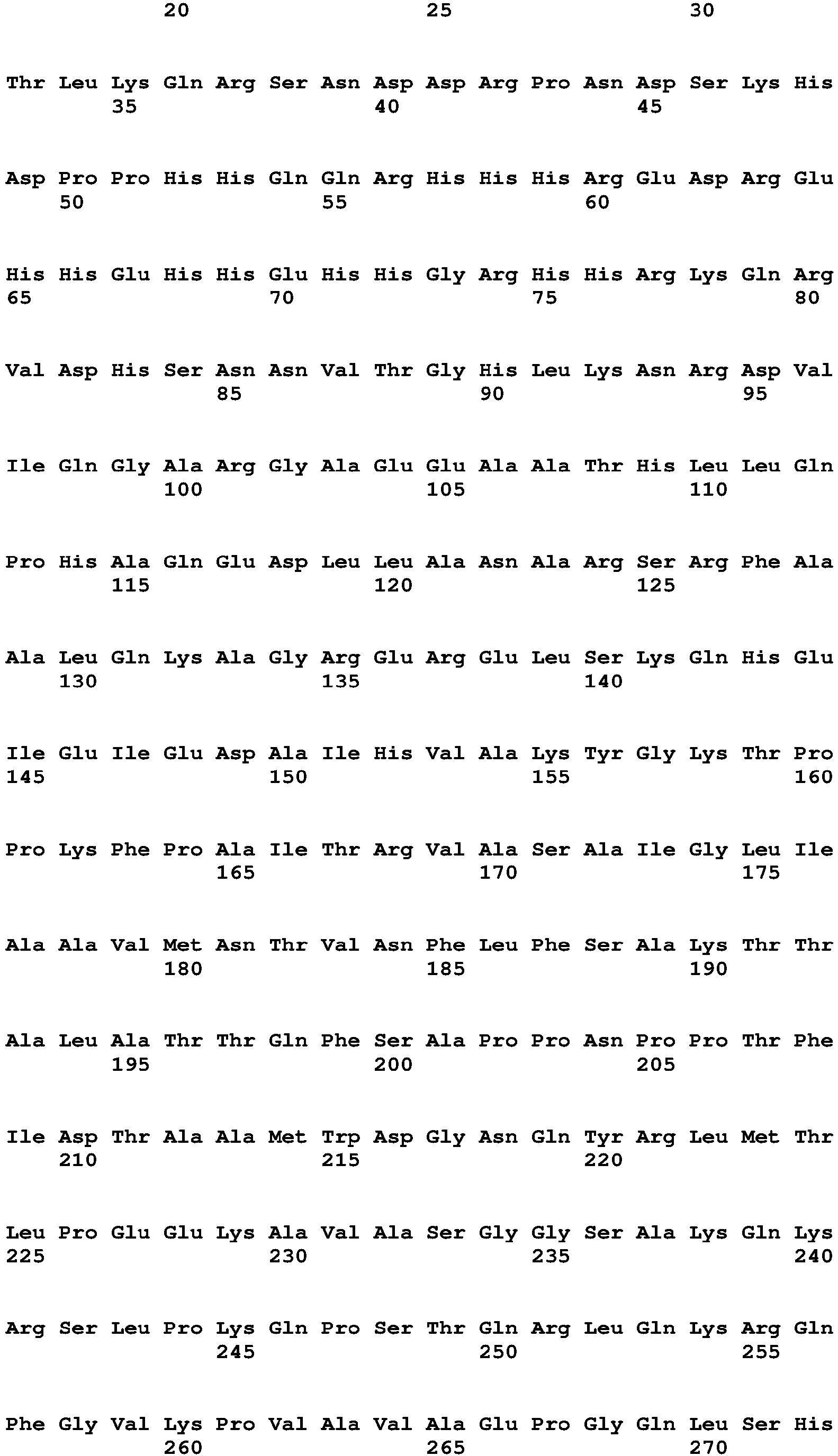


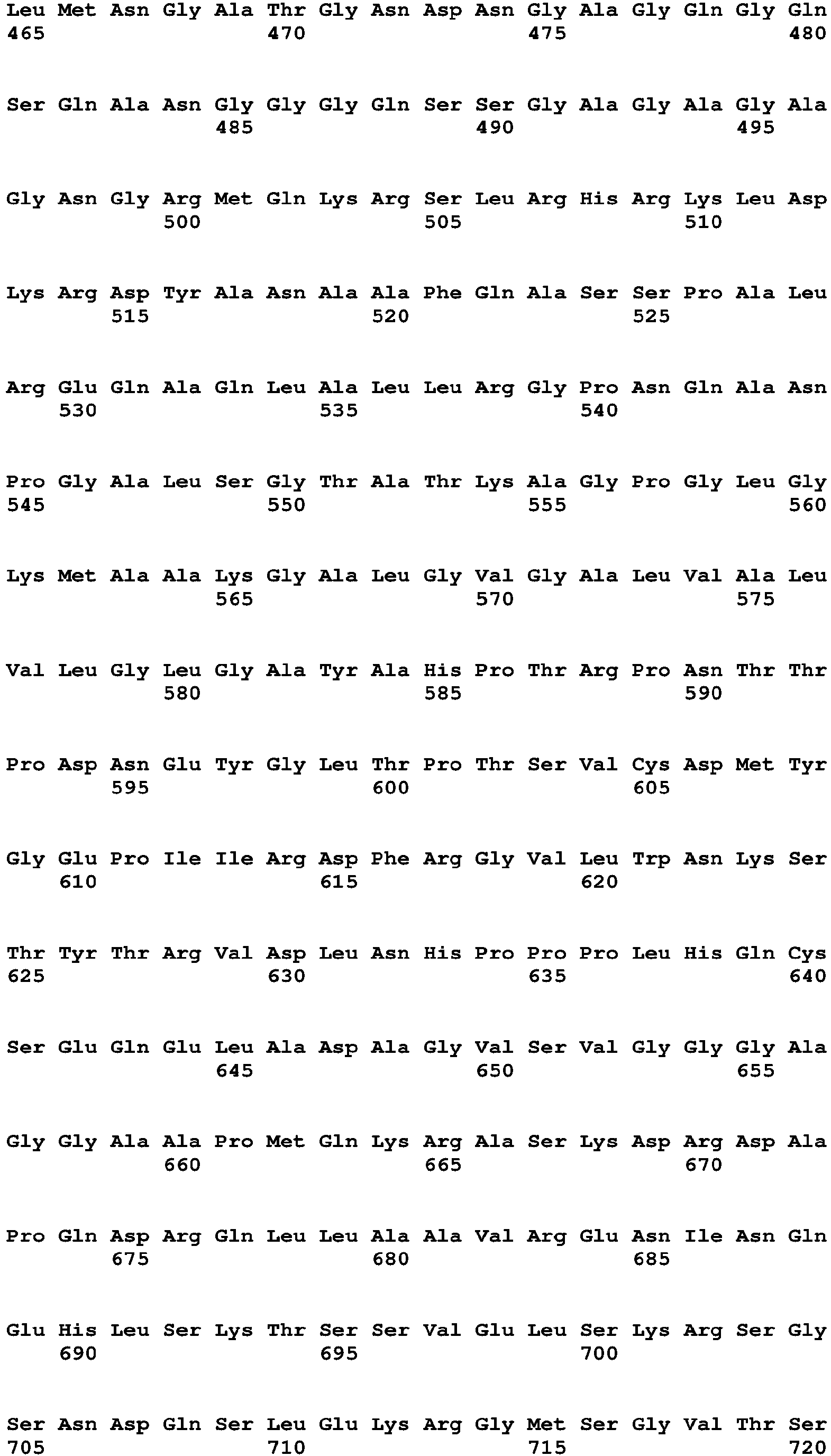


 R1 and R2 represent independently of each other -H, -OH, -OCH3, -OC2H5, -OC3H7, -O-cyclo-C3H5, -OCH(CH3)2, -OC(CH3)3, -OC4H9, -OPh, -OCH2-Ph, -CH2-OCH3, -CH2-OC2H5, -SH, -SCH3, -SC2H5, -SC3H7, -S-cyclo-C3H5, -SCH(CH3)2, -SC(CH3)3, -NO2, -F, -Cl, -Br, -P(O)(OH)2, -P(O)(OCH3)2, -P(O)(OC2H5)2, -P(O)(OCH(CH3)2)2, -N3, -CN, -OCN, -NCO, -SCN, -NCS, -CHO, -COCH3, -COC2H5, -COC3H7, -CO-cyclo-C3H5, -COCH(CH3)2, -COC(CH3)3, -COOH, -COCN, -COOCH3, -COOC2H5, -COOC3H7, -COO-cyclo-C3H5, -COOCH(CH3)2, -COOC(CH3)3, -OOC-CH3, -OOC-C2H5, -OOC-C3H7, -OOC-cyclo-C3H5, -OOC-CH(CH3)2, -OOC-C(CH3)3, -CONH2, -CONHCH3, -CONHC2H5, -CONHC3H7, -CONH-cyclo-C3H5, -CONH[CH(CH3)2], -CONH[C(CH3)3], -CON(CH3)2, -CON(C2H5)2, -CON(C3H7)2, -CON(cyclo-C3H5)2, -CON[CH(CH3)2]2, -CON[C(CH3)3]2, -NHCOCH3, -NHCOC2H5, -NHCOC3H7, -NHCO-cyclo-C3H5, -NHCO-CH(CH3)2, -NHCO-C(CH3)3, -NHCO-OCH3, -NHCO-OC2H5, -NHCO-OC3H7, -NHCO-O-cyclo-C3H5, -NHCO-OCH(CH3)2, -NHCO-OC(CH3)3, -NH2, -NHCH3, -NHC2H5, -NHC3H7, -NH-cyclo-C3H5, -NHCH(CH3)2, -NHC(CH3)3, -N(CH3)2, -N(C2H5)2, -N(C3H7)2, -N(cyclo-C3H5)2, -N[CH(CH3)2]2, -N[C(CH3)3]2, -SOCH3, -SOC2H5, -SOC3H7, -SO-cyclo-C3H5, -SOCH(CH3)2, -SOC(CH3)3, -SO2CH3, -SO2C2H5, -SO2C3H7, -SO2-cyclo-C3H5, -SO2CH(CH3)2, -SO2C(CH3)3, -SO3H, -SO3CH3, -SO3C2H5, -SO3C3H7, -SO3-cyclo-C3H5, -SO3CH(CH3)2, -SO3C(CH3)3, -SO2NH2, -SO2NHCH3, -SO2NHC2H5, -SO2NHC3H7, -SO2NH-cyclo-C3H5, -SO2NHCH(CH3)2, -SO2NHC(CH3)3, -SO2N(CH3)2, -SO2N(C2H5)2, -SO2N(C3H7)2, -SO2N(cyclo-C3H5)2, -SO2N[CH(CH3)2]2, -SO2N[C(CH3)3]2,-O-S(=O)CH3, -O-S(=O)C2H5, -O-S(=O)C3H7, -O-S(=O)-cyclo-C3H5, -O-S(=O)CH(CH3)2, -O-S(=O)C(CH3)3, , -S(=O)(=NH)CH3, -S(=O)(=NH)C2H5, -S(=O)(=NH)C3H7 -S(=O)(=NH)-cyclo-C3H5, -S(=O)(=NH)CH(CH3)2, -S(=O)(=NH)C(CH3)3, -NH-SO2-CH3, -NH-SO2-C2H5, -NH-SO2-C3H7, -NH-SO2-cyclo-C3H5, -NH-SO2-CH(CH3)2, -NH-SO2-C(CH3)3, -O-SO2-CH3, -O-SO2-C2H5, -O-SO2-C3H7, -O-SO2-cyclo-C3H5, -O-SO2-CH(CH3)2, -O-SO2-C(CH3)3, -OCF3, -CH2-OCF3, -C2H4-OCF3, -C3H6-OCF3, -OC2F5, -CH2-OC2F5, -C2H4-OC2F5, -C3H6-OC2F5, -O-COOCH3, -O-COOC2H5, -O-COOC3H7, -O-COO-cyclo-C3H5, -O-COOCH(CH3)2, -O-COOC(CH3)3, -NH-CO-NH2, -NH-CO-NHCH3, -NH-CO-NHC2H5, -NH-CS-N(C3H7)2, -NH-CO-NHC3H7, -NH-CO-N(C3H7)2, -NH-CO-NH[CH(CH3)2], -NH-CO-NH[C(CH3)3], -NH-CO-N(CH3)2, -NH-CO-N(C2H5)2, -NH-CO-NH-cyclo-C3H5, -NH-CON(cyclo-C3H5)2, -NH-CO-N[CH(CH3)2]2, -NH-CS-N(C2H5)2, -NH-CON[C(CH3)3]2, -NH-CS-NH2, -NH-CS-NHCH3, -NH-CS-N(CH3)2, -NH-CS-NHC2H5, -NH-CS-NHC3H7, -NH-CS-NH-cyclo-C3H5, -NH-CS-NH[CH(CH3)2], -NH-CS-NH[C(CH3)3], -NH-CS-N(cyclo-C3H5)2, -NH-CS-N[CH(CH3)2]2, -NH-CS-N[C(CH3)3]2, -NH-C(=NH)-NH2, -NH-C(=NH)-NHCH3, -NH-C(=NH)-NHC2H5, -NH-C(=NH)-NHC3H7, -O-CO-NH-cyclo-C3H5, -NH-C(=NH)-NH-cyclo-C3H5, -NH-C(=NH)-NH[CH(CH3)2], -O-CO-NH[CH(CH3)2], -NH-C(=NH)-NH[C(CH3)3], -NH-C(=NH)-N(CH3)2, -NH-C(=NH)-N(C2H5)2, -NH-C(=NH)-N(C3H7)2, -NH-C(=NH)-N(cyclo-C3H5)2, -O-CO-NHC3H7, -NH-C(=NH)-N[CH(CH3)2]2, -NH-C(=NH)-N[C(CH3)3]2, -O-CO-NH2, -O-CO-NHCH3, -O-CO-NHC2H5, -O-CO-NH[C(CH3)3], -O-CO-N(CH3)2, -O-CO-N(C2H5)2, -O-CO-N(C3H7)2, -O-CO-N(cyclo-C3H5)2, -O-CO-N[CH(CH3)2]2, -O-CO-N[C(CH3)3]2, -O-CO-OCH3, -O-CO-OC2H5, -O-CO-OC3H7, -O-CO-O-cyclo-C3H5, -O-CO-OCH(CH3)2, -O-CO-OC(CH3)3, -CH3, -C2H5, -C3H7, -CH(CH3)2, -CH2F, -CHF2, -CF3, -CH2Cl, -CH2Br, -CH2-CH2F, -CH2-CHF2, -CH2-CF3, -CH2-CH2Cl, or -CH2-CH2Br, andwherein R1 or R2 is different from hydrogen;R3 represents -H, -CH3, -C2H5, -C3H7, cyclo-C3H5, -CH(CH3)2 or -C(CH3)3;RN represents -CH3, -C2H5, -C3H7, -CH(CH3)2, -C4H9, -CH2-CH(CH3)2, -CH(CH3)-C2H5, -C(CH3)3, -C5H11, -C6H13, -Ph, -L-Ph, -L- cyclo-C5H9, -L-R3, -L-R* cyclo-C3H5, cyclo-C4H7, cyclo-C5H9, cyclo-C6H11, cyclo-C7H13,
 RS represents -CH3, -C2H5, -C3H7, cyclo-C3H5, -CH(CH3)2, -CH2-CN, -CH2-Ar, -CH(NH2)-Ar,Ar represents -Ph,
 R* represents -OCH3, -OC2H5, -OC3H7, -O-cyclo-C3H5, -OCH(CH3)2, -OC(CH3)3, -OC4H9, -COCH3, -COC2H5, -COC3H7, -CO-cyclo-C3H5, -COCH(CH3)2, or -COC(CH3)3;L represents -CH2-, -C2H4-, -C3H6-, or -CH2-CO-O-;X represents -O-, -OCH3, -OC2H5, or -OC3H7;and salts especially agriculturally acceptable salts thereof.
 R1 and R2 represent independently of each other -H, -OCH3, -OC2H5, -NO2, -F, -Cl, -Br, -N3, -CN, -OCN, -NCO, -SCN, -NCS, -CHO, -COCH3, -COC2H5, -COOH, -COCN, -COOCH3, -COOC2H5, -OOC-CH3, -OOC-C2H5, -CONH2, -CONHCH3, -CONHC2H5, -CON(CH3)2, -CON(C2H5)2, -NHCOCH3, -NHCOC2H5, -NH2, -NHCH3, -NHC2H5, -N(CH3)2, -N(C2H5)2, -SOCH3, -SOC2H5, -SO2CH3, -SO2C2H5, -SO3H, -SO3CH3, -SO3C2H5, -SO2NH2, -SO2NHCH3, -SO2NHC2H5, -SO2N(CH3)2, -SO2N(C2H5)2, -O-S(=O)CH3, -O-S(=O)C2H5, -NH-SO2-CH3, -NH-SO2-C2H5, -O-SO2-CH3, -O-SO2-C2H5, -OCF3, -CH2OCF3, -OC2F5, -O-COOCH3, -O-COOC2H5, -NH-CO-NH2, -NH-CS-NH2, -NH-C(=NH)-NH2, -O-CO-NH2, -O-CO-OCH3, -O-CO-OC2H5, -CH3, -C2H5, -C3H7, -CH(CH3)2, -CH2F, -CHF2, -CF3, -CH2Cl, -CH2Br, and wherein R1 or R2 is different from hydrogen;R3 represents -H or -CH3;X represents -O- or -OCH3;and salts especially agriculturally acceptable salts thereof;
 R1 and R2 represent independently of each other -H, -OCH3, -OC2H5, -NO2, -F, -Cl, -Br, -N3, -CN, -OCN, -NCO, -SCN, -NCS, -CHO, -COCH3, -COC2H5, -COOH, -COCN, -COOCH3, -COOC2H5, -OOC-CH3, -OOC-C2H5, -CONH2, -CONHCH3, -CONHC2H5, -CON(CH3)2, -CON(C2H5)2, -NHCOCH3, -NHCOC2H5, -NH2, -NHCH3, -NHC2H5, -N(CH3)2, -N(C2H5)2, -SOCH3, -SOC2H5, -SO2CH3, -SO2C2H5, -SO3H, -SO3CH3, -SO3C2H5, -SO2NH2, -SO2NHCH3, -SO2NHC2H5, -SO2N(CH3)2, -SO2N(C2H5)2, -O-S(=O)CH3, -O-S(=O)C2H5, -NH-SO2-CH3, -NH-SO2-C2H5, -O-SO2-CH3, -O-SO2-C2H5, -OCF3, -CH2-OCF3, -OC2F5, -O-COOCH3, -O-COOC2H5, -NH-CO-NH2, -NH-CS-NH2, -NH-C(=NH)-NH2, -O-CO-NH2, -O-CO-OCH3, -O-CO-OC2H5, -CH3, -C2H5, -C3H7, -CH(CH3)2, -CH2F, -CHF2, -CF3, -CH2Cl, -CH2Br, and wherein R1 or R2 is different from hydrogen;RN represents -CH3, -C2H5, -C3H7, -CH(CH3)2, -C4H9, -CH2-CH(CH3)2, -C(CH3)3, -C5H11, -Ph, -L-Ph, -L-R3, cyclo-C3H5, cyclo-C4H7, cyclo-C5H9, cyclo-C6H11, cyclo-C7H13;L represents -CH2-, -C2H4-, or -CH2-CO-O-;R3 represents -H, -CH3, -C2H5, -C3H7, cyclo-C3H5, -CH(CH3)2 or -C(CH3)3;and salts especially agriculturally acceptable salts thereof;
 RN represents -CH3, -C2H5, -C3H7, -CH(CH3)2, -C4H9, -CH2-CH(CH3)2, -CH(CH3)-C2H5, -C(CH3)3, -C5H11, -C6H13, -Ph, -L-Ph, -L- cyclo-C5H9, -L-R3, -L-R* cyclo-C3H5, cyclo-C4H7, cyclo-C5H9, cyclo-C6H11, cyclo-C7H13,
 RS represents -CH3, -C2H5, -C3H7, cyclo-C3H5, -CH(CH3)2, -CH2-CN, -CH2-Ar, -CH(NH2)-Ar,Ar represents -Ph,
 R* represents -OCH3, -OC2H5, -OC3H7, -O-cyclo-C3H5, -OCH(CH3)2, -COCH3, -COC2H5, -COC3H7, -CO-cyclo-C3H5, or -COCH(CH3)2;R1 and R2 represent independently of each other -H, -OCH3, -OC2H5, -NO2, -F, -Cl, -Br, -N3, -CN, -OCN, -NCO, -SCN, -NCS, -CHO, -COCH3, -COC2H5, -COOH, -COCN, -COOCH3, -COOC2H5, -OOC-CH3, -OOC-C2H5, -CONH2, -CONHCH3, -CONHC2H5, -CON(CH3)2, -CON(C2H5)2, -NHCOCH3, -NHCOC2H5, -NH2, -NHCH3, -NHC2H5, -N(CH3)2, -N(C2H5)2, -SOCH3, -SOC2H5, -SO2CH3, -SO2C2H5, -SO3H, -SO3CH3, -SO3C2H5, -SO2NH2, -SO2NHCH3, -SO2NHC2H5, -SO2N(CH3)2, -SO2N(C2H5)2, -O-S(=O)CH3, -O-S(=O)C2H5, -NH-SO2-CH3, -NH-SO2-C2H5, -O-SO2-CH3, -O-SO2-C2H5, -OCF3, -CH2-OCF3, -OC2F5, -O-COOCH3, -O-COOC2H5, -NH-CO-NH2, -NH-CS-NH2, -NH-C(=NH)-NH2, -O-CO-NH2, -O-CO-OCH3, -O-CO-OC2H5, -CH3, -C2H5, -C3H7, -CH(CH3)2, -CH2F, -CHF2, -CF3, -CH2Cl, -CH2Br, and wherein R1 or R2 is different from hydrogen;R3 represents -H, -CH3, or -C2H5;L represents -CH2-, -C2H4-, or -C3H6-;and salts especially agriculturally acceptable salts thereof.