EP3944078A1 - Dynamic management system for user-contextualized web interfaces and related operating method - Google Patents
Dynamic management system for user-contextualized web interfaces and related operating method Download PDFInfo
- Publication number
- EP3944078A1 EP3944078A1 EP20724190.2A EP20724190A EP3944078A1 EP 3944078 A1 EP3944078 A1 EP 3944078A1 EP 20724190 A EP20724190 A EP 20724190A EP 3944078 A1 EP3944078 A1 EP 3944078A1
- Authority
- EP
- European Patent Office
- Prior art keywords
- web
- user
- input parameters
- artificial intelligence
- web server
- Prior art date
- Legal status (The legal status is an assumption and is not a legal conclusion. Google has not performed a legal analysis and makes no representation as to the accuracy of the status listed.)
- Granted
Links
Images


Classifications
-
- G—PHYSICS
- G06—COMPUTING OR CALCULATING; COUNTING
- G06F—ELECTRIC DIGITAL DATA PROCESSING
- G06F9/00—Arrangements for program control, e.g. control units
- G06F9/06—Arrangements for program control, e.g. control units using stored programs, i.e. using an internal store of processing equipment to receive or retain programs
- G06F9/44—Arrangements for executing specific programs
- G06F9/451—Execution arrangements for user interfaces
-
- G—PHYSICS
- G06—COMPUTING OR CALCULATING; COUNTING
- G06F—ELECTRIC DIGITAL DATA PROCESSING
- G06F16/00—Information retrieval; Database structures therefor; File system structures therefor
-
- G—PHYSICS
- G06—COMPUTING OR CALCULATING; COUNTING
- G06F—ELECTRIC DIGITAL DATA PROCESSING
- G06F16/00—Information retrieval; Database structures therefor; File system structures therefor
- G06F16/90—Details of database functions independent of the retrieved data types
- G06F16/95—Retrieval from the web
- G06F16/957—Browsing optimisation, e.g. caching or content distillation
- G06F16/9577—Optimising the visualization of content, e.g. distillation of HTML documents
-
- G—PHYSICS
- G06—COMPUTING OR CALCULATING; COUNTING
- G06N—COMPUTING ARRANGEMENTS BASED ON SPECIFIC COMPUTATIONAL MODELS
- G06N3/00—Computing arrangements based on biological models
- G06N3/02—Neural networks
- G06N3/10—Interfaces, programming languages or software development kits, e.g. for simulating neural networks
- G06N3/105—Shells for specifying net layout
Definitions
- This invention fits in the field of dynamic generation of web interfaces.
- this invention falls within the scope of web interfaces which are customizable according to users.
- Web content is typically developed using high-level code structures, hereinafter referred to as frameworks, or web software development technology.
- New generation web frameworks oriented to web components, allow the creation and reuse of components.
- Examples of web frameworks are React.js, Angular.js or Vue.js, which aim to streamline and facilitate the process of creating web components.
- High-level frameworks allow anyone without much programming knowledge to create their own web content, such as a website or web application, because, theoretically, it is only necessary to drag-and-drop elements so as to arrange them in a more intuitive manner, making the process automated and dynamic.
- WYSIWYG frameworks "What You See Is What You Get". Examples of these frameworks are OutSystems, Salesforce, Mendix, SkavaSTUDIO or Wix.
- This invention describes a solution for the dynamic generation of contextualized web interfaces according to the user, representing an alternative to the creation or manual modification of graphical interfaces which, given the huge efforts involved for the managers of the respective web contents, often make their timely customization unfeasible.
- This system is characterized in that it comprises:
- Figure 2 illustrates the flow of operations performed between the constituent elements of the developed system, where the reference signs mean:
- Figure 3 is a schematic representation of the method for operation of the developed system for dynamic generation of web interfaces, illustrating its recursive character, and where the reference signs mean:
- the main objective of this invention is the definition and implementation of methodologies based on Artificial Intelligence, in particular automatic learning techniques, for real-time generation of dynamic web interfaces, which are adaptable according to the user's behaviours and characteristics.
- web content such as adaptable and contextualized applications or web pages
- web servers (2) provide richer interactions allowing web servers (2) to model the information provided by a client web browser (1) - interface to a particular web content hosted on a web server (2) - delivering the information in the best possible way, with a better user experience.
- This invention describes a solution allowing to dynamically and in real-time generating web interfaces contextualized per user. That is, for each user there is an identifying combination, elected by a mathematical statistical model Ml(f), which allows to generate the layout at the moment in which an application or website is logged in by a user.
- the system is defined through an architecture comprised of a web server (2), a client web browser (1), an Artificial Intelligence module (3), an interface generator module (4) and a database (5).
- the web server (2) represents the user interface, through the client web browser (1), with the web content hosted on it. It is responsible for interacting with the client's web browser (1), and can either function as a render server - HTML generated on the server side - or render client - HTML generated in the browser.
- the web server (2) is connected to the database (5) so that it can access and store input parameters collected by the client web browser (1).
- the input parameters are variables that allow identification of the web content, identification of the user and identification of the user's interactions with the client web browser (1), within the scope of the identified web content. These input parameters are the basis of the developed system and are later forwarded to the Artificial Intelligence module (3).
- the Artificial Intelligence module (3) consists of computational requirements programmed to implement a model for dynamic generation of web interfaces, designed to generate at least one alternative layout - web content distribution and arrangement mode in the client web browser (1) - the said layout being adaptable to each user, based on input parameters collected from the user's navigation in the client web browser (1).
- Running the model involves a training stage and a test stage.
- the input parameters resulting from each user's interaction with the client web browser (1) are used. This set of parameters allows to offer relevant information to the model, so that its predictions can, in a continuous and recursive way, offer each user, individually, an increasingly adapted interface.
- To collect the input parameters a discrete approach has been adopted, where data concerning the interactions of users with the client web browser (1) are stored in order to obtain a pattern of behaviour and preferences (for example, which elements or which characteristics the user has selected).
- the following input parameters are collected during the interactions: 1) user identification, 2) identification of the web content being used and 3) selected entity.
- the developed model assumes the following characteristics:
- the input parameters are stored in a database (5) connected to the web server, in order to be later used as input data for the Ml(f) model.
- these are collected in a non-intrusive way and concern the information on the use of the web components, including their identification as well as their characteristics and degrees of freedom.
- Each web component (tables, text boxes, etc.) inherits the same structure within the system, enabling the existence of common characteristics/patterns, such as: component identification, name, visibility, among other characteristics; relationship between components, that is, if they have the ability to interact with each other.
- the Artificial Intelligence module (3) Before the input parameters are transmitted to the Artificial Intelligence module (3), they go through a previous step of adapting their format to the algorithm underlying the model to be implemented.
- data on input parameters can be both discrete (numerical) and categorical, since most automatic learning algorithms that can be run by the module (3) obtain better performance results when they have binary data as input data, the model was chosen to work with data representations in numeric vectors. Thus, the model will receive the already treated set of input parameters sent by the web server (2).
- the generic representation of the model implemented by the Artificial Intelligence module (3) uses a Deep Neural Network Classifier algorithm, this being ideal for deep models that perform multi-class classifications (each class represents a layout) through advanced neural networks, and which is based on the analysis and processing of a matrix (M) of interactions, whose rows (i) represent the web components (any type of component can be modelled), and the columns (j) of the matrix represent the total characteristics of all components. Since (j) depends on ( i ), the number of characteristics varies according to the components of the web content ( y ). This matrix is influenced by the web content, the user, and the existing entities in the respective web content.
- M Deep Neural Network Classifier algorithm
- the entity is represented as a component of the matrix, where (k) represents the number of interactions that the user has had until now.
- M k x y ⁇ 1,1 ⁇ ⁇ 1 , j ⁇ ⁇ ⁇ ⁇ i , 1 ⁇ ⁇ i , j where ai ,j ⁇ 1 , if component i and characteristic j exist 0 , otherwise
- a Ml (f) model is applied to the set of matrices. For each matrix, the Ml model delivers the alternative layout ( l ).
- f M k l k
- the interface generator module (4) is in connection with the Artificial Intelligence module (3) and has computational requirements programmed to generate, dynamically and in real time, a new layout contextualized per user, which can be consumed by the web server (2), based on the identification of the dominant layout generated by the Artificial Intelligence module (3).
- This invention also describes the method for operation of the system intended for dynamic generation of web interfaces, the said method comprising the following steps:
- the technical characteristics of the present invention are adequate to dynamically and real-time generating web interfaces that will evolve and be adapted to each user over time. Therefore, the invention allows web contents, such as applications/web pages, to make available the same information but in different interface perspectives, offering quick and easy access to specialized services related to each user's profile and preferences.
Landscapes
- Engineering & Computer Science (AREA)
- Theoretical Computer Science (AREA)
- Software Systems (AREA)
- Physics & Mathematics (AREA)
- General Engineering & Computer Science (AREA)
- General Physics & Mathematics (AREA)
- Data Mining & Analysis (AREA)
- Databases & Information Systems (AREA)
- Computing Systems (AREA)
- Health & Medical Sciences (AREA)
- Human Computer Interaction (AREA)
- Life Sciences & Earth Sciences (AREA)
- Artificial Intelligence (AREA)
- Biomedical Technology (AREA)
- Biophysics (AREA)
- Computational Linguistics (AREA)
- Evolutionary Computation (AREA)
- General Health & Medical Sciences (AREA)
- Molecular Biology (AREA)
- Mathematical Physics (AREA)
- Information Transfer Between Computers (AREA)
Abstract
Description
- This invention fits in the field of dynamic generation of web interfaces. In particular, this invention falls within the scope of web interfaces which are customizable according to users.
- Due to the exponential growth in the use of web and mobile applications, information systems are increasingly complex, undergoing changes and transformations increasingly faster, with a need for support systems to evolve and adapt, just as fast, to this new reality and experience. The creation of adaptable web content, such as web pages or applications, provides richer interactions to the user, contextualized in their daily use, making interfaces "intelligent" and thus improving the interactions between the users and these systems.
- Web content is typically developed using high-level code structures, hereinafter referred to as frameworks, or web software development technology. New generation web frameworks, oriented to web components, allow the creation and reuse of components. Examples of web frameworks are React.js, Angular.js or Vue.js, which aim to streamline and facilitate the process of creating web components. However, in their genesis, they all imply programming training, which in many cases are highly demanding. High-level frameworks, on the other hand, allow anyone without much programming knowledge to create their own web content, such as a website or web application, because, theoretically, it is only necessary to drag-and-drop elements so as to arrange them in a more intuitive manner, making the process automated and dynamic. They are known as WYSIWYG frameworks, "What You See Is What You Get". Examples of these frameworks are OutSystems, Salesforce, Mendix, SkavaSTUDIO or Wix.
- The use of the above mentioned technologies, in complementarity with automatic learning algorithms to detect behavioural patterns in interactions (of each user with the interface), allows solutions such as Facebook, Amazon, or even Netflix, to tailor the content presented to the user in question, thus improving the user experience.
- However, none of the existing web development frameworks is based upon the knowledge of the user, in particular his preferences and interaction patterns with the website or web application, in order to tailor the presentation/structure (layout) of the respective web content, dynamically and in real time.
- In the present invention, it was intended to develop a solution for the creation or modification of graphic interfaces, adaptable to a user, the said solution being characterized by the implementation of automated and dynamic processes, and using Artificial Intelligence in order to ensure their correct adaptation to contextualized requirements for their use by different users.
- This invention describes a solution for the dynamic generation of contextualized web interfaces according to the user, representing an alternative to the creation or manual modification of graphical interfaces which, given the huge efforts involved for the managers of the respective web contents, often make their timely customization unfeasible.
- It is thus the object of this invention a system for the dynamic management of web interfaces contextualized per user. This system is characterized in that it comprises:
- a web server, adapted to host at least one web content;
- a client web browser, adapted to interact with at least one web content hosted on the web server;
- an Artificial Intelligence module;
- an interface generator module;
- a database;
- Wherein:
- The web server is connected to the database controlling the access and storage of input parameters in the said database, the input parameters concerning the following variables: identification of the web content, user identification and set of interactions between the user and the client web browser within the identified web content;
- The Artificial Intelligence module is equipped with computational requirements which are programmed to implement a model for dynamic generation of web content graphic interfaces, designed to generate at least one alternative layout for the web content, based on the input parameters;
- The interface generator module has computational requirements configured to dynamically and in real-time generating a new layout for the web content, based on the alternative layout generated by the Artificial Intelligence module.
- It is also the object of this invention, a method for operation of the developed dynamic management system of web interfaces contextualized per user. This method is characterized in that it comprises the following steps:
- i. Web server requesting credentials from a user;
- ii. Sending user authentication data from the client web browser to the web server;
- iii. Sending input parameters from the client web browser to the web server;
- iv. Processing of input parameters data;
- v. Storage of input parameters in the database;
- vi. Sending the already formatted input parameters to the Artificial Intelligence module;
- vii. Identification of a dominant layout by executing a Deep Neural Network Classifier algorithm;
- viii. Sending information regarding the dominant layout (G) from the Artificial Intelligence module to the interface generation module;
- ix. Generating a JSON file;
- x. Sending a file to the web server which, based on that information, builds the adaptable and customized user interface;
- xi. Sending the customized interface to the client web browser.
- In
figure 1 , the developed system for dynamic generation of web interfaces is conceptually presented, where the numeric reference signs mean: - 1 -
- client web browser;
- 2 -
- web server;
- 3 -
- Artificial Intelligence module;
- 4 -
- interface generator module;
- 5 -
- database.
-
Figure 2 illustrates the flow of operations performed between the constituent elements of the developed system, where the reference signs mean: - 1 -
- client web browser;
- 2 -
- web server;
- 3 -
- Artificial Intelligence module;
- 4 -
- interface generator module;
- 5 -
- database;
- A -
- user credentials request;
- B -
- user authentication;
- C -
- sending input parameters;
- D -
- sending formatted input parameters;
- E -
- storage and/or access to input parameters;
- F -
- dominant layout identification;
- G -
- sending of dominant layout identification;
- H -
- generation of JSON file;
- I -
- sending customized web interface to the client web browser.
-
Figure 3 is a schematic representation of the method for operation of the developed system for dynamic generation of web interfaces, illustrating its recursive character, and where the reference signs mean: - A -
- user credentials request;
- B -
- user authentication;
- C -
- sending input parameters;
- D -
- sending formatted input parameters;
- E -
- storage and/or access to input parameters;
- F -
- dominant layout identification;
- G -
- sending of dominant layout identification;
- H -
- generation of JSON file;
- I -
- sending customized web interface to the client web browser.
- The main objective of this invention is the definition and implementation of methodologies based on Artificial Intelligence, in particular automatic learning techniques, for real-time generation of dynamic web interfaces, which are adaptable according to the user's behaviours and characteristics.
- Thus, the creation of web content, such as adaptable and contextualized applications or web pages, provide richer interactions allowing web servers (2) to model the information provided by a client web browser (1) - interface to a particular web content hosted on a web server (2) - delivering the information in the best possible way, with a better user experience.
- This invention describes a solution allowing to dynamically and in real-time generating web interfaces contextualized per user. That is, for each user there is an identifying combination, elected by a mathematical statistical model Ml(f), which allows to generate the layout at the moment in which an application or website is logged in by a user.
- The system is defined through an architecture comprised of a web server (2), a client web browser (1), an Artificial Intelligence module (3), an interface generator module (4) and a database (5).
- More particularly, the web server (2) represents the user interface, through the client web browser (1), with the web content hosted on it. It is responsible for interacting with the client's web browser (1), and can either function as a render server - HTML generated on the server side - or render client - HTML generated in the browser. The web server (2) is connected to the database (5) so that it can access and store input parameters collected by the client web browser (1). The input parameters are variables that allow identification of the web content, identification of the user and identification of the user's interactions with the client web browser (1), within the scope of the identified web content. These input parameters are the basis of the developed system and are later forwarded to the Artificial Intelligence module (3).
- The Artificial Intelligence module (3) consists of computational requirements programmed to implement a model for dynamic generation of web interfaces, designed to generate at least one alternative layout - web content distribution and arrangement mode in the client web browser (1) - the said layout being adaptable to each user, based on input parameters collected from the user's navigation in the client web browser (1).
- Running the model involves a training stage and a test stage. To train the model, the input parameters resulting from each user's interaction with the client web browser (1) are used. This set of parameters allows to offer relevant information to the model, so that its predictions can, in a continuous and recursive way, offer each user, individually, an increasingly adapted interface. To collect the input parameters, a discrete approach has been adopted, where data concerning the interactions of users with the client web browser (1) are stored in order to obtain a pattern of behaviour and preferences (for example, which elements or which characteristics the user has selected). For each user previously authenticated in the system, the following input parameters are collected during the interactions: 1) user identification, 2) identification of the web content being used and 3) selected entity. The developed model assumes the following characteristics:
- User:
The whole system presupposes an authentication so that the input parameters, which are the basis of the web interface dynamic generation model developed, can be associated to a particular user and, accordingly, the alternative layouts can be generated. - Web content:
The term "web content" shall be understood as referring to an application or web page. Similarly to the user identification, the identification of the web content is important so that it can be associated to the corresponding data of user interactions, which will be at the origin of the adaptation to be made to the layout thereof. - Entity:
Entity is a representation of a set of information about a given concept of the web content. The whole entity has attributes, which are the information referencing the entity. An entity may have several web components associated, such as filtering menus, tables or text boxes, among others, each of them with intrinsic characteristics (e.g.: sorting of a table, number of records displayed, zoom) that can be modelled. - The input parameters are stored in a database (5) connected to the web server, in order to be later used as input data for the Ml(f) model. Regarding the user interactions with the client web browser (1), these are collected in a non-intrusive way and concern the information on the use of the web components, including their identification as well as their characteristics and degrees of freedom. Each web component (tables, text boxes, etc.) inherits the same structure within the system, enabling the existence of common characteristics/patterns, such as: component identification, name, visibility, among other characteristics; relationship between components, that is, if they have the ability to interact with each other.
- Before the input parameters are transmitted to the Artificial Intelligence module (3), they go through a previous step of adapting their format to the algorithm underlying the model to be implemented. In this respect, although data on input parameters can be both discrete (numerical) and categorical, since most automatic learning algorithms that can be run by the module (3) obtain better performance results when they have binary data as input data, the model was chosen to work with data representations in numeric vectors. Thus, the model will receive the already treated set of input parameters sent by the web server (2).
- In this regard, and taking into account the type of data collected (numeric vector), the generic representation of the model implemented by the Artificial Intelligence module (3) uses a Deep Neural Network Classifier algorithm, this being ideal for deep models that perform multi-class classifications (each class represents a layout) through advanced neural networks, and which is based on the analysis and processing of a matrix (M) of interactions, whose rows (i) represent the web components (any type of component can be modelled), and the columns (j) of the matrix represent the total characteristics of all components. Since (j) depends on (i), the number of characteristics varies according to the components of the web content (y). This matrix is influenced by the web content, the user, and the existing entities in the respective web content. The entity is represented as a component of the matrix, where (k) represents the number of interactions that the user has had until now.

- x: user,
- y: web content,
- k: No.of interactions,
- i: No. of components of web content y,
- j: total number of characteristics (j depending on i)
- After obtaining the matrix (M), a Ml (f) model is applied to the set of matrices. For each matrix, the Ml model delivers the alternative layout (ℓ).
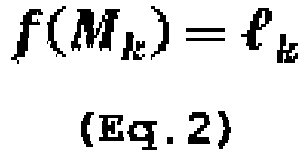
- f: ML model
- M k : Matrices
- ℓk : Layouts
- Finally, the trend is applied to the set of alternative layouts, in order to obtain the dominant layout.

- The interface generator module (4) is in connection with the Artificial Intelligence module (3) and has computational requirements programmed to generate, dynamically and in real time, a new layout contextualized per user, which can be consumed by the web server (2), based on the identification of the dominant layout generated by the Artificial Intelligence module (3).
- This invention also describes the method for operation of the system intended for dynamic generation of web interfaces, the said method comprising the following steps:
- i. Resource Extraction: collection of input parameters relevant to the customization to be performed in the layout of the web content to be presented by the client web browser (1). This collection is made by the client's web browser (1), during the period in which the user is interacting with it, the said collection being completely non-intrusive and only dependent on the interactions performed during navigation. Non-intrusive approach, in the context of the present invention, is understood as the user not being disturbed with questions whose answers contribute to the definition of his "profile", such as his personal tastes, preferences, etc.
- ii. Data sending and processing: the input parameters collected by the client web browser (1) are then sent to the web server (2), where they are submitted to various data processing processes (discretization, binary conversion), before being sent to the Artificial Intelligence module (3), in order to present a format that is interpretable by the later.
- iii. Dynamic generation model: Once the input parameters are properly formatted, the web server (2) sends them to the Artificial Intelligence module (3), which will process them according to a model developed for dynamic generation of web interfaces contextualized per user, which uses a Deep Neural Network Classifier algorithm for analysis and processing of the interaction matrix (M). The Artificial Intelligence module (3) receives the treated input parameters and separates them into two data sets, one to be used by a training block and the other by a test block. The input parameters illustrate the behaviour and preferences of each user concerning a web interface of a specific web content, which is presented to him through the client web browser (1), so the training block is used to build the classifier - model to implement - that will analyse and process the interactions matrix (M). The larger this set, the more accurate the classifier will be, because the more data is tested, the more likely are the chances to get the right prediction. The test block is used to estimate the performance of the classifier, thus assessing the model accuracy. The result of applying the developed model for dynamic generation of a web interface is the identification of a dominant layout, whose identification will be sent to the interface generator module (4).
- iv. Dynamic generation of web interface: the interface generator module (4) receives the identification of the dominant layout, assigned by the model to the specific user, being responsible for interpreting the web components that compose it, thus generating a file in an independent open-standard compact format of the JSON-type, with the configuration of the web components comprising this output combination - web layout. The generated JSON file will feed the web server (2) which, based on this information, builds the adaptable and customized user interface that will later be used by the client web browser (1). That is, the layouts, modelled into a descriptive language, have the same general base structure, so the web server (2) generator engine only navigates this structure in a recursive way, mapping the attributes in JavaScript objects. These are the web objects/components that will materialize the recommended layout.
- The technical characteristics of the present invention, in its other combinations, are adequate to dynamically and real-time generating web interfaces that will evolve and be adapted to each user over time. Therefore, the invention allows web contents, such as applications/web pages, to make available the same information but in different interface perspectives, offering quick and easy access to specialized services related to each user's profile and preferences.
- As will be evident to a person skilled in the art, the present invention should not be limited to the embodiments described herein, with a number of changes being possible, which remain within the scope of this invention.
- Of course, the preferred embodiments above described are combinable in the different possible forms, the repetition of all such combinations being herein avoided.
Claims (9)
- A system for dynamic management of web interfaces contextualized per user, characterized in that it comprises:- a web server (2), adapted to host at least one web content;- a client web browser (1), adapted to interact with at least one web content hosted on the web server (2);- an Artificial Intelligence module (3);- an interface generator module (4);- a database (5), configured to store input parameters related to: identification of the web content, user identification and set of interactions between the user and the client web browser (1), within the scope of the identified web content;
wherein:- The web server (2) is connected to the database (5) and is configured to control the access and storage of input parameters in the said database (5);- The Artificial Intelligence module (3) comprises computational requirements programmed to generate at least one alternative layout for the web content, based on input parameters;- The interface generator module (4) comprises computational requirements configured to dynamically and in real-time generating a new layout for the web content, based on the alternative layout generated by the Artificial Intelligence module. - A system according to claim 1, characterized in that the web server (2) further comprises a data processing module, configured to format the input parameters into categorical or numerical variables.
- A system according to any of the previous claims, characterized in that the Artificial Intelligence module (3) is programmed to execute a deep neural network-based classification algorithm.
- A system according to claim 3, characterized in that the model run in the Artificial Intelligence module (3) is applied to a matrix of interactions (M), in which:
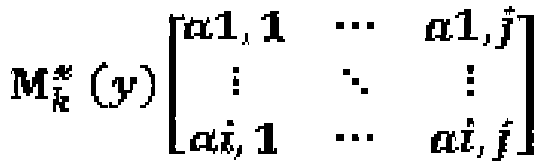
 x: user, y: web content, k: No, of interactions, t: No, of components of web content y,J: total No. of characteristics (j depends on i)
 - A system according to any of the previous claims, characterized in that the web server (2) is either render server or render client.
- A method for operation of the dynamic management system of web interfaces contextualized per user, according to claims 1 to 5, characterized in that it comprises the following steps:i. Web server (2) requesting credentials from a user (A) ;ii. Sending user authentication data (B) from the client web browser (1) to the web server (2);iii. Sending input parameters (C) from the client web browser (1) to the web server (2);iv. Processing of input parameters data by the web server (2);v. Storage (E) of input parameters in the database (5);vi. Sending the already formatted input parameters (D) to the Artificial Intelligence module (3);vii. Identification of a dominant layout (F);viii. Sending information regarding the dominant layout (G) from the Artificial Intelligence module (3) to the interface generation module (4);ix. Generation of a JSON file (H) by the interface generation module (4);x. Sending the file to the web server (2) which, based on that information, builds the adaptable and customized user interface;xi. Sending the customized interface to the client web browser (1).
- A method according to claim 6, characterized in that the data processing step implies conversion of the input parameters into numerical variables.
- A method according to any of the claims 6 and 7, characterized in that the step vii. involves analysis and processing of the matrix of interactions (M).
- A method according to any of the previous claims, characterized in that the identification of a dominant layout uses a deep neural network-based classification algorithm.
Applications Claiming Priority (2)
| Application Number | Priority Date | Filing Date | Title |
|---|---|---|---|
| PT115379A PT115379A (en) | 2019-03-21 | 2019-03-21 | SYSTEM OF DYNAMIC GENERATION OF WEB INTERFACES CONTEXTUALIZED BY USER AND THEIR OPERATING METHOD |
| PCT/IB2020/052592 WO2020188536A1 (en) | 2019-03-21 | 2020-03-20 | Dynamic management system for user-contextualized web interfaces and related operating method |
Publications (3)
| Publication Number | Publication Date |
|---|---|
| EP3944078A1 true EP3944078A1 (en) | 2022-01-26 |
| EP3944078B1 EP3944078B1 (en) | 2023-12-20 |
| EP3944078C0 EP3944078C0 (en) | 2023-12-20 |
Family
ID=70554120
Family Applications (1)
| Application Number | Title | Priority Date | Filing Date |
|---|---|---|---|
| EP20724190.2A Active EP3944078B1 (en) | 2019-03-21 | 2020-03-20 | Dynamic management system for user-contextualized web interfaces and related operating method |
Country Status (3)
| Country | Link |
|---|---|
| EP (1) | EP3944078B1 (en) |
| PT (1) | PT115379A (en) |
| WO (1) | WO2020188536A1 (en) |
Family Cites Families (4)
| Publication number | Priority date | Publication date | Assignee | Title |
|---|---|---|---|---|
| US6707476B1 (en) * | 2000-07-05 | 2004-03-16 | Ge Medical Systems Information Technologies, Inc. | Automatic layout selection for information monitoring system |
| US20080227440A1 (en) * | 2007-03-16 | 2008-09-18 | Vinay Kumar Chowdary Settepalli | Methods and apparatus for discovering and updating a mobile device via user behavior |
| US9195525B2 (en) * | 2008-10-21 | 2015-11-24 | Synactive, Inc. | Method and apparatus for generating a web-based user interface |
| US9772682B1 (en) * | 2012-11-21 | 2017-09-26 | Open Text Corporation | Method and system for dynamic selection of application dialog layout design |
-
2019
- 2019-03-21 PT PT115379A patent/PT115379A/en unknown
-
2020
- 2020-03-20 EP EP20724190.2A patent/EP3944078B1/en active Active
- 2020-03-20 WO PCT/IB2020/052592 patent/WO2020188536A1/en not_active Ceased
Also Published As
| Publication number | Publication date |
|---|---|
| PT115379A (en) | 2020-09-21 |
| EP3944078B1 (en) | 2023-12-20 |
| WO2020188536A1 (en) | 2020-09-24 |
| EP3944078C0 (en) | 2023-12-20 |
Similar Documents
| Publication | Publication Date | Title |
|---|---|---|
| Chung et al. | Blockchain network based topic mining process for cognitive manufacturing | |
| Seila | Introduction to simulation | |
| Villegas-Ch et al. | Analysis of data mining techniques applied to LMS for personalized education | |
| CN108875045B (en) | Method of performing machine learning process for text classification and system thereof | |
| US20050159921A1 (en) | On-line experimentation | |
| US20040249779A1 (en) | Method and apparatus for data analysis | |
| CN109816483B (en) | Information recommendation method and device and readable storage medium | |
| CN112256537A (en) | Model running state display method and device, computer equipment and storage medium | |
| Robinson et al. | Knowledge-based improvement: Simulation and artificial intelligence for identifying and improving human decision-making in an operations system | |
| KR102257082B1 (en) | Apparatus and method for generating decision agent | |
| JP2019082874A (en) | Design support device and design support system | |
| CN120258747B (en) | Human-machine collaboration method and system based on robotic process automation | |
| da Silveira et al. | Harnessing coloured Petri nets to enhance machine learning: A simulation-based method for healthcare and beyond | |
| Dounas et al. | Continuous monitoring of adaptive e-learning systems requirements | |
| EP3944078B1 (en) | Dynamic management system for user-contextualized web interfaces and related operating method | |
| CA3266564A1 (en) | Autonomous recommendation systems using machine learning | |
| Da Silva et al. | Algorithms for the development of adaptive web interfaces: a systematic literature review | |
| US9519727B2 (en) | Improving the efficiency of real-time website optimization processes using saliency analysis | |
| CN118070062A (en) | Deep learning model automatic generation method, device and storage medium | |
| Daniati | Decision support system to deciding thesis topic | |
| Silva et al. | Sixth sense-air traffic control prediction scenario augmented by sensors | |
| KR102672373B1 (en) | Device for extracting question and answeriing dataset by collecting posts from a specific domain for learning generative deep learning model | |
| Goyal et al. | Ai-powered accessibility in mobile applications: Advancing inclusive design through machine learning innovations | |
| US20250036720A1 (en) | Systems, apparatuses, methods, and computer program products for intelligent report configuration | |
| EP4485295A1 (en) | Labelling of user action data in a user environment |
Legal Events
| Date | Code | Title | Description |
|---|---|---|---|
| STAA | Information on the status of an ep patent application or granted ep patent |
Free format text: STATUS: UNKNOWN |
|
| STAA | Information on the status of an ep patent application or granted ep patent |
Free format text: STATUS: THE INTERNATIONAL PUBLICATION HAS BEEN MADE |
|
| PUAI | Public reference made under article 153(3) epc to a published international application that has entered the european phase |
Free format text: ORIGINAL CODE: 0009012 |
|
| STAA | Information on the status of an ep patent application or granted ep patent |
Free format text: STATUS: REQUEST FOR EXAMINATION WAS MADE |
|
| 17P | Request for examination filed |
Effective date: 20211019 |
|
| AK | Designated contracting states |
Kind code of ref document: A1 Designated state(s): AL AT BE BG CH CY CZ DE DK EE ES FI FR GB GR HR HU IE IS IT LI LT LU LV MC MK MT NL NO PL PT RO RS SE SI SK SM TR |
|
| STAA | Information on the status of an ep patent application or granted ep patent |
Free format text: STATUS: EXAMINATION IS IN PROGRESS |
|
| 17Q | First examination report despatched |
Effective date: 20220301 |
|
| DAV | Request for validation of the european patent (deleted) | ||
| DAX | Request for extension of the european patent (deleted) | ||
| RIC1 | Information provided on ipc code assigned before grant |
Ipc: G06F 3/048 20130101ALI20230622BHEP Ipc: G06F 16/957 20190101ALI20230622BHEP Ipc: G06N 3/10 20060101ALI20230622BHEP Ipc: G06F 9/451 20180101AFI20230622BHEP |
|
| GRAP | Despatch of communication of intention to grant a patent |
Free format text: ORIGINAL CODE: EPIDOSNIGR1 |
|
| STAA | Information on the status of an ep patent application or granted ep patent |
Free format text: STATUS: GRANT OF PATENT IS INTENDED |
|
| INTG | Intention to grant announced |
Effective date: 20230803 |
|
| GRAS | Grant fee paid |
Free format text: ORIGINAL CODE: EPIDOSNIGR3 |
|
| GRAA | (expected) grant |
Free format text: ORIGINAL CODE: 0009210 |
|
| STAA | Information on the status of an ep patent application or granted ep patent |
Free format text: STATUS: THE PATENT HAS BEEN GRANTED |
|
| AK | Designated contracting states |
Kind code of ref document: B1 Designated state(s): AL AT BE BG CH CY CZ DE DK EE ES FI FR GB GR HR HU IE IS IT LI LT LU LV MC MK MT NL NO PL PT RO RS SE SI SK SM TR |
|
| REG | Reference to a national code |
Ref country code: GB Ref legal event code: FG4D |
|
| REG | Reference to a national code |
Ref country code: CH Ref legal event code: EP |
|
| REG | Reference to a national code |
Ref country code: DE Ref legal event code: R096 Ref document number: 602020023061 Country of ref document: DE |
|
| REG | Reference to a national code |
Ref country code: IE Ref legal event code: FG4D |
|
| U01 | Request for unitary effect filed |
Effective date: 20231227 |
|
| U07 | Unitary effect registered |
Designated state(s): AT BE BG DE DK EE FI FR IT LT LU LV MT NL PT SE SI Effective date: 20240110 |
|
| PG25 | Lapsed in a contracting state [announced via postgrant information from national office to epo] |
Ref country code: GR Free format text: LAPSE BECAUSE OF FAILURE TO SUBMIT A TRANSLATION OF THE DESCRIPTION OR TO PAY THE FEE WITHIN THE PRESCRIBED TIME-LIMIT Effective date: 20240321 |
|
| U20 | Renewal fee for the european patent with unitary effect paid |
Year of fee payment: 5 Effective date: 20240315 |
|
| PG25 | Lapsed in a contracting state [announced via postgrant information from national office to epo] |
Ref country code: ES Free format text: LAPSE BECAUSE OF FAILURE TO SUBMIT A TRANSLATION OF THE DESCRIPTION OR TO PAY THE FEE WITHIN THE PRESCRIBED TIME-LIMIT Effective date: 20231220 |
|
| PG25 | Lapsed in a contracting state [announced via postgrant information from national office to epo] |
Ref country code: GR Free format text: LAPSE BECAUSE OF FAILURE TO SUBMIT A TRANSLATION OF THE DESCRIPTION OR TO PAY THE FEE WITHIN THE PRESCRIBED TIME-LIMIT Effective date: 20240321 Ref country code: ES Free format text: LAPSE BECAUSE OF FAILURE TO SUBMIT A TRANSLATION OF THE DESCRIPTION OR TO PAY THE FEE WITHIN THE PRESCRIBED TIME-LIMIT Effective date: 20231220 |
|
| PG25 | Lapsed in a contracting state [announced via postgrant information from national office to epo] |
Ref country code: RS Free format text: LAPSE BECAUSE OF FAILURE TO SUBMIT A TRANSLATION OF THE DESCRIPTION OR TO PAY THE FEE WITHIN THE PRESCRIBED TIME-LIMIT Effective date: 20231220 Ref country code: NO Free format text: LAPSE BECAUSE OF FAILURE TO SUBMIT A TRANSLATION OF THE DESCRIPTION OR TO PAY THE FEE WITHIN THE PRESCRIBED TIME-LIMIT Effective date: 20240320 Ref country code: HR Free format text: LAPSE BECAUSE OF FAILURE TO SUBMIT A TRANSLATION OF THE DESCRIPTION OR TO PAY THE FEE WITHIN THE PRESCRIBED TIME-LIMIT Effective date: 20231220 |
|
| PG25 | Lapsed in a contracting state [announced via postgrant information from national office to epo] |
Ref country code: IS Free format text: LAPSE BECAUSE OF FAILURE TO SUBMIT A TRANSLATION OF THE DESCRIPTION OR TO PAY THE FEE WITHIN THE PRESCRIBED TIME-LIMIT Effective date: 20240420 |
|
| PG25 | Lapsed in a contracting state [announced via postgrant information from national office to epo] |
Ref country code: CZ Free format text: LAPSE BECAUSE OF FAILURE TO SUBMIT A TRANSLATION OF THE DESCRIPTION OR TO PAY THE FEE WITHIN THE PRESCRIBED TIME-LIMIT Effective date: 20231220 |
|
| PG25 | Lapsed in a contracting state [announced via postgrant information from national office to epo] |
Ref country code: SK Free format text: LAPSE BECAUSE OF FAILURE TO SUBMIT A TRANSLATION OF THE DESCRIPTION OR TO PAY THE FEE WITHIN THE PRESCRIBED TIME-LIMIT Effective date: 20231220 |
|
| PG25 | Lapsed in a contracting state [announced via postgrant information from national office to epo] |
Ref country code: SM Free format text: LAPSE BECAUSE OF FAILURE TO SUBMIT A TRANSLATION OF THE DESCRIPTION OR TO PAY THE FEE WITHIN THE PRESCRIBED TIME-LIMIT Effective date: 20231220 Ref country code: SK Free format text: LAPSE BECAUSE OF FAILURE TO SUBMIT A TRANSLATION OF THE DESCRIPTION OR TO PAY THE FEE WITHIN THE PRESCRIBED TIME-LIMIT Effective date: 20231220 Ref country code: RO Free format text: LAPSE BECAUSE OF FAILURE TO SUBMIT A TRANSLATION OF THE DESCRIPTION OR TO PAY THE FEE WITHIN THE PRESCRIBED TIME-LIMIT Effective date: 20231220 Ref country code: IS Free format text: LAPSE BECAUSE OF FAILURE TO SUBMIT A TRANSLATION OF THE DESCRIPTION OR TO PAY THE FEE WITHIN THE PRESCRIBED TIME-LIMIT Effective date: 20240420 Ref country code: CZ Free format text: LAPSE BECAUSE OF FAILURE TO SUBMIT A TRANSLATION OF THE DESCRIPTION OR TO PAY THE FEE WITHIN THE PRESCRIBED TIME-LIMIT Effective date: 20231220 |
|
| PG25 | Lapsed in a contracting state [announced via postgrant information from national office to epo] |
Ref country code: PL Free format text: LAPSE BECAUSE OF FAILURE TO SUBMIT A TRANSLATION OF THE DESCRIPTION OR TO PAY THE FEE WITHIN THE PRESCRIBED TIME-LIMIT Effective date: 20231220 |
|
| PG25 | Lapsed in a contracting state [announced via postgrant information from national office to epo] |
Ref country code: PL Free format text: LAPSE BECAUSE OF FAILURE TO SUBMIT A TRANSLATION OF THE DESCRIPTION OR TO PAY THE FEE WITHIN THE PRESCRIBED TIME-LIMIT Effective date: 20231220 |
|
| REG | Reference to a national code |
Ref country code: DE Ref legal event code: R097 Ref document number: 602020023061 Country of ref document: DE |
|
| PLBE | No opposition filed within time limit |
Free format text: ORIGINAL CODE: 0009261 |
|
| STAA | Information on the status of an ep patent application or granted ep patent |
Free format text: STATUS: NO OPPOSITION FILED WITHIN TIME LIMIT |
|
| REG | Reference to a national code |
Ref country code: CH Ref legal event code: PL |
|
| PG25 | Lapsed in a contracting state [announced via postgrant information from national office to epo] |
Ref country code: MC Free format text: LAPSE BECAUSE OF FAILURE TO SUBMIT A TRANSLATION OF THE DESCRIPTION OR TO PAY THE FEE WITHIN THE PRESCRIBED TIME-LIMIT Effective date: 20231220 |
|
| 26N | No opposition filed |
Effective date: 20240923 |
|
| GBPC | Gb: european patent ceased through non-payment of renewal fee |
Effective date: 20240320 |
|
| PG25 | Lapsed in a contracting state [announced via postgrant information from national office to epo] |
Ref country code: MC Free format text: LAPSE BECAUSE OF FAILURE TO SUBMIT A TRANSLATION OF THE DESCRIPTION OR TO PAY THE FEE WITHIN THE PRESCRIBED TIME-LIMIT Effective date: 20231220 |
|
| PG25 | Lapsed in a contracting state [announced via postgrant information from national office to epo] |
Ref country code: GB Free format text: LAPSE BECAUSE OF NON-PAYMENT OF DUE FEES Effective date: 20240320 |
|
| PG25 | Lapsed in a contracting state [announced via postgrant information from national office to epo] |
Ref country code: IE Free format text: LAPSE BECAUSE OF NON-PAYMENT OF DUE FEES Effective date: 20240320 |
|
| PG25 | Lapsed in a contracting state [announced via postgrant information from national office to epo] |
Ref country code: IE Free format text: LAPSE BECAUSE OF NON-PAYMENT OF DUE FEES Effective date: 20240320 Ref country code: GB Free format text: LAPSE BECAUSE OF NON-PAYMENT OF DUE FEES Effective date: 20240320 Ref country code: CH Free format text: LAPSE BECAUSE OF NON-PAYMENT OF DUE FEES Effective date: 20240331 |
|
| PG25 | Lapsed in a contracting state [announced via postgrant information from national office to epo] |
Ref country code: CY Free format text: LAPSE BECAUSE OF FAILURE TO SUBMIT A TRANSLATION OF THE DESCRIPTION OR TO PAY THE FEE WITHIN THE PRESCRIBED TIME-LIMIT; INVALID AB INITIO Effective date: 20200320 |
|
| PG25 | Lapsed in a contracting state [announced via postgrant information from national office to epo] |
Ref country code: HU Free format text: LAPSE BECAUSE OF FAILURE TO SUBMIT A TRANSLATION OF THE DESCRIPTION OR TO PAY THE FEE WITHIN THE PRESCRIBED TIME-LIMIT; INVALID AB INITIO Effective date: 20200320 |
|
| U90 | Renewal fees not paid: noting of loss of rights |
Free format text: RENEWAL FEE NOT PAID FOR YEAR 06 Effective date: 20251016 |
|
| PG25 | Lapsed in a contracting state [announced via postgrant information from national office to epo] |
Ref country code: TR Free format text: LAPSE BECAUSE OF FAILURE TO SUBMIT A TRANSLATION OF THE DESCRIPTION OR TO PAY THE FEE WITHIN THE PRESCRIBED TIME-LIMIT Effective date: 20231220 |
|
| U93 | Unitary patent lapsed |
Free format text: RENEWAL FEE NOT PAID Effective date: 20250331 |