EP3892275A1 - Aerosolization of hcq or its metabolites for the treatment of lung infections - Google Patents
Aerosolization of hcq or its metabolites for the treatment of lung infections Download PDFInfo
- Publication number
- EP3892275A1 EP3892275A1 EP20315131.1A EP20315131A EP3892275A1 EP 3892275 A1 EP3892275 A1 EP 3892275A1 EP 20315131 A EP20315131 A EP 20315131A EP 3892275 A1 EP3892275 A1 EP 3892275A1
- Authority
- EP
- European Patent Office
- Prior art keywords
- hcq
- sars
- aerosolization
- cov
- patient
- Prior art date
- Legal status (The legal status is an assumption and is not a legal conclusion. Google has not performed a legal analysis and makes no representation as to the accuracy of the status listed.)
- Withdrawn
Links
- 238000012387 aerosolization Methods 0.000 title claims abstract description 28
- 239000002207 metabolite Substances 0.000 title claims abstract description 10
- 238000011282 treatment Methods 0.000 title description 29
- 208000032376 Lung infection Diseases 0.000 title description 18
- XXSMGPRMXLTPCZ-UHFFFAOYSA-N hydroxychloroquine Chemical compound ClC1=CC=C2C(NC(C)CCCN(CCO)CC)=CC=NC2=C1 XXSMGPRMXLTPCZ-UHFFFAOYSA-N 0.000 claims abstract description 59
- 229960004171 hydroxychloroquine Drugs 0.000 claims abstract description 58
- 241000315672 SARS coronavirus Species 0.000 claims abstract description 46
- 238000000034 method Methods 0.000 claims abstract description 29
- 210000004072 lung Anatomy 0.000 claims abstract description 20
- 208000025721 COVID-19 Diseases 0.000 claims description 23
- MCYUUUTUAAGOOT-UHFFFAOYSA-N Desethylchloroquine Chemical group ClC1=CC=C2C(NC(C)CCCNCC)=CC=NC2=C1 MCYUUUTUAAGOOT-UHFFFAOYSA-N 0.000 claims description 16
- GYEDIFVVTRKXHP-UHFFFAOYSA-N 4-n-(7-chloroquinolin-4-yl)pentane-1,4-diamine Chemical group ClC1=CC=C2C(NC(CCCN)C)=CC=NC2=C1 GYEDIFVVTRKXHP-UHFFFAOYSA-N 0.000 claims description 15
- XFICNUNWUREFDP-UHFFFAOYSA-N 2-[4-[(7-chloroquinolin-4-yl)amino]pentylamino]ethanol Chemical compound ClC1=CC=C2C(NC(CCCNCCO)C)=CC=NC2=C1 XFICNUNWUREFDP-UHFFFAOYSA-N 0.000 abstract description 33
- 208000037265 diseases, disorders, signs and symptoms Diseases 0.000 abstract description 21
- 201000010099 disease Diseases 0.000 abstract description 17
- 241000711573 Coronaviridae Species 0.000 abstract description 11
- 208000015181 infectious disease Diseases 0.000 abstract description 8
- 230000001225 therapeutic effect Effects 0.000 abstract description 7
- 210000002345 respiratory system Anatomy 0.000 abstract description 6
- 230000000241 respiratory effect Effects 0.000 abstract description 4
- 238000013459 approach Methods 0.000 abstract description 3
- 206010053172 Fatal outcomes Diseases 0.000 abstract description 2
- 210000001035 gastrointestinal tract Anatomy 0.000 abstract description 2
- 201000009240 nasopharyngitis Diseases 0.000 abstract description 2
- 230000003449 preventive effect Effects 0.000 abstract description 2
- 230000000069 prophylactic effect Effects 0.000 abstract description 2
- 239000000443 aerosol Substances 0.000 description 16
- 239000003814 drug Substances 0.000 description 11
- 229940079593 drug Drugs 0.000 description 10
- 239000000203 mixture Substances 0.000 description 10
- 239000006199 nebulizer Substances 0.000 description 9
- 206010035664 Pneumonia Diseases 0.000 description 7
- 201000003176 Severe Acute Respiratory Syndrome Diseases 0.000 description 7
- 241000700605 Viruses Species 0.000 description 7
- 238000012423 maintenance Methods 0.000 description 7
- 241001678559 COVID-19 virus Species 0.000 description 6
- 239000004480 active ingredient Substances 0.000 description 6
- 239000007788 liquid Substances 0.000 description 6
- 239000003380 propellant Substances 0.000 description 6
- 238000011285 therapeutic regimen Methods 0.000 description 6
- 210000004027 cell Anatomy 0.000 description 5
- 230000006698 induction Effects 0.000 description 5
- 238000002360 preparation method Methods 0.000 description 5
- 230000002685 pulmonary effect Effects 0.000 description 5
- 208000024891 symptom Diseases 0.000 description 5
- 238000002560 therapeutic procedure Methods 0.000 description 5
- 102100035765 Angiotensin-converting enzyme 2 Human genes 0.000 description 4
- 108090000975 Angiotensin-converting enzyme 2 Proteins 0.000 description 4
- RWRIWBAIICGTTQ-UHFFFAOYSA-N difluoromethane Chemical compound FCF RWRIWBAIICGTTQ-UHFFFAOYSA-N 0.000 description 4
- 208000035475 disorder Diseases 0.000 description 4
- 241000008904 Betacoronavirus Species 0.000 description 3
- 208000008745 Healthcare-Associated Pneumonia Diseases 0.000 description 3
- 241000282412 Homo Species 0.000 description 3
- 230000001154 acute effect Effects 0.000 description 3
- 210000002588 alveolar type II cell Anatomy 0.000 description 3
- 230000037396 body weight Effects 0.000 description 3
- 230000001413 cellular effect Effects 0.000 description 3
- 150000001875 compounds Chemical class 0.000 description 3
- 241001493065 dsRNA viruses Species 0.000 description 3
- 230000000694 effects Effects 0.000 description 3
- 210000002919 epithelial cell Anatomy 0.000 description 3
- 230000036541 health Effects 0.000 description 3
- 108020003175 receptors Proteins 0.000 description 3
- 239000000126 substance Substances 0.000 description 3
- WXGNWUVNYMJENI-UHFFFAOYSA-N 1,1,2,2-tetrafluoroethane Chemical compound FC(F)C(F)F WXGNWUVNYMJENI-UHFFFAOYSA-N 0.000 description 2
- NPNPZTNLOVBDOC-UHFFFAOYSA-N 1,1-difluoroethane Chemical compound CC(F)F NPNPZTNLOVBDOC-UHFFFAOYSA-N 0.000 description 2
- 208000001528 Coronaviridae Infections Diseases 0.000 description 2
- 241000342334 Human metapneumovirus Species 0.000 description 2
- 241000711920 Human orthopneumovirus Species 0.000 description 2
- 241000712003 Human respirovirus 3 Species 0.000 description 2
- 241000124008 Mammalia Species 0.000 description 2
- 208000025370 Middle East respiratory syndrome Diseases 0.000 description 2
- 208000037581 Persistent Infection Diseases 0.000 description 2
- 208000009470 Ventilator-Associated Pneumonia Diseases 0.000 description 2
- 208000036142 Viral infection Diseases 0.000 description 2
- 239000003443 antiviral agent Substances 0.000 description 2
- 239000008280 blood Substances 0.000 description 2
- 210000004369 blood Anatomy 0.000 description 2
- 210000000621 bronchi Anatomy 0.000 description 2
- 238000002648 combination therapy Methods 0.000 description 2
- 230000003176 fibrotic effect Effects 0.000 description 2
- 238000009472 formulation Methods 0.000 description 2
- 239000007789 gas Substances 0.000 description 2
- 230000028993 immune response Effects 0.000 description 2
- 239000012678 infectious agent Substances 0.000 description 2
- 238000001990 intravenous administration Methods 0.000 description 2
- 210000003734 kidney Anatomy 0.000 description 2
- 239000003580 lung surfactant Substances 0.000 description 2
- 230000007257 malfunction Effects 0.000 description 2
- 244000005700 microbiome Species 0.000 description 2
- 210000000056 organ Anatomy 0.000 description 2
- 230000003389 potentiating effect Effects 0.000 description 2
- 239000000843 powder Substances 0.000 description 2
- 230000008569 process Effects 0.000 description 2
- 230000008929 regeneration Effects 0.000 description 2
- 238000011069 regeneration method Methods 0.000 description 2
- 210000001519 tissue Anatomy 0.000 description 2
- 230000009385 viral infection Effects 0.000 description 2
- WHTVZRBIWZFKQO-AWEZNQCLSA-N (S)-chloroquine Chemical compound ClC1=CC=C2C(N[C@@H](C)CCCN(CC)CC)=CC=NC2=C1 WHTVZRBIWZFKQO-AWEZNQCLSA-N 0.000 description 1
- YFMFNYKEUDLDTL-UHFFFAOYSA-N 1,1,1,2,3,3,3-heptafluoropropane Chemical compound FC(F)(F)C(F)C(F)(F)F YFMFNYKEUDLDTL-UHFFFAOYSA-N 0.000 description 1
- LVGUZGTVOIAKKC-UHFFFAOYSA-N 1,1,1,2-tetrafluoroethane Chemical compound FCC(F)(F)F LVGUZGTVOIAKKC-UHFFFAOYSA-N 0.000 description 1
- UJPMYEOUBPIPHQ-UHFFFAOYSA-N 1,1,1-trifluoroethane Chemical compound CC(F)(F)F UJPMYEOUBPIPHQ-UHFFFAOYSA-N 0.000 description 1
- WGZYQOSEVSXDNI-UHFFFAOYSA-N 1,1,2-trifluoroethane Chemical compound FCC(F)F WGZYQOSEVSXDNI-UHFFFAOYSA-N 0.000 description 1
- HDHZUDNKLODXFR-UHFFFAOYSA-N 2-[4-[(7-chloroquinolin-4-yl)amino]pentyl-ethylamino]ethyl hydrogen sulfate Chemical compound ClC1=CC=C2C(NC(C)CCCN(CC)CCOS(O)(=O)=O)=CC=NC2=C1 HDHZUDNKLODXFR-UHFFFAOYSA-N 0.000 description 1
- 241000894006 Bacteria Species 0.000 description 1
- 241000283690 Bos taurus Species 0.000 description 1
- 206010006322 Breath holding Diseases 0.000 description 1
- 241000282472 Canis lupus familiaris Species 0.000 description 1
- 241000709687 Coxsackievirus Species 0.000 description 1
- 108010001237 Cytochrome P-450 CYP2D6 Proteins 0.000 description 1
- 108010015742 Cytochrome P-450 Enzyme System Proteins 0.000 description 1
- 102000002004 Cytochrome P-450 Enzyme System Human genes 0.000 description 1
- 102100021704 Cytochrome P450 2D6 Human genes 0.000 description 1
- 206010050685 Cytokine storm Diseases 0.000 description 1
- 241000701022 Cytomegalovirus Species 0.000 description 1
- 102100026992 Dermcidin Human genes 0.000 description 1
- 241001466953 Echovirus Species 0.000 description 1
- 241000709661 Enterovirus Species 0.000 description 1
- 241000282326 Felis catus Species 0.000 description 1
- 241000233866 Fungi Species 0.000 description 1
- 101000911659 Homo sapiens Dermcidin Proteins 0.000 description 1
- 101000708766 Homo sapiens Structural maintenance of chromosomes protein 3 Proteins 0.000 description 1
- 244000309467 Human Coronavirus Species 0.000 description 1
- 241000711467 Human coronavirus 229E Species 0.000 description 1
- 241001109669 Human coronavirus HKU1 Species 0.000 description 1
- 241000482741 Human coronavirus NL63 Species 0.000 description 1
- 241001428935 Human coronavirus OC43 Species 0.000 description 1
- 206010061218 Inflammation Diseases 0.000 description 1
- 241001500351 Influenzavirus A Species 0.000 description 1
- 241001500350 Influenzavirus B Species 0.000 description 1
- 208000032420 Latent Infection Diseases 0.000 description 1
- 206010024971 Lower respiratory tract infections Diseases 0.000 description 1
- 208000019693 Lung disease Diseases 0.000 description 1
- 241000712079 Measles morbillivirus Species 0.000 description 1
- 241000351643 Metapneumovirus Species 0.000 description 1
- 241001465754 Metazoa Species 0.000 description 1
- 108091028043 Nucleic acid sequence Proteins 0.000 description 1
- 241000711504 Paramyxoviridae Species 0.000 description 1
- 208000002606 Paramyxoviridae Infections Diseases 0.000 description 1
- 241001494479 Pecora Species 0.000 description 1
- 206010035737 Pneumonia viral Diseases 0.000 description 1
- 241000711904 Pneumoviridae Species 0.000 description 1
- 241000288906 Primates Species 0.000 description 1
- 241000725643 Respiratory syncytial virus Species 0.000 description 1
- 206010057190 Respiratory tract infections Diseases 0.000 description 1
- 241001678561 Sarbecovirus Species 0.000 description 1
- 241000008910 Severe acute respiratory syndrome-related coronavirus Species 0.000 description 1
- 241000700584 Simplexvirus Species 0.000 description 1
- 241000282887 Suidae Species 0.000 description 1
- 206010046306 Upper respiratory tract infection Diseases 0.000 description 1
- 241000700647 Variola virus Species 0.000 description 1
- 238000010521 absorption reaction Methods 0.000 description 1
- 210000002821 alveolar epithelial cell Anatomy 0.000 description 1
- 230000003110 anti-inflammatory effect Effects 0.000 description 1
- 230000000840 anti-viral effect Effects 0.000 description 1
- QVGXLLKOCUKJST-UHFFFAOYSA-N atomic oxygen Chemical compound [O] QVGXLLKOCUKJST-UHFFFAOYSA-N 0.000 description 1
- 238000000889 atomisation Methods 0.000 description 1
- 230000015572 biosynthetic process Effects 0.000 description 1
- 210000002212 bladder urothelial cell Anatomy 0.000 description 1
- 210000003123 bronchiole Anatomy 0.000 description 1
- 206010006451 bronchitis Diseases 0.000 description 1
- 239000006172 buffering agent Substances 0.000 description 1
- 239000004067 bulking agent Substances 0.000 description 1
- 230000000747 cardiac effect Effects 0.000 description 1
- 238000004113 cell culture Methods 0.000 description 1
- 230000008859 change Effects 0.000 description 1
- 238000006243 chemical reaction Methods 0.000 description 1
- 229960003677 chloroquine Drugs 0.000 description 1
- WHTVZRBIWZFKQO-UHFFFAOYSA-N chloroquine Natural products ClC1=CC=C2C(NC(C)CCCN(CC)CC)=CC=NC2=C1 WHTVZRBIWZFKQO-UHFFFAOYSA-N 0.000 description 1
- 230000001684 chronic effect Effects 0.000 description 1
- 238000003776 cleavage reaction Methods 0.000 description 1
- 239000008139 complexing agent Substances 0.000 description 1
- 238000007596 consolidation process Methods 0.000 description 1
- 238000011340 continuous therapy Methods 0.000 description 1
- 239000006184 cosolvent Substances 0.000 description 1
- 206010052015 cytokine release syndrome Diseases 0.000 description 1
- 230000034994 death Effects 0.000 description 1
- 231100000517 death Toxicity 0.000 description 1
- 230000037213 diet Effects 0.000 description 1
- 235000005911 diet Nutrition 0.000 description 1
- 208000037771 disease arising from reactivation of latent virus Diseases 0.000 description 1
- 230000009977 dual effect Effects 0.000 description 1
- 230000005611 electricity Effects 0.000 description 1
- 230000008030 elimination Effects 0.000 description 1
- 238000003379 elimination reaction Methods 0.000 description 1
- 210000003238 esophagus Anatomy 0.000 description 1
- 230000029142 excretion Effects 0.000 description 1
- 230000002496 gastric effect Effects 0.000 description 1
- 210000003405 ileum Anatomy 0.000 description 1
- 238000003384 imaging method Methods 0.000 description 1
- 238000000338 in vitro Methods 0.000 description 1
- 238000010348 incorporation Methods 0.000 description 1
- 230000004054 inflammatory process Effects 0.000 description 1
- 238000011221 initial treatment Methods 0.000 description 1
- 230000003434 inspiratory effect Effects 0.000 description 1
- 238000007918 intramuscular administration Methods 0.000 description 1
- 230000009545 invasion Effects 0.000 description 1
- 238000009688 liquid atomisation Methods 0.000 description 1
- 238000011068 loading method Methods 0.000 description 1
- 238000004519 manufacturing process Methods 0.000 description 1
- 239000003595 mist Substances 0.000 description 1
- 238000000302 molecular modelling Methods 0.000 description 1
- 230000002107 myocardial effect Effects 0.000 description 1
- 238000002663 nebulization Methods 0.000 description 1
- 230000003287 optical effect Effects 0.000 description 1
- 230000008520 organization Effects 0.000 description 1
- 210000003300 oropharynx Anatomy 0.000 description 1
- 239000001301 oxygen Substances 0.000 description 1
- 229910052760 oxygen Inorganic materials 0.000 description 1
- 239000003002 pH adjusting agent Substances 0.000 description 1
- 244000052769 pathogen Species 0.000 description 1
- 230000001717 pathogenic effect Effects 0.000 description 1
- 230000007918 pathogenicity Effects 0.000 description 1
- 230000037361 pathway Effects 0.000 description 1
- 239000000546 pharmaceutical excipient Substances 0.000 description 1
- 229920001184 polypeptide Polymers 0.000 description 1
- 230000002028 premature Effects 0.000 description 1
- 239000003755 preservative agent Substances 0.000 description 1
- 230000002335 preservative effect Effects 0.000 description 1
- 102000004196 processed proteins & peptides Human genes 0.000 description 1
- 108090000765 processed proteins & peptides Proteins 0.000 description 1
- 230000000750 progressive effect Effects 0.000 description 1
- 230000002035 prolonged effect Effects 0.000 description 1
- 210000005234 proximal tubule cell Anatomy 0.000 description 1
- 230000002285 radioactive effect Effects 0.000 description 1
- 238000011160 research Methods 0.000 description 1
- 210000001533 respiratory mucosa Anatomy 0.000 description 1
- 208000020029 respiratory tract infectious disease Diseases 0.000 description 1
- 230000007017 scission Effects 0.000 description 1
- 208000026425 severe pneumonia Diseases 0.000 description 1
- 239000002904 solvent Substances 0.000 description 1
- 238000007920 subcutaneous administration Methods 0.000 description 1
- 230000001629 suppression Effects 0.000 description 1
- 239000004094 surface-active agent Substances 0.000 description 1
- 230000004083 survival effect Effects 0.000 description 1
- 238000003786 synthesis reaction Methods 0.000 description 1
- 230000009885 systemic effect Effects 0.000 description 1
- 238000012360 testing method Methods 0.000 description 1
- 230000004797 therapeutic response Effects 0.000 description 1
- 239000003053 toxin Substances 0.000 description 1
- 231100000765 toxin Toxicity 0.000 description 1
- 108700012359 toxins Proteins 0.000 description 1
- 238000011269 treatment regimen Methods 0.000 description 1
- 241000701161 unidentified adenovirus Species 0.000 description 1
- 241000712461 unidentified influenza virus Species 0.000 description 1
- 238000002255 vaccination Methods 0.000 description 1
- 229960005486 vaccine Drugs 0.000 description 1
- 230000029812 viral genome replication Effects 0.000 description 1
- 208000009421 viral pneumonia Diseases 0.000 description 1
- 230000003612 virological effect Effects 0.000 description 1
- XLYOFNOQVPJJNP-UHFFFAOYSA-N water Substances O XLYOFNOQVPJJNP-UHFFFAOYSA-N 0.000 description 1
- 230000003442 weekly effect Effects 0.000 description 1
- 230000022814 xenobiotic metabolic process Effects 0.000 description 1
Classifications
-
- A—HUMAN NECESSITIES
- A61—MEDICAL OR VETERINARY SCIENCE; HYGIENE
- A61K—PREPARATIONS FOR MEDICAL, DENTAL OR TOILETRY PURPOSES
- A61K31/00—Medicinal preparations containing organic active ingredients
- A61K31/33—Heterocyclic compounds
- A61K31/395—Heterocyclic compounds having nitrogen as a ring hetero atom, e.g. guanethidine or rifamycins
- A61K31/435—Heterocyclic compounds having nitrogen as a ring hetero atom, e.g. guanethidine or rifamycins having six-membered rings with one nitrogen as the only ring hetero atom
- A61K31/47—Quinolines; Isoquinolines
- A61K31/4706—4-Aminoquinolines; 8-Aminoquinolines, e.g. chloroquine, primaquine
-
- A—HUMAN NECESSITIES
- A61—MEDICAL OR VETERINARY SCIENCE; HYGIENE
- A61P—SPECIFIC THERAPEUTIC ACTIVITY OF CHEMICAL COMPOUNDS OR MEDICINAL PREPARATIONS
- A61P31/00—Antiinfectives, i.e. antibiotics, antiseptics, chemotherapeutics
- A61P31/12—Antivirals
- A61P31/14—Antivirals for RNA viruses
Definitions
- the present invention is in the field of infectiology. More particularly, the invention relates to methods and compositions for treatment of Severe Acute Respiratory Syndrome-Corona Virus (SARS-CoV) infection.
- SARS-CoV Severe Acute Respiratory Syndrome-Corona Virus
- Coronaviruses cause severe diseases mainly of the respiratory and gastrointestinal tract.
- the infection of humans with coronaviruses have been known since the sixties to be associated with respiratory tract i.e. common cold-like diseases.
- Severe Acute Respiratory Syndrome-Corona Virus (SARS-CoV) is a highly aggressive in humans with often fatal outcome.
- SARS-CoV-2 has emerged in Wuhan China.
- the World Health Organization has named the severe pneumonia caused by this new coronavirus COVID-19 (for Corona Virus Disease 2019, WHO, 2020). Since its emergence, the COVID-19 has spread to 159 countries across the five continents.
- COVID-19 pandemic constitutes a major problem for all health systems, with its ongoing extension and possible resurgences, and while considering current mortality, as well as potential morbidity due to fibrotic sequels.
- Vaccine are being tested in healthy volunteers, but large-scale vaccination cannot be expected before 1 or 2 years.
- HCQ hydroxychloroquine
- SARS-CoV Severe Acute Respiratory Syndrome-Corona Virus
- the invention relates to methods and compositions for treatment of infection with Coronaviruses.
- the invention is claimed by the claims.
- a pulmonary therapeutic target may be reached with aerosols in a much more rapid and effective way than with a systemic oral or intravenous administration, including for HCQ for which the aerosol delivery was successfully tested in animals and has given evidence of a rapid and potent anti-inflammatory effect on the lung.
- the inventors aim at developing a new therapeutic approach based on the local delivery of hydroxychloroquine (HCQ) or its metabolite (e.g. Desethylhydroxychloroquine (DHCQ)) into the lung by aerosolization.
- HCQ hydroxychloroquine
- DHCQ Desethylhydroxychloroquine
- the first object of the present invention relates to a method of treating a lung infection in a patient in need thereof comprising administering to the patient's lungs a therapeutically effective amount of hydroxychloroquine (HCQ) or its metabolite (e.g. Desethylhydroxychloroquine (DHCQ)) by aerosolization.
- HCQ hydroxychloroquine
- DHCQ Desethylhydroxychloroquine
- the present invention also to a method of treating Severe Acute Respiratory Syndrome-Corona Virus (SARS-CoV) in a patient in need thereof comprising administering to the patient's lungs a therapeutically effective amount of hydroxychloroquine (HCQ) or its metabolites by aerosolization.
- SARS-CoV Severe Acute Respiratory Syndrome-Corona Virus
- HCQ hydroxychloroquine
- the present invention also relates to a method of treating Severe Acute Respiratory Syndrome-Corona Virus (SARS-CoV) in a patient in need thereof comprising administering to the patient's lungs a therapeutically effective amount of hydroxychloroquine (HCQ) by aerosolization.
- SARS-CoV Severe Acute Respiratory Syndrome-Corona Virus
- HCQ hydroxychloroquine
- the present invention also relates to a method of treating Severe Acute Respiratory Syndrome-Corona Virus (SARS-CoV) in a patient in need thereof comprising administering to the patient's lungs a therapeutically effective amount of hydroxychloroquine (HCQ) and/or Desethylhydroxychloroquine (DHCQ) by aerosolization.
- SARS-CoV Severe Acute Respiratory Syndrome-Corona Virus
- HCQ hydroxychloroquine
- DHCQ Desethylhydroxychloroquine
- lung infection has its general meaning in the art and means the invasion of lung tissues of a patient by disease-causing microorganisms, their multiplication and the reaction of lung tissues to these microorganisms and the toxins that they produce.
- the patient suffers from a chronic lung infection.
- chronic lung infection refers to a long-term infection which may be an apparent, unapparent or latent infection.
- the patient suffers from an acute lung infection.
- acute lung infection has its general meaning in the art and refers to a disease of the lungs characterized by inflammation and consolidation followed by resolution and caused by infection from viruses, fungi, or bacteria. The term is also known as "pneumonia".
- acute lung infection is associated with lung inflammation that is the rapid onset of progressive malfunction of the lungs, and is usually associated with the malfunction of other organs due to the inability to take up oxygen.
- the term "patient” refers to a mammalian to which the present invention may be applied. Typically said mammal is a human, but may concern other mammals such as primates, dogs, cats, pigs, sheep, cows.
- the term "patient” refers to a mammalian patient, such as a human, who is confirmed to have a lung infection or who may be classified as having a probable or suspected case of a lung infection based on epidemiological factors.
- Patients include those who are diagnosed with a lung infection, those who test positive for infection by an infectious agent (pathogen) associated with a lung infection (e.g., SARS-CoV), those who are suspected of having a lung infection based on epidemiological factors, or those who are at an imminent risk of contracting a lung infection (e.g., one who has been exposed or will likely be exposed to a lung infection in the near future).
- infectious agent pathogen
- pathogen infectious agent associated with a lung infection
- SARS-CoV infectious agent associated with a lung infection
- those who are suspected of having a lung infection based on epidemiological factors or those who are at an imminent risk of contracting a lung infection (e.g., one who has been exposed or will likely be exposed to a lung infection in the near future).
- the subject is a human infant. In some embodiments, the subject is a human child. In some embodiments, the subject is a human adult. In some embodiments, the subject is an elderly human. In some embodiments, the subject is a premature human infant.
- treatment refers to both prophylactic or preventive treatment as well as curative or disease modifying treatment, including treatment of patient at risk of contracting the disease or suspected to have contracted the disease as well as patients who are ill or have been diagnosed as suffering from a disease or medical condition, and includes suppression of clinical relapse.
- the treatment may be administered to a patient having a medical disorder or who ultimately may acquire the disorder, in order to prevent, cure, delay the onset of, reduce the severity of, or ameliorate one or more symptoms of a disorder or recurring disorder, or in order to prolong the survival of a patient beyond that expected in the absence of such treatment.
- therapeutic regimen is meant the pattern of treatment of an illness, e.g., the pattern of dosing used during therapy.
- a therapeutic regimen may include an induction regimen and a maintenance regimen.
- the phrase “induction regimen” or “induction period” refers to a therapeutic regimen (or the portion of a therapeutic regimen) that is used for the initial treatment of a disease.
- the general goal of an induction regimen is to provide a high level of drug to a patient during the initial period of a treatment regimen.
- An induction regimen may employ (in part or in whole) a "loading regimen", which may include administering a greater dose of the drug than a physician would employ during a maintenance regimen, administering a drug more frequently than a physician would administer the drug during a maintenance regimen, or both.
- maintenance regimen refers to a therapeutic regimen (or the portion of a therapeutic regimen) that is used for the maintenance of a patient during treatment of an illness, e.g., to keep the patient in remission for long periods of time (months or years).
- a maintenance regimen may employ continuous therapy (e.g., administering a drug at a regular interval, e.g., weekly, monthly, yearly, etc.) or intermittent therapy (e.g., interrupted treatment, intermittent treatment, treatment at relapse, or treatment upon achievement of a particular predetermined criteria [e.g., pain, disease manifestation, etc.]).
- the lung infection is a viral infection, such viral pneumonia.
- the viral infection is caused by a virus selected from the group consisting of influenza virus (e.g., Influenza virus A, Influenza virus B), respiratory syncytial virus, adenovirus, metapneumovirus, cytomegalovirus, parainfluenza virus (e.g., hPIV-1, hPIV-2, hPIV-3, hPIV-4), rhinovirus, coxsackie virus, echo virus, herpes simplex virus, coronavirus (SARS-coronavirus such as SARS-CoV1 or SARS-CoV 2), and smallpox.
- influenza virus e.g., Influenza virus A, Influenza virus B
- respiratory syncytial virus e.g., adenovirus, metapneumovirus, cytomegalovirus, parainfluenza virus (e.g., hPIV-1, hPIV-2, hPIV-3, hPI
- the viral lung infection may be due to a member of the Pneumoviridae , Paramyxoviridae and/or Coronaviridae families are in particular selected from the group consisting of upper and lower respiratory tract infections due to: human respiratory syncytial virus (hRSV), type A and type B, human metapneumovirus (hMPV) type A and type B; parainfluenza virus type 3 (PIV-3), measles virus, endemic human coronaviruses (HCoV-229E, -NL63, -OC43, and -HKU1), severe acute respiratory syndrome (SARS) and Middle-East respiratory syndrome (MERS) coronaviruses.
- the method of the present invention is suitable for the treatment of Severe Acute Respiratory Syndrome (SARS).
- SARS Severe Acute Respiratory Syndrome
- the method of the present invention is suitable for the treatment of Severe Acute Respiratory Syndrome-Corona Virus (SARS-CoV). More particularly, the method of the present invention is suitable for the treatment of SARS-CoV 1 or SARS-CoV 2.
- SARS-CoV Severe Acute Respiratory Syndrome-Corona Virus
- the SARS-CoV is COVID-19.
- the method of the present invention is suitable for the treatment of COVID-19.
- severe acute respiratory syndrome coronavirus or "SARS-coronavirus” is a strain of virus that causes severe acute respiratory syndrome. It is an enveloped, positive-sense, single-stranded RNA virus which infects the epithelial cells within the lungs. The virus enters the host cell by binding to the ACE2 receptor. SARS-coronavirus comprises SARS-CoV 1 or SARS-CoV 2.
- SARS-CoV-1 severe acute respiratory syndrome coronavirus 1
- SARS-CoV-1 coronavirus responsible for the SARS epidemic from 2002 to 2004. It is a strain of the coronavirus species SARSr-CoV. This infectious agent is said to have appeared in November 2002 in Guangdong province, China. Between November 1, 2002 and August 31, 2003, the virus would have infected 8,096 people in thirty countries, causing 774 deaths, mainly in China, Hong Kong, Taiwan, and Southeast Asia. It is a single-stranded RNA virus of positive polarity belonging to the genus betacoronavirus
- SARS-CoV-2 severe acute respiratory syndrome coronavirus 2
- SARS-CoV-2 is a positive-sense single-stranded RNA virus. It causes coronavirus disease 2019 (COVID-19), a respiratory illness.
- SARS-CoV-2 is a member of the subgenus Sarbecovirus (beta-CoV lineage B). Its RNA sequence is approximately 30,000 bases in length.
- SARS-CoV-2 is unique among known betacoronaviruses in its incorporation of a polybasic cleavage site, a characteristic known to increase pathogenicity and transmissibility in other viruses.
- the patient suffers from COVID-19.
- the lung infections include but are not limited to pneumonia (including community-acquired pneumonia, nosocomial pneumonia (hospital-acquired pneumonia, HAP; health-care associated pneumonia, HCAP), ventilator-associated pneumonia (VAP)), ventilator-associated trachebronchitis (VAT), and bronchitis.
- pneumonia including community-acquired pneumonia, nosocomial pneumonia (hospital-acquired pneumonia, HAP; health-care associated pneumonia, HCAP), ventilator-associated pneumonia (VAP)), ventilator-associated trachebronchitis (VAT), and bronchitis.
- hydroxychloroquine or "HCQ” has its general meaning in the art and refers to 2-[[4-[(7-Chloro-4-quinolyl) amino] pentyl] ethylamino] ethanol sulfate (1:1). Methods of synthesis for hydroxychloroquine are disclosed in U.S. Pat. No. 2,546,658 , herein incorporated by reference.
- the HCQ has the following structure:
- HCQ has similar pharmacokinetics to chloroquine, with rapid gastrointestinal absorption and elimination by the kidneys. Cytochrome P450 enzymes (CYP2D6, 2C8, 3A4 and 3A5). HCQ is metabolized into three major metabolites, desethyl-chloroquine (DCQ), bisdesethylchloroquine (BDCQ), and N-desethylhydroxychloroquine (DHCQ).
- DCQ desethyl-chloroquine
- BDCQ bisdesethylchloroquine
- DHCQ N-desethylhydroxychloroquine
- the metabolites of HCQ are desethyl-chloroquine (DCQ), bisdesethylchloroquine (BDCQ), and N-desethylhydroxychloroquine (DHCQ).
- DCQ desethyl-chloroquine
- BDCQ bisdesethylchloroquine
- DHCQ N-desethylhydroxychloroquine
- the present invention also relates to a method of treating Severe Acute Respiratory Syndrome-Corona Virus (SARS-CoV) in a patient in need thereof comprising administering to the patient's lungs a therapeutically effective amount of N-desethylhydroxychloroquine" (DHCQ) by aerosolization.
- SARS-CoV Severe Acute Respiratory Syndrome-Corona Virus
- DHCQ N-desethylhydroxychloroquine
- N-desethylhydroxychloroquine or "DHCQ” has its general meaning in the art and has the following structure:
- the present invention also relates to a method of treating Severe Acute Respiratory Syndrome-Corona Virus (SARS-CoV) in a patient in need thereof comprising administering to the patient's lungs a therapeutically effective amount of bisdesethylchloroquine (BDCQ) by aerosolization.
- SARS-CoV Severe Acute Respiratory Syndrome-Corona Virus
- BDCQ bisdesethylchloroquine
- BDCQ bisdesethylchloroquine
- the present invention also relates to a method of treating Severe Acute Respiratory Syndrome-Corona Virus (SARS-CoV) in a patient in need thereof comprising administering to the patient's lungs a therapeutically effective amount of desethyl-chloroquine (DCQ) by aerosolization.
- SARS-CoV Severe Acute Respiratory Syndrome-Corona Virus
- DCQ desethyl-chloroquine
- DCQ deethyl-chloroquine
- the expression "effective amount” means an amount of HCQ used in the present invention sufficient to result in the desired therapeutic response i.e. the treatment of the lung infection. It will be understood that the total daily usage of the compounds and compositions of the present invention will be decided by the attending physician within the scope of sound medical judgment.
- the specific therapeutically effective dose level for any particular subject will depend upon a variety of factors including the age, body weight, general health, sex and diet of the subject; the time of administration, route of administration, and rate of excretion of the specific compound employed; the duration of the treatment; drugs used in combination or coincidental with the specific polypeptide employed; and like factors well known in the medical arts.
- the daily dosage of the products may be varied over a wide range from 0.01 to 1,000 mg per adult per day.
- the compositions contain 0.01, 0.05, 0.1, 0.5, 1.0, 2.5, 5.0, 10.0, 15.0, 25.0, 50.0, 100, 250 and 500 mg of the active ingredient for the symptomatic 20 adjustment of the dosage ' to the subject to be treated.
- a medicament typically contains from about 0.01 mg to about 500 mg of the active ingredient, typically from 1 mg to about 100 mg of the active ingredient.
- an effective amount of the drug is ordinarily supplied at a dosage level from 0.0002 mg/kg to about 20 mg/kg of body weight per day, especially from about 0.001 mg/kg to 7 mg/kg of body weight per day.
- the daily dosage of the products of the invention i.e. HCQ or DHCQ
- the product of the invention i.e. HCQ or DHCQ
- HCQ or DHCQ may be administered once, twice, three times, four times, five times per day.
- administering refers to the act of injecting or otherwise physically delivering a substance as it exists outside the body (e.g., HCQ and/or DHCQ) into the subject, such as by nasal, oral, mucosal, intradermal, intravenous, subcutaneous, intramuscular delivery and/or any other method of physical delivery described herein or known in the art.
- a disease, or a symptom thereof is being treated, administration of the substance typically occurs after the onset of the disease or symptoms thereof.
- administration of the substance typically occurs before the onset of the disease or symptoms thereof.
- the subject is administered by aerosolization.
- the hydroxychloroquine (HCQ) is administered by aerosolization.
- the N-desethylhydroxychloroquine (DHCQ) is administered by aerosolization.
- the desethylchloroquine (DCQ) is administered by aerosolization.
- the bisdesethylchloroquine (BDCQ) is administered by aerosolization.
- the hydroxychloroquine (HCQ) is administered by oral.
- the N-desethylhydroxychloroquine (DHCQ) is administered by oral.
- the desethylchloroquine (DCQ) is administered by oral.
- the bisdesethylchloroquine (BDCQ) is administered by oral.
- aerosolization refers to a process whereby a liquid or powder or a vial formulation is converted to an aerosol. Typically, aerosolization is performed by a nebulizer.
- nebulizer or "aerosol generator” has its general meaning in the art and refers to a device that converts a liquid or powder or a vial into an aerosol of a size that can be inhaled into the respiratory tract.
- Pneumonic, ultrasonic, electronic nebulizers e.g., passive electronic mesh nebulizers, active electronic mesh nebulizers and vibrating mesh nebulizers are amenable for use with the invention if the particular nebulizer emits an aerosol with the required properties, and at the required output rate.
- the process of pneumatically converting a bulk liquid into small droplets is called atomization.
- nebulizer The operation of a pneumatic nebulizer requires a pressurized gas supply as the driving force for liquid atomization.
- Ultrasonic nebulizers use electricity introduced by a piezoelectric element in the liquid reservoir to convert a liquid into respirable droplets.
- Various types of nebulizers are described in Respiratory Care, Vol. 45, No. 6, pp. 609-622 (2000 ), the disclosure of which is incorporated herein by reference in its entirety.
- the terms “nebulizer” and “aerosol generator” are used interchangeably throughout the specification.
- Inhalation device “inhalation system” and “atomizer” are also used in the literature interchangeably with the terms “nebulizer” and "aerosol generator”.
- the device can include a ventilator, optionally in combination with a mask, mouthpiece, mist inhalation apparatus, and/or a platform that guides users to inhale correctly and automatically deliver the drug (i.e. the HCQ or DHCQ) at the right time in the breath.
- a ventilator optionally in combination with a mask, mouthpiece, mist inhalation apparatus, and/or a platform that guides users to inhale correctly and automatically deliver the drug (i.e. the HCQ or DHCQ) at the right time in the breath.
- a ventilator optionally in combination with a mask, mouthpiece, mist inhalation apparatus, and/or a platform that guides users to inhale correctly and automatically deliver the drug (i.e. the HCQ or DHCQ) at the right time in the breath.
- Representative aerosolization devices that can be used in accordance with the methods of the present invention include but are not limited to those described in U.S. Patent Nos.
- jet nebulizer compressed gas from a compressor or hospital airline is passed through a narrow constriction known as a jet. This creates an area of low pressure, and liquid medication from a reservoir is drawn up through a feed tube and fragmented into droplets by the air stream. Only the smallest drops leave the nebulizer directly, while the majority impact on baffles and walls and are returned to the reservoir. Consequently, the time required to perform jet nebulization varies according to the volume of the composition to be nebulized, among other factors, and such time can readily be adjusted by one of skill in the art.
- a metered dose inhalator can be used to deliver a composition of the invention in a more concentrated form than typically delivered using a nebulizer.
- MDI delivery systems require proper administration technique, which includes coordinated actuation of aerosol delivery with inhalation, a slow inhalation of about 0.5-0.75 liters per second, a deep breath approaching inspiratory capacity inhalation, and at least 4 seconds of breath holding. Pulmonary delivery using a MDI is convenient and suitable when the treatment benefits from a relatively short treatment time and low cost.
- Aerosolized HCQ or DHCQ of the invention comprise droplets that are a suitable size for efficient delivery within the lung.
- the formulation is effectively delivered to lung bronchi, more preferably to bronchioles, still more preferably to alveolar ducts, and still more preferably to alveoli.
- aerosol droplets are typically less than about 15 ⁇ m in diameter, and preferably less than about 10 ⁇ m in diameter, more preferably less than about 5 ⁇ m in diameter, and still more preferably less than about 2 ⁇ m in diameter.
- an aerosol composition preferably comprises droplets having a diameter of about 1 ⁇ m to about 5 ⁇ m. Droplet size can be assessed using techniques known in the art, for example cascade, impaction, laser diffraction, and optical pattemation. See McLean et al. (2000) Anal Chem 72:4796-804 , Fults et al. (1991) J Pharm Pharmacol 43:726-8 , and Vecellio None et al. (2001) J Aerosol Med 14:107-14 .
- compositions of the present invention may comprise one or more pharmaceutically acceptable excipients, in particular selected from the group of an HFC/HFA propellant, a cosolvent, a bulking agent, a non-volatile component, a buffer/pH adjusting agent, a surfactant, a preservative, a complexing agent, or combinations thereof.
- Suitable propellants are those which, when mixed with the solvent(s), form a homogeneous propellant system in which a therapeutically effective amount of HCQ or DHCQ can be dissolved.
- the HFC/HFA propellant must be toxicologically safe and must have a vapor pressure which is suitable to enable the HCG or DHCQ to be administered via a pressurized MDI.
- the HFC/HFA propellants may comprise, one or more of 1,1,1,2-tetrafluoroethane (HFA-134(a)) and 1,1,1,2,3,3,3,-heptafluoropropane (HFA-227), HFC-32 (difluoromethane), HFC-143(a) (1,1,1-trifluoroethane), HFC-134 (1,1,2,2-tetrafluoroethane), and HFC-152a (1,1-difluoroethane) or combinations thereof and such other propellants which may be known to the person having a skill in the art.
- HFA-134(a) 1,1,1,2-tetrafluoroethanethane
- HFA-227 1,1,1,2,3,3,3,3,-heptafluoropropane
- HFC-32 difluoromethane
- HFC-143(a) (1,1,1-trifluoroethane
- HFC-134 1,1,2,2-tetrafluoro
- HCQ and/or the DHCQ administered by aerosolization as described above is combined with HCQ and/or the DHCQ administered by oral
- the invention relates to i) HCQ and/or the DHCQ administered by aerosolization and ii) HCQ and/or the DHCQ administered by oral used as a combined preparation for treating COVID-19 in a subject.
- the invention relates to i) HCQ administered by aerosolization and ii) HCQ administered by oral used as a combined preparation for treating SARS-CoV (e.g COVID-19) in a subject.
- SARS-CoV e.g COVID-19
- the invention relates to i) DHCQ administered by aerosolization and ii) DHCQ administered by oral used as a combined preparation for treating SARS-CoV (e.g COVID-19) in a subject.
- SARS-CoV e.g COVID-19
- the invention relates to i) HCQ administered by aerosolization and ii) DHCQ administered by oral used as a combined preparation for treating SARS-CoV (e.g COVID-19) in a subject.
- SARS-CoV e.g COVID-19
- the invention relates to i) DHCQ administered by aerosolization and ii) HCQ administered by oral used as a combined preparation for treating SARS-CoV (e.g COVID-19) in a subject.
- SARS-CoV e.g COVID-19
- the terms “combined treatment”, “combined therapy” or “therapy combination” refer to a treatment that uses more than one medication.
- the combined therapy may be dual therapy or bi-therapy.
- administration simultaneously refers to administration of 2 active ingredients by the same route and at the same time or at substantially the same time.
- administration separately refers to an administration of 2 active ingredients at the same time or at substantially the same time by different routes.
- administration sequentially refers to an administration of 2 active ingredients at different times, the administration route being identical or different.
- COVIDS As the previous severe acute respiratory syndrome coronavirus (SARS-CoV), Covid-19 uses the same cellular entry receptor, the angiotensin converting enzyme 2 (ACE2), which is present in high quantity in the lower respiratory tract of humans (11), especially on type II alveolar cells (AT2) (12).
- ACE2 angiotensin converting enzyme 2
- COVIDS affects firstly the respiratory mucosa and it might further invade other organs, triggering a series of immune responses and possibly leading to a "cytokine storm production", with an immune response out of control, and ultimately leading to critical conditions in certain COVID patients (11).
- Type II alveolar cells (AT2) which are involved in the regeneration of the pulmonary surfactant, xenobiotic metabolism, the regeneration of alveolar epithelium, constitute the main viral replication site in the lung (12).
- HCQ is a highly potent antiviral drug, including for COVID (1,2). If administered as an aerosol in patients affected by COVID related lung diseases, HCQ could reach the same pulmonary sites as HCQ circulating in the blood. This consideration is supported by results from scintigraphic examinations carried out in COVID-19 patients and showing that the pulmonary regions reached by blood radiotracers are also reached by radioactive aerosols (Data not shown). HCQ and DHCQ are water-soluble, they do not aggregate when dissolved in water.
- HCQ/DHCQ are administered as an aerosol, they could reach the epithelial cells of the airways, they could diffuse through pulmonary surfactant to enter within type II pneumocytes, an expected site of therapeutic effects.
- This pathway is short and direct, fairly close to that of the HCQ administered in cell culture, and in any case much faster than the complex kinetics leading to reach pulmonary targets after an oral administration.
Landscapes
- Health & Medical Sciences (AREA)
- Life Sciences & Earth Sciences (AREA)
- Pharmacology & Pharmacy (AREA)
- Veterinary Medicine (AREA)
- Virology (AREA)
- Public Health (AREA)
- Chemical & Material Sciences (AREA)
- General Health & Medical Sciences (AREA)
- Animal Behavior & Ethology (AREA)
- Medicinal Chemistry (AREA)
- Oncology (AREA)
- Organic Chemistry (AREA)
- Nuclear Medicine, Radiotherapy & Molecular Imaging (AREA)
- General Chemical & Material Sciences (AREA)
- Chemical Kinetics & Catalysis (AREA)
- Communicable Diseases (AREA)
- Molecular Biology (AREA)
- Epidemiology (AREA)
- Pharmaceuticals Containing Other Organic And Inorganic Compounds (AREA)
- Medicinal Preparation (AREA)
Abstract
Coronaviruses cause severe diseases mainly of the respiratory and gastrointestinal tract. The infection of humans with coronaviruses have been known since the sixties to be associated with respiratory tract i.e. common cold-like diseases. Severe Acute Respiratory Syndrome-Corona Virus (SARS-CoV) is a highly aggressive in humans with often fatal outcome. The inventors aim at developing a new prophylactic or preventive therapeutic approach as well as a curative therapeutic approach based on the local delivery of hydroxychloroquine (HCQ) or its metabolite (e.g. Desethylhydroxychloroquine (DHCQ)) into the lung by aerosolization. The present invention relates to a method of treating Severe Acute Respiratory Syndrome-Corona Virus (SARS-CoV) in a patient in need thereof comprising administering to the patient's lungs a therapeutically effective amount of hydroxychloroquine (HCQ) and/or Desethylhydroxychloroquine (DHCQ) by aerosolization.
Description
- The present invention is in the field of infectiology. More particularly, the invention relates to methods and compositions for treatment of Severe Acute Respiratory Syndrome-Corona Virus (SARS-CoV) infection.
- Coronaviruses cause severe diseases mainly of the respiratory and gastrointestinal tract. The infection of humans with coronaviruses have been known since the sixties to be associated with respiratory tract i.e. common cold-like diseases. Severe Acute Respiratory Syndrome-Corona Virus (SARS-CoV) is a highly aggressive in humans with often fatal outcome. In late December 2019, a new betacoronavirus SARS-CoV-2 has emerged in Wuhan China. The World Health Organization has named the severe pneumonia caused by this new coronavirus COVID-19 (for Corona Virus Disease 2019, WHO, 2020). Since its emergence, the COVID-19 has spread to 159 countries across the five continents.
- Thus, the COVID-19 pandemic constitutes a major problem for all health systems, with its ongoing extension and possible resurgences, and while considering current mortality, as well as potential morbidity due to fibrotic sequels. Fortunately, there is a mobilization on a scale never before attained worldwide for medical research and with an extensive number of clinical trials conducted on new treatments. Vaccine are being tested in healthy volunteers, but large-scale vaccination cannot be expected before 1 or 2 years.
- Most of the tested antiviral treatments, and especially hydroxychloroquine (HCQ), are highly promising, at least on the basis preclinical and pilot studies. The oral administration of hydroxychloroquine (HCQ) has raised significant hopes, due to studies carried out at a cellular scale (1,2) but also, to promising results from pilot clinical studies (3,4). These data are still too scarce to lead to a formal indication and thus, to change medical practices. However, they have made possible to integrate the HCQ oral treatment in many randomized clinical trials planned worldwide, at various stages of the COVID-19 related diseases, and with forthright comparisons to other therapeutic combinations. Preliminary results could be available in a few weeks for certain of these studies. Side effects of current oral doses of HCQ are significant, but they are not expected to occur at short term (5), except for the rare cardiac risk related to a prolonged QT interval (6), although the safety profile of HCQ is still unknown in the particular population of the old subjects who are particularly at risk of serious COVID-19 diseases.
- Thus, there is still an urgent need to find a new treatments of Severe Acute Respiratory Syndrome-Corona Virus (SARS-CoV) infection, including alternative administration methods.
- The invention relates to methods and compositions for treatment of infection with Coronaviruses. In particular, the invention is claimed by the claims.
- The current COVID-19 pandemic is predicted to last several additional months, further increasing mortality rates, especially in the more fragile populations. In addition, at a longer term, there are major concerns for possible resurgences and for the potential morbidity due to fibrotic sequels.
- At the moment, none of the current clinical trials are conducted with an aerosol delivery of anti-viral agents, whereas COVID-19 mainly set and presumable replicate in upper and especially lower airways. In a general way, a pulmonary therapeutic target may be reached with aerosols in a much more rapid and effective way than with a systemic oral or intravenous administration, including for HCQ for which the aerosol delivery was successfully tested in animals and has given evidence of a rapid and potent anti-inflammatory effect on the lung. The inventors aim at developing a new therapeutic approach based on the local delivery of hydroxychloroquine (HCQ) or its metabolite (e.g. Desethylhydroxychloroquine (DHCQ)) into the lung by aerosolization.
- Accordingly, the first object of the present invention relates to a method of treating a lung infection in a patient in need thereof comprising administering to the patient's lungs a therapeutically effective amount of hydroxychloroquine (HCQ) or its metabolite (e.g. Desethylhydroxychloroquine (DHCQ)) by aerosolization.
- In particular, the present invention also to a method of treating Severe Acute Respiratory Syndrome-Corona Virus (SARS-CoV) in a patient in need thereof comprising administering to the patient's lungs a therapeutically effective amount of hydroxychloroquine (HCQ) or its metabolites by aerosolization.
- In particular, the present invention also relates to a method of treating Severe Acute Respiratory Syndrome-Corona Virus (SARS-CoV) in a patient in need thereof comprising administering to the patient's lungs a therapeutically effective amount of hydroxychloroquine (HCQ) by aerosolization.
- In particular, the present invention also relates to a method of treating Severe Acute Respiratory Syndrome-Corona Virus (SARS-CoV) in a patient in need thereof comprising administering to the patient's lungs a therapeutically effective amount of hydroxychloroquine (HCQ) and/or Desethylhydroxychloroquine (DHCQ) by aerosolization.
- As used herein, the term "lung infection" has its general meaning in the art and means the invasion of lung tissues of a patient by disease-causing microorganisms, their multiplication and the reaction of lung tissues to these microorganisms and the toxins that they produce.
- In some embodiments, the patient suffers from a chronic lung infection. As used herein, the term "chronic infection" refers to a long-term infection which may be an apparent, unapparent or latent infection.
- In some embodiments, the patient suffers from an acute lung infection. As used herein, the term "acute lung infection" has its general meaning in the art and refers to a disease of the lungs characterized by inflammation and consolidation followed by resolution and caused by infection from viruses, fungi, or bacteria. The term is also known as "pneumonia". Typically acute lung infection is associated with lung inflammation that is the rapid onset of progressive malfunction of the lungs, and is usually associated with the malfunction of other organs due to the inability to take up oxygen.
- As used herein the term "patient" refers to a mammalian to which the present invention may be applied. Typically said mammal is a human, but may concern other mammals such as primates, dogs, cats, pigs, sheep, cows. In particular, the term "patient" refers to a mammalian patient, such as a human, who is confirmed to have a lung infection or who may be classified as having a probable or suspected case of a lung infection based on epidemiological factors. Patients include those who are diagnosed with a lung infection, those who test positive for infection by an infectious agent (pathogen) associated with a lung infection (e.g., SARS-CoV), those who are suspected of having a lung infection based on epidemiological factors, or those who are at an imminent risk of contracting a lung infection (e.g., one who has been exposed or will likely be exposed to a lung infection in the near future).
- In some embodiments, the subject is a human infant. In some embodiments, the subject is a human child. In some embodiments, the subject is a human adult. In some embodiments, the subject is an elderly human. In some embodiments, the subject is a premature human infant.
- As used herein, the term "treatment" or "treat" refer to both prophylactic or preventive treatment as well as curative or disease modifying treatment, including treatment of patient at risk of contracting the disease or suspected to have contracted the disease as well as patients who are ill or have been diagnosed as suffering from a disease or medical condition, and includes suppression of clinical relapse. The treatment may be administered to a patient having a medical disorder or who ultimately may acquire the disorder, in order to prevent, cure, delay the onset of, reduce the severity of, or ameliorate one or more symptoms of a disorder or recurring disorder, or in order to prolong the survival of a patient beyond that expected in the absence of such treatment. By "therapeutic regimen" is meant the pattern of treatment of an illness, e.g., the pattern of dosing used during therapy. A therapeutic regimen may include an induction regimen and a maintenance regimen. The phrase "induction regimen" or "induction period" refers to a therapeutic regimen (or the portion of a therapeutic regimen) that is used for the initial treatment of a disease. The general goal of an induction regimen is to provide a high level of drug to a patient during the initial period of a treatment regimen. An induction regimen may employ (in part or in whole) a "loading regimen", which may include administering a greater dose of the drug than a physician would employ during a maintenance regimen, administering a drug more frequently than a physician would administer the drug during a maintenance regimen, or both. The phrase "maintenance regimen" or "maintenance period" refers to a therapeutic regimen (or the portion of a therapeutic regimen) that is used for the maintenance of a patient during treatment of an illness, e.g., to keep the patient in remission for long periods of time (months or years). A maintenance regimen may employ continuous therapy (e.g., administering a drug at a regular interval, e.g., weekly, monthly, yearly, etc.) or intermittent therapy (e.g., interrupted treatment, intermittent treatment, treatment at relapse, or treatment upon achievement of a particular predetermined criteria [e.g., pain, disease manifestation, etc.]).
- In some embodiments, the lung infection is a viral infection, such viral pneumonia. In some embodiments, the viral infection is caused by a virus selected from the group consisting of influenza virus (e.g., Influenza virus A, Influenza virus B), respiratory syncytial virus, adenovirus, metapneumovirus, cytomegalovirus, parainfluenza virus (e.g., hPIV-1, hPIV-2, hPIV-3, hPIV-4), rhinovirus, coxsackie virus, echo virus, herpes simplex virus, coronavirus (SARS-coronavirus such as SARS-CoV1 or SARS-CoV 2), and smallpox. In some embodiments, the viral lung infection may be due to a member of the Pneumoviridae, Paramyxoviridae and/or Coronaviridae families are in particular selected from the group consisting of upper and lower respiratory tract infections due to: human respiratory syncytial virus (hRSV), type A and type B, human metapneumovirus (hMPV) type A and type B; parainfluenza virus type 3 (PIV-3), measles virus, endemic human coronaviruses (HCoV-229E, -NL63, -OC43, and -HKU1), severe acute respiratory syndrome (SARS) and Middle-East respiratory syndrome (MERS) coronaviruses. In particular, the method of the present invention is suitable for the treatment of Severe Acute Respiratory Syndrome (SARS).
- In particular, the method of the present invention is suitable for the treatment of Severe Acute Respiratory Syndrome-Corona Virus (SARS-CoV). More particularly, the method of the present invention is suitable for the treatment of SARS-CoV 1 or SARS-CoV 2.
- In some embodiment, the SARS-CoV is COVID-19. The method of the present invention is suitable for the treatment of COVID-19.
- As used herein, the term "severe acute respiratory syndrome coronavirus" or "SARS-coronavirus" is a strain of virus that causes severe acute respiratory syndrome. It is an enveloped, positive-sense, single-stranded RNA virus which infects the epithelial cells within the lungs. The virus enters the host cell by binding to the ACE2 receptor. SARS-coronavirus comprises SARS-CoV 1 or SARS-CoV 2.
- As used herein, the term "severe acute respiratory syndrome coronavirus 1" or SARS-CoV-1) is the coronavirus responsible for the SARS epidemic from 2002 to 2004. It is a strain of the coronavirus species SARSr-CoV. This infectious agent is said to have appeared in November 2002 in Guangdong province, China. Between November 1, 2002 and August 31, 2003, the virus would have infected 8,096 people in thirty countries, causing 774 deaths, mainly in China, Hong Kong, Taiwan, and Southeast Asia. It is a single-stranded RNA virus of positive polarity belonging to the genus betacoronavirus
- As used herein, the term "severe acute respiratory syndrome coronavirus 2" or SARS-CoV-2) is a positive-sense single-stranded RNA virus. It causes coronavirus disease 2019 (COVID-19), a respiratory illness. SARS-CoV-2 is a member of the subgenus Sarbecovirus (beta-CoV lineage B). Its RNA sequence is approximately 30,000 bases in length. SARS-CoV-2 is unique among known betacoronaviruses in its incorporation of a polybasic cleavage site, a characteristic known to increase pathogenicity and transmissibility in other viruses.
- In some embodiments, the patient suffers from COVID-19.
- In some embodiments, the lung infections include but are not limited to pneumonia (including community-acquired pneumonia, nosocomial pneumonia (hospital-acquired pneumonia, HAP; health-care associated pneumonia, HCAP), ventilator-associated pneumonia (VAP)), ventilator-associated trachebronchitis (VAT), and bronchitis.
- As used herein, the term "hydroxychloroquine" or "HCQ" has its general meaning in the art and refers to 2-[[4-[(7-Chloro-4-quinolyl) amino] pentyl] ethylamino] ethanol sulfate (1:1). Methods of synthesis for hydroxychloroquine are disclosed in
U.S. Pat. No. 2,546,658 , herein incorporated by reference. The HCQ has the following structure: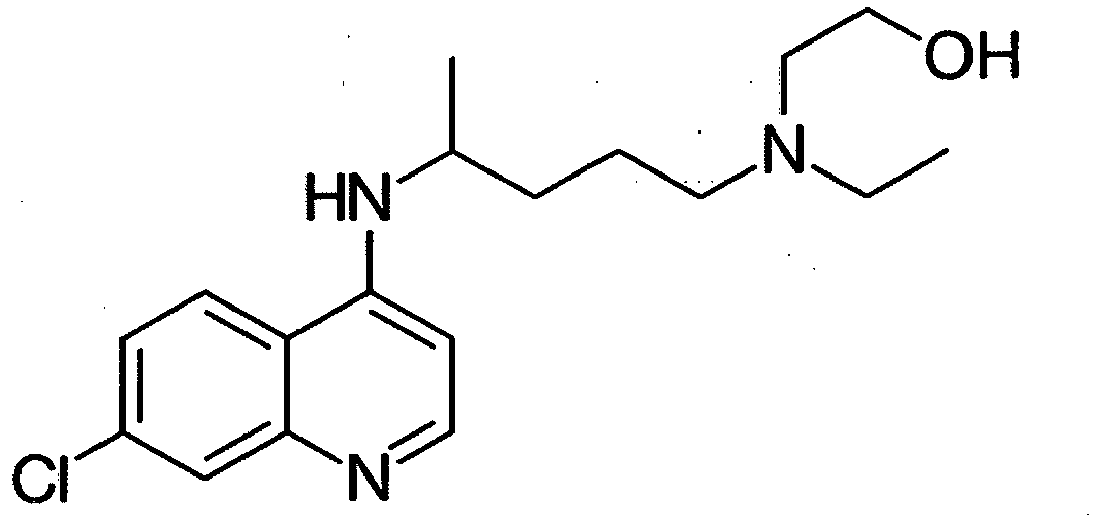
- HCQ has similar pharmacokinetics to chloroquine, with rapid gastrointestinal absorption and elimination by the kidneys. Cytochrome P450 enzymes (CYP2D6, 2C8, 3A4 and 3A5). HCQ is metabolized into three major metabolites, desethyl-chloroquine (DCQ), bisdesethylchloroquine (BDCQ), and N-desethylhydroxychloroquine (DHCQ).
- In some embodiment, the metabolites of HCQ are desethyl-chloroquine (DCQ), bisdesethylchloroquine (BDCQ), and N-desethylhydroxychloroquine (DHCQ).
- The present invention also relates to a method of treating Severe Acute Respiratory Syndrome-Corona Virus (SARS-CoV) in a patient in need thereof comprising administering to the patient's lungs a therapeutically effective amount of N-desethylhydroxychloroquine" (DHCQ) by aerosolization.
- As used herein, the term "N-desethylhydroxychloroquine" or "DHCQ" has its general meaning in the art and has the following structure:
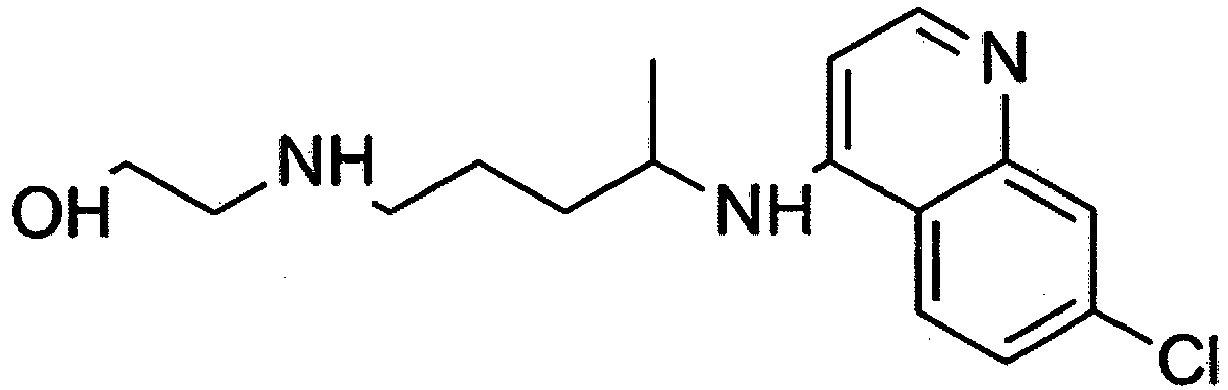
- The present invention also relates to a method of treating Severe Acute Respiratory Syndrome-Corona Virus (SARS-CoV) in a patient in need thereof comprising administering to the patient's lungs a therapeutically effective amount of bisdesethylchloroquine (BDCQ) by aerosolization.
- As used herein, the term "bisdesethylchloroquine" or "BDCQ" has its general meaning in the art, refers to 4-N-(7-chloroquinolin-4-yl)pentane-1,4-diamine and has the following structure:

- The present invention also relates to a method of treating Severe Acute Respiratory Syndrome-Corona Virus (SARS-CoV) in a patient in need thereof comprising administering to the patient's lungs a therapeutically effective amount of desethyl-chloroquine (DCQ) by aerosolization.
- As used herein, the term "desethyl-chloroquine" or "DCQ" has its general meaning in the art, refers 4-N-(7-chloroquinolin-4-yl)-1-N-ethylpentane-1,4-diamine and has the following structure:
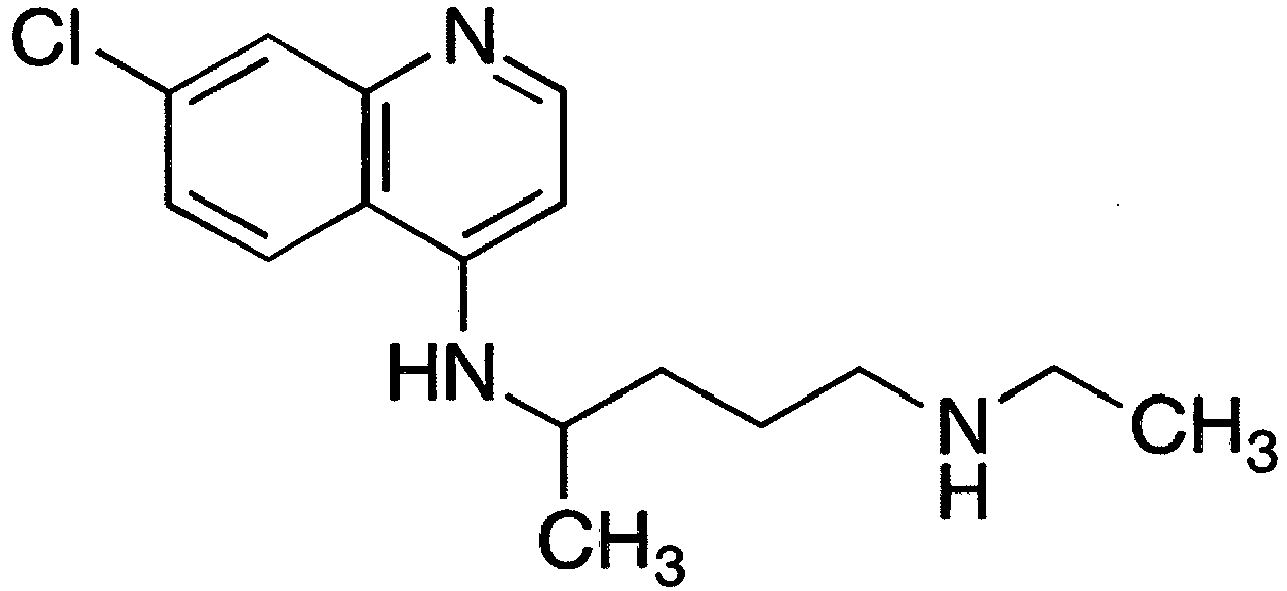
- As used herein, the expression "effective amount" means an amount of HCQ used in the present invention sufficient to result in the desired therapeutic response i.e. the treatment of the lung infection. It will be understood that the total daily usage of the compounds and compositions of the present invention will be decided by the attending physician within the scope of sound medical judgment. The specific therapeutically effective dose level for any particular subject will depend upon a variety of factors including the age, body weight, general health, sex and diet of the subject; the time of administration, route of administration, and rate of excretion of the specific compound employed; the duration of the treatment; drugs used in combination or coincidental with the specific polypeptide employed; and like factors well known in the medical arts. For example, it is well known within the skill of the art to start doses of the compound at levels lower than those required to achieve the desired therapeutic effect and to gradually increase the dosage until the desired effect is achieved. However, the daily dosage of the products may be varied over a wide range from 0.01 to 1,000 mg per adult per day. Typically, the compositions contain 0.01, 0.05, 0.1, 0.5, 1.0, 2.5, 5.0, 10.0, 15.0, 25.0, 50.0, 100, 250 and 500 mg of the active ingredient for the symptomatic 20 adjustment of the dosage ' to the subject to be treated. A medicament typically contains from about 0.01 mg to about 500 mg of the active ingredient, typically from 1 mg to about 100 mg of the active ingredient. An effective amount of the drug is ordinarily supplied at a dosage level from 0.0002 mg/kg to about 20 mg/kg of body weight per day, especially from about 0.001 mg/kg to 7 mg/kg of body weight per day. In particular, the daily dosage of the products of the invention (i.e. HCQ or DHCQ) may be varied over a wide range from 1 a 3 mg/kg per adult per day.
- The product of the invention (i.e. HCQ or DHCQ) may be administered once, twice, three times, four times, five times per day.
- As used herein the terms "administering" or "administration" refer to the act of injecting or otherwise physically delivering a substance as it exists outside the body (e.g., HCQ and/or DHCQ) into the subject, such as by nasal, oral, mucosal, intradermal, intravenous, subcutaneous, intramuscular delivery and/or any other method of physical delivery described herein or known in the art. When a disease, or a symptom thereof, is being treated, administration of the substance typically occurs after the onset of the disease or symptoms thereof. When a disease or symptoms thereof, are being prevented, administration of the substance typically occurs before the onset of the disease or symptoms thereof. In a particular embodiment, the subject is administered by aerosolization.
- In some embodiment, the hydroxychloroquine (HCQ) is administered by aerosolization.
- In some embodiment, the N-desethylhydroxychloroquine (DHCQ) is administered by aerosolization.
- In some embodiment, the desethylchloroquine (DCQ) is administered by aerosolization.
- In some embodiment, the bisdesethylchloroquine (BDCQ) is administered by aerosolization.
- In some embodiment, the hydroxychloroquine (HCQ) is administered by oral.
- In some embodiment, the N-desethylhydroxychloroquine (DHCQ) is administered by oral.
- In some embodiment, the desethylchloroquine (DCQ) is administered by oral.
- In some embodiment, the bisdesethylchloroquine (BDCQ) is administered by oral.
- As used herein, the term "aerosolization" refers to a process whereby a liquid or powder or a vial formulation is converted to an aerosol. Typically, aerosolization is performed by a nebulizer.
- As used herein, the term "nebulizer" or "aerosol generator" has its general meaning in the art and refers to a device that converts a liquid or powder or a vial into an aerosol of a size that can be inhaled into the respiratory tract. Pneumonic, ultrasonic, electronic nebulizers, e.g., passive electronic mesh nebulizers, active electronic mesh nebulizers and vibrating mesh nebulizers are amenable for use with the invention if the particular nebulizer emits an aerosol with the required properties, and at the required output rate. The process of pneumatically converting a bulk liquid into small droplets is called atomization. The operation of a pneumatic nebulizer requires a pressurized gas supply as the driving force for liquid atomization. Ultrasonic nebulizers use electricity introduced by a piezoelectric element in the liquid reservoir to convert a liquid into respirable droplets. Various types of nebulizers are described in Respiratory Care, Vol. 45, No. 6, pp. 609-622 (2000), the disclosure of which is incorporated herein by reference in its entirety. The terms "nebulizer" and "aerosol generator" are used interchangeably throughout the specification. "Inhalation device", "inhalation system" and "atomizer" are also used in the literature interchangeably with the terms "nebulizer" and "aerosol generator".
- For instance, the device can include a ventilator, optionally in combination with a mask, mouthpiece, mist inhalation apparatus, and/or a platform that guides users to inhale correctly and automatically deliver the drug (i.e. the HCQ or DHCQ) at the right time in the breath. Representative aerosolization devices that can be used in accordance with the methods of the present invention include but are not limited to those described in
U.S. Patent Nos. 6,357,671 ;6,354,516 ;6,241 ,159 ;6,044,841 ;6,041 ,776 ;6,016,974 ;5,823,179 ;5,797,389 ;5,660,166 ;5,355,872 ;5,284,133 ; and5,277,175 andU.S. Published Patent Application Nos. 20020020412 and20020020409 . - Using a jet nebulizer, compressed gas from a compressor or hospital airline is passed through a narrow constriction known as a jet. This creates an area of low pressure, and liquid medication from a reservoir is drawn up through a feed tube and fragmented into droplets by the air stream. Only the smallest drops leave the nebulizer directly, while the majority impact on baffles and walls and are returned to the reservoir. Consequently, the time required to perform jet nebulization varies according to the volume of the composition to be nebulized, among other factors, and such time can readily be adjusted by one of skill in the art.
- A metered dose inhalator (MDI) can be used to deliver a composition of the invention in a more concentrated form than typically delivered using a nebulizer. For optimal effect, MDI delivery systems require proper administration technique, which includes coordinated actuation of aerosol delivery with inhalation, a slow inhalation of about 0.5-0.75 liters per second, a deep breath approaching inspiratory capacity inhalation, and at least 4 seconds of breath holding. Pulmonary delivery using a MDI is convenient and suitable when the treatment benefits from a relatively short treatment time and low cost.
- Aerosolized HCQ or DHCQ of the invention comprise droplets that are a suitable size for efficient delivery within the lung. Preferably, the formulation is effectively delivered to lung bronchi, more preferably to bronchioles, still more preferably to alveolar ducts, and still more preferably to alveoli. Thus, aerosol droplets are typically less than about 15 µm in diameter, and preferably less than about 10 µm in diameter, more preferably less than about 5 µm in diameter, and still more preferably less than about 2 µm in diameter. For efficient delivery to alveolar bronchi of a human subject or for efficient delivery to the upper airway: Oropharynx and tracheobronchial zones of a human subject, an aerosol composition preferably comprises droplets having a diameter of about 1 µm to about 5 µm. Droplet size can be assessed using techniques known in the art, for example cascade, impaction, laser diffraction, and optical pattemation. See McLean et al. (2000) Anal Chem 72:4796-804, Fults et al. (1991) J Pharm Pharmacol 43:726-8, and Vecellio None et al. (2001) J Aerosol Med 14:107-14.
- The compositions of the present invention may comprise one or more pharmaceutically acceptable excipients, in particular selected from the group of an HFC/HFA propellant, a cosolvent, a bulking agent, a non-volatile component, a buffer/pH adjusting agent, a surfactant, a preservative, a complexing agent, or combinations thereof. Suitable propellants are those which, when mixed with the solvent(s), form a homogeneous propellant system in which a therapeutically effective amount of HCQ or DHCQ can be dissolved. The HFC/HFA propellant must be toxicologically safe and must have a vapor pressure which is suitable to enable the HCG or DHCQ to be administered via a pressurized MDI. According to the present invention, the HFC/HFA propellants may comprise, one or more of 1,1,1,2-tetrafluoroethane (HFA-134(a)) and 1,1,1,2,3,3,3,-heptafluoropropane (HFA-227), HFC-32 (difluoromethane), HFC-143(a) (1,1,1-trifluoroethane), HFC-134 (1,1,2,2-tetrafluoroethane), and HFC-152a (1,1-difluoroethane) or combinations thereof and such other propellants which may be known to the person having a skill in the art.
- The HCQ and/or the DHCQ administered by aerosolization as described above is combined with HCQ and/or the DHCQ administered by oral
- Accordingly, in a second aspect, the invention relates to i) HCQ and/or the DHCQ administered by aerosolization and ii) HCQ and/or the DHCQ administered by oral used as a combined preparation for treating COVID-19 in a subject.
- Accordingly, in a second aspect, the invention relates to i) HCQ administered by aerosolization and ii) HCQ administered by oral used as a combined preparation for treating SARS-CoV (e.g COVID-19) in a subject.
- Accordingly, in a second aspect, the invention relates to i) DHCQ administered by aerosolization and ii) DHCQ administered by oral used as a combined preparation for treating SARS-CoV (e.g COVID-19) in a subject.
- Accordingly, in a second aspect, the invention relates to i) HCQ administered by aerosolization and ii) DHCQ administered by oral used as a combined preparation for treating SARS-CoV (e.g COVID-19) in a subject.
- Accordingly, in a second aspect, the invention relates to i) DHCQ administered by aerosolization and ii) HCQ administered by oral used as a combined preparation for treating SARS-CoV (e.g COVID-19) in a subject.
- As used herein, the terms "combined treatment", "combined therapy" or "therapy combination" refer to a treatment that uses more than one medication. The combined therapy may be dual therapy or bi-therapy.
- As used herein, the term "administration simultaneously" refers to administration of 2 active ingredients by the same route and at the same time or at substantially the same time. The term "administration separately" refers to an administration of 2 active ingredients at the same time or at substantially the same time by different routes. The term "administration sequentially" refers to an administration of 2 active ingredients at different times, the administration route being identical or different.
- The invention will be further illustrated by the following examples. However, these examples and figures should not be interpreted in any way as limiting the scope of the present invention.
- As the previous severe acute respiratory syndrome coronavirus (SARS-CoV), Covid-19 uses the same cellular entry receptor, the angiotensin converting enzyme 2 (ACE2), which is present in high quantity in the lower respiratory tract of humans (11), especially on type II alveolar cells (AT2) (12). COVIDS affects firstly the respiratory mucosa and it might further invade other organs, triggering a series of immune responses and possibly leading to a "cytokine storm production", with an immune response out of control, and ultimately leading to critical conditions in certain COVID patients (11). Type II alveolar cells (AT2), which are involved in the regeneration of the pulmonary surfactant, xenobiotic metabolism, the regeneration of alveolar epithelium, constitute the main viral replication site in the lung (12). However, based on studies of receptor ACE2 expression, it has been considered that other cell types are vulnerable to COVID infection, especially myocardial cells, proximal tubule cells of the kidney, ileum and esophagus epithelial cells, and bladder urothelial cells (12).
- Studies conducted in vitro at a cellular level have shown that HCQ is a highly potent antiviral drug, including for COVID (1,2). If administered as an aerosol in patients affected by COVID related lung diseases, HCQ could reach the same pulmonary sites as HCQ circulating in the blood. This consideration is supported by results from scintigraphic examinations carried out in COVID-19 patients and showing that the pulmonary regions reached by blood radiotracers are also reached by radioactive aerosols (Data not shown). HCQ and DHCQ are water-soluble, they do not aggregate when dissolved in water. According to a molecular modeling work (Data not shown), if HCQ/DHCQ are administered as an aerosol, they could reach the epithelial cells of the airways, they could diffuse through pulmonary surfactant to enter within type II pneumocytes, an expected site of therapeutic effects. This pathway is short and direct, fairly close to that of the HCQ administered in cell culture, and in any case much faster than the complex kinetics leading to reach pulmonary targets after an oral administration.
- Throughout this application, various references describe the state of the art to which this invention pertains. The disclosures of these references are hereby incorporated by reference into the present disclosure.
- 1. Yao X, Ye F, Zhang M, et al. In Vitro Antiviral Activity and Projection of Optimized Dosing Design of Hydroxychloroquine for the Treatment of Severe Acute Respiratory Syndrome Coronavirus 2 (SARS-CoV-2). Clin Infect Dis. 2020 Mar 9. doi: 10.1093/cid/ciaa237. [Epub ahead of print].
- 2. Wang M, Cao R, Zhang L, et al. Remdesivir and chloroquine effectively inhibit the recently emerged novel coronavirus (2019-nCoV) in vitro. Cell Res. 2020;30(3):269-271.
- 3. Gao J, Tian Z, Yang X. Breakthrough: Chloroquine phosphate has shown apparent efficacy in treatment of COVID-19 associated pneumonia in clinical studies. Biosci Trends 2020. doi: 10.5582/bst.2020.01047. [Epub ahead of print]
- 4. Gautret P, Lagier JC, Parola P, et al. Hydroxychloroquine and azithromycin as a treatment of COVID-19: results of an open-label non-randomized clinical trial. Int J Antimicrob Agents. 2020. doi: 10.1016/j.ijantimicag.2020.105949. [Epub ahead of print].
- 5. Zhou D, Dai SM, Tong Q. COVID-19: a recommendation to examine the effect of hydroxychloroquine in preventing infection and progression. J Antimicrob Chemother. 2020. doi: 10.1093/jac/dkaa114. [Epub ahead of print]
- 6. O'Laughlin JP, Mehta PH, Wong BC. Life Threatening Severe QTc Prolongation in Patient with Systemic Lupus Erythematosus due to Hydroxychloroquine. Case Rep Cardiol. 2016;2016:4626279.
- 7. Hanley B, Lucas SB, Youd E, et al. Autopsy in suspected COVID-19 cases.J Clin Pathol. 2020. doi: 10.1136/jclinpath-2020-206522. [Epub ahead of print].
- 8. Tian S, Hu W, Niu L, Liu H, et al. Pulmonary Pathology of Early-Phase 2019 Novel Coronavirus (COVID-19) Pneumonia in Two Patients With Lung Cancer. J Thorac Oncol. 2020. doi: 10.1016/j.jtho.2020.02.010. [Epub ahead of print]
- 9. He F, Deng Y, Li W. Coronavirus disease 2019: What we know? J Med Virol. 2020 Mar 14. doi:
- 10.1002/jmv.25766. [Epub ahead of print]10.Qin C, Liu F, Yen TC, et al. 18 F-FDG PET/CT findings of COVID-19: a series of four highly suspected cases. Eur J Nucl Med Mol Imaging. 2020;47(5):1281-1286.
- 11. Guo YR, Cao QD, Hong ZS, et al. The origin, transmission and clinical therapies on coronavirus disease 2019 (COVID-19) outbreak - an update on the status. Mil Med Res. 2020;7(1):11.
- 12. Zou X, Chen K, Zou J, et al. Single-cell RNAseq data analysis on the receptor ACE2 expression reveals the potential risk of different human organs vulnerable to 2019-nCoV infection. Front Med. 2020. doi: 10.1007/s11684-020-0754-0. [Epub ahead of print]
- 13. Coates AL, Green M, Leung K, et al. The challenges of quantitative measurement of lung deposition using 99mTc-DTPA from delivery systems with very different delivery times. J Aerosol Med. 2007;20(3):320-30.
- 14. Sharma P, Yi R, Nayak AP, et al. Bitter Taste Receptor Agonists Mitigate Features of Allergic Asthma in Mice. Sci Rep. 2017;7:46166.
Claims (7)
- A method of treating Severe Acute Respiratory Syndrome-Corona Virus (SARS-CoV) in a patient in need thereof comprising administering to the patient's lungs a therapeutically effective amount of hydroxychloroquine (HCQ) or its metabolites by aerosolization.
- The method according to claim 1 wherein the SARS-CoV is COVID-19.
- The method according to claim 1 wherein the metabolite is N-desethylhydroxychloroquine (DHCQ).
- The method according to claim 1 wherein the metabolite is desethylchloroquine (DCQ).
- The method according to claim 1 wherein the metabolite is bisdesethylchloroquine (BDCQ).
- The method according to claim 1 wherein the HCQ administered by aerosolization is combined with HCQ administered by oral.
- The method according to claim 3 wherein the DHCQ administered by aerosolization is combined with HCQ administered by oral.
Priority Applications (1)
| Application Number | Priority Date | Filing Date | Title |
|---|---|---|---|
| EP20315131.1A EP3892275A1 (en) | 2020-04-08 | 2020-04-08 | Aerosolization of hcq or its metabolites for the treatment of lung infections |
Applications Claiming Priority (1)
| Application Number | Priority Date | Filing Date | Title |
|---|---|---|---|
| EP20315131.1A EP3892275A1 (en) | 2020-04-08 | 2020-04-08 | Aerosolization of hcq or its metabolites for the treatment of lung infections |
Publications (1)
| Publication Number | Publication Date |
|---|---|
| EP3892275A1 true EP3892275A1 (en) | 2021-10-13 |
Family
ID=70861395
Family Applications (1)
| Application Number | Title | Priority Date | Filing Date |
|---|---|---|---|
| EP20315131.1A Withdrawn EP3892275A1 (en) | 2020-04-08 | 2020-04-08 | Aerosolization of hcq or its metabolites for the treatment of lung infections |
Country Status (1)
| Country | Link |
|---|---|
| EP (1) | EP3892275A1 (en) |
Cited By (4)
| Publication number | Priority date | Publication date | Assignee | Title |
|---|---|---|---|---|
| WO2022081093A1 (en) * | 2020-10-15 | 2022-04-21 | National University Hospital (Singapore) Pte Ltd | Composition and methods for the prevention and treatment of covid-19 and respiratory illnesses |
| EP4101452A4 (en) * | 2020-02-03 | 2024-02-21 | Academy of Military Medical Sciences | USE OF 4-AMINOQUINOLINE COMPOUNDS TO TREAT CORONAVIRUS INFECTIONS |
| EP4210826A4 (en) * | 2020-09-14 | 2024-03-20 | Istanbul Üniversitesi Rektörlügü | Use of active substances with antiviral, anti malarial, and/or mucolytic properties in the treatment of viral lung diseases including covid-19 by soft mist inhaler or vibration mesh technology nebulizer through inhalation route |
| WO2024145451A3 (en) * | 2022-12-29 | 2024-07-25 | Memorial Sloan-Kettering Cancer Center | Methods for restoring regenerative potential of aged lung alveoli and aged adult stem cell compartments |
Citations (18)
| Publication number | Priority date | Publication date | Assignee | Title |
|---|---|---|---|---|
| US2546658A (en) | 1949-07-23 | 1951-03-27 | Sterling Drug Inc | 7-chloro-4-[5-(n-ethyl-n-2-hydroxyethylamino)-2-pentyl] aminoquinoline, its acid addition salts, and method of preparation |
| US5277175A (en) | 1991-07-12 | 1994-01-11 | Riggs John H | Continuous flow nebulizer apparatus and method, having means maintaining a constant-level reservoir |
| US5284133A (en) | 1992-07-23 | 1994-02-08 | Armstrong Pharmaceuticals, Inc. | Inhalation device with a dose-timer, an actuator mechanism, and patient compliance monitoring means |
| US5355872A (en) | 1992-03-04 | 1994-10-18 | Riggs John H | Low flow rate nebulizer apparatus and method of nebulization |
| US5660166A (en) | 1993-05-21 | 1997-08-26 | Aradigm Corporation | Systems for the intrapulmonary delivery of aerosolized aqueous formulations |
| US5797389A (en) | 1995-09-06 | 1998-08-25 | Ryder; Steven L. | Variable oxygen concentration high-flow nebulizer |
| US5823179A (en) | 1996-02-13 | 1998-10-20 | 1263152 Ontario Inc. | Nebulizer apparatus and method |
| US6016974A (en) | 1997-03-27 | 2000-01-25 | Sar S.P.A. | Micropump for the nebulization of fluids with enhanced metering valve |
| US6041776A (en) | 1998-05-14 | 2000-03-28 | Briggs, Iii; Stephen W. | Medical nebulization device |
| US6044841A (en) | 1997-08-29 | 2000-04-04 | 1263152 Ontario Inc. | Breath actuated nebulizer with valve assembly having a relief piston |
| US6241159B1 (en) | 1996-05-13 | 2001-06-05 | Universidad De Sevilla | Liquid atomization procedure |
| US20020020409A1 (en) | 1999-03-12 | 2002-02-21 | Kidwell Daniel E. | Nebulizer for ventilation system |
| US20020020412A1 (en) | 2000-08-02 | 2002-02-21 | Gilbert Brian E. | Jet nebulizer assembly for home administration of drugs in aerosols |
| US6354516B1 (en) | 1999-11-02 | 2002-03-12 | Aradigm Corporation | Pore structures for reduced pressure aerosolization |
| US6357671B1 (en) | 1999-02-04 | 2002-03-19 | Siemens Elema Ab | Ultrasonic nebulizer |
| WO2003039546A1 (en) * | 2001-11-09 | 2003-05-15 | Lauren Charous | New uses for anti-malarial therapeutic agents |
| US20140275164A1 (en) * | 2013-03-15 | 2014-09-18 | The United States Government As Represented By The Department Of Veterans Affairs | Desethylhydroxychloroquine for the treatment of diseases associated with inflammation |
| CN111297838A (en) * | 2020-04-08 | 2020-06-19 | 宁波合康生物医药科技有限公司 | Inhalation spray of antiviral drug |
-
2020
- 2020-04-08 EP EP20315131.1A patent/EP3892275A1/en not_active Withdrawn
Patent Citations (19)
| Publication number | Priority date | Publication date | Assignee | Title |
|---|---|---|---|---|
| US2546658A (en) | 1949-07-23 | 1951-03-27 | Sterling Drug Inc | 7-chloro-4-[5-(n-ethyl-n-2-hydroxyethylamino)-2-pentyl] aminoquinoline, its acid addition salts, and method of preparation |
| US5277175A (en) | 1991-07-12 | 1994-01-11 | Riggs John H | Continuous flow nebulizer apparatus and method, having means maintaining a constant-level reservoir |
| US5355872A (en) | 1992-03-04 | 1994-10-18 | Riggs John H | Low flow rate nebulizer apparatus and method of nebulization |
| US5355872B1 (en) | 1992-03-04 | 1998-10-20 | John H Riggs | Low flow rate nebulizer apparatus and method of nebulization |
| US5284133A (en) | 1992-07-23 | 1994-02-08 | Armstrong Pharmaceuticals, Inc. | Inhalation device with a dose-timer, an actuator mechanism, and patient compliance monitoring means |
| US5660166A (en) | 1993-05-21 | 1997-08-26 | Aradigm Corporation | Systems for the intrapulmonary delivery of aerosolized aqueous formulations |
| US5797389A (en) | 1995-09-06 | 1998-08-25 | Ryder; Steven L. | Variable oxygen concentration high-flow nebulizer |
| US5823179A (en) | 1996-02-13 | 1998-10-20 | 1263152 Ontario Inc. | Nebulizer apparatus and method |
| US6241159B1 (en) | 1996-05-13 | 2001-06-05 | Universidad De Sevilla | Liquid atomization procedure |
| US6016974A (en) | 1997-03-27 | 2000-01-25 | Sar S.P.A. | Micropump for the nebulization of fluids with enhanced metering valve |
| US6044841A (en) | 1997-08-29 | 2000-04-04 | 1263152 Ontario Inc. | Breath actuated nebulizer with valve assembly having a relief piston |
| US6041776A (en) | 1998-05-14 | 2000-03-28 | Briggs, Iii; Stephen W. | Medical nebulization device |
| US6357671B1 (en) | 1999-02-04 | 2002-03-19 | Siemens Elema Ab | Ultrasonic nebulizer |
| US20020020409A1 (en) | 1999-03-12 | 2002-02-21 | Kidwell Daniel E. | Nebulizer for ventilation system |
| US6354516B1 (en) | 1999-11-02 | 2002-03-12 | Aradigm Corporation | Pore structures for reduced pressure aerosolization |
| US20020020412A1 (en) | 2000-08-02 | 2002-02-21 | Gilbert Brian E. | Jet nebulizer assembly for home administration of drugs in aerosols |
| WO2003039546A1 (en) * | 2001-11-09 | 2003-05-15 | Lauren Charous | New uses for anti-malarial therapeutic agents |
| US20140275164A1 (en) * | 2013-03-15 | 2014-09-18 | The United States Government As Represented By The Department Of Veterans Affairs | Desethylhydroxychloroquine for the treatment of diseases associated with inflammation |
| CN111297838A (en) * | 2020-04-08 | 2020-06-19 | 宁波合康生物医药科技有限公司 | Inhalation spray of antiviral drug |
Non-Patent Citations (22)
| Title |
|---|
| ANSGAR KLIMKE ET AL: "Hydroxychloroquine as an Aerosol Might Markedly Reduce and Even Prevent Severe Clinical Symptoms after SARS-CoV-2 Infection", 5 April 2020 (2020-04-05), XP055725541, Retrieved from the Internet <URL:10.20944/preprints202004.0090.v1> [retrieved on 20200827], DOI: 10.20944/preprints202004.0090.v1 * |
| CHHONKER YASHPAL S ET AL: "Simultaneous quantitation of hydroxychloroquine and its metabolites in mouse blood and tissues using LC-ESI-MS/MS: An application for pharmacokinetic studies", JOURNAL OF CHROMATOGRAPHY B, vol. 1072, 23 November 2017 (2017-11-23), pages 320 - 327, XP085316962, ISSN: 1570-0232, DOI: 10.1016/J.JCHROMB.2017.11.026 * |
| COATES ALGREEN MLEUNG K ET AL.: "The challenges of quantitative measurement of lung deposition using 99mTc-DTPA from delivery systems with very different delivery times", J AEROSOL MED., vol. 20, no. 3, 2007, pages 320 - 30 |
| FULTS ET AL., J PHARM PHARMACOL, vol. 43, 1991, pages 726 - 8 |
| GAO JTIAN ZYANG X.: "Breakthrough: Chloroquine phosphate has shown apparent efficacy in treatment of COVID-19 associated pneumonia in clinical studies", BIOSCI TRENDS, 2020 |
| GAUTRET PLAGIER JCPAROLA P ET AL.: "Hydroxychloroquine and azithromycin as a treatment of COVID-19: results of an open-label non-randomized clinical trial", INT J ANTIMICROB AGENTS, 2020 |
| GUO YRCAO QDHONG ZS ET AL.: "The origin, transmission and clinical therapies on coronavirus disease 2019 (COVID-19) outbreak - an update on the status", MIL MED RES., vol. 7, no. 1, 2020, pages 11 |
| HANLEY BLUCAS SBYOUD E ET AL.: "Autopsy in suspected COVID-19 cases", J CLIN PATHOL., 2020 |
| HE FDENG YLI W.: "Coronavirus disease 2019: What we know?", J MED VIROL., 14 March 2020 (2020-03-14) |
| KLIMKE A ET AL: "Hydroxychloroquine as an aerosol might markedly reduce and even prevent severe clinical symptoms after SARS-CoV-2 infection", MEDICAL HYPOTHESES, EDEN PRESS, PENRITH, US, vol. 142, 27 April 2020 (2020-04-27), XP086252213, ISSN: 0306-9877, [retrieved on 20200427], DOI: 10.1016/J.MEHY.2020.109783 * |
| MCLEAN ET AL., ANAL CHEM, vol. 72, 2000, pages 4796 - 804 |
| O'LAUGHLIN JPMEHTA PHWONG BC.: "Life Threatening Severe QTc Prolongation in Patient with Systemic Lupus Erythematosus due to Hydroxychloroquine", CASE REP CARDIOL., vol. 2016, 2016, pages 4626279 |
| PHILIPPE COLSON ET AL: "Chloroquine and hydroxychloroquine as available weapons to fight COVID-19", INTERNATIONAL JOURNAL OF ANTIMICROBIAL AGENTS, vol. 55, no. 4, 1 April 2020 (2020-04-01), AMSTERDAM, NL, pages 105932, XP055730759, ISSN: 0924-8579, DOI: 10.1016/j.ijantimicag.2020.105932 * |
| QIN CLIU FYEN TC ET AL.: "18 F-FDG PET/CT findings of COVID-19: a series of four highly suspected cases", EUR J NUCL MED MOL IMAGING, vol. 47, no. 5, 2020, pages 1281 - 1286, XP037078192, DOI: 10.1007/s00259-020-04734-w |
| RESPIRATORY CARE, vol. 45, no. 6, 2000, pages 609 - 622 |
| SHARMA PYI RNAYAK AP ET AL.: "Bitter Taste Receptor Agonists Mitigate Features of Allergic Asthma in Mice", SCI REP., vol. 7, 2017, pages 46166 |
| TIAN SHU WNIU LLIU H ET AL.: "Pulmonary Pathology of Early-Phase 2019 Novel Coronavirus (COVID-19) Pneumonia in Two Patients With Lung Cancer", J THORAC ONCOL., 2020 |
| VECELLIO NONE ET AL., J AEROSOL MED, vol. 14, 2001, pages 107 - 14 |
| WANG MCAO RZHANG L ET AL.: "Remdesivir and chloroquine effectively inhibit the recently emerged novel coronavirus (2019-nCoV) in vitro", CELL RES., vol. 30, no. 3, 2020, pages 269 - 271, XP037049320, DOI: 10.1038/s41422-020-0282-0 |
| YAO XYE FZHANG M ET AL.: "In Vitro Antiviral Activity and Projection of Optimized Dosing Design of Hydroxychloroquine for the Treatment of Severe Acute Respiratory Syndrome Coronavirus 2 (SARS-CoV-2", CLIN INFECT DIS., 9 March 2020 (2020-03-09) |
| ZHOU DDAI SMTONG Q.: "COVID-19: a recommendation to examine the effect of hydroxychloroquine in preventing infection and progression", J ANTIMICROB CHEMOTHER., 2020 |
| ZOU XCHEN KZOU J ET AL.: "Single-cell RNAseq data analysis on the receptor ACE2 expression reveals the potential risk of different human organs vulnerable to 2019-nCoV infection", FRONT MED., 2020 |
Cited By (4)
| Publication number | Priority date | Publication date | Assignee | Title |
|---|---|---|---|---|
| EP4101452A4 (en) * | 2020-02-03 | 2024-02-21 | Academy of Military Medical Sciences | USE OF 4-AMINOQUINOLINE COMPOUNDS TO TREAT CORONAVIRUS INFECTIONS |
| EP4210826A4 (en) * | 2020-09-14 | 2024-03-20 | Istanbul Üniversitesi Rektörlügü | Use of active substances with antiviral, anti malarial, and/or mucolytic properties in the treatment of viral lung diseases including covid-19 by soft mist inhaler or vibration mesh technology nebulizer through inhalation route |
| WO2022081093A1 (en) * | 2020-10-15 | 2022-04-21 | National University Hospital (Singapore) Pte Ltd | Composition and methods for the prevention and treatment of covid-19 and respiratory illnesses |
| WO2024145451A3 (en) * | 2022-12-29 | 2024-07-25 | Memorial Sloan-Kettering Cancer Center | Methods for restoring regenerative potential of aged lung alveoli and aged adult stem cell compartments |
Similar Documents
| Publication | Publication Date | Title |
|---|---|---|
| EP3892275A1 (en) | Aerosolization of hcq or its metabolites for the treatment of lung infections | |
| DK2393477T3 (en) | APPLICATION OF A GLUCOCORTICOID COMPOSITION FOR TREATMENT OF HEAVY AND UNCONTROLLED ASTMA | |
| JP2023526547A (en) | Certain drug systems, methods, and uses for reducing viral replication in airway mucosa | |
| US8668901B2 (en) | Use of a glucocorticoid composition for the treatment of severe and uncontrolled asthma | |
| US20230158259A1 (en) | Products of manufacture and methods for treating, ameliorating or preventing microbial infections | |
| Bisgaard et al. | Comparative study of budesonide as a nebulized suspension vs pressurized metered-dose inhaler in adult asthmatics | |
| CA2888428C (en) | Ciclesonide for the treatment of airway disease in horses | |
| EP4232073B1 (en) | New dosage regimen for inhaled vasoactive intestinal polypeptide | |
| JPH10500966A (en) | Compounds and compositions for administration by oral inhalation or insufflation | |
| Souëf | The meaning of lung dose | |
| JP2023541241A (en) | Pharmaceutical compositions containing hydroxychloroquine and uses thereof | |
| TW201016215A (en) | Compositions and uses of antiviral active pharmaceutical agents | |
| WO2022063320A1 (en) | Composition for inhibiting respiratory virus and respiratory virus prevention and treatment method | |
| US20230248722A1 (en) | Clofazimine composition and method for the treatment or prophylaxis of viral infections | |
| US20260007656A1 (en) | Methods and compositions for treating chronic obstructive pulmonary disease, asthma, pneumonia, bronchitis, cystic fibrosis, pulmonary edema, interstitial lung disease, sarcoidosis, idiopathic pulmonary fibrosis, acute respiratory distress syndrome, pulmonary arterial hypertension, adn respiratory syncytial virus | |
| Philips et al. | Inhalation Therapy in Pulmonary | |
| Gruber et al. | The influence of a nose-clip on inhalation therapy in asthmatic children | |
| KR20250053864A (en) | Pharmaceutical dry powder composition and method for treating respiratory infections | |
| WO2023118014A1 (en) | Inhalable compositions comprising a complex of hpbcd and budesonide or ciclesonide for the treatment or prevention of a respiratory viral disease or lipopolysaccharide-induced inflammation, in particular lipopolysaccharide-induced inflammation associated with a respiratory viral disease | |
| JP2025092362A (en) | Pharmaceutical solution composition and oral atomized inhalation dosage form containing same | |
| HK40091740A (en) | Products of manufacture and methods for treating, ameliorating or preventing microbial infections | |
| JP2023541240A (en) | Pharmaceutical compositions containing chloroquine and uses thereof | |
| HK40083799A (en) | Clofazimine composition and method for the treatment or prophylaxis of viral infections | |
| Mitchell et al. | A NEW VALVED HOLDING CHAMBER (VHC) WITH POSITIVE EXPIRATORY PRESSURE | |
| HK1161080B (en) | Use of a glucocorticoid composition for the treatment of severe and uncontrolled asthma |
Legal Events
| Date | Code | Title | Description |
|---|---|---|---|
| PUAI | Public reference made under article 153(3) epc to a published international application that has entered the european phase |
Free format text: ORIGINAL CODE: 0009012 |
|
| STAA | Information on the status of an ep patent application or granted ep patent |
Free format text: STATUS: THE APPLICATION HAS BEEN PUBLISHED |
|
| AK | Designated contracting states |
Kind code of ref document: A1 Designated state(s): AL AT BE BG CH CY CZ DE DK EE ES FI FR GB GR HR HU IE IS IT LI LT LU LV MC MK MT NL NO PL PT RO RS SE SI SK SM TR |
|
| STAA | Information on the status of an ep patent application or granted ep patent |
Free format text: STATUS: THE APPLICATION HAS BEEN WITHDRAWN |
|
| 18W | Application withdrawn |
Effective date: 20211125 |