EP3792277A1 - Fusion proteins composed of an interleukin-2 mutein and type i interferon - Google Patents
Fusion proteins composed of an interleukin-2 mutein and type i interferon Download PDFInfo
- Publication number
- EP3792277A1 EP3792277A1 EP19729611.4A EP19729611A EP3792277A1 EP 3792277 A1 EP3792277 A1 EP 3792277A1 EP 19729611 A EP19729611 A EP 19729611A EP 3792277 A1 EP3792277 A1 EP 3792277A1
- Authority
- EP
- European Patent Office
- Prior art keywords
- seq
- fusion protein
- mutein
- cytokines
- cells
- Prior art date
- Legal status (The legal status is an assumption and is not a legal conclusion. Google has not performed a legal analysis and makes no representation as to the accuracy of the status listed.)
- Pending
Links
Images


Classifications
-
- C—CHEMISTRY; METALLURGY
- C07—ORGANIC CHEMISTRY
- C07K—PEPTIDES
- C07K14/00—Peptides having more than 20 amino acids; Gastrins; Somatostatins; Melanotropins; Derivatives thereof
- C07K14/435—Peptides having more than 20 amino acids; Gastrins; Somatostatins; Melanotropins; Derivatives thereof from animals; from humans
- C07K14/52—Cytokines; Lymphokines; Interferons
- C07K14/555—Interferons [IFN]
- C07K14/56—IFN-alpha
-
- C—CHEMISTRY; METALLURGY
- C07—ORGANIC CHEMISTRY
- C07K—PEPTIDES
- C07K14/00—Peptides having more than 20 amino acids; Gastrins; Somatostatins; Melanotropins; Derivatives thereof
- C07K14/435—Peptides having more than 20 amino acids; Gastrins; Somatostatins; Melanotropins; Derivatives thereof from animals; from humans
- C07K14/52—Cytokines; Lymphokines; Interferons
- C07K14/54—Interleukins [IL]
- C07K14/55—IL-2
-
- C—CHEMISTRY; METALLURGY
- C12—BIOCHEMISTRY; BEER; SPIRITS; WINE; VINEGAR; MICROBIOLOGY; ENZYMOLOGY; MUTATION OR GENETIC ENGINEERING
- C12N—MICROORGANISMS OR ENZYMES; COMPOSITIONS THEREOF; PROPAGATING, PRESERVING, OR MAINTAINING MICROORGANISMS; MUTATION OR GENETIC ENGINEERING; CULTURE MEDIA
- C12N15/00—Mutation or genetic engineering; DNA or RNA concerning genetic engineering, vectors, e.g. plasmids, or their isolation, preparation or purification; Use of hosts therefor
- C12N15/09—Recombinant DNA-technology
- C12N15/11—DNA or RNA fragments; Modified forms thereof; Non-coding nucleic acids having a biological activity
- C12N15/62—DNA sequences coding for fusion proteins
-
- A—HUMAN NECESSITIES
- A61—MEDICAL OR VETERINARY SCIENCE; HYGIENE
- A61K—PREPARATIONS FOR MEDICAL, DENTAL OR TOILETRY PURPOSES
- A61K38/00—Medicinal preparations containing peptides
-
- C—CHEMISTRY; METALLURGY
- C07—ORGANIC CHEMISTRY
- C07K—PEPTIDES
- C07K2319/00—Fusion polypeptide
- C07K2319/30—Non-immunoglobulin-derived peptide or protein having an immunoglobulin constant or Fc region, or a fragment thereof, attached thereto
Definitions
- the present invention relates to the field of Biotechnology and Immuno-oncology, especially to the development of fusion proteins based on cytokines. Particularly it describes fusion proteins composed by the binding of a type I interferon (IFN) to interleukin 2 (IL2) agonist muteins.
- IFN type I interferon
- IL2 interleukin 2
- IFN ⁇ type 1 interferon
- IL2 potent inducers of T helper 1 response patterns desired in the treatment of cancer.
- the direct antitumor action of IFNa on malignant cells has been previously described. It has been associated to cytostatic, antiproliferative effect and to a decrease in extracellular matrix protease levels, which are involved in the processes of invasion and metastasis and related to a worse prognosis of the disease.
- this cytokine promotes the maturation and migration of antigen presenting cells, the induction of cross-presentation in aCD8 dendritic cells and lymphocytes activation ( Chikkala et al (1990) Cancer Research, 50: 1176-1182 ). It has been described that IFNa protects T cells from mitochondria-dependent apoptosis, as a consequence of the activation mediated by the antigen, and thus favors the process of clonal expansion, in a regulated manner ( Dondi et al (2004)The Journal of Immunology, 173 (6): 3740-3747 ).
- the cytokine IL2 is an autocrine factor that promotes the proliferation of antigen activated T lymphocytes. However, it binds with higher affinity to regulatory T lymphocytes than to effector cells, thus inducing their proliferation with the consequent negative impact in the antitumor effect ( Chaput et al (2007).J Immunol, 179: 4969-4978 ).
- One of the strategies to improve the therapeutic efficacy of this molecule is the development of muteins based on a rational design. Such is the case of the IL2 agonist mutein generated in the Center of Molecular Immunology, which is unable to bind to the high affinity receptor expressed in regulatory T cells.
- the IL2 agonist mutein will be hereinafter referred to as no alpha IL2 (SEQ ID NO 6 of US 9,206,243 ).
- no alpha IL2 preferentially expands effector populations of NK and memory CD8 T cells, over regulatory T lymphocytes.
- the lower toxicity of this molecule on healthy tissues in comparison with wild type II2 has also been described ( Carmenate et al (2013). of Immunology, 190: 6230-6238 ).
- H9 superkine of IL2
- This variant exhibits increased binding affinity for the beta chain of the IL2 receptor and stimulates a powerful proliferation of the T lymphocytes, independently of the expression of CD25 alpha chain of IL2 receptor.
- it has been shown that it is able to induce an increased expansion of cytotoxic T lymphocytes, an enhanced antitumor response in vivo , a limited expansion of regulatory T cells, and reduced toxicity, with respect to IL2 ( Levin et al. (2012) Nature, 48: 529-535 ).
- This variant will be hereinafter referred to as H9.
- cytokines Both cytokines, IL2 and IFN ⁇ , were able to stimulate the expression of NKG2D activating receptor in NK cells, even in the subpopulation of NK cells with high expression of CD16; NKG2D induction by both cytokines correlated with the induction of NK cell activity ( Konjevic et al (2010) Melanoma Research, 20: 459-67 ).
- BC2 and BC3 respectively, consists of the connection of both cytokines through an Fc region of an immunoglobulin with limited binding to Fc ⁇ receptors. The presence of this Fc region, capable of binding to neonatal Fc receptors, allows to increase the half-life time.
- the resulting molecules have immunomodulatory effect, as well as surprising in vivo antitumor properties, which are superior to those observed after the administration of each parental cytokine (fused to the same Fc region), and even, to the combination of these, in equimolar amounts.
- the subject of the present invention is fusion proteins comprising an IL2 mutein connected through a linker to a type I IFN.
- IL2 muteins that are part of the fusion proteins of the present invention are described in SEQ ID NO 1 and 2.
- the IFN that is part of the structure of said fusion proteins is IFNa (SEQ ID NO 3).
- the fusion proteins of the present invention are characterized in that the linker consists of an Fc region of a mutated human IgG1, and a connector peptide, and its sequence is shown in SEQ ID NO 5.
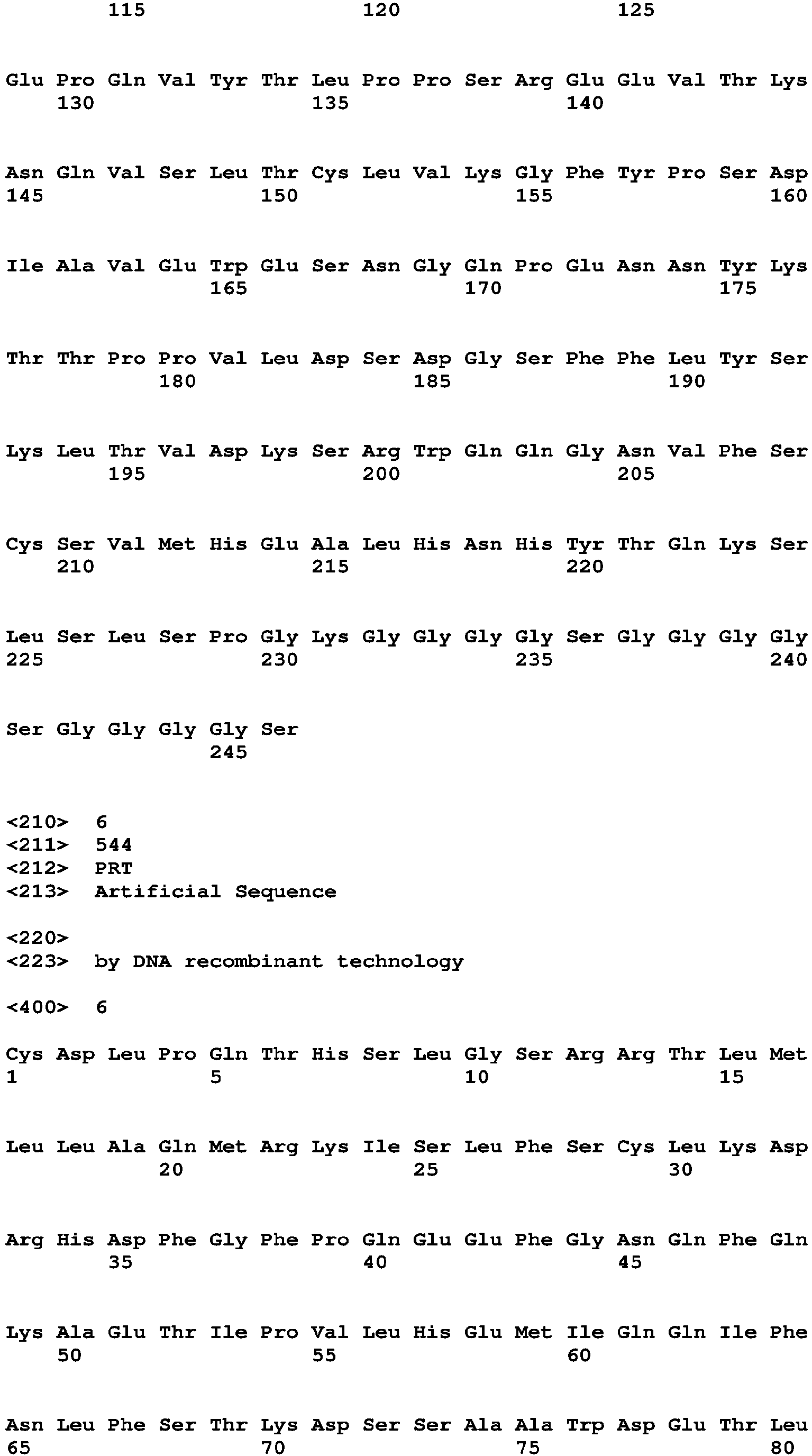
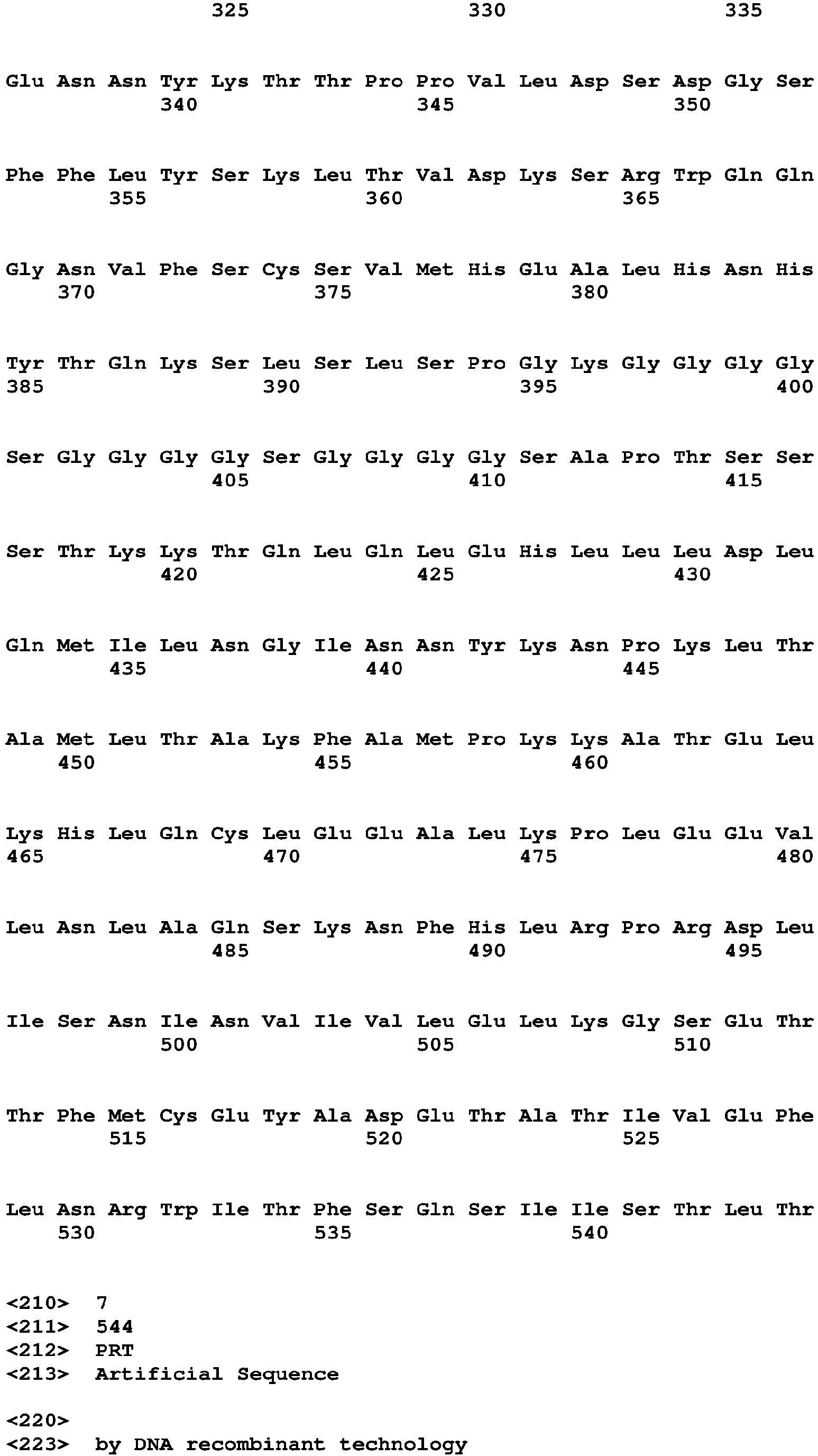
- sequences of the fusion proteins described in the present invention are shown in SEQ ID NO 6 and 7, and the nucleic acid sequences encoding them are shown in SEQ ID NOs 10 and 11, respectively.
- the present invention relates to pharmaceutical compositions comprising as active ingredient the fusion proteins described in SEQ ID NO 6 and 7, and a pharmaceutically acceptable carrier.
- the subject of the present invention is the use of the fusion proteins described herein in the treatment of cancer; including the intratumoral injection approach of the nucleic acid molecules encoding said fusion proteins.
- BC2 is formed by the fusion of the no alpha IL-2 mutein, whose sequence is shown in SEQ ID NO. 1 (previously disclosed in SEQ ID No. 6 of US 9,206,243 B2 ) with the human IFNa whose sequence is shown in Figure 1A and in SEQ ID. NO 3 of the present invention.
- the Fc region of a mutated human IgG1 having the L234A L235A mutations, associated with a limited capacity of activation of receptors involved in the immune response ( Hezareh et al (2001) J Virol., 75 (24): 12161-12168 ), and the connector peptide (Gly 4 Ser) 3 form the linker element.
- the IFNa molecule is bound at the N-terminal end (Nt) of the linker fragment, and the no alpha IL2 molecule at the C-terminal end (Ct).
- the sequence of said linker is described in Figure 1B and in SEQ ID. NO 5.
- BC3 is formed by the fusion of human IFN ⁇ , whose sequence is shown in Figure 1A and in SEQ ID. NO 3, to the aforementioned H9 mutein, whose sequence is shown in SEQ ID NO. 2 and Figure 2 .
- the linker element is composed by the Fc region of a human IgG1 with mutations L234A L235A, and a limited activation capacity of receptors involved in the immune response, and the linker peptide (Gly 4 Ser) 3 .
- the IFNa molecule is bound at the Nt of the linker fragment and at the Ct it is found the H9 molecule.
- the sequence of said linker is described in Figure 1B and in SEQ ID. NO 5.
- the BC object of the present invention can be found as active ingredient, forming part of different pharmaceutical compositions suitable therefore, and a pharmaceutically acceptable carrier.
- concentrations of the active ingredient in said pharmaceutical compositions are within the range from 1 ⁇ g / ml to 20 ⁇ g / ml, preferably from 5 ⁇ g/ml to 10 ⁇ g/ ml.
- the pharmaceutically acceptable carriers include, but are not limited to: saline solution, phosphate buffered saline pH neutral, and similar formulations.
- Other buffering agents, dispersing agents, and non-toxic inert substances suitable for administration to a patient may be included in the compositions of the present invention.
- the compositions may be suitable solutions for administration, and are normally sterile and free of undesirable particles.
- the novel format of the BC is partially due to the presence of an Fc region in the linker element of the cytokines that compose them.
- This Fc region makes possible its purification by protein A affinity chromatography, which allows the administration as a soluble protein by different routes (subcutaneous, intravenous, intradermal, intramuscular, intraperitoneal) and also, increases the half-life times of these agents in circulation and thus, improves their therapeutic effectiveness. This allows the use of lower doses with the consequent reduction of toxicity.
- An alternative route of administration is the intratumoral, which would have a lower toxicity as compared with the other routes.
- the presence of no alpha IL2 or H9 is associated to reduced toxicity in comparison with the wild-type IL2 molecule, currently used in the clinical scenario.
- the administration strategies used in the present invention for these BC may include intratumoral injection of the product, by gene-based therapeutic approaches, for example, the intratumoral injection of mRNA and transducing particles encoding them.
- the genetic modification of the tumor or infiltrating tumor cells, for the expression of BC2 or BC3 guarantees the presence of these in the tumor microenvironment, which makes possible its immunomodulatory action as well as the direct effect on the tumor itself.
- the versatility and high reproducibility of the intratumoral injection of nucleic acids encoding therapeutic agents is a suitable platform for the treatment of different types of tumors.
- the aforementioned BC aim to constitute a new therapeutic front that enhances the pharmacological action of the type I IFN and the IL2 individual cytokines, currently used in the treatment of cancer.
- This effect would be associated with the preferential expansion of cytotoxic T cells over regulatory T cells, which leads to a more efficient antitumor immune response, and therefore, to a delay in tumor growth and a greater survival of the treated individuals.
- the lower levels of toxicity of the IL2 muteins used increase the likelihood of success in comparison with that of the therapies with wild type cytokines. All these responses can be translated into greater life expectancy and quality of life in the patients treated.
- Example 1 Design and obtainment of the BCs and single controls of cytokines.
- the BC2m described in SEQ ID NO 8 was generated. This consists of a type I IFN, the murine IFNa4 (SEQ. ID NO 4), fused to the no alpha IL2 mutein, example of IL2 agonist, described in SEQ ID NO 1, through a linker fragment shown in SEQ ID NO 12, which consists of an Fc region of a mutated murine IgG1 bound to the peptide connector (Gly 4 Ser) 3 .
- the D265A mutation in the Fc region reduces the activation capacity of the receptors involved in the immune response ( Becker J.C.
- the BC2m is a dimeric and tetravalent molecule.
- the single controls were designed as molecules containing each parental cytokine fused to the Fc region of the mutated murine IgG1 (D265A), and maintaining the relative positions of each cytokine in the BC2m structure.
- this cytokine was bound to the Nt of the above mentioned Fc region, whereas in the single control of no alpha IL2, this cytokine is located towards the Ct of the above referred Fc region.
- the single controls of IFNa and no alpha IL2 are dimeric, and bivalent molecules.
- the BC2m and the single controls IFNa-Fc and Fc-no alpha IL2 genes were cloned in the pLV-CMV-IRES-Neo vector for transient expression assays in higher cells.
- the resulting genetic constructions also served as transfer vectors for obtaining the transducing particles used in the genetic modification of the tumor cell lines.
- the expression of said genes in HEK293T cells was checked by transient transfection using lipofectamine.
- the quantification of the different recombinant molecules in the supernatants was carried out by means of an ELISA specific for the murine Fc region.
- human IFN ⁇ SEQ ID NO 3 and Figure 1A
- the agonist muteins no alpha IL2 and H9 described in SEQ ID NO. 1 and 2, respectively.
- the Fc region of a mutated human IgG1 with L234A L235A mutations and limited activation capacity of receptors involved in the immune response, and the linker peptide (Gly 4 Ser) 3 were used as a linker; said linker is shown in SEQ ID NO. 5 and Figure 1B .
- the IFNa molecule is bound at the Nt of the linker fragment, and the no alpha IL2 or the H9, at the Ct of the linker,.
- the final designs of the bifunctional proteins BC2 and BC3 are shown in SEQ ID NO. 6 and 7, respectively.
- the genes of BC2 and BC3 were cloned in the transfer vector pLV-CMV-IRES-Neo, for stable expression in higher cells.
- the functionality of these genes was checked by transient expression assays with lipofectamine in HEK293T cells, for which the recombinant molecules were quantified by an ELISA specific for the human Fc region.
- BC2m is expressed as an integral and functional protein.
- a transient transfection assay was performed on HEK293T cells to evaluate the feasibility of the design of these molecules. After 72 hours of culture, the supernatants were removed and an ELISA specific for the murine Fc region was performed. For this, polystyrene plates were coated with an antibody specific for the murine IgG molecule and incubated with the supernatants of cells transfected with each of the constructs containing the genes of BC2m and the single controls. Finally, the detection was carried out using an antibody specific for the Fc region of a murine IgG, conjugated to the enzyme peroxidase.
- Example 3 preserves the biological activities corresponding to the cytokines IFN ⁇ and IL2.
- the supernatants containing the BC2m or the IFNa-Fc control were able to stimulate the expression of MHCI in the treated tumor cells, in contrast with the results obtained using the negative control, which indicates that the activity functionality of IFNa is preserved in the structure of the BC2 ( Figure 5A ).
- a CD8+ lymphocyte proliferation stimulation assay was performed with splenocytes cultures from naive mice. Splenocytes from C57BL/6 mice were labeled with the CFSE reagent and cultured for 72 hours, in the presence of the supernatants of transfected HEK293T cells containing the BC2m or the Fc-no alpha IL2 control. At the end of the experiment, the percentage of CD8+ T lymphocytes in proliferation was analyzed.
- splenocytes incubated with a supernatant of non-transfected HEK293T cells were used, and the Proliferation Ratio of CD8+ T Lymphocytes (Pr) was calculated by dividing the percentage of proliferating CD8+ T cells for the splenocytes treated with the BC2m or the Fc-no alpha IL2, and the value corresponding to the negative control, respectively.
- Example 4 BC2m is secreted by 4T1 tumor cells genetically modified by lentiviral transduction.
- the approach of transduced tumor cells was selected, using as a model the 4T1 mammary carcinoma.
- the cells were transduced with lentiviral particles encoding the BC2m and the single controls.
- As negative control tumor cells transduced with the empty pLV-CMV-IRES-Neo vector (mock control) were used.
- the transduced cells were maintained in selective medium (with G-418 antibiotic) for 10 days, and the concentration of the recombinant molecules in the supernatants was measured by ELISA to detect the Fc portion of murine immunoglobulins.
- the BC2m and the single controls were detected by this technique in the supernatants of the transduced tumor cells ( Figure 6A ).
- the presence of the no alpha IL2 portion and IFN ⁇ in the BC2m and the single controls was confirmed by sandwich ELISAs.
- the supernatants of the transduced cells were incubated on plates coated with an anti-Fc antibody, and the IL2 portion was detected with the sequential addition of a rabbit antibody specific for the IL2 and an anti-rabbit immunoglobulin antibody conjugated to the enzyme peroxidase.
- the Fc-IL2 portion was detected in the structure of the BC2m and the single Fc-no alpha IL2 control ( Figure 6B ).
- the supernatants of the transduced cells were incubated on plates coated with an anti-IFNa antibody, and the Fc portion was detected with an antibody specific for the Fc region of a mouse IgG, conjugated to the enzyme peroxidase.
- the IFNa-Fc portion was detected in the BC2m and the single IFNa-Fc control ( Figure 6C ).
- 4T1 cells were inoculated in BALB/c immunocompetent mice. After 10 days, equimolar amounts of IFNa-Fc, Fc-no alpha IL2 and BC2m, contained in supernatants of previously transfected HEK293T cells, were injected intratumorally. An additional group received the injection of the mixture of supernatants containing IFNa-Fc and Fc-no alpha IL2, thus ensuring the equimolarity of each of the cytokines, with respect to the single controls and the BC2m. As a negative control, the supernatant of non-transfected HEK293T cells was used. The supernatants were injected with a daily frequency, for four days.
Landscapes
- Health & Medical Sciences (AREA)
- Life Sciences & Earth Sciences (AREA)
- Chemical & Material Sciences (AREA)
- Genetics & Genomics (AREA)
- Organic Chemistry (AREA)
- Zoology (AREA)
- Engineering & Computer Science (AREA)
- Molecular Biology (AREA)
- Biomedical Technology (AREA)
- Biochemistry (AREA)
- Biophysics (AREA)
- General Health & Medical Sciences (AREA)
- Proteomics, Peptides & Aminoacids (AREA)
- Medicinal Chemistry (AREA)
- Gastroenterology & Hepatology (AREA)
- Toxicology (AREA)
- Biotechnology (AREA)
- General Engineering & Computer Science (AREA)
- Bioinformatics & Cheminformatics (AREA)
- Wood Science & Technology (AREA)
- Physics & Mathematics (AREA)
- Plant Pathology (AREA)
- Microbiology (AREA)
- Medicines That Contain Protein Lipid Enzymes And Other Medicines (AREA)
- Peptides Or Proteins (AREA)
Abstract
Description
- The present invention relates to the field of Biotechnology and Immuno-oncology, especially to the development of fusion proteins based on cytokines. Particularly it describes fusion proteins composed by the binding of a type I interferon (IFN) to interleukin 2 (IL2) agonist muteins.
- Despite decades of hard work in the field of cancer immunotherapy, related to the use of cytokines, the results obtained so far have been modest. The high toxicity and reduced half-life of these molecules, as well as the low percentage of benefited patients, make it necessary to create innovative strategies that enhance their antitumor properties, which will translate into better quality and longer life of cancer patients. Among the mechanisms that undermine the therapeutic efficacy of cytokines is the induction of regulatory T cells, which suppress the response of cytotoxic CD8+ T cells in the tumor microenvironment (Ovens and Naugler (2012) Theoretical Biology and Medical Modeling, 9: 44). Traditionally, combinations have been one of the strategies aimed at optimizing the therapeutic use of cytokines in the treatment of cancer, either through the co-administration of soluble molecules or the generation of fusion proteins, often called fusokines. Among the advantages associated with the use of the latter, are not only the feasibility of their production, but also the possibility of establishing stoichiometric relationships between molecules with different pharmacological properties. In addition, it has been shown that some fusokines have a superior therapeutic effect as compared to the administration of parental cytokines separately, and even when compared to their combination (Stagg J. et al (2004) Cancer Research, 64: 8795-8799; Acres B. (2005) Cancer Research, 65: 9536-9546);
US 2011/0150828 . One of the therapeutic strategies recently described in the study of fusokines is the intratumoral administration of mRNA encoding a fusion protein based on type 1 IFN and the ectodomain of the TGFβ receptor, which showed antitumor effect. The technology of intratumoral transfer of mRNA is a highly versatile, reproducible, easy and adaptable therapeutic tool well suited for the clinical scenario (Van der Jeught et al (2015), Oncolmmunology, 4: 5). - Two cytokines relevant for the antitumor therapy are a type 1 interferon: IFNα, and IL2, which are potent inducers of T helper 1 response patterns desired in the treatment of cancer. The direct antitumor action of IFNa on malignant cells has been previously described. It has been associated to cytostatic, antiproliferative effect and to a decrease in extracellular matrix protease levels, which are involved in the processes of invasion and metastasis and related to a worse prognosis of the disease. On the other hand, this cytokine promotes the maturation and migration of antigen presenting cells, the induction of cross-presentation in aCD8 dendritic cells and lymphocytes activation (Chikkala et al (1990) Cancer Research, 50: 1176-1182). It has been described that IFNa protects T cells from mitochondria-dependent apoptosis, as a consequence of the activation mediated by the antigen, and thus favors the process of clonal expansion, in a regulated manner (Dondi et al (2004)The Journal of Immunology, 173 (6): 3740-3747).
- On the other hand, the cytokine IL2 is an autocrine factor that promotes the proliferation of antigen activated T lymphocytes. However, it binds with higher affinity to regulatory T lymphocytes than to effector cells, thus inducing their proliferation with the consequent negative impact in the antitumor effect (Chaput et al (2007).J Immunol, 179: 4969-4978). One of the strategies to improve the therapeutic efficacy of this molecule is the development of muteins based on a rational design. Such is the case of the IL2 agonist mutein generated in the Center of Molecular Immunology, which is unable to bind to the high affinity receptor expressed in regulatory T cells. The IL2 agonist mutein will be hereinafter referred to as no alpha IL2 (SEQ ID NO 6 of
US 9,206,243 - Another agonist variant of IL2 was generated from in vitro evolution (genetic engineering). This variant named superkine of IL2 (H9) exhibits increased binding affinity for the beta chain of the IL2 receptor and stimulates a powerful proliferation of the T lymphocytes, independently of the expression of CD25 alpha chain of IL2 receptor. In fact, it has been shown that it is able to induce an increased expansion of cytotoxic T lymphocytes, an enhanced antitumor response in vivo, a limited expansion of regulatory T cells, and reduced toxicity, with respect to IL2 (Levin et al. (2012) Nature, 48: 529-535). This variant will be hereinafter referred to as H9.
- Several studies suggest a synergistic effect of the combined administration of IL2 and IFNa in the treatment of cancer. The ability to stimulate antibody-dependent cellular cytotoxicity induced by BR55-2 MAb against the HT29 colorectal carcinoma line was significantly increased by using the combination of IFNa and IL2, as compared to that of cytokines used separately (Flieger et al. (2000) Cytokine, 12: 756-761). In 2010, Konjevic et al., demonstrated that both IL2 and IFNa increase the in vitro activity of NK cells, from peripheral blood samples taken from clinical stage IV metastatic melanoma patients. Both cytokines, IL2 and IFNα, were able to stimulate the expression of NKG2D activating receptor in NK cells, even in the subpopulation of NK cells with high expression of CD16; NKG2D induction by both cytokines correlated with the induction of NK cell activity (Konjevic et al (2010) Melanoma Research, 20: 459-67).
- In the literature there is a report describing the generation of a fusion protein that combines two cytokines, wild type IL2 and human IFNa2b. In this molecule, IL2 is directly linked to IFNa2b, and its antitumor effect was not compared with that of parental cytokines and their combination (He et al (1999) J Leukoc Biol, 125: 77-82), so there is no evidence of its superiority over them.
- Taking into account the antecedents described above, the inventors of the present application generated several bifunctional fusion proteins called bi-cytokines (BC), for cancer therapy. Two bifunctional molecules that combine a type I IFN with IL2 agonists were obtained for the treatment of cancer. To obtain them, the starting point was the fusion of two muteins: no alpha IL-2 or H9, and IFNα. The proposed design for these BC, hereinafter referred to as BC2 and BC3, respectively, consists of the connection of both cytokines through an Fc region of an immunoglobulin with limited binding to Fcγ receptors. The presence of this Fc region, capable of binding to neonatal Fc receptors, allows to increase the half-life time. These combinations and design constitute novel elements in the development of this type of proteins. The resulting molecules have immunomodulatory effect, as well as surprising in vivo antitumor properties, which are superior to those observed after the administration of each parental cytokine (fused to the same Fc region), and even, to the combination of these, in equimolar amounts.
- In one embodiment, the subject of the present invention is fusion proteins comprising an IL2 mutein connected through a linker to a type I IFN. Particularly, the sequences of the IL2 muteins that are part of the fusion proteins of the present invention are described in
SEQ ID NO 1 and 2. The IFN that is part of the structure of said fusion proteins is IFNa (SEQ ID NO 3). - In a particular embodiment the fusion proteins of the present invention are characterized in that the linker consists of an Fc region of a mutated human IgG1, and a connector peptide, and its sequence is shown in SEQ ID NO 5.
- Additionally, the sequences of the fusion proteins described in the present invention are shown in SEQ ID NO 6 and 7, and the nucleic acid sequences encoding them are shown in
SEQ ID NOs 10 and 11, respectively. - In another embodiment, the present invention relates to pharmaceutical compositions comprising as active ingredient the fusion proteins described in SEQ ID NO 6 and 7, and a pharmaceutically acceptable carrier.
- In another embodiment, the subject of the present invention is the use of the fusion proteins described herein in the treatment of cancer; including the intratumoral injection approach of the nucleic acid molecules encoding said fusion proteins.
- The fusion proteins of the present invention were designed taking into account the pathological scenario for which they were intended. BC2 is formed by the fusion of the no alpha IL-2 mutein, whose sequence is shown in SEQ ID NO. 1 (previously disclosed in SEQ ID No. 6 of
US 9,206,243 B2 Figure 1A and in SEQ ID.NO 3 of the present invention. The Fc region of a mutated human IgG1 having the L234A L235A mutations, associated with a limited capacity of activation of receptors involved in the immune response (Hezareh et al (2001) J Virol., 75 (24): 12161-12168), and the connector peptide (Gly4Ser)3 form the linker element. The IFNa molecule is bound at the N-terminal end (Nt) of the linker fragment, and the no alpha IL2 molecule at the C-terminal end (Ct). The sequence of said linker is described inFigure 1B and in SEQ ID. NO 5. - BC3 is formed by the fusion of human IFNα, whose sequence is shown in
Figure 1A and in SEQ ID.NO 3, to the aforementioned H9 mutein, whose sequence is shown in SEQ ID NO. 2 andFigure 2 . The linker element is composed by the Fc region of a human IgG1 with mutations L234A L235A, and a limited activation capacity of receptors involved in the immune response, and the linker peptide (Gly4Ser)3. The IFNa molecule is bound at the Nt of the linker fragment and at the Ct it is found the H9 molecule. The sequence of said linker is described inFigure 1B and in SEQ ID. NO 5. - The BC object of the present invention can be found as active ingredient, forming part of different pharmaceutical compositions suitable therefore, and a pharmaceutically acceptable carrier. The concentrations of the active ingredient in said pharmaceutical compositions are within the range from 1µg / ml to 20 µg / ml, preferably from 5 µg/ml to 10 µg/ ml.
- The pharmaceutically acceptable carriers include, but are not limited to: saline solution, phosphate buffered saline pH neutral, and similar formulations. Other buffering agents, dispersing agents, and non-toxic inert substances suitable for administration to a patient may be included in the compositions of the present invention. The compositions may be suitable solutions for administration, and are normally sterile and free of undesirable particles.
- The novel format of the BC is partially due to the presence of an Fc region in the linker element of the cytokines that compose them. This Fc region makes possible its purification by protein A affinity chromatography, which allows the administration as a soluble protein by different routes (subcutaneous, intravenous, intradermal, intramuscular, intraperitoneal) and also, increases the half-life times of these agents in circulation and thus, improves their therapeutic effectiveness. This allows the use of lower doses with the consequent reduction of toxicity. An alternative route of administration is the intratumoral, which would have a lower toxicity as compared with the other routes. Likewise, the presence of no alpha IL2 or H9 is associated to reduced toxicity in comparison with the wild-type IL2 molecule, currently used in the clinical scenario.
- In addition, the administration strategies used in the present invention for these BC may include intratumoral injection of the product, by gene-based therapeutic approaches, for example, the intratumoral injection of mRNA and transducing particles encoding them. The genetic modification of the tumor or infiltrating tumor cells, for the expression of BC2 or BC3, guarantees the presence of these in the tumor microenvironment, which makes possible its immunomodulatory action as well as the direct effect on the tumor itself. The versatility and high reproducibility of the intratumoral injection of nucleic acids encoding therapeutic agents is a suitable platform for the treatment of different types of tumors. Given the immunomodulatory properties of these molecules, in addition to the potentiation of the antitumor response in situ in a non-specific manner, the stimulation of the specific antigen immune response, supported by the possible combination with targeted therapies in patients with various types of cancer can be considered for future treatments.
- In this way, the aforementioned BC aim to constitute a new therapeutic front that enhances the pharmacological action of the type I IFN and the IL2 individual cytokines, currently used in the treatment of cancer. This effect would be associated with the preferential expansion of cytotoxic T cells over regulatory T cells, which leads to a more efficient antitumor immune response, and therefore, to a delay in tumor growth and a greater survival of the treated individuals. In addition to this, the lower levels of toxicity of the IL2 muteins used, increase the likelihood of success in comparison with that of the therapies with wild type cytokines. All these responses can be translated into greater life expectancy and quality of life in the patients treated.
-
-
Figure 1 . Sequence of: (A) human IFNα2b, (B) linker fragment. -
Figure 2 . Sequence of H9. -
Figure 3 . Evaluation of transient expression of the BC2m and the single controls in HEK293T cells by ELISA. -
Figure 4 . Immunoidentification by Western blot of the BC2m and the single controls, with: (A) an antibody specific for IFNα, (B) an antibody specific for IL2. -
Figure 5 . (A) IFNa-like activity of BC2m and IFNa-Fc control, as measured by the test of induction of MHCI expression in MB16F10 tumor cells treated with supernatants of transfected HEK293T cells, (B) IL2-like activity of the BC2m and the single control Fc-no alpha IL2, as measured by the test of expansion of T CD8+ lymphocytes, from cultures of splenocytes of naive mice, treated with supernatants of transfected HEK293T cells. -
Figure 6 . Detection of the BC2m and the single controls in the supernatant of transduced 4T1 tumor cells by ELISA (A) specific for the Fc region. (B) specific for the Fc and IL2 regions, (C) specific for the Fc and IFNa regions. -
Figure 7 . Evaluation of the antitumor effect of BC2m by using transduced 4T1 tumor cells, ondays -
Figure 8 . Evaluation of the therapeutic effect in the 4T1 model of the intratumoral injection of the BC2m, atday 17 of the experiment. - The present invention is further elaborated with the following examples and figures. However, these examples should not be construed as limiting the scope of the invention.
- For modeling in mice the immunomodulatory and antitumor effect of the BCs based on type I IFN and IL2 agonists, the BC2m described in
SEQ ID NO 8 was generated. This consists of a type I IFN, the murine IFNa4 (SEQ. ID NO 4), fused to the no alpha IL2 mutein, example of IL2 agonist, described in SEQ ID NO 1, through a linker fragment shown in SEQ ID NO 12, which consists of an Fc region of a mutated murine IgG1 bound to the peptide connector (Gly4Ser)3. The D265A mutation in the Fc region reduces the activation capacity of the receptors involved in the immune response (Becker J.C. et al (1996) PNAS, 93: 2702-2707). The no alpha IL2 mutein is located towards the Ct terminal of the linker fragment, whereas the IFNa4 is located at the Nt terminal of this same fragment. Therefore, the BC2m is a dimeric and tetravalent molecule. - The single controls were designed as molecules containing each parental cytokine fused to the Fc region of the mutated murine IgG1 (D265A), and maintaining the relative positions of each cytokine in the BC2m structure. Thus, in the single IFNa control, this cytokine was bound to the Nt of the above mentioned Fc region, whereas in the single control of no alpha IL2, this cytokine is located towards the Ct of the above referred Fc region. Thus, the single controls of IFNa and no alpha IL2 are dimeric, and bivalent molecules.
- The BC2m and the single controls IFNa-Fc and Fc-no alpha IL2 genes were cloned in the pLV-CMV-IRES-Neo vector for transient expression assays in higher cells. The resulting genetic constructions also served as transfer vectors for obtaining the transducing particles used in the genetic modification of the tumor cell lines. The expression of said genes in HEK293T cells was checked by transient transfection using lipofectamine. The quantification of the different recombinant molecules in the supernatants was carried out by means of an ELISA specific for the murine Fc region.
- For the construction of the BC2 and BC3 human BCs, human IFNα (
SEQ ID NO 3 andFigure 1A ) and the agonist muteins no alpha IL2 and H9, described in SEQ ID NO. 1 and 2, respectively, were used. The Fc region of a mutated human IgG1 with L234A L235A mutations and limited activation capacity of receptors involved in the immune response, and the linker peptide (Gly4Ser)3 were used as a linker; said linker is shown in SEQ ID NO. 5 andFigure 1B . The IFNa molecule is bound at the Nt of the linker fragment, and the no alpha IL2 or the H9, at the Ct of the linker,. - The final designs of the bifunctional proteins BC2 and BC3 are shown in SEQ ID NO. 6 and 7, respectively. The genes of BC2 and BC3 were cloned in the transfer vector pLV-CMV-IRES-Neo, for stable expression in higher cells. The functionality of these genes was checked by transient expression assays with lipofectamine in HEK293T cells, for which the recombinant molecules were quantified by an ELISA specific for the human Fc region.
- Once the BC2m constructs and the single controls IFNa-Fc and Fc-no alpha IL2 were obtained, a transient transfection assay was performed on HEK293T cells to evaluate the feasibility of the design of these molecules. After 72 hours of culture, the supernatants were removed and an ELISA specific for the murine Fc region was performed. For this, polystyrene plates were coated with an antibody specific for the murine IgG molecule and incubated with the supernatants of cells transfected with each of the constructs containing the genes of BC2m and the single controls. Finally, the detection was carried out using an antibody specific for the Fc region of a murine IgG, conjugated to the enzyme peroxidase. From the interpolation of the absorbance values at 492nm in a standard curve with a murine IgG, the concentrations of the recombinant proteins were calculated. By means of this test it was possible to detect the expression of the three proteins of interest, and the functionality of the designed format was checked (
Figure 3 ). - Similarly, by performing a Western blot assay specific for cytokines IFNα and IL2, the presence thereof in the structure of the BC2m was checked (
Figure 4A andB ). Likewise, it was verified that BC2m was expressed as a protein whose electrophoretic migration corresponds to the theoretical size of 120 kDa, for the dimer, and 60 kDa for the monomer, under non-reducing and reducing conditions, respectively. The identification of these cytokines was also checked in the corresponding single controls IFNa-Fc and Fc-no alpha IL2, and the electrophoretic migrations detected correspond to the expected sizes according to the design (Figure 4A and4B ). - To determine whether the portions of IFNa4 and the no alpha IL2 mutein were active in the structure of the BC2m and the single controls, in vitro experiments were performed with the supernatants of HEK293T cells transfected with the corresponding genetic constructs, and using equimolar amounts of the molecules. The supernatant of non-transfected HEK293T cells was used as a negative control. In the case of the IFNa-like activity, the increase in the expression of MHCI on the surface of MB16F10 melanoma cells treated during 24 hours with said supernatants, was evaluated by flow cytometry. The supernatants containing the BC2m or the IFNa-Fc control were able to stimulate the expression of MHCI in the treated tumor cells, in contrast with the results obtained using the negative control, which indicates that the activity functionality of IFNa is preserved in the structure of the BC2 (
Figure 5A ). - To determine whether the no alpha IL2 present in the BC2m and the Fc-no alpha IL2 control exhibited biological activity, a CD8+ lymphocyte proliferation stimulation assay was performed with splenocytes cultures from naive mice. Splenocytes from C57BL/6 mice were labeled with the CFSE reagent and cultured for 72 hours, in the presence of the supernatants of transfected HEK293T cells containing the BC2m or the Fc-no alpha IL2 control. At the end of the experiment, the percentage of CD8+ T lymphocytes in proliferation was analyzed. As a negative control, splenocytes incubated with a supernatant of non-transfected HEK293T cells were used, and the Proliferation Ratio of CD8+ T Lymphocytes (Pr) was calculated by dividing the percentage of proliferating CD8+ T cells for the splenocytes treated with the BC2m or the Fc-no alpha IL2, and the value corresponding to the negative control, respectively.
- In
Figure 5B the supernatants containing the BC2 and the Fc-no alpha IL2, were able to induce splenocyte proliferation, 4 and 5 times more than the negative control, respectively. These results demonstrate that the no alpha IL2 portion contained in the structure of said fusion proteins retains its biological properties. - To evaluate the antitumor activity of the BC2m in vivo, the approach of transduced tumor cells was selected, using as a model the 4T1 mammary carcinoma. The cells were transduced with lentiviral particles encoding the BC2m and the single controls. As negative control, tumor cells transduced with the empty pLV-CMV-IRES-Neo vector (mock control) were used. The transduced cells were maintained in selective medium (with G-418 antibiotic) for 10 days, and the concentration of the recombinant molecules in the supernatants was measured by ELISA to detect the Fc portion of murine immunoglobulins. The BC2m and the single controls were detected by this technique in the supernatants of the transduced tumor cells (
Figure 6A ). - In addition, the presence of the no alpha IL2 portion and IFNα in the BC2m and the single controls was confirmed by sandwich ELISAs. In one of them, the supernatants of the transduced cells were incubated on plates coated with an anti-Fc antibody, and the IL2 portion was detected with the sequential addition of a rabbit antibody specific for the IL2 and an anti-rabbit immunoglobulin antibody conjugated to the enzyme peroxidase. Thus, the Fc-IL2 portion was detected in the structure of the BC2m and the single Fc-no alpha IL2 control (
Figure 6B ). In another assay, the supernatants of the transduced cells were incubated on plates coated with an anti-IFNa antibody, and the Fc portion was detected with an antibody specific for the Fc region of a mouse IgG, conjugated to the enzyme peroxidase. The IFNa-Fc portion was detected in the BC2m and the single IFNa-Fc control (Figure 6C ). - For comparing the antitumor effect of the BC2m with respect to that of the controls, it was evaluated the growth of the implanted tumors from the 4T1 cells secreting the different molecules. Five groups of animals to be treated were conceived: three of them received 4T1-Mock, 4T1-IFNα-Fc or 4T1-Fc-no alpha IL2 cells, and the remaining two groups were inoculated with a combination of no alpha 4T1-IFNα-Fc+4T1-FcIL2 or 4T1-BC2m cells. A number of 100 000 total cells were administered subcutaneously. Considering that the transduced lines expressed different levels of recombinant proteins, they were mixed in some cases with mock cells to ensure that the secreted protein /total cell ratio was equivalent among all the groups.
- For the analysis of the results, paired comparisons of the frequencies of animals with tumors of less or equal volume than the smallest found in the 4T1-Mock group were performed among the different groups, by means of Fisher's exact test, on
days - As observed in
Figure 7 , the frequency of animals with tumors of less or equal size than the lowest value observed in the Mock control group was significantly higher in the group that received 4T1-BC2m cells, as compared with the single individual controls and their combination, ondays 25 and 27 (Fisher's exact test, p<0.05). This phenomenon was not observed in the group that received the combination of 4T1-IFNα-Fc+4T1-Fc no alpha IL2 cells, in which the frequency evaluated is not different in comparison with the groups treated with each of the monotherapies (results not shown, Fisher's exact test, p> 0.05). These results point to the therapeutic superiority of BC2m because they indicate that the binding of the IFNα to the no alpha IL2, leads to the activation of qualitatively or quantitatively different molecular and cellular mechanisms, which exert an enhanced antitumor response, higher than that obtained with the co-administration of the single controls of cytokines IFNa-Fc and Fc-no alpha IL2, or the administration of these cytokines individually. - 4T1 cells were inoculated in BALB/c immunocompetent mice. After 10 days, equimolar amounts of IFNa-Fc, Fc-no alpha IL2 and BC2m, contained in supernatants of previously transfected HEK293T cells, were injected intratumorally. An additional group received the injection of the mixture of supernatants containing IFNa-Fc and Fc-no alpha IL2, thus ensuring the equimolarity of each of the cytokines, with respect to the single controls and the BC2m. As a negative control, the supernatant of non-transfected HEK293T cells was used. The supernatants were injected with a daily frequency, for four days. As seen in
Figure 8 , atday 17 of the experiment, 100% of the mice treated with the BC2m had tumor volumes below the mean of the negative control group, a result that was not observed in any other treatment group. The frequency of animals bearing tumors with lower size than the mean of the negative control group was higher in the group treated with BC2m than in any of the groups receiving the individual therapies IFNa-Fc or Fc-no alpha IL2 (Fisher's exact test; p<0.05). However, the frequency of animals with tumor volumens smaller than the mean tumor volume of the negative control group, was higher in the group treated with the combination of the IFNa-Fc and Fc-no alpha IL2 controls, than that of the single control IFNa-Fc. In contrast, this frequency was not higher with respect to the Fc-no alpha IL2 control, which points the need of binding IFNα and no alpha IL2 cytokines in the same molecule to achieve a more efficient protective effect. This could be due to the possible activation of molecular and cellular mechanisms associated with the simultaneous stimulation of the receptors of both molecules. Overall, these evidences support the superior therapeutic value of local administration of the BC2m in the tumor, with respect to parental cytokines.





Claims (16)
- A fusion protein comprising an IL2 agonist mutein linked to a type I interferon (IFN).
- The fusion protein according to claim 1 wherein the IL2 agonist mutein is bound to the type I IFN by a linker.
- The fusion protein according to claim 2, characterized by the IL2 mutein has the sequence shown in SEQ ID NO 1.
- The fusion protein according to claim 2, characterized by the IL2 mutein has the sequence shown in SEQ ID NO 2.
- The fusion protein according to claim 2, characterized by the type I IFN is the human IFNα whose sequence is shown in SEQ ID NO 3.
- The fusion protein according to claim 2, characterized by having the linker consisting of an Fc region of a mutated human IgG1, linked to a connector peptide.
- The fusion protein according to claim 6, characterized by having the linker with the sequence shown in SEQ ID NO 5.
- The fusion protein according to claim 2, characterized by having the sequence shown in SEQ ID NO 6.
- The fusion protein according to claim 2, characterized by having the sequence shown in SEQ ID NO 7.
- A nucleic acid molecule comprising the nucleotide sequence encoding the fusion protein of any of claims 8 and 9.
- The nucleic acid molecule according to claim 10, characterized by having the sequence shown in SEQ. ID NO 10
- The nucleic acid molecule according to claim 10 characterized by having the sequence shown in SEQ. ID NO 11.
- An mRNA molecule encoding any of the fusion proteins of claims 8 and 9.
- A pharmaceutical composition comprising as active ingredient the fusion protein of any of claims 8 and 9, in a concentration range from1 µg/ml to 20 µg/ml, and a pharmaceutically acceptable carrier.
- The use of the fusion protein of any of claims 8 and 9 in the treatment of cancer.
- The use of the nucleic acid molecule of any of claims 10 and 11 for intratumoral injection.
Applications Claiming Priority (2)
| Application Number | Priority Date | Filing Date | Title |
|---|---|---|---|
| CU2018000039A CU24554B1 (en) | 2018-05-07 | 2018-05-07 | FUSION PROTEINS COMPOSED OF INTERLEUKIN 2 MUTEIN AND TYPE 1 INTERFERON |
| PCT/CU2019/050003 WO2019214757A1 (en) | 2018-05-07 | 2019-05-03 | Fusion proteins composed of an interleukin-2 mutein and type i interferon |
Publications (1)
| Publication Number | Publication Date |
|---|---|
| EP3792277A1 true EP3792277A1 (en) | 2021-03-17 |
Family
ID=68467792
Family Applications (1)
| Application Number | Title | Priority Date | Filing Date |
|---|---|---|---|
| EP19729611.4A Pending EP3792277A1 (en) | 2018-05-07 | 2019-05-03 | Fusion proteins composed of an interleukin-2 mutein and type i interferon |
Country Status (10)
| Country | Link |
|---|---|
| US (1) | US11926654B2 (en) |
| EP (1) | EP3792277A1 (en) |
| JP (1) | JP7423607B2 (en) |
| CN (1) | CN112218884A (en) |
| AR (1) | AR115083A1 (en) |
| BR (1) | BR112020022511A2 (en) |
| CA (1) | CA3098653A1 (en) |
| CU (1) | CU24554B1 (en) |
| TW (1) | TWI821287B (en) |
| WO (1) | WO2019214757A1 (en) |
Cited By (6)
| Publication number | Priority date | Publication date | Assignee | Title |
|---|---|---|---|---|
| US11053294B2 (en) | 2018-09-27 | 2021-07-06 | Xilio Development, Inc. | Masked cytokine polypeptides |
| US11352403B2 (en) | 2018-05-14 | 2022-06-07 | Werewolf Therapeutics, Inc. | Activatable interleukin-2 polypeptides and methods of use thereof |
| US11453710B2 (en) | 2018-05-14 | 2022-09-27 | Werewolf Therapeutics, Inc. | Activatable interleukin 12 polypeptides and methods of use thereof |
| US11739132B2 (en) | 2019-05-14 | 2023-08-29 | Werewolf Therapeutics, Inc. | Separation moieties and methods of use thereof |
| US12036266B2 (en) | 2019-11-14 | 2024-07-16 | Werewolf Therapeutics, Inc. | Activatable cytokine polypeptides and methods of use thereof |
| US12280120B2 (en) | 2020-11-25 | 2025-04-22 | Xilio Development, Inc. | Tumor-specific cleavable linkers |
Families Citing this family (6)
| Publication number | Priority date | Publication date | Assignee | Title |
|---|---|---|---|---|
| US12091440B2 (en) * | 2019-12-20 | 2024-09-17 | Regeneron Pharmaceuticals, Inc. | IL2 and peptide-MHC complex fusion proteins and methods of use thereof |
| US20230242607A1 (en) * | 2020-07-09 | 2023-08-03 | Eutilex Co., Ltd. | Il-2 variants |
| TWI815194B (en) | 2020-10-22 | 2023-09-11 | 美商基利科學股份有限公司 | INTERLEUKIN-2-Fc FUSION PROTEINS AND METHODS OF USE |
| TW202317623A (en) | 2021-06-14 | 2023-05-01 | 美商再生元醫藥公司 | Il2-based therapeutics and methods of use thereof |
| US20230303650A1 (en) * | 2022-01-21 | 2023-09-28 | Aetio Biotherapy, Inc. | Immunoconjugates of Interlukin-2 Mutant Polypeptides with Antibodies |
| CN114853909A (en) * | 2022-05-13 | 2022-08-05 | 南京吉盛澳玛生物医药有限公司 | Design, preparation and application of novel IL-2 and INF alpha and Fc fusion protein |
Family Cites Families (14)
| Publication number | Priority date | Publication date | Assignee | Title |
|---|---|---|---|---|
| US6610830B1 (en) * | 1980-07-01 | 2003-08-26 | Hoffman-La Roche Inc. | Microbial production of mature human leukocyte interferons |
| CN1361793A (en) * | 1999-05-19 | 2002-07-31 | 利思进药品公司 | Expression and export of interferon-alpha proteins as Fc fusion proteins |
| PL202058B1 (en) * | 1999-08-09 | 2009-05-29 | Merck Patent Gmbh | Multiple cytokine−antibody complexes |
| TWI353991B (en) | 2003-05-06 | 2011-12-11 | Syntonix Pharmaceuticals Inc | Immunoglobulin chimeric monomer-dimer hybrids |
| WO2009152610A1 (en) | 2008-06-20 | 2009-12-23 | The Royal Institution For The Advancement Of Learning/Mcgill University | Interleukin-2/soluble tgf-beta type ii receptor b conjugates and methods and uses thereof |
| CN102041263B (en) * | 2010-02-08 | 2013-01-09 | 河南省动物疫病预防控制中心 | Chicken alpha interferon/interleukin 2 chimeric gene |
| CU23923B1 (en) | 2010-11-12 | 2013-07-31 | Ct De Inmunología Molecular | POLYPEPTIDES DERIVED FROM IL-2 WITH AGONIST ACTIVITY |
| CA2860170C (en) * | 2010-12-22 | 2022-06-14 | The Board Of Trustees Of The Leland Stanford Junior University | Superagonists and antagonists of interleukin-2 |
| US9458214B2 (en) * | 2011-09-26 | 2016-10-04 | Novartis Ag | Dual function fibroblast growth factor 21 proteins |
| WO2014100014A1 (en) * | 2012-12-17 | 2014-06-26 | The Board Of Trustees Of The Leland Stanford Junior University | Super-2 complexes with antibody to augment il-2 therapy |
| CN104877029A (en) * | 2015-04-24 | 2015-09-02 | 昆明理工大学 | Vimentin-Fc fusion protein and application thereof |
| CN106397607A (en) * | 2016-09-13 | 2017-02-15 | 河南师范大学 | Recombinant human fibroblast growth factor 21 fusion protein and application thereof in preparation of medicine for treating metabolic diseases |
| CN107286254A (en) * | 2017-08-09 | 2017-10-24 | 芜湖英特菲尔生物制品产业研究院有限公司 | Dog albumin interferon-' alpha ' interleukin-22 fusion protein, preparation method and its encoding gene, a kind of dog long-acting interferon |
| CN107245108A (en) * | 2017-08-09 | 2017-10-13 | 芜湖英特菲尔生物制品产业研究院有限公司 | Bovine albumin-interferon alpha-interleukin 2 fusion protein, preparation method and coding gene thereof, and bovine long-acting interferon |
-
2018
- 2018-05-07 CU CU2018000039A patent/CU24554B1/en unknown
-
2019
- 2019-03-05 US US17/052,912 patent/US11926654B2/en active Active
- 2019-05-03 BR BR112020022511-8A patent/BR112020022511A2/en unknown
- 2019-05-03 EP EP19729611.4A patent/EP3792277A1/en active Pending
- 2019-05-03 CA CA3098653A patent/CA3098653A1/en active Pending
- 2019-05-03 WO PCT/CU2019/050003 patent/WO2019214757A1/en not_active Ceased
- 2019-05-03 CN CN201980031020.6A patent/CN112218884A/en active Pending
- 2019-05-03 JP JP2021512997A patent/JP7423607B2/en active Active
- 2019-05-06 TW TW108115578A patent/TWI821287B/en active
- 2019-05-07 AR ARP190101204A patent/AR115083A1/en unknown
Cited By (15)
| Publication number | Priority date | Publication date | Assignee | Title |
|---|---|---|---|---|
| US11981716B2 (en) | 2018-05-14 | 2024-05-14 | Werewolf Therapeutics, Inc. | Activatable interleukin-2 polypeptides and methods of use thereof |
| US11352403B2 (en) | 2018-05-14 | 2022-06-07 | Werewolf Therapeutics, Inc. | Activatable interleukin-2 polypeptides and methods of use thereof |
| US11453710B2 (en) | 2018-05-14 | 2022-09-27 | Werewolf Therapeutics, Inc. | Activatable interleukin 12 polypeptides and methods of use thereof |
| US11535658B2 (en) | 2018-05-14 | 2022-12-27 | Werewolf Therapeutics, Inc. | Activatable interleukin-2 polypeptides and methods of use thereof |
| US12534505B2 (en) | 2018-05-14 | 2026-01-27 | Werewolf Therapeutics, Inc. | Activatable interleukin-2 polypeptides and methods of use thereof |
| US12275769B2 (en) | 2018-05-14 | 2025-04-15 | Werewolf Therapeutics, Inc. | Activatable interleukin 12 polypeptides and methods of use thereof |
| US11827686B2 (en) | 2018-09-27 | 2023-11-28 | Xilio Development, Inc. | Masked cytokine polypeptides |
| US11827685B2 (en) | 2018-09-27 | 2023-11-28 | Xilio Development, Inc. | Masked cytokine polypeptides |
| US11053294B2 (en) | 2018-09-27 | 2021-07-06 | Xilio Development, Inc. | Masked cytokine polypeptides |
| US11866476B2 (en) | 2018-09-27 | 2024-01-09 | Xilio Development, Inc. | Masked IL-2-Fc fusion polypeptides |
| US11718655B2 (en) | 2018-09-27 | 2023-08-08 | Xilio Development, Inc. | Masked interleukin-12 polypeptides |
| US11739132B2 (en) | 2019-05-14 | 2023-08-29 | Werewolf Therapeutics, Inc. | Separation moieties and methods of use thereof |
| US12036266B2 (en) | 2019-11-14 | 2024-07-16 | Werewolf Therapeutics, Inc. | Activatable cytokine polypeptides and methods of use thereof |
| US12076371B2 (en) | 2019-11-14 | 2024-09-03 | Werewolf Therapeutics, Inc. | Activatable cytokine polypeptides and methods of use thereof |
| US12280120B2 (en) | 2020-11-25 | 2025-04-22 | Xilio Development, Inc. | Tumor-specific cleavable linkers |
Also Published As
| Publication number | Publication date |
|---|---|
| US20210238246A1 (en) | 2021-08-05 |
| US11926654B2 (en) | 2024-03-12 |
| BR112020022511A2 (en) | 2021-02-09 |
| CU24554B1 (en) | 2021-11-04 |
| JP2021522861A (en) | 2021-09-02 |
| TW202014431A (en) | 2020-04-16 |
| TWI821287B (en) | 2023-11-11 |
| CU20180039A7 (en) | 2019-12-03 |
| CN112218884A (en) | 2021-01-12 |
| WO2019214757A1 (en) | 2019-11-14 |
| JP7423607B2 (en) | 2024-01-29 |
| AR115083A1 (en) | 2020-11-25 |
| CA3098653A1 (en) | 2019-11-14 |
Similar Documents
| Publication | Publication Date | Title |
|---|---|---|
| US11926654B2 (en) | Fusion proteins composed of an interleukin-2 mutein and type I interferon | |
| Han et al. | IL-15: IL-15 receptor alpha superagonist complex: high-level co-expression in recombinant mammalian cells, purification and characterization | |
| KR102609197B1 (en) | Interleukin 15 protein complex and use thereof | |
| US20200283498A1 (en) | T cell receptor fusions and conjugates and methods of use thereof | |
| RU2689717C2 (en) | Heterodimeric il-15 protein and use thereof | |
| Kim et al. | Cancer immunotherapy with T-cell targeting cytokines: IL-2 and IL-7 | |
| KR101559330B1 (en) | Polypeptides derived from IL-2 having agonist activity, for the therapy of cancer and chronic infections | |
| EP1200479B1 (en) | Multiple cytokine-antibody complexes | |
| Sadun et al. | Fc-mOX40L fusion protein produces complete remission and enhanced survival in 2 murine tumor models | |
| KR20240099287A (en) | Heterodimeric Fc cytokines and their uses | |
| WO2022089601A1 (en) | Bifunctional fusion protein consisting of il-2 and antibody subunit | |
| KR20230167026A (en) | T cells co-expressing STAR for CXCR2 and GPC3, and uses thereof | |
| US20250263458A1 (en) | Bifunctional molecule formed by fusion of pd1 antibody and interleukin 2 | |
| Schanzer et al. | Antitumor activity of a dual cytokine/single-chain antibody fusion protein for simultaneous delivery of GM-CSF and IL-2 to Ep-CAM expressing tumor cells | |
| JPWO1996010089A1 (en) | Peptide and protein modifications | |
| EP1731531B1 (en) | Multiple cytokine-antibody complexes | |
| JP2022525921A (en) | Interleukin 2 receptor (IL2R) and interleukin 2 (IL2) variants for specific activation of immune effector cells | |
| Kim et al. | High-level expression of recombinant human interleukin-2 in Chinese hamster ovary cells using the expression system containing transcription terminator | |
| US20210008167A1 (en) | T cell receptor fusions and conjugates and methods of use thereof | |
| WO2025129454A1 (en) | Bifunctional fusion protein composed of il-15 and t cell co-stimulatory molecule antibody | |
| Parmiani et al. | Interleukin-2 biology and immunology |
Legal Events
| Date | Code | Title | Description |
|---|---|---|---|
| STAA | Information on the status of an ep patent application or granted ep patent |
Free format text: STATUS: UNKNOWN |
|
| STAA | Information on the status of an ep patent application or granted ep patent |
Free format text: STATUS: THE INTERNATIONAL PUBLICATION HAS BEEN MADE |
|
| PUAI | Public reference made under article 153(3) epc to a published international application that has entered the european phase |
Free format text: ORIGINAL CODE: 0009012 |
|
| STAA | Information on the status of an ep patent application or granted ep patent |
Free format text: STATUS: REQUEST FOR EXAMINATION WAS MADE |
|
| 17P | Request for examination filed |
Effective date: 20201106 |
|
| AK | Designated contracting states |
Kind code of ref document: A1 Designated state(s): AL AT BE BG CH CY CZ DE DK EE ES FI FR GB GR HR HU IE IS IT LI LT LU LV MC MK MT NL NO PL PT RO RS SE SI SK SM TR |
|
| AX | Request for extension of the european patent |
Extension state: BA ME |
|
| DAV | Request for validation of the european patent (deleted) | ||
| DAX | Request for extension of the european patent (deleted) | ||
| STAA | Information on the status of an ep patent application or granted ep patent |
Free format text: STATUS: EXAMINATION IS IN PROGRESS |
|
| 17Q | First examination report despatched |
Effective date: 20241210 |