EP3735413B1 - Tricyclic compounds, compositions and medicinal applications thereof - Google Patents
Tricyclic compounds, compositions and medicinal applications thereof Download PDFInfo
- Publication number
- EP3735413B1 EP3735413B1 EP19700850.1A EP19700850A EP3735413B1 EP 3735413 B1 EP3735413 B1 EP 3735413B1 EP 19700850 A EP19700850 A EP 19700850A EP 3735413 B1 EP3735413 B1 EP 3735413B1
- Authority
- EP
- European Patent Office
- Prior art keywords
- purin
- imidazo
- propyl
- pyrazol
- alkyl
- Prior art date
- Legal status (The legal status is an assumption and is not a legal conclusion. Google has not performed a legal analysis and makes no representation as to the accuracy of the status listed.)
- Active
Links
Classifications
-
- C—CHEMISTRY; METALLURGY
- C07—ORGANIC CHEMISTRY
- C07D—HETEROCYCLIC COMPOUNDS
- C07D487/00—Heterocyclic compounds containing nitrogen atoms as the only ring hetero atoms in the condensed system, not provided for by groups C07D451/00 - C07D477/00
- C07D487/12—Heterocyclic compounds containing nitrogen atoms as the only ring hetero atoms in the condensed system, not provided for by groups C07D451/00 - C07D477/00 in which the condensed system contains three hetero rings
- C07D487/14—Ortho-condensed systems
-
- A—HUMAN NECESSITIES
- A61—MEDICAL OR VETERINARY SCIENCE; HYGIENE
- A61K—PREPARATIONS FOR MEDICAL, DENTAL OR TOILETRY PURPOSES
- A61K31/00—Medicinal preparations containing organic active ingredients
- A61K31/33—Heterocyclic compounds
- A61K31/395—Heterocyclic compounds having nitrogen as a ring hetero atom, e.g. guanethidine or rifamycins
- A61K31/495—Heterocyclic compounds having nitrogen as a ring hetero atom, e.g. guanethidine or rifamycins having six-membered rings with two or more nitrogen atoms as the only ring heteroatoms, e.g. piperazine or tetrazines
- A61K31/505—Pyrimidines; Hydrogenated pyrimidines, e.g. trimethoprim
- A61K31/519—Pyrimidines; Hydrogenated pyrimidines, e.g. trimethoprim ortho- or peri-condensed with heterocyclic rings
- A61K31/52—Purines, e.g. adenine
- A61K31/522—Purines, e.g. adenine having oxo groups directly attached to the heterocyclic ring, e.g. hypoxanthine, guanine, acyclovir
-
- A—HUMAN NECESSITIES
- A61—MEDICAL OR VETERINARY SCIENCE; HYGIENE
- A61P—SPECIFIC THERAPEUTIC ACTIVITY OF CHEMICAL COMPOUNDS OR MEDICINAL PREPARATIONS
- A61P11/00—Drugs for disorders of the respiratory system
-
- A—HUMAN NECESSITIES
- A61—MEDICAL OR VETERINARY SCIENCE; HYGIENE
- A61P—SPECIFIC THERAPEUTIC ACTIVITY OF CHEMICAL COMPOUNDS OR MEDICINAL PREPARATIONS
- A61P21/00—Drugs for disorders of the muscular or neuromuscular system
-
- A—HUMAN NECESSITIES
- A61—MEDICAL OR VETERINARY SCIENCE; HYGIENE
- A61P—SPECIFIC THERAPEUTIC ACTIVITY OF CHEMICAL COMPOUNDS OR MEDICINAL PREPARATIONS
- A61P25/00—Drugs for disorders of the nervous system
-
- A—HUMAN NECESSITIES
- A61—MEDICAL OR VETERINARY SCIENCE; HYGIENE
- A61P—SPECIFIC THERAPEUTIC ACTIVITY OF CHEMICAL COMPOUNDS OR MEDICINAL PREPARATIONS
- A61P25/00—Drugs for disorders of the nervous system
- A61P25/28—Drugs for disorders of the nervous system for treating neurodegenerative disorders of the central nervous system, e.g. nootropic agents, cognition enhancers, drugs for treating Alzheimer's disease or other forms of dementia
-
- A—HUMAN NECESSITIES
- A61—MEDICAL OR VETERINARY SCIENCE; HYGIENE
- A61P—SPECIFIC THERAPEUTIC ACTIVITY OF CHEMICAL COMPOUNDS OR MEDICINAL PREPARATIONS
- A61P29/00—Non-central analgesic, antipyretic or antiinflammatory agents, e.g. antirheumatic agents; Non-steroidal antiinflammatory drugs [NSAID]
-
- A—HUMAN NECESSITIES
- A61—MEDICAL OR VETERINARY SCIENCE; HYGIENE
- A61P—SPECIFIC THERAPEUTIC ACTIVITY OF CHEMICAL COMPOUNDS OR MEDICINAL PREPARATIONS
- A61P35/00—Antineoplastic agents
-
- A—HUMAN NECESSITIES
- A61—MEDICAL OR VETERINARY SCIENCE; HYGIENE
- A61P—SPECIFIC THERAPEUTIC ACTIVITY OF CHEMICAL COMPOUNDS OR MEDICINAL PREPARATIONS
- A61P37/00—Drugs for immunological or allergic disorders
-
- A—HUMAN NECESSITIES
- A61—MEDICAL OR VETERINARY SCIENCE; HYGIENE
- A61P—SPECIFIC THERAPEUTIC ACTIVITY OF CHEMICAL COMPOUNDS OR MEDICINAL PREPARATIONS
- A61P9/00—Drugs for disorders of the cardiovascular system
-
- C—CHEMISTRY; METALLURGY
- C07—ORGANIC CHEMISTRY
- C07D—HETEROCYCLIC COMPOUNDS
- C07D473/00—Heterocyclic compounds containing purine ring systems
- C07D473/26—Heterocyclic compounds containing purine ring systems with an oxygen, sulphur, or nitrogen atom directly attached in position 2 or 6, but not in both
- C07D473/28—Oxygen atom
Definitions
- the present disclosure relates to a series of tricyclic compounds, their tautomers, polymorphs, stereoisomers, prodrugs, solvates, pharmaceutically acceptable salts, pharmaceutical compositions containing them and to said compounds and compositions for use in methods of treating conditions and diseases that are mediated by adenosine receptor (AR) activity.
- AR adenosine receptor
- These compounds are useful in the treatment, prevention or suppression of diseases and disorders that may be susceptible to improvement by antagonism of the adenosine receptor.
- the disclosure also relates to the process of preparation of the tricyclic compounds, and to pharmaceutical compositions containing them.
- Adenosine is an endogenous modulator of a wide range of physiological functions and is implicated in several pathologies. Recent advances in molecular biology coupled with several pharmacological studies have lead to identification of at least four subtypes of adenosine receptors, A 1 , A 2A , A 2B and A 3 .
- the A 1 and A 3 receptors down-regulate cellular cAMP levels through their coupling to G protein, which inhibit adenylate cyclase.
- a 2A and A 2B receptors couple to G protein that activate adenylate cyclase and increase intracellular levels of cAMP.
- adenosine receptors adenosine receptors
- diseases such as inflammatory conditions, sepsis, heart attack, ischemia-reperfusion injury, vascular injury, spinal cord injury, chronic obstructive pulmonary disease (COPD), asthma, diabetes, obesity, inflammatory bowel disease, retinopathy, and Parkinson's Disease (PD).
- COPD chronic obstructive pulmonary disease
- a 2A antagonists can have antidepressant properties and stimulate cognitive functions. Epidemiological evidence shows a protective role for caffeine in Parkinson's disease. Moreover, A 2A receptor density is found to be very high in the basal ganglia which regulate motor control function. Hence, selective A 2A antagonists can improve motor impairment due to neurodegenerative diseases, such as, Parkinson's disease ( Trends Pharmacol. Sci. 1997, 18, 338-344 ), senile dementia as in Alzheimer's disease, psychoses, stroke and be potentially effective in the treatment of cerebral ischaemia ( Life Sci. 1994, 55, 61-65 ).
- Parkinson's disease Trends Pharmacol. Sci. 1997, 18, 338-344
- senile dementia as in Alzheimer's disease
- psychoses stroke and be potentially effective in the treatment of cerebral ischaemia
- A2a antagonists may also be employed for the treatment or management of attention related disorders such as attention deficit disorder and attention deficit hyperactivity disorder, extra pyramidal syndrome, e.g., dystonia, akathisia, pseudoparkinsonism and tardive dyskinesia, and disorders of abnormal movement such as restless leg syndrome and periodic limb movement in sleep.
- attention related disorders such as attention deficit disorder and attention deficit hyperactivity disorder, extra pyramidal syndrome, e.g., dystonia, akathisia, pseudoparkinsonism and tardive dyskinesia, and disorders of abnormal movement such as restless leg syndrome and periodic limb movement in sleep.
- attention related disorders such as attention deficit disorder and attention deficit hyperactivity disorder, extra pyramidal syndrome, e.g., dystonia, akathisia, pseudoparkinsonism and tardive dyskinesia
- disorders of abnormal movement such as restless leg syndrome and periodic limb movement in sleep.
- a 2A receptor antagonists are also useful for the mitigation of addictive behavior ( WO 06/009698 ) and for the treatment and prevention of dermal fibrosis in diseases such as scleroderma ( Arthritis & Rheumatism, 2006; 54(8), 2632-2642 ).
- Parkinson's disease is a progressive, incurable disorder with no definite preventive treatment, although drugs are available to alleviate the symptoms and/or slow down the progress of the disease.
- a 2A AR blockers are considered a potential approach to treatment of the disease.
- a 2A ARs are richly expressed in the striatum, nucleus accumbens, and olfactory tubercle.
- Co-expression of A 2A with D2 dopamine receptors has been reported in the GABAergic striatopallidal neurons where adenosine and dopamine agonists exert antagonistic effects in the regulation of locomotor activity.
- a 2A ARs in striatopallidal neurons decreases the affinity of D2 receptors for dopamine, antagonizing the effects of D2 receptors.
- the negative interaction between A 2A and D2 receptors is at the basis of the use of A 2A antagonists as a novel therapeutic approach in the treatment of PD (Pharmacol. Ther. 2005, 105, 267).
- the recent discovery that the A 2A can form functional heteromeric receptor complexes with other G protein-coupled receptors such as D2 receptors and the mGlu5 receptors has also suggested new opportunities for the potential of A 2A antagonists in PD ( J. Mol. Neurosci. 2005, 26, 209 ).
- Adenosine signaling is known to serve apoptotic, angiogenic and proinflammatory functions and might be relevant to the pathogenesis of asthma and chronic obstructive pulmonary disease ( Trends in Pharmacol. Sci., 2003, 24, 8 ).
- Extracellular adenosine acts as a local modulator with a generally cytoprotective function in the body. Its effects on tissue protection and repair fall into four categories: increasing the ratio of oxygen supply to demand; protecting against ischaemic damage by cell conditioning; triggering anti-inflammatory responses; and the promotion of angiogenesis.
- the A 2B adenosine receptor subtype ( I. Pharmacol. Rev. 1997, 49, 381-402 ) has been identified in a variety of human and murine tissues and is involved in the regulation of vascular tone, smooth muscle growth, angiogenesis, hepatic glucose production, bowel movement, intestinal secretion, and mast cell degranulation.
- a 2B receptors have been implicated in mast cell activation and asthma, control of vascular tone, cardiac myocyte contractility, cell growth and gene expression, vasodilation, regulation of cell growth, intestinal function, and modulation of neurosecretion ( Pharmacol. Rev., 2003, 49, 4 ).
- a 2B receptors modulate mast cell function.
- Adenosine activates adenylate cyclase and protein kinase C and potentiates stimulated mediator release in mouse bone marrow derived mast cells.
- Activation of A 2B receptors in HMC-1 augments IL-8 release and potentiates PMA-induced secretion of IL-8.
- adenosine would contribute to the asthmatic response by acting on the mast cell to enhance the release of proinflammatory mediators.
- a 2B antagonists are expected to have beneficial effect on pulmonary fibrosis ( Curr. Drug Targets, 2006, 7, 699-706 ; Am. J. Resper. Cell. Mol. Biol., 2005, 32, 228 ).
- a 2B antagonists can be used as wound healing agents. Activation of the A 2B AR promotes angiogenesis by increasing the release of angiogenic factors and A 2B antagonists are useful to block angiogenesis ( Circ. Res., 2002, 90, 531-538 ).
- a 2B AR may be involved in the inhibition cardiac fibroblast (CF) proliferation ( Am.J. Physiol. Heart Circ. Physiol., 2004, 287, H2478-H2486 ).
- CF cardiac fibroblast
- Adenosine stimulates Cl-secretion in the intestinal epithelia pointing towards a possible treatment for cystic fibrosis patients with CFTR mutation ( Am. J. Respir. Cell Mol. Biol., 2008, 39, 190-197 ).
- High affinity A 2B antagonists are effective in hot plate model suggestive of the role of A 2B in nociception and can be used as potential analgesic agents ( The J. of Pharmacol. and Exp. Ther., 2004, 308, 358-366 ).
- a 2B receptor is involved in release of IL-6. Increasing evidence suggests that IL-6 plays a role in Alzheimer's disease in the context of inflammatory process associated with disease. Hence A 2B receptor antagonist might be useful for Alzheimer's disease.
- the A 2B ARs are involved in the stimulation of nitric oxide production during Na + -linked glucose or glutamine absorption. They are involved in glucose production in hepatocytes upon agonist stimulation.
- a 2B -receptor antagonists showed an anti-diabetic potential mainly by increasing plasma insulin levels under conditions when the adenosine tonus was elevated in-vivo and increased insulin release in-vitro ( J Pharm. Pharmacol. 2006 Dec; 58(12);1639-45 ).
- a 2B antagonists may serve as a novel target for the treatment of this metabolic disease.
- Adenosine activation of the A 2B adenosine receptor increase cAMP accumulation, cell proliferation and VEGF expression in human retinal endothelial cells.
- Activation of A 2B AdoR increased vascular endothelial cell growth factor mRNA and protein expression in human retinal endothelial cells.
- Adenosine also has a synergistic effect with VEGF on retinal endothelial cell proliferation and capillary morphogenesis in vitro. Such activity is necessary in healing wounds, but the hyperproliferation of endothelial cells promotes diabetic retinopathy. Also, an undesirable increase in blood vessels occurs in neoplasia. Accordingly, inhibition of binding of adenosine to A 2B receptors in the endothelium will alleviate or prevent hypervasculation, thus preventing retinopathy and inhibiting tumor formation.
- Adenosine generation in tumor microenvironment is an active metabolic mechanism used by cancer cells to avoid anti-tumor immunosurveillance and increase metastasis.
- Ectonucleotidase CD73 and CD39 (highly expressed on tumor cells and stromal cells) convert ATP released by dying tumor cells to adenosine.
- a 2B receptors are expressed at low levels on multiple cell types under normal conditions, but significantly upregulated under hypoxic conditions that prevail in the tumor microenvironment. Activation of A 2B receptors promotes angiogenesis and causes T cell and myeloid derived suppressor cell (MDSC) mediated immunosuppression in the tumor microenvironment.
- MDSC myeloid derived suppressor cell
- a 2B antagonists could induce anti-tumoral responses in multiple types of cancer when used as stand alone or in combination with existing immunotherapies or radiotherapy or chemotherapy.
- Cancers that could benefit from A 2B antagonist therapy include melanoma, triple negative breast cancer, colon cancer, colorectal cancer, lung cancer, prostate cancer, renal cell cancer, non-small cell lung cancer, bladder cancer, cervical, vulvar or anal cancer, esophageal cancer, metastatic head and neck cancer, liver cancer, lymphoma, multiple myeloma, ovarian cancer, pancreatic cancer, acute myeloid leukemia, Kaposi sarcoma.
- EP417790 discloses compounds represented by the formula: wherein each symbol is as defined in the specification, useful as bronchodilators, diuretics, renal protectants, and antiamnestic agents.
- WO200107441 discloses compounds represented by the formula: wherein each symbol is as defined in the specification, useful as PDE 5 inhibitors.
- WO200244182 and WO200322284 disclose compounds represented by the formula: wherein each symbol is as defined in the specification, useful as Adenosine A 1 receptor antagonist.
- WO01/92264 discloses compounds having the structural formula (I) substituted 5-amino-pyrazolo-[4,3-e]-1 ,2,4- triazolo[1 ,5-c]pyrimidine adenosine A2a receptor antagonists for their use in the treatment of Parkinson's disease, alone or in combination with other agents for treating Parkinson's disease, and pharmaceutical compositions comprising the Formula I. This also discloses a process for preparing intermediates useful for preparing compounds of formula (I).
- adenosine While many of these biological effects of adenosine are necessary to maintain normal tissue homeostasis, under certain physiological changes it is desirable to modulate its effects. For example, the binding of A 2B receptors stimulates angiogenesis by promoting the growth of endothelial cells. Such activity is necessary in healing wounds, but the hyperproliferation of endothelial cells promotes diabetic retinopathy. Also, an undesirable increase in blood vessels occurs in neoplasia. Accordingly, inhibition of the binding of adenosine to A 2B receptors in the endothelium will alleviate or prevent hypervasculation, thus preventing retinopathy and inhibibiting tumor formation.
- a 2B receptors are found in the colon in the basolateral domains of intestinal epithelial cells, and when acted upon by the appropriate ligand act to increase chloride secretion, thus causing diarrhea, which is a common and potentially fatal complication of infectious diseases such as cholera and typhus.
- a 2B antagonists can therefore be used to block intestinal chloride secretion and are thus useful in the treatment of inflammatory gastrointestinal tract disorders, including diarrhea.
- Another adverse biological effect of adenosine acting at the A 2B receptor is the overstimulation of cerebral IL-6, a cytokine associated with dementias and Alzheimer's disease.
- a 2A /A 2B dual antagonists i.e., compounds that inhibit the A 2A /A 2B adenosine receptor
- fully or partially selective for the A 2A /A 2B receptor useful in the treatment of various disease states related to modulation of the A 2A /A 2B receptor, for example cancer.
- a compound of Formula I or its stereoisomers, pharmaceutically acceptable salts, complexes, hydrates, solvates, tautomers, polymorphs, racemic mixtures, and optically active forms thereof, D-A-B-Z (I) wherein D represents a tricyclic ring system selected from wherein R 1 is selected from alkyl, cycloalkyl, cycloalkylalkyl, aryl, arylalkyl, heterocyclyl, heterocyclylalkyl, heteroaryl, or heteroarylalkyl;
- a compound of Formula I or its stereoisomers pharmaceutically acceptable salts, complexes, hydrates, solvates, tautomers, polymorphs, racemic mixtures, and optically active forms thereof, for use in treating conditions and diseases that are mediated by adenosine receptor (AR) activity.
- AR adenosine receptor
- a compound of Formula I or its stereoisomers pharmaceutically acceptable salts, complexes, hydrates, solvates, tautomers, polymorphs, racemic mixtures, and optically active forms thereof, either alone or in combination with other therapeutic agents for use in methods for treating or lessening the severity of immunotherapies or radiotherapy or chemotherapy.
- a pharmaceutical composition comprising a compound of Formula I or its stereoisomers, pharmaceutically acceptable salts, complexes, hydrates, solvates, tautomers, polymorphs, racemic mixtures, and optically active forms thereof, together with a pharmaceutically acceptable carrier.
- a pharmaceutical composition comprising a compound of Formula I or its stereoisomers, pharmaceutically acceptable salts, complexes, hydrates, solvates, tautomers, polymorphs, racemic mixtures, and optically active forms thereof, together with a pharmaceutically acceptable excipient or a pharmaceutically acceptable diluent.
- a pharmaceutical composition comprising a compound of Formula I or its stereoisomers, pharmaceutically acceptable salts, complexes, hydrates, solvates, tautomers, polymorphs, racemic mixtures, and optically active forms thereof, together with a pharmaceutically acceptable carrier, and in combination with at least one compound and/or compositions having a like therapeutic effect.
- a pharmaceutical composition comprising a compound of Formula I or its stereoisomers, pharmaceutically acceptable salts, complexes, hydrates, solvates, tautomers, polymorphs, racemic mixtures, and optically active forms thereof, either alone or in combination with other therapeutic agents for use in methods for treating or lessening the severity of immunotherapies or radiotherapy or chemotherapy.
- Described herein is a method of using the pharmaceutical composition of the present disclosure comprising a compound of Formula I and their pharmaceutically acceptable salt, analog, tautomeric form, stereoisomer, geometrical isomer, polymorph, hydrate, solvate, and metabolite, thereof, in the treatment of a disease or condition in a mammal that is amenable to treatment with an A 2A /A 2B receptor antagonist, the method comprising: administering to a mammal in need thereof a therapeutically effective dose of the pharmaceutical composition of the present dislcosure.
- Described herein is a method of treatment of a disorder or condition ameliorated by antagonizing the A 2A /A 2B receptor, the method comprising: administering an effective amount of the pharmaceutical composition of the present disclosure comprising a compound of Formula I and their pharmaceutically acceptable salts, analog, tautomeric form, stereoisomer, geometrical isomer, polymorph, hydrate, solvate, and metabolite thereof, to a patient in need of such treatment.
- composition of the present disclosure comprising compound of Formula I and their pharmaceutically acceptable salt, analog, tautomeric form, stereoisomer, geometrical isomer, polymorph, hydrate, solvate, and metabolite thereof, for use in the treatment of a condition or disorder selected from prostate cancer, rectal cancer, renal cancer, ovarian cancer, endometrial cancer, thyroid cancer, pancreatic cancer, breast cancer, colon cancer, bladder cancer, brain cancer, glial cancer, melanoma cancer, pineal gland cancer, or lung cancer.
- a condition or disorder selected from prostate cancer, rectal cancer, renal cancer, ovarian cancer, endometrial cancer, thyroid cancer, pancreatic cancer, breast cancer, colon cancer, bladder cancer, brain cancer, glial cancer, melanoma cancer, pineal gland cancer, or lung cancer.
- Described herein is a process of preparation of the compound of Formula I.
- alkyl refers to a monoradical branched or unbranched saturated hydrocarbon chain having 1, 2, 3, 4, 5, 6, 7, 8, 9, 10, 11, 12, 13, 14, 15, 16, 17, 18, 19 or 20 carbon atoms, preferably 1, 2, 3, 4, 5, 6, 7, 8, 9 or 10 carbon atoms, more preferably 1, 2, 3, 4, 5 or 6 carbon atoms.
- This term is exemplified by groups such as methyl, ethyl, n-propyl, iso-propyl, n-butyl, iso-butyl, t-butyl, n-hexyl, n-decyl, tetradecyl, and the like.
- alkylene refers to a diradical of a branched or unbranched saturated hydrocarbon chain, having 1, 2, 3, 4, 5, 6, 7, 8, 9,10, 11,12, 13, 14, 15, 16, 17, 18, 19 or 20 carbon atoms, preferably 1, 2, 3, 4, 5, 6, 7, 8, 9 or 10 carbon atoms, more preferably 1, 2, 3, 4, 5 or 6 carbon atoms.
- This term is exemplified by groups such as methylene (-CH2-), ethylene (-CH2CH2-), the propylene isomers (e.g., - CH 2 CH 2 CH 2 - and -CH(CH 3 )CH 2 -) and the like.
- substituted alkyl or “substituted alkylene” refers to:
- alkenyl refers to a monoradical of a branched or unbranched unsaturated hydrocarbon group preferably having from 2, 3, 4, 5, 6, 7, 8, 9, 10, 11, 12, 13, 14, 15, 16, 17, 18, 19 or 20 carbon atoms, more preferably 2, 3, 4, 5, 6, 7, 8, 9 or 10 carbon atoms and even more preferably 2, 3, 4, 5 or 6 carbon atoms and having 1, 2, 3, 4, 5 or 6 double bond (vinyl), preferably 1 double bond.
- alkenylene refers to a diradical of a branched or unbranched unsaturated hydrocarbon group preferably having from 2, 3, 4, 5, 6, 7, 8, 9, 10, 11, 12, 13, 14, 15, 16, 17, 18, 19 or 20 carbon atoms, more preferably 2, 3, 4, 5, 6, 7, 8, 9 or 10 carbon atoms and even more preferably 2, 3, 4, 5 or 6 carbon atoms and having 1, 3, 4, 5 or 6 double bond (vinyl), preferably 1 double bond.
- substituted alkenyl refers to an alkenyl group as defined above having 1, 2, 3, 4 or 5 substituents, and preferably 1, 2, or 3 substituents, selected from the group consisting of alkyl, alkenyl, alkynyl, alkoxy, cycloalkyl, cycloalkenyl, acyl, acylamino, acyloxy, amino, aminocarbonyl, alkoxycarbonylamino, azido, cyano, halogen, thiocarbonyl, carboxy, carboxyalkyl, -SO 3 H, aryl, aryloxy, heteroaryl, aminocarbonylamino, heteroaryloxy, heterocyclyl, heterocyclyloxy, hydroxyamino, alkoxyamino, nitro, -S(O) 2 NR a R a , -NR a S(O) 2 R a and -S(O) p R b where each R a is independently selected from
- substituents may optionally be further substituted by 1, 2, or 3 substituents selected from alkyl, carboxy, carboxyalkyl, aminocarbonyl, hydroxy, alkoxy, halogen, CF 3 , amino, substituted amino, cyano, and -S(O) p R c , where R c is alkyl, aryl, or heteroaryl and p is 0, 1 or 2.
- alkynyl refers to a monoradical of an unsaturated hydrocarbon, preferably having from 2, 3, 4, 5, 6, 7, 8, 9, 10, 11, 12, 13, 14, 15, 16, 17, 18, 19 or 20 carbon atoms, more preferably 2, 3, 4, 5, 6, 7, 8, 9 or 10 carbon atoms and even more preferably 2, 3, 4, 5 or 6 carbon atoms and having 1, 2, 3, 4, 5 or 6 sites of acetylene (triple bond) unsaturation, preferably 1 triple bond.
- Preferred alkynyl groups include ethynyl, (-C ⁇ CH), propargyl (or prop-l-yn-3-yl, -CH 2 C ⁇ CH), homopropargyl (or but-l-yn-4-yl, -CH 2 CH 2 C ⁇ CH) and the like.
- alkynylene refers to a diradical of a branched or unbranched unsaturated hydrocarbon group preferably having from 2, 3, 4, 5, 6, 7, 8, 9, 10, 11, 12, 13, 14, 15, 16, 17, 18, 19 or 20 carbon atoms, more preferably 2, 3, 4, 5, 6, 7, 8, 9 or 10 carbon atoms and even more preferably 2, 3, 4, 5 or 6 carbon atoms and having 1, 3, 4, 5 or 6 sites of acetylene (triple bond) unsaturation, preferably 1 triple bond.
- substituted alkynyl refers to an alkynyl group as defined above having 1, 2, 3, 4 or 5 substituents, and preferably 1, 2, or 3 substituents, selected from the group consisting of alkyl, alkenyl, alkynyl, alkoxy, cycloalkyl, cycloalkenyl, acyl, acylamino, acyloxy, amino, aminocarbonyl, alkoxycarbonylamino, azido, cyano, halogen, hydroxy, keto, thiocarbonyl, carboxy, carboxyalkyl, -SO 3 H, aryl, aryloxy, heteroaryl, aminocarbonylamino, heteroaryloxy, heterocyclyl, heterocyclyloxy, hydroxyamino, alkoxyamino, nitro, -S(O) 2 NR a R a , - NR a S(O) 2 R a and -S(O) p R b
- substituents may optionally be further substituted by 1, 2, or 3 substituents selected from alkyl, carboxy, carboxyalkyl, aminocarbonyl, hydroxy, alkoxy, halogen, CF 3 , amino, substituted amino, cyano, and-S(O) p R c where R c is alkyl, aryl, or heteroaryl and p is 0, 1 or 2.
- cycloalkyl refers to carbocyclic groups of from 3 to 20 carbon atoms having a single cyclic ring or multiple condensed rings which may be partially unsaturated.
- Such cycloalkyl groups include, by way of example, single ring structures such as cyclopropyl, cyclobutyl, cyclopentyl, cyclopentenyl, cyclohexyl, cyclohexenyl, cyclooctyl, and the like, or multiple ring structures such as adamantanyl, bicyclo[2.2.1]heptane, 1,3,3-trimethylbicyclo[2.2.1]hept-2-yl, 2,3,3-trimethylbicyclo[2.2.1]hept-2-yl, or carbocyclic groups to which is fused an aryl group, for example indane, and the like.
- substituted cycloalkyl refers to cycloalkyl groups having 1, 2, 3, 4 or 5 substituents, and preferably 1, 2, or 3 substituents, selected from the group consisting of alkyl, alkoxy, cycloalkyl, cycloalkenyl, acyl, acylamino, acyloxy, amino, aminocarbonyl, alkoxycarbonylamino, azido, cyano, halogen, hydroxy, oxo, thiocarbonyl, aryl, aryloxy, heteroaryl, aminosulfonyl, aminocarbonylamino, heteroaryloxy, heterocyclyl, heterocyclyloxy, hydroxyamino, alkoxyamino, nitro, - C(O)R and -S(O) P R b , where R is hydrogen, hydroxyl, alkoxy, alkyl and cyclocalkyl, heterocyclyloxy where R b is alkyl, ary
- substituents may optionally be further substituted by 1, 2, or 3 substituents selected from alkyl, carboxy, carboxyalkyl, aminocarbonyl, hydroxy, alkoxy, halogen, CF3, amino, substituted amino, cyano, and-S(O) p R c , where R c is alkyl, aryl, or heteroaryl and p is 0, 1 or 2.
- Halo or “Halogen”, alone or in combination with any other term means halogens such as chloro (Cl), fluoro (F), bromo (Br) and iodo (I).
- Haloalkyl refers to a straight chain or branched chain haloalkyl group with 1 to 6 carbon atoms.
- the alkyl group may be partly or totally halogenated.
- Representative examples of haloalkyl groups include but are not limited to fluoromethyl, chloromethyl, bromomethyl, difluoromethyl, dichloromethyl, dibromomethyl, trifluoromethyl, trichloromethyl, 2-fluoroethyl, 2-chloroethyl, 2-bromoethyl, 2,2,2-trifluoroethyl, 3-fluoropropyl, 3-chloropropyl, 3-bromopropyl and the like.
- alkoxy refers to the group R′′′-O-, where R′′′ is optionally substituted alkyl or optionally substituted cycloalkyl, or optionally substituted alkenyl or optionally substituted alkynyl; or optionally substituted cycloalkenyl, where alkyl, alkenyl, alkynyl, cycloalkyl and cycloalkenyl are as defined herein.
- alkoxy groups include but are not limited to methoxy, ethoxy, n-propoxy, iso-propoxy, n-butoxy, tert-butoxy, sec-butoxy, n-pentoxy, n-hexoxy, 1,2-dimethylbutoxy, trifluoromethoxy, and the like.
- aminocarbonyl refers to the group -C(O)NR'R' where each R' is independently hydrogen, alkyl, aryl, heteroaryl, heterocyclyl or both R' groups are joined to form a heterocyclic group (e. g. morpholino). Unless otherwise constrained by the definition, all substituents may optionally be further substituted by 1-3 substituents selected from alkyl, carboxy, carboxyalkyl, aminocarbonyl, hydroxy, alkoxy, halogen, CF 3 , amino, substituted amino, cyano, and -S(O) p R c , where R c is alkyl, aryl, or heteroaryl and p is 0, 1 or 2.
- acylamino refers to the group -NR"C(O)R" where each R" is independently hydrogen, alkyl, aryl, heteroaryl, or heterocyclyl. Unless otherwise constrained by the definition, all substituents may optionally be further substituted by 1-3 substituents selected from alkyl, carboxy, carboxyalkyl, aminocarbonyl, hydroxy, alkoxy, halogen, CF 3 , amino, substituted amino, cyano, and-S(O) p R c , where R c is alkyl, aryl, or heteroaryl and p is 0, 1 or 2.
- acyloxy refers to the groups -OC(O)-alkyl, -OC(O)-cycloalkyl, - OC(O)-aryl, -OC(O)-heteroaryl, and -OC(O)-heterocyclyl. Unless otherwise constrained by the definition, all substituents may be optionally further substituted by alkyl, carboxy, carboxyalkyl, aminocarbonyl, hydroxy, alkoxy, halogen, CF3, amino, substituted amino, cyano, or -S(O) p R c , where R c is alkyl, aryl, or heteroaryl and p is 0, 1 or 2.
- alkoxyalkyl refers to alkyl groups as defined above wherein at least one of the hydrogen atoms of the alkyl group is replaced by an alkoxy group as defined above.
- Representative examples of alkoxyalkyl groups include but are not limited to methoxymethyl, methoxyethyl, ethoxymethyl and the like.
- aryloxyalkyl refers to the group -alkyl-O-aryl.
- Representative examples of aryloxyalkyl include but are not limited to phenoxymethyl, naphthyloxymethyl, phenoxyethyl, naphthyloxyethyl and the like.
- di alkylamino refers to an amino group, to which two same or different straight chain or branched chain alkyl groups with 1 to 6 carbon atoms are bound.
- Representative examples of di alkylamino include but are not limited to dimethylamino, diethylamino, methylethylamino, dipropylamino, dibutylamino and the like.
- cycloalkylalkyl refers to an alkyl radical as defined above which is substituted by a cycloalkyl radical as defined above.
- Representative examples of cycloalkylalkyl include but are not limited to cyclopropylmethyl, cyclobutylmethyl, cyclopentylmethyl, cyclohexylmethyl, 1-cyclopentylethyl, 1-cyclohexylethyl, 2-cyclopentylethyl, 2-cyclohexylethyl, cyclobutylpropyl, cyclopentylpropyl, cyclohexylbutyl and the like.
- aminoalkyl refers to an amino group that is attached to (C 1-6 ) alkylene as defined herein.
- Representative examples of aminoalkyl include but are not limited to aminomethyl, aminoethyl, 1-aminopropyl, 2-aminopropyl, and the like.
- the amino moiety of aminoalkyl may be substituted once or twice with alkyl to provide alkylaminoalkyl and dialkylaminoalkyl respectively.
- alkylaminoalkyl include but are not limited to methylaminomethyl, methylaminoethyl, methylaminopropyl, ethylaminoethyl and the like.
- Representative examples of dialkylaminoalkyl include but are not limited to dimethylaminomethyl, dimethylaminoethyl, dimethylaminopropyl, N-methyl-N-ethylaminoethyl and the like.
- aryl refers to an aromatic carbocyclic group of 6 to 20 carbon atoms having a single ring (e.g. phenyl) or multiple rings (e.g. biphenyl), or multiple condensed (fused) rings (e.g. naphthyl or anthranyl).
- Preferred aryls include phenyl, naphthyl and the like.
- arylene refers to a diradical of an aryl group as defined above. This term is exemplified by groups such as 1,4-phenylene, 1,3-phenylene, 1,2-phenylene, 1,4'-biphenylene, and the like.
- the aryl or arylene groups may optionally be substituted with 1, 2, 3 4 or 5 substituents, preferably 1, 2 or 3 substituents, selected from the group consisting of alkyl, alkoxy, cycloalkyl, cycloalkenyl, acyl, acylamino, acyloxy, amino, aminocarbonyl, alkoxycarbonylamino, azido, cyano, halogen, hydroxy, carboxy, carboxyalkyl, -SO 3 H, aryl, aryloxy, heteroaryl, aminosulfonyl, aminocarbonylamino, heteroaryloxy, heterocyclyl, heterocyclyloxy, hydroxyamino, alkoxyamino, nitro, -S(O) 2 NR a R a , -NR a S(O) 2 R a and -S(O) p R b where each R a is independently selected from the group consisting of hydrogen, alkyl, cycloalkyl
- substituents may optionally be further substituted by 1, 2 or 3 substituents selected from alkyl, carboxy, carboxyalkyl, aminocarbonyl, hydroxy, alkoxy, halogen, CF3, amino, substituted amino, cyano, and -S(O) p R c where R c is hydrogen, alkyl, aryl, or heteroaryl and p is 0, 1 or 2.
- arylalkyl refers to an aryl group covalently linked to an alkylene group, where aryl and alkylene are defined herein.
- optionally substituted arylalkyl refers to an optionally substituted aryl group covalently linked to an optionally substituted alkylene group.
- arylalkyl groups are exemplified by benzyl, phenethyl, naphthylmethyl, and the like.
- aryloxy refers to the group -O-aryl, wherein the aryl group is as defined above and includes optionally substituted aryl groups as also defined above.
- arylthio refers to the group -S-aryl, where aryl group is as defined herein including optionally substituted aryl groups as also defined above.
- substituted amino refers to the group -NR'R' where each R' is independently selected from the group consisting of hydrogen, alkyl, cycloalkyl, carboxyalkyl, alkoxycarbonyl, aryl, heteroaryl and heterocyclyl. Unless otherwise constrained by the definition, all substituents may optionally be further substituted by 1, 2 or 3 substituents selected from alkyl, carboxy, carboxyalkyl, aminocarbonyl, hydroxy, alkoxy, halogen, CF 3 , amino, substituted amino, cyano, and -S(O) p R c , where R c is alkyl, aryl, or heteroaryl and p is 0, 1 or 2.
- Carboxyalkyl refers to the group -alkylene-C(O)OH.
- alkylcarboxyalkyl refers to the group -alkylene-C(O)OR d where R d is alkyl, cycloalkyl, where alkyl, cycloalkyl are as defined herein, and may be optionally further substituted by alkyl, halogen, CF3, amino, substituted amino, cyano, or -S(O) p R c , in which R c is alkyl, aryl, or heteroaryl and p is 0, 1 or 2.
- heteroaryl refers to an aromatic cyclic group having 1, 2, 3, 4, 5, 6, 7, 8, 9, 10, 11, 12, 13, 14, or 15 carbon atoms and 1, 2, 3 or 4 heteroatoms selected from oxygen, nitrogen and sulfur within at least one ring.
- Such heteroaryl groups can have a single ring (e.g. pyridyl or furyl) or multiple condensed rings (e.g. indolizinyl, benzothiazolyl, or benzothienyl).
- heteroaryls include, but are not limited to, [1,2,4] oxadiazole, [1,3,4] oxadiazole, [1,2,4] thiadiazole, [1,3,4] thiadiazole, pyrrole, imidazole, pyrazole, pyridine, pyrazine, pyrimidine, pyridazine, indolizine, isoindole, indole, indazole, purine, quinolizine, isoquinoline, quinoline, phthalazine, quinoxaline, quinazoline, cinnoline, pteridine, carbazole, carboline, phenanthridine, acridine, phenanthroline, isothiazole, phenazine, isoxazole, phenoxazine, phenothiazine, furan, thiophene, oxazole, thiazole, triazole, triazine,
- heteroarylene refers to a diradical of a heteroaryl group as defined above.
- heteroaryl or heterarylene groups can be optionally substituted with 1, 2, 3, 4 or 5 substituents, preferably 1, 2 or 3 substituents selected from the group consisting of alkyl, alkenyl, alkynyl, alkoxy, cycloalkyl, cycloalkenyl, acyl, acylamino, acyloxy, amino, aminocarbonyl, alkoxycarbonylamino, azido, cyano, halogen, hydroxy, thiocarbonyl, carboxy, carboxyalkyl, -SO 3 H, aryl, aryloxy, heteroaryl, aminocarbonylamino, heteroaryloxy, heterocyclyl, heterocyclyloxy, hydroxyamino, alkoxyamino, nitro, -S(O) 2 NR a R a , - NR a S(O) 2 R a and -S(O) p R b , where each R a is independently selected from the group consisting
- substituents may optionally be further substituted by 1-3 substituents selected from alkyl, carboxy, carboxyalkyl, aminocarbonyl, hydroxy, alkoxy, halogen, CF3, amino, substituted amino, cyano, and-S(O) n R c , where R c is alkyl, aryl, or heteroaryl and n is 0,1 or 2.
- heteroarylalkyl refers to a heteroaryl group covalently linked to an alkylene group, where heteroaryl and alkylene are defined herein.
- optionally substituted heteroarylalkyl refers to an optionally substituted heteroaryl group covalently linked to an optionally substituted alkylene group.
- Such heteroarylalkyl groups are exemplified by 3-pyridylmethyl, quinolin-8-ylethyl, 4-methoxythiazol-2-ylpropyl, and the like.
- heterocyclyl refers to a saturated or partially unsaturated group having a single ring or multiple condensed rings, having from 1 to 40 carbon atoms and from 1 to 10 hetero atoms, preferably 1, 2, 3 or 4 heteroatoms, selected from nitrogen, sulfur, phosphorus, and/or oxygen within the ring.
- Heterocyclic groups can have a single ring or multiple condensed rings, and include tetrahydrofuranyl, morpholinyl, piperidinyl, piperazinyl, dihydropyridinyl, tetrahydroquinolinyl and the like.
- heterocyclic groups can be optionally substituted with 1, 2, 3, 4 or 5, and preferably 1, 2 or 3 substituents, selected from the group consisting of alkyl, alkenyl, alkynyl, alkoxy, cycloalkyl, cycloalkenyl, acyl, acylamino, acyloxy, amino, aminocarbonyl, alkoxycarbonylamino, azido, cyano, halogen, hydroxy, oxo, -C(O)R where R is hydrogen, hydroxyl, alkoxy, alkyl and cyclocalkyl, thiocarbonyl, carboxy, carboxyalkyl, aryl, aryloxy, heteroaryl, aminosulfonyl, aminocarbonylamino, heteroaryloxy, heterocyclyl, heterocyclyloxy, hydroxyamino, alkoxyamino, nitro, and -S(O) p R
- substituents may optionally be further substituted by 1-3 substituents selected from alkyl, carboxy, carboxyalkyl, aminocarbonyl, hydroxy, alkoxy, halogen, CF3, amino, substituted amino, cyano, and -S(O)R c , where R c is alkyl, aryl, or heteroaryl and n is 0, 1 or 2.
- heterocyclylalkyl refers to a heterocyclyl group covalently linked to an alkylene group, where heterocyclyl and alkylene are defined herein.
- optionally substituted heterocyclylalkyl refers to an optionally substituted heterocyclyl group covalently linked to an optionally substituted alkylene group.
- heteroaryloxy refers to the group -O-heteroaryl.
- thiol refers to the group -SH.
- substituted alkylthio refers to the group -S-substituted alkyl.
- heteroarylthio refers to the group -S-heteroaryl wherein the heteroaryl group is as defined above including optionally substituted heteroaryl groups as also defined above.
- sulfoxide refers to a group -S(O).
- substituted sulfoxide refers to a group -S(O)R, in which R is substituted alkyl, substituted aryl, or substituted heteroaryl, as defined above.
- sulfone refers to a group -S(O) 2 R, where R is alkyl, aryl, or heteroaryl.
- substituted sulfone refers to a group -S(O) 2 R, in which R is alkyl, aryl, or heteroaryl.
- disorder or condition ameliorated by the inhibition of the A 2A receptor will be understood by those skilled in the art to include: cancer such as prostate, rectal, renal, ovarian, endometrial, thyroid, pancreatic, particularly breast, colon, bladder, brain, glia, melanoma, pineal gland and, more particularly, lung cancer (e.g. Lewis lung carcinoma).
- cancer such as prostate, rectal, renal, ovarian, endometrial, thyroid, pancreatic, particularly breast, colon, bladder, brain, glia, melanoma, pineal gland and, more particularly, lung cancer (e.g. Lewis lung carcinoma).
- the compounds of the present disclosure may have the ability to crystallize in more than one form, a characteristic known as polymorphism, and all such polymorphic forms (“polymorphs”) are encompassed within the scope of the invention.
- Polymorphism generally can occur as a response to changes in temperature or pressure or both and can also result from variations in the crystallization process.
- Polymorphs can be distinguished by various physical characteristics, and typically the x-ray diffraction patterns, solubility behavior, and melting point of the compound are used to distinguish polymorphs.
- the compounds described herein may contain one or more chiral centers and/or double bonds and therefore, may exist as "stereoisomers", such as double-bond isomers (i.e., “geometric isomers”), regioisomers, enantiomers or diastereomers. Accordingly, the chemical structures depicted herein encompass all possible enantiomers and stereoisomers of the illustrated or identified compounds including the stereoisomerically pure form (e.g., geometrically pure, enantiomerically pure or diastereomerically pure) and enantiomeric and stereoisomeric mixtures.
- stereoisomerically pure form e.g., geometrically pure, enantiomerically pure or diastereomerically pure
- Enantiomeric and stereoisomeric mixtures can be resolved into their component enantiomers or stereoisomers using separation techniques or chiral synthesis techniques well known to the person skilled in the art.
- the compounds may also exist in several tautomeric forms including the enol form, the keto form and mixtures thereof.
- Compounds may exist in unsolvated forms as well as solvated forms, including hydrated forms. In general, compounds may be hydrated, solvated or N-oxides. Certain compounds may exist in multiple crystalline or amorphous forms. Also contemplated within the scope of the disclosure are congeners, analogs, hydrolysis products, metabolites and precursor or prodrugs of the compound.
- prodrug refers to a derivative of a drug molecule as, for example, esters, carbonates, carbamates, ureas, amides or phosphates that requires a transformation within the body to release the active drug.
- Prodrugs are frequently, although not necessarily, pharmacologically inactive until converted to the parent drug.
- Prodrugs may be obtained by bonding a promoiety (defined herein) typically via a functional group, to a drug.
- terapéuticaally effective dose means an amount of a compound or composition which is sufficient enough to significantly and positively modify the symptoms and/or conditions to be 10 treated (e.g., provide a positive clinical response).
- the effective amount of an active ingredient for use in a pharmaceutical composition will vary with the particular condition being treated, the severity of the condition, the duration of the treatment, the nature of concurrent therapy, the particular active ingredient(s) being employed, the particular pharmaceutically-acceptable excipient(s)/carrier(s) utilized, the route of administration, and like factors within the knowledge 15 and expertise of the attending physician.
- promoiety refers to a group bonded to a drug, typically to a functional group of the drug, via bond(s) that are cleavable under specified conditions of use.
- the bond(s) between the drug and promoiety may be cleaved by enzymatic or non-enzymatic means. Under the conditions of use, for example following administration to a patient, the bond(s) between the drug and promoiety may be cleaved to release the parent drug.
- the cleavage of the promoiety may proceed spontaneously, such as via a hydrolysis reaction, or it may be catalyzed or induced by another agent, such as by an enzyme, by light, by acid, or by a change of or exposure to a physical or environmental parameter, such as a change of temperature, pH, etc.
- the agent may be endogenous to the conditions of use, such as an enzyme present in the systemic circulation to which the prodrug is administered or the acidic conditions of the stomach or the agent may be supplied exogenously.
- phrases “pharmaceutically acceptable excipient” refers to compounds or compositions that are physiologically tolerable and do not typically produce allergic or similar untoward reactions, including but not limited to gastric upset or dizziness when administered to mammal.
- pharmaceutically acceptable salt embraces salts with a pharmaceutically acceptable acid or base.
- Pharmaceutically acceptable acids include both inorganic acids, for example hydrochloric, sulphuric, phosphoric, diphosphoric, hydrobromic, hydroiodic and nitric acid and organic acids, for example citric, fumaric, maleic, malic, mandelic, ascorbic, oxalic, succinic, tartaric, benzoic, acetic, methanesulphonic, ethanesulphonic, benzenesulphonic or p-toluenesulphonic acid.
- Pharmaceutically acceptable bases include alkali metal (e.g. sodium or potassium) and alkali earth metal (e.g. calcium or magnesium) hydroxides and organic bases, for example alkyl amines, arylalkyl amines and heterocyclic amines.
- X- may be an anion of various mineral acids such as, for example, chloride, bromide, iodide, sulphate, nitrate, phosphate, or an anion of an organic acid such as, for example, acetate, maleate, fumarate, citrate, oxalate, succinate, tartrate, malate, mandelate, trifluoroacetate, methanesulphonate and p-toluenesulphonate.
- mineral acids such as, for example, chloride, bromide, iodide, sulphate, nitrate, phosphate
- organic acid such as, for example, acetate, maleate, fumarate, citrate, oxalate, succinate, tartrate, malate, mandelate, trifluoroacetate, methanesulphonate and p-toluenesulphonate.
- X- is preferably an anion selected from chloride, bromide, iodide, sulphate, nitrate, acetate, maleate, oxalate, succinate or trifluoroacetate. More preferably X- is chloride, bromide, trifluoroacetate or methanesulphonate.
- solvent inert under the conditions of the reaction being described in conjunction therewith [including, for example, benzene, toluene, acetonitrile, tetrahydrofuran (“THF”), dimethylformamide (“DMF”), chloroform, methylene chloride (or dichloromethane), diethyl ether, methanol, pyridine and the like].
- solvents used in the reactions of the present disclosure are inert organic solvents.
- q.s means adding a quantity sufficient to achieve a stated function, e.g., to bring a solution to the desired volume (i.e., 100%).
- the compound of Formula I can be its derivatives, analogs, stereoisomer's, diastereomers, geometrical isomers, polymorphs, solvates, co-crystals, intermediates, hydrates, metabolites, prodrugs or pharmaceutically acceptable salts and compositions.
- Compounds disclosed herein include isotopes of hydrogen, carbon, oxygen, fluorine, chlorine, iodine and sulfur which can be incorporated into the compounds, such as, but not limited to, 2 H (D), 3 H (T), 11 C, 13 C, 14 C, 15 N, 18 F, 35 S, 36 Cl, and 125 I.
- Compounds of this disclosure wherein atoms were isotopically labeled for example radioisotopes such as 3 H, 13 C, 14 C, and the like can be used in metabolic studies, kinetic studies, and imaging techniques such as positron emission tomography used in understanding the tissue distribution of the drugs.
- Compounds of the disclosure where hydrogen is replaced with deuterium may improve the metabolic stability, and pharmacokinetics properties of the drug such as in vivo half-life.
- a compound of Formula I or its stereoisomers, pharmaceutically acceptable salts, complexes, hydrates, solvates, tautomers, polymorphs, racemic mixtures, and optically active forms thereof, D-A-B-Z (I) Formula I wherein D represents a tricyclic ring system selected from wherein R 1 is selected from alkyl, cycloalkyl, cycloalkylalkyl, aryl, arylalkyl, heterocyclyl, heterocyclylalkyl, heteroaryl, or heteroarylalkyl;
- a compound of Formula I or its stereoisomers, pharmaceutically acceptable salts, complexes, hydrates, solvates, tautomers, polymorphs, racemic mixtures and optically active forms thereof, wherein D represents a tricyclic ring system selected from wherein R 1 is selected from alkyl, cycloalkyl, aryl, arylalkyl, heterocyclyl, heteroaryl, or heteroarylalkyl;
- a compound of Formula I or its stereoisomers, pharmaceutically acceptable salts, complexes, hydrates, solvates, tautomers, polymorphs, racemic mixtures, and optically active forms thereof, wherein D represents a tricyclic ring system selected from wherein R 1 is selected from alkyl, cycloalkyl, aryl, or arylalkyl,
- a compound of Formula I or its stereoisomers, pharmaceutically acceptable salts, complexes, hydrates, solvates, tautomers, polymorphs, racemic mixtures, and optically active forms thereof, wherein D represents a tricyclic ring system selected from wherein R 1 is selected from alkyl;
- a compound of Formula I or its stereoisomers, pharmaceutically acceptable salts, complexes, hydrates, solvates, tautomers, polymorphs, racemic mixtures, and optically active forms thereof, wherein the compound of Formula I is selected from the group consisting of:
- a compound of Formula I or its stereoisomers, pharmaceutically acceptable salts, complexes, hydrates, solvates, tautomers, polymorphs, racemic mixtures, and optically active forms thereof for use as a medicament.
- a compound of Formula I or its stereoisomers, pharmaceutically acceptable salts, complexes, hydrates, solvates, tautomers, polymorphs, racemic mixtures, optically active forms and pharmaceutically active derivatives thereof for use in treating conditions and diseases that are mediated by adenosine receptor (AR) activity.
- AR adenosine receptor
- a compound of Formula I or its stereoisomers, pharmaceutically acceptable salts, complexes, hydrates, solvates, tautomers, polymorphs, racemic mixtures, and optically active forms thereof, either alone or in combination with other therapeutic agents for use in methods for treating or lessening the severity of immunotherapies or radiotherapy or chemotherapy.
- a pharmaceutical composition comprising a compound of Formula I, or its stereoisomers, pharmaceutically acceptable salts, complexes, hydrates, solvates, tautomers, polymorphs, racemic mixtures, and optically active forms thereof together with a pharmaceutically acceptable carrier.
- a pharmaceutical composition comprising a compound of Formula I, or its stereoisomers, pharmaceutically acceptable salts, complexes, hydrates, solvates, tautomers, polymorphs, racemic mixtures, and optically active forms thereof together with a pharmaceutically acceptable excipient or a pharmaceutically acceptable diluent.
- a pharmaceutical composition comprising a compound of Formula I, or its stereoisomers, pharmaceutically acceptable salts, complexes, hydrates, solvates, tautomers, polymorphs, racemic mixtures, and optically active forms thereof together with a pharmaceutically acceptable carrier, and in combination with at least one compound and/or compositions having a like therapeutic effect.
- a pharmaceutical composition comprising a compound of Formula I, or its stereoisomers, pharmaceutically acceptable salts, complexes, hydrates, solvates, tautomers, polymorphs, racemic mixtures, and optically active forms, thereof either alone or in combination with other therapeutic agents for use in methods for treating or lessening the severity of immunotherapies or radiotherapy or chemotherapy.
- Described herein is a method for treatment of disorder or condition selected from melanoma, triple negative breast cancer, colon cancer, colorectal cancer, lung cancer, prostate cancer, renal cell cancer, non-small cell lung cancer, bladder cancer, cervical, vulvar or anal cancer, esophageal cancer, metastatic head and neck cancer, liver cancer, lymphoma, multiple myeloma, ovarian cancer, pancreatic cancer, acute myeloid leukemia, or Kaposi sarcoma in a subject comprising: administering to the subject an effective amount of the compound of Formula I, or its stereoisomers, pharmaceutically acceptable salts, complexes, hydrates, solvates, tautomers, polymorphs, racemic mixtures, optically active forms and pharmaceutically active derivative thereof.
- a method for treatment of disorder or condition selected from melanoma, triple negative breast cancer, colon cancer, colorectal cancer, lung cancer, prostate cancer, renal cell cancer, non-small cell lung cancer, bladder cancer, cervical, vulvar or anal cancer, esophageal cancer, metastatic head and neck cancer, liver cancer, lymphoma, multiple myeloma, ovarian cancer, pancreatic cancer, acute myeloid leukemia, or Kaposi sarcoma in a subject comprising: administering to the subject an effective amount of the a pharmaceutical composition comprising a compound of Formula I, or its stereoisomers, pharmaceutically acceptable salts, complexes, hydrates, solvates, tautomers, polymorphs, racemic mixtures, optically active forms, and pharmaceutically active derivative thereof.
- Described herein is a process of preparation of compound of Formula I, the process is selected from Scheme1, Scheme 2, Scheme 3, Scheme 4, or Scheme 5 as disclosed herein.
- the compounds of Formula I may form stable pharmaceutically acceptable acid or base salts, and in such cases administration of a compound as a salt may be appropriate.
- acid addition salts include acetate, adipate, ascorbate, benzoate, benzenesulfonate, bicarbonate, bisulfate, butyrate, camphorate, camphorsulfonate, choline, citrate, cyclohexyl sulfamate, diethylenediamine, ethanesulfonate, fumarate, glutamate, glycolate, hemisulfate, 2-hydroxyethylsulfonate, heptanoate, hexanoate, hydrochloride, hydrobromide, hydroiodide, hydroxymaleate, lactate, malate, maleate, methanesulfonate, meglumine, 2-naphthalenesulfonate, nitrate, oxalate, pamoate, persulfate, phen
- base salts include ammonium salts; alkali metal salts such as sodium, lithium and potassium salts; alkaline earth metal salts such as aluminum, calcium and magnesium salts; salts with organic bases such as dicyclohexylamine salts and N10 methyl-D-glucamine; and salts with amino acids such as arginine, lysine, ornithine, and so forth.
- basic nitrogen-containing groups may be quaternized with such agents as: lower alkyl halides, such as methyl, ethyl, propyl, and butyl halides; dialkyl sulfates such as dimethyl, diethyl, dibutyl; diamyl sulfates; long chain halides such as decyl, lauryl, myristyl and stearyl halides; arylalkyl halides such as benzyl bromide and others.
- Non-toxic physiologically acceptable salts are preferred, although other salts may be useful, such as in isolating or purifying the product.
- the salts may be formed by conventional means, such as by reacting the free base form of the product with one or more equivalents of the appropriate acid in a solvent or medium in which the salt is insoluble, or in a solvent such as water, which is removed in vacuo or by freeze drying or by exchanging the anions of an existing salt for another anion ona suitable ion-exchange resin.
- compositions of the disclosure may be in a form suitable for oral use (for example as tablets, lozenges, hard or soft capsules, aqueous or oily suspensions, emulsions, dispersible powders or granules, syrups or elixirs), for topical use (for example as creams, ointments, gels, or aqueous or oily solutions or suspensions), for administration by inhalation (for example as a finely divided powder or a liquid aerosol), for administration by insufflation (for example as a finely divided powder) or for parenteral administration (for example as a sterile aqueous or oily solution for intravenous, subcutaneous, intramuscular or intramuscular dosing or as a suppository for rectal dosing).
- oral use for example as tablets, lozenges, hard or soft capsules, aqueous or oily suspensions, emulsions, dispersible powders or granules, syrups or elixir
- Described herein is a process of preparation of a composition
- a composition comprising a compound of Formula I or its stereoisomers, pharmaceutically acceptable salts, complexes, hydrates, solvates, tautomers, polymorphs, racemic mixtures, optically active forms and pharmaceutically active derivative thereof together with a carrier.
- compositions of the present disclosure may be obtained by conventional procedures using conventional pharmaceutical excipients well known in the art.
- compositions intended for oral use may contain, for example, one or more colouring, sweetening, flavouring and/or preservative agents
- Suitable pharmaceutically acceptable excipients for a tablet formulation include, for example, inert diluents such as lactose, sodium carbonate, calcium phosphate or calcium carbonate; granulating and disintegrating agents such as corn starch or algenic acid; binding agents such as starch; lubricating agents such as magnesium stearate, stearic acid or talc; preservative agents such as ethyl or propyl p-hydroxybenzoate; and anti-oxidants, such as ascorbic acid.
- Tablet formulations may be uncoated or coated either to modify their disintegration and the subsequent absorption of the active ingredient within the gastrointestinal tract, or to improve their stability and/or appearance, in either case, using conventional coating agents or procedures well known in the art.
- Compositions for oral use may be in the form of hard gelatin capsules in which the active ingredient is mixed with an inert solid diluent, for example, calcium carbonate, calcium phosphate or kaolin, or as soft gelatin capsules in which the active ingredient is mixed with water or oil such as peanut oil, liquid paraffin, or olive oil.
- an inert solid diluent for example, calcium carbonate, calcium phosphate or kaolin
- soft gelatin capsules in which the active ingredient is mixed with water or oil such as peanut oil, liquid paraffin, or olive oil.
- Aqueous suspensions generally contain the active ingredient in finely powdered form or in the form of nano or micronized particles together with one or more suspending agents, such as sodium carboxymethylcellulose, methylcellulose, hydroxypropylmethylcellulose, sodium alginate, polyvinyl-pyrrolidone, gum tragacanth and gum acacia; dispersing or wetting agents such as lecithin or condensation products of an alkylene oxide with fatty acids (for example polyoxethylene stearate), or condensation products of ethylene oxide with long chain aliphatic alcohols, for example heptadecaethyleneoxycetanol, or condensation products of ethylene oxide with partial esters derived from fatty acids and a hexitol such as polyoxyethylene sorbitol monooleate, or condensation products of ethylene oxide with long chain aliphatic alcohols, for example heptadecaethyleneoxycetanol, or condensation products of ethylene oxide with partial esters derived from fatty acids and a hexito
- the aqueous suspensions may also contain one or more preservatives such as ethyl or propyl p-hydroxybenzoate; anti-oxidants such as ascorbic acid); coloring agents; flavoring agents; and/or sweetening agents such as sucrose, saccharine or aspartame.
- preservatives such as ethyl or propyl p-hydroxybenzoate
- anti-oxidants such as ascorbic acid
- coloring agents such as ascorbic acid
- flavoring agents such as ascorbic acid
- sweetening agents such as sucrose, saccharine or aspartame.
- Oily suspensions may be formulated by suspending the active ingredient in a vegetable oil such as arachis oil, olive oil, sesame oil or coconut oil or in a mineral oil such as liquid paraffin.
- the oily suspensions may also contain a thickening agent such as beeswax, hard paraffin or cetyl alcohol. Sweetening agents such as those set out above, and flavoring agents may be added to provide a palatable oral preparation. These compositions may be preserved by the addition of an antioxidant such as ascorbic acid.
- Dispersible powders and granules suitable for preparation of an aqueous suspension by the addition of water generally contain the active ingredient together with a dispersing or wetting agent, suspending agent and one or more preservatives. Suitable dispersing or wetting agents and suspending agents are exemplified by those already mentioned above. Additional excipients such as sweetening, flavoring and coloring agents, may also be present.
- the pharmaceutical compositions of the disclosure may also be in the form of oil-in-water emulsions.
- the oily phase may be a vegetable oil, such as olive oil or arachis oil, or a mineral oil, such as for example liquid paraffin or a mixture of any of these.
- Suitable emulsifying agents may be, for example, naturally-occurring gums such as gum acacia or gum tragacanth, naturally-occurring phosphatides such as soya bean, lecithin, an esters or partial esters derived from fatty acids and hexitol anhydrides (for example sorbitan monooleate) and condensation products of the said partial esters with ethylene oxide such as polyoxyethylene sorbitan monooleate.
- the emulsions may also contain sweetening, flavoring and preservative agents.
- Syrups and elixirs may be formulated with sweetening agents such as glycerol, propylene glycol, sorbitol, aspartame or sucrose, and may also contain a demulcent, preservative, flavoring and/or coloring agent.
- sweetening agents such as glycerol, propylene glycol, sorbitol, aspartame or sucrose, and may also contain a demulcent, preservative, flavoring and/or coloring agent.
- compositions may also be in the form of a sterile injectable aqueous or oily suspension, which may be formulated according to known procedures using one or more of the appropriate dispersing or wetting agents and suspending agents, which have been mentioned above.
- a sterile injectable preparation may also be a sterile injectable solution or suspension in a non-toxic parenterally-acceptable diluent or solvent, for example a solution in 1,3-butanediol.
- Compositions for administration by inhalation may be in the form of a conventional pressurized aerosol arranged to dispense the active ingredient either as an aerosol containing finely divided solid or liquid droplets.
- Conventional aerosol propellants such as volatile fluorinated hydrocarbons or hydrocarbons may be used and the aerosol device is conveniently arranged to dispense a metered quantity of active ingredient.
- compositions for administration may also be formulated as a liposome preparation.
- the liposome preparation can comprise liposomes which penerate the cells of interest or stratum corneum, and fuse with the cell membrane, resulting in delivery of the contents of the liposome into the cell.
- Other suitable formulations can employ niosomes.
- Niosomes are lipid vesicles similar to liposomes, with membrane consisting largely of nonoinic lipids, some forms of which are effective for transporting compounds across the stratum corneum.
- compositions for administration may also be formulated as a depot preparation, which may be administered by implantation or by intramuscular injection.
- the compositions may be formulated with suitable polymeric or hydrophobic material (as an emulsion in acceptable oil), ion exchange resins, or sparingly soluble derivatives.
- the compound of the present disclosure can also be administered in sustained release forms or from sustained release drug delivery systems.
- the amount of active ingredient that is combined with one or more excipients to produce a single dosage form will necessarily vary depending upon the host treated and the particular route of administration.
- a formulation intended for oral administration to humans will generally contain, for example, from 0.5 mg to 4 g of active agent compounded with an appropriate and convenient amount of excipients which may vary from about 5 to about 98 percent by weight of the total composition.
- Dosage unit forms will generally contain about 1 mg to about 500 mg of an active ingredient.
- the size of the dose required for the therapeutic or prophylactic treatment of a particular disease state will necessarily be varied depending on the host treated, the route of administration and the severity of the illness being treated.
- a daily dose in the range of 1-25 mg/kg is employed. Accordingly, the optimum dosage may be determined by the practitioner who is treating any particular patient.
- FAB mass spectral data were generally obtained using a Platform spectrometer (supplied by Micromass) run in electrospray and, where appropriate, either positive ion data or negative ion data were collected or using Agilent 1100 series LC/MS equipped with Sedex 75ELSD, and where appropriate, either positive ion data or negative ion data were collected.
- the lowest mass major ion is reported for molecules where isotope splitting results in multiple mass spectral peaks (for example when chlorine is present).
- Reverse Phase HPLC was carried out using YMC Pack ODS AQ (100x20 mmID, S 5 ⁇ particle size, 12 nm pore size) on Agilent instruments; each intermediate was purified to the standard required for the subsequent stage and was characterized in sufficient detail to confirm that the assigned structure was correct; purity was assessed by HPLC, TLC, or NMR and identity was determined by infrared spectroscopy (IR), mass spectroscopy or NMR spectroscopy as appropriate.
- IR infrared spectroscopy
- the necessary starting materials for the procedures such as those described herein may be made by procedures which are selected from standard organic chemical techniques, techniques which are analogous to the synthesis of known, structurally similar compounds, or techniques which are analogous to the described procedure or the procedures described in the Examples.
- the compound of formula (1a) wherein all symbols are defined herein above, is either available commercially or may be prepared by methods well known in the art ( US20080194593 , Synthesis 1993, 125-128 ).
- the compound of formula (1c) can be prepared from (1a) by reaction with (1b) in presence of carbodimide, for example EDCI.HCl. Subsequently ring is closed with dehydrating reagents such as P 2 O 5 , NaOH to get compound (1d).
- the compound (1d) converted to (1e) by reaction with chlorinating reagents such as POCl 3 , PCl 5 , SOCl 2 and the like.
- the compound of formula (1e) can also be prepared directly by reaction with (1c) in presence of chlorinating reagents such as POCl 3 , PCl 5 , SOCl 2 and the like.
- the compound of formula (1e) may be reacted with aminoacetaldehyde dimethyl acetal in presence of acid such as HCl, H2SO4, AcOH and the like, to obtain compound of formula (1), which is reacted with R 2 -L to provide the compound of Formula I.
- acid such as HCl, H2SO4, AcOH and the like
- the compound of formula (2b) may be prepared from compound of formula (2a) by protection of -NH wherein PG1 may be SEM, and the like.
- the compound of formula (2b) can be converted to a formula (2c) by deprotection.
- the compound of formula (2c) reacted with (2d) where in L1 is leaving group and B and Z are defined above to provide compound of formula (2e) followed by deprotection to provide compound (I).
- Compounds of Formula I may further be reacted with R 2 -L to provide compounds of Formula I wherein R 2 is other than hydrogen and is as defined herein above.
- the compound of formula (3d) can be converted to a formula (3e) by hydrolyzing with bases like K 2 CO 3 or Na 2 CO 3 or Cs 2 CO 3 and the like in presence of inert solvents like CH3CN or EtOH or THF and the like.
- the compound of formula (3e) can be converted to a formula (3f) by reaction with R1-Hal wherein R1 is defined above and followed by deprotection to provide compound (3g). Then compound (I) can be obtained in a similar way as described above.
- the compound of formula (3d) can be obtained in a similar way as described above.
- the compound of formula (3d) can be converted to a formula (3i) by reaction with aminoacetaldehyde dimethyl acetal in presence of base like Et 3 N, DIPEA and the like and followed by reaction with acid such as HCl, H2SO4, AcOH and the like.
- the compound of formula (3i) can be converted to a formula (3j) by hydrolyzing with bases like K 2 CO 3 or Na 2 CO 3 or Cs 2 CO 3 and the like in presence of inert solvents like CH3CN or EtOH or THF and the like.
- the compound of formula (3j) can also be synthesized from (3i) by reaction with acid such as HCl, H2SO4, AcOH and the like.
- the compound of formula (3j) can be converted to a formula (3k) by reaction with R1-Hal wherein R1 is defined above and followed by deprotection to provide compound (I).
- the compound of formula (4a) wherein all symbols are defined herein above, is either available commercially or may be prepared by methods well known in the art ( WO 2009157938 , US 20130324724 ).
- the compound of formula (4d) can be obtained in a similar way as described above.
- the compound of formula (4e) can be obtained from (4d) by reaction with P 4 S 10 and followed by alkylation to obtained (4f).
- the compound of formula (4f) can be converted to a formula (4g) by reaction with aminoacetaldehyde dimethyl acetal in presence of base like Et 3 N, DIPEA and the like and followed by reaction with acid such as HCl, H2SO4, AcOH and the like to obtain compound of Formula I.
- functional groups may be transformed to different functional groups such as an ester function being converted to an acid, amide, hydroxymethyl, keto, aldehyde as well as an ester.
- the said conversions may be carried out using reagents and conditions well documented in the literature.
- any of the compounds of Formula I may be converted into a pharmaceutically acceptable salt or vice versa or converting one salt form into another pharmaceutically acceptable salt form.
- Step 1 Synthesis of N-(6-amino-2,4-dioxo-3-propyl-1H-pyrimidin-5-yl)-1-[[3-(trifluoromethyl)phenyl]methyl]pyrazole-4-carboxamide
- Step 2 Synthesis of 1-propyl-8-[1-[[3-(trifluoromethyl)phenyl]methyl]pyrazol-4-yl]-3,7-dihydropurine-2,6-dione
- Step 4 Synthesis of 5-propyl-2-[1-[[3-(trifluoromethyl)phenyl]methyl]pyrazol-4-yl]-3H-imidazo[2,1-b]purin-4-one
- Step 1 Synthesis of 5-propyl-2-[1-[[3-(trifluoromethyl)phenyl]methyl]pyrazol-4-yl]-3H-imidazo[2,1-b]purin-4-one
- Step 2 Synthesis of 5-propyl-2-[1-[[3-(trifluoromethyl)phenyl]methyl]pyrazol-4-yl]-3-(2 trimethylsilylethoxymethyl)imidazo[2,1-b]purin-4-one
- Step 3 Synthesis of 5-propyl-2-(1H-pyrazol-4-yl)-3-(2-trimethylsilylethoxymethyl)imidazo[2,1-b]purin-4-one
- Step 4 Synthesis of N-isopropyl-3-[3-[4-[4-oxo-5-propyl-3-(2-trimethylsilylethoxymethyl)imidazo[2,1-b]purin-2-yl]pyrazol-1-yl]prop-1-ynyl]benzamide (2.4).
- reaction completion was confirmed by TLC, reaction mixture was quenched with saturated NaHCO 3 solution and extracted with DCM (3 x 15 mL), washed with saturated brine solution, dried over Na 2 SO 4 , and evaporated under vacuuo to obtain 3-(3-bromoprop-1-ynyl)-N-isopropyl-benzamide as a white solid (2.3) (0.55 g, 86%).
- Step 5 Synthesis of N-isopropyl-3-[3-[4-(4-oxo-5-propyl-3H-imidazo[2,1-b]purin-2-yl)pyrazol-1-yl]prop-1-ynyl]benzamide
- Example C1 2-[1-[[5-oxo-1-[2-(trifluoromethyl)-4-pyridyl]pyrrolidin-3-yl]methyl]pyrazol-4-yl]-5-propyl-3H-imidazo[2,1-b]purin-4-one
- Step 1 2-[1-[[5-oxo-1-[6-(trifluoromethyl)-3-pyridyl]pyrrolidin-3-yl]methyl]pyrazol-4-yl]-5-propyl-3-(2-trimethylsilylethoxymethyl)imidazo[2,1-b]purin-4-one (3.2)
- Step 2 Synthesis of 2-[1-[[5-oxo-1-[2-(trifluoromethyl)-4-pyridyl]pyrrolidin-3-yl]methyl]pyrazol-4-yl]-5-propyl-3H-imidazo[2,1-b]purin-4-one
- Example D1 2-[1-[2-(1-piperidyl)ethyl]pyrazol-4-yl]-5-propyl-3H-imidazo[2,1-b]purin-4-one
- Step 1 Synthesis of 2-[1-(2-bromoethyl)pyrazol-4-yl]-5-propyl-3-(2-trimethylsilylethoxymethyl)imidazo[2,1-b]purin-4-one
- the title compound 4.1 was obtained as an off-white solid (0.35 g, 69 %) in a similar manner to that of example B1 step 4 using the compound 2.2 (0.4 g, 0.97 mmol), potassium carbonate (0.4 g, 2.90 mmol) and 1,2-dibromoethane (0.33 mL, 3.87 mmol).
- Step 2 Synthesis of 2-[1-[2-(l-piperidyl)ethyl]pyrazol-4-yl]-5-propyl-3-(2-trimethylsilylethoxymethyl)imidazo[2,1-b]purin-4-one
- Step 3 Synthesis of 2-[1-[2-(1-piperidyl)ethyl]pyrazol-4-yl]-5-propyl-3H-imidazo[2,1-b]purin-4-one
- the title compound D1 was obtained as an off-white solid (0.02 g., 54 %) in a similar manner to that of Example B1 step 5 using the compound 4.2 (0.05 g, 0.095 mmol) and ethanol:2N HCl (10 mL)
- Step 1 methyl 3-[[4-[4-oxo-5-propyl-3-(2-trimethylsilylethoxymethyl)imidazo[2,1-b]purin-2-yl]pyrazol-1-yl]methyl]benzoate
- the title compound 5.1 was obtained as an off-white solid (0.4 g, 98 %) in a similar manner to that of example B1 step 4 using the compound 2.2 (0.3 g, 0.72 mmol), potassium carbonate (0.15 g, 1.09 mmol) and methyl 3-(bromomethyl)benzoate (0.18 g, 0.799 mmol).
- Step 2 methyl 3-[[4-(4-oxo-5-propyl-3H-imidazo[2,1-b]purin-2-yl)pyrazol-1-yl]methyl]benzoate
- the title compound 5.2 was obtained as an off-white solid (0.3 g, 98 %) in a similar manner to that of Example B1 step 5 using the compound 5.1 (0.4 g, 0.71 mmol) and ethanol:2N HCl (24 mL)
- Step 3 2-[1-[[3-(hydroxymethyl)phenyl]methyl]pyrazol-4-yl]-5-propyl-3H-imidazo[2,1-b]purin-4-one
- Example F1 2-[1-[[3-(1-hydroxy-1-methyl-ethyl)phenyl]methyl]pyrazol-4-yl]-5-propyl-3H-imidazo[2,1-b]purin-4-one
- Step 1 methyl 2-[4-[4-oxo-5-propyl-3-(2-trimethylsilylethoxymethyl)imidazo[2,1-b]purin-2-yl]pyrazol-1-yl]acetate
- the title compound 6.1 was obtained as an off-white solid (0.2 g, 83 %) in a similar manner to that of example B1 step 4 using the compound 2.2 (0.2 g, 0.484 mmol), potassium carbonate (0.14 g, 1.06 mmol) and methyl bromoacetate (0.06 g, 0.58 mmol).
- Step 2 methyl 2-[4-(4-oxo-5-propyl-3H-imidazo[2,1-b]purin-2-yl)pyrazol-1-yl]acetate
- the title compound 6.2 was obtained as an off-white solid (0.13 g, 88 %) in a similar manner to that of Example B1 step 5 using the compound 6.1 (0.2 g, 0.4 mmol) and ethanol:2N HCl (12 mL)
- Step 3 2-[4-(4-oxo-5-propyl-3H-imidazo[2,1-b]purin-2-yl)pyrazol-1-yl]acetic acid
- Step 1 2-(1-allylpyrazol-4-yl)-5-propyl-3-(2-trimethylsilylethoxymethyl)imidazo[2,1-b]purin-4-one
- the title compound 7.1 was obtained as an off-white solid (0.15 g, 91 %) in a similar manner to that of example B1 step 4 using the compound 2.2 (0.15 g, 0.36 mmol), potassium carbonate (0.12 g, 0.90 mmol) and allyl bromide (0.044 g, 0.36 mmol).
- the title compound 7.2 was obtained as an off-white solid (0.088 g., 83 %) in a similar manner to that of Example B1 step 5 using the compound 7.1 (0.15 g, 0.33 mmol).
- Step 3 2-[1-(2,3-dihydroxypropyl)pyrazol-4-yl]-5-propyl-3H-imidazo[2,1-b]purin-4-one
- Step 2 2-(3,4-dimethoxyphenyl)-5-propyl-3H-imidazo[2,1-b]purin-4-one
- the title compound was obtained as an yellow solid (0.11 g, 20 %) in a similar manner to that of Example A1 step 4 using the compound 8.2 (0.2 g, 0.575 mmol), NMP (5 mL), DIPEA (0.38 mL, 2.30 mmol), and aminoacetaldehyde dimethyl acetal (0.25 mL, 2.29 mmol).
- Step 2 2-chloro-N-(2,2-dimethoxyethyl)-8-[1-[[3-(trifluoromethyl) phenyl]methyl]pyrazol-4-yl]-7H-purin-6-amine
- Step 3 -2-[1-[[3-(trifluoromethyl)phenyl]methyl]pyrazol-4-yl]-1,4 dihydroimidazo[2,1-f]purin-5-one (5)
- Step 4 2-[1-[[3-(trifluoromethyl)phenyl]methyl]pyrazol-4-yl]-1-(2-trimethylsilylethoxymethyl)-4H-imidazo[2,1-f]purin-5-one (6)
- Step 5 4-propyl-2-[1-[[3-(trifluoromethyl)phenyl]methyl]pyrazol-4-yl]-1-(2-trimethylsilylethoxymethyl)imidazo[2,1-f]purin-5-one (7)
- Step 6 4-propyl-2-[1-[[3-(trifluoromethyl)phenyl]methyl]pyrazol-4-yl]-1H-imidazo[2,1-f]purin-5-one (8)
- the compounds of the disclosure may be prepared by a variety of methods, including standard synthetic chemistry. Any previously defined variable will continue to have the previously defined meaning unless otherwise indicated. Illustrative general synthetic methods are set out in the schemes and can be readily adapted to prepare other compounds of the disclosure.
- Human A2A adenosine receptor cDNA was stably transfected into HEK-293 cells.
- HEK-A2B cells were harvested by trypsinization with 0.25% Trypsin-EDTA (Sigma), and washed in 1X PBS at 1500 rpm for 5 minutes at room temperature. The cells were washed twice in wash buffer containing 150 mM NaCl, 1 mM EDTA, 50 mM Tris (pH-7.4) at 1500 rpm for 10 minutes at room temperature and incubated for 10 min at 4 °C in sonication buffer containing 1 mM EDTA, 5 mM (Tris pH 7.4).
- the cells were sonicated on ice for 6 min with six intermittent pulses of 9 second each and centrifuged at 1000Xg for 10 minutes at 4 °C. The pellet was discarded and the supernatant was centrifuged at 49,000Xg for 45 minutes at 4°C.
- the protein pellet was resuspended in buffer containing 1 mM EDTA, 5 mM Tris (pH-7.4) supplemented with 1 Unit/ml adenosine deaminase (ADA) and incubated for 30 minutes at room temperature.
- the lysate was washed twice with buffer containing 1 mM EDTA, 5 mM Tris (pH-7.4) at 49,000Xg for 45 minutes at 4 °C and the protein pellet was resuspended in 50 mM Tris, pH-7.4 supplemented with 1 Unit/ml ADA and 10% sucrose. Frozen aliquots were stored at -80°C.
- Human A 2B adenosine receptor cDNA was stably transfected into HEK-293 cells.
- HEK-A2B cells were harvested by trypsinization with 0.25% Trypsin-EDTA (Sigma) and washed in 1X PBS at 1500 rpm for 5 minutes at room temperature. The cells were washed twice in wash buffer containing 150 mM NaCl, 1 mM EDTA, 50 mM Tris (pH-7.4) at 1500 rpm for 10 minutes at room temperature and incubated for 10 min at 4°C in sonication buffer containing 1 mM EDTA, 5 mM Tris (pH 7.4).
- the cells were sonicated on ice for 6 min with six intermittent pulses of 9 second each and centrifuged at 1000Xg for 10 minutes at 4°C. The pellet was discarded, and the supernatant was centrifuged at 49,000Xg for 45 minutes at 4°C.
- the protein pellet was resuspended in buffer containing 1 mM EDTA, 5 mM Tris (pH-7.4), 1 Unit/ml adenosine deaminase (ADA) and incubated for 30 minutes at room temperature.
- the lysate was washed twice with buffer containing 1 mM EDTA, 5 mM Tris (pH-7.4) at 49,000Xg for 45 minutes at 4°C and the protein pellet was resuspended in 50 mM Tris, pH-7.4 supplemented with 1 Unit/ml ADA and 10% sucrose. Frozen aliquots were stored at -80°C.
- test compounds on A2A and A 2B adenosine receptors and selectivity over A 1 adenosine was determined using HTRF based cAMP assay (Cisbio). Briefly, overnight seeded cultures (HEK-A1, HEK-A 2A , HEK-A 2B ) were treated with 1U/ml ADA for 90 minutes at 37°C and 5% CO 2 .
- Cell suspensions were treated with increasing concentrations of test compounds for 15 minutes followed by treatment with agonists for 15 minutes (1nM CPA for HEK-A1 and 70 nM NECA for HEK-A 2B ) or 30 min (10 nM CGS-21680 for HEK-A 2A ) at room temperature with continuous mixing in incomplete DMEM supplemented with 1U/ml ADA.
- Rolipram (20 ⁇ M) was included in the assay for A 1 and A2A adenosine receptors.
- For functional activity of HEK-A 1 cell suspensions were further treated with forskolin for 30 minutes at room temperature with constant mixing.
- cAMP levels were quantified using a Flex Station III (Molecular Devices) at an excitation maximum of 313 nm and emission maxima of 620 nm and 665 nm. Data was analyzed using GraphPad Prism to generate IC 50 and K i .
- the biological activity data is provided in the Table below. ⁇ 10 nM are represented as ++++, 10-30 nM as +++, 30-100 nM ++ and the K i value >100 nM as +. Ex.No.
Landscapes
- Health & Medical Sciences (AREA)
- Chemical & Material Sciences (AREA)
- Organic Chemistry (AREA)
- Medicinal Chemistry (AREA)
- Veterinary Medicine (AREA)
- Public Health (AREA)
- General Health & Medical Sciences (AREA)
- Animal Behavior & Ethology (AREA)
- Life Sciences & Earth Sciences (AREA)
- Pharmacology & Pharmacy (AREA)
- Chemical Kinetics & Catalysis (AREA)
- Nuclear Medicine, Radiotherapy & Molecular Imaging (AREA)
- General Chemical & Material Sciences (AREA)
- Bioinformatics & Cheminformatics (AREA)
- Engineering & Computer Science (AREA)
- Neurology (AREA)
- Biomedical Technology (AREA)
- Neurosurgery (AREA)
- Physical Education & Sports Medicine (AREA)
- Pulmonology (AREA)
- Cardiology (AREA)
- Heart & Thoracic Surgery (AREA)
- Immunology (AREA)
- Orthopedic Medicine & Surgery (AREA)
- Pain & Pain Management (AREA)
- Rheumatology (AREA)
- Epidemiology (AREA)
- Hospice & Palliative Care (AREA)
- Psychiatry (AREA)
- Pharmaceuticals Containing Other Organic And Inorganic Compounds (AREA)
- Nitrogen Condensed Heterocyclic Rings (AREA)
Description
- The present disclosure relates to a series of tricyclic compounds, their tautomers, polymorphs, stereoisomers, prodrugs, solvates, pharmaceutically acceptable salts, pharmaceutical compositions containing them and to said compounds and compositions for use in methods of treating conditions and diseases that are mediated by adenosine receptor (AR) activity. These compounds are useful in the treatment, prevention or suppression of diseases and disorders that may be susceptible to improvement by antagonism of the adenosine receptor. The disclosure also relates to the process of preparation of the tricyclic compounds, and to pharmaceutical compositions containing them.
- Adenosine is an endogenous modulator of a wide range of physiological functions and is implicated in several pathologies. Recent advances in molecular biology coupled with several pharmacological studies have lead to identification of at least four subtypes of adenosine receptors, A1, A2A, A2B and A3. The A1 and A3 receptors down-regulate cellular cAMP levels through their coupling to G protein, which inhibit adenylate cyclase. In contrast, A2A and A2B receptors couple to G protein that activate adenylate cyclase and increase intracellular levels of cAMP.
- Advances in understanding the role of adenosine and its receptors in physiology and pathophysiology as well as new developments in medicinal chemistry of these receptors have identified potential therapeutic areas for drug development. With the combination of pharmacological data using selective ligands and genetically modified mice, important progress has been made towards understanding of the role of adenosine receptors (Ars) in a variety of diseases, such as inflammatory conditions, sepsis, heart attack, ischemia-reperfusion injury, vascular injury, spinal cord injury, chronic obstructive pulmonary disease (COPD), asthma, diabetes, obesity, inflammatory bowel disease, retinopathy, and Parkinson's Disease (PD).
- In the central nervous system, A2A antagonists can have antidepressant properties and stimulate cognitive functions. Epidemiological evidence shows a protective role for caffeine in Parkinson's disease. Moreover, A2A receptor density is found to be very high in the basal ganglia which regulate motor control function. Hence, selective A2A antagonists can improve motor impairment due to neurodegenerative diseases, such as, Parkinson's disease (Trends Pharmacol. Sci. 1997, 18, 338-344), senile dementia as in Alzheimer's disease, psychoses, stroke and be potentially effective in the treatment of cerebral ischaemia (Life Sci. 1994, 55, 61-65). A2a antagonists may also be employed for the treatment or management of attention related disorders such as attention deficit disorder and attention deficit hyperactivity disorder, extra pyramidal syndrome, e.g., dystonia, akathisia, pseudoparkinsonism and tardive dyskinesia, and disorders of abnormal movement such as restless leg syndrome and periodic limb movement in sleep. Several of these indications have been disclosed in patent applications (eg.
WO 02/055083 WO 05/044245 WO 06/132275 US2007037033 ,WO 01/058241 WO 06/009698 - Parkinson's disease (PD) is a progressive, incurable disorder with no definite preventive treatment, although drugs are available to alleviate the symptoms and/or slow down the progress of the disease. Among the various strategies, A2A AR blockers are considered a potential approach to treatment of the disease. Within the brain A2A ARs are richly expressed in the striatum, nucleus accumbens, and olfactory tubercle. Co-expression of A2A with D2 dopamine receptors has been reported in the GABAergic striatopallidal neurons where adenosine and dopamine agonists exert antagonistic effects in the regulation of locomotor activity. Activation of A2A ARs in striatopallidal neurons decreases the affinity of D2 receptors for dopamine, antagonizing the effects of D2 receptors. The negative interaction between A2A and D2 receptors is at the basis of the use of A2A antagonists as a novel therapeutic approach in the treatment of PD (Pharmacol. Ther. 2005, 105, 267). The recent discovery that the A2A can form functional heteromeric receptor complexes with other G protein-coupled receptors such as D2 receptors and the mGlu5 receptors has also suggested new opportunities for the potential of A2A antagonists in PD (J. Mol. Neurosci. 2005, 26, 209).
- Adenosine signaling is known to serve apoptotic, angiogenic and proinflammatory functions and might be relevant to the pathogenesis of asthma and chronic obstructive pulmonary disease (Trends in Pharmacol. Sci., 2003, 24, 8). Extracellular adenosine acts as a local modulator with a generally cytoprotective function in the body. Its effects on tissue protection and repair fall into four categories: increasing the ratio of oxygen supply to demand; protecting against ischaemic damage by cell conditioning; triggering anti-inflammatory responses; and the promotion of angiogenesis.
- The A2B adenosine receptor subtype (I. Pharmacol. Rev. 1997, 49, 381-402) has been identified in a variety of human and murine tissues and is involved in the regulation of vascular tone, smooth muscle growth, angiogenesis, hepatic glucose production, bowel movement, intestinal secretion, and mast cell degranulation.
- A2B receptors have been implicated in mast cell activation and asthma, control of vascular tone, cardiac myocyte contractility, cell growth and gene expression, vasodilation, regulation of cell growth, intestinal function, and modulation of neurosecretion (Pharmacol. Rev., 2003, 49, 4).
- A2B receptors modulate mast cell function. Adenosine activates adenylate cyclase and protein kinase C and potentiates stimulated mediator release in mouse bone marrow derived mast cells. Activation of A2B receptors in HMC-1 augments IL-8 release and potentiates PMA-induced secretion of IL-8. Thus, adenosine would contribute to the asthmatic response by acting on the mast cell to enhance the release of proinflammatory mediators. (Pulmonary Pharmacology & Therapeutics 1999, 12, 111-114). In COPD, transformation of pulmonary fibroblasts into myofibroblasts is considered a major mechanism. Activation of the A2B AR is involved in this process. Selective A2B antagonists are expected to have beneficial effect on pulmonary fibrosis (Curr. Drug Targets, 2006, 7, 699-706; Am. J. Resper. Cell. Mol. Biol., 2005, 32, 228). A2B antagonists can be used as wound healing agents. Activation of the A2B AR promotes angiogenesis by increasing the release of angiogenic factors and A2B antagonists are useful to block angiogenesis (Circ. Res., 2002, 90, 531-538). A2B AR may be involved in the inhibition cardiac fibroblast (CF) proliferation (Am.J. Physiol. Heart Circ. Physiol., 2004, 287, H2478-H2486). Adenosine stimulates Cl-secretion in the intestinal epithelia pointing towards a possible treatment for cystic fibrosis patients with CFTR mutation (Am. J. Respir. Cell Mol. Biol., 2008, 39, 190-197). High affinity A2B antagonists are effective in hot plate model suggestive of the role of A2B in nociception and can be used as potential analgesic agents (The J. of Pharmacol. and Exp. Ther., 2004, 308, 358-366).
- A2B receptor is involved in release of IL-6. Increasing evidence suggests that IL-6 plays a role in Alzheimer's disease in the context of inflammatory process associated with disease. Hence A2B receptor antagonist might be useful for Alzheimer's disease.
- The A2B ARs are involved in the stimulation of nitric oxide production during Na+-linked glucose or glutamine absorption. They are involved in glucose production in hepatocytes upon agonist stimulation. A2B-receptor antagonists showed an anti-diabetic potential mainly by increasing plasma insulin levels under conditions when the adenosine tonus was elevated in-vivo and increased insulin release in-vitro (J Pharm. Pharmacol. 2006 Dec; 58(12);1639-45). Thus, A2B antagonists may serve as a novel target for the treatment of this metabolic disease.
- It has been demonstrated that adenosine activation of the A2B adenosine receptor increase cAMP accumulation, cell proliferation and VEGF expression in human retinal endothelial cells. Activation of A2BAdoR increased vascular endothelial cell growth factor mRNA and protein expression in human retinal endothelial cells. Adenosine also has a synergistic effect with VEGF on retinal endothelial cell proliferation and capillary morphogenesis in vitro. Such activity is necessary in healing wounds, but the hyperproliferation of endothelial cells promotes diabetic retinopathy. Also, an undesirable increase in blood vessels occurs in neoplasia. Accordingly, inhibition of binding of adenosine to A2B receptors in the endothelium will alleviate or prevent hypervasculation, thus preventing retinopathy and inhibiting tumor formation.
- Adenosine generation in tumor microenvironment is an active metabolic mechanism used by cancer cells to avoid anti-tumor immunosurveillance and increase metastasis. Ectonucleotidase CD73 and CD39 (highly expressed on tumor cells and stromal cells) convert ATP released by dying tumor cells to adenosine. A2B receptors are expressed at low levels on multiple cell types under normal conditions, but significantly upregulated under hypoxic conditions that prevail in the tumor microenvironment. Activation of A2B receptors promotes angiogenesis and causes T cell and myeloid derived suppressor cell (MDSC) mediated immunosuppression in the tumor microenvironment. A2B antagonists could induce anti-tumoral responses in multiple types of cancer when used as stand alone or in combination with existing immunotherapies or radiotherapy or chemotherapy. Cancers that could benefit from A2B antagonist therapy include melanoma, triple negative breast cancer, colon cancer, colorectal cancer, lung cancer, prostate cancer, renal cell cancer, non-small cell lung cancer, bladder cancer, cervical, vulvar or anal cancer, esophageal cancer, metastatic head and neck cancer, liver cancer, lymphoma, multiple myeloma, ovarian cancer, pancreatic cancer, acute myeloid leukemia, Kaposi sarcoma.
-
EP417790 
-
WO200107441 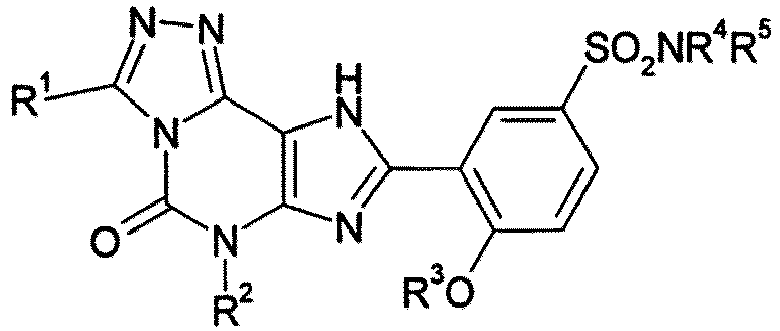
-
WO200244182 WO200322284 
-
WO01/92264 - While many of these biological effects of adenosine are necessary to maintain normal tissue homeostasis, under certain physiological changes it is desirable to modulate its effects. For example, the binding of A2B receptors stimulates angiogenesis by promoting the growth of endothelial cells. Such activity is necessary in healing wounds, but the hyperproliferation of endothelial cells promotes diabetic retinopathy. Also, an undesirable increase in blood vessels occurs in neoplasia. Accordingly, inhibition of the binding of adenosine to A2B receptors in the endothelium will alleviate or prevent hypervasculation, thus preventing retinopathy and inhibibiting tumor formation.
- A2B receptors are found in the colon in the basolateral domains of intestinal epithelial cells, and when acted upon by the appropriate ligand act to increase chloride secretion, thus causing diarrhea, which is a common and potentially fatal complication of infectious diseases such as cholera and typhus. A2B antagonists can therefore be used to block intestinal chloride secretion and are thus useful in the treatment of inflammatory gastrointestinal tract disorders, including diarrhea. Another adverse biological effect of adenosine acting at the A2B receptor is the overstimulation of cerebral IL-6, a cytokine associated with dementias and Alzheimer's disease.
- Accordingly, it is desired to provide compounds that are potent A2A/A2B dual antagonists (i.e., compounds that inhibit the A2A/A2B adenosine receptor), fully or partially selective for the A2A/A2B receptor, useful in the treatment of various disease states related to modulation of the A2A/A2B receptor, for example cancer.
- The subject-matter for which protection is sought is as defined by the claims. Any reference to a "disclosure" not falling under the scope of the claims serves explanatory purposes and does not form part of the invention. Any reference to a method of treatment is to be interpreted as a reference to the compounds, pharmaceutical compositions and medicaments of the present invention for use in a method for treatment of the human (or animal) body by therapy (or for diagnosis). In an aspect of the present disclosure, there is provided a compound of Formula I, or its stereoisomers, pharmaceutically acceptable salts, complexes, hydrates, solvates, tautomers, polymorphs, racemic mixtures, and optically active forms thereof,
D-A-B-Z (I)
wherein D represents a tricyclic ring system selected from
- R2 is selected from hydrogen, alkyl, alkenyl, alkynyl, alkoxyalkyl, cycloalkyl, cycloalkylalkyl, aryl, arylalkyl, heteroaryl, or heteroarylalkyl;
- wherein alkyl, alkenyl, alkynyl, alkoxyalkyl, cycloalkyl, cycloalkylalkyl, aryl, arylalkyl, heteroaryl, and heteroarylalkyl are unsubstituted or substituted independently with alkyl, alkenyl, alkynyl, alkoxy, cycloalkyl, cycloalkenyl, acyl, acylamino, acyloxy, amino, monoalkylamino, dialkylamino, arylamino, cycloalkylamino, heteroarylamino, heterocyclylamino, aminocarbonyl, alkoxycarbonylamino, azido, cyano, halogen, hydroxy, hydroxyalkyl, keto, thiocarbonyl, carboxy, alkylcarboxy, carboxyalkyl, carboxyalkyloxy, alkylcarboxyalkyloxy, -SO3H, aryl, aryloxy, cycloalkyloxy, heteroaryl, aminocarbonylamino, heteroaryloxy, heterocyclyl, heterocyclyloxy, hydroxyamino, alkoxyamino, nitro, S(O)2NRcRc, -NRcS(O)2Rc or -S(O)pRd;
- wherein each substituent is unsubstituted or substituted with 1, 2, or 3 substituents independently selected from alkyl, carboxy, carboxyalkyl, aminocarbonyl, hydroxyd, alkoxy, halogen, haloalkyl, haloalkoxy, amino, substituted amino, cyano or -S(O)pRd;
- X and Y are independently selected from CR' or N, wherein R' is selected from hydrogen, halogen, alkyl and haloalkyl;
- A is selected from an arylene or an optionally substituted heteroarylene;
- B is selected from a bond, (C1-C6)alkylene, (C2-C6)alkenylene or (C2-C6)alkynylene group, wherein 1 to 4 methylene groups are optionally replaced by groups independently selected from O, -S(O)p-, -N(Rb)-, or -C(O)-;
- wherein alkylene, alkenylene, and alkynylene are unsubstituted or substituted independently with alkyl, alkenyl, alkynyl, alkoxy, cycloalkyl, cycloalkenyl, acyl, acylamino, acyloxy, amino, monoalkylamino, dialkylamino, arylamino, cycloalkylamino, heteroarylamino, heterocyclylamino, aminocarbonyl, alkoxycarbonylamino, azido, cyano, halogen, hydroxy, hydroxyalkyl, keto, thiocarbonyl, carboxy, alkylcarboxy, carboxyalkyl, carboxyalkyloxy, alkylcarboxyalkyloxy -SO3H, aryl, aryloxy, cycloalkyloxy, heteroaryl, aminocarbonylamino, heteroaryloxy, heterocyclyl, heterocyclyloxy, hydroxyamino, alkoxyamino, nitro, S(O)2NRcRc, -NRcS(O)2Rc or -S(O)pRd;
- Z is selected from hydrogen, heterocyclyl, cycloalkyl, aryl or heteroaryl;
- wherein heterocyclyl, cycloalkyl, aryl and heteroaryl are unsubstituted or substituted independently with alkyl, alkenyl, alkynyl, alkoxy, cycloalkyl, cycloalkylalkyl, cycloalkenyl, acyl, acylamino, acyloxy, amino, monoalkylamino, dialkylamino, arylamino, cycloalkylamino, heteroarylamino, heterocyclylamino, aminocarbonyl, alkoxycarbonylamino, azido, cyano, halogen, hydroxy, hydroxyalkyl, keto, thiocarbonyl, carboxy, alkylcarboxy, carboxyalkyl, carboxyalkyloxy, alkylcarboxyalkyloxy -SO3H, aryl, arylalkyl, aryloxy, cycloalkyloxy, heteroaryl, heteroarylalkyl, aminocarbonylamino, heteroaryloxy, heterocyclyl, heterocyclylalkyl, heterocyclyloxy, hydroxyamino, alkoxyamino, nitro, - S(O)2NRbRb, -NRbS(O)2Rb or -S(O)pRd;
- wherein each substituent is unsubstituted or substituted with 1, 2, or 3 substituents independently selected from alkyl, carboxy, carboxyalkyl, aminocarbonyl, hydroxy, alkoxy, alkoxyalkoxy, alkoxyalkyl, halogen, haloalkyl, haloalkoxy, amino, substituted amino, cyano or -S(O)pRd;
- Ra is selected from hydrogen, or alkyl;
- Rb is selected from hydrogen, alkyl, acyl, carboxyalkyl, carbonylamino, cycloalkyl, cycloalkylalkyl, aryl, arylalkyl, heteroaryl, heteroarylalkyl, heterocyclyl, or heterocyclylalkyl;
- Rc is selected from hydrogen, alkyl, aryl, heteroaryl, or heterocyclyl;
- Rd is selected from alkyl, cycloalkyl, aryl, heterocyclyl, or heteroaryl; and p is 0, 1, or 2.
- In an aspect of the present disclosure there is provided a compound of Formula I or its stereoisomers, pharmaceutically acceptable salts, complexes, hydrates, solvates, tautomers, polymorphs, racemic mixtures, and optically active forms thereof, for use in treating conditions and diseases that are mediated by adenosine receptor (AR) activity.
- In an aspect of the present disclosure there is provided a compound of Formula I or its stereoisomers, pharmaceutically acceptable salts, complexes, hydrates, solvates, tautomers, polymorphs, racemic mixtures, and optically active forms thereof, either alone or in combination with other therapeutic agents for use in methods for treating or lessening the severity of immunotherapies or radiotherapy or chemotherapy.
- In an aspect of the present disclosure there is provided a pharmaceutical composition comprising a compound of Formula I or its stereoisomers, pharmaceutically acceptable salts, complexes, hydrates, solvates, tautomers, polymorphs, racemic mixtures, and optically active forms thereof, together with a pharmaceutically acceptable carrier.
- In an aspect of the present disclosure is provided a pharmaceutical composition comprising a compound of Formula I or its stereoisomers, pharmaceutically acceptable salts, complexes, hydrates, solvates, tautomers, polymorphs, racemic mixtures, and optically active forms thereof, together with a pharmaceutically acceptable excipient or a pharmaceutically acceptable diluent.
- In an aspect of the present invention there is provided a pharmaceutical composition comprising a compound of Formula I or its stereoisomers, pharmaceutically acceptable salts, complexes, hydrates, solvates, tautomers, polymorphs, racemic mixtures, and optically active forms thereof, together with a pharmaceutically acceptable carrier, and in combination with at least one compound and/or compositions having a like therapeutic effect.
- In an aspect of the present disclosure there is provided a pharmaceutical composition comprising a compound of Formula I or its stereoisomers, pharmaceutically acceptable salts, complexes, hydrates, solvates, tautomers, polymorphs, racemic mixtures, and optically active forms thereof, either alone or in combination with other therapeutic agents for use in methods for treating or lessening the severity of immunotherapies or radiotherapy or chemotherapy.
- Described herein is a method of using the pharmaceutical composition of the present disclosure comprising a compound of Formula I and their pharmaceutically acceptable salt, analog, tautomeric form, stereoisomer, geometrical isomer, polymorph, hydrate, solvate, and metabolite, thereof, in the treatment of a disease or condition in a mammal that is amenable to treatment with an A2A/A2B receptor antagonist, the method comprising: administering to a mammal in need thereof a therapeutically effective dose of the pharmaceutical composition of the present dislcosure.
- Described herein is a method of treatment of a disorder or condition ameliorated by antagonizing the A2A/A2B receptor, the method comprising: administering an effective amount of the pharmaceutical composition of the present disclosure comprising a compound of Formula I and their pharmaceutically acceptable salts, analog, tautomeric form, stereoisomer, geometrical isomer, polymorph, hydrate, solvate, and metabolite thereof, to a patient in need of such treatment.
- In an aspect of the present disclosure there is provided the pharmaceutical composition of the present disclosure comprising compound of Formula I and their pharmaceutically acceptable salt, analog, tautomeric form, stereoisomer, geometrical isomer, polymorph, hydrate, solvate, and metabolite thereof, for use in the treatment of a condition or disorder selected from prostate cancer, rectal cancer, renal cancer, ovarian cancer, endometrial cancer, thyroid cancer, pancreatic cancer, breast cancer, colon cancer, bladder cancer, brain cancer, glial cancer, melanoma cancer, pineal gland cancer, or lung cancer.
- Described herein is a process of preparation of the compound of Formula I.
- These and other features, aspects, and advantages of the present subject matter will become better understood with reference to the following description. This summary is provided to introduce a selection of concepts in a simplified form. This summary is not intended to identify key features or essential features of the disclosure, nor is it intended to be used to limit the scope of the subject matter.
- Those skilled in the art will be aware that the present disclosure is subject to variations and modifications other than those specifically described. It is to be understood that the present disclosure includes all such variations and modifications. The disclosure also includes all such steps, features, compositions and compounds referred to or indicated in this specification, individually or collectively, and any and all combinations of any or more of such steps or features.
- For convenience, before further description of the present disclosure, certain terms employed in the specification, and examples are collected here. These definitions should be read in the light of the remainder of the disclosure and understood as by a person of skill in the art. The terms used herein have the meanings recognized and known to those of skill in the art, however, for convenience and completeness, particular terms and their meanings are set forth below.
- The articles "a", "an" and "the" are used to refer to one or to more than one (i.e., to at least one) of the grammatical object of the article.
- Throughout the description and the claims which follow, unless the context requires otherwise, the word "comprise", and variations such as "comprises" and "comprising", will be understood to imply the inclusion of a stated integer or step or group of integers but not to the exclusion of any other integer or step or group of integers or steps.
- The term "including" is used to mean "including but not limited to". "Including" and "including but not limited to" are used interchangeably.
- In the structural formulae given herein and throughout the present disclosure, the following terms have been indicated meaning, unless specifically stated otherwise.
- The term "optionally substituted" as used herein means that the group in question is either unsubstituted or substituted with one or more of the substituents specified. When the group in question is substituted with more than one substituent, the substituent may be same or different.
- The term "alkyl" refers to a monoradical branched or unbranched saturated hydrocarbon chain having 1, 2, 3, 4, 5, 6, 7, 8, 9, 10, 11, 12, 13, 14, 15, 16, 17, 18, 19 or 20 carbon atoms, preferably 1, 2, 3, 4, 5, 6, 7, 8, 9 or 10 carbon atoms, more preferably 1, 2, 3, 4, 5 or 6 carbon atoms. This term is exemplified by groups such as methyl, ethyl, n-propyl, iso-propyl, n-butyl, iso-butyl, t-butyl, n-hexyl, n-decyl, tetradecyl, and the like.
- The term "alkylene" refers to a diradical of a branched or unbranched saturated hydrocarbon chain, having 1, 2, 3, 4, 5, 6, 7, 8, 9,10, 11,12, 13, 14, 15, 16, 17, 18, 19 or 20 carbon atoms, preferably 1, 2, 3, 4, 5, 6, 7, 8, 9 or 10 carbon atoms, more preferably 1, 2, 3, 4, 5 or 6 carbon atoms. This term is exemplified by groups such as methylene (-CH2-), ethylene (-CH2CH2-), the propylene isomers (e.g., - CH2CH2CH2- and -CH(CH3)CH2-) and the like.
- The term "substituted alkyl" or "substituted alkylene" refers to:
- 1) an alkyl group or alkylene group as defined above, having 1, 2, 3, 4 or 5 substituents, preferably 1, 2 or 3 substituents, selected from the group consisting of alkenyl, alkynyl, alkoxy, cycloalkyl, cycloalkenyl, acyl, acylamino, acyloxy, amino, monoalkylamino, dialkylamino, arylamino, heteroarylamino, aminocarbonyl, alkoxycarbonylamino, azido, cyano, halogen, hydroxy, hydroxyalkyl, keto, thiocarbonyl, carboxy, carboxyalkyl, -SO3H, aryl, aryloxy, heteroaryl, aminocarbonylamino, heteroaryloxy, heterocyclyl, heterocyclyloxy, hydroxyamino, alkoxyamino, nitro, -S(O)2NRaRa, -NRaS(O)2Ra and -S(O)pRb, where each Ra is independently selected from the group consisting of hydrogen, alkyl, cycloalkyl, cycloalkylalkyl, aryl, arylalkyl, heteroaryl heteroarylalkyl, heterocyclyl and heterocyclylalkyl; heterocyclyloxy where Rb is hydrogen, alkyl, aryl, heteroaryl or heterocyclyl. Unless otherwise constrained by the definition, all substituents may optionally be further substituted by 1, 2, or 3 substituents selected from alkyl, carboxy, carboxyalkyl, aminocarbonyl, hydroxy, alkoxy, halogen, CF3, amino, substituted amino, cyano, and -S(O)pRc, where Rc is alkyl, aryl, or heteroaryl and p is 0,1 or 2;
- or 2) an alkyl group or alkylene group as defined above that is interrupted by 1, 2, 3, 4, 5, 6, 7, 8, 9 or 10 atoms independently selected from oxygen, sulfur and NRd, where Rd is selected from hydrogen, alkyl, cycloalkyl, cycloalkenyl, aryl, heteroaryl and heterocyclyl, carbonylalkyl, carboxyester, carboxyamide and sulfonyl. All substituents may be optionally further substituted by alkyl, alkoxy, halogen, CF3, amino, substituted amino, cyano, or -S(O)pRc, in which Rc is alkyl, aryl, or heteroaryl and p is 0, 1, or 2;
- or 3) an alkyl or alkylene as defined above that has 1, 2, 3, 4 or 5 substituents as defined above, as well as interrupted by 1, 2, 3, 4, 5, 6, 7, 8, 9 or 10 atoms as defined above.
- The term "alkenyl" refers to a monoradical of a branched or unbranched unsaturated hydrocarbon group preferably having from 2, 3, 4, 5, 6, 7, 8, 9, 10, 11, 12, 13, 14, 15, 16, 17, 18, 19 or 20 carbon atoms, more preferably 2, 3, 4, 5, 6, 7, 8, 9 or 10 carbon atoms and even more preferably 2, 3, 4, 5 or 6 carbon atoms and having 1, 2, 3, 4, 5 or 6 double bond (vinyl), preferably 1 double bond. Preferred alkenyl groups include ethenyl or vinyl (-CH=CH2), 1-propylene or allyl (-CH2CH=CH2), isopropylene (-C(CH3)=CH2), bicyclo [2.2. 1] heptene, and the like.
- The term "alkenylene" refers to a diradical of a branched or unbranched unsaturated hydrocarbon group preferably having from 2, 3, 4, 5, 6, 7, 8, 9, 10, 11, 12, 13, 14, 15, 16, 17, 18, 19 or 20 carbon atoms, more preferably 2, 3, 4, 5, 6, 7, 8, 9 or 10 carbon atoms and even more preferably 2, 3, 4, 5 or 6 carbon atoms and having 1, 3, 4, 5 or 6 double bond (vinyl), preferably 1 double bond.
- The term "substituted alkenyl" refers to an alkenyl group as defined above having 1, 2, 3, 4 or 5 substituents, and preferably 1, 2, or 3 substituents, selected from the group consisting of alkyl, alkenyl, alkynyl, alkoxy, cycloalkyl, cycloalkenyl, acyl, acylamino, acyloxy, amino, aminocarbonyl, alkoxycarbonylamino, azido, cyano, halogen, thiocarbonyl, carboxy, carboxyalkyl, -SO3H, aryl, aryloxy, heteroaryl, aminocarbonylamino, heteroaryloxy, heterocyclyl, heterocyclyloxy, hydroxyamino, alkoxyamino, nitro, -S(O)2NRaRa, -NRaS(O)2Ra and -S(O)pRb where each Ra is independently selected from the group consisting of hydrogen, alkyl, cycloalkyl, cycloalkylalkyl, aryl, arylalkyl, heteroaryl heteroarylalkyl, heterocyclyl and heterocyclylalkyl; heterocyclyloxywhere Rb is alkyl, aryl, heteroaryl or heterocyclyl and p is 0, 1 or 2. Unless otherwise constrained by the definition, all substituents may optionally be further substituted by 1, 2, or 3 substituents selected from alkyl, carboxy, carboxyalkyl, aminocarbonyl, hydroxy, alkoxy, halogen, CF3, amino, substituted amino, cyano, and -S(O)pRc, where Rc is alkyl, aryl, or heteroaryl and p is 0, 1 or 2.
- The term "alkynyl" refers to a monoradical of an unsaturated hydrocarbon, preferably having from 2, 3, 4, 5, 6, 7, 8, 9, 10, 11, 12, 13, 14, 15, 16, 17, 18, 19 or 20 carbon atoms, more preferably 2, 3, 4, 5, 6, 7, 8, 9 or 10 carbon atoms and even more preferably 2, 3, 4, 5 or 6 carbon atoms and having 1, 2, 3, 4, 5 or 6 sites of acetylene (triple bond) unsaturation, preferably 1 triple bond. Preferred alkynyl groups include ethynyl, (-C≡CH), propargyl (or prop-l-yn-3-yl, -CH2C≡CH), homopropargyl (or but-l-yn-4-yl, -CH2CH2C≡CH) and the like.
- The term "alkynylene" refers to a diradical of a branched or unbranched unsaturated hydrocarbon group preferably having from 2, 3, 4, 5, 6, 7, 8, 9, 10, 11, 12, 13, 14, 15, 16, 17, 18, 19 or 20 carbon atoms, more preferably 2, 3, 4, 5, 6, 7, 8, 9 or 10 carbon atoms and even more preferably 2, 3, 4, 5 or 6 carbon atoms and having 1, 3, 4, 5 or 6 sites of acetylene (triple bond) unsaturation, preferably 1 triple bond.
- The term "substituted alkynyl" refers to an alkynyl group as defined above having 1, 2, 3, 4 or 5 substituents, and preferably 1, 2, or 3 substituents, selected from the group consisting of alkyl, alkenyl, alkynyl, alkoxy, cycloalkyl, cycloalkenyl, acyl, acylamino, acyloxy, amino, aminocarbonyl, alkoxycarbonylamino, azido, cyano, halogen, hydroxy, keto, thiocarbonyl, carboxy, carboxyalkyl, -SO3H, aryl, aryloxy, heteroaryl, aminocarbonylamino, heteroaryloxy, heterocyclyl, heterocyclyloxy, hydroxyamino, alkoxyamino, nitro, -S(O)2NRaRa, - NRaS(O)2Ra and -S(O)pRb, where each Ra is independently selected from the group consisting of hydrogen, alkyl, cycloalkyl, cycloalkylalkyl, aryl, arylalkyl, heteroaryl heteroarylalkyl, heterocyclyl and heterocyclylalkyl; heterocyclyloxy where Rb is alkyl, aryl, heteroaryl or heterocyclyl and p is 0, 1 or 2. Unless otherwise constrained by the definition, all substituents may optionally be further substituted by 1, 2, or 3 substituents selected from alkyl, carboxy, carboxyalkyl, aminocarbonyl, hydroxy, alkoxy, halogen, CF3, amino, substituted amino, cyano, and-S(O)pRc where Rc is alkyl, aryl, or heteroaryl and p is 0, 1 or 2.
- The term "cycloalkyl" refers to carbocyclic groups of from 3 to 20 carbon atoms having a single cyclic ring or multiple condensed rings which may be partially unsaturated. Such cycloalkyl groups include, by way of example, single ring structures such as cyclopropyl, cyclobutyl, cyclopentyl, cyclopentenyl, cyclohexyl, cyclohexenyl, cyclooctyl, and the like, or multiple ring structures such as adamantanyl, bicyclo[2.2.1]heptane, 1,3,3-trimethylbicyclo[2.2.1]hept-2-yl, 2,3,3-trimethylbicyclo[2.2.1]hept-2-yl, or carbocyclic groups to which is fused an aryl group, for example indane, and the like.
- The term "substituted cycloalkyl" refers to cycloalkyl groups having 1, 2, 3, 4 or 5 substituents, and preferably 1, 2, or 3 substituents, selected from the group consisting of alkyl, alkoxy, cycloalkyl, cycloalkenyl, acyl, acylamino, acyloxy, amino, aminocarbonyl, alkoxycarbonylamino, azido, cyano, halogen, hydroxy, oxo, thiocarbonyl, aryl, aryloxy, heteroaryl, aminosulfonyl, aminocarbonylamino, heteroaryloxy, heterocyclyl, heterocyclyloxy, hydroxyamino, alkoxyamino, nitro, - C(O)R and -S(O)PRb, where R is hydrogen, hydroxyl, alkoxy, alkyl and cyclocalkyl, heterocyclyloxy where Rb is alkyl, aryl, heteroaryl or heterocyclyl and p is 0, 1 or 2. Unless otherwise constrained by the definition, all substituents may optionally be further substituted by 1, 2, or 3 substituents selected from alkyl, carboxy, carboxyalkyl, aminocarbonyl, hydroxy, alkoxy, halogen, CF3, amino, substituted amino, cyano, and-S(O)pRc, where Rc is alkyl, aryl, or heteroaryl and p is 0, 1 or 2.
- "Halo" or "Halogen", alone or in combination with any other term means halogens such as chloro (Cl), fluoro (F), bromo (Br) and iodo (I).
- "Haloalkyl" refers to a straight chain or branched chain haloalkyl group with 1 to 6 carbon atoms. The alkyl group may be partly or totally halogenated. Representative examples of haloalkyl groups include but are not limited to fluoromethyl, chloromethyl, bromomethyl, difluoromethyl, dichloromethyl, dibromomethyl, trifluoromethyl, trichloromethyl, 2-fluoroethyl, 2-chloroethyl, 2-bromoethyl, 2,2,2-trifluoroethyl, 3-fluoropropyl, 3-chloropropyl, 3-bromopropyl and the like.
- The term "alkoxy" refers to the group R‴-O-, where R‴ is optionally substituted alkyl or optionally substituted cycloalkyl, or optionally substituted alkenyl or optionally substituted alkynyl; or optionally substituted cycloalkenyl, where alkyl, alkenyl, alkynyl, cycloalkyl and cycloalkenyl are as defined herein. Representative examples of alkoxy groups include but are not limited to methoxy, ethoxy, n-propoxy, iso-propoxy, n-butoxy, tert-butoxy, sec-butoxy, n-pentoxy, n-hexoxy, 1,2-dimethylbutoxy, trifluoromethoxy, and the like.
- The term "aminocarbonyl" refers to the group -C(O)NR'R' where each R' is independently hydrogen, alkyl, aryl, heteroaryl, heterocyclyl or both R' groups are joined to form a heterocyclic group (e. g. morpholino). Unless otherwise constrained by the definition, all substituents may optionally be further substituted by 1-3 substituents selected from alkyl, carboxy, carboxyalkyl, aminocarbonyl, hydroxy, alkoxy, halogen, CF3, amino, substituted amino, cyano, and -S(O)pRc, where Rc is alkyl, aryl, or heteroaryl and p is 0, 1 or 2.
- The term "acylamino" refers to the group -NR"C(O)R" where each R" is independently hydrogen, alkyl, aryl, heteroaryl, or heterocyclyl. Unless otherwise constrained by the definition, all substituents may optionally be further substituted by 1-3 substituents selected from alkyl, carboxy, carboxyalkyl, aminocarbonyl, hydroxy, alkoxy, halogen, CF3, amino, substituted amino, cyano, and-S(O)pRc, where Rc is alkyl, aryl, or heteroaryl and p is 0, 1 or 2.
- The term "acyloxy" refers to the groups -OC(O)-alkyl, -OC(O)-cycloalkyl, - OC(O)-aryl, -OC(O)-heteroaryl, and -OC(O)-heterocyclyl. Unless otherwise constrained by the definition, all substituents may be optionally further substituted by alkyl, carboxy, carboxyalkyl, aminocarbonyl, hydroxy, alkoxy, halogen, CF3, amino, substituted amino, cyano, or -S(O)pRc, where Rc is alkyl, aryl, or heteroaryl and p is 0, 1 or 2.
- The term "alkoxyalkyl" refers to alkyl groups as defined above wherein at least one of the hydrogen atoms of the alkyl group is replaced by an alkoxy group as defined above. Representative examples of alkoxyalkyl groups include but are not limited to methoxymethyl, methoxyethyl, ethoxymethyl and the like.
- The term "aryloxyalkyl" refers to the group -alkyl-O-aryl. Representative examples of aryloxyalkyl include but are not limited to phenoxymethyl, naphthyloxymethyl, phenoxyethyl, naphthyloxyethyl and the like.
- The term "di alkylamino" refers to an amino group, to which two same or different straight chain or branched chain alkyl groups with 1 to 6 carbon atoms are bound. Representative examples of di alkylamino include but are not limited to dimethylamino, diethylamino, methylethylamino, dipropylamino, dibutylamino and the like.
- The term "cycloalkylalkyl" refers to an alkyl radical as defined above which is substituted by a cycloalkyl radical as defined above. Representative examples of cycloalkylalkyl include but are not limited to cyclopropylmethyl, cyclobutylmethyl, cyclopentylmethyl, cyclohexylmethyl, 1-cyclopentylethyl, 1-cyclohexylethyl, 2-cyclopentylethyl, 2-cyclohexylethyl, cyclobutylpropyl, cyclopentylpropyl, cyclohexylbutyl and the like.
- The term "aminoalkyl" refers to an amino group that is attached to (C1-6) alkylene as defined herein. Representative examples of aminoalkyl include but are not limited to aminomethyl, aminoethyl, 1-aminopropyl, 2-aminopropyl, and the like. The amino moiety of aminoalkyl may be substituted once or twice with alkyl to provide alkylaminoalkyl and dialkylaminoalkyl respectively. Representative examples of alkylaminoalkyl include but are not limited to methylaminomethyl, methylaminoethyl, methylaminopropyl, ethylaminoethyl and the like. Representative examples of dialkylaminoalkyl include but are not limited to dimethylaminomethyl, dimethylaminoethyl, dimethylaminopropyl, N-methyl-N-ethylaminoethyl and the like.
- The term "aryl" refers to an aromatic carbocyclic group of 6 to 20 carbon atoms having a single ring (e.g. phenyl) or multiple rings (e.g. biphenyl), or multiple condensed (fused) rings (e.g. naphthyl or anthranyl). Preferred aryls include phenyl, naphthyl and the like.
- The term "arylene" refers to a diradical of an aryl group as defined above. This term is exemplified by groups such as 1,4-phenylene, 1,3-phenylene, 1,2-phenylene, 1,4'-biphenylene, and the like.
- Unless otherwise constrained the aryl or arylene groups may optionally be substituted with 1, 2, 3 4 or 5 substituents, preferably 1, 2 or 3 substituents, selected from the group consisting of alkyl, alkoxy, cycloalkyl, cycloalkenyl, acyl, acylamino, acyloxy, amino, aminocarbonyl, alkoxycarbonylamino, azido, cyano, halogen, hydroxy, carboxy, carboxyalkyl, -SO3H, aryl, aryloxy, heteroaryl, aminosulfonyl, aminocarbonylamino, heteroaryloxy, heterocyclyl, heterocyclyloxy, hydroxyamino, alkoxyamino, nitro, -S(O)2NRaRa, -NRaS(O)2Ra and -S(O)pRb where each Ra is independently selected from the group consisting of hydrogen, alkyl, cycloalkyl, cycloalkylalkyl, aryl, arylalkyl, heteroaryl, heteroarylalkyl, heterocyclyl and heterocyclylalkyl; where Rb is hydrogen, alkyl, aryl, heterocyclyl or heteroaryl and p is 0, 1 or 2. Unless otherwise constrained by the definition, all substituents may optionally be further substituted by 1, 2 or 3 substituents selected from alkyl, carboxy, carboxyalkyl, aminocarbonyl, hydroxy, alkoxy, halogen, CF3, amino, substituted amino, cyano, and -S(O)pRc where Rc is hydrogen, alkyl, aryl, or heteroaryl and p is 0, 1 or 2.
- The term "arylalkyl" refers to an aryl group covalently linked to an alkylene group, where aryl and alkylene are defined herein.
- The term "optionally substituted arylalkyl" refers to an optionally substituted aryl group covalently linked to an optionally substituted alkylene group. Such arylalkyl groups are exemplified by benzyl, phenethyl, naphthylmethyl, and the like.
- The term "aryloxy" refers to the group -O-aryl, wherein the aryl group is as defined above and includes optionally substituted aryl groups as also defined above.
- The term "arylthio" refers to the group -S-aryl, where aryl group is as defined herein including optionally substituted aryl groups as also defined above.
- The term "substituted amino" refers to the group -NR'R' where each R' is independently selected from the group consisting of hydrogen, alkyl, cycloalkyl, carboxyalkyl, alkoxycarbonyl, aryl, heteroaryl and heterocyclyl. Unless otherwise constrained by the definition, all substituents may optionally be further substituted by 1, 2 or 3 substituents selected from alkyl, carboxy, carboxyalkyl, aminocarbonyl, hydroxy, alkoxy, halogen, CF3, amino, substituted amino, cyano, and -S(O)pRc, where Rc is alkyl, aryl, or heteroaryl and p is 0, 1 or 2.
- The term "carboxyalkyl" refers to the group -alkylene-C(O)OH.
- The term "alkylcarboxyalkyl" refers to the group -alkylene-C(O)ORd where Rd is alkyl, cycloalkyl, where alkyl, cycloalkyl are as defined herein, and may be optionally further substituted by alkyl, halogen, CF3, amino, substituted amino, cyano, or -S(O)pRc, in which Rc is alkyl, aryl, or heteroaryl and p is 0, 1 or 2.
- The term "heteroaryl" refers to an aromatic cyclic group having 1, 2, 3, 4, 5, 6, 7, 8, 9, 10, 11, 12, 13, 14, or 15 carbon atoms and 1, 2, 3 or 4 heteroatoms selected from oxygen, nitrogen and sulfur within at least one ring. Such heteroaryl groups can have a single ring (e.g. pyridyl or furyl) or multiple condensed rings (e.g. indolizinyl, benzothiazolyl, or benzothienyl). Examples of heteroaryls include, but are not limited to, [1,2,4] oxadiazole, [1,3,4] oxadiazole, [1,2,4] thiadiazole, [1,3,4] thiadiazole, pyrrole, imidazole, pyrazole, pyridine, pyrazine, pyrimidine, pyridazine, indolizine, isoindole, indole, indazole, purine, quinolizine, isoquinoline, quinoline, phthalazine, quinoxaline, quinazoline, cinnoline, pteridine, carbazole, carboline, phenanthridine, acridine, phenanthroline, isothiazole, phenazine, isoxazole, phenoxazine, phenothiazine, furan, thiophene, oxazole, thiazole, triazole, triazine and the like.
- The term "heteroarylene" refers to a diradical of a heteroaryl group as defined above.
- Unless otherwise constrained the heteroaryl or heterarylene groups can be optionally substituted with 1, 2, 3, 4 or 5 substituents, preferably 1, 2 or 3 substituents selected from the group consisting of alkyl, alkenyl, alkynyl, alkoxy, cycloalkyl, cycloalkenyl, acyl, acylamino, acyloxy, amino, aminocarbonyl, alkoxycarbonylamino, azido, cyano, halogen, hydroxy, thiocarbonyl, carboxy, carboxyalkyl, -SO3H, aryl, aryloxy, heteroaryl, aminocarbonylamino, heteroaryloxy, heterocyclyl, heterocyclyloxy, hydroxyamino, alkoxyamino, nitro, -S(O)2NRaRa, - NRaS(O)2Ra and -S(O)pRb, where each Ra is independently selected from the group consisting of hydrogen, alkyl, cycloalkyl, cycloalkylalkyl, aryl, arylalkyl, heteroaryl heteroarylalkyl, heterocyclyl and heterocyclylalkyl; where Rb is hydrogen, alkyl, aryl, heterocyclyl or heteroaryl, and p is 0, 1 or 2. Unless otherwise constrained by the definition, all substituents may optionally be further substituted by 1-3 substituents selected from alkyl, carboxy, carboxyalkyl, aminocarbonyl, hydroxy, alkoxy, halogen, CF3, amino, substituted amino, cyano, and-S(O)nRc, where Rc is alkyl, aryl, or heteroaryl and n is 0,1 or 2.
- The term "heteroarylalkyl" refers to a heteroaryl group covalently linked to an alkylene group, where heteroaryl and alkylene are defined herein.
- The term "optionally substituted heteroarylalkyl" refers to an optionally substituted heteroaryl group covalently linked to an optionally substituted alkylene group. Such heteroarylalkyl groups are exemplified by 3-pyridylmethyl, quinolin-8-ylethyl, 4-methoxythiazol-2-ylpropyl, and the like.
- The term "heterocyclyl" refers to a saturated or partially unsaturated group having a single ring or multiple condensed rings, having from 1 to 40 carbon atoms and from 1 to 10 hetero atoms, preferably 1, 2, 3 or 4 heteroatoms, selected from nitrogen, sulfur, phosphorus, and/or oxygen within the ring. Heterocyclic groups can have a single ring or multiple condensed rings, and include tetrahydrofuranyl, morpholinyl, piperidinyl, piperazinyl, dihydropyridinyl, tetrahydroquinolinyl and the like. Unless otherwise constrained by the definition for the heterocyclic substituent, such heterocyclic groups can be optionally substituted with 1, 2, 3, 4 or 5, and preferably 1, 2 or 3 substituents, selected from the group consisting of alkyl, alkenyl, alkynyl, alkoxy, cycloalkyl, cycloalkenyl, acyl, acylamino, acyloxy, amino, aminocarbonyl, alkoxycarbonylamino, azido, cyano, halogen, hydroxy, oxo, -C(O)R where R is hydrogen, hydroxyl, alkoxy, alkyl and cyclocalkyl, thiocarbonyl, carboxy, carboxyalkyl, aryl, aryloxy, heteroaryl, aminosulfonyl, aminocarbonylamino, heteroaryloxy, heterocyclyl, heterocyclyloxy, hydroxyamino, alkoxyamino, nitro, and -S(O)pRb, where Rb is hydrogen, alkyl, aryl, heterocyclyl or heteroaryl and p is 0, 1 or 2. Unless otherwise constrained by the definition, all substituents may optionally be further substituted by 1-3 substituents selected from alkyl, carboxy, carboxyalkyl, aminocarbonyl, hydroxy, alkoxy, halogen, CF3, amino, substituted amino, cyano, and -S(O)Rc, where Rc is alkyl, aryl, or heteroaryl and n is 0, 1 or 2.
- The term "heterocyclylalkyl" refers to a heterocyclyl group covalently linked to an alkylene group, where heterocyclyl and alkylene are defined herein.
- The term "optionally substituted heterocyclylalkyl" refers to an optionally substituted heterocyclyl group covalently linked to an optionally substituted alkylene group.
- The term "heteroaryloxy" refers to the group -O-heteroaryl.
- The term "thiol" refers to the group -SH.
- The term "carboxy" refers to -C(O).
- The term "substituted alkylthio" refers to the group -S-substituted alkyl.
- The term "heteroarylthio" refers to the group -S-heteroaryl wherein the heteroaryl group is as defined above including optionally substituted heteroaryl groups as also defined above.
- The term "sulfoxide" refers to a group -S(O).
- The term "substituted sulfoxide" refers to a group -S(O)R, in which R is substituted alkyl, substituted aryl, or substituted heteroaryl, as defined above.
- The term "sulfone" refers to a group -S(O)2R, where R is alkyl, aryl, or heteroaryl.
- The term "substituted sulfone" refers to a group -S(O)2R, in which R is alkyl, aryl, or heteroaryl.
- The term "disorder or condition ameliorated by the inhibition of the A2A receptor" will be understood by those skilled in the art to include: cancer such as prostate, rectal, renal, ovarian, endometrial, thyroid, pancreatic, particularly breast, colon, bladder, brain, glia, melanoma, pineal gland and, more particularly, lung cancer (e.g. Lewis lung carcinoma).
- The compounds of the present disclosure may have the ability to crystallize in more than one form, a characteristic known as polymorphism, and all such polymorphic forms ("polymorphs") are encompassed within the scope of the invention. Polymorphism generally can occur as a response to changes in temperature or pressure or both and can also result from variations in the crystallization process. Polymorphs can be distinguished by various physical characteristics, and typically the x-ray diffraction patterns, solubility behavior, and melting point of the compound are used to distinguish polymorphs.
- The compounds described herein may contain one or more chiral centers and/or double bonds and therefore, may exist as "stereoisomers", such as double-bond isomers (i.e., "geometric isomers"), regioisomers, enantiomers or diastereomers. Accordingly, the chemical structures depicted herein encompass all possible enantiomers and stereoisomers of the illustrated or identified compounds including the stereoisomerically pure form (e.g., geometrically pure, enantiomerically pure or diastereomerically pure) and enantiomeric and stereoisomeric mixtures. Enantiomeric and stereoisomeric mixtures can be resolved into their component enantiomers or stereoisomers using separation techniques or chiral synthesis techniques well known to the person skilled in the art. The compounds may also exist in several tautomeric forms including the enol form, the keto form and mixtures thereof.
- Accordingly, the chemical structures depicted herein encompass all possible tautomeric forms of the illustrated or identified compounds.
- Compounds may exist in unsolvated forms as well as solvated forms, including hydrated forms. In general, compounds may be hydrated, solvated or N-oxides. Certain compounds may exist in multiple crystalline or amorphous forms. Also contemplated within the scope of the disclosure are congeners, analogs, hydrolysis products, metabolites and precursor or prodrugs of the compound.
- The term "prodrug" refers to a derivative of a drug molecule as, for example, esters, carbonates, carbamates, ureas, amides or phosphates that requires a transformation within the body to release the active drug. Prodrugs are frequently, although not necessarily, pharmacologically inactive until converted to the parent drug. Prodrugs may be obtained by bonding a promoiety (defined herein) typically via a functional group, to a drug.
- The term "therapeutically effective dose" means an amount of a compound or composition which is sufficient enough to significantly and positively modify the symptoms and/or conditions to be 10 treated (e.g., provide a positive clinical response). The effective amount of an active ingredient for use in a pharmaceutical composition will vary with the particular condition being treated, the severity of the condition, the duration of the treatment, the nature of concurrent therapy, the particular active ingredient(s) being employed, the particular pharmaceutically-acceptable excipient(s)/carrier(s) utilized, the route of administration, and like factors within the knowledge 15 and expertise of the attending physician.
- The term "promoiety" refers to a group bonded to a drug, typically to a functional group of the drug, via bond(s) that are cleavable under specified conditions of use. The bond(s) between the drug and promoiety may be cleaved by enzymatic or non-enzymatic means. Under the conditions of use, for example following administration to a patient, the bond(s) between the drug and promoiety may be cleaved to release the parent drug. The cleavage of the promoiety may proceed spontaneously, such as via a hydrolysis reaction, or it may be catalyzed or induced by another agent, such as by an enzyme, by light, by acid, or by a change of or exposure to a physical or environmental parameter, such as a change of temperature, pH, etc. The agent may be endogenous to the conditions of use, such as an enzyme present in the systemic circulation to which the prodrug is administered or the acidic conditions of the stomach or the agent may be supplied exogenously.
- The phrase "pharmaceutically acceptable excipient" refers to compounds or compositions that are physiologically tolerable and do not typically produce allergic or similar untoward reactions, including but not limited to gastric upset or dizziness when administered to mammal.
- The term "pharmaceutically acceptable salt" embraces salts with a pharmaceutically acceptable acid or base. Pharmaceutically acceptable acids include both inorganic acids, for example hydrochloric, sulphuric, phosphoric, diphosphoric, hydrobromic, hydroiodic and nitric acid and organic acids, for example citric, fumaric, maleic, malic, mandelic, ascorbic, oxalic, succinic, tartaric, benzoic, acetic, methanesulphonic, ethanesulphonic, benzenesulphonic or p-toluenesulphonic acid. Pharmaceutically acceptable bases include alkali metal (e.g. sodium or potassium) and alkali earth metal (e.g. calcium or magnesium) hydroxides and organic bases, for example alkyl amines, arylalkyl amines and heterocyclic amines.
- Other preferred salts according to the invention are quaternary ammonium compounds wherein an equivalent of an anion (X-) is associated with the positive charge of the N atom. X- may be an anion of various mineral acids such as, for example, chloride, bromide, iodide, sulphate, nitrate, phosphate, or an anion of an organic acid such as, for example, acetate, maleate, fumarate, citrate, oxalate, succinate, tartrate, malate, mandelate, trifluoroacetate, methanesulphonate and p-toluenesulphonate. X- is preferably an anion selected from chloride, bromide, iodide, sulphate, nitrate, acetate, maleate, oxalate, succinate or trifluoroacetate. More preferably X- is chloride, bromide, trifluoroacetate or methanesulphonate.
- The terms "solvent", "inert organic solvent" or "inert solvent" mean a solvent inert under the conditions of the reaction being described in conjunction therewith [including, for example, benzene, toluene, acetonitrile, tetrahydrofuran ("THF"), dimethylformamide ("DMF"), chloroform, methylene chloride (or dichloromethane), diethyl ether, methanol, pyridine and the like]. Unless specified to the contrary, the solvents used in the reactions of the present disclosure are inert organic solvents. The term "q.s." means adding a quantity sufficient to achieve a stated function, e.g., to bring a solution to the desired volume (i.e., 100%).
- Furthermore, the compound of Formula I can be its derivatives, analogs, stereoisomer's, diastereomers, geometrical isomers, polymorphs, solvates, co-crystals, intermediates, hydrates, metabolites, prodrugs or pharmaceutically acceptable salts and compositions.
- It is understood that included in the family of compounds of Formula I are isomeric forms including diastereoisomers, enantiomers, tautomers, and geometrical isomers in "E" or "Z" configurational isomer or a mixture of E and Z isomers. It is also understood that some isomeric forms such as diastereomers, enantiomers and geometrical isomers can be separated by physical and/or chemical methods by those skilled in the art.
- Compounds disclosed herein may exist as single stereoisomers, racemates and or mixtures of enantiomers and/or diastereomers. All such single stereoisomers, racemates and mixtures thereof are intended to be within the scope of the subject matter described.
- Compounds disclosed herein include isotopes of hydrogen, carbon, oxygen, fluorine, chlorine, iodine and sulfur which can be incorporated into the compounds, such as, but not limited to, 2H (D), 3H (T), 11C, 13C, 14C, 15N, 18F, 35S, 36Cl, and 125I. Compounds of this disclosure wherein atoms were isotopically labeled for example radioisotopes such as 3H, 13C, 14C, and the like can be used in metabolic studies, kinetic studies, and imaging techniques such as positron emission tomography used in understanding the tissue distribution of the drugs. Compounds of the disclosure where hydrogen is replaced with deuterium may improve the metabolic stability, and pharmacokinetics properties of the drug such as in vivo half-life.
- In an embodiment of the present disclosure, there is provided a compound of Formula I, or its stereoisomers, pharmaceutically acceptable salts, complexes, hydrates, solvates, tautomers, polymorphs, racemic mixtures, and optically active forms thereof,
D-A-B-Z (I)
Formula I wherein D represents a tricyclic ring system selected from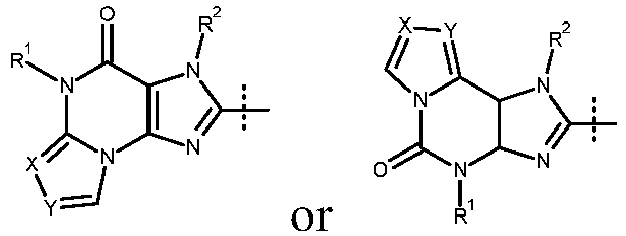
- R2 is selected from hydrogen, alkyl, alkenyl, alkynyl, alkoxyalkyl, cycloalkyl, cycloalkylalkyl, aryl, arylalkyl, heteroaryl, or heteroarylalkyl;
- wherein alkyl, alkenyl, alkynyl, alkoxyalkyl, cycloalkyl, cycloalkylalkyl, aryl, arylalkyl, heteroaryl, and heteroarylalkyl are unsubstituted or substituted independently with alkyl, alkenyl, alkynyl, alkoxy, cycloalkyl, cycloalkenyl, acyl, acylamino, acyloxy, amino, monoalkylamino, dialkylamino, arylamino, cycloalkylamino, heteroarylamino, heterocyclylamino, aminocarbonyl, alkoxycarbonylamino, azido, cyano, halogen, hydroxy, hydroxyalkyl, keto, thiocarbonyl, carboxy, alkylcarboxy, carboxyalkyl, carboxyalkyloxy, alkylcarboxyalkyloxy, -SO3H, aryl, aryloxy, cycloalkyloxy, heteroaryl, aminocarbonylamino, heteroaryloxy, heterocyclyl, heterocyclyloxy, hydroxyamino, alkoxyamino, nitro, S(O)2NRcRc, -NRcS(O)2Rc or -S(O)pRd;
- wherein each substituent is unsubstituted or substituted with 1, 2, or 3 substituents independently selected from alkyl, carboxy, carboxyalkyl, aminocarbonyl, hydroxyd, alkoxy, halogen, haloalkyl, haloalkoxy, amino, substituted amino, cyano or -S(O)pRd;
- X and Y are independently selected from CR' or N, wherein R' is selected from hydrogen, halogen, alkyl and haloalkyl;
- A is selected from an arylene or an optionally substituted heteroarylene;
- B is selected from a bond, (C1-C6)alkylene, (C2-C6)alkenylene or (C2-C6)alkynylene group, wherein 1 to 4 methylene groups are optionally replaced by groups independently selected from O, -S(O)p-, -N(Rb)-, or -C(O)-;
- wherein alkylene, alkenylene, and alkynylene are unsubstituted or substituted independently with alkyl, alkenyl, alkynyl, alkoxy, cycloalkyl, cycloalkenyl, acyl, acylamino, acyloxy, amino, monoalkylamino, dialkylamino, arylamino, cycloalkylamino, heteroarylamino, heterocyclylamino, aminocarbonyl, alkoxycarbonylamino, azido, cyano, halogen, hydroxy, hydroxyalkyl, keto, thiocarbonyl, carboxy, alkylcarboxy, carboxyalkyl, carboxyalkyloxy, alkylcarboxyalkyloxy -SO3H, aryl, aryloxy, cycloalkyloxy, heteroaryl, aminocarbonylamino, heteroaryloxy, heterocyclyl, heterocyclyloxy, hydroxyamino, alkoxyamino, nitro, S(O)2NRcRc, -NRcS(O)2Rc or -S(O)pRd;
- Z is selected from hydrogen, heterocyclyl, cycloalkyl, aryl or heteroaryl;
- wherein heterocyclyl, cycloalkyl, aryl and heteroaryl are unsubstituted or substituted independently with alkyl, alkenyl, alkynyl, alkoxy, cycloalkyl, cycloalkylalkyl, cycloalkenyl, acyl, acylamino, acyloxy, amino, monoalkylamino, dialkylamino, arylamino, cycloalkylamino, heteroarylamino, heterocyclylamino, aminocarbonyl, alkoxycarbonylamino, azido, cyano, halogen, hydroxy, hydroxyalkyl, keto, thiocarbonyl, carboxy, alkylcarboxy, carboxyalkyl, carboxyalkyloxy, alkylcarboxyalkyloxy -SO3H, aryl, arylalkyl, aryloxy, cycloalkyloxy, heteroaryl, heteroarylalkyl, aminocarbonylamino, heteroaryloxy, heterocyclyl, heterocyclylalkyl, heterocyclyloxy, hydroxyamino, alkoxyamino, nitro, - S(O)2NRbRb, -NRbS(O)2Rb or -S(O)pRd;
- wherein each substituent is unsubstituted or substituted with 1, 2, or 3 substituents independently selected from alkyl, carboxy, carboxyalkyl, aminocarbonyl, hydroxy, alkoxy, alkoxyalkoxy, alkoxyalkyl, halogen, haloalkyl, haloalkoxy, amino, substituted amino, cyano or -S(O)pRd;
- Ra is selected from hydrogen, or alkyl;
- Rb is selected from hydrogen, alkyl, acyl, carboxyalkyl, carbonylamino, cycloalkyl, cycloalkylalkyl, aryl, arylalkyl, heteroaryl, heteroarylalkyl, heterocyclyl, or heterocyclylalkyl;
- Rc is selected from hydrogen, alkyl, aryl, heteroaryl, or heterocyclyl;
- Rd is selected from alkyl, cycloalkyl, aryl, heterocyclyl, or heteroaryl; and
- p is 0, 1, or 2.
- In an embodiment of the present disclosure there is provided a compound of Formula I, or its stereoisomers, pharmaceutically acceptable salts, complexes, hydrates, solvates, tautomers, polymorphs, racemic mixtures and optically active forms thereof, wherein D represents a tricyclic ring system selected from

- R2 is selected from hydrogen, alkyl, alkenyl, alkynyl, cycloalkyl, aryl, arylalkyl, heteroaryl, or heteroarylalkyl, wherein alkyl, alkenyl, alkynyl, cycloalkyl, aryl, arylalkyl, heteroaryl, and heteroarylalkyl are unsubstituted or substituted independently with alkyl, alkenyl, alkynyl, cycloalkyl, cycloalkenyl, acyl, acylamino, amino, monoalkylamino, dialkylamino, arylamino, cycloalkylamino, heteroarylamino, heterocyclylamino, aminocarbonyl, azido, cyano, halogen, hydroxy, hydroxyalkyl, keto, thiocarbonyl, carboxy, alkylcarboxy, carboxyalkyl, , - SO3H, aryl, cycloalkyloxy, heteroaryl, aminocarbonylamino, heterocyclyl, heterocyclyloxy, hydroxyamino, nitro, S(O)2NRcRc, -NRcS(O)2Rc or -S(O)pRd; wherein each substituent is unsubstituted or substituted with 1, 2, or 3 substituents independently selected from alkyl, carboxy, carboxyalkyl, aminocarbonyl, hydroxyd, alkoxy, halogen, haloalkyl, haloalkoxy, amino, substituted amino, cyano or -S(O)pRd;
- X and Y are independently selected from CR' or N, wherein R' is selected from hydrogen, halogen, or alkyl;
- A is selected from an arylene or an optionally substituted heteroarylene;
- B is selected from a bond, (C1-C6)alkylene, or (C2-C6)alkynylene group, wherein 1 to 3 methylene groups are optionally replaced by groups independently selected from O, -S(O)p-, or -C(O)-;
- wherein alkylene, and alkynylene are unsubstituted or substituted independently with alkyl, alkenyl, alkynyl, alkoxy, cycloalkyl, cycloalkenyl, acyl, acyloxy, azido, cyano, halogen, hydroxy, hydroxyalkyl, keto, thiocarbonyl, carboxy, alkylcarboxy, carboxyalkyl, carboxyalkyloxy, alkylcarboxyalkyloxy -SO3H, aryl, aryloxy, cycloalkyloxy, heteroaryl, heteroaryloxy, heterocyclyl, heterocyclyloxy, hydroxyamino, nitro, S(O)2NRcRc, or -S(O)pRd;
- Z is selected from hydrogen, heterocyclyl, cycloalkyl, aryl or heteroaryl;
- wherein heterocyclyl, cycloalkyl, aryl and heteroaryl are unsubstituted or substituted independently with alkyl, alkenyl, alkynyl, alkoxy, cycloalkyl, cycloalkylalkyl, cycloalkenyl, acyl, acylamino, acyloxy, amino, monoalkylamino, dialkylamino, arylamino, cycloalkylamino, heteroarylamino, heterocyclylamino, aminocarbonyl, alkoxycarbonylamino, cyano, halogen, hydroxy, hydroxyalkyl, keto, thiocarbonyl, carboxy, alkylcarboxy, carboxyalkyl, carboxyalkyloxy, alkylcarboxyalkyloxy, aryl, arylalkyl, aryloxy, cycloalkyloxy, heteroaryl, heteroarylalkyl, aminocarbonylamino, heteroaryloxy, heterocyclyl, heterocyclylalkyl, heterocyclyloxy, hydroxyamino, alkoxyamino, -S(O)2NRbRb, -NRbS(O)2Rb or -S(O)pRd;
- wherein each substituent is unsubstituted or substituted with 1, 2, or 3 substituents independently selected from alkyl, carboxy, carboxyalkyl, aminocarbonyl, hydroxy, alkoxy, alkoxyalkoxy, alkoxyalkyl, halogen, haloalkyl, haloalkoxy, amino, substituted amino;
- Ra is selected from hydrogen, or alkyl;
- Rb is selected from hydrogen, alkyl, acyl, carboxyalkyl, carbonylamino, cycloalkyl, cycloalkylalkyl, aryl, arylalkyl, heteroaryl, heteroarylalkyl, heterocyclyl, or heterocyclylalkyl;
- Rc is selected from hydrogen, alkyl, aryl, heteroaryl, or heterocyclyl;
- Rd is selected from alkyl, cycloalkyl, aryl, heterocyclyl, or heteroaryl; and
- p is 0, 1, or 2.
- In an embodiment of the present disclosure there is provided a compound of Formula I, or its stereoisomers, pharmaceutically acceptable salts, complexes, hydrates, solvates, tautomers, polymorphs, racemic mixtures, and optically active forms thereof, wherein D represents a tricyclic ring system selected from

- R2 is selected from hydrogen, alkyl, alkenyl, alkynyl, cycloalkyl, or aryl, wherein alkyl, alkenyl, alkynyl, cycloalkyl, aryl, are unsubstituted or substituted independently with alkyl, alkenyl, alkynyl, cycloalkyl, cycloalkenyl, acyl, acylamino, amino, monoalkylamino, dialkylamino, arylamino, cycloalkylamino, heteroarylamino, heterocyclylamino, aminocarbonyl, azido, cyano, halogen, hydroxy, hydroxyalkyl, keto, thiocarbonyl, carboxy, alkylcarboxy, carboxyalkyl, , - SO3H, aryl, cycloalkyloxy, heteroaryl, aminocarbonylamino, heterocyclyl, heterocyclyloxy, hydroxyamino, nitro, S(O)2NRcRc, -NRcS(O)2Rc or -S(O)pRd; wherein each substituent is unsubstituted or substituted with 1, 2, or 3 substituents independently selected from alkyl, carboxy, carboxyalkyl, aminocarbonyl, hydroxyd, alkoxy, halogen, haloalkyl, haloalkoxy, amino, substituted amino, cyano or -S(O)pRd;
- X and Y are independently selected from CR' or N, wherein R' is selected from hydrogen, halogen, or alkyl;
- A is selected from an arylene or an optionally substituted heteroarylene;
- B is selected from a bond, (C1-C6)alkylene, or (C2-C6)alkynylene group, wherein 1 to 3 methylene groups are optionally replaced by groups independently selected from O, -S(O)p-, or -C(O)-;
- wherein alkylene, and alkynylene are unsubstituted or substituted independently with alkyl, alkenyl, alkynyl, alkoxy, cycloalkyl, cycloalkenyl, acyl, acyloxy, azido, cyano, halogen, hydroxy, hydroxyalkyl, keto, thiocarbonyl, carboxy, alkylcarboxy, carboxyalkyl, carboxyalkyloxy, alkylcarboxyalkyloxy -SO3H, aryl, aryloxy, cycloalkyloxy, heteroaryl, heteroaryloxy, heterocyclyl, heterocyclyloxy, hydroxyamino, nitro, S(O)2NRcRc, or -S(O)pRd;
- Z is selected from hydrogen, heterocyclyl, cycloalkyl, aryl or heteroaryl;
- wherein heterocyclyl, cycloalkyl, aryl and heteroaryl are unsubstituted or substituted independently with alkyl, alkenyl, alkynyl, alkoxy, cycloalkyl, cycloalkylalkyl, cycloalkenyl, acyl, acylamino, acyloxy, amino, monoalkylamino, dialkylamino, arylamino, cycloalkylamino, heteroarylamino, heterocyclylamino, aminocarbonyl, alkoxycarbonylamino, cyano, halogen, hydroxy, hydroxyalkyl, keto, thiocarbonyl, carboxy, alkylcarboxy, carboxyalkyl, carboxyalkyloxy, alkylcarboxyalkyloxy, aryl, arylalkyl, aryloxy, cycloalkyloxy, heteroaryl, heteroarylalkyl, aminocarbonylamino, heteroaryloxy, heterocyclyl, heterocyclylalkyl, heterocyclyloxy, hydroxyamino, alkoxyamino, -S(O)2NRbRb, -NRbS(O)2Rb or -S(O)pRd;
- wherein each substituent is unsubstituted or substituted with 1, 2, or 3 substituents independently selected from alkyl, carboxy, carboxyalkyl, aminocarbonyl, hydroxy, alkoxy, alkoxyalkoxy, alkoxyalkyl, halogen, haloalkyl, haloalkoxy, amino, substituted amino;
- Ra is selected from hydrogen, or alkyl;
- Rb is selected from hydrogen, alkyl, aryl, arylalkyl, heteroaryl, or heterocyclylalkyl;
- Rc is selected from hydrogen, alkyl, aryl, heteroaryl, or heterocyclyl;
- Rd is selected from alkyl, cycloalkyl, aryl, heterocyclyl, or heteroaryl; and
- p is 1, or 2.
- In an embodiment of the present disclosure there is provided a compound of Formula I, or its stereoisomers, pharmaceutically acceptable salts, complexes, hydrates, solvates, tautomers, polymorphs, racemic mixtures, and optically active forms thereof, wherein
D represents a tricyclic ring system selected from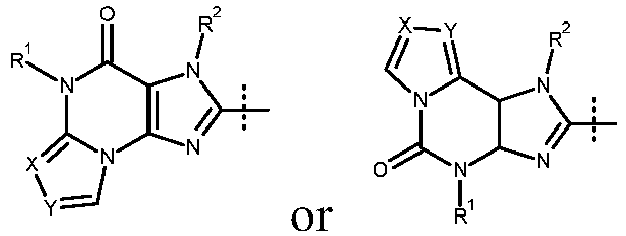
- R2 is selected from hydrogen, or alkyl, wherein alkyl, is unsubstituted or substituted independently with alkyl, alkenyl, alkynyl, cycloalkyl, cycloalkenyl, acyl, acylamino, amino, monoalkylamino, dialkylamino, cycloalkylamino, heteroaryl, aminocarbonylamino, heterocyclyl, heterocyclyloxy, hydroxyamino, nitro, S(O)2NRcRc, -NRcS(O)2Rc or -S(O)pRd;
- wherein each substituent is unsubstituted or substituted with 1, 2, or 3 substituents independently selected from alkyl, carboxy, carboxyalkyl, aminocarbonyl, hydroxyd, alkoxy, halogen, haloalkyl, haloalkoxy, amino, substituted amino, cyano or -S(O)pRd;
- X and Y are independently selected from CR' or N, wherein R' is selected from hydrogen, halogen, or alkyl;
- A is selected from an arylene or an optionally substituted heteroarylene;
- B is selected from a bond, (C1-C6)alkylene, or (C2-C6)alkynylene group, wherein 1 to 3 methylene groups are optionally replaced by groups independently selected from O, -S(O)p-, or -C(O)-;
- wherein alkylene, and alkynylene are unsubstituted or substituted independently with alkyl, alkenyl, alkynyl, alkoxy, cycloalkyl, cycloalkenyl, acyl, acyloxy, azido, cyano, halogen, hydroxy, hydroxyalkyl, keto, thiocarbonyl, carboxy, alkylcarboxy, carboxyalkyl, carboxyalkyloxy, alkylcarboxyalkyloxy -SO3H, aryl, aryloxy, cycloalkyloxy, heteroaryl, heteroaryloxy, heterocyclyl, heterocyclyloxy, hydroxyamino, nitro, S(O)2NRcRc, or -S(O)pRd;
- Z is selected from hydrogen, heterocyclyl, aryl or heteroaryl;
- wherein heterocyclyl, aryl and heteroaryl are unsubstituted or substituted independently with alkyl, alkenyl, alkynyl, alkoxy, cycloalkyl, cycloalkylalkyl, cycloalkenyl, acyl, acylamino, acyloxy, amino, monoalkylamino, dialkylamino, arylamino, cycloalkylamino, heteroarylamino, heterocyclylamino, aminocarbonyl, alkoxycarbonylamino, halogen, hydroxy, hydroxyalkyl, keto, thiocarbonyl, carboxy, aryl, arylalkyl, aryloxy, cycloalkyloxy, heteroaryl, heteroarylalkyl, heteroaryloxy, heterocyclyl, heterocyclylalkyl, heterocyclyloxy, -S(O)2NRbRb, -NRbS(O)2Rb or - S(O)pRd;
- wherein each substituent is unsubstituted or substituted with 1, 2, or 3 substituents independently selected from alkyl, carboxy, carboxyalkyl, aminocarbonyl, hydroxy, alkoxy, alkoxyalkoxy, alkoxyalkyl, halogen, haloalkyl, haloalkoxy, amino, substituted amino;
- Ra is selected from hydrogen, or alkyl;
- Rb is selected from hydrogen, alkyl, aryl, arylalkyl, heteroaryl, or heterocyclylalkyl;
- Rc is selected from hydrogen, alkyl, aryl, heteroaryl, or heterocyclyl;
- Rd is selected from alkyl, cycloalkyl, aryl, heterocyclyl, or heteroaryl; and
- p is 0, 1, or 2.
- In an embodiment of the present disclosure there is provided a compound of Formula I, or its stereoisomers, pharmaceutically acceptable salts, complexes, hydrates, solvates, tautomers, polymorphs, racemic mixtures, and optically active forms thereof, wherein the compound of Formula I is selected from the group consisting of:
- 5-propyl-2-[1-[[3-(trifluoromethyl)phenyl]methyl]pyrazol-4-yl]-3H-imidazo[2,1-b]purin-4-one (A1),
- 2-(1-benzylpyrazol-4-yl)-5-propyl-3H-imidazo[2,1-b]purin-4-one (A2),
- 5-methyl-2-[1-[[3-(trifluoromethyl)phenyl]methyl]pyrazol-4-yl]-3H-imidazo[2,1-b]purin-4-one (A3),
- 5-propyl-2-[1-[2-[3-(trifluoromethyl)phenyl]ethyl]pyrazol-4-yl]-3H-imidazo[2,1-b]purin-4-one (A4),
- 2-[1-[2-(3-fluorophenyl)ethyl]pyrazol-4-yl]-5-propyl-3H-imidazo[2,1-b]purin-4-one (A5),
- 2-(1-methylpyrazol-4-yl)-5-propyl-3H-imidazo [2, 1-b] purin-4-one (A6), 2-[1-(1,1-dimethylpropyl)pyrazol-4-yl]-5-propyl-3H-imidazo[2,1-b]purin-4-one (A7),
- N-isopropyl-3-[3-[4-(4-oxo-5-propyl-3H-imidazo[2,1-b]purin-2-yl)pyrazol-1-yl]prop-1-ynyl]benzamide (B1),
- Ethyl 3-[3-[4-(4-oxo-5-propyl-3H-imidazo [2,1-b]purin-2-yl)pyrazol-1-yl]prop-1-ynyl]benzoate (B2),
- 5-propyl-2-[1-[3-[3-(trifluoromethoxy)phenyl]prop-2-ynyl]pyrazol-4-yl]-3H-imidazo[2,1-b]purin-4-one (B3),
- Ethyl 4-methyl-3-[3-[4-(4-oxo-5-propyl-3H-imidazo[2,1-b]purin-2-yl)pyrazol-1-yl]prop-1-ynyl]benzoate (B6),
- 3-[[4-(4-oxo-5-propyl-3H-imidazo[2,1-b]purin-2-yl)pyrazol-1-yl]methyl]benzonitrile (B7),
- 2-(1-isopropylpyrazol-4-yl)-5-propyl-3H-imidazo[2,1-b]purin-4-one (B8),
- 2-(1-butylpyrazol-4-yl)-5-propyl-3H-imidazo[2,1-b]purin-4-one (B9),
- 2-(1-ethylpyrazol-4-yl)-5-propyl-3H-imidazo[2,1-b]purin-4-one (B10),
- 2-[1-(2-methoxyethyl)pyrazol-4-yl]-5-propyl-3H-imidazo[2,1-b]purin-4-one (B11),
- 2-[1-(2-dimethylaminoethyl)pyrazol-4-yl]-5-propyl-3H-imidazo[2,1-b]purin-4-one (B12),
- 5-propyl-2-(1-propylpyrazol-4-yl)-3H-imidazo[2,1-b]purin-4-one (B13),
- N,N-dimethyl-2-[4-(4-oxo-5-propyl-3H-imidazo[2,1-b]purin-2-yl)pyrazol-1-yl]acetamide (B14),
- 2-[1-(2-morpholinoethyl)pyrazol-4-yl]-5-propyl-3H-imidazo[2,1-b]purin-4-one (B15),
- 2-[1-(cyclobutylmethyl)pyrazol-4-yl]-5-propyl-3H-imidazo[2,1-b]purin-4-one (B16),
- 2-(1-isobutylpyrazol-4-yl)-5-propyl-3H-imidazo[2,1-b]purin-4-one (B17),
- 2-[1-(cyclopropylmethyl)pyrazol-4-yl]-5-propyl-3H-imidazo[2,1-b]purin-4-one (B18),
- 2-[1-(2,2-dimethylpropyl)pyrazol-4-yl]-5-propyl-3H-imidazo[2,1-b]purin-4-one (B19),
- 5-propyl-2-(1-sec-butylpyrazol-4-yl)-3H-imidazo[2,1-b]purin-4-one (B20),
- 5-propyl-2-[1-(tetrahydrofuran-2-ylmethyl)pyrazol-4-yl]-3H-imidazo[2,1-b]purin-4-one (B21),
- 2-[1-[[5-oxo-1-[2-(trifluoromethyl)-4-pyridyl]pyrrolidin-3-yl]methyl]pyrazol-4-yl]-5-propyl-3H-imidazo[2,1-b]purin-4-one (C1),
- 2-[1-[[5-oxo-1-[5-(trifluoromethyl)-3-pyridyllpyrrolidin-3-yllmethyllpyrazol-4-yll-5-propyl-3H-imidazo[2,1-b]purin-4-one (C2),
- 2-[1-[[5-oxo-1-[3-(trifluoromethyl)phenyl]pyrrolidin-3-yl]methyl]pyrazol-4-yl]-5-propyl-3H-imidazo[2,1-b]purin-4-one (C3),
- 2-[1-[2-(1-piperidyl)ethyl]pyrazol-4-yl]-5-propyl-3H-imidazo[2,1-b]purin-4-one (D1),
- 2-[1-[[3-(hydroxymethyl)phenyl]methyl]pyrazol-4-yl]-5-propyl-3H-imidazo[2,1-b]purin-4-one (E1),
- 2-[1-[[3-(1-hydroxy-1-methyl-ethyl)phenyl]methyl]pyrazol-4-yl]-5-propyl-3H-imidazo[2,1-b]purin-4-one (F1),
- 3-[[4-(4-oxo-5-propyl-3H-imidazo[2,1-b]purin-2-yl)pyrazol-1-yl]methyl]benzoic acid (G1),
- 2-[4-(4-oxo-5-propyl-3H-imidazo[2,1-b]purin-2-yl)pyrazol-1-yl]acetic acid (H1),
- 2-[1-(2-hydroxy-2-methyl-propyl)pyrazol-4-yl]-5-propyl-3H-imidazo[2,1-b]purin-4-one (I1),
- 2-[1-(2,3-dihydroxypropyl)pyrazol-4-yl]-5-propyl-3H-imidazo[2,1-b]purin-4-one (J1),
- 2-(3,4-dimethoxyphenyl)-5-propyl-3H-imidazo[2,1-b]purin-4-one (K1),
- 5-propyl-2-[3-(trifluoromethyl)phenyl]-3H-imidazo[2,1-b]purin-4-one (K2),
- 2-[1-[(3-fluorophenyl)methyl]pyrazol-4-yl]-5-propyl-3H-imidazo[2,1-b]purin-4-one (K3),
- 2-[1-[(3-methoxyphenyl)methyl]pyrazol-4-yl]-5-propyl-3H-imidazo[2,1-b]purin-4-one (K4),
- 2-[4-[2-(1-piperidyl)ethoxylphenyl]-5-propyl-3H-imidazo[2,1-b]purin-4-one (K5),
- 2-(5-methoxy-2-pyridyl)-5-propyl-3H-imidazo[2,1-b]purin-4-one (K6),
- 2-(4-ethoxyphenyl)-5-propyl-3H-imidazo[2,1-b]purin-4-one (K7),
- N-isopropyl-2-[4-(4-oxo-5-propyl-3H-imidazo[2,1-b]purin-2-yl)pyrazol-1-yl]acetamide (L1),
- N-(oxetan-3-yl)-2-[4-(4-oxo-5-propyl-3H-imidazo[2,1-b]purin-2-yl)pyrazol-1-yl]acetamide (L2),
- 4-propyl-2-[1-[[3-(trifluoromethyl)phenyl]methyl] pyrazol-4-yl]-1H-imidazo[2,1-f]purin-5-one (II),
- 2-[1-(2-furylmethyl)pyrazol-4-yl]-5-propyl-3H-imidazo[2,1-b]purin-4-one (III),
- 5-propyl-2-[1-(2-thienylmethyl)pyrazol-4-yl]-3H-imidazo[2,1-b]purin-4-one (IV),
- 2-[1-(oxazol-2-ylmethyl)pyrazol-4-yl]-5-propyl-3H-imidazo[2,1-b]purin-4-one (V),
- 2-[1-(isoxazol-5-ylmethyl)pyrazol-4-yl]-5-propyl-3H-imidazo[2,1-b]purin-4-one (VI),
- 2-[1-[(5-methyl-2-thienyl)methyl]pyrazol-4-yl]-5-propyl-3H-imidazo[2,1-b]purin-4-one (VII),
- 2-[1-[(3,5-difluorophenyl)methyl]pyrazol-4-yl]-5-propyl-3H-imidazo[2,1-b]purin-4-one (VIII),
- 5-propyl-2-[1-(4-pyridylmethyl)pyrazol-4-yl]-3H-imidazo[2,1-b]purin-4-one (IX),
- 5-propyl-2-[1-(3-pyridylmethyl)pyrazol-4-yl]-3H-imidazo[2,1-b]purin-4-one (X),
- 5-propyl-2-[1-(2-pyridylmethyl)pyrazol-4-yl]-3H-imidazo[2,1-b]purin-4-one (XI),
- 5-propyl-2-[1-(pyrimidin-5-ylmethyl)pyrazol-4-yl]-3H-imidazo[2,1-b]purin-4-one (XII),
- 5-propyl-2-[1-(pyridazin-4-ylmethyl)pyrazol-4-yl]-3H-imidazo[2,1-b]purin-4-one (XIII),
- 2-[1-[(1-oxoisoindolin-5-yl)methyl]pyrazol-4-yl]-5-propyl-3H-imidazo[2,1-b]purin-4-one (XIV),
- 2-[1-[(2-methyl-1-oxo-isoindolin-5-yl)methyl]pyrazol-4-yl1-5-propyl-3H-imidazo[2,1-b]purin-4-one (XV),
- 2-[1-[(1-oxo-3,4-dihydro-2H-isoquinolin-6-yl)methyl]pyrazol-4-yl]-5-propyl-3H-imidazo[2,1-b]purin-4-one (XVI),
- 2-[1-[(2-oxo-3,4-dihydro-1H-quinolin-6-yl)methyl]pyrazol-4-yl]-5-propyl-3H-imidazo[2,1-b]purin-4-one (XVII),
- 5-propyl-2-[1-(quinoxalin-6-ylmethyl)pyrazol-4-yl]-3H-imidazo[2,1-b]purin-4-one (XVIII),
- 2-[1-(2-naphthylmethyl)pyrazol-4-yl]-5-propyl-3H-imidazo[2,1-b]purin-4-one (XIX),
- 2-[1-[[3-(azetidin-3-yl)phenyl]methyl]pyrazol-4-yl]-5-propyl-3H-imidazo[2,1-b]purin-4-one (XX),
- 2-[1-[[3-(2-methoxyethoxy)phenyl]methyl]pyrazol-4-yl]-5-propyl-3H-imidazo[2,1-b]purin-4-one (XXI),
- 2-[1-[[4-(2-methoxyethoxy)phenyl]methyl]pyrazol-4-yl]-5-propyl-3H-imidazo[2,1-b]purin-4-one (XXII),
- 5-propyl-2-[1-[3-[3-(trifluoromethyl)phenyl]prop-2-ynyl]pyrazol-4-yl]-3H-imidazo[2,1-b]purin-4-one (XXIII),
- 2-[1- [3 -(3 -fluorophenyl)prop-2-ynyl]pyrazol-4-yl] -5-propyl-3 H-imidazo [2,1-b]purin-4-one (XXIV),
- 2-[1-[3-(4-fluorophenyl)prop-2-ynyl]pyrazol-4-yl]-5-propyl-3H-imidazo[2,1-b]purin-4-one (XXV),
- 5-propyl-2-[1-[3-[4-(trifluoromethyl)phenyl]prop-2-ynyl]pyrazol-4-yl]-3H-imidazo[2,1-b]purin-4-one (XXVI),
- 2-[1-[[1-(3-fluorophenyl)-5-oxo-pyrrolidin-3-yl]methyl]pyrazol-4-yl]-5-propyl-3H-imidazo[2,1-b]purin-4-one (XXVII),
- 2-[1-[[1-(m-tolyl)-5-oxo-pyrrolidm-3-yl]methyl]pyrazol-4-yl]-5-propyl-3H-imidazo[2,1-b]purin-4-one (XXVIII),
- 2-[1-[(3-chloro-5-fluoro-phenyl)methyl]pyrazol-4-yl]-5-propyl-3H-imidazo[2,1-b]purin-4-one (XXIX),
- 2-[[4-(4-oxo-5-propyl-3H-imidazo[2,1-b]purin-2-yl)pyrazol-1-yl]methyl]benzonitrile (XXX),
- 2-[1-[(2-fluorophenyl)methyl]pyrazol-4-yl]-5-propyl-3H-imidazo[2,1-b]purin-4-one (XXXI),
- 4-[[4-(4-oxo-5-propyl-3H-imidazo[2,1-b]purin-2-yl)pyrazol-1-yl]methyl]benzonitrile (XXXII),
- 2-[1-[[3-(4-methylpiperazin-1-yl)phenyl]methyl]pyrazol-4-yl]-5-propyl-3H-imidazo[2,1-b]purin-4-one (XXXIII),
- 2-[1-[1-(3-fluorophenyl)ethyl]pyrazol-4-yl]-5-propyl-3H-imidazo[2,1-b]purin-4-one (XXXIV),
- 2-[1-[(4-isopropylphenyl)methyl]pyrazol-4-yl]-5-propyl-3H-imidazo[2,1-b]purin-4-one (XXXV),
- 5-propyl-2-[1-(2,2,2-trifluoroethyl)pyrazol-4-yl]-3H-imidazo[2,1-b]purin-4-one (XXXVI),
- 2-[1-(2-aminoethyl)pyrazol-4-yl]-5-propyl-3H-imidazo[2,1-b]purin-4-one (XXXVII),
- 5-propyl-2-(1-tetrahydropyran-4-ylpyrazol-4-yl)-3H-imidazo[2,1-b]purin-4-one (XXXVIII),
- 2-(1-cyclopentylpyrazol-4-yl)-5-propyl-3H-imidazo[2,1-b]purin-4-one (XXXIX),
- 7-methyl-5-propyl-2-[1-[[3-(trifluoromethyl)phenyl]methyl]pyrazol-4-yl]-3H-imidazo[2,1-b]purin-4-one (XL),
- 8-methyl-5-propyl-2-[1-[[3-(trifluoromethyl)phenyl]methyl]pyrazol-4-yl]-3H-imidazo[2,1-b]purin-4-one (XLI),
- 7-methyl-5-propyl-2-(1-propylpyrazol-4-yl)-3H-imidazo[2,1-b]purin-4-one (XLII),
- 2-(1-ethylpyrazol-4-yl)-7-methyl-5-propyl-3H-imidazo[2,1-b]purin-4-one (XLIII),
- 7-methyl-2-(1-methylpyrazol-4-yl)-5-propyl-3H-imidazo[2,1-b]purin-4-one (XLIV),
- 5-propyl-2-(1-propylpyrazol-4-yl)-7-(trifluoromethyl)-3H-imidazo[2,1-b]purin-4-one (XXXXV),
- 5-propyl-7-(trifluoromethyl)-2-[1-[[3-(trifluoromethyl)phenyl]methyl]pyrazol-4-yl]-3H-imidazo[2,1-b]purin-4-one (XLVI),
- 2-[1-(m-tolylmethyl)pyrazol-4-yl]-4-propyl-1H-imidazo[2,1-f]purin-5-one (XLVII),
- 2-[1-[(3-fluorophenyl)methyl]pyrazol-4-yl]-4-propyl-1H-imidazo[2,1-f]purin-5-one (XLVIII),
- 3-[[4-(5-oxo-4-propyl-1H-imidazo[2,1-f]purin-2-yl)pyrazol-1-yl]methyl]benzonitrile (XLIX),
- 3-[[4-(4-ethyl-5-oxo-1H-imidazo[2,1-f]purin-2-yl)pyrazol-1-yl]methyl]benzonitrile (L),
- 3-[1-methyl-1-[4-(4-oxo-5-propyl-3H-imidazo[2,1-b]purin-2-yl)pyrazol-1-yl]ethyl]benzonitrile (LI),
- 5-propyl-2-[3-[[3-(trifluoromethyl)phenyl]methoxy]isoxazol-5-yl]-3H-imidazo[2,1-b]purin-4-one (LII).
- In an embodiment of the present disclosure there is provided a compound of Formula I, or its stereoisomers, pharmaceutically acceptable salts, complexes, hydrates, solvates, tautomers, polymorphs, racemic mixtures, and optically active forms thereof for use as a medicament.
- In an embodiment of the present disclosure there is provided a compound of Formula I, or its stereoisomers, pharmaceutically acceptable salts, complexes, hydrates, solvates, tautomers, polymorphs, racemic mixtures, optically active forms and pharmaceutically active derivatives thereof for use in treating conditions and diseases that are mediated by adenosine receptor (AR) activity.
- In an embodiment of the present disclosure there is provided a compound of Formula I, or its stereoisomers, pharmaceutically acceptable salts, complexes, hydrates, solvates, tautomers, polymorphs, racemic mixtures, and optically active forms thereof, either alone or in combination with other therapeutic agents for use in methods for treating or lessening the severity of immunotherapies or radiotherapy or chemotherapy.
- In an embodiment of the present disclosure there is provided a pharmaceutical composition comprising a compound of Formula I, or its stereoisomers, pharmaceutically acceptable salts, complexes, hydrates, solvates, tautomers, polymorphs, racemic mixtures, and optically active forms thereof together with a pharmaceutically acceptable carrier.
- In an embodiment of the present disclosure there is provided a pharmaceutical composition comprising a compound of Formula I, or its stereoisomers, pharmaceutically acceptable salts, complexes, hydrates, solvates, tautomers, polymorphs, racemic mixtures, and optically active forms thereof together with a pharmaceutically acceptable excipient or a pharmaceutically acceptable diluent.
- In an embodiment of the present disclosure there is provided a pharmaceutical composition comprising a compound of Formula I, or its stereoisomers, pharmaceutically acceptable salts, complexes, hydrates, solvates, tautomers, polymorphs, racemic mixtures, and optically active forms thereof together with a pharmaceutically acceptable carrier, and in combination with at least one compound and/or compositions having a like therapeutic effect.
- In an embodiment of the present disclosure there is provided a pharmaceutical composition comprising a compound of Formula I, or its stereoisomers, pharmaceutically acceptable salts, complexes, hydrates, solvates, tautomers, polymorphs, racemic mixtures, and optically active forms, thereof either alone or in combination with other therapeutic agents for use in methods for treating or lessening the severity of immunotherapies or radiotherapy or chemotherapy.
- Described herein is a method for treatment of disorder or condition selected from melanoma, triple negative breast cancer, colon cancer, colorectal cancer, lung cancer, prostate cancer, renal cell cancer, non-small cell lung cancer, bladder cancer, cervical, vulvar or anal cancer, esophageal cancer, metastatic head and neck cancer, liver cancer, lymphoma, multiple myeloma, ovarian cancer, pancreatic cancer, acute myeloid leukemia, or Kaposi sarcoma in a subject comprising: administering to the subject an effective amount of the compound of Formula I, or its stereoisomers, pharmaceutically acceptable salts, complexes, hydrates, solvates, tautomers, polymorphs, racemic mixtures, optically active forms and pharmaceutically active derivative thereof.
- Described herein is provided a method for treatment of disorder or condition selected from melanoma, triple negative breast cancer, colon cancer, colorectal cancer, lung cancer, prostate cancer, renal cell cancer, non-small cell lung cancer, bladder cancer, cervical, vulvar or anal cancer, esophageal cancer, metastatic head and neck cancer, liver cancer, lymphoma, multiple myeloma, ovarian cancer, pancreatic cancer, acute myeloid leukemia, or Kaposi sarcoma in a subject comprising: administering to the subject an effective amount of the a pharmaceutical composition comprising a compound of Formula I, or its stereoisomers, pharmaceutically acceptable salts, complexes, hydrates, solvates, tautomers, polymorphs, racemic mixtures, optically active forms, and pharmaceutically active derivative thereof.
- Described herein is a process of preparation of compound of Formula I, the process is selected from Scheme1, Scheme 2, Scheme 3, Scheme 4, or Scheme 5 as disclosed herein.
- The compounds of Formula I may form stable pharmaceutically acceptable acid or base salts, and in such cases administration of a compound as a salt may be appropriate. Examples of acid addition salts include acetate, adipate, ascorbate, benzoate, benzenesulfonate, bicarbonate, bisulfate, butyrate, camphorate, camphorsulfonate, choline, citrate, cyclohexyl sulfamate, diethylenediamine, ethanesulfonate, fumarate, glutamate, glycolate, hemisulfate, 2-hydroxyethylsulfonate, heptanoate, hexanoate, hydrochloride, hydrobromide, hydroiodide, hydroxymaleate, lactate, malate, maleate, methanesulfonate, meglumine, 2-naphthalenesulfonate, nitrate, oxalate, pamoate, persulfate, phenylacetate, phosphate, diphosphate, picrate, pivalate, propionate, quinate, salicylate, stearate, succinate, sulfamate, sulfanilate, sulfate, tartrate, tosylate (p-toluenesulfonate), trifluoroacetate, and undecanoate. Examples of base salts include ammonium salts; alkali metal salts such as sodium, lithium and potassium salts; alkaline earth metal salts such as aluminum, calcium and magnesium salts; salts with organic bases such as dicyclohexylamine salts and N10 methyl-D-glucamine; and salts with amino acids such as arginine, lysine, ornithine, and so forth. Also, basic nitrogen-containing groups may be quaternized with such agents as: lower alkyl halides, such as methyl, ethyl, propyl, and butyl halides; dialkyl sulfates such as dimethyl, diethyl, dibutyl; diamyl sulfates; long chain halides such as decyl, lauryl, myristyl and stearyl halides; arylalkyl halides such as benzyl bromide and others. Non-toxic physiologically acceptable salts are preferred, although other salts may be useful, such as in isolating or purifying the product.
- The salts may be formed by conventional means, such as by reacting the free base form of the product with one or more equivalents of the appropriate acid in a solvent or medium in which the salt is insoluble, or in a solvent such as water, which is removed in vacuo or by freeze drying or by exchanging the anions of an existing salt for another anion ona suitable ion-exchange resin.
- In an embodiment of the present disclosure, the compositions of the disclosure may be in a form suitable for oral use (for example as tablets, lozenges, hard or soft capsules, aqueous or oily suspensions, emulsions, dispersible powders or granules, syrups or elixirs), for topical use (for example as creams, ointments, gels, or aqueous or oily solutions or suspensions), for administration by inhalation (for example as a finely divided powder or a liquid aerosol), for administration by insufflation (for example as a finely divided powder) or for parenteral administration (for example as a sterile aqueous or oily solution for intravenous, subcutaneous, intramuscular or intramuscular dosing or as a suppository for rectal dosing).
- Described herein is a process of preparation of a composition comprising a compound of Formula I or its stereoisomers, pharmaceutically acceptable salts, complexes, hydrates, solvates, tautomers, polymorphs, racemic mixtures, optically active forms and pharmaceutically active derivative thereof together with a carrier.
- The compositions of the present disclosure may be obtained by conventional procedures using conventional pharmaceutical excipients well known in the art. Thus, compositions intended for oral use may contain, for example, one or more colouring, sweetening, flavouring and/or preservative agents
- Suitable pharmaceutically acceptable excipients for a tablet formulation include, for example, inert diluents such as lactose, sodium carbonate, calcium phosphate or calcium carbonate; granulating and disintegrating agents such as corn starch or algenic acid; binding agents such as starch; lubricating agents such as magnesium stearate, stearic acid or talc; preservative agents such as ethyl or propyl p-hydroxybenzoate; and anti-oxidants, such as ascorbic acid. Tablet formulations may be uncoated or coated either to modify their disintegration and the subsequent absorption of the active ingredient within the gastrointestinal tract, or to improve their stability and/or appearance, in either case, using conventional coating agents or procedures well known in the art.
- Compositions for oral use may be in the form of hard gelatin capsules in which the active ingredient is mixed with an inert solid diluent, for example, calcium carbonate, calcium phosphate or kaolin, or as soft gelatin capsules in which the active ingredient is mixed with water or oil such as peanut oil, liquid paraffin, or olive oil.
- Aqueous suspensions generally contain the active ingredient in finely powdered form or in the form of nano or micronized particles together with one or more suspending agents, such as sodium carboxymethylcellulose, methylcellulose, hydroxypropylmethylcellulose, sodium alginate, polyvinyl-pyrrolidone, gum tragacanth and gum acacia; dispersing or wetting agents such as lecithin or condensation products of an alkylene oxide with fatty acids (for example polyoxethylene stearate), or condensation products of ethylene oxide with long chain aliphatic alcohols, for example heptadecaethyleneoxycetanol, or condensation products of ethylene oxide with partial esters derived from fatty acids and a hexitol such as polyoxyethylene sorbitol monooleate, or condensation products of ethylene oxide with long chain aliphatic alcohols, for example heptadecaethyleneoxycetanol, or condensation products of ethylene oxide with partial esters derived from fatty acids and a hexitol such as polyoxyethylene sorbitol monooleate, or condensation products of ethylene oxide with partial esters derived from fatty acids and hexitol anhydrides, for example polyethylene sorbitan monooleate. The aqueous suspensions may also contain one or more preservatives such as ethyl or propyl p-hydroxybenzoate; anti-oxidants such as ascorbic acid); coloring agents; flavoring agents; and/or sweetening agents such as sucrose, saccharine or aspartame.
- Oily suspensions may be formulated by suspending the active ingredient in a vegetable oil such as arachis oil, olive oil, sesame oil or coconut oil or in a mineral oil such as liquid paraffin. The oily suspensions may also contain a thickening agent such as beeswax, hard paraffin or cetyl alcohol. Sweetening agents such as those set out above, and flavoring agents may be added to provide a palatable oral preparation. These compositions may be preserved by the addition of an antioxidant such as ascorbic acid.
- Dispersible powders and granules suitable for preparation of an aqueous suspension by the addition of water generally contain the active ingredient together with a dispersing or wetting agent, suspending agent and one or more preservatives. Suitable dispersing or wetting agents and suspending agents are exemplified by those already mentioned above. Additional excipients such as sweetening, flavoring and coloring agents, may also be present.
- The pharmaceutical compositions of the disclosure may also be in the form of oil-in-water emulsions. The oily phase may be a vegetable oil, such as olive oil or arachis oil, or a mineral oil, such as for example liquid paraffin or a mixture of any of these. Suitable emulsifying agents may be, for example, naturally-occurring gums such as gum acacia or gum tragacanth, naturally-occurring phosphatides such as soya bean, lecithin, an esters or partial esters derived from fatty acids and hexitol anhydrides (for example sorbitan monooleate) and condensation products of the said partial esters with ethylene oxide such as polyoxyethylene sorbitan monooleate. The emulsions may also contain sweetening, flavoring and preservative agents.
- Syrups and elixirs may be formulated with sweetening agents such as glycerol, propylene glycol, sorbitol, aspartame or sucrose, and may also contain a demulcent, preservative, flavoring and/or coloring agent.
- The pharmaceutical compositions may also be in the form of a sterile injectable aqueous or oily suspension, which may be formulated according to known procedures using one or more of the appropriate dispersing or wetting agents and suspending agents, which have been mentioned above. A sterile injectable preparation may also be a sterile injectable solution or suspension in a non-toxic parenterally-acceptable diluent or solvent, for example a solution in 1,3-butanediol.
- Compositions for administration by inhalation may be in the form of a conventional pressurized aerosol arranged to dispense the active ingredient either as an aerosol containing finely divided solid or liquid droplets. Conventional aerosol propellants such as volatile fluorinated hydrocarbons or hydrocarbons may be used and the aerosol device is conveniently arranged to dispense a metered quantity of active ingredient.
- Compositions for administration may also be formulated as a liposome preparation. The liposome preparation can comprise liposomes which penerate the cells of interest or stratum corneum, and fuse with the cell membrane, resulting in delivery of the contents of the liposome into the cell. Other suitable formulations can employ niosomes. Niosomes are lipid vesicles similar to liposomes, with membrane consisting largely of nonoinic lipids, some forms of which are effective for transporting compounds across the stratum corneum.
- Compositions for administration may also be formulated as a depot preparation, which may be administered by implantation or by intramuscular injection. The compositions may be formulated with suitable polymeric or hydrophobic material (as an emulsion in acceptable oil), ion exchange resins, or sparingly soluble derivatives.
- The compound of the present disclosure can also be administered in sustained release forms or from sustained release drug delivery systems.
- For further information on formulation, drug delivery as well as processing techniques the reader is referred to Remington's Pharmaceutical Sciences (21st Edition, 2005, University of the sciences in Philadelphia, Lippincott William & Wilkins).
- The amount of active ingredient that is combined with one or more excipients to produce a single dosage form will necessarily vary depending upon the host treated and the particular route of administration. For example, a formulation intended for oral administration to humans will generally contain, for example, from 0.5 mg to 4 g of active agent compounded with an appropriate and convenient amount of excipients which may vary from about 5 to about 98 percent by weight of the total composition. Dosage unit forms will generally contain about 1 mg to about 500 mg of an active ingredient. For further information on Routes of Administration and Dosage Regimes the reader is referred to Chapter 25.3 in Volume 5 of Comprehensive Medicinal Chemistry (Corwin Hansch; Chairman of Editorial Board), Pergamon Press 1990 and Remington's Pharmaceutical Sciences (21st Edition, 2005, University of the sciences in Philadelphia, Lippincott William & Wilkins).
- As stated above the size of the dose required for the therapeutic or prophylactic treatment of a particular disease state will necessarily be varied depending on the host treated, the route of administration and the severity of the illness being treated. Preferably a daily dose in the range of 1-25 mg/kg is employed. Accordingly, the optimum dosage may be determined by the practitioner who is treating any particular patient.
- In any of the pharmaceutical compositions, processes, methods, uses, medicaments, and manufacturing features mentioned herein, any of the alternate aspects of the compounds of the disclosure described herein also apply.
- The following examples provide the details about the synthesis, activities and applications of the compounds of the present disclosure. It should be understood the following is representative only, and that the disclosure is not limited by the details set forth in these examples.
- Evaporations were carried out by rotary evaporation in vacuo and work up procedures were carried out after removal of residual solids by filtration; temperatures are quoted as "°C"; operations were carried out at room temperature, that is typically in the range 18 to 26 °C and without the exclusion of air unless otherwise stated, or unless the skilled person would otherwise work under an inert atmosphere; column chromatography (by the flash procedure) was used to purify compounds and was performed on Merck Kieselgel silica (Art. 9385) unless otherwise stated; in general, the course of reactions was followed by TLC, HPLC, or LC/MS and reaction times are given for illustration only; yields are given for illustration only and are not necessarily the maximum attainable; the structure of the end products of the disclosure was generally confirmed by NMR and mass spectral techniques. Proton magnetic resonance spectra were generally determined in DMSO d6 unless otherwise stated, using a Bruker DRX 300 spectrometer or a Bruker DRX-400 spectrometer, operating at a field strength of 300 MHz or 400 MHz, respectively. In cases where the NMR spectrum is complex, only diagnostic signals are reported. Chemical shifts are reported in parts per million downfield from tetramethylsilane as an external standard (δ scale) and peak multiplicities are shown thus: s, singlet; d, doublet; dd, doublet of doublets; dt, doublet of triplets; dm, doublet of multiplets; t, triplet; m, multiplet; br, broad. Fast atom bombardment (FAB) mass spectral data were generally obtained using a Platform spectrometer (supplied by Micromass) run in electrospray and, where appropriate, either positive ion data or negative ion data were collected or using Agilent 1100 series LC/MS equipped with Sedex 75ELSD, and where appropriate, either positive ion data or negative ion data were collected. The lowest mass major ion is reported for molecules where isotope splitting results in multiple mass spectral peaks (for example when chlorine is present). Reverse Phase HPLC was carried out using YMC Pack ODS AQ (100x20 mmID, S 5Å particle size, 12 nm pore size) on Agilent instruments; each intermediate was purified to the standard required for the subsequent stage and was characterized in sufficient detail to confirm that the assigned structure was correct; purity was assessed by HPLC, TLC, or NMR and identity was determined by infrared spectroscopy (IR), mass spectroscopy or NMR spectroscopy as appropriate.
- If not commercially available, the necessary starting materials for the procedures such as those described herein may be made by procedures which are selected from standard organic chemical techniques, techniques which are analogous to the synthesis of known, structurally similar compounds, or techniques which are analogous to the described procedure or the procedures described in the Examples.
- It is noted that many of the starting materials for synthetic methods as described herein are commercially available and/or widely reported in the scientific literature or could be made from commercially available compounds using adaptations of processes reported in the scientific literature. The reader is further referred to Advanced Organic Chemistry, 5th Edition, by Jerry March and Michael Smith, published by John Wiley & Sons 2001, for general guidance on reaction conditions and reagents.
- It will also be appreciated that in some of the reactions mentioned herein it may be necessary/desirable to protect any sensitive groups in compounds. The instances where protection is necessary or desirable are known to those skilled in the art, as are suitable methods for such protection. Conventional protecting groups may be used in accordance with standard practice (for illustration see T.W. Greene, Protective Groups in Organic Synthesis, published by John Wiley and Sons, 1991) and as described hereinabove.
- The compounds of Formula I, their tautomers, polymorphs, stereoisomers, prodrugs, solvates, pharmaceutically acceptable salts, may be prepared following independent general synthetic routes as outlined in the Schemes below:

- The compound of formula (1a) wherein all symbols are defined herein above, is either available commercially or may be prepared by methods well known in the art (
US20080194593 , Synthesis 1993, 125-128). The compound of formula (1c) can be prepared from (1a) by reaction with (1b) in presence of carbodimide, for example EDCI.HCl. Subsequently ring is closed with dehydrating reagents such as P2O5, NaOH to get compound (1d). The compound (1d) converted to (1e) by reaction with chlorinating reagents such as POCl3, PCl5, SOCl2 and the like. The compound of formula (1e) can also be prepared directly by reaction with (1c) in presence of chlorinating reagents such as POCl3, PCl5, SOCl2 and the like. - The compound of formula (1e) may be reacted with aminoacetaldehyde dimethyl acetal in presence of acid such as HCl, H2SO4, AcOH and the like, to obtain compound of formula (1), which is reacted with R2-L to provide the compound of Formula I.

- The compound of formula (2a) wherein PG is protecting group, such as benzyl and the like prepared by using scheme 1.
- The compound of formula (2b) may be prepared from compound of formula (2a) by protection of -NH wherein PG1 may be SEM, and the like. The compound of formula (2b) can be converted to a formula (2c) by deprotection. The compound of formula (2c) reacted with (2d) where in L1 is leaving group and B and Z are defined above to provide compound of formula (2e) followed by deprotection to provide compound (I). Compounds of Formula I may further be reacted with R2-L to provide compounds of Formula I wherein R2 is other than hydrogen and is as defined herein above.

- The compound of formula (3a) wherein all symbols are defined herein above is available commercially. Compound (3a) can be reacted with acid (3b) in presence of POCl3 to get compound of formula (3c) which is further reacted with protecting groups to provide compound (3d).
- The compound of formula (3d) can be converted to a formula (3e) by hydrolyzing with bases like K2CO3 or Na2CO3 or Cs2CO3 and the like in presence of inert solvents like CH3CN or EtOH or THF and the like. The compound of formula (3e) can be converted to a formula (3f) by reaction with R1-Hal wherein R1 is defined above and followed by deprotection to provide compound (3g). Then compound (I) can be obtained in a similar way as described above.

- The compound of formula (3d) can be obtained in a similar way as described above. The compound of formula (3d) can be converted to a formula (3i) by reaction with aminoacetaldehyde dimethyl acetal in presence of base like Et3N, DIPEA and the like and followed by reaction with acid such as HCl, H2SO4, AcOH and the like. The compound of formula (3i) can be converted to a formula (3j) by hydrolyzing with bases like K2CO3 or Na2CO3 or Cs2CO3 and the like in presence of inert solvents like CH3CN or EtOH or THF and the like. The compound of formula (3j) can also be synthesized from (3i) by reaction with acid such as HCl, H2SO4, AcOH and the like. The compound of formula (3j) can be converted to a formula (3k) by reaction with R1-Hal wherein R1 is defined above and followed by deprotection to provide compound (I).

- The compound of formula (4a) wherein all symbols are defined herein above, is either available commercially or may be prepared by methods well known in the art (
WO 2009157938 ,US 20130324724 ). The compound of formula (4d) can be obtained in a similar way as described above. The compound of formula (4e) can be obtained from (4d) by reaction with P4S10 and followed by alkylation to obtained (4f). The compound of formula (4f) can be converted to a formula (4g) by reaction with aminoacetaldehyde dimethyl acetal in presence of base like Et3N, DIPEA and the like and followed by reaction with acid such as HCl, H2SO4, AcOH and the like to obtain compound of Formula I. - Wherever desired or necessary, in any of the above-mentioned processes, functional groups may be transformed to different functional groups such as an ester function being converted to an acid, amide, hydroxymethyl, keto, aldehyde as well as an ester. The said conversions may be carried out using reagents and conditions well documented in the literature.
- Wherever desired or necessary, in any of the above-mentioned processes, any of the compounds of Formula I may be converted into a pharmaceutically acceptable salt or vice versa or converting one salt form into another pharmaceutically acceptable salt form.
-

- A mixture of 1.1 (30 g, 163.04 mmol), 1.2 (44.0 g, 163.04 mmol) in methanol (1500 mL) were cooled to 0 0C and added EDCI.HCl (37.5 g, 195.65 mmol). The reaction mixture was stirred at 25 °C for 16 hours. Reaction completion was confirmed by TLC, and the organic volatiles were evaporated. To this residue water (2000 mL) was added and the precipitate was filtered off, and washed with cold water (500 mL), washed with n-hexane dried to obtain 1.3 as a pale yellow solid. (60.0 g, 84 %). ESI-MS(m/z): 437.2 (M + 1); 1H NMR (400 MHz, DMSO-d6): δ 0.82 (t, J = 7.6 Hz, 3H); 1.46-1.51 (m, 2H); 3.64 (t, J = 7.6 Hz, 2H); 5.49 (s, 2H); 6.01 (s, 2H); 7.55-7.68 (m, 2H); 7.68-7.70 (m, 2H); 7.99 (s, 1H); 8.37 (s, 1H); 8.55 (s, 1H); 10.42 (s, 1H).
- In a mixture of 1.3 (60 g, 137.6 mmol) and DMF (600 mL), added P2O5 (68.4 g, 481.6 mmol) portion wise and heated at 100 °C for 30 minutes. Reaction completion was confirmed by TLC, and mixture was cooled to 20-25 °C. The reaction mixture was slowly poured into water (2.5 L) with vigorous stirring. Solid material separated was filtered off, and washed with cold water (500 mL), washed with n-hexane dried to obtain 1.4 as a pale yellow solid (53 g, 93 %).
- ESI-MS(m/z): 419.2 (M + 1); 1H NMR (400 MHz, DMSO-d6): δ 0.87 (t, J = 7.2 Hz, 3H); 1.53-1.60 (m, 2H); 3.98 (t, J = 7.2 Hz, 2H); 5.53 (s, 2H); 7.57-7.64 (m, 2H); 7.69-7.71 (m, 2H); 8.08 (s, 1H); 8.47 (s, 1H); 11.83 (s, 1H); 13.39 (br s, 1H).
- A mixture of 1.4 (35 g, 83.93 mmol), NH4Cl (44.8 g, 83.7 mmol) and POCl3 (1000 mL) were heated at 120-125 °C for 72 h. Reaction completion was confirmed by TLC, mixture was cooled to 20-25 °C. It was then concentrated under vacuuo and quenched with cold water slowly and solid material was separated. It was filtered off and washed with cold water, dried under vacuuo. The crude product was purified by column chromatography using silica gel (230-400 mesh) and 0.5 to 4 % methanol in chloroform as an eluent to obtain 1.5 as a pale yellow solid. (17 g, 47 %) ESI-MS(m/z): 437.1 (M + 1); 1H NMR (400 MHz, CD3OD): δ 1.02 (t, J = 7.2 Hz, 3H); 1.72-1.84 (m, 2H); 4.29 (t, J = 7.6 Hz, 2H); 5.52 (s, 2H); 7.56-7.57 (m, 2H); 7.61-7.63 (m, 2H); 8.12 (s, 1H); 8.35 (s, 1H)
- To a solution of 1.5 (0.2 g, 0.46 mmol) in NMP (5 mL) was added DIPEA (0.30 mL, 1.83 mmol), and aminoacetaldehyde dimethyl acetal (0.20 mL, 1.83 mmol). The mixture was stirred at 130°C for 3 days. Reaction completion was confirmed by TLC, then cooled to room temperature and residue was dissolved in water (50 mL), and the mixture was extracted with ethyl acetate (3 x 20 mL). The combined organic layer was washed with brine (20 mL), dried over Na2SO4 and concentrated under vacuo to obtain a crude product. It was purified by combiflash column chromatography using 2-5 % methanol in DCM as a mobile phase to obtain the title compound A1 as a white solid (0.075 g, 37%).
- MS(ESI)m/z:442.2 (M + 1); 1H NMR (400 MHz, DMSO-d6): δ 0.90 (t, J = 7.2 Hz, 3H); 1.71-1.74 (m, 2H); 4.13-4.16 (m, 2H); 5.52 (s, 2H); 7.15 (d, J = 1.2 Hz, 1H); 7.59-7.69 (m, 5H); 8.16 (s, 1H); 8.55 (s, 1H); 13.80 (br s, 1H).
- Following examples as shown in Table were prepared according to similar sequence of procedures as used for the synthesis of Example A1
Ex.No. Structure IUPAC Name 1H NMR (400 MHz) data MS(ESI)m/ z: (M+1) A2 
DMSO-d6: δ 0.92 (t, J = 7.2 Hz, 3H); 1.71-1.76 (m, 2H); 4.17 (t, J = 7.2 Hz, 2H); 5.42 (s, 2H); 7.16 (d, J = 1.6 Hz, 1H); 7.31-7.34 (m, 3H); 7.36-7.38 (m, 2H); 7.68 (d, J = 1.2 Hz, 1H); 8.15 (s, 1H); 8.49 (s, 1H); 13.86 (br s, 1H). 374.2 2-(1-benzylpyrazol-4-yl)-5-propyl-3H-imidazo[2,1-b]purin -4-one A3 
DMSO-d6 : δ 3.58 (s, 3H); 5.53 (s, 2H); 7.13 (d, J = 1.6 Hz, 1H); 7.60-7.65 (m, 3H); 7.69-7.71 (m, 2H); 8.11 (s, 1H); 8.50 (s, 1H) 414.1 5-methyl-2-[1-[[3-(trifluoromethyl)pheny l]methyl]pyrazol-4-yl]-3H-imidazo[2,1-b]purin-4-one A4 
DMSO-d6: δ 0.92 (t, J = 7.2 Hz, 3H); 1.71-1.77 (m, 2H); 3.24-3.26 (m, 2H); 4.15-4.19 (m, 2H); 4.48 (t, J = 7.2 Hz, 2H); 7.16 (s, 1H); 7.46-7.57 (m, 4H); 7.663-7.666 (m, 1H); 8.14 (s, 1H); 8.30 (s, 1H); 13.83 (br s, 1H). 456.2 5-propyl-2-[1-[2-[3-(trifluoromethyl)phenyl]ethyl]pyrazol-4-yl]-3H-imidazo[2,1-b]purin-4-one A5 
DMSO-d6: δ 0.92 (t, J = 8.0 Hz, 3H); 1.71-1.77 (m, 2H); 3.17 (t, J = 7.2 Hz, 2H); 4.17 (t, J = 8.0 Hz, 2H);4.46 (t, J = 7.2 Hz, 2H); 6.99-7.02 (m, 2H); 7.04-7.07 (m, 1H); 7.16 (d, J = 1.2 Hz, 1H); 7.27-7.33 (m, 1H); 7.66 (d, J = 1.6 Hz, 1H); 8.13 (s, 1H); 8.30 (s, 1H); 13.83 (br s, 1H). 406.2 2-[1-[2-(3-fluorophenyl)ethyl]pyr azol-4-yl]-5-propyl-3H-imidazo[2,1-b]purin -4-one A6 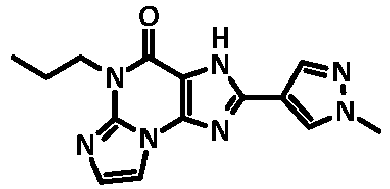
DMSO-d6: δ 0.92 (t, J = 8.0 Hz, 3H); 1.74-1.76 (m, 2H); 3.92 (s, 3H); 4.18 (t, J = 7.2 Hz, 2H); 7.17 (s, 1H); 7.68 (s, 1H); 8.09 (s, 1H); 8.37 (s, 1H); 13.85 (s, 1H). 298.2 2-(1-methylpyrazol-4- yl)-5-propyl-3H-imidazo [2, 1-b] purin-4-one A7 
DMSO-d6: δ 0.64 (t, J = 7.6 Hz, 3H); 0.92 (t, J = 7.6 Hz, 3H); 1.55 (s, 6H); 1.72-1.78 (m, 2H); 1.84-1.90 (m, 2H); 4.17 (t, J = 7.6 Hz, 2H); 7.16 (d, J = 1.6 Hz, 1H); 7.68 (d, J = 1.6 Hz, 1H); 8.13 (s, 1H); 8.46 (s, 1H); 12.83 (br s, 1H). 354.3 2-[1-(1,1-dimethylpropyl)pyrazo l-4-yl]-5-propyl-3H-imidazo[2,1-b]purin -4-one -

- To a solution of 1.5 (9.0 g, 20.64 mmol) in NMP (45 mL) was added DIPEA (3.4 mL, 20.64 mmol), and aminoacetaldehyde dimethyl acetal (8.9 mL, 82.56 mmol). The mixture was stirred at 130°C for 6 hours then reaction mixture was cooled to room temperature then added conc. HCl (27 mL) and stirred at 130 °C for 16 hours. Reaction completion was confirmed by TLC then cooled to room temperature and residue was dissolved in water (500 mL), and the mixture was extracted with ethyl acetate (3 x 200 mL). The combined organic layers were washed with brine (200 mL), dried over Na2SO4 and concentrated under vacuo to obtain a crude product. To the residue added cold methanol solid obtained was filtered and washed with n-hexane and dried to obtain A1 as a white solid (6.0 g, 66%).
- MS(ESI)m/z: 442.2 (M + 1); 1H NMR (400 MHz, DMSO-d6): δ 0.90 (t, J = 7.2 Hz, 3H); 1.71-1.74 (m, 2H); 4.13-4.16 (m, 2H); 5.52 (s, 2H); 7.15 (d, J = 1.2 Hz, 1H); 7.59-7.69 (m, 5H); 8.16 (s, 1H); 8.55 (s, 1H); 13.80 (br s, 1H).
- To a solution of A1 (5.0 g, 11.33 mmol) in DMF (50 mL) was added K2CO3 (7.8 g, 56.70 mmol), and 2-(chloromethoxy)ethyl-trimethyl-silane (20 mL, 113.37 mmol). The mixture was stirred at room temperature for 2 days. Reaction completion was confirmed by TLC then dissolved in water (500 mL), and the mixture was extracted with ethyl acetate (3 x 200 mL). The combined organic layers were washed with brine (200 mL), dried over Na2SO4 and concentrated under vacuo to obtain a crude product. The residue was purified by column chromatography using 30-35 % ethyl acetate in hexane as a mobile phase to obtain the title compound 2.1 as a white solid (6.0 g, 93%).
- MS(ESI)m/z: 572.0 (M + 1); 1H NMR (400 MHz, DMSO-d6): δ -0.13 (s, 9H), 0.83-0.92 (m, 5H); 1.71-1.77 (m, 2H); 3.67-3.71 (m, 2H); 4.18 (t, J = 6.8 Hz, 2H); 5.58 (s, 2H); 5.94 (s, 2H); 7.18 (d, J = 1.6 Hz, 1H); 7.33-7.37 (m, 1H); 7.61-7.63 (m, 1H); 7.68-7.71 (m, 3H); 8.11 (s, 1H); 8.60 (s, 1H).
- To a solution of 2.1 (1.6 g, 2.84 mmol) in THF (2 mL) was added potassium tert butoxide (2.55 g, 22.76 mmol), and DMSO (2.3 g, 22.76 mmol). The mixture was cooled to °C and Oxygen was bubbled for 30 minutes. Reaction completion was confirmed by TLC then quenched with aqueous saturated solution of ammonium chloride (4 mL) at 0°C extracted with ethyl acetate(150 mL), washed with water(30 mL), brine (30 mL), dried over Na2SO4 and concentrated under vacuo to obtain 2.2 as an Off white solid (1.1 g, 94%).
- MS(ESI)m/z: 414.3; 1H NMR (400 MHz, DMSO-d6): δ -0.087 (s, 9H), 0.86-0.93 (m, 5H); 1.72-1.78 (m, 2H); 3.70-3.74 (m, 2H); 4.19 (t, J = 7.2 Hz, 2H); 5.94 (s, 2H); 7.19 (d, J = 1.6 Hz, 1H); 7.74 (d, J = 1.6 Hz, 1H); 8.10 (s, 1H); 8.39 (s, 1H); 13.52 (br s, 1H).
- A mixture of 3-iodobenzoic acid (3.0 g, 12.09 mmol), isopropyl amine (1.2 mL, 14.51 mmol) in DMF (30 mL) were cooled to 0 °C and added EDCI.HCl (3.25 g, 16.93 mmol). The reaction mixture was stirred at 25 °C for 16 hours. Reaction completion was confirmed by TLC, residue was dissolved in water (150 mL), and the mixture was extracted with ethyl acetate (3 x 50 mL). The combined organic layers were washed with brine (50 mL), dried over Na2SO4 and concentrated under vacuo to obtain a crude product. The residue was purified by combiflash column chromatography using 10-15 % ethyl acetate in hexane as a mobile phase to obtain the title compound 3-iodo-N-isopropyl-benzamide as white solid(1.0 g, 28 %). MS(ESI)m/z: 289.9 (M + 1); 1H NMR (400 MHz, DMSO-d6): δ 1.15 (d, J = 6.4 Hz, 6H); 4.05-4.10 (m, 1H); 7.26 (d, J = 8.0 Hz, 1H); 7.83-7.88 (m, 2H); 8.18 (d, J = 2.0 Hz, 1H); 8.29-8.32 (m, 1H).
- A mixture of propargyl alcohol (0.26 mL, 4.15 mmol), 3-iodo-N-isopropyl-benzamide (1.0 g, 3.46 mmol), copper iodide (0.02 g, 0.1 mmol), dichlorobis (triphenylphosphine) palladium (II) (0.12 g, 0.17 mmol), 1,4-dioxane:triethylamine (1:1)(20ml) was degassed for 10min. and stirred for 2 hours at 60 °C. Reaction completion was confirmed by TLC, residue was concentrated under vacuo to obtain a crude product. The residue was purified by combiflash column chromatography using 15-20 % ethyl acetate in hexane as a mobile phase to obtain the title compound 3-(3-hydroxyprop-1-ynyl)-N-isopropyl-benzamide as white solid (0.5 g, 67 %). MS(ESI)m/z: 218.0 (M + 1); 1H NMR (400 MHz, DMSO-d6): δ 1.00 (d, J = 6.4 Hz, 6H); 4.02-4.04 (m, 1H); 4.33 (d, J = 5.6 Hz, 2H); 5.36 (t, J = 5.6 Hz, 1H); 7.46 (t, J = 7.6 Hz, 1H); 5.54-7.55 (m, 1H); 7.83 (d, J = 7.6 Hz, 1H); 7.92 (s, 1H); 8.30-8.40 (m, 1H).
- A mixture of 3-(3-hydroxyprop-1-ynyl)-N-isopropyl-benzamide (0.5 g, 2.30 mmol), and DCM (10 mL) was cooled to 0 0C added tribromo phosphine (0.11 mL, 1.15 mmol) slowly and stirred at room temperature for 1 hour. Reaction completion was confirmed by TLC, reaction mixture was quenched with saturated NaHCO3 solution and extracted with DCM (3 x 15 mL), washed with saturated brine solution, dried over Na2SO4, and evaporated under vacuuo to obtain 3-(3-bromoprop-1-ynyl)-N-isopropyl-benzamide as a white solid (2.3) (0.55 g, 86%).
- MS(ESI)m/z: 279.9 & 282.9 (M + 1); 1H NMR (400 MHz, DMSO-d6): δ 1.27 (d, J = 6.4 Hz, 6H); 4.16 (s, 2H); 4.25-4.29 (m, 1H); 5.88 (br s, 1H); 7.39 (t, J = 8.0 Hz, 1H); 7.53-7.55 (m, 1H); 7.74-7.78 (m, 2H).
- To a solution 2.2 (0.1 g, 0.24 mmol) in acetone (10 mL) was added potassium carbonate (0.05 g, 0.36 mmol), and 2.3 (0.081 g, 0.29 mmol). The mixture was stirred at 60 °C for 2 days. Reaction completion was confirmed by TLC then cooled to room temperature and filtered through celite pad, washed with acetone (15 mL) and concentrated under vacuo to obtain a crude product. The residue was purified by combiflash column chromatography using 2-5 % methanol in DCM as a mobile phase to give the title compound 2.4 as a white solid(0.14 g, 95%).
- MS(ESI)m/z: 613.0 (M + 1); 1H NMR (400 MHz, DMSO-d6): δ -0.099 (s, 9H), 0.83-0.95 (m, 5H); 1.12-1.16 (m, 6H); 1.72-1.78 (m, 2H); 3.72 (t, J = 8.4 Hz, 2H); 4.05-4.10 (m, 1H); 4.20 (t, J = 6.8 Hz, 2H); 5.49 (s, 2H); 5.95 (s, 2H); 7.20 (d, J = 1.6 Hz, 1H); 7.46-7.50 (m, 1H); 7.60-7.62 (m, 1H); 7.75 (d, J = 1.6 Hz, 1H); 7.76-7.89 (m, 1H); 7.96 (d, J = 1.6 Hz, 1H); 8.15 (s, 1H); 8.33 (d, J = 7.2 Hz, 1H); 8.58 (s, 1H).
- A solution of 2.4 (0.14 g, 0.23 mmol) in ethanol, 2N HCl (10 mL) was heated at 80°C for 8 hours. Reaction completion was confirmed by TLC then cooled to room temperature and concentrated under vacuo to obtain a crude product. The residue was basified by aqueous NaHCO3 solution up to PH (7-8) then solid obtained was filtered, washed with n-hexane , dried and purified by combiflash column chromatography using 2-5 % methanol in DCM as a mobile phase to give the title compound B1 as a white solid (0.060 g, 54%).
- MS(ESI)m/z: 483.3 (M + 1); 1H NMR (400 MHz, DMSO-d6): δ 0.92 (t, J = 7.2 Hz, 3H); (1.15 (d, J = 6.4 Hz, 6H), 1.72-1.78 (m, 2H); 4.05-4.11 (m, 1H); 4.18 (t, J = 7.6 Hz, 2H); 5.45 (s, 2H); 7.17 (d, J = 1.6 Hz, 1H); 7.47-7.52 (m, 1H); 7.64 (d, J = 7.6 Hz, 1H); 7.71 (d, J = 1.6 Hz, 1H); 7.88 (d, J = 8.0 Hz, 1H); 7.97 (br s, 1H); 8.19 (s, 1H); 8.34 (d, J = 7.6 Hz, 1H); 8.60 (s, 1H); 13.95 (br s, 1H).
- Following examples as shown in Table were prepared according to similar sequence of procedures as used for the synthesis of Example B1
Ex. No. Structure IUPAC Name 1H NMR(400 MHz) data MS(ESI)m /z: (M+1) B2 
DMSO-d6: δ 0.92 (t, J = 7.6 Hz, 3H); 1.32(t, J = 7.2 Hz, 3H); 1.72-1.78 (m, 2H); 4.18 (t, J = 7.6 Hz, 2H); 4.33 (t, J = 6.8 Hz, 2H); 5.45 (s, 2H); 7.17 (d, J = 1.6 Hz, 1H); 7.58 (dd, J = 7.6, 8.0 Hz, 1H); 7.71 (d, J = 1.2 Hz, 1H); 7.78 (d, J = 7.6 Hz, 1H); 7.98-8.01 (m, 2H); 8.19 (s, 1H); 8.61 (s, 1H); 13.98 (br s, 1H) 470.2 Ethyl 3-[3-[4-(4-oxo-5-propyl-3H-imidazo[2,1-b]purin-2-yl)pyrazol-1-yl]prop-1-ynyl]benzoate B3 
DMSO-d6: δ 0.92 (t, J = 7.6 Hz, 3H); 1.72-1.78 (m,. 2H); 4.18 (t, J = 7.2 Hz, 2H); 5.45 (s, 2H); 7.17 (d, J = 1.6 Hz, 1H); 7.46 (br s, 1H); 7.51 (br s, 1H); 7.55-7.56 (m, 2H); 7.70 (d, J = 1.6 Hz, 1H); 8.19 (s, 1H); 8.59 (s, 1H); 13.95 (br s, 1H) 482.2 5-propyl-2-[1-[3-[3-(trifluoromethoxy)phenyl] prop- 2-ynyl]pyrazol-4-yl]-3H-imidazo[2,1-b]purin-4-one B6 
DMSO-d6: δ□.92 (t, J = 7.2 Hz, 3H); 1.31 (t, J = 7.2 Hz, 3H); 1.72-1.78 (m, 2H); 2.32 (s, 3H); 4.18 (t, J = 7.6 Hz, 2H); 4.30 (t, J = 6.8 Hz, 2H); 5.48 (s, 2H); 7.17 (d, J = 1.6 Hz, 1H); 7.48 (d, J = 7.6 Hz, 1H); 7.70 (d, J = 1.6 Hz, 1H); 7.88 (dd, J = 2.0, 8.0 Hz, 1H); 7.96 (d, J = 1.6 Hz, 1H); 8.19 (s, 1H), 8.61 (s, 1H); 13.95 (br s, 1H) 484.2 Ethyl 4-methyl-3-[3-[4-(4-oxo-5-propyl-3H-imidazo[2,1-b]purin-2-yl)pyrazol-1-yl]prop-1-ynyl]benzoate B7 
DMSO-d6: δ 0.92 (t, J = 7.2 Hz, 3H); 1.70-1.76 (m, 2H); 4.17 (t, J = 6.8 Hz, 2H); 5.50 (s, 2H); 7.22 (s, 1H); 7.60-7.63 (m, 2H); 7.72 (s, 1H); 7.81 (s, 2H); 8.18 (s, 1H); 8.56 (s, 1H); 13.91 (br s, 1H). 399.2 3-[[4-(4-oxo-5-propyl-3H-imidazo[2,1-b]purin-2-yl)pyrazol-1-yl]methyl]benzonitrile B8 
DMSO-d6: δ 0.92 (t, J = 7.6 Hz, 3H); 1.46 (d, J = 6.8 Hz, 6H); 1.72-1.78 (m, 2H); 4.17 (t, J = 7.6 Hz, 2H); 4.58 (m,1H); 7.17 (d, J = 1.6 Hz, 1H); 7.67 (d, J = 1.6 Hz, 1H); 8.12 (s, 1H); 8.45 (s, 1H); 13.92 (br s, 1H) 326.2 2-(1-isopropylpyrazol-4-yl)-5-propyl-3H-imidazo[2,1-b]purin-4-one B9 
DMSO-d6: δ 0.88-0.94 (m, 5H); 1.23-1.29 (m, 3H); 1.74-1.80 (m, 4H); 4.15-4.20 (m, 4H); 7.16 (d, J = 1.6 Hz, 1H); 7.67 (s, 1H); 8.10 (s, 1H); 8.40 (s, 1H); 13.86 (br s, 1H) 340.2 2-(1-butylpyrazol-4-yl)-5-propyl-3H-imidazo[2,1-b]purin-4-one B10 
DMSO-d6: δ 0.94 (t, J = 7.2 Hz, 3H); 1.42 (t, J = 7.2 Hz, 3H); 1.71-1.77 (m, 2H); 4.15-4.25 (m, 4H); 7.34 (br s, 1H); 7.79 (br s, 1H); 8.12 (d, J = 0.8 Hz, 1H); 8.43 (s, 1H); 13.95 (br s, 1H). 312.2 2-(1-ethylpyrazol-4-yl)-5-propyl-3H-imidazo[2,1-b]purin-4-one B11 
DMSO-d6: δ 0.94 (t, J = 7.6 Hz, 3H); 1.72-1.77 (m, 2H); 3.26 (s, 3H); 3.72 (t, J = 4.8 Hz, 2H); 4.18 (t, J = 7.2 Hz, 2H); 4.36 (t, J = 4.8 Hz, 2H); 7.33 (br s, 1H); 7.81 (s, 1H); 8.13 (s, 1H); 8.41 (s, 1H); 13.99 (s, 1H) 342.2 2-[1-(2-methoxyethyl)pyrazol-4-yl]-5-propyl-3H-imidazo[2,1-b]purin-4-one B12 
DMSO-d6: δ 0.96 (t, J = 7.2 Hz, 3H); 1.71-1.77 (m, 2H); 2.76 (s, 3H); 2.78 (s, 3H); 3.59-3.63 (m, 2H); 4.21 (t, J = 8.0 Hz, 2H); 4.72 (t, J = 6.4 Hz, 2H); 7.56 (s, 1H); 7.94 (d, J = 1.6 Hz, 1H); 8.26 (s, 1H); 8.58 (s, 1H); 14.32 (br s, 1H) 355.3 2-[1-(2-dimethylaminoethyl)pyraz ol-4-yl] -5-propyl-3H-imidazo[2,1-b]purin-4-one B13 
DMSO-d6: δ 0.85 (t, J = 7.6 Hz, 3H); 0.92(t, J = 7.2 Hz, 3H); 1.74-1.78 (m, 2H); 1.80-1.84 (m, 2H); 4.13-4.20 (m, 4H); 7.17 (d, J = 1.6 Hz, 1H); 7.68 (d, J = 0.8 Hz, 1H);8.13 (s, 1H); 8.41 (s, 1H); 13.84 (br s, 1H). 326.2 5-propyl-2-(1-propylpyrazol-4-yl)-3H-imidazo[2,1-b]purin-4-one B14 
DMSO-d6: δ 0.93 (t, J = 7.6 Hz, 3H); 1.75 (q, J = 7.2 Hz, 2H); 2.87 (s, 3H); 3.05 (s, 3H); 4.18 (t, J = 7.2 Hz, 2H); 5.22 (s, 2H); 7.17 (d, J = 1.6 Hz, 1H); 7.06 (d, J = 1.6 Hz, 1H); 8.10 (s, 1H); 8.33 (s, 1H); 13.90 (br s, 1H). 369.0 N,N-dimethyl-2-[4-(4-oxo-5-propyl-3H-imidazo[2,1-b]purin-2-yl)pyrazol-1-yl]acetamide B15 
DMSO-d6: δ 0.97 (t, J = 7.2 Hz, 3H); 1.71-1.76 (m, 2H); 3.13-3.16 (m, 2H); 3.36-3.39 (m, 2H); 3.64-3.67 (m, 2H); 3.80-3.86 (m, 2H); 3.94-3.96 (m, 2H); 4.23 (t, J = 7.6 Hz, 2H); 4.80 (t, J = 6.8 Hz, 2H); 7.68 (s, 1H); 8.09 (s, 1H); 8.26 (s, 1H); 8.59 (s, 1H); 14.2 (br s, 1H) 397.2 2-[1-(2-morpholinoethyl)pyrazol-4-yl]-5-propyl-3H-imidazo[2,1-b]purin-4-one B16 
DMSO-d6: δ 0.93 (t, J = 7.2 Hz, 3H); 1.71-1.90 (m, 6H); 1.97-2.01 (m, 2H); 2.76-2.82 (m, 1H); 4.15-4.22 (m, 4H); 7.31 (br s, 1H); 7.78 (br s, 1H); 8.11 (s, 1H); 8.40 (s, 1H); 13.95 (br s, 1H). 352.2 2-[1-(cyclobutylmethyl)pyrazol -4-yl]-5-propyl-3H-imidazo[2,1-b]purin-4-one B17 
DMSO-d6: δ 0.87 (d, J = 6.4 Hz, 6H); 0.91 (t, J = 7.6 Hz, 3H); 1.69-1.75 (m, 2H); 2.10-2.17 (m, 1H); 3.97 (d, J = 6.8 Hz, 2H); 4.14 (t, J = 8.0 Hz, 2H); 7.08 (br s, 1H); 7.57 (br s, 1H); 7.96 (br s, 1H); 8.19 (br s, 1H). 340.2 2-(1-isobutylpyrazol-4-yl)-5-propyl-3H-imidazo[2,1-b]purin-4-one B18 
DMSO-d6: δ 0.39-0.43 (m, 2H); 0.55-0.60 (m, 2H); 0.92 (t, J = 7.6 Hz, 3H); 1.26-1.30 (m, 1H); 1.72-1.78 (m, 2H); 4.05 (d, J = 7.6 Hz, 2H); 4.18 (t, J = 7.2 Hz, 2H); 7.17 (d, J = 1.6 Hz, 1H); 7.69 (d, J = 1.6 Hz, 1H); 8.12 (s, 1H); 8.48 (s, 1H); 13.80 (br s, 1H). 338.2 2-[1-(cyclopropylmethyl)pyraz ol-4-yl] -5-propyl-3H-imidazo[2,1-b]purin-4-one B19 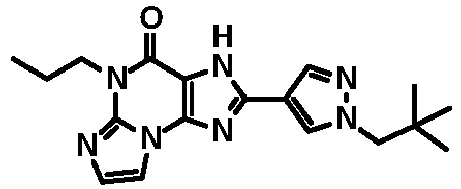
DMSO-d6: δ 0.91-0.94 (m, 12H); 1.72-1.78 (m, 2H); 4.00 (s, 2H); 4.17 (t, J = 7.2 Hz, 2H); 7.25 (br s, 1H); 7.74 (br s, 1H); 8.12 (s, 1H); 8.37 (s, 1H); 13.95 (br s, 1H). 354.3 2-[1-(2,2-dimethylpropyl)pyrazol-4-yl]-5-propyl-3H-imidazo[2,1-b]purin-4-one B20 
DMSO-d6: δ 0.74 (t, J = 7.2 Hz, 3H); 0.92 (t, J = 7.2 Hz, 3H); 1.45 (d, J = 6.4 Hz, 3H); 1.72-1.86 (m, 4H); 4.18 (d, J = 7.6 Hz, 2H); 4.33-4.38 (m, 1H); 7.17 (d, J = 1.6 Hz, 1H); 7.67 (d, J = 1.2 Hz, 1H); 8.14 (s, 1H); 8.44 (s, 1H); 13.90 (br s, 1H). 340.2 5-propyl-2-(1-sec-butylpyrazol-4-yl)-3H-imidazo[2,1-b]purin-4-one B21 
DMSO-d6: δ 0.92 (t, J = 7.2 Hz, 3H); 1.60-1.63 (m, 1H); 1.72-1.81 (m, 4H); 1.93-1.96 (m, 1H); 3.63-3.68 (m, 1H); 3.74-3.79 (m, 1H); 4.16-4.28 (m, 5H); 7.17 (d, J = 2.0 Hz, 1H); 7.69 (d, J = 1.6 Hz, 1H); 8.11 (s, 1H); 8.39 (s, 1H); 13.15 (br s, 1H). 368.2 5-propyl-2-[1-(tetrahydrofuran-2-ylmethyl)pyrazol-4-yl]-3H-imidazo[2,1-b]purin-4-one -

- A mixture of 2-(trifluoromethyl)pyridin-5-amine (1.12 g, 6.92 mmol) and itaconic acid (1.0g, 7.69 mmol) was heated at 130-135 °C for 10 hours. Reaction completion was confirmed by TLC then cooled to room temperature, diluted with diethyl ether, solid was filtered off, dried to obtain 5-oxo-1-[6-(trifluoromethyl)-3-pyridyl]pyrrolidine-3-carboxylic acid as a off white solid (0.49 g, 23%).
- MS(ESI)m/z: 275.1 (M + 1); 1H NMR : Not recorded
- A mixture of 5-oxo-1-[6-(trifluoromethyl)-3-pyridyl]pyrrolidine-3-carboxylic acid (0.4 g, 2.42 mmol), sulfuric acid (0.5 mL), and ethanol (20 mL) was heated at 80-85 °C for 10 hours. Reaction completion was confirmed by TLC and cooled to room temperature. The organic volatiles were evaporated under vacuo to obtain a crude product. The residue dissolved in ethyl acetate (20 mL) and washed with NaHCO3 solution (2 x 20 mL). Organic layer was washed with brine, dried over Na2SO4 and evaporated under vaccuo to obtain ethyl 5-oxo-1-[6-(trifluoromethyl)-3-pyridyl]pyrrolidine-3-carboxylate as yellow oil (0.43 g, 98 %).
- MS(ESI)m/z: 303.1 (M + 1); 1H NMR : Not recorded
- A mixture of ethyl 5-oxo-1-[6-(trifluoromethyl)-3-pyridyl]pyrrolidine-3-carboxylate (0.41 g, 1.37 mmol) and methanol (20 mL) were cooled to 10-15 °C and sodium borohydride (0.10 g, 2.74 mmol) was added portion wise over a period of 5 min and the reaction mixture was stirred for 9 hours at room temperature. Reaction completion was confirmed by TLC and concentrated under vacuo to obtain a crude product. To the residue water (20 mL), was added and aqueous solution was extracted with ethyl acetate (3x20 ml). Combined organic layer was washed with brine, dried over Na2SO4 and evaporated to afford crude which was purified by combiflash column chromatography using 40-50 % ethyl acetate in hexane as a mobile phase to obtain 4-(hydroxymethyl)-1-[6-(trifluoromethyl)-3-pyridyl]pyrrolidin-2-one as colorless oil (0.31 g, 88 %).
- MS(ESI)m/z: 261.0 (M + 1); 1HNMR (400 MHz, DMSO-d6): δ 2.31-2.37 (m, 1H); 2.47-2.68 (m, 1H); 3.14-3.17 (m, 1H); 3.41-3.45 (m, 2H); 3.69-3.73 (m, 1H); 3.98-4.01 (m, 1H); 4.85-4.87 (m, 1H); 8.55 (br s, 1H); 8.70 (s, 1H); 9.06 (d, J = 2.0 Hz, 1H)
- A mixture of 4-(hydroxymethyl)-1-[6-(trifluoromethyl)-3-pyridyl]pyrrolidin-2-one (0.25 g, 0.96 mmol), dichloromethane (7 mL) and triethyl amine (0.27 mL, 1.92 mmol) was cooled to 0 °C.To this solution methane sulfonyl chloride (0.089 mL, 1.15 mmol) was added over a period of 5 min and the reaction mixture was stirred for 2 hours at room temperature. Reaction completion was confirmed by TLC, added aqueous NaHCO3 solution, and extracted by DCM (2x20 ml)., Organic layer was washed with brine, dried over Na2SO4 and evaporated to obtain [5-oxo-1-[6-(trifluoromethyl)-3-pyridyl]pyrrolidin-3-yl]methyl methanesulfonate as yellow oil (0.30 g, 92 %).
- MS(ESI)m/z:(M+1)339.1; 1HNMR (400 MHz, DMSO-d6): δ 2.43-2.47 (m, 1H); 2.74-2.82 (m, 1H); 2.93-2.96 (m, 1H); 3.32 (s, 3H); 3.74-3.78 (m, 1H); 4.07-4.12 (m, 1H);4.28-4.34 (m, 2H); 7.93 (d, J = 8.8 Hz, 1H); 8.6-8.39 (m, 1H); 9.04 (d, J = 2.4 Hz, 1H)
- To a solution 2.2 (0.25 g, 0.605 mmol) in DMF (7 mL) was added cesium carbonate (0.394 g, 1.21 mmol), 3.1 (0.244 g, 0.726 mmol). The mixture was stirred at 80 °C for 16 hours. Reaction completion was confirmed by TLC then cooled to room temperature and added water, solid obtained was filtered, washed with cold water then washed with n-hexane, dried to afford the title compound 3.2 as off white solid (0.1 g, 25%).
- MS(ESI)m/z: 656.0 (M + 1); 1H NMR : Not recorded
- A solution of 3.2 (0.1 g, 0.15 mmol) in DCM (9 mL) was added TFA (1 mL) and stirred at room temperature for 4 hours. Reaction completion was confirmed by TLC then concentrated under vacuo to obtain a crude product. The residue was basified by aqueous NaHCO3 solution up to PH (7-8) then solid obtained was filtered, washed with n-hexane, dried and purified by LCMS purification method to obtain the title compound C1 as a white solid (0.070 g, 87 %).
- MS(ESI)m/z: 526.2 (M + 1); 1H NMR (400 MHz, DMSO-d6): δ 0.92 (t, J = 7.2 Hz, 3H); 1.71-1.78 (m, 2H); 2.51-2.53 (m, 1H); 2.72-2.79 (m, 1H); 3.08-3.09 (m, 1H); 3.77-3.82 (m, 1H); 4.04-4.08 (m, 1H); 4.19 (t, J = 7.2 Hz, 2H); 4.38 (d, J = 7.2 Hz, 2H); 7.16 (d, J = 1.6 Hz, 1H); 7.65 (d, J = 1.6 Hz, 1H); 7.89 (d, J = 8.4 Hz, 1H); 8.14 (s, 1H); 8.27-8.30 (m, 1H); 8.48 (s, 1H); 9.01 (d, J = 2.4 Hz, 1H); 13.9 (br s, 1H)
- Following examples as shown in Table were prepared according to similar sequence of procedures as used for the synthesis of Example C1
Ex. No. Structure IUPAC Name 1H NMR (400 MHz) data MS(ESI)m/z: (M+1) C2 
DMSO-d6: δ 0.92 (t, J = 7.6 Hz, 3H); 1.72-1.78 (m, 2H); 2.51-2.53 (m, 1H); 2.75-2.79 (m, 1H); 3.07-3.09 (m, 1H); 3.79-3.82 (m, 1H); 4.07-4.09 (m, 1H); 4.19 (t, J = 7.2 Hz, 2H); 4.38 (d, J = 8.8 Hz, 2H); 7.16 (s, 1H); 7.65 (s, 1H); 8.15 (s, 1H); 8.49 (br s, 2H); 8.71 (s, 1H); 9.03 (s, 1H); 13.9 (br s, 1H). 526.2 2-[1-[[5-oxo-1-[5-(trifluoromethyl)-3-pyridyl]pyrrolidin-3-yl]methyl]pyrazol-4-yl]-5-propyl-3H-imidazo[2,1-b]purin-4-one C3 
DMSO-d6: δ 0.90 (t, J = 7.2 Hz, 3H); 1.70-1.76 (m, 2H); 2.63-2.74 (m, 2H); 3.00-3.15 (m, 1H); 3.71-3.75 (m, 1H); 4.00 (t, J = 8.0 Hz, 1H); 4.16 (t, J = 6.8 Hz, 2H); 4.36 (d, J = 6.8 Hz, 2H); 7.15 (dd, J = 1.6 Hz, 1H); 7.45 (d, J = 8.0 Hz, 1H); 7.59 (dd, J = 8.0 Hz, 1H); 7.65 (dd, J = 1.6 Hz, 1H); 7.74 (d, J = 8.4Hz, 1H); 8.11-8.15 (m, 2H); 8.49 (s, 1H); 13.88 (br s, 1H). 525.2 2-[1-[[5-oxo-1-[3-(trifluoromethyl)phe nyl]pyrrolidin-3-yl]methyl]pyrazol-4-yl]-5-propyl-3H-imidazo[2,1-b]purin-4-one -

- The title compound 4.1 was obtained as an off-white solid (0.35 g, 69 %) in a similar manner to that of example B1 step 4 using the compound 2.2 (0.4 g, 0.97 mmol), potassium carbonate (0.4 g, 2.90 mmol) and 1,2-dibromoethane (0.33 mL, 3.87 mmol).
- MS(ESI)m/z: 519.9, 522.9 (M + 1); 1H NMR (400 MHz, DMSO-d6): δ -0.086 (s, 9H); 0.86-0.92 (m, 5H); 1.72-1.76 (m, 2H); 3.70 (t, J = 8.0 Hz, 2H); 3.92 (t, J = 5.6 Hz, 2H); 4.18 (t, J = 7.2 Hz, 2H); 4.64 (t, J = 5.6 Hz, 2H); 5.92 (s, 2H); 7.19 (d, J = 1.6 Hz, 1H); 7.72 (d, J = 1.2 Hz, 1H); 8.10 (s, 1H); 8.48 (s, 1H)
- To a solution 4.1 (0.15 g, 0.29 mmol) in DMF (5 mL) was added DIPEA (0.14 mL, 0.86 mmol), and piperidine (0.085 mL, 0.86 mmol). The mixture was stirred at 60 °C for 16 hours. Reaction completion was confirmed by TLC then cooled to room temperature and added water (50 mL).Aqueous layer was extracted with ethyl acetate (3x20 mL), washed with brine (20 mL), dried over Na2SO4 and concentrated under vacuo to obtain a crude product. The residue was purified by LCMS purification method to obtain the title compound 4.2 as white solid. (0.05 g, 33%).
- MS(ESI)m/z: 525.4 (M + 1); 1H NMR (400 MHz, DMSO-d6): δ -0.088 (s, 9H); 0.86-0.93 (m, 9H); 1.23-1.28 (m, 4H); 1.74-1.82 (m, 4H); 2.49-2.50 (m, 2H); 3.71 (t, J = 7.2 Hz, 2H); 4.17-4.24 (m, 4H); 5.94 (s, 2H); 7.19 (d, J = 1.6 Hz, 1H); 7.72 (d, J = 1.6 Hz, 1H); 8.05 (s, 1H); 8.41 (s, 1H)
- The title compound D1 was obtained as an off-white solid (0.02 g., 54 %) in a similar manner to that of Example B1 step 5 using the compound 4.2 (0.05 g, 0.095 mmol) and ethanol:2N HCl (10 mL)
- MS(ESI)m/z: 395.3 (M + 1); 1H NMR (400 MHz, DMSO-d6): δ 0.93 (t, J = 7.6 Hz, 3H); 1.63-1.72 (m, 3H); 1.74-1.1.84 (m, 4H); 2.93-2.96 (m, 3H); 3.45-3.48 (m, 2H); 3.60 (q, J = 6.0 Hz, 2H); 4.18 (t, J = 7.2 Hz, 2H); 4.65 (t, J = 5.6 Hz, 2H); 7.18 (d, J = 1.2 Hz, 1H); 7.66 (d, J = 1.2 Hz, 1H); 8.24 (s, 1H); 8.54 (s, 1H); 13.95 (br s, 1H)
-

- The title compound 5.1 was obtained as an off-white solid (0.4 g, 98 %) in a similar manner to that of example B1 step 4 using the compound 2.2 (0.3 g, 0.72 mmol), potassium carbonate (0.15 g, 1.09 mmol) and methyl 3-(bromomethyl)benzoate (0.18 g, 0.799 mmol).
- MS(ESI)m/z: 562.0 (M + 1); 1H NMR (400 MHz, DMSO-d6): δ -0.117 (s, 9H); 0.84-0.93 (m, 5H); 1.72-1.78 (m, 2H); 3.69 (t, J = 8.0 Hz, 2H); 3.85 (s, 3H); 4.19 (t, J = 6.8 Hz, 2H); 5.56 (s, 2H); 5.93 (s, 2H); 7.20 (d, J = 1.6 Hz, 1H); 7.54 (t, J = 7.6 Hz, 1H); 7.63 (d, J = 8.0 Hz, 1H); 7.73 (d, J = 1.6 Hz, 1H); 7.92 (dd, J = 1.6, 9.2 Hz, 1H); 7.96 (d, J = 16 Hz, 1H); 8.10 (s, 1H); 8.59 (s, 1H).
- The title compound 5.2 was obtained as an off-white solid (0.3 g, 98 %) in a similar manner to that of Example B1 step 5 using the compound 5.1 (0.4 g, 0.71 mmol) and ethanol:2N HCl (24 mL)
- MS(ESI)m/z: 432.2 (M + 1); 1H NMR (400 MHz, DMSO-d6): δ 0.92 (t, J = 7.6 Hz, 3H); 1.72-1.77 (m, 2H); 3.31 (s, 3H); 4.15-4.19 (m, 2H); 5.52 (s, 2H); 7.17 (d, J = 1.6 Hz, 1H); 7.53-7.56 (m, 1H); 7.59-7.61 (m, 1H); 7.68 (d, J = 1.6 Hz, 1H); 7.90-7.93 (m, 2H); 8.17 (s, 1H); 8.55 (s, 1H); 13.86 (s, 1H).
- To a solution of 5.2 (0.05 g, 0.116 mmol) in DCM (10 mL) was added DIBAL (0.32 mL, 0.58 mmol, 25 % solution in Toluene) at -50 °C and the reaction mixture was warm up to 0 °C. Reaction completion was confirmed by TLC then reaction mixture was quenched with ammonium chloride solution and extracted with 5% MeOH in DCM (3 x 20 mL). The combined organic layer was washed with brine and dried over Na2SO4 and concentrated under vaccuo to obtain a crude product. The residue was purified by preparative TLC to obtain the title compound E1 as off white solid (0.010 g, 21 %).
- MS(ESI)m/z: 404.2 (M + 1); 1H NMR (400 MHz, DMSO-d6): δ 0.92 (t, J = 7.6 Hz, 3H); 1.72-1.78 (m, 2H); 4.17 (t, J = 7.6 Hz, 2H); 4.48 (d, J = 6.0 Hz, 2H); 5.21 (d, J = 6.0 Hz, 1H); 5.40 (s, 2H); 7.16-7.20 (m, 2H); 7.24-7.34 (m, 3H); 7.68 (d, J = 1.2 Hz, 1H); 8.14 (s, 1H); 8.49 (s, 1H); 13.93 (br s, 1H).
-

- To a solution of 5.2 (0.05 g, 0.115 mmol) in THF (10 mL) was added methylmagnesium bromide (0.57 mL, 0.57 mmol, 1M solution in THF) at -50 °C and the reaction mixture was warm to 0 °C. Reaction completion was confirmed by TLC then reaction mixture was quenched with ammonium chloride solution and extracted with 5% MeOH in DCM (3 x 20 mL). The combined organic layer was washed with brine and dried over Na2SO4 and concentrated under vaccuo to obtain a crude product. The residue was purified by preparative TLC to obtain the title compound F1 as an off white solid (0.01 g, 20 %).
- MS(ESI)m/z: 432.2 (M + 1); 1H NMR (400 MHz, DMSO-d6): δ 0.92 (t, J = 7.6 Hz, 3H); 1.40 (s, 6H); 1.71-1.77 (m, 2H); 4.17 (t, J = 8.0 Hz, 2H); 5.02 (s, 1H); 5.40(s, 2H); 7.11 (d, J = 8.0 Hz, 1H); 7.16 (d, J = 1.6 Hz, 1H); 7.29 (t, J = 8.0 Hz, 1H); 7.39 (d, J = 8.0 Hz, 1H); 7.49 (s, 1H); 7.68 (d, J = 1.6 Hz, 1H); 8.15 (s, 1H); 8.49 (s, 1H); 13.86 (br s, 1H).
-

- To a solution of B7 (0.07 g, 0.175 mmol) in methanol:water (3:1,10 mL) was added NaOH (0.021 g, 0.527 mmol) and the reaction mixture was stirred at 80 °C for 16 hours. Reaction completion was confirmed by TLC then reaction mixture was cooled to room temperature and evaporated to dryness. Acidified with 2N HCl to pH (3-4) and solid obtained was filtered, washed with n-hexane and dried to obtain the title compound G1 as off white solid (0.02 g, 27 %).
- MS(ESI)m/z: 418.0 (M + 1); 1H NMR (400 MHz, DMSO-d6): δ 0.92 (t, J = 7.2 Hz, 3H); 1.72-1.77 (m, 2H); 4.17 (t, J = 7.6 Hz, 2H); 5.47 (s, 2H); 7.16 (d, J = 1.6 Hz 1H); 7.39 (br s, 1H); 7.45-7.47 (m, 2H); 7.68 (d, J = 1.6 Hz, 1H); 7.81-7.84 (m, 1H); 7.99 (br s, 1H); 8.16 (s, 1H); 8.53 (s, 1H); 13.92 (br s, 1H)
-

- The title compound 6.1 was obtained as an off-white solid (0.2 g, 83 %) in a similar manner to that of example B1 step 4 using the compound 2.2 (0.2 g, 0.484 mmol), potassium carbonate (0.14 g, 1.06 mmol) and methyl bromoacetate (0.06 g, 0.58 mmol).
- MS(ESI)m/z: 486.0 (M + 1); 1H NMR (400 MHz, DMSO-d6): δ -0.11 (s, 9H); 0.96-1.01 (m, 5H); 1.81-1.86 (m, 2H); 3.78-3.82 (m, 5H); 4.28 (t, J = 6.8 Hz, 2H); 5.33 (s, 2H); 6.01 (s, 2H); 7.28 (d, J = 1.6 Hz, 1H); 7.82 (d, J = 1.6 Hz, 1H); 8.17 (s, 1H); 8.54 (s, 1H)
- The title compound 6.2 was obtained as an off-white solid (0.13 g, 88 %) in a similar manner to that of Example B1 step 5 using the compound 6.1 (0.2 g, 0.4 mmol) and ethanol:2N HCl (12 mL)
- MS(ESI)m/z: 356.0 (M + 1); 1H NMR (400 MHz, DMSO-d6): Not recorded
- To a solution of 6.2 (0.2 g, 0.54 mmol) in ethanol:water (2:1) (10 mL) was added NaOH (0.065 g, 1.62 mmol) and the reaction mixture was stirred at 80 °C for 3 hours. Reaction completion was confirmed by TLC then reaction mixture was cooled to room temperature and evaporated to dryness. The residue was acidified with 2N HCl to pH 3 and solid obtained was filtered, washed n-hexane dried to obtain the title compound H1 as an off white solid (0.17 g, 92 %).
- MS(ESI)m/z: 342.2 (M + 1); 1H NMR (400 MHz, DMSO-d6): δ 0.93 (t, J = 7.6 Hz, 3H); 1.75 (q, J = 7.2 Hz, 2H); 4.18 (t, J = 7.6 Hz, 2H); 5.08 (s, 2H); 7.18 (br s, 1H); 7.77 (br s, 1H); 8.14 (s, 1H); 8.43 (s, 1H); 13.22 (br s, 1H); 13.93 (br s, 1H)
-

- The title compound I1 was obtained as an off-white solid (0.01 g, 21 %) in a similar manner to that of example F1 using the compound 6.2 (0.05 g, 0.14 mmol), THF (10 mL) and methylmagnesium bromide (0.57 mL, 0.57 mmol, 1M solution in THF) MS(ESI)m/z: 356.2 (M + 1); 1H NMR (400 MHz, DMSO-d6): δ 0.92 (t, J = 7.6 Hz, 3H); 1.09 (s, 6H); 1.72-1.78 (m, 2H); 4.09 (s, 2H); 4.19 (t, J = 7.6 Hz, 2H); 4.78 (s, 1H); 7.16 (s,1H); 7.71(s, 1H); 8.10(s, 1H); 8.37 (s, 1H); 13.86 (br s, 1H).
-
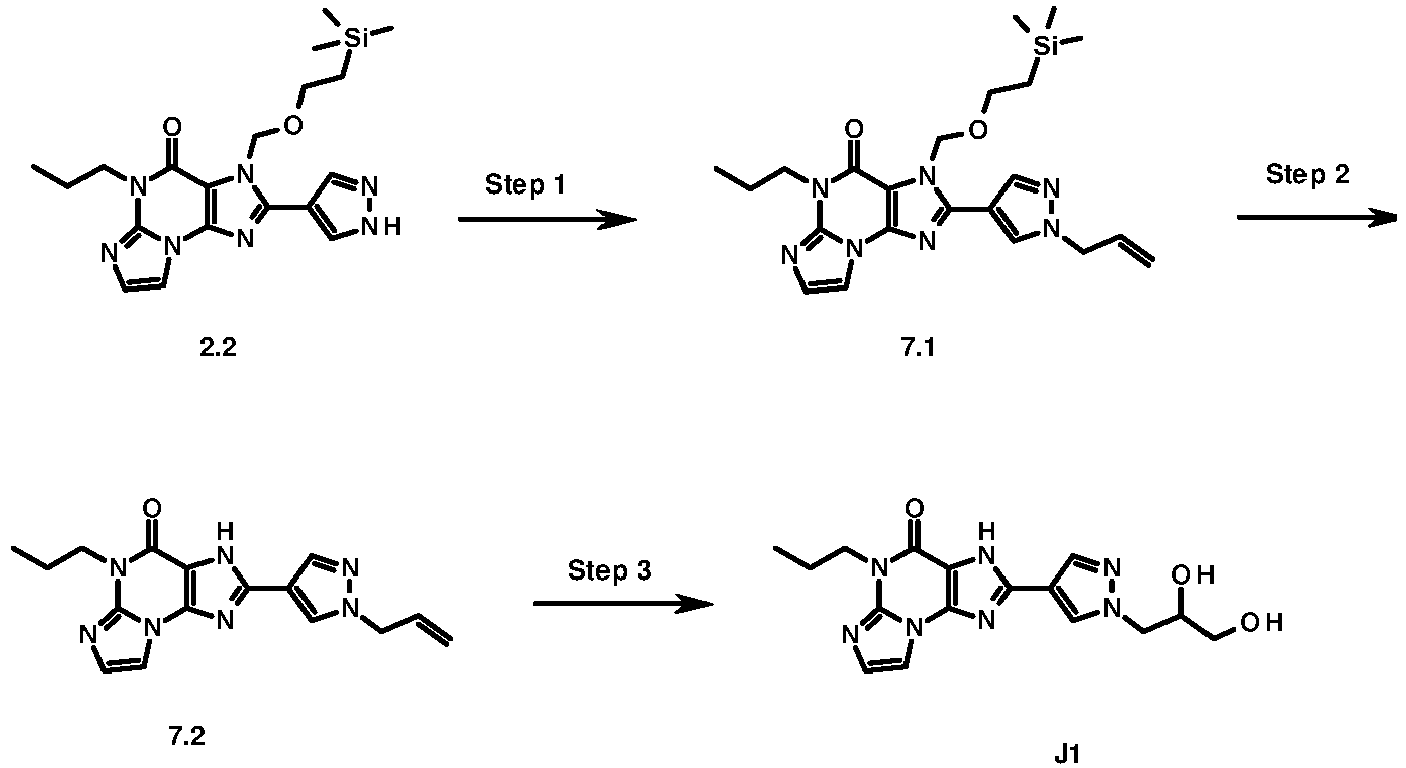
- The title compound 7.1 was obtained as an off-white solid (0.15 g, 91 %) in a similar manner to that of example B1 step 4 using the compound 2.2 (0.15 g, 0.36 mmol), potassium carbonate (0.12 g, 0.90 mmol) and allyl bromide (0.044 g, 0.36 mmol).
- MS(ESI)m/z: 454.0 (M + 1); 1H NMR (400 MHz, DMSO-d6): δ -0.11 (s, 9H); 0.92-1.01 (m, 5H); 1.79-1.86 (m, 2H); 3.80 (t, J = 8.0 Hz, 2H); 4.28 (t, J = 6.8 Hz, 2H); 4.98 (d, J = 5.2 Hz, 2H); 5.27-5.36 (m, 2H); 6.02 (s, 2H); 6.11-6.19 (m, 1H); 7.28 (s, 1H); 7.82 (s,1H); 8.17 (s, 1H); 8.48 (s, 1H).
- The title compound 7.2 was obtained as an off-white solid (0.088 g., 83 %) in a similar manner to that of Example B1 step 5 using the compound 7.1 (0.15 g, 0.33 mmol).
- MS(ESI)m/z: 324.0 (M + 1); 1H NMR (400 MHz, DMSO-d6): δ 0.94 (t, J = 7.6 Hz, 3H); 1.72-1.75 (m, 2H); 4.17 (t, J = 7.2 Hz, 2H); 4.86 (d, J = 6.0 Hz, 2H); 5.18-5.27 (m, 2H); 6.01-6.09 (m, 1H); 7.38 (s, 1H); 7.84 (s, 1H); 8.15 (s,1H); 8.42 (s, 1H); 14.12 (br s, 1H).
- Osmium tetraoxide (0.005 g, 0.019 mmol) and N-methylmorpholine N-oxide (0.047 g, 0.40 mmol) was added to the suspended mixture of 7.2 (0.088 g, 0.27 mmol) in acetone-water (1:1, 10 mL) at room temperature and the reaction mixture was stirred for overnight. Reaction completion was confirmed by TLC. The solid obtained was filtered and purified using preparative TLC method to obtain the title compound J1 as an off white solid (0.018 g, 33 %).
- MS(ESI)m/z: 358.2 (M + 1); 1HNMR (400 MHz, DMSO-d6): 0.93 (t, J = 7.6 Hz, 3H); 1.73-1.79(m, 2H); 3.32-3.40 (m, 2H); 3.80-3.82 (m, 1H); 4.04-4.09 (m, 1H); 4.18 (t, J = 7.2 Hz, 2H); 4.28-4.32 (m, 1H); 4.79 (t, J = 6.0 Hz, 1H); 5.07 (d, J = 5.2 Hz, 1H); 7.17 (d, J = 1.6 Hz, 1H); 7.71 (d, J = 1.6 Hz, 1H); 8.11 (s, 1H); 8.37 (s, 1H); 13.86 (s, 1H)
-

- A mixture of 1.1 (1.0 g, 5.43 mmol), 10.1 (0.99 g, 5.43 mmol) and POCl3 (10 mL) were heated at 120-125 0C for 72 hours. Reaction completion was confirmed by TLC, mixture was cooled to 20-25 It was then concentrated under vacuuo and to the residue cold water was added slowly and solid material was separated. It was filtered off and washed with cold water, dried under vacuuo. The crude product was purified by column chromatography using silica gel (230-400 mesh) and 0.5 to 4 % methanol in DCM as an eluent to obtain 10.2 as a pale yellow solid. (1.1 g, 58 %)
- ESI-MS(m/z): 349.2 (M + 1); 1HNMR Not recorded
- Step 2: 2-(3,4-dimethoxyphenyl)-5-propyl-3H-imidazo[2,1-b]purin-4-one The title compound was obtained as an yellow solid (0.11 g, 20 %) in a similar manner to that of Example A1 step 4 using the compound 8.2 (0.2 g, 0.575 mmol), NMP (5 mL), DIPEA (0.38 mL, 2.30 mmol), and aminoacetaldehyde dimethyl acetal (0.25 mL, 2.29 mmol).
- MS(ESI)m/z: 354.2 (M + 1); 1HNMR (400 MHz, DMSO-d6): δ 0.91 (t, J = 7.2 Hz, 3H); 1.73-1.75 (m, 2H); 3.79 (s, 3H); 3.85 (s, 3H); 4.17 (t, J = 7.2 Hz, 2H); 7.08 (d, J = 8.4 Hz, 1H); 7.14 (s, 1H); 7.72-7.78 (m, 3H); 13.96 (br s, 1H.
- Following examples as shown in Table were prepared according to similar sequence of procedures as used for the synthesis of Example K1
Ex. No. Structure IUPAC Name 1H NMR(400 MHz) data MS(ESI)m/z: (M+1) K2 
DMSO-d6: δ 0.94 (t, J = 7.2 Hz, 3H); 1.77 (q, J = 7.2 Hz, 2H); 4.20 (t, J = 7.6 Hz, 2H); 7.19 (d, J = 1.2 Hz, 1H); 7.78-7.82 (m, 2H); 7.88 (d, J = 8.0 Hz, 1H); 8.49 (d, J = 8.0 Hz, 1H); 8.59 (s, 1H); 14.49 (br s, 1H) 362.1 5-propyl-2-[3-(trifluoromethyl)ph enyl]-3H-imidazo[2,1-b]purin-4-one K3 
DMSO-d6: δ 0.92 (t, J = 8.0 Hz, 3H); 1.75 (d, J = 7.2 Hz, 2H); 4.17 (t, J = 7.6 Hz, 2H); 5.45 (s, 2H); 7.14-7.19 (m, 4H); 7.40-7.44 (m, 1H); 7.68 (d, J = 1.6 Hz, 1H); 8.17 (s, 1H); 8.53 (s, 1H); 13.89 (br s, 1H). 392.2 2-[1-[(3-fluorophenyl)methy l]pyrazol-4-yl] -5-propyl-3H-imidazo[2,1-b]purin-4-one K4 
DMSO-d6: δ 0.92 (t, J = 7.6 Hz, 3H); 1.72-1.78 (m, 2H); 3.74 (s, 3H); 4.17 (t, J = 7.2 Hz, 2H); 5.38 (s, 2H); 6.86-6.90 (m, 3H); 7.16 (d, J = 1.6 Hz, 1H); 7.27-7.31 (m, 1H); 7.68 (d, J = 2 Hz, 1H); 8.15 (s, 1H); 8.49 (s, 1H); 13.87 (br s, 1H). 404.2 2-[1-[(3-methoxyphenyl)met hyl]pyrazol-4-yl] -5-propyl-3H-imidazo[2,1-b]purin-4-one K5 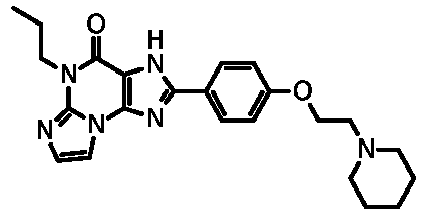
DMSO-d6: δ 0.92 (t, J = 7.6 Hz, 3H); 1.38-1.39 (m, 2H); 1.48-1.53 (m, 4H); 1.73-1.79 (m, 2H); 2.45 (br s, 4H); 2.69 (t, J = 6.0 Hz, 2H); 4.13-4.20 (m, 4H); 7.09 (d, J = 8.8 Hz, 2H); 7.17 (d, J = 0.8 Hz, 1H); 7.74 (d, J = 1.2 Hz, 1H); 8.14 (d, J = 8.8 Hz, 2H); 13.58 (br s, 1H) 421.3 2-[4-[2-(1-piperidyl)ethoxy]ph enyl]-5-propyl-3H-imidazo[2,1-b]purin-4-one K6 
DMSO-d6: δ 0.92 (t, J = 8.0 Hz, 3H); 1.75-1.75 (m, 2H); 3.75 (s, 3H); 4.11-4.19 (m, 2H); 7.16 (br s, 1H); 7.72 (br s, 1H); 7.78 (d, J = 8.8 Hz, 1H); 7.99 (br s, 1H); 8.20 (d, J = 8.4 Hz, 1H) 325.2 2-(5-methoxy-2-pyridyl)-5-propyl-3H-imidazo[2,1-b]purin-4-one K7 
DMSO-d6: δ 0.93 (t, J = 7.2 Hz, 3H); 1.36 (t, J = 6.8 Hz, 3H); 1.74-1.80 (m, 2H); 4.09-4.14 (m, 2H); 4.19 (t, J = 7.6 Hz, 2H); 7.08 (d, J = 8.4 Hz, 2H); 7.18 (br s, 1H); 7.74 (br s, 1H); 8.14 (d, J = 8.4 Hz, 2H); 13.95 (br s, 1H) 338.2 2-(4-ethoxyphenyl)-5-propyl-3H-imidazo[2,1-b]purin-4-one -

- To a solution H1 (0.05 g, 0.14 mmol) in DMF (2 mL) was added DIPEA (0.071 mL, 0.42 mmol), isopropyl amine (0.013 mL, 0.15 mmol), EDCI.HCl (0.04 g, 0.21 mmol) and hydroxyl benzotriazole (0.028 g, 0.21 mmol). The mixture was stirred at 25 °C for 16 hours. Reaction completion was confirmed by TLC and added water (20 mL). Solid material precipitated was filtered off and washed with cold water, dried under vacuuo. The crude product was purified by combiflash column chromatography to obtain the title compound O1 as off white solid. (0.015 g, 27%).
- MS(ESI)m/z: 383.2 (M + 1); 1H NMR (400 MHz, DMSO-d6): δ 0.92 (t, J = 7.6 Hz, 3H); 1.09 (d, J = 6.8 Hz, 6H); 1.72-1.78 (m, 2H); 3.84-3.86 (m, 1H); 4.18 (t, J = 8.0 Hz, 2H); 4.84 (s, 2H); 7.17 (br s, 1H); 7.70 (br s, 1H); 8.11 (s, 1H); 8.15 (d, J = 6.8 Hz, 1H); 8.39 (s, 1H); 13.50 (br s, 1H)
- Following examples as shown in Table were prepared according to similar sequence of procedures as used for the synthesis of Example L1
Ex. No. Structure IUPAC Name 1H NMR(400 MHz) data MS(ESI)m/z: (M+1) L2 
DMSO-d6 :δ 0.92 (t, J = 7.2 Hz, 3H); 1.72-1.78 (m, 2H); 4.18 (t, J = 7.2 Hz, 2H); 4.45 (t, J = 6.4 Hz, 2H); 4.73 (t, J = 6.4 Hz, 2H); 4.79-4.83 (m, 1H); 4.92 (s, 2H); 7.17 (d, J = 1.6 Hz, 1H); 7.70 (d, J = 1.6 Hz, 1H); 8.11 (s, 1H); 8.40 (s, 1H); 9.04 (d, J = 6.8 Hz, 1H); 13.50 (br s, 1H) 397.2 N-(oxetan-3-yl)-2-[4-(4-oxo-5-propyl-3H-imidazo[2,1-b]purin-2-yl)pyrazol-1-yl]acetamide -

- A mixture of 1 (3.94 g, 27.80 mmol), 2 (5 g, 18.52 mmol) and POCl3 (50 mL) were heated at 120-125 °C for 72 hours. Reaction completion was confirmed by TLC, mixture was cooled to 20-25 °C. It was then concentrated under vacuuo and to the residue cold water was added slowly and the mixture was extracted with ethyl acetate (3 x 200 mL). The combined organic layer was washed with brine (300 mL), dried over Na2SO4 and concentrated under vacuo to obtain a crude product. The crude product was purified by combiflash column chromatography using 30-35 % ethylacetate in hexane as an eluent to obtain 3 as a pale yellow solid. (3.5 g, 46 %) ESI-MS(m/z): 412.9 (M + 1); 1H NMR (400 MHz, CDCl3): 5.54 (s, 2H); 7.45-7.54 (m, 3H); 7.60-7.62 (m, 1H); 8.15 (s, 1H); 8.21 (s, 1H).
- To a solution of 3 (0.5 g, 1.21 mmol) in NMP (10 mL) was added DIPEA (0.20 mL, 1.21 mmol), and aminoacetaldehyde dimethyl acetal (0.16 mL, 1.45 mmol). The mixture was stirred at 130 °C for 1 h. Reaction completion was confirmed by TLC, then cooled to room temperature and the reaction mixture was slowly poured into water (25 mL) with vigorous stirring. Solid material separated was filtered off, and washed with cold water (20 mL), followed by n-hexane and dried to obtain 4 as a off white solid (0.4 g, 68%).
- MS(ESI)m/z:481.9 (M + 1); 1H NMR (400 MHz, DMSO-d6): δ 3.30 (s, 6H); 3.53 (br s, 2H); 4.62 (br s, 1H); 5.56 (s, 2H); 7.58-7.70 (m, 4H); 8.06 (s, 1H); 8.41 (s, 1H); 13.30 (br s, 1H).
- A mixture of 4 (0.1 g, 0.20 mmol) in conc. H2SO4(0.033 mL, 0.60 mmol) was stirred at 70 °C for 16 h. Reaction completion was confirmed by TLC, then cooled to room temperature and the reaction mixture was slowly poured into water (25 mL) with vigorous stirring. Solid material separated was filtered off, and washed with cold water (20 mL), followed by n-hexane and dried to obtain 5 as white solid (0.05 g, 60%)
- MS(ESI)m/z:400.2 (M + 1); 1H NMR (400 MHz, DMSO-d6): δ 5.53 (s, 2H), 7.31 (d, J = 1.6 Hz, 1H); 7.59-7.64 (m, 2H), 7.69-7.71 (m, 2H), 7.73 (d, J = 1.2 Hz, 1H), 8.08 (s, 1H), 8.44 (s, 1H), 12.40 (s, 1H), 13.60 (s, 1H).
- To a solution of 5 (1.5 g, 3.75 mmol) in DMF (15 mL) was added K2CO3 (1.55 g, 11.27 mmol), and 2-(chloromethoxy)ethyl-trimethyl-silane (4 mL, 22.55 mmol). The mixture was stirred at room temperature for 16 h. Reaction completion was confirmed by TLC then dissolved in water (100 mL), and the mixture was extracted with ethyl acetate (3 x 100 mL). The combined organic layers were washed with brine (100 mL), dried over Na2SO4 and concentrated under vacuo to obtain a crude product (1.5 g).
- MS(ESI)m/z:530.2 (M + 1); 1H NMR : Not recorded
- To a solution 6 (1.5 g, 0.605 mmol) in DMF (15 mL) was added potassium carbonate (0.39 g, 3.83 mmol)and n-propyliodide (0.28 g, 2.83 mmol). The mixture was stirred at 80 °C for 16 hours. Reaction completion was confirmed by TLC then dissolved in water (100 mL), and the mixture was extracted with ethyl acetate (3 x 100 mL). The combined organic layers were washed with brine (100 mL), dried over Na2SO4 and concentrated under vacuo to obtain a crude product. The residue was purified by column chromatography using 30-35 % ethyl acetate in hexane as a mobile phase to obtain the title compound 7 (0.5 g).
- MS(ESI)m/z: 572.0 (M + 1); 1H NMR: Not recorded
- A solution of 7 (0.5 g, 0.87 mmol) in ethanol:2N HCl (30 mL) was heated at 80 °C for 16 hours. Reaction completion was confirmed by TLC then cooled to room temperature and concentrated under vacuo to obtain a crude product. The residue was basified by aqueous NaHCO3 solution up to PH (7-8) then extracted with ethyl acetate (3 x 100 mL). The combined organic layers were washed with brine (100 mL), dried over Na2SO4 and concentrated under vacuo to obtain a crude product. The residue was purified by column chromatography using 2-4 % methanol in DCM as a mobile phase to obtain the title compound 8 as a off white solid (0.012 g, 8%). MS(ESI)m/z: 442.2 (M + 1); 1H NMR (400 MHz, DMSO-d6): δ 0.92 (t, J = 7.2 Hz, 3H); 1.81 (q, J = 6.8 Hz, 2H); 4.18 (t, J = 7.2 Hz, 2H); 5.53 (s, 2H); 7.33 (d, J = 1.6 Hz, 1H); 7.60-7.70 (m, 4H); 7.76 (d, J = 1.2 Hz, 1H); 8.11 (s, 1H); 8.51 (s, 1H); 13.80 (br s, 1H).
- The following compounds can also be prepared according to Schemes 1-5 or in the same manner as in the above-mentioned examples
- 2-[1-(2-furylmethyl)pyrazol-4-yl]-5-propyl-3H-imidazo[2,1-b]purin-4-one (III),
- 5-propyl-2-[1-(2-thienylmethyl)pyrazol-4-yl]-3H-imidazo[2,1-b]purin-4-one (IV),
- 2-[1-(oxazol-2-ylmethyl)pyrazol-4-yl]-5-propyl-3H-imidazo[2,1-b]purin-4-one (V),
- 2-[1-(isoxazol-5-ylmethyl)pyrazol-4-yl]-5-propyl-3H-imidazo[2,1-b]purin-4-one (VI),
- 2-[1-[(5-methyl-2-thienyl)methyl]pyrazol-4-yl]-5-propyl-3H-imidazo[2,1-b]purin-4-one (VII),
- 2-[1-[(3,5-difluorophenyl)methyl]pyrazol-4-yl]-5-propyl-3H-imidazo[2,1-b]purin-4-one (VIII),
- 5-propyl-2-[1-(4-pyridylmethyl)pyrazol-4-yl]-3H-imidazo[2,1-b]purin-4-one (IX),
- 5-propyl-2-[1-(3-pyridylmethyl)pyrazol-4-yl]-3H-imidazo[2,1-b]purin-4-one (X),
- 5-propyl-2-[1-(2-pyridylmethyl)pyrazol-4-yl]-3H-imidazo[2,1-b]purin-4-one (XI),
- 5-propyl-2-[1-(pyrimidin-5-ylmethyl)pyrazol-4-yl]-3H-imidazo[2,1-b]purin-4-one (XII),
- 5-propyl-2-[1-(pyridazin-4-ylmethyl)pyrazol-4-yl]-3H-imidazo[2,1-b]purin-4-one (XIII),
- 2-[1-[(1-oxoisoindolin-5-yl)methyl]pyrazol-4-yl]-5-propyl-3H-imidazo[2,1-b]purin-4-one (XIV),
- 2-[1-[(2-methyl-1-oxo-isoindolin-5-yl)methyl]pyrazol-4-yl]-5-propyl-3H-imidazo[2,1-b]purin-4-one (XV),
- 2-[1-[(1-oxo-3,4-dihydro-2H-isoquinolin-6-yl)methyl]pyrazol-4-yl]-5-propyl-3H-imidazo[2,1-b]purin-4-one (XVI),
- 2-[1-[(2-oxo-3,4-dihydro-1H-quinolin-6-yl)methyl]pyrazol-4-yl]-5-propyl-3H-imidazo[2,1-b]purin-4-one (XVII),
- 5-propyl-2-[1-(quinoxalin-6-ylmethyl)pyrazol-4-yl]-3H-imidazo[2,1-b]purin-4-one (XVIII),
- 2-[1-(2-naphthylmethyl)pyrazol-4-yl]-5-propyl-3H-imidazo[2,1-b]purin-4-one (XIX),
- 2-[1-[[3-(azetidin-3-yl)phenyl]methyl]pyrazol-4-yl]-5-propyl-3H-imidazo[2,1-b]purin-4-one (XX),
- 2-[1-[[3-(2-methoxyethoxy)phenyl]methyl]pyrazol-4-yl]-5-propyl-3H-imidazo[2,1-b]purin-4-one (XXI),
- 2-[1-[[4-(2-methoxyethoxy)phenyl]methyl]pyrazol-4-yl]-5-propyl-3H-imidazo[2,1-b]purin-4-one (XXII),
- 5-propyl-2-[1-[3-[3-(trifluoromethyl)phenyl]prop-2-ynyl]pyrazol-4-yl]-3H-imidazo[2,1-b]purin-4-one (XXIII),
- 2-[1- [3 -(3 -fluorophenyl)prop-2-ynyl]pyrazol-4-yl] -5-propyl-3 H-imidazo [2,1-b]purin-4-one (XXIV),
- 2-[1-[3-(4-fluorophenyl)prop-2-ynyl]pyrazol-4-yl]-5-propyl-3H-imidazo[2,1-b]purin-4-one (XXV),
- 5-propyl-2-[1-[3-[4-(trifluoromethyl)phenyl]prop-2-ynyl]pyrazol-4-yl]-3H-imidazo[2,1-b]purin-4-one (XXVI),
- 2-[1-[[1-(3-fluorophenyl)-5-oxo-pyrrolidin-3-yl]methyl]pyrazol-4-yl]-5-propyl-3H-imidazo[2,1-b]purin-4-one (XXVII),
- 2-[1-[[1-(m-tolyl)-5-oxo-pyrrolidin-3-yl]methyl]pyrazol-4-yl]-5-propyl-3H-imidazo[2,1-b]purin-4-one (XXVIII),
- 2-[1-[(3-chloro-5-fluoro-phenyl)methyl]pyrazol-4-yl]-5-propyl-3H-imidazo[2,1-b]purin-4-one (XXIX),
- 2-[[4-(4-oxo-5-propyl-3H-imidazo[2,1-b]purin-2-yl)pyrazol-1-yl]methyl]benzonitrile (XXX),
- 2-[1-[(2-fluorophenyl)methyl]pyrazol-4-yl]-5-propyl-3H-imidazo[2,1-b]purin-4-one (XXXI),
- 4-[[4-(4-oxo-5-propyl-3H-imidazo[2,1-b]purin-2-yl)pyrazol-1-yl]methyl]benzonitrile (XXXII),
- 2-[1-[[3-(4-methylpiperazin-1-yl)phenyl]methyl]pyrazol-4-yl]-5-propyl-3H-imidazo[2,1-b]purin-4-one (XXXIII),
- 2-[1-[1-(3-fluorophenyl)ethyl]pyrazol-4-yl]-5-propyl-3H-imidazo[2,1-b]purin-4-one (XXXIV),
- 2-[1-[(4-isopropylphenyl)methyl]pyrazol-4-yl]-5-propyl-3H-imidazo[2,1-b]purin-4-one (XXXV),
- 5-propyl-2-[1-(2,2,2-trifluoroethyl)pyrazol-4-yl]-3H-imidazo[2,1-b]purin-4-one (XXXVI),
- 2-[1-(2-aminoethyl)pyrazol-4-yl]-5-propyl-3H-imidazo[2,1-b]purin-4-one (XXXVII),
- 5-propyl-2-(1-tetrahydropyran-4-ylpyrazol-4-yl)-3H-imidazo[2,1-b]purin-4-one (XXXVIII),
- 2-(1-cyclopentylpyrazol-4-yl)-5-propyl-3H-imidazo[2,1-b]purin-4-one (XXXIX),
- 7-methyl-5-propyl-2-[1-[[3-(trifluoromethyl)phenyl]methyl]pyrazol-4-yl]-3H-imidazo[2,1-b]purin-4-one (XL),
- 8-methyl-5-propyl-2-[1-[[3-(trifluoromethyl)phenyl]methyl]pyrazol-4-yl]-3H-imidazo[2,1-b]purin-4-one (XLI),
- 7-methyl-5-propyl-2-(1-propylpyrazol-4-yl)-3H-imidazo[2,1-b]purin-4-one (XLII),
- 2-(1-ethylpyrazol-4-yl)-7-methyl-5-propyl-3H-imidazo[2,1-b]purin-4-one (XLIII),
- 7-methyl-2-(1-methylpyrazol-4-yl)-5-propyl-3H-imidazo[2,1-b]purin-4-one (XIV),
- 5-propyl-2-(1-propylpyrazol-4-yl)-7-(trifluoromethyl)-3H-imidazo[2,1-b]purin-4-one (XLV),
- 5-propyl-7-(trifluoromethyl)-2-[1-[[3-(trifluoromethyl)phenyl]methyl]pyrazol-4-yl]-3H-imidazo[2,1-b]purin-4-one (XLVI),
- 2-[1-(m-tolylmethyl)pyrazol-4-yl]-4-propyl-1H-imidazo[2,1-f]purin-5-one (XLVII),
- 2-[1-[(3-fluorophenyl)methyl]pyrazol-4-yl]-4-propyl-1H-imidazo[2,1-f]purin-5-one (XLVIII),
- 3-[[4-(5-oxo-4-propyl-1H-imidazo[2,1-f]purin-2-yl)pyrazol-1-yl]methyl]benzonitrile (XLIX),
- 3-[[4-(4-ethyl-5-oxo-1H-imidazo[2,1-f]purin-2-yl)pyrazol-1-yl]methyl]benzonitrile (L),
- 3-[1-methyl-1-[4-(4-oxo-5-propyl-3H-imidazo[2,1-b]purin-2-yl)pyrazol-1-yl]ethyl]benzonitrile (LI),
- 5-propyl-2-[3-[[3-(trifluoromethyl)phenyl]methoxy]isoxazol-5-yl]-3H-imidazo[2,1-b]purin-4-one (LII).
- The compounds of the disclosure may be prepared by a variety of methods, including standard synthetic chemistry. Any previously defined variable will continue to have the previously defined meaning unless otherwise indicated. Illustrative general synthetic methods are set out in the schemes and can be readily adapted to prepare other compounds of the disclosure.
- Human A2A adenosine receptor cDNA was stably transfected into HEK-293 cells.HEK-A2B cells were harvested by trypsinization with 0.25% Trypsin-EDTA (Sigma), and washed in 1X PBS at 1500 rpm for 5 minutes at room temperature. The cells were washed twice in wash buffer containing 150 mM NaCl, 1 mM EDTA, 50 mM Tris (pH-7.4) at 1500 rpm for 10 minutes at room temperature and incubated for 10 min at 4 °C in sonication buffer containing 1 mM EDTA, 5 mM (Tris pH 7.4). The cells were sonicated on ice for 6 min with six intermittent pulses of 9 second each and centrifuged at 1000Xg for 10 minutes at 4 °C. The pellet was discarded and the supernatant was centrifuged at 49,000Xg for 45 minutes at 4°C. The protein pellet was resuspended in buffer containing 1 mM EDTA, 5 mM Tris (pH-7.4) supplemented with 1 Unit/ml adenosine deaminase (ADA) and incubated for 30 minutes at room temperature. The lysate was washed twice with buffer containing 1 mM EDTA, 5 mM Tris (pH-7.4) at 49,000Xg for 45 minutes at 4 °C and the protein pellet was resuspended in 50 mM Tris, pH-7.4 supplemented with 1 Unit/ml ADA and 10% sucrose. Frozen aliquots were stored at -80°C.
- Competition assays were started by mixing 2 nM [3H]-ZM-241385 with various concentrations of test compounds and 5 µg membrane protein in Reaction buffer (50 mM Tris pH 7.4, 1 mM EDTA) supplemented with 1 Unit/ml ADA. The assay reactions were incubated for 90 minutes at room temperature and stopped by filtration using 96 well-plate harvester (Molecular Devices) and washed four times with ice cold 50 mM Tris (pH 7.4). Non-specific binding was determined in presence of 200 µM NECA. Radioligand binding was read at Liquid scintillation counter (Perkin Elmer) and the affinities of compounds (i.e. Ki values) were calculated using GraphPad software.
- Compounds tested had micromolar to nanomolar activity.
- Human A 2B adenosine receptor cDNA was stably transfected into HEK-293 cells. HEK-A2B cells were harvested by trypsinization with 0.25% Trypsin-EDTA (Sigma) and washed in 1X PBS at 1500 rpm for 5 minutes at room temperature. The cells were washed twice in wash buffer containing 150 mM NaCl, 1 mM EDTA, 50 mM Tris (pH-7.4) at 1500 rpm for 10 minutes at room temperature and incubated for 10 min at 4°C in sonication buffer containing 1 mM EDTA, 5 mM Tris (pH 7.4). The cells were sonicated on ice for 6 min with six intermittent pulses of 9 second each and centrifuged at 1000Xg for 10 minutes at 4°C. The pellet was discarded, and the supernatant was centrifuged at 49,000Xg for 45 minutes at 4°C. The protein pellet was resuspended in buffer containing 1 mM EDTA, 5 mM Tris (pH-7.4), 1 Unit/ml adenosine deaminase (ADA) and incubated for 30 minutes at room temperature. The lysate was washed twice with buffer containing 1 mM EDTA, 5 mM Tris (pH-7.4) at 49,000Xg for 45 minutes at 4°C and the protein pellet was resuspended in 50 mM Tris, pH-7.4 supplemented with 1 Unit/ml ADA and 10% sucrose. Frozen aliquots were stored at -80°C.
- Competition assays were started by mixing 1.6 nM [3H]-MRS-1754 with various concentrations of test compounds and 10 µg membrane protein in Reaction buffer (50 mM Tris pH 6.5, 5 mM MgCl2, 1 mM EDTA) supplemented with 1U/ml Adenosine deaminase. The assay reactions were incubated for 90 minutes at room temperature and stopped by filtration using 96 well-plate harvester (Molecular Devices) and washed four times with ice cold 50 mM Tris (pH 7.4). Non-specific binding was determined in presence of 200 µM NECA. Radioligand binding was read at Liquid scintillation counter (Perkin Elmer) and the affinities of compounds (i.e. Ki values) were calculated using GraphPad software.
- Compounds tested had micromolar to nanomolar activity.
- The functional activity of test compounds on A2A and A2B adenosine receptors and selectivity over A1 adenosine was determined using HTRF based cAMP assay (Cisbio). Briefly, overnight seeded cultures (HEK-A1, HEK-A2A, HEK-A2B) were treated with 1U/ml ADA for 90 minutes at 37°C and 5% CO2. Cell suspensions were treated with increasing concentrations of test compounds for 15 minutes followed by treatment with agonists for 15 minutes (1nM CPA for HEK-A1 and 70 nM NECA for HEK-A2B) or 30 min (10 nM CGS-21680 for HEK-A2A) at room temperature with continuous mixing in incomplete DMEM supplemented with 1U/ml ADA. Rolipram (20 µM) was included in the assay for A1 and A2A adenosine receptors. For functional activity of HEK-A1, cell suspensions were further treated with forskolin for 30 minutes at room temperature with constant mixing. cAMP levels were quantified using a Flex Station III (Molecular Devices) at an excitation maximum of 313 nm and emission maxima of 620 nm and 665 nm. Data was analyzed using GraphPad Prism to generate IC50 and Ki. The biological activity data is provided in the Table below. <10 nM are represented as ++++, 10-30 nM as +++, 30-100 nM ++ and the Ki value >100 nM as +.
Ex.No. A2A Functional Ki nM A2B Functional Ki nM A1 ++++ ++++ A2 ND ND A3 +++ ++++ A4 ND ND A5 ++ ND A6 + ND A7 ++++ ++++ B2 +++ ++++ B3 +++ ++++ B6 ++ ++++ B7 ++++ ++++ B8 +++ ++++ B9 +++ ++++ B10 +++ ++++ B11 + +++ B12 + +++ B13 ++++ ++++ B14 + ++++ B16 ++++ ++++ B17 +++ ++++ B19 ++++ ++++ B20 ++++ ++++ C2 ++ ++++ D1 ++ ++++ E1 ++++ ++++ F1 +++ ++++ G1 +++ ++++ H1 + ++ J1 ++ ++ N3 ++++ ++++ N4 ++++ ++++ N5 ++ +++ ND= NOT DETERMINED - Although the subject matter has been described in considerable detail with reference to certain preferred embodiments thereof, other embodiments are possible. As such, the scope of the appended claims should not be limited to the description of the preferred embodiment contained therein.
Claims (13)
- A compound of Formula I, or its stereoisomers, pharmaceutically acceptable salts, complexes, hydrates, solvates, tautomers, polymorphs, racemic mixtures, and optically active forms thereof,
D-A-B-Z (I) Formula I
wherein
D represents a tricyclic ring system selected from R2 is selected from hydrogen, alkyl, alkenyl, alkynyl, alkoxyalkyl, cycloalkyl, cycloalkylalkyl, aryl, arylalkyl, heteroaryl, or heteroarylalkyl;wherein alkyl, alkenyl, alkynyl, alkoxyalkyl, cycloalkyl, cycloalkylalkyl, aryl, arylalkyl, heteroaryl, and heteroarylalkyl are unsubstituted or substituted independently with alkyl, alkenyl, alkynyl, alkoxy, cycloalkyl, cycloalkenyl, acyl, acylamino, acyloxy, amino, monoalkylamino, dialkylamino, arylamino, cycloalkylamino, heteroarylamino, heterocyclylamino, aminocarbonyl, alkoxycarbonylamino, azido, cyano, halogen, hydroxy, hydroxyalkyl, keto, thiocarbonyl, carboxy, alkylcarboxy, carboxyalkyl, carboxyalkyloxy, alkylcarboxyalkyloxy, -SO3H, aryl, aryloxy, cycloalkyloxy, heteroaryl, aminocarbonylamino, heteroaryloxy, heterocyclyl, heterocyclyloxy, hydroxyamino, alkoxyamino, nitro, S(O)2NRcRc, -NRcS(O)2Rc or -S(O)pRd;wherein each substituent is unsubstituted or substituted with 1, 2, or 3 substituents independently selected from alkyl, carboxy, carboxyalkyl, aminocarbonyl, hydroxyl, alkoxy, halogen, haloalkyl, haloalkoxy, amino, substituted amino, cyano or -S(O)pRd;X and Y are independently selected from CR' or N, wherein R' is selected from hydrogen, halogen, alkyl and haloalkyl;A is selected from an arylene or an optionally substituted heteroarylene;B is selected from a bond, (C1-C6)alkylene, (C2-C6)alkenylene or (C2-C6)alkynylene group, wherein 1 to 4 methylene groups are optionally replaced by groups independently selected from O, -S(O)p-, -N(Rb)-, or -C(O)-;wherein alkylene, alkenylene, and alkynylene are unsubstituted or substituted independently with alkyl, alkenyl, alkynyl, alkoxy, cycloalkyl, cycloalkenyl, acyl, acylamino, acyloxy, amino, monoalkylamino, dialkylamino, arylamino, cycloalkylamino, heteroarylamino, heterocyclylamino, aminocarbonyl, alkoxycarbonylamino, azido, cyano, halogen, hydroxy, hydroxyalkyl, keto, thiocarbonyl, carboxy, alkylcarboxy, carboxyalkyl, carboxyalkyloxy, alkylcarboxyalkyloxy -SO3H, aryl, aryloxy, cycloalkyloxy, heteroaryl, aminocarbonylamino, heteroaryloxy, heterocyclyl, heterocyclyloxy, hydroxyamino, alkoxyamino, nitro, S(O)2NRcRc, - NRcS(O)2Rc or -S(O)pRd;Z is selected from hydrogen, heterocyclyl, cycloalkyl, aryl or heteroaryl;wherein heterocyclyl, cycloalkyl, aryl and heteroaryl are unsubstituted or substituted independently with alkyl, alkenyl, alkynyl, alkoxy, cycloalkyl, cycloalkylalkyl, cycloalkenyl, acyl, acylamino, acyloxy, amino, monoalkylamino, dialkylamino, arylamino, cycloalkylamino, heteroarylamino, heterocyclylamino, aminocarbonyl, alkoxycarbonylamino, azido, cyano, halogen, hydroxy, hydroxyalkyl, keto, thiocarbonyl, carboxy, alkylcarboxy, carboxyalkyl, carboxyalkyloxy, alkylcarboxyalkyloxy -SO3H, aryl, arylalkyl, aryloxy, cycloalkyloxy, heteroaryl, heteroarylalkyl, aminocarbonylamino, heteroaryloxy, heterocyclyl, heterocyclylalkyl, heterocyclyloxy, hydroxyamino, alkoxyamino, nitro, -S(O)2NRbRb, -NRbS(O)2Rb or -S(O)pRd; wherein each substituent is unsubstituted or substituted with 1, 2, or 3 substituents independently selected from alkyl, carboxy, carboxyalkyl, aminocarbonyl, hydroxy, alkoxy, alkoxyalkoxy, alkoxyalkyl, halogen, haloalkyl, haloalkoxy, amino, substituted amino, cyano or -S(O)pRd;Ra is selected from hydrogen, or alkyl;Rb is selected from hydrogen, alkyl, acyl, carboxyalkyl, carbonylamino, cycloalkyl, cycloalkylalkyl, aryl, arylalkyl, heteroaryl, heteroarylalkyl, heterocyclyl, or heterocyclylalkyl; Rc is selected from hydrogen, alkyl, aryl, heteroaryl, or heterocyclyl;Rd is selected from alkyl, cycloalkyl, aryl, heterocyclyl, or heteroaryl; andp is 0, 1, or 2.
 - The compound of Formula I as claimed in claim 1, whereinD represents a tricyclic ring system selected from
 R2 is selected from hydrogen, alkyl, alkenyl, alkynyl, cycloalkyl, aryl, arylalkyl, heteroaryl, or heteroarylalkyl, wherein alkyl, alkenyl, alkynyl, cycloalkyl, aryl, arylalkyl, heteroaryl, and heteroarylalkyl are unsubstituted or substituted independently with alkyl, alkenyl, alkynyl, cycloalkyl, cycloalkenyl, acyl, acylamino, amino, monoalkylamino, dialkylamino, arylamino, cycloalkylamino, heteroarylamino, heterocyclylamino, aminocarbonyl, azido, cyano, halogen, hydroxy, hydroxyalkyl, keto, thiocarbonyl, carboxy, alkylcarboxy, carboxyalkyl, , -SO3H, aryl, cycloalkyloxy, heteroaryl, aminocarbonylamino, heterocyclyl, heterocyclyloxy, hydroxyamino, nitro, S(O)2NRcRc, -NRcS(O)2Rc or -S(O)pRd;wherein each substituent is unsubstituted or substituted with 1, 2, or 3 substituents independently selected from alkyl, carboxy, carboxyalkyl, aminocarbonyl, hydroxyd, alkoxy, halogen, haloalkyl, haloalkoxy, amino, substituted amino, cyano or -S(O)pRd;X and Y are independently selected from CR' or N, wherein R' is selected from hydrogen, halogen, or alkyl;A is selected from an arylene or an optionally substituted heteroarylene;B is selected from a bond, (C1-C6)alkylene, or (C2-C6)alkynylene group, wherein 1 to 3 methylene groups are optionally replaced by groups independently selected from O, -S(O)p-, or -C(O)-; wherein alkylene, and alkynylene are unsubstituted or substituted independently with alkyl, alkenyl, alkynyl, alkoxy, cycloalkyl, cycloalkenyl, acyl, acyloxy, azido, cyano, halogen, hydroxy, hydroxyalkyl, keto, thiocarbonyl, carboxy, alkylcarboxy, carboxyalkyl, carboxyalkyloxy, alkylcarboxyalkyloxy -SO3H, aryl, aryloxy, cycloalkyloxy, heteroaryl, heteroaryloxy, heterocyclyl, heterocyclyloxy, hydroxyamino, nitro, S(O)2NRcRc, or -S(O)pRd;Z is selected from hydrogen, heterocyclyl, cycloalkyl, aryl or heteroaryl;wherein heterocyclyl, cycloalkyl, aryl and heteroaryl are unsubstituted or substituted independently with alkyl, alkenyl, alkynyl, alkoxy, cycloalkyl, cycloalkylalkyl, cycloalkenyl, acyl, acylamino, acyloxy, amino, monoalkylamino, dialkylamino, arylamino, cycloalkylamino, heteroarylamino, heterocyclylamino, aminocarbonyl, alkoxycarbonylamino, cyano, halogen,hydroxy, hydroxyalkyl, keto, thiocarbonyl, carboxy, alkylcarboxy, carboxyalkyl, carboxyalkyloxy, alkylcarboxyalkyloxy, aryl, arylalkyl, aryloxy, cycloalkyloxy, heteroaryl, heteroarylalkyl, aminocarbonylamino, heteroaryloxy, heterocyclyl, heterocyclylalkyl, heterocyclyloxy, hydroxyamino, alkoxyamino, -S(O)2NRbRb, -NRbS(O)2Rb or -S(O)pRd; wherein each substituent is unsubstituted or substituted with 1, 2, or 3 substituents independently selected from alkyl, carboxy, carboxyalkyl, aminocarbonyl, hydroxy, alkoxy, alkoxyalkoxy, alkoxyalkyl, halogen, haloalkyl, haloalkoxy, amino, substituted amino;Ra is selected from hydrogen, or alkyl;Rb is selected from hydrogen, alkyl, acyl, carboxyalkyl, carbonylamino, cycloalkyl, cycloalkylalkyl, aryl, arylalkyl, heteroaryl, heteroarylalkyl, heterocyclyl, or heterocyclylalkyl; Rc is selected from hydrogen, alkyl, aryl, heteroaryl, or heterocyclyl;Rd is selected from alkyl, cycloalkyl, aryl, heterocyclyl, or heteroaryl; andp is 0, 1, or 2.
 - The compound of Formula I as claimed in claim 1, whereinD represents a tricyclic ring system selected from
 R2 is selected from hydrogen, alkyl, alkenyl, alkynyl, cycloalkyl, or aryl, wherein alkyl, alkenyl, alkynyl, cycloalkyl, aryl, are unsubstituted or substituted independently with alkyl, alkenyl, alkynyl, cycloalkyl, cycloalkenyl, acyl, acylamino, amino, monoalkylamino, dialkylamino, arylamino, cycloalkylamino, heteroarylamino, heterocyclylamino, aminocarbonyl, azido, cyano, halogen, hydroxy, hydroxyalkyl, keto, thiocarbonyl, carboxy, alkylcarboxy, carboxyalkyl, , - SO3H, aryl, cycloalkyloxy, heteroaryl, aminocarbonylamino, heterocyclyl, heterocyclyloxy, hydroxyamino, nitro, S(O)2NRcRc, -NRcS(O)2Rc or -S(O)pRd;wherein each substituent is unsubstituted or substituted with 1, 2, or 3 substituents independently selected from alkyl, carboxy, carboxyalkyl, aminocarbonyl, hydroxyd, alkoxy, halogen, haloalkyl, haloalkoxy, amino, substituted amino, cyano or -S(O)pRd;X and Y are independently selected from CR' or N, wherein R' is selected from hydrogen, halogen, or alkyl;A is selected from an arylene or an optionally substituted heteroarylene;B is selected from a bond, (C1-C6)alkylene, or (C2-C6)alkynylene group, wherein 1 to 3 methylene groups are optionally replaced by groups independently selected from O, -S(O)p-, or -C(O)-; wherein alkylene, and alkynylene are unsubstituted or substituted independently with alkyl, alkenyl, alkynyl, alkoxy, cycloalkyl, cycloalkenyl, acyl, acyloxy, azido, cyano, halogen, hydroxy, hydroxyalkyl, keto, thiocarbonyl, carboxy, alkylcarboxy, carboxyalkyl, carboxyalkyloxy, alkylcarboxyalkyloxy -SO3H, aryl, aryloxy, cycloalkyloxy, heteroaryl, heteroaryloxy, heterocyclyl, heterocyclyloxy, hydroxyamino, nitro, S(O)2NRcRc, or -S(O)pRd;Z is selected from hydrogen, heterocyclyl, cycloalkyl, aryl or heteroaryl;wherein heterocyclyl, cycloalkyl, aryl and heteroaryl are unsubstituted or substituted independently with alkyl, alkenyl, alkynyl, alkoxy, cycloalkyl, cycloalkylalkyl, cycloalkenyl, acyl, acylamino, acyloxy, amino, monoalkylamino, dialkylamino, arylamino, cycloalkylamino, heteroarylamino, heterocyclylamino, aminocarbonyl, alkoxycarbonylamino, cyano, halogen, hydroxy, hydroxyalkyl, keto, thiocarbonyl, carboxy, alkylcarboxy, carboxyalkyl, carboxyalkyloxy, alkylcarboxyalkyloxy, aryl, arylalkyl, aryloxy, cycloalkyloxy, heteroaryl, heteroarylalkyl, aminocarbonylamino, heteroaryloxy, heterocyclyl, heterocyclylalkyl, heterocyclyloxy, hydroxyamino, alkoxyamino, -S(O)2NRbRb, -NRbS(O)2Rb or -S(O)pRd; wherein each substituent is unsubstituted or substituted with 1, 2, or 3 substituents independently selected from alkyl, carboxy, carboxyalkyl, aminocarbonyl, hydroxy, alkoxy, alkoxyalkoxy, alkoxyalkyl, halogen, haloalkyl, haloalkoxy, amino, substituted amino;Ra is selected from hydrogen, or alkyl;Rb is selected from hydrogen, alkyl, aryl, arylalkyl, heteroaryl, or heterocyclylalkyl;Rc is selected from hydrogen, alkyl, aryl, heteroaryl, or heterocyclyl;Rd is selected from alkyl, cycloalkyl, aryl, heterocyclyl, or heteroaryl; andp is 1, or 2.
 - The compound of Formula I as claimed in claim 1, whereinD represents a tricyclic ring system selected from
 R2 is selected from hydrogen, or alkyl, wherein alkyl, is unsubstituted or substituted independently with alkyl, alkenyl, alkynyl, cycloalkyl, cycloalkenyl, acyl, acylamino, amino, monoalkylamino, dialkylamino, cycloalkylamino, heteroaryl, aminocarbonylamino, heterocyclyl, heterocyclyloxy, hydroxyamino, nitro, S(O)2NRcRc, -NRcS(O)2Rc or -S(O)pRd;wherein each substituent is unsubstituted or substituted with 1, 2, or 3 substituents independently selected from alkyl, carboxy, carboxyalkyl, aminocarbonyl, hydroxyd, alkoxy, halogen, haloalkyl, haloalkoxy, amino, substituted amino, cyano or -S(O)pRd;X and Y are independently selected from CR' or N, wherein R' is selected from hydrogen, halogen, or alkyl;A is selected from an arylene or an optionally substituted heteroarylene;B is selected from a bond, (C1-C6)alkylene, or (C2-C6)alkynylene group, wherein 1 to 3 methylene groups are optionally replaced by groups independently selected from O, -S(O)p-, or -C(O)-; wherein alkylene, and alkynylene are unsubstituted or substituted independently with alkyl, alkenyl, alkynyl, alkoxy, cycloalkyl, cycloalkenyl, acyl, acyloxy, azido, cyano, halogen, hydroxy, hydroxyalkyl, keto, thiocarbonyl, carboxy, alkylcarboxy, carboxyalkyl, carboxyalkyloxy, alkylcarboxyalkyloxy -SO3H, aryl, aryloxy, cycloalkyloxy, heteroaryl, heteroaryloxy, heterocyclyl, heterocyclyloxy, hydroxyamino, nitro, S(O)2NRcRc, or -S(O)pRd;Z is selected from hydrogen, heterocyclyl, aryl or heteroaryl;wherein heterocyclyl, aryl and heteroaryl are unsubstituted or substituted independently with alkyl, alkenyl, alkynyl, alkoxy, cycloalkyl, cycloalkylalkyl, cycloalkenyl, acyl, acylamino, acyloxy, amino, monoalkylamino, dialkylamino, arylamino, cycloalkylamino, heteroarylamino, heterocyclylamino, aminocarbonyl, alkoxycarbonylamino, halogen, hydroxy, hydroxyalkyl, keto, thiocarbonyl, carboxy, aryl, arylalkyl, aryloxy, cycloalkyloxy, heteroaryl, heteroarylalkyl, heteroaryloxy, heterocyclyl, heterocyclylalkyl, heterocyclyloxy, -S(O)2NRbRb, -NRbS(O)2Rb or - S(O)pRd;wherein each substituent is unsubstituted or substituted with 1, 2, or 3 substituents independently selected from alkyl, carboxy, carboxyalkyl, aminocarbonyl, hydroxy, alkoxy, alkoxyalkoxy, alkoxyalkyl, halogen, haloalkyl, haloalkoxy, amino, substituted amino;Ra is selected from hydrogen, or alkyl;Rb is selected from hydrogen, alkyl, aryl, arylalkyl, heteroaryl, or heterocyclylalkyl;Rc is selected from hydrogen, alkyl, aryl, heteroaryl, or heterocyclyl;Rd is selected from alkyl, cycloalkyl, aryl, heterocyclyl, or heteroaryl; andp is 0, 1, or 2.
 - The compound of Formula as claimed in claim 1, wherein the compound of Formula I is selected from the group consisting of:5-propyl-2-[1-[[3-(trifluoromethyl)phenyl]methyl]pyrazol-4-yl]-3H-imidazo[2,1-b]purin-4-one (A1),2-(1-benzylpyrazol-4-yl)-5-propyl-3H-imidazo[2,1-b]purin-4-one (A2),5-methyl-2-[1-[[3-(trifluoromethyl)phenyl]methyl]pyrazol-4-yl]-3H-imidazo[2,1-b]purin-4-one (A3),5-propyl-2-[1-[2-[3-(trifluoromethyl)phenyl]ethyl]pyrazol-4-yl]-3H-imidazo[2,1-b]purin-4-one (A4),2-[1-[2-(3-fluorophenyl)ethyl]pyrazol-4-yl]-5-propyl-3H-imidazo[2,1-b]purin-4-one (A5),2-(1-methylpyrazol-4-yl)-5-propyl-3H-imidazo [2, 1-b] purin-4-one (A6),2-[1-(1,1-dimethylpropyl)pyrazol-4-yl]-5-propyl-3H-imidazo[2,1-b]purin-4-one (A7),N-isopropyl-3-[3-[4-(4-oxo-5-propyl-3H-imidazo[2,1-b]purin-2-yl)pyrazol-1-yl]prop-1-ynyl]benzamide (B1),Ethyl 3-[3-[4-(4-oxo-5-propyl-3H-imidazo[2,1-b]purin-2-yl)pyrazol-1-yl]prop-1-ynyl]benzoate (B2),5-propyl-2-[1-[3-[3-(trifluoromethoxy)phenyl]prop-2-ynyl]pyrazol-4-yl]-3H-imidazo[2,1-b]purin-4-one (B3),Ethyl 4-methyl-3-[3-[4-(4-oxo-5-propyl-3H-imidazo[2,1-b]purin-2-yl)pyrazol-1-yl]prop-1-ynyl]benzoate (B6),3-[[4-(4-oxo-5-propyl-3H-imidazo[2,1-b]purin-2-yl)pyrazol-1-yl]methyl]benzonitrile (B7),2-(1-isopropylpyrazol-4-yl)-5-propyl-3H-imidazo[2,1-b]purin-4-one (B8),2-(1-butylpyrazol-4-yl)-5-propyl-3H-imidazo[2,1-b]purin-4-one (B9),2-(1-ethylpyrazol-4-yl)-5-propyl-3H-imidazo[2,1-b]purin-4-one (B10),2-[1-(2-methoxyethyl)pyrazol-4-yl]-5-propyl-3H-imidazo[2,1-b]purin-4-one (B11),2- [1-(2-dimethylaminoethyl)pyrazol-4-yl] -5 -propyl-3H-imidazo[2,1-b]purin-4-one (B12),5-propyl-2-(1-propylpyrazol-4-yl)-3H-imidazo[2,1-b]purin-4-one (B13),N,N-dimethyl-2-[4-(4-oxo-5-propyl-3H-imidazo[2,1-b]purin-2-yl)pyrazol-1-yl]acetamide (B14),2-[1-(2-morpholinoethyl)pyrazol-4-yl]-5-propyl-3H-imidazo[2,1-b]purin-4-one (B15),2-[1-(cyclobutylmethyl)pyrazol-4-yl]-5-propyl-3H-imidazo[2,1-b]purin-4-one (B16),2-(1-isobutylpyrazol-4-yl)-5-propyl-3H-imidazo[2,1-b]purin-4-one (B17),2-[1-(cyclopropylmethyl)pyrazol-4-yl]-5-propyl-3H-imidazo[2,1-b]purin-4-one (B18),2-[1-(2,2-dimethylpropyl)pyrazol-4-yl]-5-propyl-3H-imidazo[2,1-b]purin-4-one (B19),5-propyl-2-(1-sec-butylpyrazol-4-yl)-3H-imidazo[2,1-b]purin-4-one (B20),5-propyl-2-[1-(tetrahydrofuran-2-ylmethyl)pyrazol-4-yl]-3H-imidazo[2,1-b]purin-4-one (B21),2-[1-[[5-oxo-1-[2-(trifluoromethyl)-4-pyridyl]pyrrolidin-3-yl]methyl]pyrazol-4-yl]-5-propyl-3H-imidazo[2,1-b]purin-4-one (C1),2-[1-[[5-oxo-1-[5-(trifluoromethyl)-3-pyridyl]pyrrolidin-3-yl]methyl]pyrazol-4-yl]-5-propyl-3H-imidazo[2,1-b]purin-4-one (C2),2-[1-[[5-oxo-1-[3-(trifluoromethyl)phenyl]pyrrolidin-3-yl]methyl]pyrazol-4-yl]-5-propyl-3H-imidazo[2,1-b]purin-4-one (C3),2-[1-[2-(1-piperidyl)ethyl]pyrazol-4-yl]-5-propyl-3H-imidazo[2,1-b]purin-4-one (D1),2-[1-[[3-(hydroxymethyl)phenyl]methyl]pyrazol-4-yl]-5-propyl-3H-imidazo[2,1-b]purin-4-one (E1),2-[1-[[3-(1-hydroxy-1-methyl-ethyl)phenyl]methyl]pyrazol-4-yl]-5-propyl-3H-imidazo[2,1-b]purin-4-one (F1),3-[[4-(4-oxo-5-propyl-3H-imidazo[2,1-b]purin-2-yl)pyrazol-1-yl]methyl]benzoic acid (G1),2-[4-(4-oxo-5-propyl-3H-imidazo[2,1-b]purin-2-yl)pyrazol-1-yl]acetic acid (H1),2-[1-(2-hydroxy-2-methyl-propyl)pyrazol-4-yl]-5-propyl-3H-imidazo[2,1-b]purin-4-one (I1),2-[1-(2,3-dihydroxypropyl)pyrazol-4-yl]-5-propyl-3H-imidazo[2,1-b]purin-4-one (J1),2-(3,4-dimethoxyphenyl)-5-propyl-3H-imidazo[2,1-b]purin-4-one (K1),5-propyl-2-[3-(trifluoromethyl)phenyl]-3H-imidazo[2,1-b]purin-4-one (K2),2-[1-[(3-fluorophenyl)methyl]pyrazol-4-yl]-5-propyl-3H-imidazo[2,1-b]purin-4-one (K3),2-[1-[(3-methoxyphenyl)methyl]pyrazol-4-yl]-5-propyl-3H-imidazo[2,1-b]purin-4-one (K4),2-[4-[2-(1-piperidyl)ethoxy]phenyl]-5-propyl-3H-imidazo[2,1-b]purin-4-one (K5),2-(5-methoxy-2-pyridyl)-5-propyl-3H-imidazo[2,1-b]purin-4-one (K6),2-(4-ethoxyphenyl)-5-propyl-3H-imidazo[2,1-b]purin-4-one (K7),N-isopropyl-2-[4-(4-oxo-5-propyl-3H-imidazo[2,1-b]purin-2-yl)pyrazol-1-yl]acetamide (L1),N-(oxetan-3-yl)-2-[4-(4-oxo-5-propyl-3H-imidazo[2,1-b]purin-2-yl)pyrazol-1-yl]acetamide (L2),4-propyl-2- [1-[[3 -(trifluoromethyl)phenyl]methyl] pyrazol-4-yl]-1H-imidazo[2,1-f]purin-5-one (II),2-[1-(2-furylmethyl)pyrazol-4-yl] -5 -propyl-3H-imidazo[2,1-b]purin-4-one (III),5-propyl-2-[1-(2-thienylmethyl)pyrazol-4-yl]-3H-imidazo[2,1-b]purin-4-one (IV),2-[1-(oxazol-2-ylmethyl)pyrazol-4-yl]-5-propyl-3H-imidazo[2,1-b]purin-4-one (V),2-[1-(isoxazol-5-ylmethyl)pyrazol-4-yl]-5-propyl-3H-imidazo[2,1-b]purin-4-one (VI),2-[1-[(5-methyl-2-thienyl)methyl]pyrazol-4-yl]-5-propyl-3H-imidazo[2,1-b]purin-4-one (VII),2-[1-[(3,5-difluorophenyl)methyl]pyrazol-4-yl]-5-propyl-3H-imidazo[2,1-b]purin-4-one (VIII),5-propyl-2- [1-(4-pyridylmethyl)pyrazol-4-yl] -3H-imidazo [2,1-b]purin-4-one (IX),5-propyl-2- [1-(3-pyridylmethyl)pyrazol-4-yl]-3H-imidazo[2,1-b]purin-4-one (X),5-propyl-2- [1-(2-pyridylmethyl)pyrazol-4-yl] -3H-imidazo [2,1-b]purin-4-one (XI),5-propyl-2-[1-(pyrimidin-5-ylmethyl)pyrazol-4-yl]-3H-imidazo[2,1-b]purin-4-one (XII),5-propyl-2-[1-(pyridazin-4-ylmethyl)pyrazol-4-yl]-3H-imidazo[2,1-b]purin-4-one (XIII),2-[1-[(1-oxoisoindolin-5-yl)methyl]pyrazol-4-yl]-5-propyl-3H-imidazo[2,1-b]purin-4-one (XIV),2-[1-[(2-methyl-1-oxo-isoindolin-5-yl)methyl]pyrazol-4-yl]-5-propyl-3H-imidazo[2,1-b]purin-4-one (XV),2-[1-[(1-oxo-3,4-dihydro-2H-isoquinolin-6-yl)methyl]pyrazol-4-yl]-5-propyl-3H-imidazo[2,1-b]purin-4-one (XVI),2-[1-[(2-oxo-3,4-dihydro-1H-quinolin-6-yl)methyl]pyrazol-4-yl]-5-propyl-3H-imidazo[2,1-b]purin-4-one (XVII),5-propyl-2-[1-(quinoxalin-6-ylmethyl)pyrazol-4-yl]-3H-imidazo[2,1-b]purin-4-one (XVIII),2-[1-(2-naphthylmethyl)pyrazol-4-yl]-5-propyl-3H-imidazo[2,1-b]purin-4-one (XIX),2-[1-[[3-(azetidin-3-yl)phenyl]methyl]pyrazol-4-yl]-5-propyl-3H-imidazo[2,1-b]purin-4-one (XX),2-[1-[[3-(2-methoxyethoxy)phenyl]methyl]pyrazol-4-yl]-5-propyl-3H-imidazo[2,1-b]purin-4-one (XXI),2-[1-[[4-(2-methoxyethoxy)phenyl]methyl]pyrazol-4-yl]-5-propyl-3H-imidazo[2,1-b]purin-4-one (XXII),5-propyl-2-[1-[3-[3-(trifluoromethyl)phenyl]prop-2-ynyl]pyrazol-4-yl]-3H-imidazo[2,1-b]purin-4-one (XXIII),2-[1-[3-(3-fluorophenyl)prop-2-ynyl]pyrazol-4-yl]-5-propyl-3H-imidazo[2,1-b]purin-4-one (XXIV),2-[1-[3-(4-fluorophenyl)prop-2-ynyl]pyrazol-4-yl]-5-propyl-3H-imidazo[2, 1-b]purin-4-one (XXV),5-propyl-2-[1-[3-[4-(trifluoromethyl)phenyl]prop-2-ynyl]pyrazol-4-yl]-3H-imidazo[2,1-b]purin-4-one (XXVI),2-[1-[[1-(3-fluorophenyl)-5-oxo-pyrrolidin-3-yl]methyl]pyrazol-4-yl]-5-propyl-3H-imidazo[2,1-b]purin-4-one (XXVII),2-[1-[[1-(m-tolyl)-5-oxo-pyrrolidin-3-yl]methyl]pyrazol-4-yl]-5-propyl-3H-imidazo[2,1-b]purin-4-one (XXVIII),2-[1-[(3-chloro-5-fluoro-phenyl)methyl]pyrazol-4-yl]-5-propyl-3H-imidazo[2,1-b]purin-4-one (XXIX),2-[[4-(4-oxo-5-propyl-3H-imidazo[2,1-b]purin-2-yl)pyrazol-1-yl]methyl]benzonitrile (XXX),2-[1- [(2-fluorophenyl)methyl]pyrazol-4-yl] -5-propyl-3H-imidazo [2,1-b]purin-4-one (XXXI),4-[[4-(4-oxo-5-propyl-3H-imidazo[2,1-b]purin-2-yl)pyrazol-1-yl]methyl]benzonitrile (XXXII),2-[1-[[3-(4-methylpiperazin-1-yl)phenyl]methyl]pyrazol-4-yl]-5-propyl-3H-imidazo[2,1-b]purin-4-one (XXXIII),2-[1-[1-(3-fluorophenyl)ethyl]pyrazol-4-yl]-5-propyl-3H-imidazo[2,1-b]purin-4-one (XXXIV),2-[1-[(4-isopropylphenyl)methyl]pyrazol-4-yl]-5-propyl-3H-imidazo[2, 1-b]purin-4-one (XXXV),5-propyl-2-[1-(2,2,2-trifluoroethyl)pyrazol-4-yl]-3H-imidazo[2,1-b]purin-4-one (XXXVI),2-[1-(2-aminoethyl)pyrazol-4-yl]-5-propyl-3H-imidazo[2,1-b]purin-4-one (XXXVII),5-propyl-2-(1-tetrahydropyran-4-ylpyrazol-4-yl)-3H-imidazo[2,1-b]purin-4-one (XXXVIII),2-(1-cyclopentylpyrazol-4-yl)-5-propyl-3H-imidazo[2,1-b]purin-4-one (XXXIX),7-methyl-5-propyl-2-[1-[[3-(trifluoromethyl)phenyl]methyl]pyrazol-4-yl]-3H-imidazo[2,1-b]purin-4-one (XL),8-methyl-5-propyl-2-[1-[[3-(trifluoromethyl)phenyl]methyl]pyrazol-4-yl]-3H-imidazo[2,1-b]purin-4-one (XLI),7-methyl-5-propyl-2-(1-propylpyrazol-4-yl)-3H-imidazo[2,1-b]purin-4-one (XLII),2-(1-ethylpyrazol-4-yl)-7-methyl-5-propyl-3H-imidazo[2,1-b]purin-4-one (XLIII),7-methyl-2-(1-methylpyrazol-4-yl)-5-propyl-3H-imidazo[2,1-b]purin-4-one (XLIV), 5-propyl-2-(1-propylpyrazol-4-yl)-7-(trifluoromethyl)-3H-imidazo[2,1-b]purin-4-one (XLV),5-propyl-7-(trifluoromethyl)-2-[1-[[3-(trifluoromethyl)phenyl]methyl]pyrazol-4-yl]-3H-imidazo[2,1-b]purin-4-one (XLVI),2-[1-(m-tolylmethyl)pyrazol-4-yl]-4-propyl-1H-imidazo[2,1-f]purin-5-one (XLVII),2-[1-[(3-fluorophenyl)methyl]pyrazol-4-yl]-4-propyl-1H-imidazo [2,1 -f]purin-5-one (XLVIII),3 -[[4-(5-oxo-4-propyl-1H-imidazo[2,1-f]purin-2-yl)pyrazol-1-yl]methyl]benzonitrile (XLIX),3-[[4-(4-ethyl-5-oxo-1H-imidazo[2,1-f]purin-2-yl)pyrazol-1-yl]methyl]benzonitrile (L),3-[1-methyl-1-[4-(4-oxo-5-propyl-3H-imidazo[2,1-b]purin-2-yl)pyrazol-1-yl]ethyl]benzonitrile (LI),5-propyl-2-[3-[[3-(trifluoromethyl)phenyl]methoxy]isoxazol-5-yl]-3H-imidazo[2,1-b]purin-4-one (LII).
- A compound of Formula I as claimed in any one of the claims 1 to 5 or its stereoisomers, pharmaceutically acceptable salts, complexes, hydrates, solvates, tautomers, polymorphs, racemic mixtures, and optically active forms thereof for use as a medicament.
- A compound of Formula I as claimed in any one of the claims 1 to 5 or its stereoisomers, pharmaceutically acceptable salts, complexes, hydrates, solvates, tautomers, polymorphs, racemic mixtures, and optically active forms thereof, for use in treating conditions and diseases that are mediated by adenosine receptor (AR) activity.
- A compound of Formula I as claimed in any one of the claims 1 to 5 or its stereoisomers, pharmaceutically acceptable salts, complexes, hydrates, solvates, tautomers, polymorphs, racemic mixtures, and optically active forms thereof, either alone or in combination with other therapeutic agents for use in methods for treating or lessening the severity of immunotherapies or radiotherapy or chemotherapy.
- A pharmaceutical composition comprising a compound of Formula I as claimed in any one of the claims 1 to 5 or its stereoisomers, pharmaceutically acceptable salts, complexes, hydrates, solvates, tautomers, polymorphs, racemic mixtures, and optically active forms thereof, together with a pharmaceutically acceptable carrier.
- A pharmaceutical composition comprising a compound of Formula I as claimed in any one of the claims 1 to 5 or its stereoisomers, pharmaceutically acceptable salts, complexes, hydrates, solvates, tautomers, polymorphs, racemic mixtures, and optically active forms thereof, together with a pharmaceutically acceptable excipient or a pharmaceutically acceptable diluent.
- A pharmaceutical composition comprising a compound of Formula I as claimed in any one of the claims 1 to 5, or its stereoisomers, pharmaceutically acceptable salts, complexes, hydrates, solvates, tautomers, polymorphs, racemic mixtures, and optically active forms thereof, together with a pharmaceutically acceptable carrier, and in combination with at least one compound and/or compositions having a like therapeutic effect.
- A pharmaceutical composition comprising a compound of Formula I as claimed in any one of the claims 1 to 5, or its stereoisomers, pharmaceutically acceptable salts, complexes, hydrates, solvates, tautomers, polymorphs, racemic mixtures, and optically active forms thereof, either alone or in combination with other therapeutic agents for use in methods for treating or lessening the severity of immunotherapies or radiotherapy or chemotherapy.
- The compound of Formula I as claimed in any one of the claims 1 to 5, or its stereoisomers, pharmaceutically acceptable salts, complexes, hydrates, solvates, tautomers, polymorphs, racemic mixtures, and optically active forms thereof, for use in treating, preventing or suppressing the diseases that are mediated by adenosine receptor (AR) activity.
Applications Claiming Priority (2)
| Application Number | Priority Date | Filing Date | Title |
|---|---|---|---|
| IN201821000484 | 2018-01-04 | ||
| PCT/IN2019/050009 WO2019135259A1 (en) | 2018-01-04 | 2019-01-04 | Tricyclic compounds, compositions and medicinal applications thereof |
Publications (2)
| Publication Number | Publication Date |
|---|---|
| EP3735413A1 EP3735413A1 (en) | 2020-11-11 |
| EP3735413B1 true EP3735413B1 (en) | 2022-07-06 |
Family
ID=65033636
Family Applications (1)
| Application Number | Title | Priority Date | Filing Date |
|---|---|---|---|
| EP19700850.1A Active EP3735413B1 (en) | 2018-01-04 | 2019-01-04 | Tricyclic compounds, compositions and medicinal applications thereof |
Country Status (11)
| Country | Link |
|---|---|
| US (2) | US11407758B2 (en) |
| EP (1) | EP3735413B1 (en) |
| JP (1) | JP7361697B2 (en) |
| KR (1) | KR20200106176A (en) |
| CN (1) | CN111770926B (en) |
| AU (1) | AU2019205661B2 (en) |
| CA (1) | CA3087655A1 (en) |
| ES (1) | ES2928238T3 (en) |
| IL (1) | IL275817B2 (en) |
| SG (1) | SG11202006435XA (en) |
| WO (1) | WO2019135259A1 (en) |
Families Citing this family (3)
| Publication number | Priority date | Publication date | Assignee | Title |
|---|---|---|---|---|
| EP3735413B1 (en) | 2018-01-04 | 2022-07-06 | Impetis Biosciences Ltd. | Tricyclic compounds, compositions and medicinal applications thereof |
| TW202327612A (en) | 2021-09-10 | 2023-07-16 | 美商天恩治療有限公司 | Improved therapy with adenosine receptor antagonists |
| WO2023178035A1 (en) | 2022-03-14 | 2023-09-21 | Slap Pharmaceuticals Llc | Multicyclic compounds |
Family Cites Families (21)
| Publication number | Priority date | Publication date | Assignee | Title |
|---|---|---|---|---|
| JP2980658B2 (en) | 1989-09-14 | 1999-11-22 | 協和醗酵工業株式会社 | s-Triazolo [3,4-i] purine derivatives |
| AU4471297A (en) * | 1996-10-07 | 1998-05-05 | Kyowa Hakko Kogyo Co. Ltd. | Fused purine derivatives |
| US20010009180A1 (en) | 1997-11-05 | 2001-07-26 | Hercules Inc. | Compositions and processes for increasing hot stock sizing effectiveness |
| WO1999051606A1 (en) | 1998-04-03 | 1999-10-14 | Otsuka Pharmaceutical Factory, Inc. | Triazolopurine derivatives, medicinal composition containing the derivatives, adenosine a3 receptor compatibilizing agent, and asthmatic remedy |
| DE19826843A1 (en) * | 1998-06-16 | 1999-12-23 | Boehringer Ingelheim Pharma | Novel imidazotriazolopyrimidines, process for their preparation and their use as medicaments |
| ES2166270B1 (en) * | 1999-07-27 | 2003-04-01 | Almirall Prodesfarma Sa | DERIVATIVES OF 8-PHENYL-6,9-DIHIDRO- (1,2,4,) TRIAZOLO (3,4-I) PURIN-5-ONA. |
| US6555545B2 (en) | 2000-02-10 | 2003-04-29 | New York University | Adenosine A2A receptor antagonists for treating and preventing hepatic fibrosis, cirrhosis and fatty liver |
| SK287748B6 (en) * | 2000-05-26 | 2011-08-04 | Schering Corporation | Substituted 5-amino-pyrazolo[4,3-e]-1,2,4,triazolo[1,5-c]- pyrimidines, method for the production thereof, pharmaceutical composition comprising same and their use |
| ES2305139T3 (en) | 2000-12-01 | 2008-11-01 | Biogen Idec Ma Inc. | PURINE DERIVATIVES CONDENSED AS ADENOSINE RECEIVER ANTAGONISTS A1. |
| GB0100624D0 (en) | 2001-01-10 | 2001-02-21 | Vernalis Res Ltd | Chemical compounds VII |
| UA80258C2 (en) | 2001-09-06 | 2007-09-10 | Biogen Inc | Methods of treating pulmonary disease |
| US20080194593A1 (en) | 2001-11-09 | 2008-08-14 | Rao Kalla | A2b adenosine receptor antagonists |
| NZ540493A (en) | 2002-12-19 | 2008-04-30 | Schering Corp | Uses of adenosine A2a receptor antagonists |
| JP2005123160A (en) | 2003-09-22 | 2005-05-12 | Nissan Motor Co Ltd | Fuel cell separator, fuel cell stack, fuel cell separator manufacturing method, and fuel cell vehicle |
| US20060128708A1 (en) | 2004-06-17 | 2006-06-15 | The Regents Of The University Of California | Antagonizing an adenosine A2A receptor to ameliorate one or more components of addictive behavior |
| WO2006132275A1 (en) | 2005-06-07 | 2006-12-14 | Kyowa Hakko Kogyo Co., Ltd. | Prophylactic and/or therapeutic agent for motor disorder |
| EP2086533A2 (en) | 2006-11-09 | 2009-08-12 | Centre de Recherche Publique de la Santé (CRP-Santé) | Use of an adenosine antagonist |
| WO2009157938A1 (en) | 2008-06-26 | 2009-12-30 | Cv Therapeutics, Inc. | A2b adenosine receptor antagonists for treating cancer |
| JP5843869B2 (en) | 2010-09-24 | 2016-01-13 | アドヴィナス・セラピューティックス・リミテッド | Condensed tricyclic compounds as adenosine receptor antagonists |
| US9221821B2 (en) | 2012-06-05 | 2015-12-29 | Forest Laboratories Holdings, Limited | Methods for the synthesis of 1,3-substituted aminouracils and other xanthine-related compounds |
| EP3735413B1 (en) | 2018-01-04 | 2022-07-06 | Impetis Biosciences Ltd. | Tricyclic compounds, compositions and medicinal applications thereof |
-
2019
- 2019-01-04 EP EP19700850.1A patent/EP3735413B1/en active Active
- 2019-01-04 AU AU2019205661A patent/AU2019205661B2/en active Active
- 2019-01-04 JP JP2020537486A patent/JP7361697B2/en active Active
- 2019-01-04 KR KR1020207022497A patent/KR20200106176A/en not_active Ceased
- 2019-01-04 ES ES19700850T patent/ES2928238T3/en active Active
- 2019-01-04 IL IL275817A patent/IL275817B2/en unknown
- 2019-01-04 SG SG11202006435XA patent/SG11202006435XA/en unknown
- 2019-01-04 US US16/959,543 patent/US11407758B2/en active Active
- 2019-01-04 CA CA3087655A patent/CA3087655A1/en active Pending
- 2019-01-04 WO PCT/IN2019/050009 patent/WO2019135259A1/en not_active Ceased
- 2019-01-04 CN CN201980014800.XA patent/CN111770926B/en active Active
-
2022
- 2022-08-09 US US17/884,493 patent/US11981679B2/en active Active
Also Published As
| Publication number | Publication date |
|---|---|
| JP7361697B2 (en) | 2023-10-16 |
| AU2019205661A1 (en) | 2020-08-13 |
| US11407758B2 (en) | 2022-08-09 |
| SG11202006435XA (en) | 2020-08-28 |
| CN111770926A (en) | 2020-10-13 |
| US11981679B2 (en) | 2024-05-14 |
| EP3735413A1 (en) | 2020-11-11 |
| JP2021509905A (en) | 2021-04-08 |
| KR20200106176A (en) | 2020-09-11 |
| IL275817A (en) | 2020-08-31 |
| IL275817B2 (en) | 2024-04-01 |
| IL275817B1 (en) | 2023-12-01 |
| CN111770926B (en) | 2023-07-21 |
| CA3087655A1 (en) | 2019-07-11 |
| WO2019135259A1 (en) | 2019-07-11 |
| US20210070764A1 (en) | 2021-03-11 |
| US20220402927A1 (en) | 2022-12-22 |
| AU2019205661B2 (en) | 2022-06-30 |
| ES2928238T3 (en) | 2022-11-16 |
Similar Documents
| Publication | Publication Date | Title |
|---|---|---|
| US11981679B2 (en) | Tricyclic compounds, compositions and medicinal applications thereof | |
| US10463651B2 (en) | 3-(1H-pyrrolo[3,2-C]pyridin-2-YL)-1H-indazoles and therapeutic uses thereof | |
| JP5843869B2 (en) | Condensed tricyclic compounds as adenosine receptor antagonists | |
| AU2024227155A1 (en) | Carboxy-benzimidazole GLP-1R modulating compounds. | |
| AU2014228206C1 (en) | Substituted xanthines and methods of use thereof | |
| CN102438624B (en) | Substituted Fused Pyrimidine Compounds | |
| KR20020038941A (en) | 5-(2-Substituted-5-Heterocyclylsulphonylpyrid-3-yl)-Dihydropyrazolo[4,3-D]Pyrimidin-7-Ones as Phosphodiesterase Inhibitors | |
| US20180148444A1 (en) | 2-(1h-indazol-3-yl)-3h-imidazo[4,5-b]pyridine and therapeutic uses thereof | |
| WO2017023986A1 (en) | 3-(1h-indol-2-yl)-1h-indazoles and therapeutic uses thereof | |
| US20180221352A1 (en) | 3-(1h-pyrrolo[2,3-c]pyridin-2-yl)-1h-pyrazolo[3,4-b]pyridines and therapeutic uses thereof | |
| US20180228780A1 (en) | 3-(1h-pyrrolo[2,3-c]pyridin-2-yl)-1h-indazoles and therapeutic uses thereof | |
| WO2002006286A2 (en) | IMIDAZO[1,2-a]PYRAZINES FOR THE TREATMENT OF NEUROLOGICAL DISORDERS | |
| EP2616470B1 (en) | Purine compounds as prodrugs of a2b adenosine receptor antagonists, their process and medicinal applications | |
| JP2003505461A (en) | 8-Phenyl-6,9-dihydro- [1,2,4] triazolo [3,4-i] purin-5-one derivatives | |
| JP2007512335A (en) | A2B adenosine receptor antagonist | |
| EP1678181A2 (en) | A2b adenosine receptor antagonists | |
| CN116425756B (en) | Adenosine receptor antagonist compounds and uses thereof | |
| WO1999043678A1 (en) | Remedies/preventives for parkinson's disease | |
| US20240307402A1 (en) | Pharmaceutical composition for the treatment of cancer | |
| HK40040883A (en) | Tricyclic compounds, compositions and medicinal applications thereof | |
| HK40040883B (en) | Tricyclic compounds, compositions and medicinal applications thereof | |
| JPWO2003020723A1 (en) | [1,2,4] triazolo [1,5-a] pyrimidine derivatives | |
| HK40039341A (en) | Quinazolinones as parp14 inhibitors | |
| HK40039341B (en) | Quinazolinones as parp14 inhibitors | |
| KR20000064893A (en) | Triazolopurine, preparation method thereof and pharmaceutical preparation containing the same |
Legal Events
| Date | Code | Title | Description |
|---|---|---|---|
| STAA | Information on the status of an ep patent application or granted ep patent |
Free format text: STATUS: UNKNOWN |
|
| STAA | Information on the status of an ep patent application or granted ep patent |
Free format text: STATUS: THE INTERNATIONAL PUBLICATION HAS BEEN MADE |
|
| PUAI | Public reference made under article 153(3) epc to a published international application that has entered the european phase |
Free format text: ORIGINAL CODE: 0009012 |
|
| STAA | Information on the status of an ep patent application or granted ep patent |
Free format text: STATUS: REQUEST FOR EXAMINATION WAS MADE |
|
| 17P | Request for examination filed |
Effective date: 20200727 |
|
| AK | Designated contracting states |
Kind code of ref document: A1 Designated state(s): AL AT BE BG CH CY CZ DE DK EE ES FI FR GB GR HR HU IE IS IT LI LT LU LV MC MK MT NL NO PL PT RO RS SE SI SK SM TR |
|
| AX | Request for extension of the european patent |
Extension state: BA ME |
|
| DAV | Request for validation of the european patent (deleted) | ||
| DAX | Request for extension of the european patent (deleted) | ||
| STAA | Information on the status of an ep patent application or granted ep patent |
Free format text: STATUS: EXAMINATION IS IN PROGRESS |
|
| 17Q | First examination report despatched |
Effective date: 20210630 |
|
| REG | Reference to a national code |
Ref country code: HK Ref legal event code: DE Ref document number: 40040883 Country of ref document: HK |
|
| GRAP | Despatch of communication of intention to grant a patent |
Free format text: ORIGINAL CODE: EPIDOSNIGR1 |
|
| STAA | Information on the status of an ep patent application or granted ep patent |
Free format text: STATUS: GRANT OF PATENT IS INTENDED |
|
| INTG | Intention to grant announced |
Effective date: 20220127 |
|
| RAP3 | Party data changed (applicant data changed or rights of an application transferred) |
Owner name: IMPETIS BIOSCIENCES LTD. |
|
| GRAS | Grant fee paid |
Free format text: ORIGINAL CODE: EPIDOSNIGR3 |
|
| GRAA | (expected) grant |
Free format text: ORIGINAL CODE: 0009210 |
|
| STAA | Information on the status of an ep patent application or granted ep patent |
Free format text: STATUS: THE PATENT HAS BEEN GRANTED |
|
| AK | Designated contracting states |
Kind code of ref document: B1 Designated state(s): AL AT BE BG CH CY CZ DE DK EE ES FI FR GB GR HR HU IE IS IT LI LT LU LV MC MK MT NL NO PL PT RO RS SE SI SK SM TR |
|
| REG | Reference to a national code |
Ref country code: AT Ref legal event code: REF Ref document number: 1502818 Country of ref document: AT Kind code of ref document: T Effective date: 20220715 Ref country code: CH Ref legal event code: EP |
|
| REG | Reference to a national code |
Ref country code: DE Ref legal event code: R096 Ref document number: 602019016668 Country of ref document: DE |
|
| REG | Reference to a national code |
Ref country code: IE Ref legal event code: FG4D |
|
| REG | Reference to a national code |
Ref country code: SE Ref legal event code: TRGR Ref country code: LT Ref legal event code: MG9D |
|
| REG | Reference to a national code |
Ref country code: NL Ref legal event code: FP |
|
| REG | Reference to a national code |
Ref country code: ES Ref legal event code: FG2A Ref document number: 2928238 Country of ref document: ES Kind code of ref document: T3 Effective date: 20221116 |
|
| PG25 | Lapsed in a contracting state [announced via postgrant information from national office to epo] |
Ref country code: RS Free format text: LAPSE BECAUSE OF FAILURE TO SUBMIT A TRANSLATION OF THE DESCRIPTION OR TO PAY THE FEE WITHIN THE PRESCRIBED TIME-LIMIT Effective date: 20220706 Ref country code: PT Free format text: LAPSE BECAUSE OF FAILURE TO SUBMIT A TRANSLATION OF THE DESCRIPTION OR TO PAY THE FEE WITHIN THE PRESCRIBED TIME-LIMIT Effective date: 20221107 Ref country code: NO Free format text: LAPSE BECAUSE OF FAILURE TO SUBMIT A TRANSLATION OF THE DESCRIPTION OR TO PAY THE FEE WITHIN THE PRESCRIBED TIME-LIMIT Effective date: 20221006 Ref country code: LV Free format text: LAPSE BECAUSE OF FAILURE TO SUBMIT A TRANSLATION OF THE DESCRIPTION OR TO PAY THE FEE WITHIN THE PRESCRIBED TIME-LIMIT Effective date: 20220706 Ref country code: LT Free format text: LAPSE BECAUSE OF FAILURE TO SUBMIT A TRANSLATION OF THE DESCRIPTION OR TO PAY THE FEE WITHIN THE PRESCRIBED TIME-LIMIT Effective date: 20220706 Ref country code: FI Free format text: LAPSE BECAUSE OF FAILURE TO SUBMIT A TRANSLATION OF THE DESCRIPTION OR TO PAY THE FEE WITHIN THE PRESCRIBED TIME-LIMIT Effective date: 20220706 |
|
| REG | Reference to a national code |
Ref country code: AT Ref legal event code: MK05 Ref document number: 1502818 Country of ref document: AT Kind code of ref document: T Effective date: 20220706 |
|
| PG25 | Lapsed in a contracting state [announced via postgrant information from national office to epo] |
Ref country code: PL Free format text: LAPSE BECAUSE OF FAILURE TO SUBMIT A TRANSLATION OF THE DESCRIPTION OR TO PAY THE FEE WITHIN THE PRESCRIBED TIME-LIMIT Effective date: 20220706 Ref country code: IS Free format text: LAPSE BECAUSE OF FAILURE TO SUBMIT A TRANSLATION OF THE DESCRIPTION OR TO PAY THE FEE WITHIN THE PRESCRIBED TIME-LIMIT Effective date: 20221106 Ref country code: GR Free format text: LAPSE BECAUSE OF FAILURE TO SUBMIT A TRANSLATION OF THE DESCRIPTION OR TO PAY THE FEE WITHIN THE PRESCRIBED TIME-LIMIT Effective date: 20221007 |
|
| REG | Reference to a national code |
Ref country code: DE Ref legal event code: R097 Ref document number: 602019016668 Country of ref document: DE |
|
| PG25 | Lapsed in a contracting state [announced via postgrant information from national office to epo] |
Ref country code: SM Free format text: LAPSE BECAUSE OF FAILURE TO SUBMIT A TRANSLATION OF THE DESCRIPTION OR TO PAY THE FEE WITHIN THE PRESCRIBED TIME-LIMIT Effective date: 20220706 Ref country code: RO Free format text: LAPSE BECAUSE OF FAILURE TO SUBMIT A TRANSLATION OF THE DESCRIPTION OR TO PAY THE FEE WITHIN THE PRESCRIBED TIME-LIMIT Effective date: 20220706 Ref country code: DK Free format text: LAPSE BECAUSE OF FAILURE TO SUBMIT A TRANSLATION OF THE DESCRIPTION OR TO PAY THE FEE WITHIN THE PRESCRIBED TIME-LIMIT Effective date: 20220706 Ref country code: CZ Free format text: LAPSE BECAUSE OF FAILURE TO SUBMIT A TRANSLATION OF THE DESCRIPTION OR TO PAY THE FEE WITHIN THE PRESCRIBED TIME-LIMIT Effective date: 20220706 Ref country code: AT Free format text: LAPSE BECAUSE OF FAILURE TO SUBMIT A TRANSLATION OF THE DESCRIPTION OR TO PAY THE FEE WITHIN THE PRESCRIBED TIME-LIMIT Effective date: 20220706 |
|
| PLBE | No opposition filed within time limit |
Free format text: ORIGINAL CODE: 0009261 |
|
| STAA | Information on the status of an ep patent application or granted ep patent |
Free format text: STATUS: NO OPPOSITION FILED WITHIN TIME LIMIT |
|
| PG25 | Lapsed in a contracting state [announced via postgrant information from national office to epo] |
Ref country code: SK Free format text: LAPSE BECAUSE OF FAILURE TO SUBMIT A TRANSLATION OF THE DESCRIPTION OR TO PAY THE FEE WITHIN THE PRESCRIBED TIME-LIMIT Effective date: 20220706 Ref country code: EE Free format text: LAPSE BECAUSE OF FAILURE TO SUBMIT A TRANSLATION OF THE DESCRIPTION OR TO PAY THE FEE WITHIN THE PRESCRIBED TIME-LIMIT Effective date: 20220706 |
|
| 26N | No opposition filed |
Effective date: 20230411 |
|
| PG25 | Lapsed in a contracting state [announced via postgrant information from national office to epo] |
Ref country code: AL Free format text: LAPSE BECAUSE OF FAILURE TO SUBMIT A TRANSLATION OF THE DESCRIPTION OR TO PAY THE FEE WITHIN THE PRESCRIBED TIME-LIMIT Effective date: 20220706 |
|
| P01 | Opt-out of the competence of the unified patent court (upc) registered |
Effective date: 20230619 |
|
| PG25 | Lapsed in a contracting state [announced via postgrant information from national office to epo] |
Ref country code: SI Free format text: LAPSE BECAUSE OF FAILURE TO SUBMIT A TRANSLATION OF THE DESCRIPTION OR TO PAY THE FEE WITHIN THE PRESCRIBED TIME-LIMIT Effective date: 20220706 |
|
| PG25 | Lapsed in a contracting state [announced via postgrant information from national office to epo] |
Ref country code: LU Free format text: LAPSE BECAUSE OF NON-PAYMENT OF DUE FEES Effective date: 20230104 |
|
| PG25 | Lapsed in a contracting state [announced via postgrant information from national office to epo] |
Ref country code: MC Free format text: LAPSE BECAUSE OF FAILURE TO SUBMIT A TRANSLATION OF THE DESCRIPTION OR TO PAY THE FEE WITHIN THE PRESCRIBED TIME-LIMIT Effective date: 20220706 |
|
| PG25 | Lapsed in a contracting state [announced via postgrant information from national office to epo] |
Ref country code: MC Free format text: LAPSE BECAUSE OF FAILURE TO SUBMIT A TRANSLATION OF THE DESCRIPTION OR TO PAY THE FEE WITHIN THE PRESCRIBED TIME-LIMIT Effective date: 20220706 |
|
| PG25 | Lapsed in a contracting state [announced via postgrant information from national office to epo] |
Ref country code: HR Free format text: LAPSE BECAUSE OF FAILURE TO SUBMIT A TRANSLATION OF THE DESCRIPTION OR TO PAY THE FEE WITHIN THE PRESCRIBED TIME-LIMIT Effective date: 20220706 |
|
| PG25 | Lapsed in a contracting state [announced via postgrant information from national office to epo] |
Ref country code: HR Free format text: LAPSE BECAUSE OF FAILURE TO SUBMIT A TRANSLATION OF THE DESCRIPTION OR TO PAY THE FEE WITHIN THE PRESCRIBED TIME-LIMIT Effective date: 20220706 |
|
| PG25 | Lapsed in a contracting state [announced via postgrant information from national office to epo] |
Ref country code: BG Free format text: LAPSE BECAUSE OF FAILURE TO SUBMIT A TRANSLATION OF THE DESCRIPTION OR TO PAY THE FEE WITHIN THE PRESCRIBED TIME-LIMIT Effective date: 20220706 |
|
| PG25 | Lapsed in a contracting state [announced via postgrant information from national office to epo] |
Ref country code: BG Free format text: LAPSE BECAUSE OF FAILURE TO SUBMIT A TRANSLATION OF THE DESCRIPTION OR TO PAY THE FEE WITHIN THE PRESCRIBED TIME-LIMIT Effective date: 20220706 |
|
| PGFP | Annual fee paid to national office [announced via postgrant information from national office to epo] |
Ref country code: NL Payment date: 20250127 Year of fee payment: 7 |
|
| PGFP | Annual fee paid to national office [announced via postgrant information from national office to epo] |
Ref country code: DE Payment date: 20250129 Year of fee payment: 7 |
|
| PGFP | Annual fee paid to national office [announced via postgrant information from national office to epo] |
Ref country code: ES Payment date: 20250203 Year of fee payment: 7 |
|
| PGFP | Annual fee paid to national office [announced via postgrant information from national office to epo] |
Ref country code: IE Payment date: 20250128 Year of fee payment: 7 Ref country code: SE Payment date: 20250127 Year of fee payment: 7 |
|
| PGFP | Annual fee paid to national office [announced via postgrant information from national office to epo] |
Ref country code: BE Payment date: 20250127 Year of fee payment: 7 Ref country code: CH Payment date: 20250201 Year of fee payment: 7 |
|
| PGFP | Annual fee paid to national office [announced via postgrant information from national office to epo] |
Ref country code: FR Payment date: 20250127 Year of fee payment: 7 |
|
| PGFP | Annual fee paid to national office [announced via postgrant information from national office to epo] |
Ref country code: IT Payment date: 20250121 Year of fee payment: 7 Ref country code: GB Payment date: 20250127 Year of fee payment: 7 |
|
| PG25 | Lapsed in a contracting state [announced via postgrant information from national office to epo] |
Ref country code: CY Free format text: LAPSE BECAUSE OF FAILURE TO SUBMIT A TRANSLATION OF THE DESCRIPTION OR TO PAY THE FEE WITHIN THE PRESCRIBED TIME-LIMIT; INVALID AB INITIO Effective date: 20190104 |
|
| PG25 | Lapsed in a contracting state [announced via postgrant information from national office to epo] |
Ref country code: HU Free format text: LAPSE BECAUSE OF FAILURE TO SUBMIT A TRANSLATION OF THE DESCRIPTION OR TO PAY THE FEE WITHIN THE PRESCRIBED TIME-LIMIT; INVALID AB INITIO Effective date: 20190104 |
|
| PG25 | Lapsed in a contracting state [announced via postgrant information from national office to epo] |
Ref country code: TR Free format text: LAPSE BECAUSE OF FAILURE TO SUBMIT A TRANSLATION OF THE DESCRIPTION OR TO PAY THE FEE WITHIN THE PRESCRIBED TIME-LIMIT Effective date: 20220706 |
|
| REG | Reference to a national code |
Ref country code: CH Ref legal event code: U11 Free format text: ST27 STATUS EVENT CODE: U-0-0-U10-U11 (AS PROVIDED BY THE NATIONAL OFFICE) Effective date: 20260201 |