EP3698795A1 - Certain amino-pyrimidines, compositions thereof, and methods for their use - Google Patents
Certain amino-pyrimidines, compositions thereof, and methods for their use Download PDFInfo
- Publication number
- EP3698795A1 EP3698795A1 EP20153402.1A EP20153402A EP3698795A1 EP 3698795 A1 EP3698795 A1 EP 3698795A1 EP 20153402 A EP20153402 A EP 20153402A EP 3698795 A1 EP3698795 A1 EP 3698795A1
- Authority
- EP
- European Patent Office
- Prior art keywords
- alkyl
- xii
- membered
- cycloalkyl
- fluoro
- Prior art date
- Legal status (The legal status is an assumption and is not a legal conclusion. Google has not performed a legal analysis and makes no representation as to the accuracy of the status listed.)
- Withdrawn
Links
- 0 **c1c(*)nc(N(*)C(*)(*)C(*)(*)*)nc1* Chemical compound **c1c(*)nc(N(*)C(*)(*)C(*)(*)*)nc1* 0.000 description 9
- ZJFDRIWVFOAVJE-UHFFFAOYSA-N CC(C)(C(N)=O)c1nc(OC(F)F)ccc1 Chemical compound CC(C)(C(N)=O)c1nc(OC(F)F)ccc1 ZJFDRIWVFOAVJE-UHFFFAOYSA-N 0.000 description 2
- CBUUYRIZTPHEFT-UHFFFAOYSA-N CC(C)(c1ncccc1Cl)Nc(nc1)ncc1-c1ccnc(C(N)=O)c1 Chemical compound CC(C)(c1ncccc1Cl)Nc(nc1)ncc1-c1ccnc(C(N)=O)c1 CBUUYRIZTPHEFT-UHFFFAOYSA-N 0.000 description 2
- DQENPQTYOARRME-UHFFFAOYSA-N CC(C)(c1ncccc1SC)Nc(nc1)ncc1-c1cccc(C(N)=O)c1 Chemical compound CC(C)(c1ncccc1SC)Nc(nc1)ncc1-c1cccc(C(N)=O)c1 DQENPQTYOARRME-UHFFFAOYSA-N 0.000 description 2
- TUNARGMXIPKYIE-YPFXGUDJSA-N F[C@H](C1)C[C@]1(CNc1ncccn1)c(nccc1)c1F Chemical compound F[C@H](C1)C[C@]1(CNc1ncccn1)c(nccc1)c1F TUNARGMXIPKYIE-YPFXGUDJSA-N 0.000 description 2
- NZSLWHICVBIQTK-UHFFFAOYSA-N C=C(C1)CC1(c(nccc1)c1F)C#N Chemical compound C=C(C1)CC1(c(nccc1)c1F)C#N NZSLWHICVBIQTK-UHFFFAOYSA-N 0.000 description 1
- QXEJDGXILAGHPM-UHFFFAOYSA-N CC(C)(C(NCc1cnc(-c2cnc(NC(C)(C)c(nccc3)c3Cl)nc2)[s]1)=O)O Chemical compound CC(C)(C(NCc1cnc(-c2cnc(NC(C)(C)c(nccc3)c3Cl)nc2)[s]1)=O)O QXEJDGXILAGHPM-UHFFFAOYSA-N 0.000 description 1
- DHGRRSSFDBJARB-UHFFFAOYSA-N CC(C)(CN)c(cc1)ccc1F Chemical compound CC(C)(CN)c(cc1)ccc1F DHGRRSSFDBJARB-UHFFFAOYSA-N 0.000 description 1
- WJILSPGBTCDVAT-UHFFFAOYSA-N CC(C)(CNc(nc1)ncc1-c1cc(C(N)=O)ccc1)c(cc1)ccc1F Chemical compound CC(C)(CNc(nc1)ncc1-c1cc(C(N)=O)ccc1)c(cc1)ccc1F WJILSPGBTCDVAT-UHFFFAOYSA-N 0.000 description 1
- KHKYNFIVSAVENY-UHFFFAOYSA-N CC(C)(CNc(nc1)ncc1-c1cc(C(N)=O)ccc1)c1ncccc1Cl Chemical compound CC(C)(CNc(nc1)ncc1-c1cc(C(N)=O)ccc1)c1ncccc1Cl KHKYNFIVSAVENY-UHFFFAOYSA-N 0.000 description 1
- WQHPRSRFNRECQA-UHFFFAOYSA-N CC(C)(CNc1nc(CCN(C2)C(C(N)=O)=O)c2cn1)c(cc1)ccc1F Chemical compound CC(C)(CNc1nc(CCN(C2)C(C(N)=O)=O)c2cn1)c(cc1)ccc1F WQHPRSRFNRECQA-UHFFFAOYSA-N 0.000 description 1
- BJALMSHNQVTJBZ-UHFFFAOYSA-N CC(C)(CNc1nc(CCNC2)c2cn1)c(cc1)ccc1F Chemical compound CC(C)(CNc1nc(CCNC2)c2cn1)c(cc1)ccc1F BJALMSHNQVTJBZ-UHFFFAOYSA-N 0.000 description 1
- KYMPOPFVNIKTTI-UHFFFAOYSA-N CC(C)(c(nccc1)c1Cl)Nc(nc1)ncc1-[n]1ncc(C(N)=O)c1 Chemical compound CC(C)(c(nccc1)c1Cl)Nc(nc1)ncc1-[n]1ncc(C(N)=O)c1 KYMPOPFVNIKTTI-UHFFFAOYSA-N 0.000 description 1
- KDSOMSUECWHXDO-UHFFFAOYSA-N CC(C)(c(nccc1)c1Cl)Nc(nc1)ncc1-c1c[s]c(C(N)=O)n1 Chemical compound CC(C)(c(nccc1)c1Cl)Nc(nc1)ncc1-c1c[s]c(C(N)=O)n1 KDSOMSUECWHXDO-UHFFFAOYSA-N 0.000 description 1
- IJVPKAGLBHOBOH-UHFFFAOYSA-N CC(C)(c(nccc1)c1Cl)Nc(nc1)ncc1-c1cc(C#N)ccn1 Chemical compound CC(C)(c(nccc1)c1Cl)Nc(nc1)ncc1-c1cc(C#N)ccn1 IJVPKAGLBHOBOH-UHFFFAOYSA-N 0.000 description 1
- QMRJWXJXPOESTD-UHFFFAOYSA-N CC(C)(c(nccc1)c1Cl)Nc(nc1)ncc1-c1cc(C(N)=O)n[o]1 Chemical compound CC(C)(c(nccc1)c1Cl)Nc(nc1)ncc1-c1cc(C(N)=O)n[o]1 QMRJWXJXPOESTD-UHFFFAOYSA-N 0.000 description 1
- RMVIJMAAWMIFNS-UHFFFAOYSA-N CC(C)(c(nccc1)c1Cl)Nc(nc1)ncc1-c1ccc(C(N)=O)[s]1 Chemical compound CC(C)(c(nccc1)c1Cl)Nc(nc1)ncc1-c1ccc(C(N)=O)[s]1 RMVIJMAAWMIFNS-UHFFFAOYSA-N 0.000 description 1
- BJBVUTIBZYDPPV-UHFFFAOYSA-N CC(C)(c(nccc1)c1Cl)Nc(nc1)ncc1-c1cnc(CC(N2)=O)c2c1 Chemical compound CC(C)(c(nccc1)c1Cl)Nc(nc1)ncc1-c1cnc(CC(N2)=O)c2c1 BJBVUTIBZYDPPV-UHFFFAOYSA-N 0.000 description 1
- DCPMXKKVCWCWBK-UHFFFAOYSA-N CC(C)(c(nccc1)c1Cl)Nc(nc1)ncc1-c1cnc(cc[nH]2)c2c1 Chemical compound CC(C)(c(nccc1)c1Cl)Nc(nc1)ncc1-c1cnc(cc[nH]2)c2c1 DCPMXKKVCWCWBK-UHFFFAOYSA-N 0.000 description 1
- QNJVPMHDFYNNHU-UHFFFAOYSA-N CC(C)(c(nccc1)c1Cl)Nc(nc1)ncc1-c1ncc(CNC(C)=O)[s]1 Chemical compound CC(C)(c(nccc1)c1Cl)Nc(nc1)ncc1-c1ncc(CNC(C)=O)[s]1 QNJVPMHDFYNNHU-UHFFFAOYSA-N 0.000 description 1
- RKJTZLSTYCGSPY-UHFFFAOYSA-N CC(C)(c(nccc1)c1Cl)Nc(nc1)ncc1-c1ncc(CNC(c2c[nH]c(O)n2)=O)[s]1 Chemical compound CC(C)(c(nccc1)c1Cl)Nc(nc1)ncc1-c1ncc(CNC(c2c[nH]c(O)n2)=O)[s]1 RKJTZLSTYCGSPY-UHFFFAOYSA-N 0.000 description 1
- HJWGIHPAFDBKPN-UHFFFAOYSA-N CC(C)(c(nccc1)c1Cl)Nc(nc1)ncc1C(N)=O Chemical compound CC(C)(c(nccc1)c1Cl)Nc(nc1)ncc1C(N)=O HJWGIHPAFDBKPN-UHFFFAOYSA-N 0.000 description 1
- XHKGGZYPBGNVOQ-UHFFFAOYSA-N CC(C)(c(nccc1)c1F)Nc(nc1)ncc1-c(cc1)cc2c1[nH]nc2N Chemical compound CC(C)(c(nccc1)c1F)Nc(nc1)ncc1-c(cc1)cc2c1[nH]nc2N XHKGGZYPBGNVOQ-UHFFFAOYSA-N 0.000 description 1
- UZULTGHUEVKCIP-UHFFFAOYSA-N CC(C)(c1cccc(OC(F)F)n1)C#N Chemical compound CC(C)(c1cccc(OC(F)F)n1)C#N UZULTGHUEVKCIP-UHFFFAOYSA-N 0.000 description 1
- RVWKZRDPEUKROC-UHFFFAOYSA-N CC(C)(c1ccccc1[S+](C)[O-])Nc(nc1)ncc1-c1cc(C(N)=O)ccc1 Chemical compound CC(C)(c1ccccc1[S+](C)[O-])Nc(nc1)ncc1-c1cc(C(N)=O)ccc1 RVWKZRDPEUKROC-UHFFFAOYSA-N 0.000 description 1
- FQGPWLRWRXMMMF-UHFFFAOYSA-N CC(C)(c1nc(OC(F)F)ccc1)NC(OC)=O Chemical compound CC(C)(c1nc(OC(F)F)ccc1)NC(OC)=O FQGPWLRWRXMMMF-UHFFFAOYSA-N 0.000 description 1
- AALUGGWOUMXOSQ-UHFFFAOYSA-N CC(C)(c1ncccc1C)Nc(nc1)ncc1-c(cc(cc1)C(N)=O)c1F Chemical compound CC(C)(c1ncccc1C)Nc(nc1)ncc1-c(cc(cc1)C(N)=O)c1F AALUGGWOUMXOSQ-UHFFFAOYSA-N 0.000 description 1
- MDNVZALGEFGGFH-UHFFFAOYSA-N CC(C)(c1ncccc1Cl)Nc(nc1)ncc1-[n]1ncc(C#N)c1 Chemical compound CC(C)(c1ncccc1Cl)Nc(nc1)ncc1-[n]1ncc(C#N)c1 MDNVZALGEFGGFH-UHFFFAOYSA-N 0.000 description 1
- ACKJSUCRCCFOSF-UHFFFAOYSA-N CC(C)(c1ncccc1Cl)Nc(nc1)ncc1-[n]1ncc(C(NCCC(N)=O)=O)c1 Chemical compound CC(C)(c1ncccc1Cl)Nc(nc1)ncc1-[n]1ncc(C(NCCC(N)=O)=O)c1 ACKJSUCRCCFOSF-UHFFFAOYSA-N 0.000 description 1
- IITMNCKJZRETAO-UHFFFAOYSA-N CC(C)(c1ncccc1Cl)Nc(nc1)ncc1-c1c[n](cc(cc2)C(N)=O)c2n1 Chemical compound CC(C)(c1ncccc1Cl)Nc(nc1)ncc1-c1c[n](cc(cc2)C(N)=O)c2n1 IITMNCKJZRETAO-UHFFFAOYSA-N 0.000 description 1
- TWLJIILWLIGQFS-UHFFFAOYSA-N CC(C)(c1ncccc1Cl)Nc(nc1)ncc1-c1n[o]c(C(N)=O)n1 Chemical compound CC(C)(c1ncccc1Cl)Nc(nc1)ncc1-c1n[o]c(C(N)=O)n1 TWLJIILWLIGQFS-UHFFFAOYSA-N 0.000 description 1
- KTTWJUJOGIGYTE-UHFFFAOYSA-N CC(C)(c1ncccc1Cl)Nc(nc1)ncc1-c1ncc(C(N)=O)[s]1 Chemical compound CC(C)(c1ncccc1Cl)Nc(nc1)ncc1-c1ncc(C(N)=O)[s]1 KTTWJUJOGIGYTE-UHFFFAOYSA-N 0.000 description 1
- KYQGGDRESWZAQT-UHFFFAOYSA-N CC(C)(c1ncccc1Cl)Nc(nc1)ncc1-c1ncc(CN)[s]1 Chemical compound CC(C)(c1ncccc1Cl)Nc(nc1)ncc1-c1ncc(CN)[s]1 KYQGGDRESWZAQT-UHFFFAOYSA-N 0.000 description 1
- LATYCWLVQOMMLS-UHFFFAOYSA-N CC(C)(c1ncccc1Cl)Nc1nc(-c2ncc[s]2)ccn1 Chemical compound CC(C)(c1ncccc1Cl)Nc1nc(-c2ncc[s]2)ccn1 LATYCWLVQOMMLS-UHFFFAOYSA-N 0.000 description 1
- MNAYIGQZHLGQET-MRXNPFEDSA-N CC(C)(c1ncccc1F)Nc(nc1)ncc1-c1nc(CNC([C@@H]2NCCC2)=O)c[s]1 Chemical compound CC(C)(c1ncccc1F)Nc(nc1)ncc1-c1nc(CNC([C@@H]2NCCC2)=O)c[s]1 MNAYIGQZHLGQET-MRXNPFEDSA-N 0.000 description 1
- MQJNABVHZJZHLR-UHFFFAOYSA-N CC(C)(c1ncccc1S(C)(=O)=O)N(c(nc1)ncc1-c1cccc(C(N)=O)c1)O Chemical compound CC(C)(c1ncccc1S(C)(=O)=O)N(c(nc1)ncc1-c1cccc(C(N)=O)c1)O MQJNABVHZJZHLR-UHFFFAOYSA-N 0.000 description 1
- BEUJORQMHYPHKB-UHFFFAOYSA-N CCN(C1N=CC(C(NC2(CC2)C(N)=O)=O)=CN1C)c1cc(F)ccc1 Chemical compound CCN(C1N=CC(C(NC2(CC2)C(N)=O)=O)=CN1C)c1cc(F)ccc1 BEUJORQMHYPHKB-UHFFFAOYSA-N 0.000 description 1
- MBVAZSNHNGIEOK-UHFFFAOYSA-N CCN(c1cc(F)ccc1)c(nc1)ncc1-c(cc12)ccc1[nH]nc2N Chemical compound CCN(c1cc(F)ccc1)c(nc1)ncc1-c(cc12)ccc1[nH]nc2N MBVAZSNHNGIEOK-UHFFFAOYSA-N 0.000 description 1
- YIJDEKOLHMXBDV-UHFFFAOYSA-N CN(C(c1ccnc(NCC2(CCC2)c(nccc2)c2F)n1)=O)c1ccccc1 Chemical compound CN(C(c1ccnc(NCC2(CCC2)c(nccc2)c2F)n1)=O)c1ccccc1 YIJDEKOLHMXBDV-UHFFFAOYSA-N 0.000 description 1
- IMROZIIJRSWTTB-QFMRLBMFSA-N CN(C1)CC1NC(c(cc1-c2cnc(NC[C@](C3)(C[C@H]3F)c(nccc3)c3F)nc2)ccc1F)=O Chemical compound CN(C1)CC1NC(c(cc1-c2cnc(NC[C@](C3)(C[C@H]3F)c(nccc3)c3F)nc2)ccc1F)=O IMROZIIJRSWTTB-QFMRLBMFSA-N 0.000 description 1
- KGHBJWWSFKAZLS-VVONHTQRSA-N CNC(c(cc1-c2cnc(NC[C@](C3)(C[C@H]3F)c(nccc3)c3F)nc2)ccc1O)=O Chemical compound CNC(c(cc1-c2cnc(NC[C@](C3)(C[C@H]3F)c(nccc3)c3F)nc2)ccc1O)=O KGHBJWWSFKAZLS-VVONHTQRSA-N 0.000 description 1
- ONTVPTLKNCVJAR-VVOJOOEHSA-N CNC(c1cc(-c2cnc(NC[C@](C3)(C[C@H]3F)c(nccc3)c3F)nc2)ccc1)=O Chemical compound CNC(c1cc(-c2cnc(NC[C@](C3)(C[C@H]3F)c(nccc3)c3F)nc2)ccc1)=O ONTVPTLKNCVJAR-VVOJOOEHSA-N 0.000 description 1
- BHEZWQNYNXZXQB-UHFFFAOYSA-N Fc(cccn1)c1[ClH+] Chemical compound Fc(cccn1)c1[ClH+] BHEZWQNYNXZXQB-UHFFFAOYSA-N 0.000 description 1
- SNCRFYCKZLURTH-UHFFFAOYSA-N Fc1cccnc1C1(CCC1)Nc(nc1)ncc1Br Chemical compound Fc1cccnc1C1(CCC1)Nc(nc1)ncc1Br SNCRFYCKZLURTH-UHFFFAOYSA-N 0.000 description 1
- DHCZXQJHBDVYHS-UHFFFAOYSA-N Fc1cccnc1C1(CCC1)Nc1nc(cccc2)c2cn1 Chemical compound Fc1cccnc1C1(CCC1)Nc1nc(cccc2)c2cn1 DHCZXQJHBDVYHS-UHFFFAOYSA-N 0.000 description 1
- JHQBLYITVCBGTO-UHFFFAOYSA-N N#CCc(cc1)ccc1F Chemical compound N#CCc(cc1)ccc1F JHQBLYITVCBGTO-UHFFFAOYSA-N 0.000 description 1
- VUIIOPSQIKJMMT-XLXQAPSUSA-N NC(c(c(O)c1-c2cnc(NC[C@](C3)(C[C@H]3F)c(nccc3)c3F)nc2)ccc1F)=O Chemical compound NC(c(c(O)c1-c2cnc(NC[C@](C3)(C[C@H]3F)c(nccc3)c3F)nc2)ccc1F)=O VUIIOPSQIKJMMT-XLXQAPSUSA-N 0.000 description 1
- ZAGARRDWYYZGRQ-HNSKJHPRSA-N NC(c(cc(cc1)-c2cnc(NC[C@](C3)(C[C@H]3F)c(nccc3)c3F)nc2)c1O)=O Chemical compound NC(c(cc(cc1)-c2cnc(NC[C@](C3)(C[C@H]3F)c(nccc3)c3F)nc2)c1O)=O ZAGARRDWYYZGRQ-HNSKJHPRSA-N 0.000 description 1
- MQXWPWOCXGARRK-HJGJAMNPSA-N NC(c(cc1)c[n]1-c1cnc(NC[C@](C2)(C[C@H]2F)c(nccc2)c2F)nc1)=O Chemical compound NC(c(cc1)c[n]1-c1cnc(NC[C@](C2)(C[C@H]2F)c(nccc2)c2F)nc1)=O MQXWPWOCXGARRK-HJGJAMNPSA-N 0.000 description 1
- YDZIFNVXFVGJTF-UHFFFAOYSA-N NC(c(cc1-c2cnc(NCC3(CCC3)c(nccc3)c3F)nc2)ccc1O)=O Chemical compound NC(c(cc1-c2cnc(NCC3(CCC3)c(nccc3)c3F)nc2)ccc1O)=O YDZIFNVXFVGJTF-UHFFFAOYSA-N 0.000 description 1
- QWMFSZSXQKEJFI-UHFFFAOYSA-N NC(c1cc(-c2cnc(NC3(CCC3)c(cc3)ccc3F)nc2)ccn1)=O Chemical compound NC(c1cc(-c2cnc(NC3(CCC3)c(cc3)ccc3F)nc2)ccn1)=O QWMFSZSXQKEJFI-UHFFFAOYSA-N 0.000 description 1
- PSAAGSHYNQFQIZ-UHFFFAOYSA-N NC(c1cc(-c2cnc(NC3(CCC3)c3ncccc3F)nc2)ccn1)=O Chemical compound NC(c1cc(-c2cnc(NC3(CCC3)c3ncccc3F)nc2)ccn1)=O PSAAGSHYNQFQIZ-UHFFFAOYSA-N 0.000 description 1
- CMQLSIKTGAFCLW-HNSKJHPRSA-N NC(c1ccccc1-c1cnc(NC[C@](C2)(C[C@H]2F)c(nccc2)c2F)nc1)=O Chemical compound NC(c1ccccc1-c1cnc(NC[C@](C2)(C[C@H]2F)c(nccc2)c2F)nc1)=O CMQLSIKTGAFCLW-HNSKJHPRSA-N 0.000 description 1
- VSIOJMAXMLSXPH-UHFFFAOYSA-N NC(c1nc(cnc(NCC2(CCC2)c(nccc2)c2F)n2)c2[s]1)=O Chemical compound NC(c1nc(cnc(NCC2(CCC2)c(nccc2)c2F)n2)c2[s]1)=O VSIOJMAXMLSXPH-UHFFFAOYSA-N 0.000 description 1
- NEQLJYKPODFAOO-KSMLVUNXSA-N Nc(nc1)cnc1-c1cnc(NC[C@](C2)(C[C@H]2F)c(nccc2)c2F)nc1 Chemical compound Nc(nc1)cnc1-c1cnc(NC[C@](C2)(C[C@H]2F)c(nccc2)c2F)nc1 NEQLJYKPODFAOO-KSMLVUNXSA-N 0.000 description 1
- BGIAKLWEYBEGKN-UHFFFAOYSA-N Nc1ccn[n]1C(c1cnc(NCC2(CCC2)c(nccc2)c2F)nc1)=O Chemical compound Nc1ccn[n]1C(c1cnc(NCC2(CCC2)c(nccc2)c2F)nc1)=O BGIAKLWEYBEGKN-UHFFFAOYSA-N 0.000 description 1
- IDHCDRMVGIHHJR-UHFFFAOYSA-N O=C(Nc1ncc[s]1)Nc1cnc(NCC2(CCC2)c(nccc2)c2F)nc1 Chemical compound O=C(Nc1ncc[s]1)Nc1cnc(NCC2(CCC2)c(nccc2)c2F)nc1 IDHCDRMVGIHHJR-UHFFFAOYSA-N 0.000 description 1
- LGLKUFIOSMVRJI-XVCHEVMUSA-N OC(C1)CC1NC(c1cccc(-c2cnc(NC[C@](C3)(C[C@H]3F)c(nccc3)c3F)nc2)c1)=O Chemical compound OC(C1)CC1NC(c1cccc(-c2cnc(NC[C@](C3)(C[C@H]3F)c(nccc3)c3F)nc2)c1)=O LGLKUFIOSMVRJI-XVCHEVMUSA-N 0.000 description 1
- FFECQHBVDQSVNI-HNSKJHPRSA-N OC(c1cc(-c(cnc(NC[C@](C2)(C[C@H]2F)c(nccc2)c2F)n2)c2O)ccc1)=O Chemical compound OC(c1cc(-c(cnc(NC[C@](C2)(C[C@H]2F)c(nccc2)c2F)n2)c2O)ccc1)=O FFECQHBVDQSVNI-HNSKJHPRSA-N 0.000 description 1
- OCBOIUSJAJAJHH-UHFFFAOYSA-O [NH3+]C(c1cnc(NCC2(CCC2)c(nccc2)c2F)nc1)=O Chemical compound [NH3+]C(c1cnc(NCC2(CCC2)c(nccc2)c2F)nc1)=O OCBOIUSJAJAJHH-UHFFFAOYSA-O 0.000 description 1
Classifications
-
- C—CHEMISTRY; METALLURGY
- C07—ORGANIC CHEMISTRY
- C07D—HETEROCYCLIC COMPOUNDS
- C07D239/00—Heterocyclic compounds containing 1,3-diazine or hydrogenated 1,3-diazine rings
- C07D239/02—Heterocyclic compounds containing 1,3-diazine or hydrogenated 1,3-diazine rings not condensed with other rings
- C07D239/24—Heterocyclic compounds containing 1,3-diazine or hydrogenated 1,3-diazine rings not condensed with other rings having three or more double bonds between ring members or between ring members and non-ring members
- C07D239/28—Heterocyclic compounds containing 1,3-diazine or hydrogenated 1,3-diazine rings not condensed with other rings having three or more double bonds between ring members or between ring members and non-ring members with hetero atoms or with carbon atoms having three bonds to hetero atoms with at the most one bond to halogen, directly attached to ring carbon atoms
- C07D239/46—Two or more oxygen, sulphur or nitrogen atoms
- C07D239/48—Two nitrogen atoms
-
- C—CHEMISTRY; METALLURGY
- C07—ORGANIC CHEMISTRY
- C07D—HETEROCYCLIC COMPOUNDS
- C07D401/00—Heterocyclic compounds containing two or more hetero rings, having nitrogen atoms as the only ring hetero atoms, at least one ring being a six-membered ring with only one nitrogen atom
- C07D401/14—Heterocyclic compounds containing two or more hetero rings, having nitrogen atoms as the only ring hetero atoms, at least one ring being a six-membered ring with only one nitrogen atom containing three or more hetero rings
-
- A—HUMAN NECESSITIES
- A61—MEDICAL OR VETERINARY SCIENCE; HYGIENE
- A61K—PREPARATIONS FOR MEDICAL, DENTAL OR TOILETRY PURPOSES
- A61K31/00—Medicinal preparations containing organic active ingredients
- A61K31/33—Heterocyclic compounds
- A61K31/395—Heterocyclic compounds having nitrogen as a ring hetero atom, e.g. guanethidine or rifamycins
- A61K31/495—Heterocyclic compounds having nitrogen as a ring hetero atom, e.g. guanethidine or rifamycins having six-membered rings with two or more nitrogen atoms as the only ring heteroatoms, e.g. piperazine or tetrazines
- A61K31/505—Pyrimidines; Hydrogenated pyrimidines, e.g. trimethoprim
-
- A—HUMAN NECESSITIES
- A61—MEDICAL OR VETERINARY SCIENCE; HYGIENE
- A61K—PREPARATIONS FOR MEDICAL, DENTAL OR TOILETRY PURPOSES
- A61K31/00—Medicinal preparations containing organic active ingredients
- A61K31/33—Heterocyclic compounds
- A61K31/395—Heterocyclic compounds having nitrogen as a ring hetero atom, e.g. guanethidine or rifamycins
- A61K31/495—Heterocyclic compounds having nitrogen as a ring hetero atom, e.g. guanethidine or rifamycins having six-membered rings with two or more nitrogen atoms as the only ring heteroatoms, e.g. piperazine or tetrazines
- A61K31/505—Pyrimidines; Hydrogenated pyrimidines, e.g. trimethoprim
- A61K31/506—Pyrimidines; Hydrogenated pyrimidines, e.g. trimethoprim not condensed and containing further heterocyclic rings
-
- A—HUMAN NECESSITIES
- A61—MEDICAL OR VETERINARY SCIENCE; HYGIENE
- A61K—PREPARATIONS FOR MEDICAL, DENTAL OR TOILETRY PURPOSES
- A61K9/00—Medicinal preparations characterised by special physical form
- A61K9/0012—Galenical forms characterised by the site of application
- A61K9/0014—Skin, i.e. galenical aspects of topical compositions
-
- A—HUMAN NECESSITIES
- A61—MEDICAL OR VETERINARY SCIENCE; HYGIENE
- A61K—PREPARATIONS FOR MEDICAL, DENTAL OR TOILETRY PURPOSES
- A61K9/00—Medicinal preparations characterised by special physical form
- A61K9/0012—Galenical forms characterised by the site of application
- A61K9/0019—Injectable compositions; Intramuscular, intravenous, arterial, subcutaneous administration; Compositions to be administered through the skin in an invasive manner
-
- A—HUMAN NECESSITIES
- A61—MEDICAL OR VETERINARY SCIENCE; HYGIENE
- A61K—PREPARATIONS FOR MEDICAL, DENTAL OR TOILETRY PURPOSES
- A61K9/00—Medicinal preparations characterised by special physical form
- A61K9/0012—Galenical forms characterised by the site of application
- A61K9/0034—Urogenital system, e.g. vagina, uterus, cervix, penis, scrotum, urethra, bladder; Personal lubricants
-
- A—HUMAN NECESSITIES
- A61—MEDICAL OR VETERINARY SCIENCE; HYGIENE
- A61K—PREPARATIONS FOR MEDICAL, DENTAL OR TOILETRY PURPOSES
- A61K9/00—Medicinal preparations characterised by special physical form
- A61K9/0012—Galenical forms characterised by the site of application
- A61K9/0043—Nose
-
- A—HUMAN NECESSITIES
- A61—MEDICAL OR VETERINARY SCIENCE; HYGIENE
- A61K—PREPARATIONS FOR MEDICAL, DENTAL OR TOILETRY PURPOSES
- A61K9/00—Medicinal preparations characterised by special physical form
- A61K9/0012—Galenical forms characterised by the site of application
- A61K9/0048—Eye, e.g. artificial tears
-
- A—HUMAN NECESSITIES
- A61—MEDICAL OR VETERINARY SCIENCE; HYGIENE
- A61K—PREPARATIONS FOR MEDICAL, DENTAL OR TOILETRY PURPOSES
- A61K9/00—Medicinal preparations characterised by special physical form
- A61K9/0012—Galenical forms characterised by the site of application
- A61K9/0053—Mouth and digestive tract, i.e. intraoral and peroral administration
-
- A—HUMAN NECESSITIES
- A61—MEDICAL OR VETERINARY SCIENCE; HYGIENE
- A61K—PREPARATIONS FOR MEDICAL, DENTAL OR TOILETRY PURPOSES
- A61K9/00—Medicinal preparations characterised by special physical form
- A61K9/0012—Galenical forms characterised by the site of application
- A61K9/0053—Mouth and digestive tract, i.e. intraoral and peroral administration
- A61K9/006—Oral mucosa, e.g. mucoadhesive forms, sublingual droplets; Buccal patches or films; Buccal sprays
-
- A—HUMAN NECESSITIES
- A61—MEDICAL OR VETERINARY SCIENCE; HYGIENE
- A61K—PREPARATIONS FOR MEDICAL, DENTAL OR TOILETRY PURPOSES
- A61K9/00—Medicinal preparations characterised by special physical form
- A61K9/0012—Galenical forms characterised by the site of application
- A61K9/007—Pulmonary tract; Aromatherapy
-
- A—HUMAN NECESSITIES
- A61—MEDICAL OR VETERINARY SCIENCE; HYGIENE
- A61P—SPECIFIC THERAPEUTIC ACTIVITY OF CHEMICAL COMPOUNDS OR MEDICINAL PREPARATIONS
- A61P11/00—Drugs for disorders of the respiratory system
-
- A—HUMAN NECESSITIES
- A61—MEDICAL OR VETERINARY SCIENCE; HYGIENE
- A61P—SPECIFIC THERAPEUTIC ACTIVITY OF CHEMICAL COMPOUNDS OR MEDICINAL PREPARATIONS
- A61P21/00—Drugs for disorders of the muscular or neuromuscular system
-
- A—HUMAN NECESSITIES
- A61—MEDICAL OR VETERINARY SCIENCE; HYGIENE
- A61P—SPECIFIC THERAPEUTIC ACTIVITY OF CHEMICAL COMPOUNDS OR MEDICINAL PREPARATIONS
- A61P21/00—Drugs for disorders of the muscular or neuromuscular system
- A61P21/04—Drugs for disorders of the muscular or neuromuscular system for myasthenia gravis
-
- A—HUMAN NECESSITIES
- A61—MEDICAL OR VETERINARY SCIENCE; HYGIENE
- A61P—SPECIFIC THERAPEUTIC ACTIVITY OF CHEMICAL COMPOUNDS OR MEDICINAL PREPARATIONS
- A61P25/00—Drugs for disorders of the nervous system
- A61P25/02—Drugs for disorders of the nervous system for peripheral neuropathies
-
- A—HUMAN NECESSITIES
- A61—MEDICAL OR VETERINARY SCIENCE; HYGIENE
- A61P—SPECIFIC THERAPEUTIC ACTIVITY OF CHEMICAL COMPOUNDS OR MEDICINAL PREPARATIONS
- A61P3/00—Drugs for disorders of the metabolism
-
- A—HUMAN NECESSITIES
- A61—MEDICAL OR VETERINARY SCIENCE; HYGIENE
- A61P—SPECIFIC THERAPEUTIC ACTIVITY OF CHEMICAL COMPOUNDS OR MEDICINAL PREPARATIONS
- A61P3/00—Drugs for disorders of the metabolism
- A61P3/04—Anorexiants; Antiobesity agents
-
- A—HUMAN NECESSITIES
- A61—MEDICAL OR VETERINARY SCIENCE; HYGIENE
- A61P—SPECIFIC THERAPEUTIC ACTIVITY OF CHEMICAL COMPOUNDS OR MEDICINAL PREPARATIONS
- A61P9/00—Drugs for disorders of the cardiovascular system
-
- A—HUMAN NECESSITIES
- A61—MEDICAL OR VETERINARY SCIENCE; HYGIENE
- A61P—SPECIFIC THERAPEUTIC ACTIVITY OF CHEMICAL COMPOUNDS OR MEDICINAL PREPARATIONS
- A61P9/00—Drugs for disorders of the cardiovascular system
- A61P9/04—Inotropic agents, i.e. stimulants of cardiac contraction; Drugs for heart failure
-
- C—CHEMISTRY; METALLURGY
- C07—ORGANIC CHEMISTRY
- C07D—HETEROCYCLIC COMPOUNDS
- C07D213/00—Heterocyclic compounds containing six-membered rings, not condensed with other rings, with one nitrogen atom as the only ring hetero atom and three or more double bonds between ring members or between ring members and non-ring members
- C07D213/02—Heterocyclic compounds containing six-membered rings, not condensed with other rings, with one nitrogen atom as the only ring hetero atom and three or more double bonds between ring members or between ring members and non-ring members having three double bonds between ring members or between ring members and non-ring members
- C07D213/04—Heterocyclic compounds containing six-membered rings, not condensed with other rings, with one nitrogen atom as the only ring hetero atom and three or more double bonds between ring members or between ring members and non-ring members having three double bonds between ring members or between ring members and non-ring members having no bond between the ring nitrogen atom and a non-ring member or having only hydrogen or carbon atoms directly attached to the ring nitrogen atom
- C07D213/60—Heterocyclic compounds containing six-membered rings, not condensed with other rings, with one nitrogen atom as the only ring hetero atom and three or more double bonds between ring members or between ring members and non-ring members having three double bonds between ring members or between ring members and non-ring members having no bond between the ring nitrogen atom and a non-ring member or having only hydrogen or carbon atoms directly attached to the ring nitrogen atom with hetero atoms or with carbon atoms having three bonds to hetero atoms with at the most one bond to halogen, e.g. ester or nitrile radicals, directly attached to ring carbon atoms
- C07D213/61—Halogen atoms or nitro radicals
-
- C—CHEMISTRY; METALLURGY
- C07—ORGANIC CHEMISTRY
- C07D—HETEROCYCLIC COMPOUNDS
- C07D239/00—Heterocyclic compounds containing 1,3-diazine or hydrogenated 1,3-diazine rings
- C07D239/02—Heterocyclic compounds containing 1,3-diazine or hydrogenated 1,3-diazine rings not condensed with other rings
- C07D239/24—Heterocyclic compounds containing 1,3-diazine or hydrogenated 1,3-diazine rings not condensed with other rings having three or more double bonds between ring members or between ring members and non-ring members
- C07D239/28—Heterocyclic compounds containing 1,3-diazine or hydrogenated 1,3-diazine rings not condensed with other rings having three or more double bonds between ring members or between ring members and non-ring members with hetero atoms or with carbon atoms having three bonds to hetero atoms with at the most one bond to halogen, directly attached to ring carbon atoms
- C07D239/32—One oxygen, sulfur or nitrogen atom
- C07D239/42—One nitrogen atom
-
- C—CHEMISTRY; METALLURGY
- C07—ORGANIC CHEMISTRY
- C07D—HETEROCYCLIC COMPOUNDS
- C07D401/00—Heterocyclic compounds containing two or more hetero rings, having nitrogen atoms as the only ring hetero atoms, at least one ring being a six-membered ring with only one nitrogen atom
- C07D401/02—Heterocyclic compounds containing two or more hetero rings, having nitrogen atoms as the only ring hetero atoms, at least one ring being a six-membered ring with only one nitrogen atom containing two hetero rings
- C07D401/04—Heterocyclic compounds containing two or more hetero rings, having nitrogen atoms as the only ring hetero atoms, at least one ring being a six-membered ring with only one nitrogen atom containing two hetero rings directly linked by a ring-member-to-ring-member bond
-
- C—CHEMISTRY; METALLURGY
- C07—ORGANIC CHEMISTRY
- C07D—HETEROCYCLIC COMPOUNDS
- C07D401/00—Heterocyclic compounds containing two or more hetero rings, having nitrogen atoms as the only ring hetero atoms, at least one ring being a six-membered ring with only one nitrogen atom
- C07D401/02—Heterocyclic compounds containing two or more hetero rings, having nitrogen atoms as the only ring hetero atoms, at least one ring being a six-membered ring with only one nitrogen atom containing two hetero rings
- C07D401/12—Heterocyclic compounds containing two or more hetero rings, having nitrogen atoms as the only ring hetero atoms, at least one ring being a six-membered ring with only one nitrogen atom containing two hetero rings linked by a chain containing hetero atoms as chain links
-
- C—CHEMISTRY; METALLURGY
- C07—ORGANIC CHEMISTRY
- C07D—HETEROCYCLIC COMPOUNDS
- C07D403/00—Heterocyclic compounds containing two or more hetero rings, having nitrogen atoms as the only ring hetero atoms, not provided for by group C07D401/00
- C07D403/02—Heterocyclic compounds containing two or more hetero rings, having nitrogen atoms as the only ring hetero atoms, not provided for by group C07D401/00 containing two hetero rings
- C07D403/04—Heterocyclic compounds containing two or more hetero rings, having nitrogen atoms as the only ring hetero atoms, not provided for by group C07D401/00 containing two hetero rings directly linked by a ring-member-to-ring-member bond
-
- C—CHEMISTRY; METALLURGY
- C07—ORGANIC CHEMISTRY
- C07D—HETEROCYCLIC COMPOUNDS
- C07D403/00—Heterocyclic compounds containing two or more hetero rings, having nitrogen atoms as the only ring hetero atoms, not provided for by group C07D401/00
- C07D403/02—Heterocyclic compounds containing two or more hetero rings, having nitrogen atoms as the only ring hetero atoms, not provided for by group C07D401/00 containing two hetero rings
- C07D403/10—Heterocyclic compounds containing two or more hetero rings, having nitrogen atoms as the only ring hetero atoms, not provided for by group C07D401/00 containing two hetero rings linked by a carbon chain containing aromatic rings
-
- C—CHEMISTRY; METALLURGY
- C07—ORGANIC CHEMISTRY
- C07D—HETEROCYCLIC COMPOUNDS
- C07D409/00—Heterocyclic compounds containing two or more hetero rings, at least one ring having sulfur atoms as the only ring hetero atoms
- C07D409/14—Heterocyclic compounds containing two or more hetero rings, at least one ring having sulfur atoms as the only ring hetero atoms containing three or more hetero rings
-
- C—CHEMISTRY; METALLURGY
- C07—ORGANIC CHEMISTRY
- C07D—HETEROCYCLIC COMPOUNDS
- C07D413/00—Heterocyclic compounds containing two or more hetero rings, at least one ring having nitrogen and oxygen atoms as the only ring hetero atoms
- C07D413/14—Heterocyclic compounds containing two or more hetero rings, at least one ring having nitrogen and oxygen atoms as the only ring hetero atoms containing three or more hetero rings
-
- C—CHEMISTRY; METALLURGY
- C07—ORGANIC CHEMISTRY
- C07D—HETEROCYCLIC COMPOUNDS
- C07D417/00—Heterocyclic compounds containing two or more hetero rings, at least one ring having nitrogen and sulfur atoms as the only ring hetero atoms, not provided for by group C07D415/00
- C07D417/14—Heterocyclic compounds containing two or more hetero rings, at least one ring having nitrogen and sulfur atoms as the only ring hetero atoms, not provided for by group C07D415/00 containing three or more hetero rings
-
- C—CHEMISTRY; METALLURGY
- C07—ORGANIC CHEMISTRY
- C07D—HETEROCYCLIC COMPOUNDS
- C07D471/00—Heterocyclic compounds containing nitrogen atoms as the only ring hetero atoms in the condensed system, at least one ring being a six-membered ring with one nitrogen atom, not provided for by groups C07D451/00 - C07D463/00
- C07D471/02—Heterocyclic compounds containing nitrogen atoms as the only ring hetero atoms in the condensed system, at least one ring being a six-membered ring with one nitrogen atom, not provided for by groups C07D451/00 - C07D463/00 in which the condensed system contains two hetero rings
- C07D471/04—Ortho-condensed systems
-
- C—CHEMISTRY; METALLURGY
- C07—ORGANIC CHEMISTRY
- C07D—HETEROCYCLIC COMPOUNDS
- C07D487/00—Heterocyclic compounds containing nitrogen atoms as the only ring hetero atoms in the condensed system, not provided for by groups C07D451/00 - C07D477/00
- C07D487/02—Heterocyclic compounds containing nitrogen atoms as the only ring hetero atoms in the condensed system, not provided for by groups C07D451/00 - C07D477/00 in which the condensed system contains two hetero rings
- C07D487/04—Ortho-condensed systems
-
- C—CHEMISTRY; METALLURGY
- C07—ORGANIC CHEMISTRY
- C07D—HETEROCYCLIC COMPOUNDS
- C07D495/00—Heterocyclic compounds containing in the condensed system at least one hetero ring having sulfur atoms as the only ring hetero atoms
- C07D495/02—Heterocyclic compounds containing in the condensed system at least one hetero ring having sulfur atoms as the only ring hetero atoms in which the condensed system contains two hetero rings
- C07D495/04—Ortho-condensed systems
-
- C—CHEMISTRY; METALLURGY
- C07—ORGANIC CHEMISTRY
- C07D—HETEROCYCLIC COMPOUNDS
- C07D513/00—Heterocyclic compounds containing in the condensed system at least one hetero ring having nitrogen and sulfur atoms as the only ring hetero atoms, not provided for in groups C07D463/00, C07D477/00 or C07D499/00 - C07D507/00
- C07D513/02—Heterocyclic compounds containing in the condensed system at least one hetero ring having nitrogen and sulfur atoms as the only ring hetero atoms, not provided for in groups C07D463/00, C07D477/00 or C07D499/00 - C07D507/00 in which the condensed system contains two hetero rings
- C07D513/04—Ortho-condensed systems
Definitions
- the cytoskeleton of skeletal and cardiac muscle cells is unique compared to that of all other cells. It consists of a nearly crystalline array of closely packed cytoskeletal proteins called the sarcomere.
- the sarcomere is elegantly organized as an interdigitating array of thin and thick filaments.
- the thick filaments are composed of myosin, the motor protein responsible for transducing the chemical energy of ATP hydrolysis into force and directed movement.
- the thin filaments are composed of actin monomers arranged in a helical array.
- myosin-II is responsible for contraction of skeletal, cardiac, and smooth muscle.
- This class of myosin is significantly different in amino acid composition and in overall structure from myosin in the other twelve distinct classes.
- Myosin-II forms homo-dimers resulting in two globular head domains linked together by a long alpha-helical coiled-coiled tail to form the core of the sarcomere's thick filament.
- the globular heads have a catalytic domain where the actin binding and ATPase functions of myosin take place. Once bound to an actin filament, the release of phosphate (cf.
- ADP-Pi to ADP signals a change in structural conformation of the catalytic domain that in turn alters the orientation of the light-chain binding lever arm domain that extends from the globular head; this movement is termed the powerstroke.
- This change in orientation of the myosin head in relationship to actin causes the thick filament of which it is a part to move with respect to the thin actin filament to which it is bound.
- Unbinding of the globular head from the actin filament (Ca 2+ regulated) coupled with return of the catalytic domain and light chain to their starting conformation/orientation completes the catalytic cycle, responsible for intracellular movement and muscle contraction.
- Tropomyosin and troponin mediate the calcium effect on the interaction on actin and myosin.
- the troponin complex is comprised of three polypeptide chains: troponin C, which binds calcium ions; troponin I, which binds to actin; and troponin T, which binds to tropomyosin.
- the skeletal troponin-tropomyosin complex regulates the myosin binding sites extending over several actin units at once.
- Troponin a complex of the three polypeptides described above, is an accessory protein that is closely associated with actin filaments in vertebrate muscle.
- the troponin complex acts in conjunction with the muscle form of tropomyosin to mediate the Ca 2+ dependency of myosin ATPase activity and thereby regulate muscle contraction.
- the troponin polypeptides T, I, and C are named for their tropomyosin binding, inhibitory, and calcium binding activities, respectively.
- Troponin T binds to tropomyosin and is believed to be responsible for positioning the troponin complex on the muscle thin filament.
- Troponin I binds to actin, and the complex formed by troponins I and T, and tropomyosin inhibits the interaction of actin and myosin.
- Skeletal troponin C is capable of binding up to four calcium molecules. Studies suggest that when the level of calcium in the muscle is raised, troponin C exposes a binding site for troponin I, recruiting it away from actin. This causes the tropomyosin molecule to shift its position as well, thereby exposing the myosin binding sites on actin and stimulating myosin ATPase activity.
- Human skeletal muscle is composed of different types of contractile fibers, classified by their myosin type and termed either slow or fast fibers. Table 1 summarizes the different proteins that make up these types of muscle. Table 1 Muscle Fiber Type Fast skeletal Slow Skeletal Myosin Heavy Chain IIa, (IIb*), IIx/d Cardiac ⁇ Troponin I (TnI) TnI fast SK TnI slow SK Troponin T (TnT) TnT fast SK TnT slow SK Troponin C (TnC) TnC fast SK TnC slow/cardiac Tropomyosin TM- ⁇ / TM- ⁇ /TPM 3 TM- ⁇ / TM- ⁇ s *MHC IIb is not expressed in human muscle but is present in rodents and other mammals.
- fast skeletal muscle fibers In healthy humans most skeletal muscles are composed of both fast and slow fibers, although the proportions of each vary with muscle type. Slow skeletal fibers, often called type I fibers, have more structural similarity with cardiac muscle and tend to be used more for fine and postural control. They usually have a greater oxidative capacity and are more resistant to fatigue with continued use.
- Fast skeletal muscle fibers often called type II fibers, are classified into fast oxidative (IIa) and fast glycolytic (type IIx/d) fibers. While these muscle fibers have different myosin types, they share many components including the troponin and tropomyosin regulatory proteins. Fast skeletal muscle fibers tend to exert greater force but fatigue faster than slow skeletal muscle fibers and are functionally useful for acute, large scale movements such as rising from a chair or correcting falls.
- Muscle contraction and force generation is controlled through nervous stimulation by innervating motor neurons.
- Each motor neuron may innervate many (approximately 100-380) muscle fibers as a contractile whole, termed a motor unit.
- motor neurons send stimuli as nerve impulses (action potentials) from the brain stem or spinal cord to each fiber within the motor unit.
- the contact region between nerve and muscle fibers is a specialized synapse called the neuromuscular junction (NMJ).
- NMJ neuromuscular junction
- membrane depolarizing action potentials in the nerve are translated into an impulse in the muscle fiber through release of the neurotransmitter acetylcholine (ACh).
- ACh neurotransmitter acetylcholine
- ACh triggers a second action potential in the muscle that spreads rapidly along the fiber and into invaginations in the membrane, termed t-tubules.
- T-tubules are physically connected to Ca2+ stores within the sarcoplasmic reticulum (SR) of muscle via the dihydropyridine receptor (DHPR). Stimulation of the DHPR activates a second Ca2+ channel in the SR, the ryanodine receptor, to trigger the release of Ca2+ from stores in the SR to the muscle cytoplasm where it can interact with the troponin complex to initiate muscle contraction. If muscle stimulation stops, calcium is rapidly taken back up into the SR through the ATP dependent Ca2+ pump, SERCA.
- SR sarcoplasmic reticulum
- DHPR dihydropyridine receptor
- Muscle function can become compromised in disease by many mechanisms. Examples include the frailty associated with old age (termed sarcopenia) and cachexia syndromes associated with diseases such as cancer, heart failure, chronic obstructive pulmonary disease (COPD), and chronic kidney disease/dialysis. Severe muscular dysfunction can arise from neuromuscular diseases (such as Amyotrophic Lateral Sclerosis (ALS), spinal muscular atrophy (SMA) and myasthenia gravis) or muscular myopathies (such as muscular dystrophies). Additionally, muscle function may become compromised due to rehabilitation-related deficits, such as those associated with recovery from surgery (e.g. post-surgical muscle weakness), prolonged bed rest, or stroke rehabilitation. Additional examples of diseases or conditions where muscle function becomes compromised include peripheral vascular disease (e.g., claudication), chronic fatigue syndrome, metabolic syndrome, and obesity.
- peripheral vascular disease e.g., claudication
- chronic fatigue syndrome e.g., metabolic syndrome, and obesity.
- a compound of Formula I or a pharmaceutically acceptable salt thereof, wherein R 1 , R 2 , R 3 , R 4 , R 5 , R 6 , R 7 , R 8 , R 9 , X and m are as defined herein.
- composition comprising a compound of Formula I, or a pharmaceutically acceptable salt thereof.
- Also provided are methods for treating a disease or condition responsive to modulation of the contractility of the skeletal sarcomere for example, modulation of the troponin complex of the fast skeletal muscle sarcomere through one or more of fast skeletal myosin, actin, tropomyosin, troponin C, troponin I, and troponin T, and fragments and isoforms thereof.
- references to a compound of Formula I includes all subgroups of Formula I defined herein, including all substructures, subgenera, preferences, embodiments, examples and particular compounds defined and/or described herein.
- references to a compound of Formula I and subgroups thereof include ionic forms, polymorphs, pseudopolymorphs, amorphous forms, solvates, co-crystals, chelates, isomers, tautomers, oxides (e.g., N-oxides, S-oxides), esters, prodrugs, isotopes and/or protected forms thereof.
- Crystal form may be used interchangeably herein, and are meant to include all crystalline and amorphous forms of the compound, including, for example, polymorphs, pseudopolymorphs, solvates (including hydrates), co-crystals, unsolvated polymorphs (including anhydrates), conformational polymorphs, and amorphous forms, as well as mixtures thereof, unless a particular crystalline or amorphous form is referred to.
- references to a compound of Formula I and subgroups thereof include polymorphs, solvates, co-crystals, isomers, tautomers and/or oxides thereof.
- references to a compound of Formula I and subgroups thereof include polymorphs, solvates, and/or co-crystals thereof. In some embodiments, references to a compound of Formula I and subgroups thereof include isomers, tautomers and/or oxides thereof. In some embodiments, references to a compound of Formula I and subgroups thereof include solvates thereof. Similarly, the term “salts" includes solvates of salts of compounds.
- C 1-6 alkyl includes C 1 , C 2 , C 3 , C 4 , C 5 , C 6 , C 1-6 , C 2-6 , C 3-6 , C 4-6 , C 5-6 , C 1-5 , C 2-5 , C 3-5 , C 4-5 , C 1-4 , C 2-4 , C 3-4 , C 1-3 , C 2-3 , and C 1-2 alkyl.
- a moiety When a moiety is defined as being optionally substituted, it may be substituted as itself or as part of another moiety.
- R x is defined as "C 1-6 alkyl or OC 1-6 alkyl, wherein C 1-6 alkyl is optionally subsituted with halogen"
- both the C 1-6 alkyl group alone and the C 1-6 alkyl that makes up part of the OC 1-6 alkyl group may be substituted with halogen.
- Alkyl encompasses straight and branched carbon chains having the indicated number of carbon atoms, for example, from 1 to 20 carbon atoms, or 1 to 8 carbon atoms, or 1 to 6 carbon atoms.
- C 1-6 alkyl encompasses both straight and branched chain alkyl of from 1 to 6 carbon atoms.
- alkyl residue having a specific number of carbons is named, all branched and straight chain versions having that number of carbons are intended to be encompassed; thus, for example, "propyl” includes n-propyl and isopropyl; and "butyl” includes n-butyl, sec-butyl, isobutyl and t-butyl.
- alkyl groups include, but are not limited to, methyl, ethyl, propyl, isopropyl, n-butyl, sec-butyl, tert-butyl, pentyl, 2-pentyl, 3-pentyl, isopentyl, neopentyl, hexyl, 2-hexyl, 3-hexyl, and 3-methylpentyl.
- “Lower alkyl” refers to alkyl groups having 1 to 6 carbons.
- Haloalkyl includes straight and branched carbon chains having the indicated number of carbon atoms (e.g., 1 to 6 carbon atoms) substituted with at least one halogen atom. In instances wherein the haloalkyl group contains more than one halogen atom, the halogens may be the same (e.g., dichloromethyl) or different (e.g., chlorofluoromethyl).
- haloalkyl groups include, but are not limited to, chloromethyl, dichloromethyl, trichloromethyl, fluoromethyl, difluoromethyl, trifluoromethyl, chlorofluoromethyl, 2-fluoroethyl, 2,2-difluoroethyl, 2,2,2-trifluoroethyl, 1,2-difluoroethyl, 2-chloroethyl, 2,2-dichloroethyl, 2,2,2-trichloroethyl, 1,2-dichloroethyl, pentachloroethyl, and pentafluoroethyl.
- Alkenyl refers to an unsaturated branched or straight-chain alkyl group having the indicated number of carbon atoms (e.g., 2 to 8, or 2 to 6 carbon atoms) and at least one carbon-carbon double bond derived by the removal of one molecule of hydrogen from adjacent carbon atoms of the corresponding alkyl.
- the group may be in either the cis or trans configuration (Z or E configuration) about the double bond(s).
- Alkenyl groups include, but are not limited to, ethenyl, propenyl (e.g., prop-1-en-1-yl, prop-1-en-2-yl, prop-2-en-1-yl (allyl), prop-2-en-2-yl), and butenyl (e.g., but-1-en-1-yl, but-1-en-2-yl, 2-methyl-prop-1-en-1-yl, but-2-en-1-yl, but-2-en-1-yl, but-2-en-2-yl, buta-1,3-dien-1-yl, buta-1,3-dien-2-yl).
- “Lower alkenyl” refers to alkenyl groups having 2 to 6 carbons.
- Alkynyl refers to an unsaturated branched or straight-chain alkyl group having the indicated number of carbon atoms (e.g., 2 to 8 or 2 to 6 carbon atoms) and at least one carbon-carbon triple bond derived by the removal of two molecules of hydrogen from adjacent carbon atoms of the corresponding alkyl.
- Alkynyl groups include, but are not limited to, ethynyl, propynyl (e.g., prop-1-yn-1-yl, prop-2-yn-1-yl) and butynyl (e.g., but-1-yn-1-yl, but-1-yn-3-yl, but-3-yn-1-yl).
- “Lower alkynyl” refers to alkynyl groups having 2 to 6 carbons.
- Cycloalkyl indicates a non-aromatic, fully saturated carbocyclic ring having the indicated number of carbon atoms, for example, 3 to 10, or 3 to 8, or 3 to 6 ring carbon atoms. Cycloalkyl groups may be monocyclic or polycyclic (e.g., bicyclic, tricyclic). Examples of cycloalkyl groups include cyclopropyl, cyclobutyl, cyclopentyl, cyclopentenyl and cyclohexyl, as well as bridged and caged ring groups (e.g., norbornane, bicyclo[2.2.2]octane).
- one ring of a polycyclic cycloalkyl group may be aromatic, provided the polycyclic cycloalkyl group is bound to the parent structure via a non-aromatic carbon.
- a 1,2,3,4-tetrahydronaphthalen-1-yl group (wherein the moiety is bound to the parent structure via a non-aromatic carbon atom) is a cycloalkyl group
- 1,2,3,4-tetrahydronaphthalen-5-yl is not considered a cycloalkyl group.
- Examples of polycyclic cycloalkyl groups consisting of a cycloalkyl group fused to an aromatic ring are described below.
- Cycloalkenyl indicates a non-aromatic carbocyclic ring, containing the indicated number of carbon atoms (e.g., 3 to 10, or 3 to 8, or 3 to 6 ring carbon atoms) and at least one carbon-carbon double bond derived by the removal of one molecule of hydrogen from adjacent carbon atoms of the corresponding cycloalkyl. Cycloalkenyl groups may be monocyclic or polycyclic (e.g., bicyclic, tricyclic).
- cycloalkenyl groups include cyclopropenyl, cyclobutenyl, cyclopentenyl, cyclopentadienyl, and cyclohexenyl, as well as bridged and caged ring groups (e.g., bicyclo[2.2.2]octene).
- one ring of a polycyclic cycloalkenyl group may be aromatic, provided the polycyclic alkenyl group is bound to the parent structure via a non-aromatic carbon atom.
- inden-1-yl (wherein the moiety is bound to the parent structure via a non-aromatic carbon atom) is considered a cycloalkenyl group
- inden-4-yl (wherein the moiety is bound to the parent structure via an aromatic carbon atom) is not considered a cycloalkenyl group
- polycyclic cycloalkenyl groups consisting of a cycloalkenyl group fused to an aromatic ring are described below.
- Aryl indicates an aromatic carbon ring having the indicated number of carbon atoms, for example, 6 to 12 or 6 to 10 carbon atoms.
- Aryl groups may be monocyclic or polycyclic (e.g., bicyclic, tricyclic). In some instances, both rings of a polycyclic aryl group are aromatic (e.g., naphthyl). In other instances, polycyclic aryl groups may include a non-aromatic ring (e.g., cycloalkyl, cycloalkenyl, heterocycloalkyl, heterocycloalkenyl) fused to an aromatic ring, provided the polycyclic aryl group is bound to the parent structure via an atom in the aromatic ring.
- a 1,2,3,4-tetrahydronaphthalen-5-yl group (wherein the moiety is bound to the parent structure via an aromatic carbon atom) is considered an aryl group
- 1,2,3,4-tetrahydronaphthalen-1-yl (wherein the moiety is bound to the parent structure via a non-aromatic carbon atom) is not considered an aryl group.
- aryl does not encompass or overlap with "heteroaryl", as defined herein, regardless of the point of attachment (e.g., both quinolin-5-yl and quinolin-2-yl are heteroaryl groups).
- aryl is phenyl or naphthyl.
- aryl is phenyl. Additional examples of aryl groups comprising an aromatic carbon ring fused to a non-aromatic ring are described below.
- Alkyl refers to a residue having the indicated number of carbon atoms (e.g., 7 to 12 or 7 to 10 carbon atoms) in which an aryl moiety is attached to the parent structure via an alkyl residue.
- the alkyl residue may be straight-chain or branched. Examples include benzyl, phenethyl and 1-phenylethyl.
- Heteroaryl indicates an aromatic ring containing the indicated number of atoms (e.g., 5 to 12, or 5 to 10 membered heteroaryl) made up of one or more heteroatoms (e.g., 1, 2, 3 or 4 heteroatoms) selected from N, O and S and with the remaining ring atoms being carbon. Heteroaryl groups do not contain adjacent S and O atoms. In some embodiments, the total number of S and O atoms in the heteroaryl group is not more than 2. In some embodiments, the total number of S and O atoms in the heteroaryl group is not more than 1. Unless otherwise indicated, heteroaryl groups may be bound to the parent structure by a carbon or nitrogen atom, as valency permits.
- pyridyl includes 2-pyridyl, 3-pyridyl and 4-pyridyl groups
- pyrrolyl includes 1-pyrrolyl, 2-pyrrolyl and 3-pyrrolyl groups.
- nitrogen is present in a heteroaryl ring, it may, where the nature of the adjacent atoms and groups permits, exist in an oxidized state (i.e., N + -O - ).
- sulfur when present in a heteroaryl ring, it may, where the nature of the adjacent atoms and groups permits, exist in an oxidized state (i.e., S + -O - or SO 2 ).
- Heteroaryl groups may be monocyclic or polycyclic (e.g., bicyclic, tricyclic).
- a heteroaryl group is monocyclic.
- examples include pyrrole, pyrazole, imidazole, triazole (e.g., 1,2,3-triazole, 1,2,4-triazole, 1,2,4-triazole), tetrazole, furan, isoxazole, oxazole, oxadiazole (e.g., 1,2,3-oxadiazole, 1,2,4-oxadiazole, 1,3,4-oxadiazole), thiophene, isothiazole, thiazole, thiadiazole (e.g., 1,2,3-thiadiazole, 1,2,4-thiadiazole, 1,3,4-thiadiazole), pyridine, pyridazine, pyrimidine, pyrazine, triazine (e.g., 1,2,4-triazine, 1,3,5-triazine) and tetrazine.
- pyrrole pyrazole
- both rings of a polycyclic heteroaryl group are aromatic.
- examples include indole, isoindole, indazole, benzoimidazole, benzotriazole, benzofuran, benzoxazole, benzoisoxazole, benzoxadiazole, benzothiophene, benzothiazole, benzoisothiazole, benzothiadiazole, 1H-pyrrolo[2,3-b]pyridine, 1H-pyrazolo[3,4-b]pyridine, 3H-imidazo[4,5-b]pyridine, 3H-[1,2,3]triazolo[4,5-b]pyridine, 1H-pyrrolo[3,2-b]pyridine, 1H-pyrazolo[4,3-b]pyridine, 1H-imidazo[4,5-b]pyridine, 1H-[1,2,3]triazolo[4,5-b]pyridine, 1H-pyrrolo[2,3-c]pyridine, 1H-pyrazol
- polycyclic heteroaryl groups may include a non-aromatic ring (e.g., cycloalkyl, cycloalkenyl, heterocycloalkyl, heterocycloalkenyl) fused to a heteroaryl ring, provided the polycyclic heteroaryl group is bound to the parent structure via an atom in the aromatic ring.
- a non-aromatic ring e.g., cycloalkyl, cycloalkenyl, heterocycloalkyl, heterocycloalkenyl
- a 4,5,6,7-tetrahydrobenzo[d]thiazol-2-yl group (wherein the moiety is bound to the parent structure via an aromatic carbon atom) is considered a heteroaryl group
- 4,5,6,7-tetrahydrobenzo[d]thiazol-5-yl (wherein the moiety is bound to the parent structure via a non-aromatic carbon atom) is not considered a heteroaryl group.
- polycyclic heteroaryl groups consisting of a heteroaryl ring fused to a non-aromatic ring are described below.
- Heterocycloalkyl indicates a non-aromatic, fully saturated ring having the indicated number of atoms (e.g., 3 to 10, or 3 to 7, membered heterocycloalkyl) made up of one or more heteroatoms (e.g., 1, 2, 3 or 4 heteroatoms) selected from N, O and S and with the remaining ring atoms being carbon. Heterocycloalkyl groups may be monocyclic or polycyclic (e.g., bicyclic, tricyclic).
- heterocycloalkyl groups include oxiranyl, aziridinyl, azetidinyl, pyrrolidinyl, imidazolidinyl, pyrazolidinyl, piperidinyl, piperazinyl, morpholinyl and thiomorpholinyl.
- nitrogen When nitrogen is present in a heterocycloalkyl ring, it may, where the nature of the adjacent atoms and groups permits, exist in an oxidized state (i.e., N + -O - ).
- Examples include piperidinyl N-oxide and morpholinyl-N-oxide.
- heterocycloalkyl ring when sulfur is present in a heterocycloalkyl ring, it may, where the nature of the adjacent atoms and groups permits, exist in an oxidized state (i.e., S + -O - or -SO 2 -). Examples include thiomorpholine S-oxide and thiomorpholine S,S-dioxide.
- one ring of a polycyclic heterocycloalkyl group may be aromatic (e.g., aryl or heteroaryl), provided the polycyclic heterocycloalkyl group is bound to the parent structure via a non-aromatic carbon or nitrogen atom.
- a 1,2,3,4-tetrahydroquinolin-1-yl group (wherein the moiety is bound to the parent structure via a non-aromatic nitrogen atom) is considered a heterocycloalkyl group
- 1,2,3,4-tetrahydroquinolin-8-yl group (wherein the moiety is bound to the parent structure via an aromatic carbon atom) is not considered a heterocycloalkyl group.
- polycyclic heterocycloalkyl groups consisting of a heterocycloalkyl group fused to an aromatic ring are described below.
- Heterocycloalkenyl indicates a non-aromatic ring having the indicated number of atoms (e.g., 3 to 10, or 3 to 7, membered heterocycloalkyl) made up of one or more heteroatoms (e.g., 1, 2, 3 or 4 heteroatoms) selected from N, O and S and with the remaining ring atoms being carbon, and at least one double bond derived by the removal of one molecule of hydrogen from adjacent carbon atoms, adjacent nitrogen atoms, or adjacent carbon and nitrogen atoms of the corresponding heterocycloalkyl.
- Heterocycloalkenyl groups may be monocyclic or polycyclic (e.g., bicyclic, tricyclic).
- heterocycloalkenyl ring When nitrogen is present in a heterocycloalkenyl ring, it may, where the nature of the adjacent atoms and groups permits, exist in an oxidized state (i.e., N + -O - ). Additionally, when sulfur is present in a heterocycloalkenyl ring, it may, where the nature of the adjacent atoms and groups permits, exist in an oxidized state (i.e., S + -O - or -SO 2 -).
- heterocycloalkenyl groups include dihydrofuranyl (e.g., 2,3-dihydrofuranyl, 2,5-dihydrofuranyl), dihydrothiophenyl (e.g., 2,3-dihydrothiophenyl, 2,5-dihydrothiophenyl), dihydropyrrolyl (e.g., 2,3-dihydro-1H-pyrrolyl, 2,5-dihydro-1H-pyrrolyl), dihydroimidazolyl (e.g., 2,3-dihydro-1H-imidazolyl, 4,5-dihydro-1H-imidazolyl), pyranyl, dihydropyranyl (e.g., 3,4-dihydro-2H-pyranyl, 3,6-dihydro-2H-pyranyl), tetrahydropyridinyl (e.g., 1,2,3,4-tetrahydropyridinyl, 1,2,3,
- one ring of a polycyclic heterocycloalkenyl group may be aromatic (e.g., aryl or heteroaryl), provided the polycyclic heterocycloalkenyl group is bound to the parent structure via a non-aromatic carbon or nitrogen atom.
- a 1,2-dihydroquinolin-1-yl group (wherein the moiety is bound to the parent structure via a non-aromatic nitrogen atom) is considered a heterocycloalkenyl group
- 1,2-dihydroquinolin-8-yl group is not considered a heterocycloalkenyl group.
- Examples of polycyclic heterocycloalkenyl groups consisting of a heterocycloalkenyl group fused to an aromatic ring are described below.
- polycyclic rings consisting of an aromatic ring (e.g., aryl or heteroaryl) fused to a non-aromatic ring (e.g., cycloalkyl, cycloalkenyl, heterocycloalkyl, heterocycloalkenyl)
- a non-aromatic ring e.g., cycloalkyl, cycloalkenyl, heterocycloalkyl, heterocycloalkenyl
- indenyl 2,3-dihydro-1H-indenyl, 1,2,3,4-tetrahydronaphthalenyl, benzo[1,3]dioxolyl, tetrahydroquinolinyl, 2,3-dihydrobenzo[1,4]dioxinyl, indolinyl, isoindolinyl, 2,3-dihydro-1H-indazolyl, 2,3-dihydro-1H-benzo[d]imidazolyl, 2,
- each ring is considered an aryl, heteroaryl, cycloalkyl, cycloalkenyl, heterocycloalkyl or heterocycloalkenyl group is determined by the atom through which the moiety is bound to the parent structure.
- Halogen or halo refers to fluorine, chlorine, bromine or iodine.
- “Isomers” are different compounds that have the same molecular formula. “Stereoisomers” are isomers that differ only in the way the atoms are arranged in space. "Enantiomers” are stereoisomers that are non-superimposable mirror images of each other. A 1:1 mixture of a pair of enantiomers is a “racemic” mixture. The symbol “( ⁇ )” may be used to designate a racemic mixture where appropriate. "Diastereoisomers” are stereoisomers that have at least two asymmetric atoms, but which are not mirror-images of each other. A “meso compound” or “meso isomer” is a non-optically active member of a set of stereoisomers.
- Meso isomers contain two or more stereocenters but are not chiral (i.e., a plane of symmetry exists within the molecule).
- the absolute stereochemistry is specified according to the Cahn-Ingold-Prelog R-S system. When a compound is a pure enantiomer the stereochemistry at each chiral carbon can be specified by either R or S.
- Resolved compounds whose absolute configuration is unknown can be designated (+) or (-) depending on the direction (dextro- or levorotatory) which they rotate plane polarized light at the wavelength of the sodium D line.
- Certain of the compounds disclosed and/or described herein contain one or more asymmetric centers and can thus give rise to enantiomers, diastereomers, meso isomers and other stereoisomeric forms.
- compounds disclosed and/or described herein include all such possible enantiomers, diastereomers, meso isomers and other stereoisomeric forms, including racemic mixtures, optically pure forms and intermediate mixtures.
- Enantiomers, diastereomers, meso isomers and other stereoisomeric forms can be prepared using chiral synthons or chiral reagents, or resolved using conventional techniques.
- the compounds disclosed and/or described herein contain olefinic double bonds or other centers of geometric asymmetry, it is intended that the compounds include both E and Z isomers.
- stereochemistry depicted in the structures of cyclic meso compounds is not absolute; rather the stereochemistry is intended to indicate the positioning of the substituents relative to one another, e.g., cis or trans.
- a compound can exist as one or more meso isomers, all possible meso isomers are intended to be included.
- the compound ⁇ [3-fluoro-1-(3-fluoro(2-pyridyl))cyclobutyl]methyl ⁇ pyrimidin-2-ylamine is intended to include both cis and trans meso isomers: and mixtures thereof.
- compounds disclosed and/or described herein include all possible meso isomers and mixtures thereof.
- Tautomers are structurally distinct isomers that interconvert by tautomerization.
- Tautomerization is a form of isomerization and includes prototropic or proton-shift tautomerization, which is considered a subset of acid-base chemistry.
- Prototropic tautomerization or proton-shift tautomerization involves the migration of a proton accompanied by changes in bond order, often the interchange of a single bond with an adjacent double bond. Where tautomerization is possible (e.g. in solution), a chemical equilibrium of tautomers can be reached.
- An example of tautomerization is keto-enol tautomerization.
- keto-enol tautomerization is the interconverision of pentane-2,4-dione and 4-hydroxypent-3-en-2-one tautomers.
- Another example of tautomerization is phenol-keto tautomerization.
- a specific example of phenol-keto tautomerization is the interconversion of pyridin-4-ol and pyridin-4(1H)-one tautomers.
- Protecting group has the meaning conventionally associated with it in organic synthesis, i.e., a group that selectively blocks one or more reactive sites in a multifunctional compound such that a chemical reaction can be carried out selectively on another unprotected reactive site, and such that the group can readily be removed after the selective reaction is complete.
- a variety of protecting groups are disclosed, for example, in T.H. Greene and P. G. M. Wuts, Protective Groups in Organic Synthesis, Third Edition, John Wiley & Sons, New York (1999 ).
- a "hydroxy protected form” contains at least one hydroxy group protected with a hydroxy protecting group.
- amines and other reactive groups may similarly be protected.
- pharmaceutically acceptable salt refers to salts that retain the biological effectiveness and properties of the compounds described herein and are not biologically or otherwise undesirable. Examples of pharmaceutically acceptable salts can be found in Berge et al., Pharmaceutical Salts, J. Pharmaceutical Sciences, January 1977, 66(1), 1-19 . In many cases, the compounds described herein are capable of forming acid and/or base salts by virtue of the presence of amino and/or carboxyl groups or groups similar thereto.
- Pharmaceutically acceptable acid addition salts can be formed with inorganic acids and organic acids. Inorganic acids from which salts can be derived include, for example, hydrochloric acid, hydrobromic acid, sulfuric acid, nitric acid, and phosphoric acid.
- Organic acids from which salts can be derived include, for example, acetic acid, propionic acid, glycolic acid, pyruvic acid, lactic acid, oxalic acid, malic acid, maleic acid, malonic acid, succinic acid, fumaric acid, tartaric acid, citric acid, benzoic acid, cinnamic acid, mandelic acid, methanesulfonic acid, ethanesulfonic acid, 2-hydroxyethylsulfonic acid, p-toluenesulfonic acid, stearic acid and salicylic acid.
- Pharmaceutically acceptable base addition salts can be formed with inorganic and organic bases.
- Inorganic bases from which salts can be derived include, for example, sodium, potassium, lithium, ammonium, calcium, magnesium, iron, zinc, copper, manganese, and aluminum.
- Organic bases from which salts can be derived include, for example, primary, secondary, and tertiary amines; substituted amines including naturally occurring substituted amines; cyclic amines; and basic ion exchange resins. Examples of organic bases include isopropylamine, trimethylamine, diethylamine, triethylamine, tripropylamine, and ethanolamine.
- the pharmaceutically acceptable base addition salt is chosen from ammonium, potassium, sodium, calcium, and magnesium salts.
- the free base can be obtained by basifying a solution of the acid salt.
- an addition salt particularly a pharmaceutically acceptable addition salt, may be produced by dissolving the free base in a suitable organic solvent and treating the solution with an acid, in accordance with conventional procedures for preparing acid addition salts from base compounds (see, e.g., Berge et al., Pharmaceutical Salts, J. Pharmaceutical Sciences, January 1977, 66(1), 1-19 ).
- bases compounds see, e.g., Berge et al., Pharmaceutical Salts, J. Pharmaceutical Sciences, January 1977, 66(1), 1-19 .
- a “solvate” is formed by the interaction of a solvent and a compound.
- suitable solvents include, for example, water and alcohols (e.g., ethanol).
- Solvates include hydrates having any ratio of compound to water, such as monohydrates, dihydrates and hemi-hydrates.
- a “chelate” is formed by the coordination of a compound to a metal ion at two (or more) points.
- the term “compound” is intended to include chelates of compounds.
- salts includes chelates of salts and “solvates” includes chelates of solvates.
- non-covalent complex is formed by the interaction of a compound and another molecule wherein a covalent bond is not formed between the compound and the molecule.
- complexation can occur through van der Waals interactions, hydrogen bonding, and electrostatic interactions (also called ionic bonding).
- Such non-covalent complexes are included in the term "compound”.
- prodrug refers to a substance administered in an inactive or less active form that is then transformed (e.g., by metabolic processing of the prodrug in the body) into an active compound.
- the rationale behind administering a prodrug is to optimize absorption, distribution, metabolism, and/or excretion of the drug.
- Prodrugs may be obtained by making a derivative of an active compound (e.g., a compound of Formula I or another compound disclosed and/or described herein) that will undergo a transformation under the conditions of use (e.g., within the body) to form the active compound.
- the transformation of the prodrug to the active compound may proceed spontaneously (e.g., by way of a hydrolysis reaction) or it can be catalyzed or induced by another agent (e.g., an enzyme, light, acid or base, and/or temperature).
- the agent may be endogenous to the conditions of use (e.g., an enzyme present in the cells to which the prodrug is administered, or the acidic conditions of the stomach) or the agent may be supplied exogenously.
- Prodrugs can be obtained by converting one or more functional groups in the active compound into another functional group, which is then converted back to the original functional group when administered to the body.
- a hydroxyl functional group can be converted to a sulfonate, phosphate, ester or carbonate group, which in turn can be hydrolyzed in vivo back to the hydroxyl group.
- an amino functional group can be converted, for example, into an amide, carbamate, imine, urea, phosphenyl, phosphoryl or sulfenyl functional group, which can be hydrolyzed in vivo back to the amino group.
- a carboxyl functional group can be converted, for example, into an ester (including silyl esters and thioesters), amide or hydrazide functional group, which can be hydrolyzed in vivo back to the carboxyl group.
- prodrugs include, but are not limited to, phosphate, acetate, formate and benzoate derivatives of functional groups (such as alcohol or amine groups) present in the compounds of Formula I and other compounds disclosed and/or described herein.
- the compounds disclosed and/or described herein can be enriched isotopic forms, e.g., enriched in the content of 2 H, 3 H, 11 C, 13 C and/or 14 C.
- the compound contains at least one deuterium atom.
- deuterated forms can be made, for example, by the procedure described in U.S. Patent Nos. 5,846,514 and 6,334,997 .
- deuterated compounds may improve the efficacy and increase the duration of action of compounds disclosed and/or described herein.
- Deuterium substituted compounds can be synthesized using various methods, such as those described in: Dean, D., Recent Advances in the Synthesis and Applications of Radiolabeled Compounds for Drug Discovery and Development, Curr. Pharm.
- pharmaceutically acceptable carrier or “pharmaceutically acceptable excipient” includes any and all solvents, dispersion media, coatings, antibacterial and antifungal agents, isotonic and absorption delaying agents and the like.
- pharmaceutically acceptable carrier or “pharmaceutically acceptable excipient” includes any and all solvents, dispersion media, coatings, antibacterial and antifungal agents, isotonic and absorption delaying agents and the like.
- the use of such media and agents for pharmaceutically active substances is well known in the art. Except insofar as any conventional media or agent is incompatible with the active ingredient, its use in pharmaceutical compositions is contemplated. Supplementary active ingredients can also be incorporated into the pharmaceutical compositions.
- an active agent is used to indicate a compound that has biological activity.
- an “active agent” is a compound having therapeutic utility.
- the compound enhances at least one aspect of skeletal muscle function or activity, such as power output, skeletal muscle force, skeletal muscle endurance, oxygen consumption, efficiency, and/or calcium sensitivity.
- an active agent is a compound of Formula I, or a pharmaceutically acceptable salt thereof.
- patient and “subject” refer to an animal, such as a mammal bird or fish.
- the patient or subject is a mammal. Mammals include, for example, mice, rats, dogs, cats, pigs, sheep, horses, cows and humans.
- the patient or subject is a human, for example a human that has been or will be the object of treatment, observation or experiment.
- the compounds, compositions and methods described herein can be useful in both human therapy and veterinary applications.
- skeletal muscle includes skeletal muscle tissue as well as components thereof, such as skeletal muscle fibers, the myofibrils comprising the skeletal muscle fibers, the skeletal sarcomere which comprises the myofibrils, and the various components of the skeletal sarcomere described herein, including skeletal myosin, actin, tropomyosin, troponin C, troponin I, troponin T and fragments and isoforms thereof.
- skeletal muscle includes fast skeletal muscle tissue as well as components thereof, such as fast skeletal muscle fibers, the myofibrils comprising the fast skeletal muscle fibers, the fast skeletal sarcomere which comprises the myofibrils, and the various components of the fast skeletal sarcomere described herein, including fast skeletal myosin, actin, tropomyosin, troponin C, troponin I, troponin T and fragments and isoforms thereof.
- Skeletal muscle does not include cardiac muscle or a combination of sarcomeric components that occurs in such combination in its entirety in cardiac muscle.
- the term “therapeutic” refers to the ability to modulate the contractility of fast skeletal muscle.
- modulation refers to a change in function or efficiency of one or more components of the fast skeletal muscle sarcomere, including myosin, actin, tropomyosin, troponin C, troponin I, and troponin T from fast skeletal muscle, including fragments and isoforms thereof, as a direct or indirect response to the presence of a compound described herein, relative to the activity of the fast skeletal sarcomere in the absence of the compound.
- the change may be an increase in activity (potentiation) or a decrease in activity (inhibition), and may be due to the direct interaction of the compound with the sarcomere, or due to the interaction of the compound with one or more other factors that in turn affect the sarcomere or one or more of its components.
- modulation is a potentiation of function or efficiency of one or more components of the fast skeletal muscle sarcomere, including myosin, actin, tropomyosin, troponin C, troponin I, and troponin T from fast skeletal muscle, including fragments and isoforms thereof.
- Modulation may be mediated by any mechanism and at any physiological level, for example, through sensitization of the fast skeletal sarcomere to contraction at lower Ca 2+ concentrations.
- efficiency or “muscle efficiency” means the ratio of mechanical work output to the total metabolic cost.
- therapeutically effective amount refers to that amount of a compound disclosed and/or described herein that is sufficient to affect treatment, as defined herein, when administered to a patient in need of such treatment.
- a therapeutically effective amount of a compound may be an amount sufficient to treat a disease responsive to modulation of fast skeletal muscle.
- the therapeutically effective amount will vary depending upon, for example, the subject and disease condition being treated, the weight and age of the subject, the severity of the disease condition, the particular compound, the dosing regimen to be followed, timing of administration, the manner of administration, all of which can readily be determined by one of ordinary skill in the art.
- the therapeutically effective amount may be ascertained experimentally, for example by assaying blood concentration of the chemical entity, or theoretically, by calculating bioavailability.
- Treatment includes one or more of: preventing a disease or disorder (i.e., causing the clinical symptoms of the disease or disorder not to develop); inhibiting a disease or disorder; slowing or arresting the development of clinical symptoms of a disease or disorder; and/or relieving a disease or disorder (i.e., causing relief from or regression of clinical symptoms).
- the term encompasses situations where the disease or disorder is already being experienced by a patient, as well as situations where the disease or disorder is not currently being experienced but is expected to arise.
- the term covers both complete and partial reduction or prevention of the condition or disorder, and complete or partial reduction of clinical symptoms of a disease or disorder.
- compounds described and/or disclosed herein may prevent an existing disease or disorder from worsening, assist in the management of the disease or disorder, or reduce or eliminate the disease or disorder.
- the compounds disclosed and/or described herein may prevent a disease or disorder from developing or lessen the extent of a disease or disorder that may develop.
- power output of a muscle means work/cycle time and may be scaled up from PoLo/cycle time units based on the properties of the muscle. Power output may be modulated by changing, for example, activating parameters during cyclical length changes, including timing of activation (phase of activation) and the period of activation (duty cycle.)
- ATPase refers to an enzyme that hydrolyzes ATP.
- ATPases include proteins comprising molecular motors such as the myosins.
- selective binding refers to preferential binding to a target protein in one type of muscle or muscle fiber as opposed to other types.
- a compound selectively binds to fast skeletal troponin C if the compound preferentially binds troponin C in the troponin complex of a fast skeletal muscle fiber or sarcomere in comparison with troponin C in the troponin complex of a slow muscle fiber or sarcomere or with troponin C in the troponin complex of a cardiac sarcomere.
- m is 0, i.e., a compound of Formula II, or a pharmaceutically acceptable salt thereof: wherein R 1 , R 2 , R 3 , R 4 , R 5 , R 6 , R 7 and X are as defined herein.
- m is 1, i.e., a compound of Formula III, or a pharmaceutically acceptable salt thereof: wherein R 1 , R 2 , R 3 , R 4 , R 5 , R 6 , R 7 , R 8 , R 9 and X are as defined herein.
- one of R 5 and R 6 is hydrogen and the other is C 1-6 alkyl.
- R 5 and R 6 are each independently C 1-6 alkyl.
- R 5 and R 6 are each methyl.
- the compounds are of Formula IV(a) or IV(b), or a pharmaceutically acceptable salt thereof: wherein R 1 , R 2 , R 3 , R 4 , R 7 , R 8 , R 9 and X are as defined herein.
- R 5 and R 6 together with the carbon atom to which they are bound form C 3-8 cycloalkyl, C 3-8 cycloalkenyl, 3-8 membered heterocycloalkyl or 3-8 membered heterocycloalkenyl, each optionally substituted with 1, 2, 3, 4 or 5 substituents selected from halogen, CN, oxo, OR a , OC(O)R a , OC(O)OR a , NR b R c , C(O)R a , C(O)OR a , C(O)NR b R c , S(O)R a , SO 2 R a , SO 2 NR b R c , C 1-6 alkyl and C 1-6 haloalkyl.
- R 5 and R 6 together with the carbon to which they are bound, form C 3-6 cycloalkyl optionally substituted with 1, 2, 3, 4 or 5 substituents selected from halogen, CN, oxo, OR a , OC(O)R a , OC(O)OR a , NR b R c , C(O)R a , C(O)OR a , C(O)NR b R c , S(O)R a , SO 2 R a , SO 2 NR b R c , C 1-6 alkyl and C 1-6 haloalkyl.
- R 5 and R 6 together with the carbon to which they are bound, form cyclopropyl, cyclobutyl, cyclopentyl or cyclohexyl, each optionally substituted with 1, 2, 3, 4 or 5 substituents selected from halogen, CN, oxo, OR a , OC(O)R a , OC(O)OR a , NR b R c , C(O)R a , C(O)OR a , C(O)NR b R c , S(O)R a , SO 2 R a , SO 2 NR b R c , C 1-6 alkyl and C 1-6 haloalkyl.
- R 5 and R 6 together with the carbon to which they are bound, form cyclobutyl optionally substituted with 1, 2, 3, 4 or 5 substituents selected from halogen, CN, oxo, OR a , OC(O)R a , OC(O)OR a , NR b R c , C(O)R a , C(O)OR a , C(O)NR b R c , S(O)R a , SO 2 R a , SO 2 NR b R c , C 1-6 alkyl and C 1-6 haloalkyl.
- R 5 and R 6 together with the carbon to which they are bound, form cyclobutyl substituted with one substituent selected from halogen, CN, oxo, OR a , OC(O)R a , OC(O)OR a , NR b R c , C(O)R a , C(O)OR a , C(O)NR b R c , S(O)R a , SO 2 R a , SO 2 NR b R c , C 1-6 alkyl and C 1-6 haloalkyl, wherein the substituent and R 7 are in a trans configuration with respect to one another on the cyclobutyl ring.
- R 5 and R 6 together with the carbon to which they are bound, form cyclobutyl substituted with one substituent selected from halogen, CN, oxo, OR a , OC(O)R a , OC(O)OR a , NR b R c , C(O)R a , C(O)OR a , C(O)NR b R c , S(O)R a , SO 2 R a , SO 2 NR b R c , C 1-6 alkyl and C 1-6 haloalkyl, wherein the substituent and R 7 are in a cis configuration with respect to one another on the cyclobutyl ring.
- the compounds are of Formula V(a) or V(b), or a pharmaceutically acceptable salt thereof: wherein R m and R n are each independently selected from hydrogen, halogen and C 1-6 alkyl, and R 1 , R 2 , R 3 , R 4 , R 7 , R 8 , R 9 and X are as defined herein.
- R m and R n are each hydrogen.
- R m and R n are each halogen.
- R m and R n are each fluorine.
- one of R m and R n is hydrogen and the other is halogen.
- the halogen and R 7 are in a trans configuration with respect to one another on the cyclobutyl ring. In some embodiments of such compounds, the halogen and R 7 are in a cis configuration with respect to one another on the cyclobutyl ring.
- one of R m and R n is hydrogen and the other is fluorine.
- the fluorine and R 7 are in a trans configuration with respect to one another on the cyclobutyl ring. In some embodiments of such compounds, the fluorine and R 7 are in a cis configuration with respect to one another on the cyclobutyl ring.
- R 5 and R 6 together with the carbon atom to which they are bound, form 3-6 membered heterocycloalkyl, each of which is optionally substituted with 1, 2, 3, 4 or 5 substituents selected from halogen, CN, oxo, OR a , OC(O)R a , OC(O)OR a , NR b R c , C(O)R a , C(O)OR a , C(O)NR b R c , S(O)R a , SO 2 R a , SO 2 NR b R c , C 1-6 alkyl and C 1-6 haloalkyl.
- R 5 and R 6 together with the carbon atom to which they are bound, form aziridine, azetidine, pyrrolidine, oxirane, oxetane or tetrahydrofuran, each of which is optionally substituted with 1, 2, 3, 4 or 5 substituents selected from halogen, CN, oxo, OR a , OC(O)R a , OC(O)OR a , NR b R c , C(O)R a , C(O)OR a , C(O)NR b R c , S(O)R a , SO 2 R a , SO 2 NR b R c , C 1-6 alkyl and C 1-6 haloalkyl.
- R 5 and R 6 are each independently C 1-6 alkyl, or R 5 and R 6 together with the carbon atom to which they are bound form C 3-8 cycloalkyl, C 3-8 cycloalkenyl, 3-8 membered heterocycloalkyl or 3-8 membered heterocycloalkenyl, each optionally substituted with 1, 2, 3, 4 or 5 substituents selected from halogen, CN, oxo, OR a , OC(O)R a , OC(O)OR a , NR b R c , C(O)R a , C(O)OR a , C(O)NR b R c , S(O)R a , SO 2 R a , SO 2 NR b R c , C 1-6 alkyl and C 1-6 haloalkyl.
- R 5 and R 6 are each methyl, or R 5 and R 6 together with the carbon atom to which they are bound form C 3-8 cycloalkyl, C 3-8 cycloalkenyl, 3-8 membered heterocycloalkyl or 3-8 membered heterocycloalkenyl, each optionally substituted with 1, 2, 3, 4 or 5 substituents selected from halogen, CN, oxo, OR a , OC(O)R a , OC(O)OR a , NR b R c , C(O)R a , C(O)OR a , C(O)NR b R c , S(O)R a , SO 2 R a , SO 2 NR b R c , C 1-6 alkyl and C 1-6 haloalkyl.
- R 5 and R 6 are each independently C 1-6 alkyl, or R 5 and R 6 , together with the carbon to which they are bound, form cyclopropyl, cyclobutyl, cyclopentyl or cyclohexyl, each optionally substituted with 1, 2, 3, 4 or 5 substituents selected from halogen, CN, oxo, OR a , OC(O)R a , OC(O)OR a , NR b R c , C(O)R a , C(O)OR a , C(O)NR b R c , S(O)R a , SO 2 R a , SO 2 NR b R c , C 1-6 alkyl and C 1-6 haloalkyl.
- R 5 and R 6 are each methyl, or R 5 and R 6 , together with the carbon to which they are bound, form cyclobutyl optionally substituted with 1, 2, 3, 4 or 5 substituents selected from halogen, CN, oxo, OR a , OC(O)R a , OC(O)OR a , NR b R c , C(O)R a , C(O)OR a , C(O)NR b R c , S(O)R a , S02R a , SO 2 NR b R c , C 1-6 alkyl and C 1-6 haloalkyl.
- R 7 is selected from C 3-8 cycloalkyl, C 3-8 cycloalkenyl, 3-8 membered heterocycloalkyl, 3-8 membered heterocycloalkenyl, C 6-10 aryl and 5-10 membered heteroaryl, each optionally substituted with 1, 2, 3, 4 or 5 substituents selected from halogen, CN, oxo, OR a , OC(O)R a , OC(O)OR a , OC(O)NR b R c , NR b R c , NR d C(O)R a , NR d C(O)OR a , NR d C(O)NR b R c , NR d C(O)C(O)NR b R C , NR d C(S)R a , NR d C(S)R a , NR d C(S)R a , NR d C(S)R a
- R 7 is phenyl optionally substituted with 1, 2, 3, 4 or 5 substituents selected from halogen, CN, oxo, OR a , OC(O)R a , OC(O)OR a , OC(O)NR b R c , NR b R c , NR d C(O)R a , NR d C(O)OR a , NR d C(O)NR b R c , NR d C(O)C(O)NR b R c , NR d C(S)R a , NR d C(S)OR a , NR d C(S)NR b R c , NR d C(NR e )NR b R c , NR d S(O)R a , NR d SO 2
- the compounds are of Formula VI, or a pharmaceutically acceptable salt thereof: wherein r is 0, 1, 2, 3 or 4, and R 1 , R 2 , R 3 , R 4 , R 5 , R 6 , R 8 , R 9 , R f , X and m are as defined herein.
- the compounds are of Formula VII(a) or VII(b), or a pharmaceutically acceptable salt thereof: wherein r is 0, 1, 2, 3 or 4, and R 1 , R 2 , R 3 , R 4 , R 8 , R 9 , R f and X are as defined herein.
- the compounds are of Formula VIII(a) or VIII(b), or a pharmaceutically acceptable salt thereof: wherein R m and R n are each independently selected from hydrogen, halogen and C 1-6 alkyl; r is 0, 1, 2, 3 or 4; and R 1 , R 2 , R 3 , R 4 , R 8 , R 9 , R f and X are as defined herein.
- R m and R n are each hydrogen.
- R m and R n are each halogen.
- R m and R n are each fluorine.
- one of R m and R n is hydrogen and the other is halogen.
- the halogen and the phenyl ring are in a trans configuration with respect to one another on the cyclobutyl ring.
- the halogen and the phenyl ring are in a cis configuration with respect to one another on the cyclobutyl ring.
- one of R m and R n is hydrogen and the other is fluorine.
- the fluorine and the phenyl ring are in a trans configuration with respect to one another on the cyclobutyl ring.
- the fluorine and the phenyl ring are in a cis configuration with respect to one another on the cyclobutyl ring.
- R 7 is selected from phenyl, 2-fluorophenyl, 3-fluorophenyl, 2, 4-difluorophenyl, 3,4-difluorophenyl, 3,5-difluorophenyl, 4-fluorophenyl, 2-chlorophenyl, 3-chlorophenyl, 4-chlorophenyl, 2, 4-dichlorophenyl, 3,4-dichlorophenyl, 3,5-dichlorophenyl, 2-methylphenyl, 3-methylphenyl, 2, 4-dimethylphenyl, 3,4-dimethylphenyl, 3,5-dimethylphenyl, 2-(hydroxymethyl)phenyl, 3-(hydroxymethyl)phenyl, 4-(hydroxymethyl)phenyl, 2-(aminomethyl)phenyl, 3-(aminomethyl)phenyl, 4-(aminomethyl)phenyl, 2-(aminomethyl)phenyl, 3-(aminomethyl)phenyl, 4-(aminomethyl)pheny
- R 7 is 5-10 membered heteroaryl optionally substituted with 1, 2, 3, 4 or 5 substituents selected from halogen, CN, oxo, OR a , OC(O)R a , OC(O)OR a , OC(O)NR b R c , NR b R c , NR d C(O)R a , NR d C(O)OR a , NR d C(O)NR b R c , NR d C(O)C(O)NR b R c , NR d C(S)R a , NR d C(S)OR a , NR d C(S)NR b R c , NR d C(NR e )NR b R c , NR d S(O)R a , NR
- R 7 is pyridyl optionally substituted with 1, 2, 3, 4 or 5 substituents selected from halogen, CN, oxo, OR a , OC(O)R a , OC(O)OR a , OC(O)NR b R c , NR b R c , NR d C(O)R a , NR d C(O)OR a , NR d C(O)NR b R c , NR d C(O)C(O)NR b R c , NR d C(S)R a , NR d C(S)OR a , NR d C(S)NR b R c , NR d C(NR e )NR b R c , NR d S(O)R a , NR d
- R 7 is selected from 2-pyridyl, 3-pyridyl and 4-pyridyl, each optionally substituted with 1, 2, 3, 4 or 5 substituents selected from halogen, CN, oxo, OR a , OC(O)R a , OC(O)OR a , OC(O)NR b R c , NR b R c , NR d C(O)R a , NR d C(O)OR a , NR d C(O)NR b R c , NR d C(O)C(O)NR b R c , NR d C(S)R a , NR d C(S)OR a , NR d C(S)NR b R c , NR d C(NR e )NR b R c , NR d C(NR e )NR b R c
- the compounds are of Formula IX, or a pharmaceutically acceptable salt thereof: wherein r is 0, 1, 2, 3 or 4, and R 1 , R 2 , R 3 , R 4 , R 5 , R 6 , R 8 , R 9 , R f , X and m are as defined herein.
- the compounds are of Formula X(a) or X(b), or a pharmaceutically acceptable salt thereof: wherein r is 0, 1, 2, 3 or 4, and R 1 , R 2 , R 3 , R 4 , R 8 , R 9 , R f and X are as defined herein.
- the compounds are of Formula XI(a) or XI(b), or a pharmaceutically acceptable salt thereof: wherein R m and R n are each independently selected from hydrogen, halogen and C 1-6 alkyl; r is 0, 1, 2, 3 or 4; and R 1 , R 2 , R 3 , R 4 , R 8 , R 9 , R f and X are as defined herein.
- R m and R n are each hydrogen.
- R m and R n are each halogen.
- R m and R n are each fluorine.
- one of R m and R n is hydrogen and the other is halogen.
- the halogen and the pyridyl ring are in a trans configuration with respect to one another on the cyclobutyl ring.
- the halogen and the pyridyl ring are in a cis configuration with respect to one another on the cyclobutyl ring.
- one of R m and R n is hydrogen and the other is fluorine.
- the fluorine and the pyridyl ring are in a trans configuration with respect to one another on the cyclobutyl ring.
- the fluorine and the pyridyl ring are in a cis configuration with respect to one another on the cyclobutyl ring.
- R 7 is selected from pyrid-2-yl, 3-fluoro-pyrid-2-yl, 4-fluoro-pyrid-2-yl, 5-fluoro-pyrid-2-yl, 6-fluoro-pyrid-2-yl, 3-chloro-pyrid-2-yl, 4-chloro-pyrid-2-yl, 5-chloro-pyrid-2-yl, 6-chloro-pyrid-2-yl, 3-cyano-pyrid-2-yl, 4-cyano-pyrid-2-yl, 5-cyano-pyrid-2-yl, 6-cyano-pyrid-2-yl, 3-methyl-pyrid-2-yl, 4-methyl-pyrid-2-yl, 5-methyl-pyrid-2-yl, 6-methyl-pyrid-2-yl, 3-difluoromethyl-pyrid-2-yl
- R 7 is selected from pyrid-3-yl, 2-fluoro-pyrid-3-yl, 4-fluoro-pyrid-3-yl, 5-fluoro-pyrid-3-yl, 6-fluoro-pyrid-3-yl, 2-chloro-pyrid-3-yl, 4-chloro-pyrid-3-yl, 5-chloro-pyrid-3-yl, 6-chloro-pyrid-3-yl, 2-cyano-pyrid-3-yl, 4-cyano-pyrid-3-yl, 5-cyano-pyrid-3-yl, 6-cyano-pyrid-3-yl, 2-methyl-pyrid-3-yl, 4-methyl-pyrid-3-yl, 5-methyl-pyrid-3-yl, 6-methyl-pyrid-3-yl, 2-difluoromethyl-pyrid-3-yl
- X is selected from a bond, -(CH 2 ) p -, -(CH 2 ) p O(CH 2 ) q -, -(CH 2 ) p C(O)(CH 2 ) q -,-(CH 2 ) p S(CH 2 ) q -, -(CH 2 ) p NR d (CH 2 ) q -, -(CH 2 ) p C(O)O(CH 2 ) q -, -(CH 2 ) p OC(O)(CH 2 ) q -, -(CH 2 ) p NR d C(O)(CH 2 ) q -, -(CH 2 ) p NR d C(O)(CH 2 ) q -, -(CH 2 ) p NR d C(O)(CH 2 ) q -, -(CH 2 ) p NR d C(O)(CH
- X is a bond.
- the compound is of Formula XII(a), XII(b), XII(c), XII(d), XII(e), XII(f), XII(g), XII(h), XII(i), XII(j), XII(k), XII(1), XII(m), XII(n) or XII(o), or a pharmaceutically acceptable salt thereof: wherein R 1 , R 2 , R 3 , R 4 , R 5 , R 6 , R 7 , R 8 , R 9 , R f , R m , R n , m and r are as defined herein.
- X is-O-.
- X is selected from -CH 2 O- and -OCH 2 -.
- X is-NR d -.
- X is selected from -CH 2 NR d - and -NR d CH 2 -.
- X is slected from -NR d C(O)- and -C(O)NR d -.
- X is slected from -CH 2 NR d C(O)- and -C(O)NR d CH 2 -.
- R 2 is selected from C 3-8 cycloalkyl, C 3-8 cycloalkenyl, 3-8 membered heterocycloalkyl, 3-8 membered heterocycloalkenyl, C 6-10 aryl and 5-10 membered heteroaryl, each optionally substituted with 1, 2, 3, 4
- R 2 is phenyl optionally substituted with 1, 2, 3, 4 or 5 substituents selected from halogen, CN, (CH 2 ) n OR a , (CH 2 ) n OC(O)R a (CH 2 ) n OC(O)OR a , (CH 2
- R 2 is phenyl substituted with 1, 2, 3, 4 or 5 substituents selected from halogen, CN, (CH 2 ) n OR a , (CH 2 ) n OC(O)R a , (CH 2 ) n OC(O)OR a (CH 2 )
- R 2 is phenyl substituted with a substituent selected from (CH 2 ) n C(O)OR a and (CH 2 ) n C(O)NR b R c ; and optionally substituted with 1, 2 or 3 additional substituents selected from halogen, CN, (CH 2 ) n C(O)OR a and (CH 2 ) n C(O)NR b R c ; and optionally substituted with 1, 2 or 3 additional substituents selected from halogen, CN, (CH 2 ) n C(O)OR a and (CH 2 ) n C(O)NR b R c ; and optionally substituted with 1, 2 or 3 additional substituents selected from halogen, CN, (CH 2 ) n C(O)OR a and (CH 2 ) n C(O)NR b R c ; and optionally substituted with 1, 2 or 3 additional substituents selected from halogen, CN, (CH 2 ) n C(O
- R 2 is phenyl substituted with a substituent selected from C(O)OH, C(O)NH 2 , C(O)OC 1-6 alkyl, C(O)NHC 1-6 alkyl and C(O)N(C 1-6 alkyl) 2 ; and optionally substituted with 1, 2
- R 2 is phenyl substituted at the meta position with a substituent selected from (CH 2 ) n C(O)OR a and (CH 2 ) n C(O)NR b R c ; and optionally substituted with 1, 2 or 3 additional substituents selected from halogen, CN,
- R 2 is phenyl substituted at the meta position with a substituent selected from (CH 2 ) n C(O)OR a and (CH 2 ) n C(O)NR b R c , and optionally substituted with 1, 2 or 3 additional substituents selected from halogen, hydroxyl
- R 2 is phenyl substituted at the meta position with a substituent selected from C(O)OH, C(O)NH 2 , C(O)OC 1-6 alkyl, C(O)NHC 1-6 alkyl and C(O)N(C 1-6 alkyl) 2 ; and optionally substitute
- R 2 is phenyl substituted with (CH 2 ) n NR d C(O)R a , wherein R a is C 1-6 alkyl or 3-8 membered heterocycloalkyl, each optionally substituted with 1, 2 or 3 substituents selected from halogen, CN,
- R 2 is phenyl substituted with (CH 2 ) n NR d C(O)R a , wherein R a is selected from C 1-6 alkyl, C 1-6 alkyl-OH and C 1-6 alkyl-NH 2 , each optionally substituted with 1, 2 or 3 substituent
- R 2 is 3-benzamide, N-methyl-3-benzamide, N,N-dimethyl-3-benzamide, 4-fluoro-3-benzamide, N-methyl-4-fluoro-3-benzamide, N,N-dimethyl-4-fluoro-3-benzamide, 3-benzoic acid, methyl-3-benzamide,
- R 2 is 5-10 membered heteroaryl optionally substituted with 1, 2, 3, 4 or 5 substituents selected from halogen, CN, oxo, (CH 2 ) n OR a , (CH 2 ) n OC(O)R a , (CH 2 ) n OC
- R 2 is selected from pyridyl, pyrimidyl, pyrazyl, pyridazyl, triazyl, furanyl, pyrrolyl, thiophenyl, thiazolyl, isothiazolyl, thiadiazolyl, o
- R 2 is selected from pyridyl, pyrimidyl, pyrazyl, pyridazyl, triazyl, furanyl, pyrrolyl, thiophenyl, thiazolyl, isothiazolyl, thiadiazolyl, o
- R 2 is selected from pyridyl, pyrimidyl, pyrazyl, pyridazyl and triazyl, each optionally substituted with (CH 2 ) n C(O)NR b R c .
- R 2 is selected from furanyl, pyrrolyl, thiophenyl, thiazolyl, isothiazolyl, thiadiazolyl, oxazolyl, isoxazolyl, oxadiazolyl, imidazolyl, triazolyl and
- R 2 is selected from pyridyl, pyrimidyl, pyrazyl, pyridazyl and triazyl, each optionally substituted with (CH 2 ) n C(O)NH 2 .
- R 2 is selected from furanyl, pyrrolyl, thiophenyl, thiazolyl, isothiazolyl, thiadiazolyl, oxazolyl, isoxazolyl, oxadiazolyl, imidazolyl, triazolyl and
- R 2 is selected from pyridyl, pyrimidyl, pyrazyl, pyridazyl, triazyl, furanyl, pyrrolyl, thiophenyl, thiazolyl, isothiazolyl, thiadiazolyl,
- R 2 is selected from pyridyl, pyrimidyl, pyrazyl, pyridazyl and triazyl, each optionally substituted with (CH 2 ) n NR d C(O)R a , wherein R a is selected from C 1-6 al
- R 2 is selected furanyl, pyrrolyl, thiophenyl, thiazolyl, isothiazolyl, thiadiazolyl, oxazolyl, isoxazolyl, oxadiazolyl, imidazolyl, triazolyl and t
- R 2 is selected from indolyl, indazolyl, benzimidazolyl, benzoxazolyl and benzoisoxazolyl, each optionally substituted with 1, 2, 3 or 4 substituents selected from halogen, CN, oxo, (CH 2 ) n
- R 2 is selected from 1H-indazol-6-yl, 1H-indazol-5-yl, 1H-indazol-4-yl, 3-amino(1H-indazol-5-yl), 3-amino(1H-indazol-6-yl), 3-amino(1H-indazol-6-yl), 3-amino(1H-indazol-6-yl), 3-amino(1H-indazol-6-yl), 3-amino(1H-indazol-6-yl), 3-amino(1H-indazol-6-yl), 3-amino(1H-indazol-6-yl), 3-
- R 2 is selected from 3-6 membered heterocycloalkyl and 3-6 membered heterocycloalkenyl, each optionally substituted with 1, 2, 3, 4 or 5 substituents selected from halogen, CN, oxo, (CH 2 ) n OR a , (CH 2 )
- R 2 is selected from aziridinyl, azetidinyl, pyrrolidinyl, piperidinyl, piperazinyl and morpholinyl, each optionally substituted with 1, 2, 3, 4 or 5 substituents selected from halogen, CN, oxo, (
- R 2 is NR b R c , wherein R b and R c are as defined herein.
- R 2 is NR b R c , wherein one of R b and R c is hydrogen and the other is C 1-6 alkyl optionally substituted with 1, 2, 3, 4 or 5 R f substituents.
- X is -C(O)- and R 2 is NR b R c , wherein R b and R c are as defined herein.
- X is -C(O)- and R 2 is NR b R c , wherein one of R b and R c is hydrogen and the other is C 1-6 alkyl optionally substituted with 1, 2, 3, 4 or 5 R f substituents.
- X is -(CH 2 ) p - and R 2 is NR b R c , wherein R b and R c are as defined herein.
- X is -(CH 2 ) p - and R 2 is NR b R c , wherein one of R b and R c is hydrogen and the other is C 1-6 alkyl optionally substituted with 1, 2, 3, 4 or 5 R f substituents.
- X, R 2 and R 3 together with the carbon atoms to which they are bound, form a 5-6 membered ring optionally containing one or more heteroatoms selected from oxygen nitrogen and sulfur, and optioanlly containing one or more double bonds, and optionally substituted with 1, 2, 3, 4 or 5 R f substituents.
- the compound is of Formula XIII, or a pharmaceutically acceptable salt thereof: wherein A is a 5 or 6 membered ring optionally containing one or more heteroatoms selected from oxygen nitrogen and sulfur, and optionally containing one or more double bonds; t is 0, 1, 2, 3 or 4; and R 1 , R 4 , R 5 , R 6 , R 7 , R 8 , R 9 , R f and m are as defined herein.
- ring A together with the pyrimidine ring to which it is bound form a group selected from quinazoline, pyrido[2,3-d]pyrimidine, pyrido[3,4-d]pyrimidine, pyrido[4,3-d]pyrimidine, pyrido[3,2-d]pyrimidine, 5,6,7,8-tetrahydroquinazoline, 5,6,7,8-tetrahydropyrido[2,3-d]pyrimidine, 5,6,7,8-tetrahydropyrido[3,4-d]pyrimidine, 5,6,7,8-tetrahydropyrido[4,3-d]pyrimidine, 5,6,7,8-tetrahydropyrido[3,2-d]pyrimidine, thieno[3,2-d]pyrimidine, thiazolo[4,5-d]pyrimidine, 5H-pyrrolo[3,2-d]pyrimidine, 5H-pyrrolo[3,2-d
- R 1 is selected from hydrogen, halogen, CN, C 1-6 alkyl, C 1-6 haloalkyl, C(O)OR a , C(O)NR b R c , OR a , NR b R c , C 6-10 aryl and 5-10 membered heteroaryl.
- R 1 is selected from hydrogen, halogen, CN, C 1-6 alkyl, C 1-6 haloalkyl, hydroxyl, C 1-6 alkoxy, NH 2 , NHC 1-6 alkyl, and N(C 1-6 alkyl) 2 .
- R 1 is selected from hydrogen, halogen, CN, CF 3 and methyl.
- R 1 is hydrogen.
- R 3 is selected from hydrogen, halogen, CN, C 1-6 alkyl, C 1-6 haloalkyl, C(O)OR a , C(O)NR b R c , OR a , NR b R c , C 6-10 aryl and 5-10 member
- R 3 is selected from hydrogen, halogen, CN, C 1-6 alkyl, C 1-6 haloalkyl, hydroxyl, C 1-6 alkoxy, NH 2 , NHC 1-6 alkyl, and N(C 1-6 alkyl) 2 .
- R 3 is selected from hydrogen, halogen, CN, CF 3 and methyl.
- R 3 is hydrogen.
- R 1 and R 3 are each hydrogen.
- R 4 is selected from hydrogen, C 1-6 alkyl, C 1-6 haloalkyl, C(O)R a , C(O)OR a , C(O)NR b R c and SO 2 R a .
- R 4 is hydrogen.
- R 1 , R 3 and R 4 are each hydrogen.
- R 8 and R 9 are each independently selected from hydrogen, halogen and C 1-6 alkyl.
- R 8 and R 9 at each occurrence, are each hydrogen.
- the compound is selected from the compounds in Table 2, or a pharmaceutically acceptable salt thereof.
- the compounds and compositions described and/or disclosed herein modulate the contractility of the skeletal sarcomere. Specifically, the compounds modulate the troponin complex of the fast skeletal muscle sarcomere through one or more of fast skeletal myosin, actin, tropomyosin, troponin C, troponin I, and troponin T, and fragments and isoforms thereof. As used in this context, "modulate” means either increasing or decreasing activity.
- the compounds described and/or disclosed herein potentiate (i.e., increase activity) of one or more of fast skeletal myosin, actin, tropomyosin, troponin C, troponin I, and troponin T, and fragments and isoforms thereof. In other instances, the compounds described and/or disclosed herein inhibit (i.e., decrease activity) of one or more of fast skeletal myosin, actin, tropomyosin, troponin C, troponin I, and troponin T, and fragments and isoforms thereof.
- activators of the fast skeletal troponin complex have been shown to amplify the response of fast skeletal muscle to nerve stimulation, resulting in an increase in muscle force development at sub-maximal muscle activation (see, e.g., Russell et al., "The Fast Skeletal Troponin Activator, CK-2017357, Increases Skeletal Muscle Force in vitro and in situ", 2009 Experimental Biology Conference, New La, LA, April 2009 ).
- Activators of the fast skeletal troponin complex have been shown to increase the sensitivity of skinned skeletal muscle fibers to calcium, and in living muscle to the frequency of stimulation, each of which results in an increase in muscle force development at sub-maximal muscle activation.
- Such activators have also been shown to reduce muscle fatigue and/or to increase the overall time to fatigue in normal and low oxygenated conditions (see, e.g., Russell et al., "The Fast Skeletal Troponin Activator, CK-2017357, Increases Skeletal Muscle Force and Reduces Muscle Fatigue in vitro and in situ", 5th Cachexia Conference, Barcelona, Spain, December 2009 ; Hinken et al., "The Fast Skeletal Troponin Activator, CK-2017357, Reduces Muscle Fatigue in an in situ Model of Vascular Insufficiency", Society for Vascular Medicine's 2010 Annual Meeting: 21st Annual Scientific Sessions, Cleveland, OH, April 2010 ).
- a compound or composition described and/or disclosed herein that selectively binds the troponin complex of fast skeletal muscle fiber or sarcomere.
- the compound disclosed and/or described herein activates fast skeletal muscle fibers or sarcomeres.
- administration of a compound disclosed and/or described herein results in an increase in fast skeletal muscle power output.
- administration of a compound disclosed and/or described herein results in increased sensitivity of fast skeletal muscle fibers or sarcomeres to calcium ion, as compared to fast skeletal muscle fibers or sarcomeres untreated with the compound. In some embodiments, administration of a compound disclosed and/or described herein results in a lower concentration of calcium ions causing fast skeletal muscle myosin to bind to actin. In some embodiments, administration of a compound disclosed and/or described herein results in the fast skeletal muscle fiber generating force to a greater extent at submaximal levels of muscle activation.
- Also provided is a method for sensitizing a fast skeletal muscle fiber to produce force in response to a lower concentration of calcium ion comprising contacting the fast skeletal muscle fiber with a compound or composition described and/or disclosed herein that selectively binds to troponin complexes in the fast skeletal muscle sarcomere.
- contacting the fast skeletal muscle fiber with the compound results in activation of the fast skeletal muscle fiber at a lower calcium ion concentration than in an untreated fast skeletal muscle fiber.
- contacting the fast skeletal muscle fiber with the compound results in the production of increased force at a lower calcium ion concentration in comparison with an untreated fast skeletal muscle fiber.
- the compound binds to form ligand-troponin-calcium ion complexes that activate the fast skeletal muscle fibers.
- formation of the complexes and/or activation of the fast skeletal muscle fibers results in enhanced force and/or increased time to fatigue as compared to untreated fast skeletal muscle fibers contacted with a similar calcium ion concentration.
- the compounds and pharmaceutical compositions described and/or disclosed herein are capable of modulating the contractility of the fast skeletal sarcomere in vivo, and can have application in both human and animal disease. Modulation would be desirable in a number of conditions or diseases, including, but not limited to, 1) neuromuscular disorders, such as Amyotrophic Lateral Sclerosis (ALS), Spinal Muscular Atrophy (SMA), peripheral neuropathies and myasthenia gravis; 2) disorders of voluntary muscle, including muscular dystrophies, myopathies and conditions of muscle wasting, such as sarcopenia and cachexia syndromes (e.g., cachexia syndromes caused by diseases such as cancer, heart failure, chronic obstructive pulmonary disease (COPD), and chronic kidney disease/dialysis), and rehabilitation-related deficits, such as those associated with recovery from surgery (e.g.
- central nervous system disorders in which muscle weakness, atrophy and fatigue are prominent symptoms, such as multiple sclerosis, Parkinson's disease, stroke and spinal cord injury; and 4) muscle symptoms stemming from systemic disorders, including Peripheral Vascular Disease (PVD) or Peripheral Arterial Disease (PAD) (e.g., claudication), metabolic syndrome, chronic fatigue syndrome, obesity and frailty due to aging.
- PVD Peripheral Vascular Disease
- PAD Peripheral Arterial Disease
- Neuromuscular diseases include, for example: 1) diseases of the motor unit, including but not limited to Amyotrophic Lateral Sclerosis (ALS) including bulbar and primary lateral sclerosis (PLS) variants; spinal muscular atrophy types 1-4; Kennedy syndrome; post-polio syndrome; motor neuropathies including, for example, critical illness polyneuropathy; multifocal motor neuropathy with conduction block; Charcot-Marie-Tooth disease and other hereditary motor and sensory neuropathies; and Guillain-Barre Syndrome, 2) disorders of the neuromuscular junction, including myasthenia gravis, Lambert-Eaton myasthenic syndrome, and prolonged neuromuscular blockade due to drugs or toxins; and 3) peripheral neuropathies, such as acute inflammatory demyelinating polyradiculoneuropathy, diabetic neuropathy, chronic inflammatory demyelinating polyradiculoneuropathy,
- disorders of voluntary muscle include 1) muscular dystrophies (including, for example, Duchenne, Becker, Limb-Girdle, Facioscapulohumeral, limb girdle, Emery-Dreyfus, oculopharyngeal and congenital muscular dystrophies); and 2) myopathies, such as nemaline myopathy, central core disease, congenital myopathies, mitochondrial myopathies, acute myopathy; inflammatory myopathies (such as dermatomyositis/polymyositis and inclusion body myositis), endocrine myopathies (such as those associated with hyper- or hypothyroidism), Cushing's or Addison's syndrome or disease and pituitary gland disorders, metabolic myopathies (such as glycogen storage diseases, e.g., McArdle's disease, Pompe disese, etc), drug-induced myopathy (statins,
- myopathies such as glycogen storage diseases, e.g., McArdle
- ALS Amyotrophic Lateral Sclerosis
- ALS is a disease that generally arises later in life (Age 50+) and has a rapid progression from initial limb weakness to paralysis and death. Common life expectancy after diagnosis is 3-5 years.
- the cause of disease for most ALS patients is unknown (termed the spontaneous form) while a small proportion of patients have an inherited form (familial) of disease.
- the condition causes progressive death of motor neurons through causes that are not clear.
- Surviving motor units attempt to compensate for dying ones by innervating more fibers (termed sprouting) but this can only partially correct muscle function, as muscles are subsequently more prone to problems of coordination and fatigue. Eventually, surviving motor neurons die, resulting in complete paralysis of the affected muscle. The disease is commonly fatal through the eventual loss of innervation to the diaphragm, resulting in respiratory failure. Current treatment options for ALS are limited.
- SMA Spinal Muscular Atrophy
- Myasthenia gravis is a chronic autoimmune neuromuscular disease wherein the body produces antibodies that block, alter, or destroy proteins involved in signaling at the neuromuscular junction, thus preventing muscle contraction from occurring. These proteins include nicotinic acetylcholine receptor (AChR) or, less frequently, a muscle-specific tyrosine kinase (MuSK) involved in AChR clustering (see, e.g., Drachman, N. Eng. J. of Med., 330:1797-1810, 1994 ). The disease is characterized by varying degrees of weakness of the skeletal (voluntary) muscles of the body.
- AChR nicotinic acetylcholine receptor
- MoSK muscle-specific tyrosine kinase
- myasthenia gravis The hallmark of myasthenia gravis is muscle weakness that increases during periods of activity and improves after periods of rest.
- myasthenia gravis may affect any voluntary muscle, certain muscles, such as those that control eye and eyelid movement, facial expression, chewing, talking, and swallowing are often, but not always, involved in the disorder.
- the muscles that control breathing and neck and limb movements may also be affected.
- the first noticeable symptom is weakness of the eye muscles.
- difficulty in swallowing and slurred speech may be the first signs.
- the degree of muscle weakness involved in myasthenia gravis varies greatly among patients, ranging from a localized form, limited to eye muscles (ocular myasthenia), to a severe or generalized form in which many muscles - sometimes including those that control breathing - are affected.
- Symptoms which vary in type and severity, may include a drooping of one or both eyelids (ptosis), blurred or double vision (diplopia) due to weakness of the muscles that control eye movements, unstable or waddling gait, weakness in arms, hands, fingers, legs, and neck, a change in facial expression, difficulty in swallowing and shortness of breath, and impaired speech (dysarthria).
- ptosis eyelids
- di vision blurred or double vision
- Generalized weakness develops in approximately 85% of patients.
- sarcopenia e.g., sarcopenia associated with aging or disease (e.g. HIV infection).
- Sarcopenia is characterized by a loss of skeletal muscle mass, quality, and strength.
- Clinically a decline in skeletal muscle tissue mass (muscle atrophy) contributes to frailty in older individuals.
- muscle atrophy contributes to frailty in older individuals.
- muscle mass declines by one-third between the ages of 50 and 80.
- extended hospitalization can result in further disuse atrophy leading to a potential loss of the ability for independent living and to a cascade of physical decline.
- the physical aging process profoundly affects body composition, including significant reductions in lean body mass and increases in central adiposity.
- the changes in overall adiposity and fat distribution appear to be important factors in many common age-related diseases such as hypertension, glucose intolerance and diabetes, dyslipidemia, and atherosclerotic cardiovascular disease.
- the age-associated decrement in muscle mass, and subsequently in strength and endurance may be a critical determinant for functional loss, dependence and disability. Muscle weakness is also a major factor prediposing the elderly to falls and the resulting morbidity and mortality.
- Cachexia is a state often associated with cancer or other serious diseases or conditions, (e.g, chronic obstructive pulmonary disease, heart failure, chronic kidney disease, kidney dialysis), that is characterized by progressive weight loss, muscle atrophy and fatigue, due to the deletion of adipose tissue and skeletal muscle.
- diseases or conditions e.g, chronic obstructive pulmonary disease, heart failure, chronic kidney disease, kidney dialysis
- Muscular dystrophy can be characterized by progressive muscle weakness, destruction and regeneration of the muscle fibers, and eventual replacement of the muscle fibers by fibrous and fatty connective tissue.
- the compounds and compositions described and/or disclosed herein may be used to treat post-surgical muscle weakness, which is a reduction in the strength of one or more muscles following surgical procedure. Weakness may be generalized (i.e. total body weakness) or localized to a specific area, side of the body, limb, or muscle.
- the compounds and compositions described and/or disclosed herein may be used to treat post-traumatic muscle weakness, which is a reduction in the strength of one or more muscles following a traumatic episode (e.g. bodily injury). Weakness may be generalized (i.e. total body weakness) or localized to a specific area, side of the body, limb, or muscle.
- Peripheral vascular disease is a disease or disorder of the circulatory system outside of the brain and heart.
- Peripheral artery disease also known as peripheral artery occlusive disease (PAOD)
- PAOD peripheral artery occlusive disease
- PVD and/or PAD can result from, for example, atherosclerosis, inflammatory processes leading to stenosis, embolus/ thrombus formation, or damage to blood vessels due to disease (e.g., diabetes), infection or injury.
- PVD and/or PAD can cause either acute or chronic ischemia, typically of the legs.
- the symptoms of PVD and/or PAD include pain, weakness, numbness, or cramping in muscles due to decreased blood flow (claudication), muscle pain, ache, cramp, numbness or fatigue that occurs during exercise and is relieved by a short period of rest (intermittent claudication), pain while resting (rest pain) and biological tissue loss (gangrene).
- the symptoms of PVD and/or PAD often occur in calf muscles, but symptoms may also be observed in other muscles such as the thigh or hip.
- Risk factors for PVD and/or PAD include age, obesity, sedentary lifestyle, smoking, diabetes, high blood pressure, and high cholesterol (i.e., high LDL, and/or high triglycerides and/or low HDL). People who have coronary heart disease or a history of heart attack or stroke generally also have an increased frequency of having PVD and/or PAD.
- Activators of the fast skeletal troponin complex have been shown to reduce muscle fatigue and/or to increase the overall time to fatigue in in vitro and in situ models of vascular insufficiency (see, e.g., Russell et al., "The Fast Skeletal Troponin Activator, CK-2017357, Increases Skeletal Muscle Force and Reduces Muscle Fatigue in vitro and in situ", 5th Cachexia Conference, Barcelona, Spain, December 2009 ; Hinken et al., "The Fast Skeletal Troponin Activator, CK-2017357, Reduces Muscle Fatigue in an in situ Model of Vascular Insufficiency", Society for Vascular Medicine's 2010 Annual Meeting: 21st Annual Scientific Sessions, Cleveland, OH, April 2010 ).
- frailty e.g., frailty associated with aging.
- Frailty is characterized by one or more of unintentional weight loss, muscle weakness, slow walking speed, exhaustion, and low physical activity.
- the compounds and compositions described and/or disclosed herein may be used to treat muscle weakness and/or fatigue due to wasting syndrome, which is a condition characterized by involuntary weight loss associated with chronic fever and diarrhea. In some instances, patients with wasting syndrome lose 10% of baseline body weight within one month.
- the compounds and compositions described and/or disclosed herein may be used to treat muscular diseases and conditions caused by structural and/or functional abnormalities of skeletal muscle tissue, including muscular dystrophies, congenital muscular dystrophies, congenital myopathies, distal myopathies, other myopathies (e.g., myofibrillar, inclusion body), myotonic syndromes, ion channel muscle diseases, malignant hyperthermias, metabolic myopathies, congenital myasthenic syndromes, sarcopenia, muscle atrophy and cachexia.
- muscular dystrophies congenital muscular dystrophies, congenital myopathies, distal myopathies, other myopathies (e.g., myofibrillar, inclusion body), myotonic syndromes, ion channel muscle diseases, malignant hyperthermias, metabolic myopathies, congenital myasthenic syndromes, sarcopenia, muscle atrophy and cachexia.
- the compounds and compositions described and/or disclosed herein also may be used to treat diseases and conditions caused by muscle dysfunction originating from neuronal dysfunction or transmission, including amyotrophic lateral sclerosis, spinal muscular atrophies, hereditary ataxias, hereditary motor and sensory neuropathies, hereditary paraplegias, stroke, multiple sclerosis, brain injuries with motor deficits, spinal cord injuries, Alzheimer's disease, Parkinson's disease with motor deficits, myasthenia gravis and Lambert-Eaton syndrome.
- diseases and conditions caused by muscle dysfunction originating from neuronal dysfunction or transmission including amyotrophic lateral sclerosis, spinal muscular atrophies, hereditary ataxias, hereditary motor and sensory neuropathies, hereditary paraplegias, stroke, multiple sclerosis, brain injuries with motor deficits, spinal cord injuries, Alzheimer's disease, Parkinson's disease with motor deficits, myasthenia gravis and Lambert-Eaton syndrome.
- the compounds and compositions described and/or disclosed herein also may be used to treat diseases and conditions caused by CNS, spinal cord or muscle dysfunction originating from endocrine and/or metabolic dysregulation, including claudication secondary to peripheral artery disease, hypothyroidism, hyper- or hypo-parathyroidism, diabetes, adrenal dysfunction, pituitary dysfunction and acid/base imbalances.
- compositions described and/or disclosed herein may be administered alone or in combination with other therapies and/or therapeutic agents useful in the treatment of the aforementioned disorders.
- the compounds and compositions described and/or disclosed herein may be combined with one or more other therapies to treat ALS.
- suitable therapies include riluzole, baclofen, diazepam, trihexyphenidyl and amitriptyline.
- the compounds and compositions described and/or disclosed herein are combined with riluzole to treat a subject suffering from ALS.
- the compounds and compositions described and/or disclosed herein may be combined with one or more other therapies to treat myasthenia gravis.
- suitable therapies include administration of anticholinesterase agents (e.g., neostigmine, pyridostigmine), which help improve neuromuscular transmission and increase muscle strength; administration of immunosuppressive drugs (e.g., prednisone, cyclosporine, azathioprine, mycophenolate mofetil) which improve muscle strength by suppressing the production of abnormal antibodies; thymectomy (i.e., the surgical removal of the thymus gland, which often is abnormal in myasthenia gravis patients); plasmapheresis; and intravenous immune globulin.
- anticholinesterase agents e.g., neostigmine, pyridostigmine
- immunosuppressive drugs e.g., prednisone, cyclosporine, azathioprine, mycophenolate mofetil
- PVD vascular endothelial artery disease
- PAD a progressive neurode deficiency artery disease characterized by a wide range of diseases and conditions in which PVD and PAD are associated.
- Treatment of PVD and PAD is generally directed to increasing arterial blood flow, such as by smoking cessation, controlling blood pressure, controlling diabetes, and exercising.
- Treatment can also include medication, such as medicines to help improve walking distance (e.g., cilostazol, pentoxifylline), antiplatelet agents (e.g., aspirin, ticlopidine, clopidogrel), anticoagulents (e.g., heparin, low molecular weight heparin, warfarin, enoxaparin) throbmolytics, antihypertensive agents (e.g., diuretics, ACE inhibitors, calcium channel blockers, beta blockers, angiotensin II receptor antagonists), and cholesterol-lowering agents (e.g., statins).
- angioplasty, stenting, or surgery e.g., bypass surgery or surgery to remove an atherosclerotic plaque
- surgery e.g., bypass surgery or surgery to remove an atherosclerotic plaque
- Suitable therapeutic agents include, for example, anti-obesity agents, anti-sarcopenia agents, anti-wasting syndrome agents, anti-frailty agents, anti-cachexia agents, anti-muscle spasm agents, agents against post-surgical and post-traumatic muscle weakness, and anti-neuromuscular disease agents.
- Suitable additional therapeutic agents include, for example: orlistat, sibramine, diethylpropion, phentermine, benzaphetamine, phendimetrazine, estrogen, estradiol, levonorgestrel, norethindrone acetate, estradiol valerate, ethinyl estradiol, norgestimate, conjugated estrogens, esterified estrogens, medroxyprogesterone acetate, testosterone, insulin-derived growth factor, human growth hormone, riluzole, cannabidiol, prednisone, albuterol, non-steroidal anti-inflammatory drugs, and botulinum toxin.
- orlistat sibramine, diethylpropion, phentermine, benzaphetamine, phendimetrazine, estrogen, estradiol, levonorgestrel, norethindrone acetate, estradiol valerate, ethinyl estradiol, n
- Suitable therapeutic agents include TRH, diethylstilbesterol, theophylline, enkephalins, E series prostaglandins, compounds disclosed in U.S. Patent No. 3,239,345 (e.g., zeranol), compounds disclosed in U.S. Patent No. 4,036,979 (e.g., sulbenox), peptides disclosed in U.S. Patent No. 4,411,890 , growth hormone secretagogues such as GHRP-6, GHRP-1 (disclosed in U.S. Patent No.
- Still other suitable therapeutic agents include estrogen, testosterone, selective estrogen receptor modulators, such as tamoxifen or raloxifene, other androgen receptor modulators, such as those disclosed in Edwards, J. P. et. al., Bio. Med. Chem. Let., 9, 1003-1008 (1999 ) and Hamann, L. G. et. al., J. Med. Chem., 42, 210-212 (1999 ), and progesterone receptor agonists ("PRA”), such as levonorgestrel, medroxyprogesterone acetate (MPA).
- PRA progesterone receptor agonists
- Suitable therapeutic agents include anabolic agents, such as selective androgen receptor modulators (SARMs); antagonists of the activin receptor pathway, such as anti-myostatin antibodies or soluble activin receptor decoys, including ACE-031 (Acceleron Pharmaceuticals, a soluble activin receptor type IIB antagonist), MYO-027/PFE-3446879 (Wyeth/Pfizer, an antibody myostatin inhibitor), AMG-745 (Amgen, a peptibody myostatin inhibitor), and an ActRIIB decoy receptor (see Zhou et al., Cell, 142, 531-543, August 20, 2010 ); and anabolic steroids.
- SARMs selective androgen receptor modulators
- Still other suitable therapeutic agents include aP2 inhibitors, such as those disclosed in U.S. Patent No. 6,548,529 , PPAR gamma antagonists, PPAR delta agonists, beta 3 adrenergic agonists, such as AJ9677 (Takeda/Dainippon), L750355 (Merck), or CP331648 (Pfizer), other beta 3 agonists as disclosed in U.S. Patent Nos.
- a lipase inhibitor such as orlistat or ATL-962 (Alizyme)
- a serotonin (and dopamine) reuptake inhibitor such as sibutramine, topiramate (Johnson & Johnson) or axokine (Regeneron)
- a thyroid receptor beta drug such as a thyroid receptor ligand as disclosed in WO 97/21993 , WO 99/00353 , and GB98/284425
- anorectic agents such as dexamphetamine, phentermine, phenylpropanolamine or mazindol.
- HIV and AIDS therapies such as indinavir sulfate, saquinavir, saquinavir mesylate, ritonavir, lamivudine, zidovudine, lamivudine/zidovudine combinations, zalcitabine, didanosine, stavudine, and megestrol acetate.
- Still other suitable therapeutic agents include antiresorptive agents, hormone replacement therapies, vitamin D analogues, elemental calcium and calcium supplements, cathepsin K inhibitors, MMP inhibitors, vitronectin receptor antagonists, Src SH.sub.2 antagonists, vacuolar H + -ATPase inhibitors, ipriflavone, fluoride, Tibo lone, pro stanoids, 17-beta hydroxysteroid dehydrogenase inhibitors and Src kinase inhibitors.
- a daily dose ranges from about 0.05 to 100 mg/kg of body weight; in some embodiments, from about 0.10 to 10.0 mg/kg of body weight, and in some embodiments, from about 0.15 to 1.0 mg/kg of body weight.
- the dosage range would be about from 3.5 to 7000 mg per day; in some embodiments, about from 7.0 to 700.0 mg per day, and in some embodiments, about from 10.0 to 100.0 mg per day.
- an exemplary dosage range for oral administration is from about 70 mg to about 700 mg per day
- an exemplary intravenous administration dosage is from about 70 mg to about 700 mg per day, each depending upon the compound pharmacokinetics.
- Administration of the compounds and compositions disclosed and/or described herein can be via any accepted mode of administration for therapeutic agents including, but not limited to, oral, sublingual, subcutaneous, parenteral, intravenous, intranasal, topical, transdermal, intraperitoneal, intramuscular, intrapulmonary, vaginal, rectal, or intraocular administration.
- the compound or composition is administered orally or intravenously.
- the compound or composition disclosed and/or described herein is administered orally.
- compositions include solid, semi-solid, liquid and aerosol dosage forms, such as tablet, capsule, powder, liquid, suspension, suppository, and aerosol forms.
- the compounds disclosed and/or described herein can also be administered in sustained or controlled release dosage forms (e.g., controlled/sustained release pill, depot injection, osmotic pump, or transdermal (including electrotransport) patch forms) for prolonged timed, and/or pulsed administration at a predetermined rate.
- sustained or controlled release dosage forms e.g., controlled/sustained release pill, depot injection, osmotic pump, or transdermal (including electrotransport) patch forms
- the compositions are provided in unit dosage forms suitable for single administration of a precise dose.
- the compounds disclosed and/or described herein can be administered either alone or in combination with one or more conventional pharmaceutical carriers or excipients (e.g., mannitol, lactose, starch, magnesium stearate, sodium saccharine, talcum, cellulose, sodium crosscarmellose, glucose, gelatin, sucrose, magnesium carbonate).
- the pharmaceutical composition can also contain minor amounts of nontoxic auxiliary substances such as wetting agents, emulsifying agents, solubilizing agents, pH buffering agents and the like (e.g., sodium acetate, sodium citrate, cyclodextrine derivatives, sorbitan monolaurate, triethanolamine acetate, triethanolamine oleate).
- the pharmaceutical composition will contain about 0.005% to 95%, or about 0.5% to 50%, by weight of a compound disclosed and/or described herein.
- Actual methods of preparing such dosage forms are known, or will be apparent, to those skilled in this art; for example, see Remington's Pharmaceutical Sciences, Mack Publishing Company, Easton, Pennsylvania .
- the compositions will take the form of a pill or tablet and thus the composition may contain, along with a compounds disclosed and/or described herein, one or more of a diluent (e.g., lactose, sucrose, dicalcium phosphate), a lubricant (e.g., magnesium stearate), and/or a binder (e.g., starch, gum acacia, polyvinylpyrrolidine, gelatin, cellulose, cellulose derivatives).
- a diluent e.g., lactose, sucrose, dicalcium phosphate
- a lubricant e.g., magnesium stearate
- a binder e.g., starch, gum acacia, polyvinylpyrrolidine, gelatin, cellulose, cellulose derivatives.
- Other solid dosage forms include a powder, marume, solution or suspension (e.g., in propylene carbonate, vegetable oils or triglycerides)
- Liquid pharmaceutically administrable compositions can, for example, be prepared by dissolving, dispersing or suspending etc. a compound disclosed and/or described herein and optional pharmaceutical additives in a carrier (e.g., water, saline, aqueous dextrose, glycerol, glycols, ethanol or the like) to form a solution or suspension.
- a carrier e.g., water, saline, aqueous dextrose, glycerol, glycols, ethanol or the like
- injectables can be prepared in conventional forms, either as liquid solutions or suspensions, as emulsions, or in solid forms suitable for dissolution or suspension in liquid prior to injection.
- the percentage of the compound contained in such parenteral compositions depends, for example, on the physical nature of the compound, the activity of the compound and the needs of the subject.
- composition will comprise from about 0.2 to 2% of a compound disclosed and/or described herein in solution.
- compositions of the compounds disclosed and/or described herein may also be administered to the respiratory tract as an aerosol or solution for a nebulizer, or as a microfine powder for insufflation, alone or in combination with an inert carrier such as lactose.
- the particles of the pharmaceutical composition may have diameters of less than 50 microns, or in some embodiments, less than 10 microns.
- compositions can include a compound disclosed and/or described herein and one or more additional medicinal agents, pharmaceutical agents, adjuvants, and the like.
- additional medicinal agents include those described herein.
- 1-(3-Fluoropyridin-2-yl)cyclobutanecarboxamide To a 250 mL round bottom flask containing DMSO (60 mL) was added 1-(3-fluoropyridin-2-yl)cyclobutanecarbonitrile (2.96 g, 16.8 mmol, 1.0 equiv) and the mixture was stirred until homogenous. Potassium carbonate (7.0 g, 50.4 mmol, 3.0 equiv) was then added and the reaction mixture was cooled to 0 °C, followed by the addition of 35% hydrogen peroxide (6.5 mL). The reaction was stirred at 0 °C for 30 min and then warmed to room temperature.
- reaction was diluted with water (50 mL) and ethyl acetate (100 mL). After transferring to a separatory funnel and shaking, the organic layer was separated from the aqueous layer and then washed with brine (3 x 50 mL). The organic layer was then dried over Na 2 SO 4 , filtered, and concentrated to give a crude solid that was purified by silica gel chromatography (10% EtOAC/hexanes) to afford 1.92 g (59%) of 1-(3-fluoropyridin-2-yl)cyclobutanecarboxamide as a white solid.
- 2-(6-Methoxypyridin-2-yl)-2-methylpropanenitrile To a solution of 2-(6-fluoropyridin-2-yl)-2-methylpropanenitrile (10 g) in methanol (30 mL) was added sodium methoxide (50 mL of a 30% solution in methanol). The reaction was then refluxed for 1 h, cooled to rt, poured into ethyl acetate (400 mL), and washed with brine (3x200 mL). The organic layer was dried over Na 2 SO 4 and concentrated to give 2-(6-methoxypyridin-2-yl)-2-methylpropanenitrile (9.8 g, 92%) as a pale yellow oil.
- 2-(6-(Difluoromethoxy)pyridin-2-yl)-2-methylpropanenitrile To a 100 mL round bottom flask was added 2-methyl-2-(6-oxo-1,6-dihydropyridin-2-yl)propanenitrile (8.2 g, 51 mmol, 1.0 equiv), methyl chlorodifluoroacetate (14.9 g, 103 mmol, 2.0 equiv), cesium carbonate (23.3 g, 71 mmol, 1.4 equiv), and DMF (100 mL). The reaction was heated to 95 °C and stirred for 3 hours.
- trans -3-Fluoro-1-(3-fluoropyridin-2-yl)cyclobutyl)methanamine A mixture of trans -3-fluoro-1-(3-fluoropyridin-2-yl)cyclobutanecarbonitrile (71 g, 0.37 mol) and Raney nickel ( ⁇ 7 g) in 7N ammonia in methanol (700 mL) was charged with hydrogen (60 psi) for 2 days. The reaction was filtered through a celite pad and washed with methanol. The filtrate was concentrated under high vacuum to provide the title compound as a light green oil (70 g, 97.6%). LRMS (M+H + ) m / z 199.2.
- the reaction was heated to 60 °C and stirred for 30 min. The reaction was then concentrated, dissolved in CH 2 Cl 2 (30 mL), washed with NaHCO 3 (10 mL), washed with brine (10 mL), and then dried over MgSO 4 , filtered, and concentrated. The crude solid was redissolved in CH 2 Cl 2 (5 mL) and TFA (2 mL) was added.
- reaction mixture was then was poured into ethyl acetate (200 mL), washed sequentially with NaHCO 3 (50 mL) and brine (50 mL), and then dried over Na 2 SO 4 , filtered, concentrated, and purified by silica gel chromatography to afford 2.4 g (4.1 mmol) of 5-(3-bromo-6-fluoro-2-methoxyphenyl)-N-(( trans -3-fluoro-1-(3-fluoropyridin-2-yl)cyclobutyl)methyl)pyrimidin-2-amine as a pale yellow solid.
- reaction mixture was poured into ethyl acetate (200 mL), washed with saturated aqueous sodium bicarbonate (50 mL), dried over Na 2 SO 4 , filtered, concentrated, and purified by silica gel chromatography to afford 1.5 g of 2-bromo-1-(2-(2-(3-chloropyridin-2-yl)propan-2-ylamino)pyrimidin-5-yl)ethanone as a white powder.
- 4-(2-chloropyrimidin-5-yl)picolinonitrile 4-bromoopicolinonitrile (11.8 g, 74.5 mmol), 2-chloropyrimidin-5-ylboronic acid (15.0 g, 82.0 mmol), (dppf)PdCl 2 (5.5 g, 7.45 mmol), dioxane (150 mL, degassed with nitrogen), and aq. 2 N K 2 CO 3 (33 mL) were combined and heated in a round bottom flask at 100 °C overnight.
- 4-(2-((( cis )-3-fluoro-1-(3-fluoropyridin-2-yl)cyclobutyl)methylamino)pyrimidin-5-yl)picolinamide 4-(2-chloropyrimidin-5-yl)picolinonitrile (0.9 g, 4.2 mmol), (3-fluoro-1-(3-fluoropyridin-2-yl)cyclobutyl)methanamine (1.0 g, 5.0 mmol), DIPEA (1 mL), and ACN (20 mL) were mixed and heated at 90 °C for 4 h. The reaction mixture was concentrated, diluted with EtOAc, and washed with sat. aq. NaHCO 3 and brine.
- Rabbit skeletal myofibrils were prepared based upon the method of Herrmann et al. (Biochem. 32(28):7255-7263(1993 ).
- Myofibrils were prepared from rabbit psoas muscle purchased from Pel-Freez Biologicals (Arkansas) within 2 days of ordering, stored on ice.
- Minced muscle was homogenized in 10 volumes of ice-cold "standard" buffer (50mM Tris, pH 7.4, 0.1 M potassium acetate, 5 mM KCI, 2 mM DTT, 0.2 mM PMSF, 10 ⁇ M leupeptin, 5 ⁇ M pepstatin, and 0.5 mM sodium azide) containing 5 mM EDTA and 0.5% Triton X-100 using an Omni-Macro homogenizer. Myofibrils were recovered by low speed centrifugation (3000 rpm for 10 minutes) and washed 2 times in the Triton X-100 containing buffer to ensure removal of cellular membrane.
- standard buffer 50mM Tris, pH 7.4, 0.1 M potassium acetate, 5 mM KCI, 2 mM DTT, 0.2 mM PMSF, 10 ⁇ M leupeptin, 5 ⁇ M pepstatin, and 0.5 mM sodium azide
- Fast fiber activators were identified by measuring the enzymatic activity of muscle myofibril preparations using the proprietary PUMATM (see, e.g., U.S. Patent Nos. 6,410,254 , 6,743,599 , 7,202,051 , and 7,378,254 ) assay system.
- Myofibril preparations consisted of rabbit skeletal muscle (approximately 90% fast fibers) that had been mechanically homogenized and washed with a detergent (triton X-100) to remove cellular membranes. This preparation retained all of the sarcomeric components in a native conformation and the enzymatic activity was still regulated by calcium.
- EXTRACT BUFFER 50 mM KCI, 5 mM Tris pH 8.0 Prepare as 50 times concentrate. For 2L: 250 mM Tris pH 8.0. Tris Base (121.14 g/mol, 60.6 g), pH to 8.0 with conc. HCl, then add 2.5 M KCI (74.55 g/mol, 372 g).
- Buffer A 2 mM tris/HCl, 0.2 mM CaCl 2 , 0.5 mM (36 ⁇ l/L) 2-mercaptoethanol, 0.2 mM Na 2 ATP (added fresh), and 0.005% Na-azide; pH 8.0.
- Myosin is prepared by precipitation from salt extracts of rabbit psoas muscle, and a soluble S1 fraction is prepared by digestion with chymotrypsin (Margossian and Lowey, 1982).
- Actin is purified by first preparing an ether powder of cardiac muscle ( Zot HG and Potter J D. (1981) Preparative Biochemistry 11:381-395 ) as described above. Subsequently, actin is cycled between the filamentous and soluble state through rounds of centrifugation and dialysis ( Spudich J A and Watt S. (1971) J. Biol. Chem. 246:4866-4871 ).
- Tropomyosin is extracted from the ether powder and separated from the other proteins based on pH dependent precipitations followed by successive ammonium sulfate cuts at 53% and 65% ( Smillie LB. (1981) Methods Enzymol 85 Pt B:234-41 ).
- the troponins are isolated as an intact complex of TnC, TnT, and Tnl.
- Ether powder is extracted in a high salt buffer. Successive ammonium sulfate cuts of 30% and 45% are done; the precipitate is solubilized by dialysis into a low salt buffer and then further purified on a DEAE Toyopearl column with a 25-350 mM KCI gradient. There is no measurable ATPase in any of the components except for myosin which naturally had a very low basal ATPase in the absence of actin.
- the actin, tropomyosin, and troponin complex Prior to screening, the actin, tropomyosin, and troponin complex are mixed together in the desired ratio (e.g., 7:1:1) to achieve maximal calcium regulation of the actin filament.
- the screen is conducted at a concentration that gives 25% activation. This calcium concentration is in the physiological range during muscle contraction.
- a pyruvate kinase/lactate dehydrogenase/NADH coupled enzyme system (PK/LDH) is added to the actin.
- the myosin is kept separately, and added to the regulated thin filaments to initiate the reaction. Oxidation of NADH is monitored in real time, so that kinetic curves are obtained.
- Compounds are dissolved in DMSO and spotted onto the bottoms of 384 well plates at 10 to 40 ⁇ g/ml final concentration.
Landscapes
- Chemical & Material Sciences (AREA)
- Organic Chemistry (AREA)
- Health & Medical Sciences (AREA)
- Veterinary Medicine (AREA)
- Public Health (AREA)
- General Health & Medical Sciences (AREA)
- Animal Behavior & Ethology (AREA)
- Life Sciences & Earth Sciences (AREA)
- Pharmacology & Pharmacy (AREA)
- Medicinal Chemistry (AREA)
- Epidemiology (AREA)
- Bioinformatics & Cheminformatics (AREA)
- Engineering & Computer Science (AREA)
- Nuclear Medicine, Radiotherapy & Molecular Imaging (AREA)
- General Chemical & Material Sciences (AREA)
- Chemical Kinetics & Catalysis (AREA)
- Cardiology (AREA)
- Dermatology (AREA)
- Neurology (AREA)
- Pulmonology (AREA)
- Hematology (AREA)
- Physical Education & Sports Medicine (AREA)
- Obesity (AREA)
- Diabetes (AREA)
- Heart & Thoracic Surgery (AREA)
- Orthopedic Medicine & Surgery (AREA)
- Nutrition Science (AREA)
- Physiology (AREA)
- Ophthalmology & Optometry (AREA)
- Urology & Nephrology (AREA)
- Reproductive Health (AREA)
- Gynecology & Obstetrics (AREA)
- Hospice & Palliative Care (AREA)
- Child & Adolescent Psychology (AREA)
- Otolaryngology (AREA)
- Biomedical Technology (AREA)
- Neurosurgery (AREA)
- Pharmaceuticals Containing Other Organic And Inorganic Compounds (AREA)
- Nitrogen Condensed Heterocyclic Rings (AREA)
- Plural Heterocyclic Compounds (AREA)
Abstract

Description
- This application claims the benefit of
U.S. Provisional Application Nos. 61/327,597, filed April 23, 2010 61/412,299, filed November 10, 2010 - The cytoskeleton of skeletal and cardiac muscle cells is unique compared to that of all other cells. It consists of a nearly crystalline array of closely packed cytoskeletal proteins called the sarcomere. The sarcomere is elegantly organized as an interdigitating array of thin and thick filaments. The thick filaments are composed of myosin, the motor protein responsible for transducing the chemical energy of ATP hydrolysis into force and directed movement. The thin filaments are composed of actin monomers arranged in a helical array. There are four regulatory proteins bound to the actin filaments, which allows the contraction to be modulated by calcium ions. An influx of intracellular calcium initiates muscle contraction; thick and thin filaments slide past each other driven by repetitive interactions of the myosin motor domains with the thin actin filaments.
- Of the thirteen distinct classes of myosin in human cells, the myosin-II class is responsible for contraction of skeletal, cardiac, and smooth muscle. This class of myosin is significantly different in amino acid composition and in overall structure from myosin in the other twelve distinct classes. Myosin-II forms homo-dimers resulting in two globular head domains linked together by a long alpha-helical coiled-coiled tail to form the core of the sarcomere's thick filament. The globular heads have a catalytic domain where the actin binding and ATPase functions of myosin take place. Once bound to an actin filament, the release of phosphate (cf. ADP-Pi to ADP) signals a change in structural conformation of the catalytic domain that in turn alters the orientation of the light-chain binding lever arm domain that extends from the globular head; this movement is termed the powerstroke. This change in orientation of the myosin head in relationship to actin causes the thick filament of which it is a part to move with respect to the thin actin filament to which it is bound. Unbinding of the globular head from the actin filament (Ca2+ regulated) coupled with return of the catalytic domain and light chain to their starting conformation/orientation completes the catalytic cycle, responsible for intracellular movement and muscle contraction.
- Tropomyosin and troponin mediate the calcium effect on the interaction on actin and myosin. The troponin complex is comprised of three polypeptide chains: troponin C, which binds calcium ions; troponin I, which binds to actin; and troponin T, which binds to tropomyosin. The skeletal troponin-tropomyosin complex regulates the myosin binding sites extending over several actin units at once.
- Troponin, a complex of the three polypeptides described above, is an accessory protein that is closely associated with actin filaments in vertebrate muscle. The troponin complex acts in conjunction with the muscle form of tropomyosin to mediate the Ca2+ dependency of myosin ATPase activity and thereby regulate muscle contraction. The troponin polypeptides T, I, and C, are named for their tropomyosin binding, inhibitory, and calcium binding activities, respectively. Troponin T binds to tropomyosin and is believed to be responsible for positioning the troponin complex on the muscle thin filament. Troponin I binds to actin, and the complex formed by troponins I and T, and tropomyosin inhibits the interaction of actin and myosin. Skeletal troponin C is capable of binding up to four calcium molecules. Studies suggest that when the level of calcium in the muscle is raised, troponin C exposes a binding site for troponin I, recruiting it away from actin. This causes the tropomyosin molecule to shift its position as well, thereby exposing the myosin binding sites on actin and stimulating myosin ATPase activity.
- Human skeletal muscle is composed of different types of contractile fibers, classified by their myosin type and termed either slow or fast fibers. Table 1 summarizes the different proteins that make up these types of muscle.
Table 1 Muscle Fiber Type Fast skeletal Slow Skeletal Myosin Heavy Chain IIa, (IIb*), IIx/d Cardiac β Troponin I (TnI) TnI fast SK TnI slow SK Troponin T (TnT) TnT fast SK TnT slow SK Troponin C (TnC) TnC fast SK TnC slow/cardiac Tropomyosin TM-β / TM-α/TPM 3 TM-β / TM-αs *MHC IIb is not expressed in human muscle but is present in rodents and other mammals. - In healthy humans most skeletal muscles are composed of both fast and slow fibers, although the proportions of each vary with muscle type. Slow skeletal fibers, often called type I fibers, have more structural similarity with cardiac muscle and tend to be used more for fine and postural control. They usually have a greater oxidative capacity and are more resistant to fatigue with continued use. Fast skeletal muscle fibers, often called type II fibers, are classified into fast oxidative (IIa) and fast glycolytic (type IIx/d) fibers. While these muscle fibers have different myosin types, they share many components including the troponin and tropomyosin regulatory proteins. Fast skeletal muscle fibers tend to exert greater force but fatigue faster than slow skeletal muscle fibers and are functionally useful for acute, large scale movements such as rising from a chair or correcting falls.
- Muscle contraction and force generation is controlled through nervous stimulation by innervating motor neurons. Each motor neuron may innervate many (approximately 100-380) muscle fibers as a contractile whole, termed a motor unit. When a muscle is required to contract, motor neurons send stimuli as nerve impulses (action potentials) from the brain stem or spinal cord to each fiber within the motor unit. The contact region between nerve and muscle fibers is a specialized synapse called the neuromuscular junction (NMJ). Here, membrane depolarizing action potentials in the nerve are translated into an impulse in the muscle fiber through release of the neurotransmitter acetylcholine (ACh). ACh triggers a second action potential in the muscle that spreads rapidly along the fiber and into invaginations in the membrane, termed t-tubules. T-tubules are physically connected to Ca2+ stores within the sarcoplasmic reticulum (SR) of muscle via the dihydropyridine receptor (DHPR). Stimulation of the DHPR activates a second Ca2+ channel in the SR, the ryanodine receptor, to trigger the release of Ca2+ from stores in the SR to the muscle cytoplasm where it can interact with the troponin complex to initiate muscle contraction. If muscle stimulation stops, calcium is rapidly taken back up into the SR through the ATP dependent Ca2+ pump, SERCA.
- Muscle function can become compromised in disease by many mechanisms. Examples include the frailty associated with old age (termed sarcopenia) and cachexia syndromes associated with diseases such as cancer, heart failure, chronic obstructive pulmonary disease (COPD), and chronic kidney disease/dialysis. Severe muscular dysfunction can arise from neuromuscular diseases (such as Amyotrophic Lateral Sclerosis (ALS), spinal muscular atrophy (SMA) and myasthenia gravis) or muscular myopathies (such as muscular dystrophies). Additionally, muscle function may become compromised due to rehabilitation-related deficits, such as those associated with recovery from surgery (e.g. post-surgical muscle weakness), prolonged bed rest, or stroke rehabilitation. Additional examples of diseases or conditions where muscle function becomes compromised include peripheral vascular disease (e.g., claudication), chronic fatigue syndrome, metabolic syndrome, and obesity.
- Accordingly, there is a need for the development of new compounds that modulate skeletal muscle contractility. There remains a need for agents that exploit new mechanisms of action and which may have better outcomes in terms of relief of symptoms, safety, and patient mortality, both short-term and long-term and an improved therapeutic index.
- Provided is a compound of Formula I:

- Also provided is a pharmaceutically acceptable composition comprising a compound of Formula I, or a pharmaceutically acceptable salt thereof.
- Also provided are methods for treating a disease or condition responsive to modulation of the contractility of the skeletal sarcomere, for example, modulation of the troponin complex of the fast skeletal muscle sarcomere through one or more of fast skeletal myosin, actin, tropomyosin, troponin C, troponin I, and troponin T, and fragments and isoforms thereof.
- As used in the present specification, the following words and phrases are generally intended to have the meanings as set forth below, except to the extent that the context in which they are used indicates otherwise.
- Throughout this application, unless the context indicates otherwise, references to a compound of Formula I includes all subgroups of Formula I defined herein, including all substructures, subgenera, preferences, embodiments, examples and particular compounds defined and/or described herein.
- References to a compound of Formula I and subgroups thereof include ionic forms, polymorphs, pseudopolymorphs, amorphous forms, solvates, co-crystals, chelates, isomers, tautomers, oxides (e.g., N-oxides, S-oxides), esters, prodrugs, isotopes and/or protected forms thereof. "Crystalline form," "polymorph," and "novel form" may be used interchangeably herein, and are meant to include all crystalline and amorphous forms of the compound, including, for example, polymorphs, pseudopolymorphs, solvates (including hydrates), co-crystals, unsolvated polymorphs (including anhydrates), conformational polymorphs, and amorphous forms, as well as mixtures thereof, unless a particular crystalline or amorphous form is referred to. In some embodiments, references to a compound of Formula I and subgroups thereof include polymorphs, solvates, co-crystals, isomers, tautomers and/or oxides thereof. In some embodiments, references to a compound of Formula I and subgroups thereof include polymorphs, solvates, and/or co-crystals thereof. In some embodiments, references to a compound of Formula I and subgroups thereof include isomers, tautomers and/or oxides thereof. In some embodiments, references to a compound of Formula I and subgroups thereof include solvates thereof. Similarly, the term "salts" includes solvates of salts of compounds.
- By "optional" or "optionally" is meant that the subsequently described event or circumstance may or may not occur, and that the description includes instances where the event or circumstance occurs and instances in which it does not. For example, "optionally substituted alkyl" encompasses both "alkyl" and "substituted alkyl" as defined herein. It will be understood by those skilled in the art, with respect to any group containing one or more substituents, that such groups are not intended to introduce any substitution or substitution patterns that are sterically impractical, synthetically non-feasible, and/or inherently unstable.
- When a range of values is given (e.g., C1-6 alkyl), each value within the range as well as all intervening ranges are included. For example, "C1-6 alkyl" includes C1, C2, C3, C4, C5, C6, C1-6, C2-6, C3-6, C4-6, C5-6, C1-5, C2-5, C3-5, C4-5, C1-4, C2-4, C3-4, C1-3, C2-3, and C1-2 alkyl.
- When a moiety is defined as being optionally substituted, it may be substituted as itself or as part of another moiety. For example, if Rx is defined as "C1-6 alkyl or OC1-6 alkyl, wherein C1-6 alkyl is optionally subsituted with halogen", then both the C1-6 alkyl group alone and the C1-6 alkyl that makes up part of the OC1-6 alkyl group may be substituted with halogen.
- "Alkyl" encompasses straight and branched carbon chains having the indicated number of carbon atoms, for example, from 1 to 20 carbon atoms, or 1 to 8 carbon atoms, or 1 to 6 carbon atoms. For example, C1-6 alkyl encompasses both straight and branched chain alkyl of from 1 to 6 carbon atoms. When an alkyl residue having a specific number of carbons is named, all branched and straight chain versions having that number of carbons are intended to be encompassed; thus, for example, "propyl" includes n-propyl and isopropyl; and "butyl" includes n-butyl, sec-butyl, isobutyl and t-butyl. Examples of alkyl groups include, but are not limited to, methyl, ethyl, propyl, isopropyl, n-butyl, sec-butyl, tert-butyl, pentyl, 2-pentyl, 3-pentyl, isopentyl, neopentyl, hexyl, 2-hexyl, 3-hexyl, and 3-methylpentyl. "Lower alkyl" refers to alkyl groups having 1 to 6 carbons.
- "Haloalkyl" includes straight and branched carbon chains having the indicated number of carbon atoms (e.g., 1 to 6 carbon atoms) substituted with at least one halogen atom. In instances wherein the haloalkyl group contains more than one halogen atom, the halogens may be the same (e.g., dichloromethyl) or different (e.g., chlorofluoromethyl). Examples of haloalkyl groups include, but are not limited to, chloromethyl, dichloromethyl, trichloromethyl, fluoromethyl, difluoromethyl, trifluoromethyl, chlorofluoromethyl, 2-fluoroethyl, 2,2-difluoroethyl, 2,2,2-trifluoroethyl, 1,2-difluoroethyl, 2-chloroethyl, 2,2-dichloroethyl, 2,2,2-trichloroethyl, 1,2-dichloroethyl, pentachloroethyl, and pentafluoroethyl.
- "Alkenyl" refers to an unsaturated branched or straight-chain alkyl group having the indicated number of carbon atoms (e.g., 2 to 8, or 2 to 6 carbon atoms) and at least one carbon-carbon double bond derived by the removal of one molecule of hydrogen from adjacent carbon atoms of the corresponding alkyl. The group may be in either the cis or trans configuration (Z or E configuration) about the double bond(s). Alkenyl groups include, but are not limited to, ethenyl, propenyl (e.g., prop-1-en-1-yl, prop-1-en-2-yl, prop-2-en-1-yl (allyl), prop-2-en-2-yl), and butenyl (e.g., but-1-en-1-yl, but-1-en-2-yl, 2-methyl-prop-1-en-1-yl, but-2-en-1-yl, but-2-en-1-yl, but-2-en-2-yl, buta-1,3-dien-1-yl, buta-1,3-dien-2-yl). "Lower alkenyl" refers to alkenyl groups having 2 to 6 carbons.
- "Alkynyl" refers to an unsaturated branched or straight-chain alkyl group having the indicated number of carbon atoms (e.g., 2 to 8 or 2 to 6 carbon atoms) and at least one carbon-carbon triple bond derived by the removal of two molecules of hydrogen from adjacent carbon atoms of the corresponding alkyl. Alkynyl groups include, but are not limited to, ethynyl, propynyl (e.g., prop-1-yn-1-yl, prop-2-yn-1-yl) and butynyl (e.g., but-1-yn-1-yl, but-1-yn-3-yl, but-3-yn-1-yl). "Lower alkynyl" refers to alkynyl groups having 2 to 6 carbons.
- "Cycloalkyl" indicates a non-aromatic, fully saturated carbocyclic ring having the indicated number of carbon atoms, for example, 3 to 10, or 3 to 8, or 3 to 6 ring carbon atoms. Cycloalkyl groups may be monocyclic or polycyclic (e.g., bicyclic, tricyclic). Examples of cycloalkyl groups include cyclopropyl, cyclobutyl, cyclopentyl, cyclopentenyl and cyclohexyl, as well as bridged and caged ring groups (e.g., norbornane, bicyclo[2.2.2]octane). In addition, one ring of a polycyclic cycloalkyl group may be aromatic, provided the polycyclic cycloalkyl group is bound to the parent structure via a non-aromatic carbon. For example, a 1,2,3,4-tetrahydronaphthalen-1-yl group (wherein the moiety is bound to the parent structure via a non-aromatic carbon atom) is a cycloalkyl group, while 1,2,3,4-tetrahydronaphthalen-5-yl (wherein the moiety is bound to the parent structure via an aromatic carbon atom) is not considered a cycloalkyl group. Examples of polycyclic cycloalkyl groups consisting of a cycloalkyl group fused to an aromatic ring are described below.
- "Cycloalkenyl" indicates a non-aromatic carbocyclic ring, containing the indicated number of carbon atoms (e.g., 3 to 10, or 3 to 8, or 3 to 6 ring carbon atoms) and at least one carbon-carbon double bond derived by the removal of one molecule of hydrogen from adjacent carbon atoms of the corresponding cycloalkyl. Cycloalkenyl groups may be monocyclic or polycyclic (e.g., bicyclic, tricyclic). Examples of cycloalkenyl groups include cyclopropenyl, cyclobutenyl, cyclopentenyl, cyclopentadienyl, and cyclohexenyl, as well as bridged and caged ring groups (e.g., bicyclo[2.2.2]octene). In addition, one ring of a polycyclic cycloalkenyl group may be aromatic, provided the polycyclic alkenyl group is bound to the parent structure via a non-aromatic carbon atom. For example, inden-1-yl (wherein the moiety is bound to the parent structure via a non-aromatic carbon atom) is considered a cycloalkenyl group, while inden-4-yl (wherein the moiety is bound to the parent structure via an aromatic carbon atom) is not considered a cycloalkenyl group. Examples of polycyclic cycloalkenyl groups consisting of a cycloalkenyl group fused to an aromatic ring are described below.
- "Aryl" indicates an aromatic carbon ring having the indicated number of carbon atoms, for example, 6 to 12 or 6 to 10 carbon atoms. Aryl groups may be monocyclic or polycyclic (e.g., bicyclic, tricyclic). In some instances, both rings of a polycyclic aryl group are aromatic (e.g., naphthyl). In other instances, polycyclic aryl groups may include a non-aromatic ring (e.g., cycloalkyl, cycloalkenyl, heterocycloalkyl, heterocycloalkenyl) fused to an aromatic ring, provided the polycyclic aryl group is bound to the parent structure via an atom in the aromatic ring. Thus, a 1,2,3,4-tetrahydronaphthalen-5-yl group (wherein the moiety is bound to the parent structure via an aromatic carbon atom) is considered an aryl group, while 1,2,3,4-tetrahydronaphthalen-1-yl (wherein the moiety is bound to the parent structure via a non-aromatic carbon atom) is not considered an aryl group. Similarly, a 1,2,3,4-tetrahydroquinolin-8-yl group (wherein the moiety is bound to the parent structure via an aromatic carbon atom) is considered an aryl group, while 1,2,3,4-tetrahydroquinolin-1-yl group (wherein the moiety is bound to the parent structure via a non-aromatic nitrogen atom) is not considered an aryl group. However, the term "aryl" does not encompass or overlap with "heteroaryl", as defined herein, regardless of the point of attachment (e.g., both quinolin-5-yl and quinolin-2-yl are heteroaryl groups). In some instances, aryl is phenyl or naphthyl. In certain instances, aryl is phenyl. Additional examples of aryl groups comprising an aromatic carbon ring fused to a non-aromatic ring are described below.
- "Aralkyl" refers to a residue having the indicated number of carbon atoms (e.g., 7 to 12 or 7 to 10 carbon atoms) in which an aryl moiety is attached to the parent structure via an alkyl residue. The alkyl residue may be straight-chain or branched. Examples include benzyl, phenethyl and 1-phenylethyl.
- "Heteroaryl" indicates an aromatic ring containing the indicated number of atoms (e.g., 5 to 12, or 5 to 10 membered heteroaryl) made up of one or more heteroatoms (e.g., 1, 2, 3 or 4 heteroatoms) selected from N, O and S and with the remaining ring atoms being carbon. Heteroaryl groups do not contain adjacent S and O atoms. In some embodiments, the total number of S and O atoms in the heteroaryl group is not more than 2. In some embodiments, the total number of S and O atoms in the heteroaryl group is not more than 1. Unless otherwise indicated, heteroaryl groups may be bound to the parent structure by a carbon or nitrogen atom, as valency permits. For example, "pyridyl" includes 2-pyridyl, 3-pyridyl and 4-pyridyl groups, and "pyrrolyl" includes 1-pyrrolyl, 2-pyrrolyl and 3-pyrrolyl groups. When nitrogen is present in a heteroaryl ring, it may, where the nature of the adjacent atoms and groups permits, exist in an oxidized state (i.e., N+-O-). Additionally, when sulfur is present in a heteroaryl ring, it may, where the nature of the adjacent atoms and groups permits, exist in an oxidized state (i.e., S+-O- or SO2). Heteroaryl groups may be monocyclic or polycyclic (e.g., bicyclic, tricyclic).
- In some instances, a heteroaryl group is monocyclic. Examples include pyrrole, pyrazole, imidazole, triazole (e.g., 1,2,3-triazole, 1,2,4-triazole, 1,2,4-triazole), tetrazole, furan, isoxazole, oxazole, oxadiazole (e.g., 1,2,3-oxadiazole, 1,2,4-oxadiazole, 1,3,4-oxadiazole), thiophene, isothiazole, thiazole, thiadiazole (e.g., 1,2,3-thiadiazole, 1,2,4-thiadiazole, 1,3,4-thiadiazole), pyridine, pyridazine, pyrimidine, pyrazine, triazine (e.g., 1,2,4-triazine, 1,3,5-triazine) and tetrazine.
- In some instances, both rings of a polycyclic heteroaryl group are aromatic. Examples include indole, isoindole, indazole, benzoimidazole, benzotriazole, benzofuran, benzoxazole, benzoisoxazole, benzoxadiazole, benzothiophene, benzothiazole, benzoisothiazole, benzothiadiazole, 1H-pyrrolo[2,3-b]pyridine, 1H-pyrazolo[3,4-b]pyridine, 3H-imidazo[4,5-b]pyridine, 3H-[1,2,3]triazolo[4,5-b]pyridine, 1H-pyrrolo[3,2-b]pyridine, 1H-pyrazolo[4,3-b]pyridine, 1H-imidazo[4,5-b]pyridine, 1H-[1,2,3]triazolo[4,5-b]pyridine, 1H-pyrrolo[2,3-c]pyridine, 1H-pyrazolo[3,4-c]pyridine, 3H-imidazo[4,5-c]pyridine, 3H-[1,2,3]triazolo[4,5-c]pyridine, 1H-pyrrolo[3,2-c]pyridine, 1H-pyrazolo[4,3-c]pyridine, 1H-imidazo[4,5-c]pyridine, 1H-[1,2,3]triazolo[4,5-c]pyridine, furo[2,3-b]pyridine, oxazolo[5,4-b]pyridine, isoxazolo[5,4-b]pyridine, [1,2,3]oxadiazolo[5,4-b]pyridine, furo[3,2-b]pyridine, oxazolo[4,5-b]pyridine, isoxazolo[4,5-b]pyridine, [1,2,3]oxadiazolo[4,5-b]pyridine, furo[2,3-c]pyridine, oxazolo[5,4-c]pyridine, isoxazolo[5,4-c]pyridine, [1,2,3]oxadiazolo[5,4-c]pyridine, furo[3,2-c]pyridine, oxazolo[4,5-c]pyridine, isoxazolo[4,5-c]pyridine, [1,2,3]oxadiazolo[4,5-c]pyridine, thieno[2,3-b]pyridine, thiazolo[5,4-b]pyridine, isothiazolo[5,4-b]pyridine, [1,2,3]thiadiazolo[5,4-b]pyridine, thieno[3,2-b]pyridine, thiazolo[4,5-b]pyridine, isothiazolo[4,5-b]pyridine, [1,2,3]thiadiazolo[4,5-b]pyridine, thieno[2,3-c]pyridine, thiazolo[5,4-c]pyridine, isothiazolo[5,4-c]pyridine, [1,2,3]thiadiazolo[5,4-c]pyridine, thieno[3,2-c]pyridine, thiazolo[4,5-c]pyridine, isothiazolo[4,5-c]pyridine, [1,2,3]thiadiazolo[4,5-c]pyridine, quinoline, isoquinoline, cinnoline, quinazoline, quinoxaline, phthalazine, naphthyridine (e.g., 1,8-naphthyridine, 1,7-naphthyridine, 1,6-naphthyridine, 1,5-naphthyridine, 2,7-naphthyridine, 2,6-naphthyridine), imidazo[1,2-a]pyridine, 1H-pyrazolo[3,4-d]thiazole, 1H-pyrazolo[4,3-d]thiazole and imidazo[2,1-b]thiazole.
- In other instances, polycyclic heteroaryl groups may include a non-aromatic ring (e.g., cycloalkyl, cycloalkenyl, heterocycloalkyl, heterocycloalkenyl) fused to a heteroaryl ring, provided the polycyclic heteroaryl group is bound to the parent structure via an atom in the aromatic ring. For example, a 4,5,6,7-tetrahydrobenzo[d]thiazol-2-yl group (wherein the moiety is bound to the parent structure via an aromatic carbon atom) is considered a heteroaryl group, while 4,5,6,7-tetrahydrobenzo[d]thiazol-5-yl (wherein the moiety is bound to the parent structure via a non-aromatic carbon atom) is not considered a heteroaryl group. Examples of polycyclic heteroaryl groups consisting of a heteroaryl ring fused to a non-aromatic ring are described below.
- "Heterocycloalkyl" indicates a non-aromatic, fully saturated ring having the indicated number of atoms (e.g., 3 to 10, or 3 to 7, membered heterocycloalkyl) made up of one or more heteroatoms (e.g., 1, 2, 3 or 4 heteroatoms) selected from N, O and S and with the remaining ring atoms being carbon. Heterocycloalkyl groups may be monocyclic or polycyclic (e.g., bicyclic, tricyclic). Examples of heterocycloalkyl groups include oxiranyl, aziridinyl, azetidinyl, pyrrolidinyl, imidazolidinyl, pyrazolidinyl, piperidinyl, piperazinyl, morpholinyl and thiomorpholinyl. When nitrogen is present in a heterocycloalkyl ring, it may, where the nature of the adjacent atoms and groups permits, exist in an oxidized state (i.e., N+-O-). Examples include piperidinyl N-oxide and morpholinyl-N-oxide. Additionally, when sulfur is present in a heterocycloalkyl ring, it may, where the nature of the adjacent atoms and groups permits, exist in an oxidized state (i.e., S+-O- or -SO2-). Examples include thiomorpholine S-oxide and thiomorpholine S,S-dioxide. In addition, one ring of a polycyclic heterocycloalkyl group may be aromatic (e.g., aryl or heteroaryl), provided the polycyclic heterocycloalkyl group is bound to the parent structure via a non-aromatic carbon or nitrogen atom. For example, a 1,2,3,4-tetrahydroquinolin-1-yl group (wherein the moiety is bound to the parent structure via a non-aromatic nitrogen atom) is considered a heterocycloalkyl group, while 1,2,3,4-tetrahydroquinolin-8-yl group (wherein the moiety is bound to the parent structure via an aromatic carbon atom) is not considered a heterocycloalkyl group. Examples of polycyclic heterocycloalkyl groups consisting of a heterocycloalkyl group fused to an aromatic ring are described below.
- "Heterocycloalkenyl" indicates a non-aromatic ring having the indicated number of atoms (e.g., 3 to 10, or 3 to 7, membered heterocycloalkyl) made up of one or more heteroatoms (e.g., 1, 2, 3 or 4 heteroatoms) selected from N, O and S and with the remaining ring atoms being carbon, and at least one double bond derived by the removal of one molecule of hydrogen from adjacent carbon atoms, adjacent nitrogen atoms, or adjacent carbon and nitrogen atoms of the corresponding heterocycloalkyl. Heterocycloalkenyl groups may be monocyclic or polycyclic (e.g., bicyclic, tricyclic). When nitrogen is present in a heterocycloalkenyl ring, it may, where the nature of the adjacent atoms and groups permits, exist in an oxidized state (i.e., N+-O-). Additionally, when sulfur is present in a heterocycloalkenyl ring, it may, where the nature of the adjacent atoms and groups permits, exist in an oxidized state (i.e., S+-O- or -SO2-). Examples of heterocycloalkenyl groups include dihydrofuranyl (e.g., 2,3-dihydrofuranyl, 2,5-dihydrofuranyl), dihydrothiophenyl (e.g., 2,3-dihydrothiophenyl, 2,5-dihydrothiophenyl), dihydropyrrolyl (e.g., 2,3-dihydro-1H-pyrrolyl, 2,5-dihydro-1H-pyrrolyl), dihydroimidazolyl (e.g., 2,3-dihydro-1H-imidazolyl, 4,5-dihydro-1H-imidazolyl), pyranyl, dihydropyranyl (e.g., 3,4-dihydro-2H-pyranyl, 3,6-dihydro-2H-pyranyl), tetrahydropyridinyl (e.g., 1,2,3,4-tetrahydropyridinyl, 1,2,3,6-tetrahydropyridinyl) and dihydropyridine (e.g., 1,2-dihydropyridine, 1,4-dihydropyridine). In addition, one ring of a polycyclic heterocycloalkenyl group may be aromatic (e.g., aryl or heteroaryl), provided the polycyclic heterocycloalkenyl group is bound to the parent structure via a non-aromatic carbon or nitrogen atom. For example, a 1,2-dihydroquinolin-1-yl group (wherein the moiety is bound to the parent structure via a non-aromatic nitrogen atom) is considered a heterocycloalkenyl group, while 1,2-dihydroquinolin-8-yl group (wherein the moiety is bound to the parent structure via an aromatic carbon atom) is not considered a heterocycloalkenyl group. Examples of polycyclic heterocycloalkenyl groups consisting of a heterocycloalkenyl group fused to an aromatic ring are described below.
- Examples of polycyclic rings consisting of an aromatic ring (e.g., aryl or heteroaryl) fused to a non-aromatic ring (e.g., cycloalkyl, cycloalkenyl, heterocycloalkyl, heterocycloalkenyl) include indenyl, 2,3-dihydro-1H-indenyl, 1,2,3,4-tetrahydronaphthalenyl, benzo[1,3]dioxolyl, tetrahydroquinolinyl, 2,3-dihydrobenzo[1,4]dioxinyl, indolinyl, isoindolinyl, 2,3-dihydro-1H-indazolyl, 2,3-dihydro-1H-benzo[d]imidazolyl, 2,3-dihydrobenzofuranyl, 1,3-dihydroisobenzofuranyl, 1,3-dihydrobenzo[c]isoxazolyl, 2,3-dihydrobenzo[d]isoxazolyl, 2,3-dihydrobenzo[d]oxazolyl, 2,3-dihydrobenzo[b]thiophenyl, 1,3-dihydrobenzo[c]thiophenyl, 1,3-dihydrobenzo[c]isothiazolyl, 2,3-dihydrobenzo[d]isothiazolyl, 2,3-dihydrobenzo[d]thiazolyl, 5,6-dihydro-4H-cyclopenta[d]thiazolyl, 4,5,6,7-tetrahydrobenzo[d]thiazolyl, 5,6-dihydro-4H-pyrrolo[3,4-d]thiazolyl , 4,5,6,7-tetrahydrothiazolo[5,4-c]pyridinyl, indolin-2-one, indolin-3-one, isoindolin-1-one, 1,2-dihydroindazol-3-one, 1H-benzo[d]imidazol-2(3H)-one, benzofuran-2(3H)-one, benzofuran-3(2H)-one, isobenzofuran-1(3H)-one, benzo[c]isoxazol-3(1H)-one, benzo[d]isoxazol-3(2H)-one, benzo[d]oxazol-2(3H)-one, benzo[b]thiophen-2(3H)-one, benzo[b]thiophen-3(2H)-one, benzo[c]thiophen-1(3H)-one, benzo[c]isothiazol-3(1H)-one, benzo[d]isothiazol-3(2H)-one, benzo[d]thiazol-2(3H)-one, 4,5-dihydropyrrolo[3,4-d]thiazol-6-one, 1,2-dihydropyrazolo[3,4-d]thiazol-3-one, quinolin-4(3H)-one, quinazolin-4(3H)-one, quinazoline-2,4(1H,3H)-dione, quinoxalin-2(1H)-one, quinoxaline-2,3(1H,4H)-dione, cinnolin-4(3H)-one, pyridin-2(1H)-one, pyrimidin-2(1H)-one, pyrimidin-4(3H)-one, pyridazin-3(2H)-one, 1H-pyrrolo[3,2-b]pyridin-2(3H)-one, 1H-pyrrolo[3,2-c]pyridin-2(3H)-one, 1H-pyrrolo[2,3-c]pyridin-2(3H)-one, 1H-pyrrolo[2,3-b]pyridin-2(3H)-one, 1,2-dihydropyrazolo[3,4-d]thiazol-3-one and 4,5-dihydropyrrolo[3,4-d]thiazol-6-one. As discussed herein, whether each ring is considered an aryl, heteroaryl, cycloalkyl, cycloalkenyl, heterocycloalkyl or heterocycloalkenyl group is determined by the atom through which the moiety is bound to the parent structure.
- "Halogen" or "halo" refers to fluorine, chlorine, bromine or iodine.
- "Isomers" are different compounds that have the same molecular formula. "Stereoisomers" are isomers that differ only in the way the atoms are arranged in space. "Enantiomers" are stereoisomers that are non-superimposable mirror images of each other. A 1:1 mixture of a pair of enantiomers is a "racemic" mixture. The symbol "(±)" may be used to designate a racemic mixture where appropriate. "Diastereoisomers" are stereoisomers that have at least two asymmetric atoms, but which are not mirror-images of each other. A "meso compound" or "meso isomer" is a non-optically active member of a set of stereoisomers. Meso isomers contain two or more stereocenters but are not chiral (i.e., a plane of symmetry exists within the molecule). The absolute stereochemistry is specified according to the Cahn-Ingold-Prelog R-S system. When a compound is a pure enantiomer the stereochemistry at each chiral carbon can be specified by either R or S. Resolved compounds whose absolute configuration is unknown can be designated (+) or (-) depending on the direction (dextro- or levorotatory) which they rotate plane polarized light at the wavelength of the sodium D line. Certain of the compounds disclosed and/or described herein contain one or more asymmetric centers and can thus give rise to enantiomers, diastereomers, meso isomers and other stereoisomeric forms. Unless otherwise indicated, compounds disclosed and/or described herein include all such possible enantiomers, diastereomers, meso isomers and other stereoisomeric forms, including racemic mixtures, optically pure forms and intermediate mixtures. Enantiomers, diastereomers, meso isomers and other stereoisomeric forms can be prepared using chiral synthons or chiral reagents, or resolved using conventional techniques. Unless specified otherwise, when the compounds disclosed and/or described herein contain olefinic double bonds or other centers of geometric asymmetry, it is intended that the compounds include both E and Z isomers.
- The stereochemistry depicted in the structures of cyclic meso compounds is not absolute; rather the stereochemistry is intended to indicate the positioning of the substituents relative to one another, e.g., cis or trans.
- For example,


- When a compound can exist as one or more meso isomers, all possible meso isomers are intended to be included. For example, the compound {[3-fluoro-1-(3-fluoro(2-pyridyl))cyclobutyl]methyl}pyrimidin-2-ylamine is intended to include both cis and trans meso isomers:

- "Tautomers" are structurally distinct isomers that interconvert by tautomerization. Tautomerization is a form of isomerization and includes prototropic or proton-shift tautomerization, which is considered a subset of acid-base chemistry. Prototropic tautomerization or proton-shift tautomerization involves the migration of a proton accompanied by changes in bond order, often the interchange of a single bond with an adjacent double bond. Where tautomerization is possible (e.g. in solution), a chemical equilibrium of tautomers can be reached. An example of tautomerization is keto-enol tautomerization. A specific example of keto-enol tautomerization is the interconverision of pentane-2,4-dione and 4-hydroxypent-3-en-2-one tautomers. Another example of tautomerization is phenol-keto tautomerization. A specific example of phenol-keto tautomerization is the interconversion of pyridin-4-ol and pyridin-4(1H)-one tautomers. When the compounds described herein contain moieties capable of tautomerization, and unless specified otherwise, it is intended that the compounds include all possible tautomers.
- "Protecting group" has the meaning conventionally associated with it in organic synthesis, i.e., a group that selectively blocks one or more reactive sites in a multifunctional compound such that a chemical reaction can be carried out selectively on another unprotected reactive site, and such that the group can readily be removed after the selective reaction is complete. A variety of protecting groups are disclosed, for example, in T.H. Greene and P. G. M. Wuts, Protective Groups in Organic Synthesis, Third Edition, John Wiley & Sons, New York (1999). For example, a "hydroxy protected form" contains at least one hydroxy group protected with a hydroxy protecting group. Likewise, amines and other reactive groups may similarly be protected.
- The term "pharmaceutically acceptable salt" refers to salts that retain the biological effectiveness and properties of the compounds described herein and are not biologically or otherwise undesirable. Examples of pharmaceutically acceptable salts can be found in Berge et al., Pharmaceutical Salts, J. Pharmaceutical Sciences, January 1977, 66(1), 1-19. In many cases, the compounds described herein are capable of forming acid and/or base salts by virtue of the presence of amino and/or carboxyl groups or groups similar thereto. Pharmaceutically acceptable acid addition salts can be formed with inorganic acids and organic acids. Inorganic acids from which salts can be derived include, for example, hydrochloric acid, hydrobromic acid, sulfuric acid, nitric acid, and phosphoric acid. Organic acids from which salts can be derived include, for example, acetic acid, propionic acid, glycolic acid, pyruvic acid, lactic acid, oxalic acid, malic acid, maleic acid, malonic acid, succinic acid, fumaric acid, tartaric acid, citric acid, benzoic acid, cinnamic acid, mandelic acid, methanesulfonic acid, ethanesulfonic acid, 2-hydroxyethylsulfonic acid, p-toluenesulfonic acid, stearic acid and salicylic acid. Pharmaceutically acceptable base addition salts can be formed with inorganic and organic bases. Inorganic bases from which salts can be derived include, for example, sodium, potassium, lithium, ammonium, calcium, magnesium, iron, zinc, copper, manganese, and aluminum. Organic bases from which salts can be derived include, for example, primary, secondary, and tertiary amines; substituted amines including naturally occurring substituted amines; cyclic amines; and basic ion exchange resins. Examples of organic bases include isopropylamine, trimethylamine, diethylamine, triethylamine, tripropylamine, and ethanolamine. In some embodiments, the pharmaceutically acceptable base addition salt is chosen from ammonium, potassium, sodium, calcium, and magnesium salts.
- If the compound described herein is obtained as an acid addition salt, the free base can be obtained by basifying a solution of the acid salt. Conversely, if the compound is a free base, an addition salt, particularly a pharmaceutically acceptable addition salt, may be produced by dissolving the free base in a suitable organic solvent and treating the solution with an acid, in accordance with conventional procedures for preparing acid addition salts from base compounds (see, e.g., Berge et al., Pharmaceutical Salts, J. Pharmaceutical Sciences, January 1977, 66(1), 1-19). Those skilled in the art will recognize various synthetic methodologies that may be used to prepare pharmaceutically acceptable addition salts.
- A "solvate" is formed by the interaction of a solvent and a compound. Suitable solvents include, for example, water and alcohols (e.g., ethanol). Solvates include hydrates having any ratio of compound to water, such as monohydrates, dihydrates and hemi-hydrates.
- A "chelate" is formed by the coordination of a compound to a metal ion at two (or more) points. The term "compound" is intended to include chelates of compounds. Similarly, "salts" includes chelates of salts and "solvates" includes chelates of solvates.
- A "non-covalent complex" is formed by the interaction of a compound and another molecule wherein a covalent bond is not formed between the compound and the molecule. For example, complexation can occur through van der Waals interactions, hydrogen bonding, and electrostatic interactions (also called ionic bonding). Such non-covalent complexes are included in the term "compound".
- The term "prodrug" refers to a substance administered in an inactive or less active form that is then transformed (e.g., by metabolic processing of the prodrug in the body) into an active compound. The rationale behind administering a prodrug is to optimize absorption, distribution, metabolism, and/or excretion of the drug. Prodrugs may be obtained by making a derivative of an active compound (e.g., a compound of Formula I or another compound disclosed and/or described herein) that will undergo a transformation under the conditions of use (e.g., within the body) to form the active compound. The transformation of the prodrug to the active compound may proceed spontaneously (e.g., by way of a hydrolysis reaction) or it can be catalyzed or induced by another agent (e.g., an enzyme, light, acid or base, and/or temperature). The agent may be endogenous to the conditions of use (e.g., an enzyme present in the cells to which the prodrug is administered, or the acidic conditions of the stomach) or the agent may be supplied exogenously. Prodrugs can be obtained by converting one or more functional groups in the active compound into another functional group, which is then converted back to the original functional group when administered to the body. For example, a hydroxyl functional group can be converted to a sulfonate, phosphate, ester or carbonate group, which in turn can be hydrolyzed in vivo back to the hydroxyl group. Similarly, an amino functional group can be converted, for example, into an amide, carbamate, imine, urea, phosphenyl, phosphoryl or sulfenyl functional group, which can be hydrolyzed in vivo back to the amino group. A carboxyl functional group can be converted, for example, into an ester (including silyl esters and thioesters), amide or hydrazide functional group, which can be hydrolyzed in vivo back to the carboxyl group. Examples of prodrugs include, but are not limited to, phosphate, acetate, formate and benzoate derivatives of functional groups (such as alcohol or amine groups) present in the compounds of Formula I and other compounds disclosed and/or described herein.
- The compounds disclosed and/or described herein can be enriched isotopic forms, e.g., enriched in the content of 2H, 3H, 11C, 13C and/or 14C. In one embodiment, the compound contains at least one deuterium atom. Such deuterated forms can be made, for example, by the procedure described in
U.S. Patent Nos. 5,846,514 and6,334,997 . Such deuterated compounds may improve the efficacy and increase the duration of action of compounds disclosed and/or described herein. Deuterium substituted compounds can be synthesized using various methods, such as those described in: Dean, D., Recent Advances in the Synthesis and Applications of Radiolabeled Compounds for Drug Discovery and Development, Curr. Pharm. Des., 2000; 6(10); Kabalka, G. et al., The Synthesis of Radiolabeled Compounds via Organometallic Intermediates, Tetrahedron, 1989, 45(21), 6601-21; and Evans, E., Synthesis of radiolabeled compounds, J. Radioanal. Chem., 1981, 64(1-2), 9-32. - The term "pharmaceutically acceptable carrier" or "pharmaceutically acceptable excipient" includes any and all solvents, dispersion media, coatings, antibacterial and antifungal agents, isotonic and absorption delaying agents and the like. The use of such media and agents for pharmaceutically active substances is well known in the art. Except insofar as any conventional media or agent is incompatible with the active ingredient, its use in pharmaceutical compositions is contemplated. Supplementary active ingredients can also be incorporated into the pharmaceutical compositions.
- The term "active agent" is used to indicate a compound that has biological activity. In some embodiments, an "active agent" is a compound having therapeutic utility. In some embodiments, the compound enhances at least one aspect of skeletal muscle function or activity, such as power output, skeletal muscle force, skeletal muscle endurance, oxygen consumption, efficiency, and/or calcium sensitivity. In some embodiments, an active agent is a compound of Formula I, or a pharmaceutically acceptable salt thereof.
- The terms "patient" and "subject" refer to an animal, such as a mammal bird or fish. In some embodiments, the patient or subject is a mammal. Mammals include, for example, mice, rats, dogs, cats, pigs, sheep, horses, cows and humans. In some embodiments, the patient or subject is a human, for example a human that has been or will be the object of treatment, observation or experiment. The compounds, compositions and methods described herein can be useful in both human therapy and veterinary applications.
- As used herein, "skeletal muscle" includes skeletal muscle tissue as well as components thereof, such as skeletal muscle fibers, the myofibrils comprising the skeletal muscle fibers, the skeletal sarcomere which comprises the myofibrils, and the various components of the skeletal sarcomere described herein, including skeletal myosin, actin, tropomyosin, troponin C, troponin I, troponin T and fragments and isoforms thereof. In some embodiments, "skeletal muscle" includes fast skeletal muscle tissue as well as components thereof, such as fast skeletal muscle fibers, the myofibrils comprising the fast skeletal muscle fibers, the fast skeletal sarcomere which comprises the myofibrils, and the various components of the fast skeletal sarcomere described herein, including fast skeletal myosin, actin, tropomyosin, troponin C, troponin I, troponin T and fragments and isoforms thereof. Skeletal muscle does not include cardiac muscle or a combination of sarcomeric components that occurs in such combination in its entirety in cardiac muscle.
- As used herein, the term "therapeutic" refers to the ability to modulate the contractility of fast skeletal muscle. As used herein, "modulation" (and related terms, such as "modulate", "modulated", "modulating") refers to a change in function or efficiency of one or more components of the fast skeletal muscle sarcomere, including myosin, actin, tropomyosin, troponin C, troponin I, and troponin T from fast skeletal muscle, including fragments and isoforms thereof, as a direct or indirect response to the presence of a compound described herein, relative to the activity of the fast skeletal sarcomere in the absence of the compound. The change may be an increase in activity (potentiation) or a decrease in activity (inhibition), and may be due to the direct interaction of the compound with the sarcomere, or due to the interaction of the compound with one or more other factors that in turn affect the sarcomere or one or more of its components. In some embodiments, modulation is a potentiation of function or efficiency of one or more components of the fast skeletal muscle sarcomere, including myosin, actin, tropomyosin, troponin C, troponin I, and troponin T from fast skeletal muscle, including fragments and isoforms thereof. Modulation may be mediated by any mechanism and at any physiological level, for example, through sensitization of the fast skeletal sarcomere to contraction at lower Ca2+ concentrations. As used herein, "efficiency" or "muscle efficiency" means the ratio of mechanical work output to the total metabolic cost.
- The term "therapeutically effective amount" or "effective amount" refers to that amount of a compound disclosed and/or described herein that is sufficient to affect treatment, as defined herein, when administered to a patient in need of such treatment. A therapeutically effective amount of a compound may be an amount sufficient to treat a disease responsive to modulation of fast skeletal muscle. The therapeutically effective amount will vary depending upon, for example, the subject and disease condition being treated, the weight and age of the subject, the severity of the disease condition, the particular compound, the dosing regimen to be followed, timing of administration, the manner of administration, all of which can readily be determined by one of ordinary skill in the art. The therapeutically effective amount may be ascertained experimentally, for example by assaying blood concentration of the chemical entity, or theoretically, by calculating bioavailability.
- "Treatment" (and related terms, such as "treat", "treated", "treating") includes one or more of: preventing a disease or disorder (i.e., causing the clinical symptoms of the disease or disorder not to develop); inhibiting a disease or disorder; slowing or arresting the development of clinical symptoms of a disease or disorder; and/or relieving a disease or disorder (i.e., causing relief from or regression of clinical symptoms). The term encompasses situations where the disease or disorder is already being experienced by a patient, as well as situations where the disease or disorder is not currently being experienced but is expected to arise. The term covers both complete and partial reduction or prevention of the condition or disorder, and complete or partial reduction of clinical symptoms of a disease or disorder. Thus, compounds described and/or disclosed herein may prevent an existing disease or disorder from worsening, assist in the management of the disease or disorder, or reduce or eliminate the disease or disorder. When used in a prophylactic manner, the compounds disclosed and/or described herein may prevent a disease or disorder from developing or lessen the extent of a disease or disorder that may develop.
- As used herein, "power output" of a muscle means work/cycle time and may be scaled up from PoLo/cycle time units based on the properties of the muscle. Power output may be modulated by changing, for example, activating parameters during cyclical length changes, including timing of activation (phase of activation) and the period of activation (duty cycle.)
- "ATPase" refers to an enzyme that hydrolyzes ATP. ATPases include proteins comprising molecular motors such as the myosins.
- As used herein, "selective binding" or "selectively binding" refers to preferential binding to a target protein in one type of muscle or muscle fiber as opposed to other types. For example, a compound selectively binds to fast skeletal troponin C if the compound preferentially binds troponin C in the troponin complex of a fast skeletal muscle fiber or sarcomere in comparison with troponin C in the troponin complex of a slow muscle fiber or sarcomere or with troponin C in the troponin complex of a cardiac sarcomere.
- Provided is a compound of Formula I:

- R1 is selected from hydrogen, halogen, CN, C1-6 alkyl, C1-6 haloalkyl, C(O)ORa, C(O)NRbRc, ORa, NRbRc, C6-10 aryl and 5-10 membered heteroaryl;
- R2 is selected from C3-8 cycloalkyl, C3-8 cycloalkenyl, 3-8 membered heterocycloalkyl, 3-8 membered heterocycloalkenyl, C6-10 aryl, 5-10 membered heteroaryl and NRbRc, wherein each of the C3-8 cycloalkyl, C3-8 cycloalkenyl, 3-8 membered heterocycloalkyl, 3-8 membered heterocycloalkenyl, C6-10 aryl and 5-10 membered heteroaryl groups is optionally substituted with 1, 2, 3, 4 or 5 substituents selected from halogen, CN, oxo, (CH2)nORa, (CH2)nOC(O)Ra, (CH2)nOC(O)ORa, (CH2)nOC(O)NRbRc, (CH2)nNRbRc, (CH2)nNRdC(O)Ra, (CH2)nNRdC(O)ORa, (CH2)nNRdC(O)NRbRc, (CH2)nNRdC(O)C(O)NRbRc, (CH2)nNRdC(S)Ra, (CH2)nNRdC(S)ORa, (CH2)nNRdC(S)NRbRC, (CH2)nNRdC(NRe)NRbRc, (CH2)nNRdS(O)Ra, (CH2)nNRdSO2Ra, (CH2)nNRdSO2NRbRc, (CH2)nC(O)Ra, (CH2)nC(O)ORa (CH2)nC(O)NRbRc, (CH2)nC(S)Ra, (CH2)nC(S)ORa, (CH2)nC(S)NRbRc, (CH2)nC(NRe)NRbRc, (CH2)nSRa, (CH2)nS(O)Ra, (CH2)nSO2Ra, (CH2)nSO2NRbRc, C1-6 alkyl, C1-6 haloalkyl, C2-6 alkenyl, C2-6 alkynyl, (CH2)nC3- 8 cycloalkyl, (CH2)n3-8 membered heterocycloalkyl, (CH2)nC6-10 aryl and (CH2)n5-10 membered heteroaryl, wherein each of the C1-6 alkyl, C2-6 alkenyl, C2-6 alkynyl, (CH2)nC3-8 cycloalkyl, (CH2)n3-8 membered heterocycloalkyl, (CH2)nC6-10 aryl and (CH2)n5-10 membered heteroaryl groups is optionally substituted with 1, 2, 3, 4 or 5 Rf substituents;
- R3 is selected from hydrogen, halogen, CN, C1-6 alkyl, C1-6 haloalkyl, C(O)ORa, C(O)NRbRc, ORa, NRbRc, C6-10 aryl and 5-10 membered heteroaryl;
- R4 is selected from hydrogen, C1-6 alkyl, C1-6 haloalkyl, C(O)Ra, C(O)ORa, C(O)NRbRc and SO2Ra;
- R5 and R6 are each independently selected from hydrogen, halogen, C1-6 alkyl and C1-6 haloalkyl;
- or alternatively, R5 and R6 together with the carbon atom to which they are bound form C3-8 cycloalkyl, C3-8 cycloalkenyl, 3-8 membered heterocycloalkyl or 3-8 membered heterocycloalkenyl, each optionally substituted with 1, 2, 3, 4 or 5 substituents selected from halogen, CN, oxo, ORa, OC(O)Ra, OC(O)ORa, NRbRc, C(O)Ra, C(O)ORa, C(O)NRbRc, S(O)Ra, SO2Ra, SO2NRbRc, C1-6 alkyl and C1-6 haloalkyl;
- R7 is selected from C3-8 cycloalkyl, C3-8 cycloalkenyl, 3-8 membered heterocycloalkyl, 3-8 membered heterocycloalkenyl, C6-10 aryl and 5-10 membered heteroaryl, each optionally substituted with 1, 2, 3, 4 or 5 substituents selected from halogen, CN, oxo, ORa, OC(O)Ra, OC(O)ORa, OC(O)NRbRc, NRbRc, NRdC(O)Ra, NRdC(O)ORa, NRdC(O)NRbRc, NRdC(O)C(O)NRbRc, NRdC(S)Ra, NRdC(S)ORa, NRdC(S)NRbRc, NRdC(NRe)NRbRc, NRdS(O)Ra, NRdSO2Ra, NRdSO2NRbRc, C(O)Ra, C(O)ORa, C(O)NRbRc, C(S)Ra, C(S)ORa, C(S)NRbRc, C(NRe)NRbRc, SRa, S(O)Ra, SO2Ra, SO2NRbRc, C1-6 alkyl, C1-6 haloalkyl, C2-6 alkenyl, C2-6 alkynyl, C3-8 cycloalkyl, C3-8 cycloalkenyl, 3-8 membered heterocycloalkyl, 3-8 membered heterocycloalkenyl, C6-10 aryl, C7-11 aralkyl, and 5-10 membered heteroaryl, wherein each of the C1-6 alkyl, C2-6 alkenyl, C2-6 alkynyl, C3-8 cycloalkyl, C3-8 cycloalkenyl, 3-8 membered heterocycloalkyl, 3-8 membered heterocycloalkenyl, C6-10 aryl, C7-11 aralkyl and 5-10 membered heteroaryl groups is optionally substituted with 1, 2, 3, 4 or 5 Rf substituents;
- R8 and R9, at each occurrence, are each independently selected from hydrogen, halogen and C1-6 alkyl;
- X is selected from a bond, -(CH2)p-, -(CH2)pC(O)(CH2)q-,-(CH2)pO(CH2)q-, -(CH2)pS(CH2)q-, -(CH2)pNRd(CH2)q-, -(CH2)pC(O)O(CH2)q-, -(CH2)pOC(O)(CH2)q-, -(CH2)pNRdC(O)(CH2)q-, -(CH2)pC(O)NRd(CH2)q-, -(CH2)pNRdC(O)NRd(CH2)q-, -(CH2)pNRdSO2(CH2)q-, and -(CH2)pSO2NRd(CH2)q-;
- or alternatively, X, R2 and R3, together with the carbon atoms to which they are bound, form a 5-6 membered ring optionally containing one or more heteroatoms selected from oxygen nitrogen and sulfur, and optionally containing one or more double bonds, and optionally substituted with 1, 2, 3, 4 or 5 Rf substituents;
- Ra, at each occurrence, is independently selected from hydrogen, C1-6 alkyl, C1-6 haloalkyl, C2-6 alkenyl, C2-6 alkynyl, C3-8 cycloalkyl, C3-8 cycloalkenyl, 3-8 membered heterocycloalkyl, 3-8 membered heterocycloalkenyl, C6-10 aryl, C7-11 aralkyl and 5-10 membered heteroaryl, wherein each of the C1-6 alkyl, C2-6 alkenyl, C2-6 alkynyl, C3-8 cycloalkyl, C3-8 cycloalkenyl, 3-8 membered heterocycloalkyl, 3-8 membered heterocycloalkenyl, C6-16 aryl, C7-11 aralkyl and 5-10 membered heteroaryl groups is optionally substituted with 1, 2, 3, 4 or 5 Rf substituents;
- Rb and Rc, at each occurrence, are each independently selected from hydrogen, C1-6 alkyl, C1-6 haloalkyl, C2-6 alkenyl, C2-6 alkynyl, C3-8 cycloalkyl, C3-8 cycloalkenyl, 3-8 membered heterocycloalkyl, 3-8 membered heterocycloalkenyl, C6-10 aryl, C7-11 aralkyl, 5-10 membered heteroaryl, C(O)Rg, C(O)ORg, C(O)NRiRj and SO2Rg, wherein each of the C1-6 alkyl, C2-6 alkenyl, C2-6 alkynyl, C3-8 cycloalkyl, C3-8 cycloalkenyl, 3-8 membered heterocycloalkyl, 3-8 membered heterocycloalkenyl, C6-10 aryl, C7-11 aralkyl and 5-10 membered heteroaryl groups is optionally substituted with 1, 2, 3, 4 or 5 Rf substituents;
- Rd, at each occurrence, is independently selected from hydrogen and C1-6 alkyl;
- Re, at each occurrence, is independently selected from hydrogen, CN, OH, C1-6 alkoxy, C1-6 alkyl and C1-6 haloalkyl;
- Rf, at each occurrence, is independently selected from halogen, CN, ORh, OC(O)Rh, OC(O)ORh, OC(O)NRiRi, NRiRj, NRdC(O)Rh, NRdC(O)ORh, NRdC(O)NRiRj, NRdC(O)C(O)NRiRj, NRdC(S)Rh, NRdC(S)ORh, NRdC(S)NRiRj, NRdC(NRe)NRiRj, NRdS(O)Rh, NRdSO2Rh, NRdSO2NRiRj, C(O)Rh, C(O)ORh, C(O)NRiRj, C(S)Rh, C(S)ORh, C(S)NRiRj, C(NRe)NRiRj, SRh, S(O)Rh, SO2Rh, SO2NRiRj, C1-6 alkyl, C1-6 haloalkyl, C2-6 alkenyl, C2-6 alkynyl, C3-8 cycloalkyl, C3-8 cycloalkenyl, 3-8 membered heterocycloalkyl, 3-8 membered heterocycloalkenyl, C6-16 aryl, C7-11 aralkyl and 5-10 membered heteroaryl, wherein each of the C1-6 alkyl, C2-6 alkenyl, C2-6 alkynyl, C3-8 cycloalkyl, C3-8 cycloalkenyl, 3-8 membered heterocycloalkyl, 3-8 membered heterocycloalkenyl, C6-10 aryl, C7-11 aralkyl and 5-10 membered heteroaryl groups is optionally substituted with 1, 2, 3, 4 or 5 Rk substituents;
- or two Rf substituents bound to a single carbon atom, together with the carbon atom to which they are both bound, form a group selected from carbonyl, C3-8 cycloalkyl and 3-8 membered heterocycloalkyl;
- Rg, at each occurrence, is independently selected from C1-6 alkyl, C1-6 haloalkyl, phenyl, naphthyl, and C7-11 aralkyl, each optionally substituted with 1, 2, 3, 4 or 5 substituents selected from halogen, CN, OH, C1-6 alkoxy, C1-6 alkyl and C1-6 haloalkyl;
- Rh, at each occurrence, is independently selected from hydrogen, C1-6 alkyl, C1-6 haloalkyl, C2-6 alkenyl, C2-6 alkynyl, C3-8 cycloalkyl, C3-8 cycloalkenyl, 3-8 membered heterocycloalkyl, 3-8 membered heterocycloalkenyl, C6-10 aryl, C7-11 aralkyl and 5-10 membered heteroaryl, wherein each of the C1-6 alkyl, C2-6 alkenyl, C2-6 alkynyl, C3-8 cycloalkyl, C3-8 cycloalkenyl, 3-8 membered heterocycloalkyl, 3-8 membered heterocycloalkenyl, C6-16 aryl, C7-11 aralkyl and 5-10 membered heteroaryl groups is optionally substituted with 1, 2, 3, 4 or 5 Rk substituents;
- Ri and Rj, at each occurrence, are each independently selected from hydrogen, C1-6 alkyl, C1-6 haloalkyl, C2-6 alkenyl, C2-6 alkynyl, C3-8 cycloalkyl, C3-8 cycloalkenyl, 3-8 membered heterocycloalkyl, 3-8 membered heterocycloalkenyl, C6-10 aryl, C7-11 aralkyl, 5-10 membered heteroaryl, C(O)Rg, and C(O)ORg, wherein each of the C1-6 alkyl, C1-6 haloalkyl, C2-6 alkenyl, C2-6 alkynyl, C3-8 cycloalkyl, C3-8 cycloalkenyl, 3-8 membered heterocycloalkyl, 3-8 membered heterocycloalkenyl, C6-10 aryl, C7-11 aralkyl and 5-10 membered heteroaryl groups is optionally substituted with 1, 2, 3, 4 or 5 substituents selected from halogen, CN, OH, C1-6 alkoxy, C1-6 alkyl and C1-6 haloalkyl;
- Rk, at each occurrence, is independently selected from halogen, CN, OH, C1-6 alkoxy, NH2, NH(C1-6 alkyl), N(C1-6 alkyl)2, NHC(O)C1-6 alkyl, NHC(O)C7-11 aralkyl, NHC(O)OC1-6 alkyl, NHC(O)OC7-11 aralkyl, OC(O)C1-6 alkyl, OC(O)C7-11 aralkyl, OC(O)OC1-6 alkyl, OC(O)OC7-11 aralkyl, C(O)C1-6 alkyl, C(O)C7-11 aralkyl, C(O)OC1-6 alkyl, C(O)OC7-11 aralkyl, C1-6 alkyl, C1-6 haloalkyl, C2-6 alkenyl, and C2-6 alkynyl, wherein each C1-6 alkyl, C2-6 alkenyl, C2-6 alkynyl, and C7-11 aralkyl substituent is optionally substituted with 1, 2 or 3 substituents selected from OH, C1-6 alkoxy, NH2, NH(C1-6 alkyl), N(C1-6 alkyl)2, NHC(O)C1-6 alkyl, NHC(O)C7-11 aralkyl, NHC(O)OC1-6 alkyl, and NHC(O)OC7- 11 aralkyl;
- or two Rk substituents bound to a single carbon atom, together with the carbon atom to which they are both bound, form a carbonyl group;
- m is 0, 1 or 2;
- n, at each occurrence, independently is 0, 1 or 2;
- p is 0, 1 or 2; and
- q is 0, 1 or 2.
- In some embodiments of compounds of Formula I, m is 0, i.e., a compound of Formula II, or a pharmaceutically acceptable salt thereof:

- In some embodiments of compounds of Formula I, m is 1, i.e., a compound of Formula III, or a pharmaceutically acceptable salt thereof:

- In some embodiments of compounds of Formula I, II or III, one of R5 and R6 is hydrogen and the other is C1-6 alkyl.
- In some embodiments of compounds of Formula I, II or III, R5 and R6 are each independently C1-6 alkyl.
- In some embodiments of compounds of Formula I, II or III, R5 and R6 are each methyl.
- In some embodiments, the compounds are of Formula IV(a) or IV(b), or a pharmaceutically acceptable salt thereof:


- In some embodiments of compounds of Formula I, II or III, R5 and R6 together with the carbon atom to which they are bound form C3-8 cycloalkyl, C3-8 cycloalkenyl, 3-8 membered heterocycloalkyl or 3-8 membered heterocycloalkenyl, each optionally substituted with 1, 2, 3, 4 or 5 substituents selected from halogen, CN, oxo, ORa, OC(O)Ra, OC(O)ORa, NRbRc, C(O)Ra, C(O)ORa, C(O)NRbRc, S(O)Ra, SO2Ra, SO2NRbRc, C1-6 alkyl and C1-6 haloalkyl.
- In some embodiments of compounds of Formula I, II or III, R5 and R6, together with the carbon to which they are bound, form C3-6 cycloalkyl optionally substituted with 1, 2, 3, 4 or 5 substituents selected from halogen, CN, oxo, ORa, OC(O)Ra, OC(O)ORa, NRbRc, C(O)Ra, C(O)ORa, C(O)NRbRc, S(O)Ra, SO2Ra, SO2NRbRc, C1-6 alkyl and C1-6 haloalkyl.
- In some embodiments of compounds of Formula I, II or III, R5 and R6, together with the carbon to which they are bound, form cyclopropyl, cyclobutyl, cyclopentyl or cyclohexyl, each optionally substituted with 1, 2, 3, 4 or 5 substituents selected from halogen, CN, oxo, ORa, OC(O)Ra, OC(O)ORa, NRbRc, C(O)Ra, C(O)ORa, C(O)NRbRc, S(O)Ra, SO2Ra, SO2NRbRc, C1-6 alkyl and C1-6 haloalkyl.
- In some embodiments of compounds of Formula I, II or III, R5 and R6, together with the carbon to which they are bound, form cyclobutyl optionally substituted with 1, 2, 3, 4 or 5 substituents selected from halogen, CN, oxo, ORa, OC(O)Ra, OC(O)ORa, NRbRc, C(O)Ra, C(O)ORa, C(O)NRbRc, S(O)Ra, SO2Ra, SO2NRbRc, C1-6 alkyl and C1-6 haloalkyl.
- In some embodiments of compounds of Formula I, II or III, R5 and R6, together with the carbon to which they are bound, form cyclobutyl substituted with one substituent selected from halogen, CN, oxo, ORa, OC(O)Ra, OC(O)ORa, NRbRc, C(O)Ra, C(O)ORa, C(O)NRbRc, S(O)Ra, SO2Ra, SO2NRbRc, C1-6 alkyl and C1-6 haloalkyl, wherein the substituent and R7 are in a trans configuration with respect to one another on the cyclobutyl ring.
- In some embodiments of compounds of Formula I, II or III, R5 and R6, together with the carbon to which they are bound, form cyclobutyl substituted with one substituent selected from halogen, CN, oxo, ORa, OC(O)Ra, OC(O)ORa, NRbRc, C(O)Ra, C(O)ORa, C(O)NRbRc, S(O)Ra, SO2Ra, SO2NRbRc, C1-6 alkyl and C1-6 haloalkyl, wherein the substituent and R7 are in a cis configuration with respect to one another on the cyclobutyl ring.
- In some embodiments, the compounds are of Formula V(a) or V(b), or a pharmaceutically acceptable salt thereof:


- In some embodiments of compounds of Formula V(a) or V(b), Rm and Rn are each hydrogen.
- In some embodiments compounds of Formula V(a) or V(b), Rm and Rn are each halogen.
- In some embodiments compounds of Formula V(a) or V(b), Rm and Rn are each fluorine.
- In some embodiments compounds of Formula V(a) or V(b), one of Rm and Rn is hydrogen and the other is halogen. In some embodiments of such compounds, the halogen and R7 are in a trans configuration with respect to one another on the cyclobutyl ring. In some embodiments of such compounds, the halogen and R7 are in a cis configuration with respect to one another on the cyclobutyl ring.
- In some embodiments compounds of Formula V(a) or V(b), one of Rm and Rn is hydrogen and the other is fluorine. In some embodiments of such compounds, the fluorine and R7 are in a trans configuration with respect to one another on the cyclobutyl ring. In some embodiments of such compounds, the fluorine and R7 are in a cis configuration with respect to one another on the cyclobutyl ring.
- In some embodiments of compounds of Formula I, II or III, R5 and R6, together with the carbon atom to which they are bound, form 3-6 membered heterocycloalkyl, each of which is optionally substituted with 1, 2, 3, 4 or 5 substituents selected from halogen, CN, oxo, ORa, OC(O)Ra, OC(O)ORa, NRbRc, C(O)Ra, C(O)ORa, C(O)NRbRc, S(O)Ra, SO2Ra, SO2NRbRc, C1-6 alkyl and C1-6 haloalkyl.
- In some embodiments of compounds of Formula I, II or III, R5 and R6, together with the carbon atom to which they are bound, form aziridine, azetidine, pyrrolidine, oxirane, oxetane or tetrahydrofuran, each of which is optionally substituted with 1, 2, 3, 4 or 5 substituents selected from halogen, CN, oxo, ORa, OC(O)Ra, OC(O)ORa, NRbRc, C(O)Ra, C(O)ORa, C(O)NRbRc, S(O)Ra, SO2Ra, SO2NRbRc, C1-6 alkyl and C1-6 haloalkyl.
- In some embodiments of compounds of Formula I, II or III, R5 and R6 are each independently C1-6 alkyl, or R5 and R6 together with the carbon atom to which they are bound form C3-8 cycloalkyl, C3-8 cycloalkenyl, 3-8 membered heterocycloalkyl or 3-8 membered heterocycloalkenyl, each optionally substituted with 1, 2, 3, 4 or 5 substituents selected from halogen, CN, oxo, ORa, OC(O)Ra, OC(O)ORa, NRbRc, C(O)Ra, C(O)ORa, C(O)NRbRc, S(O)Ra, SO2Ra, SO2NRbRc, C1-6 alkyl and C1-6 haloalkyl.
- In some embodiments of compounds of Formula I, II or III, R5 and R6 are each methyl, or R5 and R6 together with the carbon atom to which they are bound form C3-8 cycloalkyl, C3-8 cycloalkenyl, 3-8 membered heterocycloalkyl or 3-8 membered heterocycloalkenyl, each optionally substituted with 1, 2, 3, 4 or 5 substituents selected from halogen, CN, oxo, ORa, OC(O)Ra, OC(O)ORa, NRbRc, C(O)Ra, C(O)ORa, C(O)NRbRc, S(O)Ra, SO2Ra, SO2NRbRc, C1-6 alkyl and C1-6 haloalkyl.
- In some embodiments of compounds of Formula I, II or III, R5 and R6 are each independently C1-6 alkyl, or R5 and R6, together with the carbon to which they are bound, form cyclopropyl, cyclobutyl, cyclopentyl or cyclohexyl, each optionally substituted with 1, 2, 3, 4 or 5 substituents selected from halogen, CN, oxo, ORa, OC(O)Ra, OC(O)ORa, NRbRc, C(O)Ra, C(O)ORa, C(O)NRbRc, S(O)Ra, SO2Ra, SO2NRbRc, C1-6 alkyl and C1-6 haloalkyl.
- In some embodiments of compounds of Formula I, II or III, R5 and R6 are each methyl, or R5 and R6, together with the carbon to which they are bound, form cyclobutyl optionally substituted with 1, 2, 3, 4 or 5 substituents selected from halogen, CN, oxo, ORa, OC(O)Ra, OC(O)ORa, NRbRc, C(O)Ra, C(O)ORa, C(O)NRbRc, S(O)Ra, S02Ra, SO2NRbRc, C1-6 alkyl and C1-6 haloalkyl.
- In some embodiments of compounds of Formula I, II, III, IV(a), IV(b), V(a) or V(b), R7 is selected from C3-8 cycloalkyl, C3-8 cycloalkenyl, 3-8 membered heterocycloalkyl, 3-8 membered heterocycloalkenyl, C6-10 aryl and 5-10 membered heteroaryl, each optionally substituted with 1, 2, 3, 4 or 5 substituents selected from halogen, CN, oxo, ORa, OC(O)Ra, OC(O)ORa, OC(O)NRbRc, NRbRc, NRdC(O)Ra, NRdC(O)ORa, NRdC(O)NRbRc, NRdC(O)C(O)NRbRC, NRdC(S)Ra, NRdC(S)ORa, NRdC(S)NRbRc, NRdC(NRe)NRbRc, NRdS(O)Ra, NRdSO2Ra, NRdSO2NRbRc, C(O)Ra, C(O)ORa, C(O)NRbRc, C(S)Ra, C(S)ORa, C(S)NRbRc, C(NRe)NRbRc, SRa, S(O)Ra, SO2Ra, SO2NRbRc, C1-6 alkyl, C1-6 haloalkyl, C2-6 alkenyl, C2-6 alkynyl, C3-8 cycloalkyl, C3-8 cycloalkenyl, 3-8 membered heterocycloalkyl, 3-8 membered heterocycloalkenyl, C6-10 aryl, C7-11 aralkyl, and 5-10 membered heteroaryl, wherein each of the C1-6 alkyl, C2-6 alkenyl, C2-6 alkynyl, C3-8 cycloalkyl, C3-8 cycloalkenyl, 3-8 membered heterocycloalkyl, 3-8 membered heterocycloalkenyl, C6-10 aryl, C7-11 aralkyl and 5-10 membered heteroaryl groups is optionally substituted with 1, 2, 3, 4 or 5 Rf substituents.
- In some embodiments of compounds of Formula I, II, III, IV(a), IV(b), V(a) or V(b), R7 is phenyl optionally substituted with 1, 2, 3, 4 or 5 substituents selected from halogen, CN, oxo, ORa, OC(O)Ra, OC(O)ORa, OC(O)NRbRc, NRbRc, NRdC(O)Ra, NRdC(O)ORa, NRdC(O)NRbRc, NRdC(O)C(O)NRbRc, NRdC(S)Ra, NRdC(S)ORa, NRdC(S)NRbRc, NRdC(NRe)NRbRc, NRdS(O)Ra, NRdSO2Ra, NRdSO2NRbRc, C(O)Ra, C(O)ORa, C(O)NRbRc, C(S)Ra, C(S)ORa, C(S)NRbRc, C(NRe)NRbRc, SRa, S(O)Ra, SO2Ra, SO2NRbRc, C1-6 alkyl, C1-6 haloalkyl, C2-6 alkenyl, C2-6 alkynyl, C3-8 cycloalkyl, C3-8 cycloalkenyl, 3-8 membered heterocycloalkyl, 3-8 membered heterocycloalkenyl, C6-10 aryl, C7- 11 aralkyl, and 5-10 membered heteroaryl, wherein each of the C1-6 alkyl, C2-6 alkenyl, C2-6 alkynyl, C3-8 cycloalkyl, C3-8 cycloalkenyl, 3-8 membered heterocycloalkyl, 3-8 membered heterocycloalkenyl, C6-10 aryl, C7-11 aralkyl and 5-10 membered heteroaryl groups is optionally substituted with 1, 2, 3, 4 or 5 Rf substituents.
- In some embodiments, the compounds are of Formula VI, or a pharmaceutically acceptable salt thereof:

- In some embodiments, the compounds are of Formula VII(a) or VII(b), or a pharmaceutically acceptable salt thereof:


- In some embodiments, the compounds are of Formula VIII(a) or VIII(b), or a pharmaceutically acceptable salt thereof:


- In some embodiments of compounds of Formula VIII(a) or VIII(b), Rm and Rn are each hydrogen.
- In some embodiments compounds of Formula VIII(a) or VIII(b), Rm and Rn are each halogen.
- In some embodiments compounds of Formula VIII(a) or VIII(b), Rm and Rn are each fluorine.
- In some embodiments compounds of Formula VIII(a) or VIII(b), one of Rm and Rn is hydrogen and the other is halogen. In some embodiments of such compounds, the halogen and the phenyl ring are in a trans configuration with respect to one another on the cyclobutyl ring. In some embodiments of such compounds, the halogen and the phenyl ring are in a cis configuration with respect to one another on the cyclobutyl ring.
- In some embodiments compounds of Formula VIII(a) or VIII(b), one of Rm and Rn is hydrogen and the other is fluorine. In some embodiments of such compounds, the fluorine and the phenyl ring are in a trans configuration with respect to one another on the cyclobutyl ring. In some embodiments of such compounds, the fluorine and the phenyl ring are in a cis configuration with respect to one another on the cyclobutyl ring.
- In some embodiments of compounds of Formula I, II, III, IV(a), IV(b), V(a) or V(b), R7 is selected from phenyl, 2-fluorophenyl, 3-fluorophenyl, 2, 4-difluorophenyl, 3,4-difluorophenyl, 3,5-difluorophenyl, 4-fluorophenyl, 2-chlorophenyl, 3-chlorophenyl, 4-chlorophenyl, 2, 4-dichlorophenyl, 3,4-dichlorophenyl, 3,5-dichlorophenyl, 2-methylphenyl, 3-methylphenyl, 2, 4-dimethylphenyl, 3,4-dimethylphenyl, 3,5-dimethylphenyl, 2-(hydroxymethyl)phenyl, 3-(hydroxymethyl)phenyl, 4-(hydroxymethyl)phenyl, 2-(aminomethyl)phenyl, 3-(aminomethyl)phenyl, 4-(aminomethyl)phenyl, 2-phenol, 3-phenol, 4-phenol, 2-methoxyphenyl, 3-methoxyphenyl, 4-methoxyphenyl, 2-difluoromethoxyphenyl, 3-difluoromethoxyphenyl, 4-difluoromethoxyphenyl, 2-trifluoromethoxyphenyl, 3-trifluoromethoxyphenyl, 4-trifluoromethoxyphenyl, 2-cyanophenyl, 3-cyanophenyl, 4-cyanophenyl, 2-benzamine, 3-benzamide, 4-benzamide, N-mehtyl-2-benzamine, N-methyl-3-benzamide, N-methyl-4-benzamide, N,N-dimethyl-2-benzamine, N,N-dimethyl-3-benzamide, and N,N-dimethyl-4-benzamide.
- In some embodiments of compounds of Formula I, II, III, IV(a), IV(b), V(a) or V(b), R7 is 5-10 membered heteroaryl optionally substituted with 1, 2, 3, 4 or 5 substituents selected from halogen, CN, oxo, ORa, OC(O)Ra, OC(O)ORa, OC(O)NRbRc, NRbRc, NRdC(O)Ra, NRdC(O)ORa, NRdC(O)NRbRc, NR dC(O)C(O)NR bRc, NRdC(S)Ra, NRdC(S)ORa, NRdC(S)NRbRc, NRdC(NRe)NRbRc, NRdS(O)Ra, NRdSO2Ra, NRdSO2NRbRc, C(O)Ra, C(O)ORa, C(O)NRbRc, C(S)Ra, C(S)ORa, C(S)NRbRc, C(NRe)NRbRc, SRa, S(O)Ra, SO2Ra, SO2NRbRc, C1-6 alkyl, C1-6 haloalkyl, C2-6 alkenyl, C2-6 alkynyl, C3-8 cycloalkyl, C3-8 cycloalkenyl, 3-8 membered heterocycloalkyl, 3-8 membered heterocycloalkenyl, C6-10 aryl, C7-11 aralkyl, and 5-10 membered heteroaryl, wherein each of the C1-6 alkyl, C2-6 alkenyl, C2-6 alkynyl, C3-8 cycloalkyl, C3-8 cycloalkenyl, 3-8 membered heterocycloalkyl, 3-8 membered heterocycloalkenyl, C6-10 aryl, C7-11 aralkyl and 5-10 membered heteroaryl groups is optionally substituted with 1, 2, 3, 4 or 5 Rf substituents.
- In some embodiments of compounds of Formula I, II, III, IV(a), IV(b), V(a) or V(b), R7 is pyridyl optionally substituted with 1, 2, 3, 4 or 5 substituents selected from halogen, CN, oxo, ORa, OC(O)Ra, OC(O)ORa, OC(O)NRbRc, NRbRc, NRdC(O)Ra, NRdC(O)ORa, NRdC(O)NRbRc, NRdC(O)C(O)NRbRc, NRdC(S)Ra, NRdC(S)ORa, NRdC(S)NRbRc, NRdC(NRe)NRbRc, NRdS(O)Ra, NRdSO2Ra, NRdSO2NRbRc, C(O)Ra, C(O)ORa, C(O)NRbRc, C(S)Ra, C(S)ORa, C(S)NRbRc, C(NRe)NRbRc, SRa, S(O)Ra, SO2Ra, SO2NRbRc, C1-6 alkyl, C1-6 haloalkyl, C2-6 alkenyl, C2-6 alkynyl, C3-8 cycloalkyl, C3-8 cycloalkenyl, 3-8 membered heterocycloalkyl, 3-8 membered heterocycloalkenyl, C6-10 aryl, C7- 11 aralkyl, and 5-10 membered heteroaryl, wherein each of the C1-6 alkyl, C2-6 alkenyl, C2-6 alkynyl, C3-8 cycloalkyl, C3-8 cycloalkenyl, 3-8 membered heterocycloalkyl, 3-8 membered heterocycloalkenyl, C6-10 aryl, C7-11 aralkyl and 5-10 membered heteroaryl groups is optionally substituted with 1, 2, 3, 4 or 5 Rf substituents.
- In some embodiments of compounds of Formula I, II, III, IV(a), IV(b), V(a) or V(b), R7 is selected from 2-pyridyl, 3-pyridyl and 4-pyridyl, each optionally substituted with 1, 2, 3, 4 or 5 substituents selected from halogen, CN, oxo, ORa, OC(O)Ra, OC(O)ORa, OC(O)NRbRc, NRbRc, NRdC(O)Ra, NRdC(O)ORa, NRdC(O)NRbRc, NRdC(O)C(O)NRbRc, NRdC(S)Ra, NRdC(S)ORa, NRdC(S)NRbRc, NRdC(NRe)NRbRc, NRdS(O)Ra, NRdSO2Ra, NRdSO2NRbRc, C(O)Ra, C(O)ORa, C(O)NRbRc, C(S)Ra, C(S)ORa, C(S)NRbRc, C(NRe)NRbRc, SRa, S(O)Ra, SO2Ra, SO2NRbRc, C1-6 alkyl, C1-6 haloalkyl, C2-6 alkenyl, C2-6 alkynyl, C3-6 cycloalkyl, C3-6 cycloalkenyl, 3-6 membered heterocycloalkyl, 3-6 membered heterocycloalkenyl, phenyl, naphthyl, C7-11 aralkyl, and 5-10 membered heteroaryl, wherein each of the C1-6 alkyl, C2-6 alkenyl, C2-6 alkynyl, C3-8 cycloalkyl, C3-8 cycloalkenyl, 3-8 membered heterocycloalkyl, 3-8 membered heterocycloalkenyl, C6-16 aryl, C7-11 aralkyl and 5-10 membered heteroaryl groups is optionally substituted with 1, 2, 3, 4 or 5 Rf substituents.
- In some embodiments, the compounds are of Formula IX, or a pharmaceutically acceptable salt thereof:

- In some embodiments, the compounds are of Formula X(a) or X(b), or a pharmaceutically acceptable salt thereof:


- In some embodiments, the compounds are of Formula XI(a) or XI(b), or a pharmaceutically acceptable salt thereof:


- In some embodiments of compounds of Formula XI(a) or XI(b), Rm and Rn are each hydrogen.
- In some embodiments compounds of Formula XI(a) or XI(b), Rm and Rn are each halogen.
- In some embodiments compounds of Formula XI(a) or XI(b), Rm and Rn are each fluorine.
- In some embodiments compounds of Formula XI(a) or XI(b), one of Rm and Rn is hydrogen and the other is halogen. In some embodiments of such compounds, the halogen and the pyridyl ring are in a trans configuration with respect to one another on the cyclobutyl ring. In some embodiments of such compounds, the halogen and the pyridyl ring are in a cis configuration with respect to one another on the cyclobutyl ring.
- In some embodiments compounds of Formula XI(a) or XI(b), one of Rm and Rn is hydrogen and the other is fluorine. In some embodiments of such compounds, the fluorine and the pyridyl ring are in a trans configuration with respect to one another on the cyclobutyl ring. In some embodiments of such compounds, the fluorine and the pyridyl ring are in a cis configuration with respect to one another on the cyclobutyl ring.
- In some embodiments of compounds of Formula I, II, III, IV(a), IV(b), V(a) or V(b), R7 is selected from pyrid-2-yl, 3-fluoro-pyrid-2-yl, 4-fluoro-pyrid-2-yl, 5-fluoro-pyrid-2-yl, 6-fluoro-pyrid-2-yl, 3-chloro-pyrid-2-yl, 4-chloro-pyrid-2-yl, 5-chloro-pyrid-2-yl, 6-chloro-pyrid-2-yl, 3-cyano-pyrid-2-yl, 4-cyano-pyrid-2-yl, 5-cyano-pyrid-2-yl, 6-cyano-pyrid-2-yl, 3-methyl-pyrid-2-yl, 4-methyl-pyrid-2-yl, 5-methyl-pyrid-2-yl, 6-methyl-pyrid-2-yl, 3-difluoromethyl-pyrid-2-yl, 4-difluoromethyl-pyrid-2-yl, 5-difluoromethyl-pyrid-2-yl, 6-difluoromethyl-pyrid-2-yl, 3-trifluoromethyl-pyrid-2-yl, 4-trifluoromethyl-pyrid-2-yl, 5-trifluoromethyl-pyrid-2-yl, 6-trifluoromethyl-pyrid-2-yl, 3-hydroxymethyl-pyrid-2-yl, 4-hydroxymethyl-pyrid-2-yl, 5-hydroxymethyl-pyrid-2-yl, 6-hydroxymethyl-pyrid-2-yl, 3-aminomethyl-pyrid-2-yl, 4-aminomethyl-pyrid-2-yl, 5-aminomethyl-pyrid-2-yl, 6-aminomethyl-pyrid-2-yl, 3-hydroxy-pyrid-2-yl, 4-hydroxy-pyrid-2-yl, 5-hydroxy-pyrid-2-yl, 6-hydroxy-pyrid-2-yl, 3-methoxy-pyrid-2-yl, 4-methoxy-pyrid-2-yl, 5-methoxy-pyrid-2-yl, 6-methoxy-pyrid-2-yl, 3-difluoromethoxy-pyrid-2-yl, 4-difluoromethoxy-pyrid-2-yl, 5-difluoromethoxy-pyrid-2-yl, 6-difluoromethoxy-pyrid-2-yl, 3-trifluoromethoxy-pyrid-2-yl, 4-trifluoromethoxy-pyrid-2-yl, 5-trifluoromethoxy-pyrid-2-yl, 6-trifluoromethoxy-pyrid-2-yl, 3-methylthio-pyrid-2-yl, 4-methylthio-pyrid-2-yl, 5-methylthio-pyrid-2-yl, 6-methylthio-pyrid-2-yl, 3-carboxamide-pyrid-2-yl, 4-carboxamide-pyrid-2-yl, 5- carboxamide-pyrid-2-yl, 6- carboxamide-pyrid-2-yl and 3-fluoro-6-methyl-pyrid-2-yl.
- In some embodiments of compounds of Formula I, II, III, IV(a), IV(b), V(a) or V(b), R7 is selected from pyrid-3-yl, 2-fluoro-pyrid-3-yl, 4-fluoro-pyrid-3-yl, 5-fluoro-pyrid-3-yl, 6-fluoro-pyrid-3-yl, 2-chloro-pyrid-3-yl, 4-chloro-pyrid-3-yl, 5-chloro-pyrid-3-yl, 6-chloro-pyrid-3-yl, 2-cyano-pyrid-3-yl, 4-cyano-pyrid-3-yl, 5-cyano-pyrid-3-yl, 6-cyano-pyrid-3-yl, 2-methyl-pyrid-3-yl, 4-methyl-pyrid-3-yl, 5-methyl-pyrid-3-yl, 6-methyl-pyrid-3-yl, 2-difluoromethyl-pyrid-3-yl, 4-difluoromethyl-pyrid-3-yl, 5-difluoromethyl-pyrid-3-yl, 6-difluoromethyl-pyrid-3-yl, 2-trifluoromethyl-pyrid-3-yl, 4-trifluoromethyl-pyrid-3-yl, 5-trifluoromethyl-pyrid-3-yl, 6-trifluoromethyl-pyrid-3-yl, 2-hydroxymethyl-pyrid-3-yl, 4-hydroxymethyl-pyrid-3-yl, 5-hydroxymethyl-pyrid-3-yl, 6-hydroxymethyl-pyrid-3-yl, 2-aminomethyl-pyrid-3-yl, 4-aminomethyl-pyrid-3-yl, 5-aminomethyl-pyrid-3-yl, 6-aminomethyl-pyrid-3-yl, 2-hydroxy-pyrid-3-yl, 4-hydroxy-pyrid-3-yl, 5-hydroxy-pyrid-3-yl, 6-hydroxy-pyrid-3-yl, 2-methoxy-pyrid-3-yl, 4-methoxy-pyrid-3-yl, 5-methoxy-pyrid-3-yl, 6-methoxy-pyrid-3-yl, 2-difluoromethoxy-pyrid-3-yl, 4-difluoromethoxy-pyrid-3-yl, 5-difluoromethoxy-pyrid-3-yl, 6-difluoromethoxy-pyrid-3-yl, 2-trifluoromethoxy-pyrid-3-yl, 4-trifluoromethoxy-pyrid-3-yl, 5-trifluoromethoxy-pyrid-3-yl, 6-trifluoromethoxy-pyrid-3-yl, 2-methylthio-pyrid-3-yl, 4-methylthio-pyrid-3-yl, 5-methylthio-pyrid-3-yl, 6-methylthio-pyrid-3-yl, 2-carboxamide-pyrid-3-yl, 4-carboxamide-pyrid-3-yl, 5- carboxamide-pyrid-3-yl and 6- carboxamide-pyrid-3-yl.
- In some embodiments of compounds of Formula I, II, III, IV(a), IV(b), V(a), V(b), VI, VII(a), VII(b), VIII(a), VIII(b), IX, X(a), X(b), XI(a) or XI(b), X is selected from a bond, -(CH2)p-, -(CH2)pO(CH2)q-, -(CH2)pC(O)(CH2)q-,-(CH2)pS(CH2)q-, -(CH2)pNRd(CH2)q-, -(CH2)pC(O)O(CH2)q-, -(CH2)pOC(O)(CH2)q-, -(CH2)pNRdC(O)(CH2)q-, -(CH2)pC(O)N Rd(CH2)q-, -(CH2)pNRdC(O)NRd(CH2)q-, -(CH2)pNRdSO2(CH2)q-, and -(CH2)pSO2NRd(CH2)q-.
- In some embodiments of compounds of Formula I, II, III, IV(a), IV(b), V(a), V(b), VI, VII(a), VII(b), VIII(a), VIII(b), IX, X(a), X(b), XI(a) or XI(b), X is a bond.
- In some embodiments, the compound is of Formula XII(a), XII(b), XII(c), XII(d), XII(e), XII(f), XII(g), XII(h), XII(i), XII(j), XII(k), XII(1), XII(m), XII(n) or XII(o), or a pharmaceutically acceptable salt thereof:


- In some embodiments of compounds of Formula I, II, III, IV(a), IV(b), V(a), V(b), VI, VII(a), VII(b), VIII(a), VIII(b), IX, X(a), X(b), XI(a) or XI(b), X is-O-.
- In some embodiments of compounds of Formula I, II, III, IV(a), IV(b), V(a), V(b), VI, VII(a), VII(b), VIII(a), VIII(b), IX, X(a), X(b), XI(a) or XI(b), X is selected from -CH2O- and -OCH2-.
- In some embodiments of compounds of Formula I, II, III, IV(a), IV(b), V(a), V(b), VI, VII(a), VII(b), VIII(a), VIII(b), IX, X(a), X(b), XI(a) or XI(b), X is-NRd-.
- In some embodiments of compounds of Formula I, II, III, IV(a), IV(b), V(a), V(b), VI, VII(a), VII(b), VIII(a), VIII(b), IX, X(a), X(b), XI(a) or XI(b), X is selected from -CH2NRd- and -NRdCH2-.
- In some embodiments of compounds of Formula I, II, III, IV(a), IV(b), V(a), V(b), VI, VII(a), VII(b), VIII(a), VIII(b), IX, X(a), X(b), XI(a) or XI(b), X is slected from -NRdC(O)- and -C(O)NRd-.
- In some embodiments of compounds of Formula I, II, III, IV(a), IV(b), V(a), V(b), VI, VII(a), VII(b), VIII(a), VIII(b), IX, X(a), X(b), XI(a) or XI(b), X is slected from -CH2NRdC(O)- and -C(O)NRdCH2-.
- In some embodiments of compounds of Formula I, II, III, IV(a), IV(b), V(a), V(b), VI, VII(a), VII(b), VIII(a), VIII(b), IX, X(a), X(b), XI(a), XI(b), XII(a), XII(b), XII(c), XII(d), XII(e), XII(f), XII(g), XII(h), XII(i), XII(j), XII(k), XII(1), XII(m), XII(n) or XII(o), R2 is selected from C3-8 cycloalkyl, C3-8 cycloalkenyl, 3-8 membered heterocycloalkyl, 3-8 membered heterocycloalkenyl, C6-10 aryl and 5-10 membered heteroaryl, each optionally substituted with 1, 2, 3, 4 or 5 substituents selected from halogen, CN, oxo, (CH2)nORa, (CH2)nOC(O)Ra, (CH2)nOC(O)ORa, (CH2)nOC(O)NRbRc, (CH2)nNRbRc, (CH2)nNRdC(O)Ra, (CH2)nNRdC(O)ORa, (CH2)nNRdC(O)NRbRc, (CH2),NRdC(O)C(O)NRbRc, (CH2)nNRdC(S)Ra, (CH2)nNRdC(S)ORa, (CH2)nNRdC(S)NRbRc, (CH2)nNRdC(NRe)NRbRc, (CH2)nNRdS(O)Ra, (CH2)nNRdSO2Ra, (CH2)nNRdSO2NRbRc, (CH2)nC(O)Ra, (CH2)nC(O)ORa, (CH2)nC(O)NRbRc, (CH2)nC(S)Ra, (CH2)nC(S)ORa, (CH2)nC(S)NRbRc, (CH2)nC(NRe)NRbRc, (CH2)nSRa, (CH2)nS(O)Ra, (CH2)nSO2Ra, (CH2)nSO2NRbRc, C1-6 alkyl, C1-6 haloalkyl, C2-6 alkenyl, C2-6 alkynyl, (CH2)nC3-8 cycloalkyl, (CH2)n3-8 membered heterocycloalkyl, (CH2)nphenyl, (CH2)nnaphthyl and (CH2)n5-10 membered heteroaryl, wherein each of the C1-6 alkyl, C2-6 alkenyl, C2-6 alkynyl, (CH2)nC3-8 cycloalkyl, (CH2)n3-8 membered heterocycloalkyl, (CH2)nphenyl, (CH2)nnaphthyl and (CH2)n5-10 membered heteroaryl groups is optionally substituted with 1, 2, 3, 4 or 5 Rf substituents.
- In some embodiments of compounds of Formula I, II, III, IV(a), IV(b), V(a), V(b), VI, VII(a), VII(b), VIII(a), VIII(b), IX, X(a), X(b), XI(a), XI(b), XII(a), XII(b), XII(c), XII(d), XII(e), XII(f), XII(g), XII(h), XII(i), XII(j), XII(k), XII(1), XII(m), XII(n) or XII(o), R2 is phenyl optionally substituted with 1, 2, 3, 4 or 5 substituents selected from halogen, CN, (CH2)nORa, (CH2)nOC(O)Ra (CH2)nOC(O)ORa, (CH2)nOC(O)NRbRc, (CH2)nNRbRc, (CH2)nNRdC(O)Ra, (CH2)nNRdC(O)ORa, (CH2)nNRdC(O)NRbRc, (CH2),NRdC(O)C(O)NRbRc, (CH2)nNRdC(S)Ra, (CH2)nNRdC(S)ORa, (CH2)nNRdC(S)NRbRc, (CH2)nNRdC(NRe)NRbRc, (CH2)nNRdS(O)Ra, (CH2)nNRdSO2Ra, (CH2)nNRdSO2NRbRc, (CH2)nC(O)Ra, (CH2)nC(O)ORa, (CH2)nC(O)NRbRc, (CH2)nC(S)Ra, (CH2)nC(S)ORa, (CH2)nC(S)NRbRc, (CH2)nC(NRe)NRbRc, (CH2)nSRa, (CH2)nS(O)Ra, (CH2)nSO2Ra, (CH2)nSO2NRbRc, C1-6 alkyl, C1-6 haloalkyl, C2-6 alkenyl, C2-6 alkynyl, (CH2)nC3-8 cycloalkyl, (CH2)n3-8 membered heterocycloalkyl, (CH2)nphenyl, (CH2)nnaphthyl and (CH2)n5-10 membered heteroaryl, wherein each of the C1-6 alkyl, C2-6 alkenyl, C2-6 alkynyl, (CH2)nC3-8 cycloalkyl, (CH2)n3-8 membered heterocycloalkyl, (CH2)nphenyl, (CH2)nnaphthyl and (CH2)n5-10 membered heteroaryl groups is optionally substituted with 1, 2, 3, 4 or 5 Rf substituents.
- In some embodiments of compounds of Formula I, II, III, IV(a), IV(b), V(a), V(b), VI, VII(a), VII(b), VIII(a), VIII(b), IX, X(a), X(b), XI(a), XI(b), XII(a), XII(b), XII(c), XII(d), XII(e), XII(f), XII(g), XII(h), XII(i), XII(j), XII(k), XII(1), XII(m), XII(n) or XII(o), R2 is phenyl substituted with 1, 2, 3, 4 or 5 substituents selected from halogen, CN, (CH2)nORa, (CH2)nOC(O)Ra, (CH2)nOC(O)ORa (CH2)nOC(O)NRbRc, (CH2)nNRbRc, (CH2)nNRdC(O)Ra, (CH2)nNRdC(O)ORa (CH2)nNRdC(O)NRbRc, (CH2),NRdC(O)C(O)NRbRc, (CH2)nNRdC(S)Ra, (CH2)nNRdC(S)ORa, (CH2)nNRdC(S)NRbRc, (CH2)nNRdC(NRe)NRbRc, (CH2)nNRdS(O)Ra, (CH2)nNRdSO2Ra, (CH2)nNRdSO2NRbRc, (CH2)nC(O)Ra, (CH2)nC(O)ORa, (CH2)nC(O)NRbRc, (CH2)nC(S)Ra, (CH2)nC(S)ORa, (CH2)nC(S)NRbRc, (CH2)nC(NRe)NRbRc, (CH2)nSRa, (CH2)nS(O)Ra, (CH2)nSO2Ra, (CH2)nSO2NRbRc, C1-6 alkyl, C1-6 haloalkyl, C2-6 alkenyl, C2-6 alkynyl, (CH2)nC3-8 cycloalkyl, (CH2)n3-8 membered heterocycloalkyl, (CH2)nphenyl, (CH2)nnaphthyl and (CH2)n5-10 membered heteroaryl, wherein each of the C1-6 alkyl, C2-6 alkenyl, C2-6 alkynyl, (CH2)nC3-8 cycloalkyl, (CH2)n3-8 membered heterocycloalkyl, (CH2)nphenyl, (CH2)nnaphthyl and (CH2)n5-10 membered heteroaryl groups is optionally substituted with 1, 2, 3, 4 or 5 Rf substituents; wherein at least one substitutent is bonded at the meta position.
- In some embodiments of compounds of Formula I, II, III, IV(a), IV(b), V(a), V(b), VI, VII(a), VII(b), VIII(a), VIII(b), IX, X(a), X(b), XI(a), XI(b), XII(a), XII(b), XII(c), XII(d), XII(e), XII(f), XII(g), XII(h), XII(i), XII(j), XII(k), XII(1), XII(m), XII(n) or XII(o), R2 is phenyl substituted with a substituent selected from (CH2)nC(O)ORa and (CH2)nC(O)NRbRc; and optionally substituted with 1, 2 or 3 additional substituents selected from halogen, CN, (CH2)nORa, (CH2)nOC(O)Ra, (CH2)nOC(O)ORa, (CH2)nOC(O)NRbRc, (CH2)nNRbRc, (CH2)nNRdC(O)Ra, (CH2)nNRdC(O)ORa, (CH2)nNRdC(O)NRbRc, (CH2),NRdC(O)C(O)NRbRc, (CH2)nNRdC(S)Ra, (CH2)nNRdC(S)ORa, (CH2)nNRdC(S)NRbRc,(CH2)nNRdC(NRe)NRbRc, (CH2)nNRdS(O)Ra, (CH2)nNRdSO2Ra, (CH2)nNRdSO2NRbRc, (CH2)nC(O)Ra, (CH2)nC(O)ORa (CH2)nC(O)NRbRc, (CH2)nC(S)Ra, (CH2)nC(S)ORa, (CH2)nC(S)NRbRc, (CH2)nC(NRe)NRbRc, (CH2)nSRa, (CH2)nS(O)Ra, (CH2),SO2Ra, (CH2)nSO2NRbRc, C1-6 alkyl, C1-6 haloalkyl, C2-6 alkenyl, C2-6 alkynyl, (CH2)nC3-8 cycloalkyl, (CH2)n3-8 membered heterocycloalkyl, (CH2)nphenyl, (CH2)nnaphthyl and (CH2)n5-10 membered heteroaryl, wherein each of the C1-6 alkyl, C2-6 alkenyl, C2-6 alkynyl, (CH2)nC3-8 cycloalkyl, (CH2)n3-8 membered heterocycloalkyl, (CH2)nphenyl, (CH2)nnaphthyl and (CH2)n5-10 membered heteroaryl groups is optionally substituted with 1, 2, 3, 4 or 5 Rf substituents.
- In some embodiments of compounds of Formula I, II, III, IV(a), IV(b), V(a), V(b), VI, VII(a), VII(b), VIII(a), VIII(b), IX, X(a), X(b), XI(a), XI(b), XII(a), XII(b), XII(c), XII(d), XII(e), XII(f), XII(g), XII(h), XII(i), XII(j), XII(k), XII(1), XII(m), XII(n) or XII(o), R2 is phenyl substituted with a substituent selected from C(O)OH, C(O)NH2, C(O)OC1-6 alkyl, C(O)NHC1-6 alkyl and C(O)N(C1-6 alkyl)2; and optionally substituted with 1, 2 or 3 additional substituents selected from halogen, C1-6 alkyl and C1-6 haloalkyl.
- In some embodiments of compounds of Formula I, II, III, IV(a), IV(b), V(a), V(b), VI, VII(a), VII(b), VIII(a), VIII(b), IX, X(a), X(b), XI(a), XI(b), XII(a), XII(b), XII(c), XII(d), XII(e), XII(f), XII(g), XII(h), XII(i), XII(j), XII(k), XII(1), XII(m), XII(n) or XII(o), R2 is phenyl substituted at the meta position with a substituent selected from (CH2)nC(O)ORa and (CH2)nC(O)NRbRc; and optionally substituted with 1, 2 or 3 additional substituents selected from halogen, CN, (CH2)nORa, (CH2)nOC(O)Ra, (CH2)nOC(O)ORa, (CH2)nOC(O)NRbRc, (CH2)nNRbRc, (CH2)nNRdC(O)Ra, (CH2)nNRdC(O)ORa, (CH2)nNRdC(O)NRbRc, (CH2),NRdC(O)C(O)NRbRc, (CH2)nNRdC(S)Ra, (CH2)nNRdC(S)ORa, (CH2)nNRdC(S)NRbRc,(CH2)nNRdC(NRe)NRbRc, (CH2)nNRdS(O)Ra, (CH2)nNRdSO2Ra, (CH2)nNRdSO2NRbRc, (CH2)nC(O)Ra, (CH2)nC(O)ORa (CH2)nC(O)NRbRc, (CH2)nC(S)Ra, (CH2)nC(S)ORa, (CH2)nC(S)NRbRc, (CH2)nC(NRe)NRbRc, (CH2)nSRa, (CH2)nS(O)Ra, (CH2)nSO2Ra, (CH2)nSO2NRbRc, C1-6 alkyl, C1-6 haloalkyl, C2-6 alkenyl, C2-6 alkynyl, (CH2)nC3-8 cycloalkyl, (CH2)n3-8 membered heterocycloalkyl, (CH2)nphenyl, (CH2)nnaphthyl and (CH2)n5-10 membered heteroaryl, wherein each of the C1-6 alkyl, C2-6 alkenyl, C2-6 alkynyl, (CH2)nC3-8 cycloalkyl, (CH2)n3-8 membered heterocycloalkyl, (CH2)nphenyl, (CH2)nnaphthyl and (CH2)n5-10 membered heteroaryl groups is optionally substituted with 1, 2, 3, 4 or 5 Rf substituents.
- In some embodiments of compounds of Formula I, II, III, IV(a), IV(b), V(a), V(b), VI, VII(a), VII(b), VIII(a), VIII(b), IX, X(a), X(b), XI(a), XI(b), XII(a), XII(b), XII(c), XII(d), XII(e), XII(f), XII(g), XII(h), XII(i), XII(j), XII(k), XII(1), XII(m), XII(n) or XII(o), R2 is phenyl substituted at the meta position with a substituent selected from (CH2)nC(O)ORa and (CH2)nC(O)NRbRc, and optionally substituted with 1, 2 or 3 additional substituents selected from halogen, hydroxyl, C1-6 alkoxy, CN, C1-6 alkyl and C1-6 haloalkyl.
- In some embodiments of compounds of Formula I, II, III, IV(a), IV(b), V(a), V(b), VI, VII(a), VII(b), VIII(a), VIII(b), IX, X(a), X(b), XI(a), XI(b), XII(a), XII(b), XII(c), XII(d), XII(e), XII(f), XII(g), XII(h), XII(i), XII(j), XII(k), XII(1), XII(m), XII(n) or XII(o), R2 is phenyl substituted at the meta position with a substituent selected from C(O)OH, C(O)NH2, C(O)OC1-6 alkyl, C(O)NHC1-6 alkyl and C(O)N(C1-6 alkyl)2; and optionally substituted with 1, 2 or 3 additional substituents selected from halogen, hydroxyl, C1-6 alkoxy, CN, C1-6 alkyl and C1-6 haloalkyl.
- In some embodiments of compounds of Formula I, II, III, IV(a), IV(b), V(a), V(b), VI, VII(a), VII(b), VIII(a), VIII(b), IX, X(a), X(b), XI(a), XI(b), XII(a), XII(b), XII(c), XII(d), XII(e), XII(f), XII(g), XII(h), XII(i), XII(j), XII(k), XII(1), XII(m), XII(n) or XII(o), R2 is phenyl substituted with (CH2)nNRdC(O)Ra, wherein Ra is C1-6 alkyl or 3-8 membered heterocycloalkyl, each optionally substituted with 1, 2 or 3 substituents selected from halogen, CN, oxo, (CH2)nORa, (CH2)nOC(O)Ra, (CH2)nOC(O)ORa, (CH2)nOC(O)NRbRc, (CH2)nNRbRc, (CH2)nNRdC(O)Ra, (CH2)nNRdC(O)ORa, (CH2)nNRdC(O)NRbRc, (CH2),NRdC(O)C(O)NRbRc, (CH2)nNRdC(S)Ra, (CH2)nNRdC(S)ORa, (CH2)nNRdC(S)NRbRc,(CH2)nNRdC(NRe)NRbRc, (CH2)nNRdS(O)Ra, (CH2)nNRdSO2Ra, (CH2)nNRdSO2NRbRc, (CH2)nC(O)Ra, (CH2)nC(O)ORa (CH2)nC(O)NRbRc, (CH2)nC(S)Ra, (CH2)nC(S)ORa, (CH2)nC(S)NRbRc, (CH2)nC(NRe)NRbRc, (CH2)nSRa, (CH2)nS(O)Ra, (CH2),SO2Ra, (CH2)nSO2NRbRc, C1-6 alkyl, C1-6 haloalkyl, C2-6 alkenyl, C2-6 alkynyl, (CH2)nC3-8 cycloalkyl, (CH2)n3-8 membered heterocycloalkyl, (CH2)nphenyl, (CH2)nnaphthyl and (CH2)n5-10 membered heteroaryl; and optionally substituted with 1, 2 or 3 additional substituents selected from halogen, CN, (CH2)nORa, (CH2)nOC(O)Ra, (CH2)nOC(O)ORa, (CH2)nOC(O)NRbRc, (CH2)nNRbRc, (CH2)nNRdC(O)Ra, (CH2)nNRdC(O)ORa, (CH2)nNRdC(O)NRbRc, (CH2),NRdC(O)C(O)NRbRc, (CH2)nNRdC(S)Ra, (CH2)nNRdC(S)ORa, (CH2)nNRdC(S)NRbRc,(CH2)nNRdC(NRe)NRbRc, (CH2)nNRdS(O)Ra, (CH2)nNRdSO2Ra, (CH2)nNRdSO2NRbRc, (CH2)nC(O)Ra, (CH2)nC(O)ORa (CH2)nC(O)NRbRc, (CH2)nC(S)Ra, (CH2)nC(S)ORa, (CH2)nC(S)NRbRc, (CH2)nC(NRe)NRbRc, (CH2)nSRa, (CH2)nS(O)Ra, (CH2)nSO2Ra (CH2)nSO2NRbRc, C1-6 alkyl, C1-6 haloalkyl, C2-6 alkenyl, C2-6 alkynyl, (CH2)nC3-8 cycloalkyl, (CH2)n3-8 membered heterocycloalkyl, (CH2)nphenyl, (CH2)nnaphthyl and (CH2)n5-10 membered heteroaryl, wherein each of the C1-6 alkyl, C2-6 alkenyl, C2-6 alkynyl, (CH2)nC3-8 cycloalkyl, (CH2)n3-8 membered heterocycloalkyl, (CH2)nphenyl, (CH2)nnaphthyl and (CH2)n5-10 membered heteroaryl groups is optionally substituted with 1, 2, 3, 4 or 5 Rf substituents.
- In some embodiments of compounds of Formula I, II, III, IV(a), IV(b), V(a), V(b), VI, VII(a), VII(b), VIII(a), VIII(b), IX, X(a), X(b), XI(a), XI(b), XII(a), XII(b), XII(c), XII(d), XII(e), XII(f), XII(g), XII(h), XII(i), XII(j), XII(k), XII(1), XII(m), XII(n) or XII(o), R2 is phenyl substituted with (CH2)nNRdC(O)Ra, wherein Ra is selected from C1-6 alkyl, C1-6 alkyl-OH and C1-6 alkyl-NH2, each optionally substituted with 1, 2 or 3 substituents selected from halogen, CN, oxo, (CH2)nORa, (CH2)nOC(O)Ra, (CH2)nOC(O)ORa, (CH2)nOC(O)NRbRc, (CH2)nNRbRc, (CH2)nNRdC(O)Ra, (CH2)nNRdC(O)ORa, (CH2)nNRdC(O)NRbRc, (CH2)nNRdSO2Ra, (CH2)nNRdSO2NRbRc, (CH2)nC(O)Ra, (CH2)nC(O)ORa (CH2)nC(O)NRbRc, (CH2)nSRa, (CH2)nS(O)Ra, (CH2)nSO2Ra, (CH2)nSO2NRbRc, C1-6 alkyl, C1-6 haloalkyl, C2-6 alkenyl, C2-6 alkynyl, (CH2)nC3-8 cycloalkyl, (CH2)n3-8 membered heterocycloalkyl, (CH2)nphenyl, and (CH2)n5-10 membered heteroaryl; and optionally substituted with 1, 2 or 3 additional substituents selected from halogen, CN, (CH2)nORa, (CH2)nOC(O)Ra (CH2)nOC(O)ORa, (CH2)nOC(O)NRbRc, (CH2)nNRbRc, (CH2)nNRdC(O)Ra, (CH2)nNRdC(O)ORa, (CH2)nNRdC(O)NRbRc, (CH2)nNRdC(O)C(O)NRbRC, (CH2)nNRdC(S)Ra, (CH2)nNRdC(S)ORa, (CH2)nNRdC(S)NRbRc, (CH2)nNRdC(NRe)NRbRc, (CH2)nNRdS(O)Ra, (CH2)nNRdSO2Ra, (CH2)nNRdSO2NRbRc, (CH2)nC(O)Ra, (CH2)nC(O)ORa, (CH2)nC(O)NRbRc, (CH2)nC(S)Ra, (CH2)nC(S)ORa, (CH2)nC(S)NRbRc, (CH2)nC(NRe)NRbRc, (CH2)nSRa, (CH2)nS(O)Ra, (CH2)nSO2Ra, (CH2)nSO2NRbRc, C1-6 alkyl, C1-6 haloalkyl, C2-6 alkenyl, C2-6 alkynyl, (CH2)nC3-8 cycloalkyl, (CH2)n3-8 membered heterocycloalkyl, (CH2)nphenyl, (CH2)nnaphthyl and (CH2)n5-10 membered heteroaryl, wherein each of the C1-6 alkyl, C2-6 alkenyl, C2-6 alkynyl, (CH2)nC3-8 cycloalkyl, (CH2)n3-8 membered heterocycloalkyl, (CH2)nphenyl, (CH2)nnaphthyl and (CH2)n5-10 membered heteroaryl groups is optionally substituted with 1, 2, 3, 4 or 5 Rf substituents.
- In some embodiments of compounds of Formula I, II, III, IV(a), IV(b), V(a), V(b), VI, VII(a), VII(b), VIII(a), VIII(b), IX, X(a), X(b), XI(a), XI(b), XII(a), XII(b), XII(c), XII(d), XII(e), XII(f), XII(g), XII(h), XII(i), XII(j), XII(k), XII(1), XII(m), XII(n) or XII(o), R2 is 3-benzamide, N-methyl-3-benzamide, N,N-dimethyl-3-benzamide, 4-fluoro-3-benzamide, N-methyl-4-fluoro-3-benzamide, N,N-dimethyl-4-fluoro-3-benzamide, 3-benzoic acid, methyl-3-benzoate, 4-fluoro-3-benzoic acid and methyl-4-fluoro-3-benzoate.
- In some embodiments of compounds of Formula I, II, III, IV(a), IV(b), V(a), V(b), VI, VII(a), VII(b), VIII(a), VIII(b), IX, X(a), X(b), XI(a), XI(b), XII(a), XII(b), XII(c), XII(d), XII(e), XII(f), XII(g), XII(h), XII(i), XII(j), XII(k), XII(1), XII(m), XII(n) or XII(o), R2 is 5-10 membered heteroaryl optionally substituted with 1, 2, 3, 4 or 5 substituents selected from halogen, CN, oxo, (CH2)nORa, (CH2)nOC(O)Ra, (CH2)nOC(O)ORa, (CH2)nOC(O)NRbRc, (CH2)nNRbRc, (CH2)nNRdC(O)Ra, (CH2)nNRdC(O)ORa, (CH2)nNRdC(O)NRbRc, (CH2),NRdC(O)C(O)NRbRc, (CH2)nNRdC(S)Ra, (CH2)nNRdC(S)ORa, (CH2)nNRdC(S)NRbRc,(CH2)nNRdC(NRe)NRbRc, (CH2)nNRdS(O)Ra, (CH2)nNRdSO2Ra, (CH2)nNRdSO2NRbRc, (CH2)nC(O)Ra, (CH2)nC(O)ORa (CH2)nC(O)NRbRc, (CH2)nC(S)Ra, (CH2)nC(S)ORa, (CH2)nC(S)NRbRc, (CH2)nC(NRe)NRbRc, (CH2)nSRa, (CH2)nS(O)Ra, (CH2),SO2Ra, (CH2)nSO2NRbRc, C1-6 alkyl, C1-6 haloalkyl, C2-6 alkenyl, C2-6 alkynyl, (CH2)nC3-8 cycloalkyl, (CH2)n3-8 membered heterocycloalkyl, (CH2)nphenyl, (CH2)nnaphthyl and (CH2)n5-10 membered heteroaryl, wherein each of the C1-6 alkyl, C2-6 alkenyl, C2-6 alkynyl, (CH2)nC3-8 cycloalkyl, (CH2)n3-8 membered heterocycloalkyl, (CH2)nphenyl, (CH2)nnaphthyl and (CH2)n5-10 membered heteroaryl groups is optionally substituted with 1, 2, 3, 4 or 5 Rf substituents.
- In some embodiments of compounds of Formula I, II, III, IV(a), IV(b), V(a), V(b), VI, VII(a), VII(b), VIII(a), VIII(b), IX, X(a), X(b), XI(a), XI(b), XII(a), XII(b), XII(c), XII(d), XII(e), XII(f), XII(g), XII(h), XII(i), XII(j), XII(k), XII(1), XII(m), XII(n) or XII(o), R2 is selected from pyridyl, pyrimidyl, pyrazyl, pyridazyl, triazyl, furanyl, pyrrolyl, thiophenyl, thiazolyl, isothiazolyl, thiadiazolyl, oxazolyl, isoxazolyl, oxadiazolyl, imidazolyl, triazolyl and tetrazolyl, each optionally substituted with 1, 2, 3 or 4 substituents selected from halogen, CN, oxo, (CH2)nORa, (CH2)nOC(O)Ra, (CH2)nOC(O)ORa, (CH2)nOC(O)NRbRc, (CH2)nNRbRc, (CH2)nNRdC(O)Ra, (CH2),NR dC(O)OR a, (CH2)nNRdC(O)NRbRc, (CH2),NRdC(O)C(O)NRbRc, (CH2)nNRdC(S)Ra, (CH2)nNRdC(S)ORa, (CH2)nNRdC(S)NRbRc,(CH2)nNRdC(NR8)NRbRc, (CH2)nNRdS(O)Ra, (CH2)nNRdSO2Ra, (CH2)nNRdSO2NRbRc, (CH2)nC(O)Ra, (CH2)nC(O)ORa (CH2)nC(O)NRbRc, (CH2)nC(S)Ra, (CH2)nC(S)ORa, (CH2)nC(S)NRbRc, (CH2)nC(NRe)NRbRc, (CH2)nSRa, (CH2)nS(O)Ra, (CH2),SO2Ra, (CH2)nSO2NRbRc, C1-6 alkyl, C1-6 haloalkyl, C2-6 alkenyl, C2-6 alkynyl, (CH2)nC3-8 cycloalkyl, (CH2)n3-8 membered heterocycloalkyl, (CH2)nphenyl, (CH2)nnaphthyl and (CH2)n5-10 membered heteroaryl, wherein each of the C1-6 alkyl, C2-6 alkenyl, C2-6 alkynyl, (CH2)nC3-8 cycloalkyl, (CH2)n3-8 membered heterocycloalkyl, (CH2)nphenyl, (CH2)nnaphthyl and (CH2)n5-10 membered heteroaryl groups is optionally substituted with 1, 2, 3, 4 or 5 Rf substituents.
- In some embodiments of compounds of Formula I, II, III, IV(a), IV(b), V(a), V(b), VI, VII(a), VII(b), VIII(a), VIII(b), IX, X(a), X(b), XI(a), XI(b), XII(a), XII(b), XII(c), XII(d), XII(e), XII(f), XII(g), XII(h), XII(i), XII(j), XII(k), XII(1), XII(m), XII(n) or XII(o), R2 is selected from pyridyl, pyrimidyl, pyrazyl, pyridazyl, triazyl, furanyl, pyrrolyl, thiophenyl, thiazolyl, isothiazolyl, thiadiazolyl, oxazolyl, isoxazolyl, oxadiazolyl, imidazolyl, triazolyl and tetrazolyl, each optionally substituted with a substituent selected from (CH2)nC(O)ORa and (CH2)nC(O)NRbRc; and optionally substituted with 1, 2 or 3 additional substituents selected from halogen, CN, oxo, (CH2)nORa, (CH2)nOC(O)Ra (CH2)nOC(O)ORa, (CH2)nOC(O)NRbRc, (CH2)nNRbRc, (CH2)nNRdC(O)Ra, (CH2)nNRdC(O)ORa, (CH2)nNRdC(O)NRbRc, (CH2),NRdC(O)C(O)NRbRc, (CH2)nNRdC(S)Ra, (CH2)nNRdC(S)ORa, (CH2)nNRdC(S)NRbRc, (CH2)nNRdC(NRe)NRbRc, (CH2)nNRdS(O)Ra, (CH2)nNRdSO2Ra, (CH2)nNRdSO2NRbRc, (CH2)nC(O)Ra, (CH2)nC(O)ORa, (CH2)nC(O)NRbRc, (CH2)nC(S)Ra, (CH2)nC(S)ORa, (CH2)nC(S)NRbRc, (CH2)nC(NRe)NRbRc, (CH2)nSRa, (CH2)nS(O)Ra, (CH2)nSO2Ra, (CH2)nSO2NRbRc, C1-6 alkyl, C1-6 haloalkyl, C2-6 alkenyl, C2-6 alkynyl, (CH2)nC3-8 cycloalkyl, (CH2)n3-8 membered heterocycloalkyl, (CH2)nphenyl, (CH2)nnaphthyl and (CH2)n5-10 membered heteroaryl, wherein each of the C1-6 alkyl, C2-6 alkenyl, C2-6 alkynyl, (CH2)nC3-8 cycloalkyl, (CH2)n3-8 membered heterocycloalkyl, (CH2)nphenyl, (CH2)nnaphthyl and (CH2)n5-10 membered heteroaryl groups is optionally substituted with 1, 2, 3, 4 or 5 Rf substituents.
- In some embodiments of compounds of Formula I, II, III, IV(a), IV(b), V(a), V(b), VI, VII(a), VII(b), VIII(a), VIII(b), IX, X(a), X(b), XI(a), XI(b), XII(a), XII(b), XII(c), XII(d), XII(e), XII(f), XII(g), XII(h), XII(i), XII(j), XII(k), XII(I), XII(m), XII(n) or XII(o), R2 is selected from pyridyl, pyrimidyl, pyrazyl, pyridazyl and triazyl, each optionally substituted with (CH2)nC(O)NRbRc.
- In some embodiments of compounds of Formula I, II, III, IV(a), IV(b), V(a), V(b), VI, VII(a), VII(b), VIII(a), VIII(b), IX, X(a), X(b), XI(a), XI(b), XII(a), XII(b), XII(c), XII(d), XII(e), XII(f), XII(g), XII(h), XII(i), XII(j), XII(k), XII(I), XII(m), XII(n) or XII(o), R2 is selected from furanyl, pyrrolyl, thiophenyl, thiazolyl, isothiazolyl, thiadiazolyl, oxazolyl, isoxazolyl, oxadiazolyl, imidazolyl, triazolyl and tetrazolyl, each optionally substituted with (CH2)nC(O)NRbRc.
- In some embodiments of compounds of Formula I, II, III, IV(a), IV(b), V(a), V(b), VI, VII(a), VII(b), VIII(a), VIII(b), IX, X(a), X(b), XI(a), XI(b), XII(a), XII(b), XII(c), XII(d), XII(e), XII(f), XII(g), XII(h), XII(i), XII(j), XII(k), XII(I), XII(m), XII(n) or XII(o), R2 is selected from pyridyl, pyrimidyl, pyrazyl, pyridazyl and triazyl, each optionally substituted with (CH2)nC(O)NH2.
- In some embodiments of compounds of Formula I, II, III, IV(a), IV(b), V(a), V(b), VI, VII(a), VII(b), VIII(a), VIII(b), IX, X(a), X(b), XI(a), XI(b), XII(a), XII(b), XII(c), XII(d), XII(e), XII(f), XII(g), XII(h), XII(i), XII(j), XII(k), XII(I), XII(m), XII(n) or XII(o), R2 is selected from furanyl, pyrrolyl, thiophenyl, thiazolyl, isothiazolyl, thiadiazolyl, oxazolyl, isoxazolyl, oxadiazolyl, imidazolyl, triazolyl and tetrazolyl, each optionally substituted with (CH2)nC(O)NH2.
- In some embodiments of compounds of Formula I, II, III, IV(a), IV(b), V(a), V(b), VI, VII(a), VII(b), VIII(a), VIII(b), IX, X(a), X(b), XI(a), XI(b), XII(a), XII(b), XII(c), XII(d), XII(e), XII(f), XII(g), XII(h), XII(i), XII(j), XII(k), XII(I), XII(m), XII(n) or XII(o), R2 is selected from pyridyl, pyrimidyl, pyrazyl, pyridazyl, triazyl, furanyl, pyrrolyl, thiophenyl, thiazolyl, isothiazolyl, thiadiazolyl, oxazolyl, isoxazolyl, oxadiazolyl, imidazolyl, triazolyl and tetrazolyl, each optionally substituted with (CH2)nNRdC(O)Ra, wherein Ra is C1-6 alkyl or 3-8 membered heterocycloalkyl, each optionally substituted with 1, 2 or 3 substituents selected from halogen, CN, oxo, (CH2)nORa, (CH2)nOC(O)Ra, (CH2)nOC(O)ORa, (CH2)nOC(O)NRbRc, (CH2)nNRbRc, (CH2)nNRdC(O)Ra, (CH2)nNRdC(O)ORa, (CH2)nNRdC(O)NRbRc, (CH2)nNRdC(O)C(O)NRbRc, (CH2)nNRdC(S)Ra, (CH2)nNRdC(S)ORa, (CH2)nNRdC(S)NRbRc, (CH2)nNRdC(NRe)NRbRc, (CH2)nNRdS(O)Ra, (CH2)nNRdSO2Ra, (CH2)nNRdSO2NRbRc, (CH2)nC(O)Ra, (CH2)nC(O)ORa, (CH2)nC(O)NRbRc, (CH2)nC(S)Ra, (CH2)nC(S)ORa, (CH2)nC(S)NRbRc, (CH2)nC(NRe)NRbRc, (CH2)nSRa, (CH2)nS(O)Ra, (CH2)nSO2Ra, (CH2)nSO2NRbRc, C1-6 alkyl, C1-6 haloalkyl, C2-6 alkenyl, C2-6 alkynyl, (CH2)nC3-8 cycloalkyl, (CH2)n3-8 membered heterocycloalkyl, (CH2)nphenyl, (CH2)nnaphthyl and (CH2)n5-10 membered heteroaryl, wherein each of the C1-6 alkyl, C2-6 alkenyl, C2-6 alkynyl, (CH2)nC3-8 cycloalkyl, (CH2)n3-8 membered heterocycloalkyl, (CH2)nphenyl, (CH2)nnaphthyl and (CH2)n5-10 membered heteroaryl groups is optionally substituted with 1, 2, 3, 4 or 5 Rf substituents.
- In some embodiments of compounds of Formula I, II, III, IV(a), IV(b), V(a), V(b), VI, VII(a), VII(b), VIII(a), VIII(b), IX, X(a), X(b), XI(a), XI(b), XII(a), XII(b), XII(c), XII(d), XII(e), XII(f), XII(g), XII(h), XII(i), XII(j), XII(k), XII(l), XII(m), XII(n) or XII(o), R2 is selected from pyridyl, pyrimidyl, pyrazyl, pyridazyl and triazyl, each optionally substituted with (CH2)nNRdC(O)Ra, wherein Ra is selected from C1-6 alkyl, C1-6 alkyl-OH and C1-6 alkyl-NH2, each optionally substituted with 1, 2 or 3 substituents selected from halogen, CN, (CH2)nORa, (CH2)nOC(O)Ra, (CH2)nOC(O)ORa, (CH2)nOC(O)NRbRc, (CH2)nNRbRc, (CH2)nNRdC(O)Ra, (CH2)nNRdC(O)ORa, (CH2)nNRdC(O)NRbRc, (CH2)nNRdSO2Ra, (CH2)nNRdSO2NRbRc, (CH2)nC(O)Ra, (CH2)nC(O)ORa, (CH2)nC(O)NRbRc, (CH2)nSRa, (CH2)nS(O)Ra, (CH2)nSO2Ra, (CH2)nSO2NRbRc, C1-6 alkyl, C1-6 haloalkyl, C2-6 alkenyl, C2-6 alkynyl, (CH2)nC3-8 cycloalkyl, (CH2)n3-8 membered heterocycloalkyl, (CH2)nphenyl, (CH2)nnaphthyl and (CH2)n5-10 membered heteroaryl.
- In some embodiments of compounds of Formula I, II, III, IV(a), IV(b), V(a), V(b), VI, VII(a), VII(b), VIII(a), VIII(b), IX, X(a), X(b), XI(a), XI(b), XII(a), XII(b), XII(c), XII(d), XII(e), XII(f), XII(g), XII(h), XII(i), XII(j), XII(k), XII(l), XII(m), XII(n) or XII(o), R2 is selected furanyl, pyrrolyl, thiophenyl, thiazolyl, isothiazolyl, thiadiazolyl, oxazolyl, isoxazolyl, oxadiazolyl, imidazolyl, triazolyl and tetrazolyl, each optionally substituted with (CH2)nNRdC(O)Ra, wherein Ra is selected from C1-6 alkyl, C1-6 alkyl-OH and C1-6 alkyl-NH2, each optionally substituted with 1, 2 or 3 substituents selected from halogen, CN, (CH2)nORa, (CH2)nOC(O)Ra, (CH2)nOC(O)ORa, (CH2)nOC(O)NRbRc, (CH2)nNRbRc, (CH2)nNRdC(O)Ra, (CH2)nNRdC(O)ORa, (CH2)nNRdC(O)NRbRc, (CH2)nNRdSO2Ra, (CH2)nNRdSO2NRbRc, (CH2)nC(O)Ra, (CH2)nC(O)ORa, (CH2)nC(O)NRbRc, (CH2)nSRa, (CH2)nS(O)Ra, (CH2)nSO2Ra, (CH2)nSO2NRbRc, C1-6 alkyl, C1-6 haloalkyl, C2-6 alkenyl, C2-6 alkynyl, (CH2)nC3-8 cycloalkyl, (CH2)n3-8 membered heterocycloalkyl, (CH2)nphenyl, (CH2)nnaphthyl and (CH2)n5-10 membered heteroaryl.
- In some embodiments of compounds of Formula I, II, III, IV(a), IV(b), V(a), V(b), VI, VII(a), VII(b), VIII(a), VIII(b), IX, X(a), X(b), XI(a), XI(b), XII(a), XII(b), XII(c), XII(d), XII(e), XII(f), XII(g), XII(h), XII(i), XII(j), XII(k), XII(I), XII(m), XII(n) or XII(o), R2 is selected from indolyl, indazolyl, benzimidazolyl, benzoxazolyl and benzoisoxazolyl, each optionally substituted with 1, 2, 3 or 4 substituents selected from halogen, CN, oxo, (CH2)nORa, (CH2)nOC(O)Ra, (CH2)nOC(O)ORa, (CH2)nOC(O)NRbRc, (CH2)nNRbRc, (CH2)nNRdC(O)Ra, (CH2)nNRdC(O)ORa, (CH2)nNRdC(O)NRbRc, (CH2)nNRdC(O)C(O)NRbRc, (CH2)nNRdC(S)Ra, (CH2)nNRdC(S)ORa, (CH2)nNRdC(S)NRbRc, (CH2)nNRdC(NRe)NRbRc, (CH2)nNRdS(O)Ra, (CH2)nNRdSO2Ra, (CH2)nNRdSO2NRbRc, (CH2)nC(O)Ra, (CH2)nC(O)ORa, (CH2)nC(O)NRbRc, (CH2)nC(S)Ra, (CH2)nC(S)ORa, (CH2)nC(S)NRbRc, (CH2)nC(NRe)NRbRc, (CH2)nSRa, (CH2)nS(O)Ra, (CH2)nSO2Ra, (CH2)nSO2NRbRc, C1-6 alkyl, C1-6 haloalkyl, C2-6 alkenyl, C2-6 alkynyl, (CH2)nC3-8 cycloalkyl, (CH2)n3-8 membered heterocycloalkyl, (CH2)nphenyl, (CH2)nnaphthyl and (CH2)n5-10 membered heteroaryl, wherein each of the C1-6 alkyl, C2-6 alkenyl, C2-6 alkynyl, (CH2)nC3-8 cycloalkyl, (CH2)n3-8 membered heterocycloalkyl, (CH2)nphenyl, (CH2)nnaphthyl and (CH2)n5-10 membered heteroaryl groups is optionally substituted with 1, 2, 3, 4 or 5 Rf substituents.
- In some embodiments of compounds of Formula I, II, III, IV(a), IV(b), V(a), V(b), VI, VII(a), VII(b), VIII(a), VIII(b), IX, X(a), X(b), XI(a), XI(b), XII(a), XII(b), XII(c), XII(d), XII(e), XII(f), XII(g), XII(h), XII(i), XII(j), XII(k), XII(l), XII(m), XII(n) or XII(o), R2 is selected from 1H-indazol-6-yl, 1H-indazol-5-yl, 1H-indazol-4-yl, 3-amino(1H-indazol-5-yl), 3-amino(1H-indazol-6-yl), 3-amino(1H-indazol-7-yl), 1-methyl(1H-indazol-6-yl), 3-methyl(1H-indazol-6-yl), 3-amino-1-methyl(1H-indazol-5-yl), 3-cyano(1H-indazol-5-yl), 3-carboxamide(1H-indazol-5-yl), 3-carboxamidine(1H-indazol-5-yl), 3-vinyl(1H-indazol-5-yl), 3-ethyl(1H-indazol-5-yl), 3-acetamide(1H-indazol-5-yl), 3-methylsulfonylamine(1H-indazol-5-yl), 3-methoxycarboxamide(1H-indazol-5-yl), 3-methylamino(1H-indazol-5-yl), 3-dimethylamino(1H-indazol-5-yl), 3-ethylamino(1H-indazol-5-yl), 3-(2-aminoethyl)amino(1H-indazol-5-yl), 3-(2-hydroxyethyl)amino(1H-indazol-5-yl), 3-[(methylethyl)amino](1H-indazol-5-yl), 6-benzimidazol-5-yl, 6-(2-methylbenzimidazol-5-yl), 2-aminobenzimidazol-5-yl, 2-hydroxybenzimidazol-5-yl, 2-acetamidebenzimidazol-5-yl, 3-aminobenzo[3,4-d]isoxazol-5-yl, 3-aminobenzo[d]isoxazol-6-yl, 3-aminobenzo[d]isoxazol-7-yl, 2-methylbenzoxazol-5-yl and 2-methylbenzoxazol-6-yl.
- In some embodiments of compounds of Formula I, II, III, IV(a), IV(b), V(a), V(b), VI, VII(a), VII(b), VIII(a), VIII(b), IX, X(a), X(b), XI(a), XI(b), XII(a), XII(b), XII(c), XII(d), XII(e), XII(f), XII(g), XII(h), XII(i), XII(j), XII(k), XII(l), XII(m), XII(n) or XII(o), R2 is selected from 3-6 membered heterocycloalkyl and 3-6 membered heterocycloalkenyl, each optionally substituted with 1, 2, 3, 4 or 5 substituents selected from halogen, CN, oxo, (CH2)nORa, (CH2)nOC(O)Ra, (CH2)nOC(O)ORa, (CH2)nOC(O)NRbRc, (CH2)nNRbRc, (CH2)nNRdC(O)Ra, (CH2)nNRdC(O)ORa, (CH2)nNRdC(O)NRbRc, (CH2)nNRdC(O)C(O)NRbRc, (CH2)nNRdC(S)Ra, (CH2)nNRdC(S)ORa, (CH2)nNRdC(S)NRbRc, (CH2)nNRdC(NRe)NRbRc, (CH2)nNRdS(O)Ra, (CH2)nNRdSO2Ra, (CH2)nNRdSO2NRbRc, (CH2)nC(O)Ra, (CH2)nC(O)ORa, (CH2)nC(O)NRbRc, (CH2)nC(S)Ra, (CH2)nC(S)ORa, (CH2)nC(S)NRbRc, (CH2)nC(NRe)NRbRc, (CH2)nSRa, (CH2)nS(O)Ra, (CH2)nSO2Ra, (CH2)nSO2NRbRc, C1-6 alkyl, C1-6 haloalkyl, C2-6 alkenyl, C2-6 alkynyl, (CH2)nC3-8 cycloalkyl, (CH2)n3-8 membered heterocycloalkyl, (CH2)nphenyl, (CH2)nnaphthyl and (CH2)n5-10 membered heteroaryl, wherein each of the C1-6 alkyl, C2-6 alkenyl, C2-6 alkynyl, (CH2)nC3-8 cycloalkyl, (CH2)n3-8 membered heterocycloalkyl, (CH2)nphenyl, (CH2)nnaphthyl and (CH2)n5-10 membered heteroaryl groups is optionally substituted with 1, 2, 3, 4 or 5 Rf substituents.
- In some embodiments of compounds of Formula I, II, III, IV(a), IV(b), V(a), V(b), VI, VII(a), VII(b), VIII(a), VIII(b), IX, X(a), X(b), XI(a), XI(b), XII(a), XII(b), XII(c), XII(d), XII(e), XII(f), XII(g), XII(h), XII(i), XII(j), XII(k), XII(l), XII(m), XII(n) or XII(o), R2 is selected from aziridinyl, azetidinyl, pyrrolidinyl, piperidinyl, piperazinyl and morpholinyl, each optionally substituted with 1, 2, 3, 4 or 5 substituents selected from halogen, CN, oxo, (CH2)nORa, (CH2)nOC(O)Ra, (CH2)nOC(O)ORa, (CH2)nOC(O)NRbRc, (CH2)nNRbRc, (CH2)nNRdC(O)Ra, (CH2)nNRdC(O)ORa, (CH2)nNRdC(O)NRbRc, (CH2)nNRdC(O)C(O)NRbRc, (CH2)nNRdC(S)Ra, (CH2)nNRdC(S)ORa, (CH2)nNRdC(S)NRbRc, (CH2)nNRdC(NRe)NRbRc, (CH2)nNRdS(O)Ra, (CH2)nNRdSO2Ra, (CH2)nNRdSO2NRbRc, (CH2)nC(O)Ra, (CH2)nC(O)ORa, (CH2)nC(O)NRbRc, (CH2)nC(S)Ra, (CH2)nC(S)ORa, (CH2)nC(S)NRbRc , (CH2)nC(NRe)NRbRc, (CH2)nSRa, (CH2)nS(O)Ra, (CH2)nSO2Ra, (CH2)nSO2NRbRc, C1-6 alkyl, C1-6 haloalkyl, C2-6 alkenyl, C2-6 alkynyl, (CH2)nC3-8 cycloalkyl, (CH2)n3-8 membered heterocycloalkyl, (CH2)nphenyl, (CH2)nnaphthyl and (CH2)n5-10 membered heteroaryl, wherein each of the C1-6 alkyl, C2-6 alkenyl, C2-6 alkynyl, (CH2)nC3-8 cycloalkyl, (CH2)n3-8 membered heterocycloalkyl, (CH2)nphenyl, (CH2)nnaphthyl and (CH2)n5-10 membered heteroaryl groups is optionally substituted with 1, 2, 3, 4 or 5 Rf substituents.
- In some embodiments of compounds of Formula I, II, III, IV(a), IV(b), V(a), V(b), VI, VII(a), VII(b), VIII(a), VIII(b), IX, X(a), X(b), XI(a) or XI(b), R2 is NRbRc, wherein Rb and Rc are as defined herein.
- In some embodiments of compounds of Formula I, II, III, IV(a), IV(b), V(a), V(b), VI, VII(a), VII(b), VIII(a), VIII(b), IX, X(a), X(b), XI(a) or XI(b), R2 is NRbRc, wherein one of Rb and Rc is hydrogen and the other is C1-6 alkyl optionally substituted with 1, 2, 3, 4 or 5 Rf substituents.
- In some embodiments of compounds of Formula I, II, III, IV(a), IV(b), V(a), V(b), VI, VII(a), VII(b), VIII(a), VIII(b), IX, X(a), X(b), XI(a) or XI(b), X is -C(O)- and R2 is NRbRc, wherein Rb and Rc are as defined herein.
- In some embodiments of compounds of Formula I, II, III, IV(a), IV(b), V(a), V(b), VI, VII(a), VII(b), VIII(a), VIII(b), IX, X(a), X(b), XI(a) or XI(b), X is -C(O)- and R2 is NRbRc, wherein one of Rb and Rc is hydrogen and the other is C1-6 alkyl optionally substituted with 1, 2, 3, 4 or 5 Rf substituents.
- In some embodiments of compounds of Formula I, II, III, IV(a), IV(b), V(a), V(b), VI, VII(a), VII(b), VIII(a), VIII(b), IX, X(a), X(b), XI(a) or XI(b), X is -(CH2)p- and R2 is NRbRc, wherein Rb and Rc are as defined herein.
- In some embodiments of compounds of Formula I, II, III, IV(a), IV(b), V(a), V(b), VI, VII(a), VII(b), VIII(a), VIII(b), IX, X(a), X(b), XI(a) or XI(b), X is -(CH2)p- and R2 is NRbRc, wherein one of Rb and Rc is hydrogen and the other is C1-6 alkyl optionally substituted with 1, 2, 3, 4 or 5 Rf substituents.
- In some embodiments, X, R2 and R3, together with the carbon atoms to which they are bound, form a 5-6 membered ring optionally containing one or more heteroatoms selected from oxygen nitrogen and sulfur, and optioanlly containing one or more double bonds, and optionally substituted with 1, 2, 3, 4 or 5 Rf substituents.
- In some embodiments, the compound is of Formula XIII, or a pharmaceutically acceptable salt thereof:

- In some embodiments of compounds of Formula XIII, ring A together with the pyrimidine ring to which it is bound form a group selected from quinazoline, pyrido[2,3-d]pyrimidine, pyrido[3,4-d]pyrimidine, pyrido[4,3-d]pyrimidine, pyrido[3,2-d]pyrimidine, 5,6,7,8-tetrahydroquinazoline, 5,6,7,8-tetrahydropyrido[2,3-d]pyrimidine, 5,6,7,8-tetrahydropyrido[3,4-d]pyrimidine, 5,6,7,8-tetrahydropyrido[4,3-d]pyrimidine, 5,6,7,8-tetrahydropyrido[3,2-d]pyrimidine, thieno[3,2-d]pyrimidine, thiazolo[4,5-d]pyrimidine, 5H-pyrrolo[3,2-d]pyrimidine, 7H-purine, thieno[2,3-d]pyrimidine, thiazolo[5,4-d]pyrimidine, 7H-pyrrolo[2,3-d]pyrimidine, 9H-purine, 1H-pyrazolo[4,3-d]pyrimidine, 1H-pyrazolo[3,4-d]pyrimidine, 1H-[1,2,3]triazolo[4,5-d]pyrimidine, 3H-[1,2,3]triazolo[4,5-d]pyrimidine, 6,7-dihydro-5H-pyrrolo[2,3-d]pyrimidine, 6,7-dihydro-5H-pyrrolo[3,4-d]pyrimidine, 6,7-dihydro-5H-pyrrolo[3,2-d]pyrimidine and 6,7-dihydro-5H-cyclopenta[d]pyrimidine, each optionally substituted with 1, 2, 3, 4 or 5 Rf substituents.
- In some embodiments of compounds of Formula XIII, Ring A together with the pyrimidine ring to which it is bound form a group selected from quinazoline, 5,6,7,8-tetrahydropyrido[4,3-d]pyrimidine, 5,6,7,8-tetrahydropyrido[3,4-d]pyrimidine, 1H-pyrazolo[3,4-d]pyrimidine, thieno[2,3-d]pyrimidine and thiazolo[5,4-d]pyrimidine, each optionally substituted with 1, 2, 3, 4 or 5 Rf substituents.
- In some embodiments of compounds of Formula I, II, III, IV(a), IV(b), V(a), V(b), VI, VII(a), VII(b), VIII(a), VIII(b), IX, X(a), X(b), XI(a), XI(b), XII(a),
- XII(b), XII(c), XII(d), XII(e), XII(f), XII(g), XII(h), XII(i), XII(j), XII(k), XII(l), XII(m), XII(n), XII(o) or XIII, R1 is selected from hydrogen, halogen, CN, C1-6 alkyl, C1-6 haloalkyl, C(O)ORa, C(O)NRbRc, ORa, NRbRc, C6-10 aryl and 5-10 membered heteroaryl.
- In some embodiments of compounds of Formula I, II, III, IV(a), IV(b), V(a), V(b), VI, VII(a), VII(b), VIII(a), VIII(b), IX, X(a), X(b), XI(a), XI(b), XII(a), XII(b), XII(c), XII(d), XII(e), XII(f), XII(g), XII(h), XII(i), XII(j), XII(k), XII(l), XII(m), XII(n), XII(o) or XIII, R1 is selected from hydrogen, halogen, CN, C1-6 alkyl, C1-6 haloalkyl, hydroxyl, C1-6 alkoxy, NH2, NHC1-6 alkyl, and N(C1-6 alkyl)2.
- In some embodiments of compounds of Formula I, II, III, IV(a), IV(b), V(a), V(b), VI, VII(a), VII(b), VIII(a), VIII(b), IX, X(a), X(b), XI(a), XI(b), XII(a), XII(b), XII(c), XII(d), XII(e), XII(f), XII(g), XII(h), XII(i), XII(j), XII(k), XII(l), XII(m), XII(n), XII(o) or XIII, R1 is selected from hydrogen, halogen, CN, CF3 and methyl.
- In some embodiments of compounds of Formula I, II, III, IV(a), IV(b), V(a), V(b), VI, VII(a), VII(b), VIII(a), VIII(b), IX, X(a), X(b), XI(a), XI(b), XII(a), XII(b), XII(c), XII(d), XII(e), XII(f), XII(g), XII(h), XII(i), XII(j), XII(k), XII(l), XII(m), XII(n), XII(o) or XIII, R1 is hydrogen.
- In some embodiments of compounds of Formula I, II, III, IV(a), IV(b), V(a), V(b), VI, VII(a), VII(b), VIII(a), VIII(b), IX, X(a), X(b), XI(a), XI(b), XII(a), XII(b), XII(c), XII(d), XII(e), XII(f), XII(g), XII(h), XII(i), XII(j), XII(k), XII(l), XII(m), XII(n) or XII(o), R3 is selected from hydrogen, halogen, CN, C1-6 alkyl, C1-6 haloalkyl, C(O)ORa, C(O)NRbRc, ORa, NRbRc, C6-10 aryl and 5-10 membered heteroaryl.
- In some embodiments of compounds of Formula I, II, III, IV(a), IV(b), V(a), V(b), VI, VII(a), VII(b), VIII(a), VIII(b), IX, X(a), X(b), XI(a), XI(b), XII(a), XII(b), XII(c), XII(d), XII(e), XII(f), XII(g), XII(h), XII(i), XII(j), XII(k), XII(l), XII(m), XII(n) or XII(o), R3 is selected from hydrogen, halogen, CN, C1-6 alkyl, C1-6 haloalkyl, hydroxyl, C1-6 alkoxy, NH2, NHC1-6 alkyl, and N(C1-6 alkyl)2.
- In some embodiments of compounds of Formula I, II, III, IV(a), IV(b), V(a), V(b), VI, VII(a), VII(b), VIII(a), VIII(b), IX, X(a), X(b), XI(a), XI(b), XII(a), XII(b), XII(c), XII(d), XII(e), XII(f), XII(g), XII(h), XII(i), XII(j), XII(k), XII(l), XII(m), XII(n) or XII(o), R3 is selected from hydrogen, halogen, CN, CF3 and methyl.
- In some embodiments of compounds of Formula I, II, III, IV(a), IV(b), V(a), V(b), VI, VII(a), VII(b), VIII(a), VIII(b), IX, X(a), X(b), XI(a), XI(b), XII(a), XII(b), XII(c), XII(d), XII(e), XII(f), XII(g), XII(h), XII(i), XII(j), XII(k), XII(l), XII(m), XII(n) or XII(o), R3 is hydrogen.
- In some embodiments of compounds of Formula I, II, III, IV(a), IV(b), V(a), V(b), VI, VII(a), VII(b), VIII(a), VIII(b), IX, X(a), X(b), XI(a), XI(b), XII(a), XII(b), XII(c), XII(d), XII(e), XII(f), XII(g), XII(h), XII(i), XII(j), XII(k), XII(l), XII(m), XII(n) or XII(o), R1 and R3 are each hydrogen.
- In some embodiments of compounds of Formula I, II, III, IV(a), IV(b), V(a), V(b), VI, VII(a), VII(b), VIII(a), VIII(b), IX, X(a), X(b), XI(a), XI(b), XII(a), XII(b), XII(c), XII(d), XII(e), XII(f), XII(g), XII(h), XII(i), XII(j), XII(k), XII(l), XII(m), XII(n), XII(o) or XIII, R4 is selected from hydrogen, C1-6 alkyl, C1-6 haloalkyl, C(O)Ra, C(O)ORa, C(O)NRbRc and SO2Ra.
- In some embodiments of compounds of Formula I, II, III, IV(a), IV(b), V(a), V(b), VI, VII(a), VII(b), VIII(a), VIII(b), IX, X(a), X(b), XI(a), XI(b), XII(a), XII(b), XII(c), XII(d), XII(e), XII(f), XII(g), XII(h), XII(i), XII(j), XII(k), XII(l), XII(m), XII(n), XII(o) or XIII, R4 is hydrogen.
- In some embodiments of compounds of Formula I, II, III, IV(a), IV(b), V(a), V(b), VI, VII(a), VII(b), VIII(a), VIII(b), IX, X(a), X(b), XI(a), XI(b), XII(a), XII(b), XII(c), XII(d), XII(e), XII(f), XII(g), XII(h), XII(i), XII(j), XII(k), XII(l), XII(m), XII(n) or XII(o), R1, R3 and R4 are each hydrogen.
- In some embodiments of compounds of Formula I, III, IV(b), V(b), VI, VII(b), VIII(b), IX, X(b), XI(b), XII(a), XII(c), XII(e), XII(f), XII(h), XII(j), XII(k), XII(m), XII(o) or XIII, R8 and R9, at each occurrence, are each independently selected from hydrogen, halogen and C1-6 alkyl.
- In some embodiments of compounds of Formula I, III, IV(b), V(b), VI, VII(b), VIII(b), IX, X(b), XI(b), XII(a), XII(c), XII(e), XII(f), XII(h), XII(j), XII(k), XII(m), XII(o) or XIII, R8 and R9, at each occurrence, are each hydrogen.
- In some embodiments, the compound is selected from the compounds in Table 2, or a pharmaceutically acceptable salt thereof.
- The compounds and compositions described and/or disclosed herein modulate the contractility of the skeletal sarcomere. Specifically, the compounds modulate the troponin complex of the fast skeletal muscle sarcomere through one or more of fast skeletal myosin, actin, tropomyosin, troponin C, troponin I, and troponin T, and fragments and isoforms thereof. As used in this context, "modulate" means either increasing or decreasing activity. In some instances, the compounds described and/or disclosed herein potentiate (i.e., increase activity) of one or more of fast skeletal myosin, actin, tropomyosin, troponin C, troponin I, and troponin T, and fragments and isoforms thereof. In other instances, the compounds described and/or disclosed herein inhibit (i.e., decrease activity) of one or more of fast skeletal myosin, actin, tropomyosin, troponin C, troponin I, and troponin T, and fragments and isoforms thereof.
- In both preclinical and clinical settings, activators of the fast skeletal troponin complex have been shown to amplify the response of fast skeletal muscle to nerve stimulation, resulting in an increase in muscle force development at sub-maximal muscle activation (see, e.g., Russell et al., "The Fast Skeletal Troponin Activator, CK-2017357, Increases Skeletal Muscle Force in vitro and in situ", 2009 Experimental Biology Conference, New Orleans, LA, April 2009). Activators of the fast skeletal troponin complex have been shown to increase the sensitivity of skinned skeletal muscle fibers to calcium, and in living muscle to the frequency of stimulation, each of which results in an increase in muscle force development at sub-maximal muscle activation. Such activators have also been shown to reduce muscle fatigue and/or to increase the overall time to fatigue in normal and low oxygenated conditions (see, e.g., Russell et al., "The Fast Skeletal Troponin Activator, CK-2017357, Increases Skeletal Muscle Force and Reduces Muscle Fatigue in vitro and in situ", 5th Cachexia Conference, Barcelona, Spain, December 2009; Hinken et al., "The Fast Skeletal Troponin Activator, CK-2017357, Reduces Muscle Fatigue in an in situ Model of Vascular Insufficiency", Society for Vascular Medicine's 2010 Annual Meeting: 21st Annual Scientific Sessions, Cleveland, OH, April 2010). The increase in muscle force in response to nerve input has been demonstrated in healthy human volunteers as well (see, e.g., Hansen et al., "CK-2017357, a Novel Activator of Fast Skeletal Muscle, Increases Isometric Force Evoked by Electrical Stimulation of the Anterior Tibialis Muscle in Healthy Male Subjects", Society for Neuroscience 40th Annual Meeting: Neuroscience 2010, November 2010). Work in additional preclinical models of muscle function suggests that activators of the fast skeletal troponin complex also cause an increase in muscle power and/or endurance. These pharmacological properties suggest this mechanism of action could have application in conditions, for example, where neuromuscular function is impaired.
- Provided are methods for enhancing fast skeletal muscle efficiency in a patient in need thereof, comprising administering to said patient an effective amount of a compound or composition described and/or disclosed herein that selectively binds the troponin complex of fast skeletal muscle fiber or sarcomere. In some embodiments, the compound disclosed and/or described herein activates fast skeletal muscle fibers or sarcomeres. In some embodiments, administration of a compound disclosed and/or described herein results in an increase in fast skeletal muscle power output. In some embodiments, administration of a compound disclosed and/or described herein results in increased sensitivity of fast skeletal muscle fibers or sarcomeres to calcium ion, as compared to fast skeletal muscle fibers or sarcomeres untreated with the compound. In some embodiments, administration of a compound disclosed and/or described herein results in a lower concentration of calcium ions causing fast skeletal muscle myosin to bind to actin. In some embodiments, administration of a compound disclosed and/or described herein results in the fast skeletal muscle fiber generating force to a greater extent at submaximal levels of muscle activation.
- Also provided is a method for sensitizing a fast skeletal muscle fiber to produce force in response to a lower concentration of calcium ion, comprising contacting the fast skeletal muscle fiber with a compound or composition described and/or disclosed herein that selectively binds to troponin complexes in the fast skeletal muscle sarcomere. In some embodiments, contacting the fast skeletal muscle fiber with the compound results in activation of the fast skeletal muscle fiber at a lower calcium ion concentration than in an untreated fast skeletal muscle fiber. In some embodiments, contacting the fast skeletal muscle fiber with the compound results in the production of increased force at a lower calcium ion concentration in comparison with an untreated fast skeletal muscle fiber.
- Also provided is a method for increasing time to fast skeletal muscle fatigue in a patient in need thereof, comprising contacting fast skeletal muscle fibers with a compound or composition described and/or disclosed herein that selectively binds to the troponin complexes of the fast skeletal muscle fibers. In some embodiments, the compound binds to form ligand-troponin-calcium ion complexes that activate the fast skeletal muscle fibers. In some embodiments, formation of the complexes and/or activation of the fast skeletal muscle fibers results in enhanced force and/or increased time to fatigue as compared to untreated fast skeletal muscle fibers contacted with a similar calcium ion concentration.
- The compounds and pharmaceutical compositions described and/or disclosed herein are capable of modulating the contractility of the fast skeletal sarcomere in vivo, and can have application in both human and animal disease. Modulation would be desirable in a number of conditions or diseases, including, but not limited to, 1) neuromuscular disorders, such as Amyotrophic Lateral Sclerosis (ALS), Spinal Muscular Atrophy (SMA), peripheral neuropathies and myasthenia gravis; 2) disorders of voluntary muscle, including muscular dystrophies, myopathies and conditions of muscle wasting, such as sarcopenia and cachexia syndromes (e.g., cachexia syndromes caused by diseases such as cancer, heart failure, chronic obstructive pulmonary disease (COPD), and chronic kidney disease/dialysis), and rehabilitation-related deficits, such as those associated with recovery from surgery (e.g. post-surgical muscle weakness) prolonged bed rest or stroke rehabilitation; 3) central nervous system (CNS) disorders in which muscle weakness, atrophy and fatigue are prominent symptoms, such as multiple sclerosis, Parkinson's disease, stroke and spinal cord injury; and 4) muscle symptoms stemming from systemic disorders, including Peripheral Vascular Disease (PVD) or Peripheral Arterial Disease (PAD) (e.g., claudication), metabolic syndrome, chronic fatigue syndrome, obesity and frailty due to aging.
- The compounds and compositions described and/or disclosed herein may be used to treat neuromuscular diseases, i.e., diseases that affect any part of the nerve-muscle unit. Neuromuscular diseases include, for example: 1) diseases of the motor unit, including but not limited to Amyotrophic Lateral Sclerosis (ALS) including bulbar and primary lateral sclerosis (PLS) variants; spinal muscular atrophy types 1-4; Kennedy syndrome; post-polio syndrome; motor neuropathies including, for example, critical illness polyneuropathy; multifocal motor neuropathy with conduction block; Charcot-Marie-Tooth disease and other hereditary motor and sensory neuropathies; and Guillain-Barre Syndrome, 2) disorders of the neuromuscular junction, including myasthenia gravis, Lambert-Eaton myasthenic syndrome, and prolonged neuromuscular blockade due to drugs or toxins; and 3) peripheral neuropathies, such as acute inflammatory demyelinating polyradiculoneuropathy, diabetic neuropathy, chronic inflammatory demyelinating polyradiculoneuropathy, traumatic peripheral nerve lesions, neuropathy of leprosy,vasculitic neuropathy, dermatomyositis/polymyositis and neuropathy of Friedreich Ataxia.
- The compounds and compositions described and/or disclosed herein may be used to treat disorders of voluntary muscle. Disorders of voluntary muscle include 1) muscular dystrophies (including, for example, Duchenne, Becker, Limb-Girdle, Facioscapulohumeral, limb girdle, Emery-Dreyfus, oculopharyngeal and congenital muscular dystrophies); and 2) myopathies, such as nemaline myopathy, central core disease, congenital myopathies, mitochondrial myopathies, acute myopathy; inflammatory myopathies (such as dermatomyositis/polymyositis and inclusion body myositis), endocrine myopathies (such as those associated with hyper- or hypothyroidism), Cushing's or Addison's syndrome or disease and pituitary gland disorders, metabolic myopathies (such as glycogen storage diseases, e.g., McArdle's disease, Pompe disese, etc), drug-induced myopathy (statins, ant-retroviral drugs, steroid myopathy) restrictive lung disease, sarcoidosis, Schwartz-Jampel Syndrome, focal muscular atrophies, and distal myopathies.
- The compounds and compositions described and/or disclosed herein may be used to treat or Amyotrophic Lateral Sclerosis (ALS). ALS is a disease that generally arises later in life (Age 50+) and has a rapid progression from initial limb weakness to paralysis and death. Common life expectancy after diagnosis is 3-5 years. The cause of disease for most ALS patients is unknown (termed the spontaneous form) while a small proportion of patients have an inherited form (familial) of disease. The condition causes progressive death of motor neurons through causes that are not clear. Surviving motor units attempt to compensate for dying ones by innervating more fibers (termed sprouting) but this can only partially correct muscle function, as muscles are subsequently more prone to problems of coordination and fatigue. Eventually, surviving motor neurons die, resulting in complete paralysis of the affected muscle. The disease is commonly fatal through the eventual loss of innervation to the diaphragm, resulting in respiratory failure. Current treatment options for ALS are limited.
- The compounds and compositions described and/or disclosed herein may be used to treat Spinal Muscular Atrophy (SMA). SMA is a genetic disorder that arises through the mutation of a protein, SMN1, that appears to be required for the survival and health of motor neurons. The disease is most common in children as the majority of patients only survive until 11-12 years of age. There is currently no available treatment for SMA.
- The compounds and compositions described and/or disclosed herein may be used to treat myasthenia gravis. Myasthenia gravis is a chronic autoimmune neuromuscular disease wherein the body produces antibodies that block, alter, or destroy proteins involved in signaling at the neuromuscular junction, thus preventing muscle contraction from occurring. These proteins include nicotinic acetylcholine receptor (AChR) or, less frequently, a muscle-specific tyrosine kinase (MuSK) involved in AChR clustering (see, e.g., Drachman, N. Eng. J. of Med., 330:1797-1810, 1994). The disease is characterized by varying degrees of weakness of the skeletal (voluntary) muscles of the body. The hallmark of myasthenia gravis is muscle weakness that increases during periods of activity and improves after periods of rest. Although myasthenia gravis may affect any voluntary muscle, certain muscles, such as those that control eye and eyelid movement, facial expression, chewing, talking, and swallowing are often, but not always, involved in the disorder. The muscles that control breathing and neck and limb movements may also be affected. In most cases, the first noticeable symptom is weakness of the eye muscles. In others, difficulty in swallowing and slurred speech may be the first signs. The degree of muscle weakness involved in myasthenia gravis varies greatly among patients, ranging from a localized form, limited to eye muscles (ocular myasthenia), to a severe or generalized form in which many muscles - sometimes including those that control breathing - are affected. Symptoms, which vary in type and severity, may include a drooping of one or both eyelids (ptosis), blurred or double vision (diplopia) due to weakness of the muscles that control eye movements, unstable or waddling gait, weakness in arms, hands, fingers, legs, and neck, a change in facial expression, difficulty in swallowing and shortness of breath, and impaired speech (dysarthria). Generalized weakness develops in approximately 85% of patients.
- The compounds and compositions described and/or disclosed herein may be used to treat sarcopenia, e.g., sarcopenia associated with aging or disease (e.g. HIV infection). Sarcopenia is characterized by a loss of skeletal muscle mass, quality, and strength. Clinically, a decline in skeletal muscle tissue mass (muscle atrophy) contributes to frailty in older individuals. In human males, muscle mass declines by one-third between the ages of 50 and 80. In older adults, extended hospitalization can result in further disuse atrophy leading to a potential loss of the ability for independent living and to a cascade of physical decline. Moreover, the physical aging process profoundly affects body composition, including significant reductions in lean body mass and increases in central adiposity. The changes in overall adiposity and fat distribution appear to be important factors in many common age-related diseases such as hypertension, glucose intolerance and diabetes, dyslipidemia, and atherosclerotic cardiovascular disease. In addition, it is possible that the age-associated decrement in muscle mass, and subsequently in strength and endurance, may be a critical determinant for functional loss, dependence and disability. Muscle weakness is also a major factor prediposing the elderly to falls and the resulting morbidity and mortality.
- The compounds and compositions described and/or disclosed herein may be used to treat cachexia. Cachexia is a state often associated with cancer or other serious diseases or conditions, (e.g, chronic obstructive pulmonary disease, heart failure, chronic kidney disease, kidney dialysis), that is characterized by progressive weight loss, muscle atrophy and fatigue, due to the deletion of adipose tissue and skeletal muscle.
- The compounds and compositions described and/or disclosed herein may be used to treat muscular dystrophies. Muscular dystrophy can be characterized by progressive muscle weakness, destruction and regeneration of the muscle fibers, and eventual replacement of the muscle fibers by fibrous and fatty connective tissue.
- The compounds and compositions described and/or disclosed herein may be used to treat post-surgical muscle weakness, which is a reduction in the strength of one or more muscles following surgical procedure. Weakness may be generalized (i.e. total body weakness) or localized to a specific area, side of the body, limb, or muscle.
- The compounds and compositions described and/or disclosed herein may be used to treat post-traumatic muscle weakness, which is a reduction in the strength of one or more muscles following a traumatic episode (e.g. bodily injury). Weakness may be generalized (i.e. total body weakness) or localized to a specific area, side of the body, limb, or muscle.
- The compounds and compositions described and/or disclosed herein may be used to treat muscle weakness and fatigue produced by peripheral vascular disease (PVD) or peripheral artery disease (PAD). Peripheral vascular disease is a disease or disorder of the circulatory system outside of the brain and heart. Peripheral artery disease (PAD), also known as peripheral artery occlusive disease (PAOD), is a form of PVD in which there is partial or total blockage of an artery, usually one leading to a leg or arm. PVD and/or PAD can result from, for example, atherosclerosis, inflammatory processes leading to stenosis, embolus/ thrombus formation, or damage to blood vessels due to disease (e.g., diabetes), infection or injury. PVD and/or PAD can cause either acute or chronic ischemia, typically of the legs. The symptoms of PVD and/or PAD include pain, weakness, numbness, or cramping in muscles due to decreased blood flow (claudication), muscle pain, ache, cramp, numbness or fatigue that occurs during exercise and is relieved by a short period of rest (intermittent claudication), pain while resting (rest pain) and biological tissue loss (gangrene). The symptoms of PVD and/or PAD often occur in calf muscles, but symptoms may also be observed in other muscles such as the thigh or hip. Risk factors for PVD and/or PAD include age, obesity, sedentary lifestyle, smoking, diabetes, high blood pressure, and high cholesterol (i.e., high LDL, and/or high triglycerides and/or low HDL). People who have coronary heart disease or a history of heart attack or stroke generally also have an increased frequency of having PVD and/or PAD. Activators of the fast skeletal troponin complex have been shown to reduce muscle fatigue and/or to increase the overall time to fatigue in in vitro and in situ models of vascular insufficiency (see, e.g., Russell et al., "The Fast Skeletal Troponin Activator, CK-2017357, Increases Skeletal Muscle Force and Reduces Muscle Fatigue in vitro and in situ", 5th Cachexia Conference, Barcelona, Spain, December 2009; Hinken et al., "The Fast Skeletal Troponin Activator, CK-2017357, Reduces Muscle Fatigue in an in situ Model of Vascular Insufficiency", Society for Vascular Medicine's 2010 Annual Meeting: 21st Annual Scientific Sessions, Cleveland, OH, April 2010).
- The compounds and compositions described and/or disclosed herein may be used to treat symptoms of frailty, e.g., frailty associated with aging. Frailty is characterized by one or more of unintentional weight loss, muscle weakness, slow walking speed, exhaustion, and low physical activity.
- The compounds and compositions described and/or disclosed herein may be used to treat muscle weakness and/or fatigue due to wasting syndrome, which is a condition characterized by involuntary weight loss associated with chronic fever and diarrhea. In some instances, patients with wasting syndrome lose 10% of baseline body weight within one month.
- The compounds and compositions described and/or disclosed herein may be used to treat muscular diseases and conditions caused by structural and/or functional abnormalities of skeletal muscle tissue, including muscular dystrophies, congenital muscular dystrophies, congenital myopathies, distal myopathies, other myopathies (e.g., myofibrillar, inclusion body), myotonic syndromes, ion channel muscle diseases, malignant hyperthermias, metabolic myopathies, congenital myasthenic syndromes, sarcopenia, muscle atrophy and cachexia.
- The compounds and compositions described and/or disclosed herein also may be used to treat diseases and conditions caused by muscle dysfunction originating from neuronal dysfunction or transmission, including amyotrophic lateral sclerosis, spinal muscular atrophies, hereditary ataxias, hereditary motor and sensory neuropathies, hereditary paraplegias, stroke, multiple sclerosis, brain injuries with motor deficits, spinal cord injuries, Alzheimer's disease, Parkinson's disease with motor deficits, myasthenia gravis and Lambert-Eaton syndrome.
- The compounds and compositions described and/or disclosed herein also may be used to treat diseases and conditions caused by CNS, spinal cord or muscle dysfunction originating from endocrine and/or metabolic dysregulation, including claudication secondary to peripheral artery disease, hypothyroidism, hyper- or hypo-parathyroidism, diabetes, adrenal dysfunction, pituitary dysfunction and acid/base imbalances.
- The compounds and compositions described and/or disclosed herein may be administered alone or in combination with other therapies and/or therapeutic agents useful in the treatment of the aforementioned disorders.
- The compounds and compositions described and/or disclosed herein may be combined with one or more other therapies to treat ALS. Examples of suitable therapies include riluzole, baclofen, diazepam, trihexyphenidyl and amitriptyline. In some embodiments, the compounds and compositions described and/or disclosed herein are combined with riluzole to treat a subject suffering from ALS.
- The compounds and compositions described and/or disclosed herein may be combined with one or more other therapies to treat myasthenia gravis. Examples of suitable therapies include administration of anticholinesterase agents (e.g., neostigmine, pyridostigmine), which help improve neuromuscular transmission and increase muscle strength; administration of immunosuppressive drugs (e.g., prednisone, cyclosporine, azathioprine, mycophenolate mofetil) which improve muscle strength by suppressing the production of abnormal antibodies; thymectomy (i.e., the surgical removal of the thymus gland, which often is abnormal in myasthenia gravis patients); plasmapheresis; and intravenous immune globulin.
- The compounds and compositions described and/or disclosed herein may be combined with one or more other therapies to treat PVD or PAD (e.g., claudication). Treatment of PVD and PAD is generally directed to increasing arterial blood flow, such as by smoking cessation, controlling blood pressure, controlling diabetes, and exercising. Treatment can also include medication, such as medicines to help improve walking distance (e.g., cilostazol, pentoxifylline), antiplatelet agents (e.g., aspirin, ticlopidine, clopidogrel), anticoagulents (e.g., heparin, low molecular weight heparin, warfarin, enoxaparin) throbmolytics, antihypertensive agents (e.g., diuretics, ACE inhibitors, calcium channel blockers, beta blockers, angiotensin II receptor antagonists), and cholesterol-lowering agents (e.g., statins). In some patients, angioplasty, stenting, or surgery (e.g., bypass surgery or surgery to remove an atherosclerotic plaque) may be necessary.
- Suitable therapeutic agents include, for example, anti-obesity agents, anti-sarcopenia agents, anti-wasting syndrome agents, anti-frailty agents, anti-cachexia agents, anti-muscle spasm agents, agents against post-surgical and post-traumatic muscle weakness, and anti-neuromuscular disease agents.
- Suitable additional therapeutic agents include, for example: orlistat, sibramine, diethylpropion, phentermine, benzaphetamine, phendimetrazine, estrogen, estradiol, levonorgestrel, norethindrone acetate, estradiol valerate, ethinyl estradiol, norgestimate, conjugated estrogens, esterified estrogens, medroxyprogesterone acetate, testosterone, insulin-derived growth factor, human growth hormone, riluzole, cannabidiol, prednisone, albuterol, non-steroidal anti-inflammatory drugs, and botulinum toxin.
- Other suitable therapeutic agents include TRH, diethylstilbesterol, theophylline, enkephalins, E series prostaglandins, compounds disclosed in
U.S. Patent No. 3,239,345 (e.g., zeranol), compounds disclosed inU.S. Patent No. 4,036,979 (e.g., sulbenox), peptides disclosed inU.S. Patent No. 4,411,890 , growth hormone secretagogues such as GHRP-6, GHRP-1 (disclosed inU.S. Patent No. 4,411,890 and publicationsWO 89/07110 WO 89/07111 WO 93/04081 - Still other suitable therapeutic agents include estrogen, testosterone, selective estrogen receptor modulators, such as tamoxifen or raloxifene, other androgen receptor modulators, such as those disclosed in Edwards, J. P. et. al., Bio. Med. Chem. Let., 9, 1003-1008 (1999) and Hamann, L. G. et. al., J. Med. Chem., 42, 210-212 (1999), and progesterone receptor agonists ("PRA"), such as levonorgestrel, medroxyprogesterone acetate (MPA).
- Other suitable therapeutic agents include anabolic agents, such as selective androgen receptor modulators (SARMs); antagonists of the activin receptor pathway, such as anti-myostatin antibodies or soluble activin receptor decoys, including ACE-031 (Acceleron Pharmaceuticals, a soluble activin receptor type IIB antagonist), MYO-027/PFE-3446879 (Wyeth/Pfizer, an antibody myostatin inhibitor), AMG-745 (Amgen, a peptibody myostatin inhibitor), and an ActRIIB decoy receptor (see Zhou et al., Cell, 142, 531-543, August 20, 2010); and anabolic steroids.
- Still other suitable therapeutic agents include aP2 inhibitors, such as those disclosed in
U.S. Patent No. 6,548,529 , PPAR gamma antagonists, PPAR delta agonists, beta 3 adrenergic agonists, such as AJ9677 (Takeda/Dainippon), L750355 (Merck), or CP331648 (Pfizer), other beta 3 agonists as disclosed inU.S. Patent Nos. 5,541,204 ,5,770,615 ,5,491,134 ,5,776,983 and5,488,064 , a lipase inhibitor, such as orlistat or ATL-962 (Alizyme), a serotonin (and dopamine) reuptake inhibitor, such as sibutramine, topiramate (Johnson & Johnson) or axokine (Regeneron), a thyroid receptor beta drug, such as a thyroid receptor ligand as disclosed inWO 97/21993 WO 99/00353 GB98/284425 - Still other suitable therapeutic agents include HIV and AIDS therapies, such as indinavir sulfate, saquinavir, saquinavir mesylate, ritonavir, lamivudine, zidovudine, lamivudine/zidovudine combinations, zalcitabine, didanosine, stavudine, and megestrol acetate.
- Still other suitable therapeutic agents include antiresorptive agents, hormone replacement therapies, vitamin D analogues, elemental calcium and calcium supplements, cathepsin K inhibitors, MMP inhibitors, vitronectin receptor antagonists, Src SH.sub.2 antagonists, vacuolar H+-ATPase inhibitors, ipriflavone, fluoride, Tibo lone, pro stanoids, 17-beta hydroxysteroid dehydrogenase inhibitors and Src kinase inhibitors.
- The above therapeutic agents, when employed in combination with the compounds and compositions disclosed and/or described herein, may be used, for example, in those amounts indicated in the Physicians' Desk Reference (PDR) or as otherwise determined by one of ordinary skill in the art.
- The compounds and compositions disclosed and/or described herein are administered at a therapeutically effective dosage, e.g., a dosage sufficient to provide treatment for the disease state. While human dosage levels have yet to be optimized for the chemical entities described herein, generally, a daily dose ranges from about 0.05 to 100 mg/kg of body weight; in some embodiments, from about 0.10 to 10.0 mg/kg of body weight, and in some embodiments, from about 0.15 to 1.0 mg/kg of body weight. Thus, for administration to a 70 kg person, in some embodiments, the dosage range would be about from 3.5 to 7000 mg per day; in some embodiments, about from 7.0 to 700.0 mg per day, and in some embodiments, about from 10.0 to 100.0 mg per day. The amount of the chemical entity administered will be dependent, for example, on the subject and disease state being treated, the severity of the affliction, the manner and schedule of administration and the judgment of the prescribing physician. For example, an exemplary dosage range for oral administration is from about 70 mg to about 700 mg per day, and an exemplary intravenous administration dosage is from about 70 mg to about 700 mg per day, each depending upon the compound pharmacokinetics.
- Administration of the compounds and compositions disclosed and/or described herein can be via any accepted mode of administration for therapeutic agents including, but not limited to, oral, sublingual, subcutaneous, parenteral, intravenous, intranasal, topical, transdermal, intraperitoneal, intramuscular, intrapulmonary, vaginal, rectal, or intraocular administration. In some embodiments, the compound or composition is administered orally or intravenously. In some embodiments, the compound or composition disclosed and/or described herein is administered orally.
- Pharmaceutically acceptable compositions include solid, semi-solid, liquid and aerosol dosage forms, such as tablet, capsule, powder, liquid, suspension, suppository, and aerosol forms. The compounds disclosed and/or described herein can also be administered in sustained or controlled release dosage forms (e.g., controlled/sustained release pill, depot injection, osmotic pump, or transdermal (including electrotransport) patch forms) for prolonged timed, and/or pulsed administration at a predetermined rate. In some embodiments, the compositions are provided in unit dosage forms suitable for single administration of a precise dose.
- The compounds disclosed and/or described herein can be administered either alone or in combination with one or more conventional pharmaceutical carriers or excipients (e.g., mannitol, lactose, starch, magnesium stearate, sodium saccharine, talcum, cellulose, sodium crosscarmellose, glucose, gelatin, sucrose, magnesium carbonate). If desired, the pharmaceutical composition can also contain minor amounts of nontoxic auxiliary substances such as wetting agents, emulsifying agents, solubilizing agents, pH buffering agents and the like (e.g., sodium acetate, sodium citrate, cyclodextrine derivatives, sorbitan monolaurate, triethanolamine acetate, triethanolamine oleate). Generally, depending on the intended mode of administration, the pharmaceutical composition will contain about 0.005% to 95%, or about 0.5% to 50%, by weight of a compound disclosed and/or described herein. Actual methods of preparing such dosage forms are known, or will be apparent, to those skilled in this art; for example, see Remington's Pharmaceutical Sciences, Mack Publishing Company, Easton, Pennsylvania.
- In some embodiments, the compositions will take the form of a pill or tablet and thus the composition may contain, along with a compounds disclosed and/or described herein, one or more of a diluent (e.g., lactose, sucrose, dicalcium phosphate), a lubricant (e.g., magnesium stearate), and/or a binder (e.g., starch, gum acacia, polyvinylpyrrolidine, gelatin, cellulose, cellulose derivatives). Other solid dosage forms include a powder, marume, solution or suspension (e.g., in propylene carbonate, vegetable oils or triglycerides) encapsulated in a gelatin capsule.
- Liquid pharmaceutically administrable compositions can, for example, be prepared by dissolving, dispersing or suspending etc. a compound disclosed and/or described herein and optional pharmaceutical additives in a carrier (e.g., water, saline, aqueous dextrose, glycerol, glycols, ethanol or the like) to form a solution or suspension. Injectables can be prepared in conventional forms, either as liquid solutions or suspensions, as emulsions, or in solid forms suitable for dissolution or suspension in liquid prior to injection. The percentage of the compound contained in such parenteral compositions depends, for example, on the physical nature of the compound, the activity of the compound and the needs of the subject. However, percentages of active ingredient of 0.01% to 10% in solution are employable, and may be higher if the composition is a solid which will be subsequently diluted to another concentration. In some embodiments, the composition will comprise from about 0.2 to 2% of a compound disclosed and/or described herein in solution.
- Pharmaceutical compositions of the compounds disclosed and/or described herein may also be administered to the respiratory tract as an aerosol or solution for a nebulizer, or as a microfine powder for insufflation, alone or in combination with an inert carrier such as lactose. In such a case, the particles of the pharmaceutical composition may have diameters of less than 50 microns, or in some embodiments, less than 10 microns.
- In addition, pharmaceutical compositions can include a compound disclosed and/or described herein and one or more additional medicinal agents, pharmaceutical agents, adjuvants, and the like. Suitable medicinal and pharmaceutical agents include those described herein.
- The following examples serve to more fully describe the invention described herein. It is understood that these examples in no way serve to limit the true scope of this invention, but rather are presented for illustrative purposes.
-

- (S)-4-Benzyl-3-(2-(4-fluorophenyl)acetyl)oxazolidin-2-one. To a cooled (-78 °C) solution of (S)-4-benzyloxazolidin-2-one (10 g, 58 mmol, 1.0 equiv) in 100 mL THF was added dropwise n-BuLi (40 mL, 1.6 M in hexanes, 64 mmol, 1.1 equiv). After stirring for 30 minutes, 4-fluorophenylacetyl chloride (10 g, 58 mmol, 1.0 equiv) was added dropwise. After stirring for an additional 30 minutes, the reaction mixture was allowed to warm to room temperature. The reaction was quenched with saturated aq. NH4Cl, extracted with dichloromethane, and washed with brine. The organic layer was then dried over sodium sulfate, filtered, and concentrated in vacuo. Purification by silica gel (10-20% EtOAc/hexanes) provided the title compound as a thick oil (14.7 g, 81%).

- (S)-4-Benzyl-3-((S)-2-(4-fluorophenyl)propanoyl)oxazolidin-2-one. To a room-temperature solution of (S)-4-benzyl-3-(2-(4-fluorophenyl)acetyl)oxazolidin-2-one (5.1 g, 16.3 mmol, 1.0 equiv) in dry THF (100 mL) was added iodomethane (1.0 mL, 16.2 mmol, 1.0 equiv) by syringe. The resulting mixture was cooled to -78 °C, and NaHMDS (8.15 mL, 2M in THF, 16.3 mmol, 1.0 equiv) was added dropwise by syringe. After stirring for 15 minutes at -78 °C, the reaction mixture was allowed to warm to room temperature. The reaction was quenched with saturated. aq. NH4Cl, and diluted with EtOAc. The organic layer was washed with brine, dried over Na2SO4, filtered and concentrated in vacuo. Purification by silica gel chromatography (7-20% EtOAc/hexanes) provided the title compound (2.6 g, 49%).
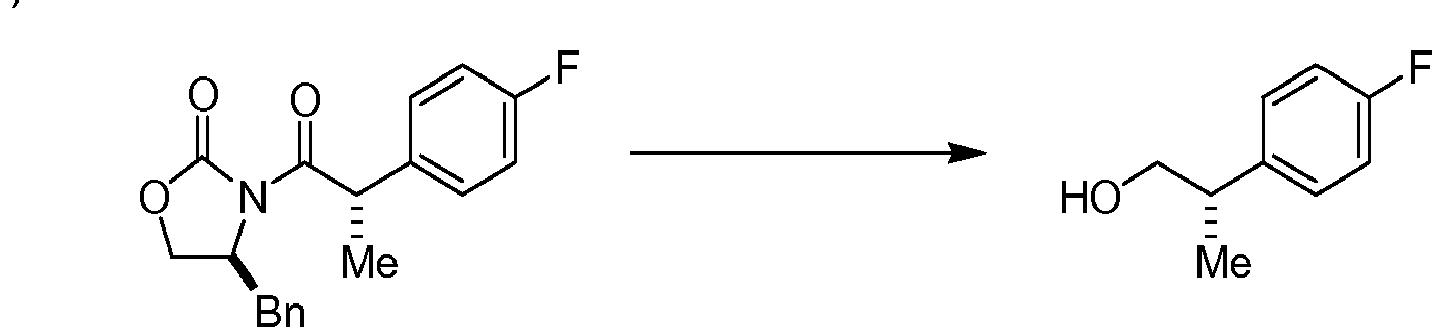
- (S)-2-(4-Fluorophenyl)propan-1-ol. To a room-temperature solution of (S)-4-benzyl-3-((S)-2-(4-fluorophenyl) propanoyl)oxazolidin-2-one (1.8 g, 5.5 mmol, 1.0 equiv) in THF (18 mL) was added a solution of NaBH4 (1.0 g, 26.4 mmol, 4.8 equiv) in water (6.0 mL). The reaction mixture was stirred for 3 h at room temperature and then quenched by the careful addition of aq. 1 M HCl. The reaction mixture was diluted with water and ethyl acetate. The layers were separated and the organic layer was subsequently washed with brine, dried over Na2SO4, filtered and concentrated in vacuo. Purification by silica gel chromatography (10-75% EtOAc/Hexanes) provided the title compound (0.824 g, 97%).

- (S)-2-(2-(4-Fluorophenyl)propyl)isoindoline-1,3-dione. To a solution of (S)-2-(4-fluorophenyl)propan-1-ol (0.82 g, 5.35 mmol, 1.0 equiv), phthalimide (0.82 g, 5.6 mmol, 1.05 equiv), and triphenyl phosphine (2.1 g, 8.03 mmol, 1.5 equiv) in dry THF (18 mL) was added dropwise diethylazodicarboxylate (3.6 mL, 15% in toluene, 8.0 mmol, 1.5 equiv). The reaction mixture was stirred over 72 h and then concentrated in vacuo. Purification by silica gel chromatography (15 - 25% EtOAc/hexanes) provided the title compound (0.9 g, 59%).

- (S)-2-(4-Fluorophenyl)propan-1-amine. To a room-temperature solution of (S)-2-(2-(4-fluorophenyl)propyl)isoindoline-1,3-dione (900 mg, 3.2 mmol, 1.0 equiv) in toluene (14 mL) was added hydrazine hydrate (1.4 mL, 45 mmol, 14 equiv) by syringe. The resulting mixture was heated to 80 °C for 30 minutes and then cooled to room temperature. The resulting solution was decanted from the solid in the reaction mixture, and the solid was washed with additional toluene. The combined organic layers were combined and concentrated in vacuo to provide the title compound (491 mg, 99%), which was used without further purification.
-

- To a solution of 4-fluorophenylacetonitrile (50 g, 370 mmol, 1.0 equiv) and iodomethane (70 mL, 1.1 mol, 3 equiv) in THF (370 mL) was added potassium t-butoxide (124 g, 1.1 mol, 3 equiv) as a solid in portions such that the reaction mixture did not exceed 50 °C. The reaction mixture was stirred overnight and then quenched by the addition of brine. The mixture was diluted with EtOAc and washed twice with brine. The organic layer was dried over Na2SO4, filtered, and concentrated in vacuo to provide 2-(4-fluorophenyl)-2-methylpropanenitrile as a yellow oil (57 g, 94%), which was used without further purification in the next step. To a solution of the nitrile in dry THF (800 mL) was added a solution of lithium aluminum hydride (210 mL, 2 M in ether, 420 mmol, 1.2 equiv). After the mixture was heated at reflux overnight, the reaction was allowed to cool to room temperature, and a Fieser and Fieser work-up (300 uL water/mmol, 1.0 mL 3N NaOH/mmol, 300 uL water/mmol) was performed. Filtration of the resulting solids provided the title compound as an orange oil (57 g, 92%).
-

- A solution of 4-fluorophenylacetonitrile (6.7 g, 75 mmol, 1.5 equiv), 1,3-dibromopropane (10 mL, 50 mmol, 1 equiv), KOH (10.2 g, 150 mmol, 3.0 equiv), and tetrabutylammonium bromide (100 mg) in toluene (135 mL) was heated to 100 °C for 3 hours. The organic layer was separated and concentrated to dryness. Silica gel chromatography using a gradient of 0-30% EtOAc/hexanes resulted in partially purified product which was further purified by Kugelrohr distillation at 200 °C to provide 3.76 g (22 mmol) of the intermediate nitrile product as an oil. The residue was dissolved in dry THF (22 mL) and treated with a solution of lithium aluminum hydride (27 mL, 2 M in ether, 55 mmol, 2.5 equiv). The mixture was stirred at 0 °C for 2 hours followed by a Fieser and Fieser work-up (38 uL water/mmol, 118 uL 3N NaOH/mmol, 38 uL water/mmol). The organic layer was concentrated to dryness to provide the desired product (3.6 g, 40% overall) as a yellow oil.
-

- 2-(3-Fluoropyridin-2-yl)acetonitrile. To a 0 °C solution of 2-chloro-3-fluoropyridine (3.0 g, 23 mmol, 1.0 equiv) and acetonitrile (1.3 mL, 25 mmol, 1.1 equiv) in toluene (50 mL) was added sodium hexamethyldisilazide (NaHMDS) (2.0 M in THF, 13 mL, 25 mmol, 1.1 equiv). The resulting mixture was stirred for 2 hours at 0 °C and then partitioned between EtOAc and water. The aqueous layer was extracted with EtOAc and the combined organic phases were washed with saturated NaCl, dried over Na2SO4 and concentrated in vacuo to provide the crude desired product as an oil which was used without further purification.
-

- 1-(6-Fluoropyridin-2-yl)cyclobutanecarbonitrile. Following the same procedure as above for 2-(3-fluoropyridin-2-yl)acetonitrile with 2,6-difluoropyridine (5.0 g, 43 mmol, 1.0 equiv), cyclobutylcarbonitrile (3.5 g, 43 mmol, 1.0 equiv) and NaHMDS (2.0 M in THF, 24 mL, 47 mmol, 1.1 equiv) in toluene (100 mL) gave the desired product (4.9 g, 64%) as a colorless oil following purification over silica gel using 25% EtOAc/hexanes as eluent.

- 1-(6-Methoxypyridin-2-yl)cyclobutanecarbonitrile. To anhydrous methanol (6.0 mL) at 0 °C under nitrogen was added sodium metal (∼1 g) and the mixture stirred for 30 minutes. To the reaction mixture was added 1-(6-fluoropyridin-2-yl)cyclobutanecarbonitrile (1.6 g, 9.1 mmol) followed by heating to 75 °C and stirring for 45 minutes. The solution was cooled to room temperature and partitioned between water and EtOAc. The layers were separated, the aqueous phase was extracted with EtOAc, and the combined organic phases were washed with saturated NaCl, dried over Na2SO4, and concentrated in vacuo to give the desired product (1.7 g, 97%) as a colorless oil.

- (1-(6-Methoxypyridin-2-yl)cyclobutyl)methanamine. To a stirred solution of 1-(6-methoxypyridin-2-yl)cyclobutanecarbonitrile (1.7 g, 8.8 mmol, 1.0 equiv) in THF (20 mL) was added lithium aluminum hydride solution (1.0 M in THF, 11 mL, 11 mmol, 1.1 equiv). The mixture was refluxed for 1.5 hours and allowed to cool to room temperature. Water (0.43 mL) was added slowly followed by 0.43 mL of 3 M NaOH and then three additions of 0.43 mL of water (Fieser and Fieser workup). The resulting mixture was filtered through diatomaceous earth and rinsed with THF. The combined organics were dried over Na2SO4 and concentrated to dryness to give the desired product (1.6 g, 97%) as a viscous oil.
-

- 1-(3-Fluoropyridin-2-yl)cyclobutanecarboxamide. To a 250 mL round bottom flask containing DMSO (60 mL) was added 1-(3-fluoropyridin-2-yl)cyclobutanecarbonitrile (2.96 g, 16.8 mmol, 1.0 equiv) and the mixture was stirred until homogenous. Potassium carbonate (7.0 g, 50.4 mmol, 3.0 equiv) was then added and the reaction mixture was cooled to 0 °C, followed by the addition of 35% hydrogen peroxide (6.5 mL). The reaction was stirred at 0 °C for 30 min and then warmed to room temperature. At this time, the reaction was diluted with water (50 mL) and ethyl acetate (100 mL). After transferring to a separatory funnel and shaking, the organic layer was separated from the aqueous layer and then washed with brine (3 x 50 mL). The organic layer was then dried over Na2SO4, filtered, and concentrated to give a crude solid that was purified by silica gel chromatography (10% EtOAC/hexanes) to afford 1.92 g (59%) of 1-(3-fluoropyridin-2-yl)cyclobutanecarboxamide as a white solid.

- Methyl 1-(3-fluoropyridin-2-yl)cyclobutylcarbamate. 1-(3-Fluoropyridin-2-yl)cyclobutanecarboxamide (1.92 g, 9.88 mmol, 1.0 equiv) was dissolved in methanol (20 mL) and potassium hydroxide (1.11 g, 19.8 mmol, 2.0 equiv) was added. The reaction was sonicated until homogeneous, followed by the addition of iodosobenzene diacetate (4.77 g, 14.8 mmol, 1.5 equiv). The reaction was stirred for 20 min and then diluted with water (100 mL) and ethyl acetate (125 mL). After transferring to a separatory funnel and shaking, the organic layer was separated from the aqueous layer, and the aqueous layer was extracted with EtOAc (50 mL). The combined organic layers were then dried over Na2SO4, filtered, and concentrated to give a crude oil that was purified by silica gel chromatography (40% EtOAC/hexanes) to afford 1.47 g (67%) of methyl 1-(3-fluoropyridin-2-yl)cyclobutylcarbamate as a white solid.

- 1-(3-Fluoropyridin-2-yl)cyclobutanamine. To a 20 mL microwave reaction vial was added methyl 1-(3-fluoropyridin-2-yl)cyclobutylcarbamate (1.47 g, 6.56 mmol, 1.0 equiv), ethanol (12 mL) and 3N aqueous sodium hydroxide (7 mL). The reaction mixture was heated in the microwave reactor at 150 °C for 30 min. The ethanol was evaporated under reduced pressure and the mixture was extracted with ethyl acetate (30 mL). The aqueous layer was then extracted with ethyl acetate (2 x 30 mL). The organic layers were combined, dried over Na2SO4, filtered, and concentrated to give 1-(3-fluoropyridin-2-yl)cyclobutanamine (1.01 g, 93%) as a crude yellow oil that was used in the next reaction step without further purification.
-

- 5-Bromo-N-(2-(4-fluorophenyl)-2-methylpropyl)pyrimidin-2-amine. To a 20 dram vial was added 2-chloro-5-bromopyridine (440 mg, 2.3 mmol, 1.1 equiv), 2-(4-fluorophenyl)-2-methylpropan-1-amine (350 mg, 2.1 mmol, 1.0 equiv), DIPEA (1.0 mL, 5.7 mmol, 2.7 equiv), and toluene (5 mL). The vial was heated in an oil bath to 80 °C and stirred for 12 h, concentrated, and purified by silica gel column chromatography (0-30% EtOAc/hexanes) to give 270 mg (40%) of 5-bromo-N-(2-(4-fluorophenyl)-2-methylpropyl)pyrimidin-2-amine as a white solid.
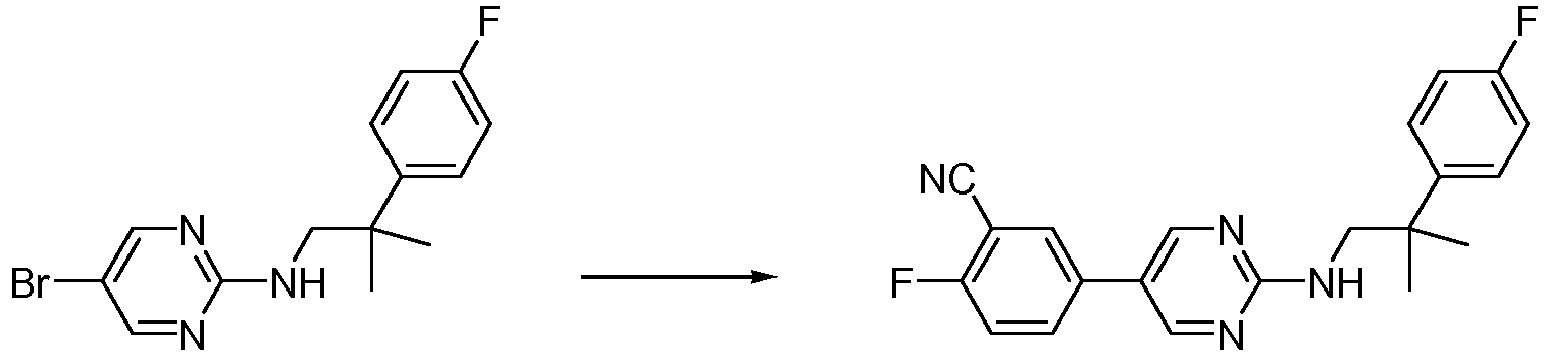
- 2-Fluoro-5-(2-(2-(4-fluorophenyl)-2-methylpropylamino)pyrimidin-5-yl)benzonitrile. To a 5 mL microwave reaction vessel was added 5-bromo-N-(2-(4-fluorophenyl)-2-methylpropyl)pyrimidin-2-amine (267 mg, 0.8 mmol, 1.0 equiv), 3-cyano-4-fluorophenylboronic acid (203 mg, 1.2 mmol, 1.5 equiv), Cl2Pd(dppf) (60 mg, 82 µmol, 0.1 equiv), potassium carbonate (1.2 mL of a 2N aqueous solution, 2.4 mmol, 3.0 equiv), and dioxane (4 mL). The reaction was heated in a microwave reactor at 120 °C for 20 min. The aqueous layer was removed from the reaction, and the organic layer was directly purified by reverse phase column chromatography to give 220 mg (73%) of 2-fluoro-5-(2-(2-(4-fluorophenyl)-2-methylpropylamino)pyrimidin-5-yl)benzonitrile as a white solid.

- 5-(2-(2-(4-Fluorophenyl)-2-methylpropylamino)pyrimidin-5-yl)-1H-indazol-3-amine. To a 5 mL microwave reaction vessel was added 2-fluoro-5-(2-(2-(4-fluorophenyl)-2-methylpropylamino)pyrimidin-5-yl)benzonitrile (220 mg, 0.6 mmol), hydrazine (500 µL), and propanol (5 mL). The reaction was heated to 120 °C and stirred for 3 h. The reaction was concentrated and purified by reverse phase column chromatography to give 95 mg (42%) of 5-(2-(2-(4-fluorophenyl)-2-methylpropylamino)pyrimidin-5-yl)-1H-indazol-3-amine as a white solid (m/z [M+H] = 377.1).
-

- To a 20 dram vial was added methyl 2-chloropyrimidine-5-carboxylate (250 mg, 1.4 mmol, 1.0 equiv), 2-(4-fluorophenyl)-2-methylpropan-1-amine (468 mg, 2.8 mmol, 2.0 equiv), DIPEA (1.0 mL, 5.6 mmol, 4.0 equiv), and toluene (5 mL). The vial was heated in an oil bath to 60 °C and stirred for 20 min, concentrated, and purified by silica gel column chromatography (0-50% EtOAc/hexanes) to give 325 mg (77%) of methyl 2-(2-(4-fluorophenyl)-2-methylpropylamino)pyrimidine-5-carboxylate as a white solid (m/z [M+H] = 304.1).
-

- 5-Bromo-N-(2-(4-fluorophenyl)-2-methylpropyl)pyrimidin-2-amine. To a solution of 5-bromo-2-fluoropyrimidine (1.0 g, 5.6 mmol, 1.0 equiv) and 2-(4-fluorophenyl)-2-methylpropan-1-amine (1.05 g, 6.3 mmol. 1.1 equiv) in isopropanol (12 mL) in a microwave vial equipped with a stir bar was added potassium carbonate (3.68 g, 11.2 mmol, 2.0 equiv). The vial was fitted with a microwave vial cap and heated to 120 °C for 45 min. The reaction mixture was filtered to remove the solid potassium carbonate and concentrated in vacuo. After the residue was redissolved in EtOAc and water, the organic layer was washed with brine, dried over sodium sulfate and concentrated in vacuo. Purification by silica gel chromatography (3% - 5% MeOH/DCM) provided the title compound as a yellow solid (1.15 g, 65%), (m/z [M+H] = 324.2).

- 3-(2-(2-(4-Fluorophenyl)-2-methylpropylamino)pyrimidin-5-yl)benzamide. To a microwave vial equipped with a stirbar was added 5-bromo-N-(2-(4-fluorophenyl)-2-methylpropyl)pyrimidin-2-amine (75 mg, 0.23 mmol, 1.0 equiv), 3-(carboxyamino)phenylboronic acid (25 mg, 0.35 mmol, 1.5 equiv) and (dppf)PdCl2 (18 mg, 0.23 mmol, 1.0 equiv) as solids. The vial was fixed with a rubber septum and purged with a stream of nitrogen for 5 min. Nitrogen-sparged dioxane (1 mL) and aq. 2 N K2CO3 (0.5 mL) were added by syringe, and the rubber septum was quickly replaced with a microwave vial cap. After the reaction was heated in a microwave reactor for 30 min at 125 °C, LCMS analysis indicated consumption of the aryl bromide. The reaction mixture was diluted with EtOAc. The organic layer was washed once with satd. aq. NaHCO3 and once with brine. The combined aqueous layers were washed once with EtOAc, and the combined organic layers were dried over sodium sulfate, filtered, and concentrated in vacuo. Purification by silica gel chromatography (3% - 10% MeOH/DCM) provided the title compound as a light yellow solid (44 mg, 52%), (m/z [M+H] = 365.3).
-

- 1-(3-Fluoropyridin-2-yl)cyclobutanecarbonitrile. To a 0 °C solution of 2-chloro-3-fluoropyridine (80.0 g, 611 mmol, 1.0 equiv) and cyclobutane carbonitrile (49.5 g, 611 mmol, 1.0 equiv) in toluene (500 mL) was added sodium hexamethyldisilazide (2.0 M in THF, 306 mL, 612 mmol, 1.0 equiv) in a dropwise manner. The resulting mixture was allowed to slowly warm to room temperature and stirred overnight. The reaction was then quenched with water (500 mL), and the organic layer was separated from the aqueous layer. The aqueous layer was extracted with EtOAc (2x300 mL), and the combined organic phases were washed with saturated brine solution (2x400 mL), dried over Na2SO4, concentrated to give a crude yellow oil, and chromatographed with silica gel (2-10% EtOAc/hex) to give 1-(3-fluoropyridin-2-yl)cyclobutanecarbonitrile (88 g, 83%) as a pale yellow oil.

- (1-(3-Fluoropyridin-2-yl)cyclobutyl)methanamine. To a 0 °C solution of 1-(3-fluoropyridin-2-yl)cyclobutanecarbonitrile (88 g, 500 mmol, 1.0 equiv) in THF (400 mL) was added LAH (2M in THF, 575 mL, 1.15 mol) in a dropwise manner over one hour. The reaction was then warmed to room temperature and stirred for 15 min. After the reaction was complete, it was cooled back down to 0 °C and quenched slowly with water (43 mL), 3 N NaOH (43 mL), and water (125 mL). The quenched reaction was stirred for 30 min and then filtered through Celite. The filtrate was concentrated and dried in vacuo to give (1-(3-fluoropyridin-2-yl)cyclobutyl)methanamine (80 g, 88%) as a crude yellow oil that was used without purification.
-

- 2-(6-Fluoropyridin-2-yl)-2-methylpropanenitrile. To a 0 °C solution of 2,6-difluoropyridine (69.6 g, 605 mmol, 1.0 equiv) and isobutyronitrile (41.7 g, 610 mmol, 1.0 equiv) in toluene (500 mL) was added sodium hexamethyldisilazide (2.0 M in THF, 302 mL, 605 mmol, 1.0 equiv) in a dropwise manner. The resulting mixture was allowed to slowly warm to room temperature and stirred overnight. The reaction was then quenched with water (500 mL), and the organic layer was separated from the aqueous layer. The aqueous layer was extracted with EtOAc (2x300 mL), and the combined organic phases were washed with saturated brine solution (2x400 mL), dried over Na2SO4, concentrated to give a crude yellow oil, and chromatographed with silica gel (2-10% EtOAc/hex) to give 2-(6-fluoropyridin-2-yl)-2-methylpropanenitrile (55.7 g, 56%) as a clear oil.

- 2-(6-Methoxypyridin-2-yl)-2-methylpropanenitrile. To a solution of 2-(6-fluoropyridin-2-yl)-2-methylpropanenitrile (10 g) in methanol (30 mL) was added sodium methoxide (50 mL of a 30% solution in methanol). The reaction was then refluxed for 1 h, cooled to rt, poured into ethyl acetate (400 mL), and washed with brine (3x200 mL). The organic layer was dried over Na2SO4 and concentrated to give 2-(6-methoxypyridin-2-yl)-2-methylpropanenitrile (9.8 g, 92%) as a pale yellow oil.

- 2-Methyl-2-(6-oxo-1,6-dihydropyridin-2-yl)propanenitrile. To a 20 dram microwave vial was added 2-(6-methoxypyridin-2-yl)-2-methylpropanenitrile (7 g, 40 mmol) and 4N HCI in dioxane (15 mL). The reaction was then sealed and heated in a microwave reactor at 190 °C for 30 min. This reaction was repeated six times using the procedure above. These reactions were combined and filtered. The resultant white solid was washed with 20% EtOAc/hexanes and then dried in vacuo to afford 2-methyl-2-(6-oxo-1,6-dihydropyridin-2-yl)propanenitrile (24.7 g, 77%) as a white solid.

- 2-(6-(Difluoromethoxy)pyridin-2-yl)-2-methylpropanenitrile. To a 100 mL round bottom flask was added 2-methyl-2-(6-oxo-1,6-dihydropyridin-2-yl)propanenitrile (8.2 g, 51 mmol, 1.0 equiv), methyl chlorodifluoroacetate (14.9 g, 103 mmol, 2.0 equiv), cesium carbonate (23.3 g, 71 mmol, 1.4 equiv), and DMF (100 mL). The reaction was heated to 95 °C and stirred for 3 hours. The reaction was then quenched with water (100 mL) and diluted with EtOAc (500 mL). The organic layer was separated from the aqueous layer. The aqueous layer was extracted with EtOAc (100 mL), and the combined organic phases were washed with saturated brine solution (3x200 mL), dried over Na2SO4, concentrated, and chromatographed with silica gel (2-5% EtOAc/hex) to give 2-(6-(difluoromethoxy)pyridin-2-yl)-2-methylpropanenitrile (6.2 g, 57%) as a clear oil.

- 2-(6-(Difluoromethoxy)pyridin-2-yl)-2-methylpropanamide. To a 1 L round bottom flask was added 2-(6-(difluoromethoxy)pyridin-2-yl)-2-methylpropanenitrile (19.2 g, 91 mmol, 1 equiv), potassium carbonate (37.0 g, 270 mmol, 3 equiv), and DMSO (150 mL). The reaction was cooled to 0 °C and 30% hydrogen peroxide (25 mL) was added slowly in 2 mL portions over ten minutes. The reaction was then warmed to room temperature and stirred for 1 h. After consumption of starting material, the reaction was poured into ethyl acetate (600 mL), washed with brine (3x300 mL), dried over Na2SO4, and concentrated to give 2-(6-(difluoromethoxy)pyridin-2-yl)-2-methylpropanamide (20 g, 97%) as a clear oil.

- Methyl 2-(6-(difluoromethoxy)pyridin-2-yl)propan-2-ylcarbamate. To a 500 mL round bottom flask was added 2-(6-(difluoromethoxy)pyridin-2-yl)-2-methylpropanamide (20.0 g, 91 mmol, 1 equiv) and methanol (150 mL). The mixture was cooled to 0 °C and sodium hydroxide solution (7.3 g dissolved in 150 mL of methanol, 182 mmol, 2.0 equiv) was added. The reaction was stirred for 2 minutes, and iodosobenzenediacetate (40.8 g, 127 mmol, 1.4 equiv) was added. The reaction was stirred for 2 hours while warming slowly to rt. The reaction was then poured into ethyl acetate (700 mL), washed with saturated brine solution (2x400 mL), dried over Na2SO4, concentrated, and chromatographed with silica gel (10-20% EtOAc/hex) to afford methyl 2-(6-(difluoromethoxy)pyridin-2-yl)propan-2-ylcarbamate (12.4 g, 55%) as a white solid.

- 2-(6-(Difluoromethoxy)pyridin-2-yl)propan-2-amine. To a solution of 2-(6-(difluoromethoxy)pyridin-2-yl)propan-2-ylcarbamate (12.4 g, 48 mmol) in acetonitrile (50 mL) was added TMSI (10 mL). The reaction was stirred 30 min and then poured into methanol (100 mL) and water (5 mL). The mixture was concentrated, dissolved in ethyl acetate (200 mL), and then washed with 1N NaOH (2x30 mL). The organic layer was separated, dried over Na2SO4, concentrated, and chromatographed with silica gel (50% EtOAc/hex, then 5-20 % MeOH/CH2Cl2) to afford 2-(6-(difluoromethoxy)pyridin-2-yl)propan-2-amine (8.8 g, 92%) as a yellow oil.
-

- 1-(3-Fluoropyridin-2-yl)-3-methylenecyclobutanecarbonitrile. To a solution of 3-methylenecyclobutanecarbonitrile (150 g, 1.61 mol, 1 equiv) and 2-chloro-3-fluoropyridine (212 g, 1.61 mmol, 1 equiv) in toluene (1 L) was added NaHMDS (2 M in THF, 885 mL, 1.1 equiv) dropwise at 0-10 °C. Upon completion of addition, the reaction mixture was warmed to rt, stirred overnight, and quenched with NH4Cl(sat.) solution. The organic layer was washed with water (2x500 mL) and brine (500 mL), dried over Na2SO4, filtered, and concentrated to give the crude title compound (272 g, 90%) which was used in next step without further purification. LRMS (M+H+) m/z 189.1.

- 1-(3-Fluoropyridin-2-yl)-3-oxocyclobutanecarbonitrile. To a mixture of 1-(3-fluoropyridin-2-yl)-3-methylenecyclobutanecarbonitrile (272 g, 1.45 mol) and RuCl3.H2O (9.0 g, 0.044 mol) in DCM (1 L), acetonitrile (1 L), and water (1.5 L) mixture was added solid NaIO4 (1235 g, 5.8 mol) portionwise at 10-30 °C. Upon the completion of addition, the reaction was stirred 1 h at 15 °C and overnight at rt. The solid precipitate was filtered off and washed with DCM (2x1000 mL). The organic layer was washed with water (2x500 mL) and brine (500 mL), dried over Na2SO4, and concentrated to provide a crude title compound as a dark solid (238 g, 86.3%). LRMS (M+H+) m/z 191.1.

- 1-(3-Fluoropyridin-2-yl)-3-hydroxycyclobutanecarbonitrile. To a solution of 1-(3-fluoropyridin-2-yl)-3-oxocyclobutanecarbonitrile (231 g, 1.22 mol) in a mixture of DCM (2 L) and MeOH (200 mL) was added NaBH4 portionwise at -78 °C. The reaction mixture was stirred at -78 °C for 1 h and quenched with a mixture of methanol and water (1/1). The organic layer was washed with water (500 mL x 3), dried over Na2SO4, and concentrated. The residue was purified on silica gel (50% EtOAc/hexanes) to provide the title compound as an amber oil (185.8 g, 77.5%). LRMS (M+H+) m/z 193.2.

- trans-3-Fluoro-1-(3-fluoropyridin-2-yl)cyclobutanecarbonitrile To a solution of 1-(3-fluoropyridin-2-yl)-3-hydroxycyclobutanecarbonitrile (185 g, 0.96 mol) in DCM (1 L) was added DAST portionwise at 0-10 °C. Upon the completion of addition, the reaction was refluxed for 6 h. The reaction was cooled to rt and poured onto sat. NaHCO3 solution. The mixture was separated and the organic layer was washed with water, dried over Na2SO4, and concentrated. The residue was purified on silica gel (100% DCM) to provide the title compound as a brown oil (116 g, 62%) in a 8:1 trans:cis mixture. The above brown oil (107 g) was dissolved in toluene (110 mL) and hexanes (330 mL) at 70 °C. The solution was cooled to 0 °C and stirred at 0 °C overnight. The precipitate was filtered and washed with hexanes to provide the trans isomer as a white solid (87.3 g, 81.6%). LRMS (M+H+) m/z 195.1.

- trans-3-Fluoro-1-(3-fluoropyridin-2-yl)cyclobutyl)methanamine. A mixture of trans-3-fluoro-1-(3-fluoropyridin-2-yl)cyclobutanecarbonitrile (71 g, 0.37 mol) and Raney nickel (∼7 g) in 7N ammonia in methanol (700 mL) was charged with hydrogen (60 psi) for 2 days. The reaction was filtered through a celite pad and washed with methanol. The filtrate was concentrated under high vacuum to provide the title compound as a light green oil (70 g, 97.6%). LRMS (M+H+) m/z 199.2.
-

- A mixture of trans-3-fluoro-1-(3-fluoropyridin-2-yl)cyclobutyl)methanamine (37.6 g, 190 mmol), 5-bromo-2-fluoropyrimidine (32.0 g, 181 mmol), DIPEA (71 mL, 407 mmol), and NMP (200 mL) was stirred at rt overnight. The reaction mixture was then diluted with EtOAc (1500 mL) and washed with saturated sodium bicarbonate (500 mL). The organic layer was separated, dried over Na2SO4, and concentrated. The resultant solid was dissolved in THF (600 mL), followed by the slow addition of DMAP (14 g, 90 mmol) and Boc2O (117.3 g, 542 mmol). The reaction was heated to 60 °C and stirred for 3 h. The reaction mixture was then concentrated and purified by silica gel chromatography (EtOAc/hex) to give 59.7 g of t-butyl 5-bromopyrimidin-2-yl((trans-3-fluoro-1-(3-fluoropyridin-2-yl)cyclobutyl)methyl)carbamate as a white solid.
-

- t-Butyl 5-(3-cyano-1H-pyrrol-1-yl)pyrimidin-2-yl(((trans)-3-fluoro-1-(3-fluoropyridin-2-yl)cyclobutyl)methyl)carbamate. To a solution of t-butyl 5-bromopyrimidin-2-yl((trans-3-fluoro-1-(3-fluoropyridin-2-yl)cyclobutyl)methyl) carbamate (1.0 g, 2.8 mmol) in 15 mL of toluene (degassed with nitrogen) was added copper iodide (100 mg, 0.6 mmol), potassium phosphate (1.31 g, 6.2 mmol), trans-N,N'-dimethylcyclohexane-1,2-diamine (320 mg, 2.2 mmol), and 3-cyanopyrrole (310 mg, 3.6 mmol). The reaction was heated to 100 °C and stirred for 2 h. The reaction was then concentrated and purified by silica gel chromatography (EtOAc/hexanes) to afford 1.1 g of t-butyl 5-(3-cyano-1H-pyrrol-1-yl)pyrimidin-2-yl(((trans)-3-fluoro-1-(3-fluoropyridin-2-yl)cyclobutyl)methyl)carbamate as a clear oil.

-

- To a 20 mL microwave vial was added t-butyl 5-bromopyrimidin-2-yl((trans-3-fluoro-1-(3-fluoropyridin-2-yl)cyclobutyl)methyl)carbamate (850 mg, 1.95 mmol), ethyl thiazole-5-carboxylate (459 mg, 2.92 mmol), Cl2Pd(PPh3)2 (205 mg, 0.29 mmol), Johnphos (213 mg, 0.58 mmol), Cs2CO3 (1.9 g, 5.85 mmol) and toluene (8 mL). The reaction was stirred and heated at 140 °C for 30 min in a microwave reactor. The reaction mixture was then was poured into ethyl acetate (100 mL), washed with NaHCO3 (50 mL), washed with brine (50 mL), and then dried over Na2SO4, filtered, concentrated, and purified by silica gel chromatography (EtOAC/hexanes) to afford 191 mg of methyl 2-(2-(t-butoxycarbonyl((trans-3-fluoro-1-(3-fluoropyridin-2-yl)cyclobutyl)methyl)amino)pyrimidin-5-yl)thiazole-5-carboxylate. This compound was subsequently dissolved in ethanol (4 mL), and ammonium hydroxide (2 mL) was added. The reaction was heated to 60 °C and stirred for 30 min. The reaction was then concentrated, dissolved in CH2Cl2 (30 mL), washed with NaHCO3 (10 mL), washed with brine (10 mL), and then dried over MgSO4, filtered, and concentrated. The crude solid was redissolved in CH2Cl2 (5 mL) and TFA (2 mL) was added. The reaction was stirred at rt for 30 min, concentrated, and then purified by reverse phase chromatography to yield 51 mg of 2-(2-((trans-3-fluoro-1-(3-fluoropyridin-2-yl)cyclobutyl)methylamino)pyrimidin-5-yl)thiazole-5-carboxamide as white solid (M+H=385.1).
-

- 4-Fluoro-3-(2-((trans-3-fluoro-1-(3-fluoropyridin-2-yl)cyclobutyl)methylamino)pyrimidin-5-yl)-2-methoxybenzonitrile. To a 250 mL round bottom flask was added t-butyl 5-bromopyrimidin-2-yl((trans-3-fluoro-1-(3-fluoropyridin-2-yl)cyclobutyl)methyl)carbamate (5.0 g, 11.0 mmol), 3-bromo-6-fluoro-2-methoxyphenylboronic acid (2.7 g, 11.0 mmol), (dppf)PdCl2 (0.80 g, 1.1 mmol), dioxane (25 mL degassed for 10 min with nitrogen), K2CO3 (3.0 g, 22 mmol), and water (4 mL). The mixture was heated to 95 °C and stirred overnight. The reaction mixture was then was poured into ethyl acetate (200 mL), washed sequentially with NaHCO3 (50 mL) and brine (50 mL), and then dried over Na2SO4, filtered, concentrated, and purified by silica gel chromatography to afford 2.4 g (4.1 mmol) of 5-(3-bromo-6-fluoro-2-methoxyphenyl)-N-((trans-3-fluoro-1-(3-fluoropyridin-2-yl)cyclobutyl)methyl)pyrimidin-2-amine as a pale yellow solid. To this solid was added zinc cyanide (0.76 g, 6.5 mmol), Pd(PPh3)4 (2.9 g, 2.5 mmol), and DMF (25 mL). The mixture was heated to 100 °C for 2 h and then diluted with EtOAc and washed with satd. aq. NaHCO3 and brine. The organic layer was dried over sodium sulfate, filtered, concentrated, and purified using reverse phase chromatography to afford 1.1 grams of 4-fluoro-3-(2-((trans-3-fluoro-1-(3-fluoropyridin-2-yl)cyclobutyl)methylamino)pyrimidin-5-yl)-2-methoxybenzonitrile.

- 4-Fluoro-3-(2-((trans-3-fluoro-1-(3-fluoropyridin-2-yl)cyclobutyl)methylamino)pyrimidin-5-yl)-2-hydroxybenzamide. To a mixture of 4-fluoro-3-(2-((trans-3-fluoro-1-(3-fluoropyridin-2-yl)cyclobutyl)methylamino)pyrimidin-5-yl)-2-methoxybenzonitrile (1.0 g, 1.9 mmol), K2CO3 (0.8 g, 5.7 mmol), and DMSO (5 mL) were combined in a round bottom flask and cooled to 0 °C. H2O2 (8.0 mL of 35% solution) was added dropwise. The reaction was warmed to rt and stirred for 1 h. The reaction mixture was diluted with EtOAc and washed with satd. aq. NaHCO3 and brine (three times). The organic layer was dried over sodium sulfate, filtered, and concentrated, and purified by reverse phase chromatography to provide 0.55 g (1 mmol) of 4-fluoro-3-(2-((trans-3-fluoro-1-(3-fluoropyridin-2-yl)cyclobutyl)methylamino)pyrimidin-5-yl)-2-methoxybenzamide a white solid. This compound was mixed with pyridine (6 mL) and Lil (1.22 g, 9 mmol) and heated in a microwave reactor at 125 °C for 15 min. The reaction mixture was diluted with EtOAc and washed with satd. aq. NaHCO3 and brine. The organic layer was dried over sodium sulfate, filtered, and concentrated, and purified by reverse phase chromatography to afford 163 mg of 4-fluoro-3-(2-((trans-3-fluoro-1-(3-fluoropyridin-2-yl)cyclobutyl)methylamino)pyrimidin-5-yl)-2-hydroxybenzamide as a white solid (M+H+430.1).
-

- To a 50 mL round bottom flask was added t-butyl 5-bromopyrimidin-2-yl((1-(3-chloropyridin-2-yl)cyclobutyl)methyl)carbamate (1.0 g, 2.2 mmol), Pd(PPh3)4 (0.25 g, 0.22 mmol), hexamethylditin (0.92 mL, 2.2 mmol), LiCI (0.25 g, 5.9 mmol), and dioxane (10 mL). The mixture was heated to 90 °C for 1 h. To the resultant dark brown solution was added 2-(2-bromothiazol-5-yl)acetonitrile (0.89 g, 4.4 mmol), Pd(PPh3)4 (0.076 g, 0.066 mmol), and CuI (4.2 g, 22.2 mmol). The reaction mixture was stirred at 90 °C for 1 h. The reaction was then cooled to rt, diluted with ethyl acetate (50 mL), and filtered through Celite. The filtrate was washed with water (30 mL) and brine (30 mL). The organic layer was dried over sodium sulfate, filtered, and concentrated, and purified by silica gel chromatography (EtOAc/hex) to afford 222 mg of t-butyl (1-(3-chloropyridin-2-yl)cyclobutyl)methyl(5-(5-(cyanomethyl)thiazol-2-yl)pyrimidin-2-yl)carbamate as a viscous brown oil. To this compound was added potassium carbonate (185 mg, 1.3 mmol) and DMSO (3 mL). The mixture was cooled to 0 °C and hydrogen peroxide (0.5 mL) was slowly added. The reaction was warmed to rt and stirred for 1 h. The reaction was diluted with EtOAc (75 mL) and washed three times with brine (50 mL). The organic layer was then dried over Na2SO4, filtered, and concentrated to give a crude solid that was purified by reverse phase chromatography to afford 48 mg of t-butyl 5-(5-(2-amino-2-oxoethyl)thiazol-2-yl)pyrimidin-2-yl((1-(3-chloropyridin-2-yl)cyclobutyl)methyl)carbamate as a white solid. This compound was dissolved in 25% TFA/CH2Cl2 and stirred for 10 min. The reaction was then concentrated, dissolved in ethyl acetate (75 mL), and washed three times with saturated sodium bicarbonate solution. The organic layer was dried over Na2SO4, filtered, and concentrated to give 39 mg of 2-(2-(2-((1-(3-chloropyridin-2-yl)cyclobutyl)methylamino)pyrimidin-5-yl)thiazol-5-yl)acetamide as a white solid (M+H=415.1).
-

- 3-(2-(((trans)-3-fluoro-1-(3-fluoropyridin-2-yl)cyclobutyl)methylamino)pyrimidin-5-yl)-4-hydroxybenzoic acid. To a 20 mL microwave tube was added 5-bromo-N-(((trans)-3-fluoro-1-(3-fluoropyridin-2-yl)cyclobutyl)methyl)pyrimidin-2-amine (1.2 g, 3.8 mmol), methyl 4-hydroxy-3-(4,4,5,5-tetramethyl-1,3,2-dioxaborolan-2-yl)benzoate (1.1 g, 4.0 mmol), (dppf)PdCl2 (0.25 g, 0.38 mmol), dioxane (15 mL), K2CO3 (1.4 g, 10.1 mmol), and water (3 mL). The mixture was heated to 135 °C and stirred for 15 min. The reaction mixture was then was poured into ethyl acetate (200 mL), washed with brine (50 mL), and dried over Na2SO4, filtered, concentrated, and purified by silica gel chromatography (EtOAc/hex) to afford 0.65 g of methyl 3-(2-(((trans)-3-fluoro-1-(3-fluoropyridin-2-yl)cyclobutyl)methylamino)pyrimidin-5-yl)-4-hydroxybenzoate as a tan solid. This compound was dissolved in methanol (7 mL) and KOH (2 mL of a 3N aqueous solution) was added. The reaction was stirred at 80 °C for 1 h and then was concentrated. The crude residue was purified by reverse phase chromatography to afford 0.24 g of 3-(2-(((trans)-3-fluoro-1-(3-fluoropyridin-2-yl)cyclobutyl)methylamino)pyrimidin-5-yl)-4-hydroxybenzoic acid as a white solid.

- 3-(2-((trans-3-Fluoro-1-(3-fluoropyridin-2-yl)cyclobutyl)methylamino)pyrimidin-5-yl)-4-hydroxy-N-methylbenzamide. To a 50 mL round bottom flask was added 3-(2-(((trans)-3-fluoro-1-(3-fluoropyridin-2-yl)cyclobutyl)methylamino)pyrimidin-5-yl)-4-hydroxybenzoic acid (147 mg, 0.36 mmol), HATU (204 mg, 0.54 mmol), HOBT (72 mg, 0.54 mmol), methylamine hydrochloride (239 mg, 3.6 mmol), DIPEA (187 µL, 1.1 mmol), and DMF (1.5 mL). The reaction mixture was stirred at rt overnight. The reaction mixture was concentrated and purified by reverse phase chromatography to afford 93 mg of 3-(2-((trans-3-fluoro-1-(3-fluoropyridin-2-yl)cyclobutyl)methylamino)pyrimidin-5-yl)-4-hydroxy-N-methylbenzamide as a white solid (M+H=412.1).
-

- 2-Bromo-1-(2-(2-(3-chloropyridin-2-yl)propan-2-ylamino)pyrimidin-5-yl)ethanone. To a stirring solution of dioxane (50 mL, degassed) was added 5-bromo-N-(2-(3-chloropyridin-2-yl)propan-2-yl)pyrimidin-2-amine (3.0 g, 12 mmol), Cl2Pd(PPh3)2 (0.65 g, 1.2 mmol), and tributyl(1ethoxyvinyl)tin (2.66 mL, 13.8 mmol). The reaction was heated to 90 °C and stirred for 2 h. The reaction was then concentrated, followed by the addition of EtOAc (100 mL) and potassium fluoride (50 mL of a saturated aqueous solution). The mixture was stirred for 10 min and then filtered through a pad of celite. The filtrate was concentrated and then dissolved in THF (20 mL) and water (20 mL). NBS (4.9 g, 27.6 mmol) was then added, and the reaction was stirred for 20 min at rt. The reaction mixture was poured into ethyl acetate (200 mL), washed with saturated aqueous sodium bicarbonate (50 mL), dried over Na2SO4, filtered, concentrated, and purified by silica gel chromatography to afford 1.5 g of 2-bromo-1-(2-(2-(3-chloropyridin-2-yl)propan-2-ylamino)pyrimidin-5-yl)ethanone as a white powder.

- 6-(2-(2-(3-Chloropyridin-2-yl)propan-2-ylamino)pyrimidin-5-yl)imidazo[2,1-b]thiazole-3-carboxamide. To a 20 dram vial was added 2-bromo-1-(2-(2-(3-chloropyridin-2-yl)propan-2-ylamino)pyrimidin-5-yl)ethanone (103 mg, 0.28 mmol), ethyl-2-aminothiazole-4-carboxylate (48 mg, 0.28 mmol), and methylethylketone (2 mL). The mixture was heated to 90 °C in a sealed tube and stirred overnight. The reaction was then concentrated and purified by silica gel chromatography (EtOAc/hex) to afford 33 mg of ethyl 6-(2-(2-(3-chloropyridin-2-yl)propan-2-ylamino)pyrimidin-5-yl)imidazo[2,1-b]thiazole-3-carboxylate as a tan solid. This compound was dissolved in methanol (1 mL) and ammonium hydroxide (3 mL) was added. The resulting mixture was heated in a microwave reactor to 135 °C and stirred for 15 min. The reaction was concentrated, followed by the addition of HBTU (68 mg, 179 µmol), HOBt (24 mg, 179 µmol), NH4Cl (48 mg, 1.1 mmol), DIPEA (78 µL, 441 µmol), and NMP (2 mL). The reaction was stirred for 2 h and then purified directly by reverse phase chromatography to afford 18 mg of 6-(2-(2-(3-chloropyridin-2-yl)propan-2-ylamino)pyrimidin-5-yl)imidazo[2,1-b]thiazole-3-carboxamide as an off-white solid (M+H=414.1).
-

- 4-(2-chloropyrimidin-5-yl)picolinonitrile. 4-bromoopicolinonitrile (11.8 g, 74.5 mmol), 2-chloropyrimidin-5-ylboronic acid (15.0 g, 82.0 mmol), (dppf)PdCl2 (5.5 g, 7.45 mmol), dioxane (150 mL, degassed with nitrogen), and aq. 2 N K2CO3 (33 mL) were combined and heated in a round bottom flask at 100 °C overnight. The hot mixture was filtered through a pad of Celite, diluted with EtOAc, washed with water, concentrated, and purified using silica gel chromatography to afford 4-(2-chloropyrimidin-5-yl)picolinonitrile as a tan solid (2.1 g, 13%).

- 4-(2-(((cis)-3-fluoro-1-(3-fluoropyridin-2-yl)cyclobutyl)methylamino)pyrimidin-5-yl)picolinamide. 4-(2-chloropyrimidin-5-yl)picolinonitrile (0.9 g, 4.2 mmol), (3-fluoro-1-(3-fluoropyridin-2-yl)cyclobutyl)methanamine (1.0 g, 5.0 mmol), DIPEA (1 mL), and ACN (20 mL) were mixed and heated at 90 °C for 4 h. The reaction mixture was concentrated, diluted with EtOAc, and washed with sat. aq. NaHCO3 and brine. The organic layer was dried over sodium sulfate, filtered, concentrated, and purified using reverse phase chromatography to afford 4-(2-(((cis)-3-fluoro-1-(3-fluoropyridin-2-yl)cyclobutyl)methylamino)pyrimidin-5-yl)picolinonitrile as a clear oil (the cis isomer elutes first). This compound was then treated with DMSO (3 mL), K2CO3 (200 mg), and H2O2 (2 mL). The reaction mixture was stirred for 4 h and then diluted with EtOAc and washed with brine. The organic layer was dried over sodium sulfate, filtered, concentrated, and purified using reverse phase chromatography to afford 93 mg of 4-(2-(((cis)-3-fluoro-1-(3-fluoropyridin-2-yl)cyclobutyl)methylamino)pyrimidin-5-yl)picolinamide as an off white solid (m/z [M+H] = 397.2).
- Preparation of fast skeletal myofibrils. Rabbit skeletal myofibrils were prepared based upon the method of Herrmann et al. (Biochem. 32(28):7255-7263(1993). Myofibrils were prepared from rabbit psoas muscle purchased from Pel-Freez Biologicals (Arkansas) within 2 days of ordering, stored on ice. Minced muscle was homogenized in 10 volumes of ice-cold "standard" buffer (50mM Tris, pH 7.4, 0.1 M potassium acetate, 5 mM KCI, 2 mM DTT, 0.2 mM PMSF, 10 µM leupeptin, 5 µM pepstatin, and 0.5 mM sodium azide) containing 5 mM EDTA and 0.5% Triton X-100 using an Omni-Macro homogenizer. Myofibrils were recovered by low speed centrifugation (3000 rpm for 10 minutes) and washed 2 times in the Triton X-100 containing buffer to ensure removal of cellular membrane. Following the Triton washes, myofibrils were washed 3 times in "standard" buffer containing 2 mM magnesium acetate. A final wash in assay buffer (12 mM PIPES, pH 6.8, 60 mM KCI, 1 mM DTT) was performed and brought to 10% sucrose for flash freezing in liquid nitrogen and storage at -80°C.
- Activation of Fast Skeletal Myofibrils. Fast fiber activators were identified by measuring the enzymatic activity of muscle myofibril preparations using the proprietary PUMA™ (see, e.g.,
U.S. Patent Nos. 6,410,254 ,6,743,599 ,7,202,051 , and7,378,254 ) assay system. Myofibril preparations consisted of rabbit skeletal muscle (approximately 90% fast fibers) that had been mechanically homogenized and washed with a detergent (triton X-100) to remove cellular membranes. This preparation retained all of the sarcomeric components in a native conformation and the enzymatic activity was still regulated by calcium. Compounds were tested using a myofibril suspension and a level of calcium sufficient to increase enzymatic activity of the myofibrils to 25% of their maximal rate (termed pCa25). Enzymatic activity was tracked via a pyruvate kinase and lactate dehydrogenase-coupled enzyme system. This assay regenerates myosin-produced ADP into ATP by oxidizing NADH, producing an absorbance change at 340 nm. The buffering system was 12 mM Pipes, 2 mM MgCl2, 1 mM DTT at pH 6.8 (PM12 buffer). Data was reported as AC1.4, which is the concentration at which the compound increased the enzymatic activity by 40%. The results are summarized in Table 2 below. -
- 1. Volumes are given per about 1000 g of the minced muscle.
- 2. Pre-cut and boil cheesecloth for 10 min in water. Drain and dry.
- 3. Mince chicken breast in a prechilled meat grinder.
- 4. Extract with stirring in 2 L of 0.1 M KCI, 0.15 M K-phosphate, pH 6.5 for 10 min at 4 °C. Spin 5000 rpm, 10 min, 4 °C in JLA. Collect the pellet.
- 5. Extract pellets with stirring with 2 L of 0.05 M NaHCO3 for 5 min. Spin 5000 rpm, 10min, 4 °C in JLA. Collect the pellet. Repeat the extraction once more.
- 6. Extract the filtered residue with 2 L of 1 mM EDTA, pH 7.0 for 10 min with stirring.
- 7. Extract with 2 L of H2O for 5 min with stirring. Spin 10000 rpm, 15min, 4 °C in JLA. Carefully collect the pellet, part of which will be loose and gelatinous.
- 8. Extract 5 times with acetone (2 L of acetone for 10 min each with stirring). Squeeze through cheesecloth gently. All acetone extractions are performed at room temperature. Acetone should be prechilled to 4 °C.
- 9. Drying: Place the filtered residue spread on a cheesecloth in a large glass tray and leave in a hood overnight. When the residue is dry, put in a wide mouth plastic bottle and store at 20 °C.
-
- 1. Dissect left ventricles of the cardiac muscle. Remove as much of the pericardial tissue and fat as possible. Grind in a prechilled meat grinder. Weigh.
- 2. Prepare 5 volumes of Extract buffer (see below). Homogenize the meat in a blender, 4 times 15 sec on blend with 15 secs in between. Do this with 1 volume (weight/volume) of buffer taken from the 5 volumes already prepared. Add the homogenate back to the extract buffer and stir until well mixed (5 minutes).
- 3. Filter through one layer of cheesecloth in large polypropylene strainer. Resuspend back into 5 volumes of extract buffer as above.
- 4. Repeat Step 3 four more times. At the end, do not resuspend in extraction buffer but proceed to Step 5. The pellets should be yellow white.
- 5. Resuspend in 3 volumes (according to original weight) of 95% cold ethanol. Stir for 5 min and squeeze through cheesecloth as above, repeat two more times.
- 6. Weigh squeezed residue and then resuspend in 3 volumes (new weight/volume) of cold diethyl ether.
- 7. Repeat Step 6 a total of three times.
- 8. Leave overnight in a single layer on a cheesecloth in a glass tray.
- 9. When dry, collect the powder, weigh and store in a wide-mouth jar at 4 °C.
- EXTRACT BUFFER: 50 mM KCI, 5 mM Tris pH 8.0 Prepare as 50 times concentrate. For 2L: 250 mM Tris pH 8.0. Tris Base (121.14 g/mol, 60.6 g), pH to 8.0 with conc. HCl, then add 2.5 M KCI (74.55 g/mol, 372 g).
-
- 1. Extract powder (as described above) with 20 ml buffer A (see below, add BME and ATP just prior to use in each of the following steps) per gram of powder (200 ml per 10 g). Use a large 4 L beaker for 150 g of powder. Mix vigorously to dissolve powder. Stir at 4 °C. for 30 min.
- 2. Separate extract from the hydrated powder by squeezing through several layers of cheesecloth. Cheesecloth should be pre-sterilized by microwaving damp for 1-2 min.
- 3. Re-extract the residue with the same volume of buffer A and combine extracts.
- 4. Spin in JLA10 rotor(s) for 1 hr at 10K rpm (4 °C.). Collect supernatant through 2 layers of cheesecloth.
- 5. Add ATP to 0.2 mM and MgCl2 to 50 mM. Stir on stir plate at 4 °C for 60 minutes to allow actin to polymerize/form para-crystals.
- 6. Slowly add solid KCI to 0.6 M (45 g/l). Stir at 4 °C for 30 min.
- 7. Spin in JLA10 rotor(s) at 10K rpm for 1 hr.
- 8. Depolymerization: Quickly rinse surface of pellets with buffer A and dispose of wash. Soften the pellets by pre-incubation on ice with small amount of buffer A in each tube (use less than half of final resuspension volume total in all tubes). Resuspend by hand first with cell scraper and combine pellets. Wash tubes with extra buffer using a 25 ml pipette and motorized pipettor, aggressively removing actin from sides of tubes. Homogenize in large dounce in cold buffer A on ice. Use 3 ml per gram of powder originally extracted.
- 9. Dialyze against buffer A with 4 changes over 48 hour period.
- 10. Collect dialyzed actin and spin in the 45Ti rotor at 40K rpm for 1.5 hr (4 °C).
- 11. Collect supernatant (G-Actin). Save a sample for gel analysis and determination of protein concentration.
- 12. To polymerize G-actin for storage, add KCI to 50 mM (from 3 M stock), MgCl2 to 1 mM, and NaN3 to 0.02% (from 10% stock). Store at 4 °C. Do not freeze.
- Buffer A: 2 mM tris/HCl, 0.2 mM CaCl2, 0.5 mM (36 µl/L) 2-mercaptoethanol, 0.2 mM Na2 ATP (added fresh), and 0.005% Na-azide; pH 8.0.
- (See Margossian, S.S. and Lowey, S. (1982) Methods Enzymol. 85, 55-123; and Goldmann, W.H. and Geeves, M.A. (1991) Anal. Biochem. 192, 55-58)
- Solution A: 0.3 M KCI, 0.15 M potassium phosphate, 0.02 M EDTA, 0.005 M MgCl2, 0.001 M ATP, pH 6.5.
- Solution B: 1 M KCI, 0.025 M EDTA, 0.06 M potassium phosphate, pH 6.5.
- Solution C: 0.6 M KCI, 0.025 M potassium phosphate, pH 6.5.
- Solution D: 0.6 M KCI, 0.05 M potassium phosphate, pH 6.5.
- Solution E: 0.15 M potassium phosphate, 0.01 M EDTA, pH 7.5.
- Solution F: 0.04 M KCI, 0.01 M potassium phosphate, 0.001 M DTT, pH 6.5.
- Solution G: 3 M KCI, 0.01 M potassium phosphate, pH 6.5.
- All procedures are carried out at 4 °C.
- 1. Obtain approx. 1000 g skeletal muscle, such as rabbit skeletal muscle.
- 2. Grind twice; extract with 2 L solution A for 15 min while stirring; add 4 L cold H2O, filter through gauze; dilute with cold H2O to ionic strength of 0.04, (about 10-fold); let settle for 3 h; collect precipitate at 7,000 rpm in GSA rotor for 15 min.
- 3. Disperse pellet in 220 ml solution B; dialyze overnight against 6 L solution C; slowly add -400 ml equal volume cold distilled H2O; stir for 30 min; centrifuge at 10,000 rpm for 10 min in GSA rotor.
- 4. Centrifuge supernatant at 19,000 rpm for 1 h.
- 5. Dilute supernatant to ionic strength of 0.04 (∼8-fold); let myosin settle overnight; collect about 5-6 L fluffy myosin precipitate by centrifuging at 10,000 rpm for 10 min in GSA rotor.
- 6. Resuspend pellet in minimal volume of solution G; dialyze overnight against 2 L solution D; centrifuge at 19,000 rpm for 2 h, in cellulose nitrate tubes; puncture tubes and separate myosin from fat and insoluble pellet.
- 7. Dilute supernatant to 5-10 mg/ml and dialyze against solution E extensively, load onto DEAE-sephadex column.
- 8. Pre-equilibrate with solution E; apply 500-600 g myosin at 30 ml/h; wash with 350 ml solution E; elute with linear gradient of 0-0.5 M KCI in solution E (2 x 1 liter); collect 10 ml fractions; pool myosin fractions (>0.1 M KCI); concentrate by overnight dialysis against solution F; centrifuge at 25,000 rpm for 30 min; store as above.
- 9. The myosin is then cut with chymotrypsin or papain in the presence of EDTA to generate the S1 fragment which is soluble at the low salt conditions optimal for ATPase activity (Margossian, supra).
- Myosin is prepared by precipitation from salt extracts of rabbit psoas muscle, and a soluble S1 fraction is prepared by digestion with chymotrypsin (Margossian and Lowey, 1982).
- Actin is purified by first preparing an ether powder of cardiac muscle (Zot HG and Potter J D. (1981) Preparative Biochemistry 11:381-395) as described above. Subsequently, actin is cycled between the filamentous and soluble state through rounds of centrifugation and dialysis (Spudich J A and Watt S. (1971) J. Biol. Chem. 246:4866-4871).
- Tropomyosin is extracted from the ether powder and separated from the other proteins based on pH dependent precipitations followed by successive ammonium sulfate cuts at 53% and 65% (Smillie LB. (1981) Methods Enzymol 85 Pt B:234-41). The troponins are isolated as an intact complex of TnC, TnT, and Tnl. Ether powder is extracted in a high salt buffer. Successive ammonium sulfate cuts of 30% and 45% are done; the precipitate is solubilized by dialysis into a low salt buffer and then further purified on a DEAE Toyopearl column with a 25-350 mM KCI gradient. There is no measurable ATPase in any of the components except for myosin which naturally had a very low basal ATPase in the absence of actin.
- Prior to screening, the actin, tropomyosin, and troponin complex are mixed together in the desired ratio (e.g., 7:1:1) to achieve maximal calcium regulation of the actin filament. The screen is conducted at a concentration that gives 25% activation. This calcium concentration is in the physiological range during muscle contraction.
- To measure the generation of ADP during the reaction, a pyruvate kinase/lactate dehydrogenase/NADH coupled enzyme system (PK/LDH) is added to the actin. The myosin is kept separately, and added to the regulated thin filaments to initiate the reaction. Oxidation of NADH is monitored in real time, so that kinetic curves are obtained. Compounds are dissolved in DMSO and spotted onto the bottoms of 384 well plates at 10 to 40 µg/ml final concentration.
- Using procedures similar to those described herein, utilizing reagents and intermediates commercially available (e.g., Sigma-Aldrich,) or readily synthesized by one of skill in the art, the compounds in Table 2 were synthesized, characterized and tested. AC1.4 values were determined according to the procedure described in Example 21, and the reported median AC1.4 values are as follows: A = < 1 uM; B = 1-10 uM; C = 10-20 uM; D = >20 uM.
Table 2 Compound Structure m/z (M+H) Mean AC1.4 4-(2-{[2-(4-fluorophenyl)-2-methylpropyl]amino}pyrimidin-5-yl)benzamide 
365.3 B 3-(2-{[2-(4-fluorophenyl)-2-methylpropyl]amino}pyrimidin-5-yl)benzamide 
365.3 A 5-(2-{[2-(4-fluorophenyl)-2-methylpropyl]amino}pyrimidin-5-yl)pyridine-3-carbonitrile 
348.3 B 5-(2-{[2-(4-fluorophenyl)-2-methylpropyl]amino}pyrimidin-5-yl)pyridine-3-carboxamide 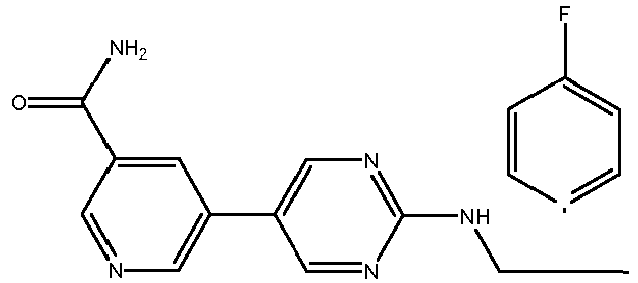
366.3 B 3-(2-aminopyrimidin-5-yl)benzamide 
215.3 D [2-(4-fluorophenyl)-2-methylpropyl]-5,6,7,8-tetrahydropyridino[4,3-d]pyrimidin-2-ylamine 
301.0 D methyl 2-{[2-(4-fluorophenyl)-2-methylpropyl]amino}pyrimidine-5-carboxylate 
304.1 D N-[2-(4-fluorophenyl)-2-methylpropyl](2-{[2-(4-fluorophenyl)-2-methylpropyl]amino}pyrimidin-5-yl)carboxamide 
439.1 D ethyl 1-[(2-{[2-(4-fluorophenyl)-2-methylpropyl]amino}pyrimidin-5-yl)carbonylamino]cyclopropanecar boxylate 
401.1 D 2-{[2-(4-fluorophenyl)-2-methylpropyl]amino}pyrimidine-5-carboxylic acid 
289.0 D (5-bromopyrimidin-2-yl)[2-(4-fluorophenyl)-2-methylpropyl]amine 
324.0 D 1-[(2-{[2-(4-fluorophenyl)-2-methylpropyl]amino}pyrimidin-5-yl)carbonylamino]cyclopropanecar boxylic acid 
373.1 D 1-[(2-{[2-(4-fluorophenyl)-2-methylpropyl]amino}pyrimidin-5-yl)carbonylamino]cyclopropanecar boxamide 
373.1 D 5-(2-{[2-(4-fluorophenyl)-2-methylpropyl]amino}pyrimidin-5-yl)-3-hydrobenzimidazol-2-one 
378.1 B 6-acetyl-2-{[2-(4-fluorophenyl)-2-methylpropyl]amino}-5,6,7,8-tetrahydropyridino[4,3-d]pyrimidine 
343.0 D 2-{[2-(4-fluorophenyl)-2-methylpropyl]amino}-6-(methylsulfonyl)-5,6,7,8-tetrahydropyridino[4,3-d]pyrimidine 
379.0 B [2-(4-fluorophenyl)-2-methylpropyl](6-methyl(5,6,7,8-tetrahydropyridino[4,3-d]pyrimidin-2-yl))amine 
315.0 D 2-{[2-(4-fluorophenyl)-2-methylpropyl]amino}-5,6,7,8-tetrahydropyridino[4,3-d]pyrimidine-6-carboxamide 
301.0 D 2-(2-{[2-(4-fluorophenyl)-2-methylpropyl]amino}(5,6,7,8-tetrahydropyridino[4,3-d]pyrimidin-6-yl))-2-oxoacetamide 
372.0 D 2-{[2-(4-fluorophenyl)-2-methylpropyl]amino}-5,6,7,8-tetrahydropyridino[3,4-d]pyrimidine-7-carboxamide 
344.0 D 2-(2-{[2-(4-fluorophenyl)-2-methylpropyl]amino}(5,6,7,8-tetrahydropyridino[3,4-d]pyrimidin-7-yl))-2-oxoacetamide 
372.0 D 2-{[2-(4-fluorophenyl)-2-methylpropyl]amino}-7-(methylsulfonyl)-5,6,7,8-tetrahydropyridino[3,4-d]pyrimidine 
379.0 C [5-(3-amino(1H-indazol-5-yl))pyrimidin-2-yl][2-(4-fluorophenyl)-2-methylpropyl]amine 
377.1 A 4-fluoro-3-(2-{[(3-fluoro(2-pyridyl))cyclobutyl]amino}pyrimidin -5-yl)benzamide 
382.1 A 4-(2-{[(4-fluorophenyl)cyclobutyl]amino}pyri midin-5-yl)pyridine-2-carbonitrile 
346.1 C 4-fluoro-3-(2-{[(4-fluorophenyl)cyclobutyl]amino}pyri midin-5-yl)benzamide 
381.1 A 4-(2-{[(3-fluoro-2-pyridyl)cyclobutyl]amino}pyrimidin-5-yl)pyridine-2-carbonitrile 
347.1 D 4-(2-{[(3-fluoro-2-pyridyl)cyclobutyl]amino}pyrimidin-5-yl)pyridine-2-carboxamide 
365.1 B 4-(2-{[(4-fluorophenyl)cyclobutyl]amino}pyri midin-5-yl)pyridine-2-carboxamide 
364.1 B (5-(1H-indazol-5-yl)pyrimidin-2-yl)[(3-fluoro(2-pyridyl))cyclobutyl]amine 
361.1 B 5-(2-{[(3-fluoro-2-pyridyl)cyclobutyl]amino}pyrimidin-5-yl)-1H-indazole-3-carbonitrile 
386.1 B 5-(2-{[(3-fluoro-2-pyridyl)cyclobutyl]amino}pyrimidin-5-yl)-1H-indazole-3-carboxamide 
404.1 A [5-(6-fluoro(1H-indazol-5-yl))pyrimidin-2-yl][(3-fluoro(2-pyridyl))cyclobutyl]amine 
379.1 B 6-fluoro-5-(2-{[(3-fluoro(2-pyridyl))cyclobutyl]amino}pyrimidin -5-yl)-1H-indazole-3-carbonitrile 
404.1 B 6-fluoro-5-(2-{[(3-fluoro(2-pyridyl))cyclobutyl]amino}pyrimidin -5-yl)-1H-indazole-3-carboxamide 
422.1 A (5-bromopyrimidin-2-yl)[(4-fluorophenyl)cyclobutyl]amine 
322.0 D (5-bromopyrimidin-2-yl)[(3-fluoro(2-pyridyl))cyclobutyl]amine 
323.0 D (6-bromoquinazolin-2-yl)[(3-fluoro(2-pyridyl))cyclobutyl]amine 
373.0 D 2-{[(3-fluoro-2-pyridyl)cyclobutyl]amino}quinazolin e-6-carbonitrile 
320.1 D [(3-fluoro(2-pyridyl))cyclobutyl]quinazolin-2-ylamine 
295.1 D 2-{[(3-fluoro-2-pyridyl)cyclobutyl]amino}quinazolin e-6-carboxamide 
338.1 D 2-{[(3-fluoro-2-pyridyl)cyclobutyl]amino}pyrimidine -5-carbonitrile 
270.1 D 2-{[(4-fluorophenyl)cyclobutyl]amino}pyri midine-5-carbonitrile 
269.1 C (5-bromopyrimidin-2-yl)[1-(4-fluorophenyl)-isopropyl]amine 
310.0 C 2-{[(4-fluorophenyl)cyclobutyl]amino}pyri midine-4-carboxamide 
287.1 C 2-{[(4-fluorophenyl)cyclobutyl]amino}pyri midine-4-carbonitrile 
269.1 D [(4-fluorophenyl)cyclobutyl]pyrazolo[5, 4-d]pyrimidin-6-ylamine 
284.1 D 2-{[(4-fluorophenyl)cyclobutyl]amino}pyri midine-5-carboxamide 
287.1 D 2-{[(3-fluoro-2-pyridyl)cyclobutyl]amino}pyrimidine -5-carboxamide 
288.1 D 2-{[(4-fluorophenyl)cyclobutyl]amino}-4-(trifluoromethyl)pyrimidine-5-carboxamide 
355.1 B 2-{[(4-fluorophenyl)cyclobutyl]amino}-4-(trifluoromethyl)pyrimidine-5-carboxylic acid 
356.1 D [(4-fluorophenyl)cyclobutyl][4-(trifluoromethyl)pyrimidin-2-yl]amine 
312.1 C N-[(4-fluorophenyl)cyclobutyl](2-{[(4-fluorophenyl)cyclobutyl]amino}-4-(trifluoromethyl)pyrimidin-5-yl)carboxamide 
503.1 D 2-{[(3-fluoro(2-pyridyl))cyclobutyl]amino}-4-(trifluoromethyl)pyrimidine-5-carboxamide 
356.1 D 2-{[(3-fluoro(2-pyridyl))cyclobutyl]amino}-4-(trifluoromethyl)pyrimidine-5-carboxylic acid 
357.1 D [(3-fluoro(2-pyridyl))cyclobutyl][4-(trifluoromethyl)pyrimidin-2-yl]amine 
313.1 D ethyl 1-[2-({[(3-fluoro-2-pyridyl)cyclobutyl]methyl}amino)py rimidin-5-yl]pyrazole-4-carboxylate 
397.3 D 1-[2-({[(3-fluoro-2-pyridyl)cyclobutyl]methyl}amino)py rimidin-5-yl]pyrazole-4-carboxamide 
368.3 B 1-[2-({[(3-fluoro-2-pyridyl)cyclobutyl]methyl}amino)py rimidin-5-yl]pyrazole-4-carboxylic acid 
369.2 D 2-[2-({[(3-fluoro-2-pyridyl)cyclobutyl]methyl}amino)py rimidin-5-yl]-1,3-thiazole-4-carboxamide 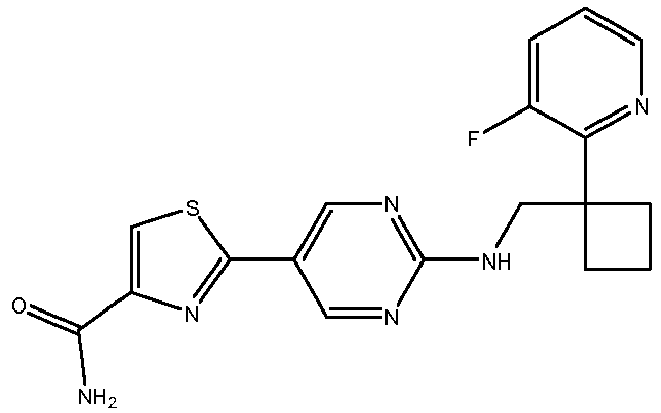
385.1 B 2-[2-({[(3-fluoro-2-pyridyl)cyclobutyl]methyl}amino)py rimidin-5-yl]-1,3-thiazole-5-carboxamide 
385.1 A ethyl 2-[2-({[(3-fluoro-2-pyridyl)cyclobutyl]methyl}amino)py rimidin-5-yl]-1,3-thiazole-4-carboxylate 
414.2 D 2-[2-({[(3-fluoro-2-pyridyl)cyclobutyl]methyl}amino)py rimidin-5-yl]-1,3-thiazole-4-carboxylic acid 
386.2 C 2-[2-({1-[6-(difluoromethoxy)(2-pyridyl)]-isopropyl}amino)pyrimidin-5-yl]-1,3-thiazole-5-carboxamide 
407.2 A 2-(2-{[(2-pyridylcyclobutyl)methyl]amino}pyri midin-5-yl)-1,3-thiazole-5-carboxamide 
367.2 B 2-(2-{[(2-pyridylcyclobutyl)methyl]amino}pyri midin-5-yl)-1,3-thiazole-5-carbonitrile 
349.2 D 2-[2-({[(3-fluoro-2-pyridyl)cyclobutyl]methyl}amino)py rimidin-5-yl]-1,3-thiazole-5-carbonitrile 
367.2 C 2-(2-{[1-(4-methoxypyrimidin-2-yl)-isopropyl]amino}pyrimidin-5-yl)-1,3-thiazole-5-carboxamide 
372.1 D {4-[6-({[(3-fluoro(2-pyridyl))cyclobutyl]methyl}amino)p yridazin-3-yl]pyrimidin-2-yl}(methylsulfonyl)amine 
430.3 D ethyl 2-({[(3-fluoro-2-pyridyl)cyclobutyl]methyl}amino)thi opheno[2,3-d]pyrimidine-6-carboxylate 
387.1 D 2-({[(3-fluoro-2-pyridyl)cyclobutyl]methyl}amino)thi opheno[2,3-d]pyrimidine-6-carboxamide 
358.1 C 2-({[(3-fluoro-2-pyridyl)cyclobutyl]methyl}amino)thi opheno[2,3-d]pyrimidine-6-carboxylic acid 
358.1 D 4-fluoro-3-(2-{[2-(3-fluoro(2-pyridyl))-2-methylpropyl]amino}pyrimidin-5-yl)benzamide 
384.1 B 4-fluoro-3-[2-({[(3-fluoro(2-pyridyl))cyclobutyl]methyl}amino)p yrimidin-5-yl]benzam ide 
396.1 A 3-(2-{[2-(3-fluoro(2-pyridyl))-2-methylpropyl]amino}pyrimidin-5-yl)benzamide 
366.1 B 3-[2-({[(3-fluoro-2-pyridyl)cyclobutyl]methyl}amino)py rimidin-5-yl]benzamide 
378.2 A 3-[2-({1-[6-(difluoromethoxy)(2-pyridyl)]-isopropyl}amino)pyrimidin-5-yl]-4-fluorobenzamide 
418.2 A 3-[2-({1-[6-(difluoromethoxy)(2-pyridyl)]-isopropyl}amino)pyrimidin-5-yl]benzamide 
400.3 A 3-(2-{[1-(3-fluoro(2-pyridyl))-isopropyl]amino}pyrimidin-5-yl)benzamide 
352.3 B 5-({[(3-fluoro-2-pyridyl)cyclobutyl]methyl}amino)-1,3-thiazolo[5,4-d]pyrimidine-2-carboxamide 
359.1 C 5-({[(3-fluoro-2-pyridyl)cyclobutyl]methyl}amino)-1,3-thiazolo[5,4-d]pyrimidine-2-carboxylic acid 
360.1 D 4-fluoro-3-(2-{[1-(3-fluoro(2-pyridyl))-isopropyl]amino}pyrimidin-5-yl)benzamide 
370.1 B N-{[4-(2-{[1-(3-fluoro(2-pyridyl))-isopropyl]amino}pyrimidin-5-yl)phenyl]methyl}acetamide 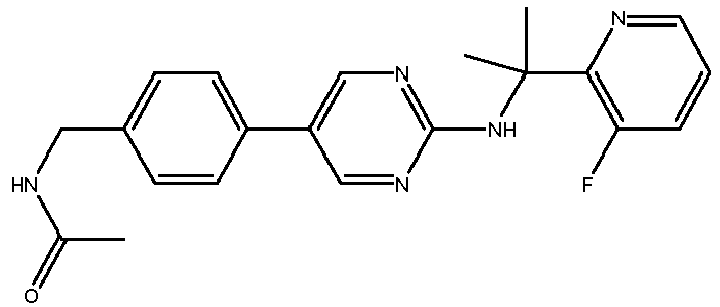
380.2 D [5-(2-aminopyrimidin-5-yl)pyrimidin-2-yl][1-(3-fluoro(2-pyridyl))-isopropyl]amine 
326.1 D 2-(2-{[1-(3-fluoro(2-pyridyl))-isopropyl]amino}pyrimidin-5-yl)-1,3-thiazole-5-carboxamide 
359.1 D 2-(2-{[2-(3-fluoro(2-pyridyl))-2-methylpropyl]amino}pyrimidin-5-yl)pyrimidine-4-carboxamide 
368.2 C methyl 2-[4-fluoro-3-(2-{[1-(3-fluoro(2-pyridyl))-isopropyl]amino}pyrimidin-5-yl)phenyl]acetate 
399.1 C N-{[3-(2-{[1-(3-fluoro(2-pyridyl))-isopropyl]amino}pyrimidin-5-yl)phenyl]methyl}acetamide 
380.1 C 3-(2-{[1-(3-chloro(2-pyridyl))-isopropyl]amino}pyrimidin-5-yl)benzamide 
368.1 A 3-(2-{[1-(3-chloro(2-pyridyl))-isopropyl]amino}pyrimidin-5-yl)-4-fluorobenzamide 
386.1 A 1-(2-{[1-(3-chloro(2-pyridyl))-isopropyl]amino}pyrimidin-5-yl)pyrazole-4-carbonitrile 
340.1 D 1-(2-{[1-(3-chloro(2-pyridyl))-isopropyl]amino}pyrimidin-5-yl)pyrazole-4-carboxamide 
358.1 B 2-[4-fluoro-3-(2-{[1-(3-fluoro(2-pyridyl))-isopropyl]amino}pyrimidin-5-yl)phenyl]acetamide 
384.1 B 2-(2-{[1-(3-fluoro(2-pyridyl))-isopropyl]amino}pyrimidin-5-yl)pyrimidine-4-carboxamide 
354.1 D {5-[5-(aminomethyl)(1,3-thiazol-2-yl)]pyrimidin-2-yl}[1-(3-fluoro(2-pyridyl))-isopropyl]amine 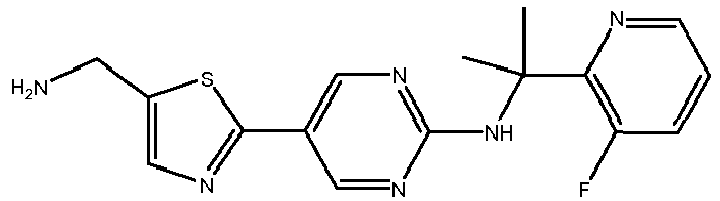
345.2 D N-{[2-(2-{[1-(3-fluoro(2-pyridyl))-isopropyl]amino}pyrimidin-5-yl)-1,3-thiazol-5-yl]methyl}acetamide 
387.1 D 2-amino-N-{[2-(2-{[1-(3-fluoro(2-pyridyl))-isopropyl]amino}pyrimidin-5-yl)(1,3-thiazol-5-yl)]methyl}acetamide 
402.2 D N-{[2-(2-{[1-(3-fluoro(2-pyridyl))-isopropyl]amino}pyrimidin-5-yl)(1,3-thiazol-5-yl)]methyl}imidazol-5-ylcarboxamide 
439.1 D N-{[2-(2-{[1-(3-fluoro(2-pyridyl))-isopropyl]amino}pyrimidin-5-yl)(1,3-thiazol-5-yl)]methyl}(2-hydroxyimidazol-5-yl)carboxamide 
455.1 C (aminocyclopropyl)-N-{[2-(2-{[1-(3-fluoro(2-pyridyl))-isopropyl]amino}pyrimidin-5-yl)(1,3-thiazol-5-yl)]methyl}carboxamide 
428.1 D ((2R)pyrrolidin-2-yl)-N-{[2-(2-{[1-(3-fluoro(2-pyridyl))-isopropyl]amino}pyrimidin-5-yl)(1,3-thiazol-5-yl)]methyl}carboxamide 
442.2 D ((2S)pyrrolidin-2-yl)-N-{[2-(2-{[1-(3-fluoro(2-pyridyl))-isopropyl]amino}pyrimidin-5-yl)(1,3-thiazol-5-yl)]methyl}carboxamide 
442.2 C N-{[2-(2-{[1-(3-fluoro(2-pyridyl))-isopropyl]amino}pyrimidin-5-yl)-1,3-thiazol-4-yl]methyl}acetamide 
387.3 D 2-[2-(2-{[1-(3-fluoro(2-pyridyl))-isopropyl]amino}pyrimidin-5-yl)-1,3-thiazol-4-yl]acetamide 
373.3 D 1-(2-{[1-(3-chloro(2-pyridyl))-isopropyl]amino}pyrimidin-5-yl)pyrrole-3-carboxamide 
357.1 B 1-(2-{[1-(3-fluoro(2-pyridyl))-isopropyl]amino}pyrimidin-5-yl)pyrazole-4-carboxamide 
342.2 D {5-[4-(aminomethyl)(1,3-thiazol-2-yl)]pyrimidin-2-yl}[1-(3-fluoro(2-pyridyl))-isopropyl]amine 
345.3 D 2-(2-{[1-(3-fluoro(2-pyridyl))-isopropyl]amino}pyrimidin-5-yl)-1,3-thiazole-4-carbonitrile 
341.3 D 2-(2-{[1-(3-fluoro(2-pyridyl))-isopropyl]amino}pyrimidin-5-yl)-1,3-thiazole-4-carboxamide 
359.3 D 2-amino-N-{[2-(2-{[1-(3-fluoro(2-pyridyl))-isopropyl]amino}pyrimidin-5-yl)(1,3-thiazol-4-yl)]methyl}acetamide 
402.2 D ((2S)pyrrolidin-2-yl)-N-{[2-(2-{[1-(3-fluoro(2-pyridyl))-isopropyl]amino}pyrimidin-5-yl)(1,3-thiazol-4-yl)]methyl}carboxamide 
442.3 D ((2R)pyrrolidin-2-yl)-N-{[2-(2-{[1-(3-fluoro(2-pyridyl))-isopropyl]amino}pyrimidin-5-yl)(1,3-thiazol-4-yl)]methyl}carboxamide 
442.3 D 2-(2-{[1-(3-fluoro(2-pyridyl))-isopropyl]amino}pyrimidin-5-yl)-1,3-thiazole-5-carbonitrile 
341.2 D 2-(2-{[1-(3-chloro(2-pyridyl))-isopropyl]amino}pyrimidin-5-yl)-1,3-thiazole-5-carboxamide 
375.2 B 1-(2-{[1-(3-chloro(2-pyridyl))-isopropyl]amino}pyrimidin-5-yl)pyrazole-4-carboxylic acid 
359.1 D N-(2-carbamoylethyl)[1-(2-{[1-(3-chloro(2-pyridyl))-isopropyl]amino}pyrimidin-5-yl)pyrazol-4-yl]carboxamide 
429.1 D [1-(2-{[1-(3-chloro(2-pyridyl))-isopropyl]amino}pyrimidin-5-yl)pyrazol-4-yl]-N-(2-hydroxyethyl)carboxamide 
402.1 D 2-[1-(2-{[1-(3-chloro(2-pyridyl))-isopropyl]amino}pyrimidin-5-yl)pyrazol-4-yl]propan-2-ol 
373.1 D 5-(2-{[1-(3-chloro(2-pyridyl))-isopropyl]amino}pyrimidin-5-yl)isoxazole-3-carboxamide 
359.2 B [1-(3-chloro(2-pyridyl))-isopropyl](5-pyrazol-4-ylpyrimidin-2-yl)amine 
315.1 B 5-(2-{[1-(3-chloro(2-pyridyl))-isopropyl]amino}pyrimidin-5-yl)pyridine-3-carboxamide 
369.1 B 5-(2-{[1-(3-chloro(2-pyridyl))-isopropyl]amino}pyrimidin-5-yl)thiophene-2-carboxylic acid 
375.0 D 5-(2-{[1-(3-chloro(2-pyridyl))-isopropyl]amino}pyrimidin-5-yl)thiophene-2-carboxamide 
374.1 B (5-bromopyrimidin-2-yl)[1-(3-fluoro(2-pyridyl))-isopropyl]amine 
311.0 D 2-{[1-(3-chloro(2-pyridyl))-isopropyl]amino}pyrimidine-5-carbonitrile 
274.1 D (5-bromopyrimidin-2-yl)[1-(3-chloro(2-pyridyl))-isopropyl]amine 
328.1 D 2-(2-{[1-(3-chloro(2-pyridyl))-isopropyl]amino}pyrimidin-5-yl)-1,3-oxazole-4-carboxamide 
359.2 D 2-(2-{[1-(3-chloro(2-pyridyl))-isopropyl]amino}pyrimidin-5-yl)-1,3-oxazole-4-carboxylic acid 
360.2 D 4-[2-({[3-fluoro-1-(3-fluoro(2-pyridyl))cyclobutyl]methyl}amino)p yrimidin-5-yl]pyridine-2-carboxamide 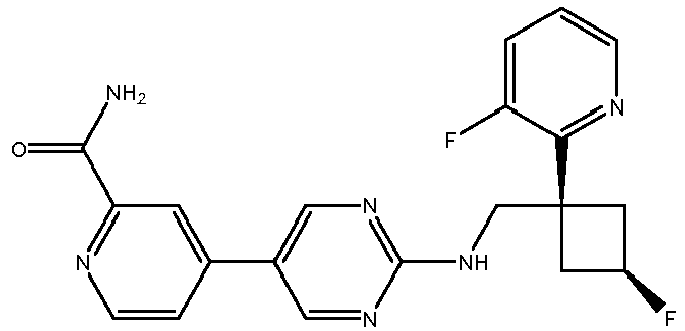
397.3 B 4-[2-({[3-fluoro-1-(3-fluoro(2-pyridyl))cyclobutyl]methyl}amino)p yrimidin-5-yl]pyridine-2-carboxamide 
397.3 B 4-[2-({[(3-fluoro-2-pyridyl)cyclobutyl]methyl}amino)py rimidin-5-yl]pyridine-2-carboxamide 
379.3 B [1-(3-chloro(2-pyridyl))-isopropyl](5-pyrrolo[3,2-b]pyridin-6-ylpyrimidin-2-yl)amine 
365.2 A 2-(2-{[1-(3-chloro(2-pyridyl))-isopropyl]amino}pyrimidin-5-yl)-1,3-oxazole-5-carboxamide 
359.2 D 4-(2-{[1-(3-chloro(2-pyridyl))-isopropyl]amino}pyrimidin-5-yl)pyridine-2-carboxamide 
369.3 B 4-(2-{[1-(3-chloro(2-pyridyl))-isopropyl]amino}pyrimidin-5-yl)-1,3-thiazole-2-carboxamide 
375.2 C 2-{[1-(3-chloro(2-pyridyl))-isopropyl]amino}pyrimidine-5-carboxamide 
292.1 D [5-(3-amino(1H-indazol-5-yl))pyrimidin-2-yl][1-(3-chloro(2-pyridyl))-isopropyl]amine 
380.1 A 3-(2-{[1-methyl-1-(4-methylthiophenyl)ethyl]amino}pyri midin-5-yl)benzenecarbonitrile 
361.2 D 3-(2-{[1-methyl-1-(2-methylthiophenyl)ethyl]amino}pyri midin-5-yl)benzenecarbonitrile 
361.2 A 5-(2-{[1-(3-chloro(2-pyridyl))-isopropyl]amino}pyrimidin-5-yl)pyrazole-3-carboxamide 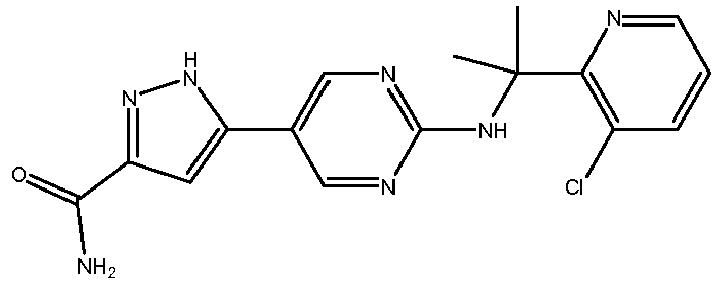
358.1 C 3-(2-(2-(4-(methylsulfinyl)phenyl)propan-2-ylamino)pyrimidin-5-yl)benzamide 
395.2 D 3-[2-({1-methyl-1-[4-(methylsulfonyl)phenyl]ethyl}amino )pyrimidin-5-yl]benzamide 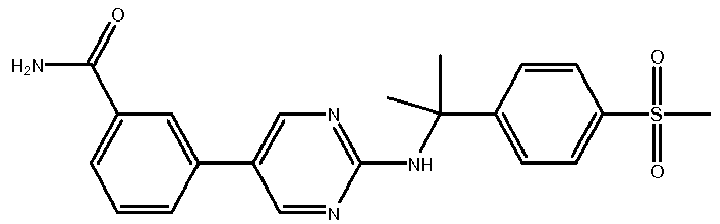
411.2 D 3-[2-({1-methyl-1-[2-(methylsulfonyl)phenyl]ethyl}amino )pyrimidin-5-yl]benzamide 
411.2 D 3-[2-({1-methyl-1-[3-(methylsulfonyl)(2-pyridyl)]ethyl}amino)pyrimidin-5-yl]benzamide 
412.2 D 2-(2-{[1-(3-chloro(2-pyridyl))-isopropyl]amino}pyrimidin-5-yl)-1,3-thiazole-4-carboxamide 
375.2 C 2-(2-{[1-(3-chloro(2-pyridyl))-isopropyl]amino}pyrimidin-5-yl)-1,3-thiazole-4-carboxylic acid 
376.2 D 2-(2-{[1-(3-chloro(2-pyridyl))-isopropyl]amino}pyrimidin-5-yl)-1,3-oxazole-5-carboxylic acid 
360.2 D 3-(2-{[1-methyl-1-(3-methylthio(2-pyridyl))ethyl]amino}pyrimidin-5-yl)benzenecarbonitrile 
362.2 B 3-(2-{[1-methyl-1-(2-methylthiophenyl)ethyl]amino}pyri midin-5-yl)benzamide 
379.3 A 3-(2-(2-(2-(methylsulfinyl)phenyl)propan-2-ylamino)pyrimidin-5-yl)benzamide 
395.2 D [1-(3-chloro(2-pyridyl))-isopropyl]pyrimidin-2-ylamine 
249.2 D 3-(2-{[1-methyl-1-(3-methylthio(2-pyridyl))ethyl]amino}pyrimidin-5-yl)benzamide 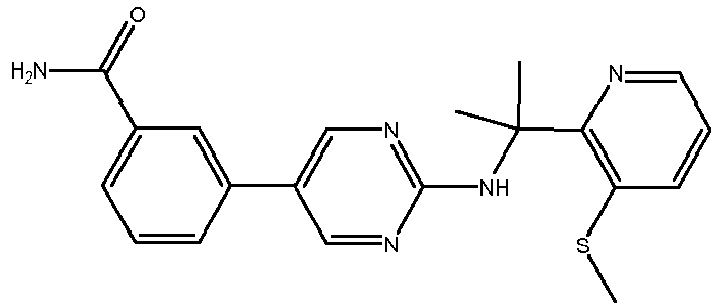
380.2 B 3-(2-(2-(3-(methylsulfinyl)pyridin-2-yl)propan-2-ylamino)pyrimidin-5-yl)benzamide 
396.2 D 3-[2-({1-methyl-1-[3-(methylsulfonyl)(2-pyridyl)]ethyl}(hydroxyamino))pyri midin-5-yl]benzamide 
428.2 D 3-[2-({1-[3-(difluoromethyl)(2-pyridyl)]-isopropyl}amino)pyrimidin-5-yl]-4-fluorobenzenecarbonitrile 
384.1 B 3-[2-({1-[3-(difluoromethyl)(2-pyridyl)]-isopropyl}amino)pyrimidin-5-yl]-4-fluorobenzamide 
402.1 B (5-(5H-1,2,3,4-tetraazol-5-yl)pyrimidin-2-yl)[1-(3-chloro(2-pyridyl))-isopropyl]amine 
317.1 D ethyl 5-(2-{[1-(3-chloro(2-pyridyl))-isopropyl]amino}pyrimidin-5-yl)-1,3,4-oxadiazole-2-carboxylate 
389.1 D 5-(2-{[1-(3-chloro(2-pyridyl))-isopropyl]amino}pyrimidin-5-yl)-1,3,4-oxadiazole-2-carboxamide 
389.1 D methyl 4-(2-{[1-(3-chloro(2-pyridyl))-isopropyl]amino}pyrimidin-5-yl)thiophene-2-carboxylate 
340.2 D 5-(2-{[1-(3-chloro(2-pyridyl))-isopropyl]amino}pyrimidin-5-yl)-1,3-thiazole-2-carboxamide 
375.2 B 5-(2-{[1-(3-chloro(2-pyridyl))-isopropyl]amino}pyrimidin-5-yl)-1,3,4-thiadiazole-2-carboxamide 
376.3 D methyl 4-(2-{[1-(3-chloro(2-pyridyl))-isopropyl]amino}pyrimidin-5-yl)-1-methylimidazole-2-carboxylate 
387.2 D 6-(2-{[1-(3-chloro(2-pyridyl))-isopropyl]amino}pyrimidin-5-yl)pyridine-2-carboxamide 
369.1 C 3-(2-{[1-(3-chloro(2-pyridyl))-isopropyl]amino}pyrimidin-5-yl)-1,2,4-oxadiazole-5-carboxamide 
360.3 D ethyl 5-(2-{[1-(3-chloro(2-pyridyl))-isopropyl]amino}pyrimidin-5-yl)-1,2,4-oxadiazole-3-carboxylate 
389.1 D [5-(3-amino(1H-indazol-5-yl))pyrimidin-2-yl][1-(3-fluoro(2-pyridyl))-isopropyl]amine 
364.2 A 4-(2-{[1-(3-chloro(2-pyridyl))-isopropyl]amino}pyrimidin-5-yl)thiophene-2-carboxamide 
374.1 B [1-(3-chloro(2-pyridyl))-isopropyl](5-(1,2,4-oxadiazol-5-yl)pyrimidin-2-yl)amine 
317.1 D 4-fluoro-3-(2-{[1-(3-methoxy(2-pyridyl))-isopropyl]amino}pyrimidin-5-yl)benzenecarbonitrile 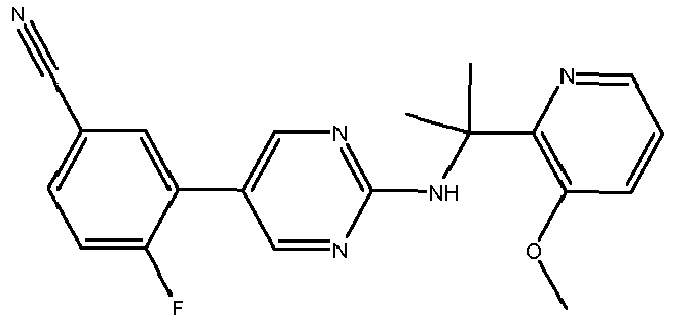
364.1 D 4-fluoro-3-(2-{[1-methyl-1-(3-methyl(2-pyridyl))ethyl]amino}pyrimidin-5-yl)benzamide 
366.1 B 4-fluoro-3-(2-{[1-(3-methoxy(2-pyridyl))-isopropyl]amino}pyrimidin-5-yl)benzamide 
382.1 C {5-[5-(aminomethyl)(1,3-thiazol-2-yl)]pyrimidin-2-yl}[1-(3-chloro(2-pyridyl))-isopropyl]amine 
361.0 D N-{[2-(2-{[1-(3-chloro(2-pyridyl))-isopropyl]amino}pyrimidin-5-yl)-1,3-thiazol-5-yl]methyl}acetamide 
403.1 C N-{[2-(2-{[1-(3-chloro(2-pyridyl))-isopropyl]amino}pyrimidin-5-yl)(1,3-thiazol-5-yl)]methyl}-2-hydroxy-2-methylpropanamide 
447.1 C N-{[2-(2-{[1-(3-chloro(2-pyridyl))-isopropyl]amino}pyrimidin-5-yl)(1,3-thiazol-5-yl)]methyl}(2-hydroxyimidazol-4-yl)carboxamide 
471.1 B 3-(2-{[1-(3-chloro-6-hydroxy(2-pyridyl))-isopropyl]amino}pyrimidin-5-yl)benzamide 
384.1 D 3-(2-{[1-(3-chloro-6-methoxy(2-pyridyl))-isopropyl]amino}pyrimidin-5-yl)benzamide 
398.1 A [1-(3-chloro(2-pyridyl))-isopropyl](5-(1,3-thiazol-2-yl)pyrimidin-2-yl)amine 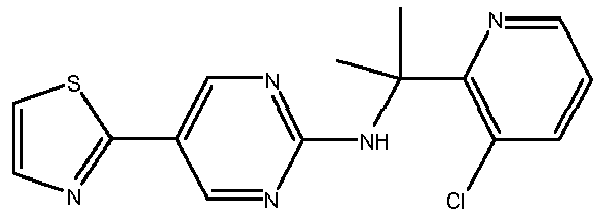
332.1 B 2-[4-(2-{[1-(3-chloro(2-pyridyl))-isopropyl]amino}pyrimidin-5-yl)pyrazolyl]ethan-1-ol 
359.1 D 2-[4-(2-{[1-(3-chloro(2-pyridyl))-isopropyl]amino}pyrimidin-5-yl)pyrazolyl]acetic acid 
373.1 D 2-[4-(2-{[1-(3-chloro(2-pyridyl))-isopropyl]amino}pyrimidin-5-yl)pyrazolyl]acetamide 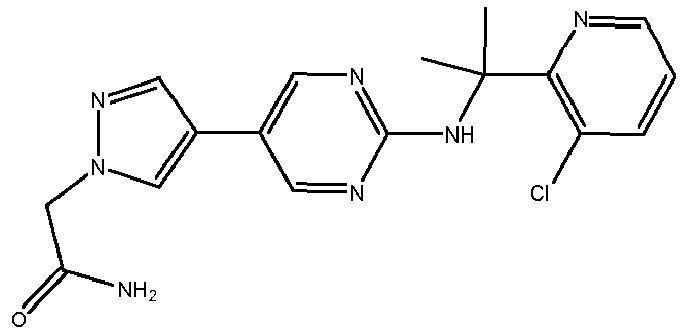
372.1 D 2-(2-{[1-(3-chloro(2-pyridyl))-isopropyl]amino}pyrimidin-5-yl)pyridine-4-carbonitrile 
351.1 C 2-(2-{[1-(3-chloro(2-pyridyl))-isopropyl]amino}pyrimidin-5-yl)pyridine-4-carboxamide 
369.1 B N-{[1-(2-{[1-(3-chloro(2-pyridyl))-isopropyl]amino}pyrimidin-5-yl)pyrazol-4-yl]methyl}acetamide 
386.1 D 4-fluoro-3-[2-({[3-fluoro-1-(3-fluoro(2-pyridyl))cyclobutyl]methyl}amino)p yrimidin-5-yl]benzamide 
414.3 A 3-[2-({[3-fluoro-1-(3-fluoro(2-pyridyl))cyclobutyl]methyl}amino)p yrimidin-5-yl]benzamide 
396.3 A 6-(2-{[1-(3-chloro(2-pyridyl))-isopropyl]amino}pyrimidin-5-yl)-2-pyrrolino[3,2-b]pyridin-2-one 
381.1 D 6-(2-{[1-(3-chloro(2-pyridyl))-isopropyl]amino}pyrimidin-5-yl)imidazo[2,1-b]1,3-thiazoline-2-carboxamide 
414.1 D [5-(2-{[1-(3-chloro(2-pyridyl))-isopropyl]amino}pyrimidin-5-yl)(1 H-indazol-3-yl)](methylsulfonyl)amine 
458.1 A [1-(3-chloro(2-pyridyl))-isopropyl](4-(1,3-thiazol-2-yl)pyrimid in-2-yl)amine 
332.2 D {1-[6-(difluoromethoxy)(2-pyridyl)]-isopropyl}(4-(1,3-thiazol-2-yl)pyrimid in-2-yl)amine 
364.2 C 5-(2-{[1-(3-chloro(2-pyridyl))-isopropyl]amino}pyrimidin-5-yl)-1-methylpyrazole-3-carboxamide 
372.2 D 3-(2-{[1-(3-chloro(2-pyridyl))-isopropyl]amino}pyrimidin-5-yl)-1-methylpyrazole-5-carboxamide 
372.2 D 6-(2-{[1-(3-chloro(2-pyridyl))-isopropyl]amino}pyrimidin-5-yl)imidazo[2,1-b]1,3-thiazoline-3-carboxamide 
414.1 B 5-(2-{[1-(3-chloro(2-pyridyl))-isopropyl]amino}pyrimidin-5-yl)-2-methoxypyridine-3-carbonitrile 
381.1 D 5-(2-{[1-(3-chloro(2-pyridyl))-isopropyl]amino}pyrimidin-5-yl)-2-methoxypyridine-3-carboxamide 
399.1 B 5-(2-{[1-(3-chloro(2-pyridyl))-isopropyl]amino}pyrimidin-5-yl)-2-oxohydropyridine-3-carboxamide 
385.1 B 2-[(tert-butoxy)carbonylamino]-N-{[1-(2-{[1-(3-chloro(2-pyridyl))-isopropyl]amino}pyrimidin-5-yl)pyrazol-4-yl]methyl}acetamide 
501.1 D 2-amino-N-{[1-(2-{[1-(3-chloro(2-pyridyl))-isopropyl]amino}pyrimidin-5-yl)pyrazol-4-yl]methyl}acetamide 
401.1 B 3-[(tert-butoxy)carbonylamino]-N-{[1-(2-{[1-(3-chloro(2-pyridyl))-isopropyl]amino}pyrimidin-5-yl)pyrazol-4-yl]methyl}propanamide 
515.1 D 3-amino-N-{[1-(2-{[1-(3-chloro(2-pyridyl))-isopropyl]amino}pyrimidin-5-yl)pyrazol-4-yl]methyl}propanamide 
415.1 B 1-[2-({[3-fluoro-1-(3-fluoro(2-pyridyl))cyclobutyl]methyl}amino)p yrimidin-5-yl]pyrazole-4-carbonitrile 
368.2 C {[3-fluoro-1-(3-fluoro(2-pyridyl))cyclobutyl]methyl}pyrimidin -2-ylamine 
277.2 D 1-[2-({[3-fluoro-1-(3-fluoro(2-pyridyl))cyclobutyl]methyl}amino)p yrimidin-5-yl]pyrazole-4-carboxamide 
382.3 B 3-(2-{[2-(3-chloro(2-pyridyl))-2-methylpropyl]amino}pyrimidin-5-yl)benzamide 
382.3 A 3-(2-{[2-(3-chloro(2-pyridyl))-2-methylpropyl]amino}pyrimidin-5-yl)-4-fluorobenzamide 
400.2 A 2-(2-{[(1R)-1-(3-chloro(2-pyridyl))-2-methylpropyl]amino}pyrimidin-5-yl)-1,3-thiazole-5-carbonitrile 
371.2 D 2-(2-{[(1S)-1-(3-chloro(2-pyridyl))-2-methylpropyl]amino}pyrimidin-5-yl)-1,3-thiazole-5-carbonitrile 
371.2 D 2-(2-{[(1R)-1-(3-chloro(2-pyridyl))-2-methylpropyl]amino}pyrimidin-5-yl)-1,3-thiazole-5-carboxamide 
389.2 D 2-(2-{[(1S)-1-(3-chloro(2-pyridyl))-2-methylpropyl]amino}pyrimidin-5-yl)-1,3-thiazole-5-carboxamide 
389.2 D ethyl 3-(2-{[1-(3-chloro(2-pyridyl))-isopropyl]amino}pyrimidin-5-yl)isoxazole-5-carboxylate 
388.2 D 3-(2-{[1-(3-chloro(2-pyridyl))-isopropyl]amino}pyrimidin-5-yl)isoxazole-5-carboxamide 
359.2 C (5-(1H-indazol-5-yl)pyrimidin-2-yl)[1-(3-chloro(2-pyridyl))-isopropyl]amine 
365.1 A N-[5-(2-{[1-(3-chloro(2-pyridyl))-isopropyl]amino}pyrimidin-5-yl)-1H-indazol-3-yl]acetamide 
422.1 B 3-[2-({[1-(3-chloro(2-pyridyl))-3-fluorocyclobutyl]methyl}amino)pyri midin-5-yl]-4-fluorobenzamide 
430.2 A 3-[2-({[1-(3-chloro(2-pyridyl))-3-fluorocyclobutyl]methyl}amino)pyri midin-5-yl]-4-fluorobenzamide 
430.2 A 4-fluoro-3-(2-{[(3-fluoro-1-(2-pyridyl)cyclobutyl)methyl]amino}py rimidin-5-yl)benzamide 
396.2 A 4-fluoro-3-(2-{[(3-fluoro-1-(2-pyridyl)cyclobutyl)methyl]amino}py rimidin-5-yl)benzamide 
396.2 B 6-(2-{[1-(3-chloro(2-pyridyl))-isopropyl]amino}pyrimidin-5-yl)pyrimidine-4-carboxamide 
370.2 B methyl 6-(2-{[1-(3-chloro(2-pyridyl))-isopropyl]amino}pyrimidin-5-yl)pyrimidine-4-carboxylate 
385.2 D 3-{2-[(tert-butyl)amino]pyrimidin-5-yl}benzamide 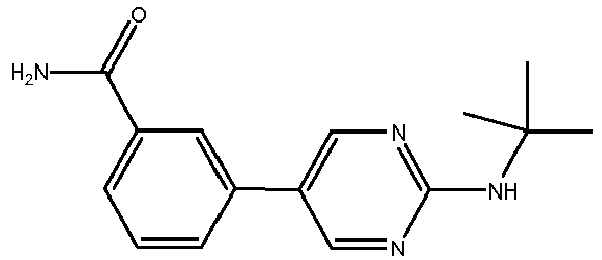
271.3 D [5-(3-amino(1H-indazol-5-yl))pyrimidin-2-yl](tert-butyl)amine 
283.3 B 3-(2-{[1-(3-chloro(2-pyridyl))-3-fluorocyclobutyl]amino}pyrimidin-5-yl)-4-fluorobenzamide 
416.2 A 3-[2-({[(3-chloro(2-pyridyl))cyclobutyl]methyl}amino)p yrimidin-5-yl]-4-fluorobenzamide 
412.2 A 3-[2-({[(3-chloro-2-pyridyl)cyclobutyl]methyl}amino)py rimidin-5-yl]benzamide 
394.3 A 3-(2-{[(2-pyridylcyclobutyl)methyl]amino}pyri midin-5-yl)benzamide 
360.3 B 4-fluoro-3-(2-{[(2-pyridylcyclobutyl)methyl]amino}pyri midin-5-yl)benzamide 
378.3 A 3-[2-({[(3-chloro(2-pyridyl))cyclobutyl]methyl}amino)p yrimidin-5-yl]-4-fluorobenzenecarbonitrile 
394.2 A 3-[2-({[(3-chloro-2-pyridyl)cyclobutyl]methyl}amino)py rimidin-5-yl]benzenecarbonitrile 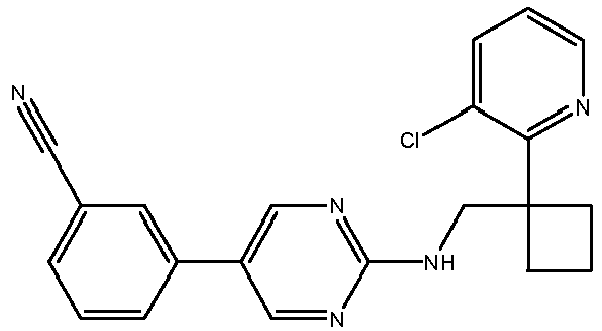
376.2 A {[(3-chloro(2-pyridyl))cyclobutyl]methyl}pyrimidin -2-ylamine 
275.2 D 3-(2-{[1-(2-chloro(3-pyridyl))-isopropyl]amino}pyrimidin-5-yl)-4-fluorobenzamide 
386.2 B 6-(2-{[1-(3-chloro(2-pyridyl))-isopropyl]amino}pyrimidin-5-yl)imidazo[2,1-b]1,3-thiazoline-3-carboxylic acid 
415.0 B 2-(2-{[1-(3-chloro(2-pyridyl))-isopropyl]amino}pyrimidin-5-yl)-4-hydroimidazo[1,2-a]pyridine-6-carboxylic acid 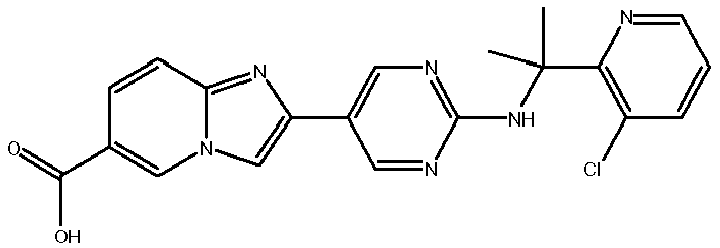
409.1 D 2-(2-{[1-(3-chloro(2-pyridyl))-isopropyl]amino}pyrimidin-5-yl)-4-hydroimidazo[1,2-a]pyridine-6-carboxamide 
408.1 C methyl 1-[2-({[3-fluoro-1-(3-fluoro(2-pyridyl))cyclobutyl]methyl}amino)p yrimidin-5-yl]pyrrole-3-carboxylate 
400.3 D 1-[2-({[3-fluoro-1-(3-fluoro(2-pyridyl))cyclobutyl]methyl}amino)p yrimidin-5-yl]pyrrole-3-carboxylic acid 
386.3 D 1-[2-({[3-fluoro-1-(3-fluoro(2-pyridyl))cyclobutyl]methyl}amino)p yrimidin-5-yl]pyrrole-3-carboxamide 
385.3 A 2-(2-{[1-(3-chloro(2-pyridyl))-isopropyl]amino}pyrimidin-5-yl)-4-hydroimidazo[1,2-a]pyridine-8-carboxamide 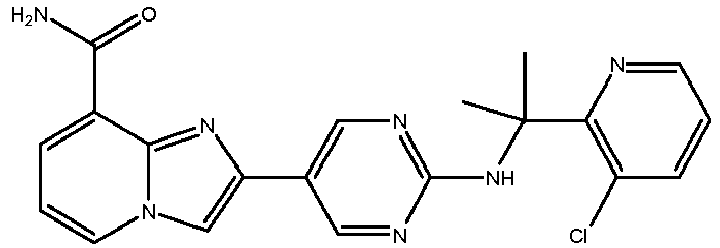
408.1 B 2-(2-{[1-(3-chloro(2-pyridyl))-isopropyl]amino}pyrimidin-5-yl)-4-hydroimidazo[1,2-a]pyridine-7-carboxamide 
408.1 D 5-(2-{[1-(3-chloro(2-pyridyl))-isopropyl]amino}pyrimidin-5-yl)pyridazine-3-carboxamide 
370.2 B N-(tert-butyl)[5-(2-{[1-(3-chloro(2-pyridyl))-isopropyl]amino}pyrimidin-5-yl)pyridazin-3-yl]carboxamide 
426.2 D {3-[2-({[3-fluoro-1-(3-fluoro(2-pyridyl))cyclobutyl]methyl}amino)p yrimidin-5-yl]phenyl}-N-(methylsulfonyl)carboxamide 
474.1 A 2-{2-[2-({[(3-fluoro-2-pyridyl)cyclobutyl]methyl}amino)py rimidin-5-yl]-1,3-thiazol-5-yl}ethanenitrile 
381.2 B 2-{2-[2-({[(3-chloro-2-pyridyl)cyclobutyl]methyl}amino)py rimidin-5-yl]-1,3-thiazol-5-yl}acetamide 
415.1 A 3-[2-({[1-(3-chloro(2-pyridyl))-3,3-difluorocyclobutyl]methyl}amino)py rimidin-5-yl]-4-fluorobenzamide 
448.2 A 3-[2-({[3-fluoro-1-(3-fluoro(2-pyridyl))cyclobutyl]methyl}amino)-4-methylpyrimidin-5-yl]benzamide 
410.1 B 2-{2-[2-({[(3-fluoro-2-pyridyl)cyclobutyl]methyl}amino)py rimidin-5-yl]-1,3-thiazol-5-yl}acetamide 
399.2 B 2-{2-[2-({[3-fluoro-1-(3-fluoro(2-pyridyl))cyclobutyl]methyl}amino)p yrimidin-5-yl]-1,3-thiazol-5-yl}acetamide 
417.1 B (tert-butoxy)-N-({2-[2-({[(3-fluoro(2-pyridyl))cyclobutyl]methyl}amino)p yrimidin-5-yl](1,3-thiazol-5-yl)}methyl)carboxamide 
471.2 B {5-[5-(aminomethyl)(1,3-thiazol-2-yl)]pyrimidin-2-yl}{[(3-fluoro(2-pyridyl))cyclobutyl]methyl}amine 
371.1 C N-({2-[2-({[(3-fluoro-2-pyridyl)cyclobutyl]methyl}amino)py rimidin-5-yl]-1,3-thiazol-5-yl}methyl)acetamide 
B (tert-butoxy)-N-({2-[2-({[(3-chloro(2-pyridyl))cyclobutyl]methyl}amino)p yrimidin-5-yl](1,3-thiazol-5-yl)}methyl)carboxamide 
A {5-[5-(aminomethyl)(1,3-thiazol-2-yl)]pyrimidin-2-yl}{[(3-chloro(2-pyridyl))cyclobutyl]methyl}amine 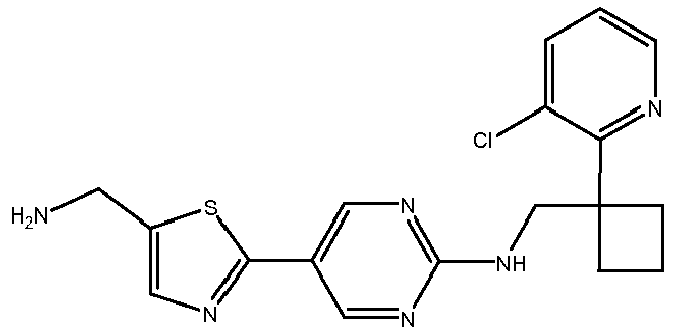
387.1 B N-({2-[2-({[(3-chloro-2-pyridyl)cyclobutyl]methyl}amino)py rimidin-5-yl]-1,3-thiazol-5-yl}methyl)acetamide 
429.1 A ({2-[2-({[(3-fluoro(2-pyridyl))cyclobutyl]methyl}amino)p yrimidin-5-yl](1,3-thiazol-5-yl)}methyl)(methylsulfonyl)amine 
449.1 B 2-{2-[2-({[1-(3-chloro(2-pyridyl))-3-fluorocyclobutyl]methyl}amino)pyri midin-5-yl]-1,3-thiazol-5-yl}acetamide 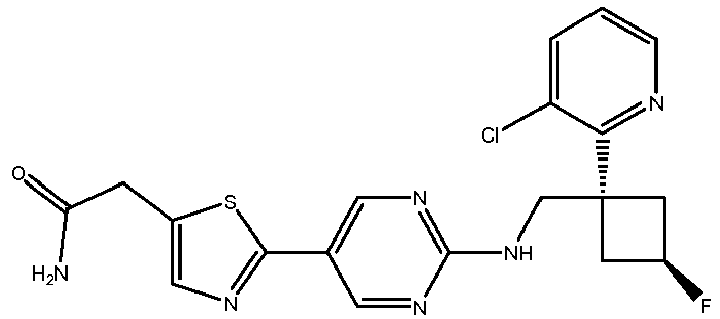
433.2 B (tert-butoxy)-N-{[2-(2-{[(2-pyridylcyclobutyl)methyl]amino}pyri midin-5-yl)(1,3-thiazol-5-yl)]methyl}carboxamide 
B [2-({[(3-fluoro(2-pyridyl))cyclobutyl]methyl}amino)p yrimidin-5-yl]-N-isoxazol-3-ylcarboxamide 
369.2 B [2-({[(3-fluoro(2-pyridyl))cyclobutyl]methyl}amino)p yrimidin-5-yl]-N-(1,3-thiazol-2-yl)carboxamide 
385.2 B 2-({[(3-fluoro-2-pyridyl)cyclobutyl]methyl}amino)py rimidine-5-carboxamide 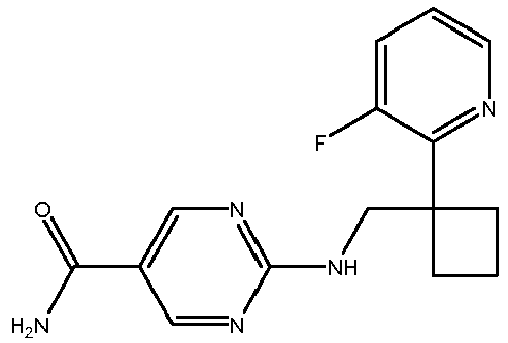
302.2 D [2-({[(3-fluoro(2-pyridyl))cyclobutyl]methyl}amino)p yrimidin-5-yl]-N-methylcarboxamide 
316.2 D N-ethyl[2-({[(3-fluoro(2-pyridyl))cyclobutyl]methyl}amino)p yrimidin-5-yl]carboxamide 
330.2 D [2-({[(3-fluoro(2-pyridyl))cyclobutyl]methyl}amino)p yrimidin-5-yl]-N-(2-hydroxyethyl)carboxamide 
346.2 D N-{2-[(tert-butoxy)carbonylamino]ethyl}[2-({[(3-fluoro(2-pyridyl))cyclobutyl]methyl}amino)p yrimidin-5-yl]carboxamide 
445.2 D N-(2-{[2-({[(3-fluoro-2-pyridyl)cyclobutyl]methyl}amino)py rimidin-5-yl]carbonylamino}ethyl)acetamide 
387.2 D methyl 2-{[2-({[(3-fluoro-2-pyridyl)cyclobutyl]methyl}amino)py rimidin-5-yl]carbonylamino}acetate 
374.2 D {3-[2-({[3-fluoro-1-(3-fluoro(2-pyridyl))cyclobutyl]methyl}amino)p yrimidin-5-yl]phenyl}-N-methylcarboxamide 
410.3 B {4-fluoro-3-[2-({[3-fluoro-1-(3-fluoro(2-pyridyl))cyclobutyl]methyl}amino)p yrimidin-5-yl]phenyl}-N-methylcarboxamide 
428.3 A [2-({[(3-fluoro(2-pyridyl))cyclobutyl]methyl}amino)p yrimidin-5-yl]-N-pyrazol-5-ylcarboxamide 
368.2 C 5-aminopyrazolyl 2-({[(3-fluoro(2-pyridyl))cyclobutyl]methyl}amino)p yrimidin-5-yl ketone 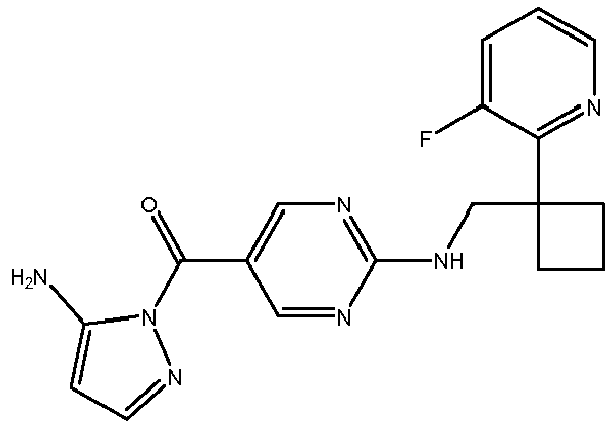
368.2 C [2-({[(3-fluoro(2-pyridyl))cyclobutyl]methyl}amino)p yrimidin-5-yl]-N-(3-methylpyrazol-5-yl)carboxamide 
382.2 D N-(2-aminoethyl)[2-({[(3-fluoro(2-pyridyl))cyclobutyl]methyl}amino)p yrimidin-5-yl]carboxamide 
346.2 D [2-({[(3-fluoro(2-pyridyl))cyclobutyl]methyl}amino)p yrimidin-5-yl]-N-{2-[(methylsulfonyl)amino]ethyl}carbo xamide 
423.2 D 2-{[2-({[(3-fluoro-2-pyridyl)cyclobutyl]methyl}amino)py rimidin-5-yl]carbonylamino}acetic acid 
360.2 D {3-[2-({[(3-fluoro(2-pyridyl))cyclobutyl]methyl}amino)p yrimidin-5-yl]phenyl}-N-methylcarboxamide 
392.3 B {4-fluoro-3-[2-({[(3-fluoro(2-pyridyl))cyclobutyl]methyl}amino)p yrimidin-5-yl]phenyl}-N-methylcarboxamide 
410.3 B [2-({[(3-fluoro(2-pyridyl))cyclobutyl]methyl}amino)p yrimidin-5-yl]-N-benzamide 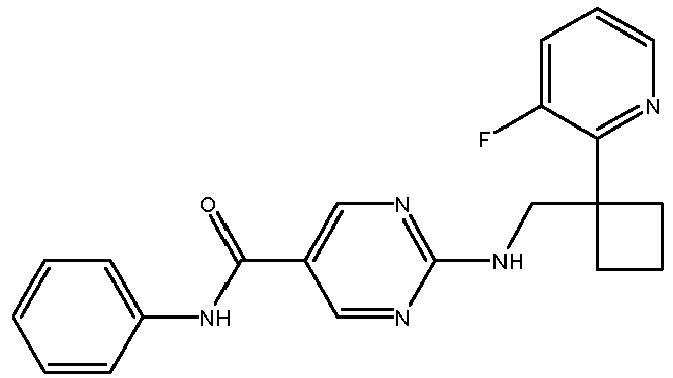
378.2 C [2-({[(3-fluoro(2-pyridyl))cyclobutyl]methyl}amino)p yrimidin-5-yl]-N-(3-pyridyl)carboxamide 
379.2 C {3-[2-({[(3-fluoro(2-pyridyl))cyclobutyl]methyl}amino)p yrimidin-5-yl]-4-hydroxyphenyl}-N-methylcarboxamide 
408.1 B 3-[2-({[(3-fluoro(2-pyridyl))cyclobutyl]methyl}amino)p yrimidin-5-yl]-4-hydroxybenzamide 
394.2 A {3-[2-({[3-fluoro-1-(3-fluoro(2-pyridyl))cyclobutyl]methyl}amino)p yrimidin-5-yl]-4-hydroxyphenyl}-N-methylcarboxamide 
426.1 A 3-[2-({[3-fluoro-1-(3-fluoro(2-pyridyl))cyclobutyl]methyl}amino)p yrimidin-5-yl]-4-hydroxybenzamide 
412.1 A {1-[2-({[3-fluoro-1-(3-fluoro(2-pyridyl))cyclobutyl]methyl}amino)p yrimidin-5-yl]pyrrol-3-yl}-N-methylcarboxamide 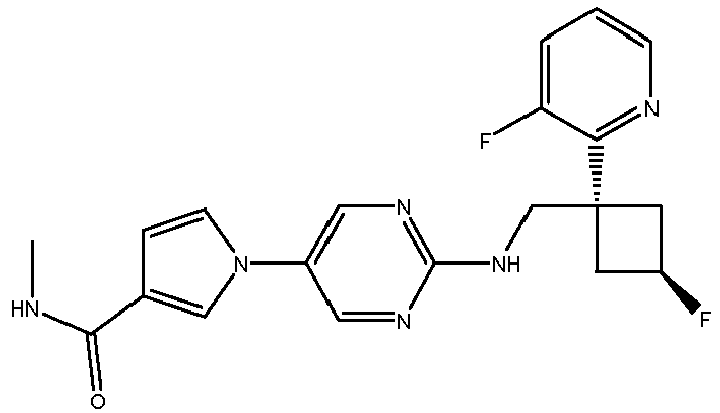
399.3 B [2-({[(3-fluoro(2-pyridyl))cyclobutyl]methyl}amino)p yrimidin-5-yl]-N-(1-methylpyrazol-5-yl)carboxamide 
382.2 D [2-({[(3-fluoro(2-pyridyl))cyclobutyl]methyl}amino)p yrimidin-5-yl]-N-(4-pyridyl)carboxamide 
379.2 B 2-({[(3-fluoro(2-pyridyl))cyclobutyl]methyl}amino)p yrimidin-5-yl pyrazolyl ketone 
353.2 C [2-({[(3-fluoro(2-pyridyl))cyclobutyl]methyl}amino)p yrimidin-5-yl]-N-(1,3,4-thiadiazol-2-yl)carboxamide 
386.2 B [2-({[(3-fluoro(2-pyridyl))cyclobutyl]methyl}amino)p yrimidin-5-yl]-N-(2-fluorophenyl)carboxamide 
396.2 D [2-({[(3-fluoro(2-pyridyl))cyclobutyl]methyl}amino)p yrimidin-5-yl]-N-(3-fluorophenyl)carboxamide 
396.2 D [2-({[(3-fluoro(2-pyridyl))cyclobutyl]methyl}amino)p yrimidin-5-yl]-N-(4-fluorophenyl)carboxamide 
396.2 D [2-({[(3-fluoro(2-pyridyl))cyclobutyl]methyl}amino)p yrimidin-5-yl]-N-(6-methoxy(3-pyridyl))carboxamide 
409.2 D {2-[2-({[3-fluoro-1-(3-fluoro(2-pyridyl))cyclobutyl]methyl}amino)p yrimidin-5-yl](4-pyridyl)}-N-methylcarboxamide 
411.3 B {[2-({[(3-fluoro(2-pyridyl))cyclobutyl]methyl}amino)p yrimidin-5-yl]amino}-N-(1,3-thiazol-2-yl)carboxamide 
400.2 B [2-({[(3-fluoro(2-pyridyl))cyclobutyl]methyl}amino)p yrimidin-5-yl]-N-methyl-N-(1,3-thiazol-2-yl)carboxamide 
399.2 D {[(3-fluoro(2-pyridyl))cyclobutyl]methyl}(5-imidazol-2-ylpyrimidin-2-yl)amine 
325.3 C N-[2-({[(3-fluoro(2-pyridyl))cyclobutyl]methyl}amino)p yrimidin-5-yl]-1,3-thiazol-2-ylcarboxamide 
385.2 D 7-[2-({[3-fluoro-1-(3-fluoro(2-pyridyl))cyclobutyl]methyl}amino)p yrimidin-5-yl]indolin-2-one 
408.3 B 3-[2-({[3-fluoro-1-(3-fluoro(2-pyridyl))cyclobutyl]methyl}amino)p yrimidin-5-yl]-4-hydroxybenzoic acid 
413.1 A methyl 3-[2-({[3-fluoro-1-(3-fluoro(2-pyridyl))cyclobutyl]methyl}amino)p yrimidin-5-yl]-4-hydroxybenzoate 
427.1 A 1-[2-({[3-fluoro-1-(3-fluoro(2-pyridyl))cyclobutyl]methyl}amino)p yrimidin-5-yl]-6-oxohydropyridine-3-carboxylic acid 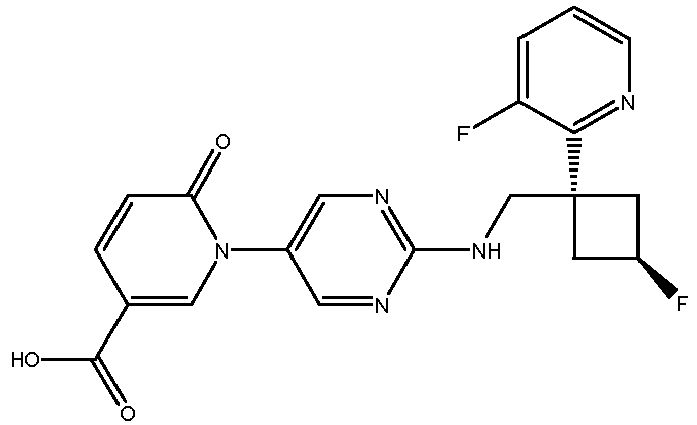
414.1 D 1-[2-({[3-fluoro-1-(3-fluoro(2-pyridyl))cyclobutyl]methyl}amino)p yrimidin-5-yl]-6-oxohydropyridine-3-carboxamide 
413.1 D 2-[2-({[3-fluoro-1-(3-fluoro(2-pyridyl))cyclobutyl]methyl}amino)p yrimidin-5-yl]pyrimidine-4-carbonitrile 
380.3 B {2-[2-({[3-fluoro-1-(3-fluoro(2-pyridyl))cyclobutyl]methyl}amino)p yrimidin-5-yl]pyrimidin-4-yl}-N-methylcarboxamide 
412.3 B 2-[2-({[3-fluoro-1-(3-fluoro(2-pyridyl))cyclobutyl]methyl}amino)p yrimidin-5-yl]pyrimidine-4-carboxamide 
398.3 B 7-[2-({[3-fluoro-1-(3-fluoro(2-pyridyl))cyclobutyl]methyl}amino)p yrimidin-5-yl]isoindolin-1-one 
408.1 B {[3-fluoro-1-(3-fluoro(2-pyridyl))cyclobutyl]methyl}[5-(2-fluorophenyl)pyrimidin-2-yl]amine 
371.3 A 2-[2-({[3-fluoro-1-(3-fluoro(2-pyridyl))cyclobutyl]methyl}amino)p yrimidin-5-yl]benzamide 
396.3 C 2-{2-[2-({[3-fluoro-1-(3-fluoro(2-pyridyl))cyclobutyl]methyl}amino)p yrimidin-5-yl]phenyl}acetamide 
410.3 C N-{2-[2-({[3-fluoro-1-(3-fluoro(2-pyridyl))cyclobutyl]methyl}amino)p yrimidin-5-yl]phenyl}acetamide 
410.3 D 2-[2-({[3-fluoro-1-(3-fluoro(2-pyridyl))cyclobutyl]methyl}amino)p yrimidin-5-yl]benzene-1,4-dicarboxamide 
439.3 B 4-fluoro-2-[2-({[3-fluoro-1-(3-fluoro(2-pyridyl))cyclobutyl]methyl}amino)p yrimidin-5-yl]benzamide 
414.3 B 2-[2-({[3-fluoro-1-(3-fluoro(2-pyridyl))cyclobutyl]methyl}amino)p yrimidin-5-yl]pyridine-4-carbonitrile 
379.2 B 2-[2-({[3-fluoro-1-(3-fluoro(2-pyridyl))cyclobutyl]methyl}amino)p yrimidin-5-yl]pyridine-4-carboxamide 
397.3 B 2-{3-[2-({[3-fluoro-1-(3-fluoro(2-pyridyl))cyclobutyl]methyl}amino)-4-methylpyrimidin-5-yl]phenyl}acetamide 
424.3 C 4-[2-({[3-fluoro-1-(3-fluoro(2-pyridyl))cyclobutyl]methyl}amino)-4-methylpyrimidin-5-yl]benzenecarbonitrile 
392.3 D 4-[2-({[3-fluoro-1-(3-fluoro(2-pyridyl))cyclobutyl]methyl}amino)-4-methylpyrimidin-5-yl]benzamide 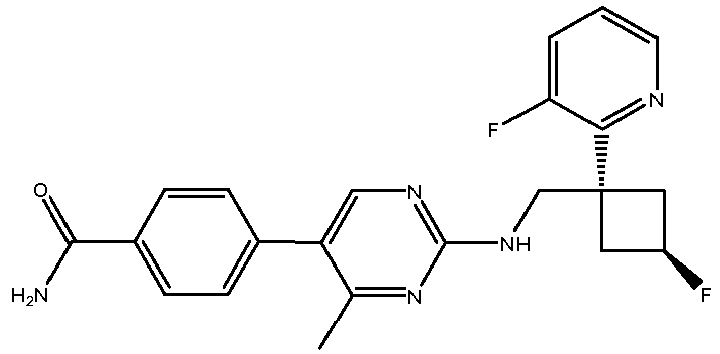
410.3 D 6-[2-({[3-fluoro-1-(3-fluoro(2-pyridyl))cyclobutyl]methyl}amino)p yrimidin-5-yl]pyridin-3-ol 
370.2 B [5-(5-aminopyrazin-2-yl)pyrimidin-2-yl]{[3-fluoro-1-(3-fluoro(2-pyridyl))cyclobutyl]methyl}amine 
370.1 B 5-[2-({[3-fluoro-1-(3-fluoro(2-pyridyl))cyclobutyl]methyl}amino)p yrimidin-5-yl]-2-hydroxybenzamide 
412.1 A 2-{4-[2-({[3-fluoro-1-(3-fluoro(2-pyridyl))cyclobutyl]methyl}amino)-4-methylpyrimidin-5-yl]phenyl}acetamide 
424.3 B 2-{4-[2-({[3-fluoro-1-(3-fluoro(2-pyridyl))cyclobutyl]methyl}amino)-4-methylpyrimidin-5-yl]phenyl}acetic acid 
425.3 D [5-(2-amino-5-methylpyrimidin-4-yl)pyrimidin-2-yl]{[3-fluoro-1-(3-fluoro(2-pyridyl))cyclobutyl]methyl}amine 
384.3 D [5-(2-amino-4-methylpyrimidin-5-yl)pyrimidin-2-yl]{[3-fluoro-1-(3-fluoro(2-pyridyl))cyclobutyl]methyl}amine 
384.3 C 3-[2-({[3-fluoro-1-(3-fluoro(2-pyridyl))cyclobutyl]methyl}amino)p yrimidin-5-yl]pyridin-2-ol 
370.2 C [5-(6-aminopyridazin-3-yl)pyrimidin-2-yl]{[3-fluoro-1-(3-fluoro(2-pyridyl))cyclobutyl]methyl}amine 
370.1 B [5-(2-aminopyrimidin-5-yl)pyrimidin-2-yl]{[3-fluoro-1-(3-fluoro(2-pyridyl))cyclobutyl]methyl}amine 
370.1 B 5-[2-({[3-fluoro-1-(3-fluoro(2-pyridyl))cyclobutyl]methyl}amino)p yrimidin-5-yl]pyridin-2-ol 
370.2 D {[3-fluoro-1-(3-fluoro(2-pyridyl))cyclobutyl]methyl}[5-(6-methoxy(3-pyridyl))pyrimidin-2-yl]amine 
384.3 D [5-(6-aminopyrazin-2-yl)pyrimidin-2-yl]{[3-fluoro-1-(3-fluoro(2-pyridyl))cyclobutyl]methyl}amine 
370.1 B [5-(2-aminopyrimidin-4-yl)pyrimidin-2-yl]{[3-fluoro-1-(3-fluoro(2-pyridyl))cyclobutyl]methyl}amine 
370.1 C [5-(2-amino-5-fluoropyrimidin-4-yl)pyrimidin-2-yl]{[3-fluoro-1-(3-fluoro(2-pyridyl))cyclobutyl]methyl}amine 
388.1 B 5-{2-[4-(3-fluoro-2-pyridyl)-2-azabicyclo[2.1.1]hex-2-yl]pyrimidin-5-yl}pyrimidin-2-ol 
351.2 D (5-bromo-4-methoxypyrimidin-2-yl){[3-fluoro-1-(3-fluoro(2-pyridyl))cyclobutyl]methyl}amine 
387.1 D (5-bromo-4-methoxypyrimidin-2-yl){[3-fluoro-1-(3-fluoro(2-pyridyl))cyclobutyl]methyl}amine 
387.1 D 3-[2-({[3-fluoro-1-(3-fluoro(2-pyridyl))cyclobutyl]methyl}amino)-4-methoxypyrimidin-5-yl]benzamide 
426.3 A 3-[2-({[3-fluoro-1-(3-fluoro(2-pyridyl))cyclobutyl]methyl}amino)-4-hydroxypyrimidin-5-yl]benzoic acid 
413.2 D 3-[2-({[3-fluoro-1-(3-fluoro(2-pyridyl))cyclobutyl]methyl}amino)-4-hydroxypyrimidin-5-yl]benzamide 
412.2 B 5-[2-({[3-fluoro-1-(3-fluoro(2-pyridyl))cyclobutyl]methyl}amino)p yrimidin-5-yl]pyrimidin-2-ol 
371.3 D {[3-fluoro-1-(3-fluoro(2-pyridyl))cyclobutyl]methyl}[5-(2-methoxypyrimidin-5-yl)pyrimidin-2-yl]amine 
385.3 D 6-[2-({[3-fluoro-1-(3-fluoro(2-pyridyl))cyclobutyl]methyl}amino)p yrimidin-5-yl]pyridazin-3-ol 
371.2 D {[3-fluoro-1-(3-fluoro(2-pyridyl))cyclobutyl]methyl}[5-(6-methoxypyridazin-3-yl)pyrimidin-2-yl]amine 
385.2 D 1-[2-({[3-fluoro-1-(3-fluoro(2-pyridyl))cyclobutyl]methyl}amino)p yrimidin-5-yl]-4-hydroxyhydropyridin-2-one 
386.2 D 5-fluoro-6-[2-({[3-fluoro-1-(3-fluoro(2-pyridyl))cyclobutyl]methyl}amino)p yrimidin-5-yl]pyridin-3-ol 
388.2 B {3-[2-({[3-fluoro-1-(3-fluoro(2-pyridyl))cyclobutyl]methyl}amino)p yrimidin-5-yl]phenyl}-N-(1-methylazetidin-3-yl)carboxamide 
465.3 A {4-fluoro-3-[2-({[3-fluoro-1-(3-fluoro(2-pyridyl))cyclobutyl]methyl}amino)p yrimidin-5-yl]phenyl}-N-(1-methylazetidin-3-yl)carboxamide 
483.3 B N-(1-acetylazetidin-3-yl){3-[2-({[3-fluoro-1-(3-fluoro(2-pyridyl))cyclobutyl]methyl}amino)p yrimidin-5-yl]phenyl}carboxamide 
493.3 B N-(1-acetylazetidin-3-yl){4-fluoro-3-[2-({[3-fluoro-1-(3-fluoro(2-pyridyl))cyclobutyl]methyl}amino)p yrimidin-5-yl]phenyl}carboxamide 
511.3 B {4-fluoro-3-[2-({[3-fluoro-1-(3-fluoro(2-pyridyl))cyclobutyl]methyl}amino)p yrimidin-5-yl]phenyl}-N-[1-(methylsulfonyl)azetidin-3-yl]carboxamide 
547.2 B {3-[2-({[3-fluoro-1-(3-fluoro(2-pyridyl))cyclobutyl]methyl}amino)p yrimidin-5-yl]phenyl}-N-[1-(methylsulfonyl)azetidin-3-yl]carboxamide 
529.3 B {[3-fluoro-1-(3-fluoro(2-pyridyl))cyclobutyl]methyl}(4-methoxy-5-phenylpyrimidin-2-yl)amine 
383.2 B {[3-fluoro-1-(3-fluoro(2-pyridyl))cyclobutyl]methyl}(4-methoxy-5-phenylpyrimidin-2-yl)amine 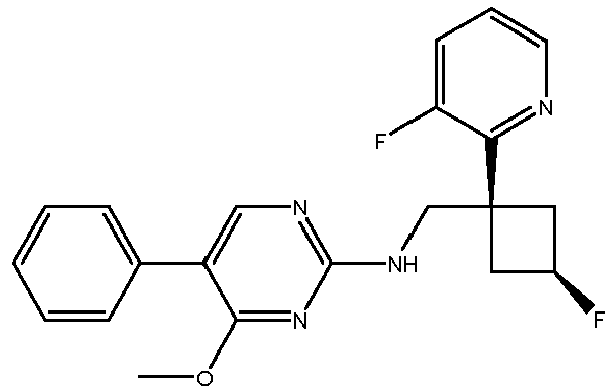
383.3 B {[3-fluoro-1-(3-fluoro(2-pyridyl))cyclobutyl]methyl}(4-methoxy-5-phenylpyrimidin-2-yl)methylamine 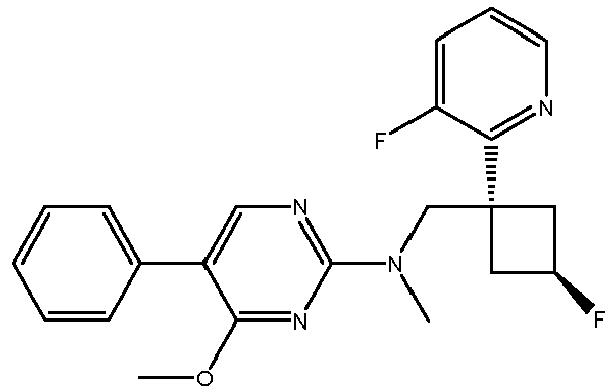
397.2 D {[3-fluoro-1-(3-fluoro(2-pyridyl))cyclobutyl]methyl}(4-methoxypyrimidin-2-yl)amine 
307.1 D (4-amino-5-phenylpyrimidin-2-yl){[3-fluoro-1-(3-fluoro(2-pyridyl))cyclobutyl]methyl}amine 
368.1 B {[3-fluoro-1-(3-fluoro(2-pyridyl))cyclobutyl]methyl}[4-(methylamino)-5-phenylpyrimidin-2-yl]amine 
382.1 D [2-({[3-fluoro-1-(3-fluoro(2-pyridyl))cyclobutyl]methyl}amino)-5-phenylpyrimidin-4-yl]dimethylamine 
396.1 D [2-({[3-fluoro-1-(3-fluoro(2-pyridyl))cyclobutyl]methyl}amino)-5-phenylpyrimidin-4-yl](2-methoxyethyl)amine 
426.1 D {3-[2-({[3-fluoro-1-(3-fluoro(2-pyridyl))cyclobutyl]methyl}amino)p yrimidin-5-yl]phenyl}-N-(3-hydroxycyclobutyl)carboxamide 
466.3 B {4-fluoro-3-[2-({[3-fluoro-1-(3-fluoro(2-pyridyl))cyclobutyl]methyl}amino)p yrimidin-5-yl]phenyl}-N-(3-hydroxycyclobutyl)carboxamide 
484.3 A 4-fluoro-3-[2-({[3-fluoro-1-(3-fluoro(2-pyridyl))cyclobutyl]methyl}amino)p yrimidin-5-yl]-2-hydroxybenzamide 
430.1 A 3-[2-({[3-fluoro-1-(3-fluoro(2-pyridyl))cyclobutyl]methyl}amino)p yrimidin-5-yl]-2-hydroxybenzamide 
412.1 A [5-(2,6-dimethoxypyrimidin-4-yl)pyrimidin-2-yl]{[3-fluoro-1-(3-fluoro(2-pyridyl))cyclobutyl]methyl}amine 
415.2 D [5-(2,4-dimethoxypyrimidin-5-yl)pyrimidin-2-yl]{[3-fluoro-1-(3-fluoro(2-pyridyl))cyclobutyl]methyl}amine 
415.2 D 6-[2-({[3-fluoro-1-(3-fluoro(2-pyridyl))cyclobutyl]methyl}amino)p yrimidin-5-yl]-1,3-dihydropyrimidine-2,4-dione 
387.2 B 5-[2-({[3-fluoro-1-(3-fluoro(2-pyridyl))cyclobutyl]methyl}amino)p yrimidin-5-yl]-1,3-dihydropyrimidine-2,4-dione 
387.2 D 3-amino-6-[2-({[3-fluoro-1-(3-fluoro(2-pyridyl))cyclobutyl]methyl}amino)p yrimidin-5-yl]hydropyrazin-2-one 
386.2 B {3-[2-({[3-fluoro-1-(3-fluoro(2-pyridyl))cyclobutyl]methyl}amino)p yrimidin-5-yl]-2-hydroxyphenyl}-N-methylcarboxamide 
426.2 B [2-({[(3-fluoro(2-pyridyl))cyclobutyl]methyl}amino)p yrimidin-4-yl]-N-benzamide 
378.3 D [2-({[(3-fluoro(2-pyridyl))cyclobutyl]methyl}amino)p yrimidin-4-yl]-N-methyl-N-benzamide 
392.3 D {[3-fluoro-1-(3-fluoro(2-pyridyl))cyclobutyl]methyl}[5-(3-methoxy-6-methyl(2-pyridyl))pyrimidin-2-yl]amine 
398.2 C ((1R)-1-phenylethyl)[4-(cyclohexylamino)-6-methylpyrimidin-2-yl]amine 
311.3 B 3-[2-({[3-fluoro-1-(3-fluoro-6-methyl(2-pyridyl))cyclobutyl]methyl}amino)p yrimidin-5-yl]benzam ide 
410.2 A - While the present invention has been described with reference to the specific embodiments described herein, it should be understood by those skilled in the art that various changes may be made and equivalents may be substituted without departing from the true spirit and scope of the invention. In addition, modifications may be made to adapt a particular situation, material, composition of matter and/or process to the objective, spirit and scope of the present invention. All such modifications are intended to be within the scope of the claims appended hereto.
-
- 1. A compound of Formula I:

- R1 is selected from hydrogen, halogen, CN, C1-6 alkyl, C1-6 haloalkyl, C(O)ORa, C(O)NRbRc, ORa, NRbRc, C6-10 aryl and 5-10 membered heteroaryl;
- R2 is selected from C3-8 cycloalkyl, C3-8 cycloalkenyl, 3-8 membered heterocycloalkyl, 3-8 membered heterocycloalkenyl, C6-10 aryl, 5-10 membered heteroaryl and NRbRc, wherein each of the C3-8 cycloalkyl, C3-8 cycloalkenyl, 3-8 membered heterocycloalkyl, 3-8 membered heterocycloalkenyl, C6-10 aryl and 5-10 membered heteroaryl groups is optionally substituted with 1, 2, 3, 4 or 5 substituents selected from halogen, CN, oxo, (CH2)nORa, (CH2)nOC(O)Ra, (CH2)nOC(O)ORa, (CH2)nOC(O)NRbRc, (CH2)nNRbRc, (CH2)nNRdC(O)Ra, (CH2)nNRdC(O)ORa, (CH2)nNRdC(O)NRbRc, (CH2)nNRdC(O)C(O)NRbRc, (CH2)nNRdC(S)Ra, (CH2)nNRdC(S)ORa, (CH2)nNRdC(S)NRbRc, (CH2)nNRdC(NRe)NRbRc, (CH2)nNRdS(O)Ra, (CH2)nNRdSO2Ra, (CH2)nNRdSO2NRbRc, (CH2)nC(O)Ra, (CH2)nC(O)ORa, (CH2)nC(O)NRbRc, (CH2)nC(S)Ra, (CH2)nC(S)ORa, (CH2)nC(S)NRbRc, (CH2)nC(NRe)NRbRc, (CH2)nSRa, (CH2)nS(O)Ra, (CH2)nSO2Ra, (CH2)nSO2NRbRc, C1-6 alkyl, C1-6 haloalkyl, C2-6 alkenyl, C2-6 alkynyl, (CH2)nC3-8 cycloalkyl, (CH2)n3-8 membered heterocycloalkyl, (CH2)nC6-10 aryl and (CH2)n5-10 membered heteroaryl, wherein each of the C1-6 alkyl, C2-6 alkenyl, C2-6 alkynyl, (CH2)nC3-8 cycloalkyl, (CH2)n3-8 membered heterocycloalkyl, (CH2)nC6-10 aryl and (CH2)n5-10 membered heteroaryl groups is optionally substituted with 1, 2, 3, 4 or 5 Rf substituents;
- R3 is selected from hydrogen, halogen, CN, C1-6 alkyl, C1-6 haloalkyl, C(O)ORa, C(O)NRbRc, ORa, NRbRc, C6-10 aryl and 5-10 membered heteroaryl;
- R4 is selected from hydrogen, C1-6 alkyl, C1-6 haloalkyl, C(O)Ra, C(O)ORa, C(O)NRbRc and SO2Ra;
- R5 and R6 are each independently selected from hydrogen, halogen, C1-6 alkyl and C1-6 haloalkyl;
- or alternatively, R5 and R6 together with the carbon atom to which they are bound form a group selected from C3-8 cycloalkyl, C3-8 cycloalkenyl, 3-8 membered heterocycloalkyl and 3-8 membered heterocycloalkenyl, each optionally substituted with 1, 2, 3, 4 or 5 substituents selected from halogen, CN, oxo, ORa, OC(O)Ra, OC(O)ORa, NRbRc, C(O)Ra, C(O)ORa, C(O)NRbRc, S(O)Ra, SO2Ra, SO2NRbRc, C1-6 alkyl and C1-6 haloalkyl;
- R7 is selected from C3-8 cycloalkyl, C3-8 cycloalkenyl, 3-8 membered heterocycloalkyl, 3-8 membered heterocycloalkenyl, C6-10 aryl and 5-10 membered heteroaryl, each optionally substituted with 1, 2, 3, 4 or 5 substituents selected from halogen, CN, oxo, ORa, OC(O)Ra, OC(O)ORa, OC(O)NRbRc, NRbRc, NRdC(O)Ra, NRdC(O)ORa, NRdC(O)NRbRc, NRdC(O)C(O)NRbRc, NRdC(S)Ra, NRdC(S)ORa, NRdC(S)NRbRc, NRdC(NRe)NRbRc, NRdS(O)Ra, NRdSO2Ra, NRdSO2NRbRc, C(O)Ra, C(O)ORa, C(O)NRbRc, C(S)Ra, C(S)ORa, C(S)NRbRc, C(NRe)NRbRc, SRa, S(O)Ra, SO2Ra, SO2NRbRc, C1-6 alkyl, C1-6 haloalkyl, C2-6 alkenyl, C2-6 alkynyl, C3-8 cycloalkyl, C3-8 cycloalkenyl, 3-8 membered heterocycloalkyl, 3-8 membered heterocycloalkenyl, C6-10 aryl, C7-11 aralkyl, and 5-10 membered heteroaryl, wherein each of the C1-6 alkyl, C2-6 alkenyl, C2-6 alkynyl, C3-8 cycloalkyl, C3-8 cycloalkenyl, 3-8 membered heterocycloalkyl, 3-8 membered heterocycloalkenyl, C6-10 aryl, C7-11 aralkyl and 5-10 membered heteroaryl groups is optionally substituted with 1, 2, 3, 4 or 5 Rf substituents;
- R8 and R9, at each occurrence, are each independently selected from hydrogen, halogen and C1-6 alkyl;
- X is selected from a bond, -(CH2)p-, -(CH2)pC(O)(CH2)q-, -(CH2)pO(CH2)q-, -(CH2)pS(CH2)q-, -(CH2)pNRd(CH2)q-, -(CH2)pC(O)O(CH2)q-, -(CH2)pOC(O)(CH2)q-, -(CH2)pNRdC(O)(CH2)q-, -(CH2)pC(O)NRd(CH2)q-, -(CH2)pNRdC(O)NRd(CH2)q-, -(CH2)pNRdSO2(CH2)q-, and -(CH2)pSO2NRd(CH2)q-;
- or alternatively, X, R2 and R3, together with the carbon atoms to which they are bound, form a 5-6 membered ring optionally containing one or more heteroatoms selected from oxygen nitrogen and sulfur, and optionally containing one or more double bonds, and optionally substituted with 1, 2, 3, 4 or 5 Rf substituents;
- Ra, at each occurrence, is independently selected from hydrogen, C1-6 alkyl, C1-6 haloalkyl, C2-6 alkenyl, C2-6 alkynyl, C3-8 cycloalkyl, C3-8 cycloalkenyl, 3-8 membered heterocycloalkyl, 3-8 membered heterocycloalkenyl, C6-10 aryl, C7-11 aralkyl and 5-10 membered heteroaryl, wherein each of the C1-6 alkyl, C2-6 alkenyl, C2-6 alkynyl, C3-8 cycloalkyl, C3-8 cycloalkenyl, 3-8 membered heterocycloalkyl, 3-8 membered heterocycloalkenyl, C6-10 aryl, C7-11 aralkyl and 5-10 membered heteroaryl groups is optionally substituted with 1, 2, 3, 4 or 5 Rf substituents;
- Rb and Rc, at each occurrence, are each independently selected from hydrogen, C1-6 alkyl, C1-6 haloalkyl, C2-6 alkenyl, C2-6 alkynyl, C3-8 cycloalkyl, C3-8 cycloalkenyl, 3-8 membered heterocycloalkyl, 3-8 membered heterocycloalkenyl, C6-10 aryl, C7-11 aralkyl, 5-10 membered heteroaryl, C(O)Rg, C(O)ORg, C(O)NRiRj and SO2Rg, wherein each of the C1-6 alkyl, C2-6 alkenyl, C2-6 alkynyl, C3-8 cycloalkyl, C3-8 cycloalkenyl, 3-8 membered heterocycloalkyl, 3-8 membered heterocycloalkenyl, C6-10 aryl, C7-11 aralkyl and 5-10 membered heteroaryl groups is optionally substituted with 1, 2, 3, 4 or 5 Rf substituents;
- Rd, at each occurrence, is independently selected from hydrogen and C1-6 alkyl;
- Re, at each occurrence, is independently selected from hydrogen, CN, OH, C1-6 alkoxy, C1-6 alkyl and C1-6 haloalkyl;
- Rf, at each occurrence, is independently selected from halogen, CN, ORh, OC(O)Rh, OC(O)ORh, OC(O)NRiRj, NRiRj, NRdC(O)Rh, NRdC(O)ORh, NRdC(O)NRiRj, NRdC(O)C(O)NRiRj, NRdC(S)Rh, NRdC(S)ORh, NRdC(S)NRiRj, NRdC(NRe)NRiRj, NRdS(O)Rh, NRdSO2Rh, NRdSO2NRiRj, C(O)Rh, C(O)ORh, C(O)NRiRj, C(S)Rh, C(S)ORh, C(S)NRiRj, C(NRe)NRiRj, SRh, S(O)Rh, SO2Rh, SO2NRiRj, C1-6 alkyl, C1-6 haloalkyl, C2-6 alkenyl, C2-6 alkynyl, C3-8 cycloalkyl, C3-8 cycloalkenyl, 3-8 membered heterocycloalkyl, 3-8 membered heterocycloalkenyl, C6-10 aryl, C7-11 aralkyl and 5-10 membered heteroaryl, wherein each of the C1-6 alkyl, C2-6 alkenyl, C2-6 alkynyl, C3-8 cycloalkyl, C3-8 cycloalkenyl, 3-8 membered heterocycloalkyl, 3-8 membered heterocycloalkenyl, C6-10 aryl, C7-11 aralkyl and 5-10 membered heteroaryl groups is optionally substituted with 1, 2, 3, 4 or 5 Rk substituents;
- or two Rf substituents bound to a single carbon atom, together with the carbon atom to which they are both bound, form a group selected from carbonyl, C3-8 cycloalkyl and 3-8 membered heterocycloalkyl;
- Rg, at each occurrence, is independently selected from C1-6 alkyl, C1-6 haloalkyl, phenyl, naphthyl, and C7-11 aralkyl, each optionally substituted with 1, 2, 3, 4 or 5 substituents selected from halogen, CN, OH, C1-6 alkoxy, C1-6 alkyl and C1-6 haloalkyl;
- Rh, at each occurrence, is independently selected from hydrogen, C1-6 alkyl, C1-6 haloalkyl, C2-6 alkenyl, C2-6 alkynyl, C3-8 cycloalkyl, C3-8 cycloalkenyl, 3-8 membered heterocycloalkyl, 3-8 membered heterocycloalkenyl, C6-10 aryl, C7-11 aralkyl and 5-10 membered heteroaryl, wherein each of the C1-6 alkyl, C2-6 alkenyl, C2-6 alkynyl, C3-8 cycloalkyl, C3-8 cycloalkenyl, 3-8 membered heterocycloalkyl, 3-8 membered heterocycloalkenyl, C6-10 aryl, C7-11 aralkyl and 5-10 membered heteroaryl groups is optionally substituted with 1, 2, 3, 4 or 5 Rk substituents;
- Ri and Rj, at each occurrence, are each independently selected from hydrogen, C1-6 alkyl, C1-6 haloalkyl, C2-6 alkenyl, C2-6 alkynyl, C3-8 cycloalkyl, C3-8 cycloalkenyl, 3-8 membered heterocycloalkyl, 3-8 membered heterocycloalkenyl, C6-10 aryl, C7-11 aralkyl, 5-10 membered heteroaryl, C(O)Rg, and C(O)ORg, wherein each of the C1-6 alkyl, C1-6 haloalkyl, C2-6 alkenyl, C2-6 alkynyl, C3-8 cycloalkyl, C3-8 cycloalkenyl, 3-8 membered heterocycloalkyl, 3-8 membered heterocycloalkenyl, C6-10 aryl, C7-11 aralkyl and 5-10 membered heteroaryl groups is optionally substituted with 1, 2, 3, 4 or 5 substituents selected from halogen, CN, OH, C1-6 alkoxy, C1-6 alkyl and C1-6 haloalkyl;
- Rk, at each occurrence, is independently selected from halogen, CN, OH, C1-6 alkoxy, NH2, NH(C1-6 alkyl), N(C1-6 alkyl)2, NHC(O)C1-6 alkyl, NHC(O)C7-11 aralkyl, NHC(O)OC1-6 alkyl, NHC(O)OC7-11 aralkyl, OC(O)C1-6 alkyl, OC(O)C7-11 aralkyl, OC(O)OC1-6 alkyl, OC(O)OC7-11 aralkyl, C(O)C1-6 alkyl, C(O)C7-11 aralkyl, C(O)OC1-6 alkyl, C(O)OC7-11 aralkyl, C1-6 alkyl, C1-6 haloalkyl, C2-6 alkenyl, and C2-6 alkynyl, wherein each C1-6 alkyl, C2-6 alkenyl, C2-6 alkynyl, and C7-11 aralkyl substituent is optionally substituted with 1, 2 or 3 substituents selected from OH, C1-6 alkoxy, NH2, NH(C1-6 alkyl), N(C1-6 alkyl)2, NHC(O)C1-6 alkyl, NHC(O)C7-11 aralkyl, NHC(O)OC1-6 alkyl, and NHC(O)OC7-11 aralkyl;
- or two Rk substituents bound to a single carbon atom, together with the carbon atom to which they are both bound, form a carbonyl group;
- m is 0, 1 or 2;
- n, at each occurrence, independently is 0, 1 or 2;
- p is 0, 1 or 2; and
- q is 0, 1 or 2.
- 2. The compound of embodiment 1, or a pharmaceutically acceptable salt thereof, wherein m is 0.
- 3. The compound of embodiment 1, or a pharmaceutically acceptable salt thereof, wherein m is 1.
- 4. The compound of embodiment 3, wherein R8 and R9 are each hydrogen.
- 5. The compound of any one of embodiments 1 to 4, or a pharmaceutically acceptable salt thereof, wherein R5 and R6 are each C1-6 alkyl.
- 6. The compound of embodiment 5, or a pharmaceutically acceptable salt thereof, wherein R5 and R6 are each methyl.
- 7. The compound of any one of embodimentss 1 to 4, or a pharmaceutically acceptable salt thereof, wherein R5 and R6 together with the carbon atom to which they are bound form a group selected from C3-8 cycloalkyl, C3-8 cycloalkenyl, 3-8 membered heterocycloalkyl and 3-8 membered heterocycloalkenyl, each optionally substituted with 1, 2, 3, 4 or 5 substituents selected from halogen, CN, oxo, ORa, OC(O)Ra, OC(O)ORa, NRbRc, C(O)Ra, C(O)ORa, C(O)NRbRc, S(O)Ra, SO2Ra, SO2NRbRc, C1-6 alkyl and C1-6 haloalkyl.
- 8. The compound of embodiment 7, or a pharmaceutically acceptable salt thereof, wherein R5 and R6 together with the carbon atom to which they are bound form C3-8 cycloalkyl optionally substituted with 1, 2, 3, 4 or 5 substituents selected from halogen, CN, oxo, ORa, OC(O)Ra, OC(O)ORa, NRbRc, C(O)Ra, C(O)ORa, C(O)NRbRc, S(O)Ra, SO2Ra, SO2NRbRc, C1-6 alkyl and C1-6 haloalkyl.
- 9. The compound of embodiment 8, or a pharmaceutically acceptable salt thereof, wherein R5 and R6 together with the carbon atom to which they are bound form a group selected from cyclopropyl, cyclobutyl, cyclopentyl and cyclohexyl, each optionally substituted with 1, 2, 3, 4 or 5 substituents selected from halogen, CN, oxo, ORa, OC(O)Ra, OC(O)ORa, NRbRc, C(O)Ra, C(O)ORa, C(O)NRbRc, S(O)Ra, SO2Ra, SO2NRbRc, C1-6 alkyl and C1-6 haloalkyl.
- 10. The compound of embodiment 9, or a pharmaceutically acceptable salt thereof, wherein R5 and R6 together with the carbon atom to which they are bound form cyclobutyl optionally substituted with 1, 2, 3, 4 or 5 substituents selected from halogen, CN, oxo, ORa, OC(O)Ra, OC(O)ORa, NRbRc, C(O)Ra, C(O)ORa, C(O)NRbRc, S(O)Ra, SO2Ra, SO2NRbRc, C1-6 alkyl and C1-6 haloalkyl.
- 11. The compound of embodiment 10, or a pharmaceutically acceptable salt thereof, wherein R5 and R6 together with the carbon atom to which they are bound form cyclobutyl optionally substituted with one or two halogens.
- 12. The compound of embodiment 11, or a pharmaceutically acceptable salt thereof, wherein R5 and R6 together with the carbon atom to which they are bound form a group selected from cyclobutyl, 3-fluorocyclobutyl and 3,3-difluorocyclobutyl.
- 13. The compound of embodiment 10, wherein the compound is of Formula V(a) or V(b), or a pharmaceutically acceptable salt thereof:


- 14. The compound according to embodiment 13, wherein one of Rm and Rn is hydrogen and the other is halogen.
- 15. The compound according to embodiment 14, wherein the halogen and R7 are in a trans configuration with respect to one another on the cyclobutyl ring.
- 16. The compound according to embodiment 14, wherein the halogen and R7 are in a cis configuration with respect to one another on the cyclobutyl ring.
- 17. The compound according to any one of embodiments 13-16, wherein one of Rm and Rn is hydrogen and the other is fluorine.
- 18. The compound of any one of embodiments 1 to 17, or a pharmaceutically acceptable salt thereof, wherein R7 is phenyl optionally substituted with 1, 2, 3, 4 or 5 substituents selected from halogen, CN, oxo, ORa, OC(O)Ra, OC(O)ORa, OC(O)NRbRc, NRbRc, NRdC(O)Ra, NRdC(O)ORa, NRdC(O)NRbRc, NRdC(O)C(O)NRbRc, NRdC(S)Ra, NRdC(S)ORa, NRdC(S)NRbRc, NRdC(NRe)NRbRc, NRdS(O)Ra, NRdSO2Ra, NRdSO2NRbRc, C(O)Ra, C(O)ORa, C(O)NRbRc, C(S)Ra, C(S)ORa, C(S)NRbRc, C(NRe)NRbRc, SRa, S(O)Ra, SO2Ra, SO2NRbRc, C1-6 alkyl, C1-6 haloalkyl, C2-6 alkenyl, C2-6 alkynyl, C3-8 cycloalkyl, C3-8 cycloalkenyl, 3-8 membered heterocycloalkyl, 3-8 membered heterocycloalkenyl, C6-10 aryl, C7-11 aralkyl, and 5-10 membered heteroaryl, wherein each of the C1-6 alkyl, C2-6 alkenyl, C2-6 alkynyl, C3-8 cycloalkyl, C3-8 cycloalkenyl, 3-8 membered heterocycloalkyl, 3-8 membered heterocycloalkenyl, C6-10 aryl, C7-11 aralkyl and 5-10 membered heteroaryl groups is optionally substituted with 1, 2, 3, 4 or 5 Rf substituents.
- 19. The compound of any one of embodiments 1 to 17, or a pharmaceutically acceptable salt thereof, wherein R7 is 5-10 membered heteroaryl optionally substituted with 1, 2, 3, 4 or 5 substituents selected from halogen, CN, oxo, ORa, OC(O)Ra, OC(O)ORa, OC(O)NRbRc, NRbRc, NRdC(O)Ra, NRdC(O)ORa, NRdC(O)NRbRc, NRdC(O)C(O)NRbRc, NRdC(S)Ra, NRdC(S)ORa, NRdC(S)NRbRc, NRdC(NRe)NRbRc, NRdS(O)Ra, NRdSO2Ra, NRdSO2NRbRc, C(O)Ra, C(O)ORa, C(O)NRbRc, C(S)Ra, C(S)ORa, C(S)NRbRc, C(NRe)NRbRc, SRa, S(O)Ra, SO2Ra, SO2NRbRc, C1-6 alkyl, C1-6 haloalkyl, C2-6 alkenyl, C2-6 alkynyl, C3-8 cycloalkyl, C3-8 cycloalkenyl, 3-8 membered heterocycloalkyl, 3-8 membered heterocycloalkenyl, C6-10 aryl, C7-11 aralkyl, and 5-10 membered heteroaryl, wherein each of the C1-6 alkyl, C2-6 alkenyl, C2-6 alkynyl, C3-8 cycloalkyl, C3-8 cycloalkenyl, 3-8 membered heterocycloalkyl, 3-8 membered heterocycloalkenyl, C6-10 aryl, C7-11 aralkyl and 5-10 membered heteroaryl groups is optionally substituted with 1, 2, 3, 4 or 5 Rf substituents.
- 20. The compound of embodiment 19, or a pharmaceutically acceptable salt thereof, wherein R7 is pyridyl optionally substituted with 1, 2, 3, 4 or 5 substituents selected from halogen, CN, oxo, ORa, OC(O)Ra, OC(O)ORa, OC(O)NRbRc, NRbRc, NRdC(O)Ra, NRdC(O)ORa, NRdC(O)NRbRc, NRdC(O)C(O)NRbRc, NRdC(S)Ra, NRdC(S)ORa, NRdC(S)NRbRc, NRdC(NRe)NRbRc, NRdS(O)Ra, NRdSO2Ra, NRdSO2NRbRc, C(O)Ra, C(O)ORa, C(O)NRbRc, C(S)Ra, C(S)ORa, C(S)NRbRc, C(NRe)NRbRc, SRa, S(O)Ra, SO2Ra, SO2NRbRc, C1-6 alkyl, C1-6 haloalkyl, C2-6 alkenyl, C2-6 alkynyl, C3-6 cycloalkyl, C3-6 cycloalkenyl, 3-6 membered heterocycloalkyl, 3-6 membered heterocycloalkenyl, phenyl, naphthyl, C7-11 aralkyl, and 5-10 membered heteroaryl, wherein each of the C1-6 alkyl, C2-6 alkenyl, C2-6 alkynyl, C3-8 cycloalkyl, C3-8 cycloalkenyl, 3-8 membered heterocycloalkyl, 3-8 membered heterocycloalkenyl, C6-10 aryl, C7-11 aralkyl and 5-10 membered heteroaryl groups is optionally substituted with 1, 2, 3, 4 or 5 Rf substituents.
- 21. The compound of embodiment 20, or a pharmaceutically acceptable salt thereof, wherein R7 is 2-pyridyl optionally substituted with 1, 2, 3, 4 or 5 substituents selected from halogen, CN, oxo, ORa, OC(O)Ra, OC(O)ORa, OC(O)NRbRc, NRbRc, NRdC(O)Ra, NRdC(O)ORa, NRdC(O)NRbRc, NRdC(O)C(O)NRbRc, NRdC(S)Ra, NRdC(S)ORa, NRdC(S)NRbRc, NRdC(NRe)NRbRc, NRdS(O)Ra, NRdSO2Ra, NRdSO2NRbRc, C(O)Ra, C(O)ORa, C(O)NRbRc, C(S)Ra, C(S)ORa, C(S)NRbRc, C(NRe)NRbRc, SRa, S(O)Ra, SO2Ra, SO2NRbRc, C1-6 alkyl, C1-6 haloalkyl, C2-6 alkenyl, C2-6 alkynyl, C3-6 cycloalkyl, C3-6 cycloalkenyl, 3-6 membered heterocycloalkyl, 3-6 membered heterocycloalkenyl, phenyl, naphthyl, C7-11 aralkyl, and 5-10 membered heteroaryl, wherein each of the C1-6 alkyl, C2-6 alkenyl, C2-6 alkynyl, C3-8 cycloalkyl, C3-8 cycloalkenyl, 3-8 membered heterocycloalkyl, 3-8 membered heterocycloalkenyl, C6-10 aryl, C7-11 aralkyl and 5-10 membered heteroaryl groups is optionally substituted with 1, 2, 3, 4 or 5 Rf substituents.
- 22. The compound of any one of embodiments 1 to 21, or a pharmaceutically acceptable salt thereof, wherein X is a bond.
- 23. The compound of embodiment 22, wherein the compound is of Formula XII(a), or a pharmaceutically acceptable salt thereof:

- 24. The compound of any one of embodimentss 1 to 23, or a pharmaceutically acceptable salt thereof, wherein R2 is phenyl optionally substituted with 1, 2, 3, 4 or 5 substituents selected from halogen, CN, (CH2)nORa, (CH2)nOC(O)Ra, (CH2)nOC(O)ORa, (CH2)nOC(O)NRbRc, (CH2)nNRbRc, (CH2)nNRdC(O)Ra, (CH2)nNRdC(O)ORa, (CH2)nNRdC(O)NRbRc, (CH2)nNRdC(O)C(O)NRbRc, (CH2)nNRdC(S)Ra, (CH2)nNRdC(S)ORa, (CH2)nNRdC(S)NRbRc, (CH2)nNRdC(NRe)NRbRc, (CH2)nNRdS(O)Ra, (CH2)nNRdSO2Ra, (CH2)nNRdSO2NRbRc, (CH2)nC(O)Ra, (CH2)nC(O)ORa, (CH2)nC(O)NRbRc, (CH2)nC(S)Ra, (CH2)nC(S)ORa, (CH2)nC(S)NRbRc, (CH2)nC(NRe)NRbRc, (CH2)nSRa, (CH2)nS(O)Ra, (CH2)nSO2Ra, (CH2)nSO2NRbRc, C1-6 alkyl, C1-6 haloalkyl, C2-6 alkenyl, C2-6 alkynyl, (CH2)nC3-8 cycloalkyl, (CH2)n3-8 membered heterocycloalkyl, (CH2)nphenyl, (CH2)nnaphthyl and (CH2)n5-10 membered heteroaryl, wherein each of the C1-6 alkyl, C2-6 alkenyl, C2-6 alkynyl, (CH2)nC3-8 cycloalkyl, (CH2)n3-8 membered heterocycloalkyl, (CH2)nphenyl, (CH2)nnaphthyl and (CH2)n5-10 membered heteroaryl groups is optionally substituted with 1, 2, 3, 4 or 5 Rf substituents.
- 25. The compound of any one of embodiments 1 to 23, or a pharmaceutically acceptable salt thereof, wherein R2 is 5-10 membered heteroaryl optionally substituted with 1, 2, 3, 4 or 5 substituents selected from halogen, CN, oxo, (CH2)nORa, (CH2)nOC(O)Ra, (CH2)nOC(O)ORa, (CH2)nOC(O)NRbRc, (CH2)nNRbRc, (CH2)nNRdC(O)Ra, (CH2)nNRdC(O)ORa, (CH2)nNRdC(O)NRbRc, (CH2)nNRdC(O)C(O)NRbRc, (CH2)nNRdC(S)Ra, (CH2)nNRdC(S)ORa, (CH2)nNRdC(S)NRbRc, (CH2)nNRdC(NRe)NRbRc, (CH2)nNRdS(O)Ra, (CH2)nNRdSO2Ra, (CH2)nNRdSO2NRbRc, (CH2)nC(O)Ra, (CH2)nC(O)ORa, (CH2)nC(O)NRbRc, (CH2)nC(S)Ra, (CH2)nC(S)ORa, (CH2)nC(S)NRbRc, (CH2)nC(NRe)NRbRc, (CH2)nSRa, (CH2)nS(O)Ra, (CH2)nSO2Ra, (CH2)nSO2NRbRc, C1-6 alkyl, C1-6 haloalkyl, C2-6 alkenyl, C2-6 alkynyl, (CH2)nC3-8 cycloalkyl, (CH2)n3-8 membered heterocycloalkyl, (CH2)nphenyl, (CH2)nnaphthyl and (CH2)n5-10 membered heteroaryl, wherein each of the C1-6 alkyl, C2-6 alkenyl, C2-6 alkynyl, (CH2)nC3-8 cycloalkyl, (CH2)n3-8 membered heterocycloalkyl, (CH2)nphenyl, (CH2)nnaphthyl and (CH2)n5-10 membered heteroaryl groups is optionally substituted with 1, 2, 3, 4 or 5 Rf substituents.
- 26. The compound of embodiment 25, or a pharmaceutically acceptable salt thereof, wherein R2 is selected from pyridyl, pyrimidyl, pyrazyl, pyridazyl, triazyl, furanyl, pyrrolyl, thiophenyl, thiazolyl, isothiazolyl, thiadiazolyl, oxazolyl, isoxazolyl, oxadiazolyl, imidazolyl, triazolyl and tetrazolyl, each optionally substituted with 1, 2, 3 or 4 substituents selected from halogen, CN, oxo, (CH2)nORa, (CH2)nOC(O)Ra, (CH2)nOC(O)ORa, (CH2)nOC(O)NRbRc, (CH2)nNRbRc, (CH2)nNRdC(O)Ra, (CH2)nNRdC(O)ORa, (CH2)nNRdC(O)NRbRc, (CH2)nNRdC(O)C(O)NRbRc, (CH2)nNRdC(S)Ra, (CH2)nNRdC(S)ORa, (CH2)nNRdC(S)NRbRc, (CH2)nNRdC(NRe)NRbRc, (CH2)nNRdS(O)Ra, (CH2)nNRdSO2Ra, (CH2)nNRdSO2NRbRc, (CH2)nC(O)Ra, (CH2)nC(O)ORa, (CH2)nC(O)NRbRc, (CH2)nC(S)Ra, (CH2)nC(S)ORa, (CH2)nC(S)NRbRc, (CH2)nC(NRe)NRbRc, (CH2)nSRa, (CH2)nS(O)Ra, (CH2)nSO2Ra, (CH2)nSO2NRbRc, C1-6 alkyl, C1-6 haloalkyl, C2-6 alkenyl, C2-6 alkynyl, (CH2)nC3-8 cycloalkyl, (CH2)n3-8 membered heterocycloalkyl, (CH2)nphenyl, (CH2)nnaphthyl and (CH2)n5-10 membered heteroaryl, wherein each of the C1-6 alkyl, C2-6 alkenyl, C2-6 alkynyl, (CH2)nC3-8 cycloalkyl, (CH2)n3-8 membered heterocycloalkyl, (CH2)nphenyl, (CH2)nnaphthyl and (CH2)n5-10 membered heteroaryl groups is optionally substituted with 1, 2, 3, 4 or 5 Rf substituents.
- 27. The compound of embodiment 26, or a pharmaceutically acceptable salt thereof, wherein R2 is selected from pyridyl, pyrimidyl, pyrazyl, pyridazyl, triazyl, furanyl, pyrrolyl, thiophenyl, thiazolyl, isothiazolyl, thiadiazolyl, oxazolyl, isoxazolyl, oxadiazolyl, imidazolyl, triazolyl and tetrazolyl, each optionally substituted with a substituent selected from (CH2)nC(O)ORa and (CH2)nC(O)NRbRc; and optionally substituted with 1, 2 or 3 additional substituents selected from halogen, CN, oxo, (CH2)nORa, (CH2)nOC(O)Ra, (CH2)nOC(O)ORa, (CH2)nOC(O)NRbRc, (CH2)nNRbRc, (CH2)nNRdC(O)Ra, (CH2)nNRdC(O)ORa, (CH2)nNRdC(O)NRbRc, (CH2)nNRdC(O)C(O)NRbRc, (CH2)nNRdC(S)Ra, (CH2)nNRdC(S)ORa, (CH2)nNRdC(S)NRbRc, (CH2)nNRdC(NRe)NRbRc, (CH2)nNRdS(O)Ra, (CH2)nNRdSO2Ra, (CH2)nNRdSO2NRbRc, (CH2)nC(O)Ra, (CH2)nC(O)ORa, (CH2)nC(O)NRbRc, (CH2)nC(S)Ra, (CH2)nC(S)ORa, (CH2)nC(S)NRbRc, (CH2)nC(NRe)NRbRc, (CH2)nSRa, (CH2)nS(O)Ra, (CH2)nSO2Ra, (CH2)nSO2NRbRc, C1-6 alkyl, C1-6 haloalkyl, C2-6 alkenyl, C2-6 alkynyl, (CH2)nC3-8 cycloalkyl, (CH2)n3-8 membered heterocycloalkyl, (CH2)nphenyl, (CH2)nnaphthyl and (CH2)n5-10 membered heteroaryl, wherein each of the C1-6 alkyl, C2-6 alkenyl, C2-6 alkynyl, (CH2)nC3-8 cycloalkyl, (CH2)n3-8 membered heterocycloalkyl, (CH2)nphenyl, (CH2)nnaphthyl and (CH2)n5-10 membered heteroaryl groups is optionally substituted with 1, 2, 3, 4 or 5 Rf substituents.
- 28. The compound of embodiment 27, or a pharmaceutically acceptable salt thereof, wherein R2 is selected from furanyl, pyrrolyl, thiophenyl, thiazolyl, isothiazolyl, thiadiazolyl, oxazolyl, isoxazolyl, oxadiazolyl, imidazolyl, triazolyl and tetrazolyl, each optionally substituted with (CH2)nC(O)NRbRc.
- 29. The compound of embodiment 26, or a pharmaceutically acceptable salt thereof, wherein R2 is selected from pyridyl, pyrimidyl, pyrazyl, pyridazyl, triazyl, furanyl, pyrrolyl, thiophenyl, thiazolyl, isothiazolyl, thiadiazolyl, oxazolyl, isoxazolyl, oxadiazolyl, imidazolyl, triazolyl and tetrazolyl, each optionally substituted with (CH2)nNRdC(O)Ra, wherein Ra is C1-6 alkyl or 3-8 membered heterocycloalkyl, each optionally substituted with 1, 2 or 3 additional substituents selected from halogen, CN, oxo, (CH2)nORa, (CH2)nOC(O)Ra, (CH2)nOC(O)ORa, (CH2)nOC(O)NRbRc, (CH2)nNRbRc, (CH2)nNRdC(O)Ra, (CH2)nNRdC(O)ORa, (CH2)nNRdC(O)NRbRc, (CH2)nNRdC(O)C(O)NRbRc, (CH2)nNRdC(S)Ra, (CH2)nNRdC(S)ORa, (CH2)nNRdC(S)NRbRc, (CH2)nNRdC(NRe)NRbRc, (CH2)nNRdS(O)Ra, (CH2)nNRdSO2Ra, (CH2)nNRdSO2NRbRc, (CH2)nC(O)Ra, (CH2)nC(O)ORa, (CH2)nC(O)NRbRc, (CH2)nC(S)Ra, (CH2)nC(S)ORa, (CH2)nC(S)NRbRc, (CH2)nC(NRe)NRbRc, (CH2)nSRa, (CH2)nS(O)Ra, (CH2)nSO2Ra, (CH2)nSO2NRbRc, C1-6 alkyl, C1-6 haloalkyl, C2-6 alkenyl, C2-6 alkynyl, (CH2)nC3-8 cycloalkyl, (CH2)n3-8 membered heterocycloalkyl, (CH2)nphenyl, (CH2)nnaphthyl and (CH2)n5-10 membered heteroaryl, wherein each of the C1-6 alkyl, C2-6 alkenyl, C2-6 alkynyl, (CH2)nC3-8 cycloalkyl, (CH2)n3-8 membered heterocycloalkyl, (CH2)nphenyl, (CH2)nnaphthyl and (CH2)n5-10 membered heteroaryl groups is optionally substituted with 1, 2, 3, 4 or 5 Rf substituents.
- 30. The compound of embodiment 29, or a pharmaceutically acceptable salt thereof, wherein R2 is is selected from furanyl, pyrrolyl, thiophenyl, thiazolyl, isothiazolyl, thiadiazolyl, oxazolyl, isoxazolyl, oxadiazolyl, imidazolyl, triazolyl and tetrazolyl, each optionally substituted with (CH2)nNRdC(O)Ra, wherein Ra is selected from C1-6 alkyl, C1-6 alkyl-OH and C1-6 alkyl-NH2, each optionally substituted with 1, 2 or 3 additional substituents selected from halogen, CN, (CH2)nORa, (CH2)nOC(O)Ra, (CH2)nOC(O)ORa, (CH2)nOC(O)NRbRc, (CH2)nNRbRc, (CH2)nNRdC(O)Ra, (CH2)nNRdC(O)ORa, (CH2)nNRdC(O)NRbRc, (CH2)nNRdSO2Ra, (CH2)nNRdSO2NRbRc, (CH2)nC(O)Ra, (CH2)nC(O)ORa, (CH2)nC(O)NRbRc, (CH2)nSRa, (CH2)nS(O)Ra, (CH2)nSO2Ra, (CH2)nSO2NRbRc, C1-6 alkyl, C1-6 haloalkyl, C2-6 alkenyl, C2-6 alkynyl, (CH2)nC3-8 cycloalkyl, (CH2)n3-8 membered heterocycloalkyl, (CH2)nphenyl, (CH2)nnaphthyl and (CH2)n5-10 membered heteroaryl.
- 31. The compound of embodiment 25, or a pharmaceutically acceptable salt thereof, wherein R2 is selected from indolyl, indazolyl, benzimidazolyl, benzoxazolyl and benzoisoxazolyl, each optionally substituted with 1, 2, 3 or 4 substituents selected from halogen, CN, oxo, (CH2)nORa, (CH2)nOC(O)Ra, (CH2)nOC(O)ORa, (CH2)nOC(O)NRbRc, (CH2)nNRbRc, (CH2)nNRdC(O)Ra, (CH2)nNRdC(O)ORa, (CH2)nNRdC(O)NRbRc, (CH2)nNRdC(O)C(O)NRbRc, (CH2)nNRdC(S)Ra, (CH2)nNRdC(S)ORa, (CH2)nNRdC(S)NRbRc, (CH2)nNRdC(NRe)NRbRc, (CH2)nNRdS(O)Ra, (CH2)nNRdSO2Ra, (CH2)nNRdSO2NRbRc, (CH2)nC(O)Ra, (CH2)nC(O)ORa, (CH2)nC(O)NRbRc, (CH2)nC(S)Ra, (CH2)nC(S)ORa, (CH2)nC(S)NRbRc, (CH2)nC(NRe)NRbRc, (CH2)nSRa, (CH2)nS(O)Ra, (CH2)nSO2Ra, (CH2)nSO2NRbRc, C1-6 alkyl, C1-6 haloalkyl, C2-6 alkenyl, C2-6 alkynyl, (CH2)nC3-8 cycloalkyl, (CH2)n3-8 membered heterocycloalkyl, (CH2)nphenyl, (CH2)nnaphthyl and (CH2)n5-10 membered heteroaryl, wherein each of the C1-6 alkyl, C2-6 alkenyl, C2-6 alkynyl, (CH2)nC3-8 cycloalkyl, (CH2)n3-8 membered heterocycloalkyl, (CH2)nphenyl, (CH2)nnaphthyl and (CH2)n5-10 membered heteroaryl groups is optionally substituted with 1, 2, 3, 4 or 5 Rf substituents.
- 32. The compound of any one of embodiments 1 to 31, or a pharmaceutically acceptable salt thereof, wherein R1 is selected from hydrogen, halogen, CN, CF3 and methyl.
- 33. The compound of embodiment 32, or a pharmaceutically acceptable salt thereof, wherein R1 is hydrogen.
- 34. The compound of any one of embodiments 1 to 33, or a pharmaceutically acceptable salt thereof, wherein R3 is selected from hydrogen, halogen, CN, CF3 and methyl.
- 35. The compound of embodiment 34, or a pharmaceutically acceptable salt thereof, wherein R3 is hydrogen.
- 36. The compound of any one of embodiments 1 to 35, or a pharmaceutically acceptable salt thereof, wherein R4 is hydrogen.
- 37. A compound selected from the embodiments in Table 2, or a pharmaceutically acceptable salt thereof.
- 38. A pharmaceutical composition comprising a compound of any one of embodiments 1 to 37, or a pharmaceutically acceptable salt thereof.
- 39. The pharmaceutical composition of embodiment 38, wherein the pharmaceutical composition is formulated for oral, sublingual, subcutaneous, parenteral, intravenous, intranasal, topical, transdermal, intraperitoneal, intramuscular, intrapulmonary, vaginal, rectal, or intraocular administration.
- 40. The pharmaceutical composition of embodiment 39, wherein the pharmaceutical composition is formulated for oral administration.
- 41. The use of a compound of any one of embodiments 1 to 37, or a pharmaceutically acceptable salt thereof, for the preparation of a medicament for the treatment of a disease or condition selected from neuromuscular disorders, conditions of muscle wasting, muscular myopathies, rehabilitation-related deficits, peripheral vascular disease, peripheral arterial disease, frailty, muscle atrophy and fatigue, metabolic syndrome, chronic fatigue syndrome. and obesity.
- 42. The use of a compound of any one of embodiments 1 to 37, or a pharmaceutically acceptable salt thereof, for the preparation of a medicament for the treatment of a disease selected from Amyotrophic Lateral Sclerosis (ALS), Spinal Muscular Atrophy (SMA) and myasthenia gravis.
- 43. The use of a compound of any one of embodiments 1 to 37, or a pharmaceutically acceptable salt thereof, for the preparation of a medicament for the treatment of a disease selected from peripheral vascular disease and peripheral arterial disease.
Claims (12)
- A compound of Formula I:
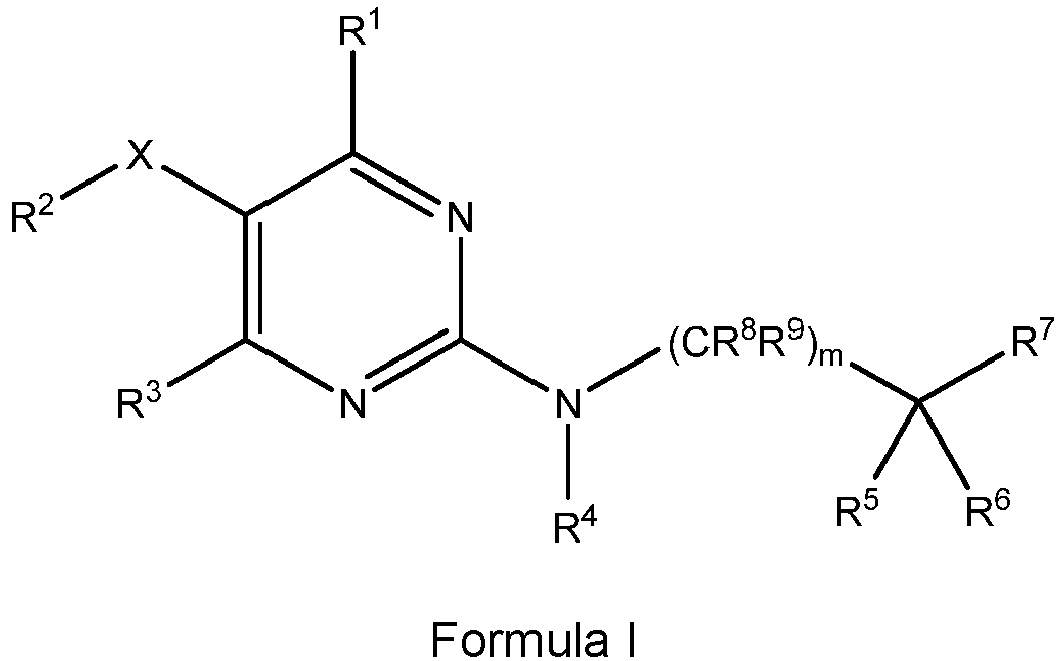 R1 is selected from hydrogen, halogen, CN, C1-6 alkyl, C1-6 haloalkyl, C(O)ORa, C(O)NRbRc, ORa, NRbRc, C6-10 aryl and 5-10 membered heteroaryl;R2 is selected from C3-8 cycloalkyl, C3-8 cycloalkenyl, 3-8 membered heterocycloalkyl, 3-8 membered heterocycloalkenyl, C6-10 aryl, 5-10 membered heteroaryl and NRbRc, wherein each of the C3-8 cycloalkyl, C3-8 cycloalkenyl, 3-8 membered heterocycloalkyl, 3-8 membered heterocycloalkenyl, C6-10 aryl and 5-10 membered heteroaryl groups is optionally substituted with 1, 2, 3, 4 or 5 substituents selected from halogen, CN, oxo, (CH2)nORa, (CH2)nOC(O)Ra, (CH2)nOC(O)ORa, (CH2)nOC(O)NRbRc, (CH2)nNRbRc, (CH2)nNRdC(O)Ra, (CH2)nNRdC(O)ORa, (CH2)nNRdC(O)NRbRc, (CH2)nNRdC(O)C(O)NRbRc, (CH2)nNRdC(S)Ra, (CH2)nNRdC(S)ORa, (CH2)nNRdC(S)NRbRc, (CH2)nNRdC(NRe)NRbRc, (CH2)nNRdS(O)Ra, (CH2)nNRdSO2Ra, (CH2)nNRdSO2NRbRc, (CH2)nC(O)Ra, (CH2)nC(O)ORa, (CH2)nC(O)NRbRc, (CH2)nC(S)Ra, (CH2)nC(S)ORa, (CH2)nC(S)NRbRc, (CH2)nC(NRe)NRbRc, (CH2)nSRa, (CH2)nS(O)Ra, (CH2)nSO2Ra, (CH2)nSO2NRbRc, C1-6 alkyl, C1-6 haloalkyl, C2-6 alkenyl, C2-6 alkynyl, (CH2)nC3-8 cycloalkyl, (CH2)n3-8 membered heterocycloalkyl, (CH2)nC6-10 aryl and (CH2)n5-10 membered heteroaryl, wherein each of the C1-6 alkyl, C2-6 alkenyl, C2-6 alkynyl, (CH2)nC3-8 cycloalkyl, (CH2)n3-8 membered heterocycloalkyl, (CH2)nC6-10 aryl and (CH2)n5-10 membered heteroaryl groups is optionally substituted with 1, 2, 3, 4 or 5 Rf substituents;R3 is selected from hydrogen, halogen, CN, C1-6 alkyl, C1-6 haloalkyl, C(O)ORa, C(O)NRbRc, ORa, NRbRc, C6-10 aryl and 5-10 membered heteroaryl;R4 is selected from hydrogen, C1-6 alkyl, C1-6 haloalkyl, C(O)Ra, C(O)ORa, C(O)NRbRc and SO2Ra;R5 and R6 are each independently selected from hydrogen, halogen, C1-6 alkyl and C1-6 haloalkyl;R7 is selected from C3-8 cycloalkyl, C3-8 cycloalkenyl, 3-8 membered heterocycloalkyl, 3-8 membered heterocycloalkenyl, C6-10 aryl and 5-10 membered heteroaryl, each optionally substituted with 1, 2, 3, 4 or 5 substituents selected from halogen, CN, oxo, ORa, OC(O)Ra, OC(O)ORa, OC(O)NRbRc, NRbRc, NRdC(O)Ra, NRdC(O)ORa, NRdC(O)NRbRc, NRdC(O)C(O)NRbRc, NRdC(S)Ra, NRdC(S)ORa, NRdC(S)NRbRc, NRdC(NRe)NRbRc, NRdS(O)Ra, NRdSO2Ra, NRdSO2NRbRc, C(O)Ra, C(O)ORa, C(O)NRbRc, C(S)Ra, C(S)ORa, C(S)NRbRc, C(NRe)NRbRc, SRa, S(O)Ra, SO2Ra, SO2NRbRc, C1-6 alkyl, C1-6 haloalkyl, C2-6 alkenyl, C2-6 alkynyl, C3-8 cycloalkyl, C3-8 cycloalkenyl, 3-8 membered heterocycloalkyl, 3-8 membered heterocycloalkenyl, C6-10 aryl, C7-11 aralkyl, and 5-10 membered heteroaryl, wherein each of the C1-6 alkyl, C2-6 alkenyl, C2-6 alkynyl, C3-8 cycloalkyl, C3-8 cycloalkenyl, 3-8 membered heterocycloalkyl, 3-8 membered heterocycloalkenyl, C6-10 aryl, C7-11 aralkyl and 5-10 membered heteroaryl groups is optionally substituted with 1, 2, 3, 4 or 5 Rf substituents;R8 and R9, at each occurrence, are each independently selected from hydrogen, halogen and C1-6 alkyl;X is selected from a bond, -(CH2)p-, -(CH2)pC(O)(CH2)q-, -(CH2)pO(CH2)q-, -(CH2)pS(CH2)q-, -(CH2)pNRd(CH2)q-, -(CH2)pC(O)O(CH2)q-, -(CH2)pOC(O)(CH2)q-, -(CH2)pNRdC(O)(CH2)q-, -(CH2)pC(O)NRd(CH2)q-, -(CH2)pNRdC(O)NRd(CH2)q-, -(CH2)pNRdSO2(CH2)q-, and -(CH2)pSO2NRd(CH2)q-;or alternatively, X, R2 and R3, together with the carbon atoms to which they are bound, form a 5-6 membered ring optionally containing one or more heteroatoms selected from oxygen nitrogen and sulfur, and optionally containing one or more double bonds, and optionally substituted with 1, 2, 3, 4 or 5 Rf substituents;Ra, at each occurrence, is independently selected from hydrogen, C1-6 alkyl, C1-6 haloalkyl, C2-6 alkenyl, C2-6 alkynyl, C3-8 cycloalkyl, C3-8 cycloalkenyl, 3-8 membered heterocycloalkyl, 3-8 membered heterocycloalkenyl, C6-10 aryl, C7-11 aralkyl and 5-10 membered heteroaryl, wherein each of the C1-6 alkyl, C2-6 alkenyl, C2-6 alkynyl, C3-8 cycloalkyl, C3-8 cycloalkenyl, 3-8 membered heterocycloalkyl, 3-8 membered heterocycloalkenyl, C6-10 aryl, C7-11 aralkyl and 5-10 membered heteroaryl groups is optionally substituted with 1, 2, 3, 4 or 5 Rf substituents;Rb and Rc, at each occurrence, are each independently selected from hydrogen, C1-6 alkyl, C1-6 haloalkyl, C2-6 alkenyl, C2-6 alkynyl, C3-8 cycloalkyl, C3-8 cycloalkenyl, 3-8 membered heterocycloalkyl, 3-8 membered heterocycloalkenyl, C6-10 aryl, C7-11 aralkyl, 5-10 membered heteroaryl, C(O)Rg, C(O)ORg, C(O)NRiRj and SO2Rg, wherein each of the C1-6 alkyl, C2-6 alkenyl, C2-6 alkynyl, C3-8 cycloalkyl, C3-8 cycloalkenyl, 3-8 membered heterocycloalkyl, 3-8 membered heterocycloalkenyl, C6-10 aryl, C7-11 aralkyl and 5-10 membered heteroaryl groups is optionally substituted with 1, 2, 3, 4 or 5 Rf substituents;Rd, at each occurrence, is independently selected from hydrogen and C1-6 alkyl;Re, at each occurrence, is independently selected from hydrogen, CN, OH, C1-6 alkoxy, C1-6 alkyl and C1-6 haloalkyl;Rf, at each occurrence, is independently selected from halogen, CN, ORh, OC(O)Rh, OC(O)ORh, OC(O)NRiRj, NRiRj, NRdC(O)Rh, NRdC(O)ORh, NRdC(O)NRiRj, NRdC(O)C(O)NRiRj, NRdC(S)Rh, NRdC(S)ORh, NRdC(S)NRiRj, NRdC(NRe)NRiRj, NRdS(O)Rh, NRdSO2Rh, NRdSO2NRiRj, C(O)Rh, C(O)ORh, C(O)NRiRj, C(S)Rh, C(S)ORh, C(S)NRiRj, C(NRe)NRiRj, SRh, S(O)Rh, SO2Rh, SO2NRiRj, C1-6 alkyl, C1-6 haloalkyl, C2-6 alkenyl, C2-6 alkynyl, C3-8 cycloalkyl, C3-8 cycloalkenyl, 3-8 membered heterocycloalkyl, 3-8 membered heterocycloalkenyl, C6-10 aryl, C7-11 aralkyl and 5-10 membered heteroaryl, wherein each of the C1-6 alkyl, C2-6 alkenyl, C2-6 alkynyl, C3-8 cycloalkyl, C3-8 cycloalkenyl, 3-8 membered heterocycloalkyl, 3-8 membered heterocycloalkenyl, C6-10 aryl, C7-11 aralkyl and 5-10 membered heteroaryl groups is optionally substituted with 1, 2, 3, 4 or 5 Rk substituents;or two Rf substituents bound to a single carbon atom, together with the carbon atom to which they are both bound, form a group selected from carbonyl, C3-8 cycloalkyl and 3-8 membered heterocycloalkyl;Rg, at each occurrence, is independently selected from C1-6 alkyl, C1-6 haloalkyl, phenyl, naphthyl, and C7-11 aralkyl, each optionally substituted with 1, 2, 3, 4 or 5 substituents selected from halogen, CN, OH, C1-6 alkoxy, C1-6 alkyl and C1-6 haloalkyl;Rh, at each occurrence, is independently selected from hydrogen, C1-6 alkyl, C1-6 haloalkyl, C2-6 alkenyl, C2-6 alkynyl, C3-8 cycloalkyl, C3-8 cycloalkenyl, 3-8 membered heterocycloalkyl, 3-8 membered heterocycloalkenyl, C6-10 aryl, C7-11 aralkyl and 5-10 membered heteroaryl, wherein each of the C1-6 alkyl, C2-6 alkenyl, C2-6 alkynyl, C3-8 cycloalkyl, C3-8 cycloalkenyl, 3-8 membered heterocycloalkyl, 3-8 membered heterocycloalkenyl, C6-10 aryl, C7-11 aralkyl and 5-10 membered heteroaryl groups is optionally substituted with 1, 2, 3, 4 or 5 Rk substituents;Ri and Rj, at each occurrence, are each independently selected from hydrogen, C1-6 alkyl, C1-6 haloalkyl, C2-6 alkenyl, C2-6 alkynyl, C3-8 cycloalkyl, C3-8 cycloalkenyl, 3-8 membered heterocycloalkyl, 3-8 membered heterocycloalkenyl, C6-10 aryl, C7-11 aralkyl, 5-10 membered heteroaryl, C(O)R9, and C(O)ORg, wherein each of the C1-6 alkyl, C1-6 haloalkyl, C2-6 alkenyl, C2-6 alkynyl, C3-8 cycloalkyl, C3-8 cycloalkenyl, 3-8 membered heterocycloalkyl, 3-8 membered heterocycloalkenyl, C6-10 aryl, C7-11 aralkyl and 5-10 membered heteroaryl groups is optionally substituted with 1, 2, 3, 4 or 5 substituents selected from halogen, CN, OH, C1-6 alkoxy, C1-6 alkyl and C1-6 haloalkyl;Rk, at each occurrence, is independently selected from halogen, CN, OH, C1-6 alkoxy, NH2, NH(C1-6 alkyl), N(C1-6 alkyl)2, NHC(O)C1-6 alkyl, NHC(O)C7-11 aralkyl, NHC(O)OC1-6 alkyl, NHC(O)OC7-11 aralkyl, OC(O)C1-6 alkyl, OC(O)C7-11 aralkyl, OC(O)OC1-6 alkyl, OC(O)OC7-11 aralkyl, C(O)C1-6 alkyl, C(O)C7-11 aralkyl, C(O)OC1-6 alkyl, C(O)OC7-11 aralkyl, C1-6 alkyl, C1-6 haloalkyl, C2-6 alkenyl, and C2-6 alkynyl, wherein each C1-6 alkyl, C2-6 alkenyl, C2-6 alkynyl, and C7-11 aralkyl substituent is optionally substituted with 1, 2 or 3 substituents selected from OH, C1-6 alkoxy, NH2, NH(C1-6 alkyl), N(C1-6 alkyl)2, NHC(O)C1-6 alkyl, NHC(O)C7-11 aralkyl, NHC(O)OC1-6 alkyl, and NHC(O)OC7-11 aralkyl;or two Rk substituents bound to a single carbon atom, together with the carbon atom to which they are both bound, form a carbonyl group;m is 0, 1 or 2;n, at each occurrence, independently is 0, 1 or 2;p is 0, 1 or 2; andq is 0, 1 or 2.
 - The compound of claim 1, or a pharmaceutically acceptable salt thereof, wherein m is 0, or wherein m is 1, for example, wherein R8 and R9 are each hydrogen.
- The compound of claim 1 or 2, or a pharmaceutically acceptable salt thereof, wherein R5 is selected from hydrogen, halogen, C1-6 alkyl and C1-6 haloalkyl, and R6 is selected from halogen, C1-6 alkyl and C1-6 haloalkyl.
- The compound of any preceding claim, or a pharmaceutically acceptable salt thereof, wherein one of R5 and R6 is hydrogen and the other is C1-6 alkyl; or
wherein R5 and R6 are each C1-6 alkyl, for example, wherein R5 and R6 are each methyl. - The compound of any preceding claim, or a pharmaceutically acceptable salt thereof, wherein R7 is phenyl optionally substituted with 1, 2, 3, 4 or 5 substituents selected from halogen, CN, oxo, ORa, OC(O)Ra, OC(O)ORa, OC(O)NRbRc, NRbRc, NRdC(O)Ra, NRdC(O)ORa, NRdC(O)NRbRc, NRdC(O)C(O)NRbRc, NRdC(S)Ra, NRdC(S)ORa, NRdC(S)NRbRc, NRdC(NRe)NRbRc, NRdS(O)Ra, NRdSO2Ra, NRdSO2NRbRc, C(O)Ra, C(O)ORa, C(O)NRbRc, C(S)Ra, C(S)ORa, C(S)NRbRc, C(NRe)NRbRc, SRa, S(O)Ra, SO2Ra, SO2NRbRc, C1-6 alkyl, C1-6 haloalkyl, C2-6 alkenyl, C2-6 alkynyl, C3-8 cycloalkyl, C3-8 cycloalkenyl, 3-8 membered heterocycloalkyl, 3-8 membered heterocycloalkenyl, C6-10 aryl, C7-11 aralkyl, and 5-10 membered heteroaryl, wherein each of the C1-6 alkyl, C2-6 alkenyl, C2-6 alkynyl, C3-8 cycloalkyl, C3-8 cycloalkenyl, 3-8 membered heterocycloalkyl, 3-8 membered heterocycloalkenyl, C6-10 aryl, C7-11 aralkyl and 5-10 membered heteroaryl groups is optionally substituted with 1, 2, 3, 4 or 5 Rf substituents; or
wherein R7 is 5-10 membered heteroaryl optionally substituted with 1, 2, 3, 4 or 5 substituents selected from halogen, CN, oxo, ORa, OC(O)Ra, OC(O)ORa, OC(O)NRbRc, NRbRc, NRdC(O)Ra, NRdC(O)ORa, NRdC(O)NRbRc, NRdC(O)C(O)NRbRc, NRdC(S)Ra, NRdC(S)ORa, NRdC(S)NRbRc, NRdC(NRe)NRbRc, NRdS(O)Ra, NRdSO2Ra, NRdSO2NRbRc, C(O)Ra, C(O)ORa, C(O)NRbRc, C(S)Ra, C(S)ORa, C(S)NRbRc, C(NRe)NRbRc, SRa, S(O)Ra, SO2Ra, SO2NRbRc, C1-6 alkyl, C1-6 haloalkyl, C2-6 alkenyl, C2-6 alkynyl, C3-8 cycloalkyl, C3-8 cycloalkenyl, 3-8 membered heterocycloalkyl, 3-8 membered heterocycloalkenyl, C6-10 aryl, C7-11 aralkyl, and 5-10 membered heteroaryl, wherein each of the C1-6 alkyl, C2-6 alkenyl, C2-6 alkynyl, C3-8 cycloalkyl, C3-8 cycloalkenyl, 3-8 membered heterocycloalkyl, 3-8 membered heterocycloalkenyl, C6-10 aryl, C7-11 aralkyl and 5-10 membered heteroaryl groups is optionally substituted with 1, 2, 3, 4 or 5 Rf substituents,
for example, wherein R7 is pyridyl optionally substituted with 1, 2, 3, 4 or 5 substituents selected from halogen, CN, oxo, ORa, OC(O)Ra, OC(O)ORa, OC(O)NRbRc, NRbRc, NRdC(O)Ra, NRdC(O)ORa, NRdC(O)NRbRc, NRdC(O)C(O)NRbRc, NRdC(S)Ra, NRdC(S)ORa, NRdC(S)NRbRc, NRdC(NRe)NRbRc, NRdS(O)Ra, NRdSO2Ra, NRdSO2NRbRc, C(O)Ra, C(O)ORa, C(O)NRbRc, C(S)Ra, C(S)ORa, C(S)NRbRc, C(NRe)NRbRc, SRa, S(O)Ra, SO2Ra, SO2NRbRc, C1-6 alkyl, C1-6 haloalkyl, C2-6 alkenyl, C2-6 alkynyl, C3-6 cycloalkyl, C3-6 cycloalkenyl, 3-6 membered heterocycloalkyl, 3-6 membered heterocycloalkenyl, phenyl, naphthyl, C7-11 aralkyl, and 5-10 membered heteroaryl, wherein each of the C1-6 alkyl, C2-6 alkenyl, C2-6 alkynyl, C3-8 cycloalkyl, C3-8 cycloalkenyl, 3-8 membered heterocycloalkyl, 3-8 membered heterocycloalkenyl, C6-10 aryl, C7-11 aralkyl and 5-10 membered heteroaryl groups is optionally substituted with 1, 2, 3, 4 or 5 Rf substituents,
for example, wherein R7 is 2-pyridyl optionally substituted with 1, 2, 3, 4 or 5 substituents selected from halogen, CN, oxo, ORa, OC(O)Ra, OC(O)ORa, OC(O)NRbRc, NRbRc, NRdC(O)Ra, NRdC(O)ORa, NRdC(O)NRbRc, NRdC(O)C(O)NRbRc, NRdC(S)Ra, NRdC(S)ORa, NRdC(S)NRbRc, NRdC(NRe)NRbRc, NRdS(O)Ra, NRdSO2Ra, NRdSO2NRbRc, C(O)Ra, C(O)ORa, C(O)NRbRc, C(S)Ra, C(S)ORa, C(S)NRbRc, C(NRe)NRbRc, SRa, S(O)Ra, SO2Ra, SO2NRbRc, C1-6 alkyl, C1-6 haloalkyl, C2-6 alkenyl, C2-6 alkynyl, C3-6 cycloalkyl, C3-6 cycloalkenyl, 3-6 membered heterocycloalkyl, 3-6 membered heterocycloalkenyl, phenyl, naphthyl, C7-11 aralkyl, and 5-10 membered heteroaryl, wherein each of the C1-6 alkyl, C2-6 alkenyl, C2-6 alkynyl, C3-8 cycloalkyl, C3-8 cycloalkenyl, 3-8 membered heterocycloalkyl, 3-8 membered heterocycloalkenyl, C6-10 aryl, C7-11 aralkyl and 5-10 membered heteroaryl groups is optionally substituted with 1, 2, 3, 4 or 5 Rf substituents. - The compound of any preceding claim, or a pharmaceutically acceptable salt thereof, wherein X is a bond, for example, wherein the compound is of Formula XII(a), or a pharmaceutically acceptable salt thereof:

- The compound of any preceding claim, or a pharmaceutically acceptable salt thereof, wherein R2 is phenyl optionally substituted with 1, 2, 3, 4 or 5 substituents selected from halogen, CN, (CH2)nORa, (CH2)nOC(O)Ra, (CH2)nOC(O)ORa, (CH2)nOC(O)NRbRc, (CH2)nNRbRc, (CH2)nNRdC(O)Ra, (CH2)nNRdC(O)ORa, (CH2)nNRdC(O)NRbRc, (CH2)nNRdC(O)C(O)NRbRc, (CH2)nNRdC(S)Ra, (CH2)nNRdC(S)ORa, (CH2)nNRdC(S)NRbRc, (CH2)nNRdC(NRe)NRbRc, (CH2)nNRdS(O)Ra, (CH2)nNRdSO2Ra, (CH2)nNRdSO2NRbRc, (CH2)nC(O)Ra, (CH2)nC(O)ORa, (CH2)nC(O)NRbRc, (CH2)nC(S)Ra, (CH2)nC(S)ORa, (CH2)nC(S)NRbRc, (CH2)nC(NRe)NRbRc, (CH2)nSRa, (CH2)nS(O)Ra, (CH2)nSO2Ra, (CH2)nSO2NRbRc, C1-6 alkyl, C1-6 haloalkyl, C2-6 alkenyl, C2-6 alkynyl, (CH2)nC3-8 cycloalkyl, (CH2)n3-8 membered heterocycloalkyl, (CH2)nphenyl, (CH2)nnaphthyl and (CH2)n5-10 membered heteroaryl, wherein each of the C1-6 alkyl, C2-6 alkenyl, C2-6 alkynyl, (CH2)nC3-8 cycloalkyl, (CH2)n3-8 membered heterocycloalkyl, (CH2)nphenyl, (CH2)nnaphthyl and (CH2)n5-10 membered heteroaryl groups is optionally substituted with 1, 2, 3, 4 or 5 Rf substituents.
- The compound of any one of claims 1 to 6, or a pharmaceutically acceptable salt thereof, wherein R2 is 5-10 membered heteroaryl optionally substituted with 1, 2, 3, 4 or 5 substituents selected from halogen, CN, oxo, (CH2)nORa, (CH2)nOC(O)Ra, (CH2)nOC(O)ORa, (CH2)nOC(O)NRbRc, (CH2)nNRbRc, (CH2)nNRdC(O)Ra, (CH2)nNRdC(O)ORa, (CH2)nNRdC(O)NRbRc, (CH2)nNRdC(O)C(O)NRbRc, (CH2)nNRdC(S)Ra, (CH2)nNRdC(S)ORa, (CH2)nNRdC(S)NRbRc, (CH2)nNRdC(NRe)NRbRc, (CH2)nNRdS(O)Ra, (CH2)nNRdSO2Ra, (CH2)nNRdSO2NRbRc, (CH2)nC(O)Ra, (CH2)nC(O)ORa, (CH2)nC(O)NRbRc, (CH2)nC(S)Ra, (CH2)nC(S)ORa, (CH2)nC(S)NRbRc, (CH2)nC(NRe)NRbRc, (CH2)nSRa, (CH2)nS(O)Ra, (CH2)nSO2Ra, (CH2)nSO2NRbRc, C1-6 alkyl, C1-6 haloalkyl, C2-6 alkenyl, C2-6 alkynyl, (CH2)nC3-8 cycloalkyl, (CH2)n3-8 membered heterocycloalkyl, (CH2)nphenyl, (CH2)nnaphthyl and (CH2)n5-10 membered heteroaryl, wherein each of the C1-6 alkyl, C2-6 alkenyl, C2-6 alkynyl, (CH2)nC3-8 cycloalkyl, (CH2)n3-8 membered heterocycloalkyl, (CH2)nphenyl, (CH2)nnaphthyl and (CH2)n5-10 membered heteroaryl groups is optionally substituted with 1, 2, 3, 4 or 5 Rf substituents,
for example, wherein (i) R2 is selected from indolyl, indazolyl, benzimidazolyl, benzoxazolyl and benzoisoxazolyl, each optionally substituted with 1, 2, 3 or 4 substituents selected from halogen, CN, oxo, (CH2)nORa, (CH2)nOC(O)Ra, (CH2)nOC(O)ORa, (CH2)nOC(O)NRbRc, (CH2)nNRbRc, (CH2)nNRdC(O)Ra, (CH2)nNRdC(O)ORa, (CH2)nNRdC(O)NRbRc, (CH2)nNRdC(O)C(O)NRbRc, (CH2)nNRdC(S)Ra, (CH2)nNRdC(S)ORa, (CH2)nNRdC(S)NRbRc, (CH2)nNRdC(NRe)NRbRc, (CH2)nNRdS(O)Ra, (CH2)nNRdSO2Ra, (CH2)nNRdSO2NRbRc, (CH2)nC(O)Ra, (CH2)nC(O)ORa, (CH2)nC(O)NRbRc, (CH2)nC(S)Ra, (CH2)nC(S)ORa, (CH2)nC(S)NRbRc, (CH2)nC(NRe)NRbRc, (CH2)nSRa, (CH2)nS(O)Ra, (CH2)nSO2Ra, (CH2)nSO2NRbRc, C1-6 alkyl, C1-6 haloalkyl, C2-6 alkenyl, C2-6 alkynyl, (CH2)nC3-8 cycloalkyl, (CH2)n3-8 membered heterocycloalkyl, (CH2)nphenyl, (CH2)nnaphthyl and (CH2)n5-10 membered heteroaryl, wherein each of the C1-6 alkyl, C2-6 alkenyl, C2-6 alkynyl, (CH2)nC3-8 cycloalkyl, (CH2)n3-8 membered heterocycloalkyl, (CH2)nphenyl, (CH2)nnaphthyl and (CH2)n5-10 membered heteroaryl groups is optionally substituted with 1, 2, 3, 4 or 5 Rf substituents; or
wherein (ii) R2 is selected from pyridyl, pyrimidyl, pyrazyl, pyridazyl, triazyl, furanyl, pyrrolyl, thiophenyl, thiazolyl, isothiazolyl, thiadiazolyl, oxazolyl, isoxazolyl, oxadiazolyl, imidazolyl, triazolyl and tetrazolyl, each optionally substituted with 1, 2, 3 or 4 substituents selected from halogen, CN, oxo, (CH2)nORa, (CH2)nOC(O)Ra, (CH2)nOC(O)ORa, (CH2)nOC(O)NRbRc, (CH2)nNRbRc, (CH2)nNRdC(O)Ra, (CH2)nNRdC(O)ORa, (CH2)nNRdC(O)NRbRc, (CH2)nNRdC(O)C(O)NRbRc, (CH2)nNRdC(S)Ra, (CH2)nNRdC(S)ORa, (CH2)nNRdC(S)NRbRc, (CH2)nNRdC(NRe)NRbRc, (CH2)nNRdS(O)Ra, (CH2)nNRdSO2Ra, (CH2)nNRdSO2NRbRc, (CH2)nC(O)Ra, (CH2)nC(O)ORa, (CH2)nC(O)NRbRc, (CH2)nC(S)Ra, (CH2)nC(S)ORa, (CH2)nC(S)NRbRc, (CH2)nC(NRe)NRbRc, (CH2)nSRa, (CH2)nS(O)Ra, (CH2)nSO2Ra, (CH2)nSO2NRbRc, C1-6 alkyl, C1-6 haloalkyl, C2-6 alkenyl, C2-6 alkynyl, (CH2)nC3-8 cycloalkyl, (CH2)n3-8 membered heterocycloalkyl, (CH2)nphenyl, (CH2)nnaphthyl and (CH2)n5-10 membered heteroaryl, wherein each of the C1-6 alkyl, C2-6 alkenyl, C2-6 alkynyl, (CH2)nC3-8 cycloalkyl, (CH2)n3-8 membered heterocycloalkyl, (CH2)nphenyl, (CH2)nnaphthyl and (CH2)n5-10 membered heteroaryl groups is optionally substituted with 1, 2, 3, 4 or 5 Rf substituents,
for example, wherein (ii-a) R2 is selected from pyridyl, pyrimidyl, pyrazyl, pyridazyl, triazyl, furanyl, pyrrolyl, thiophenyl, thiazolyl, isothiazolyl, thiadiazolyl, oxazolyl, isoxazolyl, oxadiazolyl, imidazolyl, triazolyl and tetrazolyl, each optionally substituted with a substituent selected from (CH2)nC(O)ORa and (CH2)nC(O)NRbRc; and optionally substituted with 1, 2 or 3 additional substituents selected from halogen, CN, oxo, (CH2)nORa, (CH2)nOC(O)Ra, (CH2)nOC(O)ORa, (CH2)nOC(O)NRbRc, (CH2)nNRbRc, (CH2)nNRdC(O)Ra, (CH2)nNRdC(O)ORa, (CH2)nNRdC(O)NRbRc,
(CH2)nNRdC(O)C(O)NRbRc, (CH2)nNRdC(S)Ra, (CH2)nNRdC(S)ORa, (CH2)nNRdC(S)NRbRc, (CH2)nNRdC(NRe)NRbRc, (CH2)nNRdS(O)Ra, (CH2)nNRdSO2Ra, (CH2)nNRdSO2NRbRc, (CH2)nC(O)Ra, (CH2)nC(O)ORa, (CH2)nC(O)NRbRc, (CH2)nC(S)Ra, (CH2)nC(S)ORa, (CH2)nC(S)NRbRc, (CH2)nC(NRe)NRbRc, (CH2)nSRa, (CH2)nS(O)Ra, (CH2)nSO2Ra, (CH2)nSO2NRbRc, C1-6 alkyl, C1-6 haloalkyl, C2-6 alkenyl, C2-6 alkynyl, (CH2)nC3-8 cycloalkyl, (CH2)n3-8 membered heterocycloalkyl, (CH2)nphenyl, (CH2)nnaphthyl and (CH2)n5-10 membered heteroaryl, wherein each of the C1-6 alkyl, C2-6 alkenyl, C2-6 alkynyl, (CH2)nC3-8 cycloalkyl, (CH2)n3-8 membered heterocycloalkyl, (CH2)nphenyl, (CH2)nnaphthyl and (CH2)n5-10 membered heteroaryl groups is optionally substituted with 1, 2, 3, 4 or 5 Rf substituents,
in particular, wherein R2 is selected from furanyl, pyrrolyl, thiophenyl, thiazolyl, isothiazolyl, thiadiazolyl, oxazolyl, isoxazolyl, oxadiazolyl, imidazolyl, triazolyl and tetrazolyl, each optionally substituted with (CH2)nC(O)NRbRc, or
wherein (ii-b) R2 is selected from pyridyl, pyrimidyl, pyrazyl, pyridazyl, triazyl, furanyl, pyrrolyl, thiophenyl, thiazolyl, isothiazolyl, thiadiazolyl, oxazolyl, isoxazolyl, oxadiazolyl, imidazolyl, triazolyl and tetrazolyl, each optionally substituted with (CH2)nNRdC(O)Ra, wherein Ra is C1-6 alkyl or 3-8 membered heterocycloalkyl, each optionally substituted with 1, 2 or 3 additional substituents selected from halogen, CN, oxo, (CH2)nORa, (CH2)nOC(O)Ra, (CH2)nOC(O)ORa, (CH2)nOC(O)NRbRc, (CH2)nNRbRc, (CH2)nNRdC(O)Ra, (CH2)nNRdC(O)ORa, (CH2)nNRdC(O)NRbRc, (CH2)nNRdC(O)C(O)NRbRc, (CH2)nNRdC(S)Ra, (CH2)nNRdC(S)ORa, (CH2)nNRdC(S)NRbRc, (CH2)nNRdC(NRe)NRbRc, (CH2)nNRdS(O)Ra, (CH2)nNRdSO2Ra, (CH2)nNRdSO2NRbRc, (CH2)nC(O)Ra, (CH2)nC(O)ORa, (CH2)nC(O)NRbRc, (CH2)nC(S)Ra, (CH2)nC(S)ORa, (CH2)nC(S)NRbRc, (CH2)nC(NRe)NRbRc, (CH2)nSRa, (CH2)nS(O)Ra, (CH2)nSO2Ra, (CH2)nSO2NRbRc, C1-6 alkyl, C1-6 haloalkyl, C2-6 alkenyl, C2-6 alkynyl, (CH2)nC3-8 cycloalkyl, (CH2)n3-8 membered heterocycloalkyl, (CH2)nphenyl, (CH2)nnaphthyl and (CH2)n5-10 membered heteroaryl, wherein each of the C1-6 alkyl, C2-6 alkenyl, C2-6 alkynyl, (CH2)nC3-8 cycloalkyl, (CH2)n3-8 membered heterocycloalkyl, (CH2)nphenyl, (CH2)nnaphthyl and (CH2)n5-10 membered heteroaryl groups is optionally substituted with 1, 2, 3, 4 or 5 Rf substituents,
in particular, wherein R2 is selected from furanyl, pyrrolyl, thiophenyl, thiazolyl, isothiazolyl, thiadiazolyl, oxazolyl, isoxazolyl, oxadiazolyl, imidazolyl, triazolyl and tetrazolyl, each optionally substituted with (CH2)nNRdC(O)Ra, wherein Ra is selected from C1-6 alkyl, C1-6 alkyl-OH and C1-6 alkyl-NH2, each optionally substituted with 1, 2 or 3 additional substituents selected from halogen, CN, (CH2)nORa, (CH2)nOC(O)Ra, (CH2)nOC(O)ORa, (CH2)nOC(O)NRbRc, (CH2)nNRbRc, (CH2)nNRdC(O)Ra, (CH2)nNRdC(O)ORa, (CH2)nNRdC(O)NRbRc, (CH2)nNRdSO2Ra, (CH2)nNRdSO2NRbRc, (CH2)nC(O)Ra, (CH2)nC(O)ORa, (CH2)nC(O)NRbRc, (CH2)nSRa, (CH2)nS(O)Ra, (CH2)nSO2Ra, (CH2)nSO2NRbRc, C1-6 alkyl, C1-6 haloalkyl, C2-6 alkenyl, C2-6 alkynyl, (CH2)nC3-8 cycloalkyl, (CH2)n3-8 membered heterocycloalkyl, (CH2)nphenyl, (CH2)nnaphthyl and (CH2)n5-10 membered heteroaryl. - The compound of any preceding claim, or a pharmaceutically acceptable salt thereof, wherein R1 is selected from hydrogen, halogen, CN, CF3 and methyl, in particular, wherein R1 is hydrogen; and/or
wherein R3 is selected from hydrogen, halogen, CN, CF3 and methyl, in particular, wherein R3 is hydrogen; and/or
wherein R4 is hydrogen. - The compound of any of the preceding claims, wherein the compound is selected from the group consisting of


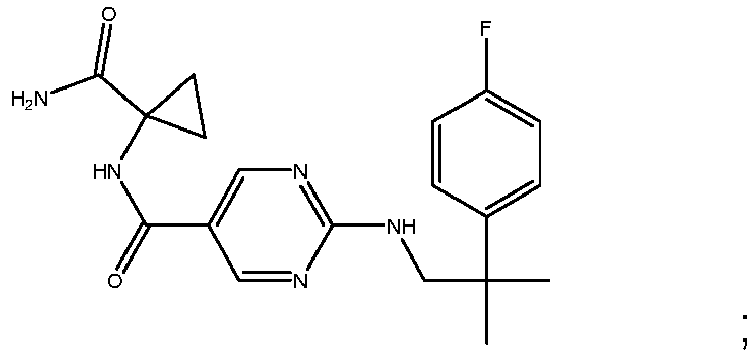


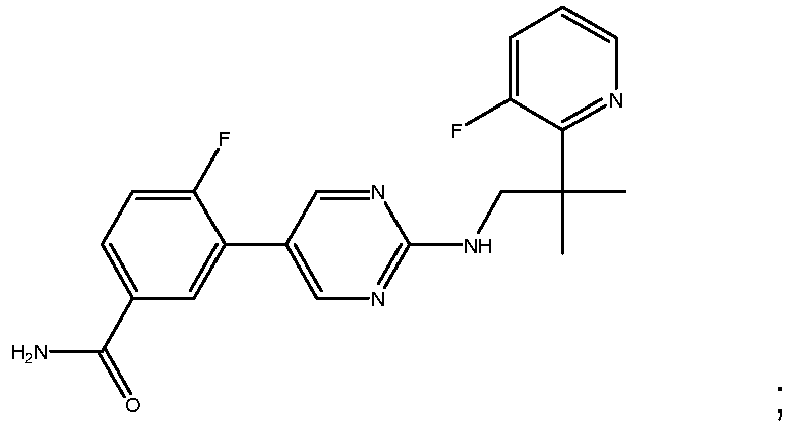


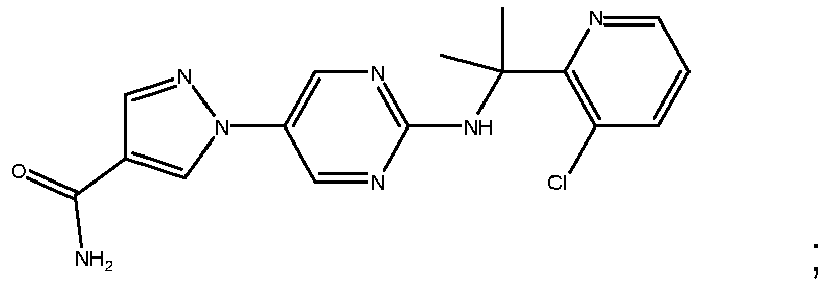


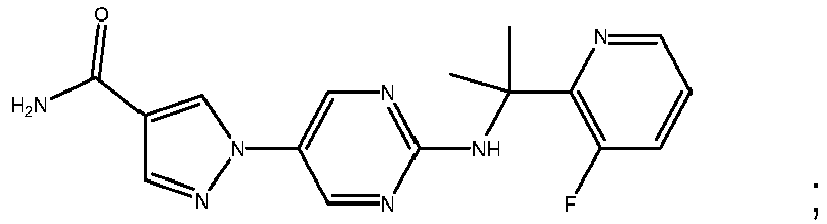


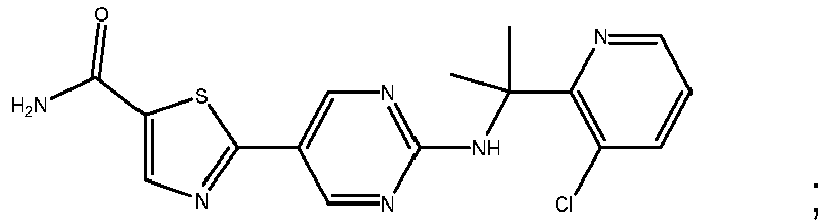

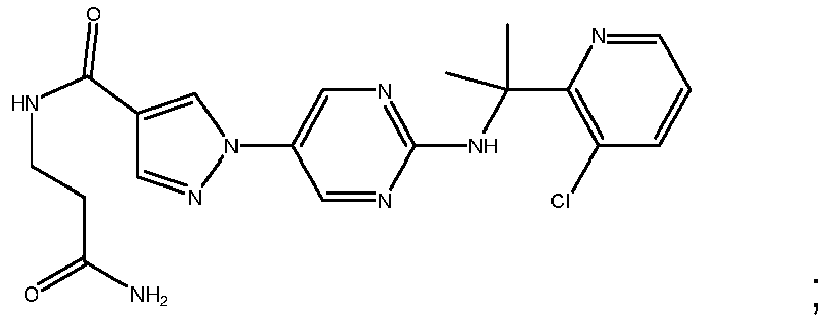


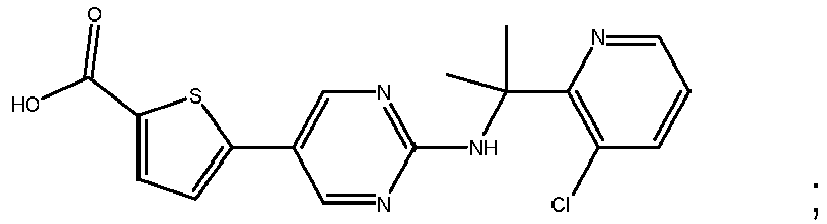


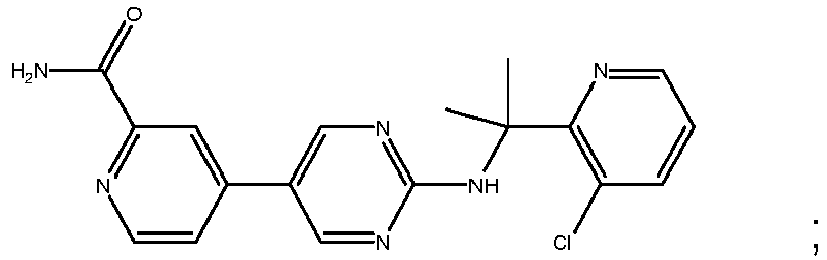

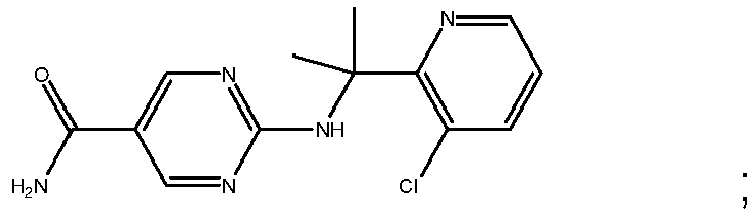


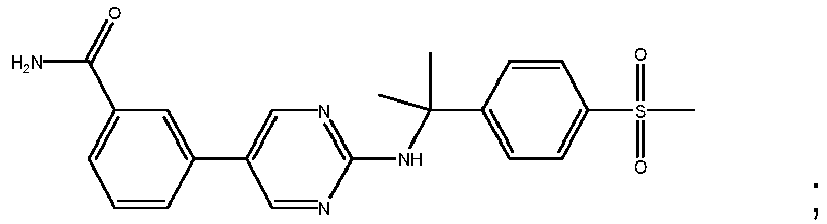

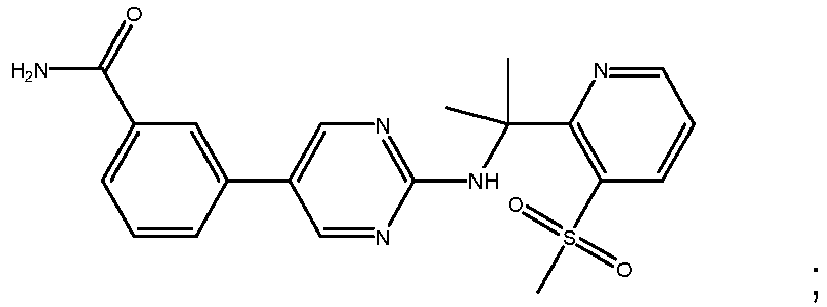


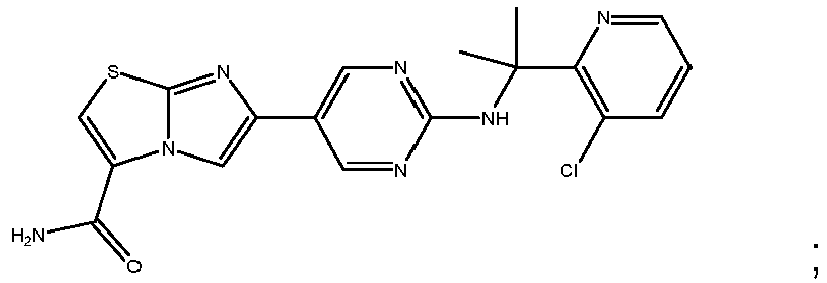


- A pharmaceutical composition comprising a compound of any preceding claim, or a pharmaceutically acceptable salt thereof,
for example, wherein the pharmaceutical composition is formulated for oral, sublingual, subcutaneous, parenteral, intravenous, intranasal, topical, transdermal, intraperitoneal, intramuscular, intrapulmonary, vaginal, rectal, or intraocular administration,
in particular, wherein the pharmaceutical composition is formulated for oral administration. - A compound of any one of claims 1 to 10, or a pharmaceutically acceptable salt thereof, for use in a method for treatment of a disease or condition selected from neuromuscular disorders, conditions of muscle wasting, muscular myopathies, rehabilitation-related deficits, peripheral vascular disease, peripheral arterial disease, frailty, muscle atrophy and fatigue, metabolic syndrome, chronic fatigue syndrome, and obesity, or
or for use in a method for treatment of a disease or condition selected from chronic obstructive pulmonary disease and heart failure, or
for use in a method for treatment of a disease selected from Amyotrophic Lateral Sclerosis (ALS), Spinal Muscular Atrophy (SMA) and myasthenia gravis, or
for use in a method for treatment of a disease selected from peripheral vascular disease and peripheral arterial disease.
Applications Claiming Priority (7)
| Application Number | Priority Date | Filing Date | Title |
|---|---|---|---|
| US32759710P | 2010-04-23 | 2010-04-23 | |
| US3275971P | 2010-04-23 | 2010-04-23 | |
| US4122991P | 2010-11-10 | 2010-11-10 | |
| US41229910P | 2010-11-10 | 2010-11-10 | |
| EP16164963.7A EP3127540B1 (en) | 2010-04-23 | 2011-04-22 | Certain amino-pyrimidines, compositions thereof, and methods for their use |
| EP11772782.6A EP2560653B1 (en) | 2010-04-23 | 2011-04-22 | Certain amino-pyrimidines, compositions thereof, and methods for their use |
| PCT/US2011/033614 WO2011133888A1 (en) | 2010-04-23 | 2011-04-22 | Certain amino-pyrimidines, compositions thereof, and methods for their use |
Related Parent Applications (2)
| Application Number | Title | Priority Date | Filing Date |
|---|---|---|---|
| EP11772782.6A Division EP2560653B1 (en) | 2010-04-23 | 2011-04-22 | Certain amino-pyrimidines, compositions thereof, and methods for their use |
| EP16164963.7A Division EP3127540B1 (en) | 2010-04-23 | 2011-04-22 | Certain amino-pyrimidines, compositions thereof, and methods for their use |
Publications (1)
| Publication Number | Publication Date |
|---|---|
| EP3698795A1 true EP3698795A1 (en) | 2020-08-26 |
Family
ID=44834530
Family Applications (3)
| Application Number | Title | Priority Date | Filing Date |
|---|---|---|---|
| EP20153402.1A Withdrawn EP3698795A1 (en) | 2010-04-23 | 2011-04-22 | Certain amino-pyrimidines, compositions thereof, and methods for their use |
| EP11772782.6A Active EP2560653B1 (en) | 2010-04-23 | 2011-04-22 | Certain amino-pyrimidines, compositions thereof, and methods for their use |
| EP16164963.7A Active EP3127540B1 (en) | 2010-04-23 | 2011-04-22 | Certain amino-pyrimidines, compositions thereof, and methods for their use |
Family Applications After (2)
| Application Number | Title | Priority Date | Filing Date |
|---|---|---|---|
| EP11772782.6A Active EP2560653B1 (en) | 2010-04-23 | 2011-04-22 | Certain amino-pyrimidines, compositions thereof, and methods for their use |
| EP16164963.7A Active EP3127540B1 (en) | 2010-04-23 | 2011-04-22 | Certain amino-pyrimidines, compositions thereof, and methods for their use |
Country Status (33)
| Country | Link |
|---|---|
| US (7) | US8962632B2 (en) |
| EP (3) | EP3698795A1 (en) |
| JP (1) | JP5852099B2 (en) |
| KR (2) | KR102003030B1 (en) |
| CN (3) | CN112047926A (en) |
| AR (1) | AR081331A1 (en) |
| AU (1) | AU2011242575C1 (en) |
| BR (1) | BR112012026951B1 (en) |
| CA (1) | CA2796637C (en) |
| CL (1) | CL2012002944A1 (en) |
| CO (1) | CO6620055A2 (en) |
| CY (2) | CY1117809T1 (en) |
| DK (2) | DK3127540T3 (en) |
| EA (2) | EA037350B1 (en) |
| EC (1) | ECSP12012293A (en) |
| ES (2) | ES2586302T3 (en) |
| HR (2) | HRP20160827T1 (en) |
| HU (2) | HUE048815T2 (en) |
| IL (2) | IL222467A (en) |
| LT (2) | LT3127540T (en) |
| ME (2) | ME02439B (en) |
| MX (1) | MX2012012189A (en) |
| MY (2) | MY193277A (en) |
| NZ (1) | NZ603594A (en) |
| PH (2) | PH12012502096B1 (en) |
| PL (2) | PL3127540T3 (en) |
| PT (2) | PT3127540T (en) |
| RS (2) | RS54948B1 (en) |
| SG (1) | SG184959A1 (en) |
| SI (2) | SI2560653T1 (en) |
| SM (2) | SMT202000166T1 (en) |
| TW (1) | TWI520737B (en) |
| WO (1) | WO2011133888A1 (en) |
Families Citing this family (88)
| Publication number | Priority date | Publication date | Assignee | Title |
|---|---|---|---|---|
| EP3725775A1 (en) | 2009-02-17 | 2020-10-21 | Syntrix Biosystems, Inc. | Pyridine- and pyrimidinecarboxamides as cxcr2 modulators |
| AR081331A1 (en) * | 2010-04-23 | 2012-08-08 | Cytokinetics Inc | AMINO- PYRIMIDINES COMPOSITIONS OF THE SAME AND METHODS FOR THE USE OF THE SAME |
| AR081626A1 (en) | 2010-04-23 | 2012-10-10 | Cytokinetics Inc | AMINO-PYRIDAZINIC COMPOUNDS, PHARMACEUTICAL COMPOSITIONS THAT CONTAIN THEM AND USE OF THE SAME TO TREAT CARDIAC AND SKELETIC MUSCULAR DISORDERS |
| US9133123B2 (en) | 2010-04-23 | 2015-09-15 | Cytokinetics, Inc. | Certain amino-pyridines and amino-triazines, compositions thereof, and methods for their use |
| US8779149B2 (en) | 2010-08-23 | 2014-07-15 | Syntrix Biosystems, Inc. | Aminopyridine- and aminopyrimidinecarboxamides as CXCR2 modulators |
| AR083797A1 (en) | 2010-11-10 | 2013-03-20 | Novartis Ag | DIMETHYL ACID SUCCINATE 7-CYCLOPENTIL-2- (5-PIPERAZIN-1-IL-PIRIDIN-2-IL-AMINO) -7H-PIRROLO- [2,3-D] PIRIMIDIN-6-CARBOXILICO, PROCESS FOR PREPARE IT, INTERMEDIARIES OF SUCH SYNTHESIS AND PREPARATION PROCESS OF THE SAME |
| WO2012088266A2 (en) | 2010-12-22 | 2012-06-28 | Incyte Corporation | Substituted imidazopyridazines and benzimidazoles as inhibitors of fgfr3 |
| JP6026544B2 (en) | 2011-09-27 | 2016-11-16 | ノバルティス アーゲー | 3-pyrimidin-4-yl-oxazolidin-2-ones as inhibitors of mutant IDH |
| ES2606630T3 (en) * | 2011-11-28 | 2017-03-24 | Novartis Ag | Novel trifluoromethyl oxadiazole derivatives and their use in the treatment of disease |
| UY34632A (en) | 2012-02-24 | 2013-05-31 | Novartis Ag | OXAZOLIDIN- 2- ONA COMPOUNDS AND USES OF THE SAME |
| CN108553467A (en) * | 2012-04-02 | 2018-09-21 | 赛特凯恩蒂克公司 | Improve the method for diaphragm function |
| CA2869675C (en) * | 2012-04-11 | 2022-06-14 | Cytokinetics, Inc. | Methods for improving resistance to skeletal muscle fatigue |
| SI2861595T1 (en) | 2012-06-13 | 2017-04-26 | Incyte Holdings Corporation | Substituted tricyclic compounds as fgfr inhibitors |
| US9388185B2 (en) | 2012-08-10 | 2016-07-12 | Incyte Holdings Corporation | Substituted pyrrolo[2,3-b]pyrazines as FGFR inhibitors |
| US9296733B2 (en) | 2012-11-12 | 2016-03-29 | Novartis Ag | Oxazolidin-2-one-pyrimidine derivative and use thereof for the treatment of conditions, diseases and disorders dependent upon PI3 kinases |
| US9266892B2 (en) | 2012-12-19 | 2016-02-23 | Incyte Holdings Corporation | Fused pyrazoles as FGFR inhibitors |
| MX355945B (en) | 2013-03-14 | 2018-05-07 | Novartis Ag | 3-pyrimidin-4-yl-oxazolidin-2-ones as inhibitors of mutant idh. |
| ES2657451T3 (en) | 2013-04-19 | 2018-03-05 | Incyte Holdings Corporation | Bicyclic heterocyclics as FGFR inhibitors |
| US8969365B2 (en) | 2013-08-02 | 2015-03-03 | Syntrix Biosystems, Inc. | Thiopyrimidinecarboxamides as CXCR1/2 modulators |
| US10046002B2 (en) | 2013-08-02 | 2018-08-14 | Syntrix Biosystems Inc. | Method for treating cancer using chemokine antagonists |
| US10561676B2 (en) | 2013-08-02 | 2020-02-18 | Syntrix Biosystems Inc. | Method for treating cancer using dual antagonists of CXCR1 and CXCR2 |
| ES2900829T3 (en) | 2013-08-14 | 2022-03-18 | Novartis Ag | Combination therapy for cancer treatment |
| US9783522B2 (en) | 2014-04-24 | 2017-10-10 | Mitsubishi Tanabe Pharma Corporation | 2-amino-pyridine and 2-amino-pyrimidine derivatives and medicinal use thereof |
| EP3137622B1 (en) | 2014-04-29 | 2021-11-24 | Cytokinetics, Inc. | Methods of reducing decline in vital capacity |
| ES2750751T3 (en) * | 2014-09-09 | 2020-03-27 | Astellas Pharma Inc | Novel pharmaceutical composition for the prevention and / or treatment of urinary incontinence |
| US10851105B2 (en) | 2014-10-22 | 2020-12-01 | Incyte Corporation | Bicyclic heterocycles as FGFR4 inhibitors |
| MA41551A (en) | 2015-02-20 | 2017-12-26 | Incyte Corp | BICYCLIC HETEROCYCLES USED AS FGFR4 INHIBITORS |
| CA2976790C (en) | 2015-02-20 | 2024-02-27 | Incyte Corporation | Bicyclic heterocycles as fgfr inhibitors |
| WO2016134294A1 (en) | 2015-02-20 | 2016-08-25 | Incyte Corporation | Bicyclic heterocycles as fgfr4 inhibitors |
| WO2016149160A1 (en) * | 2015-03-15 | 2016-09-22 | Sunshine Lake Pharma Co., Ltd. | Substituted aminopyrimidine compounds and methods of use |
| CN105111151B (en) * | 2015-04-17 | 2018-09-28 | 成都理工大学 | Aminopyridine derivative as PPAR- gamma modulators |
| US10308615B2 (en) | 2015-05-29 | 2019-06-04 | Pfizer Inc. | Heterocyclic compounds as inhibitors of Vanin-1 enzyme |
| NZ739026A (en) | 2015-07-27 | 2019-03-29 | Chong Kun Dang Pharmaceutical Corp | 1,3,4-oxadiazole sulfonamide derivative compounds as histone deacetylase 6 inhibitor, and the pharmaceutical composition comprising the same |
| CA2987570C (en) | 2015-07-27 | 2021-06-15 | Chong Kun Dang Pharmaceutical Corp. | 1,3,4-oxadiazole sulfamide derivative compounds as histone deacetylase 6 inhibitor, and the pharmaceutical composition comprising the same |
| MX377262B (en) | 2015-07-27 | 2025-03-07 | Chong Kun Dang Pharmaceutical Corp | 1,3,4-OXADIAZOLE AMIDE DERIVATIVE COMPOUND AS AN INHIBITOR OF HISTONE DEACETYLASE 6 AND PHARMACEUTICAL COMPOSITION CONTAINING IT. |
| EP3331864B1 (en) | 2015-08-04 | 2021-11-03 | Chong Kun Dang Pharmaceutical Corp. | 1,3,4-oxadiazole derivative compounds as histone deacetylase 6 inhibitor, and the pharmaceutical composition comprising the same |
| FI3362445T3 (en) | 2015-10-12 | 2023-03-21 | Chong Kun Dang Pharmaceutical Corp | Oxadiazole amine derivative compounds as histone deacetylase 6 inhibitor, and the pharmaceutical composition comprising the same |
| MD3413892T2 (en) | 2016-02-12 | 2022-06-30 | Cytokinetics Inc | Tetrahydroisoquinoline derivatives |
| KR20190026902A (en) * | 2016-07-14 | 2019-03-13 | 화이자 인코포레이티드 | Novel pyrimidinecarboxamide as an inhibitor of vanin-1 enzyme |
| US10660909B2 (en) | 2016-11-17 | 2020-05-26 | Syntrix Biosystems Inc. | Method for treating cancer using chemokine antagonists |
| WO2018165520A1 (en) * | 2017-03-10 | 2018-09-13 | Vps-3, Inc. | Metalloenzyme inhibitor compounds |
| KR101798840B1 (en) * | 2017-05-17 | 2017-11-17 | 주식회사 레고켐 바이오사이언스 | Novel Compounds as Autotaxin Inhibitors and Pharmaceutical Compositions Comprising the Same |
| US10961242B2 (en) | 2017-05-17 | 2021-03-30 | Legochem Biosciences, Inc. | Compounds as autotaxin inhibitors and pharmaceutical compositions comprising the same |
| AR111960A1 (en) | 2017-05-26 | 2019-09-04 | Incyte Corp | CRYSTALLINE FORMS OF A FGFR INHIBITOR AND PROCESSES FOR ITS PREPARATION |
| IL273741B (en) | 2017-08-04 | 2022-09-01 | Skyhawk Therapeutics Inc | Methods and compositions for modulating splicing |
| US11547712B2 (en) | 2017-11-20 | 2023-01-10 | Icahn School Of Medicine At Mount Sinai | Kinase inhibitor compounds and compositions and methods of use |
| KR20200109314A (en) * | 2017-12-26 | 2020-09-22 | 싸이토키네틱스, 인코포레이티드 | Process for preparing amino-pyrimidine and intermediates thereof |
| WO2019134661A1 (en) * | 2018-01-03 | 2019-07-11 | 南京明德新药研发股份有限公司 | Isoindolinone and derivative thereof as csf-1r inhibitor |
| WO2019136320A1 (en) | 2018-01-05 | 2019-07-11 | Icahn School Of Medicine At Mount Sinai | Method of increasing proliferation of pancreatic beta cells, treatment method, and composition |
| CN112135613A (en) | 2018-03-20 | 2020-12-25 | 西奈山伊坎医学院 | Kinase inhibitor compounds and compositions and methods of use |
| KR20210018265A (en) | 2018-05-04 | 2021-02-17 | 인사이트 코포레이션 | Solid form of FGFR inhibitor and method for preparing same |
| MX2020011639A (en) | 2018-05-04 | 2021-02-15 | Incyte Corp | Salts of an fgfr inhibitor. |
| CN110483440A (en) * | 2018-06-11 | 2019-11-22 | 上海睿升化工科技有限公司 | A kind of preparation method of 2- (the bromo- 1,3- thiazole -5- base of 2-) acetonitrile |
| KR102316234B1 (en) | 2018-07-26 | 2021-10-22 | 주식회사 종근당 | 1,3,4-Oxadiazole Derivative Compounds as Histone Deacetylase 6 Inhibitor, and the Pharmaceutical Composition Comprising the same |
| JP7671245B2 (en) | 2018-11-06 | 2025-05-01 | エッジワイズ セラピューティクス, インコーポレイテッド | Pyridazinone compounds and uses thereof |
| MX2021005350A (en) | 2018-11-06 | 2021-08-11 | Edgewise Therapeutics Inc | Pyridazinone compounds and uses thereof. |
| EP4248972A3 (en) | 2018-11-06 | 2023-12-06 | Edgewise Therapeutics, Inc. | Pyridazinone compounds and uses thereof |
| CN113543783A (en) * | 2018-12-31 | 2021-10-22 | 西奈山伊坎医学院 | Kinase inhibitor compounds and compositions and methods of use |
| EP3914353A1 (en) | 2019-01-23 | 2021-12-01 | Novartis AG | New crystalline forms of a succinate salt of 7-cyclopentyl-2-(5-piperazin-1-yl-pyridin-2-ylamino)-7h-pyrrolo[2,3-d]pyrimidine -6-carboxylic acid dimethylamide |
| JP7551629B2 (en) | 2019-02-05 | 2024-09-17 | スカイホーク・セラピューティクス・インコーポレーテッド | Methods and compositions for modulating splicing |
| KR102913697B1 (en) | 2019-02-05 | 2026-01-15 | 스카이호크 테라퓨틱스, 인코포레이티드 | Methods and compositions for regulating splicing |
| EP3921311A4 (en) | 2019-02-06 | 2022-11-09 | Skyhawk Therapeutics, Inc. | Methods and compositions for modulating splicing |
| EP3920928A4 (en) | 2019-02-06 | 2022-09-28 | Skyhawk Therapeutics, Inc. | METHODS AND COMPOSITIONS FOR MODULATING SPLICE |
| WO2020185532A1 (en) | 2019-03-08 | 2020-09-17 | Incyte Corporation | Methods of treating cancer with an fgfr inhibitor |
| AU2020276619A1 (en) | 2019-05-16 | 2021-12-16 | Nexus Pharmaceuticals, Inc. | Compositions comprising ephedrine or an ephedrine salt and methods of making and using same |
| JP7451569B2 (en) | 2019-05-31 | 2024-03-18 | チョン クン ダン ファーマシューティカル コーポレーション | 1,3,4-oxadiazole homophthalimide derivative compounds as histone deacetylase 6 inhibitors, and pharmaceutical compositions containing the same |
| EP3990447A1 (en) | 2019-06-27 | 2022-05-04 | Cytokinetics, Inc. | Polymorphs of 1-(2-((((trans)-3-fluoro-1-(3-fluoropyridin-2-yl)cyclobutyl)methyl)amino)pyrimidin-5-yl)-1h-pyrrole-3-carboxamide |
| US11591329B2 (en) | 2019-07-09 | 2023-02-28 | Incyte Corporation | Bicyclic heterocycles as FGFR inhibitors |
| CN114727974A (en) | 2019-07-30 | 2022-07-08 | 艾科尼佐治疗股份有限公司 | HDAC6 inhibitors and uses thereof |
| WO2021067374A1 (en) | 2019-10-01 | 2021-04-08 | Incyte Corporation | Bicyclic heterocycles as fgfr inhibitors |
| JP7675711B2 (en) | 2019-10-14 | 2025-05-13 | インサイト・コーポレイション | Bicyclic heterocycles as FGFR inhibitors |
| WO2021076728A1 (en) | 2019-10-16 | 2021-04-22 | Incyte Corporation | Bicyclic heterocycles as fgfr inhibitors |
| CR20220285A (en) | 2019-12-04 | 2022-10-27 | Incyte Corp | DERIVATIVES OF AN FGFR INHIBITOR |
| WO2021113479A1 (en) | 2019-12-04 | 2021-06-10 | Incyte Corporation | Tricyclic heterocycles as fgfr inhibitors |
| WO2021146424A1 (en) | 2020-01-15 | 2021-07-22 | Incyte Corporation | Bicyclic heterocycles as fgfr inhibitors |
| JP7758687B2 (en) * | 2020-05-13 | 2025-10-22 | エッジワイズ セラピューティクス, インコーポレイテッド | Pyridazinone compounds for the treatment of neuromuscular disorders |
| JP7606537B2 (en) * | 2020-05-13 | 2024-12-25 | エッジワイズ セラピューティクス, インコーポレイテッド | Pyridazinone compounds for the treatment of neuromuscular disorders |
| EP4182030A1 (en) * | 2020-07-15 | 2023-05-24 | IFM Due, Inc. | Compounds and compositions for treating conditions associated with sting activity |
| GB2598768B (en) * | 2020-09-11 | 2024-09-11 | Moa Tech Limited | Herbicidal heterocyclic derivatives |
| TW202233602A (en) * | 2020-10-27 | 2022-09-01 | 美商艾尼納製藥公司 | Pyrimidine derivatives as modulators of the 5-ht2a serotonin receptor useful for the treatment of disorders related thereto |
| US11981644B2 (en) | 2020-11-06 | 2024-05-14 | Cytokinetics, Inc. | Bicyclic 1,4-diazepanones and therapeutic uses thereof |
| CN117529475A (en) | 2021-01-08 | 2024-02-06 | 艾福姆德尤股份有限公司 | Heterobicyclic compounds containing urea or analogues and compounds thereof for the treatment of diseases associated with STING activity |
| JP2024513575A (en) | 2021-04-12 | 2024-03-26 | インサイト・コーポレイション | Combination therapy including FGFR inhibitor and Nectin-4 targeting agent |
| AR126102A1 (en) | 2021-06-09 | 2023-09-13 | Incyte Corp | TRICYCLIC HETEROCYCLES AS FGFR INHIBITORS |
| EP4352060A1 (en) | 2021-06-09 | 2024-04-17 | Incyte Corporation | Tricyclic heterocycles as fgfr inhibitors |
| TW202317087A (en) | 2021-08-10 | 2023-05-01 | 美商Ifm Due有限公司 | Compounds and compositions for treating conditions associated with sting activity |
| WO2023107705A1 (en) | 2021-12-10 | 2023-06-15 | Incyte Corporation | Bicyclic amines as cdk12 inhibitors |
| WO2024064745A1 (en) | 2022-09-21 | 2024-03-28 | Cytokinetics, Incorporated | Synthesis of reldesemtiv |
Citations (25)
| Publication number | Priority date | Publication date | Assignee | Title |
|---|---|---|---|---|
| GB284425A (en) | 1926-11-22 | 1928-02-02 | James Last | Improvements in and relating to sand or like moulds for making castings |
| US3239345A (en) | 1965-02-15 | 1966-03-08 | Estrogenic compounds and animal growth promoters | |
| US4036979A (en) | 1974-01-25 | 1977-07-19 | American Cyanamid Company | Compositions containing 4,5,6,7-tetrahydrobenz[b]thien-4-yl-ureas or derivatives and methods of enhancing growth rate |
| US4411890A (en) | 1981-04-14 | 1983-10-25 | Beckman Instruments, Inc. | Synthetic peptides having pituitary growth hormone releasing activity |
| WO1989007110A1 (en) | 1988-01-28 | 1989-08-10 | Eastman Kodak Company | Polypeptide compounds having growth hormone releasing activity |
| WO1989007111A1 (en) | 1988-01-28 | 1989-08-10 | Eastman Kodak Company | Polypeptide compounds having growth hormone releasing activity |
| WO1993004081A1 (en) | 1991-08-22 | 1993-03-04 | Administrators Of The Tulane Educational Fund | Peptides having growth hormone releasing activity |
| US5488064A (en) | 1994-05-02 | 1996-01-30 | Bristol-Myers Squibb Company | Benzo 1,3 dioxole derivatives |
| US5491134A (en) | 1994-09-16 | 1996-02-13 | Bristol-Myers Squibb Company | Sulfonic, phosphonic or phosphiniic acid β3 agonist derivatives |
| US5541204A (en) | 1994-12-02 | 1996-07-30 | Bristol-Myers Squibb Company | Aryloxypropanolamine β 3 adrenergic agonists |
| WO1997021993A2 (en) | 1995-12-13 | 1997-06-19 | The Regents Of The University Of California | Nuclear receptor ligands and ligand binding domains |
| US5770615A (en) | 1996-04-04 | 1998-06-23 | Bristol-Myers Squibb Company | Catecholamine surrogates useful as β3 agonists |
| US5776983A (en) | 1993-12-21 | 1998-07-07 | Bristol-Myers Squibb Company | Catecholamine surrogates useful as β3 agonists |
| US5846514A (en) | 1994-03-25 | 1998-12-08 | Isotechnika, Inc. | Enhancement of the efficacy of nifedipine by deuteration |
| WO1999000353A1 (en) | 1997-06-27 | 1999-01-07 | Karo Bio Ab | Novel thyroid receptor ligands and method |
| US6334997B1 (en) | 1994-03-25 | 2002-01-01 | Isotechnika, Inc. | Method of using deuterated calcium channel blockers |
| US6410254B1 (en) | 1999-05-18 | 2002-06-25 | Cytokinetics | Compositions and assays utilizing ADP or phosphate for detecting protein modulators |
| US6548529B1 (en) | 1999-04-05 | 2003-04-15 | Bristol-Myers Squibb Company | Heterocyclic containing biphenyl aP2 inhibitors and method |
| WO2003044021A2 (en) * | 2001-11-16 | 2003-05-30 | Amgen Inc. | Substituted indolizine-like compounds and methods of use |
| US6743599B1 (en) | 1999-05-18 | 2004-06-01 | Cytokinetics, Inc. | Compositions and assays utilizing ADP or phosphate for detecting protein modulators |
| WO2006066172A1 (en) * | 2004-12-17 | 2006-06-22 | Amgen, Inc. | Aminopyrimidine compounds and methods of use |
| US7202051B1 (en) | 1999-05-18 | 2007-04-10 | Cytokinetics, Inc. | Compositions and assays utilizing ADP or phosphate for detecting protein modulators |
| US20070197507A1 (en) * | 2005-12-16 | 2007-08-23 | Morgan Bradley P | Certain chemical entities, compositions and methods |
| US20070197505A1 (en) * | 2005-12-15 | 2007-08-23 | Morgan Bradley P | Certain chemical entities, compositions and methods |
| EP2415765A1 (en) * | 2009-03-30 | 2012-02-08 | Astellas Pharma Inc. | Pyrimidine compound |
Family Cites Families (239)
| Publication number | Priority date | Publication date | Assignee | Title |
|---|---|---|---|---|
| CH361573A (en) * | 1957-07-12 | 1962-04-30 | Cilag Chemie Aktiengesellschaf | Process for the preparation of new 5-aminomethyl-pyrimidines |
| JPS5416487B1 (en) | 1970-03-17 | 1979-06-22 | ||
| GB1345880A (en) | 1971-06-18 | 1974-02-06 | Cepbepe | Pyridazine derivatives |
| US4157392A (en) | 1977-05-17 | 1979-06-05 | Diamond Shamrock Corporation | Pharmacologically active substituted 1,2,4-triazines |
| HU175471B (en) | 1977-06-13 | 1980-08-28 | Gyogyszerkutato Intezet | SPOSOB POLUCHENIA NOVYKH PROIZVODNYKH 3-SKOBKA-1-PIRAZOLIL-SKOBKA ZAKRYTA-PIRIDAZINA |
| DE2730467A1 (en) * | 1977-07-06 | 1979-01-18 | Basf Ag | BENZYLPYRIMIDINE, METHOD FOR THE PRODUCTION THEREOF, AND MEDICINAL PRODUCTS CONTAINING THE SAME |
| FR2510997A1 (en) | 1981-08-10 | 1983-02-11 | Sanofi Sa | NOVEL DERIVATIVES OF METHYL-4-PHENYL-6-PYRIDAZINE, PROCESS FOR THEIR PREPARATION AND ACTIVE MEDICINES ON CENTRAL NERVOUS SYSTEM CONTAINING THE SAME |
| CA1218655A (en) | 1983-01-28 | 1987-03-03 | Kathleen Biziere | Process for the preparation of pyridazine derivatives having a psychotropic action |
| FR2540115B1 (en) | 1983-01-28 | 1985-06-07 | Sanofi Sa | PYRIDAZINE DERIVATIVE HAVING PSYCHOTROPIC ACTION, METHOD OF PREPARATION THEREOF AND MEDICAMENTS CONTAINING SAME |
| US4868183A (en) | 1986-07-21 | 1989-09-19 | Otsuka Pharmaceutical Factory, Inc. | N-pyrazinyl substituted P-aminophenols |
| JPS63165376A (en) | 1986-12-27 | 1988-07-08 | Nippon Soda Co Ltd | Oxa(thia)diazole derivative and production thereof and acaricidal agent |
| PH27613A (en) | 1987-06-25 | 1993-08-31 | Lilly Co Eli | Improvements in or relating to carbamate derivatives |
| JPH01261381A (en) | 1988-04-12 | 1989-10-18 | Nippon Soda Co Ltd | Oxa(thia)diazole derivative, its production and miticide |
| FR2636628B1 (en) | 1988-08-25 | 1990-12-28 | Sanofi Sa | THIADIAZOLE-1,3,4 DERIVATIVES, PROCESS FOR OBTAINING SAME AND PHARMACEUTICAL COMPOSITIONS CONTAINING SAME |
| JPH02164863A (en) | 1988-12-15 | 1990-06-25 | Otsuka Pharmaceut Co Ltd | Production of p-aminophenol derivative |
| US5631255A (en) | 1989-02-07 | 1997-05-20 | Sanofi | Pyridazine derivatives |
| US5461053A (en) | 1989-02-07 | 1995-10-24 | Sanofi | Pyridazine derivatives |
| FR2663326B2 (en) | 1989-11-17 | 1992-10-16 | Sanofi Sa | PYRIDAZINE DERIVATIVES, PREPARATION METHOD AND PHARMACEUTICAL COMPOSITIONS CONTAINING THE SAME. |
| GR900100380A (en) | 1989-05-20 | 1991-10-10 | Fisons Plc | Method of preparation of anti-inflammatory derivatives of aminophenol. |
| IL96891A0 (en) | 1990-01-17 | 1992-03-29 | Merck Sharp & Dohme | Indole-substituted five-membered heteroaromatic compounds,their preparation and pharmaceutical compositions containing them |
| GB9008123D0 (en) | 1990-04-10 | 1990-06-06 | Lilly Industries Ltd | Pharmaceutical compounds |
| US5208248A (en) | 1991-01-11 | 1993-05-04 | Merck Sharpe & Dohme, Ltd. | Indazole-substituted five-membered heteroaromatic compounds |
| US5317103A (en) | 1991-01-15 | 1994-05-31 | Merck Sharp & Dohme Limited | Indole-substituted five-membered heteroaromatic compounds as 5-HT1 agonists |
| JP2651755B2 (en) | 1991-03-01 | 1997-09-10 | 富士写真フイルム株式会社 | Silver halide color photographic materials |
| WO1992016527A1 (en) | 1991-03-22 | 1992-10-01 | Nippon Soda Co., Ltd. | 2-substituted pyridine derivative, production thereof, and agrohorticultural bactericide |
| US5114958A (en) | 1991-05-09 | 1992-05-19 | Warner-Lambert Company | 1,2,4-oxadiazole and 1,2,4-thiadiazole derivatives of fenamates as antiinflammatory agents |
| FR2676444B1 (en) | 1991-05-16 | 1995-03-10 | Sanofi Elf | NOVEL AMINO-3 PYRIDAZINE DERIVATIVES ACTIVE IN THE CENTRAL NERVOUS SYSTEM, PREPARATION METHOD AND PHARMACEUTICAL COMPOSITIONS CONTAINING THE SAME. |
| EP0596933A1 (en) | 1991-08-03 | 1994-05-18 | Smithkline Beecham Plc | 5-ht4 receptor antagonists |
| JPH05117255A (en) | 1991-10-25 | 1993-05-14 | Nippon Soda Co Ltd | Oxadiazole and thiadiazole derivative and their production |
| WO1993019054A1 (en) | 1992-03-26 | 1993-09-30 | Dowelanco | N-heterocyclic nitro anilines as fungicides |
| US5654322A (en) | 1992-08-11 | 1997-08-05 | Wakunaga Seiyaku Kabushiki Kaisha | Biphenylmethane derivatives and pharmaceuticals containing the same |
| EP0703782A1 (en) | 1993-06-15 | 1996-04-03 | Pfizer Inc. | H2-antagonists as immune stimulants in bacterial infections of cattle or swine |
| ZW8594A1 (en) | 1993-08-11 | 1994-10-12 | Bayer Ag | Substituted azadioxacycbalkenes |
| DE4331178A1 (en) * | 1993-09-14 | 1995-03-16 | Hoechst Schering Agrevo Gmbh | Substituted pyridines and pyrimidines, processes for their preparation and their use as pesticides and fungicides |
| DE4424788A1 (en) | 1993-12-22 | 1995-06-29 | Bayer Ag | Arylacetic acid derivatives |
| US6008257A (en) | 1994-01-28 | 1999-12-28 | Bayer Aktiengesellschaft | Hydroxamic-acid derivatives, method of preparing them and their use as fungicides |
| GB9405347D0 (en) | 1994-03-18 | 1994-05-04 | Agrevo Uk Ltd | Fungicides |
| US5922751A (en) | 1994-06-24 | 1999-07-13 | Euro-Celtique, S.A. | Aryl pyrazole compound for inhibiting phosphodiesterase IV and methods of using same |
| ES2146772T3 (en) | 1994-09-09 | 2000-08-16 | Bayer Ag | DERIVATIVES OF IMIDOACIDOS AND THEIR USE AS PESTICIDES. |
| JPH11505546A (en) | 1995-05-17 | 1999-05-21 | イー・アイ・デユポン・ドウ・ヌムール・アンド・カンパニー | Fungicidal and fungicidal cyclic amides |
| TW434240B (en) | 1995-06-20 | 2001-05-16 | Zeneca Ltd | Aromatic compounds, preparation thereof and pharmaceutical composition comprising same |
| CZ394097A3 (en) | 1995-06-20 | 1998-09-16 | E. I. Du Pont De Nemours And Company | Anthropodal and fungicidal amides |
| TW502026B (en) | 1995-06-20 | 2002-09-11 | Zeneca Ltd | Aromatic compounds useful as antagonists of e-type prostaglandins, processes for the preparation thereof, pharmaceutical compositions comprising the compounds, and intermediates |
| EP0752421B1 (en) | 1995-07-07 | 2005-10-12 | AstraZeneca AB | Ortho-substituted aromatic compounds, containing three (het)aryl moieties, their preparation and their use as prostaglandin E2-(PGE2)-antagonists |
| DE19525969A1 (en) | 1995-07-17 | 1997-01-23 | Bayer Ag | Ether derivatives |
| US20070173465A9 (en) | 1995-10-11 | 2007-07-26 | Monahan Sean D | Expression of zeta negative and zeta positive nucleic acids using a dystrophin gene |
| CN1056370C (en) | 1995-10-17 | 2000-09-13 | 化学工业部沈阳化工研究院 | 4-aryloxy (arylthio or arylamino) pyrimidine derivative with herbicide active, and method for prepn. of same |
| US5729399A (en) | 1995-12-13 | 1998-03-17 | International Business Machines Corporation | Contact start/stop disk drive with minimized head-disk wear in textured landing zone |
| US6114537A (en) | 1996-02-26 | 2000-09-05 | Apotex Inc. | Process for scavenging thiols |
| CA2249639A1 (en) | 1996-04-03 | 1997-10-09 | Neville J. Anthony | Inhibitors of farnesyl-protein transferase |
| US5874452A (en) | 1996-04-03 | 1999-02-23 | Merck & Co., Inc. | Biheteroaryl inhibitors of farnesyl-protein transferase |
| US5883105A (en) | 1996-04-03 | 1999-03-16 | Merck & Co., Inc. | Inhibitors of farnesyl-protein transferase |
| CA2249665A1 (en) | 1996-04-03 | 1997-10-09 | Merck & Co., Inc. | Inhibitors of farnesyl-protein transferase |
| AU706497B2 (en) | 1996-04-03 | 1999-06-17 | Merck & Co., Inc. | Inhibitors of farnesyl-protein transferase |
| WO1997036898A1 (en) | 1996-04-03 | 1997-10-09 | Merck & Co., Inc. | Inhibitors of farnesyl-protein transferase |
| US5859035A (en) | 1996-04-03 | 1999-01-12 | Merck & Co., Inc. | Arylheteroaryl inhibitors of farnesyl-protein transferase |
| US5854265A (en) | 1996-04-03 | 1998-12-29 | Merck & Co., Inc. | Biheteroaryl inhibitors of farnesyl-protein transferase |
| TW414795B (en) | 1996-07-01 | 2000-12-11 | Yamanouchi Pharma Co Ltd | A thiophene derivative and the pharmaceutical composition |
| WO1998005652A2 (en) | 1996-08-01 | 1998-02-12 | E.I. Du Pont De Nemours And Company | Arthropodicidal and fungicidal cyclic amides |
| WO1998023155A1 (en) | 1996-11-26 | 1998-06-04 | E.I. Du Pont De Nemours And Company | Arthropodicidal and fungicidal cyclic amides |
| US6187797B1 (en) | 1996-12-23 | 2001-02-13 | Dupont Pharmaceuticals Company | Phenyl-isoxazoles as factor XA Inhibitors |
| US5939439A (en) | 1996-12-30 | 1999-08-17 | Merck & Co., Inc. | Inhibitors of farnesyl-protein transferase |
| HRP980093A2 (en) | 1997-02-28 | 1998-12-31 | Lilly Co Eli | Heterocyclic compounds, pharmaceutical compositions comprising same, and methods for inhibiting "beta"-amyloid peptide release and/or its synthesis by use of such compounds |
| DE19725450A1 (en) | 1997-06-16 | 1998-12-17 | Hoechst Schering Agrevo Gmbh | 4-Haloalkyl-3-heterocyclylpyridines and 4-haloalkyl-5-heterocyclylpyrimidines, processes for their preparation, compositions containing them and their use as pesticides |
| US6699853B2 (en) | 1997-06-16 | 2004-03-02 | Hoechst Schering Agrevo Gmbh | 4-haloalkyl-3-heterocyclylpyridines, 4-haloalkyl-5-heterocyclyl-pyrimidines and 4-trifluoromethyl-3-oxadiazolylpyridines, processes for their preparation, compositions comprising them, and their use as pesticides |
| GB9716446D0 (en) | 1997-08-05 | 1997-10-08 | Agrevo Uk Ltd | Fungicides |
| WO1999042455A1 (en) | 1998-02-19 | 1999-08-26 | Tularik Inc. | Antiviral agents |
| US6506782B1 (en) | 1998-02-27 | 2003-01-14 | Athena Neurosciences, Inc. | Heterocyclic compounds, pharmaceutical compositions comprising same, and methods for inhibiting β-amyloid peptide release and/or its synthesis by use of such compounds |
| DE19824175A1 (en) | 1998-05-29 | 1999-12-02 | Novartis Ag | Amino azole compounds |
| ID27544A (en) | 1998-08-18 | 2001-04-12 | Ucb Sa | MUSCARINAT AGONISTS AND ANTAGONISTS |
| WO2000024725A1 (en) | 1998-10-26 | 2000-05-04 | Vertex Pharmaceuticals Incorporated | Pentacyclic compounds useful as inhibitors of hepatitis c virus ns3 helicase |
| WO2000025768A1 (en) | 1998-10-29 | 2000-05-11 | Trega Biosciences, Inc. | Oxadiazole, thiadiazole and triazole derivatives and combinatorial libraries thereof |
| US20040053900A1 (en) | 1998-12-23 | 2004-03-18 | Pharmacia Corporation | Method of using a COX-2 inhibitor and an aromatase inhibitor as a combination therapy |
| GB9828442D0 (en) | 1998-12-24 | 1999-02-17 | Karobio Ab | Novel thyroid receptor ligands and method II |
| DK1035115T3 (en) | 1999-02-24 | 2005-01-24 | Hoffmann La Roche | 4-phenylpyridine derivatives and their use as NK-1 receptor antagonists |
| JP2000281579A (en) | 1999-03-29 | 2000-10-10 | Sumitomo Pharmaceut Co Ltd | Proteoglycan production promoter containing oxadiazolyl-1,4-dihydropyridine derivative |
| HUP0203575A3 (en) | 1999-07-23 | 2003-11-28 | Shionogi & Co | Pharmaceutical compositions containing th2 differentiation inhibitors and their use |
| JP2003507377A (en) | 1999-08-12 | 2003-02-25 | ビーエーエスエフ アクチェンゲゼルシャフト | Substituted benzoxazole |
| EP1078632A1 (en) | 1999-08-16 | 2001-02-28 | Sanofi-Synthelabo | Use of monoamine oxydase inhibitors for the manufacture of drugs intended for the treatment of obesity |
| JP4144978B2 (en) | 1999-09-09 | 2008-09-03 | 富士フイルム株式会社 | Synthesis method of 1,2,4-thiadiazole derivatives |
| US6632815B2 (en) | 1999-09-17 | 2003-10-14 | Millennium Pharmaceuticals, Inc. | Inhibitors of factor Xa |
| US6844367B1 (en) | 1999-09-17 | 2005-01-18 | Millennium Pharmaceuticals, Inc. | Benzamides and related inhibitors of factor Xa |
| WO2001021160A2 (en) | 1999-09-23 | 2001-03-29 | Axxima Pharmaceuticals Aktiengesellschaft | Carboxymide and aniline derivatives as selective inhibitors of pathogens |
| GB9927844D0 (en) * | 1999-11-26 | 2000-01-26 | Glaxo Group Ltd | Chemical compounds |
| BR0015909A (en) | 1999-11-29 | 2002-08-06 | Novartis Ag | N-heteroaryl alpha-alkoxycarboxamides pesticides |
| MXPA02005428A (en) | 1999-12-02 | 2002-11-29 | Novartis Ag | Aminoheterocyclylamides as pesticides and antiparasitic agents. |
| US6602872B1 (en) | 1999-12-13 | 2003-08-05 | Merck & Co., Inc. | Substituted pyridazines having cytokine inhibitory activity |
| AU2010601A (en) | 1999-12-16 | 2001-07-03 | Novartis Ag | Organic compounds |
| TWI284639B (en) | 2000-01-24 | 2007-08-01 | Shionogi & Co | A compound having thrombopoietin receptor agonistic effect |
| US20020002171A1 (en) | 2000-01-28 | 2002-01-03 | Chalquest Richard R. | Materials and methods for killing nematodes and nematode eggs |
| DE10006453A1 (en) | 2000-02-14 | 2001-08-16 | Bayer Ag | New piperidylcarboxylic acid derivatives, are integrin antagonists useful for treating inflammatory, autoimmune or immunological diseases, e.g. atherosclerosis, asthma, diabetes, rheumatoid arthritis or transplant rejection |
| US7078536B2 (en) | 2001-03-14 | 2006-07-18 | Genesoft Pharmaceuticals, Inc. | Charged compounds comprising a nucleic acid binding moiety and uses therefor |
| JP3831253B2 (en) | 2000-04-04 | 2006-10-11 | 塩野義製薬株式会社 | Oil-based composition containing a highly fat-soluble compound |
| WO2001076582A1 (en) | 2000-04-05 | 2001-10-18 | Shionogi & Co., Ltd. | Oil-in-water microemulsions containing tricyclic compounds or preconcentrates thereof |
| US6552033B1 (en) | 2000-05-16 | 2003-04-22 | The Procter & Gamble Co. | Imidazo-containing heterocyclic compounds, their compositions and uses |
| GB0012671D0 (en) * | 2000-05-24 | 2000-07-19 | Merck Sharp & Dohme | Therapeutic agents |
| JP2004501913A (en) | 2000-06-23 | 2004-01-22 | ブリストル−マイヤーズ スクイブ ファーマ カンパニー | Heteroaryl-phenyl substituted factor Xa inhibitors |
| MXPA02012895A (en) | 2000-06-23 | 2003-05-14 | Bristol Myers Squibb Pharma Co | 1 - (heteroaryl-phenyl) - condensed pyrazol derivatives as factor xa inhibitors. |
| PE20020384A1 (en) | 2000-07-21 | 2002-05-28 | Schering Corp | PEPTIDES AS INHIBITORS OF THE HEPATITIS C VIRUS SERINE NS3 / NS4a PROTEASE |
| EP1178036A1 (en) | 2000-08-04 | 2002-02-06 | Aventis Cropscience S.A. | Fungicidal phenylimidate derivatives |
| FR2812633A1 (en) | 2000-08-04 | 2002-02-08 | Aventis Cropscience Sa | PHENYL (THIO) UREA AND PHENYL (THIO) CARBAMATE FUNGICIDES DERIVATIVES |
| EP1180512A1 (en) | 2000-08-04 | 2002-02-20 | Aventis Cropscience S.A. | Fungicidal phenylimine derivatives |
| EP1178035B1 (en) | 2000-08-04 | 2008-07-30 | Bayer CropScience S.A. | Fungicidal phenylimine derivatives |
| AU2002214626A1 (en) | 2000-09-29 | 2002-04-08 | Cor Therapeutics, Inc. | Quaternary amines and related inhibitors of factor xa |
| US6667326B1 (en) | 2000-11-16 | 2003-12-23 | Novartis Animal Health Us, Inc. | Pesticidal aminoheterocyclamide compounds |
| AUPR213700A0 (en) | 2000-12-18 | 2001-01-25 | Biota Scientific Management Pty Ltd | Antiviral agents |
| JP2002212169A (en) | 2001-01-12 | 2002-07-31 | Sumitomo Pharmaceut Co Ltd | 5-membered heteroaromatic compound |
| WO2002059100A1 (en) | 2001-01-26 | 2002-08-01 | Shionogi & Co., Ltd. | Halogen compounds having thrombopoietin receptor agonism |
| JP4145654B2 (en) | 2001-01-26 | 2008-09-03 | 塩野義製薬株式会社 | Cyclic compound having thrombopoietin receptor agonist activity |
| EP1369129A4 (en) | 2001-03-14 | 2005-08-03 | Ono Pharmaceutical Co | Remedies for depression containing ep1 antagonist as the active ingredient |
| US6960595B2 (en) | 2001-03-23 | 2005-11-01 | Bristol-Myers Squibb Pharma Company | 5-6 to 5-7 Heterobicycles as factor Xa inhibitors |
| JP2002305083A (en) | 2001-04-04 | 2002-10-18 | Mitsubishi Chemicals Corp | Organic electroluminescent device |
| EP1406632A4 (en) | 2001-06-08 | 2009-11-04 | Cytovia Inc | 3-ARYL-5-ARYL-1,2,4-OXADIAZOLES AND THEIR ANALOGUES, CASPASE ACTIVATORS AND INDUCERS OF APOPTOSIS, AND USES THEREOF |
| TWI331526B (en) | 2001-09-21 | 2010-10-11 | Bristol Myers Squibb Pharma Co | Lactam-containing compounds and derivatives thereof as factor xa inhibitors |
| US6825221B2 (en) | 2001-10-18 | 2004-11-30 | Allergan, Inc. | Arylsulfanyl and heteroarylsulfanyl derivatives for treating pain |
| JPWO2003043655A1 (en) | 2001-11-19 | 2005-03-10 | 小野薬品工業株式会社 | Frequent urine treatment |
| US20050113283A1 (en) | 2002-01-18 | 2005-05-26 | David Solow-Cordero | Methods of treating conditions associated with an EDG-4 receptor |
| US6995144B2 (en) | 2002-03-14 | 2006-02-07 | Eisai Co., Ltd. | Nitrogen containing heterocyclic compounds and medicines containing the same |
| US20040110757A1 (en) | 2002-03-21 | 2004-06-10 | Thomas Arrhenius | Flt-1 ligands and their uses in the treatment of diseases regulatable by angiogenesis |
| EP1505968A1 (en) | 2002-05-13 | 2005-02-16 | Eli Lilly And Company | Multicyclic compounds for use as melanin concentrating hormone antagonists in the treatment of obesity and diabetes |
| US7119111B2 (en) | 2002-05-29 | 2006-10-10 | Amgen, Inc. | 2-oxo-1,3,4-trihydroquinazolinyl derivatives and methods of use |
| US7232616B2 (en) | 2002-06-13 | 2007-06-19 | Tsinghua University | Organic electroluminescent materials and devices made from such materials |
| WO2003106451A1 (en) * | 2002-06-14 | 2003-12-24 | Altana Pharma Ag | Substituted diaminopyrimidines |
| CN1665789A (en) | 2002-06-28 | 2005-09-07 | 山之内制药株式会社 | Diaminopyrimidinecarboxa mide derivative |
| WO2004014885A1 (en) | 2002-08-07 | 2004-02-19 | Neuraxon Inc. | Amino benzothiazole compounds with nos inhibitory activity |
| TWI341314B (en) | 2002-08-09 | 2011-05-01 | Astrazeneca Ab | New compounds |
| EP1537116B1 (en) | 2002-09-04 | 2010-06-02 | Schering Corporation | Pyrazolopyrimidines suitable for the treatment of cancer diseases |
| WO2004031177A1 (en) | 2002-09-30 | 2004-04-15 | Banyu Pharmaceutical Co., Ltd. | 2-aminobenzimidazole derivative |
| AU2003295396B2 (en) | 2002-11-04 | 2009-02-26 | Vertex Pharmaceuticals Incorporated | Heteroaryl-pyramidine derivatives as JAK inhibitors |
| BR0316191A (en) | 2002-11-11 | 2005-09-27 | Bayer Healthcare Ag | Phenyl or heteroaryl amino alkane derivatives as ip receptor antagonists |
| CA2507699A1 (en) | 2002-12-20 | 2004-07-15 | Pharmacia Corporation | Heteroarylalkanoic acids as integrin receptor antagonists |
| US20040147561A1 (en) | 2002-12-27 | 2004-07-29 | Wenge Zhong | Pyrid-2-one derivatives and methods of use |
| US7202257B2 (en) | 2003-12-24 | 2007-04-10 | Deciphera Pharmaceuticals, Llc | Anti-inflammatory medicaments |
| TW200418835A (en) | 2003-01-24 | 2004-10-01 | Tanabe Seiyaku Co | A pyrazolopyrimidine compound and a process for preparing the same |
| CN100345853C (en) | 2003-01-24 | 2007-10-31 | 田边制药株式会社 | Pyrazolopyrimidine compound and method for producing the same |
| AR042956A1 (en) | 2003-01-31 | 2005-07-13 | Vertex Pharma | GIRASA INHIBITORS AND USES OF THE SAME |
| US7157455B2 (en) * | 2003-02-10 | 2007-01-02 | Hoffmann-La Roche Inc. | 4-Aminopyrimidine-5-one derivatives |
| US7223788B2 (en) | 2003-02-14 | 2007-05-29 | Sanofi-Aventis Deutschland Gmbh | Substituted N-aryl heterocycles, process for their preparation and their use as medicaments |
| US7442475B2 (en) | 2003-02-22 | 2008-10-28 | Merck Patent Gmbh | Cyanopyridone derivatives as liquid crystals |
| US20050187266A1 (en) | 2003-04-15 | 2005-08-25 | Pfizer Inc | Alpha substituted carboxylic acids |
| PT1635824E (en) | 2003-06-03 | 2009-11-24 | Novartis Ag | 5-membered heterocycle-based p-38 inhibitors |
| JP2006526660A (en) | 2003-06-05 | 2006-11-24 | バーテックス ファーマシューティカルズ インコーポレイテッド | VR1 receptor modulators |
| ES2240921T3 (en) | 2003-06-13 | 2005-10-16 | Les Laboratoires Servier | ACID SYNTHESIS PROCEDURE (2S, 3AS, 7AS) -PERHYDROINDOL-2-CARBOXYL AND ITS ESTERS AND ITS USE IN PERINDOPRIL SYNTHESIS. |
| WO2005000309A2 (en) | 2003-06-27 | 2005-01-06 | Ionix Pharmaceuticals Limited | Chemical compounds |
| AU2004259012C1 (en) * | 2003-07-23 | 2012-08-02 | Exelixis, Inc. | Anaplastic lymphoma kinase modulators and methods of use |
| JP2007512230A (en) | 2003-08-20 | 2007-05-17 | バーテックス ファーマシューティカルズ インコーポレイテッド | (4-Amino-1,2,5-oxadiazol-4-yl) -heteroaromatic compounds useful as protein kinase inhibitors |
| US7378409B2 (en) | 2003-08-21 | 2008-05-27 | Bristol-Myers Squibb Company | Substituted cycloalkylamine derivatives as modulators of chemokine receptor activity |
| SI2392564T1 (en) | 2003-09-26 | 2014-02-28 | Exelixis, Inc. | c-Met modulators and methods of use |
| TWI316955B (en) | 2003-11-19 | 2009-11-11 | Chisso Corp | Photo-polymerization liquid composition,polymer or polymer co mposition and optical compensation device thereof |
| WO2005051932A1 (en) | 2003-11-28 | 2005-06-09 | Nippon Soda Co., Ltd. | Arylheterocycle derivative and agricultural or horticulrual bactericide and insecticide |
| GB0328295D0 (en) | 2003-12-05 | 2004-01-07 | Muscagen Ltd | Therapeutic compounds |
| US20070191336A1 (en) | 2003-12-24 | 2007-08-16 | Flynn Daniel L | Anti-inflammatory medicaments |
| US7319108B2 (en) | 2004-01-25 | 2008-01-15 | Sanofi-Aventis Deutschland Gmbh | Aryl-substituted heterocycles, process for their preparation and their use as medicaments |
| WO2005077345A1 (en) | 2004-02-03 | 2005-08-25 | Astrazeneca Ab | Compounds for the treatment of gastro-esophageal reflux disease |
| WO2005077368A2 (en) | 2004-02-03 | 2005-08-25 | Astrazeneca Ab | Treatment of gastro-esophageal reflux disease (gerd) |
| WO2005077373A2 (en) | 2004-02-03 | 2005-08-25 | Astrazeneca Ab | Treatment of gastro-esophageal reflux disease (gerd) |
| NZ549046A (en) | 2004-02-13 | 2010-06-25 | Banyu Pharma Co Ltd | Fused-ring 4-oxopyrimidine derivative |
| US7585881B2 (en) | 2004-02-18 | 2009-09-08 | Astrazeneca Ab | Additional heteropolycyclic compounds and their use as metabotropic glutamate receptor antagonists |
| DE102004008141A1 (en) | 2004-02-19 | 2005-09-01 | Abbott Gmbh & Co. Kg | Guanidine compounds and their use as binding partners for 5-HT5 receptors |
| CA2559733C (en) * | 2004-03-26 | 2014-05-13 | Methylgene Inc. | Inhibitors of histone deacetylase |
| JPWO2005095382A1 (en) * | 2004-03-30 | 2007-08-16 | 協和醗酵工業株式会社 | Antitumor agent |
| US20070208021A1 (en) | 2004-03-30 | 2007-09-06 | Daiichi Pharmaceutical Co., Ltd. | Phenoxyacetic Acid Derivatives and Drug Comprising The Same |
| CA2561791A1 (en) | 2004-03-31 | 2005-10-20 | Janssen Pharmaceutica, N.V. | Non-imidazole heterocyclic compounds |
| AU2005231375A1 (en) | 2004-03-31 | 2005-10-20 | Janssen Pharmaceutica, N.V. | Non-imidazole heterocyclic compounds as histamine H3 receptor modulators |
| AR049333A1 (en) | 2004-04-02 | 2006-07-19 | Vertex Pharma | INHIBITING AZAINDOLS OF ROCK PROTEINQUINASES AND OTHER KINASE PROTEINS. PHARMACEUTICAL COMPOSITIONS. |
| US7439369B2 (en) | 2004-06-22 | 2008-10-21 | Loa Alamos National Security, Llc | Method and system for hydrogen evolution and storage |
| CA2577061C (en) | 2004-08-23 | 2014-02-18 | Eli Lilly And Company | Histamine h3 receptor agents, preparation and therapeutic uses |
| WO2006025567A1 (en) * | 2004-08-31 | 2006-03-09 | Banyu Pharmaceutical Co., Ltd. | Novel substituted imidazole derivatives |
| EP2592075B1 (en) * | 2004-11-02 | 2015-04-29 | Northwestern University | Pyridazine compounds for the treatment of inflammatory diseases |
| US7767680B2 (en) * | 2004-11-03 | 2010-08-03 | Vertex Pharmaceuticals Incorporated | Ion channel modulators and methods of use |
| ZA200704888B (en) | 2004-11-22 | 2009-02-25 | Vertex Pharma | Pyrrolopyrazines and pyrazolopyrazines useful as inhibitors of protein kinases |
| MX2007006230A (en) * | 2004-11-30 | 2007-07-25 | Amgen Inc | Quinolines and quinazoline analogs and their use as medicaments for treating cancer. |
| US20070123572A1 (en) | 2005-11-28 | 2007-05-31 | Kalypsys, Inc. | Novel method of preparation of 5-chloro-3-imidazol-1-yl-[1,2,4]thiadiazole and (3-imidazol-1-yl-[1,2,4]thiadiazol-5yl)-dialkyl-amines |
| JP2008526777A (en) | 2005-01-05 | 2008-07-24 | ライジェル ファーマシューティカルズ, インコーポレイテッド | Ubiquitin ligase inhibitor |
| US7645778B2 (en) | 2005-01-19 | 2010-01-12 | Bristol-Myers Squibb Company | Heteroaryl compounds as P2Y1 receptor inhibitors |
| JP2008528613A (en) | 2005-01-25 | 2008-07-31 | ニューロジェン・コーポレーション | Substituted pyridazinyl- and pyrimidinyl-quinolin-4-ylamine analogues |
| CN101146796A (en) | 2005-01-26 | 2008-03-19 | 先灵公司 | 3-(Indazol-5-yl)-(1,2,4)triazine derivatives and related compounds as protein kinase inhibitors for the treatment of cancer |
| CN101384183B (en) | 2005-02-04 | 2012-07-04 | 西诺米克斯公司 | Compounds comprising linked heteroaryl moieties and their use as novel umami flavor modifiers, tastants and taste enhancers for comestible compositions |
| RU2405780C2 (en) * | 2005-02-16 | 2010-12-10 | Астразенека Аб | Chemical compounds |
| JP2006274133A (en) | 2005-03-30 | 2006-10-12 | Fuji Photo Film Co Ltd | Liquid crystal composition, retardation plate, and elliptical polarization plate |
| EP1874759A4 (en) | 2005-04-06 | 2009-07-15 | Exelixis Inc | C-met modulators and methods of use |
| CN101212969B (en) | 2005-06-07 | 2013-08-07 | 药典公司 | Azinone and diazinone V3 inhibitors for depression and stress disorders |
| US8501739B2 (en) | 2005-07-04 | 2013-08-06 | High Point Pharmaceuticals, Llc | Medicaments |
| WO2007012642A1 (en) | 2005-07-29 | 2007-02-01 | Basf Aktiengesellschaft | 7-amino-6-thiadiazolyl- and -oxadiazolyl- 1, 2, 4-triazolo [1, 5 -a] pyrimidine compounds and use thereof for the prevention of fungal pests |
| ES2431050T3 (en) | 2005-08-04 | 2013-11-22 | Sirtris Pharmaceuticals, Inc. | Benzothiazoles and thiazolopyridines as modulators of sirtuin |
| US8093401B2 (en) | 2005-08-04 | 2012-01-10 | Sirtris Pharmaceuticals, Inc. | Sirtuin modulating compounds |
| CA2619101A1 (en) | 2005-08-23 | 2007-03-01 | Irm Llc | Immunosuppressant compounds and compositions |
| JP2007093918A (en) | 2005-09-28 | 2007-04-12 | Fujifilm Corp | Optical low-pass filter and manufacturing method thereof |
| JP2007093919A (en) | 2005-09-28 | 2007-04-12 | Fujifilm Corp | Optical low-pass filter and manufacturing method thereof |
| WO2007037010A1 (en) | 2005-09-29 | 2007-04-05 | Daiichi Pharmaceutical Co., Ltd. | Phenoxyacetic acid derivatives and drugs using the same |
| JP5243960B2 (en) | 2005-10-21 | 2013-07-24 | ダウ アグロサイエンシィズ エルエルシー | Thieno-pyrimidine compounds having bactericidal activity |
| US7531482B2 (en) | 2005-10-21 | 2009-05-12 | Dow Agrosciences Llc | Thieno-pyrimidine compounds having fungicidal activity |
| JP2009513603A (en) | 2005-10-26 | 2009-04-02 | ベーリンガー インゲルハイム インターナショナル ゲゼルシャフト ミット ベシュレンクテル ハフツング | (Hetero) aryl compound having MCH antagonistic activity and medicament containing this compound |
| KR101561482B1 (en) | 2005-11-08 | 2015-10-20 | 버텍스 파마슈티칼스 인코포레이티드 | Heterocyclic modulators of ATP-binding cassette transporters |
| HUE025173T2 (en) | 2005-12-13 | 2016-01-28 | Incyte Corp | Heteroaryl-substituted pyrrolo [2,3-b] pyridines and pyrrolo [2,3-b] pyrimidines as Janus kinase inhibitors |
| US7825120B2 (en) | 2005-12-15 | 2010-11-02 | Cytokinetics, Inc. | Certain substituted ((piperazin-1-ylmethyl)benzyl)ureas |
| WO2007075896A2 (en) | 2005-12-22 | 2007-07-05 | Kemia, Inc. | Heterocyclic cytokine inhibitors |
| WO2007076460A2 (en) | 2005-12-23 | 2007-07-05 | Kalypsys, Inc. | Substituted thiazole ureas useful as inhibitors of protein kinases |
| JP2009529541A (en) | 2006-03-09 | 2009-08-20 | ファーマコピア インコーポレーテッド | 8-heteroarylpurine MNK2 inhibitors for the treatment of metabolic disorders |
| JP5243696B2 (en) | 2006-03-17 | 2013-07-24 | 田辺三菱製薬株式会社 | Benzene derivatives |
| EP2007752B1 (en) * | 2006-03-31 | 2010-08-18 | Janssen Pharmaceutica NV | Benzoimidazol-2-yl pyrimidines and pyrazines as modulators of the histamine h4 receptor |
| ZA200807263B (en) | 2006-04-19 | 2009-11-25 | Serono Lab | Novel heteroaryl-substituted arylaminopyrldine derivatives as MEK inhibitors |
| TW200813039A (en) | 2006-04-19 | 2008-03-16 | Novartis Ag | 6-O-substituted benzoxazole and benzothiazole compounds and methods of inhibiting CSF-1R signaling |
| WO2007130383A2 (en) | 2006-04-28 | 2007-11-15 | Northwestern University | Compositions and treatments using pyridazine compounds and secretases |
| US9150507B2 (en) | 2006-04-28 | 2015-10-06 | Shionogi & Co., Ltd. | Amine derivative having NPY Y5 receptor antagonistic activity |
| WO2007127475A2 (en) | 2006-04-28 | 2007-11-08 | Northwestern University | Pyridazines for demyelinating diseases and neuropathic pain |
| WO2007146712A2 (en) | 2006-06-09 | 2007-12-21 | Kemia, Inc. | Therapy using cytokine inhibitors |
| US8435774B2 (en) | 2006-06-28 | 2013-05-07 | Qiagen Gmbh | Enhancing reactivation of thermostable reversibly inactivated enzymes |
| CA2654898A1 (en) | 2006-07-07 | 2008-10-01 | Boehringer Ingelheim International Gmbh | New chemical compounds |
| WO2008013622A2 (en) | 2006-07-27 | 2008-01-31 | E. I. Du Pont De Nemours And Company | Fungicidal azocyclic amides |
| US8227603B2 (en) | 2006-08-01 | 2012-07-24 | Cytokinetics, Inc. | Modulating skeletal muscle |
| WO2008025799A1 (en) | 2006-08-30 | 2008-03-06 | Biovitrum Ab (Publ) | Pyridazine compounds for treating gpr119 related disorders |
| WO2008063888A2 (en) | 2006-11-22 | 2008-05-29 | Plexxikon, Inc. | Compounds modulating c-fms and/or c-kit activity and uses therefor |
| US20100197908A1 (en) | 2006-12-11 | 2010-08-05 | Boehringer Ingelheim International Gmbh | Pyridazine Derivatives with MCH Antagonistic Activity and Medicaments Comprising These Compounds |
| DE102007002717A1 (en) | 2007-01-18 | 2008-07-24 | Merck Patent Gmbh | Heterocyclic indazole derivatives |
| WO2009011285A1 (en) * | 2007-07-13 | 2009-01-22 | Taisho Pharmaceutical Co., Ltd. | Heteroarylbenzene compounds |
| GB0720444D0 (en) | 2007-10-18 | 2007-11-28 | Glaxo Group Ltd | Novel compounds |
| US7943619B2 (en) | 2007-12-04 | 2011-05-17 | Hoffmann-La Roche Inc. | Isoxazolo-pyridazine derivatives |
| TW200940537A (en) | 2008-02-26 | 2009-10-01 | Astrazeneca Ab | Heterocyclic urea derivatives and methods of use thereof |
| US20090264433A1 (en) | 2008-04-21 | 2009-10-22 | Institute For Oneworld Health | Compounds, Compositions and Methods Comprising Triazine Derivatives |
| US20090270398A1 (en) | 2008-04-21 | 2009-10-29 | Institute For Oneworld Health | Compounds, Compositions and Methods Comprising Pyridazine Derivatives |
| US8158636B2 (en) * | 2008-05-19 | 2012-04-17 | Plexxikon Inc. | Compounds and methods for kinase modulation, and indications therefor |
| US20090325902A1 (en) | 2008-06-04 | 2009-12-31 | Astrazeneca Ab | Heterocyclic urea derivatives and methods of use thereof |
| WO2009152168A2 (en) | 2008-06-09 | 2009-12-17 | Awd. Pharma Gmbh & Co. Kg | Carboxylic acid salts of 2-amino-3-carbethoxyamino-6-(4-fluoro-benzylamino)-pyridine |
| CN102137857A (en) * | 2008-06-30 | 2011-07-27 | 詹森药业有限公司 | Process for the preparation of benzimidazol-2-ylpyrimidine derivatives |
| US20100025641A1 (en) | 2008-08-04 | 2010-02-04 | Fujifilm Corporation | Infrared region selective reflection coat and infrared region selective reflection film |
| JP5731976B2 (en) * | 2008-08-20 | 2015-06-10 | メルク・シャープ・アンド・ドーム・コーポレーションMerck Sharp & Dohme Corp. | Substituted pyridine derivatives and substituted pyrimidine derivatives and their use in the treatment of viral infections |
| JP2010132590A (en) | 2008-12-03 | 2010-06-17 | Astellas Pharma Inc | Oxadiazole compound |
| WO2011032169A2 (en) | 2009-09-14 | 2011-03-17 | Phusis Therapeutics Inc. | Pharmaceutical compositions and formulations including inhibitors of the pleckstrin homology domain and methods for using same |
| US9133123B2 (en) | 2010-04-23 | 2015-09-15 | Cytokinetics, Inc. | Certain amino-pyridines and amino-triazines, compositions thereof, and methods for their use |
| AR081626A1 (en) | 2010-04-23 | 2012-10-10 | Cytokinetics Inc | AMINO-PYRIDAZINIC COMPOUNDS, PHARMACEUTICAL COMPOSITIONS THAT CONTAIN THEM AND USE OF THE SAME TO TREAT CARDIAC AND SKELETIC MUSCULAR DISORDERS |
| AR081331A1 (en) | 2010-04-23 | 2012-08-08 | Cytokinetics Inc | AMINO- PYRIMIDINES COMPOSITIONS OF THE SAME AND METHODS FOR THE USE OF THE SAME |
| NZ611529A (en) | 2010-12-23 | 2015-06-26 | Pfizer | Glucagon receptor modulators |
| AU2012230890A1 (en) | 2011-03-22 | 2013-09-26 | Amgen Inc. | Azole compounds as Pim inhibitors |
| US8759380B2 (en) | 2011-04-22 | 2014-06-24 | Cytokinetics, Inc. | Certain heterocycles, compositions thereof, and methods for their use |
| CN108553467A (en) * | 2012-04-02 | 2018-09-21 | 赛特凯恩蒂克公司 | Improve the method for diaphragm function |
| CA2869675C (en) | 2012-04-11 | 2022-06-14 | Cytokinetics, Inc. | Methods for improving resistance to skeletal muscle fatigue |
| EP3137622B1 (en) | 2014-04-29 | 2021-11-24 | Cytokinetics, Inc. | Methods of reducing decline in vital capacity |
| ES2750751T3 (en) | 2014-09-09 | 2020-03-27 | Astellas Pharma Inc | Novel pharmaceutical composition for the prevention and / or treatment of urinary incontinence |
-
2011
- 2011-04-20 AR ARP110101386A patent/AR081331A1/en active IP Right Grant
- 2011-04-22 RS RS20160554A patent/RS54948B1/en unknown
- 2011-04-22 MY MYPI2017000156A patent/MY193277A/en unknown
- 2011-04-22 JP JP2013506329A patent/JP5852099B2/en not_active Expired - Fee Related
- 2011-04-22 PL PL16164963T patent/PL3127540T3/en unknown
- 2011-04-22 LT LTEP16164963.7T patent/LT3127540T/en unknown
- 2011-04-22 NZ NZ603594A patent/NZ603594A/en not_active IP Right Cessation
- 2011-04-22 KR KR1020177026330A patent/KR102003030B1/en not_active Expired - Fee Related
- 2011-04-22 EP EP20153402.1A patent/EP3698795A1/en not_active Withdrawn
- 2011-04-22 US US13/642,206 patent/US8962632B2/en active Active
- 2011-04-22 SI SI201130887A patent/SI2560653T1/en unknown
- 2011-04-22 ES ES11772782.6T patent/ES2586302T3/en active Active
- 2011-04-22 BR BR112012026951-8A patent/BR112012026951B1/en active IP Right Grant
- 2011-04-22 PT PT161649637T patent/PT3127540T/en unknown
- 2011-04-22 PT PT117727826T patent/PT2560653T/en unknown
- 2011-04-22 RS RS20200376A patent/RS60137B1/en unknown
- 2011-04-22 HU HUE16164963A patent/HUE048815T2/en unknown
- 2011-04-22 PL PL11772782.6T patent/PL2560653T3/en unknown
- 2011-04-22 PH PH1/2012/502096A patent/PH12012502096B1/en unknown
- 2011-04-22 DK DK16164963.7T patent/DK3127540T3/en active
- 2011-04-22 EP EP11772782.6A patent/EP2560653B1/en active Active
- 2011-04-22 HU HUE11772782A patent/HUE028953T2/en unknown
- 2011-04-22 EA EA201700230A patent/EA037350B1/en not_active IP Right Cessation
- 2011-04-22 MX MX2012012189A patent/MX2012012189A/en active IP Right Grant
- 2011-04-22 CN CN202010640406.1A patent/CN112047926A/en active Pending
- 2011-04-22 KR KR1020127029536A patent/KR101781484B1/en not_active Expired - Fee Related
- 2011-04-22 LT LTEP11772782.6T patent/LT2560653T/en unknown
- 2011-04-22 EA EA201201378A patent/EA028079B1/en unknown
- 2011-04-22 ME MEP-2016-137A patent/ME02439B/en unknown
- 2011-04-22 EP EP16164963.7A patent/EP3127540B1/en active Active
- 2011-04-22 SG SG2012078002A patent/SG184959A1/en unknown
- 2011-04-22 ES ES16164963T patent/ES2784279T3/en active Active
- 2011-04-22 TW TW100113963A patent/TWI520737B/en not_active IP Right Cessation
- 2011-04-22 SI SI201131854T patent/SI3127540T1/en unknown
- 2011-04-22 CA CA2796637A patent/CA2796637C/en active Active
- 2011-04-22 HR HRP20160827TT patent/HRP20160827T1/en unknown
- 2011-04-22 ME MEP-2020-68A patent/ME03766B/en unknown
- 2011-04-22 CN CN201180021468.3A patent/CN103025331B/en active Active
- 2011-04-22 MY MYPI2012004643A patent/MY163498A/en unknown
- 2011-04-22 SM SM20200166T patent/SMT202000166T1/en unknown
- 2011-04-22 WO PCT/US2011/033614 patent/WO2011133888A1/en not_active Ceased
- 2011-04-22 CN CN201610048645.1A patent/CN105712974B/en active Active
- 2011-04-22 AU AU2011242575A patent/AU2011242575C1/en not_active Ceased
- 2011-04-22 PH PH1/2016/502037A patent/PH12016502037B1/en unknown
- 2011-04-22 DK DK11772782.6T patent/DK2560653T3/en active
-
2012
- 2012-10-15 IL IL222467A patent/IL222467A/en active IP Right Grant
- 2012-10-22 CL CL2012002944A patent/CL2012002944A1/en unknown
- 2012-10-24 CO CO12189881A patent/CO6620055A2/en active IP Right Grant
- 2012-11-09 EC ECSP12012293 patent/ECSP12012293A/en unknown
-
2014
- 2014-03-20 US US14/220,252 patent/US9018223B2/en active Active
-
2015
- 2015-01-12 US US14/594,315 patent/US9730886B2/en active Active
-
2016
- 2016-07-12 SM SM201600226T patent/SMT201600226B/en unknown
- 2016-07-12 CY CY20161100664T patent/CY1117809T1/en unknown
-
2017
- 2017-07-10 US US15/645,977 patent/US10272030B2/en active Active
- 2017-08-07 IL IL253870A patent/IL253870B/en active IP Right Grant
-
2019
- 2019-03-13 US US16/352,626 patent/US10765624B2/en active Active
-
2020
- 2020-04-03 HR HRP20200549TT patent/HRP20200549T1/en unknown
- 2020-04-14 CY CY20201100347T patent/CY1122944T1/en unknown
- 2020-07-28 US US16/941,079 patent/US11369565B2/en active Active
-
2022
- 2022-05-20 US US17/750,090 patent/US20230026651A1/en not_active Abandoned
Patent Citations (26)
| Publication number | Priority date | Publication date | Assignee | Title |
|---|---|---|---|---|
| GB284425A (en) | 1926-11-22 | 1928-02-02 | James Last | Improvements in and relating to sand or like moulds for making castings |
| US3239345A (en) | 1965-02-15 | 1966-03-08 | Estrogenic compounds and animal growth promoters | |
| US4036979A (en) | 1974-01-25 | 1977-07-19 | American Cyanamid Company | Compositions containing 4,5,6,7-tetrahydrobenz[b]thien-4-yl-ureas or derivatives and methods of enhancing growth rate |
| US4411890A (en) | 1981-04-14 | 1983-10-25 | Beckman Instruments, Inc. | Synthetic peptides having pituitary growth hormone releasing activity |
| WO1989007110A1 (en) | 1988-01-28 | 1989-08-10 | Eastman Kodak Company | Polypeptide compounds having growth hormone releasing activity |
| WO1989007111A1 (en) | 1988-01-28 | 1989-08-10 | Eastman Kodak Company | Polypeptide compounds having growth hormone releasing activity |
| WO1993004081A1 (en) | 1991-08-22 | 1993-03-04 | Administrators Of The Tulane Educational Fund | Peptides having growth hormone releasing activity |
| US5776983A (en) | 1993-12-21 | 1998-07-07 | Bristol-Myers Squibb Company | Catecholamine surrogates useful as β3 agonists |
| US5846514A (en) | 1994-03-25 | 1998-12-08 | Isotechnika, Inc. | Enhancement of the efficacy of nifedipine by deuteration |
| US6334997B1 (en) | 1994-03-25 | 2002-01-01 | Isotechnika, Inc. | Method of using deuterated calcium channel blockers |
| US5488064A (en) | 1994-05-02 | 1996-01-30 | Bristol-Myers Squibb Company | Benzo 1,3 dioxole derivatives |
| US5491134A (en) | 1994-09-16 | 1996-02-13 | Bristol-Myers Squibb Company | Sulfonic, phosphonic or phosphiniic acid β3 agonist derivatives |
| US5541204A (en) | 1994-12-02 | 1996-07-30 | Bristol-Myers Squibb Company | Aryloxypropanolamine β 3 adrenergic agonists |
| WO1997021993A2 (en) | 1995-12-13 | 1997-06-19 | The Regents Of The University Of California | Nuclear receptor ligands and ligand binding domains |
| US5770615A (en) | 1996-04-04 | 1998-06-23 | Bristol-Myers Squibb Company | Catecholamine surrogates useful as β3 agonists |
| WO1999000353A1 (en) | 1997-06-27 | 1999-01-07 | Karo Bio Ab | Novel thyroid receptor ligands and method |
| US6548529B1 (en) | 1999-04-05 | 2003-04-15 | Bristol-Myers Squibb Company | Heterocyclic containing biphenyl aP2 inhibitors and method |
| US6410254B1 (en) | 1999-05-18 | 2002-06-25 | Cytokinetics | Compositions and assays utilizing ADP or phosphate for detecting protein modulators |
| US6743599B1 (en) | 1999-05-18 | 2004-06-01 | Cytokinetics, Inc. | Compositions and assays utilizing ADP or phosphate for detecting protein modulators |
| US7202051B1 (en) | 1999-05-18 | 2007-04-10 | Cytokinetics, Inc. | Compositions and assays utilizing ADP or phosphate for detecting protein modulators |
| US7378254B2 (en) | 1999-05-18 | 2008-05-27 | Cytokinetics | Compositions and assays utilizing ADP or phosphate for detecting protein modulators |
| WO2003044021A2 (en) * | 2001-11-16 | 2003-05-30 | Amgen Inc. | Substituted indolizine-like compounds and methods of use |
| WO2006066172A1 (en) * | 2004-12-17 | 2006-06-22 | Amgen, Inc. | Aminopyrimidine compounds and methods of use |
| US20070197505A1 (en) * | 2005-12-15 | 2007-08-23 | Morgan Bradley P | Certain chemical entities, compositions and methods |
| US20070197507A1 (en) * | 2005-12-16 | 2007-08-23 | Morgan Bradley P | Certain chemical entities, compositions and methods |
| EP2415765A1 (en) * | 2009-03-30 | 2012-02-08 | Astellas Pharma Inc. | Pyrimidine compound |
Non-Patent Citations (25)
| Title |
|---|
| BERGE ET AL.: "Pharmaceutical Salts", J. PHARMACEUTICAL SCIENCES, vol. 66, no. 1, January 1977 (1977-01-01), pages 1 - 19, XP002675560, DOI: 10.1002/jps.2600660104 |
| BRESSI J C ET AL: "ADENOSINE ANALOGUES AS INHIBITORS OF TRYPANOSOMA BRUCEI PHOSPHOGLYCERATE KINASE: ELUCIDATION OF A NOVEL BINDING MODE FOR A 2-AMINO-N6-SUBSTITUTED ADENOSINE", JOURNAL OF MEDICINAL CHEMISTRY, AMERICAN CHEMICAL SOCIETY, US, vol. 43, no. 22, 1 January 2000 (2000-01-01), pages 4135 - 4150, XP000999137, ISSN: 0022-2623, DOI: 10.1021/JM000287A * |
| DEAN, D.: "Recent Advances in the Synthesis and Applications of Radiolabeled Compounds for Drug Discovery and Development", CURR. PHARM. DES., vol. 6, no. 10, 2000 |
| DRACHMAN, N. ENG. J. OF MED., vol. 330, 1994, pages 1797 - 1810 |
| EDWARDS, J. P., BIO. MED. CHEM. LET., vol. 9, 1999, pages 1003 - 1008 |
| ERIN F DIMAURO ET AL: "Structure-Guided Design of Aminopyrimidine Amides as Potent, Selective Inhibitors of Lymphocyte Specific Kinase: Synthesis, Structure-Activity Relationships, and Inhibition of in Vivo T Cell Activation", JOURNAL OF MEDICINAL CHEMISTRY, AMERICAN CHEMICAL SOCIETY, US, vol. 51, no. 6, 1 March 2008 (2008-03-01), pages 1681 - 1694, XP008143310, ISSN: 0022-2623, DOI: 10.1021/JM7010996 * |
| EVANS, E.: "Synthesis of radiolabeled compounds", J. RADIOANAL. CHEM., vol. 64, no. 1-2, 1981, pages 9 - 32 |
| F. SHIGEO OKUMURA ET AL: "Synthesis of Isokinetin, 2-N-furfurylaminopurine and its Leaf-growth Activity (Studies of Isokinetin and its Analogs. Part I)", BULLETIN OF THE CHEMICAL SOCIETY OF JAPAN, vol. 33, no. 10, 1 January 1960 (1960-01-01), pages 1471 - 1472, XP055058476, ISSN: 0009-2673, DOI: 10.1246/bcsj.33.1471 * |
| GOLDMANN, W.H.GEEVES, M.A., ANAL. BIOCHEM., vol. 192, 1991, pages 55 - 58 |
| HAMANN, L. G., J. MED. CHEM., vol. 42, 1999, pages 210 - 212 |
| HAMBY J M ET AL: "STRUCTURE-ACTIVITY RELATIONSHIPS FOR A NOVEL SERIES OF PYRIDOÄ2,3-DÜPYRIMIDINE TYROSINE KINASE INHIBITORS", JOURNAL OF MEDICINAL CHEMISTRY, AMERICAN CHEMICAL SOCIETY, US, vol. 40, no. 15, 1 January 1997 (1997-01-01), pages 2296 - 2303, XP002164503, ISSN: 0022-2623, DOI: 10.1021/JM970367N * |
| HANSEN ET AL.: "CK-2017357, a Novel Activator of Fast Skeletal Muscle, Increases Isometric Force Evoked by Electrical Stimulation of the Anterior Tibialis Muscle in Healthy Male Subjects", SOCIETY FOR NEUROSCIENCE 40TH ANNUAL MEETING: NEUROSCIENCE 2010, November 2010 (2010-11-01) |
| HERRMANN ET AL., BIOCHEM., vol. 32, no. 28, 1993, pages 7255 - 7263 |
| HINKEN ET AL.: "The Fast Skeletal Troponin Activator, CK-2017357, Reduces Muscle Fatigue in an in situ Model of Vascular Insufficiency", SOCIETY FOR VASCULAR MEDICINE'S 2010 ANNUAL MEETING: 21 ST ANNUAL SCIENTIFIC SESSIONS, April 2010 (2010-04-01) |
| ISHIDA H ET AL: "Novel and orally active 5-(1,3,4-oxadiazol-2-yl)pyrimidine derivatives as selective FLT3 inhibitors", BIOORGANIC & MEDICINAL CHEMISTRY LETTERS, PERGAMON, ELSEVIER SCIENCE, GB, vol. 18, no. 20, 15 October 2008 (2008-10-15), pages 5472 - 5477, XP025562088, ISSN: 0960-894X, [retrieved on 20080911], DOI: 10.1016/J.BMCL.2008.09.031 * |
| KABALKA, G. ET AL.: "The Synthesis of Radiolabeled Compounds via Organometallic Intermediates", TETRAHEDRON, vol. 45, no. 21, 1989, pages 6601 - 21 |
| MARGOSSIAN, S.S.LOWEY, S., METHODS ENZYMOL., vol. 85, 1982, pages 55 - 123 |
| MARTYN D C ET AL: "Synthesis and antiplasmodial activity of novel 2,4-diaminopyrimidines", BIOORGANIC & MEDICINAL CHEMISTRY LETTERS, PERGAMON, AMSTERDAM, NL, vol. 20, no. 1, 1 January 2010 (2010-01-01), pages 228 - 231, XP026808811, ISSN: 0960-894X, [retrieved on 20091031] * |
| RUSSELL ET AL.: "The Fast Skeletal Troponin Activator, CK-2017357, Increases Skeletal Muscle Force and Reduces Muscle Fatigue in vitro and in situ", 5TH CACHEXIA CONFERENCE, December 2009 (2009-12-01) |
| RUSSELL ET AL.: "The Fast Skeletal Troponin Activator, CK-2017357, Increases Skeletal Muscle Force in vitro and in situ", 2009 EXPERIMENTAL BIOLOGY CONFERENCE, April 2009 (2009-04-01) |
| SMILLIE LB., METHODS ENZYMOL, vol. 85, 1981, pages 234 - 41 |
| SPUDICH J AWATT S., J. BIOL. CHEM., vol. 246, 1971, pages 4866 - 4871 |
| ZHOU ET AL., CELL, vol. 142, 20 August 2010 (2010-08-20), pages 531 - 543 |
| ZOT HGPOTTER J D., PREPARATIVE BIOCHEMISTRY, vol. 11, 1981, pages 381 - 395 |
| ZOTPOTTER, PREP. BIOCHEM., vol. 11, no. 4, 1981, pages 381 - 395 |
Also Published As
Similar Documents
| Publication | Publication Date | Title |
|---|---|---|
| US11369565B2 (en) | Amino-pyrimidine skeletal muscle modulators | |
| EP2560488B1 (en) | Certain amino-pyridines and amino-triazines, compositions thereof, and methods for their use | |
| EP3127541B1 (en) | Certain amino-pyridazines, compositions thereof, and methods of their use | |
| HK1233963B (en) | Certain amino-pyrimidines, compositions thereof, and methods for their use | |
| HK1233963A1 (en) | Certain amino-pyrimidines, compositions thereof, and methods for their use | |
| HK1180604B (en) | Certain amino-pyrimidines, compositions thereof, and methods for their use | |
| HK1233962A (en) | Certain amino-pyridazines, compositions thereof, and methods of their use | |
| HK1233962A1 (en) | Certain amino-pyridazines, compositions thereof, and methods of their use | |
| HK1233962B (en) | Certain amino-pyridazines, compositions thereof, and methods of their use | |
| HK1181662B (en) | Certain amino-pyridazines, compositions thereof, and methods of their use |
Legal Events
| Date | Code | Title | Description |
|---|---|---|---|
| PUAI | Public reference made under article 153(3) epc to a published international application that has entered the european phase |
Free format text: ORIGINAL CODE: 0009012 |
|
| STAA | Information on the status of an ep patent application or granted ep patent |
Free format text: STATUS: THE APPLICATION HAS BEEN PUBLISHED |
|
| AC | Divisional application: reference to earlier application |
Ref document number: 3127540 Country of ref document: EP Kind code of ref document: P Ref document number: 2560653 Country of ref document: EP Kind code of ref document: P |
|
| AK | Designated contracting states |
Kind code of ref document: A1 Designated state(s): AL AT BE BG CH CY CZ DE DK EE ES FI FR GB GR HR HU IE IS IT LI LT LU LV MC MK MT NL NO PL PT RO RS SE SI SK SM TR |
|
| AX | Request for extension of the european patent |
Extension state: BA ME |
|
| STAA | Information on the status of an ep patent application or granted ep patent |
Free format text: STATUS: REQUEST FOR EXAMINATION WAS MADE |
|
| 17P | Request for examination filed |
Effective date: 20210226 |
|
| RAX | Requested extension states of the european patent have changed |
Extension state: ME Payment date: 20210226 Extension state: BA Payment date: 20210226 |
|
| RBV | Designated contracting states (corrected) |
Designated state(s): AL AT BE BG CH CY CZ DE DK EE ES FI FR GB GR HR HU IE IS IT LI LT LU LV MC MK MT NL NO PL PT RO RS SE SI SK SM TR |
|
| STAA | Information on the status of an ep patent application or granted ep patent |
Free format text: STATUS: EXAMINATION IS IN PROGRESS |
|
| 17Q | First examination report despatched |
Effective date: 20220621 |
|
| RAP3 | Party data changed (applicant data changed or rights of an application transferred) |
Owner name: CYTOKINETICS, INC. |
|
| RIC1 | Information provided on ipc code assigned before grant |
Ipc: A61P 9/00 20060101ALN20240314BHEP Ipc: A61P 3/04 20060101ALN20240314BHEP Ipc: A61P 3/00 20060101ALN20240314BHEP Ipc: A61P 11/00 20060101ALN20240314BHEP Ipc: A61P 9/04 20060101ALN20240314BHEP Ipc: C07D 513/04 20060101ALN20240314BHEP Ipc: C07D 495/04 20060101ALN20240314BHEP Ipc: C07D 409/14 20060101ALN20240314BHEP Ipc: A61P 25/02 20060101ALN20240314BHEP Ipc: A61P 21/04 20060101ALN20240314BHEP Ipc: C07D 471/04 20060101ALN20240314BHEP Ipc: C07D 239/48 20060101ALN20240314BHEP Ipc: C07D 239/42 20060101ALN20240314BHEP Ipc: C07D 401/04 20060101ALN20240314BHEP Ipc: C07D 403/14 20060101ALN20240314BHEP Ipc: C07D 403/10 20060101ALN20240314BHEP Ipc: C07D 403/04 20060101ALN20240314BHEP Ipc: A61P 21/00 20060101ALI20240314BHEP Ipc: C07D 401/14 20060101ALI20240314BHEP Ipc: C07D 413/14 20060101ALI20240314BHEP Ipc: C07D 401/12 20060101ALI20240314BHEP Ipc: C07D 417/14 20060101ALI20240314BHEP Ipc: A61K 31/519 20060101ALI20240314BHEP Ipc: A61K 31/506 20060101AFI20240314BHEP |
|
| GRAP | Despatch of communication of intention to grant a patent |
Free format text: ORIGINAL CODE: EPIDOSNIGR1 |
|
| STAA | Information on the status of an ep patent application or granted ep patent |
Free format text: STATUS: GRANT OF PATENT IS INTENDED |
|
| INTG | Intention to grant announced |
Effective date: 20240425 |
|
| RIC1 | Information provided on ipc code assigned before grant |
Ipc: A61P 9/00 20060101ALN20240412BHEP Ipc: A61P 3/04 20060101ALN20240412BHEP Ipc: A61P 3/00 20060101ALN20240412BHEP Ipc: A61P 11/00 20060101ALN20240412BHEP Ipc: A61P 9/04 20060101ALN20240412BHEP Ipc: C07D 513/04 20060101ALN20240412BHEP Ipc: C07D 495/04 20060101ALN20240412BHEP Ipc: C07D 409/14 20060101ALN20240412BHEP Ipc: A61P 25/02 20060101ALN20240412BHEP Ipc: A61P 21/04 20060101ALN20240412BHEP Ipc: C07D 471/04 20060101ALN20240412BHEP Ipc: C07D 239/48 20060101ALN20240412BHEP Ipc: C07D 239/42 20060101ALN20240412BHEP Ipc: C07D 401/04 20060101ALN20240412BHEP Ipc: C07D 403/14 20060101ALN20240412BHEP Ipc: C07D 403/10 20060101ALN20240412BHEP Ipc: C07D 403/04 20060101ALN20240412BHEP Ipc: A61P 21/00 20060101ALI20240412BHEP Ipc: C07D 401/14 20060101ALI20240412BHEP Ipc: C07D 413/14 20060101ALI20240412BHEP Ipc: C07D 401/12 20060101ALI20240412BHEP Ipc: C07D 417/14 20060101ALI20240412BHEP Ipc: A61K 31/519 20060101ALI20240412BHEP Ipc: A61K 31/506 20060101AFI20240412BHEP |
|
| STAA | Information on the status of an ep patent application or granted ep patent |
Free format text: STATUS: THE APPLICATION IS DEEMED TO BE WITHDRAWN |
|
| 18D | Application deemed to be withdrawn |
Effective date: 20240827 |