EP3541192B1 - Methods of preparing fatty acid esters from crosslinked polyesters - Google Patents
Methods of preparing fatty acid esters from crosslinked polyesters Download PDFInfo
- Publication number
- EP3541192B1 EP3541192B1 EP17872736.8A EP17872736A EP3541192B1 EP 3541192 B1 EP3541192 B1 EP 3541192B1 EP 17872736 A EP17872736 A EP 17872736A EP 3541192 B1 EP3541192 B1 EP 3541192B1
- Authority
- EP
- European Patent Office
- Prior art keywords
- acid
- alcohol
- coating
- cutin
- crosslinked polyester
- Prior art date
- Legal status (The legal status is an assumption and is not a legal conclusion. Google has not performed a legal analysis and makes no representation as to the accuracy of the status listed.)
- Active
Links
Images


Classifications
-
- A—HUMAN NECESSITIES
- A23—FOODS OR FOODSTUFFS; TREATMENT THEREOF, NOT COVERED BY OTHER CLASSES
- A23B—PRESERVATION OF FOODS, FOODSTUFFS OR NON-ALCOHOLIC BEVERAGES; CHEMICAL RIPENING OF FRUIT OR VEGETABLES
- A23B7/00—Preservation of fruit or vegetables; Chemical ripening of fruit or vegetables
- A23B7/16—Coating with a protective layer; Compositions or apparatus therefor
-
- A—HUMAN NECESSITIES
- A23—FOODS OR FOODSTUFFS; TREATMENT THEREOF, NOT COVERED BY OTHER CLASSES
- A23B—PRESERVATION OF FOODS, FOODSTUFFS OR NON-ALCOHOLIC BEVERAGES; CHEMICAL RIPENING OF FRUIT OR VEGETABLES
- A23B2/00—Preservation of foods or foodstuffs, in general
- A23B2/70—Preservation of foods or foodstuffs, in general by treatment with chemicals
- A23B2/725—Preservation of foods or foodstuffs, in general by treatment with chemicals in the form of liquids or solids
- A23B2/729—Organic compounds; Microorganisms; Enzymes
- A23B2/742—Organic compounds containing oxygen
- A23B2/754—Organic compounds containing oxygen containing carboxyl groups
- A23B2/758—Carboxylic acid esters
-
- A—HUMAN NECESSITIES
- A23—FOODS OR FOODSTUFFS; TREATMENT THEREOF, NOT COVERED BY OTHER CLASSES
- A23B—PRESERVATION OF FOODS, FOODSTUFFS OR NON-ALCOHOLIC BEVERAGES; CHEMICAL RIPENING OF FRUIT OR VEGETABLES
- A23B9/00—Preservation of edible seeds, e.g. cereals
- A23B9/14—Coating with a protective layer; Compositions or apparatus therefor
-
- C—CHEMISTRY; METALLURGY
- C07—ORGANIC CHEMISTRY
- C07C—ACYCLIC OR CARBOCYCLIC COMPOUNDS
- C07C67/00—Preparation of carboxylic acid esters
- C07C67/02—Preparation of carboxylic acid esters by interreacting ester groups, i.e. transesterification
-
- C—CHEMISTRY; METALLURGY
- C07—ORGANIC CHEMISTRY
- C07C—ACYCLIC OR CARBOCYCLIC COMPOUNDS
- C07C67/00—Preparation of carboxylic acid esters
- C07C67/03—Preparation of carboxylic acid esters by reacting an ester group with a hydroxy group
-
- C—CHEMISTRY; METALLURGY
- C08—ORGANIC MACROMOLECULAR COMPOUNDS; THEIR PREPARATION OR CHEMICAL WORKING-UP; COMPOSITIONS BASED THEREON
- C08J—WORKING-UP; GENERAL PROCESSES OF COMPOUNDING; AFTER-TREATMENT NOT COVERED BY SUBCLASSES C08B, C08C, C08F, C08G or C08H
- C08J11/00—Recovery or working-up of waste materials
- C08J11/04—Recovery or working-up of waste materials of polymers
- C08J11/10—Recovery or working-up of waste materials of polymers by chemically breaking down the molecular chains of polymers or breaking of crosslinks, e.g. devulcanisation
- C08J11/16—Recovery or working-up of waste materials of polymers by chemically breaking down the molecular chains of polymers or breaking of crosslinks, e.g. devulcanisation by treatment with inorganic material
-
- C—CHEMISTRY; METALLURGY
- C08—ORGANIC MACROMOLECULAR COMPOUNDS; THEIR PREPARATION OR CHEMICAL WORKING-UP; COMPOSITIONS BASED THEREON
- C08J—WORKING-UP; GENERAL PROCESSES OF COMPOUNDING; AFTER-TREATMENT NOT COVERED BY SUBCLASSES C08B, C08C, C08F, C08G or C08H
- C08J3/00—Processes of treating or compounding macromolecular substances
-
- C—CHEMISTRY; METALLURGY
- C11—ANIMAL OR VEGETABLE OILS, FATS, FATTY SUBSTANCES OR WAXES; FATTY ACIDS THEREFROM; DETERGENTS; CANDLES
- C11C—FATTY ACIDS FROM FATS, OILS OR WAXES; CANDLES; FATS, OILS OR FATTY ACIDS BY CHEMICAL MODIFICATION OF FATS, OILS, OR FATTY ACIDS OBTAINED THEREFROM
- C11C3/00—Fats, oils, or fatty acids by chemical modification of fats, oils, or fatty acids obtained therefrom
-
- C—CHEMISTRY; METALLURGY
- C11—ANIMAL OR VEGETABLE OILS, FATS, FATTY SUBSTANCES OR WAXES; FATTY ACIDS THEREFROM; DETERGENTS; CANDLES
- C11C—FATTY ACIDS FROM FATS, OILS OR WAXES; CANDLES; FATS, OILS OR FATTY ACIDS BY CHEMICAL MODIFICATION OF FATS, OILS, OR FATTY ACIDS OBTAINED THEREFROM
- C11C3/00—Fats, oils, or fatty acids by chemical modification of fats, oils, or fatty acids obtained therefrom
- C11C3/003—Fats, oils, or fatty acids by chemical modification of fats, oils, or fatty acids obtained therefrom by esterification of fatty acids with alcohols
-
- A—HUMAN NECESSITIES
- A23—FOODS OR FOODSTUFFS; TREATMENT THEREOF, NOT COVERED BY OTHER CLASSES
- A23V—INDEXING SCHEME RELATING TO FOODS, FOODSTUFFS OR NON-ALCOHOLIC BEVERAGES AND LACTIC OR PROPIONIC ACID BACTERIA USED IN FOODSTUFFS OR FOOD PREPARATION
- A23V2002/00—Food compositions, function of food ingredients or processes for food or foodstuffs
-
- C—CHEMISTRY; METALLURGY
- C08—ORGANIC MACROMOLECULAR COMPOUNDS; THEIR PREPARATION OR CHEMICAL WORKING-UP; COMPOSITIONS BASED THEREON
- C08J—WORKING-UP; GENERAL PROCESSES OF COMPOUNDING; AFTER-TREATMENT NOT COVERED BY SUBCLASSES C08B, C08C, C08F, C08G or C08H
- C08J2367/00—Characterised by the use of polyesters obtained by reactions forming a carboxylic ester link in the main chain; Derivatives of such polymers
- C08J2367/02—Polyesters derived from dicarboxylic acids and dihydroxy compounds
Definitions
- Common agricultural products are susceptible to degradation and decomposition (i.e., spoilage) when exposed to the environment.
- Such agricultural products can include, for example, eggs, fruits, vegetables, produce, seeds, nuts, flowers, and/or whole plants (including their processed and semi-processed forms).
- Non-agricultural products e.g., vitamins, candy, etc.
- the degradation of the agricultural products can occur via abiotic means as a result of evaporative moisture loss from an external surface of the agricultural products to the atmosphere and/or oxidation by oxygen that diffuses into the agricultural products from the environment and/or mechanical damage to the surface and/or light-induced degradation (i.e., photodegradation).
- biotic stressors such as, for example, bacteria, fungi, viruses, and/or pests can also infest and decompose the agricultural products.
- Refrigeration requires capital-intensive equipment, demands constant energy expenditure, can cause damage or quality loss to the product if not carefully controlled, must be actively managed, and its benefits are lost upon interruption of a temperature-controlled supply chain.
- Special packaging can also require expensive equipment, consume packaging material, increase transportation costs, and require active management.
- the handling and transportation of the agricultural products can cause surface abrasion or bruising that is aesthetically displeasing to the consumer and serves as points of ingress for bacteria and fungi.
- the expenses associated with such approaches can add to the cost of the agricultural product.
- the cells that form the aerial surface of most plants include an outer envelope or cuticle, which provides varying degrees of protection against water loss, oxidation, mechanical damage, photodegradation, and/or biotic stressors, depending upon the plant species and the plant organ (e.g., fruit, seeds, bark, flowers, leaves, stems, etc.).
- Cutin which is a biopolyester derived from cellular lipids, forms the major structural component of the cuticle and serves to provide protection to the plant against environmental stressors (both abiotic and biotic).
- the thickness, density, as well as the composition of the cutin can vary by plant species, by plant organ within the same or different plant species, and by stage of plant maturity.
- the cutin-containing portion of the plant can also contain additional compounds (e.g., epicuticular waxes, phenolics, antioxidants, colored compounds, proteins, polysaccharides, etc.).
- This variation in the cutin composition as well as the thickness and density of the cutin layer between plant species and/or plant organs and/or a given plant at different stages of maturation can lead to varying degrees of resistance between plant species or plant organs to attack by environmental stressors (i.e., water loss, oxidation, mechanical injury, and light) and/or biotic stressors (e.g., fungi, bacteria, viruses, insects, etc.).
- environmental stressors i.e., water loss, oxidation, mechanical injury, and light
- biotic stressors e.g., fungi, bacteria, viruses, insects, etc.
- US 4 732 708 A discloses the depolymerization of suberin and cutin using sulfuric acid and methanol to yield fatty acid esters.
- the invention is set out in the appended claims and relates generally to methods to isolate cutin-derived monomers, oligomers, and/or their esters, and mixtures thereof, in particular for applications in agricultural coating formulations. More specifically, it is directed to methods of preparing compositions of fatty acid esters by treating crosslinked polyesters with an acid concurrently with an alcohol.
- the invention provides a method of preparing a composition comprising fatty acid esters that includes providing a crosslinked polyester comprising polymerized fatty acids, treating the crosslinked polyester with an acid concurrently with an alcohol, at a temperature above 78 °C up to 120 °C and removing the acid and the alcohol to form a mixture comprising the fatty acid esters and purifying the mixture to form a purified isolate of fatty acid esters.
- the crosslinked polyester can be naturally occurring.
- the crosslinked polyester can be derived from plant matter.
- the crosslinked polyester can be cutin.
- the cutin can be derived from plant skins.
- Treating the crosslinked polyester with the acid concurrently with the alcohol can include suspending or dissolving the crosslinked polyester and the acid in the alcohol to form a solution.
- the acid can be a strong acid.
- a concentration of the acid in the solution can be greater than 100 ⁇ mol/L.
- the solution can further comprise a non-reactive secondary solvent.
- the crosslinked polyester can contain endogenous water. Heating the crosslinked polyester, the acid, and the alcohol at a temperature above 78 °C up to 120 °C can comprise refluxing the polyester, the acid, and the alcohol at the boiling point of the alcohol.
- the polyester, the acid, and the alcohol can be heated in a sealed vessel above the boiling point of the alcohol.
- the alcohol can comprise ethanol, methanol, propanol, glycerol, isopropanol, or combinations thereof.
- the alcohol can be a primary or secondary alcohol. Removing the acid can comprise neutralizing the acid. Removing the alcohol can comprise evaporating the alcohol.
- the acid can be sulfuric acid, triflic acid, hydrochloric acid, hydrobromic acid, hydroiodic acid, para-toluenesulfonic acid, or a combination thereof.
- the acid can be catalytic.
- the acid can be utilized in superstoichiometric amounts.
- a molar ratio of the alcohol to the fatty acids can be greater than 1.
- the fatty acids of the crosslinked polymer can comprise 16-hydroxy hexadecanoic acid, 9,16-dihydroxyhexadecanoic acid, 10,16-dihydroxyhexadecanoic acid, 18-hydroxysteric acid, 18-hydroxy-(92)-octadec-9-enoic acid, 9,10-epoxy-18-hydroxy octadecanoic acid, 9,10,18-trihydroxyoctadecanoic acid, or a combination thereof.
- the resulting fatty acid esters can comprise ethyl 16-hydroxyhexadecanoate, ethyl 9,16-dihydroxyhexadecanoate, ethyl 10,16-dihydroxyhexadecanoate, ethyl 18-hydroxyoctadecanoate, ethyl 18-hydroxy-(92)-octadec-9-enoate, ethyl 9,10-epoxy-18-hydroxyoctadecanoate, ethyl 9,10,18-trihydroxyoctadecanoate, or a combination thereof.
- the method can be characterized as only requiring a single step to obtain the resulting fatty acid esters from the crosslinked polyester.
- the fatty acid esters formed can be applied to the surface of a substrate to form a protective coating.
- the substrate can be an edible substrate.
- the substrate can be a piece of produce.
- the substrate can be plant matter.
- the biopolyester cutin forms the main structural component of the cuticle that composes the aerial surface of most land plants and plays a significant role in providing plants a protective barrier against both abiotic and biotic stressors.
- the thickness, density, as well as the composition of the cutin i.e., the different types of monomers that form the cutin and their relative proportions
- the thickness, density, as well as the composition of the cutin can vary by plant species, by plant organ within the same or different plant species, and by stage of plant maturity. These variations can define the amount, degree, or quality of protection (and degree of plasticity) offered by the cutin layer to the plant or plant organ against environmental and/or biotic stressors.
- Cutin is formed from a mixture of polymerized mono- and/or polyhydroxy fatty acids and embedded cuticular waxes.
- polyhydroxy fatty acids e.g., dihydroxy fatty acids or trihydroxy fatty acids
- polyhydroxy fatty acids once esterified, can in some cases form tightly bound networks with high crosslink density and lower permeability as compared to monohydroxy fatty acids and can thereby provide better protection against environmental stressors.
- Described herein are methods of preparing plant extract compositions that include fatty acid esters (monomers and/or their oligomers) derived from cutin or other crosslinked polyesters.
- methods described herein allow for generation of fatty acid esters directly by treating a crosslinked polyester (e.g., cutin) which includes a mixture of polymerized mono- and/or polyhydroxy fatty acids with an acid concurrently with an alcohol.
- Compositions which include the resulting fatty esters can, for example, be subsequently applied to other plant or agricultural products in order to form a protective material (e.g., a coating) over the products, or to enhance or modify existing coatings (either naturally occurring or deposited coatings) which are on the outer surface of the products.
- a protective material e.g., a coating
- the applied coatings can, for example, serve to protect the products from biotic stressors such as bacteria, fungi, viruses, and/or pests.
- the applied coatings can also (or alternatively) serve to increase the shelf life of produce without refrigeration, and/or to control the rate of ripening or respiration of produce.
- fatty acid esters typically involve performing a first step (or series of steps) to isolate fatty acids (e.g., fatty acid monomers and/or oligomers) and then subsequently perform a second step (or series of steps) to convert the fatty acids to esters, for example via Fischer esterification.
- Methods described herein provide for a process for generating fatty acid esters directly from a polyester such as cutin, without the need to first isolate the fatty acid monomers/oligomers.
- a method of preparing a composition comprising fatty acid esters in accordance with the invention includes (i) providing a crosslinked polyester (e.g., cutin) comprising polymerized fatty acids, (ii) treating the polyester with an acid concurrently with an alcohol, at a temperature above 78 °C up to 120 °C and (iii) removing the acid and alcohol to form a mixture comprising the fatty acid esters and purifying the mixture to form a purified isolate of fatty acid esters.
- the crosslinked polyester is cutin derived from plant matter.
- plant matter refers to any portion of a plant, including, for example, fruits (in the botanical sense, including fruit peels and juice sacs), leaves, stems, barks, seeds, flowers, peels, or roots.
- a first method 100 for treating (e.g., depolymerizing) cutin to obtain a plant extract composition is illustrated in FIG. 1 .
- Method 100 is intended to be illustrative only and is not part of the invention as claimed.
- the method 100 includes first treating plant matter to at least partially separate a cutin-containing portion from a non-cutin-containing portion of the plant matter (step 102).
- Treating the plant matter can include, for example, thermal treating of the plant matter.
- the thermal treating can include, for example, heating the plant matter (e.g., with steam, in water or in another solvent), freezing the plant, subjecting the plant matter to cyclic thermal treatments, or drying.
- the plant matter can include any suitable plant matter or other agricultural product such as, for example, fruits (including fruit peels and juice sacs), leaves, stems, barks, seeds, flowers, peels, or roots.
- the plant matter can include agricultural waste products such as, for example, tomato peels, grape skins, apple peels, pepper peels, lemon peels, lemon leaf, lime peels, lime leaf, orange peels, orange leaf, orange fruit, clementine leaf, clementine fruit, mandarin leaf, mandarin fruit, pea seeds, grapefruit peels, grapefruit leaf, grapefruit seeds, papaya peels, cherry fruits, cranberry skins, coffee cherries, grass clippings, or any other plants or portions of plants that can yield any embodiment of the plant extract compositions described herein.
- the plant matter can be a fruit (e.g., a tomato, cranberry, or grape) and the cutin-containing portion can be a peel of the fruit (e.g., a tomato peel or cranberry skin or grape skin) such that the boiling can at least partially separate the peel from the fruit.
- the fruit can be washed to remove surface residue, waxes, or other debris before operation 102.
- the fruit can be cut into halves, quarters, or small pieces or ground to finer pieces and then boiled until the peels or skins are visibly separated from the fruit pulp.
- the method 100 can optionally include mechanically processing the plant matter to at least partially separate the cutin-containing portion from the non-cutin-containing portion of the plant matter (step 104).
- the mechanical process can be performed before and/or after thermal treatment of the plant matter (i.e., 102) (e.g., boiling of the plant matter in water) to facilitate separation of the cutin-containing portion from the non-cutin-containing portion of the plant matter.
- Suitable mechanical processes can include, for example, centrifugation, (ultra)sonication, pressing, ball milling, grinding, etc.
- Mechanical separation can include separating a fruit peel from the fruit pulp.
- a plurality of intermediate mechanical processes can be used to obtain the plant extract composition.
- a mechanical step can be used to separate the cutin from the non-cutin-containing portion, as described herein, or be used to augment any other operation included in the method 100.
- Such mechanical processes can include any of the mechanical processes described herein such as, for example, centrifugation, sonication, (ultra)sonication, milling, grinding, filtration, etc.
- the cutin-containing portion is then optionally heated (e.g., boiled) in a mixture of ammonium oxalate and oxalic acid to separate the cutin from the non-cutin-containing portion (step 106).
- this process can also be achieved (or assisted) using enzymes capable of breaking down polysaccharides or pectin.
- the cutin can include the cuticular layer of the plant matter. The heating in the ammonium oxalate and oxalic acid mixture disrupts the pectinaceous glue that attaches the cuticle to the underlying cells of the plant matter and helps release the cuticle.
- this step disrupts the pectinaceous glue that is found within primary cell walls and between plant cells (e.g., in the middle lamella that binds neighboring cells), aiding in the isolation of a cutin-containing portion.
- the ammonium oxalate and oxalic acid solution can facilitate at least partial chemical detachment of remaining debris from the cutin-containing portion of the plant (e.g., removal of any remaining pulp from the fruit peel).
- the heating can be performed at any suitable temperature (e.g., 35 degrees Celsius, 50 degrees Celsius, 55 degrees Celsius, 60 degrees Celsius, 65 degrees Celsius, 70 degrees Celsius, 75 degrees Celsius, 80 degrees Celsius, 85 degrees Celsius, 90 degrees Celsius, 95 degrees Celsius, or 100 degrees Celsius, inclusive of all ranges and values therebetween) and for any suitable time (this process can be accelerated if carried out under elevated pressure).
- the cutin-containing portion can be heated in the mixture of ammonium oxalate and oxalic acid at a temperature of about 75 degrees Celsius for about 24 hours.
- the portion of the plant, for example, the fruit peel, after treatment with the ammonium oxalate and oxalic acid solution can be isolated by filtration and dried (e.g., air-dried under ambient conditions, oven-dried or freeze-dried) to remove any residual water.
- the cutin can optionally be treated with an enzyme (step 108).
- the cutin can be treated with an enzyme such as a carbohydrate-hydrolyzing enzyme to digest or otherwise remove carbohydrates (e.g., cellulose or pectin) attached to or embedded within the cutin.
- an enzyme such as a carbohydrate-hydrolyzing enzyme to digest or otherwise remove carbohydrates (e.g., cellulose or pectin) attached to or embedded within the cutin.
- Such enzymes can include, for example, naturally derived or synthetic cellulases, pectinases, and hemicellulases.
- the enzymatic degradation can be used before, after, or otherwise in place of step 106 to obtain the cutin from the non-cutin-containing portion.
- the reverse process may be employed, wherein the cutin is treated with an enzyme that can at least partially depolymerize the cutin to yield any combination of cutin-derived oligomers and cutin-derived monomers and to leave behind the non-cutin-containing components, which could be filtered out or otherwise separated.
- enzymes can include, for example, cutinases, esterases, or lipases.
- the cutin is refluxed or subjected to soxhlet extraction in at least one suitable solvent (e.g., chloroform and/or methanol) to remove soluble waxes or polar impurities from the cutin (step 110).
- suitable solvent e.g., chloroform and/or methanol
- the cutin can be refluxed or subjected to soxhlet extraction only in chloroform, refluxed or soxhlet extracted in chloroform followed by refluxing or soxhlet extraction in methanol, refluxed or subjected to soxhlet extraction only in methanol, or refluxed or subjected to soxhlet extraction in a mixture of chloroform and methanol, or any other suitable solvent(s) (or combinations thereof) in which the wax and/or polar components are soluble.
- the cutin can be refluxed in a dilute solution of a strong base (e.g., potassium hydroxide in water or in alcoholic solvent), or a solution of a moderately strong or weak base (e.g., potassium carbonate in water or in alcoholic solvent) to remove soluble pigmented impurities.
- a strong base e.g., potassium hydroxide in water or in alcoholic solvent
- a moderately strong or weak base e.g., potassium carbonate in water or in alcoholic solvent
- removal of residual waxes and remaining soluble components can be achieved using supercritical CO 2 or supercritical H 2 O.
- the refluxing can be performed at any suitable temperature and for any suitable length of time.
- the cutin can be refluxed in chloroform at about 60-65 degrees Celsius for about 24-36 hours to remove any wax and/or non-polar compounds embedded in the cutin.
- This can be followed by refluxing in methanol at 65-70 degrees Celsius for about 4-12 hours, for example, to remove any polar organic components (e.g., flavonoids and flavonoid glycosides) present in the cutin.
- the completion of the operation can be determined by the clarity of solvents.
- the process can be monitored with instrumentation (e.g., NMR, GC-MS, React-IR, FTIR, spectrophotometry, etc.) configured to analyze the clarity of the solvents and can continue until a predetermined clarity is achieved.
- Each of the chloroform and/or methanol extraction processes can be performed in any apparatus capable of refluxing (i.e., recirculating and/or recycling) the solvents such as, for example, a reaction flask equipped with a condenser, a Soxhlet apparatus, a Kumagawa extractor, an ultrasound assisted extractor, a robot automated extractor, or any other suitable extraction apparatus.
- a reaction flask equipped with a condenser, a Soxhlet apparatus, a Kumagawa extractor, an ultrasound assisted extractor, a robot automated extractor, or any other suitable extraction apparatus can, for example, reduce the amount of solvent used in the extraction process.
- Any other solvent or combinations thereof i.e., a binary or ternary mixture
- Suitable solvents can include, for example, diethyl ether, dichloromethane, hexane, petroleum ether, ethyl acetate, acetone, isopropanol, ethanol, acetonitrile, supercritical carbon dioxide, supercritical water, water, and mixtures thereof.
- Multiple extraction steps in one or more solvents can also be performed.
- Intermediate enzymatic treatment steps can also be performed between the solvent extraction processes, for example, to liberate undesired compounds from the cutin.
- the solution obtained after operation 110 can include a relatively pure sample of the cutin included in the portion of the plant along with any residually attached or embedded polysaccharides (e.g., cellulose), plant metabolites (e.g., flavonoids), and/or proteins.
- the cutin is then heated in a base solution (e.g., metal alkoxide or metal hydroxide dissolved in a solvent such as ethanol or methanol or water or combinations thereof) to at least partially depolymerize the cutin and obtain a plant extract including a plurality of cutin-derived monomers, oligomers, or combinations thereof (step 112).
- a base solution e.g., metal alkoxide or metal hydroxide dissolved in a solvent such as ethanol or methanol or water or combinations thereof
- the pH of the solution can, for example, be in a range of about 10 to 14, for example in a range of 12 to 14.
- the metal alkoxide can include, for example, sodium methoxide, sodium ethoxide, sodium iso-propoxide, sodium n-propoxide, sodium iso-butoxide, sodium n-butoxide, potassium methoxide, potassium ethoxide, potassium iso-propoxide, potassium n-propoxide, potassium iso-butoxide, or potassium n-butoxide.
- the metal hydroxide can include, for example, Group I or Group II metal hydroxides, such as lithium, sodium, potassium, calcium, rubidium, or cesium hydroxide.
- precursors or compounds that will generate alkoxide or hydroxide in a suitable reaction medium such as neat metals (e.g., sodium metal) or oxides in methanol, or ammonia in water).
- a suitable reaction medium such as neat metals (e.g., sodium metal) or oxides in methanol, or ammonia in water).
- Refluxing of the cutin in the presence of the metal alkoxide or metal hydroxide can be performed at any suitable temperature and for any suitable length of time such as, for example, at about 65 degrees Celsius for about 24 hours.
- the temperature and/or the refluxing time can be such that the cutin is only partially depolymerized to yield a predetermined combination of oligomers and monomers.
- the temperature and/or the refluxing time can be adjusted such that the cutin is mostly depolymerized by the metal alkoxide or metal hydroxide into a plurality of cutin-derived monomers and/or oligomers.
- the refluxing in the metal alkoxide or metal hydroxide can be performed in a mixture of the metal alkoxide or metal hydroxide and a solvent, for example, methanol, ethanol, hexane, toluene, etc.
- the solvent can include methanol.
- the concentration of metal alkoxide, solvent, and/or the pH of the solution can, for example, facilitate the preservation of the depolymerized cutin components in monomeric form, which can prevent oligomerization or repolymerization of the liberated cutin monomers included in the plant extract.
- an acid catalyst for the reaction utilizing methods further described below
- base catalysts are commonly used for transesterification of oils, as in many cases the reaction rate can be higher than that for an acid catalyst.
- cutin 202 is represented by a crosslinked network of polyhydroxy fatty acids, where R and R' represent adjacent fatty acid units. Depolymerization of the cutin 202 by the sodium ethoxide present in the EtOH in the absence of water is expected to form isolated ethyl esters 204, as shown in FIG. 2A .
- FIG. 2B is a schematic representation of the depolymerization reaction for the case where water is present in the solution.
- the reaction produces both ethyl esters 204 and carboxylic acid 206.
- the base in the solution causes the carboxylic acid 206 to be converted to carboxylate 208. If enough water is present in the solution, substantially all of the depolymerized product is driven to the carboxylic acid 206 and then converted to the carboxylate 208 by the base in the solution, such that no measurable concentration of ethyl esters 204 is present in the resulting composition.
- the inventors of the current disclosure observed that despite extensive drying and/or other efforts to ensure that no water was present in the reaction during cutin depolymerization according to Example 2, the apparently dry cutin appeared to contain sufficient endogenous water to result in all of the depolymerized product being shunted to the carboxylate 208. Consequently, no substantial concentration of esters 204 could be detected in the resulting extract composition.
- a second method 300 for depolymerizing cutin to obtain a plant extract composition is illustrated in FIG. 3 .
- Steps 302, 304, 306, 308, and 310, in which cutin is obtained from plant matter, are the same as steps 102, 104, 106, 108, and 110, respectively, of method 100 in FIG. 1 .
- the cutin is refluxed in an acid concurrently with an alcohol (rather than a base and an alcohol as in step 112 of method 100) in order to obtain a plant extract composition including cutin-derived monomers and/or oligomers.
- the specific reaction associated with the second method 300, and specifically with step 312, is schematically represented in FIG. 4 for the case of a solution comprising an acid dissolved in ethanol.
- the reaction in FIG. 4 assumes the presence of water in the solution (e.g., endogenous water contained within the cutin).
- cutin 202 is represented by a crosslinked network of polyhydroxy fatty acids, where R and R' represent adjacent fatty acid units.
- Depolymerization of the cutin 202 in the acidified solution in the presence of water is expected to form ethyl esters 204 and carboxylic acid 206 in a state of equilibrium with one another, thus producing a plant extract composition including fatty acid esters (e.g., ethyl esters 204).
- step 312 of method 300 due to the absence of a base catalyst, the carboxylic acid 206 is not converted to a carboxylate, as in method 100 and corresponding FIG. 2B . Consequently, the reaction is expected to produce a composition comprising a mix of ethyl esters 204 and carboxylic acid 206, where the product distribution approximately reflects the ratio of esterification partner to water.
- EtDHPA 204 in FIG. 4 can be produced by method 300 of FIG. 3 with ethanol utilized as the alcohol and with a cutin source (or other crosslinked polymer) that includes 10,16-dihydroxyhexadecanoic acid (or esters thereof) as a building block of the crosslinked network
- other types of ethyl esters can be produced by method 300 using cutin from plant sources (or other crosslinked polymers/networks) that are formed of different molecular building blocks.
- cutin from tomatoes tends to have a high proportion of C 16 fatty acids (e.g., fatty acids having a carbon chain length of 16) such as that of FIGS. 7A , 7C , 7E , and 7G , where FIG.
- FIG. 7A shows the chemical composition of 10,16-dihydroxyhexadecanoic acid (700 in FIG. 7A )
- FIG. 7C shows the chemical composition of 9,16-dihydroxyhexadecanoic acid (704 in FIG. 7C )
- FIG. 7E shows the chemical composition of 9,10,16-trihydroxyhexadecanoic acid (708 in FIG. 7E )
- FIG. 7G shows the chemical composition of 9,10-epoxy-16-hydroxyhexadecanoic acid (712 in FIG. 7G ).
- ethyl esters that can be produced by method 300 using cutin from tomatoes can include ethyl 10,16-dihydroxyhexadecanoate (800 in FIG.
- FIGS. 7B , 7D , 7F , and 7H show that of FIGS. 7B , 7D , 7F , and 7H , where FIG. 7B shows the chemical composition of 10,18-dihydroxyoctadecanoic acid (702 in FIG. 7B ), FIG. 7D shows the chemical composition of 9,18-dihydroxyoctadecanoic acid (706 in FIG. 7D ), FIG. 7F shows the chemical composition of 9,10,18-trihydroxyoctadecanoic acid (710 in FIG. 7F ), and FIG.
- C 18 fatty acids e.g., fatty acids having a carbon chain length of 18
- ethyl esters that can be produced by method 300 using cutin from cranberries can include ethyl 10,18-dihydroxyoctadecanoate (802 in FIG. 8B ), ethyl 9,18-dihydroxyhexadecanoate (806 in FIG. 8D ), ethyl 9,10,18-trihydroxyoctadecanoate (810 in FIG. 8F ), and/or ethyl 9,10-epoxy-18-hydroxyoctadecanoate (814 in FIG. 8H ).
- alcohols other than (or in addition to) ethanol can be used in the method 300 of FIG. 3 , which can result in other types of esters being produced.
- using methanol as the alcohol can result in the production of methyl esters such as methyl 10,16-dihydroxyhexadecanoate (900 in FIG. 9A ), methyl 10,18-dihydroxyoctadecanoate (902 in FIG. 9B ), methyl 9,16-dihydroxyhexadecanoate (904 in FIG. 9C ), methyl 9,18-dihydroxyhexadecanoate (906 in FIG. 9D ), methyl 9,10,16-trihydroxyhexadecanoate (908 in FIG.
- glycerol as the alcohol can result in the production of glyceryl esters (e.g., 1-glyceryl or 2-glyceryl esters).
- 1-glyceryl esters that can be produced include 2,3-dihydroxypropyl 10,16-dihydroxyhexadecanoate (1000 in FIG.
- 2-glyceryl esters that can be produced include 1,3-dihydroxypropan-2-yl 10,16-dihydroxyhexadecanoate (1100 in FIG. 11A ), 1,3-dihydroxypropan-2-yl 10,18-dihydroxyoctadecanoate (1102 in FIG. 11B ), 1,3-dihydroxypropan-2-yl 9,16-dihydroxyhexadecanoate (1104 in FIG.
- the method 300 in FIG. 3 can produce one or more compounds of Formula I: wherein:
- R 1 , R 2 , R 3 , R 4 , R 5 , R 6 , R 7 , R 8 , R 9 , R 10 , and R 12 in Formula I are each H. Additionally, the method 300 in FIG. 3 can produce one or more compounds of Formula II: wherein:
- R may be selected from -H, -CH 3 , or -CH 2 CH 3 .
- the method 300 described herein can be used to produce one or more of the following methyl ester compounds: or
- the method 300 described herein can also be used to produce one or more of the following ethyl ester compounds: or
- the method 300 described herein can also be used to produce one or more of the following 2-glyceryl ester compounds: or
- the method 300 described herein can also be used to produce one or more of the following 1-glyceryl ester compounds: or
- the acid included in the solution used to depolymerize the crosslinked polyester is a strong acid.
- a strong acid is one for which substantially all of the acid ionizes (dissociates) in a solution (provided there is sufficient solvent).
- a strong acid has a pK a ⁇ -1.74.
- the polyester, the acid, and the alcohol are heated in a sealed vessel above the atmospheric boiling point of the alcohol.
- This sealed vessel can allow higher temperatures to be reached, which can allow for shorter reaction times and/or less acid needed to obtain the product.
- the fatty acid esters obtained by way of method 300 can be used in a variety of applications. For example, they can be applied directly to a plant or other agricultural product to form a protective coating, as further described below. Or, the esters may serve as starting material for further chemical transformations, for example for the production of free fatty acids. Although free fatty acids can be extracted from crosslinked polymers such as cutin using other methods (e.g., using method 100 of FIG. 1 ), forming free fatty acids via transesterification of esters obtained by way of method 300 can result in more highly purified product. For example, when methods 100 and 300 are each used to depolymerize cutin, the resulting crude extract in both cases is an oil.
- purification of the extract obtained by method 300 results in product which is a solid powder with little or substantially no coloration, and when dissolved in a solvent produces a solution with a low viscosity.
- purification of the extract obtained by method 100 results in product which remains oily with substantial coloration, and when dissolved in a solvent produces a solution with a substantially higher viscosity.
- a plant extract composition prepared by a method of the invention can be applied directly to a portion of a plant, e.g., to form a protective coating on the plant.
- the plant extract composition can be heated to modify the physical and/or chemical properties of the composition prior to and/or during and/or after the application process.
- the plant extract composition can be dissolved and/or suspended in a solvent, in aqueous solutions, or in a carrier liquid to form the coating.
- the solvent can include any polar, non-polar, protic, or aprotic solvents, including any combinations thereof.
- solvents that can be used to dissolve the plant extract compositions described herein include water, methanol, ethanol, isopropanol, butanol, acetone, ethyl acetate, chloroform, acetonitrile, tetrahydrofuran, diethyl ether, methyl tert -butyl ether, any other suitable solvent or a combination thereof.
- Aqueous solutions, suspensions, or emulsions of such plant extract compositions can be suitable for coating on agricultural products, for example, forming a coating on the agricultural product.
- the aqueous solutions, suspensions, or emulsions can be applied to the surface of the agricultural product, after which the solvent can be removed (e.g., by evaporation or convective drying), leaving a protective coating formed from the plant extract composition on the surface of the agricultural product.
- the coatings can be configured to change the surface energy of the agricultural product.
- Various properties of coatings described herein can be adjusted by tuning the crosslink density of the coating, its thickness, or its composition. This can, for example, be used to control the ripening of postharvest fruit or produce.
- coatings formed of plant extract compositions that primarily include bifunctional or polyfunctional cutin monomer units can, for example, have higher crosslink densities than those that include monofunctional cutin monomer units.
- plant extract composition coatings formed from bifunctional or polyfunctional cutin monomer units can in some cases result in slower rates of ripening as compared to coatings formed from monofunctional monomer units.
- An acid or a base can be added to the coating formulation to achieve a desired pH suitable for coating the agricultural product with the plant extract composition coating.
- Additives such as, for example, surfactants, emulsifiers, thickening agents, nonionic polymers, waxes, or salts can be included in the coating formulation.
- Weak acids, ions, or non-reactive molecules can be included in the coating formulation to control or adjust the properties of the resulting films or coatings.
- pH stabilizers or modifiers can also be included in the coating formulation.
- the coating formulation can include additional materials that are also transported to the surface with the coating, or are deposited separately and are subsequently encapsulated by the coating (e.g., the coating is formed at least partially around the additional material), or are deposited separately and are subsequently supported by the coating (e.g., the additional material is anchored to the external surface of the coating).
- additional materials can include cells, biological signaling molecules, vitamins, minerals, pigments, aromas, enzymes, catalysts, antifungals, antimicrobials, and/or time-released drugs.
- the additional materials can be non-reactive with surface of the agricultural product and/or coating, or alternatively can be reactive with the surface and/or coating.
- the coating can include an additive configured, for example, to modify the viscosity, vapor pressure, surface tension, or solubility of the coating.
- the additive can be configured to increase the chemical stability of the coating.
- the additive can be an antioxidant configured to inhibit oxidation of the coating.
- the additive can be added to reduce or increase the melting temperature or the glass-transition temperature of the coating.
- the additive can be configured to reduce the diffusivity of water vapor, oxygen, CO 2 , or ethylene through the coating or enable the coating to absorb more ultra violet (UV) light, for example to protect the agricultural product (e.g., any of the products described herein).
- UV ultra violet
- the additive can be configured to provide an intentional odor, for example a fragrance (e.g., smell of flowers, fruits, plants, freshness, scents, etc.).
- the additive can be configured to provide color and can include, for example, a dye or a US Food and Drug Administration (FDA) approved color additive.
- FDA US Food and Drug Administration
- the additives can include sweeteners, color additives, flavors, spices, flavor enhancers, fat replacers, and components of formulations used to replace fats, nutrients, emulsifiers, bulking agents, cleansing agents, stabilizers, emulsion stabilizers, thickeners, flavor or fragrance, an ingredient of a flavor or fragrance, binders, texturizers, humectants, pH control agents, acidulants, leavening agents, anti-caking agents, antifungal agents, antimicrobial agents, antioxidants, and/or UV filters.
- the coating can include a photoinitiator, which can initiate crosslinking of the coating on exposure to an appropriate light source, for example, UV light.
- any of the plant extract composition coatings described herein can be flavorless or have high flavor thresholds, e.g. above 500 ppm, and can be odorless or have a high odor threshold.
- the materials included in any of the coatings described herein can be substantially transparent.
- the plant extract composition, the solvent, and/or any other additives included in the coating can be selected so that they have substantially the same or similar indices of refraction. By matching their indices of refraction, they may be optically matched to reduce light scattering and improve light transmission. For example, by utilizing materials that have similar indices of refraction and have a clear, transparent property, a coating having substantially transparent characteristics can be formed.
- any of the coatings described herein can be disposed on the external surface of an agricultural product using any suitable means.
- the agricultural product can be dip-coated in a bath of the coating formulation (e.g., an aqueous or mixed aqueous-organic or organic solution of the plant extract composition).
- the deposited coating can form a thin layer on the surface of an agricultural product, which can protect the agricultural product from biotic stressors, water loss, and/or oxidation.
- the deposited coating can have a thickness of less than about 1500 nm, such that the coating is transparent to the naked eye.
- the deposited coating can have a thickness of about 10 nm, about 20 nm, about 30 nm, about 40 nm, about 50 nm, about 100 nm, about 150 nm, about 200 nm, about 250 nm, about 300 nm, about 350 nm, about 400 nm, about 450 nm, about 500 nm, about 550 nm, about 600 nm, about 650 nm, about 700 nm, about 750 nm, about 800 nm, about 850 nm, about 900 nm, about 950 nm, 1,000 nm, about 1,100 nm, about 1,200 nm, about 1,300 nm, about 1,400 nm, or about 1,500 nm, inclusive of all ranges therebetween.
- the deposited coating can be uniformly deposited over the agricultural product and free of defects and/or pinholes.
- the dip-coating process can include sequential coating of the agricultural product in baths of coating precursors that can undergo self-assembly or covalent bonding on the agricultural product to form the coating.
- the coating can be deposited on agricultural products by passing the agricultural products under a stream of the coating formulation (e.g., a waterfall of the liquid coating).
- the agricultural products can be disposed on a conveyor that passes through the stream of the coating formulation.
- the coating can be misted, vapor- or dry vapor-deposited on the surface of the agricultural product.
- the coating can be configured to be fixed on the surface of the agricultural product by UV crosslinking or by exposure to a reactive gas, for example, oxygen.
- the plant extract composition coating can be spray-coated on the agricultural products.
- Commercially available sprayers can be used for spraying the coating or precursors of the coating onto the agricultural product.
- the coating formulation can be electrically charged in the sprayer before spray-coating on to the agricultural product, such that the deposited coating electrostatically and/or covalently bonds to the exterior surface of the agricultural product.
- the coatings formed from plant extract compositions described herein can be configured to prevent water loss or other moisture loss from the coated portion of the plant, delay ripening, and/or prevent oxygen diffusion into the coated portion of the plant, for example, to reduce oxidation of the coated portion of the plant.
- the coating can also protect the coated portion of the plant against biotic stressors, such as, for example, bacteria, fungi, viruses, and/or pests that can infest and decompose the coated portion of the plant. Since bacteria, fungi and pests all identify food sources via recognition of specific molecules on the surface of the agricultural product, coating the agricultural products with the coating containing the plant extract compositions can deposit molecularly contrasting molecules on the surface of the portion of the plant, which can render the agricultural products unrecognizable.
- the coating can also alter the physical and/or chemical environment of the surface of the agricultural product making the surface unfavorable for bacteria, fungi or pests to grow.
- the coating can also be formulated to protect the surface of the portion of the plant from abrasion, bruising, or otherwise mechanical damage, and/or protect the portion of the plant from photodegradation.
- the portion of the plant can include, for example, a leaf, a stem, a shoot, a flower, a fruit, a root, etc.
- the coating can be used to coat fruits and, for example, delay ripening of the fruit.
- any of the coatings described herein can be disposed on the external surface of an agricultural product using any suitable means.
- the agricultural product can be dip coated in a bath of the coating composition (e.g., an aqueous solution of hydrogen-bonding organic molecules).
- the coating can form a thin layer on the surface of agricultural product, which can protect the agricultural product from biotic stressors, water loss, and/or oxidation.
- the deposited coating can have a thickness of less than about 2 microns, for example less than 1 micron, less than 900 nm, less than 800 nm, less than 700 nm, less than 600 nm, less than 500 nm, less than 400 nm, less than 300 nm, less than 200 nm, or less than 100 nm, such that the coating is transparent to the naked eye.
- the deposited coating can have a thickness of about 50 nm, 60 nm, 70 nm, 80 nm, 90 nm, 100 nm, 110 nm, 120 nm, 130 nm, 140 nm, 150 nm, 200 nm, 250 nm, 300 nm, 350 nm, 400 nm, 450 nm, 500 nm, 600 nm, 700 nm, 800 nm, 900 nm, or about 1,000 nm inclusive of all ranges therebetween.
- the deposited coating can have a high degree of crystallinity to decrease permeability, such that the coating is conformally deposited over the agricultural product and is free of defects and/or pinholes.
- the dip coating process can include sequential coating of the agricultural product in baths of precursors that can undergo self-assembly or covalent bonding on the agricultural product to form the coating.
- the coatings can be deposited on agricultural products by passing the agricultural products under a stream of the coating (e.g., a waterfall of the liquid coating).
- the agricultural products can be disposed on a conveyor that passes through the stream of the coating.
- the coating can be vapor deposited on the surface of the agricultural product.
- the coating can be formulated to be fixed on the surface of the agricultural product by UV cross-linking or by exposure to a reactive gas, for example, oxygen.
- the coating can be applied in the field before harvest as an alternative to pesticides.
- the fatty acid esters and/or oligomers thereof can be dissolved in a suitable solvent (e.g., water, ethanol, or a combination thereof) prior to coating the agricultural product.
- a suitable solvent e.g., water, ethanol, or a combination thereof
- the process of disposing the composition on the agricultural product may comprise dip-coating the agricultural product in a solution comprising the plurality of cutin-derived monomers, oligomers, or combinations thereof.
- the process of disposing the composition on the agricultural product may comprise spray-coating the produce with a solution comprising the plurality of fatty acid esters and/or oligomers thereof.
- any of the coatings can be spray coated on the agricultural products.
- Commercially available sprayers can be used for spraying the coating or precursors of the coating onto the agricultural product.
- the coatings can be electrically charged in the sprayer before spray coating on the agricultural product, such that the coating covalently bonds to the exterior surface of the agricultural product.
- the coating can be deposited on the agricultural product such that the coating is unbound to the surface of the agricultural product.
- one or more components of the coating for example, the hydrogen-bonding organic molecule, can be covalently (or hydrogen) bonded to at least a portion of the surface of the agricultural product. This can result in improved coating properties such as, for example, higher durability, tighter control of coating permeability and thickness. Multiple layers of the coating can be deposited on the surface of agricultural product to achieve a durable coating.
- the coating can be coated on an edible agricultural product, for example, fruits, vegetables, edible seeds and nuts, herbs, spices, produce, meat, eggs, dairy products, seafood, grains, or any other consumable item.
- the coating can include components that are non-toxic and safe for consumption by humans and/or animals.
- the coating can include components that are U.S. Food and Drug Administration (FDA) approved direct or indirect food additives, FDA approved food contact substances, satisfy FDA regulatory requirements to be used as a food additive or food contact substance, and/or is an FDA Generally Recognized as Safe (GRAS) material.
- FDA U.S. Food and Drug Administration
- the components of the coating can include a dietary supplement or ingredient of a dietary supplement.
- the components of the coating can also include an FDA approved food additive or color additive.
- the coating can include components that are naturally derived, as described herein.
- the coating can be flavorless or have a high flavor threshold of below 500 ppm, are odorless or have a high odor threshold, and/or are substantially transparent.
- the coating can be configured to be washed off an edible agricultural product, for example, with water.
- the coatings described herein can be formed on an inedible agricultural product.
- inedible agricultural products can include, for example, inedible flowers, seeds, shoots, stems, leaves, whole plants, and the like.
- the coating can include components that are non-toxic, but the threshold level for non-toxicity can be higher than that prescribed for edible products.
- the coating can include an FDA approved food contact substance, an FDA approved food additive, or an FDA approved drug ingredient, for example, any ingredient included in the FDA's database of approved drugs, which can be found at "http://www.accessdata.fda.gov/scripts/cder/drugsatfda/index.cfm".
- the coating can include materials that satisfy FDA requirements to be used in drugs or are listed within the FDA's National Drug Discovery Code Directory, "http://www.accessdata.fda.gov/scripts/cder/ndc/default.cfm".
- the materials can include inactive drug ingredients of an approved drug product as listed within the FDA's database, "http://www.accessdata.fda.gov/scripts/cder/ndc/default.cfm”.
- the coatings described herein provide several advantages, including, for example: (1) the coatings can protect the agricultural products from biotic stressors, i.e. bacteria, viruses, fungi, or pests; (2) the coatings can prevent evaporation of water and/or diffusion of oxygen; (3) coating can help extend the shelf life of agricultural products, for example, post-harvest produce, without refrigeration; (4) the coatings can introduce mechanical stability to the surface of the agricultural products eliminating the need for expensive packaging designed to prevent the types of bruising which accelerate spoilage; (5) use of agricultural waste materials to obtain the coatings can help eliminate the breeding environments of bacteria, fungi, and pests; (6) the coatings can be used in place of pesticides to protect plants, thereby minimizing the harmful impact of pesticides to human health and the environment; (7) the coatings can be naturally derived and hence, safe for human consumption.
- the components of the coatings described herein can be obtained from agricultural waste, such coatings can be made at a relatively low cost. Therefore, the coatings can be particularly suited for small scale farmers, for example, by reducing the cost required to protect crops from pesticides and reducing post-harvest losses of agricultural products due to decomposition by biotic and/or environmental stressors.
- the first party may optionally provide instructions or recommendations about the extract composition, either written or oral, indicating one or more of the following: (i) that the composition is intended to be applied to a product for the purpose of coating or protecting the product, to extend the life of the product, to reduce spoilage of the product, or to modify or improve the aesthetic appearance of the product; (ii) conditions and/or methods that are suitable for applying the compositions to the surfaces of products; and/or (iii) potential benefits (e.g., extended shelf life, reduced rate of mass loss, reduced rate of molding and/or spoilage, etc.) that can result from the application of the composition to a product.
- potential benefits e.g., extended shelf life, reduced rate of mass loss, reduced rate of molding and/or spoilage, etc.
- the mixture was refluxed under nitrogen for 48 hours, followed by cooling the reaction to room temperature and quenching it with 3 mL glacial acetic acid to a pH of about 7.
- the resulting solution was filtered using Grade 1 Whatman filter paper to remove any leftover solids and the filtrate was collected. Any excess solvent was removed from the filtered solution by rotary evaporation.
- the crude isolate was dried under high vacuum ( ⁇ 0.1 torr), and was analyzed by UPLC and NMR. The crude isolate was found to contain (9)10,16-dihydroxypalmitic acid, with no evidence of ethyl ester formation.
- Example 3 Method for Preparing a Composition from Tomato Skin/Peel Treated in an Acid and an Alcohol
- the crude isolate from the ethanolysis was dissolved in methanol, and three times the mass of the crude isolate in Celite 545 was added.
- the methanol was removed by rotary evaporator and dried Celite admixture transferred to a cellulose extraction thimble. Glass wool was placed on top of the material to ensure it stayed in the thimble.
- the material was was extracted in a Soxhlet extractor for 20 hours under nitrogen with 600 mL of heptane. After 20 hours, the Soxhlet apparatus and contents were cooled.
- the Soxhlet apparatus was then dismantled, and the round bottom was placed in a fumehood overnight, which allowed a first crop of ethyl 10,16-dihydroxyhexdecanoate (EtDHPA) to precipitate out of the heptane.
- EtDHPA ethyl 10,16-dihydroxyhexdecanoate
- the round bottom was then placed in a 2°C fridge overnight, giving a second crop of EtDHPA.
- the second crop was then filtered and transferred to a scintillation vial. Both crops were dried by sequential treatment with a rotary evaporator and high vacuum ( ⁇ 0.1 torr), resulting in a yellowish (first crop)/ white (second crop) powder.
- Example 4 Method for Preparing a Composition from Tomato Skin/Peel Treated in an Acid and an Alcohol at High Temperatures
- the crude isolate obtained from the ethanolysis was dissolved in methanol, and three times the mass of the crude isolate in Celite 545 was added.
- the methanol was removed by rotary evaporator and the dried Celite admixture transferred to a cellulose extraction thimble. Glass wool was placed on top of the material to ensure it stayed in the thimble.
- the material was extracted for 20 hours under nitrogen in a Soxhlet extractor with 500 mL of heptane and then cooled.
- the Soxhlet apparatus was then dismantled and the round bottom was placed in the fumehood overnight, which allowed a first crop of EtDHPA to precipitate out of the heptane.
Landscapes
- Chemical & Material Sciences (AREA)
- Organic Chemistry (AREA)
- Life Sciences & Earth Sciences (AREA)
- Engineering & Computer Science (AREA)
- Chemical Kinetics & Catalysis (AREA)
- Wood Science & Technology (AREA)
- Polymers & Plastics (AREA)
- General Chemical & Material Sciences (AREA)
- Zoology (AREA)
- Food Science & Technology (AREA)
- Oil, Petroleum & Natural Gas (AREA)
- Health & Medical Sciences (AREA)
- Medicinal Chemistry (AREA)
- Sustainable Development (AREA)
- Organic Low-Molecular-Weight Compounds And Preparation Thereof (AREA)
- Fats And Perfumes (AREA)
- General Preparation And Processing Of Foods (AREA)
- Agricultural Chemicals And Associated Chemicals (AREA)
Description
- Common agricultural products are susceptible to degradation and decomposition (i.e., spoilage) when exposed to the environment. Such agricultural products can include, for example, eggs, fruits, vegetables, produce, seeds, nuts, flowers, and/or whole plants (including their processed and semi-processed forms). Non-agricultural products (e.g., vitamins, candy, etc.) are also vulnerable to degradation when exposed to the ambient environment. The degradation of the agricultural products can occur via abiotic means as a result of evaporative moisture loss from an external surface of the agricultural products to the atmosphere and/or oxidation by oxygen that diffuses into the agricultural products from the environment and/or mechanical damage to the surface and/or light-induced degradation (i.e., photodegradation). Furthermore, biotic stressors such as, for example, bacteria, fungi, viruses, and/or pests can also infest and decompose the agricultural products.
- Conventional approaches to preventing degradation, maintaining quality, and increasing the life of agricultural products include refrigeration and/or special packaging. Refrigeration requires capital-intensive equipment, demands constant energy expenditure, can cause damage or quality loss to the product if not carefully controlled, must be actively managed, and its benefits are lost upon interruption of a temperature-controlled supply chain. Special packaging can also require expensive equipment, consume packaging material, increase transportation costs, and require active management. Despite the benefits that can be afforded by refrigeration and special packaging, the handling and transportation of the agricultural products can cause surface abrasion or bruising that is aesthetically displeasing to the consumer and serves as points of ingress for bacteria and fungi. Moreover, the expenses associated with such approaches can add to the cost of the agricultural product.
- The cells that form the aerial surface of most plants (such as higher plants) include an outer envelope or cuticle, which provides varying degrees of protection against water loss, oxidation, mechanical damage, photodegradation, and/or biotic stressors, depending upon the plant species and the plant organ (e.g., fruit, seeds, bark, flowers, leaves, stems, etc.). Cutin, which is a biopolyester derived from cellular lipids, forms the major structural component of the cuticle and serves to provide protection to the plant against environmental stressors (both abiotic and biotic). The thickness, density, as well as the composition of the cutin (i.e., the different types of monomers that form the cutin and their relative proportions) can vary by plant species, by plant organ within the same or different plant species, and by stage of plant maturity. The cutin-containing portion of the plant can also contain additional compounds (e.g., epicuticular waxes, phenolics, antioxidants, colored compounds, proteins, polysaccharides, etc.). This variation in the cutin composition as well as the thickness and density of the cutin layer between plant species and/or plant organs and/or a given plant at different stages of maturation can lead to varying degrees of resistance between plant species or plant organs to attack by environmental stressors (i.e., water loss, oxidation, mechanical injury, and light) and/or biotic stressors (e.g., fungi, bacteria, viruses, insects, etc.).
-
US 4 732 708 A (Ekman Rainer et al. ) discloses the depolymerization of suberin and cutin using sulfuric acid and methanol to yield fatty acid esters. - The invention is set out in the appended claims and relates generally to methods to isolate cutin-derived monomers, oligomers, and/or their esters, and mixtures thereof, in particular for applications in agricultural coating formulations. More specifically, it is directed to methods of preparing compositions of fatty acid esters by treating crosslinked polyesters with an acid concurrently with an alcohol.
- In particular, the invention provides a method of preparing a composition comprising fatty acid esters that includes providing a crosslinked polyester comprising polymerized fatty acids, treating the crosslinked polyester with an acid concurrently with an alcohol, at a temperature above 78 °C up to 120 °C and removing the acid and the alcohol to form a mixture comprising the fatty acid esters and purifying the mixture to form a purified isolate of fatty acid esters.
- The crosslinked polyester can be naturally occurring. The crosslinked polyester can be derived from plant matter. The crosslinked polyester can be cutin. The cutin can be derived from plant skins. Treating the crosslinked polyester with the acid concurrently with the alcohol can include suspending or dissolving the crosslinked polyester and the acid in the alcohol to form a solution. The acid can be a strong acid. A concentration of the acid in the solution can be greater than 100 µmol/L. The solution can further comprise a non-reactive secondary solvent.
- The crosslinked polyester can contain endogenous water. Heating the crosslinked polyester, the acid, and the alcohol at a temperature above 78 °C up to 120 °C can comprise refluxing the polyester, the acid, and the alcohol at the boiling point of the alcohol. The polyester, the acid, and the alcohol can be heated in a sealed vessel above the boiling point of the alcohol. The alcohol can comprise ethanol, methanol, propanol, glycerol, isopropanol, or combinations thereof. The alcohol can be a primary or secondary alcohol. Removing the acid can comprise neutralizing the acid. Removing the alcohol can comprise evaporating the alcohol.
- The acid can be sulfuric acid, triflic acid, hydrochloric acid, hydrobromic acid, hydroiodic acid, para-toluenesulfonic acid, or a combination thereof. The acid can be catalytic. The acid can be utilized in superstoichiometric amounts. A molar ratio of the alcohol to the fatty acids can be greater than 1. The fatty acids of the crosslinked polymer can comprise 16-hydroxy hexadecanoic acid, 9,16-dihydroxyhexadecanoic acid, 10,16-dihydroxyhexadecanoic acid, 18-hydroxysteric acid, 18-hydroxy-(92)-octadec-9-enoic acid, 9,10-epoxy-18-hydroxy octadecanoic acid, 9,10,18-trihydroxyoctadecanoic acid, or a combination thereof. The resulting fatty acid esters can comprise ethyl 16-hydroxyhexadecanoate,
ethyl 9,16-dihydroxyhexadecanoate,ethyl 10,16-dihydroxyhexadecanoate, ethyl 18-hydroxyoctadecanoate, ethyl 18-hydroxy-(92)-octadec-9-enoate,ethyl 9,10-epoxy-18-hydroxyoctadecanoate,ethyl - The method can be characterized as only requiring a single step to obtain the resulting fatty acid esters from the crosslinked polyester. The fatty acid esters formed can be applied to the surface of a substrate to form a protective coating. The substrate can be an edible substrate. The substrate can be a piece of produce. The substrate can be plant matter.
-
-
FIG. 1 is a schematic flow diagram of a first exemplary method for preparing a composition. -
FIGS. 2A and 2B are schematic representations of reactions associated with a step of the method ofFIG. 1 . -
FIG. 3 is a schematic flow diagram of a second exemplary method for preparing a composition. -
FIG. 4 is a schematic representation of a reaction associated with a step of the method ofFIG. 3 . -
FIGS. 5 and6 illustrate results obtained from preparing a composition according to the method ofFIG. 3 . -
FIGS. 7A, 7B ,7C, 7D ,7E, 7F ,7G, and 7H show the chemical structure of 10,16-dihydroxyhexadecanoic acid, 10,18-dihydroxyoctadecanoic acid, 9,16-dihydroxyhexadecanoic acid, 9,18-dihydroxyoctadecanoic acid, 9,10,16-trihydroxyhexadecanoic acid, 9,10,18-trihydroxyoctadecanoic acid, 9,10-epoxy-16-hydroxyhexadecanoic acid, and 9,10-epoxy-18-hydroxyoctadecanoic acid, respectively. -
FIGS. 8A, 8B ,8C, 8D ,8E, 8F ,8G, and 8H show the chemical structure ofethyl 10,16-dihydroxyhexadecanoate,ethyl 10,18-dihydroxyoctadecanoate,ethyl 9,16-dihydroxyhexadecanoate,ethyl 9,18-dihydroxyoctadecanoate,ethyl ethyl ethyl 9,10-epoxy-16-hydroxyhexadecanoate, andethyl 9,10-epoxy-18-hydroxyoctadecanoic, respectively. -
FIGS. 9A, 9B ,9C, 9D ,9E, 9F ,9G, and 9H show the chemical structure ofmethyl 10,16-dihydroxyhexadecanoate,methyl 10,18-dihydroxyoctadecanoate,methyl 9,16-dihydroxyhexadecanoate,methyl 9,18-dihydroxyoctadecanoate,methyl methyl methyl 9,10-epoxy-16-hydroxyhexadecanoate, andmethyl 9,10-epoxy-18-hydroxyoctadecanoate, respectively. -
FIGS. 10A, 10B ,10C, 10D ,10E, 10F ,10G, and 10H show the chemical structure of 2,3-dihydroxypropyl 10,16-dihydroxyhexadecanoate, 2,3-dihydroxypropyl 10,18-dihydroxyoctadecanoate, 2,3-dihydroxypropyl 9,16-dihydroxyhexadecanoate, 2,3-dihydroxypropyl 9,18-dihydroxyhexadecanoate, 2,3-dihydroxypropyl dihydroxypropyl dihydroxypropyl 9,10-epoxy-16-hydroxyhexadecanoate, and 2,3-dihydroxypropyl 9,10-epoxy-18-hydroxyoctadecanoate, respectively. -
FIGS. 11A, 11B ,11C, 11D ,11E, 11F ,11G, and 11H show the chemical structure of 1,3-dihydroxypropan-2-yl 10,16-dihydroxyhexadecanoate, 1,3-dihydroxypropan-2-yl 10,18-dihydroxyoctadecanoate, 1,3-dihydroxypropan-2-yl 9,16-dihydroxyhexadecanoate, 1,3-dihydroxypropan-2-yl 9,18-dihydroxyhexadecanoate, 1,3-dihydroxypropan-2-yl yl yl 9,10-epoxy-16-hydroxyhexadecanoate, and 1,3-dihydroxypropan-2-yl 9,10-epoxy-18-hydroxyoctadecanoate, respectively. -
FIGS. 12 and13 illustrate characterization of a composition prepared according to the method ofFIG. 3 . -
FIG. 14 depicts various cutin-derived monomers which may be obtained from the methods described herein and/or which may be treated according to the methods described herein for the purpose of coating and/or preserving fruits and vegetables. -
FIG. 15 depicts an epoxide ring-opening reaction. The products of epoxide ring-opening reactions may be treated according to the methods described herein for the purpose of coating and/or preserving fruits and vegetables. - Like reference symbols in the various drawings indicate like elements.
- The biopolyester cutin forms the main structural component of the cuticle that composes the aerial surface of most land plants and plays a significant role in providing plants a protective barrier against both abiotic and biotic stressors. The thickness, density, as well as the composition of the cutin (i.e., the different types of monomers that form the cutin and their relative proportions) can vary by plant species, by plant organ within the same or different plant species, and by stage of plant maturity. These variations can define the amount, degree, or quality of protection (and degree of plasticity) offered by the cutin layer to the plant or plant organ against environmental and/or biotic stressors. Cutin is formed from a mixture of polymerized mono- and/or polyhydroxy fatty acids and embedded cuticular waxes. Among the hydroxy fatty acids, polyhydroxy fatty acids (e.g., dihydroxy fatty acids or trihydroxy fatty acids), once esterified, can in some cases form tightly bound networks with high crosslink density and lower permeability as compared to monohydroxy fatty acids and can thereby provide better protection against environmental stressors.
- Described herein are methods of preparing plant extract compositions that include fatty acid esters (monomers and/or their oligomers) derived from cutin or other crosslinked polyesters. In particular, methods described herein allow for generation of fatty acid esters directly by treating a crosslinked polyester (e.g., cutin) which includes a mixture of polymerized mono- and/or polyhydroxy fatty acids with an acid concurrently with an alcohol. Compositions which include the resulting fatty esters can, for example, be subsequently applied to other plant or agricultural products in order to form a protective material (e.g., a coating) over the products, or to enhance or modify existing coatings (either naturally occurring or deposited coatings) which are on the outer surface of the products. The applied coatings can, for example, serve to protect the products from biotic stressors such as bacteria, fungi, viruses, and/or pests. The applied coatings can also (or alternatively) serve to increase the shelf life of produce without refrigeration, and/or to control the rate of ripening or respiration of produce.
- Conventional methods for producing fatty acid esters typically involve performing a first step (or series of steps) to isolate fatty acids (e.g., fatty acid monomers and/or oligomers) and then subsequently perform a second step (or series of steps) to convert the fatty acids to esters, for example via Fischer esterification. Methods described herein provide for a process for generating fatty acid esters directly from a polyester such as cutin, without the need to first isolate the fatty acid monomers/oligomers. A method of preparing a composition comprising fatty acid esters in accordance with the invention includes (i) providing a crosslinked polyester (e.g., cutin) comprising polymerized fatty acids, (ii) treating the polyester with an acid concurrently with an alcohol, at a temperature above 78 °C up to 120 °C and (iii) removing the acid and alcohol to form a mixture comprising the fatty acid esters and purifying the mixture to form a purified isolate of fatty acid esters. In particular embodiments described herein, the crosslinked polyester is cutin derived from plant matter.
- As used herein, "plant matter" refers to any portion of a plant, including, for example, fruits (in the botanical sense, including fruit peels and juice sacs), leaves, stems, barks, seeds, flowers, peels, or roots.
- A
first method 100 for treating (e.g., depolymerizing) cutin to obtain a plant extract composition is illustrated inFIG. 1 .Method 100 is intended to be illustrative only and is not part of the invention as claimed. Themethod 100 includes first treating plant matter to at least partially separate a cutin-containing portion from a non-cutin-containing portion of the plant matter (step 102). Treating the plant matter can include, for example, thermal treating of the plant matter. The thermal treating can include, for example, heating the plant matter (e.g., with steam, in water or in another solvent), freezing the plant, subjecting the plant matter to cyclic thermal treatments, or drying. The plant matter can include any suitable plant matter or other agricultural product such as, for example, fruits (including fruit peels and juice sacs), leaves, stems, barks, seeds, flowers, peels, or roots. The plant matter can include agricultural waste products such as, for example, tomato peels, grape skins, apple peels, pepper peels, lemon peels, lemon leaf, lime peels, lime leaf, orange peels, orange leaf, orange fruit, clementine leaf, clementine fruit, mandarin leaf, mandarin fruit, pea seeds, grapefruit peels, grapefruit leaf, grapefruit seeds, papaya peels, cherry fruits, cranberry skins, coffee cherries, grass clippings, or any other plants or portions of plants that can yield any embodiment of the plant extract compositions described herein. The plant matter can be a fruit (e.g., a tomato, cranberry, or grape) and the cutin-containing portion can be a peel of the fruit (e.g., a tomato peel or cranberry skin or grape skin) such that the boiling can at least partially separate the peel from the fruit. The fruit can be washed to remove surface residue, waxes, or other debris beforeoperation 102. Furthermore, the fruit can be cut into halves, quarters, or small pieces or ground to finer pieces and then boiled until the peels or skins are visibly separated from the fruit pulp. - The
method 100 can optionally include mechanically processing the plant matter to at least partially separate the cutin-containing portion from the non-cutin-containing portion of the plant matter (step 104). The mechanical process can be performed before and/or after thermal treatment of the plant matter (i.e., 102) (e.g., boiling of the plant matter in water) to facilitate separation of the cutin-containing portion from the non-cutin-containing portion of the plant matter. Suitable mechanical processes can include, for example, centrifugation, (ultra)sonication, pressing, ball milling, grinding, etc. Mechanical separation can include separating a fruit peel from the fruit pulp. Mechanical removal of the pulp might not be performed and the fruit skins (e.g., waste fruit skins left over after processing of the fruit) may be macerated, blended, cut, shredded, food processed, or otherwise subjected to some other mechanical treatment operation to physically break down the fruit skins into smaller or finer pieces. A plurality of intermediate mechanical processes can be used to obtain the plant extract composition. For example, a mechanical step can be used to separate the cutin from the non-cutin-containing portion, as described herein, or be used to augment any other operation included in themethod 100. Such mechanical processes can include any of the mechanical processes described herein such as, for example, centrifugation, sonication, (ultra)sonication, milling, grinding, filtration, etc. - The cutin-containing portion is then optionally heated (e.g., boiled) in a mixture of ammonium oxalate and oxalic acid to separate the cutin from the non-cutin-containing portion (step 106). Optionally this process can also be achieved (or assisted) using enzymes capable of breaking down polysaccharides or pectin. For example, the cutin can include the cuticular layer of the plant matter. The heating in the ammonium oxalate and oxalic acid mixture disrupts the pectinaceous glue that attaches the cuticle to the underlying cells of the plant matter and helps release the cuticle. Furthermore, this step disrupts the pectinaceous glue that is found within primary cell walls and between plant cells (e.g., in the middle lamella that binds neighboring cells), aiding in the isolation of a cutin-containing portion. In this manner, the ammonium oxalate and oxalic acid solution can facilitate at least partial chemical detachment of remaining debris from the cutin-containing portion of the plant (e.g., removal of any remaining pulp from the fruit peel). The heating can be performed at any suitable temperature (e.g., 35 degrees Celsius, 50 degrees Celsius, 55 degrees Celsius, 60 degrees Celsius, 65 degrees Celsius, 70 degrees Celsius, 75 degrees Celsius, 80 degrees Celsius, 85 degrees Celsius, 90 degrees Celsius, 95 degrees Celsius, or 100 degrees Celsius, inclusive of all ranges and values therebetween) and for any suitable time (this process can be accelerated if carried out under elevated pressure). For example, the cutin-containing portion can be heated in the mixture of ammonium oxalate and oxalic acid at a temperature of about 75 degrees Celsius for about 24 hours. The portion of the plant, for example, the fruit peel, after treatment with the ammonium oxalate and oxalic acid solution, can be isolated by filtration and dried (e.g., air-dried under ambient conditions, oven-dried or freeze-dried) to remove any residual water.
- The cutin can optionally be treated with an enzyme (step 108). For example, the cutin can be treated with an enzyme such as a carbohydrate-hydrolyzing enzyme to digest or otherwise remove carbohydrates (e.g., cellulose or pectin) attached to or embedded within the cutin. Such enzymes can include, for example, naturally derived or synthetic cellulases, pectinases, and hemicellulases. The enzymatic degradation can be used before, after, or otherwise in place of
step 106 to obtain the cutin from the non-cutin-containing portion. The reverse process may be employed, wherein the cutin is treated with an enzyme that can at least partially depolymerize the cutin to yield any combination of cutin-derived oligomers and cutin-derived monomers and to leave behind the non-cutin-containing components, which could be filtered out or otherwise separated. Such enzymes can include, for example, cutinases, esterases, or lipases. - Optionally, the cutin is refluxed or subjected to soxhlet extraction in at least one suitable solvent (e.g., chloroform and/or methanol) to remove soluble waxes or polar impurities from the cutin (step 110). For example, the cutin can be refluxed or subjected to soxhlet extraction only in chloroform, refluxed or soxhlet extracted in chloroform followed by refluxing or soxhlet extraction in methanol, refluxed or subjected to soxhlet extraction only in methanol, or refluxed or subjected to soxhlet extraction in a mixture of chloroform and methanol, or any other suitable solvent(s) (or combinations thereof) in which the wax and/or polar components are soluble. The cutin can be refluxed in a dilute solution of a strong base (e.g., potassium hydroxide in water or in alcoholic solvent), or a solution of a moderately strong or weak base (e.g., potassium carbonate in water or in alcoholic solvent) to remove soluble pigmented impurities. Alternatively, removal of residual waxes and remaining soluble components can be achieved using supercritical CO2 or supercritical H2O. The refluxing can be performed at any suitable temperature and for any suitable length of time. For example, the cutin can be refluxed in chloroform at about 60-65 degrees Celsius for about 24-36 hours to remove any wax and/or non-polar compounds embedded in the cutin. This can be followed by refluxing in methanol at 65-70 degrees Celsius for about 4-12 hours, for example, to remove any polar organic components (e.g., flavonoids and flavonoid glycosides) present in the cutin. The completion of the operation can be determined by the clarity of solvents. For example, the process can be monitored with instrumentation (e.g., NMR, GC-MS, React-IR, FTIR, spectrophotometry, etc.) configured to analyze the clarity of the solvents and can continue until a predetermined clarity is achieved. Each of the chloroform and/or methanol extraction processes can be performed in any apparatus capable of refluxing (i.e., recirculating and/or recycling) the solvents such as, for example, a reaction flask equipped with a condenser, a Soxhlet apparatus, a Kumagawa extractor, an ultrasound assisted extractor, a robot automated extractor, or any other suitable extraction apparatus. Such an apparatus can, for example, reduce the amount of solvent used in the extraction process. Any other solvent or combinations thereof (i.e., a binary or ternary mixture) can be used to wash out undesired impurities. Suitable solvents can include, for example, diethyl ether, dichloromethane, hexane, petroleum ether, ethyl acetate, acetone, isopropanol, ethanol, acetonitrile, supercritical carbon dioxide, supercritical water, water, and mixtures thereof. Multiple extraction steps in one or more solvents can also be performed. Intermediate enzymatic treatment steps can also be performed between the solvent extraction processes, for example, to liberate undesired compounds from the cutin. The solution obtained after
operation 110 can include a relatively pure sample of the cutin included in the portion of the plant along with any residually attached or embedded polysaccharides (e.g., cellulose), plant metabolites (e.g., flavonoids), and/or proteins. - The cutin is then heated in a base solution (e.g., metal alkoxide or metal hydroxide dissolved in a solvent such as ethanol or methanol or water or combinations thereof) to at least partially depolymerize the cutin and obtain a plant extract including a plurality of cutin-derived monomers, oligomers, or combinations thereof (step 112). The pH of the solution can, for example, be in a range of about 10 to 14, for example in a range of 12 to 14. The metal alkoxide can include, for example, sodium methoxide, sodium ethoxide, sodium iso-propoxide, sodium n-propoxide, sodium iso-butoxide, sodium n-butoxide, potassium methoxide, potassium ethoxide, potassium iso-propoxide, potassium n-propoxide, potassium iso-butoxide, or potassium n-butoxide. The metal hydroxide can include, for example, Group I or Group II metal hydroxides, such as lithium, sodium, potassium, calcium, rubidium, or cesium hydroxide. Also included are precursors or compounds that will generate alkoxide or hydroxide in a suitable reaction medium (such as neat metals (e.g., sodium metal) or oxides in methanol, or ammonia in water). Refluxing of the cutin in the presence of the metal alkoxide or metal hydroxide can be performed at any suitable temperature and for any suitable length of time such as, for example, at about 65 degrees Celsius for about 24 hours. The temperature and/or the refluxing time can be such that the cutin is only partially depolymerized to yield a predetermined combination of oligomers and monomers. The temperature and/or the refluxing time can be adjusted such that the cutin is mostly depolymerized by the metal alkoxide or metal hydroxide into a plurality of cutin-derived monomers and/or oligomers. The refluxing in the metal alkoxide or metal hydroxide can be performed in a mixture of the metal alkoxide or metal hydroxide and a solvent, for example, methanol, ethanol, hexane, toluene, etc. The solvent can include methanol. The concentration of metal alkoxide, solvent, and/or the pH of the solution can, for example, facilitate the preservation of the depolymerized cutin components in monomeric form, which can prevent oligomerization or repolymerization of the liberated cutin monomers included in the plant extract. Although an acid catalyst for the reaction (utilizing methods further described below) could be used in place of the base catalyst, base catalysts are commonly used for transesterification of oils, as in many cases the reaction rate can be higher than that for an acid catalyst.
- In efforts to obtain fatty acid ester products (or oligomers thereof) from the
depolymerization step 112 ofmethod 100, the refluxing of the cutin in the presence of the metal alkoxide was carried out by the inventors of the present disclosure in anhydrous reagents and anhydrous solvents (e.g., ethanol) in a closed, nitrogenous atmosphere. Specifically, cutin obtained from tomato pomace was refluxed in a solution comprising sodium ethoxide (prepared by dissolving sodium in ethanol) according to the process described in Example 2 below in order to favor ester formation over saponification and acid formation. The expected reaction is schematically represented inFIG. 2A for the case of an anhydrous solution comprising sodium ethoxide dissolved in ethanol. Referring toFIG. 2A ,cutin 202 is represented by a crosslinked network of polyhydroxy fatty acids, where R and R' represent adjacent fatty acid units. Depolymerization of thecutin 202 by the sodium ethoxide present in the EtOH in the absence of water is expected to formisolated ethyl esters 204, as shown inFIG. 2A . -
FIG. 2B is a schematic representation of the depolymerization reaction for the case where water is present in the solution. In this case, the reaction produces bothethyl esters 204 andcarboxylic acid 206. As further shown inFIG. 2B , the base in the solution causes thecarboxylic acid 206 to be converted tocarboxylate 208. If enough water is present in the solution, substantially all of the depolymerized product is driven to thecarboxylic acid 206 and then converted to thecarboxylate 208 by the base in the solution, such that no measurable concentration ofethyl esters 204 is present in the resulting composition. - Without wishing to be bound by theory, the inventors of the current disclosure observed that despite extensive drying and/or other efforts to ensure that no water was present in the reaction during cutin depolymerization according to Example 2, the apparently dry cutin appeared to contain sufficient endogenous water to result in all of the depolymerized product being shunted to the
carboxylate 208. Consequently, no substantial concentration ofesters 204 could be detected in the resulting extract composition. - A
second method 300 for depolymerizing cutin to obtain a plant extract composition is illustrated inFIG. 3 .Steps steps method 100 inFIG. 1 . However, instep 312 ofmethod 300, the cutin is refluxed in an acid concurrently with an alcohol (rather than a base and an alcohol as instep 112 of method 100) in order to obtain a plant extract composition including cutin-derived monomers and/or oligomers. - The specific reaction associated with the
second method 300, and specifically withstep 312, is schematically represented inFIG. 4 for the case of a solution comprising an acid dissolved in ethanol. The reaction inFIG. 4 assumes the presence of water in the solution (e.g., endogenous water contained within the cutin). Similar toFIG. 2 , inFIG. 4 cutin 202 is represented by a crosslinked network of polyhydroxy fatty acids, where R and R' represent adjacent fatty acid units. Depolymerization of thecutin 202 in the acidified solution in the presence of water is expected to formethyl esters 204 andcarboxylic acid 206 in a state of equilibrium with one another, thus producing a plant extract composition including fatty acid esters (e.g., ethyl esters 204). Instep 312 ofmethod 300, due to the absence of a base catalyst, thecarboxylic acid 206 is not converted to a carboxylate, as inmethod 100 and correspondingFIG. 2B . Consequently, the reaction is expected to produce a composition comprising a mix ofethyl esters 204 andcarboxylic acid 206, where the product distribution approximately reflects the ratio of esterification partner to water. - In efforts to obtain a composition including fatty acid esters (or oligomers thereof) by way of method 300 (and in particular by utilizing
step 312 of method 300), the inventors of the subject matter in the current application refluxed cutin obtained from tomato pomace in a solution comprising sulfuric acid dissolved in ethanol according to the process described in Example 3 below. Results are illustrated inFIGS. 5 and6 . As shown in Example 3 andFIGS. 5 and6 , the process resulted in the production and isolation ofethyl 10,16-dihydroxyhexdecanoate (herein "EtDHPA"). - It was found through extensive experimentation that a larger amount of acid than predicted from catalytic calculations was needed to ensure high yields of products. For instance, under refluxing conditions, an increase in both crude isolate and purified isolate was seen when increasing the equivalence of sulfuric acid used from 0.1 to 0.25 to 0.5 to 1 to 2 equivalents, from negligible material to 8.1% isolated yield, over the course of 48 hours. Furthermore, the reaction could additionally be accelerated by sealing the system to generate pressure, such that the reaction could be conducted above the atmospheric boiling point of the solvent (see Example 4). A further increase in crude isolate and purified isolate yields was seen when the temperature was increased from reflux (78°C) to 100°C to 120°C, with one equivalent of acid, up to 14% isolated yield. However, without wishing to be bound by theory, there appears to be an upper limit, after which the isolated yield appears to decrease, as seen in
FIGS. 5 and6 (120°C, 2 eq. H2SO4, 48 hrs). - While EtDHPA 204 (in
FIG. 4 ) can be produced bymethod 300 ofFIG. 3 with ethanol utilized as the alcohol and with a cutin source (or other crosslinked polymer) that includes 10,16-dihydroxyhexadecanoic acid (or esters thereof) as a building block of the crosslinked network, other types of ethyl esters can be produced bymethod 300 using cutin from plant sources (or other crosslinked polymers/networks) that are formed of different molecular building blocks. For example, cutin from tomatoes tends to have a high proportion of C16 fatty acids (e.g., fatty acids having a carbon chain length of 16) such as that ofFIGS. 7A ,7C ,7E , and7G , whereFIG. 7A shows the chemical composition of 10,16-dihydroxyhexadecanoic acid (700 inFIG. 7A ),FIG. 7C shows the chemical composition of 9,16-dihydroxyhexadecanoic acid (704 inFIG. 7C ),FIG. 7E shows the chemical composition of 9,10,16-trihydroxyhexadecanoic acid (708 inFIG. 7E ), andFIG. 7G shows the chemical composition of 9,10-epoxy-16-hydroxyhexadecanoic acid (712 inFIG. 7G ). Accordingly, ethyl esters that can be produced bymethod 300 using cutin from tomatoes can includeethyl 10,16-dihydroxyhexadecanoate (800 inFIG. 8A ),ethyl 9,16-dihydroxyhexadecanoate (804 inFIG. 8C ),ethyl FIG. 8E ), and/orethyl 9,10-epoxy-16-hydroxyhexadecanoate (812 inFIG. 8G ). - On the other hand, cutin from cranberries tends to have a high proportion of C18 fatty acids (e.g., fatty acids having a carbon chain length of 18) such as that of
FIGS. 7B ,7D ,7F , and7H , whereFIG. 7B shows the chemical composition of 10,18-dihydroxyoctadecanoic acid (702 inFIG. 7B ),FIG. 7D shows the chemical composition of 9,18-dihydroxyoctadecanoic acid (706 inFIG. 7D ),FIG. 7F shows the chemical composition of 9,10,18-trihydroxyoctadecanoic acid (710 inFIG. 7F ), andFIG. 7H shows the chemical composition of 9,10-epoxy-18-hydroxyoctadecanoic acid (714 inFIG. 7H ). Accordingly, ethyl esters that can be produced bymethod 300 using cutin from cranberries can includeethyl 10,18-dihydroxyoctadecanoate (802 inFIG. 8B ),ethyl 9,18-dihydroxyhexadecanoate (806 inFIG. 8D ),ethyl FIG. 8F ), and/orethyl 9,10-epoxy-18-hydroxyoctadecanoate (814 inFIG. 8H ). - Furthermore, alcohols other than (or in addition to) ethanol can be used in the
method 300 ofFIG. 3 , which can result in other types of esters being produced. For example, using methanol as the alcohol can result in the production of methyl esters such asmethyl 10,16-dihydroxyhexadecanoate (900 inFIG. 9A ),methyl 10,18-dihydroxyoctadecanoate (902 inFIG. 9B ),methyl 9,16-dihydroxyhexadecanoate (904 inFIG. 9C ),methyl 9,18-dihydroxyhexadecanoate (906 inFIG. 9D ),methyl FIG. 9E ),methyl FIG. 9F ),methyl 9,10-epoxy-16-hydroxyhexadecanoate (912 inFIG. 9G ), and/ormethyl 9,10-epoxy-18-hydroxyoctadecanoate (914 inFIG. 9H ). Or, using glycerol as the alcohol can result in the production of glyceryl esters (e.g., 1-glyceryl or 2-glyceryl esters). For example, 1-glyceryl esters that can be produced include 2,3-dihydroxypropyl 10,16-dihydroxyhexadecanoate (1000 inFIG. 10A ), 2,3-dihydroxypropyl 10,18-dihydroxyoctadecanoate (1002 inFIG. 10B ), 2,3-dihydroxypropyl 9,16-dihydroxyhexadecanoate (1004 inFIG. 10C ), 2,3-dihydroxypropyl 9,18-dihydroxyhexadecanoate (1006 inFIG. 10D ), 2,3-dihydroxypropyl FIG. 10E ), 2,3-dihydroxypropyl FIG. 10F ), 2,3-dihydroxypropyl 9,10-epoxy-16-hydroxyhexadecanoate (1012 inFIG. 10G ), and/or 2,3-dihydroxypropyl 9,10-epoxy-18-hydroxyoctadecanoate (1014 inFIG. 10H ). 2-glyceryl esters that can be produced include 1,3-dihydroxypropan-2-yl 10,16-dihydroxyhexadecanoate (1100 inFIG. 11A ), 1,3-dihydroxypropan-2-yl 10,18-dihydroxyoctadecanoate (1102 inFIG. 11B ), 1,3-dihydroxypropan-2-yl 9,16-dihydroxyhexadecanoate (1104 inFIG. 11C ), 1,3-dihydroxypropan-2-yl 9,18-dihydroxyhexadecanoate (1106 inFIG. 11D ), 1,3-dihydroxypropan-2-yl FIG. 11E ), 1,3-dihydroxypropan-2-yl FIG. 11F ), 1,3-dihydroxypropan-2-yl 9,10-epoxy-16-hydroxyhexadecanoate (1112 inFIG. 11G ), and/or 1,3-dihydroxypropan-2-yl 9,10-epoxy-18-hydroxyoctadecanoate (1114 inFIG. 11H ). - In general, the
method 300 inFIG. 3 can produce one or more compounds of Formula I:
- R1, R2, R3, R4, R5, R6, R7, R8, R9, and R10 are each independently -H, -OR13, -NR13R14, -SR13, halogen, -C1-C6 alkyl, -C1-C6 alkenyl, -C1-C6 alkynyl, -C3-C7 cycloalkyl, aryl, or 5- to 10-membered ring heteroaryl, wherein each alkyl, alkenyl, alkynyl, cycloalkyl, aryl, or heteroaryl is optionally substituted with -OR13, -NR13R14, -SR13, or halogen;
- R13 and R14 are each independently -H, -C1-C6 alkyl, -C1-C6 alkenyl, or -C1-C6 alkynyl;
- R11 is -H, -glyceryl, -C1-C6 alkyl, -C1-C6 alkenyl, -C1-C6 alkynyl, -C3-C7 cycloalkyl, aryl, or 5- to 10-membered ring heteroaryl, wherein each alkyl, alkenyl, alkynyl, cycloalkyl, aryl, or heteroaryl is optionally substituted with -OR13, -NR13R14, -SR13, or halogen;
- R12 is -OH, -H, -C1-C6 alkyl, -C1-C6 alkenyl, -C1-C6 alkynyl, -C3-C7 cycloalkyl, aryl, or 5- to 10-membered ring heteroaryl, wherein each alkyl, alkenyl, alkynyl, cycloalkyl, aryl, or heteroaryl is optionally substituted with -OR13, -NR13R14, -SR13, halogen, -COOH, or -COOR11; and
- m, n, and o are each independently an integer in the range of 0 to 30, and 0 ≤ m+n+o ≤ 30.
- In some implementations, R1, R2, R3, R4, R5, R6, R7, R8, R9, R10, and R12 in Formula I are each H. Additionally, the
method 300 inFIG. 3 can produce one or more compounds of Formula II:
- R1, R2, R5, R6, R9, R10, R11, R12 and R13 are each independently, at each occurrence, -H, -OR14, -NR14R15, -SR14, halogen, -C1-C6 alkyl, -C2-C6 alkenyl, -C2-C6 alkynyl, -C3-C7 cycloalkyl, aryl, or heteroaryl, wherein each alkyl, alkenyl, alkynyl, cycloalkyl, aryl, or heteroaryl is optionally substituted with one or more -OR14, -NR14R15, -SR14, or halogen;
- R3, R4, R7, and R8 are each independently, at each occurrence, -H, -OR14, -NR14R15, -SR14, halogen, -C1-C6 alkyl, -C2-C6 alkenyl, -C2-C6 alkynyl, -C3-C7 cycloalkyl, aryl, or heteroaryl wherein each alkyl, alkynyl, cycloalkyl, aryl, or heteroaryl is optionally substituted with one or more -OR14, -NR14R15, -SR14, or halogen; or
- R3 and R4 can combine with the carbon atoms to which they are attached to form a C3-C6 cycloalkyl, a C4-C6 cycloalkenyl, or 3- to 6-membered ring heterocycle; and/or
- R7 and R8 can combine with the carbon atoms to which they are attached to form a C3-C6 cycloalkyl, a C4-C6 cycloalkenyl, or 3- to 6-membered ring heterocycle;
- R14 and R15 are each independently, at each occurrence, -H, -C1-C6 alkyl, -C2-C6 alkenyl, or -C2-C6 alkynyl;
- the symbol - - - - - - represents a single bond or a cis or trans double bond;
- n is 0, 1, 2, 3, 4, 5, 6, 7 or 8;
- m is 0, 1, 2 or 3;
- q is 0, 1, 2, 3, 4 or 5; and
- r is 0, 1, 2, 3, 4, 5, 6, 7 or 8; and
- R is selected from -H, -C1-C6 alkyl, -C2-C6 alkenyl, -C2-C6 alkynyl, -C3-C7 cycloalkyl, aryl, 1-glyceryl, 2-glyceryl, or heteroaryl.
- R may be selected from -H, -CH3, or -CH2CH3. The
method 300 described herein can be used to produce one or more of the following methyl ester compounds:





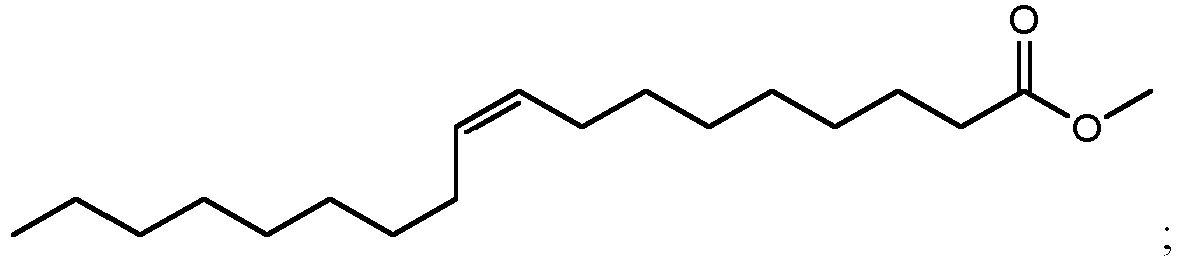





- The
method 300 described herein can also be used to produce one or more of the following ethyl ester compounds:







- The
method 300 described herein can also be used to produce one or more of the following 2-glyceryl ester compounds:


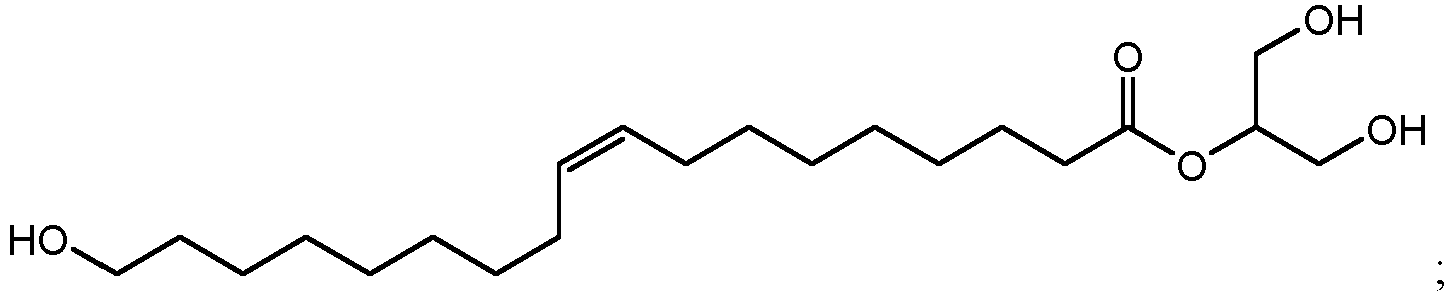


- The
method 300 described herein can also be used to produce one or more of the following 1-glyceryl ester compounds:







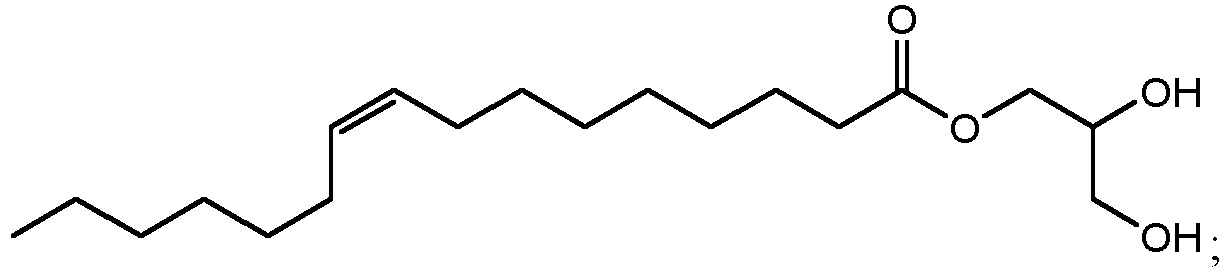


- In some embodiments, the acid included in the solution used to depolymerize the crosslinked polyester is a strong acid. As used herein, a "strong acid" is one for which substantially all of the acid ionizes (dissociates) in a solution (provided there is sufficient solvent). A strong acid has a pKa < -1.74.
- In some embodiments, the polyester, the acid, and the alcohol are heated in a sealed vessel above the atmospheric boiling point of the alcohol. This sealed vessel can allow higher temperatures to be reached, which can allow for shorter reaction times and/or less acid needed to obtain the product.
- The fatty acid esters obtained by way of
method 300 can be used in a variety of applications. For example, they can be applied directly to a plant or other agricultural product to form a protective coating, as further described below. Or, the esters may serve as starting material for further chemical transformations, for example for the production of free fatty acids. Although free fatty acids can be extracted from crosslinked polymers such as cutin using other methods (e.g., usingmethod 100 ofFIG. 1 ), forming free fatty acids via transesterification of esters obtained by way ofmethod 300 can result in more highly purified product. For example, whenmethods method 300 results in product which is a solid powder with little or substantially no coloration, and when dissolved in a solvent produces a solution with a low viscosity. On the other hand, purification of the extract obtained bymethod 100 results in product which remains oily with substantial coloration, and when dissolved in a solvent produces a solution with a substantially higher viscosity. - A plant extract composition prepared by a method of the invention can be applied directly to a portion of a plant, e.g., to form a protective coating on the plant. The plant extract composition can be heated to modify the physical and/or chemical properties of the composition prior to and/or during and/or after the application process. The plant extract composition can be dissolved and/or suspended in a solvent, in aqueous solutions, or in a carrier liquid to form the coating. The solvent can include any polar, non-polar, protic, or aprotic solvents, including any combinations thereof. Examples of solvents that can be used to dissolve the plant extract compositions described herein include water, methanol, ethanol, isopropanol, butanol, acetone, ethyl acetate, chloroform, acetonitrile, tetrahydrofuran, diethyl ether, methyl tert-butyl ether, any other suitable solvent or a combination thereof. Aqueous solutions, suspensions, or emulsions of such plant extract compositions can be suitable for coating on agricultural products, for example, forming a coating on the agricultural product. For example, the aqueous solutions, suspensions, or emulsions can be applied to the surface of the agricultural product, after which the solvent can be removed (e.g., by evaporation or convective drying), leaving a protective coating formed from the plant extract composition on the surface of the agricultural product.
- The coatings can be configured to change the surface energy of the agricultural product. Various properties of coatings described herein can be adjusted by tuning the crosslink density of the coating, its thickness, or its composition. This can, for example, be used to control the ripening of postharvest fruit or produce. For example, coatings formed of plant extract compositions that primarily include bifunctional or polyfunctional cutin monomer units can, for example, have higher crosslink densities than those that include monofunctional cutin monomer units. Thus, plant extract composition coatings formed from bifunctional or polyfunctional cutin monomer units can in some cases result in slower rates of ripening as compared to coatings formed from monofunctional monomer units.
- An acid or a base can be added to the coating formulation to achieve a desired pH suitable for coating the agricultural product with the plant extract composition coating. Additives such as, for example, surfactants, emulsifiers, thickening agents, nonionic polymers, waxes, or salts can be included in the coating formulation. Weak acids, ions, or non-reactive molecules can be included in the coating formulation to control or adjust the properties of the resulting films or coatings. pH stabilizers or modifiers can also be included in the coating formulation. The coating formulation can include additional materials that are also transported to the surface with the coating, or are deposited separately and are subsequently encapsulated by the coating (e.g., the coating is formed at least partially around the additional material), or are deposited separately and are subsequently supported by the coating (e.g., the additional material is anchored to the external surface of the coating). Examples of such additional materials can include cells, biological signaling molecules, vitamins, minerals, pigments, aromas, enzymes, catalysts, antifungals, antimicrobials, and/or time-released drugs. The additional materials can be non-reactive with surface of the agricultural product and/or coating, or alternatively can be reactive with the surface and/or coating.
- The coating can include an additive configured, for example, to modify the viscosity, vapor pressure, surface tension, or solubility of the coating. The additive can be configured to increase the chemical stability of the coating. For example, the additive can be an antioxidant configured to inhibit oxidation of the coating. The additive can be added to reduce or increase the melting temperature or the glass-transition temperature of the coating. The additive can be configured to reduce the diffusivity of water vapor, oxygen, CO2, or ethylene through the coating or enable the coating to absorb more ultra violet (UV) light, for example to protect the agricultural product (e.g., any of the products described herein). The additive can be configured to provide an intentional odor, for example a fragrance (e.g., smell of flowers, fruits, plants, freshness, scents, etc.). The additive can be configured to provide color and can include, for example, a dye or a US Food and Drug Administration (FDA) approved color additive. The additives can include sweeteners, color additives, flavors, spices, flavor enhancers, fat replacers, and components of formulations used to replace fats, nutrients, emulsifiers, bulking agents, cleansing agents, stabilizers, emulsion stabilizers, thickeners, flavor or fragrance, an ingredient of a flavor or fragrance, binders, texturizers, humectants, pH control agents, acidulants, leavening agents, anti-caking agents, antifungal agents, antimicrobial agents, antioxidants, and/or UV filters. The coating can include a photoinitiator, which can initiate crosslinking of the coating on exposure to an appropriate light source, for example, UV light.
- Any of the plant extract composition coatings described herein can be flavorless or have high flavor thresholds, e.g. above 500 ppm, and can be odorless or have a high odor threshold. The materials included in any of the coatings described herein can be substantially transparent. For example, the plant extract composition, the solvent, and/or any other additives included in the coating can be selected so that they have substantially the same or similar indices of refraction. By matching their indices of refraction, they may be optically matched to reduce light scattering and improve light transmission. For example, by utilizing materials that have similar indices of refraction and have a clear, transparent property, a coating having substantially transparent characteristics can be formed.
- Any of the coatings described herein can be disposed on the external surface of an agricultural product using any suitable means. For example, the agricultural product can be dip-coated in a bath of the coating formulation (e.g., an aqueous or mixed aqueous-organic or organic solution of the plant extract composition). The deposited coating can form a thin layer on the surface of an agricultural product, which can protect the agricultural product from biotic stressors, water loss, and/or oxidation. The deposited coating can have a thickness of less than about 1500 nm, such that the coating is transparent to the naked eye. For example, the deposited coating can have a thickness of about 10 nm, about 20 nm, about 30 nm, about 40 nm, about 50 nm, about 100 nm, about 150 nm, about 200 nm, about 250 nm, about 300 nm, about 350 nm, about 400 nm, about 450 nm, about 500 nm, about 550 nm, about 600 nm, about 650 nm, about 700 nm, about 750 nm, about 800 nm, about 850 nm, about 900 nm, about 950 nm, 1,000 nm, about 1,100 nm, about 1,200 nm, about 1,300 nm, about 1,400 nm, or about 1,500 nm, inclusive of all ranges therebetween. The deposited coating can be uniformly deposited over the agricultural product and free of defects and/or pinholes. The dip-coating process can include sequential coating of the agricultural product in baths of coating precursors that can undergo self-assembly or covalent bonding on the agricultural product to form the coating. The coating can be deposited on agricultural products by passing the agricultural products under a stream of the coating formulation (e.g., a waterfall of the liquid coating). For example, the agricultural products can be disposed on a conveyor that passes through the stream of the coating formulation. The coating can be misted, vapor- or dry vapor-deposited on the surface of the agricultural product. The coating can be configured to be fixed on the surface of the agricultural product by UV crosslinking or by exposure to a reactive gas, for example, oxygen.
- The plant extract composition coating can be spray-coated on the agricultural products. Commercially available sprayers can be used for spraying the coating or precursors of the coating onto the agricultural product. The coating formulation can be electrically charged in the sprayer before spray-coating on to the agricultural product, such that the deposited coating electrostatically and/or covalently bonds to the exterior surface of the agricultural product.
- The coatings formed from plant extract compositions described herein can be configured to prevent water loss or other moisture loss from the coated portion of the plant, delay ripening, and/or prevent oxygen diffusion into the coated portion of the plant, for example, to reduce oxidation of the coated portion of the plant. The coating can also protect the coated portion of the plant against biotic stressors, such as, for example, bacteria, fungi, viruses, and/or pests that can infest and decompose the coated portion of the plant. Since bacteria, fungi and pests all identify food sources via recognition of specific molecules on the surface of the agricultural product, coating the agricultural products with the coating containing the plant extract compositions can deposit molecularly contrasting molecules on the surface of the portion of the plant, which can render the agricultural products unrecognizable. Furthermore, the coating can also alter the physical and/or chemical environment of the surface of the agricultural product making the surface unfavorable for bacteria, fungi or pests to grow. The coating can also be formulated to protect the surface of the portion of the plant from abrasion, bruising, or otherwise mechanical damage, and/or protect the portion of the plant from photodegradation. The portion of the plant can include, for example, a leaf, a stem, a shoot, a flower, a fruit, a root, etc. The coating can be used to coat fruits and, for example, delay ripening of the fruit.
- Any of the coatings described herein can be disposed on the external surface of an agricultural product using any suitable means. For example, the agricultural product can be dip coated in a bath of the coating composition (e.g., an aqueous solution of hydrogen-bonding organic molecules). The coating can form a thin layer on the surface of agricultural product, which can protect the agricultural product from biotic stressors, water loss, and/or oxidation. The deposited coating can have a thickness of less than about 2 microns, for example less than 1 micron, less than 900 nm, less than 800 nm, less than 700 nm, less than 600 nm, less than 500 nm, less than 400 nm, less than 300 nm, less than 200 nm, or less than 100 nm, such that the coating is transparent to the naked eye. For example, the deposited coating can have a thickness of about 50 nm, 60 nm, 70 nm, 80 nm, 90 nm, 100 nm, 110 nm, 120 nm, 130 nm, 140 nm, 150 nm, 200 nm, 250 nm, 300 nm, 350 nm, 400 nm, 450 nm, 500 nm, 600 nm, 700 nm, 800 nm, 900 nm, or about 1,000 nm inclusive of all ranges therebetween. The deposited coating can have a high degree of crystallinity to decrease permeability, such that the coating is conformally deposited over the agricultural product and is free of defects and/or pinholes. The dip coating process can include sequential coating of the agricultural product in baths of precursors that can undergo self-assembly or covalent bonding on the agricultural product to form the coating. The coatings can be deposited on agricultural products by passing the agricultural products under a stream of the coating (e.g., a waterfall of the liquid coating). For example, the agricultural products can be disposed on a conveyor that passes through the stream of the coating. The coating can be vapor deposited on the surface of the agricultural product. The coating can be formulated to be fixed on the surface of the agricultural product by UV cross-linking or by exposure to a reactive gas, for example, oxygen. The coating can be applied in the field before harvest as an alternative to pesticides.
- The fatty acid esters and/or oligomers thereof can be dissolved in a suitable solvent (e.g., water, ethanol, or a combination thereof) prior to coating the agricultural product. The process of disposing the composition on the agricultural product may comprise dip-coating the agricultural product in a solution comprising the plurality of cutin-derived monomers, oligomers, or combinations thereof. Alternatively, the process of disposing the composition on the agricultural product may comprise spray-coating the produce with a solution comprising the plurality of fatty acid esters and/or oligomers thereof.
- Any of the coatings can be spray coated on the agricultural products. Commercially available sprayers can be used for spraying the coating or precursors of the coating onto the agricultural product. The coatings can be electrically charged in the sprayer before spray coating on the agricultural product, such that the coating covalently bonds to the exterior surface of the agricultural product.
- The coating can be deposited on the agricultural product such that the coating is unbound to the surface of the agricultural product. Alternatively, one or more components of the coating, for example, the hydrogen-bonding organic molecule, can be covalently (or hydrogen) bonded to at least a portion of the surface of the agricultural product. This can result in improved coating properties such as, for example, higher durability, tighter control of coating permeability and thickness. Multiple layers of the coating can be deposited on the surface of agricultural product to achieve a durable coating.
- Any of the coatings described herein can be used to protect any agricultural product. The coating can be coated on an edible agricultural product, for example, fruits, vegetables, edible seeds and nuts, herbs, spices, produce, meat, eggs, dairy products, seafood, grains, or any other consumable item. The coating can include components that are non-toxic and safe for consumption by humans and/or animals. For example, the coating can include components that are U.S. Food and Drug Administration (FDA) approved direct or indirect food additives, FDA approved food contact substances, satisfy FDA regulatory requirements to be used as a food additive or food contact substance, and/or is an FDA Generally Recognized as Safe (GRAS) material. Examples of such materials can be found within the FDA Code of Federal Regulations Title 21, located at "http://www.accessdata.fda.gov/scripts/cdrh/cfdocs/cfcfr/cfrsearch.cfm". The components of the coating can include a dietary supplement or ingredient of a dietary supplement. The components of the coating can also include an FDA approved food additive or color additive. The coating can include components that are naturally derived, as described herein. The coating can be flavorless or have a high flavor threshold of below 500 ppm, are odorless or have a high odor threshold, and/or are substantially transparent. The coating can be configured to be washed off an edible agricultural product, for example, with water.
- The coatings described herein can be formed on an inedible agricultural product. Such inedible agricultural products can include, for example, inedible flowers, seeds, shoots, stems, leaves, whole plants, and the like. The coating can include components that are non-toxic, but the threshold level for non-toxicity can be higher than that prescribed for edible products. The coating can include an FDA approved food contact substance, an FDA approved food additive, or an FDA approved drug ingredient, for example, any ingredient included in the FDA's database of approved drugs, which can be found at "http://www.accessdata.fda.gov/scripts/cder/drugsatfda/index.cfm". The coating can include materials that satisfy FDA requirements to be used in drugs or are listed within the FDA's National Drug Discovery Code Directory, "http://www.accessdata.fda.gov/scripts/cder/ndc/default.cfm". The materials can include inactive drug ingredients of an approved drug product as listed within the FDA's database, "http://www.accessdata.fda.gov/scripts/cder/ndc/default.cfm".
- The coatings described herein provide several advantages, including, for example: (1) the coatings can protect the agricultural products from biotic stressors, i.e. bacteria, viruses, fungi, or pests; (2) the coatings can prevent evaporation of water and/or diffusion of oxygen; (3) coating can help extend the shelf life of agricultural products, for example, post-harvest produce, without refrigeration; (4) the coatings can introduce mechanical stability to the surface of the agricultural products eliminating the need for expensive packaging designed to prevent the types of bruising which accelerate spoilage; (5) use of agricultural waste materials to obtain the coatings can help eliminate the breeding environments of bacteria, fungi, and pests; (6) the coatings can be used in place of pesticides to protect plants, thereby minimizing the harmful impact of pesticides to human health and the environment; (7) the coatings can be naturally derived and hence, safe for human consumption. Since the components of the coatings described herein can be obtained from agricultural waste, such coatings can be made at a relatively low cost. Therefore, the coatings can be particularly suited for small scale farmers, for example, by reducing the cost required to protect crops from pesticides and reducing post-harvest losses of agricultural products due to decomposition by biotic and/or environmental stressors.
- The treating of the crosslinked polymer and/or forming of the plant extract composition can be carried out by a first party, while the application of the plant extract composition to an agricultural product to form a protective coating over the agricultural product can be carried out by a second party different from the first party. For example, a manufacturer of the plant extract compositions (i.e., a first party) can form the compositions by one or more of the methods described herein. The manufacturer can then sell or otherwise provide the resulting plant extract composition to a second party, for example a farmer, shipper, distributor, or retailer of produce, and the second party can apply the composition to one or more agricultural products to form a protective coating over the products. Alternatively, the manufacturer can sell or otherwise provide the resulting plant extract composition to an intermediary party, for example a wholesaler, who then sells or otherwise provides the plant extract composition to a second party such as a farmer, shipper, distributor, or retailer of produce, and the second party can apply the composition to one or more agricultural products to form a protective coating over the products.
- In some cases where multiple parties are involved, the first party may optionally provide instructions or recommendations about the extract composition, either written or oral, indicating one or more of the following: (i) that the composition is intended to be applied to a product for the purpose of coating or protecting the product, to extend the life of the product, to reduce spoilage of the product, or to modify or improve the aesthetic appearance of the product; (ii) conditions and/or methods that are suitable for applying the compositions to the surfaces of products; and/or (iii) potential benefits (e.g., extended shelf life, reduced rate of mass loss, reduced rate of molding and/or spoilage, etc.) that can result from the application of the composition to a product. While the instructions or recommendations may be supplied by the first party directly with the plant extract composition (e.g., on packaging in which the composition is sold or distributed), the instructions or recommendations may alternatively be supplied separately, for example on a website owned or controlled by the first party, or in advertising or marketing material provided by or on behalf of the first party.
- In view of the above, it is recognized that in some cases, a party that manufactures a plant extract composition according to one or more methods described herein (i.e., a first party) may not directly form a coating over a product from the extract composition, but can instead direct (e.g., can instruct or request) a second party to form a coating over a product from the extract composition. That is, even if the first party does not coat a product by the methods and compositions described herein, the first party may still cause the plant extract composition to be applied to the product to form a protective coating over the product by providing instructions or recommendations as described above. Accordingly, as used herein, the act of applying a plant extract composition to a product (e.g., a plant or agricultural product) also includes directing or instructing another party to apply the plant extract composition to the product, or causing the plant extract composition to be applied to the product.
- The following examples describe plant extract compositions and methods for obtaining the same. These examples are only for illustrative purposes and are not meant to limit the scope of the present disclosure.
- In each of the examples below, all reagents and solvents were purchased and used without further purification unless specified. All reactions were carried out under an atmosphere of nitrogen with commercial grade solvents unless otherwise stated. Reactions were monitored by thin layer chromatography (TLC) carried out on 0.25 mm E. Merck silica gel plates (60 Å, F-254) using UV light as the visualizing agent and an acidic mixture of anisaldehyde, ceric ammonium molybdate, or basic aqueous potassium permanganate (KMnO4), and heat as developing agents. NMR spectra were recorded on a Bruker Avance 500 MHz and/or Varian VNMRs 600 MHz instruments and calibrated using residual un-deuterated solvent as an internal reference (eg. CHCl3 @ 7.26 ppm 1H NMR, 77.16 ppm 13C NMR). The following abbreviations (or combinations thereof) were used to explain the multiplicities: s = singlet, d =doublet, t = triplet, q = quartet, m = multiplet, br = broad. Mass spectra (MS) were recorded on a Waters Xevo UPLC equipped with a C18 column and a ESI TQD MS. Absolute ethanol was dried to low residual water according to the procedures in Purification of Laboratory Chemicals (7th ed.)
- Tomato pomace obtained from a commercial tomato processing facility was milled in a cutting mill, and sifted to give different particle size distributions (eg. >500 µm, 250-500 µm, 125-250 µm, etc.). The fraction corresponding to 250-500 µm was sequentially extracted with CHCl3 overnight in a Soxhlet extractor and with methanol overnight in a Soxhlet extractor to remove the surface waxes and other soluble components, followed by drying under vacuum (< 1 torr). The washed pomace was then lyophilized overnight (< 0.02 torr) to remove water, and then stored in a desiccator before use.
- A general procedure for base catalyzed depolymerization is as follows. To depolymerize the dried and washed pomace, an ethanolic solution including a stoichiometric excess (relative to tomato pomace) of sodium ethoxide was prepared in an oven dried three neck round bottom by adding 2 eq. sodium metal (rel. to tomato pomace, assuming that the mass is entirely composed of cutin polymer) to 250 mL anhydrous ethanol under a nitrogen atmosphere. The mixture was stirred under nitrogen until the sodium had completely dissolved, after which 10.0 g of the tomato pomace (250-500 µm in size) was added against a counter-flow of nitrogen. The mixture was refluxed under nitrogen for 48 hours, followed by cooling the reaction to room temperature and quenching it with 3 mL glacial acetic acid to a pH of about 7. The resulting solution was filtered using
Grade 1 Whatman filter paper to remove any leftover solids and the filtrate was collected. Any excess solvent was removed from the filtered solution by rotary evaporation. The crude isolate was dried under high vacuum (< 0.1 torr), and was analyzed by UPLC and NMR. The crude isolate was found to contain (9)10,16-dihydroxypalmitic acid, with no evidence of ethyl ester formation. - To 250 mL of absolute ethanol was added sulfuric acid (7.36g, 4.00 mL, 75.0 mmol) and tomato pomace (10.0g, 500 µm - 250 µm in size) with stirring. The reaction was then heated to reflux for 48 hours. Once complete, the reaction was cooled and the solution neutralized to pH 7 with ~ 70 mL sat. NaHCO3 (aq). The neutralized mixture was then filtered through a Buchner funnel and
Grade 1 Whatman (70 mm) filter paper. The filtrate was dried by sequential rotary evaporation and high vacuum (<0.1 torr). When the crude material was dry, it was taken up in ethyl acetate (140 mL) and three forward extractions were conducted with H2O (2 x 160 mL) and brine (160 mL). The organic layer was separated, and the combined aqueous phases were extracted with an additional 200 mL ethyl acetate, and the organic phases combined, and dried with MgSO4. The solvent was removed with rotary evaporation and high vacuum, yielding 3.35g (avg.) of crude isolate. - The crude isolate from the ethanolysis was dissolved in methanol, and three times the mass of the crude isolate in Celite 545 was added. The methanol was removed by rotary evaporator and dried Celite admixture transferred to a cellulose extraction thimble. Glass wool was placed on top of the material to ensure it stayed in the thimble. The material was was extracted in a Soxhlet extractor for 20 hours under nitrogen with 600 mL of heptane. After 20 hours, the Soxhlet apparatus and contents were cooled. The Soxhlet apparatus was then dismantled, and the round bottom was placed in a fumehood overnight, which allowed a first crop of
ethyl 10,16-dihydroxyhexdecanoate (EtDHPA) to precipitate out of the heptane. The round bottom was then placed in a 2°C fridge overnight, giving a second crop of EtDHPA. The second crop was then filtered and transferred to a scintillation vial. Both crops were dried by sequential treatment with a rotary evaporator and high vacuum (<0.1 torr), resulting in a yellowish (first crop)/ white (second crop) powder. Both crops were analyzed by NMR and UPLC/ESI MS, matching the expected spectra for EtDHPA; yield (combined crops): 0.76g. 1H NMR (600 MHz, Chloroform-d) δ 4.11 (q, J = 7.1 Hz, 2H), 3.63 (t, J = 6.8 Hz, 2H), 3.57 (s, 1H), 2.27 (t, J = 7.6 Hz, 2H), 1.66 - 1.51 (m, 6H), 1.49 - 1.25 (m, 21H), 1.24 (t, J = 7.1 Hz, 3H). SeeFIG. 12 (UPLC) andFIG. 13 (NMR). - To a thick-walled sealed tube containing 250 mL of absolute ethanol was added sulfuric acid (7.36g, 4.00 mL, 75.0 mmol), followed by tomato pomace (10.0 g, 500 µm - 250 µm in size). The reaction was then heated to temperatures greater than the atmospheric boiling point of ethanol, such as 100 °C or 120 °C for 24 or 48 hours. Once complete, the reaction was cooled and the solution neutralized to pH 7 with 70 mL sat. NaHCO3 (aq.). The neutralized mixture was then filtered through a Buchner funnel and
Grade 1 Whatman (70 mm) filter paper. The filtrate was dried by sequential rotary evaporation and high vacuum (<0.1 torr). When the crude material was dry, it was taken up in ethyl acetate (140 mL), and three forward extractions were conducted with H2O (2 x 160 mL) and brine (160 mL). The organic layer was separated, and the combined aqueous phases were extracted with an additional 200 mL ethyl acetate, and the organic phases combined, and dried with MgSO4. The solvent was removed with rotary evaporation and high vacuum, yielding the crude isolate. The amounts of crude recovered at each of the different temperature and time conditions are plotted inFIG. 5 . - The crude isolate obtained from the ethanolysis was dissolved in methanol, and three times the mass of the crude isolate in Celite 545 was added. The methanol was removed by rotary evaporator and the dried Celite admixture transferred to a cellulose extraction thimble. Glass wool was placed on top of the material to ensure it stayed in the thimble. The material was extracted for 20 hours under nitrogen in a Soxhlet extractor with 500 mL of heptane and then cooled. The Soxhlet apparatus was then dismantled and the round bottom was placed in the fumehood overnight, which allowed a first crop of EtDHPA to precipitate out of the heptane. The round bottom was then placed in a 4 °C fridge overnight, providing a second crop of EtDHPA. This precipitate was then filtered and transferred to a scintillation vial. Both crops were dried by sequential treatment with a rotary evaporator and high vacuum (<0.1 torr) to give a white/yellowish powder. Both crops were analyzed by NMR and UPLC/ESI MS, matching the expected spectra for EtDHPA. The amounts recovered of the EtDHPA isolate are shown in
FIGS. 5 and6 .
Claims (15)
- A method of preparing a composition comprising fatty acid esters, the method comprising:providing a crosslinked polyester comprising polymerized fatty acids;treating the crosslinked polyester with an acid concurrently with an alcohol, at a temperature above 78°C up to 120°C; andremoving the acid and the alcohol to form a mixture comprising the fatty acid esters; andpurifying the mixture to form a purified isolate of fatty acid esters.
- The method of claim 1, wherein:the crosslinked polyester is naturally occurring; and/orthe crosslinked polyester is derived from plant matter; and/orthe crosslinked polyester is cutin.
- The method of claim 1, wherein the crosslinked polyester is derived from plant skins; and/or wherein the crosslinked polyester contains endogenous water.
- The method of claim 1, further comprising causing the fatty acid esters to be applied to a surface of a substrate to form a protective coating.
- The method of claim 1, wherein the composition is in the form of a solid powder with no substantial coloration.
- The method of any of claims 1-5, wherein the acid and the alcohol in the treating step are provided as a solution.
- The method of any of claims 1-5, wherein treating the crosslinked polyester with the acid and the alcohol comprises suspending or dissolving the crosslinked polyester and the acid in the alcohol to form a solution, optionally wherein a concentration of the acid in the solution is greater than 100 µmol/L, or optionally wherein the solution further comprises a non-reactive secondary solvent.
- The method of any of claims 1-5, wherein treating the crosslinked polyester with the acid and the alcohol further comprises heating the crosslinked polyester, the acid, and the alcohol.
- The method of claim 8, wherein heating the crosslinked polyester, the acid, and the alcohol comprises refluxing the crosslinked polyester, the acid, and the alcohol at the boiling point of the alcohol; or wherein the crosslinked polyester, the acid, and the alcohol are heated in a sealed vessel above the boiling point of the alcohol.
- The method of any of claims 1-5, wherein the alcohol comprises ethanol, methanol, propanol, glycerol, or isopropanol; or wherein the alcohol is a primary or secondary alcohol.
- The method of any of claims 1-5, wherein removing the acid comprises neutralizing the acid; or wherein removing the alcohol comprises evaporating the alcohol.
- The method of any of claims 1-5, whereinthe acid is sulfuric acid, triflic acid, hydrochloric acid, hydrobromic acid, hydroiodic acid, para-toluenesulfonic acid, or a combination thereof; orthe acid is a strong acid; orthe acid is catalytic; orthe acid is combined with the alcohol in superstoichiometric amounts; ora molar ratio of the alcohol to the fatty acids is greater than 1.
- The method of claim 1, wherein the fatty acids of the crosslinked polymer comprise 16-hydroxyhexadecanoic acid, 9,16-dihydroxyhexadecanoic acid, 10,16-dihydroxyhexadecanoic acid, 18-hydroxyoctadecanoic acid, 18-hydroxy-(92)-octadec-9-enoic acid, 9,10-epoxy-18-hydroxyoctadecanoic acid, 9,10,18-trihydroxyoctadecanoic acid, or a combination thereof.
- The method of any of claims 1-5 or 13, wherein the resulting fatty acid esters comprise ethyl 16-hydroxyhexadecanoate, ethyl 9,16-dihydroxyhexadecanoate, ethyl 10,16-dihydroxyhexadecanoate, ethyl 18-hydroxyoctadecanoate, ethyl 18-hydroxy-(9Z)-octadec-9-enoate, ethyl 9,10-epoxy-18-hydroxyoctadecanoate, ethyl 9,10,18-trihydroxyoctadecanoate, or a combination thereof.
- The method of any of claims 1-5, wherein the fatty acid esters comprise one or more compounds of Formula I:
 R1, R2, R3, R4, R5, R6, R7, R8, R9, and R10 are each independently -H, -OR13, -NR13R14, -SR13, halogen, -C1-C6 alkyl, -C1-C6 alkenyl, -C1-C6 alkynyl, -C3-C7 cycloalkyl, aryl, or 5- to 10-membered ring heteroaryl, wherein each alkyl, alkenyl, alkynyl, cycloalkyl, aryl, or heteroaryl is optionally substituted with -OR13, -NR13R14, -SR13, or halogen;R13 and R 14 are each independently -H, -C1-C6 alkyl, -C1-C6 alkenyl, or -C1-C6 alkynyl;R11 is -H, -glyceryl, -C1-C6 alkyl, -C1-C6 alkenyl, -C1-C6 alkynyl, -C3-C7 cycloalkyl, aryl, or 5- to 10-membered ring heteroaryl, wherein each alkyl, alkenyl, alkynyl, cycloalkyl, aryl, or heteroaryl is optionally substituted with -OR13, -NR13R14, -SR13, or halogen;R12 is -OH, -H, -C1-C6 alkyl, -C1-C6 alkenyl, -C1-C6 alkynyl, -C3-C7 cycloalkyl, aryl, or 5- to 10-membered ring heteroaryl, wherein each alkyl, alkenyl, alkynyl, cycloalkyl, aryl, or heteroaryl is optionally substituted with -OR13, -NR13R14, -SR13, halogen, -COOH, or -COOR11; andm, n, and o are each independently an integer in the range of 0 to 30, and 0 ≤ m+n+o ≤ 30.
Applications Claiming Priority (2)
| Application Number | Priority Date | Filing Date | Title |
|---|---|---|---|
| US201662423337P | 2016-11-17 | 2016-11-17 | |
| PCT/US2017/062399 WO2018094269A1 (en) | 2016-11-17 | 2017-11-17 | Compositions formed from plant extracts and methods of preparation thereof |
Publications (3)
| Publication Number | Publication Date |
|---|---|
| EP3541192A1 EP3541192A1 (en) | 2019-09-25 |
| EP3541192A4 EP3541192A4 (en) | 2020-07-01 |
| EP3541192B1 true EP3541192B1 (en) | 2025-06-25 |
Family
ID=62145787
Family Applications (1)
| Application Number | Title | Priority Date | Filing Date |
|---|---|---|---|
| EP17872736.8A Active EP3541192B1 (en) | 2016-11-17 | 2017-11-17 | Methods of preparing fatty acid esters from crosslinked polyesters |
Country Status (6)
| Country | Link |
|---|---|
| US (3) | US10843997B2 (en) |
| EP (1) | EP3541192B1 (en) |
| JP (1) | JP7194678B2 (en) |
| CN (1) | CN110087475B (en) |
| IL (1) | IL266402B (en) |
| WO (1) | WO2018094269A1 (en) |
Families Citing this family (19)
| Publication number | Priority date | Publication date | Assignee | Title |
|---|---|---|---|---|
| US9744542B2 (en) | 2013-07-29 | 2017-08-29 | Apeel Technology, Inc. | Agricultural skin grafting |
| ES2784914T3 (en) | 2015-05-20 | 2020-10-02 | Apeel Tech Inc | Compositions of plant extracts and methods of their preparation |
| JP7049245B2 (en) | 2015-09-16 | 2022-04-06 | アピール テクノロジー,インコーポレイテッド | Precursor compounds for molecular coating |
| WO2017100636A1 (en) | 2015-12-10 | 2017-06-15 | Apeel Technology, Inc. | Plant extract compositions for forming protective coatings |
| CN109068627B (en) | 2016-01-26 | 2022-03-18 | 阿比尔技术公司 | Method for preparing and preserving a sterilized product |
| EP3541192B1 (en) | 2016-11-17 | 2025-06-25 | Apeel Technology, Inc. | Methods of preparing fatty acid esters from crosslinked polyesters |
| US12082593B2 (en) | 2017-11-29 | 2024-09-10 | Ryp Labs, Inc. | Anti-spoilage freshness preservation formulation and method for making same |
| US12245605B2 (en) | 2018-09-05 | 2025-03-11 | Apeel Technology, Inc. | Compounds and formulations for protective coatings |
| IL281209B2 (en) * | 2018-09-05 | 2025-05-01 | Apeel Tech Inc | Compounds and formulations for protective coatings |
| CN110655688A (en) * | 2019-10-16 | 2020-01-07 | 闽南师范大学 | A kind of hydrophobic food packaging film and preparation method thereof |
| WO2021178553A1 (en) | 2020-03-04 | 2021-09-10 | Apeel Technology, Inc. | Coated agricultural products and corresponding methods |
| WO2021252403A1 (en) | 2020-06-07 | 2021-12-16 | Comestaag Llc | Barrier coating compositions for perishables and methods, kits and coated items relating thereto |
| EP4161280A1 (en) | 2020-06-07 | 2023-04-12 | Comestaag LLC | Selectively treating plant items |
| CN116113325A (en) | 2020-08-04 | 2023-05-12 | 阿比尔技术公司 | Methods of controlling the ripening of agricultural products |
| US11827591B2 (en) | 2020-10-30 | 2023-11-28 | Apeel Technology, Inc. | Compositions and methods of preparation thereof |
| CN112535793B (en) * | 2020-11-19 | 2021-10-08 | 融冲(深圳)生物医疗科技有限责任公司 | Preparation method and application of drug-coated balloon catheter |
| WO2023039077A1 (en) | 2021-09-08 | 2023-03-16 | Apeel Technology, Inc. | Compounds and formulations for protective coatings |
| IT202200006464A1 (en) * | 2022-04-01 | 2023-10-01 | Lamberti Spa | METHOD OF COATING A PAPER SUBSTRATE USING A MODIFIED CUTIN EXTRACT |
| FI131649B1 (en) * | 2023-01-09 | 2025-08-22 | Innomost Oy | Procedure for creating a coating |
Citations (1)
| Publication number | Priority date | Publication date | Assignee | Title |
|---|---|---|---|---|
| US20200093147A1 (en) * | 2015-05-20 | 2020-03-26 | Apeel Technology, Inc. | Plant extract compositions and methods of preparation thereof |
Family Cites Families (220)
| Publication number | Priority date | Publication date | Assignee | Title |
|---|---|---|---|---|
| DE362219C (en) | 1922-10-24 | Max Langenhaun | Ball track | |
| US1016761A (en) | 1909-04-16 | 1912-02-06 | Charles C Moore | Process of producing starch and glucose. |
| US1009201A (en) | 1910-04-02 | 1911-11-21 | August O Vick | Mortising-machine. |
| US1040737A (en) | 1911-01-18 | 1912-10-08 | Jeremiah L Mahoney | Apparatus for producing rubber bulbs for atomizers, syringes, &c. |
| US1026670A (en) | 1911-03-23 | 1912-05-21 | Russell J Goodnow | Fruit and nut squeezer. |
| US1051731A (en) | 1912-02-24 | 1913-01-28 | Michael Greenfeld | Belt-buckle. |
| US1056115A (en) | 1912-04-29 | 1913-03-18 | Arthur G Mumford | Valve-gear for fluid-pressure engines. |
| US1943468A (en) | 1932-11-22 | 1934-01-16 | Wilbur White Chemical Company | Wax emulsion coating, and coating process |
| US2363232A (en) | 1934-09-13 | 1944-11-21 | Brogdex Co | Processes of and compositions for protectively coating fresh fruits or vegetables |
| US2222000A (en) | 1937-06-02 | 1940-11-19 | Schmidt Erich Kurt Julius | Process for the preservation of eggs and fresh fruit |
| US2213557A (en) | 1937-08-26 | 1940-09-03 | Du Pont | Produce coating compositions |
| US2275659A (en) | 1939-02-25 | 1942-03-10 | Johnson & Son Inc S C | Water removable wax coating |
| US2324448A (en) | 1939-03-08 | 1943-07-13 | Wehrli Gottlieb | Method and product for producing a cleansing and preserving coating on fruits and vegetables |
| US2342063A (en) | 1940-07-31 | 1944-02-15 | Fmc Corp | Method for treating fruit |
| US2333887A (en) | 1941-07-26 | 1943-11-09 | Lorenz M Redlinger | Protective coating and process of manufacture therefor |
| GB587532A (en) * | 1943-03-20 | 1947-04-29 | Colgate Palmolive Peet Co | Improvements in or relating to alcoholysis of fatty glycerides |
| GB647174A (en) * | 1948-07-23 | 1950-12-06 | Nopco Chem Co | Improvements relating to the production of alkyl esters of fatty acids |
| BE500510A (en) | 1950-01-11 | |||
| US2840606A (en) | 1955-04-15 | 1958-06-24 | Du Pont | Nylon hydrolysis |
| US2900259A (en) * | 1956-11-29 | 1959-08-18 | Goodyear Tire & Rubber | Process of packaging dried fruit |
| US2857282A (en) | 1957-09-27 | 1958-10-21 | Eugene F Jansen | Inhibition of enzymes in plant tissue |
| US3189467A (en) | 1959-12-14 | 1965-06-15 | Fmc Corp | Preservation of perishable products |
| US3232765A (en) | 1962-12-17 | 1966-02-01 | Grace W R & Co | Water-in-oil chocolate emulsion |
| US3268337A (en) | 1963-11-05 | 1966-08-23 | Procter & Gamble | Granular starch layer cake batter system and process for producing same |
| US3471303A (en) | 1966-03-07 | 1969-10-07 | Archer Daniels Midland Co | Edible coating compositions and method for coating food |
| US3715024A (en) | 1971-04-23 | 1973-02-06 | Fmc Corp | Fruit orienting apparatus |
| US3821421A (en) | 1971-07-06 | 1974-06-28 | Lever Brothers Ltd | Process for the flavouring of foods |
| US4002775A (en) | 1973-07-09 | 1977-01-11 | Kabara Jon J | Fatty acids and derivatives of antimicrobial agents |
| DE2505428C3 (en) | 1975-02-08 | 1981-04-09 | Müller's Mühle Müller GmbH & Co KG, 4650 Gelsenkirchen | Use of an emulsion to create a glaze coating on peeled peas |
| US3997674A (en) | 1975-02-25 | 1976-12-14 | Tsukihoshi Kasei Kabushiki Kaisha | Preservation of agricultural products |
| JPS5238054A (en) * | 1975-09-16 | 1977-03-24 | Tokyo Fuudo Kemikaru Kk | Method of storing fruit |
| AU531759B2 (en) | 1978-04-17 | 1983-09-08 | Ici Ltd. | Electrostatic spraying |
| IL59407A (en) | 1979-03-06 | 1983-12-30 | Sanofi Sa | Di-n-propylacetic acid diesters of glycerol,their preparation and pharmaceutical compositions containing them |
| US4654370A (en) | 1979-03-12 | 1987-03-31 | Abbott Laboratories | Glyceryl valproates |
| US4353962A (en) | 1980-05-15 | 1982-10-12 | Environmental Chemicals, Inc. | In-flight encapsulation of particles |
| JPS5889140A (en) | 1981-11-24 | 1983-05-27 | Koutou Kk | Coating agent composition for vegetable and fruit |
| GB2119399A (en) | 1982-05-06 | 1983-11-16 | Hop Dev Ltd | Extraction of plant material by using carbon dioxide |
| US4421775A (en) | 1982-06-04 | 1983-12-20 | The United States Of America As Represented By The Secretary Of Agriculture | Method for removing the outer waxy cutin-containing layer from papaya |
| EP0104043A3 (en) | 1982-09-20 | 1984-06-06 | Ajinomoto Co., Inc. | Foodstuffs and pharmaceuticals |
| US4726898A (en) | 1982-09-30 | 1988-02-23 | Pennwalt Corporation | Apparatus for spinning fruit for sorting thereof |
| US5051448A (en) | 1984-07-24 | 1991-09-24 | The Mclean Hospital Corporation | GABA esters and GABA analog esters |
| FI77441C (en) * | 1985-03-04 | 1989-03-10 | Kemira Oy | Process for converting plant material to chemicals. |
| US4680184A (en) | 1985-04-12 | 1987-07-14 | The Procter & Gamble Company | Emulsifier formulation for cookies |
| US4661359A (en) | 1985-06-03 | 1987-04-28 | General Mills, Inc. | Compositions and methods for preparing an edible film of lower water vapor permeability |
| US4820533A (en) | 1985-10-16 | 1989-04-11 | General Mills, Inc. | Edible barrier for composite food articles |
| US4710228A (en) | 1985-10-16 | 1987-12-01 | General Mills, Inc. | Edible coating composition and method of preparation |
| JPH0724544B2 (en) | 1985-11-26 | 1995-03-22 | 三栄源エフ・エフ・アイ株式会社 | E. coli sterilization and freshness preservation of raw vegetables |
| US4874618A (en) | 1985-12-27 | 1989-10-17 | General Mills, Inc. | Package containing a moisture resistant edible internal barrier |
| US4732767A (en) | 1986-04-10 | 1988-03-22 | The Procter & Gamble Company | Method for reducing chip bleed in baked goods |
| DE3622191A1 (en) | 1986-07-02 | 1988-01-07 | Ni I Sadovodstva Necernozemnoj | Mixture for retaining the freshness of fruit and vegetables |
| GB8617527D0 (en) | 1986-07-17 | 1986-08-28 | Ici Plc | Spraying process |
| US4959232A (en) | 1989-04-26 | 1990-09-25 | Red Arrow Products Company, Inc. | Process for making liquid smoke compositions and resin treated liquid smoke compositions |
| US5126153A (en) | 1988-05-13 | 1992-06-30 | Basic American Foods, Inc. | Compositions and methods for inhibiting browning of processed produce |
| DE3825248A1 (en) | 1988-07-25 | 1990-02-01 | Peter Siegfried | METHOD FOR PRODUCING PURE MONOGLYCERIDES AND PURE DIGLYCERIDES FROM A MIXTURE THAT CONTAINS MONO-, DI- AND TRIGLYCERIDES |
| US4960600A (en) * | 1988-12-21 | 1990-10-02 | The Procter & Gamble Co. | Polyol polyesters as a protective moisture barrier for foods |
| US5019403A (en) | 1989-12-13 | 1991-05-28 | The United States Of America As Represented By The Secretary Of Agriculture | Coatings for substrates including high moisture edible substrates |
| JPH0416173A (en) | 1990-05-09 | 1992-01-21 | Nippon Oil & Fats Co Ltd | Freshness-keeping agent for vegetable and fruit |
| US5137743A (en) | 1990-09-07 | 1992-08-11 | Opta Food Ingredients, Inc. | Foods having an oil phase thickened with an oil soluble polyester |
| US5198254A (en) | 1991-04-03 | 1993-03-30 | The United States Of America As Represented By The Secretary Of Agriculture | Composition and method of increasing stability of fruits, vegetables or fungi |
| US5366995A (en) | 1991-05-01 | 1994-11-22 | Mycogen Corporation | Fatty acid based compositions for the control of established plant infections |
| JP2969234B2 (en) | 1991-07-19 | 1999-11-02 | 株式会社アドバンス | ACAT inhibitor |
| WO1993006735A1 (en) | 1991-10-10 | 1993-04-15 | Vioryl S.A. | Post-harvest fruit protection using components of natural essential oils in combination with coating waxes |
| USH1591H (en) | 1992-10-09 | 1996-09-03 | Fulcher; John | Preparation of flavor-enhanced reduced calorie fried foods |
| WO1994026854A1 (en) | 1993-05-13 | 1994-11-24 | Loders-Croklaan | Process for production of human milk fat replacers |
| JPH0778098A (en) | 1993-09-08 | 1995-03-20 | Fujitsu Ltd | File management system |
| US5505982A (en) | 1994-01-28 | 1996-04-09 | Fmc Corporation | Chocolate confection |
| US5483871A (en) | 1994-02-24 | 1996-01-16 | Sunkist Growers, Inc. | Apparatus for spray washing fruit in a brush bed |
| JPH0856564A (en) | 1994-08-25 | 1996-03-05 | Mitsubishi Chem Corp | Method for preventing skin damage of fruits and vegetables and agent therefor |
| SE518619C2 (en) | 1994-12-09 | 2002-10-29 | Gs Dev Ab | Controlled release composition containing monocaproin |
| EP0704689B1 (en) | 1994-09-30 | 2003-04-16 | AVL List GmbH | Procedure for determining the moment of inertia |
| US5741505A (en) | 1995-01-20 | 1998-04-21 | Mars, Incorporated | Edible products having inorganic coatings |
| US20050233039A1 (en) | 1995-07-11 | 2005-10-20 | Wolfe Steven K | Method for cleaning, packing, and transporting vegetables |
| US5827553A (en) | 1995-11-06 | 1998-10-27 | Mantrose-Haeuser Co., Inc. | Edible adhesive |
| WO1997035929A1 (en) | 1996-03-26 | 1997-10-02 | Minnesota Mining And Manufacturing Company | Cationically polymerizable compositions capable of being applied by electrostatic assistance |
| JP3689983B2 (en) * | 1996-06-24 | 2005-08-31 | 凸版印刷株式会社 | Antibacterial polymer and antibacterial packaging material |
| DE19706023A1 (en) | 1997-02-17 | 1998-08-20 | Bayer Ag | Degradation of biodegradable polymers with enzymes |
| US6066316A (en) | 1997-03-21 | 2000-05-23 | Shiseido Co., Ltd. | Fine dispersion composition of wax, hair cosmetic preparation and glazing agent |
| KR20010013377A (en) | 1997-06-04 | 2001-02-26 | 데이비드 엠 모이어 | Mild, leave-on antimicrobial compositions |
| US5939117A (en) | 1997-08-11 | 1999-08-17 | Mantrose-Haeuser Co., Inc. | Methods for preserving fresh fruit and product thereof |
| MY129120A (en) | 1997-08-19 | 2007-03-30 | Global Palm Products Sdn Bhd | Process for the production of monoglyceride based on the glycerolysis of methyl ester |
| US6241971B1 (en) | 1997-09-25 | 2001-06-05 | The Procter & Gamble Company | Hair styling compositions comprising mineral salt, lipophilic material, and low levels of surfactant |
| US5925395A (en) | 1998-01-09 | 1999-07-20 | Mantrose-Haeuser Co., Inc. | Methods for preserving fresh vegetables |
| US6033705A (en) | 1998-07-08 | 2000-03-07 | Isaacs; Charles E. | Method for treating foodstuffs to reduce or prevent microbial activity |
| US8424243B1 (en) | 1998-10-27 | 2013-04-23 | The United States Of America As Represented By Secretary Of Agriculture | Use of coated protective agent to protect horticultural crops from disease |
| NL1010673C2 (en) | 1998-11-27 | 2000-05-30 | Stork Pmt | Add additive to a meat product. |
| US6165529A (en) | 1999-01-13 | 2000-12-26 | Planet Polymer Technologies, Inc. | Process for preventing fresh produce and coating composition therefor |
| IL133827A (en) | 1999-01-13 | 2004-02-08 | Agway Inc | Process for preserving fresh produce and coating composition therefor |
| ES1041955Y (en) | 1999-02-01 | 2000-01-16 | Fernandez Ruben Benigno Lopez | AUTOMATIC CLEANER OF FLESH FRUITS. |
| US6162475A (en) | 1999-03-30 | 2000-12-19 | The United States Of America As Represented By The Secretary Of Agriculture | Edible food coatings containing polyvinyl acetate |
| WO2001001980A1 (en) | 1999-07-06 | 2001-01-11 | The Regents Of The University Of California | Methods for the amelioration of neuropsychiatric disorders by inhibiting the inactivating transport of endogenous cannabinoid substances |
| US6392070B1 (en) | 1999-08-10 | 2002-05-21 | Regents Of The University Of Minnesota | Birch bark processing and the isolation of natural products from birch bark |
| US6254645B1 (en) | 1999-08-20 | 2001-07-03 | Genencor International, Inc. | Enzymatic modification of the surface of a polyester fiber or article |
| JP2003519634A (en) | 2000-01-14 | 2003-06-24 | ザ プロクター アンド ギャンブル カンパニー | Vase-adding composition for controlling water evaporation rate of plants and flowers |
| US6348217B1 (en) | 2000-08-04 | 2002-02-19 | Mantrose-Haeuser Co. Inc. | Method for preparing stable bleached shellac |
| CA2462265C (en) | 2000-10-23 | 2013-11-19 | Simon Fraser University | Method and apparatus for producing a discrete particle |
| GB0104268D0 (en) | 2001-02-21 | 2001-04-11 | Unilever Plc | Antiperspirant or deodorant compositions |
| US6500974B2 (en) | 2001-02-28 | 2002-12-31 | Council Of Scientific And Industrial Research | Process for the preparation of a monoglyceride |
| JP3583380B2 (en) | 2001-04-26 | 2004-11-04 | 高砂香料工業株式会社 | Coating agents and coating powders |
| CA2451666C (en) | 2001-07-12 | 2013-11-05 | Advanced Food Technologies, Inc. | Snack/convenience foods and the like having external and/or internal coating compositions |
| WO2003007901A1 (en) | 2001-07-18 | 2003-01-30 | Unilever Plc | Hair and/or scalp treatment compositions |
| FR2828487B1 (en) | 2001-08-09 | 2005-05-27 | Genfit S A | NOVEL COMPOUNDS DERIVED FROM FATTY ACIDS, PREPARATION AND USES |
| US7013232B2 (en) | 2001-08-15 | 2006-03-14 | National Insurance Corporation | Network-based system for configuring a measurement system using configuration information generated based on a user specification |
| US20030194445A1 (en) | 2001-11-12 | 2003-10-16 | Kuhner Carla H. | Compositions and methods of use of peptides in combination with biocides and/or germicides |
| US20040071845A1 (en) | 2002-06-07 | 2004-04-15 | Hekal Ihab M. | Methods for preserving fresh produce |
| US20040220283A1 (en) | 2002-07-29 | 2004-11-04 | Transform Pharmaceuticals, Inc. | Aqueous 2,6-diisopropylphenol pharmaceutical compositions |
| US7935375B2 (en) | 2002-08-02 | 2011-05-03 | Basf Corporation | Process and coating composition for extending the shelf life of post harvest produce |
| US20100210745A1 (en) | 2002-09-09 | 2010-08-19 | Reactive Surfaces, Ltd. | Molecular Healing of Polymeric Materials, Coatings, Plastics, Elastomers, Composites, Laminates, Adhesives, and Sealants by Active Enzymes |
| US20110240064A1 (en) | 2002-09-09 | 2011-10-06 | Reactive Surfaces, Ltd. | Polymeric Coatings Incorporating Bioactive Enzymes for Cleaning a Surface |
| JP2006501824A (en) | 2002-10-03 | 2006-01-19 | アグロシールド リミテッド ライアビリティー カンパニー | Polymers to protect materials from damage |
| US7776926B1 (en) | 2002-12-11 | 2010-08-17 | Advanced Cardiovascular Systems, Inc. | Biocompatible coating for implantable medical devices |
| US8367047B2 (en) | 2002-12-20 | 2013-02-05 | L'oreal | Hair compositions |
| CA2662297C (en) | 2003-03-31 | 2012-01-03 | Natureseal, Inc. | Compound and method for preserving cut apples |
| JP4179034B2 (en) | 2003-04-18 | 2008-11-12 | ソニー株式会社 | COMMUNICATION SYSTEM, COMMUNICATION DEVICE, COMMUNICATION METHOD, AND PROGRAM |
| US6822105B1 (en) | 2003-08-12 | 2004-11-23 | Stepan Company | Method of making alkyl esters using glycerin |
| US8101221B2 (en) | 2003-08-28 | 2012-01-24 | Mantrose-Haeuser Co., Inc. | Methods for preserving fresh produce |
| EP1662873B1 (en) | 2003-09-09 | 2016-01-13 | 3M Innovative Properties Company | Antimicrobial compositions and methods |
| JP2005097437A (en) | 2003-09-25 | 2005-04-14 | Fuji Photo Film Co Ltd | Ink composition for electrostatic inkjet and method for inkjet recording |
| ES2229948B1 (en) | 2003-10-14 | 2006-07-01 | Universidad Politecnica De Valencia | PREPARATION OF MONOSTERIES OF FATTY ACIDS. |
| US7357957B2 (en) | 2004-05-07 | 2008-04-15 | Fractec Research & Development Inc. | Spreadable food product |
| FR2872068B1 (en) | 2004-06-28 | 2006-10-27 | Centre Nat Rech Scient Cnrse | METHOD AND DEVICE FOR THE DEPOSITION OF THIN LAYERS BY ELECTROHYDRODYNAMIC SPRAY, IN PARTICULAR IN POST-DISCHARGE |
| JP2006008968A (en) | 2004-06-29 | 2006-01-12 | Ono Yoshio | Method for extracting seed component of plant belonging to family elaeagnaceae |
| CN100534313C (en) | 2004-07-02 | 2009-09-02 | 巴斯福公司 | Method and coating composition for preserving fresh products |
| FR2874424B1 (en) | 2004-08-17 | 2007-05-11 | Materiel Arboriculture | DEVICE FOR OPTICALLY ANALYZING PRODUCTS SUCH AS INDIRECT LIGHT FRUITS |
| DE102004043824A1 (en) | 2004-09-10 | 2006-03-16 | Cognis Ip Management Gmbh | Emulsions with unsaturated fatty acids and their esters |
| DE102004049107A1 (en) | 2004-10-07 | 2006-04-13 | Behr Gmbh & Co. Kg | coating process |
| US7910757B2 (en) | 2005-02-04 | 2011-03-22 | Lipid Nutrition B.V. | Process for the preparation of fatty acids |
| EP1693436A1 (en) | 2005-02-21 | 2006-08-23 | Cargill Inc. | Hardened vegetable oils and derivatives thereof |
| FI120684B (en) | 2005-10-21 | 2010-01-29 | Valtion Teknillinen | Process for the preparation of oligo- / polyesters from a carboxylic acid mixture of suberin and / or cutin |
| US8247609B2 (en) | 2005-10-25 | 2012-08-21 | Pharamleads | Aminoacid derivatives containing a disulfanyl group in the form of mixed disulfanyl and aminopeptidase N inhibitors |
| FR2893628B1 (en) | 2005-11-18 | 2008-05-16 | Expanscience Laboratoires Sa | PROCESS FOR OBTAINING REFRINED AVOCADO OIL RICH IN TRIGLYCERIDES AND OIL LIKELY OBTAINABLE BY SUCH A METHOD |
| GB0524979D0 (en) | 2005-12-07 | 2006-01-18 | Queen Mary & Westfield College | An electrospray device and a method of electrospraying |
| JP4680266B2 (en) | 2005-12-09 | 2011-05-11 | 財団法人くまもとテクノ産業財団 | Polyester depolymerization method, and polyester monomer recovery method using the depolymerization method |
| EP1988941A2 (en) | 2006-01-31 | 2008-11-12 | Nanocopoeia, Inc. | Nanoparticle coating of surfaces |
| CN101454406B (en) | 2006-02-23 | 2013-03-27 | 纳幕尔杜邦公司 | Removable antimicrobial coating compositions and methods of use |
| WO2007121482A1 (en) | 2006-04-18 | 2007-10-25 | Regents Of The University Of Minnesota | Depolymerization extraction of compounds from birch bark |
| US7732470B2 (en) | 2006-10-02 | 2010-06-08 | Medical College Of Georgia Research Institute | Compositions and methods for the treatment of renal and cardiovascular disease |
| US7550617B2 (en) | 2006-10-02 | 2009-06-23 | Medical College Of Georgia Research Institute | Compositions and methods for the treatment of renal and cardiovascular disease |
| WO2008094563A2 (en) | 2007-01-31 | 2008-08-07 | Valent Biosciences Coporation | Use of adjuvants to improve abscisic acid performance |
| CN101702916A (en) | 2007-03-30 | 2010-05-05 | 利莱恩斯生命科学有限公司 | Integrated process for the preparation of fatty acid methyl esters (biodiesel) |
| US20100278784A1 (en) | 2007-05-15 | 2010-11-04 | Puretech Ventures | Methods and compositions for treating skin conditions |
| US7997026B2 (en) | 2007-06-15 | 2011-08-16 | State of Oregon, by and through the State Board of Higher Education on behalf of Oregon State University | Perishable-fruit-bearing cut-limb preservation and distribution method, coating and shipping container therefor |
| FI120835B (en) | 2007-07-10 | 2010-03-31 | Valtion Teknillinen | New esters and their use |
| WO2009021110A1 (en) | 2007-08-08 | 2009-02-12 | Archer-Daniels-Midland Company | Egg replacement and emulsifier system and related methods |
| US7879384B2 (en) | 2007-11-08 | 2011-02-01 | Kraft Foods Global Brands Llc | Structured glycerol esters useful as edible moisture barriers |
| US20090142453A1 (en) | 2007-11-30 | 2009-06-04 | Lobisser George F | Nutraceutical Coatings fo Fruits and Vegetables |
| AU2008340060B2 (en) | 2007-12-20 | 2014-04-24 | Novozymes A/S | Cutinase for detoxification of feed products |
| EP2229146A2 (en) | 2008-01-08 | 2010-09-22 | M.D. Lederman Consulting Ltd. | Emulsified wax compositions and uses thereof |
| US20090181114A1 (en) | 2008-01-11 | 2009-07-16 | U.S. Nutraceuticals, Llc D/B/A Valensa International | Chia seed beverage and related method |
| CA2716806A1 (en) | 2008-02-29 | 2009-09-03 | University Of Central Florida Research Foundation, Inc. | Production and use of plant degrading materials |
| TW200939956A (en) | 2008-03-26 | 2009-10-01 | Riken | Agent for controlling post-harvest disease and method for controlling post-harvest disease |
| US20110244095A1 (en) | 2008-09-22 | 2011-10-06 | Xeda International | Method for Coating Food Products |
| EP2348122B1 (en) | 2008-10-27 | 2016-04-13 | Toyo Seikan Kaisha, Ltd. | Method for producing oligomer and/or monomer by degrading biodegradable resin |
| US20100186674A1 (en) | 2009-01-26 | 2010-07-29 | E. I. Du Pont De Nemours And Company | Methods and compositions for treating fertilized avian eggs |
| SE534010C2 (en) | 2009-02-13 | 2011-03-29 | Stfi Packforsk Ab | Process for converting suberin- and / or cutin-containing plant parts into a mixture containing a suberin monomer |
| US8752328B2 (en) | 2009-04-23 | 2014-06-17 | State Of Oregon Acting By And Through The State Board Of Higher Education On Behalf Of Oregon State University | Flexible films and methods of making and using flexible films |
| US8252354B2 (en) | 2009-06-08 | 2012-08-28 | Mas Marketing Holding Company, Llc | Manufacture of seed derivative compositions |
| DE102009031053A1 (en) | 2009-06-30 | 2011-01-13 | Clariant International Ltd. | Continuous process for the preparation of esters of aliphatic carboxylic acids |
| EP2459016A2 (en) | 2009-07-31 | 2012-06-06 | Ecology Coatings, Inc. | Coated substrates and methods of preparing the same |
| TR201820321T4 (en) | 2009-08-26 | 2019-01-21 | Mantrose Haeuser Company Inc | Printed flexible film for food packaging. |
| CA2783933A1 (en) | 2009-12-16 | 2011-06-23 | Basf Se | Coating composition for fresh produce comprising chitosan, surfactant and polyethylene glycol |
| US20130095141A1 (en) | 2010-03-08 | 2013-04-18 | Beverly A. Schad | Food grade dry film coating composition and methods of making and using the same |
| EP2568973A2 (en) | 2010-05-11 | 2013-03-20 | Sensient Colors LLC | Film coating composition and methods of making and using the same |
| IL212563A0 (en) | 2010-05-25 | 2011-07-31 | Rohm & Haas | Waxy coatings on plant parts |
| US8586807B2 (en) | 2010-06-24 | 2013-11-19 | Old Dominion University Research Foundation | Process for the selective production of hydrocarbon based fuels from plants containing aliphatic biopolymers utilizing water at subcritical conditions |
| US20120003356A1 (en) | 2010-06-30 | 2012-01-05 | Athula Ekanayake | Process for Producing Cassava Flour |
| US20120015093A1 (en) | 2010-07-16 | 2012-01-19 | Finney John M | Whole seed processing and controlled viscosity products |
| JP2013535499A (en) | 2010-08-09 | 2013-09-12 | インスティテュート テクノロヒコ イ デ エステューディオス スペリオレス デ モンテレイ | Antibacterial, antibacterial, or spore germination inhibitory activity derived from avocado extract enriched with bioactive compounds |
| US20120040076A1 (en) | 2010-08-11 | 2012-02-16 | E. I. Du Pont De Nemours And Company | Aquaculture feed compositions |
| US8263751B2 (en) | 2010-11-19 | 2012-09-11 | Daedalus Innovations Llc | Method for removing a protein from a metal chelate resin |
| PH12013501038A1 (en) | 2011-01-12 | 2019-09-02 | Dsm Ip Assets Bv | Reduction of weight loss of fruits |
| FI123867B (en) | 2011-04-06 | 2013-11-29 | Teknologian Tutkimuskeskus Vtt | New cutinases, their production and uses |
| MX2011003856A (en) | 2011-04-11 | 2012-10-24 | Univ Mexico Nacional Autonoma | Composition of solid lipid nanoparticles for the long-term conservation of fruits, vegetables, seeds, cereals and/or fresh foodstuffs using a coating. |
| US20140221308A1 (en) | 2011-07-01 | 2014-08-07 | Synedgen, Inc. | Methods and compositions of reducing and preventing bacterial growth and the formation of biofilm on a surface utilizing chitosan-derivative compounds |
| US20130209617A1 (en) | 2011-08-10 | 2013-08-15 | Pace International, Llc | Compositions and methods for use in promoting produce health |
| DK2581340T3 (en) | 2011-10-14 | 2017-05-22 | Evonik Degussa Gmbh | Improved method of treating water with chlorine dioxide |
| CN102335142B (en) | 2011-10-25 | 2014-03-26 | 上海理工大学 | Composite microspheres of nano liposome capable of being automatically assembled into insoluble medicament in situ and preparation method for composite microspheres |
| US8708575B2 (en) | 2011-11-11 | 2014-04-29 | Sae Magnetics (H.K.) Ltd. | Active optical connector using audio port |
| JP5944303B2 (en) | 2011-12-08 | 2016-07-05 | 花王株式会社 | A method for producing a fatty acid monoglyceride-containing mixture. |
| ES2715998T3 (en) | 2012-03-29 | 2019-06-07 | Yissum Res Dev Co Of Hebrew Univ Jerusalem Ltd | Edible coating for plant material |
| JP2015517011A (en) | 2012-04-06 | 2015-06-18 | エイチ アール ディー コーポレーション | Application of high shear to oil processing |
| US20140033926A1 (en) | 2012-08-03 | 2014-02-06 | Robert Scott Fassel | Filtration System |
| US9095152B2 (en) | 2012-09-12 | 2015-08-04 | Munger Bros., LLC | Method for disinfecting, sanitizing, and packaging ready-to-eat produce |
| US9388098B2 (en) | 2012-10-09 | 2016-07-12 | Elevance Renewable Sciences, Inc. | Methods of making high-weight esters, acids, and derivatives thereof |
| US20140199449A1 (en) | 2013-01-14 | 2014-07-17 | Andy Hernandez | Methods for extending the shelf life of processed cucurbita pepo vegetables |
| US10400128B2 (en) | 2013-03-14 | 2019-09-03 | Oregon State University | Nano-cellulose edible coatings and uses thereof |
| WO2014162238A2 (en) | 2013-03-31 | 2014-10-09 | Jain Pranay | A process for recycling a metalized polyester film |
| PL2789681T3 (en) | 2013-04-11 | 2018-01-31 | Purac Biochem Bv | Preparation of lactylates directly from oil |
| US9249252B2 (en) | 2013-04-26 | 2016-02-02 | Solazyme, Inc. | Low polyunsaturated fatty acid oils and uses thereof |
| CN105283535A (en) | 2013-05-23 | 2016-01-27 | 自然封印公司 | Antimicrobial wash |
| CN103283830B (en) | 2013-05-24 | 2014-11-05 | 南京林业大学 | Ginkgo fruit composite preservative and preservation method |
| WO2014206911A1 (en) | 2013-06-24 | 2014-12-31 | Basf Se | Isothiazoline compounds for combating invertebrate pests |
| US9744542B2 (en) | 2013-07-29 | 2017-08-29 | Apeel Technology, Inc. | Agricultural skin grafting |
| GB201314386D0 (en) | 2013-08-12 | 2013-09-25 | Marine Harvest Scotland Ltd | Treatment system for aquaculture |
| ITPR20130066A1 (en) * | 2013-08-26 | 2015-02-27 | Chiesa Virginio | METHOD OF EXTRACTION OF A POLYESTER OR CUTINE POLYMER FROM TOMATOES AND POLYESTER POLYMER AS EXTRACTED. |
| US20160213030A1 (en) | 2013-08-28 | 2016-07-28 | Sensient Colors Llc | Edible coating compositions, edible coatings, and methods for making and using the same |
| FR3011467B1 (en) | 2013-10-08 | 2016-02-12 | Centre Nat Rech Scient | COMPOUNDS AND COMPOSITIONS COMPRISING SUCH COMPOUNDS FOR THE PREVENTION OR TREATMENT OF DYSLIPIDEMIA |
| US20160295860A1 (en) | 2013-11-22 | 2016-10-13 | Agri-Néo Inc. | A novel composition and method of use to control pathogens and prevent diseases in seeds |
| CN103719261B (en) | 2013-12-18 | 2015-10-28 | 广西科技大学 | A kind of mango water retention sterilization coating liquid and preparation method thereof |
| WO2015176020A1 (en) | 2014-05-16 | 2015-11-19 | Provivi, Inc. | Synthesis of olefinic alcohols via enzymatic terminal hydroxylation |
| WO2016126930A1 (en) | 2015-02-05 | 2016-08-11 | Nanomedex, Llc | Emulsion containing two oils and stabilizers |
| JP2018510187A (en) | 2015-03-30 | 2018-04-12 | デンツプライ デトレイ ゲー.エム.ベー.ハー. | Dental composition |
| WO2016168319A1 (en) * | 2015-04-13 | 2016-10-20 | University Of South Florida | Cutin-like materials with advanced functionalities and methods of manufacture |
| US20160324172A1 (en) | 2015-05-04 | 2016-11-10 | Jones-Hamilton Co. | Post-Harvest Coating for Fresh Produce |
| US9475643B1 (en) | 2015-06-12 | 2016-10-25 | Djt Investments, Llc. | Roller system for sorting produce |
| EP3346851B1 (en) | 2015-09-09 | 2022-08-17 | Arec Crop Protection B.V. | A new fungicidal composition comprising natamycin and fatty acid selected from palmitic acid, oleic acid and linoleic acid, or salts thereof |
| JP7049245B2 (en) | 2015-09-16 | 2022-04-06 | アピール テクノロジー,インコーポレイテッド | Precursor compounds for molecular coating |
| WO2017100636A1 (en) | 2015-12-10 | 2017-06-15 | Apeel Technology, Inc. | Plant extract compositions for forming protective coatings |
| EP3195731A1 (en) | 2016-01-19 | 2017-07-26 | Liquidseal Holding B.V. | Coating for fruit |
| CN109068627B (en) | 2016-01-26 | 2022-03-18 | 阿比尔技术公司 | Method for preparing and preserving a sterilized product |
| WO2017172951A1 (en) | 2016-04-01 | 2017-10-05 | Apeel Technology, Inc. | Method of reducing spoilage in harvested produce during storage and shipping |
| EP3481209A1 (en) | 2016-07-08 | 2019-05-15 | Apeel Technology, Inc. | Methods of controlling the rate of ripening in harvested produce |
| WO2018042435A1 (en) | 2016-08-31 | 2018-03-08 | Nontoxico Ltd | A pest control composition and method thereof |
| EP3541192B1 (en) | 2016-11-17 | 2025-06-25 | Apeel Technology, Inc. | Methods of preparing fatty acid esters from crosslinked polyesters |
| CN107794114A (en) | 2017-11-20 | 2018-03-13 | 重庆汇达柠檬科技集团有限公司 | A kind of cold press prepares the processing technology for taking off bitter the lemon seed oil |
| CN107828560B (en) | 2017-12-04 | 2019-11-22 | 奇德喜 | A kind of production method of soap rice |
| US12245605B2 (en) | 2018-09-05 | 2025-03-11 | Apeel Technology, Inc. | Compounds and formulations for protective coatings |
| CN110255947B (en) | 2019-05-22 | 2022-03-04 | 湖南昌迪环境科技有限公司 | Grinding aid and application thereof |
| JP2022537536A (en) | 2019-06-21 | 2022-08-26 | アピール テクノロジー,インコーポレイテッド | Compound extracted from plant matter and method for preparing same |
| US11827591B2 (en) | 2020-10-30 | 2023-11-28 | Apeel Technology, Inc. | Compositions and methods of preparation thereof |
| CN112898630B (en) | 2021-01-26 | 2022-06-17 | 佛山科学技术学院 | Mechanochemical green degradation method for polyester plastics |
-
2017
- 2017-11-17 EP EP17872736.8A patent/EP3541192B1/en active Active
- 2017-11-17 JP JP2019524890A patent/JP7194678B2/en active Active
- 2017-11-17 CN CN201780078939.1A patent/CN110087475B/en active Active
- 2017-11-17 WO PCT/US2017/062399 patent/WO2018094269A1/en not_active Ceased
-
2019
- 2019-05-01 IL IL266402A patent/IL266402B/en active IP Right Grant
- 2019-05-16 US US16/414,735 patent/US10843997B2/en active Active
-
2020
- 2020-10-23 US US17/078,282 patent/US11319275B2/en active Active
-
2022
- 2022-05-02 US US17/734,728 patent/US11918003B2/en active Active
Patent Citations (1)
| Publication number | Priority date | Publication date | Assignee | Title |
|---|---|---|---|---|
| US20200093147A1 (en) * | 2015-05-20 | 2020-03-26 | Apeel Technology, Inc. | Plant extract compositions and methods of preparation thereof |
Also Published As
| Publication number | Publication date |
|---|---|
| JP7194678B2 (en) | 2022-12-22 |
| IL266402B (en) | 2021-02-28 |
| JP2019536865A (en) | 2019-12-19 |
| US20220259133A1 (en) | 2022-08-18 |
| CN110087475B (en) | 2023-04-11 |
| IL266402A (en) | 2019-06-30 |
| EP3541192A4 (en) | 2020-07-01 |
| US10843997B2 (en) | 2020-11-24 |
| US20190269145A1 (en) | 2019-09-05 |
| US11319275B2 (en) | 2022-05-03 |
| CN110087475A (en) | 2019-08-02 |
| WO2018094269A1 (en) | 2018-05-24 |
| US11918003B2 (en) | 2024-03-05 |
| US20210230095A1 (en) | 2021-07-29 |
| EP3541192A1 (en) | 2019-09-25 |
Similar Documents
| Publication | Publication Date | Title |
|---|---|---|
| US11918003B2 (en) | Compositions formed from plant extracts and methods of preparation thereof | |
| US20240081358A1 (en) | Plant extract compositions and methods of preparation thereof | |
| US11767278B2 (en) | Plant extract compositions for forming protective coatings |
Legal Events
| Date | Code | Title | Description |
|---|---|---|---|
| STAA | Information on the status of an ep patent application or granted ep patent |
Free format text: STATUS: THE INTERNATIONAL PUBLICATION HAS BEEN MADE |
|
| PUAI | Public reference made under article 153(3) epc to a published international application that has entered the european phase |
Free format text: ORIGINAL CODE: 0009012 |
|
| STAA | Information on the status of an ep patent application or granted ep patent |
Free format text: STATUS: REQUEST FOR EXAMINATION WAS MADE |
|
| 17P | Request for examination filed |
Effective date: 20190613 |
|
| AK | Designated contracting states |
Kind code of ref document: A1 Designated state(s): AL AT BE BG CH CY CZ DE DK EE ES FI FR GB GR HR HU IE IS IT LI LT LU LV MC MK MT NL NO PL PT RO RS SE SI SK SM TR |
|
| AX | Request for extension of the european patent |
Extension state: BA ME |
|
| DAV | Request for validation of the european patent (deleted) | ||
| DAX | Request for extension of the european patent (deleted) | ||
| REG | Reference to a national code |
Ref country code: DE Ref legal event code: R079 Free format text: PREVIOUS MAIN CLASS: A23B0009140000 Ipc: A23B0007160000 |
|
| REG | Reference to a national code |
Ref country code: HK Ref legal event code: DE Ref document number: 40007029 Country of ref document: HK |
|
| A4 | Supplementary search report drawn up and despatched |
Effective date: 20200529 |
|
| RIC1 | Information provided on ipc code assigned before grant |
Ipc: C08J 3/00 20060101ALI20200525BHEP Ipc: A23B 9/14 20060101ALI20200525BHEP Ipc: A23B 7/16 20060101AFI20200525BHEP Ipc: C11C 3/00 20060101ALI20200525BHEP |
|
| STAA | Information on the status of an ep patent application or granted ep patent |
Free format text: STATUS: EXAMINATION IS IN PROGRESS |
|
| 17Q | First examination report despatched |
Effective date: 20240104 |
|
| GRAP | Despatch of communication of intention to grant a patent |
Free format text: ORIGINAL CODE: EPIDOSNIGR1 |
|
| STAA | Information on the status of an ep patent application or granted ep patent |
Free format text: STATUS: GRANT OF PATENT IS INTENDED |
|
| INTG | Intention to grant announced |
Effective date: 20250117 |
|
| GRAS | Grant fee paid |
Free format text: ORIGINAL CODE: EPIDOSNIGR3 |
|
| GRAA | (expected) grant |
Free format text: ORIGINAL CODE: 0009210 |
|
| STAA | Information on the status of an ep patent application or granted ep patent |
Free format text: STATUS: THE PATENT HAS BEEN GRANTED |
|
| AK | Designated contracting states |
Kind code of ref document: B1 Designated state(s): AL AT BE BG CH CY CZ DE DK EE ES FI FR GB GR HR HU IE IS IT LI LT LU LV MC MK MT NL NO PL PT RO RS SE SI SK SM TR |
|
| REG | Reference to a national code |
Ref country code: GB Ref legal event code: FG4D |
|
| REG | Reference to a national code |
Ref country code: CH Ref legal event code: EP |
|
| REG | Reference to a national code |
Ref country code: CH Ref legal event code: EP |
|
| REG | Reference to a national code |
Ref country code: IE Ref legal event code: FG4D |
|
| REG | Reference to a national code |
Ref country code: DE Ref legal event code: R096 Ref document number: 602017090185 Country of ref document: DE |
|
| PG25 | Lapsed in a contracting state [announced via postgrant information from national office to epo] |
Ref country code: FI Free format text: LAPSE BECAUSE OF FAILURE TO SUBMIT A TRANSLATION OF THE DESCRIPTION OR TO PAY THE FEE WITHIN THE PRESCRIBED TIME-LIMIT Effective date: 20250625 |
|
| REG | Reference to a national code |
Ref country code: LT Ref legal event code: MG9D |
|
| PG25 | Lapsed in a contracting state [announced via postgrant information from national office to epo] |
Ref country code: GR Free format text: LAPSE BECAUSE OF FAILURE TO SUBMIT A TRANSLATION OF THE DESCRIPTION OR TO PAY THE FEE WITHIN THE PRESCRIBED TIME-LIMIT Effective date: 20250926 Ref country code: NO Free format text: LAPSE BECAUSE OF FAILURE TO SUBMIT A TRANSLATION OF THE DESCRIPTION OR TO PAY THE FEE WITHIN THE PRESCRIBED TIME-LIMIT Effective date: 20250925 |
|
| PG25 | Lapsed in a contracting state [announced via postgrant information from national office to epo] |
Ref country code: BG Free format text: LAPSE BECAUSE OF FAILURE TO SUBMIT A TRANSLATION OF THE DESCRIPTION OR TO PAY THE FEE WITHIN THE PRESCRIBED TIME-LIMIT Effective date: 20250625 |
|
| PG25 | Lapsed in a contracting state [announced via postgrant information from national office to epo] |
Ref country code: HR Free format text: LAPSE BECAUSE OF FAILURE TO SUBMIT A TRANSLATION OF THE DESCRIPTION OR TO PAY THE FEE WITHIN THE PRESCRIBED TIME-LIMIT Effective date: 20250625 |
|
| PG25 | Lapsed in a contracting state [announced via postgrant information from national office to epo] |
Ref country code: RS Free format text: LAPSE BECAUSE OF FAILURE TO SUBMIT A TRANSLATION OF THE DESCRIPTION OR TO PAY THE FEE WITHIN THE PRESCRIBED TIME-LIMIT Effective date: 20250925 |
|
| PG25 | Lapsed in a contracting state [announced via postgrant information from national office to epo] |
Ref country code: LV Free format text: LAPSE BECAUSE OF FAILURE TO SUBMIT A TRANSLATION OF THE DESCRIPTION OR TO PAY THE FEE WITHIN THE PRESCRIBED TIME-LIMIT Effective date: 20250625 |
|
| REG | Reference to a national code |
Ref country code: NL Ref legal event code: MP Effective date: 20250625 |
|
| PG25 | Lapsed in a contracting state [announced via postgrant information from national office to epo] |
Ref country code: NL Free format text: LAPSE BECAUSE OF FAILURE TO SUBMIT A TRANSLATION OF THE DESCRIPTION OR TO PAY THE FEE WITHIN THE PRESCRIBED TIME-LIMIT Effective date: 20250625 |
|
| PG25 | Lapsed in a contracting state [announced via postgrant information from national office to epo] |
Ref country code: PT Free format text: LAPSE BECAUSE OF FAILURE TO SUBMIT A TRANSLATION OF THE DESCRIPTION OR TO PAY THE FEE WITHIN THE PRESCRIBED TIME-LIMIT Effective date: 20251027 |
|
| REG | Reference to a national code |
Ref country code: AT Ref legal event code: MK05 Ref document number: 1805473 Country of ref document: AT Kind code of ref document: T Effective date: 20250625 |
|
| PG25 | Lapsed in a contracting state [announced via postgrant information from national office to epo] |
Ref country code: IS Free format text: LAPSE BECAUSE OF FAILURE TO SUBMIT A TRANSLATION OF THE DESCRIPTION OR TO PAY THE FEE WITHIN THE PRESCRIBED TIME-LIMIT Effective date: 20251025 |
|
| PG25 | Lapsed in a contracting state [announced via postgrant information from national office to epo] |
Ref country code: AT Free format text: LAPSE BECAUSE OF FAILURE TO SUBMIT A TRANSLATION OF THE DESCRIPTION OR TO PAY THE FEE WITHIN THE PRESCRIBED TIME-LIMIT Effective date: 20250625 Ref country code: SM Free format text: LAPSE BECAUSE OF FAILURE TO SUBMIT A TRANSLATION OF THE DESCRIPTION OR TO PAY THE FEE WITHIN THE PRESCRIBED TIME-LIMIT Effective date: 20250625 |
|
| PG25 | Lapsed in a contracting state [announced via postgrant information from national office to epo] |
Ref country code: CZ Free format text: LAPSE BECAUSE OF FAILURE TO SUBMIT A TRANSLATION OF THE DESCRIPTION OR TO PAY THE FEE WITHIN THE PRESCRIBED TIME-LIMIT Effective date: 20250625 |
|
| PG25 | Lapsed in a contracting state [announced via postgrant information from national office to epo] |
Ref country code: PL Free format text: LAPSE BECAUSE OF FAILURE TO SUBMIT A TRANSLATION OF THE DESCRIPTION OR TO PAY THE FEE WITHIN THE PRESCRIBED TIME-LIMIT Effective date: 20250625 |
|
| PG25 | Lapsed in a contracting state [announced via postgrant information from national office to epo] |
Ref country code: EE Free format text: LAPSE BECAUSE OF FAILURE TO SUBMIT A TRANSLATION OF THE DESCRIPTION OR TO PAY THE FEE WITHIN THE PRESCRIBED TIME-LIMIT Effective date: 20250625 |
|
| PG25 | Lapsed in a contracting state [announced via postgrant information from national office to epo] |
Ref country code: SK Free format text: LAPSE BECAUSE OF FAILURE TO SUBMIT A TRANSLATION OF THE DESCRIPTION OR TO PAY THE FEE WITHIN THE PRESCRIBED TIME-LIMIT Effective date: 20250625 |
|
| PG25 | Lapsed in a contracting state [announced via postgrant information from national office to epo] |
Ref country code: ES Free format text: LAPSE BECAUSE OF FAILURE TO SUBMIT A TRANSLATION OF THE DESCRIPTION OR TO PAY THE FEE WITHIN THE PRESCRIBED TIME-LIMIT Effective date: 20250625 |