EP3461495A1 - Methods of improving or accelerating physical recovery after surgery for hip fracture - Google Patents
Methods of improving or accelerating physical recovery after surgery for hip fracture Download PDFInfo
- Publication number
- EP3461495A1 EP3461495A1 EP18201533.9A EP18201533A EP3461495A1 EP 3461495 A1 EP3461495 A1 EP 3461495A1 EP 18201533 A EP18201533 A EP 18201533A EP 3461495 A1 EP3461495 A1 EP 3461495A1
- Authority
- EP
- European Patent Office
- Prior art keywords
- seq
- antibody
- variable region
- light chain
- heavy chain
- Prior art date
- Legal status (The legal status is an assumption and is not a legal conclusion. Google has not performed a legal analysis and makes no representation as to the accuracy of the status listed.)
- Withdrawn
Links
- 206010020100 Hip fracture Diseases 0.000 title claims abstract description 61
- 238000001356 surgical procedure Methods 0.000 title claims abstract description 51
- 238000011084 recovery Methods 0.000 title claims abstract description 41
- 238000000034 method Methods 0.000 title claims description 121
- 229950006326 bimagrumab Drugs 0.000 claims abstract description 117
- 230000002829 reductive effect Effects 0.000 claims abstract description 45
- 208000020538 atrophic muscular disease Diseases 0.000 claims abstract description 36
- 230000001960 triggered effect Effects 0.000 claims abstract description 26
- 108010056852 Myostatin Proteins 0.000 claims description 226
- 239000000203 mixture Substances 0.000 claims description 185
- 239000005557 antagonist Substances 0.000 claims description 148
- 230000036314 physical performance Effects 0.000 claims description 16
- 230000001976 improved effect Effects 0.000 claims description 10
- 230000008439 repair process Effects 0.000 claims description 9
- 238000012790 confirmation Methods 0.000 claims description 6
- 239000002552 dosage form Substances 0.000 claims description 6
- 230000029663 wound healing Effects 0.000 claims description 6
- 230000006378 damage Effects 0.000 claims description 5
- 208000027418 Wounds and injury Diseases 0.000 claims description 3
- 208000014674 injury Diseases 0.000 claims description 3
- 102000004472 Myostatin Human genes 0.000 claims 2
- 102100039939 Growth/differentiation factor 8 Human genes 0.000 description 224
- 238000009739 binding Methods 0.000 description 206
- 230000027455 binding Effects 0.000 description 205
- 235000001014 amino acid Nutrition 0.000 description 144
- 241000282414 Homo sapiens Species 0.000 description 130
- 229940024606 amino acid Drugs 0.000 description 130
- 150000001413 amino acids Chemical class 0.000 description 129
- 125000003275 alpha amino acid group Chemical group 0.000 description 119
- 108090000623 proteins and genes Proteins 0.000 description 114
- 102100035360 Cerebellar degeneration-related antigen 1 Human genes 0.000 description 112
- 101000737793 Homo sapiens Cerebellar degeneration-related antigen 1 Proteins 0.000 description 112
- 101100112922 Candida albicans CDR3 gene Proteins 0.000 description 105
- 102100035361 Cerebellar degeneration-related protein 2 Human genes 0.000 description 105
- 101000737796 Homo sapiens Cerebellar degeneration-related protein 2 Proteins 0.000 description 105
- 210000003205 muscle Anatomy 0.000 description 81
- 102000004169 proteins and genes Human genes 0.000 description 79
- 239000000427 antigen Substances 0.000 description 76
- 108091007433 antigens Proteins 0.000 description 75
- 102000036639 antigens Human genes 0.000 description 75
- 235000018102 proteins Nutrition 0.000 description 72
- 210000004027 cell Anatomy 0.000 description 67
- 238000011282 treatment Methods 0.000 description 59
- 102000005962 receptors Human genes 0.000 description 52
- 108020003175 receptors Proteins 0.000 description 52
- 108010047041 Complementarity Determining Regions Proteins 0.000 description 50
- 230000037230 mobility Effects 0.000 description 45
- 239000003814 drug Substances 0.000 description 40
- 239000012634 fragment Substances 0.000 description 40
- 230000000694 effects Effects 0.000 description 31
- 210000004602 germ cell Anatomy 0.000 description 31
- 230000014509 gene expression Effects 0.000 description 30
- 230000005764 inhibitory process Effects 0.000 description 30
- 229940079593 drug Drugs 0.000 description 28
- 230000004048 modification Effects 0.000 description 27
- 238000012986 modification Methods 0.000 description 27
- 108060003951 Immunoglobulin Proteins 0.000 description 26
- 230000007423 decrease Effects 0.000 description 26
- 102000018358 immunoglobulin Human genes 0.000 description 26
- 230000001965 increasing effect Effects 0.000 description 26
- 210000002027 skeletal muscle Anatomy 0.000 description 25
- 230000006870 function Effects 0.000 description 24
- 108020004414 DNA Proteins 0.000 description 21
- 241001465754 Metazoa Species 0.000 description 20
- 238000013459 approach Methods 0.000 description 20
- 239000003446 ligand Substances 0.000 description 20
- 150000001875 compounds Chemical class 0.000 description 19
- 230000037396 body weight Effects 0.000 description 18
- 230000005021 gait Effects 0.000 description 18
- 238000006467 substitution reaction Methods 0.000 description 18
- 210000000689 upper leg Anatomy 0.000 description 18
- 239000003795 chemical substances by application Substances 0.000 description 17
- 210000004408 hybridoma Anatomy 0.000 description 17
- 108700005091 Immunoglobulin Genes Proteins 0.000 description 16
- 125000000539 amino acid group Chemical group 0.000 description 16
- 230000035772 mutation Effects 0.000 description 16
- 206010017076 Fracture Diseases 0.000 description 15
- 108091028043 Nucleic acid sequence Proteins 0.000 description 15
- 238000003556 assay Methods 0.000 description 15
- 230000011664 signaling Effects 0.000 description 15
- 238000002965 ELISA Methods 0.000 description 14
- 230000010056 antibody-dependent cellular cytotoxicity Effects 0.000 description 14
- 238000012217 deletion Methods 0.000 description 14
- 230000037430 deletion Effects 0.000 description 14
- 230000013595 glycosylation Effects 0.000 description 14
- 238000006206 glycosylation reaction Methods 0.000 description 14
- 238000012216 screening Methods 0.000 description 14
- 230000001225 therapeutic effect Effects 0.000 description 14
- 241000699670 Mus sp. Species 0.000 description 13
- 230000008859 change Effects 0.000 description 13
- 108090000765 processed proteins & peptides Proteins 0.000 description 13
- 238000007792 addition Methods 0.000 description 12
- 230000001419 dependent effect Effects 0.000 description 12
- 239000013604 expression vector Substances 0.000 description 12
- 230000006872 improvement Effects 0.000 description 12
- 101000937269 Homo sapiens Activin receptor type-2B Proteins 0.000 description 11
- 241000699666 Mus <mouse, genus> Species 0.000 description 11
- 239000002202 Polyethylene glycol Substances 0.000 description 11
- 230000008901 benefit Effects 0.000 description 11
- 210000004962 mammalian cell Anatomy 0.000 description 11
- 102000039446 nucleic acids Human genes 0.000 description 11
- 108020004707 nucleic acids Proteins 0.000 description 11
- 150000007523 nucleic acids Chemical class 0.000 description 11
- 229920001223 polyethylene glycol Polymers 0.000 description 11
- 239000000243 solution Substances 0.000 description 11
- 238000012360 testing method Methods 0.000 description 11
- 238000012549 training Methods 0.000 description 11
- 239000013598 vector Substances 0.000 description 11
- 241001529936 Murinae Species 0.000 description 10
- 239000000488 activin Substances 0.000 description 10
- 238000001727 in vivo Methods 0.000 description 10
- 238000002703 mutagenesis Methods 0.000 description 10
- 231100000350 mutagenesis Toxicity 0.000 description 10
- 239000008194 pharmaceutical composition Substances 0.000 description 10
- 102000004196 processed proteins & peptides Human genes 0.000 description 10
- 102000018918 Activin Receptors Human genes 0.000 description 9
- 108010052946 Activin Receptors Proteins 0.000 description 9
- 102000005606 Activins Human genes 0.000 description 9
- 108010059616 Activins Proteins 0.000 description 9
- 208000010392 Bone Fractures Diseases 0.000 description 9
- 108090000723 Insulin-Like Growth Factor I Proteins 0.000 description 9
- 102000004218 Insulin-Like Growth Factor I Human genes 0.000 description 9
- 108010003723 Single-Domain Antibodies Proteins 0.000 description 9
- 210000000577 adipose tissue Anatomy 0.000 description 9
- 230000004069 differentiation Effects 0.000 description 9
- 102000045412 human ACVR2B Human genes 0.000 description 9
- 238000000338 in vitro Methods 0.000 description 9
- 238000004519 manufacturing process Methods 0.000 description 9
- 239000002773 nucleotide Substances 0.000 description 9
- 125000003729 nucleotide group Chemical group 0.000 description 9
- 230000037361 pathway Effects 0.000 description 9
- 229920001184 polypeptide Polymers 0.000 description 9
- 238000000159 protein binding assay Methods 0.000 description 9
- 230000001105 regulatory effect Effects 0.000 description 9
- 150000003839 salts Chemical class 0.000 description 9
- 210000001519 tissue Anatomy 0.000 description 9
- 108090001117 Insulin-Like Growth Factor II Proteins 0.000 description 8
- 102000048143 Insulin-Like Growth Factor II Human genes 0.000 description 8
- 239000000556 agonist Substances 0.000 description 8
- 231100000599 cytotoxic agent Toxicity 0.000 description 8
- -1 denosumab Chemical class 0.000 description 8
- 208000037265 diseases, disorders, signs and symptoms Diseases 0.000 description 8
- 239000012636 effector Substances 0.000 description 8
- 238000005516 engineering process Methods 0.000 description 8
- 230000001404 mediated effect Effects 0.000 description 8
- 239000000902 placebo Substances 0.000 description 8
- 229940068196 placebo Drugs 0.000 description 8
- 241000282412 Homo Species 0.000 description 7
- 102000008394 Immunoglobulin Fragments Human genes 0.000 description 7
- 108010021625 Immunoglobulin Fragments Proteins 0.000 description 7
- 239000013543 active substance Substances 0.000 description 7
- 210000003719 b-lymphocyte Anatomy 0.000 description 7
- 238000009547 dual-energy X-ray absorptiometry Methods 0.000 description 7
- 229940127121 immunoconjugate Drugs 0.000 description 7
- 201000008319 inclusion body myositis Diseases 0.000 description 7
- 238000001990 intravenous administration Methods 0.000 description 7
- 108020001756 ligand binding domains Proteins 0.000 description 7
- 238000002595 magnetic resonance imaging Methods 0.000 description 7
- 230000037257 muscle growth Effects 0.000 description 7
- 238000002360 preparation method Methods 0.000 description 7
- 241000894007 species Species 0.000 description 7
- 238000010561 standard procedure Methods 0.000 description 7
- LFQSCWFLJHTTHZ-UHFFFAOYSA-N Ethanol Chemical compound CCO LFQSCWFLJHTTHZ-UHFFFAOYSA-N 0.000 description 6
- PEDCQBHIVMGVHV-UHFFFAOYSA-N Glycerine Chemical compound OCC(O)CO PEDCQBHIVMGVHV-UHFFFAOYSA-N 0.000 description 6
- 108010054477 Immunoglobulin Fab Fragments Proteins 0.000 description 6
- 241000124008 Mammalia Species 0.000 description 6
- DNIAPMSPPWPWGF-UHFFFAOYSA-N Propylene glycol Chemical compound CC(O)CO DNIAPMSPPWPWGF-UHFFFAOYSA-N 0.000 description 6
- 108010076504 Protein Sorting Signals Proteins 0.000 description 6
- 241000700159 Rattus Species 0.000 description 6
- 102000004887 Transforming Growth Factor beta Human genes 0.000 description 6
- 108090001012 Transforming Growth Factor beta Proteins 0.000 description 6
- 238000004458 analytical method Methods 0.000 description 6
- 239000011230 binding agent Substances 0.000 description 6
- 210000004978 chinese hamster ovary cell Anatomy 0.000 description 6
- 230000000295 complement effect Effects 0.000 description 6
- 230000004540 complement-dependent cytotoxicity Effects 0.000 description 6
- 239000002619 cytotoxin Substances 0.000 description 6
- 201000010099 disease Diseases 0.000 description 6
- 230000004927 fusion Effects 0.000 description 6
- 238000001802 infusion Methods 0.000 description 6
- 238000003780 insertion Methods 0.000 description 6
- 230000037431 insertion Effects 0.000 description 6
- 210000003141 lower extremity Anatomy 0.000 description 6
- 239000003550 marker Substances 0.000 description 6
- 238000012544 monitoring process Methods 0.000 description 6
- 230000008569 process Effects 0.000 description 6
- 230000009467 reduction Effects 0.000 description 6
- 238000003571 reporter gene assay Methods 0.000 description 6
- 230000004044 response Effects 0.000 description 6
- ZRKFYGHZFMAOKI-QMGMOQQFSA-N tgfbeta Chemical compound C([C@H](NC(=O)[C@H](C(C)C)NC(=O)CNC(=O)[C@H](CCC(O)=O)NC(=O)[C@H](CCCNC(N)=N)NC(=O)[C@H](CC(N)=O)NC(=O)[C@H](CC(C)C)NC(=O)[C@H]([C@@H](C)O)NC(=O)[C@H](CCC(O)=O)NC(=O)[C@H]([C@@H](C)O)NC(=O)[C@H](CC(C)C)NC(=O)CNC(=O)[C@H](C)NC(=O)[C@H](CO)NC(=O)[C@H](CCC(N)=O)NC(=O)[C@@H](NC(=O)[C@H](C)NC(=O)[C@H](C)NC(=O)[C@@H](NC(=O)[C@H](CC(C)C)NC(=O)[C@@H](N)CCSC)C(C)C)[C@@H](C)CC)C(=O)N[C@@H]([C@@H](C)O)C(=O)N[C@@H](C(C)C)C(=O)N[C@@H](CC=1C=CC=CC=1)C(=O)N[C@@H](C)C(=O)N1[C@@H](CCC1)C(=O)N[C@@H]([C@@H](C)O)C(=O)N[C@@H](CC(N)=O)C(=O)N[C@@H](CCC(O)=O)C(=O)N[C@@H](C)C(=O)N[C@@H](CC=1C=CC=CC=1)C(=O)N[C@@H](CCCNC(N)=N)C(=O)N[C@@H](C)C(=O)N[C@@H](CC(C)C)C(=O)N1[C@@H](CCC1)C(=O)N1[C@@H](CCC1)C(=O)N[C@@H](CCCNC(N)=N)C(=O)N[C@@H](CCC(O)=O)C(=O)N[C@@H](CCCNC(N)=N)C(=O)N[C@@H](CO)C(=O)N[C@@H](CCCNC(N)=N)C(=O)N[C@@H](CC(C)C)C(=O)N[C@@H](CC(C)C)C(O)=O)C1=CC=C(O)C=C1 ZRKFYGHZFMAOKI-QMGMOQQFSA-N 0.000 description 6
- 238000002560 therapeutic procedure Methods 0.000 description 6
- 230000009261 transgenic effect Effects 0.000 description 6
- 206010069754 Acquired gene mutation Diseases 0.000 description 5
- 102000016359 Fibronectins Human genes 0.000 description 5
- 108010067306 Fibronectins Proteins 0.000 description 5
- 102000001706 Immunoglobulin Fab Fragments Human genes 0.000 description 5
- 108050006654 Lipocalin Proteins 0.000 description 5
- 102000019298 Lipocalin Human genes 0.000 description 5
- 241000282567 Macaca fascicularis Species 0.000 description 5
- 206010028980 Neoplasm Diseases 0.000 description 5
- 206010035226 Plasma cell myeloma Diseases 0.000 description 5
- 108700019146 Transgenes Proteins 0.000 description 5
- 239000002253 acid Substances 0.000 description 5
- 230000009471 action Effects 0.000 description 5
- 230000000890 antigenic effect Effects 0.000 description 5
- 230000000903 blocking effect Effects 0.000 description 5
- 238000005266 casting Methods 0.000 description 5
- 238000012512 characterization method Methods 0.000 description 5
- 230000009850 completed effect Effects 0.000 description 5
- 238000013461 design Methods 0.000 description 5
- 239000006185 dispersion Substances 0.000 description 5
- 239000003937 drug carrier Substances 0.000 description 5
- 238000011156 evaluation Methods 0.000 description 5
- 230000002489 hematologic effect Effects 0.000 description 5
- 230000003053 immunization Effects 0.000 description 5
- 230000000266 injurious effect Effects 0.000 description 5
- 230000003993 interaction Effects 0.000 description 5
- 239000007788 liquid Substances 0.000 description 5
- 239000000463 material Substances 0.000 description 5
- 201000000050 myeloid neoplasm Diseases 0.000 description 5
- 230000026731 phosphorylation Effects 0.000 description 5
- 238000006366 phosphorylation reaction Methods 0.000 description 5
- 238000003259 recombinant expression Methods 0.000 description 5
- 210000002363 skeletal muscle cell Anatomy 0.000 description 5
- 230000037439 somatic mutation Effects 0.000 description 5
- 229940124597 therapeutic agent Drugs 0.000 description 5
- 238000011830 transgenic mouse model Methods 0.000 description 5
- 230000014616 translation Effects 0.000 description 5
- 102000008102 Ankyrins Human genes 0.000 description 4
- 108010049777 Ankyrins Proteins 0.000 description 4
- 102000053602 DNA Human genes 0.000 description 4
- 102000016970 Follistatin Human genes 0.000 description 4
- 108010014612 Follistatin Proteins 0.000 description 4
- 101800001586 Ghrelin Proteins 0.000 description 4
- 102400000442 Ghrelin-28 Human genes 0.000 description 4
- 101000685982 Homo sapiens NAD(+) hydrolase SARM1 Proteins 0.000 description 4
- QNAYBMKLOCPYGJ-REOHCLBHSA-N L-alanine Chemical compound C[C@H](N)C(O)=O QNAYBMKLOCPYGJ-REOHCLBHSA-N 0.000 description 4
- 206010028289 Muscle atrophy Diseases 0.000 description 4
- 102100023356 NAD(+) hydrolase SARM1 Human genes 0.000 description 4
- FAPWRFPIFSIZLT-UHFFFAOYSA-M Sodium chloride Chemical compound [Na+].[Cl-] FAPWRFPIFSIZLT-UHFFFAOYSA-M 0.000 description 4
- MUMGGOZAMZWBJJ-DYKIIFRCSA-N Testostosterone Chemical compound O=C1CC[C@]2(C)[C@H]3CC[C@](C)([C@H](CC4)O)[C@@H]4[C@@H]3CCC2=C1 MUMGGOZAMZWBJJ-DYKIIFRCSA-N 0.000 description 4
- 108090000848 Ubiquitin Proteins 0.000 description 4
- 102000044159 Ubiquitin Human genes 0.000 description 4
- 229930003316 Vitamin D Natural products 0.000 description 4
- QYSXJUFSXHHAJI-XFEUOLMDSA-N Vitamin D3 Natural products C1(/[C@@H]2CC[C@@H]([C@]2(CCC1)C)[C@H](C)CCCC(C)C)=C/C=C1\C[C@@H](O)CCC1=C QYSXJUFSXHHAJI-XFEUOLMDSA-N 0.000 description 4
- 238000010521 absorption reaction Methods 0.000 description 4
- 108010057453 activin receptor type II-B Proteins 0.000 description 4
- 230000009824 affinity maturation Effects 0.000 description 4
- 235000004279 alanine Nutrition 0.000 description 4
- 239000003963 antioxidant agent Substances 0.000 description 4
- 235000006708 antioxidants Nutrition 0.000 description 4
- 229940124748 beta 2 agonist Drugs 0.000 description 4
- 201000011510 cancer Diseases 0.000 description 4
- 230000001413 cellular effect Effects 0.000 description 4
- 230000001268 conjugating effect Effects 0.000 description 4
- 210000003527 eukaryotic cell Anatomy 0.000 description 4
- 238000002825 functional assay Methods 0.000 description 4
- BGHSOEHUOOAYMY-JTZMCQEISA-N ghrelin Chemical compound C([C@@H](C(=O)N[C@@H](CC(C)C)C(=O)N[C@@H](CO)C(=O)N1[C@@H](CCC1)C(=O)N[C@@H](CCC(O)=O)C(=O)N[C@@H](CC=1N=CNC=1)C(=O)N[C@@H](CCC(N)=O)C(=O)N[C@@H](CCCNC(N)=N)C(=O)N[C@@H](C(C)C)C(=O)N[C@@H](CCC(N)=O)C(=O)N[C@@H](CCC(N)=O)C(=O)N[C@@H](CCCNC(N)=N)C(=O)N[C@@H](CCCCN)C(=O)N[C@@H](CCC(O)=O)C(=O)N[C@@H](CO)C(=O)N[C@@H](CCCCN)C(=O)N[C@@H](CCCCN)C(=O)N1[C@@H](CCC1)C(=O)N1[C@@H](CCC1)C(=O)N[C@@H](C)C(=O)N[C@@H](CCCCN)C(=O)N[C@@H](CC(C)C)C(=O)N[C@@H](CCC(N)=O)C(=O)N1[C@@H](CCC1)C(=O)N[C@@H](CCCNC(N)=N)C(O)=O)NC(=O)[C@H](CO)NC(=O)[C@H](CO)NC(=O)CN)C1=CC=CC=C1 BGHSOEHUOOAYMY-JTZMCQEISA-N 0.000 description 4
- 230000036541 health Effects 0.000 description 4
- 238000002649 immunization Methods 0.000 description 4
- 229940072221 immunoglobulins Drugs 0.000 description 4
- 239000003112 inhibitor Substances 0.000 description 4
- 238000002347 injection Methods 0.000 description 4
- 239000007924 injection Substances 0.000 description 4
- 210000002414 leg Anatomy 0.000 description 4
- 230000000670 limiting effect Effects 0.000 description 4
- 238000001823 molecular biology technique Methods 0.000 description 4
- 201000000585 muscular atrophy Diseases 0.000 description 4
- 238000011275 oncology therapy Methods 0.000 description 4
- 238000002823 phage display Methods 0.000 description 4
- 239000002953 phosphate buffered saline Substances 0.000 description 4
- 230000003405 preventing effect Effects 0.000 description 4
- 239000000047 product Substances 0.000 description 4
- 239000000849 selective androgen receptor modulator Substances 0.000 description 4
- 230000007781 signaling event Effects 0.000 description 4
- 238000002741 site-directed mutagenesis Methods 0.000 description 4
- 239000002904 solvent Substances 0.000 description 4
- 238000002198 surface plasmon resonance spectroscopy Methods 0.000 description 4
- 208000024891 symptom Diseases 0.000 description 4
- 238000004448 titration Methods 0.000 description 4
- 230000032258 transport Effects 0.000 description 4
- 235000019166 vitamin D Nutrition 0.000 description 4
- 239000011710 vitamin D Substances 0.000 description 4
- 150000003710 vitamin D derivatives Chemical class 0.000 description 4
- 229940046008 vitamin d Drugs 0.000 description 4
- UBWXUGDQUBIEIZ-UHFFFAOYSA-N (13-methyl-3-oxo-2,6,7,8,9,10,11,12,14,15,16,17-dodecahydro-1h-cyclopenta[a]phenanthren-17-yl) 3-phenylpropanoate Chemical group CC12CCC(C3CCC(=O)C=C3CC3)C3C1CCC2OC(=O)CCC1=CC=CC=C1 UBWXUGDQUBIEIZ-UHFFFAOYSA-N 0.000 description 3
- MTCFGRXMJLQNBG-REOHCLBHSA-N (2S)-2-Amino-3-hydroxypropansäure Chemical compound OC[C@H](N)C(O)=O MTCFGRXMJLQNBG-REOHCLBHSA-N 0.000 description 3
- IIZPXYDJLKNOIY-JXPKJXOSSA-N 1-palmitoyl-2-arachidonoyl-sn-glycero-3-phosphocholine Chemical compound CCCCCCCCCCCCCCCC(=O)OC[C@H](COP([O-])(=O)OCC[N+](C)(C)C)OC(=O)CCC\C=C/C\C=C/C\C=C/C\C=C/CCCCC IIZPXYDJLKNOIY-JXPKJXOSSA-N 0.000 description 3
- FWMNVWWHGCHHJJ-SKKKGAJSSA-N 4-amino-1-[(2r)-6-amino-2-[[(2r)-2-[[(2r)-2-[[(2r)-2-amino-3-phenylpropanoyl]amino]-3-phenylpropanoyl]amino]-4-methylpentanoyl]amino]hexanoyl]piperidine-4-carboxylic acid Chemical compound C([C@H](C(=O)N[C@H](CC(C)C)C(=O)N[C@H](CCCCN)C(=O)N1CCC(N)(CC1)C(O)=O)NC(=O)[C@H](N)CC=1C=CC=CC=1)C1=CC=CC=C1 FWMNVWWHGCHHJJ-SKKKGAJSSA-N 0.000 description 3
- 102100027647 Activin receptor type-2B Human genes 0.000 description 3
- 241000283690 Bos taurus Species 0.000 description 3
- 241000282836 Camelus dromedarius Species 0.000 description 3
- 102000004420 Creatine Kinase Human genes 0.000 description 3
- 108010042126 Creatine kinase Proteins 0.000 description 3
- 101710112752 Cytotoxin Proteins 0.000 description 3
- 102000002090 Fibronectin type III Human genes 0.000 description 3
- 108050009401 Fibronectin type III Proteins 0.000 description 3
- 208000036119 Frailty Diseases 0.000 description 3
- 101000970954 Homo sapiens Activin receptor type-2A Proteins 0.000 description 3
- 238000012450 HuMAb Mouse Methods 0.000 description 3
- AYFVYJQAPQTCCC-GBXIJSLDSA-N L-threonine Chemical compound C[C@@H](O)[C@H](N)C(O)=O AYFVYJQAPQTCCC-GBXIJSLDSA-N 0.000 description 3
- OUYCCCASQSFEME-QMMMGPOBSA-N L-tyrosine Chemical compound OC(=O)[C@@H](N)CC1=CC=C(O)C=C1 OUYCCCASQSFEME-QMMMGPOBSA-N 0.000 description 3
- 241000282842 Lama glama Species 0.000 description 3
- 241000829100 Macaca mulatta polyomavirus 1 Species 0.000 description 3
- 206010028311 Muscle hypertrophy Diseases 0.000 description 3
- 241000255972 Pieris <butterfly> Species 0.000 description 3
- MTCFGRXMJLQNBG-UHFFFAOYSA-N Serine Natural products OCC(N)C(O)=O MTCFGRXMJLQNBG-UHFFFAOYSA-N 0.000 description 3
- AYFVYJQAPQTCCC-UHFFFAOYSA-N Threonine Natural products CC(O)C(N)C(O)=O AYFVYJQAPQTCCC-UHFFFAOYSA-N 0.000 description 3
- 239000004473 Threonine Substances 0.000 description 3
- 150000007513 acids Chemical class 0.000 description 3
- 230000004913 activation Effects 0.000 description 3
- 230000001195 anabolic effect Effects 0.000 description 3
- 230000009830 antibody antigen interaction Effects 0.000 description 3
- 206010003549 asthenia Diseases 0.000 description 3
- 238000004166 bioassay Methods 0.000 description 3
- 230000004071 biological effect Effects 0.000 description 3
- 239000011575 calcium Substances 0.000 description 3
- 238000004422 calculation algorithm Methods 0.000 description 3
- 150000001720 carbohydrates Chemical class 0.000 description 3
- 235000014633 carbohydrates Nutrition 0.000 description 3
- 239000000969 carrier Substances 0.000 description 3
- 230000024245 cell differentiation Effects 0.000 description 3
- 238000006243 chemical reaction Methods 0.000 description 3
- KRKNYBCHXYNGOX-UHFFFAOYSA-N citric acid Chemical compound OC(=O)CC(O)(C(O)=O)CC(O)=O KRKNYBCHXYNGOX-UHFFFAOYSA-N 0.000 description 3
- 238000000576 coating method Methods 0.000 description 3
- 238000002648 combination therapy Methods 0.000 description 3
- 230000003247 decreasing effect Effects 0.000 description 3
- 230000001934 delay Effects 0.000 description 3
- 239000000539 dimer Substances 0.000 description 3
- 239000002612 dispersion medium Substances 0.000 description 3
- 231100000673 dose–response relationship Toxicity 0.000 description 3
- 238000012377 drug delivery Methods 0.000 description 3
- 230000007717 exclusion Effects 0.000 description 3
- 238000002474 experimental method Methods 0.000 description 3
- 239000000835 fiber Substances 0.000 description 3
- 238000001943 fluorescence-activated cell sorting Methods 0.000 description 3
- 101150023212 fut8 gene Proteins 0.000 description 3
- 230000002068 genetic effect Effects 0.000 description 3
- 230000005847 immunogenicity Effects 0.000 description 3
- 230000008595 infiltration Effects 0.000 description 3
- 238000001764 infiltration Methods 0.000 description 3
- 238000010253 intravenous injection Methods 0.000 description 3
- 239000007951 isotonicity adjuster Substances 0.000 description 3
- 238000000021 kinase assay Methods 0.000 description 3
- 239000000787 lecithin Substances 0.000 description 3
- 235000010445 lecithin Nutrition 0.000 description 3
- 229940067606 lecithin Drugs 0.000 description 3
- 238000012423 maintenance Methods 0.000 description 3
- 230000012042 muscle hypertrophy Effects 0.000 description 3
- 210000000107 myocyte Anatomy 0.000 description 3
- 210000001087 myotubule Anatomy 0.000 description 3
- 231100000252 nontoxic Toxicity 0.000 description 3
- 230000003000 nontoxic effect Effects 0.000 description 3
- 239000002831 pharmacologic agent Substances 0.000 description 3
- 230000000144 pharmacologic effect Effects 0.000 description 3
- 230000002980 postoperative effect Effects 0.000 description 3
- 239000000843 powder Substances 0.000 description 3
- 230000002265 prevention Effects 0.000 description 3
- 230000035755 proliferation Effects 0.000 description 3
- 230000000069 prophylactic effect Effects 0.000 description 3
- 238000001243 protein synthesis Methods 0.000 description 3
- 230000004850 protein–protein interaction Effects 0.000 description 3
- 238000003127 radioimmunoassay Methods 0.000 description 3
- 229940051022 radioimmunoconjugate Drugs 0.000 description 3
- 239000002464 receptor antagonist Substances 0.000 description 3
- 229940044551 receptor antagonist Drugs 0.000 description 3
- 238000011160 research Methods 0.000 description 3
- 230000000717 retained effect Effects 0.000 description 3
- 230000002441 reversible effect Effects 0.000 description 3
- 230000028327 secretion Effects 0.000 description 3
- 210000002966 serum Anatomy 0.000 description 3
- 150000003384 small molecules Chemical class 0.000 description 3
- 238000012409 standard PCR amplification Methods 0.000 description 3
- 238000012289 standard assay Methods 0.000 description 3
- 239000007858 starting material Substances 0.000 description 3
- 239000000126 substance Substances 0.000 description 3
- 230000009469 supplementation Effects 0.000 description 3
- OUYCCCASQSFEME-UHFFFAOYSA-N tyrosine Natural products OC(=O)C(N)CC1=CC=C(O)C=C1 OUYCCCASQSFEME-UHFFFAOYSA-N 0.000 description 3
- XLYOFNOQVPJJNP-UHFFFAOYSA-N water Substances O XLYOFNOQVPJJNP-UHFFFAOYSA-N 0.000 description 3
- 230000003442 weekly effect Effects 0.000 description 3
- JWDFQMWEFLOOED-UHFFFAOYSA-N (2,5-dioxopyrrolidin-1-yl) 3-(pyridin-2-yldisulfanyl)propanoate Chemical compound O=C1CCC(=O)N1OC(=O)CCSSC1=CC=CC=N1 JWDFQMWEFLOOED-UHFFFAOYSA-N 0.000 description 2
- NFGXHKASABOEEW-UHFFFAOYSA-N 1-methylethyl 11-methoxy-3,7,11-trimethyl-2,4-dodecadienoate Chemical compound COC(C)(C)CCCC(C)CC=CC(C)=CC(=O)OC(C)C NFGXHKASABOEEW-UHFFFAOYSA-N 0.000 description 2
- KIUMMUBSPKGMOY-UHFFFAOYSA-N 3,3'-Dithiobis(6-nitrobenzoic acid) Chemical compound C1=C([N+]([O-])=O)C(C(=O)O)=CC(SSC=2C=C(C(=CC=2)[N+]([O-])=O)C(O)=O)=C1 KIUMMUBSPKGMOY-UHFFFAOYSA-N 0.000 description 2
- VXPSQDAMFATNNG-UHFFFAOYSA-N 3-[2-(2,5-dioxopyrrol-3-yl)phenyl]pyrrole-2,5-dione Chemical compound O=C1NC(=O)C(C=2C(=CC=CC=2)C=2C(NC(=O)C=2)=O)=C1 VXPSQDAMFATNNG-UHFFFAOYSA-N 0.000 description 2
- CIWBSHSKHKDKBQ-JLAZNSOCSA-N Ascorbic acid Chemical compound OC[C@H](O)[C@H]1OC(=O)C(O)=C1O CIWBSHSKHKDKBQ-JLAZNSOCSA-N 0.000 description 2
- 101710189812 Bilin-binding protein Proteins 0.000 description 2
- 102000004506 Blood Proteins Human genes 0.000 description 2
- 108010017384 Blood Proteins Proteins 0.000 description 2
- 102000001893 Bone Morphogenetic Protein Receptors Human genes 0.000 description 2
- 108010040422 Bone Morphogenetic Protein Receptors Proteins 0.000 description 2
- 239000004322 Butylated hydroxytoluene Substances 0.000 description 2
- NLZUEZXRPGMBCV-UHFFFAOYSA-N Butylhydroxytoluene Chemical compound CC1=CC(C(C)(C)C)=C(O)C(C(C)(C)C)=C1 NLZUEZXRPGMBCV-UHFFFAOYSA-N 0.000 description 2
- OYPRJOBELJOOCE-UHFFFAOYSA-N Calcium Chemical compound [Ca] OYPRJOBELJOOCE-UHFFFAOYSA-N 0.000 description 2
- 241000282472 Canis lupus familiaris Species 0.000 description 2
- 102000005600 Cathepsins Human genes 0.000 description 2
- 108010084457 Cathepsins Proteins 0.000 description 2
- 241000282693 Cercopithecidae Species 0.000 description 2
- 108020004705 Codon Proteins 0.000 description 2
- 241000938605 Crocodylia Species 0.000 description 2
- 102000004127 Cytokines Human genes 0.000 description 2
- 108090000695 Cytokines Proteins 0.000 description 2
- 241000701022 Cytomegalovirus Species 0.000 description 2
- FBPFZTCFMRRESA-FSIIMWSLSA-N D-Glucitol Natural products OC[C@H](O)[C@H](O)[C@@H](O)[C@H](O)CO FBPFZTCFMRRESA-FSIIMWSLSA-N 0.000 description 2
- FBPFZTCFMRRESA-JGWLITMVSA-N D-glucitol Chemical compound OC[C@H](O)[C@@H](O)[C@H](O)[C@H](O)CO FBPFZTCFMRRESA-JGWLITMVSA-N 0.000 description 2
- SHZGCJCMOBCMKK-UHFFFAOYSA-N D-mannomethylose Natural products CC1OC(O)C(O)C(O)C1O SHZGCJCMOBCMKK-UHFFFAOYSA-N 0.000 description 2
- 206010013801 Duchenne Muscular Dystrophy Diseases 0.000 description 2
- KCXVZYZYPLLWCC-UHFFFAOYSA-N EDTA Chemical compound OC(=O)CN(CC(O)=O)CCN(CC(O)=O)CC(O)=O KCXVZYZYPLLWCC-UHFFFAOYSA-N 0.000 description 2
- 241000283086 Equidae Species 0.000 description 2
- 102000009109 Fc receptors Human genes 0.000 description 2
- 108010087819 Fc receptors Proteins 0.000 description 2
- 241000282326 Felis catus Species 0.000 description 2
- 238000012413 Fluorescence activated cell sorting analysis Methods 0.000 description 2
- PNNNRSAQSRJVSB-SLPGGIOYSA-N Fucose Natural products C[C@H](O)[C@@H](O)[C@H](O)[C@H](O)C=O PNNNRSAQSRJVSB-SLPGGIOYSA-N 0.000 description 2
- 102000006471 Fucosyltransferases Human genes 0.000 description 2
- 108010019236 Fucosyltransferases Proteins 0.000 description 2
- 241000287828 Gallus gallus Species 0.000 description 2
- 108010010803 Gelatin Proteins 0.000 description 2
- DHMQDGOQFOQNFH-UHFFFAOYSA-N Glycine Chemical compound NCC(O)=O DHMQDGOQFOQNFH-UHFFFAOYSA-N 0.000 description 2
- 102000004269 Granulocyte Colony-Stimulating Factor Human genes 0.000 description 2
- 108010017080 Granulocyte Colony-Stimulating Factor Proteins 0.000 description 2
- 108010017213 Granulocyte-Macrophage Colony-Stimulating Factor Proteins 0.000 description 2
- 102100039620 Granulocyte-macrophage colony-stimulating factor Human genes 0.000 description 2
- 102100040898 Growth/differentiation factor 11 Human genes 0.000 description 2
- 101710194452 Growth/differentiation factor 11 Proteins 0.000 description 2
- 102000008100 Human Serum Albumin Human genes 0.000 description 2
- 108091006905 Human Serum Albumin Proteins 0.000 description 2
- 206010020880 Hypertrophy Diseases 0.000 description 2
- 102000009490 IgG Receptors Human genes 0.000 description 2
- 108010073807 IgG Receptors Proteins 0.000 description 2
- 108010067060 Immunoglobulin Variable Region Proteins 0.000 description 2
- 102000017727 Immunoglobulin Variable Region Human genes 0.000 description 2
- 102000000589 Interleukin-1 Human genes 0.000 description 2
- 108010002352 Interleukin-1 Proteins 0.000 description 2
- 102000000588 Interleukin-2 Human genes 0.000 description 2
- 108010002350 Interleukin-2 Proteins 0.000 description 2
- 102000004889 Interleukin-6 Human genes 0.000 description 2
- 108090001005 Interleukin-6 Proteins 0.000 description 2
- 238000012449 Kunming mouse Methods 0.000 description 2
- DCXYFEDJOCDNAF-REOHCLBHSA-N L-asparagine Chemical compound OC(=O)[C@@H](N)CC(N)=O DCXYFEDJOCDNAF-REOHCLBHSA-N 0.000 description 2
- SHZGCJCMOBCMKK-DHVFOXMCSA-N L-fucopyranose Chemical compound C[C@@H]1OC(O)[C@@H](O)[C@H](O)[C@@H]1O SHZGCJCMOBCMKK-DHVFOXMCSA-N 0.000 description 2
- ZDXPYRJPNDTMRX-VKHMYHEASA-N L-glutamine Chemical compound OC(=O)[C@@H](N)CCC(N)=O ZDXPYRJPNDTMRX-VKHMYHEASA-N 0.000 description 2
- HNDVDQJCIGZPNO-YFKPBYRVSA-N L-histidine Chemical compound OC(=O)[C@@H](N)CC1=CN=CN1 HNDVDQJCIGZPNO-YFKPBYRVSA-N 0.000 description 2
- AGPKZVBTJJNPAG-WHFBIAKZSA-N L-isoleucine Chemical compound CC[C@H](C)[C@H](N)C(O)=O AGPKZVBTJJNPAG-WHFBIAKZSA-N 0.000 description 2
- FBOZXECLQNJBKD-ZDUSSCGKSA-N L-methotrexate Chemical compound C=1N=C2N=C(N)N=C(N)C2=NC=1CN(C)C1=CC=C(C(=O)N[C@@H](CCC(O)=O)C(O)=O)C=C1 FBOZXECLQNJBKD-ZDUSSCGKSA-N 0.000 description 2
- COLNVLDHVKWLRT-QMMMGPOBSA-N L-phenylalanine Chemical compound OC(=O)[C@@H](N)CC1=CC=CC=C1 COLNVLDHVKWLRT-QMMMGPOBSA-N 0.000 description 2
- QIVBCDIJIAJPQS-VIFPVBQESA-N L-tryptophane Chemical compound C1=CC=C2C(C[C@H](N)C(O)=O)=CNC2=C1 QIVBCDIJIAJPQS-VIFPVBQESA-N 0.000 description 2
- KZSNJWFQEVHDMF-BYPYZUCNSA-N L-valine Chemical compound CC(C)[C@H](N)C(O)=O KZSNJWFQEVHDMF-BYPYZUCNSA-N 0.000 description 2
- 240000008821 Menyanthes trifoliata Species 0.000 description 2
- 235000011779 Menyanthes trifoliata Nutrition 0.000 description 2
- 208000001132 Osteoporosis Diseases 0.000 description 2
- 241001494479 Pecora Species 0.000 description 2
- 102000035195 Peptidases Human genes 0.000 description 2
- 108091005804 Peptidases Proteins 0.000 description 2
- ISWSIDIOOBJBQZ-UHFFFAOYSA-N Phenol Chemical compound OC1=CC=CC=C1 ISWSIDIOOBJBQZ-UHFFFAOYSA-N 0.000 description 2
- NBIIXXVUZAFLBC-UHFFFAOYSA-N Phosphoric acid Chemical compound OP(O)(O)=O NBIIXXVUZAFLBC-UHFFFAOYSA-N 0.000 description 2
- 208000035965 Postoperative Complications Diseases 0.000 description 2
- ZTHYODDOHIVTJV-UHFFFAOYSA-N Propyl gallate Chemical compound CCCOC(=O)C1=CC(O)=C(O)C(O)=C1 ZTHYODDOHIVTJV-UHFFFAOYSA-N 0.000 description 2
- 239000004365 Protease Substances 0.000 description 2
- 108020004511 Recombinant DNA Proteins 0.000 description 2
- 238000011579 SCID mouse model Methods 0.000 description 2
- 108010022394 Threonine synthase Proteins 0.000 description 2
- QIVBCDIJIAJPQS-UHFFFAOYSA-N Tryptophan Natural products C1=CC=C2C(CC(N)C(O)=O)=CNC2=C1 QIVBCDIJIAJPQS-UHFFFAOYSA-N 0.000 description 2
- KZSNJWFQEVHDMF-UHFFFAOYSA-N Valine Natural products CC(C)C(N)C(O)=O KZSNJWFQEVHDMF-UHFFFAOYSA-N 0.000 description 2
- 241000251539 Vertebrata <Metazoa> Species 0.000 description 2
- 238000002679 ablation Methods 0.000 description 2
- 239000008186 active pharmaceutical agent Substances 0.000 description 2
- 239000002671 adjuvant Substances 0.000 description 2
- 230000002411 adverse Effects 0.000 description 2
- 230000032683 aging Effects 0.000 description 2
- 230000001270 agonistic effect Effects 0.000 description 2
- 125000001931 aliphatic group Chemical group 0.000 description 2
- 229910052782 aluminium Inorganic materials 0.000 description 2
- XAGFODPZIPBFFR-UHFFFAOYSA-N aluminium Chemical compound [Al] XAGFODPZIPBFFR-UHFFFAOYSA-N 0.000 description 2
- 230000008485 antagonism Effects 0.000 description 2
- 239000003242 anti bacterial agent Substances 0.000 description 2
- 230000000844 anti-bacterial effect Effects 0.000 description 2
- 239000003429 antifungal agent Substances 0.000 description 2
- 229940121375 antifungal agent Drugs 0.000 description 2
- 238000011882 arthroplasty Methods 0.000 description 2
- 230000001174 ascending effect Effects 0.000 description 2
- 230000009286 beneficial effect Effects 0.000 description 2
- 230000008499 blood brain barrier function Effects 0.000 description 2
- 210000001218 blood-brain barrier Anatomy 0.000 description 2
- 235000010354 butylated hydroxytoluene Nutrition 0.000 description 2
- 229940095259 butylated hydroxytoluene Drugs 0.000 description 2
- 229960005069 calcium Drugs 0.000 description 2
- 229910052791 calcium Inorganic materials 0.000 description 2
- 238000004364 calculation method Methods 0.000 description 2
- 230000000747 cardiac effect Effects 0.000 description 2
- 239000012876 carrier material Substances 0.000 description 2
- 239000003153 chemical reaction reagent Substances 0.000 description 2
- 235000013330 chicken meat Nutrition 0.000 description 2
- OSASVXMJTNOKOY-UHFFFAOYSA-N chlorobutanol Chemical compound CC(C)(O)C(Cl)(Cl)Cl OSASVXMJTNOKOY-UHFFFAOYSA-N 0.000 description 2
- 238000003776 cleavage reaction Methods 0.000 description 2
- 239000011248 coating agent Substances 0.000 description 2
- 230000021615 conjugation Effects 0.000 description 2
- 238000013270 controlled release Methods 0.000 description 2
- 239000003431 cross linking reagent Substances 0.000 description 2
- XUJNEKJLAYXESH-UHFFFAOYSA-N cysteine Natural products SCC(N)C(O)=O XUJNEKJLAYXESH-UHFFFAOYSA-N 0.000 description 2
- 229960002433 cysteine Drugs 0.000 description 2
- 235000018417 cysteine Nutrition 0.000 description 2
- 125000000151 cysteine group Chemical group N[C@@H](CS)C(=O)* 0.000 description 2
- 229940127089 cytotoxic agent Drugs 0.000 description 2
- 239000002254 cytotoxic agent Substances 0.000 description 2
- 230000001472 cytotoxic effect Effects 0.000 description 2
- 230000002950 deficient Effects 0.000 description 2
- 230000006735 deficit Effects 0.000 description 2
- 230000000779 depleting effect Effects 0.000 description 2
- 102000004419 dihydrofolate reductase Human genes 0.000 description 2
- 238000010494 dissociation reaction Methods 0.000 description 2
- 230000005593 dissociations Effects 0.000 description 2
- 229940000406 drug candidate Drugs 0.000 description 2
- 229940088679 drug related substance Drugs 0.000 description 2
- 239000012893 effector ligand Substances 0.000 description 2
- 230000008030 elimination Effects 0.000 description 2
- 238000003379 elimination reaction Methods 0.000 description 2
- 239000003623 enhancer Substances 0.000 description 2
- 208000001780 epistaxis Diseases 0.000 description 2
- 150000002148 esters Chemical class 0.000 description 2
- 235000013861 fat-free Nutrition 0.000 description 2
- 238000009472 formulation Methods 0.000 description 2
- 108020001507 fusion proteins Proteins 0.000 description 2
- 102000037865 fusion proteins Human genes 0.000 description 2
- 239000008273 gelatin Substances 0.000 description 2
- 229920000159 gelatin Polymers 0.000 description 2
- 235000019322 gelatine Nutrition 0.000 description 2
- 235000011852 gelatine desserts Nutrition 0.000 description 2
- 238000010353 genetic engineering Methods 0.000 description 2
- 239000011521 glass Substances 0.000 description 2
- 239000003102 growth factor Substances 0.000 description 2
- 239000001963 growth medium Substances 0.000 description 2
- HNDVDQJCIGZPNO-UHFFFAOYSA-N histidine Natural products OC(=O)C(N)CC1=CN=CN1 HNDVDQJCIGZPNO-UHFFFAOYSA-N 0.000 description 2
- 210000005260 human cell Anatomy 0.000 description 2
- 230000001900 immune effect Effects 0.000 description 2
- 210000000987 immune system Anatomy 0.000 description 2
- 239000002596 immunotoxin Substances 0.000 description 2
- 230000001771 impaired effect Effects 0.000 description 2
- 230000000977 initiatory effect Effects 0.000 description 2
- NOESYZHRGYRDHS-UHFFFAOYSA-N insulin Chemical compound N1C(=O)C(NC(=O)C(CCC(N)=O)NC(=O)C(CCC(O)=O)NC(=O)C(C(C)C)NC(=O)C(NC(=O)CN)C(C)CC)CSSCC(C(NC(CO)C(=O)NC(CC(C)C)C(=O)NC(CC=2C=CC(O)=CC=2)C(=O)NC(CCC(N)=O)C(=O)NC(CC(C)C)C(=O)NC(CCC(O)=O)C(=O)NC(CC(N)=O)C(=O)NC(CC=2C=CC(O)=CC=2)C(=O)NC(CSSCC(NC(=O)C(C(C)C)NC(=O)C(CC(C)C)NC(=O)C(CC=2C=CC(O)=CC=2)NC(=O)C(CC(C)C)NC(=O)C(C)NC(=O)C(CCC(O)=O)NC(=O)C(C(C)C)NC(=O)C(CC(C)C)NC(=O)C(CC=2NC=NC=2)NC(=O)C(CO)NC(=O)CNC2=O)C(=O)NCC(=O)NC(CCC(O)=O)C(=O)NC(CCCNC(N)=N)C(=O)NCC(=O)NC(CC=3C=CC=CC=3)C(=O)NC(CC=3C=CC=CC=3)C(=O)NC(CC=3C=CC(O)=CC=3)C(=O)NC(C(C)O)C(=O)N3C(CCC3)C(=O)NC(CCCCN)C(=O)NC(C)C(O)=O)C(=O)NC(CC(N)=O)C(O)=O)=O)NC(=O)C(C(C)CC)NC(=O)C(CO)NC(=O)C(C(C)O)NC(=O)C1CSSCC2NC(=O)C(CC(C)C)NC(=O)C(NC(=O)C(CCC(N)=O)NC(=O)C(CC(N)=O)NC(=O)C(NC(=O)C(N)CC=1C=CC=CC=1)C(C)C)CC1=CN=CN1 NOESYZHRGYRDHS-UHFFFAOYSA-N 0.000 description 2
- 229960000310 isoleucine Drugs 0.000 description 2
- AGPKZVBTJJNPAG-UHFFFAOYSA-N isoleucine Natural products CCC(C)C(N)C(O)=O AGPKZVBTJJNPAG-UHFFFAOYSA-N 0.000 description 2
- 210000003127 knee Anatomy 0.000 description 2
- 150000002632 lipids Chemical class 0.000 description 2
- 210000004185 liver Anatomy 0.000 description 2
- 210000004698 lymphocyte Anatomy 0.000 description 2
- 238000013507 mapping Methods 0.000 description 2
- 239000011159 matrix material Substances 0.000 description 2
- 230000035800 maturation Effects 0.000 description 2
- 238000005259 measurement Methods 0.000 description 2
- 230000007246 mechanism Effects 0.000 description 2
- 230000010534 mechanism of action Effects 0.000 description 2
- 239000002609 medium Substances 0.000 description 2
- 229960000485 methotrexate Drugs 0.000 description 2
- 230000003278 mimic effect Effects 0.000 description 2
- 230000020763 muscle atrophy Effects 0.000 description 2
- 201000006938 muscular dystrophy Diseases 0.000 description 2
- 239000013642 negative control Substances 0.000 description 2
- 238000005457 optimization Methods 0.000 description 2
- 238000004091 panning Methods 0.000 description 2
- 230000036961 partial effect Effects 0.000 description 2
- 239000002245 particle Substances 0.000 description 2
- 244000052769 pathogen Species 0.000 description 2
- 230000001575 pathological effect Effects 0.000 description 2
- 230000006320 pegylation Effects 0.000 description 2
- COLNVLDHVKWLRT-UHFFFAOYSA-N phenylalanine Natural products OC(=O)C(N)CC1=CC=CC=C1 COLNVLDHVKWLRT-UHFFFAOYSA-N 0.000 description 2
- 230000037081 physical activity Effects 0.000 description 2
- 238000000554 physical therapy Methods 0.000 description 2
- 229920005862 polyol Polymers 0.000 description 2
- 150000003077 polyols Chemical class 0.000 description 2
- 229940071643 prefilled syringe Drugs 0.000 description 2
- 230000000750 progressive effect Effects 0.000 description 2
- 210000001236 prokaryotic cell Anatomy 0.000 description 2
- 230000002035 prolonged effect Effects 0.000 description 2
- 230000012743 protein tagging Effects 0.000 description 2
- 238000012205 qualitative assay Methods 0.000 description 2
- 230000002285 radioactive effect Effects 0.000 description 2
- 230000001603 reducing effect Effects 0.000 description 2
- 230000010076 replication Effects 0.000 description 2
- 230000000241 respiratory effect Effects 0.000 description 2
- 238000012552 review Methods 0.000 description 2
- 102220005395 rs33991223 Human genes 0.000 description 2
- 230000007017 scission Effects 0.000 description 2
- 239000011780 sodium chloride Substances 0.000 description 2
- DAEPDZWVDSPTHF-UHFFFAOYSA-M sodium pyruvate Chemical compound [Na+].CC(=O)C([O-])=O DAEPDZWVDSPTHF-UHFFFAOYSA-M 0.000 description 2
- GEHJYWRUCIMESM-UHFFFAOYSA-L sodium sulfite Chemical compound [Na+].[Na+].[O-]S([O-])=O GEHJYWRUCIMESM-UHFFFAOYSA-L 0.000 description 2
- 239000000600 sorbitol Substances 0.000 description 2
- 210000004988 splenocyte Anatomy 0.000 description 2
- 238000003860 storage Methods 0.000 description 2
- UCSJYZPVAKXKNQ-HZYVHMACSA-N streptomycin Chemical compound CN[C@H]1[C@H](O)[C@@H](O)[C@H](CO)O[C@H]1O[C@@H]1[C@](C=O)(O)[C@H](C)O[C@H]1O[C@@H]1[C@@H](NC(N)=N)[C@H](O)[C@@H](NC(N)=N)[C@H](O)[C@H]1O UCSJYZPVAKXKNQ-HZYVHMACSA-N 0.000 description 2
- 238000007920 subcutaneous administration Methods 0.000 description 2
- 235000000346 sugar Nutrition 0.000 description 2
- 150000008163 sugars Chemical class 0.000 description 2
- 239000004094 surface-active agent Substances 0.000 description 2
- 208000009056 telangiectasis Diseases 0.000 description 2
- 229960003604 testosterone Drugs 0.000 description 2
- 238000012448 transchromosomic mouse model Methods 0.000 description 2
- 238000013518 transcription Methods 0.000 description 2
- 230000035897 transcription Effects 0.000 description 2
- 230000002103 transcriptional effect Effects 0.000 description 2
- 238000001890 transfection Methods 0.000 description 2
- 238000012546 transfer Methods 0.000 description 2
- 238000013519 translation Methods 0.000 description 2
- 241000701161 unidentified adenovirus Species 0.000 description 2
- 239000004474 valine Substances 0.000 description 2
- 239000003981 vehicle Substances 0.000 description 2
- 238000001262 western blot Methods 0.000 description 2
- DGVVWUTYPXICAM-UHFFFAOYSA-N β‐Mercaptoethanol Chemical compound OCCS DGVVWUTYPXICAM-UHFFFAOYSA-N 0.000 description 2
- QIJRTFXNRTXDIP-UHFFFAOYSA-N (1-carboxy-2-sulfanylethyl)azanium;chloride;hydrate Chemical compound O.Cl.SCC(N)C(O)=O QIJRTFXNRTXDIP-UHFFFAOYSA-N 0.000 description 1
- FLCQLSRLQIPNLM-UHFFFAOYSA-N (2,5-dioxopyrrolidin-1-yl) 2-acetylsulfanylacetate Chemical compound CC(=O)SCC(=O)ON1C(=O)CCC1=O FLCQLSRLQIPNLM-UHFFFAOYSA-N 0.000 description 1
- GVJHHUAWPYXKBD-IEOSBIPESA-N (R)-alpha-Tocopherol Natural products OC1=C(C)C(C)=C2O[C@@](CCC[C@H](C)CCC[C@H](C)CCCC(C)C)(C)CCC2=C1C GVJHHUAWPYXKBD-IEOSBIPESA-N 0.000 description 1
- PNDPGZBMCMUPRI-HVTJNCQCSA-N 10043-66-0 Chemical compound [131I][131I] PNDPGZBMCMUPRI-HVTJNCQCSA-N 0.000 description 1
- 125000003821 2-(trimethylsilyl)ethoxymethyl group Chemical group [H]C([H])([H])[Si](C([H])([H])[H])(C([H])([H])[H])C([H])([H])C(OC([H])([H])[*])([H])[H] 0.000 description 1
- JKMHFZQWWAIEOD-UHFFFAOYSA-N 2-[4-(2-hydroxyethyl)piperazin-1-yl]ethanesulfonic acid Chemical compound OCC[NH+]1CCN(CCS([O-])(=O)=O)CC1 JKMHFZQWWAIEOD-UHFFFAOYSA-N 0.000 description 1
- RTQWWZBSTRGEAV-PKHIMPSTSA-N 2-[[(2s)-2-[bis(carboxymethyl)amino]-3-[4-(methylcarbamoylamino)phenyl]propyl]-[2-[bis(carboxymethyl)amino]propyl]amino]acetic acid Chemical compound CNC(=O)NC1=CC=C(C[C@@H](CN(CC(C)N(CC(O)=O)CC(O)=O)CC(O)=O)N(CC(O)=O)CC(O)=O)C=C1 RTQWWZBSTRGEAV-PKHIMPSTSA-N 0.000 description 1
- DUGMCDWNXXFHDE-VZYDHVRKSA-N 2-amino-2-methyl-n-[(2r)-1-(1-methylsulfonylspiro[2h-indole-3,4'-piperidine]-1'-yl)-1-oxo-3-phenylmethoxypropan-2-yl]propanamide;methanesulfonic acid Chemical compound CS(O)(=O)=O.C([C@@H](NC(=O)C(C)(N)C)C(=O)N1CCC2(C3=CC=CC=C3N(C2)S(C)(=O)=O)CC1)OCC1=CC=CC=C1 DUGMCDWNXXFHDE-VZYDHVRKSA-N 0.000 description 1
- FJKROLUGYXJWQN-UHFFFAOYSA-N 4-hydroxybenzoic acid Chemical compound OC(=O)C1=CC=C(O)C=C1 FJKROLUGYXJWQN-UHFFFAOYSA-N 0.000 description 1
- 108010066676 Abrin Proteins 0.000 description 1
- 102100021886 Activin receptor type-2A Human genes 0.000 description 1
- 206010002091 Anaesthesia Diseases 0.000 description 1
- 235000002198 Annona diversifolia Nutrition 0.000 description 1
- 239000004475 Arginine Substances 0.000 description 1
- DCXYFEDJOCDNAF-UHFFFAOYSA-N Asparagine Natural products OC(=O)C(N)CC(N)=O DCXYFEDJOCDNAF-UHFFFAOYSA-N 0.000 description 1
- 206010003694 Atrophy Diseases 0.000 description 1
- 229940122361 Bisphosphonate Drugs 0.000 description 1
- 206010065687 Bone loss Diseases 0.000 description 1
- 101100228196 Caenorhabditis elegans gly-4 gene Proteins 0.000 description 1
- 241000282826 Camelus Species 0.000 description 1
- 241000282828 Camelus bactrianus Species 0.000 description 1
- 101710167800 Capsid assembly scaffolding protein Proteins 0.000 description 1
- 206010008401 Changes in physical activity Diseases 0.000 description 1
- 108091026890 Coding region Proteins 0.000 description 1
- 102000008186 Collagen Human genes 0.000 description 1
- 108010035532 Collagen Proteins 0.000 description 1
- 108020004635 Complementary DNA Proteins 0.000 description 1
- 108091035707 Consensus sequence Proteins 0.000 description 1
- 241000759568 Corixa Species 0.000 description 1
- 241000699802 Cricetulus griseus Species 0.000 description 1
- 102000014824 Crystallins Human genes 0.000 description 1
- 108010064003 Crystallins Proteins 0.000 description 1
- FBPFZTCFMRRESA-KVTDHHQDSA-N D-Mannitol Chemical compound OC[C@@H](O)[C@@H](O)[C@H](O)[C@H](O)CO FBPFZTCFMRRESA-KVTDHHQDSA-N 0.000 description 1
- 229920002307 Dextran Polymers 0.000 description 1
- FEWJPZIEWOKRBE-JCYAYHJZSA-N Dextrotartaric acid Chemical compound OC(=O)[C@H](O)[C@@H](O)C(O)=O FEWJPZIEWOKRBE-JCYAYHJZSA-N 0.000 description 1
- 235000017274 Diospyros sandwicensis Nutrition 0.000 description 1
- 102000016607 Diphtheria Toxin Human genes 0.000 description 1
- 108010053187 Diphtheria Toxin Proteins 0.000 description 1
- 101100012887 Drosophila melanogaster btl gene Proteins 0.000 description 1
- 101100012878 Drosophila melanogaster htl gene Proteins 0.000 description 1
- 238000012286 ELISA Assay Methods 0.000 description 1
- LVGKNOAMLMIIKO-UHFFFAOYSA-N Elaidinsaeure-aethylester Natural products CCCCCCCCC=CCCCCCCCC(=O)OCC LVGKNOAMLMIIKO-UHFFFAOYSA-N 0.000 description 1
- 102100033933 Endoplasmic reticulum protein SC65 Human genes 0.000 description 1
- YQYJSBFKSSDGFO-UHFFFAOYSA-N Epihygromycin Natural products OC1C(O)C(C(=O)C)OC1OC(C(=C1)O)=CC=C1C=C(C)C(=O)NC1C(O)C(O)C2OCOC2C1O YQYJSBFKSSDGFO-UHFFFAOYSA-N 0.000 description 1
- 241000588724 Escherichia coli Species 0.000 description 1
- PIICEJLVQHRZGT-UHFFFAOYSA-N Ethylenediamine Chemical compound NCCN PIICEJLVQHRZGT-UHFFFAOYSA-N 0.000 description 1
- 108091029865 Exogenous DNA Proteins 0.000 description 1
- 208000008924 Femoral Fractures Diseases 0.000 description 1
- 241000233866 Fungi Species 0.000 description 1
- 101150074355 GS gene Proteins 0.000 description 1
- 229930182566 Gentamicin Natural products 0.000 description 1
- CEAZRRDELHUEMR-URQXQFDESA-N Gentamicin Chemical compound O1[C@H](C(C)NC)CC[C@@H](N)[C@H]1O[C@H]1[C@H](O)[C@@H](O[C@@H]2[C@@H]([C@@H](NC)[C@@](C)(O)CO2)O)[C@H](N)C[C@@H]1N CEAZRRDELHUEMR-URQXQFDESA-N 0.000 description 1
- WQZGKKKJIJFFOK-GASJEMHNSA-N Glucose Chemical compound OC[C@H]1OC(O)[C@H](O)[C@@H](O)[C@@H]1O WQZGKKKJIJFFOK-GASJEMHNSA-N 0.000 description 1
- WHUUTDBJXJRKMK-UHFFFAOYSA-N Glutamic acid Natural products OC(=O)C(N)CCC(O)=O WHUUTDBJXJRKMK-UHFFFAOYSA-N 0.000 description 1
- 239000004471 Glycine Substances 0.000 description 1
- 102000003886 Glycoproteins Human genes 0.000 description 1
- 108090000288 Glycoproteins Proteins 0.000 description 1
- 102000051366 Glycosyltransferases Human genes 0.000 description 1
- 108700023372 Glycosyltransferases Proteins 0.000 description 1
- 108010051696 Growth Hormone Proteins 0.000 description 1
- 239000007995 HEPES buffer Substances 0.000 description 1
- 208000032843 Hemorrhage Diseases 0.000 description 1
- 101000639962 Homo sapiens Endoplasmic reticulum protein SC65 Proteins 0.000 description 1
- 101000886562 Homo sapiens Growth/differentiation factor 8 Proteins 0.000 description 1
- 101000754924 Homo sapiens Ribosomal oxygenase 1 Proteins 0.000 description 1
- 101000754919 Homo sapiens Ribosomal oxygenase 2 Proteins 0.000 description 1
- 241000714260 Human T-lymphotropic virus 1 Species 0.000 description 1
- 206010020751 Hypersensitivity Diseases 0.000 description 1
- 102100026120 IgG receptor FcRn large subunit p51 Human genes 0.000 description 1
- 101710177940 IgG receptor FcRn large subunit p51 Proteins 0.000 description 1
- DGAQECJNVWCQMB-PUAWFVPOSA-M Ilexoside XXIX Chemical compound C[C@@H]1CC[C@@]2(CC[C@@]3(C(=CC[C@H]4[C@]3(CC[C@@H]5[C@@]4(CC[C@@H](C5(C)C)OS(=O)(=O)[O-])C)C)[C@@H]2[C@]1(C)O)C)C(=O)O[C@H]6[C@@H]([C@H]([C@@H]([C@H](O6)CO)O)O)O.[Na+] DGAQECJNVWCQMB-PUAWFVPOSA-M 0.000 description 1
- 102000006496 Immunoglobulin Heavy Chains Human genes 0.000 description 1
- 108010019476 Immunoglobulin Heavy Chains Proteins 0.000 description 1
- 102000013463 Immunoglobulin Light Chains Human genes 0.000 description 1
- 108010065825 Immunoglobulin Light Chains Proteins 0.000 description 1
- 208000015580 Increased body weight Diseases 0.000 description 1
- 206010061218 Inflammation Diseases 0.000 description 1
- 206010054996 Infusion site reaction Diseases 0.000 description 1
- 206010022095 Injection Site reaction Diseases 0.000 description 1
- 102000004877 Insulin Human genes 0.000 description 1
- 108090001061 Insulin Proteins 0.000 description 1
- 208000032984 Intraoperative Complications Diseases 0.000 description 1
- XUJNEKJLAYXESH-REOHCLBHSA-N L-Cysteine Chemical compound SC[C@H](N)C(O)=O XUJNEKJLAYXESH-REOHCLBHSA-N 0.000 description 1
- ONIBWKKTOPOVIA-BYPYZUCNSA-N L-Proline Chemical compound OC(=O)[C@@H]1CCCN1 ONIBWKKTOPOVIA-BYPYZUCNSA-N 0.000 description 1
- ODKSFYDXXFIFQN-BYPYZUCNSA-P L-argininium(2+) Chemical compound NC(=[NH2+])NCCC[C@H]([NH3+])C(O)=O ODKSFYDXXFIFQN-BYPYZUCNSA-P 0.000 description 1
- 239000011786 L-ascorbyl-6-palmitate Substances 0.000 description 1
- QAQJMLQRFWZOBN-LAUBAEHRSA-N L-ascorbyl-6-palmitate Chemical compound CCCCCCCCCCCCCCCC(=O)OC[C@H](O)[C@H]1OC(=O)C(O)=C1O QAQJMLQRFWZOBN-LAUBAEHRSA-N 0.000 description 1
- CKLJMWTZIZZHCS-REOHCLBHSA-N L-aspartic acid Chemical compound OC(=O)[C@@H](N)CC(O)=O CKLJMWTZIZZHCS-REOHCLBHSA-N 0.000 description 1
- WHUUTDBJXJRKMK-VKHMYHEASA-N L-glutamic acid Chemical compound OC(=O)[C@@H](N)CCC(O)=O WHUUTDBJXJRKMK-VKHMYHEASA-N 0.000 description 1
- 229930182816 L-glutamine Natural products 0.000 description 1
- ROHFNLRQFUQHCH-YFKPBYRVSA-N L-leucine Chemical compound CC(C)C[C@H](N)C(O)=O ROHFNLRQFUQHCH-YFKPBYRVSA-N 0.000 description 1
- KDXKERNSBIXSRK-YFKPBYRVSA-N L-lysine Chemical compound NCCCC[C@H](N)C(O)=O KDXKERNSBIXSRK-YFKPBYRVSA-N 0.000 description 1
- FFEARJCKVFRZRR-BYPYZUCNSA-N L-methionine Chemical compound CSCC[C@H](N)C(O)=O FFEARJCKVFRZRR-BYPYZUCNSA-N 0.000 description 1
- 241000282838 Lama Species 0.000 description 1
- ROHFNLRQFUQHCH-UHFFFAOYSA-N Leucine Natural products CC(C)CC(N)C(O)=O ROHFNLRQFUQHCH-UHFFFAOYSA-N 0.000 description 1
- 102000008072 Lymphokines Human genes 0.000 description 1
- 108010074338 Lymphokines Proteins 0.000 description 1
- KDXKERNSBIXSRK-UHFFFAOYSA-N Lysine Natural products NCCCCC(N)C(O)=O KDXKERNSBIXSRK-UHFFFAOYSA-N 0.000 description 1
- 239000004472 Lysine Substances 0.000 description 1
- FYYHWMGAXLPEAU-UHFFFAOYSA-N Magnesium Chemical compound [Mg] FYYHWMGAXLPEAU-UHFFFAOYSA-N 0.000 description 1
- 229930195725 Mannitol Natural products 0.000 description 1
- 102000018697 Membrane Proteins Human genes 0.000 description 1
- 108010052285 Membrane Proteins Proteins 0.000 description 1
- 208000034819 Mobility Limitation Diseases 0.000 description 1
- 102100025751 Mothers against decapentaplegic homolog 2 Human genes 0.000 description 1
- 101710143123 Mothers against decapentaplegic homolog 2 Proteins 0.000 description 1
- 102100025748 Mothers against decapentaplegic homolog 3 Human genes 0.000 description 1
- 101710143111 Mothers against decapentaplegic homolog 3 Proteins 0.000 description 1
- 241000699660 Mus musculus Species 0.000 description 1
- 208000010428 Muscle Weakness Diseases 0.000 description 1
- 206010028372 Muscular weakness Diseases 0.000 description 1
- MBBZMMPHUWSWHV-BDVNFPICSA-N N-methylglucamine Chemical compound CNC[C@H](O)[C@@H](O)[C@H](O)[C@H](O)CO MBBZMMPHUWSWHV-BDVNFPICSA-N 0.000 description 1
- 241001045988 Neogene Species 0.000 description 1
- 108091005461 Nucleic proteins Proteins 0.000 description 1
- 108010025568 Nucleophosmin Proteins 0.000 description 1
- 238000012408 PCR amplification Methods 0.000 description 1
- 229930182555 Penicillin Natural products 0.000 description 1
- JGSARLDLIJGVTE-MBNYWOFBSA-N Penicillin G Chemical compound N([C@H]1[C@H]2SC([C@@H](N2C1=O)C(O)=O)(C)C)C(=O)CC1=CC=CC=C1 JGSARLDLIJGVTE-MBNYWOFBSA-N 0.000 description 1
- 102000007079 Peptide Fragments Human genes 0.000 description 1
- 108010033276 Peptide Fragments Proteins 0.000 description 1
- 241000235648 Pichia Species 0.000 description 1
- 241000255969 Pieris brassicae Species 0.000 description 1
- 241000276498 Pollachius virens Species 0.000 description 1
- 229920002732 Polyanhydride Polymers 0.000 description 1
- 239000004698 Polyethylene Substances 0.000 description 1
- 229920000954 Polyglycolide Polymers 0.000 description 1
- 229920001710 Polyorthoester Polymers 0.000 description 1
- ZLMJMSJWJFRBEC-UHFFFAOYSA-N Potassium Chemical compound [K] ZLMJMSJWJFRBEC-UHFFFAOYSA-N 0.000 description 1
- 241000288906 Primates Species 0.000 description 1
- 101710130420 Probable capsid assembly scaffolding protein Proteins 0.000 description 1
- 206010057765 Procedural complication Diseases 0.000 description 1
- ONIBWKKTOPOVIA-UHFFFAOYSA-N Proline Natural products OC(=O)C1CCCN1 ONIBWKKTOPOVIA-UHFFFAOYSA-N 0.000 description 1
- 102100021923 Prolow-density lipoprotein receptor-related protein 1 Human genes 0.000 description 1
- 101710202113 Prolow-density lipoprotein receptor-related protein 1 Proteins 0.000 description 1
- 102000009516 Protein Serine-Threonine Kinases Human genes 0.000 description 1
- 108010009341 Protein Serine-Threonine Kinases Proteins 0.000 description 1
- 101000762949 Pseudomonas aeruginosa (strain ATCC 15692 / DSM 22644 / CIP 104116 / JCM 14847 / LMG 12228 / 1C / PRS 101 / PAO1) Exotoxin A Proteins 0.000 description 1
- 102100022091 Ribosomal oxygenase 1 Human genes 0.000 description 1
- 102100022092 Ribosomal oxygenase 2 Human genes 0.000 description 1
- 108010039491 Ricin Proteins 0.000 description 1
- 240000004808 Saccharomyces cerevisiae Species 0.000 description 1
- 101710204410 Scaffold protein Proteins 0.000 description 1
- 229920002684 Sepharose Polymers 0.000 description 1
- 201000004283 Shwachman-Diamond syndrome Diseases 0.000 description 1
- 102100038803 Somatotropin Human genes 0.000 description 1
- 241000191967 Staphylococcus aureus Species 0.000 description 1
- 208000006011 Stroke Diseases 0.000 description 1
- 208000007271 Substance Withdrawal Syndrome Diseases 0.000 description 1
- 208000002847 Surgical Wound Diseases 0.000 description 1
- 210000001744 T-lymphocyte Anatomy 0.000 description 1
- FEWJPZIEWOKRBE-UHFFFAOYSA-N Tartaric acid Natural products [H+].[H+].[O-]C(=O)C(O)C(O)C([O-])=O FEWJPZIEWOKRBE-UHFFFAOYSA-N 0.000 description 1
- 241000223259 Trichoderma Species 0.000 description 1
- 108060008682 Tumor Necrosis Factor Proteins 0.000 description 1
- 102000000852 Tumor Necrosis Factor-alpha Human genes 0.000 description 1
- 241000282840 Vicugna vicugna Species 0.000 description 1
- 238000012452 Xenomouse strains Methods 0.000 description 1
- VWQVUPCCIRVNHF-OUBTZVSYSA-N Yttrium-90 Chemical compound [90Y] VWQVUPCCIRVNHF-OUBTZVSYSA-N 0.000 description 1
- 239000003070 absorption delaying agent Substances 0.000 description 1
- 230000001133 acceleration Effects 0.000 description 1
- 238000009825 accumulation Methods 0.000 description 1
- 230000002378 acidificating effect Effects 0.000 description 1
- 230000001154 acute effect Effects 0.000 description 1
- 238000005917 acylation reaction Methods 0.000 description 1
- 238000001042 affinity chromatography Methods 0.000 description 1
- 238000000246 agarose gel electrophoresis Methods 0.000 description 1
- 230000008484 agonism Effects 0.000 description 1
- 150000001299 aldehydes Chemical class 0.000 description 1
- 229910052784 alkaline earth metal Inorganic materials 0.000 description 1
- 150000001342 alkaline earth metals Chemical class 0.000 description 1
- 238000005804 alkylation reaction Methods 0.000 description 1
- 229940087168 alpha tocopherol Drugs 0.000 description 1
- 230000004075 alteration Effects 0.000 description 1
- 229910000147 aluminium phosphate Inorganic materials 0.000 description 1
- 150000001412 amines Chemical class 0.000 description 1
- 230000003321 amplification Effects 0.000 description 1
- 239000003263 anabolic agent Substances 0.000 description 1
- 229940124325 anabolic agent Drugs 0.000 description 1
- 230000037005 anaesthesia Effects 0.000 description 1
- 238000010171 animal model Methods 0.000 description 1
- 230000003042 antagnostic effect Effects 0.000 description 1
- 230000003466 anti-cipated effect Effects 0.000 description 1
- 238000011091 antibody purification Methods 0.000 description 1
- 230000005875 antibody response Effects 0.000 description 1
- 210000000612 antigen-presenting cell Anatomy 0.000 description 1
- 230000003078 antioxidant effect Effects 0.000 description 1
- 238000011444 antiresorptive therapy Methods 0.000 description 1
- 239000007864 aqueous solution Substances 0.000 description 1
- ODKSFYDXXFIFQN-UHFFFAOYSA-N arginine Natural products OC(=O)C(N)CCCNC(N)=N ODKSFYDXXFIFQN-UHFFFAOYSA-N 0.000 description 1
- 159000000032 aromatic acids Chemical class 0.000 description 1
- 125000003118 aryl group Chemical group 0.000 description 1
- 235000010323 ascorbic acid Nutrition 0.000 description 1
- 229960005070 ascorbic acid Drugs 0.000 description 1
- 239000011668 ascorbic acid Substances 0.000 description 1
- 235000010385 ascorbyl palmitate Nutrition 0.000 description 1
- 235000009582 asparagine Nutrition 0.000 description 1
- 229960001230 asparagine Drugs 0.000 description 1
- 235000003704 aspartic acid Nutrition 0.000 description 1
- 230000037444 atrophy Effects 0.000 description 1
- 229940090047 auto-injector Drugs 0.000 description 1
- 230000005784 autoimmunity Effects 0.000 description 1
- WZSDNEJJUSYNSG-UHFFFAOYSA-N azocan-1-yl-(3,4,5-trimethoxyphenyl)methanone Chemical compound COC1=C(OC)C(OC)=CC(C(=O)N2CCCCCCC2)=C1 WZSDNEJJUSYNSG-UHFFFAOYSA-N 0.000 description 1
- JUHORIMYRDESRB-UHFFFAOYSA-N benzathine Chemical compound C=1C=CC=CC=1CNCCNCC1=CC=CC=C1 JUHORIMYRDESRB-UHFFFAOYSA-N 0.000 description 1
- OQFSQFPPLPISGP-UHFFFAOYSA-N beta-carboxyaspartic acid Natural products OC(=O)C(N)C(C(O)=O)C(O)=O OQFSQFPPLPISGP-UHFFFAOYSA-N 0.000 description 1
- 229920000249 biocompatible polymer Polymers 0.000 description 1
- 230000008033 biological extinction Effects 0.000 description 1
- 230000008512 biological response Effects 0.000 description 1
- 230000005540 biological transmission Effects 0.000 description 1
- 150000004663 bisphosphonates Chemical class 0.000 description 1
- 208000034158 bleeding Diseases 0.000 description 1
- 231100000319 bleeding Toxicity 0.000 description 1
- 230000000740 bleeding effect Effects 0.000 description 1
- 210000004369 blood Anatomy 0.000 description 1
- 239000008280 blood Substances 0.000 description 1
- 230000036765 blood level Effects 0.000 description 1
- 239000007853 buffer solution Substances 0.000 description 1
- DQXBYHZEEUGOBF-UHFFFAOYSA-N but-3-enoic acid;ethene Chemical compound C=C.OC(=O)CC=C DQXBYHZEEUGOBF-UHFFFAOYSA-N 0.000 description 1
- 235000019282 butylated hydroxyanisole Nutrition 0.000 description 1
- 210000004899 c-terminal region Anatomy 0.000 description 1
- 238000012410 cDNA cloning technique Methods 0.000 description 1
- 239000001506 calcium phosphate Substances 0.000 description 1
- 229960001714 calcium phosphate Drugs 0.000 description 1
- 229910000389 calcium phosphate Inorganic materials 0.000 description 1
- 235000011010 calcium phosphates Nutrition 0.000 description 1
- 150000001718 carbodiimides Chemical class 0.000 description 1
- 230000001364 causal effect Effects 0.000 description 1
- 238000000423 cell based assay Methods 0.000 description 1
- 239000013592 cell lysate Substances 0.000 description 1
- 230000004663 cell proliferation Effects 0.000 description 1
- 239000006285 cell suspension Substances 0.000 description 1
- 230000005889 cellular cytotoxicity Effects 0.000 description 1
- 239000002738 chelating agent Substances 0.000 description 1
- 238000012412 chemical coupling Methods 0.000 description 1
- 229960004926 chlorobutanol Drugs 0.000 description 1
- VDANGULDQQJODZ-UHFFFAOYSA-N chloroprocaine Chemical compound CCN(CC)CCOC(=O)C1=CC=C(N)C=C1Cl VDANGULDQQJODZ-UHFFFAOYSA-N 0.000 description 1
- 229960002023 chloroprocaine Drugs 0.000 description 1
- OEYIOHPDSNJKLS-UHFFFAOYSA-N choline Chemical compound C[N+](C)(C)CCO OEYIOHPDSNJKLS-UHFFFAOYSA-N 0.000 description 1
- 229960001231 choline Drugs 0.000 description 1
- 208000037976 chronic inflammation Diseases 0.000 description 1
- 230000006020 chronic inflammation Effects 0.000 description 1
- 238000010367 cloning Methods 0.000 description 1
- 238000012411 cloning technique Methods 0.000 description 1
- 238000011260 co-administration Methods 0.000 description 1
- 229920001436 collagen Polymers 0.000 description 1
- 238000004440 column chromatography Methods 0.000 description 1
- 238000012875 competitive assay Methods 0.000 description 1
- 230000004154 complement system Effects 0.000 description 1
- 239000002299 complementary DNA Substances 0.000 description 1
- 238000013329 compounding Methods 0.000 description 1
- 239000003636 conditioned culture medium Substances 0.000 description 1
- 239000000470 constituent Substances 0.000 description 1
- 239000000356 contaminant Substances 0.000 description 1
- 230000037020 contractile activity Effects 0.000 description 1
- 239000000599 controlled substance Substances 0.000 description 1
- 238000007796 conventional method Methods 0.000 description 1
- 230000008878 coupling Effects 0.000 description 1
- 239000007822 coupling agent Substances 0.000 description 1
- 238000010168 coupling process Methods 0.000 description 1
- 238000005859 coupling reaction Methods 0.000 description 1
- 230000009260 cross reactivity Effects 0.000 description 1
- 238000012258 culturing Methods 0.000 description 1
- 125000004122 cyclic group Chemical group 0.000 description 1
- 229960001305 cysteine hydrochloride Drugs 0.000 description 1
- 230000001086 cytosolic effect Effects 0.000 description 1
- 231100000433 cytotoxic Toxicity 0.000 description 1
- 230000009849 deactivation Effects 0.000 description 1
- 229960001251 denosumab Drugs 0.000 description 1
- 238000001514 detection method Methods 0.000 description 1
- 230000001627 detrimental effect Effects 0.000 description 1
- 238000011161 development Methods 0.000 description 1
- 230000018109 developmental process Effects 0.000 description 1
- 206010012601 diabetes mellitus Diseases 0.000 description 1
- 235000005911 diet Nutrition 0.000 description 1
- 230000000378 dietary effect Effects 0.000 description 1
- ZBCBWPMODOFKDW-UHFFFAOYSA-N diethanolamine Chemical compound OCCNCCO ZBCBWPMODOFKDW-UHFFFAOYSA-N 0.000 description 1
- 229940043237 diethanolamine Drugs 0.000 description 1
- 230000029087 digestion Effects 0.000 description 1
- UGMCXQCYOVCMTB-UHFFFAOYSA-K dihydroxy(stearato)aluminium Chemical compound CCCCCCCCCCCCCCCCCC(=O)O[Al](O)O UGMCXQCYOVCMTB-UHFFFAOYSA-K 0.000 description 1
- 238000010790 dilution Methods 0.000 description 1
- 239000012895 dilution Substances 0.000 description 1
- 230000000447 dimerizing effect Effects 0.000 description 1
- LOKCTEFSRHRXRJ-UHFFFAOYSA-I dipotassium trisodium dihydrogen phosphate hydrogen phosphate dichloride Chemical compound P(=O)(O)(O)[O-].[K+].P(=O)(O)([O-])[O-].[Na+].[Na+].[Cl-].[K+].[Cl-].[Na+] LOKCTEFSRHRXRJ-UHFFFAOYSA-I 0.000 description 1
- 208000035475 disorder Diseases 0.000 description 1
- 239000002270 dispersing agent Substances 0.000 description 1
- 238000009826 distribution Methods 0.000 description 1
- 150000002019 disulfides Chemical class 0.000 description 1
- 230000002526 effect on cardiovascular system Effects 0.000 description 1
- 230000002828 effect on organs or tissue Effects 0.000 description 1
- 238000004520 electroporation Methods 0.000 description 1
- 239000003995 emulsifying agent Substances 0.000 description 1
- 230000002124 endocrine Effects 0.000 description 1
- 238000012407 engineering method Methods 0.000 description 1
- BEFDCLMNVWHSGT-UHFFFAOYSA-N ethenylcyclopentane Chemical compound C=CC1CCCC1 BEFDCLMNVWHSGT-UHFFFAOYSA-N 0.000 description 1
- 125000001495 ethyl group Chemical group [H]C([H])([H])C([H])([H])* 0.000 description 1
- LVGKNOAMLMIIKO-QXMHVHEDSA-N ethyl oleate Chemical compound CCCCCCCC\C=C/CCCCCCCC(=O)OCC LVGKNOAMLMIIKO-QXMHVHEDSA-N 0.000 description 1
- 229940093471 ethyl oleate Drugs 0.000 description 1
- 239000005038 ethylene vinyl acetate Substances 0.000 description 1
- 229940012017 ethylenediamine Drugs 0.000 description 1
- 230000000763 evoking effect Effects 0.000 description 1
- 230000003090 exacerbative effect Effects 0.000 description 1
- 210000003414 extremity Anatomy 0.000 description 1
- 230000001605 fetal effect Effects 0.000 description 1
- 238000004108 freeze drying Methods 0.000 description 1
- 125000002446 fucosyl group Chemical group C1([C@@H](O)[C@H](O)[C@H](O)[C@@H](O1)C)* 0.000 description 1
- 230000005714 functional activity Effects 0.000 description 1
- 230000008717 functional decline Effects 0.000 description 1
- 102000013069 gamma-Crystallins Human genes 0.000 description 1
- 108010079934 gamma-Crystallins Proteins 0.000 description 1
- 238000001502 gel electrophoresis Methods 0.000 description 1
- 238000012637 gene transfection Methods 0.000 description 1
- 238000010362 genome editing Methods 0.000 description 1
- 230000005182 global health Effects 0.000 description 1
- 235000013922 glutamic acid Nutrition 0.000 description 1
- 239000004220 glutamic acid Substances 0.000 description 1
- ZDXPYRJPNDTMRX-UHFFFAOYSA-N glutamine Natural products OC(=O)C(N)CCC(N)=O ZDXPYRJPNDTMRX-UHFFFAOYSA-N 0.000 description 1
- 108700014210 glycosyltransferase activity proteins Proteins 0.000 description 1
- 210000003714 granulocyte Anatomy 0.000 description 1
- 230000012010 growth Effects 0.000 description 1
- 239000000122 growth hormone Substances 0.000 description 1
- 230000009036 growth inhibition Effects 0.000 description 1
- 229940093915 gynecological organic acid Drugs 0.000 description 1
- 230000035876 healing Effects 0.000 description 1
- 238000004128 high performance liquid chromatography Methods 0.000 description 1
- 102000054677 human MSTN Human genes 0.000 description 1
- 238000009396 hybridization Methods 0.000 description 1
- 150000007857 hydrazones Chemical class 0.000 description 1
- BHEPBYXIRTUNPN-UHFFFAOYSA-N hydridophosphorus(.) (triplet) Chemical compound [PH] BHEPBYXIRTUNPN-UHFFFAOYSA-N 0.000 description 1
- 125000002887 hydroxy group Chemical group [H]O* 0.000 description 1
- 230000001969 hypertrophic effect Effects 0.000 description 1
- 229960001001 ibritumomab tiuxetan Drugs 0.000 description 1
- 229940076716 ibutamoren mesylate Drugs 0.000 description 1
- 210000002865 immune cell Anatomy 0.000 description 1
- 230000028993 immune response Effects 0.000 description 1
- 230000000984 immunochemical effect Effects 0.000 description 1
- 239000000367 immunologic factor Substances 0.000 description 1
- 229960003444 immunosuppressant agent Drugs 0.000 description 1
- 230000001861 immunosuppressant effect Effects 0.000 description 1
- 239000003018 immunosuppressive agent Substances 0.000 description 1
- 230000002637 immunotoxin Effects 0.000 description 1
- 229940051026 immunotoxin Drugs 0.000 description 1
- 231100000608 immunotoxin Toxicity 0.000 description 1
- 239000007943 implant Substances 0.000 description 1
- 238000000099 in vitro assay Methods 0.000 description 1
- 238000005462 in vivo assay Methods 0.000 description 1
- 238000011534 incubation Methods 0.000 description 1
- APFVFJFRJDLVQX-AHCXROLUSA-N indium-111 Chemical compound [111In] APFVFJFRJDLVQX-AHCXROLUSA-N 0.000 description 1
- 230000006698 induction Effects 0.000 description 1
- 230000001939 inductive effect Effects 0.000 description 1
- 208000015181 infectious disease Diseases 0.000 description 1
- 230000004054 inflammatory process Effects 0.000 description 1
- 230000002401 inhibitory effect Effects 0.000 description 1
- 239000007972 injectable composition Substances 0.000 description 1
- 229940125396 insulin Drugs 0.000 description 1
- 230000002452 interceptive effect Effects 0.000 description 1
- 229940100601 interleukin-6 Drugs 0.000 description 1
- 238000007918 intramuscular administration Methods 0.000 description 1
- 230000001788 irregular Effects 0.000 description 1
- 238000002955 isolation Methods 0.000 description 1
- 239000002502 liposome Substances 0.000 description 1
- 230000033001 locomotion Effects 0.000 description 1
- 238000003468 luciferase reporter gene assay Methods 0.000 description 1
- OHSVLFRHMCKCQY-NJFSPNSNSA-N lutetium-177 Chemical compound [177Lu] OHSVLFRHMCKCQY-NJFSPNSNSA-N 0.000 description 1
- 210000001165 lymph node Anatomy 0.000 description 1
- 230000002132 lysosomal effect Effects 0.000 description 1
- 229920002521 macromolecule Polymers 0.000 description 1
- 229910052749 magnesium Inorganic materials 0.000 description 1
- 239000011777 magnesium Substances 0.000 description 1
- 238000007726 management method Methods 0.000 description 1
- 239000000594 mannitol Substances 0.000 description 1
- 235000010355 mannitol Nutrition 0.000 description 1
- 239000012528 membrane Substances 0.000 description 1
- 230000006996 mental state Effects 0.000 description 1
- 229910052751 metal Inorganic materials 0.000 description 1
- 239000002184 metal Substances 0.000 description 1
- 229930182817 methionine Natural products 0.000 description 1
- 239000004530 micro-emulsion Substances 0.000 description 1
- 238000001471 micro-filtration Methods 0.000 description 1
- 244000005700 microbiome Species 0.000 description 1
- 150000007522 mineralic acids Chemical class 0.000 description 1
- 239000000178 monomer Substances 0.000 description 1
- 238000010172 mouse model Methods 0.000 description 1
- 230000004118 muscle contraction Effects 0.000 description 1
- 230000000869 mutational effect Effects 0.000 description 1
- 101150091879 neo gene Proteins 0.000 description 1
- 208000015122 neurodegenerative disease Diseases 0.000 description 1
- 230000001272 neurogenic effect Effects 0.000 description 1
- 238000006386 neutralization reaction Methods 0.000 description 1
- 239000002547 new drug Substances 0.000 description 1
- 238000010606 normalization Methods 0.000 description 1
- 238000003199 nucleic acid amplification method Methods 0.000 description 1
- 235000003715 nutritional status Nutrition 0.000 description 1
- 235000008390 olive oil Nutrition 0.000 description 1
- 239000004006 olive oil Substances 0.000 description 1
- 230000006548 oncogenic transformation Effects 0.000 description 1
- 210000000056 organ Anatomy 0.000 description 1
- 150000007524 organic acids Chemical class 0.000 description 1
- 235000005985 organic acids Nutrition 0.000 description 1
- 150000002895 organic esters Chemical class 0.000 description 1
- 230000000399 orthopedic effect Effects 0.000 description 1
- 210000001672 ovary Anatomy 0.000 description 1
- 230000036407 pain Effects 0.000 description 1
- 229940049954 penicillin Drugs 0.000 description 1
- 210000001539 phagocyte Anatomy 0.000 description 1
- 230000003285 pharmacodynamic effect Effects 0.000 description 1
- 238000011458 pharmacological treatment Methods 0.000 description 1
- 229920001200 poly(ethylene-vinyl acetate) Polymers 0.000 description 1
- 229920000747 poly(lactic acid) Polymers 0.000 description 1
- 230000008488 polyadenylation Effects 0.000 description 1
- 229920000573 polyethylene Polymers 0.000 description 1
- 239000004633 polyglycolic acid Substances 0.000 description 1
- 239000004626 polylactic acid Substances 0.000 description 1
- 239000013641 positive control Substances 0.000 description 1
- 229910052700 potassium Inorganic materials 0.000 description 1
- 239000011591 potassium Substances 0.000 description 1
- 238000001556 precipitation Methods 0.000 description 1
- 239000003755 preservative agent Substances 0.000 description 1
- 125000002924 primary amino group Chemical group [H]N([H])* 0.000 description 1
- MFDFERRIHVXMIY-UHFFFAOYSA-N procaine Chemical compound CCN(CC)CCOC(=O)C1=CC=C(N)C=C1 MFDFERRIHVXMIY-UHFFFAOYSA-N 0.000 description 1
- 229960004919 procaine Drugs 0.000 description 1
- 230000000770 proinflammatory effect Effects 0.000 description 1
- 230000009465 prokaryotic expression Effects 0.000 description 1
- 239000000473 propyl gallate Substances 0.000 description 1
- 235000010388 propyl gallate Nutrition 0.000 description 1
- 229940075579 propyl gallate Drugs 0.000 description 1
- 238000001742 protein purification Methods 0.000 description 1
- 230000002797 proteolythic effect Effects 0.000 description 1
- 239000012217 radiopharmaceutical Substances 0.000 description 1
- 229940121896 radiopharmaceutical Drugs 0.000 description 1
- 230000002799 radiopharmaceutical effect Effects 0.000 description 1
- 231100001258 radiotoxin Toxicity 0.000 description 1
- 238000002708 random mutagenesis Methods 0.000 description 1
- 238000010188 recombinant method Methods 0.000 description 1
- 230000007115 recruitment Effects 0.000 description 1
- 230000000306 recurrent effect Effects 0.000 description 1
- 238000000611 regression analysis Methods 0.000 description 1
- 238000007634 remodeling Methods 0.000 description 1
- 238000002271 resection Methods 0.000 description 1
- 230000004043 responsiveness Effects 0.000 description 1
- 238000002702 ribosome display Methods 0.000 description 1
- 239000000523 sample Substances 0.000 description 1
- 238000005070 sampling Methods 0.000 description 1
- 208000001076 sarcopenia Diseases 0.000 description 1
- 238000004626 scanning electron microscopy Methods 0.000 description 1
- 230000003248 secreting effect Effects 0.000 description 1
- 239000006152 selective media Substances 0.000 description 1
- 230000035945 sensitivity Effects 0.000 description 1
- 230000019491 signal transduction Effects 0.000 description 1
- 230000008054 signal transmission Effects 0.000 description 1
- 230000004096 skeletal muscle tissue growth Effects 0.000 description 1
- 229910052708 sodium Inorganic materials 0.000 description 1
- 239000011734 sodium Substances 0.000 description 1
- WBHQBSYUUJJSRZ-UHFFFAOYSA-M sodium bisulfate Chemical compound [Na+].OS([O-])(=O)=O WBHQBSYUUJJSRZ-UHFFFAOYSA-M 0.000 description 1
- 229910000342 sodium bisulfate Inorganic materials 0.000 description 1
- 229940100996 sodium bisulfate Drugs 0.000 description 1
- HRZFUMHJMZEROT-UHFFFAOYSA-L sodium disulfite Chemical compound [Na+].[Na+].[O-]S(=O)S([O-])(=O)=O HRZFUMHJMZEROT-UHFFFAOYSA-L 0.000 description 1
- 229940001584 sodium metabisulfite Drugs 0.000 description 1
- 235000010262 sodium metabisulphite Nutrition 0.000 description 1
- 229940054269 sodium pyruvate Drugs 0.000 description 1
- 229940001482 sodium sulfite Drugs 0.000 description 1
- 235000010265 sodium sulphite Nutrition 0.000 description 1
- 210000001082 somatic cell Anatomy 0.000 description 1
- 230000000392 somatic effect Effects 0.000 description 1
- 235000010199 sorbic acid Nutrition 0.000 description 1
- 239000004334 sorbic acid Substances 0.000 description 1
- 229940075582 sorbic acid Drugs 0.000 description 1
- 230000009870 specific binding Effects 0.000 description 1
- 230000003393 splenic effect Effects 0.000 description 1
- 230000002269 spontaneous effect Effects 0.000 description 1
- 238000007619 statistical method Methods 0.000 description 1
- 230000001954 sterilising effect Effects 0.000 description 1
- 238000004659 sterilization and disinfection Methods 0.000 description 1
- 238000012414 sterilization procedure Methods 0.000 description 1
- 150000003431 steroids Chemical class 0.000 description 1
- 229960005322 streptomycin Drugs 0.000 description 1
- 150000005846 sugar alcohols Polymers 0.000 description 1
- 239000006228 supernatant Substances 0.000 description 1
- 239000013589 supplement Substances 0.000 description 1
- 238000011477 surgical intervention Methods 0.000 description 1
- 230000002459 sustained effect Effects 0.000 description 1
- 238000013268 sustained release Methods 0.000 description 1
- 230000002195 synergetic effect Effects 0.000 description 1
- 239000011975 tartaric acid Substances 0.000 description 1
- 235000002906 tartaric acid Nutrition 0.000 description 1
- 230000004797 therapeutic response Effects 0.000 description 1
- 150000003568 thioethers Chemical class 0.000 description 1
- 125000003396 thiol group Chemical group [H]S* 0.000 description 1
- 125000000341 threoninyl group Chemical group [H]OC([H])(C([H])([H])[H])C([H])(N([H])[H])C(*)=O 0.000 description 1
- 238000007395 thrombosis prophylaxis Methods 0.000 description 1
- 239000003104 tissue culture media Substances 0.000 description 1
- AOBORMOPSGHCAX-DGHZZKTQSA-N tocofersolan Chemical compound OCCOC(=O)CCC(=O)OC1=C(C)C(C)=C2O[C@](CCC[C@H](C)CCC[C@H](C)CCCC(C)C)(C)CCC2=C1C AOBORMOPSGHCAX-DGHZZKTQSA-N 0.000 description 1
- 229960000984 tocofersolan Drugs 0.000 description 1
- 238000003325 tomography Methods 0.000 description 1
- 229960005267 tositumomab Drugs 0.000 description 1
- 230000002110 toxicologic effect Effects 0.000 description 1
- 231100000759 toxicological effect Toxicity 0.000 description 1
- 231100000041 toxicology testing Toxicity 0.000 description 1
- 239000003053 toxin Substances 0.000 description 1
- 231100000765 toxin Toxicity 0.000 description 1
- 230000014723 transformation of host cell by virus Effects 0.000 description 1
- 238000012451 transgenic animal system Methods 0.000 description 1
- 230000001052 transient effect Effects 0.000 description 1
- 102000035160 transmembrane proteins Human genes 0.000 description 1
- 108091005703 transmembrane proteins Proteins 0.000 description 1
- QORWJWZARLRLPR-UHFFFAOYSA-H tricalcium bis(phosphate) Chemical compound [Ca+2].[Ca+2].[Ca+2].[O-]P([O-])([O-])=O.[O-]P([O-])([O-])=O QORWJWZARLRLPR-UHFFFAOYSA-H 0.000 description 1
- 239000013638 trimer Substances 0.000 description 1
- 241001515965 unidentified phage Species 0.000 description 1
- 238000001291 vacuum drying Methods 0.000 description 1
- 238000009777 vacuum freeze-drying Methods 0.000 description 1
- 235000015112 vegetable and seed oil Nutrition 0.000 description 1
- 239000008158 vegetable oil Substances 0.000 description 1
- 230000003612 virological effect Effects 0.000 description 1
- 239000003643 water by type Substances 0.000 description 1
- 229920003169 water-soluble polymer Polymers 0.000 description 1
- 239000000080 wetting agent Substances 0.000 description 1
- 239000002023 wood Substances 0.000 description 1
- 239000002076 α-tocopherol Substances 0.000 description 1
- 235000004835 α-tocopherol Nutrition 0.000 description 1
Images


Classifications
-
- A—HUMAN NECESSITIES
- A61—MEDICAL OR VETERINARY SCIENCE; HYGIENE
- A61K—PREPARATIONS FOR MEDICAL, DENTAL OR TOILETRY PURPOSES
- A61K39/00—Medicinal preparations containing antigens or antibodies
- A61K39/395—Antibodies; Immunoglobulins; Immune serum, e.g. antilymphocytic serum
- A61K39/39533—Antibodies; Immunoglobulins; Immune serum, e.g. antilymphocytic serum against materials from animals
- A61K39/3955—Antibodies; Immunoglobulins; Immune serum, e.g. antilymphocytic serum against materials from animals against proteinaceous materials, e.g. enzymes, hormones, lymphokines
-
- A—HUMAN NECESSITIES
- A61—MEDICAL OR VETERINARY SCIENCE; HYGIENE
- A61K—PREPARATIONS FOR MEDICAL, DENTAL OR TOILETRY PURPOSES
- A61K9/00—Medicinal preparations characterised by special physical form
- A61K9/0012—Galenical forms characterised by the site of application
- A61K9/0019—Injectable compositions; Intramuscular, intravenous, arterial, subcutaneous administration; Compositions to be administered through the skin in an invasive manner
-
- A—HUMAN NECESSITIES
- A61—MEDICAL OR VETERINARY SCIENCE; HYGIENE
- A61P—SPECIFIC THERAPEUTIC ACTIVITY OF CHEMICAL COMPOUNDS OR MEDICINAL PREPARATIONS
- A61P17/00—Drugs for dermatological disorders
- A61P17/02—Drugs for dermatological disorders for treating wounds, ulcers, burns, scars, keloids, or the like
-
- A—HUMAN NECESSITIES
- A61—MEDICAL OR VETERINARY SCIENCE; HYGIENE
- A61P—SPECIFIC THERAPEUTIC ACTIVITY OF CHEMICAL COMPOUNDS OR MEDICINAL PREPARATIONS
- A61P19/00—Drugs for skeletal disorders
- A61P19/08—Drugs for skeletal disorders for bone diseases, e.g. rachitism, Paget's disease
-
- A—HUMAN NECESSITIES
- A61—MEDICAL OR VETERINARY SCIENCE; HYGIENE
- A61P—SPECIFIC THERAPEUTIC ACTIVITY OF CHEMICAL COMPOUNDS OR MEDICINAL PREPARATIONS
- A61P21/00—Drugs for disorders of the muscular or neuromuscular system
-
- C—CHEMISTRY; METALLURGY
- C07—ORGANIC CHEMISTRY
- C07K—PEPTIDES
- C07K16/00—Immunoglobulins [IGs], e.g. monoclonal or polyclonal antibodies
- C07K16/18—Immunoglobulins [IGs], e.g. monoclonal or polyclonal antibodies against material from animals or humans
- C07K16/28—Immunoglobulins [IGs], e.g. monoclonal or polyclonal antibodies against material from animals or humans against receptors, cell surface antigens or cell surface determinants
- C07K16/2863—Immunoglobulins [IGs], e.g. monoclonal or polyclonal antibodies against material from animals or humans against receptors, cell surface antigens or cell surface determinants against receptors for growth factors, growth regulators
-
- A—HUMAN NECESSITIES
- A61—MEDICAL OR VETERINARY SCIENCE; HYGIENE
- A61K—PREPARATIONS FOR MEDICAL, DENTAL OR TOILETRY PURPOSES
- A61K39/00—Medicinal preparations containing antigens or antibodies
- A61K2039/505—Medicinal preparations containing antigens or antibodies comprising antibodies
-
- C—CHEMISTRY; METALLURGY
- C07—ORGANIC CHEMISTRY
- C07K—PEPTIDES
- C07K2317/00—Immunoglobulins specific features
- C07K2317/20—Immunoglobulins specific features characterized by taxonomic origin
- C07K2317/21—Immunoglobulins specific features characterized by taxonomic origin from primates, e.g. man
-
- C—CHEMISTRY; METALLURGY
- C07—ORGANIC CHEMISTRY
- C07K—PEPTIDES
- C07K2317/00—Immunoglobulins specific features
- C07K2317/50—Immunoglobulins specific features characterized by immunoglobulin fragments
- C07K2317/55—Fab or Fab'
-
- C—CHEMISTRY; METALLURGY
- C07—ORGANIC CHEMISTRY
- C07K—PEPTIDES
- C07K2317/00—Immunoglobulins specific features
- C07K2317/50—Immunoglobulins specific features characterized by immunoglobulin fragments
- C07K2317/56—Immunoglobulins specific features characterized by immunoglobulin fragments variable (Fv) region, i.e. VH and/or VL
- C07K2317/565—Complementarity determining region [CDR]
-
- C—CHEMISTRY; METALLURGY
- C07—ORGANIC CHEMISTRY
- C07K—PEPTIDES
- C07K2317/00—Immunoglobulins specific features
- C07K2317/70—Immunoglobulins specific features characterized by effect upon binding to a cell or to an antigen
- C07K2317/76—Antagonist effect on antigen, e.g. neutralization or inhibition of binding
Definitions
- This disclosure is in the field of myostatin antagonists, e.g., myostatin binding molecules or Activin receptor IIB (ActRIIB) binding molecules, e.g., an antagonist antibody to ActRIIB, e.g., bimagrumab.
- myostatin antagonists e.g., myostatin binding molecules or Activin receptor IIB (ActRIIB) binding molecules, e.g., an antagonist antibody to ActRIIB, e.g., bimagrumab.
- an ActRII antagonist e.g., an Activin receptor II (ActRII) binding molecule, e.g., an anti-Activin receptor II (ActRII) antibody, such as bimagrumab.
- Myostatin a member of the transforming growth factor beta (TGF- ⁇ ) superfamily, is a secreted protein that negatively regulates skeletal muscle mass in animals and humans throughout the lifecycle.
- Myostatin acts via the activin receptor type II (mainly via ActRIIB) and its proposed signaling is through the SMAD 2/3 pathway, which is involved in the inhibition of protein synthesis, and myocyte differentiation and proliferation.
- Myostatin inhibition or genetic ablation increases muscle mass and strength (Lee et al 2005, Lee and McPherron 2001, Whittemore et al 2003).
- Bimagrumab (BYM338) or is a monoclonal antibody developed to bind competitively to activin receptor type II (ActRII) with greater affinity than myostatin or activin, its natural ligands.
- Bimagrumab is a fully human antibody (modified IgG1, 234-235-Ala-Ala, ⁇ 2 ) which binds to the ligand binding domain of ActRII, thereby preventing binding and subsequent signaling of its ligands, including myostatin and activin that act as natural inhibitors of skeletal muscle growth.
- Myostatin a member of the transforming growth factor beta (TGF- ⁇ ) superfamily, is a secreted protein that negatively regulates skeletal muscle mass in animals and humans.
- TGF- ⁇ transforming growth factor beta
- Myostatin signaling occurs at ActRII and its proposed mechanism of action is through the Smad 2/3 pathway to inhibit protein synthesis and myocyte differentiation and proliferation. Myostatin inhibition or genetic ablation increases muscle mass and strength (Lee et al 2005; Lee and McPherron 2001; Whittemore et al 2003).
- Bimagrumab is cross-reactive with human and mouse ActRIIB and effective on human, cynomolgus, mouse and rat skeletal muscle cells. Bimagrumab is formulated for intravenous (i.v.) administration.
- Bimagrumab also known as BYM338, is a human monoclonal antibody developed to bind competitively to activin receptor type II B (ActRIIB) with greater affinity than myostatin, its principal natural ligand. Bimagrumab is disclosed in WO2010/125003 , which is incorporated by reference herein in its entirety.
- Myostatin a member of the transforming growth factor beta (TGF- ⁇ ) superfamily, is a secreted protein that negatively regulates skeletal muscle mass in animals and humans, throughout the lifecycle. Myostatin signaling occurs at ActRIIB and its proposed mechanism of action is through the Smad 2/3 pathway to inhibit protein synthesis and myocyte differentiation and proliferation.
- myostatin in developing animals and humans results in a hypermuscular phenotype with an increased number and size of muscle fibers. Reducing the level of myostatin postpartum results in the hypertrophy of skeletal muscle due to an increase in the size of existing myofibers. In the adult, myostatin is produced in skeletal muscle and circulated in the blood in part as a latent inactive complex.
- bimagrumab dramatically increased skeletal muscle mass in preclinical murine models of disuse and steroid-induced atrophy and in toxicology studies with healthy cynomolgus monkeys.
- the increased mass in mouse and rat resulted in a corresponding increase in muscle strength (force production).
- bimagrumab showed a consistent IgG1 pharmacokinetic (PK) profile with target mediated drug disposition (TMDD) and was well tolerated.
- Mechanisms underlying the links between increased IMAT and walking speed decline may include the endocrine nature of adipose tissue. Excessive fat accumulation in the muscle may be associated with excessive secretion of proinflammatory cytokines (Fantuzzi et al 2005). Chronic inflammation is associated with lower muscle strength (Visser et al 2002), and predicts disability in older adults (Verghese et al 2011), potentially as a result of impaired muscle-fiber contractility (Pahor & Kritchevsky 1998).
- Excessive adiposity may also down-regulate the anabolic actions of insulin, testosterone and growth hormone (Chevalier et al 2006, Schaap et al 2005, Waters et al 2008), all of which may contribute to muscle loss and functional decline.
- activin receptor antagonism is providing the best balance between efficacy and safety (highest benefit/risk ratio), hence being able to induce rapid and substantial muscle growth with concomitant decreases in inter-muscular adipose tissue (i.e. improved muscle quality), which are both contribute directly to improvements of muscle contraction and ultimately mobility.
- the applicant has investigated whether inhibition of other ligands that signal via ActRII were playing a significant role in the hypertrophy induced by bimagrumab by comparing the antibody with an inhibitor that neutralizes only myostatin in the circulation (Lach-Trifilieff 2014).
- a stabilized myostatin propeptide D76A was used, which was validated to be a myostatin-specific inhibitor.
- Both bimagrumab and the myostatin-propeptide were administered weekly for 5 weeks to young SCID mice; bimagrumab was administered at 10 mg/kg, and the myostatin propeptide was administered at 30 mg/kg.
- the third approach to blocking myostatin signaling is by the soluble activin type IIB receptor trap/decoy (ActRIIB-Fc) that can capture all possible ligands of this receptor in the circulation, including myostatin.
- ActRIIB-Fc soluble activin type IIB receptor trap/decoy
- the activin receptor IIB trap can evoke muscle volume increases comparable with those evoked by blockade of the membrane-bound ActRIIB, and results from a Phase 2 study with the ActRIIB-Fc (ACE-031) in Duchenne muscular dystrophy boys showed an increase in lean body mass and attenuation of declines in thigh muscle volume and six minute walk distance (Campbell et al 2012), the observation of reversible nosebleeds and skin telangiectasias in the healthy volunteer MAD study as well as in the Phase 2 muscular dystrophy study has led to the termination of these trials (Smith and Lin 2013).
- bimagrumab only blocks ligand trafficking through the ActRIIB on target tissue (e.g. muscle). For example BMPs that bind to ActRIIB may continue to signal through their BMP receptors.
- bimagrumab The hypertrophic action of bimagrumab was prominent 2 weeks after the single administration of the compound, where it reached a 13-15% increase over the control group. Importantly, the maximal response to bimagrumab was similar in 6 and 21 month old rats, demonstrating that old animals are still equally responsive to ActRII inhibition and able to generate the same volume increase in skeletal muscle as young animals when compared in a parallel setting.
- bimagrumab is capable of triggering rapid reversal of disuse-associated muscle loss in young healthy volunteers (average age 24 years) who underwent full-length casting of one leg for 2 weeks.
- This immobilization i.e. deactivation of muscles
- a single i.v. dose of bimagrumab (30 mg/kg) yielded almost full recovery (to -0.8% of pre-casting) of thigh muscle volume within 2 weeks after cast removal, whereas it took seemingly 12 weeks to return to baseline for the group that recovered muscle mass just by returning to normal daily activities (no targeted rehabilitation program).
- This observation clearly demonstrates the rapid onset of action of ActRII blockade by bimagrumab as reflected by increases in skeletal muscle mass during the early period of remobilization.
- thigh muscle mass continued to increase from Week 2 to Week 12 after cast removal ending with approximately 5% more volume than the group not receiving bimagrumab ( Figure 4 ).
- thigh muscle mass continued to increase from Week 2 to Week 12 after cast removal ending with approximately 5% more volume than the group not receiving bimagrumab ( Figure 4 ).
- bimagrumab was able to induce comparable responses regardless whether it was administered to young subjects with disuse atrophy or elderly subjects who have substantial muscle atrophy due to aging.
- IMAT intermuscular adipose tissue
- Bimagrumab treatment is associated with significant improvements in functional performance
- bimagrumab seems to possess the properties of a capable pharmacological agent that can reverse both age-related changes of body composition as well as the reactive changes (disuse atrophy) following hip fracture surgery. The applicant also has growing evidence arguing that the drug candidate can trigger functional improvement in muscle wasting diseases. Thus, with relatively rapid and pronounced effects on both muscle and IMAT, bimagrumab offers an innovative approach to accelerate recovery after hip fracture.
- a first subject matter of the disclosure therefore relates to methods or uses for improving and/or accelerating recovery from hip fracture surgery of compositions comprising a myostatin antagonist, which can be a myostatin binding molecule or an ActRII binding molecule.
- the myostatin binding molecule can be, e.g., an antagonist antibody to myostatin.
- the ActRII binding molecule can be, e.g., an antagonist antibody to ActRII, e.g., bimagrumab also known as BYM338.
- Myostatin antagonist refers to a molecule capable of antagonizing (e.g., reducing, inhibiting, decreasing, delaying) myostatin function, expression and/or signalling (e.g., by blocking the binding of myostatin to the myostatin receptor, i.e., ActRII).
- Non-limiting examples of antagonists include myostatin binding molecules and ActRII receptor binding molecules.
- a myostatin antagonist is employed.
- myostatin binding molecule is meant any molecule capable of binding to the human myostatin antigen either alone or associated with other molecules.
- the binding reaction may be shown by standard methods (qualitative assays) including, for example, a binding assay, competition assay or a bioassay for determining the inhibition of myostatin binding to its receptor or any kind of binding assays, with reference to a negative control test in which an antibody of unrelated specificity, but ideally of the same isotype, e.g., an anti-CD25 antibody, is used.
- Non-limiting examples of myostatin binding molecules include small molecules, myostatin receptor decoys, and antibodies that bind to myostatin as produced by B-cells or hybridomas and chimeric, CDR-grafted or human antibodies or any fragment thereof, e.g., F(ab') 2 and Fab fragments, as well as single chain or single domain antibodies.
- the myostatin binding molecule antagonizes (e.g., reduces, inhibits, decreases, delays) myostatin function, expression and/or signalling.
- a myostatin binding molecule is employed.
- ActRII binding molecule any molecule capable of binding to the human ActRII receptor (ActRIIA and/or ActRIIB) either alone or associated with other molecules.
- the binding reaction may be shown by standard methods (qualitative assays) including, for example, a binding assay, competition assay or a bioassay for determining the inhibition of ActRII receptor binding to myostatin or any kind of binding assays, with reference to a negative control test in which an antibody of unrelated specificity, but ideally of the same isotype, e.g., an anti-CD25 antibody, is used.
- ActRII receptor binding molecules include small molecules, myostatin decoys, and antibodies to the ActRII receptor as produced by B-cells or hybridomas and chimeric, CDR-grafted or human antibodies or any fragment thereof, e.g., F(ab') 2 and Fab fragments, as well as single chain or single domain antibodies.
- the ActRII receptor binding molecule antagonizes (e.g., reduces, inhibits, decreases, delays) myostatin function, expression and/or signalling.
- an ActRIIB receptor binding molecule is employed.
- the composition comprises an anti-ActRII antibody which binds to a binding domain consisting of amino acids 19-134 of SEQ ID NO: 181 (SEQ ID NO:182), or to an epitope comprising or consisting of (a) amino acids 78-83 of SEQ ID NO: 181 (WLDDFN - SEQ ID NO:188); (b) amino acids 76-84 of SEQ ID NO:181 (GCWLDDFNC - SEQ ID NO:186); (c) amino acids 75-85 of SEQ ID NO:181 (KGCWLDDFNCY- SEQ ID NO:190); (d) amino acids 52-56 of SEQ ID NO:181 (EQDKR - SEQ ID NO:189); (e) amino acids 49-63 of SEQ ID NO:181 (CEGEQDKRLHCYASW - SEQ ID NO:187); (f) amino acids 29-41 of SEQ ID NO:181 (CIYYNANWELERT- SEQ ID NO:191); (g) amino acids 29
- compositions comprise an anti-ActRII antibody which binds ActRIIB with a 10-fold or greater affinity than it binds to ActRIIA.
- the disclosure relates to composition wherein the anti-ActRIIB antibody comprises a heavy chain variable region CDR1 comprising an amino acid sequence selected from the group consisting of SEQ ID NOs: 1-14; a heavy chain variable region CDR2 comprising an amino acid sequence selected from the group consisting of SEQ ID NOs: 15-28; a heavy chain variable region CDR3 comprising an amino acid sequence selected from the group consisting of SEQ ID NOs: 29-42; a light chain variable region CDR1 comprising an amino acid sequence selected from the group consisting of SEQ ID NOs: 43-56; a light chain variable region CDR2 comprising an amino acid sequence selected from the group consisting of SEQ ID NOs: 57-70; and a light chain variable region CDR3 comprising an amino acid sequence selected from the group consisting of SEQ ID NOs: 71-84.
- a heavy chain variable region CDR1 comprising an amino acid sequence selected from the group consisting of SEQ ID NOs: 1-14
- a heavy chain variable region CDR2
- the disclosure provides compositions wherein the anti-ActRII antibody comprises: (a) a heavy chain variable region CDR1 of SEQ ID NO: 1; a heavy chain variable region CDR2 of SEQ ID NO: 15; a heavy chain variable region CDR3 of SEQ ID NO: 29; a light chain variable region CDR1 of SEQ ID NO: 43; a light chain variable region CDR2 of SEQ ID NO: 57; and a light chain variable region CDR3 of SEQ ID NO: 71, (b) a heavy chain variable region CDR1 of SEQ ID NO: 2; a heavy chain variable region CDR2 of SEQ ID NO: 16; a heavy chain variable region CDR3 of SEQ ID NO: 30; a light chain variable region CDR1 of SEQ ID NO: 44; a light chain variable region CDR2 of SEQ ID NO: 58; and a light chain variable region CDR3 of SEQ ID NO: 72, (c) a heavy chain variable region CDR1 of SEQ ID NO: 3
- the above mentioned anti-ActRII antibody comprises (i) a full length heavy chain amino acid sequence having at least 95% sequence identity to at least one sequence selected from the group consisting of SEQ ID NOs:146-150 and 156-160, (ii) a full length light chain amino acid sequence having at least 95% sequence identity to at least one sequence selected from the group consisting of SEQ ID NOs:141-145 and 151-155 or (iii) (a) the variable heavy chain sequence of SEQ ID NO: 99 and variable light chain sequence of SEQ ID NO: 85; (b) the variable heavy chain sequence of SEQ ID NO: 100 and variable light chain sequence of SEQ ID NO: 86; (c) the variable heavy chain sequence of SEQ ID NO: 101 and variable light chain sequence of SEQ ID NO: 87; (d) the variable heavy chain sequence of SEQ ID NO: 102 and variable light chain sequence of SEQ ID NO: 88; (e) the variable heavy chain sequence of SEQ ID NO: 103 and variable light chain sequence of SEQ ID NO
- the comprised anti-ActRII antibody comprises (a) the heavy chain sequence of SEQ ID NO: 146 and light chain sequence of SEQ ID NO: 141; (b) the heavy chain sequence of SEQ ID NO: 147 and light chain sequence of SEQ ID NO: 142; (c) the heavy chain sequence of SEQ ID NO: 148 and light chain sequence of SEQ ID NO: 143; (d) the heavy chain sequence of SEQ ID NO: 149 and light chain sequence of SEQ ID NO: 144; (e) the heavy chain sequence of SEQ ID NO: 150 and light chain sequence of SEQ ID NO: 145; (f) the heavy chain sequence of SEQ ID NO: 156 and light chain sequence of SEQ ID NO: 151; (g) the heavy chain sequence of SEQ ID NO: 157 and light chain sequence of SEQ ID NO: 152; (h) the heavy chain sequence of SEQ ID NO: 158 and light chain sequence of SEQ ID NO: 153; (i) the heavy chain sequence of SEQ ID NO: 146 and light chain sequence of S
- composition wherein (i) the anti-ActRII antibody cross-blocks or is cross blocked by one of the above described antibodies, (ii) has altered effector function through mutation of the Fc region and/or (iii) binds to an epitope recognized by one of the above described antibodies.
- the disclosed composition comprises an anti-ActRII antibody encoded by pBW522 (DSM22873) or pBW524 (DSM22874).
- composition comprising
- X may consist exclusively of X or may include something additional e.g. X + Y.
- muscle atrophy is another term for muscle atrophy, or muscle wasting. It occurs when a muscle is no longer as active as usual. When muscles are no longer in use, they slowly become weaker. Eventually, they begin to shrink. In some cases, disuse atrophy can be reversed if the muscles become active again.
- Disuse atrophy can be caused by immobility, such as an arm being in a cast for a long period of time. It can also occur to some degree if a person stops performing their usual activities, such as walking.
- major surgery is any surgery involving anesthesia and respiratory assistance. In the present context, it implies the significant resection (removal and replacement of a joint) risks of intraoperative or postoperative complications (cardiac or respiratory complication, major bleedings, severe infections).
- the surgery comprises internal fixation or arthroplasty.
- a myostatin antagonist e.g., myostatin binding molecule or ActRII binding molecule, preferably ActRII binding molecule, more preferably an antagonist antibody to ActRII, e.g., bimagrumab.
- the treatment is exemplified by using cynomolgus monkeys, but the described experiments are not limited to monkeys and the skilled person knows how to set up suitable experiments or dosing regimens for other species, in particular for humans: the anti-ActRII antibody, e.g., bimagrumab, can be administered once a week for 3 months to male and female cynomolgus monkeys by intravenous injection.
- the anti-ActRII antibody e.g., bimagrumab
- 32 cynomolgus monkeys (16/sex) can be assigned to one of four treatment groups (3 to 5 animals/sex/group) and can be administered intravenous injections of either vehicle or the ActRIIB antibody, e.g., BYM338, at 10, 30, or 100 mg/kg once weekly for 13 weeks (total of 14 doses; doses shall be selected on the basis of muscle hypertrophy activity in monkey).
- vehicle or the ActRIIB antibody e.g., BYM338, at 10, 30, or 100 mg/kg once weekly for 13 weeks (total of 14 doses; doses shall be selected on the basis of muscle hypertrophy activity in monkey).
- ActRIIA and ActRIIB refer to Activin receptors.
- Activins signal through a heterodimeric complex of receptor serine kinases which include at least two type I (I and IB) and two type II (IIA and IIB, aka ACVR2A and ACVR2B) receptors. These receptors are all transmembrane proteins, composed of a ligand-binding extracellular domain with a cysteine-rich region, a transmembrane domain, and a cytoplasmic domain with predicted serine/threonine specificity. Type I receptors are essential for signaling while type II receptors are required for binding ligands and for expression/recruitment of type I receptors.
- Type I and II receptors form a stable complex after ligand binding resulting in the phosphorylation of type I receptors by type II receptors.
- the activin receptor II B (ActRIIB) is a receptor for myostatin.
- the activin receptor II A (Act RIIA) is also a receptor for mysostatin.
- ActRIIB or Act IIB receptor refers to human ActRIIB as defined in SEQ ID NO: 181 (AAC64515.1, GI:3769443).
- Research grade polyclonal and monoclonal anti-ActRIIB antibodies are known in the art, such as those made by R&D Systems®, MN, USA. Of course, antibodies could be raised against ActRIIB from other species and used to treat pathological conditions in those species.
- immune response refers to the action of, for example, lymphocytes, antigen presenting cells, phagocytic cells, granulocytes, and soluble macromolecules produced by the above cells or the liver (e.g. antibodies, cytokines, and complement) that results in selective damage to, destruction of, or elimination from the human body of invading pathogens, cells or tissues infected with pathogens, cancerous cells, or, in cases of autoimmunity or pathological inflammation, normal human cells or tissues.
- lymphocytes e.g. antibodies, cytokines, and complement
- a “signaling activity” refers to a biochemical causal relationship generally initiated by a protein-protein interaction such as binding of a growth factor to a receptor, resulting in transmission of a signal from one portion of a cell to another portion of a cell.
- the transmission involves specific phosphorylation of one or more tyrosine, serine, or threonine residues on one or more proteins in the series of reactions causing signal transduction.
- Penultimate processes typically include nuclear events, resulting in a change in gene expression.
- antibody as referred to herein includes whole antibodies and any antigen binding fragment (i.e. "antigen-binding portion") or single chains thereof.
- a naturally occurring “antibody” is a glycoprotein comprising at least two heavy (H) chains and two light (L) chains inter-connected by disulfide bonds.
- Each heavy chain is comprised of a heavy chain variable region (abbreviated herein as V H ) and a heavy chain constant region.
- the heavy chain constant region is comprised of three domains, CH1, CH2 and CH3.
- Each light chain is comprised of a light chain variable region (abbreviated herein as V L ) and a light chain constant region.
- the light chain constant region is comprised of one domain, C L .
- V H and V L regions can be further subdivided into regions of hypervariability, termed complementarity determining regions (CDR), interspersed with regions that are more conserved, termed framework regions (FR).
- CDR complementarity determining regions
- FR framework regions
- Each V H and V L is composed of three CDRs and four FRs arranged from amino-terminus to carboxy-terminus in the following order: FR1, CDR1, FR2, CDR2, FR3, CDR3, FR4.
- the variable regions of the heavy and light chains contain a binding domain that interacts with an antigen.
- the constant regions of the antibodies may mediate the binding of the immunoglobulin to host tissues or factors, including various cells of the immune system (e.g. effector cells) and the first component (Clq) of the classical complement system.
- antigen-binding portion of an antibody refers to full length or one or more fragments of an antibody that retain the ability to specifically bind to an antigen (e.g. a portion of ActRIIB). It has been shown that the antigen-binding function of an antibody can be performed by fragments of a full-length antibody.
- binding fragments encompassed within the term "antigen-binding portion" of an antibody include a Fab fragment, a monovalent fragment consisting of the V L , V H , C L and CH1 domains; a F(ab) 2 fragment, a bivalent fragment comprising two Fab fragments, each of which binds to the same antigen, linked by a disulfide bridge at the hinge region; a Fd fragment consisting of the V H and CH1 domains; a Fv fragment consisting of the V L and V H domains of a single arm of an antibody; a dAb fragment ( Ward et al., 1989 Nature 341:544-546 ), which consists of a V H domain; and an isolated complementarity determining region (CDR).
- Fab fragment a monovalent fragment consisting of the V L , V H , C L and CH1 domains
- F(ab) 2 fragment a bivalent fragment comprising two Fab fragments, each of which binds to the same antigen, linked
- the two domains of the Fv fragment, V L and V H are coded for by separate genes, they can be joined, using recombinant methods, by a synthetic linker that enables them to be made as a single protein chain in which the V L and V H regions pair to form monovalent molecules (known as single chain Fv (scFv); see e.g. Bird et al., 1988 Science 242:423-426 ; and Huston et al., 1988 Proc. Natl. Acad. Sci. 85:5879-5883 ).
- single chain Fv single chain Fv
- Such single chain antibodies are also intended to be encompassed within the term "antigen-binding region" of an antibody.
- an "isolated antibody”, as used herein, refers to an antibody that is substantially free of other antibodies having different antigenic specificities (e . g ., an isolated antibody that specifically binds ActRIIB is substantially free of antibodies that specifically bind antigens other than ActRIIB).
- An isolated antibody that specifically binds ActRIIB may, however, have cross-reactivity to other antigens, such as ActRIIB molecules from other species.
- an isolated antibody may be substantially free of other cellular material and/or chemicals.
- cross-block means the ability of an antibody or other binding agent to interfere with the binding of other antibodies or binding agents to ActRIIB, particularly the ligand binding domain, in a standard competitive binding assay.
- monoclonal antibody or “monoclonal antibody composition” as used herein refer to a preparation of antibody molecules of single molecular composition.
- a monoclonal antibody composition displays a single binding specificity and affinity for a particular epitope.
- human antibody is intended to include antibodies having variable regions in which both the framework and CDR regions are derived from sequences of human origin. Furthermore, if the antibody contains a constant region, the constant region also is derived from such human sequences, e.g. human germline sequences, or mutated versions of human germline sequences or antibody containing consensus framework sequences derived from human framework sequences analysis, for example, as described in Knappik, et al. (2000. J Mol Biol 296, 57-86 ).
- the human antibodies of the disclosure may include amino acid residues not encoded by human sequences ( e . g . mutations introduced by random or site-specific mutagenesis in vitro or by somatic mutation in vivo ). However, the term "human antibody”, as used herein, is not intended to include antibodies in which CDR sequences derived from the germline of another mammalian species, such as a mouse, have been grafted onto human framework sequences.
- human monoclonal antibody refers to antibodies displaying a single binding specificity which have variable regions in which both the framework and CDR regions are derived from human sequences.
- the human monoclonal antibodies are produced by a hybridoma which includes a B cell obtained from a transgenic nonhuman animal, e.g. a transgenic mouse, having a genome comprising a human heavy chain transgene and a light chain transgene fused to an immortalized cell.
- recombinant human antibody includes all human antibodies that are prepared, expressed, created or isolated by recombinant means, such as antibodies isolated from an animal (e . g . a mouse) that is transgenic or transchromosomal for human immunoglobulin genes or a hybridoma prepared therefrom, antibodies isolated from a host cell transformed to express the human antibody, e . g . from a transfectoma, antibodies isolated from a recombinant, combinatorial human antibody library, and antibodies prepared, expressed, created or isolated by any other means that involve splicing of all or a portion of a human immunoglobulin gene, sequences to other DNA sequences.
- Such recombinant human antibodies have variable regions in which the framework and CDR regions are derived from human germline immunoglobulin sequences.
- such recombinant human antibodies can be subjected to in vitro mutagenesis (or, when an animal transgenic for human Ig sequences is used, in vivo somatic mutagenesis) and thus the amino acid sequences of the V H and V L regions of the recombinant antibodies are sequences that, while derived from and related to human germline V H and V L sequences, may not naturally exist within the human antibody germline repertoire in vivo.
- isotype refers to the antibody class (e . g . IgM, IgE, IgG such as IgG1 or IgG2) that is provided by the heavy chain constant region genes.
- an antibody recognizing an antigen and “an antibody specific for an antigen” are used interchangeably herein with the term “an antibody which binds specifically to an antigen”.
- an antibody that "specifically binds to ActRIIB polypeptide” is intended to refer to an antibody that binds to human ActRIIB polypeptide with a K D of a about 100nM or less, about 10nM or less, about 1nM or less.
- An antibody that "cross-reacts with an antigen other than ActRIIB” is intended to refer to an antibody that binds that antigen with a K D of about 10 x 10 -9 M or less, about 5 x 10 -9 M or less, or about 2 x 10 -9 M or less.
- an antibody that "does not cross-react with a particular antigen” is intended to refer to an antibody that binds to that antigen, with a K D of about 1.5 x 10 -8 M or greater, or a K D of about 5-10 x 10 -8 M, or about 1 x 10 -7 M or greater.
- K D may be determined using a biosensor system, such as a Biacore® system, or Solution Equilibrium Titration.
- the term "antagonist antibody” is intended to refer to an antibody that inhibits ActRIIB induced signaling activity in the presence of myostatin or of other ActRIIB ligands such as activins or GDF-11 and/or to an antibody that inhibits ActRIIA induced signaling activity in the presence of myostatin or of other ActRIIA ligands such as activins or GDF-11.
- Examples of an assay to detect this include inhibition of myostatin induced signalling (for instance by a Smad dependent reporter gene assay), inhibition of myostatin induced Smad phosphorylation (P-Smad ELISA) and inhibition of myostatin induced inhibition of skeletal muscle cell differentiation (for instance by a creatine kinase assay).
- the antibodies inhibit myostatin induced signalling as measured in a Smad dependent reporter gene assay at an IC 50 of about 10nM or less, about 1nM or less, or about 100pM or less.
- an antibody with "no agonistic activity” is intended to refer to an antibody that does not significantly increase ActRIIB mediated signaling activity in the absence of myostatin in a cell-based assay, such as inhibition of myostatin induced signalling (for instance by a Smad dependent reporter gene assay), inhibition of myostatin induced Smad phosphorylation (P-Smad ELISA) and inhibition of myostatin induced inhibition of skeletal muscle cell differentiation (for instance by a creatine kinase assay).
- a cell-based assay such as inhibition of myostatin induced signalling (for instance by a Smad dependent reporter gene assay), inhibition of myostatin induced Smad phosphorylation (P-Smad ELISA) and inhibition of myostatin induced inhibition of skeletal muscle cell differentiation (for instance by a creatine kinase assay).
- K assoc or "K a ", as used herein, is intended to refer to the association rate of a particular antibody-antigen interaction
- K dis or “K d”
- K D is intended to refer to the dissociation constant, which is obtained from the ratio of K d to K a ( i . e . K d /K a ) and is expressed as a molar concentration (M).
- K D values for antibodies can be determined using methods well established in the art.
- a method for determining the K D of an antibody is by using surface plasmon resonance, such as the biosensor system of Biacore®, or Solution Equilibrium Titration (SET) (see Friguet B et al. (1985) J. Immunol Methods; 77(2): 305-319 , and Hanel C et al. (2005) Anal Biochem; 339(1): 182-184 ).
- surface plasmon resonance such as the biosensor system of Biacore®, or Solution Equilibrium Titration (SET)
- Affinity refers to the strength of interaction between antibody and antigen at single antigenic sites. Within each antigenic site, the variable region of the antibody “arm” interacts through weak non-covalent forces with antigen at numerous sites; the more interactions, the stronger the affinity.
- the term "Avidity” refers to an informative measure of the overall stability or strength of the antibody-antigen complex. It is controlled by three major factors: antibody epitope affinity; the valency of both the antigen and antibody; and the structural arrangement of the interacting parts. Ultimately these factors define the specificity of the antibody, that is, the likelihood that the particular antibody is binding to a precise antigen epitope.
- ADCC antibody dependent cellular cytotoxicity activity refers to human B cell depleting activity. ADCC activity can be measured by the human B cell depleting assays known in the art.
- a dimeric conjugate two molecules of an antibody protein coupled to a FACS marker
- a dimeric conjugate two molecules of an antibody protein coupled to a FACS marker
- Another means to increase the avidity of antigen binding involves generating dimers, trimers or multimers of any of the constructs described herein of the anti-ActRIIB antibodies.
- Such multimers may be generated through covalent binding between individual modules, for example, by imitating the natural C-to-N-terminus binding or by imitating antibody dimers that are held together through their constant regions.
- the bonds engineered into the Fc/Fc interface may be covalent or non-covalent.
- dimerizing or multimerizing partners other than Fc can be used in ActRIIB hybrids to create such higher order structures.
- multimerizing domains such as the trimerizing domain described in WO2004/039841 or pentamerizing domain described in WO98/18943 .
- the term "selectivity" for an antibody refers to an antibody that binds to a certain target polypeptide but not to closely related polypeptides.
- the term “high affinity” for an antibody refers to an antibody having a K D of 1nM or less for a target antigen.
- the term “subject” includes any human or nonhuman animal.
- nonhuman animal includes all vertebrates, e . g . mammals and non-mammals, such as nonhuman primates, sheep, dogs, cats, horses, cows, chickens, amphibians, reptiles, etc.
- the term, "optimized" means that a nucleotide sequence has been altered to encode an amino acid sequence using codons that are preferred in the production cell or organism, generally a eukaryotic cell, for example, a cell of Pichia , a cell of Trichoderma , a Chinese Hamster Ovary cell (CHO) or a human cell.
- the optimized nucleotide sequence is engineered to retain completely or as much as possible the amino acid sequence originally encoded by the starting nucleotide sequence, which is also known as the "parental" sequence.
- the optimized sequences herein have been engineered to have codons that are preferred in CHO mammalian cells, however optimized expression of these sequences in other eukaryotic cells is also envisioned herein.
- the amino acid sequences encoded by optimized nucleotide sequences are also referred to as optimized.
- the disclosure provides a composition comprising a myostatin antagonist, e.g., myostatin binding molecule or ActRII binding molecule, preferably ActRII binding molecule, more preferably an anti-ActRII antibody, e.g, bimagrumab or a functional protein comprising an antigen-binding portion of said antibody for use.
- a myostatin antagonist e.g., myostatin binding molecule or ActRII binding molecule, preferably ActRII binding molecule, more preferably an anti-ActRII antibody, e.g, bimagrumab or a functional protein comprising an antigen-binding portion of said antibody for use.
- the ActRIIB is human ActRIIB.
- the polypeptide sequence of human ActRIIB is recited in SEQ ID NO: 181 (AAC64515.1, GI:3769443).
- the antibody or functional protein is from a mammal, having an origin such as human or camelid.
- the antibody comprised in the disclosed composition may be a chimeric, human or a humanized antibody.
- the anti-ActRIIB antibody comprised in the disclosed composition is characterized as having an antigen-binding region that is specific for the target protein ActRIIB and binds to ActRIIB or a fragment of ActRIIB.
- the antibodies comprised in the disclosed composition are ActRII antagonists with no or low agonistic activity.
- the antibody or functional fragment comprised in the disclosed composition binds the target protein ActRII and decreases the binding of myostatin to ActRII to a basal level.
- the antibody or functional fragment comprised in the disclosed composition completely prevents myostatin from binding to ActRII.
- the antibody or functional fragment comprised in the disclosed composition inhibits Smad activation.
- the antibody or functional fragment comprised in the disclosed composition inhibits activin receptor type IIB mediated myostatin-induced inhibition of skeletal differentiation via the Smad-dependent pathway.
- the binding may be determined by one or more assays that can be used to measure an activity which is either antagonism or agonism by the antibody.
- the assays measure at least one of the effects of the antibody on ActRIIB that include: inhibition of myostatin binding to ActRIIB by ELISA, inhibition of myostatin induced signalling (for instance by a Smad dependent reporter gene assay), inhibition of myostatin induced Smad phosphorylation (P-Smad ELISA) and inhibition of myostatin induced inhibition of skeletal muscle cell differentiation (for instance by a creatine kinase assay).
- compositions comprising antibodies that specifically bind to the myostatin binding region (i.e. ligand binding domain) of ActRIIB.
- This ligand binding domain consists of amino acids 19-134 of SEQ ID NO: 181 and has been assigned SEQ ID NO: 182 herein.
- the ligand biding domain comprises several below described epitopes.
- the antibodies comprised in the disclosed composition bind to ActRIIB with a K D of about 100nM or less, about 10nM or less, about 1nM or less.
- the antibodies comprised in the disclosed composition bind to ActRIIB with an affinity of 100pM or less (i.e. about 100pM, about 50pM, about 10pM, about 2 pM, about 1pM or less).
- the antibodies comprised in the disclosed composition bind to ActRIIB with an affinity of between about 1 and about 10pM.
- the antibodies comprised in the disclosed composition do not cross-react with an ActRIIB related protein, particularly do not cross-react with human ActRIIA (NP_001607.1, GI:4501897).
- the antibodies comprised in the disclosed composition cross-react with Act RIIA and bind to ActRIIB with equivalent affinity, or about 1, 2, 3 , 4 or 5-fold greater affinity than they bind to ActRIIA, more preferably about 10-fold, still more preferably about 20-, 30-,40- or 50-fold, still more preferably about 100-fold.
- the antibodies comprised in the disclosed composition bind to ActRIIA with an affinity of 100pM or more (i.e. about 250pM, about 500pM, about 1nM, about 5nM or more).
- the antibodies comprised in the disclosed composition are of the IgG 2 isotype.
- the antibodies comprised in the disclosed composition are of the IgG 1 isotype. In a further embodiment, the antibodies comprised in the disclosed composition are of the IgG1 isotype and have an altered effector function through mutation of the Fc region. Said altered effector function may be a reduced ADCC and CDC activity. In one embodiment, said altered effector function is silenced ADCC and CDC activity.
- the antibodies comprised in the disclosed composition are fully human or humanized IgG1 antibodies with no antibody dependent cellular cytotoxicity (ADCC) activity or CDC activity and bind to a region of ActRIIB consisting of amino acids 19-134 of SEQ ID NO:181.
- ADCC antibody dependent cellular cytotoxicity
- the antibodies comprised in the disclosed composition are fully human or humanized IgG1 antibodies with reduced antibody dependent cellular cytotoxicity (ADCC) activity or CDC activity and bind to a region of ActRIIB consisting of amino acids 19-134 of SEQ ID NO:181.
- ADCC antibody dependent cellular cytotoxicity
- compositions comprising human or humanized anti-ActRIIB antibodies for use in accelerating/improving physical recovery in a patient with disuse atrophy triggered by reduced mobility due to a hip fracture and consequent major surgery.
- the antibodies comprised in the disclosed composition are derived from particular heavy and light chain sequences and/or comprise particular structural features such as CDR regions comprising particular amino acid sequences.
- the disclosure provides isolated ActRIIB antibodies, methods of making such antibodies, immunoconjugates and multivalent or multispecific molecules comprising such antibodies and pharmaceutical compositions containing the antibodies, immunoconjugates or bispecific molecules.
- the myostatin antagonist is to be administered at a dose of about 3, 4, 5, 6, 7, 8, 9 or about 10 mg/kg body weight.
- the myostatin antagonist is to be administered at a dose of about 210, 280, 300, 350, 400, 420, 450, 490, 500, 550, 560, 600, 630 or about 700 mg.
- the myostatin antagonist can be administered every 8 weeks.
- the myostatin antagonist is to be administered for at least or up to 3, 4, 5, 6, 7, 8, 9, 10, 11 or 12 months.
- the unitary dosage form i.e., a vial, comprises 100-200 mg/ml of bimagrumab, preferably 100, 105, 110, 115, 120, 125, 130, 135, 140, 145, 150, 155, 160,165, 170, 175, 180, 185, 190, 195, 200 mg/ml of bimagrumab.
- An infusion bag comprising an appropriate amount of bimagrumab from one or more vials diluted with a solution.
- the solution is preferably a dextrose solution.
- the myostatin antagonist preferably the AcRII antagonist or anti-ActRII antibody such as bimagrumab is to be administered at a dose of about 1, 2, 3, 4, 5, 5, 6, 7, 8, 9, 10 mg/kg body weight.
- myostatin antagonists for the manufacture of a medicament for accelerating/improving physical recovery in a patient with disuse atrophy triggered by reduced mobility due to a hip fracture and consequent major surgery.
- Standard assays to evaluate the binding ability of the antibodies toward ActRII of various species are known in the art, including for example, ELISAs, western blots and RIAs. Suitable assays are described in detail in the Examples.
- the binding affinity of the antibodies also can be assessed by standard assays known in the art, such as by Biacore analysis or Solution Equilibrium Titration. Surface plasmon resonance based techniques such as Biacore can determine the binding kinetics which allows the calculation of the binding affinity.
- Assays to evaluate the effects of the antibodies on functional properties of ActRIIB e.g. receptor binding, preventing or inducing human B cell proliferation or IgG production
- an antibody that "inhibits" one or more of these ActRII functional properties e.g. biochemical, immunochemical, cellular, physiological or other biological activities, or the like
- an antibody that inhibits ActRII activity effects such a statistically significant decrease by at least 10% of the measured parameter, by at least 50%, 80% or 90%, and in certain embodiments an antibody of the disclosure may inhibit greater than 95%, 98% or 99% of ActRIIB functional activity.
- the ability or extent to which an antibody or other binding agent is able to interfere with the binding of another antibody or binding molecule to ActRII, and therefore whether it can be said to cross-block according to the disclosure, can be determined using standard competition binding assays.
- One suitable assay involves the use of the Biacore technology (e.g. by using a BIAcore instrument (Biacore, Uppsala, Sweden)), which can measure the extent of interactions using surface plasmon resonance technology.
- Another assay for measuring cross-blocking uses an ELISA-based approach.
- a further assay uses FACS analysis, wherein competition of various antibodies for binding to ActRIIB expressing cells is tested (such as described in the Examples).
- a cross-blocking antibody or other binding agent binds to ActRII in the described BIAcore cross-blocking assay such that the recorded binding of the combination (mixture) of the antibodies or binding agents is between 80% and 0.1% ( e . g . 80% to 4%) of the maximum theoretical binding, specifically between 75% and 0.1% ( e . g . 75% to 4%) of the maximum theoretical binding, and more specifically between 70% and 0.1% (e.g. 70% to 4%), and more specifically between 65% and 0.1% (e.g. 65% to 4%) of maximum theoretical binding (as defined above) of the two antibodies or binding agents in combination.
- the recorded binding of the combination (mixture) of the antibodies or binding agents is between 80% and 0.1% ( e . g . 80% to 4%) of the maximum theoretical binding, specifically between 75% and 0.1% ( e . g . 75% to 4%) of the maximum theoretical binding, and more specifically between 70% and 0.1% (e.g. 70% to 4%), and more specifically between
- An antibody is defined as cross-blocking an anti-ActRIIB antibody of the disclosure in an ELISA assay, if the test antibody is able to cause a reduction of anti-ActRII antibody binding to ActRIIB of between 60% and 100%, specifically between 70% and 100%, and more specifically between 80% and 100%, when compared to the positive control wells ( i . e . the same anti-ActRIIB antibody and ActRIIB, but no "test" cross-blocking antibody).
- Examples of cross blocking antibodies as cited herein are MOR08159 and MOR08213 (disclosed in WO2010/125003 ).
- the disclosure provides compositions comprising antibodies that cross block MOR08159 or MOR08213 for binding to ActRIIB.
- Antibodies e.g., antagonist antibodies to ActRII, such as bimagrumab, comprised in the compositions used within this disclosure include the human recombinant antibodies, isolated and structurally characterized, as described in the Examples.
- the V H amino acid sequences of antibodies comprised in the inventive compositions are shown in SEQ ID NOs: 99-112.
- the V L amino acid sequences of antibodies comprised in the inventive compositions are shown in SEQ ID NOs: 85-98 respectively.
- Examples of preferred full length heavy chain amino acid sequences of antibodies comprised in the inventive compositions are shown in SEQ ID NOs: 146-150 and 156-160.
- antibodies comprised in the inventive compositions are shown in SEQ ID NOs: 141-145 and 151-155 respectively.
- Other antibodies comprised in the inventive compositions include amino acids that have been mutated by amino acid deletion, insertion or substitution, yet have at least 60, 70, 80, 90, 95, 97 or 99 percent identity in the CDR regions with the CDR regions depicted in the sequences described above.
- it includes mutant amino acid sequences wherein no more than 1, 2, 3, 4 or 5 amino acids have been mutated by amino acid deletion, insertion or substitution in the CDR regions when compared with the CDR regions depicted in the sequence described above.
- variable heavy chain parental nucleotide sequences are shown in SEQ ID NOs: 127-140.
- Variable light chain parental nucleotide sequences are shown in SEQ ID NOs: 113-126.
- Full length light chain nucleotide sequences optimized for expression in a mammalian cell are shown in SEQ ID NOs: 161-165 and 171-175.
- Full length heavy chain nucleotide sequences optimized for expression in a mammalian cell are shown in SEQ ID NOs: 166-170 and 176-180.
- Other antibodies comprised in the inventive compositions include amino acids or are encoded by nucleic acids that have been mutated, yet have at least 60 or more ( i . e .
- mutant amino acid sequences wherein no more than 1, 2, 3, 4 or 5 amino acids have been mutated by amino acid deletion, insertion or substitution in the variable regions when compared with the variable regions depicted in the sequence described above.
- V H , V L , full length light chain, and full length heavy chain sequences can be "mixed and matched" to create other anti-ActRIIB binding molecules of the disclosure.
- ActRIIB binding of such "mixed and matched" antibodies can be tested using the binding assays described above and in the Examples ( e . g . ELISAs).
- a V H sequence from a particular V H /V L pairing should be replaced with a structurally similar V H sequence.
- a full length heavy chain sequence from a particular full length heavy chain / full length light chain pairing should be replaced with a structurally similar full length heavy chain sequence.
- a V L sequence from a particular V H /V L pairing should be replaced with a structurally similar V L sequence.
- a full length light chain sequence from a particular full length heavy chain / full length light chain pairing should be replaced with a structurally similar full length light chain sequence.
- compositions comprising a recombinant anti-ActRII antibody or antigen binding region thereof having: a heavy chain variable region comprising an amino acid sequence selected from the group consisting of SEQ ID NOs: 99-112; and a light chain variable region comprising an amino acid sequence selected from the group consisting of SEQ ID NOs: 85-98.
- compositions comprising:
- compositions comprising:
- amino acid sequences of the V H CDR1s of the antibodies comprised in the inventive compositions are shown in SEQ ID NOs: 1-14.
- the amino acid sequences of the V H CDR2s of the antibodies are shown in SEQ ID NOs: 15-28.
- the amino acid sequences of the V H CDR3s of the antibodies are shown in SEQ ID NOs: 29-42.
- the amino acid sequences of the V L CDR1s of the antibodies are shown in SEQ ID NOs: 43-56.
- the amino acid sequences of the V L CDR2s of the antibodies are shown in SEQ ID NOs: 57-70.
- the amino acid sequences of the V L CDR3s of the antibodies are shown in SEQ ID NOs: 71-84.
- the CDR regions are delineated using the Kabat system ( Kabat, E. A., et al., 1991 Sequences of Proteins of Immunological Interest, Fifth Edition, U.S. Department of Health and Human Services, NIH Publication No. 91-3242 ).
- An alternative method of determining CDR regions uses the method devised by Chothia ( Chothia et al. 1989, Nature, 342:877-883 ).
- the Chothia definition is based on the location of the structural loop regions. However, due to changes in the numbering system used by Chothia (see e.g.
- V H CDR1, 2 and 3 sequences and V L CDR1, 2 and 3 sequences can be "mixed and matched" (i.e. CDRs from different antibodies can be mixed and matched, each antibody containing a V H CDR1, 2 and 3 and a V L CDR1, 2 and 3 create other anti-ActRII binding molecules of the disclosure.
- ActRIIB binding of such "mixed and matched" antibodies can be tested using the binding assays described above and in the Examples (e.g. ELISAs).
- V H CDR sequences When V H CDR sequences are mixed and matched, the CDR1, CDR2 and/or CDR3 sequence from a particular V H sequence should be replaced with a structurally similar CDR sequence(s).
- V L CDR sequences when V L CDR sequences are mixed and matched, the CDR1, CDR2 and/or CDR3 sequence from a particular V L sequence should be replaced with a structurally similar CDR sequence(s). It will be readily apparent to the ordinarily skilled artisan that novel V H and V L sequences can be created by substituting one or more V H and/or V L CDR region sequences with structurally similar sequences from the CDR sequences shown herein for monoclonal antibodies.
- Anti-ActRII antibody comprised in the disclosed compositions, or antigen binding region thereof has: a heavy chain variable region CDR1 comprising an amino acid sequence selected from the group consisting of SEQ ID NOs: 1-14; a heavy chain variable region CDR2 comprising an amino acid sequence selected from the group consisting of SEQ ID NOs: 15-28; a heavy chain variable region CDR3 comprising an amino acid sequence selected from the group consisting of SEQ ID NOs: 29-42; a light chain variable region CDR1 comprising an amino acid sequence selected from the group consisting of SEQ ID NOs: 43-56; a light chain variable region CDR2 comprising an amino acid sequence selected from the group consisting of SEQ ID NOs: 57-70; and a light chain variable region CDR3 comprising an amino acid sequence selected from the group consisting of SEQ ID NOs: 71-84.
- the antibody comprised in the inventive composition comprises: a heavy chain variable region CDR1 of SEQ ID NO: 1; a heavy chain variable region CDR2 of SEQ ID NO: 15; a heavy chain variable region CDR3 of SEQ ID NO: 29; a light chain variable region CDR1 of SEQ ID NO: 43; a light chain variable region CDR2 of SEQ ID NO: 57; and a light chain variable region CDR3 of SEQ ID NO: 71.
- the antibody comprised in the inventive composition comprises: a heavy chain variable region CDR1 of SEQ ID NO: 2 a heavy chain variable region CDR2 of SEQ ID NO: 16; a heavy chain variable region CDR3 of SEQ ID NO: 30; a light chain variable region CDR1 of SEQ ID NO: 44; a light chain variable region CDR2 of SEQ ID NO: 58; and a light chain variable region CDR3 of SEQ ID NO: 72.
- the antibody comprised in the inventive composition comprises: a heavy chain variable region CDR1 of SEQ ID NO: 3; a heavy chain variable region CDR2 of SEQ ID NO: 17; a heavy chain variable region CDR3 of SEQ ID NO: 31; a light chain variable region CDR1 of SEQ ID NO: 45; a light chain variable region CDR2 of SEQ ID NO: 59; and a light chain variable region CDR3 of SEQ ID NO: 73.
- the antibody comprised in the inventive composition comprises: a heavy chain variable region CDR1 of SEQ ID NO: 4; a heavy chain variable region CDR2 of SEQ ID NO: 18; a heavy chain variable region CDR3 of SEQ ID NO: 32; a light chain variable region CDR1 of SEQ ID NO: 46; a light chain variable region CDR2 of SEQ ID NO: 60; and a light chain variable region CDR3 of SEQ ID NO: 74.
- the antibody comprised in the inventive composition comprises: a heavy chain variable region CDR1 of SEQ ID NO: 5; a heavy chain variable region CDR2 of SEQ ID NO: 19; a heavy chain variable region CDR3 of SEQ ID NO: 33; a light chain variable region CDR1 of SEQ ID NO: 47; a light chain variable region CDR2 of SEQ ID NO: 61; and a light chain variable region CDR3 of SEQ ID NO: 75.
- the antibody comprised in the inventive composition comprises: a heavy chain variable region CDR1 of SEQ ID NO: 6; a heavy chain variable region CDR2 of SEQ ID NO: 20; a heavy chain variable region CDR3 of SEQ ID NO: 34; a light chain variable region CDR1 of SEQ ID NO: 48; a light chain variable region CDR2 of SEQ ID NO: 62; and a light chain variable region CDR3 of SEQ ID NO: 76.
- the antibody comprised in the inventive composition comprises: a heavy chain variable region CDR1 of SEQ ID NO: 7; a heavy chain variable region CDR2 of SEQ ID NO: 21; a heavy chain variable region CDR3 of SEQ ID NO: 35; a light chain variable region CDR1 of SEQ ID NO: 49; a light chain variable region CDR2 of SEQ ID NO: 63; and a light chain variable region CDR3 of SEQ ID NO: 77.
- the antibody comprised in the inventive composition comprises: a heavy chain variable region CDR1 of SEQ ID NO: 8; a heavy chain variable region CDR2 of SEQ ID NO: 22; a heavy chain variable region CDR3 of SEQ ID NO: 36; a light chain variable region CDR1 of SEQ ID NO: 50 a light chain variable region CDR2 of SEQ ID NO: 64; and a light chain variable region CDR3 of SEQ ID NO: 78.
- the antibody comprised in the inventive composition comprises: a heavy chain variable region CDR1 of SEQ ID NO: 9; a heavy chain variable region CDR2 of SEQ ID NO: 23; a heavy chain variable region CDR3 of SEQ ID NO: 37; a light chain variable region CDR1 of SEQ ID NO: 51; a light chain variable region CDR2 of SEQ ID NO: 65; and a light chain variable region CDR3 of SEQ ID NO: 79.
- the antibody comprised in the inventive composition comprises: a heavy chain variable region CDR1 of SEQ ID NO: 10; a heavy chain variable region CDR2 of SEQ ID NO: 24; a heavy chain variable region CDR3 of SEQ ID NO: 38; a light chain variable region CDR1 of SEQ ID NO: 52; a light chain variable region CDR2 of SEQ ID NO: 66; and a light chain variable region CDR3 of SEQ ID NO: 80.
- the antibody comprised in the inventive composition comprises: a heavy chain variable region CDR1 of SEQ ID NO: 11; a heavy chain variable region CDR2 of SEQ ID NO: 25; a heavy chain variable region CDR3 of SEQ ID NO: 39; a light chain variable region CDR1 of SEQ ID NO: 53; a light chain variable region CDR2 of SEQ ID NO: 67; and a light chain variable region CDR3 of SEQ ID NO: 81.
- the antibody comprised in the inventive composition comprises: a heavy chain variable region CDR1 of SEQ ID NO: 12; a heavy chain variable region CDR2 of SEQ ID NO: 26; a heavy chain variable region CDR3 of SEQ ID NO: 40; a light chain variable region CDR1 of SEQ ID NO: 54; a light chain variable region CDR2 of SEQ ID NO: 68; and a light chain variable region CDR3 of SEQ ID NO: 82.
- the antibody comprised in the inventive composition comprises: a heavy chain variable region CDR1 of SEQ ID NO: 13; a heavy chain variable region CDR2 of SEQ ID NO: 27; a heavy chain variable region CDR3 of SEQ ID NO: 41; a light chain variable region CDR1 of SEQ ID NO: 55; a light chain variable region CDR2 of SEQ ID NO: 69; and a light chain variable region CDR3 of SEQ ID NO: 83.
- the antibody comprised in the inventive composition comprises: a heavy chain variable region CDR1 of SEQ ID NO: 14; a heavy chain variable region CDR2 of SEQ ID NO: 28; a heavy chain variable region CDR3 of SEQ ID NO: 42; a light chain variable region CDR1 of SEQ ID NO: 56; a light chain variable region CDR2 of SEQ ID NO: 70; and a light chain variable region CDR3 of SEQ ID NO: 84.
- the disclosure provides a composition comprising an antibody comprising: (a) the variable heavy chain sequence of SEQ ID NO: 85 and variable light chain sequence of SEQ ID NO: 99; (b) the variable heavy chain sequence of SEQ ID NO: 86 and variable light chain sequence of SEQ ID NO: 100; (c) the variable heavy chain sequence of SEQ ID NO: 87 and variable light chain sequence of SEQ ID NO: 101; (d) the variable heavy chain sequence of SEQ ID NO: 88 and variable light chain sequence of SEQ ID NO: 102; (e) the variable heavy chain sequence of SEQ ID NO: 89 and variable light chain sequence of SEQ ID NO: 103; (f) the variable heavy chain sequence of SEQ ID NO: 90 and variable light chain sequence of SEQ ID NO: 104; (g) the variable heavy chain sequence of SEQ ID NO: 91 and variable light chain sequence of SEQ ID NO: 105; (h) the variable heavy chain sequence of SEQ ID NO: 92 and variable light chain sequence of SEQ ID NO: 106; (i)
- the disclosure provides a composition comprising an antibody comprising: (a) the heavy chain sequence of SEQ ID NO: 146 and light chain sequence of SEQ ID NO: 141; (b) the heavy chain sequence of SEQ ID NO: 147 and light chain sequence of SEQ ID NO: 142; (c) the heavy chain sequence of SEQ ID NO: 148 and light chain sequence of SEQ ID NO: 143; (d) the heavy chain sequence of SEQ ID NO: 149 and light chain sequence of SEQ ID NO: 144; (e) the heavy chain sequence of SEQ ID NO: 150 and light chain sequence of SEQ ID NO: 145; (f) the heavy chain sequence of SEQ ID NO: 156 and light chain sequence of SEQ ID NO: 151; (g) the heavy chain sequence of SEQ ID NO: 157 and light chain sequence of SEQ ID NO: 152; (h) the heavy chain sequence of SEQ ID NO: 158 and light chain sequence of SEQ ID NO: 153; (i) the heavy chain sequence of SEQ ID NO: 159
- a human antibody comprises heavy or light chain variable regions or full length heavy or light chains that are "the product of” or “derived from” a particular germline sequence if the variable regions or full length chains of the antibody are obtained from a system that uses human germline immunoglobulin genes.
- Such systems include immunizing a transgenic mouse carrying human immunoglobulin genes with the antigen of interest or screening a human immunoglobulin gene library displayed on phage with the antigen of interest.
- a human antibody that is "the product of” or “derived from” a human germline immunoglobulin sequence can be identified as such by comparing the amino acid sequence of the human antibody to the amino acid sequences of human germline immunoglobulins and selecting the human germline immunoglobulin sequence that is closest in sequence (i.e. greatest % identity) to the sequence of the human antibody.
- a human antibody that is "the product of” or “derived from” a particular human germline immunoglobulin sequence may contain amino acid differences as compared to the germline sequence, due to, for example, naturally occurring somatic mutations or intentional introduction of site-directed mutation.
- a selected human antibody typically is at least 90% identical in amino acids sequence to an amino acid sequence encoded by a human germline immunoglobulin gene and contains amino acid residues that identify the human antibody as being human when compared to the germline immunoglobulin amino acid sequences of other species (e.g. murine germline sequences).
- a human antibody may be at least 80%, 90%, or at least 95%, or even at least 96%, 97%, 98%, or 99% identical in amino acid sequence to the amino acid sequence encoded by the germline immunoglobulin gene.
- a human antibody derived from a particular human germline sequence will display no more than 10 amino acid differences from the amino acid sequence encoded by the human germline immunoglobulin gene.
- the human antibody may display no more than 5, or even no more than 4, 3, 2, or 1 amino acid difference from the amino acid sequence encoded by the germline immunoglobulin gene.
- the antibody comprised in the compositions of the disclosure is that encoded by pBW522 or pBW524 (deposited at DSMZ, Inhoffenstr. 7B, D-38124 Braunschweig, Germany on 18 August 2009 under deposit numbers DSM22873 and DSM22874, respectively).
- an antibody comprised in the inventive composition has full length heavy and light chain amino acid sequences; full length heavy and light chain nucleotide sequences, variable region heavy and light chain nucleotide sequences, or variable region heavy and light chain amino acid sequences that are homologous to the amino acid and nucleotide sequences of the antibodies described herein, and wherein the antibodies retain the desired functional properties of the anti-ActRIIB antibodies of the disclosure.
- the disclosure provides a composition comprising an isolated recombinant anti-ActRIIB antibody (or a functional protein comprising an antigen binding portion thereof) comprising a heavy chain variable region and a light chain variable region, wherein: the heavy chain variable region comprises an amino acid sequence that is at least 80%, or at least 90% (preferably at least 95, 97 or 99%) identical to an amino acid sequence selected from the group consisting of SEQ ID NOs: 99-112; the light chain variable region comprises an amino acid sequence that is at least 80%, or at least 90% (preferably at least 95, 97 or 99%) identical to an amino acid sequence selected from the group consisting of SEQ ID NOs: 85-98; alternatively the compositions comprises a recombinant anti-ActRIIB antibody (or a functional protein comprising an antigen binding portion thereof) comprising a heavy chain variable region and a light chain variable region, wherein: the heavy chain variable region comprises no more than 5 amino acid, or no more than 4 amino acid, or no more than 3 amino acid, or
- the disclosure provides a composition comprising an isolated recombinant anti-ActRII antibody, (or a functional protein comprising an antigen binding portion thereof) comprising a full length heavy chain and a full length light chain, wherein: the full length heavy chain comprises an amino acid sequence that is at least 80%, or at least 90% (preferably at least 95, 97 or 99%) identical to an amino acid sequence selected from the group consisting of SEQ ID NOs: 146-150 and 156-160; the full length light chain comprises an amino acid sequence that is at least 80%, or at least 90% (preferably at least 95, 97 or 99%) identical to an amino acid sequence selected from the group consisting of SEQ ID NOs: 141-145 and 151-155; alternatively the compositions comprises a recombinant anti-ActRII antibody (or a functional protein comprising an antigen binding portion thereof) comprising a heavy chain variable region and a light chain variable region, wherein: the heavy chain variable region comprises no more than 5 amino acid, or no more
- the disclosure provides a composition comprising an isolated recombinant anti-ActRII antibody (or a functional protein comprising an antigen binding portion thereof), comprising a full length heavy chain and a full length light chain, wherein: the full length heavy chain is encoded by a nucleotide sequence that is at least 80%, or at least 90% (preferably at least 95, 97 or 99%) identical to a nucleotide sequence selected from the group consisting of SEQ ID NOs: 166-170 and 176-180; the full length light chain is encoded by a nucleotide sequence that is at least 80%, or at least 90% (preferably at least 95, 97 or 99%) identical to a nucleotide sequence selected from the group consisting of SEQ ID NOs: 161-165 and 171-175; alternatively the compositions comprises a recombinant anti-ActRIIB antibody (or a functional protein comprising an antigen binding portion thereof) comprising a heavy chain variable region and a light chain variable region
- the antibody comprised in the inventive composition may exhibit one or more, two or more, or three of the functional properties discussed above.
- the antibody can be, for example, a human antibody, a humanized antibody or a chimeric antibody.
- the antibody is a fully human IgG1 antibody.
- the V H and/or V L amino acid sequences may be at least 80%, 90%, 95%, 96%, 97%, 98% or 99% identical to the sequences set forth above. In other embodiments, the V H and/or V L amino acid sequences may be identical except an amino acid substitution in no more than 1, 2, 3, 4 or 5 amino acid position.
- An antibody having V H and V L regions having high ( i . e . 80% or greater) identity to the V H and V L regions of SEQ ID NOs 99-112 and SEQ ID NOs: 85-98 respectively, can be obtained by mutagenesis ( e . g .
- nucleic acid molecules SEQ ID NOs: 127-140 and 113-126 respectively were tested for the encoded altered antibody for retained function ( i . e . the functions set forth above) using the functional assays described herein.
- the full length heavy chain and/or full length light chain amino acid sequences may be at least 80%, 90%, 95%, 96%, 97%, 98% or 99% identical to the sequences set forth above or may be identical except an amino acid change in no more than 1, 2, 3, 4 or 5 amino acid position.
- An antibody having a full length heavy chain and full length light chain having high ( i . e . at least 80% or greater) identity to the full length heavy chains of any of SEQ ID NOs: 146-150 and 156-160 and full length light chains of any of SEQ ID NOs: 141-145 and 151-155 respectively, can be obtained by mutagenesis ( e . g .
- the full length heavy chain and/or full length light chain nucleotide sequences may be at least 80%, 90%, 95%, 96%, 97%, 98% or 99% identical to the sequences set forth above.
- variable regions of heavy chain and/or light chain nucleotide sequences may be at least 80%, 90%, 95%, 96%, 97%, 98% or 99% identical to the sequences set forth above or may be identical except an amino acid change in no more than 1, 2, 3, 4 or 5 amino acid position.
- the comparison of sequences and determination of percent identity between two sequences can be accomplished using a mathematical algorithm, as described below.
- the percent identity between two amino acid sequences can be determined using the algorithm of E. Meyers and W. Miller (Comput. Appl. Biosci., 4:11-17, 1988 ) which has been incorporated into the ALIGN program (version 2.0), using a PAM120 weight residue table, a gap length penalty of 12 and a gap penalty of 4.
- the percent identity between two amino acid sequences can be determined using the Needleman and Wunsch (J. Mol, Biol.
- an antibody comprised in the inventive composition has a heavy chain variable region comprising CDR1, CDR2, and CDR3 sequences and a light chain variable region comprising CDR1, CDR2, and CDR3 sequences, wherein one or more of these CDR sequences have specified amino acid sequences based on the antibodies described herein or variant sequences thereof comprising 1, 2, 3, 4 or 5 amino acid changes or conservative modifications thereof, and wherein the antibodies retain the desired functional properties of the anti-ActRIIB antibodies of the disclosure.
- compositions comprising an isolated recombinant anti-ActRIIB antibody, or a functional protein comprising an antigen binding portion thereof, consisting of a heavy chain variable region comprising CDR1, CDR2, and CDR3 sequences and a light chain variable region comprising CDR1, CDR2, and CDR3 sequences, wherein: the heavy chain variable region CDR1 amino acid sequences are selected from the group consisting of SEQ ID NOs: 1-14 or variant sequences thereof comprising 1, 2, 3, 4 or 5 amino acid changes, and conservative modifications thereof; the heavy chain variable region CDR2 amino acid sequences are selected from the group consisting of SEQ ID NOs: 15-28 or variant sequences thereof comprising 1, 2, 3, 4 or 5 amino acid changes, and conservative modifications thereof; the heavy chain variable region CDR3 amino acid sequences are selected from the group consisting of SEQ ID NOs: 29-42 or variant sequences thereof comprising 1, 2, 3, 4 or 5 amino acid changes, and conservative modifications thereof; the light chain variable regions CDR1 amino acid sequences are selected from the group consisting of S
- the antibody exhibits at least one of the following functional properties: (i) it inhibits myostatin binding in vitro or in vivo, (ii) decreases inhibition of muscle differentiation through the Smad-dependent pathway and/or (iii) does not induce hematological changes, in particular no changes in RBC.
- the antibody may exhibit one or both of the functional properties listed above.
- Such antibodies can be, for example, human antibodies, humanized antibodies or chimeric antibodies.
- an antibody comprised in the inventive composition optimized for expression in a mammalian cell has a full length heavy chain sequence and a full length light chain sequence, wherein one or more of these sequences have specified amino acid sequences based on the antibodies described herein or conservative modifications thereof, and wherein the antibodies retain the desired functional properties of the anti-ActRIIB antibodies of the disclosure.
- compositions comprising an isolated monoclonal anti-ActRII antibody optimized for expression in a mammalian cell consisting of a full length heavy chain and a full length light chain wherein: the full length heavy chain has amino acid sequences selected from the group of SEQ ID NOs: 146-150 and 156-160 or variant sequences thereof comprising 1, 2, 3, 4 or 5 amino acid changes, and conservative modifications thereof; and the full length light chain has amino acid sequences selected from the group of SEQ ID NOs: 141-145 and 151-155 or variant sequences thereof comprising 1, 2, 3, 4 or 5 amino acid changes, and conservative modifications thereof; and the antibody exhibits at least one of the following functional properties: (i) it inhibits myostatin binding in vitro or in vivo, (ii) decreases inhibition of muscle differentiation through the Smad-dependent pathway and/or (iii) does not induce hematological changes, in particular no changes in RBC.
- the antibody may exhibit one or both of the functional properties listed above.
- Such antibodies can be, for example, human antibodies, humanized antibodies or chimeric antibodies.
- conservative sequence modifications is intended to refer to amino acid modifications that do not significantly affect or alter the binding characteristics of the antibody containing the amino acid sequence. Such conservative modifications include amino acid substitutions, additions and deletions. Modifications can be introduced into an antibody of the disclosure by standard techniques known in the art, such as site-directed mutagenesis and PCR-mediated mutagenesis.
- Conservative amino acid substitutions are ones in which the amino acid residue is replaced with an amino acid residue having a similar side chain.
- Families of amino acid residues having similar side chains have been defined in the art. These families include amino acids with basic side chains (e . g . lysine, arginine, histidine), acidic side chains ( e . g . aspartic acid, glutamic acid), uncharged polar side chains ( e . g . glycine, asparagine, glutamine, serine, threonine, tyrosine, cysteine, tryptophan), nonpolar side chains ( e . g .
- one or more amino acid residues within the CDR regions of an antibody of the disclosure can be replaced with other amino acid residues from the same side chain family, and the altered antibody can be tested for retained function using the functional assays described herein.
- Antibodies that bind to the same epitope as anti-ActRII antibodies comprised in the disclosed composition are provided.
- compositions comprising antibodies that bind to the same epitope as the various specific anti-ActRII antibodies described herein. All the antibodies described in the examples that are capable of blocking myostatin binding to ActRIIA and ActRIIB bind to one of the epitopes in ActRIIA and ActRIIB with high affinity, said epitope being comprised between amino acids 19-134 of SEQ ID NO:181.
- Additional antibodies can therefore be identified based on their ability to cross-compete (e . g . to competitively inhibit the binding of, in a statistically significant manner) with other antibodies of the disclosure in standard ActRIIB binding assays.
- the ability of a test antibody to inhibit the binding of antibodies comprised in the inventive compositions to human ActRIIB demonstrates that the test antibody can compete with said antibody for binding to human ActRIIB; such an antibody may, according to non-limiting theory, bind to the same or a related ( e . g . a structurally similar or spatially proximal) epitope on human ActRIIB as the antibody with which it competes.
- the antibody that binds to the same epitope on human ActRIIA and ActRIIA as the antibodies comprised in the inventive compositions is a human recombinant antibody.
- Such human recombinant antibodies can be prepared and isolated as described in the examples.
- the disclosure provides a composition comprising an antibody that binds to an epitope recognised by and/or that competes for binding with an antibody having the variable heavy chain sequence recited in SEQ ID NO: 85, and the variable light chain sequence recited in SEQ ID NO: 99.
- the disclosure provides a composition comprising an antibody that binds to an epitope recognised by an antibody having the variable heavy chain sequence recited in SEQ ID NO: 86, and the variable light chain sequence recited in SEQ ID NO: 100.
- the disclosure provides a composition comprising an antibody that binds to an epitope recognised by an antibody having the variable heavy chain sequence recited in SEQ ID NO: 87, and the variable light chain sequence recited in SEQ ID NO: 101.
- composition comprising an antibody that binds to an epitope recognised by an antibody having the variable heavy chain sequence recited in SEQ ID NO: 88, and the variable light chain sequence recited in SEQ ID NO: 102.
- the disclosure provides a composition comprising an antibody that binds to an epitope recognised by an antibody having the variable heavy chain sequence recited in SEQ ID NO: 89, and the variable light chain sequence recited in SEQ ID NO: 103.
- composition comprising an antibody that binds to an epitope recognised by an antibody having the variable heavy chain sequence recited in SEQ ID NO: 90, and the variable light chain sequence recited in SEQ ID NO: 104.
- composition comprising an antibody that binds to an epitope recognized by an antibody having the variable heavy chain sequence recited in SEQ ID NO: 91, and the variable light chain sequence recited in SEQ ID NO: 105.
- composition comprising an antibody that binds to an epitope recognized by an antibody having the variable heavy chain sequence recited in SEQ ID NO: 92, and the variable light chain sequence recited in SEQ ID NO: 106.
- composition comprising an antibody that binds to an epitope recognised by an antibody having the variable heavy chain sequence recited in SEQ ID NO: 93, and the variable light chain sequence recited in SEQ ID NO: 107.
- composition comprising an antibody that binds to an epitope recognised by an antibody having the variable heavy chain sequence recited in SEQ ID NO: 94, and the variable light chain sequence recited in SEQ ID NO: 108.
- composition comprising an antibody that binds to an epitope recognised by an antibody having the variable heavy chain sequence recited in SEQ ID NO: 95, and the variable light chain sequence recited in SEQ ID NO: 109.
- composition comprising an antibody that binds to an epitope recognised by an antibody having the variable heavy chain sequence recited in SEQ ID NO: 96, and the variable light chain sequence recited in SEQ ID NO: 110.
- the disclosure provides a composition comprising an antibody that binds to an epitope recognised by an antibody having the variable heavy chain sequence recited in SEQ ID NO: 97, and the variable light chain sequence recited in SEQ ID NO: 111.
- composition comprising an antibody that binds to an epitope recognised by an antibody having the variable heavy chain sequence recited in SEQ ID NO: 98, and the variable light chain sequence recited in SEQ ID NO: 112.
- composition comprising an antibody that binds to an epitope comprising amino acids 78-83 of SEQ ID NO: 181 (WLDDFN - SEQ ID NO:188).
- the disclosure also provides a composition comprising an antibody that binds to an epitope comprising amino acids 76-84 of SEQ ID NO: 181 (GCWLDDFNC - SEQ ID NO:186).
- the disclosure also provides a composition comprising an antibody that binds to an epitope comprising amino acids 75-85 of SEQ ID NO: 181 (KGCWLDDFNCY - SEQ ID NO:190).
- the disclosure also provides a composition comprising an antibody that binds to an epitope comprising amino acids 52-56 of SEQ ID NO: 181 (EQDKR - SEQ ID NO:189).
- the disclosure also provides a composition comprising an antibody that binds to an epitope comprising amino acids 49-63 of SEQ ID NO: 181 (CEGEQDKRLHCYASW - SEQ ID NO:187).
- composition comprising an antibody that binds to an epitope comprising or consisting of amino acids 29-41 of SEQ ID NO: 181 (CIYYNANWELERT- SEQ ID NO:191).
- the disclosure also provides a composition comprising an antibody that binds to an epitope to an epitope consisting of amino acids 78-83 of SEQ ID NO: 181 (WLDDFN); and (b) binds to an epitope consisting of amino acids 49-63 of SEQ ID NO: 181 ().
- the disclosure also provides a composition comprising antibodies that bind to epitopes consisting of these sequences or epitopes comprising combinations of these epitope regions.
- the disclosure also provides a composition comprising an antibody that binds to an epitope comprising or consisting of amino acids 78-83 of SEQ ID NO: 181 (WLDDFN) and amino acids 52-56 of SEQ ID NO: 181 (EQDKR).
- An antibody comprised in the inventive compositions further can be prepared using an antibody having one or more of the V H and/or V L sequences shown herein as starting material to engineer a modified antibody, which modified antibody may have altered properties from the starting antibody.
- An antibody can be engineered by modifying one or more residues within one or both variable regions ( i . e . V H and/or V L ), for example within one or more CDR regions and/or within one or more framework regions. Additionally or alternatively, an antibody can be engineered by modifying residues within the constant region(s), for example to alter the effector function(s) of the antibody.
- CDR grafting One type of variable region engineering that can be performed is CDR grafting. Antibodies interact with target antigens predominantly through amino acid residues that are located in the six heavy and light chain complementarity determining regions (CDRs). For this reason, the amino acid sequences within CDRs are more diverse between individual antibodies than sequences outside of CDRs. Because CDR sequences are responsible for most antibody-antigen interactions, it is possible to express recombinant antibodies that mimic the properties of specific naturally occurring antibodies by constructing expression vectors that include CDR sequences from the specific naturally occurring antibody grafted onto framework sequences from a different antibody with different properties (see, e . g . Riechmann, L. et al., 1998 Nature 332:323-327 ; Jones, P.
- compositions comprising a monoclonal anti-ActRII antibody, or a functional protein comprising an antigen binding portion thereof, comprising a heavy chain variable region comprising CDR1 sequences having an amino acid sequence selected from the group consisting of SEQ ID NOs: 1-14; CDR2 sequences having an amino acid sequence selected from the group consisting of SEQ ID NOs: 15-28; CDR3 sequences having an amino acid sequence selected from the group consisting of SEQ ID NOs: 29-42, respectively; and a light chain variable region having CDR1 sequences having an amino acid sequence selected from the group consisting of SEQ ID NOs: 43-56; CDR2 sequences having an amino acid sequence selected from the group consisting of SEQ ID NOs: 57-70; and CDR3 sequences consisting of an amino acid sequence selected from the group consisting of SEQ ID NOs: 71-84, respectively.
- such antibodies contain the V H and V L CDR sequences of monoclonal antibodies, yet may contain
- Such framework sequences can be obtained from public DNA databases or published references that include germline antibody gene sequences.
- germline DNA sequences for human heavy and light chain variable region genes can be found in the "VBase" human germline sequence database (available on the Internet at www.mrc-cpe.cam.ac.uk/vbase), as well as in Kabat, E. A., et al ., [ supra ]; Tomlinson, I. M., et al., 1992 J. fol. Biol. 227:776-798 ; and Cox, J. P. L. et al., 1994 Eur. J Immunol. 24:827-836 .
- framework sequences for use in the antibodies of the disclosure are those that are structurally similar to the framework sequences used by selected antibodies of the disclosure, e . g . consensus sequences and/or framework sequences used by monoclonal antibodies of the disclosure.
- the V H CDR1, 2 and 3 sequences, and the V L CDR1, 2 and 3 sequences can be grafted onto framework regions that have the identical sequence as that found in the germline immunoglobulin gene from which the framework sequence derive, or the CDR sequences can be grafted onto framework regions that contain one or more mutations as compared to the germline sequences.
- variable region modification is to mutate amino acid residues within the V H and/or V L CDR1, CDR2 and/or CDR3 regions to thereby improve one or more binding properties (e . g . affinity) of the antibody of interest, known as "affinity maturation.”
- Site-directed mutagenesis or PCR-mediated mutagenesis can be performed to introduce the mutation(s) and the effect on antibody binding, or other functional property of interest, can be evaluated in in vitro or in vivo assays as described herein and provided in the Examples.
- Conservative modifications (as discussed above) can be introduced.
- the mutations may be amino acid substitutions, additions or deletions. Moreover, typically no more than one, two, three, four or five residues within a CDR region are altered.
- the disclosure provides isolated anti-ActRII monoclonal antibodies, or a functional protein comprising an antigen binding portion thereof, consisting of a heavy chain variable region having: a V H CDR1 region consisting of an amino acid sequence selected from the group having SEQ ID NOs: 1-14 or an amino acid sequence having one, two, three, four or five amino acid substitutions, deletions or additions as compared to SEQ ID NOs: 1-14; a V H CDR2 region having an amino acid sequence selected from the group consisting of SEQ ID NOs: 15-28, or an amino acid sequence having one, two, three, four or five amino acid substitutions, deletions or additions as compared to SEQ ID NOs: 15-28; a V H CDR3 region having an amino acid sequence selected from the group consisting of SEQ ID NOs: 29-42, or an amino acid sequence having one, two, three, four or five amino acid substitutions, deletions or additions as compared to SEQ ID NOs: 29-42; a V L
- Antibody proteins obtained from members of the camel and dromedary family Camelus bactrianus and Camelus dromaderius ) including new world members such as llama species ( Lama paccos, Lama glama and Lama vicugna ) have been characterized with respect to size, structural complexity and antigenicity for human subjects.
- Certain IgG antibodies from this family of mammals as found in nature lack light chains, and are thus structurally distinct from the typical four chain quaternary structure having two heavy and two light chains, for antibodies from other animals (see WO94/04678 ).
- a region of the camelid antibody which is the small single variable domain identified as V HH can be obtained by genetic engineering to yield a small protein having high affinity for a target, resulting in a low molecular weight antibody-derived protein known as a "camelid nanobody” (see US5,759,808 ; Stijlemans, B. et al., 2004 J Biol Chem 279: 1256-1261 ; Dumoulin, M. et al., 2003 Nature 424: 783-788 ; Pleschberger, M. et al. 2003 Bioconjugate Chem 14: 440-448 ; Cortez-Retamozo, V. et al.
- the camelid nanobody has a molecular weight approximately one-tenth that of a human IgG molecule, and the protein has a physical diameter of only a few nanometers.
- One consequence of the small size is the ability of camelid nanobodies to bind to antigenic sites that are functionally invisible to larger antibody proteins, i.e. camelid nanobodies are useful as reagents detect antigens that are otherwise cryptic using classical immunological techniques, and as possible therapeutic agents.
- a camelid nanobody can inhibit as a result of binding to a specific site in a groove or narrow cleft of a target protein, and hence can serve in a capacity that more closely resembles the function of a classical low molecular weight drug than that of a classical antibody.
- camelid nanobodies being extremely thermostable, stable to extreme pH and to proteolytic digestion, and poorly antigenic. Another consequence is that camelid nanobodies readily move from the circulatory system into tissues, and even cross the blood-brain barrier and can treat disorders that affect nervous tissue. Nanobodies can further facilitate drug transport across the blood brain barrier (see US2004/0161738 ). These features combined with the low antigenicity to humans indicate great therapeutic potential. Further, these molecules can be fully expressed in prokaryotic cells such as E. coli and are expressed as fusion proteins with bacteriophage and are functional.
- the present disclosure related to composition comprising a camelid antibody or nanobody having high affinity for ActRIIB.
- the camelid antibody or nanobody is naturally produced in the camelid animal, i.e. is produced by the camelid following immunization with ActRIIB or a peptide fragment thereof, using techniques described herein for other antibodies.
- the anti-ActRIIB camelid nanobody is engineered, i.e. produced by selection for example from a library of phage displaying appropriately mutagenized camelid nanobody proteins using panning procedures with ActRIIB as a target as described in the examples herein.
- Engineered nanobodies can further be customized by genetic engineering to have a half-life in a recipient subject of from 45 minutes to two weeks.
- the camelid antibody or nanobody is obtained by grafting the CDRs sequences of the heavy or light chain of the human antibodies of the disclosure into nanobody or single domain antibody framework sequences, as described for example in WO94/04678 .
- Non-immunoglobulin frameworks or scaffolds include, but are not limited to, Adnectins (fibronectin) (Compound Therapeutics, Inc., Waltham, MA), ankyrin (Molecular Partners AG, Zurich, Switzerland), domain antibodies (Domantis, Ltd (Cambridge, MA) and Ablynx nv (Zwijnaarde, Belgium)), lipocalin (Anticalin) (Pieris Proteolab AG, Freising, Germany), small modular immuno-pharmaceuticals (Trubion Pharmaceuticals Inc., Seattle, WA), maxybodies
- the fibronectin scaffolds are based preferably on fibronectin type III domain (e.g. the tenth module of the fibronectin type III (10 Fn3 domain)).
- the fibronectin type III domain has 7 or 8 beta strands which are distributed between two beta sheets, which themselves pack against each other to form the core of the protein, and further containing loops (analogous to CDRs) which connect the beta strands to each other and are solvent exposed. There are at least three such loops at each edge of the beta sheet sandwich, where the edge is the boundary of the protein perpendicular to the direction of the beta strands ( US 6,818,418 ).
- fibronectin-based scaffolds are not an immunoglobulin, although the overall fold is closely related to that of the smallest functional antibody fragment, the variable region of the heavy chain, which comprises the entire antigen recognition unit in camel and llama IgG. Because of this structure, the non-immunoglobulin antibody mimics antigen binding properties that are similar in nature and affinity to those of antibodies.
- These scaffolds can be used in a loop randomization and shuffling strategy in vitro that is similar to the process of affinity maturation of antibodies in vivo .
- These fibronectin-based molecules can be used as scaffolds where the loop regions of the molecule can be replaced with CDRs of the disclosure using standard cloning techniques.
- the technology is based on using proteins with ankyrin derived repeat modules as scaffolds for bearing variable regions which can be used for binding to different targets.
- the ankyrin repeat module is a 33 amino acid polypeptide consisting of two anti-parallel ⁇ -helices and a ⁇ -turn. Binding of the variable regions is mostly optimized by using ribosome display.
- Avimers are derived from natural A-domain containing protein such as LRP-1. These domains are used by nature for protein-protein interactions and in human over 250 proteins are structurally based on A-domains. Avimers consist of a number of different "A-domain” monomers (2-10) linked via amino acid linkers. Avimers can be created that can bind to the target antigen using the methodology described in, for example, US2004/0175756 ; US2005/0053973 ; US2005/0048512 ; and US2006/0008844 .
- Affibody® affinity ligands are small, simple proteins composed of a three-helix bundle based on the scaffold of one of the IgG-binding domains of Protein A.
- Protein A is a surface protein from the bacterium Staphylococcus aureus. This scaffold domain consists of 58 amino acids, 13 of which are randomized to generate Affibody® libraries with a large number of ligand variants (See e.g. US 5,831,012 ).
- Affibody® molecules mimic antibodies, they have a molecular weight of 6 kDa, compared to the molecular weight of antibodies, which is 150 kDa. In spite of its small size, the binding site of Affibody® molecules is similar to that of an antibody.
- Anticalins® are products developed by the company Pieris ProteoLab AG. They are derived from lipocalins, a widespread group of small and robust proteins that are usually involved in the physiological transport or storage of chemically sensitive or insoluble compounds. Several natural lipocalins occur in human tissues or body liquids.
- lipocalins are composed of a single polypeptide chain with 160 to 180 amino acid residues, being just marginally bigger than a single immunoglobulin domain.
- the set of four loops which makes up the binding pocket, shows pronounced structural plasticity and tolerates a variety of side chains.
- the binding site can thus be reshaped in a proprietary process in order to recognize prescribed target molecules of different shape with high affinity and specificity.
- bilin-binding protein (BBP) of Pieris brassicae has been used to develop anticalins by mutagenizing the set of four loops.
- BBP bilin-binding protein
- One example of a patent application describing "anticalins" is WO1999/16873 .
- AFFILINTM molecules are small non-immunoglobulin proteins which are designed for specific affinities towards proteins and small molecules. New AFFILINTM molecules can be very quickly selected from two libraries, each of which is based on a different human derived scaffold protein.
- AFFILINTM molecules do not show any structural homology to immunoglobulin proteins.
- Scil Proteins employs two AFFILINTM scaffolds, one of which is gamma crystalline, a human structural eye lens protein and the other is "ubiquitin” superfamily proteins. Both human scaffolds are very small, show high temperature stability and are almost resistant to pH changes and denaturing agents. This high stability is mainly due to the expanded beta sheet structure of the proteins. Examples of gamma crystalline derived proteins are described in WO2001/004144 and examples of "ubiquitin-like" proteins are described in WO2004/106368 .
- PEM are medium-sized, cyclic, peptide-like molecules (MW 1-2kDa) mimicking beta-hairpin secondary structures of proteins, the major secondary structure involved in protein-protein interactions.
- antibody/immunoglobulin frameworks or scaffolds can be employed so long as the resulting polypeptide includes at least one binding region which specifically binds to ActRIIB.
- Such frameworks or scaffolds include the 5 main idiotypes of human immunoglobulins, or fragments thereof (such as those disclosed elsewhere herein), and include immunoglobulins of other animal species, preferably having humanized aspects. Single heavy-chain antibodies such as those identified in camelids are of particular interest in this regard. Novel frameworks, scaffolds and fragments continue to be discovered and developed by those skilled in the art.
- compositions of the disclosure may comprise non-immunoglobulin based antibodies using non-immunoglobulin scaffolds onto which CDRs of the disclosed antibodies can be grafted.
- non-immunoglobulin frameworks and scaffolds may be employed, as long as they comprise a binding region specific for the target protein of SEQ ID NO: 181 (preferably, the ligand binding domain thereof as shown in SEQ ID NO: 182).
- Such compounds are known herein as "polypeptides comprising a target-specific binding region”. Examples of non-immunoglobulin framework are further described in the sections below (camelid antibodies and non-antibody scaffold).
- Engineered antibodies comprised in the compositions of the disclosure include those in which modifications have been made to framework residues within V H and/or V L , e.g. to improve the properties of the antibody. Typically such framework modifications are made to decrease the immunogenicity of the antibody. For example, one approach is to "backmutate" one or more framework residues to the corresponding germline sequence. More specifically, an antibody that has undergone somatic mutation may contain framework residues that differ from the germline sequence from which the antibody is derived. Such residues can be identified by comparing the antibody framework sequences to the germline sequences from which the antibody is derived.
- the somatic mutations can be "backmutated” to the germline sequence by, for example, site-directed mutagenesis or PCR-mediated mutagenesis.
- Such "backmutated” antibodies can also be comprised in the compositions of the disclosure.
- Another type of framework modification involves mutating one or more residues within the framework region, or even within one or more CDR regions, to remove T-cell epitopes to thereby reduce the potential immunogenicity of the antibody. This approach is also referred to as “deimmunization” and is described in further detail in US2003/0153043 .
- antibodies of the disclosure may be engineered to include modifications within the Fc region, typically to alter one or more functional properties of the antibody, such as serum half-life, complement fixation, Fc receptor binding, and/or antigen-dependent cellular cytotoxicity.
- an antibody comprised in the compositions of the disclosure may be chemically modified (e.g. one or more chemical moieties can be attached to the antibody) or be modified to alter its glycosylation, again to alter one or more functional properties of the antibody.
- the numbering of residues in the Fc region is that of the EU index of Kabat.
- the hinge region of CH1 is modified such that the number of cysteine residues in the hinge region is altered, e.g. increased or decreased. This approach is described further in US5,677,425 .
- the number of cysteine residues in the hinge region of CH1 is altered to, for example, facilitate assembly of the light and heavy chains or to increase or decrease the stability of the antibody.
- the Fc hinge region of an antibody is mutated to decrease the biological half-life of the antibody. More specifically, one or more amino acid mutations are introduced into the CH2-CH3 domain interface region of the Fc-hinge fragment such that the antibody has impaired Staphylococcyl protein A (SpA) binding relative to native Fc-hinge domain SpA binding.
- SpA Staphylococcyl protein A
- the antibody is modified to increase its biological half-life.
- Various approaches are possible. For example, one or more of the following mutations can be introduced: T252L, T254S, T256F, as described in US6,277,375 .
- the antibody can be altered within the CH1 or CL region to contain a salvage receptor binding epitope taken from two loops of a CH2 domain of an Fc region of an IgG, as described in US5,869,046 and US6,121,022 .
- the Fc region is altered by replacing at least one amino acid residue with a different amino acid residue to alter the effector functions of the antibody.
- one or more amino acids can be replaced with a different amino acid residue such that the antibody has an altered affinity for an effector ligand but retains the antigen-binding ability of the parent antibody.
- the effector ligand to which affinity is altered can be, for example, an Fc receptor or the C1 component of complement. This approach is described in further detail in US5,624,821 and US5,648,260, both by Winter et al.
- residues 234 and 235 may be mutated. In particular, these mutations may be to alanine.
- the antibody comprised in the compositions of the disclosure has a mutation in the Fc region at one or both of amino acids 234 and 235.
- one or both of amino acids 234 and 235 may be substituted to alanine. Substitution of both amino acids 234 and 235 to alanine results in a reduced ADCC activity.
- one or more amino acids selected from amino acid residues of the described antibodies can be replaced with a different amino acid residue such that the antibody has altered C1q binding and/or reduced or abolished complement dependent cytotoxicity (CDC).
- CDC complement dependent cytotoxicity
- one or more amino acid residues of the described antibodies are altered to thereby alter the ability of the antibody to fix complement. This approach is described further in WO94/29351 .
- the Fc region of the described antibodies is modified to increase the ability of the antibody to mediate antibody dependent cellular cytotoxicity (ADCC) and/or to increase the affinity of the antibody for an Fc ⁇ receptor by modifying one or more amino acids.
- ADCC antibody dependent cellular cytotoxicity
- This approach is described further in WO00/42072 .
- the binding sites on human IgG1 for Fc ⁇ RI, Fc ⁇ RII, Fc ⁇ RIII and FcRn have been mapped and variants with improved binding have been described (see Shields, R.L. et al., 2001 J. Biol. Chen. 276:6591-6604 ).
- the glycosylation of an antibody comprised in the compositions of the disclosure is modified.
- an aglycoslated antibody can be made (i.e. the antibody lacks glycosylation).
- Glycosylation can be altered to, for example, increase the affinity of the antibody for the antigen.
- carbohydrate modifications can be accomplished by; for example, altering one or more sites of glycosylation within the antibody sequence.
- one or more amino acid substitutions can be made that result in elimination of one or more variable region framework glycosylation sites to thereby eliminate glycosylation at that site.
- Such aglycosylation may increase the affinity of the antibody for antigen.
- an antibody can be used that has an altered type of glycosylation, such as a hypofucosylated antibody having reduced amounts of fucosyl residues or an antibody having increased bisecting GlcNac structures.
- Such altered glycosylation patterns have been demonstrated to increase the ADCC ability of antibodies.
- carbohydrate modifications can be accomplished by, for example, expressing the antibody in a host cell with altered glycosylation machinery. Cells with altered glycosylation machinery have been described in the art and can be used as host cells in which to express the disclosed recombinant antibodies to thereby produce an antibody with altered glycosylation. For example, EP 1,176,195 by Hang et a/.
- the antibodies comprised in the compositions of the disclosure are produced by recombinant expression in a cell line which exhibit hypofucosylation pattern, for example, a mammalian cell line with deficient expression of the FUT8 gene encoding fucosyltransferase.
- WO03/035835 describes a variant CHO cell line, Lecl3 cells, with reduced ability to attach fucose to Asn(297)-linked carbohydrates, also resulting in hypofucosylation of antibodies expressed in that host cell (see also Shields, R.L.
- WO99/54342 describes cell lines engineered to express glycoprotein-modifying glycosyl transferases (e.g. beta(1,4)-N acetylglucosaminyltransferase III (GnTIII)) such that antibodies expressed in the engineered cell lines exhibit increased bisecting GlcNac structures which results in increased ADCC activity of the antibodies (see also Umana et al., 1999 Nat. Biotech. 17:176-180 ).
- glycoprotein-modifying glycosyl transferases e.g. beta(1,4)-N acetylglucosaminyltransferase III (GnTIII)
- the antibodies comprised in the compositions of the disclosure can be produced in a yeast or a filamentous fungi engineered for mammalian-like glycosylation pattern, and capable of producing antibodies lacking fucose as glycosylation pattern (see for example EP1297172B1 ).
- An antibody can be pegylated to, for example, increase the biological (e.g. serum) half-life of the antibody.
- the antibody, or fragment thereof typically is reacted with polyethylene glycol (PEG), such as a reactive ester or aldehyde derivative of PEG, under conditions in which one or more PEG groups become attached to the antibody or antibody fragment.
- PEG polyethylene glycol
- the pegylation can be carried out by an acylation reaction or an alkylation reaction with a reactive PEG molecule (or an analogous reactive water-soluble polymer).
- polyethylene glycol is intended to encompass any of the forms of PEG that have been used to derivatize other proteins, such as mono (C1-C10) alkoxy- or aryloxy-polyethylene glycol or polyethylene glycol-maleimide.
- the used antibody to be pegylated is an aglycosylated antibody. Methods for pegylating proteins are known in the art and can be applied to the disclosed antibodies (see for example, EP0154316 and EP0401384 ).
- Another modification of the antibodies that is contemplated by the disclosure is a conjugate or a protein fusion of at least the antigen-binding region of the antibody comprised in the composition of the disclosure to serum protein, such as human serum albumin or a fragment thereof to increase half-life of the resulting molecule (see, for example, EP0322094 ).
- Another possibility is a fusion of at least the antigen-binding region of the antibody comprised in the composition of the disclosure to proteins capable of binding to serum proteins, such as human serum albumin to increase half-life of the resulting molecule (see, for example, EP0486525 ).
- the anti-ActRIIB antibodies having CDR sequences, V H and V L sequences or full length heavy and light chain sequences shown herein can be used to create new anti-ActRIIB antibodies by modifying the CDR sequences full length heavy chain and/or light chain sequences, V H and/or V L sequences, or the constant region(s) attached thereto.
- the structural features of an anti-ActRIIB antibody comprised in the compositions of the disclosure are used to create structurally related anti-ActRIIB antibodies that retain at least one functional property of the antibodies comprised in the compositions of the disclosure, such as binding to human ActRIIB but also inhibit one or more functional properties of ActRIIB (for example, the inhibition of Smad activation).
- one or more CDR regions of the antibodies comprised in the compositions of the present disclosure, or mutations thereof can be combined recombinantly with known framework regions and/or other CDRs to create additional, recombinantly-engineered, anti-ActRIIB antibodies comprised in the compositions of the disclosure, as discussed above.
- the starting material for the engineering method is one or more of the V H and/or V L sequences provided herein, or one or more CDR regions thereof.
- To create the engineered antibody it is not necessary to actually prepare (i.e. express as a protein) an antibody having one or more of the V H and/or V L sequences provided herein, or one or more CDR regions thereof. Rather, the information contained in the sequence(s) is used as the starting material to create a "second generation" sequence(s) derived from the original sequence(s) and then the "second generation" sequence(s) is prepared and expressed as a protein.
- the altered antibody sequence can also be prepared by screening antibody libraries having fixed CDR3 sequences selected among the group consisting of SEQ ID NO: 29-42 and SEQ ID NO: 71-84 or minimal essential binding determinants as described in US2005/0255552 and diversity on CDR1 and CDR2 sequences.
- the screening can be performed according to any screening technology appropriate for screening antibodies from antibody libraries, such as phage display technology.
- Standard molecular biology techniques can be used to prepare and express the altered antibody sequence.
- the antibody encoded by the altered antibody sequence(s) is one that retains one, some or all of the functional properties of the anti-ActRIIB antibodies described herein, which functional properties include, but are not limited to, specifically binding to human ActRIIB and inhibition of Smad activation.
- the altered antibody may exhibit one or more, two or more, or three or more of the functional properties discussed above.
- the functional properties of the altered antibodies can be assessed using standard assays available in the art and/or described herein, such as those set forth in the Examples (e.g. ELISAs).
- Mutations can be introduced randomly or selectively along all or part of an anti-ActRIIB antibody coding sequence and the resulting modified anti-ActRIIB antibodies can be screened for binding activity and/or other functional properties as described herein. Mutational methods have been described in the art. For example, WO02/092780 describes methods for creating and screening antibody mutations using saturation mutagenesis, synthetic ligation assembly, or a combination thereof. Alternatively, WO03/074679 describes methods of using computational screening methods to optimize physiochemical properties of antibodies.
- nucleic acid molecules encoding antibodies comprised in the compositions of the disclosure
- full length light chain nucleotide sequences optimized for expression in a mammalian cell are shown in SEQ ID NOs: 161-165 and 171-175.
- full length heavy chain nucleotide sequences optimized for expression in a mammalian cell are shown in SEQ ID NOs: 166-170 and 176-180.
- the nucleic acids may be present in whole cells, in a cell lysate, or may be nucleic acids in a partially purified or substantially pure form.
- a nucleic acid is "isolated” or “rendered substantially pure” when purified away from other cellular components or other contaminants, e.g. other cellular nucleic acids or proteins, by standard techniques, including alkaline/SDS treatment, CsCI banding, column chromatography, agarose gel electrophoresis and others well known in the art. See, F. Ausubel, et al., ed. 1987 Current Protocols in Molecular Biology, Greene Publishing and Wiley Interscience, New York . Nucleic acids can be obtained using standard molecular biology techniques.
- hybridomas e.g. hybridomas prepared from transgenic mice carrying human immunoglobulin genes as described further below
- cDNAs encoding the light and heavy chains of the antibody made by the hybridoma can be obtained by standard PCR amplification or cDNA cloning techniques.
- nucleic acid encoding the antibody can be recovered from various phage clones that are members of the library.
- V H and V L segments are obtained, these DNA fragments can be further manipulated by standard recombinant DNA techniques, for example to convert the variable region genes to full-length antibody chain genes, to Fab fragment genes or to an scFv gene.
- a V L - or V H -encoding DNA fragment is operatively linked to another DNA molecule, or to a fragment encoding another protein, such as an antibody constant region or a flexible linker.
- the term "operatively linked”, as used in this context, is intended to mean that the two DNA fragments are joined in a functional manner, for example, such that the amino acid sequences encoded by the two DNA fragments remain in-frame, or such that the protein is expressed under control of a desired promoter.
- the isolated DNA encoding the V H region can be converted to a full-length heavy chain gene by operatively linking the V H -encoding DNA to another DNA molecule encoding heavy chain constant regions (CH1, CH2 and CH3).
- heavy chain constant regions CH1, CH2 and CH3
- the sequences of human heavy chain constant region genes are known in the art (see e.g. Kabat, E. A., et al. [supra]) and DNA fragments encompassing these regions can be obtained by standard PCR amplification.
- the heavy chain constant region can be an IgG1, IgG2, IgG3, IgG4, IgA, IgE, IgM or IgD constant region.
- the heavy chain contstant region can be selected among IgG1 isotypes.
- the V H -encoding DNA can be operatively linked to another DNA molecule encoding only the heavy chain CH1 constant region.
- the isolated DNA encoding the V L region can be converted to a full-length light chain gene (as well as to a Fab light chain gene) by operatively linking the V L -encoding DNA to another DNA molecule encoding the light chain constant region, CL.
- the sequences of human light chain constant region genes are known in the art (see e.g. Kabat, E. A., et al. [supra]) and DNA fragments encompassing these regions can be obtained by standard PCR amplification.
- the light chain constant region can be a kappa or a lambda constant region.
- the V H - and V L -encoding DNA fragments are operatively linked to another fragment encoding a flexible linker, e.g. encoding the amino acid sequence (Gly4 - Ser) 3 , such that the V H and V L sequences can be expressed as a contiguous single-chain protein, with the V L and V H regions joined by the flexible linker (see e.g. Bird et al., 1988 Science 242:423-426 ; Huston et al., 1988 Proc. Natl. Acad. Sci. USA 85:5879-5883 ; McCafferty et al., 1990 Nature 348:552-554 ).
- a flexible linker e.g. encoding the amino acid sequence (Gly4 - Ser) 3
- Monoclonal antibodies can be produced by a variety of techniques, including conventional monoclonal antibody methodology e.g. the standard somatic cell hybridization technique of Kohler and Milstein (1975 Nature 256: 495 ). Many techniques for producing monoclonal antibody can be employed e.g. viral or oncogenic transformation of B lymphocytes.
- hybridomas An animal system for preparing hybridomas is the murine system. Hybridoma production in the mouse is a well-established procedure. Immunization protocols and techniques for isolation of immunized splenocytes for fusion are known in the art. Fusion partners (e.g. murine myeloma cells) and fusion procedures are also known.
- Chimeric or humanized antibodies comprised in the compositions of the present disclosure can be prepared based on the sequence of a murine monoclonal antibody prepared as described above.
- DNA encoding the heavy and light chain immunoglobulins can be obtained from the murine hybridoma of interest and engineered to contain non-murine (e.g. human) immunoglobulin sequences using standard molecular biology techniques.
- the murine variable regions can be linked to human constant regions using methods known in the art (see e.g. US4,816,567 ).
- the murine CDR regions can be inserted into a human framework using methods known in the art (see e.g. U.S. Patent No. 5225539 ; 5530101 ; 5585089 ; 5693762 and 6180370 ).
- the antibodies comprised in the compositions of the disclosure are human monoclonal antibodies.
- Such human monoclonal antibodies directed against ActRIIB can be generated using transgenic or transchromosomic mice carrying parts of the human immune system rather than the mouse system.
- transgenic and transchromosomic mice include mice referred to herein as HuMAb mice and KM mice, respectively, and are collectively referred to herein as "human Ig mice.”
- the HuMAb mouse® (Medarex, Inc.) contains human immunoglobulin gene miniloci that encode un-rearranged human heavy ( ⁇ and ⁇ ) and ⁇ light chain immunoglobulin sequences, together with targeted mutations that inactivate the endogenous ⁇ and ⁇ chain loci (see e.g. Lonberg, et al., 1994 Nature 368(6474): 856-859 ). Accordingly, the mice exhibit reduced expression of mouse IgM or ⁇ , and in response to immunization, the introduced human heavy and light chain transgenes undergo class switching and somatic mutation to generate high affinity human IgG ⁇ monoclonal (Lonberg, N.
- human antibodies comprised in the compositions of the disclosure can be raised using a mouse that carries human immunoglobulin sequences on transgenes and transchomosomes such as a mouse that carries a human heavy chain transgene and a human light chain transchromosome.
- KM mice a mouse that carries a human heavy chain transgene and a human light chain transchromosome.
- transgenic animal systems expressing human immunoglobulin genes are available in the art and can be used to raise anti-ActRIIB antibodies of the disclosure.
- an alternative transgenic system referred to as the Xenomouse (Abgenix, Inc.) can be used.
- Such mice are described in, e.g. U.S. Patent Nos. 5,939,598 ; 6,075,181 ; 6,114,598 ; 6, 150,584 and 6,162,963 .
- mice carrying both a human heavy chain transchromosome and a human light chain tranchromosome referred to as "TC mice” can be used; such mice are described in Tomizuka et al., 2000 Proc. Natl. Acad. Sci. USA 97:722-727 .
- cows carrying human heavy and light chain transchromosomes have been described in the art ( Kuroiwa et al., 2002 Nature Biotechnology 20:889-894 ) and can be used to raise anti-ActRIIB antibodies.
- Human recombinant antibodies comprised in the compositions of the disclosure can also be prepared using phage display methods for screening libraries of human immunoglobulin genes.
- phage display methods for isolating human antibodies are established in the art or described in the examples below. See for example: U.S. Patent Nos. 5,223,409 ; 5,403,484 ; 5,571,698 ; 5,427,908 ; 5,580,717 ; 5,969,108 ; 6,172,197 ; 5,885,793 ; 6,521,404 ; 6,544,731 ; 6,555,313 ; 6,582,915 and 6,593,081 .
- Human monoclonal antibodies comprised in the compositions of the disclosure can also be prepared using SCID mice into which human immune cells have been reconstituted such that a human antibody response can be generated upon immunization.
- SCID mice into which human immune cells have been reconstituted such that a human antibody response can be generated upon immunization.
- Such mice are described in, for example, U.S. Patent Nos. 5,476,996 and 5,698,767 .
- splenocytes and/or lymph node cells from immunized mice can be isolated and fused to an appropriate immortalized cell line, such as a mouse myeloma cell line.
- an appropriate immortalized cell line such as a mouse myeloma cell line.
- the resulting hybridomas can be screened for the production of antigen-specific antibodies.
- single cell suspensions of splenic lymphocytes from immunized mice can be fused to one-sixth the number of P3X63-Ag8.653 nonsecreting mouse myeloma cells (ATCC, CRL 1580) with 50% PEG.
- Cells are plated at approximately 2 x 145 in flat bottom microtiter plates, followed by a two week incubation in selective medium containing 20% fetal Clone Serum, 18% "653" conditioned media, 5% origen (IGEN), 4 mM L-glutamine, 1 mM sodium pyruvate, 5mM HEPES, 0:055 mM 2-mercaptoethanol, 50 units/ml penicillin, 50 mg/ml streptomycin, 50 mg/ml gentamycin and 1X HAT (Sigma; the HAT is added 24 hours after the fusion). After approximately two weeks, cells can be cultured in medium in which the HAT is replaced with HT.
- selective medium containing 20% fetal Clone Serum, 18% "653" conditioned media, 5% origen (IGEN), 4 mM L-glutamine, 1 mM sodium pyruvate, 5mM HEPES, 0:055 mM 2-mercaptoethanol, 50 units/m
- selected hybridomas can be grown in two-liter spinner-flasks for monoclonal antibody purification.
- Supernatants can be filtered and concentrated before affinity chromatography with protein A-sepharose (Pharmacia).
- Eluted IgG can be checked by gel electrophoresis and high performance liquid chromatography to ensure purity.
- the buffer solution can be exchanged into PBS, and the concentration can be determined by OD 280 using 1.43 extinction coefficient.
- the monoclonal antibodies can be aliquoted and stored at -80°C.
- Antibodies comprised in the compositions of the disclosure also can be produced in a host cell transfectoma using, for example, a combination of recombinant DNA techniques and gene transfection methods as is well known in the art (e.g. Morrison, S. (1985) Science 229:1202 ).
- DNAs encoding partial or full-length light and heavy chains can be obtained by standard molecular biology techniques (e.g. PCR amplification or cDNA cloning using a hybridoma that expresses the antibody of interest) and the DNAs can be inserted into expression vectors such that the genes are operatively linked to transcriptional and translational control sequences.
- operatively linked is intended to mean that an antibody gene is ligated into a vector such that transcriptional and translational control sequences within the vector serve their intended function of regulating the transcription and translation of the antibody gene.
- the expression vector and expression control sequences are chosen to be compatible with the expression host cell used.
- the antibody light chain gene and the antibody heavy chain gene can be inserted into separate vector or, more typically, both genes are inserted into the same expression vector.
- the antibody genes are inserted into the expression vector by standard methods (e.g. ligation of complementary restriction sites on the antibody gene fragment and vector, or blunt end ligation if no restriction sites are present).
- the light and heavy chain variable regions of the antibodies described herein can be used to create full-length antibody genes of any antibody isotype by inserting them into expression vectors already encoding heavy chain constant and light chain constant regions of the desired isotype such that the V H segment is operatively linked to the CH segment(s) within the vector and the V L segment is operatively linked to the CL segment within the vector.
- the recombinant expression vector can encode a signal peptide that facilitates secretion of the antibody chain from a host cell.
- the antibody chain gene can be cloned into the vector such that the signal peptide is linked in frame to the amino terminus of the antibody chain gene.
- the signal peptide can be an immunoglobulin signal peptide or a heterologous signal peptide (i.e. a signal peptide from a non-immunoglobulin protein).
- the recombinant expression vectors of the disclosure carry regulatory sequences that control the expression of the antibody chain genes in a host cell.
- the term "regulatory sequence” is intended to include promoters, enhancers and other expression control elements (e.g. polyadenylation signals) that control the transcription or translation of the antibody chain genes.
- Such regulatory sequences are described, for example, in Goeddel (Gene Expression Technology. Methods in Enzymology 185, Academic Press, San Diego, CA 1990 ). It will be appreciated by those skilled in the art that the design of the expression vector, including the selection of regulatory sequences, may depend on such factors as the choice of the host cell to be transformed, the level of expression of protein desired, etc.
- Regulatory sequences for mammalian host cell expression include viral elements that direct high levels of protein expression in mammalian cells, such as promoters and/or enhancers derived from cytomegalovirus (CMV), Simian Virus 40 (SV40), adenovirus (e.g. the adenovirus major late promoter (AdMLP)), and polyoma.
- CMV cytomegalovirus
- SV40 Simian Virus 40
- AdMLP adenovirus major late promoter
- polyoma e.g. the adenovirus major late promoter (AdMLP)
- nonviral regulatory sequences may be used, such as the ubiquitin promoter or P-globin promoter.
- regulatory elements composed of sequences from different sources such as the SRa promoter system, which contains sequences from the SV40 early promoter and the long terminal repeat of human T cell leukemia virus type 1 ( Takebe, Y. et al., 1988 Mol. Cell. Bio
- the recombinant expression vectors may carry additional sequences, such as sequences that regulate replication of the vector in host cells (e.g. origins of replication) and selectable marker genes.
- the selectable marker gene facilitates selection of host cells into which the vector has been introduced (see, e.g. U.S. Patent Nos. 4,399,216 , 4,634,665 and 5,179,017 ).
- the selectable marker gene confers resistance to drugs, such as G418, hygromycin or methotrexate, on a host cell into which the vector has been introduced.
- Selectable marker genes include the dihydrofolate reductase (DHFR) gene (for use in dhfr- host cells with methotrexate selection/amplification) and the neo gene (for G418 selection).
- DHFR dihydrofolate reductase
- the expression vector(s) encoding the heavy and light chains is transfected into a host cell by standard techniques.
- the various forms of the term "transfection" are intended to encompass a wide variety of techniques commonly used for the introduction of exogenous DNA into a prokaryotic or eukaryotic host cell, e.g. electroporation, calcium-phosphate precipitation, DEAE-dextran transfection and the like. It is theoretically possible to express the antibodies of the disclosure in either prokaryotic or eukaryotic host cells.
- Mammalian host cells for expressing the recombinant antibodies comprised in the compositions of the disclosure include Chinese Hamster Ovary (CHO cells) (including dhfr-CHO cells, described Urlaub and Chasing, 1980 Proc. Natl. Acad. Sci. USA 77:4216-4220 used with a DH FR selectable marker, e.g. as described in R.J. Kaufman and P.A. Sharp, 1982 Mol. Biol. 159:601-621 ), NSO myeloma cells, COS cells and SP2 cells.
- the host cells are CHO K1PD cells.
- Mammalian host cells for expressing the recombinant antibodies comprised in the compositions of the disclosure include mammalian cell lines deficient for FUT8 gene expression, for example as described in US6,946,292B2 .
- the antibodies are produced by culturing the host cells for a period of time sufficient to allow for expression of the antibody in the host cells or secretion of the antibody into the culture medium in which the host cells are grown. Antibodies can be recovered from the culture medium using standard protein purification methods.
- compositions comprising an anti-ActRIIB antibody, or a fragment thereof, conjugated to a therapeutic moiety, such as a cytotoxin, a drug (e.g., an immunosuppressant) or a radiotoxin.
- a therapeutic moiety such as a cytotoxin, a drug (e.g., an immunosuppressant) or a radiotoxin.
- conjugates are referred to herein as “immunoconjugates”.
- Immunoconjugates that include one or more cytotoxins are referred to as "immunotoxins.”
- a cytotoxin or cytotoxic agent includes any agent that is detrimental to (e.g., kills) cells.
- Cytotoxins can be conjugated to antibodies of the disclosure using linker technology available in the art.
- linker types that have been used to conjugate a cytotoxin to an antibody include, but are not limited to, hydrazones, thioethers, esters, disulfides and peptide-containing linkers.
- a linker can be chosen that is, for example, susceptible to cleavage by low pH within the lysosomal compartment or susceptible to cleavage by proteases, such as proteases preferentially expressed in tumor tissue such as cathepsins ( e.g . cathepsins B, C, D).
- Antibodies comprised in the compositions of the present disclosure also can be conjugated to a radioactive isotope to generate cytotoxic radiopharmaceuticals, also referred to as radioimmunoconjugates.
- radioactive isotopes that can be conjugated to antibodies for use diagnostically or therapeutically include, but are not limited to, iodine 131 , indium 111 , yttrium 90 , and lutetium 177 .
- Methods for preparing radioimmunconjugates are established in the art. Examples of radioimmunoconjugates are commercially available, including ZevalinTM (DEC Pharmaceuticals) and BexxarTM (Corixa Pharmaceuticals), and similar methods can be used to prepare radioimmunoconjugates using the antibodies of the disclosure.
- the antibody conjugates comprised in the compositions of the disclosure can be used to modify a given biological response, and the drug moiety is not to be construed as limited to classical chemical therapeutic agents.
- the drug moiety may be a protein or polypeptide possessing a desired biological activity.
- Such proteins may include, for example, an enzymatically active toxin, or active fragment thereof, such as abrin, ricin A, pseudomonas exotoxin, or diphtheria toxin; a protein such as tumor necrosis factor or interferon-y; or, biological response modifiers such as, for example, lymphokines, interleukin-1 ("IL-1”), interleukin-2 (“IL-2”), interleukin-6 (“IL-6”), granulocyte macrophage colony stimulating factor (“GM-CSF”), granulocyte colony stimulating factor (“G-CSF”), or other growth factors.
- IL-1 interleukin-1
- IL-2 interleukin-2
- IL-6 interleukin-6
- GM-CSF granulocyte macrophage colony stimulating factor
- G-CSF granulocyte colony stimulating factor
- compositions comprising bispecific or multispecific molecules comprising an anti-ActRIIB antibody, or a fragment thereof, of the disclosure.
- An antibody comprised in the compositions of the disclosure, or antigen-binding regions thereof, can be derivatized or linked to another functional molecule, e.g. another peptide or protein (e.g. another antibody or ligand for a receptor) to generate a bispecific molecule that binds to at least two different binding sites or target molecules.
- the antibody of the disclosure may in fact be derivatized or linked to more than one other functional molecule to generate multi-specific molecules that bind to more than two different binding sites and/or target molecules; such multi-specific molecules are also intended to be encompassed by the term "bispecific molecule" as used herein.
- an antibody of the disclosure can be functionally linked (e.g. by chemical coupling, genetic fusion, noncovalent association or otherwise) to one or more other binding molecules, such as another antibody, antibody fragment, peptide or binding mimetic, such that a bispecific molecule results.
- compositions comprising bispecific molecules comprising at least one first binding specificity for ActRIIB and a second binding specificity for a second target epitope.
- the second target epitope may be another epitope of ActRIIB different from the first target epitope.
- the molecule can further include a third binding specificity, in addition to the first and second target epitope.
- the bispecific molecules of the disclosed compositions comprise as a binding specificity at least one antibody, or an antibody fragment thereof, including, e.g. an Fab, Fab', F(ab') 2 , Fv, or a single chain Fv.
- the antibody may also be a light chain or heavy chain dimer, or any minimal fragment thereof such as a Fv or a single chain construct as described in Ladner et al. US4,946,778 , the contents of which is expressly incorporated by reference.
- antibodies which can be employed in the bispecific molecules are murine, chimeric and humanized monoclonal antibodies.
- the bispecific molecules comprised in the compositions of the present disclosure can be prepared by conjugating the constituent binding specificities, using methods known in the art. For example, each binding specificity of the bispecific molecule can be generated separately and then conjugated to one another. When the binding specificities are proteins or peptides, a variety of coupling or cross-linking agents can be used for covalent conjugation.
- cross-linking agents examples include protein A, carbodiimide, N-succinimidyl-S-acetyl-thioacetate (SATA), 5,5'-dithiobis(2-nitrobenzoic acid) (DTNB), o-phenylenedimaleimide (oPDM), N-succinimidyl-3-(2-pyridyldithio)propionate (SPDP), and sulfosuccinimidyl 4-(N-maleimidomethyl) cyclohaxane-I-carboxylate (sulfo-SMCC) (see e.g. Karpovsky et al., 1984 J. Exp. Med.
- Conjugating agents are SATA and sulfo-SMCC, both available from Pierce Chemical Co. (Rockford, IL).
- the binding specificities are antibodies, they can be conjugated by sulfhydryl bonding of the C-terminus hinge regions of the two heavy chains.
- the hinge region is modified to contain an odd number of sulfhydryl residues, for example one, prior to conjugation.
- both binding specificities can be encoded in the same vector and expressed and assembled in the same host cell.
- This method is particularly useful where the bispecific molecule is a mAb x mAb, mAb x Fab, Fab x F(ab') 2 or ligand x Fab fusion protein.
- a bispecific molecule comprised in the compositions of the disclosure can be a single chain molecule comprising one single chain antibody and a binding determinant, or a single chain bispecific molecule comprising two binding determinants.
- Bispecific molecules may comprise at least two single chain molecules. Methods for preparing bispecific molecules are described for example in U.S.
- Binding of the bispecific molecules to their specific targets can be confirmed by, for example, enzyme-linked immunosorbent assay (ELISA), radioimmunoassay (RIA), FACS analysis, bioassay (e.g. growth inhibition), or Western Blot assay.
- ELISA enzyme-linked immunosorbent assay
- RIA radioimmunoassay
- FACS analysis bioassay (e.g. growth inhibition)
- bioassay e.g. growth inhibition
- Western Blot assay Western Blot assay.
- Each of these assays generally detects the presence of protein-antibody complexes of particular interest by employing a labeled reagent (e.g. an antibody) specific for the complex of interest.
- a labeled reagent e.g. an antibody
- the present disclosure relates to compositions comprising multivalent antibodies comprising at least two identical or different antigen-binding portions of the disclosed antibodies binding to ActRIIB.
- the multivalent antibodies provide at least two, three or four antigen-binding portions of the antibodies.
- the antigen-binding portions can be linked together via protein fusion or covalent or non-covalent linkage. Alternatively, methods of linkage have been described for the bispecific molecules.
- the composition can be mono-, bi- or multi-valent (e.g., capable of binding to one, two or several antigens), and/or mono-, bi- or multi-specific (e.g., having binding region(s) capable of binding to one, two or several different antigens).
- compositions can be any combination of these, e.g., monovalent and mono-specific (having one binding region that binds to one antigen or epitope); or bi-valent and bi-specific (having two binding regions, each of which bind to a different epitope or antigen); or bi-valent and mono-specific (having two binding regions, each of which bind to the same epitope or antigen); or multi-valent and mono-specific (having several binding regions that all bind to the same antigen or epitope); or multi-valent and multi-specific (having several binding regions that bind to several different antigens or epitopes).
- monovalent and mono-specific having one binding region that binds to one antigen or epitope
- bi-valent and bi-specific having two binding regions, each of which bind to a different epitope or antigen
- bi-valent and mono-specific having two binding regions, each of which bind to the same epitope or antigen
- multi-valent and mono-specific having several binding regions that all
- the present disclosure provides a composition, e.g. a pharmaceutical composition, containing one or a combination of the above described antibodies/monoclonal antibodies, or antigen-binding portion(s) thereof, formulated together with a pharmaceutically acceptable carrier.
- a pharmaceutical composition of the disclosure can comprise a combination of antibodies that bind to different epitopes on the target antigen or that have complementary activities.
- compositions of the disclosure also can be administered in combination therapy, i.e. combined with other agents.
- the combination therapy can include an anti-ActRII antibody of the present disclosure combined with at least one other muscle mass/strength increasing agent, for example, IGF-1, IGF-2 or variants of IGF-1 or IGF-2, an anti-myostatin antibody, a myostatin propeptide, a myostatin decoy protein that binds ActRIIB but does not activate it, a beta 2 agonist, a Ghrelin agonist, a SARM, GH agonists/mimetics or follistatin.
- therapeutic agents that can be used in combination therapy are described in greater detail below in the section on uses of the antibodies of the disclosure.
- pharmaceutically acceptable carrier includes any and all solvents, dispersion media, coatings, antibacterial and antifungal agents, isotonic and absorption delaying agents, and the like that are physiologically compatible.
- the carrier should be suitable for intravenous, intramuscular, subcutaneous, parenteral, spinal or epidermal administration (e.g. by injection or infusion), preferably for intravenous injection or infusion.
- the active compound i.e. antibody, immunoconjuage, or bispecific molecule, may be coated in a material to protect the compound from the action of acids and other natural conditions that may inactivate the compound.
- compositions of the disclosure may include one or more pharmaceutically acceptable salts.
- a "pharmaceutically acceptable salt” refers to a salt that retains the desired biological activity of the parent compound and does not impart any undesired toxicological effects (see e.g. Berge, S.M., et al., 1977 J. Pharm. Sci. 66:1-19 ). Examples of such salts include acid addition salts and base addition salts.
- Acid addition salts include those derived from nontoxic inorganic acids, such as hydrochloric, nitric, phosphoric, sulfuric, hydrobromic, hydroiodic, phosphorous and the like, as well as from nontoxic organic acids such as aliphatic mono- and di-carboxylic acids, phenyl-substituted alkanoic acids, hydroxy alkanoic acids, aromatic acids, aliphatic and aromatic sulfonic acids and the like.
- nontoxic inorganic acids such as hydrochloric, nitric, phosphoric, sulfuric, hydrobromic, hydroiodic, phosphorous and the like
- nontoxic organic acids such as aliphatic mono- and di-carboxylic acids, phenyl-substituted alkanoic acids, hydroxy alkanoic acids, aromatic acids, aliphatic and aromatic sulfonic acids and the like.
- Base addition salts include those derived from alkaline earth metals, such as sodium, potassium, magnesium, calcium and the like, as well as from nontoxic organic amines, such as N,N'-dibenzylethylenediamine, N-methylglucamine, chloroprocaine, choline, diethanolamine, ethylenediamine, procaine and the like.
- a pharmaceutical composition of the disclosure also may include a pharmaceutically acceptable anti-oxidant.
- pharmaceutically acceptable antioxidants include: water soluble antioxidants, such as ascorbic acid, cysteine hydrochloride, sodium bisulfate, sodium metabisulfite, sodium sulfite and the like; oil-soluble antioxidants, such as ascorbyl palmitate, butylated hydroxyanisole (BHA), butylated hydroxytoluene (BHT), lecithin, propyl gallate, alpha-tocopherol, and the like; and metal chelating agents, such as citric acid, ethylenediamine tetraacetic acid (EDTA), sorbitol, tartaric acid, phosphoric acid, and the like.
- water soluble antioxidants such as ascorbic acid, cysteine hydrochloride, sodium bisulfate, sodium metabisulfite, sodium sulfite and the like
- oil-soluble antioxidants such as ascorbyl palmitate, butylated hydroxyanisole
- aqueous and nonaqueous carriers examples include water, ethanol, polyols (such as glycerol, propylene glycol, polyethylene glycol, and the like), and suitable mixtures thereof, vegetable oils, such as olive oil, and injectable organic esters, such as ethyl oleate.
- polyols such as glycerol, propylene glycol, polyethylene glycol, and the like
- vegetable oils such as olive oil
- injectable organic esters such as ethyl oleate.
- Proper fluidity can be maintained, for example, by the use of coating materials, such as lecithin, by the maintenance of the required particle size in the case of dispersions, and by the use of surfactants.
- compositions may also contain adjuvants such as preservatives, wetting agents, emulsifying agents and dispersing agents. Prevention of presence of microorganisms may be ensured both by sterilization procedures, supra , and by the inclusion of various antibacterial and antifungal agents, for example, paraben, chlorobutanol, phenol sorbic acid, and the like. It may also be desirable to include isotonic agents, such as sugars, sodium chloride, and the like into the compositions. In addition, prolonged absorption of the injectable pharmaceutical form may be brought about by the inclusion of agents which delay absorption such as, aluminum monostearate and gelatin.
- Pharmaceutically acceptable carriers include sterile aqueous solutions or dispersions and sterile powders for the extemporaneous preparation of sterile injectable solutions or dispersion.
- sterile aqueous solutions or dispersions and sterile powders for the extemporaneous preparation of sterile injectable solutions or dispersion.
- the use of such media and agents for pharmaceutically active substances is known in the art. Except insofar as any conventional media or agent is incompatible with the active compound, use thereof in the pharmaceutical compositions of the disclosure is contemplated. Supplementary active compounds can also be incorporated into the compositions.
- compositions typically must be sterile and stable under the conditions of manufacture and storage.
- the composition can be formulated as a solution, microemulsion, liposome, or other ordered structure suitable to high drug concentration.
- the carrier can be a solvent or dispersion medium containing, for example, water, ethanol, polyol (for example, glycerol, propylene glycol, and liquid polyethylene glycol, and the like), and suitable mixtures thereof.
- the proper fluidity can be maintained, for example, by the use of a coating such as lecithin, by the maintenance of the required particle size in the case of dispersion and by the use of surfactants.
- Prolonged absorption of the injectable compositions can be brought about by including in the composition an agent that delays absorption for example, monostearate salts and gelatin.
- Sterile injectable solutions can be prepared by incorporating the active compound in the required amount in an appropriate solvent with one or a combination of agents enumerated above, as required, followed by sterilization microfiltration.
- dispersions are prepared by incorporating the active compound into a sterile vehicle that contains a basic dispersion medium and the required other agents from those enumerated above.
- the methods of preparation are vacuum drying and freeze-drying (lyophilization) that yield a powder of the active agent plus any additional desired agent from a previously sterile-filtered solution thereof.
- the amount of active agent which can be combined with a carrier material to produce a single dosage form will vary depending upon the subject being treated, and the particular mode of administration.
- the amount of active agent which can be combined with a carrier material to produce a single dosage form will generally be that amount of the composition which produces a therapeutic effect. Generally, out of one hundred percent, this amount will range from about 0.01 per cent to about ninety-nine percent of active agent, from about 0.1 per cent to about 70 per cent, or from about 1 percent to about 30 percent of active agent in combination with a pharmaceutically acceptable carrier.
- Dosage regimens are adjusted to provide the optimum desired response (e.g. a therapeutic response). For example, a single bolus may be administered, several divided doses may be administered over time or the dose may be proportionally reduced or increased as indicated by the exigencies of the therapeutic situation. It is especially advantageous to formulate parenteral compositions in dosage unit form for ease of administration and uniformity of dosage.
- Dosage unit form as used herein refers to physically discrete units suited as unitary dosages for the subjects to be treated; each unit contains a predetermined quantity of active compound calculated to produce the desired therapeutic effect in association with the required pharmaceutical carrier.
- the specification for the dosage unit forms of the disclosure are dictated by and directly dependent on the unique characteristics of the active compound and the particular therapeutic effect to be achieved, and the limitations inherent in the art of compounding such an active compound for the treatment of sensitivity in individuals.
- the antibody dosage ranges from about 0.0001 to about 100 mg/kg, and more usually about 0.01 to about 30 mg/kg, of the host body weight.
- dosages are about 1 mg/kg body weight, about 3 mg/kg body weight, about 5 mg/kg body weight or about 10 mg/kg body weight within the ranges of about 1-10 mg/kg e.g., about 1, 2, 3, 4, 5, 6, 7, 8, 9, 10 mg/kg body weight, preferably once every 4 weeks.
- Such administration is preferably carried out intraveneously.
- Dosage regimens for an anti-ActRII antibody of the disclosure, e.g., bimagrumab include about 1 mg/kg body weight or about 3 mg/kg body weight or about 10 mg/kg body once every four weeks weight by intravenous administration.
- the dosage ranges above can be administered at corresponding fixed doses on the basis of a 70 kg adult individual average weight.
- dosages are about 70 mg, about 210 mg, about 350 mg or about 500 mg or about 700 mg within the ranges of about 70-700 mg/kg e.g., about 70, 140, 210, 280, 350, 420, 490, 560, 630, 700 mg/kg body weight, preferably once every 4 weeks
- compositions of the disclosure are for use in accelerating/improving physical recovery in a patient with disuse atrophy triggered by reduced mobility due to a hip fracture and consequent major surgery.
- two or more monoclonal antibodies with different binding specificities are comprised in the compositions of the disclosure and, thus, administered simultaneously, in which case the dosage of each antibody administered falls within the ranges indicated.
- An antibody is usually administered on multiple occasions. Intervals between single dosages can be, for example, weekly, monthly, every three months, every six months or yearly. Intervals can also be irregular as indicated by measuring blood levels of antibody to the target antigen in the patient. In some methods, dosage is adjusted to achieve a plasma antibody concentration of about 1- about 1000 ⁇ g/ml and in some methods about 25- about 300 ⁇ g/ml.
- an ActRII antibody of the disclosure could be co-administered with an anti-myostatin antibody.
- Dosage and frequency vary depending on the half-life of the antibody in the patient.
- human antibodies show the longest half-life, followed by humanized antibodies, chimeric antibodies, and nonhuman antibodies.
- the dosage and frequency of administration can vary depending on whether the treatment is prophylactic or therapeutic.
- a relatively low dosage is administered at relatively infrequent intervals over a long period of time. Some patients continue to receive treatment for the rest of their lives.
- a relatively high dosage at relatively short intervals is sometimes required until progression of the disease is reduced or terminated or until the patient shows partial or complete amelioration of symptoms of disease. Thereafter, the patient can be administered a prophylactic regime.
- Administration of a "therapeutically effective dosage" of an anti-ActRII antibody comprised in the compositions of the disclosure can result in a decrease in severity of disease symptoms, an increase in frequency and duration of disease symptom-free periods, or a prevention of impairment or disability due to the disease affliction i.e. an increase in muscle mass and/or strength.
- the active compounds can be prepared with carriers that will protect the compound against rapid release, such as a controlled release formulation, including implants, transdermal patches, and microencapsulated delivery systems.
- a controlled release formulation including implants, transdermal patches, and microencapsulated delivery systems.
- Biodegradable, biocompatible polymers can be used, such as ethylene vinyl acetate, polyanhydrides, polyglycolic acid, collagen, polyorthoesters, and polylactic acid. Many methods for the preparation of such formulations are patented or generally known to those skilled in the art. See, e.g. Sustained and Controlled Release Drug Delivery Systems, J.R. Robinson, ed., Marcel Dekker, Inc., New York, 1978 .
- compositions can be administered with medical devices known in the art.
- compositions of the present disclosure and the disclosed antibodies have therapeutic utilities, because they have an impact on the treatment of sporadic inclusion body myositis or on the amelioration of the condition of patients affected by sporadic inclusion body myositis or on the reduction of symptoms associated with sporadic inclusion body myositis.
- subject or “individual” as used herein is intended to include human and non-human animals.
- Non-human animals include all vertebrates, e.g. mammals and non-mammals, such as non-human primates, sheep, dogs, cats, cows, horses, chickens, amphibians, and reptiles.
- compositions of the disclosure or the disclosed myostatin antagonists e.g., myostatin binding molecules or ActRII binding molecules, preferably ActRII binding molecules, more preferably antibodies to ActRII, e.g, bimagrumab or BYM338, inhibit, i.e. antagonize, the function of ActRII and thereby resulting in the improvement in hip fracture surgery recovery.
- myostatin antagonists e.g., myostatin binding molecules or ActRII binding molecules, preferably ActRII binding molecules, more preferably antibodies to ActRII, e.g, bimagrumab or BYM338, inhibit, i.e. antagonize, the function of ActRII and thereby resulting in the improvement in hip fracture surgery recovery.
- the disclosure provides a method of accelerating/improving physical recovery in a patient with disuse atrophy triggered by reduced mobility due to a hip fracture and consequent major surgery comprising administering a therapeutically effective amount of a myostatin antagonist, e.g., myostatin binding molecule or ActRIIB binding molecule, preferably ActRIIB binding molecule, more preferably an antagonist antibody to ActRIIB, e.g, bimagrumab or BYM338 or the disclosed compositions to the patient.
- a myostatin antagonist e.g., myostatin binding molecule or ActRIIB binding molecule, preferably ActRIIB binding molecule, more preferably an antagonist antibody to ActRIIB, e.g, bimagrumab or BYM338 or the disclosed compositions
- myostatin antagonists e.g., myostatin binding molecules or ActRII binding molecules, preferably ActRIIB binding molecules, more preferably antagonist antibodies to ActRIIB, e.g, bimagrumab or BYM338, that can be used in the disclosed methods of treatment are those disclosed or described in detail above.
- the ActRII antibodies e.g., bimagrumab or BYM338 are comprised in the herein disclosed inventive compositions.
- the disclosure also relates to the use of a myostatin antagonist, e.g., myostatin binding molecule or ActRIIB binding molecule, preferably ActRIIB binding molecule, more preferably an antagonist antibody to ActRII, e.g, BYM338, in the manufacture of a medicament for accelerating/improving physical recovery in a patient with disuse atrophy triggered by reduced mobility due to a hip fracture and consequent major surgery
- a myostatin antagonist e.g., myostatin binding molecule or ActRIIB binding molecule, preferably ActRIIB binding molecule, more preferably an antagonist antibody to ActRII, e.g, BYM338, in the manufacture of a medicament for accelerating/improving physical recovery in a patient with disuse atrophy triggered by reduced mobility due to a hip fracture and consequent major surgery
- the patient may be one who has not responded to previous treatments.
- the patient may not have responded to treatment with IGF-1, IGF-2 or variants of IGF-1 or IGF-2, an anti-myostatin antibody, a myostatin propeptide, a myostatin decoy protein that binds ActRIIB but does not activate it, a beta 2 agonist, a Ghrelin agonist, a SARM, GH agonists/mimetics or follistatin.
- a simple way of measuring a patient's response to treatment may be timing how long it takes for a patient to climb a known height of stairs and comparing the results both before and after treatment.
- the myostatin antagonist e.g., myostatin binding molecule or ActRII binding molecule, preferably ActRII binding molecule, more preferably an antagonist antibody to ActRII, e.g., bimagrumab or BYM338, may be administered as the sole active agent or in conjunction with, e.g. as an adjuvant to or in combination to, other drugs e.g.
- IGF-1, IGF-2 or variants of IGF-1 or IGF-2 an anti-myostatin antibody, a myostatin propeptide, a myostatin decoy protein that binds ActRIIB but does not activate it, a beta 2 agonist, a Ghrelin agonist, a SARM, GH agonists/mimetics or follistatin.
- the antagonists of the disclosure may be used in combination with an IGF-1 mimetic as disclosed in WO2007/146689 .
- a method or use as defined above comprising co-administration, e.g. concomitantly or in sequence, of a therapeutically effective amount of a myostatin antagonist, e.g., myostatin binding molecule or ActRII binding molecule, preferably an ActRII or binding molecule, more preferably an antagonist antibody to ActRII, e.g, bimagrumab or BYM338, and at least one second drug substance, said second drug substance being IGF-1, IGF-2 or variants of IGF-1 or IGF-2, an anti-myostatin antibody, a myostatin propeptide, a myostatin decoy protein that binds ActRII but does not activate it, a beta 2 agonist, a Ghrelin agonist, a SARM, GH agonists/mimetics or follistatin.
- a myostatin antagonist e.g., myostatin binding molecule or ActRII binding molecule, preferably an ActRII or binding molecule,
- kits which may comprise a myostatin antagonist, e.g., a myostatin binding molecule (e.g., a myostatin antibody or antigen binding fragment thereof, e.g., bimagrumab or BYM338) or myostatin receptor (i.e., ActRIIB receptor) binding molecule (e.g., anti-ActRIIB antibody or antigen binding fragment thereof) (e.g., in liquid or lyophilized form) or a pharmaceutical composition comprising the myostatin antagonist (described supra ).
- a myostatin antagonist e.g., a myostatin binding molecule (e.g., a myostatin antibody or antigen binding fragment thereof, e.g., bimagrumab or BYM338) or myostatin receptor (i.e., ActRIIB receptor) binding molecule (e.g., anti-ActRIIB antibody or antigen binding fragment thereof) (e.g., in liquid or lyophilized
- kits may comprise means for administering the myostatin antagonist (e.g., a syringe and vial, a prefilled syringe, a prefilled pen) and instructions for use.
- kits may contain additional therapeutic agents (described supra ), e.g., for delivery in combination with the enclosed myostatin antagonist, e.g., BYM338.
- phrases "means for administering” is used to indicate any available implement for systemically administering a drug top a patient, including, but not limited to, a pre-filled syringe, a vial and syringe, an injection pen, an autoinjector, an i.v. drip and bag, a pump, etc.
- a patient may self-administer the drug (i.e., administer the drug on their own behalf) or a physician may administer the drug.
- kits Each component of the kit is usually enclosed within an individual container, and all of the various containers are within a single package along with instructions for use.
- Table 1 sequence listing SEQ ID NO Ab region Sequence SEQ ID NO1 HCDR1 GYTFTSSYIN SEQ ID NO2 HCDR1 GYTFTSSYIN SEQ ID NO3 HCDR1 GYTFTSSYIN SEQ ID NO4 HCDR1 GYTFTSSYIN SEQ ID NO5 HCDR1 GYTFTSSYIN SEQ ID NO6 HCDR1 GYTFTSSYIN SEQ ID NO7 HCDR1 GYTFTSSYIN SEQ ID NO8 HCDR1 GYTFTSSYIN SEQ ID NO9 HCDR1 GYTFTSSYIN SEQ ID NO10 HCDR1 GYTFTSSYIN SEQ ID NO11 HCDR1 GYTFTSSYIN SEQ ID NO12 HCDR1 GYTFTSSYIN SEQ ID NO13 HCDR1 GYTFTSSYIN SEQ ID NO14 HCDR1 GYTFTSSYIN SEQ ID NO15 HCDR2 TINPVSGNTSYAQK
- Some embodiments of the disclosed methods, treatments, regimens, uses and kits employ a myostatin antagonist, e.g., a myostatin binding molecule or an ActRIIB binding molecule.
- the ActRIIB binding molecule is an antagonist antibody to ActRIIB.
- the anti-ActRIIB antibody is selected from the group consisting of:
- the antagonist antibody to ActRIIB is a human antibody.
- the antibody is bimagrumab or BYM338.
- ActRIIB antibodies their characterization and methods related thereto like (i) Functional Assays, (ii) REPORTER GENE ASSAYs (RGA), (iii) Cultivation of HEK293T/17 Cell Lines, (iv) Myostatin-Induced Luciferase Reporter Gene Assays,(v) SPECIFICITY ELISAs, (vi) ActRIIB/Fc-Myostatin Binding Interaction ELISA, (vii) FACS titration on hActRIIB- and hActRIIA-Expressing Cells, (viii) Binding to primary human skeletal muscle cells, (ix) affinity Determination of Selected Anti-Human ActRIIB Fabs Using Surface Plasmon Resonance (Biacore), (x) CK ASSAY, (xi) Animal Models, (xii) TREATMENT PROTOCOLS, (xiii) Statistical Analysis, (xiiii) Pannings
- Screening epoch Informed consent will be obtained prior to implementing any study specific procedures.
- the screening epoch will start immediately once the patient starts to walk (defined as the subject completing a 4 meter gait speed test) and is able to enter a rehabilitation program, which depending on the individual patient's functional recovery is expected to start approximately 7 days after surgery.
- the screening epoch may last for a maximum of 4 weeks thereafter (up to 35 days postoperatively); however, it should be completed as soon as possible to ensure that patients enter the trial at the beginning of their functional recovery.
- the patient After confirming that all inclusion criteria and none of the exclusion criteria have been met, the patient will be randomized.
- Randomization must occur as soon as possible after the initiation of the screening so that treatment with study medication can start shortly after the patient's individual "functional baseline”.
- the randomization date will be the 'Day 1' study visit (baseline/randomization) and used as reference for visit scheduling throughout the study period.
- First dose of investigational treatment will be administered on the day of randomization (Day 1). At every visit, all evaluations will be performed prior to the administration of investigational treatment except for post-dose PK sampling. Patients will receive 13 doses, one every 4 weeks. Final dose will be administered at the Week 48 visit and the treatment epoch will end 4 weeks later at Week 52 visit (End of Treatment).
- Investigational treatment will be administered in addition to the local standard of care for hip fracture and combined with the local rehabilitation program (including resistance training) that needs to comply with the protocol-mandated minimum requirements.
- Post treatment follow-up epoch After completing the End of Treatment visit, patients will enter a post-treatment follow-up epoch and complete the study 4 weeks later at week 56 (or 8 weeks after receiving last dose of investigational treatment).
- This study will evaluate fixed i.v. doses of bimagrumab 70, 210, or 700 mg administered every 4 weeks.
- the fixed dose equivalent of the mg/kg doses used in previous studies was calculated based on the mean patients' weight and similar calculation was used for the current study based on the mean patients' weight rounded to 70 kg reported in literature for hip fracture patients (66 ⁇ 12 kg) (Mak et al 2014). Therefore, this study will evaluate fixed i.v. doses of bimagrumab 70 (initially 1mg/kg), 210 (initially 3 mg/kg), or 700 mg (initially 10 mg/kg).
- Weight-based dosing was initially chosen to ensure consistent exposure across all patient's body weight in the respective treatment arms. Nonetheless, with either fixed- or weight-based dosing, it is not expected that randomized patients will be exposed to bimagrumab at Cmax levels exceeding those experienced with the highest tested dose in previous studies, i.e. 30 mg/kg.
- Dosing frequency every 4 weeks is based on observations from PK/PD studies where the efficacy reached the same plateau with both the 10 mg/kg every 4 weeks dosing and the 30 mg every 8 weeks i.v. dosing.
- Study medication will be administered via intravenous infusion over 30 minutes, which was tested in study BYM338X2107 and documented to be well tolerated.
- hip fracture recovery takes about 1 year, there could be an added benefit of longer treatment up to 12 months (secondary objective), especially if the number of falls can be reduced over a 12-month period.
- the primary risk factor for a secondary hip fracture is a fall, and over 90% of all fractures occur after a fall.
- Bischoff-Ferrari et al (2010) reported that 10.3% suffered a second hip fracture within 3 years - 51% of second hip fractures occurred within 6 months of the first fracture and 75% occurred within a year.
- bimagrumab The efficacy of bimagrumab is expected to be optimal when coupled with physical activity, therefore the timing of the first dose is aligned to be close to the start of physical therapy (i.e., 7 days-4 weeks and up to 6 weeks post-surgery).
- a number of studies reviewed by Chudyk et al 2009 and English and Paddon-Jones D 2010 indicate that early ambulation following surgical fixation of a hip fracture may improve patient outcomes such as early physical function, rate of discharge to home, complications and hospital readmissions.
- Recent reviews also argue that early (and preferably more intensive) initiation of physiotherapy is critical for overcoming the early loss of muscle strength after hip fracture surgery (Bandholm and Kehlet 2012), which is an important predictor of the course of recovery.
- placebo as a control agent is necessary to obtain information concerning the specific versus non-specific effects of the active treatment and provides the best way of evaluating the efficacy and assessing the safety and tolerability of bimagrumab.
- hip fracture patients will have an increase in muscle mass that may translate to better function and faster return to mobility. Over study duration, the number of falls might be reduced leading to a reduction in secondary hip fractures.
- Local standard of care therapy to manage patients peri/post operatively (such as for thrombosis prophylaxis, pain management, calcium supplementation, secondary osteoporosis prevention) is acceptable and may be used according to the national or local guidelines.
- Sites must be willing and able to comply with the minimal rehabilitation measures to participate in the study. Patients may perform additional exercise if this is required at a particular site.
- Dual-energy X-ray absorptiometry provides a recommended alternative method for estimating skeletal muscle mass with advantages of inexpensiveness, short scan-time, much lower radiation exposure to patients and more widespread availability in clinical and research settings as compared with the gold-standard methods, e.g. computerized tomography (CT) and MRI.
- CT computerized tomography
- MRI magnetic resonance imaging
- DXA DXA may also take into account organ lean mass of the trunk, the skin, and non-fat components in the adipose tissue when measuring total LBM (Wang et al 1976).
- SPPB Short Physical Performance Battery
- SPPB Short Physical Performance Battery
- the SPPB can be feasibly and safely used to evaluate the functional status of acutely ill geriatric patients admitted to the hospital for serious medical conditions and that the SPPB score can provide important short-term prognostic information (Volpato et al 2008). Patients with a SPPB score below 10 are more likely to present with several other diseases than those patients with a score of 10 or higher. In multiple regression analysis, the authors found that the significant independent predictors of poor lower extremity function were age, diabetes, stroke, and osteoporosis.
- SPPB might be considered as a nonspecific but highly sensitive indicator of global health status reflecting several underlying physiological impairments.
- Gait speed will be measured as a component of SPPB to assess functional improvement.
- Usual gait speed represents one of the most suitable physical performance measures to be implemented into the standard clinical evaluation of older persons. Gait speed is associated with physical activity levels, changes in the isometric force of lower extremity muscles, frailty and falls (Newman et al 2005, Chandler et al 1998, Cesari et al 2005).
- Gait speed is not only a well-established measure of physical function but it may also predict future disability in diverse community-dwelling elderly populations and is sensitive to reflect changes in physical status in response to changes in physical activity, including short-term rehabilitation (Barthuly et al 2012). Poor functional performance as measured by slow or declining gait speed is related to risk of disability, hospitalization and mortality (Studenski et al 2011), whereas improvements in gait speed are related to reductions in mortality risk (Hardy et al 2007). For these reasons, gait speed has often been quoted as a global indicator of health in the geriatric population.
- Hip fracture patients experience a substantial reduction of mobility following fracture, with most patients never returning to the pre-fracture level of mobility. Many of these patients also experience mobility-related events in the period post-fracture, notably falls (Bischoff-Ferrari et al 2010). In such fragile individuals, falls often cause injuries, including recurrent fractures. Treatment with bimagrumab in the period after fracture is likely to accelerate muscle volume gain, and may improve strength and mobility, which is likely to result in improved physical function and potentially a reduction in mobility-related adverse events.
Landscapes
- Health & Medical Sciences (AREA)
- Chemical & Material Sciences (AREA)
- Medicinal Chemistry (AREA)
- Life Sciences & Earth Sciences (AREA)
- Immunology (AREA)
- General Health & Medical Sciences (AREA)
- Organic Chemistry (AREA)
- Veterinary Medicine (AREA)
- Public Health (AREA)
- Animal Behavior & Ethology (AREA)
- Pharmacology & Pharmacy (AREA)
- Engineering & Computer Science (AREA)
- Bioinformatics & Cheminformatics (AREA)
- Molecular Biology (AREA)
- Biochemistry (AREA)
- Epidemiology (AREA)
- Proteomics, Peptides & Aminoacids (AREA)
- Genetics & Genomics (AREA)
- Biophysics (AREA)
- Endocrinology (AREA)
- Microbiology (AREA)
- Mycology (AREA)
- General Chemical & Material Sciences (AREA)
- Chemical Kinetics & Catalysis (AREA)
- Nuclear Medicine, Radiotherapy & Molecular Imaging (AREA)
- Physical Education & Sports Medicine (AREA)
- Dermatology (AREA)
- Orthopedic Medicine & Surgery (AREA)
- Rheumatology (AREA)
- Neurology (AREA)
- Medicines Containing Antibodies Or Antigens For Use As Internal Diagnostic Agents (AREA)
- Peptides Or Proteins (AREA)
- Medicines That Contain Protein Lipid Enzymes And Other Medicines (AREA)
Abstract
Description
- This disclosure is in the field of myostatin antagonists, e.g., myostatin binding molecules or Activin receptor IIB (ActRIIB) binding molecules, e.g., an antagonist antibody to ActRIIB, e.g., bimagrumab. In particular, it relates to the improvement or acceleration of recovery after surgical treatment of hip fracture (or hip fracture surgery) and to novel dosing regimens used for this indication, which employ a therapeutically effective amount of an ActRII antagonist, e.g., an Activin receptor II (ActRII) binding molecule, e.g., an anti-Activin receptor II (ActRII) antibody, such as bimagrumab.
- Myostatin, a member of the transforming growth factor beta (TGF-β) superfamily, is a secreted protein that negatively regulates skeletal muscle mass in animals and humans throughout the lifecycle. Myostatin acts via the activin receptor type II (mainly via ActRIIB) and its proposed signaling is through the
SMAD 2/3 pathway, which is involved in the inhibition of protein synthesis, and myocyte differentiation and proliferation. Myostatin inhibition or genetic ablation increases muscle mass and strength (Lee et al 2005, Lee and McPherron 2001, Whittemore et al 2003). - Bimagrumab (BYM338) or is a monoclonal antibody developed to bind competitively to activin receptor type II (ActRII) with greater affinity than myostatin or activin, its natural ligands. Bimagrumab is a fully human antibody (modified IgG1, 234-235-Ala-Ala, λ2) which binds to the ligand binding domain of ActRII, thereby preventing binding and subsequent signaling of its ligands, including myostatin and activin that act as natural inhibitors of skeletal muscle growth. Myostatin, a member of the transforming growth factor beta (TGF-β) superfamily, is a secreted protein that negatively regulates skeletal muscle mass in animals and humans. Myostatin signaling occurs at ActRII and its proposed mechanism of action is through the
Smad 2/3 pathway to inhibit protein synthesis and myocyte differentiation and proliferation. Myostatin inhibition or genetic ablation increases muscle mass and strength (Lee et al 2005; Lee and McPherron 2001; Whittemore et al 2003). - Bimagrumab is cross-reactive with human and mouse ActRIIB and effective on human, cynomolgus, mouse and rat skeletal muscle cells. Bimagrumab is formulated for intravenous (i.v.) administration.
- Bimagrumab, also known as BYM338, is a human monoclonal antibody developed to bind competitively to activin receptor type II B (ActRIIB) with greater affinity than myostatin, its principal natural ligand. Bimagrumab is disclosed in
WO2010/125003 , which is incorporated by reference herein in its entirety. Myostatin, a member of the transforming growth factor beta (TGF-β) superfamily, is a secreted protein that negatively regulates skeletal muscle mass in animals and humans, throughout the lifecycle. Myostatin signaling occurs at ActRIIB and its proposed mechanism of action is through theSmad 2/3 pathway to inhibit protein synthesis and myocyte differentiation and proliferation. The absence of myostatin in developing animals and humans results in a hypermuscular phenotype with an increased number and size of muscle fibers. Reducing the level of myostatin postpartum results in the hypertrophy of skeletal muscle due to an increase in the size of existing myofibers. In the adult, myostatin is produced in skeletal muscle and circulated in the blood in part as a latent inactive complex. - Consistent with the role of myostatin as an endogenous inhibitor of skeletal muscle mass, bimagrumab dramatically increased skeletal muscle mass in preclinical murine models of disuse and steroid-induced atrophy and in toxicology studies with healthy cynomolgus monkeys. In addition, the increased mass in mouse and rat resulted in a corresponding increase in muscle strength (force production). Following i.v. and s.c. administration to mice and cynomolgus monkey, bimagrumab showed a consistent IgG1 pharmacokinetic (PK) profile with target mediated drug disposition (TMDD) and was well tolerated.
- An analysis of the six dose levels of the first in human, single ascending dose study, suggests that single i.v. doses of 0.1, 0.3, 1, 3, 10 and 30 mg/kg of bimagrumab are safe, well tolerated, and produce a PK profile that is predictable from modeled preclinical data. At four weeks doses of 3-30 mg/kg result in a measurable increase in thigh muscle volume of 2.7-5.2% from baseline over placebo.
- It is well established that even in the healthy elderly, declines in muscle strength cannot fully be explained by loss of skeletal muscle mass (Frontera et al 2000, Vandervoort 2002). Further, maintenance or even gains in muscle mass do not necessarily prevent the loss of muscle strength (Goodpaster et al 2006); and the force produced by skeletal muscle per unit of muscle mass decreases with advancing age (Goodpaster et al 2006; Brooks and Faulkner 1994). While these facts do not diminish the importance of maintaining muscle mass during aging, they do underscore that there is more than the loss of muscle tissue to understand and treat to address age-related decline in mobility.
- In addition to loss of muscle mass, there is also infiltration of muscle tissue by lipids and other non-contractile components. Emerging evidence suggests that skeletal muscle lipid content directly influences muscle strength and mobility function (Goodpaster et al 2001; Visser et al 2002) as well as the increased risk of future mobility loss in older men and women (Visser et al 2005). Beavers et al (2013) showed that high/increasing inter-muscular adipose tissue (IMAT) area in the thigh, as well as the decreasing total thigh muscle area, is an important predictor of walking speed decline. Baseline thigh IMAT predicts the annual gait speed decline in both men and women. In longitudinal analyses, changes in thigh IMAT and total thigh muscle are the only body-composition measures that predict gait-speed decline in both men and women (
Figure 1 ). - Age-related adipose infiltration of muscle tissue as well as reduced muscle strength combined with reduced lower extremity performance confer increased risk of outcomes, such as loss of mobility, falls, and skeletal fractures, including hip fracture (Lang et al 2010).
- Mechanisms underlying the links between increased IMAT and walking speed decline may include the endocrine nature of adipose tissue. Excessive fat accumulation in the muscle may be associated with excessive secretion of proinflammatory cytokines (Fantuzzi et al 2005). Chronic inflammation is associated with lower muscle strength (Visser et al 2002), and predicts disability in older adults (Verghese et al 2011), potentially as a result of impaired muscle-fiber contractility (Pahor & Kritchevsky 1998). Excessive adiposity may also down-regulate the anabolic actions of insulin, testosterone and growth hormone (Chevalier et al 2006, Schaap et al 2005, Waters et al 2008), all of which may contribute to muscle loss and functional decline.
- Clinical observations indicate that elderly subjects sustaining a hip fracture and subsequently undergoing major surgery for fracture repair are subject to additional rapid changes in body composition, in a vicious cycle due to exacerbating postoperative mobility limitations (Wehren et al 2005; D'Adamo et al 2014). The immediate or rapidly evolving changes include neurogenic muscle weakness, skeletal muscle loss (disuse atrophy), increase in fat mass and accelerated bone loss (D'Adamo et al 2014, Fox et al 2000, Daguet et al 2011). Importantly, these changes can be apparent from as early as
Day 10 and can reach maximum by approximately 2 months after surgery. - Collectively, the acute complication of frailty and fragility - hip fracture - further worsens body composition that contributed to the occurrence of the complication in the first place. In addition, it diminishes the rate and magnitude of postoperative functional recovery, which in turn increases the risk of mobility-related complications (injurious falls, fractures, and related re-hospitalizations). The net result of this vicious cycle is the alarming mortality rate of patients after hip fracture, ranging from 8.4-36% during the first year (Abrahamsen et al 2009).
- Importantly, the bulk of complications tend to occur in the first 6 months after surgery increasing the need for measures that can both accelerate and increase the magnitude of general mobility to prevent mobility-related complications, re-hospitalizations and ultimately decrease the fairly high mortality rate in this population.
- Current standard of care encompassing dietary measures (protein, vitamin D and Ca supplementation), early post-op mobilization and resistance training combined with antiresorptive therapies leave considerable room for optimization. Compliance to rehabilitation is limited and the effect of current pharmacological treatment (bisphosphonates, denosumab, vitamin D) is relatively small and slow in onset.
- In light of these demands, there is a definite unmet need for a pharmacological agent that can accelerate and boost the efficacy of current standard of care without posing significant safety issues in this frail population with common presence of comorbidities. Thus, the ideal drug candidate would fulfill the following requirements:
- A. Can rapidly achieve maximal benefits in terms of reversing the adverse alterations of body composition
- B. Can induce muscle mass changes that are clinically meaningful, which can translate into increases in muscle strength and physical performance
- C. Can substantially reduce fat infiltration of skeletal muscle thereby improving muscle quality and improvement of muscle strength and mobility
- D. No significant safety or tolerability issues limiting the delivery of the intended 6 months treatment
- Applicant has evidence that of the current approaches to prevent myostatin signaling (anti-myostatin antibody, soluble activin receptor type IIB, and antibody against cell-bound activin type II receptors), activin receptor antagonism is providing the best balance between efficacy and safety (highest benefit/risk ratio), hence being able to induce rapid and substantial muscle growth with concomitant decreases in inter-muscular adipose tissue (i.e. improved muscle quality), which are both contribute directly to improvements of muscle contraction and ultimately mobility.
- The applicant has investigated whether inhibition of other ligands that signal via ActRII were playing a significant role in the hypertrophy induced by bimagrumab by comparing the antibody with an inhibitor that neutralizes only myostatin in the circulation (Lach-Trifilieff 2014). For this purpose a stabilized myostatin propeptide (D76A) was used, which was validated to be a myostatin-specific inhibitor. Both bimagrumab and the myostatin-propeptide were administered weekly for 5 weeks to young SCID mice; bimagrumab was administered at 10 mg/kg, and the myostatin propeptide was administered at 30 mg/kg.
- Body weight increased throughout the treatment period, reaching significance upon bimagrumab treatment only (36% versus 15% for myostatin propeptide). The 15% increase induced by the myostatin propeptide is in line with that described in a prior publication (Trendelenburg et al 2009); the ActRII antibody was over 2-fold more efficacious (
Figure 2 , left panel). Muscle weights increased significantly in most muscles examined, with more pronounced increases demonstrated with bimagrumab (Figure 2 , middle panel). This greater increase in total muscle mass was further corroborated by analyzing the fiber cross-sectional area distribution, demonstrating that the factors were acting by increasing fiber diameter, as opposed to fiber number (Figure 2 , right panel). - The considerably higher efficacy of activin type II receptor blockade versus neutralization of the circulating myostatin pool clearly demonstrates that there are ligands beyond myostatin that are able to promote muscle loss via activin type IIB receptors.
- The third approach to blocking myostatin signaling is by the soluble activin type IIB receptor trap/decoy (ActRIIB-Fc) that can capture all possible ligands of this receptor in the circulation, including myostatin. The efficacy of this approach in terms of induction of muscle growth is probably comparable with that of bimagrumab. Results from a
Phase 2 study with the ActRIIB-Fc (ACE-031) on boys with Duchenne muscular dystrophy showed an increase in LBM and attenuation of declines in TMV and the six-minute walk distance (Campbell et al 2012). However, observations of reversible nosebleeds and skin telangiectasias in the healthy volunteer MAD study as well as in thePhase 2 muscular dystrophy study have led to the termination of these trials and the clinical development of this pharmacological approach (Smith and Lin 2013). The fundamental difference of bimagrumab from this latter approach is that it only blocks ligand trafficking through receptors on the target tissue (e.g. muscle) and does not eliminate the opportunity of circulating ligands from reaching their own alternative receptors to exert effects which may be critical for safety (e.g. the signaling of BMPs through ActRIIB located on skeletal muscle will be blocked but BMP can reach and signal through their own BMP receptors, which is not an option with the decoy that prevents action). - Although the activin receptor IIB trap can evoke muscle volume increases comparable with those evoked by blockade of the membrane-bound ActRIIB, and results from a
Phase 2 study with the ActRIIB-Fc (ACE-031) in Duchenne muscular dystrophy boys showed an increase in lean body mass and attenuation of declines in thigh muscle volume and six minute walk distance (Campbell et al 2012), the observation of reversible nosebleeds and skin telangiectasias in the healthy volunteer MAD study as well as in thePhase 2 muscular dystrophy study has led to the termination of these trials (Smith and Lin 2013). The fundamental difference between the two approaches is that while the ActRIIB-Fc captures and neutralizes all possible ligands of the receptor in the circulation preventing their binding to other possible target receptors, bimagrumab only blocks ligand trafficking through the ActRIIB on target tissue (e.g. muscle). For example BMPs that bind to ActRIIB may continue to signal through their BMP receptors. - Animal studies demonstrated that a single administration of bimagrumab at 20mg/kg I.V. significantly increased body weight over 2-3 weeks in both 6 and 21 month old rats pointing to promotion of anabolic muscle actions. This was indeed confirmed by MRI-based evaluation of hind leg muscle volume, which demonstrated that a single dose bimagrumab administration promoted muscle hypertrophy in both 6 and 21 month old rats (
Figure 3 ). - The hypertrophic action of bimagrumab was prominent 2 weeks after the single administration of the compound, where it reached a 13-15% increase over the control group. Importantly, the maximal response to bimagrumab was similar in 6 and 21 month old rats, demonstrating that old animals are still equally responsive to ActRII inhibition and able to generate the same volume increase in skeletal muscle as young animals when compared in a parallel setting.
- Reversal of disuse atrophy in healthy young volunteers: Full-length leg casting model
- The applicant has evidence that bimagrumab is capable of triggering rapid reversal of disuse-associated muscle loss in young healthy volunteers (
average age 24 years) who underwent full-length casting of one leg for 2 weeks. This immobilization (i.e. deactivation of muscles) induced rapid muscle loss of -5% in the course of 2 weeks. A single i.v. dose of bimagrumab (30 mg/kg) yielded almost full recovery (to -0.8% of pre-casting) of thigh muscle volume within 2 weeks after cast removal, whereas it took seemingly 12 weeks to return to baseline for the group that recovered muscle mass just by returning to normal daily activities (no targeted rehabilitation program). This observation clearly demonstrates the rapid onset of action of ActRII blockade by bimagrumab as reflected by increases in skeletal muscle mass during the early period of remobilization. - Further to the normalization, thigh muscle mass continued to increase from
Week 2 toWeek 12 after cast removal ending with approximately 5% more volume than the group not receiving bimagrumab (Figure 4 ). Hence, all in all a total of -10% increase in thigh muscle volume to a single intravenous dose of the drug could be evidenced over a 12-week observation period. - In a recently completed study on elderly patients with sarcopenia and physical frailty, a single dose of 30 mg/kg intravenous bimagrumab could trigger thigh muscle volume increases, which were comparable with the magnitude of muscle growth seen in the experimental model of disuse atrophy, i.e. >8% increase from baseline in eight weeks (
Figure 5 ). This increase in mass preceded a significant increase in 6 minute walking distance (6MWD) in the most mobility limited patients, those who started with 6MWD < 300 m (+76 meters, p = 0.02). - Accordingly, bimagrumab was able to induce comparable responses regardless whether it was administered to young subjects with disuse atrophy or elderly subjects who have substantial muscle atrophy due to aging.
- In a randomized, six treatment, double blind, placebo controlled, single ascending dose design trial on 49 healthy women and men up to 65 years of age single i.v. doses of 0.1, 0.3, 1, 3, 10, and 30 mg/kg were administered in a staggered fashion. In this trial, in addition to safety, tolerability and pharmacokinetics, effects of bimagrumab on thigh muscle volume as well as intermuscular adipose tissue measured by magnetic resonance imaging were also assessed. As shown in
Figure 6 , bimagrumab induced dose-dependent decreases in inter-muscular adipose tissue. The effect of 10 and 30 mg/kg was comparable atWeek 10 after the drug injection, both exceeding 10% decrease from baseline. - As illustrated by data from patients with sporadic inclusion body myositis, a progressive muscle degenerative disease, the rapid increases in lean body mass (>5 % from baseline) induced by a single injection of bimagrumab (30 mg/kg) are able to trigger significant increases in physical performance (
Figure 7 ). Importantly, improvement of functional following muscle mass increase require a period of lag time possibly reflecting the structural/functional remodeling of skeletal muscle before becoming fully matured and ready to serve increased contractile activities. - Collectively, bimagrumab seems to possess the properties of a capable pharmacological agent that can reverse both age-related changes of body composition as well as the reactive changes (disuse atrophy) following hip fracture surgery. The applicant also has growing evidence arguing that the drug candidate can trigger functional improvement in muscle wasting diseases. Thus, with relatively rapid and pronounced effects on both muscle and IMAT, bimagrumab offers an innovative approach to accelerate recovery after hip fracture.
- Intervening in a patient population having undergone hip fracture surgery is highly innovative and would meet a high unmet medical need. Indeed, there is currently no therapeutic option to improve and/ or accelerate recovery from hip fracture surgery. This objective is achieved by the methods and dosing regimen provided within this disclosure.
- A first subject matter of the disclosure therefore relates to methods or uses for improving and/or accelerating recovery from hip fracture surgery of compositions comprising a myostatin antagonist, which can be a myostatin binding molecule or an ActRII binding molecule. The myostatin binding molecule can be, e.g., an antagonist antibody to myostatin. The ActRII binding molecule can be, e.g., an antagonist antibody to ActRII, e.g., bimagrumab also known as BYM338.
- "Myostatin antagonist" as used herein refers to a molecule capable of antagonizing (e.g., reducing, inhibiting, decreasing, delaying) myostatin function, expression and/or signalling (e.g., by blocking the binding of myostatin to the myostatin receptor, i.e., ActRII). Non-limiting examples of antagonists include myostatin binding molecules and ActRII receptor binding molecules. In some embodiments of the disclosed methods, regimens, kits, processes, uses and compositions, a myostatin antagonist is employed.
- By "myostatin binding molecule" is meant any molecule capable of binding to the human myostatin antigen either alone or associated with other molecules. The binding reaction may be shown by standard methods (qualitative assays) including, for example, a binding assay, competition assay or a bioassay for determining the inhibition of myostatin binding to its receptor or any kind of binding assays, with reference to a negative control test in which an antibody of unrelated specificity, but ideally of the same isotype, e.g., an anti-CD25 antibody, is used. Non-limiting examples of myostatin binding molecules include small molecules, myostatin receptor decoys, and antibodies that bind to myostatin as produced by B-cells or hybridomas and chimeric, CDR-grafted or human antibodies or any fragment thereof, e.g., F(ab')2 and Fab fragments, as well as single chain or single domain antibodies. Preferably the myostatin binding molecule antagonizes (e.g., reduces, inhibits, decreases, delays) myostatin function, expression and/or signalling. In some embodiments of the disclosed methods, regimens, kits, processes, uses and compositions, a myostatin binding molecule is employed.
- By "ActRII binding molecule" is meant any molecule capable of binding to the human ActRII receptor (ActRIIA and/or ActRIIB) either alone or associated with other molecules. The binding reaction may be shown by standard methods (qualitative assays) including, for example, a binding assay, competition assay or a bioassay for determining the inhibition of ActRII receptor binding to myostatin or any kind of binding assays, with reference to a negative control test in which an antibody of unrelated specificity, but ideally of the same isotype, e.g., an anti-CD25 antibody, is used. Non-limiting examples of ActRII receptor binding molecules include small molecules, myostatin decoys, and antibodies to the ActRII receptor as produced by B-cells or hybridomas and chimeric, CDR-grafted or human antibodies or any fragment thereof, e.g., F(ab')2 and Fab fragments, as well as single chain or single domain antibodies. Preferably the ActRII receptor binding molecule antagonizes (e.g., reduces, inhibits, decreases, delays) myostatin function, expression and/or signalling. In some embodiments of the disclosed methods, regimens, kits, processes, uses and compositions, an ActRIIB receptor binding molecule is employed.
- In another embodiment the composition comprises an anti-ActRII antibody which binds to a binding domain consisting of amino acids 19-134 of SEQ ID NO: 181 (SEQ ID NO:182), or to an epitope comprising or consisting of (a) amino acids 78-83 of SEQ ID NO: 181 (WLDDFN - SEQ ID NO:188); (b) amino acids 76-84 of SEQ ID NO:181 (GCWLDDFNC - SEQ ID NO:186); (c) amino acids 75-85 of SEQ ID NO:181 (KGCWLDDFNCY- SEQ ID NO:190); (d) amino acids 52-56 of SEQ ID NO:181 (EQDKR - SEQ ID NO:189); (e) amino acids 49-63 of SEQ ID NO:181 (CEGEQDKRLHCYASW - SEQ ID NO:187); (f) amino acids 29-41 of SEQ ID NO:181 (CIYYNANWELERT- SEQ ID NO:191); (g) amino acids 100-110 of SEQ ID NO:181 (YFCCCEGNFCN - SEQ ID NO:192); or (h) amino acids 78-83 of SEQ ID NO:181 (WLDDFN) and amino acids 52-56 of SEQ ID NO:181 (EQDKR).
- In a yet further alternative embodiment, the above mentioned compositions comprise an anti-ActRII antibody which binds ActRIIB with a 10-fold or greater affinity than it binds to ActRIIA.
- Additionally, the disclosure relates to composition wherein the anti-ActRIIB antibody comprises a heavy chain variable region CDR1 comprising an amino acid sequence selected from the group consisting of SEQ ID NOs: 1-14; a heavy chain variable region CDR2 comprising an amino acid sequence selected from the group consisting of SEQ ID NOs: 15-28; a heavy chain variable region CDR3 comprising an amino acid sequence selected from the group consisting of SEQ ID NOs: 29-42; a light chain variable region CDR1 comprising an amino acid sequence selected from the group consisting of SEQ ID NOs: 43-56; a light chain variable region CDR2 comprising an amino acid sequence selected from the group consisting of SEQ ID NOs: 57-70; and a light chain variable region CDR3 comprising an amino acid sequence selected from the group consisting of SEQ ID NOs: 71-84.
- In certain embodiments, the disclosure provides compositions wherein the anti-ActRII antibody comprises: (a) a heavy chain variable region CDR1 of SEQ ID NO: 1; a heavy chain variable region CDR2 of SEQ ID NO: 15; a heavy chain variable region CDR3 of SEQ ID NO: 29; a light chain variable region CDR1 of SEQ ID NO: 43; a light chain variable region CDR2 of SEQ ID NO: 57; and a light chain variable region CDR3 of SEQ ID NO: 71, (b) a heavy chain variable region CDR1 of SEQ ID NO: 2; a heavy chain variable region CDR2 of SEQ ID NO: 16; a heavy chain variable region CDR3 of SEQ ID NO: 30; a light chain variable region CDR1 of SEQ ID NO: 44; a light chain variable region CDR2 of SEQ ID NO: 58; and a light chain variable region CDR3 of SEQ ID NO: 72, (c) a heavy chain variable region CDR1 of SEQ ID NO: 3; a heavy chain variable region CDR2 of SEQ ID NO: 17; a heavy chain variable region CDR3 of SEQ ID NO: 31; a light chain variable region CDR1 of SEQ ID NO: 45; a light chain variable region CDR2 of SEQ ID NO: 59; and a light chain variable region CDR3 of SEQ ID NO: 73, (d) a heavy chain variable region CDR1 of SEQ ID NO: 4; a heavy chain variable region CDR2 of SEQ ID NO: 18; a heavy chain variable region CDR3 of SEQ ID NO: 32; a light chain variable region CDR1 of SEQ ID NO: 46; a light chain variable region CDR2 of SEQ ID NO: 60; and a light chain variable region CDR3 of SEQ ID NO: 74, (e) a heavy chain variable region CDR1 of SEQ ID NO: 5; a heavy chain variable region CDR2 of SEQ ID NO: 19; a heavy chain variable region CDR3 of SEQ ID NO: 33; a light chain variable region CDR1 of SEQ ID NO: 47; a light chain variable region CDR2 of SEQ ID NO: 61; and a light chain variable region CDR3 of SEQ ID NO: 75, (f) a heavy chain variable region CDR1 of SEQ ID NO: 6; a heavy chain variable region CDR2 of SEQ ID NO: 20; a heavy chain variable region CDR3 of SEQ ID NO: 34; a light chain variable region CDR1 of SEQ ID NO: 48; a light chain variable region CDR2 of SEQ ID NO: 62; and a light chain variable region CDR3 of SEQ ID NO: 76, (g) a heavy chain variable region CDR1 of SEQ ID NO: 7; a heavy chain variable region CDR2 of SEQ ID NO: 21; a heavy chain variable region CDR3 of SEQ ID NO: 35; a light chain variable region CDR1 of SEQ ID NO: 49; a light chain variable region CDR2 of SEQ ID NO: 63; and a light chain variable region CDR3 of SEQ ID NO: 77, (h) a heavy chain variable region CDR1 of SEQ ID NO: 8; a heavy chain variable region CDR2 of SEQ ID NO: 22; a heavy chain variable region CDR3 of SEQ ID NO: 36; a light chain variable region CDR1 of SEQ ID NO: 50 a light chain variable region CDR2 of SEQ ID NO: 64; and a light chain variable region CDR3 of SEQ ID NO: 78, (i) a heavy chain variable region CDR1 of SEQ ID NO: 9; a heavy chain variable region CDR2 of SEQ ID NO: 23; a heavy chain variable region CDR3 of SEQ ID NO: 37; a light chain variable region CDR1 of SEQ ID NO: 51; a light chain variable region CDR2 of SEQ ID NO: 65; and a light chain variable region CDR3 of SEQ ID NO: 79, (j) a heavy chain variable region CDR1 of SEQ ID NO: 10; a heavy chain variable region CDR2 of SEQ ID NO: 24; a heavy chain variable region CDR3 of SEQ ID NO: 38; a light chain variable region CDR1 of SEQ ID NO: 52; a light chain variable region CDR2 of SEQ ID NO: 66; and a light chain variable region CDR3 of SEQ ID NO: 80, (k) a heavy chain variable region CDR1 of SEQ ID NO: 11; a heavy chain variable region CDR2 of SEQ ID NO: 25; a heavy chain variable region CDR3 of SEQ ID NO: 39; a light chain variable region CDR1 of SEQ ID NO: 53; a light chain variable region CDR2 of SEQ ID NO: 67; and a light chain variable region CDR3 of SEQ ID NO: 81, (I) a heavy chain variable region CDR1 of SEQ ID NO: 12; a heavy chain variable region CDR2 of SEQ ID NO: 26; a heavy chain variable region CDR3 of SEQ ID NO: 40; a light chain variable region CDR1 of SEQ ID NO: 54; a light chain variable region CDR2 of SEQ ID NO: 68; and a light chain variable region CDR3 of SEQ ID NO: 82, (m) a heavy chain variable region CDR1 of SEQ ID NO: 13; a heavy chain variable region CDR2 of SEQ ID NO: 27; a heavy chain variable region CDR3 of SEQ ID NO: 41; a light chain variable region CDR1 of SEQ ID NO: 55; a light chain variable region CDR2 of SEQ ID NO: 69; and a light chain variable region CDR3 of SEQ ID NO: 83, or (n) a heavy chain variable region CDR1 of SEQ ID NO: 14; a heavy chain variable region CDR2 of SEQ ID NO: 28; a heavy chain variable region CDR3 of SEQ ID NO: 42; a light chain variable region CDR1 of SEQ ID NO: 56; a light chain variable region CDR2 of SEQ ID NO: 70; and a light chain variable region CDR3 of SEQ ID NO: 84.
- In yet another embodiment, the above mentioned anti-ActRII antibody comprises (i) a full length heavy chain amino acid sequence having at least 95% sequence identity to at least one sequence selected from the group consisting of SEQ ID NOs:146-150 and 156-160, (ii) a full length light chain amino acid sequence having at least 95% sequence identity to at least one sequence selected from the group consisting of SEQ ID NOs:141-145 and 151-155 or (iii) (a) the variable heavy chain sequence of SEQ ID NO: 99 and variable light chain sequence of SEQ ID NO: 85; (b) the variable heavy chain sequence of SEQ ID NO: 100 and variable light chain sequence of SEQ ID NO: 86; (c) the variable heavy chain sequence of SEQ ID NO: 101 and variable light chain sequence of SEQ ID NO: 87; (d) the variable heavy chain sequence of SEQ ID NO: 102 and variable light chain sequence of SEQ ID NO: 88; (e) the variable heavy chain sequence of SEQ ID NO: 103 and variable light chain sequence of SEQ ID NO: 89; (f) the variable heavy chain sequence of SEQ ID NO: 104 and variable light chain sequence of SEQ ID NO: 90; (g) the variable heavy chain sequence of SEQ ID NO: 105 and variable light chain sequence of SEQ ID NO: 91; (h) the variable heavy chain sequence of SEQ ID NO: 106 and variable light chain sequence of SEQ ID NO: 92; (i) the variable heavy chain sequence of SEQ ID NO: 107 and variable light chain sequence of SEQ ID NO: 93; (j) the variable heavy chain sequence of SEQ ID NO: 108 and variable light chain sequence of SEQ ID NO: 94; (k) the variable heavy chain sequence of SEQ ID NO: 109 and variable light chain sequence of SEQ ID NO: 95; (I) the variable heavy chain sequence of SEQ ID NO: 110 and variable light chain sequence of SEQ ID NO: 96; (m) the variable heavy chain sequence of SEQ ID NO: 111 and variable light chain sequence of SEQ ID NO: 97; or (n) the variable heavy chain sequence of SEQ ID NO: 112 and variable light chain sequence of SEQ ID NO: 98.
- In certain aspects the disclosure relates to the above described compositions, wherein the comprised anti-ActRII antibody comprises (a) the heavy chain sequence of SEQ ID NO: 146 and light chain sequence of SEQ ID NO: 141; (b) the heavy chain sequence of SEQ ID NO: 147 and light chain sequence of SEQ ID NO: 142; (c) the heavy chain sequence of SEQ ID NO: 148 and light chain sequence of SEQ ID NO: 143; (d) the heavy chain sequence of SEQ ID NO: 149 and light chain sequence of SEQ ID NO: 144; (e) the heavy chain sequence of SEQ ID NO: 150 and light chain sequence of SEQ ID NO: 145; (f) the heavy chain sequence of SEQ ID NO: 156 and light chain sequence of SEQ ID NO: 151; (g) the heavy chain sequence of SEQ ID NO: 157 and light chain sequence of SEQ ID NO: 152; (h) the heavy chain sequence of SEQ ID NO: 158 and light chain sequence of SEQ ID NO: 153; (i) the heavy chain sequence of SEQ ID NO: 159 and light chain sequence of SEQ ID NO: 154; or (j) the heavy chain sequence of SEQ ID NO: 160 and light chain sequence of SEQ ID NO: 155.
- An additional subject matter of the disclosure relates to composition, wherein (i) the anti-ActRII antibody cross-blocks or is cross blocked by one of the above described antibodies, (ii) has altered effector function through mutation of the Fc region and/or (iii) binds to an epitope recognized by one of the above described antibodies.
- In yet another embodiment, the disclosed composition comprises an anti-ActRII antibody encoded by pBW522 (DSM22873) or pBW524 (DSM22874).
-
-
FIGURE 1 . Association between the change in gait speed and changes in thigh intermuscular adipose tissue area and thigh muscle area.
As shown by the figure, patients with the smallest increases in muscle mass and largest increases in fat mass are the ones showing the greatest declines in gait/walking speed (adopted from Beavers et al 2013). -
FIGURE 2 . Comparison of efficacy of anti-ActRII antibody treatment versus pharmacological myostatin inhibition. Treatments were bimagrumab (10 mg/kg; striped bar), myostatin propeptide D76A (30 mg/kg; gray bar), or phosphate buffered saline (white bar). Results are expressed as means ± SEMs (n=9 or 10). *, P<0.05 versus the group treated with PBS; **, P0.01 versus the group treated with PBS. -
FIGURE 3 . Hind-leg muscle volume measured by MRI of rats treated for 3 weeks with a single dose of IgG1 or bimagrumab at 20mg/kg IV. -
FIGURE 4 . Changes of thigh muscle volume during 2 weeks of full-leg casting followed by spontaneous recovery with or without a single dose of bimagrumab (30 mg/kg). -
FIGURE 5 . Changes of thigh muscle volume to one or two doses of bimagrumab (30 mg/kg iv.) in sarcopenic subjects with functional dysmobility (gait speed below 1.0 m/s). -
FIGURE 6 . Changes in inter-muscular adipose tissue from baseline in healthy volunteers receiving a single dose of bimagrumab (0.1, 0.3, 1, 10, 30 mg/kg) results shown are mean (SEM). -
FIGURE 7 . Bimagrumab-induced changes of lean body mass (LBM), quadriceps strength (QMT) and 6-minute walking distance (6MWD) from baseline in sporadic inclusion body myositis patients. Note the time-lag between increase in LBM (atWeek 8 to Week 16) and significant increases in muscle strength and physical performance starting atWeek 16. -
FIGURE 8 : BYM338D2201 study design . - In order that the present disclosure may be more readily understood, certain terms are first defined. Additional definitions are set forth throughout the detailed description.
- The term "comprising" means "including" e.g. a composition "comprising" X may consist exclusively of X or may include something additional e.g. X + Y.
- The term "about" in relation to a numerical value x means, for example, x+10%.
- The term "disuse atrophy" is another term for muscle atrophy, or muscle wasting. It occurs when a muscle is no longer as active as usual. When muscles are no longer in use, they slowly become weaker. Eventually, they begin to shrink. In some cases, disuse atrophy can be reversed if the muscles become active again.
- Disuse atrophy can be caused by immobility, such as an arm being in a cast for a long period of time. It can also occur to some degree if a person stops performing their usual activities, such as walking.
- The term "major surgery" is any surgery involving anesthesia and respiratory assistance. In the present context, it implies the significant resection (removal and replacement of a joint) risks of intraoperative or postoperative complications (cardiac or respiratory complication, major bleedings, severe infections). The surgery comprises internal fixation or arthroplasty.
- The following exemplifies possible pre-clinical treatment regimes to evaluate possible effects of a treatment with a myostatin antagonist, e.g., myostatin binding molecule or ActRII binding molecule, preferably ActRII binding molecule, more preferably an antagonist antibody to ActRII, e.g., bimagrumab.
- The treatment is exemplified by using cynomolgus monkeys, but the described experiments are not limited to monkeys and the skilled person knows how to set up suitable experiments or dosing regimens for other species, in particular for humans: the anti-ActRII antibody, e.g., bimagrumab, can be administered once a week for 3 months to male and female cynomolgus monkeys by intravenous injection. 32 cynomolgus monkeys (16/sex) can be assigned to one of four treatment groups (3 to 5 animals/sex/group) and can be administered intravenous injections of either vehicle or the ActRIIB antibody, e.g., BYM338, at 10, 30, or 100 mg/kg once weekly for 13 weeks (total of 14 doses; doses shall be selected on the basis of muscle hypertrophy activity in monkey).
- The terms "ActRIIA" and "ActRIIB" refer to Activin receptors. Activins signal through a heterodimeric complex of receptor serine kinases which include at least two type I (I and IB) and two type II (IIA and IIB, aka ACVR2A and ACVR2B) receptors. These receptors are all transmembrane proteins, composed of a ligand-binding extracellular domain with a cysteine-rich region, a transmembrane domain, and a cytoplasmic domain with predicted serine/threonine specificity. Type I receptors are essential for signaling while type II receptors are required for binding ligands and for expression/recruitment of type I receptors. Type I and II receptors form a stable complex after ligand binding resulting in the phosphorylation of type I receptors by type II receptors. The activin receptor II B (ActRIIB) is a receptor for myostatin. The activin receptor II A (Act RIIA) is also a receptor for mysostatin. The term ActRIIB or Act IIB receptor refers to human ActRIIB as defined in SEQ ID NO: 181 (AAC64515.1, GI:3769443). Research grade polyclonal and monoclonal anti-ActRIIB antibodies are known in the art, such as those made by R&D Systems®, MN, USA. Of course, antibodies could be raised against ActRIIB from other species and used to treat pathological conditions in those species.
- The term "immune response" refers to the action of, for example, lymphocytes, antigen presenting cells, phagocytic cells, granulocytes, and soluble macromolecules produced by the above cells or the liver (e.g. antibodies, cytokines, and complement) that results in selective damage to, destruction of, or elimination from the human body of invading pathogens, cells or tissues infected with pathogens, cancerous cells, or, in cases of autoimmunity or pathological inflammation, normal human cells or tissues.
- A "signaling activity" refers to a biochemical causal relationship generally initiated by a protein-protein interaction such as binding of a growth factor to a receptor, resulting in transmission of a signal from one portion of a cell to another portion of a cell. In general, the transmission involves specific phosphorylation of one or more tyrosine, serine, or threonine residues on one or more proteins in the series of reactions causing signal transduction. Penultimate processes typically include nuclear events, resulting in a change in gene expression.
- The term "antibody" as referred to herein includes whole antibodies and any antigen binding fragment (i.e. "antigen-binding portion") or single chains thereof. A naturally occurring "antibody" is a glycoprotein comprising at least two heavy (H) chains and two light (L) chains inter-connected by disulfide bonds. Each heavy chain is comprised of a heavy chain variable region (abbreviated herein as VH) and a heavy chain constant region. The heavy chain constant region is comprised of three domains, CH1, CH2 and CH3. Each light chain is comprised of a light chain variable region (abbreviated herein as VL) and a light chain constant region. The light chain constant region is comprised of one domain, CL. The VH and VL regions can be further subdivided into regions of hypervariability, termed complementarity determining regions (CDR), interspersed with regions that are more conserved, termed framework regions (FR). Each VH and VL is composed of three CDRs and four FRs arranged from amino-terminus to carboxy-terminus in the following order: FR1, CDR1, FR2, CDR2, FR3, CDR3, FR4. The variable regions of the heavy and light chains contain a binding domain that interacts with an antigen. The constant regions of the antibodies may mediate the binding of the immunoglobulin to host tissues or factors, including various cells of the immune system (e.g. effector cells) and the first component (Clq) of the classical complement system.
- The term "antigen-binding portion" of an antibody (or simply "antigen portion"), as used herein, refers to full length or one or more fragments of an antibody that retain the ability to specifically bind to an antigen (e.g. a portion of ActRIIB). It has been shown that the antigen-binding function of an antibody can be performed by fragments of a full-length antibody. Examples of binding fragments encompassed within the term "antigen-binding portion" of an antibody include a Fab fragment, a monovalent fragment consisting of the VL, VH, CL and CH1 domains; a F(ab)2 fragment, a bivalent fragment comprising two Fab fragments, each of which binds to the same antigen, linked by a disulfide bridge at the hinge region; a Fd fragment consisting of the VH and CH1 domains; a Fv fragment consisting of the VL and VH domains of a single arm of an antibody; a dAb fragment (Ward et al., 1989 Nature 341:544-546), which consists of a VH domain; and an isolated complementarity determining region (CDR).
- Furthermore, although the two domains of the Fv fragment, VL and VH, are coded for by separate genes, they can be joined, using recombinant methods, by a synthetic linker that enables them to be made as a single protein chain in which the VL and VH regions pair to form monovalent molecules (known as single chain Fv (scFv); see e.g. Bird et al., 1988 Science 242:423-426; and Huston et al., 1988 Proc. Natl. Acad. Sci. 85:5879-5883). Such single chain antibodies are also intended to be encompassed within the term "antigen-binding region" of an antibody. These antibody fragments are obtained using conventional techniques known to those of skill in the art, and the fragments are screened for utility in the same manner as are intact antibodies.
- An "isolated antibody", as used herein, refers to an antibody that is substantially free of other antibodies having different antigenic specificities (e.g., an isolated antibody that specifically binds ActRIIB is substantially free of antibodies that specifically bind antigens other than ActRIIB). An isolated antibody that specifically binds ActRIIB may, however, have cross-reactivity to other antigens, such as ActRIIB molecules from other species. Moreover, an isolated antibody may be substantially free of other cellular material and/or chemicals.
- The terms "cross-block", "cross-blocked" and "cross-blocking" are used interchangeably herein to mean the ability of an antibody or other binding agent to interfere with the binding of other antibodies or binding agents to ActRIIB, particularly the ligand binding domain, in a standard competitive binding assay.
- The terms "monoclonal antibody" or "monoclonal antibody composition" as used herein refer to a preparation of antibody molecules of single molecular composition. A monoclonal antibody composition displays a single binding specificity and affinity for a particular epitope.
- The term "human antibody", as used herein, is intended to include antibodies having variable regions in which both the framework and CDR regions are derived from sequences of human origin. Furthermore, if the antibody contains a constant region, the constant region also is derived from such human sequences, e.g. human germline sequences, or mutated versions of human germline sequences or antibody containing consensus framework sequences derived from human framework sequences analysis, for example, as described in Knappik, et al. (2000. J Mol Biol 296, 57-86). The human antibodies of the disclosure may include amino acid residues not encoded by human sequences (e.g. mutations introduced by random or site-specific mutagenesis in vitro or by somatic mutation in vivo). However, the term "human antibody", as used herein, is not intended to include antibodies in which CDR sequences derived from the germline of another mammalian species, such as a mouse, have been grafted onto human framework sequences.
- The term "human monoclonal antibody" refers to antibodies displaying a single binding specificity which have variable regions in which both the framework and CDR regions are derived from human sequences. In one embodiment, the human monoclonal antibodies are produced by a hybridoma which includes a B cell obtained from a transgenic nonhuman animal, e.g. a transgenic mouse, having a genome comprising a human heavy chain transgene and a light chain transgene fused to an immortalized cell.
- The term "recombinant human antibody", as used herein, includes all human antibodies that are prepared, expressed, created or isolated by recombinant means, such as antibodies isolated from an animal (e.g. a mouse) that is transgenic or transchromosomal for human immunoglobulin genes or a hybridoma prepared therefrom, antibodies isolated from a host cell transformed to express the human antibody, e.g. from a transfectoma, antibodies isolated from a recombinant, combinatorial human antibody library, and antibodies prepared, expressed, created or isolated by any other means that involve splicing of all or a portion of a human immunoglobulin gene, sequences to other DNA sequences. Such recombinant human antibodies have variable regions in which the framework and CDR regions are derived from human germline immunoglobulin sequences. In certain embodiments, however, such recombinant human antibodies can be subjected to in vitro mutagenesis (or, when an animal transgenic for human Ig sequences is used, in vivo somatic mutagenesis) and thus the amino acid sequences of the VH and VL regions of the recombinant antibodies are sequences that, while derived from and related to human germline VH and VL sequences, may not naturally exist within the human antibody germline repertoire in vivo.
- As used herein, "isotype" refers to the antibody class (e.g. IgM, IgE, IgG such as IgG1 or IgG2) that is provided by the heavy chain constant region genes.
- The phrases "an antibody recognizing an antigen" and "an antibody specific for an antigen" are used interchangeably herein with the term "an antibody which binds specifically to an antigen".
- As used herein, an antibody that "specifically binds to ActRIIB polypeptide" is intended to refer to an antibody that binds to human ActRIIB polypeptide with a KD of a about 100nM or less, about 10nM or less, about 1nM or less. An antibody that "cross-reacts with an antigen other than ActRIIB" is intended to refer to an antibody that binds that antigen with a KD of about 10 x 10-9 M or less, about 5 x 10⁻⁹ M or less, or about 2 x 10⁻⁹ M or less. An antibody that "does not cross-react with a particular antigen" is intended to refer to an antibody that binds to that antigen, with a KD of about 1.5 x 10⁻⁸ M or greater, or a KD of about 5-10 x 10-8 M, or about 1 x 10⁻⁷ M or greater. In certain embodiments, such antibodies that do not cross-react with the antigen exhibit essentially undetectable binding against these proteins in standard binding assays. KD may be determined using a biosensor system, such as a Biacore® system, or Solution Equilibrium Titration.
- As used herein, the term "antagonist antibody" is intended to refer to an antibody that inhibits ActRIIB induced signaling activity in the presence of myostatin or of other ActRIIB ligands such as activins or GDF-11 and/or to an antibody that inhibits ActRIIA induced signaling activity in the presence of myostatin or of other ActRIIA ligands such as activins or GDF-11. Examples of an assay to detect this include inhibition of myostatin induced signalling (for instance by a Smad dependent reporter gene assay), inhibition of myostatin induced Smad phosphorylation (P-Smad ELISA) and inhibition of myostatin induced inhibition of skeletal muscle cell differentiation (for instance by a creatine kinase assay).
- In some embodiments, the antibodies inhibit myostatin induced signalling as measured in a Smad dependent reporter gene assay at an IC50 of about 10nM or less, about 1nM or less, or about 100pM or less.
- As used herein, an antibody with "no agonistic activity" is intended to refer to an antibody that does not significantly increase ActRIIB mediated signaling activity in the absence of myostatin in a cell-based assay, such as inhibition of myostatin induced signalling (for instance by a Smad dependent reporter gene assay), inhibition of myostatin induced Smad phosphorylation (P-Smad ELISA) and inhibition of myostatin induced inhibition of skeletal muscle cell differentiation (for instance by a creatine kinase assay). Such assays are described in more details in the examples below.
- The term "Kassoc" or "Ka", as used herein, is intended to refer to the association rate of a particular antibody-antigen interaction, whereas the term "Kdis" or "Kd", as used herein, is intended to refer to the dissociation rate of a particular antibody-antigen interaction. The term "KD", as used herein, is intended to refer to the dissociation constant, which is obtained from the ratio of Kd to Ka (i.e. Kd/Ka) and is expressed as a molar concentration (M). KD values for antibodies can be determined using methods well established in the art. A method for determining the KD of an antibody is by using surface plasmon resonance, such as the biosensor system of Biacore®, or Solution Equilibrium Titration (SET) (see Friguet B et al. (1985) J. Immunol Methods; 77(2): 305-319, and Hanel C et al. (2005) Anal Biochem; 339(1): 182-184).
- As used herein, the term "Affinity" refers to the strength of interaction between antibody and antigen at single antigenic sites. Within each antigenic site, the variable region of the antibody "arm" interacts through weak non-covalent forces with antigen at numerous sites; the more interactions, the stronger the affinity.
- As used herein, the term "Avidity" refers to an informative measure of the overall stability or strength of the antibody-antigen complex. It is controlled by three major factors: antibody epitope affinity; the valency of both the antigen and antibody; and the structural arrangement of the interacting parts. Ultimately these factors define the specificity of the antibody, that is, the likelihood that the particular antibody is binding to a precise antigen epitope.
- As used herein, the term "ADCC" or "antibody dependent cellular cytotoxicity" activity refers to human B cell depleting activity. ADCC activity can be measured by the human B cell depleting assays known in the art.
- In order to get a higher avidity probe, a dimeric conjugate (two molecules of an antibody protein coupled to a FACS marker) can be constructed, thus making low affinity interactions (such as with the germline antibody) more readily detected by FACS. In addition, another means to increase the avidity of antigen binding involves generating dimers, trimers or multimers of any of the constructs described herein of the anti-ActRIIB antibodies. Such multimers may be generated through covalent binding between individual modules, for example, by imitating the natural C-to-N-terminus binding or by imitating antibody dimers that are held together through their constant regions. The bonds engineered into the Fc/Fc interface may be covalent or non-covalent. In addition, dimerizing or multimerizing partners other than Fc can be used in ActRIIB hybrids to create such higher order structures. For example, it is possible to use multimerizing domains such as the trimerizing domain described in
WO2004/039841 or pentamerizing domain described inWO98/18943 - As used herein, the term "selectivity" for an antibody refers to an antibody that binds to a certain target polypeptide but not to closely related polypeptides.
- As used herein, the term "high affinity" for an antibody refers to an antibody having a KD of 1nM or less for a target antigen. As used herein, the term "subject" includes any human or nonhuman animal.
- The term "nonhuman animal" includes all vertebrates, e.g. mammals and non-mammals, such as nonhuman primates, sheep, dogs, cats, horses, cows, chickens, amphibians, reptiles, etc.
- As used herein, the term, "optimized" means that a nucleotide sequence has been altered to encode an amino acid sequence using codons that are preferred in the production cell or organism, generally a eukaryotic cell, for example, a cell of Pichia, a cell of Trichoderma, a Chinese Hamster Ovary cell (CHO) or a human cell. The optimized nucleotide sequence is engineered to retain completely or as much as possible the amino acid sequence originally encoded by the starting nucleotide sequence, which is also known as the "parental" sequence. The optimized sequences herein have been engineered to have codons that are preferred in CHO mammalian cells, however optimized expression of these sequences in other eukaryotic cells is also envisioned herein. The amino acid sequences encoded by optimized nucleotide sequences are also referred to as optimized.
- It has been discovered that antibodies directed to the ActRII receptors, e.g, bimagrumab, can prevent myostatin from binding to the receptor, thus improving or accelerating recovery from hip fracture surgery patients.
- Therefore, in one aspect, the disclosure provides a composition comprising a myostatin antagonist, e.g., myostatin binding molecule or ActRII binding molecule, preferably ActRII binding molecule, more preferably an anti-ActRII antibody, e.g, bimagrumab or a functional protein comprising an antigen-binding portion of said antibody for use. In one embodiment, the ActRIIB is human ActRIIB. The polypeptide sequence of human ActRIIB is recited in SEQ ID NO: 181 (AAC64515.1, GI:3769443). In one embodiment, the antibody or functional protein is from a mammal, having an origin such as human or camelid. Thus the antibody comprised in the disclosed composition may be a chimeric, human or a humanized antibody. In a particular embodiment, the anti-ActRIIB antibody comprised in the disclosed composition is characterized as having an antigen-binding region that is specific for the target protein ActRIIB and binds to ActRIIB or a fragment of ActRIIB.
- In one embodiment, the antibodies comprised in the disclosed composition are ActRII antagonists with no or low agonistic activity. In another embodiment, the antibody or functional fragment comprised in the disclosed composition binds the target protein ActRII and decreases the binding of myostatin to ActRII to a basal level. In a further aspect of this embodiment, the antibody or functional fragment comprised in the disclosed composition completely prevents myostatin from binding to ActRII. In a further embodiment, the antibody or functional fragment comprised in the disclosed composition inhibits Smad activation. In a further embodiment, the antibody or functional fragment comprised in the disclosed composition inhibits activin receptor type IIB mediated myostatin-induced inhibition of skeletal differentiation via the Smad-dependent pathway.
- The binding may be determined by one or more assays that can be used to measure an activity which is either antagonism or agonism by the antibody. Preferably, the assays measure at least one of the effects of the antibody on ActRIIB that include: inhibition of myostatin binding to ActRIIB by ELISA, inhibition of myostatin induced signalling (for instance by a Smad dependent reporter gene assay), inhibition of myostatin induced Smad phosphorylation (P-Smad ELISA) and inhibition of myostatin induced inhibition of skeletal muscle cell differentiation (for instance by a creatine kinase assay).
- In one embodiment, the disclosure provides compositions comprising antibodies that specifically bind to the myostatin binding region (i.e. ligand binding domain) of ActRIIB. This ligand binding domain consists of amino acids 19-134 of SEQ ID NO: 181 and has been assigned SEQ ID NO: 182 herein. The ligand biding domain comprises several below described epitopes.
- In one embodiment, the antibodies comprised in the disclosed composition bind to ActRIIB with a KD of about 100nM or less, about 10nM or less, about 1nM or less. Preferably, the antibodies comprised in the disclosed composition bind to ActRIIB with an affinity of 100pM or less (i.e. about 100pM, about 50pM, about 10pM, about 2 pM, about 1pM or less). In one embodiment, the antibodies comprised in the disclosed composition bind to ActRIIB with an affinity of between about 1 and about 10pM.
- In one embodiment, the antibodies comprised in the disclosed composition do not cross-react with an ActRIIB related protein, particularly do not cross-react with human ActRIIA (NP_001607.1, GI:4501897). In another embodiment, the antibodies comprised in the disclosed composition cross-react with Act RIIA and bind to ActRIIB with equivalent affinity, or about 1, 2, 3 , 4 or 5-fold greater affinity than they bind to ActRIIA, more preferably about 10-fold, still more preferably about 20-, 30-,40- or 50-fold, still more preferably about 100-fold.
- In one embodiment, the antibodies comprised in the disclosed composition bind to ActRIIA with an affinity of 100pM or more (i.e. about 250pM, about 500pM, about 1nM, about 5nM or more).
- In one embodiment the antibodies comprised in the disclosed composition are of the IgG2 isotype.
- In another embodiment, the antibodies comprised in the disclosed composition are of the IgG1 isotype. In a further embodiment, the antibodies comprised in the disclosed composition are of the IgG1 isotype and have an altered effector function through mutation of the Fc region. Said altered effector function may be a reduced ADCC and CDC activity. In one embodiment, said altered effector function is silenced ADCC and CDC activity.
- In another related embodiment, the antibodies comprised in the disclosed composition are fully human or humanized IgG1 antibodies with no antibody dependent cellular cytotoxicity (ADCC) activity or CDC activity and bind to a region of ActRIIB consisting of amino acids 19-134 of SEQ ID NO:181.
- In another related embodiment, the antibodies comprised in the disclosed composition are fully human or humanized IgG1 antibodies with reduced antibody dependent cellular cytotoxicity (ADCC) activity or CDC activity and bind to a region of ActRIIB consisting of amino acids 19-134 of SEQ ID NO:181.
- The present disclosure also relates to compositions comprising human or humanized anti-ActRIIB antibodies for use in accelerating/improving physical recovery in a patient with disuse atrophy triggered by reduced mobility due to a hip fracture and consequent major surgery.
- In certain embodiments, the antibodies comprised in the disclosed composition are derived from particular heavy and light chain sequences and/or comprise particular structural features such as CDR regions comprising particular amino acid sequences. The disclosure provides isolated ActRIIB antibodies, methods of making such antibodies, immunoconjugates and multivalent or multispecific molecules comprising such antibodies and pharmaceutical compositions containing the antibodies, immunoconjugates or bispecific molecules.
- In alternative embodiments the disclosure relates to the following aspects:
- 1. A myostatin antagonist for use in accelerating/improving physical recovery in a patient with disuse atrophy triggered by reduced mobility due to a hip fracture and consequent major surgery.
- 2. A myostatin antagonist for use according to aspect 1, wherein the myostatin antagonist is to be administered after confirmation of successful surgical hip repair and wound healing.
- 3. A myostatin antagonist for use according to anyone of
aspects 1 or 2, wherein the myostatin antagonist is to be administered in a patient able to have weight-bearing walk with or without walking aid and initiate physical rehabilitation. - 4. A myostatin antagonist for use according to aspect 1-3, wherein the myostatin antagonist is to be administered starting at 7-42 days or about 1 to 6 weeks, preferably 14-42 days, or about 2 to 6 weeks, up to 8 weeks after surgery.
- 5. A myostatin antagonist for use according to anyone of aspects 1-4, wherein the myostatin antagonist is to be administered to a patient in need thereof at a dose of about 3-10 mg/kg.
- 6. A myostatin antagonist for use according to
aspect 5, wherein said myostatin antagonist is to be administered at a dose of about 3 or about 10 mg/kg body weight. - Alternatively, the myostatin antagonist is to be administered at a dose of about 3, 4, 5, 6, 7, 8, 9 or about 10 mg/kg body weight.
- 7. A myostatin antagonist for use according to anyone of aspects1-3, wherein the myostatin antagonist is to be administered to a patient in need thereof at a dose of about 70-700 mg.
- 8. A myostatin antagonist for use according to
aspect 5, wherein said myostatin antagonist is to be administered at a dose of about 210 or about 700 mg. - Alternatively, the myostatin antagonist is to be administered at a dose of about 210, 280, 300, 350, 400, 420, 450, 490, 500, 550, 560, 600, 630 or about 700 mg.
- 9. A myostatin antagonist for use according to aspect 1-8, wherein said myostatin antagonist is to be administered intravenously.
- 10. A myostatin antagonist for use according to anyone of aspects 1-9, wherein said myostatin antagonist is to be administered every four weeks.
- Alternatively, the myostatin antagonist can be administered every 8 weeks.
- 11. A myostatin antagonist for use according to anyone of aspects 1-10, wherein said myostatin antagonist is to be administered for at least 3 months.
- 12. A myostatin antagonist for use according to anyone of aspects 1-11, wherein said myostatin antagonist is to be administered for about 6 months.
- 13. A myostatin antagonist for use according to anyone of aspects 1-11, wherein said myostatin antagonist is to be administered for up to 12 months.
- Preferably the myostatin antagonist is to be administered for at least or up to 3, 4, 5, 6, 7, 8, 9, 10, 11 or 12 months.
- 14. A myostatin antagonist for use according to anyone of the previous aspects, wherein said myostatin is to be administered to accelerate/improve physical recovery in a patient with disuse atrophy triggered by reduced mobility due to a hip fracture and consequent major surgery implying enhanced muscle growth, increased muscle strength and physical performance, improved self-perceived mobility, accelerated return to independence, and reduced risk of falls and injurious falls.
- 15. A method of accelerating/improving physical recovery in a patient with disuse atrophy triggered by reduced mobility due to a hip fracture and consequent major surgery for fracture repair comprising administering a myostatin antagonist.
- 16. A method according to
aspect 15, comprising administering a myostatin antagonist after confirmation of successful surgical hip repair and wound healing. - 17. A method according to
aspect 16, comprising starting administering the myostatin antagonist at about 7-42 days or about 1 to 6 weeks, preferably 14-42 days, or about 2 to 6 weeks, up to 8 weeks after surgery. - 18. A method according to anyone of aspects 15-17, comprising starting administering the myostatin antagonist in a patient able to have weight-bearing walk with or without walking aid and initiate physical rehabilitation.
- 19. A method according according to anyone of aspects 15-18, comprising administering the myostatin antagonist to a patient in need thereof at a dose of about 3-10 mg/kg.
- 20. A method according to anyone of
aspects 15 to 19, comprising administering the myostatin antagonist to a patient in need thereof at a dose of about 3 or about 10 mg/kg body weight. - 21. A method according to anyone of
aspects 15 to 120, comprising administering the myostatin antagonist intravenously. - 22. A method according to anyone of
aspects 15 to 21, comprising administering the myostatin antagonist every four weeks. - 23. A method according to anyone of
aspects 15 to 22, comprising administering the myostatin antagonist or at least 3 months. - 24. A method according to anyone of
aspects 15 to 23, comprising administering the myostatin antagonist or at least 6 months. - 25. A method according to aspect 223, comprising administering the myostatin antagonist for up to 12 months
- 26. A method according to anyone of aspects 15-25, wherein accelerating/improving physical recovery in a patient with disuse atrophy triggered by reduced mobility due to a hip fracture and consequent major surgery implies enhanced muscle growth, increased muscle strength and physical performance, improved self-perceived mobility, accelerated return to independence, and reduced risk of falls and injurious falls.
- 27. A myostatin antagonist for use or a method according to anyone of aspects 1-26, wherein the myostatin antagonist is a myostatin receptor binding molecule.
- 28. A myostatin antagonist for use or a method according to anyone of aspects 1-27, wherein the myostatin antagonist is an ActRII receptor antagonist.
- 29. A myostatin antagonist for use or a method according to anyone of aspects 1-28, wherein the myostatin antagonist is an anti-ActRII receptor antibody.
- 30.. A myostatin antagonist for use or a method_according to anyone of aspects 1-29, wherein the anti-ActRII receptor antibody is bimagrumab.
- 31. A myostatin antagonist for use or a method according to
aspect 29, wherein the myostatin antagonist is an anti-ActRII antibody that binds to an epitope of ActRIIB consisting of amino acids 19-134 of SEQ ID NO: 181 (SEQ ID NO: 182). - 32. A myostatin antagonist for use or a method according to anyone of aspects 29-31, wherein the anti-ActRII antibody binds to an epitope of ActRIIB comprising or consisting of:
- (a) amino acids 78-83 of SEQ ID NO: 181 (WLDDFN - SEQ ID NO:188);
- (b) amino acids 76-84 of SEQ ID NO: 181 (GCWLDDFNC - SEQ ID NO:186);
- (c) amino acids 75-85 of SEQ ID NO: 181 (KGCWLDDFNCY - SEQ ID NO:190);
- (d) amino acids 52-56 of SEQ ID NO: 181 (EQDKR - SEQ ID NO:189);
- (e) amino acids 49-63 of SEQ ID NO: 181 (CEGEQDKRLHCYASW - SEQ ID NO:187);
- (f) amino acids 29-41 of SEQ ID NO: 181 (CIYYNANWELERT- SEQ ID NO:191);
- (g) amino acids 100-110 of SEQ ID NO: 181 (YFCCCEGNFCN - SEQ ID NO:192); or
- (h) amino acids 78-83 of SEQ ID NO: 181 (WLDDFN) and amino acids 52-56 of SEQ ID NO: 181 (EQDKR).
- 33. A myostatin antagonist for use according to any of aspects 29-32, wherein the anti-ActRIIB antibody is selected from the group consisting of:
- a) an anti-ActRIIB antibody that binds to an epitope of ActRIIB comprising :
- (a) amino acids 78-83 of SEQ ID NO: 181 (WLDDFN - SEQ ID NO:188);
- (b) amino acids 76-84 of SEQ ID NO: 181 (GCWLDDFNC - SEQ ID NO:186);
- (c) amino acids 75-85 of SEQ ID NO: 181 (KGCWLDDFNCY- SEQ ID NO:190);
- (d) amino acids 52-56 of SEQ ID NO: 181 (EQDKR - SEQ ID NO:189);
- (e) amino acids 49-63 of SEQ ID NO: 181 (CEGEQDKRLHCYASW - SEQ ID NO:187);
- (f) amino acids 29-41 of SEQ ID NO: 181 (CIYYNANWELERT-SEQ ID NO:191);
- (g) amino acids 100-110 of SEQ ID NO: 181 (YFCCCEGNFCN - SEQ ID NO:192); or
- (h) amino acids 78-83 of SEQ ID NO: 181 (WLDDFN) and amino acids 52-56 of SEQ ID NO: 181 (EQDKR).
- ; and b) an antagonist antibody to ActRIIB that binds to an epitope of ActRIIB comprising amino acids 78-83 of SEQ ID NO: 181 (WLDDFN - SEQ ID NO:188);
- (b) amino acids 76-84 of SEQ ID NO: 181 (GCWLDDFNC - SEQ ID NO:186);
- (c) amino acids 75-85 of SEQ ID NO: 181 (KGCWLDDFNCY - SEQ ID NO:190);
- (d) amino acids 52-56 of SEQ ID NO: 181 (EQDKR - SEQ ID NO:189);
- (e) amino acids 49-63 of SEQ ID NO: 181 (CEGEQDKRLHCYASW - SEQ ID NO:187);
- (f) amino acids 29-41 of SEQ ID NO: 181 (CIYYNANWELERT - SEQ ID NO:191);
- (g) amino acids 100-110 of SEQ ID NO: 181 (YFCCCEGNFCN - SEQ ID NO:192); or
- (h) amino acids 78-83 of SEQ ID NO: 181 (WLDDFN) and amino acids 52-56 of SEQ ID NO: 181 (EQDKR), wherein the antibody has a KD of about 2 pM.
- a) an anti-ActRIIB antibody that binds to an epitope of ActRIIB comprising :
- 34. A myostatin antagonist for use or a method according to any of aspects 29-33, wherein the antibody binds to ActRIIB with a 10-fold or greater affinity than it binds to ActRIIA.
- 35. A myostatin antagonist for use or a method according to anyone of aspects 29-34, wherein the antibody comprises a heavy chain variable region CDR1 comprising an amino acid sequence selected from the group consisting of SEQ ID NOs: 1-14; a heavy chain variable region CDR2 comprising an amino acid sequence selected from the group consisting of SEQ ID NOs: 15-28; a heavy chain variable region CDR3 comprising an amino acid sequence selected from the group consisting of SEQ ID NOs: 29-42; a light chain variable region CDR1 comprising an amino acid sequence selected from the group consisting of SEQ ID NOs: 43-56; a light chain variable region CDR2 comprising an amino acid sequence selected from the group consisting of SEQ ID NOs: 57-70; and a light chain variable region CDR3 comprising an amino acid sequence selected from the group consisting of SEQ ID NOs: 71-84.
- 36. A myostatin antagonist for use or a method according to any of aspects 29-35 wherein the antibody comprises:
- (a) a heavy chain variable region CDR1 of SEQ ID NO: 1; a heavy chain variable region CDR2 of SEQ ID NO: 15; a heavy chain variable region CDR3 of SEQ ID NO: 29; a light chain variable region CDR1 of SEQ ID NO: 43; a light chain variable region CDR2 of SEQ ID NO: 57; and a light chain variable region CDR3 of SEQ ID NO: 71,
- (b) a heavy chain variable region CDR1 of SEQ ID NO: 2; a heavy chain variable region CDR2 of SEQ ID NO: 16; a heavy chain variable region CDR3 of SEQ ID NO: 30; a light chain variable region CDR1 of SEQ ID NO: 44; a light chain variable region CDR2 of SEQ ID NO: 58; and a light chain variable region CDR3 of SEQ ID NO: 72,
- (c) a heavy chain variable region CDR1 of SEQ ID NO: 3; a heavy chain variable region CDR2 of SEQ ID NO: 17; a heavy chain variable region CDR3 of SEQ ID NO: 31; a light chain variable region CDR1 of SEQ ID NO: 45; a light chain variable region CDR2 of SEQ ID NO: 59; and a light chain variable region CDR3 of SEQ ID NO: 73,
- (d) a heavy chain variable region CDR1 of SEQ ID NO: 4; a heavy chain variable region CDR2 of SEQ ID NO: 18; a heavy chain variable region CDR3 of SEQ ID NO: 32; a light chain variable region CDR1 of SEQ ID NO: 46; a light chain variable region CDR2 of SEQ ID NO: 60; and a light chain variable region CDR3 of SEQ ID NO: 74,
- (e) a heavy chain variable region CDR1 of SEQ ID NO: 5; a heavy chain variable region CDR2 of SEQ ID NO: 19; a heavy chain variable region CDR3 of SEQ ID NO: 33; a light chain variable region CDR1 of SEQ ID NO: 47; a light chain variable region CDR2 of SEQ ID NO: 61; and a light chain variable region CDR3 of SEQ ID NO: 75,
- (f) a heavy chain variable region CDR1 of SEQ ID NO: 6; a heavy chain variable region CDR2 of SEQ ID NO: 20; a heavy chain variable region CDR3 of SEQ ID NO: 34; a light chain variable region CDR1 of SEQ ID NO: 48; a light chain variable region CDR2 of SEQ ID NO: 62; and a light chain variable region CDR3 of SEQ ID NO: 76,
- (g) a heavy chain variable region CDR1 of SEQ ID NO: 7; a heavy chain variable region CDR2 of SEQ ID NO: 21; a heavy chain variable region CDR3 of SEQ ID NO: 35; a light chain variable region CDR1 of SEQ ID NO: 49; a light chain variable region CDR2 of SEQ ID NO: 63; and a light chain variable region CDR3 of SEQ ID NO: 77,
- (h) a heavy chain variable region CDR1 of SEQ ID NO: 8; a heavy chain variable region CDR2 of SEQ ID NO: 22; a heavy chain variable region CDR3 of SEQ ID NO: 36; a light chain variable region CDR1 of SEQ ID NO: 50 a light chain variable region CDR2 of SEQ ID NO: 64; and a light chain variable region CDR3 of SEQ ID NO: 78,
- (i) a heavy chain variable region CDR1 of SEQ ID NO: 9; a heavy chain variable region CDR2 of SEQ ID NO: 23; a heavy chain variable region CDR3 of SEQ ID NO: 37; a light chain variable region CDR1 of SEQ ID NO: 51; a light chain variable region CDR2 of SEQ ID NO: 65; and a light chain variable region CDR3 of SEQ ID NO: 79,
- (j) a heavy chain variable region CDR1 of SEQ ID NO: 10; a heavy chain variable region CDR2 of SEQ ID NO: 24; a heavy chain variable region CDR3 of SEQ ID NO: 38; a light chain variable region CDR1 of SEQ ID NO: 52; a light chain variable region CDR2 of SEQ ID NO: 66; and a light chain variable region CDR3 of SEQ ID NO: 80,
- (k) a heavy chain variable region CDR1 of SEQ ID NO: 11; a heavy chain variable region CDR2 of SEQ ID NO: 25; a heavy chain variable region CDR3 of SEQ ID NO: 39; a light chain variable region CDR1 of SEQ ID NO: 53; a light chain variable region CDR2 of SEQ ID NO: 67; and a light chain variable region CDR3 of SEQ ID NO: 81,
- (l) a heavy chain variable region CDR1 of SEQ ID NO: 12; a heavy chain variable region CDR2 of SEQ ID NO: 26; a heavy chain variable region CDR3 of SEQ ID NO: 40; a light chain variable region CDR1 of SEQ ID NO: 54; a light chain variable region CDR2 of SEQ ID NO: 68; and a light chain variable region CDR3 of SEQ ID NO: 82,
- (m) a heavy chain variable region CDR1 of SEQ ID NO: 13; a heavy chain variable region CDR2 of SEQ ID NO: 27; a heavy chain variable region CDR3 of SEQ ID NO: 41; a light chain variable region CDR1 of SEQ ID NO: 55; a light chain variable region CDR2 of SEQ ID NO: 69; and a light chain variable region CDR3 of SEQ ID NO: 83, or
- (n) a heavy chain variable region CDR1 of SEQ ID NO: 14; a heavy chain variable region CDR2 of SEQ ID NO: 28; a heavy chain variable region CDR3 of SEQ ID NO: 42; a light chain variable region CDR1 of SEQ ID NO: 56; a light chain variable region CDR2 of SEQ ID NO: 70; and a light chain variable region CDR3 of SEQ ID NO: 84.
- 37. A myostatin antagonist for use or a method according to according to any of aspects 29-36, wherein the antibody comprises a full length heavy chain amino acid sequence having at least 95% sequence identity to at least one sequence selected from the group consisting of SEQ ID NOs: 146-150 and 156-160.
- 38. A myostatin antagonist for use or a method according to any of aspects 29-37, wherein the antibody comprises a full length light chain amino acid sequence having at least 95% sequence identity to at least one sequence selected from the group consisting of SEQ ID NOs: 141-145 and 151-155.
- 39. A myostatin antagonist for use or a method according to any of aspects 29-38, wherein the antibody comprises:
- (a) the variable heavy chain sequence of SEQ ID NO: 99 and variable light chain sequence of SEQ ID NO: 85;
- (b) the variable heavy chain sequence of SEQ ID NO: 100 and variable light chain sequence of SEQ ID NO: 86;
- (c) the variable heavy chain sequence of SEQ ID NO: 101 and variable light chain sequence of SEQ ID NO: 87;
- (d) the variable heavy chain sequence of SEQ ID NO: 102 and variable light chain sequence of SEQ ID NO: 88;
- (e) the variable heavy chain sequence of SEQ ID NO: 103 and variable light chain sequence of SEQ ID NO: 89;
- (f) the variable heavy chain sequence of SEQ ID NO: 104 and variable light chain sequence of SEQ ID NO: 90;
- (g) the variable heavy chain sequence of SEQ ID NO: 105 and variable light chain sequence of SEQ ID NO: 91;
- (h) the variable heavy chain sequence of SEQ ID NO: 106 and variable light chain sequence of SEQ ID NO: 92;
- (i) the variable heavy chain sequence of SEQ ID NO: 107 and variable light chain sequence of SEQ ID NO: 93;
- (j) the variable heavy chain sequence of SEQ ID NO: 108 and variable light chain sequence of SEQ ID NO: 94;
- (k) the variable heavy chain sequence of SEQ ID NO: 109 and variable light chain sequence of SEQ ID NO: 95;
- (l) the variable heavy chain sequence of SEQ ID NO: 110 and variable light chain sequence of SEQ ID NO: 96;
- (m) the variable heavy chain sequence of SEQ ID NO: 111 and variable light chain sequence of SEQ ID NO: 97; or
- (n) the variable heavy chain sequence of SEQ ID NO: 112 and variable light chain sequence of SEQ ID NO: 98.
- 40. A myostatin antagonist for use or a method according to any of aspects 29-39, wherein the antibody comprises:
- (a) the heavy chain sequence of SEQ ID NO: 146 and light chain sequence of SEQ ID NO: 141;
- (b) the heavy chain sequence of SEQ ID NO: 147 and light chain sequence of SEQ ID NO: 142;
- (c) the heavy chain sequence of SEQ ID NO: 148 and light chain sequence of SEQ ID NO: 143;
- (d) the heavy chain sequence of SEQ ID NO: 149 and light chain sequence of SEQ ID NO: 144;
- (e) the heavy chain sequence of SEQ ID NO: 150 and light chain sequence of SEQ ID NO: 145;
- (f) the heavy chain sequence of SEQ ID NO: 156 and light chain sequence of SEQ ID NO: 151;
- (g) the heavy chain sequence of SEQ ID NO: 157 and light chain sequence of SEQ ID NO: 152;
- (h) the heavy chain sequence of SEQ ID NO: 158 and light chain sequence of SEQ ID NO: 153;
- (i) the heavy chain sequence of SEQ ID NO: 159 and light chain sequence of SEQ ID NO: 154; or
- (j) the heavy chain sequence of SEQ ID NO: 160 and light chain sequence of SEQ ID NO: 155.
- 41. A myostatin antagonist for use according to according to any of aspects 29-40, wherein the antibody comprised in said composition cross-blocks or is cross blocked by at least one antibody of aspect 36 from binding to ActRIIB.
- 42. A myostatin antagonist for use according to according to any of aspects 29-41, wherein the antibody comprised in said composition has altered effector function through mutation of the Fc region.
- 43. A myostatin antagonist for use according to according to any of aspects 29-42, wherein the antibody comprised in said composition binds to an epitope recognised by an antibody listed in aspects 39-40.
- 44. A myostatin antagonist for use according to any of aspects 29-43, wherein the antibody is encoded by pBW522 (DSM22873) or pBW524 (DSM22874).
- 45. Bimagrumab for use in accelerating/improving physical recovery in a patient with disuse atrophy triggered by reduced mobility due to a hip fracture and consequent major surgery, wherein bimagrumab is to be administered intraveneously at a dose of about 3-10 mg/kg body weight every four weeks.
- 46. Bimagrumab for use in accelerating/improving physical recovery in a patient with disuse atrophy triggered by reduced mobility due to a hip fracture and consequent major surgery, wherein bimagrumab is to be administered intravenously at a dose of about 3 mg/kg body weight every four weeks.
- 47. Bimagrumab for use in accelerating/improving physical recovery in a patient with disuse atrophy triggered by reduced mobility due to a hip fracture and consequent major surgery, wherein bimagrumab is to be administered intravenously at a dose of about 10 mg/kg body weight every four weeks.
- 48. A composition comprising 150 mg/ml of bimagrumab for use in a method of accelerating/improving physical recovery in a patient with disuse atrophy triggered by reduced mobility due to a hip fracture and consequent major surgery.
- 49. A unitary dosage form comprising 150 mg/ml of bimagrumab.
- In further embodiments the unitary dosage form, i.e., a vial, comprises 100-200 mg/ml of bimagrumab, preferably 100, 105, 110, 115, 120, 125, 130, 135, 140, 145, 150, 155, 160,165, 170, 175, 180, 185, 190, 195, 200 mg/ml of bimagrumab.
- 50. An infusion bag comprising an appropriate amount of bimagrumab from one or more vials diluted with a solution.
- The solution is preferably a dextrose solution.
- In some further embodiments, the myostatin antagonist, preferably the AcRII antagonist or anti-ActRII antibody such as bimagrumab is to be administered at a dose of about 1, 2, 3, 4, 5, 5, 6, 7, 8, 9, 10 mg/kg body weight.
- Disclosed herein are myostatin antagonists for the manufacture of a medicament for accelerating/improving physical recovery in a patient with disuse atrophy triggered by reduced mobility due to a hip fracture and consequent major surgery.
- In further embodiments all the aspects disclosed herein can be used in combination one with any of the other.
- Various aspects of the disclosure are described in further detail in the following subsections. Standard assays to evaluate the binding ability of the antibodies toward ActRII of various species are known in the art, including for example, ELISAs, western blots and RIAs. Suitable assays are described in detail in the Examples. The binding affinity of the antibodies also can be assessed by standard assays known in the art, such as by Biacore analysis or Solution Equilibrium Titration. Surface plasmon resonance based techniques such as Biacore can determine the binding kinetics which allows the calculation of the binding affinity. Assays to evaluate the effects of the antibodies on functional properties of ActRIIB (e.g. receptor binding, preventing or inducing human B cell proliferation or IgG production) are described in further detail in the Examples.
- Accordingly, an antibody that "inhibits" one or more of these ActRII functional properties (e.g. biochemical, immunochemical, cellular, physiological or other biological activities, or the like) as determined according to methodologies known to the art and described herein, will be understood to relate to a statistically significant decrease in the particular activity relative to that seen in the absence of the antibody (e.g. or when a control antibody of irrelevant specificity is present). An antibody that inhibits ActRII activity effects such a statistically significant decrease by at least 10% of the measured parameter, by at least 50%, 80% or 90%, and in certain embodiments an antibody of the disclosure may inhibit greater than 95%, 98% or 99% of ActRIIB functional activity.
- The ability or extent to which an antibody or other binding agent is able to interfere with the binding of another antibody or binding molecule to ActRII, and therefore whether it can be said to cross-block according to the disclosure, can be determined using standard competition binding assays. One suitable assay involves the use of the Biacore technology (e.g. by using a BIAcore instrument (Biacore, Uppsala, Sweden)), which can measure the extent of interactions using surface plasmon resonance technology. Another assay for measuring cross-blocking uses an ELISA-based approach. A further assay uses FACS analysis, wherein competition of various antibodies for binding to ActRIIB expressing cells is tested (such as described in the Examples).
- According to the disclosure, a cross-blocking antibody or other binding agent according to the disclosure binds to ActRII in the described BIAcore cross-blocking assay such that the recorded binding of the combination (mixture) of the antibodies or binding agents is between 80% and 0.1% (e.g. 80% to 4%) of the maximum theoretical binding, specifically between 75% and 0.1% (e.g. 75% to 4%) of the maximum theoretical binding, and more specifically between 70% and 0.1% (e.g. 70% to 4%), and more specifically between 65% and 0.1% (e.g. 65% to 4%) of maximum theoretical binding (as defined above) of the two antibodies or binding agents in combination.
- An antibody is defined as cross-blocking an anti-ActRIIB antibody of the disclosure in an ELISA assay, if the test antibody is able to cause a reduction of anti-ActRII antibody binding to ActRIIB of between 60% and 100%, specifically between 70% and 100%, and more specifically between 80% and 100%, when compared to the positive control wells (i.e. the same anti-ActRIIB antibody and ActRIIB, but no "test" cross-blocking antibody). Examples of cross blocking antibodies as cited herein are MOR08159 and MOR08213 (disclosed in
WO2010/125003 ). Thus, the disclosure provides compositions comprising antibodies that cross block MOR08159 or MOR08213 for binding to ActRIIB. - Antibodies, e.g., antagonist antibodies to ActRII, such as bimagrumab, comprised in the compositions used within this disclosure include the human recombinant antibodies, isolated and structurally characterized, as described in the Examples. The VH amino acid sequences of antibodies comprised in the inventive compositions are shown in SEQ ID NOs: 99-112. The VL amino acid sequences of antibodies comprised in the inventive compositions are shown in SEQ ID NOs: 85-98 respectively. Examples of preferred full length heavy chain amino acid sequences of antibodies comprised in the inventive compositions are shown in SEQ ID NOs: 146-150 and 156-160. Examples of preferred full length light chain amino acid sequences of antibodies comprised in the inventive compositions are shown in SEQ ID NOs: 141-145 and 151-155 respectively. Other antibodies comprised in the inventive compositions include amino acids that have been mutated by amino acid deletion, insertion or substitution, yet have at least 60, 70, 80, 90, 95, 97 or 99 percent identity in the CDR regions with the CDR regions depicted in the sequences described above. In some embodiments, it includes mutant amino acid sequences wherein no more than 1, 2, 3, 4 or 5 amino acids have been mutated by amino acid deletion, insertion or substitution in the CDR regions when compared with the CDR regions depicted in the sequence described above.
- Further, variable heavy chain parental nucleotide sequences are shown in SEQ ID NOs: 127-140. Variable light chain parental nucleotide sequences are shown in SEQ ID NOs: 113-126. Full length light chain nucleotide sequences optimized for expression in a mammalian cell are shown in SEQ ID NOs: 161-165 and 171-175. Full length heavy chain nucleotide sequences optimized for expression in a mammalian cell are shown in SEQ ID NOs: 166-170 and 176-180. Other antibodies comprised in the inventive compositions include amino acids or are encoded by nucleic acids that have been mutated, yet have at least 60 or more (i.e. 80, 90, 95, 97, 99 or more) percent identity to the sequences described above. In some embodiments, it includes mutant amino acid sequences wherein no more than 1, 2, 3, 4 or 5 amino acids have been mutated by amino acid deletion, insertion or substitution in the variable regions when compared with the variable regions depicted in the sequence described above.
- Since each of these antibodies binds the same epitope and are progenies from the same parental antibody, the VH, VL, full length light chain, and full length heavy chain sequences (nucleotide sequences and amino acid sequences) can be "mixed and matched" to create other anti-ActRIIB binding molecules of the disclosure. ActRIIB binding of such "mixed and matched" antibodies can be tested using the binding assays described above and in the Examples (e.g. ELISAs). When these chains are mixed and matched, a VH sequence from a particular VH/VL pairing should be replaced with a structurally similar VH sequence. Likewise a full length heavy chain sequence from a particular full length heavy chain / full length light chain pairing should be replaced with a structurally similar full length heavy chain sequence. Likewise, a VL sequence from a particular VH/VL pairing should be replaced with a structurally similar VL sequence. Likewise a full length light chain sequence from a particular full length heavy chain / full length light chain pairing should be replaced with a structurally similar full length light chain sequence. Accordingly, in one aspect, the disclosure provides compositions comprising a recombinant anti-ActRII antibody or antigen binding region thereof having: a heavy chain variable region comprising an amino acid sequence selected from the group consisting of SEQ ID NOs: 99-112; and a light chain variable region comprising an amino acid sequence selected from the group consisting of SEQ ID NOs: 85-98.
- In another aspect, the disclosure provides compositions comprising:
- (i) an isolated recombinant anti-ActRII antibody having: a full length heavy chain comprising an amino acid sequence selected from the group consisting of SEQ ID NOs:99-112; and a full length light chain comprising an amino acid sequence selected from the group consisting of SEQ ID NOs:85-98, or
- (ii) a functional protein comprising an antigen binding portion thereof.
- In another aspect, the disclosure provides compositions comprising:
- (i) an isolated recombinant anti-ActRII antibody having a full length heavy chain encoded by a nucleotide sequence that has been optimized for expression in the cell of a mammalian selected from the group consisting of SEQ ID NOs:127-140, and a full length light chain encoded by a nucleotide sequence that has been optimized for expression in the cell of a mammalian selected from the group consisting of SEQ ID NOs:113-126, or
- (ii) a functional protein comprising an antigen binding portion thereof.
- Examples of amino acid sequences of the VH CDR1s of the antibodies comprised in the inventive compositions are shown in SEQ ID NOs: 1-14. The amino acid sequences of the VH CDR2s of the antibodies are shown in SEQ ID NOs: 15-28. The amino acid sequences of the VH CDR3s of the antibodies are shown in SEQ ID NOs: 29-42. The amino acid sequences of the VL CDR1s of the antibodies are shown in SEQ ID NOs: 43-56. The amino acid sequences of the VL CDR2s of the antibodies are shown in SEQ ID NOs: 57-70. The amino acid sequences of the VL CDR3s of the antibodies are shown in SEQ ID NOs: 71-84. The CDR regions are delineated using the Kabat system (Kabat, E. A., et al., 1991 Sequences of Proteins of Immunological Interest, Fifth Edition, U.S. Department of Health and Human Services, NIH Publication No. 91-3242). An alternative method of determining CDR regions uses the method devised by Chothia (Chothia et al. 1989, Nature, 342:877-883). The Chothia definition is based on the location of the structural loop regions. However, due to changes in the numbering system used by Chothia (see e.g. http://www.biochem.ucl.ac.uk/∼martin/abs/Generallnfo.html and http://www.bioinf.org.uk/abs/), this system is now less commonly used. Other systems for defining CDRs exist and are also mentioned in these two websites.
- Given that each of these antibodies can bind to ActRII and that antigen-binding specificity is provided primarily by the CDR1, 2 and 3 regions, the VH CDR1, 2 and 3 sequences and VL CDR1, 2 and 3 sequences can be "mixed and matched" (i.e. CDRs from different antibodies can be mixed and matched, each antibody containing a VH CDR1, 2 and 3 and a VL CDR1, 2 and 3 create other anti-ActRII binding molecules of the disclosure. ActRIIB binding of such "mixed and matched" antibodies can be tested using the binding assays described above and in the Examples (e.g. ELISAs). When VH CDR sequences are mixed and matched, the CDR1, CDR2 and/or CDR3 sequence from a particular VH sequence should be replaced with a structurally similar CDR sequence(s). Likewise, when VL CDR sequences are mixed and matched, the CDR1, CDR2 and/or CDR3 sequence from a particular VL sequence should be replaced with a structurally similar CDR sequence(s). It will be readily apparent to the ordinarily skilled artisan that novel VH and VL sequences can be created by substituting one or more VH and/or VL CDR region sequences with structurally similar sequences from the CDR sequences shown herein for monoclonal antibodies.
- Anti-ActRII antibody comprised in the disclosed compositions, or antigen binding region thereof has: a heavy chain variable region CDR1 comprising an amino acid sequence selected from the group consisting of SEQ ID NOs: 1-14; a heavy chain variable region CDR2 comprising an amino acid sequence selected from the group consisting of SEQ ID NOs: 15-28; a heavy chain variable region CDR3 comprising an amino acid sequence selected from the group consisting of SEQ ID NOs: 29-42; a light chain variable region CDR1 comprising an amino acid sequence selected from the group consisting of SEQ ID NOs: 43-56; a light chain variable region CDR2 comprising an amino acid sequence selected from the group consisting of SEQ ID NOs: 57-70; and a light chain variable region CDR3 comprising an amino acid sequence selected from the group consisting of SEQ ID NOs: 71-84.
- In one embodiment, the antibody comprised in the inventive composition comprises: a heavy chain variable region CDR1 of SEQ ID NO: 1; a heavy chain variable region CDR2 of SEQ ID NO: 15; a heavy chain variable region CDR3 of SEQ ID NO: 29; a light chain variable region CDR1 of SEQ ID NO: 43; a light chain variable region CDR2 of SEQ ID NO: 57; and a light chain variable region CDR3 of SEQ ID NO: 71.
- In one embodiment, the antibody comprised in the inventive composition comprises: a heavy chain variable region CDR1 of SEQ ID NO: 2 a heavy chain variable region CDR2 of SEQ ID NO: 16; a heavy chain variable region CDR3 of SEQ ID NO: 30; a light chain variable region CDR1 of SEQ ID NO: 44; a light chain variable region CDR2 of SEQ ID NO: 58; and a light chain variable region CDR3 of SEQ ID NO: 72.
- In one embodiment, the antibody comprised in the inventive composition comprises: a heavy chain variable region CDR1 of SEQ ID NO: 3; a heavy chain variable region CDR2 of SEQ ID NO: 17; a heavy chain variable region CDR3 of SEQ ID NO: 31; a light chain variable region CDR1 of SEQ ID NO: 45; a light chain variable region CDR2 of SEQ ID NO: 59; and a light chain variable region CDR3 of SEQ ID NO: 73.
- In one embodiment, the antibody comprised in the inventive composition comprises: a heavy chain variable region CDR1 of SEQ ID NO: 4; a heavy chain variable region CDR2 of SEQ ID NO: 18; a heavy chain variable region CDR3 of SEQ ID NO: 32; a light chain variable region CDR1 of SEQ ID NO: 46; a light chain variable region CDR2 of SEQ ID NO: 60; and a light chain variable region CDR3 of SEQ ID NO: 74.
- In one embodiment, the antibody comprised in the inventive composition comprises: a heavy chain variable region CDR1 of SEQ ID NO: 5; a heavy chain variable region CDR2 of SEQ ID NO: 19; a heavy chain variable region CDR3 of SEQ ID NO: 33; a light chain variable region CDR1 of SEQ ID NO: 47; a light chain variable region CDR2 of SEQ ID NO: 61; and a light chain variable region CDR3 of SEQ ID NO: 75.
- In one embodiment, the antibody comprised in the inventive composition comprises: a heavy chain variable region CDR1 of SEQ ID NO: 6; a heavy chain variable region CDR2 of SEQ ID NO: 20; a heavy chain variable region CDR3 of SEQ ID NO: 34; a light chain variable region CDR1 of SEQ ID NO: 48; a light chain variable region CDR2 of SEQ ID NO: 62; and a light chain variable region CDR3 of SEQ ID NO: 76.
- In one embodiment, the antibody comprised in the inventive composition comprises: a heavy chain variable region CDR1 of SEQ ID NO: 7; a heavy chain variable region CDR2 of SEQ ID NO: 21; a heavy chain variable region CDR3 of SEQ ID NO: 35; a light chain variable region CDR1 of SEQ ID NO: 49; a light chain variable region CDR2 of SEQ ID NO: 63; and a light chain variable region CDR3 of SEQ ID NO: 77.
- In one embodiment, the antibody comprised in the inventive composition comprises: a heavy chain variable region CDR1 of SEQ ID NO: 8; a heavy chain variable region CDR2 of SEQ ID NO: 22; a heavy chain variable region CDR3 of SEQ ID NO: 36; a light chain variable region CDR1 of SEQ ID NO: 50 a light chain variable region CDR2 of SEQ ID NO: 64; and a light chain variable region CDR3 of SEQ ID NO: 78.
- In one embodiment, the antibody comprised in the inventive composition comprises: a heavy chain variable region CDR1 of SEQ ID NO: 9; a heavy chain variable region CDR2 of SEQ ID NO: 23; a heavy chain variable region CDR3 of SEQ ID NO: 37; a light chain variable region CDR1 of SEQ ID NO: 51; a light chain variable region CDR2 of SEQ ID NO: 65; and a light chain variable region CDR3 of SEQ ID NO: 79.
- In one embodiment, the antibody comprised in the inventive composition comprises: a heavy chain variable region CDR1 of SEQ ID NO: 10; a heavy chain variable region CDR2 of SEQ ID NO: 24; a heavy chain variable region CDR3 of SEQ ID NO: 38; a light chain variable region CDR1 of SEQ ID NO: 52; a light chain variable region CDR2 of SEQ ID NO: 66; and a light chain variable region CDR3 of SEQ ID NO: 80.
- In one embodiment, the antibody comprised in the inventive composition comprises: a heavy chain variable region CDR1 of SEQ ID NO: 11; a heavy chain variable region CDR2 of SEQ ID NO: 25; a heavy chain variable region CDR3 of SEQ ID NO: 39; a light chain variable region CDR1 of SEQ ID NO: 53; a light chain variable region CDR2 of SEQ ID NO: 67; and a light chain variable region CDR3 of SEQ ID NO: 81.
- In one embodiment, the antibody comprised in the inventive composition comprises: a heavy chain variable region CDR1 of SEQ ID NO: 12; a heavy chain variable region CDR2 of SEQ ID NO: 26; a heavy chain variable region CDR3 of SEQ ID NO: 40; a light chain variable region CDR1 of SEQ ID NO: 54; a light chain variable region CDR2 of SEQ ID NO: 68; and a light chain variable region CDR3 of SEQ ID NO: 82.
- In one embodiment, the antibody comprised in the inventive composition comprises: a heavy chain variable region CDR1 of SEQ ID NO: 13; a heavy chain variable region CDR2 of SEQ ID NO: 27; a heavy chain variable region CDR3 of SEQ ID NO: 41; a light chain variable region CDR1 of SEQ ID NO: 55; a light chain variable region CDR2 of SEQ ID NO: 69; and a light chain variable region CDR3 of SEQ ID NO: 83.
- In one embodiment, the antibody comprised in the inventive composition comprises: a heavy chain variable region CDR1 of SEQ ID NO: 14; a heavy chain variable region CDR2 of SEQ ID NO: 28; a heavy chain variable region CDR3 of SEQ ID NO: 42; a light chain variable region CDR1 of SEQ ID NO: 56; a light chain variable region CDR2 of SEQ ID NO: 70; and a light chain variable region CDR3 of SEQ ID NO: 84.
- In one embodiment, the disclosure provides a composition comprising an antibody comprising: (a) the variable heavy chain sequence of SEQ ID NO: 85 and variable light chain sequence of SEQ ID NO: 99; (b) the variable heavy chain sequence of SEQ ID NO: 86 and variable light chain sequence of SEQ ID NO: 100; (c) the variable heavy chain sequence of SEQ ID NO: 87 and variable light chain sequence of SEQ ID NO: 101; (d) the variable heavy chain sequence of SEQ ID NO: 88 and variable light chain sequence of SEQ ID NO: 102; (e) the variable heavy chain sequence of SEQ ID NO: 89 and variable light chain sequence of SEQ ID NO: 103; (f) the variable heavy chain sequence of SEQ ID NO: 90 and variable light chain sequence of SEQ ID NO: 104; (g) the variable heavy chain sequence of SEQ ID NO: 91 and variable light chain sequence of SEQ ID NO: 105; (h) the variable heavy chain sequence of SEQ ID NO: 92 and variable light chain sequence of SEQ ID NO: 106; (i) the variable heavy chain sequence of SEQ ID NO: 93 and variable light chain sequence of SEQ ID NO: 107; (j) the variable heavy chain sequence of SEQ ID NO: 94 and variable light chain sequence of SEQ ID NO: 108; (k) the variable heavy chain sequence of SEQ ID NO: 95 and variable light chain sequence of SEQ ID NO: 109; (l) the variable heavy chain sequence of SEQ ID NO: 96 and variable light chain sequence of SEQ ID NO: 110; (m) the variable heavy chain sequence of SEQ ID NO: 97 and variable light chain sequence of SEQ ID NO: 111; or (n) the variable heavy chain sequence of SEQ ID NO: 98 and variable light chain sequence of SEQ ID NO: 112.
- In one embodiment, the disclosure provides a composition comprising an antibody comprising: (a) the heavy chain sequence of SEQ ID NO: 146 and light chain sequence of SEQ ID NO: 141; (b) the heavy chain sequence of SEQ ID NO: 147 and light chain sequence of SEQ ID NO: 142; (c) the heavy chain sequence of SEQ ID NO: 148 and light chain sequence of SEQ ID NO: 143; (d) the heavy chain sequence of SEQ ID NO: 149 and light chain sequence of SEQ ID NO: 144; (e) the heavy chain sequence of SEQ ID NO: 150 and light chain sequence of SEQ ID NO: 145; (f) the heavy chain sequence of SEQ ID NO: 156 and light chain sequence of SEQ ID NO: 151; (g) the heavy chain sequence of SEQ ID NO: 157 and light chain sequence of SEQ ID NO: 152; (h) the heavy chain sequence of SEQ ID NO: 158 and light chain sequence of SEQ ID NO: 153; (i) the heavy chain sequence of SEQ ID NO: 159 and light chain sequence of SEQ ID NO: 154; or (j) the heavy chain sequence of SEQ ID NO: 160 and light chain sequence of SEQ ID NO: 155.
- As used herein, a human antibody comprises heavy or light chain variable regions or full length heavy or light chains that are "the product of" or "derived from" a particular germline sequence if the variable regions or full length chains of the antibody are obtained from a system that uses human germline immunoglobulin genes. Such systems include immunizing a transgenic mouse carrying human immunoglobulin genes with the antigen of interest or screening a human immunoglobulin gene library displayed on phage with the antigen of interest. A human antibody that is "the product of" or "derived from" a human germline immunoglobulin sequence can be identified as such by comparing the amino acid sequence of the human antibody to the amino acid sequences of human germline immunoglobulins and selecting the human germline immunoglobulin sequence that is closest in sequence (i.e. greatest % identity) to the sequence of the human antibody. A human antibody that is "the product of" or "derived from" a particular human germline immunoglobulin sequence may contain amino acid differences as compared to the germline sequence, due to, for example, naturally occurring somatic mutations or intentional introduction of site-directed mutation. However, a selected human antibody typically is at least 90% identical in amino acids sequence to an amino acid sequence encoded by a human germline immunoglobulin gene and contains amino acid residues that identify the human antibody as being human when compared to the germline immunoglobulin amino acid sequences of other species (e.g. murine germline sequences). In certain cases, a human antibody may be at least 80%, 90%, or at least 95%, or even at least 96%, 97%, 98%, or 99% identical in amino acid sequence to the amino acid sequence encoded by the germline immunoglobulin gene. Typically, a human antibody derived from a particular human germline sequence will display no more than 10 amino acid differences from the amino acid sequence encoded by the human germline immunoglobulin gene. In certain cases, the human antibody may display no more than 5, or even no more than 4, 3, 2, or 1 amino acid difference from the amino acid sequence encoded by the germline immunoglobulin gene.
- In one embodiment the antibody comprised in the compositions of the disclosure is that encoded by pBW522 or pBW524 (deposited at DSMZ, Inhoffenstr. 7B, D-38124 Braunschweig, Germany on 18 August 2009 under deposit numbers DSM22873 and DSM22874, respectively).
- In yet another embodiment, an antibody comprised in the inventive composition has full length heavy and light chain amino acid sequences; full length heavy and light chain nucleotide sequences, variable region heavy and light chain nucleotide sequences, or variable region heavy and light chain amino acid sequences that are homologous to the amino acid and nucleotide sequences of the antibodies described herein, and wherein the antibodies retain the desired functional properties of the anti-ActRIIB antibodies of the disclosure.
- For example, the disclosure provides a composition comprising an isolated recombinant anti-ActRIIB antibody (or a functional protein comprising an antigen binding portion thereof) comprising a heavy chain variable region and a light chain variable region, wherein: the heavy chain variable region comprises an amino acid sequence that is at least 80%, or at least 90% (preferably at least 95, 97 or 99%) identical to an amino acid sequence selected from the group consisting of SEQ ID NOs: 99-112; the light chain variable region comprises an amino acid sequence that is at least 80%, or at least 90% (preferably at least 95, 97 or 99%) identical to an amino acid sequence selected from the group consisting of SEQ ID NOs: 85-98; alternatively the compositions comprises a recombinant anti-ActRIIB antibody (or a functional protein comprising an antigen binding portion thereof) comprising a heavy chain variable region and a light chain variable region, wherein: the heavy chain variable region comprises no more than 5 amino acid, or no more than 4 amino acid, or no more than 3 amino acid, or no more than 2 or no more than 1 amino acid change compared to the amino acid sequence selected from the group consisting of SEQ ID NOs: 99-112; the light chain variable region comprises no more than 5 amino acid, or no more than 4 amino acid, or no more than 3 amino acid, or no more than 2 or no more than 1 amino acid change compared to the amino acid sequence selected from the group consisting of SEQ ID NOs: 85-98 and the antibody exhibits at least one of the following functional properties: (i) it inhibits myostatin binding in vitro or in vivo, (ii) decreases inhibition of muscle differentiation through the Smad-dependent pathway and/or (iii) does not induce hematological changes, in particular no changes in RBC. In this context, the term "change" refers to insertions, deletions and/or substitutions.
- In a further example, the disclosure provides a composition comprising an isolated recombinant anti-ActRII antibody, (or a functional protein comprising an antigen binding portion thereof) comprising a full length heavy chain and a full length light chain, wherein: the full length heavy chain comprises an amino acid sequence that is at least 80%, or at least 90% (preferably at least 95, 97 or 99%) identical to an amino acid sequence selected from the group consisting of SEQ ID NOs: 146-150 and 156-160; the full length light chain comprises an amino acid sequence that is at least 80%, or at least 90% (preferably at least 95, 97 or 99%) identical to an amino acid sequence selected from the group consisting of SEQ ID NOs: 141-145 and 151-155; alternatively the compositions comprises a recombinant anti-ActRII antibody (or a functional protein comprising an antigen binding portion thereof) comprising a heavy chain variable region and a light chain variable region, wherein: the heavy chain variable region comprises no more than 5 amino acid, or no more than 4 amino acid, or no more than 3 amino acid, or no more than 2 or no more than 1 amino acid change compared to the amino acid sequence selected from the group consisting of SEQ ID NOs: 146-150 and 156-160; the light chain variable region comprises no more than 5 amino acid, or no more than 4 amino acid, or no more than 3 amino acid, or no more than 2 or no more than 1 amino acid change compared to the amino acid sequence selected from the group consisting of SEQ ID NOs: 141-145 and 151-155 and the antibody exhibits at least one of the following functional properties: (i) it inhibits myostatin binding in vitro or in vivo, (ii) decreases inhibition of muscle differentiation through the Smad-dependent pathway and/or (iii) does not induce hematological changes, in particular no changes in RBC. Preferably such an antibody binds to the ligand binding domain of ActRIIB and/or ActRIIA. In this context, the term "change" refers to insertions, deletions and/or substitutions.
- In another example, the disclosure provides a composition comprising an isolated recombinant anti-ActRII antibody (or a functional protein comprising an antigen binding portion thereof), comprising a full length heavy chain and a full length light chain, wherein: the full length heavy chain is encoded by a nucleotide sequence that is at least 80%, or at least 90% (preferably at least 95, 97 or 99%) identical to a nucleotide sequence selected from the group consisting of SEQ ID NOs: 166-170 and 176-180; the full length light chain is encoded by a nucleotide sequence that is at least 80%, or at least 90% (preferably at least 95, 97 or 99%) identical to a nucleotide sequence selected from the group consisting of SEQ ID NOs: 161-165 and 171-175; alternatively the compositions comprises a recombinant anti-ActRIIB antibody (or a functional protein comprising an antigen binding portion thereof) comprising a heavy chain variable region and a light chain variable region, wherein: the heavy chain variable region comprises no more than 5 amino acid, or no more than 4 amino acid, or no more than 3 amino acid, or no more than 2 or no more than 1 amino acid change compared to the amino acid sequence selected from the group consisting of SEQ ID NOs: 166-170 and 176-180; the light chain variable region comprises no more than 5 amino acid, or no more than 4 amino acid, or no more than 3 amino acid, or no more than 2 or no more than 1 amino acid change compared to the amino acid sequence selected from the group consisting of SEQ ID NOs: 161-165 and 171-175 and the antibody exhibits at least one of the following functional properties: (i) it inhibits myostatin binding in vitro or in vivo, (ii) decreases inhibition of muscle differentiation through the Smad-dependent pathway and/or (iii) does not induce hematological changes, in particular no changes in RBC. Preferably such an antibody binds to the ligand binding domain of ActRIIB. In this context, the term "change" refers to insertions, deletions and/or substitutions.
- In various embodiments, the antibody comprised in the inventive composition may exhibit one or more, two or more, or three of the functional properties discussed above. The antibody can be, for example, a human antibody, a humanized antibody or a chimeric antibody. Preferably the antibody is a fully human IgG1 antibody.
- In other embodiments, the VH and/or VL amino acid sequences may be at least 80%, 90%, 95%, 96%, 97%, 98% or 99% identical to the sequences set forth above. In other embodiments, the VH and/or VL amino acid sequences may be identical except an amino acid substitution in no more than 1, 2, 3, 4 or 5 amino acid position. An antibody having VH and VL regions having high (i.e. 80% or greater) identity to the VH and VL regions of SEQ ID NOs 99-112 and SEQ ID NOs: 85-98 respectively, can be obtained by mutagenesis (e.g. site-directed or PCR-mediated mutagenesis) of nucleic acid molecules SEQ ID NOs: 127-140 and 113-126 respectively, followed by testing of the encoded altered antibody for retained function (i.e. the functions set forth above) using the functional assays described herein.
- In other embodiments, the full length heavy chain and/or full length light chain amino acid sequences may be at least 80%, 90%, 95%, 96%, 97%, 98% or 99% identical to the sequences set forth above or may be identical except an amino acid change in no more than 1, 2, 3, 4 or 5 amino acid position. An antibody having a full length heavy chain and full length light chain having high (i.e. at least 80% or greater) identity to the full length heavy chains of any of SEQ ID NOs: 146-150 and 156-160 and full length light chains of any of SEQ ID NOs: 141-145 and 151-155 respectively, can be obtained by mutagenesis (e.g. site-directed or PCR-mediated mutagenesis) of nucleic acid molecules SEQ ID NOs: 166-170 and 176-180 and SEQ ID NOs: 161-165 and 171-175 respectively, followed by testing of the encoded altered antibody for retained function (i.e. the functions set forth above) using the functional assays described herein.
- In other embodiments, the full length heavy chain and/or full length light chain nucleotide sequences may be at least 80%, 90%, 95%, 96%, 97%, 98% or 99% identical to the sequences set forth above.
- In other embodiments, the variable regions of heavy chain and/or light chain nucleotide sequences may be at least 80%, 90%, 95%, 96%, 97%, 98% or 99% identical to the sequences set forth above or may be identical except an amino acid change in no more than 1, 2, 3, 4 or 5 amino acid position.
- As used herein, the percent identity between the two sequences is a function of the number of identical positions shared by the sequences (i.e. % identity = # of identical positions/total # of positions x 100), taking into account the number of gaps, and the length of each gap, which need to be introduced for optimal alignment of the two sequences. The comparison of sequences and determination of percent identity between two sequences can be accomplished using a mathematical algorithm, as described below.
- The percent identity between two amino acid sequences can be determined using the algorithm of E. Meyers and W. Miller (Comput. Appl. Biosci., 4:11-17, 1988) which has been incorporated into the ALIGN program (version 2.0), using a PAM120 weight residue table, a gap length penalty of 12 and a gap penalty of 4. In addition, the percent identity between two amino acid sequences can be determined using the Needleman and Wunsch (J. Mol, Biol. 48:444-453, 1970) algorithm which has been incorporated into the GAP program in the GCG software package (available at http://www.gcg.com), using either a Blossom 62 matrix or a PAM250 matrix, and a gap weight of 16, 14, 12, 10, 8, 6, or 4 and a length weight of 1, 2, 3, 4, 5, or 6.
- In certain embodiments, an antibody comprised in the inventive composition has a heavy chain variable region comprising CDR1, CDR2, and CDR3 sequences and a light chain variable region comprising CDR1, CDR2, and CDR3 sequences, wherein one or more of these CDR sequences have specified amino acid sequences based on the antibodies described herein or variant sequences thereof comprising 1, 2, 3, 4 or 5 amino acid changes or conservative modifications thereof, and wherein the antibodies retain the desired functional properties of the anti-ActRIIB antibodies of the disclosure. Accordingly, the disclosure provides compositions comprising an isolated recombinant anti-ActRIIB antibody, or a functional protein comprising an antigen binding portion thereof, consisting of a heavy chain variable region comprising CDR1, CDR2, and CDR3 sequences and a light chain variable region comprising CDR1, CDR2, and CDR3 sequences, wherein: the heavy chain variable region CDR1 amino acid sequences are selected from the group consisting of SEQ ID NOs: 1-14 or variant sequences thereof comprising 1, 2, 3, 4 or 5 amino acid changes, and conservative modifications thereof; the heavy chain variable region CDR2 amino acid sequences are selected from the group consisting of SEQ ID NOs: 15-28 or variant sequences thereof comprising 1, 2, 3, 4 or 5 amino acid changes, and conservative modifications thereof; the heavy chain variable region CDR3 amino acid sequences are selected from the group consisting of SEQ ID NOs: 29-42 or variant sequences thereof comprising 1, 2, 3, 4 or 5 amino acid changes, and conservative modifications thereof; the light chain variable regions CDR1 amino acid sequences are selected from the group consisting of SEQ ID NOs: 43-56 or variant sequences thereof comprising 1, 2, 3, 4 or 5 amino acid changes, and conservative modifications thereof; the light chain variable regions CDR2 amino acid sequences are selected from the group consisting of SEQ ID NOs: 57-70 or variant sequences thereof comprising 1, 2, 3, 4 or 5 amino acid changes, and conservative modifications thereof; the light chain variable regions of CDR3 amino acid sequences are selected from the group consisting of SEQ ID NOs: 71-84 or variant sequences thereof comprising 1, 2, 3, 4 or 5 amino acid changes, and conservative modifications thereof. Preferably the antibody exhibits at least one of the following functional properties: (i) it inhibits myostatin binding in vitro or in vivo, (ii) decreases inhibition of muscle differentiation through the Smad-dependent pathway and/or (iii) does not induce hematological changes, in particular no changes in RBC.
- In various embodiments, the antibody may exhibit one or both of the functional properties listed above. Such antibodies can be, for example, human antibodies, humanized antibodies or chimeric antibodies.
- In other embodiments, an antibody comprised in the inventive composition optimized for expression in a mammalian cell has a full length heavy chain sequence and a full length light chain sequence, wherein one or more of these sequences have specified amino acid sequences based on the antibodies described herein or conservative modifications thereof, and wherein the antibodies retain the desired functional properties of the anti-ActRIIB antibodies of the disclosure. Accordingly, the disclosure provides compositions comprising an isolated monoclonal anti-ActRII antibody optimized for expression in a mammalian cell consisting of a full length heavy chain and a full length light chain wherein: the full length heavy chain has amino acid sequences selected from the group of SEQ ID NOs: 146-150 and 156-160 or variant sequences thereof comprising 1, 2, 3, 4 or 5 amino acid changes, and conservative modifications thereof; and the full length light chain has amino acid sequences selected from the group of SEQ ID NOs: 141-145 and 151-155 or variant sequences thereof comprising 1, 2, 3, 4 or 5 amino acid changes, and conservative modifications thereof; and the antibody exhibits at least one of the following functional properties: (i) it inhibits myostatin binding in vitro or in vivo, (ii) decreases inhibition of muscle differentiation through the Smad-dependent pathway and/or (iii) does not induce hematological changes, in particular no changes in RBC.
- In various embodiments, the antibody may exhibit one or both of the functional properties listed above. Such antibodies can be, for example, human antibodies, humanized antibodies or chimeric antibodies.
- As used herein, the term "conservative sequence modifications" is intended to refer to amino acid modifications that do not significantly affect or alter the binding characteristics of the antibody containing the amino acid sequence. Such conservative modifications include amino acid substitutions, additions and deletions. Modifications can be introduced into an antibody of the disclosure by standard techniques known in the art, such as site-directed mutagenesis and PCR-mediated mutagenesis.
- Conservative amino acid substitutions are ones in which the amino acid residue is replaced with an amino acid residue having a similar side chain. Families of amino acid residues having similar side chains have been defined in the art. These families include amino acids with basic side chains (e.g. lysine, arginine, histidine), acidic side chains (e.g. aspartic acid, glutamic acid), uncharged polar side chains (e.g. glycine, asparagine, glutamine, serine, threonine, tyrosine, cysteine, tryptophan), nonpolar side chains (e.g. alanine, valine, leucine, isoleucine, proline, phenylalanine, methionine), beta-branched side chains (e.g. threonine, valine, isoleucine) and aromatic side chains (e.g. tyrosine, phenylalanine, tryptophan, histidine). Thus, one or more amino acid residues within the CDR regions of an antibody of the disclosure can be replaced with other amino acid residues from the same side chain family, and the altered antibody can be tested for retained function using the functional assays described herein.
- In another embodiment, the disclosure provides compositions comprising antibodies that bind to the same epitope as the various specific anti-ActRII antibodies described herein. All the antibodies described in the examples that are capable of blocking myostatin binding to ActRIIA and ActRIIB bind to one of the epitopes in ActRIIA and ActRIIB with high affinity, said epitope being comprised between amino acids 19-134 of SEQ ID NO:181.
- Additional antibodies can therefore be identified based on their ability to cross-compete (e.g. to competitively inhibit the binding of, in a statistically significant manner) with other antibodies of the disclosure in standard ActRIIB binding assays. The ability of a test antibody to inhibit the binding of antibodies comprised in the inventive compositions to human ActRIIB demonstrates that the test antibody can compete with said antibody for binding to human ActRIIB; such an antibody may, according to non-limiting theory, bind to the same or a related (e.g. a structurally similar or spatially proximal) epitope on human ActRIIB as the antibody with which it competes. In a certain embodiment, the antibody that binds to the same epitope on human ActRIIA and ActRIIA as the antibodies comprised in the inventive compositions is a human recombinant antibody. Such human recombinant antibodies can be prepared and isolated as described in the examples.
- Thus, the disclosure provides a composition comprising an antibody that binds to an epitope recognised by and/or that competes for binding with an antibody having the variable heavy chain sequence recited in SEQ ID NO: 85, and the variable light chain sequence recited in SEQ ID NO: 99.
- Thus, the disclosure provides a composition comprising an antibody that binds to an epitope recognised by an antibody having the variable heavy chain sequence recited in SEQ ID NO: 86, and the variable light chain sequence recited in SEQ ID NO: 100.
- Thus, the disclosure provides a composition comprising an antibody that binds to an epitope recognised by an antibody having the variable heavy chain sequence recited in SEQ ID NO: 87, and the variable light chain sequence recited in SEQ ID NO: 101.
- Thus, the disclosure provides a composition comprising an antibody that binds to an epitope recognised by an antibody having the variable heavy chain sequence recited in SEQ ID NO: 88, and the variable light chain sequence recited in SEQ ID NO: 102.
- Thus, the disclosure provides a composition comprising an antibody that binds to an epitope recognised by an antibody having the variable heavy chain sequence recited in SEQ ID NO: 89, and the variable light chain sequence recited in SEQ ID NO: 103.
- Thus, the disclosure provides a composition comprising an antibody that binds to an epitope recognised by an antibody having the variable heavy chain sequence recited in SEQ ID NO: 90, and the variable light chain sequence recited in SEQ ID NO: 104.
- Thus, the disclosure provides a composition comprising an antibody that binds to an epitope recognized by an antibody having the variable heavy chain sequence recited in SEQ ID NO: 91, and the variable light chain sequence recited in SEQ ID NO: 105.
- Thus, the disclosure provides a composition comprising an antibody that binds to an epitope recognized by an antibody having the variable heavy chain sequence recited in SEQ ID NO: 92, and the variable light chain sequence recited in SEQ ID NO: 106.
- Thus, the disclosure provides a composition comprising an antibody that binds to an epitope recognised by an antibody having the variable heavy chain sequence recited in SEQ ID NO: 93, and the variable light chain sequence recited in SEQ ID NO: 107.
- Thus, the disclosure provides a composition comprising an antibody that binds to an epitope recognised by an antibody having the variable heavy chain sequence recited in SEQ ID NO: 94, and the variable light chain sequence recited in SEQ ID NO: 108.
- Thus, the disclosure provides a composition comprising an antibody that binds to an epitope recognised by an antibody having the variable heavy chain sequence recited in SEQ ID NO: 95, and the variable light chain sequence recited in SEQ ID NO: 109.
- Thus, the disclosure provides a composition comprising an antibody that binds to an epitope recognised by an antibody having the variable heavy chain sequence recited in SEQ ID NO: 96, and the variable light chain sequence recited in SEQ ID NO: 110.
- Thus, the disclosure provides a composition comprising an antibody that binds to an epitope recognised by an antibody having the variable heavy chain sequence recited in SEQ ID NO: 97, and the variable light chain sequence recited in SEQ ID NO: 111.
- Thus, the disclosure provides a composition comprising an antibody that binds to an epitope recognised by an antibody having the variable heavy chain sequence recited in SEQ ID NO: 98, and the variable light chain sequence recited in SEQ ID NO: 112.
- Following more detailed epitope mapping experiments, the binding regions of preferred antibodies of the inventive compositions have been more clearly defined.
- Thus, the disclosure provides a composition comprising an antibody that binds to an epitope comprising amino acids 78-83 of SEQ ID NO: 181 (WLDDFN - SEQ ID NO:188).
- The disclosure also provides a composition comprising an antibody that binds to an epitope comprising amino acids 76-84 of SEQ ID NO: 181 (GCWLDDFNC - SEQ ID NO:186).
- The disclosure also provides a composition comprising an antibody that binds to an epitope comprising amino acids 75-85 of SEQ ID NO: 181 (KGCWLDDFNCY - SEQ ID NO:190).
- The disclosure also provides a composition comprising an antibody that binds to an epitope comprising amino acids 52-56 of SEQ ID NO: 181 (EQDKR - SEQ ID NO:189).
- The disclosure also provides a composition comprising an antibody that binds to an epitope comprising amino acids 49-63 of SEQ ID NO: 181 (CEGEQDKRLHCYASW - SEQ ID NO:187).
- The disclosure also provides a composition comprising an antibody that binds to an epitope comprising or consisting of amino acids 29-41 of SEQ ID NO: 181 (CIYYNANWELERT- SEQ ID NO:191).
- The disclosure also provides a composition comprising an antibody that binds to an epitope to an epitope consisting of amino acids 78-83 of SEQ ID NO: 181 (WLDDFN); and (b) binds to an epitope consisting of amino acids 49-63 of SEQ ID NO: 181 ().
- The disclosure also provides a composition comprising antibodies that bind to epitopes consisting of these sequences or epitopes comprising combinations of these epitope regions. Thus, the disclosure also provides a composition comprising an antibody that binds to an epitope comprising or consisting of amino acids 78-83 of SEQ ID NO: 181 (WLDDFN) and amino acids 52-56 of SEQ ID NO: 181 (EQDKR).
- An antibody comprised in the inventive compositions further can be prepared using an antibody having one or more of the VH and/or VL sequences shown herein as starting material to engineer a modified antibody, which modified antibody may have altered properties from the starting antibody. An antibody can be engineered by modifying one or more residues within one or both variable regions (i.e. VH and/or VL), for example within one or more CDR regions and/or within one or more framework regions. Additionally or alternatively, an antibody can be engineered by modifying residues within the constant region(s), for example to alter the effector function(s) of the antibody.
- One type of variable region engineering that can be performed is CDR grafting. Antibodies interact with target antigens predominantly through amino acid residues that are located in the six heavy and light chain complementarity determining regions (CDRs). For this reason, the amino acid sequences within CDRs are more diverse between individual antibodies than sequences outside of CDRs. Because CDR sequences are responsible for most antibody-antigen interactions, it is possible to express recombinant antibodies that mimic the properties of specific naturally occurring antibodies by constructing expression vectors that include CDR sequences from the specific naturally occurring antibody grafted onto framework sequences from a different antibody with different properties (see, e.g. Riechmann, L. et al., 1998 Nature 332:323-327; Jones, P. et al., 1986 Nature 321:522-525; Queen, C. et al., 1989 Proc. Natl. Acad. Sci. U.S.A. 86:10029-10033;
U.S. Patent No. 5,225,539 to Winter , andU.S. Patent Nos. 5,530,101 ;5,585,089 ;5,693,762 and6,180,370 to Queen et al .). - Accordingly, another embodiment of the disclosure pertains to compositions comprising a monoclonal anti-ActRII antibody, or a functional protein comprising an antigen binding portion thereof, comprising a heavy chain variable region comprising CDR1 sequences having an amino acid sequence selected from the group consisting of SEQ ID NOs: 1-14; CDR2 sequences having an amino acid sequence selected from the group consisting of SEQ ID NOs: 15-28; CDR3 sequences having an amino acid sequence selected from the group consisting of SEQ ID NOs: 29-42, respectively; and a light chain variable region having CDR1 sequences having an amino acid sequence selected from the group consisting of SEQ ID NOs: 43-56; CDR2 sequences having an amino acid sequence selected from the group consisting of SEQ ID NOs: 57-70; and CDR3 sequences consisting of an amino acid sequence selected from the group consisting of SEQ ID NOs: 71-84, respectively. Thus, such antibodies contain the VH and VL CDR sequences of monoclonal antibodies, yet may contain different framework sequences from these antibodies.
- Such framework sequences can be obtained from public DNA databases or published references that include germline antibody gene sequences. For example, germline DNA sequences for human heavy and light chain variable region genes can be found in the "VBase" human germline sequence database (available on the Internet at www.mrc-cpe.cam.ac.uk/vbase), as well as in Kabat, E. A., et al., [supra]; Tomlinson, I. M., et al., 1992 J. fol. Biol. 227:776-798; and Cox, J. P. L. et al., 1994 Eur. J Immunol. 24:827-836.
- An example of framework sequences for use in the antibodies of the disclosure are those that are structurally similar to the framework sequences used by selected antibodies of the disclosure, e.g. consensus sequences and/or framework sequences used by monoclonal antibodies of the disclosure. The VH CDR1, 2 and 3 sequences, and the VL CDR1, 2 and 3 sequences, can be grafted onto framework regions that have the identical sequence as that found in the germline immunoglobulin gene from which the framework sequence derive, or the CDR sequences can be grafted onto framework regions that contain one or more mutations as compared to the germline sequences. For example, it has been found that in certain instances it is beneficial to mutate residues within the framework regions to maintain or enhance the antigen binding ability of the antibody (see e.g.
U.S. Patents. 5,530,101 ;5,585,089 ;5,693,762 and6,180,370 to Queen et al ). - Another type of variable region modification is to mutate amino acid residues within the VH and/or VL CDR1, CDR2 and/or CDR3 regions to thereby improve one or more binding properties (e.g. affinity) of the antibody of interest, known as "affinity maturation." Site-directed mutagenesis or PCR-mediated mutagenesis can be performed to introduce the mutation(s) and the effect on antibody binding, or other functional property of interest, can be evaluated in in vitro or in vivo assays as described herein and provided in the Examples. Conservative modifications (as discussed above) can be introduced. The mutations may be amino acid substitutions, additions or deletions. Moreover, typically no more than one, two, three, four or five residues within a CDR region are altered.
- Accordingly, in another embodiment, the disclosure provides isolated anti-ActRII monoclonal antibodies, or a functional protein comprising an antigen binding portion thereof, consisting of a heavy chain variable region having: a VH CDR1 region consisting of an amino acid sequence selected from the group having SEQ ID NOs: 1-14 or an amino acid sequence having one, two, three, four or five amino acid substitutions, deletions or additions as compared to SEQ ID NOs: 1-14; a VH CDR2 region having an amino acid sequence selected from the group consisting of SEQ ID NOs: 15-28, or an amino acid sequence having one, two, three, four or five amino acid substitutions, deletions or additions as compared to SEQ ID NOs: 15-28; a VH CDR3 region having an amino acid sequence selected from the group consisting of SEQ ID NOs: 29-42, or an amino acid sequence having one, two, three, four or five amino acid substitutions, deletions or additions as compared to SEQ ID NOs: 29-42; a VL CDR1 region having an amino acid sequence selected from the group consisting of SEQ ID NOs: 43-56, or an amino acid sequence having one, two, three, four or five amino acid substitutions, deletions or additions as compared to SEQ ID NOs: 43-56; a VL CDR2 region having an amino acid sequence selected from the group consisting of SEQ ID NOs: 52-70, or an amino acid sequence having one, two, three, four or five amino acid substitutions, deletions or additions as compared to SEQ ID NOs: 52-70; and a VL CDR3 region having an amino acid sequence selected from the group consisting of SEQ ID NOs: 71-84, or an amino acid sequence having one, two, three, four or five amino acid substitutions, deletions or additions as compared to SEQ ID NOs: 71-84.
- Antibody proteins obtained from members of the camel and dromedary family (Camelus bactrianus and Camelus dromaderius) including new world members such as llama species (Lama paccos, Lama glama and Lama vicugna) have been characterized with respect to size, structural complexity and antigenicity for human subjects. Certain IgG antibodies from this family of mammals as found in nature lack light chains, and are thus structurally distinct from the typical four chain quaternary structure having two heavy and two light chains, for antibodies from other animals (see
WO94/04678 - A region of the camelid antibody which is the small single variable domain identified as VHH can be obtained by genetic engineering to yield a small protein having high affinity for a target, resulting in a low molecular weight antibody-derived protein known as a "camelid nanobody" (see
US5,759,808 ; Stijlemans, B. et al., 2004 J Biol Chem 279: 1256-1261; Dumoulin, M. et al., 2003 Nature 424: 783-788; Pleschberger, M. et al. 2003 Bioconjugate Chem 14: 440-448; Cortez-Retamozo, V. et al. 2002 Int J Cancer 89: 456-62; and Lauwereys, M. et al. 1998 EMBO J 17: 3512-3520). Engineered libraries of camelid antibodies and antibody fragments are commercially available, for example, from Ablynx, Ghent, Belgium. As with other antibodies of non-human origin, an amino acid sequence of a camelid antibody can be altered recombinantly to obtain a sequence that more closely resembles a human sequence, i.e. the nanobody can be "humanized". Thus the natural low antigenicity of camelid antibodies to humans can be further reduced. - The camelid nanobody has a molecular weight approximately one-tenth that of a human IgG molecule, and the protein has a physical diameter of only a few nanometers. One consequence of the small size is the ability of camelid nanobodies to bind to antigenic sites that are functionally invisible to larger antibody proteins, i.e. camelid nanobodies are useful as reagents detect antigens that are otherwise cryptic using classical immunological techniques, and as possible therapeutic agents. Thus yet another consequence of small size is that a camelid nanobody can inhibit as a result of binding to a specific site in a groove or narrow cleft of a target protein, and hence can serve in a capacity that more closely resembles the function of a classical low molecular weight drug than that of a classical antibody.
- The low molecular weight and compact size further result in camelid nanobodies being extremely thermostable, stable to extreme pH and to proteolytic digestion, and poorly antigenic. Another consequence is that camelid nanobodies readily move from the circulatory system into tissues, and even cross the blood-brain barrier and can treat disorders that affect nervous tissue. Nanobodies can further facilitate drug transport across the blood brain barrier (see
US2004/0161738 ). These features combined with the low antigenicity to humans indicate great therapeutic potential. Further, these molecules can be fully expressed in prokaryotic cells such as E. coli and are expressed as fusion proteins with bacteriophage and are functional. - Accordingly, in one embodiment, the present disclosure related to composition comprising a camelid antibody or nanobody having high affinity for ActRIIB. In certain embodiments herein, the camelid antibody or nanobody is naturally produced in the camelid animal, i.e. is produced by the camelid following immunization with ActRIIB or a peptide fragment thereof, using techniques described herein for other antibodies. Alternatively, the anti-ActRIIB camelid nanobody is engineered, i.e. produced by selection for example from a library of phage displaying appropriately mutagenized camelid nanobody proteins using panning procedures with ActRIIB as a target as described in the examples herein. Engineered nanobodies can further be customized by genetic engineering to have a half-life in a recipient subject of from 45 minutes to two weeks. In a specific embodiment, the camelid antibody or nanobody is obtained by grafting the CDRs sequences of the heavy or light chain of the human antibodies of the disclosure into nanobody or single domain antibody framework sequences, as described for example in
WO94/04678 - Known non-immunoglobulin frameworks or scaffolds include, but are not limited to, Adnectins (fibronectin) (Compound Therapeutics, Inc., Waltham, MA), ankyrin (Molecular Partners AG, Zurich, Switzerland), domain antibodies (Domantis, Ltd (Cambridge, MA) and Ablynx nv (Zwijnaarde, Belgium)), lipocalin (Anticalin) (Pieris Proteolab AG, Freising, Germany), small modular immuno-pharmaceuticals (Trubion Pharmaceuticals Inc., Seattle, WA), maxybodies
- (Avidia, Inc. (Mountain View, CA)), Protein A (Affibody AG, Sweden) and affilin (gamma-crystallin or ubiquitin) (Scil Proteins GmbH, Halle, Germany), protein epitope mimetics (Polyphor Ltd, Allschwil, Switzerland).
- The fibronectin scaffolds are based preferably on fibronectin type III domain (e.g. the tenth module of the fibronectin type III (10 Fn3 domain)). The fibronectin type III domain has 7 or 8 beta strands which are distributed between two beta sheets, which themselves pack against each other to form the core of the protein, and further containing loops (analogous to CDRs) which connect the beta strands to each other and are solvent exposed. There are at least three such loops at each edge of the beta sheet sandwich, where the edge is the boundary of the protein perpendicular to the direction of the beta strands (
US 6,818,418 ). - These fibronectin-based scaffolds are not an immunoglobulin, although the overall fold is closely related to that of the smallest functional antibody fragment, the variable region of the heavy chain, which comprises the entire antigen recognition unit in camel and llama IgG. Because of this structure, the non-immunoglobulin antibody mimics antigen binding properties that are similar in nature and affinity to those of antibodies. These scaffolds can be used in a loop randomization and shuffling strategy in vitro that is similar to the process of affinity maturation of antibodies in vivo. These fibronectin-based molecules can be used as scaffolds where the loop regions of the molecule can be replaced with CDRs of the disclosure using standard cloning techniques.
- The technology is based on using proteins with ankyrin derived repeat modules as scaffolds for bearing variable regions which can be used for binding to different targets. The ankyrin repeat module is a 33 amino acid polypeptide consisting of two anti-parallel α-helices and a β-turn. Binding of the variable regions is mostly optimized by using ribosome display.
- Avimers are derived from natural A-domain containing protein such as LRP-1. These domains are used by nature for protein-protein interactions and in human over 250 proteins are structurally based on A-domains. Avimers consist of a number of different "A-domain" monomers (2-10) linked via amino acid linkers. Avimers can be created that can bind to the target antigen using the methodology described in, for example,
US2004/0175756 ;US2005/0053973 ;US2005/0048512 ; andUS2006/0008844 . - Affibody® affinity ligands are small, simple proteins composed of a three-helix bundle based on the scaffold of one of the IgG-binding domains of Protein A. Protein A is a surface protein from the bacterium Staphylococcus aureus. This scaffold domain consists of 58 amino acids, 13 of which are randomized to generate Affibody® libraries with a large number of ligand variants (See e.g.
US 5,831,012 ). Affibody® molecules mimic antibodies, they have a molecular weight of 6 kDa, compared to the molecular weight of antibodies, which is 150 kDa. In spite of its small size, the binding site of Affibody® molecules is similar to that of an antibody. - Anticalins® are products developed by the company Pieris ProteoLab AG. They are derived from lipocalins, a widespread group of small and robust proteins that are usually involved in the physiological transport or storage of chemically sensitive or insoluble compounds. Several natural lipocalins occur in human tissues or body liquids.
- The protein architecture is reminiscent of immunoglobulins, with hypervariable loops on top of a rigid framework. However, in contrast with antibodies or their recombinant fragments, lipocalins are composed of a single polypeptide chain with 160 to 180 amino acid residues, being just marginally bigger than a single immunoglobulin domain.
- The set of four loops, which makes up the binding pocket, shows pronounced structural plasticity and tolerates a variety of side chains. The binding site can thus be reshaped in a proprietary process in order to recognize prescribed target molecules of different shape with high affinity and specificity.
- One protein of lipocalin family, the bilin-binding protein (BBP) of Pieris brassicae has been used to develop anticalins by mutagenizing the set of four loops. One example of a patent application describing "anticalins" is
WO1999/16873 - AFFILIN™ molecules are small non-immunoglobulin proteins which are designed for specific affinities towards proteins and small molecules. New AFFILIN™ molecules can be very quickly selected from two libraries, each of which is based on a different human derived scaffold protein.
- AFFILIN™ molecules do not show any structural homology to immunoglobulin proteins. Scil Proteins employs two AFFILIN™ scaffolds, one of which is gamma crystalline, a human structural eye lens protein and the other is "ubiquitin" superfamily proteins. Both human scaffolds are very small, show high temperature stability and are almost resistant to pH changes and denaturing agents. This high stability is mainly due to the expanded beta sheet structure of the proteins. Examples of gamma crystalline derived proteins are described in
WO2001/004144 and examples of "ubiquitin-like" proteins are described inWO2004/106368 . - PEM are medium-sized, cyclic, peptide-like molecules (MW 1-2kDa) mimicking beta-hairpin secondary structures of proteins, the major secondary structure involved in protein-protein interactions.
- A wide variety of antibody/immunoglobulin frameworks or scaffolds can be employed so long as the resulting polypeptide includes at least one binding region which specifically binds to ActRIIB. Such frameworks or scaffolds include the 5 main idiotypes of human immunoglobulins, or fragments thereof (such as those disclosed elsewhere herein), and include immunoglobulins of other animal species, preferably having humanized aspects. Single heavy-chain antibodies such as those identified in camelids are of particular interest in this regard. Novel frameworks, scaffolds and fragments continue to be discovered and developed by those skilled in the art.
- In one aspect, the compositions of the disclosure may comprise non-immunoglobulin based antibodies using non-immunoglobulin scaffolds onto which CDRs of the disclosed antibodies can be grafted. Known or future non-immunoglobulin frameworks and scaffolds may be employed, as long as they comprise a binding region specific for the target protein of SEQ ID NO: 181 (preferably, the ligand binding domain thereof as shown in SEQ ID NO: 182). Such compounds are known herein as "polypeptides comprising a target-specific binding region". Examples of non-immunoglobulin framework are further described in the sections below (camelid antibodies and non-antibody scaffold).
- Engineered antibodies comprised in the compositions of the disclosure include those in which modifications have been made to framework residues within VH and/or VL, e.g. to improve the properties of the antibody. Typically such framework modifications are made to decrease the immunogenicity of the antibody. For example, one approach is to "backmutate" one or more framework residues to the corresponding germline sequence. More specifically, an antibody that has undergone somatic mutation may contain framework residues that differ from the germline sequence from which the antibody is derived. Such residues can be identified by comparing the antibody framework sequences to the germline sequences from which the antibody is derived. To return the framework region sequences to their germline configuration, the somatic mutations can be "backmutated" to the germline sequence by, for example, site-directed mutagenesis or PCR-mediated mutagenesis. Such "backmutated" antibodies can also be comprised in the compositions of the disclosure.
- Another type of framework modification involves mutating one or more residues within the framework region, or even within one or more CDR regions, to remove T-cell epitopes to thereby reduce the potential immunogenicity of the antibody. This approach is also referred to as "deimmunization" and is described in further detail in
US2003/0153043 . - In addition or alternative to modifications made within the framework or CDR regions, antibodies of the disclosure may be engineered to include modifications within the Fc region, typically to alter one or more functional properties of the antibody, such as serum half-life, complement fixation, Fc receptor binding, and/or antigen-dependent cellular cytotoxicity. Furthermore, an antibody comprised in the compositions of the disclosure may be chemically modified (e.g. one or more chemical moieties can be attached to the antibody) or be modified to alter its glycosylation, again to alter one or more functional properties of the antibody. Each of these embodiments is described in further detail below. The numbering of residues in the Fc region is that of the EU index of Kabat.
- In one embodiment, the hinge region of CH1 is modified such that the number of cysteine residues in the hinge region is altered, e.g. increased or decreased. This approach is described further in
US5,677,425 . The number of cysteine residues in the hinge region of CH1 is altered to, for example, facilitate assembly of the light and heavy chains or to increase or decrease the stability of the antibody. - In another embodiment, the Fc hinge region of an antibody is mutated to decrease the biological half-life of the antibody. More specifically, one or more amino acid mutations are introduced into the CH2-CH3 domain interface region of the Fc-hinge fragment such that the antibody has impaired Staphylococcyl protein A (SpA) binding relative to native Fc-hinge domain SpA binding. This approach is described in further detail in
US 6,165,745 . - In another embodiment, the antibody is modified to increase its biological half-life. Various approaches are possible. For example, one or more of the following mutations can be introduced: T252L, T254S, T256F, as described in
US6,277,375 . Alternatively, to increase the biological half-life, the antibody can be altered within the CH1 or CL region to contain a salvage receptor binding epitope taken from two loops of a CH2 domain of an Fc region of an IgG, as described inUS5,869,046 andUS6,121,022 . - In yet other embodiments, the Fc region is altered by replacing at least one amino acid residue with a different amino acid residue to alter the effector functions of the antibody. For example, one or more amino acids can be replaced with a different amino acid residue such that the antibody has an altered affinity for an effector ligand but retains the antigen-binding ability of the parent antibody. The effector ligand to which affinity is altered can be, for example, an Fc receptor or the C1 component of complement. This approach is described in further detail in
US5,624,821 andUS5,648,260, both by Winter et al. In particular, residues 234 and 235 may be mutated. In particular, these mutations may be to alanine. Thus in one embodiment the antibody comprised in the compositions of the disclosure has a mutation in the Fc region at one or both of amino acids 234 and 235. In another embodiment, one or both of amino acids 234 and 235 may be substituted to alanine. Substitution of both amino acids 234 and 235 to alanine results in a reduced ADCC activity. - In another embodiment, one or more amino acids selected from amino acid residues of the described antibodies can be replaced with a different amino acid residue such that the antibody has altered C1q binding and/or reduced or abolished complement dependent cytotoxicity (CDC). This approach is described in further detail in
US6,194,551 . - In another embodiment, one or more amino acid residues of the described antibodies are altered to thereby alter the ability of the antibody to fix complement. This approach is described further in
WO94/29351 - In yet another embodiment, the Fc region of the described antibodies is modified to increase the ability of the antibody to mediate antibody dependent cellular cytotoxicity (ADCC) and/or to increase the affinity of the antibody for an Fcγ receptor by modifying one or more amino acids. This approach is described further in
WO00/42072 - In still another embodiment, the glycosylation of an antibody comprised in the compositions of the disclosure is modified. For example, an aglycoslated antibody can be made (i.e. the antibody lacks glycosylation). Glycosylation can be altered to, for example, increase the affinity of the antibody for the antigen. Such carbohydrate modifications can be accomplished by; for example, altering one or more sites of glycosylation within the antibody sequence. For example, one or more amino acid substitutions can be made that result in elimination of one or more variable region framework glycosylation sites to thereby eliminate glycosylation at that site. Such aglycosylation may increase the affinity of the antibody for antigen. Such an approach is described in further detail in
U.S. Patent Nos. 5,714,350 and6,350,861 by Co et al. - Additionally or alternatively, an antibody can be used that has an altered type of glycosylation, such as a hypofucosylated antibody having reduced amounts of fucosyl residues or an antibody having increased bisecting GlcNac structures. Such altered glycosylation patterns have been demonstrated to increase the ADCC ability of antibodies. Such carbohydrate modifications can be accomplished by, for example, expressing the antibody in a host cell with altered glycosylation machinery. Cells with altered glycosylation machinery have been described in the art and can be used as host cells in which to express the disclosed recombinant antibodies to thereby produce an antibody with altered glycosylation. For example,
EP 1,176,195 by Hang et a/. describes a cell line with a functionally disrupted FUT8 gene, which encodes a fucosyl transferase, such that antibodies expressed in such a cell line exhibit hypofucosylation. Therefore, in one embodiment, the antibodies comprised in the compositions of the disclosure are produced by recombinant expression in a cell line which exhibit hypofucosylation pattern, for example, a mammalian cell line with deficient expression of the FUT8 gene encoding fucosyltransferase.WO03/035835 WO99/54342 EP1297172B1 ). - Another modification of the antibodies herein that is contemplated by the disclosure is pegylation. An antibody can be pegylated to, for example, increase the biological (e.g. serum) half-life of the antibody. To pegylate an antibody, the antibody, or fragment thereof, typically is reacted with polyethylene glycol (PEG), such as a reactive ester or aldehyde derivative of PEG, under conditions in which one or more PEG groups become attached to the antibody or antibody fragment. The pegylation can be carried out by an acylation reaction or an alkylation reaction with a reactive PEG molecule (or an analogous reactive water-soluble polymer). As used herein, the term "polyethylene glycol" is intended to encompass any of the forms of PEG that have been used to derivatize other proteins, such as mono (C1-C10) alkoxy- or aryloxy-polyethylene glycol or polyethylene glycol-maleimide. In certain embodiments, the used antibody to be pegylated is an aglycosylated antibody. Methods for pegylating proteins are known in the art and can be applied to the disclosed antibodies (see for example,
EP0154316 andEP0401384 ). - Another modification of the antibodies that is contemplated by the disclosure is a conjugate or a protein fusion of at least the antigen-binding region of the antibody comprised in the composition of the disclosure to serum protein, such as human serum albumin or a fragment thereof to increase half-life of the resulting molecule (see, for example,
EP0322094 ). - Another possibility is a fusion of at least the antigen-binding region of the antibody comprised in the composition of the disclosure to proteins capable of binding to serum proteins, such as human serum albumin to increase half-life of the resulting molecule (see, for example,
EP0486525 ). - As discussed above, the anti-ActRIIB antibodies having CDR sequences, VH and VL sequences or full length heavy and light chain sequences shown herein can be used to create new anti-ActRIIB antibodies by modifying the CDR sequences full length heavy chain and/or light chain sequences, VH and/or VL sequences, or the constant region(s) attached thereto. Thus, in another aspect of the disclosure, the structural features of an anti-ActRIIB antibody comprised in the compositions of the disclosure are used to create structurally related anti-ActRIIB antibodies that retain at least one functional property of the antibodies comprised in the compositions of the disclosure, such as binding to human ActRIIB but also inhibit one or more functional properties of ActRIIB (for example, the inhibition of Smad activation).
- For example, one or more CDR regions of the antibodies comprised in the compositions of the present disclosure, or mutations thereof, can be combined recombinantly with known framework regions and/or other CDRs to create additional, recombinantly-engineered, anti-ActRIIB antibodies comprised in the compositions of the disclosure, as discussed above. Other types of modifications include those described in the previous section. The starting material for the engineering method is one or more of the VH and/or VL sequences provided herein, or one or more CDR regions thereof. To create the engineered antibody, it is not necessary to actually prepare (i.e. express as a protein) an antibody having one or more of the VH and/or VL sequences provided herein, or one or more CDR regions thereof. Rather, the information contained in the sequence(s) is used as the starting material to create a "second generation" sequence(s) derived from the original sequence(s) and then the "second generation" sequence(s) is prepared and expressed as a protein.
- The altered antibody sequence can also be prepared by screening antibody libraries having fixed CDR3 sequences selected among the group consisting of SEQ ID NO: 29-42 and SEQ ID NO: 71-84 or minimal essential binding determinants as described in
US2005/0255552 and diversity on CDR1 and CDR2 sequences. The screening can be performed according to any screening technology appropriate for screening antibodies from antibody libraries, such as phage display technology. - Standard molecular biology techniques can be used to prepare and express the altered antibody sequence. The antibody encoded by the altered antibody sequence(s) is one that retains one, some or all of the functional properties of the anti-ActRIIB antibodies described herein, which functional properties include, but are not limited to, specifically binding to human ActRIIB and inhibition of Smad activation.
- The altered antibody may exhibit one or more, two or more, or three or more of the functional properties discussed above.
- The functional properties of the altered antibodies can be assessed using standard assays available in the art and/or described herein, such as those set forth in the Examples (e.g. ELISAs).
- Mutations can be introduced randomly or selectively along all or part of an anti-ActRIIB antibody coding sequence and the resulting modified anti-ActRIIB antibodies can be screened for binding activity and/or other functional properties as described herein. Mutational methods have been described in the art. For example,
WO02/092780 WO03/074679 - Examples of full length light chain nucleotide sequences optimized for expression in a mammalian cell are shown in SEQ ID NOs: 161-165 and 171-175. Examples of full length heavy chain nucleotide sequences optimized for expression in a mammalian cell are shown in SEQ ID NOs: 166-170 and 176-180.
- The nucleic acids may be present in whole cells, in a cell lysate, or may be nucleic acids in a partially purified or substantially pure form. A nucleic acid is "isolated" or "rendered substantially pure" when purified away from other cellular components or other contaminants, e.g. other cellular nucleic acids or proteins, by standard techniques, including alkaline/SDS treatment, CsCI banding, column chromatography, agarose gel electrophoresis and others well known in the art. See, F. Ausubel, et al., ed. 1987 Current Protocols in Molecular Biology, Greene Publishing and Wiley Interscience, New York. Nucleic acids can be obtained using standard molecular biology techniques. For antibodies expressed by hybridomas (e.g. hybridomas prepared from transgenic mice carrying human immunoglobulin genes as described further below), cDNAs encoding the light and heavy chains of the antibody made by the hybridoma can be obtained by standard PCR amplification or cDNA cloning techniques. For antibodies obtained from an immunoglobulin gene library (e.g. using phage display techniques), nucleic acid encoding the antibody can be recovered from various phage clones that are members of the library.
- Once DNA fragments encoding VH and VL segments are obtained, these DNA fragments can be further manipulated by standard recombinant DNA techniques, for example to convert the variable region genes to full-length antibody chain genes, to Fab fragment genes or to an scFv gene. In these manipulations, a VL- or VH-encoding DNA fragment is operatively linked to another DNA molecule, or to a fragment encoding another protein, such as an antibody constant region or a flexible linker. The term "operatively linked", as used in this context, is intended to mean that the two DNA fragments are joined in a functional manner, for example, such that the amino acid sequences encoded by the two DNA fragments remain in-frame, or such that the protein is expressed under control of a desired promoter.
- The isolated DNA encoding the VH region can be converted to a full-length heavy chain gene by operatively linking the VH-encoding DNA to another DNA molecule encoding heavy chain constant regions (CH1, CH2 and CH3). The sequences of human heavy chain constant region genes are known in the art (see e.g. Kabat, E. A., et al. [supra]) and DNA fragments encompassing these regions can be obtained by standard PCR amplification. The heavy chain constant region can be an IgG1, IgG2, IgG3, IgG4, IgA, IgE, IgM or IgD constant region. The heavy chain contstant region can be selected among IgG1 isotypes. For a Fab fragment heavy chain gene, the VH-encoding DNA can be operatively linked to another DNA molecule encoding only the heavy chain CH1 constant region.
- The isolated DNA encoding the VL region can be converted to a full-length light chain gene (as well as to a Fab light chain gene) by operatively linking the VL-encoding DNA to another DNA molecule encoding the light chain constant region, CL. The sequences of human light chain constant region genes are known in the art (see e.g. Kabat, E. A., et al. [supra]) and DNA fragments encompassing these regions can be obtained by standard PCR amplification. The light chain constant region can be a kappa or a lambda constant region.
- To create an scFv gene, the VH- and VL-encoding DNA fragments are operatively linked to another fragment encoding a flexible linker, e.g. encoding the amino acid sequence (Gly4 - Ser)3, such that the VH and VL sequences can be expressed as a contiguous single-chain protein, with the VL and VH regions joined by the flexible linker (see e.g. Bird et al., 1988 Science 242:423-426; Huston et al., 1988 Proc. Natl. Acad. Sci. USA 85:5879-5883; McCafferty et al., 1990 Nature 348:552-554).
- Monoclonal antibodies (mAbs) can be produced by a variety of techniques, including conventional monoclonal antibody methodology e.g. the standard somatic cell hybridization technique of Kohler and Milstein (1975 Nature 256: 495). Many techniques for producing monoclonal antibody can be employed e.g. viral or oncogenic transformation of B lymphocytes.
- An animal system for preparing hybridomas is the murine system. Hybridoma production in the mouse is a well-established procedure. Immunization protocols and techniques for isolation of immunized splenocytes for fusion are known in the art. Fusion partners (e.g. murine myeloma cells) and fusion procedures are also known.
- Chimeric or humanized antibodies comprised in the compositions of the present disclosure can be prepared based on the sequence of a murine monoclonal antibody prepared as described above. DNA encoding the heavy and light chain immunoglobulins can be obtained from the murine hybridoma of interest and engineered to contain non-murine (e.g. human) immunoglobulin sequences using standard molecular biology techniques. For example, to create a chimeric antibody, the murine variable regions can be linked to human constant regions using methods known in the art (see e.g.
US4,816,567 ). To create a humanized antibody, the murine CDR regions can be inserted into a human framework using methods known in the art (see e.g.U.S. Patent No. 5225539 ;5530101 ;5585089 ;5693762 and6180370 ). - In a certain embodiment, the antibodies comprised in the compositions of the disclosure are human monoclonal antibodies. Such human monoclonal antibodies directed against ActRIIB can be generated using transgenic or transchromosomic mice carrying parts of the human immune system rather than the mouse system. These transgenic and transchromosomic mice include mice referred to herein as HuMAb mice and KM mice, respectively, and are collectively referred to herein as "human Ig mice."
- The HuMAb mouse® (Medarex, Inc.) contains human immunoglobulin gene miniloci that encode un-rearranged human heavy (µ and γ) and κ light chain immunoglobulin sequences, together with targeted mutations that inactivate the endogenous µ and κ chain loci (see e.g. Lonberg, et al., 1994 Nature 368(6474): 856-859). Accordingly, the mice exhibit reduced expression of mouse IgM or κ, and in response to immunization, the introduced human heavy and light chain transgenes undergo class switching and somatic mutation to generate high affinity human IgGκ monoclonal (Lonberg, N. et al., 1994 [supra]; reviewed in Lonberg, N., 1994 Handbook of Experimental Pharmacology 113:49-101; Lonberg, N. and Huszar, D., 1995 Intern. Rev. Immunol.13: 65-93, and Harding, F. and Lonberg, N., 1995 Ann. N.Y.Acad. Sci. 764:536-546). The preparation and use of HuMAb mice, and the genomic modifications carried by such mice, is further described in Taylor, L. et al., 1992 Nucleic Acids Research 20:6287-6295; Chen, J. etal., 1993 International Immunology 5: 647-656; Tuaillon et al., 1993 Proc. Natl. Acad. Sci. USA 94:3720-3724; Choi et al., 1993 Nature Genetics 4:117-123; Chen, J. etal., 1993 EMBO J. 12: 821-830; Tuaillon et al., 1994 J. Immunol. 152:2912-2920; Taylor, L. et al., 1994 International Immunology 579-591; and Fishwild, D. et al., 1996 Nature Biotechnology 14: 845-851, the contents of all of which are hereby specifically incorporated by reference in their entirety. See further,
U.S. Patent Nos. 5,545,806 ;5,569,825 ;5,625,126 ;5,633,425 ;5,789,650 ;5,877,397 ;5,661,016 ;5,814,318 ;5,874,299 ;5,770,429 ; and5,545,807 ; as well asWO92/103918 WO93/12227 WO94/25585 WO97/113852 WO98/24884 WO99/45962 WO01/14424 - In another embodiment, human antibodies comprised in the compositions of the disclosure can be raised using a mouse that carries human immunoglobulin sequences on transgenes and transchomosomes such as a mouse that carries a human heavy chain transgene and a human light chain transchromosome. Such mice, referred to herein as "KM mice", are described in detail in
WO02/43478 - Still further, alternative transgenic animal systems expressing human immunoglobulin genes are available in the art and can be used to raise anti-ActRIIB antibodies of the disclosure. For example, an alternative transgenic system referred to as the Xenomouse (Abgenix, Inc.) can be used. Such mice are described in, e.g.
U.S. Patent Nos. 5,939,598 ;6,075,181 ;6,114,598 ;6, 150,584 and6,162,963 . - Moreover, alternative transchromosomic animal systems expressing human immunoglobulin genes are available in the art and can be used to raise anti-ActRIIB antibodies of the disclosure. For example, mice carrying both a human heavy chain transchromosome and a human light chain tranchromosome, referred to as "TC mice" can be used; such mice are described in Tomizuka et al., 2000 Proc. Natl. Acad. Sci. USA 97:722-727. Furthermore, cows carrying human heavy and light chain transchromosomes have been described in the art (Kuroiwa et al., 2002 Nature Biotechnology 20:889-894) and can be used to raise anti-ActRIIB antibodies.
- Human recombinant antibodies comprised in the compositions of the disclosure can also be prepared using phage display methods for screening libraries of human immunoglobulin genes. Such phage display methods for isolating human antibodies are established in the art or described in the examples below. See for example:
U.S. Patent Nos. 5,223,409 ;5,403,484 ;5,571,698 ;5,427,908 ;5,580,717 ;5,969,108 ;6,172,197 ;5,885,793 ;6,521,404 ;6,544,731 ;6,555,313 ;6,582,915 and6,593,081 . - Human monoclonal antibodies comprised in the compositions of the disclosure can also be prepared using SCID mice into which human immune cells have been reconstituted such that a human antibody response can be generated upon immunization. Such mice are described in, for example,
U.S. Patent Nos. 5,476,996 and5,698,767 . - To generate hybridomas producing human monoclonal antibodies comprised in the compositions of the disclosure, splenocytes and/or lymph node cells from immunized mice can be isolated and fused to an appropriate immortalized cell line, such as a mouse myeloma cell line. The resulting hybridomas can be screened for the production of antigen-specific antibodies. For example, single cell suspensions of splenic lymphocytes from immunized mice can be fused to one-sixth the number of P3X63-Ag8.653 nonsecreting mouse myeloma cells (ATCC, CRL 1580) with 50% PEG. Cells are plated at approximately 2 x 145 in flat bottom microtiter plates, followed by a two week incubation in selective medium containing 20% fetal Clone Serum, 18% "653" conditioned media, 5% origen (IGEN), 4 mM L-glutamine, 1 mM sodium pyruvate, 5mM HEPES, 0:055 mM 2-mercaptoethanol, 50 units/ml penicillin, 50 mg/ml streptomycin, 50 mg/ml gentamycin and 1X HAT (Sigma; the HAT is added 24 hours after the fusion). After approximately two weeks, cells can be cultured in medium in which the HAT is replaced with HT. Individual wells can then be screened by ELISA for human monoclonal IgM and IgG antibodies. Once extensive hybridoma growth occurs, medium can be observed usually after 10-14 days. The antibody secreting hybridomas can be replated, screened again, and if still positive for human IgG, the monoclonal antibodies can be subcloned at least twice by limiting dilution. The stable subclones can then be cultured in vitro to generate small amounts of antibody in tissue culture medium for characterization.
- To purify human monoclonal antibodies, selected hybridomas can be grown in two-liter spinner-flasks for monoclonal antibody purification. Supernatants can be filtered and concentrated before affinity chromatography with protein A-sepharose (Pharmacia). Eluted IgG can be checked by gel electrophoresis and high performance liquid chromatography to ensure purity. The buffer solution can be exchanged into PBS, and the concentration can be determined by OD280 using 1.43 extinction coefficient. The monoclonal antibodies can be aliquoted and stored at -80°C.
- Antibodies comprised in the compositions of the disclosure also can be produced in a host cell transfectoma using, for example, a combination of recombinant DNA techniques and gene transfection methods as is well known in the art (e.g. Morrison, S. (1985) Science 229:1202).
- For example, to express the antibodies, or antibody fragments thereof, DNAs encoding partial or full-length light and heavy chains, can be obtained by standard molecular biology techniques (e.g. PCR amplification or cDNA cloning using a hybridoma that expresses the antibody of interest) and the DNAs can be inserted into expression vectors such that the genes are operatively linked to transcriptional and translational control sequences. In this context, the term "operatively linked" is intended to mean that an antibody gene is ligated into a vector such that transcriptional and translational control sequences within the vector serve their intended function of regulating the transcription and translation of the antibody gene. The expression vector and expression control sequences are chosen to be compatible with the expression host cell used. The antibody light chain gene and the antibody heavy chain gene can be inserted into separate vector or, more typically, both genes are inserted into the same expression vector. The antibody genes are inserted into the expression vector by standard methods (e.g. ligation of complementary restriction sites on the antibody gene fragment and vector, or blunt end ligation if no restriction sites are present). The light and heavy chain variable regions of the antibodies described herein can be used to create full-length antibody genes of any antibody isotype by inserting them into expression vectors already encoding heavy chain constant and light chain constant regions of the desired isotype such that the VH segment is operatively linked to the CH segment(s) within the vector and the VL segment is operatively linked to the CL segment within the vector. Additionally or alternatively, the recombinant expression vector can encode a signal peptide that facilitates secretion of the antibody chain from a host cell. The antibody chain gene can be cloned into the vector such that the signal peptide is linked in frame to the amino terminus of the antibody chain gene. The signal peptide can be an immunoglobulin signal peptide or a heterologous signal peptide (i.e. a signal peptide from a non-immunoglobulin protein).
- In addition to the antibody chain genes, the recombinant expression vectors of the disclosure carry regulatory sequences that control the expression of the antibody chain genes in a host cell. The term "regulatory sequence" is intended to include promoters, enhancers and other expression control elements (e.g. polyadenylation signals) that control the transcription or translation of the antibody chain genes. Such regulatory sequences are described, for example, in Goeddel (Gene Expression Technology. Methods in Enzymology 185, Academic Press, San Diego, CA 1990). It will be appreciated by those skilled in the art that the design of the expression vector, including the selection of regulatory sequences, may depend on such factors as the choice of the host cell to be transformed, the level of expression of protein desired, etc. Regulatory sequences for mammalian host cell expression include viral elements that direct high levels of protein expression in mammalian cells, such as promoters and/or enhancers derived from cytomegalovirus (CMV), Simian Virus 40 (SV40), adenovirus (e.g. the adenovirus major late promoter (AdMLP)), and polyoma. Alternatively, nonviral regulatory sequences may be used, such as the ubiquitin promoter or P-globin promoter. Still further, regulatory elements composed of sequences from different sources, such as the SRa promoter system, which contains sequences from the SV40 early promoter and the long terminal repeat of human T cell leukemia virus type 1 (Takebe, Y. et al., 1988 Mol. Cell. Biol. 8:466-472).
- In addition to the antibody chain genes and regulatory sequences, the recombinant expression vectors may carry additional sequences, such as sequences that regulate replication of the vector in host cells (e.g. origins of replication) and selectable marker genes. The selectable marker gene facilitates selection of host cells into which the vector has been introduced (see, e.g.
U.S. Patent Nos. 4,399,216 ,4,634,665 and5,179,017 ). For example, typically the selectable marker gene confers resistance to drugs, such as G418, hygromycin or methotrexate, on a host cell into which the vector has been introduced. Selectable marker genes include the dihydrofolate reductase (DHFR) gene (for use in dhfr- host cells with methotrexate selection/amplification) and the neo gene (for G418 selection). - For expression of the light and heavy chains, the expression vector(s) encoding the heavy and light chains is transfected into a host cell by standard techniques. The various forms of the term "transfection" are intended to encompass a wide variety of techniques commonly used for the introduction of exogenous DNA into a prokaryotic or eukaryotic host cell, e.g. electroporation, calcium-phosphate precipitation, DEAE-dextran transfection and the like. It is theoretically possible to express the antibodies of the disclosure in either prokaryotic or eukaryotic host cells. Expression of antibodies in eukaryotic cells, in particular mammalian host cells, is discussed because such eukaryotic cells, and in particular mammalian cells, are more likely than prokaryotic cells to assemble and secrete a properly folded and immunologically active antibody. Prokaryotic expression of antibody genes has been reported to be ineffective for production of high yields of active antibody (Boss, M. A. and Wood, C. R., 1985 Immunology Today 6:12-13).
- Mammalian host cells for expressing the recombinant antibodies comprised in the compositions of the disclosure include Chinese Hamster Ovary (CHO cells) (including dhfr-CHO cells, described Urlaub and Chasing, 1980 Proc. Natl. Acad. Sci. USA 77:4216-4220 used with a DH FR selectable marker, e.g. as described in R.J. Kaufman and P.A. Sharp, 1982 Mol. Biol. 159:601-621), NSO myeloma cells, COS cells and SP2 cells. In one embodiment the host cells are CHO K1PD cells. In particular, for use with NSO myeloma cells, another expression system is the GS gene expression system shown in
WO87/04462 WO89/01036 EP 338,841 US6,946,292B2 . When recombinant expression vectors encoding antibody genes are introduced into mammalian host cells, the antibodies are produced by culturing the host cells for a period of time sufficient to allow for expression of the antibody in the host cells or secretion of the antibody into the culture medium in which the host cells are grown. Antibodies can be recovered from the culture medium using standard protein purification methods. - In another aspect, the present disclosure features compositions comprising an anti-ActRIIB antibody, or a fragment thereof, conjugated to a therapeutic moiety, such as a cytotoxin, a drug (e.g., an immunosuppressant) or a radiotoxin. Such conjugates are referred to herein as "immunoconjugates". Immunoconjugates that include one or more cytotoxins are referred to as "immunotoxins." A cytotoxin or cytotoxic agent includes any agent that is detrimental to (e.g., kills) cells.
- Cytotoxins can be conjugated to antibodies of the disclosure using linker technology available in the art. Examples of linker types that have been used to conjugate a cytotoxin to an antibody include, but are not limited to, hydrazones, thioethers, esters, disulfides and peptide-containing linkers. A linker can be chosen that is, for example, susceptible to cleavage by low pH within the lysosomal compartment or susceptible to cleavage by proteases, such as proteases preferentially expressed in tumor tissue such as cathepsins (e.g. cathepsins B, C, D).
- For further discussion of types of cytotoxins, linkers and methods for conjugating therapeutic agents to antibodies, see also Saito, G. et al., 2003 Adv. Drug Deliv. Rev. 55:199-215; Trail, P.A. et al., 2003 Cancer Immunol. Immunother. 52:328-337; Payne, G. 2003 Cancer Cell 3:207-212; Allen, T.M., 2002 Nat. Rev. Cancer 2:750-763; Pastan, I. and Kreitman, R. J., 2002 Curr. Opin. Investig. Drugs 3:1089-1091; Senter, P.D. and Springer, C.J., 2001 Adv. Drug Deliv. Rev. 53:247-264.
- Antibodies comprised in the compositions of the present disclosure also can be conjugated to a radioactive isotope to generate cytotoxic radiopharmaceuticals, also referred to as radioimmunoconjugates. Examples of radioactive isotopes that can be conjugated to antibodies for use diagnostically or therapeutically include, but are not limited to, iodine131, indium111, yttrium90, and lutetium177. Methods for preparing radioimmunconjugates are established in the art. Examples of radioimmunoconjugates are commercially available, including Zevalin™ (DEC Pharmaceuticals) and Bexxar™ (Corixa Pharmaceuticals), and similar methods can be used to prepare radioimmunoconjugates using the antibodies of the disclosure.
- The antibody conjugates comprised in the compositions of the disclosure can be used to modify a given biological response, and the drug moiety is not to be construed as limited to classical chemical therapeutic agents. For example, the drug moiety may be a protein or polypeptide possessing a desired biological activity. Such proteins may include, for example, an enzymatically active toxin, or active fragment thereof, such as abrin, ricin A, pseudomonas exotoxin, or diphtheria toxin; a protein such as tumor necrosis factor or interferon-y; or, biological response modifiers such as, for example, lymphokines, interleukin-1 ("IL-1"), interleukin-2 ("IL-2"), interleukin-6 ("IL-6"), granulocyte macrophage colony stimulating factor ("GM-CSF"), granulocyte colony stimulating factor ("G-CSF"), or other growth factors.
- Techniques for conjugating such therapeutic moiety to antibodies are well known, see, e.g. Amon et al., "Monoclonal Antibodies For Immunotargeting Of Drugs In Cancer Therapy", in Monoclonal Antibodies And Cancer Therapy, Reisfeld et al. (eds.), pp. 243-56 (Alan R. Liss, Inc. 1985); Hellstrom et al., "Antibodies For Drug Delivery", in Controlled Drug Delivery (2nd Ed.), Robinson et al. (eds.), pp. 623-53 (Marcel Dekker, Inc. 1987); Thorpe, "Antibody Carriers Of Cytotoxic Agents In Cancer Therapy: A Review", in Monoclonal Antibodies '84: Biological And Clinical Applications, Pinchera et al. (eds.), pp. 475-506 (1985); "Analysis, Results, And Future Prospective Of The Therapeutic Use Of Radiolabeled Antibody In Cancer Therapy", in Monoclonal Antibodies For Cancer Detection And Therapy, Baldwin et al. (eds.), pp. 303-16 (Academic Press 1985), and Thorpe et al., "The Preparation And Cytotoxic Properties Of Antibody-Toxin Conjugates", Inmunol. Rev., 62:119-58 (1982).
- In another aspect, the present disclosure features compositions comprising bispecific or multispecific molecules comprising an anti-ActRIIB antibody, or a fragment thereof, of the disclosure. An antibody comprised in the compositions of the disclosure, or antigen-binding regions thereof, can be derivatized or linked to another functional molecule, e.g. another peptide or protein (e.g. another antibody or ligand for a receptor) to generate a bispecific molecule that binds to at least two different binding sites or target molecules. The antibody of the disclosure may in fact be derivatized or linked to more than one other functional molecule to generate multi-specific molecules that bind to more than two different binding sites and/or target molecules; such multi-specific molecules are also intended to be encompassed by the term "bispecific molecule" as used herein. To create a bispecific molecule of the disclosure, an antibody of the disclosure can be functionally linked (e.g. by chemical coupling, genetic fusion, noncovalent association or otherwise) to one or more other binding molecules, such as another antibody, antibody fragment, peptide or binding mimetic, such that a bispecific molecule results.
- Accordingly, the present disclosure includes compositions comprising bispecific molecules comprising at least one first binding specificity for ActRIIB and a second binding specificity for a second target epitope. For example, the second target epitope may be another epitope of ActRIIB different from the first target epitope.
- Additionally, for the compositions in which the bispecific molecule is multi-specific, the molecule can further include a third binding specificity, in addition to the first and second target epitope.
- In one embodiment, the bispecific molecules of the disclosed compositions comprise as a binding specificity at least one antibody, or an antibody fragment thereof, including, e.g. an Fab, Fab', F(ab')2, Fv, or a single chain Fv. The antibody may also be a light chain or heavy chain dimer, or any minimal fragment thereof such as a Fv or a single chain construct as described in
Ladner et al. US4,946,778 , the contents of which is expressly incorporated by reference. - Other antibodies which can be employed in the bispecific molecules are murine, chimeric and humanized monoclonal antibodies.
- The bispecific molecules comprised in the compositions of the present disclosure can be prepared by conjugating the constituent binding specificities, using methods known in the art. For example, each binding specificity of the bispecific molecule can be generated separately and then conjugated to one another. When the binding specificities are proteins or peptides, a variety of coupling or cross-linking agents can be used for covalent conjugation. Examples of cross-linking agents include protein A, carbodiimide, N-succinimidyl-S-acetyl-thioacetate (SATA), 5,5'-dithiobis(2-nitrobenzoic acid) (DTNB), o-phenylenedimaleimide (oPDM), N-succinimidyl-3-(2-pyridyldithio)propionate (SPDP), and sulfosuccinimidyl 4-(N-maleimidomethyl) cyclohaxane-I-carboxylate (sulfo-SMCC) (see e.g. Karpovsky et al., 1984 J. Exp. Med. 160:1686; Liu, MA et al., 1985 Proc. Natl. Acad. Sci. USA 82:8648). Other methods include those described in Paulus, 1985 Behring Ins. Mitt. No. 78,118-132; Brennan et al., 1985 Science 229:81-83), and Glennie et al., 1987 J. Immunol. 139: 2367-2375). Conjugating agents are SATA and sulfo-SMCC, both available from Pierce Chemical Co. (Rockford, IL).
- When the binding specificities are antibodies, they can be conjugated by sulfhydryl bonding of the C-terminus hinge regions of the two heavy chains. In a particularly embodiment, the hinge region is modified to contain an odd number of sulfhydryl residues, for example one, prior to conjugation.
- Alternatively, both binding specificities can be encoded in the same vector and expressed and assembled in the same host cell. This method is particularly useful where the bispecific molecule is a mAb x mAb, mAb x Fab, Fab x F(ab')2 or ligand x Fab fusion protein. A bispecific molecule comprised in the compositions of the disclosure can be a single chain molecule comprising one single chain antibody and a binding determinant, or a single chain bispecific molecule comprising two binding determinants. Bispecific molecules may comprise at least two single chain molecules. Methods for preparing bispecific molecules are described for example in
U.S. Patent Numbers 5,260,203 ;5,455,030 ;4,881,175 ;5,132,405 ;5,091,513 ;5,476,786 ;5,013,653 ;5,258,498 ; and5,482,858 . - Binding of the bispecific molecules to their specific targets can be confirmed by, for example, enzyme-linked immunosorbent assay (ELISA), radioimmunoassay (RIA), FACS analysis, bioassay (e.g. growth inhibition), or Western Blot assay. Each of these assays generally detects the presence of protein-antibody complexes of particular interest by employing a labeled reagent (e.g. an antibody) specific for the complex of interest.
- In another aspect, the present disclosure relates to compositions comprising multivalent antibodies comprising at least two identical or different antigen-binding portions of the disclosed antibodies binding to ActRIIB. In one embodiment, the multivalent antibodies provide at least two, three or four antigen-binding portions of the antibodies. The antigen-binding portions can be linked together via protein fusion or covalent or non-covalent linkage. Alternatively, methods of linkage have been described for the bispecific molecules. In various embodiments, the composition can be mono-, bi- or multi-valent (e.g., capable of binding to one, two or several antigens), and/or mono-, bi- or multi-specific (e.g., having binding region(s) capable of binding to one, two or several different antigens). a composition can be any combination of these, e.g., monovalent and mono-specific (having one binding region that binds to one antigen or epitope); or bi-valent and bi-specific (having two binding regions, each of which bind to a different epitope or antigen); or bi-valent and mono-specific (having two binding regions, each of which bind to the same epitope or antigen); or multi-valent and mono-specific (having several binding regions that all bind to the same antigen or epitope); or multi-valent and multi-specific (having several binding regions that bind to several different antigens or epitopes).
- In another aspect, the present disclosure provides a composition, e.g. a pharmaceutical composition, containing one or a combination of the above described antibodies/monoclonal antibodies, or antigen-binding portion(s) thereof, formulated together with a pharmaceutically acceptable carrier. Such compositions may include one or a combination of (e.g. two or more different) the described antibodies, or immunoconjugates or bispecific molecules. For example, a pharmaceutical composition of the disclosure can comprise a combination of antibodies that bind to different epitopes on the target antigen or that have complementary activities.
- Pharmaceutical compositions of the disclosure also can be administered in combination therapy, i.e. combined with other agents. For example, the combination therapy can include an anti-ActRII antibody of the present disclosure combined with at least one other muscle mass/strength increasing agent, for example, IGF-1, IGF-2 or variants of IGF-1 or IGF-2, an anti-myostatin antibody, a myostatin propeptide, a myostatin decoy protein that binds ActRIIB but does not activate it, a
beta 2 agonist, a Ghrelin agonist, a SARM, GH agonists/mimetics or follistatin. Examples of therapeutic agents that can be used in combination therapy are described in greater detail below in the section on uses of the antibodies of the disclosure. - As used herein, "pharmaceutically acceptable carrier" includes any and all solvents, dispersion media, coatings, antibacterial and antifungal agents, isotonic and absorption delaying agents, and the like that are physiologically compatible. The carrier should be suitable for intravenous, intramuscular, subcutaneous, parenteral, spinal or epidermal administration (e.g. by injection or infusion), preferably for intravenous injection or infusion. Depending on the route of administration, the active compound, i.e. antibody, immunoconjuage, or bispecific molecule, may be coated in a material to protect the compound from the action of acids and other natural conditions that may inactivate the compound.
- The pharmaceutical compositions of the disclosure may include one or more pharmaceutically acceptable salts. A "pharmaceutically acceptable salt" refers to a salt that retains the desired biological activity of the parent compound and does not impart any undesired toxicological effects (see e.g. Berge, S.M., et al., 1977 J. Pharm. Sci. 66:1-19). Examples of such salts include acid addition salts and base addition salts. Acid addition salts include those derived from nontoxic inorganic acids, such as hydrochloric, nitric, phosphoric, sulfuric, hydrobromic, hydroiodic, phosphorous and the like, as well as from nontoxic organic acids such as aliphatic mono- and di-carboxylic acids, phenyl-substituted alkanoic acids, hydroxy alkanoic acids, aromatic acids, aliphatic and aromatic sulfonic acids and the like. Base addition salts include those derived from alkaline earth metals, such as sodium, potassium, magnesium, calcium and the like, as well as from nontoxic organic amines, such as N,N'-dibenzylethylenediamine, N-methylglucamine, chloroprocaine, choline, diethanolamine, ethylenediamine, procaine and the like.
- A pharmaceutical composition of the disclosure also may include a pharmaceutically acceptable anti-oxidant. Examples of pharmaceutically acceptable antioxidants include: water soluble antioxidants, such as ascorbic acid, cysteine hydrochloride, sodium bisulfate, sodium metabisulfite, sodium sulfite and the like; oil-soluble antioxidants, such as ascorbyl palmitate, butylated hydroxyanisole (BHA), butylated hydroxytoluene (BHT), lecithin, propyl gallate, alpha-tocopherol, and the like; and metal chelating agents, such as citric acid, ethylenediamine tetraacetic acid (EDTA), sorbitol, tartaric acid, phosphoric acid, and the like.
- Examples of suitable aqueous and nonaqueous carriers that may be employed in the pharmaceutical compositions of the disclosure include water, ethanol, polyols (such as glycerol, propylene glycol, polyethylene glycol, and the like), and suitable mixtures thereof, vegetable oils, such as olive oil, and injectable organic esters, such as ethyl oleate. Proper fluidity can be maintained, for example, by the use of coating materials, such as lecithin, by the maintenance of the required particle size in the case of dispersions, and by the use of surfactants.
- These compositions may also contain adjuvants such as preservatives, wetting agents, emulsifying agents and dispersing agents. Prevention of presence of microorganisms may be ensured both by sterilization procedures, supra, and by the inclusion of various antibacterial and antifungal agents, for example, paraben, chlorobutanol, phenol sorbic acid, and the like. It may also be desirable to include isotonic agents, such as sugars, sodium chloride, and the like into the compositions. In addition, prolonged absorption of the injectable pharmaceutical form may be brought about by the inclusion of agents which delay absorption such as, aluminum monostearate and gelatin.
- Pharmaceutically acceptable carriers include sterile aqueous solutions or dispersions and sterile powders for the extemporaneous preparation of sterile injectable solutions or dispersion. The use of such media and agents for pharmaceutically active substances is known in the art. Except insofar as any conventional media or agent is incompatible with the active compound, use thereof in the pharmaceutical compositions of the disclosure is contemplated. Supplementary active compounds can also be incorporated into the compositions.
- Therapeutic compositions typically must be sterile and stable under the conditions of manufacture and storage. The composition can be formulated as a solution, microemulsion, liposome, or other ordered structure suitable to high drug concentration. The carrier can be a solvent or dispersion medium containing, for example, water, ethanol, polyol (for example, glycerol, propylene glycol, and liquid polyethylene glycol, and the like), and suitable mixtures thereof. The proper fluidity can be maintained, for example, by the use of a coating such as lecithin, by the maintenance of the required particle size in the case of dispersion and by the use of surfactants. In many cases, one can include isotonic agents, for example, sugars, polyalcohols such as mannitol, sorbitol, or sodium chloride in the composition. Prolonged absorption of the injectable compositions can be brought about by including in the composition an agent that delays absorption for example, monostearate salts and gelatin.
- Sterile injectable solutions can be prepared by incorporating the active compound in the required amount in an appropriate solvent with one or a combination of agents enumerated above, as required, followed by sterilization microfiltration. Generally, dispersions are prepared by incorporating the active compound into a sterile vehicle that contains a basic dispersion medium and the required other agents from those enumerated above. In the case of sterile powders for the preparation of sterile injectable solutions, the methods of preparation are vacuum drying and freeze-drying (lyophilization) that yield a powder of the active agent plus any additional desired agent from a previously sterile-filtered solution thereof.
- The amount of active agent which can be combined with a carrier material to produce a single dosage form will vary depending upon the subject being treated, and the particular mode of administration. The amount of active agent which can be combined with a carrier material to produce a single dosage form will generally be that amount of the composition which produces a therapeutic effect. Generally, out of one hundred percent, this amount will range from about 0.01 per cent to about ninety-nine percent of active agent, from about 0.1 per cent to about 70 per cent, or from about 1 percent to about 30 percent of active agent in combination with a pharmaceutically acceptable carrier.
- Dosage regimens are adjusted to provide the optimum desired response (e.g. a therapeutic response). For example, a single bolus may be administered, several divided doses may be administered over time or the dose may be proportionally reduced or increased as indicated by the exigencies of the therapeutic situation. It is especially advantageous to formulate parenteral compositions in dosage unit form for ease of administration and uniformity of dosage. Dosage unit form as used herein refers to physically discrete units suited as unitary dosages for the subjects to be treated; each unit contains a predetermined quantity of active compound calculated to produce the desired therapeutic effect in association with the required pharmaceutical carrier. The specification for the dosage unit forms of the disclosure are dictated by and directly dependent on the unique characteristics of the active compound and the particular therapeutic effect to be achieved, and the limitations inherent in the art of compounding such an active compound for the treatment of sensitivity in individuals.
- For administration of the antibody comprising composition, the antibody dosage ranges from about 0.0001 to about 100 mg/kg, and more usually about 0.01 to about 30 mg/kg, of the host body weight. For example dosages are about 1 mg/kg body weight, about 3 mg/kg body weight, about 5 mg/kg body weight or about 10 mg/kg body weight within the ranges of about 1-10 mg/kg e.g., about 1, 2, 3, 4, 5, 6, 7, 8, 9, 10 mg/kg body weight, preferably once every 4 weeks. Such administration is preferably carried out intraveneously. Dosage regimens for an anti-ActRII antibody of the disclosure, e.g., bimagrumab, include about 1 mg/kg body weight or about 3 mg/kg body weight or about 10 mg/kg body once every four weeks weight by intravenous administration.
- Also, the dosage ranges above can be administered at corresponding fixed doses on the basis of a 70 kg adult individual average weight.
- For example dosages are about 70 mg, about 210 mg, about 350 mg or about 500 mg or about 700 mg within the ranges of about 70-700 mg/kg e.g., about 70, 140, 210, 280, 350, 420, 490, 560, 630, 700 mg/kg body weight, preferably once every 4 weeks
- Preferably the compositions of the disclosure are for use in accelerating/improving physical recovery in a patient with disuse atrophy triggered by reduced mobility due to a hip fracture and consequent major surgery.
- In some methods, two or more monoclonal antibodies with different binding specificities are comprised in the compositions of the disclosure and, thus, administered simultaneously, in which case the dosage of each antibody administered falls within the ranges indicated. An antibody is usually administered on multiple occasions. Intervals between single dosages can be, for example, weekly, monthly, every three months, every six months or yearly. Intervals can also be irregular as indicated by measuring blood levels of antibody to the target antigen in the patient. In some methods, dosage is adjusted to achieve a plasma antibody concentration of about 1- about 1000 µg/ml and in some methods about 25- about 300 µg/ml. For example, an ActRII antibody of the disclosure could be co-administered with an anti-myostatin antibody.
- Dosage and frequency vary depending on the half-life of the antibody in the patient. In general, human antibodies show the longest half-life, followed by humanized antibodies, chimeric antibodies, and nonhuman antibodies. The dosage and frequency of administration can vary depending on whether the treatment is prophylactic or therapeutic. In prophylactic applications, a relatively low dosage is administered at relatively infrequent intervals over a long period of time. Some patients continue to receive treatment for the rest of their lives. In therapeutic applications, a relatively high dosage at relatively short intervals is sometimes required until progression of the disease is reduced or terminated or until the patient shows partial or complete amelioration of symptoms of disease. Thereafter, the patient can be administered a prophylactic regime.
- Administration of a "therapeutically effective dosage" of an anti-ActRII antibody comprised in the compositions of the disclosure can result in a decrease in severity of disease symptoms, an increase in frequency and duration of disease symptom-free periods, or a prevention of impairment or disability due to the disease affliction i.e. an increase in muscle mass and/or strength.
- The active compounds can be prepared with carriers that will protect the compound against rapid release, such as a controlled release formulation, including implants, transdermal patches, and microencapsulated delivery systems. Biodegradable, biocompatible polymers can be used, such as ethylene vinyl acetate, polyanhydrides, polyglycolic acid, collagen, polyorthoesters, and polylactic acid. Many methods for the preparation of such formulations are patented or generally known to those skilled in the art. See, e.g. Sustained and Controlled Release Drug Delivery Systems, J.R. Robinson, ed., Marcel Dekker, Inc., New York, 1978.
- Therapeutic compositions can be administered with medical devices known in the art.
- The compositions of the present disclosure and the disclosed antibodies have therapeutic utilities, because they have an impact on the treatment of sporadic inclusion body myositis or on the amelioration of the condition of patients affected by sporadic inclusion body myositis or on the reduction of symptoms associated with sporadic inclusion body myositis.
- The term "subject" or "individual" as used herein is intended to include human and non-human animals. Non-human animals include all vertebrates, e.g. mammals and non-mammals, such as non-human primates, sheep, dogs, cats, cows, horses, chickens, amphibians, and reptiles.
- Hence, the disclosure also relates to methods of treatment in which compositions of the disclosure or the disclosed myostatin antagonists, e.g., myostatin binding molecules or ActRII binding molecules, preferably ActRII binding molecules, more preferably antibodies to ActRII, e.g, bimagrumab or BYM338, inhibit, i.e. antagonize, the function of ActRII and thereby resulting in the improvement in hip fracture surgery recovery. The disclosure provides a method of accelerating/improving physical recovery in a patient with disuse atrophy triggered by reduced mobility due to a hip fracture and consequent major surgery comprising administering a therapeutically effective amount of a myostatin antagonist, e.g., myostatin binding molecule or ActRIIB binding molecule, preferably ActRIIB binding molecule, more preferably an antagonist antibody to ActRIIB, e.g, bimagrumab or BYM338 or the disclosed compositions to the patient.
- Examples of myostatin antagonists, e.g., myostatin binding molecules or ActRII binding molecules, preferably ActRIIB binding molecules, more preferably antagonist antibodies to ActRIIB, e.g, bimagrumab or BYM338, that can be used in the disclosed methods of treatment are those disclosed or described in detail above. In certain embodiments, the ActRII antibodies (e.g., bimagrumab or BYM338) are comprised in the herein disclosed inventive compositions.
- The disclosure also relates to the use of a myostatin antagonist, e.g., myostatin binding molecule or ActRIIB binding molecule, preferably ActRIIB binding molecule, more preferably an antagonist antibody to ActRII, e.g, BYM338, in the manufacture of a medicament for accelerating/improving physical recovery in a patient with disuse atrophy triggered by reduced mobility due to a hip fracture and consequent major surgery
- In a further embodiment, the patient may be one who has not responded to previous treatments. For example, the patient may not have responded to treatment with IGF-1, IGF-2 or variants of IGF-1 or IGF-2, an anti-myostatin antibody, a myostatin propeptide, a myostatin decoy protein that binds ActRIIB but does not activate it, a
beta 2 agonist, a Ghrelin agonist, a SARM, GH agonists/mimetics or follistatin. A simple way of measuring a patient's response to treatment may be timing how long it takes for a patient to climb a known height of stairs and comparing the results both before and after treatment. - The myostatin antagonist, e.g., myostatin binding molecule or ActRII binding molecule, preferably ActRII binding molecule, more preferably an antagonist antibody to ActRII, e.g., bimagrumab or BYM338, may be administered as the sole active agent or in conjunction with, e.g. as an adjuvant to or in combination to, other drugs e.g. IGF-1, IGF-2 or variants of IGF-1 or IGF-2, an anti-myostatin antibody, a myostatin propeptide, a myostatin decoy protein that binds ActRIIB but does not activate it, a
beta 2 agonist, a Ghrelin agonist, a SARM, GH agonists/mimetics or follistatin. For example, the antagonists of the disclosure may be used in combination with an IGF-1 mimetic as disclosed inWO2007/146689 . - In accordance with the foregoing the present disclosure provides in a yet further aspect:
A method or use as defined above comprising co-administration, e.g. concomitantly or in sequence, of a therapeutically effective amount of a myostatin antagonist, e.g., myostatin binding molecule or ActRII binding molecule, preferably an ActRII or binding molecule, more preferably an antagonist antibody to ActRII, e.g, bimagrumab or BYM338, and at least one second drug substance, said second drug substance being IGF-1, IGF-2 or variants of IGF-1 or IGF-2, an anti-myostatin antibody, a myostatin propeptide, a myostatin decoy protein that binds ActRII but does not activate it, abeta 2 agonist, a Ghrelin agonist, a SARM, GH agonists/mimetics or follistatin. - The invention also encompasses kits which may comprise a myostatin antagonist, e.g., a myostatin binding molecule (e.g., a myostatin antibody or antigen binding fragment thereof, e.g., bimagrumab or BYM338) or myostatin receptor (i.e., ActRIIB receptor) binding molecule (e.g., anti-ActRIIB antibody or antigen binding fragment thereof) (e.g., in liquid or lyophilized form) or a pharmaceutical composition comprising the myostatin antagonist (described supra). Additionally, such kits may comprise means for administering the myostatin antagonist (e.g., a syringe and vial, a prefilled syringe, a prefilled pen) and instructions for use. These kits may contain additional therapeutic agents (described supra), e.g., for delivery in combination with the enclosed myostatin antagonist, e.g., BYM338.
- The phrase "means for administering" is used to indicate any available implement for systemically administering a drug top a patient, including, but not limited to, a pre-filled syringe, a vial and syringe, an injection pen, an autoinjector, an i.v. drip and bag, a pump, etc. With such items, a patient may self-administer the drug (i.e., administer the drug on their own behalf) or a physician may administer the drug.
- Each component of the kit is usually enclosed within an individual container, and all of the various containers are within a single package along with instructions for use.
-
Table 1: sequence listing SEQ ID NO Ab region Sequence SEQ ID NO1 HCDR1 GYTFTSSYIN SEQ ID NO2 HCDR1 GYTFTSSYIN SEQ ID NO3 HCDR1 GYTFTSSYIN SEQ ID NO4 HCDR1 GYTFTSSYIN SEQ ID NO5 HCDR1 GYTFTSSYIN SEQ ID NO6 HCDR1 GYTFTSSYIN SEQ ID NO7 HCDR1 GYTFTSSYIN SEQ ID NO8 HCDR1 GYTFTSSYIN SEQ ID NO9 HCDR1 GYTFTSSYIN SEQ ID NO10 HCDR1 GYTFTSSYIN SEQ ID NO11 HCDR1 GYTFTSSYIN SEQ ID NO12 HCDR1 GYTFTSSYIN SEQ ID NO13 HCDR1 GYTFTSSYIN SEQ ID NO14 HCDR1 GYTFTSSYIN SEQ ID NO15 HCDR2 TINPVSGNTSYAQKFQG SEQ ID NO16 HCDR2 TINPVSGNTSYAQKFQG SEQ ID NO17 HCDR2 TINPVSGNTSYAQKFQG SEQ ID NO18 HCDR2 TINPVSGNTSYAQKFQG SEQ ID NO19 HCDR2 MINAPIGTTRYAQKFQG SEQ ID NO20 HCDR2 QINAASGMTRYAQKFQG SEQ ID NO21 HCDR2 MINAPIGTTRYAQKFQG SEQ ID NO22 HCDR2 TINPVSGNTRYAQKFQG SEQ ID NO23 HCDR2 TINPVSGSTSYAQKFQG SEQ ID NO24 HCDR2 QINAASGMTRYAQKFQG SEQ ID NO25 HCDR2 NINAAAGITL YAQKFQG SEQ ID NO26 HCDR2 TINPPTGGTYYAQKFQG SEQ ID NO27 HCDR2 GINPPAGTTSYAQKFQG SEQ ID NO28 HCDR2 NINPATGHADYAQKFQG SEQ ID NO29 HCDR3 GGWFDY SEQ ID NO30 HCDR3 GGWFDY SEQ ID NO31 HCDR3 GGWFDY SEQ ID NO32 HCDR3 GGWFDY SEQ ID NO33 HCDR3 GGWFDY SEQ ID NO34 HCDR3 GGWFDY SEQ ID NO35 HCDR3 GGWFDY SEQ ID NO36 HCDR3 GGWFDY SEQ ID NO37 HCDR3 GGWFDY SEQ ID NO38 HCDR3 GGWFDY SEQ ID NO39 HCDR3 GGWFDY SEQ ID NO40 HCDR3 GGWFDY SEQ ID NO41 HCDR3 GGWFDY SEQ ID NO42 HCDR3 GGWFDY SEQ ID NO43 LCDR1 TGTSSDVGSYNYVN SEQ ID NO44 LCDR1 TGTSSDVGSYNYVN SEQ ID NO45 LCDR1 TGTSSDVGSYNYVN SEQ ID NO46 LCDR1 TGTSSDVGSYNYVN SEQ ID NO47 LCDR1 TGTSSDVGSYNYVN SEQ ID NO48 LCDR1 TGTSSDVGSYNYVN SEQ ID NO49 LCDR1 TGTSSDVGSYNYVN SEQ ID NO50 LCDR1 TGTSSDVGSYNYVN SEQ ID NO51 LCDR1 TGTSSDVGSYNYVN SEQ ID NO52 LCDR1 TGTSSDVGSYNYVN SEQ ID NO53 LCDR1 TGTSSDVGSYNYVN SEQ ID NO54 LCDR1 TGTSSDVGSYNYVN SEQ ID NO55 LCDR1 TGTSSDVGSYNYVN SEQ ID NO56 LCDR1 TGTSSDVGSYNYVN SEQ ID NO57 LDCR2 LMIYGVSKRPS SEQ ID NO58 LDCR2 LMIYGVSKRPS SEQ ID NO59 LDCR2 LMIYGVSKRPS SEQ ID NO60 LDCR2 LMIYGVSKRPS SEQ ID NO61 LDCR2 LMIYGVSKRPS SEQ ID NO62 LDCR2 LMIYGVSKRPS SEQ ID NO63 LDCR2 LMIYGVSKRPS SEQ ID NO64 LDCR2 LMIYGVSKRPS SEQ ID NO65 LDCR2 LMIYGVSKRPS SEQ ID NO66 LDCR2 LMIYGVSKRPS SEQ ID NO67 LDCR2 LMIYGVSKRPS SEQ ID NO68 LDCR2 LMIYGVSKRPS SEQ ID NO69 LDCR2 LMIYGVSKRPS SEQ ID NO70 LDCR2 LMIYGVSKRPS SEQ ID NO71 LCDR3 QAWTSKMAG SEQ ID NO72 LCDR3 SSYTRMGHP SEQ ID NO73 LCDR3 ATYGKGVTPP SEQ ID NO74 LCDR3 GTFAGGSYYG SEQ ID NO75 LCDR3 QAWTSKMAG SEQ ID NO76 LCDR3 QAWTSKMAG SEQ ID NO77 LCDR3 GTFAGGSYYG SEQ ID NO78 LCDR3 GTFAGGSYYG SEQ ID NO79 LCDR3 GTFAGGSYYG SEQ ID NO80 LCDR3 GTFAGGSYYG SEQ ID NO81 LCDR3 GTFAGGSYYG SEQ ID NO82 LCDR3 GTFAGGSYYG SEQ ID NO83 LCDR3 GTFAGGSYYG SEQ ID NO84 LCDR3 GTFAGGSYYG SEQ ID NO85 VL 
SEQ ID NO86 VL 
SEQ ID NO87 VL 
SEQ ID NO88 VL 
SEQ ID NO89 VL 
SEQ ID NO90 VL 
SEQ ID NO91 VL 
SEQ ID NO92 VL 
SEQ ID NO93 VL 
SEQ ID NO94 VL 
SEQ ID NO95 VL 
SEQ ID NO96 VL 
SEQ ID NO97 VL 
SEQ ID NO98 VL 
SEQ ID NO99 VH 
SEQ ID NO100 VH 
SEQ ID NO101 VH 
SEQ ID NO102 VH 
SEQ ID NO103 VH 
SEQ ID NO104 VH 
SEQ ID NO105 VH 
SEQ ID NO106 VH 
SEQ ID NO107 VH 
SEQ ID NO108 VH 
SEQ ID NO109 VH 
SEQ ID NO110 VH 
SEQ ID NO111 VH 
SEQ ID NO112 VH 
SEQ ID NO113 DNA VL 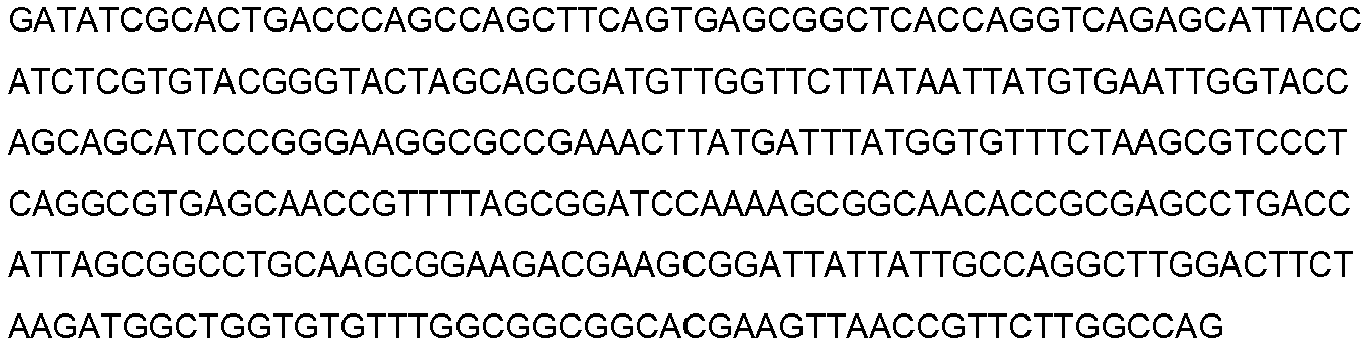
SEQ ID NO114 DNA VL 
SEQ ID NO115 DNA VL 
SEQ ID NO116 DNA VL 
SEQ ID NO117 DNA VL 
SEQ ID NO118 DNA VL 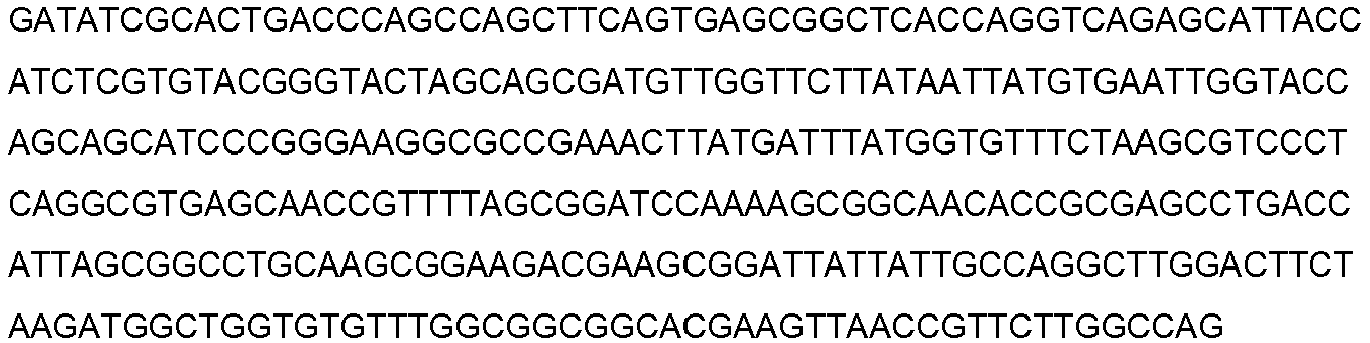
SEQ ID NO119 DNA VL 
SEQ ID NO120 DNA VL 

SEQ ID NO121 DNA VL 
SEQ ID NO122 DNA VL 
SEQ ID NO123 DNA VL 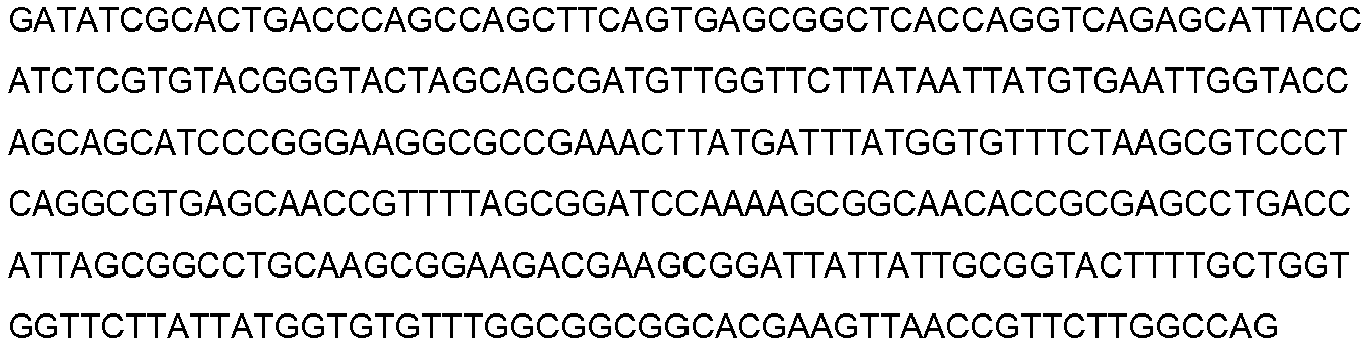
SEQ ID NO124 DNA VL 
SEQ ID NO125 DNA VL 
SEQ ID NO126 DNA VL 
SEQ ID NO127 DNA VH 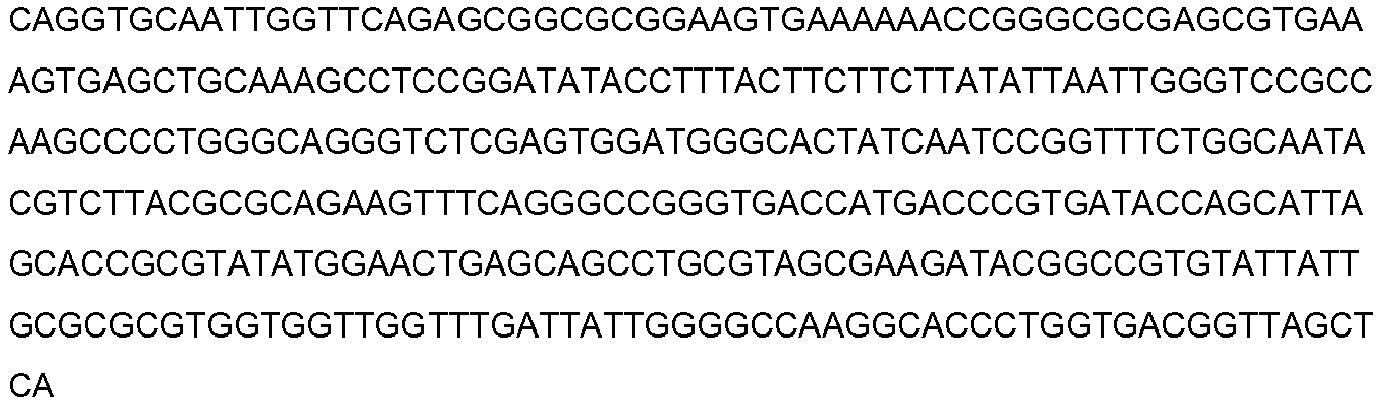
SEQ ID NO128 DNA VH 

SEQ ID NO129 DNA VH 
SEQ ID NO130 DNA VH 
SEQ ID NO131 DNA VH 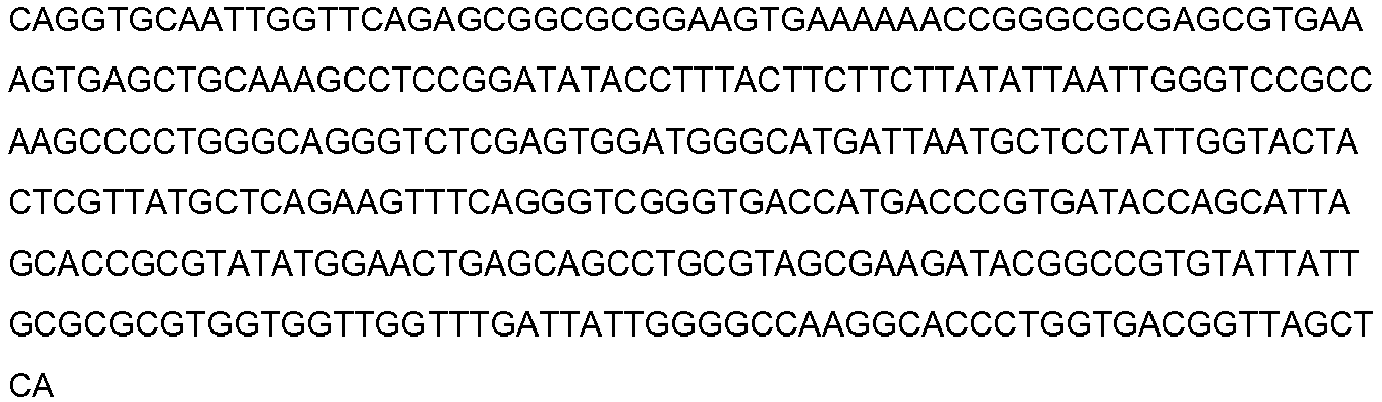
SEQ ID NO132 DNA VH 
SEQ ID NO133 DNA VH 
SEQ ID NO134 DNA VH 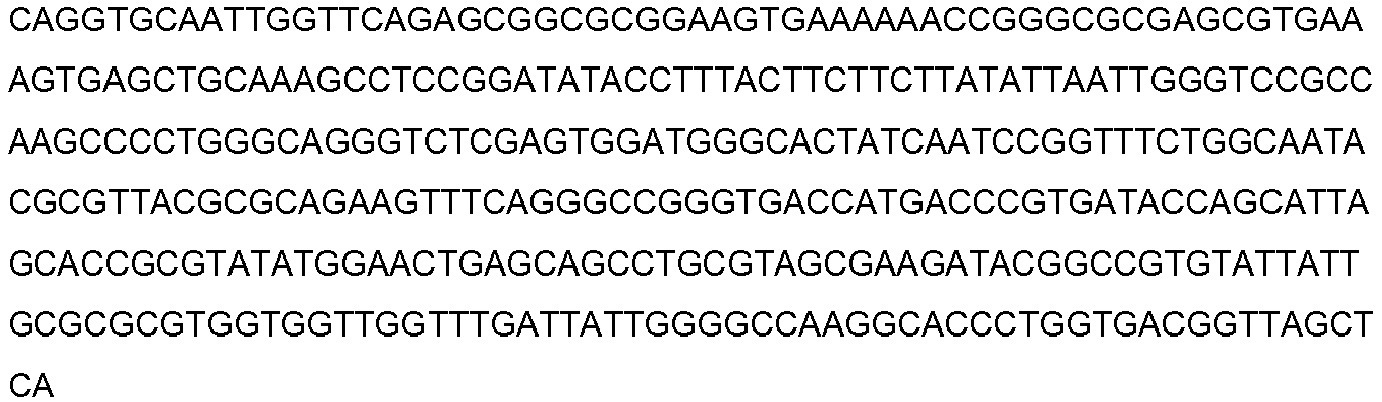
SEQ ID NO135 DNA VH 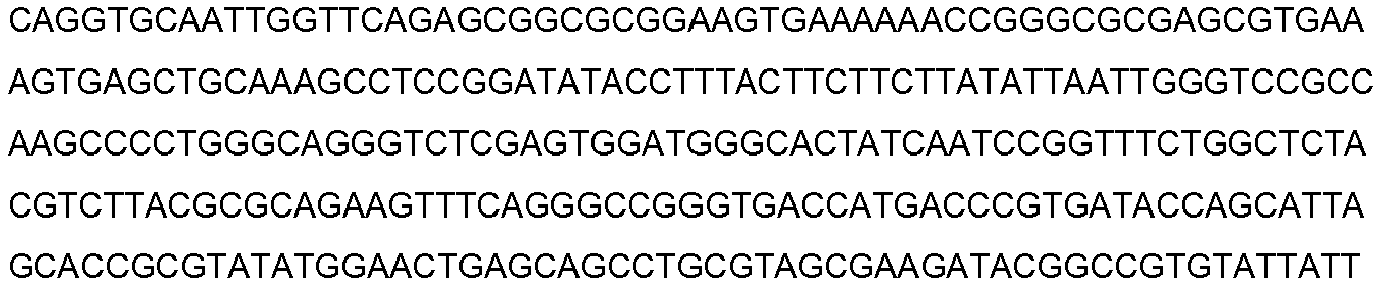

SEQ ID NO136 DNA VH 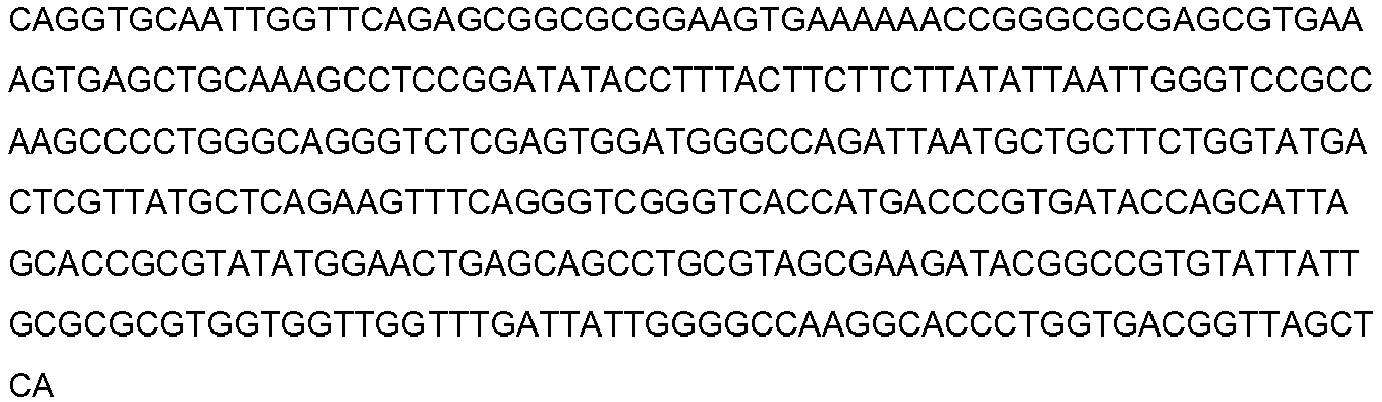
SEQ ID NO137 DNA VH 
SEQ ID NO138 DNA VH 
SEQ ID NO139 DNA VH 
SEQ ID NO140 DNA VH 
SEQ ID NO141 Light Chain 
SEQ ID NO142 Light Chain 
SEQ ID NO143 Light Chain 
SEQ ID NO144 Light Chain 
SEQ ID NO145 Light Chain 
SEQ ID NO146 Heavy Chain 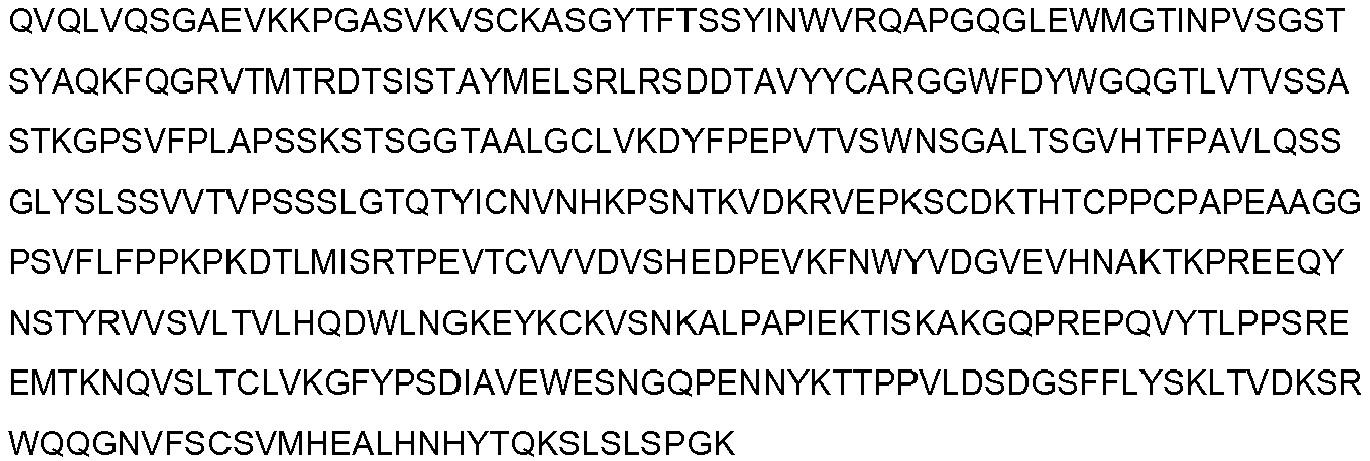
SEQ ID NO147 Heavy Chain 
SEQ ID NO148 Heavy Chain 
SEQ ID NO149 Heavy Chain 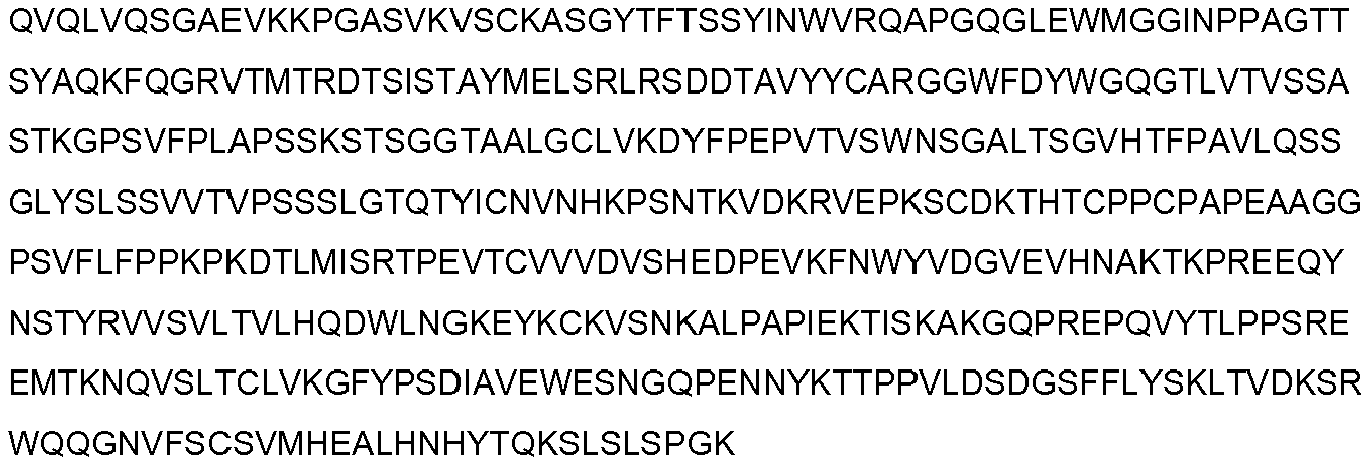
SEQ ID NO150 Heavy Chain 
SEQ ID NO151 Light Chain 

SEQ ID NO152 Light Chain 
SEQ ID NO153 Light Chain 
SEQ ID NO154 Light Chain 
SEQ ID NO155 Light Chain 
SEQ ID NO156 Heavy Chain 
SEQ ID NO157 Heavy Chain 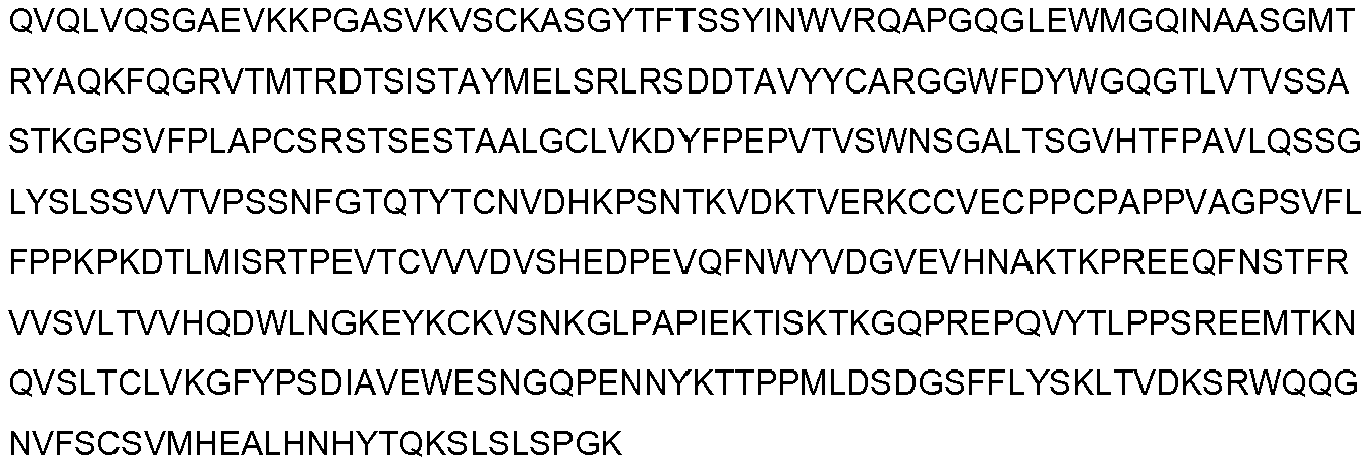
SEQ ID NO158 Heavy Chain 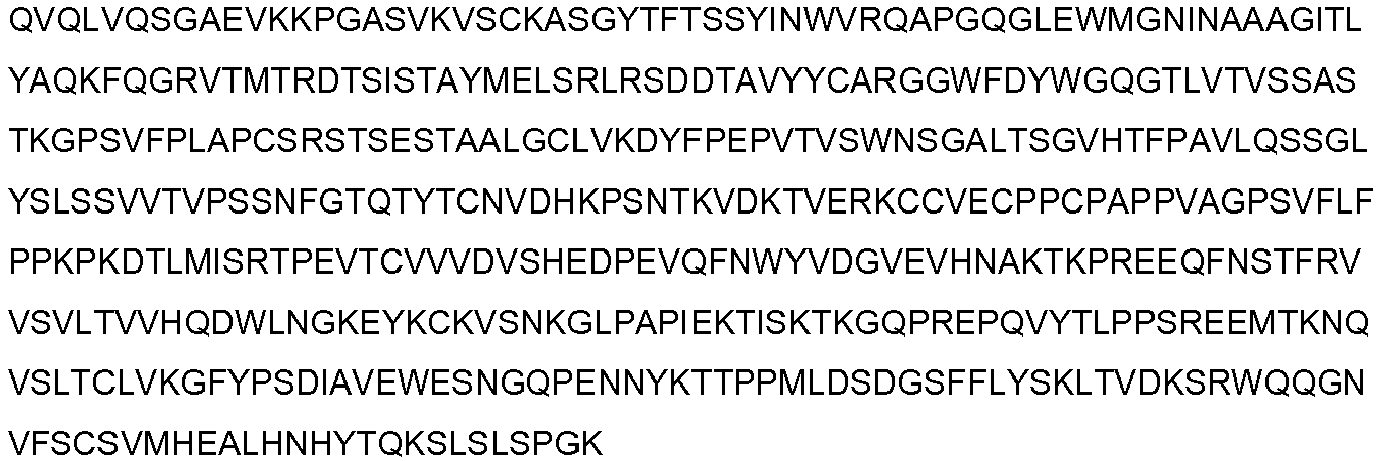
SEQ ID NO159 Heavy Chain 
SEQ ID NO160 Heavy Chain 
SEQ ID NO161 DNA Light Chain 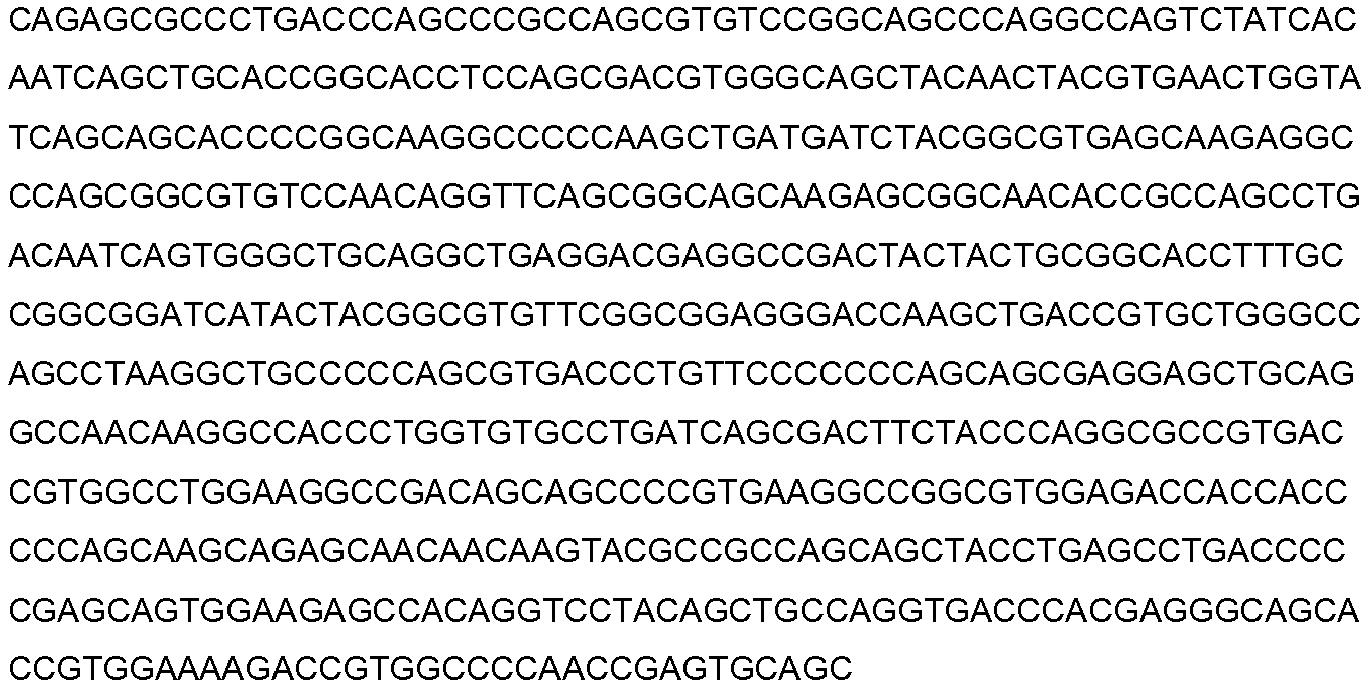
SEQ ID NO162 DNA Light Chain 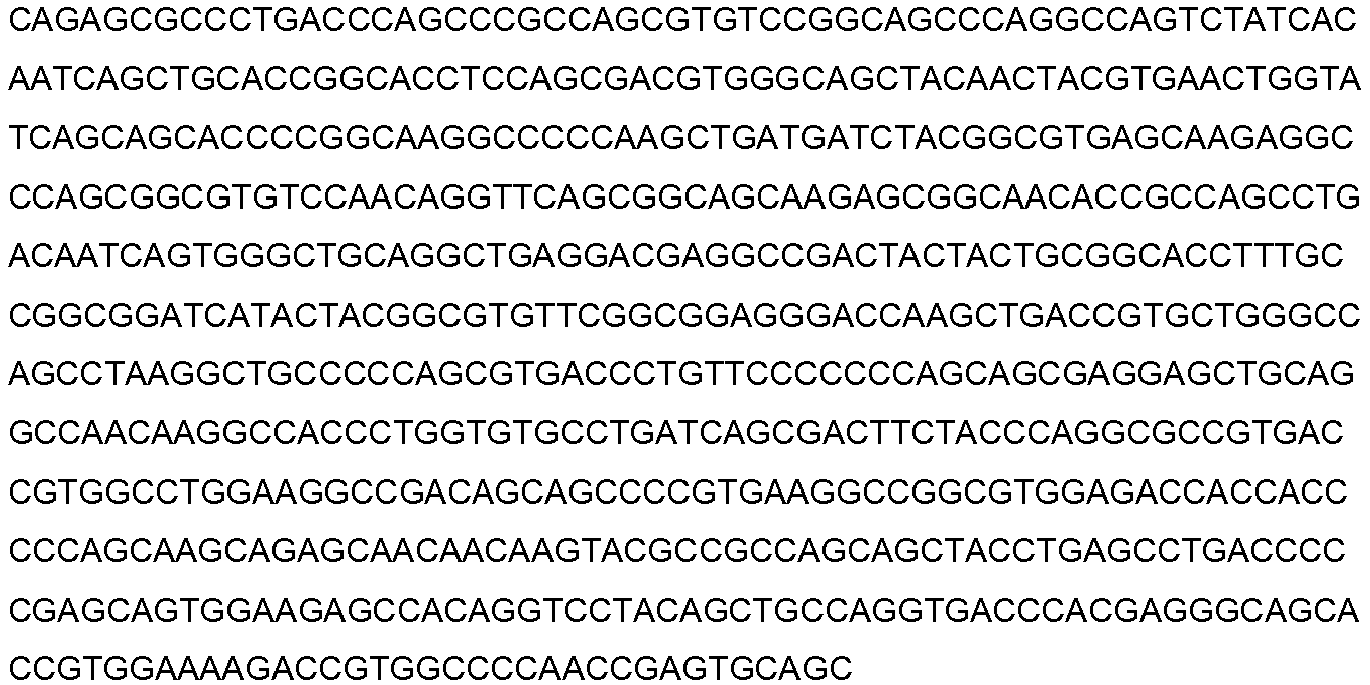
SEQ ID NO163 DNA Light Chain 
SEQ ID NO164 DNA Light Chain 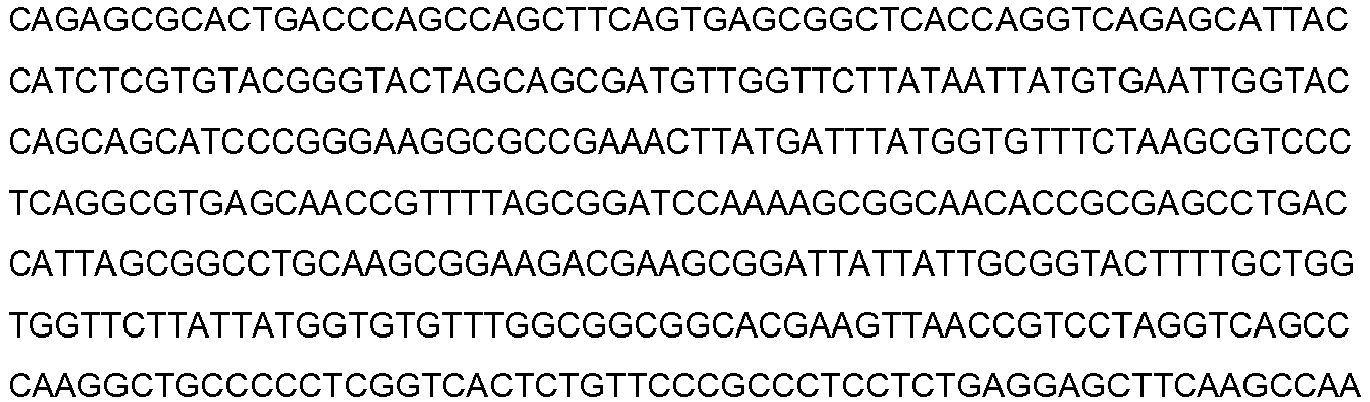
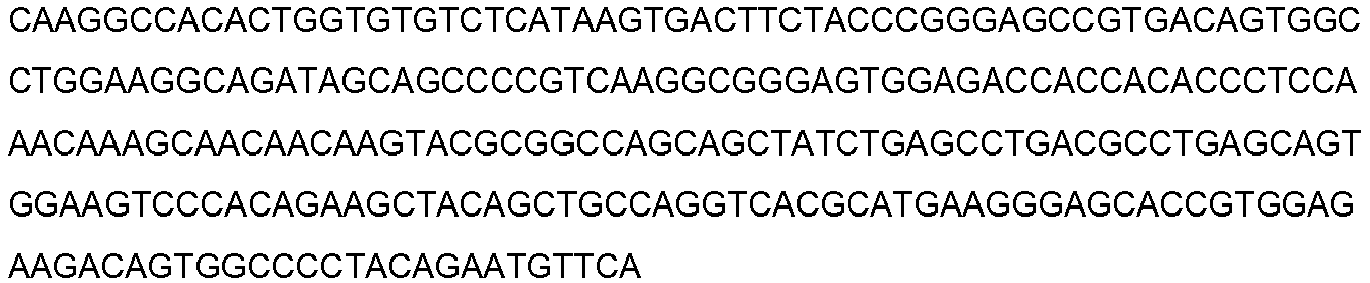
SEQ ID NO165 DNA Light Chain 
SEQ ID NO166 DNA Heavy Chain 
SEQ ID NO167 DNA Heavy Chain 

SEQ ID NO168 DNA Heavy Chain 
SEQ ID NO169 DNA Heavy Chain 

SEQ ID NO170 DNA Heavy Chain 
SEQ ID NO171 DNA Light Chain 
SEQ ID NO172 DNA Light Chain 

SEQ ID NO173 DNA Light Chain 
SEQ ID NO174 DNA Light Chain 
SEQ ID NO175 DNA Light Chain 
SEQ ID NO176 DNA Heavy Chain 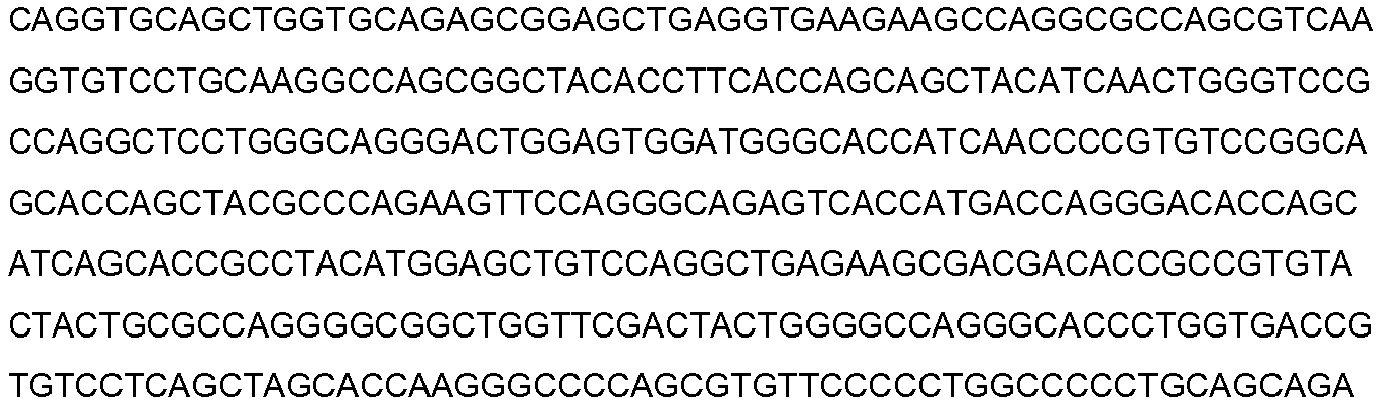
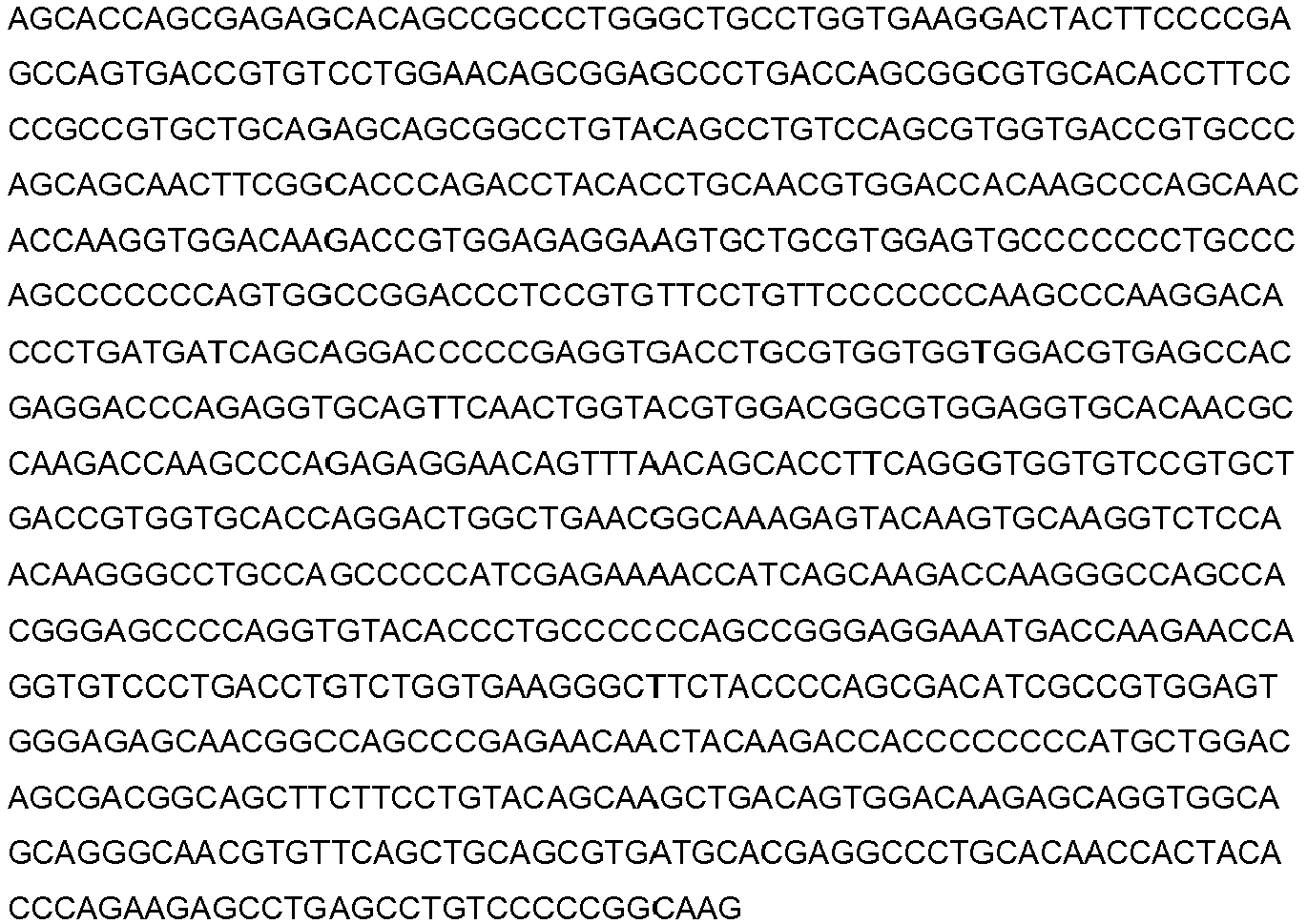
SEQ ID NO177 DNA Heavy Chain 
SEQ ID NO178 DNA Heavy Chain 
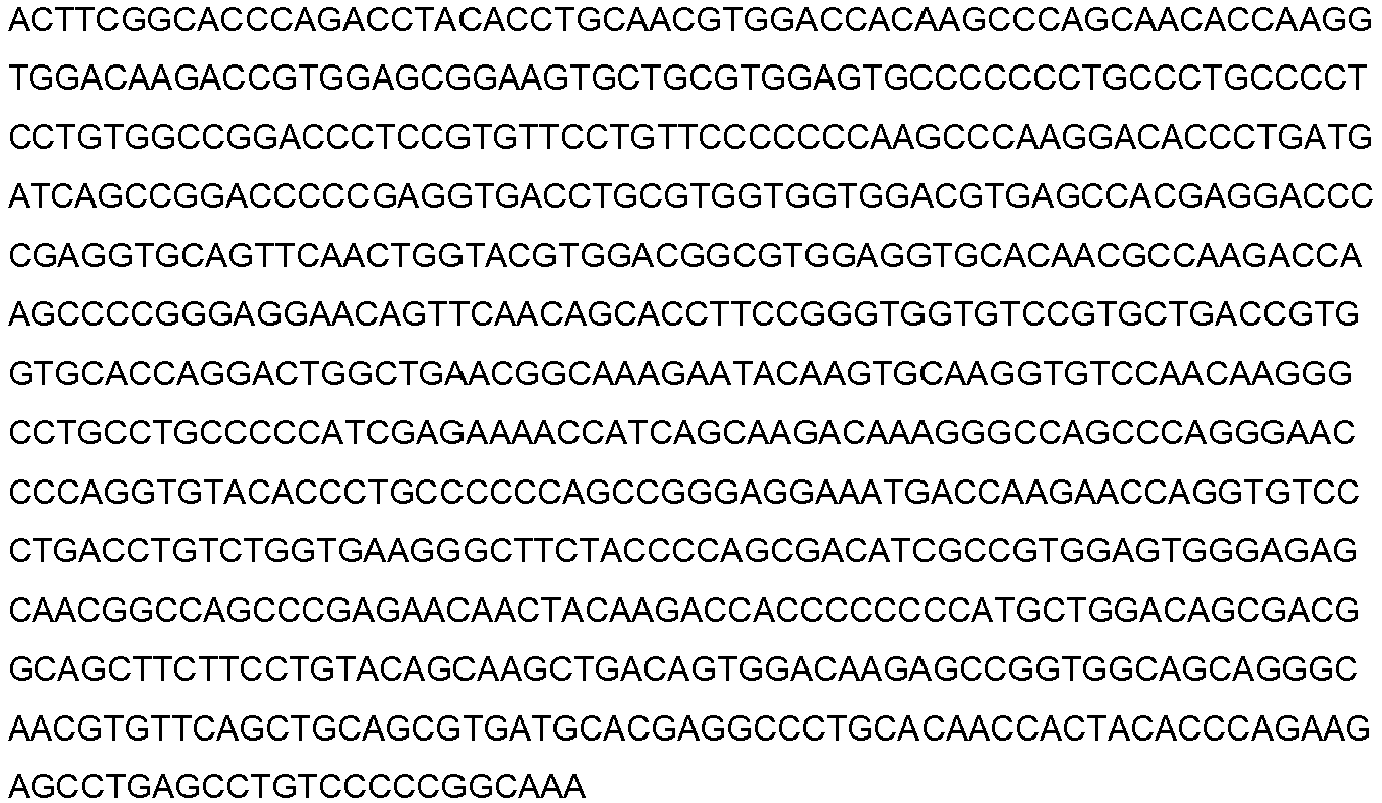
SEQ ID NO179 DNA Heavy Chain 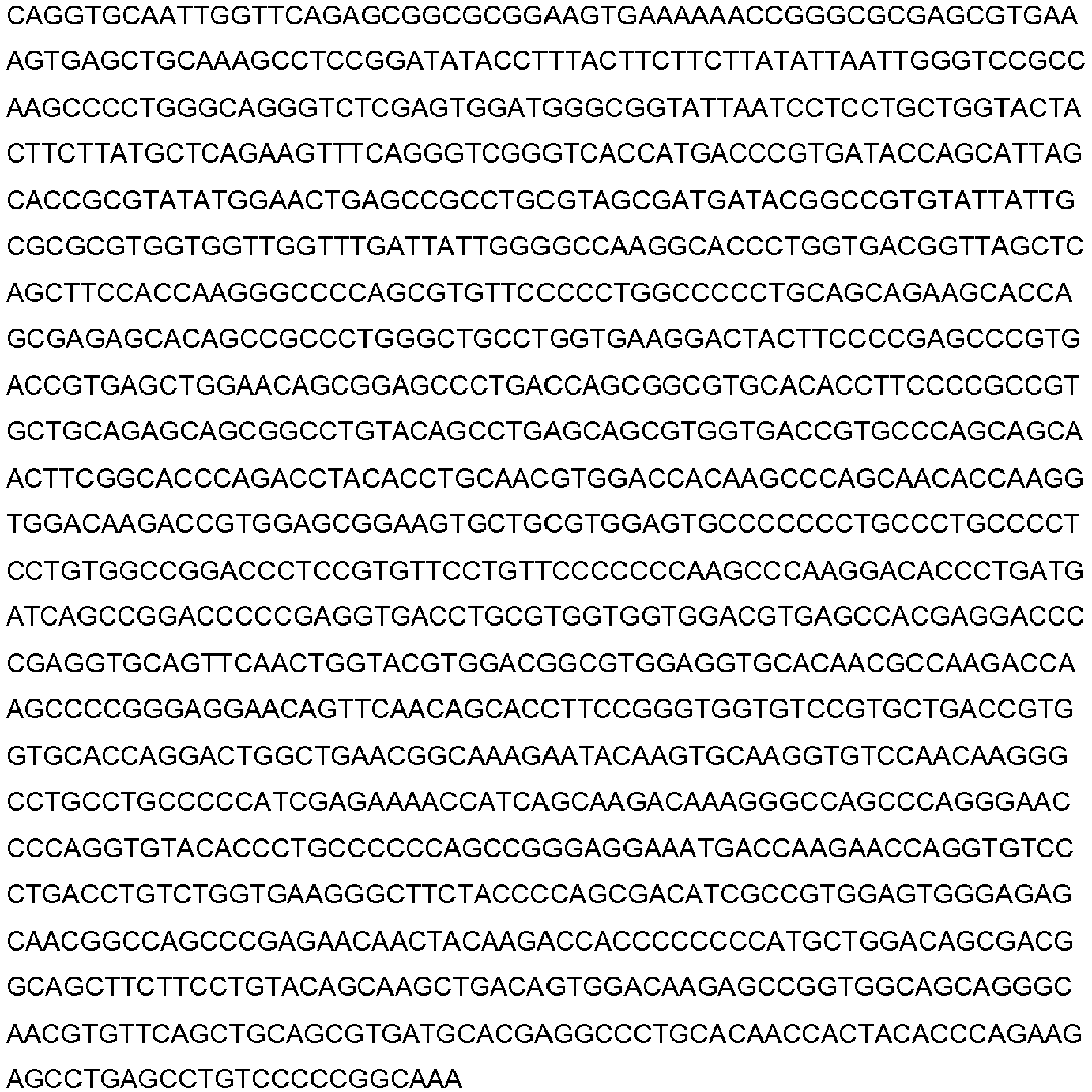
SEQ ID NO180 DNA Heavy Chain 

SEQ ID NO181 ActRIIB 
SEQ ID NO182 ActRIIB ligand binding domain (aa19-134) 
SEQ ID NO183 Antibody binding region IELVKKGSWLDDFNS SEQ ID NO184 Antibody binding region VKKGSWLDDFNSYDR SEQ ID NO185 Antibody binding region GSWLDDFNSYDRQES SEQ ID NO186 Antibody binding region GCWLDDFNC SEQ ID NO187 Antibody binding region CEGEQDKRLHCYASW SEQ ID NO188 Antibody binding region WLDDFN SEQ ID NO189 Antibody binding region EQDKR SEQ ID NO190 Antibody binding region KGCWLDDFNCY SEQ ID NO191 Antibody binding region CIYYNANWELERT SEQ ID NO192 Antibody binding region YFCCCEGNFCN SEQ ID NO193 Light-h/mlgG2 aLALA Chain 
SEQ ID NO194 Heavy-h/mlgG2 aLALA chain 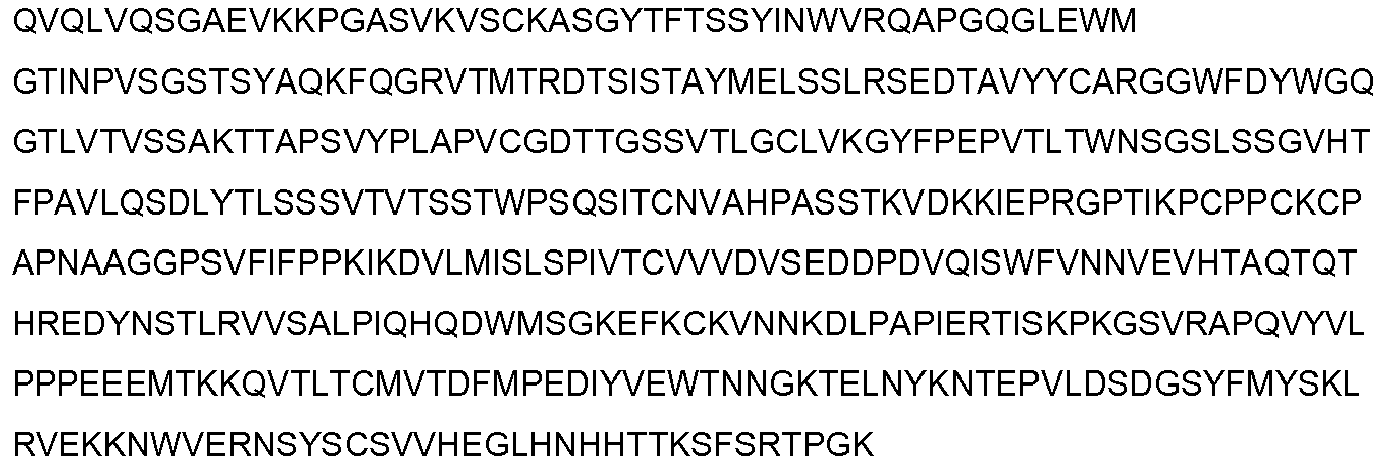
- Some embodiments of the disclosed methods, treatments, regimens, uses and kits employ a myostatin antagonist, e.g., a myostatin binding molecule or an ActRIIB binding molecule. In further embodiments, the ActRIIB binding molecule is an antagonist antibody to ActRIIB.
- In some embodiments of the disclosed methods, treatments, regimens, uses and kits, the anti-ActRIIB antibody is selected from the group consisting of:
- a) an anti-ActRIIB antibody that binds to an epitope of ActRIIB comprising SEQ ID NO: amino acids 78-83 of SEQ ID NO: 181 (WLDDFN - SEQ ID NO:188);
- (b) amino acids 76-84 of SEQ ID NO: 181 (GCWLDDFNC - SEQ ID NO:186);
- (c) amino acids 75-85 of SEQ ID NO: 181 (KGCWLDDFNCY - SEQ ID NO:190);
- (d) amino acids 52-56 of SEQ ID NO: 181 (EQDKR - SEQ ID NO:189);
- (e) amino acids 49-63 of SEQ ID NO: 181 (CEGEQDKRLHCYASW - SEQ ID NO:187);
- (f) amino acids 29-41 of SEQ ID NO: 181 (CIYYNANWELERT- SEQ ID NO:191);
- (g) amino acids 100-110 of SEQ ID NO: 181 (YFCCCEGNFCN - SEQ ID NO:192); or
- (h) amino acids 78-83 of SEQ ID NO: 181 (WLDDFN) and amino acids 52-56 of SEQ ID NO: 181 (EQDKR).
- ;and b) an antagonist antibody to ActRIIB that binds to an epitope of ActRIIB comprising amino acids 78-83 of SEQ ID NO: 181 (WLDDFN - SEQ ID NO:188);
- (b) amino acids 76-84 of SEQ ID NO: 181 (GCWLDDFNC - SEQ ID NO:186);
- (c) amino acids 75-85 of SEQ ID NO: 181 (KGCWLDDFNCY - SEQ ID NO:190);
- (d) amino acids 52-56 of SEQ ID NO: 181 (EQDKR - SEQ ID NO:189);
- (e) amino acids 49-63 of SEQ ID NO: 181 (CEGEQDKRLHCYASW - SEQ ID NO:187);
- (f) amino acids 29-41 of SEQ ID NO: 181 (CIYYNANWELERT- SEQ ID NO:191);
- (g) amino acids 100-110 of SEQ ID NO: 181 (YFCCCEGNFCN - SEQ ID NO:192); or
- (h) amino acids 78-83 of SEQ ID NO: 181 (WLDDFN) and amino acids 52-56 of SEQ ID NO: 181 (EQDKR), wherein the antibody has a KD of about 2 pM.
- In some embodiments of the disclosed methods, treatments, regimens, uses and kits, the antagonist antibody to ActRIIB is a human antibody.
- In some embodiments of the disclosed methods, treatments, regimens, uses and kits, the antibody is bimagrumab or BYM338.
- The details of one or more embodiments of the disclosure are set forth in the accompanying description above. Although any methods and materials similar or equivalent to those described herein can be used in the practice or testing of the present disclosure, the preferred methods and materials are now described. Other features, objects, and advantages of the disclosure will be apparent from the description and from the claims. In the specification and the appended claims, the singular forms include plural referents unless the context clearly dictates otherwise. Unless defined otherwise, all technical and scientific terms used herein have the same meaning as commonly understood by one of ordinary skill in the art to which this disclosure belongs. All patents and publications cited in this specification are incorporated by reference. The following Examples are presented in order to more fully illustrate the preferred embodiments of the disclosure. These examples should in no way be construed as limiting the scope of the disclosed patient matter, as defined by the appended claims.
- ActRIIB antibodies, their characterization and methods related thereto like (i) Functional Assays, (ii) REPORTER GENE ASSAYs (RGA), (iii) Cultivation of HEK293T/17 Cell Lines, (iv) Myostatin-Induced Luciferase Reporter Gene Assays,(v) SPECIFICITY ELISAs, (vi) ActRIIB/Fc-Myostatin Binding Interaction ELISA, (vii) FACS titration on hActRIIB- and hActRIIA-Expressing Cells, (viii) Binding to primary human skeletal muscle cells, (ix) affinity Determination of Selected Anti-Human ActRIIB Fabs Using Surface Plasmon Resonance (Biacore), (x) CK ASSAY, (xi) Animal Models, (xii) TREATMENT PROTOCOLS, (xiii) Statistical Analysis, (xiiii) Pannings, (xv)antibody identification and characterization, (xvi) Optimization of antibodies derived from first affinity maturation, (xvii) IgG2 Conversion of Affinity Matured Fabs (1st Maturation), (xviiii) Second Affinity Maturation, (xx) IgG2 Conversion and Characterization of IgG2 (2nd Maturation), (xxi) Characterization of anti-ActRIIB antibodies in in vivo murine studies, (xxii) Confirmation of affinity by SET, (xxiii) Cross Blocking Studies and (xxiv) Epitope mapping details and technologies have been disclosed in the
WO 2010/125003 . - This is a Phase IIa/IIb, 56-week, 4-treatment arm, parallel-group, randomized, double-blind, placebo-controlled, multi-center clinical study (
Figure 8 ). A screening epoch of up to 5 weeks postoperatively will be used to assess eligibility. At baseline visit, 245 eligible patients will be randomized 2:1:2:2 to either placebo, bimagrumab 70 mg, bimagrumab 210 mg, or bimagrumab 700 mg. Randomized patients will be treated for 12 months and will receive investigational treatment every 4 weeks for a total of 13 doses. When all patients have completed 24 weeks of treatment, an endpoint analysis will be conducted to assess the primary and secondary endpoints together with key safety measures. After completing the treatment epoch, patients will enter a 4-week post-treatment follow up. The end of study visit (EOS) will be 8 weeks after receiving the last dose of investigational treatment. - Screening epoch: Informed consent will be obtained prior to implementing any study specific procedures. The screening epoch will start immediately once the patient starts to walk (defined as the subject completing a 4 meter gait speed test) and is able to enter a rehabilitation program, which depending on the individual patient's functional recovery is expected to start approximately 7 days after surgery. The screening epoch may last for a maximum of 4 weeks thereafter (up to 35 days postoperatively); however, it should be completed as soon as possible to ensure that patients enter the trial at the beginning of their functional recovery.
- Successful surgical intervention for fracture repair, evaluated by the investigator as 1) surgical fixation or arthroplasty according to manufacturer's instruction as confirmed by X-ray AND 2) completed surgical wound healing, must be confirmed prior to patient randomization.
- After confirming that all inclusion criteria and none of the exclusion criteria have been met, the patient will be randomized.
- Randomization must occur as soon as possible after the initiation of the screening so that treatment with study medication can start shortly after the patient's individual "functional baseline".
- The randomization date will be the 'Day 1' study visit (baseline/randomization) and used as reference for visit scheduling throughout the study period.
- First dose of investigational treatment will be administered on the day of randomization (Day 1). At every visit, all evaluations will be performed prior to the administration of investigational treatment except for post-dose PK sampling. Patients will receive 13 doses, one every 4 weeks. Final dose will be administered at the Week 48 visit and the treatment epoch will end 4 weeks later at Week 52 visit (End of Treatment).
- Investigational treatment will be administered in addition to the local standard of care for hip fracture and combined with the local rehabilitation program (including resistance training) that needs to comply with the protocol-mandated minimum requirements.
- Post treatment Follow-up epoch: After completing the End of Treatment visit, patients will enter a post-treatment follow-up epoch and complete the
study 4 weeks later at week 56 (or 8 weeks after receiving last dose of investigational treatment). - There is no published Health Authority guidance to provide considerations for this study population or for the treatment of postsurgical disuse atrophy. The working hypothesis is that drug-induced increases in muscle mass combined with standard rehabilitation will lead to enhanced recovery of muscle strength and endurance with subsequent improvements of functional performance compared with patients receiving standard of care only. As a result of improved physical performance, a decrease in the incidence of falls and related injuries/fractures can be expected.
- The choice of doses, frequency, route of administration, and duration of treatment is based on results of three Phase I studies: the First in Human (FIH) study (CBYM338X2101 Part A), casting study in healthy male volunteers (CBYM338X2101 Part B) and the multi-dose study (CBYM338X2102) in healthy volunteers.
- In the Phase I trials, 3 mg/kg and 10 mg/kg doses were effective in increasing the TMV in healthy volunteers thus they are expected to be effective in patients after hip fracture. Results in healthy volunteers (CBYM338X2101 and CBYM338X2102) indicated that thigh muscle volume, as assessed by MRI, increased comparably for single doses of 10 mg/kg and 30 mg/kg, but the effect of 30 mg/kg lasted longer. With 3 repeated monthly doses of bimagrumab, there was a comparable increase in TMV in healthy adults at 3 mg/kg and 10 mg/kg, even though it is thought that 3 mg/kg causes complete receptor occupancy for approximately half the duration of 10 mg/kg over a dosing interval. In healthy volunteers (CBYM338X2101), a limited and transient effect on the TMV was observed after infusion of a single dose of 1 mg/kg bimagrumab. The 1 mg/kg dose is therefore expected to be a non-effective or a minimally effective dose in this study.
- This study will evaluate fixed i.v. doses of
bimagrumab - Weight-based dosing was initially chosen to ensure consistent exposure across all patient's body weight in the respective treatment arms. Nonetheless, with either fixed- or weight-based dosing, it is not expected that randomized patients will be exposed to bimagrumab at Cmax levels exceeding those experienced with the highest tested dose in previous studies, i.e. 30 mg/kg.
- Dosing frequency every 4 weeks is based on observations from PK/PD studies where the efficacy reached the same plateau with both the 10 mg/kg every 4 weeks dosing and the 30 mg every 8 weeks i.v. dosing.
- Study medication will be administered via intravenous infusion over 30 minutes, which was tested in study BYM338X2107 and documented to be well tolerated.
- A recent study in hip fracture patients treated with an anabolic agent (ibutamoren mesylate) showed that a 6-month (but not a 3-month) treatment was effective in improving physical function as measured by the Short Physical Performance Battery and its component gait speed score (Adunsky et al 2011). Since increases in LBM are expected to reach their maximum after 2-3 months of the treatment and functional benefits are expected to be observed with a delay, it seems reasonable to hypothesize that 6 months duration of therapy is sufficient for increasing the functional recovery of hip fracture patients.
- However, since hip fracture recovery takes about 1 year, there could be an added benefit of longer treatment up to 12 months (secondary objective), especially if the number of falls can be reduced over a 12-month period. The primary risk factor for a secondary hip fracture is a fall, and over 90% of all fractures occur after a fall. Using Medicare and Medicaid data from hip fracture patients 65 years of age and older, Bischoff-Ferrari et al (2010) reported that 10.3% suffered a second hip fracture within 3 years - 51% of second hip fractures occurred within 6 months of the first fracture and 75% occurred within a year.
- The efficacy of bimagrumab is expected to be optimal when coupled with physical activity, therefore the timing of the first dose is aligned to be close to the start of physical therapy (i.e., 7 days-4 weeks and up to 6 weeks post-surgery). A number of studies reviewed by Chudyk et al 2009 and English and Paddon-Jones D 2010 indicate that early ambulation following surgical fixation of a hip fracture may improve patient outcomes such as early physical function, rate of discharge to home, complications and hospital readmissions. Recent reviews also argue that early (and preferably more intensive) initiation of physiotherapy is critical for overcoming the early loss of muscle strength after hip fracture surgery (Bandholm and Kehlet 2012), which is an important predictor of the course of recovery.
- The choice of placebo as a control agent is necessary to obtain information concerning the specific versus non-specific effects of the active treatment and provides the best way of evaluating the efficacy and assessing the safety and tolerability of bimagrumab.
- In the absence of any approved pharmacological comparator (i.e., a 'gold standard' or 'standard of care') in disuse atrophy, placebo will be used in addition to vitamin D (minimum 800 IU per day) and physical rehabilitation.
- It is expected that as seen in healthy volunteers and patients with sIBM, the hip fracture patients will have an increase in muscle mass that may translate to better function and faster return to mobility. Over study duration, the number of falls might be reduced leading to a reduction in secondary hip fractures.
-
- 1. Males and post-menopausal females ≥ 65 years at randomization;
- 2. Patient must have had surgical treatment of the hip fracture (medial, lateral and pertrochanteric proximal femoral fracture, AO Classification 31 A-C (AO Foundation 2013);
- 3. Patient must be mentally competent at randomization, to have scored at least ≥ 21 on the Folstein Mini Mental State Examination (MMSE);
- 4. Patient must be able to complete a 4 m gait speed test. Patients who regain mobility /i.e. weight-bearing walking ability) during the first 7 days after surgery are not eligible.
- 5. Patient must be able to understand and follow the requirements and procedures for the study, be committed to participate in rehabilitation training and be willing to participate for approximately 56 weeks;
- 6. Patients must weigh at least 35 kg and must have a body mass index (BMI) within the range of 15 - 35 kg/m2 at screening;
- Patients fulfilling any of the following criteria are not eligible for inclusion in this study. No additional exclusions may be applied by the investigator, in order to ensure that the study population will be representative of all eligible patients:
Orthopedic history, medical conditions associated with muscle loss, medical conditions interfering with physical assessment (SPPB and gait speed), clinically significant cardiovascular co-morbidities, liver related conditions, or other medical conditions posing concerns. - Novartis will supply the following investigational drugs:
- Bimagrumab: BYM338 150 mg/1 ml liquid in vial--colorless glass vials with rubber stopper and aluminum flip-off caps.
- Placebo: BYM338 placebo/1 ml liquid in vial--colorless glass vials with rubber stopper and aluminum flip-off caps.
- Local standard of care therapy to manage patients peri/post operatively (such as for thrombosis prophylaxis, pain management, calcium supplementation, secondary osteoporosis prevention) is acceptable and may be used according to the national or local guidelines.
- This protocol requires adherence to:
- Rehabilitation (minimum requirements are defined below)
- Vitamin D supplementation (minimum 800 international units (IU) daily)
- Rehabilitation after hip fracture is assumed to be a prerequisite to maximize the effect of bimagrumab in this indication. Especially resistance and strength training in the course of rehabilitation may work synergistically with an anabolic compound that induces muscle hypertrophy. Ideally, a standard rehabilitation program would be performed by all patients, to avoid variability in assessing the efficacy of various bimagrumab dose regimens.
- In this study, however, no detailed single rehabilitation protocol will be defined for two reasons:
- The compound should work in different scenarios including different rehabilitation programs and
- Harmonization across multiple sites with different rehabilitation approaches does not seem feasible. There is general agreement in the medical community about the principal phases of rehabilitation including the beneficial impact of a resistance exercise program. This protocol will ensure that each patient enrolled receives the minimum required rehabilitation elements as a basis for the synergistic action of exercise training with bimagrumab (Table 1). Adherence to the program will be monitored by the use of an electronic exercise adherence diary completed by the patient in conjunction with the investigative team.
- Sites must be willing and able to comply with the minimal rehabilitation measures to participate in the study. Patients may perform additional exercise if this is required at a particular site.
- The clinical relevance of monitoring the changes of LBM (Lean Body Mass) lies in the fact that the drug-induced increase in muscle mass is a prerequisite of the subsequent functional improvement. Previous work on testosterone supplements have already highlighted this by documenting that in order to enhance muscle strength and physical function threshold improvements in LBM and appendicular skeletal muscle mass are necessary (Sattler et al 2011). In line with this previous observation, preliminary data on sIBM patients receiving a single dose of bimagrumab (30 mg/kg) showed that drug-induced increases in LBM (plateau at 8-12 weeks) were followed by significant increases in physical performance as quantified by the 6-minute walk distance (6MWD) at Week 24 (
Figure 6-1 ). Moreover, when LBM declined upon drug withdrawal and returned to baseline, the functional benefits also vanished. Thus, increases in LBM are clinically relevant reflections of the expected functional benefits. - Dual-energy X-ray absorptiometry provides a recommended alternative method for estimating skeletal muscle mass with advantages of inexpensiveness, short scan-time, much lower radiation exposure to patients and more widespread availability in clinical and research settings as compared with the gold-standard methods, e.g. computerized tomography (CT) and MRI.
- Studies document that the DXA approach gives mean total body skeletal muscle estimates that agree closely with muscle measured by CT or MRI, although DXA tends to systematically overestimate total body skeletal muscle by about 5% (Wang et al 1996, Chen et al 2007). This is due to the fact that DXA may also take into account organ lean mass of the trunk, the skin, and non-fat components in the adipose tissue when measuring total LBM (Wang et al 1976).
- Focusing lean mass measurement on aLBM (legs plus arms) or leg LBM may only slightly improve the estimation of skeletal muscle mass (Chen et al 2007). However, when used in a monitoring setting, the advantages of eliminating the torso for higher accuracy may be overcome by variations arising from differences between different scans in the use of anatomical landmarks to define the extremities (Covey et al 2010, Wang et al 1996). This latter variation is of particular relevance in the context of
multi-center Phase 2 clinical trials aiming to establish the dose-response relationship between the drug and the induced changes of skeletal muscle mass. - Furthermore, the relative inaccuracy of total LBM to estimate total skeletal muscle mass is of less concern in the monitoring setting, because the drug has no known effect on organ lean mass, skin, or the non-fat components of fat mass. In support, our observations in the BYM338X2102 study indicated a high degree of correlation (r=0.94) between the percent changes of total LBM (DXA) and percent changes of thigh muscle volume (MRI).
- While total LBM is the preferred choice to quantify the primary pharmacodynamics effect of the drug and establish the dose-response relationship, the measurement and monitoring of the changes of aLBM - which will also be the subject of postoperative rehabilitation (physical exercise) - will be of increased interest for the exploration of how drug-induced changes in skeletal muscle mass predict/reflect the anticipated functional benefits of the treatment.
- The Short Physical Performance Battery (SPPB) has been shown to be highly predictive of subsequent disability, hospitalization, institutionalization, and mortality in community-dwelling elders in epidemiological studies and outpatient clinics (Guralnik et al 2000; Studenski at al 2003). The disability remains even after adjustment for level and severity of comorbidity and self-report functional status.
- Recently, it has been demonstrated that the SPPB can be feasibly and safely used to evaluate the functional status of acutely ill geriatric patients admitted to the hospital for serious medical conditions and that the SPPB score can provide important short-term prognostic information (Volpato et al 2008). Patients with a SPPB score below 10 are more likely to present with several other diseases than those patients with a score of 10 or higher. In multiple regression analysis, the authors found that the significant independent predictors of poor lower extremity function were age, diabetes, stroke, and osteoporosis.
- Moreover, sequential assessment of physical performance by SPPB during hospital stay and in the first weeks after discharge can provide additional information on future health risk in older acutely ill patients. Collectively, SPPB might be considered as a nonspecific but highly sensitive indicator of global health status reflecting several underlying physiological impairments.
- Gait speed will be measured as a component of SPPB to assess functional improvement. Usual gait speed represents one of the most suitable physical performance measures to be implemented into the standard clinical evaluation of older persons. Gait speed is associated with physical activity levels, changes in the isometric force of lower extremity muscles, frailty and falls (Newman et al 2005, Chandler et al 1998, Cesari et al 2005).
- Gait speed is not only a well-established measure of physical function but it may also predict future disability in diverse community-dwelling elderly populations and is sensitive to reflect changes in physical status in response to changes in physical activity, including short-term rehabilitation (Barthuly et al 2012). Poor functional performance as measured by slow or declining gait speed is related to risk of disability, hospitalization and mortality (Studenski et al 2011), whereas improvements in gait speed are related to reductions in mortality risk (Hardy et al 2007). For these reasons, gait speed has often been quoted as a global indicator of health in the geriatric population.
- Hip fracture patients experience a substantial reduction of mobility following fracture, with most patients never returning to the pre-fracture level of mobility. Many of these patients also experience mobility-related events in the period post-fracture, notably falls (Bischoff-Ferrari et al 2010). In such fragile individuals, falls often cause injuries, including recurrent fractures. Treatment with bimagrumab in the period after fracture is likely to accelerate muscle volume gain, and may improve strength and mobility, which is likely to result in improved physical function and potentially a reduction in mobility-related adverse events.
- Safety assessments in this study will include:
- Evaluation of all AEs and SAEs including infusion site and hypersensitivity reactions
- Physical examination
- Vital signs, height and weight
- Laboratory evaluations
- Electrocardiogram (ECG)
- 2D Echocardiographic monitoring of cardiac dimensions, wall thickness and contractility
- X-ray assessment of surgical complications (if applicable) and hip fracture healing
- Immunogenicity
- Nutritional status
- DEXA for monitoring BMD of the contralateral (non-affected) hip
- List of references :
- Abrahamsen B, van Staa T, Ariely R, Olson M, Cooper C (2009). Excess mortality following hip fracture: a systematic epidemiological review. Osteoporos Int; 20(10):1633-50.
- Adunsky A, Chandler J, Heyden N, et al (2011) MK-0677 (ibutamoren mesylate) for the treatment of patients recovering from hip fracture: a multicenter, randomized, placebo-controlled phase IIb study. Arch Gerontol Geriatr; 53:183-9.
- Auais MA, Eilayyan O, Mayo NE (2012) Extended exercise rehabilitation after hip fracture improves patients' physical function: a systematic review and meta-analysis. Phys Ther; 92:1437-1451.
- Bandholm T and Kehlet H (2012) Physiotherapy exercise after fast-track total hip and knee arthroplasty: time for reconsideration? Arch Phys Med Rehabil; 93:1292-4.
- Barthuly AM, Bohannon RW, Gorack W (2012) Gait speed is a responsive measure of physical performance for patients undergoing short-term rehabilitation. Gait Posture; 36(1):61-4.
- Bischoff-Ferrari HA, Dawson-Hughes B, Platz A, et al (2010) Effect of high-dosage cholecalciferol and extended physiotherapy on complications after hip fracture: a randomized controlled trial. Arch Intern Med; 170:813-20.
- Beavers KM, Beavers DP, Houston DK, Harris TB, HueTF, KosterA, Newman AB, Simonsick EM, Studenski SA, Nicklas BJ, Kritchevsky SB. Associations between body composition and gait-speed decline: results from the Health, Aging, and Body Composition study. Am J Clin Nutr. 2013;97(3):552-60.
- Brooks SV, FaulknerJA. Skeletal muscle weakness in old age: underlying mechanisms. Med Sci Sports Exerc. 1994; 26(4):432-9.
- Campbell C, Escolar D, Mah J, et al. A .
- Cesari M, Kritchevsky SB, Penninx BW, et al (2005) Prognostic value of usual gait speed in well-functioning older people--results from the Health, Aging and Body Composition Study. J Am Geriatr Soc; 53:1675-80.
- Chandler JM, Duncan PW, Kochersberger G, Studenski S (1998) Is lower extremity strength gain associated with improvement in physical performance and disability in frail, community-dwelling elders? Arch Phys Med Rehabil; 79(1):24-30.
- Chen Z, Wang Z, Lohman T, et al (2007) Dual-energy X-ray absorptiometry is a valid tool for assessing skeletal muscle mass in older women. J Nutr; 137(12):2775-80.
- Chevalier S, Gougeon R, Choong N, Lamarche M, Morais JA. Influence of adiposity in the blunted whole-body protein anabolic response to insulin with aging. J Gerontol A Biol Sci Med Sci 2006;61:156-64.
- Chudyk AM, Jutai JW, Petrella RJ, Speechley M (2009) Systematic review of hip fracture rehabilitation practices in the elderly. Arch Phys Med Rehabil; 90:246-62.
- Covey MK, Berry JK, Hacker ED (2010) Regional body composition: cross-calibration of DXA scanners--QDR4500W and Discovery Wi. Obesity (Silver Spring); 18(3):632-7.
- D'Adamo CR, Hawkes WG, Miller RR, Jones M, Hochberg M, Yu-Yahiro J, Hebel JR, Magaziner J. Short-term changes in body composition after surgical repair of hip fracture. Age Ageing. 2014;43(2):275-80.
- Daguet E1, Jolivet E, Bousson V, Boutron C, Dahmen N, Bergot C, Vicaut E, Laredo JD. Fat content of hip muscles: an anteroposterior gradient. J Bone Joint Surg Am. 2011;93(20):1897-905.
- English KL, Paddon-Jones D (2010) Protecting muscle mass and function in older adults during bed rest. Curr Opin Clin Nutr Metab Care; 13(1): 34-39.
- Frontera WR, Hughes VA, Fielding RA, Fiatarone MA, Evans WJ, Roubenoff R. Aging of skeletal muscle: a 12-yr longitudinal study. J Appl Physiol. 2000; 88(4):1321-6.
- Fox KM1, Magaziner J, Hawkes WG, Yu-Yahiro J, Hebel JR, Zimmerman SI, Holder L, Michael R. Loss of bone density and lean body mass after hip fracture. Osteoporos Int. 2000;11(1):31-5.
- Goodpaster BH, Park SW, Harris TB, et al. The loss of skeletal muscle strength, mass, and quality in older adults: the health, aging and body composition study. J Gerontol A Biol Sci Med Sci. 2006; 61(10):1059-64.
- Goodpaster BH, Carlson CL, Visser M, et al. Attenuation of skeletal muscle and strength in the elderly: The Health ABC Study. J Appl Physiol. 2001; 90(6):2157-65.
- Guralnik JM, Ferrucci L, Pieper CF, et al (2000) Lower extremity function and subsequent disability: consistency across studies, predictive models, and value of gait speed alone compared with the short physical performance battery. J Gerontol A Biol Sci Med Sci; 55(4):M221-31.
- Hardy SE, Perera S, Roumani YF, et al (2007) Improvement in usual gait speed predicts better survival in older adults. J Am Geriatr Soc; 55(11):1727-34.
- Lach-Trifilieff E1, Minetti GC, Sheppard K, Ibebunjo C, Feige JN, Hartmann S, Brachat S, Rivet H, Koelbing C, Morvan F, Hatakeyama S, Glass DJ. An antibody blocking activin type II receptors induces strong skeletal muscle hypertrophy and protects from atrophy. Mol Cell Biol. 2014;34(4):606-18.
- Lang T, Cauley JA, Tylavsky F, Bauer D, Cummings S, Harris TB; Health ABC Study. Computed tomographic measurements of thigh muscle cross-sectional area and attenuation coefficient predict hip fracture: the health, aging, and body composition study. J Bone Miner Res. 2010;25(3):513-9.
- Lee SJ, McPherron AC. Regulation of myostatin activity and muscle growth. Proc Natl Acad Sci USA. 2001 Jul 31; 98(16):9306-11.
- Lee SJ, Reed LA, Davies MV, Girgenrath S, Goad ME, Tomkinson KN, Wright JF, Barker C, Ehrmantraut G, Holmstrom J, Trowell B, Gertz B, Jiang MS, Sebald SM, Matzuk M, Li E, Liang LF, Quattlebaum E, Stotish RL, Wolfman NM. Regulation of muscle growth by multiple ligands signaling through activin type II receptors. Proc Natl Acad Sci USA. 2005 .
- Newman AB, Haggerty CL, Kritchevsky SB, Nevitt MC, Simonsick EM; Health ABC Collaborative Research Group (2003) Walking performance and cardiovascular response: associations with age and morbidity--the Health, Aging and Body Composition Study. J Gerontol A Biol Sci Med Sci; 58(8):715-20.
- Pahor M, Kritchevsky S. Research hypotheses on muscle wasting, aging, loss of function and disability. J Nutr Health Aging 1998;2: 97-100.
- Sattler F, Bhasin S, He J, et al (2011) Testosterone threshold levels and lean tissue mass targets needed to enhance skeletal muscle strength and function: the HORMA trial. J Gerontol A Biol Sci Med Sci; 66:122-9.
- Schaap LA, Pluijm SM, Smit JH, van Schoor NM, Visser M, Gooren LJ, Lips P. The association of sex hormone levels with poor mobility, low muscle strength and incidence of falls among older men and women. Clin Endocrinol (Oxf) 2005;63:152-60.
- Smith RC, Lin BK. Myostatin inhibitors as therapies for muscle wasting associated with cancer and other disorders. Curr Opin Support Palliat Care. 2013; 7(4): 352-360.
- Studenski S, Perera S, Wallace D, et al (2003) Physical performance measures in the clinical setting. J Am Geriatr Soc; 51(3):314-22.
- Studenski S, Perera S, Patel K, et al (2011) Gait speed and survival in older adults. JAMA;305(1):50-8.
- Trendelenburg AU, Meyer A, Rohner D, Boyle J, Hatakeyama S, Glass DJ. Myostatin reduces Akt/TORC1/ p70S6K signaling, inhibiting myoblast differentiation and myotube size. Am. J. Physiol. Cell Physiol. 2009;296:C1258-C1270.
- Vandervoort AA. Aging of the human neuromuscular system. Muscle Nerve. 2002; 25(1):17-25.
- Verghese J, Holtzer R, Oh-Park M, Derby CA, Lipton RB, Wang C. Inflammatory markers and gait speed decline in older adults. J Gerontol A Biol Sci Med Sci 2011;66:1083-9. 31.
- Visser M, Kritchevsky SB, Goodpaster BH, et al. Leg muscle mass and composition in relation to lower extremity performance in men and women aged 70 to 79: the health, aging and body composition study. J Am Geriatr Soc. 2002;50(5):897-904.
- Visser M, Goodpaster BH, Kritchevsky SB, et al. Muscle mass, muscle strength, and muscle fat infiltration as predictors of incident mobility limitations in well-functioning older persons. J Gerontol A Biol Sci Med Sci. 2005; 60(3):324-33.
- Visser M, Pahor M, Taaffe DR, Goodpaster BH, Simonsick EM, Newman AB, Nevitt M, Harris TB. Relationship of interleukin-6 and tumor necrosis factor-alpha with muscle mass and muscle strength in elderly men and women: the Health ABC Study. J Gerontol A Biol Sci Med Sci 2002; 57:M326-32.
- Volpato S, Cavalieri M, Guerra G, et al (2008) Performance-based functional assessment in older hospitalized patients: feasibility and clinical correlates. J Gerontol A Biol Sci Med Sci;63(12):1393-8.
- Wang J, Pierson RN Jr (1976) Disparate hydration of adipose and lean tissue require a new model for body water distribution in man. J Nutr; 106:1687-93.
- Wang ZM, Visser M, Ma R, et al (1996) Skeletal muscle mass: evaluation of neutron activation and dual-energy X-ray absorptiometry methods. J Appl Physiol; 80:824-31.
- Waters DL, Qualls CR, Dorin RI, Veldhuis JD, Baumgartner RN. Altered growth hormone, cortisol, and leptin secretion in healthy elderly persons with sarcopenia and mixed body composition phenotypes. J Gerontol A Biol Sci Med Sci 2008;63:536-41.
- Wehren LE1, Hawkes WG, Hebel JR, Orwig DL, Magaziner J. Bone mineral density, soft tissue body composition, strength, and functioning after hip fracture. J Gerontol A Biol Sci Med Sci. 2005;60(1):80-4.
- Whittemore LA, Song K, Li X, Aghajanian J, Davies M, Girgenrath S, Hill JJ, Jalenak M, Kelley P, Knight A, Maylor R, O'Hara D, Pearson A, Quazi A, Ryerson S, Tan XY, Tomkinson KN, Veldman GM, Widom A, Wright JF, Wudyka S, Zhao L, Wolfman NM. Inhibition of myostatin in adult mice increases skeletal muscle mass and strength. Biochem Biophys Res Commun. 2003
-
- 1. A myostatin antagonist for use in accelerating/improving physical recovery in a patient with disuse atrophy triggered by reduced mobility due to a hip fracture and consequent major surgery.
- 2. A myostatin antagonist for use according to embodiment 1, wherein the myostatin antagonist is to be administered after confirmation of successful surgical hip repair and wound healing.
- 3. A myostatin antagonist for use according to
embodiment 1 or 2, wherein the myostatin antagonist is to be administered starting at about 7-42 days or about 1 to 6 weeks after surgery. - 4. A myostatin antagonist for use according to anyone of embodiments 1 to 3, wherein the myostatin antagonist is to be administered in a patient starting when said patient is able to have weight-bearing walk with or without walking aid and initiate physical rehabilitation.
- 5. A myostatin antagonist for use according to anyone of embodiments 1-4, wherein the myostatin antagonist is a myostatin receptor binding molecule.
- 6. A myostatin antagonist for use according to anyone of embodiments 1-5, wherein the myostatin antagonist is an ActRII receptor antagonist.
- 7. A myostatin antagonist for use according to anyone of embodiments 1-6, wherein the myostatin antagonist is an anti-ActRII receptor antibody.
- 8. A myostatin antagonist for use according to anyone of embodiments 1-7, wherein the anti-ActRII receptor antibody is bimagrumab.
- 9. A myostatin antagonist for use according to
embodiment 8, wherein the myostatin antagonist is to be administered to a patient in need thereof at a dose of about 70-700 mg. - 10. A myostatin antagonist for use according to
embodiment 8 or 9, wherein said myostatin antagonist is to be administered at a dose of about 70 mg, or about 210 mg or about 700 mg. - 11. A myostatin antagonist for use according to anyone of embodiments 1-10, wherein said myostatin antagonist is to be administered intravenously.
- 12. A myostatin antagonist for use according to anyone of embodiments 1-11, wherein said myostatin antagonist is to be administered every four weeks.
- 13. A myostatin antagonist for use according to anyone of embodiments 1-12, wherein said myostatin antagonist is to be administered for at least 3 months.
- 14. A myostatin antagonist for use according to anyone of embodiments 1-13, wherein said myostatin antagonist is to be administered for at about 6 months.
- 15. A myostatin antagonist for use according to anyone of embodiments 1-14, wherein said myostatin antagonist is to be administered for up to 12 months.
- 16. A myostatin antagonist for use according to anyone of embodiments 1-15, wherein said myostatin antagonist is to be administered to accelerate/improve physical recovery in a patient with disuse atrophy triggered by reduced mobility due to a hip fracture and consequent major surgery implying enhanced muscle growth, increased muscle strength and physical performance, improved self-perceived mobility, accelerated return to independence, and reduced risk of falls and injurious falls.
- 17. A method of accelerating/improving physical recovery in a patient with disuse atrophy triggered by reduced mobility due to a hip fracture and consequent major surgery for fracture repair comprising administering a myostatin antagonist.
- 18. A method according to embodiment 17, comprising administering a myostatin antagonist after confirmation of successful surgical hip repair and wound healing.
- 19. A method according to embodiment 18, comprising starting administering the myostatin antagonist at about 7-42 days or about 1 to 6 weeks after surgery.
- 20. A method according to anyone of embodiments 18 to 19, comprising starting administering the myostatin antagonist in a patient able to have weight-bearing walk with or without walking aid and initiate physical rehabilitation.
- 21. A method according to anyone of embodiments 17-20, wherein the myostatin antagonist is a myostatin receptor binding molecule.
- 22. A method according to anyone of embodiments 17-21, wherein the myostatin antagonist is an ActRII receptor antagonist.
- 23. A method according to anyone of embodiments 17-22, wherein the myostatin antagonist is an anti-ActRII receptor antibody.
- 24. A method according to anyone of embodiments 17-23, wherein the anti-ActRII receptor antibody is bimagrumab.
- 25. A method according to
embodiment 24, comprising administering the myostatin antagonist to a patient in need thereof at a dose of about 70-700 mg. - 26. A method according to embodiment 25, comprising administering the myostatin antagonist to a patient in need thereof at a dose of about 70 mg or about 210 mg or about 700 mg.
- 27. A method according to anyone of embodiments 21-26, comprising administering the myostatin antagonist intravenously.
- 28. A method according to anyone of embodiments 21-27, comprising administering the myostatin antagonist every four weeks.
- 29. A method according to anyone of embodiments 21-28, comprising administering the myostatin antagonist for at least 3 months.
- 30. A method according to anyone of embodiments 21-29, comprising administering the myostatin antagonist for about 6 months.
- 31. A method according to embodiment 21-30, comprising administering the myostatin antagonist for up to 12 months.
- 32. A method according to anyone of embodiments 21-31, wherein accelerating/improving physical recovery in a patient with disuse atrophy triggered by reduced mobility due to a hip fracture and consequent major surgery implies enhanced muscle growth, increased muscle strength and physical performance, improved self-perceived mobility, accelerated return to independence, and reduced risk of falls and injurious falls.
- 33. Bimagrumab for use in accelerating/improving physical recovery in a patient with disuse atrophy triggered by reduced mobility due to a hip fracture and consequent major surgery, wherein bimagrumab is to be administered intravenously at a dose of about 70-700 mg every four weeks.
- 34. Bimagrumab for use in accelerating/improving physical recovery in a patient with disuse atrophy triggered by reduced mobility due to a hip fracture and consequent major surgery, wherein bimagrumab is to be administered intravenously at a dose of about 70 mg every four weeks.
- 35. Bimagrumab for use in accelerating/improving physical recovery in a patient with disuse atrophy triggered by reduced mobility due to a hip fracture and consequent major surgery, wherein bimagrumab is to be administered intravenously at a dose of about 210 mg every four weeks.
- 36. Bimagrumab for use in accelerating/improving physical recovery in a patient with disuse atrophy triggered by reduced mobility due to a hip fracture and consequent major surgery, wherein bimagrumab is to be administered intravenously at a dose of about 700 mg every four weeks.
- 37. A composition comprising 150 mg/ml of bimagrumab for use in a method of accelerating/improving physical recovery in a patient with disuse atrophy triggered by reduced mobility due to a hip fracture and consequent major surgery.
- 38. A unitary dosage form comprising 150 mg/ml of bimagrumab.
- 39. An infusion bag comprising an appropriate amount of bimagrumab from one or more vial(s) diluted with a solution.
| Phase | Study Week (approx) | Location | Goals | Mandatory elements | Repetition / Sets |
| Mobility/Gait /Activity of Daily Living (ADL) training; Early resistance training | 1 -6 | Inpatient rehab center, or home with outpatient/ home therapy | Safe transfers & ambulation Improve hip range of motion (ROM) | Transfer, Gait/Balance and ADL training; Hip ROM (within constraints of hip precautions) | 8 - 15 repetitions (1 set) of each of the 4 exercises |
| Resistance Exercise Program (e.g., resistance band, free weight, resistance exercise machine, etc) for: | |||||
| 2-3 sets required (1 session) | |||||
| • Hip Flexion | |||||
| • Knee Extension | |||||
| • Hip Extension | |||||
| • Hip Abduction | |||||
| Advanced resistance training | 7-10 | Outpatie nt therapy or home | Return to baseline ambulatio n/ADL function or better. Improve lower extremity strength | Progression of hip group and knee extension resistance exercise program Continue gait/balance training | 8-15 repetitions (1 set) of resistance exercises; progressive intensity |
| 2-3 sets required (1 session) |

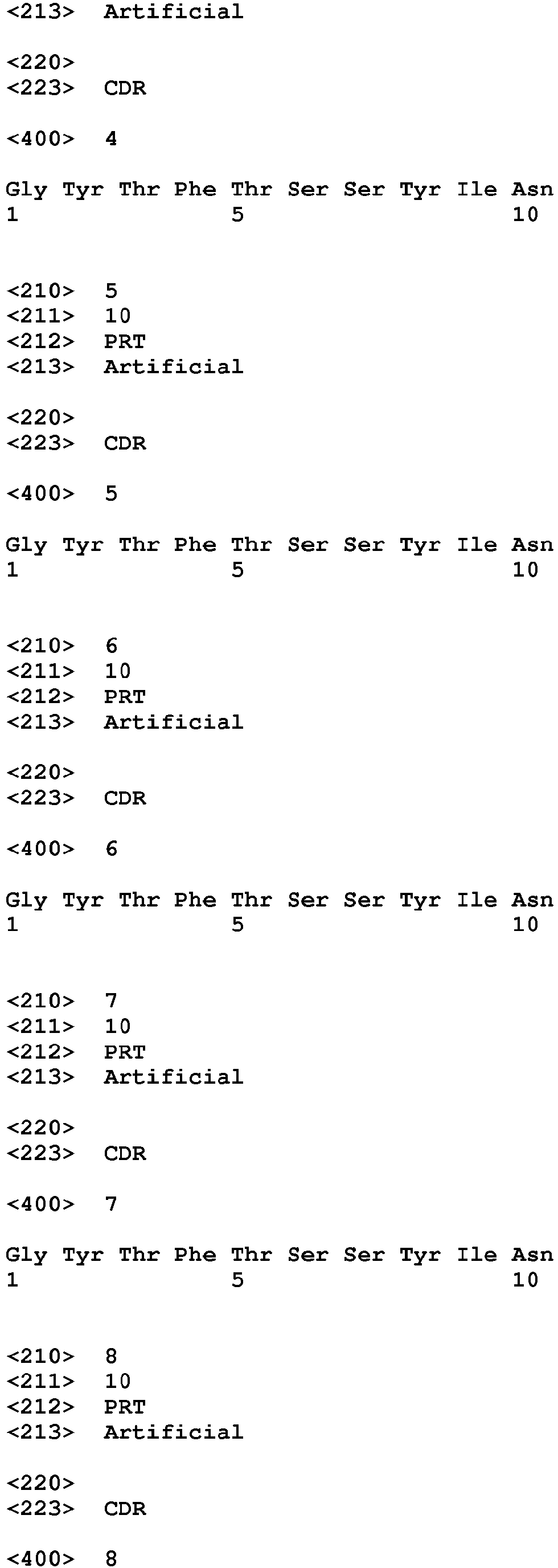
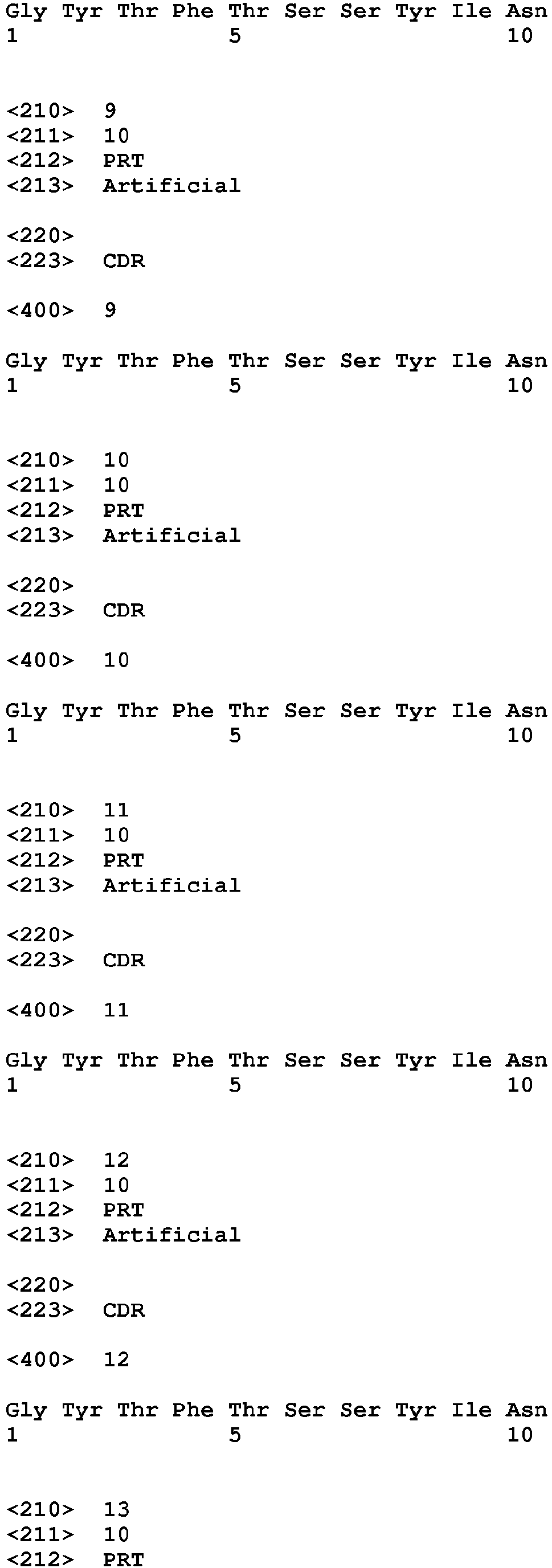


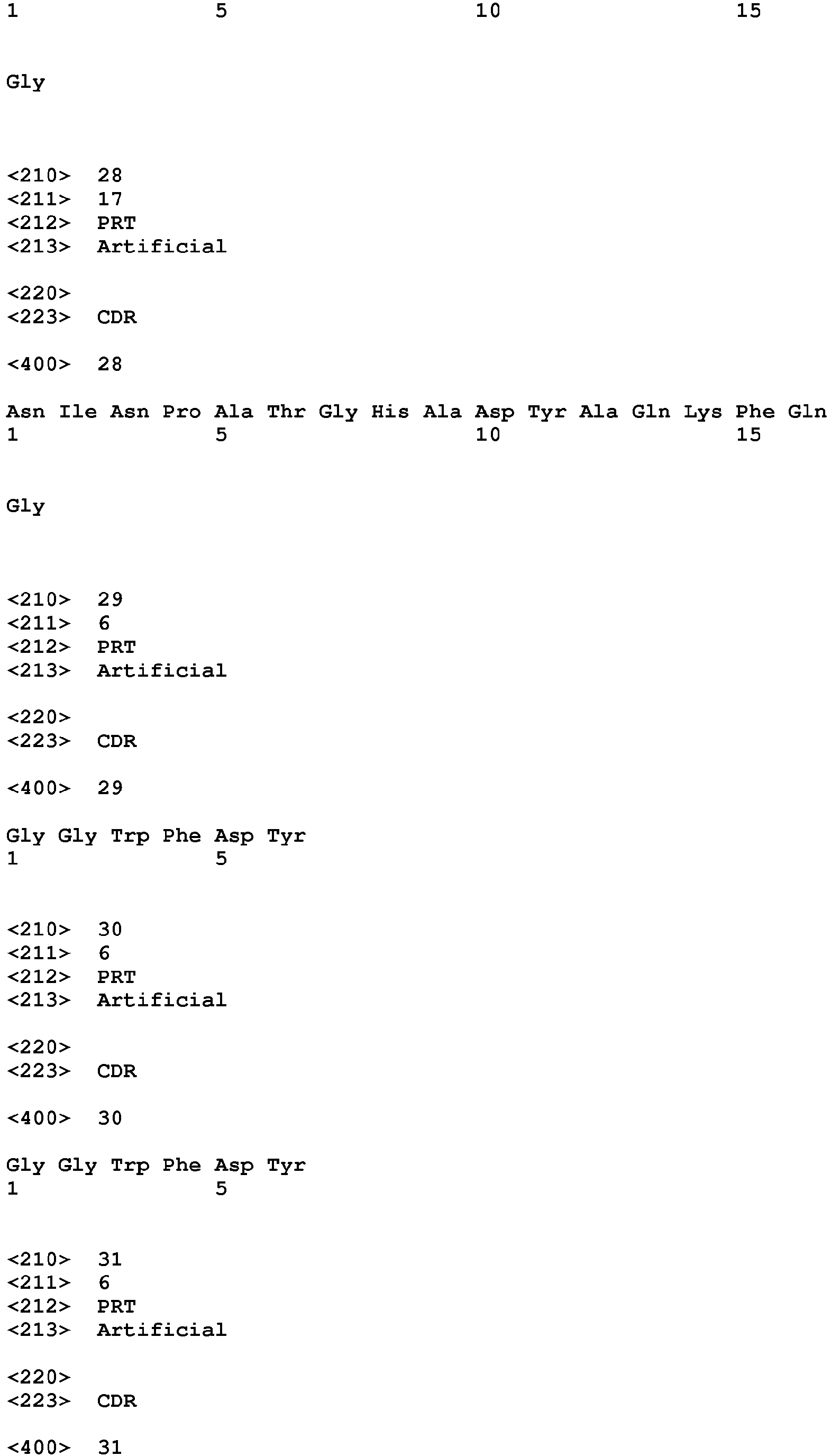
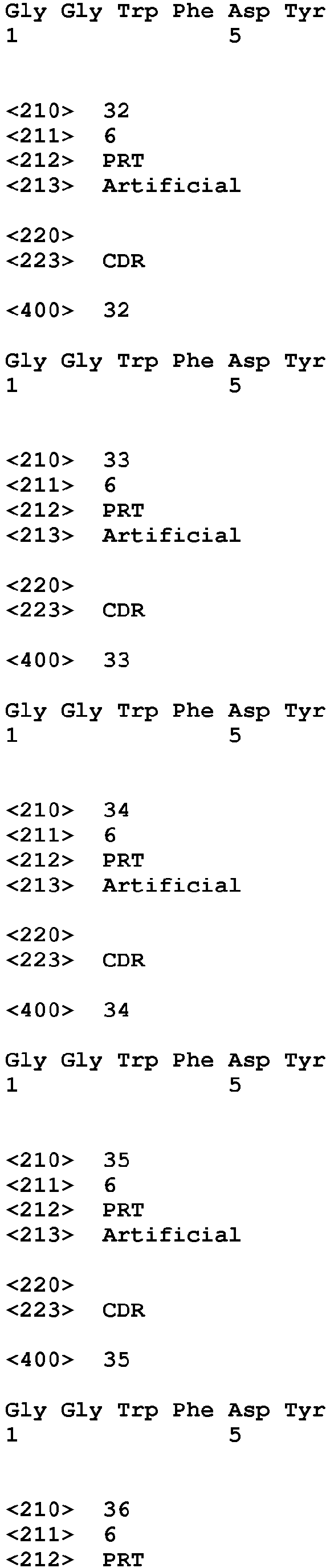


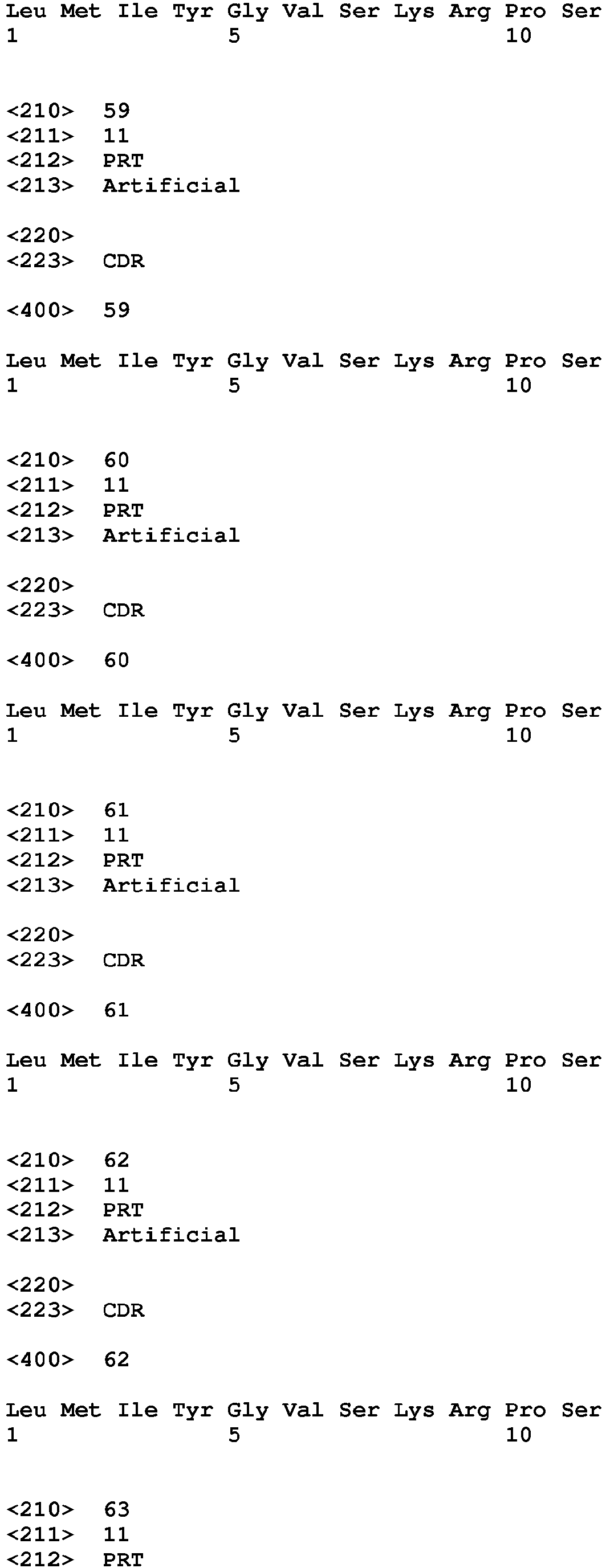
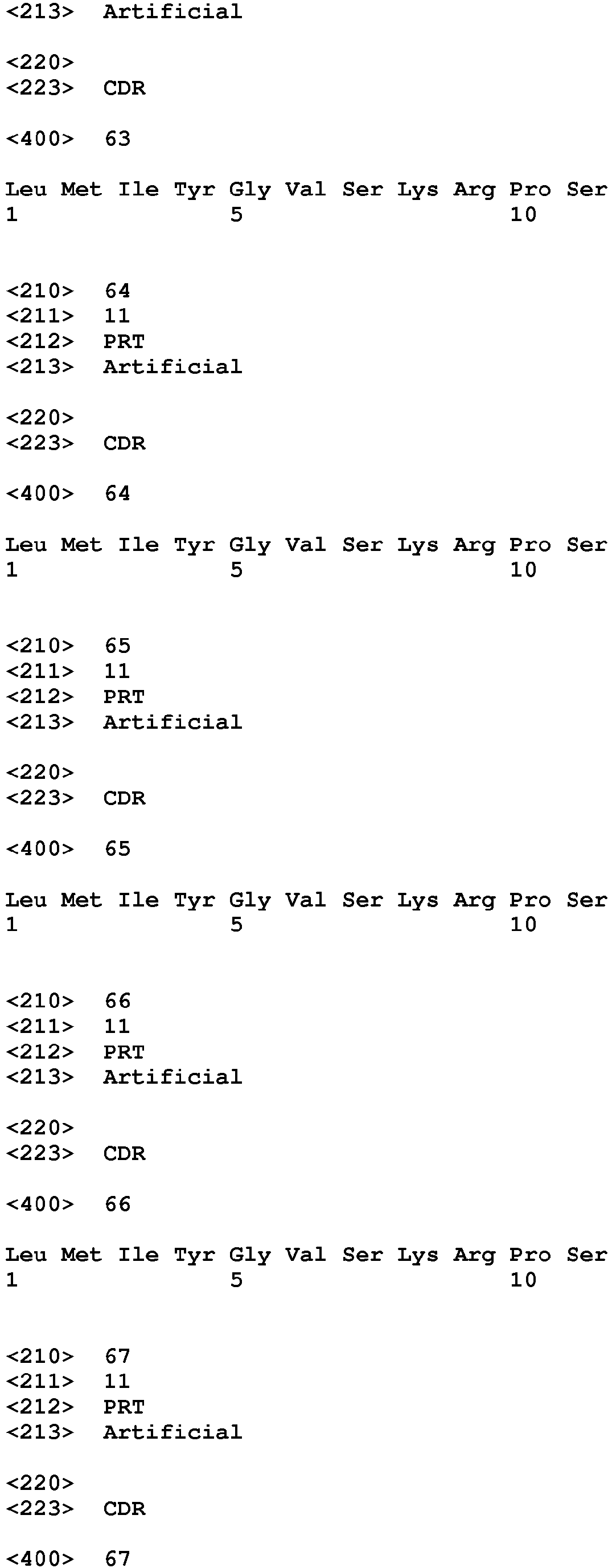

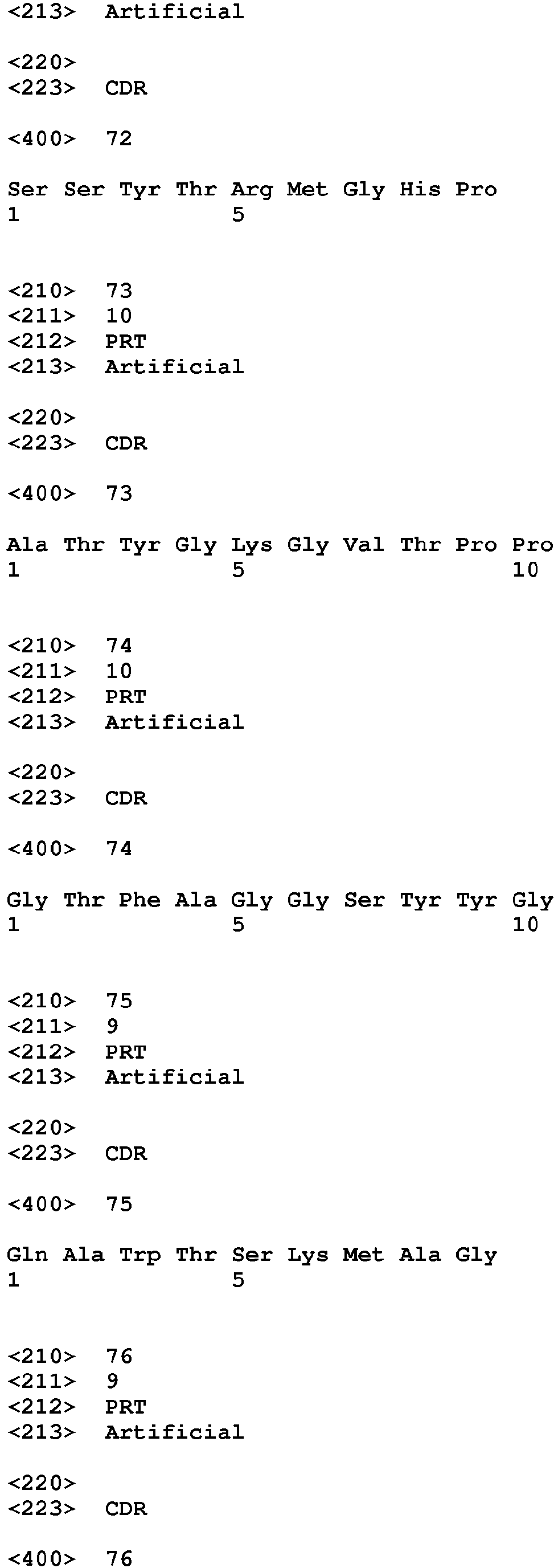


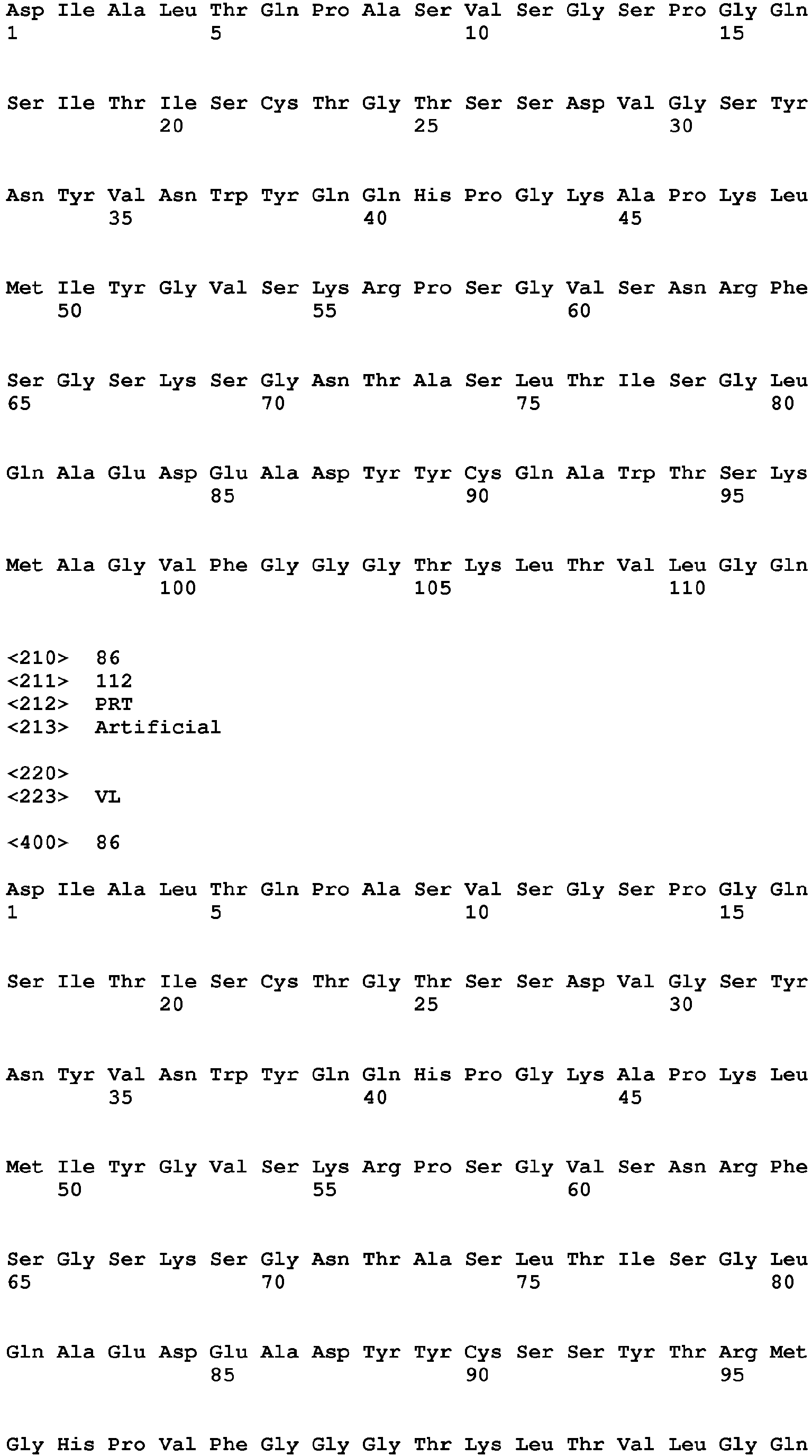


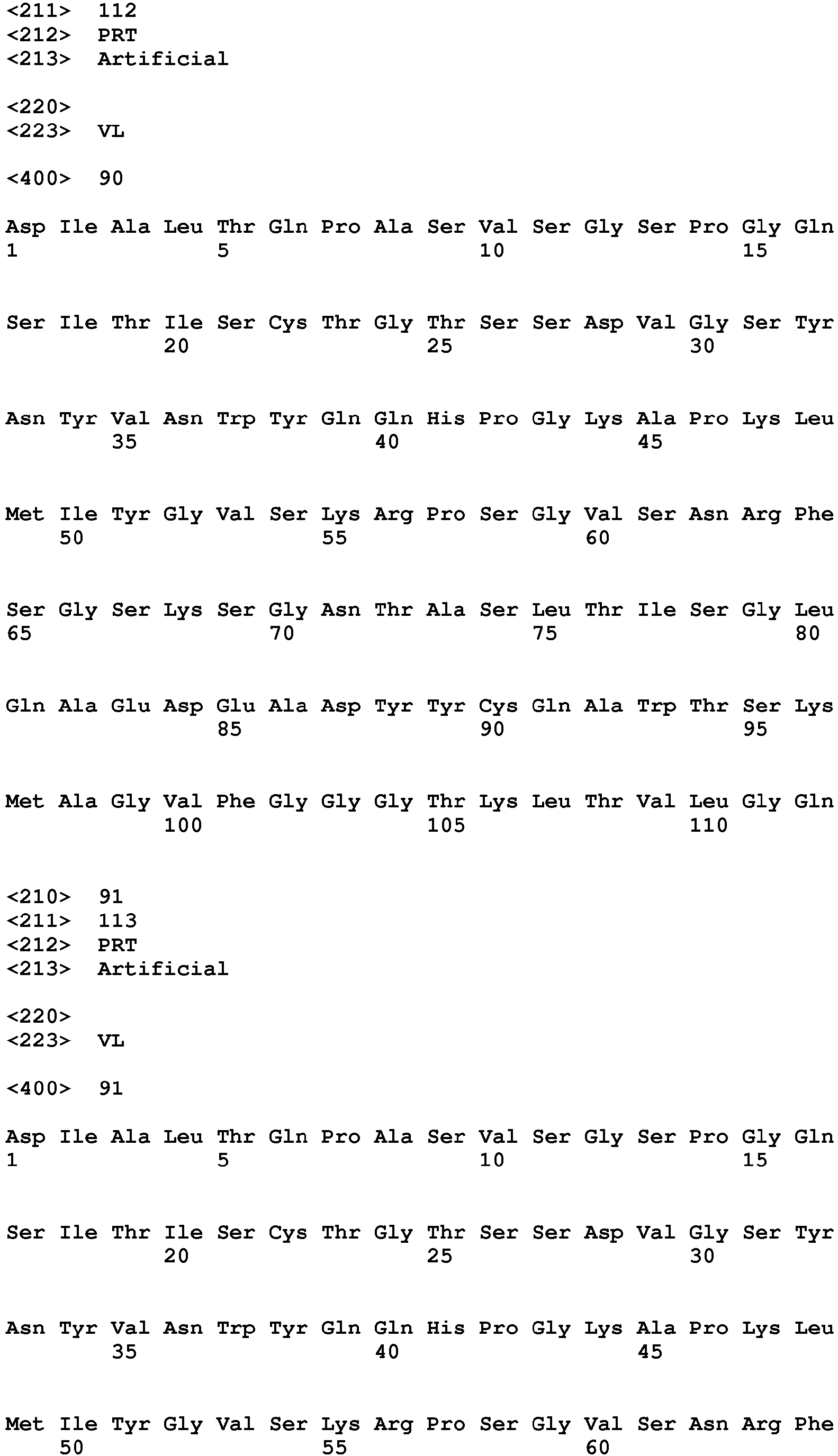


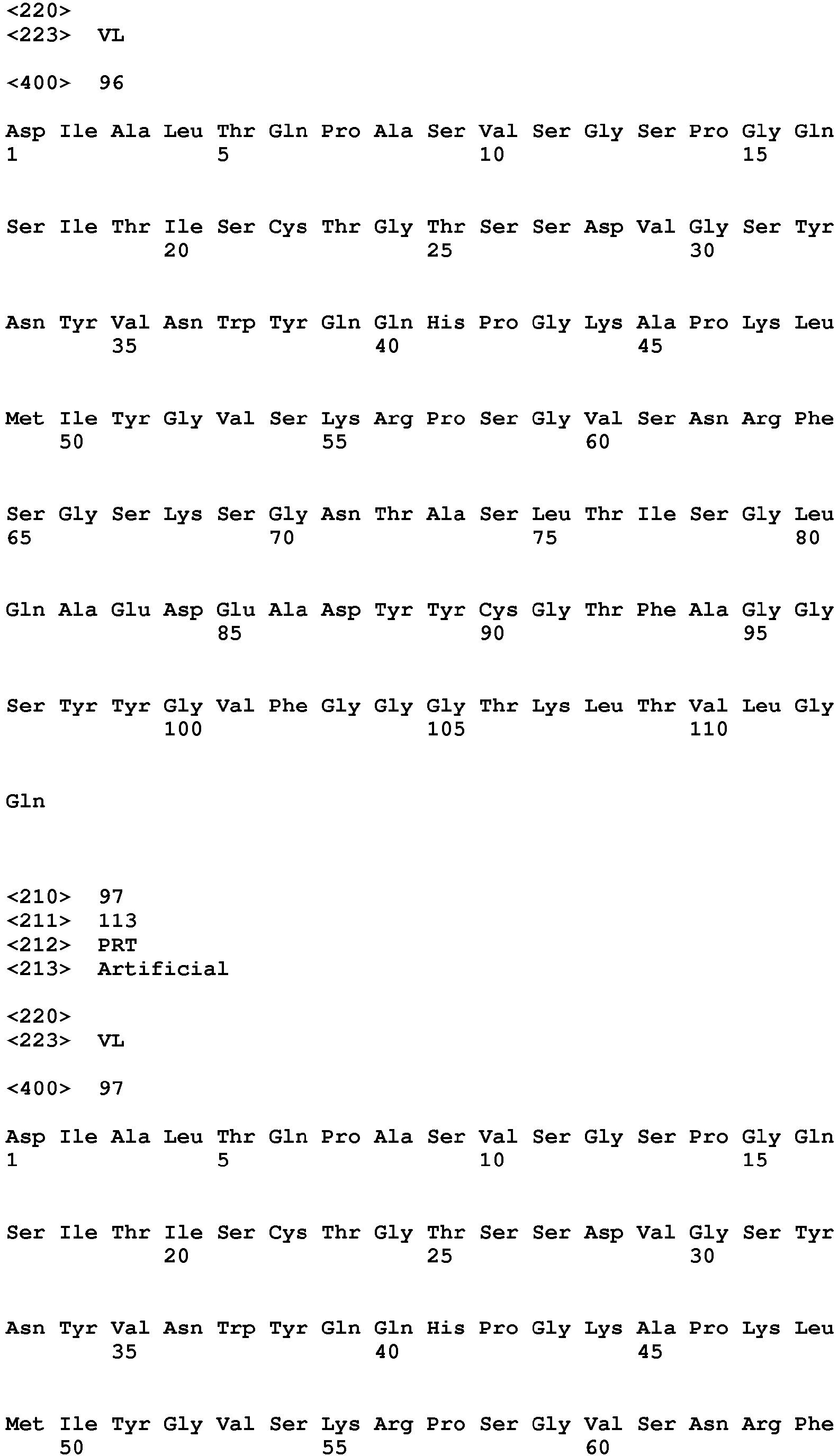


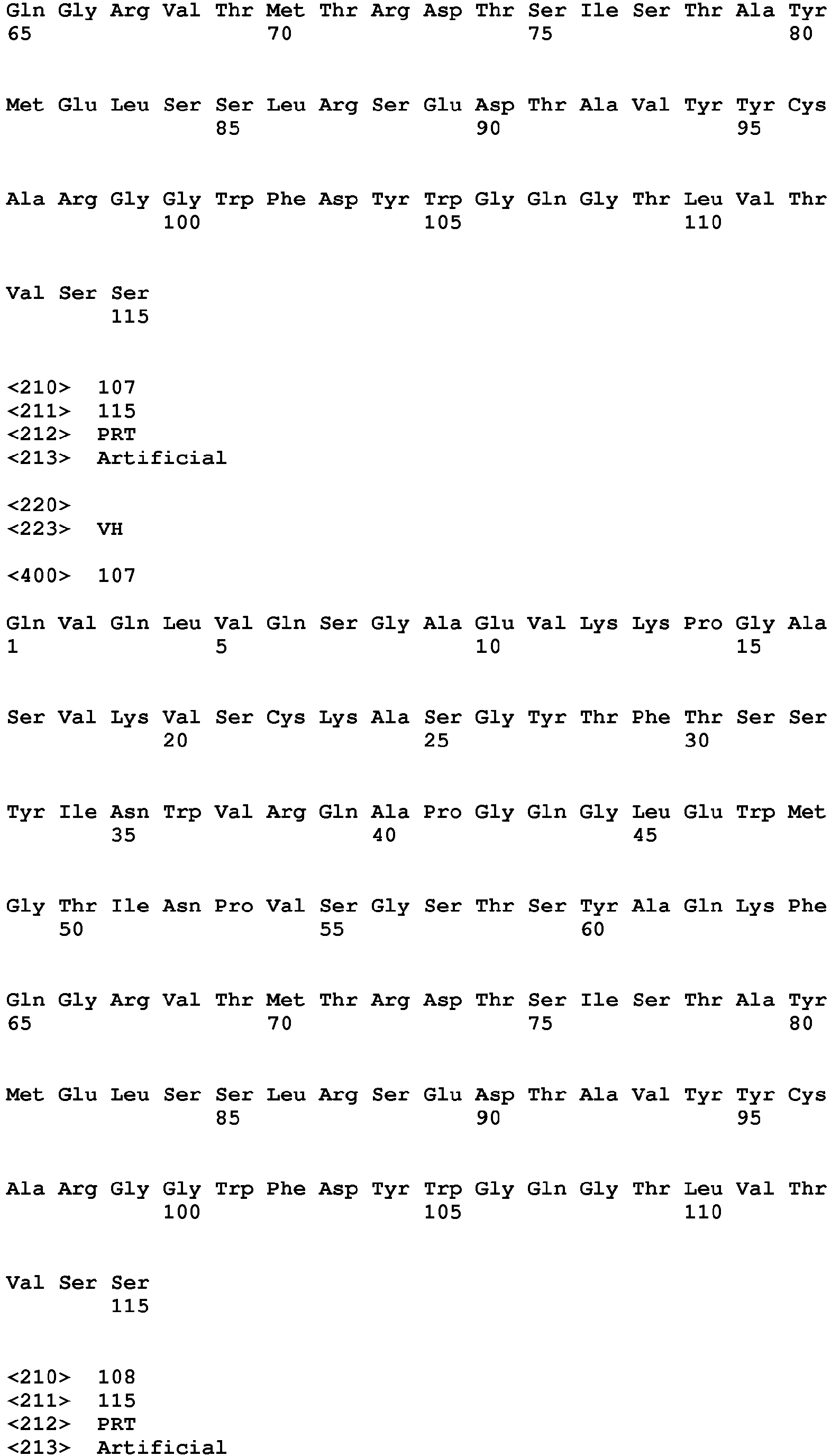




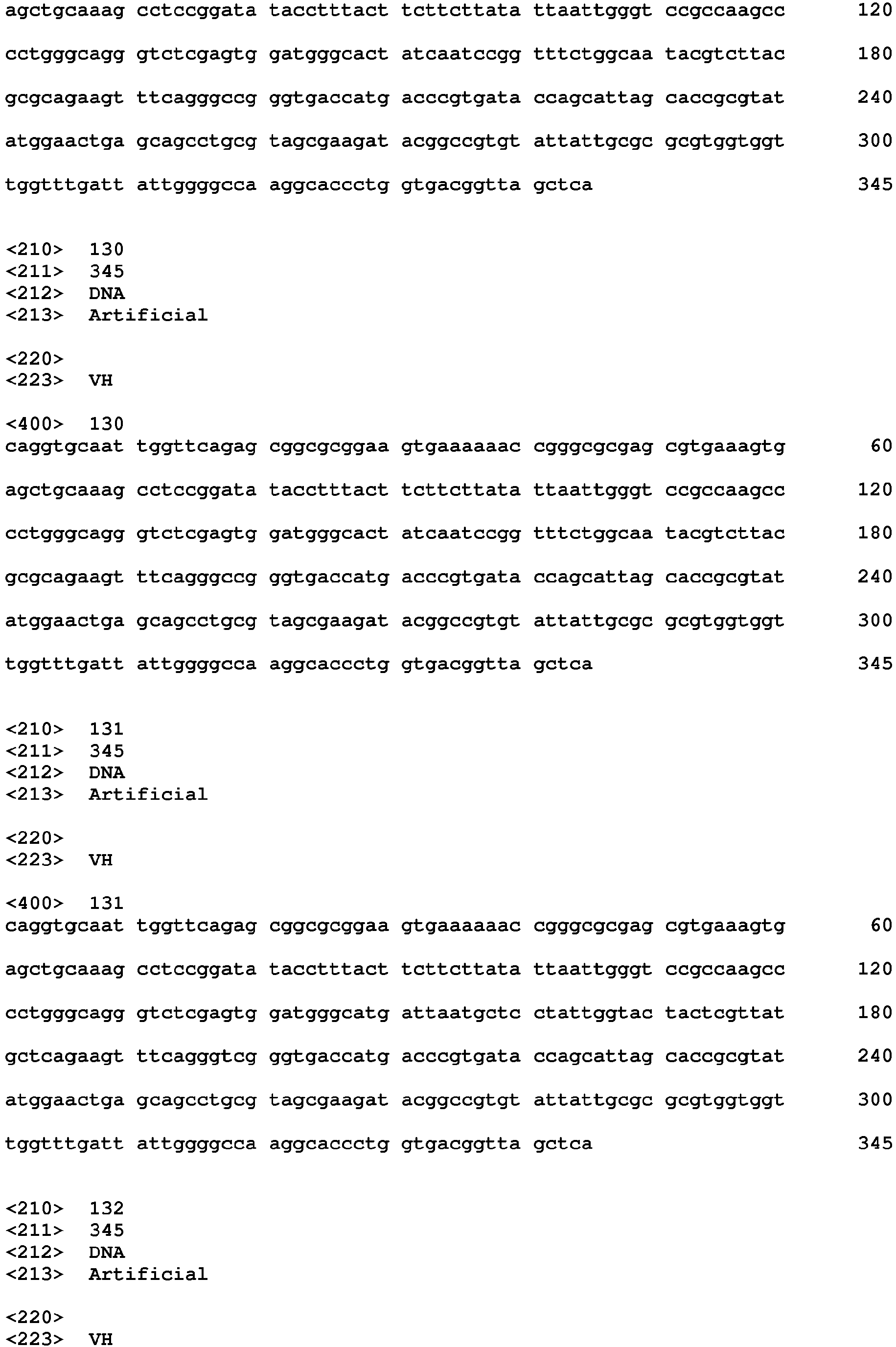


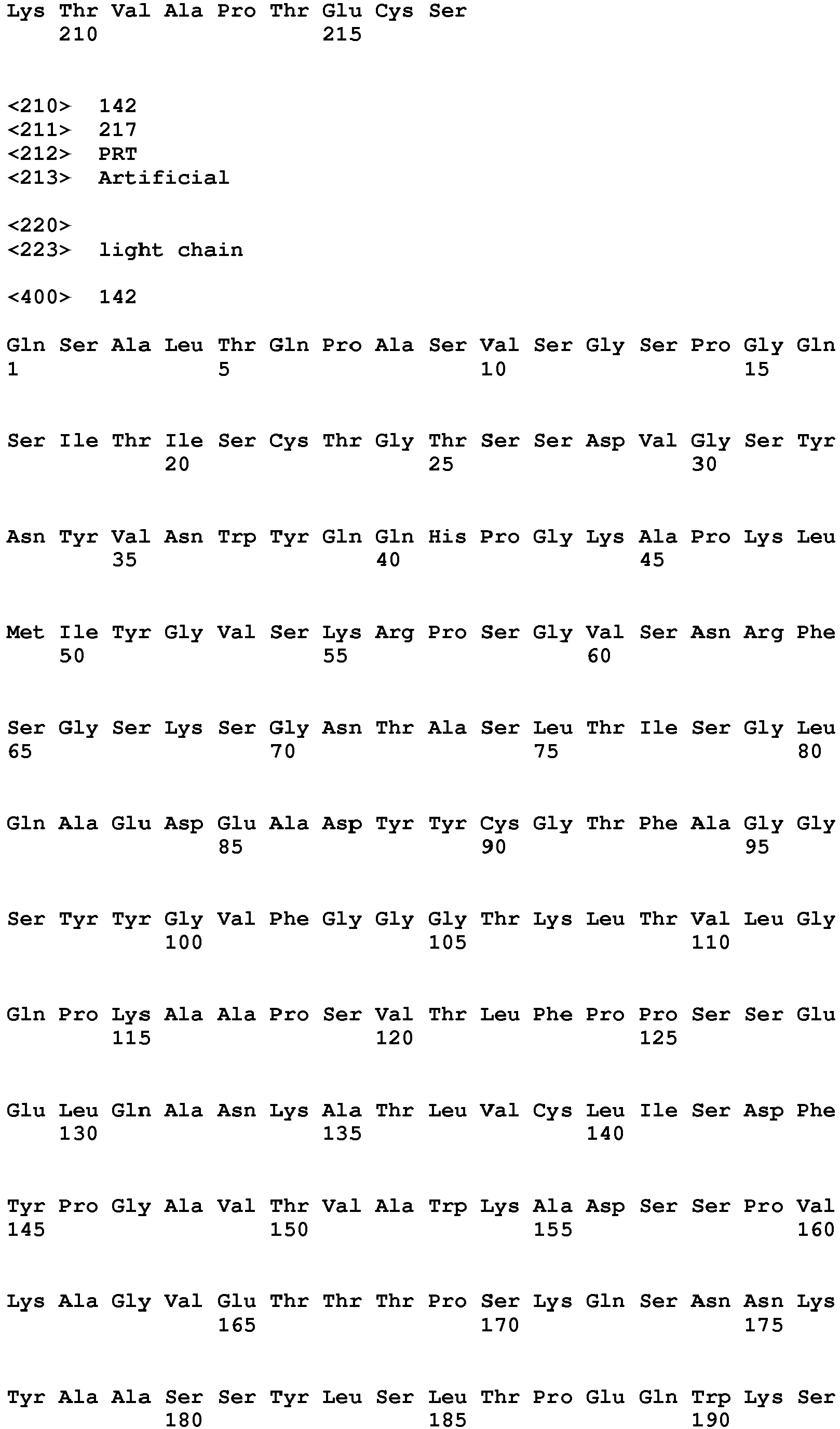
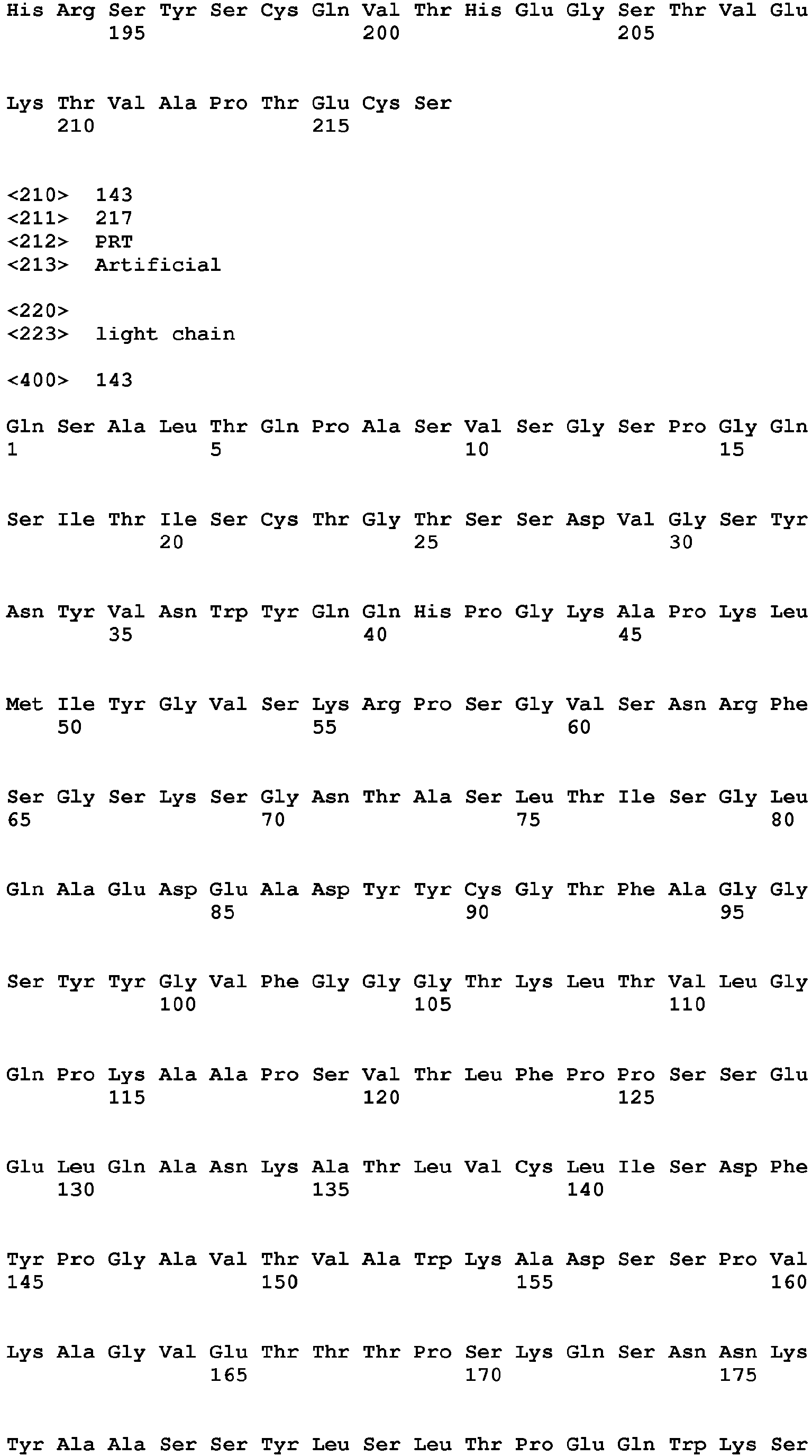


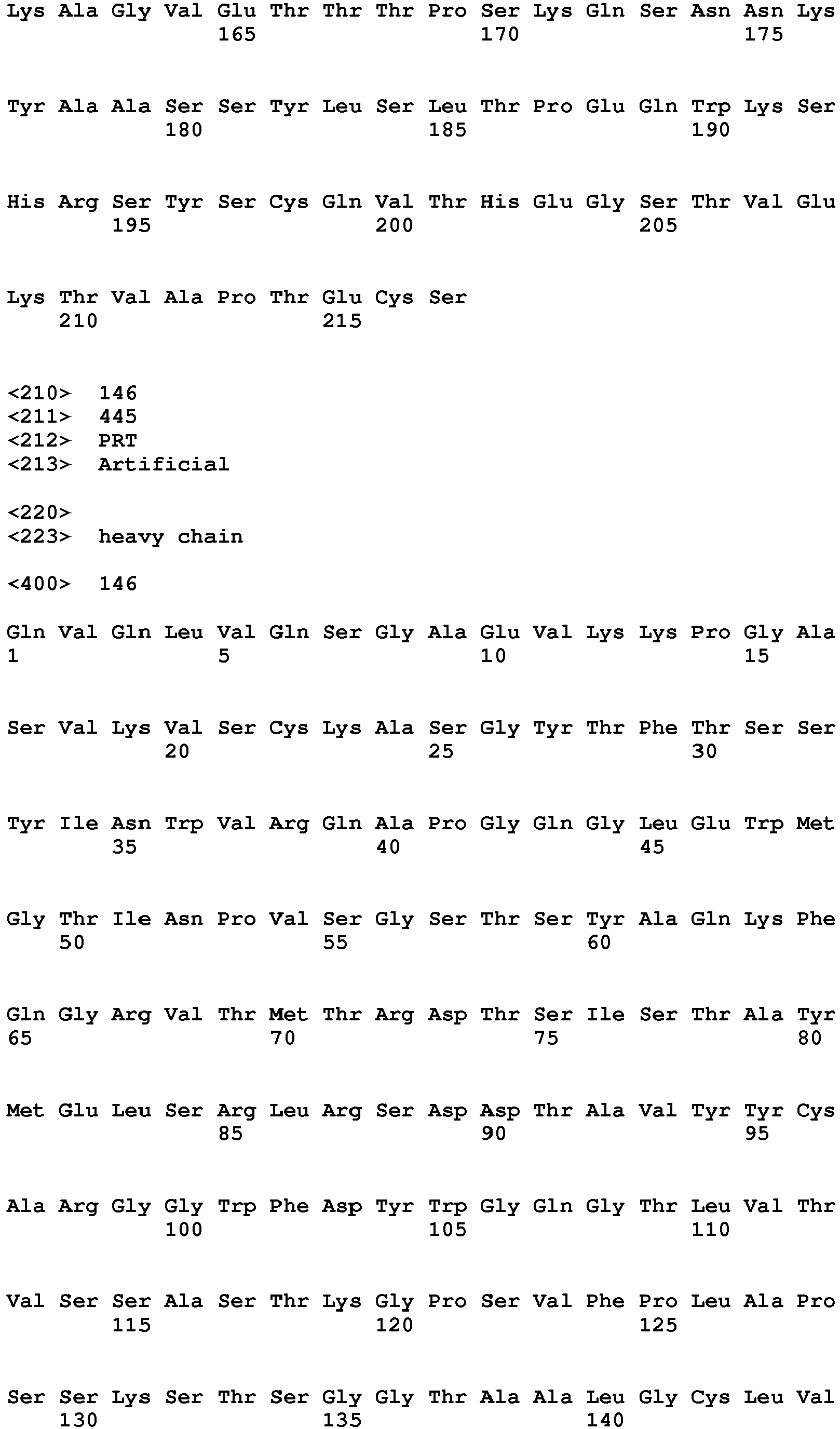


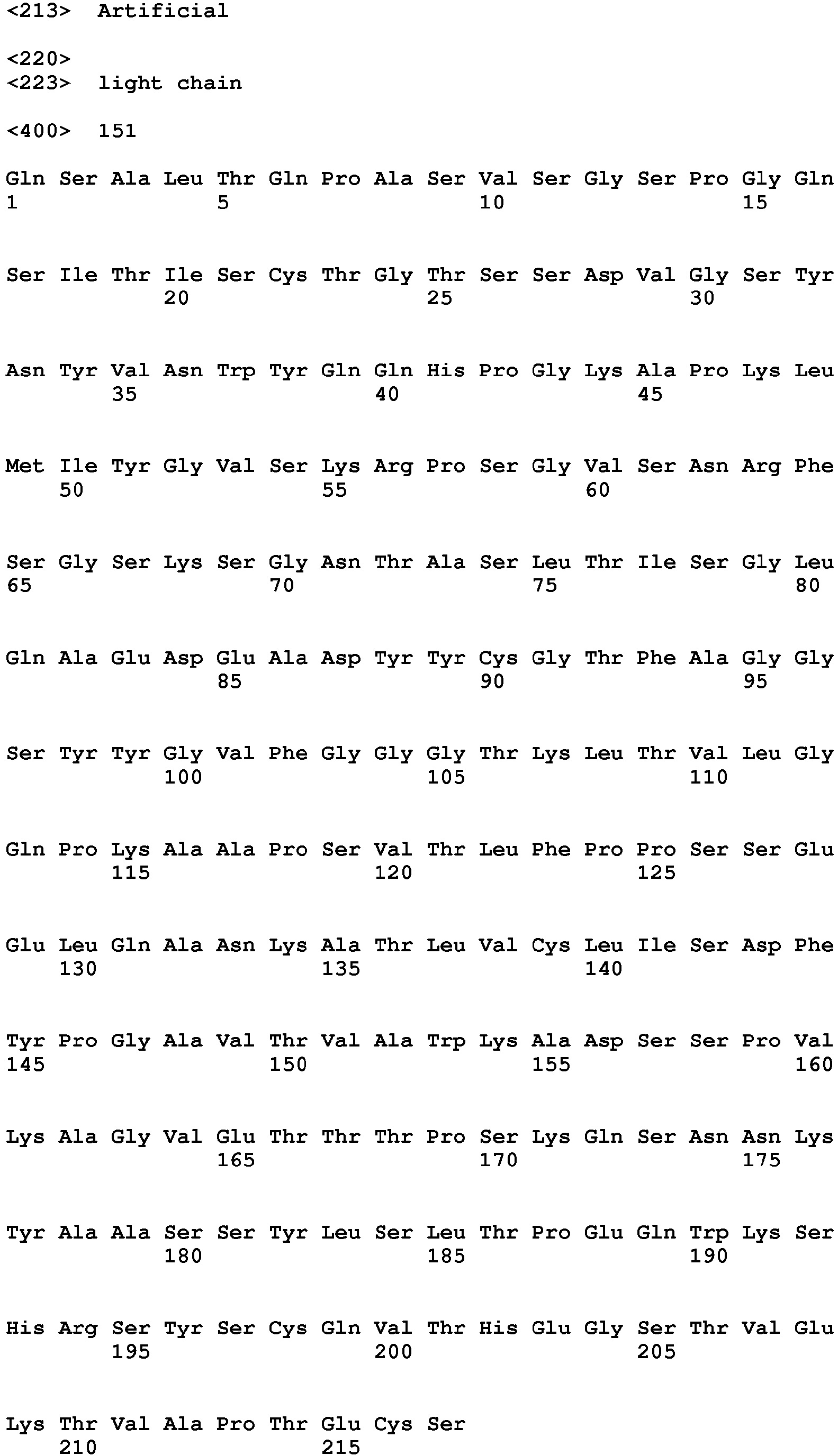


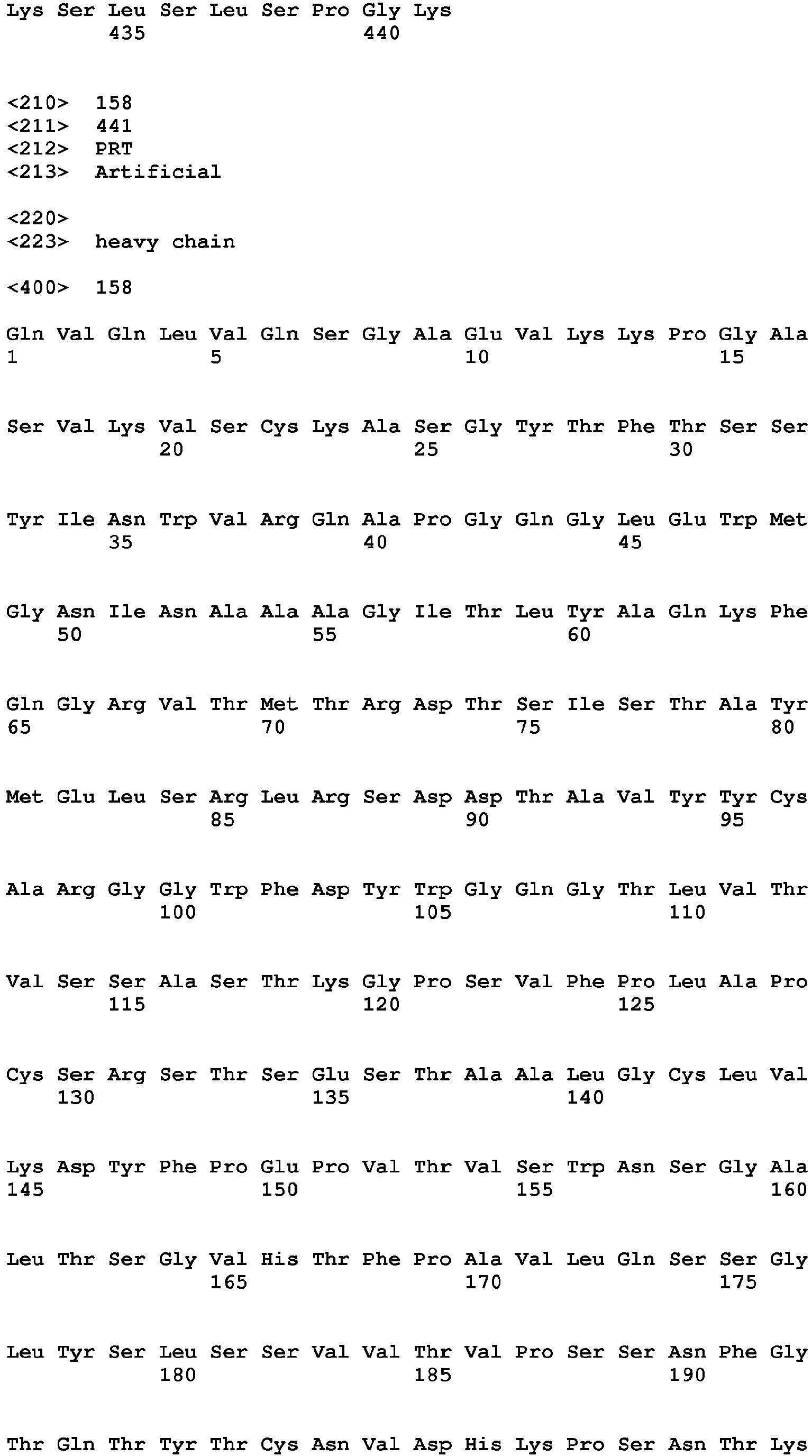
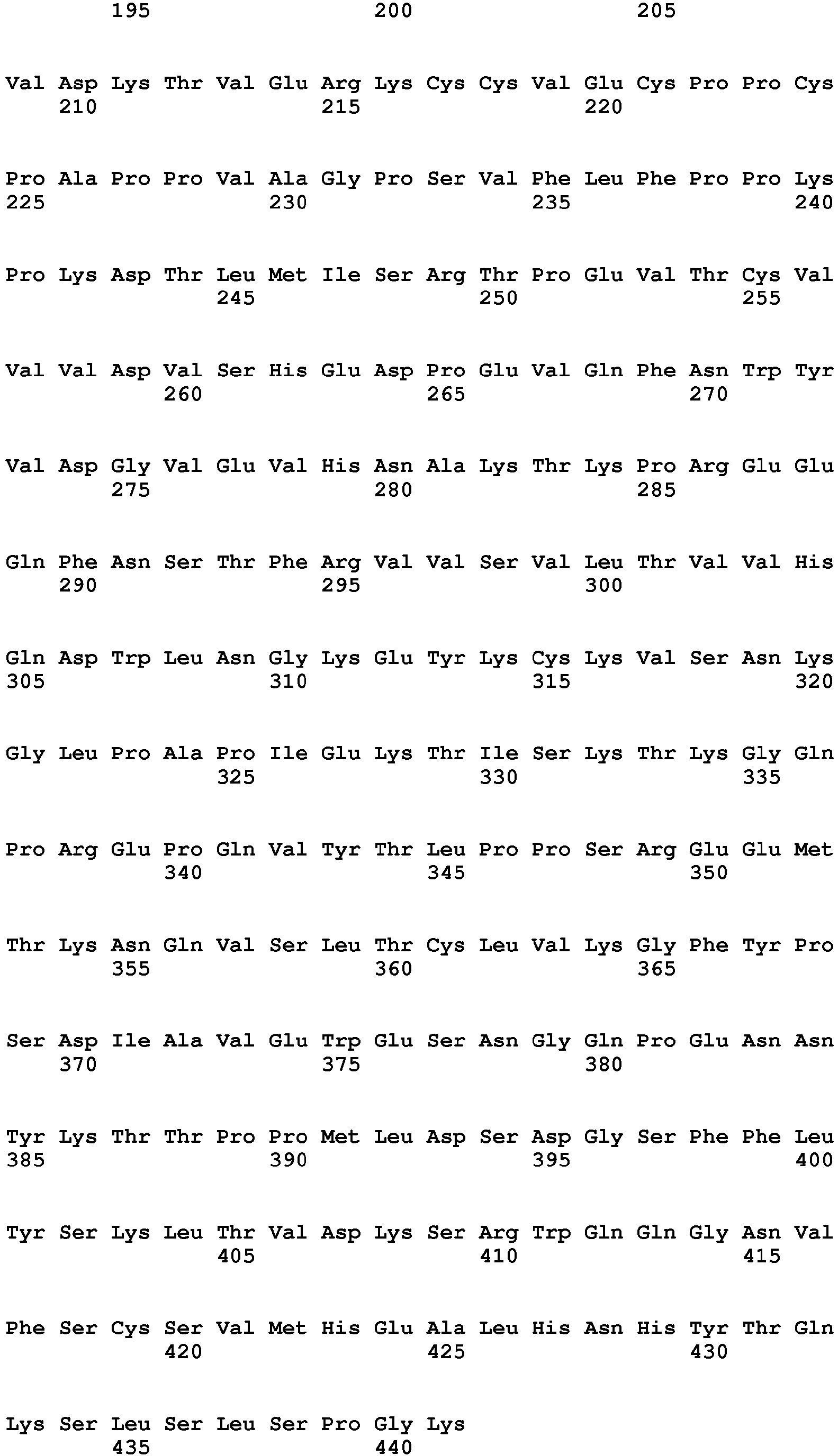


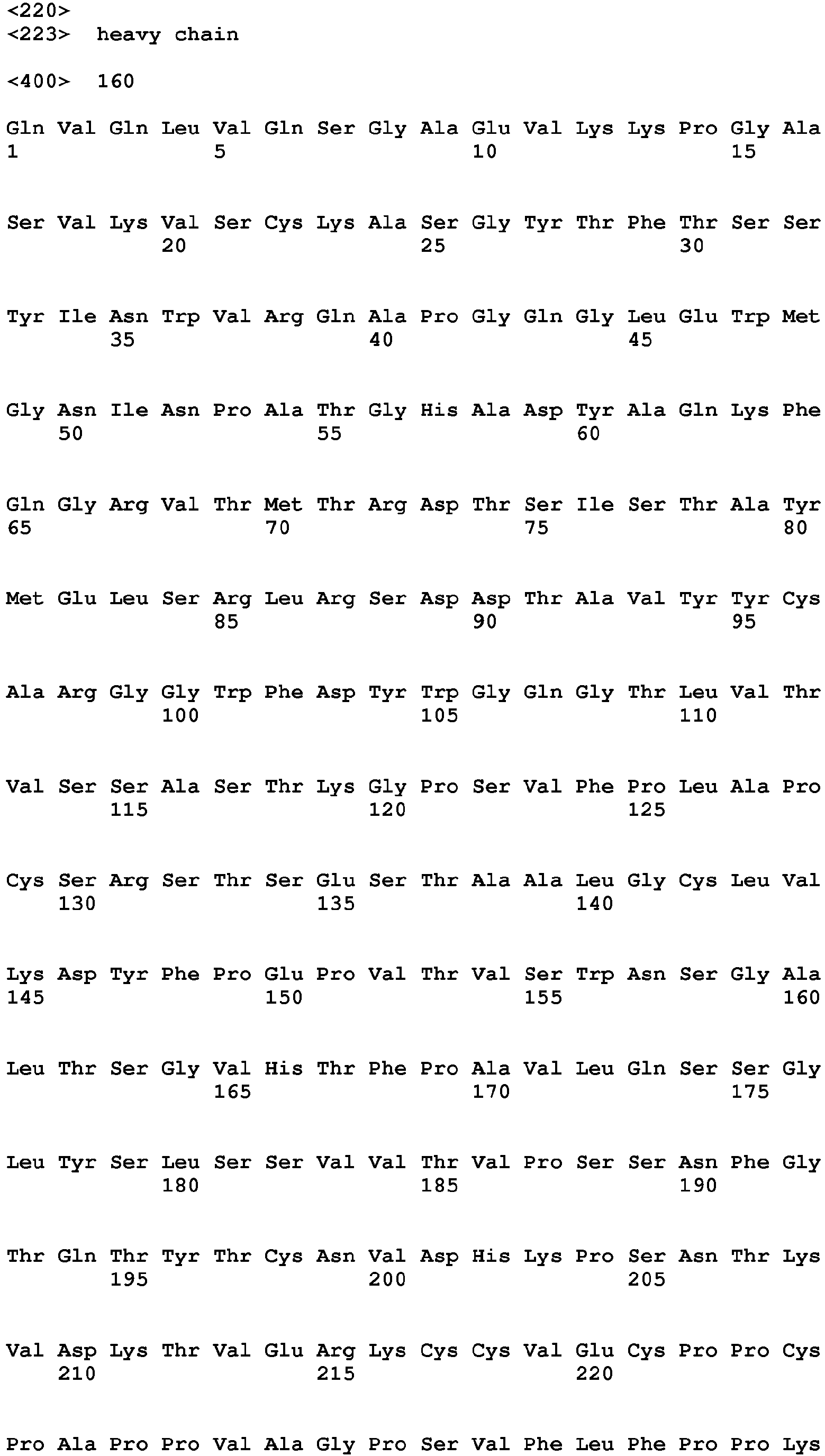


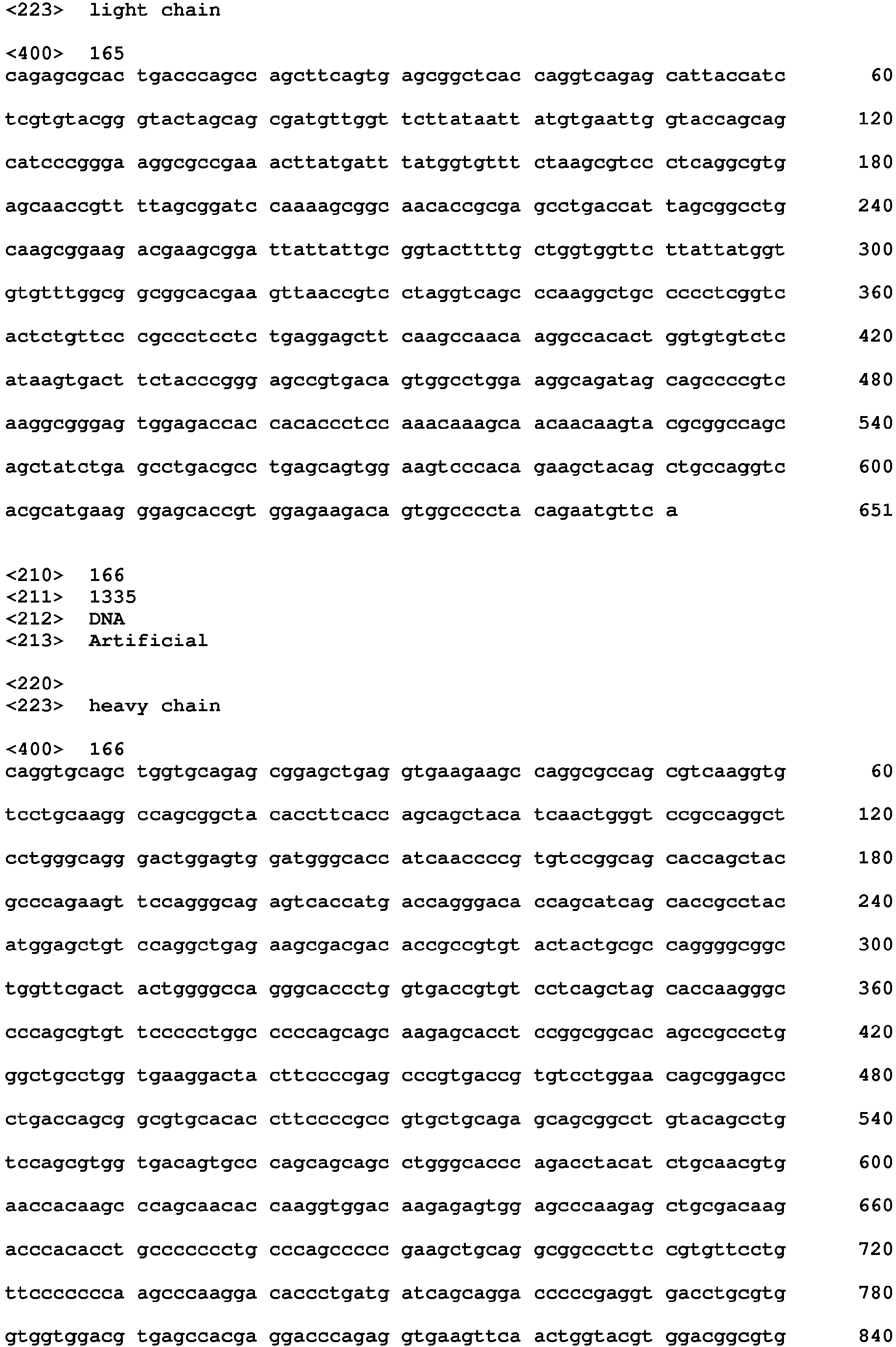
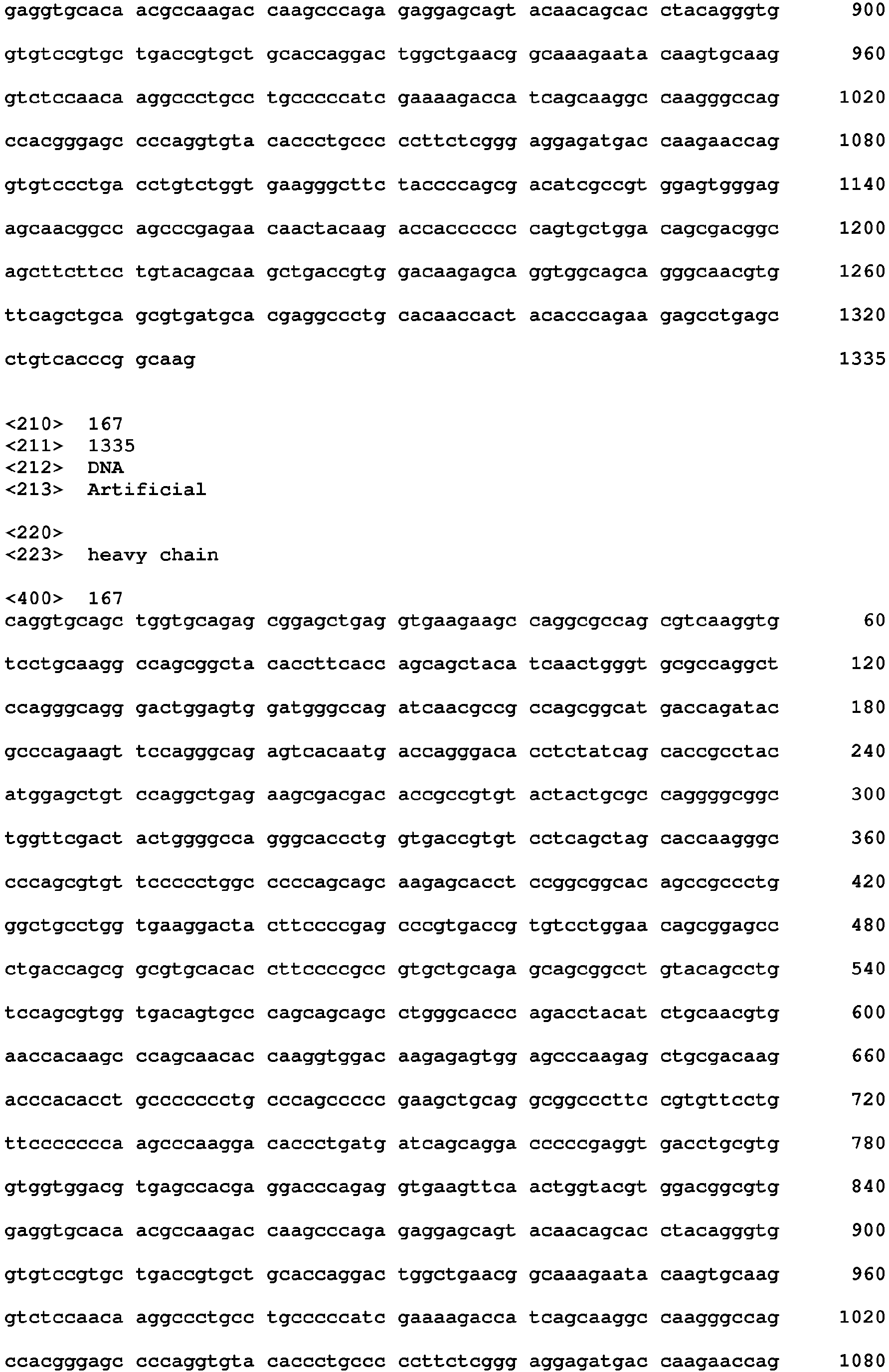


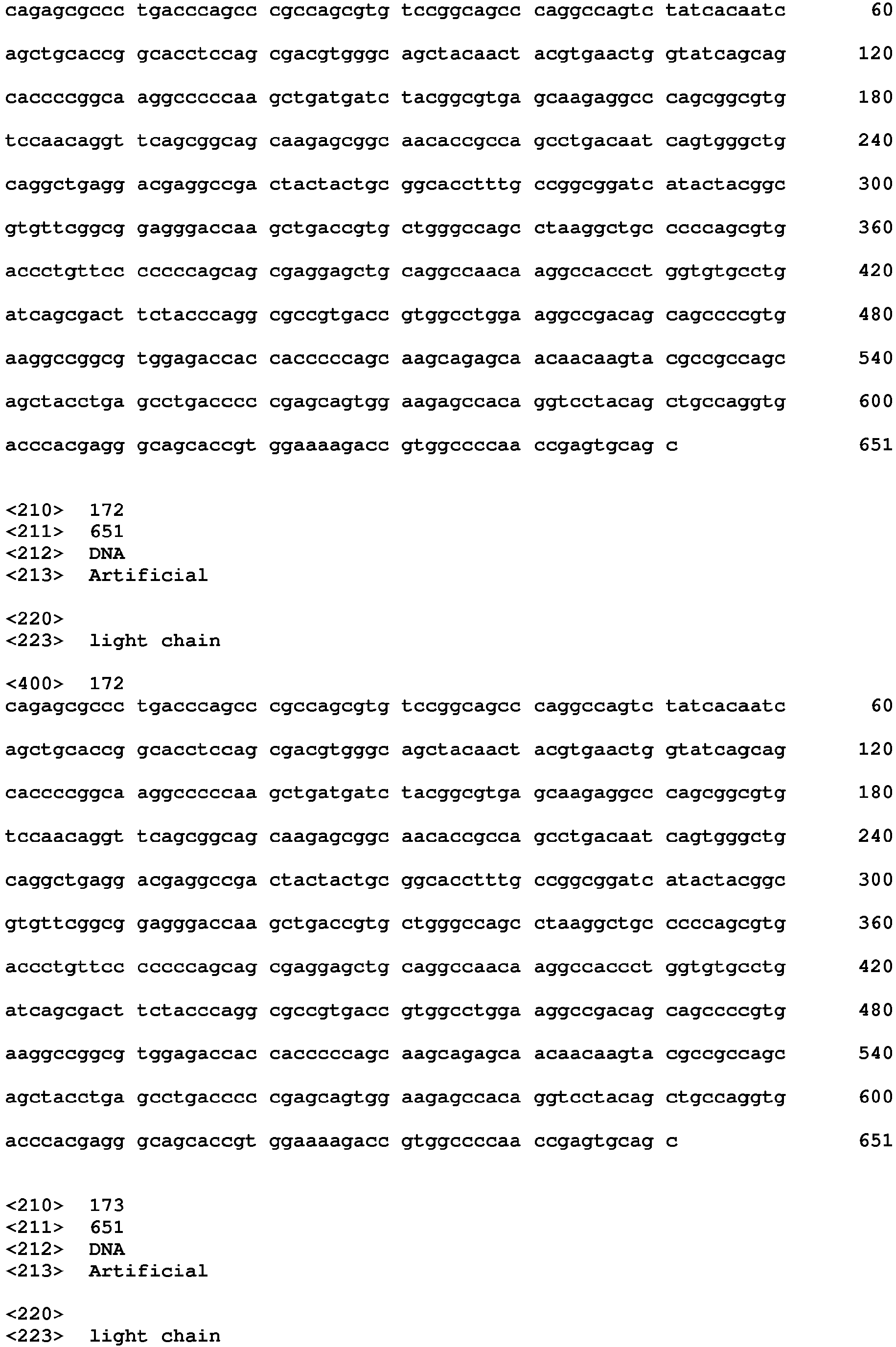


Claims (10)
- Bimagrumab for use in accelerating/improving physical recovery in a patient with disuse atrophy triggered by reduced mobility due to a hip fracture and consequent major surgery, wherein the myostatin antagonist is to be administered after confirmation of successful surgical hip repair and wound healing, and wherein the myostatin antagonist is to be administered to a patient in need thereof at a dose of about 70-700 mg.
- Bimagrumab for use according to claim 1, wherein bimagrumab is to be administered starting at about 7-42 days or about 1 to 6 weeks after surgery.
- Bimagrumab for use according to claim 1 or 2, wherein bimagrumab is to be administered at a dose of about 70 mg, or about 210 mg or about 700 mg.
- Bimagrumab for use according to anyone of claims 1-3, wherein bimagrumab is to be administered intravenously every four weeks for at least 3 months.
- Bimagrumab for use according to anyone of claims 1-4, wherein bimagrumab is to be administered to a patient with disuse atrophy triggered by reduced mobility due to a hip fracture and consequent major surgery, wherein the administration of Bimagrumab results in an improved physical performance.
- Bimagrumab for use according to claim 5, wherein the improved physical performance results in a reduced risk of incidences of falls and related injuries.
- Bimagrumab for use according to claim 3, wherein bimagrumab is to be administered intravenously at a dose of about 210 mg every four weeks.
- Bimagrumab for use according to claim 3, wherein bimagrumab is to be administered intravenously at a dose of about 700 mg every four weeks.
- A composition comprising 150 mg/ml of bimagrumab for use in a method of accelerating/improving physical recovery in a patient with disuse atrophy triggered by reduced mobility due to a hip fracture and consequent major surgery.
- A unitary dosage form comprising 150 mg/ml of bimagrumab.
Applications Claiming Priority (3)
| Application Number | Priority Date | Filing Date | Title |
|---|---|---|---|
| US201461983565P | 2014-04-24 | 2014-04-24 | |
| PCT/IB2015/052990 WO2015162590A1 (en) | 2014-04-24 | 2015-04-24 | Methods of improving or accelerating physical recovery after surgery for hip fracture |
| EP15722260.5A EP3134112A1 (en) | 2014-04-24 | 2015-04-24 | Methods of improving or accelerating physical recovery after surgery for hip fracture |
Related Parent Applications (1)
| Application Number | Title | Priority Date | Filing Date |
|---|---|---|---|
| EP15722260.5A Division EP3134112A1 (en) | 2014-04-24 | 2015-04-24 | Methods of improving or accelerating physical recovery after surgery for hip fracture |
Publications (1)
| Publication Number | Publication Date |
|---|---|
| EP3461495A1 true EP3461495A1 (en) | 2019-04-03 |
Family
ID=53175568
Family Applications (2)
| Application Number | Title | Priority Date | Filing Date |
|---|---|---|---|
| EP15722260.5A Ceased EP3134112A1 (en) | 2014-04-24 | 2015-04-24 | Methods of improving or accelerating physical recovery after surgery for hip fracture |
| EP18201533.9A Withdrawn EP3461495A1 (en) | 2014-04-24 | 2015-04-24 | Methods of improving or accelerating physical recovery after surgery for hip fracture |
Family Applications Before (1)
| Application Number | Title | Priority Date | Filing Date |
|---|---|---|---|
| EP15722260.5A Ceased EP3134112A1 (en) | 2014-04-24 | 2015-04-24 | Methods of improving or accelerating physical recovery after surgery for hip fracture |
Country Status (17)
| Country | Link |
|---|---|
| US (2) | US9969806B2 (en) |
| EP (2) | EP3134112A1 (en) |
| JP (1) | JP2017513882A (en) |
| KR (1) | KR20160147863A (en) |
| CN (1) | CN106456754A (en) |
| AU (2) | AU2015249396A1 (en) |
| BR (1) | BR112016023979A2 (en) |
| CA (1) | CA2944842A1 (en) |
| CL (1) | CL2016002679A1 (en) |
| IL (1) | IL248215A0 (en) |
| MX (1) | MX2016013916A (en) |
| PH (1) | PH12016501927A1 (en) |
| RU (1) | RU2016145921A (en) |
| SG (1) | SG11201608042RA (en) |
| TW (1) | TW201622746A (en) |
| WO (1) | WO2015162590A1 (en) |
| ZA (1) | ZA201606741B (en) |
Families Citing this family (35)
| Publication number | Priority date | Publication date | Assignee | Title |
|---|---|---|---|---|
| ES2839549T3 (en) | 2005-11-23 | 2021-07-05 | Acceleron Pharma Inc | Activin-ActRIIa antagonists for use in stimulating bone growth |
| US8128933B2 (en) | 2005-11-23 | 2012-03-06 | Acceleron Pharma, Inc. | Method of promoting bone growth by an anti-activin B antibody |
| DK2006381T3 (en) | 2006-03-31 | 2016-02-22 | Chugai Pharmaceutical Co Ltd | PROCEDURE FOR REGULATING ANTIBODIES BLOOD PHARMACOKINETICS |
| US8895016B2 (en) | 2006-12-18 | 2014-11-25 | Acceleron Pharma, Inc. | Antagonists of activin-actriia and uses for increasing red blood cell levels |
| MX2009008222A (en) | 2007-02-01 | 2009-10-12 | Acceleron Pharma Inc | Activin-actriia antagonists and uses for treating or preventing breast cancer. |
| TW201803890A (en) | 2007-02-02 | 2018-02-01 | 艾瑟勒朗法瑪公司 | Variants derived from ActRIIB and their uses |
| BRPI0807506B1 (en) | 2007-02-09 | 2022-02-15 | Acceleron Pharma, Inc | USE OF AN ACTRIIA-FC FUSION PROTEIN FOR THE MANUFACTURE OF A DRUG TO TREAT OR PREVENT MULTIPLE MYELOMA |
| EP2207562B1 (en) | 2007-09-18 | 2017-05-31 | Acceleron Pharma, Inc. | Activin-actriia antagonists and uses for decreasing or inhibiting fsh secretion |
| DK2202245T3 (en) | 2007-09-26 | 2016-11-21 | Chugai Pharmaceutical Co Ltd | A method of modifying an antibody isoelectric point VIA amino acid substitution in CDR |
| UA121453C2 (en) | 2008-04-11 | 2020-06-10 | Чугей Сейяку Кабусікі Кайся | METHOD OF PREPARATION OF PHARMACEUTICAL COMPOSITION CONTAINING ANTIBODY |
| US8216997B2 (en) | 2008-08-14 | 2012-07-10 | Acceleron Pharma, Inc. | Methods for increasing red blood cell levels and treating anemia using a combination of GDF traps and erythropoietin receptor activators |
| PL3494986T3 (en) | 2008-08-14 | 2020-11-16 | Acceleron Pharma Inc. | Gdf traps |
| JP2012529294A (en) | 2009-06-12 | 2012-11-22 | アクセルロン ファーマ, インコーポレイテッド | Cleaved ActRIIB-Fc fusion protein |
| CA2781152A1 (en) | 2009-11-17 | 2011-05-26 | Acceleron Pharma Inc. | Actriib proteins and variants and uses therefore relating to utrophin induction for muscular dystrophy therapy |
| EP2638065A4 (en) | 2010-11-08 | 2014-04-09 | Acceleron Pharma Inc | ACTRIIA BINDING AGENTS AND USES THEREOF |
| KR102385507B1 (en) | 2010-11-30 | 2022-04-12 | 추가이 세이야쿠 가부시키가이샤 | Antigen-binding molecule capable of binding to plurality of antigen molecules repeatedly |
| US9409952B2 (en) | 2011-12-28 | 2016-08-09 | Chugai Seiyaku Kabushiki Kaisha | Peptide-compound cyclization method |
| JP6774164B2 (en) | 2012-08-24 | 2020-10-21 | 中外製薬株式会社 | Mouse FcγRII specific Fc antibody |
| AU2013306700B2 (en) | 2012-08-24 | 2019-05-02 | Chugai Seiyaku Kabushiki Kaisha | FcgammaRIIb-specific Fc region variant |
| NZ707477A (en) | 2012-11-02 | 2019-09-27 | Celgene Corp | Activin-actrii antagonists and uses for treating bone and other disorders |
| WO2014163101A1 (en) | 2013-04-02 | 2014-10-09 | 中外製薬株式会社 | Fc region variant |
| TN2016000553A1 (en) | 2014-06-13 | 2018-04-04 | Acceleron Pharma Inc | Methods and compositions for treating ulcers |
| CA2969800A1 (en) * | 2014-12-08 | 2016-06-16 | Novartis Ag | Myostatin or activin antagonists for the treatment of sarcopenia |
| JP6227191B1 (en) | 2014-12-19 | 2017-11-08 | 中外製薬株式会社 | Anti-myostatin antibody, polypeptide comprising mutant Fc region, and method of use |
| CN114773470A (en) | 2015-02-05 | 2022-07-22 | 中外制药株式会社 | Antibodies comprising an ion concentration-dependent antigen-binding domain, FC region variants, IL-8-binding antibodies and uses thereof |
| WO2017081624A1 (en) * | 2015-11-11 | 2017-05-18 | Novartis Ag | Uses of myostatin antagonists, combinations containing them and uses thereof |
| EP3394098A4 (en) | 2015-12-25 | 2019-11-13 | Chugai Seiyaku Kabushiki Kaisha | ANTI-MYOSTATIN ANTIBODIES AND METHODS OF USE |
| CN116284392A (en) | 2016-03-10 | 2023-06-23 | 艾科赛扬制药股份有限公司 | Activin type 2 receptor binding proteins and uses thereof |
| IL264626B (en) | 2016-08-05 | 2022-07-01 | Chugai Pharmaceutical Co Ltd | A preparation for the prevention or treatment of diseases related to il-8 |
| US12246042B2 (en) * | 2018-08-29 | 2025-03-11 | Myos Corp. | Methods for alleviating, inhibiting or reversing muscle disuse atrophy in mammals |
| US20210158965A1 (en) * | 2019-11-22 | 2021-05-27 | Hill-Rom Services, Inc. | Automated mobility assessment |
| EP4238567A4 (en) | 2020-10-30 | 2024-09-04 | Keio University | NOVEL TREATMENT AND PREVENTION OF SARCOPENIA-RELATED DISEASES |
| JPWO2023145735A1 (en) | 2022-01-25 | 2023-08-03 | ||
| WO2025068454A1 (en) * | 2023-09-28 | 2025-04-03 | Sixpeaks Bio Ag | Antibodies targeting actriia and actriib |
| WO2025245160A1 (en) | 2024-05-21 | 2025-11-27 | Scholar Rock, Inc. | Myostatin-selective inhibitors for treating metabolic disorders |
Citations (84)
| Publication number | Priority date | Publication date | Assignee | Title |
|---|---|---|---|---|
| US4399216A (en) | 1980-02-25 | 1983-08-16 | The Trustees Of Columbia University | Processes for inserting DNA into eucaryotic cells and for producing proteinaceous materials |
| EP0154316A2 (en) | 1984-03-06 | 1985-09-11 | Takeda Chemical Industries, Ltd. | Chemically modified lymphokine and production thereof |
| US4634665A (en) | 1980-02-25 | 1987-01-06 | The Trustees Of Columbia University In The City Of New York | Processes for inserting DNA into eucaryotic cells and for producing proteinaceous materials |
| WO1987004462A1 (en) | 1986-01-23 | 1987-07-30 | Celltech Limited | Recombinant dna sequences, vectors containing them and method for the use thereof |
| WO1989001036A1 (en) | 1987-07-23 | 1989-02-09 | Celltech Limited | Recombinant dna expression vectors |
| US4816567A (en) | 1983-04-08 | 1989-03-28 | Genentech, Inc. | Recombinant immunoglobin preparations |
| EP0322094A1 (en) | 1987-10-30 | 1989-06-28 | Delta Biotechnology Limited | N-terminal fragments of human serum albumin |
| EP0338841A1 (en) | 1988-04-18 | 1989-10-25 | Celltech Limited | Recombinant DNA methods, vectors and host cells |
| US4881175A (en) | 1986-09-02 | 1989-11-14 | Genex Corporation | Computer based system and method for determining and displaying possible chemical structures for converting double- or multiple-chain polypeptides to single-chain polypeptides |
| US4946778A (en) | 1987-09-21 | 1990-08-07 | Genex Corporation | Single polypeptide chain binding molecules |
| EP0401384A1 (en) | 1988-12-22 | 1990-12-12 | Kirin-Amgen, Inc. | Chemically modified granulocyte colony stimulating factor |
| US5013653A (en) | 1987-03-20 | 1991-05-07 | Creative Biomolecules, Inc. | Product and process for introduction of a hinge region into a fusion protein to facilitate cleavage |
| US5091513A (en) | 1987-05-21 | 1992-02-25 | Creative Biomolecules, Inc. | Biosynthetic antibody binding sites |
| WO1992003918A1 (en) | 1990-08-29 | 1992-03-19 | Genpharm International, Inc. | Transgenic non-human animals capable of producing heterologous antibodies |
| EP0486525A1 (en) | 1989-08-01 | 1992-05-27 | Cemu Bioteknik Ab | Stabilized protein or peptide conjugates. |
| US5132405A (en) | 1987-05-21 | 1992-07-21 | Creative Biomolecules, Inc. | Biosynthetic antibody binding sites |
| US5179017A (en) | 1980-02-25 | 1993-01-12 | The Trustees Of Columbia University In The City Of New York | Processes for inserting DNA into eucaryotic cells and for producing proteinaceous materials |
| WO1993012227A1 (en) | 1991-12-17 | 1993-06-24 | Genpharm International, Inc. | Transgenic non-human animals capable of producing heterologous antibodies |
| US5223409A (en) | 1988-09-02 | 1993-06-29 | Protein Engineering Corp. | Directed evolution of novel binding proteins |
| US5225539A (en) | 1986-03-27 | 1993-07-06 | Medical Research Council | Recombinant altered antibodies and methods of making altered antibodies |
| US5258498A (en) | 1987-05-21 | 1993-11-02 | Creative Biomolecules, Inc. | Polypeptide linkers for production of biosynthetic proteins |
| US5260203A (en) | 1986-09-02 | 1993-11-09 | Enzon, Inc. | Single polypeptide chain binding molecules |
| WO1994004678A1 (en) | 1992-08-21 | 1994-03-03 | Casterman Cecile | Immunoglobulins devoid of light chains |
| WO1994025585A1 (en) | 1993-04-26 | 1994-11-10 | Genpharm International, Inc. | Transgenic non-human animals capable of producing heterologous antibodies |
| WO1994029351A2 (en) | 1993-06-16 | 1994-12-22 | Celltech Limited | Antibodies |
| US5427908A (en) | 1990-05-01 | 1995-06-27 | Affymax Technologies N.V. | Recombinant library screening methods |
| US5476786A (en) | 1987-05-21 | 1995-12-19 | Creative Biomolecules, Inc. | Biosynthetic antibody binding sites |
| US5476996A (en) | 1988-06-14 | 1995-12-19 | Lidak Pharmaceuticals | Human immune system in non-human animal |
| US5530101A (en) | 1988-12-28 | 1996-06-25 | Protein Design Labs, Inc. | Humanized immunoglobulins |
| US5545807A (en) | 1988-10-12 | 1996-08-13 | The Babraham Institute | Production of antibodies from transgenic animals |
| US5545806A (en) | 1990-08-29 | 1996-08-13 | Genpharm International, Inc. | Ransgenic non-human animals for producing heterologous antibodies |
| WO1997013852A1 (en) | 1995-10-10 | 1997-04-17 | Genpharm International, Inc. | Transgenic non-human animals capable of producing heterologous antibodies |
| US5624821A (en) | 1987-03-18 | 1997-04-29 | Scotgen Biopharmaceuticals Incorporated | Antibodies with altered effector functions |
| US5625126A (en) | 1990-08-29 | 1997-04-29 | Genpharm International, Inc. | Transgenic non-human animals for producing heterologous antibodies |
| US5633425A (en) | 1990-08-29 | 1997-05-27 | Genpharm International, Inc. | Transgenic non-human animals capable of producing heterologous antibodies |
| US5661016A (en) | 1990-08-29 | 1997-08-26 | Genpharm International Inc. | Transgenic non-human animals capable of producing heterologous antibodies of various isotypes |
| US5677425A (en) | 1987-09-04 | 1997-10-14 | Celltech Therapeutics Limited | Recombinant antibody |
| US5714350A (en) | 1992-03-09 | 1998-02-03 | Protein Design Labs, Inc. | Increasing antibody affinity by altering glycosylation in the immunoglobulin variable region |
| WO1998018943A1 (en) | 1996-10-28 | 1998-05-07 | Novartis Ag | Method for the oligomerisation of peptides |
| WO1998024884A1 (en) | 1996-12-02 | 1998-06-11 | Genpharm International | Transgenic non-human animals capable of producing heterologous antibodies |
| US5789650A (en) | 1990-08-29 | 1998-08-04 | Genpharm International, Inc. | Transgenic non-human animals for producing heterologous antibodies |
| US5814318A (en) | 1990-08-29 | 1998-09-29 | Genpharm International Inc. | Transgenic non-human animals for producing heterologous antibodies |
| US5831012A (en) | 1994-01-14 | 1998-11-03 | Pharmacia & Upjohn Aktiebolag | Bacterial receptor structures |
| US5869046A (en) | 1995-04-14 | 1999-02-09 | Genentech, Inc. | Altered polypeptides with increased half-life |
| US5874299A (en) | 1990-08-29 | 1999-02-23 | Genpharm International, Inc. | Transgenic non-human animals capable of producing heterologous antibodies |
| US5877397A (en) | 1990-08-29 | 1999-03-02 | Genpharm International Inc. | Transgenic non-human animals capable of producing heterologous antibodies of various isotypes |
| US5885793A (en) | 1991-12-02 | 1999-03-23 | Medical Research Council | Production of anti-self antibodies from antibody segment repertoires and displayed on phage |
| WO1999016873A1 (en) | 1997-09-26 | 1999-04-08 | Arne Skerra | Anticalins |
| US5939598A (en) | 1990-01-12 | 1999-08-17 | Abgenix, Inc. | Method of making transgenic mice lacking endogenous heavy chains |
| WO1999045962A1 (en) | 1998-03-13 | 1999-09-16 | Genpharm International, Inc. | Transgenic non-human animals capable of producing heterologous antibodies |
| US5969108A (en) | 1990-07-10 | 1999-10-19 | Medical Research Council | Methods for producing members of specific binding pairs |
| WO1999054342A1 (en) | 1998-04-20 | 1999-10-28 | Pablo Umana | Glycosylation engineering of antibodies for improving antibody-dependent cellular cytotoxicity |
| US6075181A (en) | 1990-01-12 | 2000-06-13 | Abgenix, Inc. | Human antibodies derived from immunized xenomice |
| WO2000042072A2 (en) | 1999-01-15 | 2000-07-20 | Genentech, Inc. | Polypeptide variants with altered effector function |
| US6121022A (en) | 1995-04-14 | 2000-09-19 | Genentech, Inc. | Altered polypeptides with increased half-life |
| US6150584A (en) | 1990-01-12 | 2000-11-21 | Abgenix, Inc. | Human antibodies derived from immunized xenomice |
| US6162963A (en) | 1990-01-12 | 2000-12-19 | Abgenix, Inc. | Generation of Xenogenetic antibodies |
| US6165745A (en) | 1992-04-24 | 2000-12-26 | Board Of Regents, The University Of Texas System | Recombinant production of immunoglobulin-like domains in prokaryotic cells |
| US6172197B1 (en) | 1991-07-10 | 2001-01-09 | Medical Research Council | Methods for producing members of specific binding pairs |
| WO2001004144A2 (en) | 1999-07-13 | 2001-01-18 | Scil Proteins Gmbh | Fabrication of beta-pleated sheet proteins with specific binding properties |
| US6194551B1 (en) | 1998-04-02 | 2001-02-27 | Genentech, Inc. | Polypeptide variants |
| WO2001014424A2 (en) | 1999-08-24 | 2001-03-01 | Medarex, Inc. | Human ctla-4 antibodies and their uses |
| US6277375B1 (en) | 1997-03-03 | 2001-08-21 | Board Of Regents, The University Of Texas System | Immunoglobulin-like domains with increased half-lives |
| EP1176195A1 (en) | 1999-04-09 | 2002-01-30 | Kyowa Hakko Kogyo Co., Ltd. | Method for controlling the activity of immunologically functional molecule |
| WO2002043478A2 (en) | 2000-11-30 | 2002-06-06 | Medarex, Inc. | Transgenic transchromosomal rodents for making human antibodies |
| WO2002092780A2 (en) | 2001-05-17 | 2002-11-21 | Diversa Corporation | Novel antigen binding molecules for therapeutic, diagnostic, prophylactic, enzymatic, industrial, and agricultural applications, and methods for generating and screening thereof |
| WO2003035835A2 (en) | 2001-10-25 | 2003-05-01 | Genentech, Inc. | Glycoprotein compositions |
| US20030153043A1 (en) | 1997-05-21 | 2003-08-14 | Biovation Limited | Method for the production of non-immunogenic proteins |
| WO2003074679A2 (en) | 2002-03-01 | 2003-09-12 | Xencor | Antibody optimization |
| WO2004039841A2 (en) | 2002-10-29 | 2004-05-13 | Borean Pharma A/S | Trimeric binding proteins for trimeric cytokines |
| US20040161738A1 (en) | 2000-05-26 | 2004-08-19 | Arumugam Muruganandam | Single-domain brain-targeting antibody fragments derived from llama antibodies |
| US20040175756A1 (en) | 2001-04-26 | 2004-09-09 | Avidia Research Institute | Methods for using combinatorial libraries of monomer domains |
| US6818418B1 (en) | 1998-12-10 | 2004-11-16 | Compound Therapeutics, Inc. | Protein scaffolds for antibody mimics and other binding proteins |
| WO2004106368A1 (en) | 2003-05-28 | 2004-12-09 | Scil Proteins Gmbh | Generation of artificial binding proteins based on ubiquitin proteins |
| US20050048512A1 (en) | 2001-04-26 | 2005-03-03 | Avidia Research Institute | Combinatorial libraries of monomer domains |
| US20050053973A1 (en) | 2001-04-26 | 2005-03-10 | Avidia Research Institute | Novel proteins with targeted binding |
| US6946292B2 (en) | 2000-10-06 | 2005-09-20 | Kyowa Hakko Kogyo Co., Ltd. | Cells producing antibody compositions with increased antibody dependent cytotoxic activity |
| EP1297172B1 (en) | 2000-06-28 | 2005-11-09 | Glycofi, Inc. | Methods for producing modified glycoproteins |
| US20050255552A1 (en) | 2004-01-20 | 2005-11-17 | Kalobios, Inc. | Antibody specificity transfer using minimal essential binding determinants |
| US20060008844A1 (en) | 2004-06-17 | 2006-01-12 | Avidia Research Institute | c-Met kinase binding proteins |
| WO2006083182A1 (en) * | 2005-02-07 | 2006-08-10 | Orico Limited | Use of myostatin (gdf-8) antagonists for improving wound healing and preventing fibrotic disease |
| WO2007146689A2 (en) | 2006-06-09 | 2007-12-21 | Novartis Ag | Stabilized insulin-like growth factor polypeptides |
| WO2010125003A1 (en) | 2009-04-27 | 2010-11-04 | Novartis Ag | Compositions and methods for increasing muscle growth |
| WO2011151432A1 (en) * | 2010-06-03 | 2011-12-08 | Glaxo Group Limited | Humanised antigen binding proteins to myostatin6 |
Family Cites Families (1)
| Publication number | Priority date | Publication date | Assignee | Title |
|---|---|---|---|---|
| ZA200709291B (en) * | 2005-04-25 | 2009-01-28 | Pfizer | Antibodies to myostatin |
-
2015
- 2015-04-23 TW TW104113088A patent/TW201622746A/en unknown
- 2015-04-24 JP JP2016564003A patent/JP2017513882A/en active Pending
- 2015-04-24 EP EP15722260.5A patent/EP3134112A1/en not_active Ceased
- 2015-04-24 RU RU2016145921A patent/RU2016145921A/en not_active Application Discontinuation
- 2015-04-24 MX MX2016013916A patent/MX2016013916A/en unknown
- 2015-04-24 SG SG11201608042RA patent/SG11201608042RA/en unknown
- 2015-04-24 AU AU2015249396A patent/AU2015249396A1/en not_active Abandoned
- 2015-04-24 KR KR1020167032362A patent/KR20160147863A/en not_active Withdrawn
- 2015-04-24 WO PCT/IB2015/052990 patent/WO2015162590A1/en not_active Ceased
- 2015-04-24 BR BR112016023979A patent/BR112016023979A2/en not_active IP Right Cessation
- 2015-04-24 CN CN201580021368.9A patent/CN106456754A/en not_active Withdrawn
- 2015-04-24 EP EP18201533.9A patent/EP3461495A1/en not_active Withdrawn
- 2015-04-24 CA CA2944842A patent/CA2944842A1/en not_active Abandoned
- 2015-04-24 US US15/304,010 patent/US9969806B2/en not_active Expired - Fee Related
-
2016
- 2016-09-29 PH PH12016501927A patent/PH12016501927A1/en unknown
- 2016-09-29 ZA ZA2016/06741A patent/ZA201606741B/en unknown
- 2016-10-06 IL IL248215A patent/IL248215A0/en unknown
- 2016-10-21 CL CL2016002679A patent/CL2016002679A1/en unknown
-
2018
- 2018-01-23 AU AU2018200537A patent/AU2018200537A1/en not_active Abandoned
- 2018-04-10 US US15/949,156 patent/US20180230221A1/en not_active Abandoned
Patent Citations (104)
| Publication number | Priority date | Publication date | Assignee | Title |
|---|---|---|---|---|
| US4399216A (en) | 1980-02-25 | 1983-08-16 | The Trustees Of Columbia University | Processes for inserting DNA into eucaryotic cells and for producing proteinaceous materials |
| US4634665A (en) | 1980-02-25 | 1987-01-06 | The Trustees Of Columbia University In The City Of New York | Processes for inserting DNA into eucaryotic cells and for producing proteinaceous materials |
| US5179017A (en) | 1980-02-25 | 1993-01-12 | The Trustees Of Columbia University In The City Of New York | Processes for inserting DNA into eucaryotic cells and for producing proteinaceous materials |
| US4816567A (en) | 1983-04-08 | 1989-03-28 | Genentech, Inc. | Recombinant immunoglobin preparations |
| EP0154316A2 (en) | 1984-03-06 | 1985-09-11 | Takeda Chemical Industries, Ltd. | Chemically modified lymphokine and production thereof |
| WO1987004462A1 (en) | 1986-01-23 | 1987-07-30 | Celltech Limited | Recombinant dna sequences, vectors containing them and method for the use thereof |
| US5225539A (en) | 1986-03-27 | 1993-07-06 | Medical Research Council | Recombinant altered antibodies and methods of making altered antibodies |
| US5455030A (en) | 1986-09-02 | 1995-10-03 | Enzon Labs, Inc. | Immunotheraphy using single chain polypeptide binding molecules |
| US4881175A (en) | 1986-09-02 | 1989-11-14 | Genex Corporation | Computer based system and method for determining and displaying possible chemical structures for converting double- or multiple-chain polypeptides to single-chain polypeptides |
| US5260203A (en) | 1986-09-02 | 1993-11-09 | Enzon, Inc. | Single polypeptide chain binding molecules |
| US5624821A (en) | 1987-03-18 | 1997-04-29 | Scotgen Biopharmaceuticals Incorporated | Antibodies with altered effector functions |
| US5648260A (en) | 1987-03-18 | 1997-07-15 | Scotgen Biopharmaceuticals Incorporated | DNA encoding antibodies with altered effector functions |
| US5013653A (en) | 1987-03-20 | 1991-05-07 | Creative Biomolecules, Inc. | Product and process for introduction of a hinge region into a fusion protein to facilitate cleavage |
| US5482858A (en) | 1987-05-21 | 1996-01-09 | Creative Biomolecules, Inc. | Polypeptide linkers for production of biosynthetic proteins |
| US5132405A (en) | 1987-05-21 | 1992-07-21 | Creative Biomolecules, Inc. | Biosynthetic antibody binding sites |
| US5091513A (en) | 1987-05-21 | 1992-02-25 | Creative Biomolecules, Inc. | Biosynthetic antibody binding sites |
| US5258498A (en) | 1987-05-21 | 1993-11-02 | Creative Biomolecules, Inc. | Polypeptide linkers for production of biosynthetic proteins |
| US5476786A (en) | 1987-05-21 | 1995-12-19 | Creative Biomolecules, Inc. | Biosynthetic antibody binding sites |
| WO1989001036A1 (en) | 1987-07-23 | 1989-02-09 | Celltech Limited | Recombinant dna expression vectors |
| US5677425A (en) | 1987-09-04 | 1997-10-14 | Celltech Therapeutics Limited | Recombinant antibody |
| US4946778A (en) | 1987-09-21 | 1990-08-07 | Genex Corporation | Single polypeptide chain binding molecules |
| EP0322094A1 (en) | 1987-10-30 | 1989-06-28 | Delta Biotechnology Limited | N-terminal fragments of human serum albumin |
| EP0338841A1 (en) | 1988-04-18 | 1989-10-25 | Celltech Limited | Recombinant DNA methods, vectors and host cells |
| US5698767A (en) | 1988-06-14 | 1997-12-16 | Lidak Pharmaceuticals | Human immune system in non-human animal |
| US5476996A (en) | 1988-06-14 | 1995-12-19 | Lidak Pharmaceuticals | Human immune system in non-human animal |
| US5571698A (en) | 1988-09-02 | 1996-11-05 | Protein Engineering Corporation | Directed evolution of novel binding proteins |
| US5403484A (en) | 1988-09-02 | 1995-04-04 | Protein Engineering Corporation | Viruses expressing chimeric binding proteins |
| US5223409A (en) | 1988-09-02 | 1993-06-29 | Protein Engineering Corp. | Directed evolution of novel binding proteins |
| US5545807A (en) | 1988-10-12 | 1996-08-13 | The Babraham Institute | Production of antibodies from transgenic animals |
| EP0401384A1 (en) | 1988-12-22 | 1990-12-12 | Kirin-Amgen, Inc. | Chemically modified granulocyte colony stimulating factor |
| US6180370B1 (en) | 1988-12-28 | 2001-01-30 | Protein Design Labs, Inc. | Humanized immunoglobulins and methods of making the same |
| US5693762A (en) | 1988-12-28 | 1997-12-02 | Protein Design Labs, Inc. | Humanized immunoglobulins |
| US5530101A (en) | 1988-12-28 | 1996-06-25 | Protein Design Labs, Inc. | Humanized immunoglobulins |
| US5585089A (en) | 1988-12-28 | 1996-12-17 | Protein Design Labs, Inc. | Humanized immunoglobulins |
| EP0486525A1 (en) | 1989-08-01 | 1992-05-27 | Cemu Bioteknik Ab | Stabilized protein or peptide conjugates. |
| US6150584A (en) | 1990-01-12 | 2000-11-21 | Abgenix, Inc. | Human antibodies derived from immunized xenomice |
| US5939598A (en) | 1990-01-12 | 1999-08-17 | Abgenix, Inc. | Method of making transgenic mice lacking endogenous heavy chains |
| US6162963A (en) | 1990-01-12 | 2000-12-19 | Abgenix, Inc. | Generation of Xenogenetic antibodies |
| US6114598A (en) | 1990-01-12 | 2000-09-05 | Abgenix, Inc. | Generation of xenogeneic antibodies |
| US6075181A (en) | 1990-01-12 | 2000-06-13 | Abgenix, Inc. | Human antibodies derived from immunized xenomice |
| US5580717A (en) | 1990-05-01 | 1996-12-03 | Affymax Technologies N.V. | Recombinant library screening methods |
| US5427908A (en) | 1990-05-01 | 1995-06-27 | Affymax Technologies N.V. | Recombinant library screening methods |
| US5969108A (en) | 1990-07-10 | 1999-10-19 | Medical Research Council | Methods for producing members of specific binding pairs |
| US5789650A (en) | 1990-08-29 | 1998-08-04 | Genpharm International, Inc. | Transgenic non-human animals for producing heterologous antibodies |
| WO1992003918A1 (en) | 1990-08-29 | 1992-03-19 | Genpharm International, Inc. | Transgenic non-human animals capable of producing heterologous antibodies |
| US5633425A (en) | 1990-08-29 | 1997-05-27 | Genpharm International, Inc. | Transgenic non-human animals capable of producing heterologous antibodies |
| US5625126A (en) | 1990-08-29 | 1997-04-29 | Genpharm International, Inc. | Transgenic non-human animals for producing heterologous antibodies |
| US5545806A (en) | 1990-08-29 | 1996-08-13 | Genpharm International, Inc. | Ransgenic non-human animals for producing heterologous antibodies |
| US5569825A (en) | 1990-08-29 | 1996-10-29 | Genpharm International | Transgenic non-human animals capable of producing heterologous antibodies of various isotypes |
| US5877397A (en) | 1990-08-29 | 1999-03-02 | Genpharm International Inc. | Transgenic non-human animals capable of producing heterologous antibodies of various isotypes |
| US5874299A (en) | 1990-08-29 | 1999-02-23 | Genpharm International, Inc. | Transgenic non-human animals capable of producing heterologous antibodies |
| US5770429A (en) | 1990-08-29 | 1998-06-23 | Genpharm International, Inc. | Transgenic non-human animals capable of producing heterologous antibodies |
| US5661016A (en) | 1990-08-29 | 1997-08-26 | Genpharm International Inc. | Transgenic non-human animals capable of producing heterologous antibodies of various isotypes |
| US5814318A (en) | 1990-08-29 | 1998-09-29 | Genpharm International Inc. | Transgenic non-human animals for producing heterologous antibodies |
| US6172197B1 (en) | 1991-07-10 | 2001-01-09 | Medical Research Council | Methods for producing members of specific binding pairs |
| US6582915B1 (en) | 1991-12-02 | 2003-06-24 | Medical Research Council | Production of anti-self bodies from antibody segment repertories and displayed on phage |
| US6555313B1 (en) | 1991-12-02 | 2003-04-29 | Medical Research Council | Production of anti-self antibodies from antibody segment repertoires and displayed on phage |
| US6544731B1 (en) | 1991-12-02 | 2003-04-08 | Medical Research Council | Production of anti-self antibodies from antibody segment repertories and displayed on phage |
| US5885793A (en) | 1991-12-02 | 1999-03-23 | Medical Research Council | Production of anti-self antibodies from antibody segment repertoires and displayed on phage |
| US6593081B1 (en) | 1991-12-02 | 2003-07-15 | Medical Research Council | Production of anti-self antibodies from antibody segment repertoires and displayed on phage |
| US6521404B1 (en) | 1991-12-02 | 2003-02-18 | Medical Research Council | Production of anti-self antibodies from antibody segment repertoires and displayed on phage |
| WO1993012227A1 (en) | 1991-12-17 | 1993-06-24 | Genpharm International, Inc. | Transgenic non-human animals capable of producing heterologous antibodies |
| US6350861B1 (en) | 1992-03-09 | 2002-02-26 | Protein Design Labs, Inc. | Antibodies with increased binding affinity |
| US5714350A (en) | 1992-03-09 | 1998-02-03 | Protein Design Labs, Inc. | Increasing antibody affinity by altering glycosylation in the immunoglobulin variable region |
| US6165745A (en) | 1992-04-24 | 2000-12-26 | Board Of Regents, The University Of Texas System | Recombinant production of immunoglobulin-like domains in prokaryotic cells |
| WO1994004678A1 (en) | 1992-08-21 | 1994-03-03 | Casterman Cecile | Immunoglobulins devoid of light chains |
| US5759808A (en) | 1992-08-21 | 1998-06-02 | Vrije Universiteit Brussel | Immunoglobulins devoid of light chains |
| WO1994025585A1 (en) | 1993-04-26 | 1994-11-10 | Genpharm International, Inc. | Transgenic non-human animals capable of producing heterologous antibodies |
| WO1994029351A2 (en) | 1993-06-16 | 1994-12-22 | Celltech Limited | Antibodies |
| US5831012A (en) | 1994-01-14 | 1998-11-03 | Pharmacia & Upjohn Aktiebolag | Bacterial receptor structures |
| US6121022A (en) | 1995-04-14 | 2000-09-19 | Genentech, Inc. | Altered polypeptides with increased half-life |
| US5869046A (en) | 1995-04-14 | 1999-02-09 | Genentech, Inc. | Altered polypeptides with increased half-life |
| WO1997013852A1 (en) | 1995-10-10 | 1997-04-17 | Genpharm International, Inc. | Transgenic non-human animals capable of producing heterologous antibodies |
| WO1998018943A1 (en) | 1996-10-28 | 1998-05-07 | Novartis Ag | Method for the oligomerisation of peptides |
| WO1998024884A1 (en) | 1996-12-02 | 1998-06-11 | Genpharm International | Transgenic non-human animals capable of producing heterologous antibodies |
| US6277375B1 (en) | 1997-03-03 | 2001-08-21 | Board Of Regents, The University Of Texas System | Immunoglobulin-like domains with increased half-lives |
| US20030153043A1 (en) | 1997-05-21 | 2003-08-14 | Biovation Limited | Method for the production of non-immunogenic proteins |
| WO1999016873A1 (en) | 1997-09-26 | 1999-04-08 | Arne Skerra | Anticalins |
| WO1999045962A1 (en) | 1998-03-13 | 1999-09-16 | Genpharm International, Inc. | Transgenic non-human animals capable of producing heterologous antibodies |
| US6194551B1 (en) | 1998-04-02 | 2001-02-27 | Genentech, Inc. | Polypeptide variants |
| WO1999054342A1 (en) | 1998-04-20 | 1999-10-28 | Pablo Umana | Glycosylation engineering of antibodies for improving antibody-dependent cellular cytotoxicity |
| US6818418B1 (en) | 1998-12-10 | 2004-11-16 | Compound Therapeutics, Inc. | Protein scaffolds for antibody mimics and other binding proteins |
| WO2000042072A2 (en) | 1999-01-15 | 2000-07-20 | Genentech, Inc. | Polypeptide variants with altered effector function |
| EP1176195A1 (en) | 1999-04-09 | 2002-01-30 | Kyowa Hakko Kogyo Co., Ltd. | Method for controlling the activity of immunologically functional molecule |
| WO2001004144A2 (en) | 1999-07-13 | 2001-01-18 | Scil Proteins Gmbh | Fabrication of beta-pleated sheet proteins with specific binding properties |
| WO2001014424A2 (en) | 1999-08-24 | 2001-03-01 | Medarex, Inc. | Human ctla-4 antibodies and their uses |
| US20040161738A1 (en) | 2000-05-26 | 2004-08-19 | Arumugam Muruganandam | Single-domain brain-targeting antibody fragments derived from llama antibodies |
| EP1297172B1 (en) | 2000-06-28 | 2005-11-09 | Glycofi, Inc. | Methods for producing modified glycoproteins |
| US6946292B2 (en) | 2000-10-06 | 2005-09-20 | Kyowa Hakko Kogyo Co., Ltd. | Cells producing antibody compositions with increased antibody dependent cytotoxic activity |
| WO2002043478A2 (en) | 2000-11-30 | 2002-06-06 | Medarex, Inc. | Transgenic transchromosomal rodents for making human antibodies |
| US20050053973A1 (en) | 2001-04-26 | 2005-03-10 | Avidia Research Institute | Novel proteins with targeted binding |
| US20040175756A1 (en) | 2001-04-26 | 2004-09-09 | Avidia Research Institute | Methods for using combinatorial libraries of monomer domains |
| US20050048512A1 (en) | 2001-04-26 | 2005-03-03 | Avidia Research Institute | Combinatorial libraries of monomer domains |
| WO2002092780A2 (en) | 2001-05-17 | 2002-11-21 | Diversa Corporation | Novel antigen binding molecules for therapeutic, diagnostic, prophylactic, enzymatic, industrial, and agricultural applications, and methods for generating and screening thereof |
| WO2003035835A2 (en) | 2001-10-25 | 2003-05-01 | Genentech, Inc. | Glycoprotein compositions |
| WO2003074679A2 (en) | 2002-03-01 | 2003-09-12 | Xencor | Antibody optimization |
| WO2004039841A2 (en) | 2002-10-29 | 2004-05-13 | Borean Pharma A/S | Trimeric binding proteins for trimeric cytokines |
| WO2004106368A1 (en) | 2003-05-28 | 2004-12-09 | Scil Proteins Gmbh | Generation of artificial binding proteins based on ubiquitin proteins |
| US20050255552A1 (en) | 2004-01-20 | 2005-11-17 | Kalobios, Inc. | Antibody specificity transfer using minimal essential binding determinants |
| US20060008844A1 (en) | 2004-06-17 | 2006-01-12 | Avidia Research Institute | c-Met kinase binding proteins |
| WO2006083182A1 (en) * | 2005-02-07 | 2006-08-10 | Orico Limited | Use of myostatin (gdf-8) antagonists for improving wound healing and preventing fibrotic disease |
| WO2007146689A2 (en) | 2006-06-09 | 2007-12-21 | Novartis Ag | Stabilized insulin-like growth factor polypeptides |
| WO2010125003A1 (en) | 2009-04-27 | 2010-11-04 | Novartis Ag | Compositions and methods for increasing muscle growth |
| WO2011151432A1 (en) * | 2010-06-03 | 2011-12-08 | Glaxo Group Limited | Humanised antigen binding proteins to myostatin6 |
Non-Patent Citations (115)
| Title |
|---|
| "Current Protocols in Molecular Biology", 1987, GREENE PUBLISHING AND WILEY INTERSCIENCE |
| "Monoclonal Antibodies For Cancer Detection And Therapy", 1985, ACADEMIC PRESS, article "Analysis, Results, And Future Prospective Of The Therapeutic Use Of Radiolabeled Antibody In Cancer Therapy", pages: 303 - 16 |
| "Sustained and Controlled Release Drug Delivery Systems", 1978, MARCEL DEKKER, INC. |
| ABRAHAMSEN B; VAN STAA T; ARIELY R; OLSON M; COOPER C: "Excess mortality following hip fracture: a systematic epidemiological review", OSTEOPOROS INT;, vol. 20, no. 10, 2009, pages 1633 - 50, XP019736249, DOI: doi:10.1007/s00198-009-0920-3 |
| ADUNSKY A; CHANDLER J; HEYDEN N ET AL.: "MK-0677 (ibutamoren mesylate) for the treatment of patients recovering from hip fracture: a multicenter, randomized, placebo-controlled phase lib study", ARCH GERONTOL GERIATR, vol. 53, 2011, pages 183 - 9 |
| ALLEN, T.M., NAT. REV. CANCER, vol. 2, 2002, pages 750 - 763 |
| AMON ET AL.: "Monoclonal Antibodies And Cancer Therapy", 1985, ALAN R. LISS, INC., article "Monoclonal Antibodies For Immunotargeting Of Drugs In Cancer Therapy", pages: 243 - 56 |
| ANONYMOUS: "Novartis aims to show strength with muscle wasting drug | Reuters", REUTERS - HEALTH NEWS, 6 December 2013 (2013-12-06), pages 1 - 5, XP055532642, Retrieved from the Internet <URL:https://www.reuters.com/article/us-novartis-musclewasting-drug/novartis-aims-to-show-strength-with-muscle-wasting-drug-idUSBRE9B50KF20131206> [retrieved on 20181211] * |
| ANONYMOUS: "Study of Efficacy and Safety of Bimagrumab in Patients After Hip Fracture Surgery", 2 June 2014 (2014-06-02), pages 1 - 4, XP055532654, Retrieved from the Internet <URL:https://clinicaltrials.gov/ct2/show/NCT02152761> [retrieved on 20181211] * |
| AUAIS MA; EILAYYAN O; MAYO NE: "Extended exercise rehabilitation after hip fracture improves patients' physical function: a systematic review and meta-analysis", PHYS THER, vol. 92, 2012, pages 1437 - 1451 |
| BANDHOLM T; KEHLET H: "Physiotherapy exercise after fast-track total hip and knee arthroplasty: time for reconsideration?", ARCH PHYS MED REHABIL, vol. 93, 2012, pages 1292 - 4, XP028928601, DOI: doi:10.1016/j.apmr.2012.02.014 |
| BARTHULY AM; BOHANNON RW; GORACK W: "Gait speed is a responsive measure of physical performance for patients undergoing short-term rehabilitation", GAIT POSTURE, vol. 36, no. 1, 2012, pages 61 - 4, XP028522028, DOI: doi:10.1016/j.gaitpost.2012.01.002 |
| BEAVERS KM; BEAVERS DP; HOUSTON DK; HARRIS TB; HUE TF; KOSTERA; NEWMAN AB; SIMONSICK EM; STUDENSKI SA; NICKLAS BJ: "Associations between body composition and gait-speed decline: results from the Health, Aging, and Body Composition study", AM J CLIN NUTR., vol. 97, no. 3, 2013, pages 552 - 60 |
| BERGE, S.M. ET AL., J. PHARM. SCI., vol. 66, 1977, pages 1 - 19 |
| BIRD ET AL., SCIENCE, vol. 242, 1988, pages 423 - 426 |
| BISCHOFF-FERRARI HA; DAWSON-HUGHES B; PLATZ A ET AL.: "Effect of high-dosage cholecalciferol and extended physiotherapy on complications after hip fracture: a randomized controlled trial", ARCH INTERN MED, vol. 170, 2010, pages 813 - 20 |
| BOSS, M. A.; WOOD, C. R., IMMUNOLOGY TODAY, vol. 6, 1985, pages 12 - 13 |
| BRENNAN ET AL., SCIENCE, vol. 229, 1985, pages 81 - 83 |
| CAMPBELL C; ESCOLAR D; MAH J ET AL.: "A Phase 2, randomized, placebo-controlled, multiple ascending-dose study of ACE-031, a soluble activin receptor Type IIB, in boys with Duchenne muscular dystrophy (DMD", NEUROLOGY, vol. 78, 2012 |
| CESARI M; KRITCHEVSKY SB; PENNINX BW ET AL.: "Prognostic value of usual gait speed in well-functioning older people--results from the Health, Aging and Body Composition Study", J AM GERIATR SOC, vol. 53, 2005, pages 1675 - 80 |
| CHANDLER JM; DUNCAN PW; KOCHERSBERGER G; STUDENSKI S: "Is lower extremity strength gain associated with improvement in physical performance and disability in frail, community-dwelling elders?", ARCH PHYS MED REHABIL, vol. 79, no. 1, 1998, pages 24 - 30 |
| CHEN Z; WANG Z; LOHMAN T ET AL.: "Dual-energy X-ray absorptiometry is a valid tool for assessing skeletal muscle mass in older women", J NUTR, vol. 137, no. 12, 2007, pages 2775 - 80 |
| CHEN, J. ET AL., EMBO J., vol. 12, 1993, pages 821 - 830 |
| CHEN, J. ET AL., INTERNATIONAL IMMUNOLOGY, vol. 5, 1993, pages 647 - 656 |
| CHEVALIER S; GOUGEON R; CHOONG N; LAMARCHE M; MORAIS JA: "Influence of adiposity in the blunted whole-body protein anabolic response to insulin with aging", J GERONTOL A BIOL SCI MED SCI, vol. 61, 2006, pages 156 - 64 |
| CHOI ET AL., NATURE GENETICS, vol. 4, 1993, pages 117 - 123 |
| CHOTHIA ET AL., NATURE, vol. 342, 1989, pages 877 - 883 |
| CHUDYK AM; JUTAI JW; PETRELLA RJ; SPEECHLEY M: "Systematic review of hip fracture rehabilitation practices in the elderly", ARCH PHYS MED REHABIL, vol. 90, 2009, pages 246 - 62, XP025963605, DOI: doi:10.1016/j.apmr.2008.06.036 |
| CORTEZ-RETAMOZO, V. ET AL., INT J CANCER, vol. 89, 2002, pages 456 - 62 |
| COVEY MK; BERRY JK; HACKER ED: "Regional body composition: cross-calibration of DXA scanners—QDR4500W and Discovery Wi", OBESITY (SILVER SPRING, vol. 18, no. 3, 2010, pages 632 - 7 |
| COX, J. P. L. ET AL., EUR. J IMMUNOL., vol. 24, 1994, pages 827 - 836 |
| D'ADAMO CR; HAWKES WG; MILLER RR; JONES M; HOCHBERG M; YU-YAHIRO J; HEBEL JR; MAGAZINER J: "Short-term changes in body composition after surgical repair of hip fracture", AGE AGEING, vol. 43, no. 2, 2014, pages 275 - 80 |
| DAGUET E1; JOLIVET E; BOUSSON V; BOUTRON C; DAHMEN N; BERGOT C; VICAUT E; LAREDO JD: "Fat content of hip muscles: an anteroposterior gradient", J BONE JOINT SURG AM., vol. 93, no. 20, 2011, pages 1897 - 905 |
| DUMOULIN, M. ET AL., NATURE, vol. 424, 2003, pages 783 - 788 |
| E. MEYERS; W. MILLER, COMPUT. APPL. BIOSCI., vol. 4, 1988, pages 11 - 17 |
| ENGLISH KL; PADDON-JONES D: "Protecting muscle mass and function in older adults during bed rest", CURR OPIN CLIN NUTR METAB CARE, vol. 13, no. 1, 2010, pages 34 - 39, XP055423133, DOI: doi:10.1097/MCO.0b013e328333aa66 |
| ESTELLE LACH-TRIFILIEFF ET AL: "An Antibody Blocking Activin Type II Receptors Induces Strong Skeletal Muscle Hypertrophy and Protects from Atrophy", MOLECULAR AND CELLULAR BIOLOGY, AMERICAN SOCIETY FOR MICROBIOLOGY, WASHINGTON, US, vol. 34, no. 4, 1 February 2014 (2014-02-01), pages 606 - 618, XP002732136, ISSN: 0270-7306, [retrieved on 20131202], DOI: 10.1128/MCB.01307-13 * |
| FISHWILD, D. ET AL., NATURE BIOTECHNOLOGY, vol. 14, 1996, pages 845 - 851 |
| FOX KM1; MAGAZINER J; HAWKES WG; YU-YAHIRO J; HEBEL JR; ZIMMERMAN SI; HOLDER L; MICHAEL R: "Loss of bone density and lean body mass after hip fracture", OSTEOPOROS INT., vol. 11, no. 1, 2000, pages 31 - 5 |
| FRIGUET B ET AL., J. IMMUNOL METHODS, vol. 77, no. 2, 1985, pages 305 - 319 |
| FRONTERA WR; HUGHES VA; FIELDING RA; FIATARONE MA; EVANS WJ; ROUBENOFF R: "Aging of skeletal muscle: a 12-yr longitudinal study", J APPL PHYSIOL., vol. 88, no. 4, 2000, pages 1321 - 6 |
| GLENNIE ET AL., J. IMMUNOL., vol. 139, 1987, pages 2367 - 2375 |
| GOEDDEL: "Methods in Enzymology", vol. 185, 1990, ACADEMIC PRESS, article "Gene Expression Technology" |
| GOODPASTER BH; CARLSON CL; VISSER M ET AL.: "Attenuation of skeletal muscle and strength in the elderly: The Health ABC Study", J APPL PHYSIOL., vol. 90, no. 6, 2001, pages 2157 - 65 |
| GOODPASTER BH; PARK SW; HARRIS TB ET AL.: "The loss of skeletal muscle strength, mass, and quality in older adults: the health, aging and body composition study", J GERONTOL A BIOL SCI MED SCI, vol. 61, no. 10, 2006, pages 1059 - 64 |
| GURALNIK JM; FERRUCCI L; PIEPER CF ET AL.: "Lower extremity function and subsequent disability: consistency across studies, predictive models, and value of gait speed alone compared with the short physical performance battery", J GERONTOL A BIOL SCI MED SCI, vol. 55, no. 4, 2000, pages M221 - 31 |
| HANEL C ET AL., ANAL BIOCHEM, vol. 339, no. 1, 2005, pages 182 - 184 |
| HARDING, F.; LONBERG, N., ANN. N. Y. ACAD. SCI., vol. 764, 1995, pages 536 - 546 |
| HARDY SE; PERERA S; ROUMANI YF ET AL.: "Improvement in usual gait speed predicts better survival in older adults", J AM GERIATR SOC, vol. 55, no. 11, 2007, pages 1727 - 34 |
| HELLSTROM ET AL.: "Controlled Drug Delivery", 1987, MARCEL DEKKER, INC., article "Antibodies For Drug Delivery", pages: 623 - 53 |
| HUSTON ET AL., PROC. NATL. ACAD. SCI. USA, vol. 85, 1988, pages 5879 - 5883 |
| HUSTON ET AL., PROC. NATL. ACAD. SCI., vol. 85, 1988, pages 5879 - 5883 |
| JONES, P. ET AL., NATURE, vol. 321, 1986, pages 522 - 525 |
| KABAT, E. A. ET AL.: "Sequences of Proteins of Immunological Interest", 1991, U.S. DEPARTMENT OF HEALTH AND HUMAN SERVICES, NIH |
| KARPOVSKY ET AL., J. EXP. MED., vol. 160, 1984, pages 1686 |
| KNAPPIK ET AL., J MOL BIOL, vol. 296, 2000, pages 57 - 86 |
| KOHLER; MILSTEIN, NATURE, vol. 256, 1975, pages 495 |
| KUROIWA ET AL., NATURE BIOTECHNOLOGY, vol. 20, 2002, pages 889 - 894 |
| LACH-TRIFILIEFF E1; MINETTI GC; SHEPPARD K; IBEBUNJO C; FEIGE JN; HARTMANN S; BRACHAT S; RIVET H; KOELBING C; MORVAN F: "An antibody blocking activin type II receptors induces strong skeletal muscle hypertrophy and protects from atrophy", MOL CELL BIOL., vol. 34, no. 4, 2014, pages 606 - 18, XP002732136, DOI: doi:10.1128/MCB.01307-13 |
| LANG T; CAULEY JA; TYLAVSKY F; BAUER D; CUMMINGS S; HARRIS TB: "Health ABC Study. Computed tomographic measurements of thigh muscle cross-sectional area and attenuation coefficient predict hip fracture: the health, aging, and body composition study", J BONE MINER RES., vol. 25, no. 3, 2010, pages 513 - 9 |
| LAUWEREYS, M. ET AL., EMBO J, vol. 17, 1998, pages 3512 - 3520 |
| LEE SJ; MCPHERRON AC: "Regulation of myostatin activity and muscle growth", PROC NATL ACAD SCI USA., vol. 98, no. 16, 31 July 2001 (2001-07-31), pages 9306 - 11, XP002957299, DOI: doi:10.1073/pnas.151270098 |
| LEE SJ; REED LA; DAVIES MV; GIRGENRATH S; GOAD ME; TOMKINSON KN; WRIGHT JF; BARKER C; EHRMANTRAUT G; HOLMSTROM J: "Regulation of muscle growth by multiple ligands signaling through activin type II receptors", PROC NATL ACAD SCI USA., vol. 102, no. 50, 13 December 2005 (2005-12-13), pages 18117 - 22 |
| LIU, MA ET AL., PROC. NATL. ACAD. SCI. USA, vol. 82, 1985, pages 8648 |
| LONBERG ET AL., NATURE, vol. 368, no. 6474, 1994, pages 856 - 859 |
| LONBERG, N.: "Handbook of Experimental Pharmacology", vol. 113, 1994, pages: 49 - 101 |
| LONBERG, N.; HUSZAR, D., INTERN. REV. IMMUNOL., vol. 13, 1995, pages 65 - 93 |
| MCCAFFERTY ET AL., NATURE, vol. 348, 1990, pages 552 - 554 |
| MORRISON, S., SCIENCE, vol. 229, 1985, pages 1202 |
| NEEDLEMAN; WUNSCH, J. MOL, BIOL., vol. 48, 1970, pages 444 - 453 |
| NEWMAN AB; HAGGERTY CL; KRITCHEVSKY SB; NEVITT MC; SIMONSICK EM: "Health ABC Collaborative Research Group (2003) Walking performance and cardiovascular response: associations with age and morbidity--the Health, Aging and Body Composition Study", J GERONTOL A BIOL SCI MED SCI, vol. 58, no. 8, 2003, pages 715 - 20 |
| OKS SV; FAULKNER JA: "Skeletal muscle weakness in old age: underlying mechanisms", MED SCI SPORTS EXERC., vol. 26, no. 4, 1994, pages 432 - 9 |
| OMLINSON, I. M. ET AL., J. FOL. BIOL., vol. 227, 1992, pages 776 - 798 |
| PAHOR M; KRITCHEVSKY S: "Research hypotheses on muscle wasting, aging, loss of function and disability", J NUTR HEALTH AGING, vol. 2, 1998, pages 97 - 100 |
| PASTAN, I.; KREITMAN, R. J., CURR. OPIN. INVESTIG. DRUGS, vol. 3, 2002, pages 1089 - 1091 |
| PAULUS, BEHRING INS. MITT., 1985, pages 118 - 132 |
| PAYNE, G., CANCER CELL, vol. 3, 2003, pages 207 - 212 |
| PLESCHBERGER, M. ET AL., BIOCONJUGATE CHEM, vol. 14, 2003, pages 440 - 448 |
| QUEEN, C. ET AL., PROC. NATL. ACAD. SCI. U.S.A., vol. 86, 1989, pages 10029 - 10033 |
| R.J. KAUFMAN; P.A. SHARP, MOL. BIOL., vol. 159, 1982, pages 601 - 621 |
| RIECHMANN, L. ET AL., NATURE, vol. 332, 1998, pages 323 - 327 |
| SAITO, G. ET AL., ADV. DRUG DELIV. REV., vol. 55, 2003, pages 199 - 215 |
| SATTLER F; BHASIN S; HE J ET AL.: "Testosterone threshold levels and lean tissue mass targets needed to enhance skeletal muscle strength and function: the HORMA trial", J GERONTOL A BIOL SCI MED SCI, vol. 66, 2011, pages 122 - 9 |
| SCHAAP LA; PLUIJM SM; SMIT JH; VAN SCHOOR NM; VISSER M; GOOREN LJ; LIPS P: "The association of sex hormone levels with poor mobility, low muscle strength and incidence of falls among older men and women", CLIN ENDOCRINOL (OXF, vol. 63, 2005, pages 152 - 60 |
| SENTER, P.D.; SPRINGER, C.J., ADV. DRUG DELIV. REV., vol. 53, 2001, pages 247 - 264 |
| SHIELDS, R.L. ET AL., J. BIOL. CHEM., vol. 277, 2002, pages 26733 - 26740 |
| SHIELDS, R.L. ET AL., J. BIOL. CHEN., vol. 276, 2001, pages 6591 - 6604 |
| SMITH RC; LIN BK: "Myostatin inhibitors as therapies for muscle wasting associated with cancer and other disorders", CURR OPIN SUPPORT PALLIAT CARE, vol. 7, no. 4, 2013, pages 352 - 360, XP055254846, DOI: doi:10.1097/SPC.0000000000000013 |
| STIJLEMANS, B. ET AL., J BIOL CHEM, vol. 279, 2004, pages 1256 - 1261 |
| STUDENSKI S; PERERA S; PATEL K ET AL.: "Gait speed and survival in older adults", JAMA, vol. 305, no. 1, 2011, pages 50 - 8 |
| STUDENSKI S; PERERA S; WALLACE D ET AL.: "Physical performance measures in the clinical setting", J AM GERIATR SOC, vol. 51, no. 3, 2003, pages 314 - 22 |
| TAKEBE, Y. ET AL., MOL. CELL. BIOL., vol. 8, 1988, pages 466 - 472 |
| TAYLOR, L. ET AL., INTERNATIONAL IMMUNOLOGY, 1994, pages 579 - 591 |
| TAYLOR, L. ET AL., NUCLEIC ACIDS RESEARCH, vol. 20, 1992, pages 6287 - 6295 |
| THORPE ET AL.: "Inmunol. Rev.", vol. 62, 1982, article "The Preparation And Cytotoxic Properties Of Antibody-Toxin Conjugates", pages: 119 - 58 |
| THORPE ET AL.: "Monoclonal Antibodies '84: Biological And Clinical Applications", 1985, article "Antibody Carriers Of Cytotoxic Agents In Cancer Therapy: A Review", pages: 475 - 506 |
| TOMIZUKA ET AL., PROC. NATL. ACAD. SCI. USA, vol. 97, 2000, pages 722 - 727 |
| TRAIL, P.A. ET AL., CANCER IMMUNOL. IMMUNOTHER., vol. 52, 2003, pages 328 - 337 |
| TRENDELENBURG AU; MEYER A; ROHNER D; BOYLE J; HATAKEYAMA S; GLASS DJ: "Myostatin reduces Akt/TORC1/ p70S6K signaling, inhibiting myoblast differentiation and myotube size", AM. J. PHYSIOL. CELL PHYSIOL., vol. 296, 2009, pages C1258 - C1270 |
| TUAILLON ET AL., J. IMMUNOL., vol. 152, 1994, pages 2912 - 2920 |
| TUAILLON ET AL., PROC. NATL. ACAD. SCI. USA, vol. 94, 1993, pages 3720 - 3724 |
| UMANA ET AL., NAT. BIOTECH., vol. 17, 1999, pages 176 - 180 |
| URLAUB; CHASING, PROC. NATL. ACAD. SCI. USA, vol. 77, 1980, pages 4216 - 4220 |
| VANDERVOORT AA: "Aging of the human neuromuscular system", MUSCLE NERVE, vol. 25, no. 1, 2002, pages 17 - 25 |
| VERGHESE J; HOLTZER R; OH-PARK M; DERBY CA; LIPTON RB; WANG C: "Inflammatory markers and gait speed decline in older adults", J GERONTOL A BIOL SCI MED SCI, vol. 66, 2011 |
| VISSER M; GOODPASTER BH; KRITCHEVSKY SB ET AL.: "Muscle mass, muscle strength, and muscle fat infiltration as predictors of incident mobility limitations in well-functioning older persons", J GERONTOL A BIOL SCI MED SCI, vol. 60, no. 3, 2005, pages 324 - 33 |
| VISSER M; KRITCHEVSKY SB; GOODPASTER BH ET AL.: "Leg muscle mass and composition in relation to lower extremity performance in men and women aged 70 to 79: the health, aging and body composition study", J AM GERIATR SOC., vol. 50, no. 5, 2002, pages 897 - 904 |
| VISSER M; PAHOR M; TAAFFE DR; GOODPASTER BH; SIMONSICK EM; NEWMAN AB; NEVITT M; HARRIS TB: "Relationship of interleukin-6 and tumor necrosis factor-alpha with muscle mass and muscle strength in elderly men and women: the Health ABC Study", J GERONTOL A BIOL SCI MED SCI, vol. 57, 2002, pages M326 - 32 |
| VOLPATO S; CAVALIERI M; GUERRA G ET AL.: "Performance-based functional assessment in older hospitalized patients: feasibility and clinical correlates", J GERONTOL A BIOL SCI MED SCI, vol. 63, no. 12, 2008, pages 1393 - 8 |
| WANG J; PIERSON RN JR: "Disparate hydration of adipose and lean tissue require a new model for body water distribution in man", J NUTR, vol. 106, 1976, pages 1687 - 93 |
| WANG ZM; VISSER M; MA R ET AL.: "Skeletal muscle mass: evaluation of neutron activation and dual-energy X-ray absorptiometry methods", J APPL PHYSIOL, vol. 80, 1996, pages 824 - 31 |
| WARD ET AL., NATURE, vol. 341, 1989, pages 544 - 546 |
| WATERS DL; QUAILS CR; DORIN RI; VELDHUIS JD; BAUMGARTNER RN: "Altered growth hormone, cortisol, and leptin secretion in healthy elderly persons with sarcopenia and mixed body composition phenotypes", J GERONTOL A BIOL SCI MED SCI, vol. 63, 2008, pages 536 - 41 |
| WEHREN LE1; HAWKES WG; HEBEL JR; ORWIG DL; MAGAZINER J: "Bone mineral density, soft tissue body composition, strength, and functioning after hip fracture", J GERONTOL A BIOL SCI MED SCI, vol. 60, no. 1, 2005, pages 80 - 4 |
| WHITTEMORE LA; SONG K; LI X; AGHAJANIAN J; DAVIES M; GIRGENRATH S; HILL JJ; JALENAK M; KELLEY P; KNIGHT A: "Inhibition of myostatin in adult mice increases skeletal muscle mass and strength", BIOCHEM BIOPHYS RES COMMUN, vol. 300, no. 4, 24 January 2003 (2003-01-24), pages 965 - 71 |
Also Published As
| Publication number | Publication date |
|---|---|
| SG11201608042RA (en) | 2016-11-29 |
| TW201622746A (en) | 2016-07-01 |
| US9969806B2 (en) | 2018-05-15 |
| JP2017513882A (en) | 2017-06-01 |
| US20180230221A1 (en) | 2018-08-16 |
| CN106456754A (en) | 2017-02-22 |
| ZA201606741B (en) | 2017-09-27 |
| CA2944842A1 (en) | 2015-10-29 |
| EP3134112A1 (en) | 2017-03-01 |
| MX2016013916A (en) | 2017-04-06 |
| AU2018200537A1 (en) | 2018-02-15 |
| KR20160147863A (en) | 2016-12-23 |
| RU2016145921A3 (en) | 2018-12-18 |
| BR112016023979A2 (en) | 2017-10-17 |
| PH12016501927A1 (en) | 2016-12-19 |
| WO2015162590A1 (en) | 2015-10-29 |
| AU2015249396A1 (en) | 2016-10-20 |
| IL248215A0 (en) | 2016-11-30 |
| CL2016002679A1 (en) | 2017-07-07 |
| RU2016145921A (en) | 2018-05-25 |
| US20170029513A1 (en) | 2017-02-02 |
Similar Documents
| Publication | Publication Date | Title |
|---|---|---|
| US9969806B2 (en) | Administration of bimagrumab for improving muscle mass and function after hip fracture surgery | |
| US9365651B2 (en) | Method for treating metabolic disorders by administration of an anti-ActRIIB antibody | |
| US20180066061A1 (en) | Methods of treating Sporadic Inclusion Body Myositis | |
| US11834508B2 (en) | Method of treating structural and/or functional cardiac abnormalities by administering an anti-ActRII receptor antibody | |
| BR112021014106A2 (en) | ANTIBODIES AGAINST IL-7R ALPHA SUBUNIT AND USES THEREOF |
Legal Events
| Date | Code | Title | Description |
|---|---|---|---|
| PUAI | Public reference made under article 153(3) epc to a published international application that has entered the european phase |
Free format text: ORIGINAL CODE: 0009012 |
|
| STAA | Information on the status of an ep patent application or granted ep patent |
Free format text: STATUS: THE APPLICATION HAS BEEN PUBLISHED |
|
| AC | Divisional application: reference to earlier application |
Ref document number: 3134112 Country of ref document: EP Kind code of ref document: P |
|
| AK | Designated contracting states |
Kind code of ref document: A1 Designated state(s): AL AT BE BG CH CY CZ DE DK EE ES FI FR GB GR HR HU IE IS IT LI LT LU LV MC MK MT NL NO PL PT RO RS SE SI SK SM TR |
|
| AX | Request for extension of the european patent |
Extension state: BA ME |
|
| STAA | Information on the status of an ep patent application or granted ep patent |
Free format text: STATUS: THE APPLICATION IS DEEMED TO BE WITHDRAWN |
|
| 18D | Application deemed to be withdrawn |
Effective date: 20191005 |