EP3068484B1 - Patient-specific modeling to predict outcomes of cardiac resynchronization therapy - Google Patents
Patient-specific modeling to predict outcomes of cardiac resynchronization therapy Download PDFInfo
- Publication number
- EP3068484B1 EP3068484B1 EP14862497.6A EP14862497A EP3068484B1 EP 3068484 B1 EP3068484 B1 EP 3068484B1 EP 14862497 A EP14862497 A EP 14862497A EP 3068484 B1 EP3068484 B1 EP 3068484B1
- Authority
- EP
- European Patent Office
- Prior art keywords
- work
- computer
- crt
- fraction
- patient
- Prior art date
- Legal status (The legal status is an assumption and is not a legal conclusion. Google has not performed a legal analysis and makes no representation as to the accuracy of the status listed.)
- Not-in-force
Links
Images


Classifications
-
- A—HUMAN NECESSITIES
- A61—MEDICAL OR VETERINARY SCIENCE; HYGIENE
- A61B—DIAGNOSIS; SURGERY; IDENTIFICATION
- A61B5/00—Measuring for diagnostic purposes; Identification of persons
- A61B5/02—Detecting, measuring or recording for evaluating the cardiovascular system, e.g. pulse, heart rate, blood pressure or blood flow
- A61B5/02028—Determining haemodynamic parameters not otherwise provided for, e.g. cardiac contractility or left ventricular ejection fraction
-
- A—HUMAN NECESSITIES
- A61—MEDICAL OR VETERINARY SCIENCE; HYGIENE
- A61B—DIAGNOSIS; SURGERY; IDENTIFICATION
- A61B5/00—Measuring for diagnostic purposes; Identification of persons
- A61B5/72—Signal processing specially adapted for physiological signals or for diagnostic purposes
- A61B5/7271—Specific aspects of physiological measurement analysis
- A61B5/7275—Determining trends in physiological measurement data; Predicting development of a medical condition based on physiological measurements, e.g. determining a risk factor
-
- A—HUMAN NECESSITIES
- A61—MEDICAL OR VETERINARY SCIENCE; HYGIENE
- A61B—DIAGNOSIS; SURGERY; IDENTIFICATION
- A61B6/00—Apparatus or devices for radiation diagnosis; Apparatus or devices for radiation diagnosis combined with radiation therapy equipment
- A61B6/50—Apparatus or devices for radiation diagnosis; Apparatus or devices for radiation diagnosis combined with radiation therapy equipment specially adapted for specific body parts; specially adapted for specific clinical applications
- A61B6/503—Apparatus or devices for radiation diagnosis; Apparatus or devices for radiation diagnosis combined with radiation therapy equipment specially adapted for specific body parts; specially adapted for specific clinical applications for diagnosis of the heart
-
- A—HUMAN NECESSITIES
- A61—MEDICAL OR VETERINARY SCIENCE; HYGIENE
- A61B—DIAGNOSIS; SURGERY; IDENTIFICATION
- A61B6/00—Apparatus or devices for radiation diagnosis; Apparatus or devices for radiation diagnosis combined with radiation therapy equipment
- A61B6/50—Apparatus or devices for radiation diagnosis; Apparatus or devices for radiation diagnosis combined with radiation therapy equipment specially adapted for specific body parts; specially adapted for specific clinical applications
- A61B6/507—Apparatus or devices for radiation diagnosis; Apparatus or devices for radiation diagnosis combined with radiation therapy equipment specially adapted for specific body parts; specially adapted for specific clinical applications for determination of haemodynamic parameters, e.g. perfusion CT
-
- A—HUMAN NECESSITIES
- A61—MEDICAL OR VETERINARY SCIENCE; HYGIENE
- A61B—DIAGNOSIS; SURGERY; IDENTIFICATION
- A61B8/00—Diagnosis using ultrasonic, sonic or infrasonic waves
- A61B8/08—Clinical applications
- A61B8/0883—Clinical applications for diagnosis of the heart
-
- A—HUMAN NECESSITIES
- A61—MEDICAL OR VETERINARY SCIENCE; HYGIENE
- A61B—DIAGNOSIS; SURGERY; IDENTIFICATION
- A61B8/00—Diagnosis using ultrasonic, sonic or infrasonic waves
- A61B8/48—Diagnostic techniques
-
- A—HUMAN NECESSITIES
- A61—MEDICAL OR VETERINARY SCIENCE; HYGIENE
- A61B—DIAGNOSIS; SURGERY; IDENTIFICATION
- A61B8/00—Diagnosis using ultrasonic, sonic or infrasonic waves
- A61B8/48—Diagnostic techniques
- A61B8/483—Diagnostic techniques involving the acquisition of a 3D volume of data
-
- A—HUMAN NECESSITIES
- A61—MEDICAL OR VETERINARY SCIENCE; HYGIENE
- A61B—DIAGNOSIS; SURGERY; IDENTIFICATION
- A61B8/00—Diagnosis using ultrasonic, sonic or infrasonic waves
- A61B8/48—Diagnostic techniques
- A61B8/485—Diagnostic techniques involving measuring strain or elastic properties
-
- A—HUMAN NECESSITIES
- A61—MEDICAL OR VETERINARY SCIENCE; HYGIENE
- A61B—DIAGNOSIS; SURGERY; IDENTIFICATION
- A61B8/00—Diagnosis using ultrasonic, sonic or infrasonic waves
- A61B8/52—Devices using data or image processing specially adapted for diagnosis using ultrasonic, sonic or infrasonic waves
- A61B8/5215—Devices using data or image processing specially adapted for diagnosis using ultrasonic, sonic or infrasonic waves involving processing of medical diagnostic data
- A61B8/5223—Devices using data or image processing specially adapted for diagnosis using ultrasonic, sonic or infrasonic waves involving processing of medical diagnostic data for extracting a diagnostic or physiological parameter from medical diagnostic data
-
- A—HUMAN NECESSITIES
- A61—MEDICAL OR VETERINARY SCIENCE; HYGIENE
- A61N—ELECTROTHERAPY; MAGNETOTHERAPY; RADIATION THERAPY; ULTRASOUND THERAPY
- A61N1/00—Electrotherapy; Circuits therefor
- A61N1/18—Applying electric currents by contact electrodes
- A61N1/32—Applying electric currents by contact electrodes alternating or intermittent currents
- A61N1/36—Applying electric currents by contact electrodes alternating or intermittent currents for stimulation
- A61N1/362—Heart stimulators
- A61N1/3621—Heart stimulators for treating or preventing abnormally high heart rate
-
- A—HUMAN NECESSITIES
- A61—MEDICAL OR VETERINARY SCIENCE; HYGIENE
- A61N—ELECTROTHERAPY; MAGNETOTHERAPY; RADIATION THERAPY; ULTRASOUND THERAPY
- A61N1/00—Electrotherapy; Circuits therefor
- A61N1/18—Applying electric currents by contact electrodes
- A61N1/32—Applying electric currents by contact electrodes alternating or intermittent currents
- A61N1/36—Applying electric currents by contact electrodes alternating or intermittent currents for stimulation
- A61N1/362—Heart stimulators
- A61N1/3627—Heart stimulators for treating a mechanical deficiency of the heart, e.g. congestive heart failure or cardiomyopathy
-
- A—HUMAN NECESSITIES
- A61—MEDICAL OR VETERINARY SCIENCE; HYGIENE
- A61N—ELECTROTHERAPY; MAGNETOTHERAPY; RADIATION THERAPY; ULTRASOUND THERAPY
- A61N1/00—Electrotherapy; Circuits therefor
- A61N1/18—Applying electric currents by contact electrodes
- A61N1/32—Applying electric currents by contact electrodes alternating or intermittent currents
- A61N1/38—Applying electric currents by contact electrodes alternating or intermittent currents for producing shock effects
- A61N1/39—Heart defibrillators
- A61N1/395—Heart defibrillators for treating atrial fibrillation
-
- G—PHYSICS
- G09—EDUCATION; CRYPTOGRAPHY; DISPLAY; ADVERTISING; SEALS
- G09B—EDUCATIONAL OR DEMONSTRATION APPLIANCES; APPLIANCES FOR TEACHING, OR COMMUNICATING WITH, THE BLIND, DEAF OR MUTE; MODELS; PLANETARIA; GLOBES; MAPS; DIAGRAMS
- G09B23/00—Models for scientific, medical, or mathematical purposes, e.g. full-sized devices for demonstration purposes
- G09B23/28—Models for scientific, medical, or mathematical purposes, e.g. full-sized devices for demonstration purposes for medicine
- G09B23/30—Anatomical models
- G09B23/303—Anatomical models specially adapted to simulate circulation of bodily fluids
-
- G—PHYSICS
- G16—INFORMATION AND COMMUNICATION TECHNOLOGY [ICT] SPECIALLY ADAPTED FOR SPECIFIC APPLICATION FIELDS
- G16H—HEALTHCARE INFORMATICS, i.e. INFORMATION AND COMMUNICATION TECHNOLOGY [ICT] SPECIALLY ADAPTED FOR THE HANDLING OR PROCESSING OF MEDICAL OR HEALTHCARE DATA
- G16H50/00—ICT specially adapted for medical diagnosis, medical simulation or medical data mining; ICT specially adapted for detecting, monitoring or modelling epidemics or pandemics
- G16H50/50—ICT specially adapted for medical diagnosis, medical simulation or medical data mining; ICT specially adapted for detecting, monitoring or modelling epidemics or pandemics for simulation or modelling of medical disorders
-
- G—PHYSICS
- G16—INFORMATION AND COMMUNICATION TECHNOLOGY [ICT] SPECIALLY ADAPTED FOR SPECIFIC APPLICATION FIELDS
- G16Z—INFORMATION AND COMMUNICATION TECHNOLOGY [ICT] SPECIALLY ADAPTED FOR SPECIFIC APPLICATION FIELDS, NOT OTHERWISE PROVIDED FOR
- G16Z99/00—Subject matter not provided for in other main groups of this subclass
-
- A—HUMAN NECESSITIES
- A61—MEDICAL OR VETERINARY SCIENCE; HYGIENE
- A61B—DIAGNOSIS; SURGERY; IDENTIFICATION
- A61B2576/00—Medical imaging apparatus involving image processing or analysis
- A61B2576/02—Medical imaging apparatus involving image processing or analysis specially adapted for a particular organ or body part
- A61B2576/023—Medical imaging apparatus involving image processing or analysis specially adapted for a particular organ or body part for the heart
-
- A—HUMAN NECESSITIES
- A61—MEDICAL OR VETERINARY SCIENCE; HYGIENE
- A61B—DIAGNOSIS; SURGERY; IDENTIFICATION
- A61B5/00—Measuring for diagnostic purposes; Identification of persons
- A61B5/02—Detecting, measuring or recording for evaluating the cardiovascular system, e.g. pulse, heart rate, blood pressure or blood flow
- A61B5/021—Measuring pressure in heart or blood vessels
- A61B5/0215—Measuring pressure in heart or blood vessels by means inserted into the body
-
- A—HUMAN NECESSITIES
- A61—MEDICAL OR VETERINARY SCIENCE; HYGIENE
- A61B—DIAGNOSIS; SURGERY; IDENTIFICATION
- A61B5/00—Measuring for diagnostic purposes; Identification of persons
- A61B5/02—Detecting, measuring or recording for evaluating the cardiovascular system, e.g. pulse, heart rate, blood pressure or blood flow
- A61B5/026—Measuring blood flow
- A61B5/029—Measuring blood output from the heart, e.g. minute volume
-
- A—HUMAN NECESSITIES
- A61—MEDICAL OR VETERINARY SCIENCE; HYGIENE
- A61B—DIAGNOSIS; SURGERY; IDENTIFICATION
- A61B5/00—Measuring for diagnostic purposes; Identification of persons
- A61B5/24—Detecting, measuring or recording bioelectric or biomagnetic signals of the body or parts thereof
- A61B5/316—Modalities, i.e. specific diagnostic methods
- A61B5/318—Heart-related electrical modalities, e.g. electrocardiography [ECG]
- A61B5/346—Analysis of electrocardiograms
- A61B5/349—Detecting specific parameters of the electrocardiograph cycle
-
- A—HUMAN NECESSITIES
- A61—MEDICAL OR VETERINARY SCIENCE; HYGIENE
- A61B—DIAGNOSIS; SURGERY; IDENTIFICATION
- A61B6/00—Apparatus or devices for radiation diagnosis; Apparatus or devices for radiation diagnosis combined with radiation therapy equipment
- A61B6/02—Arrangements for diagnosis sequentially in different planes; Stereoscopic radiation diagnosis
- A61B6/03—Computed tomography [CT]
- A61B6/032—Transmission computed tomography [CT]
Definitions
- This invention is defined by the appended claims and relates to computer-implemented methods for predicting and/or optimising the response of patients with dyssynchronous heart failure to cardiac resynchronisation therapy, as well as to a computer system and a non-transitory memory medium for implementing the computer-implemented methods.
- Cardiac resynchronization therapy is a treatment for dyssynchronous heart failure (DHF) in which a pacemaker system can pace the heart in a manner intended to improve the synchrony of electrical activation of the heart walls.
- DHF dyssynchronous heart failure
- pacemaker therapy can resynchronize a heart whose walls do not contract in synchrony, which occurs in approximately 25 to 50% of heart failure patients.
- the timing of pacemaker stimuli By adjusting the timing of pacemaker stimuli, the improvement of mechanical function in the heart can be altered and optimized.
- compositions, medical devices or products of manufacture, systems, diagnostic tools, and methods for assessing the severity of dyssynchronous heart failure, for identifying the clinical candidates best indicated for CRT or other therapy intended to reduce dyssynchrony, and for optimizing outcomes of therapy including by identifying most effective pacing protocols or electrode locations for a specific patient.
- the compositions, medical devices or products of manufacture, systems and methods (including computer implemented methods) of the invention are used to assess the severity of or predict the response of patients with DHF to CRT by using a patient-specific computational model.
- compositions, medical devices or products of manufacture, systems, diagnostic tools, and methods (including computer implemented methods) of the invention are used to predict the response of patients with DHF to CRT or other therapy using a patient-specific computational model to compute biomarkers by using indices derived from the regional distribution of myocardial external work density RDMW, for example, by using the fraction of the whole myocardium, the LV free wall or the septum performing negative work (MNW) or the coefficient of variation of external work density (COVW) using patient data obtained before therapy, or other properties of the regional distribution of myocardial work, stress, or strain or their changes as predicted by the computer model simulating CRT or pacemaker or other therapy.
- MNW fraction of the whole myocardium, the LV free wall or the septum performing negative work
- COVW coefficient of variation of external work density
- methods of this invention can be significantly better than existing predictors of the response to CRT as measured by the reduction in end-systolic left ventricular volume three to six months after pacemaker implantation, and methods of this invention can more accurately discriminate clinical responders from non-responders. Since about 30% to 50% of CRT candidates are non-responders to therapy, the methods of the invention can identify best clinical candidates for CRT and help optimize outcomes of CRT by varying pacing protocols and electrode locations.
- methods for constructing patient-specific electromechanical finite-element models of the cardiovascular system, and methods for estimating their parameters from clinically available measurements made before the CRT procedure.
- methods of the invention comprise:
- compositions, medical devices or products of manufacture, systems, diagnostic tools, and methods to generate the stress-strain values and loops at different regions of the left ventricle to compute the external work density of different regions in the myocardium.
- the fraction of the LV or the septum performing negative work, the COVW, or other measure of the distribution is computed as a biomarker for the regional mechanical heterogeneity. This biomarker is then used to assess the severity of dyssynchrony, to classify whether a patient will be a responder or a non-responder, or to predict the improvement in ventricular function resulting from therapy.
- the relative magnitude of this biomarker predicts the degree of left ventricular reverse remodeling as measured by end-systolic volume reduction.
- compositions, medical devices or products of manufacture, systems, diagnostic tools, and methods to simulate the CRT procedure to predict differential responses to different CRT pacing lead sites, as well as timing parameters and protocols.
- the efficacy of the invention has been validated in eight patients with DHF.
- the work heterogeneity metrics were all able to discriminate the non-responders based on end-systolic volume reduction, as illustrated in Figure 14 .
- the area under the receiver-operator characteristic (ROC) curves for these metrics for identifying the responders from the non-responders using different echocardiographic measures of response were all greater than 0.8, as illustrated in Figure 13 .
- devices, appliances and products of manufacture of the invention, or any components thereof are scaled to different proportional dimensions to accommodate the differing patients of all ages and physical dimensions.
- devices, appliances and products of manufacture of the invention, or any components thereof can be designed to have optimum dimensional relationships, to include variations in size, materials, shape, form, function and manner of operation, assembly and use, as are deemed readily apparent to one skilled in the art, and all equivalent relationships to those illustrated in the drawings and described in the specification are intended to be encompassed by the present inventive subject matter.
- computer-implemented methods of the invention in whole or in part, will implement, or require the implementation of, using a machine, a computer, a computer system or equivalents, within which a set of instructions for causing the computer, computer system or machine to perform any one or more of the protocols or methodologies of the invention may be executed.
- the machine may be connected (e.g., networked) to other machines, e.g., in a Local Area Network (LAN), an intranet, an extranet, or the Internet, or any equivalents thereof.
- the machine may operate in the capacity of a server or a client machine in a client-server network environment, or as a peer machine in a peer-to-peer (or distributed) network environment.
- the machine may be a personal computer (PC), a tablet PC, a set-top box (STB), a Personal Digital Assistant (PDA), a cellular telephone, a web appliance, a server, a network router, switch or bridge, or any machine capable of executing a set of instructions (sequential or otherwise) that specify actions to be taken by that machine.
- PC personal computer
- PDA Personal Digital Assistant
- STB set-top box
- WPA Personal Digital Assistant
- a cellular telephone a web appliance
- server a server
- network router switch or bridge
- machine any machine capable of executing a set of instructions (sequential or otherwise) that specify actions to be taken by that machine.
- the term "machine” shall also be taken to include any collection of machines, computers or products of manufacture that individually or jointly execute a set (or multiple sets) of instructions to perform any one or more of the methodologies of the invention.
- an exemplary computer system of the invention comprises a processing device (processor), a main memory (e.g., read-only memory (ROM), flash memory, dynamic random access memory (DRAM) such as synchronous DRAM (SDRAM) or Rambus DRAM (RDRAM), etc.), a static memory (e.g., flash memory, static random access memory (SRAM), etc.), and a data storage device, which communicate with each other via a bus.
- a processing device e.g., a main memory (e.g., read-only memory (ROM), flash memory, dynamic random access memory (DRAM) such as synchronous DRAM (SDRAM) or Rambus DRAM (RDRAM), etc.), a static memory (e.g., flash memory, static random access memory (SRAM), etc.), and a data storage device, which communicate with each other via a bus.
- main memory e.g., read-only memory (ROM), flash memory, dynamic random access memory (DRAM) such as synchronous DRAM (SDRAM) or Rambus DRAM
- a processor represents one or more general-purpose processing devices such as a microprocessor, central processing unit, or the like. More particularly, the processor may be a complex instruction set computing (CISC) microprocessor, reduced instruction set computing (RISC) microprocessor, very long instruction word (VLIW) microprocessor, or a processor implementing other instruction sets or processors implementing a combination of instruction sets.
- the processor may also be one or more special-purpose processing devices such as an application specific integrated circuit (ASIC), a field programmable gate array (FPGA), a digital signal processor (DSP), network processor, or the like.
- the processor is configured to execute the instructions (e.g., processing logic) for performing the operations and steps discussed herein.
- the computer system further comprises a network interface device.
- the computer system also may include a video display unit (e.g., a liquid crystal display (LCD) or a cathode ray tube (CRT)), an alphanumeric input device (e.g., a keyboard), a cursor control device (e.g., a mouse), and a signal generation device (e.g., a speaker).
- a video display unit e.g., a liquid crystal display (LCD) or a cathode ray tube (CRT)
- an alphanumeric input device e.g., a keyboard
- a cursor control device e.g., a mouse
- a signal generation device e.g., a speaker
- the data storage device (e.g., drive unit) comprises a computer-readable storage medium on which is stored one or more sets of instructions (e.g., software) embodying any one or more of the protocols, methodologies or functions of this invention.
- the instructions may also reside, completely or at least partially, within the main memory and/or within the processor during execution thereof by the computer system, the main memory and the processor also constituting machine-accessible storage media.
- the instructions may further be transmitted or received over a network via the network interface device.
- the computer-readable storage medium is used to store data structure sets that define user identifying states and user preferences that define user profiles.
- Data structure sets and user profiles may also be stored in other sections of computer system, such as static memory.
- the term "machine-accessible storage medium” can be taken to include a single medium or multiple media (e.g., a centralized or distributed database, and/or associated caches and servers) that store the one or more sets of instructions.
- the term “machine-accessible storage medium” can also be taken to include any medium that is capable of storing, encoding or carrying a set of instructions for execution by the machine and that cause the machine to perform any one or more of the methodologies of the present invention.
- the term “machine-accessible storage medium” shall accordingly be taken to include, but not be limited to, solid-state memories, and optical and magnetic media.
- PS patient-specific
- Echocardiographic Response Patients classified as responders/non-responders based on changes in cardiac function 3-6 months after CRT procedure measured using echocardiography: >10% reduction in end-systolic volume; >5% absolute change in ejection fraction.
- Figure 1 graphically illustrates data of: ES volume reduction as %ESV ( Fig. 1A ) and ejection fraction improvement ( Fig. 1B ), where patients are classified as responders or non-responders based on echocardiographic measures of cardiac function 3 to 6 months after the CRT procedure. Baseline measures of mechanical and electrical function do not correlate well with functional improvement after CRT procedure.
- Figure 2 graphically illustrates measures of LV mechanical function, such as: end-diastolic pressure, as illustrated in Fig. 2(A) , and the maximum rate of change of left ventricular pressure (dp/dt) , as illustrated in Fig. 2(B) , do not correlate with end-systolic volume reduction after CRT.
- the QRS duration, as illustrated in Fig. 2(C) , and the echocardiographic measure of dilatation, as illustrated in Fig. 2(D) also do not correlate with functional improvement after CRT.
- Figure 3 illustrates different components of an exemplary patient-specific electromechanics model, or method (including a computer-implemented method, of the invention, including use of clinical data, a cardiovascular model and non-clinical data.
- Figure 4 illustrates images of CT image slices Fig. 4(A) that were segmented and the resulting data points are used to fit the surfaces of the geometric ventricular model, as illustrated in Fig. 4(B) .
- Patient-specific hexahedral finite element mesh, as illustrated in Fig. 4(C) is constructed from the surfaces for different patients, as illustrated in Fig. 4(D).
- Figure 5 illustrates reconstructed diffusion tensors in the explanted donor heart, as illustrated in Fig. 5(A) , fitted to the geometric model, as illustrated in Fig. 5(B) .
- Figure 6 illustrates how the voxel intensities of the MIBI (methoxy-isobutyl-isonitrile) scan were reconstructed in 3D space, as illustrated in Fig. 6(A), and aligned to the anatomical model, as illustrated in Fig. 6(B); a scalar field was fitted to define the region of the scar.
- MIBI methoxy-isobutyl-isonitrile
- Figure 7 illustrates electroanatomic activation time data, as illustrated in Fig. 7(A) , projected onto the LV surface of the finite element mesh and rendered as a field, as illustrated in Fig. 7(B) , and aligned to an anatomical model, as illustrated in Fig. 7(C) .
- This figures illustrates that output of an electrophysiology simulation can generate myocardial activation times.
- Figure 8 illustrates simulated and measured LV and RV pressure and PV loops, with Fig. 8A measuring pressure as a function of time; and Fig. 8B measuring pressure as a function of volume.
- Figure 9 illustrates radial displacement between end-diastole and end-systole from the measured and simulated geometries, with Fig. 9A measuring (measured and simulated) radial displacement as a function of the left ventricular region; and3 graphically and as a table displays the data of Fig. 9A.
- Figure 10 illustrates a comparison of ventricular geometry of the simulated heart (brown), overlaid on the clinical echocardiographic images of the same heart at end-diastole, as illustrated in Fig. 10(A), and end-systole, as illustrated in Fig. 10(A).
- Figure 11 illustrates stress-strain loops used to compute regional work density; the schematic demonstrates that the septal region performs minimal or negative work in patients who responded better to CRT; Fig. 11(A) illustrates RV free wall stress-strain loops; Fig. 11(B) illustrates septum stress-strain loops; Fig. 11(C) illustrates anterior-posterior and LV free wall stress-strain loops.
- Figure 12 illustrates mean external work density and LV fraction performing negative work can be used to classify echocardiographic responders; where Fig. 12(A) graphically illustrates the measurement of mean external work density in responders, echocardiographic non-responders and clinical non-responders; and Fig. 12(B) graphically illustrates the measurement of LV fraction performing negative work in the same patient samples as Fig. 12(A) .
- Figure 13 illustrates receiver-operator characteristic (ROC) curves for using negative LV and septal work as classifiers of echocardiographic response to CRT; the echocardiographic response is classified using 10% reduction in end-systolic volume, as illustrated in Fig. 13(A) , or 5 % absolute increase in ejection fraction, as illustrated in Fig. 13(B) ; where Fig. 13(A) graphically illustrates data measuring true positive rate and a function of false positive rate of negative LV work (at 1.00) and negative septal work (at 1.00); and Fig. 13(B) graphically illustrates data measuring true positive rate and a function of false positive rate of negative LV work (at 0.84) and negative septal work (at 0.81).
- ROC receiver-operator characteristic
- Figure 14 illustrates that both coefficient of variation of external work density, as illustrated in Fig. 14(A) , and fraction of LV performing negative work, as illustrated in Fig. 14(B) , can predict quantitative measures of left-ventricular reverse remodeling; this is a strong indication that these abnormally enlarged hearts have decreased in size with prolonged application of CRT, i.e., a successful therapy.
- Regional work heterogeneity can be used as a sensitive indicator of mechanical dyssynchrony. Fraction of the myocardium performing negative work can be used as a metric of regional work heterogeneity; negative work locations in the left ventricle can further be localized to the septal region in DHF patients; fraction of the LV and septum performing negative work can be used as classifiers to distinguish between echocardiographic responders and non-responders with high accuracy (area under ROC curves > 0.8).
- exemplary computational patient-specific models of the invention for cardiovascular systems are used to measure model-derived metrics that can better predict CRT response.
- exemplary computational patient-specific models of the invention in DHF patients, functional improvements in response to CRT are greater in subjects with higher baseline heterogeneity of regional work.
- This exemplary patient-specific electromechanical model computes the myocardial external work density regional distribution in the ventricle. It has been shown that the degree of mechanical dyssynchrony as measured by indices derived from the regional work distribution correlate with the degree of echocardiographic CRT response ( Figure 14 ).
- COVW the coefficient of variation of work
- High COVW indicates increased mechanical dyssynchrony. Values for COVW range from 1.0 - 1.25 for low mechanical dyssynchrony (weak CRT response), 1.25 - 1.50 for moderate mechanical dyssynchrony (moderate CRT response), and 1.5 - 1.7 for high mechanical dyssynchrony (strong CRT responders) at baseline ( Figure 14 A) .
- a local negative value of total cardiac cycle work is a direct measure of local lost pump efficiency.
- the fraction of the left ventricular mass performing negative work (LVNW) at baseline is indicative of the existing severity of mechanical dyssynchrony. Values for LVNW approximately range from 0.1 - 0.15 for low mechanical dyssynchrony (weak CRT response), 0.15 - 0.20 for moderate mechanical dyssynchrony (moderate CRT response), and 0.2 - 0.25 for high mechanical dyssynchrony (strong CRT response) at baseline ( Figure 14 B) .
- a causal mechanism of CRT is the recruitment of septal myocardial regions which had originally performed negative work at baseline to perform positive work.
- the change (positive reduction) in the fraction of septum performing negative work ( ⁇ STNW) after CRT is a direct measure of pump function improvement and correlates with positive CRT response. Values for ⁇ STNW approximately range from 0 to 0.06 for low improvement (weak CRT response), 0.06 to 0.12 for moderate improvement (moderate CRT response), and 0.12 to 0.18 for high improvement (strong CRT response) (Figure 14 C).
- the clinical utility of patient-specific electromechanical models of the invention are comprised of four main categories:
- Work heterogeneity metrics can be used as supporting diagnostic measure that can supplement existing diagnostics (such as QRS duration > 120 ms, electrocardiographic features, low dP/dT) to characterize dyssynchronous heart failure (DHF).
- diagnostic measure such as QRS duration > 120 ms, electrocardiographic features, low dP/dT
- DHF dyssynchronous heart failure
- Patients with high work heterogeneity can be classified separately from patients with low work heterogeneity. This can help the clinicians in deciding on the appropriate therapeutic response to different DHF patients by estimating the severity of the existing heart failure using COVW and LVNW.
- the metrics for work heterogeneity can be used as a decision tool for choosing the correct intervention techniques for patients with DHF.
- Patients having high work heterogeneity (COVW > 1.4, LVNW > 16%, SNW > 25%) at baseline are ideal candidates for CRT.
- CRT may not be effective in patients with low baseline work heterogeneity (COVW ⁇ 1.2, LVNW ⁇ 12%, SNW ⁇ 15%). This can be used as additional information aiding the clinical decision for the intervention technique.
- the model may aid in the decision as to whether or not a candidate would likely benefit from undergoing an ICD implantation procedure to apply CRT.
- Modeling the response to different parameters of the CRT intervention helps in optimizing the intervention procedure for a particular patient.
- Therapeutic parameters and protocols include but are not limited to optimal lead placement and the relative timing of lead stimulus application. Therapeutic outcomes may be predicted by simulation before implantation to estimate the best possible CRT response, as computed by mechanical dyssynchrony indices such as ⁇ STNW.
- Work heterogeneity metrics can be used as follow-up diagnostic measures to assess the success or failure of CRT in a particular patient.
- a successful CRT procedure may only reduce the end-systolic volume but may also reduce the work heterogeneity.
- the reduction in work heterogeneity is computed immediately after the procedure, thus providing a faster assessment of the therapy.
- Figure 3 summarizes the clinical data, registration methods, and model components.
- models for designing methods of the invention are constructed from patient clinical data.
- the four main components of exemplary patient-specific computer cardiovascular models or methods of the invention are: the anatomy (Anatomic Model), electrophysiology ( Electrophysiology Model), biomechanics (Passive Material Model, Active Contraction Model), and hemodynamics (Hemodynamics model) ( Figure 3 ).
Landscapes
- Health & Medical Sciences (AREA)
- Life Sciences & Earth Sciences (AREA)
- Engineering & Computer Science (AREA)
- Public Health (AREA)
- General Health & Medical Sciences (AREA)
- Medical Informatics (AREA)
- Biomedical Technology (AREA)
- Animal Behavior & Ethology (AREA)
- Heart & Thoracic Surgery (AREA)
- Veterinary Medicine (AREA)
- Physics & Mathematics (AREA)
- Cardiology (AREA)
- Pathology (AREA)
- Radiology & Medical Imaging (AREA)
- Nuclear Medicine, Radiotherapy & Molecular Imaging (AREA)
- Biophysics (AREA)
- Molecular Biology (AREA)
- Surgery (AREA)
- Physiology (AREA)
- Computer Vision & Pattern Recognition (AREA)
- General Physics & Mathematics (AREA)
- Optics & Photonics (AREA)
- Dentistry (AREA)
- Oral & Maxillofacial Surgery (AREA)
- High Energy & Nuclear Physics (AREA)
- Hospice & Palliative Care (AREA)
- Theoretical Computer Science (AREA)
- Medicinal Chemistry (AREA)
- Mathematical Optimization (AREA)
- Mathematical Physics (AREA)
- Pure & Applied Mathematics (AREA)
- Business, Economics & Management (AREA)
- Educational Administration (AREA)
- Educational Technology (AREA)
- Computational Mathematics (AREA)
- Artificial Intelligence (AREA)
- Algebra (AREA)
- Mathematical Analysis (AREA)
- Psychiatry (AREA)
- Signal Processing (AREA)
Description
- This invention is defined by the appended claims and relates to computer-implemented methods for predicting and/or optimising the response of patients with dyssynchronous heart failure to cardiac resynchronisation therapy, as well as to a computer system and a non-transitory memory medium for implementing the computer-implemented methods.
- Cardiac resynchronization therapy (CRT) is a treatment for dyssynchronous heart failure (DHF) in which a pacemaker system can pace the heart in a manner intended to improve the synchrony of electrical activation of the heart walls. By pacing in one, two or more locations, pacemaker therapy can resynchronize a heart whose walls do not contract in synchrony, which occurs in approximately 25 to 50% of heart failure patients. By adjusting the timing of pacemaker stimuli, the improvement of mechanical function in the heart can be altered and optimized.
- Different indices of dyssynchrony are found from echocardiography, electrocardiography, cardiac catheterization, or cardiac imaging to classify responders and non-responders to CRT. However, these metrics have shown neither high specificity and sensitivity nor good correlations with patient outcomes.
- Previous studies based on data from experimental animals suggest that electrical dyssynchrony produces increased heterogeneity in regional myocardial work density, and model studies suggest that it could is a sensitive indicator of the mechanical deficit caused by electrical dyssynchrony. In a computational model of canine DHF, it was shown that the coefficient of variation (std. dev./mean) of the external work density (COVW) correlated well with measures of mechanical dyssynchrony. This metric was sensitive to the interaction effect between dilatation and electrical dyssynchrony that made mechanical dyssynchrony worse.
- Embodiments of the present invention are defined by the appended claims.
- The details of one or more embodiments of the invention are set forth in the accompanying drawings and the description below. Other features, objects, and advantages of the invention will be apparent from the description and drawings, and from the claims.
- The drawings set forth herein are illustrative of embodiments of the invention and are not meant to limit the scope of the invention as encompassed by the claims.
-
Figure 1 graphically illustrates data of: ES volume reduction as %ESV (Fig. 1A ) and ejection fraction improvement (Fig. 1B ), where patients are classified as responders or non-responders based on echocardiographic measures ofcardiac function 3 to 6 months after a CRT procedure; as discussed in detail in Example 1, below. -
Figure 2 graphically illustrates measures of LV mechanical function:Fig. 2(A) measures ES volume reduction as %ESV as a function of LV end diastolic pressure;Fig. 2(B) measures ES volume reduction as %ESV as a function of dp/dtmax;Fig. 2(C) measures ES volume reduction as %ESV as a function of QRS duration;Fig. 2(D) measures ES volume reduction as %ESV as a function of end diastolic volume; as discussed in detail in Example 1, below. -
Figure 3 schematically illustrates different components of an exemplary patient-specific electromechanics model, or method (including a computer-implemented method, of the invention; as discussed in detail in Example 1, below. -
Figure 4 schematically illustrates: images of CT image slicesFig. 4(A) that were segmented and the resulting data points are used to fit the surfaces of the geometric ventricular model, as illustrated inFig. 4(B) ; and patient-specific hexahedral finite element mesh, as illustrated in Fig. 4(C), is constructed from the surfaces for different patients, as illustrated in Fig. 4(D); as discussed in detail in Example 1, below. -
Figure 5 schematically illustrates reconstructed diffusion tensors in the explanted donor heart, as illustrated inFig. 5(A) , fitted to the geometric model, as illustrated inFig. 5(B) ; as discussed in detail in Example 1, below. -
Figure 6 schematically illustrates how the voxel intensities of the MIBI scan were reconstructed in 3D space, as illustrated in Fig. 6(A), and aligned to the anatomical model, as illustrated in Fig. 6(B); as discussed in detail in Example 1, below. -
Figure 7 schematically illustrates electroanatomic activation time data, as illustrated inFig. 7(A) , projected onto the LV surface of the finite element mesh and rendered as a field, as illustrated inFig. 7(B) , and aligned to an anatomical model, as illustrated inFig. 7(C) ; as discussed in detail in Example 1, below. -
Figures 8 and9 graphically illustrate a comparison of global and local cardiac function:Fig. 8 illustrates simulated and measured LV and RV pressure and PV loops, with Fig. 8A measuring pressure as a function of time; and Fig. 8B measuring pressure as a function of volume; and,Fig. 9 illustrates radial displacement between end-diastole and end-systole from the measured and simulated geometries, with Fig. 9A measuring (measured and simulated) radial displacement as a function of the left ventricular region; and Fig. 9B graphically and as a table displays the data of Fig. 9A; as discussed in detail in Example 1, below. -
Figure 10 schematically illustrates a comparison of ventricular geometry of the simulated heart overlaid on the clinical echocardiographic images of the same heart at end-diastole, as illustrated in Fig. 10(A), and end-systole, as illustrated in Fig. 10(B); as discussed in detail in Example 1, below. -
Figure 11 schematically illustrates stress-strain loops used to compute regional work density; the schematic demonstrates that the septal region performs minimal or negative work in patients who responded better to CRT; Fig. 11(A) illustrates RV free wall stress-strain loops; Fig. 11(B) illustrates septum stress-strain loops; Fig. 11(C) illustrates anterior-posterior and LV free wall stress-strain loops; as discussed in detail in Example 1, below. -
Figure 12 illustrates mean external work density and LV fraction performing negative work can be used to classify echocardiographic responders; whereFig. 12(A) graphically illustrates the measurement of mean external work density in responders, echocardiographic non-responders and clinical non-responders; andFig. 12(B) graphically illustrates the measurement of LV fraction performing negative work in the same patient samples asFig. 12(A) ; as discussed in detail in Example 1, below. -
Figure 13 illustrates receiver-operator characteristic (ROC) curves for using negative LV and septal work as classifiers of echocardiographic response to CRT; whereFig. 13(A) graphically illustrates data measuring true positive rate and a function of false positive rate of negative LV work (at 1.00) and negative septal work (at 1.00); andFig. 13(B) graphically illustrates data measuring true positive rate and a function of false positive rate of negative LV work (at 0.84) and negative septal work (at 0.81); as discussed in detail in Example 1, below. -
Figure 14 graphically illustrates both coefficient of variation of external work density, as illustrated inFig. 14(A) , and fraction of LV performing negative work, as illustrated inFig. 14(B) ; whereFig. 14(A) measures ES volume reduction as a function of COV work; andFig. 14B measures ES volume reduction as a function of LV fraction performing negative work); as discussed in detail in Example 1, below. -
Figure 15 illustrates results of using exemplary patient-specific (PS) computational models of the invention: as schematically illustrated inFigure 15A , spatial distribution of myocardial work density was computed from baseline models; and as graphically illustrated inFigure 15B , two measures of the distribution, LV fraction performing negative work and coefficient of variation (sd/mean) correlated strongly with observed reduction in end-systolic volume after CRT, respectively; as discussed in detail in Example 1, below. - Like reference symbols in the various drawings indicate like elements.
- Reference will now be made in detail to various exemplary embodiments of the invention, examples of which are illustrated in the accompanying drawings. The following detailed description is provided to give the reader a better understanding of certain details of aspects and embodiments of the invention, and should not be interpreted as a limitation on the scope of the invention.
- In alternative embodiments, provided are compositions, medical devices or products of manufacture, systems, diagnostic tools, and methods (including computer implemented methods) for assessing the severity of dyssynchronous heart failure, for identifying the clinical candidates best indicated for CRT or other therapy intended to reduce dyssynchrony, and for optimizing outcomes of therapy including by identifying most effective pacing protocols or electrode locations for a specific patient. In alternative embodiments, the compositions, medical devices or products of manufacture, systems and methods (including computer implemented methods) of the invention are used to assess the severity of or predict the response of patients with DHF to CRT by using a patient-specific computational model.
- In alternative embodiments, the compositions, medical devices or products of manufacture, systems, diagnostic tools, and methods (including computer implemented methods) of the invention are used to predict the response of patients with DHF to CRT or other therapy using a patient-specific computational model to compute biomarkers by using indices derived from the regional distribution of myocardial external work density RDMW, for example, by using the fraction of the whole myocardium, the LV free wall or the septum performing negative work (MNW) or the coefficient of variation of external work density (COVW) using patient data obtained before therapy, or other properties of the regional distribution of myocardial work, stress, or strain or their changes as predicted by the computer model simulating CRT or pacemaker or other therapy.
- In alternative embodiments, by using these biomarkers, methods of this invention can be significantly better than existing predictors of the response to CRT as measured by the reduction in end-systolic left ventricular volume three to six months after pacemaker implantation, and methods of this invention can more accurately discriminate clinical responders from non-responders. Since about 30% to 50% of CRT candidates are non-responders to therapy, the methods of the invention can identify best clinical candidates for CRT and help optimize outcomes of CRT by varying pacing protocols and electrode locations.
- In alternative embodiments, provided are methods (including computer-implemented methods) for constructing patient-specific electromechanical finite-element models of the cardiovascular system, and methods for estimating their parameters from clinically available measurements made before the CRT procedure. In alternative embodiments, methods of the invention comprise:
- Constructing patient-specific finite-element meshes from patient cardiac images;
- Incorporating measurements of human ventricular myofiber architecture;
- Estimating the cardiac electrical activation parameters using patient body surface or heart surface electrical recordings and using these for three-dimensional simulations of cardiac electrical activation patterns;
- Estimating patient-specific resting myocardial material properties using hemodynamic and cardiac functional measurements by adjusting parameters of the resting myocardial constitutive model to achieve normalized pressure-volume relations consistent with human measurements, such as those described by Klotz et al., 2006, American Journal of Physiology-Heart and Circulatory Physiology, 291:H403-H12;
- Computing patient-specific model of unloaded ventricular geometry using a dual or inverse method such as that described by Krishnamurthy et al., 2013 (2013) J. Comput. Physics 244:4-21;
- Estimating or optimizing parameters of cardiac muscle contraction using patient-specific measurements of cardiac performance such as ventricular pressures and volume changes from cardiac catheterization, non-invasive blood pressure measurement, echocardiography or other clinical methods.
- Estimating parameters of a close-loop model of the circulation using hemodynamic and cardiac functional measurements from cardiac catheterization, echocardiography, non-invasive blood pressure measurement or other methods together with an optimization or adaptation scheme, such as the CircAdapt model of the cardiovascular system, as described e.g., by Arts et al, American Journal of Physiology - Heart and Circulatory Physiology, 288 (4) (2005), p. H1943, and coupling the finite element biventricular model to circulation model using methods algorithms, e.g., such as those described by Kerckhoffs et al, (2007) Ann Biomed Eng 35:1-18;
- Computing specific results derived from the cardiac model analysis of the patient before treatment that serve as diagnostic indicators of the functional severity of cardiac dyssynchrony or as predictive biomarkers of response to a therapy such as CRT.
- These exemplary models of the invention have been validated by comparing the pressure time course from cardiac catheterization and regional displacements from echocardiography with patient-specific model computations.
- In alternative embodiments, provided are compositions, medical devices or products of manufacture, systems, diagnostic tools, and methods (including computer-implemented methods) to generate the stress-strain values and loops at different regions of the left ventricle to compute the external work density of different regions in the myocardium. In alternative embodiments, using this distribution of fiber or myocardial work density, the fraction of the LV or the septum performing negative work, the COVW, or other measure of the distribution, is computed as a biomarker for the regional mechanical heterogeneity. This biomarker is then used to assess the severity of dyssynchrony, to classify whether a patient will be a responder or a non-responder, or to predict the improvement in ventricular function resulting from therapy. In addition, in alternative embodiments, the relative magnitude of this biomarker predicts the degree of left ventricular reverse remodeling as measured by end-systolic volume reduction.
- In alternative embodiments, provided are compositions, medical devices or products of manufacture, systems, diagnostic tools, and methods (including computer-implemented methods) to simulate the CRT procedure to predict differential responses to different CRT pacing lead sites, as well as timing parameters and protocols.
- The efficacy of the invention has been validated in eight patients with DHF. The work heterogeneity metrics were all able to discriminate the non-responders based on end-systolic volume reduction, as illustrated in
Figure 14 . In addition, the area under the receiver-operator characteristic (ROC) curves for these metrics for identifying the responders from the non-responders using different echocardiographic measures of response were all greater than 0.8, as illustrated inFigure 13 . - In alternative embodiments, devices, appliances and products of manufacture of the invention, or any components thereof, are scaled to different proportional dimensions to accommodate the differing patients of all ages and physical dimensions. In alternative embodiments, devices, appliances and products of manufacture of the invention, or any components thereof, can be designed to have optimum dimensional relationships, to include variations in size, materials, shape, form, function and manner of operation, assembly and use, as are deemed readily apparent to one skilled in the art, and all equivalent relationships to those illustrated in the drawings and described in the specification are intended to be encompassed by the present inventive subject matter.
- In alternative embodiments, computer-implemented methods of the invention, in whole or in part, will implement, or require the implementation of, using a machine, a computer, a computer system or equivalents, within which a set of instructions for causing the computer, computer system or machine to perform any one or more of the protocols or methodologies of the invention may be executed. In alternative embodiments, the machine may be connected (e.g., networked) to other machines, e.g., in a Local Area Network (LAN), an intranet, an extranet, or the Internet, or any equivalents thereof. The machine may operate in the capacity of a server or a client machine in a client-server network environment, or as a peer machine in a peer-to-peer (or distributed) network environment. The machine may be a personal computer (PC), a tablet PC, a set-top box (STB), a Personal Digital Assistant (PDA), a cellular telephone, a web appliance, a server, a network router, switch or bridge, or any machine capable of executing a set of instructions (sequential or otherwise) that specify actions to be taken by that machine. The term "machine" shall also be taken to include any collection of machines, computers or products of manufacture that individually or jointly execute a set (or multiple sets) of instructions to perform any one or more of the methodologies of the invention.
- In alternative embodiments, an exemplary computer system of the invention comprises a processing device (processor), a main memory (e.g., read-only memory (ROM), flash memory, dynamic random access memory (DRAM) such as synchronous DRAM (SDRAM) or Rambus DRAM (RDRAM), etc.), a static memory (e.g., flash memory, static random access memory (SRAM), etc.), and a data storage device, which communicate with each other via a bus.
- In alternative embodiments, a processor represents one or more general-purpose processing devices such as a microprocessor, central processing unit, or the like. More particularly, the processor may be a complex instruction set computing (CISC) microprocessor, reduced instruction set computing (RISC) microprocessor, very long instruction word (VLIW) microprocessor, or a processor implementing other instruction sets or processors implementing a combination of instruction sets. The processor may also be one or more special-purpose processing devices such as an application specific integrated circuit (ASIC), a field programmable gate array (FPGA), a digital signal processor (DSP), network processor, or the like. In alternative embodiments the processor is configured to execute the instructions (e.g., processing logic) for performing the operations and steps discussed herein.
- In alternative embodiments the computer system further comprises a network interface device. The computer system also may include a video display unit (e.g., a liquid crystal display (LCD) or a cathode ray tube (CRT)), an alphanumeric input device (e.g., a keyboard), a cursor control device (e.g., a mouse), and a signal generation device (e.g., a speaker).
- In alternative embodiments, the data storage device (e.g., drive unit) comprises a computer-readable storage medium on which is stored one or more sets of instructions (e.g., software) embodying any one or more of the protocols, methodologies or functions of this invention. The instructions may also reside, completely or at least partially, within the main memory and/or within the processor during execution thereof by the computer system, the main memory and the processor also constituting machine-accessible storage media. The instructions may further be transmitted or received over a network via the network interface device.
- In alternative embodiments the computer-readable storage medium is used to store data structure sets that define user identifying states and user preferences that define user profiles. Data structure sets and user profiles may also be stored in other sections of computer system, such as static memory.
- In alternative embodiments, while the computer-readable storage medium in an exemplary embodiment is a single medium, the term "machine-accessible storage medium" can be taken to include a single medium or multiple media (e.g., a centralized or distributed database, and/or associated caches and servers) that store the one or more sets of instructions. In alternative embodiments the term "machine-accessible storage medium" can also be taken to include any medium that is capable of storing, encoding or carrying a set of instructions for execution by the machine and that cause the machine to perform any one or more of the methodologies of the present invention. In alternative embodiments the term "machine-accessible storage medium" shall accordingly be taken to include, but not be limited to, solid-state memories, and optical and magnetic media.
- Those of skill in the art would understand that information and signals may be represented using any of a variety of different technologies and techniques. For example, data, instructions, commands, information, signals, bits, symbols, and chips that may be referenced throughout the above description may be represented by voltages, currents, electromagnetic waves, magnetic fields or particles, optical fields or particles, or any combination thereof.
- Those of skill would further appreciate that the various illustrative logical blocks, modules, circuits, and algorithm steps described in connection with the embodiments disclosed herein may be implemented as electronic hardware, computer software, or combinations of both. To clearly illustrate this interchangeability of hardware and software, various illustrative components, blocks, modules, circuits, and steps have been described above generally in terms of their functionality. Whether such functionality is implemented as hardware or software depends upon the particular application and design constraints imposed on the overall system. Skilled artisans may implement the described functionality in varying ways for each particular application, but such implementation decisions should not be interpreted as causing a departure from the scope of the present invention.
- The following examples, and the figures, are intended to clarify the invention, and to demonstrate and further illustrate certain preferred embodiments and aspects without restricting the subject of the invention to the examples and figures.
- The following example describes exemplary methods and devices of the invention.
- We developed patient-specific (PS) computational models of 8 male patients aged >60 years with NYHA class III heart failure, ejection fraction < 33%, left bundle branch block with QRS duration > 120ms, mitral regurgitation >10ml (in 3 patients), and myocardial infarction (in 5 patients). Bi-ventricular geometry segmented from end-diastolic cardiac CT images, hemodynamic measurements from cardiac catheterization, electrophysiological measurements from ECG and electroanatomic mapping were used to construct detailed PS finite-element models of ventricular electromechanics coupled to a closed-loop circulation model. Spatial distribution of myocardial work density computed from baseline models (as illustrated in
Figure 11 ) varied significantly between patients (mean 0.7-5.3, sd 1.0-6.5 kJ/m3). Two measures of the distribution, LV fraction performing negative work and coefficient of variation (sd/mean) correlated strongly with observed reduction in end-systolic volume after CRT (R2=0.85, 0.80 respectively; as illustrated inFigure 14 ). Clinical indices based on model-computed strains such as internal stretch fraction (ISF) and circumferential uniformity ratio estimate (CURE) as well as the measured QRS duration did not correlate as well (ISF 0.15; CURE 0.23; QRS 0.22) possibly due to infarction. - In conclusion, functional improvement following CRT is greatest in patients with the largest region of LV performing negative work before treatment.
- Echocardiographic Response: Patients classified as responders/non-responders based on changes in cardiac function 3-6 months after CRT procedure measured using echocardiography: >10% reduction in end-systolic volume; >5% absolute change in ejection fraction.
-
Figure 1 graphically illustrates data of: ES volume reduction as %ESV (Fig. 1A ) and ejection fraction improvement (Fig. 1B ), where patients are classified as responders or non-responders based on echocardiographic measures ofcardiac function 3 to 6 months after the CRT procedure. Baseline measures of mechanical and electrical function do not correlate well with functional improvement after CRT procedure. -
Figure 2 graphically illustrates measures of LV mechanical function, such as: end-diastolic pressure, as illustrated inFig. 2(A) , and the maximum rate of change of left ventricular pressure (dp/dt) , as illustrated inFig. 2(B) , do not correlate with end-systolic volume reduction after CRT. The QRS duration, as illustrated inFig. 2(C) , and the echocardiographic measure of dilatation, as illustrated inFig. 2(D) , also do not correlate with functional improvement after CRT. -
Figure 3 illustrates different components of an exemplary patient-specific electromechanics model, or method (including a computer-implemented method, of the invention, including use of clinical data, a cardiovascular model and non-clinical data. -
Figure 4 illustrates images of CT image slicesFig. 4(A) that were segmented and the resulting data points are used to fit the surfaces of the geometric ventricular model, as illustrated inFig. 4(B) . Patient-specific hexahedral finite element mesh, as illustrated in Fig. 4(C), is constructed from the surfaces for different patients, as illustrated in Fig. 4(D). -
Figure 5 illustrates reconstructed diffusion tensors in the explanted donor heart, as illustrated inFig. 5(A) , fitted to the geometric model, as illustrated inFig. 5(B) . -
Figure 6 illustrates how the voxel intensities of the MIBI (methoxy-isobutyl-isonitrile) scan were reconstructed in 3D space, as illustrated in Fig. 6(A), and aligned to the anatomical model, as illustrated in Fig. 6(B); a scalar field was fitted to define the region of the scar. -
Figure 7 illustrates electroanatomic activation time data, as illustrated inFig. 7(A) , projected onto the LV surface of the finite element mesh and rendered as a field, as illustrated inFig. 7(B) , and aligned to an anatomical model, as illustrated inFig. 7(C) . This figures illustrates that output of an electrophysiology simulation can generate myocardial activation times. -
- Model generated pressures and stroke volumes match measured data;
- Radial displacement of different segments of the LV match with displacements measured using echocardiographic images
-
Figure 8 illustrates simulated and measured LV and RV pressure and PV loops, with Fig. 8A measuring pressure as a function of time; and Fig. 8B measuring pressure as a function of volume. -
Figure 9 illustrates radial displacement between end-diastole and end-systole from the measured and simulated geometries, with Fig. 9A measuring (measured and simulated) radial displacement as a function of the left ventricular region; and3 graphically and as a table displays the data of Fig. 9A. -
Figure 10 illustrates a comparison of ventricular geometry of the simulated heart (brown), overlaid on the clinical echocardiographic images of the same heart at end-diastole, as illustrated in Fig. 10(A), and end-systole, as illustrated in Fig. 10(A). -
Figure 11 illustrates stress-strain loops used to compute regional work density; the schematic demonstrates that the septal region performs minimal or negative work in patients who responded better to CRT; Fig. 11(A) illustrates RV free wall stress-strain loops; Fig. 11(B) illustrates septum stress-strain loops; Fig. 11(C) illustrates anterior-posterior and LV free wall stress-strain loops. -
Figure 12 illustrates mean external work density and LV fraction performing negative work can be used to classify echocardiographic responders; whereFig. 12(A) graphically illustrates the measurement of mean external work density in responders, echocardiographic non-responders and clinical non-responders; andFig. 12(B) graphically illustrates the measurement of LV fraction performing negative work in the same patient samples asFig. 12(A) . -
Figure 13 illustrates receiver-operator characteristic (ROC) curves for using negative LV and septal work as classifiers of echocardiographic response to CRT; the echocardiographic response is classified using 10% reduction in end-systolic volume, as illustrated inFig. 13(A) , or5 % absolute increase in ejection fraction, as illustrated inFig. 13(B) ; whereFig. 13(A) graphically illustrates data measuring true positive rate and a function of false positive rate of negative LV work (at 1.00) and negative septal work (at 1.00); andFig. 13(B) graphically illustrates data measuring true positive rate and a function of false positive rate of negative LV work (at 0.84) and negative septal work (at 0.81). -
Figure 14 illustrates that both coefficient of variation of external work density, as illustrated inFig. 14(A) , and fraction of LV performing negative work, as illustrated inFig. 14(B) , can predict quantitative measures of left-ventricular reverse remodeling; this is a strong indication that these abnormally enlarged hearts have decreased in size with prolonged application of CRT, i.e., a successful therapy. - We have demonstrated the viability of creating detailed patient-specific models to perform electromechanics simulations in DHF patients; models which are capable of realistically replicating patient-specific global and regional cardiac functions as well as local left ventricular wall displacements.
- Classification Based on Echocardiographic Response to CRT: Regional work heterogeneity can be used as a sensitive indicator of mechanical dyssynchrony. Fraction of the myocardium performing negative work can be used as a metric of regional work heterogeneity; negative work locations in the left ventricle can further be localized to the septal region in DHF patients; fraction of the LV and septum performing negative work can be used as classifiers to distinguish between echocardiographic responders and non-responders with high accuracy (area under ROC curves > 0.8).
- Prediction of Reverse Remodeling: Functional improvement following CRT is greatest in patients with the largest region of LV performing negative work; and Left ventricular negative work fraction can quantitatively predict echocardiographic measures of left ventricular reverse remodeling in DHF patients.
- In alternative embodiment, exemplary computational patient-specific models of the invention for cardiovascular systems are used to measure model-derived metrics that can better predict CRT response. For example, in one exemplary computational patient-specific models of the invention: in DHF patients, functional improvements in response to CRT are greater in subjects with higher baseline heterogeneity of regional work.
- To demonstrate, we developed multi-scale, patient-specific, computational, cardiovascular models that can replicate baseline cardiac function in DHF patients. These exemplary comprehensive finite-element models of the invention take into account detailed patient measurements (such as bi-ventricular geometry, myofiber architecture, cardiac pressures, infarct/scar location, etc.) and replicate both global and local baseline cardiac function. We tested this hypothesis in ten DHF patients (8 with follow-up) who are part of an ongoing CRT study at the VA Hospital, San Diego. We have identified with high correlation that functional improvement following CRT is greatest in patients with the largest region of the left ventricle or septum performing negative work.
- This exemplary patient-specific electromechanical model computes the myocardial external work density regional distribution in the ventricle. It has been shown that the degree of mechanical dyssynchrony as measured by indices derived from the regional work distribution correlate with the degree of echocardiographic CRT response (
Figure 14 ). The myocardial external work density regional distribution is calculated from the model as:

- In this exemplary patient-specific electromechanical model, the coefficient of variation of work (COVW) is a measure of the heterogeneity of the myocardial external work density distribution , and COVW is computed as:
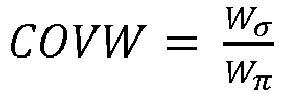
- High COVW indicates increased mechanical dyssynchrony. Values for COVW range from 1.0 - 1.25 for low mechanical dyssynchrony (weak CRT response), 1.25 - 1.50 for moderate mechanical dyssynchrony (moderate CRT response), and 1.5 - 1.7 for high mechanical dyssynchrony (strong CRT responders) at baseline (
Figure 14 A) . - A local negative value of total cardiac cycle work is a direct measure of local lost pump efficiency. The fraction of the left ventricular mass performing negative work (LVNW) at baseline is indicative of the existing severity of mechanical dyssynchrony. Values for LVNW approximately range from 0.1 - 0.15 for low mechanical dyssynchrony (weak CRT response), 0.15 - 0.20 for moderate mechanical dyssynchrony (moderate CRT response), and 0.2 - 0.25 for high mechanical dyssynchrony (strong CRT response) at baseline (
Figure 14 B) . - A causal mechanism of CRT is the recruitment of septal myocardial regions which had originally performed negative work at baseline to perform positive work. The change (positive reduction) in the fraction of septum performing negative work (ΔSTNW) after CRT is a direct measure of pump function improvement and correlates with positive CRT response. Values for ΔSTNW approximately range from 0 to 0.06 for low improvement (weak CRT response), 0.06 to 0.12 for moderate improvement (moderate CRT response), and 0.12 to 0.18 for high improvement (strong CRT response) (Figure 14 C).
- In alternative embodiments, the clinical utility of patient-specific electromechanical models of the invention are comprised of four main categories:
- Work heterogeneity metrics can be used as supporting diagnostic measure that can supplement existing diagnostics (such as QRS duration > 120 ms, electrocardiographic features, low dP/dT) to characterize dyssynchronous heart failure (DHF). Patients with high work heterogeneity can be classified separately from patients with low work heterogeneity. This can help the clinicians in deciding on the appropriate therapeutic response to different DHF patients by estimating the severity of the existing heart failure using COVW and LVNW.
- The metrics for work heterogeneity can be used as a decision tool for choosing the correct intervention techniques for patients with DHF. Patients having high work heterogeneity (COVW > 1.4, LVNW > 16%, SNW > 25%) at baseline are ideal candidates for CRT. Similarly, CRT may not be effective in patients with low baseline work heterogeneity (COVW < 1.2, LVNW < 12%, SNW < 15%). This can be used as additional information aiding the clinical decision for the intervention technique. Based on the diagnostic, the model may aid in the decision as to whether or not a candidate would likely benefit from undergoing an ICD implantation procedure to apply CRT.
- Modeling the response to different parameters of the CRT intervention helps in optimizing the intervention procedure for a particular patient. Therapeutic parameters and protocols include but are not limited to optimal lead placement and the relative timing of lead stimulus application. Therapeutic outcomes may be predicted by simulation before implantation to estimate the best possible CRT response, as computed by mechanical dyssynchrony indices such as ΔSTNW.
- Work heterogeneity metrics can be used as follow-up diagnostic measures to assess the success or failure of CRT in a particular patient. A successful CRT procedure may only reduce the end-systolic volume but may also reduce the work heterogeneity. In alternative embodiments, the reduction in work heterogeneity is computed immediately after the procedure, thus providing a faster assessment of the therapy.
-
Figure 3 (addendum) summarizes the clinical data, registration methods, and model components. - In alternative embodiments, models for designing methods of the invention are constructed from patient clinical data. The clinical data included:
- Digital images of cardiac and thoracic anatomy
o Computed tomography images, magnetic resonance images, diffusion tensor magnetic resonance images, transthoracic echocardiographic images - Ventricular cavity pressures
o Intracardiac catheterization - Electrical activation pattern
o Electrocardiograms, electroanatomic mapping. - In alternative embodiments, the four main components of exemplary patient-specific computer cardiovascular models or methods of the invention are: the anatomy (Anatomic Model), electrophysiology ( Electrophysiology Model), biomechanics (Passive Material Model, Active Contraction Model), and hemodynamics (Hemodynamics model) (
Figure 3 ). - General methods to register the clinical data to the model subcomponents are listed next to the category name in parenthesis, below. Examples of particular methods that can be used to practice the methods of this invention are described, e.g., in Aguado-Sierra et al., 2011; Krishnamurthy et al., 2012; Villongco et al., 2014, see below.
- Anatomical Model
- ∘ Model left and right ventricular geometry from patient cardiac images from MRI, CT, echocardiography or other imaging modalities (Image segmentation and mesh fitting or mesh generation)
- ∘ Incorporate ventricular muscle fiber architecture using human data from cadaver hearts or other sources (Fiber angle or tensor field fitting, Large deformation diffeomorphic mapping to map fibers to patient-specific geometry)
- ∘ Model shape and location of myocardial infarcts or ischemic zones from MIBI-SPECT, Gd delayed-enhancement MRI or other clinical data (image segmentation and fitting of patient-specific infarct or ischemic zone geometry). The myocardial infarct or ischemic region is modeled as a region of altered mechanical and electrical properties based on physical alterations associated with ischemia or infarction.
- Electrophysiology model
- ∘ Use an ionic model of the human ventricular action potential adjusted for changes associated with heart failure
- ∘ Model electrical conduction by identifying electrical stimulus location(s) and regional myocardial electrical conductivities of bulk left and right ventricular myocardium, left and right ventricular endocardium, infarct or ischemic tissue making use of patient electrophysiology recordings such as 12-lead ECG (Electrical model parameter optimization to match predicted and measured ECG, VCG or electrical recordings)
- ∘ Solve for three-dimensional action potential wave propagation to obtain three-dimension al distribution of regional electrical activation times used to trigger mechanical contraction model
- Biomechanics model
- ∘ Identify patient-specific resting myocardial mechanical properties making use of measured or estimated diastolic ventricular pressures and volumes. Match model passive pressure-volume relation to human measurements, for example, to the normalized relation observed by Klotz et al, Am J Physiol, 2006. Solve for unloaded ventricular geometry making use of measured geometry (typically at end-diastole), known or estimated left ventricular end-diastolic pressure and volume, and a dual or inverse solution (e.g. as given by Krishnamurthy et al., J Comp Phys, 2013)
- ∘ Identify patient-specific active contractile myocardial properties such as peak systolic stiffness, rate of tension development and rate of diastolic tension decline making use of estimated or recorded ventricular and/or arterial blood pressures, and systolic ventricular volume changed. Adjust these parameters or solve for them using numerical optimization methods to minimize the differences between measured and computed ventricular systolic pressures and volume changes.
- Hemodynamics model
∘ Formulate and parameterize a closed loop circulation model and identify parameters to match patient measurements of arterial pressure waveforms. Make use of measured patient recordings including mitral and aortic valve dimensions and mitral regurgitant volume from echocardiography. Solve a numerical optimization or use an adaptive model such as CircAdapt (Arts et al., Am J Physiol, 2005). - Integrated model
- ∘ Couple hemodynamic model to ventricular mechanics model using the algorithm of Kerchoffs et al. (Ann Biomed Eng, 2007).
- ∘ Couple electrical model top biomechanical model by using electrical depolarization times as times for initiation of systolic tension development, or use a fully coupled electromechanical model in which the ionic model includes intracellular calcium transients and a model of myofilament activation to tension development.
- ∘ Use model to solve for distributions of regional wall motions, pressures, stress and strain throughout the cardiac cycle. Integrate stress strain loops to obtain regional myocardial work density distributions. Derive from distributions predictive indices of heterogeneity including COVW, fraction of myocardium performing negative work or fraction of septum performing negative work (i.e. regions having work performed on them by surrounding regions).
- ∘ Use the model to simulate possible therapeutic interventions such as cardiac resynchronization using biventricular pacing. Specify pacing lead locations or VV delay times between lead stimuli and adjust these to maximize the decrease in measures of regional myocardial work density heterogeneity, e.g. to eliminate all negative work regions and to reduce the magnitude of work heterogeneity as much as possible.
-
- 1. Aguado-Sierra, J., et al. (2011). Patient-specific modeling of dyssynchronous heart failure: a case study. Progress in biophysics and molecular biology, 107(1), 147-155.
- 2. Kerckhoffs, R. C., et al. (2010). Ventricular dilation and electrical dyssynchrony synergistically increase regional mechanical non-uniformity but not mechanical dyssynchrony a computational model. Circulation: Heart Failure, 3(4), 528-536.
- 3. Krishnamurthy, A., et al. (2013). Patient-specific models of cardiac biomechanics. Journal of computational physics, 244, 4-21.
- 4. Strauss, D. G., et al. (2011). Defining left bundle branch block in the era of cardiac resynchronization therapy. The American journal of cardiology, 107(6), 927-934.
- 5. Villongco, C. T. et al. (2014). Patient-specific modeling of ventricular activation pattern using surface ECG-derived vector-cardiogram in bundle branch block. Progress in biophysics and molecular biology .
- A number of embodiments of the invention have been described. The invention is defined by the scope of the appended claims.
Claims (10)
- A computer-implemented method for predicting and/or optimizing the response of patients with dyssynchronous heart failure (DHF) to cardiac resynchronization therapy (CRT), comprising:(a) determining indices derived from the regional distribution of myocardial external work density (RDMW) prior to treatment,
wherein the indices determined are selected from the group consisting of:(i) the fraction of ventricular wall mass or volume, or a part thereof, optionally left ventricle (LV), right ventricle (RV), or septum, performing negative work (myocardial negative work density fraction, or MNWF), optionally having work done on it by the surrounding heart wall,(ii) the coefficient of variation of external work density (COVW) or other measures of work dispersion or heterogeneity,(iii) the fraction of the septal wall performing negative work (change in STNW or ΔSTNW), wherein a decrease in the fraction of the septal wall performing negative work (ΔSTNM) computed after simulated CRT is a predictor of pump function improvement and CRT response, and(iv) a combination thereof,(b) computing the change in these indices of work heterogeneity following the simulated application of CRT in a computational model, and(c) performing computational simulations of possible therapeutic interventions including the cardiac resynchronization therapy, the computational simulations being performed using different possible therapeutic parameters including at least one of alternative pacing lead locations and ventriculo-ventricular pacing delay times. - The computer-implemented method according to claim 1, wherein the indices determined from the regional distribution of myocardial external work density RDMW are determined using the equation:

- The computer-implemented method according to claim 1 or 2, wherein the indices determined comprise the coefficient of variation of external work density (COVW) or other measures of work dispersion or heterogeneity.
- The computer-implemented method according to any one of claims 1 to 3, wherein the indices determined comprise a fraction of mass of a wall of the left ventricle performing negative work.
- The computer-implemented method according to any one of claims 1 to 4, wherein the indices determined comprise a fraction of mass of a wall of the right ventricle performing negative work.
- The computer-implemented method according to any one of claims 1 to 5, wherein the indices determined comprise a fraction of mass of a wall of the septum performing negative work.
- The computer-implemented method according to claim 1, wherein a result of the computing is used to select one or more therapeutic parameters include pacing lead locations or ventriculo-ventricular pacing delay times.
- The computer-implemented method according to any one of claims 1 to 7, further comprising:computing the fraction of the LV or the septum performing negative work, or the COVW as a biomarker for the regional mechanical heterogeneity using the distribution of the myocardial work density; andassessing, based at least on the biomarker a severity of a dyssynchrony in order to classify the patient as a responder or a non-responder.
- A computer system comprising a processor and a data storage device wherein said data storage device has stored thereon: a computer program product for implementing the method of any of claims 1 to 8.
- A non-transitory memory medium comprising program instructions for running, processing and/or implementing a computer program product for implementing the method of any of claims 1 to 8.
Applications Claiming Priority (2)
| Application Number | Priority Date | Filing Date | Title |
|---|---|---|---|
| US201361905138P | 2013-11-15 | 2013-11-15 | |
| PCT/US2014/065841 WO2015073927A2 (en) | 2013-11-15 | 2014-11-14 | Compositions, devices and methods for diagnosing heart failure and for patient-specific modeling to predict outcomes of cardiac resynchronization therapy |
Publications (3)
| Publication Number | Publication Date |
|---|---|
| EP3068484A2 EP3068484A2 (en) | 2016-09-21 |
| EP3068484A4 EP3068484A4 (en) | 2017-08-23 |
| EP3068484B1 true EP3068484B1 (en) | 2022-04-13 |
Family
ID=53058279
Family Applications (1)
| Application Number | Title | Priority Date | Filing Date |
|---|---|---|---|
| EP14862497.6A Not-in-force EP3068484B1 (en) | 2013-11-15 | 2014-11-14 | Patient-specific modeling to predict outcomes of cardiac resynchronization therapy |
Country Status (3)
| Country | Link |
|---|---|
| US (1) | US12042250B2 (en) |
| EP (1) | EP3068484B1 (en) |
| WO (1) | WO2015073927A2 (en) |
Families Citing this family (14)
| Publication number | Priority date | Publication date | Assignee | Title |
|---|---|---|---|---|
| US9539427B2 (en) | 2010-11-08 | 2017-01-10 | The Johns Hopkins University | Methods for improving heart function |
| EP3068484B1 (en) * | 2013-11-15 | 2022-04-13 | The Regents of the University of California | Patient-specific modeling to predict outcomes of cardiac resynchronization therapy |
| JP6631072B2 (en) * | 2015-07-31 | 2020-01-15 | 富士通株式会社 | Biological simulation system and biological simulation method |
| CN108431720B (en) | 2015-12-22 | 2023-03-03 | 加利福尼亚大学董事会 | System and method for locating a source of fibrillation |
| JP7361470B2 (en) * | 2016-06-20 | 2023-10-16 | バタフライ ネットワーク,インコーポレイテッド | Automatic image acquisition to assist the user in operating the ultrasound device |
| US12076119B2 (en) | 2018-04-26 | 2024-09-03 | Vektor Medical, Inc. | Bootstrapping a simulation-based electromagnetic output of a different anatomy |
| CA3145797A1 (en) | 2018-07-05 | 2020-01-09 | The Regents Of The University Of California | Computational simulations of anatomical structures and body surface electrode positioning |
| NZ774294A (en) * | 2018-09-24 | 2025-12-19 | Univ Missouri | Model-based sensor technology for detection of cardiovascular status |
| US11687691B2 (en) | 2019-01-03 | 2023-06-27 | International Business Machines Corporation | Forward and reverse transformations of a model of functional units of a biological system trained by a global model of the systems |
| GB2583501B (en) * | 2019-04-30 | 2022-02-02 | Pacertool As | Characterisation of cardiac dyssynchrony and dyssynergy |
| US20220047868A1 (en) | 2019-04-30 | 2022-02-17 | Pacertool As | Characterisation of cardiac dyssynchrony and dyssynergy |
| US12033051B2 (en) | 2019-12-19 | 2024-07-09 | Lawrence Livermore National Security, Llc | Machine learning based reconstruction of intracardiac electrical behavior based on electrocardiograms |
| WO2022140627A1 (en) * | 2020-12-22 | 2022-06-30 | The Regents Of The University Of California | Atlas-based characterization of patent-specific cardiac electromechanical activation maps |
| CA3249727A1 (en) * | 2022-04-27 | 2023-11-02 | Prima Medical, Inc. | Systems and methods for feature state change detection and uses thereof |
Family Cites Families (76)
| Publication number | Priority date | Publication date | Assignee | Title |
|---|---|---|---|---|
| US5273038A (en) | 1990-07-09 | 1993-12-28 | Beavin William C | Computer simulation of live organ |
| US6501979B1 (en) | 2000-03-09 | 2002-12-31 | Koninklijke Philips Electronics N.V. | Methods and devices for combined ECG and PPU controlled magnetic resonance imaging |
| US6690967B2 (en) | 2000-08-03 | 2004-02-10 | Draeger Medical System, Inc. | Electrocardiogram system for synthesizing leads and providing an accuracy measure |
| JP2004507293A (en) | 2000-08-15 | 2004-03-11 | ザ リージェンツ オブ ザ ユニバーシティ オブ カリフォルニア | Method and apparatus for reducing contamination of electrical signals |
| US7041061B2 (en) | 2002-07-19 | 2006-05-09 | Cardiac Pacemakers, Inc. | Method and apparatus for quantification of cardiac wall motion asynchrony |
| AU2003302369A1 (en) | 2002-11-01 | 2004-06-18 | University Of Lausanne | Methods of analyzing atrial fibrillations |
| AU2003229531A1 (en) | 2003-05-13 | 2004-12-03 | Medical Insight A/S | Method and system for simulating x-ray images |
| US7010347B2 (en) | 2004-02-14 | 2006-03-07 | Pacesetter, Inc. | Optimization of impedance signals for closed loop programming of cardiac resynchronization therapy devices |
| WO2005067790A1 (en) | 2004-01-16 | 2005-07-28 | Compumedics Ltd | Method and apparatus for ecg-derived sleep disordered breathing monitoring, detection and classification |
| RS49856B (en) | 2004-01-16 | 2008-08-07 | Boško Bojović | DEVICE AND PROCEDURE FOR VISUAL THREE-DIMENSIONAL ECG DATA PRESENTATION |
| US8292983B2 (en) | 2005-01-13 | 2012-10-23 | Donaldson Company, Inc. | Air filter cartridge and air cleaner assembly |
| US20080021336A1 (en) * | 2006-04-24 | 2008-01-24 | Dobak John D Iii | Devices and methods for accelerometer-based characterization of cardiac synchrony and dyssynchrony |
| US7526338B1 (en) * | 2005-05-23 | 2009-04-28 | Pacesetter, Inc. | Implantable cardiac device for monitoring diastolic heart failure and method of operation and use thereof |
| DE102005032974B4 (en) | 2005-07-14 | 2013-11-07 | Siemens Aktiengesellschaft | Method for 3D visualization of vascular inserts in the human body with the C-arm |
| EP2023949A4 (en) | 2006-04-26 | 2009-08-26 | Univ California | COMPOSITIONS AND METHODS FOR THE DELIVERY OF NEUROTHERAPY OF HIGH MOLECULAR WEIGHT ENHANCED BY CONVECTION |
| EP2020914B1 (en) | 2006-05-10 | 2017-03-01 | Regents of the University of Minnesota | Methods and apparatus of three dimensional cardiac electrophysiological imaging |
| US8391995B2 (en) | 2006-11-13 | 2013-03-05 | The Washington University | Cardiac pacing using the inferior nodal extension |
| US8214011B2 (en) * | 2007-08-13 | 2012-07-03 | General Electric Company | System and method for remodeling prediction using ultrasound |
| WO2009079344A1 (en) * | 2007-12-14 | 2009-06-25 | The Cleveland Clinic Foundation | System and method to characterize cardiac function |
| US8355782B2 (en) | 2008-01-28 | 2013-01-15 | St. Jude Medical Ab | Implantable heart stimulator for measuring dyssynchrony using impedance |
| US8019409B2 (en) * | 2008-06-09 | 2011-09-13 | Pacesetter, Inc. | Cardiac resynchronization therapy optimization using electromechanical delay from realtime electrode motion tracking |
| CN104840196B (en) | 2008-10-09 | 2018-10-09 | 加利福尼亚大学董事会 | Machine and process for the source for being automatically positioned biological rhythm disorder |
| WO2010052303A1 (en) | 2008-11-06 | 2010-05-14 | Oslo Universitetssykehus Hf | Analysis of ventricular electro-mechanical activation data |
| JP5911726B2 (en) | 2008-11-10 | 2016-04-27 | カーディオインサイト テクノロジーズ インコーポレイテッド | Visualization of electrophysiological data |
| RU2435518C2 (en) | 2008-11-27 | 2011-12-10 | Амиран Шотаевич РЕВИШВИЛИ | Method of non-invasive electrophysiological examination of heart |
| US8209012B2 (en) * | 2008-12-11 | 2012-06-26 | Pacesetter, Inc. | Mechanical indicators for individually adapting therapy in an implantable cardiac therapy device |
| US9332915B2 (en) | 2013-03-15 | 2016-05-10 | The Regents Of The University Of California | System and method to identify sources associated with biological rhythm disorders |
| US8880159B2 (en) | 2010-04-07 | 2014-11-04 | The Johns Hopkins University | Methods for determining risk of ventricular arrhythmia |
| AU2011237659B2 (en) | 2010-04-08 | 2015-05-21 | The Regents Of The University Of California | Methods, system and apparatus for the detection, diagnosis and treatment of biological rhythm disorders |
| US20110307231A1 (en) | 2010-06-09 | 2011-12-15 | Jens Kirchner | Method and arrangement for creating an individualized, computer-aided model of a system, and a corresponding computer program and a corresponding machine-readable storage medium |
| US20110311116A1 (en) | 2010-06-17 | 2011-12-22 | Creighton University | System and methods for anatomical structure labeling |
| JP5597492B2 (en) * | 2010-09-08 | 2014-10-01 | 株式会社東芝 | Ultrasonic diagnostic apparatus, image processing apparatus, and program |
| US8532352B2 (en) | 2010-10-06 | 2013-09-10 | Siemens Aktiengesellschaft | Method and system for intraoperative guidance using physiological image fusion |
| EP2633457B1 (en) | 2010-10-26 | 2021-10-06 | Oslo Universitetssykehus HF | Method for myocardial segment work analysis |
| WO2012106729A1 (en) | 2011-02-04 | 2012-08-09 | Phase Space Systems Corporation | System and method for evaluating an electrophysiological signal |
| EP2672889B1 (en) | 2011-02-11 | 2021-04-07 | The Johns Hopkins University | System and method for planning a patient-specific cardiac procedure |
| KR20140070502A (en) | 2011-05-02 | 2014-06-10 | 더 리젠츠 오브 더 유니버시티 오브 캘리포니아 | System and method for targeting heart rhythm disorders using shaped ablation |
| US8972228B2 (en) | 2011-05-03 | 2015-03-03 | Medtronic, Inc. | Assessing intra-cardiac activation patterns |
| US9524552B2 (en) | 2011-08-03 | 2016-12-20 | The Regents Of The University Of California | 2D/3D registration of a digital mouse atlas with X-ray projection images and optical camera photos |
| EP2765902B1 (en) | 2011-10-12 | 2019-08-14 | CardioInsight Technologies, Inc. | Sensing zone for spatially relevant electrical information |
| US9668745B2 (en) | 2011-12-19 | 2017-06-06 | Depuy Ireland Unlimited Company | Anatomical concentric spheres THA |
| US10311978B2 (en) * | 2012-01-30 | 2019-06-04 | Siemens Healthcare Gmbh | Method and system for patient specific planning of cardiac therapies on preoperative clinical data and medical images |
| US9295399B2 (en) | 2012-06-20 | 2016-03-29 | Intermountain Invention Management, Llc | Atrial fibrillation treatment systems and methods |
| US9566011B2 (en) | 2012-09-13 | 2017-02-14 | University Of South Florida | Systems and methods for diagnosing cardiovascular conditions |
| WO2014055980A1 (en) | 2012-10-05 | 2014-04-10 | The Regents Of The University Of Michigan | Automated analysis of multi-lead electrocardiogram data to identify the exit sites of physiological conditions |
| WO2014059126A1 (en) * | 2012-10-10 | 2014-04-17 | Beth Israel Deaconess Medical Center, Inc. | Biomarkers and treatments for heart failure |
| US8880158B2 (en) | 2013-01-16 | 2014-11-04 | University Of Vermont | Methods and systems for determining spatiotemporal variability for mapping cardiac fibrillation |
| US10912476B2 (en) | 2013-01-16 | 2021-02-09 | University Of Vermont | Catheters, systems, and related methods for mapping, minimizing, and treating cardiac fibrillation |
| US20140241988A1 (en) | 2013-01-31 | 2014-08-28 | The Regents Of The University Of Michigan | Methods and compositions for treating atrial fibrillation |
| GB201302194D0 (en) | 2013-02-07 | 2013-03-27 | Crisalix Sa | 3D platform for aesthetic simulation |
| WO2014144019A1 (en) | 2013-03-15 | 2014-09-18 | The University Of North Carolina At Chapel Hill | Methods, systems, and computer readable media for real-time 2d/3d deformable registration using metric learning |
| US9211110B2 (en) | 2013-03-15 | 2015-12-15 | The Regents Of The University Of Michigan | Lung ventillation measurements using ultrasound |
| US10064567B2 (en) | 2013-04-30 | 2018-09-04 | Medtronic, Inc. | Systems, methods, and interfaces for identifying optimal electrical vectors |
| WO2014205310A2 (en) | 2013-06-21 | 2014-12-24 | The Board Of Trustees Of The Leland Stanford Junior University | Techniques for predicting cardiac arrhythmias based on signals from leads of electrocardiography |
| US9463072B2 (en) | 2013-08-09 | 2016-10-11 | Siemens Aktiengesellschaft | System and method for patient specific planning and guidance of electrophysiology interventions |
| CN105474219B (en) | 2013-08-28 | 2019-10-18 | 西门子公司 | Systems and methods for estimating physiological cardiac measurements from medical images and clinical data |
| EP3068484B1 (en) * | 2013-11-15 | 2022-04-13 | The Regents of the University of California | Patient-specific modeling to predict outcomes of cardiac resynchronization therapy |
| US10561321B2 (en) | 2013-12-12 | 2020-02-18 | Alivecor, Inc. | Continuous monitoring of a user's health with a mobile device |
| CN106102583B (en) | 2014-01-10 | 2024-08-09 | 泰勒顿国际控股公司 | Detection of scar and fibrous cardiac areas |
| WO2015120064A1 (en) | 2014-02-04 | 2015-08-13 | Cardioinsight Technologies, Inc. | Integrated analysis of electrophysiological data |
| CN111493819B (en) * | 2014-04-02 | 2023-06-06 | 西门子保健有限责任公司 | Systems and methods for characterizing electrical properties of the heart from medical images and body surface potentials |
| WO2015160602A1 (en) | 2014-04-15 | 2015-10-22 | Siemens Aktiengesellschaft | Efficient treatment of atrial fibrilation using three-dimensional electrical potential model |
| US9380940B2 (en) | 2014-05-05 | 2016-07-05 | Pacesetter, Inc. | Method and system for displaying a three dimensional visualization of cardiac motion |
| EP3157423B1 (en) | 2014-06-20 | 2025-01-01 | The Regents of The University of California | Patient-specific modeling of ventricular activation pattern using surface ecg-derived vectorcardiogram in bundle branch block |
| US10925511B2 (en) | 2014-07-24 | 2021-02-23 | Cardiosolv Ablation Technologies, Inc. | System and method for cardiac ablation |
| EP3188684B1 (en) | 2014-09-02 | 2019-12-25 | Maino Dott. Bortolo Giuliano | Surgical template for dental and/or orthodontic implants and method for designing a surgical template |
| US10687898B2 (en) | 2014-11-14 | 2020-06-23 | The Johns Hopkins University | Systems and methods for atrial fibrillation treatment and risk assessment |
| US10213148B2 (en) | 2014-12-05 | 2019-02-26 | Pacesetter, Inc. | Spinal cord stimulation guidance system and method of use |
| ES2824257T3 (en) | 2015-01-09 | 2021-05-11 | Da Silva Sara Isabel Azevedo | Orthopedic surgery planning system |
| RU2719017C2 (en) | 2015-04-14 | 2020-04-16 | Конинклейке Филипс Н.В. | Method and system for detecting myocardial ischemia using ecg |
| CN108778131A (en) | 2015-11-06 | 2018-11-09 | 圣路易斯华盛顿大学 | System for non-invasive imaging and treatment of cardiac arrhythmias |
| CN108431720B (en) | 2015-12-22 | 2023-03-03 | 加利福尼亚大学董事会 | System and method for locating a source of fibrillation |
| EP3651651A2 (en) | 2017-07-14 | 2020-05-20 | Materialise N.V. | System and method of radiograph correction and visualization |
| US11786744B2 (en) | 2018-03-16 | 2023-10-17 | Zoll Medical Corporation | Wearable medical device for continuous heart monitoring with intermittent additional signal data provided via one or more touch-sensitive electrodes |
| US12076119B2 (en) | 2018-04-26 | 2024-09-03 | Vektor Medical, Inc. | Bootstrapping a simulation-based electromagnetic output of a different anatomy |
| CA3145797A1 (en) | 2018-07-05 | 2020-01-09 | The Regents Of The University Of California | Computational simulations of anatomical structures and body surface electrode positioning |
-
2014
- 2014-11-14 EP EP14862497.6A patent/EP3068484B1/en not_active Not-in-force
- 2014-11-14 WO PCT/US2014/065841 patent/WO2015073927A2/en not_active Ceased
- 2014-11-14 US US15/036,414 patent/US12042250B2/en active Active
Also Published As
| Publication number | Publication date |
|---|---|
| EP3068484A2 (en) | 2016-09-21 |
| US20160262635A1 (en) | 2016-09-15 |
| US12042250B2 (en) | 2024-07-23 |
| EP3068484A4 (en) | 2017-08-23 |
| WO2015073927A3 (en) | 2015-11-12 |
| WO2015073927A2 (en) | 2015-05-21 |
Similar Documents
| Publication | Publication Date | Title |
|---|---|---|
| EP3068484B1 (en) | Patient-specific modeling to predict outcomes of cardiac resynchronization therapy | |
| US11664125B2 (en) | System and method for deep learning based cardiac electrophysiology model personalization | |
| Gao et al. | Dynamic finite-strain modelling of the human left ventricle in health and disease using an immersed boundary-finite element method | |
| Asner et al. | Estimation of passive and active properties in the human heart using 3D tagged MRI | |
| Strocchi et al. | Cell to whole organ global sensitivity analysis on a four-chamber heart electromechanics model using Gaussian processes emulators | |
| US10296809B2 (en) | Method and system for fast patient-specific cardiac electrophysiology simulations for therapy planning and guidance | |
| US12499969B2 (en) | Computational models for 3D muscular electrophysiology and electromechanics simulation | |
| Lee et al. | Computational modeling for cardiac resynchronization therapy | |
| US20080077032A1 (en) | Methods for providing diagnostic information using endocardial surface data for a patient's heart | |
| Ukwatta et al. | Image‐based reconstruction of three‐dimensional myocardial infarct geometry for patient‐specific modeling of cardiac electrophysiology | |
| US20170209698A1 (en) | Patient-specific modeling of ventricular activation pattern using surface ecg-derived vectorcardiogram in bundle branch block | |
| Finsberg et al. | Estimating cardiac contraction through high resolution data assimilation of a personalized mechanical model | |
| Balaban et al. | High‐resolution data assimilation of cardiac mechanics applied to a dyssynchronous ventricle | |
| Koopsen et al. | Parameter subset reduction for imaging-based digital twin generation of patients with left ventricular mechanical discoordination | |
| Del Corso et al. | Sensitivity analysis of an electrophysiology model for the left ventricle | |
| Soni et al. | A comprehensive review on CFD simulations of left ventricle hemodynamics: numerical methods, experimental validation techniques, and emerging trends | |
| Holmes et al. | Sex-specific human electromechanical multiscale in-silico models for virtual therapy evaluation | |
| Meister et al. | Additional clinical applications | |
| Carapella et al. | Effect of fibre orientation optimisation in an electromechanical model of left ventricular contraction in rat | |
| Mehdi et al. | Does edpvr represent myocardial tissue stiffness? toward a better definition | |
| Dou et al. | A study of mechanical optimization strategy for cardiac resynchronization therapy based on an electromechanical model | |
| Miri et al. | Efficiency of timing delays and electrode positions in optimization of biventricular pacing: a simulation study | |
| Gao et al. | Initial experience with a dynamic imaging-derived immersed boundary model of human left ventricle | |
| Awadi et al. | An Improved Computational Model Based on Cardiac Imaging Data for the Quantitative and Qualitative Assessment of the Mechanical Properties of the Human Left Ventricle | |
| Ingrassia et al. | Model-based development of four-dimensional wall motion measures |
Legal Events
| Date | Code | Title | Description |
|---|---|---|---|
| PUAI | Public reference made under article 153(3) epc to a published international application that has entered the european phase |
Free format text: ORIGINAL CODE: 0009012 |
|
| 17P | Request for examination filed |
Effective date: 20160519 |
|
| AK | Designated contracting states |
Kind code of ref document: A2 Designated state(s): AL AT BE BG CH CY CZ DE DK EE ES FI FR GB GR HR HU IE IS IT LI LT LU LV MC MK MT NL NO PL PT RO RS SE SI SK SM TR |
|
| AX | Request for extension of the european patent |
Extension state: BA ME |
|
| DAX | Request for extension of the european patent (deleted) | ||
| A4 | Supplementary search report drawn up and despatched |
Effective date: 20170724 |
|
| RIC1 | Information provided on ipc code assigned before grant |
Ipc: A61B 5/029 20060101ALI20170718BHEP Ipc: A61B 6/00 20060101ALI20170718BHEP Ipc: A61N 1/362 20060101AFI20170718BHEP Ipc: A61B 6/03 20060101ALI20170718BHEP Ipc: A61B 5/00 20060101ALI20170718BHEP Ipc: A61N 1/39 20060101ALI20170718BHEP Ipc: A61B 5/0215 20060101ALI20170718BHEP Ipc: G06F 19/00 20110101ALI20170718BHEP Ipc: A61B 5/02 20060101ALI20170718BHEP Ipc: A61B 5/04 20060101ALI20170718BHEP Ipc: A61B 5/0452 20060101ALN20170718BHEP |
|
| STAA | Information on the status of an ep patent application or granted ep patent |
Free format text: STATUS: EXAMINATION IS IN PROGRESS |
|
| 17Q | First examination report despatched |
Effective date: 20190219 |
|
| GRAP | Despatch of communication of intention to grant a patent |
Free format text: ORIGINAL CODE: EPIDOSNIGR1 |
|
| STAA | Information on the status of an ep patent application or granted ep patent |
Free format text: STATUS: GRANT OF PATENT IS INTENDED |
|
| RIC1 | Information provided on ipc code assigned before grant |
Ipc: A61B 5/0215 20060101ALI20211022BHEP Ipc: A61B 5/029 20060101ALI20211022BHEP Ipc: A61B 5/02 20060101ALI20211022BHEP Ipc: A61N 1/39 20060101ALI20211022BHEP Ipc: A61B 5/00 20060101ALI20211022BHEP Ipc: A61B 6/00 20060101ALI20211022BHEP Ipc: A61B 6/03 20060101ALI20211022BHEP Ipc: A61N 1/362 20060101AFI20211022BHEP |
|
| INTG | Intention to grant announced |
Effective date: 20211117 |
|
| GRAS | Grant fee paid |
Free format text: ORIGINAL CODE: EPIDOSNIGR3 |
|
| GRAA | (expected) grant |
Free format text: ORIGINAL CODE: 0009210 |
|
| STAA | Information on the status of an ep patent application or granted ep patent |
Free format text: STATUS: THE PATENT HAS BEEN GRANTED |
|
| AK | Designated contracting states |
Kind code of ref document: B1 Designated state(s): AL AT BE BG CH CY CZ DE DK EE ES FI FR GB GR HR HU IE IS IT LI LT LU LV MC MK MT NL NO PL PT RO RS SE SI SK SM TR |
|
| REG | Reference to a national code |
Ref country code: GB Ref legal event code: FG4D |
|
| REG | Reference to a national code |
Ref country code: CH Ref legal event code: EP |
|
| REG | Reference to a national code |
Ref country code: DE Ref legal event code: R096 Ref document number: 602014083268 Country of ref document: DE |
|
| REG | Reference to a national code |
Ref country code: IE Ref legal event code: FG4D |
|
| REG | Reference to a national code |
Ref country code: AT Ref legal event code: REF Ref document number: 1482932 Country of ref document: AT Kind code of ref document: T Effective date: 20220515 |
|
| REG | Reference to a national code |
Ref country code: NL Ref legal event code: FP |
|
| REG | Reference to a national code |
Ref country code: LT Ref legal event code: MG9D |
|
| REG | Reference to a national code |
Ref country code: AT Ref legal event code: MK05 Ref document number: 1482932 Country of ref document: AT Kind code of ref document: T Effective date: 20220413 |
|
| PG25 | Lapsed in a contracting state [announced via postgrant information from national office to epo] |
Ref country code: SE Free format text: LAPSE BECAUSE OF FAILURE TO SUBMIT A TRANSLATION OF THE DESCRIPTION OR TO PAY THE FEE WITHIN THE PRESCRIBED TIME-LIMIT Effective date: 20220413 Ref country code: PT Free format text: LAPSE BECAUSE OF FAILURE TO SUBMIT A TRANSLATION OF THE DESCRIPTION OR TO PAY THE FEE WITHIN THE PRESCRIBED TIME-LIMIT Effective date: 20220816 Ref country code: NO Free format text: LAPSE BECAUSE OF FAILURE TO SUBMIT A TRANSLATION OF THE DESCRIPTION OR TO PAY THE FEE WITHIN THE PRESCRIBED TIME-LIMIT Effective date: 20220713 Ref country code: LT Free format text: LAPSE BECAUSE OF FAILURE TO SUBMIT A TRANSLATION OF THE DESCRIPTION OR TO PAY THE FEE WITHIN THE PRESCRIBED TIME-LIMIT Effective date: 20220413 Ref country code: HR Free format text: LAPSE BECAUSE OF FAILURE TO SUBMIT A TRANSLATION OF THE DESCRIPTION OR TO PAY THE FEE WITHIN THE PRESCRIBED TIME-LIMIT Effective date: 20220413 Ref country code: GR Free format text: LAPSE BECAUSE OF FAILURE TO SUBMIT A TRANSLATION OF THE DESCRIPTION OR TO PAY THE FEE WITHIN THE PRESCRIBED TIME-LIMIT Effective date: 20220714 Ref country code: FI Free format text: LAPSE BECAUSE OF FAILURE TO SUBMIT A TRANSLATION OF THE DESCRIPTION OR TO PAY THE FEE WITHIN THE PRESCRIBED TIME-LIMIT Effective date: 20220413 Ref country code: ES Free format text: LAPSE BECAUSE OF FAILURE TO SUBMIT A TRANSLATION OF THE DESCRIPTION OR TO PAY THE FEE WITHIN THE PRESCRIBED TIME-LIMIT Effective date: 20220413 Ref country code: BG Free format text: LAPSE BECAUSE OF FAILURE TO SUBMIT A TRANSLATION OF THE DESCRIPTION OR TO PAY THE FEE WITHIN THE PRESCRIBED TIME-LIMIT Effective date: 20220713 Ref country code: AT Free format text: LAPSE BECAUSE OF FAILURE TO SUBMIT A TRANSLATION OF THE DESCRIPTION OR TO PAY THE FEE WITHIN THE PRESCRIBED TIME-LIMIT Effective date: 20220413 |
|
| PG25 | Lapsed in a contracting state [announced via postgrant information from national office to epo] |
Ref country code: RS Free format text: LAPSE BECAUSE OF FAILURE TO SUBMIT A TRANSLATION OF THE DESCRIPTION OR TO PAY THE FEE WITHIN THE PRESCRIBED TIME-LIMIT Effective date: 20220413 Ref country code: PL Free format text: LAPSE BECAUSE OF FAILURE TO SUBMIT A TRANSLATION OF THE DESCRIPTION OR TO PAY THE FEE WITHIN THE PRESCRIBED TIME-LIMIT Effective date: 20220413 Ref country code: LV Free format text: LAPSE BECAUSE OF FAILURE TO SUBMIT A TRANSLATION OF THE DESCRIPTION OR TO PAY THE FEE WITHIN THE PRESCRIBED TIME-LIMIT Effective date: 20220413 Ref country code: IS Free format text: LAPSE BECAUSE OF FAILURE TO SUBMIT A TRANSLATION OF THE DESCRIPTION OR TO PAY THE FEE WITHIN THE PRESCRIBED TIME-LIMIT Effective date: 20220813 |
|
| REG | Reference to a national code |
Ref country code: DE Ref legal event code: R097 Ref document number: 602014083268 Country of ref document: DE |
|
| PG25 | Lapsed in a contracting state [announced via postgrant information from national office to epo] |
Ref country code: SM Free format text: LAPSE BECAUSE OF FAILURE TO SUBMIT A TRANSLATION OF THE DESCRIPTION OR TO PAY THE FEE WITHIN THE PRESCRIBED TIME-LIMIT Effective date: 20220413 Ref country code: SK Free format text: LAPSE BECAUSE OF FAILURE TO SUBMIT A TRANSLATION OF THE DESCRIPTION OR TO PAY THE FEE WITHIN THE PRESCRIBED TIME-LIMIT Effective date: 20220413 Ref country code: RO Free format text: LAPSE BECAUSE OF FAILURE TO SUBMIT A TRANSLATION OF THE DESCRIPTION OR TO PAY THE FEE WITHIN THE PRESCRIBED TIME-LIMIT Effective date: 20220413 Ref country code: EE Free format text: LAPSE BECAUSE OF FAILURE TO SUBMIT A TRANSLATION OF THE DESCRIPTION OR TO PAY THE FEE WITHIN THE PRESCRIBED TIME-LIMIT Effective date: 20220413 Ref country code: DK Free format text: LAPSE BECAUSE OF FAILURE TO SUBMIT A TRANSLATION OF THE DESCRIPTION OR TO PAY THE FEE WITHIN THE PRESCRIBED TIME-LIMIT Effective date: 20220413 Ref country code: CZ Free format text: LAPSE BECAUSE OF FAILURE TO SUBMIT A TRANSLATION OF THE DESCRIPTION OR TO PAY THE FEE WITHIN THE PRESCRIBED TIME-LIMIT Effective date: 20220413 |
|
| PLBE | No opposition filed within time limit |
Free format text: ORIGINAL CODE: 0009261 |
|
| STAA | Information on the status of an ep patent application or granted ep patent |
Free format text: STATUS: NO OPPOSITION FILED WITHIN TIME LIMIT |
|
| 26N | No opposition filed |
Effective date: 20230116 |
|
| PG25 | Lapsed in a contracting state [announced via postgrant information from national office to epo] |
Ref country code: AL Free format text: LAPSE BECAUSE OF FAILURE TO SUBMIT A TRANSLATION OF THE DESCRIPTION OR TO PAY THE FEE WITHIN THE PRESCRIBED TIME-LIMIT Effective date: 20220413 |
|
| PG25 | Lapsed in a contracting state [announced via postgrant information from national office to epo] |
Ref country code: SI Free format text: LAPSE BECAUSE OF FAILURE TO SUBMIT A TRANSLATION OF THE DESCRIPTION OR TO PAY THE FEE WITHIN THE PRESCRIBED TIME-LIMIT Effective date: 20220413 |
|
| REG | Reference to a national code |
Ref country code: DE Ref legal event code: R119 Ref document number: 602014083268 Country of ref document: DE |
|
| PG25 | Lapsed in a contracting state [announced via postgrant information from national office to epo] |
Ref country code: MC Free format text: LAPSE BECAUSE OF FAILURE TO SUBMIT A TRANSLATION OF THE DESCRIPTION OR TO PAY THE FEE WITHIN THE PRESCRIBED TIME-LIMIT Effective date: 20220413 |
|
| REG | Reference to a national code |
Ref country code: CH Ref legal event code: PL |
|
| REG | Reference to a national code |
Ref country code: NL Ref legal event code: MM Effective date: 20221201 |
|
| P01 | Opt-out of the competence of the unified patent court (upc) registered |
Effective date: 20230528 |
|
| GBPC | Gb: european patent ceased through non-payment of renewal fee |
Effective date: 20221114 |
|
| REG | Reference to a national code |
Ref country code: BE Ref legal event code: MM Effective date: 20221130 |
|
| PG25 | Lapsed in a contracting state [announced via postgrant information from national office to epo] |
Ref country code: LI Free format text: LAPSE BECAUSE OF NON-PAYMENT OF DUE FEES Effective date: 20221130 Ref country code: CH Free format text: LAPSE BECAUSE OF NON-PAYMENT OF DUE FEES Effective date: 20221130 |
|
| PG25 | Lapsed in a contracting state [announced via postgrant information from national office to epo] |
Ref country code: NL Free format text: LAPSE BECAUSE OF NON-PAYMENT OF DUE FEES Effective date: 20221201 Ref country code: LU Free format text: LAPSE BECAUSE OF NON-PAYMENT OF DUE FEES Effective date: 20221114 |
|
| PG25 | Lapsed in a contracting state [announced via postgrant information from national office to epo] |
Ref country code: IE Free format text: LAPSE BECAUSE OF NON-PAYMENT OF DUE FEES Effective date: 20221114 Ref country code: GB Free format text: LAPSE BECAUSE OF NON-PAYMENT OF DUE FEES Effective date: 20221114 Ref country code: DE Free format text: LAPSE BECAUSE OF NON-PAYMENT OF DUE FEES Effective date: 20230601 |
|
| PG25 | Lapsed in a contracting state [announced via postgrant information from national office to epo] |
Ref country code: FR Free format text: LAPSE BECAUSE OF NON-PAYMENT OF DUE FEES Effective date: 20221130 Ref country code: BE Free format text: LAPSE BECAUSE OF NON-PAYMENT OF DUE FEES Effective date: 20221130 |
|
| PG25 | Lapsed in a contracting state [announced via postgrant information from national office to epo] |
Ref country code: IT Free format text: LAPSE BECAUSE OF FAILURE TO SUBMIT A TRANSLATION OF THE DESCRIPTION OR TO PAY THE FEE WITHIN THE PRESCRIBED TIME-LIMIT Effective date: 20220413 |
|
| PG25 | Lapsed in a contracting state [announced via postgrant information from national office to epo] |
Ref country code: HU Free format text: LAPSE BECAUSE OF FAILURE TO SUBMIT A TRANSLATION OF THE DESCRIPTION OR TO PAY THE FEE WITHIN THE PRESCRIBED TIME-LIMIT; INVALID AB INITIO Effective date: 20141114 |
|
| PG25 | Lapsed in a contracting state [announced via postgrant information from national office to epo] |
Ref country code: CY Free format text: LAPSE BECAUSE OF FAILURE TO SUBMIT A TRANSLATION OF THE DESCRIPTION OR TO PAY THE FEE WITHIN THE PRESCRIBED TIME-LIMIT Effective date: 20220413 |
|
| PG25 | Lapsed in a contracting state [announced via postgrant information from national office to epo] |
Ref country code: MK Free format text: LAPSE BECAUSE OF FAILURE TO SUBMIT A TRANSLATION OF THE DESCRIPTION OR TO PAY THE FEE WITHIN THE PRESCRIBED TIME-LIMIT Effective date: 20220413 |
|
| PG25 | Lapsed in a contracting state [announced via postgrant information from national office to epo] |
Ref country code: MT Free format text: LAPSE BECAUSE OF FAILURE TO SUBMIT A TRANSLATION OF THE DESCRIPTION OR TO PAY THE FEE WITHIN THE PRESCRIBED TIME-LIMIT Effective date: 20220413 |
|
| PG25 | Lapsed in a contracting state [announced via postgrant information from national office to epo] |
Ref country code: BG Free format text: LAPSE BECAUSE OF FAILURE TO SUBMIT A TRANSLATION OF THE DESCRIPTION OR TO PAY THE FEE WITHIN THE PRESCRIBED TIME-LIMIT Effective date: 20220413 |
|
| PG25 | Lapsed in a contracting state [announced via postgrant information from national office to epo] |
Ref country code: BG Free format text: LAPSE BECAUSE OF FAILURE TO SUBMIT A TRANSLATION OF THE DESCRIPTION OR TO PAY THE FEE WITHIN THE PRESCRIBED TIME-LIMIT Effective date: 20220413 |
|
| PG25 | Lapsed in a contracting state [announced via postgrant information from national office to epo] |
Ref country code: TR Free format text: LAPSE BECAUSE OF FAILURE TO SUBMIT A TRANSLATION OF THE DESCRIPTION OR TO PAY THE FEE WITHIN THE PRESCRIBED TIME-LIMIT Effective date: 20220413 |