EP3031923A1 - Lentiviral vector-based japanese encephalitis immunogenic composition - Google Patents
Lentiviral vector-based japanese encephalitis immunogenic composition Download PDFInfo
- Publication number
- EP3031923A1 EP3031923A1 EP14307008.4A EP14307008A EP3031923A1 EP 3031923 A1 EP3031923 A1 EP 3031923A1 EP 14307008 A EP14307008 A EP 14307008A EP 3031923 A1 EP3031923 A1 EP 3031923A1
- Authority
- EP
- European Patent Office
- Prior art keywords
- jev
- lentiviral vector
- protein
- recombinant lentiviral
- trip
- Prior art date
- Legal status (The legal status is an assumption and is not a legal conclusion. Google has not performed a legal analysis and makes no representation as to the accuracy of the status listed.)
- Withdrawn
Links
- 241000710842 Japanese encephalitis virus Species 0.000 title claims abstract description 438
- 239000013598 vector Substances 0.000 title claims abstract description 264
- 239000000203 mixture Substances 0.000 title claims abstract description 50
- 230000002163 immunogen Effects 0.000 title claims abstract description 30
- 206010014596 Encephalitis Japanese B Diseases 0.000 title abstract description 15
- 201000005807 Japanese encephalitis Diseases 0.000 title abstract description 15
- 108090000623 proteins and genes Proteins 0.000 claims abstract description 70
- 102000004169 proteins and genes Human genes 0.000 claims abstract description 52
- 208000015181 infectious disease Diseases 0.000 claims abstract description 40
- 241001465754 Metazoa Species 0.000 claims abstract description 33
- 239000012634 fragment Substances 0.000 claims abstract description 15
- 238000000034 method Methods 0.000 claims abstract description 13
- 239000012528 membrane Substances 0.000 claims abstract description 9
- 239000002243 precursor Substances 0.000 claims abstract description 6
- 210000004027 cell Anatomy 0.000 claims description 97
- 239000002245 particle Substances 0.000 claims description 76
- 101710204837 Envelope small membrane protein Proteins 0.000 claims description 50
- 101710145006 Lysis protein Proteins 0.000 claims description 50
- 239000000427 antigen Substances 0.000 claims description 31
- 108091007433 antigens Proteins 0.000 claims description 31
- 102000036639 antigens Human genes 0.000 claims description 31
- 239000013612 plasmid Substances 0.000 claims description 30
- 108091033319 polynucleotide Proteins 0.000 claims description 28
- 102000040430 polynucleotide Human genes 0.000 claims description 28
- 239000002157 polynucleotide Substances 0.000 claims description 28
- 230000005875 antibody response Effects 0.000 claims description 25
- 238000004519 manufacturing process Methods 0.000 claims description 24
- 108020004414 DNA Proteins 0.000 claims description 23
- 230000001681 protective effect Effects 0.000 claims description 23
- 230000028993 immune response Effects 0.000 claims description 21
- 238000012546 transfer Methods 0.000 claims description 21
- 229960005486 vaccine Drugs 0.000 claims description 19
- 238000002649 immunization Methods 0.000 claims description 18
- 238000007912 intraperitoneal administration Methods 0.000 claims description 16
- 101710091045 Envelope protein Proteins 0.000 claims description 14
- 101710188315 Protein X Proteins 0.000 claims description 14
- 241000711975 Vesicular stomatitis virus Species 0.000 claims description 14
- 238000013518 transcription Methods 0.000 claims description 14
- 230000035897 transcription Effects 0.000 claims description 14
- 241000713666 Lentivirus Species 0.000 claims description 13
- 108091028043 Nucleic acid sequence Proteins 0.000 claims description 12
- 238000004806 packaging method and process Methods 0.000 claims description 11
- 239000002671 adjuvant Substances 0.000 claims description 9
- 210000004899 c-terminal region Anatomy 0.000 claims description 9
- 239000013600 plasmid vector Substances 0.000 claims description 9
- 239000004480 active ingredient Substances 0.000 claims description 8
- 108010089520 pol Gene Products Proteins 0.000 claims description 8
- 108700004029 pol Genes Proteins 0.000 claims description 8
- 238000011321 prophylaxis Methods 0.000 claims description 8
- 108700004025 env Genes Proteins 0.000 claims description 7
- 150000007523 nucleic acids Chemical group 0.000 claims description 7
- 238000002360 preparation method Methods 0.000 claims description 7
- 241000724252 Cucumber mosaic virus Species 0.000 claims description 6
- 241000124008 Mammalia Species 0.000 claims description 6
- 241000282898 Sus scrofa Species 0.000 claims description 6
- 238000012217 deletion Methods 0.000 claims description 6
- 230000037430 deletion Effects 0.000 claims description 6
- 108700004026 gag Genes Proteins 0.000 claims description 6
- 239000007924 injection Substances 0.000 claims description 6
- 238000002347 injection Methods 0.000 claims description 6
- 230000035772 mutation Effects 0.000 claims description 6
- 241000725303 Human immunodeficiency virus Species 0.000 claims description 5
- 241000713772 Human immunodeficiency virus 1 Species 0.000 claims description 5
- 101710125418 Major capsid protein Proteins 0.000 claims description 5
- 238000011282 treatment Methods 0.000 claims description 5
- 101710177291 Gag polyprotein Proteins 0.000 claims description 4
- 230000002950 deficient Effects 0.000 claims description 4
- 230000010354 integration Effects 0.000 claims description 4
- 210000003734 kidney Anatomy 0.000 claims description 4
- 230000037452 priming Effects 0.000 claims description 4
- 230000000069 prophylactic effect Effects 0.000 claims description 4
- 230000004044 response Effects 0.000 claims description 4
- 238000007920 subcutaneous administration Methods 0.000 claims description 4
- HDTRYLNUVZCQOY-UHFFFAOYSA-N α-D-glucopyranosyl-α-D-glucopyranoside Natural products OC1C(O)C(O)C(CO)OC1OC1C(O)C(O)C(O)C(CO)O1 HDTRYLNUVZCQOY-UHFFFAOYSA-N 0.000 claims description 3
- HDTRYLNUVZCQOY-WSWWMNSNSA-N Trehalose Natural products O[C@@H]1[C@@H](O)[C@@H](O)[C@@H](CO)O[C@@H]1O[C@@H]1[C@H](O)[C@@H](O)[C@@H](O)[C@@H](CO)O1 HDTRYLNUVZCQOY-WSWWMNSNSA-N 0.000 claims description 3
- 239000012190 activator Substances 0.000 claims description 3
- HDTRYLNUVZCQOY-LIZSDCNHSA-N alpha,alpha-trehalose Chemical compound O[C@@H]1[C@@H](O)[C@H](O)[C@@H](CO)O[C@@H]1O[C@@H]1[C@H](O)[C@@H](O)[C@H](O)[C@@H](CO)O1 HDTRYLNUVZCQOY-LIZSDCNHSA-N 0.000 claims description 3
- 150000001875 compounds Chemical class 0.000 claims description 3
- 230000000959 cryoprotective effect Effects 0.000 claims description 3
- 238000000338 in vitro Methods 0.000 claims description 3
- 238000007918 intramuscular administration Methods 0.000 claims description 3
- 241000701022 Cytomegalovirus Species 0.000 claims description 2
- 108010046722 Thrombospondin 1 Proteins 0.000 claims description 2
- 102100036034 Thrombospondin-1 Human genes 0.000 claims description 2
- 238000004108 freeze drying Methods 0.000 claims description 2
- 238000001990 intravenous administration Methods 0.000 claims description 2
- 101150088264 pol gene Proteins 0.000 claims description 2
- 102100021696 Syncytin-1 Human genes 0.000 claims 2
- 108090000288 Glycoproteins Proteins 0.000 abstract description 13
- 102000003886 Glycoproteins Human genes 0.000 abstract description 13
- 241000699670 Mus sp. Species 0.000 description 68
- 230000014509 gene expression Effects 0.000 description 33
- 239000006228 supernatant Substances 0.000 description 21
- 230000003612 virological effect Effects 0.000 description 20
- 238000003556 assay Methods 0.000 description 18
- 230000003472 neutralizing effect Effects 0.000 description 16
- 241000700605 Viruses Species 0.000 description 15
- 210000004201 immune sera Anatomy 0.000 description 15
- 229940042743 immune sera Drugs 0.000 description 15
- 241000699666 Mus <mouse, genus> Species 0.000 description 14
- 238000010790 dilution Methods 0.000 description 14
- 239000012895 dilution Substances 0.000 description 14
- 102100034349 Integrase Human genes 0.000 description 13
- 230000003053 immunization Effects 0.000 description 13
- 239000002953 phosphate buffered saline Substances 0.000 description 13
- 238000002965 ELISA Methods 0.000 description 12
- 230000008348 humoral response Effects 0.000 description 12
- 210000002966 serum Anatomy 0.000 description 12
- 101150104383 ALOX5AP gene Proteins 0.000 description 11
- 239000006144 Dulbecco’s modified Eagle's medium Substances 0.000 description 11
- 101100236114 Mus musculus Lrrfip1 gene Proteins 0.000 description 11
- 230000000875 corresponding effect Effects 0.000 description 11
- 238000005516 engineering process Methods 0.000 description 11
- 238000006386 neutralization reaction Methods 0.000 description 11
- 108091003079 Bovine Serum Albumin Proteins 0.000 description 10
- 125000003275 alpha amino acid group Chemical group 0.000 description 10
- 238000002474 experimental method Methods 0.000 description 10
- 239000012091 fetal bovine serum Substances 0.000 description 10
- 238000003119 immunoblot Methods 0.000 description 10
- 238000011081 inoculation Methods 0.000 description 9
- 108091032973 (ribonucleotides)n+m Proteins 0.000 description 8
- 241000710831 Flavivirus Species 0.000 description 8
- 108010052090 Renilla Luciferases Proteins 0.000 description 8
- 101710172711 Structural protein Proteins 0.000 description 8
- 241000710886 West Nile virus Species 0.000 description 8
- 230000003834 intracellular effect Effects 0.000 description 8
- 238000002255 vaccination Methods 0.000 description 8
- 241000713800 Feline immunodeficiency virus Species 0.000 description 7
- 230000036039 immunity Effects 0.000 description 7
- 239000002773 nucleotide Substances 0.000 description 7
- 125000003729 nucleotide group Chemical group 0.000 description 7
- 239000003981 vehicle Substances 0.000 description 7
- 210000003501 vero cell Anatomy 0.000 description 7
- 108010056891 Calnexin Proteins 0.000 description 6
- 102000034342 Calnexin Human genes 0.000 description 6
- 108010076504 Protein Sorting Signals Proteins 0.000 description 6
- 230000001939 inductive effect Effects 0.000 description 6
- 108090000765 processed proteins & peptides Proteins 0.000 description 6
- 238000010361 transduction Methods 0.000 description 6
- 238000001890 transfection Methods 0.000 description 6
- 238000011725 BALB/c mouse Methods 0.000 description 5
- 108010001336 Horseradish Peroxidase Proteins 0.000 description 5
- FAPWRFPIFSIZLT-UHFFFAOYSA-M Sodium chloride Chemical compound [Na+].[Cl-] FAPWRFPIFSIZLT-UHFFFAOYSA-M 0.000 description 5
- 229930006000 Sucrose Natural products 0.000 description 5
- CZMRCDWAGMRECN-UGDNZRGBSA-N Sucrose Chemical compound O[C@H]1[C@H](O)[C@@H](CO)O[C@@]1(CO)O[C@@H]1[C@H](O)[C@@H](O)[C@H](O)[C@@H](CO)O1 CZMRCDWAGMRECN-UGDNZRGBSA-N 0.000 description 5
- 230000015572 biosynthetic process Effects 0.000 description 5
- 239000013592 cell lysate Substances 0.000 description 5
- 230000000694 effects Effects 0.000 description 5
- 239000000839 emulsion Substances 0.000 description 5
- 238000011534 incubation Methods 0.000 description 5
- 231100000518 lethal Toxicity 0.000 description 5
- 230000001665 lethal effect Effects 0.000 description 5
- 238000003752 polymerase chain reaction Methods 0.000 description 5
- 230000009257 reactivity Effects 0.000 description 5
- 230000028327 secretion Effects 0.000 description 5
- 239000005720 sucrose Substances 0.000 description 5
- 230000026683 transduction Effects 0.000 description 5
- OZFAFGSSMRRTDW-UHFFFAOYSA-N (2,4-dichlorophenyl) benzenesulfonate Chemical compound ClC1=CC(Cl)=CC=C1OS(=O)(=O)C1=CC=CC=C1 OZFAFGSSMRRTDW-UHFFFAOYSA-N 0.000 description 4
- 241000713756 Caprine arthritis encephalitis virus Species 0.000 description 4
- 239000012591 Dulbecco’s Phosphate Buffered Saline Substances 0.000 description 4
- 108020005067 RNA Splice Sites Proteins 0.000 description 4
- 241000713311 Simian immunodeficiency virus Species 0.000 description 4
- 102100030552 Synaptosomal-associated protein 25 Human genes 0.000 description 4
- 108700005078 Synthetic Genes Proteins 0.000 description 4
- 108010067390 Viral Proteins Proteins 0.000 description 4
- 238000010276 construction Methods 0.000 description 4
- 210000005260 human cell Anatomy 0.000 description 4
- 238000001727 in vivo Methods 0.000 description 4
- 230000002458 infectious effect Effects 0.000 description 4
- 230000005923 long-lasting effect Effects 0.000 description 4
- 230000007774 longterm Effects 0.000 description 4
- 229920001184 polypeptide Polymers 0.000 description 4
- 102000004196 processed proteins & peptides Human genes 0.000 description 4
- 108040000979 soluble NSF attachment protein activity proteins Proteins 0.000 description 4
- 239000000126 substance Substances 0.000 description 4
- 230000004083 survival effect Effects 0.000 description 4
- 238000012360 testing method Methods 0.000 description 4
- 210000002845 virion Anatomy 0.000 description 4
- XLYOFNOQVPJJNP-UHFFFAOYSA-N water Chemical compound O XLYOFNOQVPJJNP-UHFFFAOYSA-N 0.000 description 4
- 238000001262 western blot Methods 0.000 description 4
- 241000271566 Aves Species 0.000 description 3
- 241000283707 Capra Species 0.000 description 3
- 206010014612 Encephalitis viral Diseases 0.000 description 3
- 241000283086 Equidae Species 0.000 description 3
- 241000710781 Flaviviridae Species 0.000 description 3
- PEDCQBHIVMGVHV-UHFFFAOYSA-N Glycerine Chemical compound OCC(O)CO PEDCQBHIVMGVHV-UHFFFAOYSA-N 0.000 description 3
- 241000282412 Homo Species 0.000 description 3
- 241000829100 Macaca mulatta polyomavirus 1 Species 0.000 description 3
- 238000009825 accumulation Methods 0.000 description 3
- 238000004458 analytical method Methods 0.000 description 3
- 230000000890 antigenic effect Effects 0.000 description 3
- 230000002238 attenuated effect Effects 0.000 description 3
- 239000000872 buffer Substances 0.000 description 3
- 238000005119 centrifugation Methods 0.000 description 3
- 230000003111 delayed effect Effects 0.000 description 3
- 210000004443 dendritic cell Anatomy 0.000 description 3
- 238000001514 detection method Methods 0.000 description 3
- 238000009472 formulation Methods 0.000 description 3
- 230000028996 humoral immune response Effects 0.000 description 3
- 238000010166 immunofluorescence Methods 0.000 description 3
- 230000006698 induction Effects 0.000 description 3
- 238000003670 luciferase enzyme activity assay Methods 0.000 description 3
- 238000010172 mouse model Methods 0.000 description 3
- 231100000252 nontoxic Toxicity 0.000 description 3
- 230000003000 nontoxic effect Effects 0.000 description 3
- 102000039446 nucleic acids Human genes 0.000 description 3
- 108020004707 nucleic acids Proteins 0.000 description 3
- 230000036961 partial effect Effects 0.000 description 3
- 239000008188 pellet Substances 0.000 description 3
- 230000009467 reduction Effects 0.000 description 3
- 230000002829 reductive effect Effects 0.000 description 3
- 239000011780 sodium chloride Substances 0.000 description 3
- 208000024891 symptom Diseases 0.000 description 3
- 201000002498 viral encephalitis Diseases 0.000 description 3
- RNAMYOYQYRYFQY-UHFFFAOYSA-N 2-(4,4-difluoropiperidin-1-yl)-6-methoxy-n-(1-propan-2-ylpiperidin-4-yl)-7-(3-pyrrolidin-1-ylpropoxy)quinazolin-4-amine Chemical compound N1=C(N2CCC(F)(F)CC2)N=C2C=C(OCCCN3CCCC3)C(OC)=CC2=C1NC1CCN(C(C)C)CC1 RNAMYOYQYRYFQY-UHFFFAOYSA-N 0.000 description 2
- QKNYBSVHEMOAJP-UHFFFAOYSA-N 2-amino-2-(hydroxymethyl)propane-1,3-diol;hydron;chloride Chemical compound Cl.OCC(N)(CO)CO QKNYBSVHEMOAJP-UHFFFAOYSA-N 0.000 description 2
- FWBHETKCLVMNFS-UHFFFAOYSA-N 4',6-Diamino-2-phenylindol Chemical compound C1=CC(C(=N)N)=CC=C1C1=CC2=CC=C(C(N)=N)C=C2N1 FWBHETKCLVMNFS-UHFFFAOYSA-N 0.000 description 2
- 239000012103 Alexa Fluor 488 Substances 0.000 description 2
- 241000272517 Anseriformes Species 0.000 description 2
- 241000283690 Bos taurus Species 0.000 description 2
- 241000713704 Bovine immunodeficiency virus Species 0.000 description 2
- OYPRJOBELJOOCE-UHFFFAOYSA-N Calcium Chemical compound [Ca] OYPRJOBELJOOCE-UHFFFAOYSA-N 0.000 description 2
- 229920002134 Carboxymethyl cellulose Polymers 0.000 description 2
- 108090000746 Chymosin Proteins 0.000 description 2
- 241000255925 Diptera Species 0.000 description 2
- KCXVZYZYPLLWCC-UHFFFAOYSA-N EDTA Chemical compound OC(=O)CN(CC(O)=O)CCN(CC(O)=O)CC(O)=O KCXVZYZYPLLWCC-UHFFFAOYSA-N 0.000 description 2
- 241000283073 Equus caballus Species 0.000 description 2
- LFQSCWFLJHTTHZ-UHFFFAOYSA-N Ethanol Chemical compound CCO LFQSCWFLJHTTHZ-UHFFFAOYSA-N 0.000 description 2
- 101710088172 HTH-type transcriptional regulator RipA Proteins 0.000 description 2
- 241000238631 Hexapoda Species 0.000 description 2
- 241000713340 Human immunodeficiency virus 2 Species 0.000 description 2
- 239000012097 Lipofectamine 2000 Substances 0.000 description 2
- 108060001084 Luciferase Proteins 0.000 description 2
- 239000005089 Luciferase Substances 0.000 description 2
- 229930040373 Paraformaldehyde Natural products 0.000 description 2
- 239000012083 RIPA buffer Substances 0.000 description 2
- 241000242739 Renilla Species 0.000 description 2
- 241000282887 Suidae Species 0.000 description 2
- 229920004890 Triton X-100 Polymers 0.000 description 2
- 241000251539 Vertebrata <Metazoa> Species 0.000 description 2
- 241000711973 Vesicular stomatitis Indiana virus Species 0.000 description 2
- 108091093126 WHP Posttrascriptional Response Element Proteins 0.000 description 2
- 150000001413 amino acids Chemical class 0.000 description 2
- 230000003321 amplification Effects 0.000 description 2
- 208000007502 anemia Diseases 0.000 description 2
- 230000008901 benefit Effects 0.000 description 2
- 239000011575 calcium Substances 0.000 description 2
- 229910052791 calcium Inorganic materials 0.000 description 2
- 239000013553 cell monolayer Substances 0.000 description 2
- 238000012512 characterization method Methods 0.000 description 2
- 238000006243 chemical reaction Methods 0.000 description 2
- 239000003795 chemical substances by application Substances 0.000 description 2
- 229940080701 chymosin Drugs 0.000 description 2
- 238000003776 cleavage reaction Methods 0.000 description 2
- 239000002299 complementary DNA Substances 0.000 description 2
- LOKCTEFSRHRXRJ-UHFFFAOYSA-I dipotassium trisodium dihydrogen phosphate hydrogen phosphate dichloride Chemical compound P(=O)(O)(O)[O-].[K+].P(=O)(O)([O-])[O-].[Na+].[Na+].[Cl-].[K+].[Cl-].[Na+] LOKCTEFSRHRXRJ-UHFFFAOYSA-I 0.000 description 2
- 208000037265 diseases, disorders, signs and symptoms Diseases 0.000 description 2
- 239000012153 distilled water Substances 0.000 description 2
- 239000003937 drug carrier Substances 0.000 description 2
- 206010014599 encephalitis Diseases 0.000 description 2
- 210000002472 endoplasmic reticulum Anatomy 0.000 description 2
- 230000006870 function Effects 0.000 description 2
- 108020001507 fusion proteins Proteins 0.000 description 2
- 102000037865 fusion proteins Human genes 0.000 description 2
- 230000012010 growth Effects 0.000 description 2
- 230000004727 humoral immunity Effects 0.000 description 2
- 210000000987 immune system Anatomy 0.000 description 2
- 231100000636 lethal dose Toxicity 0.000 description 2
- 239000002502 liposome Substances 0.000 description 2
- 230000014759 maintenance of location Effects 0.000 description 2
- 210000004962 mammalian cell Anatomy 0.000 description 2
- 239000000463 material Substances 0.000 description 2
- 239000002609 medium Substances 0.000 description 2
- 230000004048 modification Effects 0.000 description 2
- 238000012986 modification Methods 0.000 description 2
- 231100000350 mutagenesis Toxicity 0.000 description 2
- 238000002703 mutagenesis Methods 0.000 description 2
- GNOLWGAJQVLBSM-UHFFFAOYSA-N n,n,5,7-tetramethyl-1,2,3,4-tetrahydronaphthalen-1-amine Chemical compound C1=C(C)C=C2C(N(C)C)CCCC2=C1C GNOLWGAJQVLBSM-UHFFFAOYSA-N 0.000 description 2
- 239000013642 negative control Substances 0.000 description 2
- 238000003199 nucleic acid amplification method Methods 0.000 description 2
- 238000005457 optimization Methods 0.000 description 2
- 229920002866 paraformaldehyde Polymers 0.000 description 2
- 230000001717 pathogenic effect Effects 0.000 description 2
- 230000037361 pathway Effects 0.000 description 2
- 239000013641 positive control Substances 0.000 description 2
- 238000012809 post-inoculation Methods 0.000 description 2
- 230000002516 postimmunization Effects 0.000 description 2
- 230000003389 potentiating effect Effects 0.000 description 2
- 108010066381 preproinsulin Proteins 0.000 description 2
- 239000000047 product Substances 0.000 description 2
- 238000000746 purification Methods 0.000 description 2
- 238000011002 quantification Methods 0.000 description 2
- 238000010814 radioimmunoprecipitation assay Methods 0.000 description 2
- 230000010076 replication Effects 0.000 description 2
- 230000007017 scission Effects 0.000 description 2
- 238000013207 serial dilution Methods 0.000 description 2
- 239000000243 solution Substances 0.000 description 2
- 239000008174 sterile solution Substances 0.000 description 2
- 239000000758 substrate Substances 0.000 description 2
- 238000003786 synthesis reaction Methods 0.000 description 2
- 210000001519 tissue Anatomy 0.000 description 2
- 230000009385 viral infection Effects 0.000 description 2
- 239000000080 wetting agent Substances 0.000 description 2
- YURDCJXYOLERLO-LCYFTJDESA-N (2E)-5-methyl-2-phenylhex-2-enal Chemical compound CC(C)C\C=C(\C=O)C1=CC=CC=C1 YURDCJXYOLERLO-LCYFTJDESA-N 0.000 description 1
- 102000040650 (ribonucleotides)n+m Human genes 0.000 description 1
- JKMHFZQWWAIEOD-UHFFFAOYSA-N 2-[4-(2-hydroxyethyl)piperazin-1-yl]ethanesulfonic acid Chemical compound OCC[NH+]1CCN(CCS([O-])(=O)=O)CC1 JKMHFZQWWAIEOD-UHFFFAOYSA-N 0.000 description 1
- UAIUNKRWKOVEES-UHFFFAOYSA-N 3,3',5,5'-tetramethylbenzidine Chemical compound CC1=C(N)C(C)=CC(C=2C=C(C)C(N)=C(C)C=2)=C1 UAIUNKRWKOVEES-UHFFFAOYSA-N 0.000 description 1
- 102100040623 60S ribosomal protein L41 Human genes 0.000 description 1
- 241000256173 Aedes albopictus Species 0.000 description 1
- 238000009020 BCA Protein Assay Kit Methods 0.000 description 1
- 241000894006 Bacteria Species 0.000 description 1
- 208000035143 Bacterial infection Diseases 0.000 description 1
- UXVMQQNJUSDDNG-UHFFFAOYSA-L Calcium chloride Chemical compound [Cl-].[Cl-].[Ca+2] UXVMQQNJUSDDNG-UHFFFAOYSA-L 0.000 description 1
- 241000282472 Canis lupus familiaris Species 0.000 description 1
- 101710132601 Capsid protein Proteins 0.000 description 1
- 241000282552 Chlorocebus aethiops Species 0.000 description 1
- 101710094648 Coat protein Proteins 0.000 description 1
- 208000035473 Communicable disease Diseases 0.000 description 1
- 241000699800 Cricetinae Species 0.000 description 1
- 241000938605 Crocodylia Species 0.000 description 1
- 241000256060 Culex tritaeniorhynchus Species 0.000 description 1
- 102000015833 Cystatin Human genes 0.000 description 1
- 241000255581 Drosophila <fruit fly, genus> Species 0.000 description 1
- 101150013191 E gene Proteins 0.000 description 1
- 101710126499 Envelope glycoprotein E Proteins 0.000 description 1
- 102000004190 Enzymes Human genes 0.000 description 1
- 108090000790 Enzymes Proteins 0.000 description 1
- YQYJSBFKSSDGFO-UHFFFAOYSA-N Epihygromycin Natural products OC1C(O)C(C(=O)C)OC1OC(C(=C1)O)=CC=C1C=C(C)C(=O)NC1C(O)C(O)C2OCOC2C1O YQYJSBFKSSDGFO-UHFFFAOYSA-N 0.000 description 1
- 241000283074 Equus asinus Species 0.000 description 1
- 206010015548 Euthanasia Diseases 0.000 description 1
- 241000282326 Felis catus Species 0.000 description 1
- 102100021062 Ferritin light chain Human genes 0.000 description 1
- 101710099785 Ferritin, heavy subunit Proteins 0.000 description 1
- 208000004576 Flaviviridae Infections Diseases 0.000 description 1
- 102000004961 Furin Human genes 0.000 description 1
- 108090001126 Furin Proteins 0.000 description 1
- 241000287828 Gallus gallus Species 0.000 description 1
- WQZGKKKJIJFFOK-GASJEMHNSA-N Glucose Natural products OC[C@H]1OC(O)[C@H](O)[C@@H](O)[C@@H]1O WQZGKKKJIJFFOK-GASJEMHNSA-N 0.000 description 1
- 102100021181 Golgi phosphoprotein 3 Human genes 0.000 description 1
- 239000007995 HEPES buffer Substances 0.000 description 1
- 208000031886 HIV Infections Diseases 0.000 description 1
- 108091080980 Hepatitis delta virus ribozyme Proteins 0.000 description 1
- 101000674326 Homo sapiens 60S ribosomal protein L41 Proteins 0.000 description 1
- 101000818390 Homo sapiens Ferritin light chain Proteins 0.000 description 1
- 241000701024 Human betaherpesvirus 5 Species 0.000 description 1
- 101000807236 Human cytomegalovirus (strain AD169) Membrane glycoprotein US3 Proteins 0.000 description 1
- 108010061833 Integrases Proteins 0.000 description 1
- 101710085938 Matrix protein Proteins 0.000 description 1
- 108010052285 Membrane Proteins Proteins 0.000 description 1
- 102000018697 Membrane Proteins Human genes 0.000 description 1
- 101710127721 Membrane protein Proteins 0.000 description 1
- 108010006519 Molecular Chaperones Proteins 0.000 description 1
- 241001529936 Murinae Species 0.000 description 1
- 206010028980 Neoplasm Diseases 0.000 description 1
- 206010029260 Neuroblastoma Diseases 0.000 description 1
- 101800000941 Non-structural protein 1' Proteins 0.000 description 1
- 101710141454 Nucleoprotein Proteins 0.000 description 1
- 241000283973 Oryctolagus cuniculus Species 0.000 description 1
- 101150064860 PRM gene Proteins 0.000 description 1
- 208000030852 Parasitic disease Diseases 0.000 description 1
- 241001494479 Pecora Species 0.000 description 1
- 241000286209 Phasianidae Species 0.000 description 1
- 108010076039 Polyproteins Proteins 0.000 description 1
- 101710083689 Probable capsid protein Proteins 0.000 description 1
- 108091034057 RNA (poly(A)) Proteins 0.000 description 1
- 241000700159 Rattus Species 0.000 description 1
- 102000007056 Recombinant Fusion Proteins Human genes 0.000 description 1
- 108010008281 Recombinant Fusion Proteins Proteins 0.000 description 1
- 108700008625 Reporter Genes Proteins 0.000 description 1
- 241000283984 Rodentia Species 0.000 description 1
- 240000004808 Saccharomyces cerevisiae Species 0.000 description 1
- 108010071390 Serum Albumin Proteins 0.000 description 1
- 102000007562 Serum Albumin Human genes 0.000 description 1
- UIIMBOGNXHQVGW-DEQYMQKBSA-M Sodium bicarbonate-14C Chemical compound [Na+].O[14C]([O-])=O UIIMBOGNXHQVGW-DEQYMQKBSA-M 0.000 description 1
- 108091081024 Start codon Proteins 0.000 description 1
- 108091027544 Subgenomic mRNA Proteins 0.000 description 1
- 239000012505 Superdex™ Substances 0.000 description 1
- 230000024932 T cell mediated immunity Effects 0.000 description 1
- 239000013504 Triton X-100 Substances 0.000 description 1
- 241000711959 Vesicular stomatitis New Jersey virus Species 0.000 description 1
- 206010058874 Viraemia Diseases 0.000 description 1
- 108010003533 Viral Envelope Proteins Proteins 0.000 description 1
- 108010067674 Viral Nonstructural Proteins Proteins 0.000 description 1
- 108700010756 Viral Polyproteins Proteins 0.000 description 1
- 108020000999 Viral RNA Proteins 0.000 description 1
- 208000010094 Visna Diseases 0.000 description 1
- 241000713325 Visna/maedi virus Species 0.000 description 1
- 208000003152 Yellow Fever Diseases 0.000 description 1
- 238000002835 absorbance Methods 0.000 description 1
- 230000004913 activation Effects 0.000 description 1
- WNROFYMDJYEPJX-UHFFFAOYSA-K aluminium hydroxide Chemical compound [OH-].[OH-].[OH-].[Al+3] WNROFYMDJYEPJX-UHFFFAOYSA-K 0.000 description 1
- 229910021502 aluminium hydroxide Inorganic materials 0.000 description 1
- 230000000259 anti-tumor effect Effects 0.000 description 1
- 230000000840 anti-viral effect Effects 0.000 description 1
- 230000030741 antigen processing and presentation Effects 0.000 description 1
- 239000008346 aqueous phase Substances 0.000 description 1
- 210000003719 b-lymphocyte Anatomy 0.000 description 1
- 208000022362 bacterial infectious disease Diseases 0.000 description 1
- WQZGKKKJIJFFOK-VFUOTHLCSA-N beta-D-glucose Chemical compound OC[C@H]1O[C@@H](O)[C@H](O)[C@@H](O)[C@@H]1O WQZGKKKJIJFFOK-VFUOTHLCSA-N 0.000 description 1
- VEZXCJBBBCKRPI-UHFFFAOYSA-N beta-propiolactone Chemical compound O=C1CCO1 VEZXCJBBBCKRPI-UHFFFAOYSA-N 0.000 description 1
- 230000004071 biological effect Effects 0.000 description 1
- 239000012620 biological material Substances 0.000 description 1
- 230000033228 biological regulation Effects 0.000 description 1
- OWMVSZAMULFTJU-UHFFFAOYSA-N bis-tris Chemical compound OCCN(CCO)C(CO)(CO)CO OWMVSZAMULFTJU-UHFFFAOYSA-N 0.000 description 1
- 210000004556 brain Anatomy 0.000 description 1
- 229910052793 cadmium Inorganic materials 0.000 description 1
- BDOSMKKIYDKNTQ-UHFFFAOYSA-N cadmium atom Chemical compound [Cd] BDOSMKKIYDKNTQ-UHFFFAOYSA-N 0.000 description 1
- 239000001110 calcium chloride Substances 0.000 description 1
- 229910001628 calcium chloride Inorganic materials 0.000 description 1
- 235000011148 calcium chloride Nutrition 0.000 description 1
- 239000001506 calcium phosphate Substances 0.000 description 1
- 229910000389 calcium phosphate Inorganic materials 0.000 description 1
- 235000011010 calcium phosphates Nutrition 0.000 description 1
- 210000000234 capsid Anatomy 0.000 description 1
- 239000001768 carboxy methyl cellulose Substances 0.000 description 1
- 235000010948 carboxy methyl cellulose Nutrition 0.000 description 1
- 239000008112 carboxymethyl-cellulose Substances 0.000 description 1
- 239000000969 carrier Substances 0.000 description 1
- 238000004113 cell culture Methods 0.000 description 1
- 239000006143 cell culture medium Substances 0.000 description 1
- 230000007969 cellular immunity Effects 0.000 description 1
- 230000036755 cellular response Effects 0.000 description 1
- 239000003153 chemical reaction reagent Substances 0.000 description 1
- 235000013330 chicken meat Nutrition 0.000 description 1
- 230000004186 co-expression Effects 0.000 description 1
- 238000012761 co-transfection Methods 0.000 description 1
- 239000011248 coating agent Substances 0.000 description 1
- 238000000576 coating method Methods 0.000 description 1
- 238000004440 column chromatography Methods 0.000 description 1
- 230000002596 correlated effect Effects 0.000 description 1
- 239000012228 culture supernatant Substances 0.000 description 1
- 210000004748 cultured cell Anatomy 0.000 description 1
- 108050004038 cystatin Proteins 0.000 description 1
- 230000034994 death Effects 0.000 description 1
- 231100000517 death Toxicity 0.000 description 1
- 230000001419 dependent effect Effects 0.000 description 1
- 238000011161 development Methods 0.000 description 1
- 239000008121 dextrose Substances 0.000 description 1
- 238000010586 diagram Methods 0.000 description 1
- 230000029087 digestion Effects 0.000 description 1
- 239000003085 diluting agent Substances 0.000 description 1
- 201000010099 disease Diseases 0.000 description 1
- 238000009826 distribution Methods 0.000 description 1
- 239000003814 drug Substances 0.000 description 1
- 238000004520 electroporation Methods 0.000 description 1
- 239000003623 enhancer Substances 0.000 description 1
- 229940088598 enzyme Drugs 0.000 description 1
- 238000011156 evaluation Methods 0.000 description 1
- 238000000605 extraction Methods 0.000 description 1
- 239000000945 filler Substances 0.000 description 1
- 239000012530 fluid Substances 0.000 description 1
- 231100000221 frame shift mutation induction Toxicity 0.000 description 1
- 230000037433 frameshift Effects 0.000 description 1
- 230000004927 fusion Effects 0.000 description 1
- 230000013595 glycosylation Effects 0.000 description 1
- 238000006206 glycosylation reaction Methods 0.000 description 1
- PCHJSUWPFVWCPO-UHFFFAOYSA-N gold Chemical compound [Au] PCHJSUWPFVWCPO-UHFFFAOYSA-N 0.000 description 1
- 229910052737 gold Inorganic materials 0.000 description 1
- 239000010931 gold Substances 0.000 description 1
- 238000010438 heat treatment Methods 0.000 description 1
- 238000003384 imaging method Methods 0.000 description 1
- 230000008105 immune reaction Effects 0.000 description 1
- 238000003018 immunoassay Methods 0.000 description 1
- 238000010185 immunofluorescence analysis Methods 0.000 description 1
- 230000005847 immunogenicity Effects 0.000 description 1
- 238000001114 immunoprecipitation Methods 0.000 description 1
- 230000002779 inactivation Effects 0.000 description 1
- 239000000411 inducer Substances 0.000 description 1
- 239000004615 ingredient Substances 0.000 description 1
- 235000014413 iron hydroxide Nutrition 0.000 description 1
- NCNCGGDMXMBVIA-UHFFFAOYSA-L iron(ii) hydroxide Chemical compound [OH-].[OH-].[Fe+2] NCNCGGDMXMBVIA-UHFFFAOYSA-L 0.000 description 1
- 150000002632 lipids Chemical class 0.000 description 1
- 239000007788 liquid Substances 0.000 description 1
- 229940124590 live attenuated vaccine Drugs 0.000 description 1
- 229940023012 live-attenuated vaccine Drugs 0.000 description 1
- 238000011068 loading method Methods 0.000 description 1
- 230000005960 long-lasting response Effects 0.000 description 1
- 238000000464 low-speed centrifugation Methods 0.000 description 1
- 239000006166 lysate Substances 0.000 description 1
- 239000003550 marker Substances 0.000 description 1
- 230000035800 maturation Effects 0.000 description 1
- 238000005259 measurement Methods 0.000 description 1
- 230000001404 mediated effect Effects 0.000 description 1
- LWGJTAZLEJHCPA-UHFFFAOYSA-N n-(2-chloroethyl)-n-nitrosomorpholine-4-carboxamide Chemical compound ClCCN(N=O)C(=O)N1CCOCC1 LWGJTAZLEJHCPA-UHFFFAOYSA-N 0.000 description 1
- 210000004898 n-terminal fragment Anatomy 0.000 description 1
- 238000001543 one-way ANOVA Methods 0.000 description 1
- 230000008520 organization Effects 0.000 description 1
- 244000045947 parasite Species 0.000 description 1
- 244000052769 pathogen Species 0.000 description 1
- 230000008823 permeabilization Effects 0.000 description 1
- 102000013415 peroxidase activity proteins Human genes 0.000 description 1
- 108040007629 peroxidase activity proteins Proteins 0.000 description 1
- 230000002085 persistent effect Effects 0.000 description 1
- 239000000546 pharmaceutical excipient Substances 0.000 description 1
- 239000012071 phase Substances 0.000 description 1
- 229920001223 polyethylene glycol Polymers 0.000 description 1
- 229920000136 polysorbate Polymers 0.000 description 1
- 244000144977 poultry Species 0.000 description 1
- 235000013594 poultry meat Nutrition 0.000 description 1
- 230000002265 prevention Effects 0.000 description 1
- 230000008569 process Effects 0.000 description 1
- 230000000750 progressive effect Effects 0.000 description 1
- 230000002035 prolonged effect Effects 0.000 description 1
- 229960000380 propiolactone Drugs 0.000 description 1
- 238000003753 real-time PCR Methods 0.000 description 1
- 230000003362 replicative effect Effects 0.000 description 1
- 238000003757 reverse transcription PCR Methods 0.000 description 1
- 150000003839 salts Chemical class 0.000 description 1
- HOZOZZFCZRXYEK-HNHWXVNLSA-M scopolamine butylbromide Chemical compound [Br-].C1([C@@H](CO)C(=O)OC2C[C@@H]3[N+]([C@H](C2)[C@@H]2[C@H]3O2)(C)CCCC)=CC=CC=C1 HOZOZZFCZRXYEK-HNHWXVNLSA-M 0.000 description 1
- 230000003248 secreting effect Effects 0.000 description 1
- 238000012163 sequencing technique Methods 0.000 description 1
- 230000037432 silent mutation Effects 0.000 description 1
- 239000007787 solid Substances 0.000 description 1
- 241000894007 species Species 0.000 description 1
- 238000010186 staining Methods 0.000 description 1
- 238000007619 statistical method Methods 0.000 description 1
- 230000001954 sterilising effect Effects 0.000 description 1
- 230000004936 stimulating effect Effects 0.000 description 1
- 239000000725 suspension Substances 0.000 description 1
- 230000009885 systemic effect Effects 0.000 description 1
- 230000002463 transducing effect Effects 0.000 description 1
- 230000001052 transient effect Effects 0.000 description 1
- 230000010474 transient expression Effects 0.000 description 1
- 238000013519 translation Methods 0.000 description 1
- 108091005703 transmembrane proteins Proteins 0.000 description 1
- 102000035160 transmembrane proteins Human genes 0.000 description 1
- QORWJWZARLRLPR-UHFFFAOYSA-H tricalcium bis(phosphate) Chemical compound [Ca+2].[Ca+2].[Ca+2].[O-]P([O-])([O-])=O.[O-]P([O-])([O-])=O QORWJWZARLRLPR-UHFFFAOYSA-H 0.000 description 1
- 108010087967 type I signal peptidase Proteins 0.000 description 1
- 238000005199 ultracentrifugation Methods 0.000 description 1
- 230000009452 underexpressoin Effects 0.000 description 1
- 241001430294 unidentified retrovirus Species 0.000 description 1
- 238000011144 upstream manufacturing Methods 0.000 description 1
- 210000000605 viral structure Anatomy 0.000 description 1
- 230000001018 virulence Effects 0.000 description 1
- 238000005406 washing Methods 0.000 description 1
- NWONKYPBYAMBJT-UHFFFAOYSA-L zinc sulfate Chemical compound [Zn+2].[O-]S([O-])(=O)=O NWONKYPBYAMBJT-UHFFFAOYSA-L 0.000 description 1
- 235000009529 zinc sulphate Nutrition 0.000 description 1
- 239000011686 zinc sulphate Substances 0.000 description 1
Images


Classifications
-
- A—HUMAN NECESSITIES
- A61—MEDICAL OR VETERINARY SCIENCE; HYGIENE
- A61K—PREPARATIONS FOR MEDICAL, DENTAL OR TOILETRY PURPOSES
- A61K39/00—Medicinal preparations containing antigens or antibodies
- A61K39/12—Viral antigens
-
- C—CHEMISTRY; METALLURGY
- C07—ORGANIC CHEMISTRY
- C07K—PEPTIDES
- C07K14/00—Peptides having more than 20 amino acids; Gastrins; Somatostatins; Melanotropins; Derivatives thereof
- C07K14/005—Peptides having more than 20 amino acids; Gastrins; Somatostatins; Melanotropins; Derivatives thereof from viruses
- C07K14/08—RNA viruses
- C07K14/18—Togaviridae; Flaviviridae
- C07K14/1816—Flaviviridae, e.g. pestivirus, mucosal disease virus, bovine viral diarrhoea virus, classical swine fever virus (hog cholera virus), border disease virus
- C07K14/1825—Flaviviruses or Group B arboviruses, e.g. yellow fever virus, japanese encephalitis, tick-borne encephalitis, dengue
-
- C—CHEMISTRY; METALLURGY
- C12—BIOCHEMISTRY; BEER; SPIRITS; WINE; VINEGAR; MICROBIOLOGY; ENZYMOLOGY; MUTATION OR GENETIC ENGINEERING
- C12N—MICROORGANISMS OR ENZYMES; COMPOSITIONS THEREOF; PROPAGATING, PRESERVING, OR MAINTAINING MICROORGANISMS; MUTATION OR GENETIC ENGINEERING; CULTURE MEDIA
- C12N15/00—Mutation or genetic engineering; DNA or RNA concerning genetic engineering, vectors, e.g. plasmids, or their isolation, preparation or purification; Use of hosts therefor
- C12N15/09—Recombinant DNA-technology
- C12N15/63—Introduction of foreign genetic material using vectors; Vectors; Use of hosts therefor; Regulation of expression
- C12N15/79—Vectors or expression systems specially adapted for eukaryotic hosts
- C12N15/85—Vectors or expression systems specially adapted for eukaryotic hosts for animal cells
- C12N15/86—Viral vectors
-
- A—HUMAN NECESSITIES
- A61—MEDICAL OR VETERINARY SCIENCE; HYGIENE
- A61K—PREPARATIONS FOR MEDICAL, DENTAL OR TOILETRY PURPOSES
- A61K47/00—Medicinal preparations characterised by the non-active ingredients used, e.g. carriers or inert additives; Targeting or modifying agents chemically bound to the active ingredient
- A61K47/06—Organic compounds, e.g. natural or synthetic hydrocarbons, polyolefins, mineral oil, petrolatum or ozokerite
- A61K47/26—Carbohydrates, e.g. sugar alcohols, amino sugars, nucleic acids, mono-, di- or oligo-saccharides; Derivatives thereof, e.g. polysorbates, sorbitan fatty acid esters or glycyrrhizin
-
- A—HUMAN NECESSITIES
- A61—MEDICAL OR VETERINARY SCIENCE; HYGIENE
- A61K—PREPARATIONS FOR MEDICAL, DENTAL OR TOILETRY PURPOSES
- A61K9/00—Medicinal preparations characterised by special physical form
- A61K9/14—Particulate form, e.g. powders, Processes for size reducing of pure drugs or the resulting products, Pure drug nanoparticles
- A61K9/19—Particulate form, e.g. powders, Processes for size reducing of pure drugs or the resulting products, Pure drug nanoparticles lyophilised, i.e. freeze-dried, solutions or dispersions
-
- A—HUMAN NECESSITIES
- A61—MEDICAL OR VETERINARY SCIENCE; HYGIENE
- A61P—SPECIFIC THERAPEUTIC ACTIVITY OF CHEMICAL COMPOUNDS OR MEDICINAL PREPARATIONS
- A61P31/00—Antiinfectives, i.e. antibiotics, antiseptics, chemotherapeutics
- A61P31/12—Antivirals
- A61P31/14—Antivirals for RNA viruses
-
- C—CHEMISTRY; METALLURGY
- C07—ORGANIC CHEMISTRY
- C07K—PEPTIDES
- C07K14/00—Peptides having more than 20 amino acids; Gastrins; Somatostatins; Melanotropins; Derivatives thereof
- C07K14/005—Peptides having more than 20 amino acids; Gastrins; Somatostatins; Melanotropins; Derivatives thereof from viruses
-
- C—CHEMISTRY; METALLURGY
- C12—BIOCHEMISTRY; BEER; SPIRITS; WINE; VINEGAR; MICROBIOLOGY; ENZYMOLOGY; MUTATION OR GENETIC ENGINEERING
- C12N—MICROORGANISMS OR ENZYMES; COMPOSITIONS THEREOF; PROPAGATING, PRESERVING, OR MAINTAINING MICROORGANISMS; MUTATION OR GENETIC ENGINEERING; CULTURE MEDIA
- C12N7/00—Viruses; Bacteriophages; Compositions thereof; Preparation or purification thereof
-
- A—HUMAN NECESSITIES
- A61—MEDICAL OR VETERINARY SCIENCE; HYGIENE
- A61K—PREPARATIONS FOR MEDICAL, DENTAL OR TOILETRY PURPOSES
- A61K39/00—Medicinal preparations containing antigens or antibodies
- A61K2039/51—Medicinal preparations containing antigens or antibodies comprising whole cells, viruses or DNA/RNA
- A61K2039/525—Virus
- A61K2039/5256—Virus expressing foreign proteins
-
- A—HUMAN NECESSITIES
- A61—MEDICAL OR VETERINARY SCIENCE; HYGIENE
- A61K—PREPARATIONS FOR MEDICAL, DENTAL OR TOILETRY PURPOSES
- A61K39/00—Medicinal preparations containing antigens or antibodies
- A61K2039/51—Medicinal preparations containing antigens or antibodies comprising whole cells, viruses or DNA/RNA
- A61K2039/525—Virus
- A61K2039/5258—Virus-like particles
-
- A—HUMAN NECESSITIES
- A61—MEDICAL OR VETERINARY SCIENCE; HYGIENE
- A61K—PREPARATIONS FOR MEDICAL, DENTAL OR TOILETRY PURPOSES
- A61K39/00—Medicinal preparations containing antigens or antibodies
- A61K2039/54—Medicinal preparations containing antigens or antibodies characterised by the route of administration
-
- A—HUMAN NECESSITIES
- A61—MEDICAL OR VETERINARY SCIENCE; HYGIENE
- A61K—PREPARATIONS FOR MEDICAL, DENTAL OR TOILETRY PURPOSES
- A61K39/00—Medicinal preparations containing antigens or antibodies
- A61K2039/55—Medicinal preparations containing antigens or antibodies characterised by the host/recipient, e.g. newborn with maternal antibodies
- A61K2039/552—Veterinary vaccine
-
- A—HUMAN NECESSITIES
- A61—MEDICAL OR VETERINARY SCIENCE; HYGIENE
- A61K—PREPARATIONS FOR MEDICAL, DENTAL OR TOILETRY PURPOSES
- A61K39/00—Medicinal preparations containing antigens or antibodies
- A61K2039/57—Medicinal preparations containing antigens or antibodies characterised by the type of response, e.g. Th1, Th2
- A61K2039/575—Medicinal preparations containing antigens or antibodies characterised by the type of response, e.g. Th1, Th2 humoral response
-
- C—CHEMISTRY; METALLURGY
- C07—ORGANIC CHEMISTRY
- C07K—PEPTIDES
- C07K2319/00—Fusion polypeptide
- C07K2319/40—Fusion polypeptide containing a tag for immunodetection, or an epitope for immunisation
-
- C—CHEMISTRY; METALLURGY
- C12—BIOCHEMISTRY; BEER; SPIRITS; WINE; VINEGAR; MICROBIOLOGY; ENZYMOLOGY; MUTATION OR GENETIC ENGINEERING
- C12N—MICROORGANISMS OR ENZYMES; COMPOSITIONS THEREOF; PROPAGATING, PRESERVING, OR MAINTAINING MICROORGANISMS; MUTATION OR GENETIC ENGINEERING; CULTURE MEDIA
- C12N2740/00—Reverse transcribing RNA viruses
- C12N2740/00011—Details
- C12N2740/10011—Retroviridae
- C12N2740/15011—Lentivirus, not HIV, e.g. FIV, SIV
- C12N2740/15041—Use of virus, viral particle or viral elements as a vector
- C12N2740/15043—Use of virus, viral particle or viral elements as a vector viral genome or elements thereof as genetic vector
-
- C—CHEMISTRY; METALLURGY
- C12—BIOCHEMISTRY; BEER; SPIRITS; WINE; VINEGAR; MICROBIOLOGY; ENZYMOLOGY; MUTATION OR GENETIC ENGINEERING
- C12N—MICROORGANISMS OR ENZYMES; COMPOSITIONS THEREOF; PROPAGATING, PRESERVING, OR MAINTAINING MICROORGANISMS; MUTATION OR GENETIC ENGINEERING; CULTURE MEDIA
- C12N2740/00—Reverse transcribing RNA viruses
- C12N2740/00011—Details
- C12N2740/10011—Retroviridae
- C12N2740/16011—Human Immunodeficiency Virus, HIV
- C12N2740/16041—Use of virus, viral particle or viral elements as a vector
- C12N2740/16043—Use of virus, viral particle or viral elements as a vector viral genome or elements thereof as genetic vector
-
- C—CHEMISTRY; METALLURGY
- C12—BIOCHEMISTRY; BEER; SPIRITS; WINE; VINEGAR; MICROBIOLOGY; ENZYMOLOGY; MUTATION OR GENETIC ENGINEERING
- C12N—MICROORGANISMS OR ENZYMES; COMPOSITIONS THEREOF; PROPAGATING, PRESERVING, OR MAINTAINING MICROORGANISMS; MUTATION OR GENETIC ENGINEERING; CULTURE MEDIA
- C12N2770/00—MICROORGANISMS OR ENZYMES; COMPOSITIONS THEREOF; PROPAGATING, PRESERVING, OR MAINTAINING MICROORGANISMS; MUTATION OR GENETIC ENGINEERING; CULTURE MEDIA ssRNA viruses positive-sense
- C12N2770/00011—Details
- C12N2770/24011—Flaviviridae
- C12N2770/24111—Flavivirus, e.g. yellow fever virus, dengue, JEV
- C12N2770/24122—New viral proteins or individual genes, new structural or functional aspects of known viral proteins or genes
-
- C—CHEMISTRY; METALLURGY
- C12—BIOCHEMISTRY; BEER; SPIRITS; WINE; VINEGAR; MICROBIOLOGY; ENZYMOLOGY; MUTATION OR GENETIC ENGINEERING
- C12N—MICROORGANISMS OR ENZYMES; COMPOSITIONS THEREOF; PROPAGATING, PRESERVING, OR MAINTAINING MICROORGANISMS; MUTATION OR GENETIC ENGINEERING; CULTURE MEDIA
- C12N2770/00—MICROORGANISMS OR ENZYMES; COMPOSITIONS THEREOF; PROPAGATING, PRESERVING, OR MAINTAINING MICROORGANISMS; MUTATION OR GENETIC ENGINEERING; CULTURE MEDIA ssRNA viruses positive-sense
- C12N2770/00011—Details
- C12N2770/24011—Flaviviridae
- C12N2770/24111—Flavivirus, e.g. yellow fever virus, dengue, JEV
- C12N2770/24123—Virus like particles [VLP]
-
- C—CHEMISTRY; METALLURGY
- C12—BIOCHEMISTRY; BEER; SPIRITS; WINE; VINEGAR; MICROBIOLOGY; ENZYMOLOGY; MUTATION OR GENETIC ENGINEERING
- C12N—MICROORGANISMS OR ENZYMES; COMPOSITIONS THEREOF; PROPAGATING, PRESERVING, OR MAINTAINING MICROORGANISMS; MUTATION OR GENETIC ENGINEERING; CULTURE MEDIA
- C12N2770/00—MICROORGANISMS OR ENZYMES; COMPOSITIONS THEREOF; PROPAGATING, PRESERVING, OR MAINTAINING MICROORGANISMS; MUTATION OR GENETIC ENGINEERING; CULTURE MEDIA ssRNA viruses positive-sense
- C12N2770/00011—Details
- C12N2770/24011—Flaviviridae
- C12N2770/24111—Flavivirus, e.g. yellow fever virus, dengue, JEV
- C12N2770/24134—Use of virus or viral component as vaccine, e.g. live-attenuated or inactivated virus, VLP, viral protein
-
- C—CHEMISTRY; METALLURGY
- C12—BIOCHEMISTRY; BEER; SPIRITS; WINE; VINEGAR; MICROBIOLOGY; ENZYMOLOGY; MUTATION OR GENETIC ENGINEERING
- C12N—MICROORGANISMS OR ENZYMES; COMPOSITIONS THEREOF; PROPAGATING, PRESERVING, OR MAINTAINING MICROORGANISMS; MUTATION OR GENETIC ENGINEERING; CULTURE MEDIA
- C12N2770/00—MICROORGANISMS OR ENZYMES; COMPOSITIONS THEREOF; PROPAGATING, PRESERVING, OR MAINTAINING MICROORGANISMS; MUTATION OR GENETIC ENGINEERING; CULTURE MEDIA ssRNA viruses positive-sense
- C12N2770/00011—Details
- C12N2770/24011—Flaviviridae
- C12N2770/24111—Flavivirus, e.g. yellow fever virus, dengue, JEV
- C12N2770/24171—Demonstrated in vivo effect
-
- Y—GENERAL TAGGING OF NEW TECHNOLOGICAL DEVELOPMENTS; GENERAL TAGGING OF CROSS-SECTIONAL TECHNOLOGIES SPANNING OVER SEVERAL SECTIONS OF THE IPC; TECHNICAL SUBJECTS COVERED BY FORMER USPC CROSS-REFERENCE ART COLLECTIONS [XRACs] AND DIGESTS
- Y02—TECHNOLOGIES OR APPLICATIONS FOR MITIGATION OR ADAPTATION AGAINST CLIMATE CHANGE
- Y02A—TECHNOLOGIES FOR ADAPTATION TO CLIMATE CHANGE
- Y02A50/00—TECHNOLOGIES FOR ADAPTATION TO CLIMATE CHANGE in human health protection, e.g. against extreme weather
- Y02A50/30—Against vector-borne diseases, e.g. mosquito-borne, fly-borne, tick-borne or waterborne diseases whose impact is exacerbated by climate change
Definitions
- JEV is usually maintained in an enzootic cycle between Culex tritaeniorhynchus mosquitoes and amplifying vertebrate hosts, such as waterbirds and domestic swine ( Go et al., 2014; Hubalek et al., 2014; Impoinvil et al., 2013). Horses and humans are thought to be dead-end hosts, since they do not develop a level of viremia sufficient to infect mosquitoes ( Impoinvil et al., 2013 ). In the past decades, there has been an expansion of JEV geographic distribution in Asia and possible introduction of JEV in Europe has been recently documented ( Campbell et al., 2011; Zeller 2012).
- JEV strains into genotypes G1 to G5 ( Gao et al., 2014; Hubalek et al., 2014; Le Flohic et al., 2013; Schuh et al., 2013; Solomon et al., 2003; Weaver and Barrett, 2004). Initially, most of the circulating strains of JEV belong to G3 and were at the origin of major epidemics in Southeast Asian countries.
- Humoral immunity plays a pivotal role in protecting from JEV infection ( Konishi, 2013; Dubischar-Kastner and Kanesan-Thasna, 2012) and consequently, the elicitation of protective antibody response is critical in the development of safe JEV vaccines ( Larena et al., 2013 ).
- the international patent application WO2009/019612 relates to lentiviral gene transfer vectors and to their medicinal application. These vectors may be used to elicit an immune response to prevent or to treat a pathogenic state, including virus infections, parasite and bacterial infections or cancers.
- Said lentiviral vector can comprise a polynucleotide encoding at least one antigenic polypeptide derived from a flavivirus, for example from JEV.
- the present invention relates to a recombinant lentiviral vector genome comprising lentiviral cis-active elements including long terminal repeats (LTRs), or modified LTRs including partially deleted of most of the U3 region in the 3'LTR, psi ( ⁇ ) packaging signal, Rev responsive element (RRE) and DNA flap central polypurine tract (cPPT)/central termination sequence (CTS), together with a transcription unit encoding the precursor of membrane (prM) protein and the envelope (E) protein of a Japanese encephalitis virus (JEV), or immunogenic fragments thereof.
- the vector genome may comprise a WPRE sequence of lentiviral origin.
- the sequences of the lentivirus contained in the lentiviral vector genome encompass the following cis-active sequences: HIV1-5'LTR (positions 1-636, disclosed as SEQ ID NO: 26), RRE (positions 1301-1534, disclosed as SEQ ID NO: 27), CPPT-CTS (positions 2056-2179, disclosed as SEQ ID NO: 28), WPRE (positions 4916-5520 in the vector genome recombined with the polynucleotide encoding prME or positions 4772-5376 in the vector genome recombined with the polynucleotide encoding prME ⁇ TM , disclosed as SEQ ID NO: 30), HIV1-3'LTR (positions 5605-5866 in the vector genome recombined with the polynucleotide encoding prME or positions 5461-5722 in the vector genome recombined with the polynucleotide encoding prME ⁇ TM , disclosed as SEQ ID NO:
- recombinant lentiviral vector genome refers to a polynucleotide construct which is transferred in a host cell as a result of transfection of said host cells with a plasmid (transfer vector) which is recombined with said construct or as a result of transduction of a host cell with a vector particles that comprise said vector genome as their genome.
- Immunogenic fragments thereof refers to a portion of the prM or the E protein of JEV, wherein said portion comprises B epitopes which elicit an antibody response, when expressed by the recombinant lentiviral vector of the invention.
- the transcription unit is a codon-optimized sequence based on the sequences encoding the prM and the E protein, wherein codon-optimization has been performed to improve the level of expression of these JEV proteins in a mammalian host cell, in particular in a human cell.
- codon-optimization has been performed to improve the level of expression of these JEV proteins in a mammalian host cell, in particular in a human cell.
- the skilled person knows how to achieve codon-optimization for expression in mammalian cells and specific examples of codon-optimized sequences are disclosed in the present application.
- the native and codon-optimized nucleotide sequences of the polynucleotide encoding the signal peptide for prM as well as the amino acid sequence of the signal peptide for prM used in the invention are the sequences disclosed as SEQ ID No: 1, SEQ ID No: 2 and SEQ ID No: 3 respectively.
- the native and codon-optimized nucleotide sequences of the polynucleotide encoding the full-length prM protein as well as the amino acid sequence of the full-length prM protein used in the invention are the sequences disclosed as SEQ ID No: 4, SEQ ID No: 5 and SEQ ID No: 6 respectively.
- the E protein is either the full-length E protein.
- the E protein is the soluble form (sE or E ⁇ TM ) lacking the two C-terminal transmembrane domains of the full-length E protein.
- the obtained protein may be a glycoprotein when expressed in a determined host cell. Glycosylation may be different depending on the cell expressing the E protein.
- the polynucleotide encoding the prM protein has the sequence of SEQ ID NO: 5 and the polynucleotide encoding the E protein has the sequence of SEQ ID NO: 8 or SEQ ID NO: 11.
- the native and codon-optimized nucleotide sequences of the polynucleotide encoding the prM protein and the full-length E protein (the prM-E protein) as well as the amino acid sequence of the prM-E protein of the invention are the sequences disclosed as SEQ ID No: 19, SEQ ID No: 20 and SEQ ID No: 21 respectively.
- the native and codon-optimized nucleotide sequences of the polynucleotide encoding the prM protein and the soluble form of the full-length E protein lacking the two C-terminal transmembrane domains (the prME ⁇ TM protein) as well as the amino acid sequence of the prM-soluble form of the E protein lacking the two C-terminal transmembrane domains (the prME ⁇ TM protein) of the invention are the sequences disclosed as SEQ ID No: 22, SEQ ID No: 23 and SEQ ID No: 24 respectively.
- the prM protein and the E protein either full-length or soluble are those of the JEV of genotype 3.
- the present invention relates to a recombinant lentiviral vector genome, wherein a JEV providing the prM and E proteins is a JEV of genotype 3 (G3) such as the strain RP-9.
- G3 genotype 3
- encoding defines the ability of a nucleic acid molecule to be transcribed and where appropriate translated for product expression into selected cells or cell lines, when said molecule is placed under expression control sequences including promoter for transcription.
- a "polynucleotide encoding” designates the nucleic acid having the sequence translated into the amino acid sequence and that may be cloned or placed under the control of expression control sequences, especially a heterologous promoter to provide a transcription unit.
- the present invention relates to a recombinant lentiviral vector genome, which can be derived from an Human Immunodeficiency Virus (HIV), for example HIV-1 or HIV-2, Caprine Arthritis Encephalitis Virus (CAEV), Equine Infectious Anaemia Virus (EIAV), VISNA, Simian Immunodeficiency Virus (SIV), Feline Immunodeficiency Virus (FIV) or Bovine Immunodeficiency Virus (BIV).
- HIV Human Immunodeficiency Virus
- CAEV Caprine Arthritis Encephalitis Virus
- EIAV Equine Infectious Anaemia Virus
- VISNA Simian Immunodeficiency Virus
- SIV Simian Immunodeficiency Virus
- FV Feline Immunodeficiency Virus
- BIV Bovine Immunodeficiency Virus
- the lentiviral vector genome is derived from the genome of HIV, especially of HIV-1.
- the lentiviral vector genome is derived from the genome of FIV.
- the lentiviral-based vectors according to the invention are replacement vectors, meaning that the sequences of the original lentivirus genome encoding the lentiviral proteins are essentially deleted in the genome of the vector resulting in a lack of expression of any viral protein from the parental lentivirus.
- the recombinant lentiviral vector genome is replication-incompetent as a result of lack of expression of any lentiviral protein, i.e. as a result of deletion of all or part of the gag and pol genes of the lentiviral genome or mutation in the gag and pol genes of the lentiviral genome, so that the gag and pol genes are not capable of encoding functional GAG and POL proteins.
- the vector genome as defined herein is devoid of the structural genes of the lentivirus or devoid of parts of all the structural genes of the lentivirus, thereby preventing expression of the structural proteins from its sequence.
- the vector genome when recombined with a DNA plasmid is a transfer vector.
- a vector genome may be a replacement vector in which all the viral protein coding sequences between the 2 LTRs have been deleted and replaced by the recombinant polynucleotide encoding the polypeptide of JEV, and wherein the DNA flap element has been re-inserted in association with the required cis-acting sequences described herein. Further features relating to the composition of the vector genome are disclosed in relation to the preparation of the particles.
- the 3' LTR sequence of the lentiviral vector genome is devoid of at least the activator (enhancer) and of the promoter of the U3 region.
- the 3' LTR region is devoid of the U3 region (delta U3).
- the U3 region of the LTR 5' is replaced by a non lentiviral U3 or by a promoter suitable to drive tat-independent primary transcription.
- the vector is independent of tat transactivator.
- the vector genome also comprises the psi ( ⁇ ) packaging signal.
- the packaging signal includes a sequence coding the N-terminal fragment (about 15-30 AA) of the gag ORF.
- its sequence could be modified by frameshift mutation(s) or a mutation in ATG initiation codon in order to prevent any interference of a possible transcription/translation of gag peptide, with that of the transcription unit.
- the vector genome may optionally also comprise elements selected among a splice donor site (SD), a splice acceptor site (SA) and/or a RRE.
- SD splice donor site
- SA splice acceptor site
- RRE replice acceptor site
- a lentiviral-based vector encompassing the vector genome of the invention and comprising a DNA flap is according to the invention, a so-called TRIP-based vector.
- the structure and composition of the vector genome used to prepare the lentiviral vectors of the invention are based on the principles described in the art and on examples of such lentiviral vectors primarily disclosed in (Zennou et al, 2000; Firat H. et al, 2002; VandenDriessche T. et al, 2002).
- pTRIP[delta]U3 CMV-GFP has been deposited on 11.10.1999 at the CNCM under number I-2330 (Institut Pasteur, France).
- the DNA flap is inserted upstream of the polynucleotide of interest, advantageously but not necessarily to be located in an approximate central position in the vector genome.
- a DNA flap suitable for the invention may be obtained from a lentivirus, in particular a human lentivirus.
- the DNA flap may be either prepared synthetically (chemical synthesis) or by amplification of the DNA providing the DNA flap from the appropriate source as defined above such as by Polymerase chain reaction (PCR).
- the DNA flap is obtained from an HIV retrovirus, for example HIV-1 or HIV-2 virus including any isolate of these two types.
- the present invention relates to a recombinant lentiviral vector genome which further comprises a polynucleotide which is placed under the control of a heterologous promoter (i.e. a promoter which does not derive from the lentiviral genome providing the cis-active sequences), thereby providing a transcription unit.
- a heterologous promoter i.e. a promoter which does not derive from the lentiviral genome providing the cis-active sequences
- the promoter may advantageously be one that favors the B cell response.
- a particular promoter is the cytomegalovirus immediate early (CMVie) promoter having the sequence of SEQ ID NO: 29.
- CMVie cytomegalovirus immediate early
- Other promoters may in particular be selected for their properties as constitutive promoters, tissue-specific promoters, or inducible promoters.
- Suitable promoters encompass the promoters of the following genes: EF1 ⁇ , human PGK, PPI (preproinsulin), thiodextrin, Ferritin L chain or Ferritin H chain, Chymosin beta 4, Chymosin beta 10, Cystatin Ribosomal Protein L41, CAG, SV40 or MND.
- the present invention relates to a recombinant lentiviral vector as defined herein, the genome of which comprises a 3'-LTR in which the promoter and the activator of the U3 region have been deleted and a polynucleotide encoding the prM and E proteins which is placed under the control of a heterologous promoter, to form a transcription unit.
- the thus obtained vector genome is recombined with or cloned in a plasmid vector to be used as a transfer vector.
- the present invention relates to a recombinant lentiviral transfer vector, which is a TRIP-based vector.
- the genome vector is accordingly provided as a pTRIP plasmid as disclosed herein, which is an HIV1-based vector including a DNA flap sequence as defined above and in Iglesias, M.C et al. (J. Gene Med., 2006, 8: 265-274 ).
- the genome vector is provided as a pTRIP plasmid which is an FIV-based vector including a DNA-Flap sequence issued from an FIV.
- the present invention relates to a recombinant lentiviral transfer vector pTRIP ⁇ U3.CMV wherein a polynucleotide encoding the prM and the E proteins (either full-length or soluble E, sE) of a JEV is cloned, and relates to recombinant lentiviral vector particles obtained with it.
- the present invention relates to a recombinant lentiviral transfer vector, pTRIP ⁇ U3.CMV/JEV.prME vector whose recombinant lentiviral backbone has the nucleic acid sequence is as defined in SEQ ID NO: 34, and relates to recombinant lentiviral vector particles obtained with it.
- the present invention relates to a recombinant lentiviral transfer vector, pTRIP ⁇ U3.CMV/JEV.prME ⁇ TM vector whose recombinant lentiviral backbone has the nucleic acid sequence is as defined in SEQ ID NO: 35, and relates to recombinant lentiviral vector particles obtained with it.
- the CMV promoter of the transfer vector is replaced by a promoter disclosed in the above list.
- the present invention also relates to a DNA plasmid comprising the recombinant lentiviral vector genome of the invention.
- the present invention also relates to a host cell either transfected or genetically transformed with a DNA plasmid comprising the recombinant lentiviral vector genome of the invention (transfer vector).
- the present invention also relates to a host cell either transfected or genetically transformed with the recombinant lentiviral transfer vector of the invention and with additional plasmid vectors for packaging and for expression of the envelope for pseudotyping.
- the host cell of the invention is transfected with these vectors by methods well known to the person skilled in the art, i.e. by chemical transfection (calcium phospate, lipofectamine), lipid-based techniques (liposome), electroporation, photoporation, ....
- transfected refers to a cell comprising a recombinant lentiviral transfer vector of the invention (transient expression)
- genetically transformed refers to a cell whose genome has been definitively modified by a polynucleotide of the invention (permanent expression).
- Said transitory or stably transformed cells can be any prokaryotic (bacteria) or eukaryotic (yeast, insect or animal including mammal especially human) cells.
- cells are non-human cells.
- cells of the invention are isolated human cells, "isolated" meaning outside of their natural environment.
- the cell is HEK 293T (human embryonic kidney) cell line, in particular as disclosed in Zennou et al. (Cell, 2000, 101, 173-185 ).
- a production cell for the expression of lentiviral vector particles which is either transfected or genetically transformed with a DNA plasmid according to the invention and with a DNA plasmid encoding a heterologous envelope protein, in particular an envelope protein of a VSV selected among VSV-G of Indiana strain, of VSV-G of New Jersey strain and packaging construct(s) as DNA plasmid(s) encoding the GAG and POL proteins of the lentivirus.
- the gene encoding the POL protein may be mutated to enable preparation of non-integrative lentiviral vectors.
- the present invention also relates to recombinant lentiviral vector particles obtained using the transfer vector disclosed herein, in particular with pTRIP ⁇ U3.CMV/JEV.prME vector and pTRIP ⁇ U3.CMV/JEV.prME ⁇ TM vector, and produced according to well-known methods and which are pseudotyped with at least one envelope protein of another virus.
- lentiviral vector or “recombinant lentiviral vector particles” defines the obtained virus-like particles (VLPs) expressed in a host cell or production cells following transfection by the plasmid vectors consisting of the transfer vector, the envelope vector encoding the selected envelope protein and the packaging vector providing lentiviral proteins in trans (such as lentiviral GAG and POL proteins, in particular mutated POL protein for the avoidance of integration) according to methods well-known in the art.
- VLPs virus-like particles
- recombinant lentiviral vector particles encompass recombinant viral particles, and recombinant virus-like particles.
- Virus-like particles result from incomplete assembly of the proteins present for encapsidation of the recombinant lentiviral genome in a way that does not enable the formation of true viral particles.
- the lentiviral vector particles of the invention are formed from the transduction of lentiviral vectors of the invention into cells. These particles contain prM multimers non-covalently associated with the E protein corresponding to the cleavage product of the precursor prM.E into prM and E by enzymes from endoplasmic reticulum (signalases) at the level of the last 15 amino acids of the prM/M protein, i.e. VVFTILLLLVAPAYS, whose amino acid sequence is as defined in SEQ ID NO: 25.
- the lentiviral vector particles express prM and sE proteins.
- the inventors have observed that the expression of the E protein of JEV by the lentiviral vector particles does not effectively induce an antibody response in the host receiving the particles. Rather, they obtained effective antibody response when the E protein was co-expressed with the prM protein. A higher antibody response was obtained with the lentiviral vector particles encoding prME when compared to the results obtained with the lentiviral vector particles encoding prME ⁇ TM .
- Said pseudotyping envelope protein may be the vesicular stomatitis virus glycoprotein G (VSV-G), which is a transmembrane protein that functions as the surface coat of the wild type viral particles. It is also a common coat protein for engineered lentiviral vectors.
- VSV-G vesicular stomatitis virus glycoprotein G
- VSV-G IND Vesicular stomatitis Indiana virus
- VSV-NJV Vesicular stomatitis New Jersey virus
- Their VSV-G proteins are disclosed in Genebank, where several strains are presented. For VSV-G New Jersey strain, reference is especially made to the sequence having accession number V01214. Other strains such as Isfahan, VSV-G CV, Cocal could alternatively be used.
- VSV-G IND Vesicular stomatitis Indiana virus having accession number AAA48370.1 in Genbank corresponding to strain JO2428.
- the recombinant lentiviral vector particles are integration defective (or non-integrative) as a result of mutation or deletion in the pol gene of the lentivirus present on the plasmid vector providing the packaging construct.
- Suitable mutation enabling formation of integration defective particles are well-known in the art and illustrated in WO 2009/019612 .
- the recombinant lentiviral vector particles are used as active ingredient in the prophylactic treatment against JEV infection in a mammal, either an animal or a human.
- animal refers to a vertebrate host, preferably domestic animals and farmed animals.
- Preferred animal candidates for treatment with the recombinant lentiviral particles of the invention are pigs, in particular domestic pigs, birds, in particular ardeid birds and horses.
- a non-exhaustive list of targeted animals includes non-avian vertebrates, poultry, donkeys, cattle, including bovines, ovins, caprins, sheep, goats, wild mammals, reptiles, amphibians, chickens, ducks, geese, turkeys, rabbits, rodents, including hamsters, rats and mice, pets, including dogs and cats...
- said animal is a pig or a piglet, in particular a domestic pig or a domestic piglet.
- the recombinant lentiviral vector particles are used as active ingredient and administered at a dose, either as a single dose or as multiple doses, suitable for the elicitation of an antibody response against JEV prM and/or E protein(s), especially a protective antibody response against JEV prM and/or E protein(s).
- the recombinant lentiviral vector particles are used as active ingredient in the prophylactic treatment against JEV infection in a mammal, either an animal or a human, wherein the treatment involves administering said recombinant lentiviral vector in a prime-boost regimen.
- said lentiviral vector particles for priming the immunological response and the lentiviral vector particles for boosting the response are pseudotyped with different non-cross reacting VSV-G envelope proteins as defined above, in particular are pseudotyped with the VSV-G protein of the Indiana VSV strain or with the VSV-G protein of the New-Jersey VSV strain.
- said recombinant lentiviral vector particles are used in the prophylactic treatment against infection by JEV of genotype G3.
- said recombinant lentiviral vector particles are used in the prophylactic treatment against infection by JEV of genotypes G1 and G3 or of genotypes G1, G3 and G5.
- the recombinant lentiviral vector particles of the invention elicit neutralizing antibodies against multiple JEV genotypes, in particular against G1 and G3 genotypes, or against G1, G3 and G5 genotypes.
- the recombinant lentiviral vector particles of the invention are used for the preparation of an immunogenic composition for immunisation, in particular for prophylactic immunisation against a JEV infection in a mammalian host, especially in a human or an animal host.
- the recombinant lentiviral vector particles of the invention elicit a protective humoral immune response against JEV infection in a mammalian host, especially in a human or an animal host, i.e. elicits a protective antibody response against JEV infection, in particular elicit neutralizing antibodies in the host.
- the particular lentiviral vector particles of the invention thus provide specific interesting candidates for prophylactic vaccination against JEV.
- the present invention relates to an immunogenic composition
- an immunogenic composition comprising the recombinant lentiviral vector particles according to the invention, in a dose sufficient to elicit an immune antibody response, which does or which does not comprise an accessory adjuvant.
- immunogenic composition refers to a composition comprising at least the lentiviral vector particles of the invention as active principle, said composition being suitable for administration into a host, in particular in a mammalian host, especially in a human or an animal host.
- This composition may comprise further a pharmaceutically suitable excipient or carrier and/or vehicle, when used for systemic or local administration.
- pharmaceutically acceptable carrier refers to a non-toxic solid, semisolid or liquid filler, diluent, encapsulating material or formulation auxiliary of any conventional type.
- a “pharmaceutically acceptable carrier” is non-toxic to recipients at the dosages and concentrations employed and is compatible with other ingredients of the formulation; suitable carriers include, but are not limited to, phosphate buffered saline solutions, distilled water, emulsions such as an oil/water emulsions, various types of wetting agents sterile solutions and the like, dextrose, glycerol, saline, ethanol, and combinations thereof.
- the immunogenic composition is in freeze-dried form, the freeze-drying being carried out in the presence of cryoprotective compounds such as trehalose ( Bieganski et al. Biotechnol Prog, 1998, 14, 615-620 ).
- cryoprotective compounds such as trehalose ( Bieganski et al. Biotechnol Prog, 1998, 14, 615-620 ).
- the immunogenic composition of the invention has the capacity to elicit an immune response i.e., any reaction by the immune system of the host against said at least one polypeptide (encoded by said transcription unit), in particular by elicitation of antibody response.
- Lentiviral vectors of the invention which are integration-defective have also shown their capacity to elicit antibodies in the host.
- the immune response encompasses a humoral response i.e., antibodies, elicited by said composition, that are produced against said at least one JEV polypeptide expressed by the lentiviral vector genome.
- said humoral response is a protective humoral response.
- the protective humoral response results mainly in maturated antibodies, having a high affinity for their antigen, such as IgG.
- the protective humoral response induces the production of neutralizing antibodies.
- the lentiviral vector genome of the invention is able to elicit an early immune response, especially to induce antibody response.
- early immune response refers to a protective immune response (protection against the JEV infection) that is conferred within about one week after the "boost" administration of the composition.
- the immune response conferred by the composition of the invention is a long lasting immune response i.e., said immune response can be still detected at least two months, preferably at least 3 months and most preferably at least 6 months after the administration of the composition.
- the long lasting response can be shown by the detection of specific antibodies, by any suitable methods such as ELISA, immunofluorescence (IFA), focus reduction neutralization tests (FRNT), immunoprecipitation, or Western blotting.
- the strength of the immune response conferred by the composition of the invention is dependent upon the injected doses of the lentiviral vectors.
- said immune response is elicited with the non-integrative gene transfer vector, after a single prime-boost administration of the composition of the invention.
- the present invention also relates to a vaccine composition
- a vaccine composition comprising the recombinant lentiviral vector particles according to the invention expressing the defined JEV proteins, which does or which does not comprise an accessory adjuvant.
- composition of the invention in particular the recombinant lentiviral vector genome as defined herein or the recombinant lentiviral vector particles of the invention
- the immunogenic composition is formulated for an administration through parental route such as subcutaneous (s.c.), intradermal (i.d.), intramuscular (i.m.), intraperitoneal (i.p.) or intravenous (i.v.) injection.
- parental route such as subcutaneous (s.c.), intradermal (i.d.), intramuscular (i.m.), intraperitoneal (i.p.) or intravenous (i.v.) injection.
- the most preferred administration is the intramuscular (i.m.) injection.
- the immunogenic composition is formulated for administration in one or multiple administration dose(s), in particular in a prime-boost administration regime.
- the term "prime-boost regimen” encompasses a first administration step eliciting an immune response and one or several later administration step(s) boosting the immune reaction.
- an efficient prime-boost system can be used for iterative administration, enabling successively priming and boosting the immune response in a host, especially after injections in a host in need thereof.
- "Iterative" means that the active principle, i.e. the recombinant lentiviral particles of the invention, are administered twice or more to the host.
- the priming and boosting immunization can be administered to the host at different or identical doses, and injections can be administered at intervals of several weeks, in particular at intervals of four weeks or more.
- the immunogenic composition does not comprise an accessory adjuvant.
- the immunogenic composition is administered in one administration dose and comprises a dose of recombinant lentiviral vector particles of the invention equivalent to 0.5 ng to 5000 ng, preferably 0.5 ng to 50 ng, and more preferably 50 to 500 ng.
- the present invention also relates to an immunologically effective quantity of recombinant lentiviral vector particles according to the invention, or an immunogenic composition according to the invention, or a vaccine composition according to the invention, for use in prophylactic immunisation against JEV infection, in particular when JEV is of genotype 3 or 1 or 5, in a mammalian host, especially in a human or an animal host, wherein said particles or composition are in admixture with a pharmaceutically acceptable vehicle, and/or an adjuvant.
- the present invention also relates to a method to protect against a JEV infection in a mammalian host, especially in a human or an animal host, comprising administering a pharmaceutically effective quantity of recombinant lentiviral vector particles according to the invention, or an immunogenic composition according to the invention, or a vaccine composition according to the invention, wherein said particles or composition are in admixture with a pharmaceutically acceptable vehicle, and/or an adjuvant.
- the expression "to protect against JEV infection” refers to a method by which a Japanese encephalitis virus infection is obstructed or delayed, especially when the symptoms accompanying or following the infection are attenuated, delayed or alleviated or when the infecting virus is cleared from the host.
- a "pharmaceutically acceptable vehicle” encompasses any substance that enables the formulation of the recombinant lentiviral vector according to the invention within a composition.
- a vehicle is any substance or combination of substances physiologically acceptable i.e., appropriate for its use in a composition in contact with a host, especially a human, and thus non-toxic. Examples of such vehicles are phosphate buffered saline solutions, distilled water, emulsions such as oil/water emulsions, various types of wetting agents sterile solutions and the like.
- Such vehicles also include cryoprotective compounds such as trehalose when the immunogenic composition is in freeze-dried form.
- an “adjuvant” includes, for example, liposomes, oily phases, such as Freund type adjuvants, generally used in the form of an emulsion with an aqueous phase or can comprise water-insoluble inorganic salts, such as aluminium hydroxide, zinc sulphate, colloidal iron hydroxide, calcium phosphate or calcium chloride.
- the present invention also relates to a method to produce recombinant lentiviral vector particles suitable for the preparation of a JEV vaccine, comprising or consisting of:
- the present invention also relates to the use of the recombinant lentiviral vector genome according to the invention or recombinant lentiviral vector particles according to the invention as active ingredient for the in vitro production of an immunogenic composition or a vaccine composition.
- Mosquito Aedes albopictus C6/36 cells were maintained at 28°C in Leibovitz medium (L15) supplemented with 10 % heat-inactivated fetal bovine serum (FBS).
- African green monkey kidney-derived Vero cells were maintained at 37°C in Dulbecco's modified Eagle medium (DMEM) supplemented with 5% FBS.
- DMEM Dulbecco's modified Eagle medium
- Human neuroblastoma-derived SK-N-SH, and human kidney-derived HEK-293T cells were maintained in DMEM supplemented with 10% FBS.
- mAb 4G2 Highly purified anti- pan flavivirus E monoclonal antibody (mAb) 4G2 was produced by RD Biotech (Besançon, France). Mouse mAb anti-JEV NS5 has been previously described ( Katoh et al. 2011 ). Antibodies against Calnexin and SNAP-tag were purchased from Enzo Life Sciences and New England Biolabs, respectively. Horseradish peroxidase (HRP)-conjugated goat anti-mouse IgG and anti-rabbit IgG antibodies were obtained from Bio-Rad Laboratories. Alexa Fluor 488-conjugated goat anti-mouse IgG antibody was obtained from Jackson ImmunoResearch.
- HRP horseradish peroxidase
- Alexa Fluor 488-conjugated goat anti-mouse IgG antibody was obtained from Jackson ImmunoResearch.
- the resulting pBR322(CMV)-JEV-RP-9( Afl II) plasmid was used as template to generate chimeric JEV.
- the fragment corresponding to nucleotides from 114 to 2213 and flanked by the unique sites Apa I and Afl II was substituted either with the fragment of JEV G1 strain CNS769_Laos_2009 (Genbank access number KC196115) corresponding to region 115-2214 excised from a JEV cDNA ( Aubry et al. 2013) or JEV G5 strain XZ0934 (Genbank access number JF915894) ( Li et al. 2011 ) corresponding to the region 114-2213 obtained from a synthetic gene (Genecust).
- the resulting plasmids had the backbone of JEV G3 in which the structural region has been replaced by the counterpart derived from JEV G1 or G5.
- the recombinant molecular clones pBR322(CMV)-JEV-G1/3 and pBR322(CMV)-JEV-G5/3 were transfected into HEK-293T cells using Lipofectamine 2000 (Life Technologies). At three days post-transfection, viral supernatants were collected and used to infect C6/36 cells in order to grow final stocks of chimeric JEV G1/3 and JEV G5/3. Their sequences were verified by extraction of viral RNA, followed by reverse transcription-PCR and sequencing.
- Lentiviral particles were produced by transient calcium co-transfection of 293T cells as described previously ( Zennou et al., 2000 ), but with the following modifications: 24h hours post-transfection, cell culture medium was replaced by serum-free DMEM (Dulbecco). Supernatants were collected 48 hours post-transfection, clarified by several rounds of low-speed centrifugation, and stoked at -20°C.
- the recombinant lentiviral vectors were pseudotyped with VSV-G envelope protein of serotype Indiana (IND) or New Jersey (NJ) ( Beignon et al., 2009 ).
- the CMV immediate early promoter drives the constitutive expression of recombinant JEV proteins.
- the TRIP/JEV vector stocks were titrated by real-time PCR on cell lysates from transduced 293T cells and expressed as transduction unit (TU)/ml ( Iglesias et al., 2006 ).
- Titers of non-concentrated TRIP/JEV.prM vector bearing IND or NJ VSV.G envelope protein were 6.69 10 6 TU/ml and 1.78 10 6 TU/ml respectively.
- Titers of TRIP/JEV.prME ⁇ TM vector bearing IND or NJ VSV.G envelope protein were 1.26 10 7 TU/ml and 1.76 10 6 TU/ml respectively.
- Vaccine stocks were adjusted by dilution in PBS and were inoculated in mice without further concentration.
- Vero cells were seeded in 24-well plates. Tenfold dilutions of virus samples were prepared in duplicate in DMEM, and 200 ⁇ l of each dilution was added to the cells. The plates were incubated for 1 h at 37°C. Unadsorbed virus was removed, after which 1 ml of DMEM supplemented with 1.6% carboxymethyl cellulose (CMC), 10 mM HEPES buffer, 72 mM sodium bicarbonate, and 2% FBS was added to each well, followed by incubation at 37°C for 2 days.
- CMC carboxymethyl cellulose
- the CMC overlay was aspirated, and the cells were washed with PBS and fixed with 4% paraformaldehyde for 15 min, followed by permeabilization with 0.1% Triton-X100 for 5 min. After fixation, the cells were washed with PBS and incubated for 1 h at room temperature with anti-E mAb 4G2, followed by incubation with HRP-conjugated anti-mouse IgG antibody.
- the plates were developed with the Vector VIP peroxidase substrate kit (Vector Laboratories) according to the manufacturer's instructions.
- the supernatants were precipitated with 7% w/v PEG 6,000 (Fluka), centrifuged, and the viral pellet was suspended in cold PBS supplemented with 0.1% ß-propiolactone in 0.1 M Sorensen buffer (pH 9.0) for JEV inactivation.
- the working dilution of inactivated JEV antigen (1:200) was estimated based on « in-house » indirect ELISA using well-characterized human positive JEV serum samples and already validated JEV antigen.
- the DES expression system (Life Technologies) was required for the production of recombinant viral antigens in Drosophila S2 cells.
- a synthetic gene coding for prM followed by E ⁇ TM from JEV strain SA-14 of G3 was cloned into the shuttle plasmid vector pMT/BiP/SNAP, a derived pMT/BiP/V5-His vector (Life Technologies) in which the SNAP-tag sequence (Covalys BioSciences AG) had been inserted in frame with the insect BiP signal peptide (unpublished data).
- the resulting plasmid pMT/BiP/JEV.prME ⁇ TM -SNAP encodes prM followed by E ⁇ TM in fusion with the N-terminus of SNAP-tag.
- the synthetic genes coding for the E protein domain III (EDIII) of JEV strain JaNAr0102/Japan/2002/Mosquito of G1 (Genbank access number AY377577), JEV strain GP05 of G3 (Genbank access number FJ979830), and JEV strain 10-1827 of G5 (Genbank access number JN587258) were fused in frame to the C-terminus of SNAP-tag into the plasmid pMT/BiP/SNAP.
- the protein estimation of purified chimeric proteins E ⁇ TM -SNAP protein and SNAP-JEV.EDIII proteins was determined using a BCA protein assay kit (Thermo Scientific). Recombinant SNAP protein served as a negative antigen control.
- Protein samples were applied to a NuPAGE Bis-Tris 4-12% gel (Life Technologies) and followed by electroblotting onto a PDVF membrane. Proteins were probed with appropriate dilution of the primary monoclonal antibody or mouse polyclonal immune serum. After washes in PBS-Tween, the membrane was incubated with HRP-conjugated secondary antibodies. The reactions were detected using Pierce ECL Western Blotting Substrate (Thermo Scientific).
- mice were intraperitoneally (i.p.) inoculated with recombinant lentiviral vectors in 0.1 ml DPBS supplemented with 0.2% endotoxin-free serum albumin. Immunized mice were bled by puncturing at the retro-orbital sinus level. A very low individual variability exists within each group of mice inoculated with recombinant lentiviral vectors justifying the use of pooled sera in subsequent experiments ( Iglesias et al., 2006 ). For passive seroprotection experiments, pooled immune sera were transferred i.p. into 3-week-old C57/BI6 mice one day before challenge with JEV strain RP-9 by i.p. route. The challenged mice were monitored for signs of morbidity and mortality. Euthanasia was applied on animals showing the symptoms of viral encephalitis.
- Antibody responses to recombinant lentiviral vectors were done by indirect ELISA.
- the 96-well ELISA plates (Nunc) were coated with inactivated native JEV antigen or highly purified recombinant JEV antigens diluted in PBS at the concentration of 1 ⁇ g.mL-1 at 4°C overnight. NCA and SNAP served as negative control antigens. After washing, plates were incubated with two-fold serial dilutions of pooled serum samples starting at a 1:100 dilution, and then incubated with a 1:10,000 dilution of HRP-conjugated anti-mouse IgG antibody. After addition of the TMB substrate, absorbance was measured at 450 nm.
- the Immune Status Ratio (ISR) of each group of immunized mice is obtained by dividing the average of JEV antigen OD 450 values by the average control antigen OD 450 values.
- the end-point titers of anti-JEV antibodies in mouse sera were calculated as the reciprocal of the last dilution of serum having ISR value > 3.0.
Landscapes
- Health & Medical Sciences (AREA)
- Life Sciences & Earth Sciences (AREA)
- Chemical & Material Sciences (AREA)
- Genetics & Genomics (AREA)
- Organic Chemistry (AREA)
- Virology (AREA)
- Engineering & Computer Science (AREA)
- General Health & Medical Sciences (AREA)
- Zoology (AREA)
- Medicinal Chemistry (AREA)
- Bioinformatics & Cheminformatics (AREA)
- Biochemistry (AREA)
- Molecular Biology (AREA)
- Wood Science & Technology (AREA)
- Biotechnology (AREA)
- Biomedical Technology (AREA)
- General Engineering & Computer Science (AREA)
- Biophysics (AREA)
- Microbiology (AREA)
- Veterinary Medicine (AREA)
- Public Health (AREA)
- Animal Behavior & Ethology (AREA)
- Pharmacology & Pharmacy (AREA)
- Gastroenterology & Hepatology (AREA)
- Proteomics, Peptides & Aminoacids (AREA)
- Epidemiology (AREA)
- Physics & Mathematics (AREA)
- Plant Pathology (AREA)
- Communicable Diseases (AREA)
- Immunology (AREA)
- General Chemical & Material Sciences (AREA)
- Chemical Kinetics & Catalysis (AREA)
- Tropical Medicine & Parasitology (AREA)
- Mycology (AREA)
- Oil, Petroleum & Natural Gas (AREA)
- Nuclear Medicine, Radiotherapy & Molecular Imaging (AREA)
- Oncology (AREA)
- Micro-Organisms Or Cultivation Processes Thereof (AREA)
- Medicines Containing Antibodies Or Antigens For Use As Internal Diagnostic Agents (AREA)
- Medicines Containing Material From Animals Or Micro-Organisms (AREA)
Abstract
The present invention relates to a lentiviral vector-based Japanese encephalitis (JE) immunogenic composition. The present invention is directed to a recombinant lentiviral vector expressing the precursor of membrane (prM) and the envelope (E) protein, in particular glycoprotein of a Japanese encephalitis virus (JEV) or immunogenic fragments thereof. The present invention also provides cells expressing the lentiviral vector, uses and methods to prevent a JEV infection in a mammalian host, especially in a human or an animal host.
Description
- The present invention relates to a lentiviral vector-based Japanese encephalitis (JE) immunogenic composition. The present invention is directed to a recombinant lentiviral vector expressing the precursor of membrane (prM) and the envelope (E) protein, in particular glycoprotein of a Japanese encephalitis virus (JEV) or immunogenic fragments thereof. The present invention also provides cells expressing the lentiviral vector, uses and methods to prevent a JEV infection in a mammalian host, especially in a human or an animal host.
- Japanese encephalitis is due to an infection with the mosquito-borne Japanese encephalitis virus (JEV), a member of the Flavivirus genus in the Flaviviridae family (Go et al., 2014; Hubalek et al., 2014; Weaver and Barrett, 2004; Yun and Lee, 2014). JEV contains a positive single-stranded RNA genome encoding a polyprotein that is processed into three structural proteins, the capsid (C), the precursor of membrane (prM) and the envelope (E), and seven nonstructural proteins NS1 to NS5 (Yun and Lee, 2014). Viral assembly occurs in the lumen of endoplasmic reticulum membrane where the nucleocapsids associate with the heterodimers prME to form immature JEV virion. The latter transits through the secretory pathway, where the virion is matured through cleavage of prM into the membrane (M) protein by furin in the trans-Golgi (Yun and Lee, 2014). Additionally, like other Flaviviruses, JEV produces Virus-Like Particles (VLPs), which are assembled solely from prM and E proteins, and undergo the same maturation process as genuine viral particles (Kuwahara and Konishi, 2010). These VLPs can be produced in the absence of any other viral component and display similar biological activity as genuine virions (Kuwahara and Konishi, 2010).
- JEV is usually maintained in an enzootic cycle between Culex tritaeniorhynchus mosquitoes and amplifying vertebrate hosts, such as waterbirds and domestic swine (Go et al., 2014; Hubalek et al., 2014; Impoinvil et al., 2013). Horses and humans are thought to be dead-end hosts, since they do not develop a level of viremia sufficient to infect mosquitoes (Impoinvil et al., 2013). In the past decades, there has been an expansion of JEV geographic distribution in Asia and possible introduction of JEV in Europe has been recently documented (Campbell et al., 2011; Zeller 2012).
- Phylogenetic studies based on the viral envelope protein sequences allow the division of JEV strains into genotypes G1 to G5 (Gao et al., 2014; Hubalek et al., 2014; Le Flohic et al., 2013; Schuh et al., 2013; Solomon et al., 2003; Weaver and Barrett, 2004). Initially, most of the circulating strains of JEV belong to G3 and were at the origin of major epidemics in Southeast Asian countries. Recently a shift in prevalence from JEV G3 to G1 has been observed in several Asian countries, while some strains of JEV G5 have been occasionally isolated in China and South Korea (Gao et al., 2013; Le Flohic et al., 2013; Li et al., 2014; Pan et al., 2011; Schuh et al., 2014; Takhampunya et al., 2011).
- JEV is the etiologic agent of the most important viral encephalitis of medical interest in Asia, with an incidence of 50,000 cases and about 10,000 deaths per year (Campbell et al., 2011; Go et al., 2014; Yun and Lee, 2014). About 20 to 30% of the symptomatic human cases are fatal, while 30 to 50% of no lethal cases can develop long-term neurologic sequelae. No antiviral treatment is available for JE disease. Vaccines against JEV are currently available to humans and for some animals such as horses and swine: those are inactivated mouse brain-derived, inactivated cell culture derived, live-attenuated and live-attenuated chimeric yellow fever virus-JEV vaccines (Bonaparte et al., 2014; Dubischar-Kastner and Kanesan-Thasna, 2012; Erra et al., 2013; Fan et al., 2013; Halstead and Thomas, 2011; Impoinvil et al., 2013; Ishikawa et al., 2014; Marks et al., 2012; Song et al., 2012; Yang et al., 2014; Yun and Lee, 2014). However, some of them lack of long-term immunity and live-attenuated vaccine strains carry a possible risk of reversion to virulence (Yun and Lee, 2014). Also the cost effectiveness of JEV vaccines is considered as a major obstacle (Impoinvil et al., 2013).
- Lentiviral vectors represent a novel and attractive platform for gene-based immunization. The ability of lentiviral vectors to efficiently transduce non-dividing dendritic cells (DCs) allows a prolonged antigen presentation through the endogenous pathway, which in turns translates into the induction of strong, multi-epitopic and long lasting humoral as well as cellular immune responses. Consequently, an increasing number of pre-clinical studies show a great vaccine efficacy of lentiviral vectors in both infectious diseases and anti-tumor vaccination fields (Beignon et al., 2009; Di Nunzio et al., 2012; Fontana et al., 2014; Grasso et al., 2013; Hu et al., 2011; Sakuma et al., 2012). The inventors previously demonstrated that both integrative and non-integrative lentiviral vectors are promising vaccination vectors against arboviruses such as West Nile virus (WNV) that belongs to the JE serocomplex of Flavivirus genus (Coutant et al., 2008; Iglesias et al., 2006). These reports represented the first demonstration of the ability of lentiviral vectors for eliciting a protective antibody response against an infectious pathogen. Indeed immunization with a single minute dose of recombinant lentiviral TRIP vectors that express the soluble form of WNV E protein confers a robust sterilizing protection against a lethal challenge with WNV in mice (Coutant et al., 2008; Iglesias et al., 2006). Humoral immunity plays a pivotal role in protecting from JEV infection (Konishi, 2013; Dubischar-Kastner and Kanesan-Thasna, 2012) and consequently, the elicitation of protective antibody response is critical in the development of safe JEV vaccines (Larena et al., 2013).
- The international patent application
WO2005/111221 relates to a recombinant lentiviral vector for expression of a protein of a Flaviviridae and to its applications as a vaccine. In particular it describes the use of a recombinant lentiviral vector comprising a polynucleotide fragment encoding at least one protein of a virus of the family Flaviviridae or an immunogenic peptide of at least 8 amino acids of said protein, for preparing an immunogenic composition intended for the prevention and/or the treatment of a Flaviviridae infection in a sensitive species. - The international patent application
WO2007/052165 relates to the use of a lentiviral vector comprising a heterologous nucleic acid encoding an antigen, and wherein expression of the antigen in a cell of an animal elicits a humoral response in said animal, for the preparation of a medicament able to produce antibodies when administered to said animal. For example, expression of the antigen induces protective immunity against a flavivirus, i.e. WNV. - The international patent application
WO2009/019612 relates to lentiviral gene transfer vectors and to their medicinal application. These vectors may be used to elicit an immune response to prevent or to treat a pathogenic state, including virus infections, parasite and bacterial infections or cancers. Said lentiviral vector can comprise a polynucleotide encoding at least one antigenic polypeptide derived from a flavivirus, for example from JEV. - Having considered the persistent need for a vaccine providing a protective humoral immune response against a JEV infection including against multiple JEV genotypes, the inventors have designed a novel lentivirus vector expressing JEV selected proteins that proved to elicit a protective immune response against one or more JEV of different genotypes. The obtained results show that recombinant TRIP vectors expressing JEV prM and E proteins may prime and boost antigen-specific humoral broadly neutralizing responses in vaccinated mice.
- The present invention relates to a recombinant lentiviral vector genome comprising lentiviral cis-active elements including long terminal repeats (LTRs), or modified LTRs including partially deleted of most of the U3 region in the 3'LTR, psi (ψ) packaging signal, Rev responsive element (RRE) and DNA flap central polypurine tract (cPPT)/central termination sequence (CTS), together with a transcription unit encoding the precursor of membrane (prM) protein and the envelope (E) protein of a Japanese encephalitis virus (JEV), or immunogenic fragments thereof. In addition, the vector genome may comprise a WPRE sequence of lentiviral origin.
- In a preferred embodiment of the invention, the sequences of the lentivirus contained in the lentiviral vector genome encompass the following cis-active sequences: HIV1-5'LTR (positions 1-636, disclosed as SEQ ID NO: 26), RRE (positions 1301-1534, disclosed as SEQ ID NO: 27), CPPT-CTS (positions 2056-2179, disclosed as SEQ ID NO: 28), WPRE (positions 4916-5520 in the vector genome recombined with the polynucleotide encoding prME or positions 4772-5376 in the vector genome recombined with the polynucleotide encoding prMEΔTM, disclosed as SEQ ID NO: 30), HIV1-3'LTR (positions 5605-5866 in the vector genome recombined with the polynucleotide encoding prME or positions 5461-5722 in the vector genome recombined with the polynucleotide encoding prMEΔTM, disclosed as SEQ ID NO: 31). Advantageously, the vector genome is devoid of sequences that encode functional structural proteins of the lentivirus.
- As used herein, the term "recombinant lentiviral vector genome" refers to a polynucleotide construct which is transferred in a host cell as a result of transfection of said host cells with a plasmid (transfer vector) which is recombined with said construct or as a result of transduction of a host cell with a vector particles that comprise said vector genome as their genome.
- The expression « E protein » qualifies, according to the invention, the full-length protein or glycoprotein as expressed from the genome of a JEV and also encompasses the variant of this protein or glycoprotein consisting of its soluble form, i.e., the protein/glycoprotein modified with respect to the full-length protein by deletion of its two transmembrane (TM) domains. Thus unless otherwise stated in the present application, the full-length protein/glycoprotein and the soluble protein/glycoprotein are similarly concerned by the disclosed embodiments.
- "Immunogenic fragments thereof" refers to a portion of the prM or the E protein of JEV, wherein said portion comprises B epitopes which elicit an antibody response, when expressed by the recombinant lentiviral vector of the invention.
- The present invention also relates to a recombinant lentiviral vector genome consisting of lentiviral cis-active elements including LTRs, or modified LTRs including partially deleted 3'LTR, ψ packaging signal, RRE and DNA flap cPPT/CTS, together with a transcription unit encoding the prM and the E protein of a JEV, or immunogenic fragments thereof.
- According to the invention, the transcription unit comprises a polynucleotide encoding said proteins of a
JEV type 3, for example the JEV RP9 strain. - In a particular embodiment, the transcription unit is a codon-optimized sequence based on the sequences encoding the prM and the E protein, wherein codon-optimization has been performed to improve the level of expression of these JEV proteins in a mammalian host cell, in particular in a human cell. The skilled person knows how to achieve codon-optimization for expression in mammalian cells and specific examples of codon-optimized sequences are disclosed in the present application.
- In a particular embodiment, the native and codon-optimized nucleotide sequences of the polynucleotide encoding the signal peptide for prM as well as the amino acid sequence of the signal peptide for prM used in the invention are the sequences disclosed as SEQ ID No: 1, SEQ ID No: 2 and SEQ ID No: 3 respectively.
- In a particular embodiment, the native and codon-optimized nucleotide sequences of the polynucleotide encoding the full-length prM protein as well as the amino acid sequence of the full-length prM protein used in the invention are the sequences disclosed as SEQ ID No: 4, SEQ ID No: 5 and SEQ ID No: 6 respectively.
- In a preferred embodiment, the E protein is either the full-length E protein. In another embodiment, the E protein is the soluble form (sE or EΔTM) lacking the two C-terminal transmembrane domains of the full-length E protein. The obtained protein may be a glycoprotein when expressed in a determined host cell. Glycosylation may be different depending on the cell expressing the E protein.
- In a particular embodiment, the native and codon-optimized nucleotide sequences of the polynucleotide encoding the full-length E protein as well as the amino acid sequence of the full-length E protein of the invention are the sequences disclosed as SEQ ID No: 7, SEQ ID No: 8 and SEQ ID No: 9 respectively.
- In a particular embodiment, the native and codon-optimized nucleotide sequences of the polynucleotide encoding the soluble form of the full-length E protein lacking the two C-terminal transmembrane domains as well as the amino acid sequence soluble form of the full-length E glycoprotein lacking the two C-terminal transmembrane domains of the invention are the sequences disclosed as SEQ ID No: 10, SEQ ID No: 11 and SEQ ID No: 12 respectively.
- In a particular embodiment, the native and codon-optimized nucleotide sequences of the polynucleotide encoding the first transmembrane domain (TMD1) as well as the amino acid sequence of the first transmembrane domain (TMD1) of the E protein are the sequences disclosed as SEQ ID No: 13, SEQ ID No: 14 and SEQ ID No: 15 respectively.
- In a particular embodiment, the native and codon-optimized nucleotide sequences of the polynucleotide encoding the second transmembrane domain (TMD2) as well as the amino acid sequence of the second transmembrane domain (TMD2) of the E protein are the sequences disclosed as SEQ ID No: 16, SEQ ID No: 17 and SEQ ID No: 18 respectively.
- In a preferred embodiment, the polynucleotide encoding the prM protein has the sequence of SEQ ID NO: 5 and the polynucleotide encoding the E protein has the sequence of SEQ ID NO: 8 or SEQ ID NO: 11.
- In a particular embodiment, the native and codon-optimized nucleotide sequences of the polynucleotide encoding the prM protein and the full-length E protein (the prM-E protein) as well as the amino acid sequence of the prM-E protein of the invention are the sequences disclosed as SEQ ID No: 19, SEQ ID No: 20 and SEQ ID No: 21 respectively.
- In a particular embodiment, the native and codon-optimized nucleotide sequences of the polynucleotide encoding the prM protein and the soluble form of the full-length E protein lacking the two C-terminal transmembrane domains (the prMEΔTM protein) as well as the amino acid sequence of the prM-soluble form of the E protein lacking the two C-terminal transmembrane domains (the prMEΔTM protein) of the invention are the sequences disclosed as SEQ ID No: 22, SEQ ID No: 23 and SEQ ID No: 24 respectively.
- In a preferred embodiment of the invention, the prM protein and the E protein either full-length or soluble are those of the JEV of
genotype 3. - In a particular embodiment, the present invention relates to a recombinant lentiviral vector genome, wherein a JEV providing the prM and E proteins is a JEV of genotype 3 (G3) such as the strain RP-9.
- As used herein, the term "encoding" defines the ability of a nucleic acid molecule to be transcribed and where appropriate translated for product expression into selected cells or cell lines, when said molecule is placed under expression control sequences including promoter for transcription. Accordingly a "polynucleotide encoding" according to the invention designates the nucleic acid having the sequence translated into the amino acid sequence and that may be cloned or placed under the control of expression control sequences, especially a heterologous promoter to provide a transcription unit.
- In a particular embodiment, the present invention relates to a recombinant lentiviral vector genome, which can be derived from an Human Immunodeficiency Virus (HIV), for example HIV-1 or HIV-2, Caprine Arthritis Encephalitis Virus (CAEV), Equine Infectious Anaemia Virus (EIAV), VISNA, Simian Immunodeficiency Virus (SIV), Feline Immunodeficiency Virus (FIV) or Bovine Immunodeficiency Virus (BIV).
- In a preferred embodiment, the lentiviral vector genome is derived from the genome of HIV, especially of HIV-1.
- In another preferred embodiment, the lentiviral vector genome is derived from the genome of FIV.
- The lentiviral-based vectors according to the invention are replacement vectors, meaning that the sequences of the original lentivirus genome encoding the lentiviral proteins are essentially deleted in the genome of the vector resulting in a lack of expression of any viral protein from the parental lentivirus.
- According to another particular embodiment, the recombinant lentiviral vector genome is replication-incompetent as a result of lack of expression of any lentiviral protein, i.e. as a result of deletion of all or part of the gag and pol genes of the lentiviral genome or mutation in the gag and pol genes of the lentiviral genome, so that the gag and pol genes are not capable of encoding functional GAG and POL proteins.
- The vector genome as defined herein is devoid of the structural genes of the lentivirus or devoid of parts of all the structural genes of the lentivirus, thereby preventing expression of the structural proteins from its sequence. As a consequence, the vector genome when recombined with a DNA plasmid is a transfer vector.
- Accordingly, a vector genome may be a replacement vector in which all the viral protein coding sequences between the 2 LTRs have been deleted and replaced by the recombinant polynucleotide encoding the polypeptide of JEV, and wherein the DNA flap element has been re-inserted in association with the required cis-acting sequences described herein. Further features relating to the composition of the vector genome are disclosed in relation to the preparation of the particles.
- In a preferred embodiment, in said vector genome, the 3' LTR sequence of the lentiviral vector genome is devoid of at least the activator (enhancer) and of the promoter of the U3 region. In another particular embodiment, the 3' LTR region is devoid of the U3 region (delta U3). In this respect, reference is made to the corresponding description in
WO 01/27300 WO 01/27304 - In a particular embodiment, in the vector genome, the U3 region of the LTR 5' is replaced by a non lentiviral U3 or by a promoter suitable to drive tat-independent primary transcription. In such a case, the vector is independent of tat transactivator.
- The vector genome also comprises the psi (ψ) packaging signal. The packaging signal includes a sequence coding the N-terminal fragment (about 15-30 AA) of the gag ORF. In a particular embodiment, its sequence could be modified by frameshift mutation(s) or a mutation in ATG initiation codon in order to prevent any interference of a possible transcription/translation of gag peptide, with that of the transcription unit.
- The vector genome may optionally also comprise elements selected among a splice donor site (SD), a splice acceptor site (SA) and/or a RRE.
- A lentiviral-based vector encompassing the vector genome of the invention and comprising a DNA flap is according to the invention, a so-called TRIP-based vector.
- The structure and composition of the vector genome used to prepare the lentiviral vectors of the invention are based on the principles described in the art and on examples of such lentiviral vectors primarily disclosed in (Zennou et al, 2000; Firat H. et al, 2002; VandenDriessche T. et al, 2002). For example, pTRIP[delta]U3 CMV-GFP has been deposited on 11.10.1999 at the CNCM under number I-2330 (Institut Pasteur, France). Reference is also made to the disclosure, including to the deposited biological material, in patent applications
WO 99/55892 WO 01/27300 WO 01/27304 - Nucleotide sequence of DNA flap lentiviral origin comprising two essential regions, i.e., the cPPT and the CTS regions, wherein the cPPT and CTS regions induce a three-stranded DNA structure during replication of DNA containing them (previously defined in Zennou et al., Cell, 2000, 101, 173-185; and in the international patent applications
WO99/55892 WO01/27300 - In a particular embodiment, the DNA flap is inserted upstream of the polynucleotide of interest, advantageously but not necessarily to be located in an approximate central position in the vector genome. A DNA flap suitable for the invention may be obtained from a lentivirus, in particular a human lentivirus.
- It may be alternatively obtained from the CAEV (Caprine Arthritis Encephalitis Virus) virus, the EIAV (Equine Infectious Anaemia Virus) virus, the VISNA virus, the SIV (Simian Immunodeficiency Virus) virus or the FIV (Feline Immunodeficiency Virus) virus. The DNA flap may be either prepared synthetically (chemical synthesis) or by amplification of the DNA providing the DNA flap from the appropriate source as defined above such as by Polymerase chain reaction (PCR). In a more preferred embodiment, the DNA flap is obtained from an HIV retrovirus, for example HIV-1 or HIV-2 virus including any isolate of these two types.
- As defined above, the present invention relates to a recombinant lentiviral vector genome which further comprises a polynucleotide which is placed under the control of a heterologous promoter (i.e. a promoter which does not derive from the lentiviral genome providing the cis-active sequences), thereby providing a transcription unit. The promoter may advantageously be one that favors the B cell response. A particular promoter is the cytomegalovirus immediate early (CMVie) promoter having the sequence of SEQ ID NO: 29. Other promoters may in particular be selected for their properties as constitutive promoters, tissue-specific promoters, or inducible promoters. Examples of suitable promoters encompass the promoters of the following genes: EF1α, human PGK, PPI (preproinsulin), thiodextrin, Ferritin L chain or Ferritin H chain,
Chymosin beta 4,Chymosin beta 10, Cystatin Ribosomal Protein L41, CAG, SV40 or MND. - Accordingly, in another more particular embodiment, the present invention relates to a recombinant lentiviral vector as defined herein, the genome of which comprises a 3'-LTR in which the promoter and the activator of the U3 region have been deleted and a polynucleotide encoding the prM and E proteins which is placed under the control of a heterologous promoter, to form a transcription unit.
- The thus obtained vector genome is recombined with or cloned in a plasmid vector to be used as a transfer vector.
- Accordingly, in a particular embodiment, the present invention relates to a recombinant lentiviral transfer vector, which is a TRIP-based vector.
- In a particular embodiment of the invention, the genome vector is accordingly provided as a pTRIP plasmid as disclosed herein, which is an HIV1-based vector including a DNA flap sequence as defined above and in Iglesias, M.C et al. (J. Gene Med., 2006, 8: 265-274).
- In another particular embodiment of the invention, the genome vector is provided as a pTRIP plasmid which is an FIV-based vector including a DNA-Flap sequence issued from an FIV.
- Preferably, the present invention relates to a recombinant lentiviral transfer vector pTRIPΔU3.CMV wherein a polynucleotide encoding the prM and the E proteins (either full-length or soluble E, sE) of a JEV is cloned, and relates to recombinant lentiviral vector particles obtained with it.
- In a particular embodiment, the present invention relates to a recombinant lentiviral transfer vector, pTRIPΔU3.CMV/JEV.prME vector whose recombinant lentiviral backbone has the nucleic acid sequence is as defined in SEQ ID NO: 34, and relates to recombinant lentiviral vector particles obtained with it.
- In another particular embodiment, the present invention relates to a recombinant lentiviral transfer vector, pTRIPΔU3.CMV/JEV.prMEΔTM vector whose recombinant lentiviral backbone has the nucleic acid sequence is as defined in SEQ ID NO: 35, and relates to recombinant lentiviral vector particles obtained with it.
- In a particular embodiment, in the above construct used for the preparation of the recombinant lentiviral vector genome of the invention, the CMV promoter of the transfer vector is replaced by a promoter disclosed in the above list.
- The present invention also relates to a DNA plasmid comprising the recombinant lentiviral vector genome of the invention.
- The present invention also relates to a host cell either transfected or genetically transformed with a DNA plasmid comprising the recombinant lentiviral vector genome of the invention (transfer vector).
- The present invention also relates to a host cell either transfected or genetically transformed with the recombinant lentiviral transfer vector of the invention and with additional plasmid vectors for packaging and for expression of the envelope for pseudotyping.
- The host cell of the invention is transfected with these vectors by methods well known to the person skilled in the art, i.e. by chemical transfection (calcium phospate, lipofectamine), lipid-based techniques (liposome), electroporation, photoporation, ....
- As used herein, the term "transfected" refers to a cell comprising a recombinant lentiviral transfer vector of the invention (transient expression), whereas the term "genetically transformed" refers to a cell whose genome has been definitively modified by a polynucleotide of the invention (permanent expression).
- Said transitory or stably transformed cells can be any prokaryotic (bacteria) or eukaryotic (yeast, insect or animal including mammal especially human) cells. In an embodiment, cells are non-human cells. In a particular embodiment, cells of the invention are isolated human cells, "isolated" meaning outside of their natural environment.
- In a particular embodiment of the invention, the cell is HEK 293T (human embryonic kidney) cell line, in particular as disclosed in Zennou et al. (Cell, 2000, 101, 173-185 ).
- A production cell for the expression of lentiviral vector particles which is either transfected or genetically transformed with a DNA plasmid according to the invention and with a DNA plasmid encoding a heterologous envelope protein, in particular an envelope protein of a VSV selected among VSV-G of Indiana strain, of VSV-G of New Jersey strain and packaging construct(s) as DNA plasmid(s) encoding the GAG and POL proteins of the lentivirus. The gene encoding the POL protein may be mutated to enable preparation of non-integrative lentiviral vectors.
- The present invention also relates to recombinant lentiviral vector particles obtained using the transfer vector disclosed herein, in particular with pTRIPΔU3.CMV/JEV.prME vector and pTRIPΔU3.CMV/JEV.prMEΔTM vector, and produced according to well-known methods and which are pseudotyped with at least one envelope protein of another virus.
- The expressions "recombinant lentiviral vector" or "recombinant lentiviral vector particles" defines the obtained virus-like particles (VLPs) expressed in a host cell or production cells following transfection by the plasmid vectors consisting of the transfer vector, the envelope vector encoding the selected envelope protein and the packaging vector providing lentiviral proteins in trans (such as lentiviral GAG and POL proteins, in particular mutated POL protein for the avoidance of integration) according to methods well-known in the art.
- The terms "recombinant lentiviral vector particles" encompass recombinant viral particles, and recombinant virus-like particles.
- Virus-like particles result from incomplete assembly of the proteins present for encapsidation of the recombinant lentiviral genome in a way that does not enable the formation of true viral particles.
- The lentiviral vector particles of the invention are formed from the transduction of lentiviral vectors of the invention into cells. These particles contain prM multimers non-covalently associated with the E protein corresponding to the cleavage product of the precursor prM.E into prM and E by enzymes from endoplasmic reticulum (signalases) at the level of the last 15 amino acids of the prM/M protein, i.e. VVFTILLLLVAPAYS, whose amino acid sequence is as defined in SEQ ID NO: 25.
- In another embodiment of the invention, the lentiviral vector particles express prM and sE proteins.
- By contrast to what has been disclosed in Iglesias M.C. et al (2006), the inventors have observed that the expression of the E protein of JEV by the lentiviral vector particles does not effectively induce an antibody response in the host receiving the particles. Rather, they obtained effective antibody response when the E protein was co-expressed with the prM protein. A higher antibody response was obtained with the lentiviral vector particles encoding prME when compared to the results obtained with the lentiviral vector particles encoding prMEΔTM.
- Said pseudotyping envelope protein may be the vesicular stomatitis virus glycoprotein G (VSV-G), which is a transmembrane protein that functions as the surface coat of the wild type viral particles. It is also a common coat protein for engineered lentiviral vectors.
- Vesicular stomatitis Indiana virus (VSV-G IND) and Vesicular stomatitis New Jersey virus (VSV-NJV) are preferred viruses to pseudotype the lentiviral vector genomes of the invention. Their VSV-G proteins are disclosed in Genebank, where several strains are presented. For VSV-G New Jersey strain, reference is especially made to the sequence having accession number V01214. Other strains such as Isfahan, VSV-G CV, Cocal could alternatively be used.
- The most preferred VSV-G is Vesicular stomatitis Indiana virus (VSV-G IND) having accession number AAA48370.1 in Genbank corresponding to strain JO2428.
- According to another particular embodiment of the invention, the recombinant lentiviral vector particles are integration defective (or non-integrative) as a result of mutation or deletion in the pol gene of the lentivirus present on the plasmid vector providing the packaging construct. Suitable mutation enabling formation of integration defective particles are well-known in the art and illustrated in
WO 2009/019612 . - In a particular embodiment, the recombinant lentiviral vector particles are used as active ingredient in the prophylactic treatment against JEV infection in a mammal, either an animal or a human.
- As defined herein, the term "animal" refers to a vertebrate host, preferably domestic animals and farmed animals. Preferred animal candidates for treatment with the recombinant lentiviral particles of the invention are pigs, in particular domestic pigs, birds, in particular ardeid birds and horses. A non-exhaustive list of targeted animals includes non-avian vertebrates, poultry, donkeys, cattle, including bovines, ovins, caprins, sheep, goats, wild mammals, reptiles, amphibians, chickens, ducks, geese, turkeys, rabbits, rodents, including hamsters, rats and mice, pets, including dogs and cats...
- In the most preferred embodiment, said animal is a pig or a piglet, in particular a domestic pig or a domestic piglet.
- In another particular embodiment, the recombinant lentiviral vector particles are used as active ingredient and administered at a dose, either as a single dose or as multiple doses, suitable for the elicitation of an antibody response against JEV prM and/or E protein(s), especially a protective antibody response against JEV prM and/or E protein(s).
- More particularly, the recombinant lentiviral vector particles are used as active ingredient in the prophylactic treatment against JEV infection in a mammal, either an animal or a human, wherein the treatment involves administering said recombinant lentiviral vector in a prime-boost regimen.
- Preferably, said lentiviral vector particles for priming the immunological response and the lentiviral vector particles for boosting the response are pseudotyped with different non-cross reacting VSV-G envelope proteins as defined above, in particular are pseudotyped with the VSV-G protein of the Indiana VSV strain or with the VSV-G protein of the New-Jersey VSV strain.
- In a particular embodiment, said recombinant lentiviral vector particles are used in the prophylactic treatment against infection by JEV of genotype G3.
- In another embodiment, said recombinant lentiviral vector particles are used in the prophylactic treatment against infection by JEV of genotypes G1 and G3 or of genotypes G1, G3 and G5.
- In a particular embodiment, the recombinant lentiviral vector particles of the invention elicit neutralizing antibodies against multiple JEV genotypes, in particular against G1 and G3 genotypes, or against G1, G3 and G5 genotypes.
- The recombinant lentiviral vector particles of the invention are used for the preparation of an immunogenic composition for immunisation, in particular for prophylactic immunisation against a JEV infection in a mammalian host, especially in a human or an animal host.
- In a particular embodiment, the recombinant lentiviral vector particles of the invention elicit a protective humoral immune response against JEV infection in a mammalian host, especially in a human or an animal host, i.e. elicits a protective antibody response against JEV infection, in particular elicit neutralizing antibodies in the host.
- Although for obvious reason, the observation of this immune response has not yet been carried out in human being, the disclosed results on the animal host are highly in favour of similar expectation in human.
- The particular lentiviral vector particles of the invention thus provide specific interesting candidates for prophylactic vaccination against JEV.
- In a further aspect, the present invention relates to an immunogenic composition comprising the recombinant lentiviral vector particles according to the invention, in a dose sufficient to elicit an immune antibody response, which does or which does not comprise an accessory adjuvant.
- The expression "immunogenic composition" refers to a composition comprising at least the lentiviral vector particles of the invention as active principle, said composition being suitable for administration into a host, in particular in a mammalian host, especially in a human or an animal host. This composition may comprise further a pharmaceutically suitable excipient or carrier and/or vehicle, when used for systemic or local administration. A "pharmaceutically acceptable carrier" refers to a non-toxic solid, semisolid or liquid filler, diluent, encapsulating material or formulation auxiliary of any conventional type. A "pharmaceutically acceptable carrier" is non-toxic to recipients at the dosages and concentrations employed and is compatible with other ingredients of the formulation; suitable carriers include, but are not limited to, phosphate buffered saline solutions, distilled water, emulsions such as an oil/water emulsions, various types of wetting agents sterile solutions and the like, dextrose, glycerol, saline, ethanol, and combinations thereof.
- In a preferred embodiment of the invention, the immunogenic composition is in freeze-dried form, the freeze-drying being carried out in the presence of cryoprotective compounds such as trehalose (Bieganski et al. Biotechnol Prog, 1998, 14, 615-620).
- The immunogenic composition of the invention has the capacity to elicit an immune response i.e., any reaction by the immune system of the host against said at least one polypeptide (encoded by said transcription unit), in particular by elicitation of antibody response. Lentiviral vectors of the invention which are integration-defective have also shown their capacity to elicit antibodies in the host.
- As defined herein, the immune response encompasses a humoral response i.e., antibodies, elicited by said composition, that are produced against said at least one JEV polypeptide expressed by the lentiviral vector genome. In a particular embodiment, said humoral response is a protective humoral response. The protective humoral response results mainly in maturated antibodies, having a high affinity for their antigen, such as IgG. In a particular embodiment, the protective humoral response induces the production of neutralizing antibodies.
- In a particular embodiment of the invention, the lentiviral vector genome of the invention, despite the defective integrase, is able to elicit an early immune response, especially to induce antibody response. The expression "early immune response" refers to a protective immune response (protection against the JEV infection) that is conferred within about one week after the "boost" administration of the composition.
- In another embodiment, the immune response conferred by the composition of the invention is a long lasting immune response i.e., said immune response can be still detected at least two months, preferably at least 3 months and most preferably at least 6 months after the administration of the composition. When the immune response is humoral, the long lasting response can be shown by the detection of specific antibodies, by any suitable methods such as ELISA, immunofluorescence (IFA), focus reduction neutralization tests (FRNT), immunoprecipitation, or Western blotting.
- In another embodiment, independent of the above-embodiment, the strength of the immune response conferred by the composition of the invention is dependent upon the injected doses of the lentiviral vectors.
- Interestingly, said immune response, early immune response and/or long lasting immune response, is elicited with the non-integrative gene transfer vector, after a single prime-boost administration of the composition of the invention.
- The present invention also relates to a vaccine composition comprising the recombinant lentiviral vector particles according to the invention expressing the defined JEV proteins, which does or which does not comprise an accessory adjuvant.
- It is considered that the composition of the invention (in particular the recombinant lentiviral vector genome as defined herein or the recombinant lentiviral vector particles of the invention) has a protective capacity against JEV infection when after challenge of immunized host with JEV, it enables the delay and/or the attenuation of the symptoms usually elicited after infection with said JEV against which protection is sought by the administration of the composition of the invention, or when especially the JEV infection is delayed.
- According to a particular embodiment of the invention, the immunogenic composition is formulated for an administration through parental route such as subcutaneous (s.c.), intradermal (i.d.), intramuscular (i.m.), intraperitoneal (i.p.) or intravenous (i.v.) injection.
- The most preferred administration is the intramuscular (i.m.) injection.
- According to another particular embodiment of the invention, the immunogenic composition is formulated for administration in one or multiple administration dose(s), in particular in a prime-boost administration regime.
- As used herein, the term "prime-boost regimen" encompasses a first administration step eliciting an immune response and one or several later administration step(s) boosting the immune reaction.
- Accordingly, an efficient prime-boost system can be used for iterative administration, enabling successively priming and boosting the immune response in a host, especially after injections in a host in need thereof. "Iterative" means that the active principle, i.e. the recombinant lentiviral particles of the invention, are administered twice or more to the host. The priming and boosting immunization can be administered to the host at different or identical doses, and injections can be administered at intervals of several weeks, in particular at intervals of four weeks or more.
- In a particular embodiment, the immunogenic composition does not comprise an accessory adjuvant.
- The quantity to be administered (dosage) depends on the subject to be treated, including the condition of the patient, the state of the individual's immune system, the route of administration and the size of the host. Suitable dosages range from 103 TU (Transcription Units) to 107 TU and can be modified by one skilled in the art, depending on circumstances.
- Preferably, the immunogenic composition is administered in one administration dose and comprises a dose of recombinant lentiviral vector particles of the invention equivalent to 0.5 ng to 5000 ng, preferably 0.5 ng to 50 ng, and more preferably 50 to 500 ng.
- The present invention also relates to an immunologically effective quantity of recombinant lentiviral vector particles according to the invention, or an immunogenic composition according to the invention, or a vaccine composition according to the invention, for use in prophylactic immunisation against JEV infection, in particular when JEV is of
genotype - The present invention also relates to a method to protect against a JEV infection in a mammalian host, especially in a human or an animal host, comprising administering a pharmaceutically effective quantity of recombinant lentiviral vector particles according to the invention, or an immunogenic composition according to the invention, or a vaccine composition according to the invention, wherein said particles or composition are in admixture with a pharmaceutically acceptable vehicle, and/or an adjuvant.
- As used herein, the expression "to protect against JEV infection" refers to a method by which a Japanese encephalitis virus infection is obstructed or delayed, especially when the symptoms accompanying or following the infection are attenuated, delayed or alleviated or when the infecting virus is cleared from the host.
- As defined herein, a "pharmaceutically acceptable vehicle" encompasses any substance that enables the formulation of the recombinant lentiviral vector according to the invention within a composition. A vehicle is any substance or combination of substances physiologically acceptable i.e., appropriate for its use in a composition in contact with a host, especially a human, and thus non-toxic. Examples of such vehicles are phosphate buffered saline solutions, distilled water, emulsions such as oil/water emulsions, various types of wetting agents sterile solutions and the like. Such vehicles also include cryoprotective compounds such as trehalose when the immunogenic composition is in freeze-dried form.
- As defined herein, an "adjuvant" includes, for example, liposomes, oily phases, such as Freund type adjuvants, generally used in the form of an emulsion with an aqueous phase or can comprise water-insoluble inorganic salts, such as aluminium hydroxide, zinc sulphate, colloidal iron hydroxide, calcium phosphate or calcium chloride.
- The present invention also relates to a method to produce recombinant lentiviral vector particles suitable for the preparation of a JEV vaccine, comprising or consisting of:
- a) transfecting the recombinant lentiviral transfer vector carrying the lentiviral vector genome according to the invention, in a host cell, for example a HEK-293T cell line;
- b) co-transfecting the cell of step a) with a plasmid vector encoding the envelope protein VSG, in particular the VSV-G of Indiana or of New Jersey VSV strains and with a plasmid vector encoding the lentiviral GAG and POL or mutated POL protein as packaging construct;
- c) recovering the recombinant lentiviral particles expressing JEV antigens.
- The present invention also relates to the use of the recombinant lentiviral vector genome according to the invention or recombinant lentiviral vector particles according to the invention as active ingredient for the in vitro production of an immunogenic composition or a vaccine composition.
- Other features and advantages of the invention will be apparent from the examples which follow and will also be illustrated in the figures.
-
-
Figure 1 . Construction strategy of TRIP/JEV vectors. Schematic representation of the two strategies to construct TRIP/JEV vectors. In top, the schematic representation of genomic RNA organization from JEV with the prM and E genes. The codon-optimized sequence encoding prM and E from JEV strain RP-9 of G3 was cloned into the TRIP lentiviral vector under the control of human cytomegalovirus immediate early promoter (CMVie). TRIP/JEV.prME vector includes the signal peptide sequence for prM (SP) followed by the entire prM and E gene regions of JEV strain RP-9 of G3. TRIP/prMEΔTM vector includes the same JEV sequence except that E was deleted from its two transmembrane domains TMD1 and TMD2. -
Figure 2 . Expression of recombinant prM and E from JEV by TRIP/JEV vectors. Detection of recombinant JEV prM and E proteins in TRIP/JEV-transduced 293T cells. (A) Immunofluorescence analysis of transduced cells using anti-E mAb 4G2 as primary antibody. (B, C) immunoblot analysis of prM and E from RIPA cell lysates (B) or supernatants (C) of transduced cells with TRIP/JE or TRIP/GFP vector. In (B), the intracellular prM and E were detected with a mouse polyclonal serum directed against JEV strain RP-9 (JEV antisera). In (B), JEV E and prM from supernatants of transduced cells were detected with mAb 4G2 or with a mouse polyclonal serum directed against JEV strain RP-9 (JEV antisera), respectively. In (C), JEV VLPs were concentrated from supernatants of TRIP/JE vector-transduced cells and analysed by immunoblotting with anti-E mAb 4G2 and JEV antisera. TRIP/GFP served as a negative control. The bands corresponding to prM, E or EΔTM and calnexin (CNX) are indicated with arrows to the right of the blots. -
Figure 3 . Recognition of JEV prM and E by anti-TRIP/JEV antibodies. Cell lysates in RIPA buffer from Vero cells infected with JEV strain RP-9 (JEV) or mock-infected (mi.) were tested with pooled immune sera (antisera) from Balb/c mice twice inoculated with 5 log10 TU of TRIP/JEV.prME or TRIP/JEV.prMEΔTM vector by immunoblot assay. TRIP/JEV antisera were collected 3 weeks after the boosting inoculation. Mouse polyclonal serum directed against JEV strain RP-9 (JEV antisera) served as a positive control. The bands corresponding to JEV E, NS1/NS1' and prM proteins are indicated with arrows to the left of the blot. -
Figure 4 . Construction strategy of chimeric live JEV and their recognition by anti-TRIP/JEV sera. (A) schematic diagram of chimeric JEV in which the structural protein region from JEV of G3 (strain RP-9) was replaced by the counterpart from JEV of G1 (strain CNS_Laos_2009) or G5 (strain XZ0934). The resulting chimeric JEV G1/3 and G5/3 include the sequences encoding C, prM and E from JEV of G1 or G5 into the backbone of JEV of G3, respectively. The parental JEV was designed as JEV G3/3. (B, C) recognition of chimeric JEV proteins by JEV antisera (left) or TRIP/JEV antisera (right). Cell lysates in RIPA buffer from Vero cells infected with parental JEV of G3 (G3/3), chimeric JEV G1/3 and G5/3, or mock-infected (m.i.) were analysed by immunoblotting with the indicated antibodies. Anti-JEV.NS5 (NS5) and anti-calnexin (CNX) antibodies served to normalize protein expression level. -
Figure 5 . In vivo protection after passive transfer of TRIP/JEV antisera. Groups of 3-week-old C56BI/6 mice received i.p. inoculations with 0.1 ml of DPBS containing 0.01 ml of pooled immune sera collected from JEV-infected mice (JEV G3 antisera) or TRIP/JEV-inoculated mice two months after boosting. Mice inoculated with DPBS (PBS) served as a group control. One day later, the mice were i.p. inoculated with 5 log10 TU of JEV strain RP-9 and observed for mortality. Survival was recorded for 20 days. The grey boxes inform on the number of sick mice. The black boxes inform on the number of mice that did not survive to viral encephalitis. -
Figure 6 . Production and characterization of JEV reporter viral particles (RVPs).- A. Production of an inducible JEV replicon cell line. A previously described JEV-RP9 (g3) replicon that expresses a Renilla luciferase reporter in place of the JEV structural proteins (Chien H-L, et al. 2011. J Virol 85:4698-4706 ) was modified so that expression of the replicon RNA could be induced with Tet-Express™. HEK293T cells were stably transformed with this JEV replicon. The Renilla luciferase signal, which serves as a marker for the steady-state accumulation of replicon RNA, was measured at 4, 24, 48, and 72 h post-induction of the stable JEV replicon cells. The inventors observed a progressive increase in signal from 24 through 72 h, corresponding to replication of the input RNA. A representative experiment out of n > 3 repeats is shown.
- B. Production of JEV RVPs. In order to produce RVPs, the JEV replicon cell line was transfected with a JEV plasmid encoding the JEV structural genes under the control of a Tet-Express™ inducible promoter. The expression of the JEV replicon and structural genes was induced and supernatants containing the RVPs were collected at 24, 48 and 72h post-induction. The supernatants from cells that had not been transfected with the JEV structural genes served as a control. The successful production of RVPs was detected using an infectivity assay, where BHK21 cells were infected with 200µl of supernatants and analyzed for Renilla expression at 24h post-infection. The peak in RVP production was obtained at 48h post-induction. A representative experiment out of n > 3 repeats is shown. RLU, Renilla light units.
- C. and D. Production and characterization of JEV g3 and g5 RVPs. The JEV replicon cells were transfected with plasmids expressing either JEV g3 or JEV g5 structural genes. The synthesis and production of RVPs was analyzed at 48h post-induction. A representative experiment out of n > 3 repeats is shown. C. The cell lysates were analyzed by Western blotting for JEV E and calnexin (CNX) as a loading control. The accumulation of intracellular JEV g5 E was lower than observed for the JEV g3 protein. The RVPs released in the supernatants were purified and analyzed by Western blotting using JEV E antibody (extracellular). The production of JEV g5 RVP was significantly lower compared to JEV g3 RVP production. D. The content of RVPs in the culture supernatants was also analyzed by quantification of the replicon RNA. As observed for the accumulation of viral proteins, there was much less replicon RNA in the JEV g5 RVP supernatants than in the JEV g3 RVP supernatants. The replicon RNA levels quantification was plotted along with the values obtained from the corresponding infectivity assay (as described in B.). Despite the reduced yield of JEV g5 RVPs, the particles produced appeared as competent for entry into new cells as the JEV g3 RVPs.
-
Figure 7 . JEV g3 or g5 RVPs were incubated with serial dilutions of sera collected at 20 days from mice inoculated with 1000 ffu of either JEV g3 (left) or JEV g5 (right). Sera collected from three individual mice were used in each experiment and sera collected from DPBS injected mice served as a control. After incubation, the RVPs were used to infect BHK21 cells. Intracellular Renilla luciferase activity was quantified at 24h post-infection as a measure of successful RVP entry. Infectivity was measured as a function of the Renilla luciferase activity obtained with the control sera. Sera collected from JEV inoculated mice potently inhibited RVP entry. - Mosquito Aedes albopictus C6/36 cells were maintained at 28°C in Leibovitz medium (L15) supplemented with 10 % heat-inactivated fetal bovine serum (FBS). African green monkey kidney-derived Vero cells were maintained at 37°C in Dulbecco's modified Eagle medium (DMEM) supplemented with 5% FBS. Human neuroblastoma-derived SK-N-SH, and human kidney-derived HEK-293T cells were maintained in DMEM supplemented with 10% FBS.
- Highly purified anti-pan flavivirus E monoclonal antibody (mAb) 4G2 was produced by RD Biotech (Besançon, France). Mouse mAb anti-JEV NS5 has been previously described (Katoh et al. 2011). Antibodies against Calnexin and SNAP-tag were purchased from Enzo Life Sciences and New England Biolabs, respectively. Horseradish peroxidase (HRP)-conjugated goat anti-mouse IgG and anti-rabbit IgG antibodies were obtained from Bio-Rad Laboratories. Alexa Fluor 488-conjugated goat anti-mouse IgG antibody was obtained from Jackson ImmunoResearch.
- The molecular clone of JEV G3 strain RP-9 (Chen et al., 1996; Lin et al., 1996) used in the present study, pBR322(CMV)-JEV-RP-9, has been previously described (Liang et al. 2009). The construction of plasmids for generation of chimeric live JEV will be described in details elsewhere. Briefly, a silent mutation that created a unique restriction site (Afl II) at position 2208-2213 (residues 705 and 706 of the viral polyprotein) was introduced directly in pBR322(CMV)-JEV-RP-9 through PCR mutagenesis. The resulting pBR322(CMV)-JEV-RP-9(Afl II) plasmid was used as template to generate chimeric JEV. The fragment corresponding to nucleotides from 114 to 2213 and flanked by the unique sites Apa I and Afl II was substituted either with the fragment of JEV G1 strain CNS769_Laos_2009 (Genbank access number KC196115) corresponding to region 115-2214 excised from a JEV cDNA (Aubry et al. 2013) or JEV G5 strain XZ0934 (Genbank access number JF915894) (Li et al. 2011) corresponding to the region 114-2213 obtained from a synthetic gene (Genecust). The resulting plasmids had the backbone of JEV G3 in which the structural region has been replaced by the counterpart derived from JEV G1 or G5. To produce live JEV, the recombinant molecular clones pBR322(CMV)-JEV-G1/3 and pBR322(CMV)-JEV-G5/3 were transfected into HEK-293T cells using Lipofectamine 2000 (Life Technologies). At three days post-transfection, viral supernatants were collected and used to infect C6/36 cells in order to grow final stocks of chimeric JEV G1/3 and JEV G5/3. Their sequences were verified by extraction of viral RNA, followed by reverse transcription-PCR and sequencing.
- For the construction of recombinant lentiviral vectors expressing JEV proteins, modifications that optimize the expression of prM and E genes in mammalian cells were done on the original sequence of JEV strain RP-9 of G3 using a synthetic gene (Genecust). The mammalian codon-optimized sequence coding for prM signal peptide followed by prM and E glycoproteins was cloned into the BamH1 and Xho1 restriction sites of the pTRIPΔU3CMV plasmid, to generate pTRIPΔU3CMV/JEVprME. The optimized sequence was further modified by mutagenesis PCR to generate TRIPAU3CMV/JEVprMEΔTM which contains the genes encoding prM and E lacking its two transmembrane domains (EΔTM).
- Lentiviral particles were produced by transient calcium co-transfection of 293T cells as described previously (Zennou et al., 2000), but with the following modifications: 24h hours post-transfection, cell culture medium was replaced by serum-free DMEM (Dulbecco). Supernatants were collected 48 hours post-transfection, clarified by several rounds of low-speed centrifugation, and stoked at -20°C. The recombinant lentiviral vectors were pseudotyped with VSV-G envelope protein of serotype Indiana (IND) or New Jersey (NJ) (Beignon et al., 2009). In the resulting vectors TRIP/JEV.prME and TRIP/JEV.prMEΔTM the CMV immediate early promoter (CMVie) drives the constitutive expression of recombinant JEV proteins. The TRIP/JEV vector stocks were titrated by real-time PCR on cell lysates from transduced 293T cells and expressed as transduction unit (TU)/ml (Iglesias et al., 2006). Titers of non-concentrated TRIP/JEV.prM vector bearing IND or NJ VSV.G envelope protein were 6.69 106 TU/ml and 1.78 106 TU/ml respectively. Titers of TRIP/JEV.prMEΔTM vector bearing IND or NJ VSV.G envelope protein were 1.26 107 TU/ml and 1.76 106 TU/ml respectively. Vaccine stocks were adjusted by dilution in PBS and were inoculated in mice without further concentration.
- Vero cells were seeded in 24-well plates. Tenfold dilutions of virus samples were prepared in duplicate in DMEM, and 200 µl of each dilution was added to the cells. The plates were incubated for 1 h at 37°C. Unadsorbed virus was removed, after which 1 ml of DMEM supplemented with 1.6% carboxymethyl cellulose (CMC), 10 mM HEPES buffer, 72 mM sodium bicarbonate, and 2% FBS was added to each well, followed by incubation at 37°C for 2 days. The CMC overlay was aspirated, and the cells were washed with PBS and fixed with 4% paraformaldehyde for 15 min, followed by permeabilization with 0.1% Triton-X100 for 5 min. After fixation, the cells were washed with PBS and incubated for 1 h at room temperature with anti-E mAb 4G2, followed by incubation with HRP-conjugated anti-mouse IgG antibody. The plates were developed with the Vector VIP peroxidase substrate kit (Vector Laboratories) according to the manufacturer's instructions.
- Large flasks of Vero cell monolayers were inoculated with JEV at low multiplicity of infection or mock-infected. The supernatant fluids of cells infected with JEV (JEV antigen) or mock-infected (normal cell antigen or NCA) were harvested and clarified.
- The supernatants were precipitated with 7% w/v PEG 6,000 (Fluka), centrifuged, and the viral pellet was suspended in cold PBS supplemented with 0.1% ß-propiolactone in 0.1 M Sorensen buffer (pH 9.0) for JEV inactivation. The working dilution of inactivated JEV antigen (1:200) was estimated based on « in-house » indirect ELISA using well-characterized human positive JEV serum samples and already validated JEV antigen.
- For the purification of recombinant JEV VLPs, supernatants from TRIP/JEV-transduced cells were clarified by centrifugation at 3,000g for 5 min at 4°C, loaded over a sucrose cushion (15% sucrose in 10 mM Tris-HCl [pH 7.5], 2.5 mM EDTA, 50 mM NaCl), and then centrifuged at 100,000 g for 2.5 h at 4°C. After centrifugation, the pellet was suspended in 50 µl of cold TNE buffer and analyzed by immunoblot assay.
- The DES expression system (Life Technologies) was required for the production of recombinant viral antigens in Drosophila S2 cells. A synthetic gene coding for prM followed by EΔTM from JEV strain SA-14 of G3 (Genbank access number M55506) was cloned into the shuttle plasmid vector pMT/BiP/SNAP, a derived pMT/BiP/V5-His vector (Life Technologies) in which the SNAP-tag sequence (Covalys BioSciences AG) had been inserted in frame with the insect BiP signal peptide (unpublished data). The resulting plasmid pMT/BiP/JEV.prMEΔTM-SNAP encodes prM followed by EΔTM in fusion with the N-terminus of SNAP-tag. The synthetic genes coding for the E protein domain III (EDIII) of JEV strain JaNAr0102/Japan/2002/Mosquito of G1 (Genbank access number AY377577), JEV strain GP05 of G3 (Genbank access number FJ979830), and JEV strain 10-1827 of G5 (Genbank access number JN587258) were fused in frame to the C-terminus of SNAP-tag into the plasmid pMT/BiP/SNAP. The resulting plasmids pMT/BiP/JEV.prMEΔTM-SNAP and pMT/BiP/SNAP-JEV.EDIII were transfected into S2 cells to establish stable cell lines S2/JEV.prMEΔTM-SNAP and S2/SNAP-JEV.EDIII for G1, G3, and G5 according to the manufacturer's recommendations (Life Technologies). After 10 days cadmium induction of S2/JEV.prMEΔTM-SNAP and S2/SNAP-JEV.EDIII cell lines, secreted soluble His-tagged chimeric proteins were purified on chelating column chromatography and then Superdex column. The protein estimation of purified chimeric proteins EΔTM-SNAP protein and SNAP-JEV.EDIII proteins was determined using a BCA protein assay kit (Thermo Scientific). Recombinant SNAP protein served as a negative antigen control.
- For immunoblot assay, protein samples were applied to a NuPAGE Bis-Tris 4-12% gel (Life Technologies) and followed by electroblotting onto a PDVF membrane. Proteins were probed with appropriate dilution of the primary monoclonal antibody or mouse polyclonal immune serum. After washes in PBS-Tween, the membrane was incubated with HRP-conjugated secondary antibodies. The reactions were detected using Pierce ECL Western Blotting Substrate (Thermo Scientific).
- For immunofluorescence assay, cells were fixed with 3.2% paraformaldehyde in PBS and permeabilized with 0.1% Triton X-100 in PBS. JEV E protein was detected with the mAb 4G2, followed by incubation with AlexaFluor488-conjugated secondary antibody. The cover slips were mounted with ProLong Gold Antifade Reagent with DAPI (Life Technologies). The slides were examined using a fluorescent microscope (
Axioplan 2 Imaging, Zeiss). - Six-week-old female Balb/c mice were housed under pathogen-free conditions at the Institut Pasteur animal facility. The protocols and subsequent experiments were ethically approved by the Ethic Committee for Control of Experiments on Animals (CETEA) at the Institut Pasteur and declared to the Ministère de l'Enseignement Supérieur et de la Recherche (n° 000762.1) in accordance with regulations in France.
- Experiments were conducted following the guidelines of the Office Laboratory of Animal Care at the Institut Pasteur. Groups of mice were intraperitoneally (i.p.) inoculated with recombinant lentiviral vectors in 0.1 ml DPBS supplemented with 0.2% endotoxin-free serum albumin. Immunized mice were bled by puncturing at the retro-orbital sinus level. A very low individual variability exists within each group of mice inoculated with recombinant lentiviral vectors justifying the use of pooled sera in subsequent experiments (Iglesias et al., 2006). For passive seroprotection experiments, pooled immune sera were transferred i.p. into 3-week-old C57/BI6 mice one day before challenge with JEV strain RP-9 by i.p. route. The challenged mice were monitored for signs of morbidity and mortality. Euthanasia was applied on animals showing the symptoms of viral encephalitis.
- Antibody responses to recombinant lentiviral vectors were done by indirect ELISA. The 96-well ELISA plates (Nunc) were coated with inactivated native JEV antigen or highly purified recombinant JEV antigens diluted in PBS at the concentration of 1 µg.mL-1 at 4°C overnight. NCA and SNAP served as negative control antigens. After washing, plates were incubated with two-fold serial dilutions of pooled serum samples starting at a 1:100 dilution, and then incubated with a 1:10,000 dilution of HRP-conjugated anti-mouse IgG antibody. After addition of the TMB substrate, absorbance was measured at 450 nm. The Immune Status Ratio (ISR) of each group of immunized mice is obtained by dividing the average of JEV antigen OD450 values by the average control antigen OD450 values. The end-point titers of anti-JEV antibodies in mouse sera were calculated as the reciprocal of the last dilution of serum having ISR value > 3.0.
- Neutralizing ability of serum antibodies against JEV was determined by focus reduction neutralization tests (FRNT) on Vero cells. Pooled serum samples from each mouse group were two-fold serial diluted in DMEM supplemented with 2%FBS, with a starting dilution of 1:10, and incubated for 2 h at 37°C with an equal volume of viral suspension containing 100 FFU of JEV. Remaining infectivity was assayed on Vero cell monolayers by FFA (see above). The end-point titer was calculated as the reciprocal of the highest serum dilution tested that reduced the number of FFU by 50% (FRNT50).
- Statistical comparisons among groups were analyzed with one way ANOVA using GraphPad Prism version 6.0a for MacOSX (GraphPad Software Inc, La Jolla California USA). A P value less than 0.05 was considered statistically significant.
- The JEV-RP9 replicon plasmid, J-R2A, was kindly provided by Yi-Lin Ling ( Chien H-L, et al. 2011. J Virol 85:4698-4706 ). First, the J-R2A plasmid was modified so that the hepatitis delta virus ribozyme was placed immediately adjacent to JEV-RP9 3'-end, and was followed by a simian virus 40 (SV40) poly(A) sequence. To do so, the corresponding sequence in the pBR322(CMV)-JEV-RP9 plasmid was excised through digestion with Nsil and Clal, and cloned into the similarly treated J-R2A. Next, the plasmid was modified to replace the SP6 promoter with an inducible PTRE3G promoter (Clontech). The PTRE3G promoter was amplified from the pTRE3G vector (Clontech, catalog no. 631173) using the primers 5'-ctcgagtttactccctatcagtga-3' (Xhol site underlined) and 5'-tcacacagataaacttctcggttcactaaacgagct-3' (JEV-
RP9 nucleotides 1 to 18 underlined).Nucleotides 1 to 249 of the JEV-RP9 genome were amplified using the primers 5'-agctcgtttagtgaaccgagaagtttatctgtgtga-3' (PTRE3G promoter nucleotides 291 to 308 underlined) and 5'-tgataagagccagcacgaatcg-3'. The primers were designed so that both fragments shared a sequence homology of 36 nucleotides. A second round of PCR using these first two fragments allowed the amplification of a fragment composed of the PTRE3G promoter fused to thenucleotides 1 to 249 of JEV-RP9. This fragment was digested with XhoI and Apal and cloned into the J-R2A plasmid treated with SalI and ApaI. The resulting pTRE3G-JEV-RP9.replicon plasmid was amplified in Stbl2 cells (Life Technologies, catalog no. 10268-019). HEK293T cells were cotransfected with the pTRE3G-JEV-RP9.replicon and the pTK-Hyg selection vector (Clontech, catalog no. 631750) and stable cells were selected with 50 µg/ml of hygromycin. - The expression of the JEV replicon was induced using the Tet-Express™ system (Clontech, catalog no. 631177) according to the manufacturer's instructions. At 1h post-induction, the medium containing the inducer was removed and DMEM supplemented with 2% FBS was added to the cells. At the indicated times post-induction, the cells were collected, and the samples were processed according to the instructions in the Renilla luciferase assay system (Promega, catalog no. E2820). The luciferase signal was read using a Centro XS3 LB960 (Berthold Technologies) plate reader.
- The fragment encompassing the structural genes of JEV-RP9 was amplified using the primers 5'-gaagatctatgactaaaaaaccaggagggcccggt-3' (BglII site underlined) and 5'-ttctgcagtcaagcatgcacattggtcgctaaga-3' (PstI site underlined). The fragment was digested with BglII and PstI and cloned into the similarly treated pTRE3G vector (Clontech, catalog no. 631173). The resulting pTRE3G-JEV-RP9.CprME plasmid was amplified in StbI2 cells (Life Technologies, catalog no. 10268-019). The pTRE3G-JEV-XZ0934.CprME plasmid containing JEV-XZ0934 structural genes was designed similarly to the pTRE3G-JEV-RP9.CprME plasmid and was synthesized by GeneCust. To produce JEV g3 or JEV g5 RVPs, HEK293T-JEV-RP9.replicon cells were plated in a 10-cm dish and then transfected respectively with pTRE3G-JEV-RP9.CprME or pTRE3G-JEV-XZ0934.CprME using Lipofectamine 2000 (Life Technologies, catalog no. 11668-019) according to the manufacturer's instructions. The expression of the JEV replicon and structural genes was induced using the Tet-Express™ system (Clontech, catalog no. 631177) according to the manufacturer's instructions. The supernatants containing RVPs were collected at 48h post-induction and clarified by centrifugation for 5 min at 1,000 g, and aliquots were stored at -80°C.
- For RVP purification, the clarified supernatant was loaded over a sucrose cushion (15% sucrose in TNE (10 mM Tris-HCl [pH 7.5], 2.5 mM EDTA, 50 mM NaCl)), and centrifuged at 100,000g for 2.5h at 4°C. The supernatants were discarded, and the purified RVPs were suspended in TNE buffer.
- For the infectivity assays, BHK21 cells were seeded in 24-well or 96-well tissue culture plates in DMEM supplemented with 2% FBS. Then, purified RVPs or portions of supernatants containing RVPs were added to the cells, and the plates were incubated for 1 h at 37°C. Unadsorbed RVPs were removed, after which DMEM supplemented with 2% FBS was added to the cells, followed by incubation at 37°C. At 24h post-infection, the samples were processed according to the instructions in the Renilla luciferase assay system (24-well format, Promega, catalog no. E2820) or the Renilla-Glo® Luciferase Assay System (96-well format, Promega, catalog no. E2720). The Renilla luciferase signal was read using a Centro XS3 LB960 (Berthold Technologies) plate reader.
- The inventors have reported earlier that a single immunization with a non-replicative lentiviral vector expressing the soluble form of West Nile E glycoprotein induced a robust protective humoral response in a mouse model of WNV encephalitis (Iglesias et al., 2006, Coutant et al., 2008). To assess the potential of lentiviral vectors expressing envelope proteins from JEV at eliciting humoral response capable of protecting against JEV infection, codon-optimized gene encoding JEV prM and E of G3 was inserted into the lentivirus TRIP vector (
Figure 1 ). The inventors generated TRIP/JEV.prME and TRIP/JEV.prMEΔTM lentiviral vectors, expressing the prM signal peptide followed by the membrane protein prM and the envelope glycoprotein E (prME) either native or lacking its two C-terminal transmembrane domains (prMEΔTM). In these constructs, prM contributes to the folding, stability, and efficient secretion of the glycoprotein E. - Lentiviral vectors which expressed JEV proteins were pseudotyped with VSV-G protein of the Indiana serotype. Non-replicative TRIP/JEV.prME and TRIP/JEV.prMEΔTM particles were produced on HEK-293T cells, achieving titers of 6.8 and 7.1 log10 TU per ml, respectively.
- The antigenicity of recombinant JEV proteins was assessed by transducing HEK-293T cells with TRIP/JEV.prME or TRIP/JEV.prMEΔTM vector. TRIP/GFP vector served as a control. At 48 h post-transduction, the inventors analyzed E intracellular expression by immunofluorescence assay and observed a similar staining pattern in TRIP/JEV-transduced cells expressing prME or prMEΔTM (
Figure 2A ). Immunoblot assays using mouse anti-JEV antisera (Figure 2B ) detected intracellular recombinant prM and E in RIPA lysates from HEK-293T cells transduced with TRIP/JEV vectors. Both recombinant JEV proteins were found in the supernatants of HEK-293T cells transduced with TRIP/JEV vectors but only TRIP/JEV.prME vector was efficient in the secretion of prM suggesting that expression of the soluble form of E could impair the release of prM into the intracellular compartment (Figure 2C , top). Because JEV prM and E have the capacity to self-assemble into VLPs, the inventors decided to assess whether VLPs were secreted from 293T cells transduced with TRIP/JEV vectors by ultracentrifugation of cell supernatants through a sucrose cushion. The pellet was analysed by immunoblot assay using anti-E mAb 4G2 and anti-JEV sera (Figure 2C , bottom). Extracellular JEV VLPs containing prM and E accumulated in the supernatant of 293T cells transduced with TRIP/JEV.prME vector but not TRIP/JEV.prMEΔTM vector. - Because TRIP/JEV.prMEΔTM vector was poorly efficient in the release of prM and the formation of VLPs, it is likely that the deletion of the C-terminal region of E prevents the formation of stable prME complexes. Altogether, these results show that transduction of cells by TRIP/JEV.prME vector leads to efficient secretion of recombinant JEV VLPs.
- To evaluate humoral responses induced by the lentiviral TRIP/JEV vectors, adult BALB/c mice were inoculated with increasing doses of TRIP/JEV.prME or TRIP/JEV.prMEΔTM (3 to 5 log10TU per animal) by i.p. route. At 21 days post-immunization, sera were collected from each group of mice. Pooled sera were tested for the presence of anti-JEV IgGs by indirect ELISA using inactivated JEV particles as coating viral antigens (Table 1). NCA served as a control antigen. There was little to no antibody responses against JEV at TRIP/JE vector doses lower than 5 log TU per animal. The dose of 5 log10TU induced a significant production of anti-JEV specific antibodies with a mean titer reaching 1,600 for TRIP/JEV.prME and 400 for TRIP/JEV.prMEΔTM (Table 1, upper panel). At the highest dose (6 log TU) inoculated in mice, the mean titer of TRIP/JEV.prME antibody reached 10,000. The latter dose was not further used due to the too large volume of non-concentrated TRIP/JE vector inoculated in mice by i.p. route. We therefore decided to select the unique dose of 5 log10TU in subsequent mouse immunizations. To determine the time course of anti-JEV production, Balb/c mice that received 5 log TU of TRIP/JEV.prME or TRIP/JEV.prMEΔTM were bled at 7, 14 and 21 days post-immunization (Table 1, lower panel). Anti-JEV antibodies were detectable at
Day 14 of immunization and reached significant titers atDay 21.Table 1. Anti-JEV antibody responses elicited by a single dose of TRIP/JEV vectors. Vector dose 1 (TU) TRIP/JEV.prME TRIP/JEV.prMEΔ™ 103 < 100 <100 104 100 100 105 1,600 400 106 10,000 n.d.3 Time post-immunisations1,2 Day 7 <100 <100 Day 14400 200 Day 211,600 400 1. Mice were inoculated with TRIP/JEV vectors by the intraperitoneal route. Anti-JEV antibody titer was determined by indirect ELISA using inactivated JEV G3 as viral antigen.
2. Mice were inoculated with 105 TU and immune sera were collected at various days post-infection.
3. n.d.: not done. - To enhance the production of anti-JEV specific antibodies, immunized mice received a booster dose of 5 log10TU of recombinant TRIP/JEV vectors bearing the VSV-G envelope protein of a different VSV strain (New-Jersey), 4 weeks after the first inoculation. Immune sera were collected 3 weeks after the boosting inoculation and ELISA measurements showed a 40-fold increase in anti-JEV antibody titers.The production of anti-JEV IgGs reached the mean titers of 64,000 for TRIP/JEV.prME and 16,000 for TRIP/JEV.prMEΔTM.
- Mice that received TRIP/JEV.prME displayed specific antibodies against prM and E (
Figure 3 ). In contrast, sera from mice inoculated with TRIP/JEV.prMEΔTM contained only anti-E antibody presumably due to the retention of prM in the intracellular compartment of transduced cells. - Balb/c mice that received two doses of TRIP/JEV.prMEΔTM or TRIP/JEV.prME elicited anti-E antibody titers with a similar range of about 1,000 (Table 2). The inventors next assessed whether the immune sera were also reactive with the E proteins from different JEV genotypes. Because flavivirus EDIII is accessible on the virion surface and contains sub-type specific neutralizing epitopes, the inventors used the recombinant SNAP-tagged EDIII proteins of G1, G3, and G5 as viral antigens for indirect ELISA. Anti-JEV G3 antibodies recognize EDIII from G1 and at the lower level G5 (Table 2). Immunized mice that received either TRIP/JEV.prME or TRIP/JEV.prMEΔTM elicited similar or even higher anti-EDIII antibody titers from 4,000 to 8,000 regardless of JEV genotypes tested. Thus, both TRIP/JE.prME and TRIP/JE.prMEATM are capable of inducing a similar level of anti-EDIII antibodies that are broadly reactive with different genotypes of JEV. It is important to note that mouse JEV antisera directed against JEV G3 was less efficient to recognize EDIII from JEV of G1 and G5 than TRIP/JEV immune sera.
Table 2. Reactivity of TRIP/JEV antisera toward recombinant JEV antigens. Recombinant viral antigens a JEV b, c TRIP b, d/ JEV.prME TRIP b, d/ JEV.prMEΔ™ rEΔ™ 1,300 1,100 900 rEDIII-G1 4,000 8,000 8,000 rEDIII-G3 4,000 8,000 8,000 rEDIII-G5 1,000 4,000 4,000 a Highly purified recombinant proteins produced in S2 cells served as viral antigens for indirect ELISA. rEΔTM-soluble form of E from JEV of G3. rEDIII: domain III of E from JEV of different genotypes.
b Determined by indirect ELISA on pooled sera. The end-point titers of antibodies in mouse immune sera as the reciprocal of the last dilution of serum having ISR value > 3.0.
c Antibody response of mice to inoculation of live JEV strain RP9 of G3.
d Antibody response of mice to inoculation of TRIP/JEV vector. Mice were inoculated i.p. twice with 5 log TU of TRIP/JEV vector at an interval of 1 month. Sera were collected 3 weeks after the boost. - A focus reduction neutralization test (FRNT) was performed to evaluate the ability of TRIP/JEV vectors to elicit a neutralizing antibody response against JEV of G3 (Table 3). Immune sera obtained from Balb/c mice that recovered from a lethal challenge with JEV strain RP-9 had a FRNT50 of 150. A weak titer of FRNT50 of 10 was observed in mice inoculated with a single dose of 5 log10 TU of TRIP/JEV vector. A booster dose one month after the prime elicited JEV-neutralizing antibodies titers from 40 (TRIP/JEV.prMEΔTM) to 80 (TRIP/JEV.prME) (Table 3).
- Since the JEV antigens expressed by TRIP/JEV vectors were derived from a JEV G3, the inventors assessed their protective capacity against emerging JEV genotypes, namely G1 and G5. To investigate this issue, the inventors decided to substitute the region encoding C, prM and E into the infectious cDNA clone of JEV G3 by the counterpart from JEV G1 or G5 (
Figure 4A ). Since immunizations with the TRIP/JEV vectors are solely directed against JEV structural proteins, the contribution of non-structural proteins of JEV G1 and G5 was not explored so far. The growth of chimeric JEV G1/3 or JEV G5/3 was comparable to that of JEV G3/3 in cultured cell lines (Figure 6 ). Immunoblot analysis showed that immune sera from JEV G3/3-infected mice recognized both prM and E from JEV regardless of JEV genotype (Figure 4B , left panel). - The inventors observed that E from chimeric JEV G5/3 migrated faster than those of other viruses and prM was weakly detected with JEV G3/3 antisera. Essentially similar results were obtained when the inventors performed this experiment with mouse immune sera generated by lentiviral vector vaccination. Sera from mice immunized with TRIP/JEV vectors recognized prM and E (TRIP/JEV.prME) or E alone (TRIP/TRIP/JEV.prMEΔTM) of all chimera JEV (
Figure 4B , right panel). As observed with JEV G3 antisera, immunization with TRIP/JEV.prME elicited specific anti-JEV antibodies that were poorly reactive with prM from chimeric JEV G5/3. As a control, anti-NS5 antibody showed a similar reactivity with NS5 from all chimeric JEV tested. Therefore, the low antigenic reactivity of TRIP/JEV.prME antisera toward prM from JEV of G5 was not the consequence of a lower viral growth in HEK-293T cells. In contrast to TRIP/JEV.prME, TRIP/JEV.prMEΔTM was capable of inducing antibodies that can similarly recognize the E protein from chimeric JEV G1/3, G3/3 and G5/3. One explanation is that a soluble form of E exhibits a greater propensity to generate antibodies recognizing highly conserved epitopes that are potentially cryptic within the prME complexes or JEV VLPs. - FRNT assays were performed to evaluate the ability of TRIP/JEV vectors to elicit a neutralizing antibody response against JEV G1/3 or G5/3 (Table 3). Infection of Balb/c mice with JEV of G3 gave sera with a FRNT50 of 140 and 50 for chimeric JEV G1/3 and G5/3, respectively. Immunized mice that received TRIP/JEV vectors developed neutralizing antibody titers against chimeric JEV G1/3 and G5/3 (Table 3).
Table 3. Neutralizing activities anti-TRIP/JEV antibodies against JEV of different genotypes. Virus a JEV b,c TRIP c,d/ JEV.prME TRIP c,d/ JEV.prMEΔ™ JEV-G1/3 140 180 140 JEV-G3/3 150 80 40 JEV-G5/3 50 60 30 a Chimeric JEV G1/3 and G5/3 and parental JEV strain RP9 of G3 (G3/3).
b Antibody response of mice to inoculation of JEV strain RP9.
c FRNT50, the highest serum dilution that reduced the number of FFU of JEV by at least 50%.
d Antibody response of mice to inoculation of TRIP/JEV vector. Mice were inoculated i.p. twice with 5 log TU of TRIP/JEV vector at an interval of 1 month. Sera were collected 3 weeks after the boost. - TRIP/JEV.prME vector could elicit slightly higher levels of neutralizing anti-JEV antibodies when compared with TRIP/JEV.prMEΔTM. The lower neutralization capability of TRIP/JE-induced antibodies to chimeric JEV of G5/3 correlated well with their weak reactivity toward the E protein from JEV of G5 (
Figure 4B , right panel). These data show that TRIP/JEV vectors were capable of stimulating the production of JEV-neutralizing antibodies that worked well with the JEV ofgenotypes - Preliminary data showed that JEV strain RP9 infection of suckling C57BI/6 mice was lethal within one week. Because the mouse susceptibility to RP9 quickly declines with age, the inventors were unable to challenge mice following the long prime-boost vaccination period with TRIP/JEV vectors. Consequently, the inventors decided to apply a protocol of passive transfer of TRIP/JEV antisera into suckling C57BI/6 mice. To address whether the humoral immunity elicited in mice after TRIP/JEV.prME or TRIP/JEV.prMEΔTM vaccination was protective in vivo, groups of twelve C57BI/6 mice (3-week-old) received i.p. inoculation of 10 µl of pooled immune sera collected from TRIP/JEV-inoculated mice two months after boosting. Pooled immune sera of BALB/c mice inoculated with JEV strain RP-9 served as a positive control. A group of six mice inoculated with PBS was included. One day later the passive transfer of antisera, the mice were i.p. challenged with 5 log10 FFU of JEV strain RP-9. The animals were observed daily for clinical signs of illness and mortality over three weeks (
Figure 5 ). - Approximately 70% of the mice inoculated with PBS died within the 9-11 days post-challenge whereas administration of JEV immune sera induced a survival rate of 85%. Difference between the two control groups was statistically significant (P < 0.05). Protective passive immunity was observed in C57BI/6 mice after transfer of pooled sera from mice inoculated twice with TRIP/JEV.prME (survival rate of 60%) or TRIP/JEV.prMEΔTM (survival rate of 50%). Differences between the two groups of mice receiving a single dose of TRIP/JEV immune sera and the PBS control group were statistically significant (P < 0.01). These data show that a single dose of TRIP/JEV antisera confer partial protection in mice challenged with a lethal dose of JEV.
- The neutralization activity of sera collected from surviving mice at 20 days post-inoculation was assayed using single-cycle reporter viral particles (RVPs). RVPs were produced in cells stably transformed with a JEV-RP9 (g3) subgenomic replicon expressing the viral nonstructural proteins and a Renilla luciferase reporter (
Figure 6A ). Those cells were transfected with a plasmid that expresses either JEV g3 or JEV g5 structural proteins (C, prM and E), leading to successful release of RVPs (Figure 6C and 6D ). Successful entry of the recombinant RVPs into new target cells leads to genome release and subsequent expression of a luciferase reporter gene. Such system has been shown to be sensitive and potent to use in seroneutralization assays (Dowd KA, et al. Jost CA, Durbin AP, Whitehead SS, Pierson TC. 2011. PLoS Pathog. 7:e1002111 ). Interestingly, the inventors showed that sera from BALB/c mice surviving JEV g3 infection potently neutralized both JEV g3 and g5 RVPs (Figure 7 , left). In a reciprocal assay, sera from BALB/c mice surviving JEV g5 infection had very potent neutralization activity against JEV g5 RVPs, but poor neutralization against JEV g3 RVPs (Figure 7 , right). - Sera samples were obtained from 3-week-old BALB/c mice at 20 days post-inoculation with 1000 ffu of JEV-RP9 (g3) or JEV-XZ0934 (g5). The sera were decomplemented by heating at 56°C for 30 min and were two-fold serial diluted in DMEM supplemented with 2% FBS, with a starting dilution of 1:10. Each dilution was incubated for 1 h at 37°C with an equal volume of purified g3 or g5 RVP. Remaining RVP infectivity was assayed on BHK cells seeded in a 96-well plate, as described above.
- The VSV-G-pseudotyped lentiviral vectors are notably well suited for vaccine purposes with the efficient delivery of viral antigens in both dividing and non-dividing cells such as dendritic cells leading to activation of robust adaptative immunity in humans and animals (Hu et al., 2011). Direct injection of lentiviral TRIP-based vectors results in efficient viral antigen expression and antibody responses. The inventors reported that lentiviral TRIP-based vector coding for the envelope E glycoprotein from WNV can prime antibody-based responses conferring long-term immune protection against WNV encephalitis in mouse model (Coutant et al., 2008; Iglesias et al., 2006). The objective of the current study was to evaluate two lentiviral TRIP-based vectors expressing prM and E proteins from JEV, TRIP/JEV.prME vector and TRIP/JEV.prMEΔTM vector, for their ability to induce efficient humoral response in the murine system. In these constructs, prM does play the role of chaperone of E and both have the capacity to self-assemble into VLPs. Co-expression of recombinant JEV prM and E resulted in extracellular secretion of VLPs in human cells transduced with TRIP/JEV.prME vector. As TRIP/JEV.prMEΔTM vector could not secret JEV VLPs, the inventors inferred that E protein without its transmembrane domains could favor the retention of prM into the intracellular compartment impairing the production of VLPs.
- The antibody-based immune response plays an essential role in vaccines against JEV and the E protein acts as the main target for imparting protective immunity against JEV-related disease (Erra et al., 2013; Konishi). Mice inoculated with a single low dose (5 log10TU) of TRIP/JEV vectors had significant levels of JEV-specific IgGs and a booster dose one month after the prime resulted in a 40-fold increase in anti-JEV antibody titers. The reactivity of anti-JEV antibodies was documented in indirect ELISA and immunoblot assays using different JEV antigens and chimeric JEV. Mice immunized with TRIP/JEV.prME vector but not TRIP/JEV.prMEΔTM vector developed specific anti-prM antibodies. Such result could be related to the ability of TRIP/JEV.prME vector to produce extracellular JEV VLPs. Analysis of recognition of JEV antigens by TRIP/JEV antisera showed that immunization with the two TRIP/JEV vectors generated comparable levels of antibodies against the E proteins as well as type-specific epitopes located in its antigenic domain III (EDIII) from JEV of G1, G3, and G5. Given that EDIII contains several neutralizing epitopes and host cell receptor recognition sites for flaviviruses (Samuel et al. 2006), the results of the inventors confirm that recombinant E protein with or without its C-terminal region has essentially preserved immunogenicity of native E protein. Neutralization assays demonstrated that TRIP/JEV vectors could elicit neutralizing antibodies against JEV of G1, G3, and G5 as live JEV of G3 do. In vivo, a single dose of 10 µl of TRIP/JEV antisera was able to confer a partial protection against a lethal challenge with JEV of G3. However, TRIP/JEV.prME was slightly more efficient in the production of neutralizing anti-JEV antibodies than TRIP/JEV.prMEΔTM.
- The fact that TRIP/JEV vectors could efficiently develop neutralization antibodies suggest that both TRIP/JEV.prME and TRIP/JEV.prMEΔTM might be capable to stimulate protective humoral responses against different genotypes of JEV showing their utility in endemic regions where more than one genotype cocirculate. Even if it is widely accepted that humoral immune response is an essential component of protective immunity against JEV infection, the inventors cannot rule out that cellular immunity also plays a role in the establishment of long-term protection against JEV.
- Both TRIP/JEV.prME and TRIP/JEV.prMEΔTM appear as promising JEV vaccines for veterinary vaccination against different JEV genotypes. Because one of the marked advantage of JEV VLPs is their efficiency to stimulate long-lasting antibody-mediated immunity, vaccine efficacy evaluation study on TRIP/JEV.prME vector will be pursue in weaned piglets.
- In conclusion, the objective of this study was to evaluate two lentiviral TRIP-based vectors expressing envelope prM and E glycoproteins from JEV of
genotype 3, TRIP/JEV.prME vector and TRIP/JEV.prMEΔTM vector, for their ability to induce protective humoral response in mouse model. - Transduction of 293T cells showed that TRIP/JEV.prME vector was efficient in the secretion of Virus-Like Particles (VLPs) which are assembled from prM and E whereas TRIP/JEV.prMEΔTM vector only secreted the soluble form of E lacking from its two transmembrane domains. Mice inoculated with one dose of each TRIP/JEV vector had significant levels of JEV-specific IgGs and a booster dose one month after the prime resulted in a significant increase in anti-JEV antibody titers. The prime boost of mice with TRIP/JEV vectors elicited comparable levels of total antibodies against the E protein as well as type-specific epitopes from JEV of
genotypes - Neutralization assays showed that TRIP/JEV.prME was slightly more efficient in the production of neutralizing anti-JEV antibodies than TRIP/JEV.prMEΔTM. By using chimeric JEV which contain prM and E from JEV of
genotype genotype 3, the inventors demonstrated that TRIP/JEV vectors could elicit neutralizing antibodies against JEV regardless the genotype. Passive seroprotection assay showed that a single dose of TRIP/JEV antisera confer partial protection in mice challenged with a lethal dose of JEV. Thus, both TRIP/JEV.prME and TRIP/JEV.prMEΔTM appear as promising JEV vaccines for veterinary vaccination against different JEV genotypes showing their great utility in endemic regions. -
- Aubry F, et al. (2013), Genome Announc. 2013 pii: e00157-12.
- Beignon AS, et al. (2009), J.Virol. 83: 10963-74.
- Bonaparte M, et al. (2014), BMC Infect Dis. 214:156.
- Campbell GL, et al. (2011), Bull World Health Organ. 89: 766-74.
- Chen LK, et al. (1996), Virology 223:79-98.
- Coutant F, et al. (2008), PLoS ONE 3: e3973.
- Di Nunzio F, et al. (2012), Vaccine 30: 2499-509.
- Dubischar-Kastner K, Kanesa-Thasan N. (2012), Expert Rev Vaccines. 11:1159-61.
- Erra EO, et al. (2013), Clin Infect Dis. 56:267-70.
- Fan YC, et al. (2012), PLoS Negl Trop Dis. 6:e1834.
- Fan YC, et al. (2013), Vet. Microbiol. 163:248-56.
- Firat H. et al. (2002), J. Gene Med. 4(1) :38-45.
- Fontana JM, et al. (2014), PLoS ONE 9(5):e97270.
- Gao X, et al. (2013), PLoS Negl Trop Dis. :e2459.
- Go YY, Balasuriya UB, Lee CK. (2014), Clin Exp Vaccine Res. 3:58-77.
- Grasso F, et al. (2013), Int.J.Cancer 132:335-44.
- Halstead SB, Thomas SJ. (2011), Expert Rev Vaccines. 10:355-64.
- Hu B, Tai A, Wang P. (2011), Immunol.rev. 239: 45-61.
- Hubálek Z, Rudolf I, Nowotny N. (2014), Adv Virus Res. 89:201-75.
- Iglesias MC., et al. (2006), J.Gene Med. 8: 265-74.
- Impoinvil DE, Baylis M, Solomon T. (2013), Curr Top Microbiol Immunol. 365:205-47.
- Ishikawa T, Yamanaka A, Konishi E. (2014), Vaccine 32:1326-3.
- Katoh et al. (2011), J. Virol., 85(21):10976-88.
- Konishi E. (2013), Expert Rev Vaccines 12:871-3.
- Kuwahara M, Konishi E. (2010), Clin Vaccine Immunol. 17:875-8.
- Larena M, et al. (2013), J Virol. 87:4395-402.
- Le Flohic G, et al. (2013), PLoS Negl Trop Dis. 7:e2208.
- Li J, et al. (2013), Vaccine. 2013 31:4136-42.
- Li MH, et al. (2011), PLoS Negl Trop Dis. 5:e1231.
- Li MH, et al. (2014), China. Biomed Environ Sci. 27:231-9.
- Liang et al. (2009), Vaccine, 27(21) :2746-54.
- Marks F, et al.(2012), PLoS Negl Trop Dis. 6:e1952.
- Pan XL, et al. (2011), J. Virol. 85:9847-53.
- Sakuma T, Barry M, Ikeda Y. (2012), Biochem.J. 443: 603-618.
- Samuel et al. (2006), J. Virol., 9349-9360.
- Schuh AJ, et al. (2013), PLoS Negl Trop Dis. 7:e2411.
- Schuh AJ, et al. (2014), J Virol.88:4522-32.
- Solomon T, et al. (2003). J Virol. 77:3091-8.
- Song BH, et al. (2012), J Microbiol. 50:698-706.
- Takhampunya R, et al. (2011), Virol J. 2011 8:449.
- VandenDriessche T. et al. (2002), Blood, 100(3) :813-822.
- Weaver SC, Barrett AD. (2004), Nat Rev Microbiol. 2: 789-801.
- Yang D, et al. (2014), Vaccine 32:2675-81.
- Yun SI, Lee YM. (2014), Hum Vaccin Immunother. 10:263-279.
- Zu X, et al. (2014), Antiviral Res. 104:7-14.
- Zeller, H. (2012), Euro Surveill. 17:pii=20242.
- Zennou V, et al. (2000), Cell 101:173-85.


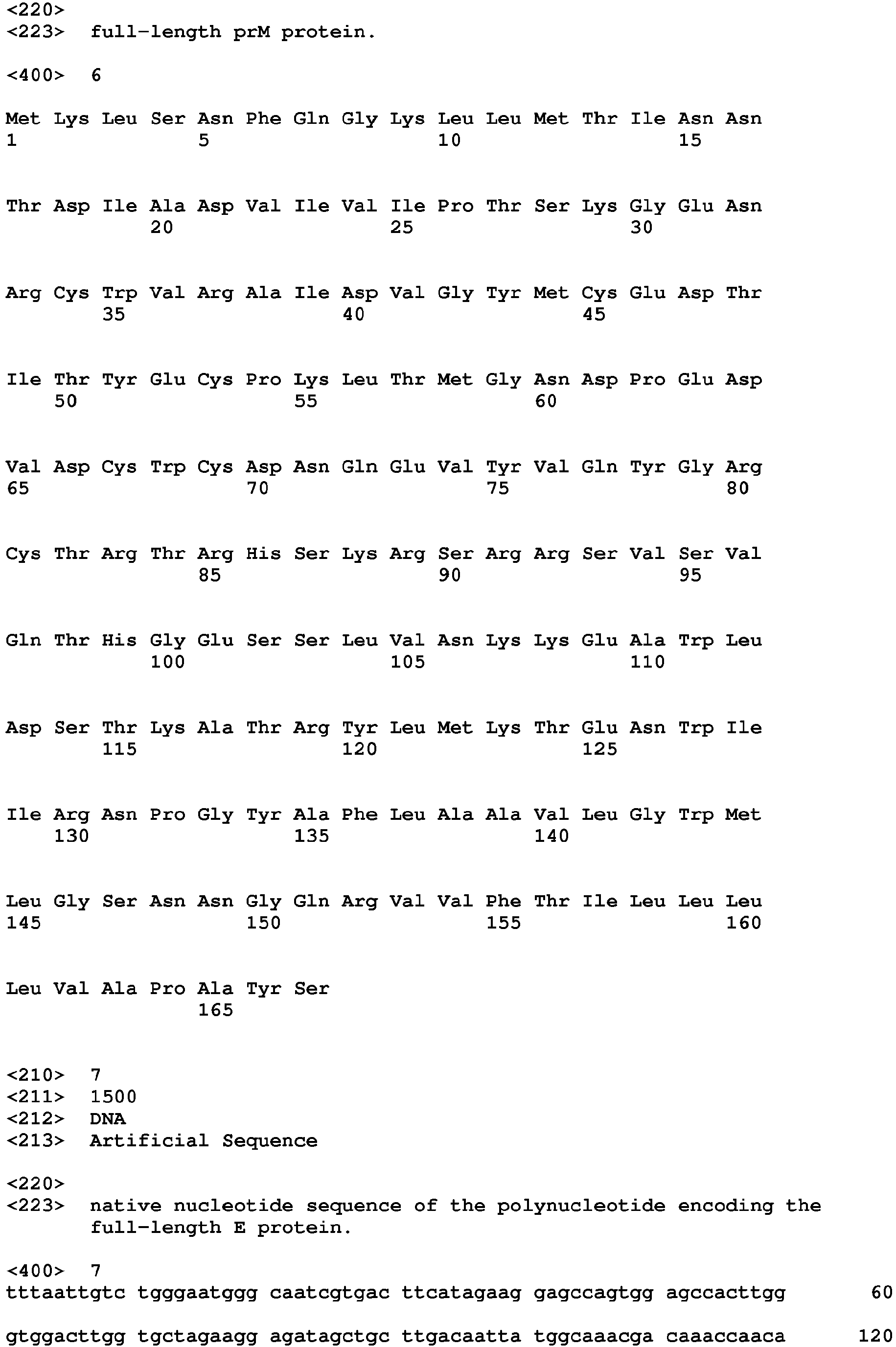


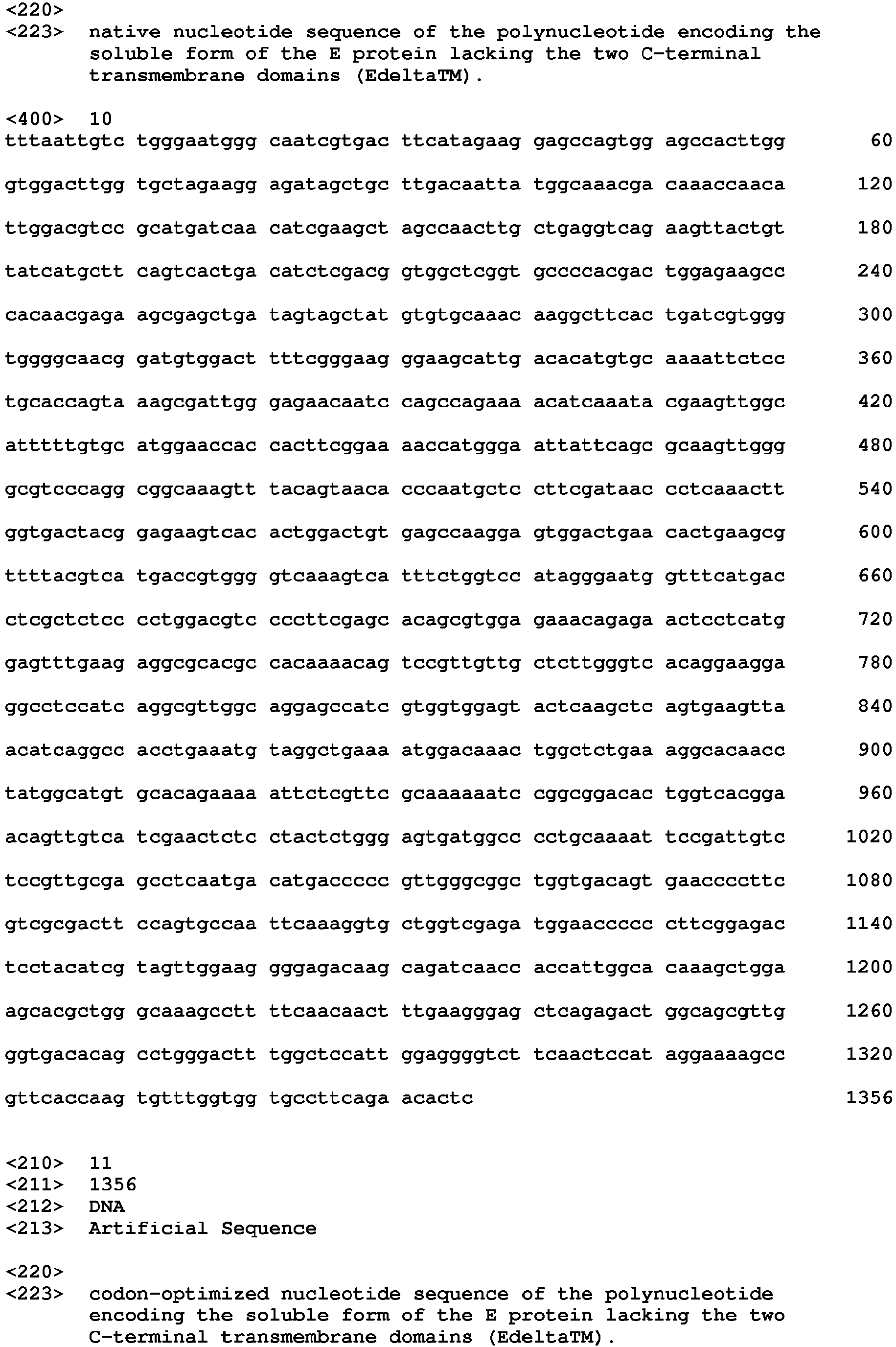


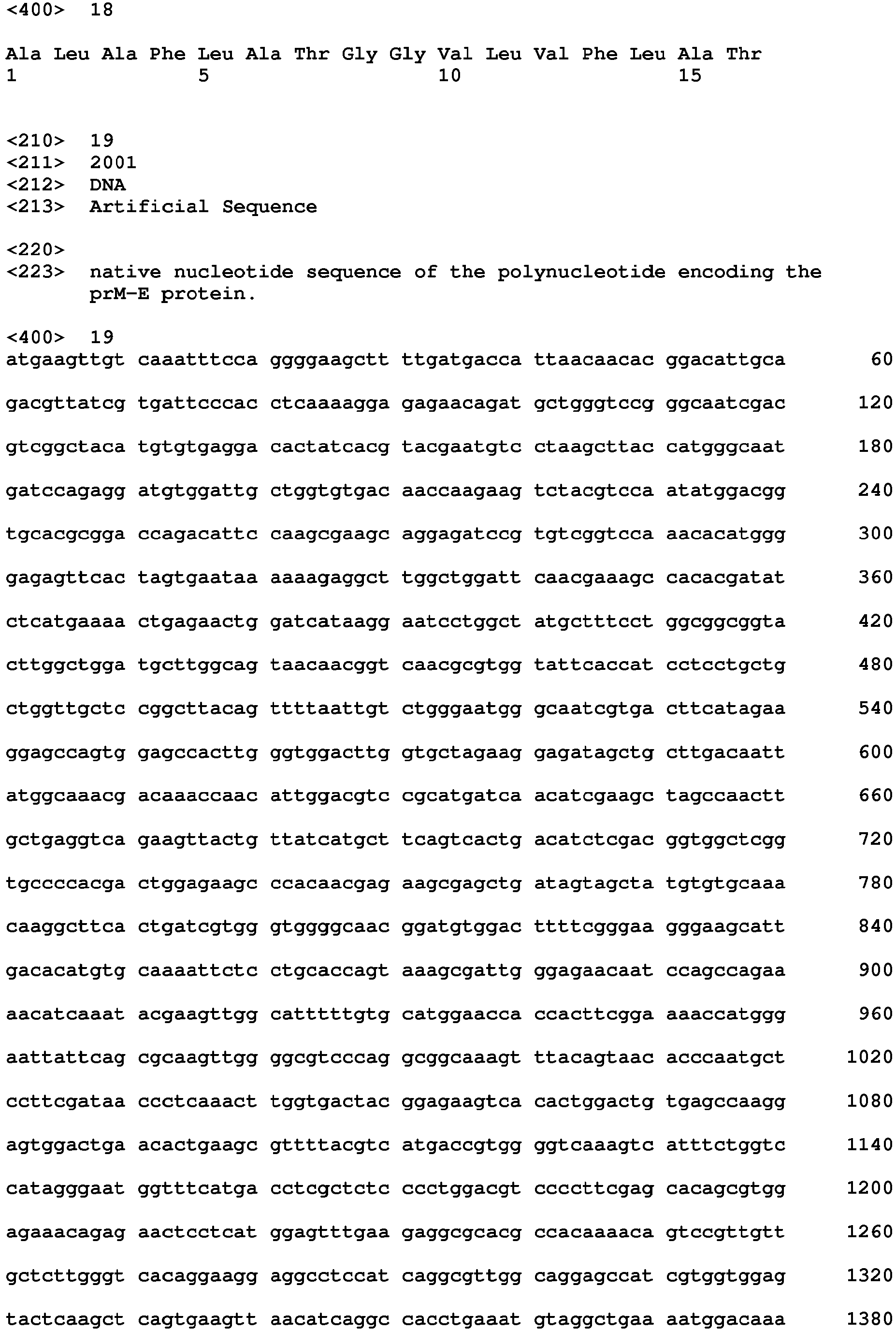
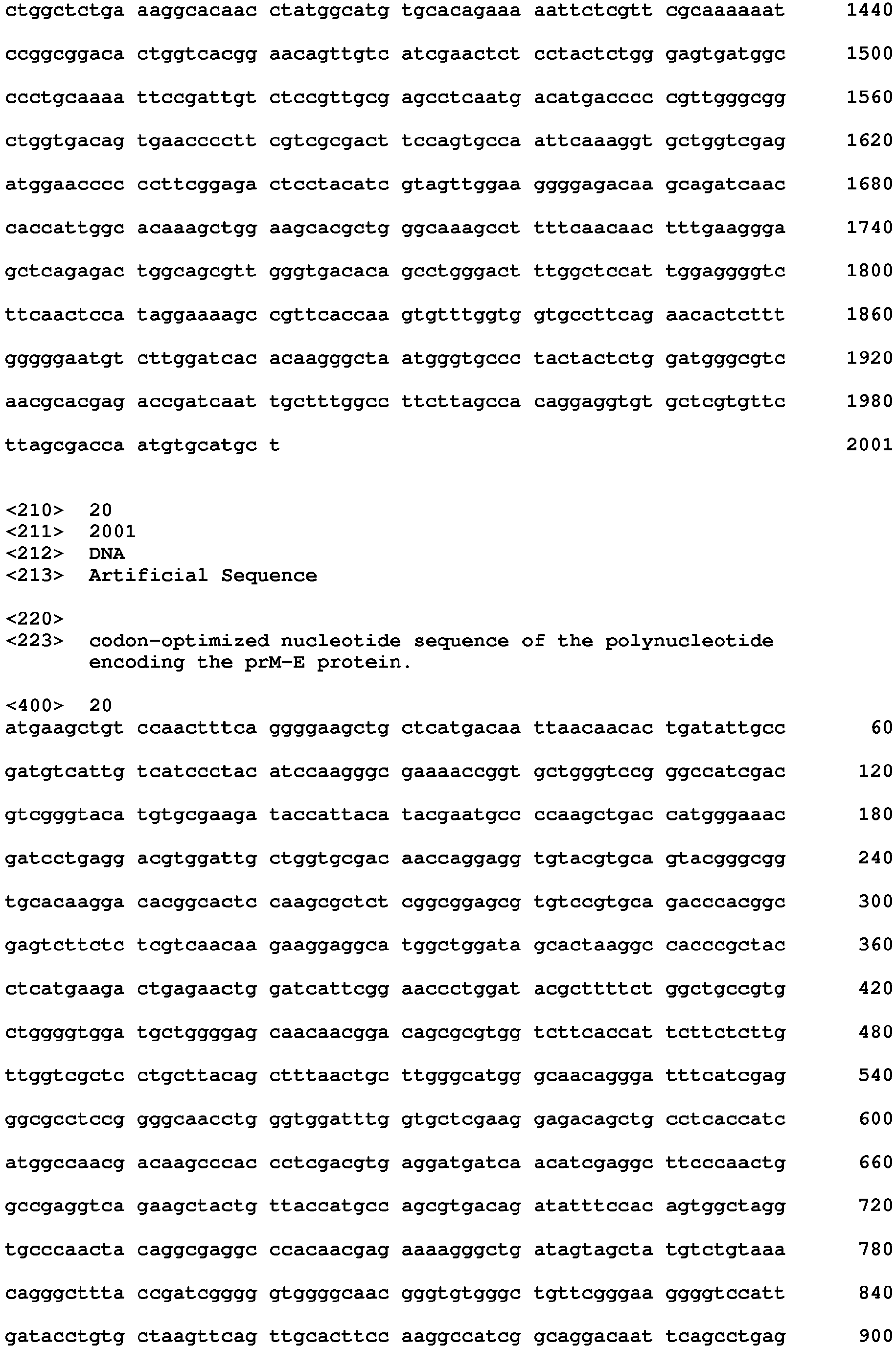







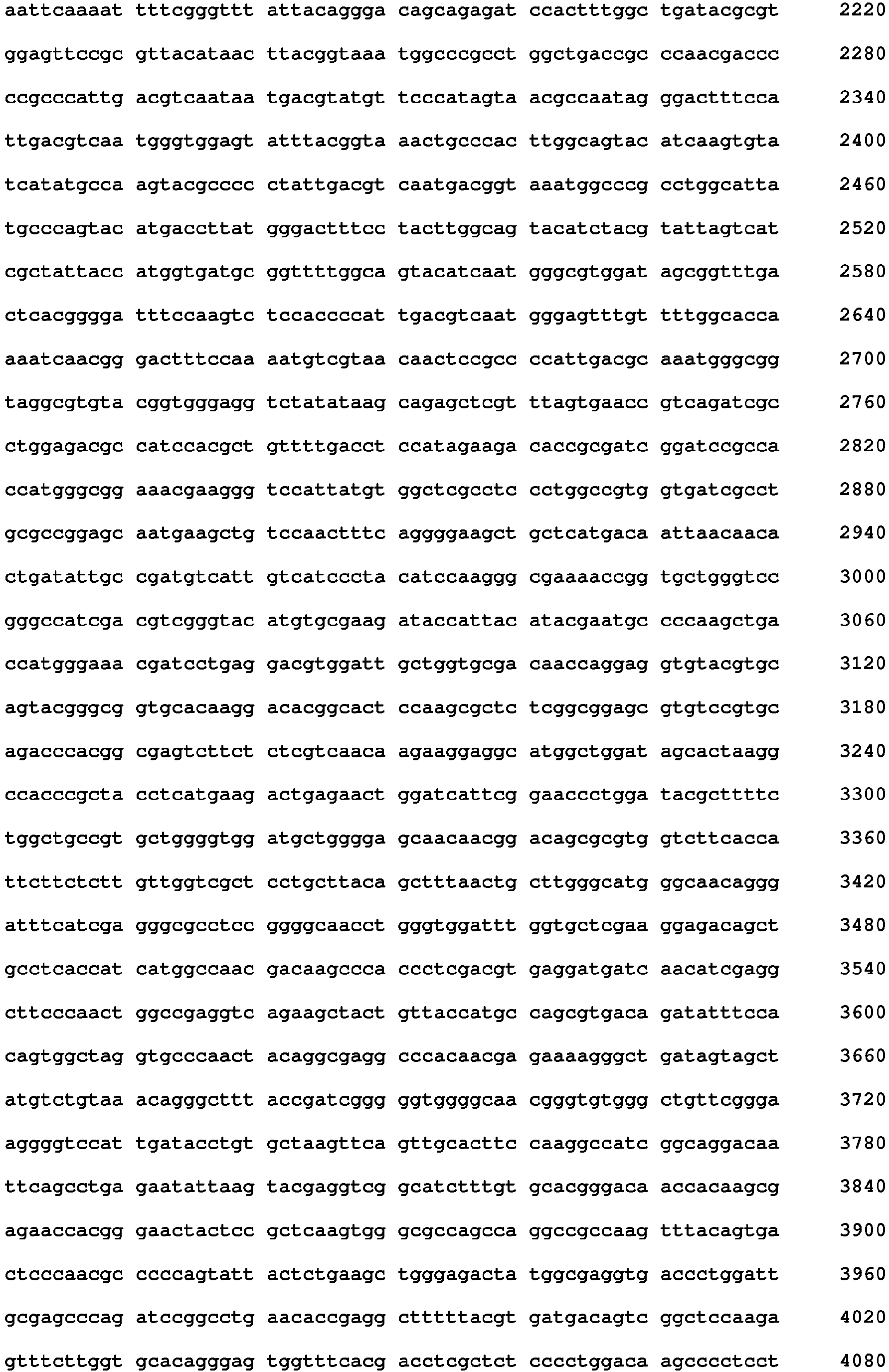
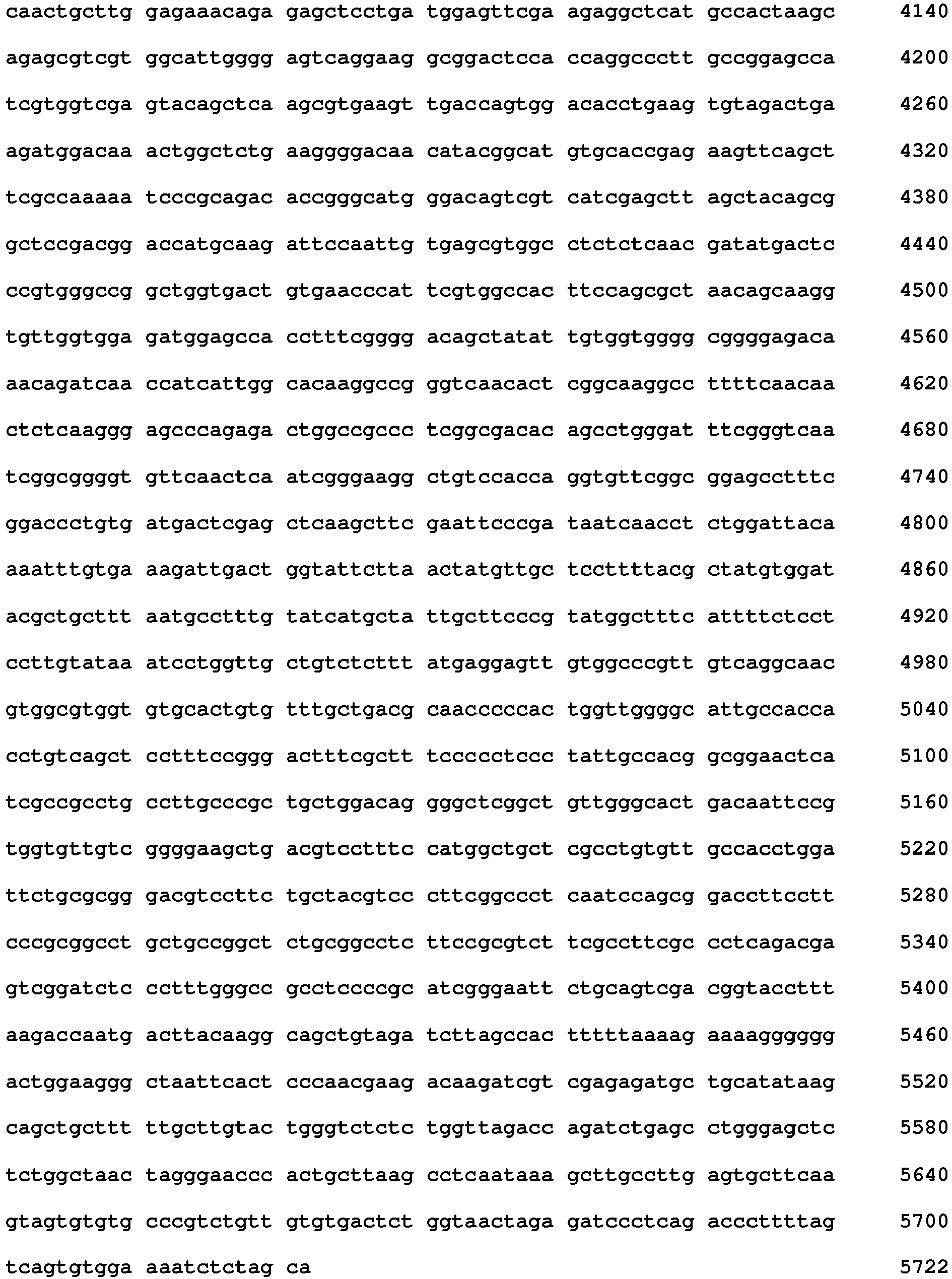
Claims (28)
- A recombinant lentiviral vector genome comprising lentiviral cis-active elements including long terminal repeats (LTRs) or modified LTRs including partially deleted 3'LTR, psi (ψ) packaging signal, Rev responsive element (RRE) and DNA flap central polypurine tract (cPPT)/ central termination sequence (CTS), together with a transcription unit encoding the precursor of membrane (prM) and the envelope (E) protein of a Japanese encephalitis virus (JEV), or immunogenic fragments thereof.
- The recombinant lentiviral vector genome according to claim 1, wherein the E protein is either the full-length E protein or its soluble form lacking the two C-terminal transmembrane domains of the full-length E protein.
- The recombinant lentiviral vector genome according to claim 1 or 2, wherein in the lentiviral 3'-LTR the promoter and the activator of the U3 region have been deleted, and wherein the polynucleotide encoding the prM and E proteins is placed under the control of a heterologous promoter, for example the cytomegalovirus immediate early (CMVie) promoter.
- The recombinant lentiviral vector genome according to any one of claims 1 to 3, wherein the polynucleotide encoding the prM protein has the sequence of SEQ ID NO: 5 and the polynucleotide encoding the E protein has the sequence of SEQ ID NO: 8 or SEQ ID NO: 11.
- The recombinant lentiviral vector genome according to any one of claims 1 to 4, wherein the lentiviral vector genome is derived from the genome of HIV, especially of HIV-1.
- The recombinant lentiviral vector genome according to any one of claims 1 to 5, wherein the lentiviral vector genome is derived from the genome of FIV.
- The recombinant lentiviral vector genome according to any one of claims 1 to 6, which is replication-incompetent as a result of deletion of all or part of the gag and pol genes of the lentiviral genome or mutation in the gag and pol genes of the lentiviral genome, so that the gag and pol genes are not capable of encoding functional GAG and POL proteins.
- The recombinant lentiviral vector genome according to any one of claims 1 to 7, which is a TRIP-based vector genome.
- The recombinant lentiviral vector genome according to any one of claims 1 to 8, which is pTRIPΔU3.CMV/JEV.prME vector whose nucleic acid sequence is as defined in SEQ ID NO: 34, or pTRIPΔU3.CMV/JEV.prMEΔTM vector whose nucleic acid sequence is as defined in SEQ ID NO: 35.
- The recombinant lentiviral vector genome according to any one of claims 1 to 9, wherein the prM and E coding sequences are of a JEV of genotype 3 (G3) such as a JEV of the strain RP-9.
- A DNA plasmid comprising the recombinant lentiviral vector genome according to any one of claims 1 to 10.
- A host cell either transfected or genetically transformed with a DNA plasmid according to claim 11, in particular which is HEK 293T (human embryonic kidney) cell line.
- Recombinant lentiviral vector particles expressing the recombinant lentiviral vector genome according to any one of claims 1 to 10, which are pseudotyped with a vesicular stomatitis virus glycoprotein G (VSV-G) protein, in particular the VSV-G protein of the VSV Indiana strain or the VSV protein of the New Jersey strain.
- The recombinant lentiviral vector particles according to claim 13, for use as active ingredient in the prophylactic treatment against JEV infection in a mammal, either an animal or a human.
- The recombinant lentiviral vector particles according to claim 14, wherein said animal is a pig or a piglet, in particular a domestic pig or a domestic piglet.
- The recombinant lentiviral vector particles according to claim 13 or 14, for use as active ingredient and administered at a dose, either as a single dose or as multiple doses, suitable for the elicitation of an antibody response against JEV prM and/or E protein(s), especially a protective antibody response against JEV prM and/or E protein(s).
- The recombinant lentiviral vector particles according to any one of claims 13 to 16, for use as active ingredient in the prophylactic treatment against JEV infection in a mammal, either an animal or a human, wherein the treatment involves administering said recombinant lentiviral vector in a prime-boost regimen.
- The recombinant lentiviral vector particles as defined in any one of claims 13 to 17, for use according to claim 17, wherein the lentiviral vector particles for priming the immunological response and the lentiviral vector particles for boosting the response are pseudotyped with different non-cross reacting VSV-G envelope proteins, in particular are pseudotyped with the VSV-G protein of the Indiana VSV strain or with the VSV-G protein of the New-Jersey VSV strain.
- The recombinant lentiviral vector particles as defined in any one of claims 13 to 18, for use according to claim 17 or 18 in the prophylactic treatment against infection by JEV of genotypes G1, G3 and optionally G5.
- The recombinant lentiviral vector particles as defined in any one of claims 13 to 19, for use according to claim 17 or 18 in the prophylactic treatment against infection by JEV of genotype G3.
- The recombinant lentiviral vector particles according to any one of claims 13 to 20, which are integration defective as a result of mutation or deletion in the pol gene of the lentivirus.
- An immunogenic composition comprising recombinant lentiviral vector particles according to any one of claims 13 to 21, in a dose sufficient to elicit an immune antibody response in a mammalian host, which does or which does not comprise an accessory adjuvant.
- The immunogenic composition according to claim 22, which is in freeze-dried form, the freeze-drying being carried out in the presence of cryoprotective compounds such as trehalose.
- The immunogenic composition according to claim 22 or 23, wherein said composition is formulated for an administration through parental route such as subcutaneous (s.c.), intradermal (i.d.), intramuscular (i.m.), intraperitoneal (i.p.) or intravenous (i.v.) injection.
- The immunogenic composition according to any one of claims 22 to 24, wherein said composition is formulated for administration in one or multiple administration dose(s), in particular in a prime-boost administration regime.
- An immunologically effective quantity of recombinant lentiviral vector particles according to any one of claim 13 to 21, or an immunogenic composition according to any one of claims 22 to 25, for use in prophylactic immunisation against JEV infection, in particular when JEV is of genotype 3 or 1 or 5, in a mammalian host, especially in a human or an animal host, wherein said particles or composition are in admixture with a pharmaceutically acceptable vehicle, and/or an adjuvant.
- A method to produce recombinant lentiviral vector particles suitable for the preparation of a JEV vaccine, comprising or consisting of:a) transfecting the recombinant lentiviral transfer vector carrying the lentiviral vector genome according to any one of claims 1 to 10, in a host cell, for example a HEK-293T cell line;b) co-transfecting the cell of step a) with a plasmid vector encoding the envelope protein VSG, in particular the VSV-G of Indiana or of New Jersey VSV strains and with a plasmid vector encoding the lentiviral GAG and POL or mutated POL protein as packaging construct;c) recovering the recombinant lentiviral particles expressing JEV antigens.
- Use of the recombinant lentiviral vector genome according to any one of claims 1 to 10 or recombinant lentiviral vector particles according to any one of claims 13 to 21 as active ingredient for the in vitro production of an immunogenic composition.
Priority Applications (10)
| Application Number | Priority Date | Filing Date | Title |
|---|---|---|---|
| EP14307008.4A EP3031923A1 (en) | 2014-12-11 | 2014-12-11 | Lentiviral vector-based japanese encephalitis immunogenic composition |
| AU2015359525A AU2015359525A1 (en) | 2014-12-11 | 2015-12-07 | Lentiviral vector-based Japanese encephalitis immunogenic composition |
| EP15807648.9A EP3230461B1 (en) | 2014-12-11 | 2015-12-07 | Lentiviral vector-based japanese encephalitis immunogenic composition |
| KR1020177019262A KR102585864B1 (en) | 2014-12-11 | 2015-12-07 | Lentiviral vector-based japanese encephalitis immunogenic composition |
| MYPI2017000813A MY189334A (en) | 2014-12-11 | 2015-12-07 | Lentiviral vector-based japanese encephalitis immunogenic composition |
| US15/531,157 US10603374B2 (en) | 2014-12-11 | 2015-12-07 | Lentiviral vector-based Japanese encephalitis immunogenic composition |
| PCT/EP2015/078891 WO2016091836A1 (en) | 2014-12-11 | 2015-12-07 | Lentiviral vector-based japanese encephalitis immunogenic composition |
| CN201580075843.0A CN108040484B (en) | 2014-12-11 | 2015-12-07 | Lentiviral vector-based Japanese encephalitis immunogenic compositions |
| JP2017531252A JP6827418B2 (en) | 2014-12-11 | 2015-12-07 | Japanese encephalitis immunogenic composition based on wrench virus vector |
| US16/794,854 US11779640B2 (en) | 2014-12-11 | 2020-02-19 | Lentiviral vector-based Japanese encephalitis immunogenic composition |
Applications Claiming Priority (1)
| Application Number | Priority Date | Filing Date | Title |
|---|---|---|---|
| EP14307008.4A EP3031923A1 (en) | 2014-12-11 | 2014-12-11 | Lentiviral vector-based japanese encephalitis immunogenic composition |
Publications (1)
| Publication Number | Publication Date |
|---|---|
| EP3031923A1 true EP3031923A1 (en) | 2016-06-15 |
Family
ID=52278483
Family Applications (2)
| Application Number | Title | Priority Date | Filing Date |
|---|---|---|---|
| EP14307008.4A Withdrawn EP3031923A1 (en) | 2014-12-11 | 2014-12-11 | Lentiviral vector-based japanese encephalitis immunogenic composition |
| EP15807648.9A Active EP3230461B1 (en) | 2014-12-11 | 2015-12-07 | Lentiviral vector-based japanese encephalitis immunogenic composition |
Family Applications After (1)
| Application Number | Title | Priority Date | Filing Date |
|---|---|---|---|
| EP15807648.9A Active EP3230461B1 (en) | 2014-12-11 | 2015-12-07 | Lentiviral vector-based japanese encephalitis immunogenic composition |
Country Status (8)
| Country | Link |
|---|---|
| US (2) | US10603374B2 (en) |
| EP (2) | EP3031923A1 (en) |
| JP (1) | JP6827418B2 (en) |
| KR (1) | KR102585864B1 (en) |
| CN (1) | CN108040484B (en) |
| AU (1) | AU2015359525A1 (en) |
| MY (1) | MY189334A (en) |
| WO (1) | WO2016091836A1 (en) |
Cited By (2)
| Publication number | Priority date | Publication date | Assignee | Title |
|---|---|---|---|---|
| WO2020225150A1 (en) * | 2019-05-03 | 2020-11-12 | Moredun Research Institute | Small ruminant lentivirus vector |
| US20220168412A1 (en) * | 2019-04-10 | 2022-06-02 | Katholieke Universiteit Leuven | Chimeric Zika-Japanese Encephalitis Virus |
Families Citing this family (10)
| Publication number | Priority date | Publication date | Assignee | Title |
|---|---|---|---|---|
| AU2018365296B2 (en) | 2017-11-09 | 2023-11-23 | Institut Pasteur | A Zika virus chimeric polyepitope comprising non-structural proteins and its use in an immunogenic composition |
| CN108904793B (en) * | 2018-07-29 | 2021-03-30 | 首都医科大学附属北京友谊医院 | DNA vaccine for preventing Japanese encephalitis and its construction method |
| US12285474B2 (en) * | 2018-10-24 | 2025-04-29 | Deutsches Krebsforschungszentrum Stiftung des öffentlichen Rechts | Vsg-based vaccination and antibody generation platform for the treatment of diseases |
| WO2020236263A1 (en) * | 2019-05-23 | 2020-11-26 | Massachusetts Institute Of Technology | Ligand discovery and gene delivery via retroviral surface display |
| CN111471717B (en) * | 2020-04-17 | 2021-05-04 | 复百澳(苏州)生物科技有限公司 | Preparation method of pseudovirus for 2019 new coronavirus nucleic acid detection |
| EP4298114A1 (en) | 2021-02-26 | 2024-01-03 | Kelonia Therapeutics, Inc. | Lymphocyte targeted lentiviral vectors |
| KR20240175353A (en) * | 2023-06-12 | 2024-12-20 | 충남대학교산학협력단 | Recombinant virus against Japanese encephalitis virus type 5 domestic isolate MK541529.1 and use thereof |
| CN116554358B (en) * | 2023-06-26 | 2024-11-15 | 北京万家瑞生物科技有限公司 | Japanese encephalitis vaccine and its preparation method and application |
| US12403194B2 (en) | 2023-09-25 | 2025-09-02 | Kelonia Therapeutics, Inc. | Compositions for treating cancer |
| US12269882B1 (en) | 2023-09-25 | 2025-04-08 | Kelonia Therapeutics, Inc. | Antigen binding polypeptides |
Citations (13)
| Publication number | Priority date | Publication date | Assignee | Title |
|---|---|---|---|---|
| WO1999055892A1 (en) | 1998-04-24 | 1999-11-04 | Institut Pasteur | Use of triplex structure dna sequences for transferring nucleotide sequences |
| WO2001027300A1 (en) | 1999-10-11 | 2001-04-19 | Institut Pasteur | Lentiviral vectors for the preparation of immunotherapeutical compositions |
| WO2001027304A2 (en) | 1999-10-12 | 2001-04-19 | Institut Pasteur | Lentiviral triplex dna, and vectors and recombinant cells containing lentiviral triplex dna |
| WO2002081754A1 (en) * | 2001-04-04 | 2002-10-17 | The Governement Of The United States Of America, As Represented By The Secretary, Department Of Health And Human Services, Centers For Disease Control And Prevention | Nucleic acid vaccines for prevention of flavivirus infection |
| WO2005023313A1 (en) * | 2003-09-09 | 2005-03-17 | Virxsys Corporation | Lentivirus vector-based approaches for generating an immune response to hiv humans |
| WO2005065707A2 (en) * | 2004-01-04 | 2005-07-21 | National Institute Of Immunology | Recombinant vaccine against japanese encephalitis virus [jev] infection and a method thereof |
| WO2005111221A1 (en) * | 2004-05-17 | 2005-11-24 | Institut Pasteur | Recombinant lentiviral vector for expression of a flaviviridae protein and applications thereof as a vaccine |
| WO2006010834A1 (en) * | 2004-06-25 | 2006-02-02 | Centre National De La Recherche Scientifique | Non-integrative and non-replicative lentivirus, preparation and uses thereof |
| WO2007052165A2 (en) | 2005-10-17 | 2007-05-10 | Institut Pasteur | A lentiviral vector-based vaccine |
| WO2009019612A2 (en) | 2007-08-03 | 2009-02-12 | Institut Pasteur | Lentiviral gene transfer vectors and their medicinal applications |
| WO2012103510A2 (en) * | 2011-01-27 | 2012-08-02 | Lentigen Cororation | Advanced prime and boost vacinne |
| WO2013033362A1 (en) * | 2011-08-30 | 2013-03-07 | University Of Pittsburgh- Of The Commonwealth System Of Higher Education | Yeast expression of flavivirus virus-like particles and use thereof |
| WO2014016383A2 (en) * | 2012-07-25 | 2014-01-30 | Theravectys | Glycoproteins for pseudotyping lentivectors |
Family Cites Families (29)
| Publication number | Priority date | Publication date | Assignee | Title |
|---|---|---|---|---|
| GB9621680D0 (en) * | 1996-10-17 | 1996-12-11 | Oxford Biomedica Ltd | Lentiviral vectors |
| CZ300172B6 (en) * | 1997-02-28 | 2009-03-04 | Acambis Inc. | Chimeric live, infectious, attenuated virus, medicament for prevention or treatment of flavivirus infections and nucleic acid moleculre encoding thereof |
| WO1998051810A1 (en) * | 1997-05-13 | 1998-11-19 | University Of North Carolina At Chapel Hill | Lentivirus-based gene transfer vectors |
| CA2263993A1 (en) * | 1997-06-13 | 1998-12-17 | Research Development Foundation | Method of attenuating viruses |
| WO1999004036A1 (en) | 1997-07-14 | 1999-01-28 | Isis Innovation Limited | Cd44 based cancer detection |
| AU8576298A (en) * | 1997-07-18 | 1999-02-10 | Chiron Corporation | Lentiviral vectors |
| US6432411B1 (en) * | 1999-07-13 | 2002-08-13 | Hawaii Biotechnology Group | Recombinant envelope vaccine against flavivirus infection |
| EP1401859B1 (en) * | 2001-06-01 | 2013-08-07 | Sanofi Pasteur Biologics Co. | Chimeric flavivirus vectors |
| CN1429911A (en) * | 2001-12-30 | 2003-07-16 | 李卫云 | Slow virus carrier system, method of producing carrier and its application |
| CN1871026A (en) * | 2002-01-15 | 2006-11-29 | 阿坎姆比斯公司 | Flavivirus vaccines |
| US7785799B2 (en) * | 2002-08-16 | 2010-08-31 | The Board Of Regents Of The University Of Texas System | Compositions and methods related to flavivirus envelope protein domain III antigens |
| ZA200704033B (en) * | 2004-10-20 | 2008-09-25 | Acambis Inc | Vaccines against Japanese encephalitis virus and west nile virus |
| CA2592005A1 (en) * | 2004-12-24 | 2006-06-29 | The Research Foundation For Microbial Diseases Of Osaka University | Attenuated chimeric flavivirus bearing attenuated japanese encephalitis virus gene as backbone |
| CN101160055A (en) * | 2005-02-16 | 2008-04-09 | 莱蒂恩公司 | Lentiviral Vectors and Their Uses |
| EA016490B1 (en) * | 2006-02-27 | 2012-05-30 | Дзе Борд Оф Риджентс Оф Дзе Юниверсити Оф Техас Систем | Pseudoinfectious flavivirus and uses thereof |
| BRPI0908936A2 (en) * | 2008-03-14 | 2017-03-28 | Sanofi Pasteur Biologics Co | replication defective flavivirus vaccines and vaccine vectors |
| ES2547654T3 (en) * | 2008-10-31 | 2015-10-07 | Tremrx, Inc. | Vaccination with poxviral vectors by epidermal mechanical alteration |
| CN101560520A (en) * | 2009-06-04 | 2009-10-21 | 中国疾病预防控制中心病毒病预防控制所 | Japanese encephalitis/dengue chimeric virus and application thereof |
| CN102250950A (en) * | 2011-05-25 | 2011-11-23 | 华南农业大学 | DNA level-based encephalitis B virus replicon vector system, and construction method and application thereof |
| BR112013032675A2 (en) * | 2011-06-19 | 2017-08-08 | Vaxine Pty Ltd | adjuvant vaccine composition comprising inulin particles |
| CN102337248B (en) * | 2011-10-09 | 2013-04-17 | 中国农业科学院哈尔滨兽医研究所 | Recombinant baby hamster kidney (BHK) cell line capable of expressing encephalitis B virus PrM/M-E protein and application thereof |
| CN103088049A (en) * | 2012-12-26 | 2013-05-08 | 中国人民解放军军事医学科学院生物工程研究所 | DNA (Deoxyribose Nucleic Acid)-based infectious clone of a Japanese encephalitis virus SA14-14-2 strain, as well as construction method and application thereof |
| CN103409376A (en) * | 2013-08-08 | 2013-11-27 | 中国人民解放军军事医学科学院微生物流行病研究所 | JEV (Japanese Encephalitis Virus) / WNV (West Nile Virus) chimeric virus and application thereof |
| SG2013084207A (en) * | 2013-11-13 | 2015-06-29 | Univ Singapore | Aptamers |
| UA126548C2 (en) * | 2015-07-16 | 2022-11-02 | Бхарат Біотек Інтернешнл Лімітед | VACCINE COMPOSITION FOR THE PREVENTION OF ABROVIRUS INFECTIONS |
| EP3964569A1 (en) * | 2015-12-15 | 2022-03-09 | Janssen Vaccines & Prevention B.V. | Human immunodeficiency virus antigens, vectors, compositions, and methods of use thereof |
| WO2017192856A1 (en) * | 2016-05-04 | 2017-11-09 | University Of Miami | Zika virus vector for treating zika virus infection |
| EP3412307A1 (en) * | 2017-06-07 | 2018-12-12 | Institut Pasteur | Recombinant measles virus expressing zika virus proteins and their applications |
| TW201922800A (en) * | 2017-11-17 | 2019-06-16 | 美商格里佛診斷方法股份有限公司 | Human immunodeficiency virus mantle membrane protein antigen |
-
2014
- 2014-12-11 EP EP14307008.4A patent/EP3031923A1/en not_active Withdrawn
-
2015
- 2015-12-07 KR KR1020177019262A patent/KR102585864B1/en active Active
- 2015-12-07 AU AU2015359525A patent/AU2015359525A1/en not_active Withdrawn
- 2015-12-07 US US15/531,157 patent/US10603374B2/en active Active
- 2015-12-07 MY MYPI2017000813A patent/MY189334A/en unknown
- 2015-12-07 CN CN201580075843.0A patent/CN108040484B/en active Active
- 2015-12-07 WO PCT/EP2015/078891 patent/WO2016091836A1/en not_active Ceased
- 2015-12-07 EP EP15807648.9A patent/EP3230461B1/en active Active
- 2015-12-07 JP JP2017531252A patent/JP6827418B2/en active Active
-
2020
- 2020-02-19 US US16/794,854 patent/US11779640B2/en active Active
Patent Citations (13)
| Publication number | Priority date | Publication date | Assignee | Title |
|---|---|---|---|---|
| WO1999055892A1 (en) | 1998-04-24 | 1999-11-04 | Institut Pasteur | Use of triplex structure dna sequences for transferring nucleotide sequences |
| WO2001027300A1 (en) | 1999-10-11 | 2001-04-19 | Institut Pasteur | Lentiviral vectors for the preparation of immunotherapeutical compositions |
| WO2001027304A2 (en) | 1999-10-12 | 2001-04-19 | Institut Pasteur | Lentiviral triplex dna, and vectors and recombinant cells containing lentiviral triplex dna |
| WO2002081754A1 (en) * | 2001-04-04 | 2002-10-17 | The Governement Of The United States Of America, As Represented By The Secretary, Department Of Health And Human Services, Centers For Disease Control And Prevention | Nucleic acid vaccines for prevention of flavivirus infection |
| WO2005023313A1 (en) * | 2003-09-09 | 2005-03-17 | Virxsys Corporation | Lentivirus vector-based approaches for generating an immune response to hiv humans |
| WO2005065707A2 (en) * | 2004-01-04 | 2005-07-21 | National Institute Of Immunology | Recombinant vaccine against japanese encephalitis virus [jev] infection and a method thereof |
| WO2005111221A1 (en) * | 2004-05-17 | 2005-11-24 | Institut Pasteur | Recombinant lentiviral vector for expression of a flaviviridae protein and applications thereof as a vaccine |
| WO2006010834A1 (en) * | 2004-06-25 | 2006-02-02 | Centre National De La Recherche Scientifique | Non-integrative and non-replicative lentivirus, preparation and uses thereof |
| WO2007052165A2 (en) | 2005-10-17 | 2007-05-10 | Institut Pasteur | A lentiviral vector-based vaccine |
| WO2009019612A2 (en) | 2007-08-03 | 2009-02-12 | Institut Pasteur | Lentiviral gene transfer vectors and their medicinal applications |
| WO2012103510A2 (en) * | 2011-01-27 | 2012-08-02 | Lentigen Cororation | Advanced prime and boost vacinne |
| WO2013033362A1 (en) * | 2011-08-30 | 2013-03-07 | University Of Pittsburgh- Of The Commonwealth System Of Higher Education | Yeast expression of flavivirus virus-like particles and use thereof |
| WO2014016383A2 (en) * | 2012-07-25 | 2014-01-30 | Theravectys | Glycoproteins for pseudotyping lentivectors |
Non-Patent Citations (55)
| Title |
|---|
| AUBRY F ET AL., GENOME ANNOUNC, 2013, pages E00157 - 12 |
| BEIGNON AS ET AL., J.VIROL, vol. 83, 2009, pages 10963 - 74 |
| BIEGANSKI ET AL., BIOTECHNOL PROG, vol. 14, 1998, pages 615 - 620 |
| BONAPARTE M ET AL., BMC INFECT DIS., vol. 214, 2014, pages 156 |
| CAMPBELL GL ET AL., BULL WORLD HEALTH ORGAN, vol. 89, 2011, pages 766 - 74 |
| CHEN LK ET AL., VIROLOGY, vol. 223, 1996, pages 79 - 98 |
| CHIEN H-L ET AL., J VIROL, vol. 85, 2011, pages 4698 - 4706 |
| COUTANT F ET AL., PLOS ONE, no. 3, 2008, pages E3973 |
| DI NUNZIO F ET AL., VACCINE, vol. 30, 2012, pages 2499 - 509 |
| DOWD KA; JOST CA; DURBIN AP; WHITEHEAD SS; PIERSON TC ET AL., PLOS PATHOG., vol. 7, 2011, pages E1002111 |
| DUBISCHAR-KASTNER K; KANESA-THASAN N., EXPERT REV VACCINES, vol. 11, 2012, pages 1159 - 61 |
| ERRA ELINA O ET AL: "Cross-protection elicited by primary and booster vaccinations against Japanese encephalitis: A two-year follow-up study", VACCINE, vol. 32, no. 1, 28 October 2013 (2013-10-28), pages 119 - 123, XP028798615, ISSN: 0264-410X, DOI: 10.1016/J.VACCINE.2013.10.055 * |
| ERRA EO ET AL., CLIN INFECT DIS., vol. 56, 2013, pages 267 - 70 |
| FAN YC ET AL., PLOS NEGL TROP DIS., vol. 6, 2012, pages E1834 |
| FAN YC ET AL., VET. MICROBIOL., vol. 163, 2013, pages 248 - 56 |
| FIRAT H. ET AL., J. GENE MED., vol. 4, no. 1, 2002, pages 38 - 45 |
| FONTANA JM ET AL., PLOS ONE, vol. 9, no. 5, 2014, pages E97270 |
| GAO X ET AL., PLOS NEGL TROP DIS., 2013, pages E2459 |
| GO YY; BALASURIYA UB; LEE CK., CLIN EXP VACCINE RES., vol. 3, 2014, pages 58 - 77 |
| GRASSO F ET AL., INT.J.CANCER, vol. 132, 2013, pages 335 - 44 |
| HALSTEAD SB; THOMAS SJ., EXPERT REV VACCINES, vol. 10, 2011, pages 355 - 64 |
| HU B; TAI A; WANG P, IMMUNOL.REV., vol. 239, 2011, pages 45 - 61 |
| HUBALEK Z; RUDOLF I; NOWOTNY N., ADV VIRUS RES., vol. 89, 2014, pages 201 - 75 |
| IGLESIAS MC. ET AL., J.GENE MED., vol. 8, 2006, pages 265 - 74 |
| IGLESIAS, M.C ET AL., J. GENE MED., vol. 8, 2006, pages 265 - 274 |
| IMPOINVIL DE; BAYLIS M; SOLOMON T., CURR TOP MICROBIOL IMMUNOL., vol. 365, 2013, pages 205 - 47 |
| ISHIKAWA T; YAMANAKA A; KONISHI E., VACCINE, vol. 32, 2014, pages 1326 - 3 |
| KATOH ET AL., J. VIROL., vol. 85, no. 21, 2011, pages 10976 - 88 |
| KONISHI E., EXPERT REV VACCINES, vol. 12, 2013, pages 871 - 3 |
| KUWAHARA M; KONISHI E, CLIN VACCINE IMMUNOL., vol. 17, 2010, pages 875 - 8 |
| LARENA M ET AL., J VIROL., vol. 87, 2013, pages 4395 - 402 |
| LE FLOHIC G ET AL., PLOS NEGL TROP DIS., vol. 7, 2013, pages E2208 |
| LI J ET AL., VACCINE, vol. 31, 2013, pages 4136 - 42 |
| LI MH ET AL., CHINA. BIOMED ENVIRON SCI., vol. 27, 2014, pages 231 - 9 |
| LI MH ET AL., PLOS NEGL TROP DIS., vol. 5, 2011, pages E1231 |
| LIANG ET AL., VACCINE, vol. 27, no. 21, 2009, pages 2746 - 54 |
| MARKS F ET AL., PLOS NEGL TROP DIS., vol. 6, 2012, pages E1952 |
| N. PETROVSKY ET AL: "An Inactivated Cell Culture Japanese Encephalitis Vaccine (JE-ADVAX) Formulated with Delta Inulin Adjuvant Provides Robust Heterologous Protection against West Nile Encephalitis via Cross-Protective Memory B Cells and Neutralizing Antibody", JOURNAL OF VIROLOGY, vol. 87, no. 18, 17 July 2013 (2013-07-17), pages 10324 - 10333, XP055193385, ISSN: 0022-538X, DOI: 10.1128/JVI.00480-13 * |
| PAN XL ET AL., J. VIROL., vol. 85, 2011, pages 9847 - 53 |
| SAKUMA T; BARRY M; IKEDA Y, BIOCHEM.J., vol. 443, 2012, pages 603 - 618 |
| SAMUEL ET AL., J. VIROL., 2006, pages 9349 - 9360 |
| SASAKI O ET AL: "Protection of pigs against mosquito-borne japanese encephalitis virus by immunization with a live attenuated vaccine", ANTIVIRAL RESEARCH, ELSEVIER BV, NL, vol. 2, no. 6, December 1982 (1982-12-01), pages 355 - 360, XP023664416, ISSN: 0166-3542, [retrieved on 19821201], DOI: 10.1016/0166-3542(82)90005-5 * |
| SCHUH AJ ET AL., J VIROL., vol. 88, 2014, pages 4522 - 32 |
| SCHUH AJ ET AL., PLOS NEGL TROP DIS., vol. 7, 2013, pages E2411 |
| SOLOMON T ET AL., J VIROL., vol. 77, 2003, pages 3091 - 8 |
| SONG BH ET AL., J MICROBIOL., vol. 50, 2012, pages 698 - 706 |
| TAKHAMPUNYA R ET AL., VIROL J., vol. 8, 2011, pages 449 |
| VANDENDRIESSCHE T. ET AL., BLOOD, vol. 100, no. 3, 2002, pages 813 - 822 |
| WEAVER SC; BARRETT AD, NAT REV MICROBIOL, vol. 2, 2004, pages 789 - 801 |
| YANG D ET AL., VACCINE, vol. 32, 2014, pages 2675 - 81 |
| YUN SI; LEE YM., HUM VACCIN IMMUNOTHER., vol. 10, 2014, pages 263 - 279 |
| ZELLER, H., EURO SURVEILL., vol. 17, 2012, pages 20242 |
| ZENNOU ET AL., CELL, vol. 101, 2000, pages 173 - 185 |
| ZENNOU V ET AL., CELL, vol. 101, 2000, pages 173 - 85 |
| ZU X ET AL., ANTIVIRAL RES., vol. 104, 2014, pages 7 - 14 |
Cited By (2)
| Publication number | Priority date | Publication date | Assignee | Title |
|---|---|---|---|---|
| US20220168412A1 (en) * | 2019-04-10 | 2022-06-02 | Katholieke Universiteit Leuven | Chimeric Zika-Japanese Encephalitis Virus |
| WO2020225150A1 (en) * | 2019-05-03 | 2020-11-12 | Moredun Research Institute | Small ruminant lentivirus vector |
Also Published As
| Publication number | Publication date |
|---|---|
| US20170319681A1 (en) | 2017-11-09 |
| US20200230228A1 (en) | 2020-07-23 |
| EP3230461A1 (en) | 2017-10-18 |
| KR20170094391A (en) | 2017-08-17 |
| CN108040484A (en) | 2018-05-15 |
| WO2016091836A1 (en) | 2016-06-16 |
| US11779640B2 (en) | 2023-10-10 |
| MY189334A (en) | 2022-02-04 |
| US10603374B2 (en) | 2020-03-31 |
| JP6827418B2 (en) | 2021-02-10 |
| KR102585864B1 (en) | 2023-10-06 |
| CN108040484B (en) | 2022-04-26 |
| EP3230461B1 (en) | 2021-08-04 |
| AU2015359525A1 (en) | 2017-07-06 |
| JP2017538417A (en) | 2017-12-28 |
Similar Documents
| Publication | Publication Date | Title |
|---|---|---|
| US11779640B2 (en) | Lentiviral vector-based Japanese encephalitis immunogenic composition | |
| US20240374710A1 (en) | Vaccine Compositions For Preventing Coronavirus Disease | |
| KR20230049084A (en) | SARS-COV-2 and Influenza Combination Vaccine | |
| EP2959915A1 (en) | A dengue virus chimeric polyepitope composed of fragments of non-structural proteins and its use in an immunogenic composition against dengue virus infection | |
| WO2017192856A1 (en) | Zika virus vector for treating zika virus infection | |
| US20230285540A1 (en) | Polynucleotides encoding sars-cov-2 antigens and use thereof in the medical field as vaccines | |
| de Wispelaere et al. | A lentiviral vector expressing Japanese encephalitis virus-like particles elicits broad neutralizing antibody response in pigs | |
| EP1948228A2 (en) | A lentiviral vector-based vaccine | |
| US20240316185A1 (en) | Coronavirus vaccine comprising a mosaic protein | |
| US20230272405A1 (en) | Flavivirus signal peptides, vaccine constructs, and methods therefor | |
| DK2020444T3 (en) | DEFECTIVE NON-INTEGRATIVE LENTIVIRAL TRANSMISSION VECTORS FOR VACCINES | |
| US20230398201A1 (en) | Gene shuffled lyssavirus vaccine | |
| US20210308255A1 (en) | Zika virus vaccine | |
| US11291714B2 (en) | Recombinant antigen derived from Zika virus E protein and use thereof | |
| WO2013030608A1 (en) | Nanoparticle-based veterinary vaccine | |
| Ketloy et al. | Strategies to improve the immunogenicity of prM+ E dengue virus type-2 DNA vaccine | |
| RU2849759C1 (en) | Immunobiological agent for inducing specific immune response against west nile virus and its application | |
| JP2024503482A (en) | Replication-competent adenovirus type 4 SARS-COV-2 vaccines and their use | |
| WO2019069273A1 (en) | Recombinant mva with modified hiv-1 env |
Legal Events
| Date | Code | Title | Description |
|---|---|---|---|
| PUAI | Public reference made under article 153(3) epc to a published international application that has entered the european phase |
Free format text: ORIGINAL CODE: 0009012 |
|
| AK | Designated contracting states |
Kind code of ref document: A1 Designated state(s): AL AT BE BG CH CY CZ DE DK EE ES FI FR GB GR HR HU IE IS IT LI LT LU LV MC MK MT NL NO PL PT RO RS SE SI SK SM TR |
|
| AX | Request for extension of the european patent |
Extension state: BA ME |
|
| STAA | Information on the status of an ep patent application or granted ep patent |
Free format text: STATUS: THE APPLICATION IS DEEMED TO BE WITHDRAWN |
|
| 18D | Application deemed to be withdrawn |
Effective date: 20161216 |