EP2978753B1 - Novel viral replication inhibitors - Google Patents
Novel viral replication inhibitors Download PDFInfo
- Publication number
- EP2978753B1 EP2978753B1 EP14718338.8A EP14718338A EP2978753B1 EP 2978753 B1 EP2978753 B1 EP 2978753B1 EP 14718338 A EP14718338 A EP 14718338A EP 2978753 B1 EP2978753 B1 EP 2978753B1
- Authority
- EP
- European Patent Office
- Prior art keywords
- heterocycle
- alkyl
- alkynyl
- alkenyl
- heteroc
- Prior art date
- Legal status (The legal status is an assumption and is not a legal conclusion. Google has not performed a legal analysis and makes no representation as to the accuracy of the status listed.)
- Active
Links
- 0 *c1c(C2CCCCCCCC2)c(C(C(C2CCCCCCC2)N(*)*)=O)n[n]1* Chemical compound *c1c(C2CCCCCCCC2)c(C(C(C2CCCCCCC2)N(*)*)=O)n[n]1* 0.000 description 10
- DFYLLKBBGKQNMR-UHFFFAOYSA-N Cc1n[n](cccc2)c2c1 Chemical compound Cc1n[n](cccc2)c2c1 DFYLLKBBGKQNMR-UHFFFAOYSA-N 0.000 description 5
- RNUXPFGJKQDFOH-UHFFFAOYSA-N Cc1c[n]2ncccc2n1 Chemical compound Cc1c[n]2ncccc2n1 RNUXPFGJKQDFOH-UHFFFAOYSA-N 0.000 description 3
- DXYYSGDWQCSKKO-UHFFFAOYSA-N Cc1nc(cccc2)c2[s]1 Chemical compound Cc1nc(cccc2)c2[s]1 DXYYSGDWQCSKKO-UHFFFAOYSA-N 0.000 description 3
- PSYGYTOVQUUGLA-UHFFFAOYSA-N CNc1nc(nccn2)c2[s]1 Chemical compound CNc1nc(nccn2)c2[s]1 PSYGYTOVQUUGLA-UHFFFAOYSA-N 0.000 description 2
- ITXHYKBXKRUJNO-UHFFFAOYSA-N Cc1cc2cccnc2[s]1 Chemical compound Cc1cc2cccnc2[s]1 ITXHYKBXKRUJNO-UHFFFAOYSA-N 0.000 description 2
- YYRMLDVRHDEOIZ-UHFFFAOYSA-N C1=NSC2C=CC=CC12 Chemical compound C1=NSC2C=CC=CC12 YYRMLDVRHDEOIZ-UHFFFAOYSA-N 0.000 description 1
- UWYBUZLCWKOYIS-UHFFFAOYSA-N CC1=CC(C2C(C(c3n[s]nc3-c(cccc3)c3F)=O)Nc3cc(CO)cc(OC)c3)N2O1 Chemical compound CC1=CC(C2C(C(c3n[s]nc3-c(cccc3)c3F)=O)Nc3cc(CO)cc(OC)c3)N2O1 UWYBUZLCWKOYIS-UHFFFAOYSA-N 0.000 description 1
- XAWUADQAXGATHK-UHFFFAOYSA-N CC1[N](C)(C)CC1 Chemical compound CC1[N](C)(C)CC1 XAWUADQAXGATHK-UHFFFAOYSA-N 0.000 description 1
- JNCJPJSSXBBZSF-UHFFFAOYSA-N CCN(CCC1)CC(c2ccccc2)N1C(C(c1ccc(C)cc1)Nc1cc(OC)cc(OC)c1)=O Chemical compound CCN(CCC1)CC(c2ccccc2)N1C(C(c1ccc(C)cc1)Nc1cc(OC)cc(OC)c1)=O JNCJPJSSXBBZSF-UHFFFAOYSA-N 0.000 description 1
- KNICLTPDGQJGPB-UHFFFAOYSA-N CC[n](cc1)c(-c2ccccc2)c1C(C(c(cc1)ccc1F)Nc1cc(OC)ncc1)=O Chemical compound CC[n](cc1)c(-c2ccccc2)c1C(C(c(cc1)ccc1F)Nc1cc(OC)ncc1)=O KNICLTPDGQJGPB-UHFFFAOYSA-N 0.000 description 1
- JJQLYURVWNKKJX-HTWVIFJXSA-N CN/C=C(\C(C(C(c(cc1)ccc1F)Nc1cc(OC)cnc1)=O)=N)/c1ccccc1 Chemical compound CN/C=C(\C(C(C(c(cc1)ccc1F)Nc1cc(OC)cnc1)=O)=N)/c1ccccc1 JJQLYURVWNKKJX-HTWVIFJXSA-N 0.000 description 1
- UTIPTKYYZQIJLI-UHFFFAOYSA-N CNc(cc1)cc2c1[nH]cc2 Chemical compound CNc(cc1)cc2c1[nH]cc2 UTIPTKYYZQIJLI-UHFFFAOYSA-N 0.000 description 1
- UVPRAOPDGOTFQX-UHFFFAOYSA-N CNc(cc1)cc2c1[n](C)cc2 Chemical compound CNc(cc1)cc2c1[n](C)cc2 UVPRAOPDGOTFQX-UHFFFAOYSA-N 0.000 description 1
- XJLZYDVGSVPZLZ-UHFFFAOYSA-N CNc1c(ccnc2)c2ccc1 Chemical compound CNc1c(ccnc2)c2ccc1 XJLZYDVGSVPZLZ-UHFFFAOYSA-N 0.000 description 1
- QDMLLVUIWWFIMU-UHFFFAOYSA-N CNc1cc(cccn2)c2[s]1 Chemical compound CNc1cc(cccn2)c2[s]1 QDMLLVUIWWFIMU-UHFFFAOYSA-N 0.000 description 1
- ZQQFXBLZBQXCST-UHFFFAOYSA-N COC(CN=C1)C=C1NC(C(c1c[s]cc1C1C2C=CC=CC12)=O)c1n[n](cccc2)c2c1 Chemical compound COC(CN=C1)C=C1NC(C(c1c[s]cc1C1C2C=CC=CC12)=O)c1n[n](cccc2)c2c1 ZQQFXBLZBQXCST-UHFFFAOYSA-N 0.000 description 1
- XBXWRQUCDJANLC-UHFFFAOYSA-N COc1cc(CO)cc(NC(C(c2c[nH]nc2-c2ccccc2)=O)c2ccccc2)c1 Chemical compound COc1cc(CO)cc(NC(C(c2c[nH]nc2-c2ccccc2)=O)c2ccccc2)c1 XBXWRQUCDJANLC-UHFFFAOYSA-N 0.000 description 1
- HDIKKFNAXOJXCE-UHFFFAOYSA-N COc1cc(NC(C(N(CCC2)C2c2ncccn2)=O)c2ccccc2)cc(OCCO)c1 Chemical compound COc1cc(NC(C(N(CCC2)C2c2ncccn2)=O)c2ccccc2)cc(OCCO)c1 HDIKKFNAXOJXCE-UHFFFAOYSA-N 0.000 description 1
- GMEWPVUOHICXIR-UHFFFAOYSA-N COc1cc(NC(C(c2n[o]nc2-c2ccccc2)=O)c2n[n](cccc3)c3c2)cnc1 Chemical compound COc1cc(NC(C(c2n[o]nc2-c2ccccc2)=O)c2n[n](cccc3)c3c2)cnc1 GMEWPVUOHICXIR-UHFFFAOYSA-N 0.000 description 1
- AGNJFTLGVJHSAR-UHFFFAOYSA-N COc1cc(NC(C(c2n[s]nc2-c2ccccc2)=O)C2=NN3C=CC=CC3C2)cnc1 Chemical compound COc1cc(NC(C(c2n[s]nc2-c2ccccc2)=O)C2=NN3C=CC=CC3C2)cnc1 AGNJFTLGVJHSAR-UHFFFAOYSA-N 0.000 description 1
- XYLHTZHQUJUNTP-UHFFFAOYSA-N COc1cc(OC)cc(NC(C(c([s]cc2)c2-c(cc2)ccc2F)=O)c2ccccc2)c1 Chemical compound COc1cc(OC)cc(NC(C(c([s]cc2)c2-c(cc2)ccc2F)=O)c2ccccc2)c1 XYLHTZHQUJUNTP-UHFFFAOYSA-N 0.000 description 1
- GBLPJLHQIOWZNK-XBDMAIEOSA-O COc1cccc(NC(C(/C(/O)=C(/C=[NH2+])\c2ccccc2)=O)c2ccccc2)c1 Chemical compound COc1cccc(NC(C(/C(/O)=C(/C=[NH2+])\c2ccccc2)=O)c2ccccc2)c1 GBLPJLHQIOWZNK-XBDMAIEOSA-O 0.000 description 1
- HTRURJJVFCVGIT-UHFFFAOYSA-N COc1cccc(NC(C(c2c(-c3ccccc3)[o]cc2)=O)c2ccccc2)c1 Chemical compound COc1cccc(NC(C(c2c(-c3ccccc3)[o]cc2)=O)c2ccccc2)c1 HTRURJJVFCVGIT-UHFFFAOYSA-N 0.000 description 1
- ANNDJIADHKIZPB-UHFFFAOYSA-N COc1cccc(NC(C(c2c(C3CCOCC3)[o]cc2)=O)c2cccc3ccn[n]23)c1 Chemical compound COc1cccc(NC(C(c2c(C3CCOCC3)[o]cc2)=O)c2cccc3ccn[n]23)c1 ANNDJIADHKIZPB-UHFFFAOYSA-N 0.000 description 1
- HIULTWOYFQPEID-UHFFFAOYSA-N COc1cccc(NC(C(c2n[s]cc2-c2ccccc2)=O)c2ccccc2)c1 Chemical compound COc1cccc(NC(C(c2n[s]cc2-c2ccccc2)=O)c2ccccc2)c1 HIULTWOYFQPEID-UHFFFAOYSA-N 0.000 description 1
- QBZLYTXGRUZAPB-UHFFFAOYSA-O C[NH2+]C=C(C(C(C(c(cc1)ccc1C#N)Nc1cc(OC)ccc1)=O)=N)c1ccccc1 Chemical compound C[NH2+]C=C(C(C(C(c(cc1)ccc1C#N)Nc1cc(OC)ccc1)=O)=N)c1ccccc1 QBZLYTXGRUZAPB-UHFFFAOYSA-O 0.000 description 1
- OARVYGSMYIXBNT-UHFFFAOYSA-N C[n]1nc(C(C(c2ccccc2)Nc2nc(OC)nc(OC)c2)=O)c(-c2ccccc2)c1 Chemical compound C[n]1nc(C(C(c2ccccc2)Nc2nc(OC)nc(OC)c2)=O)c(-c2ccccc2)c1 OARVYGSMYIXBNT-UHFFFAOYSA-N 0.000 description 1
- CPPQEGXAXDKZEA-UHFFFAOYSA-N Cc(cc1)ccc1-c1c[s]cc1C(C(c(ccc(F)c1)c1F)Nc1cc(OC)ccc1)=O Chemical compound Cc(cc1)ccc1-c1c[s]cc1C(C(c(ccc(F)c1)c1F)Nc1cc(OC)ccc1)=O CPPQEGXAXDKZEA-UHFFFAOYSA-N 0.000 description 1
- HIPFNBNRWVOVFO-UHFFFAOYSA-N Cc(cc1)ccc1-c1n[s]cc1C(C(c(cn1)ncc1OC)Nc1cc(OC)cc(OCCCO)c1)=O Chemical compound Cc(cc1)ccc1-c1n[s]cc1C(C(c(cn1)ncc1OC)Nc1cc(OC)cc(OCCCO)c1)=O HIPFNBNRWVOVFO-UHFFFAOYSA-N 0.000 description 1
- BWAMXSFQQWUXIB-UHFFFAOYSA-N Cc1c(C(C(C2C3C=CC=CC23)Nc2cc(OC)ccc2)=O)c(-c2ccccc2)c(C)[nH]1 Chemical compound Cc1c(C(C(C2C3C=CC=CC23)Nc2cc(OC)ccc2)=O)c(-c2ccccc2)c(C)[nH]1 BWAMXSFQQWUXIB-UHFFFAOYSA-N 0.000 description 1
- VIANRTFKRFKPJN-UHFFFAOYSA-N Cc1c[n](CCOC2)c2n1 Chemical compound Cc1c[n](CCOC2)c2n1 VIANRTFKRFKPJN-UHFFFAOYSA-N 0.000 description 1
- BZACBBRLMWHCNM-UHFFFAOYSA-N Cc1c[n](cccc2)c2n1 Chemical compound Cc1c[n](cccc2)c2n1 BZACBBRLMWHCNM-UHFFFAOYSA-N 0.000 description 1
- QIQXZXIQWGREOG-LMQCCJDQSA-N Cc1ccc(C(C(/C(/C(c2ccc[s]2)=N)=C/NCCC#N)=O)Nc2cc(OC)ccc2)cc1 Chemical compound Cc1ccc(C(C(/C(/C(c2ccc[s]2)=N)=C/NCCC#N)=O)Nc2cc(OC)ccc2)cc1 QIQXZXIQWGREOG-LMQCCJDQSA-N 0.000 description 1
- URTSROHCWKFVOE-UHFFFAOYSA-N Cc1ccc(C(C(N(CCCC2)C2C(S2)=CCC2Cl)=O)NC(C=C(CCO)C2)=CC2OC)cn1 Chemical compound Cc1ccc(C(C(N(CCCC2)C2C(S2)=CCC2Cl)=O)NC(C=C(CCO)C2)=CC2OC)cn1 URTSROHCWKFVOE-UHFFFAOYSA-N 0.000 description 1
- CHHLYACQNZIVFB-UHFFFAOYSA-N Cc1ccc(C(C(N(CCCCC2)C2c2ccccc2)=O)Nc2cc(OC)cc(OC)c2)cc1 Chemical compound Cc1ccc(C(C(N(CCCCC2)C2c2ccccc2)=O)Nc2cc(OC)cc(OC)c2)cc1 CHHLYACQNZIVFB-UHFFFAOYSA-N 0.000 description 1
- QFRTYDQLFVPLOU-UHFFFAOYSA-N Cc1ccc(C(C(c2c[nH]cc2-c2ccccc2)=O)Nc2nc(OC)cnc2)cc1 Chemical compound Cc1ccc(C(C(c2c[nH]cc2-c2ccccc2)=O)Nc2nc(OC)cnc2)cc1 QFRTYDQLFVPLOU-UHFFFAOYSA-N 0.000 description 1
- FOLGFNLORNCPLX-UHFFFAOYSA-N Cc1cncc(C(C(c2c(-c3ccccc3)[nH]cn2)=O)Nc2cc(F)cc(OC)c2)c1 Chemical compound Cc1cncc(C(C(c2c(-c3ccccc3)[nH]cn2)=O)Nc2cc(F)cc(OC)c2)c1 FOLGFNLORNCPLX-UHFFFAOYSA-N 0.000 description 1
- UJEJHWCHNSUXOU-UHFFFAOYSA-N Cc1n[o]c(C(C(N(CCC2)C2c2c[s]cc2)=O)Nc2cc(OC)ccc2)c1 Chemical compound Cc1n[o]c(C(C(N(CCC2)C2c2c[s]cc2)=O)Nc2cc(OC)ccc2)c1 UJEJHWCHNSUXOU-UHFFFAOYSA-N 0.000 description 1
- NTPKGMUVGJRKBM-UHFFFAOYSA-N Cc1nc(ccnc2)c2[s]1 Chemical compound Cc1nc(ccnc2)c2[s]1 NTPKGMUVGJRKBM-UHFFFAOYSA-N 0.000 description 1
- YODDSQSDFALFLC-UHFFFAOYSA-N Cc1nc(cncc2)c2[s]1 Chemical compound Cc1nc(cncc2)c2[s]1 YODDSQSDFALFLC-UHFFFAOYSA-N 0.000 description 1
- JQZGNIIKYRMWLF-UHFFFAOYSA-N Cc1nc(nccn2)c2[s]1 Chemical compound Cc1nc(nccn2)c2[s]1 JQZGNIIKYRMWLF-UHFFFAOYSA-N 0.000 description 1
- DQSHFKPKFISSNM-UHFFFAOYSA-N Cc1nc2ccccc2[o]1 Chemical compound Cc1nc2ccccc2[o]1 DQSHFKPKFISSNM-UHFFFAOYSA-N 0.000 description 1
- SCOOTROQJFWIIB-UHFFFAOYSA-N Nc1cccc2ccc[n]12 Chemical compound Nc1cccc2ccc[n]12 SCOOTROQJFWIIB-UHFFFAOYSA-N 0.000 description 1
Classifications
-
- C—CHEMISTRY; METALLURGY
- C07—ORGANIC CHEMISTRY
- C07D—HETEROCYCLIC COMPOUNDS
- C07D471/00—Heterocyclic compounds containing nitrogen atoms as the only ring hetero atoms in the condensed system, at least one ring being a six-membered ring with one nitrogen atom, not provided for by groups C07D451/00 - C07D463/00
- C07D471/02—Heterocyclic compounds containing nitrogen atoms as the only ring hetero atoms in the condensed system, at least one ring being a six-membered ring with one nitrogen atom, not provided for by groups C07D451/00 - C07D463/00 in which the condensed system contains two hetero rings
- C07D471/04—Ortho-condensed systems
-
- A—HUMAN NECESSITIES
- A61—MEDICAL OR VETERINARY SCIENCE; HYGIENE
- A61K—PREPARATIONS FOR MEDICAL, DENTAL OR TOILETRY PURPOSES
- A61K31/00—Medicinal preparations containing organic active ingredients
- A61K31/33—Heterocyclic compounds
- A61K31/335—Heterocyclic compounds having oxygen as the only ring hetero atom, e.g. fungichromin
- A61K31/34—Heterocyclic compounds having oxygen as the only ring hetero atom, e.g. fungichromin having five-membered rings with one oxygen as the only ring hetero atom, e.g. isosorbide
-
- A—HUMAN NECESSITIES
- A61—MEDICAL OR VETERINARY SCIENCE; HYGIENE
- A61K—PREPARATIONS FOR MEDICAL, DENTAL OR TOILETRY PURPOSES
- A61K31/00—Medicinal preparations containing organic active ingredients
- A61K31/33—Heterocyclic compounds
- A61K31/38—Heterocyclic compounds having sulfur as a ring hetero atom
- A61K31/381—Heterocyclic compounds having sulfur as a ring hetero atom having five-membered rings
-
- A—HUMAN NECESSITIES
- A61—MEDICAL OR VETERINARY SCIENCE; HYGIENE
- A61K—PREPARATIONS FOR MEDICAL, DENTAL OR TOILETRY PURPOSES
- A61K31/00—Medicinal preparations containing organic active ingredients
- A61K31/33—Heterocyclic compounds
- A61K31/395—Heterocyclic compounds having nitrogen as a ring hetero atom, e.g. guanethidine or rifamycins
- A61K31/40—Heterocyclic compounds having nitrogen as a ring hetero atom, e.g. guanethidine or rifamycins having five-membered rings with one nitrogen as the only ring hetero atom, e.g. sulpiride, succinimide, tolmetin, buflomedil
-
- A—HUMAN NECESSITIES
- A61—MEDICAL OR VETERINARY SCIENCE; HYGIENE
- A61K—PREPARATIONS FOR MEDICAL, DENTAL OR TOILETRY PURPOSES
- A61K31/00—Medicinal preparations containing organic active ingredients
- A61K31/33—Heterocyclic compounds
- A61K31/395—Heterocyclic compounds having nitrogen as a ring hetero atom, e.g. guanethidine or rifamycins
- A61K31/41—Heterocyclic compounds having nitrogen as a ring hetero atom, e.g. guanethidine or rifamycins having five-membered rings with two or more ring hetero atoms, at least one of which being nitrogen, e.g. tetrazole
- A61K31/415—1,2-Diazoles
-
- A—HUMAN NECESSITIES
- A61—MEDICAL OR VETERINARY SCIENCE; HYGIENE
- A61K—PREPARATIONS FOR MEDICAL, DENTAL OR TOILETRY PURPOSES
- A61K31/00—Medicinal preparations containing organic active ingredients
- A61K31/33—Heterocyclic compounds
- A61K31/395—Heterocyclic compounds having nitrogen as a ring hetero atom, e.g. guanethidine or rifamycins
- A61K31/435—Heterocyclic compounds having nitrogen as a ring hetero atom, e.g. guanethidine or rifamycins having six-membered rings with one nitrogen as the only ring hetero atom
- A61K31/4353—Heterocyclic compounds having nitrogen as a ring hetero atom, e.g. guanethidine or rifamycins having six-membered rings with one nitrogen as the only ring hetero atom ortho- or peri-condensed with heterocyclic ring systems
- A61K31/437—Heterocyclic compounds having nitrogen as a ring hetero atom, e.g. guanethidine or rifamycins having six-membered rings with one nitrogen as the only ring hetero atom ortho- or peri-condensed with heterocyclic ring systems the heterocyclic ring system containing a five-membered ring having nitrogen as a ring hetero atom, e.g. indolizine, beta-carboline
-
- A—HUMAN NECESSITIES
- A61—MEDICAL OR VETERINARY SCIENCE; HYGIENE
- A61K—PREPARATIONS FOR MEDICAL, DENTAL OR TOILETRY PURPOSES
- A61K31/00—Medicinal preparations containing organic active ingredients
- A61K31/33—Heterocyclic compounds
- A61K31/395—Heterocyclic compounds having nitrogen as a ring hetero atom, e.g. guanethidine or rifamycins
- A61K31/435—Heterocyclic compounds having nitrogen as a ring hetero atom, e.g. guanethidine or rifamycins having six-membered rings with one nitrogen as the only ring hetero atom
- A61K31/44—Non condensed pyridines; Hydrogenated derivatives thereof
- A61K31/4427—Non condensed pyridines; Hydrogenated derivatives thereof containing further heterocyclic ring systems
- A61K31/4439—Non condensed pyridines; Hydrogenated derivatives thereof containing further heterocyclic ring systems containing a five-membered ring with nitrogen as a ring hetero atom, e.g. omeprazole
-
- A—HUMAN NECESSITIES
- A61—MEDICAL OR VETERINARY SCIENCE; HYGIENE
- A61K—PREPARATIONS FOR MEDICAL, DENTAL OR TOILETRY PURPOSES
- A61K45/00—Medicinal preparations containing active ingredients not provided for in groups A61K31/00 - A61K41/00
- A61K45/06—Mixtures of active ingredients without chemical characterisation, e.g. antiphlogistics and cardiaca
-
- A—HUMAN NECESSITIES
- A61—MEDICAL OR VETERINARY SCIENCE; HYGIENE
- A61P—SPECIFIC THERAPEUTIC ACTIVITY OF CHEMICAL COMPOUNDS OR MEDICINAL PREPARATIONS
- A61P31/00—Antiinfectives, i.e. antibiotics, antiseptics, chemotherapeutics
- A61P31/12—Antivirals
- A61P31/14—Antivirals for RNA viruses
-
- C—CHEMISTRY; METALLURGY
- C07—ORGANIC CHEMISTRY
- C07D—HETEROCYCLIC COMPOUNDS
- C07D207/00—Heterocyclic compounds containing five-membered rings not condensed with other rings, with one nitrogen atom as the only ring hetero atom
- C07D207/02—Heterocyclic compounds containing five-membered rings not condensed with other rings, with one nitrogen atom as the only ring hetero atom with only hydrogen or carbon atoms directly attached to the ring nitrogen atom
- C07D207/04—Heterocyclic compounds containing five-membered rings not condensed with other rings, with one nitrogen atom as the only ring hetero atom with only hydrogen or carbon atoms directly attached to the ring nitrogen atom having no double bonds between ring members or between ring members and non-ring members
- C07D207/06—Heterocyclic compounds containing five-membered rings not condensed with other rings, with one nitrogen atom as the only ring hetero atom with only hydrogen or carbon atoms directly attached to the ring nitrogen atom having no double bonds between ring members or between ring members and non-ring members with radicals, containing only hydrogen and carbon atoms, attached to ring carbon atoms
-
- C—CHEMISTRY; METALLURGY
- C07—ORGANIC CHEMISTRY
- C07D—HETEROCYCLIC COMPOUNDS
- C07D207/00—Heterocyclic compounds containing five-membered rings not condensed with other rings, with one nitrogen atom as the only ring hetero atom
- C07D207/02—Heterocyclic compounds containing five-membered rings not condensed with other rings, with one nitrogen atom as the only ring hetero atom with only hydrogen or carbon atoms directly attached to the ring nitrogen atom
- C07D207/30—Heterocyclic compounds containing five-membered rings not condensed with other rings, with one nitrogen atom as the only ring hetero atom with only hydrogen or carbon atoms directly attached to the ring nitrogen atom having two double bonds between ring members or between ring members and non-ring members
- C07D207/32—Heterocyclic compounds containing five-membered rings not condensed with other rings, with one nitrogen atom as the only ring hetero atom with only hydrogen or carbon atoms directly attached to the ring nitrogen atom having two double bonds between ring members or between ring members and non-ring members with only hydrogen atoms, hydrocarbon or substituted hydrocarbon radicals, directly attached to ring carbon atoms
- C07D207/323—Heterocyclic compounds containing five-membered rings not condensed with other rings, with one nitrogen atom as the only ring hetero atom with only hydrogen or carbon atoms directly attached to the ring nitrogen atom having two double bonds between ring members or between ring members and non-ring members with only hydrogen atoms, hydrocarbon or substituted hydrocarbon radicals, directly attached to ring carbon atoms with only hydrogen atoms or radicals containing only hydrogen and carbon atoms directly attached to the ring nitrogen atoms
-
- C—CHEMISTRY; METALLURGY
- C07—ORGANIC CHEMISTRY
- C07D—HETEROCYCLIC COMPOUNDS
- C07D207/00—Heterocyclic compounds containing five-membered rings not condensed with other rings, with one nitrogen atom as the only ring hetero atom
- C07D207/02—Heterocyclic compounds containing five-membered rings not condensed with other rings, with one nitrogen atom as the only ring hetero atom with only hydrogen or carbon atoms directly attached to the ring nitrogen atom
- C07D207/30—Heterocyclic compounds containing five-membered rings not condensed with other rings, with one nitrogen atom as the only ring hetero atom with only hydrogen or carbon atoms directly attached to the ring nitrogen atom having two double bonds between ring members or between ring members and non-ring members
- C07D207/32—Heterocyclic compounds containing five-membered rings not condensed with other rings, with one nitrogen atom as the only ring hetero atom with only hydrogen or carbon atoms directly attached to the ring nitrogen atom having two double bonds between ring members or between ring members and non-ring members with only hydrogen atoms, hydrocarbon or substituted hydrocarbon radicals, directly attached to ring carbon atoms
- C07D207/33—Heterocyclic compounds containing five-membered rings not condensed with other rings, with one nitrogen atom as the only ring hetero atom with only hydrogen or carbon atoms directly attached to the ring nitrogen atom having two double bonds between ring members or between ring members and non-ring members with only hydrogen atoms, hydrocarbon or substituted hydrocarbon radicals, directly attached to ring carbon atoms with substituted hydrocarbon radicals, directly attached to ring carbon atoms
- C07D207/335—Radicals substituted by nitrogen atoms not forming part of a nitro radical
-
- C—CHEMISTRY; METALLURGY
- C07—ORGANIC CHEMISTRY
- C07D—HETEROCYCLIC COMPOUNDS
- C07D211/00—Heterocyclic compounds containing hydrogenated pyridine rings, not condensed with other rings
- C07D211/04—Heterocyclic compounds containing hydrogenated pyridine rings, not condensed with other rings with only hydrogen or carbon atoms directly attached to the ring nitrogen atom
- C07D211/06—Heterocyclic compounds containing hydrogenated pyridine rings, not condensed with other rings with only hydrogen or carbon atoms directly attached to the ring nitrogen atom having no double bonds between ring members or between ring members and non-ring members
-
- C—CHEMISTRY; METALLURGY
- C07—ORGANIC CHEMISTRY
- C07D—HETEROCYCLIC COMPOUNDS
- C07D211/00—Heterocyclic compounds containing hydrogenated pyridine rings, not condensed with other rings
- C07D211/04—Heterocyclic compounds containing hydrogenated pyridine rings, not condensed with other rings with only hydrogen or carbon atoms directly attached to the ring nitrogen atom
- C07D211/06—Heterocyclic compounds containing hydrogenated pyridine rings, not condensed with other rings with only hydrogen or carbon atoms directly attached to the ring nitrogen atom having no double bonds between ring members or between ring members and non-ring members
- C07D211/08—Heterocyclic compounds containing hydrogenated pyridine rings, not condensed with other rings with only hydrogen or carbon atoms directly attached to the ring nitrogen atom having no double bonds between ring members or between ring members and non-ring members with hydrocarbon or substituted hydrocarbon radicals directly attached to ring carbon atoms
- C07D211/10—Heterocyclic compounds containing hydrogenated pyridine rings, not condensed with other rings with only hydrogen or carbon atoms directly attached to the ring nitrogen atom having no double bonds between ring members or between ring members and non-ring members with hydrocarbon or substituted hydrocarbon radicals directly attached to ring carbon atoms with radicals containing only carbon and hydrogen atoms attached to ring carbon atoms
- C07D211/16—Heterocyclic compounds containing hydrogenated pyridine rings, not condensed with other rings with only hydrogen or carbon atoms directly attached to the ring nitrogen atom having no double bonds between ring members or between ring members and non-ring members with hydrocarbon or substituted hydrocarbon radicals directly attached to ring carbon atoms with radicals containing only carbon and hydrogen atoms attached to ring carbon atoms with acylated ring nitrogen atom
-
- C—CHEMISTRY; METALLURGY
- C07—ORGANIC CHEMISTRY
- C07D—HETEROCYCLIC COMPOUNDS
- C07D223/00—Heterocyclic compounds containing seven-membered rings having one nitrogen atom as the only ring hetero atom
- C07D223/02—Heterocyclic compounds containing seven-membered rings having one nitrogen atom as the only ring hetero atom not condensed with other rings
- C07D223/04—Heterocyclic compounds containing seven-membered rings having one nitrogen atom as the only ring hetero atom not condensed with other rings with only hydrogen atoms, halogen atoms, hydrocarbon or substituted hydrocarbon radicals, directly attached to ring carbon atoms
-
- C—CHEMISTRY; METALLURGY
- C07—ORGANIC CHEMISTRY
- C07D—HETEROCYCLIC COMPOUNDS
- C07D231/00—Heterocyclic compounds containing 1,2-diazole or hydrogenated 1,2-diazole rings
- C07D231/02—Heterocyclic compounds containing 1,2-diazole or hydrogenated 1,2-diazole rings not condensed with other rings
- C07D231/10—Heterocyclic compounds containing 1,2-diazole or hydrogenated 1,2-diazole rings not condensed with other rings having two or three double bonds between ring members or between ring members and non-ring members
- C07D231/12—Heterocyclic compounds containing 1,2-diazole or hydrogenated 1,2-diazole rings not condensed with other rings having two or three double bonds between ring members or between ring members and non-ring members with only hydrogen atoms, hydrocarbon or substituted hydrocarbon radicals, directly attached to ring carbon atoms
-
- C—CHEMISTRY; METALLURGY
- C07—ORGANIC CHEMISTRY
- C07D—HETEROCYCLIC COMPOUNDS
- C07D241/00—Heterocyclic compounds containing 1,4-diazine or hydrogenated 1,4-diazine rings
- C07D241/02—Heterocyclic compounds containing 1,4-diazine or hydrogenated 1,4-diazine rings not condensed with other rings
- C07D241/04—Heterocyclic compounds containing 1,4-diazine or hydrogenated 1,4-diazine rings not condensed with other rings having no double bonds between ring members or between ring members and non-ring members
-
- C—CHEMISTRY; METALLURGY
- C07—ORGANIC CHEMISTRY
- C07D—HETEROCYCLIC COMPOUNDS
- C07D243/00—Heterocyclic compounds containing seven-membered rings having two nitrogen atoms as the only ring hetero atoms
- C07D243/06—Heterocyclic compounds containing seven-membered rings having two nitrogen atoms as the only ring hetero atoms having the nitrogen atoms in positions 1 and 4
-
- C—CHEMISTRY; METALLURGY
- C07—ORGANIC CHEMISTRY
- C07D—HETEROCYCLIC COMPOUNDS
- C07D243/00—Heterocyclic compounds containing seven-membered rings having two nitrogen atoms as the only ring hetero atoms
- C07D243/06—Heterocyclic compounds containing seven-membered rings having two nitrogen atoms as the only ring hetero atoms having the nitrogen atoms in positions 1 and 4
- C07D243/08—Heterocyclic compounds containing seven-membered rings having two nitrogen atoms as the only ring hetero atoms having the nitrogen atoms in positions 1 and 4 not condensed with other rings
-
- C—CHEMISTRY; METALLURGY
- C07—ORGANIC CHEMISTRY
- C07D—HETEROCYCLIC COMPOUNDS
- C07D261/00—Heterocyclic compounds containing 1,2-oxazole or hydrogenated 1,2-oxazole rings
- C07D261/02—Heterocyclic compounds containing 1,2-oxazole or hydrogenated 1,2-oxazole rings not condensed with other rings
- C07D261/06—Heterocyclic compounds containing 1,2-oxazole or hydrogenated 1,2-oxazole rings not condensed with other rings having two or more double bonds between ring members or between ring members and non-ring members
- C07D261/08—Heterocyclic compounds containing 1,2-oxazole or hydrogenated 1,2-oxazole rings not condensed with other rings having two or more double bonds between ring members or between ring members and non-ring members with only hydrogen atoms, hydrocarbon or substituted hydrocarbon radicals, directly attached to ring carbon atoms
-
- C—CHEMISTRY; METALLURGY
- C07—ORGANIC CHEMISTRY
- C07D—HETEROCYCLIC COMPOUNDS
- C07D263/00—Heterocyclic compounds containing 1,3-oxazole or hydrogenated 1,3-oxazole rings
- C07D263/02—Heterocyclic compounds containing 1,3-oxazole or hydrogenated 1,3-oxazole rings not condensed with other rings
- C07D263/30—Heterocyclic compounds containing 1,3-oxazole or hydrogenated 1,3-oxazole rings not condensed with other rings having two or three double bonds between ring members or between ring members and non-ring members
- C07D263/32—Heterocyclic compounds containing 1,3-oxazole or hydrogenated 1,3-oxazole rings not condensed with other rings having two or three double bonds between ring members or between ring members and non-ring members with only hydrogen atoms, hydrocarbon or substituted hydrocarbon radicals, directly attached to ring carbon atoms
-
- C—CHEMISTRY; METALLURGY
- C07—ORGANIC CHEMISTRY
- C07D—HETEROCYCLIC COMPOUNDS
- C07D265/00—Heterocyclic compounds containing six-membered rings having one nitrogen atom and one oxygen atom as the only ring hetero atoms
- C07D265/28—1,4-Oxazines; Hydrogenated 1,4-oxazines
- C07D265/30—1,4-Oxazines; Hydrogenated 1,4-oxazines not condensed with other rings
-
- C—CHEMISTRY; METALLURGY
- C07—ORGANIC CHEMISTRY
- C07D—HETEROCYCLIC COMPOUNDS
- C07D267/00—Heterocyclic compounds containing rings of more than six members having one nitrogen atom and one oxygen atom as the only ring hetero atoms
- C07D267/02—Seven-membered rings
- C07D267/08—Seven-membered rings having the hetero atoms in positions 1 and 4
- C07D267/10—Seven-membered rings having the hetero atoms in positions 1 and 4 not condensed with other rings
-
- C—CHEMISTRY; METALLURGY
- C07—ORGANIC CHEMISTRY
- C07D—HETEROCYCLIC COMPOUNDS
- C07D271/00—Heterocyclic compounds containing five-membered rings having two nitrogen atoms and one oxygen atom as the only ring hetero atoms
- C07D271/02—Heterocyclic compounds containing five-membered rings having two nitrogen atoms and one oxygen atom as the only ring hetero atoms not condensed with other rings
- C07D271/04—1,2,3-Oxadiazoles; Hydrogenated 1,2,3-oxadiazoles
-
- C—CHEMISTRY; METALLURGY
- C07—ORGANIC CHEMISTRY
- C07D—HETEROCYCLIC COMPOUNDS
- C07D271/00—Heterocyclic compounds containing five-membered rings having two nitrogen atoms and one oxygen atom as the only ring hetero atoms
- C07D271/02—Heterocyclic compounds containing five-membered rings having two nitrogen atoms and one oxygen atom as the only ring hetero atoms not condensed with other rings
- C07D271/08—1,2,5-Oxadiazoles; Hydrogenated 1,2,5-oxadiazoles
-
- C—CHEMISTRY; METALLURGY
- C07—ORGANIC CHEMISTRY
- C07D—HETEROCYCLIC COMPOUNDS
- C07D275/00—Heterocyclic compounds containing 1,2-thiazole or hydrogenated 1,2-thiazole rings
- C07D275/02—Heterocyclic compounds containing 1,2-thiazole or hydrogenated 1,2-thiazole rings not condensed with other rings
-
- C—CHEMISTRY; METALLURGY
- C07—ORGANIC CHEMISTRY
- C07D—HETEROCYCLIC COMPOUNDS
- C07D277/00—Heterocyclic compounds containing 1,3-thiazole or hydrogenated 1,3-thiazole rings
- C07D277/02—Heterocyclic compounds containing 1,3-thiazole or hydrogenated 1,3-thiazole rings not condensed with other rings
- C07D277/20—Heterocyclic compounds containing 1,3-thiazole or hydrogenated 1,3-thiazole rings not condensed with other rings having two or three double bonds between ring members or between ring members and non-ring members
- C07D277/22—Heterocyclic compounds containing 1,3-thiazole or hydrogenated 1,3-thiazole rings not condensed with other rings having two or three double bonds between ring members or between ring members and non-ring members with only hydrogen atoms, hydrocarbon or substituted hydrocarbon radicals, directly attached to ring carbon atoms
- C07D277/28—Radicals substituted by nitrogen atoms
-
- C—CHEMISTRY; METALLURGY
- C07—ORGANIC CHEMISTRY
- C07D—HETEROCYCLIC COMPOUNDS
- C07D279/00—Heterocyclic compounds containing six-membered rings having one nitrogen atom and one sulfur atom as the only ring hetero atoms
- C07D279/10—1,4-Thiazines; Hydrogenated 1,4-thiazines
- C07D279/12—1,4-Thiazines; Hydrogenated 1,4-thiazines not condensed with other rings
-
- C—CHEMISTRY; METALLURGY
- C07—ORGANIC CHEMISTRY
- C07D—HETEROCYCLIC COMPOUNDS
- C07D285/00—Heterocyclic compounds containing rings having nitrogen and sulfur atoms as the only ring hetero atoms, not provided for by groups C07D275/00 - C07D283/00
- C07D285/01—Five-membered rings
- C07D285/02—Thiadiazoles; Hydrogenated thiadiazoles
- C07D285/04—Thiadiazoles; Hydrogenated thiadiazoles not condensed with other rings
- C07D285/06—1,2,3-Thiadiazoles; Hydrogenated 1,2,3-thiadiazoles
-
- C—CHEMISTRY; METALLURGY
- C07—ORGANIC CHEMISTRY
- C07D—HETEROCYCLIC COMPOUNDS
- C07D285/00—Heterocyclic compounds containing rings having nitrogen and sulfur atoms as the only ring hetero atoms, not provided for by groups C07D275/00 - C07D283/00
- C07D285/01—Five-membered rings
- C07D285/02—Thiadiazoles; Hydrogenated thiadiazoles
- C07D285/04—Thiadiazoles; Hydrogenated thiadiazoles not condensed with other rings
- C07D285/10—1,2,5-Thiadiazoles; Hydrogenated 1,2,5-thiadiazoles
-
- C—CHEMISTRY; METALLURGY
- C07—ORGANIC CHEMISTRY
- C07D—HETEROCYCLIC COMPOUNDS
- C07D307/00—Heterocyclic compounds containing five-membered rings having one oxygen atom as the only ring hetero atom
- C07D307/02—Heterocyclic compounds containing five-membered rings having one oxygen atom as the only ring hetero atom not condensed with other rings
- C07D307/34—Heterocyclic compounds containing five-membered rings having one oxygen atom as the only ring hetero atom not condensed with other rings having two or three double bonds between ring members or between ring members and non-ring members
- C07D307/38—Heterocyclic compounds containing five-membered rings having one oxygen atom as the only ring hetero atom not condensed with other rings having two or three double bonds between ring members or between ring members and non-ring members with substituted hydrocarbon radicals attached to ring carbon atoms
- C07D307/40—Radicals substituted by oxygen atoms
- C07D307/46—Doubly bound oxygen atoms, or two oxygen atoms singly bound to the same carbon atom
-
- C—CHEMISTRY; METALLURGY
- C07—ORGANIC CHEMISTRY
- C07D—HETEROCYCLIC COMPOUNDS
- C07D307/00—Heterocyclic compounds containing five-membered rings having one oxygen atom as the only ring hetero atom
- C07D307/02—Heterocyclic compounds containing five-membered rings having one oxygen atom as the only ring hetero atom not condensed with other rings
- C07D307/34—Heterocyclic compounds containing five-membered rings having one oxygen atom as the only ring hetero atom not condensed with other rings having two or three double bonds between ring members or between ring members and non-ring members
- C07D307/38—Heterocyclic compounds containing five-membered rings having one oxygen atom as the only ring hetero atom not condensed with other rings having two or three double bonds between ring members or between ring members and non-ring members with substituted hydrocarbon radicals attached to ring carbon atoms
- C07D307/52—Radicals substituted by nitrogen atoms not forming part of a nitro radical
-
- C—CHEMISTRY; METALLURGY
- C07—ORGANIC CHEMISTRY
- C07D—HETEROCYCLIC COMPOUNDS
- C07D333/00—Heterocyclic compounds containing five-membered rings having one sulfur atom as the only ring hetero atom
- C07D333/02—Heterocyclic compounds containing five-membered rings having one sulfur atom as the only ring hetero atom not condensed with other rings
- C07D333/04—Heterocyclic compounds containing five-membered rings having one sulfur atom as the only ring hetero atom not condensed with other rings not substituted on the ring sulphur atom
- C07D333/06—Heterocyclic compounds containing five-membered rings having one sulfur atom as the only ring hetero atom not condensed with other rings not substituted on the ring sulphur atom with only hydrogen atoms, hydrocarbon or substituted hydrocarbon radicals, directly attached to the ring carbon atoms
- C07D333/22—Radicals substituted by doubly bound hetero atoms, or by two hetero atoms other than halogen singly bound to the same carbon atom
-
- C—CHEMISTRY; METALLURGY
- C07—ORGANIC CHEMISTRY
- C07D—HETEROCYCLIC COMPOUNDS
- C07D401/00—Heterocyclic compounds containing two or more hetero rings, having nitrogen atoms as the only ring hetero atoms, at least one ring being a six-membered ring with only one nitrogen atom
- C07D401/02—Heterocyclic compounds containing two or more hetero rings, having nitrogen atoms as the only ring hetero atoms, at least one ring being a six-membered ring with only one nitrogen atom containing two hetero rings
- C07D401/04—Heterocyclic compounds containing two or more hetero rings, having nitrogen atoms as the only ring hetero atoms, at least one ring being a six-membered ring with only one nitrogen atom containing two hetero rings directly linked by a ring-member-to-ring-member bond
-
- C—CHEMISTRY; METALLURGY
- C07—ORGANIC CHEMISTRY
- C07D—HETEROCYCLIC COMPOUNDS
- C07D401/00—Heterocyclic compounds containing two or more hetero rings, having nitrogen atoms as the only ring hetero atoms, at least one ring being a six-membered ring with only one nitrogen atom
- C07D401/02—Heterocyclic compounds containing two or more hetero rings, having nitrogen atoms as the only ring hetero atoms, at least one ring being a six-membered ring with only one nitrogen atom containing two hetero rings
- C07D401/06—Heterocyclic compounds containing two or more hetero rings, having nitrogen atoms as the only ring hetero atoms, at least one ring being a six-membered ring with only one nitrogen atom containing two hetero rings linked by a carbon chain containing only aliphatic carbon atoms
-
- C—CHEMISTRY; METALLURGY
- C07—ORGANIC CHEMISTRY
- C07D—HETEROCYCLIC COMPOUNDS
- C07D401/00—Heterocyclic compounds containing two or more hetero rings, having nitrogen atoms as the only ring hetero atoms, at least one ring being a six-membered ring with only one nitrogen atom
- C07D401/14—Heterocyclic compounds containing two or more hetero rings, having nitrogen atoms as the only ring hetero atoms, at least one ring being a six-membered ring with only one nitrogen atom containing three or more hetero rings
-
- C—CHEMISTRY; METALLURGY
- C07—ORGANIC CHEMISTRY
- C07D—HETEROCYCLIC COMPOUNDS
- C07D403/00—Heterocyclic compounds containing two or more hetero rings, having nitrogen atoms as the only ring hetero atoms, not provided for by group C07D401/00
- C07D403/02—Heterocyclic compounds containing two or more hetero rings, having nitrogen atoms as the only ring hetero atoms, not provided for by group C07D401/00 containing two hetero rings
- C07D403/04—Heterocyclic compounds containing two or more hetero rings, having nitrogen atoms as the only ring hetero atoms, not provided for by group C07D401/00 containing two hetero rings directly linked by a ring-member-to-ring-member bond
-
- C—CHEMISTRY; METALLURGY
- C07—ORGANIC CHEMISTRY
- C07D—HETEROCYCLIC COMPOUNDS
- C07D403/00—Heterocyclic compounds containing two or more hetero rings, having nitrogen atoms as the only ring hetero atoms, not provided for by group C07D401/00
- C07D403/02—Heterocyclic compounds containing two or more hetero rings, having nitrogen atoms as the only ring hetero atoms, not provided for by group C07D401/00 containing two hetero rings
- C07D403/06—Heterocyclic compounds containing two or more hetero rings, having nitrogen atoms as the only ring hetero atoms, not provided for by group C07D401/00 containing two hetero rings linked by a carbon chain containing only aliphatic carbon atoms
-
- C—CHEMISTRY; METALLURGY
- C07—ORGANIC CHEMISTRY
- C07D—HETEROCYCLIC COMPOUNDS
- C07D403/00—Heterocyclic compounds containing two or more hetero rings, having nitrogen atoms as the only ring hetero atoms, not provided for by group C07D401/00
- C07D403/02—Heterocyclic compounds containing two or more hetero rings, having nitrogen atoms as the only ring hetero atoms, not provided for by group C07D401/00 containing two hetero rings
- C07D403/12—Heterocyclic compounds containing two or more hetero rings, having nitrogen atoms as the only ring hetero atoms, not provided for by group C07D401/00 containing two hetero rings linked by a chain containing hetero atoms as chain links
-
- C—CHEMISTRY; METALLURGY
- C07—ORGANIC CHEMISTRY
- C07D—HETEROCYCLIC COMPOUNDS
- C07D405/00—Heterocyclic compounds containing both one or more hetero rings having oxygen atoms as the only ring hetero atoms, and one or more rings having nitrogen as the only ring hetero atom
- C07D405/02—Heterocyclic compounds containing both one or more hetero rings having oxygen atoms as the only ring hetero atoms, and one or more rings having nitrogen as the only ring hetero atom containing two hetero rings
- C07D405/04—Heterocyclic compounds containing both one or more hetero rings having oxygen atoms as the only ring hetero atoms, and one or more rings having nitrogen as the only ring hetero atom containing two hetero rings directly linked by a ring-member-to-ring-member bond
-
- C—CHEMISTRY; METALLURGY
- C07—ORGANIC CHEMISTRY
- C07D—HETEROCYCLIC COMPOUNDS
- C07D405/00—Heterocyclic compounds containing both one or more hetero rings having oxygen atoms as the only ring hetero atoms, and one or more rings having nitrogen as the only ring hetero atom
- C07D405/02—Heterocyclic compounds containing both one or more hetero rings having oxygen atoms as the only ring hetero atoms, and one or more rings having nitrogen as the only ring hetero atom containing two hetero rings
- C07D405/06—Heterocyclic compounds containing both one or more hetero rings having oxygen atoms as the only ring hetero atoms, and one or more rings having nitrogen as the only ring hetero atom containing two hetero rings linked by a carbon chain containing only aliphatic carbon atoms
-
- C—CHEMISTRY; METALLURGY
- C07—ORGANIC CHEMISTRY
- C07D—HETEROCYCLIC COMPOUNDS
- C07D405/00—Heterocyclic compounds containing both one or more hetero rings having oxygen atoms as the only ring hetero atoms, and one or more rings having nitrogen as the only ring hetero atom
- C07D405/02—Heterocyclic compounds containing both one or more hetero rings having oxygen atoms as the only ring hetero atoms, and one or more rings having nitrogen as the only ring hetero atom containing two hetero rings
- C07D405/12—Heterocyclic compounds containing both one or more hetero rings having oxygen atoms as the only ring hetero atoms, and one or more rings having nitrogen as the only ring hetero atom containing two hetero rings linked by a chain containing hetero atoms as chain links
-
- C—CHEMISTRY; METALLURGY
- C07—ORGANIC CHEMISTRY
- C07D—HETEROCYCLIC COMPOUNDS
- C07D405/00—Heterocyclic compounds containing both one or more hetero rings having oxygen atoms as the only ring hetero atoms, and one or more rings having nitrogen as the only ring hetero atom
- C07D405/14—Heterocyclic compounds containing both one or more hetero rings having oxygen atoms as the only ring hetero atoms, and one or more rings having nitrogen as the only ring hetero atom containing three or more hetero rings
-
- C—CHEMISTRY; METALLURGY
- C07—ORGANIC CHEMISTRY
- C07D—HETEROCYCLIC COMPOUNDS
- C07D407/00—Heterocyclic compounds containing two or more hetero rings, at least one ring having oxygen atoms as the only ring hetero atoms, not provided for by group C07D405/00
- C07D407/02—Heterocyclic compounds containing two or more hetero rings, at least one ring having oxygen atoms as the only ring hetero atoms, not provided for by group C07D405/00 containing two hetero rings
- C07D407/04—Heterocyclic compounds containing two or more hetero rings, at least one ring having oxygen atoms as the only ring hetero atoms, not provided for by group C07D405/00 containing two hetero rings directly linked by a ring-member-to-ring-member bond
-
- C—CHEMISTRY; METALLURGY
- C07—ORGANIC CHEMISTRY
- C07D—HETEROCYCLIC COMPOUNDS
- C07D407/00—Heterocyclic compounds containing two or more hetero rings, at least one ring having oxygen atoms as the only ring hetero atoms, not provided for by group C07D405/00
- C07D407/02—Heterocyclic compounds containing two or more hetero rings, at least one ring having oxygen atoms as the only ring hetero atoms, not provided for by group C07D405/00 containing two hetero rings
- C07D407/06—Heterocyclic compounds containing two or more hetero rings, at least one ring having oxygen atoms as the only ring hetero atoms, not provided for by group C07D405/00 containing two hetero rings linked by a carbon chain containing only aliphatic carbon atoms
-
- C—CHEMISTRY; METALLURGY
- C07—ORGANIC CHEMISTRY
- C07D—HETEROCYCLIC COMPOUNDS
- C07D409/00—Heterocyclic compounds containing two or more hetero rings, at least one ring having sulfur atoms as the only ring hetero atoms
- C07D409/02—Heterocyclic compounds containing two or more hetero rings, at least one ring having sulfur atoms as the only ring hetero atoms containing two hetero rings
- C07D409/04—Heterocyclic compounds containing two or more hetero rings, at least one ring having sulfur atoms as the only ring hetero atoms containing two hetero rings directly linked by a ring-member-to-ring-member bond
-
- C—CHEMISTRY; METALLURGY
- C07—ORGANIC CHEMISTRY
- C07D—HETEROCYCLIC COMPOUNDS
- C07D409/00—Heterocyclic compounds containing two or more hetero rings, at least one ring having sulfur atoms as the only ring hetero atoms
- C07D409/02—Heterocyclic compounds containing two or more hetero rings, at least one ring having sulfur atoms as the only ring hetero atoms containing two hetero rings
- C07D409/06—Heterocyclic compounds containing two or more hetero rings, at least one ring having sulfur atoms as the only ring hetero atoms containing two hetero rings linked by a carbon chain containing only aliphatic carbon atoms
-
- C—CHEMISTRY; METALLURGY
- C07—ORGANIC CHEMISTRY
- C07D—HETEROCYCLIC COMPOUNDS
- C07D409/00—Heterocyclic compounds containing two or more hetero rings, at least one ring having sulfur atoms as the only ring hetero atoms
- C07D409/02—Heterocyclic compounds containing two or more hetero rings, at least one ring having sulfur atoms as the only ring hetero atoms containing two hetero rings
- C07D409/12—Heterocyclic compounds containing two or more hetero rings, at least one ring having sulfur atoms as the only ring hetero atoms containing two hetero rings linked by a chain containing hetero atoms as chain links
-
- C—CHEMISTRY; METALLURGY
- C07—ORGANIC CHEMISTRY
- C07D—HETEROCYCLIC COMPOUNDS
- C07D409/00—Heterocyclic compounds containing two or more hetero rings, at least one ring having sulfur atoms as the only ring hetero atoms
- C07D409/14—Heterocyclic compounds containing two or more hetero rings, at least one ring having sulfur atoms as the only ring hetero atoms containing three or more hetero rings
-
- C—CHEMISTRY; METALLURGY
- C07—ORGANIC CHEMISTRY
- C07D—HETEROCYCLIC COMPOUNDS
- C07D413/00—Heterocyclic compounds containing two or more hetero rings, at least one ring having nitrogen and oxygen atoms as the only ring hetero atoms
- C07D413/02—Heterocyclic compounds containing two or more hetero rings, at least one ring having nitrogen and oxygen atoms as the only ring hetero atoms containing two hetero rings
- C07D413/04—Heterocyclic compounds containing two or more hetero rings, at least one ring having nitrogen and oxygen atoms as the only ring hetero atoms containing two hetero rings directly linked by a ring-member-to-ring-member bond
-
- C—CHEMISTRY; METALLURGY
- C07—ORGANIC CHEMISTRY
- C07D—HETEROCYCLIC COMPOUNDS
- C07D413/00—Heterocyclic compounds containing two or more hetero rings, at least one ring having nitrogen and oxygen atoms as the only ring hetero atoms
- C07D413/02—Heterocyclic compounds containing two or more hetero rings, at least one ring having nitrogen and oxygen atoms as the only ring hetero atoms containing two hetero rings
- C07D413/06—Heterocyclic compounds containing two or more hetero rings, at least one ring having nitrogen and oxygen atoms as the only ring hetero atoms containing two hetero rings linked by a carbon chain containing only aliphatic carbon atoms
-
- C—CHEMISTRY; METALLURGY
- C07—ORGANIC CHEMISTRY
- C07D—HETEROCYCLIC COMPOUNDS
- C07D413/00—Heterocyclic compounds containing two or more hetero rings, at least one ring having nitrogen and oxygen atoms as the only ring hetero atoms
- C07D413/02—Heterocyclic compounds containing two or more hetero rings, at least one ring having nitrogen and oxygen atoms as the only ring hetero atoms containing two hetero rings
- C07D413/12—Heterocyclic compounds containing two or more hetero rings, at least one ring having nitrogen and oxygen atoms as the only ring hetero atoms containing two hetero rings linked by a chain containing hetero atoms as chain links
-
- C—CHEMISTRY; METALLURGY
- C07—ORGANIC CHEMISTRY
- C07D—HETEROCYCLIC COMPOUNDS
- C07D413/00—Heterocyclic compounds containing two or more hetero rings, at least one ring having nitrogen and oxygen atoms as the only ring hetero atoms
- C07D413/14—Heterocyclic compounds containing two or more hetero rings, at least one ring having nitrogen and oxygen atoms as the only ring hetero atoms containing three or more hetero rings
-
- C—CHEMISTRY; METALLURGY
- C07—ORGANIC CHEMISTRY
- C07D—HETEROCYCLIC COMPOUNDS
- C07D417/00—Heterocyclic compounds containing two or more hetero rings, at least one ring having nitrogen and sulfur atoms as the only ring hetero atoms, not provided for by group C07D415/00
- C07D417/02—Heterocyclic compounds containing two or more hetero rings, at least one ring having nitrogen and sulfur atoms as the only ring hetero atoms, not provided for by group C07D415/00 containing two hetero rings
- C07D417/04—Heterocyclic compounds containing two or more hetero rings, at least one ring having nitrogen and sulfur atoms as the only ring hetero atoms, not provided for by group C07D415/00 containing two hetero rings directly linked by a ring-member-to-ring-member bond
-
- C—CHEMISTRY; METALLURGY
- C07—ORGANIC CHEMISTRY
- C07D—HETEROCYCLIC COMPOUNDS
- C07D417/00—Heterocyclic compounds containing two or more hetero rings, at least one ring having nitrogen and sulfur atoms as the only ring hetero atoms, not provided for by group C07D415/00
- C07D417/02—Heterocyclic compounds containing two or more hetero rings, at least one ring having nitrogen and sulfur atoms as the only ring hetero atoms, not provided for by group C07D415/00 containing two hetero rings
- C07D417/06—Heterocyclic compounds containing two or more hetero rings, at least one ring having nitrogen and sulfur atoms as the only ring hetero atoms, not provided for by group C07D415/00 containing two hetero rings linked by a carbon chain containing only aliphatic carbon atoms
-
- C—CHEMISTRY; METALLURGY
- C07—ORGANIC CHEMISTRY
- C07D—HETEROCYCLIC COMPOUNDS
- C07D417/00—Heterocyclic compounds containing two or more hetero rings, at least one ring having nitrogen and sulfur atoms as the only ring hetero atoms, not provided for by group C07D415/00
- C07D417/02—Heterocyclic compounds containing two or more hetero rings, at least one ring having nitrogen and sulfur atoms as the only ring hetero atoms, not provided for by group C07D415/00 containing two hetero rings
- C07D417/12—Heterocyclic compounds containing two or more hetero rings, at least one ring having nitrogen and sulfur atoms as the only ring hetero atoms, not provided for by group C07D415/00 containing two hetero rings linked by a chain containing hetero atoms as chain links
-
- C—CHEMISTRY; METALLURGY
- C07—ORGANIC CHEMISTRY
- C07D—HETEROCYCLIC COMPOUNDS
- C07D417/00—Heterocyclic compounds containing two or more hetero rings, at least one ring having nitrogen and sulfur atoms as the only ring hetero atoms, not provided for by group C07D415/00
- C07D417/14—Heterocyclic compounds containing two or more hetero rings, at least one ring having nitrogen and sulfur atoms as the only ring hetero atoms, not provided for by group C07D415/00 containing three or more hetero rings
-
- C—CHEMISTRY; METALLURGY
- C07—ORGANIC CHEMISTRY
- C07D—HETEROCYCLIC COMPOUNDS
- C07D487/00—Heterocyclic compounds containing nitrogen atoms as the only ring hetero atoms in the condensed system, not provided for by groups C07D451/00 - C07D477/00
- C07D487/02—Heterocyclic compounds containing nitrogen atoms as the only ring hetero atoms in the condensed system, not provided for by groups C07D451/00 - C07D477/00 in which the condensed system contains two hetero rings
- C07D487/04—Ortho-condensed systems
-
- C—CHEMISTRY; METALLURGY
- C07—ORGANIC CHEMISTRY
- C07D—HETEROCYCLIC COMPOUNDS
- C07D498/00—Heterocyclic compounds containing in the condensed system at least one hetero ring having nitrogen and oxygen atoms as the only ring hetero atoms
- C07D498/02—Heterocyclic compounds containing in the condensed system at least one hetero ring having nitrogen and oxygen atoms as the only ring hetero atoms in which the condensed system contains two hetero rings
- C07D498/04—Ortho-condensed systems
-
- C—CHEMISTRY; METALLURGY
- C07—ORGANIC CHEMISTRY
- C07D—HETEROCYCLIC COMPOUNDS
- C07D513/00—Heterocyclic compounds containing in the condensed system at least one hetero ring having nitrogen and sulfur atoms as the only ring hetero atoms, not provided for in groups C07D463/00, C07D477/00 or C07D499/00 - C07D507/00
- C07D513/02—Heterocyclic compounds containing in the condensed system at least one hetero ring having nitrogen and sulfur atoms as the only ring hetero atoms, not provided for in groups C07D463/00, C07D477/00 or C07D499/00 - C07D507/00 in which the condensed system contains two hetero rings
- C07D513/04—Ortho-condensed systems
-
- Y—GENERAL TAGGING OF NEW TECHNOLOGICAL DEVELOPMENTS; GENERAL TAGGING OF CROSS-SECTIONAL TECHNOLOGIES SPANNING OVER SEVERAL SECTIONS OF THE IPC; TECHNICAL SUBJECTS COVERED BY FORMER USPC CROSS-REFERENCE ART COLLECTIONS [XRACs] AND DIGESTS
- Y02—TECHNOLOGIES OR APPLICATIONS FOR MITIGATION OR ADAPTATION AGAINST CLIMATE CHANGE
- Y02A—TECHNOLOGIES FOR ADAPTATION TO CLIMATE CHANGE
- Y02A50/00—TECHNOLOGIES FOR ADAPTATION TO CLIMATE CHANGE in human health protection, e.g. against extreme weather
- Y02A50/30—Against vector-borne diseases, e.g. mosquito-borne, fly-borne, tick-borne or waterborne diseases whose impact is exacerbated by climate change
Definitions
- the present invention relates to a series of novel compounds, such compounds for use in methods to prevent or treat viral infections in animals by using the novel compounds and to said novel compounds for use as a medicine, more preferably for use as a medicine to treat or prevent viral infections, particularly infections with RNA viruses, more particularly infections with viruses belonging to the family of the Flaviviridae, and yet more particularly infections with the Dengue virus.
- the present invention furthermore relates to pharmaceutical compositions or combination preparations of the novel compounds, to the compositions or preparations for use as a medicine, more preferably for the prevention or treatment of viral infections.
- the invention also relates to processes for preparation of the compounds.
- Flaviviruses which are transmitted by mosquitoes or ticks, cause life-threatening infections in man, such as encephalitis and hemorrhagic fever.
- Epgue-1, -2, -3, and -4 Four distinct, but closely related serotypes of the flavivirus dengue are known (DENV-1, -2, -3, and -4).
- Dengue is endemic in most tropical and sub-tropical regions around the world, predominantly in urban and semi-urban areas. According to the World Health Organization (WHO), 2.5 billion people of which 1 billion children are at risk of DENV infection (WHO, 2002).
- WHO World Health Organization
- dengue hemorrhagic fever and dengue shock syndrome [DSS]
- DHF dengue hemorrhagic fever
- DSS dengue shock syndrome
- AD antibody-dependent enhancement
- DHF dengue hemorrhagic fever
- the mosquitoes that carry dengue including Aedes aegypti and Aedes albopictus (tiger mosquito), are moving north. According to the United States (US) Centers for Disease Control and Prevention (CDC), both mosquitoes are currently omnipresent in southern Texas. The spread north of dengue-carrying mosquitoes is not confined to the US, but has also been observed in Europe.
- US United States
- CDC Centers for Disease Control and Prevention
- the present invention provides novel compounds which show activity against Flaviviruses, including Dengue virus.
- the prior art does not lead a person skilled in the art to the compounds of the present invention, nor to their use as antiviral. Further reference may be made to US2010/048589 , WO2012/075908 , WO2011/068715 , WO2010/06281 and US2010/215618 .
- the present invention is based on the unexpected finding that at least one of the above-mentioned problems can be solved by a novel class of compounds.
- the present invention provides new compounds which have been shown to possess antiviral activity.
- the present invention furthermore demonstrates that these compounds efficiently inhibit proliferation of viruses, especially Flaviviruses, more specifically Dengue virus (DENV) and Yellow Fever virus (YFV). Therefore, these compounds constitute a useful class of new potent compounds that can be used in the treatment and/or prevention of viral infections in animals, mammals and humans, more specifically for the treatment and/or prevention of infections with viruses belonging to the family of the Flaviviruses, and yet more particularly infections with Dengue viruses or yellow fever virus.
- viruses especially Flaviviruses, more specifically Dengue virus (DENV) and Yellow Fever virus (YFV). Therefore, these compounds constitute a useful class of new potent compounds that can be used in the treatment and/or prevention of viral infections in animals, mammals and humans, more specifically for the treatment and/or prevention of infections with viruses belonging to the family of the Flaviviruses, and yet more particularly infections with Dengue viruses or yellow fever virus.
- the present invention furthermore relates to the use of such compounds as medicines and to their use for the manufacture of medicaments for treating and/or preventing viral infections, in particular with viruses belonging to the family of the Flaviviruses, and yet more particularly infections with Dengue viruses or yellow fever virus, in animals or mammals, more in particular in humans.
- the present invention therefore relates to the compounds for use as medicines and to the compounds for use as medicaments for treating and/or preventing viral infections, in particular with viruses belonging to the family of the Flaviviruses, and yet more particularly infections with Dengue viruses or yellow fever virus, in animals or mammals, more in particular in humans.
- the invention also relates to methods for the preparation of all such compounds and to pharmaceutical compositions comprising them in an effective amount.
- the present invention also relates to such compounds for use in a method of treatment or prevention of viral infections in humans by the administration of one or more such compounds, optionally in combination with one or more other medicines, to a patient in need thereof.
- the present invention also relates to such compounds for use in a method of treatment or prevention of viral infections, especially Flaviviral infections, in humans by the administration of an effective amount of one or more such compounds or a pharmaceutically acceptable salt thereof, optionally in combination with one or more other medicines, to a patient in need thereof.
- the present invention also relates to such compounds for use in a method of treatment or prevention of infections by the Dengue virus or yellow fever virus in humans by the administration of an effective amount of one or more such compounds or a pharmaceutically acceptable salt thereof, optionally in combination with one or more other medicines, to a patient in need thereof.
- the invention provides a compound of formula (A) as described in the claims wherein,
- a particular embodiment of the invention is the provision of new compounds of formula (B1), and (B3),
- the compounds have a structure according to formula (A), wherein cycle C is selected from the following group of cycles
- the compounds have a structure according to formula (A), wherein cycle C is selected from the following group of cycles wherein each of cycle A, cycle B, R 1 , R 2 , R 9 , R 12 , R 13 , R 14 , R 15 , R 16 , R 17 , R 32 , R 32a and R 33 are as described for formula (A) and particular embodiments described herein; and isomers (in particular stereo-isomers or tautomers), solvates, or salts (in particular pharmaceutically acceptable salts) thereof.
- cycle C is selected from the following group of cycles wherein each of cycle A, cycle B, R 1 , R 2 , R 9 , R 12 , R 13 , R 14 , R 15 , R 16 , R 17 , R 32 , R 32a and R 33 are as described for formula (A) and particular embodiments described herein; and isomers (in particular stereo-isomers or tautomers), solvates, or salts (in particular pharmaceutically acceptable salts) thereof.
- X 1 is C.
- X 2 is selected from CR 12 ; NR 13 ; and N.
- R 12 is selected from hydrogen; halogen; trifluoromethyl; cyano; alkyl and cycloalkyl. In a more particular embodiment, R 12 is selected from hydrogen; halogen; trifluoromethyl; cyano; C 1-6 alkyl and C 3-7 cycloalkyl. In a more particular embodiment, R 12 is selected from hydrogen; F; CI; trifluoromethyl; cyano; and C 1-3 alkyl.
- R 13 is selected from hydrogen; alkyl; and cycloalkyl. In a more particular embodiment, R 13 is selected from hydrogen; C 1-6 alkyl and C 3-7 cycloalkyl. In a more particular embodiment, R 13 is selected from hydrogen; and C 1-3 alkyl; more in particular hydrogen and methyl.
- X 3 is selected from CR 14 , NR 15 ; and N.
- R 14 is selected from hydrogen; halogen; trifluoromethyl; cyano; alkyl and cycloalkyl. In a more particular embodiment, R 14 is selected from hydrogen; halogen; trifluoromethyl; cyano; C 1-6 alkyl and C 3-7 cycloalkyl. In a more particular embodiment, R 14 is selected from hydrogen; F; CI; trifluoromethyl; cyano; and C 1-3 alkyl.
- R 15 is selected from hydrogen; alkyl; and cycloalkyl. In a more particular embodiment, R 15 is selected from hydrogen; C 1-6 alkyl and C 3-7 cycloalkyl. In a more particular embodiment, R 15 is selected from hydrogen; and C 1-3 alkyl; more in particular selected from hydrogen and methyl.
- X 4 is selected from CR 16 , NR 17 ; and N.
- R 16 is selected from hydrogen; halogen; trifluoromethyl; cyano; alkyl and cycloalkyl. In a more particular embodiment, R 16 is selected from hydrogen; halogen; trifluoromethyl; cyano; C 1-6 alkyl and C 3-7 cycloalkyl. In a more particular embodiment, R 16 is selected from hydrogen; F; CI; trifluoromethyl; cyano; and C 1-3 alkyl.
- R 17 is selected from hydrogen; alkyl; and cycloalkyl. In a more particular embodiment, R 17 is selected from hydrogen; C 1-6 alkyl and C 3-7 cycloalkyl. In a more particular embodiment, R 17 is selected from hydrogen; and C 1-3 alkyl; more in particular selected from hydrogen and methyl.
- R 3 is selected from hydrogen and alkyl; more in particular from hydrogen and C 1-6 alkyl; yet more in particular from hydrogen and C 1-3 alkyl; yet more in particular from hydrogen and methyl.
- R 3 is selected from hydrogen; C 1-6 alkyl; C 1-4 alkoxycarbonyl; aminocarbonyl; C 1-4 alkylaminocarbonyl; di(C 1-4 alkyl)aminocarbonyl; or hydroxymethyl.
- each R 4 and R 5 is independently selected from hydrogen; halogen; hydroxyl; sulfhydryl; trifluoromethyl; trifluoromethoxy; cyano; alkyl; alkenyl; alkynyl; heteroalkyl; heteroalkenyl; and heteroalkynyl.
- each R 4 and R 5 is independently selected from hydrogen; halogen; and alkyl.
- each R 4 and R 5 is independently selected from hydrogen; F; Cl; and C 1-6 alkyl (more in particular C 1-3 alkyl, more in particular methyl).
- at least one of R 4 and R 5 is hydrogen.
- each R 4 and R 5 is independently selected from hydrogen; halogen; C 1-4 alkyl; C 1-4 alkoxy; cyano; hydroxy; C 1-4 alkylthio; trifluoromethyl; amino; C 1-4 alkylamino; di(C 1-4 alkyl)amino; carboxy; C 1-4 alkoxycarbonyl; C 1-4 alkylsulfonyl; C 1-4 alkoxycarbonylamino; trifluoromethanesulfonyl; trifluoromethoxy; and hydroxyC 1-4 alkyl; provided that one of R 4 and R 5 is hydrogen.
- W 1 is selected from CR 32 R 32a and NR 33 . In another particular embodiment, W 1 is selected from CHR 32a and NR 33 . In another particular embodiment, W 1 is selected from CH 2 and NH.
- each R 32 and R 32a is independently selected from hydrogen; halogen; hydroxyl; sulfhydryl; trifluoromethyl; trifluoromethoxy; cyano; alkyl; alkenyl; alkynyl; heteroalkyl; heteroalkenyl; and heteroalkynyl.
- one of R 32 or R 32a is hydrogen, except that both R 32 or R 32a can be alkyl at the same time.
- each R 32 and R 32a is independently selected from hydrogen; halogen; and alkyl.
- each R 32 and R 32a is independently selected from hydrogen; F; CI; and C 1-6 alkyl (more in particular C 1-6 alkyl, more in particular methyl). In a more particular embodiment, at least one of R 32 and R 32a is hydrogen.
- R 33 is independently selected from hydrogen and alkyl. In a particular embodiment, R 33 is independently selected from hydrogen and C 1-6 alkyl (more in particular C 1-3 alkyl, more in particular methyl). In a particular embodiment, p and q are 1.
- the compounds have a structure according to formula (C1), (C2), (C3), and (C5), wherein each of cycle A, cycle B, R 1 , R 2 , R 9 , and R 15 , are as described for formula (A) and particular embodiments described herein; and isomers (in particular stereo-isomers or tautomers), solvates, or salts (in particular pharmaceutically acceptable salts) thereof.
- the compounds have a structure according to formula (D1), (D2), (D3), and (D5), wherein each of cycle A, cycle B, R 1 , R 2 , R 9 , and R 15 , are as described for formula (A) and particular embodiments described herein; and isomers (in particular stereo-isomers or tautomers), solvates, or salts (in particular pharmaceutically acceptable salts) thereof.
- cycle A is selected from phenyl optionally substituted with one, two, or three substituents selected from alkyl, cycloalkyl, alkenyl, cycloalkenyl, alkynyl, cycloalkynyl, heteroalkyl, heteroalkenyl, heteroalkynyl, hydroxyl, halogen, -SH, trifluoromethyl, -OCF 3 , cyano, nitro, -C(O)OH, NH 2 , NH(alkyl), or N(alkyl) 2 .
- cycle A is phenyl optionally substituted with one, two, or three substituents selected from alkyl, alkenyl, alkynyl, heteroalkyl, heteroalkenyl, heteroalkynyl, hydroxyl, halogen, -SH, trifluoromethyl, -OCF 3 , cyano, nitro, - C(O)OH, NH 2 , NH(alkyl), or N(alkyl) 2 .
- cycle A is phenyl optionally substituted with one, two, or three substituents selected from alkyl, alkoxy, halogen, trifluoromethyl, -OCF 3 , or cyano.
- cycle B is selected from unsubstituted or substituted with one or more Z 1a (in particular one, two or three Z 1a ) phenyl; pyridyl, pyridazinyl, pyrimidinyl, pyrazinyl, triazinyl, oxazolyl, imidazolyl, thiazolyl, isoxazolyl, pyrazolyl, isothiazolyl, furyl, thienyl, pyrrolyl, benzofuranyl, indolyl, quinolinyl, isoquinolinyl, benzimidazolyl, pyridinimidazolyl, pyridinpyrolyl, pyrazolepyridinyl, benzpyrolyl, triazinyl, purinyl, quinoxalinyl, quinazolinyl, dihydroimidazooxazinyl and pteridinyl.
- Z 1a in particular one
- cycle B is selected from unsubstituted or substituted with one or more Z 1a (in particular one, two or three Z 1a ) phenyl; and pyridyl.
- cycle B is a heterocycle which can be unsubstituted or substituted with one or more Z 1a (in particular one, two or three Z 1a ).
- cycle B is selected from unsubstituted or substituted with one or more Z 1a (in particular one, two or three Z 1a ) aryl and heteroaryl.
- cycle B is a heteroaryl which can be unsubstituted or substituted with one or more Z 1a (in particular one, two or three Z 1a ).
- cycle B is selected from unsubstituted or substituted with one or more Z 1a (in particular one, two or three Z 1a ) pyridyl, pyridazinyl, pyrimidinyl, pyrazinyl, triazinyl, oxazolyl, imidazolyl, thiazolyl, isoxazolyl, pyrazolyl, isothiazolyl, furyl, thienyl, pyrrolyl, benzofuranyl, indolyl, quinolinyl, isoquinolinyl, benzimidazolyl, pyridinimidazolyl, pyridinpyrolyl, pyrazolepyridinyl, benzpyrolyl, triazinyl, purinyl, quinoxalinyl, quinazolinyl, and pteridinyl.
- Z 1a in particular one, two or three Z 1a
- pyridyl pyr
- cycle B is selected from unsubstituted or substituted with one or more Z 1a (in particular one, two or three Z 1a ) pyridyl, pyrazinyl, pyrimidyl, imidazolyl, isoxazolyl, pyrazolyl, furyl, thienyl, isoquinolinyl, benzimidazolyl, pyridinimidazolyl, benzopyrolyl, pyrazolepyridinyl and quinoxalinyl.
- cycle B is not an unsubstituted phenyl.
- cycle B is selected from aryl and heterocycle, wherein said aryl and heterocycle are optionally substituted with one, two, or three Z 1a ; preferably cycle B is selected from wherein the wavy line ( ) indicates the point of attachment to the carbon atom of the main formula (A), and wherein the depicted cycles may be optionally substituted with one, two, or three Z 1a .
- R 2 is selected from hydrogen and unsubstituted or substituted with one or more Z 1c (in particular one or two Z 1c ) alkyl. In another particular embodiment, R 2 is selected from hydrogen and alkyl (more in particular C 1-3 alkyl). In yet another particular embodiment, R 2 is selected from hydrogen, methyl, ethyl, and propyl.
- R 1 is selected from aryl; heterocycle; arylalkyl; arylalkenyl; arylalkynyl; heterocycle-alkyl; heterocycle-alkenyl; heterocycle-alkynyl; arylheteroalkyl; arylheteroalkenyl; arylheteroalkynyl; heterocycle-heteroalkyl; heterocycle-heteroalkenyl; heterocycle-heteroalkynyl; and wherein said aryl, heterocycle, arylalkyl, arylalkenyl, arylalkynyl, heterocycle-alkyl, heterocycle-alkenyl, heterocycle-alkynyl, arylheteroalkyl, arylheteroalkenyl, arylheteroalkynyl, heterocycle-heteroalkenyl and heterocycle-heteroalkynyl can
- R 1 is selected from aryl; heterocycle; W-aryl; and W-heterocycle; wherein said aryl, heterocycle, W-aryl, and W-heterocycle can be unsubstituted or substituted with one or more Z 1b (in particular one, two or three Z 1b ); and wherein W is selected from C 1-3 alkyl, C 1-3 alkenyl, C 1-3 alkynyl, C 1-3 heteroalkyl, C 1-3 heteroalkenyl and C 1-3 heteroalkynyl.
- R 1 is selected from aryl; heterocycle; W-aryl; and W-heterocycle; wherein said aryl, heterocycle, W-aryl, and W-heterocycle can be unsubstituted or substituted with one or more Z 1b (in particular one, two or three Z 1b ); and wherein W is selected from C 1-3 alkyl.
- R 1 is selected from aryl; heterocycle; -CH 2 -aryl; and -CH 2 -heterocycle; wherein said aryl, heterocycle, -CH 2 -aryl and -CH 2 -heterocycle can be unsubstituted or substituted with one or more Z 1b (in particular one, two or three Z 1b ).
- R 1 is selected from aryl; and heterocycle; wherein said aryl and heterocycle can be unsubstituted or substituted with one or more Z 1b (in particular one, two or three Z 1b ).
- R 1 is selected from phenyl and pyridyl, unsubstituted or substituted with one or more Z 1b (in particular one, two or three Z 1b ). In still a more particular embodiment, R 1 is selected from phenyl and unsubstituted or substituted with one or more Z 1b (in particular one, two or three Z 1b ).
- each Z 2 is independently selected from C 1-6 alkyl, C 3-7 cycloalkyl, C 2-6 alkenyl, C 3-7 cycloalkenyl, C 2-6 alkynyl, C 3-7 cycloalkynyl, heteroC 1-6 alkyl, heteroC 2-6 alkenyl, heteroC 2-6 alkynyl, aryl, heterocycle, arylC 1-6 alkyl, arylC 2-6 alkenyl, arylC 2-6 alkynyl, arylheteroC 1-6 alkyl, arylheteroC 2-6 alkenyl, arylheteroC 2-6 alkynyl, heterocycle-C 1-6 alkyl, heterocycle-C 2-6 alkenyl, heterocycle-C 2-6 alkynyl, heterocycle-heteroC 1-6 alkenyl, heterocycle-C 2-6 alkynyl, heterocycle-heteroC 1-6 alkenyl, and heterocycle-heteroC
- each Z 3 is independently selected from hydroxyl, C 1-6 alkyl, C 3-7 cycloalkyl, C 2-6 alkenyl, C 3-7 cycloalkenyl, C 2-6 alkynyl, C 3-7 cycloalkynyl, heteroC 1-6 alkyl, heteroC 2-6 alkenyl, heteroC 2-6 alkynyl, aryl, heterocycle, arylC 1-6 alkyl, arylC 2-6 alkenyl, arylC 2-6 alkynyl, arylheteroC 1-6 alkyl, arylheteroC 2-6 alkenyl, arylheteroC 2-6 alkynyl, heterocycle-C 1-6 alkyl, heterocycle-C 2-6 alkenyl, heterocycle-C 2-6 alkynyl, heterocycle-heteroC 1-6 alkenyl, heterocycle-C 2-6 alkynyl, heterocycle-heteroC 1-6 alkenyl, heterocycle-C
- each Z 4 and Z 5 is independently selected from hydrogen, C 1-6 alkyl, C 3-7 cycloalkyl, C 2-6 alkenyl, C 3-7 cycloalkenyl, C 2-6 alkynyl, C 3-7 cycloalkynyl, heteroC 1-6 alkyl, heteroC 2-6 alkenyl, heteroC 2-6 alkynyl, aryl, heterocycle, arylC 1-6 alkyl, arylC 2-6 alkenyl, arylC 2-6 alkynyl, arylheteroC 1-6 alkyl, arylheteroC 2-6 alkenyl, arylheteroC 2-6 alkynyl, heterocycle-C 1-6 alkyl, heterocycle-C 2-6 alkenyl, heterocycle-C 2-6 alkynyl, heterocycle-heteroC 1-6 alkenyl, heterocycle-C 2-6 alkynyl, heterocycle-heteroC 1-6 alkenyl, heterocycle-
- a second aspect of the invention relates to the compounds of formula (A) for use as a medicine, wherein,
- a particular embodiment of this aspect of the invention relates to the compounds of formula (A), (B1), (B3), (C1), (C2), (C3), (C5), (D1), (D2), (D3), and (D5), and to compounds according to any of the particular embodiments thereof described herein for use as a medicine.
- a third aspect of the invention relates to the compounds of formula (A), (B1), (B2), (B3), (C1), (C2), (C3), (C4), (C5), (D1), (D2), (D3), (D4), and (D5), and to compounds according to any of the particular embodiments thereof described herein for use as a medicament for the prevention or treatment of a viral infection in an animal (including a human).
- the viral infection is an infection with Flavivirus.
- the Flavivirus is Dengue virus.
- the present invention further relates to a pharmaceutical composition
- a pharmaceutical composition comprising the compounds of formula (A), (B1), (B3), (C1), (C2), (C3), (C5), (D1), (D2), (D3), or (D5) or compounds according to any of the particular embodiments thereof as described herein in combination with a pharmaceutically acceptable carrier.
- the present invention further relates to the compounds of formula (A), (B1), (B2), (B3), (C1), (C2), (C3), (C4), (C5), (D1), (D2), (D3), (D4), or (D5) or compounds according to any of the particular embodiments thereof as described herein for use in a method for the prevention or treatment of a viral infection in an animal comprising administering said animal (including a human) in need for such prevention or treatment an effective dose of a compound of formula (A), (B1), (B2), (B3), (C1), (C2), (C3), (C4), (C5), (D1), (D2), (D3), (D4), or (D5) or a compound according to any of the particular embodiments thereof as described herein.
- the present invention further relates a method for the preparation of the compounds of formula (A), (B1), (B2), (B3), (C1), (C2), (C3), (C4), (C5), (D1), (D2), (D3), (D4), and (D5), and of compounds according to any of the particular embodiments thereof described herein, comprising the steps of:
- the invention relates to a method for the preparation of the compounds of the invention, comprising the steps of
- the invention relates to a method for the preparation of the compounds of the invention, comprising the steps of
- one aspect of the invention is the provision of compounds of formula (A), wherein,
- One aspect of the invention relates to the compounds of formula (A) for use as a medicine, more in particular for use in the prevention or treatment of a flavivirus infection in an animal, mammal or human, preferably an infection with dengue virus or yellow fever virus.
- the compounds have a structure according to formula (C1), (C2), (C3), (C4) or (C5), wherein cycle A, cycle B, R 1 , R 2 , R 3 , R 9 , R 12 , R 15 , and R 16 are as defined in formulae A or any of the embodiments described herein; and isomers (in particular stereo-isomers or tautomers), solvates, or salts (in particular pharmaceutically acceptable salts) thereof.
- the compounds have a structure according to formula (E1), (E2), (E3), (E4), and (E5), wherein each of cycle A, cycle B, R 3 , R 9 , R 12 , R 15 , R 16 , and Z 1b are as described for formula (A) and particular embodiments described herein and m is selected from 0, 1, 2 or 3; or more in particular wherein
- R 1 has a structure according to formula (F), wherein the wavy line ( ) indicates the point of attachment to the amino atom of the main formula (A) and Z 2 , Z 1b and m are as described herein, as more in particular for formula (E1), (E2), (E3), (E4) or (E5).
- the compounds of the present invention present at least one asymmetric center at the carbon atom substituted with cycle B, as shown below with an asterisk on formula (A).
- This asymmetric center can occur in its R or S configuration.
- said asymmetric center is in the R configuration.
- said asymmetric center is in the S configuration.
- a very particular embodiment of the invention relates to the single compounds selected from the compounds in Table 1.
- the present invention therefore also relates and encompasses every single compounds listed in Table 1.
- treat or “treating” as used herein is intended to refer to administration of a compound or composition of the invention to a subject for the purpose of effecting a therapeutic or prophylactic benefit through inhibition of a viral infection. Treating includes reversing, ameliorating, alleviating, inhibiting the progress of, lessening the severity of, or preventing a disease, disorder, or condition, or one or more symptoms of such disease, disorder or condition mediated through the inhibition of the viral infection.
- subject refers to an animal or mammalian patient in need of such treatment, such as a human.
- the number of carbon atoms represents the maximum number of carbon atoms generally optimally present in the substituent or linker; it is understood that where otherwise indicated in the present application, the number of carbon atoms represents the optimal maximum number of carbon atoms for that particular substituent or linker.
- LG means a chemical group which is susceptible to be displaced by a nucleophile or cleaved off or hydrolyzed in basic or acidic conditions.
- a leaving group is selected from a halogen atom (e.g., CI, Br, I) or a sulfonate (e.g., mesylate, tosylate, triflate).
- protecting group refers to a moiety of a compound that masks or alters the properties of a functional group or the properties of the compound as a whole.
- the chemical substructure of a protecting group varies widely.
- One function of a protecting group is to serve as intermediates in the synthesis of the parental drug substance.
- Chemical protecting groups and strategies for protection/deprotection are well known in the art. See: “ Protective Groups in Organic Chemistry", Theodora W. Greene (John Wiley & Sons, Inc., New York, 1991 .
- Protecting groups are often utilized to mask the reactivity of certain functional groups, to assist in the efficiency of desired chemical reactions, e.g. making and breaking chemical bonds in an ordered and planned fashion.
- Protection of functional groups of a compound alters other physical properties besides the reactivity of the protected functional group, such as the polarity, lipophilicity (hydrophobicity), and other properties which can be measured by common analytical tools.
- Chemically protected intermediates may themselves be biologically active or inactive.
- Protected compounds may also exhibit altered, and in some cases, optimized properties in vitro and in vivo, such as passage through cellular membranes and resistance to enzymatic degradation or sequestration. In this role, protected compounds with intended therapeutic effects may be referred to as prodrugs.
- Another function of a protecting group is to convert the parental drug into a prodrug, whereby the parental drug is released upon conversion of the prodrug in vivo. Because active prodrugs may be absorbed more effectively than the parental drug, prodrugs may possess greater potency in vivo than the parental drug.
- Protecting groups are removed either in vitro, in the instance of chemical intermediates, or in vivo, in the case of prodrugs. With chemical intermediates, it is not particularly important that the resulting products after deprotection, e.g. alcohols, be physiologically acceptable, although in general it is more desirable if the products are pharmacologically innocuous.
- hydrocarbyl refers to C 1 -C 18 normal, secondary, tertiary, unsaturated or saturated, non-aromatic, acyclic or cyclic, hydrocarbons and combinations thereof. This term therefore comprises alkyl, alkenyl, alkynyl, cycloalkyl, cycloalkenyl and cycloalkynyl.
- heterohydrocarbyl refers to a hydrocarbyl group where one or more carbon atoms are replaced by an oxygen, nitrogen or sulphur atom(s) and thus includes heteroalkyl, heteroalkenyl, heteroalkynyl and non-aromatic heterocycle.
- This term therefore comprises as an example alkoxy, alkenyloxy, C w alkyl-O-C 18-w alkyl, C w alkenyl-O-alkyl, C w alkyl-NH-C 18-w alkenyl, among others, wherein w is selected from any number between 1 and 18.
- alkyl or "C 1-18 alkyl” as used herein means C 1 -C 18 normal, secondary, or tertiary, linear, branched or straight hydrocarbon with no site of unsaturation. Examples are methyl, ethyl, 1-propyl (n-propyl), 2-propyl (iPr), 1-butyl, 2-methyl-1-propyl(i-Bu), 2-butyl (s-Bu), 2-dimethyl-2-propyl (t-Bu), 1-pentyl (n-pentyl), 2-pentyl, 3-pentyl, 2-methyl-2-butyl, 3-methyl-2-butyl, 3-methyl-1-butyl, 2-methyl-1-butyl, 1-hexyl, 2-hexyl, 3-hexyl, 2-methyl-2-pentyl, 3-methyl-2-pentyl, 4-methyl-2-pentyl, 3-methyl-3-pentyl, 2-methyl-3-pentyl, 2,3-dimethyl-2-but
- alkyl refers to C 1-12 hydrocarbons, yet more in particular to C 1-6 hydrocarbons, yet more in particular to C 1-3 hydrocarbons as further defined herein above.
- a preferred alkyl is C 1-6 alkyl.
- Another preferred alkyl is C 1-4 alkyl.
- cycloalkyl or "C 3-18 cycloalkyl” as used herein and unless otherwise stated means a saturated hydrocarbon monovalent radical having from 3 to 18 carbon atoms consisting of or comprising a C 3-10 monocyclic or C 7-18 polycyclic saturated hydrocarbon, such as for instance cyclopropyl, cyclopropylmethylene, cyclobutyl, cyclopentyl, cyclopentylmethylene, cyclopropylethylene, methylcyclopropylene, cyclohexyl, cycloheptyl, cyclooctyl, isopropoylcyclooctyl, cyclooctylmethylene, norbornyl, fenchyl, trimethyltricycloheptyl, decalinyl, adamantyl and the like.
- cyclopentylmethylene refers to whereby the methyl group on the cyclopentyl is coupled to another group.
- methylcyclopropylene refers to whereby the cyclopropyl of the methylcyclopropyl is coupled to another group.
- a preferred cycloalkyl is C 3-7 cycloalkyl.
- alkenyl refers to C 2-12 hydrocarbons, yet more in particular to C 2-6 hydrocarbons as further defined herein above.
- a preferred alkenyl is C 2-6 alkenyl.
- cycloalkenyl refers to a non-aromatic hydrocarbon radical having from 3 to 18 carbon atoms with at least one site (usually 1 to 3, preferably 1) of unsaturation, namely a carbon-carbon, sp2 double bond and consisting of or comprising a C 3-10 monocyclic or C 7-18 polycyclic hydrocarbon. Examples include, but are not limited to: cyclopentenyl (-C 5 H 7 ), cyclopentenylpropylene, methylcyclohexenylene and cyclohexenyl (-C 6 H 9 ).
- the double bond may be in the cis or trans configuration.
- alkynyl or "C 2-18 alkynyl” as used herein refers to C 2 -C 18 normal, secondary, tertiary, linear, branched or straight hydrocarbon with at least one site (usually 1 to 3, preferably 1) of unsaturation, namely a carbon-carbon, sp triple bond. Examples include, but are not limited to: ethynyl (-C ⁇ CH), and 1-propynyl (propargyl, -CH 2 C ⁇ CH).
- alkynyl refers to C 2-12 hydrocarbons, yet more in particular to C 2-6 hydrocarbons as further defined herein above.
- a preferred alkynyl is C 2-6 alkynyl.
- cycloalkynyl refers to a non-aromatic hydrocarbon radical having from 3 to 18 carbon atoms with at least one site (usually 1 to 3, preferably 1) of unsaturation, namely a carbon-carbon, sp triple bond and consisting of or comprising a C 3-10 monocyclic or C 7-18 polycyclic hydrocarbon. Examples include, but are not limited to: cyclohept-1-yne, 3-ethyl-cyclohept-1-ynylene, 4-cyclohept-1-yn-methylene and ethylene-cyclohept-1-yne.
- alkylene each refer to a saturated, branched or straight chain hydrocarbon radical of 1-18 carbon atoms (more in particular C 1-12 or C 1-6 carbon atoms), and having two monovalent radical centers derived by the removal of two hydrogen atoms from the same or two different carbon atoms of a parent alkane.
- Typical alkylene radicals include, but are not limited to: methylene (-CH 2 -), 1,2-ethyl (-CH 2 CH 2 -), 1,3-propyl (-CH 2 CH 2 CH 2 -), 1,4-butyl (-CH 2 CH 2 CH 2 CH 2 -), and the like.
- alkenylene each refer to a branched or straight chain hydrocarbon radical of 2-18 carbon atoms (more in particular C 2-12 or C 2-6 carbon atoms) with at least one site (usually 1 to 3, preferably 1) of unsaturation, namely a carbon-carbon, sp2 double bond, and having two monovalent radical centers derived by the removal of two hydrogen atoms from the same or two different carbon atoms of a parent alkene.
- alkynylene each refer to a branched or straight chain hydrocarbon radical of 2-18 carbon atoms (more in particular C 2-12 or C 2-6 carbon atoms) with at least one site (usually 1 to 3, preferably 1) of unsaturation, namely a carbon-carbon, sp triple bond, and having two monovalent radical centers derived by the removal of two hydrogen atoms from the same or two different carbon atoms of a parent alkyne.
- heteroalkyl refers to an alkyl wherein one or more carbon atoms (usually 1, 2 or 3) are replaced by an oxygen, nitrogen or sulphur atom, with the proviso that said chain may not contain two adjacent O atoms or two adjacent S atoms.
- one or more -CH 3 of said alkyl can be replaced by -NH 2 and/or that one or more -CH 2 - of said acyclic alkyl can be replaced by -NH-, -O- or -S-.
- the S atoms in said chains may be optionally oxidized with one or two oxygen atoms, to afford sulfoxides and sulfones, respectively.
- heteroalkyl groups in the compounds of the present invention can contain an oxo or thio group at any carbon or heteroatom that will result in a stable compound.
- the C atoms in said chains may be optionally oxidized with one oxygen atom, to afford for example carbonyl and carbonyloxy groups, respectively.
- Exemplary heteroalkyl groups include, but are not limited to, alcohols, alkyl ethers, primary, secondary, and tertiary alkyl amines, amides, ketones, esters, alkyl sulfides, and alkyl sulfones.
- heteroalkenyl refers to an alkenyl wherein one or more carbon atoms (usually 1, 2 or 3) are replaced by an oxygen, nitrogen or sulphur atom, with the proviso that said chain may not contain two adjacent O atoms or two adjacent S atoms.
- one or more -CH 3 of said alkenyl can be replaced by -NH 2
- heteroalkyl groups in the compounds of the present invention can contain an oxo or thio group at any carbon or heteroatom that will result in a stable compound.
- heteroalkenyl thus comprises imines, -O-alkenyl, -NH-alkenyl, -N(alkenyl) 2 , -N(alkyl)(alkenyl), and -S-alkenyl.
- heteroalkynyl refers to an alkynyl wherein one or more carbon atoms (usually 1, 2 or 3) are replaced by an oxygen, nitrogen or sulphur atom, with the proviso that said chain may not contain two adjacent O atoms or two adjacent S atoms.
- one or more -CH 3 of said alkynyl can be replaced by -NH 2
- one or more -CH 2 - of said alkynyl can be replaced by -NH-, -O- or -S-
- the S atoms in said chains may be optionally oxidized with one or two oxygen atoms, to afford sulfoxides and sulfones, respectively.
- heteroalkynyl groups in the compounds of the present invention can contain an oxo or thio group at any carbon or heteroatom that will result in a stable compound.
- the term heteroalkynyl thus comprises -O-alkynyl, -NH-alkynyl, -N(alkynyl) 2 , -N(alkyl)(alkynyl), -N(alkenyl)(alkynyl), and -S-alkynyl.
- heteroalkylene refers to an alkylene wherein one or more carbon atoms (usually 1, 2 or 3) are replaced by an oxygen, nitrogen or sulphur atom, with the proviso that said chain may not contain two adjacent O atoms or two adjacent S atoms.
- one or more -CH 3 of said alkylene can be replaced by -NH 2 and/or that one or more -CH 2 - of said alkylene can be replaced by -NH-, -O- or -S-.
- the S atoms in said chains may be optionally oxidized with one or two oxygen atoms, to afford sulfoxides and sulfones, respectively.
- the heteroalkylene groups in the compounds of the present invention can contain an oxo or thio group at any carbon or heteroatom that will result in a stable compound.
- heteroalkenylene refers to an alkenylene wherein one or more carbon atoms (usually 1, 2 or 3) are replaced by an oxygen, nitrogen or sulphur atom, with the proviso that said chain may not contain two adjacent O atoms or two adjacent S atoms.
- one or more -CH 3 of said alkenylene can be replaced by -NH 2
- the S atoms in said chains may be optionally oxidized with one or two oxygen atoms, to afford sulfoxides and sulfones, respectively.
- the heteroalkenylene groups in the compounds of the present invention can contain an oxo or thio group at any carbon or heteroatom that will result in a stable compound.
- heteroalkynylene refers to an alkynylene wherein one or more carbon atoms (usually 1, 2 or 3) are replaced by an oxygen, nitrogen or sulphur atom, with the proviso that said chain may not contain two adjacent O atoms or two adjacent S atoms.
- one or more -CH 3 of said alkynylene can be replaced by -NH 2
- one or more - CH 2 - of said alkynylene can be replaced by -NH-, -O- or -S-
- the S atoms in said chains may be optionally oxidized with one or two oxygen atoms, to afford sulfoxides and sulfones, respectively.
- the heteroalkynylene groups in the compounds of the present invention can contain an oxo or thio group at any carbon or heteroatom that will result in a stable compound.
- aryl as used herein means an aromatic hydrocarbon radical of 6-20 carbon atoms derived by the removal of hydrogen from a carbon atom of a parent aromatic ring system.
- Typical aryl groups include, but are not limited to 1 ring, or 2 or 3 rings fused together, radicals derived from benzene, naphthalene, anthracene, biphenyl, and the like.
- parent aromatic ring system means a monocyclic aromatic ring system or a bi- or tricyclic ring system of which at least one ring is aromatic.
- typical aryl groups include, but are not limited to 1 ring, or 2 or 3 rings fused together, radicals derived from benzene, naphthalene, anthracene, biphenyl, 2,3-dihydro-1H-indenyl, 5,6,7,8-tetrahydronaphthalenyl, 1,2,6,7,8,8a-hexahydroacenaphthylenyl, 1,2-dihydroacenaphthylenyl, and the like.
- Particular aryl groups are phenyl and naphthyl, especially phenyl.
- arylalkyl or "arylalkyl-” as used herein refers to an alkyl radical in which one of the hydrogen atoms bonded to a carbon atom, typically a terminal or sp3 carbon atom, is replaced with an aryl radical.
- Typical arylalkyl groups include, but are not limited to, benzyl, 2-phenylethan-1-yl, 2-phenylethen-1-yl, naphthylmethyl, 2-naphthylethyl, and the like.
- the arylalkyl group comprises 6 to 20 carbon atoms, e.g. the alkyl moiety of the arylalkyl group is 1 to 6 carbon atoms and the aryl moiety is 5 to 14 carbon atoms.
- arylalkenyl or "arylalkenyl-” as used herein refers to an alkenyl radical in which one of the hydrogen atoms bonded to a carbon atom, is replaced with an aryl radical.
- the arylalkenyl group comprises 6 to 20 carbon atoms, e.g. the alkenyl moiety of the arylalkenyl group is 1 to 6 carbon atoms and the aryl moiety is 5 to 14 carbon atoms.
- arylalkynyl or “arylalkynyl-” as used herein refers to an alkynyl radical in which one of the hydrogen atoms bonded to a carbon atom, is replaced with an aryl radical.
- the arylalkynyl group comprises 6 to 20 carbon atoms, e.g. the alkynyl moiety of the arylalkynyl group is 1 to 6 carbon atoms and the aryl moiety is 5 to 14 carbon atoms.
- arylheteroalkyl or “arylheteroalkyl-” as used herein refers to a heteroalkyl radical in which one of the hydrogen atoms bonded to a carbon atom, typically a terminal or sp3 carbon atom, is replaced with an aryl radical.
- the arylheteroalkyl group comprises 6 to 20 carbon atoms, e.g. the heteroalkyl moiety of the arylheteroalkyl group is 1 to 6 carbon atoms and the aryl moiety is 5 to 14 carbon atoms.
- arylheteroalkenyl or “arylheteroalkenyl-” as used herein refers to a heteroalkenyl radical in which one of the hydrogen atoms bonded to a carbon atom, is replaced with an aryl radical.
- the arylheteroalkenyl group comprises 6 to 20 carbon atoms, e.g. the heteroalkenyl moiety of the arylheteroalkenyl group is 1 to 6 carbon atoms and the aryl moiety is 5 to 14 carbon atoms.
- arylheteroalkynyl or “arylheteroalkynyl-” as used herein refers to a heteroalkynyl radical in which one of the hydrogen atoms bonded to a carbon atom, is replaced with an aryl radical.
- the arylheteroalkynyl group comprises 6 to 20 carbon atoms, e.g. the heteroalkynyl moiety of the arylheteroalkynyl group is 1 to 6 carbon atoms and the aryl moiety is 5 to 14 carbon atoms.
- heterocycle means a saturated, unsaturated or aromatic ring system of 3 to 18 atoms including at least one N, O, S, or P. Heterocycle thus include heteroaryl groups. Heterocycle as used herein includes by way of example and not limitation these heterocycles described in Paquette, Leo A. "Principles of Modern Heterocyclic Chemistry” (W.A. Benjamin, New York, 1968 ), particularly Chapters 1, 3, 4, 6, 7, and 9; “ The Chemistry of Heterocyclic Compounds, A series of Monographs” (John Wiley & Sons, New York, 1950 to present), in particular Volumes 13, 14, 16, 19, and 28; Katritzky, Alan R., Rees, C.W.
- the term means pyridyl, dihydroypyridyl, tetrahydropyridyl (piperidyl), thiazolyl, tetrahydrothiophenyl, sulfur oxidized tetrahydrothiophenyl, furanyl, thienyl, pyrrolyl, pyrazolyl, imidazolyl, tetrazolyl, benzofuranyl, thianaphthalenyl, indolyl, indolenyl, quinolinyl, isoquinolinyl, benzimidazolyl, piperidinyl, 4-piperidonyl, pyrrolidinyl, 2-pyrrolidonyl, pyrrolinyl, tetrahydrofuranyl
- heteroaryl means an aromatic ring system of 5 to 18 atoms including at least one N, O, S, or P and thus refers to aromatic heterocycles.
- heteroaryl include but are not limited to pyridyl, pyridazinyl, pyrimidinyl, pyrazinyl, s-triazinyl, oxazolyl, imidazolyl, thiazolyl, isoxazolyl, pyrazolyl, isothiazolyl, furyl, thienyl, and pyrrolyl.
- non-aromatic heterocycle as used herein means a saturated or unsaturated non-aromatic ring system of 3 to 18 atoms including at least one N, O, S, or P.
- heterocycle-alkyl or “heterocycle-alkyl-” as used herein refers to an alkyl radical in which one of the hydrogen atoms bonded to a carbon atom, typically a terminal or sp3 carbon atom, is replaced with a heterocycle radical.
- An example of a heterocycle-alkyl group is 2-pyridyl-methylene.
- the heterocycle-alkyl group comprises 6 to 20 atoms, e.g. the alkyl moiety of the heterocycle-alkyl group is 1 to 6 carbon atoms and the heterocycle moiety is 3 to 14 atoms.
- heterocycle-alkenyl or “heterocycle-alkenyl-” as used herein refers to an alkenyl radical in which one of the hydrogen atoms bonded to a carbon atom, is replaced with an heterocycle radical.
- the heterocycle-alkenyl group comprises 6 to 20 atoms, e.g. the alkenyl moiety of the heterocycle-alkenyl group is 1 to 6 carbon atoms and the heterocycle moiety is 3 to 14 atoms.
- heterocycle-alkynyl or “heterocycle-alkynyl-” as used herein refers to an alkynyl radical in which one of the hydrogen atoms bonded to a carbon atom, is replaced with a heterocycle radical.
- the heterocycle-alkynyl group comprises 6 to 20 atoms, e.g. the alkynyl moiety of the heterocycle-alkynyl group is 1 to 6 carbon atoms and the heterocycle moiety is 3 to 14 atoms.
- heterocycle-heteroalkyl or “heterocycle-heteroalkyl-” as used herein refers to a heteroalkyl radical in which one of the hydrogen atoms bonded to a carbon atom, typically a terminal or sp3 carbon atom, is replaced with a heterocycle radical.
- the heterocycle-heteroalkyl group comprises 6 to 20 atoms, e.g. the heteroalkyl moiety of the heterocycle-heteroalkyl group is 1 to 6 carbon atoms and the heterocycle moiety is 3 to 14 atoms.
- heterocycle-heteroalkenyl or “heterocycle-heteroalkenyl-” as used herein refers to a heteroalkenyl radical in which one of the hydrogen atoms bonded to a carbon atom, is replaced with an heterocycle radical.
- the heterocycle-heteroalkenyl group comprises 6 to 20 atoms, e.g. the heteroalkenyl moiety of the heterocycle-heteroalkenyl group is 1 to 6 carbon atoms and the heterocycle moiety is 3 to 14 atoms.
- heterocycle-heteroalkynyl or “heterocycle-heteroalkynyl-” as used herein refers to a heteroalkynyl radical in which one of the hydrogen atoms bonded to a carbon atom, is replaced with a heterocycle radical.
- the heterocycle-heteroalkynyl group comprises 6 to 20 atoms, e.g. the heteroalkynyl moiety of the heterocycle-heteroalkynyl group is 1 to 6 carbon atoms and the heterocycle moiety is 3 to 14 atoms.
- heteroaryl-alkyl or “heteroaryl-alkyl-” as used herein refers to an alkyl radical in which one of the hydrogen atoms bonded to a carbon atom, typically a terminal or sp3 carbon atom, is replaced with a heteroaryl radical.
- An example of a heteroaryl-alkyl group is 2-pyridyl-methylene.
- the heteroaryl-alkyl group comprises 6 to 20 atoms, e.g. the alkyl moiety of the heteroaryl-alkyl group is 1 to 6 carbon atoms and the heteroaryl moiety is 5 to 14 atoms.
- heteroaryl-alkenyl or “heteroaryl-alkenyl-” as used herein refers to an alkenyl radical in which one of the hydrogen atoms bonded to a carbon atom, is replaced with an heteroaryl radical.
- the heteroaryl-alkenyl group comprises 6 to 20 atoms, e.g. the alkenyl moiety of the heteroaryl-alkenyl group is 1 to 6 carbon atoms and the heteroaryl moiety is 5 to 14 atoms.
- heteroaryl-alkynyl or “heteroaryl-alkynyl-” as used herein refers to an alkynyl radical in which one of the hydrogen atoms bonded to a carbon atom, is replaced with a heteroaryl radical.
- the heteroaryl-alkynyl group comprises 6 to 20 atoms, e.g. the alkynyl moiety of the heteroaryl-alkynyl group is 1 to 6 carbon atoms and the heteroaryl moiety is 5 to 14 atoms.
- heteroaryl-heteroalkyl or “heteroaryl-heteroalkyl-” as used herein refers to a heteroalkyl radical in which one of the hydrogen atoms bonded to a carbon atom, typically a terminal or sp3 carbon atom, is replaced with a heterocycle radical.
- the heteroaryl-heteroalkyl group comprises 6 to 20 atoms, e.g. the heteroalkyl moiety of the heteroaryl-heteroalkyl group is 1 to 6 carbon atoms and the heteroaryl moiety is 5 to 14 atoms.
- heteroaryl-heteroalkenyl or “heteroaryl-heteroalkenyl-” as used herein refers to a heteroalkenyl radical in which one of the hydrogen atoms bonded to a carbon atom, is replaced with an heteroaryl radical.
- the heteroaryl-heteroalkenyl group comprises 6 to 20 atoms, e.g. the heteroalkenyl moiety of the heteroaryl-heteroalkenyl group is 1 to 6 carbon atoms and the heteroaryl moiety is 5 to 14 atoms.
- heteroaryl-heteroalkynyl or “heteroaryl-heteroalkynyl-” as used herein refers to a heteroalkynyl radical in which one of the hydrogen atoms bonded to a carbon atom, is replaced with a heteroaryl radical.
- the heteroaryl-heteroalkynyl group comprises 6 to 20 atoms, e.g. the heteroalkynyl moiety of the heteroaryl-heteroalkynyl group is 1 to 6 carbon atoms and the heteroaryl moiety is 5 to 14 atoms.
- non-aromatic heterocycle-alkyl or “non-aromatic heterocycle-alkyl-” as used herein refers to an acyclic alkyl radical in which one of the hydrogen atoms bonded to a carbon atom, typically a terminal or sp3 carbon atom, is replaced with a non-aromatic heterocycle radical.
- the non-aromatic heterocycle-alkyl group comprises 6 to 20 atoms, e.g. the alkyl moiety of the non-aromatic heterocycle-alkyl group is 1 to 6 carbon atoms and the non-aromatic heterocycle moiety is 3 to 14 atoms.
- non-aromatic heterocycle-alkenyl or “non-aromatic heterocycle-alkenyl-” as used herein refers to an acyclic alkenyl radical in which one of the hydrogen atoms bonded to a carbon atom, is replaced with an non-aromatic heterocycle radical.
- the non-aromatic heterocycle-alkenyl group comprises 6 to 20 atoms, e.g. the alkenyl moiety of the non-aromatic heterocycle-alkenyl group is 1 to 6 carbon atoms and the non-aromatic heterocycle moiety is 3 to 14 atoms.
- non-aromatic heterocycle-alkynyl or “non-aromatic heterocycle-alkynyl-” as used herein refers to an acyclic alkynyl radical in which one of the hydrogen atoms bonded to a carbon atom, is replaced with a non-aromatic heterocycle radical.
- the non-aromatic heterocycle-alkynyl group comprises 6 to 20 atoms, e.g. the alkynyl moiety of the non-aromatic heterocycle-alkynyl group is 1 to 6 carbon atoms and the non-aromatic heterocycle moiety is 3 to 14 atoms.
- non-aromatic heterocycle-heteroalkyl or “non-aromatic heterocycle-heteroalkyl-” as used herein refers to a heteroalkyl radical in which one of the hydrogen atoms bonded to a carbon atom, typically a terminal or sp3 carbon atom, is replaced with a heterocycle radical.
- the non-aromatic heterocycle-heteroalkyl group comprises 6 to 20 atoms, e.g. the heteroalkyl moiety of the non-aromatic heterocycle-heteroalkyl group is 1 to 6 carbon atoms and the non-aromatic heterocycle moiety is 3 to 14 atoms.
- non-aromatic heterocycle-heteroalkenyl or “non-aromatic heterocycle-heteroalkenyl-” as used herein refers to a heteroalkenyl radical in which one of the hydrogen atoms bonded to a carbon atom, is replaced with an non-aromatic heterocycle radical.
- the non-aromatic heterocycle-heteroalkenyl group comprises 6 to 20 atoms, e.g. the heteroalkenyl moiety of the non-aromatic heterocycle-heteroalkenyl group is 1 to 6 carbon atoms and the non-aromatic heterocycle moiety is 3 to 14 atoms.
- non-aromatic heterocycle-heteroalkynyl or “non-aromatic heterocycle-heteroalkynyl-” as used herein refers to a heteroalkynyl radical in which one of the hydrogen atoms bonded to a carbon atom, is replaced with a non-aromatic heterocycle radical.
- the non-aromatic heterocycle-heteroalkynyl group comprises 6 to 20 atoms, e.g. the heteroalkynyl moiety of the non-aromatic heterocycle-heteroalkynyl group is 1 to 6 carbon atoms and the non-aromatic heterocycle moiety is 3 to 14 atoms.
- carbon bonded heterocyclic rings are bonded at position 2, 3, 4, 5, or 6 of a pyridine, position 3, 4, 5, or 6 of a pyridazine, position 2, 4, 5, or 6 of a pyrimidine, position 2, 3, 5, or 6 of a pyrazine, position 2, 3, 4, or 5 of a furan, tetrahydrofuran, thiophene, pyrrole or tetrahydropyrrole, position 2, 4, or 5 of an oxazole, imidazole or thiazole, position 3, 4, or 5 of an isoxazole, pyrazole, or isothiazole, position 2 or 3 of an aziridine, position 2, 3, or 4 of an azetidine, position 2, 3, 4, 5, 6, 7, or 8 of a quinoline or position 1, 3, 4, 5, 6, 7, or 8 of an isoquinoline.
- carbon bonded heterocycles include 2-pyridyl, 3-pyridyl, 4-pyridyl, 5-pyridyl, 6-pyridyl, 3-pyridazinyl, 4-pyridazinyl, 5-pyridazinyl, 6-pyridazinyl, 2-pyrimidinyl, 4-pyrimidinyl, 5-pyrimidinyl, 6-pyrimidinyl, 2-pyrazinyl, 3-pyrazinyl, 5-pyrazinyl, 6-pyrazinyl, 2-thiazolyl, 4-thiazolyl, or 5-thiazolyl.
- nitrogen bonded heterocyclic rings are bonded at position 1 of an aziridine, azetidine, pyrrole, pyrrolidine, 2-pyrroline, 3-pyrroline, imidazole, imidazolidine, 2-imidazoline, 3-imidazoline, pyrazole, pyrazoline, 2-pyrazoline, 3-pyrazoline, piperidine, piperazine, indole, indoline, 1H-indazole, position 2 of a isoindole, or isoindoline, position 4 of a morpholine, and position 9 of a carbazole, or ⁇ -carboline.
- nitrogen bonded heterocycles include 1-aziridyl, 1-azetedyl, 1-pyrrolyl, 1-imidazolyl, 1-pyrazolyl, and 1-piperidinyl.
- alkoxy refers to substituents wherein an alkyl group, respectively a cycloalkyl, aryl, arylalkyl or heterocycle (each of them such as defined herein), are attached to an oxygen atom or a sulfur atom through a single bond, such as but not limited to methoxy, ethoxy, propoxy, butoxy, thioethyl, thiomethyl, phenyloxy, benzyloxy, mercaptobenzyl and the like.
- alkenyl and alkynyl radicals instead of alkyl.
- a preferred alkoxy is C 1-6 alkoxy; another preferred alkoxy is C 1-4 alkoxy.
- halogen means any atom selected from the group consisting of fluorine (F), chlorine (Cl), bromine (Br) and iodine (I).
- substituted such as in “substituted alkyl”, “substituted alkenyl”, substituted alkynyl", “substituted aryl”, “substituted heterocycle”, “substituted arylalkyl”, “substituted heterocycle-alkyl” and the like refer to the chemical structures defined herein, and wherein the said hydrocarbyl, heterohydrocarbyl group and/or the said aryl or heterocycle may be optionally substituted with one or more substituents (preferable 1, 2, 3, 4, 5 or 6), meaning that one or more hydrogen atoms are each independently replaced with a substituent.
- substituents preferable 1, 2, 3, 4, 5 or 6
- Substituents optionally are designated with or without bonds. Regardless of bond indications, if a substituent is polyvalent (based on its position in the structure referred to), then any and all possible orientations of the substituent are intended.
- solvate includes any combination which may be formed by a derivative of this invention with a suitable inorganic solvent (e.g. hydrates) or organic solvent, such as but not limited to alcohols, ketones, esters, ethers, nitriles and the like.
- a suitable inorganic solvent e.g. hydrates
- organic solvent such as but not limited to alcohols, ketones, esters, ethers, nitriles and the like.
- heteroatom(s) as used herein means an atom selected from nitrogen, which can be quaternized; oxygen; and sulfur, including sulfoxide and sulfone.
- hydroxy as used herein means -OH.
- amino as used herein means the -NH 2 group.
- the compounds of the invention are employed for the treatment or prophylaxis of viral infections, more particularly Flaviviral infections.
- Flavivirus is a genus of the family (see http://en.wikipedia.org/wiki/Flaviviridae). This genus includes the West Nile virus, dengue virus, tick-borne encephalitis virus, yellow fever virus, and several other viruses which may cause encephalitis. Flaviviruses share a common size (40-65 nm), symmetry (enveloped, icosahedral nucleocapsid), nucleic acid (positive-sense, single stranded RNA approximately 10,000-11,000 bases), and appearance in the electron microscope. These viruses are transmitted by the bite from an infected arthropod (mosquito or tick).
- the compounds of the invention are particularly active against dengue virus replication.
- dengue virus four distinct, but closely related serotypes are known (DENV-1, -2, -3, and -4).
- Dengue is endemic in most tropical and sub-tropical regions around the world, predominantly in urban and semi-urban areas. According to the World Health Organization (WHO), 2.5 billion people of which 1 billion children are at risk of DENV infection (WHO, 2002).
- WHO World Health Organization
- An estimated 50 to 100 million cases of dengue fever [DF] half a million cases of severe dengue disease (i.e. dengue hemorrhagic fever [DHF] and dengue shock syndrome [DSS]), and more than 20,000 deaths occur worldwide each year.
- DHF dengue hemorrhagic fever
- DFS dengue shock syndrome
- dengue represents the most common cause of arboviral disease. Because of recent large outbreaks in countries situated in Latin America, South-East Asia and the Western Pacific (including Brazil, Puerto Rico, Venezuela, Cambodia, Indonesia, Vietnam, Thailand), numbers of dengue cases have risen dramatically over the past years. Not only is the number of dengue cases increasing as the disease is spreading to new areas, but the outbreaks tend to be more severe.
- DHF dengue hemorrhagic fever
- the compound(s) may be administered to the animal or mammal (including a human) to be treated by any means well known in the art, i.e. orally, intranasally, subcutaneously, intramuscularly, intradermally, intravenously, intra-arterially, parenterally or by catheterization.
- the present invention further relates to such compounds for use in a method for preventing or treating viral infections in a subject or patient by administering to the patient in need thereof a therapeutically effective amount of the compounds of the present invention.
- the therapeutically effective amount of the compound(s), especially for the treatment of viral infections in humans and other mammals, preferably is a flaviviral replication inhibiting amount.
- the suitable dosage is usually in the range of 0.001 mg to 60 mg, optionally 0.01 mg to 10 mg, optionally 0.1mg to 1 mg per day per kg bodyweight for humans.
- the said effective amount may be divided into several sub-units per day or may be administered at more than one day intervals.
- the evaluation of a synergistic effect in a drug combination may be made by analyzing the quantification of the interactions between individual drugs, using the median effect principle described by Chou et al. in Adv. Enzyme Reg. (1984) 22:27 .
- Synergistic activity of the pharmaceutical compositions or combined preparations of this invention against viral infection may also be readily determined by means of one or more tests such as, but not limited to, the isobologram method, as previously described by Elion et al. in J. Biol. Chem. (1954) 208:477-488 and by Baba et al. in Antimicrob. Agents Chemother. (1984) 25:515-517 , using EC 50 for calculating the fractional inhibitory concentration (hereinafter referred as FIC).
- FIC fractional inhibitory concentration
- the combination When the minimum FIC index corresponding to the FIC of combined compounds (e.g., FIC x + FIC y ) is equal to 1.0, the combination is said to be additive; when it is between 1.0 and 0.5, the combination is defined as subsynergistic, and when it is lower than 0.5, the combination is by defined as synergistic. When the minimum FIC index is between 1.0 and 2.0, the combination is defined as subantagonistic and, when it is higher than 2.0, the combination is defined as antagonistic.
- This principle may be applied to a combination of different antiviral drugs of the invention or to a combination of the antiviral drugs of the invention with other drugs that exhibit anti-viral activity or that stimulate the immune response.
- Suitable anti-viral agents for inclusion into the synergistic antiviral compositions or combined preparations of this invention include ribavirin.
- Suitable immune stimulating agents for inclusion into the synergistic antiviral compositions or combined preparations of this invention include interferon.
- the pharmaceutical composition or combined preparation with synergistic activity against viral infection may contain the compounds of the present invention over a broad content range depending on the contemplated use and the expected effect of the preparation.
- the content of the compound of the invention for inclusion into the synergistic antiviral compositions of the present invention of the combined preparation is within the range of 0.1 to 99.9% by weight, preferably from 1 to 99% by weight, more preferably from 5 to 95% by weight.
- the compounds of the invention may be employed in combination with other therapeutic agents for the treatment or prophylaxis of Flaviviral infections, more preferably Dengue viral infections.
- the invention therefore relates to the use of a composition comprising:
- the invention relates to the compounds of formula (A), (B), (C), (D-1), (D-2), (E), (F), and (G) and all embodiments thereof being useful as agents having biological activity (particularly antiviral activity) or as diagnostic agents.
- Any of the uses mentioned with respect to the present invention may be restricted to a non-medical use, a non-therapeutic use, a non-diagnostic use, or exclusively an in vitro use, or a use related to cells remote from an animal.
- the invention relates to the compounds of formula (A), (B), (C), (D-1), (D-2), (E), (F), (G), (H), (I), (J), and all embodiments thereof being useful as agents having biological activity (particularly antiviral activity) or as diagnostic agents.
- Any of the uses mentioned with respect to the present invention may be restricted to a non-medical use, a non-therapeutic use, a non-diagnostic use, or exclusively an in vitro use, or a use related to cells remote from an animal.
- the compounds of the invention may exist in many different protonation states, depending on, among other things, the pH of their environment. While the structural formulae provided herein depict the compounds in only one of several possible protonation states, it will be understood that these structures are illustrative only, and that the invention is not limited to any particular protonation state - any and all protonated forms of the compounds are intended to fall within the scope of the invention.
- the term "pharmaceutically acceptable salts" as used herein means the therapeutically active non-toxic salt forms which the compounds of formulae herein are able to form. Therefore, the compounds of this invention optionally comprise salts of the compounds herein, especially pharmaceutically acceptable non-toxic salts containing, for example, Na + , Li + , K + , NH4 + , Ca 2+ and Mg 2+ .
- Such salts may include those derived by combination of appropriate cations such as alkali and alkaline earth metal ions or ammonium and quaternary amino ions with an acid anion moiety, typically a carboxylic acid.
- the compounds of the invention may bear multiple positive or negative charges. The net charge of the compounds of the invention may be either positive or negative.
- any associated counter ions are typically dictated by the synthesis and/or isolation methods by which the compounds are obtained.
- Typical counter ions include, but are not limited to ammonium, sodium, potassium, lithium, halides, acetate, trifluoroacetate, etc., and mixtures thereof. It will be understood that the identity of any associated counter ion is not a critical feature of the invention, and that the invention encompasses the compounds in association with any type of counter ion.
- the invention is intended to encompass not only forms of the compounds that are in association with counter ions (e.g., dry salts), but also forms that are not in association with counter ions (e.g., aqueous or organic solutions).
- Metal salts typically are prepared by reacting the metal hydroxide with a compound of this invention.
- metal salts which are prepared in this way are salts containing Li + , Na + , and K + .
- a less soluble metal salt can be precipitated from the solution of a more soluble salt by addition of the suitable metal compound.
- salts may be formed from acid addition of certain organic and inorganic acids to basic centers, typically amines, or to acidic groups. Examples of such appropriate acids include, for instance, inorganic acids such as hydrohalogen acids, e.g.
- hydrochloric or hydrobromic acid sulfuric acid, nitric acid, phosphoric acid and the like; or organic acids such as, for example, acetic, propanoic, hydroxyacetic, 2-hydroxypropanoic, 2-oxopropanoic, lactic, pyruvic, oxalic (i.e. ethanedioic), malonic, succinic (i.e. butanedioic acid), maleic, fumaric, malic, tartaric, citric, methanesulfonic, ethanesulfonic, benzenesulfonic, p-toluenesulfonic, cyclohexanesulfamic, salicylic (i.e.
- compositions herein comprise compounds of the invention in their unionized, as well as zwitterionic form, and combinations with stoichiometric amounts of water as in hydrates.
- the salts of the parental compounds with one or more amino acids are included within the scope of this invention.
- the amino acid typically is one bearing a side chain with a basic or acidic group, e.g., lysine, arginine or glutamic acid, or a neutral group such as glycine, serine, threonine, alanine, isoleucine, or leucine.
- the compounds of the invention also include physiologically acceptable salts thereof.
- physiologically acceptable salts of the compounds of the invention include salts derived from an appropriate base, such as an alkali metal (for example, sodium), an alkaline earth (for example, magnesium), ammonium and NX 4 + (wherein X is C 1 -C 4 alkyl).
- Physiologically acceptable salts of an hydrogen atom or an amino group include salts of organic carboxylic acids such as acetic, benzoic, lactic, fumaric, tartaric, maleic, malonic, malic, isethionic, lactobionic and succinic acids; organic sulfonic acids, such as methanesulfonic, ethanesulfonic, benzenesulfonic and p-toluenesulfonic acids; and inorganic acids, such as hydrochloric, sulfuric, phosphoric and sulfamic acids.
- organic carboxylic acids such as acetic, benzoic, lactic, fumaric, tartaric, maleic, malonic, malic, isethionic, lactobionic and succinic acids
- organic sulfonic acids such as methanesulfonic, ethanesulfonic, benzenesulfonic and p-toluenesulfonic acids
- Physiologically acceptable salts of a compound containing a hydroxy group include the anion of said compound in combination with a suitable cation such as Na + and NX 4 + (wherein X typically is independently selected from H or a C 1 -C 4 alkyl group).
- a suitable cation such as Na + and NX 4 + (wherein X typically is independently selected from H or a C 1 -C 4 alkyl group).
- salts of acids or bases which are not physiologically acceptable may also find use, for example, in the preparation or purification of a physiologically acceptable compound. All salts, whether or not derived from a physiologically acceptable acid or base, are within the scope of the present invention.
- Preferable anions to form pharmaceutically acceptable acid addition salts are acetate, benzenesulfonate , benzoate, bicarbonate, bitartrate, bromide, calcium edetate, camsyiate, carbonate, chloride, citrate, dihydrochloride, edetate, edisylate, estolate, esylate, fumarate, gluceptate, gluconate, glutamate, glycollylarsanilate, hexylresorcinate, hydrabamine, hydrobromide, hydrochloride, hydroxynaphthoate, iodide, isethionate, lactate, lactobionate, malate, maleate, mandelate, mesylate, methylbromide, methylnitrate, methylsulfate, mucate, napsylate, nitrate, pamoate (embonate), pantothenate, phosphate/diphosphate, polygalactu
- Preferable cations to form pharmaceutically acceptable basic salts are benzathine, chloroprocaine, choline, diethanolamine, ethylenediamine, meglumine, procaine, and the like; and those formed with metallic cations such as aluminum, calcium, lithium, magnesium, potassium, sodium, zinc, and the like.
- enantiomer means each individual optically active form of a compound of the invention, having an optical purity or enantiomeric excess (as determined by methods standard in the art) of at least 80% (i.e. at least 90% of one enantiomer and at most 10% of the other enantiomer), preferably at least 90% and more preferably at least 98%.
- isomers means all possible isomeric forms, including tautomeric and stereochemical forms, which the compounds of formulae herein may possess, but not including position isomers.
- the structures shown herein exemplify only one tautomeric or resonance form of the compounds, but the corresponding alternative configurations are contemplated as well.
- the chemical designation of compounds denotes the mixture of all possible stereochemically isomeric forms, said mixtures containing all diastereomers and enantiomers (since the compounds of formulae herein may have at least one chiral center) of the basic molecular structure, as well as the stereochemically pure or enriched compounds. More particularly, stereogenic centers may have either the R- or S-configuration, and multiple bonds may have either cis- or trans-configuration.
- stereoisomerically pure or “chirally pure” relates to compounds having a stereoisomeric excess of at least about 80% (i.e. at least 90% of one isomer and at most 10% of the other possible isomers), preferably at least 90%, more preferably at least 94% and most preferably at least 97%.
- enantiomerically pure and “diastereomerically pure” should be understood in a similar way, having regard to the enantiomeric excess, respectively the diastereomeric excess, of the mixture in question.
- stereoisomers Separation of stereoisomers is accomplished by standard methods known to those in the art.
- One enantiomer of a compound of the invention can be separated substantially free of its opposing enantiomer by a method such as formation of diastereomers using optically active resolving agents (" Stereochemistry of Carbon Compounds,” (1962) by E. L. Eliel, McGraw Hill ; Lochmuller, C. H., (1975) J. Chromatogr., 113:(3) 283-302 ).
- Separation of isomers in a mixture can be accomplished by any suitable method, including: (1) formation of ionic, diastereomeric salts with chiral compounds and separation by fractional crystallization or other methods, (2) formation of diastereomeric compounds with chiral derivatizing reagents, separation of the diastereomers, and conversion to the pure enantiomers, or (3) enantiomers can be separated directly under chiral conditions.
- diastereomeric salts can be formed by reaction of enantiomerically pure chiral bases such as brucine, quinine, ephedrine, strychnine, a-methyl-b-phenylethylamine (amphetamine), and the like with asymmetric compounds bearing acidic functionality, such as carboxylic acid and sulfonic acid.
- the diastereomeric salts may be induced to separate by fractional crystallization or ionic chromatography.
- addition of chiral carboxylic or sulfonic acids such as camphorsulfonic acid, tartaric acid, mandelic acid, or lactic acid can result in formation of the diastereomeric salts.
- the substrate to be resolved may be reacted with one enantiomer of a chiral compound to form a diastereomeric pair
- a diastereomeric pair Eliel, E. and Wilen, S. (1994) Stereochemistry of Organic Compounds, John Wiley & Sons, Inc., p. 322 .
- Diastereomeric compounds can be formed by reacting asymmetric compounds with enantiomerically pure chiral derivatizing reagents, such as menthyl derivatives, followed by separation of the diastereomers and hydrolysis to yield the free, enantiomerically enriched xanthene.
- a method of determining optical purity involves making chiral esters, such as a menthyl ester or Mosher ester, a-methoxy-a-(trifluoromethyl)phenyl acetate ( Jacob III. (1982) J. Org. Chem. 47:4165 ), of the racemic mixture, and analyzing the NMR spectrum for the presence of the two atropisomeric diastereomers.
- Stable diastereomers can be separated and isolated by normal- and reverse-phase chromatography following methods for separation of atropisomeric naphthyl-isoquinolines ( Hoye, T., WO 96/15111 ).
- a racemic mixture of two asymmetric enantiomers is separated by chromatography using a chiral stationary phase.
- Suitable chiral stationary phases are, for example, polysaccharides, in particular cellulose or amylose derivatives.
- Commercially available polysaccharide based chiral stationary phases are ChiralCelTM CA, OA, OB5, OC5, OD, OF, OG, OJ and OK, and ChiralpakTM AD, AS, OP(+) and OT(+).
- Appropriate eluents or mobile phases for use in combination with said polysaccharide chiral stationary phases are hexane and the like, modified with an alcohol such as ethanol, isopropanol and the like.
- the compounds of the invention may be formulated with conventional carriers and excipients, which will be selected in accordance with standard practice. Tablets will contain excipients, glidants, fillers, binders and the like. Aqueous formulations are prepared in sterile form, and when intended for delivery by other than oral administration generally will be isotonic. Formulations optionally contain excipients such as those set forth in the " Handbook of Pharmaceutical Excipients" (1986 ) and include ascorbic acid and other antioxidants, chelating agents such as EDTA, carbohydrates such as dextrin, hydroxyalkylcellulose, hydroxyalkylmethylcellulose, stearic acid and the like.
- the term "pharmaceutically acceptable carrier” as used herein means any material or substance with which the active ingredient is formulated in order to facilitate its application or dissemination to the locus to be treated, for instance by dissolving, dispersing or diffusing the said composition, and/or to facilitate its storage, transport or handling without impairing its effectiveness.
- the pharmaceutically acceptable carrier may be a solid or a liquid or a gas which has been compressed to form a liquid, i.e. the compositions of this invention can suitably be used as concentrates, emulsions, solutions, granulates, dusts, sprays, aerosols, suspensions, ointments, creams, tablets, pellets or powders.
- Suitable pharmaceutical carriers for use in the said pharmaceutical compositions and their formulation are well known to those skilled in the art, and there is no particular restriction to their selection within the present invention. They may also include additives such as wetting agents, dispersing agents, stickers, adhesives, emulsifying agents, solvents, coatings, antibacterial and antifungal agents (for example phenol, sorbic acid, chlorobutanol), isotonic agents (such as sugars or sodium chloride) and the like, provided the same are consistent with pharmaceutical practice, i.e. carriers and additives which do not create permanent damage to mammals.
- additives such as wetting agents, dispersing agents, stickers, adhesives, emulsifying agents, solvents, coatings, antibacterial and antifungal agents (for example phenol, sorbic acid, chlorobutanol), isotonic agents (such as sugars or sodium chloride) and the like, provided the same are consistent with pharmaceutical practice, i.e. carriers and additives which do not create permanent damage to mammals.
- compositions of the present invention may be prepared in any known manner, for instance by homogeneously mixing, coating and/or grinding the active ingredients, in a one-step or multi-steps procedure, with the selected carrier material and, where appropriate, the other additives such as surface-active agents.
- Suitable surface-active agents also known as emulgent or emulsifier, to be used in the pharmaceutical compositions of the present invention are non-ionic, cationic and/or anionic materials having good emulsifying, dispersing and/or wetting properties.
- Suitable anionic surfactants include both water-soluble soaps and water-soluble synthetic surface-active agents.
- Suitable soaps are alkaline or alkaline-earth metal salts, unsubstituted or substituted ammonium salts of higher fatty acids (C 10 -C 22 ), e.g. the sodium or potassium salts of oleic or stearic acid, or of natural fatty acid mixtures obtainable from coconut oil or tallow oil.
- Synthetic surfactants include sodium or calcium salts of polyacrylic acids; fatty sulphonates and sulphates; sulphonated benzimidazole derivatives and alkylarylsulphonates.
- Fatty sulphonates or sulphates are usually in the form of alkaline or alkaline-earth metal salts, unsubstituted ammonium salts or ammonium salts substituted with an alkyl or acyl radical having from 8 to 22 carbon atoms, e.g.
- Suitable sulphonated benzimidazole derivatives preferably contain 8 to 22 carbon atoms.
- alkylarylsulphonates are the sodium, calcium or alcoholamine salts of dodecylbenzene sulphonic acid or dibutyl-naphthalenesulphonic acid or a naphthalene-sulphonic acid/formaldehyde condensation product.
- corresponding phosphates e.g. salts of phosphoric acid ester and an adduct of p-nonylphenol with ethylene and/or propylene oxide, or phospholipids.
- Suitable phospholipids for this purpose are the natural (originating from animal or plant cells) or synthetic phospholipids of the cephalin or lecithin type such as e.g.
- phosphatidylethanolamine phosphatidylserine, phosphatidylglycerine, lysolecithin, cardiolipin, dioctanylphosphatidyl-choline, dipalmitoylphoshatidyl -choline and their mixtures.
- Suitable non-ionic surfactants include polyethoxylated and polypropoxylated derivatives of alkylphenols, fatty alcohols, fatty acids, aliphatic amines or amides containing at least 12 carbon atoms in the molecule, alkylarenesulphonates and dialkylsulphosuccinates, such as polyglycol ether derivatives of aliphatic and cycloaliphatic alcohols, saturated and unsaturated fatty acids and alkylphenols, said derivatives preferably containing 3 to 10 glycol ether groups and 8 to 20 carbon atoms in the (aliphatic) hydrocarbon moiety and 6 to 18 carbon atoms in the alkyl moiety of the alkylphenol.
- non-ionic surfactants are water-soluble adducts of polyethylene oxide with poylypropylene glycol, ethylenediaminopolypropylene glycol containing 1 to 10 carbon atoms in the alkyl chain, which adducts contain 20 to 250 ethyleneglycol ether groups and/or 10 to 100 propyleneglycol ether groups.
- Such compounds usually contain from 1 to 5 ethyleneglycol units per propyleneglycol unit.
- non-ionic surfactants are nonylphenol -polyethoxyethanol, castor oil polyglycolic ethers, polypropylene/polyethylene oxide adducts, tributylphenoxypolyethoxyethanol, polyethyleneglycol and octylphenoxypolyethoxyethanol.
- Fatty acid esters of polyethylene sorbitan such as polyoxyethylene sorbitan trioleate
- glycerol glycerol
- sorbitan sucrose and pentaerythritol are also suitable non-ionic surfactants.
- Suitable cationic surfactants include quaternary ammonium salts, particularly halides, having 4 hydrocarbon radicals optionally substituted with halo, phenyl, substituted phenyl or hydroxy; for instance quaternary ammonium salts containing as N-substituent at least one C8C22 alkyl radical (e.g. cetyl, lauryl, palmityl, myristyl, oleyl and the like) and, as further substituents, unsubstituted or halogenated lower alkyl, benzyl and/or hydroxy-lower alkyl radicals.
- C8C22 alkyl radical e.g. cetyl, lauryl, palmityl, myristyl, oleyl and the like
- Compounds of the invention and their physiologically acceptable salts may be administered by any route appropriate to the condition to be treated, suitable routes including oral, rectal, nasal, topical (including ocular, buccal and sublingual), vaginal and parenteral (including subcutaneous, intramuscular, intravenous, intradermal, intrathecal and epidural).
- suitable routes including oral, rectal, nasal, topical (including ocular, buccal and sublingual), vaginal and parenteral (including subcutaneous, intramuscular, intravenous, intradermal, intrathecal and epidural).
- the preferred route of administration may vary with for example the condition of the recipient.
- the formulations both for veterinary and for human use, of the present invention comprise at least one active ingredient, as above described, together with one or more pharmaceutically acceptable carriers therefore and optionally other. therapeutic ingredients.
- the carrier(s) optimally are "acceptable” in the sense of being compatible with the other ingredients of the formulation and not deleterious to the recipient thereof.
- the formulations include those suitable for oral, rectal, nasal, topical (including buccal and sublingual), vaginal or parenteral (including subcutaneous, intramuscular, intravenous, intradermal, intrathecal and epidural) administration.
- the formulations may conveniently be presented in unit dosage form and may be prepared by any of the methods well known in the art of pharmacy.
- Such methods include the step of bringing into association the active ingredient with the carrier which constitutes one or more accessory ingredients.
- the formulations are prepared by uniformly and intimately bringing into association the active ingredient with liquid carriers or finely divided solid carriers or both, and then, if necessary, shaping the product.
- Formulations of the present invention suitable for oral administration may be presented as discrete units such as capsules, cachets or tablets each containing a predetermined amount of the active ingredient; as a powder or granules; as solution or a suspension in an aqueous liquid or a non-aqueous liquid; or as an oil-in-water liquid emulsion or a water-in-oil liquid emulsion.
- the active ingredient may also be presented as a bolus, electuary or paste.
- a tablet may be made by compression or molding, optionally with one or more accessory ingredients.
- Compressed tablets may be prepared by compressing in a suitable machine the active ingredient in a free-flowing form such as a powder or granules, optionally mixed with a binder, lubricant, inert diluent, preservative, surface active or dispersing agent.
- Molded tablets may be made by molding in a suitable machine a mixture of the powdered compound moistened with an inert liquid diluent.
- the tablets may optionally be coated or scored and may be formulated so as to provide slow or controlled release of the active ingredient therein.
- For infections of the eye or other external tissues e.g.
- the formulations are optionally applied as a topical ointment or cream containing the active ingredient(s) in an amount of, for example, 0.075 to 20% w/w (including active ingredient(s) in a range between 0.1% and 20% in increments of 0.1% w/w such as 0.6% w/w, 0.7% w/w, etc), preferably 0.2 to 15% w/w and most preferably 0.5 to 10% w/w.
- the active ingredients may be employed with either a paraffinic or a water-miscible ointment base.
- the active ingredients may be formulated in a cream with an oil-in-water cream base.
- the aqueous phase of the cream base may include, for example, at least 30% w/w of a polyhydric alcohol, i.e. an alcohol having two or more hydroxyl groups such as propylene glycol, butane 1,3-diol, mannitol, sorbitol, glycerol and polyethylene glycol (including PEG400) and mixtures thereof.
- the topical formulations may desirably include a compound which enhances absorption or penetration of the active ingredient through the skin or other affected areas. Examples of such dermal penetration enhancers include dimethylsulfoxide and related analogs.
- the oily phase of the emulsions of this invention may be constituted from known ingredients in a known manner. While the phase may comprise merely an emulsifier (otherwise known as an emulgent), it desirably comprises a mixture of at least one emulsifier with a fat or an oil or with both a fat and an oil. Optionally, a hydrophilic emulsifier is included together with a lipophilic emulsifier which acts as a stabilizer. It is also preferred to include both an oil and a fat.
- the emulsifier(s) with or without stabilizer(s) make up the so-called emulsifying wax
- the wax together with the oil and fat make up the so-called emulsifying ointment base which forms the oily dispersed phase of the cream formulations.
- oils or fats for the formulation is based on achieving the desired cosmetic properties, since the solubility of the active compound in most oils likely to be used in pharmaceutical emulsion formulations is very low.
- the cream should optionally be a non-greasy, non-staining and washable product with suitable consistency to avoid leakage from tubes or other containers.
- Straight or branched chain, mono- or dibasic alkyl esters such as di-isoadipate, isocetyl stearate, propylene glycol diester of coconut fatty acids, isopropyl myristate, decyl oleate, isopropyl palmitate, butyl stearate, 2-ethylhexyl palmitate or a blend of branched chain esters known as Crodamol CAP may be used, the last three being preferred esters. These may be used alone or in combination depending on the properties required. Alternatively, high melting point lipids such as white soft paraffin and/or liquid paraffin or other mineral oils can be used.
- Formulations suitable for topical administration to the eye also include eye drops wherein the active ingredient is dissolved or suspended in a suitable carrier, especially an aqueous solvent for the active ingredient.
- the active ingredient is optionally present in such formulations in a concentration of 0.5 to 20%, advantageously 0.5 to 10% particularly about 1.5% w/w.
- Formulations suitable for topical administration in the mouth include lozenges comprising the active ingredient in a flavored basis, usually sucrose and acacia or tragacanth; pastilles comprising the active ingredient in an inert basis such as gelatin and glycerin, or sucrose and acacia; and mouthwashes comprising the active ingredient in a suitable liquid carrier.
- Formulations for rectal administration may be presented as a suppository with a suitable base comprising for example cocoa butter or a salicylate.
- Formulations suitable for nasal administration wherein the carrier is a solid include a coarse powder having a particle size for example in the range 20 to 500 microns (including particle sizes in a range between 20 and 500 microns in increments of 5 microns such as 30 microns, 35 microns, etc), which is administered in the manner in which snuff is taken, i.e. by rapid inhalation through the nasal passage from a container of the powder held close up to the nose.
- Suitable formulations wherein the carrier is a liquid, for administration as for example a nasal spray or as nasal drops include aqueous or oily solutions of the active ingredient.
- Formulations suitable for aerosol administration may be prepared according to conventional methods and may be delivered with other therapeutic agents.
- Formulations suitable for vaginal administration may be presented as pessaries, tampons, creams, gels, pastes, foams or spray formulations containing in addition to the active ingredient such carriers as are known in the art to be appropriate.
- Formulations suitable for parenteral administration include aqueous and non-aqueous sterile injection solutions which may contain anti-oxidants, buffers, bacteriostats and solutes which render the formulation isotonic with the blood of the intended recipient; and aqueous and non-aqueous sterile suspensions which may include suspending agents and thickening agents.
- the formulations may be presented in unit-dose or multi-dose containers, for example sealed ampoules and vials, and may be stored in a freeze-dried (lyophilized) condition requiring only the addition of the sterile liquid carrier, for example water for injections, immediately prior to use.
- Extemporaneous injection solutions and suspensions may be prepared from sterile powders, granules and tablets of the kind previously described.
- Preferred unit dosage formulations are those containing a daily dose or unit daily sub-dose, as herein above recited, or an appropriate fraction thereof, of an active ingredient.
- formulations of this invention may include other agents conventional in the art having regard to the type of formulation in question, for example those suitable for oral administration may include flavoring agents.
- Controlled release formulations adapted for oral administration in which discrete units comprising one or more compounds of the invention can be prepared according to conventional methods. Additional ingredients may be included in order to control the duration of action of the active ingredient in the composition.
- Control release compositions may thus be achieved by selecting appropriate polymer carriers such as for example polyesters, polyamino acids, polyvinyl pyrrolidone, ethylene-vinyl acetate copolymers, methylcellulose, carboxymethylcellulose, protamine sulphatesulphate and the like.
- the rate of drug release and duration of action may also be controlled by incorporating the active ingredient into particles, e.g. microcapsules, of a polymeric substance such as hydrogels, polylactic acid, hydroxymethylcellulose, polymethyl methacrylate and the other above-described polymers.
- Such methods include colloid drug delivery systems like liposomes, microspheres, microemulsions, nanoparticles, nanocapsules and so on.
- the pharmaceutical composition may require protective coatings.
- Pharmaceutical forms suitable for injectionable use include sterile aqueous solutions or dispersions and sterile powders for the extemporaneous preparation thereof.
- Typical carriers for this purpose therefore include biocompatible aqueous buffers, ethanol, glycerol, propylene glycol, polyethylene glycol and the like and mixtures thereof.
- each active ingredient may therefore be formulated in a way suitable for an administration route different from that of the other ingredient, e.g. one of them may be in the form of an oral or parenteral formulation whereas the other is in the form of an ampoule for intravenous injection or an aerosol.
- the present description also relates to various precursor or "prodrug” forms of the compounds of the present invention. It may be desirable to formulate the compounds of the present invention in the form of a chemical species which itself is not significantly biologically-active, but which when delivered to the animal will undergo a chemical reaction catalyzed by the normal function of the body of the animal, inter alia, enzymes present in the stomach or in blood serum, said chemical reaction having the effect of releasing a compound as defined herein.
- the term "pro-drug” thus relates to these species which are converted in vivo into the active pharmaceutical ingredient.
- the prodrugs of the present description can have any form suitable to the formulator, for example, esters are non-limiting common pro-drug forms.
- the pro-drug may necessarily exist in a form wherein a covalent bond is cleaved by the action of an enzyme present at the target locus.
- a C-C covalent bond may be selectively cleaved by one or more enzymes at said target locus and, therefore, a pro-drug in a form other than an easily hydrolysable precursor, inter alia an ester, an amide, and the like, may be used.
- the counterpart of the active pharmaceutical ingredient in the pro-drug can have different structures such as an amino acid or peptide structure, alkyl chains, sugar moieties and others as known in the art.
- terapéuticaally suitable prodrug is defined herein as "a compound modified in such a way as to be transformed in vivo to the therapeutically active form, whether by way of a single or by multiple biological transformations, when in contact with the tissues of the animal, mammal or human to which the pro-drug has been administered, and without undue toxicity, irritation, or allergic response, and achieving the intended therapeutic outcome".
- prodrug relates to an inactive or significantly less active derivative of a compound of the description, which undergoes spontaneous or enzymatic transformation within the body in order to release the pharmacologically active form of the compound.
- prodrug relates to an inactive or significantly less active derivative of a compound of the description, which undergoes spontaneous or enzymatic transformation within the body in order to release the pharmacologically active form of the compound.
- the compounds of the invention optionally are bound covalently to an insoluble matrix and used for affinity chromatography (separations, depending on the nature of the groups of the compounds, for example compounds with pendant aryl are useful in hydrophobic affinity separations.
- the compounds of the invention can be prepared while using a series of chemical reactions well known to those skilled in the art, altogether making up the process for preparing said compounds and exemplified further.
- the processes described further are only meant as examples and by no means are meant to limit the scope of the present invention.
- the compounds of the present invention may be prepared according to the general procedure outlined in the following schemes.
- Aldehydes of formula 1 (commercially available or synthesized) may be reacted with amines of formula R 1 NH 2 to provide imines of formula 2 which may then be reacted with intermediates of formula 3 (commercially available or synthesized by procedures known to the skilled in the art or as set forth in the examples below), in the presence of a catalyst such as 3-benzyl-5-(2-hydroxyethyl)-4-methylthiazol-3-ium chloride to provide intermediates of formula 4. More detailed information can be found in Chem. Commun., 2007, 852-854 . Compounds of formula 4 may then be converted into desired compounds of formula 5 via Palladium-catalyzed coupling reactions (e.g. Suzuki, Stille, Negishi and the like).
- intermediates of formula 3 may be converted into intermediates of formula 6 via Palladium-catalyzed coupling reactions (e.g. Suzuki, Stille, Negishi and the like) which may further be reacted with imines of formula 2 under N -heterocyclic carbenes catalysis to provide the desired compounds of formula 5 following procedures known to the skilled in the art or as set forth in the examples below.
- Palladium-catalyzed coupling reactions e.g. Suzuki, Stille, Negishi and the like
- imines of formula 2 under N -heterocyclic carbenes catalysis
- compounds of the present invention may also be synthesized according to the general procedure outlined in the following scheme.
- Derivatives of formula 6 may be reacted with Grignard or organolithium derivatives of formula 7 wherein M is MgX (X being and halogen selected from chlorine, bromine and iodine) or Lithium to provide intermediates of formula 8 which may be oxidized in intermediates of formula 9 following reactions known to the skilled in the art.
- Intermediates of formula 9 may be converted into intermediates of formula 10 wherein LG is an halogen selected from chlorine, bromine or iodine following reactions known to the skilled in the art or as set forth in the examples below.
- intermediates of formula 10 may finally be obtained from intermediates of formula 10 by leaving group displacement with amines of formula R 1 R 2 NH (commercially available or synthesized).
- intermediates of formula 9 may be prepared by condensation of organometallic derivatives of formula 7 with intermediates of formula 12 wherein R is a chlorine atom or -N(CH 3 )OCH 3 (Weinreb amide) as known to the skilled in the art.
- Intermediates of formula 9 may also be prepared by ⁇ -arylation of ketones of formula 13 with intermediates of formula 14, wherein X is an halogen selected from chlorine, bromine or iodine, in the presence of a catalyst (e.g.
- Pd 2 dba 3 Pd(OAc) 2 , Pd(dba) 2 and the like
- a ligand e.g. BINAP, Xantphos, P t Bu 3 and the like
- a base e.g. NaO t Bu, K 3 PO 4 and the like
- compounds of the present invention may also be synthesized according to the general procedure outlined in the following scheme.
- Intermediates of formula 15 may be converted into intermediates of formula 18 following standard amide bond formation with intermediates of formula 16 or with intermediates of formula 17 wherein LG is a chlorine or bromine (preferably a chlorine).
- LG is a chlorine or bromine (preferably a chlorine).
- the leaving group LG of intermediates of formula 18 may then be displaced by amines of formula R 1 R 2 NH to provide the desired compounds of formula 19.
- 2-substituted acetic acid derivatives of formula 20, wherein R is an ester protecting group (e.g. methyl, ethyl, t -butyl and the like) may be converted in intermediates of formula 21 by halogenation reactions known to the skilled in the art or as set forth in the examples below.
- Part A represents the preparation of the compounds (intermediates and final compounds) whereas Part B represents the pharmacological examples.
- Table 1 Structures of example compounds of the invention and their respective codes. Code Structure Code Structure Code Structure CPD-001 CPD-011 CPD-021 CPD-002 CPD-012 CPD-022 CPD-003 CPD-013 CPD-023 CPD-004 CPD-014 CPD-024 CPD-005 CPD-015 CPD-025 CPD-006 CPD-016 CPD-026 CPD-007 CPD-017 CPD-027 CPD-008 CPD-018 CPD-028 CPD-009 CPD-019 CPD-029 CPD-010 CPD-020 CPD-030 CPD-031 CPD-041 CPD-051 CPD-032 CPD-042 CPD-052 CPD-033 CPD-043 CPD-053 CPD-034 CPD-044 CPD-054 CPD-035 CPD-04
- the separations were performed with a XBridge Prep C18 column (19x100 mm; 5 ⁇ m) equipped with a XBridge C18 guard column (19x10 mm; 5 ⁇ m) or with a SunFire Prep C18 ODB column (19x100 mm; 5 ⁇ m) equipped with a SunFire C18 guard column (19x10 mm; 5 ⁇ m).
- Solvent A Formic Acid LC-MS grade 0.1% in milliQ water
- Solvent B Acetonitrile HPLC grade.
- Solvent A Ammonium Acetate puriss p.a. for HPLC 10mM in milliQ water, adjusted at pH10 with Ammonium Hydroxide puriss p.a. for HPLC Solvent B: Acetonitrile HPLC grade.
- a mixture of an aldehyde and an amine in ethanol was heated at 60 - 70 °C for 5 - 20 h.
- the formation of the imine was quantitative and the solution of the imine in ethanol was used in the next step without further purification.
- Step 1 1-Methyl-4-phenyl-1 H -pyrazole-3-carbaldehyde was prepared according to general procedure F from 4-bromo-1-methyl-1 H -pyrazole-3-carbaldehyde (0.100 g; 0.529 mmol), benzeneboronic acid (0.077 g; 0.635 mmol), sodium carbonate (0.135 g; 1.274 mmol) and tetrakis(triphenylphosphine)palladium(0) (0.031 g; 0.026 mmol) in a mixture of DME (4 mL) and water (1.6 mL).
- Step 2 N -Benzylidene-3-methoxyaniline was prepared according to general procedure B from a mixture of benzaldehyde (0.101 mL; 0.996 mmol) and m-anidisine (0.112 mL; 1.073 mmol).
- Step 3 2-((3-Methoxyphenyl)amino)-1-(1-methyl-4-phenyl-1 H -pyrazol-3-yl)-2-phenylethanone was prepared according to general procedure D from a mixture of 3-benzyl-5-(2-hydroxyethyl)-4-methylthiazol-3-ium chloride (0.067 g; 0.248 mmol) and triethylamine (0.035 mL; 0.252 mmol) in ethanol (1 mL), 1-methyl-4-phenyl-1 H -pyrazole-3-carbaldehyde (0.093 g; 0.499 mmol) and a solution of N -benzylidene-3-methoxyaniline (0.499 mmol) in ethanol (1 mL), heated at 70 °C for 24 h.
- Step 1 1-(4-Bromo-1-methyl-1 H -pyrazol-3-yl)-2-((3-methoxyphenyl)amino)-2-phenylethanone was prepared according to general procedure D from a mixture of 3-benzyl-5-(2-hydroxyethyl)-4-methylthiazol-3-ium chloride (0.135 g; 0.500 mmol) and triethylamine (0.069 mL; 0.498 mmol) in ethanol (0.735 mL), 4-bromo-1-methyl-1 H -pyrazole-3-carboxaldehyde (0.205 g, 1.085 mmol) and a solution of N -benzylidene-3-methoxyaniline (0.996 mmol) in ethanol (0.735 mL), heated at 70 °C for 18 h.
- Step 2 1-(4-(4-Fluorophenyl)-1-methyl-1 H -pyrazol-3-yl)-2-((3-methoxyphenyl)amino)-2-phenylethanone was prepared according to general procedure F from 1-(4-bromo-1-methyl-1H-pyrazol-3-yl)-2-((3-methoxyphenyl)amino)-2-phenylethanone (0.100 g; 0.250 mmol), 4-fluorophenylboronic acid (0.052 g; 0.372 mmol), potassium fluoride (0.058 g; 0.998 mmol) and tetrakis(triphenylphosphine)palladium(0) (0.029 g; 0.025 mmol) in a mixture of dioxane (4 mL) and water (1 mL).
- Step 1 A solution of 3-methoxy- N -(pyridin-3-ylmethylene)aniline in ethanol was prepared according to general procedure C from a mixture of nicotinaldehyde (0.047 mL; 0.500 mmol) and m-anidisine (0.056 mL; 0.500 mmol) in ethanol (0.5 mL), heated at 60 °C for 6 h.
- Step 1 A solution of N -((5-fluoropyridin-3-yl)methylene)-3-methoxyaniline in ethanol was prepared according to general procedure C from a mixture of 5-fluoronicotinaldehyde (0.062 g; 0.504 mmol) and m-anidisine (0.056 mL; 0.500 mmol) in ethanol (0.5 mL), heated at 60 °C for 6 h.
- Step 2 2-(5-Fluoropyridin-3-yl)-2-((3-methoxyphenyl)amino)-1-(1-methyl-4-phenyl-1 H -pyrazol-3-yl)ethanone was prepared according to general procedure D from a mixture of 3-benzyl-5-(2-hydroxyethyl)-4-methylthiazol-3-ium chloride (0.067 g; 0.248 mmol) and triethylamine (0.035 mL; 0.252 mmol) in ethanol (1 mL), 1-methyl-4-phenyl-1 H -pyrazole-3-carbaldehyde (0.093 g; 0.499 mmol) and a solution of N -((5-fluoropyridin-3-yl)methylene)-3-methoxyaniline (0.500 mmol) in ethanol (0.5 mL), heated at 70 °C for 18 h.
- 1-(4-(2-Fluorophenyl)-1-methyl-1 H -pyrazol-3-yl)-2-((3-methoxyphenyl)amino)-2-phenylethanone was prepared according to general procedure F from 1-(4-bromo-1-methyl-1 H -pyrazol-3-yl)-2-((3-methoxyphenyl)amino)-2-phenylethanone (0.100 g; 0.250 mmol), (2-fluorophenyl)boronic acid (0.052 g; 0.372 mmol), potassium fluoride (0.058 g; 0.998 mmol) and tetrakis(triphenylphosphine)palladium(0) (0.029 g; 0.025 mmol) in a mixture of DME (3 mL) and water (0.75 mL).
- 1-(4-(3-Fluorophenyl)-1-methyl-1 H -pyrazol-3-yl)-2-((3-methoxyphenyl)amino)-2-phenylethanone was prepared according to general procedure F from 1-(4-bromo-1-methyl-1 H -pyrazol-3-yl)-2-((3-methoxyphenyl)amino)-2-phenylethanone (0.100 g; 0.250 mmol), (3-fluorophenyl)boronic acid (0.052 g; 0.372 mmol), potassium fluoride (0.058 g; 0.998 mmol) and tetrakis(triphenylphosphine)palladium(0) (0.029 g; 0.025 mmol) in a mixture of DME (3 mL) and water (0.75 mL).
- EXAMPLE 7 PREPARATION OF 1-(1,1'-dimethyl-1 H ,1'H-[4,4'-bipyrazol]-3-yl)-2-((3-methoxyphenyl)amino)-2-phenylethanone
- 1-(1,1'-Dimethyl-1 H ,1' H -[4,4'-bipyrazol]-3-yl)-2-((3-methoxyphenyl)amino)-2-phenylethanone was prepared according to general procedure F from 1-(4-bromo-1-methyl-1 H -pyrazol-3-yl)-2-((3-methoxyphenyl)amino)-2-phenylethanone (0.100 g; 0.250 mmol), 1-methyl-1 H -pyrazole-4-boronic acid pinacol ester (0.078 g; 0.375 mmol), potassium fluoride (0.058 g; 0.998 mmol) and tetrakis(triphenylphosphine)palladium(0) (0.029 g; 0.025 mmol) in a mixture of DME (3 mL) and water (0.75 mL).
- EXAMPLE 8 PREPARATION OF 2-(4-fluorophenyl)-2-((3-methoxyphenyl)amino)-1-(1-methyl-4-phenyl-1 H -pyrazol-3-yl)ethanone
- Step 1 A solution of N -(4-fluorobenzylidene)-3-methoxyaniline in ethanol was prepared according to general procedure C from a mixture of 4-fluorobenzaldehyde (0.126 g; 1.015 mmol) and m-anidisine (0.109 mL; 0.974 mmol) in ethanol (0.5 mL), heated at 60 °C for 18 h.
- Step 2 2-(4-Fluorophenyl)-2-((3-methoxyphenyl)amino)-1-(1-methyl-4-phenyl-1 H -pyrazol-3-yl)ethanone was prepared according to general procedure D from a mixture of 3-benzyl-5-(2-hydroxyethyl)-4-methylthiazol-3-ium chloride (0.116 g; 0.430 mmol) and triethylamine (0.080 mL; 0.574 mmol) in ethanol (0.5 mL), 1-methyl-4-phenyl-1 H -pyrazole-3-carbaldehyde (0.160 g; 0.859 mmol) and a solution of N -(4-fluorobenzylidene)-3-methoxyaniline (0.974 mmol) in ethanol (1.5 mL), heated at 60 °C for 18 h.
- Step 1 A solution of 3-methoxy- N -(4-methylbenzylidene)aniline in ethanol was prepared according to general procedure C from a mixture of p -tolualdehyde (0.279 mL; 2.57 mmol) and m-anidisine (0.277 mL; 2.48 mmol) in ethanol (1.5 mL), heated at 60 °C for 6 h.
- Step 2 1-(4-Bromo-1-methyl-1 H -pyrazol-3-yl)-2-((3-methoxyphenyl)amino)-2-( p -tolyl)ethanone was prepared according to general procedure D from a mixture of 3-benzyl-5-(2-hydroxyethyl)-4-methylthiazol-3-ium chloride (0.330 g; 1.22 mmol) and triethylamine (0.250 mL; 1.79 mmol) in ethanol (1.5 mL), 4-bromo-1-methyl-1 H -pyrazole-3-carboxaldehyde (0.455 g, 2.41 mmol) and a solution of 3-methoxy- N -(4-methylbenzylidene)aniline (2.48 mmol) in ethanol (3 mL), heated at 60 °C for 18 h.
- Step 3 2-((3-Methoxyphenyl)amino)-1-(1-methyl-4-(pyrimidin-5-yl)-1 H -pyrazol-3-yl)-2-( p- tolyl)ethanone was prepared according to general procedure F from 1-(4-bromo-1-methyl-1H-pyrazol-3-yl)-2-((3-methoxyphenyl)amino)-2-(p-tolyl)ethanone (0.120 g; 0.290 mmol), pyrimidin-5-ylboronic acid (0.056 g; 0.452 mmol), potassium fluoride (0.072 g; 1.239 mmol) and tetrakis(triphenylphosphine)palladium(0) (0.035 g; 0.030 mmol) in a mixture of dioxane (4 mL) and water (1 mL).
- Step 1 A solution of 3-methoxy- N -((5-methoxypyrazin-2-yl)methylene)aniline in ethanol was prepared according to general procedure C from a mixture of 5-methoxypyrazine-2-carbaldehyde (0.139 g; 1.006 mmol) and m-anidisine (0.110 mL; 0.983 mmol) in ethanol (0.5 mL), heated at 60 °C for 18 h.
- Step 2 2-((3-Methoxyphenyl)amino)-2-(5-methoxypyrazin-2-yl)-1-(1-methyl-4-phenyl-1H-pyrazol-3-yl)ethanone was prepared according to general procedure D from a mixture of 3-benzyl-5-(2-hydroxyethyl)-4-methylthiazol-3-ium chloride (0.116 g; 0.430 mmol) and triethylamine (0.080 mL; 0.574 mmol) in ethanol (0.5 mL), 1-methyl-4-phenyl-1H-pyrazole-3-carbaldehyde (0.162 g; 0.870 mmol) and a solution of 3-methoxy- N -((5-methoxypyrazin-2-yl)methylene)aniline (0.983 mmol) in ethanol (1.5 mL), heated at 60 °C for 18 h.
- EXAMPLE 12 PREPARATION OF 2-(6-methoxypyridin-3-yl)-2-((5-methoxypyridin-3-yl)amino)-1-(1-methyl-4-phenyl-1 H -pyrazol-3-yl)ethanone
- Step 1 A solution of 5-methoxy- N -((6-methoxypyridin-3-yl)methylene)pyridin-3-amine in ethanol was prepared according to general procedure C from a mixture of 6-methoxynicotinaldehyde (0.126 g; 0.919 mmol) and 5-methoxypyridin-3-amine (0.114 g; 0.918 mmol) in ethanol (1 mL), heated at 60 °C for 6 h.
- Step 2 2-(6-Methoxypyridin-3-yl)-2-((5-methoxypyridin-3-yl)amino)-1-(1-methyl-4-phenyl-1 H- pyrazol-3-yl)ethanone was prepared according to general procedure D from a mixture of 3-benzyl-5-(2-hydroxyethyl)-4-methylthiazol-3-ium chloride (0.126 g; 0.460 mmol) and triethylamine (0.064 mL; 0.462 mmol) in ethanol (1.5 mL), 1-methyl-4-phenyl-1H-pyrazole-3-carbaldehyde (0.171 g; 0.918 mmol) and a solution of 5-methoxy- N -((6-methoxypyridin-3-yl)methylene)pyridin-3-amine (0.918 mmol) in ethanol (1 mL), heated at 70 °C for 18 h.
- EXAMPLE 13 PREPARATION OF 2-((3-methoxyphenyl)amino)-1-(1-methyl-4-phenyl-1H-pyrazol-3-yl)-2-(pyrazolo[1,5-a]pyridin-2-yl)ethanone
- Step 1 A solution of 3-methoxy- N -(pyrazolo[1,5-a]pyridin-2-ylmethylene)aniline in ethanol was prepared according to general procedure C from a mixture of pyrazolo[1,5-a]pyridine-2-carbaldehyde (0.073 g; 0.499 mmol) and m-anidisine (0.056 mL; 0.501 mmol) in ethanol (0.5 mL), heated at 60 °C for 6 h.
- Step 2 1-(4-Bromo-1-methyl-1 H -pyrazol-3-yl)-2-((3-methoxyphenyl)amino)-2-(pyrazolo[1,5-a]pyridin-2-yl)ethanone was prepared according to general procedure D from a mixture of 3-benzyl-5-(2-hydroxyethyl)-4-methylthiazol-3-ium chloride (0.135 g; 0.500 mmol) and triethylamine (0.070 mL; 0.505 mmol) in ethanol (1.5 mL), 4-bromo-1-methyl-1H-pyrazole-3-carboxaldehyde (0.189 g, 1.000 mmol) and a solution of 3-methoxy- N -(pyrazolo[1,5-a]pyridin-2-ylmethylene)aniline (0.999 mmol) in ethanol (1 mL), heated at 70 °C for 18 h.
- Step 3 2-((3-Methoxyphenyl)amino)-1-(1-methyl-4-phenyl-1 H -pyrazol-3-yl)-2-(pyrazolo[1,5-a]pyridin-2-yl)ethanone was prepared according to general procedure F from 1-(4-bromo-1-methyl-1 H -pyrazol-3-yl)-2-((3-methoxyphenyl)amino)-2-(pyrazolo[1,5-a]pyridin-2-yl)ethanone (0.100 g; 0.227 mmol), benzeneboronic acid (0.041 g; 0.341 mmol), potassium fluoride (0.053 g; 0.908 mmol) and tetrakis(triphenylphosphine)palladium(0) (0.026 g; 0.023 mmol) in a mixture of DME (3 mL) and water (0.75 mL).
- Step 1 A solution of 3,5-dimethoxy- N -(4-methylbenzylidene)aniline in ethanol was prepared according to general procedure C from a mixture of p-tolualdehyde (0.118 mL; 1.000 mmol) and 3,5-dimethoxyaniline (0.153 g; 0.999 mmol) in ethanol (2 mL), heated at 60 °C for 6.5 h.
- Step 2 1-(4-Bromo-1-methyl-1 H -pyrazol-3-yl)-2-((3,5-dimethoxyphenyl)amino)-2-( p- tolyl)ethanone was prepared according to general procedure D from a mixture of 3-benzyl-5-(2-hydroxyethyl)-4-methylthiazol-3-ium chloride (0.135 g; 0.500 mmol) and triethylamine (0.069 mL; 0.498 mmol) in ethanol (0.735 mL), 4-bromo-1-methyl-1 H -pyrazole-3-carboxaldehyde (0.205 g, 1.085 mmol) and a solution of 3,5-dimethoxy- N -(4-methylbenzylidene)aniline (0.999 mmol) in ethanol (2 mL) and dichloromethane (1 mL), heated at 70 °C for 25 h.
- Step 3 2-((3,5-Dimethoxyphenyl)amino)-1-(1-methyl-4-phenyl-1 H -pyrazol-3-yl)-2-( p- tolyl)ethanone was prepared according to general procedure F from 1-(4-bromo-1-methyl-1H-pyrazol-3-yl)-2-((3,5-dimethoxyphenyl)amino)-2-( p -tolyl)ethanone (0.063 g; 0.142 mmol), benzeneboronic acid (0.066 g; 0.213 mmol), potassium fluoride (0.030 g; 0.516 mmol) and tetrakis(triphenylphosphine)palladium(0) (0.016 g; 0.014 mmol) in a mixture of dioxane (2.3 mL) and water (0.6 mL).
- EXAMPLE 16 PREPARATION OF 1-(4-(benzo[ d ]thiazol-5-yl)-1-methyl-1 H -pyrazol-3-yl)-2-((3-methoxyphenyl)amino)-2-(6-methoxypyridin-3-yl)ethanone
- Step 1 A solution of 3-methoxy- N -((6-methoxypyridin-3-yl)methylene)aniline in ethanol was prepared according to general procedure C from a mixture of 6-methoxypyridine-3-carboxaldehyde (0.411 g; 2.98 mmol) and m-anisidine (0.336 mL; 3.00 mmol) in ethanol (6 mL), heated at 60 °C for 6.5 h.
- Step 2 1-(4-Bromo-1-methyl-1 H -pyrazol-3-yl)-2-((3-methoxyphenyl)amino)-2-(6-methoxypyridin-3-yl)ethanone was prepared according to general procedure D from a mixture of 3-benzyl-5-(2-hydroxyethyl)-4-methylthiazol-3-ium chloride (0.405 g; 1.50 mmol) and triethylamine (0.207 mL; 1.49 mmol) in ethanol (2.2 mL), 4-bromo-1-methyl-1 H -pyrazole-3-carboxaldehyde (0.615 g, 3.25 mmol) and a solution of 3-methoxy- N -((6-methoxypyridin-3-yl)methylene)aniline (2.98 mmol) in ethanol (6 mL), heated at 70 °C for 22 h.
- Step 3 1-(4-(Benzo[ d ]thiazol-5-yl)-1-methyl-1 H -pyrazol-3-yl)-2-((3-methoxyphenyl)amino)-2-(6-methoxypyridin-3-yl)ethanone was prepared according to general procedure F from 1-(4-bromo-1-methyl-1 H -pyrazol-3-yl)-2-((3-methoxyphenyl)amino)-2-(6-methoxypyridin-3-yl)ethanone (0.120 g; 0.278 mmol), benzothiazole-5-boronic acid pinacol ester (0.109 g; 0.417 mmol), potassium fluoride (0.058 g; 0.998 mmol) and tetrakis(triphenylphosphine)palladium(0) (0.032 g; 0.028 mmol) in a mixture of dioxane (4.5 mL) and water (1.1 m
- EXAMPLE 17 PREPARATION OF 1-(4-(2,3-dihydrobenzofuran-5-yl)-1-methyl-1H-pyrazol-3-yl)-2-((3-methoxyphenyl)amino)-2-(6-methoxypyridin-3-yl)ethanone
- EXAMPLE 18 PREPARATION OF 2-((3-methoxyphenyl)amino)-2-(6-methoxypyridin-3-yl)-1-(1-methyl-4-(thiophen-2-yl)-1 H -pyrazol-3-yl)ethanone
- EXAMPLE 21 Enantiomers separation of 2-((3-methoxyphenyl)amino)-1-(1-methyl-4-phenyl-1 H -pyrazol-3-yl)-2-phenylethanone leading to (-)-2-((3-methoxyphenyl)amino)-1-(1-methyl-4-phenyl-1 H -pyrazol-3-yl)-2-phenylethanone and (+)-2-((3-methoxyphenyl)amino)-1-(1-methyl-4-phenyl-1 H -pyrazol-3-yl)-2-phenylethanone
- EXAMPLE 22 PREPARATION OF 2-((3-methoxyphenyl)amino)-2-phenyl-1-(4-phenyl-1 H- pyrazol-3-yl)ethanone
- Step 1 4-Phenyl-1 H -pyrazole-3-carbaldehyde was prepared according to general procedure F from 4-bromo-1 H -pyrazole-3-carbaldehyde (0.200 g; 1.14 mmol), benzeneboronic acid (0.209 g; 1.71 mmol), potassium fluoride (0.266 g; 4.57 mmol) and tetrakis(triphenylphosphine)palladium(0) (0.132 g; 0.114 mmol) in a mixture of DME (16 mL) and water (4 mL).
- Step 2 2-((3-Methoxyphenyl)amino)-2-phenyl-1-(4-phenyl-1 H -pyrazol-3-yl)ethanone was prepared according to general procedure D from a mixture of 3-benzyl-5-(2-hydroxyethyl)-4-methylthiazol-3-ium chloride (0.110 g; 0.407 mmol) and triethylamine (0.057 mL; 0.407 mmol) in ethanol (1 mL), 4-phenyl-1 H -pyrazole-3-carbaldehyde (0.140 g, 0.813 mmol) and a solution of N -benzylidene-3-methoxyaniline (0.813 mmol) in ethanol (1 mL), heated at 70 °C for 18 h.
- Step 1 To a solution of ethyl 4-phenyl-1 H -pyrrole-3-carboxylate (0.500 g; 2.32 mmol) in acetonitrile (15 mL) were added di- tert -butyl dicarbonate (0.610 g; 2.79 mmol) and DMAP (0.026 g; 0.213 mmol). The reaction mixture was stirred overnight at room temperature and was concentrated under reduced pressure. The residue was partitioned between dichloromethane and a saturated ammonium chloride solution. The phases were separated. The organic phase was washed with a 1M sodium bicarbonate solution and brine, dried over magnesium sulfate, filtered and concentrated under reduced pressure.
- Step 2 To a solution of 1-tert-butyl 3-ethyl 4-phenyl-1 H -pyrrole-1,3-dicarboxylate (0.643 g; 2.04 mmol) in dichloromethane (20 mL) cooled at -78 °C was added a 1M DIBALH solution in hexane (4.50 mL; 4.50 mmol). The reaction mixture was allowed to warm to 0 °C and stirring was continued for 1 h. The reaction mixture was diluted with ethyl acetate and a 1N Rochelle salt solution was added. After 30 min stirring at room temperature, the phases were separated.
- Step 3 A mixture of tert-butyl 3-(hydroxymethyl)-4-phenyl-1 H -pyrrole-1-carboxylate (0.505 g; 1.85 mmol) and manganese dioxide (1.650 g; 19.0 mmol) in DMSO (8 mL) was stirred at 50 °C for 6 h. The reaction mixture was allowed to cool to room temperature and stirring was continued for 60 h. The solution was filtered through celite. The filtrate was diluted with ethyl acetate and was washed with water. The organic phase was washed with brine, dried over magnesium sulfate, filtered and concentrated under reduced pressure.
- Step 4 2-((3-Methoxyphenyl)amino)-2-phenyl-1-(4-phenyl-1 H -pyrrolo-3-yl)ethanone was prepared according to general procedure E from a mixture of 3-benzyl-5-(2-hydroxyethyl)-4-methylthiazolium chloride (0.070 g; 0.259 mmol) and triethylamine (0.060 mL; 0.430 mmol) in ethanol (1 mL), tert-butyl 3-formyl-4-phenyl-1 H -pyrrole-4-carboxylate (0.149 g; 0.549 mmol) and N -benzylidene-3-methoxyaniline (0.601 mmol) in ethanol (1.5 mL).
- Step 1 1-(4-Bromothiophen-3-yl)-2-((3-methoxyphenyl)amino)-2-phenylethanone was prepared according to general procedure D from a mixture of 3-benzyl-5-(2-hydroxyethyl)-4-methylthiazol-3-ium chloride (0.135 g; 0.500 mmol) and triethylamine (0.069 mL; 0.498 mmol) in ethanol (0.735 mL), 4-bromothiophene-3-carboxaldehyde (0.229 g, 1.199 mmol) and a solution of N- benzylidene-3-methoxyaniline (0.996 mmol) in ethanol (0.735 mL), heated at 70 °C for 64 h.
- Step 2 2-((3-Methoxyphenyl)amino)-2-phenyl-1-(4-phenylthiophen-3-yl)ethanone was prepared according to general procedure F from 1-(4-bromothiophen-3-yl)-2-((3-methoxyphenyl)amino)-2-phenylethanone (0.058 g; 0.144 mmol), benzeneboronic acid (0.026 g; 0.213 mmol), potassium fluoride (0.033 g; 0.568 mmol) and tetrakis(triphenylphosphine)palladium(0) (0.017 g; 0.015 mmol) in a mixture of dioxane (2.3 mL) and water (0.6 mL).
- EXAMPLE 25 PREPARATION OF 2-((3-methoxyphenyl)amino)-1-(1-methyl-3-phenyl-1 H- pyrazol-4-yl)-2-phenylethanone
- Step 1 To a solution of ethyl p -tolylacetate (2.97 mL; 16.8 mmol) in carbon tetrachloride (17 mL) was added portionwise NBS (3.30 g; 18.5 mmol). After addition of a few drops of a 48% hydrobromic acid solution, the reaction mixture was refluxed for 4 h. The reaction mixture was cooled to room temperature and filtered. The solids were washed with carbon tetrachloride and the filtrate was concentrated under reduced pressure. The residue was dissolved in acetonitrile (42 mL). After addition of 3,5-dimethoxyaniline (6.50 g; 42.4 mmol), the reaction mixture was refluxed overnight and was concentrated under reduced pressure.
- Step 2 To a mixture of ethyl 2-((3,5-dimethoxyphenyl)amino)-2-( p -tolyl)acetate (0.721 g; 2.19 mmol) in methanol (9 mL), THF (9 mL) and water (9 mL) was added lithium hydroxide (0.280 g; 11.7 mmol). The reaction mixture was stirred at room temperature for 2.5 h. The organic solvents were removed under reduced pressure. The residue was acidified with a 3M hydrochloric acid solution and extracted with ethyl acetate.
- Step 3 2-((3,5-Dimethoxyphenyl)amino)-1-(2-phenylpiperidin-1-yl)-2-( p -tolyl)ethanone was prepared according to general procedure A from 2-((3,5-dimethoxyphenyl)amino)-2-( p- tolyl)acetic acid (0.070 g; 0.232 mmol), 2-phenylpiperidine (0.040 g; 0.248 mmol), triethylamine (0.150 mL; 1.082 mmol) and HATU (0.090 g; 0.237 mmol) in dichloromethane (3 mL).
- 2-((3,5-Dimethoxyphenyl)amino)-1 -(2-phenylpyrrolidin-1-yl)-2-( p -tolyl)ethanone was prepared according to general procedure A from 2-((3,5-dimethoxyphenyl)amino)-2-( p -tolyl)acetic acid (0.080 g; 0.265 mmol), 2-phenylpyrrolidine (0.041 g; 0.278 mmol), triethylamine (0.220 mL; 1.587 mmol) and HATU (0.101 g; 0.265 mmol) in dichloromethane (2.9 mL).
- EXAMPLE 28 PREPARATION OF 2-((3-methoxyphenyl)amino)-1-(2-methyl-4-phenylthiazol-5-yl)-2-phenylethanone
- 2-((3,5-Dimethoxyphenyl)amino)-1 -(4-methyl-2-phenylpiperazin-1-yl)-2-( p -tolyl)ethanone was prepared according to general procedure A from 2-((3,5-dimethoxyphenyl)amino)-2-( p- tolyl)acetic acid (0.080 g; 0.265 mmol), 1-methyl-3-phenylpiperazine (0.040 g; 0.227 mmol), triethylamine (0.150 mL; 1.082 mmol) and HATU (0.101 g; 0.265 mmol) in dichloromethane (2 mL).
- 2-((3,5-Dimethoxyphenyl)amino)-1-(2-phenylazepan-1-yl)-2-( p -tolyl)ethanone was prepared according to general procedure A from 2-((3,5-dimethoxyphenyl)amino)-2-( p -tolyl)acetic acid (0.080 g; 0.265 mmol), 2-phenylazepane (0.049 g; 0.280 mmol), triethylamine (0.220 mL; 1.587 mmol) and HATU (0.101 g; 0.265 mmol) in dichloromethane (2.9 mL).
- Step 1 To a suspension of sodium hydride (0.049 g; 1.225 mmol) in DMF (1.1 mL) cooled at 0 °C was added dropwise a solution of ethyl 4-phenylpyrrole-3-carboxylate (0.210 g; 0.976 mmol) in DMF (2 mL). After 1 h at room temperature, a solution of methyl iodide (0.072 mL; 1.157 mmol) in DMF (1.9 mL) was added. The reaction mixture was stirred at room temperature overnight. The reaction mixture was poured into cold water and was extracted with ethyl acetate.
- Step 2 To a solution of ethyl 1-methyl-4-phenyl-1 H -pyrrole-3-carboxylate (0.170 g; 0.741 mmol) in THF (2.5 mL) cooled at -40 °C were added N , O -dimethylhydroxylamine hydrochloride (0.187 g; 1.917 mmol) and a 2M isopropylmagnesium chloride solution in THF (2 mL; 4.0 mmol). The reaction mixture was allowed to warm to 0 °C over 5 h. The reaction was quenched by addition of a saturated ammonium chloride solution. The reaction mixture was diluted with ethyl acetate. The phases were separated.
- Step 3 To a solution of N -methoxy- N ,1-dimethyl-4-phenyl-1 H -pyrrole-3-carboxamide (0.138 g; 0.565 mmol) in THF (4 mL) cooled at -70 °C was added a 1M benzylmagnesium chloride solution in THF (1.7 mL; 1.7 mmol). The reaction mixture was stirred at -70 °C for 3 h. A 1M benzylmagnesium chloride solution in THF (1.7 mL; 1.7 mmol) was added again.
- Step 4 To a solution of 1-(1-methyl-4-phenyl-1 H- pyrrol-3-yl)-2-phenylethan-1-one (0.090 g; 0.327 mmol) in THF (4 mL) cooled at 0 °C was added a solution of phenyltrimethylammonium tribromide (0.176 g; 0.468 mmol) in THF (4.9 mL). The reaction mixture was stirred at 0 °C for 1 h and at room temperature for 3 h. A solution of phenyltrimethylammonium tribromide (0.050 g; 0.133 mmol) in THF (1.4 mL) was added and stirring was continued for 3.5 h.
- 3,5-Dimethoxyaniline (0.507 g; 3.310 mmol) was added and the reaction mixture was stirred at room temperature for 64 h and was refluxed for 6.5 h. The reaction mixture was concentrated under reduced pressure. The residue was partitioned between ethyl acetate and a 1N hydrochloric acid solution. The organic phase was washed with water and brine, dried over sodium sulfate, filtered and concentrated under reduced pressure.
- EXAMPLE 32 PREPARATION OF 2-((3,5-dimethoxyphenyl)amino)-1-(3-phenylmorpholino)-2-( p -tolyl)ethan-1-one
- 2-((3,5-Dimethoxyphenyl)amino)-1-(3-phenylmorpholino)-2-( p -tolyl)ethanone was prepared according to general procedure A from 2-((3,5-dimethoxyphenyl)amino)-2-(p-tolyl)acetic acid (0.061 g; 0.202 mmol), 3-phenylmorpholine (0.040 g; 0.245 mmol), triethylamine (0.115 mL; 0.825 mmol) and HATU (0.087 g; 0.229 mmol) in dichloromethane (2 mL).
- EXAMPLE 33 PREPARATION OF 2-((3,5-dimethoxyphenyl)amino)-1-(3-phenylthiomorpholino)-2-( p -tolyl)ethan-1-one
- 2-((3,5-Dimethoxyphenyl)amino)-1-(3-phenylthiomorpholino)-2-( p -tolyl)ethan-1-one was prepared according to general procedure A from 2-((3,5-dimethoxyphenyl)amino)-2-(p-tolyl)acetic acid (0.080 g; 0.265 mmol), 3-phenylthiomorpholine (0.050 g; 0.279 mmol), triethylamine (0.220 mL; 1.587 mmol) and HATU (0.101 g; 0.265 mmol) in dichloromethane (2.9 mL).
- EXAMPLE 34 PREPARATION OF 2-((3,5-dimethoxyphenyl)amino)-1-(1,1-dioxido-3-phenylthiomorpholino)-2-(p-tolyl)ethan-1-one
- Vero-B or Vero-M cells (5 ⁇ 10 4 ) were seeded in 96-well plates. One day later, culture medium was replaced with 100 ⁇ L assay medium containing a 2x serial dilution of the compound (concentration range: 50 ⁇ g/mL - 0.004 ⁇ g/mL) and 100 ⁇ L of dengue virus inoculum (DENV).
- concentration range 50 ⁇ g/mL - 0.004 ⁇ g/mL
- DEV dengue virus inoculum
- the cell monolayer was washed 3 times with assay medium to remove residual, non-adsorbed virus and cultures were further incubated for either 4 days (DENV-2 NGC), 5 days (DENV-4 strain H241) or 7 days (DENV-1 Djibouti strain D1/H/IMTSSA/98/606 and DENV-3 strain H87 prototype) in the presence of the inhibitor.
- Supernatant was harvested and viral RNA load was determined by real-time quantitative RT-PCR.
- the 50% effective concentration (EC 50 ) which is defined as the compound concentration that is required to inhibit viral RNA replication by 50%, was determined using logarithmic interpolation.
- the antiviral activity of the compounds against DENV-2 NGC is also tested in adenocarcinomic human alveolar basal epithelial cells (A549 cells), using the above described protocol with the difference that less cells/well were seeded (2 ⁇ 10 4 cells/well).
- Vero-B cells (5 ⁇ 10 4 ) are seeded in 96-well plates. One day later, culture medium is replaced with 100 ⁇ L assay medium containing a 2x serial dilution of the compound (concentration range 50 ⁇ g/mL - 0.004 ⁇ g/mL) and 100 ⁇ L of yellow fever virus inoculum (YFV-17D). Following a 2 hour incubation period, the cell monolayer is washed 3 times with assay medium to remove residual, non-adsorbed virus and cultures are further incubated for 4 days in the presence of the compound (inhibitor). Supernatant is harvested and viral RNA load determined by real-time quantitative RT-PCR. The 50% effective concentration (EC 50 ), which is defined as the compound concentration that is required to inhibit viral RNA replication by 50%, is determined using logarithmic interpolation.
- EC 50 50% effective concentration
- RT-qPCR Quantitative reverse transcriptase-PCR
- RNA was isolated from 100 ⁇ L (or in some circumstances 150 ⁇ L) supernatant with the NucleoSpin 96 Virus kit (Macherey-Nagel, Düren, Germany) as described by the manufacturer.
- the sequences of the TaqMan primers (DENV-For, DENV-Rev, YFV-For, YFV-Rev; Table 2) and TaqMan probes (DENV-Probe and YFV-Probe; Table 2) were selected from non-structural gene 3 (NS3) or NS5, of the respective flaviviruses using Primer Express software (version 2.0; Applied Biosystems, Lennik, Belgium).
- the TaqMan probe was fluorescently labelled with 6-carboxyfluorescein (FAM) at the 5' end as the reporter dye, and with minor groove binder (MGB) at the 3' end as the quencher (Table 2).
- FAM 6-carboxyfluorescein
- MGB minor groove binder
- One-step, quantitative RT-PCR was performed in a total volume of 25 ⁇ L, containing 13.9375 ⁇ L H 2 O, 6.25 ⁇ L master mix (Eurogentec, Seraing, Belgium), 0.375 ⁇ L forward primer, 0.375 ⁇ L reverse primer, 1 ⁇ L probe, 0.0625 ⁇ L reverse transcriptase (Eurogentec) and 3 ⁇ L sample.
- RT-PCR was performed using the ABI 7500 Fast Real-Time PCR System (Applied Biosystems, Branchburg, New Jersey, USA) using the following conditions: 30 min at 48 °C and 10 min at 95 °C, followed by 40 cycles of 15 s at 95 °C and 1 min at 60 °C. The data was analyzed using the ABI PRISM 7500 SDS software (version 1.3.1; Applied Biosystems). For absolute quantification, standard curves were generated using 10-fold dilutions of template preparations of known concentrations. Table 2: Primers and probes used for real-time, quantitative RT-PCR.
- nucleotide sequence and position of the primers and probes within the genome were deduced from the nucleotide sequence of DENV 2 NGC (GenBank accession no. M29095; Irie et al., 1989), dengue virus serotype 1 Djibouti strain D1/H/IMTSSA/98/606 (Genbank Accession Number AF298808), dengue virus serotype 3 strain H87 prototype (c93130), dengue virus serotype 4 strain H241 (no sequences available) and YFV-17D (GenBank accession no. X03700; Rice et al., 1985).
- the 50% cytotoxic concentration i.e., the concentration that reduces the total cell number with 50%; CC 50
- CC 50 the concentration that reduces the total cell number with 50%
- Table 4 Code EC 50 ( ⁇ M) CC 50 ( ⁇ M) SI Code EC 50 ( ⁇ M) CC 50 ( ⁇ M) SI CPD-001 2.642 > 126 > 48 CPD-023 0.939 31 33 CPD-002 2.094 > 120 > 57 CPD-024 1.526 30 20 CPD-003 7.012 104 15 CPD-025 3.630 > 125 > 34 CPD-004 9.777 > 120 > 12 CPD-026 2.390 > 126 > 53 CPD-008 2.639 > 120 > 46 CPD-027 2.085 > 112 > 54 CPD-013 2.240 > 114 > 51 CPD-028 17.188 70 4 CPD-015 0.132 > 113 > 859 CPD-311 0.016 > 99 > 6350 Table 5 shows the activity against DENV-3 in Vero-B cells and the cytotoxicity of some example compounds of the invention.
- Table 5 Code EC 50 ( ⁇ M) CC 50 ( ⁇ M) SI Code EC 50 ( ⁇ M) CC 50 ( ⁇ M) SI CPD-001 2.116 > 126 > 59 CPD-024 1.906 > 131 > 69 CPD-002 0.794 > 120 > 151 CPD-027 7.230 10 1 CPD-008 1.010 > 120 > 119 CPD-311 0.266 > 99 > 371 CPD-015 0.188 > 113 > 604
- Table 6 shows the activity against DENV-4 in Vero-M cells and the cytotoxicity of some example compounds of the invention.
- EXAMPLE 36 IN VIVO ACTIVITY OF THE COMPOUNDS OF THE INVENTION AGAINST DENGUE INFECTION
- a dengue viremia model in mice as described in Schul W, Liu W, Xu HY, Flamand M, Vasudevan SG. J. Infect Dis. 2007; 95(5):665-74 ) (included herein by reference) can be used to examine the in vivo efficacy of compounds.
- AG129 mice lacking alpha/beta interferon and gamma interferon receptors
- PFU plaque-forming units
- mice (6 or 8 animals per group) are immediately treated with the compound to test at one or more selected doses via IP, IV or SC injection or via oral administration and the vehicle as a control for three consecutive days. On day 4, blood samples are taken, and viral titers are determined using a plaque assay.
- test compound of the invention 60 mg/kg/day, sc, twice daily, dissolved in a 10% DMSO, 5% Solutol in Saline (0.9%)
- a reference compound e.g. Celgosivir (100 mg/kg/day; ip, twice daily, dissolved in 0.9% NaCl).
- mice are subcutaneously inoculated on day 0 with 1 x10 7 plaque-forming units (PFU) of the non-mouse-adapted DENV-2 strain D2Y98P, a highly infectious strain in AG129 mice, which results in severe disease and eventually death within 2 weeks.
- PFU plaque-forming units
Landscapes
- Chemical & Material Sciences (AREA)
- Organic Chemistry (AREA)
- Health & Medical Sciences (AREA)
- Life Sciences & Earth Sciences (AREA)
- Animal Behavior & Ethology (AREA)
- General Health & Medical Sciences (AREA)
- Public Health (AREA)
- Veterinary Medicine (AREA)
- Medicinal Chemistry (AREA)
- Pharmacology & Pharmacy (AREA)
- Epidemiology (AREA)
- Virology (AREA)
- Molecular Biology (AREA)
- Communicable Diseases (AREA)
- Oncology (AREA)
- Chemical Kinetics & Catalysis (AREA)
- General Chemical & Material Sciences (AREA)
- Nuclear Medicine, Radiotherapy & Molecular Imaging (AREA)
- Pharmaceuticals Containing Other Organic And Inorganic Compounds (AREA)
- Plural Heterocyclic Compounds (AREA)
- Nitrogen Condensed Heterocyclic Rings (AREA)
- Pyrrole Compounds (AREA)
- Heterocyclic Compounds Containing Sulfur Atoms (AREA)
- Thiazole And Isothizaole Compounds (AREA)
- Hydrogenated Pyridines (AREA)
Description
- The present invention relates to a series of novel compounds, such compounds for use in methods to prevent or treat viral infections in animals by using the novel compounds and to said novel compounds for use as a medicine, more preferably for use as a medicine to treat or prevent viral infections, particularly infections with RNA viruses, more particularly infections with viruses belonging to the family of the Flaviviridae, and yet more particularly infections with the Dengue virus. The present invention furthermore relates to pharmaceutical compositions or combination preparations of the novel compounds, to the compositions or preparations for use as a medicine, more preferably for the prevention or treatment of viral infections. The invention also relates to processes for preparation of the compounds.
- Flaviviruses, which are transmitted by mosquitoes or ticks, cause life-threatening infections in man, such as encephalitis and hemorrhagic fever. Four distinct, but closely related serotypes of the flavivirus dengue are known (DENV-1, -2, -3, and -4). Dengue is endemic in most tropical and sub-tropical regions around the world, predominantly in urban and semi-urban areas. According to the World Health Organization (WHO), 2.5 billion people of which 1 billion children are at risk of DENV infection (WHO, 2002). An estimated 50 to 100 million cases of dengue fever [DF], half a million cases of severe dengue disease (i.e. dengue hemorrhagic fever [DHF] and dengue shock syndrome [DSS]), and more than 20,000 deaths occur worldwide each year. DHF has become a leading cause of hospitalization and death amongst children in endemic regions. Altogether, dengue represents the most common cause of arboviral disease. Because of recent large outbreaks in countries situated in Latin America, South-East Asia and the Western Pacific (including Brazil, Puerto Rico, Venezuela, Cambodia, Indonesia, Vietnam, Thailand), numbers of dengue cases have risen dramatically over the past years. Not only is the number of dengue cases increasing as the disease is spreading to new areas, but the outbreaks tend to be more severe.
- To prevent and/or control dengue disease, the only available methods at present are mosquito eradication strategies to control the vector. Although progress is being made in the development of vaccines for dengue, many difficulties are encountered. These include the existence of a phenomenon referred to as antibody-dependent enhancement (ADE).
- Recovery from an infection by one serotype provides lifelong immunity against that serotype but confers only partial and transient protection against a subsequent infection by one of the other three serotypes. Following infection with another serotype, pre-existing heterologous antibodies form complexes with the newly infecting dengue virus serotype but do not neutralize the pathogen. Instead, virus entry into cells is believed to be facilitated, resulting in uncontrolled virus replication and higher peak viral titres. In both primary and secondary infections, higher viral titres are associated with more severe dengue disease. Since maternal antibodies can easily pass on to infants by breast feeding, this might be one of the reasons that children are more affected by severe dengue disease than adults.
- In locations with two or more serotypes circulating simultaneously, also referred to as hyperendemic regions, the risk of serious dengue disease is significantly higher due to an increased risk of experiencing a secondary, more severe infection. Moreover, in a situation of hyper-endemicity, the probability of the emergence of more virulent strains is increased, which in turn augments the probability of dengue hemorrhagic fever (DHF) or dengue shock syndrome.
- The mosquitoes that carry dengue, including Aedes aegypti and Aedes albopictus (tiger mosquito), are moving north. According to the United States (US) Centers for Disease Control and Prevention (CDC), both mosquitoes are currently omnipresent in southern Texas. The spread north of dengue-carrying mosquitoes is not confined to the US, but has also been observed in Europe.
- Despite large efforts over the past 3 decades, there is currently no vaccine available to protect against dengue virus disease. The main problem is to develop a vaccine that offers protection against all four serotypes (a tetravalent vaccine) to the same extent. Furthermore, today, specific antiviral drugs for the treatment or prevention of dengue fever virus infection are not available. Clearly, there is still a great need for therapeutics for the prevention or treatment of viral infections in animals, more in particular in humans and especially for viral infections caused by Flaviviruses, more in particular Dengue virus. Therapeutics with good potency, no or low levels of less side-effects, a broad spectrum activity against multiple Dengue virus serotypes, a low toxicity and/or good pharmacokinetic or -dynamic properties are very welcome. The present invention provides novel compounds which show activity against Flaviviruses, including Dengue virus. The prior art does not lead a person skilled in the art to the compounds of the present invention, nor to their use as antiviral. Further reference may be made to
US2010/048589 ,WO2012/075908 ,WO2011/068715 ,WO2010/06281 US2010/215618 . - The present invention is based on the unexpected finding that at least one of the above-mentioned problems can be solved by a novel class of compounds.
- The present invention provides new compounds which have been shown to possess antiviral activity. The present invention furthermore demonstrates that these compounds efficiently inhibit proliferation of viruses, especially Flaviviruses, more specifically Dengue virus (DENV) and Yellow Fever virus (YFV). Therefore, these compounds constitute a useful class of new potent compounds that can be used in the treatment and/or prevention of viral infections in animals, mammals and humans, more specifically for the treatment and/or prevention of infections with viruses belonging to the family of the Flaviviruses, and yet more particularly infections with Dengue viruses or yellow fever virus.
The present invention furthermore relates to the use of such compounds as medicines and to their use for the manufacture of medicaments for treating and/or preventing viral infections, in particular with viruses belonging to the family of the Flaviviruses, and yet more particularly infections with Dengue viruses or yellow fever virus, in animals or mammals, more in particular in humans. The present invention therefore relates to the compounds for use as medicines and to the compounds for use as medicaments for treating and/or preventing viral infections, in particular with viruses belonging to the family of the Flaviviruses, and yet more particularly infections with Dengue viruses or yellow fever virus, in animals or mammals, more in particular in humans. The invention also relates to methods for the preparation of all such compounds and to pharmaceutical compositions comprising them in an effective amount. - The present invention also relates to such compounds for use in a method of treatment or prevention of viral infections in humans by the administration of one or more such compounds, optionally in combination with one or more other medicines, to a patient in need thereof. Particularly, the present invention also relates to such compounds for use in a method of treatment or prevention of viral infections, especially Flaviviral infections, in humans by the administration of an effective amount of one or more such compounds or a pharmaceutically acceptable salt thereof, optionally in combination with one or more other medicines, to a patient in need thereof. More particularly, the present invention also relates to such compounds for use in a method of treatment or prevention of infections by the Dengue virus or yellow fever virus in humans by the administration of an effective amount of one or more such compounds or a pharmaceutically acceptable salt thereof, optionally in combination with one or more other medicines, to a patient in need thereof.
- One aspect of the invention is the provision of new compounds of formula (A) as presently described in the claims,

- cycle A is selected from the group consisting of cycloalkyl; cycloalkenyl; cycloalkynyl; aryl; and heterocycle; wherein said cycloalkyl, cycloalkenyl, cycloalkynyl, aryl and heterocycle, can be unsubstituted or substituted with one or more substituents selected from alkyl, cycloalkyl, alkenyl, cycloalkenyl, alkynyl, cycloalkynyl, heteroalkyl, heteroalkenyl, heteroalkynyl, hydroxyl, =O, halogen, -SH, =S, trifluoromethyl, -OCF3, cyano, nitro, -C(O)OH, -NH2, NH(alkyl), or N(alkyl)2;
- cycle C is a monocycle selected from

 ) indicates the point of attachment to the carbonyl of the main formula (A) and the hashed line (
 ) indicates the point of attachment to the cycle A of the main formula (A);
- X1 is selected from C; and N;
- X2 is selected from CR12; NR13. N; O; and S;
- X3 is selected from CR14, NR15; N; O; and S;
- X4 is selected from CR16, NR17; N; O; and S;
- each R9 is independently selected from hydrogen; alkyl; alkenyl; alkynyl; heteroalkyl; heteroalkenyl; heteroalkynyl; =O; and =S; wherein said alkyl, alkenyl, alkynyl, heteroalkyl, heteroalkenyl, and heteroalkynyl can be unsubstituted or substituted with one or more substituents selected from hydroxyl, =O, halogen, -SH, =S, trifluoromethyl, -OCF3, cyano, nitro, -C(O)OH or NH2;
- W1 is selected from CR32R32a; NR33; O; S; and SO2;
- each p and q is independently selected from 1 and 2, whereby p+q is selected from 2 and 3;
- cycle B is selected from aryl; and heterocycle; wherein said aryl and heterocycle can be unsubstituted or substituted with one or more Z1a;
- R1 is selected from cycloalkyl; cycloalkenyl; cycloalkynyl; aryl; heterocycle; arylalkyl; arylalkenyl; arylalkynyl; heterocycle-alkyl; heterocycle-alkenyl; heterocycle-alkynyl; arylheteroalkyl; arylheteroalkenyl; arylheteroalkynyl; heterocycle-heteroalkyl; heterocycle-heteroalkenyl; heterocycle-heteroalkynyl;
and wherein said cycloalkyl; cycloalkenyl; cycloalkynyl; aryl, heterocycle, arylalkyl, arylalkenyl, arylalkynyl, heterocycle-alkyl, heterocycle-alkenyl, heterocycle-alkynyl, arylheteroalkyl, arylheteroalkenyl, arylheteroalkynyl, heterocycle-heteroalkyl, heterocycle-heteroalkenyl and heterocycle-heteroalkynyl can be unsubstituted or substituted with one or more Z1b; - R2 is selected from hydrogen; alkyl; cycloalkyl; alkenyl; cycloalkenyl; alkynyl; cycloalkynyl; heteroalkyl; heteroalkenyl; and heteroalkynyl;
and wherein said alkyl, cycloalkyl; alkenyl; cycloalkenyl; alkynyl; cycloalkynyl; heteroalkyl, heteroalkenyl, and heteroalkynyl, can be unsubstituted or substituted with one or more Z1c; - each R12, R14, and R16 is independently selected from hydrogen; halogen; hydroxyl; sulfhydryl; trifluoromethyl; trifluoromethoxy; nitro; amino; cyano; alkyl; cycloalkyl; alkenyl; cycloalkenyl; alkynyl; cycloalkynyl; heteroalkyl; heteroalkenyl; heteroalkynyl;
wherein said alkyl, cycloalkyl, alkenyl, cycloalkenyl, alkynyl, cycloalkynyl, heteroalkyl, heteroalkenyl, and heteroalkynyl can be unsubstituted or substituted with one or more substituents selected from alkyl, alkenyl, alkynyl, heteroalkyl, heteroalkenyl, heteroalkynyl, hydroxyl, =O, halogen, -SH, =S, trifluoromethyl, -OCF3, cyano, nitro, -C(O)OH or NH2; - R13, R15, and R17 is independently selected from hydrogen; hydroxyl; sulfhydryl; -S(O)Z2;-S(O)2Z3; -S(O)2NZ4Z5; trifluoromethyl; -C(O)Z3; -C(O)OZ2; -C(O)NZ4Z5; -C(O)H; alkyl; cycloalkyl; alkenyl; cycloalkenyl; alkynyl; cycloalkynyl; heteroalkyl; heteroalkenyl; heteroalkynyl;
wherein said alkyl, cycloalkyl, alkenyl, cycloalkenyl, alkynyl, cycloalkynyl, heteroalkyl, heteroalkenyl, or heteroalkynyl can be unsubstituted or substituted with one or more substituents selected from alkyl, alkenyl, alkynyl, heteroalkyl, heteroalkenyl, heteroalkynyl, hydroxyl, =O, halogen, -SH, =S, trifluoromethyl, -OCF3, cyano, nitro, -C(O)OH or NH2; - each R32 and R32a is independently selected from hydrogen; halogen; hydroxyl; sulfhydryl; =O; =S; trifluoromethyl; trifluoromethoxy; cyano; alkyl; alkenyl; alkynyl; heteroalkyl; heteroalkenyl; and heteroalkynyl; and wherein said alkyl, alkenyl, alkynyl, cycloalkynyl, heteroalkyl, heteroalkenyl, heteroalkynyl, can be unsubstituted or substituted with one or more substituents selected from hydroxyl, =O, halogen, -SH, =S, trifluoromethyl, -OCF3, cyano, nitro, -C(O)OH or NH2;
- each R33 is independently selected from hydrogen; alkyl; alkenyl; alkynyl; heteroalkyl; heteroalkenyl; and heteroalkynyl; and wherein said alkyl, alkenyl, alkynyl, cycloalkynyl, heteroalkyl, heteroalkenyl, heteroalkynyl, can be unsubstituted or substituted with one or more substituents selected from hydroxyl, =O, halogen, -SH, =S, trifluoromethyl, -OCF3, cyano, nitro, -C(O)OH or NH2;
- each z1a, Z1b, and Z1c is independently selected from the group consisting of halogen; hydroxyl; sulfhydryl; -OZ2; =O; -SZ2; =S; -S(O)Z2; -S(O)2Z3; -S(O)2NZ4Z5; trifluoromethyl; trifluoromethoxy; nitro; -NZ4Z5; -NZ4S(O)2Z2; -NZ4C(O)Z2; -NZ4C(O)NZ4Z5; cyano; -C(O)Z3;-C(O)OZ2; -C(O)NZ4Z5; -C(O)H; alkyl; cycloalkyl; alkenyl; cycloalkenyl; alkynyl; cycloalkynyl; heteroalkyl; heteroalkenyl; heteroalkynyl; aryl; heterocycle; arylalkyl; arylalkenyl; arylalkynyl; arylheteroalkyl; arylheteroalkenyl; arylheteroalkynyl; heterocycle-alkyl; heterocycle-alkenyl; heterocycle-alkynyl; heterocycle-heteroalkyl, heterocycle-heteroalkenyl; or heterocycle-heteroalkynyl;
and wherein said alkyl, cycloalkyl, alkenyl, cycloalkenyl, alkynyl, cycloalkynyl, heteroalkyl, heteroalkenyl, heteroalkynyl, aryl, heterocycle, arylalkyl, arylalkenyl, arylalkynyl, arylheteroalkyl, arylheteroalkenyl, arylheteroalkynyl, heterocycle-alkyl, heterocycle-alkenyl, heterocycle-alkynyl, heterocycle-heteroalkyl, heterocycle-heteroalkenyl, or heterocycle-heteroalkynyl can be unsubstituted or substituted with one or more substituents selected from alkyl, alkenyl, alkynyl, heteroalkyl, heteroalkenyl, heteroalkynyl, hydroxyl, =O, halogen, -SH, =S, trifluoromethyl, -OCF3, cyano, nitro, -C(O)OH or NH2; - each Z2 is independently selected from alkyl; cycloalkyl; alkenyl; cycloalkenyl; alkynyl; cycloalkynyl; heteroalkyl; heteroalkenyl; heteroalkynyl; aryl; heterocycle; arylalkyl; arylalkenyl; arylalkynyl; arylheteroalkyl; arylheteroalkenyl; arylheteroalkynyl; heterocycle-alkyl; heterocycle-alkenyl; heterocycle-alkynyl; heterocycle-heteroalkyl; heterocycle-heteroalkenyl; or heterocycle-heteroalkynyl;
wherein said alkyl, cycloalkyl, alkenyl, cycloalkenyl, alkynyl, cycloalkynyl, heteroalkyl, heteroalkenyl, heteroalkynyl, aryl, heterocycle, arylalkyl, arylalkenyl, arylalkynyl, arylheteroalkyl, arylheteroalkenyl, arylheteroalkynyl, heterocycle-alkyl, heterocycle-alkenyl, heterocycle-alkynyl, heterocycle-heteroalkyl, heterocycle-heteroalkenyl, or heterocycle-heteroalkynyl can be unsubstituted or substituted with one or more substituents selected from alkyl, alkenyl, alkynyl, hydroxyl, =O, halogen, -SH, =S, trifluoromethyl, -O-alkyl, -OCF3, cyano, nitro, -C(O)OH or NH2; - each Z3 is independently selected from hydroxyl; alkyl; cycloalkyl; alkenyl; cycloalkenyl; alkynyl; cycloalkynyl; heteroalkyl; heteroalkenyl; heteroalkynyl; aryl; heterocycle; arylalkyl; arylalkenyl; arylalkynyl; arylheteroalkyl; arylheteroalkenyl; arylheteroalkynyl; heterocycle-alkyl; heterocycle-alkenyl; heterocycle-alkynyl; heterocycle-heteroalkyl; heterocycle-heteroalkenyl; or heterocycle-heteroalkynyl;
wherein said alkyl, cycloalkyl, alkenyl, cycloalkenyl, alkynyl, cycloalkynyl, heteroalkyl, heteroalkenyl, heteroalkynyl, aryl, heterocycle, arylalkyl, arylalkenyl, arylalkynyl, arylheteroalkyl, arylheteroalkenyl, arylheteroalkynyl, heterocycle-alkyl, heterocycle-alkenyl, heterocycle-alkynyl, heterocycle-heteroalkyl, heterocycle-heteroalkenyl, or heterocycle-heteroalkynyl can be unsubstituted or substituted with one or more substituents selected from alkyl, alkenyl, alkynyl, hydroxyl, =O, halogen, -SH, =S, trifluoromethyl, -O-alkyl, -OCF3, cyano, nitro, -C(O)OH or NH2; - each Z4 and Z5 is independently selected from hydrogen; alkyl; cycloalkyl; alkenyl; cycloalkenyl; alkynyl; cycloalkynyl; heteroalkyl; heteroalkenyl; heteroalkynyl; aryl; heterocycle; arylalkyl; arylalkenyl; arylalkynyl; arylheteroalkyl; arylheteroalkenyl; arylheteroalkynyl; heterocycle-alkyl; heterocycle-alkenyl; heterocycle-alkynyl; heterocycle-heteroalkyl; heterocycle-heteroalkenyl; or heterocycle-heteroalkynyl;
- wherein said alkyl, cycloalkyl, alkenyl, cycloalkenyl, alkynyl, cycloalkynyl, heteroalkyl, heteroalkenyl, heteroalkynyl, aryl, heterocycle, arylalkyl, arylalkenyl, arylalkynyl, arylheteroalkyl, arylheteroalkenyl, arylheteroalkynyl, heterocycle-alkyl, heterocycle-alkenyl, heterocycle-alkynyl, heterocycle-heteroalkyl, heterocycle-heteroalkenyl, or heterocycle-heteroalkynyl can be unsubstituted or substituted with one or more substituents selected from alkyl, alkenyl, alkynyl, hydroxyl, =O, halogen, -SH, =S, trifluoromethyl, -O-alkyl, - OCF3, cyano, nitro, -C(O)OH or NH2;
- and wherein Z4 and Z5 can be taken together in order to form a (5-, 6-, or 7-membered) heterocycle which can be unsubstituted or substituted with alkyl, cycloalkyl, alkenyl, cycloalkenyl, alkynyl, cycloalkynyl, hydroxyl, halogen, -SH, trifluoromethyl, -O-alkyl, -OCF3, cyano, nitro, -C(O)OH or -NH2;
- Preferably, the invention provides a compound of formula (A) as described in the claims wherein,
- cycle A is selected from the group consisting of cycloalkyl; cycloalkenyl; cycloalkynyl; aryl; and heterocycle; wherein said cycloalkyl, cycloalkenyl, cycloalkynyl, aryl and heterocycle, can be unsubstituted or substituted with one or more substituents selected from alkyl, cycloalkyl, alkenyl, cycloalkenyl, alkynyl, cycloalkynyl, heteroalkyl, heteroalkenyl, heteroalkynyl, hydroxyl, =O, halogen, -SH, =S, trifluoromethyl, -OCF3, cyano, nitro, -C(O)OH, -NH2, NH(alkyl), or N(alkyl)2;
- cycle C is a monocycle selected from
 ) indicates the point of attachment to the carbonyl of the main formula (A) and the hashed line () indicates the point of attachment to the cycle A of the main formula (A);
 - X1 is selected from C; and N;
- X2 is selected from CR12; NR13. N; O; and S;
- X3 is selected from CR14, NR15; N; O; and S;
- X4 is selected from CR16, NR17; N; O; and S;
- each R9 is independently selected from hydrogen; alkyl; alkenyl; alkynyl; heteroalkyl; heteroalkenyl; heteroalkynyl; =O; and =S; wherein said alkyl, alkenyl, alkynyl, heteroalkyl, heteroalkenyl, and heteroalkynyl can be unsubstituted or substituted with one or more substituents selected from hydroxyl, =O, halogen, -SH, =S, trifluoromethyl, -OCF3, cyano, nitro, -C(O)OH or NH2;
- W1 is selected from CR32R32a; NR33; O; S; and SO2;
- each p and q is independently selected from 1 and 2, whereby p+q is selected from 2 and 3;
- cycle B is selected from aryl; and heterocycle; wherein said aryl and heterocycle can be unsubstituted or substituted with one or more z1a;
- R1 is selected from cycloalkyl; cycloalkenyl; cycloalkynyl; aryl; heterocycle; arylalkyl; arylalkenyl; arylalkynyl; heterocycle-alkyl; heterocycle-alkenyl; heterocycle-alkynyl; arylheteroalkyl; arylheteroalkenyl; arylheteroalkynyl; heterocycle-heteroalkyl; heterocycle-heteroalkenyl; heterocycle-heteroalkynyl; and wherein said cycloalkyl; cycloalkenyl; cycloalkynyl; aryl, heterocycle, arylalkyl, arylalkenyl, arylalkynyl, heterocycle-alkyl, heterocycle-alkenyl, heterocycle-alkynyl, arylheteroalkyl, arylheteroalkenyl, arylheteroalkynyl, heterocycle-heteroalkyl, heterocycle-heteroalkenyl and heterocycle-heteroalkynyl can be unsubstituted or substituted with one or more Z1b;
- R2 is selected from hydrogen; alkyl; cycloalkyl; alkenyl; cycloalkenyl; alkynyl; cycloalkynyl; heteroalkyl; heteroalkenyl; and heteroalkynyl;
and wherein said alkyl, cycloalkyl; alkenyl; cycloalkenyl; alkynyl; cycloalkynyl; heteroalkyl, heteroalkenyl, and heteroalkynyl, can be unsubstituted or substituted with one or more Z1c; - each R12, R14, and R16 is independently selected from hydrogen; halogen; hydroxyl; sulfhydryl; trifluoromethyl; trifluoromethoxy; nitro; amino; cyano; alkyl; cycloalkyl; alkenyl; cycloalkenyl; alkynyl; cycloalkynyl; heteroalkyl; heteroalkenyl; heteroalkynyl;
wherein said alkyl, cycloalkyl, alkenyl, cycloalkenyl, alkynyl, cycloalkynyl, heteroalkyl, heteroalkenyl, and heteroalkynyl can be unsubstituted or substituted with one or more substituents selected from alkyl, alkenyl, alkynyl, heteroalkyl, heteroalkenyl, heteroalkynyl, hydroxyl, =O, halogen, -SH, =S, trifluoromethyl, -OCF3, cyano, nitro, -C(O)OH or NH2; - R13, R15, and R17 is independently selected from hydrogen; hydroxyl; sulfhydryl; -S(O)Z2;-S(O)2Z3; -S(O)2NZ4Z5; trifluoromethyl; -C(O)Z3; -C(O)OZ2; -C(O)NZ4Z5; -C(O)H; alkyl; cycloalkyl; alkenyl; cycloalkenyl; alkynyl; cycloalkynyl; heteroalkyl; heteroalkenyl; heteroalkynyl;
wherein said alkyl, cycloalkyl, alkenyl, cycloalkenyl, alkynyl, cycloalkynyl, heteroalkyl, heteroalkenyl, or heteroalkynyl can be unsubstituted or substituted with one or more substituents selected from alkyl, alkenyl, alkynyl, heteroalkyl, heteroalkenyl, heteroalkynyl, hydroxyl, =O, halogen, -SH, =S, trifluoromethyl, -OCF3, cyano, nitro, -C(O)OH or NH2; - each R32 and R32a is independently selected from hydrogen; halogen; hydroxyl; sulfhydryl; =O; =S; trifluoromethyl; trifluoromethoxy; cyano; alkyl; alkenyl; alkynyl; heteroalkyl; heteroalkenyl; and heteroalkynyl; and wherein said alkyl, alkenyl, alkynyl, cycloalkynyl, heteroalkyl, heteroalkenyl, heteroalkynyl, can be unsubstituted or substituted with one or more substituents selected from hydroxyl, =O, halogen, -SH, =S, trifluoromethyl, -OCF3, cyano, nitro, -C(O)OH or NH2;
- each R33 is independently selected from hydrogen; alkyl; alkenyl; alkynyl; heteroalkyl; heteroalkenyl; and heteroalkynyl; and wherein said alkyl, alkenyl, alkynyl, cycloalkynyl, heteroalkyl, heteroalkenyl, heteroalkynyl, can be unsubstituted or substituted with one or more substituents selected from hydroxyl, =O, halogen, -SH, =S, trifluoromethyl, -OCF3, cyano, nitro, -C(O)OH or NH2;
- each z1a, Z1b, and Z1c is independently selected from the group consisting of halogen; hydroxyl; sulfhydryl; -OZ2; =O; -SZ2; =S; -S(O)Z2; -S(O)2Z3; -S(O)2NZ4Z5; trifluoromethyl; trifluoromethoxy; nitro; -NZ4Z5; -NZ4S(O)2Z2; -NZ4C(O)Z2; -NZ4C(O)NZ4Z5; cyano; -C(O)Z3;-C(O)OZ2; -C(O)NZ4Z5; -C(O)H; alkyl; cycloalkyl; alkenyl; cycloalkenyl; alkynyl; cycloalkynyl; heteroalkyl; heteroalkenyl; heteroalkynyl; aryl; heterocycle; arylalkyl; arylalkenyl; arylalkynyl; arylheteroalkyl; arylheteroalkenyl; arylheteroalkynyl; heterocycle-alkyl; heterocycle-alkenyl; heterocycle-alkynyl; heterocycle-heteroalkyl, heterocycle-heteroalkenyl; or heterocycle-heteroalkynyl;
and wherein said alkyl, cycloalkyl, alkenyl, cycloalkenyl, alkynyl, cycloalkynyl, heteroalkyl, heteroalkenyl, heteroalkynyl, aryl, heterocycle, arylalkyl, arylalkenyl, arylalkynyl, arylheteroalkyl, arylheteroalkenyl, arylheteroalkynyl, heterocycle-alkyl, heterocycle-alkenyl, heterocycle-alkynyl, heterocycle-heteroalkyl, heterocycle-heteroalkenyl, or heterocycle-heteroalkynyl can be unsubstituted or substituted with one or more substituents selected from alkyl, alkenyl, alkynyl, heteroalkyl, heteroalkenyl, heteroalkynyl, hydroxyl, =O, halogen, -SH, =S, trifluoromethyl, -OCF3, cyano, nitro, -C(O)OH or NH2; - each Z2 is independently selected from alkyl; cycloalkyl; alkenyl; cycloalkenyl; alkynyl; cycloalkynyl; heteroalkyl; heteroalkenyl; heteroalkynyl; aryl; heterocycle; arylalkyl; arylalkenyl; arylalkynyl; arylheteroalkyl; arylheteroalkenyl; arylheteroalkynyl; heterocycle-alkyl; heterocycle-alkenyl; heterocycle-alkynyl; heterocycle-heteroalkyl; heterocycle-heteroalkenyl; or heterocycle-heteroalkynyl;
wherein said alkyl, cycloalkyl, alkenyl, cycloalkenyl, alkynyl, cycloalkynyl, heteroalkyl, heteroalkenyl, heteroalkynyl, aryl, heterocycle, arylalkyl, arylalkenyl, arylalkynyl, arylheteroalkyl, arylheteroalkenyl, arylheteroalkynyl, heterocycle-alkyl, heterocycle-alkenyl, heterocycle-alkynyl, heterocycle-heteroalkyl, heterocycle-heteroalkenyl, or heterocycle-heteroalkynyl can be unsubstituted or substituted with one or more substituents selected from alkyl, alkenyl, alkynyl, hydroxyl, =O, halogen, -SH, =S, trifluoromethyl, -O-alkyl, -OCF3, cyano, nitro, -C(O)OH or NH2; - each Z3 is independently selected from hydroxyl; alkyl; cycloalkyl; alkenyl; cycloalkenyl; alkynyl; cycloalkynyl; heteroalkyl; heteroalkenyl; heteroalkynyl; aryl; heterocycle; arylalkyl; arylalkenyl; arylalkynyl; arylheteroalkyl; arylheteroalkenyl; arylheteroalkynyl; heterocycle-alkyl; heterocycle-alkenyl; heterocycle-alkynyl; heterocycle-heteroalkyl; heterocycle-heteroalkenyl; or heterocycle-heteroalkynyl;
wherein said alkyl, cycloalkyl, alkenyl, cycloalkenyl, alkynyl, cycloalkynyl, heteroalkyl, heteroalkenyl, heteroalkynyl, aryl, heterocycle, arylalkyl, arylalkenyl, arylalkynyl, arylheteroalkyl, arylheteroalkenyl, arylheteroalkynyl, heterocycle-alkyl, heterocycle-alkenyl, heterocycle-alkynyl, heterocycle-heteroalkyl, heterocycle-heteroalkenyl, or heterocycle-heteroalkynyl can be unsubstituted or substituted with one or more substituents selected from alkyl, alkenyl, alkynyl, hydroxyl, =O, halogen, -SH, =S, trifluoromethyl, -O-alkyl, -OCF3, cyano, nitro, -C(O)OH or NH2; - each Z4 and Z5 is independently selected from hydrogen; alkyl; cycloalkyl; alkenyl; cycloalkenyl; alkynyl; cycloalkynyl; heteroalkyl; heteroalkenyl; heteroalkynyl; aryl; heterocycle; arylalkyl; arylalkenyl; arylalkynyl; arylheteroalkyl; arylheteroalkenyl; arylheteroalkynyl; heterocycle-alkyl; heterocycle-alkenyl; heterocycle-alkynyl; heterocycle-heteroalkyl; heterocycle-heteroalkenyl; or heterocycle-heteroalkynyl;
wherein said alkyl, cycloalkyl, alkenyl, cycloalkenyl, alkynyl, cycloalkynyl, heteroalkyl, heteroalkenyl, heteroalkynyl, aryl, heterocycle, arylalkyl, arylalkenyl, arylalkynyl, arylheteroalkyl, arylheteroalkenyl, arylheteroalkynyl, heterocycle-alkyl, heterocycle-alkenyl, heterocycle-alkynyl, heterocycle-heteroalkyl, heterocycle-heteroalkenyl, or heterocycle-heteroalkynyl can be unsubstituted or substituted with one or more substituents selected from alkyl, alkenyl, alkynyl, hydroxyl, =O, halogen, -SH, =S, trifluoromethyl, -O-alkyl, -OCF3, cyano, nitro, -C(O)OH or NH2;
and wherein Z4 and Z5 can be taken together in order to form a (5-, 6-, or 7-membered) heterocycle which can be unsubstituted or substituted with alkyl, cycloalkyl, alkenyl, cycloalkenyl, alkynyl, cycloalkynyl, hydroxyl, halogen, -SH, trifluoromethyl, -O-alkyl, -OCF3, cyano, nitro, -C(O)OH or -NH2;
and isomers (in particular stereo-isomers or tautomers), solvates, or salts (in particular pharmaceutically acceptable salts) thereof,
with the proviso that said compound is not
2-anilino-2-(4-tert-butylphenyl)-1-(2-phenyl-1-piperidyl)ethanone;
2-anilino-1-(2-phenyl-1-piperidyl)-2-[4-(trifluoromethyl)phenyl]ethanone;
2-anilino-2-(4-tert-butylphenyl)-1-(2-phenylazepan-1-yl)ethanone. - The present invention will be described with respect to particular embodiments but the invention is not limited thereto.
- Preferred statements (features) and embodiments of the compounds and processes of this invention are set herein. Each statements and embodiments of the invention so defined may be combined with any other statement and/or embodiments unless clearly indicated to the contrary. In particular, any feature indicated as being preferred or advantageous may be combined with any other feature or features indicated as being preferred or advantageous.
- Numbered statements of this invention disclose compounds as described in the claims, and are:
- 1. A compound of formula (A),

- cycle A is selected from the group consisting of cycloalkyl; cycloalkenyl; cycloalkynyl; aryl; and heterocycle; wherein said cycloalkyl, cycloalkenyl, cycloalkynyl, aryl and heterocycle, can be unsubstituted or substituted with one or more substituents selected from alkyl, cycloalkyl, alkenyl, cycloalkenyl, alkynyl, cycloalkynyl, heteroalkyl, heteroalkenyl, heteroalkynyl, hydroxyl, =O, halogen, -SH, =S, trifluoromethyl, -OCF3, cyano, nitro, -C(O)OH, -NH2, NH(alkyl), or N(alkyl)2;
- cycle C is a monocycle selected from
 ) indicates the point of attachment to the carbonyl of the main formula (A) and the hashed line () indicates the point of attachment to the cycle A of the main formula (A);
 - X1 is selected from C; and N;
- X2 is selected from CR12; NR13. N; O; and S;
- X3 is selected from CR14, NR15; N; O; and S;
- X4 is selected from CR16, NR17; N; O; and S;
- each R9 is independently selected from hydrogen; alkyl; alkenyl; alkynyl; heteroalkyl; heteroalkenyl; heteroalkynyl; =O; and =S; wherein said alkyl, alkenyl, alkynyl, heteroalkyl, heteroalkenyl, and heteroalkynyl can be unsubstituted or substituted with one or more substituents selected from hydroxyl, =O, halogen, -SH, =S, trifluoromethyl, -OCF3, cyano, nitro, -C(O)OH or NH2;
- W1 is selected from CR32R32a; NR33; O; S; and SO2;
- each p and q is independently selected from 1 and 2, whereby p+q is selected from 2 and 3;
- cycle B is selected from aryl; and heterocycle; wherein said aryl and heterocycle can be unsubstituted or substituted with one or more z1a;
- R1 is selected from cycloalkyl; cycloalkenyl; cycloalkynyl; aryl; heterocycle; arylalkyl; arylalkenyl; arylalkynyl; heterocycle-alkyl; heterocycle-alkenyl; heterocycle-alkynyl; arylheteroalkyl; arylheteroalkenyl; arylheteroalkynyl; heterocycle-heteroalkyl; heterocycle-heteroalkenyl; heterocycle-heteroalkynyl;
and wherein said cycloalkyl; cycloalkenyl; cycloalkynyl; aryl, heterocycle, arylalkyl, arylalkenyl, arylalkynyl, heterocycle-alkyl, heterocycle-alkenyl, heterocycle-alkynyl,arylheteroalkyl, arylheteroalkenyl, arylheteroalkynyl, heterocycle-heteroalkyl, heterocycle-heteroalkenyl and heterocycle-heteroalkynyl can be unsubstituted or substituted with one or more Z1b; - R2 is selected from hydrogen; alkyl; cycloalkyl; alkenyl; cycloalkenyl; alkynyl; cycloalkynyl; heteroalkyl; heteroalkenyl; and heteroalkynyl;
and wherein said alkyl, cycloalkyl; alkenyl; cycloalkenyl; alkynyl; cycloalkynyl; heteroalkyl, heteroalkenyl, and heteroalkynyl, can be unsubstituted or substituted with one or more Z1c; - each R12, R14, and R16 is independently selected from hydrogen; halogen; hydroxyl; sulfhydryl; trifluoromethyl; trifluoromethoxy; nitro; amino; cyano; alkyl; cycloalkyl; alkenyl; cycloalkenyl; alkynyl; cycloalkynyl; heteroalkyl; heteroalkenyl; heteroalkynyl;
wherein said alkyl, cycloalkyl, alkenyl, cycloalkenyl, alkynyl, cycloalkynyl, heteroalkyl, heteroalkenyl, and heteroalkynyl can be unsubstituted or substituted with one or more substituents selected from alkyl, alkenyl, alkynyl, heteroalkyl, heteroalkenyl, heteroalkynyl, hydroxyl, =O, halogen, -SH, =S, trifluoromethyl, -OCF3, cyano, nitro, -C(O)OH or NH2; - R13, R15, and R17 is independently selected from hydrogen; hydroxyl; sulfhydryl; -S(O)Z2;-S(O)2Z3; -S(O)2NZ4Z5; trifluoromethyl; -C(O)Z3; -C(O)OZ2; -C(O)NZ4Z5; -C(O)H; alkyl; cycloalkyl; alkenyl; cycloalkenyl; alkynyl; cycloalkynyl; heteroalkyl; heteroalkenyl; heteroalkynyl;
wherein said alkyl, cycloalkyl, alkenyl, cycloalkenyl, alkynyl, cycloalkynyl, heteroalkyl, heteroalkenyl, or heteroalkynyl can be unsubstituted or substituted with one or more substituents selected from alkyl, alkenyl, alkynyl, heteroalkyl, heteroalkenyl, heteroalkynyl, hydroxyl, =O, halogen, -SH, =S, trifluoromethyl, -OCF3, cyano, nitro, -C(O)OH or NH2; - each R32 and R32a is independently selected from hydrogen; halogen; hydroxyl; sulfhydryl; =O; =S; trifluoromethyl; trifluoromethoxy; cyano; alkyl; alkenyl; alkynyl; heteroalkyl; heteroalkenyl; and heteroalkynyl; and wherein said alkyl, alkenyl, alkynyl, cycloalkynyl, heteroalkyl, heteroalkenyl, heteroalkynyl, can be unsubstituted or substituted with one or more substituents selected from hydroxyl, =O, halogen, -SH, =S, trifluoromethyl, -OCF3, cyano, nitro, -C(O)OH or NH2;
- each R33 is independently selected from hydrogen; alkyl; alkenyl; alkynyl; heteroalkyl; heteroalkenyl; and heteroalkynyl; and wherein said alkyl, alkenyl, alkynyl, cycloalkynyl, heteroalkyl, heteroalkenyl, heteroalkynyl, can be unsubstituted or substituted with one or more substituents selected from hydroxyl, =O, halogen, -SH, =S, trifluoromethyl, -OCF3, cyano, nitro, -C(O)OH or NH2;
- each z1a, Z1b, and Z1c is independently selected from the group consisting of halogen; hydroxyl; sulfhydryl; -OZ2; =O; -SZ2; =S; -S(O)Z2; -S(O)2Z3; -S(O)2NZ4Z5; trifluoromethyl; trifluoromethoxy; nitro; -NZ4Z5; -NZ4S(O)2Z2; -NZ4C(O)Z2; -NZ4C(O)NZ4Z5; cyano; -C(O)Z3;-C(O)OZ2; -C(O)NZ4Z5; -C(O)H; alkyl; cycloalkyl; alkenyl; cycloalkenyl; alkynyl; cycloalkynyl; heteroalkyl; heteroalkenyl; heteroalkynyl; aryl; heterocycle; arylalkyl; arylalkenyl; arylalkynyl; arylheteroalkyl; arylheteroalkenyl; arylheteroalkynyl; heterocycle-alkyl; heterocycle-alkenyl; heterocycle-alkynyl; heterocycle-heteroalkyl, heterocycle-heteroalkenyl; or heterocycle-heteroalkynyl;
and wherein said alkyl, cycloalkyl, alkenyl, cycloalkenyl, alkynyl, cycloalkynyl, heteroalkyl, heteroalkenyl, heteroalkynyl, aryl, heterocycle, arylalkyl, arylalkenyl, arylalkynyl, arylheteroalkyl, arylheteroalkenyl, arylheteroalkynyl, heterocycle-alkyl, heterocycle-alkenyl, heterocycle-alkynyl, heterocycle-heteroalkyl, heterocycle-heteroalkenyl, or heterocycle-heteroalkynyl can be unsubstituted or substituted with one or more substituents selected from alkyl, alkenyl, alkynyl, heteroalkyl, heteroalkenyl, heteroalkynyl, hydroxyl, =O, halogen, -SH, =S, trifluoromethyl, -OCF3, cyano, nitro, -C(O)OH or NH2; - each Z2 is independently selected from alkyl; cycloalkyl; alkenyl; cycloalkenyl; alkynyl; cycloalkynyl; heteroalkyl; heteroalkenyl; heteroalkynyl; aryl; heterocycle; arylalkyl; arylalkenyl; arylalkynyl; arylheteroalkyl; arylheteroalkenyl; arylheteroalkynyl; heterocycle-alkyl; heterocycle-alkenyl; heterocycle-alkynyl; heterocycle-heteroalkyl; heterocycle-heteroalkenyl; or heterocycle-heteroalkynyl;
wherein said alkyl, cycloalkyl, alkenyl, cycloalkenyl, alkynyl, cycloalkynyl, heteroalkyl, heteroalkenyl, heteroalkynyl, aryl, heterocycle, arylalkyl, arylalkenyl, arylalkynyl, arylheteroalkyl, arylheteroalkenyl, arylheteroalkynyl, heterocycle-alkyl, heterocycle-alkenyl, heterocycle-alkynyl, heterocycle-heteroalkyl, heterocycle-heteroalkenyl, or heterocycle-heteroalkynyl can be unsubstituted or substituted with one or more substituents selected from alkyl, alkenyl, alkynyl, hydroxyl, =O, halogen, -SH, =S, trifluoromethyl, -O-alkyl, -OCF3, cyano, nitro, -C(O)OH or NH2; - each Z3 is independently selected from hydroxyl; alkyl; cycloalkyl; alkenyl; cycloalkenyl; alkynyl; cycloalkynyl; heteroalkyl; heteroalkenyl; heteroalkynyl; aryl; heterocycle; arylalkyl; arylalkenyl; arylalkynyl; arylheteroalkyl; arylheteroalkenyl; arylheteroalkynyl; heterocycle-alkyl; heterocycle-alkenyl; heterocycle-alkynyl; heterocycle-heteroalkyl; heterocycle-heteroalkenyl; or heterocycle-heteroalkynyl;
wherein said alkyl, cycloalkyl, alkenyl, cycloalkenyl, alkynyl, cycloalkynyl, heteroalkyl, heteroalkenyl, heteroalkynyl, aryl, heterocycle, arylalkyl, arylalkenyl, arylalkynyl, arylheteroalkyl, arylheteroalkenyl, arylheteroalkynyl, heterocycle-alkyl, heterocycle-alkenyl, heterocycle-alkynyl, heterocycle-heteroalkyl, heterocycle-heteroalkenyl, or heterocycle-heteroalkynyl can be unsubstituted or substituted with one or more substituents selected from alkyl, alkenyl, alkynyl, hydroxyl, =O, halogen, -SH, =S, trifluoromethyl, -O-alkyl, -OCF3, cyano, nitro, -C(O)OH or NH2; - each Z4 and Z5 is independently selected from hydrogen; alkyl; cycloalkyl; alkenyl; cycloalkenyl; alkynyl; cycloalkynyl; heteroalkyl; heteroalkenyl; heteroalkynyl; aryl; heterocycle; arylalkyl; arylalkenyl; arylalkynyl; arylheteroalkyl; arylheteroalkenyl; arylheteroalkynyl; heterocycle-alkyl; heterocycle-alkenyl; heterocycle-alkynyl; heterocycle-heteroalkyl; heterocycle-heteroalkenyl; or heterocycle-heteroalkynyl;
- wherein said alkyl, cycloalkyl, alkenyl, cycloalkenyl, alkynyl, cycloalkynyl, heteroalkyl, heteroalkenyl, heteroalkynyl, aryl, heterocycle, arylalkyl, arylalkenyl, arylalkynyl, arylheteroalkyl, arylheteroalkenyl, arylheteroalkynyl, heterocycle-alkyl, heterocycle-alkenyl, heterocycle-alkynyl, heterocycle-heteroalkyl, heterocycle-heteroalkenyl, or heterocycle-heteroalkynyl can be unsubstituted or substituted with one or more substituents selected from alkyl, alkenyl, alkynyl, hydroxyl, =O, halogen, -SH, =S, trifluoromethyl, -O-alkyl, -OCF3, cyano, nitro, -C(O)OH or NH2;
- and wherein Z4 and Z5 can be taken together in order to form a (5-, 6-, or 7-membered) heterocycle which can be unsubstituted or substituted with alkyl, cycloalkyl, alkenyl, cycloalkenyl, alkynyl, cycloalkynyl, hydroxyl, halogen, -SH, trifluoromethyl, -O-alkyl, -OCF3, cyano, nitro, -C(O)OH or -NH2;
- with the proviso that said compound is not
- 2-anilino-2-4-tert-butylphenyl)-1-(2-phenyl-1-piperidyl)ethanone;
- 2-anilino-1-(2-phenyl-1-piperidyl)-2-[4-(trifluoromethyl)phenyl]ethanone;
- 2-anilino-2-(4-tert-butylphenyl)-1-(2-phenylazepan-1-yl)ethanone.
- 2. The compound according to statement 1, wherein cycle C is selected from the following group of cycles


- 3. The compounds of according to statement 1 or 2, wherein cycle C is selected from the following group of cycles

- 4. The compounds according to any one of statements 1 to 3, selected from the compounds of formula (C1), (C2), (C3), and (C5),


- 5. The compounds of according to statement 1, wherein,
- cycle C is a monocycle selected from
 wherein the wavy line (
 ) indicates the point of attachment to the carbonyl of the main formula (A) and the hashed line () indicates the point of attachment to the cycle A of the main formula (A);
 - cycle A is selected from aryl; and heterocycle; optionally substituted with one, two, or three substituents (more in particular one or two substituents) selected from alkyl, cycloalkyl, alkenyl, cycloalkenyl, alkynyl, cycloalkynyl, heteroalkyl, heteroalkenyl, heteroalkynyl, hydroxyl, =O, halogen, -SH, =S, trifluoromethyl, -OCF3, cyano, nitro, -C(O)OH , NH2, NH(alkyl), or N(alkyl)2; more particularly cycle A is selected from


 ) indicates the point of attachment to the atom of cycle C, and wherein the depicted cycles may be optionally substituted with one, two, or three substituents selected from alkyl, cycloalkyl, alkenyl, cycloalkenyl, alkynyl, cycloalkynyl, heteroalkyl, heteroalkenyl, heteroalkynyl, hydroxyl, =O, halogen, -SH, =S, trifluoromethyl, -OCF3, cyano, nitro, -C(O)OH, NH2, NH(alkyl), or N(alkyl)2;
 - cycle B is selected from aryl; and heterocycle; wherein said aryl and heterocycle are optionally substituted with one, two, or three z1a; more particularly cycle B is selected from


 ) indicates the point of attachment to the carbon atom of the main formula (A), and wherein the depicted cycles may be optionally substituted with one, two, or three Z1a;
 - R1 is selected from C3-7cycloalkyl, C3-7cycloalkenyl, C3-7cycloalkynyl, aryl, heterocycle, arylC1-6alkyl, arylC2-6alkenyl, arylC2-6alkynyl, heterocycle-C1-6alkyl, heterocycle-C2-6alkenyl, heterocycle-C2-6alkynyl, arylheteroC1-6alkyl, arylheteroC2-6alkenyl, arylheteroC2-6alkynyl, heterocycle-heteroC1-6 alkyl, heterocycle-heteroC2-6alkenyl, and heterocycle-heteroC2-6alkynyl; preferably R1 is selected from C3-7cycloalkyl, aryl, heterocycle;
and wherein said C3-7cycloalkyl, C3-7cycloalkenyl, C3-7cycloalkynyl, aryl, heterocycle, arylC1-6alkyl, arylC2-6alkenyl, arylC2-6alkynyl, heterocycle-C1-6alkyl, heterocycle-C2-6alkenyl, heterocycle-C2-6alkynyl, arylheteroC1-6alkyl, arylheteroC2-6alkenyl, arylheteroC2-6alkynyl, heterocycle-heteroC1-6alkyl, heterocycle-heteroC2-6alkenyl, and heterocycle-heteroC2-6alkynyl, are optionally substituted with one, two, or three Z1b; preferably said C3-7cycloalkyl, aryl, and heterocycle, are optionally substituted with one, two, or three Z1b; - R2 is selected from hydrogen, C1-6alkyl, C2-6alkenyl, C2-6alkynyl, heteroC1-6alkyl, heteroC2-6alkenyl, and heteroC2-6alkynyl; preferably R2 is selected from hydrogen, and C1-6alkyl;
and wherein said C1-6alkyl, C2-6alkenyl, C2-6alkynyl, heteroC1-6alkyl, heteroC2-6alkenyl, and heteroC2-6alkynyl, are optionally substituted with one, two, or three Z1c; preferably said C1-6alkyl is optionally substituted with one, two, or three Z1c; - R9 is selected from hydrogen; C1-6alkyl; heteroC1-6alkyl; and =O;
- each of R12, R14 and R16 is independently selected from hydrogen; halogen; trifluoromethyl; cyano; C1-6alkyl and C3-7cycloalkyl;
- each R13, R15 and R17 is independently selected from hydrogen; C1-6alkyl; and C3-7cycloalkyl;
- each R32 and R32a is independently selected from hydrogen; halogen; hydroxyl; sulfhydryl; trifluoromethyl; trifluoromethoxy; cyano; C1-6alkyl; C2-6alkenyl; C2-6alkynyl; hetero C1-6alkyl; heteroC2-6alkenyl; and hetero C2-6alkynyl;
- R33 is independently selected from hydrogen and C1-6alkyl;
- each z1a, Z1b, and Z1c is independently selected from the group consisting of halogen, hydroxyl, sulfhydryl, -OZ2, =O, -SZ2, =S, -S(=O)Z2, -S(=O)2Z3, -S(=O)2NZ4Z5, trifluoromethyl, trifluoromethoxy, nitro, -NZ4Z5, -NZ4S(=O)2Z2, -NZ4C(=O)Z2, -NZ4C(=O)NZ4Z5, cyano, -C(=O)Z3,
- C(=O)OZ2, -C(=O)NZ4Z5, -C(=O)H, C1-6alkyl, C2-6alkenyl, C2-6alkynyl, heteroC1-6alkyl, heteroC2-6alkenyl, heteroC2-6alkynyl, aryl, heterocycle, arylC1-6alkyl, arylC2-6alkenyl, arylC2-6alkynyl, arylheteroC1-6alkyl, arylheteroC2-6alkenyl, arylheteroC2-6alkynyl, heterocycle-C1-6alkyl, heterocycle-C2-6alkenyl, heterocycle-C2-6alkynyl, heterocycle-heteroC1-6alkyl, heterocycle-heteroC2-6alkenyl, and heterocycle-heteroC2-6alkynyl; preferably each Z1, z1a, Z1b, and Z1c is independently selected from the group consisting of halogen, hydroxyl, sulfhydryl, -OZ2, =O,-SZ2, =S, -S(=O)Z2, -S(=O)2Z3, -S(=O)2NZ4Z5, trifluoromethyl, trifluoromethoxy, nitro, -NZ4Z5,-NZ4S(=O)2Z2, -NZ4C(=O)Z2, -NZ4C(=O)NZ4Z5, cyano, -C(=O)Z3, -C(=O)OZ2, -C(=O)NZ4Z5,-C(=O)H, C1-6alkyl, heteroC1-6alkyl, aryl, heterocycle, and heterocycle-C1-6alkyl; more preferably each Z1, z1a, Z1b, and Z1c is independently selected from the group consisting of halogen, hydroxyl, -OZ2, =O, -S(=O)2Z3, -S(=O)2NZ4Z5, trifluoromethyl, trifluoromethoxy, -NZ4Z5,-NZ4C(=O)Z2, cyano, -C(=O)Z3, -C(=O)OZ2, -C(=O)NZ4Z5, C1-6alkyl, heteroC1-6alkyl, aryl, heterocycle, and heterocycle-C1-6alkyl;
and wherein said C1-6alkyl, C2-6alkenyl, C2-6alkynyl, heteroC1-6alkyl, heteroC2-6alkenyl, heteroC2-6alkynyl, aryl, heterocycle, arylC1-6alkyl, arylC2-6alkenyl, arylC2-6alkynyl, arylheteroC1-6alkyl, arylheteroC2-6alkenyl, arylheteroC2-6alkynyl, heterocycle-C1-6alkyl, heterocycle-C2-6alkenyl, heterocycle-C2-6alkynyl, heterocycle-heteroC1-6alkyl, heterocycle-heteroC2-6alkenyl, and heterocycle-heteroC2-6alkynyl, are optionally substituted with one, two, or three substituents selected from C1-6alkyl, C2-6alkenyl, C2-6alkynyl, heteroC1-6alkyl, heteroC2-6alkenyl, heteroC2-6alkynyl, hydroxyl, =O, halogen, -SH, =S, trifluoromethyl, -OCF3, cyano, nitro, -C(O)OH, -NH2, preferably said C1-6alkyl, heteroC1-6alkyl, aryl, heterocycle, and heterocycle-C1-6alkyl, are optionally substituted with one, two, or three substituents selected from hydroxyl, =O, halogen, -SH, =S, trifluoromethyl, -OCF3, cyano, nitro, -C(O)OH, -NH2; more preferably said C1-6alkyl, aryl, and heterocycle are optionally substituted with one, two, or three substituents selected from hydroxyl, =O, cyano, -C(O)OH, -NH2; - each Z2 is independently selected from C1-6alkyl, C2-6alkenyl, C2-6alkynyl, heteroC1-6alkyl, heteroC2-6alkenyl, heteroC2-6alkynyl, aryl, heterocycle, arylC1-6alkyl, arylC2-6alkenyl, arylC2-6alkynyl, arylheteroC1-6alkyl, arylheteroC2-6alkenyl, arylheteroC2-6alkynyl, heterocycle-C1-6alkyl, heterocycle-C2-6alkenyl, heterocycle-C2-6alkynyl, heterocycle-heteroC1-6alkyl, heterocycle-heteroC2-6alkenyl, and heterocycle-heteroC2-6alkynyl; preferably Z2 is independently selected from C1-6alkyl, aryl, heterocycle, and heterocycle-C1-6alkyl; more preferably Z2 is independently selected from C1-6alkyl, aryl, and heterocycle-C1-6alkyl;
wherein said C1-6alkyl, C2-6alkenyl, C2-6alkynyl, heteroC1-6alkyl, heteroC2-6alkenyl, heteroC2-6alkynyl, aryl, heterocycle, arylC1-6alkyl, arylC2-6alkenyl, arylC2-6alkynyl, arylheteroC1-6alkyl, arylheteroC2-6alkenyl, arylheteroC2-6alkynyl, heterocycle-C1-6alkyl, heterocycle-C2-6alkenyl, heterocycle-C2-6alkynyl, heterocycle-heteroC1-6alkyl, heterocycle-heteroC2-6alkenyl, and heterocycle-heteroC2-6alkynyl, are optionally substituted with one, two, or three substituents selected from C1-6alkyl, C2-6alkenyl, C2-6alkynyl, hydroxyl, =O, halogen, -SH, =S, trifluoromethyl, -O-C1-6alkyl, -OCF3, cyano, nitro, -C(=O)OH, -NH2; preferably said C1-6alkyl, aryl, heterocycle, and heterocycle-C1-6alkyl, are optionally substituted with one, two, or three substituents selected from hydroxyl, =O, halogen, -SH, =S, trifluoromethyl, -O-C1-6alkyl, -OCF3, cyano, nitro, -C(=O)OH, -NH2; more preferably said C1-6alkyl, and aryl, are optionally substituted with one, two, or three substituents selected from hydroxyl, halogen,-O-C1-6alkyl, -C(=O)OH, -NH2; - each Z3 is independently selected from hydroxyl, C1-6alkyl, C2-6alkenyl, C2-6alkynyl, heteroC1-6alkyl, heteroC2-6alkenyl, heteroC2-6alkynyl, aryl, heterocycle, arylC1-6alkyl, arylC2-6alkenyl, arylC2-6alkynyl, arylheteroC1-6alkyl, arylheteroC2-6alkenyl, arylheteroC2-6alkynyl, heterocycle-C1-6alkyl, heterocycle-C2-6alkenyl, heterocycle-C2-6alkynyl, heterocycle-heteroC1-6alkyl, heterocycle-heteroC2-6alkenyl, and heterocycle-heteroC2-6alkynyl; preferably Z3 is independently selected from hydroxyl, C1-6alkyl, aryl, and heterocycle; more preferably Z3 is independently selected from hydroxyl, C1-6alkyl, and heterocycle;
wherein said C1-6alkyl, C2-6alkenyl, C2-6alkynyl, heteroC1-6alkyl, heteroC2-6alkenyl, heteroC2-6alkynyl, aryl, heterocycle, arylC1-6alkyl, arylC2-6alkenyl, arylC2-6alkynyl, arylheteroC1-6alkyl, arylheteroC2-6alkenyl, arylheteroC2-6alkynyl, heterocycle-C1-6alkyl, heterocycle-C2-6alkenyl, heterocycle-C2-6alkynyl, heterocycle-heteroC1-6alkyl, heterocycle-heteroC2-6alkenyl, and heterocycle-heteroC2-6alkynyl, are optionally substituted with one, two, or three substituents selected from C1-6alkyl, C2-6alkenyl, C2-6alkynyl, hydroxyl, =O, halogen, -SH, =S, trifluoromethyl, -O-C1-6alkyl, -OCF3, cyano, nitro, -C(=O)OH, -NH2; preferably said C1-6alkyl, aryl, and heterocycle are optionally substituted with one, two, or three substituents selected from C1-6alkyl; more preferably said C1-6alkyl and heterocycle are optionally substituted with one, two, or three substituents selected from C1-6alkyl; - each Z4 and Z5 is independently selected from hydrogen, C1-6alkyl, C2-6alkenyl, C2-6alkynyl, heteroC1-6alkyl, heteroC2-6alkenyl, heteroC2-6alkynyl, aryl, C3-7cycloalkyl, heterocycle, arylC1-6alkyl, arylC2-6alkenyl, arylC2-6alkynyl, arylheteroC1-6alkyl, arylheteroC2-6alkenyl, arylheteroC2-6alkynyl, heterocycle-C1-6alkyl, heterocycle-C2-6alkenyl, heterocycle-C2-6alkynyl, heterocycle-heteroC1-6alkyl, heterocycle-heteroC2-6alkenyl, and heterocycle-heteroC2-6alkynyl; preferably each Z4 and Z5 is independently selected from hydrogen, C1-6alkyl, aryl, C3-7cycloalkyl, and heterocycle; more preferably each Z4 and Z5 is independently selected from hydrogen, C1-6alkyl, and C3-7cycloalkyl;
- wherein said C1-6alkyl, C2-6alkenyl, C2-6alkynyl, heteroC1-6alkyl, heteroC2-6alkenyl, heteroC2-6alkynyl, aryl, C3-7cycloalkyl, heterocycle, arylC1-6alkyl, arylC2-6alkenyl, arylC2-6alkynyl, arylheteroC1-6alkyl, arylheteroC2-6alkenyl, arylheteroC2-6alkynyl, heterocycle-C1-6alkyl, heterocycle-C2-6alkenyl, heterocycle-C2-6alkynyl, heterocycle-heteroC1-6alkyl, heterocycle-heteroC2-6alkenyl, and heterocycle-heteroC2-6alkynyl, are optionally substituted with one, two, or three substituents selected from C1-6alkyl, C2-6alkenyl, C2-6alkynyl, hydroxyl, =O, halogen, -SH, =S, trifluoromethyl, -O-C1-6alkyl, -OCF3, cyano, nitro, -C(=O)OH or -NH2;
- and wherein Z4 and Z5 can be taken together in order to form a (5-, 6-, or 7-membered) heterocycle which is optionally substituted with C1-6alkyl, C2-6alkenyl, C2-6alkynyl, hydroxyl, halogen, -SH, trifluoromethyl, -O-C1-6alkyl, -OCF3, cyano, nitro, -C(=O)OH, or -NH2.
- cycle C is a monocycle selected from
- 6. The compounds according to any one of statements 1 to 5, wherein
- each Z1, z1a, Z1b, and Z1c is independently selected from the group consisting of halogen, hydroxyl, -OZ2, =O, -S(=O)2Z3, -S(=O)2NZ4Z5, trifluoromethyl, trifluoromethoxy, -NZ4Z5,-NZ4C(=O)Z2, cyano, -C(=O)Z3, -C(=O)OZ2, -C(=O)NZ4Z5, C1-6alkyl, heteroC1-6alkyl, aryl, heterocycle, and heterocycle-C1-6alkyl;
and wherein said C1-6alkyl, aryl, and heterocycle are optionally substituted with one, two, or three substituents selected from hydroxyl, =O, cyano, -C(O)OH, -NH2; - each Z2 is independently selected from C1-6alkyl, aryl, and heterocycle-C1-6alkyl;
wherein said C1-6alkyl, and aryl, are optionally substituted with one, two, or three substituents selected from hydroxyl, halogen, -O-C1-6alkyl, -C(=O)OH, -NH2; - each Z3 is independently selected from hydroxyl, C1-6alkyl, and heterocycle;
wherein said C1-6alkyl and heterocycle are optionally substituted with one, two, or three substituents selected from C1-6alkyl; - each Z4 and Z5 is independently selected from hydrogen, C1-6alkyl, and C3-7cycloalkyl.
- each Z1, z1a, Z1b, and Z1c is independently selected from the group consisting of halogen, hydroxyl, -OZ2, =O, -S(=O)2Z3, -S(=O)2NZ4Z5, trifluoromethyl, trifluoromethoxy, -NZ4Z5,-NZ4C(=O)Z2, cyano, -C(=O)Z3, -C(=O)OZ2, -C(=O)NZ4Z5, C1-6alkyl, heteroC1-6alkyl, aryl, heterocycle, and heterocycle-C1-6alkyl;
- 7. A pharmaceutical composition comprising a pharmaceutically acceptable carrier, and as active ingredient an effective amount of the compound according to any one of statements 1 to 6 or a pharmaceutically acceptable salt thereof.
- 8. The compounds according to any one of statements 1 to 6, or a pharmaceutical composition according to statement 7, for use as a medicine.
- 9. The compounds according to any one of statements 1 to 6, or a pharmaceutical composition according to statement 7, for use in the prevention or treatment of a flavivirus infection in an animal, mammal or human.
- 10. The compounds according to according to statement 9, or a pharmaceutical composition according to statement 9, wherein the flavivirus infection is an infection with a Dengue virus or a yellow fever virus.
- 11. A method for the preparation of the compound according to any one of statements 1 to 6 comprising the step of
- reacting an imine with an aldehyde under umpolung conditions in the presence of a thiazolium catalyst to obtain the desired compounds of the invention.
In another embodiment, the invention relates to a method for the preparation of the compounds of the invention, comprising the steps of- reacting a ketone derivative having a methylene adjacent to the carbonyl under halogenation conditions to obtain an alpha-halogenoketone,
- substitute the previously obtained alpha-halogenoketone with amines to obtain the desired compounds of the invention.
In another embodiment, the invention relates to a method for the preparation of the compounds of the invention, comprising the steps of- reacting a heterocyclicamine with 2-halogeno-acetic acid halide to obtain an alpha-halogenoamide derivative,
- substitute the previously obtained alpha-halogenoamide with amines to obtain the desired compounds of the invention.
- 12. A compound according to any one of statements 1 to 6, or a pharmaceutically acceptable salt thereof, for use in a method of treatment or prevention of Flaviviral infections, in humans by the administration of an effective amount of a compound according to any one of statements 1 to 6 or a pharmaceutically acceptable salt thereof, optionally in combination with one or more other medicines, to a patient in need thereof.
- 13. The compound according to statement 12, wherein the Flaviviral infection is an infection by the Dengue virus or yellow fever virus.
- 14. The compounds according to any one of statements 1 to 10, or a pharmaceutical composition according to any one of statements 7 to 10, wherein,
- cycle A is selected from the group consisting of C3-7cycloalkyl; C5-7cycloalkenyl; C5-7cycloalkynyl; C6-12aryl; and heterocycle; wherein said C3-7cycloalkyl, C5-7cycloalkenyl, C5-7cycloalkynyl, C6-12aryl and heterocycle, can be unsubstituted or substituted with one or more substituents selected from C1-6alkyl, C3-7cycloalkyl, C2-6alkenyl, C5-7cycloalkenyl, C2-6alkynyl, C5-7cycloalkynyl, hetero C1-6alkyl, hetero C2-6alkenyl, hetero C2-6alkynyl, hydroxyl, =O, halogen,-SH, =S, trifluoromethyl, -OCF3, cyano, nitro, -C(O)OH, -NH2, NH(C1-6alkyl), or N(C1-6alkyl)2;
- cycle C is a monocycle selected from
 ) indicates the point of attachment to the carbonyl of the main formula (A) and the hashed line () indicates the point of attachment to the cycle A of the main formula (A);
 - X1 is selected from C; and N;
- X2 is selected from CR12; NR13. N; O; and S;
- X3 is selected from CR14, NR15; N; O; and S;
- X4 is selected from CR16, NR17; N; O; and S;
- each R9 is independently selected from hydrogen; C1-6alkyl; C2-6alkenyl; C2-6alkynyl; heteroC1-6alkyl; heteroC2-6alkenyl; heteroC2-6alkynyl; =O; and =S; wherein said C1-6alkyl, C2-6alkenyl, C2-6alkynyl, heteroC1-6alkyl, heteroC2-6alkenyl, and heteroC2-6alkynyl can be unsubstituted or substituted with one or more substituents selected from hydroxyl, =O, halogen, -SH, =S, trifluoromethyl, -OCF3, cyano, nitro, -C(O)OH or NH2;
- W1 is selected from CR32R32a; NR33; O; S; and SO2;
- each p and q is independently selected from 1 and 2, whereby p+q is selected from 2 and 3;
- cycle B is selected from aryl; and heterocycle; wherein said aryl and heterocycle can be unsubstituted or substituted with one or more z1a;
- R1 is selected from C3-7cycloalkyl; C5-7cycloalkenyl; C5-7cycloalkynyl; C6-12aryl; heterocycle; C6-12arylC1-6alkyl; C6-12arylC2-6alkenyl; C6-12arylC2-6alkynyl; heterocycle-C1-6alkyl; heterocycle-C2-6alkenyl; heterocycle-C2-6alkynyl; C6-12arylheteroC1-6alkyl; C6-12arylheteroC2-6alkenyl; C6-12arylheteroC2-6alkynyl; heterocycle-heteroC1-6alkyl; heterocycle-heteroC2-6alkenyl; heterocycle-heteroC2-6alkynyl;
and wherein said C3-7cycloalkyl; C5-7cycloalkenyl; C5-7cycloalkynyl; C6-12aryl, heterocycle, C6-12arylC1-6alkyl, C6-12arylC2-6alkenyl, C6-12arylC2-6alkynyl, heterocycle-C1-6alkyl, heterocycle-C2-6alkenyl, heterocycle-C2-6alkynyl, C6-12arylheteroC1-6alkyl, C6-12arylheteroC2-6alkenyl, C6-12arylheteroC2-6alkynyl, heterocycle-heteroC1-6alkyl, heterocycle-heteroC2-6alkenyl and heterocycle-heteroC2-6alkynyl can be unsubstituted or substituted with one or more Z1b; - R2 is selected from hydrogen; C1-6alkyl; C3-7cycloalkyl; C2-6alkenyl; C5-7cycloalkenyl; C2-6alkynyl; C5-7cycloalkynyl; heteroC1-6alkyl; heteroC2-6alkenyl; and heteroC2-6alkynyl;
and wherein said C1-6alkyl, C3-7cycloalkyl; C2-6alkenyl; C5-7cycloalkenyl; C2-6alkynyl; C5-7cycloalkynyl; heteroC1-6alkyl, heteroC2-6alkenyl, and heteroC2-6alkynyl, can be unsubstituted or substituted with one or more Z1c; - each R12, R14, and R16 is independently selected from hydrogen; halogen; hydroxyl; sulfhydryl; trifluoromethyl; trifluoromethoxy; nitro; amino; cyano; C1-6alkyl; C3-7cycloalkyl; C2-6alkenyl; C5-7cycloalkenyl; C2-6alkynyl; C5-7cycloalkynyl; heteroC1-6alkyl; heteroC2-6alkenyl; heteroC2-6alkynyl;
wherein said C1-6alkyl, C3-7cycloalkyl, C2-6alkenyl, C5-7cycloalkenyl, C2-6alkynyl, C5-7cycloalkynyl, heteroC1-6alkyl, heteroC2-6alkenyl, and heteroC2-6alkynyl can be unsubstituted or substituted with one or more substituents selected from C1-6alkyl, C2-6alkenyl, C2-6alkynyl, heteroC1-6alkyl, heteroC2-6alkenyl, heteroC2-6alkynyl, hydroxyl, =O, halogen, -SH, =S, trifluoromethyl, -OCF3, cyano, nitro, -C(O)OH or NH2; - R13, R15, and R17 is independently selected from hydrogen; hydroxyl; sulfhydryl; -S(O)Z2; - S(O)2Z3; -S(O)2NZ4Z5; trifluoromethyl; -C(O)Z3; -C(O)OZ2; -C(O)NZ4Z5; -C(O)H; C1-6alkyl; C3-7cycloalkyl; C2-6alkenyl; C5-7cycloalkenyl; C2-6alkynyl; C5-7cycloalkynyl; heteroC1-6alkyl; heteroC2-6alkenyl; heteroC2-6alkynyl;
wherein said C1-6alkyl, C3-7cycloalkyl, C2-6alkenyl, C5-7cycloalkenyl, C2-6alkynyl, C5-7cycloalkynyl, heteroC1-6alkyl, heteroC2-6alkenyl, or heteroC2-6alkynyl can be unsubstituted or substituted with one or more substituents selected from C1-6alkyl, C2-6alkenyl, C2-6alkynyl, heteroC1-6alkyl, heteroC2-6alkenyl, heteroC2-6alkynyl, hydroxyl, =O, halogen, -SH, =S, trifluoromethyl, -OCF3, cyano, nitro, -C(O)OH or NH2; - each R32 and R32a is independently selected from hydrogen; halogen; hydroxyl; sulfhydryl; =O; =S; trifluoromethyl; trifluoromethoxy; cyano; C1-6alkyl; C2-6alkenyl; C2-6alkynyl; heteroC1-6alkyl; heteroC2-6alkenyl; and heteroC2-6alkynyl; and wherein said C1-6alkyl, C2-6alkenyl, C2-6alkynyl, heteroC1-6alkyl, heteroC2-6alkenyl, heteroC2-6alkynyl, can be unsubstituted or substituted with one or more substituents selected from hydroxyl, =O, halogen, -SH, =S, trifluoromethyl, -OCF3, cyano, nitro, -C(O)OH or NH2;
- each R33 is independently selected from hydrogen; C1-6alkyl; C2-6alkenyl; C2-6alkynyl; heteroC1-6alkyl; heteroC2-6alkenyl; and heteroC2-6alkynyl; and wherein said C1-6alkyl, C2-6alkenyl, C2-6alkynyl, heteroC1-6alkyl, heteroC2-6alkenyl, heteroC2-6alkynyl, can be unsubstituted or substituted with one or more substituents selected from hydroxyl, =O, halogen, -SH, =S, trifluoromethyl, -OCF3, cyano, nitro, -C(O)OH or NH2;
- each z1a, Z1b, and Z1c is independently selected from the group consisting of halogen; hydroxyl; sulfhydryl; -OZ2; =O; -SZ2; =S; -S(O)Z2; -S(O)2Z3; -S(O)2NZ4Z5; trifluoromethyl; trifluoromethoxy; nitro; -NZ4Z5; -NZ4S(O)2Z2; -NZ4C(O)Z2; -NZ4C(O)NZ4Z5; cyano; -C(O)Z3;-C(O)OZ2; -C(O)NZ4Z5; -C(O)H; C1-6alkyl; C3-7cycloalkyl; C2-6alkenyl; C5-7cycloalkenyl; C2-6alkynyl; C5-7cycloalkynyl; heteroC1-6alkyl; heteroC2-6alkenyl; heteroC2-6alkynyl; C6-12aryl; heterocycle; C6-12arylC1-6alkyl; C6-12arylC2-6alkenyl; C6-12arylC2-6alkynyl; C6-12arylheteroC1-6alkyl; C6-12arylheteroC2-6alkenyl; C6-12arylheteroC2-6alkynyl; heterocycle-C1-6alkyl; heterocycle-C2-6alkenyl; heterocycle-C2-6alkynyl; heterocycle-heteroC1-6alkyl, heterocycle-heteroC2-6alkenyl; or heterocycle-heteroC2-6alkynyl;
and wherein said C1-6alkyl, C3-7cycloalkyl, C2-6alkenyl, C5-7cycloalkenyl, C2-6alkynyl, C5-7cycloalkynyl, heteroC1-6alkyl, heteroC2-6alkenyl, heteroC2-6alkynyl, C6-12aryl, heterocycle, C6-12arylC1-6alkyl, C6-12arylC2-6alkenyl, C6-12arylC2-6alkynyl, C6-12arylheteroC1-6alkyl, C6-12arylheteroC2-6alkenyl, C6-12arylheteroC2-6alkynyl, heterocycle-alkyl, heterocycle-C2-6alkenyl, heterocycle-C2-6alkynyl, heterocycle-heteroC1-6alkyl, heterocycle-heteroC2-6alkenyl, or heterocycle-heteroC2-6alkynyl can be unsubstituted or substituted with one or more substituents selected from C1-6alkyl, C2-6alkenyl, C2-6alkynyl, heteroC1-6alkyl, heteroC2-6alkenyl, heteroC2-6alkynyl, hydroxyl, =O, halogen, -SH, =S, trifluoromethyl, -OCF3, cyano, nitro, -C(O)OH or NH2; - each Z2 is independently selected from C1-6alkyl; C3-7cycloalkyl; C2-6alkenyl; C5-7cycloalkenyl; C2-6alkynyl; C5-7cycloalkynyl; heteroC1-6alkyl; heteroC2-6alkenyl; heteroC2-6alkynyl; C6-12aryl; heterocycle; C6-12arylC1-6alkyl; C6-12arylC2-6alkenyl; C6-12arylC2-6alkynyl; C6-12arylheteroC1-6alkyl; C6-12arylheteroC2-6alkenyl; C6-12arylheteroC2-6alkynyl; heterocycle-C1-6alkyl; heterocycle-C2-6alkenyl; heterocycle-C2-6alkynyl; heterocycle-heteroC1-6alkyl; heterocycle-heteroC2-6alkenyl; or heterocycle-heteroC2-6alkynyl;
wherein said C1-6alkyl, C3-7cycloalkyl, C2-6alkenyl, C5-7cycloalkenyl, C2-6alkynyl, C5-7cycloalkynyl, heteroC1-6alkyl, heteroC2-6alkenyl, heteroC2-6alkynyl, C6-12aryl, heterocycle, C6-12arylC1-6alkyl, C6-12arylC2-6alkenyl, C6-12arylC2-6alkynyl, C6-12arylheteroC1-6alkyl, C6-12arylheteroC2-6alkenyl, C6-12arylheteroC2-6alkynyl, heterocycle-C1-6alkyl, heterocycle-C2-6alkenyl, heterocycle-C2-6alkynyl, heterocycle-heteroC1-6alkyl, heterocycle-heteroC2-6alkenyl, or heterocycle-heteroC2-6alkynyl can be unsubstituted or substituted with one or more substituents selected from C1-6alkyl, C2-6alkenyl, C2-6alkynyl, hydroxyl, =O, halogen, -SH, =S, trifluoromethyl, -O-alkyl, -OCF3, cyano, nitro, -C(O)OH or NH2; - each Z3 is independently selected from hydroxyl; C1-6alkyl; C3-7cycloalkyl; C2-6alkenyl; C5-7cycloalkenyl; C2-6alkynyl; C5-7cycloalkynyl; heteroC1-6alkyl; heteroC2-6alkenyl; heteroC2-6alkynyl; aryl; heterocycle; C6-12arylC1-6alkyl; C6-12arylC2-6alkenyl; C6-12arylC2-6alkynyl; C6-12arylheteroC1-6alkyl; C6-12arylheteroC2-6alkenyl; C6-12arylheteroC2-6alkynyl; heterocycle-C1-6alkyl; heterocycle-C2-6alkenyl; heterocycle-C2-6alkynyl; heterocycle-heteroC1-6alkyl; heterocycle-heteroC2-6alkenyl; or heterocycle-heteroC2-6alkynyl;
wherein said C1-6alkyl, C3-7cycloalkyl, C2-6alkenyl, C5-7cycloalkenyl, C2-6alkynyl, C5-7cycloalkynyl, heteroC1-6alkyl, heteroC2-6alkenyl, heteroC2-6alkynyl, C6-12aryl, heterocycle, C6-12arylC1-6alkyl, C6-12arylC2-6alkenyl, C6-12arylC2-6alkynyl, C6-12arylheteroC1-6alkyl, C6-12arylheteroC2-6alkenyl, C6-12arylheteroC2-6alkynyl, heterocycle-C1-6alkyl, heterocycle-C2-6alkenyl, heterocycle-C2-6alkynyl, heterocycle-heteroC1-6alkyl, heterocycle-heteroC2-6alkenyl, or heterocycle-heteroC2-6alkynyl can be unsubstituted or substituted with one or more substituents selected from C1-6alkyl, C2-6alkenyl, C2-6alkynyl, hydroxyl, =O, halogen, -SH, =S, trifluoromethyl, -O-alkyl, -OCF3, cyano, nitro, -C(O)OH or NH2; - each Z4 and Z5 is independently selected from hydrogen; C1-6alkyl; C3-7cycloalkyl; C2-6alkenyl; C5-7cycloalkenyl; C2-6alkynyl; C5-7cycloalkynyl; heteroC1-6alkyl; heteroC2-6alkenyl; heteroC2-6alkynyl; C6-12aryl; heterocycle; C6-12arylC1-6alkyl; C6-12arylC2-6alkenyl; C6-12arylC2-6alkynyl; C6-12arylheteroC1-6alkyl; C6-12arylheteroC2-6alkenyl; C6-12arylheteroC2-6alkynyl; heterocycle-C1-6alkyl; heterocycle-C2-6alkenyl; heterocycle-C2-6alkynyl; heterocycle-heteroC1-6alkyl; heterocycle-heteroC2-6alkenyl; or heterocycle-heteroC2-6alkynyl;
wherein said C1-6alkyl, C3-7cycloalkyl, C2-6alkenyl, C5-7cycloalkenyl, C2-6alkynyl, C5-7cycloalkynyl, heteroC1-6alkyl, heteroC2-6alkenyl, heteroC2-6alkynyl, C6-12aryl, heterocycle, C6-12arylC1-6alkyl, C6-12arylC2-6alkenyl, C6-12arylC2-6alkynyl, C6-12arylheteroC1-6alkyl, C6-12arylheteroC2-6alkenyl, C6-12arylheteroC2-6alkynyl, heterocycle-C1-6alkyl, heterocycle-C2-6alkenyl, heterocycle-C2-6alkynyl, heterocycle-heteroC1-6alkyl, heterocycle-heteroC2-6alkenyl, or heterocycle-heteroC2-6alkynyl can be unsubstituted or substituted with one or more substituents selected from C1-6alkyl, C2-6alkenyl, C2-6alkynyl, hydroxyl, =O, halogen, -SH, =S, trifluoromethyl, -O-C1-6alkyl, -OCF3, cyano, nitro, -C(O)OH or NH2;
preferably wherein said heteroC1-6alkyl as a group or part of a group is selected from -COO-C1-5alkyl, -O-C1-6alkyl, -NH-C1-6alkyl, -N(C1-6alkyl)2, -S(=O)2C1-6alkyl, and -S-C1-6alkyl; and isomers (in particular stereo-isomers or tautomers), solvates, or salts (in particular pharmaceutically acceptable salts) thereof. - 15. The compounds according to any one of statements 1 to 10, 14, or a pharmaceutical composition according to any one of statements 7 to 10, wherein,
- cycle A is selected from the group consisting of C3-7cycloalkyl; C6-12aryl; and heterocycle; wherein said C3-7cycloalkyl, C6-12aryl and heterocycle, can be unsubstituted or substituted with one or more substituents selected from C1-6alkyl, C3-7cycloalkyl, hetero C1-6alkyl, hetero C2-6alkenyl, hetero C2-6alkynyl, hydroxyl, =O, halogen, -SH, =S, trifluoromethyl, -OCF3, cyano, nitro, -C(O)OH, -NH2, NH(C1-6alkyl), or N(C1-6alkyl)2;
- cycle C is a monocycle selected from
 ) indicates the point of attachment to the carbonyl of the main formula (A) and the hashed line () indicates the point of attachment to the cycle A of the main formula (A);
 - X1 is selected from C; and N;
- X2 is selected from CR12; NR13. N; O; and S;
- X3 is selected from CR14, NR15; N; O; and S;
- X4 is selected from CR16, NR17; N; O; and S;
- each R9 is independently selected from hydrogen; C1-6alkyl; heteroC1-6alkyl; =O; and =S; wherein said C1-6alkyl, and heteroC1-6alkyl, can be unsubstituted or substituted with one or more substituents selected from hydroxyl, =O, halogen, -SH, =S, trifluoromethyl, -OCF3, cyano, nitro, -C(O)OH or NH2;
- W1 is selected from CR32R32a; NR33; O; S; and SO2;
- each p and q is independently selected from 1 and 2, whereby p+q is selected from 2 and 3;
- cycle B is selected from aryl; and heterocycle; wherein said aryl and heterocycle can be unsubstituted or substituted with one or more Z1a;
- R1 is selected from C3-7cycloalkyl; C6-12aryl; heterocycle; C6-12arylC1-6alkyl; heterocycle-C1-6alkyl; C6-12arylheteroC1-6alkyl; heterocycle-heteroC1-6alkyl;
and wherein said C3-7cycloalkyl; C6-12aryl, heterocycle, C6-12arylC1-6alkyl, heterocycle-C1-6alkyl, C6-12arylheteroC1-6alkyl, and heterocycle-heteroC1-6alkyl, can be unsubstituted or substituted with one or more Z1b; - R2 is selected from hydrogen; C1-6alkyl; C3-7cycloalkyl; and heteroC1-6alkyl;
and wherein said C1-6alkyl, C3-7cycloalkyl; and heteroC1-6alkyl, can be unsubstituted or substituted with one or more Z1c; - each R12, R14, and R16 is independently selected from hydrogen; halogen; hydroxyl; sulfhydryl; trifluoromethyl; trifluoromethoxy; nitro; amino; cyano; C1-6alkyl; C3-7cycloalkyl; heteroC1-6alkyl;
wherein said C1-6alkyl, C3-7cycloalkyl, and heteroC1-6alkyl, can be unsubstituted or substituted with one or more substituents selected from C1-6alkyl, heteroC1-6alkyl, hydroxyl, =O, halogen, -SH, =S, trifluoromethyl, -OCF3, cyano, nitro, -C(O)OH or NH2; - R13, R15, and R17 is independently selected from hydrogen; hydroxyl; sulfhydryl; -S(O)Z2; - S(O)2Z3; -S(O)2NZ4Z5; trifluoromethyl; -C(O)Z3; -C(O)OZ2; -C(O)NZ4Z5; -C(O)H; C1-6alkyl; C3-7cycloalkyl; heteroC1-6alkyl;
wherein said C1-6alkyl, C3-7cycloalkyl, heteroC1-6alkyl, can be unsubstituted or substituted with one or more substituents selected from C1-6alkyl, heteroC1-6alkyl, hydroxyl, =O, halogen, -SH, =S, trifluoromethyl, -OCF3, cyano, nitro, -C(O)OH or NH2; - each R32 and R32a is independently selected from hydrogen; halogen; hydroxyl; sulfhydryl; =O; =S; trifluoromethyl; trifluoromethoxy; cyano; C1-6alkyl; and heteroC1-6alkyl; and wherein said C1-6alkyl, heteroC1-6alkyl, can be unsubstituted or substituted with one or more substituents selected from hydroxyl, =O, halogen, -SH, =S, trifluoromethyl, -OCF3, cyano, nitro, -C(O)OH or NH2;
- each R33 is independently selected from hydrogen; C1-6alkyl; and heteroC1-6alkyl; wherein said C1-6alkyl, heteroC1-6alkyl, can be unsubstituted or substituted with one or more substituents selected from hydroxyl, =O, halogen, -SH, =S, trifluoromethyl, -OCF3, cyano, nitro, -C(O)OH or NH2;
- each z1a, Z1b, and Z1c is independently selected from the group consisting of halogen; hydroxyl; sulfhydryl; -OZ2; =O; -SZ2; =S; -S(O)Z2; -S(O)2Z3; -S(O)2NZ4Z5; trifluoromethyl; trifluoromethoxy; nitro; -NZ4Z5; -NZ4S(O)2Z2; -NZ4C(O)Z2; -NZ4C(O)NZ4Z5; cyano; -C(O)Z3; - C(O)OZ2; -C(O)NZ4Z5; -C(O)H; C1-6alkyl; C3-7cycloalkyl; heteroC1-6alkyl; C6-12aryl; heterocycle; C6-12arylC1-6alkyl; C6-12arylheteroC1-6alkyl; heterocycle-C1-6alkyl; or heterocycle-heteroC1-6alkyl,
and wherein said C1-6alkyl, C3-7cycloalkyl, heteroC1-6alkyl, C6-12aryl, heterocycle, C6-12arylC1-6alkyl, C6-12arylheteroC1-6alkyl, heterocycle-C1-6alkyl, or heterocycle-heteroC1-6alkyl, can be unsubstituted or substituted with one or more substituents selected from C1-6alkyl, heteroC1-6alkyl, hydroxyl, =O, halogen, -SH, =S, trifluoromethyl, -OCF3, cyano, nitro, -C(O)OH or NH2; - each Z2 is independently selected from C1-6alkyl; C3-7cycloalkyl; heteroC1-6alkyl; C6-12aryl; heterocycle; C6-12arylC1-6alkyl; C6-12arylheteroC1-6alkyl; heterocycle-C1-6alkyl; or heterocycle-heteroC1-6alkyl;
wherein said C1-6alkyl, C3-7cycloalkyl, heteroC1-6alkyl, C6-12aryl, heterocycle, C6-12arylC1-6alkyl, C6-12arylheteroC1-6alkyl, heterocycle-C1-6alkyl, or heterocycle-heteroC1-6alkyl, can be unsubstituted or substituted with one or more substituents selected from C1-6alkyl, hydroxyl, =O, halogen, -SH, =S, trifluoromethyl, -O-alkyl, -OCF3, cyano, nitro, -C(O)OH or NH2; - each Z3 is independently selected from hydroxyl; C1-6alkyl; C3-7cycloalkyl; heteroC1-6alkyl; aryl; heterocycle; C6-12arylC1-6alkyl; C6-12arylheteroC1-6alkyl; heterocycle-C1-6alkyl; or heterocycle-heteroC1-6alkyl;
wherein said C1-6alkyl, C3-7cycloalkyl, heteroC1-6alkyl, C6-12aryl, heterocycle, C6-12arylC1-6alkyl, C6-12arylheteroC1-6alkyl, heterocycle-C1-6alkyl, or heterocycle-heteroC1-6alkyl, can be unsubstituted or substituted with one or more substituents selected from C1-6alkyl, hydroxyl, =O, halogen, -SH, =S, trifluoromethyl, -O-alkyl, -OCF3, cyano, nitro, -C(O)OH or NH2; - each Z4 and Z5 is independently selected from hydrogen; C1-6alkyl; C3-7cycloalkyl; heteroC1-6alkyl; C6-12aryl; heterocycle; C6-12arylC1-6alkyl; C6-12arylheteroC1-6alkyl; heterocycle-C1-6alkyl; or heterocycle-heteroC1-6alkyl;
- wherein said C1-6alkyl, C3-7cycloalkyl, heteroC1-6alkyl, C6-12aryl, heterocycle, C6-12arylC1-6alkyl, C6-12arylheteroC1-6alkyl, heterocycle-C1-6alkyl, or heterocycle-heteroC1-6alkyl, can be unsubstituted or substituted with one or more substituents selected from C1-6alkyl, hydroxyl, =O, halogen, -SH, =S, trifluoromethyl, -O-C1-6alkyl, -OCF3, cyano, nitro, -C(O)OH or NH2;
- and wherein Z4 and Z5 can be taken together in order to form a (5-, 6-, or 7-membered) heterocycle which can be unsubstituted or substituted with C1-6alkyl, C3-7cycloalkyl, hydroxyl, halogen, -SH, trifluoromethyl, -O-alkyl, -OCF3, cyano, nitro, -C(O)OH or -NH2; and isomers (in particular stereo-isomers or tautomers), solvates, or salts (in particular pharmaceutically acceptable salts) thereof.
- 16. A compound of formula (A),

- cycle A is selected from the group consisting of cycloalkyl; cycloalkenyl; cycloalkynyl; aryl; and heterocycle; wherein said cycloalkyl, cycloalkenyl, cycloalkynyl, aryl and heterocycle, can be unsubstituted or substituted with one or more substituents selected from alkyl, cycloalkyl, alkenyl, cycloalkenyl, alkynyl, cycloalkynyl, heteroalkyl, heteroalkenyl, heteroalkynyl, hydroxyl, =O, halogen, -SH, =S, trifluoromethyl, -OCF3, cyano, nitro, -C(O)OH, -NH2, NH(alkyl), or N(alkyl)2;
- cycle C is a monocycle selected from
 ) indicates the point of attachment to the carbonyl of the main formula (A) and the hashed line () indicates the point of attachment to the cycle A of the main formula (A);
 - X1 is selected from C; and N;
- X2 is selected from CR12; NR13; N; O; and S;
- X3 is selected from CR14, NR15; N; O; and S;
- X4 is selected from CR16, NR17; N; O; and S;
- each R9 is independently selected from hydrogen; alkyl; alkenyl; alkynyl; heteroalkyl; heteroalkenyl; heteroalkynyl; =O; and =S; wherein said alkyl, alkenyl, alkynyl, heteroalkyl, heteroalkenyl, and heteroalkynyl can be unsubstituted or substituted with one or more substituents selected from hydroxyl, =O, halogen, -SH, =S, trifluoromethyl, -OCF3, cyano, nitro, -C(O)OH or NH2;
- W1 is selected from CR32R32a; NR33; O; S; and SO2;
- each p and q is independently selected from 1 and 2, whereby p+q is selected from 2 and 3;
- cycle B is selected from aryl; and heterocycle; wherein said aryl and heterocycle can be unsubstituted or substituted with one or more Z1a;
- R1 is selected from cycloalkyl; cycloalkenyl; cycloalkynyl; aryl; heterocycle; arylalkyl; arylalkenyl; arylalkynyl; heterocycle-alkyl; heterocycle-alkenyl; heterocycle-alkynyl; arylheteroalkyl; arylheteroalkenyl; arylheteroalkynyl; heterocycle-heteroalkyl; heterocycle-heteroalkenyl; heterocycle-heteroalkynyl;
and wherein said cycloalkyl; cycloalkenyl; cycloalkynyl; aryl, heterocycle, arylalkyl, arylalkenyl, arylalkynyl, heterocycle-alkyl, heterocycle-alkenyl, heterocycle-alkynyl, arylheteroalkyl, arylheteroalkenyl, arylheteroalkynyl, heterocycle-heteroalkyl, heterocycle-heteroalkenyl and heterocycle-heteroalkynyl can be unsubstituted or substituted with one or more Z1b; - R2 is selected from hydrogen; alkyl; cycloalkyl; alkenyl; cycloalkenyl; alkynyl; cycloalkynyl; heteroalkyl; heteroalkenyl; and heteroalkynyl;
and wherein said alkyl, cycloalkyl; alkenyl; cycloalkenyl; alkynyl; cycloalkynyl; heteroalkyl, heteroalkenyl, and heteroalkynyl, can be unsubstituted or substituted with one or more Z1c; - each R12, R14, and R16 is independently selected from hydrogen; halogen; hydroxyl; sulfhydryl; trifluoromethyl; trifluoromethoxy; nitro; amino; cyano; alkyl; cycloalkyl; alkenyl; cycloalkenyl; alkynyl; cycloalkynyl; heteroalkyl; heteroalkenyl; heteroalkynyl;
wherein said alkyl, cycloalkyl, alkenyl, cycloalkenyl, alkynyl, cycloalkynyl, heteroalkyl, heteroalkenyl, and heteroalkynyl can be unsubstituted or substituted with one or more substituents selected from alkyl, alkenyl, alkynyl, heteroalkyl, heteroalkenyl, heteroalkynyl, hydroxyl, =O, halogen, -SH, =S, trifluoromethyl, -OCF3, cyano, nitro, -C(O)OH or NH2; - R13, R15, and R17 is independently selected from hydrogen; hydroxyl; sulfhydryl; -S(O)Z2;-S(O)2Z3; -S(O)2NZ4Z5; trifluoromethyl; -C(O)Z3; -C(O)OZ2; -C(O)NZ4Z5; -C(O)H; alkyl; cycloalkyl; alkenyl; cycloalkenyl; alkynyl; cycloalkynyl; heteroalkyl; heteroalkenyl; heteroalkynyl;
wherein said alkyl, cycloalkyl, alkenyl, cycloalkenyl, alkynyl, cycloalkynyl, heteroalkyl, heteroalkenyl, or heteroalkynyl can be unsubstituted or substituted with one or more substituents selected from alkyl, alkenyl, alkynyl, heteroalkyl, heteroalkenyl, heteroalkynyl, hydroxyl, =O, halogen, -SH, =S, trifluoromethyl, -OCF3, cyano, nitro, -C(O)OH or NH2; - each R32 and R32a is independently selected from hydrogen; halogen; hydroxyl; sulfhydryl; =O; =S; trifluoromethyl; trifluoromethoxy; cyano; alkyl; alkenyl; alkynyl; heteroalkyl; heteroalkenyl; and heteroalkynyl; and wherein said alkyl, alkenyl, alkynyl, cycloalkynyl, heteroalkyl, heteroalkenyl, heteroalkynyl, can be unsubstituted or substituted with one or more substituents selected from hydroxyl, =O, halogen, -SH, =S, trifluoromethyl, -OCF3, cyano, nitro, -C(O)OH or NH2;
- each R33 is independently selected from hydrogen; alkyl; alkenyl; alkynyl; heteroalkyl; heteroalkenyl; and heteroalkynyl; and wherein said alkyl, alkenyl, alkynyl, cycloalkynyl, heteroalkyl, heteroalkenyl, heteroalkynyl, can be unsubstituted or substituted with one or more substituents selected from hydroxyl, =O, halogen, -SH, =S, trifluoromethyl, -OCF3, cyano, nitro, -C(O)OH or NH2;
- each z1a, Z1b, and Z1c is independently selected from the group consisting of halogen; hydroxyl; sulfhydryl; -OZ2; =O; -SZ2; =S; -S(O)Z2; -S(O)2Z3; -S(O)2NZ4Z5; trifluoromethyl; trifluoromethoxy; nitro; -NZ4Z5; -NZ4S(O)2Z2; -NZ4C(O)Z2; -NZ4C(O)NZ4Z5; cyano; -C(O)Z3;-C(O)OZ2; -C(O)NZ4Z5; -C(O)H; alkyl; cycloalkyl; alkenyl; cycloalkenyl; alkynyl; cycloalkynyl; heteroalkyl; heteroalkenyl; heteroalkynyl; aryl; heterocycle; arylalkyl; arylalkenyl; arylalkynyl; arylheteroalkyl; arylheteroalkenyl; arylheteroalkynyl; heterocycle-alkyl; heterocycle-alkenyl; heterocycle-alkynyl; heterocycle-heteroalkyl, heterocycle-heteroalkenyl; or heterocycle-heteroalkynyl;
and wherein said alkyl, cycloalkyl, alkenyl, cycloalkenyl, alkynyl, cycloalkynyl, heteroalkyl, heteroalkenyl, heteroalkynyl, aryl, heterocycle, arylalkyl, arylalkenyl, arylalkynyl, arylheteroalkyl, arylheteroalkenyl, arylheteroalkynyl, heterocycle-alkyl, heterocycle-alkenyl, heterocycle-alkynyl, heterocycle-heteroalkyl, heterocycle-heteroalkenyl, or heterocycle-heteroalkynyl can be unsubstituted or substituted with one or more substituents selected from alkyl, alkenyl, alkynyl, heteroalkyl, heteroalkenyl, heteroalkynyl, hydroxyl, =O, halogen, -SH, =S, trifluoromethyl, -OCF3, cyano, nitro, -C(O)OH or NH2; - each Z2 is independently selected from alkyl; cycloalkyl; alkenyl; cycloalkenyl; alkynyl; cycloalkynyl; heteroalkyl; heteroalkenyl; heteroalkynyl; aryl; heterocycle; arylalkyl; arylalkenyl; arylalkynyl; arylheteroalkyl; arylheteroalkenyl; arylheteroalkynyl; heterocycle-alkyl; heterocycle-alkenyl; heterocycle-alkynyl; heterocycle-heteroalkyl; heterocycle-heteroalkenyl; or heterocycle-heteroalkynyl;
wherein said alkyl, cycloalkyl, alkenyl, cycloalkenyl, alkynyl, cycloalkynyl, heteroalkyl, heteroalkenyl, heteroalkynyl, aryl, heterocycle, arylalkyl, arylalkenyl, arylalkynyl, arylheteroalkyl, arylheteroalkenyl, arylheteroalkynyl, heterocycle-alkyl, heterocycle-alkenyl, heterocycle-alkynyl, heterocycle-heteroalkyl, heterocycle-heteroalkenyl, or heterocycle-heteroalkynyl can be unsubstituted or substituted with one or more substituents selected from alkyl, alkenyl, alkynyl, hydroxyl, =O, halogen, -SH, =S, trifluoromethyl, -O-alkyl, -OCF3, cyano, nitro, -C(O)OH or NH2; - each Z3 is independently selected from hydroxyl; alkyl; cycloalkyl; alkenyl; cycloalkenyl; alkynyl; cycloalkynyl; heteroalkyl; heteroalkenyl; heteroalkynyl; aryl; heterocycle; arylalkyl; arylalkenyl; arylalkynyl; arylheteroalkyl; arylheteroalkenyl; arylheteroalkynyl; heterocycle-alkyl; heterocycle-alkenyl; heterocycle-alkynyl; heterocycle-heteroalkyl; heterocycle-heteroalkenyl; or heterocycle-heteroalkynyl;
wherein said alkyl, cycloalkyl, alkenyl, cycloalkenyl, alkynyl, cycloalkynyl, heteroalkyl, heteroalkenyl, heteroalkynyl, aryl, heterocycle, arylalkyl, arylalkenyl, arylalkynyl, arylheteroalkyl, arylheteroalkenyl, arylheteroalkynyl, heterocycle-alkyl, heterocycle-alkenyl, heterocycle-alkynyl, heterocycle-heteroalkyl, heterocycle-heteroalkenyl, or heterocycle-heteroalkynyl can be unsubstituted or substituted with one or more substituents selected from alkyl, alkenyl, alkynyl, hydroxyl, =O, halogen, -SH, =S, trifluoromethyl, -O-alkyl, -OCF3, cyano, nitro, -C(O)OH or NH2; - each Z4 and Z5 is independently selected from hydrogen; alkyl; cycloalkyl; alkenyl; cycloalkenyl; alkynyl; cycloalkynyl; heteroalkyl; heteroalkenyl; heteroalkynyl; aryl; heterocycle; arylalkyl; arylalkenyl; arylalkynyl; arylheteroalkyl; arylheteroalkenyl; arylheteroalkynyl; heterocycle-alkyl; heterocycle-alkenyl; heterocycle-alkynyl; heterocycle-heteroalkyl; heterocycle-heteroalkenyl; or heterocycle-heteroalkynyl;
- wherein said alkyl, cycloalkyl, alkenyl, cycloalkenyl, alkynyl, cycloalkynyl, heteroalkyl, heteroalkenyl, heteroalkynyl, aryl, heterocycle, arylalkyl, arylalkenyl, arylalkynyl, arylheteroalkyl, arylheteroalkenyl, arylheteroalkynyl, heterocycle-alkyl, heterocycle-alkenyl, heterocycle-alkynyl, heterocycle-heteroalkyl, heterocycle-heteroalkenyl, or heterocycle-heteroalkynyl can be unsubstituted or substituted with one or more substituents selected from alkyl, alkenyl, alkynyl, hydroxyl, =O, halogen, -SH, =S, trifluoromethyl, -O-alkyl, - OCF3, cyano, nitro, -C(O)OH or NH2;
- and wherein Z4 and Z5 can be taken together in order to form a (5-, 6-, or 7-membered) heterocycle which can be unsubstituted or substituted with alkyl, cycloalkyl, alkenyl, cycloalkenyl, alkynyl, cycloalkynyl, hydroxyl, halogen, -SH, trifluoromethyl, -O-alkyl, -OCF3, cyano, nitro, -C(O)OH or -NH2;
- with the proviso that said compound is not
- 2-anilino-2-(4-tert-butylphenyl)-1-(2-phenyl-1-piperidyl)ethanone;
- 2-anilino-1-(2-phenyl-1-piperidyl)-2-[4-(trifluoromethyl)phenyl]ethanone;
- 2-anilino-2-(4-tert-butylphenyl)-1-(2-phenylazepan-1-yl)ethanone.
- 17. The compounds according to any one of statements 1-10, 14-16, or a pharmaceutical composition according to any one of statements 7 to 10, wherein cycle C is selected from the following group of cycles

- 18. The compounds according to statement 17, wherein cycle C is selected from the following group of cycles

- 19. The compounds according to any one of statements 1-10, 14-18, or a pharmaceutical composition according to any one of statements 7 to 10, selected from the compounds of formula (C1), (C2), (C3), and (C5),

- 20. The compounds according to any one of statements 1-10, 14-19, or a pharmaceutical composition according to any one of statements 7 to 10, wherein,
- cycle C is a monocycle selected from
 wherein the wavy line (
 ) indicates the point of attachment to the carbonyl of the main formula (A) and the hashed line () indicates the point of attachment to the cycle A of the main formula (A);
 - cycle A is selected from aryl; and heterocycle; optionally substituted with one, two, or three substituents (more in particular one or two substituents) selected from alkyl, cycloalkyl, alkenyl, cycloalkenyl, alkynyl, cycloalkynyl, heteroalkyl, heteroalkenyl, heteroalkynyl, hydroxyl, =O, halogen, -SH, =S, trifluoromethyl, -OCF3, cyano, nitro, -C(O)OH , NH2, NH(alkyl), or N(alkyl)2; more particularly cycle A is selected from


 ) indicates the point of attachment to the atom of cycle C, and wherein the depicted cycles may be optionally substituted with one, two, or three substituents selected from alkyl, cycloalkyl, alkenyl, cycloalkenyl, alkynyl, cycloalkynyl, heteroalkyl, heteroalkenyl, heteroalkynyl, hydroxyl, =O, halogen, -SH, =S, trifluoromethyl, -OCF3, cyano, nitro, -C(O)OH, NH2, NH(alkyl), or N(alkyl)2;
 - cycle B is selected from aryl; and heterocycle; wherein said aryl and heterocycle are optionally substituted with one, two, or three Z1a; more particularly cycle B is selected from


 ) indicates the point of attachment to the carbon atom of the main formula (A), and wherein the depicted cycles may be optionally substituted with one, two, or three Z1a;
 - R1 is selected from C3-7cycloalkyl, C3-7cycloalkenyl, C3-7cycloalkynyl, aryl, heterocycle, arylC1-6alkyl, arylC2-6alkenyl, arylC2-6alkynyl, heterocycle-C1-6alkyl, heterocycle-C2-6alkenyl, heterocycle-C2-6alkynyl, arylheteroC1-6alkyl, arylheteroC2-6alkenyl, arylheteroC2-6alkynyl, heterocycle-heteroC1-6 alkyl, heterocycle-heteroC2-6alkenyl, and heterocycle-heteroC2-6alkynyl; preferably R1 is selected from C3-7cycloalkyl, aryl, heterocycle;
and wherein said C3-7cycloalkyl, C3-7cycloalkenyl, C3-7cycloalkynyl, aryl, heterocycle, arylC1-6alkyl, arylC2-6alkenyl, arylC2-6alkynyl, heterocycle-C1-6alkyl, heterocycle-C2-6alkenyl, heterocycle-C2-6alkynyl, arylheteroC1-6alkyl, arylheteroC2-6alkenyl, arylheteroC2-6alkynyl, heterocycle-heteroC1-6alkyl, heterocycle-heteroC2-6alkenyl, and heterocycle-heteroC2-6alkynyl, are optionally substituted with one, two, or three Z1b; preferably said C3-7cycloalkyl, aryl, and heterocycle, are optionally substituted with one, two, or three Z1b; - R2 is selected from hydrogen, C1-6alkyl, C2-6alkenyl, C2-6alkynyl, heteroC1-6alkyl, heteroC2-6alkenyl, and heteroC2-6alkynyl; preferably R2 is selected from hydrogen, and C1-6alkyl;
and wherein said C1-6alkyl, C2-6alkenyl, C2-6alkynyl, heteroC1-6alkyl, heteroC2-6alkenyl, and heteroC2-6alkynyl, are optionally substituted with one, two, or three Z1c; preferably said C1-6alkyl is optionally substituted with one, two, or three Z1c; - R9 is selected from hydrogen; C1-6alkyl; heteroC1-6alkyl; and =O;
- each of R12, R14 and R16 is independently selected from hydrogen; halogen; trifluoromethyl; cyano; C1-6alkyl and C3-7cycloalkyl;
- each R13, R15 and R17 is independently selected from hydrogen; C1-6alkyl; and C3-7cycloalkyl;
- each R32 and R32a is independently selected from hydrogen; halogen; hydroxyl; sulfhydryl; trifluoromethyl; trifluoromethoxy; cyano; C1-6alkyl; C2-6alkenyl; C2-6alkynyl; hetero C1-6alkyl; heteroC2-6alkenyl; and hetero C2-6alkynyl;
- R33 is independently selected from hydrogen and C1-6alkyl;
- each z1a, Z1b, and Z1c is independently selected from the group consisting of halogen, hydroxyl, sulfhydryl, -OZ2, =O, -SZ2, =S, -S(=O)Z2, -S(=O)2Z3, -S(=O)2NZ4Z5, trifluoromethyl, trifluoromethoxy, nitro, -NZ4Z5, -NZ4S(=O)2Z2, -NZ4C(=O)Z2, -NZ4C(=O)NZ4Z5, cyano, -C(=O)Z3, -C(=O)OZ2, -C(=O)NZ4Z5, -C(=O)H, C1-6alkyl, C2-6alkenyl, C2-6alkynyl, heteroC1-6alkyl, heteroC2-6alkenyl, heteroC2-6alkynyl, aryl, heterocycle, arylC1-6alkyl, arylC2-6alkenyl, arylC2-6alkynyl, arylheteroC1-6alkyl, arylheteroC2-6alkenyl, arylheteroC2-6alkynyl, heterocycle-C1-6alkyl, heterocycle-C2-6alkenyl, heterocycle-C2-6alkynyl, heterocycle-heteroC1-6alkyl, heterocycle-heteroC2-6alkenyl, and heterocycle-heteroC2-6alkynyl; preferably each Z1, Z1a, Z1b, and Z1c is independently selected from the group consisting of halogen, hydroxyl, sulfhydryl, -OZ2, =O, -SZ2, =S, -S(=O)Z2, -S(=O)2Z3, -S(=O)2NZ4Z5, trifluoromethyl, trifluoromethoxy, nitro,-NZ4Z5, -NZ4S(=O)2Z2, -NZ4C(=O)Z2, -NZ4C(=O)NZ4Z5, cyano, -C(=O)Z3, -C(=O)OZ2,-C(=O)NZ4Z5, -C(=O)H, C1-6alkyl, heteroC1-6alkyl, aryl, heterocycle, and heterocycle-C1-6alkyl; more preferably each Z1, z1a, Z1b, and Z1c is independently selected from the group consisting of halogen, hydroxyl, -OZ2, =O, -S(=O)2Z3, -S(=O)2NZ4Z5, trifluoromethyl, trifluoromethoxy, -NZ4Z5, -NZ4C(=O)Z2, cyano, -C(=O)Z3, -C(=O)OZ2, -C(=O)NZ4Z5, C1-6alkyl, heteroC1-6alkyl, aryl, heterocycle, and heterocycle-C1-6alkyl;
and wherein said C1-6alkyl, C2-6alkenyl, C2-6alkynyl, heteroC1-6alkyl, heteroC2-6alkenyl, heteroC2-6alkynyl, aryl, heterocycle, arylC1-6alkyl, arylC2-6alkenyl, arylC2-6alkynyl, arylheteroC1-6alkyl, arylheteroC2-6alkenyl, arylheteroC2-6alkynyl, heterocycle-C1-6alkyl, heterocycle-C2-6alkenyl, heterocycle-C2-6alkynyl, heterocycle-heteroC1-6alkyl, heterocycle-heteroC2-6alkenyl, and heterocycle-heteroC2-6alkynyl, are optionally substituted with one, two, or three substituents selected from C1-6alkyl, C2-6alkenyl, C2-6alkynyl, heteroC1-6alkyl, heteroC2-6alkenyl, heteroC2-6alkynyl, hydroxyl, =O, halogen, -SH, =S, trifluoromethyl, -OCF3, cyano, nitro, -C(O)OH, -NH2; preferably said C1-6alkyl, heteroC1-6alkyl, aryl, heterocycle, and heterocycle-C1-6alkyl, are optionally substituted with one, two, or three substituents selected from hydroxyl, =O, halogen, -SH, =S, trifluoromethyl, -OCF3, cyano, nitro, -C(O)OH, -NH2; more preferably said C1-6alkyl, aryl, and heterocycle are optionally substituted with one, two, or three substituents selected from hydroxyl, =O, cyano, -C(O)OH, -NH2; - each Z2 is independently selected from C1-6alkyl, C2-6alkenyl, C2-6alkynyl, heteroC1-6alkyl, heteroC2-6alkenyl, heteroC2-6alkynyl, aryl, heterocycle, arylC1-6alkyl, arylC2-6alkenyl, arylC2-6alkynyl, arylheteroC1-6alkyl, arylheteroC2-6alkenyl, arylheteroC2-6alkynyl, heterocycle-C1-6alkyl, heterocycle-C2-6alkenyl, heterocycle-C2-6alkynyl, heterocycle-heteroC1-6alkyl, heterocycle-heteroC2-6alkenyl, and heterocycle-heteroC2-6alkynyl; preferably Z2 is independently selected from C1-6alkyl, aryl, heterocycle, and heterocycle-C1-6alkyl; more preferably Z2 is independently selected from C1-6alkyl, aryl, and heterocycle-C1-6alkyl;
wherein said C1-6alkyl, C2-6alkenyl, C2-6alkynyl, heteroC1-6alkyl, heteroC2-6alkenyl, heteroC2-6alkynyl, aryl, heterocycle, arylC1-6alkyl, arylC2-6alkenyl, arylC2-6alkynyl, arylheteroC1-6alkyl, arylheteroC2-6alkenyl, arylheteroC2-6alkynyl, heterocycle-C1-6alkyl, heterocycle-C2-6alkenyl, heterocycle-C2-6alkynyl, heterocycle-heteroC1-6alkyl, heterocycle-heteroC2-6alkenyl, and heterocycle-heteroC2-6alkynyl, are optionally substituted with one, two, or three substituents selected from C1-6alkyl, C2-6alkenyl, C2-6alkynyl, hydroxyl, =O, halogen, -SH, =S, trifluoromethyl, -O-C1-6alkyl, -OCF3, cyano, nitro, -C(=O)OH, -NH2; preferably said C1-6alkyl, aryl, heterocycle, and heterocycle-C1-6alkyl, are optionally substituted with one, two, or three substituents selected from hydroxyl, =O, halogen, -SH, =S, trifluoromethyl, -O-C1-6alkyl,-OCF3, cyano, nitro, -C(=O)OH, -NH2; more preferably said C1-6alkyl, and aryl, are optionally substituted with one, two, or three substituents selected from hydroxyl, halogen, -O-C1-6alkyl, - -C(=O)OH, -NH2; - each Z3 is independently selected from hydroxyl, C1-6alkyl, C2-6alkenyl, C2-6alkynyl, heteroC1-6alkyl, heteroC2-6alkenyl, heteroC2-6alkynyl, aryl, heterocycle, arylC1-6alkyl, arylC2-6alkenyl, arylC2-6alkynyl, arylheteroC1-6alkyl, arylheteroC2-6alkenyl, arylheteroC2-6alkynyl, heterocycle-C1-6alkyl, heterocycle-C2-6alkenyl, heterocycle-C2-6alkynyl, heterocycle-heteroC1-6alkyl, heterocycle-heteroC2-6alkenyl, and heterocycle-heteroC2-6alkynyl; preferably Z3 is independently selected from hydroxyl, C1-6alkyl, aryl, and heterocycle; more preferably Z3 is independently selected from hydroxyl, C1-6alkyl, and heterocycle;
wherein said C1-6alkyl, C2-6alkenyl, C2-6alkynyl, heteroC1-6alkyl, heteroC2-6alkenyl, heteroC2-6alkynyl, aryl, heterocycle, arylC1-6alkyl, arylC2-6alkenyl, arylC2-6alkynyl, arylheteroC1-6alkyl, arylheteroC2-6alkenyl, arylheteroC2-6alkynyl, heterocycle-C1-6alkyl, heterocycle-C2-6alkenyl, heterocycle-C2-6alkynyl, heterocycle-heteroC1-6alkyl, heterocycle-heteroC2-6alkenyl, and heterocycle-heteroC2-6alkynyl, are optionally substituted with one, two, or three substituents selected from C1-6alkyl, C2-6alkenyl, C2-6alkynyl, hydroxyl, =O, halogen, -SH, =S, trifluoromethyl, -O-C1-6alkyl, -OCF3, cyano, nitro, -C(=O)OH, -NH2; preferably said C1-6alkyl, aryl, and heterocycle are optionally substituted with one, two, or three substituents selected from C1-6alkyl; more preferably said C1-6alkyl and heterocycle are optionally substituted with one, two, or three substituents selected from C1-6alkyl; - each Z4 and Z5 is independently selected from hydrogen, C1-6alkyl, C2-6alkenyl, C2-6alkynyl, heteroC1-6alkyl, heteroC2-6alkenyl, heteroC2-6alkynyl, aryl, C3-7cycloalkyl, heterocycle, arylC1-6alkyl, arylC2-6alkenyl, arylC2-6alkynyl, arylheteroC1-6alkyl, arylheteroC2-6alkenyl, arylheteroC2-6alkynyl, heterocycle-C1-6alkyl, heterocycle-C2-6alkenyl, heterocycle-C2-6alkynyl, heterocycle-heteroC1-6alkyl, heterocycle-heteroC2-6alkenyl, and heterocycle-heteroC2-6alkynyl; preferably each Z4 and Z5 is independently selected from hydrogen, C1-6alkyl, aryl, C3-7cycloalkyl, and heterocycle; more preferably each Z4 and Z5 is independently selected from hydrogen, C1-6alkyl, and C3-7cycloalkyl;
- wherein said C1-6alkyl, C2-6alkenyl, C2-6alkynyl, heteroC1-6alkyl, heteroC2-6alkenyl, heteroC2-6alkynyl, aryl, C3-7cycloalkyl, heterocycle, arylC1-6alkyl, arylC2-6alkenyl, arylC2-6alkynyl, arylheteroC1-6alkyl,
- arylheteroC2-6alkenyl, arylheteroC2-6alkynyl, heterocycle-C1-6alkyl, heterocycle-C2-6alkenyl, heterocycle-C2-6alkynyl, heterocycle-heteroC1-6alkyl, heterocycle-heteroC2-6alkenyl, and heterocycle-heteroC2-6alkynyl, are optionally substituted with one, two, or three substituents selected from C1-6alkyl, C2-6alkenyl, C2-6alkynyl, hydroxyl, =O, halogen, -SH, =S, trifluoromethyl, -O-C1-6alkyl, -OCF3, cyano, nitro, -C(=O)OH or -NH2;
- and wherein Z4 and Z5 can be taken together in order to form a (5-, 6-, or 7-membered) heterocycle which is optionally substituted with C1-6alkyl, C2-6alkenyl, C2-6alkynyl, hydroxyl, halogen, -SH, trifluoromethyl, -O-C1-6alkyl, -OCF3, cyano, nitro, -C(=O)OH, or -NH2.
- cycle C is a monocycle selected from
- 21. The compound according to any one of statements 1-10, 14-20, or a pharmaceutical composition according to any one of statements 7 to 10, wherein
- each Z1, z1a, Z1b, and Z1c is independently selected from the group consisting of halogen, hydroxyl, -OZ2, =O, -S(=O)2Z3, -S(=O)2NZ4Z5, trifluoromethyl, trifluoromethoxy, -NZ4Z5, - NZ4C(=O)Z2, cyano, -C(=O)Z3, -C(=O)OZ2, -C(=O)NZ4Z5, C1-6alkyl, heteroC1-6alkyl, aryl, heterocycle, and heterocycle-C1-6alkyl;
and wherein said C1-6alkyl, aryl, and heterocycle are optionally substituted with one, two, or three substituents selected from hydroxyl, =O, cyano, -C(O)OH, -NH2; - each Z2 is independently selected from C1-6alkyl, aryl, and heterocycle-C1-6alkyl;
wherein said C1-6alkyl, and aryl, are optionally substituted with one, two, or three substituents selected from hydroxyl, halogen, -O-C1-6alkyl, -C(=O)OH, -NH2; - each Z3 is independently selected from hydroxyl, C1-6alkyl, and heterocycle;
wherein said C1-6alkyl and heterocycle are optionally substituted with one, two, or three substituents selected from C1-6alkyl; - each Z4 and Z5 is independently selected from hydrogen, C1-6alkyl, and C3-7cycloalkyl.
- each Z1, z1a, Z1b, and Z1c is independently selected from the group consisting of halogen, hydroxyl, -OZ2, =O, -S(=O)2Z3, -S(=O)2NZ4Z5, trifluoromethyl, trifluoromethoxy, -NZ4Z5, - NZ4C(=O)Z2, cyano, -C(=O)Z3, -C(=O)OZ2, -C(=O)NZ4Z5, C1-6alkyl, heteroC1-6alkyl, aryl, heterocycle, and heterocycle-C1-6alkyl;
- 22. The compounds according to any one of statements 16-21, for use as a medicine.
- 23. The compounds according to statement 22, for use in the prevention or treatment of a flavivirus infection in an animal, mammal or human.
- 24. A compounds of formula (A), for use in the prevention or treatment of a flavivirus infection in an animal, mammal or human;

- cycle A is selected from the group consisting of cycloalkyl; cycloalkenyl; cycloalkynyl; aryl; and heterocycle; wherein said cycloalkyl, cycloalkenyl, cycloalkynyl, aryl and heterocycle, can be unsubstituted or substituted with one or more substituents selected from alkyl, cycloalkyl, alkenyl, cycloalkenyl, alkynyl, cycloalkynyl, heteroalkyl, heteroalkenyl, heteroalkynyl, hydroxyl, =O, halogen, -SH, =S, trifluoromethyl, -OCF3, cyano, nitro, -C(O)OH, -NH2, NH(alkyl), or N(alkyl)2;
- cycle C is a monocycle selected from
 ) indicates the point of attachment to the carbonyl of the main formula (A) and the hashed line () indicates the point of attachment to the cycle A of the main formula (A);
 - X1 is selected from C; and N;
- X2 is selected from CR12; NR13. N; O; and S;
- X3 is selected from CR14, NR15; N; O; and S;
- X4 is selected from CR16, NR17; N; O; and S;
- each R3 and R9 is independently selected from hydrogen; alkyl; alkenyl; alkynyl; heteroalkyl; heteroalkenyl; heteroalkynyl; =O; and =S; wherein said alkyl, alkenyl, alkynyl, heteroalkyl, heteroalkenyl, and heteroalkynyl can be unsubstituted or substituted with one or more substituents selected from hydroxyl, =O, halogen, -SH, =S, trifluoromethyl, -OCF3, cyano, nitro, -C(O)OH or NH2;
- each R4 and R5 is independently selected from hydrogen; halogen; hydroxyl; sulfhydryl; =O; =S; trifluoromethyl; trifluoromethoxy; cyano; alkyl; alkenyl; alkynyl; heteroalkyl; heteroalkenyl; and heteroalkynyl; and wherein said alkyl, alkenyl, alkynyl, cycloalkynyl, heteroalkyl, heteroalkenyl, heteroalkynyl, can be unsubstituted or substituted with one or more substituents selected from hydroxyl, =O, halogen, -SH, =S, trifluoromethyl, -OCF3, cyano, nitro, -C(O)OH or NH2;
- W1 is selected from CR32R32a; NR33; O; S; and SO2;
- each p and q is independently selected from 1 and 2, whereby p+q is selected from 2 and 3;
- cycle B is selected from aryl; and heterocycle; wherein said aryl and heterocycle can be unsubstituted or substituted with one or more Z1a;
- R1 is selected from cycloalkyl; cycloalkenyl; cycloalkynyl; aryl; heterocycle; arylalkyl; arylalkenyl; arylalkynyl; heterocycle-alkyl; heterocycle-alkenyl; heterocycle-alkynyl; arylheteroalkyl; arylheteroalkenyl; arylheteroalkynyl; heterocycle-heteroalkyl; heterocycle-heteroalkenyl; heterocycle-heteroalkynyl;
and wherein said cycloalkyl; cycloalkenyl; cycloalkynyl; aryl, heterocycle, arylalkyl, arylalkenyl, arylalkynyl, heterocycle-alkyl, heterocycle-alkenyl, heterocycle-alkynyl, arylheteroalkyl, arylheteroalkenyl, arylheteroalkynyl, heterocycle-heteroalkyl, heterocycle-heteroalkenyl and heterocycle-heteroalkynyl can be unsubstituted or substituted with one or more Z1b; - R2 is selected from hydrogen; alkyl; cycloalkyl; alkenyl; cycloalkenyl; alkynyl; cycloalkynyl; heteroalkyl; heteroalkenyl; and heteroalkynyl;
and wherein said alkyl, cycloalkyl; alkenyl; cycloalkenyl; alkynyl; cycloalkynyl; heteroalkyl, heteroalkenyl, and heteroalkynyl, can be unsubstituted or substituted with one or more Z1c; - each R12, R14, and R16 is independently selected from hydrogen; halogen; hydroxyl; sulfhydryl; trifluoromethyl; trifluoromethoxy; nitro; amino; cyano; alkyl; cycloalkyl; alkenyl; cycloalkenyl; alkynyl; cycloalkynyl; heteroalkyl; heteroalkenyl; heteroalkynyl;
wherein said alkyl, cycloalkyl, alkenyl, cycloalkenyl, alkynyl, cycloalkynyl, heteroalkyl, heteroalkenyl, and heteroalkynyl can be unsubstituted or substituted with one or more substituents selected from alkyl, alkenyl, alkynyl, heteroalkyl, heteroalkenyl, heteroalkynyl, hydroxyl, =O, halogen, -SH, =S, trifluoromethyl, -OCF3, cyano, nitro, -C(O)OH or NH2; - R13, R15, and R17 is independently selected from hydrogen; hydroxyl; sulfhydryl; -S(O)Z2;-S(O)2Z3; -S(O)2NZ4Z5; trifluoromethyl; -C(O)Z3; -C(O)OZ2; -C(O)NZ4Z5; -C(O)H; alkyl; cycloalkyl; alkenyl; cycloalkenyl; alkynyl; cycloalkynyl; heteroalkyl; heteroalkenyl; heteroalkynyl;
wherein said alkyl, cycloalkyl, alkenyl, cycloalkenyl, alkynyl, cycloalkynyl, heteroalkyl, heteroalkenyl, or heteroalkynyl can be unsubstituted or substituted with one or more substituents selected from alkyl, alkenyl, alkynyl, heteroalkyl, heteroalkenyl, heteroalkynyl, hydroxyl, =O, halogen, -SH, =S, trifluoromethyl, -OCF3, cyano, nitro, -C(O)OH or NH2; - each R32 and R32a is independently selected from hydrogen; halogen; hydroxyl; sulfhydryl; =O; =S; trifluoromethyl; trifluoromethoxy; cyano; alkyl; alkenyl; alkynyl; heteroalkyl; heteroalkenyl; and heteroalkynyl; and wherein said alkyl, alkenyl, alkynyl, cycloalkynyl, heteroalkyl, heteroalkenyl, heteroalkynyl, can be unsubstituted or substituted with one or more substituents selected from hydroxyl, =O, halogen, -SH, =S, trifluoromethyl, -OCF3, cyano, nitro, -C(O)OH or NH2;
- each R33 is independently selected from hydrogen; alkyl; alkenyl; alkynyl; heteroalkyl; heteroalkenyl; and heteroalkynyl; and wherein said alkyl, alkenyl, alkynyl, cycloalkynyl, heteroalkyl, heteroalkenyl, heteroalkynyl, can be unsubstituted or substituted with one or more substituents selected from hydroxyl, =O, halogen, -SH, =S, trifluoromethyl, -OCF3, cyano, nitro, -C(O)OH or NH2;
- each Z1a, Z1b, and Z1c is independently selected from the group consisting of halogen; hydroxyl; sulfhydryl; -OZ2; =O; -SZ2; =S; -S(O)Z2; -S(O)2Z3; -S(O)2NZ4Z5; trifluoromethyl; trifluoromethoxy; nitro; -NZ4Z5; -NZ4S(O)2Z2; -NZ4C(O)Z2; -NZ4C(O)NZ4Z5; cyano; -C(O)Z3;-C(O)OZ2; -C(O)NZ4Z5; -C(O)H; alkyl; cycloalkyl; alkenyl; cycloalkenyl; alkynyl; cycloalkynyl; heteroalkyl; heteroalkenyl; heteroalkynyl; aryl; heterocycle; arylalkyl; arylalkenyl; arylalkynyl; arylheteroalkyl; arylheteroalkenyl; arylheteroalkynyl; heterocycle-alkyl; heterocycle-alkenyl; heterocycle-alkynyl; heterocycle-heteroalkyl, heterocycle-heteroalkenyl; or heterocycle-heteroalkynyl;
and wherein said alkyl, cycloalkyl, alkenyl, cycloalkenyl, alkynyl, cycloalkynyl, heteroalkyl, heteroalkenyl, heteroalkynyl, aryl, heterocycle, arylalkyl, arylalkenyl, arylalkynyl, arylheteroalkyl, arylheteroalkenyl, arylheteroalkynyl, heterocycle-alkyl, heterocycle-alkenyl, heterocycle-alkynyl, heterocycle-heteroalkyl, heterocycle-heteroalkenyl, or heterocycle-heteroalkynyl can be unsubstituted or substituted with one or more substituents selected from alkyl, alkenyl, alkynyl, heteroalkyl, heteroalkenyl, heteroalkynyl, hydroxyl, =O, halogen, -SH, =S, trifluoromethyl, -OCF3, cyano, nitro, -C(O)OH or NH2; - each Z2 is independently selected from alkyl; cycloalkyl; alkenyl; cycloalkenyl; alkynyl; cycloalkynyl; heteroalkyl; heteroalkenyl; heteroalkynyl; aryl; heterocycle; arylalkyl; arylalkenyl; arylalkynyl; arylheteroalkyl; arylheteroalkenyl; arylheteroalkynyl; heterocycle-alkyl; heterocycle-alkenyl; heterocycle-alkynyl; heterocycle-heteroalkyl; heterocycle-heteroalkenyl; or heterocycle-heteroalkynyl;
wherein said alkyl, cycloalkyl, alkenyl, cycloalkenyl, alkynyl, cycloalkynyl, heteroalkyl, heteroalkenyl, heteroalkynyl, aryl, heterocycle, arylalkyl, arylalkenyl, arylalkynyl, arylheteroalkyl, arylheteroalkenyl, arylheteroalkynyl, heterocycle-alkyl, heterocycle-alkenyl, heterocycle-alkynyl, heterocycle-heteroalkyl, heterocycle-heteroalkenyl, or heterocycle-heteroalkynyl can be unsubstituted or substituted with one or more substituents selected from alkyl, alkenyl, alkynyl, hydroxyl, =O, halogen, -SH, =S, trifluoromethyl, -O-alkyl, -OCF3, cyano, nitro, -C(O)OH or NH2; - each Z3 is independently selected from hydroxyl; alkyl; cycloalkyl; alkenyl; cycloalkenyl; alkynyl; cycloalkynyl; heteroalkyl; heteroalkenyl; heteroalkynyl; aryl; heterocycle; arylalkyl; arylalkenyl; arylalkynyl; arylheteroalkyl; arylheteroalkenyl; arylheteroalkynyl; heterocycle-alkyl; heterocycle-alkenyl; heterocycle-alkynyl; heterocycle-heteroalkyl; heterocycle-heteroalkenyl; or heterocycle-heteroalkynyl;
wherein said alkyl, cycloalkyl, alkenyl, cycloalkenyl, alkynyl, cycloalkynyl, heteroalkyl, heteroalkenyl, heteroalkynyl, aryl, heterocycle, arylalkyl, arylalkenyl, arylalkynyl, arylheteroalkyl, arylheteroalkenyl, arylheteroalkynyl, heterocycle-alkyl, heterocycle-alkenyl, heterocycle-alkynyl, heterocycle-heteroalkyl, heterocycle-heteroalkenyl, or heterocycle-heteroalkynyl can be unsubstituted or substituted with one or more substituents selected from alkyl, alkenyl, alkynyl, hydroxyl, =O, halogen, -SH, =S, trifluoromethyl, -O-alkyl, -OCF3, cyano, nitro, -C(O)OH or NH2; - each Z4 and Z5 is independently selected from hydrogen; alkyl; cycloalkyl; alkenyl; cycloalkenyl; alkynyl; cycloalkynyl; heteroalkyl; heteroalkenyl; heteroalkynyl; aryl; heterocycle; arylalkyl; arylalkenyl; arylalkynyl; arylheteroalkyl; arylheteroalkenyl; arylheteroalkynyl; heterocycle-alkyl; heterocycle-alkenyl; heterocycle-alkynyl; heterocycle-heteroalkyl; heterocycle-heteroalkenyl; or heterocycle-heteroalkynyl;
- wherein said alkyl, cycloalkyl, alkenyl, cycloalkenyl, alkynyl, cycloalkynyl, heteroalkyl, heteroalkenyl, heteroalkynyl, aryl, heterocycle, arylalkyl, arylalkenyl, arylalkynyl, arylheteroalkyl, arylheteroalkenyl, arylheteroalkynyl, heterocycle-alkyl, heterocycle-alkenyl, heterocycle-alkynyl, heterocycle-heteroalkyl, heterocycle-heteroalkenyl, or heterocycle-heteroalkynyl can be unsubstituted or substituted with one or more substituents selected from alkyl, alkenyl, alkynyl, hydroxyl, =O, halogen, -SH, =S, trifluoromethyl, -O-alkyl, -OCF3, cyano, nitro, -C(O)OH or NH2;
- and wherein Z4 and Z5 can be taken together in order to form a (5-, 6-, or 7-membered) heterocycle which can be unsubstituted or substituted with alkyl, cycloalkyl, alkenyl, cycloalkenyl, alkynyl, cycloalkynyl, hydroxyl, halogen, -SH, trifluoromethyl, -O-alkyl, -OCF3, cyano, nitro, -C(O)OH or -NH2;
- 25. The compounds for use according to statement 24, wherein cycle C is selected from the following group of cycles


- 26. The compounds for use according to any one of statements 24 or 25, wherein cycle C is selected from the following group of cycles

- 27. The compounds for use according to any one of statements 24 to 26, selected from the compounds of formula (C1), (C2), (C3), (C4), and (C5),


- 28. The compounds for use according to statement 27 wherein,
- cycle C is a monocycle selected from
wherein the wavy line (
 ) indicates the point of attachment to the carbonyl of the main formula (A) and the hashed line () indicates the point of attachment to the cycle A of the main formula (A);
 - cycle A is selected from aryl; and heterocycle; optionally substituted with one, two, or three substituents (more in particular one or two substituents) selected from alkyl, cycloalkyl, alkenyl, cycloalkenyl, alkynyl, cycloalkynyl, heteroalkyl, heteroalkenyl, heteroalkynyl, hydroxyl, =O, halogen, -SH, =S, trifluoromethyl, -OCF3, cyano, nitro, -C(O)OH , NH2, NH(alkyl), or N(alkyl)2; more particularly cycle A is selected from


 ) indicates the point of attachment to the atom of cycle C, and wherein the depicted cycles may be optionally substituted with one, two, or three substituents selected from alkyl, cycloalkyl, alkenyl, cycloalkenyl, alkynyl, cycloalkynyl, heteroalkyl, heteroalkenyl, heteroalkynyl, hydroxyl, =O, halogen, -SH, =S, trifluoromethyl, -OCF3, cyano, nitro, -C(O)OH, NH2, NH(alkyl), or N(alkyl)2;
 - cycle B is selected from aryl; and heterocycle; wherein said aryl and heterocycle are optionally substituted with one, two, or three Z1a; more particularly cycle B is selected from


 ) indicates the point of attachment to the carbon atom of the main formula (A), and wherein the depicted cycles may be optionally substituted with one, two, or three Z1a;
 - R1 is selected from C3-7cycloalkyl, C3-7cycloalkenyl, C3-7cycloalkynyl, aryl, heterocycle, arylC1-6alkyl, arylC2-6alkenyl, arylC2-6alkynyl, heterocycle-C1-6alkyl, heterocycle-C2-6alkenyl, heterocycle-C2-6alkynyl, arylheteroC1-6alkyl, arylheteroC2-6alkenyl, arylheteroC2-6alkynyl, heterocycle-heteroC1-6 alkyl, heterocycle-heteroC2-6alkenyl, and heterocycle-heteroC2-6alkynyl; preferably R1 is selected from C3-7cycloalkyl, aryl, heterocycle;
and wherein said C3-7cycloalkyl, C3-7cycloalkenyl, C3-7cycloalkynyl, aryl, heterocycle, arylC1-6alkyl, arylC2-6alkenyl, arylC2-6alkynyl, heterocycle-C1-6alkyl, heterocycle-C2-6alkenyl, heterocycle-C2-6alkynyl, arylheteroC1-6alkyl, arylheteroC2-6alkenyl, arylheteroC2-6alkynyl, heterocycle-heteroC1-6alkyl, heterocycle-heteroC2-6alkenyl, and heterocycle-heteroC2-6alkynyl, are optionally substituted with one, two, or three Z1b; preferably said-C3-7cycloalkyl, aryl, and heterocycle, are optionally substituted with one, two, or three Z1b; - R2 is selected from hydrogen, - C1-6alkyl, C2-6alkenyl, C2-6alkynyl, heteroC1-6alkyl, heteroC2-6alkenyl, and heteroC2-6alkynyl; preferably R2 is selected from hydrogen, and C1-6alkyl;
and wherein said C1-6alkyl, C2-6alkenyl, C2-6alkynyl, heteroC1-6alkyl, heteroC2-6alkenyl, and heteroC2-6alkynyl, are optionally substituted with one, two, or three Z1c; preferably said C1-6alkyl is optionally substituted with one, two, or three Z1c; - R3 is selected from hydrogen; C1-6alkyl; heteroC1-6alkyl; and =O;
- each R4 and R5 is independently selected from hydrogen; halogen; hydroxyl; sulfhydryl; trifluoromethyl; trifluoromethoxy; cyano; C1-6alkyl; C2-6alkenyl; C2-6alkynyl; heteroC1-6alkyl; heteroC2-6alkenyl; and heteroC2-6alkynyl;
- R9 is selected from hydrogen; C1-6alkyl; heteroC1-6alkyl; and =O;
- each of R12, R14 and R16 is independently selected from hydrogen; halogen; trifluoromethyl; cyano; C1-6alkyl and C3-7cycloalkyl;
- each R13, R15 and R17 is independently selected from hydrogen; C1-6alkyl; and C3-7cycloalkyl;
- each R32 and R32a is independently selected from hydrogen; halogen; hydroxyl; sulfhydryl; trifluoromethyl; trifluoromethoxy; cyano; C1-6alkyl; C2-6alkenyl; C2-6alkynyl; hetero C1-6alkyl; heteroC2-6alkenyl; and hetero C2-6alkynyl;
- R33 is independently selected from hydrogen and C1-6alkyl;
- each Z1a, Z1b, and Z1c is independently selected from the group consisting of halogen, hydroxyl, sulfhydryl, -OZ2, =O, -SZ2, =S, -S(=O)Z2, -S(=O)2Z3, -S(=O)2NZ4Z5, trifluoromethyl, trifluoromethoxy, nitro, -NZ4Z5, -NZ4S(=O)2Z2, -NZ4C(=O)Z2, -NZ4C(=O)NZ4Z5, cyano, -C(=O)Z3, -C(=O)OZ2, -C(=O)NZ4Z5, -C(=O)H, C1-6alkyl, C2-6alkenyl, C2-6alkynyl, heteroC1-6alkyl, heteroC2-6alkenyl, heteroC2-6alkynyl, aryl, heterocycle, arylC1-6alkyl, arylC2-6alkenyl, arylC2-6alkynyl, arylheteroC1-6alkyl, arylheteroC2-6alkenyl, arylheteroC2-6alkynyl, heterocycle-C1-6alkyl, heterocycle-C2-6alkenyl, heterocycle-C2-6alkynyl, heterocycle-heteroC1-6alkyl, heterocycle-heteroC2-6alkenyl, and heterocycle-heteroC2-6alkynyl; preferably each Z1, Z1a, Z1b, and Z1c is independently selected from the group consisting of halogen, hydroxyl, sulfhydryl, -OZ2, =O,-SZ2, =S, -S(=O)Z2, -S(=O)2Z3, -S(=O)2NZ4Z5, trifluoromethyl, trifluoromethoxy, nitro, -NZ4Z5,-NZ4S(=O)2Z2, -NZ4C(=O)Z2, -NZ4C(=O)NZ4Z5, cyano, -C(=O)Z3, -C(=O)OZ2, -C(=O)NZ4Z5,-C(=O)H, C1-6alkyl, heteroC1-6alkyl, aryl, heterocycle, and heterocycle-C1-6alkyl; more preferably each Z1, Z1a, Z1b, and Z1c is independently selected from the group consisting of halogen, hydroxyl, -OZ2, =O, -S(=O)2Z3, -S(=O)2NZ4Z5, trifluoromethyl, trifluoromethoxy, -NZ4Z5,-NZ4C(=O)Z2, cyano, -C(=O)Z3, -C(=O)OZ2, -C(=O)NZ4Z5, C1-6alkyl, heteroC1-6alkyl, aryl, heterocycle, and heterocycle-C1-6alkyl;
and wherein said C1-6alkyl, C2-6alkenyl, C2-6alkynyl, heteroC1-6alkyl, heteroC2-6alkenyl, heteroC2-6alkynyl, aryl, heterocycle, arylC1-6alkyl, arylC2-6alkenyl, arylC2-6alkynyl, arylheteroC1-6alkyl, arylheteroC2-6alkenyl, arylheteroC2-6alkynyl, heterocycle-C1-6alkyl, heterocycle-C2-6alkenyl, heterocycle-C2-6alkynyl, heterocycle-heteroC1-6alkyl, heterocycle-heteroC2-6alkenyl, and heterocycle-heteroC2-6alkynyl, are optionally substituted with one, two, or three substituents selected from C1-6alkyl, C2-6alkenyl, C2-6alkynyl, heteroC1-6alkyl, heteroC2-6alkenyl, heteroC2-6alkynyl, hydroxyl, =O, halogen, -SH, =S, trifluoromethyl, -OCF3, cyano, nitro, -C(O)OH, -NH2; preferably said C1-6alkyl, heteroC1-6alkyl, aryl, heterocycle, and heterocycle-C1-6alkyl, are optionally substituted with one, two, or three substituents selected from hydroxyl, =O, halogen, -SH, =S, trifluoromethyl, -OCF3, cyano, nitro, -C(O)OH, -NH2; more preferably said C1-6alkyl, aryl, and heterocycle are optionally substituted with one, two, or three substituents selected from hydroxyl, =O, cyano, -C(O)OH, -NH2; - each Z2 is independently selected from C1-6alkyl, C2-6alkenyl, C2-6alkynyl, heteroC1-6alkyl, heteroC2-6alkenyl, heteroC2-6alkynyl, aryl, heterocycle, arylC1-6alkyl, arylC2-6alkenyl, arylC2-6alkynyl, arylheteroC1-6alkyl, arylheteroC2-6alkenyl, arylheteroC2-6alkynyl, heterocycle-C1-6alkyl, heterocycle-C2-6alkenyl, heterocycle-C2-6alkynyl, heterocycle-heteroC1-6alkyl, heterocycle-heteroC2-6alkenyl, and heterocycle-heteroC2-6alkynyl; preferably Z2 is independently selected from C1-6alkyl, aryl, heterocycle, and heterocycle-C1-6alkyl; more preferably Z2 is independently selected from C1-6alkyl, aryl, and heterocycle-C1-6alkyl;
wherein said C1-6alkyl, C2-6alkenyl, C2-6alkynyl, heteroC1-6alkyl, heteroC2-6alkenyl, heteroC2-6alkynyl, aryl, heterocycle, arylC1-6alkyl, arylC2-6alkenyl, arylC2-6alkynyl, arylheteroC1-6alkyl, arylheteroC2-6alkenyl, arylheteroC2-6alkynyl, heterocycle-C1-6alkyl, heterocycle-C2-6alkenyl, heterocycle-C2-6alkynyl, heterocycle-heteroC1-6alkyl, heterocycle-heteroC2-6alkenyl, and heterocycle-heteroC2-6alkynyl, are optionally substituted with one, two, or three substituents selected from C1-6alkyl, C2-6alkenyl, C2-6alkynyl, hydroxyl, =O, halogen, -SH, =S, trifluoromethyl, -O-C1-6alkyl, -OCF3, cyano, nitro, -C(=O)OH, -NH2,; preferably said C1-6alkyl, aryl, heterocycle, and heterocycle-C1-6alkyl, are optionally substituted with one, two, or three substituents selected from hydroxyl, =O, halogen, -SH, =S, trifluoromethyl, -O-C1-6alkyl,-OCF3, cyano, nitro, -C(=O)OH, -NH2 more preferably said C1-6alkyl, and aryl, are optionally substituted with one, two, or three substituents selected from hydroxyl, halogen, -O-C1-6alkyl, -C(=O)OH, -NH2; - each Z3 is independently selected from hydroxyl, C1-6alkyl, C2-6alkenyl, C2-6alkynyl, heteroC1-6alkyl, heteroC2-6alkenyl, heteroC2-6alkynyl, aryl, heterocycle, arylC1-6alkyl, arylC2-6alkenyl, arylC2-6alkynyl, arylheteroC1-6alkyl, arylheteroC2-6alkenyl, arylheteroC2-6alkynyl, heterocycle-C1-6alkyl, heterocycle-C2-6alkenyl, heterocycle-C2-6alkynyl, heterocycle-heteroC1-6alkyl, heterocycle-heteroC2-6alkenyl, and heterocycle-heteroC2-6alkynyl; preferably Z3 is independently selected from hydroxyl, C1-6alkyl, aryl, and heterocycle; more preferably Z3 is independently selected from hydroxyl, C1-6alkyl, and heterocycle;
wherein said C1-6alkyl, C2-6alkenyl, C2-6alkynyl, heteroC1-6alkyl, heteroC2-6alkenyl, heteroC2-6alkynyl, aryl, heterocycle, arylC1-6alkyl, arylC2-6alkenyl, arylC2-6alkynyl, arylheteroC1-6alkyl, arylheteroC2-6alkenyl, arylheteroC2-6alkynyl, heterocycle-C1-6alkyl, heterocycle-C2-6alkenyl, heterocycle-C2-6alkynyl, heterocycle-heteroC1-6alkyl, heterocycle-heteroC2-6alkenyl, and heterocycle-heteroC2-6alkynyl, are optionally substituted with one, two, or three substituents selected from C1-6alkyl, C2-6alkenyl, C2-6alkynyl, hydroxyl, =O, halogen, -SH, =S, trifluoromethyl, -O-C1-6alkyl, -OCF3, cyano, nitro, -C(=O)OH, -NH2; preferably said C1-6alkyl, aryl, and heterocycle are optionally substituted with one, two, or three substituents selected from C1-6alkyl; more preferably said C1-6alkyl and heterocycle are optionally substituted with one, two, or three substituents selected from C1-6alkyl; - each Z4 and Z5 is independently selected from hydrogen, C1-6alkyl, C2-6alkenyl, C2-6alkynyl, heteroC1-6alkyl, heteroC2-6alkenyl, heteroC2-6alkynyl, aryl, C3-7cycloalkyl, heterocycle, arylC1-6alkyl, arylC2-6alkenyl, arylC2-6alkynyl, arylheteroC1-6alkyl, arylheteroC2-6alkenyl, arylheteroC2-6alkynyl, heterocycle-C1-6alkyl, heterocycle-C2-6alkenyl, heterocycle-C2-6alkynyl, heterocycle-heteroC1-6alkyl, heterocycle-heteroC2-6alkenyl, and heterocycle-heteroC2-6alkynyl; preferably each Z4 and Z5 is independently selected from hydrogen, C1-6alkyl, aryl, C3-7cycloalkyl, and heterocycle; more preferably each Z4 and Z5 is independently selected from hydrogen, C1-6alkyl, and C3-7cycloalkyl;
- wherein said C1-6alkyl, C2-6alkenyl, C2-6alkynyl, heteroC1-6alkyl, heteroC2-6alkenyl, heteroC2-6alkynyl, aryl, C3-7cycloalkyl, heterocycle, arylC1-6alkyl, arylC2-6alkenyl, arylC2-6alkynyl, arylheteroC1-6alkyl, arylheteroC2-6alkenyl, arylheteroC2-6alkynyl, heterocycle-C1-6alkyl, heterocycle-C2-6alkenyl, heterocycle-C2-6alkynyl, heterocycle-heteroC1-6alkyl, heterocycle-heteroC2-6alkenyl, and heterocycle-heteroC2-6alkynyl, are optionally substituted with one, two, or three substituents selected from C1-6alkyl, C2-6alkenyl, C2-6alkynyl, hydroxyl, =O, halogen, -SH, =S, trifluoromethyl, -O-C1-6alkyl, -OCF3, cyano, nitro, -C(=O)OH or -NH2;
- and wherein Z4 and Z5 can be taken together in order to form a (5-, 6-, or 7-membered) heterocycle which is optionally substituted with C1-6alkyl, C2-6alkenyl, C2-6alkynyl, hydroxyl, halogen, -SH, trifluoromethyl, -O-C1-6alkyl, -OCF3, cyano, nitro, -C(=O)OH, or -NH2.
- cycle C is a monocycle selected from
- 29. The compound according to any one of statements 24 to 28, wherein
- each Z1, Z1a, Z1b, and Z1c is independently selected from the group consisting of halogen, hydroxyl, -OZ2, =O, -S(=O)2Z3, -S(=O)2NZ4Z5, trifluoromethyl, trifluoromethoxy, -NZ4Z5, - NZ4C(=O)Z2, cyano, -C(=O)Z3, -C(=O)OZ2, -C(=O)NZ4Z5, C1-6alkyl, heteroC1-6alkyl, aryl, heterocycle, and heterocycle-C1-6alkyl;
and wherein said C1-6alkyl, aryl, and heterocycle are optionally substituted with one, two, or three substituents selected from hydroxyl, =O, cyano, -C(O)OH, -NH2,; - each Z2 is independently selected from C1-6alkyl, aryl, and heterocycle-C1-6alkyl;
wherein said C1-6alkyl, and aryl, are optionally substituted with one, two, or three substituents selected from hydroxyl, halogen, -O-C1-6alkyl, -C(=O)OH, -NH2; - each Z3 is independently selected from hydroxyl, C1-6alkyl, and heterocycle;
wherein said C1-6alkyl and heterocycle are optionally substituted with one, two, or three substituents selected from C1-6alkyl; - each Z4 and Z5 is independently selected from hydrogen, C1-6alkyl, and C3-7cycloalkyl.
- each Z1, Z1a, Z1b, and Z1c is independently selected from the group consisting of halogen, hydroxyl, -OZ2, =O, -S(=O)2Z3, -S(=O)2NZ4Z5, trifluoromethyl, trifluoromethoxy, -NZ4Z5, - NZ4C(=O)Z2, cyano, -C(=O)Z3, -C(=O)OZ2, -C(=O)NZ4Z5, C1-6alkyl, heteroC1-6alkyl, aryl, heterocycle, and heterocycle-C1-6alkyl;
- 30. The compounds for use according to any one of statements 24 to 29, wherein the flavivirus infection is an infection with a Dengue virus or a yellow fever virus.
- 31. A pharmaceutical composition comprising a pharmaceutically acceptable carrier, and as active ingredient an effective amount of the compound according to any one of statements 16 to 29 or a pharmaceutically acceptable salt thereof.
- 32. A method for the preparation of the compound according to any one of statements 16 to 29 comprising the step of
- reacting an imine with an aldehyde under umpolung conditions in the presence of a thiazolium catalyst to obtain the desired compounds of the invention.
- 33. A method for the preparation of the compound according to any one of statements 16 to 29 comprising the step of
- reacting a ketone derivative having a methylene adjacent to the carbonyl under halogenation conditions to obtain an alpha-halogenoketone,
- substitute the previously obtained alpha-halogenoketone with amines to obtain the desired compounds of the invention.
- 34. A method for the preparation of the compound according to any one of statements 16 to 29 comprising the step of
- reacting a heterocyclicamine with 2-halogeno-acetic acid halide to obtain an alpha-halogenoamide derivative,
- substitute the previously obtained alpha-halogenoamide with amines to obtain the desired compounds of the invention.
- 35. A compound according to any one of statements 16 to 23 or a pharmaceutically acceptable salt thereof, for use in a method of treatment or prevention of Flaviviral infections, in humans by the administration of an effective amount of a compound according to any one of statements 16 to 29 or a pharmaceutically acceptable salt thereof, optionally in combination with one or more other medicines, to a patient in need thereof.
- 36. The compound according to statement 35, wherein the Flaviviral infection is an infection by the Dengue virus or yellow fever virus.
- 37. The compound according to any one of statements 1-10, 14-29, or a pharmaceutical composition according to any one of statements 7 to 10, wherein
- cycle C is a monocycle selected from
 ) indicates the point of attachment to the carbonyl of the main formula (A) and the hashed line () indicates the point of attachment to the cycle A of the main formula (A);
 - X1 is selected from C; and N;
- X2 is selected from CR12; NR13. N; O; and S;
- X3 is selected from CR14, NR15; N; O; and S;
- X4 is selected from CR16, NR17; N; O; and S;
- each R9 is independently selected from hydrogen; C1-6alkyl; C2-6alkenyl; C2-6alkynyl; heteroC1-6alkyl; heteroC2-6alkenyl; heteroC2-6alkynyl; =O; and =S; wherein said C1-6alkyl, C2-6alkenyl, C2-6alkynyl, heteroC1-6alkyl, heteroC2-6alkenyl, and heteroC2-6alkynyl can be unsubstituted or substituted with one or more substituents selected from hydroxyl, =O, halogen, -SH, =S, trifluoromethyl, -OCF3, cyano, nitro, -C(O)OH or NH2;
- W1 is selected from CR32R32a; NR33; O; S; and SO2;
- each p and q is independently selected from 1 and 2, whereby p+q is selected from 2 and 3;
- cycle A is selected from the group consisting of C3-7cycloalkyl; C5-7cycloalkenyl; C5-7cycloalkynyl; C6-12aryl; and heterocycle; wherein said C3-7cycloalkyl, C5-7cycloalkenyl, C5-7cycloalkynyl, C6-12aryl and heterocycle, can be unsubstituted or substituted with one or more substituents selected from C1-6alkyl, C3-7cycloalkyl, C2-6alkenyl, C5-7cycloalkenyl, C2-6alkynyl, C5-7cycloalkynyl, hetero C1-6alkyl, hetero C2-6alkenyl, hetero C2-6alkynyl, hydroxyl, =O, halogen,-SH, =S, trifluoromethyl, -OCF3, cyano, nitro, -C(O)OH, -NH2, NH(C1-6alkyl), or N(C1-6alkyl)2;
- cycle B is selected from aryl; and heterocycle; wherein said aryl and heterocycle are optionally substituted with one, two, or three Z1a;
- R1 is selected from C3-7cycloalkyl, C3-7cycloalkenyl, C3-7cycloalkynyl, aryl, heterocycle, arylC1-6alkyl, arylC2-6alkenyl, arylC2-6alkynyl, heterocycle-C1-6alkyl, heterocycle-C2-6alkenyl, heterocycle-C2-6alkynyl, arylheteroC1-6alkyl, arylheteroC2-6alkenyl, arylheteroC2-6alkynyl, heterocycle-heteroC1-6alkyl, heterocycle-heteroC2-6alkenyl, and heterocycle-heteroC2-6alkynyl; preferably R1 is selected from C3-7cycloalkyl, aryl, heterocycle;
and wherein said C3-7cycloalkyl, C3-7cycloalkenyl, C3-7cycloalkynyl, aryl, heterocycle, arylC1-6alkyl, arylC2-6alkenyl, arylC2-6alkynyl, heterocycle-C1-6alkyl, heterocycle-C2-6alkenyl, heterocycle-C2-6alkynyl, arylheteroC1-6alkyl, arylheteroC2-6alkenyl, arylheteroC2-6alkynyl, heterocycle-heteroC1-6alkyl, heterocycle-heteroC2-6alkenyl, and heterocycle-heteroC2-6alkynyl, are optionally substituted with one, two, or three Z1b; preferably said C3-7cycloalkyl, aryl, and heterocycle, are optionally substituted with one, two, or three Z1b; - R2 is selected from hydrogen, C1-6alkyl, C2-6alkenyl, C2-6alkynyl, heteroC1-6alkyl, heteroC2-6alkenyl, and heteroC2-6alkynyl; preferably R2 is selected from hydrogen, and C1-6alkyl;
and wherein said C1-6alkyl, C2-6alkenyl, C2-6alkynyl, heteroC1-6alkyl, heteroC2-6alkenyl, and heteroC2-6alkynyl, are optionally substituted with one, two, or three Z1c; preferably said C1-6alkyl is optionally substituted with one, two, or three Z1c; - R9 is selected from hydrogen; C1-6alkyl; heteroC1-6alkyl; and =O;
- each of R12, R14 and R16 is independently selected from hydrogen; halogen; trifluoromethyl; cyano; C1-6alkyl and C3-7cycloalkyl;
- each R13, R15 and R17 is independently selected from hydrogen; C1-6alkyl; and C3-7cycloalkyl;
- each R32 and R32a is independently selected from hydrogen; halogen; hydroxyl; sulfhydryl; trifluoromethyl; trifluoromethoxy; cyano; C1-6alkyl; C2-6alkenyl; C2-6alkynyl; hetero C1-6alkyl; heteroC2-6alkenyl; and heteroC2-6alkynyl;
- R33 is independently selected from hydrogen and C1-6alkyl;
- each Z1a, Z1b, and Z1c is independently selected from the group consisting of halogen, hydroxyl, sulfhydryl, -OZ2, =O, -SZ2, =S, -S(=O)Z2, -S(=O)2Z3, -S(=O)2NZ4Z5, trifluoromethyl, trifluoromethoxy, nitro, -NZ4Z5, -NZ4S(=O)2Z2, -NZ4C(=O)Z2, -NZ4C(=O)NZ4Z5, cyano, -C(=O)Z3, -C(=O)OZ2, -C(=O)NZ4Z5, -C(=O)H, C1-6alkyl, C2-6alkenyl, C2-6alkynyl, heteroC1-6alkyl, heteroC2-6alkenyl, heteroC2-6alkynyl, aryl, heterocycle, arylC1-6alkyl, arylC2-6alkenyl, arylC2-6alkynyl, arylheteroC1-6alkyl, arylheteroC2-6alkenyl, arylheteroC2-6alkynyl, heterocycle-C1-6alkyl, heterocycle-C2-6alkenyl, heterocycle-C2-6alkynyl, heterocycle-heteroC1-6alkyl, heterocycle-heteroC2-6alkenyl, and heterocycle-heteroC2-6alkynyl; preferably each Z1, Z1a, Z1b, and Z1c is independently selected from the group consisting of halogen, hydroxyl, sulfhydryl, -OZ2, =O,-SZ2, =S, -S(=O)Z2, -S(=O)2Z3, -S(=O)2NZ4Z5, trifluoromethyl, trifluoromethoxy, nitro, -NZ4Z5,-NZ4S(=O)2Z2, -NZ4C(=O)Z2, -NZ4C(=O)NZ4Z5, cyano, -C(=O)Z3, -C(=O)OZ2, -C(=O)NZ4Z5,-C(=O)H, C1-6alkyl, heteroC1-6alkyl, aryl, heterocycle, and heterocycle-C1-6alkyl; more preferably each Z1, Z1a, Z1b, and Z1c is independently selected from the group consisting of halogen, hydroxyl, -OZ2, =O, -S(=O)2Z3,-S(=O)2NZ4Z5, trifluoromethyl, trifluoromethoxy, -NZ4Z5, -NZ4C(=O)Z2, cyano, -C(=O)Z3,-C(=O)OZ2, -C(=O)NZ4Z5, C1-6alkyl, heteroC1-6alkyl, aryl, heterocycle, and heterocycle-C1-6alkyl;
and wherein said C1-6alkyl, C2-6alkenyl, C2-6alkynyl, heteroC1-6alkyl, heteroC2-6alkenyl, heteroC2-6alkynyl, aryl, heterocycle, arylC1-6alkyl, arylC2-6alkenyl, arylC2-6alkynyl, arylheteroC1-6alkyl, arylheteroC2-6alkenyl, arylheteroC2-6alkynyl, heterocycle-C1-6alkyl, heterocycle-C2-6alkenyl, heterocycle-C2-6alkynyl, heterocycle-heteroC1-6alkyl, heterocycle-heteroC2-6alkenyl, and heterocycle-heteroC2-6alkynyl, are optionally substituted with one, two, or three substituents selected from C1-6alkyl, C2-6alkenyl, C2-6alkynyl, heteroC1-6alkyl, heteroC2-6alkenyl, heteroC2-6alkynyl, hydroxyl, =O, halogen, -SH, =S, trifluoromethyl, -OCF3, cyano, nitro, -C(O)OH, -NH2; preferably said C1-6alkyl, heteroC1-6alkyl, aryl, heterocycle, and heterocycle-C1-6alkyl, are optionally substituted with one, two, or three substituents selected from hydroxyl, =O, halogen, -SH, =S, trifluoromethyl, -OCF3, cyano, nitro, -C(O)OH, -NH2; more preferably said C1-6alkyl, aryl, and heterocycle are optionally substituted with one, two, or three substituents selected from hydroxyl, =O, cyano, -C(O)OH, -NH2; - each Z2 is independently selected from C1-6alkyl, C2-6alkenyl, C2-6alkynyl, heteroC1-6alkyl, heteroC2-6alkenyl, heteroC2-6alkynyl, aryl, heterocycle, arylC1-6alkyl, arylC2-6alkenyl, arylC2-6alkynyl, arylheteroC1-6alkyl, arylheteroC2-6alkenyl, arylheteroC2-6alkynyl, heterocycle-C1-6alkyl, heterocycle-C2-6alkenyl, heterocycle-C2-6alkynyl, heterocycle-heteroC1-6alkyl, heterocycle-heteroC2-6alkenyl, and heterocycle-heteroC2-6alkynyl; preferably Z2 is independently selected from C1-6alkyl, aryl, heterocycle, and heterocycle-C1-6alkyl; more preferably Z2 is independently selected from C1-6alkyl, aryl, and heterocycle-C1-6alkyl;
wherein said C1-6alkyl, C2-6alkenyl, C2-6alkynyl, heteroC1-6alkyl, heteroC2-6alkenyl, heteroC2-6alkynyl, aryl, heterocycle, arylC1-6alkyl, arylC2-6alkenyl, arylC2-6alkynyl, arylheteroC1-6alkyl, arylheteroC2-6alkenyl, arylheteroC2-6alkynyl, heterocycle-C1-6alkyl, heterocycle-C2-6alkenyl, heterocycle-C2-6alkynyl, heterocycle-heteroC1-6alkyl, heterocycle-heteroC2-6alkenyl, and heterocycle-heteroC2-6alkynyl, are optionally substituted with one, two, or three substituents selected from C1-6alkyl, C2-6alkenyl, C2-6alkynyl, hydroxyl, =O, halogen, -SH, =S, trifluoromethyl, -O-C1-6alkyl, -OCF3, cyano, nitro, -C(=O)OH, -NH2; preferably said C1-6alkyl, aryl, heterocycle, and heterocycle-C1-6alkyl, are optionally substituted with one, two, or three substituents selected from hydroxyl, =O, halogen, -SH, =S, trifluoromethyl, -O-C1-6alkyl,-OCF3, cyano, nitro, -C(=O)OH, -NH2; more preferably said C1-6alkyl, and aryl, are optionally substituted with one, two, or three substituents selected from hydroxyl, halogen, -O-C1-6alkyl, -C(=O)OH, -NH2; - each Z3 is independently selected from hydroxyl, C1-6alkyl, C2-6alkenyl, C2-6alkynyl, heteroC1-6alkyl, heteroC2-6alkenyl, heteroC2-6alkynyl, aryl, heterocycle, arylC1-6alkyl, arylC2-6alkenyl, arylC2-6alkynyl, arylheteroC1-6alkyl, arylheteroC2-6alkenyl, arylheteroC2-6alkynyl, heterocycle-C1-6alkyl, heterocycle-C2-6alkenyl, heterocycle-C2-6alkynyl, heterocycle-heteroC1-6alkyl, heterocycle-heteroC2-6alkenyl, and heterocycle-heteroC2-6alkynyl; preferably Z3 is independently selected from hydroxyl, C1-6alkyl, aryl, and heterocycle; more preferably Z3 is independently selected from hydroxyl, C1-6alkyl, and heterocycle;
wherein said C1-6alkyl, C2-6alkenyl, C2-6alkynyl, heteroC1-6alkyl, heteroC2-6alkenyl, heteroC2-6alkynyl, aryl, heterocycle, arylC1-6alkyl, arylC2-6alkenyl, arylC2-6alkynyl, arylheteroC1-6alkyl, arylheteroC2-6alkenyl, arylheteroC2-6alkynyl, heterocycle-C1-6alkyl, heterocycle-C2-6alkenyl, heterocycle-C2-6alkynyl, heterocycle-heteroC1-6alkyl, heterocycle-heteroC2-6alkenyl, and heterocycle-heteroC2-6alkynyl, are optionally substituted with one, two, or three substituents selected from C1-6alkyl, C2-6alkenyl, C2-6alkynyl, hydroxyl, =O, halogen, -SH, =S, trifluoromethyl, -O-C1-6alkyl, -OCF3, cyano, nitro, -C(=O)OH, -NH2; preferably said C1-6alkyl, aryl, and heterocycle are optionally substituted with one, two, or three substituents selected from C1-6alkyl; more preferably said C1-6alkyl and heterocycle are optionally substituted with one, two, or three substituents selected from C1-6alkyl; - each Z4 and Z5 is independently selected from hydrogen, C1-6alkyl, C2-6alkenyl, C2-6alkynyl, heteroC1-6alkyl, heteroC2-6alkenyl, heteroC2-6alkynyl, aryl, C3-7cycloalkyl, heterocycle, arylC1-6alkyl, arylC2-6alkenyl, arylC2-6alkynyl, arylheteroC1-6alkyl, arylheteroC2-6alkenyl, arylheteroC2-6alkynyl, heterocycle-C1-6alkyl, heterocycle-C2-6alkenyl, heterocycle-C2-6alkynyl, heterocycle-heteroC1-6alkyl, heterocycle-heteroC2-6alkenyl, and heterocycle-heteroC2-6alkynyl; preferably each Z4 and Z5 is independently selected from hydrogen, C1-6alkyl, aryl, C3-7cycloalkyl, and heterocycle; more preferably each Z4 and Z5 is independently selected from hydrogen, C1-6alkyl, and C3-7cycloalkyl;
- wherein said C1-6alkyl, C2-6alkenyl, C2-6alkynyl, heteroC1-6alkyl, heteroC2-6alkenyl, heteroC2-6alkynyl, aryl, C3-7cycloalkyl, heterocycle, arylC1-6alkyl, arylC2-6alkenyl, arylC2-6alkynyl, arylheteroC1-6alkyl, arylheteroC2-6alkenyl, arylheteroC2-6alkynyl, heterocycle-C1-6alkyl, heterocycle-C2-6alkenyl, heterocycle-C2-6alkynyl, heterocycle-heteroC1-6alkyl, heterocycle-heteroC2-6alkenyl, and heterocycle-heteroC2-6alkynyl, are optionally substituted with one, two, or three substituents selected from C1-6alkyl, C2-6alkenyl, C2-6alkynyl, hydroxyl, =O, halogen, -SH, =S, trifluoromethyl, -O-C1-6alkyl, -OCF3, cyano, nitro, -C(=O)OH or -NH2;
- and wherein Z4 and Z5 can be taken together in order to form a (5-, 6-, or 7-membered) heterocycle which is optionally substituted with C1-6alkyl, C2-6alkenyl, C2-6alkynyl, hydroxyl, halogen, -SH, trifluoromethyl, -O-C1-6alkyl, -OCF3, cyano, nitro, -C(=O)OH, or -NH2;
- cycle C is a monocycle selected from
- 38. The compound according to any one of statements 1-10, 14-29, 37 or a pharmaceutical composition according to any one of statements 7 to 10, wherein cycle B is selected from


 ) indicates the point of attachment to the carbon atom of the main formula (A), and wherein the depicted cycles may be optionally substituted with one, two, or three Z1a.
 - 39. The compound according to any one of statements 1-10, 14-29, 37 or a pharmaceutical composition according to any one of statements 7 to 10, wherein B is selected from the group comprising unsubstituted or substituted with one or more Z1a (for example one, two or three Z1a) phenyl, pyrazinyl, pyrazolo[1,5-a]pyridinyl; isoxazolyl; 6,8-dihydro-5H-imidazolo[2,1-c]1,4-oxazinyl; tetrahydropyranyl, thiophenyl, tetrahydrofuranyl, pyrimidinyl, furanyl, imidazo[1,2-a]pyridinyl; imidazolyl; quinoxalinyl, pyrazolyl; 1,3-dihydrobenzimidazolyl; isoquinolinyl; thiazolyl; indolyl; pyridazinyl; thiazolo[4,5-b]pyrazinyl; 1H-imidazo[4,5-b]pyridinyl; 1,3-benzoxazolyl; 1,3-benzothiazolyl; and 4,5,6,7-tetrahydropyrazolo[1,5-a]pyrazinyl.
- 40. The compound according to any one of statements 1-10, 14-29, 37-39; or a pharmaceutical composition according to any one of statements 7 to 10, wherein each Z1a, is independently selected from the group consisting of halogen; hydroxyl; sulfhydryl; -OZ2; =O; -SZ2; =S;-S(O)Z2; -S(O)2Z3; -S(O)2NZ4Z5; trifluoromethyl; trifluoromethoxy; nitro; -NZ4Z5; -NZ4S(O)2Z2;-NZ4C(O)Z2; -NZ4C(O)NZ4Z5; cyano; -C(O)Z3; -C(O)OZ2; -C(O)NZ4Z5; -C(O)H; C1-6alkyl; C3-7cycloalkyl; C2-6alkenyl; C5-7cycloalkenyl; C2-6alkynyl; C5-7cycloalkynyl; heteroC1-6alkyl; heteroC2-6alkenyl; heteroC2-6alkynyl; C6-12aryl; heterocycle; C6-12arylC1-6alkyl; C6-12arylC2-6alkenyl; C6-12arylC2-6alkynyl; C6-12arylheteroC1-6alkyl; C6-12arylheteroC2-6alkenyl; C6-12arylheteroC2-6alkynyl; heterocycle-C1-6alkyl; heterocycle-C2-6alkenyl; heterocycle-C2-6alkynyl; heterocycle-heteroC1-6alkyl, heterocycle-heteroC2-6alkenyl; or heterocycle-heteroC2-6alkynyl,
and wherein said C1-6alkyl, C3-7cycloalkyl, C2-6alkenyl, C5-7cycloalkenyl, C2-6alkynyl, C5-7cycloalkynyl, heteroC1-6alkyl, heteroC2-6alkenyl, heteroC2-6alkynyl, C6-12aryl, heterocycle, C6-12arylC1-6alkyl, C6-12arylC2-6alkenyl, C6-12arylC2-6alkynyl, C6-12arylheteroC1-6alkyl, C6-12arylheteroC2-6alkenyl, C6-12arylheteroC2-6alkynyl, heterocycle-alkyl, heterocycle-C2-6alkenyl, heterocycle-C2-6alkynyl, heterocycle-heteroC1-6alkyl, heterocycle-heteroC2-6alkenyl, or heterocycle-heteroC2-6alkynyl can be unsubstituted or substituted with one or more substituents selected from C1-6alkyl, C2-6alkenyl, C2-6alkynyl, heteroC1-6alkyl, heteroC2-6alkenyl, heteroC2-6alkynyl, hydroxyl, =O, halogen, -SH, =S, trifluoromethyl, -OCF3, cyano, nitro, -C(O)OH NH2; or -NZ4Z5;
preferably wherein said heteroC1-6alkyl as a group or part of a group is selected from -COO-C1-5alkyl, -O-C1-6alkyl, -NH-C1-6alkyl, -N(C1-6alkyl)2, -S(=O)2C1-6alkyl, and -S-C1-6alkyl. - 41. The compound according to any one of statements 1-10, 14-29, 37-40; or a pharmaceutical composition according to any one of statements 7 to 10, wherein each Z1b, is independently selected from the group consisting of halogen; hydroxyl; sulfhydryl; -OZ2; =O; -SZ2; =S;-S(O)Z2; -S(O)2Z3; -S(O)2NZ4Z5; trifluoromethyl; trifluoromethoxy; nitro; -NZ4Z5; -NZ4S(O)2Z2;-NZ4C(O)Z2; -NZ4C(O)NZ4Z5; cyano; -C(O)Z3; -C(O)OZ2; -C(O)NZ4Z5; -C(O)H; C1-6alkyl; C3-7cycloalkyl; C2-6alkenyl; C5-7cycloalkenyl; C2-6alkynyl; C5-7cycloalkynyl; heteroC1-6alkyl; heteroC2-6alkenyl; heteroC2-6alkynyl; C6-12aryl; heterocycle; C6-12arylC1-6alkyl; C6-12arylC2-6alkenyl; C6-12arylC2-6alkynyl; C6-12arylheteroC1-6alkyl; C6-12arylheteroC2-6alkenyl; C6-12arylheteroC2-6alkynyl; heterocycle-C1-6alkyl; heterocycle-C2-6alkenyl; heterocycle-C2-6alkynyl; heterocycle-heteroC1-6alkyl, heterocycle-heteroC2-6alkenyl; or heterocycle-heteroC2-6alkynyl, and wherein said C1-6alkyl, C3-7cycloalkyl, C2-6alkenyl, C5-7cycloalkenyl, C2-6alkynyl, C5-7cycloalkynyl, heteroC1-6alkyl, heteroC2-6alkenyl, heteroC2-6alkynyl, C6-12aryl, heterocycle, C6-12arylC1-6alkyl, C6-12arylC2-6alkenyl, C6-12arylC2-6alkynyl, C6-12arylheteroC1-6alkyl, C6-12arylheteroC2-6alkenyl, C6-12arylheteroC2-6alkynyl, heterocycle-alkyl, heterocycle-C2-6alkenyl, heterocycle-C2-6alkynyl, heterocycle-heteroC1-6alkyl, heterocycle-heteroC2-6alkenyl, or heterocycle-heteroC2-6alkynyl can be unsubstituted or substituted with one or more substituents selected from C1-6alkyl, C2-6alkenyl, C2-6alkynyl, heteroC1-6alkyl, heteroC2-6alkenyl, heteroC2-6alkynyl, hydroxyl, =O, halogen, -SH, =S, trifluoromethyl, -OCF3, cyano, nitro, -C(O)OH NH2; or -NZ4Z5;
preferably wherein said heteroC1-6alkyl as a group or part of a group is selected from -COO-C1-5alkyl, -O-C1-6alkyl, -NH-C1-6alkyl, -N(C1-6alkyl)2, -S(=O)2C1-6alkyl, and -S-C1-6alkyl. - 42. The compound according to any one of statements 1-10, 14-29, 37-41; or a pharmaceutical composition according to any one of statements 7 to 10, wherein each Z1c, is independently selected from the group consisting of halogen; hydroxyl; sulfhydryl; -OZ2; =O; -SZ2; =S;-S(O)Z2; -S(O)2Z3; -S(O)2NZ4Z5; trifluoromethyl; trifluoromethoxy; nitro; -NZ4Z5; -NZ4S(O)2Z2;-NZ4C(O)Z2; -NZ4C(O)NZ4Z5; cyano; -C(O)Z3; -C(O)OZ2; -C(O)NZ4Z5; -C(O)H; C1-6alkyl; C3-7cycloalkyl; C2-6alkenyl; C5-7cycloalkenyl; C2-6alkynyl; C5-7cycloalkynyl; heteroC1-6alkyl; heteroC2-6alkenyl; heteroC2-6alkynyl; C6-12aryl; heterocycle; C6-12arylC1-6alkyl; C6-12arylC2-6alkenyl; C6-12arylC2-6alkynyl; C6-12arylheteroC1-6alkyl; C6-12arylheteroC2-6alkenyl; C6-12arylheteroC2-6alkynyl; heterocycle-C1-6alkyl; heterocycle-C2-6alkenyl; heterocycle-C2-6alkynyl; heterocycle-heteroC1-6alkyl, heterocycle-heteroC2-6alkenyl; or heterocycle-heteroC2-6alkynyl, and wherein said C1-6alkyl, C3-7cycloalkyl, C2-6alkenyl, C5-7cycloalkenyl, C2-6alkynyl, C5-7cycloalkynyl, heteroC1-6alkyl, heteroC2-6alkenyl, heteroC2-6alkynyl, C6-12aryl, heterocycle, C6-12arylC1-6alkyl, C6-12arylC2-6alkenyl, C6-12arylC2-6alkynyl, C6-12arylheteroC1-6alkyl, C6-12arylheteroC2-6alkenyl, C6-12arylheteroC2-6alkynyl, heterocycle-alkyl, heterocycle-C2-6alkenyl, heterocycle-C2-6alkynyl, heterocycle-heteroC1-6alkyl, heterocycle-heteroC2-6alkenyl, or heterocycle-heteroC2-6alkynyl can be unsubstituted or substituted with one or more substituents selected from C1-6alkyl, C2-6alkenyl, C2-6alkynyl, heteroC1-6alkyl, heteroC2-6alkenyl, heteroC2-6alkynyl, hydroxyl, =O, halogen, -SH, =S, trifluoromethyl, -OCF3, cyano, nitro, -C(O)OHNH2; or -NZ4Z5;
preferably wherein said heteroC1-6alkyl as a group or part of a group is selected from -COO-C1-5alkyl, -O-C1-6alkyl, -NH-C1-6alkyl, -N(C1-6alkyl)2, -S(=O)2C1-6alkyl, and -S-C1-6alkyl.
The compound according to any one of statements 1-10, 14-29, 37-42; or a pharmaceutical composition according to any one of statements 7 to 10, wherein, cycle A is selected from the group consisting of C3-7cycloalkyl; C5-7cycloalkenyl; C5-7cycloalkynyl; C6-12aryl; and heterocycle; wherein said C3-7cycloalkyl, C5-7cycloalkenyl, C5-7cycloalkynyl, C6-12aryl and heterocycle, can be unsubstituted or substituted with one or more substituents selected from C1-6alkyl, C3-7cycloalkyl, C2-6alkenyl, C5-7cycloalkenyl, C2-6alkynyl, C5-7cycloalkynyl, hetero C1-6alkyl, hetero C2-6alkenyl, hetero C2-6alkynyl, hydroxyl, =O, halogen, -SH, =S, trifluoromethyl, -OCF3, cyano, nitro, -C(O)OH, -NH2, NH(C1-6alkyl), or N(C1-6alkyl)2; preferably wherein said heteroC1-6alkyl as a group or part of a group is selected from -COO-C1-5alkyl, -O-C1-6alkyl, -NH-C1-6alkyl, -N(C1-6alkyl)2, -S(=O)2C1-6alkyl, and -S-C1-6alkyl. - 44. The compound according to any one of statements 1-10, 14-29, 37-43; or a pharmaceutical composition according to any one of statements 7 to 10, wherein cycle A is selected from


 ) indicates the point of attachment to the atom of cycle C, and wherein the depicted cycles may be optionally substituted with one, two, or three substituents selected from alkyl, cycloalkyl, alkenyl, cycloalkenyl, alkynyl, cycloalkynyl, heteroalkyl, heteroalkenyl, heteroalkynyl, hydroxyl, =O, halogen, -SH, =S, trifluoromethyl,-OCF3, cyano, nitro, -C(O)OH, NH2, NH(alkyl), or N(alkyl)2; preferably wherein said heteroC1-6alkyl as a group or part of a group is selected from -CO-O-C1-5alkyl, -O-C1-6alkyl, -NH-C1-6alkyl, -N(C1-6alkyl)2, -S(=O)2C1-6alkyl, and -S-C1-6alkyl.
 - 43. The compound according to any one of statements 1-10, 14-29, 37-43; or a pharmaceutical composition according to any one of statements 7 to 10, wherein cycle A is selected from the group comprising unsubstituted or substituted with one or more substituents (for example one, two or three substituents) phenyl; pyrazolyl; pyrimidinyl; pyridinyl; thiophenyl; isoxazolyl; benzothiazolyl; furanyl; 1,3-benzoxazolyl; pyrazinyl; 2,3-dihydrobenzo[b]furanyl; indolyl; cyclopropyl; cyclopentyl; cyclohexyl; piperidinyl; tetrahydropyranyl; wherein said substituent can be each independently selected from C1-6alkyl, C3-7cycloalkyl, C2-6alkenyl, C5-7cycloalkenyl, C2-6alkynyl, C5-7cycloalkynyl, heteroC1-6alkyl, heteroC2-6alkenyl, heteroC2-6alkynyl, hydroxyl, =O, halogen, -SH, =S, trifluoromethyl, -OCF3, cyano, nitro,-C(O)OH, -NH2, NH(alkyl), or N(alkyl)2; preferably wherein said heteroC1-6alkyl as a group or part of a group is selected from -CO-O-C1-5alkyl, -O-C1-6alkyl, -NH-C1-6alkyl, -N(C1-6alkyl)2,-S(=O)2C1-6alkyl, and -S-C1-6alkyl.
- 44. The compound according to any one of statements 1-10, 14-29, 37-45; or a pharmaceutical composition according to any one of statements 7 to 10, wherein
- R1 is selected from C3-7cycloalkyl; C6-12aryl; heterocycle; C6-12arylC1-6alkyl; heterocycle-C1-6alkyl; C6-12arylheteroC1-6alkyl; heterocycle-heteroC1-6alkyl;
and wherein said C3-7cycloalkyl; C6-12aryl, heterocycle, C6-12arylC1-6alkyl, heterocycle-C1-6alkyl, C6-12arylheteroC1-6alkyl, heterocycle-heteroC1-6alkyl, can be unsubstituted or substituted with one or more Z1b; - each Z1b is independently selected from the group consisting of halogen, hydroxyl, sulfhydryl,-OZ2, =O, -SZ2, =S, -S(=O)Z2, -S(=O)2Z3, -S(=O)2NZ4Z5, trifluoromethyl, trifluoromethoxy, nitro,-NZ4Z5, -NZ4S(=O)2Z2, -NZ4C(=O)Z2, -NZ4C(=O)NZ4Z5, cyano, -C(=O)Z3, -C(=O)OZ2,-C(=O)NZ4Z5, -C(=O)H, C1-6alkyl, heteroC1-6alkyl, C6-12aryl, heterocycle, C6-12arylC1-6alkyl, C6-12arylheteroC1-6alkyl, heterocycle-C1-6alkyl, and heterocycle-heteroC1-6alkyl, preferably each Z1b is independently selected from the group consisting of halogen, hydroxyl, sulfhydryl, -OZ2, =O, -SZ2, =S, -S(=O)Z2, -S(=O)2Z3, -S(=O)2NZ4Z5, trifluoromethyl, trifluoromethoxy, nitro, -NZ4Z5, -NZ4C(=O)Z2, -NZ4C(=O)2Z2, -NZ4C(=O)NZ4Z5, cyano, -C(=O)Z3, -C(=O)OZ2, -C(=O)NZ4Z5,-C(=O)H, C1-6alkyl, heteroC1-6alkyl, C6-12aryl, heterocycle, and heterocycle-C1-6alkyl; more preferably each Z1b is independently selected from the group consisting of halogen, hydroxyl, -OZ2, =O, -S(=O)2Z3,-S(=O)2NZ4Z5, trifluoromethyl, trifluoromethoxy, -NZ4Z5, -NZ4C(=O)Z2, cyano, -C(=O)Z3,-C(=O)OZ2, -C(=O)NZ4Z5, C1-6alkyl, heteroC1-6alkyl, C6-12aryl, heterocycle, and heterocycle-C1-6alkyl;
and wherein said C1-6alkyl, heteroC1-6alkyl, C6-12aryl, heterocycle, C6-12arylC1-6alkyl, C6-12arylheteroC1-6alkyl, heterocycle-C1-6alkyl, and heterocycle-heteroC1-6alkyl, are optionally substituted with one, two, or three substituents selected from C1-6alkyl, heteroC1-6alkyl, hydroxyl, =O, halogen, -SH, =S, trifluoromethyl, -OCF3, cyano, nitro, -C(O)OH, -NH2; preferably said C1-6alkyl, heteroC1-6alkyl, C6-12aryl, heterocycle, and heterocycle-C1-6alkyl, are optionally substituted with one, two, or three substituents selected from hydroxyl, =O, halogen, -SH, =S, trifluoromethyl, -OCF3, cyano, nitro, -C(O)OH, -NH2; more preferably said C1-6alkyl, C6-12aryl, and heterocycle are optionally substituted with one, two, or three substituents selected from hydroxyl, =O, cyano, -C(O)OH, -NH2.
- R1 is selected from C3-7cycloalkyl; C6-12aryl; heterocycle; C6-12arylC1-6alkyl; heterocycle-C1-6alkyl; C6-12arylheteroC1-6alkyl; heterocycle-heteroC1-6alkyl;
- 45. The compound according to any one of statements 1-10, 14-29, 37-46; or a pharmaceutical composition according to any one of statements 7 to 10, wherein
- R1 is selected from C3-7cycloalkyl; C6-12aryl; heterocycle; C6-12arylC1-6alkyl; heterocycle-C1-6alkyl; C6-12aryl-O-C1-6alkyl-; heterocycle-O-C1-6alkyl-;
and wherein said C3-7cycloalkyl; C6-12aryl, heterocycle, C6-12arylC1-6alkyl-, heterocycle-C1-6alkyl-, C6-12aryl-O-C1-6alkyl-, heterocycle-O-C1-6alkyl-, can be unsubstituted or substituted with one or more Z1b; - each Z1b is independently selected from the group consisting of halogen, hydroxyl, sulfhydryl,-OZ2, =O, -SZ2, =S, -S(=O)Z2, -S(=O)2Z3, -S(=O)2NZ4Z5, trifluoromethyl, trifluoromethoxy, nitro,-NZ4Z5, -NZ4S(=O)2Z2, -NZ4C(=O)Z2, -NZ4C(=O)NZ4Z5, cyano, -C(=O)Z3, -C(=O)OZ2,-C(=O)NZ4Z5, -C(=O)H, C1-6alkyl, heteroC1-6alkyl, C6-12aryl, heterocycle, C6-12arylC1-6alkyl, C6-12arylO-C1-6alkyl-, heterocycle-C1-6alkyl, and heterocycle-O-C1-6alkyl-, preferably each Z1b is independently selected from the group consisting of halogen, hydroxyl, sulfhydryl, -OZ2, =O,-SZ2, =S, -S(=O)Z2, -S(=O)2Z3, -S(=O)2NZ4Z5, trifluoromethyl, trifluoromethoxy, nitro, -NZ4Z5,-NZ4S(=O)2Z2, -NZ4C(=O)Z2, -NZ4C(=O)NZ4Z5, cyano, -C(=O)Z3, -C(=O)OZ2, -C(=O)NZ4Z5, - C(=O)H, C1-6alkyl, heteroC1-6alkyl, C6-12aryl, heterocycle, and heterocycle-C1-6alkyl; more preferably each Z1b is independently selected from the group consisting of halogen, hydroxyl,-OZ2, =O, -S(=O)2Z3, -S(=O)2NZ4Z5, trifluoromethyl, trifluoromethoxy, -NZ4Z5, -NZ4C(=O)Z2, cyano, -C(=O)Z3, -C(=O)OZ2, -C(=O)NZ4Z5, C1-6alkyl, heteroC1-6alkyl, C6-12aryl, heterocycle, and heterocycle-C1-6alkyl;
and wherein said C1-6alkyl, heteroC1-6alkyl, C6-12aryl, heterocycle, C6-12arylC1-6alkyl, C6-12aryl-O-C1-6alkyl-, heterocycle-C1-6alkyl, and heterocycle-O-C1-6alkyl-, are optionally substituted with one, two, or three substituents selected from C1-6alkyl, heteroC1-6alkyl, hydroxyl, =O, halogen, -SH, =S, trifluoromethyl, -OCF3, cyano, nitro, -C(O)OH, -NH2; preferably said C1-6alkyl, heteroC1-6alkyl, C6-12aryl, heterocycle, and heterocycle-C1-6alkyl, are optionally substituted with one, two, or three substituents selected from hydroxyl, =O, halogen, -SH, =S, trifluoromethyl, -OCF3, cyano, nitro, -C(O)OH, -NH2; more preferably said C1-6alkyl, C6-12aryl, and heterocycle are optionally substituted with one, two, or three substituents selected from hydroxyl, =O, cyano, -C(O)OH, -NH2,.
- R1 is selected from C3-7cycloalkyl; C6-12aryl; heterocycle; C6-12arylC1-6alkyl; heterocycle-C1-6alkyl; C6-12aryl-O-C1-6alkyl-; heterocycle-O-C1-6alkyl-;
- 48. The compound according to any one of statements 1-10, 14-29, 37-47; or a pharmaceutical composition according to any one of statements 7 to 10, wherein said heteroalkyl as a group or part of a group is selected from -CO-O-alkyl, -O-alkyl, -NH-alkyl, -N(alkyl)2, -S(=O)2alkyl, and -S-alkyl.
- 49. The compound according to any one of statements 1-10, 14-29, 37-48; or a pharmaceutical composition according to any one of statements 7 to 10, wherein said heteroC1-6alkyl as a group or part of a group is selected from -CO-O-C1-5alkyl, -O-C1-6alkyl, -NH-C1-6alkyl,-N(C1-6alkyl)2, -S(=O)2C1-6alkyl, and -S-C1-6alkyl.
- A particular embodiment of the invention is the provision of new compounds of formula (B1), and (B3),

- wherein each of X1, X2, X3, X4, cycle A, cycle B, R1, R2, R9, W1, p and q are as described herein for formula (A) and particular embodiments described herein;
- and isomers (in particular stereo-isomers or tautomers), solvates, or salts (in particular pharmaceutically acceptable salts) thereof.
- In another particular embodiment, the compounds have a structure according to formula (A), wherein cycle C is selected from the following group of cycles

- wherein each of cycle A, cycle B, R1, R2, R9, R12, R13, R14, R15, R16, R17, R32, R32a and R33 are as described for formula (A) and particular embodiments described herein;
- and isomers (in particular stereo-isomers or tautomers), solvates, or salts (in particular pharmaceutically acceptable salts) thereof.
- In still another particular embodiment, the compounds have a structure according to formula (A), wherein cycle C is selected from the following group of cycles

- In another embodiment, X1 is C.
- In another particular embodiment, X2 is selected from CR12; NR13; and N.
- In a particular embodiment, R12 is selected from hydrogen; halogen; trifluoromethyl; cyano; alkyl and cycloalkyl. In a more particular embodiment, R12 is selected from hydrogen; halogen; trifluoromethyl; cyano; C1-6alkyl and C3-7cycloalkyl. In a more particular embodiment, R12 is selected from hydrogen; F; CI; trifluoromethyl; cyano; and C1-3alkyl.
- In a particular embodiment, R13 is selected from hydrogen; alkyl; and cycloalkyl. In a more particular embodiment, R13 is selected from hydrogen; C1-6alkyl and C3-7cycloalkyl. In a more particular embodiment, R13 is selected from hydrogen; and C1-3alkyl; more in particular hydrogen and methyl.
- In another particular embodiment, X3 is selected from CR14, NR15; and N.
- In a particular embodiment, R14 is selected from hydrogen; halogen; trifluoromethyl; cyano; alkyl and cycloalkyl. In a more particular embodiment, R14 is selected from hydrogen; halogen; trifluoromethyl; cyano; C1-6alkyl and C3-7cycloalkyl. In a more particular embodiment, R14 is selected from hydrogen; F; CI; trifluoromethyl; cyano; and C1-3alkyl.
- In a particular embodiment, R15 is selected from hydrogen; alkyl; and cycloalkyl. In a more particular embodiment, R15 is selected from hydrogen; C1-6alkyl and C3-7cycloalkyl. In a more particular embodiment, R15 is selected from hydrogen; and C1-3alkyl; more in particular selected from hydrogen and methyl.
- In another particular embodiment, X4 is selected from CR16, NR17; and N.
- In a particular embodiment, R16 is selected from hydrogen; halogen; trifluoromethyl; cyano; alkyl and cycloalkyl. In a more particular embodiment, R16 is selected from hydrogen; halogen; trifluoromethyl; cyano; C1-6alkyl and C3-7cycloalkyl. In a more particular embodiment, R16 is selected from hydrogen; F; CI; trifluoromethyl; cyano; and C1-3alkyl.
- In a particular embodiment, R17 is selected from hydrogen; alkyl; and cycloalkyl. In a more particular embodiment, R17 is selected from hydrogen; C1-6alkyl and C3-7cycloalkyl. In a more particular embodiment, R17 is selected from hydrogen; and C1-3alkyl; more in particular selected from hydrogen and methyl.
- In a particular embodiment, R3 is selected from hydrogen; alkyl; heteroalkyl; and =O. In a more particular embodiment, R3 is selected from hydrogen and alkyl; more in particular from hydrogen and C1-6alkyl; yet more in particular from hydrogen and C1-3alkyl; yet more in particular from hydrogen and methyl. In a particular embodiment, R3 is selected from hydrogen; C1-6alkyl; C1-4alkoxycarbonyl; aminocarbonyl; C1-4alkylaminocarbonyl; di(C1-4alkyl)aminocarbonyl; or hydroxymethyl.
- In a particular embodiment, each R4 and R5 is independently selected from hydrogen; halogen; hydroxyl; sulfhydryl; trifluoromethyl; trifluoromethoxy; cyano; alkyl; alkenyl; alkynyl; heteroalkyl; heteroalkenyl; and heteroalkynyl. In a more particular embodiment, each R4 and R5 is independently selected from hydrogen; halogen; and alkyl. In a more particular embodiment, each R4 and R5 is independently selected from hydrogen; F; Cl; and C1-6alkyl (more in particular C1-3alkyl, more in particular methyl). In a more particular embodiment, at least one of R4 and R5 is hydrogen. In a particular embodiment, each R4 and R5 is independently selected from hydrogen; halogen; C1-4alkyl; C1-4alkoxy; cyano; hydroxy; C1-4alkylthio; trifluoromethyl; amino; C1-4alkylamino; di(C1-4alkyl)amino; carboxy; C1-4alkoxycarbonyl; C1-4alkylsulfonyl; C1-4alkoxycarbonylamino; trifluoromethanesulfonyl; trifluoromethoxy; and hydroxyC1-4alkyl; provided that one of R4 and R5 is hydrogen.
- In a particular embodiment, R9 is selected from hydrogen; alkyl; heteroalkyl; and =O. In a more particular embodiment, R9 is selected from hydrogen and alkyl; more in particular from hydrogen and C1-6alkyl; yet more in particular from hydrogen and C1-3alkyl; yet more in particular from hydrogen and methyl.
- In a particular embodiment, W1 is selected from CR32R32a and NR33. In another particular embodiment, W1 is selected from CHR32a and NR33. In another particular embodiment, W1 is selected from CH2 and NH.
- In a particular embodiment, each R32 and R32a is independently selected from hydrogen; halogen; hydroxyl; sulfhydryl; trifluoromethyl; trifluoromethoxy; cyano; alkyl; alkenyl; alkynyl; heteroalkyl; heteroalkenyl; and heteroalkynyl. In a particular embodiment, it is provided that one of R32 or R32a is hydrogen, except that both R32 or R32a can be alkyl at the same time. In a more particular embodiment, each R32 and R32a is independently selected from hydrogen; halogen; and alkyl. In a more particular embodiment, each R32 and R32a is independently selected from hydrogen; F; CI; and C1-6alkyl (more in particular C1-6alkyl, more in particular methyl). In a more particular embodiment, at least one of R32 and R32a is hydrogen.
- In a particular embodiment, R33 is independently selected from hydrogen and alkyl. In a particular embodiment, R33 is independently selected from hydrogen and C1-6alkyl (more in particular C1-3alkyl, more in particular methyl).
In a particular embodiment, p and q are 1. - In still another particular embodiment, the compounds have a structure according to formula (C1), (C2), (C3), and (C5),


- In still another particular embodiment, the compounds have a structure according to formula (D1), (D2), (D3), and (D5),


- In a particular embodiment, cycle A is selected from the group consisting of cycloalkyl; cycloalkenyl; cycloalkynyl; aryl; and heterocycle; wherein said cycloalkyl, cycloalkenyl, cycloalkynyl, aryl and heterocycle, can be unsubstituted or substituted with one, two or three substituents (more in particular one or two substituents) selected from alkyl, cycloalkyl, alkenyl, cycloalkenyl, alkynyl, cycloalkynyl, heteroalkyl, heteroalkenyl, heteroalkynyl, hydroxyl, =O, halogen, -SH, =S, trifluoromethyl, -OCF3, cyano, nitro, -C(O)OH, NH2, NH(alkyl), or N(alkyl)2. In another particular embodiment, cycle A is selected from the group consisting of aryl; and heterocycle (more in particular heteroaryl); wherein said aryl and heterocycle (more in particular heteroaryl), can be unsubstituted or substituted with one, two or three substituents (more in particular one or two substituents) selected from alkyl, cycloalkyl, alkenyl, cycloalkenyl, alkynyl, cycloalkynyl, heteroalkyl, heteroalkenyl, heteroalkynyl, hydroxyl, =O, halogen, -SH, =S, trifluoromethyl, -OCF3, cyano, nitro, -C(O)OH, NH2, NH(alkyl), or N(alkyl)2. In another particular embodiment, cycle A is selected from aryl; and heterocycle selected from


 ) indicates the point of attachment to the atom of cycle C, and wherein the depicted cycles may be optionally substituted with one, two, or three substituents selected from alkyl, cycloalkyl, alkenyl, cycloalkenyl, alkynyl, cycloalkynyl, heteroalkyl, heteroalkenyl, heteroalkynyl, hydroxyl, =O, halogen, -SH, =S, trifluoromethyl, -OCF3, cyano, nitro, -C(O)OH, , NH2, NH(alkyl), or N(alkyl)2. In another particular embodiment, cycle A is selected from aryl; and heteroaryl selected from

 ) indicates the point of attachment to the atom of cycle C, and wherein the depicted cycles may be optionally substituted with one, two, or three substituents selected from alkyl, cycloalkyl, alkenyl, cycloalkenyl, alkynyl, cycloalkynyl, heteroalkyl, heteroalkenyl, heteroalkynyl, hydroxyl, =O, halogen, -SH, =S, trifluoromethyl, -OCF3, cyano, nitro, -C(O)OH, , NH2, NH(alkyl), or N(alkyl)2. In another particular embodiment, cycle A is selected from
 ) indicates the point of attachment to the atom of cycle C, and wherein the depicted cycles may be optionally substituted with one, two, or three substituents selected from alkyl, cycloalkyl, alkenyl, cycloalkenyl, alkynyl, cycloalkynyl, heteroalkyl, heteroalkenyl, heteroalkynyl, hydroxyl, =O, halogen, -SH, =S, trifluoromethyl, -OCF3, cyano, nitro, -C(O)OH, , NH2, NH(alkyl), or N(alkyl)2. In yet another particular embodiment, cycle A is selected from phenyl optionally substituted with one, two, or three substituents selected from alkyl, cycloalkyl, alkenyl, cycloalkenyl, alkynyl, cycloalkynyl, heteroalkyl, heteroalkenyl, heteroalkynyl, hydroxyl, halogen, -SH, trifluoromethyl, -OCF3, cyano, nitro, -C(O)OH, NH2, NH(alkyl), or N(alkyl)2. In yet another particular embodiment, cycle A is phenyl optionally substituted with one, two, or three substituents selected from alkyl, alkenyl, alkynyl, heteroalkyl, heteroalkenyl, heteroalkynyl, hydroxyl, halogen, -SH, trifluoromethyl, -OCF3, cyano, nitro, - C(O)OH, NH2, NH(alkyl), or N(alkyl)2. In yet another particular embodiment, cycle A is phenyl optionally substituted with one, two, or three substituents selected from alkyl, alkoxy, halogen, trifluoromethyl, -OCF3, or cyano. In a particular embodiment, the cycles encompassed by cycle A are unsubstituted or substituted one, two or three substituents (more in particular one or two substituents) selected from C1-6alkyl, C3-7cycloalkyl, C2-6alkenyl, C3-7cycloalkenyl, C3-6alkynyl, C3-7cycloalkynyl, C1-6heteroalkyl, C2-6heteroalkenyl, C3-6heteroalkynyl, hydroxyl, =O, halogen, -SH, =S, trifluoromethyl, -OCF3, cyano, nitro, -C(O)OH, NH2, NH(alkyl), or N(alkyl)2.
 - In another particular embodiment, cycle B is selected from unsubstituted or substituted with one or more Z1a (in particular one, two or three Z1a) phenyl; pyridyl, pyridazinyl, pyrimidinyl, pyrazinyl, triazinyl, oxazolyl, imidazolyl, thiazolyl, isoxazolyl, pyrazolyl, isothiazolyl, furyl, thienyl, pyrrolyl, benzofuranyl, indolyl, quinolinyl, isoquinolinyl, benzimidazolyl, pyridinimidazolyl, pyridinpyrolyl, pyrazolepyridinyl, benzpyrolyl, triazinyl, purinyl, quinoxalinyl, quinazolinyl, dihydroimidazooxazinyl and pteridinyl. In yet another particular embodiment, cycle B is selected from unsubstituted or substituted with one or more Z1a (in particular one, two or three Z1a) phenyl; and pyridyl. In another particular embodiment, cycle B is a heterocycle which can be unsubstituted or substituted with one or more Z1a (in particular one, two or three Z1a). In another particular embodiment, cycle B is selected from unsubstituted or substituted with one or more Z1a (in particular one, two or three Z1a) aryl and heteroaryl. In a more particular embodiment cycle B is a heteroaryl which can be unsubstituted or substituted with one or more Z1a (in particular one, two or three Z1a). In a yet more particular embodiment, cycle B is selected from unsubstituted or substituted with one or more Z1a (in particular one, two or three Z1a) pyridyl, pyridazinyl, pyrimidinyl, pyrazinyl, triazinyl, oxazolyl, imidazolyl, thiazolyl, isoxazolyl, pyrazolyl, isothiazolyl, furyl, thienyl, pyrrolyl, benzofuranyl, indolyl, quinolinyl, isoquinolinyl, benzimidazolyl, pyridinimidazolyl, pyridinpyrolyl, pyrazolepyridinyl, benzpyrolyl, triazinyl, purinyl, quinoxalinyl, quinazolinyl, and pteridinyl. In a still more particular embodiment, cycle B is selected from unsubstituted or substituted with one or more Z1a (in particular one, two or three Z1a) pyridyl, pyrazinyl, pyrimidyl, imidazolyl, isoxazolyl, pyrazolyl, furyl, thienyl, isoquinolinyl, benzimidazolyl, pyridinimidazolyl, benzopyrolyl, pyrazolepyridinyl and quinoxalinyl. In a particular embodiment, cycle B is not an unsubstituted phenyl.
- In a particular embodiment, cycle B is selected from aryl and heterocycle, wherein said aryl and heterocycle are optionally substituted with one, two, or three Z1a; preferably cycle B is selected from


 ) indicates the point of attachment to the carbon atom of the main formula (A), and wherein the depicted cycles may be optionally substituted with one, two, or three Z1a.
 - In another embodiment, R2 is selected from hydrogen and unsubstituted or substituted with one or more Z1c (in particular one or two Z1c) alkyl. In another particular embodiment, R2 is selected from hydrogen and alkyl (more in particular C1-3alkyl). In yet another particular embodiment, R2 is selected from hydrogen, methyl, ethyl, and propyl.
- In another embodiment, R1 is selected from aryl; heterocycle; arylalkyl; arylalkenyl; arylalkynyl; heterocycle-alkyl; heterocycle-alkenyl; heterocycle-alkynyl; arylheteroalkyl; arylheteroalkenyl; arylheteroalkynyl; heterocycle-heteroalkyl; heterocycle-heteroalkenyl; heterocycle-heteroalkynyl; and wherein said aryl, heterocycle, arylalkyl, arylalkenyl, arylalkynyl, heterocycle-alkyl, heterocycle-alkenyl, heterocycle-alkynyl, arylheteroalkyl, arylheteroalkenyl, arylheteroalkynyl, heterocycle-heteroalkyl, heterocycle-heteroalkenyl and heterocycle-heteroalkynyl can be unsubstituted or substituted with one or more Z1b (in particular one, two or three Z1b). In another embodiment, R1 is selected from aryl; heterocycle; W-aryl; and W-heterocycle; wherein said aryl, heterocycle, W-aryl, and W-heterocycle can be unsubstituted or substituted with one or more Z1b (in particular one, two or three Z1b); and wherein W is selected from C1-3alkyl, C1-3alkenyl, C1-3alkynyl, C1-3 heteroalkyl, C1-3 heteroalkenyl and C1-3 heteroalkynyl. In another particular embodiment, R1 is selected from aryl; heterocycle; W-aryl; and W-heterocycle; wherein said aryl, heterocycle, W-aryl, and W-heterocycle can be unsubstituted or substituted with one or more Z1b (in particular one, two or three Z1b); and wherein W is selected from C1-3alkyl. In yet another particular embodiment, R1 is selected from aryl; heterocycle; -CH2-aryl; and -CH2-heterocycle; wherein said aryl, heterocycle, -CH2-aryl and -CH2-heterocycle can be unsubstituted or substituted with one or more Z1b (in particular one, two or three Z1b). In another embodiment, R1 is selected from aryl; and heterocycle; wherein said aryl and heterocycle can be unsubstituted or substituted with one or more Z1b (in particular one, two or three Z1b). In yet a more particular embodiment, R1 is selected from phenyl and pyridyl, unsubstituted or substituted with one or more Z1b (in particular one, two or three Z1b). In still a more particular embodiment, R1 is selected from phenyl and

- In a particular embodiment, each z1a, Z1b, and Z1c is independently selected from the group consisting of halogen, hydroxyl, sulfhydryl, -OZ2, =O, -SZ2, =S, -S(=O)Z2, -S(=O)2Z3,-S(=O)2NZ4Z5, trifluoromethyl, trifluoromethoxy, nitro, -NZ4Z5, -NZ4S(=O)2Z2, -NZ4C(=O)Z2,-NZ4C(=O)NZ4Z5, cyano, -C(=O)Z3, -C(=O)OZ2, -C(=O)NZ4Z5, -C(=O)H, C1-6alkyl, C3-7cycloalkyl, C2-6alkenyl, C3-7cycloalkenyl, C2-6alkynyl, C3-7cycloalkynyl, heteroC1-6alkyl, heteroC2-6alkenyl, heteroC2-6alkynyl, aryl, heterocycle, arylC1-6alkyl, arylC2-6alkenyl, arylC2-6alkynyl, arylheteroC1-6alkyl, arylheteroC2-6alkenyl, arylheteroC2-6alkynyl, heterocycle-C1-6alkyl, heterocycle-C2-6alkenyl, heterocycle-C2-6alkynyl, heterocycle-heteroC1-6alkyl, heterocycle-heteroC2-6alkenyl, and heterocycle-heteroC2-6alkynyl; preferably each z1a, Z1b, and Z1c is independently selected from the group consisting of halogen, hydroxyl, sulfhydryl, -OZ2, =O, -SZ2, =S, -S(=O)Z2, -S(=O)2Z3,-S(=O)2NZ4Z5, trifluoromethyl, trifluoromethoxy, nitro, -NZ4Z5, -NZ4S(=O)2Z2, -NZ4C(=O)Z2,-NZ4C(=O)NZ4Z5, cyano, -C(=O)Z3, -C(=O)OZ2, -C(=O)NZ4Z5, -C(=O)H, C1-6alkyl, heteroC1-6alkyl, aryl, heterocycle, and heterocycle-C1-6alkyl; more preferably each Z1, Z1a, Z1b, and Z1c is independently selected from the group consisting of halogen, hydroxyl, -OZ2, =O, -S(=O)2Z3,-S(=O)2NZ4Z5, trifluoromethyl, trifluoromethoxy, -NZ4Z5, -NZ4C(=O)Z2, cyano, -C(=O)Z3,-C(=O)OZ2, -C(=O)NZ4Z5, C1-6alkyl, heteroC1-6alkyl, aryl, heterocycle, and heterocycle-C1-6alkyl; and wherein said C1-6alkyl, C3-7cycloalkyl, C2-6alkenyl, C3-7cycloalkenyl, C2-6alkynyl, C3-7cycloalkynyl, heteroC1-6alkyl, heteroC2-6alkenyl, heteroC2-6alkynyl, aryl, heterocycle, arylC1-6alkyl, arylC2-6alkenyl, arylC2-6alkynyl, arylheteroC1-6alkyl, arylheteroC2-6alkenyl, arylheteroC2-6alkynyl, heterocycle-C1-6alkyl, heterocycle-C2-6alkenyl, heterocycle-C2-6alkynyl, heterocycle-heteroC1-6alkyl, heterocycle-heteroC2-6alkenyl, and heterocycle-heteroC2-6alkynyl, are optionally substituted with one, two, or three substituents selected from C1-6alkyl, C3-7cycloalkyl, C2-6alkenyl, C3-7cycloalkenyl, C2-6alkynyl, C3-7cycloalkynyl, heteroC1-6alkyl, heteroC2-6alkenyl, heteroC2-6alkynyl, hydroxyl, =O, halogen, -SH, =S, trifluoromethyl, -OCF3, cyano, nitro,-C(O)OH, -NH2,; preferably said C1-6alkyl, heteroC1-6alkyl, aryl, heterocycle, and heterocycle-C1-6alkyl, are optionally substituted with one, two, or three substituents selected from hydroxyl, =O, halogen, -SH, =S, trifluoromethyl, -OCF3, cyano, nitro, -C(O)OH, -NH2; more preferably said C1-6alkyl, aryl, and heterocycle are optionally substituted with one, two, or three substituents selected from hydroxyl, =O, cyano, -C(O)OH, -NH2.
- In a particular embodiment, each Z2 is independently selected from C1-6alkyl, C3-7cycloalkyl, C2-6alkenyl, C3-7cycloalkenyl, C2-6alkynyl, C3-7cycloalkynyl, heteroC1-6alkyl, heteroC2-6alkenyl, heteroC2-6alkynyl, aryl, heterocycle, arylC1-6alkyl, arylC2-6alkenyl, arylC2-6alkynyl, arylheteroC1-6alkyl, arylheteroC2-6alkenyl, arylheteroC2-6alkynyl, heterocycle-C1-6alkyl, heterocycle-C2-6alkenyl, heterocycle-C2-6alkynyl, heterocycle-heteroC1-6alkyl, heterocycle-heteroC2-6alkenyl, and heterocycle-heteroC2-6alkynyl; preferably Z2 is independently selected from C1-6alkyl, aryl, heterocycle, and heterocycle-C1-6alkyl; more preferably Z2 is independently selected from C1-6alkyl, aryl, and heterocycle-C1-6alkyl;
wherein said C1-6alkyl, C3-7cycloalkyl, C2-6alkenyl, C3-7cycloalkenyl, C2-6alkynyl, C3-7cycloalkynyl, heteroC1-6alkyl, heteroC2-6alkenyl, heteroC2-6alkynyl, aryl, heterocycle, arylC1-6alkyl, arylC2-6alkenyl, arylC2-6alkynyl, arylheteroC1-6alkyl, arylheteroC2-6alkenyl, arylheteroC2-6alkynyl, heterocycle-C1-6alkyl, heterocycle-C2-6alkenyl, heterocycle-C2-6alkynyl, heterocycle-heteroC1-6alkyl, heterocycle-heteroC2-6alkenyl, and heterocycle-heteroC2-6alkynyl, are optionally substituted with one, two, or three substituents selected from C1-6alkyl, C2-6alkenyl, C2-6alkynyl, hydroxyl, =O, halogen, -SH, =S, trifluoromethyl, -O-C1-6alkyl, -OCF3, cyano, nitro, -C(=O)OH, -NH2; preferably said C1-6alkyl, aryl, heterocycle, and heterocycle-C1-6alkyl, are optionally substituted with one, two, or three substituents selected from hydroxyl, =O, halogen, -SH, =S, trifluoromethyl, -O-C1-6alkyl, -OCF3 cyano, nitro, -C(=O)OH, -NH2,; more preferably said C1-6alkyl, and aryl, are optionally substituted with one, two, or three substituents selected from hydroxyl, halogen, -O-C1-6alkyl, -C(=O)OH, -NH2,. - In a particular embodiment, each Z3 is independently selected from hydroxyl, C1-6alkyl, C3-7cycloalkyl, C2-6alkenyl, C3-7cycloalkenyl, C2-6alkynyl, C3-7cycloalkynyl, heteroC1-6alkyl, heteroC2-6alkenyl, heteroC2-6alkynyl, aryl, heterocycle, arylC1-6alkyl, arylC2-6alkenyl, arylC2-6alkynyl, arylheteroC1-6alkyl, arylheteroC2-6alkenyl, arylheteroC2-6alkynyl, heterocycle-C1-6alkyl, heterocycle-C2-6alkenyl, heterocycle-C2-6alkynyl, heterocycle-heteroC1-6alkyl, heterocycle-heteroC2-6alkenyl, and heterocycle-heteroC2-6alkynyl; preferably Z3 is independently selected from hydroxyl, C1-6alkyl, aryl, and heterocycle; more preferably Z3 is independently selected from hydroxyl, C1-6alkyl, and heterocycle;
wherein said C1-6alkyl, C3-7cycloalkyl, C2-6alkenyl, C3-7cycloalkenyl, C2-6alkynyl, C3-7cycloalkynyl, heteroC1-6alkyl, heteroC2-6alkenyl, heteroC2-6alkynyl, aryl, heterocycle, arylC1-6alkyl, arylC2-6alkenyl, arylC2-6alkynyl, arylheteroC1-6alkyl, arylheteroC2-6alkenyl, arylheteroC2-6alkynyl, heterocycle-C1-6alkyl, heterocycle-C2-6alkenyl, heterocycle-C2-6alkynyl, heterocycle-heteroC1-6alkyl, heterocycle-heteroC2-6alkenyl, and heterocycle-heteroC2-6alkynyl, are optionally substituted with one, two, or three substituents selected from C1-6alkyl, C2-6alkenyl, C2-6alkynyl, hydroxyl, =O, halogen, -SH, =S, trifluoromethyl, -O-C1-6alkyl, -OCF3, cyano, nitro, -C(=O)OH, -NH2; preferably said C1-6alkyl, aryl, and heterocycle are optionally substituted with one, two, or three substituents selected from C1-6alkyl; more preferably said C1-6alkyl and heterocycle are optionally substituted with one, two, or three substituents selected from C1-6alkyl. - In a particular embodiment, each Z4 and Z5 is independently selected from hydrogen, C1-6alkyl, C3-7cycloalkyl, C2-6alkenyl, C3-7cycloalkenyl, C2-6alkynyl, C3-7cycloalkynyl, heteroC1-6alkyl, heteroC2-6alkenyl, heteroC2-6alkynyl, aryl, heterocycle, arylC1-6alkyl, arylC2-6alkenyl, arylC2-6alkynyl, arylheteroC1-6alkyl, arylheteroC2-6alkenyl, arylheteroC2-6alkynyl, heterocycle-C1-6alkyl, heterocycle-C2-6alkenyl, heterocycle-C2-6alkynyl, heterocycle-heteroC1-6alkyl, heterocycle-heteroC2-6alkenyl, and heterocycle-heteroC2-6alkynyl; preferably each Z4 and Z5 is independently selected from hydrogen, C1-6alkyl, aryl, C3-7cycloalkyl, and heterocycle; more preferably each Z4 and Z5 is independently selected from hydrogen, C1-6alkyl, and C3-7cycloalkyl;
wherein said C1-6alkyl, C1-6alkyl, C3-7cycloalkyl, C2-6alkenyl, C3-7cycloalkenyl, C2-6alkynyl, C3-7cycloalkynyl, heteroC1-6alkyl, heteroC2-6alkenyl, heteroC2-6alkynyl, aryl, C3-7cycloalkyl, heterocycle, arylC1-6alkyl, arylC2-6alkenyl, arylC2-6alkynyl, arylheteroC1-6alkyl, arylheteroC2-6alkenyl, arylheteroC2-6alkynyl, heterocycle-C1-6alkyl, heterocycle-C2-6alkenyl, heterocycle-C2-6alkynyl, heterocycle-heteroC1-6alkyl, heterocycle-heteroC2-6alkenyl, and heterocycle-heteroC2-6alkynyl, are optionally substituted with one, two, or three substituents selected from C1-6alkyl, C2-6alkenyl, C2-6alkynyl, hydroxyl, =O, halogen, -SH, =S, trifluoromethyl, -O-C1-6alkyl, -OCF3, cyano, nitro, -C(=O)OH or -NH2;
and wherein Z4 and Z5 can be taken together in order to form a (5-, 6-, or 7-membered) heterocycle which is optionally substituted with C1-6alkyl, C2-6alkenyl, C2-6alkynyl, hydroxyl, halogen, -SH, trifluoromethyl, -O-C1-6alkyl, -OCF3, cyano, nitro, -C(=O)OH, or -NH2. - A second aspect of the invention relates to the compounds of formula (A) for use as a medicine,

- cycle A is selected from the group consisting of cycloalkyl; cycloalkenyl; cycloalkynyl; aryl; and heterocycle; wherein said cycloalkyl, cycloalkenyl, cycloalkynyl, aryl and heterocycle, can be unsubstituted or substituted with one or more substituents selected from alkyl, cycloalkyl, alkenyl, cycloalkenyl, alkynyl, cycloalkynyl, heteroalkyl, heteroalkenyl, heteroalkynyl, hydroxyl, =O, halogen, -SH, =S, trifluoromethyl, -OCF3, cyano, nitro, -C(O)OH or NH2;
- cycle C is a monocycle selected from
 ) indicates the point of attachment to the carbonyl of the main formula (A) and the hashed line () indicates the point of attachment to the cycle A of the main formula (A);
 - X1 is selected from C; and N;
- X2 is selected from CR12; NR13; N; O; and S;
- X3 is selected from CR14, NR15; N; O; and S;
- X4 is selected from CR16, NR17; N; O; and S;
- each R9 is independently selected from hydrogen; alkyl; alkenyl; alkynyl; heteroalkyl; heteroalkenyl; heteroalkynyl; =O; and =S; wherein said alkyl, alkenyl, alkynyl, heteroalkyl, heteroalkenyl, and heteroalkynyl can be unsubstituted or substituted with one or more substituents selected from hydroxyl, =O, halogen, -SH, =S, trifluoromethyl, -OCF3, cyano, nitro, -C(O)OH or NH2;
- W1 is selected from CR32R32a; NR33; O; S; and SO2;
- each p and q is independently selected from 1 and 2, whereby p+q is selected from 2 and 3;
- cycle B is selected from aryl; and heterocycle; wherein said aryl and heterocycle can be unsubstituted or substituted with one or more Z1a;
- R1 is selected from cycloalkyl; cycloalkenyl; cycloalkynyl; aryl; heterocycle; arylalkyl; arylalkenyl; arylalkynyl; heterocycle-alkyl; heterocycle-alkenyl; heterocycle-alkynyl; arylheteroalkyl; arylheteroalkenyl; arylheteroalkynyl; heterocycle-heteroalkyl; heterocycle-heteroalkenyl; heterocycle-heteroalkynyl;
and wherein said cycloalkyl; cycloalkenyl; cycloalkynyl; aryl, heterocycle, arylalkyl, arylalkenyl, arylalkynyl, heterocycle-alkyl, heterocycle-alkenyl, heterocycle-alkynyl, arylheteroalkyl, arylheteroalkenyl, arylheteroalkynyl, heterocycle-heteroalkyl, heterocycle-heteroalkenyl and heterocycle-heteroalkynyl can be unsubstituted or substituted with one or more Z1b; - R2 is selected from hydrogen; alkyl; cycloalkyl; alkenyl; cycloalkenyl; alkynyl; cycloalkynyl; heteroalkyl; heteroalkenyl; and heteroalkynyl;
and wherein said alkyl, cycloalkyl; alkenyl; cycloalkenyl; alkynyl; cycloalkynyl; heteroalkyl, heteroalkenyl, and heteroalkynyl, can be unsubstituted or substituted with one or more Z1c; - each R12, R14, and R16 is independently selected from hydrogen; halogen; hydroxyl; sulfhydryl; trifluoromethyl; trifluoromethoxy; nitro; amino; cyano; alkyl; cycloalkyl; alkenyl; cycloalkenyl; alkynyl; cycloalkynyl; heteroalkyl; heteroalkenyl; heteroalkynyl;
wherein said alkyl, cycloalkyl, alkenyl, cycloalkenyl, alkynyl, cycloalkynyl, heteroalkyl, heteroalkenyl, and heteroalkynyl can be unsubstituted or substituted with one or more substituents selected from alkyl, alkenyl, alkynyl, heteroalkyl, heteroalkenyl, heteroalkynyl, hydroxyl, =O, halogen, -SH, =S, trifluoromethyl, -OCF3, cyano, nitro, -C(O)OH or NH2;; - R13, R15, and R17 is independently selected from hydrogen; hydroxyl; sulfhydryl; -S(O)Z2;-S(O)2Z3; -S(O)2NZ4Z5; trifluoromethyl; -C(O)Z3; -C(O)OZ2; -C(O)NZ4Z5; -C(O)H; alkyl; cycloalkyl; alkenyl; cycloalkenyl; alkynyl; cycloalkynyl; heteroalkyl; heteroalkenyl; heteroalkynyl;
wherein said alkyl, cycloalkyl, alkenyl, cycloalkenyl, alkynyl, cycloalkynyl, heteroalkyl, heteroalkenyl, or heteroalkynyl can be unsubstituted or substituted with one or more substituents selected from alkyl, alkenyl, alkynyl, heteroalkyl, heteroalkenyl, heteroalkynyl, hydroxyl, =O, halogen, -SH, =S, trifluoromethyl, -OCF3, cyano, nitro, -C(O)OH or NH2; - each R32 and R32a is independently selected from hydrogen; halogen; hydroxyl; sulfhydryl; =O; =S; trifluoromethyl; trifluoromethoxy; cyano; alkyl; alkenyl; alkynyl; heteroalkyl; heteroalkenyl; and heteroalkynyl; and wherein said alkyl, alkenyl, alkynyl, cycloalkynyl, heteroalkyl, heteroalkenyl, heteroalkynyl, can be unsubstituted or substituted with one or more substituents selected from hydroxyl, =O, halogen, -SH, =S, trifluoromethyl, -OCF3, cyano, nitro, -C(O)OH or NH2;
- each R33 is independently selected from hydrogen; alkyl; alkenyl; alkynyl; heteroalkyl; heteroalkenyl; and heteroalkynyl; and wherein said alkyl, alkenyl, alkynyl, cycloalkynyl, heteroalkyl, heteroalkenyl, heteroalkynyl, can be unsubstituted or substituted with one or more substituents selected from hydroxyl, =O, halogen, -SH, =S, trifluoromethyl, -OCF3, cyano, nitro, -C(O)OH or NH2;
- each Z1a, Z1b, and Z1c is independently selected from the group consisting of halogen; hydroxyl; sulfhydryl; -OZ2; =O; -SZ2; =S; -S(O)Z2; -S(O)2Z3; -S(O)2NZ4Z5; trifluoromethyl; trifluoromethoxy; nitro; -NZ4Z5; -NZ4S(O)2Z2; -NZ4C(O)Z2; -NZ4C(O)NZ4Z5; cyano; -C(O)Z3;-C(O)OZ2; -C(O)NZ4Z5; -C(O)H; alkyl; cycloalkyl; alkenyl; cycloalkenyl; alkynyl; cycloalkynyl; heteroalkyl; heteroalkenyl; heteroalkynyl; aryl; heterocycle; arylalkyl; arylalkenyl; arylalkynyl; arylheteroalkyl; arylheteroalkenyl; arylheteroalkynyl; heterocycle-alkyl; heterocycle-alkenyl; heterocycle-alkynyl; heterocycle-heteroalkyl, heterocycle-heteroalkenyl; or heterocycle-heteroalkynyl;
and wherein said alkyl, cycloalkyl, alkenyl, cycloalkenyl, alkynyl, cycloalkynyl, heteroalkyl, heteroalkenyl, heteroalkynyl, aryl, heterocycle, arylalkyl, arylalkenyl, arylalkynyl, arylheteroalkyl, arylheteroalkenyl, arylheteroalkynyl, heterocycle-alkyl, heterocycle-alkenyl, heterocycle-alkynyl, heterocycle-heteroalkyl, heterocycle-heteroalkenyl, or heterocycle-heteroalkynyl can be unsubstituted or substituted with one or more substituents selected from alkyl, alkenyl, alkynyl, heteroalkyl, heteroalkenyl, heteroalkynyl, hydroxyl, =O, halogen,-SH, =S, trifluoromethyl, -OCF3, cyano, nitro, -C(O)OH or NH2; - each Z2 is independently selected from alkyl; cycloalkyl; alkenyl; cycloalkenyl; alkynyl; cycloalkynyl; heteroalkyl; heteroalkenyl; heteroalkynyl; aryl; heterocycle; arylalkyl; arylalkenyl; arylalkynyl; arylheteroalkyl; arylheteroalkenyl; arylheteroalkynyl; heterocycle-alkyl; heterocycle-alkenyl; heterocycle-alkynyl; heterocycle-heteroalkyl; heterocycle-heteroalkenyl; or heterocycle-heteroalkynyl;
wherein said alkyl, cycloalkyl, alkenyl, cycloalkenyl, alkynyl, cycloalkynyl, heteroalkyl, heteroalkenyl, heteroalkynyl, aryl, heterocycle, arylalkyl, arylalkenyl, arylalkynyl, arylheteroalkyl, arylheteroalkenyl, arylheteroalkynyl, heterocycle-alkyl, heterocycle-alkenyl, heterocycle-alkynyl, heterocycle-heteroalkyl, heterocycle-heteroalkenyl, or heterocycle-heteroalkynyl can be unsubstituted or substituted with one or more substituents selected from alkyl, alkenyl, alkynyl, hydroxyl, =O, halogen, -SH, =S, trifluoromethyl, -O-alkyl, -OCF3, cyano, nitro, -C(O)OH or NH2; - each Z3 is independently selected from hydroxyl; alkyl; cycloalkyl; alkenyl; cycloalkenyl; alkynyl; cycloalkynyl; heteroalkyl; heteroalkenyl; heteroalkynyl; aryl; heterocycle; arylalkyl; arylalkenyl; arylalkynyl; arylheteroalkyl; arylheteroalkenyl; arylheteroalkynyl; heterocycle-alkyl; heterocycle-alkenyl; heterocycle-alkynyl; heterocycle-heteroalkyl; heterocycle-heteroalkenyl; or heterocycle-heteroalkynyl;
wherein said alkyl, cycloalkyl, alkenyl, cycloalkenyl, alkynyl, cycloalkynyl, heteroalkyl, heteroalkenyl, heteroalkynyl, aryl, heterocycle, arylalkyl, arylalkenyl, arylalkynyl, arylheteroalkyl, arylheteroalkenyl, arylheteroalkynyl, heterocycle-alkyl, heterocycle-alkenyl, heterocycle-alkynyl, heterocycle-heteroalkyl, heterocycle-heteroalkenyl, or heterocycle-heteroalkynyl can be unsubstituted or substituted with one or more substituents selected from alkyl, alkenyl, alkynyl, hydroxyl, =O, halogen, -SH, =S, trifluoromethyl, -O-alkyl, -OCF3, cyano, nitro, -C(O)OH or NH2; - each Z4 and Z5 is independently selected from hydrogen; alkyl; cycloalkyl; alkenyl; cycloalkenyl; alkynyl; cycloalkynyl; heteroalkyl; heteroalkenyl; heteroalkynyl; aryl; heterocycle; arylalkyl; arylalkenyl; arylalkynyl; arylheteroalkyl; arylheteroalkenyl; arylheteroalkynyl; heterocycle-alkyl; heterocycle-alkenyl; heterocycle-alkynyl; heterocycle-heteroalkyl; heterocycle-heteroalkenyl; or heterocycle-heteroalkynyl;
- wherein said alkyl, cycloalkyl, alkenyl, cycloalkenyl, alkynyl, cycloalkynyl, heteroalkyl, heteroalkenyl, heteroalkynyl, aryl, heterocycle, arylalkyl, arylalkenyl, arylalkynyl, arylheteroalkyl, arylheteroalkenyl, arylheteroalkynyl, heterocycle-alkyl, heterocycle-alkenyl, heterocycle-alkynyl, heterocycle-heteroalkyl, heterocycle-heteroalkenyl, or heterocycle-heteroalkynyl can be unsubstituted or substituted with one or more substituents selected from alkyl, alkenyl, alkynyl, hydroxyl, =O, halogen, -SH, =S, trifluoromethyl, -O-alkyl, -OCF3, cyano, nitro, -C(O)OH or NH2;
- and wherein Z4 and Z5 can be taken together in order to form a (5-, 6-, or 7-membered) heterocycle which can be unsubstituted or substituted with alkyl, cycloalkyl, alkenyl, cycloalkenyl, alkynyl, cycloalkynyl, hydroxyl, halogen, -SH, trifluoromethyl, -O-alkyl, -OCF3, cyano, nitro, -C(O)OH or -NH2;
- A particular embodiment of this aspect of the invention relates to the compounds of formula (A), (B1), (B3), (C1), (C2), (C3), (C5), (D1), (D2), (D3), and (D5), and to compounds according to any of the particular embodiments thereof described herein for use as a medicine.
- A third aspect of the invention relates to the compounds of formula (A), (B1),

In one embodiment, the viral infection is an infection with Flavivirus. In a further embodiment, the Flavivirus is Dengue virus. - The present invention further relates to a pharmaceutical composition comprising the compounds of formula (A), (B1), (B3), (C1), (C2), (C3), (C5), (D1), (D2), (D3), or (D5) or compounds according to any of the particular embodiments thereof as described herein in combination with a pharmaceutically acceptable carrier.
- The present invention further relates to the compounds of formula (A), (B1), (B2), (B3), (C1), (C2), (C3), (C4), (C5), (D1), (D2), (D3), (D4), or (D5) or compounds according to any of the particular embodiments thereof as described herein for use in a method for the prevention or treatment of a viral infection in an animal comprising administering said animal (including a human) in need for such prevention or treatment an effective dose of a compound of formula (A), (B1), (B2), (B3), (C1), (C2), (C3), (C4), (C5), (D1), (D2), (D3), (D4), or (D5) or a compound according to any of the particular embodiments thereof as described herein.
- The present invention further relates a method for the preparation of the compounds of formula (A), (B1), (B2), (B3), (C1), (C2), (C3), (C4), (C5), (D1), (D2), (D3), (D4), and (D5), and of compounds according to any of the particular embodiments thereof described herein, comprising the steps of:
- reacting an imine with an aldehyde under umpolung conditions in the presence of a thiazolium catalyst to obtain the desired compounds of the invention.
- In another embodiment, the invention relates to a method for the preparation of the compounds of the invention, comprising the steps of
- reacting a ketone derivative having a methylene adjacent to the carbonyl under halogenation conditions to obtain an alpha-halogenoketone,
- substitute the previously obtained alpha-halogenoketone with amines to obtain the desired compounds of the invention.
- In another embodiment, the invention relates to a method for the preparation of the compounds of the invention, comprising the steps of
- reacting a heterocyclicamine with 2-halogeno-acetic acid halide to obtain an alpha-halogenoamide derivative,
- substitute the previously obtained alpha-halogenoamide with amines to obtain the desired compounds of the invention.
- More in particular, one aspect of the invention is the provision of compounds of formula (A),

- cycle C is a monocycle selected from
 wherein the wavy line (
 ) indicates the point of attachment to the carbonyl of the main formula (A) and the hashed line () indicates the point of attachment to the cycle A of the main formula (A);
 - cycle A is selected from aryl; and heterocycle; optionally substituted with one, two, or three substituents (more in particular one or two substituents) selected from alkyl, cycloalkyl, alkenyl, cycloalkenyl, alkynyl, cycloalkynyl, heteroalkyl, heteroalkenyl, heteroalkynyl, hydroxyl, =O, halogen, -SH, =S, trifluoromethyl, -OCF3, cyano, nitro, -C(O)OH , NH2, NH(alkyl), or N(alkyl)2; more particularly cycle A is selected from


 ) indicates the point of attachment to the atom of cycle C, and wherein the depicted cycles may be optionally substituted with one, two, or three substituents selected from alkyl, cycloalkyl, alkenyl, cycloalkenyl, alkynyl, cycloalkynyl, heteroalkyl, heteroalkenyl, heteroalkynyl, hydroxyl, =O, halogen, -SH, =S, trifluoromethyl, -OCF3, cyano, nitro, -C(O)OH, NH2, NH(alkyl), or N(alkyl)2;
 - cycle B is selected from aryl; and heterocycle; wherein said aryl and heterocycle are optionally substituted with one, two, or three Z1a; more particularly cycle B is selected from


 ) indicates the point of attachment to the carbon atom of the main formula (A), and wherein the depicted cycles may be optionally substituted with one, two, or three Z1a;
 - R1 is selected from C3-7cycloalkyl, C3-7cycloalkenyl, C3-7cycloalkynyl, aryl, heterocycle, arylC1-6alkyl, arylC2-6alkenyl, arylC2-6alkynyl, heterocycle-C1-6alkyl, heterocycle-C2-6alkenyl, heterocycle-C2-6alkynyl, arylheteroC1-6alkyl, arylheteroC2-6alkenyl, arylheteroC2-6alkynyl, heterocycle-heteroC1-6 alkyl, heterocycle-heteroC2-6alkenyl, and heterocycle-heteroC2-6alkynyl; preferably R1 is selected from C3-7Cycloalkyl, aryl, heterocycle;
and wherein said C3-7cycloalkyl, C3-7cycloalkenyl, C3-7cycloalkynyl, aryl, heterocycle, arylC1-6alkyl, arylC2-6alkenyl, arylC2-6alkynyl, heterocycle-C1-6alkyl, heterocycle-C2-6alkenyl, heterocycle-C2-6alkynyl, arylheteroC1-6alkyl, arylheteroC2-6alkenyl, arylheteroC2-6alkynyl, heterocycle-heteroC1-6alkyl, heterocycle-heteroC2-6alkenyl, and heterocycle-heteroC2-6alkynyl, are optionally substituted with one, two, or three Z1b; preferably said C3-7cycloalkyl, aryl, and heterocycle, are optionally substituted with one, two, or three Z1b; - R2 is selected from hydrogen, C1-6alkyl, C2-6alkenyl, C2-6alkynyl, heteroC1-6alkyl, heteroC2-6alkenyl, and heteroC2-6alkynyl; preferably R2 is selected from hydrogen, and C1-6alkyl;
and wherein said C1-6alkyl, C2-6alkenyl, C2-6alkynyl, heteroC1-6alkyl, heteroC2-6alkenyl, and heteroC2-6alkynyl, are optionally substituted with one, two, or three Z1c; preferably said C1-6alkyl is optionally substituted with one, two, or three Z1c; - R9 is selected from hydrogen; C1-6alkyl; heteroC1-6alkyl; and =O;
- each of R12, R14 and R16 is independently selected from hydrogen; halogen; trifluoromethyl; cyano; C1-6alkyl and C3-7cycloalkyl;
- each R13, R15 and R17 is independently selected from hydrogen; C1-6alkyl; and C3-7cycloalkyl;
- each R32 and R32a is independently selected from hydrogen; halogen; hydroxyl; sulfhydryl; trifluoromethyl; trifluoromethoxy; cyano; C1-6alkyl; C2-6alkenyl; C2-6alkynyl; hetero C1-6alkyl; heteroC2-6alkenyl; and hetero C2-6alkynyl;
- R33 is independently selected from hydrogen and C1-6alkyl;
- each Z1a, Z1b, and Z1c is independently selected from the group consisting of halogen, hydroxyl, sulfhydryl, -OZ2, =O, -SZ2, =S, -S(=O)Z2, -S(=O)2Z3, -S(=O)2NZ4Z5, trifluoromethyl, trifluoromethoxy, nitro, -NZ4Z5, -NZ4S(=O)2Z2, -NZ4C(=O)Z2, -NZ4C(=O)NZ4Z5, cyano, -C(=O)Z3, -C(=O)OZ2, -C(=O)NZ4Z5, -C(=O)H, C1-6alkyl, C2-6alkenyl, C2-6alkynyl, heteroC1-6alkyl, heteroC2-6alkenyl, heteroC2-6alkynyl, aryl, heterocycle, arylC1-6alkyl, arylC2-6alkenyl, arylC2-6alkynyl, arylheteroC1-6alkyl, arylheteroC2-6alkenyl, arylheteroC2-6alkynyl, heterocycle-C1-6alkyl, heterocycle-C2-6alkenyl, heterocycle-C2-6alkynyl, heterocycle-heteroC1-6alkyl, heterocycle-heteroC2-6alkenyl, and heterocycle-heteroC2-6alkynyl; preferably each Z1, Z1a, Z1b, and Z1c is independently selected from the group consisting of halogen, hydroxyl, sulfhydryl, -OZ2, =O,-SZ2, =S, -S(=O)Z2, -S(=O)2Z3, -S(=O)2NZ4Z5, trifluoromethyl, trifluoromethoxy, nitro, -NZ4Z5,-NZ4S(=O)2Z2, -NZ4C(=O)Z2, -NZ4C(=O)NZ4Z5, cyano, -C(=O)Z3, -C(=O)OZ2, -C(=O)NZ4Z5,-C(=O)H, C1-6alkyl, heteroC1-6alkyl, aryl, heterocycle, and heterocycle-C1-6alkyl; more preferably each Z1, Z1a, Z1b, and Z1c is independently selected from the group consisting of halogen, hydroxyl, -OZ2, =O, -S(=O)2Z3, -S(=O)2NZ4Z5, trifluoromethyl, trifluoromethoxy, -NZ4Z5,-NZ4C(=O)Z2, cyano, -C(=O)Z3, -C(=O)OZ2, -C(=O)NZ4Z5, C1-6alkyl, heteroC1-6alkyl, aryl, heterocycle, and heterocycle-C1-6alkyl;
and wherein said C1-6alkyl, C2-6alkenyl, C2-6alkynyl, heteroC1-6alkyl, heteroC2-6alkenyl, heteroC2-6alkynyl, aryl, heterocycle, arylC1-6alkyl, arylC2-6alkenyl, arylC2-6alkynyl, arylheteroC1-6alkyl, arylheteroC2-6alkenyl, arylheteroC2-6alkynyl, heterocycle-C1-6alkyl, heterocycle-C2-6alkenyl, heterocycle-C2-6alkynyl, heterocycle-heteroC1-6alkyl, heterocycle-heteroC2-6alkenyl, and heterocycle-heteroC2-6alkynyl, are optionally substituted with one, two, or three substituents selected from C1-6alkyl, C2-6alkenyl, C2-6alkynyl, heteroC1-6alkyl, heteroC2-6alkenyl, heteroC2-6alkynyl, hydroxyl, =O, halogen, -SH, =S, trifluoromethyl, -OCF3, cyano, nitro, -C(O)OH, -NH2; preferably said C1-6alkyl, heteroC1-6alkyl, aryl, heterocycle, and heterocycle-C1-6alkyl, are optionally substituted with one, two, or three substituents selected from hydroxyl, =O, halogen, -SH, =S, trifluoromethyl, -OCF3, cyano, nitro, -C(O)OH, -NH2,; more preferably said C1-6alkyl, aryl, and heterocycle are optionally substituted with one, two, or three substituents selected from hydroxyl, =O, cyano, -C(O)OH, -NH2; - each Z2 is independently selected from C1-6alkyl, C2-6alkenyl, C2-6alkynyl, heteroC1-6alkyl, heteroC2-6alkenyl, heteroC2-6alkynyl, aryl, heterocycle, arylC1-6alkyl, arylC2-6alkenyl, arylC2-6alkynyl, arylheteroC1-6alkyl, arylheteroC2-6alkenyl, arylheteroC2-6alkynyl, heterocycle-C1-6alkyl, heterocycle-C2-6alkenyl, heterocycle-C2-6alkynyl, heterocycle-heteroC1-6alkyl, heterocycle-heteroC2-6alkenyl, and heterocycle-heteroC2-6alkynyl; preferably Z2 is independently selected from C1-6alkyl, aryl, heterocycle, and heterocycle-C1-6alkyl; more preferably Z2 is independently selected from C1-6alkyl, aryl, and heterocycle-C1-6alkyl;
wherein said C1-6alkyl, C2-6alkenyl, C2-6alkynyl, heteroC1-6alkyl, heteroC2-6alkenyl, heteroC2-6alkynyl, aryl, heterocycle, arylC1-6alkyl, arylC2-6alkenyl, arylC2-6alkynyl, arylheteroC1-6alkyl, arylheteroC2-6alkenyl, arylheteroC2-6alkynyl, heterocycle-C1-6alkyl, heterocycle-C2-6alkenyl, heterocycle-C2-6alkynyl, heterocycle-heteroC1-6alkyl, heterocycle-heteroC2-6alkenyl, and heterocycle-heteroC2-6alkynyl, are optionally substituted with one, two, or three substituents selected from C1-6alkyl, C2-6alkenyl, C2-6alkynyl, hydroxyl, =O, halogen, -SH, =S, trifluoromethyl, -O-C1-6alkyl, -OCF3, cyano, nitro, -C(=O)OH, -NH2,; preferably said C1-6alkyl, aryl, heterocycle, and heterocycle-C1-6alkyl, are optionally substituted with one, two, or three substituents selected from hydroxyl, =O, halogen, -SH, =S, trifluoromethyl, -O-C1-6alkyl,-OCF3, cyano, nitro, -C(=O)OH, -NH2,; more preferably said C1-6alkyl, and aryl, are optionally substituted with one, two, or three substituents selected from hydroxyl, halogen, -O-C1-6alkyl, -C(=O)OH, -NH2; - each Z3 is independently selected from hydroxyl, C1-6alkyl, C2-6alkenyl, C2-6alkynyl, heteroC1-6alkyl, heteroC2-6alkenyl, heteroC2-6alkynyl, aryl, heterocycle, arylC1-6alkyl, arylC2-6alkenyl, arylC2-6alkynyl, arylheteroC1-6alkyl, arylheteroC2-6alkenyl, arylheteroC2-6alkynyl, heterocycle-C1-6alkyl, heterocycle-C2-6alkenyl, heterocycle-C2-6alkynyl, heterocycle-heteroC1-6alkyl, heterocycle-heteroC2-6alkenyl, and heterocycle-heteroC2-6alkynyl; preferably Z3 is independently selected from hydroxyl, C1-6alkyl, aryl, and heterocycle; more preferably Z3 is independently selected from hydroxyl, C1-6alkyl, and heterocycle;
wherein said C1-6alkyl, C2-6alkenyl, C2-6alkynyl, heteroC1-6alkyl, heteroC2-6alkenyl, heteroC2-6alkynyl, aryl, heterocycle, arylC1-6alkyl, arylC2-6alkenyl, arylC2-6alkynyl, arylheteroC1-6alkyl, arylheteroC2-6alkenyl, arylheteroC2-6alkynyl, heterocycle-C1-6alkyl, heterocycle-C2-6alkenyl, heterocycle-C2-6alkynyl, heterocycle-heteroC1-6alkyl, heterocycle-heteroC2-6alkenyl, and heterocycle-heteroC2-6alkynyl, are optionally substituted with one, two, or three substituents selected from C1-6alkyl, C2-6alkenyl, C2-6alkynyl, hydroxyl, =O, halogen, -SH, =S, trifluoromethyl, -O-C1-6alkyl, -OCF3, cyano, nitro, -C(=O)OH, -NH2; preferably said C1-6alkyl, aryl, and heterocycle are optionally substituted with one, two, or three substituents selected from C1-6alkyl; more preferably said C1-6alkyl and heterocycle are optionally substituted with one, two, or three substituents selected from C1-6alkyl; - each Z4 and Z5 is independently selected from hydrogen, C1-6alkyl, C2-6alkenyl, C2-6alkynyl, heteroC1-6alkyl, heteroC2-6alkenyl, heteroC2-6alkynyl, aryl, C3-7Cycloalkyl, heterocycle, arylC1-6alkyl, arylC2-6alkenyl, arylC2-6alkynyl, arylheteroC1-6alkyl, arylheteroC2-6alkenyl, arylheteroC2-6alkynyl, heterocycle-C1-6alkyl, heterocycle-C2-6alkenyl, heterocycle-C2-6alkynyl, heterocycle-heteroC1-6alkyl, heterocycle-heteroC2-6alkenyl, and heterocycle-heteroC2-6alkynyl; preferably each Z4 and Z5 is independently selected from hydrogen, C1-6alkyl, aryl, C3-7Cycloalkyl, and heterocycle; more preferably each Z4 and Z5 is independently selected from hydrogen, C1-6alkyl, and C3-7cycloalkyl;
- wherein said C1-6alkyl, C2-6alkenyl, C2-6alkynyl, heteroC1-6alkyl, heteroC2-6alkenyl, heteroC2-6alkynyl, aryl, C3-7Cycloalkyl, heterocycle, arylC1-6alkyl, arylC2-6alkenyl, arylC2-6alkynyl, arylheteroC1-6alkyl, arylheteroC2-6alkenyl, arylheteroC2-6alkynyl, heterocycle-C1-6alkyl, heterocycle-C2-6alkenyl, heterocycle-C2-6alkynyl, heterocycle-heteroC1-6alkyl, heterocycle-heteroC2-6alkenyl, and heterocycle-heteroC2-6alkynyl, are optionally substituted with one, two, or three substituents selected from C1-6alkyl, C2-6alkenyl, C2-6alkynyl, hydroxyl, =O, halogen,-SH, =S, trifluoromethyl, -O-C1-6alkyl, -OCF3, cyano, nitro, -C(=O)OH or -NH2;
- and wherein Z4 and Z5 can be taken together in order to form a (5-, 6-, or 7-membered) heterocycle which is optionally substituted with C1-6alkyl, C2-6alkenyl, C2-6alkynyl, hydroxyl, halogen, -SH, trifluoromethyl, -O-C1-6alkyl, -OCF3, cyano, nitro, -C(=O)OH, or -NH2;
- One aspect of the invention relates to the compounds of formula (A) for use as a medicine, more in particular for use in the prevention or treatment of a flavivirus infection in an animal, mammal or human, preferably an infection with dengue virus or yellow fever virus.
- In a particular embodiment of the different aspects of the invention, the compounds have a structure according to formula (C1), (C2), (C3), (C4) or (C5),


- In another particular embodiment, the compounds have a structure according to formula (E1), (E2), (E3), (E4), and (E5),


or more in particular wherein - cycle B is selected from aryl and heteroaryl; more preferably cycle B is selected from

- preferably Z1b is C1-4alkoxy, -OCH2CH2OH, hydrogen, -CH2-OH;
- m is selected from 0, 1, 2, and 3; preferably m is selected from 1 and 2;
- In another particular embodiment, R1 has a structure according to formula (F),
 ) indicates the point of attachment to the amino atom of the main formula (A) and Z2, Z1b and m are as described herein, as more in particular for formula (E1), (E2), (E3), (E4) or (E5).
 - The compounds of the present invention present at least one asymmetric center at the carbon atom substituted with cycle B, as shown below with an asterisk on formula (A). This asymmetric center can occur in its R or S configuration. In one preferred embodiment, said asymmetric center is in the R configuration. In another preferred embodiment, said asymmetric center is in the S configuration.

- A very particular embodiment of the invention relates to the single compounds selected from the compounds in Table 1. The present invention therefore also relates and encompasses every single compounds listed in Table 1.
- The term "treat" or "treating" as used herein is intended to refer to administration of a compound or composition of the invention to a subject for the purpose of effecting a therapeutic or prophylactic benefit through inhibition of a viral infection. Treating includes reversing, ameliorating, alleviating, inhibiting the progress of, lessening the severity of, or preventing a disease, disorder, or condition, or one or more symptoms of such disease, disorder or condition mediated through the inhibition of the viral infection. The term "subject" refers to an animal or mammalian patient in need of such treatment, such as a human.
- It is to be noticed that the term "comprising", used in the claims, should not be interpreted as being restricted to the means listed thereafter; it does not exclude other elements or steps.
- Reference throughout this specification to "one embodiment" or "an embodiment" means that a particular feature, structure or characteristic described in connection with the embodiment is included in at least one embodiment of the present invention. Thus, appearances of the phrases "in one embodiment" or "in an embodiment" in various places throughout this specification are not necessarily all referring to the same embodiment, but may. Furthermore, the particular features, structures or characteristics may be combined in any suitable manner, as would be apparent to one of ordinary skill in the art from this disclosure, in one or more embodiments. Also embodiments described for an aspect of the invention may be used for another aspect of the invention and can be combined. Where an indefinite or definite article is used when referring to a singular noun e.g. "a" or "an", "the", this includes a plural of that noun unless something else is specifically stated.
- Similarly it should be appreciated that in the description of exemplary embodiments of the invention, various features of the invention are sometimes grouped together in a single embodiment, figure, or description thereof for the purpose of streamlining the disclosure and aiding in the understanding of one or more of the various inventive aspects.
- In each of the following definitions, the number of carbon atoms represents the maximum number of carbon atoms generally optimally present in the substituent or linker; it is understood that where otherwise indicated in the present application, the number of carbon atoms represents the optimal maximum number of carbon atoms for that particular substituent or linker.
- The term "leaving group" or "LG" as used herein means a chemical group which is susceptible to be displaced by a nucleophile or cleaved off or hydrolyzed in basic or acidic conditions. In a particular embodiment, a leaving group is selected from a halogen atom (e.g., CI, Br, I) or a sulfonate (e.g., mesylate, tosylate, triflate).
- The term "protecting group" refers to a moiety of a compound that masks or alters the properties of a functional group or the properties of the compound as a whole. The chemical substructure of a protecting group varies widely. One function of a protecting group is to serve as intermediates in the synthesis of the parental drug substance. Chemical protecting groups and strategies for protection/deprotection are well known in the art. See: "Protective Groups in Organic Chemistry", Theodora W. Greene (John Wiley & Sons, Inc., New York, 1991. Protecting groups are often utilized to mask the reactivity of certain functional groups, to assist in the efficiency of desired chemical reactions, e.g. making and breaking chemical bonds in an ordered and planned fashion. Protection of functional groups of a compound alters other physical properties besides the reactivity of the protected functional group, such as the polarity, lipophilicity (hydrophobicity), and other properties which can be measured by common analytical tools. Chemically protected intermediates may themselves be biologically active or inactive.
- Protected compounds may also exhibit altered, and in some cases, optimized properties in vitro and in vivo, such as passage through cellular membranes and resistance to enzymatic degradation or sequestration. In this role, protected compounds with intended therapeutic effects may be referred to as prodrugs. Another function of a protecting group is to convert the parental drug into a prodrug, whereby the parental drug is released upon conversion of the prodrug in vivo. Because active prodrugs may be absorbed more effectively than the parental drug, prodrugs may possess greater potency in vivo than the parental drug. Protecting groups are removed either in vitro, in the instance of chemical intermediates, or in vivo, in the case of prodrugs. With chemical intermediates, it is not particularly important that the resulting products after deprotection, e.g. alcohols, be physiologically acceptable, although in general it is more desirable if the products are pharmacologically innocuous.
- The term "hydrocarbyl", "C1-18 hydrocarbyl", "hydrocarbyl group" or "C1-18 hydrocarbyl group" as used herein refers to C1-C18 normal, secondary, tertiary, unsaturated or saturated, non-aromatic, acyclic or cyclic, hydrocarbons and combinations thereof. This term therefore comprises alkyl, alkenyl, alkynyl, cycloalkyl, cycloalkenyl and cycloalkynyl.
- The terminology "heterohydrocarbyl", "hetero C1-18 hydrocarbyl", "heterohydrocarbyl group", "hetero C1-18 hydrocarbyl group" or "hydrocarbyl group which optionally includes one or more heteroatoms, said heteroatoms being selected from the atoms consisting of O, S, and N" as used herein, refers to a hydrocarbyl group where one or more carbon atoms are replaced by an oxygen, nitrogen or sulphur atom(s) and thus includes heteroalkyl, heteroalkenyl, heteroalkynyl and non-aromatic heterocycle. This term therefore comprises as an example alkoxy, alkenyloxy, Cwalkyl-O-C18-walkyl, Cwalkenyl-O-alkyl, Cwalkyl-NH-C18-walkenyl, among others, wherein w is selected from any number between 1 and 18.
- The term "alkyl" or "C1-18 alkyl" as used herein means C1-C18 normal, secondary, or tertiary, linear, branched or straight hydrocarbon with no site of unsaturation. Examples are methyl, ethyl, 1-propyl (n-propyl), 2-propyl (iPr), 1-butyl, 2-methyl-1-propyl(i-Bu), 2-butyl (s-Bu), 2-dimethyl-2-propyl (t-Bu), 1-pentyl (n-pentyl), 2-pentyl, 3-pentyl, 2-methyl-2-butyl, 3-methyl-2-butyl, 3-methyl-1-butyl, 2-methyl-1-butyl, 1-hexyl, 2-hexyl, 3-hexyl, 2-methyl-2-pentyl, 3-methyl-2-pentyl, 4-methyl-2-pentyl, 3-methyl-3-pentyl, 2-methyl-3-pentyl, 2,3-dimethyl-2-butyl, 3,3-dimethyl-2-butyl, n-heptyl, n-octyl, n-nonyl, n-decyl, n-undecyl, n-dodecyl, n-tridecyl, n-tetradecyl, n-pentadecyl, n-hexadecyl, n-heptadecyl, n-octadecyl, n-nonadecyl, and n-icosyl. In a particular embodiment, the term alkyl refers to C1-12 hydrocarbons, yet more in particular to C1-6 hydrocarbons, yet more in particular to C1-3 hydrocarbons as further defined herein above. A preferred alkyl is C1-6alkyl. Another preferred alkyl is C1-4alkyl.
- The term "cycloalkyl" or "C3-18 cycloalkyl" as used herein and unless otherwise stated means a saturated hydrocarbon monovalent radical having from 3 to 18 carbon atoms consisting of or comprising a C3-10 monocyclic or C7-18 polycyclic saturated hydrocarbon, such as for instance cyclopropyl, cyclopropylmethylene, cyclobutyl, cyclopentyl, cyclopentylmethylene, cyclopropylethylene, methylcyclopropylene, cyclohexyl, cycloheptyl, cyclooctyl, isopropoylcyclooctyl, cyclooctylmethylene, norbornyl, fenchyl, trimethyltricycloheptyl, decalinyl, adamantyl and the like. For the avoidance of doubt and as an example, cyclopentylmethylene refers to


- The term "alkenyl" or "C2-18alkenyl" as used herein is C2-C18 normal, secondary or tertiary, linear, branched or straight hydrocarbon with at least one site (usually 1 to 3, preferably 1) of unsaturation, namely a carbon-carbon, sp2 double bond. Examples include, but are not limited to: ethylene or vinyl (-CH=CH2), allyl (-CH2CH=CH2), and 5-hexenyl (-CH2CH2CH2CH2CH=CH2). The double bond may be in the cis or trans configuration. In a particular embodiment, the term alkenyl refers to C2-12 hydrocarbons, yet more in particular to C2-6 hydrocarbons as further defined herein above. A preferred alkenyl is C2-6alkenyl.
- The term "cycloalkenyl" as used herein refers to a non-aromatic hydrocarbon radical having from 3 to 18 carbon atoms with at least one site (usually 1 to 3, preferably 1) of unsaturation, namely a carbon-carbon, sp2 double bond and consisting of or comprising a C3-10 monocyclic or C7-18 polycyclic hydrocarbon. Examples include, but are not limited to: cyclopentenyl (-C5H7), cyclopentenylpropylene, methylcyclohexenylene and cyclohexenyl (-C6H9). The double bond may be in the cis or trans configuration.
- The term "alkynyl" or "C2-18alkynyl" as used herein refers to C2-C18 normal, secondary, tertiary, linear, branched or straight hydrocarbon with at least one site (usually 1 to 3, preferably 1) of unsaturation, namely a carbon-carbon, sp triple bond. Examples include, but are not limited to: ethynyl (-C≡CH), and 1-propynyl (propargyl, -CH2C≡CH). In a particular embodiment, the term alkynyl refers to C2-12 hydrocarbons, yet more in particular to C2-6 hydrocarbons as further defined herein above. A preferred alkynyl is C2-6alkynyl.
- The term "cycloalkynyl" as used herein refers to a non-aromatic hydrocarbon radical having from 3 to 18 carbon atoms with at least one site (usually 1 to 3, preferably 1) of unsaturation, namely a carbon-carbon, sp triple bond and consisting of or comprising a C3-10 monocyclic or C7-18 polycyclic hydrocarbon. Examples include, but are not limited to: cyclohept-1-yne, 3-ethyl-cyclohept-1-ynylene, 4-cyclohept-1-yn-methylene and ethylene-cyclohept-1-yne.
- The term "alkylene" as used herein each refer to a saturated, branched or straight chain hydrocarbon radical of 1-18 carbon atoms (more in particular C1-12 or C1-6 carbon atoms), and having two monovalent radical centers derived by the removal of two hydrogen atoms from the same or two different carbon atoms of a parent alkane. Typical alkylene radicals include, but are not limited to: methylene (-CH2-), 1,2-ethyl (-CH2CH2-), 1,3-propyl (-CH2CH2CH2-), 1,4-butyl (-CH2CH2CH2CH2-), and the like.
- The term "alkenylene" as used herein each refer to a branched or straight chain hydrocarbon radical of 2-18 carbon atoms (more in particular C2-12 or C2-6 carbon atoms) with at least one site (usually 1 to 3, preferably 1) of unsaturation, namely a carbon-carbon, sp2 double bond, and having two monovalent radical centers derived by the removal of two hydrogen atoms from the same or two different carbon atoms of a parent alkene.
- The term "alkynylene" as used herein each refer to a branched or straight chain hydrocarbon radical of 2-18 carbon atoms (more in particular C2-12 or C2-6 carbon atoms) with at least one site (usually 1 to 3, preferably 1) of unsaturation, namely a carbon-carbon, sp triple bond, and having two monovalent radical centers derived by the removal of two hydrogen atoms from the same or two different carbon atoms of a parent alkyne.
- The term "heteroalkyl" as used herein refers to an alkyl wherein one or more carbon atoms (usually 1, 2 or 3) are replaced by an oxygen, nitrogen or sulphur atom, with the proviso that said chain may not contain two adjacent O atoms or two adjacent S atoms. This means that one or more -CH3 of said alkyl can be replaced by -NH2 and/or that one or more -CH2- of said acyclic alkyl can be replaced by -NH-, -O- or -S-. The S atoms in said chains may be optionally oxidized with one or two oxygen atoms, to afford sulfoxides and sulfones, respectively. Furthermore, the heteroalkyl groups in the compounds of the present invention can contain an oxo or thio group at any carbon or heteroatom that will result in a stable compound. The C atoms in said chains may be optionally oxidized with one oxygen atom, to afford for example carbonyl and carbonyloxy groups, respectively. Exemplary heteroalkyl groups include, but are not limited to, alcohols, alkyl ethers, primary, secondary, and tertiary alkyl amines, amides, ketones, esters, alkyl sulfides, and alkyl sulfones. In some embodiments, the term heteroalkyl thus comprises -CO-O-alkyl, -O-alkyl, -NH-alkyl, -N(alkyl)2, -S(=O)2alkyl, and -S-alkyl. In some embodiments, said heteroC1-6alkyl as a group or part of a group is selected from -CO-O-C1-5alkyl, -O-C1-6alkyl, -NH-C1-6alkyl, -N(C1-6alkyl)2, -S(=O)2C1-6alkyl, and -S-C1-6alkyl.
- The term "heteroalkenyl" as used herein refers to an alkenyl wherein one or more carbon atoms (usually 1, 2 or 3) are replaced by an oxygen, nitrogen or sulphur atom, with the proviso that said chain may not contain two adjacent O atoms or two adjacent S atoms. This means that one or more -CH3 of said alkenyl can be replaced by -NH2, that one or more -CH2- of said acyclic alkenyl can be replaced by -NH-, -O- or -S- and/or that one or more -CH= of said acyclic alkynyl can be replaced by -N=. The S atoms in said chains may be optionally oxidized with one or two oxygen atoms, to afford sulfoxides and sulfones, respectively. Furthermore, the heteroalkyl groups in the compounds of the present invention can contain an oxo or thio group at any carbon or heteroatom that will result in a stable compound. The term heteroalkenyl thus comprises imines, -O-alkenyl, -NH-alkenyl, -N(alkenyl)2, -N(alkyl)(alkenyl), and -S-alkenyl.
- The term "heteroalkynyl" as used herein refers to an alkynyl wherein one or more carbon atoms (usually 1, 2 or 3) are replaced by an oxygen, nitrogen or sulphur atom, with the proviso that said chain may not contain two adjacent O atoms or two adjacent S atoms. This means that one or more -CH3 of said alkynyl can be replaced by -NH2, that one or more -CH2- of said alkynyl can be replaced by -NH-, -O- or -S-, that one or more -CH= of said acyclic alkynyl can be replaced by -N= and/or that one or more ≡CH of said acyclic alkynyl can be replaced by ≡N. The S atoms in said chains may be optionally oxidized with one or two oxygen atoms, to afford sulfoxides and sulfones, respectively. Furthermore, the heteroalkynyl groups in the compounds of the present invention can contain an oxo or thio group at any carbon or heteroatom that will result in a stable compound. The term heteroalkynyl thus comprises -O-alkynyl, -NH-alkynyl, -N(alkynyl)2, -N(alkyl)(alkynyl), -N(alkenyl)(alkynyl), and -S-alkynyl.
- The term "heteroalkylene" as used herein refers to an alkylene wherein one or more carbon atoms (usually 1, 2 or 3) are replaced by an oxygen, nitrogen or sulphur atom, with the proviso that said chain may not contain two adjacent O atoms or two adjacent S atoms. This means that one or more -CH3 of said alkylene can be replaced by -NH2 and/or that one or more -CH2- of said alkylene can be replaced by -NH-, -O- or -S-. The S atoms in said chains may be optionally oxidized with one or two oxygen atoms, to afford sulfoxides and sulfones, respectively. Furthermore, the heteroalkylene groups in the compounds of the present invention can contain an oxo or thio group at any carbon or heteroatom that will result in a stable compound.
- The term "heteroalkenylene" as used herein refers to an alkenylene wherein one or more carbon atoms (usually 1, 2 or 3) are replaced by an oxygen, nitrogen or sulphur atom, with the proviso that said chain may not contain two adjacent O atoms or two adjacent S atoms. This means that one or more -CH3 of said alkenylene can be replaced by -NH2, that one or more - CH2- of said alkenylene can be replaced by -NH-, -O- or -S- and/or that one or more -CH= of said alkynylene can be replaced by -N=. The S atoms in said chains may be optionally oxidized with one or two oxygen atoms, to afford sulfoxides and sulfones, respectively. Furthermore, the heteroalkenylene groups in the compounds of the present invention can contain an oxo or thio group at any carbon or heteroatom that will result in a stable compound.
- The term "heteroalkynylene" as used herein refers to an alkynylene wherein one or more carbon atoms (usually 1, 2 or 3) are replaced by an oxygen, nitrogen or sulphur atom, with the proviso that said chain may not contain two adjacent O atoms or two adjacent S atoms. This means that one or more -CH3 of said alkynylene can be replaced by -NH2, that one or more - CH2- of said alkynylene can be replaced by -NH-, -O- or -S-, that one or more -CH= of said alkynylene can be replaced by -N= and/or that one or more ≡CH of said alkynylene can be replaced by ≡N. The S atoms in said chains may be optionally oxidized with one or two oxygen atoms, to afford sulfoxides and sulfones, respectively. Furthermore, the heteroalkynylene groups in the compounds of the present invention can contain an oxo or thio group at any carbon or heteroatom that will result in a stable compound..
- The term "aryl" as used herein means an aromatic hydrocarbon radical of 6-20 carbon atoms derived by the removal of hydrogen from a carbon atom of a parent aromatic ring system. Typical aryl groups include, but are not limited to 1 ring, or 2 or 3 rings fused together, radicals derived from benzene, naphthalene, anthracene, biphenyl, and the like. The term "parent aromatic ring system" means a monocyclic aromatic ring system or a bi- or tricyclic ring system of which at least one ring is aromatic. Therefore, in this embodiment, typical aryl groups include, but are not limited to 1 ring, or 2 or 3 rings fused together, radicals derived from benzene, naphthalene, anthracene, biphenyl, 2,3-dihydro-1H-indenyl, 5,6,7,8-tetrahydronaphthalenyl, 1,2,6,7,8,8a-hexahydroacenaphthylenyl, 1,2-dihydroacenaphthylenyl, and the like. Particular aryl groups are phenyl and naphthyl, especially phenyl.
- The term "arylalkyl" or "arylalkyl-" as used herein refers to an alkyl radical in which one of the hydrogen atoms bonded to a carbon atom, typically a terminal or sp3 carbon atom, is replaced with an aryl radical. Typical arylalkyl groups include, but are not limited to, benzyl, 2-phenylethan-1-yl, 2-phenylethen-1-yl, naphthylmethyl, 2-naphthylethyl, and the like. The arylalkyl group comprises 6 to 20 carbon atoms, e.g. the alkyl moiety of the arylalkyl group is 1 to 6 carbon atoms and the aryl moiety is 5 to 14 carbon atoms.
- The term "arylalkenyl" or "arylalkenyl-" as used herein refers to an alkenyl radical in which one of the hydrogen atoms bonded to a carbon atom, is replaced with an aryl radical. The arylalkenyl group comprises 6 to 20 carbon atoms, e.g. the alkenyl moiety of the arylalkenyl group is 1 to 6 carbon atoms and the aryl moiety is 5 to 14 carbon atoms.
- The term "arylalkynyl" or "arylalkynyl-" as used herein refers to an alkynyl radical in which one of the hydrogen atoms bonded to a carbon atom, is replaced with an aryl radical. The arylalkynyl group comprises 6 to 20 carbon atoms, e.g. the alkynyl moiety of the arylalkynyl group is 1 to 6 carbon atoms and the aryl moiety is 5 to 14 carbon atoms.
- The term "arylheteroalkyl" or "arylheteroalkyl-" as used herein refers to a heteroalkyl radical in which one of the hydrogen atoms bonded to a carbon atom, typically a terminal or sp3 carbon atom, is replaced with an aryl radical. The arylheteroalkyl group comprises 6 to 20 carbon atoms, e.g. the heteroalkyl moiety of the arylheteroalkyl group is 1 to 6 carbon atoms and the aryl moiety is 5 to 14 carbon atoms.
- The term "arylheteroalkenyl" or "arylheteroalkenyl-" as used herein refers to a heteroalkenyl radical in which one of the hydrogen atoms bonded to a carbon atom, is replaced with an aryl radical. The arylheteroalkenyl group comprises 6 to 20 carbon atoms, e.g. the heteroalkenyl moiety of the arylheteroalkenyl group is 1 to 6 carbon atoms and the aryl moiety is 5 to 14 carbon atoms.
- The term "arylheteroalkynyl" or "arylheteroalkynyl-" as used herein refers to a heteroalkynyl radical in which one of the hydrogen atoms bonded to a carbon atom, is replaced with an aryl radical. The arylheteroalkynyl group comprises 6 to 20 carbon atoms, e.g. the heteroalkynyl moiety of the arylheteroalkynyl group is 1 to 6 carbon atoms and the aryl moiety is 5 to 14 carbon atoms.
- The term "heterocycle" as used herein means a saturated, unsaturated or aromatic ring system of 3 to 18 atoms including at least one N, O, S, or P. Heterocycle thus include heteroaryl groups. Heterocycle as used herein includes by way of example and not limitation these heterocycles described in Paquette, Leo A. "Principles of Modern Heterocyclic Chemistry" (W.A. Benjamin, New York, 1968), particularly Chapters 1, 3, 4, 6, 7, and 9; "The Chemistry of Heterocyclic Compounds, A series of Monographs" (John Wiley & Sons, New York, 1950 to present), in particular Volumes 13, 14, 16, 19, and 28; Katritzky, Alan R., Rees, C.W. and Scriven, E. "Comprehensive Heterocyclic Chemistry" (Pergamon Press, 1996); and J. Am. Chem. Soc. (1960) 82:5566. In a particular embodiment, the term means pyridyl, dihydroypyridyl, tetrahydropyridyl (piperidyl), thiazolyl, tetrahydrothiophenyl, sulfur oxidized tetrahydrothiophenyl, furanyl, thienyl, pyrrolyl, pyrazolyl, imidazolyl, tetrazolyl, benzofuranyl, thianaphthalenyl, indolyl, indolenyl, quinolinyl, isoquinolinyl, benzimidazolyl, piperidinyl, 4-piperidonyl, pyrrolidinyl, 2-pyrrolidonyl, pyrrolinyl, tetrahydrofuranyl, bis-tetrahydrofuranyl, tetrahydropyranyl, bis-tetrahydropyranyl, tetrahydroquinolinyl, tetrahydroisoquinolinyl, decahydroquinolinyl, octahydroisoquinolinyl, azocinyl, triazinyl, 6H-1,2,5-thiadiazinyl, 2H,6H-1,5,2-dithiazinyl, thianthrenyl, pyranyl, isobenzofuranyl, chromenyl, xanthenyl, phenoxathinyl, 2H-pyrrolyl, isothiazolyl, isoxazolyl, pyrazinyl, pyridazinyl, indolizinyl, isoindolyl, 3H-indolyl, 1H-indazoly, purinyl, 4H-quinolizinyl, phthalazinyl, naphthyridinyl, quinoxalinyl, quinazolinyl, cinnolinyl, pteridinyl, 4aH-carbazolyl, carbazolyl, β-carbolinyl, phenanthridinyl, acridinyl, pyrimidinyl, phenanthrolinyl, phenazinyl, phenothiazinyl, furazanyl, phenoxazinyl, isochromanyl, chromanyl, imidazolidinyl, imidazolinyl, pyrazolidinyl, pyrazolinyl, piperazinyl, indolinyl, isoindolinyl, quinuclidinyl, morpholinyl, oxazolidinyl, benzotriazolyl, benzisoxazolyl, oxindolyl, benzoxazolinyl, benzothienyl, benzothiazolyl and isatinoyl.
- The term "heteroaryl" means an aromatic ring system of 5 to 18 atoms including at least one N, O, S, or P and thus refers to aromatic heterocycles. Examples of heteroaryl include but are not limited to pyridyl, pyridazinyl, pyrimidinyl, pyrazinyl, s-triazinyl, oxazolyl, imidazolyl, thiazolyl, isoxazolyl, pyrazolyl, isothiazolyl, furyl, thienyl, and pyrrolyl.
- The term "non-aromatic heterocycle" as used herein means a saturated or unsaturated non-aromatic ring system of 3 to 18 atoms including at least one N, O, S, or P.
- The term "heterocycle-alkyl" or "heterocycle-alkyl-" as used herein refers to an alkyl radical in which one of the hydrogen atoms bonded to a carbon atom, typically a terminal or sp3 carbon atom, is replaced with a heterocycle radical. An example of a heterocycle-alkyl group is 2-pyridyl-methylene. The heterocycle-alkyl group comprises 6 to 20 atoms, e.g. the alkyl moiety of the heterocycle-alkyl group is 1 to 6 carbon atoms and the heterocycle moiety is 3 to 14 atoms.
- The term "heterocycle-alkenyl" or "heterocycle-alkenyl-" as used herein refers to an alkenyl radical in which one of the hydrogen atoms bonded to a carbon atom, is replaced with an heterocycle radical. The heterocycle-alkenyl group comprises 6 to 20 atoms, e.g. the alkenyl moiety of the heterocycle-alkenyl group is 1 to 6 carbon atoms and the heterocycle moiety is 3 to 14 atoms.
- The term "heterocycle-alkynyl" or "heterocycle-alkynyl-" as used herein refers to an alkynyl radical in which one of the hydrogen atoms bonded to a carbon atom, is replaced with a heterocycle radical. The heterocycle-alkynyl group comprises 6 to 20 atoms, e.g. the alkynyl moiety of the heterocycle-alkynyl group is 1 to 6 carbon atoms and the heterocycle moiety is 3 to 14 atoms.
- The term "heterocycle-heteroalkyl" or "heterocycle-heteroalkyl-" as used herein refers to a heteroalkyl radical in which one of the hydrogen atoms bonded to a carbon atom, typically a terminal or sp3 carbon atom, is replaced with a heterocycle radical. The heterocycle-heteroalkyl group comprises 6 to 20 atoms, e.g. the heteroalkyl moiety of the heterocycle-heteroalkyl group is 1 to 6 carbon atoms and the heterocycle moiety is 3 to 14 atoms.
- The term "heterocycle-heteroalkenyl" or "heterocycle-heteroalkenyl-" as used herein refers to a heteroalkenyl radical in which one of the hydrogen atoms bonded to a carbon atom, is replaced with an heterocycle radical. The heterocycle-heteroalkenyl group comprises 6 to 20 atoms, e.g. the heteroalkenyl moiety of the heterocycle-heteroalkenyl group is 1 to 6 carbon atoms and the heterocycle moiety is 3 to 14 atoms.
- The term "heterocycle-heteroalkynyl" or "heterocycle-heteroalkynyl-" as used herein refers to a heteroalkynyl radical in which one of the hydrogen atoms bonded to a carbon atom, is replaced with a heterocycle radical. The heterocycle-heteroalkynyl group comprises 6 to 20 atoms, e.g. the heteroalkynyl moiety of the heterocycle-heteroalkynyl group is 1 to 6 carbon atoms and the heterocycle moiety is 3 to 14 atoms.
- The term "heteroaryl-alkyl" or "heteroaryl-alkyl-" as used herein refers to an alkyl radical in which one of the hydrogen atoms bonded to a carbon atom, typically a terminal or sp3 carbon atom, is replaced with a heteroaryl radical. An example of a heteroaryl-alkyl group is 2-pyridyl-methylene. The heteroaryl-alkyl group comprises 6 to 20 atoms, e.g. the alkyl moiety of the heteroaryl-alkyl group is 1 to 6 carbon atoms and the heteroaryl moiety is 5 to 14 atoms.
- The term "heteroaryl-alkenyl" or "heteroaryl-alkenyl-" as used herein refers to an alkenyl radical in which one of the hydrogen atoms bonded to a carbon atom, is replaced with an heteroaryl radical. The heteroaryl-alkenyl group comprises 6 to 20 atoms, e.g. the alkenyl moiety of the heteroaryl-alkenyl group is 1 to 6 carbon atoms and the heteroaryl moiety is 5 to 14 atoms.
- The term "heteroaryl-alkynyl" or "heteroaryl-alkynyl-" as used herein refers to an alkynyl radical in which one of the hydrogen atoms bonded to a carbon atom, is replaced with a heteroaryl radical. The heteroaryl-alkynyl group comprises 6 to 20 atoms, e.g. the alkynyl moiety of the heteroaryl-alkynyl group is 1 to 6 carbon atoms and the heteroaryl moiety is 5 to 14 atoms.
- The term "heteroaryl-heteroalkyl" or "heteroaryl-heteroalkyl-" as used herein refers to a heteroalkyl radical in which one of the hydrogen atoms bonded to a carbon atom, typically a terminal or sp3 carbon atom, is replaced with a heterocycle radical. The heteroaryl-heteroalkyl group comprises 6 to 20 atoms, e.g. the heteroalkyl moiety of the heteroaryl-heteroalkyl group is 1 to 6 carbon atoms and the heteroaryl moiety is 5 to 14 atoms.
- The term "heteroaryl-heteroalkenyl" or "heteroaryl-heteroalkenyl-" as used herein refers to a heteroalkenyl radical in which one of the hydrogen atoms bonded to a carbon atom, is replaced with an heteroaryl radical. The heteroaryl-heteroalkenyl group comprises 6 to 20 atoms, e.g. the heteroalkenyl moiety of the heteroaryl-heteroalkenyl group is 1 to 6 carbon atoms and the heteroaryl moiety is 5 to 14 atoms.
- The term "heteroaryl-heteroalkynyl" or "heteroaryl-heteroalkynyl-" as used herein refers to a heteroalkynyl radical in which one of the hydrogen atoms bonded to a carbon atom, is replaced with a heteroaryl radical. The heteroaryl-heteroalkynyl group comprises 6 to 20 atoms, e.g. the heteroalkynyl moiety of the heteroaryl-heteroalkynyl group is 1 to 6 carbon atoms and the heteroaryl moiety is 5 to 14 atoms.
- The term "non-aromatic heterocycle-alkyl" or "non-aromatic heterocycle-alkyl-" as used herein refers to an acyclic alkyl radical in which one of the hydrogen atoms bonded to a carbon atom, typically a terminal or sp3 carbon atom, is replaced with a non-aromatic heterocycle radical. The non-aromatic heterocycle-alkyl group comprises 6 to 20 atoms, e.g. the alkyl moiety of the non-aromatic heterocycle-alkyl group is 1 to 6 carbon atoms and the non-aromatic heterocycle moiety is 3 to 14 atoms.
- The term "non-aromatic heterocycle-alkenyl" or "non-aromatic heterocycle-alkenyl-" as used herein refers to an acyclic alkenyl radical in which one of the hydrogen atoms bonded to a carbon atom, is replaced with an non-aromatic heterocycle radical. The non-aromatic heterocycle-alkenyl group comprises 6 to 20 atoms, e.g. the alkenyl moiety of the non-aromatic heterocycle-alkenyl group is 1 to 6 carbon atoms and the non-aromatic heterocycle moiety is 3 to 14 atoms.
- The term "non-aromatic heterocycle-alkynyl" or "non-aromatic heterocycle-alkynyl-" as used herein refers to an acyclic alkynyl radical in which one of the hydrogen atoms bonded to a carbon atom, is replaced with a non-aromatic heterocycle radical. The non-aromatic heterocycle-alkynyl group comprises 6 to 20 atoms, e.g. the alkynyl moiety of the non-aromatic heterocycle-alkynyl group is 1 to 6 carbon atoms and the non-aromatic heterocycle moiety is 3 to 14 atoms.
- The term "non-aromatic heterocycle-heteroalkyl" or "non-aromatic heterocycle-heteroalkyl-" as used herein refers to a heteroalkyl radical in which one of the hydrogen atoms bonded to a carbon atom, typically a terminal or sp3 carbon atom, is replaced with a heterocycle radical. The non-aromatic heterocycle-heteroalkyl group comprises 6 to 20 atoms, e.g. the heteroalkyl moiety of the non-aromatic heterocycle-heteroalkyl group is 1 to 6 carbon atoms and the non-aromatic heterocycle moiety is 3 to 14 atoms.
- The term "non-aromatic heterocycle-heteroalkenyl" or "non-aromatic heterocycle-heteroalkenyl-" as used herein refers to a heteroalkenyl radical in which one of the hydrogen atoms bonded to a carbon atom, is replaced with an non-aromatic heterocycle radical. The non-aromatic heterocycle-heteroalkenyl group comprises 6 to 20 atoms, e.g. the heteroalkenyl moiety of the non-aromatic heterocycle-heteroalkenyl group is 1 to 6 carbon atoms and the non-aromatic heterocycle moiety is 3 to 14 atoms.
- The term "non-aromatic heterocycle-heteroalkynyl" or "non-aromatic heterocycle-heteroalkynyl-" as used herein refers to a heteroalkynyl radical in which one of the hydrogen atoms bonded to a carbon atom, is replaced with a non-aromatic heterocycle radical. The non-aromatic heterocycle-heteroalkynyl group comprises 6 to 20 atoms, e.g. the heteroalkynyl moiety of the non-aromatic heterocycle-heteroalkynyl group is 1 to 6 carbon atoms and the non-aromatic heterocycle moiety is 3 to 14 atoms.
- By way of example, carbon bonded heterocyclic rings are bonded at position 2, 3, 4, 5, or 6 of a pyridine, position 3, 4, 5, or 6 of a pyridazine, position 2, 4, 5, or 6 of a pyrimidine, position 2, 3, 5, or 6 of a pyrazine, position 2, 3, 4, or 5 of a furan, tetrahydrofuran, thiophene, pyrrole or tetrahydropyrrole, position 2, 4, or 5 of an oxazole, imidazole or thiazole, position 3, 4, or 5 of an isoxazole, pyrazole, or isothiazole, position 2 or 3 of an aziridine, position 2, 3, or 4 of an azetidine, position 2, 3, 4, 5, 6, 7, or 8 of a quinoline or position 1, 3, 4, 5, 6, 7, or 8 of an isoquinoline. Still more typically, carbon bonded heterocycles include 2-pyridyl, 3-pyridyl, 4-pyridyl, 5-pyridyl, 6-pyridyl, 3-pyridazinyl, 4-pyridazinyl, 5-pyridazinyl, 6-pyridazinyl, 2-pyrimidinyl, 4-pyrimidinyl, 5-pyrimidinyl, 6-pyrimidinyl, 2-pyrazinyl, 3-pyrazinyl, 5-pyrazinyl, 6-pyrazinyl, 2-thiazolyl, 4-thiazolyl, or 5-thiazolyl. By way of example, nitrogen bonded heterocyclic rings are bonded at position 1 of an aziridine, azetidine, pyrrole, pyrrolidine, 2-pyrroline, 3-pyrroline, imidazole, imidazolidine, 2-imidazoline, 3-imidazoline, pyrazole, pyrazoline, 2-pyrazoline, 3-pyrazoline, piperidine, piperazine, indole, indoline, 1H-indazole, position 2 of a isoindole, or isoindoline, position 4 of a morpholine, and position 9 of a carbazole, or β-carboline. Still more typically, nitrogen bonded heterocycles include 1-aziridyl, 1-azetedyl, 1-pyrrolyl, 1-imidazolyl, 1-pyrazolyl, and 1-piperidinyl.
- As used herein and unless otherwise stated, the terms "alkoxy", "cyclo-alkoxy", "aryloxy", "arylalkyloxy", "heterocycleoxy", "alkylthio", "cycloalkylthio", "arylthio", "arylalkylthio" and "heterocyclethio" refer to substituents wherein an alkyl group, respectively a cycloalkyl, aryl, arylalkyl or heterocycle (each of them such as defined herein), are attached to an oxygen atom or a sulfur atom through a single bond, such as but not limited to methoxy, ethoxy, propoxy, butoxy, thioethyl, thiomethyl, phenyloxy, benzyloxy, mercaptobenzyl and the like. The same definitions will apply for alkenyl and alkynyl radicals instead of alkyl. A preferred alkoxy is C1-6alkoxy; another preferred alkoxy is C1-4alkoxy.
As used herein and unless otherwise stated, the term halogen means any atom selected from the group consisting of fluorine (F), chlorine (Cl), bromine (Br) and iodine (I).
As used herein with respect to a substituting group, and unless otherwise stated, the terms "substituted" such as in "substituted alkyl", "substituted alkenyl", substituted alkynyl", "substituted aryl", "substituted heterocycle", "substituted arylalkyl", "substituted heterocycle-alkyl" and the like refer to the chemical structures defined herein, and wherein the said hydrocarbyl, heterohydrocarbyl group and/or the said aryl or heterocycle may be optionally substituted with one or more substituents (preferable 1, 2, 3, 4, 5 or 6), meaning that one or more hydrogen atoms are each independently replaced with a substituent. Typical substituents include, but are not limited to and in a particular embodiment said substituents are being independently selected from the group consisting of halogen, amino, hydroxyl, sulfhydryl, alkyl, alkoxy, alkenyl, alkenyloxy, alkynyl, alkynyloxy, cycloalkyl, cycloalkenyl, cycloalkynyl, heteroalkyl, heteroalkenyl, heteroalkynyl, aryl, heterocycle, arylalkyl, arylalkenyl, arylalkynyl, heterocycle-alkyl, heterocycle-alkenyl and heterocycle-alkynyl, -X, -Z, -O-, -OZ, =O, -SZ, -S-, =S, -NZ2, -N+Z3, =NZ, =N-OZ, -CX3 (e.g. trifluoromethyl), -CN, -OCN, -SCN, -N=C=O, -N=C=S, -NO, -NO2, =N2, -N3, -NZC(O)Z, -NZC(S)Z, -NZC(O)O-, -NZC(O)OZ, -NZC(S)OZ, -NZC(O)NZZ, NZC(NZ)Z, NZC(NZ)NZZ, -C(O)NZZ, -C(NZ)Z, -S(O)2O, -S(O)2OZ, -S(O)2Z, -OS(O)2OZ,-OS(O)2Z, -OS(O)2O, -S(O)2NZ, -S(O)Z, -OP(O)(OZ)2, -P(O)(OZ)2, -P(O)(O)2, -P(O)(OZ)(O-),-P(O)(OH)2, -C(O)Z, -C(O)X, -C(S)Z, -C(O)OZ, -C(O)O-, -C(S)OZ, -C(O)SZ, -C(S)SZ, -C(O)NZZ, -C(S)NZZ, -C(NZ)NZZ, -OC(O)Z, -OC(S)Z, -OC(O)O-, -OC(O)OZ, -OC(S)OZ, wherein each X is independently a halogen selected from F, CI, Br, or I; and each Z is independently -H, alkyl, alkenyl, alkynyl, heteroalkyl, heteroalkenyl, heteroalkynyl, aryl, heterocycle, or protecting group , while two Z bonded to a nitrogen atom can be taken together with the nitrogen atom to which they are bonded to form a heterocycle. Alkyl(ene), alkenyl(ene), and alkynyl(ene) groups may also be similarly substituted. - Any substituent designation that is found in more than one site in a compound of this invention shall be independently selected.
- Substituents optionally are designated with or without bonds. Regardless of bond indications, if a substituent is polyvalent (based on its position in the structure referred to), then any and all possible orientations of the substituent are intended.
- As used herein and unless otherwise stated, the term "solvate" includes any combination which may be formed by a derivative of this invention with a suitable inorganic solvent (e.g. hydrates) or organic solvent, such as but not limited to alcohols, ketones, esters, ethers, nitriles and the like.
- The term "heteroatom(s)" as used herein means an atom selected from nitrogen, which can be quaternized; oxygen; and sulfur, including sulfoxide and sulfone.
- The term "hydroxy" as used herein means -OH.
- The term "carbonyl" as used herein means carbon atom bonded to oxygen with a double bond, i.e., C=O.
- The term "amino" as used herein means the -NH2 group.
- The compounds of the invention are employed for the treatment or prophylaxis of viral infections, more particularly Flaviviral infections.
- Flavivirus is a genus of the family (see http://en.wikipedia.org/wiki/Flaviviridae). This genus includes the West Nile virus, dengue virus, tick-borne encephalitis virus, yellow fever virus, and several other viruses which may cause encephalitis. Flaviviruses share a common size (40-65 nm), symmetry (enveloped, icosahedral nucleocapsid), nucleic acid (positive-sense, single stranded RNA approximately 10,000-11,000 bases), and appearance in the electron microscope. These viruses are transmitted by the bite from an infected arthropod (mosquito or tick).
- The compounds of the invention are particularly active against dengue virus replication. For dengue virus, four distinct, but closely related serotypes are known (DENV-1, -2, -3, and -4). Dengue is endemic in most tropical and sub-tropical regions around the world, predominantly in urban and semi-urban areas. According to the World Health Organization (WHO), 2.5 billion people of which 1 billion children are at risk of DENV infection (WHO, 2002). An estimated 50 to 100 million cases of dengue fever [DF], half a million cases of severe dengue disease (i.e. dengue hemorrhagic fever [DHF] and dengue shock syndrome [DSS]), and more than 20,000 deaths occur worldwide each year. DHF has become a leading cause of hospitalization and death amongst children in endemic regions. Altogether, dengue represents the most common cause of arboviral disease. Because of recent large outbreaks in countries situated in Latin America, South-East Asia and the Western Pacific (including Brazil, Puerto Rico, Venezuela, Cambodia, Indonesia, Vietnam, Thailand), numbers of dengue cases have risen dramatically over the past years. Not only is the number of dengue cases increasing as the disease is spreading to new areas, but the outbreaks tend to be more severe.
- To prevent and/or control dengue disease, the only available methods at present are mosquito eradication strategies to control the vector. Although progress is being made in the development of vaccines for dengue, many difficulties are encountered. These include the existence of a phenomenon referred to as antibody-dependent enhancement (ADE). Recovery from an infection by one serotype provides lifelong immunity against that serotype but confers only partial and transient protection against a subsequent infection by one of the other three serotypes. Following infection with another serotype, pre-existing heterologous antibodies form complexes with the newly infecting dengue virus serotype but do not neutralize the pathogen. Instead, virus entry into cells is believed to be facilitated, resulting in uncontrolled virus replication and higher peak viral titres. In both primary and secondary infections, higher viral titres are associated with more severe dengue disease. Since maternal antibodies can easily pass on to infants by breast feeding, this might be one of the reasons that children are more affected by severe dengue disease than adults.
- In locations with two or more serotypes circulating simultaneously, also referred to as hyperendemic regions, the risk of serious dengue disease is significantly higher due to an increased risk of experiencing a secondary, more severe infection. Moreover, in a situation of hyper-endemicity, the probability of the emergence of more virulent strains is increased, which in turn augments the probability of dengue hemorrhagic fever (DHF) or dengue shock syndrome.
- When using one or more compounds of the invention and of the formulae as defined herein:
the compound(s) may be administered to the animal or mammal (including a human) to be treated by any means well known in the art, i.e. orally, intranasally, subcutaneously, intramuscularly, intradermally, intravenously, intra-arterially, parenterally or by catheterization. - the therapeutically effective amount of the preparation of the compound(s), especially for the treatment of viral infections in humans and other mammals, preferably is a flaviviral replication inhibiting amount of the formulae as defined herein and corresponds to an amount which ensures a plasma level of between 1µg/ml and 100 mg/ml, optionally of 10 mg/ml.
- The present invention further relates to such compounds for use in a method for preventing or treating viral infections in a subject or patient by administering to the patient in need thereof a therapeutically effective amount of the compounds of the present invention. The therapeutically effective amount of the compound(s), especially for the treatment of viral infections in humans and other mammals, preferably is a flaviviral replication inhibiting amount. The suitable dosage is usually in the range of 0.001 mg to 60 mg, optionally 0.01 mg to 10 mg, optionally 0.1mg to 1 mg per day per kg bodyweight for humans. Depending upon the pathologic condition to be treated and the patient's condition, the said effective amount may be divided into several sub-units per day or may be administered at more than one day intervals.
- As is conventional in the art, the evaluation of a synergistic effect in a drug combination may be made by analyzing the quantification of the interactions between individual drugs, using the median effect principle described by Chou et al. in Adv. Enzyme Reg. (1984) 22:27. Briefly, this principle states that interactions (synergism, additivity, antagonism) between two drugs can be quantified using the combination index (hereinafter referred as CI) defined by the following equation:

- Synergistic activity of the pharmaceutical compositions or combined preparations of this invention against viral infection may also be readily determined by means of one or more tests such as, but not limited to, the isobologram method, as previously described by Elion et al. in J. Biol. Chem. (1954) 208:477-488 and by Baba et al. in Antimicrob. Agents Chemother. (1984) 25:515-517, using EC50 for calculating the fractional inhibitory concentration (hereinafter referred as FIC). When the minimum FIC index corresponding to the FIC of combined compounds (e.g., FICx + FICy) is equal to 1.0, the combination is said to be additive; when it is between 1.0 and 0.5, the combination is defined as subsynergistic, and when it is lower than 0.5, the combination is by defined as synergistic. When the minimum FIC index is between 1.0 and 2.0, the combination is defined as subantagonistic and, when it is higher than 2.0, the combination is defined as antagonistic.
- This principle may be applied to a combination of different antiviral drugs of the invention or to a combination of the antiviral drugs of the invention with other drugs that exhibit anti-viral activity or that stimulate the immune response.
- The invention thus relates to a pharmaceutical composition or combined preparation having synergistic effects against a viral infection and containing:
- Either:
- A)
- (a) a combination of two or more of the compounds of the present invention, and
- (b) optionally one or more pharmaceutical excipients or pharmaceutically acceptable carriers, for simultaneous, separate or sequential use in the treatment or prevention of a flaviviral infection
- B)
- (c) one or more anti-viral agents and/or immune stimulating agents, and
- (d) at least one of the compounds of the present invention, and
- (e) optionally one or more pharmaceutical excipients or pharmaceutically acceptable carriers, for simultaneous, separate or sequential use in the treatment or prevention of a flaviviral infection.
- A)
- Suitable anti-viral agents for inclusion into the synergistic antiviral compositions or combined preparations of this invention include ribavirin.
- Suitable immune stimulating agents for inclusion into the synergistic antiviral compositions or combined preparations of this invention include interferon.
- The pharmaceutical composition or combined preparation with synergistic activity against viral infection according to this invention may contain the compounds of the present invention over a broad content range depending on the contemplated use and the expected effect of the preparation. Generally, the content of the compound of the invention for inclusion into the synergistic antiviral compositions of the present invention of the combined preparation is within the range of 0.1 to 99.9% by weight, preferably from 1 to 99% by weight, more preferably from 5 to 95% by weight.
- According to a particular embodiment of the invention, the compounds of the invention may be employed in combination with other therapeutic agents for the treatment or prophylaxis of Flaviviral infections, more preferably Dengue viral infections. The invention therefore relates to the use of a composition comprising:
- (a) one or more compounds of the formulae described herein, and
- (b) one or more Picornaviral enzyme inhibitors as biologically active agents in respective proportions such as to provide a synergistic effect against a Flaviviral infection, particularly an Dengueviral infection in a mammal, for instance in the form of a combined preparation for simultaneous, separate or sequential use in viral infection therapy.
- More generally, the invention relates to the compounds of formula (A), (B), (C), (D-1), (D-2), (E), (F), and (G) and all embodiments thereof being useful as agents having biological activity (particularly antiviral activity) or as diagnostic agents. Any of the uses mentioned with respect to the present invention may be restricted to a non-medical use, a non-therapeutic use, a non-diagnostic use, or exclusively an in vitro use, or a use related to cells remote from an animal.
- More generally, the invention relates to the compounds of formula (A), (B), (C), (D-1), (D-2), (E), (F), (G), (H), (I), (J), and all embodiments thereof being useful as agents having biological activity (particularly antiviral activity) or as diagnostic agents. Any of the uses mentioned with respect to the present invention may be restricted to a non-medical use, a non-therapeutic use, a non-diagnostic use, or exclusively an in vitro use, or a use related to cells remote from an animal.
- Those of skill in the art will also recognize that the compounds of the invention may exist in many different protonation states, depending on, among other things, the pH of their environment. While the structural formulae provided herein depict the compounds in only one of several possible protonation states, it will be understood that these structures are illustrative only, and that the invention is not limited to any particular protonation state - any and all protonated forms of the compounds are intended to fall within the scope of the invention.
- The term "pharmaceutically acceptable salts" as used herein means the therapeutically active non-toxic salt forms which the compounds of formulae herein are able to form. Therefore, the compounds of this invention optionally comprise salts of the compounds herein, especially pharmaceutically acceptable non-toxic salts containing, for example, Na+, Li+, K+, NH4+, Ca2+ and Mg2+. Such salts may include those derived by combination of appropriate cations such as alkali and alkaline earth metal ions or ammonium and quaternary amino ions with an acid anion moiety, typically a carboxylic acid. The compounds of the invention may bear multiple positive or negative charges. The net charge of the compounds of the invention may be either positive or negative. Any associated counter ions are typically dictated by the synthesis and/or isolation methods by which the compounds are obtained. Typical counter ions include, but are not limited to ammonium, sodium, potassium, lithium, halides, acetate, trifluoroacetate, etc., and mixtures thereof. It will be understood that the identity of any associated counter ion is not a critical feature of the invention, and that the invention encompasses the compounds in association with any type of counter ion. Moreover, as the compounds can exist in a variety of different forms, the invention is intended to encompass not only forms of the compounds that are in association with counter ions (e.g., dry salts), but also forms that are not in association with counter ions (e.g., aqueous or organic solutions). Metal salts typically are prepared by reacting the metal hydroxide with a compound of this invention. Examples of metal salts which are prepared in this way are salts containing Li+, Na+, and K+. A less soluble metal salt can be precipitated from the solution of a more soluble salt by addition of the suitable metal compound. In addition, salts may be formed from acid addition of certain organic and inorganic acids to basic centers, typically amines, or to acidic groups. Examples of such appropriate acids include, for instance, inorganic acids such as hydrohalogen acids, e.g. hydrochloric or hydrobromic acid, sulfuric acid, nitric acid, phosphoric acid and the like; or organic acids such as, for example, acetic, propanoic, hydroxyacetic, 2-hydroxypropanoic, 2-oxopropanoic, lactic, pyruvic, oxalic (i.e. ethanedioic), malonic, succinic (i.e. butanedioic acid), maleic, fumaric, malic, tartaric, citric, methanesulfonic, ethanesulfonic, benzenesulfonic, p-toluenesulfonic, cyclohexanesulfamic, salicylic (i.e. 2-hydroxybenzoic), p-aminosalicylic and the like. Furthermore, this term also includes the solvates which the compounds of formulae herein as well as their salts are able to form, such as for example hydrates, alcoholates and the like. Finally, it is to be understood that the compositions herein comprise compounds of the invention in their unionized, as well as zwitterionic form, and combinations with stoichiometric amounts of water as in hydrates.
- Also included within the scope of this invention are the salts of the parental compounds with one or more amino acids, especially the naturally-occurring amino acids found as protein components. The amino acid typically is one bearing a side chain with a basic or acidic group, e.g., lysine, arginine or glutamic acid, or a neutral group such as glycine, serine, threonine, alanine, isoleucine, or leucine.
- The compounds of the invention also include physiologically acceptable salts thereof. Examples of physiologically acceptable salts of the compounds of the invention include salts derived from an appropriate base, such as an alkali metal (for example, sodium), an alkaline earth (for example, magnesium), ammonium and NX4 + (wherein X is C1-C4 alkyl). Physiologically acceptable salts of an hydrogen atom or an amino group include salts of organic carboxylic acids such as acetic, benzoic, lactic, fumaric, tartaric, maleic, malonic, malic, isethionic, lactobionic and succinic acids; organic sulfonic acids, such as methanesulfonic, ethanesulfonic, benzenesulfonic and p-toluenesulfonic acids; and inorganic acids, such as hydrochloric, sulfuric, phosphoric and sulfamic acids. Physiologically acceptable salts of a compound containing a hydroxy group include the anion of said compound in combination with a suitable cation such as Na+ and NX4 + (wherein X typically is independently selected from H or a C1-C4 alkyl group). However, salts of acids or bases which are not physiologically acceptable may also find use, for example, in the preparation or purification of a physiologically acceptable compound. All salts, whether or not derived from a physiologically acceptable acid or base, are within the scope of the present invention.
- Preferable anions to form pharmaceutically acceptable acid addition salts are acetate, benzenesulfonate , benzoate, bicarbonate, bitartrate, bromide, calcium edetate, camsyiate, carbonate, chloride, citrate, dihydrochloride, edetate, edisylate, estolate, esylate, fumarate, gluceptate, gluconate, glutamate, glycollylarsanilate, hexylresorcinate, hydrabamine, hydrobromide, hydrochloride, hydroxynaphthoate, iodide, isethionate, lactate, lactobionate, malate, maleate, mandelate, mesylate, methylbromide, methylnitrate, methylsulfate, mucate, napsylate, nitrate, pamoate (embonate), pantothenate, phosphate/diphosphate, polygalacturonate, salicylate, stearate, subacetate, succinate, sulfate, tannate, tartrate, teoclate, triethiodide, and the like.
- Preferable cations to form pharmaceutically acceptable basic salts are benzathine, chloroprocaine, choline, diethanolamine, ethylenediamine, meglumine, procaine, and the like; and those formed with metallic cations such as aluminum, calcium, lithium, magnesium, potassium, sodium, zinc, and the like.
- As used herein and unless otherwise stated, the term "enantiomer" means each individual optically active form of a compound of the invention, having an optical purity or enantiomeric excess (as determined by methods standard in the art) of at least 80% (i.e. at least 90% of one enantiomer and at most 10% of the other enantiomer), preferably at least 90% and more preferably at least 98%.
- The term "isomers" as used herein means all possible isomeric forms, including tautomeric and stereochemical forms, which the compounds of formulae herein may possess, but not including position isomers. Typically, the structures shown herein exemplify only one tautomeric or resonance form of the compounds, but the corresponding alternative configurations are contemplated as well. Unless otherwise stated, the chemical designation of compounds denotes the mixture of all possible stereochemically isomeric forms, said mixtures containing all diastereomers and enantiomers (since the compounds of formulae herein may have at least one chiral center) of the basic molecular structure, as well as the stereochemically pure or enriched compounds. More particularly, stereogenic centers may have either the R- or S-configuration, and multiple bonds may have either cis- or trans-configuration.
- Pure isomeric forms of the said compounds are defined as isomers substantially free of other enantiomeric or diastereomeric forms of the same basic molecular structure. In particular, the term "stereoisomerically pure" or "chirally pure" relates to compounds having a stereoisomeric excess of at least about 80% (i.e. at least 90% of one isomer and at most 10% of the other possible isomers), preferably at least 90%, more preferably at least 94% and most preferably at least 97%. The terms "enantiomerically pure" and "diastereomerically pure" should be understood in a similar way, having regard to the enantiomeric excess, respectively the diastereomeric excess, of the mixture in question.
- Separation of stereoisomers is accomplished by standard methods known to those in the art. One enantiomer of a compound of the invention can be separated substantially free of its opposing enantiomer by a method such as formation of diastereomers using optically active resolving agents ("Stereochemistry of Carbon Compounds," (1962) by E. L. Eliel, McGraw Hill; Lochmuller, C. H., (1975) J. Chromatogr., 113:(3) 283-302). Separation of isomers in a mixture can be accomplished by any suitable method, including: (1) formation of ionic, diastereomeric salts with chiral compounds and separation by fractional crystallization or other methods, (2) formation of diastereomeric compounds with chiral derivatizing reagents, separation of the diastereomers, and conversion to the pure enantiomers, or (3) enantiomers can be separated directly under chiral conditions. Under method (1), diastereomeric salts can be formed by reaction of enantiomerically pure chiral bases such as brucine, quinine, ephedrine, strychnine, a-methyl-b-phenylethylamine (amphetamine), and the like with asymmetric compounds bearing acidic functionality, such as carboxylic acid and sulfonic acid. The diastereomeric salts may be induced to separate by fractional crystallization or ionic chromatography. For separation of the optical isomers of amino compounds, addition of chiral carboxylic or sulfonic acids, such as camphorsulfonic acid, tartaric acid, mandelic acid, or lactic acid can result in formation of the diastereomeric salts. Alternatively, by method (2), the substrate to be resolved may be reacted with one enantiomer of a chiral compound to form a diastereomeric pair (Eliel, E. and Wilen, S. (1994) Stereochemistry of Organic Compounds, John Wiley & Sons, Inc., p. 322). Diastereomeric compounds can be formed by reacting asymmetric compounds with enantiomerically pure chiral derivatizing reagents, such as menthyl derivatives, followed by separation of the diastereomers and hydrolysis to yield the free, enantiomerically enriched xanthene. A method of determining optical purity involves making chiral esters, such as a menthyl ester or Mosher ester, a-methoxy-a-(trifluoromethyl)phenyl acetate (Jacob III. (1982) J. Org. Chem. 47:4165), of the racemic mixture, and analyzing the NMR spectrum for the presence of the two atropisomeric diastereomers. Stable diastereomers can be separated and isolated by normal- and reverse-phase chromatography following methods for separation of atropisomeric naphthyl-isoquinolines (
Hoye, T., WO 96/15111 - The terms cis and trans are used herein in accordance with Chemical Abstracts nomenclature and include reference to the position of the substituents on a ring moiety. The absolute stereochemical configuration of the compounds of formula (1) may easily be determined by those skilled in the art while using well-known methods such as, for example, X-ray diffraction.
- The compounds of the invention may be formulated with conventional carriers and excipients, which will be selected in accordance with standard practice. Tablets will contain excipients, glidants, fillers, binders and the like. Aqueous formulations are prepared in sterile form, and when intended for delivery by other than oral administration generally will be isotonic. Formulations optionally contain excipients such as those set forth in the "Handbook of Pharmaceutical Excipients" (1986) and include ascorbic acid and other antioxidants, chelating agents such as EDTA, carbohydrates such as dextrin, hydroxyalkylcellulose, hydroxyalkylmethylcellulose, stearic acid and the like.
- Subsequently, the term "pharmaceutically acceptable carrier" as used herein means any material or substance with which the active ingredient is formulated in order to facilitate its application or dissemination to the locus to be treated, for instance by dissolving, dispersing or diffusing the said composition, and/or to facilitate its storage, transport or handling without impairing its effectiveness. The pharmaceutically acceptable carrier may be a solid or a liquid or a gas which has been compressed to form a liquid, i.e. the compositions of this invention can suitably be used as concentrates, emulsions, solutions, granulates, dusts, sprays, aerosols, suspensions, ointments, creams, tablets, pellets or powders.
- Suitable pharmaceutical carriers for use in the said pharmaceutical compositions and their formulation are well known to those skilled in the art, and there is no particular restriction to their selection within the present invention. They may also include additives such as wetting agents, dispersing agents, stickers, adhesives, emulsifying agents, solvents, coatings, antibacterial and antifungal agents (for example phenol, sorbic acid, chlorobutanol), isotonic agents (such as sugars or sodium chloride) and the like, provided the same are consistent with pharmaceutical practice, i.e. carriers and additives which do not create permanent damage to mammals. The pharmaceutical compositions of the present invention may be prepared in any known manner, for instance by homogeneously mixing, coating and/or grinding the active ingredients, in a one-step or multi-steps procedure, with the selected carrier material and, where appropriate, the other additives such as surface-active agents. may also be prepared by micronisation, for instance in view to obtain them in the form of microspheres usually having a diameter of about 1 to 10 gm, namely for the manufacture of microcapsules for controlled or sustained release of the active ingredients.
- Suitable surface-active agents, also known as emulgent or emulsifier, to be used in the pharmaceutical compositions of the present invention are non-ionic, cationic and/or anionic materials having good emulsifying, dispersing and/or wetting properties. Suitable anionic surfactants include both water-soluble soaps and water-soluble synthetic surface-active agents. Suitable soaps are alkaline or alkaline-earth metal salts, unsubstituted or substituted ammonium salts of higher fatty acids (C10-C22), e.g. the sodium or potassium salts of oleic or stearic acid, or of natural fatty acid mixtures obtainable from coconut oil or tallow oil. Synthetic surfactants include sodium or calcium salts of polyacrylic acids; fatty sulphonates and sulphates; sulphonated benzimidazole derivatives and alkylarylsulphonates. Fatty sulphonates or sulphates are usually in the form of alkaline or alkaline-earth metal salts, unsubstituted ammonium salts or ammonium salts substituted with an alkyl or acyl radical having from 8 to 22 carbon atoms, e.g. the sodium or calcium salt of lignosulphonic acid or dodecylsulphonic acid or a mixture of fatty alcohol sulphates obtained from natural fatty acids, alkaline or alkaline-earth metal salts of sulphuric or sulphonic acid esters (such as sodium lauryl sulphate) and sulphonic acids of fatty alcohol/ethylene oxide adducts. Suitable sulphonated benzimidazole derivatives preferably contain 8 to 22 carbon atoms. Examples of alkylarylsulphonates are the sodium, calcium or alcoholamine salts of dodecylbenzene sulphonic acid or dibutyl-naphthalenesulphonic acid or a naphthalene-sulphonic acid/formaldehyde condensation product. Also suitable are the corresponding phosphates, e.g. salts of phosphoric acid ester and an adduct of p-nonylphenol with ethylene and/or propylene oxide, or phospholipids. Suitable phospholipids for this purpose are the natural (originating from animal or plant cells) or synthetic phospholipids of the cephalin or lecithin type such as e.g. phosphatidylethanolamine, phosphatidylserine, phosphatidylglycerine, lysolecithin, cardiolipin, dioctanylphosphatidyl-choline, dipalmitoylphoshatidyl -choline and their mixtures.
- Suitable non-ionic surfactants include polyethoxylated and polypropoxylated derivatives of alkylphenols, fatty alcohols, fatty acids, aliphatic amines or amides containing at least 12 carbon atoms in the molecule, alkylarenesulphonates and dialkylsulphosuccinates, such as polyglycol ether derivatives of aliphatic and cycloaliphatic alcohols, saturated and unsaturated fatty acids and alkylphenols, said derivatives preferably containing 3 to 10 glycol ether groups and 8 to 20 carbon atoms in the (aliphatic) hydrocarbon moiety and 6 to 18 carbon atoms in the alkyl moiety of the alkylphenol. Further suitable non-ionic surfactants are water-soluble adducts of polyethylene oxide with poylypropylene glycol, ethylenediaminopolypropylene glycol containing 1 to 10 carbon atoms in the alkyl chain, which adducts contain 20 to 250 ethyleneglycol ether groups and/or 10 to 100 propyleneglycol ether groups. Such compounds usually contain from 1 to 5 ethyleneglycol units per propyleneglycol unit. Representative examples of non-ionic surfactants are nonylphenol -polyethoxyethanol, castor oil polyglycolic ethers, polypropylene/polyethylene oxide adducts, tributylphenoxypolyethoxyethanol, polyethyleneglycol and octylphenoxypolyethoxyethanol. Fatty acid esters of polyethylene sorbitan (such as polyoxyethylene sorbitan trioleate), glycerol, sorbitan, sucrose and pentaerythritol are also suitable non-ionic surfactants.
- Suitable cationic surfactants include quaternary ammonium salts, particularly halides, having 4 hydrocarbon radicals optionally substituted with halo, phenyl, substituted phenyl or hydroxy; for instance quaternary ammonium salts containing as N-substituent at least one C8C22 alkyl radical (e.g. cetyl, lauryl, palmityl, myristyl, oleyl and the like) and, as further substituents, unsubstituted or halogenated lower alkyl, benzyl and/or hydroxy-lower alkyl radicals.
- A more detailed description of surface-active agents suitable for this purpose may be found for instance in "McCutcheon's Detergents and Emulsifiers Annual" (MC Publishing Crop., Ridgewood, New Jersey, 1981), "Tensid-Taschenbucw', 2 d ed. (Hanser Verlag, Vienna, 1981) and "Encyclopaedia of Surfactants, (Chemical Publishing Co., New York, 1981).
- Compounds of the invention and their physiologically acceptable salts (hereafter collectively referred to as the active ingredients) may be administered by any route appropriate to the condition to be treated, suitable routes including oral, rectal, nasal, topical (including ocular, buccal and sublingual), vaginal and parenteral (including subcutaneous, intramuscular, intravenous, intradermal, intrathecal and epidural). The preferred route of administration may vary with for example the condition of the recipient.
- While it is possible for the active ingredients to be administered alone, it is preferable to present them as pharmaceutical formulations. The formulations, both for veterinary and for human use, of the present invention comprise at least one active ingredient, as above described, together with one or more pharmaceutically acceptable carriers therefore and optionally other. therapeutic ingredients. The carrier(s) optimally are "acceptable" in the sense of being compatible with the other ingredients of the formulation and not deleterious to the recipient thereof. The formulations include those suitable for oral, rectal, nasal, topical (including buccal and sublingual), vaginal or parenteral (including subcutaneous, intramuscular, intravenous, intradermal, intrathecal and epidural) administration. The formulations may conveniently be presented in unit dosage form and may be prepared by any of the methods well known in the art of pharmacy. Such methods include the step of bringing into association the active ingredient with the carrier which constitutes one or more accessory ingredients. In general the formulations are prepared by uniformly and intimately bringing into association the active ingredient with liquid carriers or finely divided solid carriers or both, and then, if necessary, shaping the product.
- Formulations of the present invention suitable for oral administration may be presented as discrete units such as capsules, cachets or tablets each containing a predetermined amount of the active ingredient; as a powder or granules; as solution or a suspension in an aqueous liquid or a non-aqueous liquid; or as an oil-in-water liquid emulsion or a water-in-oil liquid emulsion. The active ingredient may also be presented as a bolus, electuary or paste.
- A tablet may be made by compression or molding, optionally with one or more accessory ingredients. Compressed tablets may be prepared by compressing in a suitable machine the active ingredient in a free-flowing form such as a powder or granules, optionally mixed with a binder, lubricant, inert diluent, preservative, surface active or dispersing agent. Molded tablets may be made by molding in a suitable machine a mixture of the powdered compound moistened with an inert liquid diluent. The tablets may optionally be coated or scored and may be formulated so as to provide slow or controlled release of the active ingredient therein. For infections of the eye or other external tissues e.g. mouth and skin, the formulations are optionally applied as a topical ointment or cream containing the active ingredient(s) in an amount of, for example, 0.075 to 20% w/w (including active ingredient(s) in a range between 0.1% and 20% in increments of 0.1% w/w such as 0.6% w/w, 0.7% w/w, etc), preferably 0.2 to 15% w/w and most preferably 0.5 to 10% w/w. When formulated in an ointment, the active ingredients may be employed with either a paraffinic or a water-miscible ointment base. Alternatively, the active ingredients may be formulated in a cream with an oil-in-water cream base. If desired, the aqueous phase of the cream base may include, for example, at least 30% w/w of a polyhydric alcohol, i.e. an alcohol having two or more hydroxyl groups such as propylene glycol, butane 1,3-diol, mannitol, sorbitol, glycerol and polyethylene glycol (including PEG400) and mixtures thereof. The topical formulations may desirably include a compound which enhances absorption or penetration of the active ingredient through the skin or other affected areas. Examples of such dermal penetration enhancers include dimethylsulfoxide and related analogs.
- The oily phase of the emulsions of this invention may be constituted from known ingredients in a known manner. While the phase may comprise merely an emulsifier (otherwise known as an emulgent), it desirably comprises a mixture of at least one emulsifier with a fat or an oil or with both a fat and an oil. Optionally, a hydrophilic emulsifier is included together with a lipophilic emulsifier which acts as a stabilizer. It is also preferred to include both an oil and a fat. Together, the emulsifier(s) with or without stabilizer(s) make up the so-called emulsifying wax, and the wax together with the oil and fat make up the so-called emulsifying ointment base which forms the oily dispersed phase of the cream formulations.
- The choice of suitable oils or fats for the formulation is based on achieving the desired cosmetic properties, since the solubility of the active compound in most oils likely to be used in pharmaceutical emulsion formulations is very low. Thus the cream should optionally be a non-greasy, non-staining and washable product with suitable consistency to avoid leakage from tubes or other containers. Straight or branched chain, mono- or dibasic alkyl esters such as di-isoadipate, isocetyl stearate, propylene glycol diester of coconut fatty acids, isopropyl myristate, decyl oleate, isopropyl palmitate, butyl stearate, 2-ethylhexyl palmitate or a blend of branched chain esters known as Crodamol CAP may be used, the last three being preferred esters. These may be used alone or in combination depending on the properties required. Alternatively, high melting point lipids such as white soft paraffin and/or liquid paraffin or other mineral oils can be used.
- Formulations suitable for topical administration to the eye also include eye drops wherein the active ingredient is dissolved or suspended in a suitable carrier, especially an aqueous solvent for the active ingredient. The active ingredient is optionally present in such formulations in a concentration of 0.5 to 20%, advantageously 0.5 to 10% particularly about 1.5% w/w. Formulations suitable for topical administration in the mouth include lozenges comprising the active ingredient in a flavored basis, usually sucrose and acacia or tragacanth; pastilles comprising the active ingredient in an inert basis such as gelatin and glycerin, or sucrose and acacia; and mouthwashes comprising the active ingredient in a suitable liquid carrier.
- Formulations for rectal administration may be presented as a suppository with a suitable base comprising for example cocoa butter or a salicylate. Formulations suitable for nasal administration wherein the carrier is a solid include a coarse powder having a particle size for example in the range 20 to 500 microns (including particle sizes in a range between 20 and 500 microns in increments of 5 microns such as 30 microns, 35 microns, etc), which is administered in the manner in which snuff is taken, i.e. by rapid inhalation through the nasal passage from a container of the powder held close up to the nose. Suitable formulations wherein the carrier is a liquid, for administration as for example a nasal spray or as nasal drops, include aqueous or oily solutions of the active ingredient. Formulations suitable for aerosol administration may be prepared according to conventional methods and may be delivered with other therapeutic agents.
- Formulations suitable for vaginal administration may be presented as pessaries, tampons, creams, gels, pastes, foams or spray formulations containing in addition to the active ingredient such carriers as are known in the art to be appropriate.
- Formulations suitable for parenteral administration include aqueous and non-aqueous sterile injection solutions which may contain anti-oxidants, buffers, bacteriostats and solutes which render the formulation isotonic with the blood of the intended recipient; and aqueous and non-aqueous sterile suspensions which may include suspending agents and thickening agents. The formulations may be presented in unit-dose or multi-dose containers, for example sealed ampoules and vials, and may be stored in a freeze-dried (lyophilized) condition requiring only the addition of the sterile liquid carrier, for example water for injections, immediately prior to use. Extemporaneous injection solutions and suspensions may be prepared from sterile powders, granules and tablets of the kind previously described.
- Preferred unit dosage formulations are those containing a daily dose or unit daily sub-dose, as herein above recited, or an appropriate fraction thereof, of an active ingredient.
- It should be understood that in addition to the ingredients particularly mentioned above the formulations of this invention may include other agents conventional in the art having regard to the type of formulation in question, for example those suitable for oral administration may include flavoring agents.
- Compounds of the invention can be used to provide controlled release pharmaceutical formulations containing as active ingredient one or more compounds of the invention ("controlled release formulations") in which the release of the active ingredient can be controlled and regulated to allow less frequency dosing or to improve the pharmacokinetic or toxicity profile of a given invention compound. Controlled release formulations adapted for oral administration in which discrete units comprising one or more compounds of the invention can be prepared according to conventional methods.
Additional ingredients may be included in order to control the duration of action of the active ingredient in the composition. Control release compositions may thus be achieved by selecting appropriate polymer carriers such as for example polyesters, polyamino acids, polyvinyl pyrrolidone, ethylene-vinyl acetate copolymers, methylcellulose, carboxymethylcellulose, protamine sulphatesulphate and the like. The rate of drug release and duration of action may also be controlled by incorporating the active ingredient into particles, e.g. microcapsules, of a polymeric substance such as hydrogels, polylactic acid, hydroxymethylcellulose, polymethyl methacrylate and the other above-described polymers. Such methods include colloid drug delivery systems like liposomes, microspheres, microemulsions, nanoparticles, nanocapsules and so on. Depending on the route of administration, the pharmaceutical composition may require protective coatings. Pharmaceutical forms suitable for injectionable use include sterile aqueous solutions or dispersions and sterile powders for the extemporaneous preparation thereof. Typical carriers for this purpose therefore include biocompatible aqueous buffers, ethanol, glycerol, propylene glycol, polyethylene glycol and the like and mixtures thereof. - In view of the fact that, when several active ingredients are used in combination, they do not necessarily bring out their joint therapeutic effect directly at the same time in the mammal to be treated, the corresponding composition may also be in the form of a medical kit or package containing the two ingredients in separate but adjacent repositories or compartments. In the latter context, each active ingredient may therefore be formulated in a way suitable for an administration route different from that of the other ingredient, e.g. one of them may be in the form of an oral or parenteral formulation whereas the other is in the form of an ampoule for intravenous injection or an aerosol.
- The present description also relates to various precursor or "prodrug" forms of the compounds of the present invention. It may be desirable to formulate the compounds of the present invention in the form of a chemical species which itself is not significantly biologically-active, but which when delivered to the animal will undergo a chemical reaction catalyzed by the normal function of the body of the animal, inter alia, enzymes present in the stomach or in blood serum, said chemical reaction having the effect of releasing a compound as defined herein. The term "pro-drug" thus relates to these species which are converted in vivo into the active pharmaceutical ingredient.
- The prodrugs of the present description can have any form suitable to the formulator, for example, esters are non-limiting common pro-drug forms. In the present case, however, the pro-drug may necessarily exist in a form wherein a covalent bond is cleaved by the action of an enzyme present at the target locus. For example, a C-C covalent bond may be selectively cleaved by one or more enzymes at said target locus and, therefore, a pro-drug in a form other than an easily hydrolysable precursor, inter alia an ester, an amide, and the like, may be used. The counterpart of the active pharmaceutical ingredient in the pro-drug can have different structures such as an amino acid or peptide structure, alkyl chains, sugar moieties and others as known in the art.
- For the purpose of the present description the term "therapeutically suitable prodrug" is defined herein as "a compound modified in such a way as to be transformed in vivo to the therapeutically active form, whether by way of a single or by multiple biological transformations, when in contact with the tissues of the animal, mammal or human to which the pro-drug has been administered, and without undue toxicity, irritation, or allergic response, and achieving the intended therapeutic outcome".
- More specifically the term "prodrug", as used herein, relates to an inactive or significantly less active derivative of a compound of the description, which undergoes spontaneous or enzymatic transformation within the body in order to release the pharmacologically active form of the compound. For a comprehensive review, reference is made to Rautio J. et al. ("Prodrugs: design and clinical applications" Nature Reviews Drug Discovery, 2008, doi: 10.1038/nrd2468).
- The compounds of the invention optionally are bound covalently to an insoluble matrix and used for affinity chromatography (separations, depending on the nature of the groups of the compounds, for example compounds with pendant aryl are useful in hydrophobic affinity separations.
- The compounds of the invention can be prepared while using a series of chemical reactions well known to those skilled in the art, altogether making up the process for preparing said compounds and exemplified further. The processes described further are only meant as examples and by no means are meant to limit the scope of the present invention.
- The compounds of the present invention may be prepared according to the general procedure outlined in the following schemes.

- Aldehydes of formula 1 (commercially available or synthesized) may be reacted with amines of formula R1NH2 to provide imines of formula 2 which may then be reacted with intermediates of formula 3 (commercially available or synthesized by procedures known to the skilled in the art or as set forth in the examples below), in the presence of a catalyst such as 3-benzyl-5-(2-hydroxyethyl)-4-methylthiazol-3-ium chloride to provide intermediates of formula 4. More detailed information can be found in Chem. Commun., 2007, 852-854 . Compounds of formula 4 may then be converted into desired compounds of formula 5 via Palladium-catalyzed coupling reactions (e.g. Suzuki, Stille, Negishi and the like). Alternatively, intermediates of formula 3 may be converted into intermediates of formula 6 via Palladium-catalyzed coupling reactions (e.g. Suzuki, Stille, Negishi and the like) which may further be reacted with imines of formula 2 under N-heterocyclic carbenes catalysis to provide the desired compounds of formula 5 following procedures known to the skilled in the art or as set forth in the examples below.
- In another embodiment, compounds of the present invention may also be synthesized according to the general procedure outlined in the following scheme.

- Derivatives of formula 6 (commercially available or synthesized by procedures known to the skilled in the art) may be reacted with Grignard or organolithium derivatives of formula 7 wherein M is MgX (X being and halogen selected from chlorine, bromine and iodine) or Lithium to provide intermediates of formula 8 which may be oxidized in intermediates of formula 9 following reactions known to the skilled in the art. Intermediates of formula 9 may be converted into intermediates of formula 10 wherein LG is an halogen selected from chlorine, bromine or iodine following reactions known to the skilled in the art or as set forth in the examples below. Compounds of interest having a genera formula 11 may finally be obtained from intermediates of formula 10 by leaving group displacement with amines of formula R1R2NH (commercially available or synthesized). Alternatively, intermediates of formula 9 may be prepared by condensation of organometallic derivatives of formula 7 with intermediates of formula 12 wherein R is a chlorine atom or -N(CH3)OCH3 (Weinreb amide) as known to the skilled in the art. Intermediates of formula 9 may also be prepared by α-arylation of ketones of formula 13 with intermediates of formula 14, wherein X is an halogen selected from chlorine, bromine or iodine, in the presence of a catalyst (e.g. Pd2dba3, Pd(OAc)2, Pd(dba)2 and the like), a ligand (e.g. BINAP, Xantphos, PtBu3 and the like) and a base (e.g. NaOtBu, K3PO4 and the like). More information can be found in the following references: J. Am. Chem. Soc. 1997, 11108-11109 and J. Am. Chem. Soc. 1999, 1473-1478.
- In another embodiment, compounds of the present invention may also be synthesized according to the general procedure outlined in the following scheme.

- Intermediates of formula 15 may be converted into intermediates of formula 18 following standard amide bond formation with intermediates of formula 16 or with intermediates of formula 17 wherein LG is a chlorine or bromine (preferably a chlorine). The leaving group LG of intermediates of formula 18 may then be displaced by amines of formula R1R2NH to provide the desired compounds of formula 19. Alternatively, 2-substituted acetic acid derivatives of formula 20, wherein R is an ester protecting group (e.g. methyl, ethyl, t-butyl and the like), may be converted in intermediates of formula 21 by halogenation reactions known to the skilled in the art or as set forth in the examples below. Intermediates of formula 21 may then be reacted with amines of formula R1R2NH to provide intermediates of formula 22 which can be converted into desired compounds of formula 19 following standard hydrolysis and peptide bond formation. Abbreviations used in the description, particularly in the schemes and examples, are as follows:
- DIBALH
- Diisobutylaluminium hydride
- DMAP
- 4-Dimethylaminopyridine
- DME
- Dimethoxyethane
- DMF
- N,N-Dimethylformamide
- DMSO
- Dimethylsulfoxide
- h
- Hour
- HATU
- O-(7-Azabenzotriazol-1-yl)-N,N,N',N'-tetramethyluronium hexafluorophosphate
- HPLC
- High performance liquid chromatography
- min
- Minute
- NBS
- N-Bromosuccinimide
- THF
- Tetrahydrofuran
- TLC
- Thin layer chromatography
- tr
- retention time
- The following examples are provided for the purpose of illustrating the present invention and by no means should be interpreted to limit the scope of the present invention.
- Part A represents the preparation of the compounds (intermediates and final compounds) whereas Part B represents the pharmacological examples.
Table 1: Structures of example compounds of the invention and their respective codes. Code Structure Code Structure Code Structure CPD-001 
CPD-011 
CPD-021 
CPD-002 
CPD-012 
CPD-022 
CPD-003 
CPD-013 
CPD-023 
CPD-004 
CPD-014 
CPD-024 
CPD-005 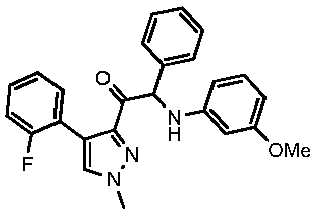
CPD-015 
CPD-025 
CPD-006 
CPD-016 
CPD-026 
CPD-007 
CPD-017 
CPD-027 
CPD-008 
CPD-018 
CPD-028 
CPD-009 
CPD-019 
CPD-029 
CPD-010 
CPD-020 
CPD-030 
CPD-031 
CPD-041 
CPD-051 
CPD-032 
CPD-042 
CPD-052 
CPD-033 
CPD-043 
CPD-053 
CPD-034 
CPD-044 
CPD-054 
CPD-035 
CPD-045 
CPD-055 
CPD-036 
CPD-046 
CPD-056 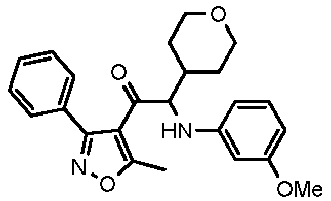
CPD-037 
CPD-047 
CPD-057 
CPD-038 
CPD-048 
CPD-058 
CPD-039 
CPD-049 
CPD-059 
CPD-040 
CPD-050 
CPD-060 
CPD-061 
CPD-071 
CPD-081 
CPD-062 
CPD-072 
CPD-082 
CPD-063 
CPD-073 
CPD-083 
CPD-064 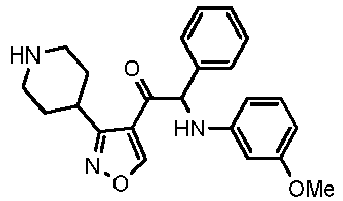
CPD-074 
CPD-084 
CPD-065 
CPD-075 
CPD-085 
CPD-066 
CPD-076 
CPD-086 
CPD-067 
CPD-077 
CPD-087 
CPD-068 
CPD-078 
CPD-088 
CPD-069 
CPD-079 
CPD-089 
CPD-070 
CPD-080 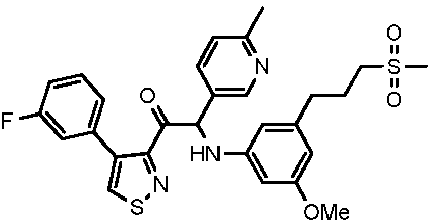
CPD-090 
CPD-091 
CPD-101 
CPD-111 
CPD-092 
CPD-102 
CPD-112 
CPD-093 
CPD-103 
CPD-113 
CPD-094 
CPD-104 
CPD-114 
CPD-095 
CPD-105 
CPD-115 
CPD-096 
CPD-106 
CPD-116 
CPD-097 
CPD-107 
CPD-117 
CPD-098 
CPD-108 
CPD-118 
CPD-099 
CPD-109 
CPD-119 
CPD-100 
CPD-110 
CPD-120 
CPD-121 
CPD-131 
CPD-141 
CPD-122 
CPD-132 
CPD-142 
CPD-123 
CPD-133 
CPD-143 
CPD-124 
CPD-134 
CPD-144 
CPD-125 
CPD-135 
CPD-145 
CPD-126 
CPD-136 
CPD-146 
CPD-127 
CPD-137 
CPD-147 
CPD-128 
CPD-138 
CPD-148 
CPD-129 
CPD-139 
CPD-149 
CPD-130 
CPD-140 
CPD-150 
CPD-151 
CPD-161 
CPD-171 
CPD-152 
CPD-162 
CPD-172 
CPD-153 
CPD-163 
CPD-173 
CPD-154 
CPD-164 
CPD-174 
CPD-155 
CPD-165 
CPD-175 
CPD-156 
CPD-166 
CPD-176 
CPD-157 
CPD-167 
CPD-177 
CPD-158 
CPD-168 
CPD-178 
CPD-159 
CPD-169 
CPD-179 
CPD-160 
CPD-170 
CPD-180 
CPD-181 
CPD-191 
CPD-201 
CPD-182 
CPD-192 
CPD-202 
CPD-183 
CPD-193 
CPD-203 
CPD-184 
CPD-194 
CPD-204 
CPD-185 
CPD-195 
CPD-205 
CPD-186 
CPD-196 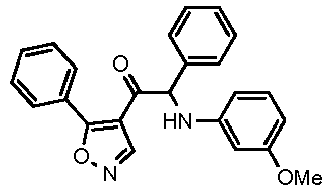
CPD-206 
CPD-187 
CPD-197 
CPD-207 
CPD-188 
CPD-198 
CPD-208 
CPD-189 
CPD-199 
CPD-209 
CPD-190 
CPD-200 
CPD-210 
CPD-211 
CPD-221 
CPD-231 
CPD-212 
CPD-222 
CPD-232 
CPD-213 
CPD-223 
CPD-233 
CPD-214 
CPD-224 
CPD-234 
CPD-215 
CPD-225 
CPD-235 
CPD-216 
CPD-226 
CPD-236 
CPD-217 
CPD-227 
CPD-237 
CPD-218 
CPD-228 
CPD-238 
CPD-219 
CPD-229 
CPD-239 
CPD-220 
CPD-230 
CPD-240 
CPD-241 
CPD-251 
CPD-261 
CPD-242 
CPD-252 
CPD-262 
CPD-243 
CPD-253 
CPD-263 
CPD-244 
CPD-254 
CPD-264 
CPD-245 
CPD-255 
CPD-265 
CPD-246 
CPD-256 
CPD-266 
CPD-247 
CPD-257 
CPD-267 
CPD-248 
CPD-258 
CPD-268 
CPD-249 
CPD-259 
CPD-269 
CPD-250 
CPD-260 
CPD-270 
CPD-271 
CPD-281 
CPD-291 
CPD-272 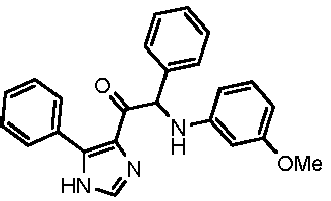
CPD-282 
CPD-292 
CPD-273 
CPD-283 
CPD-293 
CPD-274 
CPD-284 
CPD-294 
CPD-275 
CPD-285 
CPD-295 
CPD-276 
CPD-286 
CPD-296 
CPD-277 
CPD-287 
CPD-297 
CPD-278 
CPD-288 
CPD-298 
CPD-279 
CPD-289 
CPD-299 
CPD-280 
CPD-290 
CPD-300 
CPD-301 
CPD-306 
CPD-311 
CPD-302 
CPD-307 
CPD-312 
CPD-303 
CPD-308 
CPD-313 
CPD-304 
CPD-309 
CPD-314 
CPD-305 
CPD-310 
- All the preparative HPLC purifications mentioned in this experimental part have been carried out with the following system: a Waters 2489 UV/Visible Detector, a Waters 2545 Binary Gradient Module, a Waters Fraction Collector III and a Waters Dual Flex Injector.
- The separations were performed with a XBridge Prep C18 column (19x100 mm; 5 µm) equipped with a XBridge C18 guard column (19x10 mm; 5 µm) or with a SunFire Prep C18 ODB column (19x100 mm; 5 µm) equipped with a SunFire C18 guard column (19x10 mm; 5 µm).
- Elutions were carried out with the methods described in the following tables, and detection wavelengths were fixed at 210 and 254 nm.
-
Time (min) Flow Rate (mL/min) Solvent A (%) Solvent B (%) 0 20 80 20 2.00 20 80 20 8.00 20 10 90 10.80 20 10 90 11.00 20 80 20 16.00 20 80 20 Solvent A: Formic Acid LC-MS grade 0.1% in milliQ water
Solvent B: Acetonitrile HPLC grade. -
Time (min) Flow Rate (mL/min) Solvent A (%) Solvent B (%) 0 20 80 20 2.00 20 80 20 8.00 20 10 90 10.80 20 10 90 11.00 20 80 20 16.00 20 80 20 Solvent A: Ammonium Acetate puriss p.a. for HPLC 10mM in milliQ water, adjusted at pH10 with Ammonium Hydroxide puriss p.a. for HPLC
Solvent B: Acetonitrile HPLC grade. - All the enantiomer separations mentioned in this experimental part have been carried out with the following system: a Waters 2489 UV/Visible Detector, a Waters 2545 Binary Gradient Module, a Waters Fraction Collector III and a Waters Dual Flex Injector. The separations were performed with a ChiralPak IC column (20x250 mm; 5 µm) equipped with a ChiralPak IC guard column (10x20 mm; 5 µm). Elutions were carried out with the isocratic method described below, and detection wavelengths were fixed at 210 and 254 nm.
-
- Eluant: n-heptane/dichloromethane/ethanol/diethylamine: 90/10/1/0.1
- Flow rate: 20 mL/min
- General procedures used in the synthesis of compounds of the invention:
- To a solution of a carboxylic acid in dichloromethane was added an amine, triethylamine and HATU. The reaction mixture was stirred at room temperature overnight. The reaction mixture was diluted with dichloromethane and washed with a 1N hydrochloric acid solution. The phases were separated. The organic phase was washed with a saturated sodium bicarbonate solution, water and brine, dried over sodium sulfate, filtered and concentrated under reduced pressure. The residue was purified by flash chromatography on silica gel.
- A mixture of an aldehyde and an amine was heated in a sealed tube at 60 °C for 6 h. The formation of the imine was quantitative and the imine was used in the next step without further purification.
- A mixture of an aldehyde and an amine in ethanol was heated at 60 - 70 °C for 5 - 20 h. The formation of the imine was quantitative and the solution of the imine in ethanol was used in the next step without further purification.
- To a solution of 3-benzyl-5-(2-hydroxyethyl)-4-methylthiazol-3-ium chloride in ethanol was added triethylamine and the mixture was stirred at 60 - 70 °C for 10 min. To the resulting yellow solution were added an aldehyde and a solution of an imine in ethanol. The reaction mixture was stirred in a sealed tube at 60 - 70 °C for 18 - 120 h. The reaction mixture was concentrated under reduced pressure and the residue was purified by flash chromatography on silica gel. General procedure E:
- To a solution of 3-benzyl-5-(2-hydroxyethyl)-4-methylthiazol-3-ium chloride in ethanol was added triethylamine and the reaction mixture was stirred at 60 - 70 °C for 10 min. To the resulting yellow solution were added an aldehyde and a solution of an imine in ethanol. The reaction mixture was stirred in a sealed tube at 60 - 70 °C for 18 - 120 h, after which the reaction mixture was irradiated in a microwave oven at 160 °C for 4 min. The reaction mixture was concentrated under reduced pressure and the residue was purified by flash chromatography on silica gel.
- To a degassed mixture of an aryl or heteroaryl halide, a boronic acid or a boronic ester and a base (e.g. potassium fluoride or sodium carbonate) in a mixture of an organic solvent (e.g. DME or dioxane) and water was added tetrakis(triphenylphosphine)palladium(0). The reaction mixture was refluxed overnight. After cooling to room temperature, the reaction mixture was filtered through celite. The filtrate was diluted with ethyl acetate and washed with water. The phases were separated. The organic phase was washed with brine, dried over sodium sulfate, filtered and concentrated under reduced pressure. The residue was purified by flash chromatography on silica gel.
- To a degassed mixture of an aryl or heteroaryl halide, a boronic acid or a boronic ester and a base (e.g. potassium fluoride or sodium carbonate) in a mixture of an organic solvent (e.g. DME or dioxane) and water was added tetrakis(triphenylphosphine)palladium(0). The reaction mixture was irradiated in a microwave oven at 130 °C for 20 min. After cooling to room temperature, the reaction mixture was filtered through celite. The filtrate was diluted with ethyl acetate and washed with water. The phases were separated. The organic phase was washed with brine, dried over sodium sulfate, filtered and concentrated under reduced pressure. The residue was purified by flash chromatography on silica gel.
- Step 1: 1-Methyl-4-phenyl-1H-pyrazole-3-carbaldehyde was prepared according to general procedure F from 4-bromo-1-methyl-1H-pyrazole-3-carbaldehyde (0.100 g; 0.529 mmol), benzeneboronic acid (0.077 g; 0.635 mmol), sodium carbonate (0.135 g; 1.274 mmol) and tetrakis(triphenylphosphine)palladium(0) (0.031 g; 0.026 mmol) in a mixture of DME (4 mL) and water (1.6 mL). Purification by flash chromatography on silica gel using a gradient of ethyl acetate (10% to 100%) in heptane furnished 0.093 g (94%) of the desired compound as a yellow solid. ESI/APCI(+): 187 (M+H).
- Step 2: N-Benzylidene-3-methoxyaniline was prepared according to general procedure B from a mixture of benzaldehyde (0.101 mL; 0.996 mmol) and m-anidisine (0.112 mL; 1.073 mmol).
- Step 3: 2-((3-Methoxyphenyl)amino)-1-(1-methyl-4-phenyl-1H-pyrazol-3-yl)-2-phenylethanone was prepared according to general procedure D from a mixture of 3-benzyl-5-(2-hydroxyethyl)-4-methylthiazol-3-ium chloride (0.067 g; 0.248 mmol) and triethylamine (0.035 mL; 0.252 mmol) in ethanol (1 mL), 1-methyl-4-phenyl-1H-pyrazole-3-carbaldehyde (0.093 g; 0.499 mmol) and a solution of N-benzylidene-3-methoxyaniline (0.499 mmol) in ethanol (1 mL), heated at 70 °C for 24 h. Purification by flash chromatography on silica gel using a gradient of ethyl acetate (5% to 80%) in heptane followed by a second purification by flash chromatography on silica gel using a gradient of ethyl acetate (10% to 60%) in heptane furnished 0.030 g (14%) of the desired compound as a white solid. ESI/APCI(+): 398 (M+H). ESI/APCI(-): 396 (M-H).
- Step 1: 1-(4-Bromo-1-methyl-1H-pyrazol-3-yl)-2-((3-methoxyphenyl)amino)-2-phenylethanone was prepared according to general procedure D from a mixture of 3-benzyl-5-(2-hydroxyethyl)-4-methylthiazol-3-ium chloride (0.135 g; 0.500 mmol) and triethylamine (0.069 mL; 0.498 mmol) in ethanol (0.735 mL), 4-bromo-1-methyl-1H-pyrazole-3-carboxaldehyde (0.205 g, 1.085 mmol) and a solution of N-benzylidene-3-methoxyaniline (0.996 mmol) in ethanol (0.735 mL), heated at 70 °C for 18 h. Purification by flash chromatography on silica gel using a gradient of ethyl acetate (0% to 70%) in heptane furnished 0.266 g (67%) of the desired compound as a yellow solid. ESI/APCI(+): 400, 402 (M+H). 1H NMR (DMSO-d 6) δ 8.13 (1H, s); 7.49 (2H, d); 7.33 (2H, m); 7.25 (1H, m); 6.93 (1H, t); 6.44 (1H, d); 6.25 (3H, m); 6.14 (1H, d); 4.00 (3H, s); 3.64 (3H, s).
- Step 2: 1-(4-(4-Fluorophenyl)-1-methyl-1H-pyrazol-3-yl)-2-((3-methoxyphenyl)amino)-2-phenylethanone was prepared according to general procedure F from 1-(4-bromo-1-methyl-1H-pyrazol-3-yl)-2-((3-methoxyphenyl)amino)-2-phenylethanone (0.100 g; 0.250 mmol), 4-fluorophenylboronic acid (0.052 g; 0.372 mmol), potassium fluoride (0.058 g; 0.998 mmol) and tetrakis(triphenylphosphine)palladium(0) (0.029 g; 0.025 mmol) in a mixture of dioxane (4 mL) and water (1 mL). Purification by flash chromatography on silica gel using a gradient of ethyl acetate (20% to 50%) in heptane furnished 0.073 g (70%) of the desired compound as a white foam. ESI/APCI(+): 416 (M+H). ESI/APCI(-): 414 (M-H). 1H NMR (DMSO-d 6) δ 8.06 (1H, s); 7.52 (2H, d); 7.1-7.4 (7H, m); 6.92 (1H, t); 6.35 (2H, m); 6.28 (2H, m); 6.12 (1H, d); 4.03 (3H, s); 3.61 (3H, s).
- Step 1: A solution of 3-methoxy-N-(pyridin-3-ylmethylene)aniline in ethanol was prepared according to general procedure C from a mixture of nicotinaldehyde (0.047 mL; 0.500 mmol) and m-anidisine (0.056 mL; 0.500 mmol) in ethanol (0.5 mL), heated at 60 °C for 6 h.
- 2-((3-Methoxyphenyl)amino)-1-(1-methyl-4-phenyl-1H-pyrazol-3-yl)-2-(pyridin-3-yl)ethanone was prepared according to general procedure D from a mixture of 3-benzyl-5-(2-hydroxyethyl)-4-methylthiazol-3-ium chloride (0.067 g; 0.248 mmol) and triethylamine (0.035 mL; 0.252 mmol) in ethanol (1 mL), 1-methyl-4-phenyl-1H-pyrazole-3-carbaldehyde (0.093 g; 0.499 mmol) and a solution of 3-methoxy-N-(pyridin-3-ylmethylene)aniline (0.500 mmol) in ethanol (0.5 mL), heated at 70 °C for 18 h. Purification by flash chromatography on silica gel using a gradient of ethyl acetate (2% to 20%) in dichloromethane followed by precipitation from diethyl ether furnished 0.060 g (30%) of the desired compound as a white solid. ESI/APCI(+): 399 (M+H). ESI/APCI(-): 397 (M-H). 1H NMR (DMSO-d 6) δ 8.75 (1H, s); 8.45 (1H, d); 8.08 (1H, s); 7.88 (1H, d); 7.21-7.43 (6H, m); 6.95 (1H, t); 6.55 (1H, d); 6.40 (1H, d); 6.30 (2H, m); 6.15 (1H, d); 4.04 (3H, s); 3.62 (3H, s).
- Step 1: A solution of N-((5-fluoropyridin-3-yl)methylene)-3-methoxyaniline in ethanol was prepared according to general procedure C from a mixture of 5-fluoronicotinaldehyde (0.062 g; 0.504 mmol) and m-anidisine (0.056 mL; 0.500 mmol) in ethanol (0.5 mL), heated at 60 °C for 6 h.
- Step 2: 2-(5-Fluoropyridin-3-yl)-2-((3-methoxyphenyl)amino)-1-(1-methyl-4-phenyl-1H-pyrazol-3-yl)ethanone was prepared according to general procedure D from a mixture of 3-benzyl-5-(2-hydroxyethyl)-4-methylthiazol-3-ium chloride (0.067 g; 0.248 mmol) and triethylamine (0.035 mL; 0.252 mmol) in ethanol (1 mL), 1-methyl-4-phenyl-1H-pyrazole-3-carbaldehyde (0.093 g; 0.499 mmol) and a solution of N-((5-fluoropyridin-3-yl)methylene)-3-methoxyaniline (0.500 mmol) in ethanol (0.5 mL), heated at 70 °C for 18 h. Purification by flash chromatography on silica gel using a gradient of ethyl acetate (2% to 20%) in dichloromethane followed by precipitation from ethanol furnished 0.055 g (26%) of the desired compound as a beige solid. ESI/APCI(+): 417 (M+H). ESI/APCI(-): 415 (M-H). 1H NMR (DMSO-d 6) δ 8.65 (1H, s); 8.47 (1H, d); 8.10 (1H, s); 7.83 (1H, d); 7.23-7.47 (5H, m); 6.96 (1H, t); 6.56-6.67 (1H, m); 6.44-6.53 (1H, m); 6.32 (2H, m); 6.18 (1H, d); 4.05 (3H, s); 3.63 (3H, s).
- 1-(4-(2-Fluorophenyl)-1-methyl-1H-pyrazol-3-yl)-2-((3-methoxyphenyl)amino)-2-phenylethanone was prepared according to general procedure F from 1-(4-bromo-1-methyl-1H-pyrazol-3-yl)-2-((3-methoxyphenyl)amino)-2-phenylethanone (0.100 g; 0.250 mmol), (2-fluorophenyl)boronic acid (0.052 g; 0.372 mmol), potassium fluoride (0.058 g; 0.998 mmol) and tetrakis(triphenylphosphine)palladium(0) (0.029 g; 0.025 mmol) in a mixture of DME (3 mL) and water (0.75 mL). Purification by flash chromatography on silica gel using a gradient of ethyl acetate (2% to 40%) in heptane furnished 0.095 g (91%) of the desired compound as a beige solid. ESI/APCI(+): 416 (M+H). ESI/APCI(-): 414 (M-H). 1H NMR (DMSO-d 6) δ 8.03 (1H, s); 7.51 (2H, d); 7.20-7.41 (5H, m); 7.17 (2H, d); 6.92 (1H, t); 6.34-6.44 (1H, m); 6.21-6.33 (3H, m); 6.12 (1H, d); 4.04 (3H, s); 3.61 (3H, s).
- 1-(4-(3-Fluorophenyl)-1-methyl-1H-pyrazol-3-yl)-2-((3-methoxyphenyl)amino)-2-phenylethanone was prepared according to general procedure F from 1-(4-bromo-1-methyl-1H-pyrazol-3-yl)-2-((3-methoxyphenyl)amino)-2-phenylethanone (0.100 g; 0.250 mmol), (3-fluorophenyl)boronic acid (0.052 g; 0.372 mmol), potassium fluoride (0.058 g; 0.998 mmol) and tetrakis(triphenylphosphine)palladium(0) (0.029 g; 0.025 mmol) in a mixture of DME (3 mL) and water (0.75 mL). Purification by flash chromatography on silica gel using a gradient of ethyl acetate (2% to 40%) in heptane furnished 0.092 g (89%) of the desired compound as a beige solid. ESI/APCI(+): 416 (M+H). ESI/APCI(-): 414 (M-H). 1H NMR (DMSO-d 6) δ 8.15 (1H, s); 7.51 (2H, d); 7.34 (3H, m); 7.22 (3H, m); 7.06 (1H, t); 6.93 (1H, t); 6.46 (1H, d); 6.24-6.39 (3H, m); 6.13 (1H, d); 4.04 (3H, s); 3.62 (3H, s).
- 1-(1,1'-Dimethyl-1H,1'H-[4,4'-bipyrazol]-3-yl)-2-((3-methoxyphenyl)amino)-2-phenylethanone was prepared according to general procedure F from 1-(4-bromo-1-methyl-1H-pyrazol-3-yl)-2-((3-methoxyphenyl)amino)-2-phenylethanone (0.100 g; 0.250 mmol), 1-methyl-1H-pyrazole-4-boronic acid pinacol ester (0.078 g; 0.375 mmol), potassium fluoride (0.058 g; 0.998 mmol) and tetrakis(triphenylphosphine)palladium(0) (0.029 g; 0.025 mmol) in a mixture of DME (3 mL) and water (0.75 mL). Purification by flash chromatography on silica gel using a gradient of ethyl acetate (2% to 20%) in dichloromethane furnished 0.074 g (74%) of the desired compound as a beige solid. ESI/APCI(+): 402 (M+H). ESI/APCI(-): 400 (M-H). 1H NMR (DMSO-d 6) δ 8.14 (2H, s); 7.75 (1H, s); 7.51 (2H, m); 7.17-7.36 (3H, m); 6.93 (1H, t); 6.40 (2H, m); 6.30 (2H, s); 6.13 (1H, d); 4.01 (3H, s); 3.82 (3H, s); 3.62 (3H, s).
- Step 1: A solution of N-(4-fluorobenzylidene)-3-methoxyaniline in ethanol was prepared according to general procedure C from a mixture of 4-fluorobenzaldehyde (0.126 g; 1.015 mmol) and m-anidisine (0.109 mL; 0.974 mmol) in ethanol (0.5 mL), heated at 60 °C for 18 h.
- Step 2: 2-(4-Fluorophenyl)-2-((3-methoxyphenyl)amino)-1-(1-methyl-4-phenyl-1H-pyrazol-3-yl)ethanone was prepared according to general procedure D from a mixture of 3-benzyl-5-(2-hydroxyethyl)-4-methylthiazol-3-ium chloride (0.116 g; 0.430 mmol) and triethylamine (0.080 mL; 0.574 mmol) in ethanol (0.5 mL), 1-methyl-4-phenyl-1H-pyrazole-3-carbaldehyde (0.160 g; 0.859 mmol) and a solution of N-(4-fluorobenzylidene)-3-methoxyaniline (0.974 mmol) in ethanol (1.5 mL), heated at 60 °C for 18 h. Purification by flash chromatography on silica gel using a gradient of ethyl acetate (0% to 40%) in heptane furnished 0.174 g (48%) of the desired compound as a yellow oil. ESI/APCI(+): 416 (M+H).
- Step 1: A solution of 3-methoxy-N-(4-methylbenzylidene)aniline in ethanol was prepared according to general procedure C from a mixture of p-tolualdehyde (0.279 mL; 2.57 mmol) and m-anidisine (0.277 mL; 2.48 mmol) in ethanol (1.5 mL), heated at 60 °C for 6 h.
- Step 2: 1-(4-Bromo-1-methyl-1H-pyrazol-3-yl)-2-((3-methoxyphenyl)amino)-2-(p-tolyl)ethanone was prepared according to general procedure D from a mixture of 3-benzyl-5-(2-hydroxyethyl)-4-methylthiazol-3-ium chloride (0.330 g; 1.22 mmol) and triethylamine (0.250 mL; 1.79 mmol) in ethanol (1.5 mL), 4-bromo-1-methyl-1H-pyrazole-3-carboxaldehyde (0.455 g, 2.41 mmol) and a solution of 3-methoxy-N-(4-methylbenzylidene)aniline (2.48 mmol) in ethanol (3 mL), heated at 60 °C for 18 h. Purification by flash chromatography on silica gel using a gradient of ethyl acetate (0% to 50%) in heptane furnished 0.612 g (61%) of the desired compound as a yellow wax that slowly solidified. ESI/APCI(+): 414, 416 (M+H).
- Step 3: 2-((3-Methoxyphenyl)amino)-1-(1-methyl-4-(pyrimidin-5-yl)-1H-pyrazol-3-yl)-2-(p-tolyl)ethanone was prepared according to general procedure F from 1-(4-bromo-1-methyl-1H-pyrazol-3-yl)-2-((3-methoxyphenyl)amino)-2-(p-tolyl)ethanone (0.120 g; 0.290 mmol), pyrimidin-5-ylboronic acid (0.056 g; 0.452 mmol), potassium fluoride (0.072 g; 1.239 mmol) and tetrakis(triphenylphosphine)palladium(0) (0.035 g; 0.030 mmol) in a mixture of dioxane (4 mL) and water (1 mL). Purification by flash chromatography on silica gel using a gradient of ethyl acetate (50% to 100%) in heptane followed by purification by solid phase extraction on C18-reversed phase column using a gradient of acetonitrile (10% to 60%) in water furnished 0.090 g (75%) of the desired compound as a yellow foam. ESI/APCI(+): 414 (M+H).
- 2-((3-Methoxyphenyl)amino)-1-(1-methyl-4-(pyridin-4-yl)-1H-pyrazol-3-yl)-2-(p-tolyl)ethanone was prepared according to general procedure F from 1-(4-bromo-1-methyl-1H-pyrazol-3-yl)-2-((3-methoxyphenyl)amino)-2-(p-tolyl)ethanone (0.123 g; 0.297 mmol), pyridine-4-ylboronic acid (0.057 g; 0.464 mmol), potassium fluoride (0.076 g; 1.308 mmol) and tetrakis(triphenylphosphine)palladium(0) (0.032 g; 0.028 mmol) in a mixture of dioxane (4 mL) and water (1 mL). The residue was purified by flash chromatography on silica gel using a gradient of ethyl acetate (50% to 100%) in heptane. Further purification by solid phase extraction on C18-reversed phase column using a gradient of acetonitrile (10% to 60%) in water followed by purification by preparative HPLC (XBrigde column; method 1) furnished 0.045 g (37%) of the desired compound as a yellow solid. ESI/APCI(+): 413 (M+H).
- Step 1: A solution of 3-methoxy-N-((5-methoxypyrazin-2-yl)methylene)aniline in ethanol was prepared according to general procedure C from a mixture of 5-methoxypyrazine-2-carbaldehyde (0.139 g; 1.006 mmol) and m-anidisine (0.110 mL; 0.983 mmol) in ethanol (0.5 mL), heated at 60 °C for 18 h.
- Step 2: 2-((3-Methoxyphenyl)amino)-2-(5-methoxypyrazin-2-yl)-1-(1-methyl-4-phenyl-1H-pyrazol-3-yl)ethanone was prepared according to general procedure D from a mixture of 3-benzyl-5-(2-hydroxyethyl)-4-methylthiazol-3-ium chloride (0.116 g; 0.430 mmol) and triethylamine (0.080 mL; 0.574 mmol) in ethanol (0.5 mL), 1-methyl-4-phenyl-1H-pyrazole-3-carbaldehyde (0.162 g; 0.870 mmol) and a solution of 3-methoxy-N-((5-methoxypyrazin-2-yl)methylene)aniline (0.983 mmol) in ethanol (1.5 mL), heated at 60 °C for 18 h. The residue was purified by flash chromatography on silica gel using a gradient of ethyl acetate (0% to 60%) in heptane. Further purification by solid phase extraction on C18-reversed phase column using a gradient of acetonitrile (10% to 55%) in water followed by purification by preparative HPLC (XBridge column; method 1) furnished 0.118 g (32%) of the desired compound as a yellow solid. ESI/APCI(+): 430 (M+H).
- Step 1: A solution of 5-methoxy-N-((6-methoxypyridin-3-yl)methylene)pyridin-3-amine in ethanol was prepared according to general procedure C from a mixture of 6-methoxynicotinaldehyde (0.126 g; 0.919 mmol) and 5-methoxypyridin-3-amine (0.114 g; 0.918 mmol) in ethanol (1 mL), heated at 60 °C for 6 h.
- Step 2: 2-(6-Methoxypyridin-3-yl)-2-((5-methoxypyridin-3-yl)amino)-1-(1-methyl-4-phenyl-1H-pyrazol-3-yl)ethanone was prepared according to general procedure D from a mixture of 3-benzyl-5-(2-hydroxyethyl)-4-methylthiazol-3-ium chloride (0.126 g; 0.460 mmol) and triethylamine (0.064 mL; 0.462 mmol) in ethanol (1.5 mL), 1-methyl-4-phenyl-1H-pyrazole-3-carbaldehyde (0.171 g; 0.918 mmol) and a solution of 5-methoxy-N-((6-methoxypyridin-3-yl)methylene)pyridin-3-amine (0.918 mmol) in ethanol (1 mL), heated at 70 °C for 18 h. The residue was purified by flash chromatography on silica gel using a gradient of ethyl acetate (30% to 100%) in dichloromethane. Further purification by flash chromatography on silica gel using a gradient of methanol (0% to 7%) in dichloromethane furnished 0.030 g (8%) of the desired compound as a beige solid. ESI/APCI(+): 430 (M+H). ESI/APCI(-): 428 (M-H).
- Step 1: A solution of 3-methoxy-N-(pyrazolo[1,5-a]pyridin-2-ylmethylene)aniline in ethanol was prepared according to general procedure C from a mixture of pyrazolo[1,5-a]pyridine-2-carbaldehyde (0.073 g; 0.499 mmol) and m-anidisine (0.056 mL; 0.501 mmol) in ethanol (0.5 mL), heated at 60 °C for 6 h.
- Step 2: 1-(4-Bromo-1-methyl-1H-pyrazol-3-yl)-2-((3-methoxyphenyl)amino)-2-(pyrazolo[1,5-a]pyridin-2-yl)ethanone was prepared according to general procedure D from a mixture of 3-benzyl-5-(2-hydroxyethyl)-4-methylthiazol-3-ium chloride (0.135 g; 0.500 mmol) and triethylamine (0.070 mL; 0.505 mmol) in ethanol (1.5 mL), 4-bromo-1-methyl-1H-pyrazole-3-carboxaldehyde (0.189 g, 1.000 mmol) and a solution of 3-methoxy-N-(pyrazolo[1,5-a]pyridin-2-ylmethylene)aniline (0.999 mmol) in ethanol (1 mL), heated at 70 °C for 18 h. Purification by flash chromatography on silica gel using a gradient of ethyl acetate (15% to 70%) in heptane furnished 0.277 g (63%) of the desired compound as a beige solid. ESI/APCI(+): 440, 442 (M+H).
- Step 3: 2-((3-Methoxyphenyl)amino)-1-(1-methyl-4-phenyl-1H-pyrazol-3-yl)-2-(pyrazolo[1,5-a]pyridin-2-yl)ethanone was prepared according to general procedure F from 1-(4-bromo-1-methyl-1H-pyrazol-3-yl)-2-((3-methoxyphenyl)amino)-2-(pyrazolo[1,5-a]pyridin-2-yl)ethanone (0.100 g; 0.227 mmol), benzeneboronic acid (0.041 g; 0.341 mmol), potassium fluoride (0.053 g; 0.908 mmol) and tetrakis(triphenylphosphine)palladium(0) (0.026 g; 0.023 mmol) in a mixture of DME (3 mL) and water (0.75 mL). Purification by flash chromatography on silica gel using a gradient of ethyl acetate (15% to 70%) in heptane furnished 0.074 g (76%) of the desired compound as a beige solid. ESI/APCI(+): 438 (M+H). 1H NMR (DMSO-d 6) δ 8.61 (1H, d); 8.06 (1H, s); 7.64 (1H, d); 7.46 (2H, m); 7.23-7.40 (3H, m); 7.18 (1H, t); 6.96 (1H, t); 6.78 (1H, t); 6.62 (2H, m); 6.38 (2H, m); 6.30 (1H, d); 6.15 (1H, d); 4.01 (3H, s); 3.63 (3H, s).
- 4-(3-(2-((3-Methoxyphenyl)amino)-2-(pyrazolo[1,5-a]pyridin-2-yl)acetyl)-1-methyl-1H-pyrazol-4-yl)benzonitrile was prepared according to general procedure G from 1-(4-bromo-1-methyl-1H-pyrazol-3-yl)-2-((3-methoxyphenyl)amino)-2-(pyrazolo[1,5-a]pyridin-2-yl)ethanone (0.080 g; 0.182 mmol), 4-cyanophenylboronic acid (0.040 g; 0.273 mmol), potassium fluoride (0.042 g; 0.727 mmol) and tetrakis(triphenylphosphine)palladium(0) (0.021 g; 0.018 mmol) in a mixture of DME (3 mL) and water (0.75 mL). Purification by flash chromatography on silica gel using a gradient of ethyl acetate (15% to 70%) in heptane furnished 0.057 g (68%) of the desired compound as a beige solid. ESI/APCI(+): 463 (M+H). ESI/APCI(-): 461 (M-H). 1H NMR (DMSO-d 6) δ 8.61 (1H, d); 8.22 (1H, s); 7.83 (2H, m); 7.57-7.74 (3H, m); 7.12-7.25 (1H, m); 6.96 (1H, t); 6.85 (1H, t); 6.55-6.70 (2H, m); 6.37 (3H, m); 6.16 (1H, d); 4.01 (3H, s); 3.63 (3H, s).
- Step 1: A solution of 3,5-dimethoxy-N-(4-methylbenzylidene)aniline in ethanol was prepared according to general procedure C from a mixture of p-tolualdehyde (0.118 mL; 1.000 mmol) and 3,5-dimethoxyaniline (0.153 g; 0.999 mmol) in ethanol (2 mL), heated at 60 °C for 6.5 h.
- Step 2: 1-(4-Bromo-1-methyl-1H-pyrazol-3-yl)-2-((3,5-dimethoxyphenyl)amino)-2-(p-tolyl)ethanone was prepared according to general procedure D from a mixture of 3-benzyl-5-(2-hydroxyethyl)-4-methylthiazol-3-ium chloride (0.135 g; 0.500 mmol) and triethylamine (0.069 mL; 0.498 mmol) in ethanol (0.735 mL), 4-bromo-1-methyl-1H-pyrazole-3-carboxaldehyde (0.205 g, 1.085 mmol) and a solution of 3,5-dimethoxy-N-(4-methylbenzylidene)aniline (0.999 mmol) in ethanol (2 mL) and dichloromethane (1 mL), heated at 70 °C for 25 h. Purification by flash chromatography on silica gel using a gradient of ethyl acetate (0% to 100%) in heptane furnished 0.063 g (15%) of the desired compound as a yellow foam. ESI/APCI(+): 444, 446 (M+H).
- Step 3: 2-((3,5-Dimethoxyphenyl)amino)-1-(1-methyl-4-phenyl-1H-pyrazol-3-yl)-2-(p-tolyl)ethanone was prepared according to general procedure F from 1-(4-bromo-1-methyl-1H-pyrazol-3-yl)-2-((3,5-dimethoxyphenyl)amino)-2-(p-tolyl)ethanone (0.063 g; 0.142 mmol), benzeneboronic acid (0.066 g; 0.213 mmol), potassium fluoride (0.030 g; 0.516 mmol) and tetrakis(triphenylphosphine)palladium(0) (0.016 g; 0.014 mmol) in a mixture of dioxane (2.3 mL) and water (0.6 mL). Purification by flash chromatography on silica gel using a gradient of ethyl acetate (20% to 60%) in heptane furnished 0.028 g (45%) of the desired compound as a beige solid. ESI/APCI(+): 442 (M+H); 464 (M+Na). ESI/APCI(-): 440 (M-H). 1H NMR (DMSO-d 6) δ 8.04 (1H, s); 7.2-7.4 (7H, m); 7.12 (2H, m); 6.30 (2H, m); 5.91 (2H, s); 5.72 (1H, s); 4.02 (3H, s); 3.60 (3H, s); 1.99 (3H, s).
- Step 1: A solution of 3-methoxy-N-((6-methoxypyridin-3-yl)methylene)aniline in ethanol was prepared according to general procedure C from a mixture of 6-methoxypyridine-3-carboxaldehyde (0.411 g; 2.98 mmol) and m-anisidine (0.336 mL; 3.00 mmol) in ethanol (6 mL), heated at 60 °C for 6.5 h.
- Step 2: 1-(4-Bromo-1-methyl-1H-pyrazol-3-yl)-2-((3-methoxyphenyl)amino)-2-(6-methoxypyridin-3-yl)ethanone was prepared according to general procedure D from a mixture of 3-benzyl-5-(2-hydroxyethyl)-4-methylthiazol-3-ium chloride (0.405 g; 1.50 mmol) and triethylamine (0.207 mL; 1.49 mmol) in ethanol (2.2 mL), 4-bromo-1-methyl-1H-pyrazole-3-carboxaldehyde (0.615 g, 3.25 mmol) and a solution of 3-methoxy-N-((6-methoxypyridin-3-yl)methylene)aniline (2.98 mmol) in ethanol (6 mL), heated at 70 °C for 22 h. Purification by flash chromatography on silica gel using a gradient of ethyl acetate (40% to 100%) in heptane furnished 0.776 g (60%) of the desired compound as a yellow solid. ESI/APCI(+): 431, 433 (M+H). 1H NMR (DMSO-d 6) δ 8.28 (1H, s); 8.14 (1H, s); 7.75 (1H, d); 6.94 (1H, t); 6.80 (1H, d); 6.47 (1H, d); 6.27 (2H, s); 6.1-6.25 (2H, m); 3.99 (3H, s); 3.80 (3H, s); 3.62 (3H, s).
- Step 3: 1-(4-(Benzo[d]thiazol-5-yl)-1-methyl-1H-pyrazol-3-yl)-2-((3-methoxyphenyl)amino)-2-(6-methoxypyridin-3-yl)ethanone was prepared according to general procedure F from 1-(4-bromo-1-methyl-1H-pyrazol-3-yl)-2-((3-methoxyphenyl)amino)-2-(6-methoxypyridin-3-yl)ethanone (0.120 g; 0.278 mmol), benzothiazole-5-boronic acid pinacol ester (0.109 g; 0.417 mmol), potassium fluoride (0.058 g; 0.998 mmol) and tetrakis(triphenylphosphine)palladium(0) (0.032 g; 0.028 mmol) in a mixture of dioxane (4.5 mL) and water (1.1 mL). Purification by flash chromatography on silica gel using a gradient of ethyl acetate (20% to 80%) in heptane followed by purification by preparative TLC using ethyl acetate (70%) in heptane as eluent furnished 0.042 g (31%) of the desired compound as a yellow foam. ESI/APCI(+): 486 (M+H); 508 (M+Na). ESI/APCI(-): 484 (M-H). 1H NMR (DMSO-d 6) δ 9.40 (1H, s); 8.33 (1H, s); 8.21 (1H, s); 8.14 (2H, m); 7.79 (1H, d); 7.50 (1H, d); 6.95 (1H, t); 6.80 (1H, d); 6.33 (2H, m); 6.30 (2H, s); 6.17 (1H, d); 4.06 (3H, s); 3.80 (3H, s); 3.63 (3H, s).
- 1-(4-(2,3-Dihydrobenzofuran-5-yl)-1-methyl-1H-pyrazol-3-yl)-2-((3-methoxyphenyl)amino)-2-(6-methoxypyridin-3-yl)ethanone was prepared according to general procedure F from 1-(4-bromo-1-methyl-1H-pyrazol-3-yl)-2-((3-methoxyphenyl)amino)-2-(6-methoxypyridin-3-yl)ethanone (0.120 g; 0.278 mmol), 2,3-dihydro-1-benzofuran-5-ylboronic acid (0.068 g; 0.415 mmol), potassium fluoride (0.058 g; 0.998 mmol) and tetrakis(triphenylphosphine)palladium(0) (0.032 g; 0.028 mmol) in a mixture of dioxane (4.5 mL) and water (1.1 mL). Purification by flash chromatography on silica gel using a gradient of ethyl acetate (30% to 70%) in heptane followed by a second purification by flash chromatography using a gradient of ethyl acetate (30% to 70%) in heptane furnished 0.034 g (26%) of the desired compound as a white solid. ESI/APCI(+): 471 (M+H); 493 (M+Na). ESI/APCI(-): 469 (M-H). 1H NMR (DMSO-d 6) δ 8.29 (1H, s); 7.97 (1H, s); 7.76 (1H, d); 7.29 (1H, s); 7.12 (1H, d); 6.94 (1H, t); 6.75 (2H, m); 6.43 (1H, m); 6.29 (3H, m); 6.14 (1H, d); 4.52 (2H, t); 4.01 (3H, s); 3.79 (3H, s); 3.62 (3H, s); 3.15 (2H, t).
- 2-((3-Methoxyphenyl)amino)-2-(6-methoxypyridin-3-yl)-1-(1-methyl-4-(thiophen-2-yl)-1H-pyrazol-3-yl)ethanone was prepared according to general procedure F from 1-(4-bromo-1-methyl-1H-pyrazol-3-yl)-2-((3-methoxyphenyl)amino)-2-(6-methoxypyridin-3-yl)ethanone (0.120 g; 0.278 mmol), thiophene-2-boronic acid (0.053 g; 0.414 mmol), potassium fluoride (0.058 g; 0.998 mmol) and tetrakis(triphenylphosphine)palladium(0) (0.032 g; 0.028 mmol) in a mixture of dioxane (4.5 mL) and water (1.1 mL). Purification by flash chromatography on silica gel using a gradient of ethyl acetate (20% to 60%) in heptane followed by crystallization from ethyl acetate and heptane furnished 0.015 g (12%) of the desired compound as a yellow solid. ESI/APCI(+): 435 (M+H). 1H NMR (DMSO-d 6) δ 8.29 (1H, s); 8.25 (1H, s); 7.78 (1H, d); 7.49 (2H, m); 7.05 (1H, t); 6.95 (1H, t); 6.76 (2H, d); 6.50 (1H, d); 6.30 (3H, m); 6.15 (1H, d); 4.02 (3H, s); 3.79 (3H, s); 3.62 (3H, s).
- 2-((3-Methoxyphenyl)amino)-1-(1-methyl-4-(6-methylpyridin-3-yl)-1H-pyrazol-3-yl)-2-phenylethanone was prepared according to general procedure G from 1-(4-bromo-1-methyl-1H-pyrazol-3-yl)-2-((3-methoxyphenyl)amino)-2-phenylethanone (0.120 g; 0.300 mmol), 2-methyl-5-(4,4,5,5-tetramethyl-1,3,2-dioxaborolan-2-yl)pyridine (0.104 g; 0.475 mmol), potassium fluoride (0.070 g; 1.205 mmol) and tetrakis(triphenylphosphine)palladium(0) (0.044 g; 0.038 mmol) in a mixture of dioxane (4 mL) and water (1 mL). Purification by flash chromatography on silica gel using a gradient of ethyl acetate (50% to 100%) in heptane followed by purification by preparative HPLC (XBridge column; method 1) furnished 0.071 g (57%) of the desired compound as a yellow solid. ESI/APCI(+): 413 (M+H).
- 1-(4-(3,5-Dimethylisoxazol-4-yl)-1-methyl-1H-pyrazol-3-yl)-2-((3-methoxyphenyl)amino)-2-(p-tolyl)ethanone was prepared according to general procedure F from 1-(4-bromo-1-methyl-1H-pyrazol-3-yl)-2-((3-methoxyphenyl)amino)-2-(p-tolyl)ethanone (0.120 g; 0.290 mmol), (3,5-dimethylisoxazol-4-yl)boronic acid (0.062 g; 0.440 mmol), potassium fluoride (0.070 g; 1.205 mmol) and tetrakis(triphenylphosphine)palladium(0) (0.035 g; 0.030 mmol) in a mixture of dioxane (4 mL) and water (1 mL). The residue was purified by flash chromatography on silica gel using a gradient of ethyl acetate (50% to 100%) in heptane. Further purification by flash chromatography on silica gel using a gradient of ethyl acetate (0% to 50%) in heptane followed by purification by preparative HPLC (XBridge column; method 1) furnished 0.045 g (36%) of the desired compound as a yellow solid. ESI/APCI(+): 431 (M+H).
- 2-((3-Methoxyphenyl)amino)-1-(1-methyl-4-phenyl-1H-pyrazol-3-yl)-2-phenylethanone was separated into its enantiomers and purified by preparative HPLC (ChiralPak column; method 3). Under these conditions, the two enantiomers were obtained:
- faster eluting enantiomer: tr = 8.6 min; ee > 95%
- slower eluting enantiomer tr = 14.2 min; ee > 95%.
- Step 1: 4-Phenyl-1H-pyrazole-3-carbaldehyde was prepared according to general procedure F from 4-bromo-1H-pyrazole-3-carbaldehyde (0.200 g; 1.14 mmol), benzeneboronic acid (0.209 g;
1.71 mmol), potassium fluoride (0.266 g; 4.57 mmol) and tetrakis(triphenylphosphine)palladium(0) (0.132 g; 0.114 mmol) in a mixture of DME (16 mL) and water (4 mL). Purification by flash chromatography on silica gel using a gradient of ethyl acetate (5% to 50%) in heptane furnished 0.078 g (40%) of the desired compound as a white solid. ESI/APCI(-): 171 (M-H). - Step 2: 2-((3-Methoxyphenyl)amino)-2-phenyl-1-(4-phenyl-1H-pyrazol-3-yl)ethanone was prepared according to general procedure D from a mixture of 3-benzyl-5-(2-hydroxyethyl)-4-methylthiazol-3-ium chloride (0.110 g; 0.407 mmol) and triethylamine (0.057 mL; 0.407 mmol) in ethanol (1 mL), 4-phenyl-1H-pyrazole-3-carbaldehyde (0.140 g, 0.813 mmol) and a solution of N-benzylidene-3-methoxyaniline (0.813 mmol) in ethanol (1 mL), heated at 70 °C for 18 h. The residue was purified by flash chromatography on silica gel using a gradient of ethyl acetate (5% to 50%) in heptane. Further purification by flash chromatography on silica gel using a gradient of ethyl acetate (2% to 40%) in heptane followed by purification by preparative HPLC (XBridge column; method 2) furnished 0.012 g (4%) of the desired compound as a beige solid. ESI/APCI(-): 171 (M-H).
- Step 1: To a solution of ethyl 4-phenyl-1H-pyrrole-3-carboxylate (0.500 g; 2.32 mmol) in acetonitrile (15 mL) were added di-tert-butyl dicarbonate (0.610 g; 2.79 mmol) and DMAP (0.026 g; 0.213 mmol). The reaction mixture was stirred overnight at room temperature and was concentrated under reduced pressure. The residue was partitioned between dichloromethane and a saturated ammonium chloride solution. The phases were separated. The organic phase was washed with a 1M sodium bicarbonate solution and brine, dried over magnesium sulfate, filtered and concentrated under reduced pressure. The residue was purified by flash chromatography on silica gel using ethyl acetate (30%) in heptane as eluant to furnish 0.643 g (88%) of 1-tert-butyl 3-ethyl 4-phenyl-1H-pyrrole-1,3-dicarboxylate as a white solid. 1H NMR (DMSO-d 6) δ 7.82 (1H, s); 7.45-7.33 (6H, m); 4.16 (2H, q); 1.59 (9H, s); 1.19 (3H, t).
- Step 2: To a solution of 1-tert-butyl 3-ethyl 4-phenyl-1H-pyrrole-1,3-dicarboxylate (0.643 g; 2.04 mmol) in dichloromethane (20 mL) cooled at -78 °C was added a 1M DIBALH solution in hexane (4.50 mL; 4.50 mmol). The reaction mixture was allowed to warm to 0 °C and stirring was continued for 1 h. The reaction mixture was diluted with ethyl acetate and a 1N Rochelle salt solution was added. After 30 min stirring at room temperature, the phases were separated. The organic phase was washed with brine, dried over magnesium sulfate, filtered and concentrated under reduced pressure to furnish 0.505 g (91%) of tert-butyl 3-(hydroxymethyl)-4-phenyl-1H-pyrrole-1-carboxylate as a pale pink oil. The crude product was used in the next step without further purification.
- Step 3: A mixture of tert-butyl 3-(hydroxymethyl)-4-phenyl-1H-pyrrole-1-carboxylate (0.505 g; 1.85 mmol) and manganese dioxide (1.650 g; 19.0 mmol) in DMSO (8 mL) was stirred at 50 °C for 6 h. The reaction mixture was allowed to cool to room temperature and stirring was continued for 60 h. The solution was filtered through celite. The filtrate was diluted with ethyl acetate and was washed with water. The organic phase was washed with brine, dried over magnesium sulfate, filtered and concentrated under reduced pressure. Purification by flash chromatography on silica gel using a gradient of ethyl acetate (0% to 20%) in heptane furnished 0.149 g (30%) of tert-butyl 3-formyl-4-phenyl-1H-pyrrole-1-carboxylate as a white solid. 1H NMR (DMSO-d 6) δ: 9.88 (1H, s); 8.20 (1H, d); 7.58 (2H, d); 7.53 (1H, d); 7.41-7.32 (3H, m); 1.61 (9H, s).
- Step 4: 2-((3-Methoxyphenyl)amino)-2-phenyl-1-(4-phenyl-1H-pyrrolo-3-yl)ethanone was prepared according to general procedure E from a mixture of 3-benzyl-5-(2-hydroxyethyl)-4-methylthiazolium chloride (0.070 g; 0.259 mmol) and triethylamine (0.060 mL; 0.430 mmol) in ethanol (1 mL), tert-butyl 3-formyl-4-phenyl-1H-pyrrole-4-carboxylate (0.149 g; 0.549 mmol) and N-benzylidene-3-methoxyaniline (0.601 mmol) in ethanol (1.5 mL). Purification by flash chromatography on silica gel using a gradient of ethyl acetate (0% to 50%) in heptane followed by purification by preparative HPLC (XBridge column, method 1) furnished 0.010 g (5%) of the desired compound. ESI/APCI(+): 383 (M+H). ESI/APCI(-): 381 (M-H).
- Step 1: 1-(4-Bromothiophen-3-yl)-2-((3-methoxyphenyl)amino)-2-phenylethanone was prepared according to general procedure D from a mixture of 3-benzyl-5-(2-hydroxyethyl)-4-methylthiazol-3-ium chloride (0.135 g; 0.500 mmol) and triethylamine (0.069 mL; 0.498 mmol) in ethanol (0.735 mL), 4-bromothiophene-3-carboxaldehyde (0.229 g, 1.199 mmol) and a solution of N-benzylidene-3-methoxyaniline (0.996 mmol) in ethanol (0.735 mL), heated at 70 °C for 64 h. The residue was purified by flash chromatography on silica gel using a gradient of ethyl acetate (0% to 100%) in heptane. Further purification by flash chromatography on silica gel using a gradient of ethyl acetate (10% to 50%) in heptane followed by crystallization from ethyl acetate and heptane furnished 0.014 g (15%) of the desired compound as a yellow solid. ESI/APCI(+): 402, 404 (M+H).
- Step 2: 2-((3-Methoxyphenyl)amino)-2-phenyl-1-(4-phenylthiophen-3-yl)ethanone was prepared according to general procedure F from 1-(4-bromothiophen-3-yl)-2-((3-methoxyphenyl)amino)-2-phenylethanone (0.058 g; 0.144 mmol), benzeneboronic acid (0.026 g; 0.213 mmol), potassium fluoride (0.033 g; 0.568 mmol) and tetrakis(triphenylphosphine)palladium(0) (0.017 g; 0.015 mmol) in a mixture of dioxane (2.3 mL) and water (0.6 mL). Purification by flash chromatography on silica gel using a gradient of ethyl acetate (10% to 30%) in heptane followed by purification by preparative HPLC (XBridge column; method 1) furnished 0.028 g (49%) of the desired compound as a white foam. ESI/APCI(+): 400 (M+H); 422 (M+Na). ESI/APCI(-): 398 (M-H). 1H NMR (DMSO-d 6) δ 8.98 (1H, d); 7.49 (3H, m); 7.35 (2H, m); 7.26 (4H, m); 6.91 (3H, m); 6.33 (3H, m); 6.18 (1H, d); 6.11 (1H, d); 3.62 (3H, s).
- 2-((3-Methoxyphenyl)amino)-1-(1-methyl-3-phenyl-1H-pyrazol-4-yl)-2-phenylethanone was prepared according to general procedure D from a mixture of 3-benzyl-5-(2-hydroxyethyl)-4-methylthiazol-3-ium chloride (0.091 g; 0.337 mmol) and triethylamine (0.070 mL; 0.502 mmol) in ethanol (0.5 mL), 1-methyl-3-phenyl-1H-pyrazole-4-carbaldehyde (0.122 g; 0.655 mmol) and a solution of N-benzylidene-3-methoxyaniline (0.757 mmol) in ethanol (1.5 mL), heated at 60 °C for 16 h. Purification by flash chromatography on silica gel using a gradient of ethyl acetate (0% to 50%) in heptane followed purification by preparative HPLC (XBridge column; method 20% acid) furnished 0.053 g (20%) of the desired compound as a white solid.. ESI/APCI(+): 398 (M+H). ESI/APCI(-): 396 (M-H).
- Step 1: To a solution of ethyl p-tolylacetate (2.97 mL; 16.8 mmol) in carbon tetrachloride (17 mL) was added portionwise NBS (3.30 g; 18.5 mmol). After addition of a few drops of a 48% hydrobromic acid solution, the reaction mixture was refluxed for 4 h. The reaction mixture was cooled to room temperature and filtered. The solids were washed with carbon tetrachloride and the filtrate was concentrated under reduced pressure. The residue was dissolved in acetonitrile (42 mL). After addition of 3,5-dimethoxyaniline (6.50 g; 42.4 mmol), the reaction mixture was refluxed overnight and was concentrated under reduced pressure. The residue was partitioned between ethyl acetate and a 1N hydrochloric acid solution. The organic phase was washed with a saturated sodium bicarbonate solution, water and brine, dried over sodium sulfate, filtered and concentrated under reduced pressure. The residue was purified by flash chromatography on silica gel using a gradient of ethyl acetate (20% to 90%) in heptane to furnish 0.737 g (13%) of ethyl 2-((3,5-dimethoxyphenyl)amino)-2-(p-tolyl)acetate as a white solid. ESI/APCI(+): 330 (M+H). 1H NMR (DMSO-d 6) δ 7.38 (2H, m); 7.18 (2H, m); 6.27 (1H, d); 5.89 (2H, s); 5.77 (1H, s); 5.12 (1H, d); 4.10 (2H, m); 3.63 (6H, s); 2.29 (3H, s); 1.13 (3H, t).
- Step 2: To a mixture of ethyl 2-((3,5-dimethoxyphenyl)amino)-2-(p-tolyl)acetate (0.721 g; 2.19 mmol) in methanol (9 mL), THF (9 mL) and water (9 mL) was added lithium hydroxide (0.280 g; 11.7 mmol). The reaction mixture was stirred at room temperature for 2.5 h. The organic solvents were removed under reduced pressure. The residue was acidified with a 3M hydrochloric acid solution and extracted with ethyl acetate. The organic phase was dried over sodium sulfate, filtered and concentrated under reduced pressure to furnish quantitatively 0.663 g of 2-((3,5-dimethoxyphenyl)amino)-2-(p-tolyl)acetic acid as a beige solid. ESI/APCI(+): 302 (M+H). ESI/APCI(-): 300 (M-H). 1H NMR (DMSO-d 6) δ 12.8 (1H, brs); 7.36 (2H, m); 7.15 (2H, m); 6.20 (1H, brs); 5.86 (2H, s); 5.73 (1H, s); 4.99 (1H, s); 3.60 (6H, s); 2.28 (3H, s).
- Step 3: 2-((3,5-Dimethoxyphenyl)amino)-1-(2-phenylpiperidin-1-yl)-2-(p-tolyl)ethanone was prepared according to general procedure A from 2-((3,5-dimethoxyphenyl)amino)-2-(p-tolyl)acetic acid (0.070 g; 0.232 mmol), 2-phenylpiperidine (0.040 g; 0.248 mmol), triethylamine (0.150 mL; 1.082 mmol) and HATU (0.090 g; 0.237 mmol) in dichloromethane (3 mL). Purification by flash chromatography on silica gel using a gradient of ethyl acetate (0% to 20%) in heptane furnished 0.040 g (39%) of the desired compound as a white solid. ESI/APCI(+): 445 (M+H).
- 2-((3,5-Dimethoxyphenyl)amino)-1 -(2-phenylpyrrolidin-1-yl)-2-(p-tolyl)ethanone was prepared according to general procedure A from 2-((3,5-dimethoxyphenyl)amino)-2-(p-tolyl)acetic acid (0.080 g; 0.265 mmol), 2-phenylpyrrolidine (0.041 g; 0.278 mmol), triethylamine (0.220 mL; 1.587 mmol) and HATU (0.101 g; 0.265 mmol) in dichloromethane (2.9 mL). Purification by flash chromatography on silica gel using a gradient of ethyl acetate (20% to 60%) in heptane furnished 0.070 g (61%) of the desired compound as a white foam. ESI/APCI(+): 431 (M+H); 453 (M+Na).
- 2-((3-Methoxyphenyl)amino)-1-(2-methyl-4-phenylthiazol-5-yl)-2-phenylethanone was prepared according to general procedure D from a mixture of 3-benzyl-5-(2-hydroxyethyl)-4-methylthiazol-3-ium chloride (0.135 g; 0.500 mmol) and triethylamine (0.069 mL; 0.498 mmol) in ethanol (0.735 mL), 2-methyl-4-phenyl-1,3-thiazole-5-carboxaldehyde (0.244 g; 1.200 mmol) and a solution of N-benzylidene-3-methoxyaniline (0.996 mmol) in ethanol (2 mL), heated at 70 °C for 16 h. Purification by flash chromatography on silica gel using a gradient of ethyl acetate (20% to 50%) in heptane followed by purification by crystallization from ethyl acetate and heptane furnished 0.013 g (3%) of the desired compound as a white powder. ESI/APCI(+): 415 (M+H). ESI/APCI(-): 413 (M-H). 1H NMR (DMSO-d 6) δ 7.48 (2H, m); 7.43 (3H, m); 7.31 (5H, m); 6.92 (1H, t); 6.60 (1H, d); 6.16 (3H, m); 5.58 (1H, d); 3.61 (3H, s); 2.70 (3H, s).
- 2-((3,5-Dimethoxyphenyl)amino)-1 -(4-methyl-2-phenylpiperazin-1-yl)-2-(p-tolyl)ethanone was prepared according to general procedure A from 2-((3,5-dimethoxyphenyl)amino)-2-(p-tolyl)acetic acid (0.080 g; 0.265 mmol), 1-methyl-3-phenylpiperazine (0.040 g; 0.227 mmol), triethylamine (0.150 mL; 1.082 mmol) and HATU (0.101 g; 0.265 mmol) in dichloromethane (2 mL). Purification by flash chromatography on silica gel using a gradient of ethyl acetate (0% to 20%) in heptane followed by purification by preparative HPLC (XBridge column, method 1) furnished 0.019 g (18%) of the desired compound under its formic acid salt form. ESI/APCI(+): 460 (M+H).
- 2-((3,5-Dimethoxyphenyl)amino)-1-(2-phenylazepan-1-yl)-2-(p-tolyl)ethanone was prepared according to general procedure A from 2-((3,5-dimethoxyphenyl)amino)-2-(p-tolyl)acetic acid (0.080 g; 0.265 mmol), 2-phenylazepane (0.049 g; 0.280 mmol), triethylamine (0.220 mL; 1.587 mmol) and HATU (0.101 g; 0.265 mmol) in dichloromethane (2.9 mL). Purification by flash chromatography on silica gel using a gradient of ethyl acetate (10% to 30%) in heptane furnished 0.060 g (49%) of the desired compound as a white foam. ESI/APCI(+): 459 (M+H).
- Step 1: To a suspension of sodium hydride (0.049 g; 1.225 mmol) in DMF (1.1 mL) cooled at 0 °C was added dropwise a solution of ethyl 4-phenylpyrrole-3-carboxylate (0.210 g; 0.976 mmol) in DMF (2 mL). After 1 h at room temperature, a solution of methyl iodide (0.072 mL; 1.157 mmol) in DMF (1.9 mL) was added. The reaction mixture was stirred at room temperature overnight. The reaction mixture was poured into cold water and was extracted with ethyl acetate. The organic phase was washed with a saturated sodium bicarbonate solution, water and brine, dried over sodium sulfate, filtered and concentrated under reduced pressure. The residue was purified by flash chromatography on silica gel using a gradient of ethyl acetate (10% to 40%) in heptane to furnish 0.175 g (78%) of ethyl 1-methyl-4-phenyl-1H-pyrrole-3-carboxylate as a yellow oil. ESI/APCI(+): 230 (M+H). 1H NMR (DMSO-d 6) δ 7.47 (1H, s); 7.41 (2H, m); 7.30 (2H, m); 7.21 (1H, t); 6.91 (1H, s); 4.09 (2H, q); 3.67 (3H, s); 1.19 (3H, t).
- Step 2: To a solution of ethyl 1-methyl-4-phenyl-1H-pyrrole-3-carboxylate (0.170 g; 0.741 mmol) in THF (2.5 mL) cooled at -40 °C were added N,O-dimethylhydroxylamine hydrochloride (0.187 g; 1.917 mmol) and a 2M isopropylmagnesium chloride solution in THF (2 mL; 4.0 mmol). The reaction mixture was allowed to warm to 0 °C over 5 h. The reaction was quenched by addition of a saturated ammonium chloride solution. The reaction mixture was diluted with ethyl acetate. The phases were separated. The organic phase was washed with water and brine, dried over sodium sulfate, filtered and concentrated under reduced pressure. The residue was purified by flash chromatography on silica gel using a gradient of ethyl acetate (30% to 85%) in heptane to furnish 0.148 g (82%) of N-methoxy-N,1-dimethyl-4-phenyl-1H-pyrrole-3-carboxamide as a white oil. ESI/APCI(+): 245 (M+H). 1H NMR (DMSO-d 6) δ 7.28 (4H, m); 7.15 (2H, m); 6.95 (1H, s); 3.66 (3H, s); 3.53 (3H, s); 3.09 (3H, s).
- Step 3: To a solution of N-methoxy-N,1-dimethyl-4-phenyl-1H-pyrrole-3-carboxamide (0.138 g; 0.565 mmol) in THF (4 mL) cooled at -70 °C was added a 1M benzylmagnesium chloride solution in THF (1.7 mL; 1.7 mmol). The reaction mixture was stirred at -70 °C for 3 h. A 1M benzylmagnesium chloride solution in THF (1.7 mL; 1.7 mmol) was added again. After 3 h at-70 °C, a 1M benzylmagnesium chloride solution in THF (1.7 mL; 1.7 mmol) and the reaction mixture was allowed to slowly warm to room temperature and was stirred at room temperature overnight. The reaction was quenched by addition of a saturated ammonium chloride solution. The reaction mixture was diluted with ethyl acetate. The phases were separated. The organic phase was washed with a saturated sodium bicarbonate solution, water and brine, dried over sodium sulfate, filtered and concentrated under reduced pressure. The residue was purified by flash chromatography on silica gel using a gradient of ethyl acetate (20% to 60%) in heptane to furnish 0.095 g (61%) of 1-(1-methyl-4-phenyl-1H-pyrrol-3-yl)-2-phenylethan-1-one as a white oil. ESI/APCI(+): 276 (M+H). 1H NMR (DMSO-d 6) δ 7.89 (1H, d); 7.1-7.3 (10H, m); 6.92 (1H, d); 3.99 (2H, s); 3.70 (3H, s).
- Step 4: To a solution of 1-(1-methyl-4-phenyl-1H-pyrrol-3-yl)-2-phenylethan-1-one (0.090 g; 0.327 mmol) in THF (4 mL) cooled at 0 °C was added a solution of phenyltrimethylammonium tribromide (0.176 g; 0.468 mmol) in THF (4.9 mL). The reaction mixture was stirred at 0 °C for 1 h and at room temperature for 3 h. A solution of phenyltrimethylammonium tribromide (0.050 g; 0.133 mmol) in THF (1.4 mL) was added and stirring was continued for 3.5 h. 3,5-Dimethoxyaniline (0.507 g; 3.310 mmol) was added and the reaction mixture was stirred at room temperature for 64 h and was refluxed for 6.5 h. The reaction mixture was concentrated under reduced pressure. The residue was partitioned between ethyl acetate and a 1N hydrochloric acid solution. The organic phase was washed with water and brine, dried over sodium sulfate, filtered and concentrated under reduced pressure. Purification by flash chromatography on silica gel using a gradient of ethyl acetate (20% to 60%) in heptane followed by crystallization from ethyl acetate and heptane furnished 0.021 g (13%) of 1-(5-bromo-1-methyl-4-phenyl-1H-pyrrol-3-yl)-2-((3,5-dimethoxyphenyl)amino)-2-phenylethan-1-one as a beige powder. ESI/APCI(+): 505, 507 (M+H). ESI/APCI(-): 503, 505 (M-H). 1H NMR (DMSO-d 6) δ 8.53 (1H, s); 7.51 (2H, m); 7.2-7.4 (6H, m); 7.11 (2H, m); 6.22 (1H, m); 5.94 (2H, s); 5.83 (1H, m); 5.72 (1H, s); 3.72 (3H, s); 3.62 (6H, s).
- 2-((3,5-Dimethoxyphenyl)amino)-1-(3-phenylmorpholino)-2-(p-tolyl)ethanone was prepared according to general procedure A from 2-((3,5-dimethoxyphenyl)amino)-2-(p-tolyl)acetic acid (0.061 g; 0.202 mmol), 3-phenylmorpholine (0.040 g; 0.245 mmol), triethylamine (0.115 mL; 0.825 mmol) and HATU (0.087 g; 0.229 mmol) in dichloromethane (2 mL). Purification by flash chromatography on silica gel using a gradient of ethyl acetate (0% to 30%) in heptane furnished 0.029 g (24%) of the desired compound as a white solid. ESI/APCI(+): 447 (M+H).
- 2-((3,5-Dimethoxyphenyl)amino)-1-(3-phenylthiomorpholino)-2-(p-tolyl)ethan-1-one was prepared according to general procedure A from 2-((3,5-dimethoxyphenyl)amino)-2-(p-tolyl)acetic acid (0.080 g; 0.265 mmol), 3-phenylthiomorpholine (0.050 g; 0.279 mmol), triethylamine (0.220 mL; 1.587 mmol) and HATU (0.101 g; 0.265 mmol) in dichloromethane (2.9 mL). Purification by flash chromatography on silica gel using a gradient of ethyl acetate (10% to 40%) in heptane furnished 0.011 g (9%) of the less polar stereoisomers as a white solid and 0.047 g (39%) of the more polar stereoisomers as a white foam. ESI/APCI(+): 463 (M+H).
- 2-((3,5-Dimethoxyphenyl)amino)-1-(1,1-dioxido-3-phenylthiomorpholino)-2-(p-tolyl)ethan-1-one was prepared according to general procedure A from 2-((3,5-dimethoxyphenyl)amino)-2-(p-tolyl)acetic acid (0.080 g; 0.265 mmol), 3-phenyl-1λ6,4-thiomorpholine-1,1-dione (0.058 g; 0.275 mmol), triethylamine (0.220 mL; 1.587 mmol) and HATU (0.101 g; 0.265 mmol) in dichloromethane (2.9 mL). Purification by flash chromatography on silica gel using a gradient of ethyl acetate (30% to 70%) in heptane furnished 0.067 g (51%) of 2-((3,5-dimethoxyphenyl)amino)-1-(1,1-dioxido-3-phenylthiomorpholino)-2-(p-tolyl)ethan-1-one as a white foam. ESI/APCI(+): 495 (M+H). ESI/APCI(-): 493 (M-H).
- Without being limiting, some more examples of compounds of the present invention which can be prepared by using similar protocols as described herein are shown in table 1.
- For Dengue virus: Vero-B or Vero-M cells (5 × 10⁴) were seeded in 96-well plates. One day later, culture medium was replaced with 100 µL assay medium containing a 2x serial dilution of the compound (concentration range: 50 µg/mL - 0.004 µg/mL) and 100 µL of dengue virus inoculum (DENV). Following a 2 hour incubation period, the cell monolayer was washed 3 times with assay medium to remove residual, non-adsorbed virus and cultures were further incubated for either 4 days (DENV-2 NGC), 5 days (DENV-4 strain H241) or 7 days (DENV-1 Djibouti strain D1/H/IMTSSA/98/606 and DENV-3 strain H87 prototype) in the presence of the inhibitor. Supernatant was harvested and viral RNA load was determined by real-time quantitative RT-PCR. The 50% effective concentration (EC50), which is defined as the compound concentration that is required to inhibit viral RNA replication by 50%, was determined using logarithmic interpolation.
- The antiviral activity of the compounds against DENV-2 NGC is also tested in adenocarcinomic human alveolar basal epithelial cells (A549 cells), using the above described protocol with the difference that less cells/well were seeded (2 × 10⁴ cells/well).
- For the yellow fever virus: Vero-B cells (5 × 10⁴) are seeded in 96-well plates. One day later, culture medium is replaced with 100 µL assay medium containing a 2x serial dilution of the compound (concentration range 50 µg/mL - 0.004 µg/mL) and 100 µL of yellow fever virus inoculum (YFV-17D). Following a 2 hour incubation period, the cell monolayer is washed 3 times with assay medium to remove residual, non-adsorbed virus and cultures are further incubated for 4 days in the presence of the compound (inhibitor). Supernatant is harvested and viral RNA load determined by real-time quantitative RT-PCR. The 50% effective concentration (EC50), which is defined as the compound concentration that is required to inhibit viral RNA replication by 50%, is determined using logarithmic interpolation.
- RNA was isolated from 100 µL (or in some circumstances 150 µL) supernatant with the NucleoSpin 96 Virus kit (Macherey-Nagel, Düren, Germany) as described by the manufacturer. The sequences of the TaqMan primers (DENV-For, DENV-Rev, YFV-For, YFV-Rev; Table 2) and TaqMan probes (DENV-Probe and YFV-Probe; Table 2) were selected from non-structural gene 3 (NS3) or NS5, of the respective flaviviruses using Primer Express software (version 2.0; Applied Biosystems, Lennik, Belgium). The TaqMan probe was fluorescently labelled with 6-carboxyfluorescein (FAM) at the 5' end as the reporter dye, and with minor groove binder (MGB) at the 3' end as the quencher (Table 2). One-step, quantitative RT-PCR was performed in a total volume of 25 µL, containing 13.9375 µL H2O, 6.25 µL master mix (Eurogentec, Seraing, Belgium), 0.375 µL forward primer, 0.375 µL reverse primer, 1 µL probe, 0.0625 µL reverse transcriptase (Eurogentec) and 3 µL sample. RT-PCR was performed using the ABI 7500 Fast Real-Time PCR System (Applied Biosystems, Branchburg, New Jersey, USA) using the following conditions: 30 min at 48 °C and 10 min at 95 °C, followed by 40 cycles of 15 s at 95 °C and 1 min at 60 °C. The data was analyzed using the ABI PRISM 7500 SDS software (version 1.3.1; Applied Biosystems). For absolute quantification, standard curves were generated using 10-fold dilutions of template preparations of known concentrations.
Table 2: Primers and probes used for real-time, quantitative RT-PCR. Primer/Probe Sequence (5' → 3')a Source b Target DENV-For TCGGAGCCGGAGTTTACAAA (SEQ ID N.1) DENV 2 NGC NS3 DENV-Rev TCTTAACGTCCGCCCATGAT (SEQ ID N.2) DENV-Probe FAM -ATTCCACACAATGTGGCAT- MGB (SEQ ID N.3) DenS GGATAGACCAGAGATCCTGCTGT (SEQ ID N.4) DENV-1, -3, -4 NS5 DenAS1-3 CATTCCATTTTCTGGCGTTC (SEQ ID N.5) DENV-1, -3 DenAS4 CAATCCATCTTGCGGCGCTC (SEQ ID N.6) DENV-4 DEN_1-3 probe FAM -CAGCATCATTCCAGGCACAG- MGB (SEQ ID N.7) DENV-1, -3 DEN_4 probe FAM-CAACATCAATCCAGGCACAG- MGS (SEQ ID N.8) DENV-4 YFV-For TGGCATATTCCAGTCAACCTTCT (SEQ ID N.9) YFV-17D NS3 YFV-Rev GAAGCCCAAGATGGAATCAACT (SEQ ID N.10) YFV-Probe FAM -TTCCACACAATGTGGCATG- MGB (SEQ ID N.11) a Reporter dye (FAM) and quencher (MGB/TAMRA) elements are indicated in bold and italics.
b The nucleotide sequence and position of the primers and probes within the genome were deduced from the nucleotide sequence of DENV 2 NGC (GenBank accession no. M29095; Irie et al., 1989), dengue virus serotype 1 Djibouti strain D1/H/IMTSSA/98/606 (Genbank Accession Number AF298808), dengue virus serotype 3 strain H87 prototype (c93130), dengue virus serotype 4 strain H241 (no sequences available) and YFV-17D (GenBank accession no. X03700; Rice et al., 1985). - Potential cytotoxic effects of the compounds were evaluated in uninfected quiescent Vero-B or Vero-M cells. Cells were seeded at 5 × 10⁴ cells/well in a 96-well plate in the presence of two-fold serial dilutions (ranging from 50 µg/mL - 0.004 µg/mL) of compound and incubated for 4 to 7 days. Culture medium was discarded and 100 µL 3-(4,5-dimethylthiazol-2-yl)-5-(3-carboxymethoxyphenyl)-2-(4-sulfophenyl)-2H-tetrazolium/phenazinemethosulfate (MTS/PMS; Promega, Leiden, The Netherlands) in PBS was added to each well. Following a 2-hour incubation period at 37 °C, the optical density was determined at 498 nm. Cytotoxic activity was calculated using the following formula: % cell viability = 100 × (ODCompound/ODCC), where ODCompound and ODCC correspond to the optical density at 498 nm of the uninfected cell cultures treated with compound and that of uninfected, untreated cell cultures, respectively. The 50% cytotoxic concentration (i.e., the concentration that reduces the total cell number with 50%; CC50) was calculated using linear interpolation.
A similar protocol was used to assess cytotoxicity in A549 cells with the difference that cells were seeded at 2x 10⁴ cells/well.
Table 3 shows the activity against DENV-2 in Vero-B cells and the cytotoxicity of some example compounds of the invention.Table 3 Code EC50 (µM) CC50 (µM) SI Code EC50 (µM) CC50 (µM) SI CPD-001 0.323 > 125 > 390 CPD-016 1.874 > 103 > 55 CPD-002 0.095 > 120 > 1273 CPD-017 1.636 > 106 > 65 CPD-003 1.665 > 125 > 75 CPD-018 1.266 > 115 > 91 CPD-004 1.553 > 120 > 77 CPD-019 39.881 80 2 CPD-005 0.383 > 120 > 314 CPD-020 13.171 > 116 > 9 CPD-006 0.517 > 120 > 233 CPD-023 0.443 > 130 > 294 CPD-007 15.543 > 125 >8 CPD-024 0.207 25 121 CPD-008 0.096 > 120 > 1248 CPD-027 1.215 > 112 > 93 CPD-009 3.289 > 120 > 37 CPD-028 0.221 > 116 > 526 CPD-010 2.109 > 121 > 57 CPD-238 2.817 > 99 > 35 CPD-011 0.745 > 116 > 156 CPD-242 1.156 > 109 > 94 CPD-012 71.251 > 116 > 2 CPD-311 0.047 > 99 > 2092 CPD-013 0.343 > 114 > 333 CPD-312 5.646 > 112 > 20 CPD-014 2.292 > 108 > 47 CPD-313 0.951 > 108 > 114 CPD-015 0.016 > 113 > 7257 CPD-314 4.468 > 101 > 23 Table 4 Code EC50 (µM) CC50 (µM) SI Code EC50 (µM) CC50 (µM) SI CPD-001 2.642 > 126 > 48 CPD-023 0.939 31 33 CPD-002 2.094 > 120 > 57 CPD-024 1.526 30 20 CPD-003 7.012 104 15 CPD-025 3.630 > 125 > 34 CPD-004 9.777 > 120 > 12 CPD-026 2.390 > 126 > 53 CPD-008 2.639 > 120 > 46 CPD-027 2.085 > 112 > 54 CPD-013 2.240 > 114 > 51 CPD-028 17.188 70 4 CPD-015 0.132 > 113 > 859 CPD-311 0.016 > 99 > 6350 Table 5 Code EC50 (µM) CC50 (µM) SI Code EC50 (µM) CC50 (µM) SI CPD-001 2.116 > 126 > 59 CPD-024 1.906 > 131 > 69 CPD-002 0.794 > 120 > 151 CPD-027 7.230 10 1 CPD-008 1.010 > 120 > 119 CPD-311 0.266 > 99 > 371 CPD-015 0.188 > 113 > 604 Table 6 Code EC50 (µM) CC50 (µM) SI Code EC50 (µM) CC50 (µM) SI CPD-002 8.208 > 120 > 15 CPD-024 1.595 10 6 CPD-008 4.742 > 120 > 25 CPD-028 6.666 > 116 > 17 CPD-015 3.148 > 113 > 36 - A dengue viremia model in mice as described in Schul W, Liu W, Xu HY, Flamand M, Vasudevan SG. J. Infect Dis. 2007; 95(5):665-74) (included herein by reference) can be used to examine the in vivo efficacy of compounds. In this model, AG129 mice (lacking alpha/beta interferon and gamma interferon receptors) are intraperitoneally inoculated with 2 ×10⁶ plaque-forming units (PFU) of DENV-2 (strain TSV01) on day 0. The infected mice (6 or 8 animals per group) are immediately treated with the compound to test at one or more selected doses via IP, IV or SC injection or via oral administration and the vehicle as a control for three consecutive days. On day 4, blood samples are taken, and viral titers are determined using a plaque assay.
- A dengue mortality model in AG129 mice (lacking alpha/beta interferon and gamma interferon receptors) as described in Tan et al (PLoS Negl Trop Dis 2010; 4(4) and Ann Acad Med Singapore 2011 ;40:523-32) (included herein by reference) was established to examine the in vivo efficacy of a compound of the invention. Female AG129 mice (B&K Universal, UK), 7-9 weeks old, are divided randomly in 3 test groups (n = 4 or 5 per group): 1 infected group that only receives vehicle and 2 infected groups that are treated either with the test compound of the invention (60 mg/kg/day, sc, twice daily, dissolved in a 10% DMSO, 5% Solutol in Saline (0.9%)) or with a reference compound (e.g. Celgosivir (100 mg/kg/day; ip, twice daily, dissolved in 0.9% NaCl)). The mice are subcutaneously inoculated on day 0 with 1 x10⁷ plaque-forming units (PFU) of the non-mouse-adapted DENV-2 strain D2Y98P, a highly infectious strain in AG129 mice, which results in severe disease and eventually death within 2 weeks. The infected mice are subsequently treated BID for multiple consecutive days (e.g. 17 consecutive days) with either vehicle, reference compound (e.g. Celgosivir) or the compound of the invention. Mice are euthanized as soon as they have signs of virus-induced paralysis and/or have lost >=30 % bodyweight.
-
- <110> KATHOLIEKE UNIVERSITEIT LEUVEN
- <120> NOVEL VIRAL REPLICATION INHIBITORS
- <130> LRD-031-PCT
- <150>
GB1305376.4
<151> 2013-03-25 - <150>
US61/805,054
<151> 2013-03-25 - <160> 11
- <170> PatentIn version 3.5
- <210> 1
<211> 20
<212> DNA
<213> Artificial - <220>
<223> primer - <400> 1
tcggagccgg agtttacaaa 20 - <210> 2
<211> 20
<212> DNA
<213> Artificial - <220>
<223> primer - <400> 2
tcttaacgtc cgcccatgat 20 - <210> 3
<211> 19
<212> DNA
<213> Artificial - <220>
<223> probe - <220>
<221> 6-carboxyfluorescein
<222> (1)..(1) - <220>
<221> minor groove binder
<222> (19)..(19) - <400> 3
attccacaca atgtggcat 19 - <210> 4
<211> 23
<212> DNA
<213> Artificial - <220>
<223> primer - <400> 4
ggatagacca gagatcctgc tgt 23 - <210> 5
<211> 20
<212> DNA
<213> Artificial - <220>
<223> primer - <400> 5
cattccattt tctggcgttc 20 - <210> 6
<211> 20
<212> DNA
<213> Artificial - <220>
<223> primer - <400> 6
caatccatct tgcggcgctc 20 - <210> 7
<211> 20
<212> DNA
<213> Artificial - <220>
<223> probe - <220>
<221> 6-carboxyfluorescein
<222> (1)..(1) - <220>
<221> minor groove binder
<222> (20)..(20) - <400> 7
cagcatcatt ccaggcacag 20 - <210> 8
<211> 20
<212> DNA
<213> Artificial - <220>
<223> probe - <220>
<221> 6-carboxyfluorescein
<222> (1)..(1) - <220>
<221> minor groove binder
<222> (20)..(20) - <400> 8
caacatcaat ccaggcacag 20 - <210> 9
<211> 23
<212> DNA
<213> Artificial - <220>
<223> primer - <400> 9
tggcatattc cagtcaacct tct 23 - <210> 10
<211> 22
<212> DNA
<213> Artificial - <220>
<223> primer - <400> 10
gaagcccaag atggaatcaa ct 22 - <210> 11
<211> 19
<212> DNA
<213> Artificial - <220>
<223> probe - <220>
<221> 6-carboxyfluorescein
<222> (1)..(1) - <220>
<221> minor groove binder
<222> (19)..(19) - <400> 11
ttccacacaa tgtggcatg 19
with the proviso that said compound is not
2-anilino-2-(4-tert-butylphenyl)-1-(2-phenyl-1-piperidyl)ethanone;
2-anilino-1-(2-phenyl-1-piperidyl)-2-[4-(trifluoromethyl)phenyl]ethanone;
2-anilino-2-(4-tert-butylphenyl)-1-(2-phenylazepan-1-yl)ethanone.
Claims (15)
- A compound of formula (A),
 - cycle A is selected from the group consisting of cycloalkyl; cycloalkenyl; cycloalkynyl; aryl; and heterocycle; wherein said cycloalkyl, cycloalkenyl, cycloalkynyl, aryl and heterocycle, can be unsubstituted or substituted with one or more substituents selected from alkyl, cycloalkyl, alkenyl, cycloalkenyl, alkynyl, cycloalkynyl, heteroalkyl, heteroalkenyl, heteroalkynyl, hydroxyl, =O, halogen, -SH, =S, trifluoromethyl, -OCF3, cyano, nitro, -C(O)OH, -NH2, NH(alkyl), or N(alkyl)2;- cycle C is a monocycle selected from
 ) indicates the point of attachment to the carbonyl of the main formula (A) and the hashed line (
 ) indicates the point of attachment to the cycle A of the main formula (A);
 - X1 is selected from C; and N;- X2 is selected from CR12; NR13 N; O; and S;- X3 is selected from CR14, NR15 N; O; and S;- X4 is selected from CR16, NR17; N; O; and S;- each R9 is independently selected from hydrogen; alkyl; alkenyl; alkynyl; heteroalkyl; heteroalkenyl; heteroalkynyl; =O; and =S; wherein said alkyl, alkenyl, alkynyl, heteroalkyl, heteroalkenyl, and heteroalkynyl can be unsubstituted or substituted with one or more substituents selected from hydroxyl, =O, halogen, -SH, =S, trifluoromethyl, -OCF3, cyano, nitro, -C(O)OH or NH2;- W1 is selected from CR32R32a; NR33; O; S; and SO2;- each p and q is independently selected from 1 and 2, whereby p+q is selected from 2 and 3;- cycle B is selected from aryl; and heterocycle; wherein said aryl and heterocycle can be unsubstituted or substituted with one or more Z1a;- R1 is selected from cycloalkyl; cycloalkenyl; cycloalkynyl; aryl; heterocycle; arylalkyl; arylalkenyl; arylalkynyl; heterocycle-alkyl; heterocycle-alkenyl; heterocycle-alkynyl; arylheteroalkyl; arylheteroalkenyl; arylheteroalkynyl; heterocycle-heteroalkyl; heterocycle-heteroalkenyl; heterocycle-heteroalkynyl;
and wherein said cycloalkyl; cycloalkenyl; cycloalkynyl; aryl, heterocycle, arylalkyl, arylalkenyl, arylalkynyl, heterocycle-alkyl, heterocycle-alkenyl, heterocycle-alkynyl, arylheteroalkyl, arylheteroalkenyl, arylheteroalkynyl, heterocycle-heteroalkyl, heterocycle-heteroalkenyl and heterocycle-heteroalkynyl can be unsubstituted or substituted with one or more Z1b;- R2 is selected from hydrogen; alkyl; cycloalkyl; alkenyl; cycloalkenyl; alkynyl; cycloalkynyl; heteroalkyl; heteroalkenyl; and heteroalkynyl;
and wherein said alkyl, cycloalkyl; alkenyl; cycloalkenyl; alkynyl; cycloalkynyl; heteroalkyl, heteroalkenyl, and heteroalkynyl, can be unsubstituted or substituted with one or more Z1c;- each R12, R14, and R16 is independently selected from hydrogen; halogen; hydroxyl; sulfhydryl; trifluoromethyl; trifluoromethoxy; nitro; amino; cyano; alkyl; cycloalkyl; alkenyl; cycloalkenyl; alkynyl; cycloalkynyl; heteroalkyl; heteroalkenyl; heteroalkynyl;
wherein said alkyl, cycloalkyl, alkenyl, cycloalkenyl, alkynyl, cycloalkynyl, heteroalkyl, heteroalkenyl, and heteroalkynyl can be unsubstituted or substituted with one or more substituents selected from alkyl, alkenyl, alkynyl, heteroalkyl, heteroalkenyl, heteroalkynyl, hydroxyl, = O, halogen, -SH, =S, trifluoromethyl, -OCF3, cyano, nitro, -C(O)OH or NH2;- R13, R15, and R17 is independently selected from hydrogen; hydroxyl; sulfhydryl; -S(O)Z2;-S(O)2Z3; -S(O)2NZ4Z5; trifluoromethyl; -C(O)Z3; -C(O)OZ2; -C(O)NZ4Z5; -C(O)H; alkyl; cycloalkyl; alkenyl; cycloalkenyl; alkynyl; cycloalkynyl; heteroalkyl; heteroalkenyl; heteroalkynyl;
wherein said alkyl, cycloalkyl, alkenyl, cycloalkenyl, alkynyl, cycloalkynyl, heteroalkyl, heteroalkenyl, or heteroalkynyl can be unsubstituted or substituted with one or more substituents selected from alkyl, alkenyl, alkynyl, heteroalkyl, heteroalkenyl, heteroalkynyl, hydroxyl, = O, halogen, -SH, =S, trifluoromethyl, -OCF3, cyano, nitro, -C(O)OH or NH2;- each R32 and R32a is independently selected from hydrogen; halogen; hydroxyl; sulfhydryl; =O; =S; trifluoromethyl; trifluoromethoxy; cyano; alkyl; alkenyl; alkynyl; heteroalkyl; heteroalkenyl; and heteroalkynyl; and wherein said alkyl, alkenyl, alkynyl, cycloalkynyl, heteroalkyl, heteroalkenyl, heteroalkynyl, can be unsubstituted or substituted with one or more substituents selected from hydroxyl, =O, halogen, -SH, =S, trifluoromethyl, -OCF3, cyano, nitro, -C(O)OH or NH2;- each R33 is independently selected from hydrogen; alkyl; alkenyl; alkynyl; heteroalkyl; heteroalkenyl; and heteroalkynyl; and wherein said alkyl, alkenyl, alkynyl, cycloalkynyl, heteroalkyl, heteroalkenyl, heteroalkynyl, can be unsubstituted or substituted with one or more substituents selected from hydroxyl, =O, halogen, -SH, =S, trifluoromethyl, -OCF3, cyano, nitro, -C(O)OH or NH2;- each Z1a, Z1b, and Z1c is independently selected from the group consisting of halogen; hydroxyl; sulfhydryl; -OZ2; =O; -SZ2; =S; -S(O)Z2; -S(O)2Z3; -S(O)2NZ4Z5; trifluoromethyl; trifluoromethoxy; nitro; -NZ4Z5; -NZ4S(O)2Z2; -NZ4C(O)Z2; -NZ4C(O)NZ4Z5; cyano; -C(O)Z3;-C(O)OZ2; -C(O)NZ4Z5; -C(O)H; alkyl; cycloalkyl; alkenyl; cycloalkenyl; alkynyl; cycloalkynyl; heteroalkyl; heteroalkenyl; heteroalkynyl; aryl; heterocycle; arylalkyl; arylalkenyl; arylalkynyl; arylheteroalkyl; arylheteroalkenyl; arylheteroalkynyl; heterocycle-alkyl; heterocycle-alkenyl; heterocycle-alkynyl; heterocycle-heteroalkyl, heterocycle-heteroalkenyl; or heterocycle-heteroalkynyl;
and wherein said alkyl, cycloalkyl, alkenyl, cycloalkenyl, alkynyl, cycloalkynyl, heteroalkyl, heteroalkenyl, heteroalkynyl, aryl, heterocycle, arylalkyl, arylalkenyl, arylalkynyl, arylheteroalkyl, arylheteroalkenyl, arylheteroalkynyl, heterocycle-alkyl, heterocycle-alkenyl, heterocycle-alkynyl, heterocycle-heteroalkyl, heterocycle-heteroalkenyl, or heterocycle-heteroalkynyl can be unsubstituted or substituted with one or more substituents selected from alkyl, alkenyl, alkynyl, heteroalkyl, heteroalkenyl, heteroalkynyl, hydroxyl, =O, halogen, -SH, =S, trifluoromethyl, -OCF3, cyano, nitro, -C(O)OH or NH2;- each Z2 is independently selected from alkyl; cycloalkyl; alkenyl; cycloalkenyl; alkynyl; cycloalkynyl; heteroalkyl; heteroalkenyl; heteroalkynyl; aryl; heterocycle; arylalkyl; arylalkenyl; arylalkynyl; arylheteroalkyl; arylheteroalkenyl; arylheteroalkynyl; heterocycle-alkyl; heterocycle-alkenyl; heterocycle-alkynyl; heterocycle-heteroalkyl; heterocycle-heteroalkenyl; or heterocycle-heteroalkynyl;
wherein said alkyl, cycloalkyl, alkenyl, cycloalkenyl, alkynyl, cycloalkynyl, heteroalkyl, heteroalkenyl, heteroalkynyl, aryl, heterocycle, arylalkyl, arylalkenyl, arylalkynyl, arylheteroalkyl, arylheteroalkenyl, arylheteroalkynyl, heterocycle-alkyl, heterocycle-alkenyl, heterocycle-alkynyl, heterocycle-heteroalkyl, heterocycle-heteroalkenyl, or heterocycle-heteroalkynyl can be unsubstituted or substituted with one or more substituents selected from alkyl, alkenyl, alkynyl, hydroxyl, =O, halogen, -SH, =S, trifluoromethyl, -O-alkyl, -OCF3, cyano, nitro, -C(O)OH or NH2;- each Z3 is independently selected from hydroxyl; alkyl; cycloalkyl; alkenyl; cycloalkenyl; alkynyl; cycloalkynyl; heteroalkyl; heteroalkenyl; heteroalkynyl; aryl; heterocycle; arylalkyl; arylalkenyl; arylalkynyl; arylheteroalkyl; arylheteroalkenyl; arylheteroalkynyl; heterocycle-alkyl; heterocycle-alkenyl; heterocycle-alkynyl; heterocycle-heteroalkyl; heterocycle-heteroalkenyl; or heterocycle-heteroalkynyl;
wherein said alkyl, cycloalkyl, alkenyl, cycloalkenyl, alkynyl, cycloalkynyl, heteroalkyl, heteroalkenyl, heteroalkynyl, aryl, heterocycle, arylalkyl, arylalkenyl, arylalkynyl, arylheteroalkyl, arylheteroalkenyl, arylheteroalkynyl, heterocycle-alkyl, heterocycle-alkenyl, heterocycle-alkynyl, heterocycle-heteroalkyl, heterocycle-heteroalkenyl, or heterocycle-heteroalkynyl can be unsubstituted or substituted with one or more substituents selected from alkyl, alkenyl, alkynyl, hydroxyl, =O, halogen, -SH, =S, trifluoromethyl, -O-alkyl, -OCF3, cyano, nitro, -C(O)OH or NH2;- each Z4 and Z5 is independently selected from hydrogen; alkyl; cycloalkyl; alkenyl; cycloalkenyl; alkynyl; cycloalkynyl; heteroalkyl; heteroalkenyl; heteroalkynyl; aryl; heterocycle; arylalkyl; arylalkenyl; arylalkynyl; arylheteroalkyl; arylheteroalkenyl; arylheteroalkynyl; heterocycle-alkyl; heterocycle-alkenyl; heterocycle-alkynyl; heterocycle-heteroalkyl; heterocycle-heteroalkenyl; or heterocycle-heteroalkynyl;and wherein Z4 and Z5 can be taken together in order to form a (5-, 6-, or 7-membered) heterocycle which can be unsubstituted or substituted with alkyl, cycloalkyl, alkenyl, cycloalkenyl, alkynyl, cycloalkynyl, hydroxyl, halogen, -SH, trifluoromethyl, -O-alkyl, -OCF3, cyano, nitro, -C(O)OH or -NH2;
wherein said alkyl, cycloalkyl, alkenyl, cycloalkenyl, alkynyl, cycloalkynyl, heteroalkyl, heteroalkenyl, heteroalkynyl, aryl, heterocycle, arylalkyl, arylalkenyl, arylalkynyl, arylheteroalkyl, arylheteroalkenyl, arylheteroalkynyl, heterocycle-alkyl, heterocycle-alkenyl, heterocycle-alkynyl, heterocycle-heteroalkyl, heterocycle-heteroalkenyl, or heterocycle-heteroalkynyl can be unsubstituted or substituted with one or more substituents selected from alkyl, alkenyl, alkynyl, hydroxyl, =O, halogen, -SH, =S, trifluoromethyl, -O-alkyl, -OCF3, cyano, nitro, -C(O)OH or NH2;
and isomers (in particular stereo-isomers or tautomers), solvates, or salts (in particular pharmaceutically acceptable salts) thereof,
wherein
the term "aryl" means an aromatic hydrocarbon radical of 6-20 carbon atoms derived by the removal of hydrogen from a carbon atom of a parent aromatic ring system;
the term "parent aromatic ring system" means a monocyclic aromatic ring system or a bi- or tricyclic ring system of which at least one ring is aromatic;
the term "alkyl" as used herein means C1-C18 normal, secondary, or tertiary, linear, branched or straight hydrocarbon with no site of unsaturation;
the term "cycloalkyl" as used herein means a saturated hydrocarbon monovalent radical having from 3 to 18 carbon atoms consisting of or comprising a C3-10 monocyclic or C7-18 polycyclic saturated hydrocarbon;
the term "alkenyl" as used herein is a C2-C18 normal, secondary or tertiary, linear, branched or straight hydrocarbon with at least one site of unsaturation;
the term "cycloalkenyl" as used herein refers to a non-aromatic hydrocarbon radical having from 3 to 18 carbon atoms with at least one site of unsaturation and consisting of or comprising a C3-10 monocyclic or C7-18 polycyclic hydrocarbon;
the term "alkynyl" or "C2-18alkynyl" as used herein refers to C2-C18 normal, secondary, tertiary, linear, branched or straight hydrocarbon with at least one site of unsaturation;
the term "cycloalkynyl" as used herein refers to a non-aromatic hydrocarbon radical having from 3 to 18 carbon atoms with at least one site of unsaturation and consisting of or comprising a C3-10 monocyclic or C7-18 polycyclic hydrocarbon;
the term "heteroalkyl" as used herein refers to an alkyl wherein one or more carbon atoms are replaced by an oxygen, nitrogen or sulphur atom, with the proviso that said chain may not contain two adjacent O atoms or two adjacent S atoms;
the term "heteroalkenyl" as used herein refers to an alkenyl wherein one or more carbon atoms are replaced by an oxygen, nitrogen or sulphur atom, with the proviso that said chain may not contain two adjacent O atoms or two adjacent S atoms;
the term "heteroalkynyl" as used herein refers to an alkynyl wherein one or more carbon atoms are replaced by an oxygen, nitrogen or sulphur atom, with the proviso that said chain may not contain two adjacent O atoms or two adjacent S atoms;
the term "heterocycle" as used herein means a saturated, unsaturated or aromatic ring system of 3 to 18 atoms including at least one N, O, S, or P;
the term "arylalkyl" as used herein refers to an alkyl radical in which one of the hydrogen atoms bonded to a carbon atom is replaced with an aryl radical;
the term "arylalkenyl" as used herein refers to an alkenyl radical in which one of the hydrogen atoms bonded to a carbon atom is replaced with an aryl radical;
the term "arylalkynyl" as used herein refers to an alkynyl radical in which one of the hydrogen atoms bonded to a carbon atom is replaced with an aryl radical;
the term "arylheteroalkyl" as used herein refers to a heteroalkyl radical in which one of the hydrogen atoms bonded to a carbon atom is replaced with an aryl radical;
the term "arylheteroalkenyl" as used herein refers to a heteroalkenyl radical in which one of the hydrogen atoms bonded to a carbon atom is replaced with an aryl radical;
the term "arylheteroalkynyl" as used herein refers to a heteroalkynyl radical in which one of the hydrogen atoms bonded to a carbon atom is replaced with an aryl radical;
the term "heterocycle-alkyl" as used herein refers to an alkyl radical in which one of the hydrogen atoms bonded to a carbon atom is replaced with a heterocycle radical;
the term "heterocycle-alkenyl" as used herein refers to an alkenyl radical in which one of the hydrogen atoms bonded to a carbon atom is replaced with an heterocycle radical;
the term "heterocycle-alkynyl" as used herein refers to an alkynyl radical in which one of the hydrogen atoms bonded to a carbon atom is replaced with a heterocycle radical;
the term "heterocycle-heteroalkyl" as used herein refers to a heteroalkyl radical in which one of the hydrogen atoms bonded to a carbon atom is replaced with a heterocycle radical;
the term "heterocycle-heteroalkenyl" as used herein refers to a heteroalkenyl radical in which one of the hydrogen atoms bonded to a carbon atom is replaced with an heterocycle radical; the term "heterocycle-heteroalkynyl" as used herein refers to a heteroalkynyl radical in which one of the hydrogen atoms bonded to a carbon atom is replaced with a heterocycle radical;with the proviso that said compound is not2-anilino-2-(4-tert-butylphenyl)-1-(2-phenyl-1-piperidyl)ethanone;2-anilino-1-(2-phenyl-1-piperidyl)-2-[4-(trifluoromethyl)phenyl]ethanone;2-anilino-2-(4-tert-butylphenyl)-1-(2-phenylazepan-1-yl)ethanone. - The compounds of claim 1, wherein cycle C is selected from the following group of cycles

- The compounds of claim 2, wherein cycle C is selected from the following group of cycles

- The compounds of claim 1 wherein,- cycle C is a monocycle selected fromwherein the wavy line (
 ) indicates the point of attachment to the carbonyl of the main formula (A) and the hashed line () indicates the point of attachment to the cycle A of the main formula (A);- cycle A is selected from aryl; and heterocycle; optionally substituted with one, two, or three substituents (more in particular one or two substituents) selected from alkyl, cycloalkyl, alkenyl, cycloalkenyl, alkynyl, cycloalkynyl, heteroalkyl, heteroalkenyl, heteroalkynyl, hydroxyl, =O, halogen, -SH, =S, trifluoromethyl, -OCF3, cyano, nitro, -C(O)OH , NH2, NH(alkyl), or N(alkyl)2; more particularly cycle A is selected from


 ) indicates the point of attachment to the atom of cycle C, and wherein the depicted cycles may be optionally substituted with one, two, or three substituents selected from alkyl, cycloalkyl, alkenyl, cycloalkenyl, alkynyl, cycloalkynyl, heteroalkyl, heteroalkenyl, heteroalkynyl, hydroxyl, =O, halogen, -SH, =S, trifluoromethyl, -OCF3, cyano, nitro, -C(O)OH, NH2, NH(alkyl), or N(alkyl)2;- cycle B is selected from aryl; and heterocycle; wherein said aryl and heterocycle are optionally substituted with one, two, or three Z1a; more particularly cycle B is selected from


 ) indicates the point of attachment to the carbon atom of the main formula (A), and wherein the depicted cycles may be optionally substituted with one, two, or three Z1a;- R1 is selected from C3-7cycloalkyl, C3-7cycloalkenyl, C3-7cycloalkynyl, aryl, heterocycle, arylC1-6alkyl, arylC2-6alkenyl, arylC2-6alkynyl, heterocycle-C1-6alkyl, heterocycle-C2-6alkenyl, heterocycle-C2-6alkynyl, arylheteroC1-6alkyl, arylheteroC2-6alkenyl, arylheteroC2-6alkynyl, heterocycle-heteroC1-6 alkyl, heterocycle-heteroC2-6alkenyl, and heterocycle-heteroC2-6alkynyl; preferably R1 is selected from C3-7cycloalkyl, aryl, heterocycle;
and wherein said C3-7cycloalkyl, C3-7cycloalkenyl, C3-7cycloalkynyl, aryl, heterocycle, arylC1-6alkyl, arylC2-6alkenyl, arylC2-6alkynyl, heterocycle-C1-6alkyl, heterocycle-C2-6alkenyl, heterocycle-C2-6alkynyl, arylheteroC1-6alkyl, arylheteroC2-6alkenyl, arylheteroC2-6alkynyl, heterocycle-heteroC1-6alkyl, heterocycle-heteroC2-6alkenyl, and heterocycle-heteroC2-6alkynyl, are optionally substituted with one, two, or three Z1b; preferably said C3-7cycloalkyl, aryl, and heterocycle, are optionally substituted with one, two, or three Z1b;- R2 is selected from hydrogen, C1-6alkyl, C2-6alkenyl, C2-6alkynyl, heteroC1-6alkyl, heteroC2-6alkenyl, and heteroC2-6alkynyl; preferably R2 is selected from hydrogen, and C1-6alkyl;
and wherein said C1-6alkyl, C2-6alkenyl, C2-6alkynyl, heteroC1-6alkyl, heteroC2-6alkenyl, and heteroC2-6alkynyl, are optionally substituted with one, two, or three Z1c; preferably said C1-6alkyl is optionally substituted with one, two, or three Z1c;- R9 is selected from hydrogen; C1-6alkyl; heteroC1-6alkyl; and =O;- each of R12, R14 and R16 is independently selected from hydrogen; halogen; trifluoromethyl; cyano; C1-6alkyl and C3-7cycloalkyl;- each R13, R15 and R17 is independently selected from hydrogen; C1-6alkyl; and C3-7cycloalkyl;- each R32 and R32a is independently selected from hydrogen; halogen; hydroxyl; sulfhydryl; trifluoromethyl; trifluoromethoxy; cyano; C1-6alkyl; C2-6alkenyl; C2-6alkynyl; hetero C1-6alkyl; heteroC2-6alkenyl; and hetero C2-6alkynyl;- R33 is independently selected from hydrogen and C1-6alkyl;- each Z1a, Z1b, and Z1c is independently selected from the group consisting of halogen, hydroxyl, sulfhydryl, -OZ2, =O, -SZ2, =S, -S(=O)Z2, -S(=O)2Z3, -S(=O)2NZ4Z5, trifluoromethyl, trifluoromethoxy, nitro, -NZ4Z5, -NZ4S(=O)2Z2, -NZ4C(=O)Z2, -NZ4C(=O)NZ4Z5, cyano, -C(=O)Z3, -C(=O)OZ2, -C(=O)NZ4Z5, -C(=O)H, C1-6alkyl, C2-6alkenyl, C2-6alkynyl, heteroC1-6alkyl, heteroC2-6alkenyl, heteroC2-6alkynyl, aryl, heterocycle, arylC1-6alkyl, arylC2-6alkenyl, arylC2-6alkynyl, arylheteroC1-6alkyl, arylheteroC2-6alkenyl, arylheteroC2-6alkynyl, heterocycle-C1-6alkyl, heterocycle-C2-6alkenyl, heterocycle-C2-6alkynyl, heterocycle-heteroC1-6alkyl, heterocycle-heteroC2-6alkenyl, and heterocycle-heteroC2-6alkynyl; preferably each Z1, Z1a, Z1b, and Z1c is independently selected from the group consisting of halogen, hydroxyl, sulfhydryl, -OZ2, =O,-SZ2, =S, -S(=O)Z2, -S(=O)2Z3, -S(=O)2NZ4Z5, trifluoromethyl, trifluoromethoxy, nitro, -NZ4Z5,-NZ4S(=O)2Z2, -NZ4C(=O)Z2, -NZ4C(=O)NZ4Z5, cyano, -C(=O)Z3, -C(=O)OZ2, -C(=O)NZ4Z5,-C(=O)H, C1-6alkyl, heteroC1-6alkyl, aryl, heterocycle, and heterocycle-C1-6alkyl; more preferably each Z1, Z1a, Z1b, and Z1c is independently selected from the group consisting of halogen, hydroxyl, -OZ2, =O, -S(=O)2Z3, -S(=O)2NZ4Z5, trifluoromethyl, trifluoromethoxy, -NZ4Z5, - NZ4C(=O)Z2, cyano, -C(=O)Z3, -C(=O)OZ2, -C(=O)NZ4Z5, C1-6alkyl, heteroC1-6alkyl, aryl, heterocycle, and heterocycle-C1-6alkyl;
and wherein said C1-6alkyl, C2-6alkenyl, C2-6alkynyl, heteroC1-6alkyl, heteroC2-6alkenyl, heteroC2-6alkynyl, aryl, heterocycle, arylC1-6alkyl, arylC2-6alkenyl, arylC2-6alkynyl, arylheteroC1-6alkyl, arylheteroC2-6alkenyl, arylheteroC2-6alkynyl, heterocycle-C1-6alkyl, heterocycle-C2-6alkenyl, heterocycle-C2-6alkynyl, heterocycle-heteroC1-6alkyl, heterocycle-heteroC2-6alkenyl, and heterocycle-heteroC2-6alkynyl, are optionally substituted with one, two, or three substituents selected from C1-6alkyl, C2-6alkenyl, C2-6alkynyl, heteroC1-6alkyl, heteroC2-6alkenyl, heteroC2-6alkynyl, hydroxyl, =O, halogen, -SH, =S, trifluoromethyl, -OCF3, cyano, nitro, -C(O)OH, -NH2; preferably said C1-6alkyl, heteroC1-6alkyl, aryl, heterocycle, and heterocycle-C1-6alkyl, are optionally substituted with one, two, or three substituents selected from hydroxyl, =O, halogen, -SH, =S, trifluoromethyl, -OCF3, cyano, nitro, -C(O)OH, -NH2; more preferably said C1-6alkyl, aryl, and heterocycle are optionally substituted with one, two, or three substituents selected from hydroxyl, =O, cyano, -C(O)OH, -NH2;- each Z2 is independently selected from C1-6alkyl, C2-6alkenyl, C2-6alkynyl, heteroC1-6alkyl, heteroC2-6alkenyl, heteroC2-6alkynyl, aryl, heterocycle, arylC1-6alkyl, arylC2-6alkenyl, arylC2-6alkynyl, arylheteroC1-6alkyl, arylheteroC2-6alkenyl, arylheteroC2-6alkynyl, heterocycle-C1-6alkyl, heterocycle-C2-6alkenyl, heterocycle-C2-6alkynyl, heterocycle-heteroC1-6alkyl, heterocycle-heteroC2-6alkenyl, and heterocycle-heteroC2-6alkynyl; preferably Z2 is independently selected from C1-6alkyl, aryl, heterocycle, and heterocycle-C1-6alkyl; more preferably Z2 is independently selected from C1-6alkyl, aryl, and heterocycle-C1-6alkyl;
wherein said C1-6alkyl, C2-6alkenyl, C2-6alkynyl, heteroC1-6alkyl, heteroC2-6alkenyl, heteroC2-6alkynyl, aryl, heterocycle, arylC1-6alkyl, arylC2-6alkenyl, arylC2-6alkynyl, arylheteroC1-6alkyl, arylheteroC2-6alkenyl, arylheteroC2-6alkynyl, heterocycle-C1-6alkyl, heterocycle-C2-6alkenyl, heterocycle-C2-6alkynyl, heterocycle-heteroC1-6alkyl, heterocycle-heteroC2-6alkenyl, and heterocycle-heteroC2-6alkynyl, are optionally substituted with one, two, or three substituents selected from C1-6alkyl, C2-6alkenyl, C2-6alkynyl, hydroxyl, =O, halogen, -SH, =S, trifluoromethyl, -O-C1-6alkyl, -OCF3, cyano, nitro, -C(=O)OH, -NH2; preferably said C1-6alkyl, aryl, heterocycle, and heterocycle-C1-6alkyl, are optionally substituted with one, two, or three substituents selected from hydroxyl, =O, halogen, -SH, =S, trifluoromethyl, -O-C1-6alkyl,-OCF3, cyano, nitro, -C(=O)OH, -NH2; more preferably said C1-6alkyl, and aryl, are optionally substituted with one, two, or three substituents selected from hydroxyl, halogen, -O-C1-6alkyl, - -C(=O)OH, -NH2;- each Z3 is independently selected from hydroxyl, C1-6alkyl, C2-6alkenyl, C2-6alkynyl, heteroC1-6alkyl, heteroC2-6alkenyl, heteroC2-6alkynyl, aryl, heterocycle, arylC1-6alkyl, arylC2-6alkenyl, arylC2-6alkynyl, arylheteroC1-6alkyl, arylheteroC2-6alkenyl, arylheteroC2-6alkynyl, heterocycle-C1-6alkyl, heterocycle-C2-6alkenyl, heterocycle-C2-6alkynyl, heterocycle-heteroC1-6alkyl, heterocycle-heteroC2-6alkenyl, and heterocycle-heteroC2-6alkynyl; preferably Z3 is independently selected from hydroxyl, C1-6alkyl, aryl, and heterocycle; more preferably Z3 is independently selected from hydroxyl, C1-6alkyl, and heterocycle;
wherein said C1-6alkyl, C2-6alkenyl, C2-6alkynyl, heteroC1-6alkyl, heteroC2-6alkenyl, heteroC2-6alkynyl, aryl, heterocycle, arylC1-6alkyl, arylC2-6alkenyl, arylC2-6alkynyl, arylheteroC1-6alkyl, arylheteroC2-6alkenyl, arylheteroC2-6alkynyl, heterocycle-C1-6alkyl, heterocycle-C2-6alkenyl, heterocycle-C2-6alkynyl, heterocycle-heteroC1-6alkyl, heterocycle-heteroC2-6alkenyl, and heterocycle-heteroC2-6alkynyl, are optionally substituted with one, two, or three substituents selected from C1-6alkyl, C2-6alkenyl, C2-6alkynyl, hydroxyl, =O, halogen, -SH, =S, trifluoromethyl, -O-C1-6alkyl, -OCF3, cyano, nitro, -C(=O)OH, -NH2; preferably said C1-6alkyl, aryl, and heterocycle are optionally substituted with one, two, or three substituents selected from C1-6alkyl; more preferably said C1-6alkyl and heterocycle are optionally substituted with one, two, or three substituents selected from C1-6alkyl;- each Z4 and Z5 is independently selected from hydrogen, C1-6alkyl, C2-6alkenyl, C2-6alkynyl, heteroC1-6alkyl, heteroC2-6alkenyl, heteroC2-6alkynyl, aryl, C3-7cycloalkyl, heterocycle, arylC1-6alkyl, arylC2-6alkenyl, arylC2-6alkynyl, arylheteroC1-6alkyl, arylheteroC2-6alkenyl, arylheteroC2-6alkynyl, heterocycle-C1-6alkyl, heterocycle-C2-6alkenyl, heterocycle-C2-6alkynyl, heterocycle-heteroC1-6alkyl, heterocycle-heteroC2-6alkenyl, and heterocycle-heteroC2-6alkynyl; preferably each Z4 and Z5 is independently selected from hydrogen, C1-6alkyl, aryl, C3-7cycloalkyl, and heterocycle; more preferably each Z4 and Z5 is independently selected from hydrogen, C1-6alkyl, and C3-7cycloalkyl;and wherein Z4 and Z5 can be taken together in order to form a (5-, 6-, or 7-membered) heterocycle which is optionally substituted with C1-6alkyl, C2-6alkenyl, C2-6alkynyl, hydroxyl, halogen, -SH, trifluoromethyl, -O-C1-6alkyl, -OCF3, cyano, nitro, -C(=O)OH, or -NH2.
wherein said C1-6alkyl, C2-6alkenyl, C2-6alkynyl, heteroC1-6alkyl, heteroC2-6alkenyl, heteroC2-6alkynyl, aryl, C3-7cycloalkyl, heterocycle, arylC1-6alkyl, arylC2-6alkenyl, arylC2-6alkynyl, arylheteroC1-6alkyl, arylheteroC2-6alkenyl, arylheteroC2-6alkynyl, heterocycle-C1-6alkyl, heterocycle-C2-6alkenyl, heterocycle-C2-6alkynyl, heterocycle-heteroC1-6alkyl, heterocycle-heteroC2-6alkenyl, and heterocycle-heteroC2-6alkynyl, are optionally substituted with one, two, or three substituents selected from C1-6alkyl, C2-6alkenyl, C2-6alkynyl, hydroxyl, =O, halogen, -SH, =S, trifluoromethyl, -O-C1-6alkyl, -OCF3, cyano, nitro, -C(=O)OH or -NH2; - The compounds of claims 1 to 4 for use as a medicine.
- The compounds of claim 5, for use in the prevention or treatment of a flavivirus infection in an animal, mammal or human.
- A compounds of formula (A), for use in the prevention or treatment of a flavivirus infection in an animal, mammal or human;
 - cycle A is selected from the group consisting of cycloalkyl; cycloalkenyl; cycloalkynyl; aryl; and heterocycle; wherein said cycloalkyl, cycloalkenyl, cycloalkynyl, aryl and heterocycle, can be unsubstituted or substituted with one or more substituents selected from alkyl, cycloalkyl, alkenyl, cycloalkenyl, alkynyl, cycloalkynyl, heteroalkyl, heteroalkenyl, heteroalkynyl, hydroxyl, =O, halogen, -SH, =S, trifluoromethyl, -OCF3, cyano, nitro, -C(O)OH, -NH2, NH(alkyl), or N(alkyl)2;- cycle C is a monocycle selected from
 ) indicates the point of attachment to the carbonyl of the main formula (A) and the hashed line () indicates the point of attachment to the cycle A of the main formula (A);- X1 is selected from C; and N;- X2 is selected from CR12; NR13 N; O; and S;- X3 is selected from CR14, NR15 N; O; and S;- X4 is selected from CR16, NR17; N; O; and S;- each R3 and R9 is independently selected from hydrogen; alkyl; alkenyl; alkynyl; heteroalkyl; heteroalkenyl; heteroalkynyl; =O; and =S; wherein said alkyl, alkenyl, alkynyl, heteroalkyl, heteroalkenyl, and heteroalkynyl can be unsubstituted or substituted with one or more substituents selected from hydroxyl, =O, halogen, -SH, =S, trifluoromethyl, -OCF3, cyano, nitro, -C(O)OH or NH2;- each R4 and R5 is independently selected from hydrogen; halogen; hydroxyl; sulfhydryl; =O; =S; trifluoromethyl; trifluoromethoxy; cyano; alkyl; alkenyl; alkynyl; heteroalkyl; heteroalkenyl; and heteroalkynyl; and wherein said alkyl, alkenyl, alkynyl, cycloalkynyl, heteroalkyl, heteroalkenyl, heteroalkynyl, can be unsubstituted or substituted with one or more substituents selected from hydroxyl, =O, halogen, -SH, =S, trifluoromethyl, -OCF3, cyano, nitro, -C(O)OH or NH2;- W1 is selected from CR32R32a; NR33; O; S; and SO2;- each p and q is independently selected from 1 and 2, whereby p+q is selected from 2 and 3;- cycle B is selected from aryl; and heterocycle; wherein said aryl and heterocycle can be unsubstituted or substituted with one or more Z1a;- R1 is selected from cycloalkyl; cycloalkenyl; cycloalkynyl; aryl; heterocycle; arylalkyl; arylalkenyl; arylalkynyl; heterocycle-alkyl; heterocycle-alkenyl; heterocycle-alkynyl; arylheteroalkyl; arylheteroalkenyl; arylheteroalkynyl; heterocycle-heteroalkyl; heterocycle-heteroalkenyl; heterocycle-heteroalkynyl;
and wherein said cycloalkyl; cycloalkenyl; cycloalkynyl; aryl, heterocycle, arylalkyl, arylalkenyl, arylalkynyl, heterocycle-alkyl, heterocycle-alkenyl, heterocycle-alkynyl, arylheteroalkyl, arylheteroalkenyl, arylheteroalkynyl, heterocycle-heteroalkyl, heterocycle-heteroalkenyl and heterocycle-heteroalkynyl can be unsubstituted or substituted with one or more Z1b;- R2 is selected from hydrogen; alkyl; cycloalkyl; alkenyl; cycloalkenyl; alkynyl; cycloalkynyl; heteroalkyl; heteroalkenyl; and heteroalkynyl;
and wherein said alkyl, cycloalkyl; alkenyl; cycloalkenyl; alkynyl; cycloalkynyl; heteroalkyl, heteroalkenyl, and heteroalkynyl, can be unsubstituted or substituted with one or more Z1c;- each R12, R14, and R16 is independently selected from hydrogen; halogen; hydroxyl; sulfhydryl; trifluoromethyl; trifluoromethoxy; nitro; amino; cyano; alkyl; cycloalkyl; alkenyl; cycloalkenyl; alkynyl; cycloalkynyl; heteroalkyl; heteroalkenyl; heteroalkynyl;
wherein said alkyl, cycloalkyl, alkenyl, cycloalkenyl, alkynyl, cycloalkynyl, heteroalkyl, heteroalkenyl, and heteroalkynyl can be unsubstituted or substituted with one or more substituents selected from alkyl, alkenyl, alkynyl, heteroalkyl, heteroalkenyl, heteroalkynyl, hydroxyl, =O, halogen, -SH, =S, trifluoromethyl, -OCF3, cyano, nitro, -C(O)OH or NH2;- R13, R15, and R17 is independently selected from hydrogen; hydroxyl; sulfhydryl; -S(O)Z2;-S(O)2Z3; -S(O)2NZ4Z5; trifluoromethyl; -C(O)Z3; -C(O)OZ2; -C(O)NZ4Z5; -C(O)H; alkyl; cycloalkyl; alkenyl; cycloalkenyl; alkynyl; cycloalkynyl; heteroalkyl; heteroalkenyl; heteroalkynyl;
wherein said alkyl, cycloalkyl, alkenyl, cycloalkenyl, alkynyl, cycloalkynyl, heteroalkyl, heteroalkenyl, or heteroalkynyl can be unsubstituted or substituted with one or more substituents selected from alkyl, alkenyl, alkynyl, heteroalkyl, heteroalkenyl, heteroalkynyl, hydroxyl, =O, halogen, -SH, =S, trifluoromethyl, -OCF3, cyano, nitro, -C(O)OH or NH2;- each R32 and R32a is independently selected from hydrogen; halogen; hydroxyl; sulfhydryl; =O; =S; trifluoromethyl; trifluoromethoxy; cyano; alkyl; alkenyl; alkynyl; heteroalkyl; heteroalkenyl; and heteroalkynyl; and wherein said alkyl, alkenyl, alkynyl, cycloalkynyl, heteroalkyl, heteroalkenyl, heteroalkynyl, can be unsubstituted or substituted with one or more substituents selected from hydroxyl, =O, halogen, -SH, =S, trifluoromethyl, -OCF3, cyano, nitro, -C(O)OH or NH2;- each R33 is independently selected from hydrogen; alkyl; alkenyl; alkynyl; heteroalkyl; heteroalkenyl; and heteroalkynyl; and wherein said alkyl, alkenyl, alkynyl, cycloalkynyl, heteroalkyl, heteroalkenyl, heteroalkynyl, can be unsubstituted or substituted with one or more substituents selected from hydroxyl, =O, halogen, -SH, =S, trifluoromethyl, -OCF3, cyano, nitro, -C(O)OH or NH2;- each Z1a, Z1b, and Z1c is independently selected from the group consisting of halogen; hydroxyl; sulfhydryl; -OZ2; =O; -SZ2; =S; -S(O)Z2; -S(O)2Z3; -S(O)2NZ4Z5; trifluoromethyl; trifluoromethoxy; nitro; -NZ4Z5; -NZ4S(O)2Z2; -NZ4C(O)Z2; -NZ4C(O)NZ4Z5; cyano; -C(O)Z3;-C(O)OZ2; -C(O)NZ4Z5; -C(O)H; alkyl; cycloalkyl; alkenyl; cycloalkenyl; alkynyl; cycloalkynyl; heteroalkyl; heteroalkenyl; heteroalkynyl; aryl; heterocycle; arylalkyl; arylalkenyl; arylalkynyl; arylheteroalkyl; arylheteroalkenyl; arylheteroalkynyl; heterocycle-alkyl; heterocycle-alkenyl; heterocycle-alkynyl; heterocycle-heteroalkyl, heterocycle-heteroalkenyl; or heterocycle-heteroalkynyl;
and wherein said alkyl, cycloalkyl, alkenyl, cycloalkenyl, alkynyl, cycloalkynyl, heteroalkyl, heteroalkenyl, heteroalkynyl, aryl, heterocycle, arylalkyl, arylalkenyl, arylalkynyl, arylheteroalkyl, arylheteroalkenyl, arylheteroalkynyl, heterocycle-alkyl, heterocycle-alkenyl, heterocycle-alkynyl, heterocycle-heteroalkyl, heterocycle-heteroalkenyl, or heterocycle-heteroalkynyl can be unsubstituted or substituted with one or more substituents selected from alkyl, alkenyl, alkynyl, heteroalkyl, heteroalkenyl, heteroalkynyl, hydroxyl, =O, halogen, -SH, =S, trifluoromethyl, -OCF3, cyano, nitro, -C(O)OH or NH2;- each Z2 is independently selected from alkyl; cycloalkyl; alkenyl; cycloalkenyl; alkynyl; cycloalkynyl; heteroalkyl; heteroalkenyl; heteroalkynyl; aryl; heterocycle; arylalkyl; arylalkenyl; arylalkynyl; arylheteroalkyl; arylheteroalkenyl; arylheteroalkynyl; heterocycle-alkyl; heterocycle-alkenyl; heterocycle-alkynyl; heterocycle-heteroalkyl; heterocycle-heteroalkenyl; or heterocycle-heteroalkynyl;
wherein said alkyl, cycloalkyl, alkenyl, cycloalkenyl, alkynyl, cycloalkynyl, heteroalkyl, heteroalkenyl, heteroalkynyl, aryl, heterocycle, arylalkyl, arylalkenyl, arylalkynyl, arylheteroalkyl, arylheteroalkenyl, arylheteroalkynyl, heterocycle-alkyl, heterocycle-alkenyl, heterocycle-alkynyl, heterocycle-heteroalkyl, heterocycle-heteroalkenyl, or heterocycle-heteroalkynyl can be unsubstituted or substituted with one or more substituents selected from alkyl, alkenyl, alkynyl, hydroxyl, =O, halogen, -SH, =S, trifluoromethyl, -O-alkyl, -OCF3, cyano, nitro, -C(O)OH or NH2;- each Z3 is independently selected from hydroxyl; alkyl; cycloalkyl; alkenyl; cycloalkenyl; alkynyl; cycloalkynyl; heteroalkyl; heteroalkenyl; heteroalkynyl; aryl; heterocycle; arylalkyl; arylalkenyl; arylalkynyl; arylheteroalkyl; arylheteroalkenyl; arylheteroalkynyl; heterocycle-alkyl; heterocycle-alkenyl; heterocycle-alkynyl; heterocycle-heteroalkyl; heterocycle-heteroalkenyl; or heterocycle-heteroalkynyl;
wherein said alkyl, cycloalkyl, alkenyl, cycloalkenyl, alkynyl, cycloalkynyl, heteroalkyl, heteroalkenyl, heteroalkynyl, aryl, heterocycle, arylalkyl, arylalkenyl, arylalkynyl, arylheteroalkyl, arylheteroalkenyl, arylheteroalkynyl, heterocycle-alkyl, heterocycle-alkenyl, heterocycle-alkynyl, heterocycle-heteroalkyl, heterocycle-heteroalkenyl, or heterocycle-heteroalkynyl can be unsubstituted or substituted with one or more substituents selected from alkyl, alkenyl, alkynyl, hydroxyl, =O, halogen, -SH, =S, trifluoromethyl, -O-alkyl, -OCF3, cyano, nitro, -C(O)OH or NH2;- each Z4 and Z5 is independently selected from hydrogen; alkyl; cycloalkyl; alkenyl; cycloalkenyl; alkynyl; cycloalkynyl; heteroalkyl; heteroalkenyl; heteroalkynyl; aryl; heterocycle; arylalkyl; arylalkenyl; arylalkynyl; arylheteroalkyl; arylheteroalkenyl; arylheteroalkynyl; heterocycle-alkyl; heterocycle-alkenyl; heterocycle-alkynyl; heterocycle-heteroalkyl; heterocycle-heteroalkenyl; or heterocycle-heteroalkynyl;and wherein Z4 and Z5 can be taken together in order to form a (5-, 6-, or 7-membered) heterocycle which can be unsubstituted or substituted with alkyl, cycloalkyl, alkenyl, cycloalkenyl, alkynyl, cycloalkynyl, hydroxyl, halogen, -SH, trifluoromethyl, -O-alkyl, -OCF3, cyano, nitro, -C(O)OH or -NH2;
wherein said alkyl, cycloalkyl, alkenyl, cycloalkenyl, alkynyl, cycloalkynyl, heteroalkyl, heteroalkenyl, heteroalkynyl, aryl, heterocycle, arylalkyl, arylalkenyl, arylalkynyl, arylheteroalkyl, arylheteroalkenyl, arylheteroalkynyl, heterocycle-alkyl, heterocycle-alkenyl, heterocycle-alkynyl, heterocycle-heteroalkyl, heterocycle-heteroalkenyl, or heterocycle-heteroalkynyl can be unsubstituted or substituted with one or more substituents selected from alkyl, alkenyl, alkynyl, hydroxyl, =O, halogen, -SH, =S, trifluoromethyl, -O-alkyl, -OCF3, cyano, nitro, -C(O)OH or NH2;
and isomers (in particular stereo-isomers or tautomers), solvates, or salts (in particular pharmaceutically acceptable salts) thereof;
wherein
the term "aryl" means an aromatic hydrocarbon radical of 6-20 carbon atoms derived by the removal of hydrogen from a carbon atom of a parent aromatic ring system;
the term "parent aromatic ring system" means a monocyclic aromatic ring system or a bi- or tricyclic ring system of which at least one ring is aromatic;
the term "alkyl" as used herein means C1-C18 normal, secondary, or tertiary, linear, branched or straight hydrocarbon with no site of unsaturation;
the term "cycloalkyl" as used herein means a saturated hydrocarbon monovalent radical having from 3 to 18 carbon atoms consisting of or comprising a C3-10 monocyclic or C7-18 polycyclic saturated hydrocarbon;
the term "alkenyl" as used herein is a C2-C18 normal, secondary or tertiary, linear, branched or straight hydrocarbon with at least one site of unsaturation;
the term "cycloalkenyl" as used herein refers to a non-aromatic hydrocarbon radical having from 3 to 18 carbon atoms with at least one site of unsaturation and consisting of or comprising a C3-10 monocyclic or C7-18 polycyclic hydrocarbon;
the term "alkynyl" or "C2-18alkynyl" as used herein refers to C2-C18 normal, secondary, tertiary, linear, branched or straight hydrocarbon with at least one site of unsaturation;
the term "cycloalkynyl" as used herein refers to a non-aromatic hydrocarbon radical having from 3 to 18 carbon atoms with at least one site of unsaturation and consisting of or comprising a C3-10 monocyclic or C7-18 polycyclic hydrocarbon;
the term "heteroalkyl" as used herein refers to an alkyl wherein one or more carbon atoms are replaced by an oxygen, nitrogen or sulphur atom, with the proviso that said chain may not contain two adjacent O atoms or two adjacent S atoms;
the term "heteroalkenyl" as used herein refers to an alkenyl wherein one or more carbon atoms are replaced by an oxygen, nitrogen or sulphur atom, with the proviso that said chain may not contain two adjacent O atoms or two adjacent S atoms;
the term "heteroalkynyl" as used herein refers to an alkynyl wherein one or more carbon atoms are replaced by an oxygen, nitrogen or sulphur atom, with the proviso that said chain may not contain two adjacent O atoms or two adjacent S atoms;
the term "heterocycle" as used herein means a saturated, unsaturated or aromatic ring system of 3 to 18 atoms including at least one N, O, S, or P;
the term "arylalkyl" as used herein refers to an alkyl radical in which one of the hydrogen atoms bonded to a carbon atom is replaced with an aryl radical;
the term "arylalkenyl" as used herein refers to an alkenyl radical in which one of the hydrogen atoms bonded to a carbon atom is replaced with an aryl radical;
the term "arylalkynyl" as used herein refers to an alkynyl radical in which one of the hydrogen atoms bonded to a carbon atom is replaced with an aryl radical;
the term "arylheteroalkyl" as used herein refers to a heteroalkyl radical in which one of the hydrogen atoms bonded to a carbon atom is replaced with an aryl radical;
the term "arylheteroalkenyl" as used herein refers to a heteroalkenyl radical in which one of the hydrogen atoms bonded to a carbon atom is replaced with an aryl radical;
the term "arylheteroalkynyl" as used herein refers to a heteroalkynyl radical in which one of the hydrogen atoms bonded to a carbon atom is replaced with an aryl radical;
the term "heterocycle-alkyl" as used herein refers to an alkyl radical in which one of the hydrogen atoms bonded to a carbon atom is replaced with a heterocycle radical;
the term "heterocycle-alkenyl" as used herein refers to an alkenyl radical in which one of the hydrogen atoms bonded to a carbon atom is replaced with an heterocycle radical;
the term "heterocycle-alkynyl" as used herein refers to an alkynyl radical in which one of the hydrogen atoms bonded to a carbon atom is replaced with a heterocycle radical;
the term "heterocycle-heteroalkyl" as used herein refers to a heteroalkyl radical in which one of the hydrogen atoms bonded to a carbon atom is replaced with a heterocycle radical;
the term "heterocycle-heteroalkenyl" as used herein refers to a heteroalkenyl radical in which one of the hydrogen atoms bonded to a carbon atom is replaced with an heterocycle radical;
the term "heterocycle-heteroalkynyl" as used herein refers to a heteroalkynyl radical in which one of the hydrogen atoms bonded to a carbon atom is replaced with a heterocycle radical. - The compounds for use according to claim 7, wherein cycle C is selected from the following group of cycles

- The compounds for use according to any one of claims 7 or 8, wherein cycle C is selected from the following group of cycles


- The compounds for use according to claim 7 wherein,- cycle C is a monocycle selected fromwherein the wavy line (
 ) indicates the point of attachment to the carbonyl of the main formula (A) and the hashed line () indicates the point of attachment to the cycle A of the main formula (A);- cycle A is selected from aryl; and heterocycle; optionally substituted with one, two, or three substituents (more in particular one or two substituents) selected from alkyl, cycloalkyl, alkenyl, cycloalkenyl, alkynyl, cycloalkynyl, heteroalkyl, heteroalkenyl, heteroalkynyl, hydroxyl, =O, halogen, -SH, =S, trifluoromethyl, -OCF3, cyano, nitro, -C(O)OH , NH2, NH(alkyl), or N(alkyl)2; more particularly cycle A is selected from


 ) indicates the point of attachment to the atom of cycle C, and wherein the depicted cycles may be optionally substituted with one, two, or three substituents selected from alkyl, cycloalkyl, alkenyl, cycloalkenyl, alkynyl, cycloalkynyl, heteroalkyl, heteroalkenyl, heteroalkynyl, hydroxyl, =O, halogen, -SH, =S, trifluoromethyl, -OCF3, cyano, nitro, -C(O)OH, NH2, NH(alkyl), or N(alkyl)2;- cycle B is selected from aryl; and heterocycle; wherein said aryl and heterocycle are optionally substituted with one, two, or three Z1a; more particularly cycle B is selected from


 ) indicates the point of attachment to the carbon atom of the main formula (A), and wherein the depicted cycles may be optionally substituted with one, two, or three Z1a;- R1 is selected from C3-7cycloalkyl, C3-7cycloalkenyl, C3-7cycloalkynyl, aryl, heterocycle, arylC1-6alkyl, arylC2-6alkenyl, arylC2-6alkynyl, heterocycle-C1-6alkyl, heterocycle-C2-6alkenyl, heterocycle-C2-6alkynyl, arylheteroC1-6alkyl, arylheteroC2-6alkenyl, arylheteroC2-6alkynyl, heterocycle-heteroC1-6 alkyl, heterocycle-heteroC2-6alkenyl, and heterocycle-heteroC2-6alkynyl; preferably R1 is selected from C3-7cycloalkyl, aryl, heterocycle;
and wherein said C3-7cycloalkyl, C3-7cycloalkenyl, C3-7cycloalkynyl, aryl, heterocycle, arylC1-6alkyl, arylC2-6alkenyl, arylC2-6alkynyl, heterocycle-C1-6alkyl, heterocycle-C2-6alkenyl, heterocycle-C2-6alkynyl, arylheteroC1-6alkyl, arylheteroC2-6alkenyl, arylheteroC2-6alkynyl, heterocycle-heteroC1-6alkyl, heterocycle-heteroC2-6alkenyl, and heterocycle-heteroC2-6alkynyl, are optionally substituted with one, two, or three Z1b; preferably said C3-7cycloalkyl, aryl, and heterocycle, are optionally substituted with one, two, or three Z1b;- R2 is selected from hydrogen, C1-6alkyl, C2-6alkenyl, C2-6alkynyl, heteroC1-6alkyl, heteroC2-6alkenyl, and heteroC2-6alkynyl; preferably R2 is selected from hydrogen, and C1-6alkyl;
and wherein said C1-6alkyl, C2-6alkenyl, C2-6alkynyl, heteroC1-6alkyl, heteroC2-6alkenyl, and heteroC2-6alkynyl, are optionally substituted with one, two, or three Z1c; preferably said C1-6alkyl is optionally substituted with one, two, or three Z1c;- R3 is selected from hydrogen; C1-6alkyl; heteroC1-6alkyl; and =O;- each R4 and R5 is independently selected from hydrogen; halogen; hydroxyl; sulfhydryl; trifluoromethyl; trifluoromethoxy; cyano; C1-6alkyl; C2-6alkenyl; C2-6alkynyl; heteroC1-6alkyl; heteroC2-6alkenyl; and heteroC2-6alkynyl;- R9 is selected from hydrogen; C1-6alkyl; heteroC1-6alkyl; and =O;- each of R12, R14 and R16 is independently selected from hydrogen; halogen; trifluoromethyl; cyano; C1-6alkyl and C3-7cycloalkyl;- each R13, R15 and R17 is independently selected from hydrogen; C1-6alkyl; and C3-7cycloalkyl;- each R32 and R32a is independently selected from hydrogen; halogen; hydroxyl; sulfhydryl; trifluoromethyl; trifluoromethoxy; cyano; C1-6alkyl; C2-6alkenyl; C2-6alkynyl; hetero C1-6alkyl; heteroC2-6alkenyl; and hetero C2-6alkynyl;- R33 is independently selected from hydrogen and C1-6alkyl;- each Z1a, Z1b, and Z1c is independently selected from the group consisting of halogen, hydroxyl, sulfhydryl, -OZ2, =O, -SZ2, =S, -S(=O)Z2, -S(=O)2Z3, -S(=O)2NZ4Z5, trifluoromethyl, trifluoromethoxy, nitro, -NZ4Z5, -NZ4S(=O)2Z2, -NZ4C(=O)Z2, -NZ4C(=O)NZ4Z5, cyano, -C(=O)Z3, -C(=O)OZ2, -C(=O)NZ4Z5, -C(=O)H, C1-6alkyl, C2-6alkenyl, C2-6alkynyl, heteroC1-6alkyl, heteroC2-6alkenyl, heteroC2-6alkynyl, aryl, heterocycle, arylC1-6alkyl, arylC2-6alkenyl, arylC2-6alkynyl, arylheteroC1-6alkyl, arylheteroC2-6alkenyl, arylheteroC2-6alkynyl, heterocycle-C1-6alkyl, heterocycle-C2-6alkenyl, heterocycle-C2-6alkynyl, heterocycle-heteroC1-6alkyl, heterocycle-heteroC2-6alkenyl, and heterocycle-heteroC2-6alkynyl; preferably each Z1, Z1a, Z1b, and Z1c is independently selected from the group consisting of halogen, hydroxyl, sulfhydryl, -OZ2, =O,-SZ2, =S, -S(=O)Z2, -S(=O)2Z3, -S(=O)2NZ4Z5, trifluoromethyl, trifluoromethoxy, nitro, -NZ4Z5,-NZ4S(=O)2Z2, -NZ4C(=O)Z2, -NZ4C(=O)NZ4Z5, cyano, -C(=O)Z3, -C(=O)OZ2, -C(=O)NZ4Z5,-C(=O)H, C1-6alkyl, heteroC1-6alkyl, aryl, heterocycle, and heterocycle-C1-6alkyl; more preferably each Z1, Z1a, Z1b, and Z1c is independently selected from the group consisting of halogen, hydroxyl, -OZ2, =O, -S(=O)2Z3, -S(=O)2NZ4Z5, trifluoromethyl, trifluoromethoxy, -NZ4Z5,-NZ4C(=O)Z2, cyano, -C(=O)Z3, -C(=O)OZ2, -C(=O)NZ4Z5, C1-6alkyl, heteroC1-6alkyl, aryl, heterocycle, and heterocycle-C1-6alkyl;
and wherein said C1-6alkyl, C2-6alkenyl, C2-6alkynyl, heteroC1-6alkyl, heteroC2-6alkenyl, heteroC2-6alkynyl, aryl, heterocycle, arylC1-6alkyl, arylC2-6alkenyl, arylC2-6alkynyl, arylheteroC1-6alkyl, arylheteroC2-6alkenyl, arylheteroC2-6alkynyl, heterocycle-C1-6alkyl, heterocycle-C2-6alkenyl, heterocycle-C2-6alkynyl, heterocycle-heteroC1-6alkyl, heterocycle-heteroC2-6alkenyl, and heterocycle-heteroC2-6alkynyl, are optionally substituted with one, two, or three substituents selected from C1-6alkyl, C2-6alkenyl, C2-6alkynyl, heteroC1-6alkyl, heteroC2-6alkenyl, heteroC2-6alkynyl, hydroxyl, =O, halogen, -SH, =S, trifluoromethyl, -OCF3, cyano, nitro, -C(O)OH, -NH2; preferably said C1-6alkyl, heteroC1-6alkyl, aryl, heterocycle, and heterocycle-C1-6alkyl, are optionally substituted with one, two, or three substituents selected from hydroxyl, =O, halogen, -SH, =S, trifluoromethyl, -OCF3, cyano, nitro, -C(O)OH, -NH2; more preferably said C1-6alkyl, aryl, and heterocycle are optionally substituted with one, two, or three substituents selected from hydroxyl, =O, cyano, -C(O)OH, -NH2;- each Z2 is independently selected from C1-6alkyl, C2-6alkenyl, C2-6alkynyl, heteroC1-6alkyl, heteroC2-6alkenyl, heteroC2-6alkynyl, aryl, heterocycle, arylC1-6alkyl, arylC2-6alkenyl, arylC2-6alkynyl, arylheteroC1-6alkyl, arylheteroC2-6alkenyl, arylheteroC2-6alkynyl, heterocycle-C1-6alkyl, heterocycle-C2-6alkenyl, heterocycle-C2-6alkynyl, heterocycle-heteroC1-6alkyl, heterocycle-heteroC2-6alkenyl, and heterocycle-heteroC2-6alkynyl; preferably Z2 is independently selected from C1-6alkyl, aryl, heterocycle, and heterocycle-C1-6alkyl; more preferably Z2 is independently selected from C1-6alkyl, aryl, and heterocycle-C1-6alkyl;
wherein said C1-6alkyl, C2-6alkenyl, C2-6alkynyl, heteroC1-6alkyl, heteroC2-6alkenyl, heteroC2-6alkynyl, aryl, heterocycle, arylC1-6alkyl, arylC2-6alkenyl, arylC2-6alkynyl, arylheteroC1-6alkyl, arylheteroC2-6alkenyl, arylheteroC2-6alkynyl, heterocycle-C1-6alkyl, heterocycle-C2-6alkenyl, heterocycle-C2-6alkynyl, heterocycle-heteroC1-6alkyl, heterocycle-heteroC2-6alkenyl, and heterocycle-heteroC2-6alkynyl, are optionally substituted with one, two, or three substituents selected from C1-6alkyl, C2-6alkenyl, C2-6alkynyl, hydroxyl, =O, halogen, -SH, =S, trifluoromethyl, -O-C1-6alkyl, -OCF3, cyano, nitro, -C(=O)OH, -NH2; preferably said C1-6alkyl, aryl, heterocycle, and heterocycle-C1-6alkyl, are optionally substituted with one, two, or three substituents selected from hydroxyl, =O, halogen, -SH, =S, trifluoromethyl, -O-C1-6alkyl,-OCF3, cyano, nitro, -C(=O)OH, -NH2; more preferably said C1-6alkyl, and aryl, are optionally substituted with one, two, or three substituents selected from hydroxyl, halogen, -O-C1-6alkyl, -C(=O)OH, -NH2;- each Z3 is independently selected from hydroxyl, C1-6alkyl, C2-6alkenyl, C2-6alkynyl, heteroC1-6alkyl, heteroC2-6alkenyl, heteroC2-6alkynyl, aryl, heterocycle, arylC1-6alkyl, arylC2-6alkenyl, arylC2-6alkynyl, arylheteroC1-6alkyl, arylheteroC2-6alkenyl, arylheteroC2-6alkynyl, heterocycle-C1-6alkyl, heterocycle-C2-6alkenyl, heterocycle-C2-6alkynyl, heterocycle-heteroC1-6alkyl, heterocycle-heteroC2-6alkenyl, and heterocycle-heteroC2-6alkynyl; preferably Z3 is independently selected from hydroxyl, C1-6alkyl, aryl, and heterocycle; more preferably Z3 is independently selected from hydroxyl, C1-6alkyl, and heterocycle;
wherein said C1-6alkyl, C2-6alkenyl, C2-6alkynyl, heteroC1-6alkyl, heteroC2-6alkenyl, heteroC2-6alkynyl, aryl, heterocycle, arylC1-6alkyl, arylC2-6alkenyl, arylC2-6alkynyl, arylheteroC1-6alkyl, arylheteroC2-6alkenyl, arylheteroC2-6alkynyl, heterocycle-C1-6alkyl, heterocycle-C2-6alkenyl, heterocycle-C2-6alkynyl, heterocycle-heteroC1-6alkyl, heterocycle-heteroC2-6alkenyl, and heterocycle-heteroC2-6alkynyl, are optionally substituted with one, two, or three substituents selected from C1-6alkyl, C2-6alkenyl, C2-6alkynyl, hydroxyl, =O, halogen, -SH, =S, trifluoromethyl, -O-C1-6alkyl, -OCF3, cyano, nitro, -C(=O)OH, -NH2; preferably said C1-6alkyl, aryl, and heterocycle are optionally substituted with one, two, or three substituents selected from C1-6alkyl; more preferably said C1-6alkyl and heterocycle are optionally substituted with one, two, or three substituents selected from C1-6alkyl;- each Z4 and Z5 is independently selected from hydrogen, C1-6alkyl, C2-6alkenyl, C2-6alkynyl, heteroC1-6alkyl, heteroC2-6alkenyl, heteroC2-6alkynyl, aryl, C3-7cycloalkyl, heterocycle, arylC1-6alkyl, arylC2-6alkenyl, arylC2-6alkynyl, arylheteroC1-6alkyl, arylheteroC2-6alkenyl, arylheteroC2-6alkynyl, heterocycle-C1-6alkyl, heterocycle-C2-6alkenyl, heterocycle-C2-6alkynyl, heterocycle-heteroC1-6alkyl, heterocycle-heteroC2-6alkenyl, and heterocycle-heteroC2-6alkynyl; preferably each Z4 and Z5 is independently selected from hydrogen, C1-6alkyl, aryl, C3-7cycloalkyl, and heterocycle; more preferably each Z4 and Z5 is independently selected from hydrogen, C1-6alkyl, and C3-7cycloalkyl;and wherein Z4 and Z5 can be taken together in order to form a (5-, 6-, or 7-membered) heterocycle which is optionally substituted with C1-6alkyl, C2-6alkenyl, C2-6alkynyl, hydroxyl, halogen, -SH, trifluoromethyl, -O-C1-6alkyl, -OCF3, cyano, nitro, -C(=O)OH, or -NH2.
wherein said C1-6alkyl, C2-6alkenyl, C2-6alkynyl, heteroC1-6alkyl, heteroC2-6alkenyl, heteroC2-6alkynyl, aryl, C3-7cycloalkyl, heterocycle, arylC1-6alkyl, arylC2-6alkenyl, arylC2-6alkynyl, arylheteroC1-6alkyl, arylheteroC2-6alkenyl, arylheteroC2-6alkynyl, heterocycle-C1-6alkyl, heterocycle-C2-6alkenyl, heterocycle-C2-6alkynyl, heterocycle-heteroC1-6alkyl, heterocycle-heteroC2-6alkenyl, and heterocycle-heteroC2-6alkynyl, are optionally substituted with one, two, or three substituents selected from C1-6alkyl, C2-6alkenyl, C2-6alkynyl, hydroxyl, =O, halogen, -SH, =S, trifluoromethyl, -O-C1-6alkyl, -OCF3, cyano, nitro, -C(=O)OH or -NH2; - The compounds for use according to any one of claims 6 to 10, wherein the flavivirus infection is an infection with a Dengue virus or a yellow fever virus.
- A pharmaceutical composition comprising a pharmaceutically acceptable carrier, and as active ingredient an effective amount of the compound according to any one of claims 1 to 4 or a pharmaceutically acceptable salt thereof.
- A method for the preparation of the compound according to any one of claims 1 to 4 comprising the step of- reacting an imine with an aldehyde under umpolung conditions in the presence of a thiazolium catalyst to obtain the desired compounds of the invention; or- reacting a ketone derivative having a methylene adjacent to the carbonyl under halogenation conditions to obtain an alpha-halogenoketone, and- substitute the previously obtained alpha-halogenoketone with amines to obtain the desired compounds of the invention; or- reacting a heterocyclicamine with 2-halogeno-acetic acid halide to obtain an alpha-halogenoamide derivative, and- substitute the previously obtained alpha-halogenoamide with amines to obtain the desired compounds of the invention.
- A compound according to any one of claims 1 to 4 or an effective amount of a compound according to any one of claims 7 to 10, or a pharmaceutically acceptable salt thereof, for use in a method of treatment or prevention of Flaviviral infections, in humans by the administration of an effective amount of a compound according to any one of claims 1 to 4 or an effective amount of a compound according to any one of claims 7 to 10, or a pharmaceutically acceptable salt thereof, optionally in combination with one or more other medicines, to a patient in need thereof.
- A pharmaceutical composition according to claim 12, for use in the prevention or treatment of a flavivirus infection in an animal, mammal or human.
Applications Claiming Priority (3)
| Application Number | Priority Date | Filing Date | Title |
|---|---|---|---|
| US201361805054P | 2013-03-25 | 2013-03-25 | |
| GB201305376A GB201305376D0 (en) | 2013-03-25 | 2013-03-25 | Novel viral replication inhibitors |
| PCT/EP2014/055946 WO2014154682A1 (en) | 2013-03-25 | 2014-03-25 | Novel viral replication inhibitors |
Publications (2)
| Publication Number | Publication Date |
|---|---|
| EP2978753A1 EP2978753A1 (en) | 2016-02-03 |
| EP2978753B1 true EP2978753B1 (en) | 2020-08-12 |
Family
ID=48326577
Family Applications (1)
| Application Number | Title | Priority Date | Filing Date |
|---|---|---|---|
| EP14718338.8A Active EP2978753B1 (en) | 2013-03-25 | 2014-03-25 | Novel viral replication inhibitors |
Country Status (15)
| Country | Link |
|---|---|
| US (2) | US10633378B2 (en) |
| EP (1) | EP2978753B1 (en) |
| JP (1) | JP6382299B2 (en) |
| CN (1) | CN105283451B (en) |
| AU (2) | AU2014243101B2 (en) |
| BR (1) | BR112015024552B1 (en) |
| CA (1) | CA2907603C (en) |
| ES (1) | ES2829907T3 (en) |
| GB (1) | GB201305376D0 (en) |
| MX (1) | MX365624B (en) |
| MY (1) | MY194294A (en) |
| PH (1) | PH12015502230B1 (en) |
| SG (2) | SG10201707033PA (en) |
| TW (1) | TWI639583B (en) |
| WO (1) | WO2014154682A1 (en) |
Families Citing this family (15)
| Publication number | Priority date | Publication date | Assignee | Title |
|---|---|---|---|---|
| GB201116559D0 (en) | 2011-09-26 | 2011-11-09 | Univ Leuven Kath | Novel viral replication inhibitors |
| GB201305376D0 (en) | 2013-03-25 | 2013-05-08 | Univ Leuven Kath | Novel viral replication inhibitors |
| JOP20160086B1 (en) | 2015-05-08 | 2021-08-17 | 2 Katholieke Univ Leuven Ku Leuven Research And Development | Mono- or di-substituted indole derivatives as dengue viral replication inhibitors |
| JOP20160198B1 (en) | 2015-09-16 | 2022-03-14 | Janssen Pharmaceuticals Inc | Single or di-substituted indole derivatives as inhibitors of viral replication of fennel fever |
| JO3633B1 (en) | 2015-09-16 | 2020-08-27 | Katholieke Univ Leuven Ku Leuven Research & Development | Single or binary substituted indole derivatives as inhibitors of viral replication of fennel fever |
| EP3436435B1 (en) | 2016-03-31 | 2021-05-12 | Janssen Pharmaceuticals, Inc. | Substituted indole derivatives as dengue viral replication inhibitors |
| MA44498A (en) | 2016-03-31 | 2019-02-06 | Janssen Pharmaceuticals Inc | SUBSTITUTED INDOLINE DERIVATIVES USED AS DENGUE VIRUS REPLICATION INHIBITORS |
| SG11201808237UA (en) | 2016-04-01 | 2018-10-30 | Janssen Pharmaceuticals Inc | Substituted indole compound derivatives as dengue viral replication inhibitors |
| JOP20170069B1 (en) | 2016-04-01 | 2021-08-17 | 1 Janssen Pharmaceuticals Inc | Substituted indoline derivatives as dengue viral replication inhibitors |
| JOP20180025B1 (en) * | 2017-03-31 | 2021-08-17 | Janssen Pharmaceuticals Inc | Substituted indoline derivatives as dengue viral replication inhibitors |
| JOP20180026A1 (en) | 2017-03-31 | 2019-01-30 | Univ Leuven Kath | Substituted indoline derivatives as dengue viral replication inhibitors |
| PE20200604A1 (en) * | 2017-05-22 | 2020-03-10 | Janssen Pharmaceuticals Inc | INDOLINE DERIVATIVES SUBSTITUTED AS INHIBITORS OF DENGUE VIRAL REPLICATION |
| TWI771420B (en) * | 2017-05-22 | 2022-07-21 | 美商健生醫藥公司 | Substituted indoline derivatives as dengue viral replication inhibitors |
| IL309732A (en) | 2021-07-09 | 2024-02-01 | Aligos Therapeutics Inc | Anti-viral compounds |
| WO2023043816A1 (en) * | 2021-09-17 | 2023-03-23 | Aligos Therapeutics, Inc. | Anti-viral compounds for treating coronavirus, picornavirus, and norovirus infections |
Family Cites Families (22)
| Publication number | Priority date | Publication date | Assignee | Title |
|---|---|---|---|---|
| US5543523A (en) | 1994-11-15 | 1996-08-06 | Regents Of The University Of Minnesota | Method and intermediates for the synthesis of korupensamines |
| US20070167499A1 (en) | 2003-10-27 | 2007-07-19 | A*Bio Pte Ltd. | Biaryl linked hydroxamates: preparation and pharmaceutical applications |
| WO2008057172A2 (en) * | 2006-10-19 | 2008-05-15 | Novartis Ag | Organic compounds |
| ES2612731T3 (en) | 2008-08-19 | 2017-05-18 | Janssen Pharmaceutica Nv | Menthol cold receptor antagonists |
| TWI453207B (en) | 2008-09-08 | 2014-09-21 | Signal Pharm Llc | Aminotriazolopyridines, compositions thereof, and methods of treatment therewith |
| US8729077B2 (en) | 2008-11-28 | 2014-05-20 | Glaxosmithkline Llc | Anti-viral compounds, compositions, and methods of use |
| WO2010096777A1 (en) * | 2009-02-23 | 2010-08-26 | Presidio Pharmaceuticals, Inc. | Inhibitors of hcv ns5a |
| WO2010094977A1 (en) | 2009-02-23 | 2010-08-26 | Arrow Therapeutics Limited | Novel biphenyl compounds useful for the treatment of hepatitis c |
| US20120196793A1 (en) * | 2009-09-18 | 2012-08-02 | Firestone Brant G | Biomarkers for iap inhibitor compounds |
| CA2781614A1 (en) | 2009-11-25 | 2011-06-09 | Vertex Pharmaceuticals Incorporated | 5-alkynyl-thiophene-2-carboxylic acid derivatives and their use for the treatment or prevention of flavivirus infections |
| CN102552271B (en) * | 2010-12-09 | 2014-08-06 | 中国科学院上海药物研究所 | Use of quinazoline compounds in preparation of drug for resisting flaviviridae viruses |
| GB201116559D0 (en) | 2011-09-26 | 2011-11-09 | Univ Leuven Kath | Novel viral replication inhibitors |
| GB201305376D0 (en) | 2013-03-25 | 2013-05-08 | Univ Leuven Kath | Novel viral replication inhibitors |
| TWI681951B (en) | 2014-10-01 | 2020-01-11 | 美商健生醫藥公司 | Mono- or di-substituted indole derivatives as dengue viral replication inhibitors |
| PH12017501272B1 (en) | 2015-01-16 | 2023-01-11 | Janssen Pharmaceuticals Inc | Indole derivatives as dengue viral replication inhibitors |
| JOP20160086B1 (en) | 2015-05-08 | 2021-08-17 | 2 Katholieke Univ Leuven Ku Leuven Research And Development | Mono- or di-substituted indole derivatives as dengue viral replication inhibitors |
| JOP20160198B1 (en) | 2015-09-16 | 2022-03-14 | Janssen Pharmaceuticals Inc | Single or di-substituted indole derivatives as inhibitors of viral replication of fennel fever |
| JO3633B1 (en) | 2015-09-16 | 2020-08-27 | Katholieke Univ Leuven Ku Leuven Research & Development | Single or binary substituted indole derivatives as inhibitors of viral replication of fennel fever |
| MA44498A (en) | 2016-03-31 | 2019-02-06 | Janssen Pharmaceuticals Inc | SUBSTITUTED INDOLINE DERIVATIVES USED AS DENGUE VIRUS REPLICATION INHIBITORS |
| EP3436435B1 (en) | 2016-03-31 | 2021-05-12 | Janssen Pharmaceuticals, Inc. | Substituted indole derivatives as dengue viral replication inhibitors |
| JOP20170069B1 (en) | 2016-04-01 | 2021-08-17 | 1 Janssen Pharmaceuticals Inc | Substituted indoline derivatives as dengue viral replication inhibitors |
| SG11201808237UA (en) | 2016-04-01 | 2018-10-30 | Janssen Pharmaceuticals Inc | Substituted indole compound derivatives as dengue viral replication inhibitors |
-
2013
- 2013-03-25 GB GB201305376A patent/GB201305376D0/en not_active Ceased
-
2014
- 2014-03-25 CA CA2907603A patent/CA2907603C/en active Active
- 2014-03-25 MY MYPI2015002431A patent/MY194294A/en unknown
- 2014-03-25 TW TW103111110A patent/TWI639583B/en not_active IP Right Cessation
- 2014-03-25 CN CN201480023957.6A patent/CN105283451B/en active Active
- 2014-03-25 MX MX2015013649A patent/MX365624B/en active IP Right Grant
- 2014-03-25 EP EP14718338.8A patent/EP2978753B1/en active Active
- 2014-03-25 JP JP2016504633A patent/JP6382299B2/en active Active
- 2014-03-25 SG SG10201707033PA patent/SG10201707033PA/en unknown
- 2014-03-25 WO PCT/EP2014/055946 patent/WO2014154682A1/en not_active Ceased
- 2014-03-25 ES ES14718338T patent/ES2829907T3/en active Active
- 2014-03-25 US US14/777,765 patent/US10633378B2/en active Active
- 2014-03-25 BR BR112015024552-8A patent/BR112015024552B1/en active IP Right Grant
- 2014-03-25 AU AU2014243101A patent/AU2014243101B2/en active Active
- 2014-03-25 SG SG11201507958TA patent/SG11201507958TA/en unknown
-
2015
- 2015-09-24 PH PH12015502230A patent/PH12015502230B1/en unknown
-
2018
- 2018-06-06 AU AU2018203998A patent/AU2018203998A1/en not_active Abandoned
-
2020
- 2020-02-24 US US16/798,859 patent/US11566025B2/en active Active
Non-Patent Citations (1)
| Title |
|---|
| None * |
Also Published As
| Publication number | Publication date |
|---|---|
| HK1213260A1 (en) | 2016-06-30 |
| US10633378B2 (en) | 2020-04-28 |
| BR112015024552A2 (en) | 2017-10-24 |
| ES2829907T3 (en) | 2021-06-02 |
| MX365624B (en) | 2019-06-10 |
| US20160297810A1 (en) | 2016-10-13 |
| EP2978753A1 (en) | 2016-02-03 |
| CN105283451B (en) | 2021-01-26 |
| JP2016520537A (en) | 2016-07-14 |
| AU2014243101B2 (en) | 2018-05-17 |
| CA2907603C (en) | 2023-01-03 |
| PH12015502230B1 (en) | 2022-03-09 |
| SG11201507958TA (en) | 2015-11-27 |
| BR112015024552B1 (en) | 2022-11-16 |
| CA2907603A1 (en) | 2014-10-02 |
| US11566025B2 (en) | 2023-01-31 |
| TWI639583B (en) | 2018-11-01 |
| CN105283451A (en) | 2016-01-27 |
| TW201522304A (en) | 2015-06-16 |
| SG10201707033PA (en) | 2017-10-30 |
| US20200223845A1 (en) | 2020-07-16 |
| AU2018203998A1 (en) | 2018-06-28 |
| MX2015013649A (en) | 2016-06-21 |
| PH12015502230A1 (en) | 2016-02-01 |
| WO2014154682A1 (en) | 2014-10-02 |
| MY194294A (en) | 2022-11-27 |
| JP6382299B2 (en) | 2018-08-29 |
| GB201305376D0 (en) | 2013-05-08 |
| AU2014243101A1 (en) | 2015-11-12 |
Similar Documents
| Publication | Publication Date | Title |
|---|---|---|
| US11566025B2 (en) | Viral replication inhibitors | |
| US12012411B2 (en) | Viral replication inhibitors | |
| EP2430029B1 (en) | Thieno[2,3-b]pyridine derivatives as viral replication inhibitors | |
| JP2016520537A5 (en) | ||
| US20090197910A1 (en) | Novel viral replication inhibitors | |
| HK1213260B (en) | Novel viral replication inhibitors | |
| HK40049145A (en) | Viral replication inhibitors | |
| HK1195069B (en) | Viral replication inhibitors | |
| HK1195069A (en) | Viral replication inhibitors | |
| NZ739958A (en) | Viral replication inhibitors | |
| NZ739958B2 (en) | Viral replication inhibitors | |
| NZ622588B2 (en) | Viral replication inhibitors | |
| NZ755313B2 (en) | Viral replication inhibitors |
Legal Events
| Date | Code | Title | Description |
|---|---|---|---|
| PUAI | Public reference made under article 153(3) epc to a published international application that has entered the european phase |
Free format text: ORIGINAL CODE: 0009012 |
|
| 17P | Request for examination filed |
Effective date: 20151023 |
|
| AK | Designated contracting states |
Kind code of ref document: A1 Designated state(s): AL AT BE BG CH CY CZ DE DK EE ES FI FR GB GR HR HU IE IS IT LI LT LU LV MC MK MT NL NO PL PT RO RS SE SI SK SM TR |
|
| AX | Request for extension of the european patent |
Extension state: BA ME |
|
| REG | Reference to a national code |
Ref country code: HK Ref legal event code: DE Ref document number: 1213260 Country of ref document: HK |
|
| STAA | Information on the status of an ep patent application or granted ep patent |
Free format text: STATUS: EXAMINATION IS IN PROGRESS |
|
| 17Q | First examination report despatched |
Effective date: 20170314 |
|
| GRAP | Despatch of communication of intention to grant a patent |
Free format text: ORIGINAL CODE: EPIDOSNIGR1 |
|
| STAA | Information on the status of an ep patent application or granted ep patent |
Free format text: STATUS: GRANT OF PATENT IS INTENDED |
|
| INTG | Intention to grant announced |
Effective date: 20190426 |
|
| RAP1 | Party data changed (applicant data changed or rights of an application transferred) |
Owner name: KATHOLIEKE UNIVERSITEIT LEUVEN |
|
| GRAJ | Information related to disapproval of communication of intention to grant by the applicant or resumption of examination proceedings by the epo deleted |
Free format text: ORIGINAL CODE: EPIDOSDIGR1 |
|
| STAA | Information on the status of an ep patent application or granted ep patent |
Free format text: STATUS: EXAMINATION IS IN PROGRESS |
|
| INTC | Intention to grant announced (deleted) | ||
| GRAP | Despatch of communication of intention to grant a patent |
Free format text: ORIGINAL CODE: EPIDOSNIGR1 |
|
| STAA | Information on the status of an ep patent application or granted ep patent |
Free format text: STATUS: GRANT OF PATENT IS INTENDED |
|
| INTG | Intention to grant announced |
Effective date: 20191023 |
|
| GRAJ | Information related to disapproval of communication of intention to grant by the applicant or resumption of examination proceedings by the epo deleted |
Free format text: ORIGINAL CODE: EPIDOSDIGR1 |
|
| STAA | Information on the status of an ep patent application or granted ep patent |
Free format text: STATUS: EXAMINATION IS IN PROGRESS |
|
| GRAP | Despatch of communication of intention to grant a patent |
Free format text: ORIGINAL CODE: EPIDOSNIGR1 |
|
| STAA | Information on the status of an ep patent application or granted ep patent |
Free format text: STATUS: GRANT OF PATENT IS INTENDED |
|
| INTG | Intention to grant announced |
Effective date: 20200227 |
|
| GRAS | Grant fee paid |
Free format text: ORIGINAL CODE: EPIDOSNIGR3 |
|
| GRAA | (expected) grant |
Free format text: ORIGINAL CODE: 0009210 |
|
| STAA | Information on the status of an ep patent application or granted ep patent |
Free format text: STATUS: THE PATENT HAS BEEN GRANTED |
|
| AK | Designated contracting states |
Kind code of ref document: B1 Designated state(s): AL AT BE BG CH CY CZ DE DK EE ES FI FR GB GR HR HU IE IS IT LI LT LU LV MC MK MT NL NO PL PT RO RS SE SI SK SM TR |
|
| AX | Request for extension of the european patent |
Extension state: BA ME |
|
| REG | Reference to a national code |
Ref country code: CH Ref legal event code: EP |
|
| REG | Reference to a national code |
Ref country code: IE Ref legal event code: FG4D |
|
| REG | Reference to a national code |
Ref country code: DE Ref legal event code: R096 Ref document number: 602014068859 Country of ref document: DE |
|
| REG | Reference to a national code |
Ref country code: AT Ref legal event code: REF Ref document number: 1301453 Country of ref document: AT Kind code of ref document: T Effective date: 20200915 |
|
| REG | Reference to a national code |
Ref country code: CH Ref legal event code: NV Representative=s name: ING. MARCO ZARDI C/O M. ZARDI AND CO. S.A., CH |
|
| REG | Reference to a national code |
Ref country code: LT Ref legal event code: MG4D |
|
| REG | Reference to a national code |
Ref country code: NL Ref legal event code: MP Effective date: 20200812 |
|
| PG25 | Lapsed in a contracting state [announced via postgrant information from national office to epo] |
Ref country code: FI Free format text: LAPSE BECAUSE OF FAILURE TO SUBMIT A TRANSLATION OF THE DESCRIPTION OR TO PAY THE FEE WITHIN THE PRESCRIBED TIME-LIMIT Effective date: 20200812 Ref country code: HR Free format text: LAPSE BECAUSE OF FAILURE TO SUBMIT A TRANSLATION OF THE DESCRIPTION OR TO PAY THE FEE WITHIN THE PRESCRIBED TIME-LIMIT Effective date: 20200812 Ref country code: SE Free format text: LAPSE BECAUSE OF FAILURE TO SUBMIT A TRANSLATION OF THE DESCRIPTION OR TO PAY THE FEE WITHIN THE PRESCRIBED TIME-LIMIT Effective date: 20200812 Ref country code: NO Free format text: LAPSE BECAUSE OF FAILURE TO SUBMIT A TRANSLATION OF THE DESCRIPTION OR TO PAY THE FEE WITHIN THE PRESCRIBED TIME-LIMIT Effective date: 20201112 Ref country code: GR Free format text: LAPSE BECAUSE OF FAILURE TO SUBMIT A TRANSLATION OF THE DESCRIPTION OR TO PAY THE FEE WITHIN THE PRESCRIBED TIME-LIMIT Effective date: 20201113 Ref country code: LT Free format text: LAPSE BECAUSE OF FAILURE TO SUBMIT A TRANSLATION OF THE DESCRIPTION OR TO PAY THE FEE WITHIN THE PRESCRIBED TIME-LIMIT Effective date: 20200812 Ref country code: BG Free format text: LAPSE BECAUSE OF FAILURE TO SUBMIT A TRANSLATION OF THE DESCRIPTION OR TO PAY THE FEE WITHIN THE PRESCRIBED TIME-LIMIT Effective date: 20201112 |
|
| REG | Reference to a national code |
Ref country code: AT Ref legal event code: MK05 Ref document number: 1301453 Country of ref document: AT Kind code of ref document: T Effective date: 20200812 |
|
| PG25 | Lapsed in a contracting state [announced via postgrant information from national office to epo] |
Ref country code: PL Free format text: LAPSE BECAUSE OF FAILURE TO SUBMIT A TRANSLATION OF THE DESCRIPTION OR TO PAY THE FEE WITHIN THE PRESCRIBED TIME-LIMIT Effective date: 20200812 Ref country code: NL Free format text: LAPSE BECAUSE OF FAILURE TO SUBMIT A TRANSLATION OF THE DESCRIPTION OR TO PAY THE FEE WITHIN THE PRESCRIBED TIME-LIMIT Effective date: 20200812 Ref country code: LV Free format text: LAPSE BECAUSE OF FAILURE TO SUBMIT A TRANSLATION OF THE DESCRIPTION OR TO PAY THE FEE WITHIN THE PRESCRIBED TIME-LIMIT Effective date: 20200812 Ref country code: RS Free format text: LAPSE BECAUSE OF FAILURE TO SUBMIT A TRANSLATION OF THE DESCRIPTION OR TO PAY THE FEE WITHIN THE PRESCRIBED TIME-LIMIT Effective date: 20200812 Ref country code: IS Free format text: LAPSE BECAUSE OF FAILURE TO SUBMIT A TRANSLATION OF THE DESCRIPTION OR TO PAY THE FEE WITHIN THE PRESCRIBED TIME-LIMIT Effective date: 20201212 |
|
| PG25 | Lapsed in a contracting state [announced via postgrant information from national office to epo] |
Ref country code: SM Free format text: LAPSE BECAUSE OF FAILURE TO SUBMIT A TRANSLATION OF THE DESCRIPTION OR TO PAY THE FEE WITHIN THE PRESCRIBED TIME-LIMIT Effective date: 20200812 Ref country code: RO Free format text: LAPSE BECAUSE OF FAILURE TO SUBMIT A TRANSLATION OF THE DESCRIPTION OR TO PAY THE FEE WITHIN THE PRESCRIBED TIME-LIMIT Effective date: 20200812 Ref country code: EE Free format text: LAPSE BECAUSE OF FAILURE TO SUBMIT A TRANSLATION OF THE DESCRIPTION OR TO PAY THE FEE WITHIN THE PRESCRIBED TIME-LIMIT Effective date: 20200812 Ref country code: CZ Free format text: LAPSE BECAUSE OF FAILURE TO SUBMIT A TRANSLATION OF THE DESCRIPTION OR TO PAY THE FEE WITHIN THE PRESCRIBED TIME-LIMIT Effective date: 20200812 Ref country code: DK Free format text: LAPSE BECAUSE OF FAILURE TO SUBMIT A TRANSLATION OF THE DESCRIPTION OR TO PAY THE FEE WITHIN THE PRESCRIBED TIME-LIMIT Effective date: 20200812 |
|
| REG | Reference to a national code |
Ref country code: DE Ref legal event code: R097 Ref document number: 602014068859 Country of ref document: DE |
|
| PG25 | Lapsed in a contracting state [announced via postgrant information from national office to epo] |
Ref country code: AL Free format text: LAPSE BECAUSE OF FAILURE TO SUBMIT A TRANSLATION OF THE DESCRIPTION OR TO PAY THE FEE WITHIN THE PRESCRIBED TIME-LIMIT Effective date: 20200812 Ref country code: AT Free format text: LAPSE BECAUSE OF FAILURE TO SUBMIT A TRANSLATION OF THE DESCRIPTION OR TO PAY THE FEE WITHIN THE PRESCRIBED TIME-LIMIT Effective date: 20200812 |
|
| REG | Reference to a national code |
Ref country code: ES Ref legal event code: FG2A Ref document number: 2829907 Country of ref document: ES Kind code of ref document: T3 Effective date: 20210602 |
|
| PLBE | No opposition filed within time limit |
Free format text: ORIGINAL CODE: 0009261 |
|
| STAA | Information on the status of an ep patent application or granted ep patent |
Free format text: STATUS: NO OPPOSITION FILED WITHIN TIME LIMIT |
|
| PG25 | Lapsed in a contracting state [announced via postgrant information from national office to epo] |
Ref country code: SK Free format text: LAPSE BECAUSE OF FAILURE TO SUBMIT A TRANSLATION OF THE DESCRIPTION OR TO PAY THE FEE WITHIN THE PRESCRIBED TIME-LIMIT Effective date: 20200812 |
|
| 26N | No opposition filed |
Effective date: 20210514 |
|
| PG25 | Lapsed in a contracting state [announced via postgrant information from national office to epo] |
Ref country code: SI Free format text: LAPSE BECAUSE OF FAILURE TO SUBMIT A TRANSLATION OF THE DESCRIPTION OR TO PAY THE FEE WITHIN THE PRESCRIBED TIME-LIMIT Effective date: 20200812 |
|
| PG25 | Lapsed in a contracting state [announced via postgrant information from national office to epo] |
Ref country code: MC Free format text: LAPSE BECAUSE OF FAILURE TO SUBMIT A TRANSLATION OF THE DESCRIPTION OR TO PAY THE FEE WITHIN THE PRESCRIBED TIME-LIMIT Effective date: 20200812 |
|
| PG25 | Lapsed in a contracting state [announced via postgrant information from national office to epo] |
Ref country code: LU Free format text: LAPSE BECAUSE OF NON-PAYMENT OF DUE FEES Effective date: 20210325 |
|
| PG25 | Lapsed in a contracting state [announced via postgrant information from national office to epo] |
Ref country code: PT Free format text: LAPSE BECAUSE OF FAILURE TO SUBMIT A TRANSLATION OF THE DESCRIPTION OR TO PAY THE FEE WITHIN THE PRESCRIBED TIME-LIMIT Effective date: 20201214 |
|
| PG25 | Lapsed in a contracting state [announced via postgrant information from national office to epo] |
Ref country code: HU Free format text: LAPSE BECAUSE OF FAILURE TO SUBMIT A TRANSLATION OF THE DESCRIPTION OR TO PAY THE FEE WITHIN THE PRESCRIBED TIME-LIMIT; INVALID AB INITIO Effective date: 20140325 |
|
| PG25 | Lapsed in a contracting state [announced via postgrant information from national office to epo] |
Ref country code: CY Free format text: LAPSE BECAUSE OF FAILURE TO SUBMIT A TRANSLATION OF THE DESCRIPTION OR TO PAY THE FEE WITHIN THE PRESCRIBED TIME-LIMIT Effective date: 20200812 |
|
| PG25 | Lapsed in a contracting state [announced via postgrant information from national office to epo] |
Ref country code: MK Free format text: LAPSE BECAUSE OF FAILURE TO SUBMIT A TRANSLATION OF THE DESCRIPTION OR TO PAY THE FEE WITHIN THE PRESCRIBED TIME-LIMIT Effective date: 20200812 |
|
| PG25 | Lapsed in a contracting state [announced via postgrant information from national office to epo] |
Ref country code: TR Free format text: LAPSE BECAUSE OF FAILURE TO SUBMIT A TRANSLATION OF THE DESCRIPTION OR TO PAY THE FEE WITHIN THE PRESCRIBED TIME-LIMIT Effective date: 20200812 |
|
| PG25 | Lapsed in a contracting state [announced via postgrant information from national office to epo] |
Ref country code: MT Free format text: LAPSE BECAUSE OF FAILURE TO SUBMIT A TRANSLATION OF THE DESCRIPTION OR TO PAY THE FEE WITHIN THE PRESCRIBED TIME-LIMIT Effective date: 20200812 |
|
| PGFP | Annual fee paid to national office [announced via postgrant information from national office to epo] |
Ref country code: DE Payment date: 20250128 Year of fee payment: 12 |
|
| PGFP | Annual fee paid to national office [announced via postgrant information from national office to epo] |
Ref country code: IE Payment date: 20250211 Year of fee payment: 12 |
|
| PGFP | Annual fee paid to national office [announced via postgrant information from national office to epo] |
Ref country code: BE Payment date: 20250214 Year of fee payment: 12 |
|
| PGFP | Annual fee paid to national office [announced via postgrant information from national office to epo] |
Ref country code: FR Payment date: 20250210 Year of fee payment: 12 |
|
| PGFP | Annual fee paid to national office [announced via postgrant information from national office to epo] |
Ref country code: IT Payment date: 20250211 Year of fee payment: 12 Ref country code: GB Payment date: 20250130 Year of fee payment: 12 |
|
| PGFP | Annual fee paid to national office [announced via postgrant information from national office to epo] |
Ref country code: ES Payment date: 20250410 Year of fee payment: 12 |
|
| PGFP | Annual fee paid to national office [announced via postgrant information from national office to epo] |
Ref country code: CH Payment date: 20250401 Year of fee payment: 12 |