EP2934792B1 - Suspension and method for preparing a lithium powder anode - Google Patents
Suspension and method for preparing a lithium powder anode Download PDFInfo
- Publication number
- EP2934792B1 EP2934792B1 EP13805350.9A EP13805350A EP2934792B1 EP 2934792 B1 EP2934792 B1 EP 2934792B1 EP 13805350 A EP13805350 A EP 13805350A EP 2934792 B1 EP2934792 B1 EP 2934792B1
- Authority
- EP
- European Patent Office
- Prior art keywords
- lithium
- anode
- solvent
- lithium metal
- suspension
- Prior art date
- Legal status (The legal status is an assumption and is not a legal conclusion. Google has not performed a legal analysis and makes no representation as to the accuracy of the status listed.)
- Active
Links
Images



Classifications
-
- B—PERFORMING OPERATIONS; TRANSPORTING
- B22—CASTING; POWDER METALLURGY
- B22F—WORKING METALLIC POWDER; MANUFACTURE OF ARTICLES FROM METALLIC POWDER; MAKING METALLIC POWDER; APPARATUS OR DEVICES SPECIALLY ADAPTED FOR METALLIC POWDER
- B22F3/00—Manufacture of workpieces or articles from metallic powder characterised by the manner of compacting or sintering; Apparatus specially adapted therefor ; Presses and furnaces
- B22F3/22—Manufacture of workpieces or articles from metallic powder characterised by the manner of compacting or sintering; Apparatus specially adapted therefor ; Presses and furnaces for producing castings from a slip
-
- B—PERFORMING OPERATIONS; TRANSPORTING
- B22—CASTING; POWDER METALLURGY
- B22F—WORKING METALLIC POWDER; MANUFACTURE OF ARTICLES FROM METALLIC POWDER; MAKING METALLIC POWDER; APPARATUS OR DEVICES SPECIALLY ADAPTED FOR METALLIC POWDER
- B22F1/00—Metallic powder; Treatment of metallic powder, e.g. to facilitate working or to improve properties
- B22F1/10—Metallic powder containing lubricating or binding agents; Metallic powder containing organic material
- B22F1/102—Metallic powder coated with organic material
-
- B—PERFORMING OPERATIONS; TRANSPORTING
- B22—CASTING; POWDER METALLURGY
- B22F—WORKING METALLIC POWDER; MANUFACTURE OF ARTICLES FROM METALLIC POWDER; MAKING METALLIC POWDER; APPARATUS OR DEVICES SPECIALLY ADAPTED FOR METALLIC POWDER
- B22F7/00—Manufacture of composite layers, workpieces, or articles, comprising metallic powder, by sintering the powder, with or without compacting wherein at least one part is obtained by sintering or compression
- B22F7/06—Manufacture of composite layers, workpieces, or articles, comprising metallic powder, by sintering the powder, with or without compacting wherein at least one part is obtained by sintering or compression of composite workpieces or articles from parts, e.g. to form tipped tools
- B22F7/08—Manufacture of composite layers, workpieces, or articles, comprising metallic powder, by sintering the powder, with or without compacting wherein at least one part is obtained by sintering or compression of composite workpieces or articles from parts, e.g. to form tipped tools with one or more parts not made from powder
-
- H—ELECTRICITY
- H01—ELECTRIC ELEMENTS
- H01M—PROCESSES OR MEANS, e.g. BATTERIES, FOR THE DIRECT CONVERSION OF CHEMICAL ENERGY INTO ELECTRICAL ENERGY
- H01M4/00—Electrodes
- H01M4/02—Electrodes composed of, or comprising, active material
- H01M4/04—Processes of manufacture in general
- H01M4/0402—Methods of deposition of the material
- H01M4/0404—Methods of deposition of the material by coating on electrode collectors
-
- H—ELECTRICITY
- H01—ELECTRIC ELEMENTS
- H01M—PROCESSES OR MEANS, e.g. BATTERIES, FOR THE DIRECT CONVERSION OF CHEMICAL ENERGY INTO ELECTRICAL ENERGY
- H01M4/00—Electrodes
- H01M4/02—Electrodes composed of, or comprising, active material
- H01M4/04—Processes of manufacture in general
- H01M4/043—Processes of manufacture in general involving compressing or compaction
- H01M4/0435—Rolling or calendering
-
- H—ELECTRICITY
- H01—ELECTRIC ELEMENTS
- H01M—PROCESSES OR MEANS, e.g. BATTERIES, FOR THE DIRECT CONVERSION OF CHEMICAL ENERGY INTO ELECTRICAL ENERGY
- H01M4/00—Electrodes
- H01M4/02—Electrodes composed of, or comprising, active material
- H01M4/13—Electrodes for accumulators with non-aqueous electrolyte, e.g. for lithium-accumulators; Processes of manufacture thereof
- H01M4/134—Electrodes based on metals, Si or alloys
-
- H—ELECTRICITY
- H01—ELECTRIC ELEMENTS
- H01M—PROCESSES OR MEANS, e.g. BATTERIES, FOR THE DIRECT CONVERSION OF CHEMICAL ENERGY INTO ELECTRICAL ENERGY
- H01M4/00—Electrodes
- H01M4/02—Electrodes composed of, or comprising, active material
- H01M4/13—Electrodes for accumulators with non-aqueous electrolyte, e.g. for lithium-accumulators; Processes of manufacture thereof
- H01M4/139—Processes of manufacture
- H01M4/1395—Processes of manufacture of electrodes based on metals, Si or alloys
-
- H—ELECTRICITY
- H01—ELECTRIC ELEMENTS
- H01M—PROCESSES OR MEANS, e.g. BATTERIES, FOR THE DIRECT CONVERSION OF CHEMICAL ENERGY INTO ELECTRICAL ENERGY
- H01M4/00—Electrodes
- H01M4/02—Electrodes composed of, or comprising, active material
- H01M4/36—Selection of substances as active materials, active masses, active liquids
- H01M4/362—Composites
- H01M4/366—Composites as layered products
-
- H—ELECTRICITY
- H01—ELECTRIC ELEMENTS
- H01M—PROCESSES OR MEANS, e.g. BATTERIES, FOR THE DIRECT CONVERSION OF CHEMICAL ENERGY INTO ELECTRICAL ENERGY
- H01M4/00—Electrodes
- H01M4/02—Electrodes composed of, or comprising, active material
- H01M4/36—Selection of substances as active materials, active masses, active liquids
- H01M4/38—Selection of substances as active materials, active masses, active liquids of elements or alloys
- H01M4/381—Alkaline or alkaline earth metals elements
- H01M4/382—Lithium
-
- H—ELECTRICITY
- H01—ELECTRIC ELEMENTS
- H01M—PROCESSES OR MEANS, e.g. BATTERIES, FOR THE DIRECT CONVERSION OF CHEMICAL ENERGY INTO ELECTRICAL ENERGY
- H01M4/00—Electrodes
- H01M4/02—Electrodes composed of, or comprising, active material
- H01M4/62—Selection of inactive substances as ingredients for active masses, e.g. binders, fillers
- H01M4/621—Binders
- H01M4/622—Binders being polymers
-
- H—ELECTRICITY
- H01—ELECTRIC ELEMENTS
- H01M—PROCESSES OR MEANS, e.g. BATTERIES, FOR THE DIRECT CONVERSION OF CHEMICAL ENERGY INTO ELECTRICAL ENERGY
- H01M10/00—Secondary cells; Manufacture thereof
- H01M10/05—Accumulators with non-aqueous electrolyte
- H01M10/052—Li-accumulators
-
- H—ELECTRICITY
- H01—ELECTRIC ELEMENTS
- H01M—PROCESSES OR MEANS, e.g. BATTERIES, FOR THE DIRECT CONVERSION OF CHEMICAL ENERGY INTO ELECTRICAL ENERGY
- H01M4/00—Electrodes
- H01M4/02—Electrodes composed of, or comprising, active material
- H01M2004/021—Physical characteristics, e.g. porosity, surface area
-
- H—ELECTRICITY
- H01—ELECTRIC ELEMENTS
- H01M—PROCESSES OR MEANS, e.g. BATTERIES, FOR THE DIRECT CONVERSION OF CHEMICAL ENERGY INTO ELECTRICAL ENERGY
- H01M4/00—Electrodes
- H01M4/02—Electrodes composed of, or comprising, active material
- H01M2004/026—Electrodes composed of, or comprising, active material characterised by the polarity
- H01M2004/027—Negative electrodes
-
- Y—GENERAL TAGGING OF NEW TECHNOLOGICAL DEVELOPMENTS; GENERAL TAGGING OF CROSS-SECTIONAL TECHNOLOGIES SPANNING OVER SEVERAL SECTIONS OF THE IPC; TECHNICAL SUBJECTS COVERED BY FORMER USPC CROSS-REFERENCE ART COLLECTIONS [XRACs] AND DIGESTS
- Y02—TECHNOLOGIES OR APPLICATIONS FOR MITIGATION OR ADAPTATION AGAINST CLIMATE CHANGE
- Y02E—REDUCTION OF GREENHOUSE GAS [GHG] EMISSIONS, RELATED TO ENERGY GENERATION, TRANSMISSION OR DISTRIBUTION
- Y02E60/00—Enabling technologies; Technologies with a potential or indirect contribution to GHG emissions mitigation
- Y02E60/10—Energy storage using batteries
-
- Y—GENERAL TAGGING OF NEW TECHNOLOGICAL DEVELOPMENTS; GENERAL TAGGING OF CROSS-SECTIONAL TECHNOLOGIES SPANNING OVER SEVERAL SECTIONS OF THE IPC; TECHNICAL SUBJECTS COVERED BY FORMER USPC CROSS-REFERENCE ART COLLECTIONS [XRACs] AND DIGESTS
- Y02—TECHNOLOGIES OR APPLICATIONS FOR MITIGATION OR ADAPTATION AGAINST CLIMATE CHANGE
- Y02P—CLIMATE CHANGE MITIGATION TECHNOLOGIES IN THE PRODUCTION OR PROCESSING OF GOODS
- Y02P70/00—Climate change mitigation technologies in the production process for final industrial or consumer products
- Y02P70/50—Manufacturing or production processes characterised by the final manufactured product
Definitions
- Rechargeable electrochemical storage systems are currently gaining in importance for many areas of daily life.
- strong growth is forecast in the future for the propulsion of electric cars and for stationary energy storage.
- lead / sulfuric acid accumulators are out of the question, because their capacity is much too low and they can not be cyclized sufficiently often. Best chances, however, are granted lithium batteries.
- lithium rechargeable batteries typically comprise a lithium metal anode
- lithium rechargeable batteries which are generally lithium ion batteries
- metallic lithium do not contain metallic lithium but a graphitic material as the anode.
- the use of graphite, which can be charged in the charged state to the limit composition LiC 6 has the consequence that the capacity compared to the use of metallic lithium is significantly lower.
- the use of metallic lithium as the anode material would provide a significant increase in both volumetric and gravimetric capacities over graphites: Theoretical capacities graphite lithium metal gravimetric (Ah / kg) 372 3860 volumetric (Ah / L) 841 2061
- lithium anodes consisting of sheet-shaped lithium is above all not possible because the lithium is deposited, in particular at high current densities during the charging process usually not planar, but dendritic, ie needle-shaped. This makes it possible for parts of the lithium to be pinched off, ie lose the electronic contact with the rest of the anode. The result is a relatively fast capacity drop with continued cycling of the galvanic cell. An additional problem is that dendrites can grow through the separator. This can cause a short circuit with high heat release. The lithium melting point can then be easily exceeded. Molten lithium is hugely reactive and can in contact with flammable battery components (eg organic electrolyte) explosive runaway of the cell (“thermal runaway”) can not be excluded ( M.
- flammable battery components eg organic electrolyte
- a sheet-shaped lithium (lithium foil) has a significantly lower specific surface than an electrode consisting of powdered lithium metal.
- BET measurements analysis method according to Brunauer, Emmet, Teller
- compacted Li particles mechanically at a pressure of 15 MPa have a specific surface area of about 0.4 m 2 / g, while a sheet-like Lithium only about 0.1 m 2 / g ( MS Park, WY Yoon, J.
- Suitable binders include, for example, partially fluorinated polymers such as polyvinylidene difluoride (PVdF).
- PVdF polyvinylidene difluoride
- NMP N-methylpyrrolidone
- DMSO dimethyl sulfoxide
- THF acetone or tetrahydrofuran
- Electrodes from a mixture comprising particles of an electrochemically active material, a binder and a solvent and / or dispersant, wherein the binder is at least partially a polyisobutene and the solvent and / or dispersant at least proportionately composed of at least one aromatic hydrocarbon and wherein the electrochemical active material may include lithium in passivated metallic form ( WO2012 / 100983 ).
- this method also has disadvantages. On the one hand, many aromatic solvents, for example the parent benzene, are classified as toxic. Furthermore, aromatics are still reactive towards metallic lithium at least at higher temperatures.
- aromatics such as cyclohexylbenzene or biphenyl are electrochemically active, namely that they polymerize when a certain potential is exceeded and are also reductively sensitive, in particular in contact with a lithium metal anode (eg Y. Watanabe, J. Power Sources 154 (2006) 246 ). It is therefore necessary to thoroughly dry the electrode tapes made using aromatic solvents. This process is tedious and costly.
- electrode materials suitable for electrochemical cells are known in which the solids reversibly receiving and donating lithium ions in an electrochemical reaction are bound by a polymeric binder which is composed essentially of fluorine-free monomers.
- the solvents used for the polymeric binders are aliphatic ethers, in particular tetrahydrofuran and dioxane, hydrocarbons, in particular hydrocarbon mixtures such as gasoline, toluene and xylene, aliphatic esters, in particular ethyl acetate and butyl acetate and ketones, in particular acetone, ethyl methyl ketone and cyclohexanone.
- As lithium ions reversibly receiving and donating solids only carbon and a Mn, Co, Ni, Fe or Mo ions and lithium ions containing mixed oxide are called.
- the object is achieved by a method for producing a lithium metal anode, characterized in that spherical lithium metal particles having a mean diameter between 5 and 200 microns in the solution of a fluorine-free binder selected from saturated polyolefins and polyolefin copolymers exclusively in one or more liquid, saturated hydrocarbons with boiling points between 25 and 300 ° C suspended, this Suspension applied to an electronically conductive film and the solvent is evaporated from the anode layer.
- a fluorine-free binder selected from saturated polyolefins and polyolefin copolymers exclusively in one or more liquid, saturated hydrocarbons with boiling points between 25 and 300 ° C suspended
- the fluorine-free binder systems and solvents are not reactive with lithium.
- binders saturated or unsaturated rubbery polymers are used. These binders are generally swellable in liquid hydrocarbons and sometimes soluble.
- lithium powder is extremely thermally stable both to the binders according to the invention and to the solvents used, generally to well above the temperature of the lithium melting point (180 ° C.).
- the rubbery polymers preferably contain only elements C and H. They are saturated polyolefins and polyolefin copolymers such as ethylene-propylene copolymers (EPM), ethylene-propylene terpolymers (EPDM) and polybutenes. There are preferred those products which dissolve in lithium metal unreactive solvents (such as hydrocarbons).
- EPDM terpolymers available, for example, under the trade name Nordel IP 4570 from Dow
- polyisobutenes for example OPPANOL types such as OPPANOL B200, available from BASF.
- these binders are soluble in lithium metal inert solvents, ie saturated hydrocarbons, and that these binder solutions have very high stability over lithium metal.
- lithium powder anodes produced with binder systems according to the invention have significantly better cyclic properties than those produced with a fluoropolymer (PVdF).
- the experimental setup is as follows: About 2 ml of solvent or about 2 ml of solvent and 100 mg of the respective binder and 100 mg of coated lithium metal powder were in a Argon-filled glove box in steel autoclaves of the RADEX system from Systag (Switzerland) filled and hermetically sealed. These mixtures were then heated at a heating rate of 45 K / h to final temperatures of 200 ° C (NMP-containing mixtures) or 250 or 350 ° C (hydrocarbon-containing mixture) and recorded the thermal events.
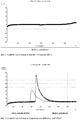
- OPPANOL-containing mixtures in saturated hydrocarbons are stable up to at least 250 ° C compared to metallic lithium. While in the case of the saturated hydrocarbon decane to the final temperature of 350 ° C, no significant exotherm is registered, observed in the case of the mixture of lithium metal with the aromatic solvent xylene starting at 300 ° C, a significant exotherm.
- the binder is first dissolved in a lithium metal inert, volatile solvent or a solvent mixture.
- the solvent preferably contains one or more liquid hydrocarbons having boiling points between 25 and 300 ° C, preferably 60 and 200 ° C. These may be saturated open-chain or cyclic compounds such as e.g. Be hexanes, heptanes, octanes, deans or dodecans. Commercially available hydrocarbon boiling cuts such as e.g. Shellsol D70 or D100 can be used.
- the solvent or solvent mixture may also contain ethers, e.g.
- the concentration of the binder depends on the particular solubility in the solvent used and the viscosity of the resulting solution. In general, the concentration varies between 0.1 and 20% by weight, preferably 1 and 10% by weight.
- the lithium powder is mixed with any other excipients, for example, conductivity-improving additives (carbon blacks, finely divided graphites or non-lithium alloyable metal powder, such as Ti and Ni powder) with the binder solution.
- the lithium powder consists of spherical lithium metal particles having an average particle diameter (D 50 ) (particle size determination by laser light scattering measurement by means of Lasentec FBRM from Mettler Toledo) between 5 and 200 ⁇ m, preferably 10 and 100 ⁇ m.
- the lithium particles preferably have an inerting coating according to the prior art (for example US 8,021,496 ; WO 2012/052265 ).
- the mixture may be further added to lithium unreactive or inert solvent.
- the mixing process is carried out by shaking, stirring or another solid / liquid mixing process.
- the weight ratio (wt: wt.) Between dry binder material and lithium powder is generally between 1 to 1 - 1,000, preferably 1 to 10 - 200.
- the mixing process is gentle, i. in a manner that prevents the lithium spheres from being mechanically deformed or damaged.
- the homogenized suspension is then known in the art by casting, printing and the like. Like. Applied to a current collector foil consisting of a lithium inert electronic conductive material. This material is preferably a thin nickel or copper foil.
- the wet anode layer is dried. This is done by evaporation of the solvent, either at room temperature (RT) or slightly elevated temperature (80 ° C maximum), optionally under reduced pressure.
- RT room temperature
- 80 ° C maximum slightly elevated temperature
- the suspension preparation and processing is done in an environment compatible with the anode materials used. This is either dry air (dew point preferably ⁇ -40 ° C) or an inert atmosphere (preferably helium or argon). After drying the anode coating, a compaction process can follow, for which a calender is usually used.
- the lithium metal anode produced according to the invention has a layer thickness between 10 and 500 .mu.m, preferably 15 to 100 .mu.m. According to the invention, lithium metal anodes produced according to the invention are referred to as bonded lithium anodes.
- the lithium anode of the present invention is used as an electrode for lithium batteries. Preferably, it is connected against lithium-poor or lithium-free cathode materials.
- cathode materials are sulfur, transition metal oxides (e.g., manganese oxide, vanadium oxides, copper oxide), conversion cathode materials (e.g., nanoscale metal fluorides and metal oxyfluorides).
- transition metal oxides e.g., manganese oxide, vanadium oxides, copper oxide
- conversion cathode materials e.g., nanoscale metal fluorides and metal oxyfluorides.
- it can be used as a negative electrode for lithium-air batteries.
- Example 1 Stability of lithium metal powder in contact with decane and a solution of oppanol in decane (aging temperature up to 250 ° C)
- Example 1 Stability of lithium metal powder in contact with decane and a solution of oppanol in decane (aging temperature up to 250 ° C)
- Variant. 1 1-20% by weight of OPPANOL B200 are dissolved in hexane with stirring. Depending on the temperature and concentration, this process takes about 1 h to 1 day. Lithium metal powder is added with stirring and the suspension is homogenized with a vortex. The electrode suspension thus obtained is applied to a copper foil with the aid of a doctor blade. All operations using lithium metal powder are performed either in an Ar-filled glove box or in a dry room with a maximum dew point of -40 ° C.
- the layer thickness of the electrode can be varied.
- the minimum layer thickness is determined by the particle size of the lithium metal powder.
- the wet layer thickness of the electrode can vary between 10 and 500 ⁇ m.
- Fig. 6 shows a metal powder anode produced by the specified method.
- Variant 2 Another possibility is to additionally add to the hexane / OPPANOL solution a conductivity additive, for example a graphitic powder such as Timrex® SFG or Timrex® SLP or conductive carbon blacks such as Super P® or ENASCO® 250G (all of these products are from Timcal, Switzerland, deliverable).
- a conductivity additive for example a graphitic powder such as Timrex® SFG or Timrex® SLP or conductive carbon blacks such as Super P® or ENASCO® 250G (all of these products are from Timcal, Switzerland, deliverable).
- the conductivity additives are generally used in concentrations ranging from 1 to 10% by weight (based on the amount of lithium powder).
- Variant. 3 Alternatively, the hexane / OPPANOL solution can be applied directly to a copper foil and the lithium metal powder can be sprinkled onto the solution. As a result, a monolayer of the lithium metal particles can be applied.
- the coated, wet electrodes are dried in vacuo at 80 ° C punched out desired shapes and examined electrochemically.
- Example 5 Cycle test with the prepared according to Example 4 (variant 1) lithium anode
- electrochemical cells (swagelock design) were prepared.
- the cells contained as cathode a graphite MAGD from Hitachi Kasai, Japan, electrolyte LP30® (Merck, Germany) and a polyolefin separator from Celgard, USA (Celgard + FS2226®).
- the stated capacities refer in each case to the capacity of the graphite electrode.
- PVdF supplier Solvay, France, PVdF 1013
- NMP NMP
- the lithium metal particles are added, with the metal concentration in the PVdF / NMP suspension being generally between 50 and 90% by weight.
- the electrode suspension thus obtained is applied to a copper foil with the aid of a doctor blade. The electrode production took place in a drying room.
- the layer thickness of the electrode can be varied.
- the minimum layer thickness is determined by the particle size of the lithium metal powder.
- the wet layer thickness of the electrode can vary between 10 and 500 ⁇ m.
- the solvent-wet electrodes are dried in vacuo and the desired shapes are punched out.
- Comparative Example 5 Cycles Investigations Using the Capped Lithium Anode Prepared According to Comparative Example 4
- electrochemical cells (swagelock design) were prepared.
- the cells contained as cathode a graphite MAGD from Hitachi Kasai, Japan, as the electrolyte LP30® (Merck, Germany) and a polyolefin separator from Celgard, USA (Celgard + FS2226®).
- a potentiostat from Maccor (4300 battery test system, Maccor Inc., Tulsa, OK, USA) were driven.
- the stated capacities refer in each case to the capacity of the graphite electrode.
- the advantage of the lithium anode sealed with OPPANOL / saturated hydrocarbon dispersant is that significantly higher charge and discharge rates can be realized than when PVdF binder is used, cf. Fig. 8 and Fig. 12 .
- OPPANOL when OPPANOL is used, there are fewer variations between subsequent cycles, ie the cycle behavior is more stable.
Landscapes
- Chemical & Material Sciences (AREA)
- Engineering & Computer Science (AREA)
- Chemical Kinetics & Catalysis (AREA)
- Electrochemistry (AREA)
- General Chemical & Material Sciences (AREA)
- Manufacturing & Machinery (AREA)
- Materials Engineering (AREA)
- Composite Materials (AREA)
- Mechanical Engineering (AREA)
- Battery Electrode And Active Subsutance (AREA)
Description
Wiederaufladbare elektrochemische Speichersysteme erlangen gegenwärtig für viele Bereiche des täglichen Lebens eine steigende Bedeutung. Neben den schon seit längerem bestehenden Anwendungen als Automobilstarterbatterie und als Energiequelle für die portable Elektronik werden in der Zukunft starke Zuwächse für den Antrieb von Elektroautos und für die stationäre Energiespeicherung vorhergesagt. Für die neuen Anwendungen kommen traditionelle Blei/Schwefelsäureakkumulatoren nicht in Frage, weil sie eine viel zu geringe Kapazität aufweisen und sie nicht genügend häufig zyklisierbar sind. Beste Chancen werden dagegen Lithiumbatterien eingeräumt.Rechargeable electrochemical storage systems are currently gaining in importance for many areas of daily life. In addition to long-standing applications as an automotive starter battery and as an energy source for portable electronics, strong growth is forecast in the future for the propulsion of electric cars and for stationary energy storage. For the new applications, traditional lead / sulfuric acid accumulators are out of the question, because their capacity is much too low and they can not be cyclized sufficiently often. Best chances, however, are granted lithium batteries.
Während primäre (d.h. nicht wiederaufladbare Lithiumbatterien) in der Regel eine Lithiummetallanode aufweisen, enthalten wiederaufladbare Lithiumbatterien, das sind im allgemeinen Lithiumionenbatterien, aus Gründen der Sicherheit kein metallisches Lithium, sondern ein graphitisches Material als Anode. Die Verwendung von Graphit, das im geladenen Zustand bis zur Grenzzusammensetzung LiC6 geladen werden kann, hat jedoch zur Folge, dass die Kapazität gegenüber der Verwendung von metallischem Lithium deutlich niedriger ist. Die Verwendung von metallischem Lithium als Anodenmaterial brächte gegenüber Graphiten eine beträchtlich Steigerung sowohl der volumetrischen als auch der gravimetrischen Kapazitäten:
Die Verwendung von Lithiumanoden bestehend aus blechförmigem Lithium ist vor allem deshalb nicht möglich, weil das Lithium sich insbesondere bei hohen Stromdichten beim Ladevorgang in der Regel nicht planar, sondern dendritisch, d.h. nadelförmig abscheidet. Dadurch ist es möglich, dass Teile des Lithiums abgeschnürt werden, d.h. den elektronischen Kontakt zum Rest der Anode verlieren. Die Folge ist ein relativ schneller Kapazitätsabfall bei fortgesetztem Zyklisieren der galvanischen Zelle. Ein zusätzliches Problem besteht darin, dass Dendriten den Separator durchwachsen können. Dies kann einen Kurzschluss mit hoher Wärmefreisetzung bewirken. Der Lithiumschmelzpunkt kann dann leicht überschritten werden. Geschmolzenes Lithium ist enorm reaktiv und im Kontakt mit entzündlichen Batteriekomponenten (z.B. organischer Elektrolyt) kann ein explosionsartiges Durchgehen der Zelle ("thermal runaway") nicht ausgeschlossen werden (
Die Verwendung stark polarer Lösemittel ist für die Dispergierung von Lithiumpulver nur bedingt möglich bzw. sinnvoll. Aufgrund der relativ hohen Reaktivität selbst von gecoatetem (also geschütztem) Lithiumpulver ist die Möglichkeit heftiger Reaktionen (häufig runaway) bei der Anodenherstellung nicht ausgeschlossen. Um also ein thermisches Ereignis zu vermeiden, ist die Anodenfertigung bei möglichst tiefen Temperaturen (Raumtemperatur oder darunter) durchzuführten; dazu muss das Lösemittel den PVdF-Binder bereits bei milden Temperaturen lösen und es muss sich bei der anschließenden Anodentrocknung möglichst leicht entfernen lassen. Leider haben alle bekannten solchermaßen wirksamen Lösemittel einen relativ hoch liegenden Siedepunkt. Dies zeigt die folgende Tabelle:
b Gebräuchlichste Lösemittel
b Most common solvents
Die Reaktivität gegenüber Lithiummetall läßt kein sicheres Arbeiten unter Verwendung der o.g. Solvenzien zu. In der vorliegenden Anmeldung werden einige Daten gezeigt.The reactivity with lithium metal does not allow safe working using the above mentioned. Solvency too. In the present application some data are shown.
Es gibt polare, weniger reaktive Solvenzien für PVdF, beispielsweise THF, die gegenüber Lithiumpulver etwas weniger reaktiv sind. Diese lösen PVdF aber nur bei höheren Temperaturen:
d Basierend auf Ethylenglycol, Diethylenglycol und Propylenglycol
d Based on ethylene glycol, diethylene glycol and propylene glycol
Durch den Zwang zur Verwendung höherer Temperaturen wird der Vorteil geringerer Reaktivität gegenüber metallischem Lithium aufgehoben.The need to use higher temperatures eliminates the advantage of lower reactivity with metallic lithium.
Es ist weiterhin bekannt, Elektroden aus einer Mischung umfassend Partikel aus einem elektrochemisch aktiven Material, einem Binder und einem Lösungs- und/oder Dispergiermittel herzustellen, wobei es sich bei dem Binder zumindest anteilig um ein Polyisobuten handelt und das Lösungs- und/oder Dispergiermittel zumindest anteilig aus mindestens einem aromatischen Kohlenwasserstoff besteht und wobei das elektrochemisch aktive Material u.a. Lithium in passivierter metallischer Form sein kann (
Aus dem Dokument
Die vorliegende Erfindung wird durch die Ansprüche definiert und hat sich zur Aufgabe gestellt, ein Verfahren für die Herstellung von Lithiummetallpulveranoden aufzuzeigen, das
- eine sichere Handhabung auch bei höheren Temperaturen gewährleistet
- die Verwendung von möglichst ungiftigen Lösemitteln mit anwendungstechnisch optimaler Flüchtigkeit zulässt
- Lösemittel verwendet, die in Lithiumbatterien keine negativen Folgen haben, d.h. die elektrochemisch nicht aktiv sind und
- mindestens gleich gute Bindeeigenschaften gewährleistet wie PVdF-Binder.
- ensures safe handling even at higher temperatures
- the use of non-toxic solvents as possible with application-optimal volatility
- Solvent used, which have no negative consequences in lithium batteries, that is, which are not electrochemically active and
- ensures at least as good binding properties as PVdF binder.
Die Aufgabe wird durch ein Verfahren zur Herstellung einer Lithiummetallanode gelöst, dadurch gekennzeichnet, dass sphärische Lithiummetallpartikel mit einem mittleren Durchmesser zwischen 5 und 200 µm in der Lösung eines fluorfreien Bindemittels ausgewählt aus gesättigten Polyolefinen und Polyolefin-Copolymeren ausschließlich in einem oder mehreren flüssigen, gesättigten Kohlenwasserstoffe mit Siedepunkten zwischen 25 und 300°C suspendiert, diese Suspension auf eine elektronisch leitfähige Folie aufgebracht und das Lösungsmittel aus der Anodenschicht abgedampft wird.The object is achieved by a method for producing a lithium metal anode, characterized in that spherical lithium metal particles having a mean diameter between 5 and 200 microns in the solution of a fluorine-free binder selected from saturated polyolefins and polyolefin copolymers exclusively in one or more liquid, saturated hydrocarbons with boiling points between 25 and 300 ° C suspended, this Suspension applied to an electronically conductive film and the solvent is evaporated from the anode layer.
Die Erfindung erstreckt sich auch auf eine homogenisierte Suspension für die Herstellung einer Lithiummetallanode, dadurch gekennzeichnet, dass sie
- sphärische Lithiummetallpartikel, die einen mittleren Partikeldurchmesser (D50) zwischen 5 und 200µm aufweisen,
- fluorfreie Bindermittel ausgewählt aus gesättigten Polyolefinen und Polyolefin-Copolymeren und
- ausschließlich gesättigte Kohlenwasserstoffe mit Siedepunkten zwischen 25 und 300°C enthält.
- spherical lithium metal particles having an average particle diameter (D50) between 5 and 200 μm,
- fluorine-free binder selected from saturated polyolefins and polyolefin copolymers and
- contains only saturated hydrocarbons with boiling points between 25 and 300 ° C.
Das fluorfreie Bindersysteme und Lösemittel sind gegenüber Lithium nicht reaktiv. Als Binder werden gesättigte oder ungesättigte kautschukartige Polymere verwendet. Diese Binder sind im allgemeinen in flüssigen Kohlenwasserstoffen quellbar und z.T. löslich.The fluorine-free binder systems and solvents are not reactive with lithium. As binders, saturated or unsaturated rubbery polymers are used. These binders are generally swellable in liquid hydrocarbons and sometimes soluble.
Es wurde überraschend gefunden, dass Lithiumpulver sowohl gegenüber den erfindungsgemäßen Bindern als auch gegenüber den eingesetzten Lösemitteln thermisch außerordentlich stabil ist, in der Regel bis deutlich über der Temperatur des Lithiumschmelzpunktes (180°C).It has surprisingly been found that lithium powder is extremely thermally stable both to the binders according to the invention and to the solvents used, generally to well above the temperature of the lithium melting point (180 ° C.).
Die kautschukartigen Polymere enthalten vorzugsweise nur die Elemente C und H. Es sind gesättigte Polyolefine und Polyolefin-Copolymere wie Ethylen-Propylen-Copolymere (EPM), Ethylen-Propylen-Terpolymere (EPDM) und Polybutene. Es sind solche Produkte bevorzugt, die sich in gegenüber Lithiummetall unreaktiven Lösungsmitteln (beispielsweise Kohlenwasserstoffen) lösen.The rubbery polymers preferably contain only elements C and H. They are saturated polyolefins and polyolefin copolymers such as ethylene-propylene copolymers (EPM), ethylene-propylene terpolymers (EPDM) and polybutenes. There are preferred those products which dissolve in lithium metal unreactive solvents (such as hydrocarbons).
Besonders bevorzugt sind EPDM-Terpolymere (z. B. unter dem Markennamen Nordel IP 4570 von Firma Dow erhältlich) oder Polyisobutene (z.B. OPPANOL-Typen wie OPPANOL B200, von Firma BASF lieferbar). Es wurde gefunden, dass diese Bindemittel in gegenüber Lithiummetall inerten Lösemitteln, das sind gesättigte Kohlenwasserstoffe, löslich sind und diese Binderlösungen gegenüber Lithiummetall eine sehr hohe Stabilität aufweisen. Außerdem wurde überraschend gefunden, dass mit erfindungsgemäßen Bindersystemen hergestellte Lithiumpulveranoden deutlich bessere Zykeleigenschaften aufweisen als solche, die mit einem Fluorpolymer (PVdF) hergestellt wurden.Particular preference is given to EPDM terpolymers (available, for example, under the trade name Nordel IP 4570 from Dow) or polyisobutenes (for example OPPANOL types such as OPPANOL B200, available from BASF). It has been found that these binders are soluble in lithium metal inert solvents, ie saturated hydrocarbons, and that these binder solutions have very high stability over lithium metal. In addition, it has surprisingly been found that lithium powder anodes produced with binder systems according to the invention have significantly better cyclic properties than those produced with a fluoropolymer (PVdF).
In der nachfolgenden Tabelle wird der Beginn der per DSC-Tests bestimmten Zersetzungsreaktion zwischen verschiedenen Lösemitteln sowie Lösemittel-Binderkombinationen und Lithiummetallpulver aufgezeigt:
Der Versuchsaufbau ist wie folgt: ca. 2 ml Lösungsmittel bzw. ca. 2ml Lösungsmittel und 100 mg des jeweiligen Binders sowie 100 mg gecoatetes Lithiummetallpulver wurden in einer Argon-gefüllten Handschuhbox in Stahlautoklaven des RADEX-Systems der Firma Systag (Schweiz) gefüllt und hermetisch verschlossen. Diese Mischungen wurden dann mit einer Heizrate von 45 K/h bis zu Endtemperaturen von 200°C (NMP-haltige Mischungen) bzw. 250 oder 350°C (Kohlenwasserstoff-haltige Mischung) aufgeheizt und die thermischen Ereignisse registriert.The experimental setup is as follows: About 2 ml of solvent or about 2 ml of solvent and 100 mg of the respective binder and 100 mg of coated lithium metal powder were in a Argon-filled glove box in steel autoclaves of the RADEX system from Systag (Switzerland) filled and hermetically sealed. These mixtures were then heated at a heating rate of 45 K / h to final temperatures of 200 ° C (NMP-containing mixtures) or 250 or 350 ° C (hydrocarbon-containing mixture) and recorded the thermal events.
Im Vergleich zum fluorierten Polymer PVdF erkennt man ganz klare Stabilitätsvorteile für die Verwendung von OPPANOL B200: OPPANOL-haltige Mischungen in gesättigten Kohlenwasserstoffen sind bis mindestens 250°C gegenüber metallischem Lithium stabil. Während im Falle des gesättigten Kohlenwasserstoffs Decan bis zur Endtemperatur von 350°C kein signifikantes Exotherm registriert wird, beobachtet man im Falle der Mischung von Lithiummetall mit dem aromatischen Lösungsmittel Xylol beginnend bei 300°C ein deutliches Exotherm.Compared to the fluorinated polymer PVdF, one can see very clear stability advantages for the use of OPPANOL B200: OPPANOL-containing mixtures in saturated hydrocarbons are stable up to at least 250 ° C compared to metallic lithium. While in the case of the saturated hydrocarbon decane to the final temperature of 350 ° C, no significant exotherm is registered, observed in the case of the mixture of lithium metal with the aromatic solvent xylene starting at 300 ° C, a significant exotherm.
Die Herstellung flächiger Lithiumpulver-basierter Anoden unter Verwendung erfindungsgemäßer Bindersysteme erfolgt in ähnlicher Weise wie bei der Verwendung von PVdF.The production of flat lithium powder-based anodes using binder systems according to the invention is carried out in a similar manner as when using PVdF.
Der Binder wird zunächst in einem gegenüber Lithiummetall inerten, flüchtigem Lösungsmittel oder einem Lösungsmittelgemisch gelöst. Das Lösungsmittel enthält bevorzugt einen oder mehrere flüssige Kohlenwasserstoffe mit Siedepunkten zwischen 25 und 300°C, bevorzugt 60 und 200°C. Dies können gesättigte offenkettige oder zyklische Verbindungen wie z.B. Hexane, Heptane, Oktane, Dekane oder Dodekane sein. Es können auch handelsübliche Kohlenwasserstoff-Siedeschnitte wie z.B. Shellsol D70 oder D100 verwendet werden. Das Lösemittel oder Lösemittelgemisch kann darüber hinaus Ether, z.B. Diethylether, Dibutylether, Diphenylether, Tetrahydrofuran, Tetrahydropyran oder Glymes (Ethylengykoldialkylether) enthalten oder daraus bestehen. Bevorzugt sind Lösungsmittel, die ausschließlich gesättigte Kohlenwasserstoffe enthalten. Aufgrund der Vielzahl auch kommerziell erhältlicher Kohlenwasserstoffprodukte unterschiedlicher Kettenlänge kann ein breiter Bereich für den Siedepunkt und die Flüchtigkeit des Lösemittels ausgewählt werden.The binder is first dissolved in a lithium metal inert, volatile solvent or a solvent mixture. The solvent preferably contains one or more liquid hydrocarbons having boiling points between 25 and 300 ° C, preferably 60 and 200 ° C. These may be saturated open-chain or cyclic compounds such as e.g. Be hexanes, heptanes, octanes, deans or dodecans. Commercially available hydrocarbon boiling cuts such as e.g. Shellsol D70 or D100 can be used. The solvent or solvent mixture may also contain ethers, e.g. Contain or consist of diethyl ether, dibutyl ether, diphenyl ether, tetrahydrofuran, tetrahydropyran or glymes (Ethylenkykoldialkylether). Preference is given to solvents which contain exclusively saturated hydrocarbons. Due to the large number of commercially available hydrocarbon products of different chain lengths, a broad range for the boiling point and the volatility of the solvent can be selected.
Die Konzentration des Binders richtet sich nach der jeweiligen Löslichkeit im verwendeten Lösungsmittel sowie der Viskosität der entstehenden Lösung. Im allgemeinen schwankt die Konzentration zwischen 0,1 und 20 Gew.%, bevorzugt 1 und 10 Gew.%.The concentration of the binder depends on the particular solubility in the solvent used and the viscosity of the resulting solution. In general, the concentration varies between 0.1 and 20% by weight, preferably 1 and 10% by weight.
Das Lithiumpulver wird zusammen mit eventuellen weiteren Hilfsstoffen, das sind beispielsweise leitfähigkeitsverbessernde Additive (Ruße, feinverteilte Graphite oder nicht mit Lithium legierbare Metallpulver, wie Ti- und Ni-Pulver) mit der Binderlösung gemischt. Das Lithiumpulver besteht aus sphärischen Lithiummetallpartikeln, die einen mittleren Partikeldurchmesser (D50) (Partikelgrößenbestimmung durch Laserlichtstreuungsmessung mittels Lasentec FBRM von Firma Mettler Toledo) zwischen 5 und 200 µm, bevorzugt 10 und 100 µm aufweisen. Die Lithiumpartikel weisen bevorzugt eine inertisierende Beschichtung nach Stand der Technik auf (z.B.
Je nach Konsistenz' der Mischung wird eventuell noch weiteres gegenüber Lithium unreaktives oder inertes Lösungsmittel dazugegeben. Der Mischvorgang erfolgt durch Schütteln, Rühren oder ein sonstiges fest/flüssig-Mischverfahren. Das Gewichtsverhältnis (Gew. : Gew.) zwischen trockenem Bindermaterial und Lithiumpulver liegt im allgemeinen zwischen 1 zu 1 - 1.000, bevorzugt 1 zu 10 - 200.Depending on the consistency 'of the mixture may be further added to lithium unreactive or inert solvent. The mixing process is carried out by shaking, stirring or another solid / liquid mixing process. The weight ratio (wt: wt.) Between dry binder material and lithium powder is generally between 1 to 1 - 1,000, preferably 1 to 10 - 200.
Bevorzugt erfolgt der Mischvorgang schonend, d.h. in einer Art und Weise, die verhindert, dass die Lithiumkügelchen mechanisch deformiert oder beschädigt werden.Preferably, the mixing process is gentle, i. in a manner that prevents the lithium spheres from being mechanically deformed or damaged.
Die homogenisierte Suspension wird dann nach Stand der Technik durch Gießen, Drucken u. dgl. auf eine Stromableiterfolie bestehend aus einem gegenüber Lithium inerten elektronisch leitfähigen Material aufgebracht. Bei diesem Material handelt es sich bevorzugt um eine dünne Nickel- oder Kupferfolie.The homogenized suspension is then known in the art by casting, printing and the like. Like. Applied to a current collector foil consisting of a lithium inert electronic conductive material. This material is preferably a thin nickel or copper foil.
Nach dem Beschichtungsprozess wird die feuchte Anodenschicht getrocknet. Dies erfolgt durch Verdampfen des Lösungsmittels, entweder bei Raumtemperatur (RT) oder leicht erhöhter Temperatur (maximal 80°C), gegebenenfalls unter reduziertem Druck.After the coating process, the wet anode layer is dried. This is done by evaporation of the solvent, either at room temperature (RT) or slightly elevated temperature (80 ° C maximum), optionally under reduced pressure.
Die Suspensionsherstellung und -verarbeitung erfolgt in einer Umgebung, mit der die verwendeten Anodenmaterialien kompatibel sind. Das ist entweder trockene Luft (Taupunkt bevorzugt ≤ -40°C) oder eine Inertatmosphäre (bevorzugt Helium oder Argon). Nach Trocknung der Anodenbeschichtung kann sich ein Verdichtungsprozess anschließen, für den in der Regel ein Kalander eingesetzt wird.The suspension preparation and processing is done in an environment compatible with the anode materials used. This is either dry air (dew point preferably ≤ -40 ° C) or an inert atmosphere (preferably helium or argon). After drying the anode coating, a compaction process can follow, for which a calender is usually used.
Die erfindungsgemäß hergestellte Lithiummetallanode weist eine Schichtdicke zwischen 10 und 500 µm, bevorzugt 15 bis 100 µm auf. Erfindungsgemäß hergestellte Lithiummetallanoden werden im Sinne der Erfindung als gebinderte Lithiumanoden bezeichnet.The lithium metal anode produced according to the invention has a layer thickness between 10 and 500 .mu.m, preferably 15 to 100 .mu.m. According to the invention, lithium metal anodes produced according to the invention are referred to as bonded lithium anodes.
Die erfindungsgemäße Lithiumanode wird als Elektrode für Lithiumbatterien verwendet. Bevorzugt wird sie gegen lithiumarme oder lithiumfreie Kathodenmaterialien verschaltet. Solche Kathodenmaterialien sind Schwefel, Übergangmetalloxide (z.B. Manganoxid, Vanadiumoxide, Kupferoxid), Konversionskathodenmaterialien (z.B. nanoskalige Metallfluoride und Metalloxyfluoride). Weiterhin kann sie als negative Elektrode für Lithium-Luft-Batterien eingesetzt werden.The lithium anode of the present invention is used as an electrode for lithium batteries. Preferably, it is connected against lithium-poor or lithium-free cathode materials. Such cathode materials are sulfur, transition metal oxides (e.g., manganese oxide, vanadium oxides, copper oxide), conversion cathode materials (e.g., nanoscale metal fluorides and metal oxyfluorides). Furthermore, it can be used as a negative electrode for lithium-air batteries.
Die Erfindung wird anhand der nachfolgendenfünf Beispielen und fünf Vergleichsbeispielen sowie den Abbildungen 1 bis 12 erläutert.The invention will be explained with reference to the following five examples and five comparative examples and the figures 1 to 12 .
Es zeigen:
- Abb. 1:
- Stabilität von Li-Pulver in Kontakt mit Decan bzw. Decan-OPPANOL B200
- Abb.2:
- Stabilität von Lithiummetallpulver in Kontakt mit Decan bis 350°C
- Abb. 3:
- Stabilität von Li-Pulver in Kontakt mit Xylol bis 350°C
- Abb. 4:
- Stabilität von Li-Pulver in Gegenwart von NMP bzw. NMP-PVdF
- Abb. 5:
- Stabilität von Li-Pulver in Gegenwart von THF bzw. THF-PVdF
- Abb. 6:
- REM-Bild (
Vergrößerung 200 µm] einer mit OPPANOL/Hexan gebinderten Lithiumanode - Abb. 7:
- Zyklovoltagramm (CV) einer mit OPPANOL B200 gebinderten Lithiumanode. Potentialbereich von 0,025 - 1,5 V, Scanrate 25 µV. Gegenelektrode: Graphit MAGD
- Abb. 8:
- Zyklentest (CCCV) einer mittels OPPANOL B200 (Lieferant: BASF) gebinderten Lithiumanode und Graphit als Gegenelektrode. Die Kapazität bezieht sich auf die Kapazität der Kohlenstoffelektrode.
Die Stromdichte beträgt - Abb. 9:
- C-Raten-Untersuchung einer mit OPPANOL gebinderten Lithitumanode und Graphit als Gegenelektrode. Die Kapazität bezieht sich auf die Kapazität der Kohlenstoffelektrode.
Stromdichte ist - Abb. 10:
- REM-Bild (
Vergrößerung 200 µm] einer mit PVdF/NMP gebinderten Lithiumanode - Abb. 11:
- CV einer mittels PVdF/NMP gebinderten Lithiumanode. Potentialbereich von 0,025 - 1,5 V, Scanrate 25 µV, Gegenelektrode: Graphit
- Abb. 12:
- Zyklentest einer mittels PVdF/NMP gebinderten Lithiumanöde und Graphit als Gegenelektrode. Die Kapazität bezieht sich auf die Kapazität der Kohlenstoffelektrode.
Die Stromdichte beträgt
- Fig. 1:
- Stability of Li powder in contact with decane or decane OPPANOL B200
- Fig.2:
- Stability of lithium metal powder in contact with decane up to 350 ° C
- Fig. 3:
- Stability of Li powder in contact with xylene up to 350 ° C
- Fig. 4:
- Stability of Li powder in the presence of NMP or NMP-PVdF
- Fig. 5:
- Stability of Li powder in the presence of THF or THF-PVdF
- Fig. 6:
- SEM image (
magnification 200 μm) of an OPPANOL / hexane-bonded lithium anode - Fig. 7:
- Cyclic voltammogram (CV) of a lithium anode capped with OPPANOL B200. Potential range from 0.025 - 1.5 V, scan rate 25 μV. Counter electrode: graphite MAGD
- Fig. 8:
- Cyclic test (CCCV) of a lithium anode bound by means of OPPANOL B200 (supplier: BASF) and graphite as counterelectrode. The capacity refers to the capacity of the carbon electrode. The current density is 1.2 mA / cm 2
- Fig. 9 :
- C-rate analysis of OPPANOL-bound lithiated anode and graphite as counterelectrode. The capacity refers to the capacity of the carbon electrode. Current density is 1.2 mA / cm 2
- Fig. 10:
- SEM image (
magnification 200 μm) of a PVdF / NMP-bonded lithium anode - Fig. 11:
- CV of a PVdF / NMP bonded lithium anode. Potential range of 0.025 - 1.5 V, scan rate 25 μV, counter electrode: graphite
- Fig. 12:
- Cyclic test of a PVdF / NMP-bound lithium anode and graphite as counterelectrode. The capacity refers to the capacity of the carbon electrode. The current density is 1.2 mA / cm 2
Alle Operationen wurden in einer Ar-gefüllten Handschuhbox oder in einem Trockenraum vorgenommen. Die Zyklisieruntersuchungen wurden mit Hilfe eines Potentiostaten der Firma Maccor durchgeführt.All operations were performed in an Ar-filled glove box or in a dry room. The Zyklisieruntersuchungen were performed using a potentiostat from Maccor.
- Abb. 1:Fig. 1:
- Stabilität von Li-Pulver in Kontakt mit Decan bzw. Decan-OPPANOL B200Stability of Li powder in contact with decane or decane OPPANOL B200
- Abb.2:Fig.2:
- Stabilität von Lithiummetallpulver in Kontakt mit Decan bis 350°CStability of lithium metal powder in contact with decane up to 350 ° C
- Abb. 3:Fig. 3:
- Stabilität von Li-Pulver in Kontakt mit Xylol bis 350°CStability of Li powder in contact with xylene up to 350 ° C
- Abb. 4:Fig. 4:
- Stabilität von Li-Pulver in Gegenwart von NMP bzw. NMP-PVdFStability of Li powder in the presence of NMP or NMP-PVdF
- Abb. 5:Fig. 5:
- Stabilität von Li-Pulver in Gegenwart von THF bzw. THF-PVdFStability of Li powder in the presence of THF or THF-PVdF
- Abb. 6:Fig. 6:
-
REM-Bild (Vergrößerung 200 µm] einer mit OPPANOL/Hexan gebinderten LithiumanodeSEM image (
magnification 200 μm) of an OPPANOL / hexane-bonded lithium anode - Abb. 7:Fig. 7:
- Zyklovoltagramm (CV) einer mit OPPANOL B200 gebinderten Lithiumanode. Potentialbereich von 0,025 - 1,5 V, Scanrate 25 µV. Gegenelektrode: Graphit MAGDCyclic voltammogram (CV) of a lithium anode capped with OPPANOL B200. Potential range from 0.025 - 1.5 V, scan rate 25 μV. Counter electrode: graphite MAGD
- Abb. 8:Fig. 8:
- Zyklentest (CCCV) einer mittels OPPANOL B200 (Lieferant: BASF) gebinderten Lithiumanode und Graphit als Gegenelektrode. Die Kapazität bezieht sich auf die Kapazität der Kohlenstoffelektrode. Die Stromdichte beträgt 1,2 mA/cm2 Cyclic test (CCCV) of a lithium anode bound by means of OPPANOL B200 (supplier: BASF) and graphite as counterelectrode. The capacity refers to the capacity of the carbon electrode. The current density is 1.2 mA / cm 2
- Abb. 9:Fig. 9:
- C-Raten-Untersuchung einer mit OPPANOL gebinderten Lithitumanode und Graphit als Gegenelektrode. Die Kapazität bezieht sich auf die Kapazität der Kohlenstoffelektrode. Stromdichte ist 1,2 mA/cm2 C-rate analysis of OPPANOL-bound lithiated anode and graphite as counterelectrode. The capacity refers to the capacity of the carbon electrode. Current density is 1.2 mA / cm 2
- Abb. 10:Fig. 10:
-
REM-Bild (Vergrößerung 200 µm] einer mit PVdF/NMP gebinderten LithiumanodeSEM image (
magnification 200 μm) of a PVdF / NMP-bonded lithium anode - Abb. 11:Fig. 11:
- CV einer mittels PVdF/NMP gebinderten Lithiumanode. Potentialbereich von 0,025 - 1,5 V, Scanrate 25 µV, Gegenelektrode: GraphitCV of a PVdF / NMP bonded lithium anode. Potential range of 0.025 - 1.5 V, scan rate 25 μV, counter electrode: graphite
- Abb. 12:Fig. 12:
- Zyklentest einer mittels PVdF/NMP gebinderten Lithiumanode und Graphit als Gegenelektrode. Die Kapazität bezieht sich auf die Kapazität der Kohlenstoffelektrode. Die Stromdichte beträgt 1,2 mA/cm2 Cyclic test of a PVdF / NMP bonded lithium anode and graphite as counterelectrode. The capacity refers to the capacity of the carbon electrode. The current density is 1.2 mA / cm 2
Alle Operationen wurden in einer Ar-gefüllten Handschuhbox oder in einem Trockenraum vorgenommen. Die Zyklisieruntersuchungen wurden mit Hilfe eines Potentiostaten der Firma Maccor durchgeführt.All operations were performed in an Ar-filled glove box or in a dry room. The Zyklisieruntersuchungen were performed using a potentiostat from Maccor.
Variante. 1: 1-20 Gew.% OPPANOL B200 werden unter Rühren in Hexan gelöst. Dieser Vorgang dauert je nach Temperatur und Konzentration etwa 1 h bis 1 Tag. Lithiummetallpulver wird unter Rühren hinzugefügt und die Suspension wird mit einem Vortex homogenisiert. Die so gewonnene Elektrodensuspension wird mit Hilfe eines Streichmessers (Rakel) auf eine Kupferfolie aufgetragen. Alle Operationen unter Verwendung von Lithiummetallpulver werden entweder in einer Ar-gefüllten Handschuhbox oder in einem Trockenraum mit einem Taupunkt von maximal -40°C vorgenommen.Variant. 1: 1-20% by weight of OPPANOL B200 are dissolved in hexane with stirring. Depending on the temperature and concentration, this process takes about 1 h to 1 day. Lithium metal powder is added with stirring and the suspension is homogenized with a vortex. The electrode suspension thus obtained is applied to a copper foil with the aid of a doctor blade. All operations using lithium metal powder are performed either in an Ar-filled glove box or in a dry room with a maximum dew point of -40 ° C.
Je nach Gewichtsanteil des Lithiummetallpulvers kann die Schichtdicke der Elektrode variiert werden. Die minimale Schichtdicke wird dabei von der Partikelgröße des Lithiummetallpulvers bestimmt. Die Nass-Schichtdicke der Elektrode kann zwischen 10 und 500 µm variieren.
Variante 2: Eine weitere Möglichkeit besteht darin, zur Hexan/OPPANOL-Lösung zusätzlich ein Leitfähigkeitsadditiv, beispielsweise ein graphitisches Pulver wie Timrex® SFG oder Timrex® SLP oder Leitruße wie Super P® oder ENASCO® 250G (alle diese Produkte sind von Firma Timcal, Schweiz, lieferbar) hinzuzufügen. Die Leitfähigkeitsadditive werden im allgemeinen in Konzentrationen im Bereich von 1 - 10 Gew.% (bezogen auf die Lithiumpulvermenge) verwendet.Variant 2: Another possibility is to additionally add to the hexane / OPPANOL solution a conductivity additive, for example a graphitic powder such as Timrex® SFG or Timrex® SLP or conductive carbon blacks such as Super P® or ENASCO® 250G (all of these products are from Timcal, Switzerland, deliverable). The conductivity additives are generally used in concentrations ranging from 1 to 10% by weight (based on the amount of lithium powder).
Variante. 3: Alternativ kann die Hexan/OPPANOL- Lösung direkt auf eine Kupferfolie aufgebracht und das Lithiummetallpulver auf die Lösung gestreut werden. Hierdurch kann eine Monolage der Lithiummetallpartikel aufgebracht werden.Variant. 3: Alternatively, the hexane / OPPANOL solution can be applied directly to a copper foil and the lithium metal powder can be sprinkled onto the solution. As a result, a monolayer of the lithium metal particles can be applied.
Die beschichteten, feuchten Elektroden werden im Vakuum bei 80°C getrocknet, gewünschte Formen ausgestanzt und elektrochemisch untersucht.The coated, wet electrodes are dried in vacuo at 80 ° C punched out desired shapes and examined electrochemically.
Unter Verwendung der erfindungsgemäßen Anode aus Beispiel 4 wurden elektrochemische Zellen (Swagelock-Design) hergestellt. Die Zellen enthielten als Kathode einen Graphit MAGD der Firma Hitachi Kasai, Japan, Elektrolyt LP30® (Merck, Deutschland) und einen Polyolefin-Separator der Firma Celgard, USA (Celgard+FS2226®). Es wurden jeweils mehrere Lade- Entlade-Zyklen unter Verwendung eines Potentiostaten der Firma Maccor (4300 Batterie Testsystem, Maccor Inc., Tulsa, OK, USA) gefahren. Die angegebenen Kapazitäten beziehen sich jeweils auf die Kapazität der Graphitelektrode.Using the inventive anode of Example 4 , electrochemical cells (swagelock design) were prepared. The cells contained as cathode a graphite MAGD from Hitachi Kasai, Japan, electrolyte LP30® (Merck, Germany) and a polyolefin separator from Celgard, USA (Celgard + FS2226®). There were several charge-discharge cycles using a potentiostat of the company Maccor (4300 battery test system, Maccor Inc., Tulsa, OK, USA). The stated capacities refer in each case to the capacity of the graphite electrode.
Die erzielten Ergebnisse sind den folgenden Abbildungen zu entnehmen:
-
Abb. 6 : REM-Bild (Vergrößerung 200 µm] einer mit OPPANOL/Hexan gebinderten Lithiumanode. -
Abb. 7 : CV einer mit OPPANOL B200 gebinderten Lithiumanode. Potentialbereich von 0,025 - 1,5 V, Scanrate 25 µV. Gegenelektrode: Graphit MAGD. -
Abb. 8 : Zyklentest (CCCV) einer mittels OPPANOL B200 (Lieferant: BASF) gebinderten Lithiumanode und Graphit als Gegenelektrode. Die Kapazität bezieht sich auf die Kapazität der Kohlenstoffelektrode.Die Stromdichte beträgt -
Abb. 9 : C-Raten-Untersuchung einer mit OPPANOL gebinderten Lithitumanode und Graphit als Gegenelektrode. Die Kapazität bezieht sich auf die Kapazität der Kohlenstoffelektrode.Stromdichte ist
-
Fig. 6 : SEM image (magnification 200 μm) of an OPPANOL / hexane-capped lithium anode. -
Fig. 7 : CV of a lithium anode sealed with OPPANOL B200. Potential range from 0.025 - 1.5 V, scan rate 25 μV. Counter electrode: graphite MAGD. -
Fig. 8 : Cyclic test (CCCV) of a lithium anode bound by means of OPPANOL B200 (supplier: BASF) and graphite as counterelectrode. The capacity refers to the capacity of the carbon electrode. The current density is 1.2 mA / cm 2 . -
Fig. 9 : C-rate analysis of OPPANOL-bound lithiated anode and graphite as counterelectrode. The capacity refers to the capacity of the carbon electrode. Current density is 1.2 mA / cm 2 .
1-20 Gew.% PVdF (Lieferant Solvay, Frankreich, PVdF 1013) werden unter Rühren in NMP gelöst. Danach werden die Lithiummetallpartikel hinzugefügt, wobei die Metallkonzentration in der PVdF/NMP-Suspension im Allgemeinen zwischen 50 und 90 Gew.% beträgt. Die so gewonnene Elektrodensuspension wird mit Hilfe eines Streichmessers (Rakel) auf eine Kupferfolie aufgetragen. Die Elektrodenfertigung erfolgte in einem Trockenraum.1-20% by weight of PVdF (supplier Solvay, France, PVdF 1013) are dissolved in NMP with stirring. Thereafter, the lithium metal particles are added, with the metal concentration in the PVdF / NMP suspension being generally between 50 and 90% by weight. The electrode suspension thus obtained is applied to a copper foil with the aid of a doctor blade. The electrode production took place in a drying room.
Je nach Gewichtsanteil des Lithiummetallpulvers kann die Schichtdicke der Elektrode variiert werden. Die minimale Schichtdicke wird dabei von der Partikelgröße des Lithiummetallpulvers bestimmt. Die Nass-Schichtdicke der Elektrode kann zwischen 10 und 500 µm variieren.Depending on the proportion by weight of the lithium metal powder, the layer thickness of the electrode can be varied. The minimum layer thickness is determined by the particle size of the lithium metal powder. The wet layer thickness of the electrode can vary between 10 and 500 μm.
Die lösemittelfeuchten Elektroden werden im Vakuum getrocknet und die gewünschten Formen ausgestanzt.The solvent-wet electrodes are dried in vacuo and the desired shapes are punched out.
Unter Verwendung der PVdF-gebinderten Anode aus Vergleichsbeispiel 4 wurden elektrochemische Zellen (Swagelock-Design) hergestellt. Die Zellen enthielten als Kathode einen Graphit MAGD der Firma Hitachi Kasai, Japan, als Elektrolyt LP30® (Merck, Deutschland) und einen Polyolefin-Separator der Firma Celgard, USA (Celgard+FS2226®). Es wurden jeweils mehrere Lade-Entlade-Zyklen unter Verwendung eines Potentiostaten der Firma Maccor (4300 Batterie Testsystem, Maccor Inc., Tulsa, OK, USA) gefahren. Die angegebenen Kapazitäten beziehen sich jeweils auf die Kapazität der Graphitelektrode.Using the PVdF-bonded anode of Comparative Example 4 , electrochemical cells (swagelock design) were prepared. The cells contained as cathode a graphite MAGD from Hitachi Kasai, Japan, as the electrolyte LP30® (Merck, Germany) and a polyolefin separator from Celgard, USA (Celgard + FS2226®). In each case several charge-discharge cycles using a potentiostat from Maccor (4300 battery test system, Maccor Inc., Tulsa, OK, USA) were driven. The stated capacities refer in each case to the capacity of the graphite electrode.
Die erzielten Ergebnisse sind den folgenden Abbildungen zu entnehmen:
-
Abb. 10 : REM-Bild (Vergrößerung 200 µm) einer mit PVdF/NMP gebinderten Lithiumanode. -
Abb. 11 : CV einer mittels PVdF/NMP gebinderten Lithiumanode. Potentialbereich von 0,025 - 1,5 V, Scanrate 25 µV. Gegenelektrode: Graphit. -
Abb. 12 : Zyklentest einer mittels PVdF/NMP gebinderten Lithiumanode und Graphit als Gegenelektrode. Die Kapazität bezieht sich auf die Kapazität der Kohlenstoffelektrode.Stromdichte beträgt
-
Fig. 10 : SEM image (magnification 200 μm) of a PVdF / NMP-bonded lithium anode. -
Fig. 11 : CV of a PVdF / NMP bonded lithium anode. Potential range from 0.025 - 1.5 V, scan rate 25 μV. Counter electrode: graphite. -
Fig. 12 : Cyclic test of a PVdF / NMP bonded lithium anode and graphite as counterelectrode. The capacity refers to the capacity of the carbon electrode. Current density is 1.2 mA / cm 2 .
Der Vorteil der mit OPPANOL/gesättigtem Kohlenwasserstoffdispergiermittel gebinderten Lithiumanode besteht darin, dass wesentlich höhere Lade- und Entladeraten realisiert werden können als bei der Verwendung von PVdF-Binder, vergleiche
Claims (7)
- A method for producing a lithium metal anode, characterized in that spherical lithium metal particles having a mean diameter between 5 and 200 µm are suspended in the solution of a fluorine-free binder selected exclusively from saturated polyolefins and polyolefin copolymers in one or more liquid saturated hydrocarbons having boiling points between 25 and 300 °C, this suspension is applied to an electronically conductive film, and the solvent is evaporated from the anode layer.
- The method according to Claim 1, characterized in that, as solvent, one or more liquid saturated hydrocarbons having boiling points between 60 and 200 °C are used.
- The method according to Claim 2, characterized in that the solvent or solvent mixture moreover contains ether or glymes.
- The method according to Claims 1 to 3, characterized in that the suspension contains conductivity improving additives.
- The method according to Claims 1 to 4, characterized in that the suspension for the formation of a lithium metal anode is applied with a layer thickness between 10 and 500 µm, preferably 15 to 100 µm, onto the electrically conductive film.
- The method according to Claims 1 to 5, characterized in that, after drying the anode layer, a densification process is carried out, for which a calender is used as a rule.
- A homogenized suspension for the production of a lithium metal anode, characterized in that it contains- spherical lithium particles having a mean particle diameter (D50) between 5 and 200 µm,- fluorine-free binders selected from saturated polyolefins and polyolefin copolymers, and- exclusively saturated hydrocarbons having boiling points between 25 and 300 °C.
Applications Claiming Priority (3)
| Application Number | Priority Date | Filing Date | Title |
|---|---|---|---|
| DE102012223826 | 2012-12-19 | ||
| DE102013202769 | 2013-02-20 | ||
| PCT/EP2013/076364 WO2014095561A1 (en) | 2012-12-19 | 2013-12-12 | Lithium powder anode |
Publications (2)
| Publication Number | Publication Date |
|---|---|
| EP2934792A1 EP2934792A1 (en) | 2015-10-28 |
| EP2934792B1 true EP2934792B1 (en) | 2019-07-24 |
Family
ID=49765500
Family Applications (1)
| Application Number | Title | Priority Date | Filing Date |
|---|---|---|---|
| EP13805350.9A Active EP2934792B1 (en) | 2012-12-19 | 2013-12-12 | Suspension and method for preparing a lithium powder anode |
Country Status (7)
| Country | Link |
|---|---|
| US (1) | US9649688B2 (en) |
| EP (1) | EP2934792B1 (en) |
| JP (1) | JP6333286B2 (en) |
| KR (1) | KR20150096773A (en) |
| CN (1) | CN105188990A (en) |
| DE (1) | DE102013225734A1 (en) |
| WO (1) | WO2014095561A1 (en) |
Families Citing this family (20)
| Publication number | Priority date | Publication date | Assignee | Title |
|---|---|---|---|---|
| EP3353844B1 (en) | 2015-03-27 | 2022-05-11 | Mason K. Harrup | All-inorganic solvents for electrolytes |
| KR102475886B1 (en) * | 2015-06-25 | 2022-12-08 | 삼성전자주식회사 | Negative electrode for lithium metal battery and lithium metal battery including the same |
| FR3054728B1 (en) * | 2016-07-26 | 2018-08-17 | Hutchinson | ANODE FOR LITHIUM-ION BATTERY CELL, METHOD FOR MANUFACTURING SAME, AND BATTERY INCORPORATING SAME |
| US10707531B1 (en) | 2016-09-27 | 2020-07-07 | New Dominion Enterprises Inc. | All-inorganic solvents for electrolytes |
| KR102148507B1 (en) * | 2017-07-26 | 2020-08-26 | 주식회사 엘지화학 | Lithium Metal Electrode and Method for Preparing the Same |
| KR20190101807A (en) * | 2018-02-23 | 2019-09-02 | 주식회사 엘지화학 | Negative electrode for lithium secondary battery, method of manufacturing the same and lithium secondary battery comprising the same |
| US12341199B2 (en) | 2018-03-22 | 2025-06-24 | Livent USA Corp. | Printed lithium foil and film |
| WO2019183361A1 (en) | 2018-03-22 | 2019-09-26 | Fmc Lithium Usa Corp. | Printable lithium compositions for forming battery electrodes |
| US20190221886A1 (en) | 2018-03-22 | 2019-07-18 | Fmc Lithium Usa Corp. | Solid-state battery |
| US11264598B2 (en) | 2018-03-22 | 2022-03-01 | Fmc Lithium Usa Corp. | Battery utilizing printable lithium |
| CN113169335B (en) | 2018-12-19 | 2023-10-13 | 阿朗新科德国有限责任公司 | Electrode composition for cathode of battery cell of lithium ion battery, cathode slurry composition containing same, cathode and battery |
| CN113597691B (en) | 2019-03-20 | 2024-09-24 | 利文特美国公司 | Batteries using printable lithium |
| EP3942630B1 (en) | 2019-03-20 | 2025-02-12 | Livent USA Corp. | Printed lithium foil and film |
| US11923535B2 (en) | 2020-02-19 | 2024-03-05 | Livent USA Corp. | Fast charging pre-lithiated silicon anode |
| CN113809328B (en) * | 2020-06-11 | 2023-07-07 | 中能中科(天津)新能源科技有限公司 | Negative electrode material composition, slurry, lithium carbon material negative electrode and lithium ion battery |
| WO2022216460A1 (en) * | 2021-04-08 | 2022-10-13 | Fmc Lithium Usa Corp. | Dry process for forming an electrode |
| WO2023076011A1 (en) * | 2021-10-29 | 2023-05-04 | Livent USA Corp. | Dry process for forming an electrode |
| CN114204032B (en) * | 2021-12-27 | 2024-06-07 | 上海云蜗科技有限公司 | Adhesive for lithium ion battery anode slurry |
| WO2023239686A1 (en) | 2022-06-07 | 2023-12-14 | Livent Lithium Llc | Solid-state battery |
| CN118978878A (en) * | 2024-07-15 | 2024-11-19 | 广州新迪工业技术有限公司 | Environmentally friendly lithium manganese battery sealant and preparation method thereof |
Family Cites Families (11)
| Publication number | Priority date | Publication date | Assignee | Title |
|---|---|---|---|---|
| DE19642878A1 (en) | 1995-10-31 | 1997-05-07 | Basf Magnetics Holding Gmbh | Electrode materials suitable for electrochemical cells, comprising a fluorine=free polymeric binder and a solid material capable of reversibly taking up or releasing lithium ions |
| JP2002313324A (en) * | 2000-12-22 | 2002-10-25 | Fmc Corp | Anode for use in lithium metal dispersed system secondary battery |
| US8980477B2 (en) * | 2000-12-22 | 2015-03-17 | Fmc Corporation | Lithium metal dispersion in secondary battery anodes |
| GB0318942D0 (en) * | 2003-08-13 | 2003-09-17 | Aea Technology Battery Systems | Process for producing an electrode |
| US20070190422A1 (en) * | 2006-02-15 | 2007-08-16 | Fmc Corporation | Carbon nanotube lithium metal powder battery |
| JP5256660B2 (en) * | 2006-08-30 | 2013-08-07 | 信越化学工業株式会社 | Non-aqueous secondary battery separator, method for producing the same, and non-aqueous electrolyte secondary battery |
| JP5196118B2 (en) * | 2006-09-14 | 2013-05-15 | 信越化学工業株式会社 | Non-aqueous electrolyte secondary battery and manufacturing method thereof |
| US8021496B2 (en) | 2007-05-16 | 2011-09-20 | Fmc Corporation | Stabilized lithium metal powder for Li-ion application, composition and process |
| US20110269018A1 (en) * | 2009-06-17 | 2011-11-03 | Satoshi Kono | Electrode for electrochemical device and electrochemical device using the same |
| EP2621650B1 (en) | 2010-09-28 | 2020-12-09 | Albemarle Germany GmbH | Stabilized, pure lithium metal powder and method for producing the same |
| DE102011003016A1 (en) | 2011-01-24 | 2012-07-26 | Varta Micro Innovation Gmbh | Electrode for lithium-ion batteries and their manufacture |
-
2013
- 2013-12-12 CN CN201380073237.6A patent/CN105188990A/en active Pending
- 2013-12-12 JP JP2015548373A patent/JP6333286B2/en active Active
- 2013-12-12 KR KR1020157019471A patent/KR20150096773A/en not_active Ceased
- 2013-12-12 EP EP13805350.9A patent/EP2934792B1/en active Active
- 2013-12-12 WO PCT/EP2013/076364 patent/WO2014095561A1/en not_active Ceased
- 2013-12-12 US US14/652,849 patent/US9649688B2/en active Active
- 2013-12-12 DE DE102013225734.1A patent/DE102013225734A1/en not_active Withdrawn
Non-Patent Citations (1)
| Title |
|---|
| None * |
Also Published As
| Publication number | Publication date |
|---|---|
| KR20150096773A (en) | 2015-08-25 |
| US20150333332A1 (en) | 2015-11-19 |
| JP6333286B2 (en) | 2018-05-30 |
| CN105188990A (en) | 2015-12-23 |
| EP2934792A1 (en) | 2015-10-28 |
| WO2014095561A1 (en) | 2014-06-26 |
| US9649688B2 (en) | 2017-05-16 |
| DE102013225734A1 (en) | 2014-06-26 |
| JP2016504735A (en) | 2016-02-12 |
Similar Documents
| Publication | Publication Date | Title |
|---|---|---|
| EP2934792B1 (en) | Suspension and method for preparing a lithium powder anode | |
| EP3794666B1 (en) | Rechargeable battery cell | |
| DE102015119214B4 (en) | Process for forming porous materials | |
| DE102017105307A1 (en) | PRIMER SURFACE COATING FOR SILICONE-BASED HIGH-PERFORMANCE ELECTRODES | |
| DE102015121310A1 (en) | ELECTROLYTE AND NEGATIVE ELECTRODE STRUCTURE | |
| EP2460213A1 (en) | Coating method for producing electrodes for electrical energy stores | |
| EP2586083A1 (en) | Cathode for lithium ion rechargeable batteries | |
| DE102020127849A1 (en) | CERAMIC COATING FOR LITHIUM OR SODIUM METAL ELECTRODES | |
| WO2013045327A1 (en) | Structurally stable active material for battery electrodes | |
| DE10104988A1 (en) | Process for the production of electrode foils | |
| DE102016217403A1 (en) | Process for the preparation of an active material composition | |
| DE102010027950A1 (en) | Cathode composition for lithium-sulfur cells | |
| WO2022162008A1 (en) | Rechargeable battery cell | |
| DE102020125819A1 (en) | METHOD FOR CONTROLLING THE FORMATION OF MULTI-LAYER CARBON COATINGS ON SILICON-CONTAINING ELECTROACTIVE MATERIALS FOR LITHIUM-ION BATTERIES | |
| DE102023132928A1 (en) | METHOD FOR PREFORMING ANODE PARTICLES WITH TAILOR-MADE COMPOSITION OF SOLID-STATE ELECTROLYTE INTERPHASES | |
| DE102008041319A1 (en) | Producing lithium-polymer or lithium-ion cell comprises producing anode and cathode material, applying on their conductors, extruding separator, molding the materials with separator to trilaminate, and rolling, contacting and housing | |
| EP2668685B1 (en) | Electrodes for lithium-ion batteries and the production thereof | |
| DE102014213686A1 (en) | Electrode for a galvanic cell | |
| DE102023112154A1 (en) | Sodium ion battery, method for producing a sodium ion battery and use of a sodium ion battery | |
| DE102018218414A1 (en) | Process for the production of composite electrodes and electrolytes for lithium-ion batteries | |
| DE102023101700A1 (en) | COMPOSITE SEPARATOR AND ELECTROCHEMICAL CELL COMPRISING THE SAME | |
| DE102020119843A1 (en) | Cathode active material and lithium ion battery having the cathode active material | |
| DE10231949A1 (en) | Lithium polymer battery and process for the production of lithium polymer batteries | |
| DE10251194A1 (en) | Process for preparation of lithium polymer energy storage unit containing active electrode compositions and conductor, useful in production of lithium based batteries of high cyclic stability, electrophoretic systems, diodes, and sensors | |
| DE102006007220B4 (en) | Process for producing lithium polymer energy storage devices |
Legal Events
| Date | Code | Title | Description |
|---|---|---|---|
| PUAI | Public reference made under article 153(3) epc to a published international application that has entered the european phase |
Free format text: ORIGINAL CODE: 0009012 |
|
| 17P | Request for examination filed |
Effective date: 20150720 |
|
| AK | Designated contracting states |
Kind code of ref document: A1 Designated state(s): AL AT BE BG CH CY CZ DE DK EE ES FI FR GB GR HR HU IE IS IT LI LT LU LV MC MK MT NL NO PL PT RO RS SE SI SK SM TR |
|
| AX | Request for extension of the european patent |
Extension state: BA ME |
|
| DAX | Request for extension of the european patent (deleted) | ||
| STAA | Information on the status of an ep patent application or granted ep patent |
Free format text: STATUS: EXAMINATION IS IN PROGRESS |
|
| 17Q | First examination report despatched |
Effective date: 20170301 |
|
| RAP1 | Party data changed (applicant data changed or rights of an application transferred) |
Owner name: ALBEMARLE GERMANY GMBH |
|
| REG | Reference to a national code |
Ref country code: DE Ref legal event code: R079 Ref document number: 502013013238 Country of ref document: DE Free format text: PREVIOUS MAIN CLASS: B22F0001000000 Ipc: H01M0004134000 |
|
| GRAP | Despatch of communication of intention to grant a patent |
Free format text: ORIGINAL CODE: EPIDOSNIGR1 |
|
| RIC1 | Information provided on ipc code assigned before grant |
Ipc: B22F 1/00 20060101ALI20190111BHEP Ipc: H01M 4/38 20060101ALI20190111BHEP Ipc: H01M 4/1395 20100101ALI20190111BHEP Ipc: H01M 4/134 20100101AFI20190111BHEP Ipc: H01M 4/62 20060101ALI20190111BHEP Ipc: B22F 3/22 20060101ALI20190111BHEP Ipc: B22F 7/08 20060101ALI20190111BHEP Ipc: H01M 4/04 20060101ALI20190111BHEP Ipc: H01M 10/052 20100101ALI20190111BHEP |
|
| STAA | Information on the status of an ep patent application or granted ep patent |
Free format text: STATUS: GRANT OF PATENT IS INTENDED |
|
| INTG | Intention to grant announced |
Effective date: 20190221 |
|
| GRAS | Grant fee paid |
Free format text: ORIGINAL CODE: EPIDOSNIGR3 |
|
| GRAA | (expected) grant |
Free format text: ORIGINAL CODE: 0009210 |
|
| STAA | Information on the status of an ep patent application or granted ep patent |
Free format text: STATUS: THE PATENT HAS BEEN GRANTED |
|
| AK | Designated contracting states |
Kind code of ref document: B1 Designated state(s): AL AT BE BG CH CY CZ DE DK EE ES FI FR GB GR HR HU IE IS IT LI LT LU LV MC MK MT NL NO PL PT RO RS SE SI SK SM TR |
|
| REG | Reference to a national code |
Ref country code: GB Ref legal event code: FG4D Free format text: NOT ENGLISH |
|
| REG | Reference to a national code |
Ref country code: CH Ref legal event code: EP |
|
| REG | Reference to a national code |
Ref country code: DE Ref legal event code: R096 Ref document number: 502013013238 Country of ref document: DE |
|
| REG | Reference to a national code |
Ref country code: AT Ref legal event code: REF Ref document number: 1159280 Country of ref document: AT Kind code of ref document: T Effective date: 20190815 |
|
| REG | Reference to a national code |
Ref country code: IE Ref legal event code: FG4D Free format text: LANGUAGE OF EP DOCUMENT: GERMAN |
|
| REG | Reference to a national code |
Ref country code: NL Ref legal event code: MP Effective date: 20190724 |
|
| REG | Reference to a national code |
Ref country code: LT Ref legal event code: MG4D |
|
| PG25 | Lapsed in a contracting state [announced via postgrant information from national office to epo] |
Ref country code: NO Free format text: LAPSE BECAUSE OF FAILURE TO SUBMIT A TRANSLATION OF THE DESCRIPTION OR TO PAY THE FEE WITHIN THE PRESCRIBED TIME-LIMIT Effective date: 20191024 Ref country code: PT Free format text: LAPSE BECAUSE OF FAILURE TO SUBMIT A TRANSLATION OF THE DESCRIPTION OR TO PAY THE FEE WITHIN THE PRESCRIBED TIME-LIMIT Effective date: 20191125 Ref country code: NL Free format text: LAPSE BECAUSE OF FAILURE TO SUBMIT A TRANSLATION OF THE DESCRIPTION OR TO PAY THE FEE WITHIN THE PRESCRIBED TIME-LIMIT Effective date: 20190724 Ref country code: BG Free format text: LAPSE BECAUSE OF FAILURE TO SUBMIT A TRANSLATION OF THE DESCRIPTION OR TO PAY THE FEE WITHIN THE PRESCRIBED TIME-LIMIT Effective date: 20191024 Ref country code: LT Free format text: LAPSE BECAUSE OF FAILURE TO SUBMIT A TRANSLATION OF THE DESCRIPTION OR TO PAY THE FEE WITHIN THE PRESCRIBED TIME-LIMIT Effective date: 20190724 Ref country code: HR Free format text: LAPSE BECAUSE OF FAILURE TO SUBMIT A TRANSLATION OF THE DESCRIPTION OR TO PAY THE FEE WITHIN THE PRESCRIBED TIME-LIMIT Effective date: 20190724 Ref country code: SE Free format text: LAPSE BECAUSE OF FAILURE TO SUBMIT A TRANSLATION OF THE DESCRIPTION OR TO PAY THE FEE WITHIN THE PRESCRIBED TIME-LIMIT Effective date: 20190724 Ref country code: FI Free format text: LAPSE BECAUSE OF FAILURE TO SUBMIT A TRANSLATION OF THE DESCRIPTION OR TO PAY THE FEE WITHIN THE PRESCRIBED TIME-LIMIT Effective date: 20190724 |
|
| PG25 | Lapsed in a contracting state [announced via postgrant information from national office to epo] |
Ref country code: AL Free format text: LAPSE BECAUSE OF FAILURE TO SUBMIT A TRANSLATION OF THE DESCRIPTION OR TO PAY THE FEE WITHIN THE PRESCRIBED TIME-LIMIT Effective date: 20190724 Ref country code: ES Free format text: LAPSE BECAUSE OF FAILURE TO SUBMIT A TRANSLATION OF THE DESCRIPTION OR TO PAY THE FEE WITHIN THE PRESCRIBED TIME-LIMIT Effective date: 20190724 Ref country code: GR Free format text: LAPSE BECAUSE OF FAILURE TO SUBMIT A TRANSLATION OF THE DESCRIPTION OR TO PAY THE FEE WITHIN THE PRESCRIBED TIME-LIMIT Effective date: 20191025 Ref country code: IS Free format text: LAPSE BECAUSE OF FAILURE TO SUBMIT A TRANSLATION OF THE DESCRIPTION OR TO PAY THE FEE WITHIN THE PRESCRIBED TIME-LIMIT Effective date: 20191124 Ref country code: RS Free format text: LAPSE BECAUSE OF FAILURE TO SUBMIT A TRANSLATION OF THE DESCRIPTION OR TO PAY THE FEE WITHIN THE PRESCRIBED TIME-LIMIT Effective date: 20190724 Ref country code: LV Free format text: LAPSE BECAUSE OF FAILURE TO SUBMIT A TRANSLATION OF THE DESCRIPTION OR TO PAY THE FEE WITHIN THE PRESCRIBED TIME-LIMIT Effective date: 20190724 |
|
| PG25 | Lapsed in a contracting state [announced via postgrant information from national office to epo] |
Ref country code: TR Free format text: LAPSE BECAUSE OF FAILURE TO SUBMIT A TRANSLATION OF THE DESCRIPTION OR TO PAY THE FEE WITHIN THE PRESCRIBED TIME-LIMIT Effective date: 20190724 |
|
| PG25 | Lapsed in a contracting state [announced via postgrant information from national office to epo] |
Ref country code: RO Free format text: LAPSE BECAUSE OF FAILURE TO SUBMIT A TRANSLATION OF THE DESCRIPTION OR TO PAY THE FEE WITHIN THE PRESCRIBED TIME-LIMIT Effective date: 20190724 Ref country code: EE Free format text: LAPSE BECAUSE OF FAILURE TO SUBMIT A TRANSLATION OF THE DESCRIPTION OR TO PAY THE FEE WITHIN THE PRESCRIBED TIME-LIMIT Effective date: 20190724 Ref country code: IT Free format text: LAPSE BECAUSE OF FAILURE TO SUBMIT A TRANSLATION OF THE DESCRIPTION OR TO PAY THE FEE WITHIN THE PRESCRIBED TIME-LIMIT Effective date: 20190724 Ref country code: PL Free format text: LAPSE BECAUSE OF FAILURE TO SUBMIT A TRANSLATION OF THE DESCRIPTION OR TO PAY THE FEE WITHIN THE PRESCRIBED TIME-LIMIT Effective date: 20190724 Ref country code: DK Free format text: LAPSE BECAUSE OF FAILURE TO SUBMIT A TRANSLATION OF THE DESCRIPTION OR TO PAY THE FEE WITHIN THE PRESCRIBED TIME-LIMIT Effective date: 20190724 |
|
| PG25 | Lapsed in a contracting state [announced via postgrant information from national office to epo] |
Ref country code: IS Free format text: LAPSE BECAUSE OF FAILURE TO SUBMIT A TRANSLATION OF THE DESCRIPTION OR TO PAY THE FEE WITHIN THE PRESCRIBED TIME-LIMIT Effective date: 20200224 Ref country code: SK Free format text: LAPSE BECAUSE OF FAILURE TO SUBMIT A TRANSLATION OF THE DESCRIPTION OR TO PAY THE FEE WITHIN THE PRESCRIBED TIME-LIMIT Effective date: 20190724 Ref country code: SM Free format text: LAPSE BECAUSE OF FAILURE TO SUBMIT A TRANSLATION OF THE DESCRIPTION OR TO PAY THE FEE WITHIN THE PRESCRIBED TIME-LIMIT Effective date: 20190724 Ref country code: CZ Free format text: LAPSE BECAUSE OF FAILURE TO SUBMIT A TRANSLATION OF THE DESCRIPTION OR TO PAY THE FEE WITHIN THE PRESCRIBED TIME-LIMIT Effective date: 20190724 |
|
| REG | Reference to a national code |
Ref country code: DE Ref legal event code: R097 Ref document number: 502013013238 Country of ref document: DE |
|
| PLBE | No opposition filed within time limit |
Free format text: ORIGINAL CODE: 0009261 |
|
| STAA | Information on the status of an ep patent application or granted ep patent |
Free format text: STATUS: NO OPPOSITION FILED WITHIN TIME LIMIT |
|
| PG2D | Information on lapse in contracting state deleted |
Ref country code: IS |
|
| REG | Reference to a national code |
Ref country code: CH Ref legal event code: PL |
|
| 26N | No opposition filed |
Effective date: 20200603 |
|
| REG | Reference to a national code |
Ref country code: BE Ref legal event code: MM Effective date: 20191231 |
|
| PG25 | Lapsed in a contracting state [announced via postgrant information from national office to epo] |
Ref country code: SI Free format text: LAPSE BECAUSE OF FAILURE TO SUBMIT A TRANSLATION OF THE DESCRIPTION OR TO PAY THE FEE WITHIN THE PRESCRIBED TIME-LIMIT Effective date: 20190724 Ref country code: MC Free format text: LAPSE BECAUSE OF FAILURE TO SUBMIT A TRANSLATION OF THE DESCRIPTION OR TO PAY THE FEE WITHIN THE PRESCRIBED TIME-LIMIT Effective date: 20190724 |
|
| PG25 | Lapsed in a contracting state [announced via postgrant information from national office to epo] |
Ref country code: IE Free format text: LAPSE BECAUSE OF NON-PAYMENT OF DUE FEES Effective date: 20191212 Ref country code: LU Free format text: LAPSE BECAUSE OF NON-PAYMENT OF DUE FEES Effective date: 20191212 |
|
| PG25 | Lapsed in a contracting state [announced via postgrant information from national office to epo] |
Ref country code: BE Free format text: LAPSE BECAUSE OF NON-PAYMENT OF DUE FEES Effective date: 20191231 Ref country code: CH Free format text: LAPSE BECAUSE OF NON-PAYMENT OF DUE FEES Effective date: 20191231 Ref country code: LI Free format text: LAPSE BECAUSE OF NON-PAYMENT OF DUE FEES Effective date: 20191231 |
|
| REG | Reference to a national code |
Ref country code: AT Ref legal event code: MM01 Ref document number: 1159280 Country of ref document: AT Kind code of ref document: T Effective date: 20191212 |
|
| PG25 | Lapsed in a contracting state [announced via postgrant information from national office to epo] |
Ref country code: AT Free format text: LAPSE BECAUSE OF NON-PAYMENT OF DUE FEES Effective date: 20191212 Ref country code: CY Free format text: LAPSE BECAUSE OF FAILURE TO SUBMIT A TRANSLATION OF THE DESCRIPTION OR TO PAY THE FEE WITHIN THE PRESCRIBED TIME-LIMIT Effective date: 20190724 |
|
| PG25 | Lapsed in a contracting state [announced via postgrant information from national office to epo] |
Ref country code: HU Free format text: LAPSE BECAUSE OF FAILURE TO SUBMIT A TRANSLATION OF THE DESCRIPTION OR TO PAY THE FEE WITHIN THE PRESCRIBED TIME-LIMIT; INVALID AB INITIO Effective date: 20131212 Ref country code: MT Free format text: LAPSE BECAUSE OF FAILURE TO SUBMIT A TRANSLATION OF THE DESCRIPTION OR TO PAY THE FEE WITHIN THE PRESCRIBED TIME-LIMIT Effective date: 20190724 |
|
| PG25 | Lapsed in a contracting state [announced via postgrant information from national office to epo] |
Ref country code: MK Free format text: LAPSE BECAUSE OF FAILURE TO SUBMIT A TRANSLATION OF THE DESCRIPTION OR TO PAY THE FEE WITHIN THE PRESCRIBED TIME-LIMIT Effective date: 20190724 |
|
| PGFP | Annual fee paid to national office [announced via postgrant information from national office to epo] |
Ref country code: DE Payment date: 20241227 Year of fee payment: 12 |
|
| PGFP | Annual fee paid to national office [announced via postgrant information from national office to epo] |
Ref country code: GB Payment date: 20251229 Year of fee payment: 13 |
|
| PGFP | Annual fee paid to national office [announced via postgrant information from national office to epo] |
Ref country code: FR Payment date: 20251226 Year of fee payment: 13 |