EP2816107B1 - Method of expanding hematopoietic stem cells - Google Patents
Method of expanding hematopoietic stem cells Download PDFInfo
- Publication number
- EP2816107B1 EP2816107B1 EP14172624.0A EP14172624A EP2816107B1 EP 2816107 B1 EP2816107 B1 EP 2816107B1 EP 14172624 A EP14172624 A EP 14172624A EP 2816107 B1 EP2816107 B1 EP 2816107B1
- Authority
- EP
- European Patent Office
- Prior art keywords
- cells
- ventx
- artificial sequence
- dna
- synthetic oligonucleotide
- Prior art date
- Legal status (The legal status is an assumption and is not a legal conclusion. Google has not performed a legal analysis and makes no representation as to the accuracy of the status listed.)
- Active
Links
Classifications
-
- C—CHEMISTRY; METALLURGY
- C12—BIOCHEMISTRY; BEER; SPIRITS; WINE; VINEGAR; MICROBIOLOGY; ENZYMOLOGY; MUTATION OR GENETIC ENGINEERING
- C12N—MICROORGANISMS OR ENZYMES; COMPOSITIONS THEREOF; PROPAGATING, PRESERVING, OR MAINTAINING MICROORGANISMS; MUTATION OR GENETIC ENGINEERING; CULTURE MEDIA
- C12N15/00—Mutation or genetic engineering; DNA or RNA concerning genetic engineering, vectors, e.g. plasmids, or their isolation, preparation or purification; Use of hosts therefor
- C12N15/09—Recombinant DNA-technology
- C12N15/11—DNA or RNA fragments; Modified forms thereof; Non-coding nucleic acids having a biological activity
- C12N15/113—Non-coding nucleic acids modulating the expression of genes, e.g. antisense oligonucleotides; Antisense DNA or RNA; Triplex- forming oligonucleotides; Catalytic nucleic acids, e.g. ribozymes; Nucleic acids used in co-suppression or gene silencing
-
- A—HUMAN NECESSITIES
- A61—MEDICAL OR VETERINARY SCIENCE; HYGIENE
- A61K—PREPARATIONS FOR MEDICAL, DENTAL OR TOILETRY PURPOSES
- A61K31/00—Medicinal preparations containing organic active ingredients
- A61K31/70—Carbohydrates; Sugars; Derivatives thereof
- A61K31/7088—Compounds having three or more nucleosides or nucleotides
- A61K31/7125—Nucleic acids or oligonucleotides having modified internucleoside linkage, i.e. other than 3'-5' phosphodiesters
-
- A—HUMAN NECESSITIES
- A61—MEDICAL OR VETERINARY SCIENCE; HYGIENE
- A61K—PREPARATIONS FOR MEDICAL, DENTAL OR TOILETRY PURPOSES
- A61K35/00—Medicinal preparations containing materials or reaction products thereof with undetermined constitution
- A61K35/12—Materials from mammals; Compositions comprising non-specified tissues or cells; Compositions comprising non-embryonic stem cells; Genetically modified cells
- A61K35/28—Bone marrow; Haematopoietic stem cells; Mesenchymal stem cells of any origin, e.g. adipose-derived stem cells
-
- A—HUMAN NECESSITIES
- A61—MEDICAL OR VETERINARY SCIENCE; HYGIENE
- A61P—SPECIFIC THERAPEUTIC ACTIVITY OF CHEMICAL COMPOUNDS OR MEDICINAL PREPARATIONS
- A61P43/00—Drugs for specific purposes, not provided for in groups A61P1/00-A61P41/00
-
- A—HUMAN NECESSITIES
- A61—MEDICAL OR VETERINARY SCIENCE; HYGIENE
- A61P—SPECIFIC THERAPEUTIC ACTIVITY OF CHEMICAL COMPOUNDS OR MEDICINAL PREPARATIONS
- A61P7/00—Drugs for disorders of the blood or the extracellular fluid
- A61P7/06—Antianaemics
-
- C—CHEMISTRY; METALLURGY
- C12—BIOCHEMISTRY; BEER; SPIRITS; WINE; VINEGAR; MICROBIOLOGY; ENZYMOLOGY; MUTATION OR GENETIC ENGINEERING
- C12N—MICROORGANISMS OR ENZYMES; COMPOSITIONS THEREOF; PROPAGATING, PRESERVING, OR MAINTAINING MICROORGANISMS; MUTATION OR GENETIC ENGINEERING; CULTURE MEDIA
- C12N5/00—Undifferentiated human, animal or plant cells, e.g. cell lines; Tissues; Cultivation or maintenance thereof; Culture media therefor
- C12N5/06—Animal cells or tissues; Human cells or tissues
- C12N5/0602—Vertebrate cells
- C12N5/0634—Cells from the blood or the immune system
- C12N5/0647—Haematopoietic stem cells; Uncommitted or multipotent progenitors
-
- C—CHEMISTRY; METALLURGY
- C12—BIOCHEMISTRY; BEER; SPIRITS; WINE; VINEGAR; MICROBIOLOGY; ENZYMOLOGY; MUTATION OR GENETIC ENGINEERING
- C12N—MICROORGANISMS OR ENZYMES; COMPOSITIONS THEREOF; PROPAGATING, PRESERVING, OR MAINTAINING MICROORGANISMS; MUTATION OR GENETIC ENGINEERING; CULTURE MEDIA
- C12N2310/00—Structure or type of the nucleic acid
- C12N2310/10—Type of nucleic acid
- C12N2310/11—Antisense
-
- C—CHEMISTRY; METALLURGY
- C12—BIOCHEMISTRY; BEER; SPIRITS; WINE; VINEGAR; MICROBIOLOGY; ENZYMOLOGY; MUTATION OR GENETIC ENGINEERING
- C12N—MICROORGANISMS OR ENZYMES; COMPOSITIONS THEREOF; PROPAGATING, PRESERVING, OR MAINTAINING MICROORGANISMS; MUTATION OR GENETIC ENGINEERING; CULTURE MEDIA
- C12N2310/00—Structure or type of the nucleic acid
- C12N2310/30—Chemical structure
- C12N2310/32—Chemical structure of the sugar
- C12N2310/323—Chemical structure of the sugar modified ring structure
- C12N2310/3233—Morpholino-type ring
-
- C—CHEMISTRY; METALLURGY
- C12—BIOCHEMISTRY; BEER; SPIRITS; WINE; VINEGAR; MICROBIOLOGY; ENZYMOLOGY; MUTATION OR GENETIC ENGINEERING
- C12N—MICROORGANISMS OR ENZYMES; COMPOSITIONS THEREOF; PROPAGATING, PRESERVING, OR MAINTAINING MICROORGANISMS; MUTATION OR GENETIC ENGINEERING; CULTURE MEDIA
- C12N2501/00—Active agents used in cell culture processes, e.g. differentation
- C12N2501/40—Regulators of development
- C12N2501/415—Wnt; Frizzeled
-
- C—CHEMISTRY; METALLURGY
- C12—BIOCHEMISTRY; BEER; SPIRITS; WINE; VINEGAR; MICROBIOLOGY; ENZYMOLOGY; MUTATION OR GENETIC ENGINEERING
- C12N—MICROORGANISMS OR ENZYMES; COMPOSITIONS THEREOF; PROPAGATING, PRESERVING, OR MAINTAINING MICROORGANISMS; MUTATION OR GENETIC ENGINEERING; CULTURE MEDIA
- C12N2501/00—Active agents used in cell culture processes, e.g. differentation
- C12N2501/65—MicroRNA
Definitions
- Hematopoiesis involves proliferation of hematopoietic stem cells (HSCs) and their differentiation into progenitors (e.g., erythroprogenitor cells). HSCs give rise to mature cells of all lineages of blood and immune systems.
- HSCs hematopoietic stem cells
- progenitors e.g., erythroprogenitor cells
- the present invention is based on the unexpected result that down-regulation of VentX using morpholino oligonucleotides led to expansion of human hematopoietic stem or progenitor cells, which are CD34+, in vivo.
- One aspect of the invention is related to an ex vivo method of expanding hematopoietic stem or progenitor cells.
- the method described herein includes two steps: (1) isolating hematopoietic stem or progenitor cells from a subject (e.g., a human and a non-human mammal), and (2) contacting the isolated cells with an agent that inhibits expression or activity of a VentX polypeptide, thereby increasing expansion of the cells.
- the isolating step can be performed by obtaining from the subject a biological sample containing hematopoietic stem or progenitor cells (e.g., bone marrow, peripheral blood, and cord blood) and collecting the cells from the biological sample.
- hematopoietic stem or progenitor cells e.g., bone marrow, peripheral blood, and cord blood
- a method of expanding hematopoietic stem or progenitor cells in a subject by administering an agent that inhibits expression or activity of a VentX polypeptide to the subject, thereby expanding the hematopoietic stem or progenitor cells in the subject.
- the agent is an interfering RNA (iRNA) agent that targets an mRNA transcribed from the gene, including its 5' un-translated area.
- iRNA interfering RNA
- the agent is an iRNA agent that is a morpholino oligonucleotide having a sequence SEQ ID NO:68 or SEQ ID NO:69.
- the iRNA agent can further contain a second strand having a second nucleotide sequence complementary to the first sequence.
- a method of treating primary or secondary bone marrow failure syndrome includes three steps: (1) isolating hematopoietic stem or progenitor cells from a subject having primary or secondary bone marrow failure syndrome, (2) contacting the isolated hematopoietic stem or progenitor cells with an agent that inhibits expression or activity of a VentX polypeptide, thereby increasing expansion of the hematopoietic stem or progenitor cells, and (3) administering to the subject an effective amount of the hematopoietic stem or progenitor cells having undergone expansion.
- the isolating step can be performed by obtaining a biological sample containing hematopoietic stem or progenitor cells from the subject and collecting the cells from the biological sample.
- Primary or secondary bone marrow failure syndrome can be anemia, myelodysplasia syndrome, or a complication of chemotherapy or radiotherapy.
- an object of the invention is a morpholino oligonucleotide that inhibits the expression of a VentX polypeptide, for use in treating primary or secondary bone marrow failure syndrome in a subject, wherein the morpholino oligonucleotide has a sequence SEQ ID NO:68 or SEQ ID NO:69.
- VentX a human homeobox transcriptional factor
- VentX has the amino acid and nucleotide sequences of SEQ ID NO: 1 and 4 (shown below), respectively.
- the amino acid sequence of VentX (SEQ ID NO: 1):
- the nucleotide sequence of VentX (SEQ ID NO: 4):
- VentX is a human homologue of the vertebrate Xenopus homeobox protein Xom of the BMP4 signaling pathway. It is a novel LEF/TCF-associated Wnt repressor and a putative tumor suppressor. Moreover, it controls expression of critical genes involved in cell proliferation and differentiation, such as p53/p16 and c-myc.
- VentX is expressed under regulation in all lineages of hematopietic cells and its expression unexpectedly correlates in a reverse manner with the clonogenicity and expansion of hematopoietic stem or progenitor cells.
- a method of increasing expansion of hematopoietic stem or progenitor cells that includes a step of transiently inhibiting VentX in human hematopoietic stem or progenitor cells ex vivo.
- Inhibitors of VentX include an iRNA agent, an antisense RNA (asRNA), a ribozyme, and an antibody.
- An iRNA agent e.g., a double stranded short-interfering RNA (siRNA), a short hairpin RNA (shRNA), or a single-stranded micro-RNA (miRNA), causes catalytic degradation of specific mRNAs. It can be used to lower or inhibit gene expression. It has sufficient sequence complementarity to a target RNA so as to induce degradation of the target RNA via RNA interference (RNAi), a sequence-specific or selective process by which a target molecule (e.g., a target gene, protein or RNA) is down-regulated.
- RNAi RNA interference
- An iRNA agent can also be a DNA transcribable into an RNA.
- RNAi RNA molecules that function via the mechanisms associated with RNAi
- siRNAs e.g., morpholino oligonucleotides or morpholino antisense oligos
- vector driven expression of hairpin RNA that are then cleaved to siRNA.
- the nucleic acid molecules or constructs that are useful as described herein include dsRNA (e.g., siRNA) molecules comprising 16-30 nucleotides in each strand, wherein one of the strands is substantially identical, e.g., at least 80% (or more, e.g., 85%, 90%, 95%, or 100%) identical, e.g., having 3, 2, 1, or 0 mismatched nucleotide(s), to a target region in the mRNA of VentX, having a complement DNA sequence of SEQ ID NO:4 , and the other strand is complementary to the first strand.
- the dsRNA molecules can be chemically synthesized, can transcribed be in vitro from a DNA template, or can be transcribed in vivo from, e.g., shRNA.
- Antisense nucleic acids are useful for inhibiting VentX.
- Such antisense nucleic acid molecules are nucleic acid molecules whose nucleotide sequence is complementary to all or part of an mRNA encoding a VentX.
- An antisense nucleic acid molecule can be antisense to all or part of a non-coding region of the coding strand of a nucleotide sequence encoding a polypeptide as described herein.
- the non-coding regions (“5' and 3' untranslated regions") are the 5' and 3' sequences that flank the coding region and are not translated into amino acids.
- the above-described agents for inhibiting VentX include morpholino oligonucleotides.
- Morpholino oligonucleotides have bases with morpholine rings instead of ribose or deoxyribose sugar moieties and non-ionic phosphorodiamidate linkages instead of the anionic phosphates of DNA and RNA.
- Morpholino oligonucleotides can be synthesized with methods known in the art or obtained commercially, e.g., from Gene Tools, LLC.
- RNA or "RNA molecule” or “ribonucleic acid molecule” refers to a polymer of ribonucleotides.
- DNA or “DNA molecule” or deoxyribonucleic acid molecule” refers to a polymer of deoxyribonucleotides.
- DNA and RNA can be synthesized naturally (e.g., by DNA replication or transcription of DNA, respectively). RNA can be post-transcriptionally modified. DNA and RNA can also be chemically synthesized or chemically modified.
- DNA and RNA can be single-stranded (i.e., ssRNA and ssDNA, respectively) or multi-stranded (e.g., double-stranded, i.e., dsRNA and dsDNA, respectively).
- the polynucleotide can be administered by direct injection of a "naked" nucleic acid molecule ( U.S. Patent 5,679,647 ) or a nucleic acid molecule formulated in a composition with one or more other agents which facilitate uptake of the nucleic acid molecule by the cell, such as saponins (see, for example, U.S. Patent 5,739,118 ) or cationic polyamines (see, for example, U.S.
- Patent 5,837,533 by microparticle bombardment (for example, through use of a "gene gun"; Biolistic, Dupont); by coating the nucleic acid molecule with lipids, cell-surface receptors or transfecting agents; by encapsulation of the nucleic acid molecule in liposomes, microparticles, or microcapsules; by administration of the nucleic acid molecule linked to a peptide which is known to enter the nucleus; or by administration of the nucleic acid molecule linked to a ligand subject to receptor-mediated endocytosis, which can be used to target cell types specifically expressing the receptors.
- poly-L-lysine binds to a ligand that can bind to a receptor on target cells (Cristiano, et al ., 1995, J. Mol. Med. 73:479).
- a nucleic acid-ligand complex can be formed in which the ligand comprises a fusogenic viral peptide to disrupt endosomes, allowing the nucleic acid to avoid lysosomal degradation; or the nucleic acid molecule can be targeted for cell specific uptake and expression in vivo by targeting a specific receptor.
- an efficient method for the introduction, expression and accumulation of antisense oligonucleotides in the cell nucleus is described in U.S. Patent 6,265,167 , which allows the antisense oligonucleotide to hybridise to the sense mRNA in the nucleus, and thereby prevents the antisense oligonucleotide being either processed or transported into the cytoplasm.
- the present disclosure also contemplates the intracellular introduction of the nucleic acid molecule and subsequent incorporation within host cell DNA for expression by homologous recombination known in the art.
- the polynucleotide can also be incorporated into a suitable expression vector.
- a number of vectors suitable for gene therapy applications are known in the art (see, for example, Viral Vectors: Basic Science and Gene Therapy, Eaton Publishing Co. (2000 )).
- the expression vector may be a plasmid vector.
- Methods of generating and purifying plasmid DNA are rapid and straightforward.
- plasmid DNA typically does not integrate into the genome of the host cell, but is maintained in an episomal location as a discrete entity eliminating genotoxicity issues that chromosomal integration may raise.
- a variety of plasmids are now readily available commercially and include those derived from Escherichia coli and Bacillus subtilis, with many being designed particularly for use in mammalian systems.
- plasmids examples include, but are not limited to, the eukaryotic expression vectors pRc/CMV (Invitrogen), pCR2.1 (Invitrogen), pAd/CMV and pAd/TR5/GFPq ( Massie et al., 1998 Cytotechnology 28:53-64 ).
- the plasmid is pRc/CMV, pRc/CMV2 (Invitrogen), pAdCMV5 (IRB-NRC), pcDNA3 (Invitrogen), pAdMLP5 (IRB-NRC), or PVAX Invitrogen).
- the expression vector can be a viral-based vector.
- viral-based vectors include, but are not limited to, those derived from replication deficient retrovirus, lentivirus, adenovirus and adeno-associated virus.
- Retrovirus vectors and adeno-associated virus vectors are currently the recombinant gene delivery system of choice for the transfer of exogenous oligonucleotides or genes in vivo, particularly into humans. These vectors provide efficient delivery of genes into cells, and the transferred nucleic acids are stably integrated into the chromosomal DNA of the host.
- a major prerequisite for the use of retroviruses is to ensure the safety of their use, particularly with regard to the possibility of the spread of wild-type virus in the cell population.
- Retroviruses from which retroviral vectors may be derived include, but are not limited to, Moloney Murine Leukemia Virus, spleen necrosis virus, Rous Sarcoma Virus, Harvey Sarcoma Virus, avian leukosis virus, gibbon ape leukemia virus, human immunodeficiency virus, adenovirus, Myeloproliferative Sarcoma Virus, and mammary tumour virus.
- Specific retroviruses include pLJ, pZIP, pWE and pEM, which are well known to those skilled in the art.
- siRNA, miRNA, and asRNA molecules can be designed by methods well known in the art. These RNA molecules with homology sufficient to provide sequence specificity required to uniquely degrade any RNA can be designed using programs known in the art, including those maintained on websites for Ambion, Inc. and Dharmacon, Inc (see, siDESIGN CENTER) and "The siRNA User Guide,” available on the Internet at mpibpc.gwdg.de/ en/100/105/sirna.html.
- Morpholino oligos can also delivered to a subject via intravenous, intraperitoneal, or localized injection using methods know in the art, e.g., vivo-morpholinos (Gene Tools, LLC).
- the level of a VentX polypeptide or nucleic acid in a test sample can be evaluated by obtaining a test sample from a test subject and contacting the test sample with a compound or an agent capable of detecting a VentX polypeptide or nucleic acid (e.g., mRNA or genomic DNA probe).
- the "test sample” includes tissues, cells and biological fluids isolated from a subject, as well as tissues, cells and fluids present within a subject.
- the level of expression of the VentX gene can be measured in a number of ways, including measuring the mRNA encoded by the VentX gene; measuring the amount of polypeptide encoded by the VentX gene; or measuring the activity of polypeptide encoded by the VentX gene.
- the level of mRNA corresponding to the VentX gene in a cell can be determined both by in situ and by in vitro formats.
- mRNA isolated from a test sample can be used in hybridization or amplification assays that include, Southern or Northern analyses, PCR analyses, and probe arrays.
- One preferred diagnostic method for the detection of mRNA levels involves contacting the isolated mRNA with a nucleic acid probe that can hybridize to the mRNA encoded by the VentX gene.
- the probe can be a full-length VentX nucleic acid, such as the nucleic acid of SEQ ID NO: 4 or a portion thereof, such as an oligonucleotide of at least 10 nucleotides in length and sufficient to specifically hybridize under stringent conditions to VentX mRNA or genomic DNA.
- mRNA (or cDNA prepared from it) is immobilized on a surface and contacted with the probes, for example, by running the isolated mRNA on an agarose gel and transferring the mRNA from the gel to a membrane, such as nitrocellulose.
- the probes are immobilized on a surface and the mRNA (or cDNA) is contacted with the probes, for example, in a gene chip array.
- a skilled artisan can adapt known mRNA detection methods for use in detecting the level of mRNA encoded by the VentX gene.
- the level of mRNA (or cDNA prepared from it) in a sample encoded by VentX gene can be evaluated with nucleic acid amplification, e.g., by standard PCR ( U.S. Patent No. 4,683,202 ), RT-PCR ( Bustin S. J Mol Endocrinol. 25:169-93, 2000 ), quantitative PCR ( Ong Y. et al., Hematology. 7:59-67, 2002 ), real time PCR ( Ginzinger D. Exp Hematol. 30:503-12, 2002 ), and in situ PCR ( Thaker V. Methods Mol Biol.
- amplification primers are defined as being a pair of nucleic acid molecules that can anneal to 5' or 3' regions of a gene (plus and minus strands, respectively, or vice-versa) and contain a short region in between. Under appropriate conditions and with appropriate reagents, such primers permit the amplification of a nucleic acid molecule comprising the nucleotide sequence flanked by the primers.
- a cell or tissue sample can be prepared and immobilized on a support, such as a glass slide, and then contacted with a probe that can hybridize to genomic DNA on chromosomes or mRNA that encodes the VentX polypeptide.
- a variety of methods can be used to determine the level of a VentX polypeptide. In general, these methods include contacting an agent that selectively binds to the polypeptide, such as an antibody, to evaluate the level of polypeptide in a sample.
- Antibodies can be polyclonal, or more preferably, monoclonal. An intact antibody, or a fragment thereof (e.g., Fab or F(ab') 2 ) can also be used.
- the antibody bears a detectable label.
- the term "labeled", with regard to the probe or antibody is intended to encompass direct labeling of the probe or antibody by physically linking a detectable substance to the probe or antibody, as well as indirect labeling of the probe or antibody by reactivity with a detectable substance.
- an antibody with a rabbit Fc region can be indirectly labeled using a second antibody directed against the rabbit Fc region, wherein the second antibody is coupled to a detectable substance.
- detectable substances include radio isotopes (e.g., 125 I, 131 I, 35 S, 3 H, or 32 P), enzymes (e.g., alkaline phosphatase, horseradish peroxidase, luciferase, or ⁇ -glactosidase), fluorescent moieties or proteins (e.g., fluorescein, rhodamine, phycoerythrin, GFP, or BFP), or luminescent moieties (e.g., QdotTM nanoparticles supplied by the Quantum Dot Corporation, Palo Alto, CA).
- radio isotopes e.g., 125 I, 131 I, 35 S, 3 H, or 32 P
- enzymes e.g., alkaline phosphatase, horseradish per
- the detection methods can be used to detect a VentX polypeptide in a biological sample in vitro as well as in vivo.
- In vitro techniques for detection of a VentX polypeptide include ELISAs, immunoprecipitations, immunofluorescence, EIA, RIA, and Western blotting analysis.
- In vivo techniques for detection of a VentX polypeptide include introducing into a subject a labeled anti-VentX antibody.
- the antibody can be labeled with a detectable substance as described above. The presence and location of the detectable substance in a subject can be detected by standard imaging techniques.
- a “subject” refers to a human and a non-human animal.
- a non-human from which the above-mentioned HSCs can be obtained, include, but are not limited to primate, dog, rodent, guinea pig, cat, horse, cow, sheep, and pig. Indeed, pet animals, farm animals, experimental animals, and disease-model animals are all contemplated.
- the subject is a human.
- the subject is an experimental animal or disease-model animal.
- the disclosure further features a method of treating conditions associated with an abnormally high level of a VentX polypeptide in hematopoietic stem or progenitor cells with an effective amount of expanded hematopoietic stem or progenitor cells as prepared in the manner as described above or with an effective amount of an agent that inhibits expression or activity of a VentX polypeptide.
- BMSF primary or secondary BMSF
- anemia e.g., refractory anemia
- myelodysplasia syndrome e.g., hypocellular myelodysplasia syndrome
- malignancies of the hematopoietic system e.g., leukemia and lymphoma
- bone marrow injuries caused biologically (e.g., by viruses), physically (e.g. by radiation), chemically (e.g., by toxin and anti-cancer chemotherapy agents), or environmentally (e.g., by pollution).
- Treating refers to administration of a composition containing an agent (which inhibits the expression or activity of VentX) or a composition containing hematopoietic stem or progenitor cells pretreated with the agent to a subject, who has a condition (e.g., anemia and myelodysplasia syndrome), with the purpose to cure, alleviate, relieve, remedy, delay the onset of, or ameliorate the disorder, the symptom of the disorder, the disease state secondary to the disorder, or the predisposition toward the disorder.
- a condition e.g., anemia and myelodysplasia syndrome
- an "effective amount” refers to an amount of the composition that is capable of producing a medically desirable result, e.g., as described above, in a treated subject.
- the treatment method can be performed in vivo or ex vivo, alone or in conjunction with other drugs or therapy.
- the actual effective amounts of drug can vary according to the specific drug or combination thereof being utilized, the particular composition formulated, the mode of administration, and the age, weight, condition of the patient, and severity of the symptoms or condition being treated. Dosages for a particular patient can be determined by one of ordinary skill in the art using conventional considerations, (e.g. by means of an appropriate, conventional pharmacological protocol).
- compositions can be administered to an animal (e.g., a human) to modulate expression or activity of VentX or its homologus.
- a physician may, for example, prescribe a relatively low dose at first, subsequently increasing the dose until an appropriate response is obtained.
- the specific dose level for any particular subject will depend upon a variety of factors including the activity of the specific agent employed, the age, body weight, general health, gender, and diet of the subject, the time of administration, the route of administration, the rate of excretion, any drug combination, and the degree of expression or activity to be modulated.
- the efficacy of treatment can be monitored either by measuring the amount of the target gene mRNA (e.g. using real time PCR) or the amount of polypeptide encoded by the target gene mRNA (Western blot analysis).
- the dosage for a patient depends upon various factors as described above. Dosages will vary, but a preferred dosage for administration of polynucleotide is about 10 6 to 10 12 copies of the polynucleotide molecule. This dose can be repeatedly administered as needed.
- the polynucleotide can be prepared in any aqueous carrier, vehicle, or solution so as to provide a composition that is pharmaceutically suitable for in vivo administration.
- aqueous solutions are well known to one of ordinary skill in the art.
- the aqueous solutions is water, physiologically acceptable aqueous solutions containing salts and/or buffers, such as phosphate buffered saline (PBS), or any other aqueous solution/surfactant acceptable for administration to a animal or human.
- PBS phosphate buffered saline
- solutions are well known to a person skilled in the art and include, but are not limited to, distilled water, de-ionized water, pure or ultrapure water, saline, PBS, and solutions containing usual buffers which are compatible with nucleic acids.
- the composition may also contain sodium chloride and glucose or mannitol to make the solution isotonic.
- the composition may contain suitable auxiliary components, such as pH, osmolarity, and tonicity adjusting agents.
- the polynucleotide can be delivered using polymeric, biodegradable microparticle, or microcapsule delivery devices known in the art. Another way to achieve uptake of the polynucleotide is using liposomes, prepared by standard methods.
- the polynucleotide can be incorporated alone into these delivery vehicles or co-incorporated with tissue-specific antibodies. Further, tissue specific targeting can be achieved by the use of tissue-specific transcriptional regulatory elements that are known in the art.
- the polynucleotide can be administered parenterally.
- parenteral refers to injections, such as intravenous, intraarterial, intramedulllary, intraosseous, and intrathecal injections, as well as any suitable infusion techniques.
- the expanded hematopoietic stem or progenitor cells may be formulated for administration to a patient, for example, by dissociating the cells (e.g., by mechanical dissociation) and intimately admixing the cells with a pharmaceutically acceptable carrier (e.g., phosphate buffered saline solution). They can be administered to individuals through injection or infusion.
- a pharmaceutically acceptable carrier e.g., phosphate buffered saline solution
- Both heterologous and autologous hematopoietic stem or progenitor cells can be used.
- HLA-matching should be conducted to avoid or minimize host reactions.
- autologous cells are enriched and purified from a subject and stored for later use.
- the cells may be cultured in the presence of host or graft T cells ex vivo and re-introduced into the host. This may have the advantage of the host recognizing the cells as self and better providing reduction in T cell activity.
- compositions containing an agent (which inhibits the expression or activity of VentX) or a composition containing hematopoietic stem or progenitor cells pretreated with the agent.
- Pharmaceutical compositions can be prepared by mixing a therapeutically effective amount of the active agents or hematopoietic stem/progenitor cells and optionally other active agents with a pharmaceutically acceptable carrier.
- the carrier can have different forms, depending on the route of administration.
- compositions can be prepared by using conventional pharmaceutical excipients and methods of preparation. All excipients may be mixed with disintegrating agents, solvents, granulating agents, moisturizers, and binders.
- pharmaceutically acceptable refers to molecular entities and other ingredients of such compositions that are physiologically tolerable and do not typically produce unwanted reactions when administered to a human.
- pharmaceutically acceptable means approved by a regulatory agency of the federal or a state government or listed in the U.S. Pharmacopeia or other generally recognized pharmacopeia for use in mammals, and more particularly in humans.
- salts, esters, amides, and prodrugs refers to those salts (e.g., carboxylate salts, amino acid addition salts), esters, amides, and prodrugs which are, within the scope of sound medical judgment, suitable for use in contact with the tissues of patients without undue toxicity, irritation, allergic response, and the like, commensurate with a reasonable benefit/risk ratio, and effective for their intended use.
- a carrier applied to the pharmaceutical compositions described above refers to a diluent, excipient, or vehicle with which a compound is administered.
- Such pharmaceutical carriers can be sterile liquids, such as water and oils. Water or aqueous solution, saline solutions, and aqueous dextrose and glycerol solutions are preferably employed as carriers, particularly for injectable solutions. Suitable pharmaceutical carriers are described in " Remington's Pharmaceutical Sciences” by E. W. Martin, 18th editi on.
- the dose and the administration frequency will depend on the clinical signs, which confirm maintenance of the remission phase, with the reduction or absence of at least one or more preferably more than one clinical signs of the acute phase known to the person skilled in the art. More generally, dose and frequency will depend in part on recession of pathological signs and clinical and subclinical symptoms of a disease condition or disorder contemplated for treatment with the above-described composition. Dosages and administration regimen can be adjusted depending on the age, sex, physical condition of administered as well as the benefit of the conjugate and side effects in the patient or mammalian subject to be treated and the judgment of the physician, as is appreciated by those skilled in the art.
- the disclosure features a method of delivering a gene to treat immune or metabolic diseases by gene therapy.
- the hematopoietic stem or progenitor cells described herein can be used to express exogenous, recombinant polypeptide.
- hematopoietic stem or progenitor cells which contain a recombinant nucleic acid.
- the recombinant nucleic acid can encode a polypeptide and hematopoietic stem or progenitor cells can contain an mRNA encoding the polypeptide.
- the disclosure features a method for introducing a heterologous nucleic acid in a subject.
- the method includes the steps of expanding and transfecting hematopoietic stem or progenitor cells, where at least one of the hematopoietic stem or progenitor cells includes a heterologous nucleic acid, and administering the cell into a subject in need thereof.
- the heterologous nucleic acid encodes a polypeptide of interest.
- heterologous is a relative term, which when used with reference to portions of a nucleic acid indicates that the nucleic acid comprises two or more subsequences that are not found in the same relationship to each other in nature.
- a nucleic acid that is recombinantly produced typically has two or more sequences from unrelated genes synthetically arranged to make a new functional nucleic acid, e.g., a promoter from one source and a coding region from another source.
- the two nucleic acids are thus heterologous to each other in this context.
- the recombinant nucleic acids When added to a cell, the recombinant nucleic acids would also be heterologous to the endogenous genes of the cell.
- a heterologous nucleic acid would include a non-native (non-naturally occurring) nucleic acid that has integrated into the chromosome, or a non-native (non-naturally occurring) extrachromosomal nucleic acid.
- a naturally translocated piece of chromosome would not be considered heterologous in the context of this patent application, as it comprises an endogenous nucleic acid sequence that is native to the mutated cell.
- a heterologous protein indicates that the protein comprises two or more subsequences that are not found in the same relationship to each other in nature (e.g., a "fusion protein," where the two subsequences are encoded by a single nucleic acid sequence).
- fusion protein where the two subsequences are encoded by a single nucleic acid sequence.
- Such protein can be generated by recombinant techniques.
- recombinant when used with reference, e.g., to a cell, nucleic acid, protein, or vector, indicates that the cell, nucleic acid, protein, or vector, has been modified by the introduction of a heterologous nucleic acid or protein or the alteration of a native nucleic acid or protein, or that the cell is derived from a cell so modified.
- recombinant cells express genes that are not found within the native (naturally occurring) form of the cell or express a second copy of a native gene that is otherwise normally or abnormally expressed, under expressed or not expressed at all.
- the above-described hematopoietic stem or progenitor cells and methods can be used in various gene therapy methods known in the art. Gene therapy includes both ex vivo and in vivo techniques. Specifically, the above-described hematopoietic stem or progenitor cells can be genetically engineered ex vivo with an oligonucleotide modulator or a nucleic acid molecule encoding the modulator, with the engineered cells then being provided to a patient to be treated.
- Cell cultures may be formulated for administration to a patient, for example, by dissociating the cells (e.g., by mechanical dissociation) and intimately admixing the cell with a pharmaceutically acceptable carrier (e.g., phosphate buffered saline solution).
- a pharmaceutically acceptable carrier e.g., phosphate buffered saline solution.
- the engineered cells are typically autologous so as to circumvent xenogeneic or allotypic rejection. Such ex vivo methods are well known in the art.
- the cells can be engineered by administration of the polynucleotide using techniques as described above.
- Bone marrow (BW) samples were obtained from discarded femoral head tissue after hip replacement surgery from Brigham and Women's Hospital, with institutional IRB approval. After Ficoll separation of mononuclear cells, CD34+ cells were enriched using magnetically activated cell sorting CD34 + progenitor kit (Miltenyi Biotec). The purity of the BW CD34+ cells was over 95%, as assessed by flow cytometry as described in Rizo et al., 2008.
- VentX expression was elevated during maturation of erythrocytes. More specifically, VentX expression was negligible in the CD34+CD38- cells, significantly up-regualted in the CD34+CD38+ cells, and further elevated in progenitor cells of myeloid lineage, e.g., megakaryocyte-erythroid progenitors (MEPs), granulocyte-macrophage progenitors (GMs), and common myeloid progenitors (CMPs). Elevated expression pattern of VentX during erythropoiesis was the same as those during other hematopoietic processes, such as during lymphopoiesis. There was no significant difference of VentX expression between the above-mentioned three different subgroups of myeloid lineage, i.e., MEP, GM, and CMP.
- MEP megakaryocyte-erythroid progenitors
- GMs granulocyte-macrophage progenitors
- CMPs common mye
- Human BW CD34+ cells were obtained as described in Example 1. VentX expression in these cells was knocked down with a lentiviral-based shRNA approach.
- the lentiviral vector pHAGE-CMV-eGFPW that expresses a shRNA targeting VentX was used for the transduction of bone marrow CD34+ cells.
- This lentiviral vector contains an internal ribosome entry site (IRES) that allows simultaneous expression of GFP to monitor transduction rate or for cell sorting.
- IRS internal ribosome entry site
- the corresponding DNA sequence of VentX shRNA is SEQ ID NO: 12 or 14.
- a non-effective sequence targeting GFP (pHAGE-shGFP) was used as a control.
- Lentiviral packaging was carried out in Dana-Farber/Harvard Cancer Center Vector Core Facility and viral supernatants were stored at -70°C in aliquots until use.
- CD34+ cells were first cultured in IMDM medium containing 10% FBS, stem cell factor (SCF, 100 ng/mL), Flt3 ligand (100 ng/mL), thrombopoietin (TPO, 100 ng/mL), interleukin-3 (IL-3, 10 ng/mL), and IL-6 (10 ng/mL) (PeproTech) for 2 days and then transduced with a Multiplicity of Infection (MOI) of 5 in the presence of 4 ⁇ g/ml polybrene.
- GFP positive cells were sorted by FACSAria high-speed sorter (BD Bioscience) at 24 h after transduction (Dana-Farber Cancer Institute Flow Cytometry Core Facility).
- CFCs in vitro colony-forming cells
- LTC-IC long-term culture-initiating cell
- Reference Example 3 Transient knockdown of VentX by a short interfering RNA (siRNA) promotes expansion of CD34+ cells
- Human BW CD34+ cells were obtained as described in Example 1. VentX expression in these cells was knocked down using a siRNA approach. More specifically, short oligonucleotides targeting VentX, siVentX were transfected into the above-mentioned BW CD34+ cells through electroporation using the Human CD34+ cell Nucleofector Kit (Lonza) according to the manufacturer's instructions.
- CD34+ cells were dispersed into a 100 ⁇ l nucleofector solution with 0.5 nmol of either VentX siRNA (SEQ ID NO: 5) or non-effective GFP siRNA. Electroporation of these cells was performed using nucleofector II Device (Lonza). The electerophorated cells were incubated overnight with 1 ml pre-warmed IMDM medium containing 10% FBS and the above-mentioned cytokines.
- Human BW CD34+ cells were obtained as described in Example 1. These cells were transfected with pCS2-GFP or pCS2-GFPVentX plasmid using the Human CD34+ cell Nucleofector Kit (Lonza) as described above. GFP-positive cells were sorted by FACSAria high-speed sorter after transfected for 24 hours.
- StemRegenin 1 is an Aryl hydrocarbon receptor antagonist.
- SRI StemRegenin 1
- SR1 inhibited expression of VentX in the CD34+ cells and increased expansion of these CD34+ cells.
- downregulation of VentX is required for expansion of the CD34+ cells.
- Example 5 VentX regulates expansion of CD34+ cells in vivo.
- NOD scid gamma 8 weeks old NOD.Cg -Prkdc scid Il2rg tm1Wjl /SzJ mice (commonly known as NOD scid gamma; NSG) were purchased from the Jackson Laboratory and maintained in specific pathogen-free conditions. Before transplantations, mice were sublethally irradiated with 100 Rads. About 1 ⁇ 10 6 CD34+ cells were transduced with VentX or GFP shRNA lentivirus. At 24 h after transduction, all cells (1 ⁇ 10 6 , with ⁇ 20% GFP positive cells) or positively transduced cells (2 ⁇ 10 4 , with all GFP positive) were injected into recipient mice. Human CD45+ cells were analyzed with FACS from the bone marrow of recipient mice. For secondary transplantation, the bone marrow of chimeric primary recipient mice was injected into secondary recipient NSG mice without further purification of human cells.
- the positively transduced CD34+ cells were purified and then transplanted into NSG mice. Thirteen weeks after the transplantation, the percentage of human CD45 + cells was determined by FACS analysis. Strikingly, the percentage of human CD45 + cells was increased by up to 20 folds in shVentX transduced CD34+ cells in comparison with CD34+ cells transduced with shGFP.
- An anti-VentX morpholino oligonucleotide i.e., 5'-TACTCAACCCTGACATAGAGGGTAA-3' (VentX MO; SEQ ID NO:68) or 5'-GAGCCCGGTTTGCATACACGGCTAA-3' (VentX MO-2; SEQ ID NO:69), and a control morpholino ologonucleotide were electroporated into human cord blood CD34+ cells as described above. The cells were then injected into NSG mice, also as described above. The mice were sacrificed at 8 weeks post injection, and the percentage of human CD45 + cells was analyzed by FACS as described above. Surprisingly, the anti-VentX morpholino oligonucleotide led to a 50% increase in the percentage of human CD45 + cells as compared with the control oligonucleotide.
- VentX targets the cell cycle regulators in CD34+ cells
- VentX is a regulator of the Wnt signaling pathway and several components of cell cycle machinery, such as Cyclin D1, p21 and p16 ink4a .
- the levels of p21, p16 ink4 , C-myc, and Cyclin D1 were determined using quantitative PCR with the following primers:
Landscapes
- Health & Medical Sciences (AREA)
- Life Sciences & Earth Sciences (AREA)
- Engineering & Computer Science (AREA)
- Chemical & Material Sciences (AREA)
- Biomedical Technology (AREA)
- Genetics & Genomics (AREA)
- Zoology (AREA)
- Biotechnology (AREA)
- Organic Chemistry (AREA)
- Bioinformatics & Cheminformatics (AREA)
- General Health & Medical Sciences (AREA)
- Wood Science & Technology (AREA)
- Hematology (AREA)
- General Engineering & Computer Science (AREA)
- Molecular Biology (AREA)
- Biochemistry (AREA)
- Immunology (AREA)
- Cell Biology (AREA)
- Developmental Biology & Embryology (AREA)
- Medicinal Chemistry (AREA)
- Veterinary Medicine (AREA)
- Public Health (AREA)
- Animal Behavior & Ethology (AREA)
- Pharmacology & Pharmacy (AREA)
- Microbiology (AREA)
- Epidemiology (AREA)
- Physics & Mathematics (AREA)
- Biophysics (AREA)
- Plant Pathology (AREA)
- Virology (AREA)
- General Chemical & Material Sciences (AREA)
- Chemical Kinetics & Catalysis (AREA)
- Nuclear Medicine, Radiotherapy & Molecular Imaging (AREA)
- Diabetes (AREA)
- Pharmaceuticals Containing Other Organic And Inorganic Compounds (AREA)
- Medicines That Contain Protein Lipid Enzymes And Other Medicines (AREA)
- Micro-Organisms Or Cultivation Processes Thereof (AREA)
- Medicines Containing Material From Animals Or Micro-Organisms (AREA)
Description
- Hematopoiesis involves proliferation of hematopoietic stem cells (HSCs) and their differentiation into progenitors (e.g., erythroprogenitor cells). HSCs give rise to mature cells of all lineages of blood and immune systems.
- Over the course of several decades, multiple lineage specific transcriptional factors, such as GATA-1 and EKLF, have been shown to play critical roles in hematopoiesis/erythropoiesis. Yet, the cell-intrinsic factors that allow expansion of hematopoiesis and erythropoiesis remain not completely understood. It has been shown that over-expression of several cell-intrinsic factors, such as WNT3a, beta-catenin, and HOXB4, leads to significant expansion of HSCs in mice. However, their effects on expansion of human HSCs are limited.
- The difficulty in expanding human HSCs ex vivo represents a major challenge in human HSC-based therapeutic applications, e.g., reconstitution of the hematopoietic system. There is a need to develop a method of effectively expanding human HSCs.
- International patent application
WO2012/071513 discloses a method for expanding HSCs, comprising contacting such cells with certain iRNA agents that inhibit expression or activity of a VentX polypeptide. Gao et al, 2012, Journal of Biological Chemistry, 287(35):29979-29987 describes the VentX knockdown via a shRNA which promotes expansion of human CD34+ cells in vivo. - The present invention is based on the unexpected result that down-regulation of VentX using morpholino oligonucleotides led to expansion of human hematopoietic stem or progenitor cells, which are CD34+, in vivo.
- One aspect of the invention is related to an ex vivo method of expanding hematopoietic stem or progenitor cells. The method described herein includes two steps: (1) isolating hematopoietic stem or progenitor cells from a subject (e.g., a human and a non-human mammal), and (2) contacting the isolated cells with an agent that inhibits expression or activity of a VentX polypeptide, thereby increasing expansion of the cells. The isolating step can be performed by obtaining from the subject a biological sample containing hematopoietic stem or progenitor cells (e.g., bone marrow, peripheral blood, and cord blood) and collecting the cells from the biological sample.
- In another aspect, it is herein described a method of expanding hematopoietic stem or progenitor cells in a subject by administering an agent that inhibits expression or activity of a VentX polypeptide to the subject, thereby expanding the hematopoietic stem or progenitor cells in the subject.
- The agent is an interfering RNA (iRNA) agent that targets an mRNA transcribed from the gene, including its 5' un-translated area.
- According to the present invention, the agent is an iRNA agent that is a morpholino oligonucleotide having a sequence SEQ ID NO:68 or SEQ ID NO:69.
- The iRNA agent can further contain a second strand having a second nucleotide sequence complementary to the first sequence.
- In still another aspect, it is further described a method of treating primary or secondary bone marrow failure syndrome. The method includes three steps: (1) isolating hematopoietic stem or progenitor cells from a subject having primary or secondary bone marrow failure syndrome, (2) contacting the isolated hematopoietic stem or progenitor cells with an agent that inhibits expression or activity of a VentX polypeptide, thereby increasing expansion of the hematopoietic stem or progenitor cells, and (3) administering to the subject an effective amount of the hematopoietic stem or progenitor cells having undergone expansion. The isolating step can be performed by obtaining a biological sample containing hematopoietic stem or progenitor cells from the subject and collecting the cells from the biological sample. Primary or secondary bone marrow failure syndrome can be anemia, myelodysplasia syndrome, or a complication of chemotherapy or radiotherapy.
- More particularly, an object of the invention is a morpholino oligonucleotide that inhibits the expression of a VentX polypeptide, for use in treating primary or secondary bone marrow failure syndrome in a subject, wherein the morpholino oligonucleotide has a sequence SEQ ID NO:68 or SEQ ID NO:69.
- The details of one or more examples of the invention are set forth in the description below. Other features or advantages of the present invention will be apparent from the following detailed description of several embodiments, and also from the appended claims.
- VentX, a human homeobox transcriptional factor, is a novel antagonist of the canonical Wnt signaling. VentX has the amino acid and nucleotide sequences of SEQ ID NO: 1 and 4 (shown below), respectively.
The amino acid sequence of VentX (SEQ ID NO: 1):The nucleotide sequence of VentX (SEQ ID NO: 4):


- VentX is a human homologue of the vertebrate Xenopus homeobox protein Xom of the BMP4 signaling pathway. It is a novel LEF/TCF-associated Wnt repressor and a putative tumor suppressor. Moreover, it controls expression of critical genes involved in cell proliferation and differentiation, such as p53/p16 and c-myc.
- VentX is expressed under regulation in all lineages of hematopietic cells and its expression unexpectedly correlates in a reverse manner with the clonogenicity and expansion of hematopoietic stem or progenitor cells.
Thus, it is herein described a method of increasing expansion of hematopoietic stem or progenitor cells that includes a step of transiently inhibiting VentX in human hematopoietic stem or progenitor cells ex vivo. - Inhibitors of VentX include an iRNA agent, an antisense RNA (asRNA), a ribozyme, and an antibody.
- An iRNA agent, e.g., a double stranded short-interfering RNA (siRNA), a short hairpin RNA (shRNA), or a single-stranded micro-RNA (miRNA), causes catalytic degradation of specific mRNAs. It can be used to lower or inhibit gene expression. It has sufficient sequence complementarity to a target RNA so as to induce degradation of the target RNA via RNA interference (RNAi), a sequence-specific or selective process by which a target molecule (e.g., a target gene, protein or RNA) is down-regulated. An iRNA agent can also be a DNA transcribable into an RNA.
- Other such molecules that function via the mechanisms associated with RNAi can also be used, including chemically modified siRNAs (e.g., morpholino oligonucleotides or morpholino antisense oligos) and vector driven expression of hairpin RNA that are then cleaved to siRNA.
- The nucleic acid molecules or constructs that are useful as described herein include dsRNA (e.g., siRNA) molecules comprising 16-30 nucleotides in each strand, wherein one of the strands is substantially identical, e.g., at least 80% (or more, e.g., 85%, 90%, 95%, or 100%) identical, e.g., having 3, 2, 1, or 0 mismatched nucleotide(s), to a target region in the mRNA of VentX, having a complement DNA sequence of SEQ ID NO:4 , and the other strand is complementary to the first strand. The dsRNA molecules can be chemically synthesized, can transcribed be in vitro from a DNA template, or can be transcribed in vivo from, e.g., shRNA.
- Antisense nucleic acids are useful for inhibiting VentX. Such antisense nucleic acid molecules are nucleic acid molecules whose nucleotide sequence is complementary to all or part of an mRNA encoding a VentX. An antisense nucleic acid molecule can be antisense to all or part of a non-coding region of the coding strand of a nucleotide sequence encoding a polypeptide as described herein. The non-coding regions ("5' and 3' untranslated regions") are the 5' and 3' sequences that flank the coding region and are not translated into amino acids.
- The above-described agents for inhibiting VentX include morpholino oligonucleotides. Morpholino oligonucleotides have bases with morpholine rings instead of ribose or deoxyribose sugar moieties and non-ionic phosphorodiamidate linkages instead of the anionic phosphates of DNA and RNA. Morpholino oligonucleotides can be synthesized with methods known in the art or obtained commercially, e.g., from Gene Tools, LLC.
- The term "RNA" or "RNA molecule" or "ribonucleic acid molecule" refers to a polymer of ribonucleotides. The term "DNA" or "DNA molecule" or deoxyribonucleic acid molecule" refers to a polymer of deoxyribonucleotides. DNA and RNA can be synthesized naturally (e.g., by DNA replication or transcription of DNA, respectively). RNA can be post-transcriptionally modified. DNA and RNA can also be chemically synthesized or chemically modified. DNA and RNA can be single-stranded (i.e., ssRNA and ssDNA, respectively) or multi-stranded (e.g., double-stranded, i.e., dsRNA and dsDNA, respectively).
- The polynucleotide can be administered by direct injection of a "naked" nucleic acid molecule (
U.S. Patent 5,679,647 ) or a nucleic acid molecule formulated in a composition with one or more other agents which facilitate uptake of the nucleic acid molecule by the cell, such as saponins (see, for example,U.S. Patent 5,739,118 ) or cationic polyamines (see, for example,U.S. Patent 5,837,533 ); by microparticle bombardment (for example, through use of a "gene gun"; Biolistic, Dupont); by coating the nucleic acid molecule with lipids, cell-surface receptors or transfecting agents; by encapsulation of the nucleic acid molecule in liposomes, microparticles, or microcapsules; by administration of the nucleic acid molecule linked to a peptide which is known to enter the nucleus; or by administration of the nucleic acid molecule linked to a ligand subject to receptor-mediated endocytosis, which can be used to target cell types specifically expressing the receptors. Alternatively, one can prepare a molecular conjugate composed of a plasmid or other vector attached to poly-L-lysine by electrostatic or covalent forces. Poly-L-lysine binds to a ligand that can bind to a receptor on target cells (Cristiano, et al., 1995, J. Mol. Med. 73:479). - A nucleic acid-ligand complex can be formed in which the ligand comprises a fusogenic viral peptide to disrupt endosomes, allowing the nucleic acid to avoid lysosomal degradation; or the nucleic acid molecule can be targeted for cell specific uptake and expression in vivo by targeting a specific receptor. In addition, an efficient method for the introduction, expression and accumulation of antisense oligonucleotides in the cell nucleus is described in
U.S. Patent 6,265,167 , which allows the antisense oligonucleotide to hybridise to the sense mRNA in the nucleus, and thereby prevents the antisense oligonucleotide being either processed or transported into the cytoplasm. The present disclosure also contemplates the intracellular introduction of the nucleic acid molecule and subsequent incorporation within host cell DNA for expression by homologous recombination known in the art. - The polynucleotide can also be incorporated into a suitable expression vector. A number of vectors suitable for gene therapy applications are known in the art (see, for example, Viral Vectors: Basic Science and Gene Therapy, Eaton Publishing Co. (2000)).
- The expression vector may be a plasmid vector. Methods of generating and purifying plasmid DNA are rapid and straightforward. In addition, plasmid DNA typically does not integrate into the genome of the host cell, but is maintained in an episomal location as a discrete entity eliminating genotoxicity issues that chromosomal integration may raise. A variety of plasmids are now readily available commercially and include those derived from Escherichia coli and Bacillus subtilis, with many being designed particularly for use in mammalian systems. Examples of plasmids that may be used in the present disclosure include, but are not limited to, the eukaryotic expression vectors pRc/CMV (Invitrogen), pCR2.1 (Invitrogen), pAd/CMV and pAd/TR5/GFPq (Massie et al., 1998 Cytotechnology 28:53-64). In an exemplary embodiment, the plasmid is pRc/CMV, pRc/CMV2 (Invitrogen), pAdCMV5 (IRB-NRC), pcDNA3 (Invitrogen), pAdMLP5 (IRB-NRC), or PVAX Invitrogen).
- The expression vector can be a viral-based vector. Examples of viral-based vectors include, but are not limited to, those derived from replication deficient retrovirus, lentivirus, adenovirus and adeno-associated virus. Retrovirus vectors and adeno-associated virus vectors are currently the recombinant gene delivery system of choice for the transfer of exogenous oligonucleotides or genes in vivo, particularly into humans. These vectors provide efficient delivery of genes into cells, and the transferred nucleic acids are stably integrated into the chromosomal DNA of the host. A major prerequisite for the use of retroviruses is to ensure the safety of their use, particularly with regard to the possibility of the spread of wild-type virus in the cell population. Retroviruses, from which retroviral vectors may be derived include, but are not limited to, Moloney Murine Leukemia Virus, spleen necrosis virus, Rous Sarcoma Virus, Harvey Sarcoma Virus, avian leukosis virus, gibbon ape leukemia virus, human immunodeficiency virus, adenovirus, Myeloproliferative Sarcoma Virus, and mammary tumour virus. Specific retroviruses include pLJ, pZIP, pWE and pEM, which are well known to those skilled in the art.
- siRNA, miRNA, and asRNA molecules can be designed by methods well known in the art. These RNA molecules with homology sufficient to provide sequence specificity required to uniquely degrade any RNA can be designed using programs known in the art, including those maintained on websites for Ambion, Inc. and Dharmacon, Inc (see, siDESIGN CENTER) and "The siRNA User Guide," available on the Internet at mpibpc.gwdg.de/abteilungen/100/105/sirna.html.
- Morpholino oligos can also delivered to a subject via intravenous, intraperitoneal, or localized injection using methods know in the art, e.g., vivo-morpholinos (Gene Tools, LLC).
- The level of a VentX polypeptide or nucleic acid in a test sample can be evaluated by obtaining a test sample from a test subject and contacting the test sample with a compound or an agent capable of detecting a VentX polypeptide or nucleic acid (e.g., mRNA or genomic DNA probe). The "test sample" includes tissues, cells and biological fluids isolated from a subject, as well as tissues, cells and fluids present within a subject. The level of expression of the VentX gene can be measured in a number of ways, including measuring the mRNA encoded by the VentX gene; measuring the amount of polypeptide encoded by the VentX gene; or measuring the activity of polypeptide encoded by the VentX gene.
- The level of mRNA corresponding to the VentX gene in a cell can be determined both by in situ and by in vitro formats. mRNA isolated from a test sample can be used in hybridization or amplification assays that include, Southern or Northern analyses, PCR analyses, and probe arrays. One preferred diagnostic method for the detection of mRNA levels involves contacting the isolated mRNA with a nucleic acid probe that can hybridize to the mRNA encoded by the VentX gene. The probe can be a full-length VentX nucleic acid, such as the nucleic acid of SEQ ID NO: 4 or a portion thereof, such as an oligonucleotide of at least 10 nucleotides in length and sufficient to specifically hybridize under stringent conditions to VentX mRNA or genomic DNA.
- In one format, mRNA (or cDNA prepared from it) is immobilized on a surface and contacted with the probes, for example, by running the isolated mRNA on an agarose gel and transferring the mRNA from the gel to a membrane, such as nitrocellulose. In another format, the probes are immobilized on a surface and the mRNA (or cDNA) is contacted with the probes, for example, in a gene chip array. A skilled artisan can adapt known mRNA detection methods for use in detecting the level of mRNA encoded by the VentX gene.
- The level of mRNA (or cDNA prepared from it) in a sample encoded by VentX gene can be evaluated with nucleic acid amplification, e.g., by standard PCR (
U.S. Patent No. 4,683,202 ), RT-PCR (Bustin S. J Mol Endocrinol. 25:169-93, 2000), quantitative PCR (Ong Y. et al., Hematology. 7:59-67, 2002), real time PCR (Ginzinger D. Exp Hematol. 30:503-12, 2002), and in situ PCR (Thaker V. Methods Mol Biol. 115:379-402, 1999), or any other nucleic acid amplification method, followed by the detection of the amplified molecules using techniques known in the art. As used herein, amplification primers are defined as being a pair of nucleic acid molecules that can anneal to 5' or 3' regions of a gene (plus and minus strands, respectively, or vice-versa) and contain a short region in between. Under appropriate conditions and with appropriate reagents, such primers permit the amplification of a nucleic acid molecule comprising the nucleotide sequence flanked by the primers. - For in situ methods, a cell or tissue sample can be prepared and immobilized on a support, such as a glass slide, and then contacted with a probe that can hybridize to genomic DNA on chromosomes or mRNA that encodes the VentX polypeptide.
- A variety of methods can be used to determine the level of a VentX polypeptide. In general, these methods include contacting an agent that selectively binds to the polypeptide, such as an antibody, to evaluate the level of polypeptide in a sample. Antibodies can be polyclonal, or more preferably, monoclonal. An intact antibody, or a fragment thereof (e.g., Fab or F(ab')2) can also be used. In a preferred embodiment, the antibody bears a detectable label. The term "labeled", with regard to the probe or antibody, is intended to encompass direct labeling of the probe or antibody by physically linking a detectable substance to the probe or antibody, as well as indirect labeling of the probe or antibody by reactivity with a detectable substance. For example, an antibody with a rabbit Fc region can be indirectly labeled using a second antibody directed against the rabbit Fc region, wherein the second antibody is coupled to a detectable substance. Examples of detectable substances are provided herein. Appropriate detectable substance or labels include radio isotopes (e.g., 125I, 131I, 35S, 3H, or 32P), enzymes (e.g., alkaline phosphatase, horseradish peroxidase, luciferase, or β-glactosidase), fluorescent moieties or proteins (e.g., fluorescein, rhodamine, phycoerythrin, GFP, or BFP), or luminescent moieties (e.g., Qdot™ nanoparticles supplied by the Quantum Dot Corporation, Palo Alto, CA).
- The detection methods can be used to detect a VentX polypeptide in a biological sample in vitro as well as in vivo. In vitro techniques for detection of a VentX polypeptide include ELISAs, immunoprecipitations, immunofluorescence, EIA, RIA, and Western blotting analysis. In vivo techniques for detection of a VentX polypeptide include introducing into a subject a labeled anti-VentX antibody. For example, the antibody can be labeled with a detectable substance as described above. The presence and location of the detectable substance in a subject can be detected by standard imaging techniques.
- A "subject" refers to a human and a non-human animal. Examples of a non-human, from which the above-mentioned HSCs can be obtained, include, but are not limited to primate, dog, rodent, guinea pig, cat, horse, cow, sheep, and pig. Indeed, pet animals, farm animals, experimental animals, and disease-model animals are all contemplated. In a preferred embodiment, the subject is a human. In another embodiment, the subject is an experimental animal or disease-model animal.
- The disclosure further features a method of treating conditions associated with an abnormally high level of a VentX polypeptide in hematopoietic stem or progenitor cells with an effective amount of expanded hematopoietic stem or progenitor cells as prepared in the manner as described above or with an effective amount of an agent that inhibits expression or activity of a VentX polypeptide. These conditions include primary or secondary BMSF, anemia (e.g., refractory anemia), myelodysplasia syndrome (e.g., hypocellular myelodysplasia syndrome), malignancies of the hematopoietic system (e.g., leukemia and lymphoma), and bone marrow injuries caused biologically (e.g., by viruses), physically (e.g. by radiation), chemically (e.g., by toxin and anti-cancer chemotherapy agents), or environmentally (e.g., by pollution).
- "Treating" or "treatment" refers to administration of a composition containing an agent (which inhibits the expression or activity of VentX) or a composition containing hematopoietic stem or progenitor cells pretreated with the agent to a subject, who has a condition (e.g., anemia and myelodysplasia syndrome), with the purpose to cure, alleviate, relieve, remedy, delay the onset of, or ameliorate the disorder, the symptom of the disorder, the disease state secondary to the disorder, or the predisposition toward the disorder.
- An "effective amount" refers to an amount of the composition that is capable of producing a medically desirable result, e.g., as described above, in a treated subject. The treatment method can be performed in vivo or ex vivo, alone or in conjunction with other drugs or therapy. The actual effective amounts of drug can vary according to the specific drug or combination thereof being utilized, the particular composition formulated, the mode of administration, and the age, weight, condition of the patient, and severity of the symptoms or condition being treated. Dosages for a particular patient can be determined by one of ordinary skill in the art using conventional considerations, (e.g. by means of an appropriate, conventional pharmacological protocol).
- One or more of the above-described compositions can be administered to an animal (e.g., a human) to modulate expression or activity of VentX or its homologus. A physician may, for example, prescribe a relatively low dose at first, subsequently increasing the dose until an appropriate response is obtained. In addition, it is understood that the specific dose level for any particular subject will depend upon a variety of factors including the activity of the specific agent employed, the age, body weight, general health, gender, and diet of the subject, the time of administration, the route of administration, the rate of excretion, any drug combination, and the degree of expression or activity to be modulated.
- The efficacy of treatment can be monitored either by measuring the amount of the target gene mRNA (e.g. using real time PCR) or the amount of polypeptide encoded by the target gene mRNA (Western blot analysis). As is well known in the art, the dosage for a patient depends upon various factors as described above. Dosages will vary, but a preferred dosage for administration of polynucleotide is about 106 to 1012 copies of the polynucleotide molecule. This dose can be repeatedly administered as needed.
- The polynucleotide can be prepared in any aqueous carrier, vehicle, or solution so as to provide a composition that is pharmaceutically suitable for in vivo administration. Methods of preparing aqueous solutions are well known to one of ordinary skill in the art. Preferably, the aqueous solutions is water, physiologically acceptable aqueous solutions containing salts and/or buffers, such as phosphate buffered saline (PBS), or any other aqueous solution/surfactant acceptable for administration to a animal or human. Such solutions are well known to a person skilled in the art and include, but are not limited to, distilled water, de-ionized water, pure or ultrapure water, saline, PBS, and solutions containing usual buffers which are compatible with nucleic acids. The composition may also contain sodium chloride and glucose or mannitol to make the solution isotonic. The composition may contain suitable auxiliary components, such as pH, osmolarity, and tonicity adjusting agents.
- The polynucleotide can be delivered using polymeric, biodegradable microparticle, or microcapsule delivery devices known in the art. Another way to achieve uptake of the polynucleotide is using liposomes, prepared by standard methods. The polynucleotide can be incorporated alone into these delivery vehicles or co-incorporated with tissue-specific antibodies. Further, tissue specific targeting can be achieved by the use of tissue-specific transcriptional regulatory elements that are known in the art.
- The polynucleotide can be administered parenterally. The term "parenteral" as used herein refers to injections, such as intravenous, intraarterial, intramedulllary, intraosseous, and intrathecal injections, as well as any suitable infusion techniques.
- The expanded hematopoietic stem or progenitor cells may be formulated for administration to a patient, for example, by dissociating the cells (e.g., by mechanical dissociation) and intimately admixing the cells with a pharmaceutically acceptable carrier (e.g., phosphate buffered saline solution). They can be administered to individuals through injection or infusion.
- Both heterologous and autologous hematopoietic stem or progenitor cells can be used. In the former case, HLA-matching should be conducted to avoid or minimize host reactions. In the latter case, autologous cells are enriched and purified from a subject and stored for later use. The cells may be cultured in the presence of host or graft T cells ex vivo and re-introduced into the host. This may have the advantage of the host recognizing the cells as self and better providing reduction in T cell activity.
- The present disclosure provides for pharmaceutical compositions containing an agent (which inhibits the expression or activity of VentX) or a composition containing hematopoietic stem or progenitor cells pretreated with the agent. Pharmaceutical compositions can be prepared by mixing a therapeutically effective amount of the active agents or hematopoietic stem/progenitor cells and optionally other active agents with a pharmaceutically acceptable carrier. The carrier can have different forms, depending on the route of administration.
- The above-described pharmaceutical compositions can be prepared by using conventional pharmaceutical excipients and methods of preparation. All excipients may be mixed with disintegrating agents, solvents, granulating agents, moisturizers, and binders.
- The phrase "pharmaceutically acceptable" refers to molecular entities and other ingredients of such compositions that are physiologically tolerable and do not typically produce unwanted reactions when administered to a human. Preferably, the term "pharmaceutically acceptable" means approved by a regulatory agency of the federal or a state government or listed in the U.S. Pharmacopeia or other generally recognized pharmacopeia for use in mammals, and more particularly in humans. Pharmaceutically acceptable salts, esters, amides, and prodrugs refers to those salts (e.g., carboxylate salts, amino acid addition salts), esters, amides, and prodrugs which are, within the scope of sound medical judgment, suitable for use in contact with the tissues of patients without undue toxicity, irritation, allergic response, and the like, commensurate with a reasonable benefit/risk ratio, and effective for their intended use.
- A carrier applied to the pharmaceutical compositions described above refers to a diluent, excipient, or vehicle with which a compound is administered. Such pharmaceutical carriers can be sterile liquids, such as water and oils. Water or aqueous solution, saline solutions, and aqueous dextrose and glycerol solutions are preferably employed as carriers, particularly for injectable solutions. Suitable pharmaceutical carriers are described in "Remington's Pharmaceutical Sciences" by E. W. Martin, 18th edition.
- The dose and the administration frequency will depend on the clinical signs, which confirm maintenance of the remission phase, with the reduction or absence of at least one or more preferably more than one clinical signs of the acute phase known to the person skilled in the art. More generally, dose and frequency will depend in part on recession of pathological signs and clinical and subclinical symptoms of a disease condition or disorder contemplated for treatment with the above-described composition. Dosages and administration regimen can be adjusted depending on the age, sex, physical condition of administered as well as the benefit of the conjugate and side effects in the patient or mammalian subject to be treated and the judgment of the physician, as is appreciated by those skilled in the art.
- Finally, the disclosure features a method of delivering a gene to treat immune or metabolic diseases by gene therapy. The hematopoietic stem or progenitor cells described herein can be used to express exogenous, recombinant polypeptide. Thus, it is herein disclosed such hematopoietic stem or progenitor cells, which contain a recombinant nucleic acid. The recombinant nucleic acid can encode a polypeptide and hematopoietic stem or progenitor cells can contain an mRNA encoding the polypeptide.
- Accordingly, the disclosure features a method for introducing a heterologous nucleic acid in a subject. The method includes the steps of expanding and transfecting hematopoietic stem or progenitor cells, where at least one of the hematopoietic stem or progenitor cells includes a heterologous nucleic acid, and administering the cell into a subject in need thereof. The heterologous nucleic acid encodes a polypeptide of interest.
- The term "heterologous" is a relative term, which when used with reference to portions of a nucleic acid indicates that the nucleic acid comprises two or more subsequences that are not found in the same relationship to each other in nature. For instance, a nucleic acid that is recombinantly produced typically has two or more sequences from unrelated genes synthetically arranged to make a new functional nucleic acid, e.g., a promoter from one source and a coding region from another source. The two nucleic acids are thus heterologous to each other in this context. When added to a cell, the recombinant nucleic acids would also be heterologous to the endogenous genes of the cell. Thus, in a chromosome, a heterologous nucleic acid would include a non-native (non-naturally occurring) nucleic acid that has integrated into the chromosome, or a non-native (non-naturally occurring) extrachromosomal nucleic acid. In contrast, a naturally translocated piece of chromosome would not be considered heterologous in the context of this patent application, as it comprises an endogenous nucleic acid sequence that is native to the mutated cell. Similarly, a heterologous protein indicates that the protein comprises two or more subsequences that are not found in the same relationship to each other in nature (e.g., a "fusion protein," where the two subsequences are encoded by a single nucleic acid sequence). Such protein can be generated by recombinant techniques.
- The term "recombinant" when used with reference, e.g., to a cell, nucleic acid, protein, or vector, indicates that the cell, nucleic acid, protein, or vector, has been modified by the introduction of a heterologous nucleic acid or protein or the alteration of a native nucleic acid or protein, or that the cell is derived from a cell so modified. Thus, for example, recombinant cells express genes that are not found within the native (naturally occurring) form of the cell or express a second copy of a native gene that is otherwise normally or abnormally expressed, under expressed or not expressed at all.
- The above-described hematopoietic stem or progenitor cells and methods can be used in various gene therapy methods known in the art. Gene therapy includes both ex vivo and in vivo techniques. Specifically, the above-described hematopoietic stem or progenitor cells can be genetically engineered ex vivo with an oligonucleotide modulator or a nucleic acid molecule encoding the modulator, with the engineered cells then being provided to a patient to be treated. Cell cultures may be formulated for administration to a patient, for example, by dissociating the cells (e.g., by mechanical dissociation) and intimately admixing the cell with a pharmaceutically acceptable carrier (e.g., phosphate buffered saline solution). The engineered cells are typically autologous so as to circumvent xenogeneic or allotypic rejection. Such ex vivo methods are well known in the art.
- The cells can be engineered by administration of the polynucleotide using techniques as described above.
- Without further elaboration, it is believed that one skilled in the art can, based on the above description, utilize the present invention to its fullest extent. The following specific embodiments are, therefore, to be construed as merely illustrative, and not limitative of the remainder of the disclosure in any way whatsoever.
- Bone marrow (BW) samples were obtained from discarded femoral head tissue after hip replacement surgery from Brigham and Women's Hospital, with institutional IRB approval. After Ficoll separation of mononuclear cells, CD34+ cells were enriched using magnetically activated cell sorting CD34+ progenitor kit (Miltenyi Biotec). The purity of the BW CD34+ cells was over 95%, as assessed by flow cytometry as described in Rizo et al., 2008.
- Total RNA was isolated by the TRIzol method, and same amount of RNA was used for first-strand cDNA synthesis with SuperSript First-Strand Synthesis System (Invitrogen) according to the manufacturer's protocol. To determine VentX mRNA level, the cDNA was then used for real-time PCR of VentX with primers: 5'-CCGTCAGCATCAAGGAGG-3' (SEQ ID NO: 19) and 5'-CTGGACCTCTGAGAGCTGC-3' (SEQ ID NO: 20). Real-time PCR was also performed with SYBR Green on a LightCycler® 480 system (480 Real-Time PCR System; Roche).
- The results show that VentX expression was elevated during maturation of erythrocytes. More specifically, VentX expression was negligible in the CD34+CD38- cells, significantly up-regualted in the CD34+CD38+ cells, and further elevated in progenitor cells of myeloid lineage, e.g., megakaryocyte-erythroid progenitors (MEPs), granulocyte-macrophage progenitors (GMs), and common myeloid progenitors (CMPs). Elevated expression pattern of VentX during erythropoiesis was the same as those during other hematopoietic processes, such as during lymphopoiesis. There was no significant difference of VentX expression between the above-mentioned three different subgroups of myeloid lineage, i.e., MEP, GM, and CMP.
- Human BW CD34+ cells were obtained as described in Example 1. VentX expression in these cells was knocked down with a lentiviral-based shRNA approach.
- Briefly, the lentiviral vector pHAGE-CMV-eGFPW that expresses a shRNA targeting VentX (pHAGE-shVentX) was used for the transduction of bone marrow CD34+ cells. This lentiviral vector contains an internal ribosome entry site (IRES) that allows simultaneous expression of GFP to monitor transduction rate or for cell sorting. The corresponding DNA sequence of VentX shRNA is SEQ ID NO: 12 or 14.
- A non-effective sequence targeting GFP (pHAGE-shGFP) was used as a control. Lentiviral packaging was carried out in Dana-Farber/Harvard Cancer Center Vector Core Facility and viral supernatants were stored at -70°C in aliquots until use. CD34+ cells were first cultured in IMDM medium containing 10% FBS, stem cell factor (SCF, 100 ng/mL), Flt3 ligand (100 ng/mL), thrombopoietin (TPO, 100 ng/mL), interleukin-3 (IL-3, 10 ng/mL), and IL-6 (10 ng/mL) (PeproTech) for 2 days and then transduced with a Multiplicity of Infection (MOI) of 5 in the presence of 4µg/ml polybrene. GFP positive cells were sorted by FACSAria high-speed sorter (BD Bioscience) at 24 h after transduction (Dana-Farber Cancer Institute Flow Cytometry Core Facility).
- Assays for in vitro colony-forming cells (CFCs) were performed by plating sorted GFP positive CD34+ cells (1×10⁴ per dish) in triplicates in complete methylcellulose medium (Methocult GF, H4434; Stem Cell Technologies), which contains a mixture of recombinant human cytokines (SCF, IL-3, GM-CSF, and erythropoietin). Colonies were counted after 14 days of incubation at 37°C and classified according to standard criteria.
- For long-term culture-initiating cell (LTC-IC) assay, transduced GFP positive cells were sorted on M2-10B4 murine fibroblast cells in limiting dilutions from 30 to 900 cells per well in 96-well plates. Cultures were weekly fed with a new medium. After 5 weeks of culture, all cells from the wells were transferred to 35 mm petri dish in complete methylcellulose medium mentioned above. After an additional 2 weeks of culture, wells were scored as positive or negative to yield the LTC-IC frequency.
- The results show that the transduction rates of pHAGE-shVentX and pHAGE-shGFP were about 20%. Using quantitative PCR approach, the efficiency of VentX knockdown in pHAGE-shVentX-transduced CD34+ cells was determined to be about 30%. The positively transduced cells were plated in cytokine supplemented stroma-free liquid cultures and the cell numbers were counted weekly up to 4 weeks. Plotting of weekly cell counts of demi-depopulated cultures shows that knockdown of VentX expression in CD34+ cells led to a ∼5-fold increase in total cell number in comparison with the control cells from three independent experiments after the cells were cultured for 4 weeks.
- As determined by the colony-forming cell (CFC) assay, knockdown of VentX resulted in a ∼2-fold increase in the formation of BFU-E/CFU-E, CFU-GM and CFU-G/CFU-M colonies. The total number of progeny cells increased about ∼3 fold based on the CFC assay. This knockdown promoted the expansion of all lineages of hematopoietic cell, especially erythroid lineage colony formation. Consistently, LTC-IC frequency increased ∼3 fold in shVentX transduced CD34+ cells. In addition, this knockdown led to a 30% increase on the percentage of the CD34+ cells in the ex vivo liquid culture.
- A time-course FACS analysis revealed that knockdown of VentX helped preserve the CD34+ cells population up to 4 weeks. It also increased the population of most primitive CD34+CD38- cells. In sum, VentX knockdown helped maintain the CD34+ cell pools and promote CD34+ cell expansion.
- Human BW CD34+ cells were obtained as described in Example 1. VentX expression in these cells was knocked down using a siRNA approach. More specifically, short oligonucleotides targeting VentX, siVentX were transfected into the above-mentioned BW CD34+ cells through electroporation using the Human CD34+ cell Nucleofector Kit (Lonza) according to the manufacturer's instructions.
- Briefly, 1×10⁶ CD34+ cells were dispersed into a 100 µl nucleofector solution with 0.5 nmol of either VentX siRNA (SEQ ID NO: 5) or non-effective GFP siRNA. Electroporation of these cells was performed using nucleofector II Device (Lonza). The electerophorated cells were incubated overnight with 1 ml pre-warmed IMDM medium containing 10% FBS and the above-mentioned cytokines.
- The results, based on quantitative RT-PCR, show a ∼70% of knockdown of VentX in the CD34+ cells by siRNA transfection. Consistent with those of the above-mentioned lentiviral-mediated approach, transient knockdown of VentX in CD34+ cells also led to ∼2-fold expansion of HSCs in comparison with siGFP-transfected cells during 2 weeks culture. Likewise, siVentX-transfected cells showed an increase on the percentage of CD34+ cells. The CFC assay also shows that transient knockdown of VentX resulted in a ∼2-fold increase in formation of BFU-E/CFU-E colonies and CFU-GM colonies and in total number of progeny cells. In sum, this siRNA approach was as effective as the above-mentioned lentiviral-based shRNA approach.
- Human BW CD34+ cells were obtained as described in Example 1. These cells were transfected with pCS2-GFP or pCS2-GFPVentX plasmid using the Human CD34+ cell Nucleofector Kit (Lonza) as described above. GFP-positive cells were sorted by FACSAria high-speed sorter after transfected for 24 hours.
- The results show that the colony formation of CD34+ cells was largely abrogated by the enforced expression of VentX. Furthermore, StemRegenin 1 (SR1)-mediated expansion of human CD34+ cells is blocked by overexpression of VentX.
- Note that StemRegenin 1 (SRI) is an Aryl hydrocarbon receptor antagonist. The results also show that SR1 inhibited expression of VentX in the CD34+ cells and increased expansion of these CD34+ cells. Thus, downregulation of VentX is required for expansion of the CD34+ cells.
- To determine whether VentX promotes CD34+ cells expansion in vivo, eight weeks old NOD.Cg-Prkdcscid Il2rgtm1Wjl /SzJ mice (commonly known as NOD scid gamma; NSG) were purchased from the Jackson Laboratory and maintained in specific pathogen-free conditions. Before transplantations, mice were sublethally irradiated with 100 Rads. About 1×10⁶ CD34+ cells were transduced with VentX or GFP shRNA lentivirus. At 24 h after transduction, all cells (1×10⁶, with ∼20% GFP positive cells) or positively transduced cells (2×10⁴, with all GFP positive) were injected into recipient mice. Human CD45+ cells were analyzed with FACS from the bone marrow of recipient mice. For secondary transplantation, the bone marrow of chimeric primary recipient mice was injected into secondary recipient NSG mice without further purification of human cells.
- The results show that the human cells engraftment rate increased about 1.5∼2-fold in shVentX transduced CD34+ cells in comparison with CD34+ cells transduced with shGFP. Notably, knockdown of VentX allowed the development of all lineages of hematopoietic cells. The development of myeloid lineage (CD14+ cells) appeared to be slightly impaired in comparison with other lineages.
- Given that the lentiviral transduction rate of the CD34+ cells was only about 20%, to further explore the effects of VentX knockdown on the expansion of HSCs, the positively transduced CD34+ cells were purified and then transplanted into NSG mice. Thirteen weeks after the transplantation, the percentage of human CD45+ cells was determined by FACS analysis. Strikingly, the percentage of human CD45+ cells was increased by up to 20 folds in shVentX transduced CD34+ cells in comparison with CD34+ cells transduced with shGFP.
- To examine the effects of VentX on long term engraftment of human CD34+ cells, secondary transplantation experiments were performed. While no mice with the control shGFP transduced CD34+ cells show detectable secondary engraftment, two mice with shVentX transduced CD34+ cells show positive human cells engraftment (0.25% and 0.28%, respectively).
- An anti-VentX morpholino oligonucleotide, i.e., 5'-TACTCAACCCTGACATAGAGGGTAA-3' (VentX MO; SEQ ID NO:68) or 5'-GAGCCCGGTTTGCATACACGGCTAA-3' (VentX MO-2; SEQ ID NO:69), and a control morpholino ologonucleotide were electroporated into human cord blood CD34+ cells as described above. The cells were then injected into NSG mice, also as described above. The mice were sacrificed at 8 weeks post injection, and the percentage of human CD45+ cells was analyzed by FACS as described above. Surprisingly, the anti-VentX morpholino oligonucleotide led to a 50% increase in the percentage of human CD45+ cells as compared with the control oligonucleotide.
- VentX is a regulator of the Wnt signaling pathway and several components of cell cycle machinery, such as Cyclin D1, p21 and p16ink4a. The levels of p21, p16ink4, C-myc, and Cyclin D1 were determined using quantitative PCR with the following primers:
- p21: 5'-AAACTTTGGAGTCCCCTCAC-3' (SEQ ID NO: 21) and 5'-AAAGGCTCAACACTGAGACG-3' (SEQ ID NO: 22);
- p16: 5'-CTTCCCCCACTACCGTAAAT-3' (SEQ ID NO: 23) and 5'-TGCTCACTCCAGAAAACTCC-3' (SEQ ID NO: 24);
- C-myc: 5'-CAGCTGCTTAGACGCTGGATT-3' (SEQ ID NO: 25) and 5'-GTAGAAATACGGCTGCACCGA -3'; (SEQ ID NO: 26) and
- Cyclin D1: 5'- GTTCGTGGCCTCTAAGATG -3' (SEQ ID NO: 27) and 5'-TTGTTCACCAGGAGCAGC -3' (SEQ ID NO: 28).
- The results show that overexpression of VentX increased the expression of p21 and p16ink4a, but downregulated the expression of Cyclin D1 and C-myc in CD34+ cells. The results were further confirmed by loss-of-function approach, in which knockdown of VentX decreased expression of p21, but increased the expression of Cyclin D1 and C-myc. Also based on FACS analysis, knockdown of VentX raised the level of the Cyclin D1 protein.
-
- <110> Gao, Hong Zhu, Zhenglun
- <120> METHOD OF EXPANDING HEMATOPOIETIC STEM CELLS
- <130> B1819EP
- <140>
13919241
<141> 2013-06-17 - <160> 69
- <170> PatentIn version 3.5
- <210> 1
<211> 258
<212> PRT
<213> Homo sapiens - <400> 1


- <210> 2
<211> 777
<212> DNA
<213> Artificial Sequence - <220>
<223> Synthetic oligonucleotide - <400> 2

- <210> 3
<211> 61
<212> PRT
<213> Artificial Sequence - <220>
<223> Synthetic peptide - <400> 3
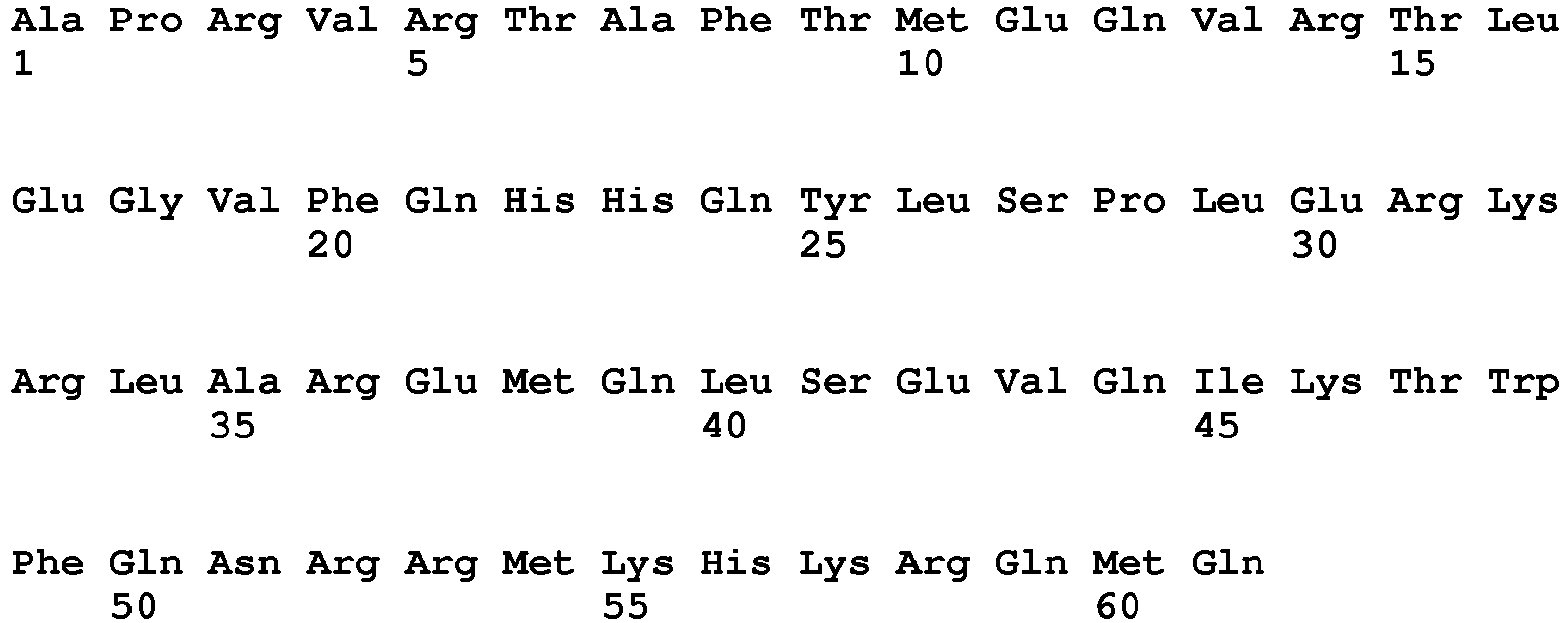
- <210> 4
<211> 2428
<212> DNA
<213> Homo sapiens - <400> 4


- <210> 5
<211> 29
<212> RNA
<213> Artificial Sequence - <220>
<223> Synthetic oligonucleotide - <400> 5
uucagaaucg ccgcaugaaa cacaaacgg 29 - <210> 6
<211> 29
<212> RNA
<213> Artificial Sequence - <220>
<223> Synthetic oligonucleotide - <400> 6
ucuacucaac gucuucuggc cuugccaau 29 - <210> 7
<211> 29
<212> RNA
<213> Artificial Sequence - <220>
<223> Synthetic oligonucleotide - <400> 7
caaaucugcc ugcgccggag aggaccaug 29 - <210> 8
<211> 29
<212> RNA
<213> Artificial Sequence - <220>
<223> Synthetic oligonucleotide - <400> 8
gguugaguaa ggagccaaau accuugcgg 29 - <210> 9
<211> 23
<212> RNA
<213> Artificial Sequence - <220>
<223> Synthetic oligonucleotide - <400> 9
cggguugagu aaggagccaa aua 23 - <210> 10
<211> 23
<212> RNA
<213> Artificial Sequence - <220>
<223> Synthetic oligonucleotide - <400> 10
ccgcaugaaa cacaaacggc aaa 23 - <210> 11
<211> 23
<212> RNA
<213> Artificial Sequence - <220>
<223> Synthetic oligonucleotide - <400> 11
ccccagcuuu cuacucaacg ucu 23 - <210> 12
<211> 29
<212> DNA
<213> Artificial Sequence - <220>
<223> Synthetic oligonucleotide - <400> 12
ttcagaatcg ccgcatgaaa cacaaacgg 29 - <210> 13
<211> 29
<212> DNA
<213> Artificial Sequence - <220>
<223> Synthetic oligonucleotide - <400> 13
tctactcaac gtcttctggc cttgccaat 29 - <210> 14
<211> 29
<212> DNA
<213> Artificial Sequence - <220>
<223> Synthetic oligonucleotide - <400> 14
caaatctgcc tgcgccggag aggaccatg 29 - <210> 15
<211> 29
<212> DNA
<213> Artificial Sequence - <220>
<223> Synthetic oligonucleotide - <400> 15
ggttgagtaa ggagccaaat accttgcgg 29 - <210> 16
<211> 23
<212> DNA
<213> Artificial Sequence - <220>
<223> Synthetic oligonucleotide - <400> 16
cgggttgagt aaggagccaa ata 23 - <210> 17
<211> 23
<212> DNA
<213> Artificial Sequence - <220>
<223> Synthetic oligonucleotide - <400> 17
ccgcatgaaa cacaaacggc aaa 23 - <210> 18
<211> 23
<212> DNA
<213> Artificial Sequence - <220>
<223> Synthetic oligonucleotide - <400> 18
ccccagcttt ctactcaacg tct 23 - <210> 19
<211> 18
<212> DNA
<213> Artificial Sequence - <220>
<223> Synthetic oligonucleotide - <400> 19
ccgtcagcat caaggagg 18 - <210> 20
<211> 19
<212> DNA
<213> Artificial Sequence - <220>
<223> Synthetic oligonucleotide - <400> 20
ctggacctct gagagctgc 19 - <210> 21
<211> 20
<212> DNA
<213> Artificial Sequence - <220>
<223> Synthetic oligonucleotide - <400> 21
aaactttgga gtcccctcac 20 - <210> 22
<211> 20
<212> DNA
<213> Artificial Sequence - <220>
<223> Synthetic oligonucleotide - <400> 22
aaaggctcaa cactgagacg 20 - <210> 23
<211> 20
<212> DNA
<213> Artificial Sequence - <220>
<223> Synthetic oligonucleotide - <400> 23
cttcccccac taccgtaaat 20 - <210> 24
<211> 20
<212> DNA
<213> Artificial Sequence - <220>
<223> Synthetic oligonucleotide - <400> 24
tgctcactcc agaaaactcc 20 - <210> 25
<211> 21
<212> DNA
<213> Artificial Sequence - <220>
<223> Synthetic oligonucleotide - <400> 25
cagctgctta gacgctggat t 21 - <210> 26
<211> 21
<212> DNA
<213> Artificial Sequence - <220>
<223> Synthetic oligonucleotide - <400> 26
gtagaaatac ggctgcaccg a 21 - <210> 27
<211> 19
<212> DNA
<213> Artificial Sequence - <220>
<223> Synthetic oligonucleotide - <400> 27
gttcgtggcc tctaagatg 19 - <210> 28
<211> 18
<212> DNA
<213> Artificial Sequence - <220>
<223> Synthetic oligonucleotide - <400> 28
ttgttcacca ggagcagc 18 - <210> 29
<211> 19
<212> RNA
<213> Artificial Sequence - <220>
<223> Synthetic oligonucleotide - <400> 29
ggguugagua aggagccaa 19 - <210> 30
<211> 19
<212> RNA
<213> Artificial Sequence - <220>
<223> Synthetic oligonucleotide - <400> 30
gguugaguaa ggagccaaa 19 - <210> 31
<211> 19
<212> RNA
<213> Artificial Sequence - <220>
<223> Synthetic oligonucleotide - <400> 31
gcucucagag guccagaua 19 - <210> 32
<211> 19
<212> RNA
<213> Artificial Sequence - <220>
<223> Synthetic oligonucleotide - <400> 32
gguuucagaa ucgccgcau 19 - <210> 33
<211> 19
<212> RNA
<213> Artificial Sequence - <220>
<223> Synthetic oligonucleotide - <400> 33
ucagaaucgc cgcaugaaa 19 - <210> 34
<211> 19
<212> RNA
<213> Artificial Sequence - <220>
<223> Synthetic oligonucleotide - <400> 34
ucgccgcaug aaacacaaa 19 - <210> 35
<211> 19
<212> RNA
<213> Artificial Sequence - <220>
<223> Synthetic oligonucleotide - <400> 35
gccgcaugaa acacaaacg 19 - <210> 36
<211> 19
<212> RNA
<213> Artificial Sequence - <220>
<223> Synthetic oligonucleotide - <400> 36
gcaugaaaca caaacggca 19 - <210> 37
<211> 19
<212> RNA
<213> Artificial Sequence - <220>
<223> Synthetic oligonucleotide - <400> 37
gcuuucuacu caacgucuu 19 - <210> 38
<211> 19
<212> RNA
<213> Artificial Sequence - <220>
<223> Synthetic oligonucleotide - <400> 38
ucucugccaa guggcacaa 19 - <210> 39
<211> 19
<212> RNA
<213> Artificial Sequence - <220>
<223> Synthetic oligonucleotide - <400> 39
ggacucaguu guucuguuu 19 - <210> 40
<211> 19
<212> RNA
<213> Artificial Sequence - <220>
<223> Synthetic oligonucleotide - <400> 40
cccggcccug agaauauau 19 - <210> 41
<211> 19
<212> RNA
<213> Artificial Sequence - <220>
<223> Synthetic oligonucleotide - <400> 41
ccggcccuga gaauauauu 19 - <210> 42
<211> 19
<212> RNA
<213> Artificial Sequence - <220>
<223> Synthetic oligonucleotide - <400> 42
ggucagugaa cagagucaa 19 - <210> 43
<211> 19
<212> RNA
<213> Artificial Sequence - <220>
<223> Synthetic oligonucleotide - <400> 43
gcagaagugg gcuugucau 19 - <210> 44
<211> 19
<212> RNA
<213> Artificial Sequence - <220>
<223> Synthetic oligonucleotide - <400> 44
gcaggugugu uuauagcgu 19 - <210> 45
<211> 19
<212> DNA
<213> Artificial Sequence - <220>
<223> Synthetic oligonucleotide - <400> 45
ggaaagcagg agggaacaa 19 - <210> 46
<211> 19
<212> RNA
<213> Artificial Sequence - <220>
<223> Synthetic oligonucleotide - <400> 46
gcguugaugg accguucuu 19 - <210> 47
<211> 19
<212> RNA
<213> Artificial Sequence - <220>
<223> Synthetic oligonucleotide - <400> 47
ccugacugcg ugcaugaaa 19 - <210> 48
<211> 19
<212> RNA
<213> Artificial Sequence - <220>
<223> Synthetic oligonucleotide - <400> 48
gccuggacag cacugauuu 19 - <210> 49
<211> 19
<212> DNA
<213> Artificial Sequence - <220>
<223> Synthetic oligonucleotide - <400> 49
gggttgagta aggagccaa 19 - <210> 50
<211> 19
<212> DNA
<213> Artificial Sequence - <220>
<223> Synthetic oligonucleotide - <400> 50
ggttgagtaa ggagccaaa 19 - <210> 51
<211> 19
<212> DNA
<213> Artificial Sequence - <220>
<223> Synthetic oligonucleotide - <400> 51
gctctcagag gtccagata 19 - <210> 52
<211> 19
<212> DNA
<213> Artificial Sequence - <220>
<223> Synthetic oligonucleotide - <400> 52
ggtttcagaa tcgccgcat 19 - <210> 53
<211> 19
<212> DNA
<213> Artificial Sequence - <220>
<223> Synthetic oligonucleotide - <400> 53
tcagaatcgc cgcatgaaa 19 - <210> 54
<211> 19
<212> DNA
<213> Artificial Sequence - <220>
<223> Synthetic oligonucleotide - <400> 54
tcgccgcatg aaacacaaa 19 - <210> 55
<211> 19
<212> DNA
<213> Artificial Sequence - <220>
<223> Synthetic oligonucleotide - <400> 55
gccgcatgaa acacaaacg 19 - <210> 56
<211> 19
<212> DNA
<213> Artificial Sequence - <220>
<223> Synthetic oligonucleotide - <400> 56
gcatgaaaca caaacggca 19 - <210> 57
<211> 19
<212> DNA
<213> Artificial Sequence - <220>
<223> Synthetic oligonucleotide - <400> 57
gctttctact caacgtctt 19 - <210> 58
<211> 19
<212> DNA
<213> Artificial Sequence - <220>
<223> Synthetic oligonucleotide - <400> 58
tctctgccaa gtggcacaa 19 - <210> 59
<211> 19
<212> DNA
<213> Artificial Sequence - <220>
<223> Synthetic oligonucleotide - <400> 59
ggactcagtt gttctgttt 19 - <210> 60
<211> 19
<212> DNA
<213> Artificial Sequence - <220>
<223> Synthetic oligonucleotide - <400> 60
cccggccctg agaatatat 19 - <210> 61
<211> 19
<212> DNA
<213> Artificial Sequence - <220>
<223> Synthetic oligonucleotide - <400> 61
ccggccctga gaatatatt 19 - <210> 62
<211> 19
<212> DNA
<213> Artificial Sequence - <220>
<223> Synthetic oligonucleotide - <400> 62
ggtcagtgaa cagagtcaa 19 - <210> 63
<211> 19
<212> DNA
<213> Artificial Sequence - <220>
<223> Synthetic oligonucleotide - <400> 63
gcagaagtgg gcttgtcat 19 - <210> 64
<211> 19
<212> DNA
<213> Artificial Sequence - <220>
<223> Synthetic oligonucleotide - <400> 64
gcaggtgtgt ttatagcgt 19 - <210> 65
<211> 19
<212> DNA
<213> Artificial Sequence - <220>
<223> Synthetic oligonucleotide - <400> 65
gcgttgatgg accgttctt 19 - <210> 66
<211> 19
<212> DNA
<213> Artificial Sequence - <220>
<223> Synthetic oligonucleotide - <400> 66
cctgactgcg tgcatgaaa 19 - <210> 67
<211> 19
<212> DNA
<213> Artificial Sequence - <220>
<223> Synthetic oligonucleotide - <400> 67
gcctggacag cactgattt 19 - <210> 68
<211> 25
<212> DNA
<213> Artificial sequence - <220>
<223> Synthetic oligonucleotide - <400> 68
tactcaaccc tgacatagag ggtaa 25 - <210> 69
<211> 25
<212> DNA
<213> Artificial sequence - <220>
<223> Synthetic oligonucleotide - <400> 69
gagcccggtt tgcatacacg gctaa 25
Claims (3)
- An ex vivo method of expanding hematopoietic stem or progenitor cells, the method comprising
contacting hematopoietic stem cells or progenitor cells isolated from a subject, with a morpholino oligonucleotide that inhibits the expression of a VentX polypeptide, whereby expansion of the hematopoietic stem or progenitor cells is increased,
wherein the oligonucleotide has a sequence SEQ ID NO: 68 or SEQ ID NO:69. - The method of claim 1, wherein the hematopoietic stem or progenitor cells have been isolated from bone marrow, peripheral blood, or cord blood of the subject.
- A morpholino oligonucleotide that inhibits the expression of a VentX polypeptide, for use in treating primary or secondary bone marrow failure syndrome in a subject, wherein the oligonucleotide has a sequence SEQ ID NO: 68 or SEQ ID NO:69.
Applications Claiming Priority (1)
| Application Number | Priority Date | Filing Date | Title |
|---|---|---|---|
| US13/919,241 US9428748B2 (en) | 2013-06-17 | 2013-06-17 | Method of expanding hematopoietic stem cells |
Publications (2)
| Publication Number | Publication Date |
|---|---|
| EP2816107A1 EP2816107A1 (en) | 2014-12-24 |
| EP2816107B1 true EP2816107B1 (en) | 2019-08-07 |
Family
ID=50942591
Family Applications (1)
| Application Number | Title | Priority Date | Filing Date |
|---|---|---|---|
| EP14172624.0A Active EP2816107B1 (en) | 2013-06-17 | 2014-06-16 | Method of expanding hematopoietic stem cells |
Country Status (6)
| Country | Link |
|---|---|
| US (1) | US9428748B2 (en) |
| EP (1) | EP2816107B1 (en) |
| JP (1) | JP6532653B2 (en) |
| DK (1) | DK2816107T3 (en) |
| ES (1) | ES2757508T3 (en) |
| HU (1) | HUE046356T2 (en) |
Families Citing this family (4)
| Publication number | Priority date | Publication date | Assignee | Title |
|---|---|---|---|---|
| EP3411479A4 (en) * | 2016-02-04 | 2019-09-18 | Zhenglun Zhu | TREATMENT AND DIAGNOSIS OF INFLAMMATORY DISORDERS |
| GB201608944D0 (en) | 2016-05-20 | 2016-07-06 | Ospedale San Raffaele And Fond Telethon | Gene Tharapy |
| US20230212613A1 (en) | 2020-05-06 | 2023-07-06 | Cellectis S.A. | Methods for targeted insertion of exogenous sequences in cellular genomes |
| AU2021269103A1 (en) | 2020-05-06 | 2022-12-15 | Cellectis S.A. | Methods to genetically modify cells for delivery of therapeutic proteins |
Family Cites Families (23)
| Publication number | Priority date | Publication date | Assignee | Title |
|---|---|---|---|---|
| US4816567A (en) | 1983-04-08 | 1989-03-28 | Genentech, Inc. | Recombinant immunoglobin preparations |
| JPS6147500A (en) | 1984-08-15 | 1986-03-07 | Res Dev Corp Of Japan | Chimera monoclonal antibody and its preparation |
| EP0173494A3 (en) | 1984-08-27 | 1987-11-25 | The Board Of Trustees Of The Leland Stanford Junior University | Chimeric receptors by dna splicing and expression |
| GB8422238D0 (en) | 1984-09-03 | 1984-10-10 | Neuberger M S | Chimeric proteins |
| JPS61134325A (en) | 1984-12-04 | 1986-06-21 | Teijin Ltd | Expression of hybrid antibody gene |
| US4683202A (en) | 1985-03-28 | 1987-07-28 | Cetus Corporation | Process for amplifying nucleic acid sequences |
| WO1987002671A1 (en) | 1985-11-01 | 1987-05-07 | International Genetic Engineering, Inc. | Modular assembly of antibody genes, antibodies prepared thereby and use |
| US5225539A (en) | 1986-03-27 | 1993-07-06 | Medical Research Council | Recombinant altered antibodies and methods of making altered antibodies |
| US5679647A (en) | 1993-08-26 | 1997-10-21 | The Regents Of The University Of California | Methods and devices for immunizing a host against tumor-associated antigens through administration of naked polynucleotides which encode tumor-associated antigenic peptides |
| US5908779A (en) | 1993-12-01 | 1999-06-01 | University Of Connecticut | Targeted RNA degradation using nuclear antisense RNA |
| US5739118A (en) | 1994-04-01 | 1998-04-14 | Apollon, Inc. | Compositions and methods for delivery of genetic material |
| US5837533A (en) | 1994-09-28 | 1998-11-17 | American Home Products Corporation | Complexes comprising a nucleic acid bound to a cationic polyamine having an endosome disruption agent |
| CA2386192A1 (en) * | 1999-10-07 | 2001-04-12 | Avi Biopharma, Inc. | C-myc antisense-treated hematopoietic stem cell composition and method |
| WO2004076622A2 (en) * | 2003-02-10 | 2004-09-10 | National Institute Of Advanced Industrial Science And Technology | Regulation of gene expression by dna interference |
| EP1601759A4 (en) * | 2003-03-07 | 2007-02-14 | Gamida Cell Ltd | Expansion of renewable stem cell populations using modulators of pi 3-kinase |
| US7994126B2 (en) | 2006-02-22 | 2011-08-09 | Zhenglun Zhu | Treatment of cellular proliferative disorders with compositions comprising Hom polypeptide (also known as Xom, VENTX2) |
| EP1999255A2 (en) * | 2006-03-24 | 2008-12-10 | The Children's Medical Center Corporation | Method to modulate hematopoietic stem cell growth |
| HUE042736T2 (en) * | 2009-07-15 | 2019-07-29 | Zhenglun Zhu | Managing the treatment of inflammatory or autoimmune disorders using hom-1 expression |
| WO2011028819A1 (en) * | 2009-09-01 | 2011-03-10 | The Trustees Of Columbia University In The City Of New York | Synergistic transcription modules and uses thereof |
| EP2643454A4 (en) | 2010-11-24 | 2014-05-21 | Hong Gao | EXPANSION OF HEMATOPOIETIC STEM CELLS |
| WO2012170979A1 (en) | 2011-06-10 | 2012-12-13 | Zhenglun Zhu | Human homeobox gene ventx and macrophage terminal differentiation and activation, compositions and methods thereof |
| WO2013036974A1 (en) * | 2011-09-11 | 2013-03-14 | Aurasense, Llc | Cellular uptake control systems |
| CN105473710B (en) * | 2013-04-10 | 2019-08-23 | 朱正伦 | The homeobox transcription factor VentX regulates differentiation and maturation of human dendritic cells |
-
2013
- 2013-06-17 US US13/919,241 patent/US9428748B2/en active Active
-
2014
- 2014-06-16 JP JP2014123573A patent/JP6532653B2/en active Active
- 2014-06-16 HU HUE14172624A patent/HUE046356T2/en unknown
- 2014-06-16 ES ES14172624T patent/ES2757508T3/en active Active
- 2014-06-16 EP EP14172624.0A patent/EP2816107B1/en active Active
- 2014-06-16 DK DK14172624T patent/DK2816107T3/en active
Non-Patent Citations (1)
| Title |
|---|
| DAVID B. WILSON ET AL: "Inherited bone marrow failure syndromes in adolescents and young adults", ANNALS OF MEDICINE, vol. 46, no. 6, 3 June 2014 (2014-06-03), SE, pages 353 - 363, XP055348970, ISSN: 0785-3890, DOI: 10.3109/07853890.2014.915579 * |
Also Published As
| Publication number | Publication date |
|---|---|
| ES2757508T3 (en) | 2020-04-29 |
| JP2015000064A (en) | 2015-01-05 |
| HUE046356T2 (en) | 2020-03-30 |
| EP2816107A1 (en) | 2014-12-24 |
| DK2816107T3 (en) | 2019-11-11 |
| US9428748B2 (en) | 2016-08-30 |
| US20140369967A1 (en) | 2014-12-18 |
| JP6532653B2 (en) | 2019-06-19 |
Similar Documents
| Publication | Publication Date | Title |
|---|---|---|
| EP3102679B1 (en) | Micro-rnas and compositions comprising same for the treatment and diagnosis of serotonin-, adrenalin-, noradrenalin-, glutamate-, and corticotropin-releasing hormone- associated medical conditions | |
| US9226942B2 (en) | Expanding hematopoietic stem cells | |
| CN103189511B (en) | Utilize the novel hiPSC facture that siRNA imports | |
| Guo et al. | Cancer cell intrinsic TIM-3 induces glioblastoma progression | |
| CN102439136A (en) | Mesenchymal stem cells producing inhibitory rna for disease modification | |
| JP5931897B2 (en) | Materials and methods associated with microRNA-21, mismatch repair and colorectal cancer | |
| EP2816107B1 (en) | Method of expanding hematopoietic stem cells | |
| Hou et al. | MicroRNA-188-5p regulates contribution of bone marrow-derived cells to choroidal neovascularization development by targeting MMP-2/13 | |
| JP2017511302A (en) | Asymmetric interfering RNA compositions for silencing K-Ras and methods of use thereof | |
| US20130072844A1 (en) | Use of entrained neutrophils to treat metastatic and micrometastatic disease in at risk patients | |
| Khakpoor-Koosheh et al. | MicroRNA-124 enhances T cells functions by manipulating the lactic acid metabolism of tumor cells | |
| CN101804207B (en) | New application of miR-223 | |
| US20110110896A1 (en) | Modulating levels of RNA-binding proteins for the treatment of breast cancer | |
| US20150299712A1 (en) | Modulation of Hematopoietic Stem Cell Differentiation | |
| KR102120659B1 (en) | Use of microRNA-1236 as a diagnostic marker and therapeutic agent of granulosa cell tumor or Endometrial cancer | |
| US20200340058A1 (en) | Compositions and methods for enhancing cell transplantation efficacy | |
| US20150283164A1 (en) | Treatment of Myelodysplastic Syndrome by Inhibition of NR2F2 | |
| JP5210303B2 (en) | How to manipulate stem cells | |
| WO2024068010A1 (en) | Targeting snx9 rescues recombinant t cell in adoptive therapy | |
| US9023829B2 (en) | Method of regulating NFATc2 activity in lymphocytes | |
| WO2025194114A1 (en) | Compositions and methods for modulation of mcj in cellular therapies | |
| US9273313B2 (en) | Activation of quiescent stem cells | |
| Khan | Molecular mechanisms and tumour heterogeneity in breast cancer | |
| Cubillos-Ruiz | Re-programming tumor-infiltrating dendritic cells in situ via RNAi elicits therapeutic immunity against ovarian cancer | |
| JP2019165706A (en) | Medicine for treating or preventing cancer and biomarkers of cancer |
Legal Events
| Date | Code | Title | Description |
|---|---|---|---|
| PUAI | Public reference made under article 153(3) epc to a published international application that has entered the european phase |
Free format text: ORIGINAL CODE: 0009012 |
|
| 17P | Request for examination filed |
Effective date: 20140616 |
|
| AK | Designated contracting states |
Kind code of ref document: A1 Designated state(s): AL AT BE BG CH CY CZ DE DK EE ES FI FR GB GR HR HU IE IS IT LI LT LU LV MC MK MT NL NO PL PT RO RS SE SI SK SM TR |
|
| AX | Request for extension of the european patent |
Extension state: BA ME |
|
| R17P | Request for examination filed (corrected) |
Effective date: 20150623 |
|
| RBV | Designated contracting states (corrected) |
Designated state(s): AL AT BE BG CH CY CZ DE DK EE ES FI FR GB GR HR HU IE IS IT LI LT LU LV MC MK MT NL NO PL PT RO RS SE SI SK SM TR |
|
| 17Q | First examination report despatched |
Effective date: 20160205 |
|
| STAA | Information on the status of an ep patent application or granted ep patent |
Free format text: STATUS: EXAMINATION IS IN PROGRESS |
|
| RIC1 | Information provided on ipc code assigned before grant |
Ipc: C12N 5/0789 20100101AFI20190115BHEP Ipc: A61K 35/28 20150101ALI20190115BHEP Ipc: A61K 31/7125 20060101ALI20190115BHEP Ipc: A61K 38/28 20060101ALI20190115BHEP Ipc: C12N 15/113 20100101ALI20190115BHEP |
|
| GRAP | Despatch of communication of intention to grant a patent |
Free format text: ORIGINAL CODE: EPIDOSNIGR1 |
|
| STAA | Information on the status of an ep patent application or granted ep patent |
Free format text: STATUS: GRANT OF PATENT IS INTENDED |
|
| INTG | Intention to grant announced |
Effective date: 20190304 |
|
| GRAS | Grant fee paid |
Free format text: ORIGINAL CODE: EPIDOSNIGR3 |
|
| GRAA | (expected) grant |
Free format text: ORIGINAL CODE: 0009210 |
|
| STAA | Information on the status of an ep patent application or granted ep patent |
Free format text: STATUS: THE PATENT HAS BEEN GRANTED |
|
| AK | Designated contracting states |
Kind code of ref document: B1 Designated state(s): AL AT BE BG CH CY CZ DE DK EE ES FI FR GB GR HR HU IE IS IT LI LT LU LV MC MK MT NL NO PL PT RO RS SE SI SK SM TR |
|
| REG | Reference to a national code |
Ref country code: GB Ref legal event code: FG4D |
|
| REG | Reference to a national code |
Ref country code: AT Ref legal event code: REF Ref document number: 1163907 Country of ref document: AT Kind code of ref document: T Effective date: 20190815 Ref country code: CH Ref legal event code: EP |
|
| REG | Reference to a national code |
Ref country code: DE Ref legal event code: R096 Ref document number: 602014051161 Country of ref document: DE |
|
| REG | Reference to a national code |
Ref country code: IE Ref legal event code: FG4D |
|
| REG | Reference to a national code |
Ref country code: DK Ref legal event code: T3 Effective date: 20191107 |
|
| REG | Reference to a national code |
Ref country code: NL Ref legal event code: FP |
|
| REG | Reference to a national code |
Ref country code: SE Ref legal event code: TRGR |
|
| REG | Reference to a national code |
Ref country code: LT Ref legal event code: MG4D |
|
| PG25 | Lapsed in a contracting state [announced via postgrant information from national office to epo] |
Ref country code: PT Free format text: LAPSE BECAUSE OF FAILURE TO SUBMIT A TRANSLATION OF THE DESCRIPTION OR TO PAY THE FEE WITHIN THE PRESCRIBED TIME-LIMIT Effective date: 20191209 Ref country code: HR Free format text: LAPSE BECAUSE OF FAILURE TO SUBMIT A TRANSLATION OF THE DESCRIPTION OR TO PAY THE FEE WITHIN THE PRESCRIBED TIME-LIMIT Effective date: 20190807 Ref country code: NO Free format text: LAPSE BECAUSE OF FAILURE TO SUBMIT A TRANSLATION OF THE DESCRIPTION OR TO PAY THE FEE WITHIN THE PRESCRIBED TIME-LIMIT Effective date: 20191107 Ref country code: FI Free format text: LAPSE BECAUSE OF FAILURE TO SUBMIT A TRANSLATION OF THE DESCRIPTION OR TO PAY THE FEE WITHIN THE PRESCRIBED TIME-LIMIT Effective date: 20190807 Ref country code: BG Free format text: LAPSE BECAUSE OF FAILURE TO SUBMIT A TRANSLATION OF THE DESCRIPTION OR TO PAY THE FEE WITHIN THE PRESCRIBED TIME-LIMIT Effective date: 20191107 Ref country code: LT Free format text: LAPSE BECAUSE OF FAILURE TO SUBMIT A TRANSLATION OF THE DESCRIPTION OR TO PAY THE FEE WITHIN THE PRESCRIBED TIME-LIMIT Effective date: 20190807 |
|
| REG | Reference to a national code |
Ref country code: AT Ref legal event code: MK05 Ref document number: 1163907 Country of ref document: AT Kind code of ref document: T Effective date: 20190807 |
|
| PG25 | Lapsed in a contracting state [announced via postgrant information from national office to epo] |
Ref country code: RS Free format text: LAPSE BECAUSE OF FAILURE TO SUBMIT A TRANSLATION OF THE DESCRIPTION OR TO PAY THE FEE WITHIN THE PRESCRIBED TIME-LIMIT Effective date: 20190807 Ref country code: GR Free format text: LAPSE BECAUSE OF FAILURE TO SUBMIT A TRANSLATION OF THE DESCRIPTION OR TO PAY THE FEE WITHIN THE PRESCRIBED TIME-LIMIT Effective date: 20191108 Ref country code: AL Free format text: LAPSE BECAUSE OF FAILURE TO SUBMIT A TRANSLATION OF THE DESCRIPTION OR TO PAY THE FEE WITHIN THE PRESCRIBED TIME-LIMIT Effective date: 20190807 Ref country code: LV Free format text: LAPSE BECAUSE OF FAILURE TO SUBMIT A TRANSLATION OF THE DESCRIPTION OR TO PAY THE FEE WITHIN THE PRESCRIBED TIME-LIMIT Effective date: 20190807 Ref country code: IS Free format text: LAPSE BECAUSE OF FAILURE TO SUBMIT A TRANSLATION OF THE DESCRIPTION OR TO PAY THE FEE WITHIN THE PRESCRIBED TIME-LIMIT Effective date: 20191207 |
|
| REG | Reference to a national code |
Ref country code: CH Ref legal event code: NV Representative=s name: VALIPAT S.A. C/O BOVARD SA NEUCHATEL, CH |
|
| REG | Reference to a national code |
Ref country code: HU Ref legal event code: AG4A Ref document number: E046356 Country of ref document: HU |
|
| PG25 | Lapsed in a contracting state [announced via postgrant information from national office to epo] |
Ref country code: TR Free format text: LAPSE BECAUSE OF FAILURE TO SUBMIT A TRANSLATION OF THE DESCRIPTION OR TO PAY THE FEE WITHIN THE PRESCRIBED TIME-LIMIT Effective date: 20190807 |
|
| REG | Reference to a national code |
Ref country code: ES Ref legal event code: FG2A Ref document number: 2757508 Country of ref document: ES Kind code of ref document: T3 Effective date: 20200429 |
|
| PG25 | Lapsed in a contracting state [announced via postgrant information from national office to epo] |
Ref country code: RO Free format text: LAPSE BECAUSE OF FAILURE TO SUBMIT A TRANSLATION OF THE DESCRIPTION OR TO PAY THE FEE WITHIN THE PRESCRIBED TIME-LIMIT Effective date: 20190807 Ref country code: EE Free format text: LAPSE BECAUSE OF FAILURE TO SUBMIT A TRANSLATION OF THE DESCRIPTION OR TO PAY THE FEE WITHIN THE PRESCRIBED TIME-LIMIT Effective date: 20190807 Ref country code: PL Free format text: LAPSE BECAUSE OF FAILURE TO SUBMIT A TRANSLATION OF THE DESCRIPTION OR TO PAY THE FEE WITHIN THE PRESCRIBED TIME-LIMIT Effective date: 20190807 Ref country code: AT Free format text: LAPSE BECAUSE OF FAILURE TO SUBMIT A TRANSLATION OF THE DESCRIPTION OR TO PAY THE FEE WITHIN THE PRESCRIBED TIME-LIMIT Effective date: 20190807 |
|
| PG25 | Lapsed in a contracting state [announced via postgrant information from national office to epo] |
Ref country code: SK Free format text: LAPSE BECAUSE OF FAILURE TO SUBMIT A TRANSLATION OF THE DESCRIPTION OR TO PAY THE FEE WITHIN THE PRESCRIBED TIME-LIMIT Effective date: 20190807 Ref country code: CZ Free format text: LAPSE BECAUSE OF FAILURE TO SUBMIT A TRANSLATION OF THE DESCRIPTION OR TO PAY THE FEE WITHIN THE PRESCRIBED TIME-LIMIT Effective date: 20190807 Ref country code: SM Free format text: LAPSE BECAUSE OF FAILURE TO SUBMIT A TRANSLATION OF THE DESCRIPTION OR TO PAY THE FEE WITHIN THE PRESCRIBED TIME-LIMIT Effective date: 20190807 Ref country code: IS Free format text: LAPSE BECAUSE OF FAILURE TO SUBMIT A TRANSLATION OF THE DESCRIPTION OR TO PAY THE FEE WITHIN THE PRESCRIBED TIME-LIMIT Effective date: 20200224 |
|
| REG | Reference to a national code |
Ref country code: DE Ref legal event code: R097 Ref document number: 602014051161 Country of ref document: DE |
|
| PLBE | No opposition filed within time limit |
Free format text: ORIGINAL CODE: 0009261 |
|
| STAA | Information on the status of an ep patent application or granted ep patent |
Free format text: STATUS: NO OPPOSITION FILED WITHIN TIME LIMIT |
|
| PG2D | Information on lapse in contracting state deleted |
Ref country code: IS |
|
| 26N | No opposition filed |
Effective date: 20200603 |
|
| PG25 | Lapsed in a contracting state [announced via postgrant information from national office to epo] |
Ref country code: SI Free format text: LAPSE BECAUSE OF FAILURE TO SUBMIT A TRANSLATION OF THE DESCRIPTION OR TO PAY THE FEE WITHIN THE PRESCRIBED TIME-LIMIT Effective date: 20190807 |
|
| PG25 | Lapsed in a contracting state [announced via postgrant information from national office to epo] |
Ref country code: MC Free format text: LAPSE BECAUSE OF FAILURE TO SUBMIT A TRANSLATION OF THE DESCRIPTION OR TO PAY THE FEE WITHIN THE PRESCRIBED TIME-LIMIT Effective date: 20190807 |
|
| PG25 | Lapsed in a contracting state [announced via postgrant information from national office to epo] |
Ref country code: LU Free format text: LAPSE BECAUSE OF NON-PAYMENT OF DUE FEES Effective date: 20200616 |
|
| PG25 | Lapsed in a contracting state [announced via postgrant information from national office to epo] |
Ref country code: MT Free format text: LAPSE BECAUSE OF FAILURE TO SUBMIT A TRANSLATION OF THE DESCRIPTION OR TO PAY THE FEE WITHIN THE PRESCRIBED TIME-LIMIT Effective date: 20190807 Ref country code: CY Free format text: LAPSE BECAUSE OF FAILURE TO SUBMIT A TRANSLATION OF THE DESCRIPTION OR TO PAY THE FEE WITHIN THE PRESCRIBED TIME-LIMIT Effective date: 20190807 |
|
| PG25 | Lapsed in a contracting state [announced via postgrant information from national office to epo] |
Ref country code: MK Free format text: LAPSE BECAUSE OF FAILURE TO SUBMIT A TRANSLATION OF THE DESCRIPTION OR TO PAY THE FEE WITHIN THE PRESCRIBED TIME-LIMIT Effective date: 20190807 |
|
| PGFP | Annual fee paid to national office [announced via postgrant information from national office to epo] |
Ref country code: HU Payment date: 20220703 Year of fee payment: 9 |
|
| P01 | Opt-out of the competence of the unified patent court (upc) registered |
Effective date: 20230526 |
|
| PGFP | Annual fee paid to national office [announced via postgrant information from national office to epo] |
Ref country code: IE Payment date: 20230627 Year of fee payment: 10 Ref country code: DK Payment date: 20230628 Year of fee payment: 10 |
|
| PGFP | Annual fee paid to national office [announced via postgrant information from national office to epo] |
Ref country code: SE Payment date: 20230627 Year of fee payment: 10 |
|
| PG25 | Lapsed in a contracting state [announced via postgrant information from national office to epo] |
Ref country code: HU Free format text: LAPSE BECAUSE OF NON-PAYMENT OF DUE FEES Effective date: 20230617 |
|
| REG | Reference to a national code |
Ref country code: DK Ref legal event code: EBP Effective date: 20240630 |
|
| REG | Reference to a national code |
Ref country code: SE Ref legal event code: EUG |
|
| PG25 | Lapsed in a contracting state [announced via postgrant information from national office to epo] |
Ref country code: IE Free format text: LAPSE BECAUSE OF NON-PAYMENT OF DUE FEES Effective date: 20240616 |
|
| PGFP | Annual fee paid to national office [announced via postgrant information from national office to epo] |
Ref country code: DE Payment date: 20250627 Year of fee payment: 12 |
|
| PG25 | Lapsed in a contracting state [announced via postgrant information from national office to epo] |
Ref country code: DK Free format text: LAPSE BECAUSE OF NON-PAYMENT OF DUE FEES Effective date: 20240630 |
|
| PGFP | Annual fee paid to national office [announced via postgrant information from national office to epo] |
Ref country code: GB Payment date: 20250627 Year of fee payment: 12 |
|
| PGFP | Annual fee paid to national office [announced via postgrant information from national office to epo] |
Ref country code: FR Payment date: 20250625 Year of fee payment: 12 |
|
| PG25 | Lapsed in a contracting state [announced via postgrant information from national office to epo] |
Ref country code: SE Free format text: LAPSE BECAUSE OF NON-PAYMENT OF DUE FEES Effective date: 20240617 |
|
| PGFP | Annual fee paid to national office [announced via postgrant information from national office to epo] |
Ref country code: IT Payment date: 20250619 Year of fee payment: 12 |
|
| PGFP | Annual fee paid to national office [announced via postgrant information from national office to epo] |
Ref country code: CH Payment date: 20250701 Year of fee payment: 12 |
|
| PGFP | Annual fee paid to national office [announced via postgrant information from national office to epo] |
Ref country code: NL Payment date: 20251026 Year of fee payment: 12 |
|
| PGFP | Annual fee paid to national office [announced via postgrant information from national office to epo] |
Ref country code: BE Payment date: 20251027 Year of fee payment: 12 |
|
| PGFP | Annual fee paid to national office [announced via postgrant information from national office to epo] |
Ref country code: ES Payment date: 20251103 Year of fee payment: 12 |