EP2684948B1 - Method for producing antibodies or antibody fragments using yeast having knocked out vps gene - Google Patents
Method for producing antibodies or antibody fragments using yeast having knocked out vps gene Download PDFInfo
- Publication number
- EP2684948B1 EP2684948B1 EP12757313.7A EP12757313A EP2684948B1 EP 2684948 B1 EP2684948 B1 EP 2684948B1 EP 12757313 A EP12757313 A EP 12757313A EP 2684948 B1 EP2684948 B1 EP 2684948B1
- Authority
- EP
- European Patent Office
- Prior art keywords
- gene
- disruption
- artificial
- dna
- antibody
- Prior art date
- Legal status (The legal status is an assumption and is not a legal conclusion. Google has not performed a legal analysis and makes no representation as to the accuracy of the status listed.)
- Active
Links
- 108090000623 proteins and genes Proteins 0.000 title claims description 187
- 238000004519 manufacturing process Methods 0.000 title claims description 26
- 108010021625 Immunoglobulin Fragments Proteins 0.000 title claims description 13
- 102000008394 Immunoglobulin Fragments Human genes 0.000 title claims description 13
- 240000004808 Saccharomyces cerevisiae Species 0.000 title description 38
- 101150084765 VPS gene Proteins 0.000 claims description 35
- 230000025220 protein targeting to vacuole Effects 0.000 claims description 30
- 241000320412 Ogataea angusta Species 0.000 claims description 29
- 230000003248 secreting effect Effects 0.000 claims description 20
- 101150101314 PRB1 gene Proteins 0.000 claims description 11
- 101150037257 VPS10 gene Proteins 0.000 claims description 11
- 102100038324 Vacuolar protein sorting-associated protein 8 homolog Human genes 0.000 claims description 10
- 101000743430 Homo sapiens Vacuolar protein sorting-associated protein 8 homolog Proteins 0.000 claims description 9
- 108010062352 Vacuolar Sorting Protein VPS15 Proteins 0.000 claims description 9
- 102000010845 Vacuolar Sorting Protein VPS15 Human genes 0.000 claims description 9
- 101000621815 Saccharomyces cerevisiae (strain ATCC 204508 / S288c) Cerevisin Proteins 0.000 claims description 4
- 101150080255 PEP1 gene Proteins 0.000 claims 1
- 108020004414 DNA Proteins 0.000 description 70
- 239000012634 fragment Substances 0.000 description 55
- 102000004169 proteins and genes Human genes 0.000 description 55
- 239000013598 vector Substances 0.000 description 46
- 235000014680 Saccharomyces cerevisiae Nutrition 0.000 description 33
- 239000002773 nucleotide Substances 0.000 description 25
- 125000003729 nucleotide group Chemical group 0.000 description 25
- 210000004027 cell Anatomy 0.000 description 22
- 238000011144 upstream manufacturing Methods 0.000 description 18
- 238000000034 method Methods 0.000 description 17
- 230000028327 secretion Effects 0.000 description 17
- 239000000243 solution Substances 0.000 description 16
- 239000012228 culture supernatant Substances 0.000 description 15
- 101150029183 PEP4 gene Proteins 0.000 description 14
- 101150008621 YPS1 gene Proteins 0.000 description 12
- 108010084455 Zeocin Proteins 0.000 description 11
- CWCMIVBLVUHDHK-ZSNHEYEWSA-N phleomycin D1 Chemical compound N([C@H](C(=O)N[C@H](C)[C@@H](O)[C@H](C)C(=O)N[C@@H]([C@H](O)C)C(=O)NCCC=1SC[C@@H](N=1)C=1SC=C(N=1)C(=O)NCCCCNC(N)=N)[C@@H](O[C@H]1[C@H]([C@@H](O)[C@H](O)[C@H](CO)O1)O[C@@H]1[C@H]([C@@H](OC(N)=O)[C@H](O)[C@@H](CO)O1)O)C=1N=CNC=1)C(=O)C1=NC([C@H](CC(N)=O)NC[C@H](N)C(N)=O)=NC(N)=C1C CWCMIVBLVUHDHK-ZSNHEYEWSA-N 0.000 description 11
- 230000000052 comparative effect Effects 0.000 description 10
- OKKJLVBELUTLKV-UHFFFAOYSA-N Methanol Chemical compound OC OKKJLVBELUTLKV-UHFFFAOYSA-N 0.000 description 9
- 101150108883 VPS8 gene Proteins 0.000 description 9
- 230000006870 function Effects 0.000 description 9
- 101100317178 Caenorhabditis elegans vps-26 gene Proteins 0.000 description 8
- 101001125486 Homo sapiens Basic salivary proline-rich protein 1 Proteins 0.000 description 8
- 101100156532 Saccharomyces cerevisiae (strain ATCC 204508 / S288c) VPS17 gene Proteins 0.000 description 8
- 101100160515 Saccharomyces cerevisiae (strain ATCC 204508 / S288c) YPS1 gene Proteins 0.000 description 8
- 101150029490 VPS15 gene Proteins 0.000 description 8
- 101150013427 VPS21 gene Proteins 0.000 description 8
- 101150068211 VPS45 gene Proteins 0.000 description 8
- 238000005119 centrifugation Methods 0.000 description 7
- IJGRMHOSHXDMSA-UHFFFAOYSA-N Atomic nitrogen Chemical compound N#N IJGRMHOSHXDMSA-UHFFFAOYSA-N 0.000 description 6
- 102100029516 Basic salivary proline-rich protein 1 Human genes 0.000 description 6
- LFQSCWFLJHTTHZ-UHFFFAOYSA-N Ethanol Chemical compound CCO LFQSCWFLJHTTHZ-UHFFFAOYSA-N 0.000 description 6
- PEDCQBHIVMGVHV-UHFFFAOYSA-N Glycerine Chemical compound OCC(O)CO PEDCQBHIVMGVHV-UHFFFAOYSA-N 0.000 description 6
- 241001465754 Metazoa Species 0.000 description 6
- 101100243377 Mus musculus Pepd gene Proteins 0.000 description 6
- 108091005804 Peptidases Proteins 0.000 description 6
- 239000002609 medium Substances 0.000 description 6
- 230000004048 modification Effects 0.000 description 6
- 238000012986 modification Methods 0.000 description 6
- 241000282414 Homo sapiens Species 0.000 description 5
- 239000000427 antigen Substances 0.000 description 5
- 108091007433 antigens Proteins 0.000 description 5
- 102000036639 antigens Human genes 0.000 description 5
- 210000003934 vacuole Anatomy 0.000 description 5
- 101100166113 Candida albicans (strain SC5314 / ATCC MYA-2876) SAP9 gene Proteins 0.000 description 4
- 108010076504 Protein Sorting Signals Proteins 0.000 description 4
- 238000007792 addition Methods 0.000 description 4
- 239000000872 buffer Substances 0.000 description 4
- 238000006243 chemical reaction Methods 0.000 description 4
- UQLDLKMNUJERMK-UHFFFAOYSA-L di(octadecanoyloxy)lead Chemical compound [Pb+2].CCCCCCCCCCCCCCCCCC([O-])=O.CCCCCCCCCCCCCCCCCC([O-])=O UQLDLKMNUJERMK-UHFFFAOYSA-L 0.000 description 4
- 238000004520 electroporation Methods 0.000 description 4
- 239000013604 expression vector Substances 0.000 description 4
- 230000006872 improvement Effects 0.000 description 4
- 239000000725 suspension Substances 0.000 description 4
- QTBSBXVTEAMEQO-UHFFFAOYSA-N Acetic acid Chemical compound CC(O)=O QTBSBXVTEAMEQO-UHFFFAOYSA-N 0.000 description 3
- CSCPPACGZOOCGX-UHFFFAOYSA-N Acetone Chemical compound CC(C)=O CSCPPACGZOOCGX-UHFFFAOYSA-N 0.000 description 3
- WQZGKKKJIJFFOK-GASJEMHNSA-N Glucose Natural products OC[C@H]1OC(O)[C@H](O)[C@@H](O)[C@@H]1O WQZGKKKJIJFFOK-GASJEMHNSA-N 0.000 description 3
- 102000004269 Granulocyte Colony-Stimulating Factor Human genes 0.000 description 3
- 108010017080 Granulocyte Colony-Stimulating Factor Proteins 0.000 description 3
- 241000235058 Komagataella pastoris Species 0.000 description 3
- 102000035195 Peptidases Human genes 0.000 description 3
- 241000235347 Schizosaccharomyces pombe Species 0.000 description 3
- 229940041514 candida albicans extract Drugs 0.000 description 3
- KRKNYBCHXYNGOX-UHFFFAOYSA-N citric acid Chemical compound OC(=O)CC(O)(C(O)=O)CC(O)=O KRKNYBCHXYNGOX-UHFFFAOYSA-N 0.000 description 3
- 230000004927 fusion Effects 0.000 description 3
- 239000008103 glucose Substances 0.000 description 3
- 230000006801 homologous recombination Effects 0.000 description 3
- 238000002744 homologous recombination Methods 0.000 description 3
- 238000003780 insertion Methods 0.000 description 3
- 230000037431 insertion Effects 0.000 description 3
- 239000000203 mixture Substances 0.000 description 3
- 229910052757 nitrogen Inorganic materials 0.000 description 3
- 238000001556 precipitation Methods 0.000 description 3
- 239000000047 product Substances 0.000 description 3
- 230000003362 replicative effect Effects 0.000 description 3
- 238000006467 substitution reaction Methods 0.000 description 3
- 230000009466 transformation Effects 0.000 description 3
- 239000012138 yeast extract Substances 0.000 description 3
- 239000007222 ypd medium Substances 0.000 description 3
- YBJHBAHKTGYVGT-ZKWXMUAHSA-N (+)-Biotin Chemical compound N1C(=O)N[C@@H]2[C@H](CCCCC(=O)O)SC[C@@H]21 YBJHBAHKTGYVGT-ZKWXMUAHSA-N 0.000 description 2
- GZCWLCBFPRFLKL-UHFFFAOYSA-N 1-prop-2-ynoxypropan-2-ol Chemical compound CC(O)COCC#C GZCWLCBFPRFLKL-UHFFFAOYSA-N 0.000 description 2
- HLXHCNWEVQNNKA-UHFFFAOYSA-N 5-methoxy-2,3-dihydro-1h-inden-2-amine Chemical group COC1=CC=C2CC(N)CC2=C1 HLXHCNWEVQNNKA-UHFFFAOYSA-N 0.000 description 2
- 108010051457 Acid Phosphatase Proteins 0.000 description 2
- 102000013563 Acid Phosphatase Human genes 0.000 description 2
- 108091003079 Bovine Serum Albumin Proteins 0.000 description 2
- 102100032528 C-type lectin domain family 11 member A Human genes 0.000 description 2
- 101710167766 C-type lectin domain family 11 member A Proteins 0.000 description 2
- OKTJSMMVPCPJKN-UHFFFAOYSA-N Carbon Chemical compound [C] OKTJSMMVPCPJKN-UHFFFAOYSA-N 0.000 description 2
- 101100364969 Dictyostelium discoideum scai gene Proteins 0.000 description 2
- 102100024827 Dynamin-1-like protein Human genes 0.000 description 2
- 238000002965 ELISA Methods 0.000 description 2
- 102000004190 Enzymes Human genes 0.000 description 2
- 108090000790 Enzymes Proteins 0.000 description 2
- 241000287828 Gallus gallus Species 0.000 description 2
- 108010017213 Granulocyte-Macrophage Colony-Stimulating Factor Proteins 0.000 description 2
- 102100039620 Granulocyte-macrophage colony-stimulating factor Human genes 0.000 description 2
- 241000238631 Hexapoda Species 0.000 description 2
- 101000909218 Homo sapiens Dynamin-1-like protein Proteins 0.000 description 2
- 108091006905 Human Serum Albumin Proteins 0.000 description 2
- 102000008100 Human Serum Albumin Human genes 0.000 description 2
- TWRXJAOTZQYOKJ-UHFFFAOYSA-L Magnesium chloride Chemical compound [Mg+2].[Cl-].[Cl-] TWRXJAOTZQYOKJ-UHFFFAOYSA-L 0.000 description 2
- 101710089743 Mating factor alpha Proteins 0.000 description 2
- 101100364971 Mus musculus Scai gene Proteins 0.000 description 2
- 239000001888 Peptone Substances 0.000 description 2
- 108010080698 Peptones Proteins 0.000 description 2
- 108090000608 Phosphoric Monoester Hydrolases Proteins 0.000 description 2
- 102000004160 Phosphoric Monoester Hydrolases Human genes 0.000 description 2
- 239000004365 Protease Substances 0.000 description 2
- 102000007056 Recombinant Fusion Proteins Human genes 0.000 description 2
- 108010008281 Recombinant Fusion Proteins Proteins 0.000 description 2
- UIIMBOGNXHQVGW-UHFFFAOYSA-M Sodium bicarbonate Chemical compound [Na+].OC([O-])=O UIIMBOGNXHQVGW-UHFFFAOYSA-M 0.000 description 2
- CZMRCDWAGMRECN-UGDNZRGBSA-N Sucrose Chemical compound O[C@H]1[C@H](O)[C@@H](CO)O[C@@]1(CO)O[C@@H]1[C@H](O)[C@@H](O)[C@H](O)[C@@H](CO)O1 CZMRCDWAGMRECN-UGDNZRGBSA-N 0.000 description 2
- 229930006000 Sucrose Natural products 0.000 description 2
- 102000003978 Tissue Plasminogen Activator Human genes 0.000 description 2
- 108090000373 Tissue Plasminogen Activator Proteins 0.000 description 2
- XSQUKJJJFZCRTK-UHFFFAOYSA-N Urea Chemical compound NC(N)=O XSQUKJJJFZCRTK-UHFFFAOYSA-N 0.000 description 2
- 238000009825 accumulation Methods 0.000 description 2
- 229940098773 bovine serum albumin Drugs 0.000 description 2
- 229910052799 carbon Inorganic materials 0.000 description 2
- 235000013330 chicken meat Nutrition 0.000 description 2
- 238000012258 culturing Methods 0.000 description 2
- 238000011161 development Methods 0.000 description 2
- XBDQKXXYIPTUBI-UHFFFAOYSA-N dimethylselenoniopropionate Natural products CCC(O)=O XBDQKXXYIPTUBI-UHFFFAOYSA-N 0.000 description 2
- 230000000694 effects Effects 0.000 description 2
- 229940088598 enzyme Drugs 0.000 description 2
- 108020001507 fusion proteins Proteins 0.000 description 2
- 102000037865 fusion proteins Human genes 0.000 description 2
- NOESYZHRGYRDHS-UHFFFAOYSA-N insulin Chemical compound N1C(=O)C(NC(=O)C(CCC(N)=O)NC(=O)C(CCC(O)=O)NC(=O)C(C(C)C)NC(=O)C(NC(=O)CN)C(C)CC)CSSCC(C(NC(CO)C(=O)NC(CC(C)C)C(=O)NC(CC=2C=CC(O)=CC=2)C(=O)NC(CCC(N)=O)C(=O)NC(CC(C)C)C(=O)NC(CCC(O)=O)C(=O)NC(CC(N)=O)C(=O)NC(CC=2C=CC(O)=CC=2)C(=O)NC(CSSCC(NC(=O)C(C(C)C)NC(=O)C(CC(C)C)NC(=O)C(CC=2C=CC(O)=CC=2)NC(=O)C(CC(C)C)NC(=O)C(C)NC(=O)C(CCC(O)=O)NC(=O)C(C(C)C)NC(=O)C(CC(C)C)NC(=O)C(CC=2NC=NC=2)NC(=O)C(CO)NC(=O)CNC2=O)C(=O)NCC(=O)NC(CCC(O)=O)C(=O)NC(CCCNC(N)=N)C(=O)NCC(=O)NC(CC=3C=CC=CC=3)C(=O)NC(CC=3C=CC=CC=3)C(=O)NC(CC=3C=CC(O)=CC=3)C(=O)NC(C(C)O)C(=O)N3C(CCC3)C(=O)NC(CCCCN)C(=O)NC(C)C(O)=O)C(=O)NC(CC(N)=O)C(O)=O)=O)NC(=O)C(C(C)CC)NC(=O)C(CO)NC(=O)C(C(C)O)NC(=O)C1CSSCC2NC(=O)C(CC(C)C)NC(=O)C(NC(=O)C(CCC(N)=O)NC(=O)C(CC(N)=O)NC(=O)C(NC(=O)C(N)CC=1C=CC=CC=1)C(C)C)CC1=CN=CN1 NOESYZHRGYRDHS-UHFFFAOYSA-N 0.000 description 2
- JVTAAEKCZFNVCJ-UHFFFAOYSA-N lactic acid Chemical compound CC(O)C(O)=O JVTAAEKCZFNVCJ-UHFFFAOYSA-N 0.000 description 2
- 238000009630 liquid culture Methods 0.000 description 2
- 239000003550 marker Substances 0.000 description 2
- 230000007246 mechanism Effects 0.000 description 2
- 244000005700 microbiome Species 0.000 description 2
- 235000015097 nutrients Nutrition 0.000 description 2
- 235000019319 peptone Nutrition 0.000 description 2
- 239000013612 plasmid Substances 0.000 description 2
- 235000019419 proteases Nutrition 0.000 description 2
- 238000003118 sandwich ELISA Methods 0.000 description 2
- 239000005720 sucrose Substances 0.000 description 2
- 235000000346 sugar Nutrition 0.000 description 2
- 230000001225 therapeutic effect Effects 0.000 description 2
- 229960000187 tissue plasminogen activator Drugs 0.000 description 2
- 230000032258 transport Effects 0.000 description 2
- LWIHDJKSTIGBAC-UHFFFAOYSA-K tripotassium phosphate Chemical compound [K+].[K+].[K+].[O-]P([O-])([O-])=O LWIHDJKSTIGBAC-UHFFFAOYSA-K 0.000 description 2
- 210000005253 yeast cell Anatomy 0.000 description 2
- OWEGMIWEEQEYGQ-UHFFFAOYSA-N 100676-05-9 Natural products OC1C(O)C(O)C(CO)OC1OCC1C(O)C(O)C(O)C(OC2C(OC(O)C(O)C2O)CO)O1 OWEGMIWEEQEYGQ-UHFFFAOYSA-N 0.000 description 1
- 101150029062 15 gene Proteins 0.000 description 1
- QKNYBSVHEMOAJP-UHFFFAOYSA-N 2-amino-2-(hydroxymethyl)propane-1,3-diol;hydron;chloride Chemical compound Cl.OCC(N)(CO)CO QKNYBSVHEMOAJP-UHFFFAOYSA-N 0.000 description 1
- UAIUNKRWKOVEES-UHFFFAOYSA-N 3,3',5,5'-tetramethylbenzidine Chemical compound CC1=C(N)C(C)=CC(C=2C=C(C)C(N)=C(C)C=2)=C1 UAIUNKRWKOVEES-UHFFFAOYSA-N 0.000 description 1
- FWMNVWWHGCHHJJ-SKKKGAJSSA-N 4-amino-1-[(2r)-6-amino-2-[[(2r)-2-[[(2r)-2-[[(2r)-2-amino-3-phenylpropanoyl]amino]-3-phenylpropanoyl]amino]-4-methylpentanoyl]amino]hexanoyl]piperidine-4-carboxylic acid Chemical compound C([C@H](C(=O)N[C@H](CC(C)C)C(=O)N[C@H](CCCCN)C(=O)N1CCC(N)(CC1)C(O)=O)NC(=O)[C@H](N)CC=1C=CC=CC=1)C1=CC=CC=C1 FWMNVWWHGCHHJJ-SKKKGAJSSA-N 0.000 description 1
- 108010011619 6-Phytase Proteins 0.000 description 1
- 229920001817 Agar Polymers 0.000 description 1
- 239000004254 Ammonium phosphate Substances 0.000 description 1
- 239000004382 Amylase Substances 0.000 description 1
- 108010065511 Amylases Proteins 0.000 description 1
- 102000013142 Amylases Human genes 0.000 description 1
- 101100407317 Arabidopsis thaliana PDE338 gene Proteins 0.000 description 1
- 102100026189 Beta-galactosidase Human genes 0.000 description 1
- 241000255789 Bombyx mori Species 0.000 description 1
- 241000283690 Bos taurus Species 0.000 description 1
- 241000282832 Camelidae Species 0.000 description 1
- 241000283707 Capra Species 0.000 description 1
- 102000005572 Cathepsin A Human genes 0.000 description 1
- 108010059081 Cathepsin A Proteins 0.000 description 1
- 108010059892 Cellulase Proteins 0.000 description 1
- 102100026735 Coagulation factor VIII Human genes 0.000 description 1
- 102000016928 DNA-directed DNA polymerase Human genes 0.000 description 1
- 108010014303 DNA-directed DNA polymerase Proteins 0.000 description 1
- 241000196324 Embryophyta Species 0.000 description 1
- 101710121765 Endo-1,4-beta-xylanase Proteins 0.000 description 1
- 101800003838 Epidermal growth factor Proteins 0.000 description 1
- 102000003951 Erythropoietin Human genes 0.000 description 1
- 108090000394 Erythropoietin Proteins 0.000 description 1
- 241000588724 Escherichia coli Species 0.000 description 1
- 241000620209 Escherichia coli DH5[alpha] Species 0.000 description 1
- 108700007698 Genetic Terminator Regions Proteins 0.000 description 1
- 108010056771 Glucosidases Proteins 0.000 description 1
- 102000004366 Glucosidases Human genes 0.000 description 1
- 102000009127 Glutaminase Human genes 0.000 description 1
- 108010073324 Glutaminase Proteins 0.000 description 1
- 108010051696 Growth Hormone Proteins 0.000 description 1
- 241000700721 Hepatitis B virus Species 0.000 description 1
- 102000007625 Hirudins Human genes 0.000 description 1
- 108010007267 Hirudins Proteins 0.000 description 1
- 241000282412 Homo Species 0.000 description 1
- 101000911390 Homo sapiens Coagulation factor VIII Proteins 0.000 description 1
- 101000599951 Homo sapiens Insulin-like growth factor I Proteins 0.000 description 1
- 101001096022 Homo sapiens Phospholipase B1, membrane-associated Proteins 0.000 description 1
- 101000743587 Homo sapiens Vacuolar protein sorting-associated protein 26A Proteins 0.000 description 1
- 101000771982 Homo sapiens Vacuolar protein sorting-associated protein 45 Proteins 0.000 description 1
- 108060003951 Immunoglobulin Proteins 0.000 description 1
- 102000004877 Insulin Human genes 0.000 description 1
- 108090001061 Insulin Proteins 0.000 description 1
- 102100037852 Insulin-like growth factor I Human genes 0.000 description 1
- 102000014150 Interferons Human genes 0.000 description 1
- 108010050904 Interferons Proteins 0.000 description 1
- 108010002352 Interleukin-1 Proteins 0.000 description 1
- 102000000589 Interleukin-1 Human genes 0.000 description 1
- 108090001005 Interleukin-6 Proteins 0.000 description 1
- 102000004889 Interleukin-6 Human genes 0.000 description 1
- 108090000769 Isomerases Proteins 0.000 description 1
- 102000004195 Isomerases Human genes 0.000 description 1
- ROHFNLRQFUQHCH-YFKPBYRVSA-N L-leucine Chemical compound CC(C)C[C@H](N)C(O)=O ROHFNLRQFUQHCH-YFKPBYRVSA-N 0.000 description 1
- 101150007280 LEU2 gene Proteins 0.000 description 1
- 108010059881 Lactase Proteins 0.000 description 1
- 108010092277 Leptin Proteins 0.000 description 1
- 102000016267 Leptin Human genes 0.000 description 1
- ROHFNLRQFUQHCH-UHFFFAOYSA-N Leucine Natural products CC(C)CC(N)C(O)=O ROHFNLRQFUQHCH-UHFFFAOYSA-N 0.000 description 1
- 108090001060 Lipase Proteins 0.000 description 1
- 102000004882 Lipase Human genes 0.000 description 1
- 239000004367 Lipase Substances 0.000 description 1
- GUBGYTABKSRVRQ-PICCSMPSSA-N Maltose Natural products O[C@@H]1[C@@H](O)[C@H](O)[C@@H](CO)O[C@@H]1O[C@@H]1[C@@H](CO)OC(O)[C@H](O)[C@H]1O GUBGYTABKSRVRQ-PICCSMPSSA-N 0.000 description 1
- 241000699670 Mus sp. Species 0.000 description 1
- 101710163270 Nuclease Proteins 0.000 description 1
- 108091028043 Nucleic acid sequence Proteins 0.000 description 1
- 241001452677 Ogataea methanolica Species 0.000 description 1
- 241001489174 Ogataea minuta Species 0.000 description 1
- 108090000854 Oxidoreductases Proteins 0.000 description 1
- 102000004316 Oxidoreductases Human genes 0.000 description 1
- 102000003992 Peroxidases Human genes 0.000 description 1
- 102100037883 Phospholipase B1, membrane-associated Human genes 0.000 description 1
- 108010059820 Polygalacturonase Proteins 0.000 description 1
- 229920001213 Polysorbate 20 Polymers 0.000 description 1
- 102100033237 Pro-epidermal growth factor Human genes 0.000 description 1
- 235000019484 Rapeseed oil Nutrition 0.000 description 1
- 241000700159 Rattus Species 0.000 description 1
- 108020004511 Recombinant DNA Proteins 0.000 description 1
- 101150014136 SUC2 gene Proteins 0.000 description 1
- 101100120176 Saccharomyces cerevisiae (strain ATCC 204508 / S288c) FKS1 gene Proteins 0.000 description 1
- 101100317164 Saccharomyces cerevisiae (strain ATCC 204508 / S288c) VPS21 gene Proteins 0.000 description 1
- 101100049531 Saccharomyces cerevisiae (strain ATCC 204508 / S288c) VPS75 gene Proteins 0.000 description 1
- 244000253724 Saccharomyces cerevisiae S288c Species 0.000 description 1
- 235000004905 Saccharomyces cerevisiae S288c Nutrition 0.000 description 1
- 108010071390 Serum Albumin Proteins 0.000 description 1
- 102000007562 Serum Albumin Human genes 0.000 description 1
- 102100038803 Somatotropin Human genes 0.000 description 1
- 102000036693 Thrombopoietin Human genes 0.000 description 1
- 108010041111 Thrombopoietin Proteins 0.000 description 1
- 101710120037 Toxin CcdB Proteins 0.000 description 1
- 108090000631 Trypsin Proteins 0.000 description 1
- 102000004142 Trypsin Human genes 0.000 description 1
- 102000003990 Urokinase-type plasminogen activator Human genes 0.000 description 1
- 108090000435 Urokinase-type plasminogen activator Proteins 0.000 description 1
- 102100038398 Vacuolar protein sorting-associated protein 26A Human genes 0.000 description 1
- 102100029495 Vacuolar protein sorting-associated protein 45 Human genes 0.000 description 1
- 240000008042 Zea mays Species 0.000 description 1
- 235000005824 Zea mays ssp. parviglumis Nutrition 0.000 description 1
- 235000002017 Zea mays subsp mays Nutrition 0.000 description 1
- 241000222124 [Candida] boidinii Species 0.000 description 1
- 238000002835 absorbance Methods 0.000 description 1
- 235000011054 acetic acid Nutrition 0.000 description 1
- 229960002964 adalimumab Drugs 0.000 description 1
- 238000001042 affinity chromatography Methods 0.000 description 1
- 239000008272 agar Substances 0.000 description 1
- 150000001298 alcohols Chemical class 0.000 description 1
- 150000001413 amino acids Chemical class 0.000 description 1
- 229910000148 ammonium phosphate Inorganic materials 0.000 description 1
- 235000019289 ammonium phosphates Nutrition 0.000 description 1
- BFNBIHQBYMNNAN-UHFFFAOYSA-N ammonium sulfate Chemical compound N.N.OS(O)(=O)=O BFNBIHQBYMNNAN-UHFFFAOYSA-N 0.000 description 1
- 229910052921 ammonium sulfate Inorganic materials 0.000 description 1
- 238000012870 ammonium sulfate precipitation Methods 0.000 description 1
- 235000011130 ammonium sulphate Nutrition 0.000 description 1
- 235000019418 amylase Nutrition 0.000 description 1
- 210000004102 animal cell Anatomy 0.000 description 1
- WQZGKKKJIJFFOK-VFUOTHLCSA-N beta-D-glucose Chemical compound OC[C@H]1O[C@@H](O)[C@H](O)[C@@H](O)[C@@H]1O WQZGKKKJIJFFOK-VFUOTHLCSA-N 0.000 description 1
- 108010051210 beta-Fructofuranosidase Proteins 0.000 description 1
- 108010005774 beta-Galactosidase Proteins 0.000 description 1
- GUBGYTABKSRVRQ-QUYVBRFLSA-N beta-maltose Chemical compound OC[C@H]1O[C@H](O[C@H]2[C@H](O)[C@@H](O)[C@H](O)O[C@@H]2CO)[C@H](O)[C@@H](O)[C@@H]1O GUBGYTABKSRVRQ-QUYVBRFLSA-N 0.000 description 1
- 229960002685 biotin Drugs 0.000 description 1
- 235000020958 biotin Nutrition 0.000 description 1
- 239000011616 biotin Substances 0.000 description 1
- 238000011088 calibration curve Methods 0.000 description 1
- 239000004202 carbamide Substances 0.000 description 1
- 235000013877 carbamide Nutrition 0.000 description 1
- 150000001720 carbohydrates Chemical class 0.000 description 1
- 235000014633 carbohydrates Nutrition 0.000 description 1
- 239000006285 cell suspension Substances 0.000 description 1
- 229940106157 cellulase Drugs 0.000 description 1
- 238000004587 chromatography analysis Methods 0.000 description 1
- 210000000349 chromosome Anatomy 0.000 description 1
- 235000015165 citric acid Nutrition 0.000 description 1
- 230000000295 complement effect Effects 0.000 description 1
- 238000010276 construction Methods 0.000 description 1
- 235000005822 corn Nutrition 0.000 description 1
- 238000000354 decomposition reaction Methods 0.000 description 1
- 230000002950 deficient Effects 0.000 description 1
- 238000000502 dialysis Methods 0.000 description 1
- MNNHAPBLZZVQHP-UHFFFAOYSA-N diammonium hydrogen phosphate Chemical compound [NH4+].[NH4+].OP([O-])([O-])=O MNNHAPBLZZVQHP-UHFFFAOYSA-N 0.000 description 1
- 201000010099 disease Diseases 0.000 description 1
- 208000037265 diseases, disorders, signs and symptoms Diseases 0.000 description 1
- 229940079593 drug Drugs 0.000 description 1
- 239000003814 drug Substances 0.000 description 1
- 238000005516 engineering process Methods 0.000 description 1
- 239000003623 enhancer Substances 0.000 description 1
- 229940116977 epidermal growth factor Drugs 0.000 description 1
- 229940105423 erythropoietin Drugs 0.000 description 1
- 108010093305 exopolygalacturonase Proteins 0.000 description 1
- 239000000284 extract Substances 0.000 description 1
- 239000003925 fat Substances 0.000 description 1
- 238000001914 filtration Methods 0.000 description 1
- 108091006047 fluorescent proteins Proteins 0.000 description 1
- 102000034287 fluorescent proteins Human genes 0.000 description 1
- 238000009472 formulation Methods 0.000 description 1
- 238000001641 gel filtration chromatography Methods 0.000 description 1
- 238000010353 genetic engineering Methods 0.000 description 1
- 239000000122 growth hormone Substances 0.000 description 1
- 238000003306 harvesting Methods 0.000 description 1
- WQPDUTSPKFMPDP-OUMQNGNKSA-N hirudin Chemical compound C([C@@H](C(=O)N[C@@H](CCC(O)=O)C(=O)N[C@@H](CCC(O)=O)C(=O)N[C@@H]([C@@H](C)CC)C(=O)N1[C@@H](CCC1)C(=O)N[C@@H](CCC(O)=O)C(=O)N[C@@H](CCC(O)=O)C(=O)N[C@@H](CC=1C=CC(OS(O)(=O)=O)=CC=1)C(=O)N[C@@H](CC(C)C)C(=O)N[C@@H](CCC(N)=O)C(O)=O)NC(=O)[C@H](CC(O)=O)NC(=O)CNC(=O)[C@H](CC(O)=O)NC(=O)[C@H](CC(N)=O)NC(=O)[C@H](CC=1NC=NC=1)NC(=O)[C@H](CO)NC(=O)[C@H](CCC(N)=O)NC(=O)[C@H]1N(CCC1)C(=O)[C@H](CCCCN)NC(=O)[C@H]1N(CCC1)C(=O)[C@@H](NC(=O)CNC(=O)[C@H](CCC(O)=O)NC(=O)CNC(=O)[C@@H](NC(=O)[C@@H](NC(=O)[C@H]1NC(=O)[C@H](CCC(N)=O)NC(=O)[C@H](CC(N)=O)NC(=O)[C@H](CCCCN)NC(=O)[C@H](CCC(O)=O)NC(=O)CNC(=O)[C@H](CC(O)=O)NC(=O)[C@H](CO)NC(=O)CNC(=O)[C@H](CC(C)C)NC(=O)[C@H]([C@@H](C)CC)NC(=O)[C@@H]2CSSC[C@@H](C(=O)N[C@@H](CCC(O)=O)C(=O)NCC(=O)N[C@@H](CO)C(=O)N[C@@H](CC(N)=O)C(=O)N[C@H](C(=O)N[C@H](C(NCC(=O)N[C@@H](CCC(N)=O)C(=O)NCC(=O)N[C@@H](CC(N)=O)C(=O)N[C@@H](CCCCN)C(=O)N2)=O)CSSC1)C(C)C)NC(=O)[C@H](CC(C)C)NC(=O)[C@H]1NC(=O)[C@H](CC(C)C)NC(=O)[C@H](CC(N)=O)NC(=O)[C@H](CCC(N)=O)NC(=O)CNC(=O)[C@H](CO)NC(=O)[C@H](CCC(O)=O)NC(=O)[C@H]([C@@H](C)O)NC(=O)[C@@H](NC(=O)[C@H](CC(O)=O)NC(=O)[C@@H](NC(=O)[C@H](CC=2C=CC(O)=CC=2)NC(=O)[C@@H](NC(=O)[C@@H](N)C(C)C)C(C)C)[C@@H](C)O)CSSC1)C(C)C)[C@@H](C)O)[C@@H](C)O)C1=CC=CC=C1 WQPDUTSPKFMPDP-OUMQNGNKSA-N 0.000 description 1
- 229940006607 hirudin Drugs 0.000 description 1
- 229940048921 humira Drugs 0.000 description 1
- 230000002209 hydrophobic effect Effects 0.000 description 1
- 102000018358 immunoglobulin Human genes 0.000 description 1
- 238000011534 incubation Methods 0.000 description 1
- 230000000977 initiatory effect Effects 0.000 description 1
- 229940125396 insulin Drugs 0.000 description 1
- 229940079322 interferon Drugs 0.000 description 1
- 239000001573 invertase Substances 0.000 description 1
- 235000011073 invertase Nutrition 0.000 description 1
- 238000004255 ion exchange chromatography Methods 0.000 description 1
- 229940116108 lactase Drugs 0.000 description 1
- 239000004310 lactic acid Substances 0.000 description 1
- 235000014655 lactic acid Nutrition 0.000 description 1
- 229940039781 leptin Drugs 0.000 description 1
- NRYBAZVQPHGZNS-ZSOCWYAHSA-N leptin Chemical compound O=C([C@H](CO)NC(=O)[C@H](CC(C)C)NC(=O)[C@H](CC(O)=O)NC(=O)[C@H](CC(C)C)NC(=O)[C@H](CCC(N)=O)NC(=O)[C@H](CC=1C2=CC=CC=C2NC=1)NC(=O)[C@H](CC(C)C)NC(=O)[C@@H](NC(=O)[C@H](CC(O)=O)NC(=O)[C@H](CCC(N)=O)NC(=O)[C@H](CC(C)C)NC(=O)[C@H](CO)NC(=O)CNC(=O)[C@H](CCC(N)=O)NC(=O)[C@@H](N)CC(C)C)CCSC)N1CCC[C@H]1C(=O)NCC(=O)N[C@@H](CS)C(O)=O NRYBAZVQPHGZNS-ZSOCWYAHSA-N 0.000 description 1
- 235000019421 lipase Nutrition 0.000 description 1
- XIXADJRWDQXREU-UHFFFAOYSA-M lithium acetate Chemical compound [Li+].CC([O-])=O XIXADJRWDQXREU-UHFFFAOYSA-M 0.000 description 1
- 108010026228 mRNA guanylyltransferase Proteins 0.000 description 1
- 229910001629 magnesium chloride Inorganic materials 0.000 description 1
- 238000005259 measurement Methods 0.000 description 1
- 235000013372 meat Nutrition 0.000 description 1
- 238000002156 mixing Methods 0.000 description 1
- 238000010369 molecular cloning Methods 0.000 description 1
- 239000003471 mutagenic agent Substances 0.000 description 1
- 231100000707 mutagenic chemical Toxicity 0.000 description 1
- 230000003505 mutagenic effect Effects 0.000 description 1
- 108020004707 nucleic acids Proteins 0.000 description 1
- 150000007523 nucleic acids Chemical class 0.000 description 1
- 102000039446 nucleic acids Human genes 0.000 description 1
- 239000003921 oil Substances 0.000 description 1
- 235000019198 oils Nutrition 0.000 description 1
- 150000007524 organic acids Chemical class 0.000 description 1
- 235000005985 organic acids Nutrition 0.000 description 1
- 239000012188 paraffin wax Substances 0.000 description 1
- -1 paraffin) Chemical class 0.000 description 1
- 230000037361 pathway Effects 0.000 description 1
- 230000006320 pegylation Effects 0.000 description 1
- 108040007629 peroxidase activity proteins Proteins 0.000 description 1
- 230000000144 pharmacologic effect Effects 0.000 description 1
- 229940085127 phytase Drugs 0.000 description 1
- 239000000256 polyoxyethylene sorbitan monolaurate Substances 0.000 description 1
- 235000010486 polyoxyethylene sorbitan monolaurate Nutrition 0.000 description 1
- 229920001184 polypeptide Polymers 0.000 description 1
- 229910000160 potassium phosphate Inorganic materials 0.000 description 1
- 239000008057 potassium phosphate buffer Substances 0.000 description 1
- 235000011009 potassium phosphates Nutrition 0.000 description 1
- OXCMYAYHXIHQOA-UHFFFAOYSA-N potassium;[2-butyl-5-chloro-3-[[4-[2-(1,2,4-triaza-3-azanidacyclopenta-1,4-dien-5-yl)phenyl]phenyl]methyl]imidazol-4-yl]methanol Chemical compound [K+].CCCCC1=NC(Cl)=C(CO)N1CC1=CC=C(C=2C(=CC=CC=2)C2=N[N-]N=N2)C=C1 OXCMYAYHXIHQOA-UHFFFAOYSA-N 0.000 description 1
- 230000003389 potentiating effect Effects 0.000 description 1
- 238000002360 preparation method Methods 0.000 description 1
- 230000008569 process Effects 0.000 description 1
- 238000012545 processing Methods 0.000 description 1
- 235000019260 propionic acid Nutrition 0.000 description 1
- 235000019833 protease Nutrition 0.000 description 1
- 238000001742 protein purification Methods 0.000 description 1
- IUVKMZGDUIUOCP-BTNSXGMBSA-N quinbolone Chemical compound O([C@H]1CC[C@H]2[C@H]3[C@@H]([C@]4(C=CC(=O)C=C4CC3)C)CC[C@@]21C)C1=CCCC1 IUVKMZGDUIUOCP-BTNSXGMBSA-N 0.000 description 1
- 230000006798 recombination Effects 0.000 description 1
- 230000009467 reduction Effects 0.000 description 1
- 230000002787 reinforcement Effects 0.000 description 1
- 238000011160 research Methods 0.000 description 1
- 238000004366 reverse phase liquid chromatography Methods 0.000 description 1
- 238000005185 salting out Methods 0.000 description 1
- 150000003839 salts Chemical class 0.000 description 1
- 238000013207 serial dilution Methods 0.000 description 1
- 229910000030 sodium bicarbonate Inorganic materials 0.000 description 1
- 235000017557 sodium bicarbonate Nutrition 0.000 description 1
- 239000001488 sodium phosphate Substances 0.000 description 1
- 229910000162 sodium phosphate Inorganic materials 0.000 description 1
- 239000002904 solvent Substances 0.000 description 1
- 235000012424 soybean oil Nutrition 0.000 description 1
- 239000003549 soybean oil Substances 0.000 description 1
- 239000012089 stop solution Substances 0.000 description 1
- 239000000758 substrate Substances 0.000 description 1
- 150000008163 sugars Chemical class 0.000 description 1
- 238000013518 transcription Methods 0.000 description 1
- 230000035897 transcription Effects 0.000 description 1
- 230000001131 transforming effect Effects 0.000 description 1
- 230000014616 translation Effects 0.000 description 1
- RYFMWSXOAZQYPI-UHFFFAOYSA-K trisodium phosphate Chemical compound [Na+].[Na+].[Na+].[O-]P([O-])([O-])=O RYFMWSXOAZQYPI-UHFFFAOYSA-K 0.000 description 1
- 239000012588 trypsin Substances 0.000 description 1
- 239000012137 tryptone Substances 0.000 description 1
- 238000000108 ultra-filtration Methods 0.000 description 1
- VBEQCZHXXJYVRD-GACYYNSASA-N uroanthelone Chemical compound C([C@@H](C(=O)N[C@H](C(=O)N[C@@H](CS)C(=O)N[C@@H](CC(N)=O)C(=O)N[C@@H](CS)C(=O)N[C@H](C(=O)N[C@@H]([C@@H](C)CC)C(=O)NCC(=O)N[C@@H](CC=1C=CC(O)=CC=1)C(=O)N[C@@H](CO)C(=O)NCC(=O)N[C@@H](CC(O)=O)C(=O)N[C@@H](CCCNC(N)=N)C(=O)N[C@@H](CS)C(=O)N[C@@H](CCC(N)=O)C(=O)N[C@@H]([C@@H](C)O)C(=O)N[C@@H](CCCNC(N)=N)C(=O)N[C@@H](CC(O)=O)C(=O)N[C@@H](CC(C)C)C(=O)N[C@@H](CCCNC(N)=N)C(=O)N[C@@H](CC=1C2=CC=CC=C2NC=1)C(=O)N[C@@H](CC=1C2=CC=CC=C2NC=1)C(=O)N[C@@H](CCC(O)=O)C(=O)N[C@@H](CC(C)C)C(=O)N[C@@H](CCCNC(N)=N)C(O)=O)C(C)C)[C@@H](C)O)NC(=O)[C@H](CO)NC(=O)[C@H](CC(O)=O)NC(=O)[C@H](CC(C)C)NC(=O)[C@H](CO)NC(=O)[C@H](CCC(O)=O)NC(=O)[C@@H](NC(=O)[C@H](CC=1NC=NC=1)NC(=O)[C@H](CCSC)NC(=O)[C@H](CS)NC(=O)[C@@H](NC(=O)CNC(=O)CNC(=O)[C@H](CC(N)=O)NC(=O)[C@H](CC(C)C)NC(=O)[C@H](CS)NC(=O)[C@H](CC=1C=CC(O)=CC=1)NC(=O)CNC(=O)[C@H](CC(O)=O)NC(=O)[C@H](CC=1C=CC(O)=CC=1)NC(=O)[C@H](CO)NC(=O)[C@H](CO)NC(=O)[C@H]1N(CCC1)C(=O)[C@H](CS)NC(=O)CNC(=O)[C@H]1N(CCC1)C(=O)[C@H](CC=1C=CC(O)=CC=1)NC(=O)[C@H](CO)NC(=O)[C@@H](N)CC(N)=O)C(C)C)[C@@H](C)CC)C1=CC=C(O)C=C1 VBEQCZHXXJYVRD-GACYYNSASA-N 0.000 description 1
- 229960005356 urokinase Drugs 0.000 description 1
- 239000011782 vitamin Substances 0.000 description 1
- 235000013343 vitamin Nutrition 0.000 description 1
- 229940088594 vitamin Drugs 0.000 description 1
- 229930003231 vitamin Natural products 0.000 description 1
- 101150020143 vps17 gene Proteins 0.000 description 1
- 108010078692 yeast proteinase B Proteins 0.000 description 1
Classifications
-
- C—CHEMISTRY; METALLURGY
- C12—BIOCHEMISTRY; BEER; SPIRITS; WINE; VINEGAR; MICROBIOLOGY; ENZYMOLOGY; MUTATION OR GENETIC ENGINEERING
- C12P—FERMENTATION OR ENZYME-USING PROCESSES TO SYNTHESISE A DESIRED CHEMICAL COMPOUND OR COMPOSITION OR TO SEPARATE OPTICAL ISOMERS FROM A RACEMIC MIXTURE
- C12P21/00—Preparation of peptides or proteins
-
- C—CHEMISTRY; METALLURGY
- C07—ORGANIC CHEMISTRY
- C07K—PEPTIDES
- C07K14/00—Peptides having more than 20 amino acids; Gastrins; Somatostatins; Melanotropins; Derivatives thereof
- C07K14/37—Peptides having more than 20 amino acids; Gastrins; Somatostatins; Melanotropins; Derivatives thereof from fungi
- C07K14/39—Peptides having more than 20 amino acids; Gastrins; Somatostatins; Melanotropins; Derivatives thereof from fungi from yeasts
-
- C—CHEMISTRY; METALLURGY
- C07—ORGANIC CHEMISTRY
- C07K—PEPTIDES
- C07K16/00—Immunoglobulins [IGs], e.g. monoclonal or polyclonal antibodies
-
- C—CHEMISTRY; METALLURGY
- C12—BIOCHEMISTRY; BEER; SPIRITS; WINE; VINEGAR; MICROBIOLOGY; ENZYMOLOGY; MUTATION OR GENETIC ENGINEERING
- C12N—MICROORGANISMS OR ENZYMES; COMPOSITIONS THEREOF; PROPAGATING, PRESERVING, OR MAINTAINING MICROORGANISMS; MUTATION OR GENETIC ENGINEERING; CULTURE MEDIA
- C12N15/00—Mutation or genetic engineering; DNA or RNA concerning genetic engineering, vectors, e.g. plasmids, or their isolation, preparation or purification; Use of hosts therefor
- C12N15/09—Recombinant DNA-technology
- C12N15/63—Introduction of foreign genetic material using vectors; Vectors; Use of hosts therefor; Regulation of expression
- C12N15/79—Vectors or expression systems specially adapted for eukaryotic hosts
- C12N15/80—Vectors or expression systems specially adapted for eukaryotic hosts for fungi
- C12N15/81—Vectors or expression systems specially adapted for eukaryotic hosts for fungi for yeasts
- C12N15/815—Vectors or expression systems specially adapted for eukaryotic hosts for fungi for yeasts for yeasts other than Saccharomyces
-
- C—CHEMISTRY; METALLURGY
- C12—BIOCHEMISTRY; BEER; SPIRITS; WINE; VINEGAR; MICROBIOLOGY; ENZYMOLOGY; MUTATION OR GENETIC ENGINEERING
- C12P—FERMENTATION OR ENZYME-USING PROCESSES TO SYNTHESISE A DESIRED CHEMICAL COMPOUND OR COMPOSITION OR TO SEPARATE OPTICAL ISOMERS FROM A RACEMIC MIXTURE
- C12P21/00—Preparation of peptides or proteins
- C12P21/02—Preparation of peptides or proteins having a known sequence of two or more amino acids, e.g. glutathione
Definitions
- the present invention relates to a method for producing an antibody or an antibody fragment using a yeast host with the improved secretion productivity of a heterologous protein via disruption of at least one vacuolar protein sorting gene (VPS, selected from the group consisting of VPS8, VPS10 and VPS15, and the simultaneous disruption of the vacuolar protease B gene (PBR1 gene).
- VPS vacuolar protein sorting gene
- yeasts can be cultured in large-scale, high-density culture systems in cost-effective media, and proteins can be produced at low cost.
- proteins can be secreted in a culture solution of yeast cells by using a signal peptide or the like, therefore, a process for purifying proteins is easy.
- VPS vacuolar protein sorting
- VPS1 to VPS75 While 61 types of VPS genes denoted as VPS1 to VPS75 are known to exist in the budding yeast Saccharomyces cerevisiae, all of such VPS genes are not effective. It is reported that the secretion productivity of a heterologous protein is improved via disruption of the particular VPS gene (Non-Patent Document 1; Patent Documents 1, 2, and 3).
- genes that are effective to achieve the improved secretion productivity of a heterologous protein vary depending on yeast species.
- disruption of the VPS10 gene is effective for the fission yeast Schizosaccharomyces pombe (Non-Patent Document 1), although such disruption is not effective for the budding yeast Saccharomyces cerevisiae (Patent Document 1).
- Non-Patent Document 1 Alimjan, I. Appl. Microbiol. Biotechnol., 2010, vol. 85, pp. 667-677
- JP 2009 060797 A relates to a method of selecting a heterologous protein secretion highly productive strain.
- Idiris et al., Appl. Microbiol. Biotechnol. (2010), vol. 85, pp. 667-677 relates to enhanced protein secretion from multiprotease-deficient fission yeast by modification of its vacuolar protein sorting pathway.
- US 2006/0148039 A1 relates to methylotroph producing mammalian type sugar chain.
- Morozkina E.V. et al., J. Mol. Microbiol. Biotechnol. (2010), vol. 18, pp. 188-194 describes that proteinase B disruption is required for high level production of human mechano-growth factor in Saccharomyces cerevisiae.
- WO 2011/053541 A1 relates to methods for the production of recombinant proteins with improved secretion efficiencies.
- WO 2011/053545 A1 relates to granulocyte-colony stimulating factor produced in glycoengineered Pichia pastoris.
- US 61/350,668 relates to methods for the production of recombinant proteins with improved secretion efficiencies.
- Abdel-Salam H. A. et al., Appl. Microbiol. Biotechnol. (2001), vol. 56, pp. 157-164 relates to expression of mouse anticreatine kinase (MAK33) monoclonal antibody in the yeast Hansenula polymorpha.
- MAK33 mouse anticreatine kinase
- WO 94/25591 A1 relates to production of antibodies or (functionalized) fragments thereof derived from heavy chain immunoglobulins of Camelidae.
- the present invention concerns:
- the present disclosure provides a method for producing a heterologous protein using a yeast host with the improved secretion productivity of a heterologous protein via disruption of the VPS gene.
- the "methanol-assimilating yeast" for use in the present invention is the yeast Pichia angusta which can grow with the use of methanol as a sole carbon source.
- Examples of preferable Pichia angusta strains include, but are not particularly limited to, NCYC495 (ATCC14754), 8V (ATCC34438), and DL-1 (ATCC26012). Such strains can be obtained from the American Type Culture Collection or other institutions. Strains derived from such strains can also be used, and examples of leucine auxotrophs include NCYC495-derived BY4329, 8V-derived BY5242, and DL-1-derived BY5243. These strains can be distributed by the National BioResource Project.
- strains which can be used, but which are not part of the invention refer to Pichia pastoris strains Y-11430 and X-33. Such strains can be obtained from the Northern Regional Research Laboratory or other institutions. Strains derived from such strains can also be used.
- Candida boidinii strains NBRC1967, NBRC10035, NBRC10240, NBRC10329, NBRC10574, NBRC10871, NBRC101490, and NBRC101491. These strains can be obtained from the NITE Biological Resource Center or other institutions. Strains derived from such strains can also be used.
- the "heterologous protein" to be produced by the method of the present invention is an antibody or an antibody fragment.
- heterologous proteins which can be used are, for example, an enzyme derived from a microorganism or a protein produced by a multicellular organism, such as an animal or plant.
- a multicellular organism such as an animal or plant.
- examples thereof include phytase, protein A, protein G, protein L, amylase, glucosidase, cellulase, lipase, protease, glutaminase, peptidase, nuclease, oxidase, lactase, xylanase, trypsin, pectinase, isomerase, and fluorescent protein.
- Examples include human or animal therapeutic proteins.
- human or animal therapeutic proteins include hepatitis B virus surface antigen, hirudin, antibody, partial antibody, serum albumin, epidermal growth factor, insulin, growth hormone, erythropoietin, interferon, antihemophilic factor, granulocyte colony-stimulating factor (G-CSF), granulocyte-macrophage colony-stimulating factor (GM-CSF), thrombopoietin, IL-1, IL-6, tissue plasminogen activator (TPA), urokinase, leptin, and stem cell growth factor (SCF).
- G-CSF granulocyte colony-stimulating factor
- GM-CSF granulocyte-macrophage colony-stimulating factor
- TPA tissue plasminogen activator
- urokinase urokinase
- leptin leptin
- SCF stem cell growth factor
- antibody refers to a heterotetrameric protein composed of two L- and H-polypeptide chains joined by disulfide bonds.
- An antibody is not particularly limited, provided that it is capable of binding to a particular antigen.
- partial antibody refers to Fab antibody, (Fab) 2 antibody, scFv antibody, diabody antibody, or a derivative of any thereof.
- a partial antibody is not particularly limited, provided that it is capable of binding to a particular antigen.
- Fab antibody refers to a heteromeric protein comprising the L-chain and the Fd chain of the antibody joined by S-S bonds or a heteromeric protein comprising the L-chain and the Fd chain of the antibody joined with each other without S-S bonds.
- a Fab antibody is not particularly limited, provided that it is capable of binding to a particular antigen.
- heterologous protein as mentioned above may originate from any animals without particular limitation. Examples thereof include humans, mice, rats, chickens, and camels. Alternatively, the heterologous protein may be a chimeric protein originating from two or more such animals.
- a host for secretory production of such heterologous protein can be prepared by transforming the host with a vector for secretory expression of a heterologous protein via genetic engineering.
- secretory production refers to antibody or antibody fragment accumulation resulting from liquid culture of methanol-assimilating yeast in the culture supernatant instead of the inside of the yeast.
- Secretory production is carried out by allowing a heterologous protein to express in the form of a fusion protein with a secretory signal, and fusion is realized by, for example, introducing a nucleotide sequence encoding a signal sequence into the 5' end of a nucleotide sequence encoding the heterologous protein.
- a nucleotide sequence encoding a signal sequence is not particularly limited, provided that the methanol-assimilating yeast Pichia angusta is capable of secreting the heterologous protein.
- Examples thereof include nucleotide sequences encoding signal sequences of the mating factor ⁇ (MF ⁇ ) of Saccharomyces cerevisiae, acid phosphatase (PHO1) of Pichia angusta , acid phosphatase (PHO1) of Pichia pastoris , invertase (SUC2) of Saccharomyces cerevisiae, PLB1 of Saccharomyces cerevisiae, bovine serum albumin (BSA), human serum albumin (HSA), and immunoglobulin.
- MF ⁇ mating factor ⁇
- PHO1 acid phosphatase
- PHO1 acid phosphatase
- SUC2 invertase
- BSA bovine serum albumin
- HSA human serum albumin
- host for secretory production refers to a host that can produce heterologous protein at high levels through introduction of an expression vector for secretory production of a heterologous protein thereinto.
- the host has disruption of the vacuolar protein sorting gene (VPS gene) and has disruption of the vacuolar protease B gene (PRB1 gene) simultaneously with the VPS gene.
- VPS gene vacuolar protein sorting gene
- PRB1 gene vacuolar protease B gene
- expression vector for secretory production of a heterologous protein refers to a nucleic acid molecule having a function of expressing a target gene in a transformed host cell.
- the expression vector has, for example, an expression cassette, a homologous recombination region, a selection marker gene, such as an auxotrophic complementary gene or drug tolerant gene, and an autonomously replicating sequence.
- the vector after transformation may be integrated into the chromosome, or it may be present in the form of an autonomously replicating vector.
- autonomously replicating vectors include the YEp vector, the YRp vector, and the YCp vector.
- examples of vectors include, but are not particularly limited to, the pPICHOLI, pHIP, pHRP, and pHARS vectors.
- the "expression cassette" is composed of a promoter and the heterologous protein gene, and it may comprise a terminator gene.
- a secretory signal may be a signal of the heterologous protein.
- a secretory signal that can function in a host may be fused to the heterologous protein.
- the expression cassette can be constructed in, for example, a plasmid such as pUC19, or it can be prepared via PCR.
- Examples of techniques of yeast transformation include known techniques such as electroporation, the lithium acetate method, and the spheroplast method, although the techniques are not limited thereto.
- Pichia angusta is generally transformed via electroporation as described in "Highly-efficient electrotransformation of the yeast Hansenula polymorpha " (Curr. Genet., 25: 305.310.).
- the VPS gene used in the present invention refers to a gene encoding a protein associated with the mechanism of protein transport to the vacuole in a methanol-assimilating yeast, namely at least one gene selected from the group consisting of VPS8, VPS10 and VPS15. More specifically, the term “VPS genes” refers to orthologous genes of the methanol-assimilating yeast corresponding to 61 types of vacuolar protein sorting (VPS) genes denoted as VPS1 to VPS 75 in Saccharomyces cerevisiae.
- VPS genes refers to orthologous genes of the methanol-assimilating yeast corresponding to 61 types of vacuolar protein sorting (VPS) genes denoted as VPS1 to VPS 75 in Saccharomyces cerevisiae.
- genes that are defined to encode proteins associated with the mechanism of protein transport to the vacuole in a methanol-assimilating yeast are within the scope of the VPS genes according to the present invention, although such genes do not exist in Saccharomyces cerevisiae.
- orthologous genes refers to a group of different types of genes, which are evolved from a common progenitor gene and have same functions.
- the degree of sequence identity between orthologous genes is not particularly limited, provided that the genes are equivalent to each other from the viewpoint of functions and evolutionary development.
- orthologous genes have 30% or higher, preferably 50% or higher, more preferably 70% or higher, and further preferably 90% or higher sequence identity, at the amino acid level.
- a single type of VPS gene may be disrupted, or a plurality of VPS genes may be disrupted, provided that the secretion productivity of a heterologous protein is improved.
- the secretion productivity can be improved by disrupting the VPS gene simultaneously with other genes.
- genes to be disrupted simultaneously with the VPS gene include genes that encode vacuole protease, such as carboxypeptidase Y, that is abnormally secreted extracellularly upon disruption of the VPS gene. Through disruption of the vacuole protease gene, decomposition of the heterologous protein that had been secreted can be suppressed.
- vacuole protease such as carboxypeptidase Y
- the vacuole protease gene refers to the orthologous gene of a methanol-assimilating yeast corresponding to genes of Saccharomyces cerevisiae designated as "PRB1.”
- Effects for improving secretion productivity can be evaluated by introducing a vector for secretory expression of a heterologous protein into a strain before gene disruption and a gene disruption strain, respectively, culturing the resulting transformed strains under the same conditions (e.g., liquid culture), and comparing the concentrations of heterologous proteins accumulated in a culture supernatant.
- the total amount of heterologous protein contained in a culture solution is divided by the amount of the yeast cells cultured (i.e., OD or a dry cell weight), and the production amounts of heterologous protein per cell may be compared.
- gene disruption refers to loss of gene functions or a significant reduction in such functions.
- VPS gene When the VPS gene is disrupted, for example, the gene product thereof is not expressed at all. Even if the gene product of the VPS gene is expressed, it may not function normally as VPS.
- Such gene disruption is achieved through modification (i.e., disruption, substitution, addition, or insertion) of nucleotides in an ORF of the gene and/or modification (i.e., disruption, substitution, addition, or insertion) of nucleotides in a region where initiation or termination of transcription is controlled, such as a promoter, enhancer, or terminator region.
- a site and a sequence subjected to disruption, substitution, addition, or insertion are not particularly limited, provided that normal functions of the gene of interest are deprived.
- a method for preparing a gene disruption strain is not particularly limited.
- a vector for gene disruption comprising a partial or full-length VPS gene sequence and a selection marker may be used to introduce the vector into a site in the vicinity of the target VPS gene via homologous recombination.
- non-homologous recombination or treatment with a mutagen may be performed.
- the VPS gene to be disrupted is at least one gene selected from the VPS8, VPS10, and VPS15 gene.
- One of the above VPS genes may be subjected to disruption alone or two or more thereof may be subjected to disruption in combination.
- An example of a method for antibody or antibody fragment secretion using the host for secretory production of the present invention is a method comprising culturing the host for secretory production and allowing heterologous proteins to accumulate in the culture supernatant.
- a host for secretory production can be generally cultured with the use of any medium containing a nutrient source that can be utilized by a methanol-assimilating yeast.
- a common medium obtained by adequately mixing carbon sources such as sugars (e.g., glucose, sucrose, and maltose), organic acids (e.g., lactic acid, acetic acid, citric acid, and propionic acid), alcohols (e.g., methanol, ethanol, and glycerol), carbohydrates (e.g., paraffin), fats and oils (e.g., soybean oil and rapeseed oil), or mixtures of any thereof, nitrogen sources, such as ammonium sulfate, ammonium phosphate, urea, yeast extract, meat extract, peptone, and corn steep liquor, and other nutrient sources, such as inorganic salts and vitamins, can be used, and culture can be carried out in a batch or continuous system.
- carbon sources such as sugars (e.g., glucose, sucrose, and maltose), organic acids (e.g., lactic acid, acetic acid, citric acid, and propionic acid), alcohols (e.g., m
- An antibody or antibody fragment produced with the use of the host for secretory production according to the present invention may be present in a culture supernatant, or a protein may be isolated therefrom via any technique.
- the protein can be isolated from a culture supernatant by performing known protein purification techniques in adequate combination.
- the host for secretory production is first cultured in an adequate medium, and a culture solution is subjected to centrifugation or filtration to remove yeast from the culture supernatant.
- the obtained culture supernatant is then subjected to techniques such as salting-out (e.g., ammonium sulfate precipitation or sodium phosphate precipitation), solvent precipitation (e.g., protein fractional precipitation with acetone or ethanol), dialysis, gel filtration chromatography, ion-exchange chromatography, hydrophobic chromatography, affinity chromatography, reverse phase chromatography, or ultrafiltration. Any such techniques may be carried out alone or in combination, and the heterologous protein of the present invention is isolated from the culture supernatant.
- salting-out e.g., ammonium sulfate precipitation or sodium phosphate precipitation
- solvent precipitation e.g., protein fractional precipitation with acetone or ethanol
- dialysis gel filtration chromatography, ion
- the isolated antibody or antibody fragment can be used without processing.
- such antibody or antibody fragment may be subjected to pharmacological modification such as PEGylation, modification for the purpose of impartation of enzyme or isotope functions, or other types of modification before use.
- proteins may be used in various forms of formulations.
- Plasmids obtained in the examples below were amplified using transformants obtained with the use of E . coli DH5 ⁇ competent cells (Takara Bio Inc.) under the designated conditions.
- PCR was carried out using the Prime STAR HS DNA Polymerase (Takara Bio Inc.) in accordance with the manufacturer's instructions. Genomic DNAs were prepared from yeasts using Dr. GenTLE® (Takara Bio Inc.) in accordance with the manufacturer's instructions.
- the MOX promoter (SEQ ID NO: 1), the MOX terminator (SEQ ID NO: 2), the LEU2 gene (SEQ ID NO: 3), and the GAP promoter (SEQ ID NO: 4) used when constructing the antibody-expressing vector and the vector for VPS gene disruption were prepared by PCR using genomic DNA of the Pichia angusta 8V strain as the template.
- the mating factor ⁇ pre-pro signal gene (MF ⁇ , SEQ ID NO: 5) was prepared by PCR using genomic DNA of Saccharomyces cerevisiae S288c as a template.
- the antibody gene was prepared by PCR using, as templates, the L-chain gene (SEQ ID NO: 6) and the H-chain gene (SEQ ID NO: 7) chemically synthesized based on the disclosed sequence information of the fully humanized anti-TNF-a antibody (adalimumab; HUMIRA®) ( JP 2009-082033 A ).
- the G418 tolerant gene (SEQ ID NO: 8) was prepared by PCR using, as a template, pMW218 (Nippon Gene).
- the zeocin tolerant gene (SEQ ID NO: 52) was prepared by PCR using, as a template, pPICZ ⁇ (Invitrogen).
- the VPS8 gene (SEQ ID NO: 9), the VPS10 gene (SEQ ID NO: 10), the VPS15 gene (SEQ ID NO: 11), the VPS17 gene (SEQ ID NO: 12), the VPS21 gene (SEQ ID NO: 13), the VPS26 gene (SEQ ID NO: 14), the VPS45 gene (SEQ ID NO: 15), and the PRB1 gene (SEQ ID NO: 53) were prepared by PCR using, as a template, genomic DNA of the Pichia angusta NCYC495 strain.
- a gene fragment (SEQ ID NO: 16) having the Hind III- Not I- Bam HI -Spe I -Mun I -Bgl II- Xba I- Eco RI sites was fully synthesized, and the resultant was inserted into the Hin dIII and Eco RI sites of pUC19 to prepare pUC-1.
- a gene fragment having the Hin dIII sites on both sides of the LEU2 was prepared by PCR using the primers 1 and 2 (SEQ ID NOs: 17 and 18), the fragment was treated with Hin dIII, and it was then inserted into the Hin dIII site of pUC-1 to prepare pUC-2.
- a gene fragment having the BamHI sites on both sides of the MOX promoter was prepared by PCR using the primers 3 and 4 (SEQ ID NOs: 19 and 20), the fragment was treated with BamHI, and it was then inserted into the Bam HI site of pUC-2 to prepare pUC-3.
- a gene fragment having the Mun I sites on both sides of the MOX promoter was prepared by PCR using the primers 5 and 6 (SEQ ID NOs: 21 and 22), the fragment was treated with Mun I, and it was then inserted into the Mun I site of pUC-3 to prepare pUC-4.
- a gene fragment having the Xba I site on both sides of the MOX terminator was prepared by PCR using the primers 7 and 8 (SEQ ID NOs: 23 and 24), the fragment was treated with Xba I, and it was then inserted into the Xba I site of pUC-4 to prepare pUC-PmPmTm.
- a gene fragment having the SpeI site in a site upstream of MFa was prepared by PCR using the primers 9 and 10 (SEQ ID NOs: 25 and 26).
- a gene fragment having a 20-bp 3'-terminal fragment of MFa in a site upstream of the L-chain and the Spe I site in a site downstream of the L-chain was prepared by PCR using the primers 11 and 12 (SEQ ID NOs: 27 and 28). These gene fragments were mixed to prepare a template, and PCR was carried out using the resulting template and the primers 9 and 12 to prepare a gene fragment having the Spe I sites on both sides of a fusion gene of MFa and the L-chain. The resulting gene fragment was treated with Spe I and inserted into the Spe I site of pUC-PmPmTm to prepare pUC-PmLPmTm.
- a gene fragment having the Bgl II site in a site upstream of MFa was prepared by PCR using the primer 13 (SEQ ID NO: 29) and the primer 10.
- a gene fragment having a 20-bp 3'-terminal fragment of MFa in a site upstream of the Fd-chain and the Bgl II site in a site downstream of the Fd-chain was prepared by PCR using the primers 14 and 15 (SEQ ID NOs: 30 and 31). These gene fragments were mixed to prepare a template, and PCR was carried out using the resulting template and the primers 13 and 15 to prepare a gene fragment having the Bgl II sites on both sides of a fusion gene of MFa and the Fd-chain.
- the resulting gene fragment was treated with Bgl II and inserted into the Bgl II site of pUC-PmLPmTm to prepare pUC-PmLPmFTm.
- This expression vector is designed to allow expression of the L-chain and the Fd-chain of the Fab antibody under the control of the different MOX promoters.
- the Fab antibody-expressing vector prepared in Example 1 was cleaved at the EcoRV or Nru I site in the MOX terminator gene to prepare a linearized fragment, and Pichia angusta was transformed using the resulting fragment. Transformation was carried out as described below.
- Pichia angusta BY4329 cells (NCYC495-derived, leu1-1) were inoculated into 3 ml of YPD medium (1% Bacto Yeast Extract (Difco), 2% Bacto Tryptone (Difco), and 2% glucose) and subjected to shake culture at 37°C overnight to obtain a pre-culture solution.
- the obtained pre-culture solution 500 ⁇ l was inoculated into 50 ml of YPD medium, shake culture was conducted at 30°C until OD 600 reached 1 to 1.5, and the culture product was centrifuged at 3,000 x g and 20°C for 10 minutes to harvest cells.
- the cells were suspended in 10 ml of 50 mM potassium phosphate buffer (pH 7.5) containing 250 ⁇ l of 1M DTT (final concentration: 25 mM), and the suspension was incubated at 37°C for 15 minutes. After the cells were harvested by centrifugation at 3,000 x g and 4°C for 10 minutes, the cells were resuspended in 50 ml of ice-cooled STM buffer (270 mM sucrose, 10 mM Tris-HCl, and 1 mM magnesium chloride; pH 7.5). After the cells were harvested by centrifugation at 3,000 x g and 4°C for 10 minutes, the cells were resuspended in 25 ml of ice-cooled STM buffer. After the cells were harvested by centrifugation at 3,000 x g and 4°C for 10 minutes, the cells were suspended in 250 ⁇ l of ice-cooled STM buffer, and the resulting suspension was designated as a competent cell solution.
- 50 mM potassium phosphate buffer
- the competent cell solution (60 ⁇ l) was mixed with 3 ⁇ l of a solution of linearized Fab antibody-expressing vector (the amount of DNA: 0.5 to 1 ⁇ g), and the mixture was transferred into an electroporation cuvette (a disposable cuvette; electrode gap: 2 mm; BM Equipment Co., Ltd.) and subjected to electroporation at 7.5 kV/cm, 10 ⁇ F, and 900 ⁇ . Thereafter, cells were suspended in 1 ml of YPD medium, and the suspension was then allowed to stand at 37°C for 1 hour.
- electroporation cuvette a disposable cuvette; electrode gap: 2 mm; BM Equipment Co., Ltd.
- Fab antibody-expressing strains were obtained.
- a fragment having the SpeI sites in sites upstream and downstream of a sequence of nucleotides 989 to 3395 of the VPS8 ORF (SEQ ID NO: 9) was prepared by PCR using primers 16 and 17 (SEQ ID NOs: 32 and 33). The resulting gene fragment was treated with SpeI and inserted into the Spe I site of pUC-1 to prepare pUC-VPS8.
- a fragment having the Hin dIII site in a site upstream of the GAP promoter and the 5'-terminal sequence of the G418 tolerant gene in a site downstream of the GAP promoter was prepared by PCR using primers 18 and 19 (SEQ ID NOs: 34 and 35).
- a fragment having the Hin dIII site in a site downstream of the G418 tolerant gene was prepared by PCR using primers 20 and 21 (SEQ ID NOs: 36 and 37). With the use of these two fragments as templates and primers 18 and 21, PCR was carried out to obtain a fragment having the Hin dIII sites in sites upstream and downstream of the G418 tolerant gene under the control of the GAP promoter.
- the G418 tolerant gene was inserted into the Hin dIII site in the VPS8 gene of pUC-VPS8 to prepare pUC- ⁇ vps8.
- pUC- ⁇ vps8 was treated with Spe I to construct a vector for VPS8 gene disruption having the G418 tolerant gene inserted into the Hin dIII site of the sequence comprising nucleotides 989 to 3395 of the VPS8 gene.
- the resulting vector for VPS8 gene disruption was used to transform the Fab antibody-expressing strain described in Example 2, and colonies were selected on the YNB plate containing G418 at 0.5 g/l. PCR was carried out to confirm that the vector for gene disruption had been inserted into the VPS8 gene, and the Fab antibody-expressing strain with disruption of the VPS8 gene was obtained.
- a fragment having the Spe I sites in sites upstream and downstream of a sequence of nucleotides 3029 to 4484 of the VPS10 ORF (SEQ ID NO: 10) was prepared by PCR using primers 22 and 23 (SEQ ID NOs: 38 and 39). The resulting gene fragment was treated with Spe I and inserted into the Spe I site of pUC-1 to prepare pUC-VPS10.
- a fragment having the Bsp1407I site in a site upstream of the GAP promoter and the 5'-terminal sequence of the G418 tolerant gene in a site downstream of the GAP promoter was prepared by PCR using the primer 24 (SEQ ID NO: 40) and the primer 19.
- a fragment having the Bsp1407I site in a site downstream of G418 tolerant gene was prepared by PCR using the primer 20 and the primer 25 (SEQ ID NO: 41). With the use of these two fragments as templates and primers 24 and 25, PCR was carried out to obtain a fragment having the Bsp1407I sites in sites upstream and downstream of the G418 tolerant gene under the control of the GAP promoter.
- the G418 tolerant gene was inserted into the Bsp1407I site in the VPS10 gene of pUC-VPS10 to prepare pUC- ⁇ vps10.
- pUC- ⁇ vps10 was treated with Spe I to construct a vector for VPS10 gene disruption comprising the G418 tolerant gene inserted into the Bsp1407I site of the sequence comprising nucleotides 3029 to 4484 of the VPS10 gene.
- the resulting vector for VPS10 gene disruption was used to transform the Fab antibody-expressing strain described in Example 2, and colonies were selected on the YNB plate containing G418 at 0.5 g/l. PCR was carried out to confirm that the vector for gene disruption had been inserted into the VPS10 gene, and the Fab antibody-expressing strain with disruption of the VPS10 gene was obtained.
- a fragment having the Spe I sites in sites upstream and downstream of a sequence of nucleotides 506 to 2112 of the VPS15 ORF (SEQ ID NO: 11) was prepared by PCR using primers 26 and 27 (SEQ ID NOs: 42 and 43). The resulting gene fragment was treated with Spe I and inserted into the Spe I site of pUC-1 to prepare pUC-VPS15.
- the G418 tolerant gene prepared in Example 4 was inserted into the Bsp1407I site in the VPS15 gene of pUC-VPS15 to prepare pUC- ⁇ vps15.
- pUC- ⁇ vps15 was treated with SpeI to construct a vector for VPS15 gene disruption comprising the G418 tolerant gene inserted into the Bsp1407I site of the sequence comprising nucleotides 506 to 2112 of the VPS15 gene.
- the resulting vector for VPS15 gene disruption was used to transform the Fab antibody-expressing strain described in Example 2, and colonies were selected on the YNB plate containing G418 at 0.5 g/l. PCR was carried out to confirm that the vector for gene disruption had been inserted into the VPS15 gene, and the Fab antibody-expressing strain with disruption of the VPS 15 gene was obtained.
- a fragment having the Spe I sites in sites upstream and downstream of a sequence of nucleotides 106 to 1512 of the VPS17 ORF (SEQ ID NO: 12) was prepared by PCR using primers 28 and 29 (SEQ ID NOs: 44 and 45). The resulting gene fragment was treated with Spe I and inserted into the Spe I site of pUC-1 to prepare pUC-VPS17.
- the G418 tolerant gene prepared in Example 4 was inserted into the Bsp1407I site in the VPS17 gene of pUC-VPS17 to prepare pUC- ⁇ vps17.
- pUC- ⁇ vps17 was treated with Spe I to construct a vector for VPS17 gene disruption comprising the G418 tolerant gene inserted into the Bsp1407I site of the sequence comprising nucleotides 106 to 1512 of the VPS17 gene.
- the resulting vector for VPS17 gene disruption was used to transform the Fab antibody-expressing strain described in Example 2, and colonies were selected on the YNB plate containing G418 at 0.5 g/l. PCR was carried out to confirm that the vector for gene disruption had been inserted into the VPS17 gene, and the Fab antibody-expressing strain with disruption of the VPS17 gene was obtained.
- a fragment having the Spe I sites in sites upstream and downstream of a sequence of nucleotides 31 to 605 of the VPS21 ORF (SEQ ID NO: 13) was prepared by PCR using primers 30 and 31 (SEQ ID NOs: 46 and 47). The resulting gene fragment was treated with Spe I and inserted into the Spe I site of pUC-1 to prepare pUC-VPS21.
- the G418 tolerant gene prepared in Example 3 was inserted into the Hin dIII site in the VPS21 gene of pUC-VPS21 to obtain pUC- ⁇ vps21.
- pUC- ⁇ vps21 was treated with Spe I to construct a vector for VPS21 gene disruption comprising the G418 tolerant gene inserted into the Hin dIII site of the sequence comprising nucleotides 31 to 605 of the VPS21 gene.
- the resulting vector for VPS21 gene disruption was used to transform the Fab antibody-expressing strain described in Example 2, and colonies were selected on the YNB plate containing G418 at 0.5 g/l. PCR was carried out to confirm that the vector for gene disruption had been inserted into the VPS21 gene, and the Fab antibody-expressing strain with disruption of the VPS21 gene was obtained.
- a fragment having the Spe I sites in sites upstream and downstream of a sequence of nucleotides 31 to 882 of the VPS26 ORF (SEQ ID NO: 14) was prepared by PCR using primers 32 and 33 (SEQ ID NOs: 48 and 49). The resulting gene fragment was treated with Spe I and inserted into the Spe I site of pUC-1 to prepare pUC-VPS26.
- the G418 tolerant gene under the control of the GAP promoter prepared in Example 4 was inserted into the Bsp1407I site in the VPS26 gene of pUC-VPS26 to prepare pUC- ⁇ vps26.
- pUC- ⁇ vps26 was treated with Spe I to construct a vector for VPS26 gene disruption comprising the G418 tolerant gene inserted into the Bsp1407I site of the sequence comprising nucleotides 31 to 882 of the VPS26 gene.
- the resulting vector for VPS26 gene disruption was used to transform the Fab antibody-expressing strain described in Example 2, and colonies were selected on the YNB plate containing G418 at 0.5 g/l. PCR was carried out to confirm that the vector for gene disruption had been inserted into the VPS26 gene, and the Fab antibody-expressing strain with disruption of the VPS26 gene was obtained.
- a fragment having the Spe I sites in sites upstream and downstream of a sequence of nucleotides 647 to 1697 of the VPS45 ORF (SEQ ID NO: 15) was prepared by PCR using primers 34 and 35 (SEQ ID NOs: 50 and 51). The resulting gene fragment was treated with Spe I and inserted into the Spe I site of pUC-1 to prepare pUC-VPS45.
- the G418 tolerant gene prepared in Example 4 under the control of the GAP promoter was inserted into the Bsp1407I site in the VPS45 gene of pUC-VPS45 to prepare pUC- ⁇ vps45.
- pUC- ⁇ vps45 was treated with Spe I to construct a vector for VPS45 gene disruption comprising the G418 tolerant gene inserted into the Bsp1407I site of the sequence comprising nucleotides 647 to 1697 of the VPS45 gene.
- the resulting vector for VPS45 gene disruption was used to transform the Fab antibody-expressing strain described in Example 2, and colonies were selected on the YNB plate containing G418 at 0.5 g/l. PCR was carried out to confirm that the vector for gene disruption had been inserted into the VPS45 gene, and the Fab antibody-expressing strain with disruption of the VPS45 gene was obtained.
- a fragment having the Spe I sites in sites upstream and downstream of a sequence of nucleotides 51 to 1400 of the PRB1 ORF (SEQ ID NO: 53) was prepared by PCR using primers 36 and 37 (SEQ ID NOs: 54 and 55). The resulting gene fragment was treated with Spe I and inserted into the Spe I site of pUC-1 to prepare pUC-PRB1.
- a zeocin tolerant gene fragment was prepared by PCR using primers 38 and 39 (SEQ ID NOs: 56 and 57).
- the zeocin tolerant gene fragment prepared above was inserted into the EcoRV site in the PRB1 gene of pUC-PRB1 to prepare pUC- ⁇ prb1.
- pUC- ⁇ prb1 was treated with Spe I to construct a vector for PRB1 gene disruption comprising the zeocin tolerant gene inserted into the EcoRV site of the sequence comprising nucleotides 51 to 1400 of the PRB1 gene.
- the resulting vector for PRB1 gene disruption was used to transform the Fab antibody-expressing strain described in Example 2 and the Fab antibody-expressing strains with disruption of the VPS (VPS8, VPS10, and VPS15) genes described in Examples 3 to 5, and colonies were selected on the YNB plate containing zeocin at 0.1 g/l. PCR was carried out to confirm that the vector for gene disruption had been inserted into the PRB1 gene, and the Fab antibody-expressing strain with disruption of the PRB1 gene and the Fab antibody-expressing strain with double disruption of the PRB1 and VPS genes were obtained.
- a fragment having the Spe I sites in sites upstream and downstream of a sequence of nucleotides 51 to 1000 of the PEP4 ORF (SEQ ID NO: 58) was prepared by PCR using primers 40 and 41 (SEQ ID NOs: 59 and 60) and genomic DNA of the Pichia angusta NCYC495 strain as the template.
- the resulting gene fragment was treated with Spe I and inserted into the SpeI site of pUC-1 to prepare pUC-PEP4.
- the zeocin tolerant gene fragment prepared in Example 10 was inserted into the Sca I site in the PEP4 gene of pUC-PEP4 to prepare pUC- ⁇ pep4.
- pUC- ⁇ pep4 was treated with Spe I to construct a gene for PEP4 gene disruption comprising the zeocin tolerant gene inserted into the Sca I site of the sequence comprising nucleotides 51 to 1400 of the PEP4 gene.
- the resulting vector for PEP4 gene disruption was used to transform the Fab antibody-expressing strain described in Example 2 and the Fab antibody-expressing strains with disruption of the VPS (VPS8, VPS10, and VPS15) genes described in Examples 3 to 5, and colonies were selected on the YNB plate containing zeocin at 0.1 g/l. PCR was carried out to confirm that the vector for gene disruption had been inserted into the PEP4 gene, and the Fab antibody-expressing strain with disruption of the PEP4 gene and the Fab antibody-expressing strain with double disruption of the PEP4 and VPS genes were obtained.
- a fragment having the SpeI sites in sites upstream and downstream of a sequence of nucleotides 501 to 1700 of the YPS1 ORF (SEQ ID NO: 61) was prepared by PCR using primers 42 and 43 (SEQ ID NOs: 62 and 63) and genomic DNA of the Pichia angusta NCYC495 strain as the template.
- the resulting gene fragment was treated with Spe I and inserted into the Spe I site of pUC-1 to prepare pUC-YPS1.
- the zeocin tolerant gene fragment prepared in Example 10 was inserted into the EcoRV site in the YPS1 gene of pUC-YPS1 to prepare pUC- ⁇ yps1.
- pUC- ⁇ yps1 was treated with Spe I to construct a vector for YPS1 gene disruption comprising the zeocin tolerant gene inserted into the EcoRV site of the sequence comprising nucleotides 501 to 1700 of the YPS1 gene.
- the resulting vector for YPS1 gene disruption was used to transform the Fab antibody-expressing strain described in Example 2 and the Fab antibody-expressing strain with disruption of the VPS (VPS10) gene described in Example 4, and colonies were selected on the YNB plate containing zeocin at 0.1 g/l. PCR was carried out to confirm that the vector for gene disruption had been inserted into the YPS1 gene, and the Fab antibody-expressing strain with disruption of the YPS1 gene and the Fab antibody-expressing strain with double disruption of the YPS1 and VPS genes were obtained.
- VPS gene disruption strains and the double-disruption strains of the VPS and PRB1 genes obtained in Examples 3 to 10 and original strains (undisrupted strains) used for preparation of these gene disruption strains were subjected to sandwich ELISA (enzyme-linked immunosorbent assay) to analyze the amount of Fab antibodies secreted in the culture supernatant.
- the culture supernatant was prepared in the manner described below. Specifically, Fab antibody-expressing strains were inoculated into 2 ml of BMGMY medium (1% Bacto Yeast Extract, 2% peptone, 1.34% yeast nitrogen base, 0.4 mg/l biotin, 100 mM potassium phosphate (pH 6.0), 1% glycerol, and 1% methanol), shake culture was performed at 30°C for 72 hours, and the culture supernatant was prepared by centrifugation at 15,000 rpm and 4°C for 1 minute.
- BMGMY medium 1% Bacto Yeast Extract, 2% peptone, 1.34% yeast nitrogen base, 0.4 mg/l biotin, 100 mM potassium phosphate (pH 6.0), 1% glycerol, and 1% methanol
- Sandwich ELISA was performed in the manner described below.
- an immobilization buffer a 0.1 N sodium bicarbonate solution; pH 9.6
- PBST PBS (Takara Bio Inc.) + 0.1% Tween 20
- serial dilutions of the standard proteins anti-human IgG Fab, Rockland
- the diluted culture supernatant were added at 50 ⁇ l/well, and the reaction was allowed to proceed at room temperature for 1 hour.
- the solution was removed from the wells, the wells were washed two times with PBST, a secondary antibody solution diluted 8,000-fold with a PBSTIB (PBST + 1/50-diluted Immunoblock) solution (secondary antibody: Anti-human IgG (Fab-specific)-peroxidase conjugate antibody developed in goat affinity isolated antibody, SIGMA) was added at 50 ⁇ l/well, and the reaction was allowed to proceed at room temperature for 1 hour.
- PBSTIB PBST + 1/50-diluted Immunoblock
- the solution was removed from the wells, the wells were washed four times with PBST, the SureBlue TMB 1-component microwell peroxidase substrate (KPL) was added at 100 ⁇ l/well, and the reaction solution was allowed to stand at room temperature for 20 minutes. The reaction was terminated with the addition of the TMB stop solution (KPL) at 100 ⁇ l/well, and the absorbance at 450 nm was then measured using a microplate reader (BenchMark Plus, Bio-Rad). The antibodies in the culture supernatant were quantified using the calibration curve for the standard protein. Thus, accumulation of antibodies secreted in the culture supernatant was confirmed.
- KPL microwell peroxidase substrate
- the PEP4 gene disruption strain obtained in Comparative Example 1 and the YPS1 gene disruption strain obtained in Comparative Example 2 were inspected in the same manner concerning the amount of antibodies secreted in the culture supernatant.
- Table 1 Strain Fab (mg/l) Undisrupted strain 4.6 VPS8-disruption strain (Example 3) 6.3 VPS10-disruption strain (Example 4) 6.2 VPS15-disruption strain (Example 5) 6.1 VPS17-disruption strain (Example 6) 5.6 VPS21-disruption strain (Example 7) 5.4 VPS26-disruption strain (Example 8) 5.2 VPS45-disruption strain (Example 9) 4.8 Table 2 Strain Fab (mg/l) PRB1-disruption strain (Example 10) 4.1 PRB1/VPS8 double-disruption strain (Example 10) 8.6 PRB1/VPS10 double-disruption strain (Example 10) 10.3 PRB1/VPS15 double-disruption strain (Example 10) 9.1 P
- the amount of Fab secretion increased as a result of disruption of the VPS gene. As shown in Table 2, the amount of Fab secretion further increased as a result of double-disruption of the VPS and PRB1 genes. In the case of double-disruption of the VPS and PEP4 genes or the VPS and YPS1 genes, however, the amount of Fab secretion did not increase any more.
- the present invention can be used in the field of production of antibodies or antibody fragments used for treatment of diseases.
Landscapes
- Life Sciences & Earth Sciences (AREA)
- Chemical & Material Sciences (AREA)
- Health & Medical Sciences (AREA)
- Organic Chemistry (AREA)
- Genetics & Genomics (AREA)
- Engineering & Computer Science (AREA)
- Zoology (AREA)
- Wood Science & Technology (AREA)
- Biochemistry (AREA)
- General Health & Medical Sciences (AREA)
- Molecular Biology (AREA)
- Mycology (AREA)
- Microbiology (AREA)
- Biotechnology (AREA)
- Bioinformatics & Cheminformatics (AREA)
- General Engineering & Computer Science (AREA)
- Proteomics, Peptides & Aminoacids (AREA)
- Biophysics (AREA)
- Biomedical Technology (AREA)
- General Chemical & Material Sciences (AREA)
- Chemical Kinetics & Catalysis (AREA)
- Medicinal Chemistry (AREA)
- Physics & Mathematics (AREA)
- Plant Pathology (AREA)
- Gastroenterology & Hepatology (AREA)
- Immunology (AREA)
- Preparation Of Compounds By Using Micro-Organisms (AREA)
- Micro-Organisms Or Cultivation Processes Thereof (AREA)
- Peptides Or Proteins (AREA)
Description
- The present invention relates to a method for producing an antibody or an antibody fragment using a yeast host with the improved secretion productivity of a heterologous protein via disruption of at least one vacuolar protein sorting gene (VPS, selected from the group consisting of VPS8, VPS10 and VPS15, and the simultaneous disruption of the vacuolar protease B gene (PBR1 gene).
- In recent years, host strains for production of proteins of interest, such as animal cells (e.g., CHO), insects (e.g., silk worm), insect cells, animals (e.g., chickens and cows), and microorganisms (e.g., E. coli and yeast), have been used in order to produce proteins via genetic recombination. In particular, yeasts can be cultured in large-scale, high-density culture systems in cost-effective media, and proteins can be produced at low cost. In addition, proteins can be secreted in a culture solution of yeast cells by using a signal peptide or the like, therefore, a process for purifying proteins is easy.
- When a yeast host is used, however, heterologous protein production is not always satisfactory. Thus, improvement of protein productivity has been attempted through use of a potent promoter or improvement, such as reinforcement of chaperon functions via introduction of the chaperon gene, or disruption of a protease gene possessed by a yeast host.
- Concerning heterologous protein secretion into a culture solution, an improvement in the productivity achieved via disruption of the vacuolar protein sorting (VPS) gene was reported in addition to the improvement described above.
- While 61 types of VPS genes denoted as VPS1 to VPS75 are known to exist in the budding yeast Saccharomyces cerevisiae, all of such VPS genes are not effective. It is reported that the secretion productivity of a heterologous protein is improved via disruption of the particular VPS gene (Non-Patent Document 1; Patent Documents 1, 2, and 3).
- In addition, genes that are effective to achieve the improved secretion productivity of a heterologous protein vary depending on yeast species. For example, disruption of the VPS10 gene is effective for the fission yeast Schizosaccharomyces pombe (Non-Patent Document 1), although such disruption is not effective for the budding yeast Saccharomyces cerevisiae (Patent Document 1).
-
- Patent Document 1:
JP 2009-60797 A - Patent Document 2:
JP 2009-240185 A - Patent Document 3:
JP 2010-193869 A - Non-Patent Document 1: Alimjan, I. Appl. Microbiol. Biotechnol., 2010, vol. 85, pp. 667-677
-
JP 2009 060797 A - Idiris et al., Appl. Microbiol. Biotechnol. (2010), vol. 85, pp. 667-677 relates to enhanced protein secretion from multiprotease-deficient fission yeast by modification of its vacuolar protein sorting pathway.
-
US 2006/0148039 A1 relates to methylotroph producing mammalian type sugar chain. Morozkina E.V. et al., J. Mol. Microbiol. Biotechnol. (2010), vol. 18, pp. 188-194 describes that proteinase B disruption is required for high level production of human mechano-growth factor in Saccharomyces cerevisiae. -
WO 2011/053541 A1 relates to methods for the production of recombinant proteins with improved secretion efficiencies. -
WO 2011/053545 A1 relates to granulocyte-colony stimulating factor produced in glycoengineered Pichia pastoris. -
US 61/350,668 - Abdel-Salam H. A. et al., Appl. Microbiol. Biotechnol. (2001), vol. 56, pp. 157-164 relates to expression of mouse anticreatine kinase (MAK33) monoclonal antibody in the yeast Hansenula polymorpha.
- Agaphonov M. et al., FEMS Yeast Research (2005), vol. 5, pp. 1029-1035 describes that defect of vacuolar protein sorting stimulates proteolytic processing of human urokinase-type plasminogen activator in the yeast Hansenula polymorpha.
-
WO 94/25591 A1 - Kousuke Kuroda et al., FEMS Yeast Research (2007), vol. 7, pp. 1307-1316 relates to antibody expression in protease-deficient strains of the methylotrophic yeast Ogataea minuta.
- The influence of disruption of the VPS gene imposed on secretory production of a heterologous protein in a methanol-assimilating yeast having properties significantly different from those of the budding yeast Saccharomyces cerevisiae or the fission yeast Schizosaccharomyces pombe was unknown. Accordingly, it is an object of the present invention to discover an effective VPS gene to be disrupted in a methanol-assimilating yeast, and to improve the secretion productivity of heterologous protein.
- The present invention concerns:
- 1. A method for producing an antibody or antibody fragment, characterized by comprising using Pichia angusta with disruption of the vacuolar protein sorting gene (VPS gene) and with disruption of the vacuolar protease B gene (PRB1 gene) simultaneously with the VPS gene as a host for secretory production of the antibody or antibody fragment,
wherein the VPS gene is at least one gene selected from the group consisting of VPS8, VPS10, and VPS15. - This patent application claims priority from Japanese Patent Application No.
2011-054637 filed on March 11, 2011 - The present disclosure provides a method for producing a heterologous protein using a yeast host with the improved secretion productivity of a heterologous protein via disruption of the VPS gene.
- The "methanol-assimilating yeast" for use in the present invention is the yeast Pichia angusta which can grow with the use of methanol as a sole carbon source.
- Examples of preferable Pichia angusta strains include, but are not particularly limited to, NCYC495 (ATCC14754), 8V (ATCC34438), and DL-1 (ATCC26012). Such strains can be obtained from the American Type Culture Collection or other institutions. Strains derived from such strains can also be used, and examples of leucine auxotrophs include NCYC495-derived BY4329, 8V-derived BY5242, and DL-1-derived BY5243. These strains can be distributed by the National BioResource Project.
- Further strains which can be used, but which are not part of the invention, refer to Pichia pastoris strains Y-11430 and X-33. Such strains can be obtained from the Northern Regional Research Laboratory or other institutions. Strains derived from such strains can also be used.
- Pichia minuta strains NBRC1473, NBRC0975, NBRC10402, and NBRC10746.
- Pichia methanolica strains NBRC1909, NBRC10704, and NBRC101503.
- Candida boidinii strains NBRC1967, NBRC10035, NBRC10240, NBRC10329, NBRC10574, NBRC10871, NBRC101490, and NBRC101491. These strains can be obtained from the NITE Biological Resource Center or other institutions. Strains derived from such strains can also be used.
- The "heterologous protein" to be produced by the method of the present invention is an antibody or an antibody fragment.
- Further heterologous proteins which can be used are, for example, an enzyme derived from a microorganism or a protein produced by a multicellular organism, such as an animal or plant. Examples thereof include phytase, protein A, protein G, protein L, amylase, glucosidase, cellulase, lipase, protease, glutaminase, peptidase, nuclease, oxidase, lactase, xylanase, trypsin, pectinase, isomerase, and fluorescent protein. Examples include human or animal therapeutic proteins.
- Specific examples of human or animal therapeutic proteins include hepatitis B virus surface antigen, hirudin, antibody, partial antibody, serum albumin, epidermal growth factor, insulin, growth hormone, erythropoietin, interferon, antihemophilic factor, granulocyte colony-stimulating factor (G-CSF), granulocyte-macrophage colony-stimulating factor (GM-CSF), thrombopoietin, IL-1, IL-6, tissue plasminogen activator (TPA), urokinase, leptin, and stem cell growth factor (SCF).
- The term "antibody" refers to a heterotetrameric protein composed of two L- and H-polypeptide chains joined by disulfide bonds. An antibody is not particularly limited, provided that it is capable of binding to a particular antigen.
- The term "partial antibody" refers to Fab antibody, (Fab)2 antibody, scFv antibody, diabody antibody, or a derivative of any thereof. A partial antibody is not particularly limited, provided that it is capable of binding to a particular antigen. The term "Fab antibody" refers to a heteromeric protein comprising the L-chain and the Fd chain of the antibody joined by S-S bonds or a heteromeric protein comprising the L-chain and the Fd chain of the antibody joined with each other without S-S bonds. A Fab antibody is not particularly limited, provided that it is capable of binding to a particular antigen.
- The heterologous protein as mentioned above may originate from any animals without particular limitation. Examples thereof include humans, mice, rats, chickens, and camels. Alternatively, the heterologous protein may be a chimeric protein originating from two or more such animals.
- A host for secretory production of such heterologous protein can be prepared by transforming the host with a vector for secretory expression of a heterologous protein via genetic engineering.
- The term "secretory production" used in the present invention refers to antibody or antibody fragment accumulation resulting from liquid culture of methanol-assimilating yeast in the culture supernatant instead of the inside of the yeast. Secretory production is carried out by allowing a heterologous protein to express in the form of a fusion protein with a secretory signal, and fusion is realized by, for example, introducing a nucleotide sequence encoding a signal sequence into the 5' end of a nucleotide sequence encoding the heterologous protein.
- A nucleotide sequence encoding a signal sequence is not particularly limited, provided that the methanol-assimilating yeast Pichia angusta is capable of secreting the heterologous protein. Examples thereof include nucleotide sequences encoding signal sequences of the mating factor α (MFα) of Saccharomyces cerevisiae, acid phosphatase (PHO1) of Pichia angusta, acid phosphatase (PHO1) of Pichia pastoris, invertase (SUC2) of Saccharomyces cerevisiae, PLB1 of Saccharomyces cerevisiae, bovine serum albumin (BSA), human serum albumin (HSA), and immunoglobulin.
- The term "host for secretory production" used in the present disclosure refers to a host that can produce heterologous protein at high levels through introduction of an expression vector for secretory production of a heterologous protein thereinto. The host has disruption of the vacuolar protein sorting gene (VPS gene) and has disruption of the vacuolar protease B gene (PRB1 gene) simultaneously with the VPS gene.
- The term "expression vector for secretory production of a heterologous protein" refers to a nucleic acid molecule having a function of expressing a target gene in a transformed host cell. The expression vector has, for example, an expression cassette, a homologous recombination region, a selection marker gene, such as an auxotrophic complementary gene or drug tolerant gene, and an autonomously replicating sequence.
- The vector after transformation may be integrated into the chromosome, or it may be present in the form of an autonomously replicating vector. Examples of autonomously replicating vectors include the YEp vector, the YRp vector, and the YCp vector. In the case of the Pichia angusta, examples of vectors include, but are not particularly limited to, the pPICHOLI, pHIP, pHRP, and pHARS vectors.
- The "expression cassette" is composed of a promoter and the heterologous protein gene, and it may comprise a terminator gene. A secretory signal may be a signal of the heterologous protein. Alternatively, a secretory signal that can function in a host may be fused to the heterologous protein. The expression cassette can be constructed in, for example, a plasmid such as pUC19, or it can be prepared via PCR.
- Examples of techniques of yeast transformation include known techniques such as electroporation, the lithium acetate method, and the spheroplast method, although the techniques are not limited thereto.
- For example, Pichia angusta is generally transformed via electroporation as described in "Highly-efficient electrotransformation of the yeast Hansenula polymorpha" (Curr. Genet., 25: 305.310.).
- The term "the VPS gene" used in the present invention refers to a gene encoding a protein associated with the mechanism of protein transport to the vacuole in a methanol-assimilating yeast, namely at least one gene selected from the group consisting of VPS8, VPS10 and VPS15. More specifically, the term "VPS genes" refers to orthologous genes of the methanol-assimilating yeast corresponding to 61 types of vacuolar protein sorting (VPS) genes denoted as VPS1 to VPS 75 in Saccharomyces cerevisiae. In addition, genes that are defined to encode proteins associated with the mechanism of protein transport to the vacuole in a methanol-assimilating yeast are within the scope of the VPS genes according to the present invention, although such genes do not exist in Saccharomyces cerevisiae.
- The term "orthologous genes" refers to a group of different types of genes, which are evolved from a common progenitor gene and have same functions. Thus, the degree of sequence identity between orthologous genes is not particularly limited, provided that the genes are equivalent to each other from the viewpoint of functions and evolutionary development. For example, orthologous genes have 30% or higher, preferably 50% or higher, more preferably 70% or higher, and further preferably 90% or higher sequence identity, at the amino acid level.
- In the present disclosure, a single type of VPS gene may be disrupted, or a plurality of VPS genes may be disrupted, provided that the secretion productivity of a heterologous protein is improved. The secretion productivity can be improved by disrupting the VPS gene simultaneously with other genes.
- Examples of other genes to be disrupted simultaneously with the VPS gene include genes that encode vacuole protease, such as carboxypeptidase Y, that is abnormally secreted extracellularly upon disruption of the VPS gene. Through disruption of the vacuole protease gene, decomposition of the heterologous protein that had been secreted can be suppressed.
- In the present invention, the vacuole protease gene refers to the orthologous gene of a methanol-assimilating yeast corresponding to genes of Saccharomyces cerevisiae designated as "PRB1."
- Effects for improving secretion productivity can be evaluated by introducing a vector for secretory expression of a heterologous protein into a strain before gene disruption and a gene disruption strain, respectively, culturing the resulting transformed strains under the same conditions (e.g., liquid culture), and comparing the concentrations of heterologous proteins accumulated in a culture supernatant. Alternatively, the total amount of heterologous protein contained in a culture solution is divided by the amount of the yeast cells cultured (i.e., OD or a dry cell weight), and the production amounts of heterologous protein per cell may be compared.
- The term "gene disruption" used herein refers to loss of gene functions or a significant reduction in such functions. When the VPS gene is disrupted, for example, the gene product thereof is not expressed at all. Even if the gene product of the VPS gene is expressed, it may not function normally as VPS. Such gene disruption is achieved through modification (i.e., disruption, substitution, addition, or insertion) of nucleotides in an ORF of the gene and/or modification (i.e., disruption, substitution, addition, or insertion) of nucleotides in a region where initiation or termination of transcription is controlled, such as a promoter, enhancer, or terminator region. A site and a sequence subjected to disruption, substitution, addition, or insertion are not particularly limited, provided that normal functions of the gene of interest are deprived.
- In the present disclosure a method for preparing a gene disruption strain is not particularly limited. For example, a vector for gene disruption comprising a partial or full-length VPS gene sequence and a selection marker may be used to introduce the vector into a site in the vicinity of the target VPS gene via homologous recombination. Alternatively, non-homologous recombination or treatment with a mutagen may be performed.
- In the present invention, the VPS gene to be disrupted is at least one gene selected from the VPS8, VPS10, and VPS15 gene. One of the above VPS genes may be subjected to disruption alone or two or more thereof may be subjected to disruption in combination.
- An example of a method for antibody or antibody fragment secretion using the host for secretory production of the present invention is a method comprising culturing the host for secretory production and allowing heterologous proteins to accumulate in the culture supernatant.
- A host for secretory production can be generally cultured with the use of any medium containing a nutrient source that can be utilized by a methanol-assimilating yeast.
- For example, a common medium obtained by adequately mixing carbon sources, such as sugars (e.g., glucose, sucrose, and maltose), organic acids (e.g., lactic acid, acetic acid, citric acid, and propionic acid), alcohols (e.g., methanol, ethanol, and glycerol), carbohydrates (e.g., paraffin), fats and oils (e.g., soybean oil and rapeseed oil), or mixtures of any thereof, nitrogen sources, such as ammonium sulfate, ammonium phosphate, urea, yeast extract, meat extract, peptone, and corn steep liquor, and other nutrient sources, such as inorganic salts and vitamins, can be used, and culture can be carried out in a batch or continuous system.
- An antibody or antibody fragment produced with the use of the host for secretory production according to the present invention may be present in a culture supernatant, or a protein may be isolated therefrom via any technique. The protein can be isolated from a culture supernatant by performing known protein purification techniques in adequate combination.
- For example, the host for secretory production is first cultured in an adequate medium, and a culture solution is subjected to centrifugation or filtration to remove yeast from the culture supernatant. The obtained culture supernatant is then subjected to techniques such as salting-out (e.g., ammonium sulfate precipitation or sodium phosphate precipitation), solvent precipitation (e.g., protein fractional precipitation with acetone or ethanol), dialysis, gel filtration chromatography, ion-exchange chromatography, hydrophobic chromatography, affinity chromatography, reverse phase chromatography, or ultrafiltration. Any such techniques may be carried out alone or in combination, and the heterologous protein of the present invention is isolated from the culture supernatant.
- The isolated antibody or antibody fragment can be used without processing. Alternatively, such antibody or antibody fragment may be subjected to pharmacological modification such as PEGylation, modification for the purpose of impartation of enzyme or isotope functions, or other types of modification before use. Also, proteins may be used in various forms of formulations.
- Hereafter, the present invention is described in greater detail with reference to the examples, although the present invention is not limited thereto. The recombinant DNA technology employed in the examples below is specifically described in the following books: Molecular Cloning 2nd Edition, Cold Spring Harbor Laboratory Press, 1989; and Current Protocols in Molecular Biology, Greene Publishing Associates and Wiley-Interscience.
- Plasmids obtained in the examples below were amplified using transformants obtained with the use of E. coli DH5α competent cells (Takara Bio Inc.) under the designated conditions.
- PCR was carried out using the Prime STAR HS DNA Polymerase (Takara Bio Inc.) in accordance with the manufacturer's instructions. Genomic DNAs were prepared from yeasts using Dr. GenTLE® (Takara Bio Inc.) in accordance with the manufacturer's instructions.
- The MOX promoter (SEQ ID NO: 1), the MOX terminator (SEQ ID NO: 2), the LEU2 gene (SEQ ID NO: 3), and the GAP promoter (SEQ ID NO: 4) used when constructing the antibody-expressing vector and the vector for VPS gene disruption were prepared by PCR using genomic DNA of the Pichia angusta 8V strain as the template.
- The mating factor α pre-pro signal gene (MFα, SEQ ID NO: 5) was prepared by PCR using genomic DNA of Saccharomyces cerevisiae S288c as a template. The antibody gene was prepared by PCR using, as templates, the L-chain gene (SEQ ID NO: 6) and the H-chain gene (SEQ ID NO: 7) chemically synthesized based on the disclosed sequence information of the fully humanized anti-TNF-a antibody (adalimumab; HUMIRA®) (
JP 2009-082033 A - A gene fragment (SEQ ID NO: 16) having the HindIII-NotI-BamHI-SpeI-MunI-BglII-XbaI-EcoRI sites was fully synthesized, and the resultant was inserted into the HindIII and EcoRI sites of pUC19 to prepare pUC-1.
- A gene fragment having the HindIII sites on both sides of the LEU2 was prepared by PCR using the primers 1 and 2 (SEQ ID NOs: 17 and 18), the fragment was treated with HindIII, and it was then inserted into the HindIII site of pUC-1 to prepare pUC-2.
- Subsequently, a gene fragment having the BamHI sites on both sides of the MOX promoter was prepared by PCR using the primers 3 and 4 (SEQ ID NOs: 19 and 20), the fragment was treated with BamHI, and it was then inserted into the BamHI site of pUC-2 to prepare pUC-3.
- A gene fragment having the MunI sites on both sides of the MOX promoter was prepared by PCR using the primers 5 and 6 (SEQ ID NOs: 21 and 22), the fragment was treated with MunI, and it was then inserted into the MunI site of pUC-3 to prepare pUC-4.
- A gene fragment having the XbaI site on both sides of the MOX terminator was prepared by PCR using the primers 7 and 8 (SEQ ID NOs: 23 and 24), the fragment was treated with XbaI, and it was then inserted into the XbaI site of pUC-4 to prepare pUC-PmPmTm.
- A gene fragment having the SpeI site in a site upstream of MFa was prepared by PCR using the primers 9 and 10 (SEQ ID NOs: 25 and 26). A gene fragment having a 20-bp 3'-terminal fragment of MFa in a site upstream of the L-chain and the SpeI site in a site downstream of the L-chain was prepared by PCR using the primers 11 and 12 (SEQ ID NOs: 27 and 28). These gene fragments were mixed to prepare a template, and PCR was carried out using the resulting template and the primers 9 and 12 to prepare a gene fragment having the SpeI sites on both sides of a fusion gene of MFa and the L-chain. The resulting gene fragment was treated with SpeI and inserted into the SpeI site of pUC-PmPmTm to prepare pUC-PmLPmTm.
- A gene fragment having the BglII site in a site upstream of MFa was prepared by PCR using the primer 13 (SEQ ID NO: 29) and the primer 10. A gene fragment having a 20-bp 3'-terminal fragment of MFa in a site upstream of the Fd-chain and the BglII site in a site downstream of the Fd-chain was prepared by PCR using the primers 14 and 15 (SEQ ID NOs: 30 and 31). These gene fragments were mixed to prepare a template, and PCR was carried out using the resulting template and the primers 13 and 15 to prepare a gene fragment having the BglII sites on both sides of a fusion gene of MFa and the Fd-chain. The resulting gene fragment was treated with BglII and inserted into the BglII site of pUC-PmLPmTm to prepare pUC-PmLPmFTm.
- This expression vector is designed to allow expression of the L-chain and the Fd-chain of the Fab antibody under the control of the different MOX promoters.
- The Fab antibody-expressing vector prepared in Example 1 was cleaved at the EcoRV or NruI site in the MOX terminator gene to prepare a linearized fragment, and Pichia angusta was transformed using the resulting fragment. Transformation was carried out as described below.
- Pichia angusta BY4329 cells (NCYC495-derived, leu1-1) were inoculated into 3 ml of YPD medium (1% Bacto Yeast Extract (Difco), 2% Bacto Tryptone (Difco), and 2% glucose) and subjected to shake culture at 37°C overnight to obtain a pre-culture solution. The obtained pre-culture solution (500 µl) was inoculated into 50 ml of YPD medium, shake culture was conducted at 30°C until OD 600 reached 1 to 1.5, and the culture product was centrifuged at 3,000 x g and 20°C for 10 minutes to harvest cells.
- The cells were suspended in 10 ml of 50 mM potassium phosphate buffer (pH 7.5) containing 250 µl of 1M DTT (final concentration: 25 mM), and the suspension was incubated at 37°C for 15 minutes. After the cells were harvested by centrifugation at 3,000 x g and 4°C for 10 minutes, the cells were resuspended in 50 ml of ice-cooled STM buffer (270 mM sucrose, 10 mM Tris-HCl, and 1 mM magnesium chloride; pH 7.5). After the cells were harvested by centrifugation at 3,000 x g and 4°C for 10 minutes, the cells were resuspended in 25 ml of ice-cooled STM buffer. After the cells were harvested by centrifugation at 3,000 x g and 4°C for 10 minutes, the cells were suspended in 250 µl of ice-cooled STM buffer, and the resulting suspension was designated as a competent cell solution.
- The competent cell solution (60 µl) was mixed with 3 µl of a solution of linearized Fab antibody-expressing vector (the amount of DNA: 0.5 to 1 µg), and the mixture was transferred into an electroporation cuvette (a disposable cuvette; electrode gap: 2 mm; BM Equipment Co., Ltd.) and subjected to electroporation at 7.5 kV/cm, 10 µF, and 900 Ω. Thereafter, cells were suspended in 1 ml of YPD medium, and the suspension was then allowed to stand at 37°C for 1 hour. Thereafter, cells were harvested by centrifugation at 3,000 x g at room temperature for 5 minutes, the harvested cells were washed in 1 ml of YNB medium (0.67% yeast nitrogen base (Difco), 1% glucose), and the cells were harvested from the suspension again by centrifugation at 3,000 x g at room temperature for 5 minutes. The cells were suspended in an adequate amount of YNB medium, the resulting cell suspension was applied to the YNB selection agar plate, and the cells grown as a result of stationary culture at 37°C for 3 days were selected. Thus, Fab antibody-expressing strains were obtained.
- A fragment having the SpeI sites in sites upstream and downstream of a sequence of nucleotides 989 to 3395 of the VPS8 ORF (SEQ ID NO: 9) was prepared by PCR using primers 16 and 17 (SEQ ID NOs: 32 and 33). The resulting gene fragment was treated with SpeI and inserted into the SpeI site of pUC-1 to prepare pUC-VPS8.
- A fragment having the HindIII site in a site upstream of the GAP promoter and the 5'-terminal sequence of the G418 tolerant gene in a site downstream of the GAP promoter was prepared by PCR using primers 18 and 19 (SEQ ID NOs: 34 and 35). A fragment having the HindIII site in a site downstream of the G418 tolerant gene was prepared by PCR using primers 20 and 21 (SEQ ID NOs: 36 and 37). With the use of these two fragments as templates and primers 18 and 21, PCR was carried out to obtain a fragment having the HindIII sites in sites upstream and downstream of the G418 tolerant gene under the control of the GAP promoter.
- The G418 tolerant gene was inserted into the HindIII site in the VPS8 gene of pUC-VPS8 to prepare pUC-Δvps8. pUC-Δvps8 was treated with SpeI to construct a vector for VPS8 gene disruption having the G418 tolerant gene inserted into the HindIII site of the sequence comprising nucleotides 989 to 3395 of the VPS8 gene.
- The resulting vector for VPS8 gene disruption was used to transform the Fab antibody-expressing strain described in Example 2, and colonies were selected on the YNB plate containing G418 at 0.5 g/l. PCR was carried out to confirm that the vector for gene disruption had been inserted into the VPS8 gene, and the Fab antibody-expressing strain with disruption of the VPS8 gene was obtained.
- A fragment having the SpeI sites in sites upstream and downstream of a sequence of nucleotides 3029 to 4484 of the VPS10 ORF (SEQ ID NO: 10) was prepared by PCR using primers 22 and 23 (SEQ ID NOs: 38 and 39). The resulting gene fragment was treated with SpeI and inserted into the SpeI site of pUC-1 to prepare pUC-VPS10.
- A fragment having the Bsp1407I site in a site upstream of the GAP promoter and the 5'-terminal sequence of the G418 tolerant gene in a site downstream of the GAP promoter was prepared by PCR using the primer 24 (SEQ ID NO: 40) and the primer 19. A fragment having the Bsp1407I site in a site downstream of G418 tolerant gene was prepared by PCR using the primer 20 and the primer 25 (SEQ ID NO: 41). With the use of these two fragments as templates and primers 24 and 25, PCR was carried out to obtain a fragment having the Bsp1407I sites in sites upstream and downstream of the G418 tolerant gene under the control of the GAP promoter.
- The G418 tolerant gene was inserted into the Bsp1407I site in the VPS10 gene of pUC-VPS10 to prepare pUC-Δvps10. pUC-Δvps10 was treated with SpeI to construct a vector for VPS10 gene disruption comprising the G418 tolerant gene inserted into the Bsp1407I site of the sequence comprising nucleotides 3029 to 4484 of the VPS10 gene.
- The resulting vector for VPS10 gene disruption was used to transform the Fab antibody-expressing strain described in Example 2, and colonies were selected on the YNB plate containing G418 at 0.5 g/l. PCR was carried out to confirm that the vector for gene disruption had been inserted into the VPS10 gene, and the Fab antibody-expressing strain with disruption of the VPS10 gene was obtained.
- A fragment having the SpeI sites in sites upstream and downstream of a sequence of nucleotides 506 to 2112 of the VPS15 ORF (SEQ ID NO: 11) was prepared by PCR using primers 26 and 27 (SEQ ID NOs: 42 and 43). The resulting gene fragment was treated with SpeI and inserted into the SpeI site of pUC-1 to prepare pUC-VPS15.
- The G418 tolerant gene prepared in Example 4 was inserted into the Bsp1407I site in the VPS15 gene of pUC-VPS15 to prepare pUC-Δvps15. pUC-Δvps15 was treated with SpeI to construct a vector for VPS15 gene disruption comprising the G418 tolerant gene inserted into the Bsp1407I site of the sequence comprising nucleotides 506 to 2112 of the VPS15 gene.
- The resulting vector for VPS15 gene disruption was used to transform the Fab antibody-expressing strain described in Example 2, and colonies were selected on the YNB plate containing G418 at 0.5 g/l. PCR was carried out to confirm that the vector for gene disruption had been inserted into the VPS15 gene, and the Fab antibody-expressing strain with disruption of the VPS 15 gene was obtained.
- A fragment having the SpeI sites in sites upstream and downstream of a sequence of nucleotides 106 to 1512 of the VPS17 ORF (SEQ ID NO: 12) was prepared by PCR using primers 28 and 29 (SEQ ID NOs: 44 and 45). The resulting gene fragment was treated with SpeI and inserted into the SpeI site of pUC-1 to prepare pUC-VPS17.
- The G418 tolerant gene prepared in Example 4 was inserted into the Bsp1407I site in the VPS17 gene of pUC-VPS17 to prepare pUC-Δvps17. pUC-Δvps17 was treated with SpeI to construct a vector for VPS17 gene disruption comprising the G418 tolerant gene inserted into the Bsp1407I site of the sequence comprising nucleotides 106 to 1512 of the VPS17 gene.
- The resulting vector for VPS17 gene disruption was used to transform the Fab antibody-expressing strain described in Example 2, and colonies were selected on the YNB plate containing G418 at 0.5 g/l. PCR was carried out to confirm that the vector for gene disruption had been inserted into the VPS17 gene, and the Fab antibody-expressing strain with disruption of the VPS17 gene was obtained.
- A fragment having the SpeI sites in sites upstream and downstream of a sequence of nucleotides 31 to 605 of the VPS21 ORF (SEQ ID NO: 13) was prepared by PCR using primers 30 and 31 (SEQ ID NOs: 46 and 47). The resulting gene fragment was treated with SpeI and inserted into the SpeI site of pUC-1 to prepare pUC-VPS21.
- The G418 tolerant gene prepared in Example 3 was inserted into the HindIII site in the VPS21 gene of pUC-VPS21 to obtain pUC-Δvps21. pUC-Δvps21 was treated with SpeI to construct a vector for VPS21 gene disruption comprising the G418 tolerant gene inserted into the HindIII site of the sequence comprising nucleotides 31 to 605 of the VPS21 gene.
- The resulting vector for VPS21 gene disruption was used to transform the Fab antibody-expressing strain described in Example 2, and colonies were selected on the YNB plate containing G418 at 0.5 g/l. PCR was carried out to confirm that the vector for gene disruption had been inserted into the VPS21 gene, and the Fab antibody-expressing strain with disruption of the VPS21 gene was obtained.
- A fragment having the SpeI sites in sites upstream and downstream of a sequence of nucleotides 31 to 882 of the VPS26 ORF (SEQ ID NO: 14) was prepared by PCR using primers 32 and 33 (SEQ ID NOs: 48 and 49). The resulting gene fragment was treated with SpeI and inserted into the SpeI site of pUC-1 to prepare pUC-VPS26.
- The G418 tolerant gene under the control of the GAP promoter prepared in Example 4 was inserted into the Bsp1407I site in the VPS26 gene of pUC-VPS26 to prepare pUC-Δvps26. pUC-Δvps26 was treated with SpeI to construct a vector for VPS26 gene disruption comprising the G418 tolerant gene inserted into the Bsp1407I site of the sequence comprising nucleotides 31 to 882 of the VPS26 gene.
- The resulting vector for VPS26 gene disruption was used to transform the Fab antibody-expressing strain described in Example 2, and colonies were selected on the YNB plate containing G418 at 0.5 g/l. PCR was carried out to confirm that the vector for gene disruption had been inserted into the VPS26 gene, and the Fab antibody-expressing strain with disruption of the VPS26 gene was obtained.
- A fragment having the SpeI sites in sites upstream and downstream of a sequence of nucleotides 647 to 1697 of the VPS45 ORF (SEQ ID NO: 15) was prepared by PCR using primers 34 and 35 (SEQ ID NOs: 50 and 51). The resulting gene fragment was treated with SpeI and inserted into the SpeI site of pUC-1 to prepare pUC-VPS45.
- The G418 tolerant gene prepared in Example 4 under the control of the GAP promoter was inserted into the Bsp1407I site in the VPS45 gene of pUC-VPS45 to prepare pUC-Δvps45. pUC-Δvps45 was treated with SpeI to construct a vector for VPS45 gene disruption comprising the G418 tolerant gene inserted into the Bsp1407I site of the sequence comprising nucleotides 647 to 1697 of the VPS45 gene.
- The resulting vector for VPS45 gene disruption was used to transform the Fab antibody-expressing strain described in Example 2, and colonies were selected on the YNB plate containing G418 at 0.5 g/l. PCR was carried out to confirm that the vector for gene disruption had been inserted into the VPS45 gene, and the Fab antibody-expressing strain with disruption of the VPS45 gene was obtained.
- A fragment having the SpeI sites in sites upstream and downstream of a sequence of nucleotides 51 to 1400 of the PRB1 ORF (SEQ ID NO: 53) was prepared by PCR using primers 36 and 37 (SEQ ID NOs: 54 and 55). The resulting gene fragment was treated with SpeI and inserted into the SpeI site of pUC-1 to prepare pUC-PRB1.
- A zeocin tolerant gene fragment was prepared by PCR using primers 38 and 39 (SEQ ID NOs: 56 and 57).
- The zeocin tolerant gene fragment prepared above was inserted into the EcoRV site in the PRB1 gene of pUC-PRB1 to prepare pUC-Δprb1. pUC-Δprb1 was treated with SpeI to construct a vector for PRB1 gene disruption comprising the zeocin tolerant gene inserted into the EcoRV site of the sequence comprising nucleotides 51 to 1400 of the PRB1 gene.
- The resulting vector for PRB1 gene disruption was used to transform the Fab antibody-expressing strain described in Example 2 and the Fab antibody-expressing strains with disruption of the VPS (VPS8, VPS10, and VPS15) genes described in Examples 3 to 5, and colonies were selected on the YNB plate containing zeocin at 0.1 g/l. PCR was carried out to confirm that the vector for gene disruption had been inserted into the PRB1 gene, and the Fab antibody-expressing strain with disruption of the PRB1 gene and the Fab antibody-expressing strain with double disruption of the PRB1 and VPS genes were obtained.
- A fragment having the SpeI sites in sites upstream and downstream of a sequence of nucleotides 51 to 1000 of the PEP4 ORF (SEQ ID NO: 58) was prepared by PCR using primers 40 and 41 (SEQ ID NOs: 59 and 60) and genomic DNA of the Pichia angusta NCYC495 strain as the template. The resulting gene fragment was treated with SpeI and inserted into the SpeI site of pUC-1 to prepare pUC-PEP4.
- The zeocin tolerant gene fragment prepared in Example 10 was inserted into the ScaI site in the PEP4 gene of pUC-PEP4 to prepare pUC-Δpep4. pUC-Δpep4 was treated with SpeI to construct a gene for PEP4 gene disruption comprising the zeocin tolerant gene inserted into the ScaI site of the sequence comprising nucleotides 51 to 1400 of the PEP4 gene.
- The resulting vector for PEP4 gene disruption was used to transform the Fab antibody-expressing strain described in Example 2 and the Fab antibody-expressing strains with disruption of the VPS (VPS8, VPS10, and VPS15) genes described in Examples 3 to 5, and colonies were selected on the YNB plate containing zeocin at 0.1 g/l. PCR was carried out to confirm that the vector for gene disruption had been inserted into the PEP4 gene, and the Fab antibody-expressing strain with disruption of the PEP4 gene and the Fab antibody-expressing strain with double disruption of the PEP4 and VPS genes were obtained.
- A fragment having the SpeI sites in sites upstream and downstream of a sequence of nucleotides 501 to 1700 of the YPS1 ORF (SEQ ID NO: 61) was prepared by PCR using primers 42 and 43 (SEQ ID NOs: 62 and 63) and genomic DNA of the Pichia angusta NCYC495 strain as the template. The resulting gene fragment was treated with SpeI and inserted into the SpeI site of pUC-1 to prepare pUC-YPS1.
- The zeocin tolerant gene fragment prepared in Example 10 was inserted into the EcoRV site in the YPS1 gene of pUC-YPS1 to prepare pUC-Δyps1. pUC-Δyps1 was treated with SpeI to construct a vector for YPS1 gene disruption comprising the zeocin tolerant gene inserted into the EcoRV site of the sequence comprising nucleotides 501 to 1700 of the YPS1 gene.
- The resulting vector for YPS1 gene disruption was used to transform the Fab antibody-expressing strain described in Example 2 and the Fab antibody-expressing strain with disruption of the VPS (VPS10) gene described in Example 4, and colonies were selected on the YNB plate containing zeocin at 0.1 g/l. PCR was carried out to confirm that the vector for gene disruption had been inserted into the YPS1 gene, and the Fab antibody-expressing strain with disruption of the YPS1 gene and the Fab antibody-expressing strain with double disruption of the YPS1 and VPS genes were obtained.
- The VPS gene disruption strains and the double-disruption strains of the VPS and PRB1 genes obtained in Examples 3 to 10 and original strains (undisrupted strains) used for preparation of these gene disruption strains were subjected to sandwich ELISA (enzyme-linked immunosorbent assay) to analyze the amount of Fab antibodies secreted in the culture supernatant.
- The culture supernatant was prepared in the manner described below. Specifically, Fab antibody-expressing strains were inoculated into 2 ml of BMGMY medium (1% Bacto Yeast Extract, 2% peptone, 1.34% yeast nitrogen base, 0.4 mg/l biotin, 100 mM potassium phosphate (pH 6.0), 1% glycerol, and 1% methanol), shake culture was performed at 30°C for 72 hours, and the culture supernatant was prepared by centrifugation at 15,000 rpm and 4°C for 1 minute.
- Sandwich ELISA was performed in the manner described below. The anti-human IgG (Fab-specific) affinity isolated antigen specific antibody (SIGMA) diluted 5,000-fold with an immobilization buffer (a 0.1 N sodium bicarbonate solution; pH 9.6) was applied to an ELISA plate (MaxiSoap, Nunc) at 50 µl/well, and the resultant was subjected to incubation at 4°C overnight. Thereafter, the solution was removed from the wells, Immunoblock (Dainippon Sumitomo Pharma Co., Ltd.) diluted 5-fold was added at 250 µl/well, and the resultant was allowed to stand at room temperature for 1 hour to block the wells.
- The wells were washed three times with PBST (PBS (Takara Bio Inc.) + 0.1% Tween 20), serial dilutions of the standard proteins (anti-human IgG Fab, Rockland) and the diluted culture supernatant were added at 50 µl/well, and the reaction was allowed to proceed at room temperature for 1 hour. The solution was removed from the wells, the wells were washed two times with PBST, a secondary antibody solution diluted 8,000-fold with a PBSTIB (PBST + 1/50-diluted Immunoblock) solution (secondary antibody: Anti-human IgG (Fab-specific)-peroxidase conjugate antibody developed in goat affinity isolated antibody, SIGMA) was added at 50 µl/well, and the reaction was allowed to proceed at room temperature for 1 hour.
- The solution was removed from the wells, the wells were washed four times with PBST, the SureBlue TMB 1-component microwell peroxidase substrate (KPL) was added at 100 µl/well, and the reaction solution was allowed to stand at room temperature for 20 minutes. The reaction was terminated with the addition of the TMB stop solution (KPL) at 100 µl/well, and the absorbance at 450 nm was then measured using a microplate reader (BenchMark Plus, Bio-Rad). The antibodies in the culture supernatant were quantified using the calibration curve for the standard protein. Thus, accumulation of antibodies secreted in the culture supernatant was confirmed.
- The PEP4 gene disruption strain obtained in Comparative Example 1 and the YPS1 gene disruption strain obtained in Comparative Example 2 were inspected in the same manner concerning the amount of antibodies secreted in the culture supernatant.
- The results are shown in Table 1 and Table 2 below.
Table 1 Strain Fab (mg/l) Undisrupted strain 4.6 VPS8-disruption strain (Example 3) 6.3 VPS10-disruption strain (Example 4) 6.2 VPS15-disruption strain (Example 5) 6.1 VPS17-disruption strain (Example 6) 5.6 VPS21-disruption strain (Example 7) 5.4 VPS26-disruption strain (Example 8) 5.2 VPS45-disruption strain (Example 9) 4.8 Table 2 Strain Fab (mg/l) PRB1-disruption strain (Example 10) 4.1 PRB1/VPS8 double-disruption strain (Example 10) 8.6 PRB1/VPS10 double-disruption strain (Example 10) 10.3 PRB1/VPS15 double-disruption strain (Example 10) 9.1 PEP4-disruption strain (Comparative Example 1) 4.8 PEP4/VPS8 double-disruption strain (Comparative Example 1) 4.6 PEP4/VPS10 double-disruption strain (Comparative Example 1) 4.5 PEP4/VPS15 double-disruption strain (Comparative Example 1) 4.0 YPS1-disruption strain (Comparative Example 2) 4.8 YPS1/VPS10 double-disruption strain (Comparative Example 2) 4.5 - As shown in Table 1, the amount of Fab secretion increased as a result of disruption of the VPS gene. As shown in Table 2, the amount of Fab secretion further increased as a result of double-disruption of the VPS and PRB1 genes. In the case of double-disruption of the VPS and PEP4 genes or the VPS and YPS1 genes, however, the amount of Fab secretion did not increase any more.
- The present invention can be used in the field of production of antibodies or antibody fragments used for treatment of diseases.
-
- <110> KANEKA Corporation
- <120> Method for producing heteroproteins using yeast whose VPS genes are disrupted
<130> B110046 - <150>
JP 2011-054637
<151> 2011-3-11 - <160> 63
- <170> PatentIn version 3.1
- <210> 1
<211> 1510
<212> DNA
<213> Pichia angusta - <400> 1


- <210> 2
<211> 606
<212> DNA
<213> Pichia angusta - <400> 2

- <210> 3
<211> 1340
<212> DNA
<213> Pichia angusta - <400> 3
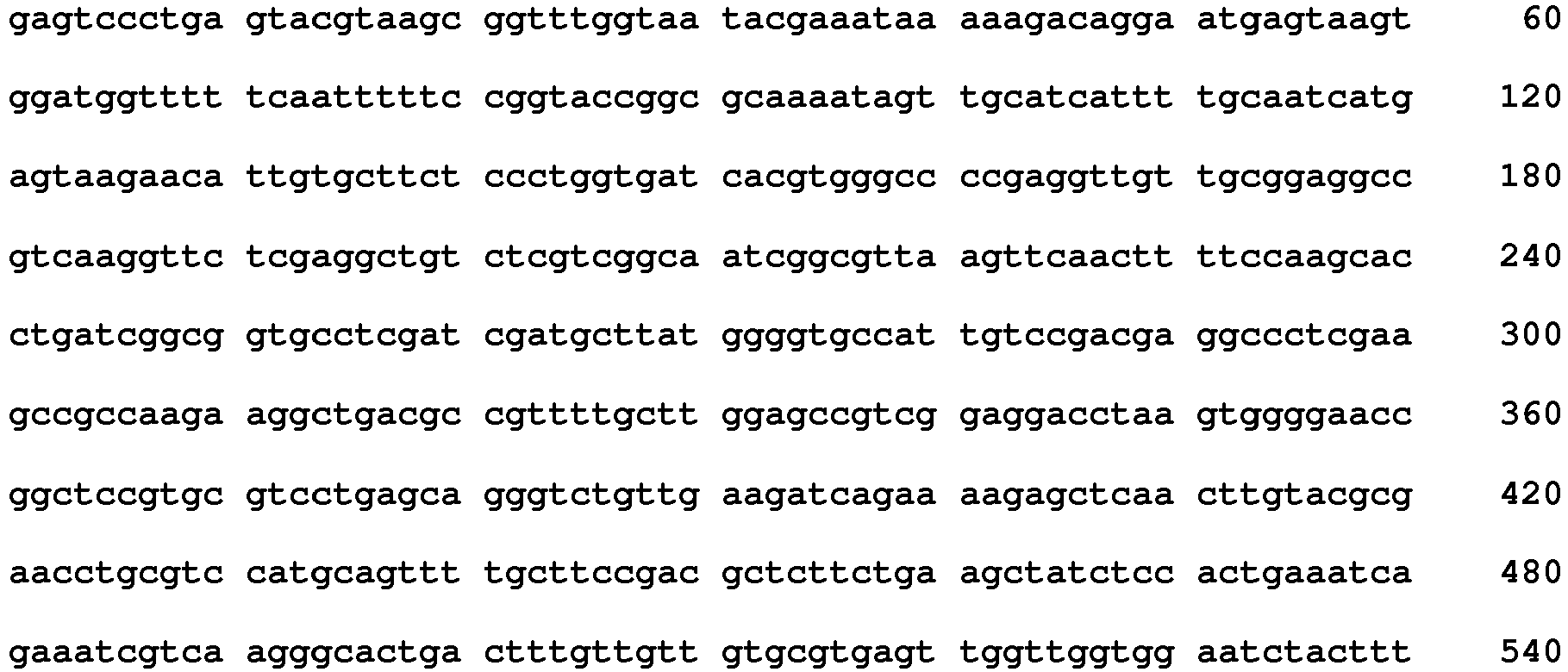

- <210> 4
<211> 290
<212> DNA
<213> Pichia angusta - <400> 4

- <210> 5
<211> 255
<212> DNA
<213> Saccharomyces cerevisiae - <400> 5
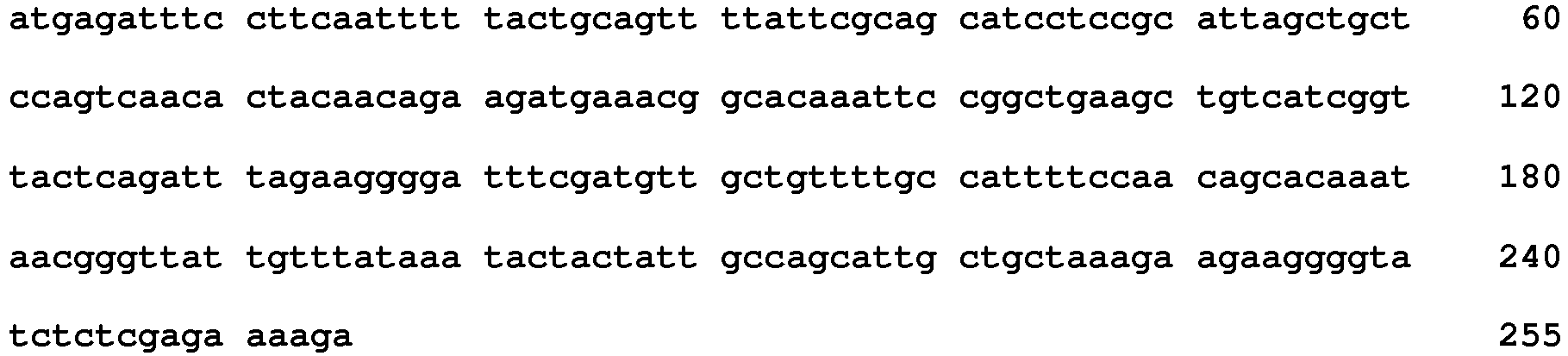
- <210> 6
<211> 645
<212> DNA
<213> Homo sapiens - <400> 6
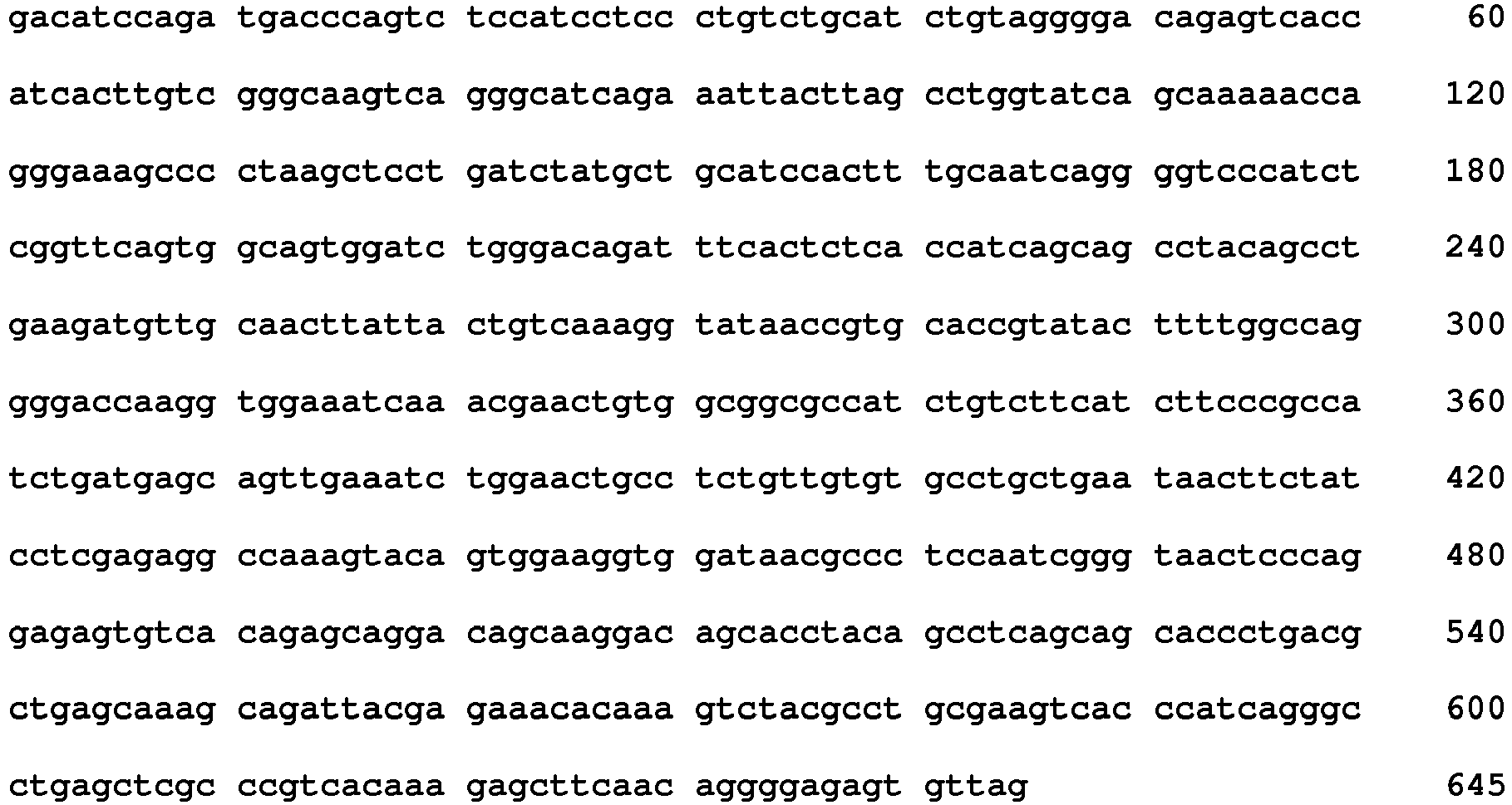
- <210> 7
<211> 1356
<212> DNA
<213> Homo sapiens - <400> 7
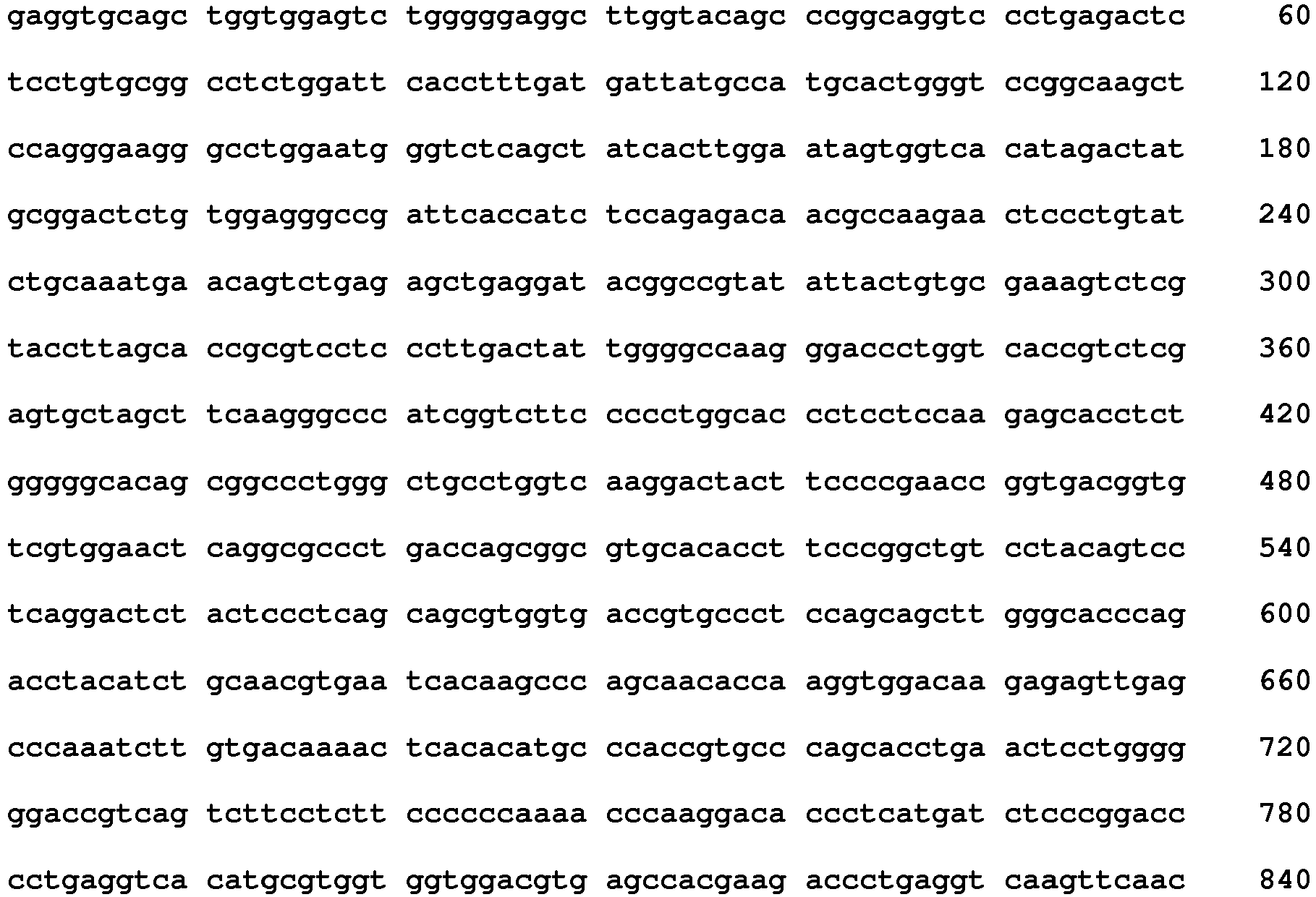
- <210> 8
<211> 795
<212> DNA
<213> Artificial - <220>
<223> artificial - <400> 8

- <210> 9
<211> 3629
<212> DNA
<213> Pichia angusta - <400> 9


- <210> 10
<211> 4539
<212> DNA
<213> Pichia angusta - <400> 10

- <210> 11
<211> 4185
<212> DNA
<213> Pichia angusta - <400> 11


- <210> 12
<211> 1572
<212> DNA
<213> Pichia angusta - <400> 12


- <210> 13
<211> 636
<212> DNA
<213> Pichia angusta - <400> 13


- <210> 14
<211> 912
<212> DNA
<213> Pichia angusta - <400> 14

- <210> 15
<211> 1728
<212> DNA
<213> Pichia angusta - <400> 15


- <210> 16
<211> 50
<212> DNA
<213> Artificial - <220>
<223> artificial - <400> 16
aagcttgcgg ccgcggatcc actagtcaat tgagatcttc tagagaattc 50 - <210> 17
<211> 30
<212> DNA
<213> Artificial - <220>
<223> artificial - <400> 17
ataaaagctt gagtccctga gtacgtaagc 30 - <210> 18
<211> 30
<212> DNA
<213> Artificial - <220>
<223> artificial - <400> 18
tataaagctt gttgacatgg aaaagctaaa 30 - <210> 19
<211> 30
<212> DNA
<213> Artificial - <220>
<223> artificial - <400> 19
ataaggatcc tcgacgcgga gaacgatctc 30 - <210> 20
<211> 30
<212> DNA
<213> Artificial - <220>
<223> artificial - <400> 20
tataggatcc ttgtttttgt actttagatt 30 - <210> 21
<211> 30
<212> DNA
<213> Artificial - <220>
<223> artificial - <400> 21
ataacaattg tcgacgcgga gaacgatctc 30 - <210> 22
<211> 30
<212> DNA
<213> Artificial - <220>
<223> artificial - <400> 22
tatacaattg ttgtttttgt actttagatt 30 - <210> 23
<211> 30
<212> DNA
<213> Artificial - <220>
<223> artificial - <400> 23
ataatctaga gagacgtgga aggacatacc 30 - <210> 24
<211> 30
<212> DNA
<213> Artificial - <220>
<223> artificial - <400> 24
tatatctaga cagtccggaa gcgacttgag 30 - <210> 25
<211> 30
<212> DNA
<213> Artificial - <220>
<223> artificial - <400> 25
ataaactagt atgagatttc cttcaatttt 30 - <210> 26
<211> 23
<212> DNA
<213> Artificial - <220>
<223> artificial - <400> 26
tcttttctcg agagataccc ctt 23 - <210> 27
<211> 40
<212> DNA
<213> Artificial - <220>
<223> artificial - <400> 27
gggtatctct cgagaaaaga gacatccaga tgacccagtc 40 - <210> 28
<211> 30
<212> DNA
<213> Artificial - <220>
<223> artificial - <400> 28
tataactagt ctaacactct cccctgttga 30 - <210> 29
<211> 30
<212> DNA
<213> Artificial - <220>
<223> artificial - <400> 29
ataaagatct atgagatttc cttcaatttt 30 - <210> 30
<211> 40
<212> DNA
<213> Artificial - <220>
<223> artificial - <400> 30
gggtatctct cgagaaaaga gaggtgcagc tggtggagtc 40 - <210> 31
<211> 30
<212> DNA
<213> Artificial - <220>
<223> artificial - <400> 31
tataagatct ttaacaagat ttgggctcaa 30 - <210> 32
<211> 30
<212> DNA
<213> Artificial - <220>
<223> artificial - <400> 32
ataaactagt tttcacaacg ccttttctgt 30 - <210> 33
<211> 30
<212> DNA
<213> Artificial - <220>
<223> artificial - <400> 33
tataactagt ttcaccagcc gcaagatgat 30 - <210> 34
<211> 30
<212> DNA
<213> Artificial - <220>
<223> artificial - <400> 34
ataaaagctt gctatacaga gctttatatc 30 - <210> 35
<211> 40
<212> DNA
<213> Artificial - <220>
<223> artificial - <400> 35
aatccatctt gttcaatcat atggtttcta tattatcttt 40 - <210> 36
<211> 20
<212> DNA
<213> Artificial - <220>
<223> artificial - <400> 36
atgattgaac aagatggatt 20 - <210> 37
<211> 30
<212> DNA
<213> Artificial - <220>
<223> artificial - <400> 37
tataaagctt tcagaagaac tcgtcaagaa 30 - <210> 38
<211> 30
<212> DNA
<213> Artificial - <220>
<223> artificial - <400> 38
ataaactagt gtttggaggg aatagccacg 30 - <210> 39
<211> 30
<212> DNA
<213> Artificial - <220>
<223> artificial - <400> 39
tataactagt ttcacgtcga acagcgactc 30 - <210> 40
<211> 30
<212> DNA
<213> Artificial - <220>
<223> artificial - <400> 40
ataatgtaca gctatacaga gctttatatc 30 - <210> 41
<211> 30
<212> DNA
<213> Artificial - <220>
<223> artifcial - <400> 41
tatatgtaca tcagaagaac tcgtcaagaa 30 - <210> 42
<211> 30
<212> DNA
<213> Artificial - <220>
<223> artificial - <400> 42
ataaactagt tcaagcctgt gtatctgcca 30 - <210> 43
<211> 30
<212> DNA
<213> Artificial - <220>
<223> artificial - <400> 43
tataactagt cagactagaa ccgacggcca 30 - <210> 44
<211> 30
<212> DNA
<213> Artificial - <220>
<223> artificial - <400> 44
ataaactagt cagccgacga ctgcgtcttc 30 - <210> 45
<211> 30
<212> DNA
<213> Artificial - <220>
<223> artificial - <400> 45
tataactagt gtcggcaggt tcatttccca 30 - <210> 46
<211> 30
<212> DNA
<213> Artificial - <220>
<223> artificial - <400> 46
ataaactagt ctgctaggcg aggcagccgt 30 - <210> 47
<211> 30
<212> DNA
<213> Artificial - <220>
<223> artificial - <400> 47
tataactagt tcgtcgacag gggcgttgag 30 - <210> 48
<211> 30
<212> DNA
<213> Artificial - <220>
<223> artificial - <400> 48
ataaactagt atacagcttc gtcttgacgg 30 - <210> 49
<211> 30
<212> DNA
<213> Artificial - <220>
<223> artificial - <400> 49
tataactagt ttcgctctgt ttaaagtacc 30 - <210> 50
<211> 30
<212> DNA
<213> Artificial - <220>
<223> artificial - <400> 50
ataaactagt cgccgtcgct gcttatcttg 30 - <210> 51
<211> 30
<212> DNA
<213> Artificial - <220>
<223> artificial - <400> 51
tataactagt agtatgtgtg ttccgccaat 30 - <210> 52
<211> 866
<212> DNA
<213> Artificial - <220>
<223> artificial - <400> 52

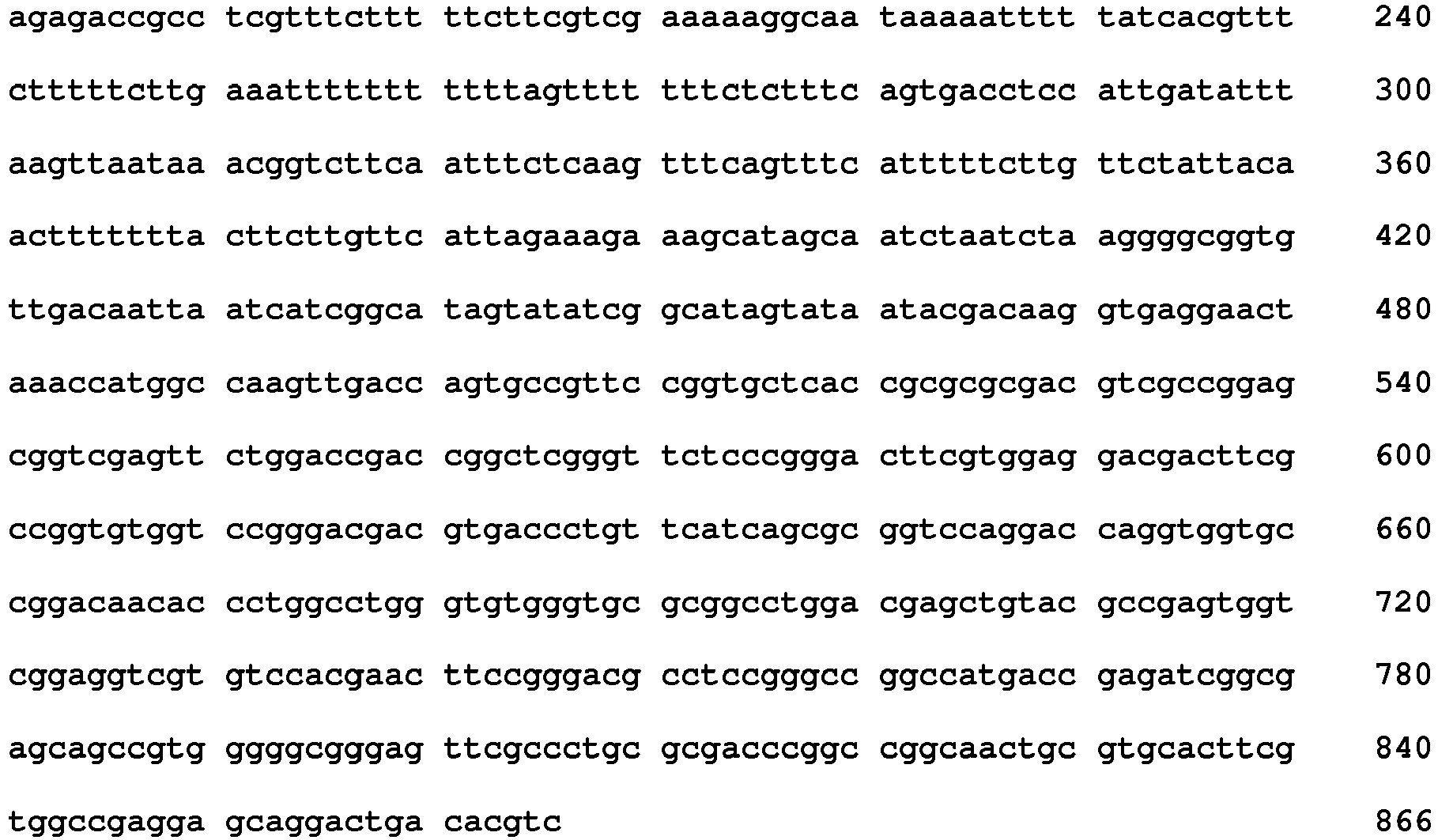
- <210> 53
<211> 1557
<212> DNA
<213> Pichia angusta - <400> 53
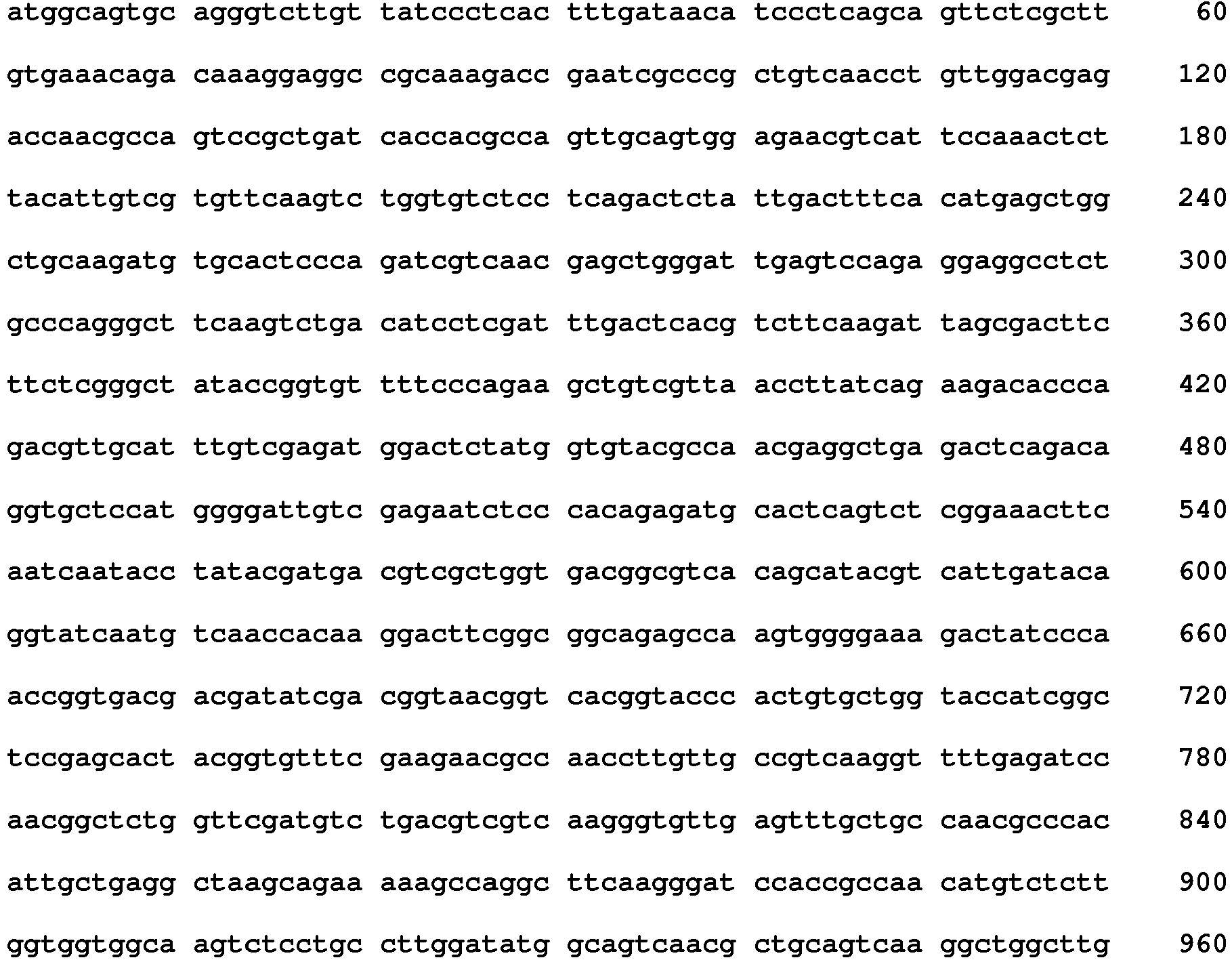
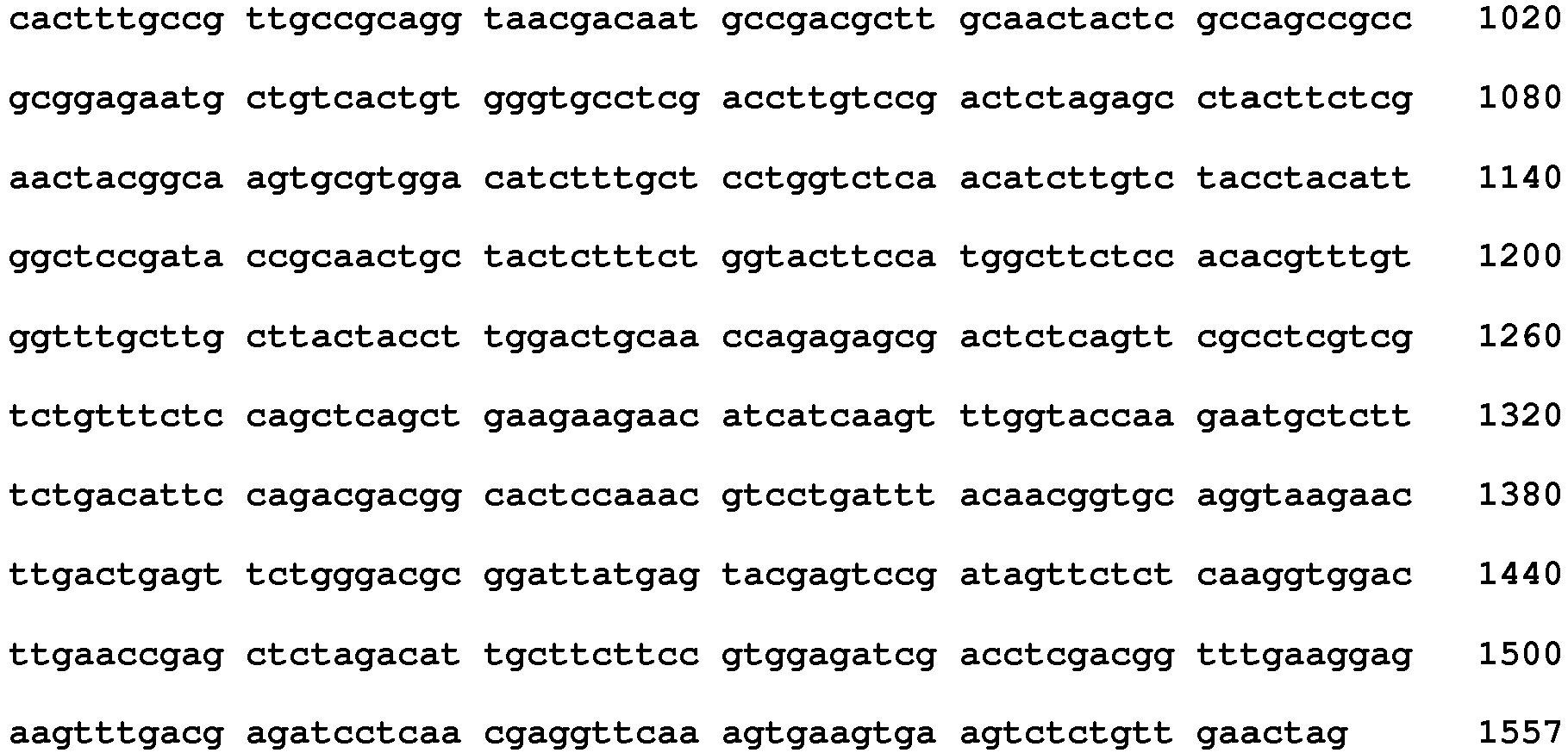
- <210> 54
<211> 30
<212> DNA
<213> Artificial - <220>
<223> artificial - <400> 54
ataaactagt gttctcgctt gtgaaacaga 30 - <210> 55
<211> 30
<212> DNA
<213> Artificial - <220>
<223> artificial - <400> 55
tataactagt gcgtcccaga actcagtcaa 30 - <210> 56
<211> 20
<212> DNA
<213> Artificial - <220>
<223> artificial - <400> 56
gatcccccac acaccatagc 20 - <210> 57
<211> 20
<212> DNA
<213> Artificial - <220>
<223> artificial - <400> 57
gacgtgtcag tcctgctcct 20 - <210> 58
<211> 1242
<212> DNA
<213> Pichia angusta - <400> 58
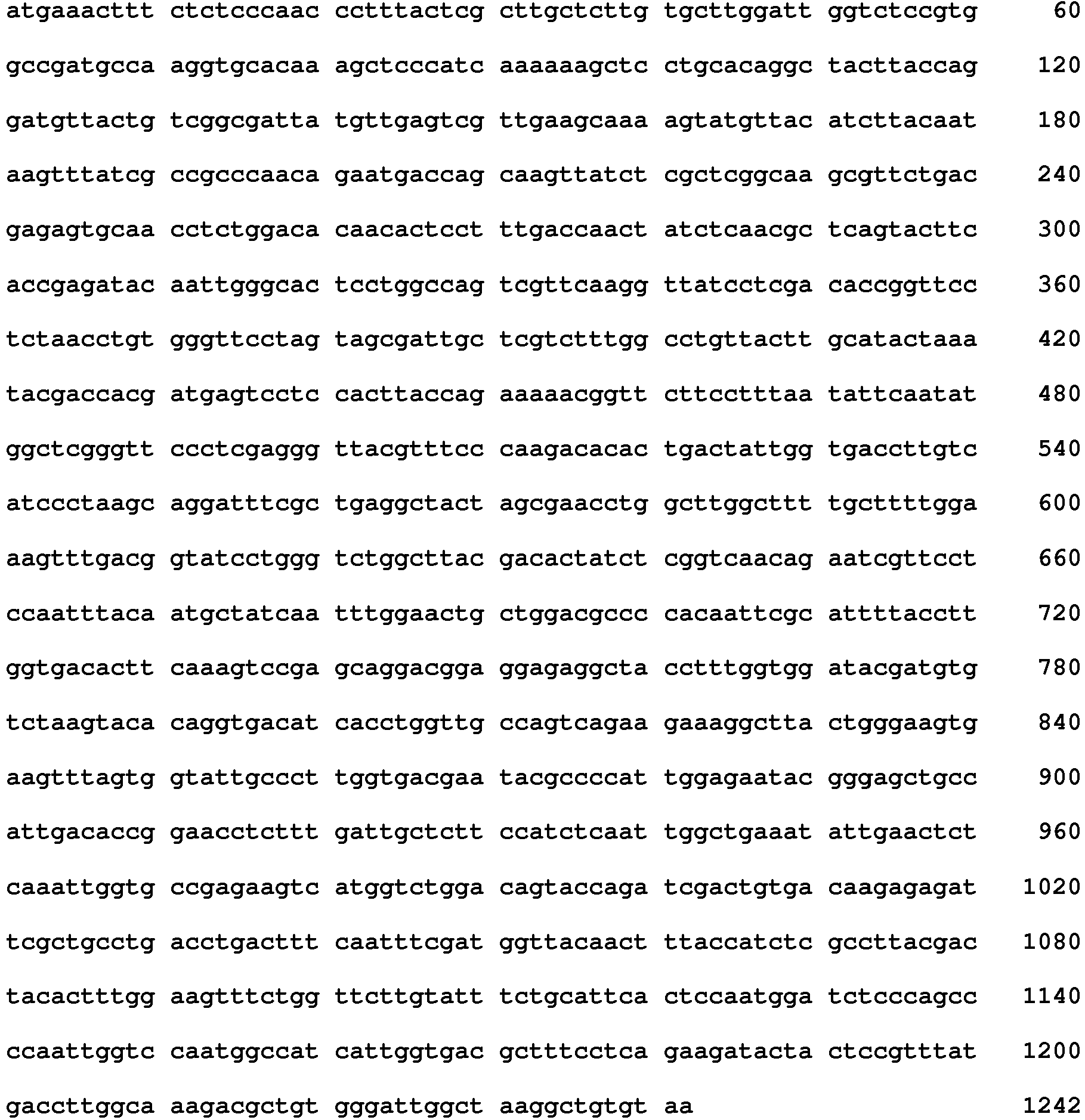
- <210> 59
<211> 30
<212> DNA
<213> Artificial - <220>
<223> artificial - <400> 59
ataaactagt ggtctccgtg gccgatgcca 30 - <210> 60
<211> 30
<212> DNA
<213> Artificial - <220>
<223> artificial - <400> 60
tataactagt tctggtactg tccagaccat 30 - <210> 61
<211> 1731
<212> DNA
<213> Pichia angusta - <400> 61

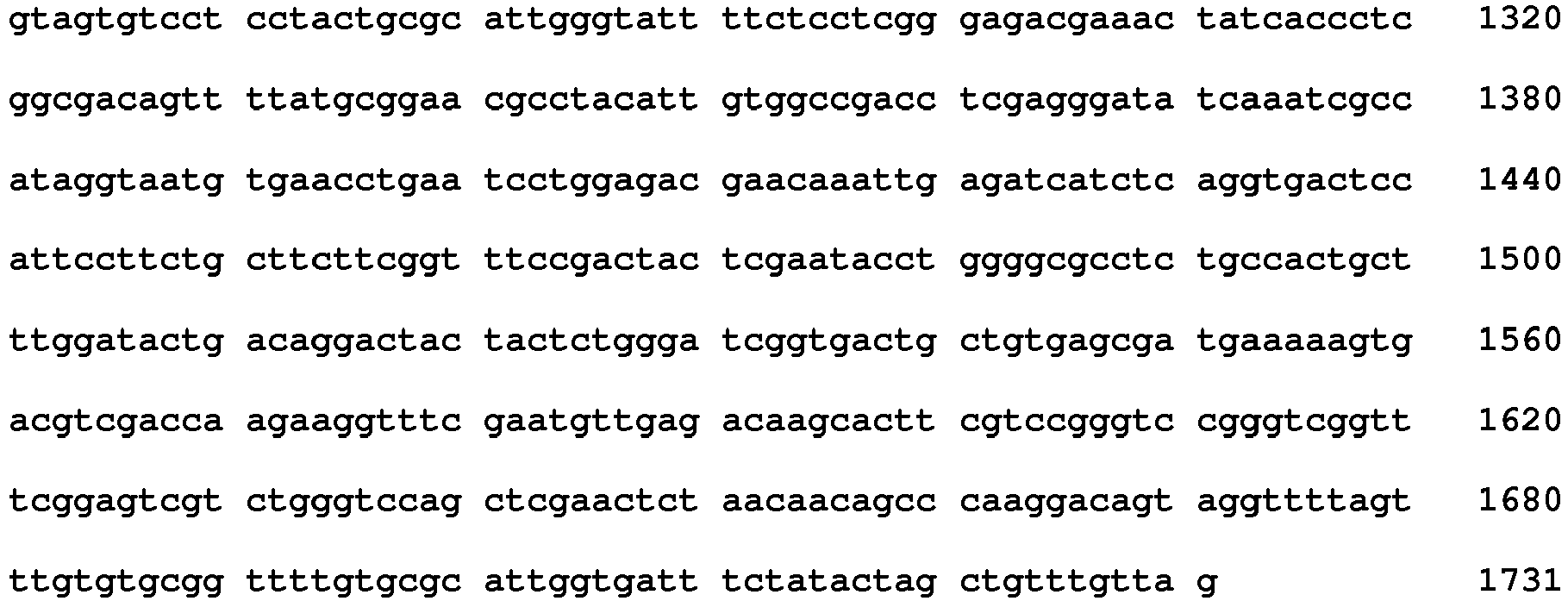
- <210> 62
<211> 30
<212> DNA
<213> Artificial - <220>
<223> artificial - <400> 62
ataaactagt caccgttgac tgctcgcaat 30 - <210> 63
<211> 30
<212> DNA
<213> Artificial - <220>
<223> artificial - <400> 63
tataactagt gcgcacaaaa ccgcacacaa 30
Claims (1)
- A method for producing an antibody or antibody fragment, characterized by comprising using Pichia angusta with disruption of the vacuolar protein sorting gene (VPS gene) and with disruption of the vacuolar protease B gene (PRB1 gene) simultaneously with the VPS gene as a host for secretory production of the antibody or antibody fragment, wherein the VPS gene is at least one gene selected from the group consisting of VPS8, VPS10, and VPS15.
Applications Claiming Priority (2)
| Application Number | Priority Date | Filing Date | Title |
|---|---|---|---|
| JP2011054637 | 2011-03-11 | ||
| PCT/JP2012/055825 WO2012124567A1 (en) | 2011-03-11 | 2012-03-07 | Method for producing heterologous protein using yeast having knocked out vps gene |
Publications (3)
| Publication Number | Publication Date |
|---|---|
| EP2684948A1 EP2684948A1 (en) | 2014-01-15 |
| EP2684948A4 EP2684948A4 (en) | 2014-10-22 |
| EP2684948B1 true EP2684948B1 (en) | 2019-12-04 |
Family
ID=46830640
Family Applications (1)
| Application Number | Title | Priority Date | Filing Date |
|---|---|---|---|
| EP12757313.7A Active EP2684948B1 (en) | 2011-03-11 | 2012-03-07 | Method for producing antibodies or antibody fragments using yeast having knocked out vps gene |
Country Status (4)
| Country | Link |
|---|---|
| US (1) | US9102969B2 (en) |
| EP (1) | EP2684948B1 (en) |
| JP (1) | JP5932766B2 (en) |
| WO (1) | WO2012124567A1 (en) |
Families Citing this family (7)
| Publication number | Priority date | Publication date | Assignee | Title |
|---|---|---|---|---|
| DK3019602T3 (en) | 2013-07-10 | 2018-11-12 | Glykos Finland Oy | MULTIPLE PROTEASE-DEFECTED FILAMENTARY FUNGAL CELLS AND PROCEDURES FOR USE THEREOF |
| US10513724B2 (en) | 2014-07-21 | 2019-12-24 | Glykos Finland Oy | Production of glycoproteins with mammalian-like N-glycans in filamentous fungi |
| CN104212729B (en) * | 2014-09-16 | 2017-03-15 | 天津科技大学 | The structure and its selection of resistance to high sugar Saccharomyces cerevisiae bacterial strain |
| CN108473542B (en) * | 2015-10-26 | 2023-05-09 | 科学与工业研究委员会 | Genetically modified yeast cells and improved method for producing clot-specific streptokinase |
| US10355893B2 (en) | 2017-10-02 | 2019-07-16 | Micron Technology, Inc. | Multiplexing distinct signals on a single pin of a memory device |
| SE2051317A1 (en) * | 2020-11-11 | 2022-05-12 | Nielsen Dina Petranovic | A genetically modified yeast cell |
| CN113862242B (en) * | 2021-10-15 | 2024-06-25 | 江南大学 | Method for weakening vacuole separation and improving yield of Trichoderma reesei cellulase |
Citations (1)
| Publication number | Priority date | Publication date | Assignee | Title |
|---|---|---|---|---|
| WO1994025591A1 (en) * | 1993-04-29 | 1994-11-10 | Unilever N.V. | PRODUCTION OF ANTIBODIES OR (FUNCTIONALIZED) FRAGMENTS THEREOF DERIVED FROM HEAVY CHAIN IMMUNOGLOBULINS OF $i(CAMELIDAE) |
Family Cites Families (7)
| Publication number | Priority date | Publication date | Assignee | Title |
|---|---|---|---|---|
| ATE420198T1 (en) * | 2002-04-26 | 2009-01-15 | Kirin Pharma Kk | METHYLOTROPHIC YEAST THAT PRODUCES A MAMMAL SUGAR CHAIN |
| JP2009060797A (en) * | 2007-09-04 | 2009-03-26 | National Research Inst Of Brewing | Method for selecting high production strains secreting heterologous proteins |
| JP2009082033A (en) | 2007-09-28 | 2009-04-23 | Kaneka Corp | Method for producing completely human antibody |
| JP2009240185A (en) | 2008-03-28 | 2009-10-22 | Toyota Central R&D Labs Inc | Highly productive transformant of exogenous protein and its use |
| JP2010193869A (en) | 2009-01-30 | 2010-09-09 | Toyota Central R&D Labs Inc | Highly productive transformant of exogenous protein and use thereof |
| WO2011053541A1 (en) * | 2009-10-30 | 2011-05-05 | Merck Sharp & Dohme Corp. | Methods for the production of recombinant proteins with improved secretion efficiencies |
| WO2011053545A1 (en) * | 2009-10-30 | 2011-05-05 | Merck Sharp & Dohme Corp. | Granulocyte-colony stimulating factor produced in glycoengineered pichia pastoris |
-
2012
- 2012-03-07 EP EP12757313.7A patent/EP2684948B1/en active Active
- 2012-03-07 JP JP2013504678A patent/JP5932766B2/en active Active
- 2012-03-07 WO PCT/JP2012/055825 patent/WO2012124567A1/en not_active Ceased
- 2012-03-07 US US14/004,223 patent/US9102969B2/en active Active
Patent Citations (1)
| Publication number | Priority date | Publication date | Assignee | Title |
|---|---|---|---|---|
| WO1994025591A1 (en) * | 1993-04-29 | 1994-11-10 | Unilever N.V. | PRODUCTION OF ANTIBODIES OR (FUNCTIONALIZED) FRAGMENTS THEREOF DERIVED FROM HEAVY CHAIN IMMUNOGLOBULINS OF $i(CAMELIDAE) |
Non-Patent Citations (1)
| Title |
|---|
| KOUSUKE KURODA ET AL: "Antibody expression in protease-defficient strains of the methylotrophic yeast Ogataea minuta", FEMS YEAST RES., WILEY-BLACKWELL PUBLISHING LTD, GB, NL, vol. 7, no. 8, 1 December 2007 (2007-12-01), pages 1307 - 1316, XP008127158, ISSN: 1567-1356, [retrieved on 20070823], DOI: 10.1111/J.1567-1364.2007.00291.X * |
Also Published As
| Publication number | Publication date |
|---|---|
| JPWO2012124567A1 (en) | 2014-07-24 |
| JP5932766B2 (en) | 2016-06-08 |
| WO2012124567A1 (en) | 2012-09-20 |
| US9102969B2 (en) | 2015-08-11 |
| EP2684948A1 (en) | 2014-01-15 |
| US20140106404A1 (en) | 2014-04-17 |
| EP2684948A4 (en) | 2014-10-22 |
Similar Documents
| Publication | Publication Date | Title |
|---|---|---|
| EP2684948B1 (en) | Method for producing antibodies or antibody fragments using yeast having knocked out vps gene | |
| EP2669375B1 (en) | Yeast of the genus pichia modified to express high levels of a mpp1 homolog and process for producing protein | |
| CN105229154A (en) | Constitutive promoter | |
| CN105121652A (en) | Temperature shift for high yield expression of polypeptides in yeast and other transformed cells | |
| JP6138788B2 (en) | Multi-copy method for producing multi-subunit proteins such as antibodies in high concentrations and purity in transformed microorganisms such as Pichia pastoris | |
| CN108699151A (en) | The method for being used to prepare immunoglobulin (Ig) list variable domains | |
| EP2990485B1 (en) | Fd chain gene or l chain gene each capable of increasing secretion amount of fab-type antibody | |
| EP2489724A1 (en) | Hansenula polymorpha capable of producing antibody, process for production of antibody utilizing same, and antibody produced from same | |
| US11485979B2 (en) | Cell and method for producing target protein using same | |
| US20190010194A1 (en) | Methanol-utilizing yeast-derived novel protein and method for producing protein of interest using same | |
| JP2016146789A (en) | Novel ogataea yeast and production method of heterologous protein using the same | |
| JP7239205B2 (en) | Novel host cell and method for producing target protein using the same | |
| US11365419B2 (en) | Host cell and method for producing target protein using same | |
| EP3015549B1 (en) | Novel polypeptide, and use thereof | |
| EP3015548B1 (en) | Novel polypeptide, and use thereof | |
| Stasyk et al. | in the Methylotrophic Yeasts | |
| HK40103960A (en) | Carbon-source regulated protein production in a recombinant host cell |
Legal Events
| Date | Code | Title | Description |
|---|---|---|---|
| PUAI | Public reference made under article 153(3) epc to a published international application that has entered the european phase |
Free format text: ORIGINAL CODE: 0009012 |
|
| 17P | Request for examination filed |
Effective date: 20130917 |
|
| AK | Designated contracting states |
Kind code of ref document: A1 Designated state(s): AL AT BE BG CH CY CZ DE DK EE ES FI FR GB GR HR HU IE IS IT LI LT LU LV MC MK MT NL NO PL PT RO RS SE SI SK SM TR |
|
| DAX | Request for extension of the european patent (deleted) | ||
| A4 | Supplementary search report drawn up and despatched |
Effective date: 20140924 |
|
| RIC1 | Information provided on ipc code assigned before grant |
Ipc: C12N 15/09 20060101ALI20140918BHEP Ipc: C12N 1/19 20060101AFI20140918BHEP Ipc: C12P 21/08 20060101ALI20140918BHEP |
|
| STAA | Information on the status of an ep patent application or granted ep patent |
Free format text: STATUS: EXAMINATION IS IN PROGRESS |
|
| 17Q | First examination report despatched |
Effective date: 20180628 |
|
| GRAP | Despatch of communication of intention to grant a patent |
Free format text: ORIGINAL CODE: EPIDOSNIGR1 |
|
| STAA | Information on the status of an ep patent application or granted ep patent |
Free format text: STATUS: GRANT OF PATENT IS INTENDED |
|
| INTG | Intention to grant announced |
Effective date: 20190416 |
|
| GRAJ | Information related to disapproval of communication of intention to grant by the applicant or resumption of examination proceedings by the epo deleted |
Free format text: ORIGINAL CODE: EPIDOSDIGR1 |
|
| STAA | Information on the status of an ep patent application or granted ep patent |
Free format text: STATUS: EXAMINATION IS IN PROGRESS |
|
| GRAP | Despatch of communication of intention to grant a patent |
Free format text: ORIGINAL CODE: EPIDOSNIGR1 |
|
| STAA | Information on the status of an ep patent application or granted ep patent |
Free format text: STATUS: GRANT OF PATENT IS INTENDED |
|
| INTG | Intention to grant announced |
Effective date: 20190725 |
|
| GRAS | Grant fee paid |
Free format text: ORIGINAL CODE: EPIDOSNIGR3 |
|
| GRAA | (expected) grant |
Free format text: ORIGINAL CODE: 0009210 |
|
| STAA | Information on the status of an ep patent application or granted ep patent |
Free format text: STATUS: THE PATENT HAS BEEN GRANTED |
|
| AK | Designated contracting states |
Kind code of ref document: B1 Designated state(s): AL AT BE BG CH CY CZ DE DK EE ES FI FR GB GR HR HU IE IS IT LI LT LU LV MC MK MT NL NO PL PT RO RS SE SI SK SM TR |
|
| REG | Reference to a national code |
Ref country code: GB Ref legal event code: FG4D |
|
| REG | Reference to a national code |
Ref country code: CH Ref legal event code: EP |
|
| REG | Reference to a national code |
Ref country code: AT Ref legal event code: REF Ref document number: 1209425 Country of ref document: AT Kind code of ref document: T Effective date: 20191215 |
|
| REG | Reference to a national code |
Ref country code: DE Ref legal event code: R096 Ref document number: 602012066205 Country of ref document: DE |
|
| REG | Reference to a national code |
Ref country code: IE Ref legal event code: FG4D |
|
| REG | Reference to a national code |
Ref country code: NL Ref legal event code: MP Effective date: 20191204 |
|
| REG | Reference to a national code |
Ref country code: LT Ref legal event code: MG4D |
|
| PG25 | Lapsed in a contracting state [announced via postgrant information from national office to epo] |
Ref country code: ES Free format text: LAPSE BECAUSE OF FAILURE TO SUBMIT A TRANSLATION OF THE DESCRIPTION OR TO PAY THE FEE WITHIN THE PRESCRIBED TIME-LIMIT Effective date: 20191204 Ref country code: SE Free format text: LAPSE BECAUSE OF FAILURE TO SUBMIT A TRANSLATION OF THE DESCRIPTION OR TO PAY THE FEE WITHIN THE PRESCRIBED TIME-LIMIT Effective date: 20191204 Ref country code: NO Free format text: LAPSE BECAUSE OF FAILURE TO SUBMIT A TRANSLATION OF THE DESCRIPTION OR TO PAY THE FEE WITHIN THE PRESCRIBED TIME-LIMIT Effective date: 20200304 Ref country code: BG Free format text: LAPSE BECAUSE OF FAILURE TO SUBMIT A TRANSLATION OF THE DESCRIPTION OR TO PAY THE FEE WITHIN THE PRESCRIBED TIME-LIMIT Effective date: 20200304 Ref country code: FI Free format text: LAPSE BECAUSE OF FAILURE TO SUBMIT A TRANSLATION OF THE DESCRIPTION OR TO PAY THE FEE WITHIN THE PRESCRIBED TIME-LIMIT Effective date: 20191204 Ref country code: LT Free format text: LAPSE BECAUSE OF FAILURE TO SUBMIT A TRANSLATION OF THE DESCRIPTION OR TO PAY THE FEE WITHIN THE PRESCRIBED TIME-LIMIT Effective date: 20191204 Ref country code: LV Free format text: LAPSE BECAUSE OF FAILURE TO SUBMIT A TRANSLATION OF THE DESCRIPTION OR TO PAY THE FEE WITHIN THE PRESCRIBED TIME-LIMIT Effective date: 20191204 Ref country code: GR Free format text: LAPSE BECAUSE OF FAILURE TO SUBMIT A TRANSLATION OF THE DESCRIPTION OR TO PAY THE FEE WITHIN THE PRESCRIBED TIME-LIMIT Effective date: 20200305 |
|
| PG25 | Lapsed in a contracting state [announced via postgrant information from national office to epo] |
Ref country code: RS Free format text: LAPSE BECAUSE OF FAILURE TO SUBMIT A TRANSLATION OF THE DESCRIPTION OR TO PAY THE FEE WITHIN THE PRESCRIBED TIME-LIMIT Effective date: 20191204 Ref country code: HR Free format text: LAPSE BECAUSE OF FAILURE TO SUBMIT A TRANSLATION OF THE DESCRIPTION OR TO PAY THE FEE WITHIN THE PRESCRIBED TIME-LIMIT Effective date: 20191204 |
|
| PG25 | Lapsed in a contracting state [announced via postgrant information from national office to epo] |
Ref country code: AL Free format text: LAPSE BECAUSE OF FAILURE TO SUBMIT A TRANSLATION OF THE DESCRIPTION OR TO PAY THE FEE WITHIN THE PRESCRIBED TIME-LIMIT Effective date: 20191204 |
|
| PG25 | Lapsed in a contracting state [announced via postgrant information from national office to epo] |
Ref country code: RO Free format text: LAPSE BECAUSE OF FAILURE TO SUBMIT A TRANSLATION OF THE DESCRIPTION OR TO PAY THE FEE WITHIN THE PRESCRIBED TIME-LIMIT Effective date: 20191204 Ref country code: CZ Free format text: LAPSE BECAUSE OF FAILURE TO SUBMIT A TRANSLATION OF THE DESCRIPTION OR TO PAY THE FEE WITHIN THE PRESCRIBED TIME-LIMIT Effective date: 20191204 Ref country code: NL Free format text: LAPSE BECAUSE OF FAILURE TO SUBMIT A TRANSLATION OF THE DESCRIPTION OR TO PAY THE FEE WITHIN THE PRESCRIBED TIME-LIMIT Effective date: 20191204 Ref country code: EE Free format text: LAPSE BECAUSE OF FAILURE TO SUBMIT A TRANSLATION OF THE DESCRIPTION OR TO PAY THE FEE WITHIN THE PRESCRIBED TIME-LIMIT Effective date: 20191204 Ref country code: PT Free format text: LAPSE BECAUSE OF FAILURE TO SUBMIT A TRANSLATION OF THE DESCRIPTION OR TO PAY THE FEE WITHIN THE PRESCRIBED TIME-LIMIT Effective date: 20200429 |
|
| PG25 | Lapsed in a contracting state [announced via postgrant information from national office to epo] |
Ref country code: SM Free format text: LAPSE BECAUSE OF FAILURE TO SUBMIT A TRANSLATION OF THE DESCRIPTION OR TO PAY THE FEE WITHIN THE PRESCRIBED TIME-LIMIT Effective date: 20191204 Ref country code: SK Free format text: LAPSE BECAUSE OF FAILURE TO SUBMIT A TRANSLATION OF THE DESCRIPTION OR TO PAY THE FEE WITHIN THE PRESCRIBED TIME-LIMIT Effective date: 20191204 Ref country code: IS Free format text: LAPSE BECAUSE OF FAILURE TO SUBMIT A TRANSLATION OF THE DESCRIPTION OR TO PAY THE FEE WITHIN THE PRESCRIBED TIME-LIMIT Effective date: 20200404 |
|
| REG | Reference to a national code |
Ref country code: DE Ref legal event code: R097 Ref document number: 602012066205 Country of ref document: DE |
|
| REG | Reference to a national code |
Ref country code: AT Ref legal event code: MK05 Ref document number: 1209425 Country of ref document: AT Kind code of ref document: T Effective date: 20191204 |
|
| PLBE | No opposition filed within time limit |
Free format text: ORIGINAL CODE: 0009261 |
|
| STAA | Information on the status of an ep patent application or granted ep patent |
Free format text: STATUS: NO OPPOSITION FILED WITHIN TIME LIMIT |
|
| PG25 | Lapsed in a contracting state [announced via postgrant information from national office to epo] |
Ref country code: DK Free format text: LAPSE BECAUSE OF FAILURE TO SUBMIT A TRANSLATION OF THE DESCRIPTION OR TO PAY THE FEE WITHIN THE PRESCRIBED TIME-LIMIT Effective date: 20191204 Ref country code: MC Free format text: LAPSE BECAUSE OF FAILURE TO SUBMIT A TRANSLATION OF THE DESCRIPTION OR TO PAY THE FEE WITHIN THE PRESCRIBED TIME-LIMIT Effective date: 20191204 |
|
| REG | Reference to a national code |
Ref country code: CH Ref legal event code: PL |
|
| 26N | No opposition filed |
Effective date: 20200907 |
|
| PG25 | Lapsed in a contracting state [announced via postgrant information from national office to epo] |
Ref country code: SI Free format text: LAPSE BECAUSE OF FAILURE TO SUBMIT A TRANSLATION OF THE DESCRIPTION OR TO PAY THE FEE WITHIN THE PRESCRIBED TIME-LIMIT Effective date: 20191204 Ref country code: PL Free format text: LAPSE BECAUSE OF FAILURE TO SUBMIT A TRANSLATION OF THE DESCRIPTION OR TO PAY THE FEE WITHIN THE PRESCRIBED TIME-LIMIT Effective date: 20191204 Ref country code: AT Free format text: LAPSE BECAUSE OF FAILURE TO SUBMIT A TRANSLATION OF THE DESCRIPTION OR TO PAY THE FEE WITHIN THE PRESCRIBED TIME-LIMIT Effective date: 20191204 |
|
| REG | Reference to a national code |
Ref country code: BE Ref legal event code: MM Effective date: 20200331 |
|
| PG25 | Lapsed in a contracting state [announced via postgrant information from national office to epo] |
Ref country code: LU Free format text: LAPSE BECAUSE OF NON-PAYMENT OF DUE FEES Effective date: 20200307 |
|
| PG25 | Lapsed in a contracting state [announced via postgrant information from national office to epo] |
Ref country code: IE Free format text: LAPSE BECAUSE OF NON-PAYMENT OF DUE FEES Effective date: 20200307 Ref country code: LI Free format text: LAPSE BECAUSE OF NON-PAYMENT OF DUE FEES Effective date: 20200331 Ref country code: CH Free format text: LAPSE BECAUSE OF NON-PAYMENT OF DUE FEES Effective date: 20200331 Ref country code: IT Free format text: LAPSE BECAUSE OF FAILURE TO SUBMIT A TRANSLATION OF THE DESCRIPTION OR TO PAY THE FEE WITHIN THE PRESCRIBED TIME-LIMIT Effective date: 20191204 |
|
| PG25 | Lapsed in a contracting state [announced via postgrant information from national office to epo] |
Ref country code: BE Free format text: LAPSE BECAUSE OF NON-PAYMENT OF DUE FEES Effective date: 20200331 |
|
| PG25 | Lapsed in a contracting state [announced via postgrant information from national office to epo] |
Ref country code: TR Free format text: LAPSE BECAUSE OF FAILURE TO SUBMIT A TRANSLATION OF THE DESCRIPTION OR TO PAY THE FEE WITHIN THE PRESCRIBED TIME-LIMIT Effective date: 20191204 Ref country code: MT Free format text: LAPSE BECAUSE OF FAILURE TO SUBMIT A TRANSLATION OF THE DESCRIPTION OR TO PAY THE FEE WITHIN THE PRESCRIBED TIME-LIMIT Effective date: 20191204 Ref country code: CY Free format text: LAPSE BECAUSE OF FAILURE TO SUBMIT A TRANSLATION OF THE DESCRIPTION OR TO PAY THE FEE WITHIN THE PRESCRIBED TIME-LIMIT Effective date: 20191204 |
|
| PG25 | Lapsed in a contracting state [announced via postgrant information from national office to epo] |
Ref country code: MK Free format text: LAPSE BECAUSE OF FAILURE TO SUBMIT A TRANSLATION OF THE DESCRIPTION OR TO PAY THE FEE WITHIN THE PRESCRIBED TIME-LIMIT Effective date: 20191204 |
|
| PGFP | Annual fee paid to national office [announced via postgrant information from national office to epo] |
Ref country code: DE Payment date: 20250128 Year of fee payment: 14 |
|
| PGFP | Annual fee paid to national office [announced via postgrant information from national office to epo] |
Ref country code: FR Payment date: 20250210 Year of fee payment: 14 |
|
| PGFP | Annual fee paid to national office [announced via postgrant information from national office to epo] |
Ref country code: GB Payment date: 20250130 Year of fee payment: 14 |