EP2661508B1 - Method for genotyping and quantifying a high-risk human papillomavirus - Google Patents
Method for genotyping and quantifying a high-risk human papillomavirus Download PDFInfo
- Publication number
- EP2661508B1 EP2661508B1 EP12704144.0A EP12704144A EP2661508B1 EP 2661508 B1 EP2661508 B1 EP 2661508B1 EP 12704144 A EP12704144 A EP 12704144A EP 2661508 B1 EP2661508 B1 EP 2661508B1
- Authority
- EP
- European Patent Office
- Prior art keywords
- hpv
- primer
- seq
- sequence
- genome
- Prior art date
- Legal status (The legal status is an assumption and is not a legal conclusion. Google has not performed a legal analysis and makes no representation as to the accuracy of the status listed.)
- Active
Links
- 238000000034 method Methods 0.000 title claims description 44
- 238000003205 genotyping method Methods 0.000 title claims description 12
- 241000701806 Human papillomavirus Species 0.000 title description 205
- 239000000523 sample Substances 0.000 claims description 145
- 150000007523 nucleic acids Chemical class 0.000 claims description 50
- 108020004707 nucleic acids Proteins 0.000 claims description 46
- 102000039446 nucleic acids Human genes 0.000 claims description 46
- 238000006243 chemical reaction Methods 0.000 claims description 20
- 102100021519 Hemoglobin subunit beta Human genes 0.000 claims description 16
- 108091005904 Hemoglobin subunit beta Proteins 0.000 claims description 16
- 108020004711 Nucleic Acid Probes Proteins 0.000 claims description 16
- 239000002853 nucleic acid probe Substances 0.000 claims description 16
- 230000003321 amplification Effects 0.000 claims description 9
- 238000003199 nucleic acid amplification method Methods 0.000 claims description 9
- FWMNVWWHGCHHJJ-SKKKGAJSSA-N 4-amino-1-[(2r)-6-amino-2-[[(2r)-2-[[(2r)-2-[[(2r)-2-amino-3-phenylpropanoyl]amino]-3-phenylpropanoyl]amino]-4-methylpentanoyl]amino]hexanoyl]piperidine-4-carboxylic acid Chemical compound C([C@H](C(=O)N[C@H](CC(C)C)C(=O)N[C@H](CCCCN)C(=O)N1CCC(N)(CC1)C(O)=O)NC(=O)[C@H](N)CC=1C=CC=CC=1)C1=CC=CC=C1 FWMNVWWHGCHHJJ-SKKKGAJSSA-N 0.000 claims description 4
- 108091028043 Nucleic acid sequence Proteins 0.000 claims description 4
- 238000009396 hybridization Methods 0.000 claims description 4
- 208000015181 infectious disease Diseases 0.000 claims description 3
- 238000007403 mPCR Methods 0.000 claims description 3
- 108091093088 Amplicon Proteins 0.000 claims description 2
- 239000002773 nucleotide Substances 0.000 description 64
- 125000003729 nucleotide group Chemical group 0.000 description 64
- 230000000295 complement effect Effects 0.000 description 53
- 108020004414 DNA Proteins 0.000 description 33
- 238000001514 detection method Methods 0.000 description 26
- 238000003556 assay Methods 0.000 description 23
- 238000007837 multiplex assay Methods 0.000 description 20
- 230000002441 reversible effect Effects 0.000 description 16
- 239000013612 plasmid Substances 0.000 description 14
- 208000022361 Human papillomavirus infectious disease Diseases 0.000 description 13
- 230000001351 cycling effect Effects 0.000 description 12
- 238000012360 testing method Methods 0.000 description 11
- 108091032973 (ribonucleotides)n+m Proteins 0.000 description 10
- 239000000203 mixture Substances 0.000 description 10
- 101000807948 Human papillomavirus 45 Protein E6 Proteins 0.000 description 8
- 101000622270 Human papillomavirus 45 Protein E7 Proteins 0.000 description 8
- 230000003612 virological effect Effects 0.000 description 7
- 230000035945 sensitivity Effects 0.000 description 6
- 208000009608 Papillomavirus Infections Diseases 0.000 description 5
- 239000007790 solid phase Substances 0.000 description 5
- 206010008342 Cervix carcinoma Diseases 0.000 description 4
- 101100540311 Human papillomavirus type 16 E6 gene Proteins 0.000 description 4
- 101000767631 Human papillomavirus type 16 Protein E7 Proteins 0.000 description 4
- 101000954519 Human papillomavirus type 18 Protein E6 Proteins 0.000 description 4
- 208000006105 Uterine Cervical Neoplasms Diseases 0.000 description 4
- 238000004458 analytical method Methods 0.000 description 4
- 201000010881 cervical cancer Diseases 0.000 description 4
- 238000012216 screening Methods 0.000 description 4
- 238000011895 specific detection Methods 0.000 description 4
- 230000003172 anti-dna Effects 0.000 description 3
- 239000003153 chemical reaction reagent Substances 0.000 description 3
- 238000002360 preparation method Methods 0.000 description 3
- 238000011002 quantification Methods 0.000 description 3
- 238000003753 real-time PCR Methods 0.000 description 3
- YBJHBAHKTGYVGT-ZKWXMUAHSA-N (+)-Biotin Chemical compound N1C(=O)N[C@@H]2[C@H](CCCCC(=O)O)SC[C@@H]21 YBJHBAHKTGYVGT-ZKWXMUAHSA-N 0.000 description 2
- 206010061818 Disease progression Diseases 0.000 description 2
- 241000341655 Human papillomavirus type 16 Species 0.000 description 2
- 206010028980 Neoplasm Diseases 0.000 description 2
- 201000011510 cancer Diseases 0.000 description 2
- 230000000711 cancerogenic effect Effects 0.000 description 2
- 231100000315 carcinogenic Toxicity 0.000 description 2
- 230000001419 dependent effect Effects 0.000 description 2
- 230000005750 disease progression Effects 0.000 description 2
- 230000010354 integration Effects 0.000 description 2
- 208000024312 invasive carcinoma Diseases 0.000 description 2
- 239000003550 marker Substances 0.000 description 2
- 108020004999 messenger RNA Proteins 0.000 description 2
- 238000012544 monitoring process Methods 0.000 description 2
- 238000000746 purification Methods 0.000 description 2
- 238000012163 sequencing technique Methods 0.000 description 2
- 239000000126 substance Substances 0.000 description 2
- 230000001629 suppression Effects 0.000 description 2
- 230000008685 targeting Effects 0.000 description 2
- XLYOFNOQVPJJNP-UHFFFAOYSA-N water Substances O XLYOFNOQVPJJNP-UHFFFAOYSA-N 0.000 description 2
- 206010001197 Adenocarcinoma of the cervix Diseases 0.000 description 1
- 208000034246 Adenocarcinoma of the cervix uteri Diseases 0.000 description 1
- 101100098985 Caenorhabditis elegans cct-3 gene Proteins 0.000 description 1
- 238000000018 DNA microarray Methods 0.000 description 1
- 206010061819 Disease recurrence Diseases 0.000 description 1
- 206010058314 Dysplasia Diseases 0.000 description 1
- 108010067770 Endopeptidase K Proteins 0.000 description 1
- 108060002716 Exonuclease Proteins 0.000 description 1
- 108010043121 Green Fluorescent Proteins Proteins 0.000 description 1
- 241000341657 Human papillomavirus type 18 Species 0.000 description 1
- 241000701790 Human papillomavirus type 45 Species 0.000 description 1
- 239000004909 Moisturizer Substances 0.000 description 1
- 241000512624 Morelia <snake> Species 0.000 description 1
- 101100005280 Neurospora crassa (strain ATCC 24698 / 74-OR23-1A / CBS 708.71 / DSM 1257 / FGSC 987) cat-3 gene Proteins 0.000 description 1
- 108700026244 Open Reading Frames Proteins 0.000 description 1
- 238000002944 PCR assay Methods 0.000 description 1
- 208000037581 Persistent Infection Diseases 0.000 description 1
- 238000011529 RT qPCR Methods 0.000 description 1
- VYPSYNLAJGMNEJ-UHFFFAOYSA-N Silicium dioxide Chemical compound O=[Si]=O VYPSYNLAJGMNEJ-UHFFFAOYSA-N 0.000 description 1
- 108020004459 Small interfering RNA Proteins 0.000 description 1
- 108010006785 Taq Polymerase Proteins 0.000 description 1
- 239000007983 Tris buffer Substances 0.000 description 1
- 201000003761 Vaginal carcinoma Diseases 0.000 description 1
- 241000700605 Viruses Species 0.000 description 1
- 206010047741 Vulval cancer Diseases 0.000 description 1
- 238000010521 absorption reaction Methods 0.000 description 1
- 230000003444 anaesthetic effect Effects 0.000 description 1
- 238000000137 annealing Methods 0.000 description 1
- 230000000843 anti-fungal effect Effects 0.000 description 1
- 239000011324 bead Substances 0.000 description 1
- 230000004791 biological behavior Effects 0.000 description 1
- 229960002685 biotin Drugs 0.000 description 1
- 235000020958 biotin Nutrition 0.000 description 1
- 239000011616 biotin Substances 0.000 description 1
- 239000008280 blood Substances 0.000 description 1
- 210000004369 blood Anatomy 0.000 description 1
- 239000000872 buffer Substances 0.000 description 1
- 201000006662 cervical adenocarcinoma Diseases 0.000 description 1
- 208000019065 cervical carcinoma Diseases 0.000 description 1
- 239000003433 contraceptive agent Substances 0.000 description 1
- 230000002254 contraceptive effect Effects 0.000 description 1
- 230000002596 correlated effect Effects 0.000 description 1
- 230000000875 corresponding effect Effects 0.000 description 1
- 239000006071 cream Substances 0.000 description 1
- 230000009260 cross reactivity Effects 0.000 description 1
- 230000002559 cytogenic effect Effects 0.000 description 1
- 230000002380 cytological effect Effects 0.000 description 1
- 230000003111 delayed effect Effects 0.000 description 1
- 238000012217 deletion Methods 0.000 description 1
- 230000037430 deletion Effects 0.000 description 1
- 238000004925 denaturation Methods 0.000 description 1
- 230000036425 denaturation Effects 0.000 description 1
- 238000013461 design Methods 0.000 description 1
- 239000012470 diluted sample Substances 0.000 description 1
- 238000010790 dilution Methods 0.000 description 1
- 239000012895 dilution Substances 0.000 description 1
- 201000010099 disease Diseases 0.000 description 1
- 208000037265 diseases, disorders, signs and symptoms Diseases 0.000 description 1
- 230000000694 effects Effects 0.000 description 1
- 238000010828 elution Methods 0.000 description 1
- 102000013165 exonuclease Human genes 0.000 description 1
- 238000000605 extraction Methods 0.000 description 1
- 210000004392 genitalia Anatomy 0.000 description 1
- 238000011534 incubation Methods 0.000 description 1
- 230000005764 inhibitory process Effects 0.000 description 1
- 238000013101 initial test Methods 0.000 description 1
- 230000002452 interceptive effect Effects 0.000 description 1
- 238000002955 isolation Methods 0.000 description 1
- 235000015110 jellies Nutrition 0.000 description 1
- 239000008274 jelly Substances 0.000 description 1
- 239000007788 liquid Substances 0.000 description 1
- 239000000314 lubricant Substances 0.000 description 1
- 239000000463 material Substances 0.000 description 1
- 230000011987 methylation Effects 0.000 description 1
- 238000007069 methylation reaction Methods 0.000 description 1
- 238000002493 microarray Methods 0.000 description 1
- 230000001333 moisturizer Effects 0.000 description 1
- 210000004877 mucosa Anatomy 0.000 description 1
- 231100000219 mutagenic Toxicity 0.000 description 1
- 230000003505 mutagenic effect Effects 0.000 description 1
- 230000035772 mutation Effects 0.000 description 1
- 238000006386 neutralization reaction Methods 0.000 description 1
- 231100000590 oncogenic Toxicity 0.000 description 1
- 230000002246 oncogenic effect Effects 0.000 description 1
- 229960002566 papillomavirus vaccine Drugs 0.000 description 1
- 244000052769 pathogen Species 0.000 description 1
- 108090000623 proteins and genes Proteins 0.000 description 1
- 239000012521 purified sample Substances 0.000 description 1
- 230000000171 quenching effect Effects 0.000 description 1
- 230000002285 radioactive effect Effects 0.000 description 1
- 230000003362 replicative effect Effects 0.000 description 1
- 239000012898 sample dilution Substances 0.000 description 1
- 239000000741 silica gel Substances 0.000 description 1
- 229910002027 silica gel Inorganic materials 0.000 description 1
- 239000000934 spermatocidal agent Substances 0.000 description 1
- 239000007921 spray Substances 0.000 description 1
- 239000006163 transport media Substances 0.000 description 1
- LENZDBCJOHFCAS-UHFFFAOYSA-N tris Chemical compound OCC(N)(CO)CO LENZDBCJOHFCAS-UHFFFAOYSA-N 0.000 description 1
- 238000012795 verification Methods 0.000 description 1
- 230000008957 viral persistence Effects 0.000 description 1
- 201000004916 vulva carcinoma Diseases 0.000 description 1
- 208000013013 vulvar carcinoma Diseases 0.000 description 1
Images


Classifications
-
- C—CHEMISTRY; METALLURGY
- C12—BIOCHEMISTRY; BEER; SPIRITS; WINE; VINEGAR; MICROBIOLOGY; ENZYMOLOGY; MUTATION OR GENETIC ENGINEERING
- C12Q—MEASURING OR TESTING PROCESSES INVOLVING ENZYMES, NUCLEIC ACIDS OR MICROORGANISMS; COMPOSITIONS OR TEST PAPERS THEREFOR; PROCESSES OF PREPARING SUCH COMPOSITIONS; CONDITION-RESPONSIVE CONTROL IN MICROBIOLOGICAL OR ENZYMOLOGICAL PROCESSES
- C12Q1/00—Measuring or testing processes involving enzymes, nucleic acids or microorganisms; Compositions therefor; Processes of preparing such compositions
- C12Q1/70—Measuring or testing processes involving enzymes, nucleic acids or microorganisms; Compositions therefor; Processes of preparing such compositions involving virus or bacteriophage
- C12Q1/701—Specific hybridization probes
- C12Q1/708—Specific hybridization probes for papilloma
-
- C—CHEMISTRY; METALLURGY
- C12—BIOCHEMISTRY; BEER; SPIRITS; WINE; VINEGAR; MICROBIOLOGY; ENZYMOLOGY; MUTATION OR GENETIC ENGINEERING
- C12Q—MEASURING OR TESTING PROCESSES INVOLVING ENZYMES, NUCLEIC ACIDS OR MICROORGANISMS; COMPOSITIONS OR TEST PAPERS THEREFOR; PROCESSES OF PREPARING SUCH COMPOSITIONS; CONDITION-RESPONSIVE CONTROL IN MICROBIOLOGICAL OR ENZYMOLOGICAL PROCESSES
- C12Q1/00—Measuring or testing processes involving enzymes, nucleic acids or microorganisms; Compositions therefor; Processes of preparing such compositions
- C12Q1/68—Measuring or testing processes involving enzymes, nucleic acids or microorganisms; Compositions therefor; Processes of preparing such compositions involving nucleic acids
- C12Q1/6876—Nucleic acid products used in the analysis of nucleic acids, e.g. primers or probes
- C12Q1/6883—Nucleic acid products used in the analysis of nucleic acids, e.g. primers or probes for diseases caused by alterations of genetic material
- C12Q1/6886—Nucleic acid products used in the analysis of nucleic acids, e.g. primers or probes for diseases caused by alterations of genetic material for cancer
-
- C—CHEMISTRY; METALLURGY
- C12—BIOCHEMISTRY; BEER; SPIRITS; WINE; VINEGAR; MICROBIOLOGY; ENZYMOLOGY; MUTATION OR GENETIC ENGINEERING
- C12Q—MEASURING OR TESTING PROCESSES INVOLVING ENZYMES, NUCLEIC ACIDS OR MICROORGANISMS; COMPOSITIONS OR TEST PAPERS THEREFOR; PROCESSES OF PREPARING SUCH COMPOSITIONS; CONDITION-RESPONSIVE CONTROL IN MICROBIOLOGICAL OR ENZYMOLOGICAL PROCESSES
- C12Q2600/00—Oligonucleotides characterized by their use
- C12Q2600/16—Primer sets for multiplex assays
Definitions
- the present invention relates to the detection, genotyping, and quantification of a high-risk human papillomavirus in a sample.
- HR-HPV human papillomavirus
- HPV types 16 and 18 account for 70 % of all cervical cancers, are the most prevalent carcinogenic HPV types, and are targeted by the new HPV vaccines.
- WO 2009/057993 A1 relates to the detection of HPV in cervical cancers. It describes a method wherein consensus primers are used.
- Clad et al. (Journal of Clinical Microbiology 2011, 49:1071 ) discuss the performance of the Aptima high-risk HPV mRNA assay in comparison with Hybrid Capture 2 and Cytology.
- Li et al. (Cancer Genetics and Cytogenetics 2008, 182:12 ) describe the detection of HPV genotypes with a liquid bead microarray.
- Gheit et al. Journal of Clinical Microbiology 2006, 44:2025 ) describe an assay combining multiplex PCR and DNA microarray primer extension to detect high-risk mucosal HPV types.
- HR-HPV screening methods do not genotype for individual HPV types, but rather detect an entire group of HR-HPV.
- Some PCR-based assays do exist for genotyping high risk HPV types, based on amplifying a portion of the L1 region various HR-HPV genomes.
- tests targeting the L1 region are prone to false negative results because part of the L1 open reading frame is lost in a low percentage of integration events into human genome.
- use of an L1-based HR-HPV screening program may result in the delayed monitoring and treatment of potential high risk HPV infections. Accordingly, a need exists for materials and methods for accurately genotype and/or quantifying a HR-HPV infection based on a region of the HPV genome other than L1 would be a valuable tool.
- the invention can be defined by the appending claims.
- the invention provides for a method of genotyping a high-risk HPV according to claim 1.
- compositions, nucleic acids, assays, kits, and methods described herein address the shortcomings described above by providing nucleic acids adapted to specifically detect the E6/E7 region of high risk HPV types.
- a nucleic acid primer or probe specific for a target sequence in the E6/E7 region of a high-risk HPV genome wherein: a. said nucleic acid primer or probe has 80% identity or greater across its entire length to both the target sequence and at least one nucleic acid sequence in E6/E7 region of a genome of a subtype thereof; and b. said nucleic acid primer or probe does not hybridize to a nucleic acid derived from a different HPV type.
- the high risk HPV genome is selected from the group consisting of HPV 16, HPV 18, and HPV 45.
- the nucleic acid primer comprises, consists essentially of, or consists of a sequence having about 70% to 100% identity with a sequence selected from the group consisting of SEQ ID NO:1 to SEQ ID NO:12 and SEQ ID NO:16 to SEQ ID NO:21, and/or a complement thereof.
- the nucleic acid probe comprises, consists essentially of, or consists of a sequence having about 70% to 100% identity with a sequence selected from the group consisting of SEQ ID NO:3, SEQ ID NO:6, SEQ ID NO:9, SEQ ID NO:12, SEQ ID NO:18, and SEQ ID NO:21, and/or a complement thereof.
- the primer is capable of amplifying a portion of the E6/E7 region of the HPV 16 genome, but not an E6/E7 region of HPV 18 or HPV 45 genome.
- the nucleic acid primer comprises, consists essentially of, or consists of SEQ ID NO:1 or SEQ ID NO:2 or a complement thereof.
- the primer is capable of amplifying a portion of the E6/E7 region of the HPV 18 genome, but not an E6/E7 region of HPV 16 or HPV 45 genome.
- the nucleic acid primer comprises, consists essentially of, or consists of SEQ ID NO:4 or SEQ ID NO:5.
- the primer is capable of amplifying a portion of the E6/E7 region of the HPV 45 genome, but not an E6/E7 region of HPV 16 or HPV 18 genome
- the nucleic acid primer of comprises, consists essentially of, or consists of SEQ ID NO:7 or SEQ ID NO:8.
- a primer set comprising at least one nucleic acid primer comprising, consisting essentially of, or consisting of a sequence having about 70% to 100% identity with a sequence selected from the group consisting of SEQ ID NO:1 to SEQ ID NO:12 and SEQ ID NO:16 to SEQ ID NO:21, and/or a complement thereof.
- the primer set comprises, consists essentially of, or consists of at least one primer pair selected from the group consisting of: (a) a primer pair capable of amplifying a portion of the E6/E7 region of the HPV 16 genome, but not an E6/E7 region of HPV 18 or HPV 45 genome; (b) a primer pair capable of amplifying a portion of the E6/E7 region of the HPV 18 genome, but not an E6/E7 region of HPV 16 or HPV 45 genome; and (c) a primer pair capable of amplifying a portion of the E6/E7 region of the HPV 45 genome, but not an E6/E7 region of HPV 16 or HPV 18 genome.
- the primer set comprises, consists essentially of, or consists of a primer pair selected from the group consisting of: (a) a first primer having about 70% to 100% identity with SEQ ID NO: 1 and a second primer having about 70% to 100% identity SEQ ID NO: 2, (b) a first primer having about 70% to 100% identity with SEQ ID NO: 4 and a second primer having about 70% to 100% identity SEQ ID NO: 5, (c) a first primer having about 70% to 100% identity with SEQ ID NO: 7 and a second primer having about 70% to 100% identity SEQ ID NO: 8, (d) a first primer having about 70% to 100% identity with SEQ ID NO: 10 and a second primer having about 70% to 100% identity SEQ ID NO: 11, (e) a first primer having about 70% to 100% identity with SEQ ID NO: 16 and a second primer having about 70% to 100% identity SEQ ID NO: 17, (f) a first primer having about 70% to 100% identity with SEQ ID NO: 19 and a second primer having about 70% to 100% identity SEQ ID NO: 20.
- the primer set according to claim 13 comprising a primer pair selected from the group consisting of: (a) a first primer consisting of SEQ ID NO: 1 and a second primer having about 70% to 100% identity SEQ ID NO: 2, (b) a first primer consisting of SEQ ID NO: 4 and a second primer having about 70% to 100% identity SEQ ID NO: 5, (c) a first primer consisting of SEQ ID NO: 7 and a second primer having about 70% to 100% identity SEQ ID NO: 8, (d) a first primer consisting of SEQ ID NO: 10 and a second primer having about 70% to 100% identity SEQ ID NO: 11, (e) a first primer consisting of SEQ ID NO: 16 and a second primer having about 70% to 100% identity SEQ ID NO: 17, (f) a first primer consisting of SEQ ID NO: 19 and a second primer having about 70% to 100% identity SEQ ID NO: 20.
- kits for the detection of HPV 16, 18, and/or 45 comprising a nucleic acid primer or probe specific for a target sequence in the E6/E7 region of a high-risk HPV genome, wherein: a. said nucleic acid primer or probe has 80% identity or greater across its entire length to both the target sequence and at least one nucleic acid sequence in E6/E7 region of a genome of a subtype thereof; and b. said nucleic acid primer or probe does not hybridize to a nucleic acid derived from a different HPV type.
- the kit comprises, consists essentially of, or consists of at least one nucleic acid primer and at least one nucleic acid probe, wherein: (a) said nucleic acid primer comprises, consists essentially of, or consists of a sequence having about 70% to 100% identity with a sequence selected from the group consisting of SEQ ID NO:1, SEQ ID NO:2, SEQ ID NO:4, SEQ ID NO:5, SEQ ID NO:7, SEQ ID NO:8, SEQ ID NO:10, SEQ ID NO:11, SEQ ID NO:16, SEQ ID NO:17, SEQ ID NO:19, and SEQ ID NO:20, or a complement thereof; and (b) said nucleic acid probe comprises, consists essentially of, or consists of a sequence having about 70% to 100% identity with a sequence selected from the group consisting of SEQ ID NO:3, SEQ ID NO:6, SEQ ID NO:9, SEQ ID NO:12, SEQ ID NO:18, and SEQ ID NO:21, or a complement thereof;
- the kit comprises, consists essentially of, or consists of an HPV 16 primer and probe set, an HPV 18 primer and probe set, and/or an HPV 45 primer and probe set.
- the HPV 16 primer and probe set comprises: (i) a primer having 70% to 100% identity with a sequence of SEQ ID NO:1, (ii) a primer having 70% to 100% identity with a sequence of SEQ ID NO:2, and, (iii) a probe having 70% to 100% identity with a sequence of SEQ ID NO:3;
- the HPV 18 primer and probe set comprises: (i) a primer having 70% to 100% identity with a sequence of SEQ ID NO:4, (ii) a primer having 70% to 100% identity with a sequence of SEQ ID NO:5, and, (iii) a probe having 70% to 100% identity with a sequence of SEQ ID NO:6; and
- the HPV 45 primer and probe set comprises (i) a primer having 70% to 100% identity with a sequence of SEQ ID NO:7, (ii) a primer having 70% to 100% identity with a sequence of SEQ ID NO:8 and, (iii) a probe having 70% to 100% identity with a sequence of SEQ
- the kit further comprises a control primer and probe set.
- the control primer and probe set comprises (a) a primer having 70% to 100% identity with a sequence of SEQ ID NO:16, (b) a primer having 70% to 100% identity with a sequence of SEQ ID NO:17, and, (c) a probe having 70% to 100% identity with a sequence of SEQ ID NO:18.
- a method of genotyping a high-risk HPV comprising: (a) hybridizing at least one nucleic acid primer or probe according to claim 1 to at least a portion of a target sequence in an E6/E7 region of a first high-risk HPV genome; and (b) detecting hybridization of the nucleic acid to the E6/E7 region of the first high-risk HPV genome.
- the nucleic acid primer or probe comprises, consists essentially of, or consists of a sequence having about 70% to 100% identity to a sequence selected from the group consisting of SEQ ID NO:1 to SEQ ID NO:12 and SEQ ID NO:16 to SEQ ID NO:21, and/or a complement thereof
- a nucleic acid primer is hybridized to the target sequence; and (b) hybridization is detected by a method comprising performing an amplification reaction.
- the high-risk HPV is selected from the group consisting of HPV 16, HPV 18, and HPV 45; and (b) the amplification reaction generates an amplicon corresponding to a portion of the E6/E7 region of the HPV genome.
- the nucleic acid primer may have about 70% to 100% identity across its entire length to a nucleotide sequence selected from the group consisting of: SEQ ID NO: 1; SEQ ID NO: 2; SEQ ID NO: 4; SEQ ID NO: 5; SEQ ID NO: 7; and SEQ ID NO: 8 or a complement thereof.
- nucleic acid probe is hybridized to the target sequence, which said nucleic acid probe is optionally detectably labeled.
- the method in one embodiment performed in a real time multiplex PCR format.
- the method may be capable of distinguishing between HPV 16, HPV 18, and HPV 45 infections, said method comprising: (a) providing a sample suspected of comprising a high-risk HPV; (b) contacting the sample with: (i) a primer set capable of amplifying a portion of a target sequence of an E6/E7 region of the HPV 16 genome, but not an E6/E7 region of an HPV 18 or HPV 45 genome; (ii) a primer set capable of amplifying a portion of a target sequence of an E6/E7 region of the HPV 18 genome, but not an E6/E7 region of an HPV 16 or HPV 45 genome; (iii) a primer set capable of amplifying a portion of a target sequence of an E6/E7 region of the HPV 45 genome, but not an E6/E7 region of an HPV 16 or HPV 18 genome; (iv) a detectably labeled nucleic acid probe capable of hybridizing to a portion of the target sequence of the E6
- the method is performed on a platform that is capable of replicating a method performed by QIAGEN's Rotor-Gene PCR instrument.
- the method is unaffected by the presence or absence of PreservCyt® (Hologic, Bedford, MA) and SurePathTM (Becton Dickinson, Sparks MD).
- composition comprising a nucleic acid primer or probe as described herein hybridized to a target sequence in the E6/E7 region of a high-risk HPV genome.
- the composition comprises a high-risk HPV genome selected from the group consisting of HPV 16, HPV 18, and HPV 45.
- the composition comprises a primer or probe comprising, consisting essentially of, or consisting of a sequence having 70% to 100% identity with a sequence selected from the group consisting of SEQ ID NO:1 to SEQ ID NO: 12 and SEQ ID NO:16 to SEQ ID NO:21, and/or a complement thereof.
- the present disclosure includes methods, compositions, reagents, systems, and kits for rapidly determining the presence of a nucleic acid molecule in a sample and for quantifying the target nucleic acid molecule.
- the methods, compositions, reagents, systems, and kits may be used for clinical diagnostic purposes, and/or for characterizing HPV viral persistence at the genotype level, the kinetics of viral load, and/or likelihood of disease recurrence.
- compositions, reagents, systems, and kits disclosed herein provide for an efficient test for initial testing or follow-up testing for genotyping and/or quantifying HPV types such as 16, 18, and/or 45.
- methods include testing un-tested samples, verifying the presence of and/or quantifying HPV 16, 18, and/or 45 in positive samples, and verifying the absence of HPV 16, 18, and/or 45 in negative samples.
- HPV viral load can be a type-dependent risk marker for invasive carcinoma.
- methods include quantifying and categorizing viral load to diagnose risk of cancer and triage, including determining the priority of methods of treatment, etc.
- Methods of the present invention also include screening samples for L1 deletions/mutations since E6 and E7 are in some cases targeted regions for determining whether a specific HPV type is present or absent.
- the multiplex design of the present invention saves time and sample eluate when compared with typical individual testing/genotyping of HPV types such as 16, 18, and/or 45.
- the primers and probes of the present disclosure are capable of targeting genes in the E6 and E7 regions for HPV genotypes 16, 18, and 45.
- the E6 and E7 regions are suitable target regions because they are not as prone to mutagenic events during integration as the L1 region is.
- the primers and probes are specific for HPV 16, 18, and 45 and do not exhibit any substantial cross-reactivity among themselves or among other HPV types.
- the primers and probes may be sensitive in detecting the presence of HPV 16, 18, or 45 with as few as 5 copies of target sequence per reaction present.
- the primers may be from about 15 to 50 nucleotides in length, such as from about 18 to 30, about 20 to 26, or about 22 to 24 nucleotides.
- the primers may be not more than 50 nucleotides in length, not more than 30 nucleotides in length, not more than 26 nucleotides in length, or not more than 24 nucleotides in length.
- the probes may be from about 15 to about 60 nucleotides in length, such as from about 18 to 40, about 20 to 35, or about 22 to 30.
- the probes may be not more than 60 nucleotides in length, not more than 40 nucleotides in length, not more than 35 nucleotides in length, or not more than 30 nucleotides in length.
- Exemplary primers and probes are shown in the tables below for each of HPV types 16, 18, and 45.
- type 45 two primer and probe sets are shown with set No. 1 (SEQ ID NOs 7-9) being a preferred embodiment for multiplexing analysis.
- the probe sequences are conjugated with a signal on the 5' end and a quencher on the 3' end. These molecules are shown below (bold and underlined), but they are not part of the nucleic acid sequence represented by the respective SEQ ID NOs.
- Table 1-HPV 16 Primer/Probe Set HPV 16 primer A SEQ ID NO. 1 5' AGA ACC GGA CAG AGC CCA TTA CAA 3' HPV 16 primer B SEQ ID NO.
- a control may be used with the above primer and probes sets, for example, a beta-globin primer and probe set may be used with the multiplex system with a fourth detectable signal. Any suitable control may be used, so long as it does not interfere with the detection and quantification of the above exemplified primer and probe sets.
- the following primer and probe sets may be used as controls, with set No. 1 being preferred for multiplexing analysis.
- Beta Globin primer C SEQ ID NO. 19 5' ACA CAA CTG TGT TCA CTA GC 3' Beta Globin primer D SEQ ID NO. 20 5' CAA CTT CAT CCA CGT TCA CC 3' Beta Globin Probe 2 SEQ ID NO. 21
- the primers and probes may also include those primers and probes with about 70% to 100% identity and/or homology with the various primers and probes, such as 75% or more, 80% or more, 85% or more, 90% or more, 95% or more, and/or 98% or more identity and/or homology.
- the primer and/or probe may have from 70% to 100% identity and/or homology with a sequence selected from the group consisting of SEQ ID NO: 1 to SEQ ID NO: 12 and SEQ ID NO: 16 to SEQ ID NO: 21.
- the probe may have 75% or more, 80% or more, 85% or more, 90% or more, 95% or more, and/or 98% or more identity and/or homology with a sequence selected from the group consisting of SEQ ID NO: 1 to SEQ ID NO: 12 and SEQ ID NO: 16 to SEQ ID NO: 21.
- a nucleic acid comprising a 3' terminal sequence capable of hybridizing to nucleotides 695 to 719 of SEQ ID NO: 13 or the complement thereof is used as an HPV16 E6/E7-specific primer.
- the 3' terminal sequence comprises or consists of a sequence having 70% or more, 75% or more, 80% or more, 85% or more, 90% or more, 95% or more, and/or 98% or more identity and/or homology to nucleotides 695 to 719 of SEQ ID NO: 13 or the complement thereof.
- the HPV16 E6/E7-specific primer consists of a sequence having 70% or more, 75% or more, 80% or more, 85% or more, 90% or more, 95% or more, and/or 98% or more identity and/or homology to nucleotides 695 to 719 of SEQ ID NO: 13 or the complement thereof.
- a nucleic acid comprising a 3' terminal sequence capable of hybridizing to nucleotides 811 to 834 of SEQ ID NO. 13 or a complement thereof is used an HPV16 E6/E7-specific primer.
- the 3' terminal sequence comprises or consists of a sequence having 70% or more, 75% or more, 80% or more, 85% or more, 90% or more, 95% or more, and/or 98% or more identity and/or homology to nucleotides 811 to 834 of SEQ ID NO: 13 or the complement thereof.
- the HPV16 E6/E7-specific primer consists of a sequence having 70% or more, 75% or more, 80% or more, 85% or more, 90% or more, 95% or more, and/or 98% or more identity and/or homology to nucleotides 811 to 834 of SEQ ID NO: 13 or the complement thereof.
- a probe capable of hybridizing to nucleotides 751 to 775 of SEQ ID NO. 13 or the complement thereof is used as a probe.
- the probe comprises or consists of a sequence having 70% or more, 75% or more, 80% or more, 85% or more, 90% or more, 95% or more, and/or 98% or more identity and/or homology to nucleotides 751 to 775 of SEQ ID NO. 13 or the complement thereof.
- an HPV 16 E6/E7-specific primer set comprising: (a) a first primer comprising a 3' terminal sequence capable of hybridizing to the complement of nucleotides 695 to 719 of SEQ ID NO: 13; and (b) a second primer comprising a 3' terminal sequence capable of hybridizing to nucleotides 811 to 834 of SEQ ID NO. 13.
- an HPV 16 E6/E7-specific primer/probe set comprising: (a) a first primer comprising a 3' terminal sequence capable of hybridizing to the complement of nucleotides 695 to 719 of SEQ ID NO: 13; (b) a second primer comprising a 3' terminal sequence capable of hybridizing to nucleotides 811 to 834 of SEQ ID NO. 13; and (c) a probe capable of hybridizing to nucleotides 751 to 775 of SEQ ID NO. 13 or the complement thereof.
- a nucleic acid comprising a 3' terminal sequence capable of hybridizing to nucleotides 724 to 747 of SEQ ID NO: 14 or the complement thereof is used as an HPV18 E6/E7-specific primer.
- the 3' terminal sequence comprises or consists of a sequence having 70% or more, 75% or more, 80% or more, 85% or more, 90% or more, 95% or more, and/or 98% or more identity and/or homology to nucleotides 724 to 747 of SEQ ID NO: 14 or the complement thereof.
- the HPV18 E6/E7-specific primer consists of a sequence having 70% or more, 75% or more, 80% or more, 85% or more, 90% or more, 95% or more, and/or 98% or more identity and/or homology to nucleotides 724 to 747 of SEQ ID NO: 14 or the complement thereof.
- a nucleic acid comprising a 3' terminal sequence capable of hybridizing to nucleotides 837 to 860 of SEQ ID NO. 14 or a complement thereof is used an HPV18 E6/E7-specific primer.
- the 3' terminal sequence comprises or consists of a sequence having 70% or more, 75% or more, 80% or more, 85% or more, 90% or more, 95% or more, and/or 98% or more identity and/or homology to nucleotides 837 to 860 of SEQ ID NO. 14 or the complement thereof.
- the HPV18 E6/E7-specific primer consists of a sequence having 70% or more, 75% or more, 80% or more, 85% or more, 90% or more, 95% or more, and/or 98% or more identity and/or homology to nucleotides 837 to 860 of SEQ ID NO. 14 or the complement thereof.
- a probe capable of hybridizing to nucleotides 748 to 773 of SEQ ID NO. 14 or the complement thereof is used as a probe.
- the probe comprises or consists of a sequence having 70% or more, 75% or more, 80% or more, 85% or more, 90% or more, 95% or more, and/or 98% or more identity and/or homology to nucleotides 837 to 860 of SEQ ID NO. 14 or the complement thereof.
- an HPV 18 E6/E7-specific primer set comprising: (a) a first primer comprising 3' terminal sequence capable of hybridizing to the complement nucleotides 724 to 747 of SEQ ID NO: 14; and (b) a second primer comprising a 3' terminal sequence capable of hybridizing to nucleotides 837 to 860 of SEQ ID NO. 14.
- an HPV 18 E6/E7-specific primer set comprising: (a) a first primer comprising 3' terminal sequence capable of hybridizing to the complement nucleotides 724 to 747 of SEQ ID NO: 14; (b) a second primer comprising a 3' terminal sequence capable of hybridizing to nucleotides 837 to 860 of SEQ ID NO. 14; and (c) a probe capable of hybridizing to nucleotides 748 to 773 of SEQ ID NO. 14 or the complement thereof.
- a nucleic acid comprising a 3' terminal sequence capable of hybridizing to nucleotides 112 to 135 of SEQ ID NO: 15 or the complement thereof is used as an HPV45 E6/E7-specific primer.
- the 3' terminal sequence comprises or consists of a sequence having 70% or more, 75% or more, 80% or more, 85% or more, 90% or more, 95% or more, and/or 98% or more identity and/or homology to nucleotides 112 to 135 of SEQ ID NO: 15 or the complement thereof.
- the HPV45 E6/E7-specific primer consists of a sequence having 70% or more, 75% or more, 80% or more, 85% or more, 90% or more, 95% or more, and/or 98% or more identity and/or homology to nucleotides 112 to 135 of SEQ ID NO: 15 or the complement thereof.
- a nucleic acid comprising a 3' terminal sequence capable of hybridizing to nucleotides 208 to 231 of SEQ ID NO. 15 or a complement thereof is used an HPV45 E6/E7-specific primer.
- the 3' terminal sequence comprises or consists of a sequence having 70% or more, 75% or more, 80% or more, 85% or more, 90% or more, 95% or more, and/or 98% or more identity and/or homology to nucleotides 208 to 231 of SEQ ID NO. 15 or the complement thereof.
- the HPV45 E6/E7-specific primer consists of a sequence having 70% or more, 75% or more, 80% or more, 85% or more, 90% or more, 95% or more, and/or 98% or more identity and/or homology to nucleotides 208 to 231 of SEQ ID NO. 15 or the complement thereof.
- a probe capable of hybridizing to nucleotides 136 to 165 of SEQ ID NO. 15 or the complement thereof is used as a probe.
- the probe comprises or consists of a sequence having 70% or more, 75% or more, 80% or more, 85% or more, 90% or more, 95% or more, and/or 98% or more identity and/or homology to nucleotides 136 to 165 of SEQ ID NO. 15 or the complement thereof.
- an HPV 45 E6/E7-specific primer set comprising: (a) a first primer comprising 3' terminal sequence capable of hybridizing to the complement nucleotides 112 to 135 of SEQ ID NO: 15; and (b) a second primer comprising a 3' terminal sequence capable of hybridizing to nucleotides 208 to 231 of SEQ ID NO. 15.
- an HPV 45 E6/E7-specific primer set comprising: (a) a first primer comprising 3' terminal sequence capable of hybridizing to the complement nucleotides 112 to 135 of SEQ ID NO: 15; (b) a second primer comprising a 3' terminal sequence capable of hybridizing to nucleotides 208 to 231 of SEQ ID NO. 15; and (c) a probe capable of hybridizing to nucleotides 136 to 165 of SEQ ID NO. 15 or the complement thereof.
- a nucleic acid comprising a 3' terminal sequence capable of hybridizing to nucleotides 402 to 425 of SEQ ID NO: 15 or the complement thereof is used as an HPV45 E6/E7-specific primer.
- the 3' terminal sequence comprises or consists of a sequence having 70% or more, 75% or more, 80% or more, 85% or more, 90% or more, 95% or more, and/or 98% or more identity and/or homology to nucleotides 402 to 425 of SEQ ID NO: 15 or the complement thereof.
- the HPV45 E6/E7-specific primer consists of a sequence having 70% or more, 75% or more, 80% or more, 85% or more, 90% or more, 95% or more, and/or 98% or more identity and/or homology to nucleotides 402 to 425 of SEQ ID NO: 15 or the complement thereof.
- a nucleic acid comprising a 3' terminal sequence capable of hybridizing to nucleotides 546 to 569 of SEQ ID NO. 15 or a complement thereof is used an HPV45 E6/E7-specific primer.
- the 3' terminal sequence comprises or consists of a sequence having 70% or more, 75% or more, 80% or more, 85% or more, 90% or more, 95% or more, and/or 98% or more identity and/or homology to nucleotides 546 to 569 of SEQ ID NO. 15 or the complement thereof.
- the HPV45 E6/E7-specific primer consists of a sequence having 70% or more, 75% or more, 80% or more, 85% or more, 90% or more, 95% or more, and/or 98% or more identity and/or homology to nucleotides 546 to 569 of SEQ ID NO. 15 or the complement thereof.
- a probe capable of hybridizing to nucleotides 517 to 542 of SEQ ID NO. 15 or the complement thereof is used as a probe.
- the probe comprises or consists of a sequence having 70% or more, 75% or more, 80% or more, 85% or more, 90% or more, 95% or more, and/or 98% or more identity and/or homology to nucleotides 517 to 542 of SEQ ID NO. 15 or the complement thereof.
- an HPV 45 E6/E7-specific primer set comprising: (a) a first primer comprising 3' terminal sequence capable of hybridizing to the complement nucleotides 402 to 425 of SEQ ID NO: 15; and (b) a second primer comprising a 3' terminal sequence capable of hybridizing to nucleotides 546 to 569 of SEQ ID NO. 15.
- an HPV 45 E6/E7-specific primer set comprising: (a) a first primer comprising 3' terminal sequence capable of hybridizing to the complement nucleotides 402 to 425 of SEQ ID NO: 15; (b) a second primer comprising a 3' terminal sequence capable of hybridizing to nucleotides 546 to 569 of SEQ ID NO. 15; and (c) a probe capable of hybridizing to nucleotides 517 to 542 of SEQ ID NO. 15 or the complement thereof.
- HPV 16 E6/E7-specific primer refers to nucleic acid primers capable of mediating the amplification of a portion of the E6/E7 region of the genome of the indicated HPV type, but which is not capable of mediating the amplification of a portion of the E6/E7 region of the genome of a different HPV type.
- the probes are designed to include a detectable signal, such as a radioactive, biotin, or fluorescent signal, suitable for the independent detection of the genotypes to be tested.
- a detectable signal such as a radioactive, biotin, or fluorescent signal
- Any suitable detectable signal may be used, for example, HPV 16 may be labeled with ROX, an orange fluorescent molecule; HPV 18 may be labeled with HEX, a yellow fluorescent molecule, HPV 45 may be labeled with FAM, a green fluorescent molecule, and the control, beta-globin, may be labeled with Cy5, a red fluorescent molecule.
- the probes may be TaqMan probes with a fluorophore covalently attached to the 5' end of the probe and a quencher attached at the 3' end of the probe.
- a fluorophore and quencher are in proximity, any fluorescence is inhibited by the quencher.
- the Taq polymerase extends the primer, the probe is degraded by the exonuclease activity of the polymerase, thereby freeing the fluorophore from the quenching activity of the quencher. Any suitable combination of label and quencher may be used.
- the probe is utilized to generate a DNA:RNA hybrid for use in hybrid capture.
- Hybrid capture technology utilizes certain antibodies capable of binding to DNA:RNA hybrids in various methods of purifying and detecting specific target nucleic acids in a sample.
- Various iterations of the hybrid capture method are described in, inter alia , U.S. Patent Nos. 5,994,079 , 6,027,897 , 6,277,579 , 6,686,151 , and 7,439,016 ; US Patent Publication Nos. 2006/0051809 A1 , 2009/0162851 A1 , and 2009-0298187 A1 ; and PCT Publication No. WO 01/96608 .
- the basic hybrid capture protocol comprises: (1) hybridizing a nucleic acid probe to the target nucleic acid to generate a DNA:RNA hybrid; (2) associating the DNA:RNA hybrid with a solid phase to facilitate isolation of the target nucleic acid; and (3) detecting the DNA:RNA hybrid.
- anti-DNA:RNA hybrid antibodies can be used in either step (2) or step (3).
- the anti-DNA:RNA hybrid antibody may be bound to the solid phase (covalently or otherwise), thereby mediating "capture" of the DNA:RNA hybrid to the solid phase.
- a nucleic acid probe bound to the solid phase may capture the DNA:RNA hybrid to the solid phase, which may then be detected by a detectably labeled anti-DNA:RNA hybrid antibody.
- specimen preparation method Any suitable specimen preparation method may be used. When the methods are used to verify or quantify a positive or negative result, a sample of the already purified specimen may be used. When the methods are used to make an initial determination/quantification of HPV 16, 18, and/or 45, specimens may be purified using any suitable sample purification method.
- Any suitable PCR equipment and conditions capable of real-time PCR analysis may be used to amplify and detect the target PCR product.
- a Rotor-Gene Q made by Qiagen, may be used.
- HPV 16 Primer/Probe Set (SEQ ID NOs. 1-3), HPV 18 Primer/Probe Set (SEQ ID NOs. 4-6), and HPV 45 Primer Probe Set No. 1 (SEQ ID NOs. 7-9) were evaluated in singleplex real time PCR. Analytical specificity against both high risk (HR) and low risk (LR) HPV types was tested using plasmids in a clean system at 1E+7 copies/assay.
- HR high risk
- LR low risk
- HPV types 6, 11, 16, 18, 26, 31, 33, 35, 39, 40, 42, 43, 45, 51, 52, 53, 56, 58, 59, 61, 66, 67, 68, 69, 71, 72, 73, 81, 82, 2, 3, 13, 30, 34, 44, 70, and 83 were tested. The results showed that the Primer/Probe sets were specific, respectively, for HPV 16, 18, and 45.
- Primer/Probe sets were also tested against possible interfering substances, namely, blood, contraceptive jelly, spermicide, moisturizer, hemorrhoidal anesthetic, body oil, anti-fungal cream, vaginal lubricants, and feminine spray. The results showed that these substances did not interfere with the specificity of the Primer/Probe sets.
- HPV 16 Primer/Probe Set, HPV 18 Primer/Probe Set, and HPV 45 Primer Probe Set No. 1 were verified by BLAST analysis. The sequences were compared to all relevant mucosal HPV types and all known subtypes of HPV 16, 18, and 45 in the NCBI database. No known subtypes of HPV 16, 18, and 45 produced greater than 10% mismatches. All known subtypes had a greater than 90% homology. Sequences with greater than 80% homology to the HPV 16, 18, and 45 primers and probes are shown in Table 7.
- Samples were purified using a modified QIAamp Media MDx Kit, which is a commercially available nucleic acid extraction and purification technology based on silica gel absorption in a column format.
- the modified steps from the standard protocol depending on the specimen type is shown below in Table 8.
- Assay Sensitivity The dynamic range of each HPV 16, 18, and 45 multiplex primer/probe set was determined using a plasmid model. The dynamic range was determined to be at least 6 magnitudes. As illustrated in Figure 1 , a correlation coefficient (R2 value) of ⁇ 0.97 and PCR efficiency of ⁇ .97 was consistently achieved for HPV 16, 18, and 45 from 10 7 to 10 -genome copies/assay. Ct values and LOD for each HPV primer/probe were found to be comparable between singleplex assay detection and multiplex assay detection.
- Assay Specificity Each primer/probe pair was tested in multiplex for specificity against 27 HR and LR HPV types at 1 x 10 7 copies/assay of each HPV type plasmid. The results are shown below in Tables 10 and 11. Table 10: Assay Specificity for HR HPV Types HPV Probe Type HR HPV Target 16 18 45 16 pos neg neg 18 neg pos neg 26 neg neg neg neg 31 neg neg neg 33 neg neg neg 35 neg neg neg 39 neg neg neg 45 neg *neg pos 51 neg neg neg 52 neg neg neg neg 56 neg neg neg neg neg neg 58 neg neg neg neg neg neg neg neg 59 neg neg neg neg neg 66 neg neg neg neg 68 neg neg neg neg neg neg neg neg neg 71 neg neg neg neg 72 neg neg neg neg neg neg 73 neg neg neg neg 82 neg neg neg neg neg *HPV 18 primers and probes inconsistently detected HPV 45 target input of 10 7 with Ct value of ⁇ 40 and detection of ⁇ 5 copies/assay.
- HPV 16, 18, and 45 were diluted 10 fold from 10 copies to 10 7 copies. These dilutions were tested in a plasmid pool of either HPV 16, 18, or 45 + HPV 39, 43, 67, and 83 at 10 7 copies/assay of each HPV type. As illustrated in Figure 2 , suppression of the assays specificity to each of the target HPV types was minimal.
- Figures 3-5 illustrate several examples of HPV 16 detection in single and multiplex assays for various sample types.
- NTC No template control
- HPV 16 plasmid Water HPV 16 plasmid at 10 3 c/rxn and 10 5 c/rxn
- HPV 18 plasmid at 10 3 c/rxn and 10 5 c/rxn
- HPV 45 plasmid at 10 3 c/rxn and 10 5 c/rxn
- Human Genomic DNA at 52 ng/rxn and 525 ng/rxn
- the 4-Plex assay demonstrates sensitivity in detecting the presence of HPV 16, 18, and/or 45.
- the following samples listed in Table 17 were run with the 4-plex primers and probes.
- Table 17-Samples in Run With 4-Plex To Test Sensitivity SAMPLES NTC Water HPV 16 plasmid at 5, 10, 100, 10 3 c/rxn HPV 18 plasmid at 5, 10, 100, 10 3 c/rxn HPV 45 plasmid at 5, 10, 100, 10 3 c/rxn
- Each of the sample dilutions were spiked into a negative clinical eluate pool.
- the results of running these samples are illustrated in Figures 14-19 .
- Each of the primer/probe sets demonstrated sensitivity, being detectable at levels of at least 5 copies /reaction in the presence of HPV negative clinical background.
Landscapes
- Chemical & Material Sciences (AREA)
- Life Sciences & Earth Sciences (AREA)
- Health & Medical Sciences (AREA)
- Organic Chemistry (AREA)
- Proteomics, Peptides & Aminoacids (AREA)
- Engineering & Computer Science (AREA)
- Immunology (AREA)
- Zoology (AREA)
- Wood Science & Technology (AREA)
- Genetics & Genomics (AREA)
- Analytical Chemistry (AREA)
- General Engineering & Computer Science (AREA)
- Biophysics (AREA)
- Biotechnology (AREA)
- Microbiology (AREA)
- Molecular Biology (AREA)
- Physics & Mathematics (AREA)
- General Health & Medical Sciences (AREA)
- Biochemistry (AREA)
- Bioinformatics & Cheminformatics (AREA)
- Virology (AREA)
- Pathology (AREA)
- Oncology (AREA)
- Hospice & Palliative Care (AREA)
- Measuring Or Testing Involving Enzymes Or Micro-Organisms (AREA)
- Apparatus Associated With Microorganisms And Enzymes (AREA)
Description
- The present invention relates to the detection, genotyping, and quantification of a high-risk human papillomavirus in a sample.
- Persistent infection with oncogenic high-risk (HR) human papillomavirus (HPV) genotypes is associated with increased risk for the presence of developing high-grade dysplasia or cervical carcinoma, vulvar or vaginal carcinoma. There are approximately 18 HR-HPV types that infect the genital mucosa and are defined as carcinogenic. Of these
HPV types - It is well known that screening programs that utilize molecular screening for the presence of HR-HPV, either independently or as an adjunct to cytological testing, improve the efficacy for standard of care processes. Moreover, tests that quantify viral load may also be important, as increased HPV load has been shown to correlate with disease progression in cervical cancer. However, the predictive value of calculating HPV DNA load may vary depending upon the type of HPV infection present, since the biological behavior of the various HR-HPV types differ. Therefore, HR-HPV load can be a type-dependent risk marker for invasive carcinoma. As such, the ability to accurately genotype an HPV infection and quantify the viral load would be a valuable tool.
-
WO 2009/057993 A1 relates to the detection of HPV in cervical cancers. It describes a method wherein consensus primers are used. Clad et al. (Journal of Clinical Microbiology 2011, 49:1071) discuss the performance of the Aptima high-risk HPV mRNA assay in comparison withHybrid Capture 2 and Cytology. Li et al. (Cancer Genetics and Cytogenetics 2008, 182:12) describe the detection of HPV genotypes with a liquid bead microarray. Gheit et al. (Journal of Clinical Microbiology 2006, 44:2025) describe an assay combining multiplex PCR and DNA microarray primer extension to detect high-risk mucosal HPV types. Han et al. (Journal of Clinical Microbiology 2006, 44:4157) relates to the simultaneous amplification and identification of 25 HPV types with Templex technology.EP 1 806 410 A2US 7 812 144 B2WO 2008/139938 A1 discloses siRNA against HPV16.WO 2010/004251 A1 concerns methods and kits for diagnosing and/or monitoring the progression of a viral disease based on methylation and provides a methylome ofHPV 16. - Unfortunately, the majority of HR-HPV screening methods do not genotype for individual HPV types, but rather detect an entire group of HR-HPV. Some PCR-based assays do exist for genotyping high risk HPV types, based on amplifying a portion of the L1 region various HR-HPV genomes. However, tests targeting the L1 region are prone to false negative results because part of the L1 open reading frame is lost in a low percentage of integration events into human genome. As such, use of an L1-based HR-HPV screening program may result in the delayed monitoring and treatment of potential high risk HPV infections. Accordingly, a need exists for materials and methods for accurately genotype and/or quantifying a HR-HPV infection based on a region of the HPV genome other than L1 would be a valuable tool.
- The invention can be defined by the appending claims. The invention provides for a method of genotyping a high-risk HPV according to
claim 1. - Compositions, nucleic acids, assays, kits, and methods described herein address the shortcomings described above by providing nucleic acids adapted to specifically detect the E6/E7 region of high risk HPV types.
- In an aspect, a nucleic acid primer or probe specific for a target sequence in the E6/E7 region of a high-risk HPV genome, wherein: a. said nucleic acid primer or probe has 80% identity or greater across its entire length to both the target sequence and at least one nucleic acid sequence in E6/E7 region of a genome of a subtype thereof; and b. said nucleic acid primer or probe does not hybridize to a nucleic acid derived from a different HPV type.
- The high risk HPV genome is selected from the group consisting of
HPV 16,HPV 18, andHPV 45. - In one embodiment, the nucleic acid primer comprises, consists essentially of, or consists of a sequence having about 70% to 100% identity with a sequence selected from the group consisting of SEQ ID NO:1 to SEQ ID NO:12 and SEQ ID NO:16 to SEQ ID NO:21, and/or a complement thereof.
- In one embodiment, the nucleic acid probe comprises, consists essentially of, or consists of a sequence having about 70% to 100% identity with a sequence selected from the group consisting of SEQ ID NO:3, SEQ ID NO:6, SEQ ID NO:9, SEQ ID NO:12, SEQ ID NO:18, and SEQ ID NO:21, and/or a complement thereof.
- In one embodiment, the primer is capable of amplifying a portion of the E6/E7 region of the
HPV 16 genome, but not an E6/E7 region ofHPV 18 orHPV 45 genome. - In one embodiment, the nucleic acid primer comprises, consists essentially of, or consists of SEQ ID NO:1 or SEQ ID NO:2 or a complement thereof.
- In one embodiment, the primer is capable of amplifying a portion of the E6/E7 region of the
HPV 18 genome, but not an E6/E7 region ofHPV 16 orHPV 45 genome. - In one embodiment, the nucleic acid primer comprises, consists essentially of, or consists of SEQ ID NO:4 or SEQ ID NO:5.
- In one embodiment, the primer is capable of amplifying a portion of the E6/E7 region of the
HPV 45 genome, but not an E6/E7 region ofHPV 16 orHPV 18 genome - In one embodiment, the nucleic acid primer of comprises, consists essentially of, or consists of SEQ ID NO:7 or SEQ ID NO:8.
- In one embodiment, a primer set is provided comprising at least one nucleic acid primer comprising, consisting essentially of, or consisting of a sequence having about 70% to 100% identity with a sequence selected from the group consisting of SEQ ID NO:1 to SEQ ID NO:12 and SEQ ID NO:16 to SEQ ID NO:21, and/or a complement thereof.
- In one embodiment, the primer set comprises, consists essentially of, or consists of at least one primer pair selected from the group consisting of: (a) a primer pair capable of amplifying a portion of the E6/E7 region of the
HPV 16 genome, but not an E6/E7 region ofHPV 18 orHPV 45 genome; (b) a primer pair capable of amplifying a portion of the E6/E7 region of theHPV 18 genome, but not an E6/E7 region ofHPV 16 orHPV 45 genome; and (c) a primer pair capable of amplifying a portion of the E6/E7 region of theHPV 45 genome, but not an E6/E7 region ofHPV 16 orHPV 18 genome. - In one embodiment, the primer set comprises, consists essentially of, or consists of a primer pair selected from the group consisting of: (a) a first primer having about 70% to 100% identity with SEQ ID NO: 1 and a second primer having about 70% to 100% identity SEQ ID NO: 2, (b) a first primer having about 70% to 100% identity with SEQ ID NO: 4 and a second primer having about 70% to 100% identity SEQ ID NO: 5, (c) a first primer having about 70% to 100% identity with SEQ ID NO: 7 and a second primer having about 70% to 100% identity SEQ ID NO: 8, (d) a first primer having about 70% to 100% identity with SEQ ID NO: 10 and a second primer having about 70% to 100% identity SEQ ID NO: 11, (e) a first primer having about 70% to 100% identity with SEQ ID NO: 16 and a second primer having about 70% to 100% identity SEQ ID NO: 17, (f) a first primer having about 70% to 100% identity with SEQ ID NO: 19 and a second primer having about 70% to 100% identity SEQ ID NO: 20. The primer set according to
claim 13 comprising a primer pair selected from the group consisting of: (a) a first primer consisting of SEQ ID NO: 1 and a second primer having about 70% to 100% identity SEQ ID NO: 2, (b) a first primer consisting of SEQ ID NO: 4 and a second primer having about 70% to 100% identity SEQ ID NO: 5, (c) a first primer consisting of SEQ ID NO: 7 and a second primer having about 70% to 100% identity SEQ ID NO: 8, (d) a first primer consisting of SEQ ID NO: 10 and a second primer having about 70% to 100% identity SEQ ID NO: 11, (e) a first primer consisting of SEQ ID NO: 16 and a second primer having about 70% to 100% identity SEQ ID NO: 17, (f) a first primer consisting of SEQ ID NO: 19 and a second primer having about 70% to 100% identity SEQ ID NO: 20. - In another aspect, a kit for the detection of
HPV - In one embodiment, the kit comprises, consists essentially of, or consists of at least one nucleic acid primer and at least one nucleic acid probe, wherein: (a) said nucleic acid primer comprises, consists essentially of, or consists of a sequence having about 70% to 100% identity with a sequence selected from the group consisting of SEQ ID NO:1, SEQ ID NO:2, SEQ ID NO:4, SEQ ID NO:5, SEQ ID NO:7, SEQ ID NO:8, SEQ ID NO:10, SEQ ID NO:11, SEQ ID NO:16, SEQ ID NO:17, SEQ ID NO:19, and SEQ ID NO:20, or a complement thereof; and (b) said nucleic acid probe comprises, consists essentially of, or consists of a sequence having about 70% to 100% identity with a sequence selected from the group consisting of SEQ ID NO:3, SEQ ID NO:6, SEQ ID NO:9, SEQ ID NO:12, SEQ ID NO:18, and SEQ ID NO:21, or a complement thereof
- In one embodiment, the kit comprises, consists essentially of, or consists of an
HPV 16 primer and probe set, anHPV 18 primer and probe set, and/or anHPV 45 primer and probe set. - In one embodiment, (a) the
HPV 16 primer and probe set comprises: (i) a primer having 70% to 100% identity with a sequence of SEQ ID NO:1, (ii) a primer having 70% to 100% identity with a sequence of SEQ ID NO:2, and, (iii) a probe having 70% to 100% identity with a sequence of SEQ ID NO:3; (b) theHPV 18 primer and probe set comprises: (i) a primer having 70% to 100% identity with a sequence of SEQ ID NO:4, (ii) a primer having 70% to 100% identity with a sequence of SEQ ID NO:5, and, (iii) a probe having 70% to 100% identity with a sequence of SEQ ID NO:6; and (c) theHPV 45 primer and probe set comprises (i) a primer having 70% to 100% identity with a sequence of SEQ ID NO:7, (ii) a primer having 70% to 100% identity with a sequence of SEQ ID NO:8 and, (iii) a probe having 70% to 100% identity with a sequence of SEQ ID NO:9. - In one embodiment, the kit further comprises a control primer and probe set. In one embodiment, the control primer and probe set comprises (a) a primer having 70% to 100% identity with a sequence of SEQ ID NO:16, (b) a primer having 70% to 100% identity with a sequence of SEQ ID NO:17, and, (c) a probe having 70% to 100% identity with a sequence of SEQ ID NO:18.
- In another aspect, a method of genotyping a high-risk HPV is disclosed, the method comprising: (a) hybridizing at least one nucleic acid primer or probe according to claim 1 to at least a portion of a target sequence in an E6/E7 region of a first high-risk HPV genome; and (b) detecting hybridization of the nucleic acid to the E6/E7 region of the first high-risk HPV genome.
- In an embodiment, the nucleic acid primer or probe comprises, consists essentially of, or consists of a sequence having about 70% to 100% identity to a sequence selected from the group consisting of SEQ ID NO:1 to SEQ ID NO:12 and SEQ ID NO:16 to SEQ ID NO:21, and/or a complement thereof
- In an embodiment: (a) a nucleic acid primer is hybridized to the target sequence; and (b) hybridization is detected by a method comprising performing an amplification reaction.
- In an embodiment: (a) the high-risk HPV is selected from the group consisting of
HPV 16,HPV 18, andHPV 45; and (b) the amplification reaction generates an amplicon corresponding to a portion of the E6/E7 region of the HPV genome. - The nucleic acid primer may have about 70% to 100% identity across its entire length to a nucleotide sequence selected from the group consisting of: SEQ ID NO: 1; SEQ ID NO: 2; SEQ ID NO: 4; SEQ ID NO: 5; SEQ ID NO: 7; and SEQ ID NO: 8 or a complement thereof.
- The method as disclosed herein, wherein a nucleic acid probe is hybridized to the target sequence, which said nucleic acid probe is optionally detectably labeled.
- The method in one embodiment performed in a real time multiplex PCR format.
- The method may be capable of distinguishing between
HPV 16,HPV 18, andHPV 45 infections, said method comprising: (a) providing a sample suspected of comprising a high-risk HPV; (b) contacting the sample with: (i) a primer set capable of amplifying a portion of a target sequence of an E6/E7 region of theHPV 16 genome, but not an E6/E7 region of anHPV 18 orHPV 45 genome; (ii) a primer set capable of amplifying a portion of a target sequence of an E6/E7 region of theHPV 18 genome, but not an E6/E7 region of anHPV 16 orHPV 45 genome; (iii) a primer set capable of amplifying a portion of a target sequence of an E6/E7 region of theHPV 45 genome, but not an E6/E7 region of anHPV 16 orHPV 18 genome; (iv) a detectably labeled nucleic acid probe capable of hybridizing to a portion of the target sequence of the E6/E7 region of theHPV 16 genome, but not an E6/E7 region of anHPV 18 orHPV 45 genome; (v) a detectably labeled nucleic acid probe capable of hybridizing to a portion of the target sequence of the E6/E7 region of theHPV 18 genome, but not an E6/E7 region of anHPV 16 orHPV 45 genome; and (vi) a detectably labeled nucleic acid probe capable of hybridizing to a portion the target sequence of the E6/E7 region of theHPV 45 genome, but not an E6/E7 region of anHPV 16 orHPV 18 genome, wherein each nucleic acid probe has a different detectable label; (c) performing a nucleic acid amplification; and (d) detecting the presence or absence of each detectable label. - In another embodiment, the method is performed on a platform that is capable of replicating a method performed by QIAGEN's Rotor-Gene PCR instrument.
- In another embodiment, the method is unaffected by the presence or absence of PreservCyt® (Hologic, Bedford, MA) and SurePath™ (Becton Dickinson, Sparks MD).
- In another aspect, a composition is disclosed comprising a nucleic acid primer or probe as described herein hybridized to a target sequence in the E6/E7 region of a high-risk HPV genome.
- In one embodiment, the composition comprises a high-risk HPV genome selected from the group consisting of
HPV 16,HPV 18, andHPV 45. - In another embodiment, the composition comprises a primer or probe comprising, consisting essentially of, or consisting of a sequence having 70% to 100% identity with a sequence selected from the group consisting of SEQ ID NO:1 to SEQ ID NO: 12 and SEQ ID NO:16 to SEQ ID NO:21, and/or a complement thereof.
-
-
Figure 1 illustrates assay sensitivity of an exemplary HPV primer/probe set. -
Figure 2 illustrates the results of a multiplex suppression study for exemplary primer/probe sets. -
Figure 3 illustratesexemplary HPV 16 detections in both singleplex and multiplex detection assays. -
Figure 4 illustratesexemplary HPV 16 detections in both singleplex and multiplex detection assays. -
Figure 5 illustratesexemplary HPV 16 detections in both singleplex and multiplex detection assays. -
Figure 6 illustrates the results of cycling orange (ROX) in an exemplary multiplex assay and the specific detection ofHPV 16 at 103 copies/reaction and 105 copies/reaction. -
Figure 7 illustrates the results (CT values) of cycling orange (ROX) in an exemplary multiplex assay and the detection ofHPV 16. -
Figure 8 illustrates the results of cycling yellow (HEX) in an exemplary multiplex assay and the specific detection ofHPV 18 at 103 copies/reaction and 105 copies/reaction. -
Figure 9 illustrates the results (CT values) of cycling orange (HEX) in an exemplary multiplex assay and the detection ofHPV 18. -
Figure 10 illustrates the results of cycling green (FAM) in an exemplary multiplex assay and the specific detection ofHPV 45 at 103 copies/reaction and 105 copies/reaction. -
Figure 11 illustrates the results (CT values) of cycling orange (FAM) in an exemplary multiplex assay and the detection ofHPV 45. -
Figure 12 illustrates the results of cycling red (Cy5) in an exemplary multiplex assay and the specific detection of the beta-globin as a control. -
Figure 13 illustrates the results (CT values) of cycling orange (Cy5) in an exemplary multiplex assay and the detection of the control, beta-globin. -
Figure 14 illustrates the results of an exemplary multiplex assay and the detection ofHPV 16 at 5, 10, 100, and 103 copies/reaction. -
Figure 15 illustrates the results (CT values) of cycling orange (ROX) in an exemplary multiplex assay and the detection ofHPV 16 at varying copies/reaction. -
Figure 16 illustrates the results of an exemplary multiplex assay and the detection ofHPV 18 at 5, 10, 100, and 103 copies/reaction. -
Figure 17 illustrates the results (CT values) of cycling yellow (HEX) in an exemplary multiplex assay and the detection ofHPV 18 at varying copies/reaction. -
Figure 18 illustrates the results of an exemplary multiplex assay and the detection ofHPV 45 at 5, 10, 100, and 103 copies/reaction. -
Figure 19 illustrates the results (CT values) of cycling green (FAM) in an exemplary multiplex assay and the detection ofHPV 45 at varying copies/reaction. - The present disclosure includes methods, compositions, reagents, systems, and kits for rapidly determining the presence of a nucleic acid molecule in a sample and for quantifying the target nucleic acid molecule. The methods, compositions, reagents, systems, and kits may be used for clinical diagnostic purposes, and/or for characterizing HPV viral persistence at the genotype level, the kinetics of viral load, and/or likelihood of disease recurrence.
- The methods according to the present invention, and the compositions, reagents, systems, and kits disclosed herein provide for an efficient test for initial testing or follow-up testing for genotyping and/or quantifying HPV types such as 16, 18, and/or 45. For example, methods include testing un-tested samples, verifying the presence of and/or quantifying
HPV HPV - Because HPV viral loads have been correlated with disease progression in, for example, cervical cancer, HPV viral load can be a type-dependent risk marker for invasive carcinoma. Thus, methods include quantifying and categorizing viral load to diagnose risk of cancer and triage, including determining the priority of methods of treatment, etc.
- Methods of the present invention also include screening samples for L1 deletions/mutations since E6 and E7 are in some cases targeted regions for determining whether a specific HPV type is present or absent.
- The multiplex design of the present invention saves time and sample eluate when compared with typical individual testing/genotyping of HPV types such as 16, 18, and/or 45.
- The primers and probes of the present disclosure are capable of targeting genes in the E6 and E7 regions for HPV genotypes 16, 18, and 45. The E6 and E7 regions are suitable target regions because they are not as prone to mutagenic events during integration as the L1 region is. The primers and probes are specific for
HPV HPV - In embodiments, the primers may be from about 15 to 50 nucleotides in length, such as from about 18 to 30, about 20 to 26, or about 22 to 24 nucleotides. By way of example and not limitation, the primers may be not more than 50 nucleotides in length, not more than 30 nucleotides in length, not more than 26 nucleotides in length, or not more than 24 nucleotides in length. The probes may be from about 15 to about 60 nucleotides in length, such as from about 18 to 40, about 20 to 35, or about 22 to 30. By way of example and not limitation, the probes may be not more than 60 nucleotides in length, not more than 40 nucleotides in length, not more than 35 nucleotides in length, or not more than 30 nucleotides in length.
- Exemplary primers and probes are shown in the tables below for each of
HPV types type 45, two primer and probe sets are shown with set No. 1 (SEQ ID NOs 7-9) being a preferred embodiment for multiplexing analysis. In the below tables, the probe sequences are conjugated with a signal on the 5' end and a quencher on the 3' end. These molecules are shown below (bold and underlined), but they are not part of the nucleic acid sequence represented by the respective SEQ ID NOs.Table 1- HPV 16 Primer/Probe Set:HPV 16 primer ASEQ ID NO. 1 5' AGA ACC GGA CAG AGC CCA TTA CAA 3' HPV 16 primer BSEQ ID NO. 2 5' GCA CAC AAT TCC TAG TGT GCC CAT 3' HPC 16 ProbeSEQ ID NO. 3 5' ROX- AC GCT TCG GTT GTG CGT ACA AAG CA-IAbRQSp 3' Table 2- HPV 18 Primer/Probe Set:HPV 18 primer ASEQ ID NO. 4 5' TCATCA ACA TTT ACC AGC CCG ACG 3' HPV 18 primer BSEQ ID NO. 5 5' GAA ACA GCTGCT GGA ATG CTC GAA 3' HPC 18 ProbeSEQ ID NO. 6 5' HEX-AGC CGA ACC ACA ACG TCA CAC AAT GT-IABkFQ 3' Table 3- HPV 45 Primer/Probe Set No. 1:HPV 45 primer ASEQ ID NO. 7 5' TTG ACG ATC CAA AGC AAC GAC CCT 3' HPV 45 primer BSEQ ID NO. 8 5' CCT CTG TGC GTT CCA ATG TTG CTT 3' HPV 45Probe 1SEQ ID NO. 9 
Table 4- HPV 45 Primer/Probe Set No. 2:HPV 45 primer CSEQ ID NO. 10 5' TTG TTA ATA AGG TGC CTG CGG TGC 3' HPV 45 primer DSEQ ID NO. 11 5' TGT TTC CCT ACG TCT GCG AAG TCT 3' HPC 45Probe 2SEQ ID NO. 12 
- In some embodiments a control may be used with the above primer and probes sets, for example, a beta-globin primer and probe set may be used with the multiplex system with a fourth detectable signal. Any suitable control may be used, so long as it does not interfere with the detection and quantification of the above exemplified primer and probe sets. The following primer and probe sets may be used as controls, with set No. 1 being preferred for multiplexing analysis.
Table 5-Beta-globin Primer/Probe Set No. 1: Beta Globin primer A SEQ ID NO. 16 5' GAA GAG CCA AGG ACA GGT AC 3' Beta Globin primer B SEQ ID NO. 17 5' CAA CTT CAT CCA CGT TCA CC 3' Beta Globin Probe 1SEQ ID NO. 18 5' CCC TAG GGT TGG CCA ATC TAC TC-IABkFQ 3' Table 6-Beta-globin Primer/Probe Set No. 2: Beta Globin primer C SEQ ID NO. 19 5' ACA CAA CTG TGT TCA CTA GC 3' Beta Globin primer D SEQ ID NO. 20 5' CAA CTT CAT CCA CGT TCA CC 3' Beta Globin Probe 2SEQ ID NO. 21 
- The primers and probes may also include those primers and probes with about 70% to 100% identity and/or homology with the various primers and probes, such as 75% or more, 80% or more, 85% or more, 90% or more, 95% or more, and/or 98% or more identity and/or homology. By way of example and not limitation, the primer and/or probe may have from 70% to 100% identity and/or homology with a sequence selected from the group consisting of SEQ ID NO: 1 to SEQ ID NO: 12 and SEQ ID NO: 16 to SEQ ID NO: 21. As a further example, the probe may have 75% or more, 80% or more, 85% or more, 90% or more, 95% or more, and/or 98% or more identity and/or homology with a sequence selected from the group consisting of SEQ ID NO: 1 to SEQ ID NO: 12 and SEQ ID NO: 16 to SEQ ID NO: 21.
- In an embodiment, a nucleic acid comprising a 3' terminal sequence capable of hybridizing to nucleotides 695 to 719 of SEQ ID NO: 13 or the complement thereof is used as an HPV16 E6/E7-specific primer. By way of example and not limitation, the 3' terminal sequence comprises or consists of a sequence having 70% or more, 75% or more, 80% or more, 85% or more, 90% or more, 95% or more, and/or 98% or more identity and/or homology to nucleotides 695 to 719 of SEQ ID NO: 13 or the complement thereof. As another example, the HPV16 E6/E7-specific primer consists of a sequence having 70% or more, 75% or more, 80% or more, 85% or more, 90% or more, 95% or more, and/or 98% or more identity and/or homology to nucleotides 695 to 719 of SEQ ID NO: 13 or the complement thereof.
- In another embodiment, a nucleic acid comprising a 3' terminal sequence capable of hybridizing to nucleotides 811 to 834 of SEQ ID NO. 13 or a complement thereof is used an HPV16 E6/E7-specific primer. By way of example and not limitation, the 3' terminal sequence comprises or consists of a sequence having 70% or more, 75% or more, 80% or more, 85% or more, 90% or more, 95% or more, and/or 98% or more identity and/or homology to nucleotides 811 to 834 of SEQ ID NO: 13 or the complement thereof. As another example, the HPV16 E6/E7-specific primer consists of a sequence having 70% or more, 75% or more, 80% or more, 85% or more, 90% or more, 95% or more, and/or 98% or more identity and/or homology to nucleotides 811 to 834 of SEQ ID NO: 13 or the complement thereof.
- In another embodiment, a probe capable of hybridizing to nucleotides 751 to 775 of SEQ ID NO. 13 or the complement thereof is used as a probe. By way of example and not limitation, the probe comprises or consists of a sequence having 70% or more, 75% or more, 80% or more, 85% or more, 90% or more, 95% or more, and/or 98% or more identity and/or homology to nucleotides 751 to 775 of SEQ ID NO. 13 or the complement thereof.
- In another embodiment, an
HPV 16 E6/E7-specific primer set is provided comprising: (a) a first primer comprising a 3' terminal sequence capable of hybridizing to the complement of nucleotides 695 to 719 of SEQ ID NO: 13; and (b) a second primer comprising a 3' terminal sequence capable of hybridizing to nucleotides 811 to 834 of SEQ ID NO. 13. - In another embodiment, an
HPV 16 E6/E7-specific primer/probe set is provided comprising: (a) a first primer comprising a 3' terminal sequence capable of hybridizing to the complement of nucleotides 695 to 719 of SEQ ID NO: 13; (b) a second primer comprising a 3' terminal sequence capable of hybridizing to nucleotides 811 to 834 of SEQ ID NO. 13; and (c) a probe capable of hybridizing to nucleotides 751 to 775 of SEQ ID NO. 13 or the complement thereof. - In an embodiment, a nucleic acid comprising a 3' terminal sequence capable of hybridizing to nucleotides 724 to 747 of SEQ ID NO: 14 or the complement thereof is used as an HPV18 E6/E7-specific primer. By way of example and not limitation, the 3' terminal sequence comprises or consists of a sequence having 70% or more, 75% or more, 80% or more, 85% or more, 90% or more, 95% or more, and/or 98% or more identity and/or homology to nucleotides 724 to 747 of SEQ ID NO: 14 or the complement thereof. As another example, the HPV18 E6/E7-specific primer consists of a sequence having 70% or more, 75% or more, 80% or more, 85% or more, 90% or more, 95% or more, and/or 98% or more identity and/or homology to nucleotides 724 to 747 of SEQ ID NO: 14 or the complement thereof.
- In another embodiment, a nucleic acid comprising a 3' terminal sequence capable of hybridizing to nucleotides 837 to 860 of SEQ ID NO. 14 or a complement thereof is used an HPV18 E6/E7-specific primer. By way of example and not limitation, the 3' terminal sequence comprises or consists of a sequence having 70% or more, 75% or more, 80% or more, 85% or more, 90% or more, 95% or more, and/or 98% or more identity and/or homology to nucleotides 837 to 860 of SEQ ID NO. 14 or the complement thereof. As another example, the HPV18 E6/E7-specific primer consists of a sequence having 70% or more, 75% or more, 80% or more, 85% or more, 90% or more, 95% or more, and/or 98% or more identity and/or homology to nucleotides 837 to 860 of SEQ ID NO. 14 or the complement thereof.
- In another embodiment, a probe capable of hybridizing to nucleotides 748 to 773 of SEQ ID NO. 14 or the complement thereof is used as a probe. By way of example and not limitation, the probe comprises or consists of a sequence having 70% or more, 75% or more, 80% or more, 85% or more, 90% or more, 95% or more, and/or 98% or more identity and/or homology to nucleotides 837 to 860 of SEQ ID NO. 14 or the complement thereof.
- In another embodiment, an
HPV 18 E6/E7-specific primer set is provided comprising: (a) a first primer comprising 3' terminal sequence capable of hybridizing to the complement nucleotides 724 to 747 of SEQ ID NO: 14; and (b) a second primer comprising a 3' terminal sequence capable of hybridizing to nucleotides 837 to 860 of SEQ ID NO. 14. - In another embodiment, an
HPV 18 E6/E7-specific primer set is provided comprising: (a) a first primer comprising 3' terminal sequence capable of hybridizing to the complement nucleotides 724 to 747 of SEQ ID NO: 14; (b) a second primer comprising a 3' terminal sequence capable of hybridizing to nucleotides 837 to 860 of SEQ ID NO. 14; and (c) a probe capable of hybridizing to nucleotides 748 to 773 of SEQ ID NO. 14 or the complement thereof. - In an embodiment, a nucleic acid comprising a 3' terminal sequence capable of hybridizing to
nucleotides 112 to 135 of SEQ ID NO: 15 or the complement thereof is used as an HPV45 E6/E7-specific primer. By way of example and not limitation, the 3' terminal sequence comprises or consists of a sequence having 70% or more, 75% or more, 80% or more, 85% or more, 90% or more, 95% or more, and/or 98% or more identity and/or homology tonucleotides 112 to 135 of SEQ ID NO: 15 or the complement thereof. As another example, the HPV45 E6/E7-specific primer consists of a sequence having 70% or more, 75% or more, 80% or more, 85% or more, 90% or more, 95% or more, and/or 98% or more identity and/or homology tonucleotides 112 to 135 of SEQ ID NO: 15 or the complement thereof. - In another embodiment, a nucleic acid comprising a 3' terminal sequence capable of hybridizing to nucleotides 208 to 231 of SEQ ID NO. 15 or a complement thereof is used an HPV45 E6/E7-specific primer. By way of example and not limitation, the 3' terminal sequence comprises or consists of a sequence having 70% or more, 75% or more, 80% or more, 85% or more, 90% or more, 95% or more, and/or 98% or more identity and/or homology to nucleotides 208 to 231 of SEQ ID NO. 15 or the complement thereof. As another example, the HPV45 E6/E7-specific primer consists of a sequence having 70% or more, 75% or more, 80% or more, 85% or more, 90% or more, 95% or more, and/or 98% or more identity and/or homology to nucleotides 208 to 231 of SEQ ID NO. 15 or the complement thereof.
- In another embodiment, a probe capable of hybridizing to nucleotides 136 to 165 of SEQ ID NO. 15 or the complement thereof is used as a probe. By way of example and not limitation, the probe comprises or consists of a sequence having 70% or more, 75% or more, 80% or more, 85% or more, 90% or more, 95% or more, and/or 98% or more identity and/or homology to nucleotides 136 to 165 of SEQ ID NO. 15 or the complement thereof.
- In another embodiment, an
HPV 45 E6/E7-specific primer set is provided comprising: (a) a first primer comprising 3' terminal sequence capable of hybridizing to thecomplement nucleotides 112 to 135 of SEQ ID NO: 15; and (b) a second primer comprising a 3' terminal sequence capable of hybridizing to nucleotides 208 to 231 of SEQ ID NO. 15. - In another embodiment, an
HPV 45 E6/E7-specific primer set is provided comprising: (a) a first primer comprising 3' terminal sequence capable of hybridizing to thecomplement nucleotides 112 to 135 of SEQ ID NO: 15; (b) a second primer comprising a 3' terminal sequence capable of hybridizing to nucleotides 208 to 231 of SEQ ID NO. 15; and (c) a probe capable of hybridizing to nucleotides 136 to 165 of SEQ ID NO. 15 or the complement thereof. - In an embodiment, a nucleic acid comprising a 3' terminal sequence capable of hybridizing to nucleotides 402 to 425 of SEQ ID NO: 15 or the complement thereof is used as an HPV45 E6/E7-specific primer. By way of example and not limitation, the 3' terminal sequence comprises or consists of a sequence having 70% or more, 75% or more, 80% or more, 85% or more, 90% or more, 95% or more, and/or 98% or more identity and/or homology to nucleotides 402 to 425 of SEQ ID NO: 15 or the complement thereof. As another example, the HPV45 E6/E7-specific primer consists of a sequence having 70% or more, 75% or more, 80% or more, 85% or more, 90% or more, 95% or more, and/or 98% or more identity and/or homology to nucleotides 402 to 425 of SEQ ID NO: 15 or the complement thereof.
- In another embodiment, a nucleic acid comprising a 3' terminal sequence capable of hybridizing to nucleotides 546 to 569 of SEQ ID NO. 15 or a complement thereof is used an HPV45 E6/E7-specific primer. By way of example and not limitation, the 3' terminal sequence comprises or consists of a sequence having 70% or more, 75% or more, 80% or more, 85% or more, 90% or more, 95% or more, and/or 98% or more identity and/or homology to nucleotides 546 to 569 of SEQ ID NO. 15 or the complement thereof. As another example, the HPV45 E6/E7-specific primer consists of a sequence having 70% or more, 75% or more, 80% or more, 85% or more, 90% or more, 95% or more, and/or 98% or more identity and/or homology to nucleotides 546 to 569 of SEQ ID NO. 15 or the complement thereof.
- In another embodiment, a probe capable of hybridizing to nucleotides 517 to 542 of SEQ ID NO. 15 or the complement thereof is used as a probe. By way of example and not limitation, the probe comprises or consists of a sequence having 70% or more, 75% or more, 80% or more, 85% or more, 90% or more, 95% or more, and/or 98% or more identity and/or homology to nucleotides 517 to 542 of SEQ ID NO. 15 or the complement thereof.
- In another embodiment, an
HPV 45 E6/E7-specific primer set is provided comprising: (a) a first primer comprising 3' terminal sequence capable of hybridizing to the complement nucleotides 402 to 425 of SEQ ID NO: 15; and (b) a second primer comprising a 3' terminal sequence capable of hybridizing to nucleotides 546 to 569 of SEQ ID NO. 15. - In another embodiment, an
HPV 45 E6/E7-specific primer set is provided comprising: (a) a first primer comprising 3' terminal sequence capable of hybridizing to the complement nucleotides 402 to 425 of SEQ ID NO: 15; (b) a second primer comprising a 3' terminal sequence capable of hybridizing to nucleotides 546 to 569 of SEQ ID NO. 15; and (c) a probe capable of hybridizing to nucleotides 517 to 542 of SEQ ID NO. 15 or the complement thereof. - As used herein, the phrases "
HPV 16 E6/E7-specific primer," "HPV 18 E6/E7-specific primer," and "HPV 45 E6/E7-specific primer" refer to nucleic acid primers capable of mediating the amplification of a portion of the E6/E7 region of the genome of the indicated HPV type, but which is not capable of mediating the amplification of a portion of the E6/E7 region of the genome of a different HPV type. - In one embodiment, the probes are designed to include a detectable signal, such as a radioactive, biotin, or fluorescent signal, suitable for the independent detection of the genotypes to be tested. Any suitable detectable signal may be used, for example,
HPV 16 may be labeled with ROX, an orange fluorescent molecule;HPV 18 may be labeled with HEX, a yellow fluorescent molecule,HPV 45 may be labeled with FAM, a green fluorescent molecule, and the control, beta-globin, may be labeled with Cy5, a red fluorescent molecule. In embodiments, as shown in the tables above, the probes may be TaqMan probes with a fluorophore covalently attached to the 5' end of the probe and a quencher attached at the 3' end of the probe. When the fluorophore and quencher are in proximity, any fluorescence is inhibited by the quencher. However, when the Taq polymerase extends the primer, the probe is degraded by the exonuclease activity of the polymerase, thereby freeing the fluorophore from the quenching activity of the quencher. Any suitable combination of label and quencher may be used. - In another embodiment, the probe is utilized to generate a DNA:RNA hybrid for use in hybrid capture. Hybrid capture technology utilizes certain antibodies capable of binding to DNA:RNA hybrids in various methods of purifying and detecting specific target nucleic acids in a sample. Various iterations of the hybrid capture method are described in, inter alia,
U.S. Patent Nos. 5,994,079 ,6,027,897 ,6,277,579 ,6,686,151 , and7,439,016 ;US Patent Publication Nos. 2006/0051809 A1 ,2009/0162851 A1 , and2009-0298187 A1 ; andPCT Publication No. WO 01/96608 - Any suitable specimen preparation method may be used. When the methods are used to verify or quantify a positive or negative result, a sample of the already purified specimen may be used. When the methods are used to make an initial determination/quantification of
HPV - Any suitable PCR equipment and conditions capable of real-time PCR analysis may be used to amplify and detect the target PCR product. In embodiments, a Rotor-Gene Q, made by Qiagen, may be used.
- An
HPV 16 Primer/Probe Set (SEQ ID NOs. 1-3),HPV 18 Primer/Probe Set (SEQ ID NOs. 4-6), andHPV 45 Primer Probe Set No. 1 (SEQ ID NOs. 7-9) were evaluated in singleplex real time PCR. Analytical specificity against both high risk (HR) and low risk (LR) HPV types was tested using plasmids in a clean system at 1E+7 copies/assay.HPV types HPV - The Primer/Probe sets were also tested against possible interfering substances, namely, blood, contraceptive jelly, spermicide, moisturizer, hemorrhoidal anesthetic, body oil, anti-fungal cream, vaginal lubricants, and feminine spray. The results showed that these substances did not interfere with the specificity of the Primer/Probe sets.
- The Primer/Probe sets were also tested against 16 non-HPV pathogens, per FDA recommendations.
- The
HPV 16 Primer/Probe Set,HPV 18 Primer/Probe Set, andHPV 45 Primer Probe Set No. 1 were verified by BLAST analysis. The sequences were compared to all relevant mucosal HPV types and all known subtypes ofHPV HPV HPV Table 7- Sequences With Greater Than 80% Homology to HPV Sequence HPV Type BLAST (HPV Type) % Identity Forward Primer 16 31 86.36 Forward Primer 18 97 87.5 Forward Primer 18 45 83.33 Forward Primer 45 59 81.82 Forward Primer 45 37 80.95 Reverse Primer 16 73 91.67 Reverse Primer 16 35 87.5 Reverse Primer 16 67 86.96 Reverse Primer 16 43 86.96 Reverse Primer 16 32 86.36 Reverse Primer 16 34 83.33 Reverse Primer 16 7 83.33 Reverse Primer 16 11 86.36 Reverse Primer 16 42 86.36 Reverse Primer 16 71 81.82 Reverse Primer 16 91 81.82 Reverse Primer 18 59 90.48 Reverse Primer 18 45 82.61 Reverse Primer 18 67 80.95 Reverse Primer 45 97 91.67 Reverse Primer 45 110 85.71 Probe 18 45 91.67 Probe 18 97 91.67 Probe 18 68 90.48 Probe 18 80 86.36 Probe 18 113 86.36 Probe 45 18 86.67 Probe 45 97 86.67 Probe 45 16 91.3 - Samples were purified using a modified QIAamp Media MDx Kit, which is a commercially available nucleic acid extraction and purification technology based on silica gel absorption in a column format. The modified steps from the standard protocol depending on the specimen type is shown below in Table 8.
Table 8-Modified Protocol Depending on Specimen Type Specimen Type Input Sample Volume Modified Steps from Standard Protocol Elution Volume Sample Transport Media (STM) 100µL or 150µL denatured Denatured specimen→ Add 50µL MES neutralization buffer 100µL PreservCyt® 250µL+ Centrifuge→decant→add 200µL STM 100µL SurePath™ Pre-gradient or diluted sample: 500µL; post-gradient (from total sample volume @ 3mL): 300µL Centrifuge→decant→add 200µL 100mM Tris-buffer pH 8 (or 9)→proteinase K incubation was extended to one hour at 56°C with shaking at 600 RPM 100µL - The purified samples were then used with the
HPV 16 Primer/Probe Set,HPV 18 Primer/Probe Set, andHPV 45 Primer Probe Set No. 1 along with the beta-globin probe/primer Set No. 1. The mixture and conditions of the PCR method are shown below in Table 9.Table 9- PCR Mixture and Cycling Conditions PCR Mix Total Reaction Volume 25 uL Template 5 uL HPV Primers 200 nM HPV Probes 200 nM Beta-globin IC Primers 60 nM Beta-globin IC Probes 60 nM QIAGEN QT Virus Master Mix (5X) 1 X Rotor-Gene Q Conditions Denaturation 95° C for 5 minutes Annealing 95° C for 15 seconds Extension 60° C for 75 seconds Cycles 45 - Assay Sensitivity: The dynamic range of each
HPV Figure 1 , a correlation coefficient (R2 value) of ≥ 0.97 and PCR efficiency of ≥ .97 was consistently achieved forHPV - Assay Specificity: Each primer/probe pair was tested in multiplex for specificity against 27 HR and LR HPV types at 1 x 10⁷ copies/assay of each HPV type plasmid. The results are shown below in Tables 10 and 11.
Table 10: Assay Specificity for HR HPV Types HPV Probe Type HR HPV Target 16 18 45 16 pos neg neg 18 neg pos neg 26 neg neg neg 31 neg neg neg 33 neg neg neg 35 neg neg neg 39 neg neg neg 45 neg *neg pos 51 neg neg neg 52 neg neg neg 56 neg neg neg 58 neg neg neg 59 neg neg neg 66 neg neg neg 68 neg neg neg 71 neg neg neg 72 neg neg neg 73 neg neg neg 82 neg neg neg * HPV 18 primers and probes inconsistently detectedHPV 45 target input of 107 with Ct value of ≥ 40 and detection of ≥ 5 copies/assay.Table 11: Assay Specificity for LR HPV Types HPV Probe Type LR HPV Target 16 18 45 6 neg neg neg 11 neg neg neg 40 neg neg neg 42 neg neg neg 43 neg neg neg 2 neg neg pos 3 neg neg neg 13 neg neg neg 44 neg neg neg 53 neg neg neg 67 neg neg neg 69 neg neg neg 70 neg neg neg 83 neg neg neg 30 neg neg neg 34 neg neg neg 61 neg neg neg 81 neg neg neg - Assay Specificity-Suppression/Inhibition in Multiplex: To further test the specificity of the multiplex assay,
HPV HPV HPV Figure 2 , suppression of the assays specificity to each of the target HPV types was minimal. - Clinical Sample Performance: Over 1000 cervical specimens HC2 screened and GP PCR/LMX genotyped from STM, PC, and SP media were tested in the multiplex assay format. The GP PCR Results are shown below in Tables 12-14.
Table 12- STM Specimen Results for GP PCR Specimen HR (+) LR (+) STM8517 16 40 STM8545 16,52 neg STM8585 16, 18 neg STM8697 16,68 neg STM8643 16,31 13. 32, 69, 86, 89, 90, 6 STM16 16 10, 40 STM112 16,45 40, 86, 87 STM8215 16 neg STM8790 16 81 STM8705 16 neg STM8525 45 40 STM8550 31 90 Table 13- PC Specimen Results for GP PCR Specimen HR (+) LR (+) PC5635 16, 31 74, 90 PC56181 16 70 PC56360 16, 39 30, 72 PC56603 16 neg PC56209 16, 39 neg PC56567 18, 16 40, 62, 74, 81 PC56434 16 10, 13, 32, 62, 90 PC56533 16, 68 neg PC53802 16 40 PC54075 16, 18 67, 89 PC54076 16 89, 6 Table 14- SP Specimen Results for GP PCR SP10462 16 neg SP10556 16, 52 neg SP10583 16, 82 neg SP10596 16 neg SP10505 16, 66 neg SP10605 16 neg SP10472 16 neg SP10481 16, 18 neg SP10606 16 6 SP10693 16 42 SP10704 16, 51, 56 neg -
Figures 3-5 illustrate several examples ofHPV 16 detection in single and multiplex assays for various sample types. - About 500 samples have been tested in both multiplex and singleplex. These tests showed comparable results in genotyping specimens positive or negative for the target HPV types (16, 18, and 45).
- Clinical samples with multiple HPV infections were genotyped using
GP 5+/6+ LMX Genotyping, as described in, for example,U.S. Patent No. 6,352,825 . Using about 25µL of sample, the primers and probe sets forHPV HPV Table 15-Examples of Clinical Samples with Multiple Infections GP 5+/6+ LMX Genotyping qPCR, copies/∼25 uL Reaction Plate Source Media Type Sample # HR 1 HR 2 HR 3 HPV 16 HPV 18 HPV 45 112409AM careHPV Plate1 DCM 5567 16 18 39 1.21E+05 1.70E+05 101909AM DCM Samples DCM 229 16 45 1.01E+05 6.31E+04 101909AM DCM Samples DCM 239 16 18 56 3.89E+04 6.20E+03 101909AM DCM Samples DCM 313 16 45 3.70E+03 1.00E+02 101909AM DCM Samples DCM 373 18 39 45 1.50E+02 2.50E+01 91109AM Plate 2 DCM 338 16 18 51 2.11E+04 2.66E+04 010710AM ShubingPC PC 11253 16 18 2.45E+02 2.06E+03 113009AM Plate 1 PC 25136 16 18 1.50E+01 3.50E+01 110409AM Plate 1 Surepath SP 6502 18 35 45 1.80E+03 2.99E+05 011210AM PL1 Haiti STM STM 5567 16 18 39 1.08E+04 6.28E+03 011410AM PL2 Haiti STM STM 5941 16 18 3.10E+03 4.20E+01 011410AM PL2 Haiti STM STM 6615 16 18 52 7.50E+01 2.70E+01 011210AM PL1 Haiti STM STM 6710 16 45 2.40E+04 1.26E+04 042610AM Haiti STM STM 7336 16 45 341E+02 4.23E+03 Morelia PC 1-0138 16 45 1.22E+04 2.25E+03 - 4-Plex Assays: Primers and Probes for Beta-Globin were used as an internal control along with the primer/probe sets for
HPV Table 16- Samples in Run With 4-Plex To Test Specificity SAMPLE No template control (NTC) = Water HPV 16 plasmid at 103 c/rxn and 105 c/ rxn HPV 18 plasmid at 103 c/rxn and 105 c/ rxn HPV 45 plasmid at 103 c/rxn and 105 c/rxn Human Genomic DNA at 52 ng/rxn and 525 ng/rxn Negative Clinical Pool Negative Clinical Pool + HPV 16 plasmid spike of 103 copies/rxnNegative Clinical Pool + HPV 18 plasmid spike of 103 copies/rxnNegative Clinical Pool + HPV 45 plasmid spike of 103 copies/rxn - The results of running these samples are illustrated in
Figures 6-13 . The assays demonstrated that: - the orange channel is specific only to
samples containing HPV 16 DNA detected by the ROX probe; - the yellow channel is specific only to
samples containing HPV 18 DNA detected by the HEX probe; - the green channel is specific only to
samples containing HPV 45 DNA detected by the FAM probe; - the red channel is specific only to negative clinical background +/-
HPV - In addition to specificity, the 4-Plex assay demonstrates sensitivity in detecting the presence of
HPV Table 17-Samples in Run With 4-Plex To Test Sensitivity SAMPLES NTC = Water HPV 16 plasmid at 5, 10, 100, 103 c/ rxn HPV 18 plasmid at 5, 10, 100, 103 c/ rxn HPV 45 plasmid at 5, 10, 100, 103 c/rxn - Each of the sample dilutions were spiked into a negative clinical eluate pool. The results of running these samples are illustrated in
Figures 14-19 . Each of the primer/probe sets demonstrated sensitivity, being detectable at levels of at least 5 copies /reaction in the presence of HPV negative clinical background. - Of the numerous samples tested above, 34 samples (17 multiplex positive and 17 multiplex negative) were sequenced. All the sample sequencing matched with the multiplex data, thus providing further verification of the specificity, sensitivity, and accuracy of the multiplex assay.
-
- <110> Rangwala, Sameera Kobayashi, Lori Gay, Tanya
- <120> Multiplex Assays and Methods
- <130> 2912943-076001
- <150>
61/430,797
<151> 2011-01-07 - <160> 21
- <170> PatentIn version 3.5
- <210> 1
<211> 24
<212> DNA
<213> Artificial Sequence - <220>
<223> pcr primer - <400> 1
agaaccggac agagcccatt acaa 24 - <210> 2
<211> 24
<212> DNA
<213> Artificial Sequence - <220>
<223> pcr primer - <400> 2
gcacacaatt cctagtgtgc ccat 24 - <210> 3
<211> 25
<212> DNA
<213> Artificial Sequence - <220>
<223> pcr probe - <400> 3
acgcttcggt tgtgcgtaca aagca 25 - <210> 4
<211> 24
<212> DNA
<213> Artificial Sequence - <220>
<223> pcr primer - <400> 4
tcatcaacat ttaccagccc gacg 24 - <210> 5
<211> 24
<212> DNA
<213> Artificial Sequence - <220>
<223> pcr primer - <400> 5
gaaacagctg ctggaatgct cgaa 24 - <210> 6
<211> 26
<212> DNA
<213> Artificial Sequence - <220>
<223> pcr probe - <400> 6
agccgaacca caacgtcaca caatgt 26 - <210> 7
<211> 24
<212> DNA
<213> Artificial Sequence - <220>
<223> pcr primer - <400> 7
ttgacgatcc aaagcaacga ccct 24 - <210> 8
<211> 24
<212> DNA
<213> Artificial Sequence - <220>
<223> pcr primer - <400> 8
cctctgtgcg ttccaatgtt gctt 24 - <210> 9
<211> 30
<212> DNA
<213> Artificial Sequence - <220>
<223> pcr probe - <400> 9
acaagctacc agatttgtgc acagaattga 30 - <210> 10
<211> 24
<212> DNA
<213> Artificial Sequence - <220>
<223> pcr primer - <400> 10
ttgttaataa ggtgcctgcg gtgc 24 - <210> 11
<211> 24
<212> DNA
<213> Artificial Sequence - <220>
<223> pcr primer - <400> 11
tgtttcccta cgtctgcgaa gtct 24 - <210> 12
<211> 26
<212> DNA
<213> Artificial Sequence - <220>
<223> pcr probe - <400> 12
atacatgttg tgaccaggca cggcaa 26 - <210> 13
<211> 7904
<212> DNA
<213>Human papillomavirus type 16 - <400> 13
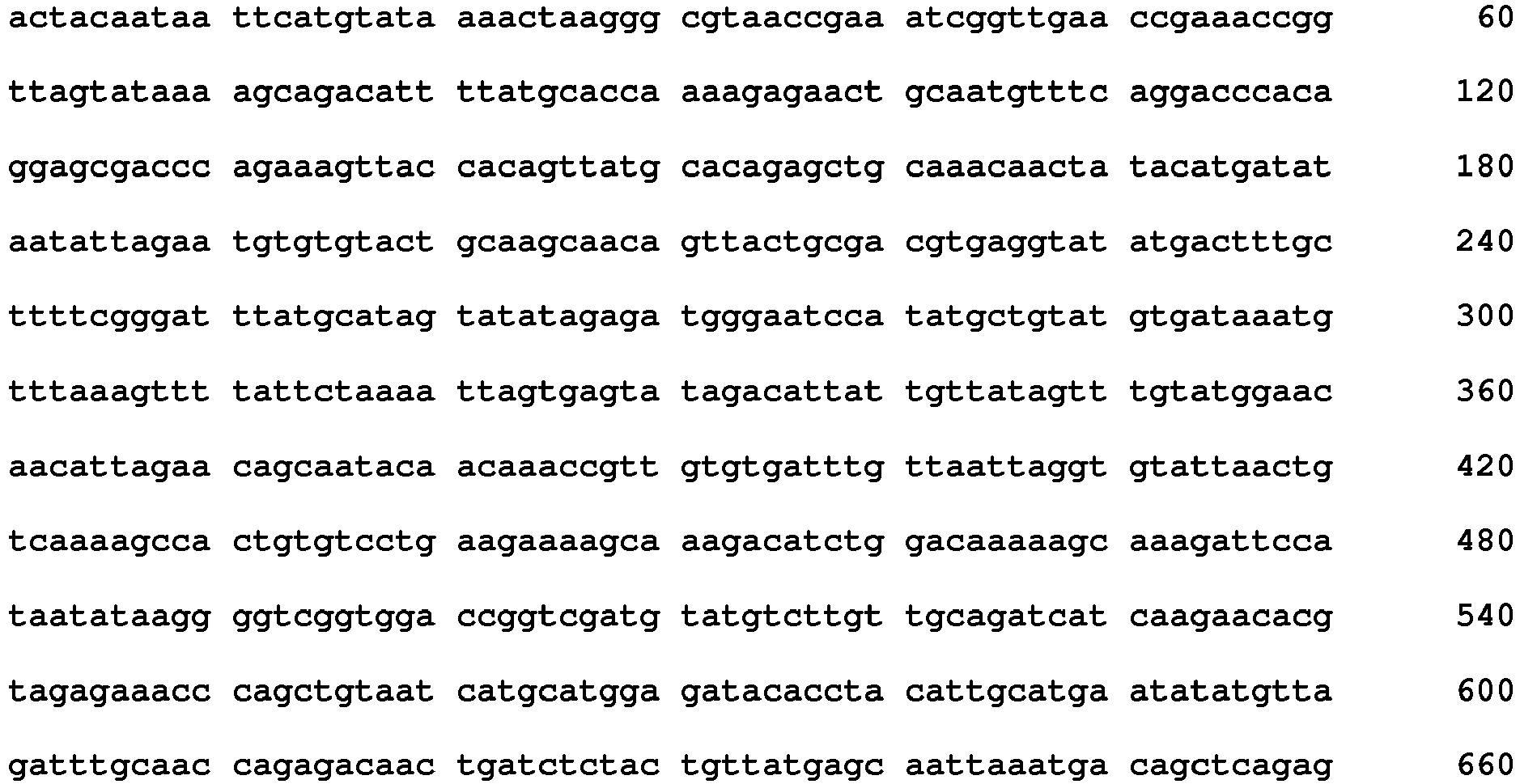
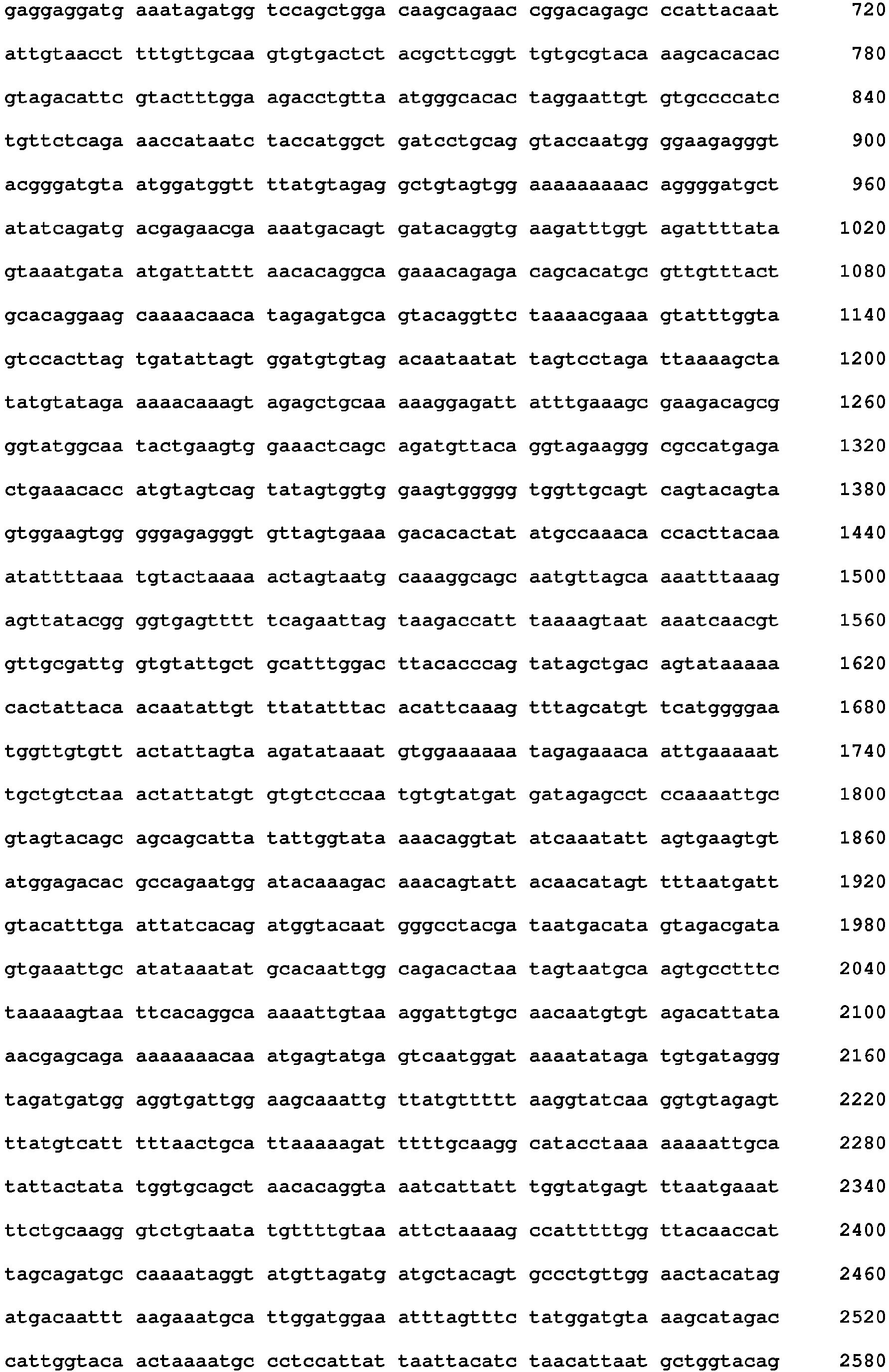
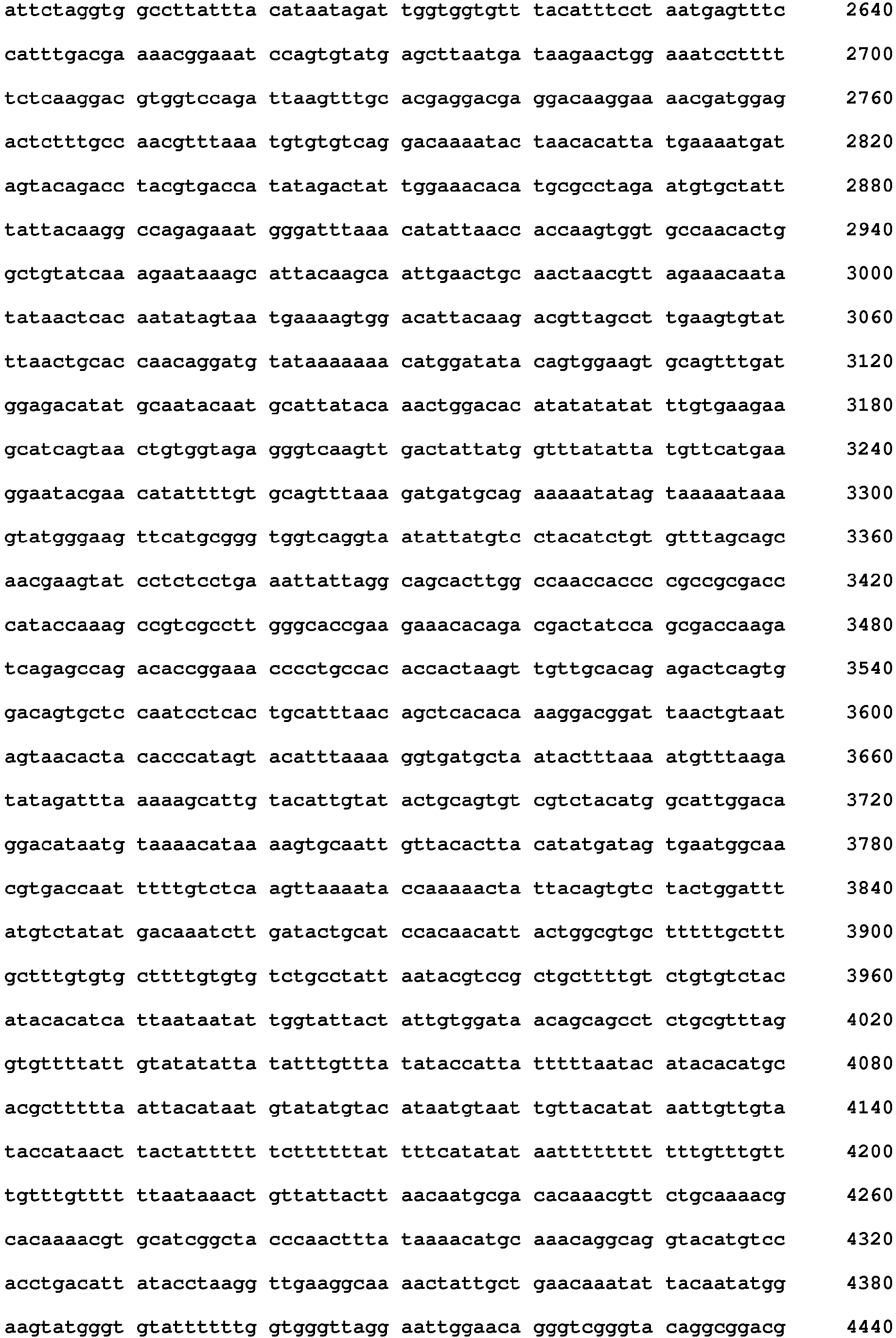
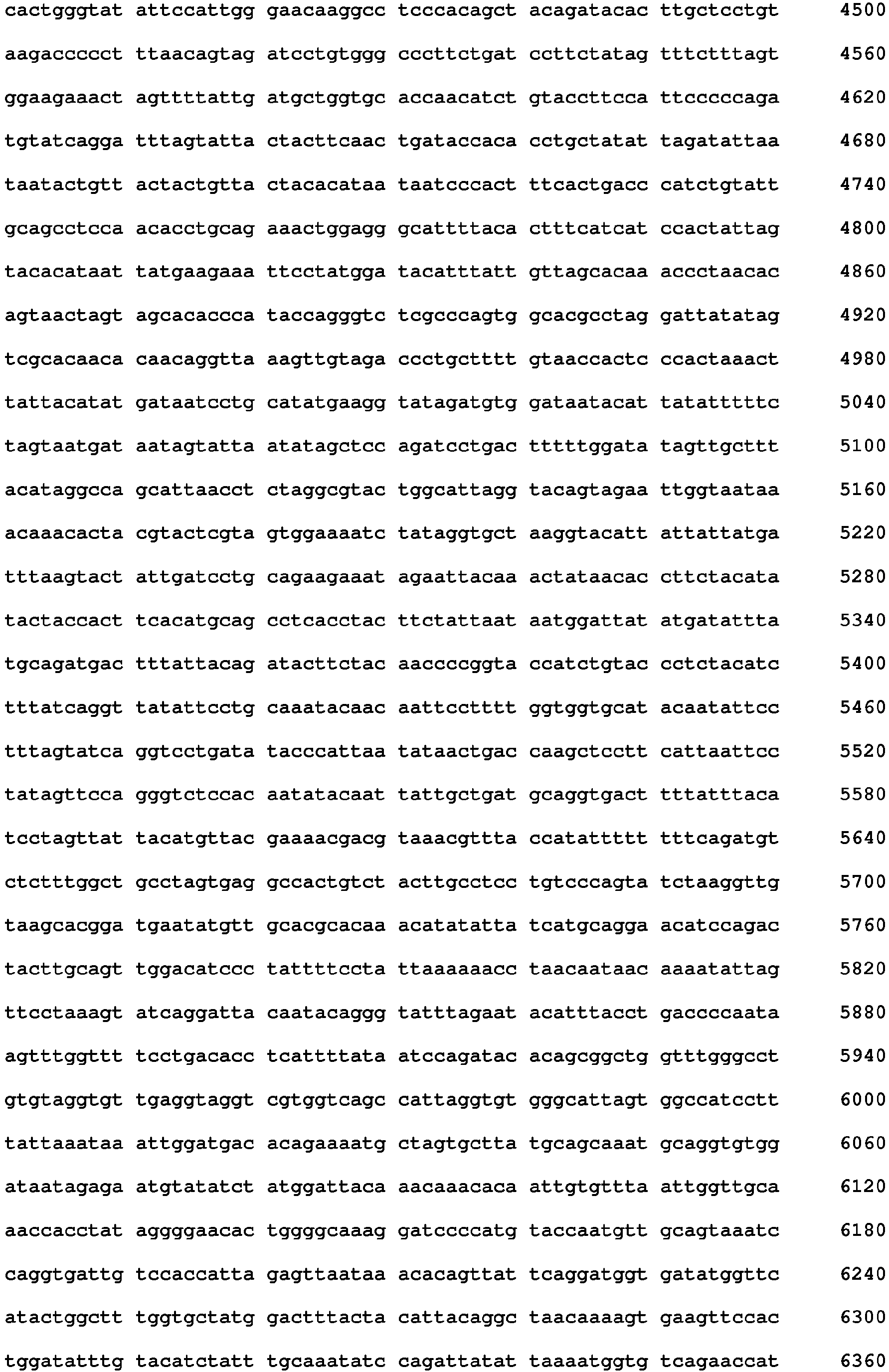
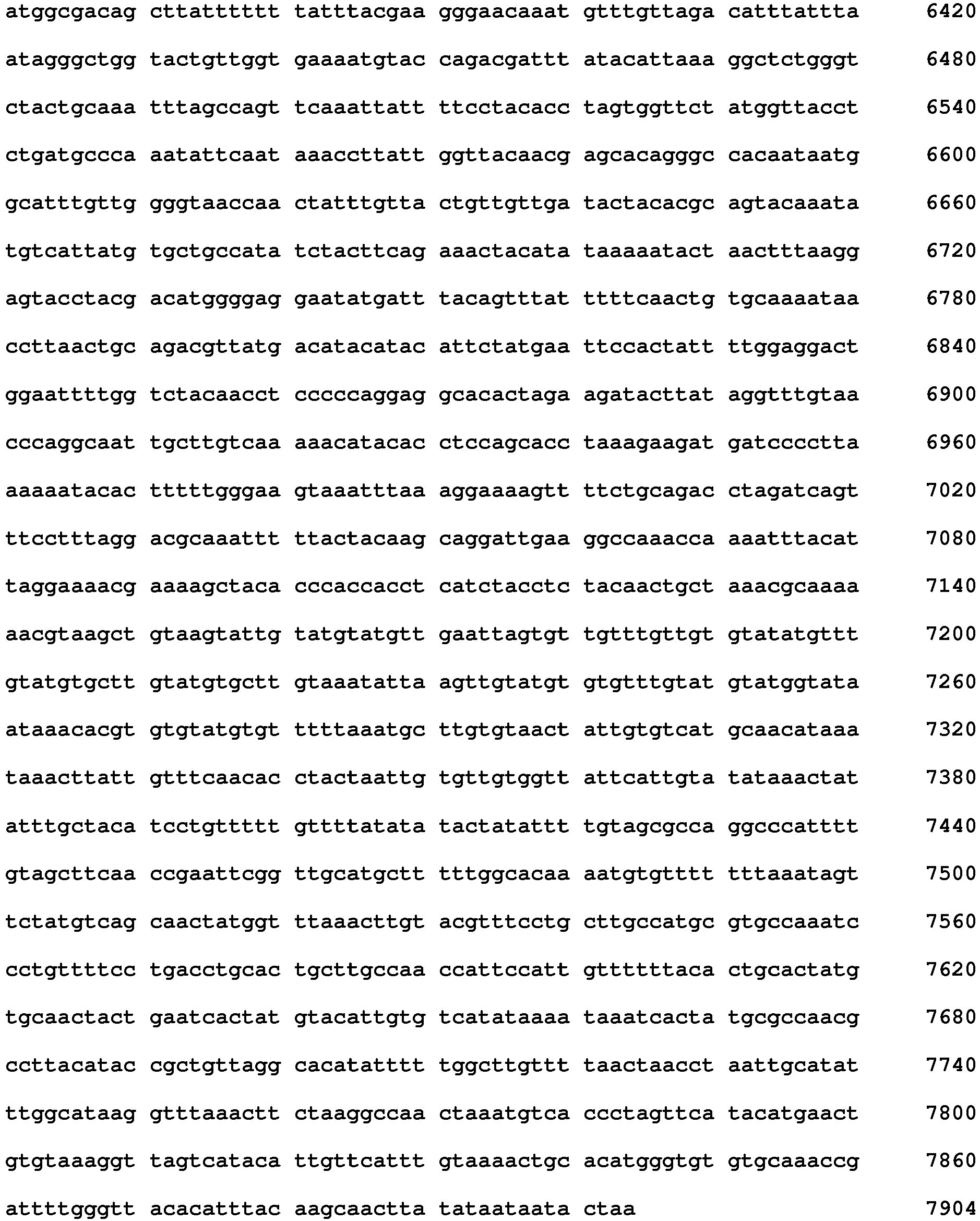
- <210> 14
<211> 7857
<212> DNA
<213>Human papillomavirus type 18 - <400> 14

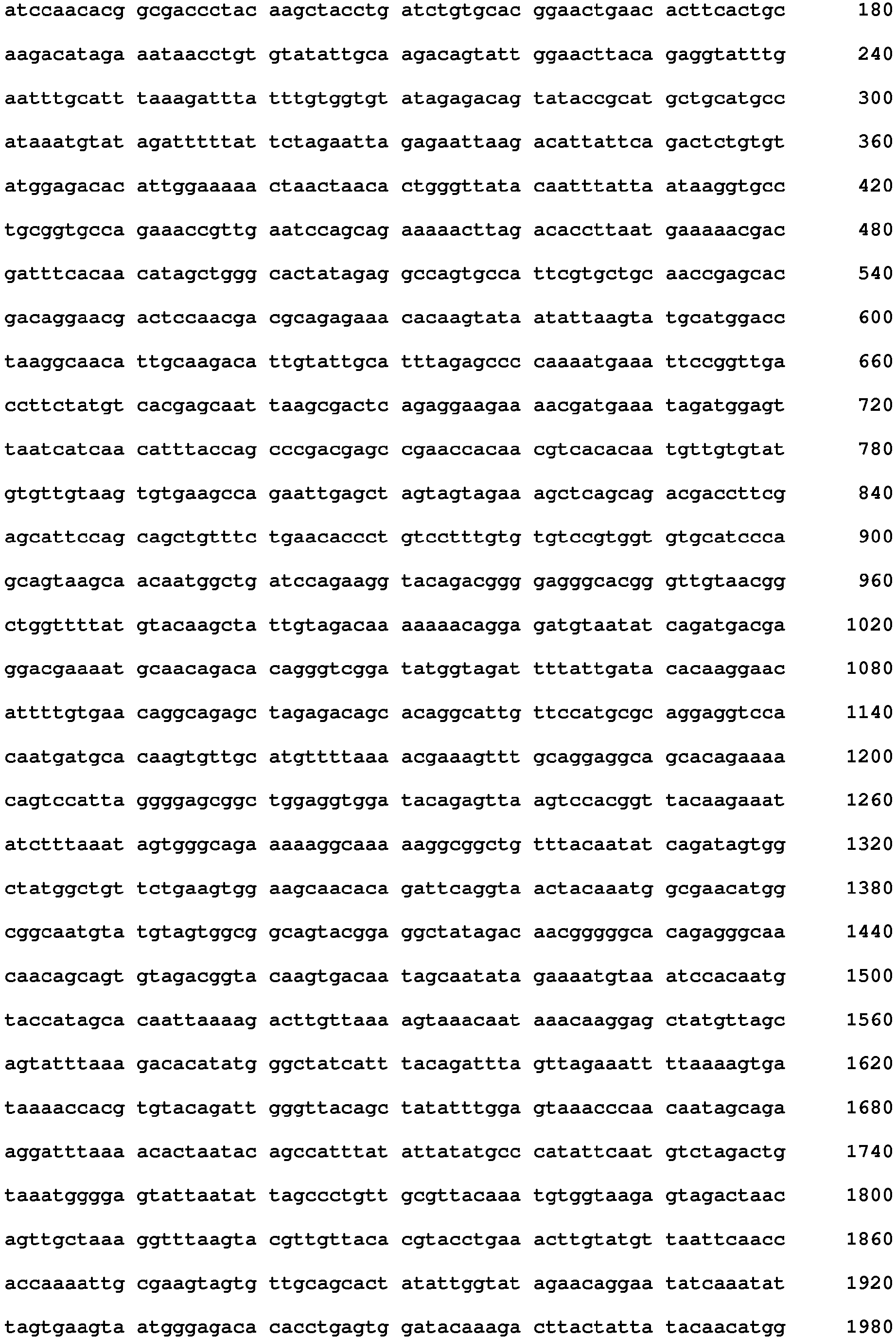
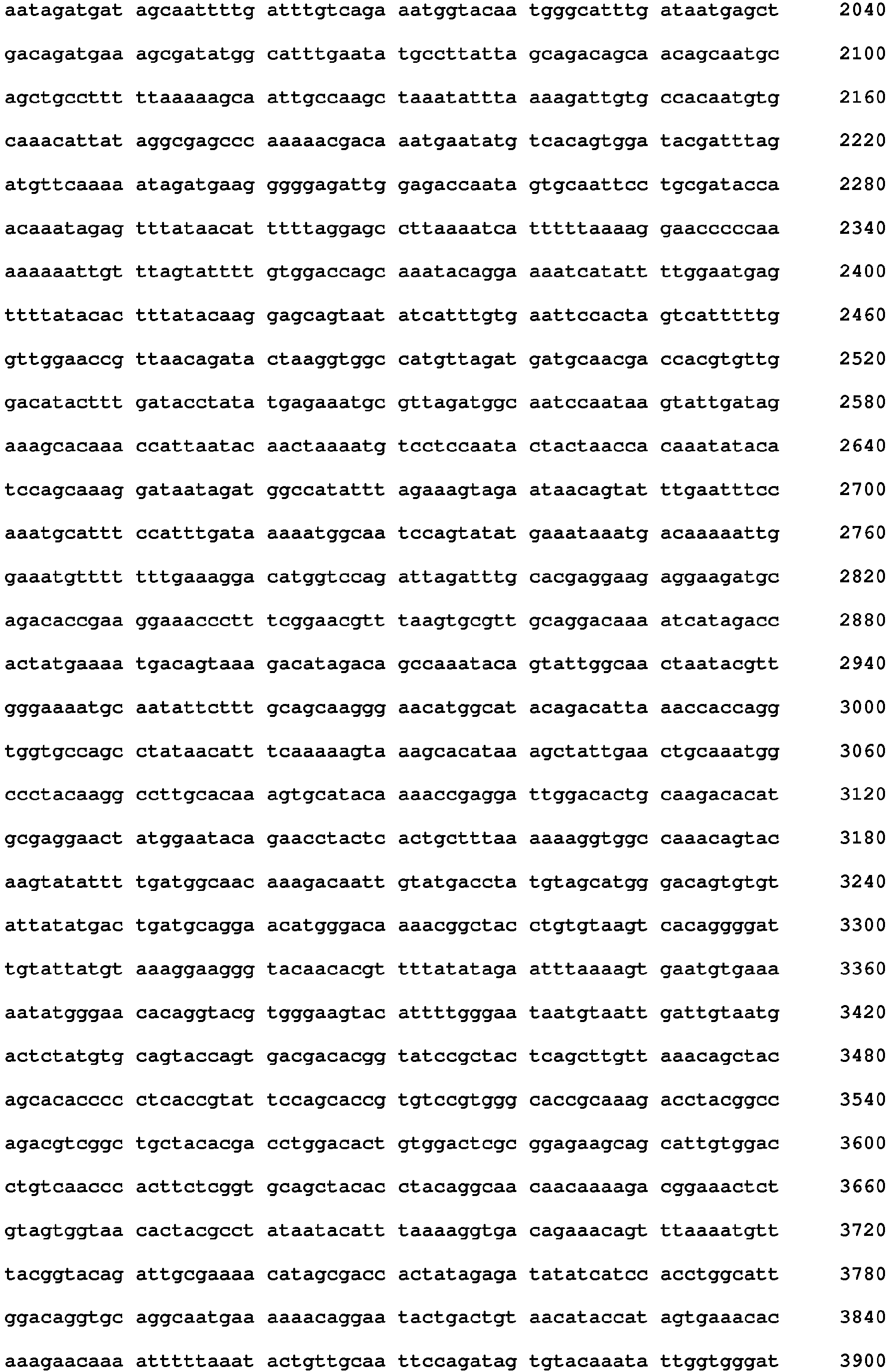

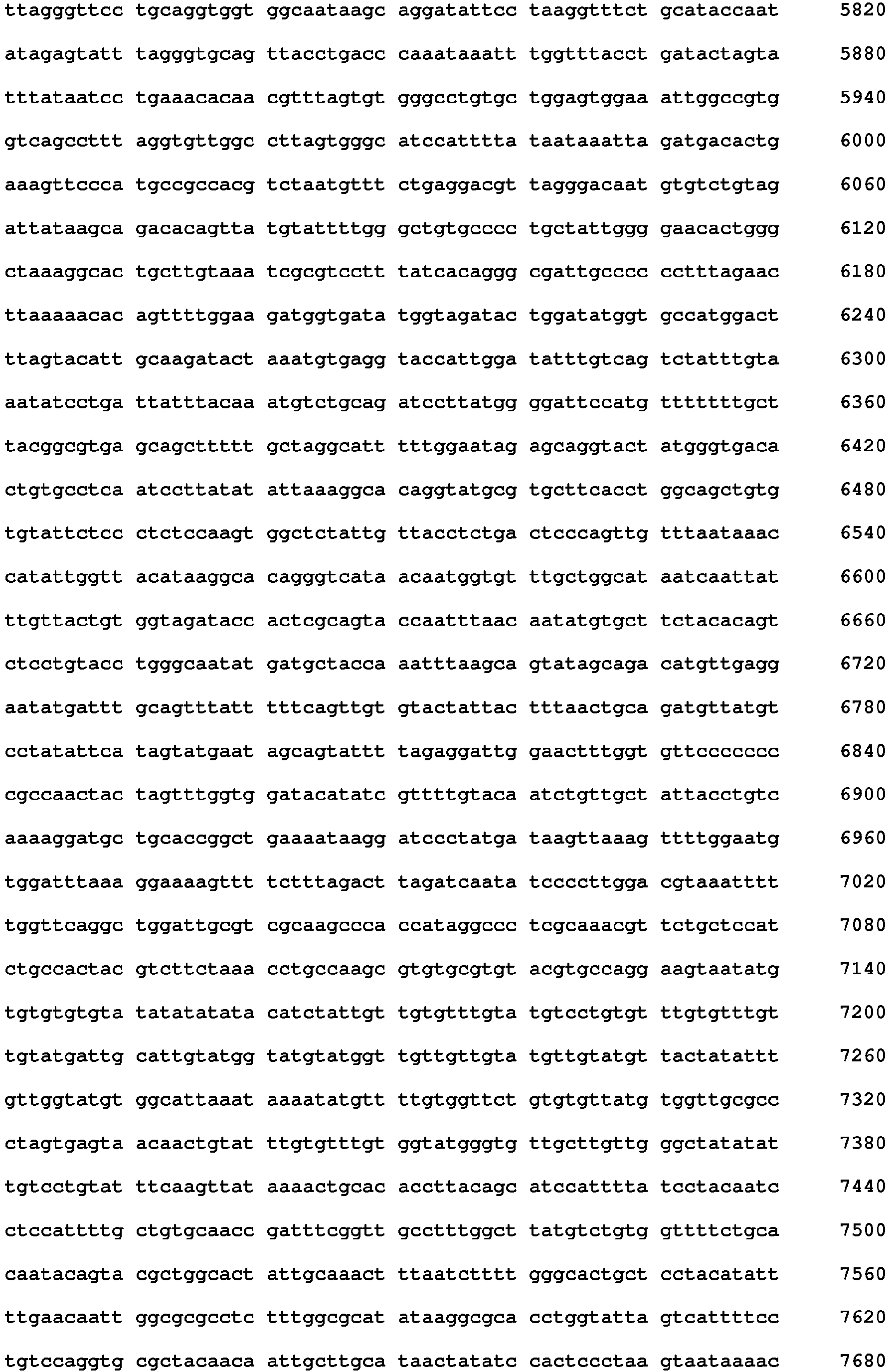

- <210> 15
<211> 7858
<212> DNA
<213>Human papillomavirus type 45 - <400> 15
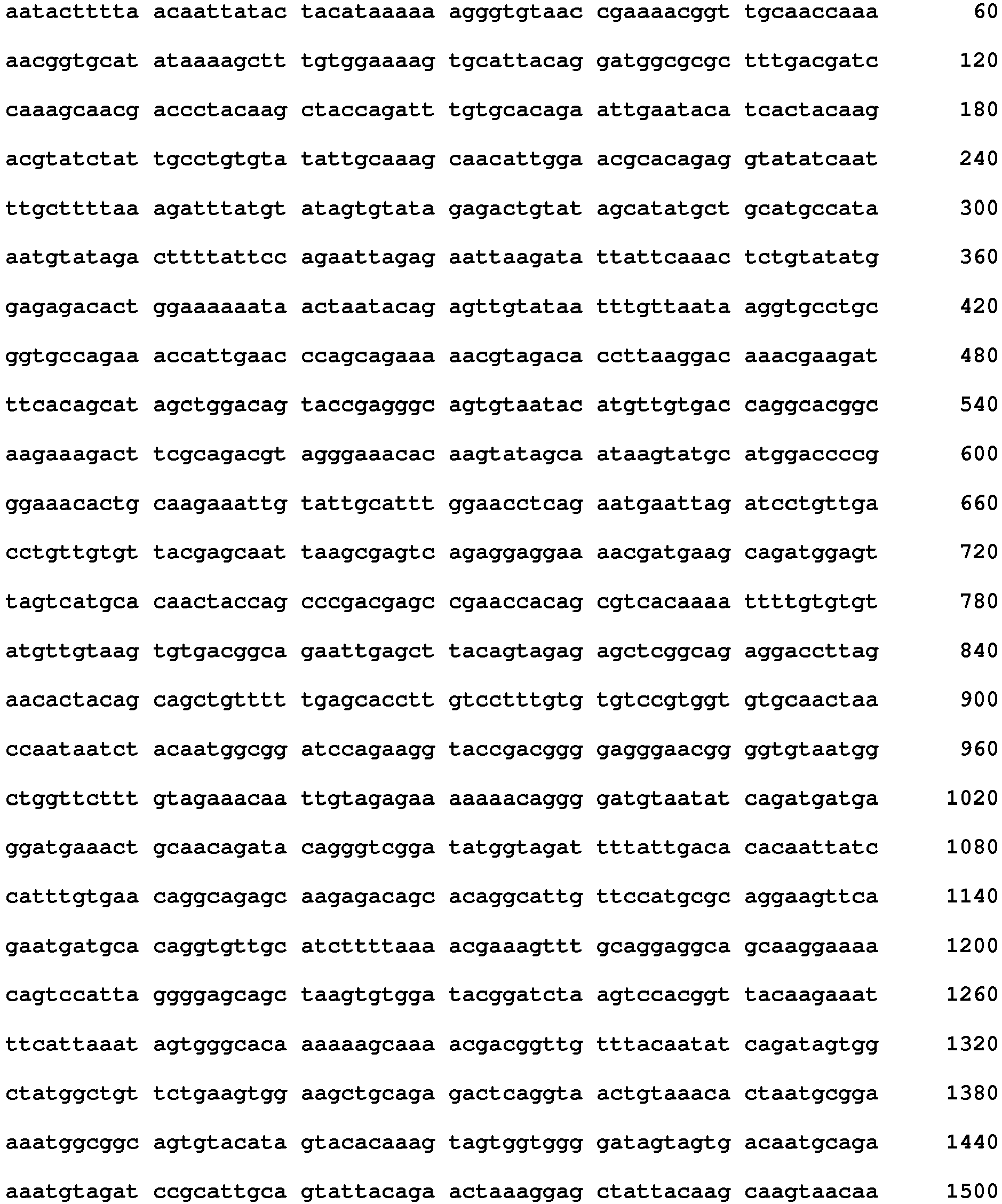

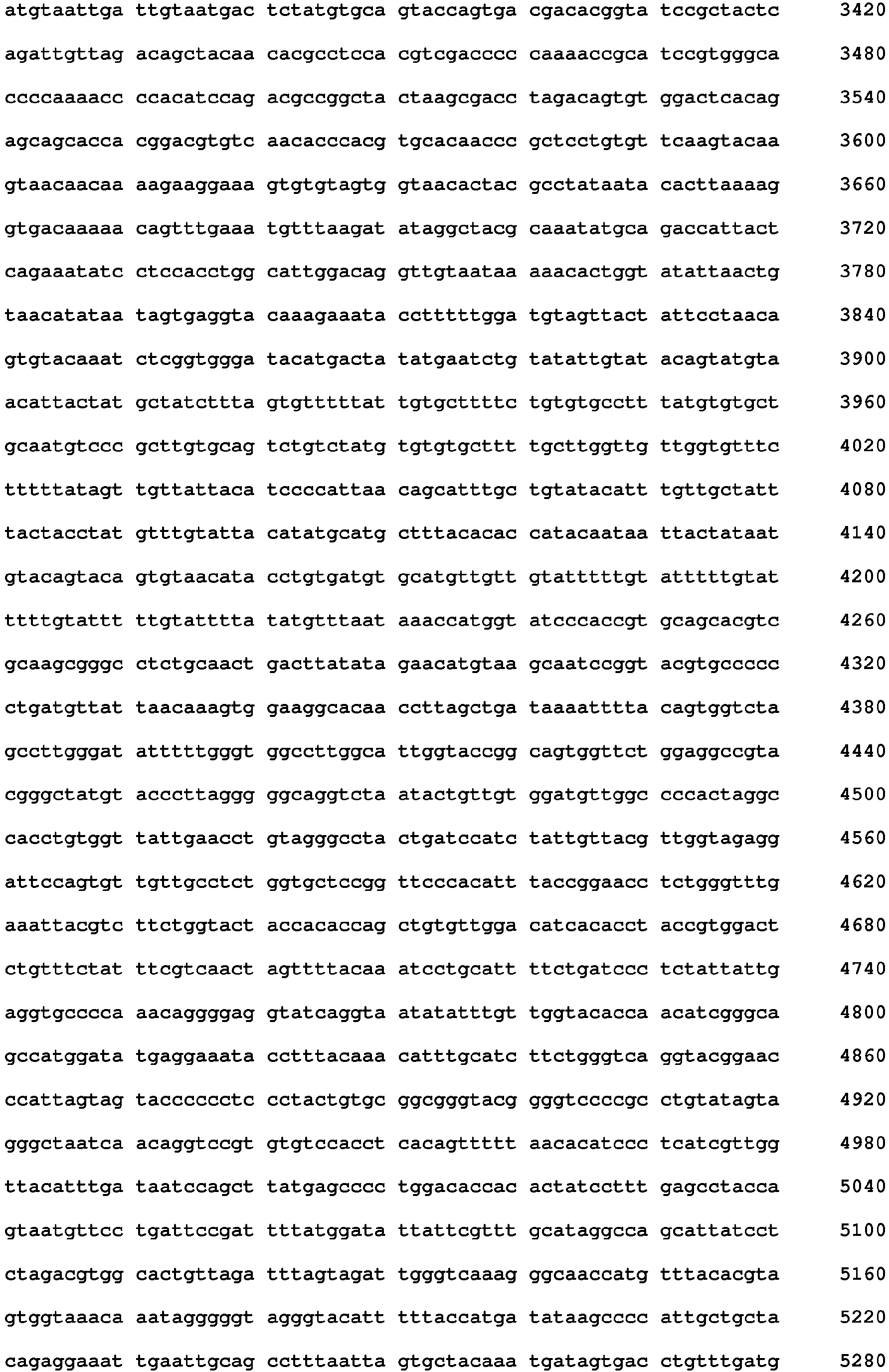
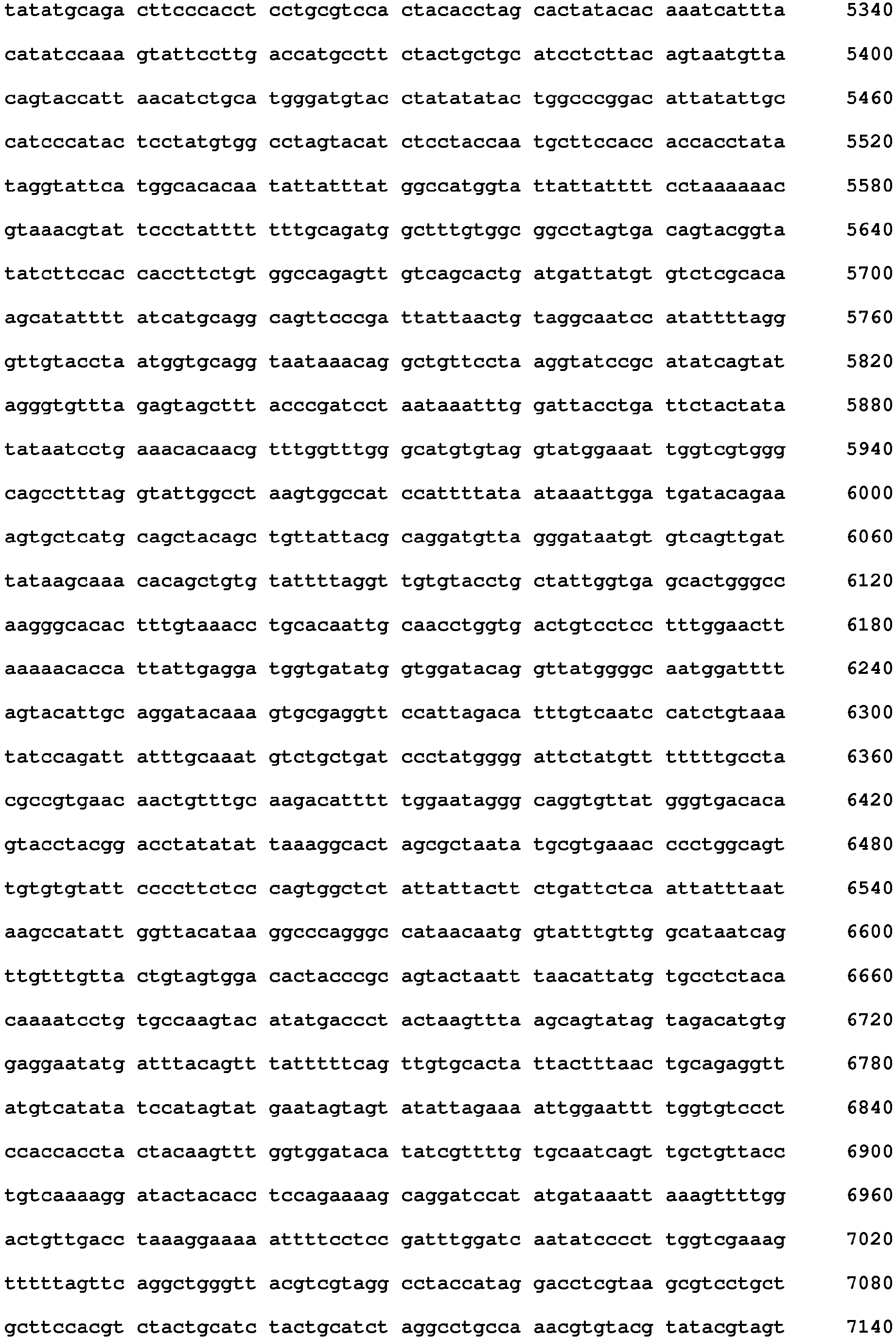

- <210> 16
<211> 20
<212> DNA
<213> Artificial Sequence - <220>
<223> pcr primer - <400> 16
gaagagccaa ggacaggtac 20 - <210> 17
<211> 20
<212> DNA
<213> Artificial Sequence - <220>
<223> pcr primer - <400> 17
caacttcatc cacgttcacc 20 - <210> 18
<211> 23
<212> DNA
<213> Artificial Sequence - <220>
<223> pcr probe - <400> 18
ccctagggtt ggccaatcta ctc 23 - <210> 19
<211> 20
<212> DNA
<213> Artificial Sequence - <220>
<223> pcr primer - <400> 19
acacaactgt gttcactagc 20 - <210> 20
<211> 20
<212> DNA
<213> Artificial Sequence - <220>
<223> pcr primer - <400> 20
caacttcatc cacgttcacc 20 - <210> 21
<211> 30
<212> DNA
<213> Artificial Sequence - <220>
<223> pcr probe - <400> 21
tcaaacagac accatggtgc atctgactcc 30
Claims (5)
- A method of genotyping a high-risk HPV, the method comprising:a. hybridizing at least one nucleic acid primer to at least a portion of a target sequence in an E6/E7 region of a first high-risk HPV genome, wherein the nucleic acid primer is specific for a target sequence in the E6/E7 region of a high-risk HPV genome and wherein said nucleic acid primer has aa) 70% identity or greater across its entire length to both the target sequence and at least one nucleic acid sequence in E6/E7 region of a genome of a subtype thereof and bb) said nucleic acid primer does not hybridize to a nucleic acid derived from a different HPV type; andb. detecting hybridization of the nucleic acid primer to the E6/E7 region of the first high-risk HPV genome, wherein hybridization is detected by a method comprising performing an amplification reaction that generates an amplicon corresponding to a portion of the E6/E7 region of the HPV genome and using a nucleic acid probe;wherein the high-risk HPV is selected from the group consisting of HPV 16, HPV 18, and HPV 45, and wherein an HPV 16 primer and probe set, an HPV 18 primer and probe set, and/or an HPV 45 primer and probe set, is used in the amplification reaction for genotyping high-risk HPV, wherein:i) the HPV 16 primer and probe set comprises:(i) a primer capable of amplifying a portion of the E6/E7 region of the HPV 16 genome, but not an E6/E7 region of HPV 18 or HPV 45 genome, wherein the primer has 70% to 100% identity with a sequence of SEQ ID NO:1,(ii) a primer capable of amplifying a portion of the E6/E7 region of the HPV 16 genome, but not an E6/E7 region of HPV 18 or HPV 45 genome, wherein the primer has 70% to 100% identity with a sequence of SEQ ID NO:2, and,(iii) a probe having 70% to 100% identity with a sequence of SEQ ID NO:3;ii) the HPV 18 primer and probe set comprises:(i) a primer capable of amplifying a portion of the E6/E7 region of the HPV 18 genome, but not an E6/E7 region of HPV 16 or HPV 45 genome, wherein the primer has 70% to 100% identity with a sequence of SEQ ID NO:4,(ii) a primer capable of amplifying a portion of the E6/E7 region of the HPV 18 genome, but not an E6/E7 region of HPV 16 or HPV 45 genome, wherein the primer has 70% to 100% identity with a sequence of SEQ ID NO:5, and,(iii) a probe having 70% to 100% identity with a sequence of SEQ ID NO:6;andiii) the HPV 45 primer and probe set comprises:(i) a primer capable of amplifying a portion of the E6/E7 region of the HPV 45 genome, but not an E6/E7 region of HPV 16 or HPV 18 genome, wherein the first primer has 70% to 100% identity with a sequence of SEQ ID NO:7,(ii) a primer capable of amplifying a portion of the E6/E7 region of the HPV 45 genome, but not an E6/E7 region of HPV 16 or HPV 18 genome, wherein the primer has 70% to 100% identity with a sequence of SEQ ID NO:8, and,(iii) a probe having 70% to 100% identity with a sequence of SEQ ID NO:9.
- The method of claim 1, wherein the said method is performed in a real time multiplex PCR format.
- The method of claim 1 or 2, wherein said method is capable of distinguishing between HPV 16, HPV 18, and HPV 45 infections, said method comprising:a. providing a sample suspected of comprising a high-risk HPV;b. contacting the sample with:(i) a primer set capable of amplifying a portion of a target sequence of an E6/E7 region of the HPV 16 genome, but not an E6/E7 region of an HPV 18 or HPV 45 genome, wherein the primer set comprises a primer having 70% to 100% identity with a sequence of SEQ ID NO:1 and a primer having 70% to 100% identity with a sequence of SEQ ID NO:2;(ii) a primer set capable of amplifying a portion of a target sequence of an E6/E7 region of the HPV 18 genome, but not an E6/E7 region of an HPV 16 or HPV 45 genome, wherein the primer set comprises a primer having 70% to 100% identity with a sequence of SEQ ID NO:4, and a primer having 70% to 100% identity with a sequence of SEQ ID NO:5;(iii) a primer set capable of amplifying a portion of a target sequence of an E6/E7 region of the HPV 45 genome, but not an E6/E7 region of an HPV 16 or HPV 18 genome, wherein the primer set comprises a primer having 70% to 100% identity with a sequence of SEQ ID NO:7 and a primer having 70% to 100% identity with a sequence of SEQ ID NO:8;(iv) a detectably labeled nucleic acid probe capable of hybridizing to a portion of the target sequence of the E6/E7 region of the HPV 16 genome, but not an E6/E7 region of an HPV 18 or HPV 45 genome, wherein the probe has 70% to 100% identity with a sequence of SEQ ID NO:3;(v) a detectably labeled nucleic acid probe capable of hybridizing to a portion of the target sequence of the E6/E7 region of the HPV 18 genome, but not an E6/E7 region of an HPV 16 or HPV 45 genome, wherein the probe has 70% to 100% identity with a sequence of SEQ ID NO:6; and(vi) a detectably labeled nucleic acid probe capable of hybridizing to a portion the target sequence of the E6/E7 region of the HPV 45 genome, but not an E6/E7 region of an HPV 16 or HPV 18 genome, wherein the probe has 70% to 100% identity with a sequence of SEQ ID NO:9;wherein each nucleic acid probe has a different detectable label;c. performing a nucleic acid amplification; andd. detecting the presence or absence of each detectable label.
- The method according to any of claims 1 to 3, comprising using a primer pair selected from the group consisting of:a. a first primer consisting of SEQ ID NO: 1 and a second primer having about 70% to 100% identity SEQ ID NO: 2,b. a first primer consisting of SEQ ID NO: 4 and a second primer having about 70% to 100% identity SEQ ID NO: 5, andc. a first primer consisting of SEQ ID NO: 7 and a second primer having about 70% to 100% identity SEQ ID NO: 8.
- The method according to any one of claims 1 to 4, further comprising using a control primer and probe set, which preferably has the following characteristics:i) it is a beta globin control primer and probe set; orii) it is a beta globin control primer and probe set, wherein said control primer and probe set comprisesa. a primer having 70% to 100% identity with a sequence of SEQ ID NO: 16,b. a primer having 70% to 100% identity with a sequence of SEQ ID NO: 17, and,c. a probe having 70% to 100% identity with a sequence of SEQ ID NO: 18.
Applications Claiming Priority (2)
| Application Number | Priority Date | Filing Date | Title |
|---|---|---|---|
| US201161430797P | 2011-01-07 | 2011-01-07 | |
| PCT/US2012/020684 WO2012094682A2 (en) | 2011-01-07 | 2012-01-09 | Materials and method for genotyping and quantifying a high-risk human papillomavirus |
Publications (2)
| Publication Number | Publication Date |
|---|---|
| EP2661508A2 EP2661508A2 (en) | 2013-11-13 |
| EP2661508B1 true EP2661508B1 (en) | 2018-09-12 |
Family
ID=45607347
Family Applications (1)
| Application Number | Title | Priority Date | Filing Date |
|---|---|---|---|
| EP12704144.0A Active EP2661508B1 (en) | 2011-01-07 | 2012-01-09 | Method for genotyping and quantifying a high-risk human papillomavirus |
Country Status (8)
| Country | Link |
|---|---|
| US (1) | US20120196274A1 (en) |
| EP (1) | EP2661508B1 (en) |
| JP (1) | JP2014501535A (en) |
| CN (1) | CN103517994A (en) |
| AU (1) | AU2012204158B2 (en) |
| BR (1) | BR112013017489B1 (en) |
| CA (1) | CA2823627C (en) |
| WO (1) | WO2012094682A2 (en) |
Families Citing this family (9)
| Publication number | Priority date | Publication date | Assignee | Title |
|---|---|---|---|---|
| US9689047B2 (en) * | 2010-01-29 | 2017-06-27 | Qiagen Gaithersburg Inc. | Methods and compositions for sequence-specific purification and multiplex analysis of nucleic acids |
| EP2978862A4 (en) * | 2013-03-26 | 2016-11-02 | Genetag Technology Inc | Dual probe:antiprobe compositions for dna and rna detection |
| GB2528344B (en) | 2014-02-28 | 2018-10-31 | Gen Probe Inc | Method of isolating nucleic acid from specimens in liquid-based cytology preservatives containing formaldehyde |
| US9771572B2 (en) | 2014-02-28 | 2017-09-26 | Gen-Probe Incorporated | Method of isolating nucleic acid from specimens in liquid-based cytology preservatives containing formaldehyde |
| CA2940591C (en) | 2014-02-28 | 2020-11-17 | Brett Wolfe KIRKCONNELL | Method of isolating nucleic acid from specimens in liquid-based cytology preservatives containing formaldehyde |
| US9771571B2 (en) | 2014-02-28 | 2017-09-26 | Gen-Probe Incorporated | Method of isolating nucleic acid from specimens in liquid-based cytology preservatives containing formaldehyde |
| CN110317901B (en) * | 2019-06-06 | 2023-05-16 | 圣湘生物科技股份有限公司 | Composition, kit and method for high-risk HPV detection and typing |
| CN114214343A (en) * | 2021-11-15 | 2022-03-22 | 上海市东方医院(同济大学附属东方医院) | A group of mRNA sequences specifically expressed in cervical cancer caused by integration of a group of high-risk HPV types |
| CN116144843A (en) * | 2023-02-09 | 2023-05-23 | 上海仁度生物科技股份有限公司 | Real-time fluorescent isothermal amplification detection kit for HPV16 and/or HPV18 genotypes and special primer and probe thereof |
Family Cites Families (19)
| Publication number | Priority date | Publication date | Assignee | Title |
|---|---|---|---|---|
| US5981179A (en) | 1991-11-14 | 1999-11-09 | Digene Diagnostics, Inc. | Continuous amplification reaction |
| WO1995022626A1 (en) | 1994-02-21 | 1995-08-24 | Stichting Researchfonds Pathologie | Human papilloma virus detection in a nucleic acid amplification process using general primers |
| US5994079A (en) | 1998-02-06 | 1999-11-30 | Digene Corporation | Direct detection of RNA mediated by reverse transcriptase lacking RNAse H function |
| US6686151B1 (en) | 1998-02-06 | 2004-02-03 | Digene Corporation | Immunological detection of RNA:DNA hybrids on microarrays |
| CA2229955C (en) * | 1998-02-20 | 2003-12-09 | Medigene Gmbh | Papilloma virus capsomere vaccine formulations and methods of use |
| US6420106B1 (en) * | 1999-06-09 | 2002-07-16 | Quantovir Ab | Method and kit for early cancer prediction |
| US6200746B1 (en) * | 1999-08-25 | 2001-03-13 | Pharmacia & Upjohn Company | Methods of identifying anti-viral agents |
| US7439016B1 (en) | 2000-06-15 | 2008-10-21 | Digene Corporation | Detection of nucleic acids by type-specific hybrid capture method |
| US7601497B2 (en) | 2000-06-15 | 2009-10-13 | Qiagen Gaithersburg, Inc. | Detection of nucleic acids by target-specific hybrid capture method |
| ATE348192T1 (en) * | 2001-08-23 | 2007-01-15 | Merck & Co Inc | MULTIPLEX HPV PCR FLUORESCENCE ASSAY USING MULTIPLE FLUOROPHORES |
| SI1421200T1 (en) * | 2001-08-23 | 2007-04-30 | Merck & Co Inc | Fluorescent multiplex hpv pcr assays using multiple fluorophores |
| GB0200239D0 (en) * | 2002-01-07 | 2002-02-20 | Norchip As | Method for detecting human papillomavirus mRNA |
| ES2282599T3 (en) * | 2002-01-07 | 2007-10-16 | Norchip A/S | METHOD FOR DETECTING HUMAN PAPILOMA VIRUS mRNA. |
| DK2927318T3 (en) * | 2003-08-08 | 2020-08-03 | Sangamo Therapeutics Inc | Method and compositions for targeted cleavage and recombination |
| WO2008139938A1 (en) * | 2007-05-02 | 2008-11-20 | National University Corporation Tokyo Medical And Dental University | Double-stranded nucleic acid molecule targeting for human papilloma virus type-16 gene, and pharmaceutical agent comprising the molecule |
| US9435001B2 (en) * | 2007-11-01 | 2016-09-06 | Self-Screen B.V. | Detection method for cervical HPVS |
| WO2009129505A2 (en) | 2008-04-17 | 2009-10-22 | Qiagen Gaithersburg, Inc. | Compositions, methods, and kits using synthetic probes for determining the presence of a target nucleic acid |
| WO2010004251A1 (en) * | 2008-06-16 | 2010-01-14 | Oncomethylome Sciences Sa | Dna methylomes |
| EP3427755B1 (en) * | 2009-04-13 | 2020-10-21 | INSERM - Institut National de la Santé et de la Recherche Médicale | Hpv particles and uses thereof |
-
2012
- 2012-01-09 EP EP12704144.0A patent/EP2661508B1/en active Active
- 2012-01-09 CA CA2823627A patent/CA2823627C/en active Active
- 2012-01-09 JP JP2013548611A patent/JP2014501535A/en active Pending
- 2012-01-09 US US13/346,550 patent/US20120196274A1/en not_active Abandoned
- 2012-01-09 WO PCT/US2012/020684 patent/WO2012094682A2/en not_active Ceased
- 2012-01-09 BR BR112013017489-7A patent/BR112013017489B1/en active IP Right Grant
- 2012-01-09 CN CN201280012327.XA patent/CN103517994A/en active Pending
- 2012-01-09 AU AU2012204158A patent/AU2012204158B2/en active Active
Non-Patent Citations (1)
| Title |
|---|
| None * |
Also Published As
| Publication number | Publication date |
|---|---|
| JP2014501535A (en) | 2014-01-23 |
| CN103517994A (en) | 2014-01-15 |
| BR112013017489B1 (en) | 2021-06-08 |
| WO2012094682A2 (en) | 2012-07-12 |
| CA2823627C (en) | 2021-05-11 |
| US20120196274A1 (en) | 2012-08-02 |
| AU2012204158A1 (en) | 2013-08-01 |
| AU2012204158B2 (en) | 2017-02-02 |
| CA2823627A1 (en) | 2012-07-12 |
| WO2012094682A3 (en) | 2012-12-06 |
| BR112013017489A2 (en) | 2017-08-01 |
| EP2661508A2 (en) | 2013-11-13 |
Similar Documents
| Publication | Publication Date | Title |
|---|---|---|
| EP2661508B1 (en) | Method for genotyping and quantifying a high-risk human papillomavirus | |
| EP2528932B1 (en) | Methods and compositions for sequence-specific purification and multiplex analysis of nucleic acids | |
| RU2530550C2 (en) | Primers and probes for detection of sequences of human papilloma virus in tested samples | |
| US12018328B2 (en) | Assay for detecting human papilloma virus (HPV) | |
| JP2013135672A (en) | Detection method and substance for the same | |
| JP4358637B2 (en) | Amplification-hybridization method for detecting and identifying the type of human papillomavirus | |
| Oh et al. | Polymerase chain reaction‐based fluorescent Luminex assay to detect the presence of human papillomavirus types | |
| US20110027778A1 (en) | Composition comprising an oligonucleotide mixture for improved detection of human papillomavirus genotypes | |
| CN110885906A (en) | Compositions and methods for detecting human papillomavirus nucleic acid | |
| CN101379196B (en) | In vitro diagnostic kit for identification of human papillomavirus in clinical samples | |
| US20150376725A1 (en) | HPV Detection in Urine | |
| KR101018407B1 (en) | Human papillomavirus diagnostic probe and its genotyping method | |
| JP7542546B2 (en) | Compositions and methods for amplifying, detecting or quantifying human polyomavirus BK virus - Patents.com | |
| US20250019779A1 (en) | Polynucleotides for the amplification and detection of influenza a | |
| CN119530461A (en) | Composition, kit and use for detecting and typing HPV | |
| CN118139993A (en) | Polynucleotides for the amplification and detection of influenza B virus | |
| WO2005100610A2 (en) | Virus detection method, primers therefor and screening kit |
Legal Events
| Date | Code | Title | Description |
|---|---|---|---|
| PUAI | Public reference made under article 153(3) epc to a published international application that has entered the european phase |
Free format text: ORIGINAL CODE: 0009012 |
|
| 17P | Request for examination filed |
Effective date: 20130806 |
|
| AK | Designated contracting states |
Kind code of ref document: A2 Designated state(s): AL AT BE BG CH CY CZ DE DK EE ES FI FR GB GR HR HU IE IS IT LI LT LU LV MC MK MT NL NO PL PT RO RS SE SI SK SM TR |
|
| DAX | Request for extension of the european patent (deleted) | ||
| STAA | Information on the status of an ep patent application or granted ep patent |
Free format text: STATUS: EXAMINATION IS IN PROGRESS |
|
| 17Q | First examination report despatched |
Effective date: 20161208 |
|
| GRAP | Despatch of communication of intention to grant a patent |
Free format text: ORIGINAL CODE: EPIDOSNIGR1 |
|
| STAA | Information on the status of an ep patent application or granted ep patent |
Free format text: STATUS: GRANT OF PATENT IS INTENDED |
|
| INTG | Intention to grant announced |
Effective date: 20180323 |
|
| GRAS | Grant fee paid |
Free format text: ORIGINAL CODE: EPIDOSNIGR3 |
|
| GRAA | (expected) grant |
Free format text: ORIGINAL CODE: 0009210 |
|
| STAA | Information on the status of an ep patent application or granted ep patent |
Free format text: STATUS: THE PATENT HAS BEEN GRANTED |
|
| AK | Designated contracting states |
Kind code of ref document: B1 Designated state(s): AL AT BE BG CH CY CZ DE DK EE ES FI FR GB GR HR HU IE IS IT LI LT LU LV MC MK MT NL NO PL PT RO RS SE SI SK SM TR |
|
| REG | Reference to a national code |
Ref country code: GB Ref legal event code: FG4D |
|
| REG | Reference to a national code |
Ref country code: CH Ref legal event code: EP |
|
| REG | Reference to a national code |
Ref country code: IE Ref legal event code: FG4D |
|
| REG | Reference to a national code |
Ref country code: DE Ref legal event code: R096 Ref document number: 602012050923 Country of ref document: DE |
|
| REG | Reference to a national code |
Ref country code: AT Ref legal event code: REF Ref document number: 1040655 Country of ref document: AT Kind code of ref document: T Effective date: 20181015 |
|
| REG | Reference to a national code |
Ref country code: NL Ref legal event code: MP Effective date: 20180912 |
|
| REG | Reference to a national code |
Ref country code: LT Ref legal event code: MG4D |
|
| PG25 | Lapsed in a contracting state [announced via postgrant information from national office to epo] |
Ref country code: FI Free format text: LAPSE BECAUSE OF FAILURE TO SUBMIT A TRANSLATION OF THE DESCRIPTION OR TO PAY THE FEE WITHIN THE PRESCRIBED TIME-LIMIT Effective date: 20180912 Ref country code: SE Free format text: LAPSE BECAUSE OF FAILURE TO SUBMIT A TRANSLATION OF THE DESCRIPTION OR TO PAY THE FEE WITHIN THE PRESCRIBED TIME-LIMIT Effective date: 20180912 Ref country code: GR Free format text: LAPSE BECAUSE OF FAILURE TO SUBMIT A TRANSLATION OF THE DESCRIPTION OR TO PAY THE FEE WITHIN THE PRESCRIBED TIME-LIMIT Effective date: 20181213 Ref country code: NO Free format text: LAPSE BECAUSE OF FAILURE TO SUBMIT A TRANSLATION OF THE DESCRIPTION OR TO PAY THE FEE WITHIN THE PRESCRIBED TIME-LIMIT Effective date: 20181212 Ref country code: RS Free format text: LAPSE BECAUSE OF FAILURE TO SUBMIT A TRANSLATION OF THE DESCRIPTION OR TO PAY THE FEE WITHIN THE PRESCRIBED TIME-LIMIT Effective date: 20180912 Ref country code: BG Free format text: LAPSE BECAUSE OF FAILURE TO SUBMIT A TRANSLATION OF THE DESCRIPTION OR TO PAY THE FEE WITHIN THE PRESCRIBED TIME-LIMIT Effective date: 20181212 Ref country code: LT Free format text: LAPSE BECAUSE OF FAILURE TO SUBMIT A TRANSLATION OF THE DESCRIPTION OR TO PAY THE FEE WITHIN THE PRESCRIBED TIME-LIMIT Effective date: 20180912 |
|
| PG25 | Lapsed in a contracting state [announced via postgrant information from national office to epo] |
Ref country code: HR Free format text: LAPSE BECAUSE OF FAILURE TO SUBMIT A TRANSLATION OF THE DESCRIPTION OR TO PAY THE FEE WITHIN THE PRESCRIBED TIME-LIMIT Effective date: 20180912 Ref country code: LV Free format text: LAPSE BECAUSE OF FAILURE TO SUBMIT A TRANSLATION OF THE DESCRIPTION OR TO PAY THE FEE WITHIN THE PRESCRIBED TIME-LIMIT Effective date: 20180912 Ref country code: AL Free format text: LAPSE BECAUSE OF FAILURE TO SUBMIT A TRANSLATION OF THE DESCRIPTION OR TO PAY THE FEE WITHIN THE PRESCRIBED TIME-LIMIT Effective date: 20180912 |
|
| REG | Reference to a national code |
Ref country code: AT Ref legal event code: MK05 Ref document number: 1040655 Country of ref document: AT Kind code of ref document: T Effective date: 20180912 |
|
| PG25 | Lapsed in a contracting state [announced via postgrant information from national office to epo] |
Ref country code: CZ Free format text: LAPSE BECAUSE OF FAILURE TO SUBMIT A TRANSLATION OF THE DESCRIPTION OR TO PAY THE FEE WITHIN THE PRESCRIBED TIME-LIMIT Effective date: 20180912 Ref country code: RO Free format text: LAPSE BECAUSE OF FAILURE TO SUBMIT A TRANSLATION OF THE DESCRIPTION OR TO PAY THE FEE WITHIN THE PRESCRIBED TIME-LIMIT Effective date: 20180912 Ref country code: ES Free format text: LAPSE BECAUSE OF FAILURE TO SUBMIT A TRANSLATION OF THE DESCRIPTION OR TO PAY THE FEE WITHIN THE PRESCRIBED TIME-LIMIT Effective date: 20180912 Ref country code: IS Free format text: LAPSE BECAUSE OF FAILURE TO SUBMIT A TRANSLATION OF THE DESCRIPTION OR TO PAY THE FEE WITHIN THE PRESCRIBED TIME-LIMIT Effective date: 20190112 Ref country code: PL Free format text: LAPSE BECAUSE OF FAILURE TO SUBMIT A TRANSLATION OF THE DESCRIPTION OR TO PAY THE FEE WITHIN THE PRESCRIBED TIME-LIMIT Effective date: 20180912 Ref country code: NL Free format text: LAPSE BECAUSE OF FAILURE TO SUBMIT A TRANSLATION OF THE DESCRIPTION OR TO PAY THE FEE WITHIN THE PRESCRIBED TIME-LIMIT Effective date: 20180912 Ref country code: AT Free format text: LAPSE BECAUSE OF FAILURE TO SUBMIT A TRANSLATION OF THE DESCRIPTION OR TO PAY THE FEE WITHIN THE PRESCRIBED TIME-LIMIT Effective date: 20180912 Ref country code: EE Free format text: LAPSE BECAUSE OF FAILURE TO SUBMIT A TRANSLATION OF THE DESCRIPTION OR TO PAY THE FEE WITHIN THE PRESCRIBED TIME-LIMIT Effective date: 20180912 Ref country code: IT Free format text: LAPSE BECAUSE OF FAILURE TO SUBMIT A TRANSLATION OF THE DESCRIPTION OR TO PAY THE FEE WITHIN THE PRESCRIBED TIME-LIMIT Effective date: 20180912 |
|
| PG25 | Lapsed in a contracting state [announced via postgrant information from national office to epo] |
Ref country code: SM Free format text: LAPSE BECAUSE OF FAILURE TO SUBMIT A TRANSLATION OF THE DESCRIPTION OR TO PAY THE FEE WITHIN THE PRESCRIBED TIME-LIMIT Effective date: 20180912 Ref country code: SK Free format text: LAPSE BECAUSE OF FAILURE TO SUBMIT A TRANSLATION OF THE DESCRIPTION OR TO PAY THE FEE WITHIN THE PRESCRIBED TIME-LIMIT Effective date: 20180912 Ref country code: PT Free format text: LAPSE BECAUSE OF FAILURE TO SUBMIT A TRANSLATION OF THE DESCRIPTION OR TO PAY THE FEE WITHIN THE PRESCRIBED TIME-LIMIT Effective date: 20190112 |
|
| REG | Reference to a national code |
Ref country code: DE Ref legal event code: R097 Ref document number: 602012050923 Country of ref document: DE |
|
| PLBE | No opposition filed within time limit |
Free format text: ORIGINAL CODE: 0009261 |
|
| STAA | Information on the status of an ep patent application or granted ep patent |
Free format text: STATUS: NO OPPOSITION FILED WITHIN TIME LIMIT |
|
| PG25 | Lapsed in a contracting state [announced via postgrant information from national office to epo] |
Ref country code: DK Free format text: LAPSE BECAUSE OF FAILURE TO SUBMIT A TRANSLATION OF THE DESCRIPTION OR TO PAY THE FEE WITHIN THE PRESCRIBED TIME-LIMIT Effective date: 20180912 |
|
| 26N | No opposition filed |
Effective date: 20190613 |
|
| PG25 | Lapsed in a contracting state [announced via postgrant information from national office to epo] |
Ref country code: MC Free format text: LAPSE BECAUSE OF FAILURE TO SUBMIT A TRANSLATION OF THE DESCRIPTION OR TO PAY THE FEE WITHIN THE PRESCRIBED TIME-LIMIT Effective date: 20180912 Ref country code: SI Free format text: LAPSE BECAUSE OF FAILURE TO SUBMIT A TRANSLATION OF THE DESCRIPTION OR TO PAY THE FEE WITHIN THE PRESCRIBED TIME-LIMIT Effective date: 20180912 |
|
| PG25 | Lapsed in a contracting state [announced via postgrant information from national office to epo] |
Ref country code: LU Free format text: LAPSE BECAUSE OF NON-PAYMENT OF DUE FEES Effective date: 20190109 |
|
| REG | Reference to a national code |
Ref country code: BE Ref legal event code: MM Effective date: 20190131 |
|
| REG | Reference to a national code |
Ref country code: IE Ref legal event code: MM4A |
|
| PG25 | Lapsed in a contracting state [announced via postgrant information from national office to epo] |
Ref country code: BE Free format text: LAPSE BECAUSE OF NON-PAYMENT OF DUE FEES Effective date: 20190131 |
|
| PG25 | Lapsed in a contracting state [announced via postgrant information from national office to epo] |
Ref country code: IE Free format text: LAPSE BECAUSE OF NON-PAYMENT OF DUE FEES Effective date: 20190109 |
|
| PG25 | Lapsed in a contracting state [announced via postgrant information from national office to epo] |
Ref country code: TR Free format text: LAPSE BECAUSE OF FAILURE TO SUBMIT A TRANSLATION OF THE DESCRIPTION OR TO PAY THE FEE WITHIN THE PRESCRIBED TIME-LIMIT Effective date: 20180912 |
|
| PG25 | Lapsed in a contracting state [announced via postgrant information from national office to epo] |
Ref country code: MT Free format text: LAPSE BECAUSE OF NON-PAYMENT OF DUE FEES Effective date: 20190109 |
|
| PG25 | Lapsed in a contracting state [announced via postgrant information from national office to epo] |
Ref country code: CY Free format text: LAPSE BECAUSE OF FAILURE TO SUBMIT A TRANSLATION OF THE DESCRIPTION OR TO PAY THE FEE WITHIN THE PRESCRIBED TIME-LIMIT Effective date: 20180912 |
|
| PG25 | Lapsed in a contracting state [announced via postgrant information from national office to epo] |
Ref country code: HU Free format text: LAPSE BECAUSE OF FAILURE TO SUBMIT A TRANSLATION OF THE DESCRIPTION OR TO PAY THE FEE WITHIN THE PRESCRIBED TIME-LIMIT; INVALID AB INITIO Effective date: 20120109 |
|
| PG25 | Lapsed in a contracting state [announced via postgrant information from national office to epo] |
Ref country code: MK Free format text: LAPSE BECAUSE OF FAILURE TO SUBMIT A TRANSLATION OF THE DESCRIPTION OR TO PAY THE FEE WITHIN THE PRESCRIBED TIME-LIMIT Effective date: 20180912 |
|
| PGFP | Annual fee paid to national office [announced via postgrant information from national office to epo] |
Ref country code: DE Payment date: 20250121 Year of fee payment: 14 |
|
| PGFP | Annual fee paid to national office [announced via postgrant information from national office to epo] |
Ref country code: CH Payment date: 20250201 Year of fee payment: 14 |
|
| PGFP | Annual fee paid to national office [announced via postgrant information from national office to epo] |
Ref country code: FR Payment date: 20250127 Year of fee payment: 14 |
|
| PGFP | Annual fee paid to national office [announced via postgrant information from national office to epo] |
Ref country code: GB Payment date: 20250128 Year of fee payment: 14 |