EP2506895B1 - Guided user help system for an ambulatory infusion system - Google Patents
Guided user help system for an ambulatory infusion system Download PDFInfo
- Publication number
- EP2506895B1 EP2506895B1 EP10834927.5A EP10834927A EP2506895B1 EP 2506895 B1 EP2506895 B1 EP 2506895B1 EP 10834927 A EP10834927 A EP 10834927A EP 2506895 B1 EP2506895 B1 EP 2506895B1
- Authority
- EP
- European Patent Office
- Prior art keywords
- error
- ambulatory infusion
- user
- infusion pump
- medication
- Prior art date
- Legal status (The legal status is an assumption and is not a legal conclusion. Google has not performed a legal analysis and makes no representation as to the accuracy of the status listed.)
- Active
Links
Images




Classifications
-
- A—HUMAN NECESSITIES
- A61—MEDICAL OR VETERINARY SCIENCE; HYGIENE
- A61M—DEVICES FOR INTRODUCING MEDIA INTO, OR ONTO, THE BODY; DEVICES FOR TRANSDUCING BODY MEDIA OR FOR TAKING MEDIA FROM THE BODY; DEVICES FOR PRODUCING OR ENDING SLEEP OR STUPOR
- A61M5/00—Devices for bringing media into the body in a subcutaneous, intra-vascular or intramuscular way; Accessories therefor, e.g. filling or cleaning devices, arm-rests
- A61M5/14—Infusion devices, e.g. infusing by gravity; Blood infusion; Accessories therefor
- A61M5/142—Pressure infusion, e.g. using pumps
-
- G—PHYSICS
- G06—COMPUTING OR CALCULATING; COUNTING
- G06F—ELECTRIC DIGITAL DATA PROCESSING
- G06F9/00—Arrangements for program control, e.g. control units
- G06F9/06—Arrangements for program control, e.g. control units using stored programs, i.e. using an internal store of processing equipment to receive or retain programs
- G06F9/44—Arrangements for executing specific programs
- G06F9/451—Execution arrangements for user interfaces
- G06F9/453—Help systems
-
- G—PHYSICS
- G16—INFORMATION AND COMMUNICATION TECHNOLOGY [ICT] SPECIALLY ADAPTED FOR SPECIFIC APPLICATION FIELDS
- G16H—HEALTHCARE INFORMATICS, i.e. INFORMATION AND COMMUNICATION TECHNOLOGY [ICT] SPECIALLY ADAPTED FOR THE HANDLING OR PROCESSING OF MEDICAL OR HEALTHCARE DATA
- G16H20/00—ICT specially adapted for therapies or health-improving plans, e.g. for handling prescriptions, for steering therapy or for monitoring patient compliance
- G16H20/10—ICT specially adapted for therapies or health-improving plans, e.g. for handling prescriptions, for steering therapy or for monitoring patient compliance relating to drugs or medications, e.g. for ensuring correct administration to patients
- G16H20/17—ICT specially adapted for therapies or health-improving plans, e.g. for handling prescriptions, for steering therapy or for monitoring patient compliance relating to drugs or medications, e.g. for ensuring correct administration to patients delivered via infusion or injection
-
- G—PHYSICS
- G16—INFORMATION AND COMMUNICATION TECHNOLOGY [ICT] SPECIALLY ADAPTED FOR SPECIFIC APPLICATION FIELDS
- G16H—HEALTHCARE INFORMATICS, i.e. INFORMATION AND COMMUNICATION TECHNOLOGY [ICT] SPECIALLY ADAPTED FOR THE HANDLING OR PROCESSING OF MEDICAL OR HEALTHCARE DATA
- G16H40/00—ICT specially adapted for the management or administration of healthcare resources or facilities; ICT specially adapted for the management or operation of medical equipment or devices
- G16H40/40—ICT specially adapted for the management or administration of healthcare resources or facilities; ICT specially adapted for the management or operation of medical equipment or devices for the management of medical equipment or devices, e.g. scheduling maintenance or upgrades
-
- G—PHYSICS
- G16—INFORMATION AND COMMUNICATION TECHNOLOGY [ICT] SPECIALLY ADAPTED FOR SPECIFIC APPLICATION FIELDS
- G16H—HEALTHCARE INFORMATICS, i.e. INFORMATION AND COMMUNICATION TECHNOLOGY [ICT] SPECIALLY ADAPTED FOR THE HANDLING OR PROCESSING OF MEDICAL OR HEALTHCARE DATA
- G16H40/00—ICT specially adapted for the management or administration of healthcare resources or facilities; ICT specially adapted for the management or operation of medical equipment or devices
- G16H40/60—ICT specially adapted for the management or administration of healthcare resources or facilities; ICT specially adapted for the management or operation of medical equipment or devices for the operation of medical equipment or devices
- G16H40/63—ICT specially adapted for the management or administration of healthcare resources or facilities; ICT specially adapted for the management or operation of medical equipment or devices for the operation of medical equipment or devices for local operation
-
- A—HUMAN NECESSITIES
- A61—MEDICAL OR VETERINARY SCIENCE; HYGIENE
- A61M—DEVICES FOR INTRODUCING MEDIA INTO, OR ONTO, THE BODY; DEVICES FOR TRANSDUCING BODY MEDIA OR FOR TAKING MEDIA FROM THE BODY; DEVICES FOR PRODUCING OR ENDING SLEEP OR STUPOR
- A61M2205/00—General characteristics of the apparatus
- A61M2205/12—General characteristics of the apparatus with interchangeable cassettes forming partially or totally the fluid circuit
-
- A—HUMAN NECESSITIES
- A61—MEDICAL OR VETERINARY SCIENCE; HYGIENE
- A61M—DEVICES FOR INTRODUCING MEDIA INTO, OR ONTO, THE BODY; DEVICES FOR TRANSDUCING BODY MEDIA OR FOR TAKING MEDIA FROM THE BODY; DEVICES FOR PRODUCING OR ENDING SLEEP OR STUPOR
- A61M2205/00—General characteristics of the apparatus
- A61M2205/12—General characteristics of the apparatus with interchangeable cassettes forming partially or totally the fluid circuit
- A61M2205/123—General characteristics of the apparatus with interchangeable cassettes forming partially or totally the fluid circuit with incorporated reservoirs
-
- A—HUMAN NECESSITIES
- A61—MEDICAL OR VETERINARY SCIENCE; HYGIENE
- A61M—DEVICES FOR INTRODUCING MEDIA INTO, OR ONTO, THE BODY; DEVICES FOR TRANSDUCING BODY MEDIA OR FOR TAKING MEDIA FROM THE BODY; DEVICES FOR PRODUCING OR ENDING SLEEP OR STUPOR
- A61M2205/00—General characteristics of the apparatus
- A61M2205/18—General characteristics of the apparatus with alarm
-
- A—HUMAN NECESSITIES
- A61—MEDICAL OR VETERINARY SCIENCE; HYGIENE
- A61M—DEVICES FOR INTRODUCING MEDIA INTO, OR ONTO, THE BODY; DEVICES FOR TRANSDUCING BODY MEDIA OR FOR TAKING MEDIA FROM THE BODY; DEVICES FOR PRODUCING OR ENDING SLEEP OR STUPOR
- A61M2205/00—General characteristics of the apparatus
- A61M2205/50—General characteristics of the apparatus with microprocessors or computers
- A61M2205/502—User interfaces, e.g. screens or keyboards
- A61M2205/505—Touch-screens; Virtual keyboard or keypads; Virtual buttons; Soft keys; Mouse touches
-
- A—HUMAN NECESSITIES
- A61—MEDICAL OR VETERINARY SCIENCE; HYGIENE
- A61M—DEVICES FOR INTRODUCING MEDIA INTO, OR ONTO, THE BODY; DEVICES FOR TRANSDUCING BODY MEDIA OR FOR TAKING MEDIA FROM THE BODY; DEVICES FOR PRODUCING OR ENDING SLEEP OR STUPOR
- A61M2205/00—General characteristics of the apparatus
- A61M2205/58—Means for facilitating use, e.g. by people with impaired vision
- A61M2205/581—Means for facilitating use, e.g. by people with impaired vision by audible feedback
-
- A—HUMAN NECESSITIES
- A61—MEDICAL OR VETERINARY SCIENCE; HYGIENE
- A61M—DEVICES FOR INTRODUCING MEDIA INTO, OR ONTO, THE BODY; DEVICES FOR TRANSDUCING BODY MEDIA OR FOR TAKING MEDIA FROM THE BODY; DEVICES FOR PRODUCING OR ENDING SLEEP OR STUPOR
- A61M2205/00—General characteristics of the apparatus
- A61M2205/58—Means for facilitating use, e.g. by people with impaired vision
- A61M2205/583—Means for facilitating use, e.g. by people with impaired vision by visual feedback
Definitions
- the invention relates generally to ambulatory infusion systems and more specifically to a guided user help system for an ambulatory infusion system.
- Ambulatory infusion pumps are useful for providing a variety of drug therapies. Ambulatory infusion pumps can be particularly beneficial for therapies which must be delivered over an extended period of time.
- ambulatory infusion pumps are typically used in a hospital or clinic setting, with the shift of health care delivery from the hospital setting to the outpatient and home settings, reliable effective ambulatory pumps for home use are necessary to safely deliver medications.
- a problem with patient home use of ambulatory infusion pumps is that patients and family members are typically not professionally trained in use of the devices.
- the patient is often not aware of how to correct the problem. This can require the patient to call a nurse or other outside caregiver to correct the problem, often requiring an in-person visit, or to spend significant time on the phone with a customer helpline trying to describe and correct the problem. Accordingly, there is a need for a quicker and more reliable way for patients to correct errors with ambulatory infusion pumps in a home setting.
- US 6,241,704 relates to drug pump systems and methods.
- US 2003/163223 relates to an apparatus for delivering a bolus of a medical agent to a patient.
- EP 0,319,272 A2 relates to a user interface for a multimode medication infusion system.
- US 5,782,805 relates to user interfaces for medical infusion pumps.
- An ambulatory infusion pump can include a guided user help system that allows for a user to correct an error with the pump without needing to summon a home healthcare aide or other medical professional.
- a guided user help system that allows for a user to correct an error with the pump without needing to summon a home healthcare aide or other medical professional.
- the help screen can display a possible solution for correcting the error that the user can follow. Additional help screens can display additional possible solutions if prior possible solutions prove ineffective at correcting the problem.
- the present invention relates to a guided user help system for an ambulatory infusion system.
- the ambulatory infusion system can be a CADD-Solis ® Ambulatory Infusion System from Smiths Medical ASD, Inc.
- the ambulatory infusion system can also be of the type disclosed in commonly owned U.S. Patent Publication Nos. 2008/0065007 , 2008/0065016 and 2008/0132844 , assigned to Smiths Medical ASD, Inc.
- Ambulatory infusion pump 100 includes a control system with a processor and memory programmable with selected functions for controlling operation of a pumping mechanism.
- Ambulatory infusion pump 100 can also include a control module 101 for relaying commands to the control system.
- Control module 101 can include a user interface 102 having a display screen 104 and a control pad 106.
- Control module 101 can also include a battery door 108, including a knob 110 for locking and unlocking the door 108, which covers a battery compartment in which batteries for powering the pump 100 can be contained.
- Control module 101 can also include a power switch 112 for turning pump 100 off and on, a USB port 114 for connecting pump 100 to a computer having software designed to interface with pump 100, an AC power jack 116 for connecting an AC power cord for powering pump 100, and a remote dose cord jack 118 for connecting a remote dose cord that provides an alternative way to activate patient-controlled dosing.
- a power switch 112 for turning pump 100 off and on
- a USB port 114 for connecting pump 100 to a computer having software designed to interface with pump 100
- an AC power jack 116 for connecting an AC power cord for powering pump 100
- a remote dose cord jack 118 for connecting a remote dose cord that provides an alternative way to activate patient-controlled dosing.
- Infusion pump 100 can further include a replaceable cassette 120 connected to control module 101.
- cassette 120 includes a reservoir containing the medication that is to be delivered to the patient. Tubing can extend from the cassette 120 and communicate with an infusion set or catheter to deliver the medication to the patient.
- the control module 101 can be used to control the flow of medication from the cassette.
- cassette 120 can include tubing that interfaces with a remote medication reservoir such as an IV bag. Tubing can extend from the reservoir to the cassette and then to an infusion set or catheter, and flow of medication through the tubing can be controlled with control module 101.
- a cassette latch 122 is positioned on control module 101 and is movable to allow a cassette 120 to be inserted or removed or to hold a cassette 120 in the control module 101.
- a cassette lock 124 can lock latch 122 in the closed position to prevent accidental unlatching and removal of the cassette 120.
- Cassette lock 124 can also be configured to lock the control pad 106 to prevent accidental starting, stopping or modifying of the device.
- Infusion pump 100 can also include a plurality of sensors, including an air detector, a downstream occlusion sensor, an upstream occlusion sensor, and sensors to detect whether a cassette is properly inserted, latched and locked.
- An air detector can be used to detect if there is air in the tubing delivering the medication to the patient.
- a downstream occlusion is a blockage inhibiting the flow of medication between the pump and the patient and an upstream occlusion is a blockage inhibiting the flow of medication between a remote reservoir and the pump.
- the downstream and upstream occlusion sensors can detect whether any such occlusions are present.
- downstream and/or upstream occlusion sensors detect occlusions by sensing the pressure and/or force present in the tubing.
- user interface 102 of a control module 101 for an ambulatory infusion pump 100 according to an embodiment of the present invention is shown.
- user interface 102 generally includes a display 104 and a control pad 106.
- display 104 is a liquid crystal display (LCD).
- Control pad 106 can include a start/stop key 126, a pair of soft keys 128, 130, a pair of navigation keys 132, 134, a select key 136, and a PCA dose key 138.
- Start/stop key 126 can be used to start or stop pump delivery.
- Soft keys 128, 130 can be used to answer questions or select options appearing on the display 102 above the soft keys 128, 130.
- Navigation keys 132, 134 allow the user to scroll through menus appearing on display 102 and select key 136 allows the user to make selections from the menus.
- PCA dose key 138 if enabled, allows a patient to administer a patient-controlled dose of medication.
- FIG. 4 A flowchart depicting an embodiment of a guided user help system 200 of an ambulatory infusion system is depicted in Figure 4 .
- an error or other alert condition is detected at 202, triggering an alarm or other notification to sound and/or be displayed at 204.
- Errors can be detected by, for example, any of the above-described sensors. Other errors or alert conditions can also be detected by other devices or portions of pump 100.
- the user can then silence or clear the alarm at 206.
- the help screen can provide a possible solution to the user for correcting the particular error, alert or condition detected by pump 100.
- the guided user help system presents a user with a series of possible solutions to the detected error.
- the possible solutions displayed can relate to the most common reasons for occurrence of the particular error.
- the user may then have the option of viewing additional help screens displaying additional possible solutions for correcting the error at 210.
- help screens are displayed in order of the most likely cause of the particular error.
- a screen providing the user with the option of reentering the help screens and/or providing a customized support message can be displayed. This can be of use if a user goes through all available help screens without successfully clearing the error condition.
- Customized support message can include, for example, a number of a customer helpline or a number of a home healthcare aide assigned to the patient.
- the customized support message can also include an email address, a uniform resource locator (URL) or the name or an individual or organization to contact. If at any time during the sequence the user is able to correct the error by following the help screens, the guided user help system can be automatically or manually exited and the pump can automatically or manually be returned to its normal functioning. Operation of the guided user help system according to embodiments of the present invention is further described with reference to Figures 5A-5D and 6A-6F.
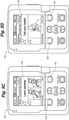
- Figures 5A-5D depict operation of a guided user help system in response to an error caused by a cassette 120 that is not latched.
- the error of the unlatched cassette is detected and an alarm alerting the user of the error is depicted both visually on display 104 and audibly.
- the user then has the option of pressing the right soft key 130 to silence the audible alarm or the left soft key 128 to acknowledge the alarm and exit the alarm screen.
- This provides the user the option of opting out of the guided user help system in order to manually correct the problem. This feature is useful for users who are experienced with the device and do not need to be provided with possible solutions for correcting the error.
- an option to view a help screen appears as in Figure 5B . This option can be selected with the right soft key 130.
- a user help screen appears on the display 104 as shown in Figure 5C .
- User help screen displays a possible solution for correcting the error and can use textual and/or graphical ways of disclosing the possible solution.
- the possible solution is simply to latch the cassette. If the user is able to properly latch the cassette, the alarm can automatically turn off when the error is corrected. If unable to latch the cassette, the user can select the right soft key 130 to view the next screen.
- the system does not have any additional possible solutions to suggest, so a customized support message can be shown on the display 104 as depicted in Figure 5D . The user can return to the help screen by selecting "Retry Help" with the right soft key 130.
- the user can acknowledge the alarm from the customized support message in Figure 5D (or from the help screen in Figure 5C ) by selecting the left soft key 128, allowing the user to correct the problem outside of the guided user help system.
- the customized support message can be customized for the specific patient or for the organization or healthcare facility supporting the pump to display a phone number for a customer helpline, home healthcare aide, or other service provider that the user can call for further information/help.
- Figures 6A-6F depict operation of a guided user help system in response to a downstream occlusion detected by downstream occlusion sensor during operation of the pump.
- the user can opt to view a help screen by selecting the right soft key 130.
- the user can elect to stop the pump by selecting the left soft key 128.
- Figure 6B displays a first help screen that provides a possible solution to the user of adjusting the current. If this removes the occlusion, the infusion pump 100 can automatically return to the pumping operation. If the occlusion continues, the user can select "Next" with the right soft key 130.
- a second help screen then appears as in Figure 6C .
- This help screen suggests the possible solution of unkinking the tubing. Additional help screens that the user can navigate to with the right soft key 130 are depicted in Figures 6D and 6E that suggest possible solutions of opening clamps and removing a cap on the end of the tubing. If at any point during the process the possible solution removes the occlusion, the alarm can automatically terminate and the pump can resume normal operation. Once the user has cycled through all of the available help screens, the customized support message can be displayed, as show in Figure 6F , allowing the user to reenter the help screens and providing the user with a number to call for additional help.
- Guided user help system as described above can be employed with any other error/alarm messages that are applicable to an ambulatory infusion system.
- Guided user help system provided a non-professionally trained user with possible solutions for correcting errors without needing to summon a home healthcare aide or other medical professional.
- the system can be employed with all alarms applicable to an ambulatory infusion pump, or can be provided with just some of the alarms.
- Examples of other alarms/errors with which guided user help system can be employed include: air in the tubing , an upstream occlusion, errors related to operation of the pumping mechanism, errors related to the battery or other power supply, improper treatment delivery settings, lack of medication in the reservoir, an improper cassette, the cassette not properly loaded or locked, improper key insertion, errors with a PCA dose cord or other external attachment, and one or more faulty sensors, among others.
Landscapes
- Engineering & Computer Science (AREA)
- Health & Medical Sciences (AREA)
- Software Systems (AREA)
- Biomedical Technology (AREA)
- Public Health (AREA)
- Theoretical Computer Science (AREA)
- General Health & Medical Sciences (AREA)
- General Business, Economics & Management (AREA)
- Human Computer Interaction (AREA)
- Medical Informatics (AREA)
- Business, Economics & Management (AREA)
- Epidemiology (AREA)
- General Physics & Mathematics (AREA)
- Vascular Medicine (AREA)
- Anesthesiology (AREA)
- Heart & Thoracic Surgery (AREA)
- Hematology (AREA)
- Life Sciences & Earth Sciences (AREA)
- Animal Behavior & Ethology (AREA)
- Veterinary Medicine (AREA)
- Primary Health Care (AREA)
- General Engineering & Computer Science (AREA)
- Physics & Mathematics (AREA)
- Bioinformatics & Cheminformatics (AREA)
- Medicinal Chemistry (AREA)
- Chemical & Material Sciences (AREA)
- Infusion, Injection, And Reservoir Apparatuses (AREA)
Description
- The invention relates generally to ambulatory infusion systems and more specifically to a guided user help system for an ambulatory infusion system.
- Ambulatory infusion pumps are useful for providing a variety of drug therapies. Ambulatory infusion pumps can be particularly beneficial for therapies which must be delivered over an extended period of time.
- Although ambulatory infusion pumps are typically used in a hospital or clinic setting, with the shift of health care delivery from the hospital setting to the outpatient and home settings, reliable effective ambulatory pumps for home use are necessary to safely deliver medications. A problem with patient home use of ambulatory infusion pumps, however, is that patients and family members are typically not professionally trained in use of the devices. Thus, if a problem arises with operation of the device, the patient is often not aware of how to correct the problem. This can require the patient to call a nurse or other outside caregiver to correct the problem, often requiring an in-person visit, or to spend significant time on the phone with a customer helpline trying to describe and correct the problem. Accordingly, there is a need for a quicker and more reliable way for patients to correct errors with ambulatory infusion pumps in a home setting.
-
US 6,241,704 relates to drug pump systems and methods.US 2003/163223 relates to an apparatus for delivering a bolus of a medical agent to a patient.EP 0,319,272 A2 relates to a user interface for a multimode medication infusion system.US 5,782,805 relates to user interfaces for medical infusion pumps. - An ambulatory infusion pump can include a guided user help system that allows for a user to correct an error with the pump without needing to summon a home healthcare aide or other medical professional. When an error occurs with the pump, the user can select an option to receive help with the error. The help screen can display a possible solution for correcting the error that the user can follow. Additional help screens can display additional possible solutions if prior possible solutions prove ineffective at correcting the problem.
- The invention is set out in the independent claim with optional and preferred features in the dependent claims.
- The invention may be more completely understood in consideration of the following detailed description of various embodiments of the invention in connection with the accompanying drawings, in which:
-
Figure 1 is a front perspective view of an ambulatory infusion pump according to an embodiment of the present invention. -
Figure 2 is a rear perspective view of an ambulatory infusion pump according to an embodiment of the present invention. -
Figure 3 is a front view of an ambulatory infusion pump according to an embodiment of the present invention. -
Figure 4 is a flowchart of a guided user help system according to an embodiment of the present invention. -
Figure 5A is a view of an ambulatory infusion pump with a guided user help system according to an embodiment of the present invention. -
Figure 5B is a view of an ambulatory infusion pump with a guided user help system according to an embodiment of the present invention. -
Figure 5C is a view of an ambulatory infusion pump with a guided user help system according to an embodiment of the present invention. -
Figure 5D is a view of an ambulatory infusion pump with a guided user help system according to an embodiment of the present invention. -
Figure 6A is a view of an ambulatory infusion pump with a guided user help system according to an embodiment of the present invention. -
Figure 6B is a view of an ambulatory infusion pump with a guided user help system according to an embodiment of the present invention. -
Figure 6C is a view of an ambulatory infusion pump with a guided user help system according to an embodiment of the present invention. -
Figure 6D is a view of an ambulatory infusion pump with a guided user help system according to an embodiment of the present invention. -
Figure 6E is a view of an ambulatory infusion pump with a guided user help system according to an embodiment of the present invention. -
Figure 6F is a view of an ambulatory infusion pump with a guided user help system according to an embodiment of the present invention. - The present invention relates to a guided user help system for an ambulatory infusion system. In one embodiment, the ambulatory infusion system can be a CADD-Solis® Ambulatory Infusion System from Smiths Medical ASD, Inc. The ambulatory infusion system can also be of the type disclosed in commonly owned
U.S. Patent Publication Nos. 2008/0065007 ,2008/0065016 and2008/0132844 , assigned to Smiths Medical ASD, Inc. - An exemplary
ambulatory infusion pump 100 with which a guided user help system can be used is depicted inFigures 1 and 2 .Ambulatory infusion pump 100 includes a control system with a processor and memory programmable with selected functions for controlling operation of a pumping mechanism.Ambulatory infusion pump 100 can also include acontrol module 101 for relaying commands to the control system.Control module 101 can include auser interface 102 having adisplay screen 104 and acontrol pad 106.Control module 101 can also include abattery door 108, including aknob 110 for locking and unlocking thedoor 108, which covers a battery compartment in which batteries for powering thepump 100 can be contained.Control module 101 can also include apower switch 112 for turningpump 100 off and on, aUSB port 114 for connectingpump 100 to a computer having software designed to interface withpump 100, anAC power jack 116 for connecting an AC power cord forpowering pump 100, and a remotedose cord jack 118 for connecting a remote dose cord that provides an alternative way to activate patient-controlled dosing. -
Infusion pump 100 can further include areplaceable cassette 120 connected tocontrol module 101. In one embodiment,cassette 120 includes a reservoir containing the medication that is to be delivered to the patient. Tubing can extend from thecassette 120 and communicate with an infusion set or catheter to deliver the medication to the patient. Thecontrol module 101 can be used to control the flow of medication from the cassette. One example of such a cassette is the CADD® Medication Cassette Reservoir from Smiths Medical ASD, Inc. In another embodiment,cassette 120 can include tubing that interfaces with a remote medication reservoir such as an IV bag. Tubing can extend from the reservoir to the cassette and then to an infusion set or catheter, and flow of medication through the tubing can be controlled withcontrol module 101. One example, of such a cassette is part of the CADD® Administration Set from Smiths Medical ASD, Inc. Acassette latch 122 is positioned oncontrol module 101 and is movable to allow acassette 120 to be inserted or removed or to hold acassette 120 in thecontrol module 101. Acassette lock 124 can locklatch 122 in the closed position to prevent accidental unlatching and removal of thecassette 120.Cassette lock 124 can also be configured to lock thecontrol pad 106 to prevent accidental starting, stopping or modifying of the device. -
Infusion pump 100 can also include a plurality of sensors, including an air detector, a downstream occlusion sensor, an upstream occlusion sensor, and sensors to detect whether a cassette is properly inserted, latched and locked. An air detector can be used to detect if there is air in the tubing delivering the medication to the patient. A downstream occlusion is a blockage inhibiting the flow of medication between the pump and the patient and an upstream occlusion is a blockage inhibiting the flow of medication between a remote reservoir and the pump. The downstream and upstream occlusion sensors can detect whether any such occlusions are present. In one embodiment, downstream and/or upstream occlusion sensors detect occlusions by sensing the pressure and/or force present in the tubing. - Referring to
Figure 3 , auser interface 102 of acontrol module 101 for anambulatory infusion pump 100 according to an embodiment of the present invention is shown. As noted above,user interface 102 generally includes adisplay 104 and acontrol pad 106. In one embodiment,display 104 is a liquid crystal display (LCD).Control pad 106 can include a start/stop key 126, a pair ofsoft keys navigation keys select key 136, and aPCA dose key 138. Start/stop key 126 can be used to start or stop pump delivery.Soft keys display 102 above thesoft keys Navigation keys display 102 andselect key 136 allows the user to make selections from the menus.PCA dose key 138, if enabled, allows a patient to administer a patient-controlled dose of medication. - A flowchart depicting an embodiment of a guided
user help system 200 of an ambulatory infusion system is depicted inFigure 4 . Initially, an error or other alert condition is detected at 202, triggering an alarm or other notification to sound and/or be displayed at 204. Errors can be detected by, for example, any of the above-described sensors. Other errors or alert conditions can also be detected by other devices or portions ofpump 100. In some embodiments, the user can then silence or clear the alarm at 206. - Next, the user can enter a guided user help system, beginning with a first help screen at 208. The help screen can provide a possible solution to the user for correcting the particular error, alert or condition detected by
pump 100. In one embodiment, the guided user help system presents a user with a series of possible solutions to the detected error. The possible solutions displayed can relate to the most common reasons for occurrence of the particular error. The user may then have the option of viewing additional help screens displaying additional possible solutions for correcting the error at 210. In one embodiment, help screens are displayed in order of the most likely cause of the particular error. - Once all available help screens have been viewed, at 212 a screen providing the user with the option of reentering the help screens and/or providing a customized support message can be displayed. This can be of use if a user goes through all available help screens without successfully clearing the error condition. Customized support message can include, for example, a number of a customer helpline or a number of a home healthcare aide assigned to the patient. The customized support message can also include an email address, a uniform resource locator (URL) or the name or an individual or organization to contact. If at any time during the sequence the user is able to correct the error by following the help screens, the guided user help system can be automatically or manually exited and the pump can automatically or manually be returned to its normal functioning. Operation of the guided user help system according to embodiments of the present invention is further described with reference to
Figures 5A-5D and 6A-6F. -
Figures 5A-5D depict operation of a guided user help system in response to an error caused by acassette 120 that is not latched. InFigure 5A , the error of the unlatched cassette is detected and an alarm alerting the user of the error is depicted both visually ondisplay 104 and audibly. The user then has the option of pressing the rightsoft key 130 to silence the audible alarm or the leftsoft key 128 to acknowledge the alarm and exit the alarm screen. This provides the user the option of opting out of the guided user help system in order to manually correct the problem. This feature is useful for users who are experienced with the device and do not need to be provided with possible solutions for correcting the error. If the user presses the rightsoft key 130 to silence the alarm, an option to view a help screen appears as inFigure 5B . This option can be selected with the rightsoft key 130. - If the user selects the help option, a user help screen appears on the
display 104 as shown inFigure 5C . User help screen displays a possible solution for correcting the error and can use textual and/or graphical ways of disclosing the possible solution. In this example, the possible solution is simply to latch the cassette. If the user is able to properly latch the cassette, the alarm can automatically turn off when the error is corrected. If unable to latch the cassette, the user can select the rightsoft key 130 to view the next screen. In this example, the system does not have any additional possible solutions to suggest, so a customized support message can be shown on thedisplay 104 as depicted inFigure 5D . The user can return to the help screen by selecting "Retry Help" with the rightsoft key 130. The user can acknowledge the alarm from the customized support message inFigure 5D (or from the help screen inFigure 5C ) by selecting the leftsoft key 128, allowing the user to correct the problem outside of the guided user help system. The customized support message can be customized for the specific patient or for the organization or healthcare facility supporting the pump to display a phone number for a customer helpline, home healthcare aide, or other service provider that the user can call for further information/help. -
Figures 6A-6F depict operation of a guided user help system in response to a downstream occlusion detected by downstream occlusion sensor during operation of the pump. As shown inFigure 6A , after the user has silenced the alarm the user can opt to view a help screen by selecting the rightsoft key 130. At any point during the process, the user can elect to stop the pump by selecting the leftsoft key 128.Figure 6B displays a first help screen that provides a possible solution to the user of adjusting the current. If this removes the occlusion, theinfusion pump 100 can automatically return to the pumping operation. If the occlusion continues, the user can select "Next" with the rightsoft key 130. A second help screen then appears as inFigure 6C . This help screen suggests the possible solution of unkinking the tubing. Additional help screens that the user can navigate to with the rightsoft key 130 are depicted inFigures 6D and6E that suggest possible solutions of opening clamps and removing a cap on the end of the tubing. If at any point during the process the possible solution removes the occlusion, the alarm can automatically terminate and the pump can resume normal operation. Once the user has cycled through all of the available help screens, the customized support message can be displayed, as show inFigure 6F , allowing the user to reenter the help screens and providing the user with a number to call for additional help. - Guided user help system as described above can be employed with any other error/alarm messages that are applicable to an ambulatory infusion system. Guided user help system provided a non-professionally trained user with possible solutions for correcting errors without needing to summon a home healthcare aide or other medical professional. The system can be employed with all alarms applicable to an ambulatory infusion pump, or can be provided with just some of the alarms. Examples of other alarms/errors with which guided user help system can be employed include: air in the tubing , an upstream occlusion, errors related to operation of the pumping mechanism, errors related to the battery or other power supply, improper treatment delivery settings, lack of medication in the reservoir, an improper cassette, the cassette not properly loaded or locked, improper key insertion, errors with a PCA dose cord or other external attachment, and one or more faulty sensors, among others.
Claims (3)
- An ambulatory infusion pump (100) for delivering a medication from a medication reservoir to an infusion set adapted for delivering medication to a patient, the ambulatory infusion pump (100) comprising:a pumping mechanism;a control system configured to control operation of said ambulatory infusion pump (100);a control module (101) for relaying commands to said control system;a cassette including a reservoir containing medication (120), the cassette attached to said control module (101);said cassette including downstream tubing for delivering medication to said infusion set;wherein the flow of medication through the tubing is controlled by said control module (101);a plurality of sensors, including a downstream occlusion sensor, and an air detector; the plurality of sensors adapted for sensing an error;wherein the error is selected from a group consisting of: air in tubing, an occlusion, and an error related to a sensor;a user interface (102) including an LC display (104) and a control keypad (106) operably coupled to the control module (101) and adapted for interactive operation of said ambulatory infusion pump (100);said ambulatory infusion pump further including a guided user help system configured to present an alarm when said at least one sensor detects at least one of said errors, and to present on said display (104) at least one possible solution for correcting said at least one errorwherein said guided user help system is configured to display a plurality of possible solutions that are sequentially displayed beginning with a most common possible solution and are advanced via input to said control keypad (106);wherein said guided user help system displays the possible solution only after receiving a request from a user for help in correcting said error;wherein said guided user help system displays the possible solution that is a most common solution for correcting said error;wherein said guided user help system is configured to automatically stop displaying if said error is corrected.
- The ambulatory fusion pump of claim 1, wherein said guided user help system is further configured to display a customized support message if said error is not corrected.
- The ambulatory infusion pump of claim 2, wherein said customized support message comprises at least one of a telephone number, an email address, a contact name, or a URL.
Applications Claiming Priority (2)
| Application Number | Priority Date | Filing Date | Title |
|---|---|---|---|
| US12/631,077 US8552880B2 (en) | 2009-12-04 | 2009-12-04 | Guided user help system for an ambulatory infusion system |
| PCT/US2010/056233 WO2011068648A2 (en) | 2009-12-04 | 2010-11-10 | Guided user help system for an ambulatory infusion system |
Publications (3)
| Publication Number | Publication Date |
|---|---|
| EP2506895A2 EP2506895A2 (en) | 2012-10-10 |
| EP2506895A4 EP2506895A4 (en) | 2015-09-09 |
| EP2506895B1 true EP2506895B1 (en) | 2022-03-16 |
Family
ID=44081492
Family Applications (1)
| Application Number | Title | Priority Date | Filing Date |
|---|---|---|---|
| EP10834927.5A Active EP2506895B1 (en) | 2009-12-04 | 2010-11-10 | Guided user help system for an ambulatory infusion system |
Country Status (8)
| Country | Link |
|---|---|
| US (1) | US8552880B2 (en) |
| EP (1) | EP2506895B1 (en) |
| JP (1) | JP5922030B2 (en) |
| KR (1) | KR20120117999A (en) |
| CN (1) | CN102753216A (en) |
| AU (1) | AU2010326339B2 (en) |
| CA (1) | CA2782679C (en) |
| WO (1) | WO2011068648A2 (en) |
Families Citing this family (61)
| Publication number | Priority date | Publication date | Assignee | Title |
|---|---|---|---|---|
| US20080228056A1 (en) | 2007-03-13 | 2008-09-18 | Michael Blomquist | Basal rate testing using frequent blood glucose input |
| US7751907B2 (en) | 2007-05-24 | 2010-07-06 | Smiths Medical Asd, Inc. | Expert system for insulin pump therapy |
| US8221345B2 (en) | 2007-05-30 | 2012-07-17 | Smiths Medical Asd, Inc. | Insulin pump based expert system |
| US20090177147A1 (en) | 2008-01-07 | 2009-07-09 | Michael Blomquist | Insulin pump with insulin therapy coaching |
| US8133197B2 (en) | 2008-05-02 | 2012-03-13 | Smiths Medical Asd, Inc. | Display for pump |
| US20110152770A1 (en) | 2009-07-30 | 2011-06-23 | Tandem Diabetes Care, Inc. | Infusion pump system with disposable cartridge having pressure venting and pressure feedback |
| US8882701B2 (en) | 2009-12-04 | 2014-11-11 | Smiths Medical Asd, Inc. | Advanced step therapy delivery for an ambulatory infusion pump and system |
| US8552880B2 (en) | 2009-12-04 | 2013-10-08 | Smiths Medical Asd, Inc. | Guided user help system for an ambulatory infusion system |
| US11901069B2 (en) | 2010-08-12 | 2024-02-13 | Fenwal, Inc. | Processing blood donation data for presentation on operator interface |
| US11462321B2 (en) | 2010-08-12 | 2022-10-04 | Fenwal, Inc. | Mobile applications for blood centers |
| CA2814657A1 (en) | 2010-10-12 | 2012-04-19 | Kevin J. Tanis | Medical device |
| WO2013019852A2 (en) | 2011-08-01 | 2013-02-07 | Tandem Diabetes Care, Inc. | Therapy management system |
| US9335910B2 (en) * | 2012-04-23 | 2016-05-10 | Tandem Diabetes Care, Inc. | System and method for reduction of inadvertent activation of medical device during manipulation |
| USD687540S1 (en) * | 2012-05-14 | 2013-08-06 | Amrita Vishwa Vidyapeetham | Medical device keypad interface |
| US9180242B2 (en) | 2012-05-17 | 2015-11-10 | Tandem Diabetes Care, Inc. | Methods and devices for multiple fluid transfer |
| US9715327B2 (en) | 2012-06-07 | 2017-07-25 | Tandem Diabetes Care, Inc. | Preventing inadvertent changes in ambulatory medical devices |
| US9238100B2 (en) | 2012-06-07 | 2016-01-19 | Tandem Diabetes Care, Inc. | Device and method for training users of ambulatory medical devices |
| US9629955B2 (en) * | 2012-10-12 | 2017-04-25 | Smiths Medical Asd, Inc. | Drug or fluid delivery devices |
| US10357606B2 (en) | 2013-03-13 | 2019-07-23 | Tandem Diabetes Care, Inc. | System and method for integration of insulin pumps and continuous glucose monitoring |
| USD764654S1 (en) | 2014-03-13 | 2016-08-23 | Smith & Nephew, Inc. | Canister for collecting wound exudate |
| US9173998B2 (en) | 2013-03-14 | 2015-11-03 | Tandem Diabetes Care, Inc. | System and method for detecting occlusions in an infusion pump |
| CN105492035B (en) | 2013-03-14 | 2019-06-14 | 史密夫和内修有限公司 | System and method for applying reduced pressure therapy |
| US9737649B2 (en) | 2013-03-14 | 2017-08-22 | Smith & Nephew, Inc. | Systems and methods for applying reduced pressure therapy |
| US10016561B2 (en) | 2013-03-15 | 2018-07-10 | Tandem Diabetes Care, Inc. | Clinical variable determination |
| US20140276569A1 (en) | 2013-03-15 | 2014-09-18 | Tandem Diabetes Care, Inc. | System and method for detecting presence of an infusion cartridge in an infusion pump |
| USD762850S1 (en) * | 2013-04-23 | 2016-08-02 | Covidien Lp | Cassette |
| AU2014260087B2 (en) | 2013-04-29 | 2018-03-15 | Smiths Medical Asd, Inc. | Rotatable electrical connectors |
| JP6679483B2 (en) | 2013-08-13 | 2020-04-15 | スミス アンド ネフュー インコーポレイテッド | System and method for performing reduced pressure therapy |
| USD764047S1 (en) | 2014-05-28 | 2016-08-16 | Smith & Nephew, Inc. | Therapy unit assembly |
| USD764653S1 (en) | 2014-05-28 | 2016-08-23 | Smith & Nephew, Inc. | Canister for collecting wound exudate |
| USD764048S1 (en) | 2014-05-28 | 2016-08-16 | Smith & Nephew, Inc. | Device for applying negative pressure to a wound |
| USD770173S1 (en) | 2014-06-02 | 2016-11-01 | Smith & Nephew, Inc. | Bag |
| USD765830S1 (en) | 2014-06-02 | 2016-09-06 | Smith & Nephew, Inc. | Therapy unit assembly |
| EP3160545B1 (en) * | 2014-06-30 | 2023-11-01 | ICU Medical, Inc. | Infusion pump error display |
| WO2016019133A1 (en) | 2014-07-30 | 2016-02-04 | Tandem Diabetes Care, Inc. | Temporary suspension for closed-loop medicament therapy |
| US20160058940A1 (en) | 2014-08-28 | 2016-03-03 | Zyno Medical, LLC. | Low-cost ambulatory medical pump |
| CN104174084A (en) * | 2014-09-15 | 2014-12-03 | 昆山韦睿医疗科技有限公司 | Peritoneal dialysis equipment and operation method thereof |
| US10625016B2 (en) * | 2015-03-13 | 2020-04-21 | Fresenius Vial Sas | Infusion device |
| US9993595B2 (en) | 2015-05-18 | 2018-06-12 | Tandem Diabetes Care, Inc. | Patch pump cartridge attachment |
| US10569016B2 (en) | 2015-12-29 | 2020-02-25 | Tandem Diabetes Care, Inc. | System and method for switching between closed loop and open loop control of an ambulatory infusion pump |
| USD835648S1 (en) | 2016-10-27 | 2018-12-11 | Smith & Nephew, Inc. | Display screen or portion thereof with a graphical user interface for a therapy device |
| USD816696S1 (en) * | 2016-11-08 | 2018-05-01 | Smiths Medical Asd, Inc. | Display screen or portion thereof with graphical user interface |
| USD816697S1 (en) * | 2016-11-08 | 2018-05-01 | Smiths Medical Asd, Inc. | Display screen or portion thereof with graphical user interface |
| USD816700S1 (en) * | 2016-11-29 | 2018-05-01 | Smiths Medical Asd, Inc. | Display screen or portion thereof with graphical user interface |
| US11810667B2 (en) | 2017-06-27 | 2023-11-07 | Stryker Corporation | Patient support systems and methods for assisting caregivers with patient care |
| US11202729B2 (en) | 2017-06-27 | 2021-12-21 | Stryker Corporation | Patient support apparatus user interfaces |
| US11337872B2 (en) | 2017-06-27 | 2022-05-24 | Stryker Corporation | Patient support systems and methods for assisting caregivers with patient care |
| US10811136B2 (en) | 2017-06-27 | 2020-10-20 | Stryker Corporation | Access systems for use with patient support apparatuses |
| US11382812B2 (en) | 2017-06-27 | 2022-07-12 | Stryker Corporation | Patient support systems and methods for assisting caregivers with patient care |
| US11096850B2 (en) | 2017-06-27 | 2021-08-24 | Stryker Corporation | Patient support apparatus control systems |
| US11484451B1 (en) | 2017-06-27 | 2022-11-01 | Stryker Corporation | Patient support apparatus user interfaces |
| USD847974S1 (en) * | 2017-09-12 | 2019-05-07 | Bioq Pharma Inc. | Two bottle enclosed desktop dispenser |
| CN115359872A (en) | 2017-09-12 | 2022-11-18 | 施曼信医疗Asd公司 | Method for programming infusion pump and method for programming injection pump |
| USD847327S1 (en) * | 2017-09-12 | 2019-04-30 | Bioq Pharma Inc. | Combined dispenser and removable two vial cartridge |
| USD847328S1 (en) * | 2017-09-18 | 2019-04-30 | Bioq Pharma Inc. | Two part reusable dispenser |
| CN110960746A (en) * | 2018-09-29 | 2020-04-07 | 深圳迈瑞科技有限公司 | Processing indication information output method, infusion pump, medical equipment and storage medium |
| CN112295049A (en) * | 2019-07-26 | 2021-02-02 | 深圳迈瑞科技有限公司 | Infusion pump for displaying occlusion pressure and display method |
| US11654236B2 (en) | 2019-11-22 | 2023-05-23 | Tandem Diabetes Care, Inc. | Systems and methods for automated insulin delivery for diabetes therapy |
| US20230115595A1 (en) * | 2021-10-12 | 2023-04-13 | Icu Medical, Inc. | Intravenous infusion pump with cassette insertion and pump control user interface |
| USD1099288S1 (en) | 2022-03-23 | 2025-10-21 | T.J. Smith And Nephew, Limited | Device for applying negative pressure to a wound |
| US12539360B2 (en) | 2023-03-02 | 2026-02-03 | B. Braun Medical Inc. | Latch for capturing and securing a cassette to a medical device |
Citations (3)
| Publication number | Priority date | Publication date | Assignee | Title |
|---|---|---|---|---|
| EP0319272A2 (en) * | 1987-12-04 | 1989-06-07 | PACESETTER INFUSION LTD. trading as MINIMED TECHNOLOGIES | User interface for multimode medication infusion system |
| US5782805A (en) * | 1996-04-10 | 1998-07-21 | Meinzer; Randolph | Medical infusion pump |
| US20030135087A1 (en) * | 2001-11-01 | 2003-07-17 | Scott Laboratories, Inc. | User interface for sedation and analgesia delivery systems and methods |
Family Cites Families (15)
| Publication number | Priority date | Publication date | Assignee | Title |
|---|---|---|---|---|
| US5935099A (en) * | 1992-09-09 | 1999-08-10 | Sims Deltec, Inc. | Drug pump systems and methods |
| US6241704B1 (en) | 1901-11-22 | 2001-06-05 | Sims Deltec, Inc. | Drug pump systems and methods |
| US5153827A (en) * | 1989-01-30 | 1992-10-06 | Omni-Flow, Inc. | An infusion management and pumping system having an alarm handling system |
| US5242408A (en) * | 1992-09-23 | 1993-09-07 | Becton, Dickinson And Company | Method and apparatus for determining pressure and detecting occlusions in a syringe pump |
| US6249717B1 (en) * | 1996-11-08 | 2001-06-19 | Sangstat Medical Corporation | Liquid medication dispenser apparatus |
| US6427088B1 (en) | 2000-01-21 | 2002-07-30 | Medtronic Minimed, Inc. | Ambulatory medical apparatus and method using telemetry system with predefined reception listening periods |
| US6852104B2 (en) | 2002-02-28 | 2005-02-08 | Smiths Medical Md, Inc. | Programmable insulin pump |
| WO2004093648A2 (en) | 2003-04-18 | 2004-11-04 | Insulet Corporation | User interface for infusion pump remote controller and method of using the same |
| EP1951355B1 (en) * | 2005-11-21 | 2018-07-11 | ACIST Medical Systems, Inc. | Medical fluid injection system |
| JP5103778B2 (en) * | 2006-04-17 | 2012-12-19 | ダイキン工業株式会社 | Air conditioning system |
| US20080300572A1 (en) | 2007-06-01 | 2008-12-04 | Medtronic Minimed, Inc. | Wireless monitor for a personal medical device system |
| US9026370B2 (en) | 2007-12-18 | 2015-05-05 | Hospira, Inc. | User interface improvements for medical devices |
| US20090163855A1 (en) * | 2007-12-24 | 2009-06-25 | Medtronic Minimed, Inc. | Infusion system with adaptive user interface |
| US7967773B2 (en) * | 2009-10-13 | 2011-06-28 | Smiths Medical Asd, Inc. | Two piece medication cassette closure apparatus and method |
| US8552880B2 (en) | 2009-12-04 | 2013-10-08 | Smiths Medical Asd, Inc. | Guided user help system for an ambulatory infusion system |
-
2009
- 2009-12-04 US US12/631,077 patent/US8552880B2/en active Active
-
2010
- 2010-11-10 JP JP2012542038A patent/JP5922030B2/en not_active Expired - Fee Related
- 2010-11-10 CA CA2782679A patent/CA2782679C/en active Active
- 2010-11-10 KR KR1020127017296A patent/KR20120117999A/en not_active Withdrawn
- 2010-11-10 CN CN2010800633288A patent/CN102753216A/en active Pending
- 2010-11-10 EP EP10834927.5A patent/EP2506895B1/en active Active
- 2010-11-10 WO PCT/US2010/056233 patent/WO2011068648A2/en not_active Ceased
- 2010-11-10 AU AU2010326339A patent/AU2010326339B2/en active Active
Patent Citations (3)
| Publication number | Priority date | Publication date | Assignee | Title |
|---|---|---|---|---|
| EP0319272A2 (en) * | 1987-12-04 | 1989-06-07 | PACESETTER INFUSION LTD. trading as MINIMED TECHNOLOGIES | User interface for multimode medication infusion system |
| US5782805A (en) * | 1996-04-10 | 1998-07-21 | Meinzer; Randolph | Medical infusion pump |
| US20030135087A1 (en) * | 2001-11-01 | 2003-07-17 | Scott Laboratories, Inc. | User interface for sedation and analgesia delivery systems and methods |
Also Published As
| Publication number | Publication date |
|---|---|
| EP2506895A2 (en) | 2012-10-10 |
| JP5922030B2 (en) | 2016-05-24 |
| CA2782679C (en) | 2015-01-27 |
| WO2011068648A2 (en) | 2011-06-09 |
| EP2506895A4 (en) | 2015-09-09 |
| AU2010326339B2 (en) | 2016-02-25 |
| KR20120117999A (en) | 2012-10-25 |
| US8552880B2 (en) | 2013-10-08 |
| US20110133946A1 (en) | 2011-06-09 |
| AU2010326339A1 (en) | 2012-06-21 |
| WO2011068648A3 (en) | 2011-10-27 |
| CA2782679A1 (en) | 2011-06-09 |
| CN102753216A (en) | 2012-10-24 |
| JP2013512733A (en) | 2013-04-18 |
Similar Documents
| Publication | Publication Date | Title |
|---|---|---|
| EP2506895B1 (en) | Guided user help system for an ambulatory infusion system | |
| US11583628B2 (en) | Medical fluid therapy system having multi-state alarm feature | |
| EP0985421B1 (en) | Medical infusion pump | |
| EP3586891B1 (en) | Patient care system for critical medications | |
| NZ504205A (en) | Operating an infusion device comprising transmitting audible messages from the device to a remote location over the telephone | |
| JPWO2019064952A1 (en) | Medical pumps, medical pump control methods, and medical pump systems | |
| WO2017086456A1 (en) | Medical pump and control method therefor | |
| AU738474B2 (en) | Medical infusion pump | |
| GB2342189A (en) | Infusion pump | |
| AU738240B2 (en) | Infusion device with audible data output | |
| AU5406601A (en) | Medical infusion pump |
Legal Events
| Date | Code | Title | Description |
|---|---|---|---|
| PUAI | Public reference made under article 153(3) epc to a published international application that has entered the european phase |
Free format text: ORIGINAL CODE: 0009012 |
|
| 17P | Request for examination filed |
Effective date: 20120629 |
|
| AK | Designated contracting states |
Kind code of ref document: A2 Designated state(s): AL AT BE BG CH CY CZ DE DK EE ES FI FR GB GR HR HU IE IS IT LI LT LU LV MC MK MT NL NO PL PT RO RS SE SI SK SM TR |
|
| DAX | Request for extension of the european patent (deleted) | ||
| A4 | Supplementary search report drawn up and despatched |
Effective date: 20150811 |
|
| RIC1 | Information provided on ipc code assigned before grant |
Ipc: A61M 5/142 20060101AFI20150805BHEP Ipc: G08B 21/02 20060101ALI20150805BHEP Ipc: G06F 19/00 20110101ALI20150805BHEP Ipc: A61M 5/168 20060101ALI20150805BHEP Ipc: G09F 23/00 20060101ALI20150805BHEP |
|
| STAA | Information on the status of an ep patent application or granted ep patent |
Free format text: STATUS: EXAMINATION IS IN PROGRESS |
|
| 17Q | First examination report despatched |
Effective date: 20181024 |
|
| REG | Reference to a national code |
Ref country code: DE Ref legal event code: R079 Ref document number: 602010068112 Country of ref document: DE Free format text: PREVIOUS MAIN CLASS: A61M0005142000 Ipc: G16H0020170000 |
|
| RIC1 | Information provided on ipc code assigned before grant |
Ipc: A61M 5/142 20060101ALI20210722BHEP Ipc: G06F 9/451 20180101ALI20210722BHEP Ipc: G16H 40/63 20180101ALI20210722BHEP Ipc: G16H 40/40 20180101ALI20210722BHEP Ipc: G16H 20/17 20180101AFI20210722BHEP |
|
| GRAP | Despatch of communication of intention to grant a patent |
Free format text: ORIGINAL CODE: EPIDOSNIGR1 |
|
| STAA | Information on the status of an ep patent application or granted ep patent |
Free format text: STATUS: GRANT OF PATENT IS INTENDED |
|
| INTG | Intention to grant announced |
Effective date: 20210927 |
|
| GRAS | Grant fee paid |
Free format text: ORIGINAL CODE: EPIDOSNIGR3 |
|
| GRAA | (expected) grant |
Free format text: ORIGINAL CODE: 0009210 |
|
| STAA | Information on the status of an ep patent application or granted ep patent |
Free format text: STATUS: THE PATENT HAS BEEN GRANTED |
|
| RAP3 | Party data changed (applicant data changed or rights of an application transferred) |
Owner name: SMITHS MEDICAL ASD, INC. |
|
| AK | Designated contracting states |
Kind code of ref document: B1 Designated state(s): AL AT BE BG CH CY CZ DE DK EE ES FI FR GB GR HR HU IE IS IT LI LT LU LV MC MK MT NL NO PL PT RO RS SE SI SK SM TR |
|
| REG | Reference to a national code |
Ref country code: GB Ref legal event code: FG4D |
|
| REG | Reference to a national code |
Ref country code: CH Ref legal event code: EP Ref country code: DE Ref legal event code: R096 Ref document number: 602010068112 Country of ref document: DE |
|
| REG | Reference to a national code |
Ref country code: IE Ref legal event code: FG4D |
|
| REG | Reference to a national code |
Ref country code: AT Ref legal event code: REF Ref document number: 1476467 Country of ref document: AT Kind code of ref document: T Effective date: 20220415 |
|
| REG | Reference to a national code |
Ref country code: LT Ref legal event code: MG9D |
|
| REG | Reference to a national code |
Ref country code: NL Ref legal event code: MP Effective date: 20220316 |
|
| PG25 | Lapsed in a contracting state [announced via postgrant information from national office to epo] |
Ref country code: SE Free format text: LAPSE BECAUSE OF FAILURE TO SUBMIT A TRANSLATION OF THE DESCRIPTION OR TO PAY THE FEE WITHIN THE PRESCRIBED TIME-LIMIT Effective date: 20220316 Ref country code: RS Free format text: LAPSE BECAUSE OF FAILURE TO SUBMIT A TRANSLATION OF THE DESCRIPTION OR TO PAY THE FEE WITHIN THE PRESCRIBED TIME-LIMIT Effective date: 20220316 Ref country code: NO Free format text: LAPSE BECAUSE OF FAILURE TO SUBMIT A TRANSLATION OF THE DESCRIPTION OR TO PAY THE FEE WITHIN THE PRESCRIBED TIME-LIMIT Effective date: 20220616 Ref country code: LT Free format text: LAPSE BECAUSE OF FAILURE TO SUBMIT A TRANSLATION OF THE DESCRIPTION OR TO PAY THE FEE WITHIN THE PRESCRIBED TIME-LIMIT Effective date: 20220316 Ref country code: HR Free format text: LAPSE BECAUSE OF FAILURE TO SUBMIT A TRANSLATION OF THE DESCRIPTION OR TO PAY THE FEE WITHIN THE PRESCRIBED TIME-LIMIT Effective date: 20220316 Ref country code: BG Free format text: LAPSE BECAUSE OF FAILURE TO SUBMIT A TRANSLATION OF THE DESCRIPTION OR TO PAY THE FEE WITHIN THE PRESCRIBED TIME-LIMIT Effective date: 20220616 |
|
| REG | Reference to a national code |
Ref country code: AT Ref legal event code: MK05 Ref document number: 1476467 Country of ref document: AT Kind code of ref document: T Effective date: 20220316 |
|
| PG25 | Lapsed in a contracting state [announced via postgrant information from national office to epo] |
Ref country code: LV Free format text: LAPSE BECAUSE OF FAILURE TO SUBMIT A TRANSLATION OF THE DESCRIPTION OR TO PAY THE FEE WITHIN THE PRESCRIBED TIME-LIMIT Effective date: 20220316 Ref country code: GR Free format text: LAPSE BECAUSE OF FAILURE TO SUBMIT A TRANSLATION OF THE DESCRIPTION OR TO PAY THE FEE WITHIN THE PRESCRIBED TIME-LIMIT Effective date: 20220617 Ref country code: FI Free format text: LAPSE BECAUSE OF FAILURE TO SUBMIT A TRANSLATION OF THE DESCRIPTION OR TO PAY THE FEE WITHIN THE PRESCRIBED TIME-LIMIT Effective date: 20220316 |
|
| PG25 | Lapsed in a contracting state [announced via postgrant information from national office to epo] |
Ref country code: NL Free format text: LAPSE BECAUSE OF FAILURE TO SUBMIT A TRANSLATION OF THE DESCRIPTION OR TO PAY THE FEE WITHIN THE PRESCRIBED TIME-LIMIT Effective date: 20220316 |
|
| PG25 | Lapsed in a contracting state [announced via postgrant information from national office to epo] |
Ref country code: SM Free format text: LAPSE BECAUSE OF FAILURE TO SUBMIT A TRANSLATION OF THE DESCRIPTION OR TO PAY THE FEE WITHIN THE PRESCRIBED TIME-LIMIT Effective date: 20220316 Ref country code: SK Free format text: LAPSE BECAUSE OF FAILURE TO SUBMIT A TRANSLATION OF THE DESCRIPTION OR TO PAY THE FEE WITHIN THE PRESCRIBED TIME-LIMIT Effective date: 20220316 Ref country code: RO Free format text: LAPSE BECAUSE OF FAILURE TO SUBMIT A TRANSLATION OF THE DESCRIPTION OR TO PAY THE FEE WITHIN THE PRESCRIBED TIME-LIMIT Effective date: 20220316 Ref country code: PT Free format text: LAPSE BECAUSE OF FAILURE TO SUBMIT A TRANSLATION OF THE DESCRIPTION OR TO PAY THE FEE WITHIN THE PRESCRIBED TIME-LIMIT Effective date: 20220718 Ref country code: ES Free format text: LAPSE BECAUSE OF FAILURE TO SUBMIT A TRANSLATION OF THE DESCRIPTION OR TO PAY THE FEE WITHIN THE PRESCRIBED TIME-LIMIT Effective date: 20220316 Ref country code: EE Free format text: LAPSE BECAUSE OF FAILURE TO SUBMIT A TRANSLATION OF THE DESCRIPTION OR TO PAY THE FEE WITHIN THE PRESCRIBED TIME-LIMIT Effective date: 20220316 Ref country code: CZ Free format text: LAPSE BECAUSE OF FAILURE TO SUBMIT A TRANSLATION OF THE DESCRIPTION OR TO PAY THE FEE WITHIN THE PRESCRIBED TIME-LIMIT Effective date: 20220316 Ref country code: AT Free format text: LAPSE BECAUSE OF FAILURE TO SUBMIT A TRANSLATION OF THE DESCRIPTION OR TO PAY THE FEE WITHIN THE PRESCRIBED TIME-LIMIT Effective date: 20220316 |
|
| PG25 | Lapsed in a contracting state [announced via postgrant information from national office to epo] |
Ref country code: PL Free format text: LAPSE BECAUSE OF FAILURE TO SUBMIT A TRANSLATION OF THE DESCRIPTION OR TO PAY THE FEE WITHIN THE PRESCRIBED TIME-LIMIT Effective date: 20220316 Ref country code: IS Free format text: LAPSE BECAUSE OF FAILURE TO SUBMIT A TRANSLATION OF THE DESCRIPTION OR TO PAY THE FEE WITHIN THE PRESCRIBED TIME-LIMIT Effective date: 20220716 Ref country code: AL Free format text: LAPSE BECAUSE OF FAILURE TO SUBMIT A TRANSLATION OF THE DESCRIPTION OR TO PAY THE FEE WITHIN THE PRESCRIBED TIME-LIMIT Effective date: 20220316 |
|
| REG | Reference to a national code |
Ref country code: DE Ref legal event code: R097 Ref document number: 602010068112 Country of ref document: DE |
|
| PLBE | No opposition filed within time limit |
Free format text: ORIGINAL CODE: 0009261 |
|
| STAA | Information on the status of an ep patent application or granted ep patent |
Free format text: STATUS: NO OPPOSITION FILED WITHIN TIME LIMIT |
|
| PG25 | Lapsed in a contracting state [announced via postgrant information from national office to epo] |
Ref country code: DK Free format text: LAPSE BECAUSE OF FAILURE TO SUBMIT A TRANSLATION OF THE DESCRIPTION OR TO PAY THE FEE WITHIN THE PRESCRIBED TIME-LIMIT Effective date: 20220316 |
|
| 26N | No opposition filed |
Effective date: 20221219 |
|
| PG25 | Lapsed in a contracting state [announced via postgrant information from national office to epo] |
Ref country code: SI Free format text: LAPSE BECAUSE OF FAILURE TO SUBMIT A TRANSLATION OF THE DESCRIPTION OR TO PAY THE FEE WITHIN THE PRESCRIBED TIME-LIMIT Effective date: 20220316 |
|
| P01 | Opt-out of the competence of the unified patent court (upc) registered |
Effective date: 20230419 |
|
| PG25 | Lapsed in a contracting state [announced via postgrant information from national office to epo] |
Ref country code: MC Free format text: LAPSE BECAUSE OF FAILURE TO SUBMIT A TRANSLATION OF THE DESCRIPTION OR TO PAY THE FEE WITHIN THE PRESCRIBED TIME-LIMIT Effective date: 20220316 |
|
| REG | Reference to a national code |
Ref country code: CH Ref legal event code: PL |
|
| REG | Reference to a national code |
Ref country code: BE Ref legal event code: MM Effective date: 20221130 |
|
| PG25 | Lapsed in a contracting state [announced via postgrant information from national office to epo] |
Ref country code: LI Free format text: LAPSE BECAUSE OF NON-PAYMENT OF DUE FEES Effective date: 20221130 Ref country code: IT Free format text: LAPSE BECAUSE OF FAILURE TO SUBMIT A TRANSLATION OF THE DESCRIPTION OR TO PAY THE FEE WITHIN THE PRESCRIBED TIME-LIMIT Effective date: 20220316 Ref country code: CH Free format text: LAPSE BECAUSE OF NON-PAYMENT OF DUE FEES Effective date: 20221130 |
|
| PG25 | Lapsed in a contracting state [announced via postgrant information from national office to epo] |
Ref country code: LU Free format text: LAPSE BECAUSE OF NON-PAYMENT OF DUE FEES Effective date: 20221110 |
|
| PG25 | Lapsed in a contracting state [announced via postgrant information from national office to epo] |
Ref country code: IE Free format text: LAPSE BECAUSE OF NON-PAYMENT OF DUE FEES Effective date: 20221110 |
|
| PG25 | Lapsed in a contracting state [announced via postgrant information from national office to epo] |
Ref country code: BE Free format text: LAPSE BECAUSE OF NON-PAYMENT OF DUE FEES Effective date: 20221130 |
|
| PG25 | Lapsed in a contracting state [announced via postgrant information from national office to epo] |
Ref country code: HU Free format text: LAPSE BECAUSE OF FAILURE TO SUBMIT A TRANSLATION OF THE DESCRIPTION OR TO PAY THE FEE WITHIN THE PRESCRIBED TIME-LIMIT; INVALID AB INITIO Effective date: 20101110 |
|
| PG25 | Lapsed in a contracting state [announced via postgrant information from national office to epo] |
Ref country code: CY Free format text: LAPSE BECAUSE OF FAILURE TO SUBMIT A TRANSLATION OF THE DESCRIPTION OR TO PAY THE FEE WITHIN THE PRESCRIBED TIME-LIMIT Effective date: 20220316 |
|
| PG25 | Lapsed in a contracting state [announced via postgrant information from national office to epo] |
Ref country code: MK Free format text: LAPSE BECAUSE OF FAILURE TO SUBMIT A TRANSLATION OF THE DESCRIPTION OR TO PAY THE FEE WITHIN THE PRESCRIBED TIME-LIMIT Effective date: 20220316 |
|
| PG25 | Lapsed in a contracting state [announced via postgrant information from national office to epo] |
Ref country code: TR Free format text: LAPSE BECAUSE OF FAILURE TO SUBMIT A TRANSLATION OF THE DESCRIPTION OR TO PAY THE FEE WITHIN THE PRESCRIBED TIME-LIMIT Effective date: 20220316 |
|
| PG25 | Lapsed in a contracting state [announced via postgrant information from national office to epo] |
Ref country code: MT Free format text: LAPSE BECAUSE OF FAILURE TO SUBMIT A TRANSLATION OF THE DESCRIPTION OR TO PAY THE FEE WITHIN THE PRESCRIBED TIME-LIMIT Effective date: 20220316 |
|
| REG | Reference to a national code |
Ref country code: GB Ref legal event code: 732E Free format text: REGISTERED BETWEEN 20240919 AND 20240925 |
|
| REG | Reference to a national code |
Ref country code: DE Ref legal event code: R081 Ref document number: 602010068112 Country of ref document: DE Owner name: ICU MEDICAL, INC., SAN CLEMENTE, US Free format text: FORMER OWNER: SMITHS MEDICAL ASD, INC., PLYMOUTH, MN, US |
|
| PGFP | Annual fee paid to national office [announced via postgrant information from national office to epo] |
Ref country code: GB Payment date: 20250918 Year of fee payment: 16 |
|
| PGFP | Annual fee paid to national office [announced via postgrant information from national office to epo] |
Ref country code: FR Payment date: 20250908 Year of fee payment: 16 |
|
| PGFP | Annual fee paid to national office [announced via postgrant information from national office to epo] |
Ref country code: DE Payment date: 20250916 Year of fee payment: 16 |