EP2440236B1 - Neuregulin based methods for treating heart failure - Google Patents
Neuregulin based methods for treating heart failure Download PDFInfo
- Publication number
- EP2440236B1 EP2440236B1 EP10785654.4A EP10785654A EP2440236B1 EP 2440236 B1 EP2440236 B1 EP 2440236B1 EP 10785654 A EP10785654 A EP 10785654A EP 2440236 B1 EP2440236 B1 EP 2440236B1
- Authority
- EP
- European Patent Office
- Prior art keywords
- day
- neuregulin
- protein
- hours
- group
- Prior art date
- Legal status (The legal status is an assumption and is not a legal conclusion. Google has not performed a legal analysis and makes no representation as to the accuracy of the status listed.)
- Active
Links
Classifications
-
- A—HUMAN NECESSITIES
- A61—MEDICAL OR VETERINARY SCIENCE; HYGIENE
- A61K—PREPARATIONS FOR MEDICAL, DENTAL OR TOILETRY PURPOSES
- A61K38/00—Medicinal preparations containing peptides
- A61K38/16—Peptides having more than 20 amino acids; Gastrins; Somatostatins; Melanotropins; Derivatives thereof
- A61K38/17—Peptides having more than 20 amino acids; Gastrins; Somatostatins; Melanotropins; Derivatives thereof from animals; from humans
- A61K38/18—Growth factors; Growth regulators
- A61K38/1883—Neuregulins, e.g.. p185erbB2 ligands, glial growth factor, heregulin, ARIA, neu differentiation factor
-
- A—HUMAN NECESSITIES
- A61—MEDICAL OR VETERINARY SCIENCE; HYGIENE
- A61P—SPECIFIC THERAPEUTIC ACTIVITY OF CHEMICAL COMPOUNDS OR MEDICINAL PREPARATIONS
- A61P9/00—Drugs for disorders of the cardiovascular system
- A61P9/04—Inotropic agents, i.e. stimulants of cardiac contraction; Drugs for heart failure
Definitions
- the present invention relates to methods for preventing, treating or delaying heart failure in a mammal using a neuregulin protein.
- the present invention provides the dosage range of neuregulin protein for preventing, treating or delaying heart failure in the mammal.
- Heart failure affects approximately five million Americans, and more than 550,000 new patients are diagnosed with the condition each year.
- Current drug therapy for heart failure is primarily directed to angiotensin-converting enzyme (ACE) inhibitors, which are vasodilators that cause blood vessels to expand, lowering blood pressure and reducing the heart's workload. While the percent reduction in mortality has been significant, the actual reduction in mortality with ACE inhibitors has averaged only 3%-4%, and there are several potential side effects. Additional limitations are associated with other options for preventing or treating heart failure. For example, heart transplantation is clearly more expensive and invasive than drug treatment, and it is further limited by the availability of donor hearts. Use of mechanical devices, such as biventricular pacemakers, is similarly invasive and expensive. Thus, there has been a need for new therapies given the deficiencies in current therapies.
- ACE angiotensin-converting enzyme
- NRGs a family of EGF-like growth factors
- NRGs comprises a family of structurally related growth and differentiation factors that include NRG1, NRG2, NRG3 and NRG4 and isoforms thereof, are involved in an array of biological responses: stimulation of breast cancer cell differentiation and secretion of milk proteins; induction of neural crest cell differentiation to Schwann cells; stimulation of skeletal muscle cell synthesis of acetylcholine receptors; and, promotion of myocardial cell survival and DNA synthesis.
- neuregulin is essential for heart and neural development.
- NRGs bind to the EGF receptor family, which comprises EGFR, ErbB2, ErbB3 and ErbB4, each of which plays an important role in multiple cellular functions, including cell growth, differentiation and survival. They are protein tyrosine kinase receptors, consisting of an extracellular ligand-binding domain, transmenbrane kinase domain and cytoplasmic tyrosine kinase domain.
- NRG binds to the extracellular domain of ErbB3 or ErbB4, it induces a conformational change that leads to heterodimer formation between ErbB3, ErbB4 and ErbB2 or homodimer formation between ErbB4 itself, which results in phosphorylation of the receptor's C-terminal domain inside the cell membrane.
- the phosphorylated intracellular domain then binds additional signal proteins inside the cell, activating the corresponding downstream AKT or ERK signaling pathway, and inducing a series of cell reactions, such as stimulation or depression of cell proliferation, cell differentiation, cell apoptosis, cell migration or cell adhesion.
- these receptors mainly ErbB2 and ErbB4 are expressed in the heart.
- NRG-1 ⁇ has been shown to enhance sarcomere organization in adult cardiomyocytes.
- the administration of a recombinant NRG-1 ⁇ EGF-like domain significantly improves or protects against deterioration in myocardial performance in distinct animal models of heart failure. More importantly, NRG-1 ⁇ significantly prolongs survival of heart failure animals.
- the present invention is based on the discovery that NRG enhances cardiac muscle cell differentiation and organization of sarcomeric and cytoskeleton structure, as well as cell adhesion.
- the present invention is also based on the discovery that NRG significantly improves or protects against deterioration in myocardial performance in distinct animal models of heart failure and prolongs survival of heart failure animals.
- the tolerance dosage range of NRG protein when used in mammals is provided.
- Said tolerance dosage range means the largest quantity of NRG that may be administrated into the mammal (e.g., human) without harm.
- the tolerance dosage range does not exceed 2.4 ⁇ g/kg/day, e.g., 2.4 ⁇ g/kg/day, 1.2 ⁇ g/kg/day, 0.6 ⁇ g/kg/day, or 0.3 ⁇ g/kg/day, In one embodiment, the tolerance dosage range does not exceed 48 ⁇ g/kg/day, e.g., 48 ⁇ g/kg/day, 24 ⁇ g/kg/day, 12 ⁇ g/kg/day, or 6 U/kg/day.
- the tolerance dosage range does not exceed 0.34 nmol/kg/day, e.g., 0.34 nmol/kg/day, 0.17 nmol/kg/day, 0.08 nmol/kg/day or 0.04 nmol/kg/day.
- the effective dosage range of NRG protein for preventing, treating or delaying heart failure in mammals is provided.
- Said effective dosage range means the quantity of NRG that will produce one or more beneficial effects when administered into the mammal (e.g., human).
- the beneficial effects could be improvement of heart function of patients with heart failure, or prevention of the deterioration of heart function of patients with heart failure, or delaying the deterioration of heart function of patients with heart failure.
- the effective dosage range is 0.3-2.4 ⁇ g/kg/day, e.g., 2.4 ⁇ g/kg/day, 1.2 ⁇ g/kg/day, 0.6 ⁇ g/kg/day, or 0.3 ⁇ g/kg/day, In one embodiment, the effective dosage range is 6-48 U/kg/day, e.g., 48 U/kg/day, 24 U/kg/day, 12 U/kg/day or 6 U/kg/day. In another embodiment, the effective dosage range is 0.04-0.34 nmol/kg/day, e.g., 0.34 nmol/kg/day, 0.17 nmol/kg/day, 0.08 nmol/kg/day or 0.04 nmol/kg/day.
- NRG is provided for use in a method for preventing, treating or delaying heart failure in mammals (e.g., humans), the method comprising administrating a NRG protein within the tolerance dosage range into the mammal (e.g., human) in need thereof.
- the NRG protein within the tolerance dosage range is administered once a day.
- the NRG protein within the tolerance dosage range is administered several times per day.
- the NRG protein within the tolerance dosage range is administered for one day.
- the NRG protein within the tolerance dosage range is administered for several days.
- NRG is provided for use in a method for preventing, treating or delaying heart failure in mammals (e.g., humans), the method comprising administrating a NRG protein within the effective dosage range into the mammal (e.g., human) in need thereof.
- the NRG protein within the effective dosage range is administered once a day.
- the NRG protein within the effective dosage range is administered several times per day.
- the NRG protein within the effective dosage range is administer for one day.
- the NRG protein within the effective dosage range is administered for several days.
- a pharmaceutical composition for preventing, treating or delaying heart failure comprises NRG protein with the amount within the tolerance dosage range.
- a pharmaceutical composition for preventing, treating or delaying heart failure comprises NRG protein with the amount within the effective dosage range.
- kits for preventing, treating or delaying heart failure comprises one dose of or several doses of aforesaid pharmaceutical composition for preventing, treating or delaying heart failure.
- the present invention provides methods for preventing, treating or delaying heart failure in mammals (e.g., humans) in need thereof using a NRG protein within the tolerance and/or effective dosage range.
- mammals e.g., humans
- the mammals are subjects or patients suffering from or at risk of developing heart failure.
- Neuregulin or “NRG” used in the present invention refers to proteins or peptides that can bind and activate ErbB2, ErbB3, ErbB4 or combinations thereof, including but not limited to all neuregulin isoforms, neuregulin EGF domain alone, polypeptides comprising neuregulin EGF-like domain, neuregulin mutants or derivatives, and any kind of neuregulin-like gene products that also activate the above receptors as described in detail below.
- Neuregulin also includes NRG-1, NRG-2, NRG-3 and NRG-4 proteins, peptides, fragments and compounds that mimic the activities of neuregulin.
- Neuregulin used in the present invention can activate the above ErbB receptors and modulate their biological reactions, e.g., stimulate acetylcholine receptor synthesis in skeletal muscle cell; and/or improve cardiocyte differentiation, survival and DNA synthesis.
- Neuregulin also includes those variants with conservative amino acid substitutions that do not substantially alter their biological activity. Suitable conservative substitutions of amino acids are known to those of skill in this art and may be made generally without altering the biological activity of the resulting molecule.
- neuregulin used in the present invention binds to and activates ErbB2/ ErbB4 or ErbB2/ ErbB3 heterodimers, for example, but not for the purpose of restriction, peptides including the 177-237 residues of NRG-1 ⁇ 2 isoform containing the amino acid sequence: SHLVKCAEKEKTFCVNGGECFMVKDLSNPSRYLCKC PNEFTGDRCQNYVMASFYKAEELYQ (SEQ ID NO:1).
- Neuregulin can be administered by any route according to the judgment of those skill in the art, including but not limited to orally, inhalationally, parenterally (e.g., intravenously, intramuscularly, subcutaneously, or intradermally).
- neuregulin is administered orally.
- neuregulin is administered intravenously.
- neuregulin is administered subcutaneously.
- neuregulin is extendedly released to the mammal intravenously or subcutaneously.
- Extended release of neuregulin provides continuous therapeutic level of neuregulin over a period of time.
- neuregulin is released over a period of 1 hour, 2 hours, 4 hours, 8 hours, 10 hours, 12 hours, 14 hours, 16 hours, 20 hours, 24 hours or longer.
- neuregulin is released over a period of 1 day, 2 days, 3 days, 4 days, 5 days, 6 days, 7 days, 8 days, 9 days, 10 days or longer.
- neuregulin is released over a period of 1 week, 2 weeks, 3 weeks, 4 weeks or longer.
- neuregulin is released over a period of 1 month, 2 months, 4 months, 8 months, 12 months or longer.
- neuregulin is released over a period of 1 year, 2 years, 3 years, 4 years or longer. In another embodiments, neuregulin is released 4 hours each day for consecutive 3 days, 4 hours each day for consecutive 5 days, 4 hours each day for consecutive 7 days, 4 hours each day for consecutive 10 days, 6 hours each day for consecutive 3 days, 6 hours each day for consecutive 5 days, 6 hours each day for consecutive 7 days, 6 hours each day for consecutive 10 days, 8 hours each day for consecutive 3 days, 8 hours each day for consecutive 5 days, 8 hours each day for consecutive 7 days, 8 hours each day for consecutive 10 days.
- EGF-like domain refers to a polypeptide motif encoded by the neuregulin gene that binds to and activates ErbB2, ErbB3, ErbB4, or combinations thereof, and bears a structural similarity to the EGF receptor-binding domain as disclosed in WO 00/64400 , Holmes et al., Science, 256:1205-1210 (1992 ); US Patent Nos.5,530,109 and 5,716,930 ; Hijazi et al., Int. J.
- EGF-like domain binds to and activates ErbB2/ErbB4 or ErbB2/ErbB3 heterodimers.
- EGF-like domain comprises the amino acid sequence of the receptor binding domain of NRG-1.
- EGF-like domain comprises the amino acid sequence corresponding to amino acid residues 177-226, 177-237, or 177-240 of NRG-1. In certain embodiments, EGF-like domain comprises the amino acid sequence of the receptor binding domain of NRG-2. In certain embodiments, EGF-like domain comprises the amino acid sequence of the receptor binding domain of NRG-3. In certain embodiments, EGF-like domain comprises the amino acid sequence of the receptor binding domain of NRG-4.
- EGF-like domain comprises the amino acid sequence of Ala Glu Lys Glu Lys Thr Phe Cys Val Asn Gly Gly Glu Cys Phe Met Val Lys Asp Leu Ser Asn Pro (SEQ ID NO:2), as described in US Patent No.5,834,229 .
- tolerance dosage refers to the largest quantity of NRG that may be administrated into a mammal without harm.
- the harm may be determined by the incidence and severity of clinical adverse events, abnormalities of vital signs including blood pressure, heart rate, breath and body temperature, new electrocardiographic changes and physical or laboratory abnormalities.
- tolerance dosage refers to the largest quantity of NRG that may be administrated into a human without serious adverse events.
- the serious adverse events is fatal or life threatening.
- the serious adverse events results in in-patient hospitalisation or prolonged existing hospitalisation.
- the serious adverse events results in a persistent or significant disablity or incapacity.
- the serious adverse events results in myocardial infarction, progression to unstable angina or other increase in myocardial ischaemia.
- the serious adverse events results in the occurrence of a new sustained arrhythmia, e.g., atrial flutter or fibrillation, ventricular tachycardia or fibrillation, complete heart block.
- the serious adverse events results in congenital anomaly.
- the serious adverse events may not be immediately life threatening or result in death or hospitalisation but may jeopardise the subject or require intervention to prevent one of the outcomes listed above.
- administer dosage refers to the quantity of NRG that will produce one or more beneficial effects when administered into a mammal.
- the beneficial effects may be determined by changes of cardiac function including but not limited by LVEF, LVEDV and LVESV measured by MRI.
- the beneficial effects may be determined by the acute haemodynamics changes, including but not limited by cardiac output, left and right heart filling pressures, pulmonary and systemic blood pressures, and systemic and pulmonary vascular resistance.
- the beneficial effects may be determined by Neuro-hormonal and immunological markers in blood, e.g., noradrenaline, aldosterone, endothelin-1, NT-proBNP, terminal propeptide of type III procollagen (PIIINP), hsCRP, TNF and IL6.
- the beneficial effects may be determined by Six-minute Walk Test.
- the beneficial effects may be determined by New York Heart Association Classification of CHF patients.
- the beneficial effects may be determined by the quality of life (QOL, Minnesota, 1986).
- the beneficial effects may be determined by the frequency of re-hospitalization of the patient.
- the beneficial effects may be determined by the survival rate or mortality of the patients.
- treat refers to any manner in which the symptoms of a condition, disorder or disease are ameliorated or otherwise beneficially altered.
- the effect may be prophylactic in terms of completely or partially preventing a disease or symptom thereof and/or may be therapeutic in terms of a partial or complete cure for a disease and/or adverse effect attributable to the disease.
- Treament also encompasses any pharmaceutical use of the compositions herein.
- left ventricle ejection fraction means the portion of blood that is pumped out of a filled ventricle as the result of a heartbeat. It may be defined by the following formula: (LVEDV-LVESV) / LVEDV.
- LVEDV left ventricular end-diastolic volume
- LVESV left ventricular end-systolic volume
- fractional shortening means a ratio of the change in the diameter of the left ventricle between the contracted and relaxed states. It may be defined by the following formula: (LV end diastolic diameter-LV end systolic diameter) / LV end diastolic diameter.
- heart failure means an abnormality of cardiac function where the heart does not pump blood at the rate needed for the requirements of metabolizing tissues.
- Heart failure includes a wide range of disease states such as congestive heart failure, myocardial infarction, tachyarrhythmia, familial hypertrophic cardiomyopathy, ischemic heart disease, idiopathic dilated cardiomyopathy, myocarditis and the like.
- the heart failure can be caused by any number of factors, including, without limitation, ischemic, congenital, rheumatic, viral, toxic or idiopathic forms.
- Chronic cardiac hypertrophy is a significantly diseased state which is a precursor to congestive heart failure and cardiac arrest.
- protein is synonymous with “polypeptide” or “peptide” unless the context clearly dictates otherwise.
- activity unit or "EU” or “U” means the quantity of standard product that can induce 50% maximal reaction.
- the EC50 must be measured. For example, if the EC50 for a batch of product was 0.1 ⁇ g, then that would be one unit. Further, if 1 ⁇ g of that products is being used, then 10 EU (1/0.1) is being used.
- the EC50 can be determined by any method known in the art, including the method employed by the inventor. This determination of the activity unit is important for quality control of genetically engineered products and clinically used drugs, permits product from different pharmaceuticals and/or different batch numbers to be quantified with uniform criteria.
- the following is an exemplary, rapid, sensitive, high flux and quantitative method for determination of biological activity of NRG-1 through combining NRG with cell surface ErbB3/ErbB4 molecule and indirect mediation of ErbB2 phosphorylation (See e.g., Michael D. Sadick et al., 1996, Analytical Biochemistry, 235:207-214 and WO03/099300 ).
- the assay termed a kinase receptor activation enzyme-linked immunosorbant assay (KIRA-ELISA)
- KIRA-ELISA kinase receptor activation enzyme-linked immunosorbant assay
- the assay was developed for analysis of NRG-induced ErbB2 activation and utilizes the stimulation of intact receptor on the adherent breast carcinoma cell line, MCF-7.
- Membrane proteins are solubilized via Triton X-100 lysis and the receptor is captured in ELISA wells coated with ErbB2-specific antibodies with no cross-reaction to ErbB3 or ErbB4.
- the degree of receptor phosphorylation is then quantified by antiphosphotyrosine ELISA.
- a reproducible standard curve is generated with a EC50 of approximately 360pM for heregulin beta 1 (177-244).
- HRG beta 1 177-244
- the results correlate very closely with one another.
- the assay described in this report is able to specifically quantify tyrosine phosphorylation of ErbB2 that results from the interaction of HRG with ErbB3 and/or ErbB4.
- phase I clinical trial (Protocol ID: KW-70112) was carried out in Peking University First Hospital in China, 28 healthy volunteers were enrolled and were randomized into six dosage groups according to their enrolment order, among which the gender ratio was about 1:1.
- AE Adverse events
- ECG abnormality 8 subjects, 28.6%
- gastrointestinal disorders 7 subjects, 25.0%
- ECG abnormalities included slight ST-T segment depression, T-wave flattening or minimal T-wave inversion.
- none of the subjects experienced precordial discomfort, choking sensation, chest pain, dyspnea; blood pressure was normal at 2 hour and 24 hour after dosing; no abnormality was found in blood biochemistry, electrolytes, serum cardiac markers and echocardiography.
- phase I clinical trial (Protocol ID: KW-70112) was carried out in Peking University First Hospital in China, 32 healthy volunteers were enrolled and were randomized into 4 dosage groups.
- ECG abnormalities 14 cases, 40.63%) and gastrointestinal disorders (9 cases, 28.13%).
- ECG abnormalities included slight ST-T segment depression, T-wave flattening or minimal T-wave inversion.
- none of the subjects with abnormal ECG experienced precordial discomfort, choking sensation, chest pain, and dyspnea. No treatment was taken in the whole process of study, almost all ECG abnormalities return to normal within 48 hours after 5 th study drug administration.
- Gastrointestinal disorders related to study drug were stomach discomfort, nausea, vomit and loose stools (refer to Table 7). Table 7 .
- the results of the phase I clinical trial showed that in the dosage of not exceeding 1.2 ⁇ g/kg/day, the drug-related adverse events are mainly mild ECG abnormality and gastrointestinal disorders, no moderate or severe adverse events were observed.
- the AEs experienced in this multi-dose trial were similar with that of single-dose trial, supporting that the incidence and intensity of AEs will not increase when the study drug was administered for multiple days.
- the primary efficacy endpoint is evaluating the left ventricular function and remodeling (as determined by change in LVEF, LVEDV and LVESV measured by MRI). Hemodynamics parameters and neurohormonal and immunological markers act as secondary efficacy endpoints.
- Group A In Group A (I.2 ⁇ g/kg/day* 1 day + 2.4 ⁇ g/kg/day* 10 days), 4 subjects (4/5, 80.0%) received the test drug by IV infusion for 11 consecutive days, one subject (1/5, 20.0%) received the test drug by IV infusion for 7 days.
- Group B 1.2 ⁇ g/kg/day* 1 day + 1.2 ⁇ glkg/day* 10 days
- 5 subjects 5/5, 100.0%
- Group C In Group C (1.2 ⁇ g/kg/day* 1 day + 0.6 ⁇ g/kg/day* 10 days), 4 subjects (4/5, 80.0%) received the test drug by IV infusion for 11 consecutive days, one subject (1/5, 20%) received the test drug by IV infusion for 10 days.
- the LVEF (%) was improved by 5.4% compared to baseline; the percentage increase was 16.0%; at 1 Month, the LVEF (%) was improved by 3.3% compared to baseline, the percentage of increase was 8.8%; at 3 Months, the LVEF (%) was still improved by 2.6% compared to baseline, the percentage of increase was 6.1 %.
- the LVEF (%) was improved by 3.8% compared to baseline; the percentage increase was 11.8%; at 1 Month, the LVEF (%) was improved by 3.4% compared to baseline, the percentage of increase was 9.7%; at 3 Months, the improvement of LVEF (%) was increased to 4.8% compared to baseline, the percentage of increase was 15.7%.
- the LVEF (%) was improved by 2.2% compared to baseline; the percentage increase was 8.4%; at 1 Month, the LVEF (%) was improved by 4.6% compared to baseline, the percentage of increase was 15.4%; and the improvement of LVEF (%) sustained to 3 Months by 4.4% compared to baseline, the percentage of increase was 15.5%.
- the LVESV (ml) was decreased by 1.0 ml compared to baseline, the percentage decrease was 2.5%; At 1 Month, the LVESV (ml) was decreased by 3.8 ml compared to baseline, the percentage decrease was 2.5%; At 3 month, the LVESV (ml) was decreased by 12.6 ml compared to baseline, the percentage decrease was 6.3%.
- the LVESV (ml) was decreased by 11.4 ml compared to baseline, the percentage decrease was 8.6%; At 1 Month, the LVESV (ml) was decreased by 8.0 ml compared to baseline, the percentage decrease was 5.1%; At 3 month, the LVESV (ml) was decreased by 10.8 ml compared to baseline, the percentage decrease was 7.1%.
- the NT-proBNP was increased after the 6-hour infusion of Neucardin TM on the first day, and did not return to baseline at 24 hours from the start of the administration, and after the end of medication, it decreased and returned to baseline at the end of the study.
- SAEs serious adverse event(s)
- recombinant human neuregulin-1 is believed to be effective and safe to treat patients with chronic heart failure in the dosage range between 0.6 to 2.4 ⁇ g/kg/day (12-48EU/kg/day or 0.08-0.34nmol/kg/day).
- Example 4 A randomized, double-blinded, multi-center, placebo controlled study to evaluate the efficacy and safety of recombinant human neuregulin 1 in patients with chronic heart failure based on standard treatment
- the primary efficacy endpoint is heart function parameters (LVEF, LVEDV and LVESV) at day 30.
- LVEF heart function parameters
- LVEDV heart function parameters
- LVESV heart function parameters
- LVEDV the mean value of LVEDV is increased from 392.16 ml at baseline to 413.35 ml at day 30 in the group of placebo, with the percentage increase of 5.93%. While in the group of 0.3 ⁇ g/kglday, the mean value of LVEDV slightly decreased from 333.62 ml at baseline to 323.22 ml at day 30, with the percentage decrease 3.28%. In the group of 0.6 ⁇ g/kg/day and 1.2 ⁇ g/kg/day, the mean value of LVEDV significantly decreased from 408.51 ml and 397.04 ml at baseline to 386.89 ml and 374.46 ml at day 30, respectively, both with the percentage decrease more than 5% (refer to Table 15). Table 14.
- LVESV The result of LVESV is similar with that of LVEDV, in the group of placebo, the mean value of LVESV increased from 310.54 ml at baseline to 335.78 ml at day 30, with the percentage increase 9.45%. While in each group of recombinant neuregulin treatment, the mean value of LVESV decreased. For the group of 0.6 ⁇ g/kg/day as an example, the mean value of LVESV decreased from 325.02 ml at baseline to 291.71 ml at day 30, with the percentage decrease 11.58% (refer to Table 16). Table 16.
- NT-proBNP is an important independent prognostic factor for survival rate of patients with chronic heart failure. From the result, the value of NT-proBNP in the group of placebo and 1.2 ⁇ g/kg/day at day 30 and day 90 increased significantly compared to that of baseline. While in the group of 0.3 ⁇ g/kg/day and 0.6 ⁇ g/kg/day, it shows a trend of decrease (refer to Table 17), suggesting a better prognosis. Table 17.
Landscapes
- Health & Medical Sciences (AREA)
- Life Sciences & Earth Sciences (AREA)
- Engineering & Computer Science (AREA)
- Bioinformatics & Cheminformatics (AREA)
- Pharmacology & Pharmacy (AREA)
- Cardiology (AREA)
- Chemical & Material Sciences (AREA)
- Veterinary Medicine (AREA)
- Public Health (AREA)
- Medicinal Chemistry (AREA)
- General Health & Medical Sciences (AREA)
- Animal Behavior & Ethology (AREA)
- Hospice & Palliative Care (AREA)
- Heart & Thoracic Surgery (AREA)
- Organic Chemistry (AREA)
- Nuclear Medicine, Radiotherapy & Molecular Imaging (AREA)
- General Chemical & Material Sciences (AREA)
- Chemical Kinetics & Catalysis (AREA)
- Zoology (AREA)
- Gastroenterology & Hepatology (AREA)
- Immunology (AREA)
- Proteomics, Peptides & Aminoacids (AREA)
- Epidemiology (AREA)
- Medicines That Contain Protein Lipid Enzymes And Other Medicines (AREA)
Description
- The present invention relates to methods for preventing, treating or delaying heart failure in a mammal using a neuregulin protein. Particularly, the present invention provides the dosage range of neuregulin protein for preventing, treating or delaying heart failure in the mammal.
- Heart failure affects approximately five million Americans, and more than 550,000 new patients are diagnosed with the condition each year. Current drug therapy for heart failure is primarily directed to angiotensin-converting enzyme (ACE) inhibitors, which are vasodilators that cause blood vessels to expand, lowering blood pressure and reducing the heart's workload. While the percent reduction in mortality has been significant, the actual reduction in mortality with ACE inhibitors has averaged only 3%-4%, and there are several potential side effects. Additional limitations are associated with other options for preventing or treating heart failure. For example, heart transplantation is clearly more expensive and invasive than drug treatment, and it is further limited by the availability of donor hearts. Use of mechanical devices, such as biventricular pacemakers, is similarly invasive and expensive. Thus, there has been a need for new therapies given the deficiencies in current therapies.
- One promising new therapy involves administration of neuregulin (hereinafter referred to as "NRG") to a patient suffering from or at risk of developing heart failure. NRGs, a family of EGF-like growth factors, comprises a family of structurally related growth and differentiation factors that include NRG1, NRG2, NRG3 and NRG4 and isoforms thereof, are involved in an array of biological responses: stimulation of breast cancer cell differentiation and secretion of milk proteins; induction of neural crest cell differentiation to Schwann cells; stimulation of skeletal muscle cell synthesis of acetylcholine receptors; and, promotion of myocardial cell survival and DNA synthesis. In vivo studies of neuregulin gene-targeted homozygous mouse embryos with severe defects in ventricular trabeculae formation and dorsal root ganglia development indicate that neuregulin is essential for heart and neural development.
- NRGs bind to the EGF receptor family, which comprises EGFR, ErbB2, ErbB3 and ErbB4, each of which plays an important role in multiple cellular functions, including cell growth, differentiation and survival. They are protein tyrosine kinase receptors, consisting of an extracellular ligand-binding domain, transmenbrane kinase domain and cytoplasmic tyrosine kinase domain. After NRG bind to the extracellular domain of ErbB3 or ErbB4, it induces a conformational change that leads to heterodimer formation between ErbB3, ErbB4 and ErbB2 or homodimer formation between ErbB4 itself, which results in phosphorylation of the receptor's C-terminal domain inside the cell membrane. The phosphorylated intracellular domain then binds additional signal proteins inside the cell, activating the corresponding downstream AKT or ERK signaling pathway, and inducing a series of cell reactions, such as stimulation or depression of cell proliferation, cell differentiation, cell apoptosis, cell migration or cell adhesion. Among these receptors, mainly ErbB2 and ErbB4 are expressed in the heart.
- It has been shown that the EGF-like domains of NRG-1, ranging in size from 50 to 64-amino acids, are sufficient to bind to and activate these receptors. Previous studies have shown that neuregulin-1β (NRG-1β) can bind directly to ErbB3 and ErbB4 with high affinity. The orphan receptor, ErbB2, can form heterodimer with ErbB3 and ErbB4 with higher affinity than ErbB3 or ErbB4 homodimers. Research in neural development has indicated that the formation of the sympathetic nervous system requires an intact NRG-1β, ErbB2 and ErbB3 signaling system. Targeted disruption of the NRG-1β or ErbB2 or ErbB4 led to embryonic lethality due to cardiac development defects. Recent studies also highlighted the roles of NRG-1β, ErbB2 and ErbB4 in the cardiovascular development as well as in the maintenance of adult normal heart function. NRG-1β has been shown to enhance sarcomere organization in adult cardiomyocytes. The administration of a recombinant NRG-1β EGF-like domain significantly improves or protects against deterioration in myocardial performance in distinct animal models of heart failure. More importantly, NRG-1β significantly prolongs survival of heart failure animals. These effects make NRG-1β promising as a broad spectrum therapeutic or lead compound for heart failure due to a variety of common diseases. However, there is still a need for more information about the tolerance and effective dosage of NRG, which can be used in a clinical setting for prevention, treating or delaying of heart failure.
- The present invention is based on the discovery that NRG enhances cardiac muscle cell differentiation and organization of sarcomeric and cytoskeleton structure, as well as cell adhesion. The present invention is also based on the discovery that NRG significantly improves or protects against deterioration in myocardial performance in distinct animal models of heart failure and prolongs survival of heart failure animals. Neuregulin, neuregulin polypeptide, neuregulin derivatives, or compounds which mimic the activities of neuregulins, fall within the scope of the methods of the present invention.
- In a first aspect of the invention, the tolerance dosage range of NRG protein when used in mammals (e.g., humans) is provided. Said tolerance dosage range means the largest quantity of NRG that may be administrated into the mammal (e.g., human) without harm. In one embodiment, the tolerance dosage range does not exceed 2.4 µg/kg/day, e.g., 2.4 µg/kg/day, 1.2 µg/kg/day, 0.6 µg/kg/day, or 0.3 µg/kg/day, In one embodiment, the tolerance dosage range does not exceed 48 µg/kg/day, e.g., 48 µg/kg/day, 24 µg/kg/day, 12 µg/kg/day, or 6 U/kg/day. In another embodiment, the tolerance dosage range does not exceed 0.34 nmol/kg/day, e.g., 0.34 nmol/kg/day, 0.17 nmol/kg/day, 0.08 nmol/kg/day or 0.04 nmol/kg/day.
- In a second aspect of the invention, the effective dosage range of NRG protein for preventing, treating or delaying heart failure in mammals (e.g., humans) is provided. Said effective dosage range means the quantity of NRG that will produce one or more beneficial effects when administered into the mammal (e.g., human). The beneficial effects could be improvement of heart function of patients with heart failure, or prevention of the deterioration of heart function of patients with heart failure, or delaying the deterioration of heart function of patients with heart failure. In one embodiment, the effective dosage range is 0.3-2.4µg/kg/day, e.g., 2.4 µg/kg/day, 1.2 µg/kg/day, 0.6 µg/kg/day, or 0.3 µg/kg/day, In one embodiment, the effective dosage range is 6-48 U/kg/day, e.g., 48 U/kg/day, 24 U/kg/day, 12 U/kg/day or 6 U/kg/day. In another embodiment, the effective dosage range is 0.04-0.34 nmol/kg/day, e.g., 0.34 nmol/kg/day, 0.17 nmol/kg/day, 0.08 nmol/kg/day or 0.04 nmol/kg/day.
- In a third aspect of the invention, NRG is provided for use in a method for preventing, treating or delaying heart failure in mammals (e.g., humans), the method comprising administrating a NRG protein within the tolerance dosage range into the mammal (e.g., human) in need thereof. In one embodiment, the NRG protein within the tolerance dosage range is administered once a day. In another embodiment, the NRG protein within the tolerance dosage range is administered several times per day. In one embodiment, the NRG protein within the tolerance dosage range is administered for one day. In another embodiment, the NRG protein within the tolerance dosage range is administered for several days.
- In a fourth aspect of the invention, NRG is provided for use in a method for preventing, treating or delaying heart failure in mammals (e.g., humans), the method comprising administrating a NRG protein within the effective dosage range into the mammal (e.g., human) in need thereof. In one embodiment, the NRG protein within the effective dosage range is administered once a day. In another embodiment, the NRG protein within the effective dosage range is administered several times per day. In one embodiment, the NRG protein within the effective dosage range is administer for one day. In another embodiment, the NRG protein within the effective dosage range is administered for several days.
- In a fifth aspect of the invention, a pharmaceutical composition for preventing, treating or delaying heart failure is provided, the composition comprises NRG protein with the amount within the tolerance dosage range.
- In a sixth aspect of the invention, a pharmaceutical composition for preventing, treating or delaying heart failure is provided, the composition comprises NRG protein with the amount within the effective dosage range.
- In a seventh aspect of the invention, a kit for preventing, treating or delaying heart failure is provided, the kit comprises one dose of or several doses of aforesaid pharmaceutical composition for preventing, treating or delaying heart failure.
- Although any methods similar or equivalent to those described herein can be used in the practice of the present invention, the preferred methods and materials are now described.
- The present invention provides methods for preventing, treating or delaying heart failure in mammals (e.g., humans) in need thereof using a NRG protein within the tolerance and/or effective dosage range. Preferably, the mammals (e.g., humans) are subjects or patients suffering from or at risk of developing heart failure.
- Unless defined otherwise, all technical and scientific terms used herein have the same meaning as is commonly understood by one of ordinary skill in the art to which this invention belongs.
- As used herein, the singular forms "a", "an", and "the" mean "at least one" or "one or more" unless the context clearly dictates otherwise.
- As used herein, "neuregulin" or "NRG" used in the present invention refers to proteins or peptides that can bind and activate ErbB2, ErbB3, ErbB4 or combinations thereof, including but not limited to all neuregulin isoforms, neuregulin EGF domain alone, polypeptides comprising neuregulin EGF-like domain, neuregulin mutants or derivatives, and any kind of neuregulin-like gene products that also activate the above receptors as described in detail below. Neuregulin also includes NRG-1, NRG-2, NRG-3 and NRG-4 proteins, peptides, fragments and compounds that mimic the activities of neuregulin. Neuregulin used in the present invention can activate the above ErbB receptors and modulate their biological reactions, e.g., stimulate acetylcholine receptor synthesis in skeletal muscle cell; and/or improve cardiocyte differentiation, survival and DNA synthesis. Neuregulin also includes those variants with conservative amino acid substitutions that do not substantially alter their biological activity. Suitable conservative substitutions of amino acids are known to those of skill in this art and may be made generally without altering the biological activity of the resulting molecule. Those of skill in this art recognize that, in general, single amino acid substitutions in non-essential regions of a polypeptide do not substantially alter biological activity (see, e.g., Watson et al., Molecular Biology of the Gene, 4th Edition, 1987, The Bejacmin/Cummings Pub.co., p.224). In preferred embodiments, neuregulin used in the present invention binds to and activates ErbB2/ ErbB4 or ErbB2/ ErbB3 heterodimers, for example, but not for the purpose of restriction, peptides including the 177-237 residues of NRG-1 β2 isoform containing the amino acid sequence: SHLVKCAEKEKTFCVNGGECFMVKDLSNPSRYLCKC PNEFTGDRCQNYVMASFYKAEELYQ (SEQ ID NO:1).
- Neuregulin can be administered by any route according to the judgment of those skill in the art, including but not limited to orally, inhalationally, parenterally (e.g., intravenously, intramuscularly, subcutaneously, or intradermally). In certain embodiments, neuregulin is administered orally. In certain embodiments, neuregulin is administered intravenously. In certain embodiments, neuregulin is administered subcutaneously. In preferred embodiments, neuregulin is extendedly released to the mammal intravenously or subcutaneously.
- Extended release of neuregulin provides continuous therapeutic level of neuregulin over a period of time. In some embodiments, neuregulin is released over a period of 1 hour, 2 hours, 4 hours, 8 hours, 10 hours, 12 hours, 14 hours, 16 hours, 20 hours, 24 hours or longer. In some embodiments, neuregulin is released over a period of 1 day, 2 days, 3 days, 4 days, 5 days, 6 days, 7 days, 8 days, 9 days, 10 days or longer. In another embodiments, neuregulin is released over a period of 1 week, 2 weeks, 3 weeks, 4 weeks or longer. In another embodiments, neuregulin is released over a period of 1 month, 2 months, 4 months, 8 months, 12 months or longer. In another embodiments, neuregulin is released over a period of 1 year, 2 years, 3 years, 4 years or longer. In another embodiments, neuregulin is released 4 hours each day for consecutive 3 days, 4 hours each day for consecutive 5 days, 4 hours each day for consecutive 7 days, 4 hours each day for consecutive 10 days, 6 hours each day for consecutive 3 days, 6 hours each day for consecutive 5 days, 6 hours each day for consecutive 7 days, 6 hours each day for consecutive 10 days, 8 hours each day for consecutive 3 days, 8 hours each day for consecutive 5 days, 8 hours each day for consecutive 7 days, 8 hours each day for consecutive 10 days.
- As used herein, "epidermal growth factor-like domain" or "EGF-like domain" refers to a polypeptide motif encoded by the neuregulin gene that binds to and activates ErbB2, ErbB3, ErbB4, or combinations thereof, and bears a structural similarity to the EGF receptor-binding domain as disclosed in
WO 00/64400 US Patent Nos.5,530,109 and5,716,930 ; Hijazi et al., Int. J. Oncol., 13:1061-1067 (1998); Chang et al., Nature, 387:509-512 (1997); Carraway et al., Nature, 387:512-516 (1997); Higashiyama et al., J. Biochem., 122:675-680 (1997); andWO 97/09425 US Patent No.5,834,229 . - As used herein, "tolerance dosage" refers to the largest quantity of NRG that may be administrated into a mammal without harm. In certain embodiments, the harm may be determined by the incidence and severity of clinical adverse events, abnormalities of vital signs including blood pressure, heart rate, breath and body temperature, new electrocardiographic changes and physical or laboratory abnormalities. In certain embodiments, tolerance dosage refers to the largest quantity of NRG that may be administrated into a human without serious adverse events. In one specific embodiment, the serious adverse events is fatal or life threatening. In another specific embodiment, the serious adverse events results in in-patient hospitalisation or prolonged existing hospitalisation. In another specific embodiment, the serious adverse events results in a persistent or significant disablity or incapacity. In another specific embodiment, the serious adverse events results in myocardial infarction, progression to unstable angina or other increase in myocardial ischaemia. In another specific embodiment, the serious adverse events results in the occurrence of a new sustained arrhythmia, e.g., atrial flutter or fibrillation, ventricular tachycardia or fibrillation, complete heart block. In another specific embodiment, the serious adverse events results in congenital anomaly. In other embodiments, the serious adverse events may not be immediately life threatening or result in death or hospitalisation but may jeopardise the subject or require intervention to prevent one of the outcomes listed above.
- As used herein, "effective dosage" refers to the quantity of NRG that will produce one or more beneficial effects when administered into a mammal. In certain embodiments, the beneficial effects may be determined by changes of cardiac function including but not limited by LVEF, LVEDV and LVESV measured by MRI. In certain embodiments, the beneficial effects may be determined by the acute haemodynamics changes, including but not limited by cardiac output, left and right heart filling pressures, pulmonary and systemic blood pressures, and systemic and pulmonary vascular resistance. In certain embodiments, the beneficial effects may be determined by Neuro-hormonal and immunological markers in blood, e.g., noradrenaline, aldosterone, endothelin-1, NT-proBNP, terminal propeptide of type III procollagen (PIIINP), hsCRP, TNF and IL6. In certain embodiments, the beneficial effects may be determined by Six-minute Walk Test. In certain embodiments, the beneficial effects may be determined by New York Heart Association Classification of CHF patients. In certain embodiments, the beneficial effects may be determined by the quality of life (QOL, Minnesota, 1986). In certain embodiments, the beneficial effects may be determined by the frequency of re-hospitalization of the patient. In certain embodiments, the beneficial effects may be determined by the survival rate or mortality of the patients.
- As used herein, "treat", "treatment" and "treating" refer to any manner in which the symptoms of a condition, disorder or disease are ameliorated or otherwise beneficially altered. The effect may be prophylactic in terms of completely or partially preventing a disease or symptom thereof and/or may be therapeutic in terms of a partial or complete cure for a disease and/or adverse effect attributable to the disease. Treament also encompasses any pharmaceutical use of the compositions herein.
- As used herein, "left ventricle ejection fraction" or "LVEF" means the portion of blood that is pumped out of a filled ventricle as the result of a heartbeat. It may be defined by the following formula: (LVEDV-LVESV) / LVEDV.
- As used herein, "LVEDV" means left ventricular end-diastolic volume.
- As used herein, "LVESV" means left ventricular end-systolic volume.
- As used herein, "fractional shortening" or "FS" means a ratio of the change in the diameter of the left ventricle between the contracted and relaxed states. It may be defined by the following formula: (LV end diastolic diameter-LV end systolic diameter) / LV end diastolic diameter.
- As used herein, "heart failure" means an abnormality of cardiac function where the heart does not pump blood at the rate needed for the requirements of metabolizing tissues. Heart failure includes a wide range of disease states such as congestive heart failure, myocardial infarction, tachyarrhythmia, familial hypertrophic cardiomyopathy, ischemic heart disease, idiopathic dilated cardiomyopathy, myocarditis and the like. The heart failure can be caused by any number of factors, including, without limitation, ischemic, congenital, rheumatic, viral, toxic or idiopathic forms. Chronic cardiac hypertrophy is a significantly diseased state which is a precursor to congestive heart failure and cardiac arrest.
- As used herein, "protein" is synonymous with "polypeptide" or "peptide" unless the context clearly dictates otherwise.
- As used herein, "activity unit" or "EU" or "U" means the quantity of standard product that can induce 50% maximal reaction. In other words, to determine the activity unit for a given active agent, the EC50 must be measured. For example, if the EC50 for a batch of product was 0.1 µg, then that would be one unit. Further, if 1µg of that products is being used, then 10 EU (1/0.1) is being used. The EC50 can be determined by any method known in the art, including the method employed by the inventor. This determination of the activity unit is important for quality control of genetically engineered products and clinically used drugs, permits product from different pharmaceuticals and/or different batch numbers to be quantified with uniform criteria.
- The following is an exemplary, rapid, sensitive, high flux and quantitative method for determination of biological activity of NRG-1 through combining NRG with cell surface ErbB3/ErbB4 molecule and indirect mediation of ErbB2 phosphorylation (See e.g., Michael D. Sadick et al., 1996, Analytical Biochemistry, 235:207-214 and
WO03/099300 - Briefly, the assay, termed a kinase receptor activation enzyme-linked immunosorbant assay (KIRA-ELISA), consists of two separate microtiter plates, one for cell culture, ligand stimulation, and cell lysis/receptor solubilization and the other plate for receptor capture and phosphotyrosine ELISA. The assay was developed for analysis of NRG-induced ErbB2 activation and utilizes the stimulation of intact receptor on the adherent breast carcinoma cell line, MCF-7. Membrane proteins are solubilized via Triton X-100 lysis and the receptor is captured in ELISA wells coated with ErbB2-specific antibodies with no cross-reaction to ErbB3 or ErbB4. The degree of receptor phosphorylation is then quantified by antiphosphotyrosine ELISA. A reproducible standard curve is generated with a EC50 of approximately 360pM for heregulin beta 1 (177-244). When identical samples of HRG beta 1 (177-244) are analyzed by both the KIRA-ELISA and quantitative antiphosphotyrosine Western Blot analysis, the results correlate very closely with one another. The assay described in this report is able to specifically quantify tyrosine phosphorylation of ErbB2 that results from the interaction of HRG with ErbB3 and/or ErbB4.
- Since most of the genetically engineered medicines are proteins and polypeptides, their activity can be determined by their amino acid sequences or the activity center formed by their spatial structure. Activity titer of protein and polypeptide is not consistent with their absolute quality, therefore cannot be determined with weight unit as that of chemical drugs. However, biological activity of genetically engineered medicines is generally consistent with their pharmacodynamics and titer determination system established through given biological activity can determine its titer unit. Therefore, biological activity determination can be part of a process of titering the substance with biological activity and is an important component of quality control of genetically engineered product. It is important to determine biological activity criteria for quality control of genetically engineered product and clinically used drugs.
- Quantity of standard product that can induce 50% maximal reaction is defined as an activity unit (1 EU). Accordingly, product from different pharmaceuticals and of different batch numbers can be quantitated with uniform criteria.
- The invention is illustrated by the following examples.
- To determine the safety and tolerance of single dose of recombinant human Neuregulin-1 for injection in healthy subjects, the phase I clinical trial (Protocol ID: KW-70112) was carried out in Peking University First Hospital in China, 28 healthy volunteers were enrolled and were randomized into six dosage groups according to their enrolment order, among which the gender ratio was about 1:1.
- Specification: Neucardin™, a 61-amino acid polypeptide comprising the EGF-like domain of Neuregulin-1 β2 isoform and having the amino acid sequence set forth in SEQ ID NO:1, with the molecular weight of 7054 Dal (1µg=0.14nmol). 250µg (5000 EU) /vial (1µg=20 EU).
-
- Mode of administration: Slow bolus (20ml/10min, infusion pump control).
- Storage: in safe place, with limited access and protected from light, at 3-8 °C.
- Twenty eight volunteers were divided into six groups with escalating doses equivalent to 0.2µg, 0.4µg, 0.8µg, 1.2µg, 1.6µg and 2.4µg (refer to Table 1 for details). Started from 0.2µg/kg, under precondition of confirmation of the safety and tolerability of the former dosage group, the study escalated to next dose.
Table 1. Dosage groups and subjects in each group Group Dosage Samples A 0.2µg/kg (4 EU/kg) 4 B 0.4µg/kg (8 EU/kg) 4 C 0.8µg/kg (16 EU/kg) 4 D 1.2µg/kg (24 EU/kg) 5 E 1.6µg/kg (32 EU/kg) 6 F 2.4µg/kg (48 EU/kg) 5 -
- 1) Screening period:
- Obtain the written informed consent form;
- Verify the inclusion/exclusion criteria;
- Demographics
- Collect the medical history;
- Physical examination;
- Vital signs (supine blood pressure, pulse, respiratory rate, temperature);
- Haematology, urinalysis;
- Blood biochemistry;
- Serum cardiac markers;
- ECG;
- Ultrasonic cardiogram;
- Blood coagulation test: APTT, PT;
- Serology test (including HBsAg, Anti-HCV, Anti-HIV assay);
- Chest X-ray;
- Urine HCG test (female subject, if necessary);
- Record adverse event and serious adverse event;
- Record concomitant medications.
- 2) Baseline: The time from the night before scheduled study drug administration to initiation of study drug administration.
- Physical examination;
- Vital signs (supine blood pressure, pulse, respiratory rate, temperature);
- Specific antibody assay;
- Re-verify the inclusion/ exclusion criteria;
- Record adverse event and serious adverse event;
- Record concomitant medication.
- 3) The day study drug was administrated
- Study drug administration ;
- ECG;
- Echocardiography;
- Record adverse event and serious adverse event;
- Record concomitant medication (each day).
- 4) The 1st day and 7th day after cessation of drug administration
- Physical examination;
- Vital signs (supine blood pressure, pulse, respiratory rate, temperature);
- Specific antibody assay;
- Haematology, urinalysis;
- Blood biochemistry;
- Serum cardiac markers;
- ECG;
- Ultrasonic cardiogram (7th day after cessation of drug administration);
- Blood coagulation test: APTT, PT;
- Urine HCG test (female subject, if necessary);
- Record adverse events and serious adverse events;
- Record concomitant medications.
- 5) The 10th day after cessation of drug administration
- As to any abnormal item in the 7th day test results after cessation of drug administration, this item was re-tested on the 10th days after dose. After that, it was re-tested with a certain interval until the result became normal.
- Totally 28 healthy subjects were enrolled into 6 dosage groups of 0.2, 0.4, 0.8, 1.2, 1.6, 2.4µg/kg, the number of subjects who completed study in each dosage groups was 4, 4, 4, 5, 6, 5 respectively (refer to Table 1).
- Adverse events (AE) were monitored from the time informed consent was signed until the end-of-treatment visit. Sixteen subjects (57.1%) experienced at least one adverse event during the course of the study, all adverse events were mild. None of subject experienced moderate or severe adverse events during the study.
- During the study, the most frequently reported adverse events were listed in Table 2, adverse events by severity were listed in Table 3.
Table 2. Listing of adverse events Group Subject AE Severity Outcome 0.2µg/kg 402 Abnormal ECG Mild Recovery 0.8g/kg 101 Nausea Mild Recovery 102 Nausea; Lower limb fatigue Mild Recovery 103 Nausea; Fatigue; Loose stolls; Light headness Mild Recovery 104 Nausea Mild Recovery 1-2µg/kg 601 Abnormal ECG Mild Recovery 603 Hematology abnormality Mild Recovery 605 Abnormal ECG Mild Recovery 1.6µg/kg 201 Poor appetite; Hematology abnormality Mild Recovery 202 ECG and Urinary abnormality Mild Recovery 204 Nausea; Abnormal ECG Mild Recovery 206 Nausea; Poor appetite Mild Recovery 2.4µg/kg 302 Abnormal ECG Mild Recovery 303 Common cold Mild Recovery 304 Abnormal ECG Mild Recovery 305 Nausea; Light headness; Abnormal ECG Mild Recovery Table 3. Summary of adverse events by severity 0.2µg/kg (N=4) n (%) 0.4µg/kg (N=4) n (%) 0.8µg/kg (N=4) n (%) 1.2µg/kg (N=5) n (%) 1.6µg/kg (N=6) n (%) 2.4µg/kg (N=5) n (%) Total (N=28) n (%) Subjects experienced at least one adverse events 1 (25.0) 0 (0.0) 4 (100.0) 3 (60.0) 4 (66.7) 4 (80.0) 16 (57.1) Subjects classified by worst adverse events Mild 1 (25.0) 0 (0.0) 4 (100.0) 3 (60.0) 4 (66.7) 4 (80.0) 16 (57.1) Moderate 0 (0.0) 0 (0.0) 0 (0.0) 0 (0.0) 0 (0.0) 0 (0.0) 0(0.0) Severe 0 (0.0) 0 (0.0) 0 (0.0) 0 (0.0) 0 (0.0) 0 (0.0) 0(0.0) Subjects experienced at least one SAE 0(0.0) 0 (0.0) 0 (0.0) 0 (0.0) 0 (0.0) 0 (0.0) 0 (0.0) Subjects experienced at least one adverse events leading to premature termination 0 (0.0) 0 (0.0) 0 (0.0) 0 (0.0) 0 (0.0) 0 (0.0) 0 (0.0) Death 0 (0.0) 0 (0.0) 0 (0.0) 0 (0.0) 0 (0.0) 0 (0.0) 0 (0.0) - The study drug related adverse events were ECG abnormality (8 subjects, 28.6%) and gastrointestinal disorders (7 subjects, 25.0%). ECG abnormalities included slight ST-T segment depression, T-wave flattening or minimal T-wave inversion. During study drug administration period and observation period, none of the subjects experienced precordial discomfort, choking sensation, chest pain, dyspnea; blood pressure was normal at 2 hour and 24 hour after dosing; no abnormality was found in blood biochemistry, electrolytes, serum cardiac markers and echocardiography.
- All subjects of each dosage were not changed in physical examination parameters from baseline. Serum antibody assay showed negative results in all subjects (refer to Table 4).
Table 4. Serum anti-NRG-1 antibody of each group Group First sampling Second sampling Third sampling 1:50 1:100 1:50 1:100 1:50 1:100 0.2µg/kg 0.18 ± 0.05 0.12 ± 0.02 0.18 ± 0.06 0.13 ± 0.02 0.17 ± 0.06 0.14 ± 0.02 0.4µg/kg 0.12 ± 0.01 0.10 ± 0.01 0.12 ± 0.06 0.10 ± 0.02 0.11 ± 0.01 0.10 ± 0.01 0.8µg/kg 0.16 ± 0.05 0.15 ± 0.02 0.18 ± 0.03 0.15 ± 0.04 0.18 ± 0.05 0.16 ± 0.05 1.2µg/kg 0.12 ± 0.02 0.10 ± 0.02 0.12 ± 0.03 0.10 ± 0.02 0.11 ± 0.02 0.10 ± 0.02 1.6µg/kg 0.21 ± 0.12 0.17 ± 0.08 0.22 ± 0.10 0.17 ± 0.07 0.22 ± 0.10 0.18 ± 0 06 2.4µg/kg 0.15 ± 0.04 0.15 ± 0.03 0.17 ± 0.04 0.13 ± 0.03 0.14 ± 0.03 0.14 ± 0.03 - The results of the phase I clinical trial showed that in the dosage of not exceeding 2.4 µg/kg/day, the drug-related adverse events are mainly mild ECG abnormality and gastrointestinal disorders, no moderate or severe adverse events were observed. So, dosage not exceeding 2.4µg/kg/day when administered with a single dose is tolerable.
- To evaluate the safety and tolerance of multi-dose of recombinant human Neuregulin-1 for injection in healthy subjects for 5 consecutive days, the phase I clinical trial (Protocol ID: KW-70112) was carried out in Peking University First Hospital in China, 32 healthy volunteers were enrolled and were randomized into 4 dosage groups.
- Specification: Neucardin™, a 61-amino acid polypeptide comprising the EGF-like domain of Neuregulin-1 β2 isoform and having the amino acid sequence set forth in SEQ ID NO:1, with the molecular weight of 7054 Dal (1µg=0.14nmol). 250µg (5000 EU) /vial (1µg=20 EU).
-
- Mode of administration: Slow bolus (20ml/10min, infusion pump control).
- Storage: in safe place, with limited access and protected from light, at 3-8 °C.
- Thirty two volunteers were divided into four groups with escalating doses equivalent to 0.2µg, 0.4µg, 0.8µg and 1.2µg (refer to Table 5 for details). Started from 0.2µg/kg, under precondition of confirmation of the safety and tolerability of the former dosage group, the study escalated to next dose.
Table 5. Dosage groups and subjects in each group Group Dosage Samples I (5 days) 0.2µg/kg (4EU) 8 II (5 days) 0.4µg/kg (8EU) 8 III (5 days) 0.8µg/kg (16EU) 8 IV (5 days) 1.2µg/kg (24EU) 8 -
- 1) Screening period:
- Obtain the written informed consent form;
- Verify the inclusion/exclusion criteria;
- Demographics;
- Collect the medical history;
- Physical examination;
- Vital signs (supine blood pressure, pulse, respiratory rate, temperature);
- Haematology, urinalysis;
- Blood biochemistry;
- Serum cardiac markers;
- ECG;
- Ultrasonic cardiogram;
- Blood coagulation test: APTT, PT;
- Serology test (including HBsAg, Anti-HCV, Anti-HIV assay);
- Chest X-ray;
- Urine HCG test (female subject, if necessary);
- Record adverse event and serious adverse event;
- Record concomitant medications.
- 2) Baseline: The time from the night before scheduled study drug administration to initiation of study drug administration.
- Physical examination;
- Vital signs (supine blood pressure, pulse, respiratory rate, temperature);
- Re-verify the inclusion/ exclusion criteria;
- Record adverse event and serious adverse event;
- Record concomitant medication.
- 3) 1st day to 5th day of drug administration
- Study drug administration;
- ECG;
- Record adverse event and serious adverse event (each day);
- Record concomitant medication (each day).
- 4) The 1 st day and 7th day after cessation of drug administration
- Physical examination;
- a Vital signs (supine blood pressure, pulse, respiratory rate, temperature);
- Haematology, urinalysis;
- Blood biochemistry;
- Serum cardiac markers;
- ECG;
- Ultrasonic cardiogram (7th day after cessation of drug administration);
- Blood coagulation test: APTT, PT;
- Urine HCG test (female subject, if necessary);
- Record adverse events and serious adverse events;
- Record concomitant medications.
- 5) The 14th day after cessation of drug administration
- As to any abnormal item in the 7th day test results after cessation of drug administration, this item was re-tested on the 10th days after dose. After that, it was re-tested with a certain interval until the result became normal.
- A total of 32 healthy subjects were enrolled and randomized into 4 different dosage groups of 0.2, 0.4, 0.8 and 1.2 µg/kg, with 8 subjects in each group and the gender ratio of 1:1. One subject in 1.2 µg/kg dosage group discontinued the study because of adverse event, all other subjects completed the study.
- Adverse events were monitored from the time informed consent was signed until the end-of-treatment visit. Twenty-three subjects (71.9%) experienced at least one adverse event during the course of the study, all adverse events were mild. None of subject experienced severe or serious adverse events during the study (refer to Table 6).
Table 6. Adverse events by severity 0.2µg/kg (N=8) n(%) 0.4µg/kg (N=8) n(%) 0.8µg/kg (N=8) n(%) 1.2µg/kg (N=8) n(%) Total (N=32) n(%) Subjects experienced at least one adverse events 4 (50.0) 5 (62.5) 7 (87.5) 7 (87.5) 23 (71.9) Subjects classified by worst adverse events Mild 4 (50.0) 5 (62.5) 7 (87.5) 7 (87.5) 23 (71.9) Moderate 0 (0.0) 0 (0.0) 0 (0.0) 0 (0.0) 0 (0.0) Severe 0 (0.0) 0 (0.0) 0 (0.0) 0 (0.0) 0 (0.0) Subjects experienced at least one SAE 0 (0.0) 0 (0.0) 0 (0.0) 0 (0.0) 0 (0.0) Subjects experienced at least one adverse events leading to premature termination 0 (0.0) 0 (0.0) 0 (0.0) 1 (12.5) 1 (3.1) Death 0 (0.0) 0 (0.0) 0 (0.0) 0 (0.0) 0 (0.0) - The frequently reported study drug related adverse events included ECG abnormalities (14 cases, 40.63%) and gastrointestinal disorders (9 cases, 28.13%). ECG abnormalities included slight ST-T segment depression, T-wave flattening or minimal T-wave inversion. During study drug administration period and observation period, none of the subjects with abnormal ECG experienced precordial discomfort, choking sensation, chest pain, and dyspnea. No treatment was taken in the whole process of study, almost all ECG abnormalities return to normal within 48 hours after 5th study drug administration.
- Gastrointestinal disorders related to study drug were stomach discomfort, nausea, vomit and loose stools (refer to Table 7).
Table 7. Frequently reported study drug related adverse events MedDRA system organ class/ MedDRApreferred term 0.2µg/kg (N=8) n(%) 0.4µg/kg (N=8) n(%) 0.8µg/kg (N=8) n(%) 1.2µg/kg (N=8) n(%) Total (N=32) n(%) Subjects experienced at least one adverse event 2 (25.0) 4 (50.0) 7 (87.5) 7 (87.5) 20 (62.5) Skin and hypodermis disorders 0 (0.0) 0 (0.0) 2 (25.0) 0 (0.0) 2 (6.3) Rash 0 (0.0) 0 (0.0) 2 (25.0) 0 (0.0) 2 (6.3) Nervous system disorder 0 (0.0) 0 (0.0) 1 (12.5) 0 (0.0) 1 (3.1) Headache 0 (0.0) 0 (0.0) 1 (12.5) 0 (0.0) 1 (3.1) Gastrointestinal disorder 0 (0.0) 1 (12.5) 4 (50.0) 4 (50.0) 9 (28.1) Nausea 0 (0.0) 0 (0.0) 4 (50.0) 2 (25.0) 6 (18.8) Vomit 0 (0.0) 0 (0.0) 0 (0.0) 2 (25.0) 2 (6.3) Stomach discomfort 0 (0.0) 1 (12.5) 0 (0.0) 0 (0.0) 1 (3.1) Loose stool 0 (0.0) 0 (0.0) 0 (0.0) 1 (12.5) 1 (3.1) Cardiac disorder 2 (25.0) 0 (0.0) 0 (0.0) 0 (0.0) 2 (6.3) Ventricular arrhythmia 2 (25.0) 0 (0.0) 0 (0.0) 0 (0.0) 2 (6.3) ECG abnormalities 0 (0.0) 3 (37.5) 5 (62.5) 6 (75.0) 14 (43.8) T wave inversion 0 (0.0) 2 (25.0) 2 (25.0) 3 (37.5) 7 (21.9) T wave depression 0 (0.0) 2 (25.0) 5 (62.5) 4 (50.0) 11 (34.4) T wave abnormalities 0 (0.0) 0 (0.0) 0 (0.0) 1 (12.5) 1 (3.1) - The results of the phase I clinical trial showed that in the dosage of not exceeding 1.2 µg/kg/day, the drug-related adverse events are mainly mild ECG abnormality and gastrointestinal disorders, no moderate or severe adverse events were observed. The AEs experienced in this multi-dose trial were similar with that of single-dose trial, supporting that the incidence and intensity of AEs will not increase when the study drug was administered for multiple days.
- To evaluate the efficacy and safety of recombinant human neuregulin-1 for injection on chronic heart failure and to investigate the effective dosage range of recombinant human neuregulin-1 for injection for treating chronic heart failure, the phase II, open-label, single-center, parallel group, standard treatment based study (Protocol ID: HREC 06/035) was carried out in St Vincent's Hospital in Australia. Fifteen patients with chronic heart failure were enrolled and randomized, into 3 groups.
- Specification: Neucardin™, a 61-amino acid polypeptide comprising the EGF-like domain of Neuregulin-1 β2 isoform and having the amino acid sequence set forth in SEQ ID NO:1, with the molecular weight of 7054 Dal (1µg=0.14nmol). 250µg (5000 EU)/vial (1µg=20 EU).
-
- Mode of administration: Intravenously drip.
- Storage: in safe place, with limited access and protected from light, at 3-8 °C.
- Fifteen patients with chronic heart failure (LVEF≤40%, NYHA class II/III, established on ACEI/ARA and beta blocker with stable doses of these medications for the preceding 3 months) were enrolled and randomized into dosage groups with 5 patients in each group (refer to Table 8).
Table 8. Dosage regimen of phase II trial in Australia Dosage group Sample Dosage (1st day) Dosage (2nd-11th day) A 5 1.2µg/kg/6hrs 2.4µg/kg/12hrs B 5 1.2µg/kg/6hrs 1.2µg/kg/12hrs C 5 1.2µg/kg/6hrs 0.6µg/kg/12hrs -
- 1) Screening and baseline:
- Obtain the written informed consent form;
- Collect the medical history;
- Vital signs (supine blood pressure, pulse, respiratory rate, temperature);
- Physical examination;
- Verify the inclusion/exclusion criteria;
- ECG;
- FBC;
- Neurohormonal, immunological marker (NT-proBNP, PIIINP, NA, Aldos, Endothelin, hsCRP, TNF-a, IL-6);
- Ultrasonic cardiogram;
- MRI.
- 2) 1st day of drug administration
- Vital signs (supine blood pressure, pulse, respiratory rate, temperature);
- Study drug administration;
- ECG;
- RH Catheter;
- NT-proBNP.
- 3) 2nd to 11th day of drug administration
- Vital signs (supine blood pressure, pulse, respiratory rate, temperature);
- Study drug administration;
- ECG.
- 4) 12th day of the study
- Vital signs (supine blood pressure, pulse, respiratory rate, temperature);
- ECG;
- RH Catheter;
- FBC;
- Neurohormonal, immunological marker(NT-proBNP, PUINP, NA, Aldos, Endothelin, hsCRP, TNF-a, IL-6);
- Ultrasonic cardiogram;
- MRI.
- 5) 30th day of the study
- Vital signs (supine blood pressure, pulse, respiratory rate, temperature);
- ECG;
- FBC;
- Neurohormonal, immunological marker (NT-proBNP, PIIINP, NA, Aldos, Endothelin, hsCRP, TNF-a, IL-6);
- Ultrasonic cardiogram;
- MRI.
- 6) 60th day of the study
- Vital signs (supine blood pressure, pulse, respiratory rate, temperature);
- ECG;
- FBC;
- Neurohormonal, immunological marker (NT-proBNP, PIIINP, NA, Aldos, Endothelin, hsCRP, TNF-a, IL-6);
- 7) 90th day of the study
- Collect the medical history;
- Vital signs (supine blood pressure, pulse, respiratory rate, temperature);
- Physical examination;
- ECG;
- FBC;
- RH Catheter;
- Neurohormonal, immunological marker (NT-proBNP, PIIINP, NA, Aldos, Endothelin, hsCRP, TNF-a, IL-6);
- Ultrasonic cardiogram;
- MRI.
- The primary efficacy endpoint is evaluating the left ventricular function and remodeling (as determined by change in LVEF, LVEDV and LVESV measured by MRI). Hemodynamics parameters and neurohormonal and immunological markers act as secondary efficacy endpoints.
- As a total count, 13 subjects (13/15, 86.7%) received the test drug by IV infusion for 11 consecutive days, one subject (1/15, 6.7%) received the test drug by IV infusion for 10 days, one subject (1/15, 6.7%) received the test drug by IV infusion for 7 days. No subject withdrew.
- In Group A (I.2µg/kg/day* 1 day + 2.4µg/kg/day* 10 days), 4 subjects (4/5, 80.0%) received the test drug by IV infusion for 11 consecutive days, one subject (1/5, 20.0%) received the test drug by IV infusion for 7 days. In Group B (1.2µg/kg/day* 1 day + 1.2µglkg/day* 10 days), 5 subjects (5/5, 100.0%) received the test drug by IV infusion for 11 consecutive days. In Group C (1.2µg/kg/day* 1 day + 0.6µg/kg/day* 10 days), 4 subjects (4/5, 80.0%) received the test drug by IV infusion for 11 consecutive days, one subject (1/5, 20%) received the test drug by IV infusion for 10 days.
- In group A, after the administration of Neucardin™, at Day 12, the LVEF (%) was improved by 5.4% compared to baseline; the percentage increase was 16.0%; at 1 Month, the LVEF (%) was improved by 3.3% compared to baseline, the percentage of increase was 8.8%; at 3 Months, the LVEF (%) was still improved by 2.6% compared to baseline, the percentage of increase was 6.1 %.
- In group B, at Day 12, the LVEF (%) was improved by 3.8% compared to baseline; the percentage increase was 11.8%; at 1 Month, the LVEF (%) was improved by 3.4% compared to baseline, the percentage of increase was 9.7%; at 3 Months, the improvement of LVEF (%) was increased to 4.8% compared to baseline, the percentage of increase was 15.7%.
- In group C, at Day 12, the LVEF (%) was improved by 2.2% compared to baseline; the percentage increase was 8.4%; at 1 Month, the LVEF (%) was improved by 4.6% compared to baseline, the percentage of increase was 15.4%; and the improvement of LVEF (%) sustained to 3 Months by 4.4% compared to baseline, the percentage of increase was 15.5%.
- And for all 15 subjects who completed the study (combined), the improvement of LVEF (%) was 3.8%, 3.8% and 3.9% at day 12, 1 month, 3 month, compared to baseline, respectively (refer to Table 9).
- For all 15 subjects who completed the study (combined) and for each individual dosage group, there was no significant change compared to baseline in LVEDV (ml) at any time point.
- Concerning LVESV (ml), in group A, at Day 12, the LVESV (ml) was decreased by 8.4 ml compared to baseline, the percentage decrease was 4.9%; At 1 Month, the LVESV (ml) was decreased by 14.3 ml compared to baseline, the percentage decrease was 8.8%; At 3 month, the LVESV (ml) was decreased by 12.0 ml compared to baseline, the percentage decrease was 8.3%.
Table 9. Measured values (Mean±SD) of LVEF (%) Dosage group Time points Measured LVEF value (%) Absolute change of LVEF (%) Percent change of LVEF compared to baseline (%) Group A (1.2mcg/kg/day*1 day + 2.4mcg/kg/day* 10 days) Baseline (n=5) 33.2±9.7 Day 12 (n=5) 38.6±11.6 5.4±2.9 16.0±8.2 Month (n=4) 37.5±13.1 3.3±2.8 8.8±6.3 3 Months (n=5) 35.8±13.1 2.6±4.0 6.1±11.0 Group B (1.2mcg/kg/day* 1 day +1.2mcg/kg/day* 10 days) Baseline (n=5) 30.8±8.0 Day 12 (n=5) 34.6±10.0 3.8±2.6 11.8±5.9 1 Month (n=5) 34.2±10.9 3.4±4.1 9.7±12.4 3 Months (n=5) 35.6±9.4 4.8±3.4 15.7±11.2 Group C (1.2mcg/kg/day* 1 day + 0.6mcg/kg/day* 10 days) Baseline (n=5) 32.6±7.3 Day 12 (n=5) 34.8±5.4 2.2±3.7 8.4±11.9 1 Month (n=5) 37.2±6.8 4.6±3.4 15.4±11.5 3 Months (n=5) 37.0±5.2 4.4±3.0 15.5±12.9 All subjects Baseline (n=15) 32.2±7.9 Day 12 (n=15) 36.0±8.9 3.8±3.2 12.1±8.9 1 Month (n=14) 36.2±9.6 3.8±3.3 11.5±10.3 3 Months (n=15) 36.1±9.1 3.9±3.4 12.4±11.8 - In group B, at Day 12, the LVESV (ml) was decreased by 1.0 ml compared to baseline, the percentage decrease was 2.5%; At 1 Month, the LVESV (ml) was decreased by 3.8 ml compared to baseline, the percentage decrease was 2.5%; At 3 month, the LVESV (ml) was decreased by 12.6 ml compared to baseline, the percentage decrease was 6.3%.
- In group C, at Day 12, the LVESV (ml) was decreased by 11.4 ml compared to baseline, the percentage decrease was 8.6%; At 1 Month, the LVESV (ml) was decreased by 8.0 ml compared to baseline, the percentage decrease was 5.1%; At 3 month, the LVESV (ml) was decreased by 10.8 ml compared to baseline, the percentage decrease was 7.1%.
- And for all 15 subjects who completed the study (combined), the decrease of LVESV (ml) was 6.9, 8.3 and 11.8 ml at day 12, 1 month, 3 month, compared to baseline, respectively (refer to Table 10).
Table 10. Measured values (Mean±SD) of LVESV (ml) Dosage groups Time points Measured value of LVESV (ml) Absolutely change of LVESV (ml) Percent change of LVESV compared to baseline (%) Group A (1.2mcg/kg/day* 1 day + 2.4mcg/kg/day* 10days) Baseline (n=5) 194.2±74.0 Day 12 (n=5) 185.8±73.2 -8.4±10.4 -4.9±6.3 1 Month (n=4) 172.8±81.5 -14.3±14.9 -8.8±9.8 3 Months (n=5) 182.2±83.4 -12.0±17.6 -8.3±11.4 Group B (1.2mcg/kg/day*1 day+ 1.2mcg/kg/day* 10 days) Baseline (n=5) 179.6±34.7 Day 12 (n=5) 178.6±60.5 -1.0±29.0 -2.5±16.6 1 Month (n=5) 175.8±40.1 -3.8±4.5 2.5±8.3 3 Months (n=5) 167.0±26.0 -12.6±15.6 -6.3±8.3 Group C (1.2mcg/kg/day*1 day + 0.6mcg/kg/day*10 days) Baseline (n=5) 182.4±70.5 Day 12 (n=5) 171.0±81.6 -11.4±22.2 -8.6±14.2 I Month (n=5) 174.4±73.4 -8.0±9.2 -5.1±6.9 3 Months (n=5) 171.6±74.4 -10.8±8.9 -7.1±6.6 All subjects Baseline (n=15) 185.4±58.1 Day 12 (n=15) 178.5±67.2 -6.9±20.8 -5.3±12.4 1 Month (n=14) 174.4±60.7 -8.3±12.7 -3.2±8.1 3 Months (n=15) 173.6±61.7 -11.8±13.5 -7.2±8.4 - A 6-hour infusion of Neucardin™ acutely and significantly influenced several hemodynamic parameters when monitored over 24 hours. As shown in Table 11, the acute influence of Neucardin™ on hemodynamics was quite positive.
Table 11. Summary of significant changes in hemodynamics parameters during & after a 6-hour infusion of Neucardin™ Hemodynamics parameters Time points when the parameters significantly increased compared to baseline Time points when the parameters significantly decreased compared to baseline Heart rate (HR , beat/min) 1 Hour, 2 Hours, 4 Hours & 6 Hours Systolic Blood Pressure (SBP , mmHg) 6 Hours Diastolic Blood Pressure (DBP , mmHg) 24 Hours Mean Blood Pressure (MBP, mmHg) 24 Hours Right Atrial Pressure (RA, mmHg) 1 Hour, 2 Hours, 4 Hours, 6 Hours, 12 Hours & 24 Hours Pulmonary Artery Systolic Pressure (PASP, mmHg) 30 minutes, 1 Hour Pulmonary Artery Diastolic Pressure (PADP, mmHg) 2 Hours, 12 Hours & 24 Hours Mean Pulmonary Arterial Pressure (MPAP, mmHg) 2 Hours, 12 Hours & 24 Hours Pulmonary Arterial Wedge Pressure (PAWP, mmHg) 30 minutes, 1 Hour, 2 Hours, 4 Hours, 6 Hours, 12 Hours & 24 Hours Transpulmonary Pressure Gradient (TPG, mmHg) 30 minutes, 1 Hour, 2 Hours, 4 Hours, 6 Hours & 24 Hours Pulmonary Vascular Resistance (PVR , dynes. sec.cm-5) Systemic Vascular Resistance (SVR , dynes. sec.cm-5) 30 minutes, 2 Hours, 4 Hours, 6 Hours & 24 Hours Cardiac Output (CO, L/min) 30 minutes, 1 Hour, 2 Hours, 4 Hours, 6 Hours & 24 Hours Cardiac Index (CI , L/min/m2) 30 minutes, 1 Hour, 2 Hours, 4 Hours, 6 Hours & 24 Hours Stroke Volume (SV , ml) 30 minutes, 2 Hours, 4 Hours, 12 Hours & 24 Hours Stroke Volume Index (SVI, ml/m2) 30 minutes, 2 Hours, 4 Hours, 12 Hours & 24 Hours - The long term significant changes in hemodynamics for the study subjects are summarized in the following table, and details are listed below (Table 12).
Table 12. Summary of significant changes in long-term hemodynamic parameters Hemodynamics parameters Time points when the parameters significantly increased compared to baseline Time points when the parameters significantly decreased compared to baseline SBP (mmHg) Day 12, 3 Months DBP (mmHg) Day 12,3 Months MBP (mmHg) Day 12,3 Months TPG (mmHg) Day 12,3 Months PAWP (mmHg) 3 Months - Concerning the neurohormonal and immunological biomarkers, the NT-proBNP was increased after the 6-hour infusion of Neucardin™ on the first day, and did not return to baseline at 24 hours from the start of the administration, and after the end of medication, it decreased and returned to baseline at the end of the study.
- No significant change was observed in hs-CRP.
- Regarding the safety evaluation, 10 subjects (10/15, 66.7%) experienced at least one adverse event (AE). The most commonly reported individual AEs were nausea (20%), lethargy (20%) and chest pain (20%), without a clear causal relationship to dose. Approximately 67% of subjects had ECG abnormalities during or following study drug dosing, including: T wave inversions or flattening, ST-T segment changes, premature ventricular contractions, non-sustained runs of supraventricular or ventricular tachycardia or atrial flutter/fibrillation. As ECG abnormalities are common in CHF subjects and there was no placebo group for comparison, it is difficult to assess causality or relationship to drug in this study.
- One subject in Group A (2.4 µg/kg/day) and one subject in Group C (0.6 µg/kg/day) experienced serious adverse event(s) (SAEs).
- There were no clinical significant abnormalities identified concerning to vital signs, physical examination, laboratory parameters.
- According to the results of the phase II trial, recombinant human neuregulin-1 is believed to be effective and safe to treat patients with chronic heart failure in the dosage range between 0.6 to 2.4 µg/kg/day (12-48EU/kg/day or 0.08-0.34nmol/kg/day).
- To evaluate the efficacy and safety of recombinant human neuregulin-1 for injection on chronic congestive heart failure and to investigate the effective dosage range of recombinant human neuregulin-1 for injection for treating chronic congestive heart failure, the phase II, double-blinded, multi-center, placebo controlled, standard treatment based study (Protocol ID: ZS-01-206) was carried out in multiple clinical centers in China. Sixty four patients diagnosed as chronic heart failure originating from one or more factors including dilated cardiomyopathy, hypertension, viral myocarditis, myocardial infarction, and alcoholic cardiomyopathy, were enrolled and randomized into 4 groups.
- Specification: Neucardin™, a 61-amino acid polypeptide comprising the EGF-like domain of Neuregulin-1 β2 isoform and having the amino acid sequence set forth in SEQ ID NO:1, with the molecular weight of 7054 Dal (1µg=0.14nmol). 250µg (5000 EU)/vial (1µg=20 EU).
-
- Mode of administration: Intravenously drip.
- Storage: in safe place, with limited access and protected from light, at 3-8 °C.
-
- Specification: Excipient for Neucardin™. 250µg/vial and without active recombinant human neuregulin-1 protein.
- Sixty four patients with chronic heart failure (LVEF≤40%, NYHA class II/III, established on ACEI/ARA, beta blocker, diuretic or digoxin with stable doses of these medications for 1 month) were designed to be enrolled and randomized into 4 dosage groups with 16 patients in each group (refer to Table 13).
Table 13. Dosage groups and regimen Dosage 0µg/kg/day 0.3µg/kg/day 0.6µg/kg/day 1.2µg/kg/day Administration Intravenous infusion Volume 50ml Course 10 hours per day, for consecutive 10 days -
- 1) Screening and baseline:
- Obtain the written informed consent form;
- Demography;
- Collect the medical history;
- Vital signs (supine blood pressure, pulse, respiratory rate, temperature);
- Physical examination;
- Blood/Urine routine, blood biochemistry;
- Blood coagulation test: APTT, PT;
- NT-proBNP;
- ECG;
- NYHA classification;
- Ultrasonic cardiogram;
- Chest radiography;
- MRI;
- Tissue Doppler (breast, liver, gallbladder, kidney, adrenal gland, pancrease, spleen, ovary, uterus, prostate);
- Urine pregnancy test (women of child-bearing age);
- Dyspnea evaluation at rest stage;
- Quality of life;
- Six minute walking test;
- Verify the inclusion/exclusion criteria;
- Urine volume for 24 hours;
- Record adverse events and serious adverse events;
- Record concomitant medications.
- 2) 1st to 10th day of drug administration
- Vital signs (supine blood pressure, pulse, respiratory rate, temperature);
- ECG;
- Study drug administration;
- Urine volume for 24 hours;
- Record adverse events and serious adverse events;
- Record concomitant medications.
- 3) 11th -13th day of the study
- Vital signs (supine blood pressure, pulse, respiratory rate, temperature);
- Physical examination;
- ECG;
- Blood/Urine routine, blood biochemistry;
- Blood coagulation test: APTT, PT;
- NT-proBNP;
- Urine pregnancy test (women of child-bearing age);
- Quality of life;
- Six minute walking test;
- MRI;
- NYHA classification;
- Dyspnea evaluation at rest stage;
- Urine volume for 24 hours;
- Record adverse events and serious adverse events;
- Record concomitant medications.
- 4) 30th and 90th day of the study
- Vital signs (supine blood pressure, pulse, respiratory rate, temperature);
- Physical examination;
- Blood/Urine routine, blood biochemistry;
- Blood coagulation test: APTT, PT;
- NT-proBNP;
- ECG;
- Chest radiography;
- Six minute walking test;
- MRI;
- NYHA classification;
- Dyspnea evaluation at rest stage;
- Quality of life;
- Record adverse events and serious adverse events;
- Record concomitant medications.
- Forty patients completed the trial. The primary efficacy endpoint is heart function parameters (LVEF, LVEDV and LVESV) at day 30. Concerning LVEF, the mean value of LVEF is decreased from 21.54% at baseline to 20.93% at day 30 in the group of placebo. While in the group of 0.3 µg/kg/day, the mean value of LVEF is slightly improved from 25.08% at baseline to 26.61%, the percentage increase is 4.88%. And in the group of 0.6 µg/kg/day, the mean value of LVEF is significantly increased from 23.03% at baseline to 28.01% at day 30, the percentage increase is 27.11% (refer to Table 14).
- Concerning LVEDV, the mean value of LVEDV is increased from 392.16 ml at baseline to 413.35 ml at day 30 in the group of placebo, with the percentage increase of 5.93%. While in the group of 0.3 µg/kglday, the mean value of LVEDV slightly decreased from 333.62 ml at baseline to 323.22 ml at day 30, with the percentage decrease 3.28%. In the group of 0.6 µg/kg/day and 1.2µg/kg/day, the mean value of LVEDV significantly decreased from 408.51 ml and 397.04 ml at baseline to 386.89 ml and 374.46 ml at day 30, respectively, both with the percentage decrease more than 5% (refer to Table 15).
Table 14. LVEF value before and after treatment Group A (Placebo) n=10 Group B 0.3µg/kg/day n=11 Group C 0.6µg/kg/day n=11 Group D 1.2µg/kg/day n=8 Baseline (%) 21.54±4.13 25.08±7.64 23.03±10.23 22.64±4.24 Day 30 (%) 20.93±8.53 26.61±9.68 28.01±11.27 22.01±7.21 ΔLVEF (%) -0.61±8.22 1.53±3.81 4.98±5.37 -0.63±4.34 Changed percentage (%) -1.39±33.34 4.88±17.07 27.11±31.12 -4.01±19.42 Table 15. LVEDV value before and after treatment Group A (Placebo) n=10 Group B 0.3µg/kg/day n=11 Group C 0.6µg/kg/day n=11 Group D 1.2µg/kg/day n=8 Baseline (ml) 392.16±107.38 333.62±106.14 408.51±142.85 397.04±86.94 Day 30 (ml) 413.35±143.98 323.22±111.86 386.89±150.14 374.46±84.47 ΔLVEDV (ml) 21.20±108.13 -10.40±33.19 -21.63±42.72 -22.58±37.72 Changed percentage (%) 5.93±31.48 -3.28±11.34 -5.64±10.03 -5.41±8.53 - The result of LVESV is similar with that of LVEDV, in the group of placebo, the mean value of LVESV increased from 310.54 ml at baseline to 335.78 ml at day 30, with the percentage increase 9.45%. While in each group of recombinant neuregulin treatment, the mean value of LVESV decreased. For the group of 0.6 µg/kg/day as an example, the mean value of LVESV decreased from 325.02 ml at baseline to 291.71 ml at day 30, with the percentage decrease 11.58% (refer to Table 16).
Table 16. LVESV value before and after treatment Group A (Placebo) n=10 Group B 0.3µg/kg/day n=11 Group C 0.6µg/kg/day n=11 Group D 1.2µg/kg/day n=8 Baseline (ml) 310.54+97.54 254.85±100.86 325.02±142.70 308.46±74.37 Day 30 (ml) 335.78±145.37 244.01±110.30. 291.71±147.66 292.22±69.20 ΔLVESV (ml) 25.24±119.19 -10.84±25.10 -33.31±44.54 -16.24±20.89 Changed percentage (%) 9.45±48.04 -5.33±12.89 -11.58±12.74 -5.01±6.77 - NT-proBNP is an important independent prognostic factor for survival rate of patients with chronic heart failure. From the result, the value of NT-proBNP in the group of placebo and 1.2 µg/kg/day at day 30 and day 90 increased significantly compared to that of baseline. While in the group of 0.3µg/kg/day and 0.6 µg/kg/day, it shows a trend of decrease (refer to Table 17), suggesting a better prognosis.
Table 17. Change of NT-proBNP at day 30 and day 90 Group A (Placebo) n=10 Group B 0.3µg/kg/day n=11 Group C 0.6µg/kg/day n=11 Group D 1.2µg/kg/day n=8 Baseline (fmol/ml) 1013±634.5 1732±1638.4 1403±1755.2 859±460.7 Day 30 (fmol/ml) 811±436.6 1631±1222.1 1021±1045.9 822±349.4 Changed Percentage (%) 6.54±74.29 25.68±72.09 -4.27±41.37 49.42±118.19 Day 90 (fmol/ml) 869±440.9 1663±1664.1 1112±1418.5 847±316.2 Changed Percentage (%) 26.79±102.61 -3.5±60.07 8.66±74.83 45.99±97.45 - There were adverse events in each group, particularly, in the group of 1.2 µg/kg/day, 100% patients in the group experienced at least on adverse event. The most commonly reported individual AEs were nausea, poor appetite and headache. There was no serious adverse events reported (refer to Table 18). Most reported adverse events relieved without treatment and the rest relieved after the cease of study drug administration or by symptomatic treatment and without sequelae.
- There were no clinical significant abnormalities identified concerning to vital signs and physical examination.
- From the results of efficacy and safety, we can find that in the dosage of 0.3-1.2µg/kg/day (6-24 EU/kg/day or 0.04-0.17nmol/kg/day), recombinant human neuregulin-1 is effective and safe for the treatment of chronic heart failure.
Table 18. Incidence of AE and SAE in each group Dosage group With Without Incidence (%) AE Group A (n=11) 6 5 54.5 Group B (n=11) 7 4 63.64 Group C (n=12) 8 4 66.67 Group D (n=10) 10 0 100 SAE Group A (n=11) 0 11 0 Group B (n=11) 0 11 0 Group C (n=12) 0 12 0 Group D (n=10) 0 10 0 - From the results of these clinical trials, we can make a conclusion that in the dosage of 0.3-2.4 µg/kg/day (6-48 EU/kg/day or 0.04-0.34 nmol/kg/day), recombinant human neuregulin-1 is tolerant and effective for the treatment of chronic heart failure.
-
- <160> NUMBER OF SEQ ID NOS: 2
- <210> SEQ ID NO 1
<211> LENGTH: 61
<212> TYPE: PROTEIN
<213> ORGANISM: Homo sapiens - <400> SEQUENCE: 1
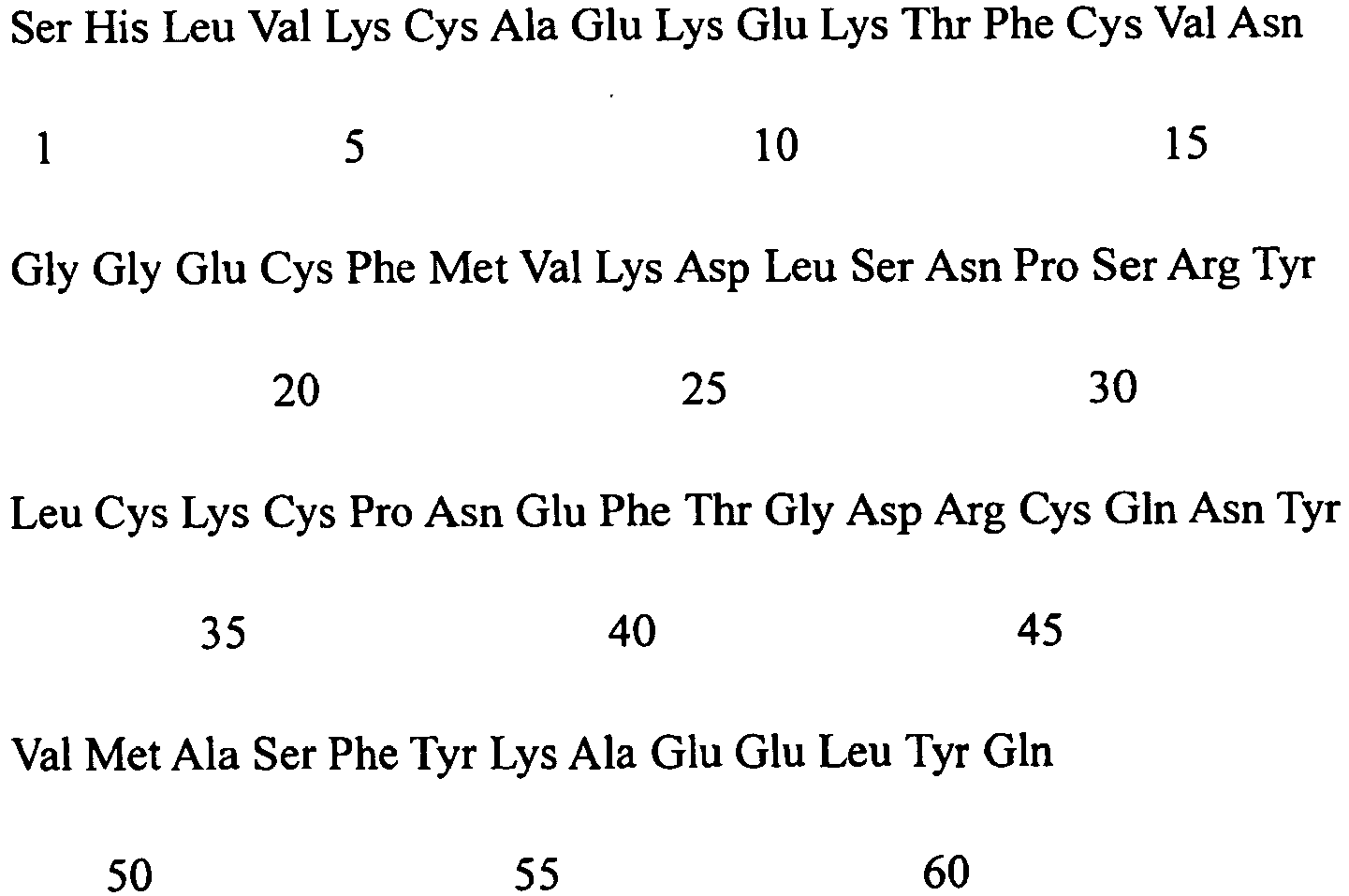
- <210> SEQ ID NO 2
<211> LENGTH: 23
<212> TYPE: PROTEIN
<213> ORGANISM: Homo sapiens - <400> SEQUENCE: 1

Claims (12)
- Neuregulin 1 protein for use in a method for preventing, treating or delaying heart failure in mammals in need thereof, wherein the method comprises administering to the mammal in need thereof said neuregulin 1 protein in an amount:a) from about 0.3 µg/kg/day to about 2.4 µg/kg/day;b) from about 6 EU/kg/day to about 48 EU/kg/day; orc) from about 0.04 nmol/kg/day to about 0.34 nmol/kg/day.
- The neuregulin 1 protein for use of claim 1, wherein said neuregulin 1 protein is neuregulin 102 isoform.
- The neuregulin 1 protein for use of claim 1, wherein said neuregulin 1 protein comprises the amino acid sequence set forth in SEQ ID NO: 1.
- The neuregulin 1 protein for use of claim 1, wherein said neuregulin 1 protein consists of the amino acid sequence set forth in SEQ ID NO: 1.
- The neuregulin 1 protein for use of claim 1, wherein said neuregulin 1 protein is administered to the mammal intravenously.
- The neuregulin 1 protein for use of claim 1, wherein said neuregulin 1 protein is administered to the mammal for one day or multiple days.
- The neuregulin 1 protein for use of claim 6, wherein said neuregulin 1 protein is administered to the mammal for at least 10 days.
- The neuregulin 1 protein for use of claim 7, wherein said neuregulin 1 protein is administered to the mammal for from 10 minutes to 12 hours per day.
- The neuregulin 1 protein for use of claim 8, wherein said neuregulin 1 protein is administered to the mammal 10 hours per day for 10 days.
- The neuregulin 1 protein for use of claim 1, wherein the mammal has or is suspected of having heart failure.
- The neuregulin 1 protein for use of claim 10, wherein the heart failure is caused by one or more ischaemic, congenital, rheumatic, idiopathic, viral or toxic factors.
- The neuregulin 1 protein for use of claim 1, wherein the mammal is human.
Priority Applications (1)
| Application Number | Priority Date | Filing Date | Title |
|---|---|---|---|
| EP16160687.6A EP3087998B1 (en) | 2009-06-09 | 2010-06-12 | Neuregulin based methods for treating heart failure |
Applications Claiming Priority (3)
| Application Number | Priority Date | Filing Date | Title |
|---|---|---|---|
| CN200910057390 | 2009-06-09 | ||
| US23684909P | 2009-08-25 | 2009-08-25 | |
| PCT/CN2010/000845 WO2010142141A1 (en) | 2009-06-09 | 2010-06-12 | Neuregulin based methods for treating heart failure |
Related Child Applications (2)
| Application Number | Title | Priority Date | Filing Date |
|---|---|---|---|
| EP16160687.6A Division-Into EP3087998B1 (en) | 2009-06-09 | 2010-06-12 | Neuregulin based methods for treating heart failure |
| EP16160687.6A Division EP3087998B1 (en) | 2009-06-09 | 2010-06-12 | Neuregulin based methods for treating heart failure |
Publications (3)
| Publication Number | Publication Date |
|---|---|
| EP2440236A1 EP2440236A1 (en) | 2012-04-18 |
| EP2440236A4 EP2440236A4 (en) | 2013-03-27 |
| EP2440236B1 true EP2440236B1 (en) | 2016-05-04 |
Family
ID=43308394
Family Applications (2)
| Application Number | Title | Priority Date | Filing Date |
|---|---|---|---|
| EP10785654.4A Active EP2440236B1 (en) | 2009-06-09 | 2010-06-12 | Neuregulin based methods for treating heart failure |
| EP16160687.6A Active EP3087998B1 (en) | 2009-06-09 | 2010-06-12 | Neuregulin based methods for treating heart failure |
Family Applications After (1)
| Application Number | Title | Priority Date | Filing Date |
|---|---|---|---|
| EP16160687.6A Active EP3087998B1 (en) | 2009-06-09 | 2010-06-12 | Neuregulin based methods for treating heart failure |
Country Status (3)
| Country | Link |
|---|---|
| EP (2) | EP2440236B1 (en) |
| ES (1) | ES2575125T3 (en) |
| WO (1) | WO2010142141A1 (en) |
Families Citing this family (11)
| Publication number | Priority date | Publication date | Assignee | Title |
|---|---|---|---|---|
| BRPI0620819A2 (en) | 2005-12-30 | 2011-11-22 | Zensun Shangai Science & Technology Ltd | use of a sustained release neuregulin (nrg), nrg at a sustained release from a constant low dosage, and, sustained release composition to prevent, treat or delay a disease or disorder in a mammal |
| JP2013503110A (en) | 2009-06-09 | 2013-01-31 | ゼンサン (シャンハイ) サイエンス アンド テクノロジー リミテッド | Treatment of heart failure based on neuregulin |
| JP6096262B2 (en) | 2009-08-25 | 2017-03-15 | ゼンサン (シャンハイ) サイエンス アンド テクノロジー,シーオー.,エルティーディー. | Treatment of heart failure based on neuregulin |
| CN102139095A (en) | 2010-01-29 | 2011-08-03 | 上海泽生科技开发有限公司 | Methods and compositions for the prevention, treatment or delay of cardiac ischemia reperfusion injury using neuregulin |
| WO2013053076A1 (en) * | 2011-10-10 | 2013-04-18 | Zensun (Shanghai)Science & Technology Limited | Compositions and methods for treating heart failure |
| RU2650635C2 (en) * | 2012-10-08 | 2018-04-16 | Цзэньсунь (Шанхай) Сайенс Энд Текнолоджи, Ко., Лтд. | Compositions and methods for treating heart failure in diabetic patients |
| WO2014187342A1 (en) | 2013-05-22 | 2014-11-27 | Zensun (Shanghai) Science & Technology, Ltd. | Extended Release of Neuregulin for Treating Heart Failure |
| CN104758922A (en) | 2014-01-03 | 2015-07-08 | 上海泽生科技开发有限公司 | Formula of neuregulin preparation |
| CN105497876B (en) | 2014-09-24 | 2021-01-15 | 上海泽生科技开发股份有限公司 | Methods and compositions for the prevention, treatment or delay of cardiac ventricular arrhythmias with neuregulin |
| CN105561298A (en) * | 2014-10-17 | 2016-05-11 | 上海泽生科技开发有限公司 | Methods and compositions of neuregulin for preventing, treating or delaying heart failure with preserved ejection fraction |
| AR121035A1 (en) | 2019-04-01 | 2022-04-13 | Lilly Co Eli | NEUREGULIN-4 COMPOUNDS AND METHODS OF USE |
Family Cites Families (12)
| Publication number | Priority date | Publication date | Assignee | Title |
|---|---|---|---|---|
| US5716930A (en) | 1991-04-10 | 1998-02-10 | Ludwig Institute For Cancer Research | Glial growth factors |
| US5530109A (en) | 1991-04-10 | 1996-06-25 | Ludwig Institute For Cancer Research | DNA encoding glial mitogenic factors |
| US5834229A (en) | 1991-05-24 | 1998-11-10 | Genentech, Inc. | Nucleic acids vectors and host cells encoding and expressing heregulin 2-α |
| US5912326A (en) | 1995-09-08 | 1999-06-15 | President And Fellows Of Harvard College | Cerebellum-derived growth factors |
| AUPP785098A0 (en) * | 1998-12-21 | 1999-01-21 | Victor Chang Cardiac Research Institute, The | Treatment of heart disease |
| US6635249B1 (en) | 1999-04-23 | 2003-10-21 | Cenes Pharmaceuticals, Inc. | Methods for treating congestive heart failure |
| CN1138785C (en) * | 1999-06-04 | 2004-02-18 | 周明东 | Application of growth factor neuregulin and its analogs |
| WO2003099320A1 (en) | 2002-05-24 | 2003-12-04 | Zensun (Shanghai) Sci-Tech.Ltd | Neuregulin based methods and compositions for treating viral myocarditis and dilated cardiomyopathy |
| US20070213264A1 (en) * | 2005-12-02 | 2007-09-13 | Mingdong Zhou | Neuregulin variants and methods of screening and using thereof |
| CN101394861A (en) * | 2005-12-30 | 2009-03-25 | 上海泽生科技开发有限公司 | Sustained administration of neuregulin can improve cardiac function |
| BRPI0620819A2 (en) * | 2005-12-30 | 2011-11-22 | Zensun Shangai Science & Technology Ltd | use of a sustained release neuregulin (nrg), nrg at a sustained release from a constant low dosage, and, sustained release composition to prevent, treat or delay a disease or disorder in a mammal |
| US20090156488A1 (en) * | 2007-09-12 | 2009-06-18 | Zensun (Shanghai) Science & Technology Limited | Use of neuregulin for organ preservation |
-
2010
- 2010-06-12 EP EP10785654.4A patent/EP2440236B1/en active Active
- 2010-06-12 WO PCT/CN2010/000845 patent/WO2010142141A1/en not_active Ceased
- 2010-06-12 EP EP16160687.6A patent/EP3087998B1/en active Active
- 2010-06-12 ES ES10785654.4T patent/ES2575125T3/en active Active
Non-Patent Citations (1)
| Title |
|---|
| None * |
Also Published As
| Publication number | Publication date |
|---|---|
| EP2440236A4 (en) | 2013-03-27 |
| WO2010142141A1 (en) | 2010-12-16 |
| EP2440236A1 (en) | 2012-04-18 |
| EP3087998B1 (en) | 2019-09-04 |
| ES2575125T3 (en) | 2016-06-24 |
| EP3087998A1 (en) | 2016-11-02 |
Similar Documents
| Publication | Publication Date | Title |
|---|---|---|
| US9655949B2 (en) | Neuregulin based methods for treating heart failure | |
| US12133882B2 (en) | Neuregulin based methods for treating heart failure | |
| EP2440236B1 (en) | Neuregulin based methods for treating heart failure | |
| JP7761964B2 (en) | Composition for treating heart failure | |
| US12208158B2 (en) | Extended release of neuregulin for treating heart failure | |
| US20210347840A1 (en) | Compositions and methods for treating heart failure in diabetic patients | |
| EP3199174B1 (en) | Uses of neuregulin in preventing, treating or delaying ventricular arrhythmia | |
| KR20220145870A (en) | Methods for preventing, treating or delaying heart failure by using neuregulin, and compositions | |
| HK1231890B (en) | Neuregulin for treating heart failure |
Legal Events
| Date | Code | Title | Description |
|---|---|---|---|
| PUAI | Public reference made under article 153(3) epc to a published international application that has entered the european phase |
Free format text: ORIGINAL CODE: 0009012 |
|
| 17P | Request for examination filed |
Effective date: 20111229 |
|
| AK | Designated contracting states |
Kind code of ref document: A1 Designated state(s): AL AT BE BG CH CY CZ DE DK EE ES FI FR GB GR HR HU IE IS IT LI LT LU LV MC MK MT NL NO PL PT RO SE SI SK SM TR |
|
| DAX | Request for extension of the european patent (deleted) | ||
| A4 | Supplementary search report drawn up and despatched |
Effective date: 20130222 |
|
| RIC1 | Information provided on ipc code assigned before grant |
Ipc: A61P 9/04 20060101ALI20130218BHEP Ipc: A61K 38/18 20060101AFI20130218BHEP |
|
| 17Q | First examination report despatched |
Effective date: 20140417 |
|
| GRAP | Despatch of communication of intention to grant a patent |
Free format text: ORIGINAL CODE: EPIDOSNIGR1 |
|
| INTG | Intention to grant announced |
Effective date: 20151113 |
|
| GRAS | Grant fee paid |
Free format text: ORIGINAL CODE: EPIDOSNIGR3 |
|
| GRAJ | Information related to disapproval of communication of intention to grant by the applicant or resumption of examination proceedings by the epo deleted |
Free format text: ORIGINAL CODE: EPIDOSDIGR1 |
|
| GRAR | Information related to intention to grant a patent recorded |
Free format text: ORIGINAL CODE: EPIDOSNIGR71 |
|
| GRAA | (expected) grant |
Free format text: ORIGINAL CODE: 0009210 |
|
| INTG | Intention to grant announced |
Effective date: 20160315 |
|
| AK | Designated contracting states |
Kind code of ref document: B1 Designated state(s): AL AT BE BG CH CY CZ DE DK EE ES FI FR GB GR HR HU IE IS IT LI LT LU LV MC MK MT NL NO PL PT RO SE SI SK SM TR |
|
| REG | Reference to a national code |
Ref country code: GB Ref legal event code: FG4D |
|
| REG | Reference to a national code |
Ref country code: CH Ref legal event code: EP |
|
| REG | Reference to a national code |
Ref country code: AT Ref legal event code: REF Ref document number: 796295 Country of ref document: AT Kind code of ref document: T Effective date: 20160515 |
|
| REG | Reference to a national code |
Ref country code: IE Ref legal event code: FG4D |
|
| REG | Reference to a national code |
Ref country code: DE Ref legal event code: R096 Ref document number: 602010033123 Country of ref document: DE |
|
| REG | Reference to a national code |
Ref country code: ES Ref legal event code: FG2A Ref document number: 2575125 Country of ref document: ES Kind code of ref document: T3 Effective date: 20160624 |
|
| REG | Reference to a national code |
Ref country code: FR Ref legal event code: PLFP Year of fee payment: 7 |
|
| REG | Reference to a national code |
Ref country code: SE Ref legal event code: TRGR |
|
| REG | Reference to a national code |
Ref country code: CH Ref legal event code: NV Representative=s name: KIRKER AND CIE S.A., CH |
|
| REG | Reference to a national code |
Ref country code: NL Ref legal event code: MP Effective date: 20160504 |
|
| REG | Reference to a national code |
Ref country code: LT Ref legal event code: MG4D |
|
| PG25 | Lapsed in a contracting state [announced via postgrant information from national office to epo] |
Ref country code: NL Free format text: LAPSE BECAUSE OF FAILURE TO SUBMIT A TRANSLATION OF THE DESCRIPTION OR TO PAY THE FEE WITHIN THE PRESCRIBED TIME-LIMIT Effective date: 20160504 Ref country code: FI Free format text: LAPSE BECAUSE OF FAILURE TO SUBMIT A TRANSLATION OF THE DESCRIPTION OR TO PAY THE FEE WITHIN THE PRESCRIBED TIME-LIMIT Effective date: 20160504 Ref country code: NO Free format text: LAPSE BECAUSE OF FAILURE TO SUBMIT A TRANSLATION OF THE DESCRIPTION OR TO PAY THE FEE WITHIN THE PRESCRIBED TIME-LIMIT Effective date: 20160804 Ref country code: LT Free format text: LAPSE BECAUSE OF FAILURE TO SUBMIT A TRANSLATION OF THE DESCRIPTION OR TO PAY THE FEE WITHIN THE PRESCRIBED TIME-LIMIT Effective date: 20160504 |
|
| REG | Reference to a national code |
Ref country code: AT Ref legal event code: MK05 Ref document number: 796295 Country of ref document: AT Kind code of ref document: T Effective date: 20160504 |
|
| PG25 | Lapsed in a contracting state [announced via postgrant information from national office to epo] |
Ref country code: GR Free format text: LAPSE BECAUSE OF FAILURE TO SUBMIT A TRANSLATION OF THE DESCRIPTION OR TO PAY THE FEE WITHIN THE PRESCRIBED TIME-LIMIT Effective date: 20160805 Ref country code: LV Free format text: LAPSE BECAUSE OF FAILURE TO SUBMIT A TRANSLATION OF THE DESCRIPTION OR TO PAY THE FEE WITHIN THE PRESCRIBED TIME-LIMIT Effective date: 20160504 Ref country code: HR Free format text: LAPSE BECAUSE OF FAILURE TO SUBMIT A TRANSLATION OF THE DESCRIPTION OR TO PAY THE FEE WITHIN THE PRESCRIBED TIME-LIMIT Effective date: 20160504 Ref country code: PT Free format text: LAPSE BECAUSE OF FAILURE TO SUBMIT A TRANSLATION OF THE DESCRIPTION OR TO PAY THE FEE WITHIN THE PRESCRIBED TIME-LIMIT Effective date: 20160905 |
|
| PG25 | Lapsed in a contracting state [announced via postgrant information from national office to epo] |
Ref country code: BE Free format text: LAPSE BECAUSE OF NON-PAYMENT OF DUE FEES Effective date: 20160630 |
|
| PG25 | Lapsed in a contracting state [announced via postgrant information from national office to epo] |
Ref country code: DK Free format text: LAPSE BECAUSE OF FAILURE TO SUBMIT A TRANSLATION OF THE DESCRIPTION OR TO PAY THE FEE WITHIN THE PRESCRIBED TIME-LIMIT Effective date: 20160504 Ref country code: SK Free format text: LAPSE BECAUSE OF FAILURE TO SUBMIT A TRANSLATION OF THE DESCRIPTION OR TO PAY THE FEE WITHIN THE PRESCRIBED TIME-LIMIT Effective date: 20160504 Ref country code: EE Free format text: LAPSE BECAUSE OF FAILURE TO SUBMIT A TRANSLATION OF THE DESCRIPTION OR TO PAY THE FEE WITHIN THE PRESCRIBED TIME-LIMIT Effective date: 20160504 Ref country code: RO Free format text: LAPSE BECAUSE OF FAILURE TO SUBMIT A TRANSLATION OF THE DESCRIPTION OR TO PAY THE FEE WITHIN THE PRESCRIBED TIME-LIMIT Effective date: 20160504 Ref country code: CZ Free format text: LAPSE BECAUSE OF FAILURE TO SUBMIT A TRANSLATION OF THE DESCRIPTION OR TO PAY THE FEE WITHIN THE PRESCRIBED TIME-LIMIT Effective date: 20160504 |
|
| REG | Reference to a national code |
Ref country code: DE Ref legal event code: R097 Ref document number: 602010033123 Country of ref document: DE |
|
| PG25 | Lapsed in a contracting state [announced via postgrant information from national office to epo] |
Ref country code: SM Free format text: LAPSE BECAUSE OF FAILURE TO SUBMIT A TRANSLATION OF THE DESCRIPTION OR TO PAY THE FEE WITHIN THE PRESCRIBED TIME-LIMIT Effective date: 20160504 Ref country code: BE Free format text: LAPSE BECAUSE OF FAILURE TO SUBMIT A TRANSLATION OF THE DESCRIPTION OR TO PAY THE FEE WITHIN THE PRESCRIBED TIME-LIMIT Effective date: 20160504 Ref country code: PL Free format text: LAPSE BECAUSE OF FAILURE TO SUBMIT A TRANSLATION OF THE DESCRIPTION OR TO PAY THE FEE WITHIN THE PRESCRIBED TIME-LIMIT Effective date: 20160504 Ref country code: AT Free format text: LAPSE BECAUSE OF FAILURE TO SUBMIT A TRANSLATION OF THE DESCRIPTION OR TO PAY THE FEE WITHIN THE PRESCRIBED TIME-LIMIT Effective date: 20160504 |
|
| PLBE | No opposition filed within time limit |
Free format text: ORIGINAL CODE: 0009261 |
|
| STAA | Information on the status of an ep patent application or granted ep patent |
Free format text: STATUS: NO OPPOSITION FILED WITHIN TIME LIMIT |
|
| REG | Reference to a national code |
Ref country code: IE Ref legal event code: MM4A |
|
| PG25 | Lapsed in a contracting state [announced via postgrant information from national office to epo] |
Ref country code: MC Free format text: LAPSE BECAUSE OF FAILURE TO SUBMIT A TRANSLATION OF THE DESCRIPTION OR TO PAY THE FEE WITHIN THE PRESCRIBED TIME-LIMIT Effective date: 20160504 |
|
| 26N | No opposition filed |
Effective date: 20170207 |
|
| PG25 | Lapsed in a contracting state [announced via postgrant information from national office to epo] |
Ref country code: IE Free format text: LAPSE BECAUSE OF NON-PAYMENT OF DUE FEES Effective date: 20160612 Ref country code: SI Free format text: LAPSE BECAUSE OF FAILURE TO SUBMIT A TRANSLATION OF THE DESCRIPTION OR TO PAY THE FEE WITHIN THE PRESCRIBED TIME-LIMIT Effective date: 20160504 |
|
| REG | Reference to a national code |
Ref country code: FR Ref legal event code: PLFP Year of fee payment: 8 |
|
| PG25 | Lapsed in a contracting state [announced via postgrant information from national office to epo] |
Ref country code: HU Free format text: LAPSE BECAUSE OF FAILURE TO SUBMIT A TRANSLATION OF THE DESCRIPTION OR TO PAY THE FEE WITHIN THE PRESCRIBED TIME-LIMIT; INVALID AB INITIO Effective date: 20100612 Ref country code: CY Free format text: LAPSE BECAUSE OF FAILURE TO SUBMIT A TRANSLATION OF THE DESCRIPTION OR TO PAY THE FEE WITHIN THE PRESCRIBED TIME-LIMIT Effective date: 20160504 |
|
| REG | Reference to a national code |
Ref country code: FR Ref legal event code: PLFP Year of fee payment: 9 |
|
| PG25 | Lapsed in a contracting state [announced via postgrant information from national office to epo] |
Ref country code: IS Free format text: LAPSE BECAUSE OF FAILURE TO SUBMIT A TRANSLATION OF THE DESCRIPTION OR TO PAY THE FEE WITHIN THE PRESCRIBED TIME-LIMIT Effective date: 20160504 Ref country code: MK Free format text: LAPSE BECAUSE OF FAILURE TO SUBMIT A TRANSLATION OF THE DESCRIPTION OR TO PAY THE FEE WITHIN THE PRESCRIBED TIME-LIMIT Effective date: 20160504 Ref country code: LU Free format text: LAPSE BECAUSE OF NON-PAYMENT OF DUE FEES Effective date: 20160612 Ref country code: MT Free format text: LAPSE BECAUSE OF NON-PAYMENT OF DUE FEES Effective date: 20160630 Ref country code: TR Free format text: LAPSE BECAUSE OF FAILURE TO SUBMIT A TRANSLATION OF THE DESCRIPTION OR TO PAY THE FEE WITHIN THE PRESCRIBED TIME-LIMIT Effective date: 20160504 |
|
| PG25 | Lapsed in a contracting state [announced via postgrant information from national office to epo] |
Ref country code: BG Free format text: LAPSE BECAUSE OF FAILURE TO SUBMIT A TRANSLATION OF THE DESCRIPTION OR TO PAY THE FEE WITHIN THE PRESCRIBED TIME-LIMIT Effective date: 20160504 |
|
| PG25 | Lapsed in a contracting state [announced via postgrant information from national office to epo] |
Ref country code: AL Free format text: LAPSE BECAUSE OF FAILURE TO SUBMIT A TRANSLATION OF THE DESCRIPTION OR TO PAY THE FEE WITHIN THE PRESCRIBED TIME-LIMIT Effective date: 20160504 |
|
| P01 | Opt-out of the competence of the unified patent court (upc) registered |
Effective date: 20230527 |
|
| PGFP | Annual fee paid to national office [announced via postgrant information from national office to epo] |
Ref country code: DE Payment date: 20250618 Year of fee payment: 16 |
|
| PGFP | Annual fee paid to national office [announced via postgrant information from national office to epo] |
Ref country code: GB Payment date: 20250618 Year of fee payment: 16 |
|
| PGFP | Annual fee paid to national office [announced via postgrant information from national office to epo] |
Ref country code: FR Payment date: 20250624 Year of fee payment: 16 |
|
| PGFP | Annual fee paid to national office [announced via postgrant information from national office to epo] |
Ref country code: SE Payment date: 20250618 Year of fee payment: 16 |
|
| PGFP | Annual fee paid to national office [announced via postgrant information from national office to epo] |
Ref country code: ES Payment date: 20250728 Year of fee payment: 16 |
|
| PGFP | Annual fee paid to national office [announced via postgrant information from national office to epo] |
Ref country code: IT Payment date: 20250624 Year of fee payment: 16 |
|
| PGFP | Annual fee paid to national office [announced via postgrant information from national office to epo] |
Ref country code: CH Payment date: 20250701 Year of fee payment: 16 |