EP2394643B1 - Sustained-release formulations of topiramate - Google Patents
Sustained-release formulations of topiramate Download PDFInfo
- Publication number
- EP2394643B1 EP2394643B1 EP11179776.7A EP11179776A EP2394643B1 EP 2394643 B1 EP2394643 B1 EP 2394643B1 EP 11179776 A EP11179776 A EP 11179776A EP 2394643 B1 EP2394643 B1 EP 2394643B1
- Authority
- EP
- European Patent Office
- Prior art keywords
- formulation
- topiramate
- release
- beads
- population
- Prior art date
- Legal status (The legal status is an assumption and is not a legal conclusion. Google has not performed a legal analysis and makes no representation as to the accuracy of the status listed.)
- Active
Links
Images


Classifications
-
- A—HUMAN NECESSITIES
- A61—MEDICAL OR VETERINARY SCIENCE; HYGIENE
- A61K—PREPARATIONS FOR MEDICAL, DENTAL OR TOILETRY PURPOSES
- A61K9/00—Medicinal preparations characterised by special physical form
- A61K9/48—Preparations in capsules, e.g. of gelatin, of chocolate
- A61K9/50—Microcapsules having a gas, liquid or semi-solid filling; Solid microparticles or pellets surrounded by a distinct coating layer, e.g. coated microspheres, coated drug crystals
- A61K9/5005—Wall or coating material
- A61K9/5021—Organic macromolecular compounds
- A61K9/5036—Polysaccharides, e.g. gums, alginate; Cyclodextrin
- A61K9/5042—Cellulose; Cellulose derivatives, e.g. phthalate or acetate succinate esters of hydroxypropyl methylcellulose
-
- A—HUMAN NECESSITIES
- A61—MEDICAL OR VETERINARY SCIENCE; HYGIENE
- A61K—PREPARATIONS FOR MEDICAL, DENTAL OR TOILETRY PURPOSES
- A61K31/00—Medicinal preparations containing organic active ingredients
- A61K31/33—Heterocyclic compounds
- A61K31/335—Heterocyclic compounds having oxygen as the only ring hetero atom, e.g. fungichromin
- A61K31/357—Heterocyclic compounds having oxygen as the only ring hetero atom, e.g. fungichromin having two or more oxygen atoms in the same ring, e.g. crown ethers, guanadrel
-
- A—HUMAN NECESSITIES
- A61—MEDICAL OR VETERINARY SCIENCE; HYGIENE
- A61K—PREPARATIONS FOR MEDICAL, DENTAL OR TOILETRY PURPOSES
- A61K31/00—Medicinal preparations containing organic active ingredients
- A61K31/70—Carbohydrates; Sugars; Derivatives thereof
- A61K31/7042—Compounds having saccharide radicals and heterocyclic rings
- A61K31/7048—Compounds having saccharide radicals and heterocyclic rings having oxygen as a ring hetero atom, e.g. leucoglucosan, hesperidin, erythromycin, nystatin, digitoxin or digoxin
-
- A—HUMAN NECESSITIES
- A61—MEDICAL OR VETERINARY SCIENCE; HYGIENE
- A61K—PREPARATIONS FOR MEDICAL, DENTAL OR TOILETRY PURPOSES
- A61K45/00—Medicinal preparations containing active ingredients not provided for in groups A61K31/00 - A61K41/00
- A61K45/06—Mixtures of active ingredients without chemical characterisation, e.g. antiphlogistics and cardiaca
-
- A—HUMAN NECESSITIES
- A61—MEDICAL OR VETERINARY SCIENCE; HYGIENE
- A61K—PREPARATIONS FOR MEDICAL, DENTAL OR TOILETRY PURPOSES
- A61K47/00—Medicinal preparations characterised by the non-active ingredients used, e.g. carriers or inert additives; Targeting or modifying agents chemically bound to the active ingredient
- A61K47/50—Medicinal preparations characterised by the non-active ingredients used, e.g. carriers or inert additives; Targeting or modifying agents chemically bound to the active ingredient the non-active ingredient being chemically bound to the active ingredient, e.g. polymer-drug conjugates
- A61K47/69—Medicinal preparations characterised by the non-active ingredients used, e.g. carriers or inert additives; Targeting or modifying agents chemically bound to the active ingredient the non-active ingredient being chemically bound to the active ingredient, e.g. polymer-drug conjugates the conjugate being characterised by physical or galenical forms, e.g. emulsion, particle, inclusion complex, stent or kit
- A61K47/6949—Medicinal preparations characterised by the non-active ingredients used, e.g. carriers or inert additives; Targeting or modifying agents chemically bound to the active ingredient the non-active ingredient being chemically bound to the active ingredient, e.g. polymer-drug conjugates the conjugate being characterised by physical or galenical forms, e.g. emulsion, particle, inclusion complex, stent or kit inclusion complexes, e.g. clathrates, cavitates or fullerenes
- A61K47/6951—Medicinal preparations characterised by the non-active ingredients used, e.g. carriers or inert additives; Targeting or modifying agents chemically bound to the active ingredient the non-active ingredient being chemically bound to the active ingredient, e.g. polymer-drug conjugates the conjugate being characterised by physical or galenical forms, e.g. emulsion, particle, inclusion complex, stent or kit inclusion complexes, e.g. clathrates, cavitates or fullerenes using cyclodextrin
-
- A—HUMAN NECESSITIES
- A61—MEDICAL OR VETERINARY SCIENCE; HYGIENE
- A61K—PREPARATIONS FOR MEDICAL, DENTAL OR TOILETRY PURPOSES
- A61K9/00—Medicinal preparations characterised by special physical form
- A61K9/14—Particulate form, e.g. powders, Processes for size reducing of pure drugs or the resulting products, Pure drug nanoparticles
- A61K9/16—Agglomerates; Granulates; Microbeadlets ; Microspheres; Pellets; Solid products obtained by spray drying, spray freeze drying, spray congealing,(multiple) emulsion solvent evaporation or extraction
- A61K9/1605—Excipients; Inactive ingredients
- A61K9/1629—Organic macromolecular compounds
- A61K9/1652—Polysaccharides, e.g. alginate, cellulose derivatives; Cyclodextrin
-
- A—HUMAN NECESSITIES
- A61—MEDICAL OR VETERINARY SCIENCE; HYGIENE
- A61K—PREPARATIONS FOR MEDICAL, DENTAL OR TOILETRY PURPOSES
- A61K9/00—Medicinal preparations characterised by special physical form
- A61K9/14—Particulate form, e.g. powders, Processes for size reducing of pure drugs or the resulting products, Pure drug nanoparticles
- A61K9/16—Agglomerates; Granulates; Microbeadlets ; Microspheres; Pellets; Solid products obtained by spray drying, spray freeze drying, spray congealing,(multiple) emulsion solvent evaporation or extraction
- A61K9/167—Agglomerates; Granulates; Microbeadlets ; Microspheres; Pellets; Solid products obtained by spray drying, spray freeze drying, spray congealing,(multiple) emulsion solvent evaporation or extraction with an outer layer or coating comprising drug; with chemically bound drugs or non-active substances on their surface
- A61K9/1676—Agglomerates; Granulates; Microbeadlets ; Microspheres; Pellets; Solid products obtained by spray drying, spray freeze drying, spray congealing,(multiple) emulsion solvent evaporation or extraction with an outer layer or coating comprising drug; with chemically bound drugs or non-active substances on their surface having a drug-free core with discrete complete coating layer containing drug
-
- A—HUMAN NECESSITIES
- A61—MEDICAL OR VETERINARY SCIENCE; HYGIENE
- A61K—PREPARATIONS FOR MEDICAL, DENTAL OR TOILETRY PURPOSES
- A61K9/00—Medicinal preparations characterised by special physical form
- A61K9/20—Pills, tablets, discs, rods
- A61K9/2072—Pills, tablets, discs, rods characterised by shape, structure or size; Tablets with holes, special break lines or identification marks; Partially coated tablets; Disintegrating flat shaped forms
- A61K9/2086—Layered tablets, e.g. bilayer tablets; Tablets of the type inert core-active coat
- A61K9/209—Layered tablets, e.g. bilayer tablets; Tablets of the type inert core-active coat containing drug in at least two layers or in the core and in at least one outer layer
-
- A—HUMAN NECESSITIES
- A61—MEDICAL OR VETERINARY SCIENCE; HYGIENE
- A61K—PREPARATIONS FOR MEDICAL, DENTAL OR TOILETRY PURPOSES
- A61K9/00—Medicinal preparations characterised by special physical form
- A61K9/48—Preparations in capsules, e.g. of gelatin, of chocolate
- A61K9/50—Microcapsules having a gas, liquid or semi-solid filling; Solid microparticles or pellets surrounded by a distinct coating layer, e.g. coated microspheres, coated drug crystals
- A61K9/5005—Wall or coating material
- A61K9/5021—Organic macromolecular compounds
- A61K9/5036—Polysaccharides, e.g. gums, alginate; Cyclodextrin
- A61K9/5042—Cellulose; Cellulose derivatives, e.g. phthalate or acetate succinate esters of hydroxypropyl methylcellulose
- A61K9/5047—Cellulose ethers containing no ester groups, e.g. hydroxypropyl methylcellulose
-
- A—HUMAN NECESSITIES
- A61—MEDICAL OR VETERINARY SCIENCE; HYGIENE
- A61K—PREPARATIONS FOR MEDICAL, DENTAL OR TOILETRY PURPOSES
- A61K9/00—Medicinal preparations characterised by special physical form
- A61K9/48—Preparations in capsules, e.g. of gelatin, of chocolate
- A61K9/50—Microcapsules having a gas, liquid or semi-solid filling; Solid microparticles or pellets surrounded by a distinct coating layer, e.g. coated microspheres, coated drug crystals
- A61K9/5073—Microcapsules having a gas, liquid or semi-solid filling; Solid microparticles or pellets surrounded by a distinct coating layer, e.g. coated microspheres, coated drug crystals having two or more different coatings optionally including drug-containing subcoatings
- A61K9/5078—Microcapsules having a gas, liquid or semi-solid filling; Solid microparticles or pellets surrounded by a distinct coating layer, e.g. coated microspheres, coated drug crystals having two or more different coatings optionally including drug-containing subcoatings with drug-free core
-
- A—HUMAN NECESSITIES
- A61—MEDICAL OR VETERINARY SCIENCE; HYGIENE
- A61K—PREPARATIONS FOR MEDICAL, DENTAL OR TOILETRY PURPOSES
- A61K9/00—Medicinal preparations characterised by special physical form
- A61K9/48—Preparations in capsules, e.g. of gelatin, of chocolate
- A61K9/50—Microcapsules having a gas, liquid or semi-solid filling; Solid microparticles or pellets surrounded by a distinct coating layer, e.g. coated microspheres, coated drug crystals
- A61K9/5084—Mixtures of one or more drugs in different galenical forms, at least one of which being granules, microcapsules or (coated) microparticles according to A61K9/16 or A61K9/50, e.g. for obtaining a specific release pattern or for combining different drugs
-
- A—HUMAN NECESSITIES
- A61—MEDICAL OR VETERINARY SCIENCE; HYGIENE
- A61P—SPECIFIC THERAPEUTIC ACTIVITY OF CHEMICAL COMPOUNDS OR MEDICINAL PREPARATIONS
- A61P1/00—Drugs for disorders of the alimentary tract or the digestive system
- A61P1/14—Prodigestives, e.g. acids, enzymes, appetite stimulants, antidyspeptics, tonics, antiflatulents
-
- A—HUMAN NECESSITIES
- A61—MEDICAL OR VETERINARY SCIENCE; HYGIENE
- A61P—SPECIFIC THERAPEUTIC ACTIVITY OF CHEMICAL COMPOUNDS OR MEDICINAL PREPARATIONS
- A61P11/00—Drugs for disorders of the respiratory system
- A61P11/06—Antiasthmatics
-
- A—HUMAN NECESSITIES
- A61—MEDICAL OR VETERINARY SCIENCE; HYGIENE
- A61P—SPECIFIC THERAPEUTIC ACTIVITY OF CHEMICAL COMPOUNDS OR MEDICINAL PREPARATIONS
- A61P11/00—Drugs for disorders of the respiratory system
- A61P11/16—Central respiratory analeptics
-
- A—HUMAN NECESSITIES
- A61—MEDICAL OR VETERINARY SCIENCE; HYGIENE
- A61P—SPECIFIC THERAPEUTIC ACTIVITY OF CHEMICAL COMPOUNDS OR MEDICINAL PREPARATIONS
- A61P15/00—Drugs for genital or sexual disorders; Contraceptives
-
- A—HUMAN NECESSITIES
- A61—MEDICAL OR VETERINARY SCIENCE; HYGIENE
- A61P—SPECIFIC THERAPEUTIC ACTIVITY OF CHEMICAL COMPOUNDS OR MEDICINAL PREPARATIONS
- A61P17/00—Drugs for dermatological disorders
-
- A—HUMAN NECESSITIES
- A61—MEDICAL OR VETERINARY SCIENCE; HYGIENE
- A61P—SPECIFIC THERAPEUTIC ACTIVITY OF CHEMICAL COMPOUNDS OR MEDICINAL PREPARATIONS
- A61P17/00—Drugs for dermatological disorders
- A61P17/02—Drugs for dermatological disorders for treating wounds, ulcers, burns, scars, keloids, or the like
-
- A—HUMAN NECESSITIES
- A61—MEDICAL OR VETERINARY SCIENCE; HYGIENE
- A61P—SPECIFIC THERAPEUTIC ACTIVITY OF CHEMICAL COMPOUNDS OR MEDICINAL PREPARATIONS
- A61P21/00—Drugs for disorders of the muscular or neuromuscular system
- A61P21/02—Muscle relaxants, e.g. for tetanus or cramps
-
- A—HUMAN NECESSITIES
- A61—MEDICAL OR VETERINARY SCIENCE; HYGIENE
- A61P—SPECIFIC THERAPEUTIC ACTIVITY OF CHEMICAL COMPOUNDS OR MEDICINAL PREPARATIONS
- A61P25/00—Drugs for disorders of the nervous system
-
- A—HUMAN NECESSITIES
- A61—MEDICAL OR VETERINARY SCIENCE; HYGIENE
- A61P—SPECIFIC THERAPEUTIC ACTIVITY OF CHEMICAL COMPOUNDS OR MEDICINAL PREPARATIONS
- A61P25/00—Drugs for disorders of the nervous system
- A61P25/02—Drugs for disorders of the nervous system for peripheral neuropathies
-
- A—HUMAN NECESSITIES
- A61—MEDICAL OR VETERINARY SCIENCE; HYGIENE
- A61P—SPECIFIC THERAPEUTIC ACTIVITY OF CHEMICAL COMPOUNDS OR MEDICINAL PREPARATIONS
- A61P25/00—Drugs for disorders of the nervous system
- A61P25/04—Centrally acting analgesics, e.g. opioids
-
- A—HUMAN NECESSITIES
- A61—MEDICAL OR VETERINARY SCIENCE; HYGIENE
- A61P—SPECIFIC THERAPEUTIC ACTIVITY OF CHEMICAL COMPOUNDS OR MEDICINAL PREPARATIONS
- A61P25/00—Drugs for disorders of the nervous system
- A61P25/06—Antimigraine agents
-
- A—HUMAN NECESSITIES
- A61—MEDICAL OR VETERINARY SCIENCE; HYGIENE
- A61P—SPECIFIC THERAPEUTIC ACTIVITY OF CHEMICAL COMPOUNDS OR MEDICINAL PREPARATIONS
- A61P25/00—Drugs for disorders of the nervous system
- A61P25/08—Antiepileptics; Anticonvulsants
-
- A—HUMAN NECESSITIES
- A61—MEDICAL OR VETERINARY SCIENCE; HYGIENE
- A61P—SPECIFIC THERAPEUTIC ACTIVITY OF CHEMICAL COMPOUNDS OR MEDICINAL PREPARATIONS
- A61P25/00—Drugs for disorders of the nervous system
- A61P25/14—Drugs for disorders of the nervous system for treating abnormal movements, e.g. chorea, dyskinesia
-
- A—HUMAN NECESSITIES
- A61—MEDICAL OR VETERINARY SCIENCE; HYGIENE
- A61P—SPECIFIC THERAPEUTIC ACTIVITY OF CHEMICAL COMPOUNDS OR MEDICINAL PREPARATIONS
- A61P25/00—Drugs for disorders of the nervous system
- A61P25/18—Antipsychotics, i.e. neuroleptics; Drugs for mania or schizophrenia
-
- A—HUMAN NECESSITIES
- A61—MEDICAL OR VETERINARY SCIENCE; HYGIENE
- A61P—SPECIFIC THERAPEUTIC ACTIVITY OF CHEMICAL COMPOUNDS OR MEDICINAL PREPARATIONS
- A61P25/00—Drugs for disorders of the nervous system
- A61P25/20—Hypnotics; Sedatives
-
- A—HUMAN NECESSITIES
- A61—MEDICAL OR VETERINARY SCIENCE; HYGIENE
- A61P—SPECIFIC THERAPEUTIC ACTIVITY OF CHEMICAL COMPOUNDS OR MEDICINAL PREPARATIONS
- A61P25/00—Drugs for disorders of the nervous system
- A61P25/22—Anxiolytics
-
- A—HUMAN NECESSITIES
- A61—MEDICAL OR VETERINARY SCIENCE; HYGIENE
- A61P—SPECIFIC THERAPEUTIC ACTIVITY OF CHEMICAL COMPOUNDS OR MEDICINAL PREPARATIONS
- A61P25/00—Drugs for disorders of the nervous system
- A61P25/24—Antidepressants
-
- A—HUMAN NECESSITIES
- A61—MEDICAL OR VETERINARY SCIENCE; HYGIENE
- A61P—SPECIFIC THERAPEUTIC ACTIVITY OF CHEMICAL COMPOUNDS OR MEDICINAL PREPARATIONS
- A61P25/00—Drugs for disorders of the nervous system
- A61P25/28—Drugs for disorders of the nervous system for treating neurodegenerative disorders of the central nervous system, e.g. nootropic agents, cognition enhancers, drugs for treating Alzheimer's disease or other forms of dementia
-
- A—HUMAN NECESSITIES
- A61—MEDICAL OR VETERINARY SCIENCE; HYGIENE
- A61P—SPECIFIC THERAPEUTIC ACTIVITY OF CHEMICAL COMPOUNDS OR MEDICINAL PREPARATIONS
- A61P25/00—Drugs for disorders of the nervous system
- A61P25/30—Drugs for disorders of the nervous system for treating abuse or dependence
-
- A—HUMAN NECESSITIES
- A61—MEDICAL OR VETERINARY SCIENCE; HYGIENE
- A61P—SPECIFIC THERAPEUTIC ACTIVITY OF CHEMICAL COMPOUNDS OR MEDICINAL PREPARATIONS
- A61P27/00—Drugs for disorders of the senses
- A61P27/02—Ophthalmic agents
-
- A—HUMAN NECESSITIES
- A61—MEDICAL OR VETERINARY SCIENCE; HYGIENE
- A61P—SPECIFIC THERAPEUTIC ACTIVITY OF CHEMICAL COMPOUNDS OR MEDICINAL PREPARATIONS
- A61P27/00—Drugs for disorders of the senses
- A61P27/02—Ophthalmic agents
- A61P27/06—Antiglaucoma agents or miotics
-
- A—HUMAN NECESSITIES
- A61—MEDICAL OR VETERINARY SCIENCE; HYGIENE
- A61P—SPECIFIC THERAPEUTIC ACTIVITY OF CHEMICAL COMPOUNDS OR MEDICINAL PREPARATIONS
- A61P29/00—Non-central analgesic, antipyretic or antiinflammatory agents, e.g. antirheumatic agents; Non-steroidal antiinflammatory drugs [NSAID]
-
- A—HUMAN NECESSITIES
- A61—MEDICAL OR VETERINARY SCIENCE; HYGIENE
- A61P—SPECIFIC THERAPEUTIC ACTIVITY OF CHEMICAL COMPOUNDS OR MEDICINAL PREPARATIONS
- A61P3/00—Drugs for disorders of the metabolism
-
- A—HUMAN NECESSITIES
- A61—MEDICAL OR VETERINARY SCIENCE; HYGIENE
- A61P—SPECIFIC THERAPEUTIC ACTIVITY OF CHEMICAL COMPOUNDS OR MEDICINAL PREPARATIONS
- A61P3/00—Drugs for disorders of the metabolism
- A61P3/04—Anorexiants; Antiobesity agents
-
- A—HUMAN NECESSITIES
- A61—MEDICAL OR VETERINARY SCIENCE; HYGIENE
- A61P—SPECIFIC THERAPEUTIC ACTIVITY OF CHEMICAL COMPOUNDS OR MEDICINAL PREPARATIONS
- A61P3/00—Drugs for disorders of the metabolism
- A61P3/06—Antihyperlipidemics
-
- A—HUMAN NECESSITIES
- A61—MEDICAL OR VETERINARY SCIENCE; HYGIENE
- A61P—SPECIFIC THERAPEUTIC ACTIVITY OF CHEMICAL COMPOUNDS OR MEDICINAL PREPARATIONS
- A61P3/00—Drugs for disorders of the metabolism
- A61P3/08—Drugs for disorders of the metabolism for glucose homeostasis
- A61P3/10—Drugs for disorders of the metabolism for glucose homeostasis for hyperglycaemia, e.g. antidiabetics
-
- A—HUMAN NECESSITIES
- A61—MEDICAL OR VETERINARY SCIENCE; HYGIENE
- A61P—SPECIFIC THERAPEUTIC ACTIVITY OF CHEMICAL COMPOUNDS OR MEDICINAL PREPARATIONS
- A61P37/00—Drugs for immunological or allergic disorders
-
- A—HUMAN NECESSITIES
- A61—MEDICAL OR VETERINARY SCIENCE; HYGIENE
- A61P—SPECIFIC THERAPEUTIC ACTIVITY OF CHEMICAL COMPOUNDS OR MEDICINAL PREPARATIONS
- A61P37/00—Drugs for immunological or allergic disorders
- A61P37/02—Immunomodulators
-
- A—HUMAN NECESSITIES
- A61—MEDICAL OR VETERINARY SCIENCE; HYGIENE
- A61P—SPECIFIC THERAPEUTIC ACTIVITY OF CHEMICAL COMPOUNDS OR MEDICINAL PREPARATIONS
- A61P9/00—Drugs for disorders of the cardiovascular system
- A61P9/10—Drugs for disorders of the cardiovascular system for treating ischaemic or atherosclerotic diseases, e.g. antianginal drugs, coronary vasodilators, drugs for myocardial infarction, retinopathy, cerebrovascula insufficiency, renal arteriosclerosis
-
- A—HUMAN NECESSITIES
- A61—MEDICAL OR VETERINARY SCIENCE; HYGIENE
- A61P—SPECIFIC THERAPEUTIC ACTIVITY OF CHEMICAL COMPOUNDS OR MEDICINAL PREPARATIONS
- A61P9/00—Drugs for disorders of the cardiovascular system
- A61P9/12—Antihypertensives
-
- B—PERFORMING OPERATIONS; TRANSPORTING
- B82—NANOTECHNOLOGY
- B82Y—SPECIFIC USES OR APPLICATIONS OF NANOSTRUCTURES; MEASUREMENT OR ANALYSIS OF NANOSTRUCTURES; MANUFACTURE OR TREATMENT OF NANOSTRUCTURES
- B82Y5/00—Nanobiotechnology or nanomedicine, e.g. protein engineering or drug delivery
-
- Y—GENERAL TAGGING OF NEW TECHNOLOGICAL DEVELOPMENTS; GENERAL TAGGING OF CROSS-SECTIONAL TECHNOLOGIES SPANNING OVER SEVERAL SECTIONS OF THE IPC; TECHNICAL SUBJECTS COVERED BY FORMER USPC CROSS-REFERENCE ART COLLECTIONS [XRACs] AND DIGESTS
- Y02—TECHNOLOGIES OR APPLICATIONS FOR MITIGATION OR ADAPTATION AGAINST CLIMATE CHANGE
- Y02A—TECHNOLOGIES FOR ADAPTATION TO CLIMATE CHANGE
- Y02A50/00—TECHNOLOGIES FOR ADAPTATION TO CLIMATE CHANGE in human health protection, e.g. against extreme weather
- Y02A50/30—Against vector-borne diseases, e.g. mosquito-borne, fly-borne, tick-borne or waterborne diseases whose impact is exacerbated by climate change
Definitions
- Topiramate is a sulfamate substituted monosaccharide which under the trade name TOPAMAX® (Ortho-McNeil Pharmaceutical, Inc., Raritan, NJ, U.S.A.) has been approved for use as an antiepileptic agent, as an adjuvant therapy for patients with partial onset seizures or primary generalized tonicclonic seizures, and for the prevention of migraine. See generally, Physician's Desk Reference, 60th ed., 2538-2447 (2006 ); see also, U.S. Pat. No. 4,513,006 .
- TOPAMAX® Ortho-McNeil Pharmaceutical, Inc., Raritan, NJ, U.S.A.
- WO 2006/009403 A1 discloses sustained-release formulations containing topiramate and a producing method.
- Topamax® 400 mg/day in one or multiple doses ( Physician's Desk Reference, 60th ed., 2538-2447 (2006 )).
- Treatment is initiated with a dose of 25-50 mg/day, with the dose being titrated in increments of 25-50 mg at weekly intervals to the recommended or effective dose.
- Topamax ® is an immediate release formulation. Adverse effects associated with the administration of Topamax® include, but are not limited to, somnolence, dizziness, ataxia, speech disorders and related speech problems, psychomotor slowing, abnormal vision, difficulty with memory, paresthesia, diplopia, renal calculi (kidney stones), hepatic failure, pancreatitis, renal tubular acidosis, acute myopia and secondary angle closure glaucoma ( Physician's Desk Reference, 60th ed., 2538-2447 (2006 )).
- topiramate has a relatively long half-life of 21 hours in vivo, it has not been prescribed (or formulated) as a single, daily-dose, in part due to severe side-effects that often result with peak plasma levels of the drug when taken in high doses. Instead, Topamax® is typically taken in multiple, “divided” doses, usually twice-daily ("BID").
- BID twice-daily
- administration of the medicament in this manner is cumbersome and patients can forget to take their medication in a timely manner. What is more, each administration of a dose is associated with a peak in plasma concentrations of the drug, and the fluctuations associated with the peaks and valleys of blood plasma levels of the drug are undesirable. Therefore, there is a need for a formulation of topiramate, which reduces or eliminates the side effects associated with peaking and fluctuating plasma levels of the drug and preferably may be administered in a once-daily regimen.
- the instant invention addresses these and other needs by providing a modified formulation of topiramate characterized by a sustained, non-pulsatile release of an active ingredient.
- This invention additionally provides an effective, once-daily dosage form of topiramate or salts thereof, which not only enables an effective single daily dose regimen to improve patient compliance but may also reduce some of the side effects of topiramate compared to the current or higher daily doses of immediate release topiramate formulations.
- XR extended release
- IR immediate release
- the object of the invention is solved by providing a sustained release formulation of topiramate according to claim 1.
- the extended release component is contained in at least one population of beads coated with a release controlling coating.
- the above-mentioned coating is specific for every bead population and determines its rate of release.
- every given bead population included into the formulation is characterized by its own specific rate of release.
- the sustained release topiramate formulation comprises an immediate release component in addition to an extended release component.
- the immediate release component is an enhanced immediate release (EIR) composition.
- EIR enhanced immediate release
- the formulation of the present invention may be incorporated in any oral dosage form such as represented by, but not limited to, a tablet, a pill, a capsule, a troche, a sachet, and sprinkles.
- the object is also solved by providing a method according to claim 17.
- the method of preparation includes a process for providing an XR component contained in at least one population of beads, wherein every population of beads is characterized by its own rate of release. This process comprises the steps of
- the method may optionally include a process for preparation of an IR component, which optionally is an enhanced immediate release (EIR) composition.
- the enhanced immediate release composition includes at least one agent selected from a group comprising complexing agents and enhancing agents.
- the enhancing agents useful in the present invention may be selected from solubilizing agents, dissolution enhancing agents, absorption enhancing agents, penetration enhancing agents, surface active agents, stabilizing agents, enzyme inhibitors, p-glycoprotein inhibitors, multidrug resistance protein inhibitors or combinations thereof.
- the pathological conditions that may be treated by the sustained release formulation of the present invention include neurological condition, psychiatric condition, diabetes and related disorders, cardiovascular condition, obesity, and any other condition or disorder that may be treated or prevented by topiramate administration.
- topiramate includes topiramate or any pharmaceutically acceptable salts thereof.
- immediate release formulation refers to a formulation that releases greater than or equal to about 80% of the pharmaceutical agent in less than or equal to about 1 hour.
- an enhancing agent is defined as any non-pharmaceutically active ingredient that improves the therapeutic potential of a formulation.
- enhanced immediate release composition describes an immediate release composition improved in terms of a therapeutic potential or treatment modality.
- sustained release is defined herein as release of a pharmaceutical agent in a continuous manner over a prolonged period of time.
- Prolonged period of time it is meant a continuous period of time of greater than about 1 hour, preferably, greater than about 4 hours, more preferably, greater than about 8 hours, more preferably greater than about 12 hours, more preferably still, greater than about 16 hours up to more than about 24 hours.
- rate of release or “release rate” of a drug refers to the quantity of drug released from a dosage form per unit time, e.g., milligrams of drug released per hour (mg/hr) or a percentage of a total drug dose released per hour.
- Drug release rates for dosage forms are typically measured as an in vitro rate of drug release, i.e., a quantity of drug released from the dosage form per unit time measured under appropriate conditions and in a suitable fluid.
- the time at which a specified percentage of the drug within a dosage form has been released from the dosage form is referred to as the "T.sub.x" value, where "x" is the percent of drug that has been released.
- the release rates referred to herein are determined by placing a dosage form to be tested in a medium in an appropriate dissolution bath. Aliquots of the medium, collected at pre-set intervals, are then injected into a chromatographic system fitted with an appropriate detector to quantify the amounts of drug released during the testing intervals.
- C denotes the concentration of drug in blood plasma, or serum, of a subject, and is generally expressed as mass per unit volume, for example nanograms per milliliter.
- this concentration may be referred to herein as "drug plasma concentration", “plasma drug concentration” or “plasma concentration” which is intended to be inclusive of a drug concentration measured in any appropriate body fluid or tissue.
- the plasma drug concentration at any time following drug administration is referenced as Ctime, as in C9hr or C4hr, etc.
- Cmax The maximum plasma drug concentration during the dosing period is referenced as Cmax, while Cmin refers to the minimum blood plasma drug concentration at the end of a dosing interval; and Cave refers to an average concentration during the dosing interval.
- the “degree of fluctuation,” is defined as a quotient (Cmax - Cmin)/Cave.
- bioavailability refers to an extent to which--and sometimes rate at which--the active moiety (drug or metabolite) enters systemic circulation, thereby gaining access to the site of action.
- AUC is the area under the plasma concentration-time curve and is considered to be the most reliable measure of bioavailability. It is directly proportional to the total amount of unchanged drug that reaches the systemic circulation.
- Side effect is defined herein as a secondary and usually adverse effect of a drug.
- beads includes, without any limitations on the nature and size thereof, any particles, spheres, beads, granules, pellets, particulates or any structural units that may be incorporated into an oral dosage form.
- Topiramate is a sulfamate-substituted monosaccharide having the chemical name 2,3:4,5-Di-O-isopropylidene-beta-D-fructopyranose sulfamate.
- the molecular formula of topiramate is C12H21N08S, and its chemical structure is represented by formula below:
- Topiramate is a white crystalline powder that is soluble in alkaline solutions containing sodium hydroxide or sodium phosphate, soluble in acetone, dimethylsulfoxide and ethanol.
- solubility of topiramate in water at room temperature is only about 9.8 mg/ml. Topiramate is not extensively metabolized and is excreted largely through the urine ( Physician's Desk Reference, 60th ed., 2538-2447 (2006 )).
- Topiramate pharmacokinetics are linear, producing a dose proportional increase in blood plasma concentration levels with increased dosing, and is not significantly affected by food. Patients taking topiramate over prolonged period of time did not develop resistance to the drug. Following oral administration of an immediate release dosage form, topiramate is rapidly absorbed with plasma drug concentrations peaking in approximately 2 hours. The mean elimination half-life is reported to be about 21 hours.
- topiramate is administered in multiple daily doses in part due to the severe side effects exhibited by the immediate release product, especially when taken in a high single dose.
- a sustained release topiramate formulation that will be suitable for once-a-day administration and will result in the diminished level or severity of side effects is needed.
- the present invention provides sustained release formulation of topiramate wherein the total daily dose of topiramate is provided in an effective once-daily dose while minimizing fluctuations in the blood plasma drug concentration.
- the current invention also provides for formulations of topiramate wherein the maximum plasma concentration of topiramate is attenuated as compared to the same amount of topiramate administered as an immediate release formulation BID; therefore some of the side effects of topiramate, such as CNS side effects including but not limited to dizziness, paresthesia, nervousness, psychomotor slowing, confusion, and difficulty with concentration/attention, observed when taking the immediate release product, may be reduced or eliminated.
- CNS side effects including but not limited to dizziness, paresthesia, nervousness, psychomotor slowing, confusion, and difficulty with concentration/attention
- Formulations of the instant invention are characterized by a maximum steady state plasma concentration (Cmax) of topiramate which is higher than the minimal therapeutically effective concentration, and is in the range of 50% to 125% of the maximum plasma concentration produced by the same amount of topiramate administered as an immediate release formulation BID.
- the novel formulations provide for a relative Cmax in the range of 80% to 125%, as compared to the same amount of topiramate administered as an immediate release formulation BID.
- the invention provides for the Cmax which is lower than the maximum plasma concentration produced by the same amount of topiramate administered as an immediate release formulation BID.
- the Cmin of the topiramate formulation of the present invention is about equal or higher than a Cmin of an equivalent amount of immediate release topiramate formulation given BID.
- the sustained release topiramate formulations attenuate the Cmax of topiramate while extending the coverage of plasma concentration above the minimum plasma concentration required therapeutic efficacy.
- the formulation of the current invention provides for a relative steady state AUC in the range of 80% to 125%, while minimizing the degree of fluctuation, which is preferably in the range of 25% to 90%, as compared to an equivalent amount of immediate release topiramate formulation given in two divided doses (Table 5 and 6 ).
- the present invention additionally provides a sustained release topiramate formulation for the treatment or prevention of a pathological condition in a mammalian subject wherein topiramate is released from the formulation at a sustained rate along a pre-determined release profile.
- sustained release is achieved by incorporation into the formulation of an extended release component (XR) and an optional immediate release component (IR).
- XR extended release component
- IR immediate release component
- the relative amount of each component in the topiramate formulation of the present invention is determined according to the purpose of administration and a pre-determined release profile, and the total amount of topiramate in the formulation varies from 0.5 mg to about 3000 mg.
- topiramate or its salt is present in the composition in an amount of from about 0.5% to about 85% by weight, and preferably of from about 2% to about 70% by weight.
- the term "about” has been recited here and throughout the specification to account for variations, which can arise from inaccuracies in measurement inherent and understood by those of ordinary skill in the chemical and pharmaceutical arts.
- the XR component of the formulation of the present invention releases topiramate in a continuous manner and is adjusted in such a way that 80% of the active ingredient is released in vitro in the predetermined period of time.
- the period of time may be not more than 24 hours, not more than 16 hours, not more than 12 hours, not more than 8 hours, or not more than 4 hours, depending on desired attributes of the final product.
- the extended release (XR) component is contained in at least one population of beads coated with a coating that modifies and controls the release of topiramate from the beads (release controlling coating).
- the release controlling coating is specific for every population of beads and determines the rate of release of topiramate from the given bead population.
- the beads useful in the formulation of the present invention comprise an inert carrier, topiramate, a binder, an afore-mentioned release controlling coating and optionally, an overcoat that provides additional protection from moisture, static charge reduction, taste masking and coloring attributes to the particulates.
- the inert carriers used in the present invention are selected from a group consisting of cellulose spheres, silicon dioxide, starch and sugar spheres.
- the inert carrier is present in an amount of from about 15% to about 99% by weight, and preferably in an amount of from about 40% to about 97% by weight.
- Topiramate is introduced to the inert carrier by techniques known to one skilled in the art, such as drug layering, powder coating, extrusion/spheronization, roller compaction or granulation.
- the introduction method is drug layering by spraying a suspension of topiramate and a binder onto the inert carrier.
- the binder may be present in the bead formulation in an amount of from about 0.1% to about 15% by weight, and preferably of from about 0.2% to about 10% by weight. Binders include, but are not limited to starches, microcrystalline cellulose, hydroxypropyl cellulose, hydroxyethyl cellulose, hydroxypropylmethyl cellulose, or polyvinylpyrrolidone.
- the release controlling coating specific for every bead population comprises a coating material, and a pore former and, optionally, other excipients.
- the coating material is selected from a group comprising cellulosic polymers, such as ethylcellulose, methylcellulose, hydroxypropyl cellulose, hydroxypropylmethyl cellulose, cellulose acetate, or cellulose acetate phthalate; polyvinyl alcohol; acrylic polymers such as polyacrylates, polymethacrylates or copolymers thereof.
- the release-controlling coating is population-specifc in the sense that the rate of release of topiramate from every bead population is controlled by at least one parameter of the release controlling coating, such as the nature of the coating, coating level, type and concentration of a pore former, process parameters and combinations thereof.
- a parameter such as a pore former concentration, or the conditions of the curing, as will be discussed in more details below, (see Example 5) allows to change the release of topiramate from any given bead population and to selectively adjust the formulation to the pre-determined release profile.
- the release profile in its turn, may be chosen or modified in such a way as to achieve the best treatment modality depending on the specific needs of the patient population and the nature of the condition.
- the release controlling coating comprises only ethylcellulose (Surelease®) as a coating material
- Pore formers suitable for use in the release controlling coating herein can be organic or inorganic agents, and include materials that can be dissolved, extracted or leached from the coating in the environment of use.
- Pore formers used according to the invention comprise sucrose, glucose, fructose, mannitol, mannose, galactose, sorbitol, pullulan, dextran; polymers soluble in the environment of use such as water-soluble hydrophilic polymers, hydroxyalkylcelluloses, carboxyalkylcelluloses, hydroxypropylmethylcellulose, cellulose ethers, acrylic resins, polyvinylpyrrolidone, cross-linked polyvinylpyrrolidone, polyethylene oxide, Carbowaxes, Carbopol, or the like, diols, polyols, polyhydric alcohols, polyalkylene glycols, polyethylene glycols, polypropylene glycols, or block polymers thereof, polyglycols, poly( ⁇ - ⁇ )alkylenedio
- the release controlling coating in the current invention can further comprise other additives known in the art such as plasticizers, anti-adherents, glidants, and antifoams.
- the XR beads may be further desirable to optionally coat the XR beads with an "overcoat,” to provide, e.g., moisture protection, static charge reduction, taste-masking, flavoring, coloring, and/or polish or other cosmetic appeal to the beads.
- Suitable coating materials for such an overcoat are known in the art, and include, but are not limited to, cellulosic polymers such as hydroxypropylmethylcellulose, hydroxypropylcellulose and microcrystalline cellulose, or combinations thereof (for example various Opadry® coating materials).
- Topiramate-contairting beads of the present invention may additionally contain enhancers that may be exemplified by, but not limited to, solubility enhancers, dissolution enhancers, absorption enhancers, permeability enhancers, stabilizers, complexing agents, enzyme inhibitors, p-glycoprotein inhibitors, and multidrug resistance protein inhibitors.
- the formulation can also contain enhancers that are separated from the topiramate beads, for example in a separate population of beads or as a powder.
- the enhancer(s) may be contained in a separate layer on a topiramate-containing bead either under or above the release controlling coating.
- the beads may further comprise other pharmaceutically active agents suitable for use in combination with topiramate for treatment or prevention of a pathological condition.
- the additional pharmaceutically active agents may be represented by analgesic and anti-inflammatory compounds such as COX-2 inhibitors, nonsteroidal anti-inflammatory drugs (NSAIDs), narcotic drugs such as opiates and morphinomimetics, synthetic drugs with narcotic properties such as tramadol; anticonvulsants such as valproic acid or its derivatives, carbamazepine, oxcarbazepine, gabapentin, and lamotrigine; anorectics or anti-obesity agents such as sibutramine or other, orlistat or other pancreatic lipase inhibitors, diethylpropion, fluoxetine, bupropion, amphetamine, methamphetamine, sertraline, zonisamide, and metformin, as well as medications associated with weight-gain, such as sulfonylurea derivatives, insulin
- a relative amount of every bead population in the complete formulation is determined on the basis of the pharmacokinetic data of the separate bead populations and the pre-determined release profile and will be discussed in more detail in Example 6.
- the formulation of the present invention comprises an extended release component as described above, and an immediate release component.
- the IR component may be an enhanced immediate release composition.
- the enhanced immediate release composition may be characterized by a faster in vitro topiramate release as compared to the IR formulation.
- at least 80% of an active compound from the enhanced immediate release composition is released in a time period of not more than 30 minutes. More preferably, at least 50% of an active compound from the enhanced immediate release composition is released in a time period of not more than 10 minutes, and at least 25% is dissolved in a time period of not more than 5 minutes after the oral administration.
- at least 75% of the active compound is released from the EIR composition in a time period of not more than 10 minutes.
- the EIR composition of the present invention comprises at least one agent selected from a group consisting of complexing agents and enhancing agents.
- the enhancing agents suitable for the present invention may be selected from the solubility enhancing agents, dissolution enhancing agents, absorption enhancing agents, penetration enhancing agents, surface active agents, such as non-ionic surfactants, ionic surfactants or combinations thereof; stabilizers that include antioxidants, preservatives, buffering agents, bases and other known in the art; enzyme inhibitors, p-glycoprotein inhibitors, multidrug resistance protein inhibitors, or any combinations thereof.
- Vitamin E TPGS amino acid such as glutamic acid and glycine, sorbitol, mannose, amylose, maltose, mannitol, lactose, sucrose, glucose, xylitose, dextrins such as maltodextrin, Cremophor RH40 (glycerolpolyethylene glycol oxystearate), Gelucire 50/13 (PEG-32 glyceryl palmitostearate), sodium lauryl sulfate, Tween 80 (polyoxyethylene sorbitan monooleate), benzyl alcohol, Span 20 (sorbitan monolaurate), Poloxamer 407, PEG3350, PVP K25, oleic acid, Capmul GMO (glyceryl monooleate), sodium benzoate, cetyl alcohol, sucrose stearate, crospovidone, sodium starch glycolate, crosscarmellose sodium, carboxymethylcellulose
- Enhancers can be combined to achieve multiple enhancement effects, for example, solubility enhancement combined with permeability enhancement and p-glycoprotein inhibition, or to provide a synergistic enhancement effect to achieve greater and more efficient enhancement.
- polyglycolized glycerides different grades of Gelucire
- sodium lauryl sulfate can be combined with sodium lauryl sulfate to achieve higher solubility enhancement as well as faster dissolution of topiramate.
- the EIR composition comprises a highly soluble complex of topiramate with a complexing agent that is represented by, but not limited to, cyclodextrins, including cyclodextrin derivatives, such as hydroxypropyl-beta-cyclodextrin, beta-cyclodextrin, gamma-cyclodextrin, and alpha-cyclodextrin.
- cyclodextrins including cyclodextrin derivatives, such as hydroxypropyl-beta-cyclodextrin, beta-cyclodextrin, gamma-cyclodextrin, and alpha-cyclodextrin.
- the ratio of cyclodextrin to topiramate in the EIR formulation is preferably less than 20:1 and more preferably less than 5:1.
- the complexing agent is hydroxypropyl beta cyclodextrin.
- the highly soluble complex of topiramate and cyclodextrin is prepared by mixing topiramate and cyclodextrin together in the presence of water.
- concentration of cyclodextrin is preferably high to facilitate the formation of topiramate-enhancer complex,
- the concentration of the hydroxypropyl-beta-cyclodextrin solution used for mixing with topiramate is greater than 2%, preferably greater than 20%, and more preferably at least about 40%.
- the amount of topiramate is determined by a desired ratio of hydroxypropyl-beta-cyclodextrin to topiramate, which is preferably less than 20:1, and more preferably less than 5:1.
- the mixing time of the complex solution is from about one hour to about 48 hours, and preferably from about 5 hours to about 24 hours.
- the addition of hydroxypropyl-beta-cyclodextrin and topiramate can be incremental to reduce the viscosity of the complex solution and to achieve better complexation.
- the EIR component of the present invention is contained in at least one bead population.
- Topiramate EIR beads can be prepared using processes suitable for bead manufacturing, such as coating of a topiramate suspension, dispersion or solution onto an inert carrier, or by roller compaction, granulation, extrusion/spheronization, or powder coating, and are not limited by the examples cited therein.
- the enhancing agents of the present invention can be incorporated into the topiramate containing beads, or may be contained in other beads separated from the topiramate containing beads.
- topiramate-containing EIR beads were prepared by coating topiramate dispersion onto an inert carrier such as sugar spheres.
- the topiramate dispersion in addition to topiramate in the micronized form or in non-micronized form, can contain one or more enhancers, water and optionally a binder such as hydroxypropylcellullose, hydroxypropylmethylcellulose, polyvinylpyrrolidone and polyvinyl alcohol.
- a binder such as hydroxypropylcellullose, hydroxypropylmethylcellulose, polyvinylpyrrolidone and polyvinyl alcohol.
- the agents may be first mixed with topiramate and a suitable solvent such as water to form the complex.
- the topiramate-containing complex is then mixed with a binder solution prepared separately to give the coating dispersion.
- the coating dispersion is then sprayed onto the inert carrier such as sugar spheres using a fluid bed processor.
- the formulation comprises at least one XR bead population, and at least one additional combination bead population consisting of the extended release beads that have an additional immediate release component layer coated on top of the release controlling coating.
- This layer may be formed by a suitable loading method such as solution/ suspension/dispersion coating, powder coating or wet granulation .
- At least part (i.e., more than 0.01%, preferably at least 1%) of the active ingredient may be present in the formulation in a form of micronized particles with the size of from 1 ⁇ m to 1000 ⁇ m, preferably from 2 ⁇ m to about 200 ⁇ m, more preferably from 2 ⁇ m to about 100 ⁇ m.
- one or more enhancers may be present in the formulations covered by this embodiment.
- the enhancers are selected from solubility enhancing agents, dissolution enhancing agents, absorption enhancing agents, penetration enhancing agents, surface active agents, such as non-ionic surfactants, ionic surfactants or combinations thereof; stabilizers that include antioxidants, preservatives, buffering agents, bases and other known in the art; enzyme inhibitors, p-glycoprotein inhibitors, multidrug resistance protein inhibitors, or any combinations thereof.
- the enhancer is a solubility enhancer or a dissolution enhancer.
- the topiramate formulation of the present invention may be formulated in a dosage form selected from a tablet, a pill, a capsule, a caplet, a troche, a sachet, a cachet, a pouch, sprinkles, or any other form suitable for oral administration.
- the dosage form is a gelatin capsule containing the XR component in a form of at least one population of beads, and an optional IR component.
- the IR component when present, may be in a form of a powder, or may also be contained in at least one population of beads to achieve faster dissolution of topiramate ( Fig.5 ).
- part of the total amount of the active ingredient may be incorporated into the afore-mentioned bead populations that will be contained inside an enclosure such as a capsule, and the rest of the active ingredient can be loaded on the outside of the enclosure by a suitable loading method such as solution/suspension/dispersion coating or powder coating or wet granulation.
- a part of the immediate release topiramate formulation can be loaded by coating on the outside of a capsule that contains within it other populations of topiramate such as extended release topiramate.
- This dosage form can provide almost instantaneous dissolution of the initial portion of topiramate dose from the outside of the capsule, followed by a sustained release of the rest of topiramate from inside the capsule.
- the dosage form is a tablet.
- this embodiment may be exemplified by a multilayered tablet that comprises at least one layer containing the extended release component, and at least one layer comprising the immediate release component, wherein the IR component may or may be not an EIR composition.
- the last two embodiments are especially beneficial when fast onset of action followed by sustained release is preferred, as is for example in the cases of a breakthrough migraine episode.
- the current invention additionally encompasses a method of preparing formulations of topiramate according to claim 17, comprising an extended release component, and an optional immediate release component, wherein topiramate is released from the formulation at the sustained rate along the pre-determined release profile.
- the method comprises the following steps:
- the method comprises a step for providing an immediate release component, which may be an enhanced immediate release composition.
- the method includes a process for providing an extended release component contained in at least one population of beads characterized by its own rate of release, wherein the process includes the steps of:
- Release profiles of XR topiramate beads can be selectively adjusted, modified or stabilized by curing the beads at an elevated temperature. This process is well known in the art. However, it was unexpectedly discovered that curing the beads in the curing apparatus in the presence of at least one suitable solvent dramatically reduces the curing time necessary to produce a desired release profile and a level of stability. The curing process that previously required up to two weeks can be carried out by the method of current invention in several hours.
- the assisting solvents can be selected from those solvents that can dissolve or partially dissolve the coating material, or those that can induce or assist the coalescence or molecular relaxation of the coating material, or those that can reduce electrostatic charge on the dosage forms during curing and those that can facilitate curing at a higher temperature.
- these solvents include but are not limited to organic solvents, such as alcohols, ketones, ethers, esters, amides, amines, hydrocarbons including substituted hydrocarbons such as chlorinated hydrocarbons and aromatic hydrocarbons, furans, sulfoxides, organic acids, phenols, super-critical fluids; ammonia; and water, buffered water, or water solutions of other inorganic or organic compounds, and their combinations.
- water, water-alcohol mixture, water-ketone mixture, water-ammonia mixture, or water-organic acid (for example water-acetic acid) mixture, or combinations thereof are used as the assisting solvents.
- the curing of the dosage form normally is done in an apparatus that can operate at elevated temperatures and that can deliver the assisting solvents by means such as spray, injection, or vaporization.
- the stream of solvent is introduced directly onto the coated beads.
- the amount of the solvent necessary to produce the desired effect depends on the nature of the solvent and the method of solvent delivery.
- the organic solvents and aqueous solutions may be used in the wide range of vapor concentrations varying from 2% to more than 100%, providing an unsaturated, saturated or an oversaturated atmosphere.
- the pure water has to be used in such an amount as to provide at least a saturated or, preferably, an oversaturated atmosphere in the curing apparatus.
- the coated beads are mixed or agitated either continuously or in a pulsed manner.
- hot water steam is introduced into the curing apparatus for a pre-selected period of time.
- the steam serves simultaneously as a solvent and as a source of heat for the beads.
- Introduction of steam is followed by a drying period.
- This method of curing the release controlling coating results in many benefits including the dramatically shortened curing time, increased stability and modification of the release profile, and is not limited to topiramate containing beads, but includes the curing of any microparticles regardless of the drug.
- active ingredient containing beads are charged to a fluid bed processor or a pan coater and heated to a desired curing temperature range, for example 40oC to 80oC for sustained release dosage forms containing ethylcellulose (Surelease®), and 40oC to 70oC for sustained release dosage forms containing acrylic polymers (Eudragit® RS and Eudragit® RL).
- the assisting solvent or solvents such as water or alcohol-water mixture, are sprayed onto the beads while mixing by, for example, fluidizing or rotating. Alternatively, the process is carried out in an oven where hot steam is introduced as previously discussed.
- Solvent-assisted curing is carried out to a desired curing time length, either in one curing period or in multiple, separate curing periods.
- the dosage forms can be further dried for a short period of time to remove residual solvents.
- the solvent-assisted curing process significantly accelerates the curing of release controlling coating on active ingredient containing beads as compared to the heat-only curing of the same. In most instances, less than 4 hours of solvent-assisted curing resulted in more complete curing of the extended release dosage forms than 2 weeks of heat-only oven curing of the same dosage forms.
- the present invention also presents a sustained release formulation for use in a method of treatment or prevention of a pathological condition in a mammalian subject, comprising orally administering to the subject a therapeutically effective amount of a novel topiramate formulation of the instant invention, wherein topiramate is released from the formulation at a sustained rate along the pre-determined release profile.
- the method possesses the flexibility to selectively adjust the pharmacokinetics of the administered formulations depending on the nature of the condition and needs of the patients due to the novel design of the topiramate formulation that comprises an extended release component and an optional immediate release component, and the release profiles of both components can be selectively modified during the preparation process as described above to comply with the predetermined release profile.
- the pathological condition that may be treated is a neurological condition, psychiatric condition, diabetes and related disorders, cardiovascular condition, obesity, and any other condition or disorder that may be treated or prevented by the topiramate administration.
- the neurological disorders that may be treated or prevented by a formulation of the present invention include, but are not limited to, epilepsy, migraine, essential tremor, restless limb syndrome, cluster headaches, neuralgia, neuropathic pain, Tourrette's syndrome , infantile spasms, perinatal hypoxia ischemia and related damage, chronic neurodegenerative disorders, acute neurodegeneration, and ALS.
- Psychiatric disorders that may be treated or prevented by a formulation of the present invention include, but are not limited to bipolar disorder, dementia, depression, psychosis, mania, anxiety, schizophrenia, obsessive-compulsive disorder, post-traumatic stress disorder, ADHD, impulse control disorders, border line personality disorder, addiction, and autism.
- Formulations of the present invention may be also used for the treatment and prevention of diabetes and related disorders, such as type II diabetes mellitus, diabetic retinopathy, impaired oral glucose tolerance, diabetic skin lesions, diabetic neuropathy, Syndrome X and elevated blood glucose levels; ocular disorders, including but not limited to glaucoma and macular degeneration; cardiovascular disorders represented but not limited to elevated blood pressure and elevated lipids; obesity; asthma; autoimmune disorders; sleep apnea and sleep disorders.
- the formulations may be also used for inducing weight loss or promoting wound healing, or for any other condition, not specified above, wherein the use of topiramate is indicated.
- An aqueous suspension of 10-20 % (w/w) topiramate (particle size 90% vol. NMT 30 micrometer, 50% vol. NMT 15 micrometer and 10% vol. NMT 5 micrometer) and 0.5-4% (w/w) HPMC or other aqueous binder can be used as the drug layering coating solution.
- a fluid bed suited for Wurster-spray is assembled and charged with inert carriers such as sugar spheres.
- the coating suspension is sprayed onto the bed to evenly coat the inert carriers to a desired topiramate loading level.
- Higher binder concentration in the coating solution may be used for smaller size inert carrier and higher topiramate loading.
- Inlet airflow rate and product temperature are adjusted to keep the batch from spray-drying the coating material or over-wetting the spheres.
- a dispersion of a cellulosic polymer such as ethylcellulose and methylcellulose can be used to coat the core in the current invention.
- Ethylcellulose dispersion (Surelease®) can be diluted to a final concentration of about 10% to about 20% and with or without the use of other ingredients such as pore formers,
- a fluid bed suited for Wurster-spray is assembled and charged with the cores prepared in Example 1.
- the release controlling coating dispersion is sprayed onto the bed to evenly coat the core to a desired coating level as exemplified in Table 1.
- Topiramate is dispersed in a binder solution, such as hydroxypropylmethylcellulose solution, that contains an appropriate amount of enhancer or enhancers such as d-alpha-tocopheryl polyethylene glycol 1000 succinate (vitamin E TPGS) and sodium lauryl sulfate combination, polyoxyl hydrogenated castor oil (different grades of Cremophor RH), polyglycolized glycerides (different grades of Gelucire), polyglycolized glycerides (different grades of Gelucire) combined with sodium lauryl sulfate, or combinations thereof.
- the resultant dispersion is sprayed onto an inert carrier such as sugar spheres using a fluid bed processor to achieve a desired drug load (Table 3). Table 3.
- Miconized or non-micronized topiramate is dispersed in a solution with or without heating, optionally containing dissolution enhancing agents such as mannose, maltose, mannitol, lactose, maltodextrin and sodium starch glucolate, and optionally containing one or more additional enhancers such as PEG3350, sodium lauryl sulfate, sodium docusate, polyoxyethylene sorbitan monooleate and Poloxamers, under such process parameters that topiramate particles that remain undissolved have a particle size of about 2 micron to about 30 micron.
- a particle size reduction device such as a homogenizer can also be used to reduce the particle size of undissolved topiramate.
- the topiramate beads coated with a release controlling coating, with or without an overcoat can be cured using the above-mentioned solvent-assisted curing process, or using the heat-only curing process, to a desired curing level and preferably to complete curing.
- the core is coated to a desired coating level with a solution or dispersion of the release controlling coating material, with or without the above-mentioned additives such as pore-formers, using a fluid bed processor or any other suitable apparatus for coating of the core.
- Product temperature is controlled at a desirable range, for example 20oC to 60oC for the coating of ethylcellulose (Surelease®) and 20oC to 60oC for acrylic polymers (Eudragit® RL and Eudragit® RS grades).
- An optional overcoat with materials such as cellulosic polymers (various Opadry®) is applied thereafter.
- Curing of the sustained release topiramate beads is carried out either in an oven at 40oC to 80oC for Surelease® containing beads or at 40oC to 70oC for Eudragit® RL or RS containing beads, or in a fluid bed processor with or without the use of assisting solvents at similar product temperatures.
- the assisting solvent can be delivered through top spray, bottom spray, side spray or injection, or introduced by vaporization.
- water, water-alcohol mixture, water-ketone mixture, water-ammonia mixture, or water-organic acid (for example water-acetic acid) mixture, or combinations thereof are used as the assisting solvents.
- Plasma concentration versus time curves for the topiramate formulations containing extended release and immediate release bead populations are simulated using WinNonlin Version 5.0.1 based on the pharmacokinetic data on the separate bead populations that were generated in a comparative randomized single-dose 6-way crossover study in healthy adult volunteers.
- the study included administration of a 50 mg oral dose of three extended release compositions, designated here as XR1, XR2 and XR3, two immediate release compositions ((Topamax®, Ortho-McNeil Neurologics, Inc.) (25 mg BID), and an immediate release bead formulation) and an enhanced immediate release (IR) bead composition.
- the single dose topiramate plasma concentration profiles for XR1, XR2 and XR3 are shown in Fig.3 .
- the single dose topiramate plasma concentration profiles for IR are shown in Fig. 4 .
- the data are projected to a steady-state (SS) with a 24 h dosing interval for the sustained release compositions and a 12 h dosing interval for Topamax, using the linear superposition principle (WinNonlin).
- the extended release populations XR1, XR2 and XR3, and an immediate release (IR) population are selected in such a way as to be defined by at least one of the three following sets of conditions:
- EIR enhanced immediate release
- formulations #1 (A), #3 (B), and #4 (C) were tested in the comparative randomized multi-dose 4-way study following a once a day 50 mg oral dose of three controlled release formulations and a 25 mg twice a day oral doses of Topamax® in healthy adult volunteers.
Landscapes
- Health & Medical Sciences (AREA)
- Engineering & Computer Science (AREA)
- Bioinformatics & Cheminformatics (AREA)
- Chemical & Material Sciences (AREA)
- Life Sciences & Earth Sciences (AREA)
- Medicinal Chemistry (AREA)
- General Health & Medical Sciences (AREA)
- Pharmacology & Pharmacy (AREA)
- Veterinary Medicine (AREA)
- Public Health (AREA)
- Animal Behavior & Ethology (AREA)
- Nuclear Medicine, Radiotherapy & Molecular Imaging (AREA)
- Organic Chemistry (AREA)
- Chemical Kinetics & Catalysis (AREA)
- General Chemical & Material Sciences (AREA)
- Epidemiology (AREA)
- Neurology (AREA)
- Biomedical Technology (AREA)
- Neurosurgery (AREA)
- Pain & Pain Management (AREA)
- Diabetes (AREA)
- Molecular Biology (AREA)
- Nanotechnology (AREA)
- Hematology (AREA)
- Psychiatry (AREA)
- Obesity (AREA)
- Ophthalmology & Optometry (AREA)
- Pulmonology (AREA)
- Immunology (AREA)
- Crystallography & Structural Chemistry (AREA)
- Medical Informatics (AREA)
- General Engineering & Computer Science (AREA)
- Biotechnology (AREA)
- Biophysics (AREA)
- Dermatology (AREA)
- Cardiology (AREA)
- Endocrinology (AREA)
- Heart & Thoracic Surgery (AREA)
- Emergency Medicine (AREA)
- Physical Education & Sports Medicine (AREA)
Description
- The present application claims benefit of
U.S. Provisional Application No. 60/859,502, filed November 17, 2006 - Topiramate is a sulfamate substituted monosaccharide which under the trade name TOPAMAX® (Ortho-McNeil Pharmaceutical, Inc., Raritan, NJ, U.S.A.) has been approved for use as an antiepileptic agent, as an adjuvant therapy for patients with partial onset seizures or primary generalized tonicclonic seizures, and for the prevention of migraine. See generally, Physician's Desk Reference, 60th ed., 2538-2447 (2006); see also,
U.S. Pat. No. 4,513,006 . -
WO 2006/009403 A1 discloses sustained-release formulations containing topiramate and a producing method. - For the treatment of epilepsy, the recommended dose of Topamax® is 400 mg/day in one or multiple doses (Physician's Desk Reference, 60th ed., 2538-2447 (2006)). For adults with epilepsy, treatment is initiated with a dose of 25-50 mg/day, with the dose being titrated in increments of 25-50 mg at weekly intervals to the recommended or effective dose.
- Topamax ® is an immediate release formulation. Adverse effects associated with the administration of Topamax® include, but are not limited to, somnolence, dizziness, ataxia, speech disorders and related speech problems, psychomotor slowing, abnormal vision, difficulty with memory, paresthesia, diplopia, renal calculi (kidney stones), hepatic failure, pancreatitis, renal tubular acidosis, acute myopia and secondary angle closure glaucoma (Physician's Desk Reference, 60th ed., 2538-2447 (2006)).
- Hence, though topiramate has a relatively long half-life of 21 hours in vivo, it has not been prescribed (or formulated) as a single, daily-dose, in part due to severe side-effects that often result with peak plasma levels of the drug when taken in high doses. Instead, Topamax® is typically taken in multiple, "divided" doses, usually twice-daily ("BID"). However, administration of the medicament in this manner is cumbersome and patients can forget to take their medication in a timely manner. What is more, each administration of a dose is associated with a peak in plasma concentrations of the drug, and the fluctuations associated with the peaks and valleys of blood plasma levels of the drug are undesirable. Therefore, there is a need for a formulation of topiramate, which reduces or eliminates the side effects associated with peaking and fluctuating plasma levels of the drug and preferably may be administered in a once-daily regimen.
- New, highly soluble and bioavailable forms of topiramate are also needed in order to increase the safety and effectiveness of the drug.
- The instant invention addresses these and other needs by providing a modified formulation of topiramate characterized by a sustained, non-pulsatile release of an active ingredient. This invention additionally provides an effective, once-daily dosage form of topiramate or salts thereof, which not only enables an effective single daily dose regimen to improve patient compliance but may also reduce some of the side effects of topiramate compared to the current or higher daily doses of immediate release topiramate formulations.
- It is an object of the present invention to provide a sustained release formulation of topiramate for the treatment or prevention of a pathological condition in a mammalian subject, characterized by a sustained rate of topiramate release along a pre-determined release profile.
- It is yet another object of the present invention to provide topiramate formulation wherein topiramate is released at a rate which results in a reduction in the frequency or severity of at least one side effect associated with the topiramate treatment.
- It is a further object of the present invention to provide a sustained release formulation of topiramate that can be administered orally once a day.
- It is an object of the present invention to provide a sustained release formulation of topiramate for oral administration to a mammalian subject comprising topiramate as an active ingredient, wherein the active ingredient is released from the formulation at a sustained rate along a pre-determined release profile, and wherein the sustained release formulation comprises an extended release (XR) component and an optional immediate release (IR) component.
- The object of the invention is solved by providing a sustained release formulation of topiramate according to
claim 1. - In one embodiment of the invention, the extended release component is contained in at least one population of beads coated with a release controlling coating. The above-mentioned coating is specific for every bead population and determines its rate of release. Thus, every given bead population included into the formulation is characterized by its own specific rate of release.
- In another embodiment of the invention, the sustained release topiramate formulation comprises an immediate release component in addition to an extended release component.
- In a preferred embodiment of the invention, the immediate release component is an enhanced immediate release (EIR) composition.
- The formulation of the present invention may be incorporated in any oral dosage form such as represented by, but not limited to, a tablet, a pill, a capsule, a troche, a sachet, and sprinkles.
- It is yet another object of the present invention to provide a method of preparation of a sustained release formulation of topiramate, comprising an extended release component, and an optional immediate release component, wherein topiramate is released from the formulation at the sustained rate along the pre-determined release profile, the method comprising the steps of:
- 1. determining the desired release profile;
- 2. determining specific amounts of the extended release component and the immediate release component necessary to produce the pre-determined release profile; and
- 3. incorporating the specified amounts of the components into the formulation.
- The object is also solved by providing a method according to claim 17.
- The method of preparation includes a process for providing an XR component contained in at least one population of beads, wherein every population of beads is characterized by its own rate of release. This process comprises the steps of
- 1. forming at least one population of topiramate-containing beads;
- 2. coating each population of beads with its own coating solution;
- 3. curing the coating for a period of time to produce a release controlling coating specific for each bead population, and
- 4. incorporating the beads into the formulation.
- The method may optionally include a process for preparation of an IR component, which optionally is an enhanced immediate release (EIR) composition. The enhanced immediate release composition includes at least one agent selected from a group comprising complexing agents and enhancing agents. Without any limitations, the enhancing agents useful in the present invention may be selected from solubilizing agents, dissolution enhancing agents, absorption enhancing agents, penetration enhancing agents, surface active agents, stabilizing agents, enzyme inhibitors, p-glycoprotein inhibitors, multidrug resistance protein inhibitors or combinations thereof.
- It is yet another object of the present invention to provide a sustained release formulation for treatment or prevention of a pathological condition in a mammalian subject by orally administering to the subject a therapeutically effective amount of a sustained release topiramate formulation of the instant invention. The pathological conditions that may be treated by the sustained release formulation of the present invention include neurological condition, psychiatric condition, diabetes and related disorders, cardiovascular condition, obesity, and any other condition or disorder that may be treated or prevented by topiramate administration.
- For the purposes of this invention, the term "topiramate" includes topiramate or any pharmaceutically acceptable salts thereof.
- An "immediate release formulation" refers to a formulation that releases greater than or equal to about 80% of the pharmaceutical agent in less than or equal to about 1 hour.
- For the purposes of this application, an enhancing agent ("enhancer") is defined as any non-pharmaceutically active ingredient that improves the therapeutic potential of a formulation.
- The term "enhanced immediate release composition" as used herein describes an immediate release composition improved in terms of a therapeutic potential or treatment modality.
- "Sustained release" is defined herein as release of a pharmaceutical agent in a continuous manner over a prolonged period of time.
- By "prolonged period of time" it is meant a continuous period of time of greater than about 1 hour, preferably, greater than about 4 hours, more preferably, greater than about 8 hours, more preferably greater than about 12 hours, more preferably still, greater than about 16 hours up to more than about 24 hours.
- As used herein, unless otherwise noted, "rate of release" or "release rate" of a drug refers to the quantity of drug released from a dosage form per unit time, e.g., milligrams of drug released per hour (mg/hr) or a percentage of a total drug dose released per hour. Drug release rates for dosage forms are typically measured as an in vitro rate of drug release, i.e., a quantity of drug released from the dosage form per unit time measured under appropriate conditions and in a suitable fluid. The time at which a specified percentage of the drug within a dosage form has been released from the dosage form is referred to as the "T.sub.x" value, where "x" is the percent of drug that has been released.
- The release rates referred to herein are determined by placing a dosage form to be tested in a medium in an appropriate dissolution bath. Aliquots of the medium, collected at pre-set intervals, are then injected into a chromatographic system fitted with an appropriate detector to quantify the amounts of drug released during the testing intervals.
- "C" denotes the concentration of drug in blood plasma, or serum, of a subject, and is generally expressed as mass per unit volume, for example nanograms per milliliter. For convenience, this concentration may be referred to herein as "drug plasma concentration", "plasma drug concentration" or "plasma concentration" which is intended to be inclusive of a drug concentration measured in any appropriate body fluid or tissue. The plasma drug concentration at any time following drug administration is referenced as Ctime, as in C9hr or C4hr, etc.
- The maximum plasma drug concentration during the dosing period is referenced as Cmax, while Cmin refers to the minimum blood plasma drug concentration at the end of a dosing interval; and Cave refers to an average concentration during the dosing interval.
- The "degree of fluctuation," is defined as a quotient (Cmax - Cmin)/Cave.
- Persons of skill in the art will appreciate that blood plasma drug concentrations obtained in individual subjects will vary due to interpatient variability in the many parameters affecting drug absorption, distribution, metabolism and excretion. For this reason, unless otherwise indicated, when a drug plasma concentration is listed, the value listed is the calculated mean value based on values obtained from a groups of subjects tested.
- The term "bioavailability" refers to an extent to which--and sometimes rate at which--the active moiety (drug or metabolite) enters systemic circulation, thereby gaining access to the site of action.
- "AUC" is the area under the plasma concentration-time curve and is considered to be the most reliable measure of bioavailability. It is directly proportional to the total amount of unchanged drug that reaches the systemic circulation.
- Side effect is defined herein as a secondary and usually adverse effect of a drug.
- The term "beads", as used herein, includes, without any limitations on the nature and size thereof, any particles, spheres, beads, granules, pellets, particulates or any structural units that may be incorporated into an oral dosage form.
-
-
Fig.1 shows the time of release of 80% of the drug vs. % wt. gain of release controlling coating for cured Surefease® coated extended release beads. -
Fig. 2 shows the time of release of 80% of the drug vs. % wt. gain of release controlling coating for cured Surelease® Opadry® coated extended release beads. -
Fig. 3 shows mean (n= 16) pharmacokinetic profiles for bead populations XR1, XR2 and XR3. -
Fig. 4 shows mean (n= 16) pharmacokinetic profiles for the immediate release formulations. -
Fig.5 shows the dissolution profiles of Topama®, topiramate IR beads, and topiramate enhanced immediate release beads. -
Fig. 6 shows mean PK Profiles for Sustained Release Formulations A, B, and C. - Topiramate is a sulfamate-substituted monosaccharide having the
chemical name 2,3:4,5-Di-O-isopropylidene-beta-D-fructopyranose sulfamate. The molecular formula of topiramate is C12H21N08S, and its chemical structure is represented by formula below: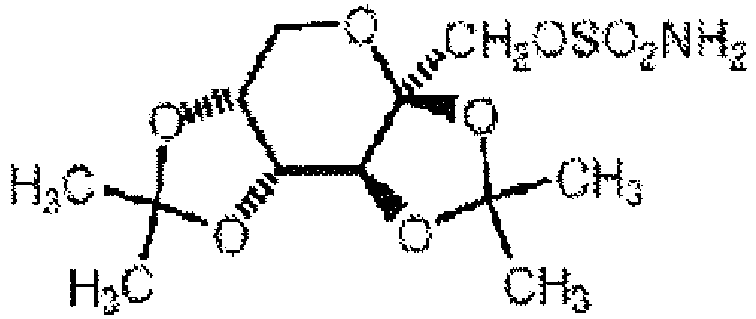
- Topiramate is a white crystalline powder that is soluble in alkaline solutions containing sodium hydroxide or sodium phosphate, soluble in acetone, dimethylsulfoxide and ethanol. However, the solubility of topiramate in water at room temperature is only about 9.8 mg/ml. Topiramate is not extensively metabolized and is excreted largely through the urine (Physician's Desk Reference, 60th ed., 2538-2447 (2006)).
- Topiramate pharmacokinetics are linear, producing a dose proportional increase in blood plasma concentration levels with increased dosing, and is not significantly affected by food. Patients taking topiramate over prolonged period of time did not develop resistance to the drug. Following oral administration of an immediate release dosage form, topiramate is rapidly absorbed with plasma drug concentrations peaking in approximately 2 hours. The mean elimination half-life is reported to be about 21 hours.
- Currently, topiramate is administered in multiple daily doses in part due to the severe side effects exhibited by the immediate release product, especially when taken in a high single dose.
- A sustained release topiramate formulation that will be suitable for once-a-day administration and will result in the diminished level or severity of side effects is needed.
- The present invention provides sustained release formulation of topiramate wherein the total daily dose of topiramate is provided in an effective once-daily dose while minimizing fluctuations in the blood plasma drug concentration.
- The current invention also provides for formulations of topiramate wherein the maximum plasma concentration of topiramate is attenuated as compared to the same amount of topiramate administered as an immediate release formulation BID; therefore some of the side effects of topiramate, such as CNS side effects including but not limited to dizziness, paresthesia, nervousness, psychomotor slowing, confusion, and difficulty with concentration/attention, observed when taking the immediate release product, may be reduced or eliminated.
- Formulations of the instant invention are characterized by a maximum steady state plasma concentration (Cmax) of topiramate which is higher than the minimal therapeutically effective concentration, and is in the range of 50% to 125% of the maximum plasma concentration produced by the same amount of topiramate administered as an immediate release formulation BID. In one embodiment, the novel formulations provide for a relative Cmax in the range of 80% to 125%, as compared to the same amount of topiramate administered as an immediate release formulation BID. In the other embodiment, the invention provides for the Cmax which is lower than the maximum plasma concentration produced by the same amount of topiramate administered as an immediate release formulation BID. The Cmin of the topiramate formulation of the present invention is about equal or higher than a Cmin of an equivalent amount of immediate release topiramate formulation given BID.
- Compared to the immediate release topiramate formulation, the sustained release topiramate formulations attenuate the Cmax of topiramate while extending the coverage of plasma concentration above the minimum plasma concentration required therapeutic efficacy. The formulation of the current invention provides for a relative steady state AUC in the range of 80% to 125%, while minimizing the degree of fluctuation, which is preferably in the range of 25% to 90%, as compared to an equivalent amount of immediate release topiramate formulation given in two divided doses (Table 5 and 6 ).
- The present invention additionally provides a sustained release topiramate formulation for the treatment or prevention of a pathological condition in a mammalian subject wherein topiramate is released from the formulation at a sustained rate along a pre-determined release profile. Such release is achieved by incorporation into the formulation of an extended release component (XR) and an optional immediate release component (IR).
- The relative amount of each component in the topiramate formulation of the present invention is determined according to the purpose of administration and a pre-determined release profile, and the total amount of topiramate in the formulation varies from 0.5 mg to about 3000 mg. In other words, topiramate or its salt is present in the composition in an amount of from about 0.5% to about 85% by weight, and preferably of from about 2% to about 70% by weight. The term "about" has been recited here and throughout the specification to account for variations, which can arise from inaccuracies in measurement inherent and understood by those of ordinary skill in the chemical and pharmaceutical arts.
- The XR component of the formulation of the present invention releases topiramate in a continuous manner and is adjusted in such a way that 80% of the active ingredient is released in vitro in the predetermined period of time. By way of example, and by no means limiting the scope of the invention, the period of time may be not more than 24 hours, not more than 16 hours, not more than 12 hours, not more than 8 hours, or not more than 4 hours, depending on desired attributes of the final product.
- In one embodiment, the extended release (XR) component is contained in at least one population of beads coated with a coating that modifies and controls the release of topiramate from the beads (release controlling coating). The release controlling coating is specific for every population of beads and determines the rate of release of topiramate from the given bead population.
- The beads useful in the formulation of the present invention comprise an inert carrier, topiramate, a binder, an afore-mentioned release controlling coating and optionally, an overcoat that provides additional protection from moisture, static charge reduction, taste masking and coloring attributes to the particulates.
- The inert carriers used in the present invention are selected from a group consisting of cellulose spheres, silicon dioxide, starch and sugar spheres. The inert carrier is present in an amount of from about 15% to about 99% by weight, and preferably in an amount of from about 40% to about 97% by weight.
- Topiramate is introduced to the inert carrier by techniques known to one skilled in the art, such as drug layering, powder coating, extrusion/spheronization, roller compaction or granulation. Preferably, the introduction method is drug layering by spraying a suspension of topiramate and a binder onto the inert carrier.
- The binder may be present in the bead formulation in an amount of from about 0.1% to about 15% by weight, and preferably of from about 0.2% to about 10% by weight. Binders include, but are not limited to starches, microcrystalline cellulose, hydroxypropyl cellulose, hydroxyethyl cellulose, hydroxypropylmethyl cellulose, or polyvinylpyrrolidone.
- The release controlling coating specific for every bead population comprises a coating material, and a pore former and, optionally, other excipients. The coating material is selected from a group comprising cellulosic polymers, such as ethylcellulose, methylcellulose, hydroxypropyl cellulose, hydroxypropylmethyl cellulose, cellulose acetate, or cellulose acetate phthalate; polyvinyl alcohol; acrylic polymers such as polyacrylates, polymethacrylates or copolymers thereof. The release-controlling coating is population-specifc in the sense that the rate of release of topiramate from every bead population is controlled by at least one parameter of the release controlling coating, such as the nature of the coating, coating level, type and concentration of a pore former, process parameters and combinations thereof. Thus, changing a parameter, such as a pore former concentration, or the conditions of the curing, as will be discussed in more details below, (see Example 5) allows to change the release of topiramate from any given bead population and to selectively adjust the formulation to the pre-determined release profile. The release profile, in its turn, may be chosen or modified in such a way as to achieve the best treatment modality depending on the specific needs of the patient population and the nature of the condition.
- For example, with all things being equal, there exists a mathematical relationship between the release controlling coating level among the cured beads and the 80% in vitro release time. Pre-determined target profiles can therefore be achieved by the interpolation or extrapolation of the relationship curve. For example, when the release controlling coating comprises only ethylcellulose (Surelease®) as a coating material, a logarithmic relationship exists between the % weight gain with the coating and the 80% release time in an in-vitro dissolution test (
Fig. 1 ):
- When ethylcellulose/HPMC (Surelease®/Opadry®) mixture is used, for example, 85:18 mixture or 80:20 mixture, a linear relationship exists between the % weight gain with the coating and the 80% release time in an in-vitro dissolution test (
Fig. 2 ):
- Pore formers suitable for use in the release controlling coating herein can be organic or inorganic agents, and include materials that can be dissolved, extracted or leached from the coating in the environment of use. Pore formers used according to the invention comprise sucrose, glucose, fructose, mannitol, mannose, galactose, sorbitol, pullulan, dextran; polymers soluble in the environment of use such as water-soluble hydrophilic polymers, hydroxyalkylcelluloses, carboxyalkylcelluloses, hydroxypropylmethylcellulose, cellulose ethers, acrylic resins, polyvinylpyrrolidone, cross-linked polyvinylpyrrolidone, polyethylene oxide, Carbowaxes, Carbopol, or the like, diols, polyols, polyhydric alcohols, polyalkylene glycols, polyethylene glycols, polypropylene glycols, or block polymers thereof, polyglycols, poly(α-ω)alkylenediols; inorganic compounds such as alkali metal salts, lithium carbonate, sodium chloride, sodium bromide, potassium chloride, potassium sulfate, potassium phosphate, sodium acetate, sodium citrate, suitable calcium salts, or the like, or combinations thereof.
- The release controlling coating in the current invention can further comprise other additives known in the art such as plasticizers, anti-adherents, glidants, and antifoams.
- In some embodiments, it may be further desirable to optionally coat the XR beads with an "overcoat," to provide, e.g., moisture protection, static charge reduction, taste-masking, flavoring, coloring, and/or polish or other cosmetic appeal to the beads. Suitable coating materials for such an overcoat are known in the art, and include, but are not limited to, cellulosic polymers such as hydroxypropylmethylcellulose, hydroxypropylcellulose and microcrystalline cellulose, or combinations thereof (for example various Opadry® coating materials).
- Topiramate-contairting beads of the present invention may additionally contain enhancers that may be exemplified by, but not limited to, solubility enhancers, dissolution enhancers, absorption enhancers, permeability enhancers, stabilizers, complexing agents, enzyme inhibitors, p-glycoprotein inhibitors, and multidrug resistance protein inhibitors. Alternatively, the formulation can also contain enhancers that are separated from the topiramate beads, for example in a separate population of beads or as a powder. In yet another embodiment, the enhancer(s) may be contained in a separate layer on a topiramate-containing bead either under or above the release controlling coating.
- The beads may further comprise other pharmaceutically active agents suitable for use in combination with topiramate for treatment or prevention of a pathological condition. The additional pharmaceutically active agents, without limitation, may be represented by analgesic and anti-inflammatory compounds such as COX-2 inhibitors, nonsteroidal anti-inflammatory drugs (NSAIDs), narcotic drugs such as opiates and morphinomimetics, synthetic drugs with narcotic properties such as tramadol; anticonvulsants such as valproic acid or its derivatives, carbamazepine, oxcarbazepine, gabapentin, and lamotrigine; anorectics or anti-obesity agents such as sibutramine or other, orlistat or other pancreatic lipase inhibitors, diethylpropion, fluoxetine, bupropion, amphetamine, methamphetamine, sertraline, zonisamide, and metformin, as well as medications associated with weight-gain, such as sulfonylurea derivatives, insulin, and thiazolidinediones whose weight-gain effect is tempered by topiramate; anti-hypertensive agents such as diuretics, anti-adrenergics, calcium channel blockers, ACE inhibitors, angiotensin II receptor antagonists, aldosterone antagonists, vasodilators, centrally acting adrenergic drugs, and adrenergic neuron blockers; mood stabilizers such as various forms/salts of lithium, Omega-3 fatty acids and others known in the art, drugs for treatment or prevention of migraines, such as ergot derivatives or triptans, or any other pharmaceutical or nutraceutical ingredient that can be safely and beneficially combined with topiramate.
- A relative amount of every bead population in the complete formulation is determined on the basis of the pharmacokinetic data of the separate bead populations and the pre-determined release profile and will be discussed in more detail in Example 6.
- In another embodiment, the formulation of the present invention comprises an extended release component as described above, and an immediate release component. The IR component may be an enhanced immediate release composition. The enhanced immediate release composition may be characterized by a faster in vitro topiramate release as compared to the IR formulation. Preferably, at least 80% of an active compound from the enhanced immediate release composition is released in a time period of not more than 30 minutes. More preferably, at least 50% of an active compound from the enhanced immediate release composition is released in a time period of not more than 10 minutes, and at least 25% is dissolved in a time period of not more than 5 minutes after the oral administration. In the most preferred embodiment of the present invention, at least 75% of the active compound is released from the EIR composition in a time period of not more than 10 minutes. The embodiment in which the IR component is an enhanced immediate release composition will be discussed in more details below.
- In addition to topiramate and inactive excipients, the EIR composition of the present invention comprises at least one agent selected from a group consisting of complexing agents and enhancing agents.
- Without any limitation, the enhancing agents suitable for the present invention may be selected from the solubility enhancing agents, dissolution enhancing agents, absorption enhancing agents, penetration enhancing agents, surface active agents, such as non-ionic surfactants, ionic surfactants or combinations thereof; stabilizers that include antioxidants, preservatives, buffering agents, bases and other known in the art; enzyme inhibitors, p-glycoprotein inhibitors, multidrug resistance protein inhibitors, or any combinations thereof. The representative, but non-limiting examples of these compounds are Vitamin E TPGS, amino acid such as glutamic acid and glycine, sorbitol, mannose, amylose, maltose, mannitol, lactose, sucrose, glucose, xylitose, dextrins such as maltodextrin, Cremophor RH40 (glycerolpolyethylene glycol oxystearate), Gelucire 50/13 (PEG-32 glyceryl palmitostearate), sodium lauryl sulfate, Tween 80 (polyoxyethylene sorbitan monooleate), benzyl alcohol, Span 20 (sorbitan monolaurate), Poloxamer 407, PEG3350, PVP K25, oleic acid, Capmul GMO (glyceryl monooleate), sodium benzoate, cetyl alcohol, sucrose stearate, crospovidone, sodium starch glycolate, crosscarmellose sodium, carboxymethylcellulose, starch, pregelatinized starch, HPMC, substituted hydraxyprapylcellulose, microcrystalline cellulose, sodium bicarbonate, calcium citrate, sodium docusate, and menthol, among others. Enhancers can be combined to achieve multiple enhancement effects, for example, solubility enhancement combined with permeability enhancement and p-glycoprotein inhibition, or to provide a synergistic enhancement effect to achieve greater and more efficient enhancement. For example, polyglycolized glycerides (different grades of Gelucire) can be combined with sodium lauryl sulfate to achieve higher solubility enhancement as well as faster dissolution of topiramate.
- In one embodiment, the EIR composition comprises a highly soluble complex of topiramate with a complexing agent that is represented by, but not limited to, cyclodextrins, including cyclodextrin derivatives, such as hydroxypropyl-beta-cyclodextrin, beta-cyclodextrin, gamma-cyclodextrin, and alpha-cyclodextrin. The ratio of cyclodextrin to topiramate in the EIR formulation is preferably less than 20:1 and more preferably less than 5:1. In the most preferred embodiment, the complexing agent is hydroxypropyl beta cyclodextrin.
- The highly soluble complex of topiramate and cyclodextrin is prepared by mixing topiramate and cyclodextrin together in the presence of water. The concentration of cyclodextrin is preferably high to facilitate the formation of topiramate-enhancer complex, In the case when the complexing agent is hydroxypropyl-beta-cyclodextrin, the concentration of the hydroxypropyl-beta-cyclodextrin solution used for mixing with topiramate is greater than 2%, preferably greater than 20%, and more preferably at least about 40%. The amount of topiramate is determined by a desired ratio of hydroxypropyl-beta-cyclodextrin to topiramate, which is preferably less than 20:1, and more preferably less than 5:1. The mixing time of the complex solution is from about one hour to about 48 hours, and preferably from about 5 hours to about 24 hours. The addition of hydroxypropyl-beta-cyclodextrin and topiramate can be incremental to reduce the viscosity of the complex solution and to achieve better complexation.
- In a further embodiment, the EIR component of the present invention is contained in at least one bead population. Topiramate EIR beads can be prepared using processes suitable for bead manufacturing, such as coating of a topiramate suspension, dispersion or solution onto an inert carrier, or by roller compaction, granulation, extrusion/spheronization, or powder coating, and are not limited by the examples cited therein. The enhancing agents of the present invention can be incorporated into the topiramate containing beads, or may be contained in other beads separated from the topiramate containing beads. By way of a non-limiting example, topiramate-containing EIR beads were prepared by coating topiramate dispersion onto an inert carrier such as sugar spheres. The topiramate dispersion, in addition to topiramate in the micronized form or in non-micronized form, can contain one or more enhancers, water and optionally a binder such as hydroxypropylcellullose, hydroxypropylmethylcellulose, polyvinylpyrrolidone and polyvinyl alcohol.
- When the formulation is enhanced with complexing agents, the agents may be first mixed with topiramate and a suitable solvent such as water to form the complex. The topiramate-containing complex is then mixed with a binder solution prepared separately to give the coating dispersion. The coating dispersion is then sprayed onto the inert carrier such as sugar spheres using a fluid bed processor.
- In an alternative embodiment of the invention, the formulation comprises at least one XR bead population, and at least one additional combination bead population consisting of the extended release beads that have an additional immediate release component layer coated on top of the release controlling coating. This layer may be formed by a suitable loading method such as solution/ suspension/dispersion coating, powder coating or wet granulation .
- In yet another embodiment, at least part (i.e., more than 0.01%, preferably at least 1%) of the active ingredient may be present in the formulation in a form of micronized particles with the size of from 1 µm to 1000 µm, preferably from 2 µm to about 200 µm, more preferably from 2 µm to about 100 µm. Further, one or more enhancers may be present in the formulations covered by this embodiment. The enhancers are selected from solubility enhancing agents, dissolution enhancing agents, absorption enhancing agents, penetration enhancing agents, surface active agents, such as non-ionic surfactants, ionic surfactants or combinations thereof; stabilizers that include antioxidants, preservatives, buffering agents, bases and other known in the art; enzyme inhibitors, p-glycoprotein inhibitors, multidrug resistance protein inhibitors, or any combinations thereof. Preferably, the enhancer is a solubility enhancer or a dissolution enhancer.
- The topiramate formulation of the present invention may be formulated in a dosage form selected from a tablet, a pill, a capsule, a caplet, a troche, a sachet, a cachet, a pouch, sprinkles, or any other form suitable for oral administration.
- In one embodiment of the invention, the dosage form is a gelatin capsule containing the XR component in a form of at least one population of beads, and an optional IR component. The IR component, when present, may be in a form of a powder, or may also be contained in at least one population of beads to achieve faster dissolution of topiramate (
Fig.5 ). - In an alternative embodiment, part of the total amount of the active ingredient may be incorporated into the afore-mentioned bead populations that will be contained inside an enclosure such as a capsule, and the rest of the active ingredient can be loaded on the outside of the enclosure by a suitable loading method such as solution/suspension/dispersion coating or powder coating or wet granulation. For example, a part of the immediate release topiramate formulation can be loaded by coating on the outside of a capsule that contains within it other populations of topiramate such as extended release topiramate. This dosage form can provide almost instantaneous dissolution of the initial portion of topiramate dose from the outside of the capsule, followed by a sustained release of the rest of topiramate from inside the capsule.
- In a further embodiment of the invention, the dosage form is a tablet. Without imposing any limitations, this embodiment may be exemplified by a multilayered tablet that comprises at least one layer containing the extended release component, and at least one layer comprising the immediate release component, wherein the IR component may or may be not an EIR composition.
- The last two embodiments are especially beneficial when fast onset of action followed by sustained release is preferred, as is for example in the cases of a breakthrough migraine episode.
- The current invention additionally encompasses a method of preparing formulations of topiramate according to claim 17, comprising an extended release component, and an optional immediate release component, wherein topiramate is released from the formulation at the sustained rate along the pre-determined release profile. The method comprises the following steps:
- 1. determining the desired release profile;
- 2. determining specific amounts of the extended release component and the immediate release component necessary to produce the pre-determined release profile; and
- 3. incorporating the specified amounts of the components into the formulation.
- In one embodiment, the method comprises a step for providing an immediate release component, which may be an enhanced immediate release composition.
- In another embodiment, the method includes a process for providing an extended release component contained in at least one population of beads characterized by its own rate of release, wherein the process includes the steps of:
- 1. forming at least one population of topiramate-containing beads;
- 2. coating each population of beads with its own coating solution;
- 3. curing the coating for a period of time to produce a release controlling coating specific for each bead population, and
- 4. incorporating the beads into the formulation.
- The exact amount of beads of every population incorporated into the formulation and into the final dosage form is determined using the linear superposition principle (WinNonLin) on the basis of the pharmacokinetic data of the separate bead populations and the pre-determined release profile (Example 6).
- Release profiles of XR topiramate beads can be selectively adjusted, modified or stabilized by curing the beads at an elevated temperature. This process is well known in the art. However, it was unexpectedly discovered that curing the beads in the curing apparatus in the presence of at least one suitable solvent dramatically reduces the curing time necessary to produce a desired release profile and a level of stability. The curing process that previously required up to two weeks can be carried out by the method of current invention in several hours.
- The assisting solvents can be selected from those solvents that can dissolve or partially dissolve the coating material, or those that can induce or assist the coalescence or molecular relaxation of the coating material, or those that can reduce electrostatic charge on the dosage forms during curing and those that can facilitate curing at a higher temperature. Examples of these solvents include but are not limited to organic solvents, such as alcohols, ketones, ethers, esters, amides, amines, hydrocarbons including substituted hydrocarbons such as chlorinated hydrocarbons and aromatic hydrocarbons, furans, sulfoxides, organic acids, phenols, super-critical fluids; ammonia; and water, buffered water, or water solutions of other inorganic or organic compounds, and their combinations. Preferably, water, water-alcohol mixture, water-ketone mixture, water-ammonia mixture, or water-organic acid (for example water-acetic acid) mixture, or combinations thereof are used as the assisting solvents.
- The curing of the dosage form normally is done in an apparatus that can operate at elevated temperatures and that can deliver the assisting solvents by means such as spray, injection, or vaporization. In the embodiment of the invention when the assisting solvent is sprayed or injected into the curing apparatus, the stream of solvent is introduced directly onto the coated beads. The amount of the solvent necessary to produce the desired effect, such as the desired release parameters and stabilization of the coating, depends on the nature of the solvent and the method of solvent delivery.
- Typically, when the vaporization method is used, the organic solvents and aqueous solutions may be used in the wide range of vapor concentrations varying from 2% to more than 100%, providing an unsaturated, saturated or an oversaturated atmosphere. The pure water, however, has to be used in such an amount as to provide at least a saturated or, preferably, an oversaturated atmosphere in the curing apparatus. At least during the delivery of assisting solvents, the coated beads are mixed or agitated either continuously or in a pulsed manner.
- In an alternative embodiment of the invention, hot water steam is introduced into the curing apparatus for a pre-selected period of time. The steam serves simultaneously as a solvent and as a source of heat for the beads. Introduction of steam is followed by a drying period.
- This method of curing the release controlling coating results in many benefits including the dramatically shortened curing time, increased stability and modification of the release profile, and is not limited to topiramate containing beads, but includes the curing of any microparticles regardless of the drug.
- Specifically, active ingredient containing beads, with or without the optional over-coat, are charged to a fluid bed processor or a pan coater and heated to a desired curing temperature range, for example 40oC to 80oC for sustained release dosage forms containing ethylcellulose (Surelease®), and 40oC to 70oC for sustained release dosage forms containing acrylic polymers (Eudragit® RS and Eudragit® RL). The assisting solvent or solvents, such as water or alcohol-water mixture, are sprayed onto the beads while mixing by, for example, fluidizing or rotating. Alternatively, the process is carried out in an oven where hot steam is introduced as previously discussed. Solvent-assisted curing is carried out to a desired curing time length, either in one curing period or in multiple, separate curing periods. The dosage forms can be further dried for a short period of time to remove residual solvents.
- The solvent-assisted curing process significantly accelerates the curing of release controlling coating on active ingredient containing beads as compared to the heat-only curing of the same. In most instances, less than 4 hours of solvent-assisted curing resulted in more complete curing of the extended release dosage forms than 2 weeks of heat-only oven curing of the same dosage forms.
- The present invention also presents a sustained release formulation for use in a method of treatment or prevention of a pathological condition in a mammalian subject, comprising orally administering to the subject a therapeutically effective amount of a novel topiramate formulation of the instant invention, wherein topiramate is released from the formulation at a sustained rate along the pre-determined release profile. The method possesses the flexibility to selectively adjust the pharmacokinetics of the administered formulations depending on the nature of the condition and needs of the patients due to the novel design of the topiramate formulation that comprises an extended release component and an optional immediate release component, and the release profiles of both components can be selectively modified during the preparation process as described above to comply with the predetermined release profile.
- The pathological condition that may be treated is a neurological condition, psychiatric condition, diabetes and related disorders, cardiovascular condition, obesity, and any other condition or disorder that may be treated or prevented by the topiramate administration.
- The neurological disorders that may be treated or prevented by a formulation of the present invention include, but are not limited to, epilepsy, migraine, essential tremor, restless limb syndrome, cluster headaches, neuralgia, neuropathic pain, Tourrette's syndrome , infantile spasms, perinatal hypoxia ischemia and related damage, chronic neurodegenerative disorders, acute neurodegeneration, and ALS.
- Psychiatric disorders that may be treated or prevented by a formulation of the present invention include, but are not limited to bipolar disorder, dementia, depression, psychosis, mania, anxiety, schizophrenia, obsessive-compulsive disorder, post-traumatic stress disorder, ADHD, impulse control disorders, border line personality disorder, addiction, and autism.
- Formulations of the present invention may be also used for the treatment and prevention of diabetes and related disorders, such as type II diabetes mellitus, diabetic retinopathy, impaired oral glucose tolerance, diabetic skin lesions, diabetic neuropathy, Syndrome X and elevated blood glucose levels; ocular disorders, including but not limited to glaucoma and macular degeneration; cardiovascular disorders represented but not limited to elevated blood pressure and elevated lipids; obesity; asthma; autoimmune disorders; sleep apnea and sleep disorders. The formulations may be also used for inducing weight loss or promoting wound healing, or for any other condition, not specified above, wherein the use of topiramate is indicated.
- The invention will be further illustrated by the following Examples, however, without restricting its scope to these embodiments.
- An aqueous suspension of 10-20 % (w/w) topiramate (particle size 90% vol. NMT 30 micrometer, 50% vol. NMT 15 micrometer and 10% vol. NMT 5 micrometer) and 0.5-4% (w/w) HPMC or other aqueous binder can be used as the drug layering coating solution. A fluid bed suited for Wurster-spray is assembled and charged with inert carriers such as sugar spheres. The coating suspension is sprayed onto the bed to evenly coat the inert carriers to a desired topiramate loading level. Higher binder concentration in the coating solution may be used for smaller size inert carrier and higher topiramate loading. Inlet airflow rate and product temperature are adjusted to keep the batch from spray-drying the coating material or over-wetting the spheres.
- A dispersion of a cellulosic polymer such as ethylcellulose and methylcellulose can be used to coat the core in the current invention. Ethylcellulose dispersion (Surelease®) can be diluted to a final concentration of about 10% to about 20% and with or without the use of other ingredients such as pore formers, A fluid bed suited for Wurster-spray is assembled and charged with the cores prepared in Example 1. The release controlling coating dispersion is sprayed onto the bed to evenly coat the core to a desired coating level as exemplified in Table 1.


- Approximately half of the intended amount of topiramate was added to the water with constant mixing followed by sprinkling of hydroxypropyl-beta-cyclodextrin into the dispersion. Once the dispersion became significantly less viscous, more drug substance was added followed by sprinkling of more hydroxypropyl-beta-cyclodextrin, The drug and hydroxypropyl-beta-cyclodextrin addition steps were repeated, and the dispersion was mixed for 12-18 hours. Separately, hydroxypropylmethylcellulose was dissolved in water. The above topiramate - hydroxypropyl-beta-cyclodextrin dispersion and hydroxypropylmethylcellulose solution were mixed together for 15 to 30 minutes and the mixture was screened through an 80-mesh sieve. The resultant dispersion was sprayed onto sugar spheres using a fluid bed processor to yield the enhanced immediate release beads (Table 2).
Table 2. Hydroxypropyl-beta-cyclodextrin - Topiramate EIR Bead Compositions Component Percentage (w/w) in Beads EIR-1 (HPBCD:Drug = 3:2)* EIR-2 (HPBCD:Drug = 3:2)* EIR-3 (HPBCD:Drug = 1:1)* EIR-4 (HPBCD:Drug = 1:2)* Topiramate 25.0 3.3 28.9 33.3 Hydroxypropyl-beta-cyclodextrin 37.5 4.95 28.9 16.7 Hydroxypropylmethylcellulose 3.1 0.41 2.4 4.2 Sugar spheres 34.4 91.34 39.8 45.8 * HPBCD:Drug - Hydroxypropyl-beta-cyclodextrin to drug substance ratio - Topiramate is dispersed in a binder solution, such as hydroxypropylmethylcellulose solution, that contains an appropriate amount of enhancer or enhancers such as d-alpha-
tocopheryl polyethylene glycol 1000 succinate (vitamin E TPGS) and sodium lauryl sulfate combination, polyoxyl hydrogenated castor oil (different grades of Cremophor RH), polyglycolized glycerides (different grades of Gelucire), polyglycolized glycerides (different grades of Gelucire) combined with sodium lauryl sulfate, or combinations thereof. The resultant dispersion is sprayed onto an inert carrier such as sugar spheres using a fluid bed processor to achieve a desired drug load (Table 3).Table 3. Enhanced Immediate Release Topiramate Bead Compositions Component Percentage (w/w) in Beads EIR-5 EIR-6 EIR-7 Topiramate 36.8 37.9 36.4 Sodium lauryl sulfate 0.7 0.5 - D-alpha- tocopheryl polyethylene glycol 1000 succinate7.3 - - Polyoxyl hydrogenated castor oil (Cremophor RH40) - - 9.1 Polyglycolized glycerides (Gelucire 50/13) - 4.7 - Hydroxypropylmethylcellulose 4.6 4.8 4.5 Sugar spheres 50.6 52.1 50.0 - Miconized or non-micronized topiramate is dispersed in a solution with or without heating, optionally containing dissolution enhancing agents such as mannose, maltose, mannitol, lactose, maltodextrin and sodium starch glucolate, and optionally containing one or more additional enhancers such as PEG3350, sodium lauryl sulfate, sodium docusate, polyoxyethylene sorbitan monooleate and Poloxamers, under such process parameters that topiramate particles that remain undissolved have a particle size of about 2 micron to about 30 micron. A particle size reduction device such as a homogenizer can also be used to reduce the particle size of undissolved topiramate. The resultant topiramate dispersion is then sprayed onto inert carriers such as sugar spheres in a coating processor such as a fluid bed processor. The formulations obtained are represented in the Table 4:
Table 4. Topiramate EIR Beads containing micronized particles Percentage (w/w) in Beads EIR-8 EIR-9 EIR-10 EIR-11 EIR-12 EIR-13 Topiramate 3.2 26.0 25.0 3.2 26.0 26.0 Mannose 0.4 5.0 3.3 2.0 10.0 10.0 Maltrin 250 - - 1.0 1.0 - - PEG3350 1.0 15.0 - - - 10.0 Sodium lauryl sulfate - - - - 0.5 - Hydroxypropyl-beta-cyclodextrin - - 37.5 - - - D-alpha- tocopheryl polyethylene glycol 1000 succinate- - - - 2.0 - Polyoxyl hydrogenated castor oil (Cremophor RH40) - - - - - 2.0 Sugar spheres 95.4 54.0 33.2 93.8 61.5 52.0 - The topiramate beads coated with a release controlling coating, with or without an overcoat, can be cured using the above-mentioned solvent-assisted curing process, or using the heat-only curing process, to a desired curing level and preferably to complete curing.
- Specifically, the core is coated to a desired coating level with a solution or dispersion of the release controlling coating material, with or without the above-mentioned additives such as pore-formers, using a fluid bed processor or any other suitable apparatus for coating of the core. Product temperature is controlled at a desirable range, for example 20oC to 60oC for the coating of ethylcellulose (Surelease®) and 20oC to 60oC for acrylic polymers (Eudragit® RL and Eudragit® RS grades). An optional overcoat with materials such as cellulosic polymers (various Opadry®) is applied thereafter. Curing of the sustained release topiramate beads is carried out either in an oven at 40oC to 80oC for Surelease® containing beads or at 40oC to 70oC for Eudragit® RL or RS containing beads, or in a fluid bed processor with or without the use of assisting solvents at similar product temperatures.
- For curing that uses assisting solvents, the assisting solvent can be delivered through top spray, bottom spray, side spray or injection, or introduced by vaporization. Preferably, water, water-alcohol mixture, water-ketone mixture, water-ammonia mixture, or water-organic acid (for example water-acetic acid) mixture, or combinations thereof are used as the assisting solvents.
- a. Plasma concentration versus time curves for the topiramate formulations containing extended release and immediate release bead populations are simulated using WinNonlin Version 5.0.1 based on the pharmacokinetic data on the separate bead populations that were generated in a comparative randomized single-dose 6-way crossover study in healthy adult volunteers. The study included administration of a 50 mg oral dose of three extended release compositions, designated here as XR1, XR2 and XR3, two immediate release compositions ((Topamax®, Ortho-McNeil Neurologics, Inc.) (25 mg BID), and an immediate release bead formulation) and an enhanced immediate release (IR) bead composition. The single dose topiramate plasma concentration profiles for XR1, XR2 and XR3 are shown in
Fig.3 . The single dose topiramate plasma concentration profiles for IR are shown inFig. 4 . The data are projected to a steady-state (SS) with a 24 h dosing interval for the sustained release compositions and a 12 h dosing interval for Topamax, using the linear superposition principle (WinNonlin). The extended release populations XR1, XR2 and XR3, and an immediate release (IR) population are selected in such a way as to be defined by at least one of the three following sets of conditions: - 1. for the steady state,
for XR1, 1.70CmaxIR >= CmaxXR1 >= 1.30CmaxIR
for XR2, 0.40CmaxIR >= CmaxXR2 >= 0.20CmaxIR
for XR3, 0.25CmaxIR >= CmaxXR3 >= 0.05CmaxIR - 2. for in-vitro dissolution,
for XR1, 1.5h <=T80%<=4h
for XR2, 5h <= T80% <=8h
for XR3, 8h < T80% <=10h - 3. for a single initial dose in-vivo,
for XR1, 4h <= Tmax <=8.5h
for XR2, Tmax >= 16 h
for XR3, Tmax >= 16 h. - Optional the immediate release bead population is composed of enhanced immediate release (EIR) beads such that at least one condition is true: a. for the steady state, 2.40CmaxIR >= CmaxEIR >= 1.20CmaxIR; b. for in-vitro dissolution, T80%<=30 min; c. for a single initial dose in-vivo, Tmax<=2h.
- The results of the pharmacokinetic simulation for the seven exemplary formulations are summarized in Table 5 below. These formulations are selected as examples only, and in no way limit the range, compositions or properties of the formulations covered by the present invention.
Table 5. Composition and Pharmacokinetic data of Multi-bead Formulations # 1 #2 #3 #4 #5 #6 #7 % XR1 20 50 0 10 10 15 0 %XR2 80 0 85 85 80 70 100 %XR3 0 50 0 0 15 0 %IR 0 0 15 5 10 0 0 Rel. BA (%), SS 98.5 100.5 96.6 97.4 97.6 97.3 96.0 Degree of fluctuation, SS 0.15 0.22 0.14 0.14 0.15 0.13 0.09 - b. based on the results of WinNonlin simulation discussed in part (a), formulations #1 (A), #3 (B), and #4 (C) were tested in the comparative randomized multi-dose 4-way study following a once a day 50 mg oral dose of three controlled release formulations and a 25 mg twice a day oral doses of Topamax® in healthy adult volunteers.
- The results of the study are summarized in Table 6 and
Fig.6 :Table 6. Pharmacokinetic study data for Multi-bead Formulations #1 A #3 B #4 C Control (Topamax®) % XR1 20 0 10 - %XR2 80 86 84 - %XR3 0 0 0 - %IR 0 14 6 - Rel. BA (%), SS 92 93 95 100 Relative Degree of fluctuation, SS 73% 72% 66% 100%
Claims (17)
- A sustained release formulation of topiramate for oral administration to a mammalian subject comprising topiramate as an active ingredient, which is released from the formulation along a pre-determined release profile, said formulation comprising an extended release (XR) component, wherein the extended release component is such that it releases topiramate in vivo in a continuous manner, wherein said extended release component is provided in at least one population of beads coated with a release controlling coating and characterized by its own rate of release,
wherein said beads comprise an inert carrier, topiramate, an optional enhancing agent, and a release controlling coating that comprises a coating material and a pore former and optionally other excipients,
wherein said release controlling coating material comprises ethylcellulose, methylcellulose, hydroxypropyl cellulose, hydroxypropylmethyl cellulose, cellulose acetate, polyvinyl alcohol, polyacrylates, polymethacrylates or copolymers thereof; and said pore former comprises glucose, fructose, mannitol, mannose, galactose, sorbitol, pullulan, dextran, water-soluble hydrophilic polymers, hydroxyalkylcelluloses, carboxyalkylcelluloses, hydroxypropylmethylcellulose, cellulose ethers, acrylic resins, polyvinylpyrrolidone, cross-linked polyvinylpyrrolidone, polyethylene oxide, Carbowaxes, Carbopol, diols, polyols, polyhydric alcohols, polyalkylene glycols, polyethylene glycols, polypropylene glycols or block polymers thereof, polyglycols, poly([alpha]-[omega])alkylenediols; inorganic compounds; alkali metal salts; alkaline earth metal salts, or combinations thereof, wherein said inert carrier is selected from the group consisting of cellulose spheres, silicon dioxide, starch and sugar spheres. - The formulation of claim 1, wherein said XR component releases topiramate in vivo in a continuous manner, and 80% of the active ingredient is released in vitro in a period of time selected from not more than 24 hours, not more than 16 hours, not more than 12 hours, not more than 8 hours and not more than 4 hours.
- The formulation of claim 1, wherein said formulation additionally contains an immediate release (IR) component which is optionally an enhanced immediate release (EIR) composition comprising a complexing agent, an enhancing agent, or both.
- The formulation of claim 3, wherein said EIR composition exhibits an in-vitro release profile such that 80% of the active ingredient is dissolved in not more than 60 min.
- The formulation of claim 3, wherein the complexing agent is a cyclodextrin selected from the group consisting of hydroxypropyl-beta-cyclodextrin, beta-cyclodextrin, gamma-cyclodextrin, alpha-cyclodextrin, and derivatives thereof.
- The formulation of claim 1 or claim 3, wherein at least a part of the active ingredient is in a form of micronized particles.
- The formulation of claim 3, wherein said enhancing agent is selected from the group consisting of solubility enhancers, dissolution enhancers, permeability enhancers, stabilizers, complexing agents, enzyme inhibitors, p-glycoprotein inhibitors, multidrug resistance protein inhibitors and combinations thereof.
- The formulation of claim 7, wherein said enhancing agent is Vitamin E TPGS, glutamic acid, glycine, sorbitol, mannose, amylose, maltose, mannitol, lactose, sucrose, glucose, xylitose, dextrins, glycerolpolyethylene glycol oxystearate, PEG-32 glyceryl palmitostearate, sodium lauryl sulfate, polyoxyethylene sorbitan monooleate, benzyl alcohol, sorbitan monolaurate, Poloxamer 407, PEG3350, PVP K25, oleic acid, glyceryl monooleate, sodium benzoate, cetyl alcohol, sucrose stearate, crospovidone, sodium starch glycolate, croscarmellose sodium, carboxymethylcellulose, starch, pregelatinized starch, HPMC, substituted hydroxypropylcellulose, microcrystalline cellulose sodium bicarbonate, calcium citrate, sodium docusate, menthol, or combinations thereof.
- The formulation of any one of claims 1 to 8, suitable for once a day oral administration.
- The formulation of claim 1, wherein at least one population of extended release topiramate beads additionally comprises an immediate release component coated on top of the release controlling coating.
- The formulation of claim 1, further comprising an additional pharmaceutically active ingredient in combination with topiramate.
- The formulation of claim 1 comprising one population of beads.
- The formulation of any of the preceding claims where the total amount of topiramate in the formulation is from 0.5 to 3000 mg.
- The formulation of any of the preceding claims for the treatment or prevention of a pathological condition in a mammalian subject, comprising orally administering to said subject a therapeutically effective amount of a sustained release formulation of topiramate, wherein topiramate is released from the formulation along the pre-determined release profile, and wherein said formulation comprises an extended release component and an optional immediate release component.
- The formulation of any of the preceding claims wherein said formulation has a reduced level of undesirable CNS side effects as compared to the same amount of topiramate administered as an immediate release formulation BID.
- The formulation of claim 14, wherein said condition is selected from a group consisting of epilepsy, migraine, essential tremor, restless limb syndrome, cluster headaches, neuralgia, neuropathic pain, Tourrette's syndrome , infantile spasms, perinatal hypoxia ischemia and related damage, glaucoma, ocular disorders, obesity, weight loss, Type II diabetes mellitus, diabetic retinopathy, impaired oral glucose tolerance, diabetic skin lesions, diabetic neuropathy, elevated blood glucose levels, syndrome X, elevated blood pressure, elevated lipids, bipolar disorder, dementia, depression, psychosis, mania, anxiety, schizophrenia, obsessive-compulsive disorder, post-traumatic stress disorder, ADHD, impulse control disorders, border line personality disorder, addiction, autism, asthma, autoimmune disorders, chronic neurodegenerative disorders, acute neurodegeneration, ALS, sleep apnea and sleep disorders.
- A method of preparing a sustained release formulation of topiramate of any one of claims 1 to 16, comprising an extended release (XR) component wherein said XR component is contained in at least one population of beads characterized by its own rate of release, said method comprising:forming at least one population of topiramate-containing beads;coating each population of beads with its own release controlling coating;curing said coating in a curing apparatus for a period of time in the presence of a solvent to produce the release controlling coating specific for each bead population: andincorporating the beads of every population into the formulation in the amounts determined according to a pre-determined release profile, wherein said solvent is an organic solvent;
super-critical fluids; ammonia; water; aqueous solutions, and their combinations.
Applications Claiming Priority (2)
| Application Number | Priority Date | Filing Date | Title |
|---|---|---|---|
| US85950206P | 2006-11-17 | 2006-11-17 | |
| EP07870164A EP1973528B1 (en) | 2006-11-17 | 2007-11-16 | Sustained-release formulations of topiramate |
Related Parent Applications (2)
| Application Number | Title | Priority Date | Filing Date |
|---|---|---|---|
| EP07870164A Division EP1973528B1 (en) | 2006-11-17 | 2007-11-16 | Sustained-release formulations of topiramate |
| EP07870164.6 Division | 2008-03-13 |
Publications (2)
| Publication Number | Publication Date |
|---|---|
| EP2394643A1 EP2394643A1 (en) | 2011-12-14 |
| EP2394643B1 true EP2394643B1 (en) | 2015-09-02 |
Family
ID=39400596
Family Applications (2)
| Application Number | Title | Priority Date | Filing Date |
|---|---|---|---|
| EP11179776.7A Active EP2394643B1 (en) | 2006-11-17 | 2007-11-16 | Sustained-release formulations of topiramate |
| EP07870164A Active EP1973528B1 (en) | 2006-11-17 | 2007-11-16 | Sustained-release formulations of topiramate |
Family Applications After (1)
| Application Number | Title | Priority Date | Filing Date |
|---|---|---|---|
| EP07870164A Active EP1973528B1 (en) | 2006-11-17 | 2007-11-16 | Sustained-release formulations of topiramate |
Country Status (9)
| Country | Link |
|---|---|
| US (10) | US8298576B2 (en) |
| EP (2) | EP2394643B1 (en) |
| JP (1) | JP5489719B2 (en) |
| AU (1) | AU2007319141B2 (en) |
| CA (1) | CA2618240C (en) |
| DE (1) | DE07870164T1 (en) |
| ES (2) | ES2312308T3 (en) |
| MX (1) | MX2009001711A (en) |
| WO (1) | WO2008061226A2 (en) |
Families Citing this family (35)
| Publication number | Priority date | Publication date | Assignee | Title |
|---|---|---|---|---|
| US7674776B2 (en) | 1999-06-14 | 2010-03-09 | Vivus, Inc. | Combination therapy for effecting weight loss and treating obesity |
| US9744137B2 (en) * | 2006-08-31 | 2017-08-29 | Supernus Pharmaceuticals, Inc. | Topiramate compositions and methods of enhancing its bioavailability |
| EP2394643B1 (en) | 2006-11-17 | 2015-09-02 | Supernus Pharmaceuticals, Inc. | Sustained-release formulations of topiramate |
| US20080131501A1 (en) * | 2006-12-04 | 2008-06-05 | Supernus Pharmaceuticals, Inc. | Enhanced immediate release formulations of topiramate |
| JP5424571B2 (en) * | 2007-04-12 | 2014-02-26 | 協和発酵キリン株式会社 | Topiramate-containing solid preparation |
| US8580298B2 (en) | 2008-06-09 | 2013-11-12 | Vivus, Inc. | Low dose topiramate/phentermine composition and methods of use thereof |
| US20090304789A1 (en) | 2008-06-09 | 2009-12-10 | Thomas Najarian | Novel topiramate compositions and an escalating dosing strategy for treating obesity and related disorders |
| ES2459322T3 (en) | 2008-09-05 | 2014-05-09 | Supernus Pharmaceuticals, Inc. | Method of treatment of attention deficit hyperactivity disorder (ADHD) |
| WO2010100657A2 (en) | 2009-03-04 | 2010-09-10 | Fdc Limited | A novel oral controlled release dosage forms for water soluble drugs |
| CN102548544B (en) * | 2009-10-09 | 2015-01-21 | 永进药品工业株式会社 | Pharmaceutical composition having both fast-acting and long-acting properties |
| MY161846A (en) | 2010-07-09 | 2017-05-15 | James Trinca Green | Combination immediate/delayed release delivery system for short half-life pharmaceuticals including remogliflozin |
| US20130315994A1 (en) | 2010-09-01 | 2013-11-28 | Zezhi Jesse Shao | Modified-release dosage forms of 5-ht2c agonists useful for weight management |
| US20120135104A1 (en) * | 2010-11-30 | 2012-05-31 | Bhiku Patel | Enhanced Absorption of Omega Fatty Acid Oils |
| MX356727B (en) | 2012-02-08 | 2018-06-12 | Supernus Pharmaceuticals Inc | Modified release formulations of viloxazine. |
| CN103316026B (en) | 2012-03-23 | 2016-05-11 | 中国人民解放军军事医学科学院毒物药物研究所 | Contain joint product of Phentermine and Topiramate and preparation method thereof |
| US9457008B2 (en) | 2012-03-23 | 2016-10-04 | Institute Of Pharmacology And Toxicology Academy Of Military Medical Sciences P.L.A. China | Joint product comprising synephrine and topiramate |
| CN102579367B (en) * | 2012-03-23 | 2014-03-12 | 中国人民解放军军事医学科学院毒物药物研究所 | Topiramate sustained-release drug composition, method for preparing same and application of Topiramate sustained-release drug composition |
| CN104080443B (en) * | 2012-03-29 | 2017-12-12 | 株式会社大赛璐 | The preparation method and said composition and the Orally disintegrating tablet containing said composition of the disintegrating particles composition of the carboxymethyl cellulose containing acid |
| KR101446066B1 (en) | 2012-12-14 | 2014-10-01 | 박재돈 | Oral capsule composition for sustained release containing guanfacine |
| US8652527B1 (en) * | 2013-03-13 | 2014-02-18 | Upsher-Smith Laboratories, Inc | Extended-release topiramate capsules |
| US9101545B2 (en) | 2013-03-15 | 2015-08-11 | Upsher-Smith Laboratories, Inc. | Extended-release topiramate capsules |
| WO2014167439A1 (en) * | 2013-03-26 | 2014-10-16 | Wockhardt Limited | Modified release pharmaceutical compositions of topiramate or salts thereof |
| IN2013MU01868A (en) * | 2013-05-27 | 2015-06-26 | Cadila Healthcare Ltd | |
| FR3007651A1 (en) * | 2013-06-27 | 2015-01-02 | Assist Publ Hopitaux De Paris | PHARMACEUTICAL COMPOSITION IN THE FORM OF PELLETS FOR THE TREATMENT OF METABOLIC DISORDERS IN CHILDREN |
| US10278948B1 (en) | 2015-09-03 | 2019-05-07 | Tian Xia | Method for transnasal delivery of anticonvulsant and therapeutic treatments |
| US20170071859A1 (en) * | 2015-09-16 | 2017-03-16 | Corr-Jensen, Inc. | Multi-phase release of sports nutrition and energy drink compositions utilizing lipid particulates |
| US20170348235A1 (en) * | 2015-09-16 | 2017-12-07 | Corr-Jensen, Inc. | Multi-phase release of sports nutrition and energy drink compositions utilizing lipid particulates |
| CN105326814A (en) * | 2015-10-09 | 2016-02-17 | 北京万全德众医药生物技术有限公司 | Topiramate sustained release preparation pharmaceutical composition |
| CN107308119B (en) * | 2017-07-10 | 2019-12-17 | 浙江万方生物科技有限公司 | High-water-solubility tylosin tartrate particles and preparation method thereof |
| JP7005229B2 (en) * | 2017-08-24 | 2022-01-21 | キヤノン株式会社 | Recording device and control method of recording device |
| CA3073866A1 (en) * | 2017-08-29 | 2019-03-07 | Conrig Pharma Aps | Composition comprising suplatast tosilate |
| US20210000867A1 (en) * | 2019-06-19 | 2021-01-07 | Glycan Industries LLC | New route and engineering protocols for alzheimers disease prevention, treatment and neuronal rebuilding |
| CN110638791A (en) * | 2019-10-31 | 2020-01-03 | 浙江普利药业有限公司 | Topiramate sustained-release capsule and preparation method thereof |
| US20240009181A1 (en) * | 2022-07-08 | 2024-01-11 | Jason Eric Schiffman | Method for the treatment and prophylaxis of substance-related and/or addictive disorders including substance/medication-induced depressive disorders, bipolar and related disorders, and anxiety disorders and compositions useful for the same |
| US12303604B1 (en) | 2024-10-16 | 2025-05-20 | Currax Pharmaceuticals Llc | Pharmaceutical formulations comprising naltrexone and/or bupropion |
Family Cites Families (141)
| Publication number | Priority date | Publication date | Assignee | Title |
|---|---|---|---|---|
| US2528378A (en) | 1947-09-20 | 1950-10-31 | John J Mccabe Jr | Metal salts of substituted quaternary hydroxy cycloimidinic acid metal alcoholates and process for preparation of same |
| NL272723A (en) | 1951-05-31 | |||
| US2675619A (en) | 1952-05-31 | 1954-04-20 | Mcbee Co | Drafting instrument |
| US2738303A (en) | 1952-07-18 | 1956-03-13 | Smith Kline French Lab | Sympathomimetic preparation |
| US2996431A (en) | 1953-12-16 | 1961-08-15 | Barry Richard Henry | Friable tablet and process for manufacturing same |
| US2781354A (en) | 1956-03-26 | 1957-02-12 | John J Mccabe Jr | Imidazoline derivatives and process |
| US3036118A (en) | 1957-09-11 | 1962-05-22 | Wyandotte Chemicals Corp | Mixtures of novel conjugated polyoxyethylene-polyoxypropylene compounds |
| US2979578A (en) | 1958-10-30 | 1961-04-11 | Litton Systems Inc | Omnipositional rotary switch |
| US3139383A (en) | 1961-06-26 | 1964-06-30 | Norton Co | Encapsulated time release pellets and method for encapsulating the same |
| NL130291C (en) | 1964-01-02 | |||
| US3829506A (en) | 1971-06-01 | 1974-08-13 | Basf Wyandotte Corp | Biodegradable surface active agents having good foam properties and foam stabilizing characteristics |
| US3962414A (en) | 1972-04-27 | 1976-06-08 | Alza Corporation | Structured bioerodible drug delivery device |
| US3811444A (en) | 1972-12-27 | 1974-05-21 | Alza Corp | Bioerodible ocular device |
| DE2336218C3 (en) | 1973-07-17 | 1985-11-14 | Byk Gulden Lomberg Chemische Fabrik Gmbh, 7750 Konstanz | Oral dosage form |
| US3992518A (en) | 1974-10-24 | 1976-11-16 | G. D. Searle & Co. | Method for making a microsealed delivery device |
| US4093709A (en) | 1975-01-28 | 1978-06-06 | Alza Corporation | Drug delivery devices manufactured from poly(orthoesters) and poly(orthocarbonates) |
| US4079038A (en) | 1976-03-05 | 1978-03-14 | Alza Corporation | Poly(carbonates) |
| US4066747A (en) | 1976-04-08 | 1978-01-03 | Alza Corporation | Polymeric orthoesters housing beneficial drug for controlled release therefrom |
| US4070347A (en) | 1976-08-16 | 1978-01-24 | Alza Corporation | Poly(orthoester) co- and homopolymers and poly(orthocarbonate) co- and homopolymers having carbonyloxy functionality |
| US4290426A (en) | 1978-05-04 | 1981-09-22 | Alza Corporation | Dispenser for dispensing beneficial agent |
| US4434153A (en) | 1982-03-22 | 1984-02-28 | Alza Corporation | Drug delivery system comprising a reservoir containing a plurality of tiny pills |
| US4721613A (en) | 1982-12-13 | 1988-01-26 | Alza Corporation | Delivery system comprising means for shielding a multiplicity of reservoirs in selected environment of use |
| US4757128A (en) | 1986-08-01 | 1988-07-12 | Massachusetts Institute Of Technology | High molecular weight polyanhydride and preparation thereof |
| US4513006A (en) | 1983-09-26 | 1985-04-23 | Mcneil Lab., Inc. | Anticonvulsant sulfamate derivatives |
| US4727064A (en) | 1984-04-25 | 1988-02-23 | The United States Of America As Represented By The Department Of Health And Human Services | Pharmaceutical preparations containing cyclodextrin derivatives |
| US4752470A (en) | 1986-11-24 | 1988-06-21 | Mehta Atul M | Controlled release indomethacin |
| US4853229A (en) | 1987-10-26 | 1989-08-01 | Alza Corporation | Method for adminstering tiny pills |
| US5180589A (en) | 1988-03-31 | 1993-01-19 | E. R. Squibb & Sons, Inc. | Pravastatin pharmaceuatical compositions having good stability |
| US5030447A (en) | 1988-03-31 | 1991-07-09 | E. R. Squibb & Sons, Inc. | Pharmaceutical compositions having good stability |
| US4938763B1 (en) | 1988-10-03 | 1995-07-04 | Atrix Lab Inc | Biodegradable in-situ forming implants and method of producing the same |
| US5133974A (en) | 1989-05-05 | 1992-07-28 | Kv Pharmaceutical Company | Extended release pharmaceutical formulations |
| US4997904A (en) | 1989-08-25 | 1991-03-05 | Nova Pharmaceutical Corporation | Aromatic polyanhydride compositions |
| US5175235A (en) | 1990-06-04 | 1992-12-29 | Nova Pharmaceutical Corporation | Branched polyanhydrides |
| US5378475A (en) | 1991-02-21 | 1995-01-03 | University Of Kentucky Research Foundation | Sustained release drug delivery devices |
| US5286497A (en) | 1991-05-20 | 1994-02-15 | Carderm Capital L.P. | Diltiazem formulation |
| US5326570A (en) | 1991-07-23 | 1994-07-05 | Pharmavene, Inc. | Advanced drug delivery system and method of treating psychiatric, neurological and other disorders with carbamazepine |
| US5225202A (en) | 1991-09-30 | 1993-07-06 | E. R. Squibb & Sons, Inc. | Enteric coated pharmaceutical compositions |
| US5478577A (en) | 1993-11-23 | 1995-12-26 | Euroceltique, S.A. | Method of treating pain by administering 24 hour oral opioid formulations exhibiting rapid rate of initial rise of plasma drug level |
| US5580578A (en) | 1992-01-27 | 1996-12-03 | Euro-Celtique, S.A. | Controlled release formulations coated with aqueous dispersions of acrylic polymers |
| US6235313B1 (en) | 1992-04-24 | 2001-05-22 | Brown University Research Foundation | Bioadhesive microspheres and their use as drug delivery and imaging systems |
| US6197346B1 (en) | 1992-04-24 | 2001-03-06 | Brown Universtiy Research Foundation | Bioadhesive microspheres and their use as drug delivery and imaging systems |
| US5256440A (en) | 1992-06-22 | 1993-10-26 | Merck & Co., Inc. | Process for producing a tablet core aperture |
| US5500227A (en) | 1993-11-23 | 1996-03-19 | Euro-Celtique, S.A. | Immediate release tablet cores of insoluble drugs having sustained-release coating |
| US5576311A (en) | 1994-11-30 | 1996-11-19 | Pharmos Corporation | Cyclodextrins as suspending agents for pharmaceutical suspensions |
| NZ270078A (en) | 1994-12-06 | 1998-05-27 | Bernard Charles Sherman | Diltiazem hydrochloride formulation comprising beads with immediate, intermediate, and delayed release dissolution profiles |
| US5773019A (en) | 1995-09-27 | 1998-06-30 | The University Of Kentucky Research Foundation | Implantable controlled release device to deliver drugs directly to an internal portion of the body |
| US5998380A (en) | 1995-10-13 | 1999-12-07 | New England Medical Center Hospitals, Inc. | Treatment of migraine |
| US5837284A (en) | 1995-12-04 | 1998-11-17 | Mehta; Atul M. | Delivery of multiple doses of medications |
| US6368586B1 (en) | 1996-01-26 | 2002-04-09 | Brown University Research Foundation | Methods and compositions for enhancing the bioadhesive properties of polymers |
| US5985312A (en) | 1996-01-26 | 1999-11-16 | Brown University Research Foundation | Methods and compositions for enhancing the bioadhesive properties of polymers |
| ES2200158T3 (en) * | 1996-03-08 | 2004-03-01 | Nycomed Danmark Aps | MULTIPLE UNIT DOSAGE COMPOSITION, MODIFIED RELEASE. |
| US5955096A (en) | 1996-06-25 | 1999-09-21 | Brown University Research Foundation | Methods and compositions for enhancing the bioadhesive properties of polymers using organic excipients |
| US5753693A (en) | 1996-06-28 | 1998-05-19 | Ortho Pharmaceutical Corporation | Anticonvulsant derivatives useful in treating manic-depressive bipolar disorder |
| GB9711643D0 (en) | 1997-06-05 | 1997-07-30 | Janssen Pharmaceutica Nv | Glass thermoplastic systems |
| US5935933A (en) | 1997-07-16 | 1999-08-10 | Ortho-Mcneil Pharmaceutical, Inc. | Anticonvulsant derivatives useful in treating neuropathic pain |
| US5760007A (en) | 1997-07-16 | 1998-06-02 | Ortho Pharmaceutical Corporation | Anticonvulsant derivatives useful in treating neuropathic pain |
| US6066339A (en) | 1997-10-17 | 2000-05-23 | Elan Corporation, Plc | Oral morphine multiparticulate formulation |
| US20040028735A1 (en) | 1997-11-14 | 2004-02-12 | Unchalee Kositprapa | Pharmaceutical formulation |
| UA65607C2 (en) | 1998-03-04 | 2004-04-15 | Орто-Макнейл Фармацевтикал, Інк. | Pharmaceutical composition (variants) and process for its preparation |
| US6235311B1 (en) | 1998-03-18 | 2001-05-22 | Bristol-Myers Squibb Company | Pharmaceutical composition containing a combination of a statin and aspirin and method |
| US6524620B2 (en) * | 1998-07-20 | 2003-02-25 | Andrx Pharmaceuticals, Inc. | Diltiazem controlled release formulation and method of manufacture |
| CN100444830C (en) * | 1998-11-02 | 2008-12-24 | 伊兰公司,Plc | Multiparticulate modified release compositions |
| EP1005863A1 (en) * | 1998-12-04 | 2000-06-07 | Synthelabo | Controlled-release dosage forms comprising a short acting hypnotic or a salt thereof |
| US6528090B2 (en) | 1998-12-18 | 2003-03-04 | Abbott Laboratories | Controlled release formulation of divalproex sodium |
| US6797283B1 (en) | 1998-12-23 | 2004-09-28 | Alza Corporation | Gastric retention dosage form having multiple layers |
| ES2228465T3 (en) | 1999-01-19 | 2005-04-16 | Ortho-Mcneil Pharmaceutical, Inc. | USE ANTI-CONVULSIONING DERIVATIVES FOR THE TREATMENT OF HEADS ON BUDS. |
| US6294192B1 (en) | 1999-02-26 | 2001-09-25 | Lipocine, Inc. | Triglyceride-free compositions and methods for improved delivery of hydrophobic therapeutic agents |
| US6248363B1 (en) * | 1999-11-23 | 2001-06-19 | Lipocine, Inc. | Solid carriers for improved delivery of active ingredients in pharmaceutical compositions |
| AU775849B2 (en) | 1999-04-08 | 2004-08-19 | Ortho-Mcneil Pharmaceutical, Inc. | Anticonvulsant derivatives useful in lowering blood pressure |
| US7056890B2 (en) | 1999-06-14 | 2006-06-06 | Vivus, Inc. | Combination therapy for effecting weight loss and treating obesity |
| MXPA02001820A (en) | 1999-08-20 | 2003-07-14 | Johnson & Johnson | Composition comprising a tramadol material and an anticonvulsant drug. |
| US6479467B1 (en) | 1999-12-16 | 2002-11-12 | Eastman Chemical Company | Cyclodextrin ethers |
| SE0000601D0 (en) | 2000-02-24 | 2000-02-24 | Jan Hedner | Methods to treat and diagnose respiratory disorders in sleep and agents to perform the procedure |
| US20020044962A1 (en) | 2000-06-06 | 2002-04-18 | Cherukuri S. Rao | Encapsulation products for controlled or extended release |
| WO2002003984A2 (en) | 2000-07-07 | 2002-01-17 | Ortho-Mcneil Pharmaceutical, Inc. | Anticonvulsant derivatives useful for treating and preventing the development of type ii diabetes mellitus and syndrome x |
| US6191117B1 (en) | 2000-07-10 | 2001-02-20 | Walter E. Kozachuk | Methods of producing weight loss and treatment of obesity |
| US6344215B1 (en) | 2000-10-27 | 2002-02-05 | Eurand America, Inc. | Methylphenidate modified release formulations |
| JP2004518718A (en) | 2000-10-30 | 2004-06-24 | オーソ−マクニール・フアーマシユーチカル・インコーポレーテツド | Combination therapy comprising antidiabetic and anticonvulsants |
| WO2002043731A2 (en) | 2000-11-30 | 2002-06-06 | University Of Florida | Treatments for neurogenetic disorders, impulse control disorders, and wound healing |
| TWI321054B (en) | 2000-12-19 | 2010-03-01 | California Inst Of Techn | Compositions containing inclusion complexes |
| IL159715A0 (en) | 2001-07-10 | 2004-06-20 | Teva Pharma | Drug delivery system for zero order, zero order-biphasic, ascending or descending drug delivery |
| US6500454B1 (en) | 2001-10-04 | 2002-12-31 | Eurand Pharmaceuticals Ltd. | Timed, sustained release systems for propranolol |
| US8101209B2 (en) | 2001-10-09 | 2012-01-24 | Flamel Technologies | Microparticulate oral galenical form for the delayed and controlled release of pharmaceutical active principles |
| US20030072802A1 (en) | 2001-10-11 | 2003-04-17 | R.T. Alamo Ventures, Inc. | Sustained release topiramate |
| US20030091630A1 (en) | 2001-10-25 | 2003-05-15 | Jenny Louie-Helm | Formulation of an erodible, gastric retentive oral dosage form using in vitro disintegration test data |
| US7815936B2 (en) | 2001-10-30 | 2010-10-19 | Evonik Degussa Gmbh | Use of granular materials based on pyrogenically produced silicon dioxide in pharmaceutical compositions |
| US20040052843A1 (en) | 2001-12-24 | 2004-03-18 | Lerner E. Itzhak | Controlled release dosage forms |
| MXPA04006310A (en) | 2001-12-24 | 2005-04-19 | Teva Pharma | Dosage form with a core tablet of active ingredient sheathed in a compressed annular body of powder or granular material, and process and tooling for producing it. |
| US6682759B2 (en) | 2002-02-01 | 2004-01-27 | Depomed, Inc. | Manufacture of oral dosage forms delivering both immediate-release and sustained-release drugs |
| US6559293B1 (en) | 2002-02-15 | 2003-05-06 | Transform Pharmaceuticals, Inc. | Topiramate sodium trihydrate |
| WO2003072138A1 (en) | 2002-02-26 | 2003-09-04 | Ortho-Mcneil Pharmaceutical Inc. | Co-therapy for the treatment of migraine comprising anticonvulsant derivatives and anti-migraine agents |
| ES2322896T3 (en) | 2002-04-29 | 2009-07-01 | Supernus Pharmaceuticals, Inc. | PHARMACEUTICAL FORMULATIONS WITH IMPROVED BIODISPONIBILITY. |
| AR039744A1 (en) | 2002-06-26 | 2005-03-09 | Alza Corp | METHODS AND DOSAGE FORMS TO INCREASE THE SOLUBILITY OF PHARMACOS COMPOSITIONS FOR CONTROLLED ADMINISTRATION |
| WO2004002427A2 (en) | 2002-06-27 | 2004-01-08 | The General Hospital Corporation | Methods for the treatment or prevention of obesity |
| MXPA05001184A (en) | 2002-07-29 | 2005-09-12 | Johnson & Johnson | Formulations and dosage forms for controlled delivery of topiramate. |
| US8268352B2 (en) | 2002-08-05 | 2012-09-18 | Torrent Pharmaceuticals Limited | Modified release composition for highly soluble drugs |
| US7985422B2 (en) | 2002-08-05 | 2011-07-26 | Torrent Pharmaceuticals Limited | Dosage form |
| US8216609B2 (en) | 2002-08-05 | 2012-07-10 | Torrent Pharmaceuticals Limited | Modified release composition of highly soluble drugs |
| JP2006502156A (en) * | 2002-09-04 | 2006-01-19 | ランバクシー ラボラトリーズ リミテッド | Flavor-blocked dosage forms and methods for their formulation |
| US20040121010A1 (en) | 2002-10-25 | 2004-06-24 | Collegium Pharmaceutical, Inc. | Pulsatile release compositions of milnacipran |
| WO2004050068A1 (en) | 2002-11-29 | 2004-06-17 | Janssen Pharmaceutica N.V. | Pharmaceutical compositions comprising a basic respectively acidic drug compound, a surfactant and a physiologically tolerable water-soluble acid respectively base |
| US7670627B2 (en) | 2002-12-09 | 2010-03-02 | Salvona Ip Llc | pH triggered targeted controlled release systems for the delivery of pharmaceutical active ingredients |
| JP2006514986A (en) | 2002-12-13 | 2006-05-18 | シラグ・アクチエンゲゼルシヤフト | Controlled release preparation comprising tramadol and topiramate |
| US20040185097A1 (en) | 2003-01-31 | 2004-09-23 | Glenmark Pharmaceuticals Ltd. | Controlled release modifying complex and pharmaceutical compositions thereof |
| EP1587499A1 (en) | 2003-01-31 | 2005-10-26 | Elan Pharma International Limited | Nanoparticulate topiramate formulations |
| JP2007524596A (en) | 2003-02-28 | 2007-08-30 | トランスフォーム・ファーマシューティカルズ・インコーポレイテッド | Co-crystal pharmaceutical composition |
| US20060210633A1 (en) | 2003-04-03 | 2006-09-21 | Sun Pharmaceutical Industries Limited | Programmed drug delivery system |
| ES2534827T3 (en) | 2003-04-07 | 2015-04-29 | Supernus Pharmaceuticals, Inc. | Tetracycline formulations in single daily dose |
| US20050058707A1 (en) | 2003-08-06 | 2005-03-17 | Iran Reyes | Uniform delivery of topiramate over prolonged period of time with enhanced dispersion formulation |
| AU2004268549A1 (en) | 2003-08-22 | 2005-03-10 | Alza Corporation | Stepwise delivery of topiramate over prolonged period of time |
| AU2004268661A1 (en) * | 2003-09-02 | 2005-03-10 | Alza Corporation | Novel drug compositions and dosage forms of topiramate |
| US7737133B2 (en) | 2003-09-03 | 2010-06-15 | Agi Therapeutics Ltd. | Formulations and methods of treating inflammatory bowel disease |
| US7611728B2 (en) | 2003-09-05 | 2009-11-03 | Supernus Pharmaceuticals, Inc. | Osmotic delivery of therapeutic compounds by solubility enhancement |
| AU2004275826A1 (en) | 2003-09-26 | 2005-04-07 | Alza Corporation | OROS push-stick for controlled delivery of active agents |
| EP2210605B1 (en) | 2003-11-04 | 2017-03-01 | TCD Royalty Sub, LLC | Once daily dosage forms of trospium |
| EP1682092A2 (en) | 2003-11-13 | 2006-07-26 | Alza Corporation | Melt blend dispersions comprising a low water solubility drug and an ethylene oxide-propylene oxide block copolymer |
| WO2005048981A1 (en) | 2003-11-14 | 2005-06-02 | Alza Corporation | Controlled release of topirimate in liquid dosage forms |
| US7387793B2 (en) * | 2003-11-14 | 2008-06-17 | Eurand, Inc. | Modified release dosage forms of skeletal muscle relaxants |
| US7470435B2 (en) | 2003-11-17 | 2008-12-30 | Andrx Pharmaceuticals, Llc | Extended release venlafaxine formulation |
| WO2005053612A2 (en) | 2003-11-26 | 2005-06-16 | Shire Laboratories, Inc. | Micellar systems useful for delivery of lipophilic or hydrophobic compounds |
| KR20060123493A (en) | 2003-12-23 | 2006-12-01 | 알자 코포레이션 | Methods and formulations for increasing solubility of drug compositions for controlled delivery |
| AU2004312084A1 (en) | 2003-12-29 | 2005-07-21 | Alza Corporation, Inc. | Novel drug compositions and dosage forms of topiramate |
| ES2241478B1 (en) * | 2004-02-13 | 2006-11-16 | Lacer S.A. | PHARMACEUTICAL PREPARATION FOR THE SUSTAINED RELEASE OF A PHARMACEUTICALLY ACTIVE PRINCIPLE. |
| WO2005079773A2 (en) | 2004-02-13 | 2005-09-01 | Neuromolecular, Inc. | Combination of an nmda receptor antagonist and an anti-epileptic drug for the treatment of epilepsy and other cns disorders |
| US20050220596A1 (en) | 2004-03-30 | 2005-10-06 | Cnh America Llc | Method and apparatus for hydraulically produced ground following of an unloading ramp for a cotton harvester |
| WO2006003403A1 (en) * | 2004-07-02 | 2006-01-12 | The University Court Of The University Of Edinburgh | Fluid-bicontinuos particle-stabilised gels |
| WO2006009403A1 (en) * | 2004-07-22 | 2006-01-26 | Amorepacific Corporation | Sustained-release preparations containing topiramate and the producing method thereof |
| CN101035519A (en) | 2004-08-04 | 2007-09-12 | 阿尔扎公司 | Sustained drug release composition demonstrating an ascending zero order release pattern, methods of manufacturing such a composition |
| JP2008511611A (en) | 2004-08-30 | 2008-04-17 | ルナメツド・インコーポレーテツド | Therapeutic 4-phenylbutyric acid controlled release formulation |
| WO2006052921A2 (en) | 2004-11-08 | 2006-05-18 | Eastman Chemical Company | Cyclodextrin solubilizers for liquid and semi-solid formulations |
| WO2006063078A2 (en) | 2004-12-08 | 2006-06-15 | Elan Corporation, Plc | Topiramate pharmaceuticals composition |
| GB2422149A (en) | 2005-01-14 | 2006-07-19 | Portela & Ca Sa | Process for the preparation of 10,11-dihydro-10-hydroxy-5H-dibenz[b,f]azepine-5-carboxamide |
| US20060233892A1 (en) | 2005-04-19 | 2006-10-19 | Curt Hendrix | Topiramate compositions for treatment of headache |
| US9161918B2 (en) * | 2005-05-02 | 2015-10-20 | Adare Pharmaceuticals, Inc. | Timed, pulsatile release systems |
| US8491929B2 (en) | 2005-06-23 | 2013-07-23 | Vaunnex Inc. | Bioadhesive polymers |
| US8784886B2 (en) | 2006-03-09 | 2014-07-22 | GlaxoSmithKline, LLC | Coating capsules with active pharmaceutical ingredients |
| US8846100B2 (en) | 2006-05-12 | 2014-09-30 | Shire Llc | Controlled dose drug delivery system |
| US9744137B2 (en) * | 2006-08-31 | 2017-08-29 | Supernus Pharmaceuticals, Inc. | Topiramate compositions and methods of enhancing its bioavailability |
| AU2007319471B9 (en) | 2006-11-09 | 2012-10-04 | Nalpropion Pharmaceuticals Llc | Layered pharmaceutical formulations comprising an intermediate rapidly dissolving layer |
| EP2394643B1 (en) | 2006-11-17 | 2015-09-02 | Supernus Pharmaceuticals, Inc. | Sustained-release formulations of topiramate |
| US20080131501A1 (en) | 2006-12-04 | 2008-06-05 | Supernus Pharmaceuticals, Inc. | Enhanced immediate release formulations of topiramate |
-
2007
- 2007-11-16 EP EP11179776.7A patent/EP2394643B1/en active Active
- 2007-11-16 CA CA2618240A patent/CA2618240C/en active Active
- 2007-11-16 ES ES07870164T patent/ES2312308T3/en active Active
- 2007-11-16 ES ES11179776.7T patent/ES2555066T3/en active Active
- 2007-11-16 DE DE07870164T patent/DE07870164T1/en active Pending
- 2007-11-16 EP EP07870164A patent/EP1973528B1/en active Active
- 2007-11-16 MX MX2009001711A patent/MX2009001711A/en active IP Right Grant
- 2007-11-16 JP JP2009537388A patent/JP5489719B2/en not_active Expired - Fee Related
- 2007-11-16 AU AU2007319141A patent/AU2007319141B2/en not_active Ceased
- 2007-11-16 WO PCT/US2007/084961 patent/WO2008061226A2/en not_active Ceased
- 2007-11-16 US US11/941,475 patent/US8298576B2/en active Active
-
2010
- 2010-12-17 US US12/926,931 patent/US8298580B2/en active Active
- 2010-12-17 US US12/926,936 patent/US8889191B2/en active Active
-
2012
- 2012-08-27 US US13/595,103 patent/US8663683B2/en active Active
-
2014
- 2014-07-14 US US14/330,423 patent/US8877248B1/en active Active
- 2014-09-29 US US14/499,462 patent/US8992989B2/en active Active
-
2015
- 2015-02-24 US US14/630,099 patent/US9555004B2/en active Active
-
2016
- 2016-09-08 US US15/259,856 patent/US9622983B2/en active Active
- 2016-09-08 US US15/259,841 patent/US9549940B2/en active Active
-
2017
- 2017-03-30 US US15/474,809 patent/US10314790B2/en active Active
Also Published As
Similar Documents
| Publication | Publication Date | Title |
|---|---|---|
| EP2394643B1 (en) | Sustained-release formulations of topiramate | |
| EP2363113B1 (en) | Enhanced immediate release formulations of topiramate | |
| EP2688557B1 (en) | Methods and compositions for treatment of attention deficit disorder | |
| EP1513535B1 (en) | Controlled release formulation of lamotrigine | |
| HK40107582A (en) | Methods and compositions for treatment of attention deficit disorder | |
| HK40073671B (en) | Methods and compositions for treatment of attention deficit disorder |
Legal Events
| Date | Code | Title | Description |
|---|---|---|---|
| AC | Divisional application: reference to earlier application |
Ref document number: 1973528 Country of ref document: EP Kind code of ref document: P |
|
| AK | Designated contracting states |
Kind code of ref document: A1 Designated state(s): AT BE BG CH CY CZ DE DK EE ES FI FR GB GR HU IE IS IT LI LT LU LV MC MT NL PL PT RO SE SI SK TR |
|
| PUAI | Public reference made under article 153(3) epc to a published international application that has entered the european phase |
Free format text: ORIGINAL CODE: 0009012 |
|
| 17P | Request for examination filed |
Effective date: 20120614 |
|
| 17Q | First examination report despatched |
Effective date: 20130730 |
|
| 111Z | Information provided on other rights and legal means of execution |
Free format text: AT BE BG CH CY CZ DE DK EE ES FI FR GB GR HU IE IS IT LT LU LV MC MT NL PL PT RO SE SI SK TR Effective date: 20140312 |
|
| GRAP | Despatch of communication of intention to grant a patent |
Free format text: ORIGINAL CODE: EPIDOSNIGR1 |
|
| INTG | Intention to grant announced |
Effective date: 20150209 |
|
| GRAS | Grant fee paid |
Free format text: ORIGINAL CODE: EPIDOSNIGR3 |
|
| GRAP | Despatch of communication of intention to grant a patent |
Free format text: ORIGINAL CODE: EPIDOSNIGR1 |
|
| GRAJ | Information related to disapproval of communication of intention to grant by the applicant or resumption of examination proceedings by the epo deleted |
Free format text: ORIGINAL CODE: EPIDOSDIGR1 |
|
| GRAP | Despatch of communication of intention to grant a patent |
Free format text: ORIGINAL CODE: EPIDOSNIGR1 |
|
| INTG | Intention to grant announced |
Effective date: 20150605 |
|
| INTG | Intention to grant announced |
Effective date: 20150625 |
|
| GRAA | (expected) grant |
Free format text: ORIGINAL CODE: 0009210 |
|
| AC | Divisional application: reference to earlier application |
Ref document number: 1973528 Country of ref document: EP Kind code of ref document: P |
|
| AK | Designated contracting states |
Kind code of ref document: B1 Designated state(s): AT BE BG CH CY CZ DE DK EE ES FI FR GB GR HU IE IS IT LI LT LU LV MC MT NL PL PT RO SE SI SK TR |
|
| REG | Reference to a national code |
Ref country code: GB Ref legal event code: FG4D |
|
| REG | Reference to a national code |
Ref country code: AT Ref legal event code: REF Ref document number: 746097 Country of ref document: AT Kind code of ref document: T Effective date: 20150915 Ref country code: CH Ref legal event code: EP |
|
| REG | Reference to a national code |
Ref country code: IE Ref legal event code: FG4D |
|
| REG | Reference to a national code |
Ref country code: DE Ref legal event code: R096 Ref document number: 602007042963 Country of ref document: DE |
|
| REG | Reference to a national code |
Ref country code: FR Ref legal event code: PLFP Year of fee payment: 9 |
|
| REG | Reference to a national code |
Ref country code: ES Ref legal event code: FG2A Ref document number: 2555066 Country of ref document: ES Kind code of ref document: T3 Effective date: 20151228 |
|
| REG | Reference to a national code |
Ref country code: AT Ref legal event code: MK05 Ref document number: 746097 Country of ref document: AT Kind code of ref document: T Effective date: 20150902 |
|
| PG25 | Lapsed in a contracting state [announced via postgrant information from national office to epo] |
Ref country code: FI Free format text: LAPSE BECAUSE OF FAILURE TO SUBMIT A TRANSLATION OF THE DESCRIPTION OR TO PAY THE FEE WITHIN THE PRESCRIBED TIME-LIMIT Effective date: 20150902 Ref country code: LV Free format text: LAPSE BECAUSE OF FAILURE TO SUBMIT A TRANSLATION OF THE DESCRIPTION OR TO PAY THE FEE WITHIN THE PRESCRIBED TIME-LIMIT Effective date: 20150902 Ref country code: LT Free format text: LAPSE BECAUSE OF FAILURE TO SUBMIT A TRANSLATION OF THE DESCRIPTION OR TO PAY THE FEE WITHIN THE PRESCRIBED TIME-LIMIT Effective date: 20150902 Ref country code: GR Free format text: LAPSE BECAUSE OF FAILURE TO SUBMIT A TRANSLATION OF THE DESCRIPTION OR TO PAY THE FEE WITHIN THE PRESCRIBED TIME-LIMIT Effective date: 20151203 |
|
| REG | Reference to a national code |
Ref country code: LT Ref legal event code: MG4D Ref country code: NL Ref legal event code: MP Effective date: 20150902 |
|
| PG25 | Lapsed in a contracting state [announced via postgrant information from national office to epo] |
Ref country code: SE Free format text: LAPSE BECAUSE OF FAILURE TO SUBMIT A TRANSLATION OF THE DESCRIPTION OR TO PAY THE FEE WITHIN THE PRESCRIBED TIME-LIMIT Effective date: 20150902 Ref country code: PL Free format text: LAPSE BECAUSE OF FAILURE TO SUBMIT A TRANSLATION OF THE DESCRIPTION OR TO PAY THE FEE WITHIN THE PRESCRIBED TIME-LIMIT Effective date: 20150902 Ref country code: AT Free format text: LAPSE BECAUSE OF FAILURE TO SUBMIT A TRANSLATION OF THE DESCRIPTION OR TO PAY THE FEE WITHIN THE PRESCRIBED TIME-LIMIT Effective date: 20150902 |
|
| PG25 | Lapsed in a contracting state [announced via postgrant information from national office to epo] |
Ref country code: EE Free format text: LAPSE BECAUSE OF FAILURE TO SUBMIT A TRANSLATION OF THE DESCRIPTION OR TO PAY THE FEE WITHIN THE PRESCRIBED TIME-LIMIT Effective date: 20150902 Ref country code: CZ Free format text: LAPSE BECAUSE OF FAILURE TO SUBMIT A TRANSLATION OF THE DESCRIPTION OR TO PAY THE FEE WITHIN THE PRESCRIBED TIME-LIMIT Effective date: 20150902 Ref country code: NL Free format text: LAPSE BECAUSE OF FAILURE TO SUBMIT A TRANSLATION OF THE DESCRIPTION OR TO PAY THE FEE WITHIN THE PRESCRIBED TIME-LIMIT Effective date: 20150902 Ref country code: SK Free format text: LAPSE BECAUSE OF FAILURE TO SUBMIT A TRANSLATION OF THE DESCRIPTION OR TO PAY THE FEE WITHIN THE PRESCRIBED TIME-LIMIT Effective date: 20150902 Ref country code: IS Free format text: LAPSE BECAUSE OF FAILURE TO SUBMIT A TRANSLATION OF THE DESCRIPTION OR TO PAY THE FEE WITHIN THE PRESCRIBED TIME-LIMIT Effective date: 20160102 |
|
| PG25 | Lapsed in a contracting state [announced via postgrant information from national office to epo] |
Ref country code: PT Free format text: LAPSE BECAUSE OF FAILURE TO SUBMIT A TRANSLATION OF THE DESCRIPTION OR TO PAY THE FEE WITHIN THE PRESCRIBED TIME-LIMIT Effective date: 20160104 Ref country code: RO Free format text: LAPSE BECAUSE OF FAILURE TO SUBMIT A TRANSLATION OF THE DESCRIPTION OR TO PAY THE FEE WITHIN THE PRESCRIBED TIME-LIMIT Effective date: 20150902 |
|
| REG | Reference to a national code |
Ref country code: DE Ref legal event code: R097 Ref document number: 602007042963 Country of ref document: DE |
|
| PG25 | Lapsed in a contracting state [announced via postgrant information from national office to epo] |
Ref country code: LU Free format text: LAPSE BECAUSE OF FAILURE TO SUBMIT A TRANSLATION OF THE DESCRIPTION OR TO PAY THE FEE WITHIN THE PRESCRIBED TIME-LIMIT Effective date: 20151116 Ref country code: MC Free format text: LAPSE BECAUSE OF FAILURE TO SUBMIT A TRANSLATION OF THE DESCRIPTION OR TO PAY THE FEE WITHIN THE PRESCRIBED TIME-LIMIT Effective date: 20150902 |
|
| REG | Reference to a national code |
Ref country code: CH Ref legal event code: PL |
|
| PLBE | No opposition filed within time limit |
Free format text: ORIGINAL CODE: 0009261 |
|
| STAA | Information on the status of an ep patent application or granted ep patent |
Free format text: STATUS: NO OPPOSITION FILED WITHIN TIME LIMIT |
|
| PG25 | Lapsed in a contracting state [announced via postgrant information from national office to epo] |
Ref country code: CH Free format text: LAPSE BECAUSE OF NON-PAYMENT OF DUE FEES Effective date: 20151130 Ref country code: LI Free format text: LAPSE BECAUSE OF NON-PAYMENT OF DUE FEES Effective date: 20151130 |
|
| 26N | No opposition filed |
Effective date: 20160603 |
|
| REG | Reference to a national code |
Ref country code: IE Ref legal event code: MM4A |
|
| PG25 | Lapsed in a contracting state [announced via postgrant information from national office to epo] |
Ref country code: SI Free format text: LAPSE BECAUSE OF FAILURE TO SUBMIT A TRANSLATION OF THE DESCRIPTION OR TO PAY THE FEE WITHIN THE PRESCRIBED TIME-LIMIT Effective date: 20150902 Ref country code: DK Free format text: LAPSE BECAUSE OF FAILURE TO SUBMIT A TRANSLATION OF THE DESCRIPTION OR TO PAY THE FEE WITHIN THE PRESCRIBED TIME-LIMIT Effective date: 20150902 |
|
| PG25 | Lapsed in a contracting state [announced via postgrant information from national office to epo] |
Ref country code: IE Free format text: LAPSE BECAUSE OF NON-PAYMENT OF DUE FEES Effective date: 20151116 |
|
| REG | Reference to a national code |
Ref country code: FR Ref legal event code: PLFP Year of fee payment: 10 |
|
| PG25 | Lapsed in a contracting state [announced via postgrant information from national office to epo] |
Ref country code: BE Free format text: LAPSE BECAUSE OF FAILURE TO SUBMIT A TRANSLATION OF THE DESCRIPTION OR TO PAY THE FEE WITHIN THE PRESCRIBED TIME-LIMIT Effective date: 20150902 |
|
| PG25 | Lapsed in a contracting state [announced via postgrant information from national office to epo] |
Ref country code: IT Free format text: LAPSE BECAUSE OF NON-PAYMENT OF DUE FEES Effective date: 20151116 |
|
| PG25 | Lapsed in a contracting state [announced via postgrant information from national office to epo] |
Ref country code: BG Free format text: LAPSE BECAUSE OF FAILURE TO SUBMIT A TRANSLATION OF THE DESCRIPTION OR TO PAY THE FEE WITHIN THE PRESCRIBED TIME-LIMIT Effective date: 20150902 Ref country code: HU Free format text: LAPSE BECAUSE OF FAILURE TO SUBMIT A TRANSLATION OF THE DESCRIPTION OR TO PAY THE FEE WITHIN THE PRESCRIBED TIME-LIMIT; INVALID AB INITIO Effective date: 20071116 |
|
| PG25 | Lapsed in a contracting state [announced via postgrant information from national office to epo] |
Ref country code: CY Free format text: LAPSE BECAUSE OF FAILURE TO SUBMIT A TRANSLATION OF THE DESCRIPTION OR TO PAY THE FEE WITHIN THE PRESCRIBED TIME-LIMIT Effective date: 20150902 |
|
| PG25 | Lapsed in a contracting state [announced via postgrant information from national office to epo] |
Ref country code: MT Free format text: LAPSE BECAUSE OF FAILURE TO SUBMIT A TRANSLATION OF THE DESCRIPTION OR TO PAY THE FEE WITHIN THE PRESCRIBED TIME-LIMIT Effective date: 20150902 Ref country code: TR Free format text: LAPSE BECAUSE OF FAILURE TO SUBMIT A TRANSLATION OF THE DESCRIPTION OR TO PAY THE FEE WITHIN THE PRESCRIBED TIME-LIMIT Effective date: 20150902 Ref country code: IT Free format text: LAPSE BECAUSE OF NON-PAYMENT OF DUE FEES Effective date: 20151116 |
|
| PGRI | Patent reinstated in contracting state [announced from national office to epo] |
Ref country code: IT Effective date: 20170710 |
|
| REG | Reference to a national code |
Ref country code: FR Ref legal event code: PLFP Year of fee payment: 11 |
|
| P01 | Opt-out of the competence of the unified patent court (upc) registered |
Effective date: 20230515 |
|
| PGFP | Annual fee paid to national office [announced via postgrant information from national office to epo] |
Ref country code: DE Payment date: 20251128 Year of fee payment: 19 |
|
| PGFP | Annual fee paid to national office [announced via postgrant information from national office to epo] |
Ref country code: GB Payment date: 20251127 Year of fee payment: 19 |
|
| PGFP | Annual fee paid to national office [announced via postgrant information from national office to epo] |
Ref country code: IT Payment date: 20251119 Year of fee payment: 19 |
|
| PGFP | Annual fee paid to national office [announced via postgrant information from national office to epo] |
Ref country code: FR Payment date: 20251125 Year of fee payment: 19 |
|
| PGFP | Annual fee paid to national office [announced via postgrant information from national office to epo] |
Ref country code: ES Payment date: 20251201 Year of fee payment: 19 |