EP2382543B1 - Établissement de l'origine du cycle de vie de données d'application granulaires à partir d'une copie de sauvegarde unique - Google Patents
Établissement de l'origine du cycle de vie de données d'application granulaires à partir d'une copie de sauvegarde unique Download PDFInfo
- Publication number
- EP2382543B1 EP2382543B1 EP09761063.8A EP09761063A EP2382543B1 EP 2382543 B1 EP2382543 B1 EP 2382543B1 EP 09761063 A EP09761063 A EP 09761063A EP 2382543 B1 EP2382543 B1 EP 2382543B1
- Authority
- EP
- European Patent Office
- Prior art keywords
- backup
- backup copies
- data
- primary
- copies
- Prior art date
- Legal status (The legal status is an assumption and is not a legal conclusion. Google has not performed a legal analysis and makes no representation as to the accuracy of the status listed.)
- Active
Links
Images


Classifications
-
- G—PHYSICS
- G06—COMPUTING OR CALCULATING; COUNTING
- G06F—ELECTRIC DIGITAL DATA PROCESSING
- G06F11/00—Error detection; Error correction; Monitoring
- G06F11/07—Responding to the occurrence of a fault, e.g. fault tolerance
- G06F11/14—Error detection or correction of the data by redundancy in operation
- G06F11/1402—Saving, restoring, recovering or retrying
- G06F11/1446—Point-in-time backing up or restoration of persistent data
- G06F11/1448—Management of the data involved in backup or backup restore
- G06F11/1451—Management of the data involved in backup or backup restore by selection of backup contents
-
- G—PHYSICS
- G06—COMPUTING OR CALCULATING; COUNTING
- G06F—ELECTRIC DIGITAL DATA PROCESSING
- G06F11/00—Error detection; Error correction; Monitoring
- G06F11/07—Responding to the occurrence of a fault, e.g. fault tolerance
- G06F11/14—Error detection or correction of the data by redundancy in operation
- G06F11/1402—Saving, restoring, recovering or retrying
- G06F11/1446—Point-in-time backing up or restoration of persistent data
- G06F11/1456—Hardware arrangements for backup
-
- G—PHYSICS
- G06—COMPUTING OR CALCULATING; COUNTING
- G06F—ELECTRIC DIGITAL DATA PROCESSING
- G06F11/00—Error detection; Error correction; Monitoring
- G06F11/07—Responding to the occurrence of a fault, e.g. fault tolerance
- G06F11/14—Error detection or correction of the data by redundancy in operation
- G06F11/1402—Saving, restoring, recovering or retrying
- G06F11/1446—Point-in-time backing up or restoration of persistent data
- G06F11/1458—Management of the backup or restore process
- G06F11/1461—Backup scheduling policy
-
- G—PHYSICS
- G06—COMPUTING OR CALCULATING; COUNTING
- G06F—ELECTRIC DIGITAL DATA PROCESSING
- G06F11/00—Error detection; Error correction; Monitoring
- G06F11/07—Responding to the occurrence of a fault, e.g. fault tolerance
- G06F11/14—Error detection or correction of the data by redundancy in operation
- G06F11/1402—Saving, restoring, recovering or retrying
- G06F11/1471—Saving, restoring, recovering or retrying involving logging of persistent data for recovery
Definitions
- Businesses and other entities store data objects (e.g., image files, text files, databases, directories, etc.) on memory media such as hard disks.
- data objects e.g., image files, text files, databases, directories, etc.
- files are subject to hardware failures, software errors, or human errors.
- Hardware failures can range from the failure of a single hard disk to the destruction of an entire data center, making some or all data objects unrecoverable.
- Software failures are bugs or procedural errors in, for example, an application that corrupts the contents of its data.
- User errors include errors such as inadvertent deletion or overwriting of files that are later required.
- Mirroring and replication technology can be configured to provide good protection against failures and errors. But these technologies will also write data corrupted by software or human errors every bit as reliably as they write correct data, and they faithfully record, for example, the file system or database metadata updates that result from a user's mistaken deletion of an important file on all mirrors or replicas. Because they are optimized to serve different purposes, mirroring and replication technologies have different goals than backup. Mirroring and replication attempt to preserve the bit-for-bit state of files as they change, while backup attempts to preserve the state of the files as of some past point-in-time at which the files were known to be consistent. Mirrors or replicas keep the contents of all replicated devices or files identical to each other. Backup however, does something quite different: it captures an image of files at an instant in the past, so that if need be, everything that has happened to the files since that instant can be forgotten, and the state of operations can be restored to that instant.
- US 2006/0230244 A1 concerns systems and methods for protecting data in a tiered storage system.
- the storage system comprises a management server, a media management component connected to the management server, a plurality of storage media connected to the media management component, and a data source connected to the media management component.
- Source data is copied from a source to a buffer to produce intermediate data.
- the intermediate data is copied to both a first and second medium to produce a primary and auxiliary copy, respectively.
- An auxiliary copy may be made from another auxiliary copy.
- An auxiliary copy may also be made from a primary copy right before the primary copy is pruned.
- US 2008/0209142 A1 discloses nearline disaster recovery ("nearline DR") storage systems and methods that permit the use of previously restored stored data from a near time period by virtual applications operating off a backup storage location during the period of disaster recovery at a primary site.
- nearline DR nearline disaster recovery
- US 2005/0149577 A1 concerns a backup system configured by interconnecting a backup management device and disk array device via a SAN.
- the backup management device allows an administrator to set backup cycle, number of backup generations, and save periods. On the basis of these settings, the backup management device performs an overwrite decision process, and executes backup processes in such a way that the administrator can manage the desired number of generations of backup data with a limited number of volumes.
- a method according to claim 1, a computer readable medium according to claim 10 and an apparatus according to claim 19 are provided.
- a system or method for granular application data lifecycle sourcing from a single backup is disclosed.
- a computer system periodically creates a primary backup copy of data stored on a storage system in order to create a plurality of primary backup copies.
- the computer system also periodically creates a secondary backup copy of data stored on the storage system in order to create a first plurality of secondary backup copies, wherein each of the secondary backup copies of the first plurality is created in part by copying data from a respective one of the primary backup copies.
- the periodicity of creating the primary backup copies is distinct from the periodicity of creating the secondary backup copies of the first plurality.
- the computer system can also periodically create another secondary backup copy of data stored on the storage system in order to create a second plurality of secondary backup copies.
- Each of the secondary backup copies of the first plurality is created in part by copying data from a respective one of the primary backup copies.
- the periodicity of creating the primary backup copies is distinct from the periodicity of creating the secondary backup copies of the second plurality, and the periodicity of creating the secondary backup copies of the first plurality is distinct from the periodicity of creating the secondary backup copies of the second plurality.
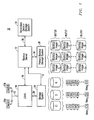
- Fig. 1 illustrates relevant components of an example data processing system.
- Fig. 2 illustrates relevant components of the example backup server and the secondary backup storage of the data processing system of Fig. 1 .
- Fig. 3 illustrates a graphical representation of an example primary backup table.
- Fig. 4 illustrates a graphical representation of an example secondary backup table.
- Fig. 5 illustrates relevant aspects of an example process for creating secondary backup copies.
- Fig. 6 illustrates a graphical representation of an example backup catalog.
- Fig. 7 illustrates relevant aspects of an example process for reviewing the backup catalog shown in Fig. 6 .
- references within the specification to "one embodiment” or “an embodiment” are intended to indicate that a particular feature, structure, or characteristic described in connection with the embodiment is included in at least one embodiment of the present invention.
- the appearance of the phrase “in one embodiment” in various places within the specification are not necessarily all referring to the same embodiment, nor are separate or alternative embodiments mutually exclusive of other embodiments.
- various features are described which may be exhibited by some embodiments and not by others.
- various requirements are described which may be requirements for some embodiments but not other embodiments.
- FIG. 1 illustrates in block diagram forms, relevant components of an example data processing system 10.
- Data processing system 10 includes a backup server 12 coupled to a computer system 14 via a communication link 16.
- Computer system 14 (hereinafter referred to as CS14) is a server and processes transaction requests it receives from client computer systems 20A and 20B via communication link 22. More particularly, CS 14 processes transaction requests it receives in accordance with applications executing on one or more processors.
- CS 14 will be described as implementing Exchange Server (hereinafter Exchange), which is a popular messaging system and collaborative software system produced by Microsoft Corporation, and SQL Server (hereinafter SQL), which is a relational database management system produced by Microsoft Corporation, it being understood that additional applications may be implemented on CS14.
- Exchange Exchange Server
- SQL SQL Server
- a data storage system 24 is coupled to CS14 via communication link 26 and configured to store application data, i.e., data that is accessible by applications such as Exchange and SQL that are executing on CS14.
- application data i.e., data that is accessible by applications such as Exchange and SQL that are executing on CS14.
- storage systems may come in different forms, for purposes of explanation only, storage system 24 takes form one or more disk arrays each containing one or more hard disks that store data.
- communication links such as communication link 26, can take different forms and may include components such as routers, switches, bridges, etc., which facilitate data communication between components such as CS 14 and a disk array in data storage system 24.
- CS 14 is presumed to include a file system manager and a volume manager, each of which can take form in instructions executing on one or more of the processors.
- a file system manager also referred to as a file system
- a file system is a process that an operating system or application (e.g., Exchange or SQL) uses to organize and keep track of files.
- a hierarchical file system is one that uses directories to organize files into a tree structure.
- a file is a collection of data or information that has a name, called the filename. Almost all information is stored in a file.
- a directory on the other hand is an organizational unit, or container, used to organize folders and files into a hierarchical structure. Directories contain bookkeeping information about files that are, figuratively speaking, beneath them in the hierarchy. The files and directories at any level are contained in the directory above them. To access a file, an operating system or application needs to specify a path or the names of all the directories above it. The topmost directory in any file is called the root directory. A directory that is below another directory is called a subdirectory. A directory above a subdirectory is called the parent directory. Under DOS and Windows, the root directory is a back slash ( ⁇ ).
- CS14 implements a volume manager.
- a volume manager is a process that logically aggregates physical or logical units of data storage provided by a storage system such as storage system 24 into higher levels of storage called volumes.
- Each volume is seen by the file manager of CS14 as a sequential number of logical data blocks, which are read and write accessible by the file system. While it may be said that data blocks of a volume store data, in reality the data is stored in physical memory blocks of storage media (e.g. hard disks) mapped directly or indirectly thereto.
- the volume manager executing on CS14 logically aggregates units of storage provided by storage system 24 into three distinct volumes including volume C:, volume D:, and volume E:.
- Figure 1 illustrates graphical representations of volumes C:, D:, and E:.
- Volume C includes max C data blocks, each of which stores or is capable of storing a quantity of data (e.g., 512 bytes).
- Volume D includes max D data blocks, each of which stores or is capable of storing a quantity of data.
- volume E includes max E data blocks, each of which stores or is capable of storing data.
- volumes C: and E store application data in files for Exchange
- volume D stores application data in files for SQL, including SQL Database "BEDB” and SQL Database “System.”
- volume C is presumed to store a directory named "Documents and Settings" that store Word documents and PowerPoint presentations. It is noted that volumes C:, D:, and E: may store additional data in files.
- Backup refers to a process of making backup copies of data (e.g., volumes C:, D:, and E: on storage system 24) that may be subsequently used to restore data after a data loss event. Backup copies are useful primarily for two purposes. The first is to restore all data (e.g., all data in volumes C:. D:, and E:) to a state that existed before a disaster (called disaster recovery). The second is to restore small numbers of files after they have been accidentally deleted or corrupted.
- backup server 12 includes a server backup/restore module in the form of instructions executing on one or more processors
- CS14 includes a client backup/restore module in the form of instructions executing on one or more processors.
- the server and client backup/restore module implement a primary backup process to create primary backup copies of data stored on storage system 24.
- primary backups may be created on the file system level by copying data in a file-by-file process until all files are copied to primary backup storage system 26.
- primary backups may be created on the volume level by copying data in a volume block-by-block process until all volumes are copied to primary backup storage system 26.
- the file system is essentially ignored in this alternative, volume level backup process.
- the server and client backup/restore modules of backup server 12 and CS14 implement a primary backup process to create primary backups of volumes C:, D:, and E: using the volume level block-by-block process that ignores the file system, it being understood that the present invention should not be limited thereto.
- the primary backup copies are stored on primary backup storage system 26 and referred to as backup images of volumes C:, D;, and E:.
- a backup image is a single file containing the complete contents and structure representing a volume (e.g., volume C:, D:, or E:).
- Volumes C:, D:, and E: are backed up on a periodic basis (e.g., nightly at 1:00 am) as scheduled by a system administrator.
- Primary backup images of volumes C:, D:, and E: are stored in primary backup storage system 26 until released.
- Figure 1 illustrates graphical representations of several primary backup images of volumes C:, D:, and E:.
- the backup images of volumes C:, D:, and E:, once created, may be contained within respective files for subsequent access during a secondary backup process more fully described below.
- primary backup images of volumes C:, D:, and E: that were created on day March 1 st are stored in a file designated BU301
- the primary backup images of volumes C:, D:, and E: that were created on July 27 th are stored within a file designated BU727
- the most recently created primary backup images of volumes C:, D:, and E: are stored in a folder designated BU728 (see Figure 1 ).
- Backup server 12 can implement a secondary backup process on one or more processors for creating a secondary backup copies of data contained in the primary backup images of volumes C:, D:, and E:.
- These secondary backup copies can be stored within secondary backup storage system 34, which is coupled to backup server 12 via communication link 36.
- secondary backup storage system 34 include several storage media (e.g., magnetic tapes) in which secondary backup copies are stored, it being understood that the secondary backup storage system 34 need not be limited thereto.
- FIG. 2 is a block diagram illustrating relevant components of an example backup server 12 and an example secondary backup storage system 34.
- backup server 12 includes server backup/restore module 40 in data communication with primary backup storage system 26 and secondary backup storage system 34 via communication links 30 and 36, respectively.
- Backup/restore module 40 may take form in one or more instructions executing on one or more processors of server 12.
- Backup/restore module 40 is in data communication with memory 42, which stores a primary backup table 44, a secondary backup table 46, and a backup catalog 50.
- Primary backup table 44 and secondary backup table 46 are also in data communication with a user interface module 52, which takes form in instructions executing on one or more processors of backup server 12.
- each of primary and secondary backup tables contains one or more entries, and each entry includes backup process parameters that are modifiable by a system administrator via user interface 52. Additionally, the system administrator can add or delete entries within either primary backup table 44 or secondary backup table 46 as needed.
- Primary backup table 44 includes at least one entry that includes a schedule for creating primary backup images of volumes (e.g., volumes C:, D:, and E:).
- Secondary backup table 46 includes one or more entries, each of which includes a schedule for creating secondary backup of data contained within the most recently created primary backup images of volumes C:, D:, and E:.
- Backup catalog 50 contains multiple entries, each one of which identifies either a file that stores primary backup images of volumes C:, D:, and E:, or one or more data objects within secondary backup storage system 34 that store secondary backup copies of data of one or more of the primary backup images of volumes C:, D:, and E:.
- Each entry within backup catalog 50 may also include information for defining a retention period for a backup copy (either primary backup images of volumes C:, D:, and E:, or secondary backup copies of data).
- the secondary backup system 34 shown in Figure 2 includes at least a pair of tape libraries 56 that contain a plurality of magnetic tapes 60 and 62, each of which stores or is configured to store a secondary backup copy.
- Secondary data storage system 34 also includes a robotic tape handler 64 and a tape drive 66 into which robotic tape handler 64 can insert or retrieve a tape 60 or 62 from library 54 or 56, respectively.
- backup/restore module 40 may read data from one or more of the most recently created backup images C:, D:, and E: for subsequent transfer and storage on the inserted tape 60 or 62, thereby creating a secondary backup copy.
- Figure 3 illustrates a graphical representation of an example primary backup table 44 shown within Figure 2 .
- primary backup table 44 contains one entry, which is modifiable by a system administrator via user interface module 52 (see Figure 2 ).
- the entry of primary backup table 44 should include one or more identifiers of one or more volumes on storage system 24, a schedule for creating the primary backup images of the volumes identified in the entry, and a retention period for the primary backup images.
- "//CS14/*" identifies volumes C:, D:, and E: on storage system 24 since //CS14, which is a directory name, identifies data accessible by all applications of CS 14.
- the entry also indicates that primary backup images of volumes C:, D: should be created daily at 1:00 am.
- the entry indicates that the primary backup images, once created, should be retained for four weeks.
- the primary backup process occurs daily starting at 1:00 a.m., and copies data in volumes C:, D:, and E: in a block-by-block fashion to primary backup storage system 26, thereby created primary backup images of volumes C:, D:, and E:.
- a filename e.g., BU728 is created for a file that stores the just created primary backup images of volumes C:, D:, and E:.
- FIG 4 shows a graphical representation of an example secondary backup table 46.
- Secondary backup table 46 includes three entries.
- each entry in a secondary table should include an identity of data in the most recently created primary backup copies of volumes, a schedule for creating secondary backup copies of the identified data, an identity of the tape library where the secondary backup copies should be stored, and a retention period for the secondary backup copies.
- entry 1 of the secondary backup table 46 indicates data identified by ⁇ CS14 ⁇ Exchange ⁇ * (i.e., data accessible by the Exchange application executing on CS14) should be copied every Monday beginning at 2:00 a.m. from the most recently created primary backup images of volumes C: and E:, to tape library 1 (e.g., tape library 54).
- Entry 2 indicates that data of SQL database BEDB, which is identified as ⁇ CS 14 ⁇ SQL ⁇ BackupExec ⁇ BEDB, should be copied every Sunday beginning at 2:00 a.m. from the most recently created primary backup image of volume D:, to tape library 2 (e.g., tape library 56), and should be retained for a period of one year.
- entry 3 indicates that all Word documents and all PowerPoint presentations, should be copied every daily beginning at 3:00 a.m. from the DocumentsAndSettings folder of the most recently created primary backup image of volume C:, to tape library 1, and retained there for a period of six months.
- backup/restore module 40 of backup server 12 creates primary backup images of volumes C:, D:, and E: in accordance with the primary backup table 44 shown in Figure 3 .
- This backup process occurs daily at 1:00 a.m. in accordance with the schedule set forth in the primary backup table 44.
- backup/restore module 40 initiates a secondary backup process.
- Figure 5 illustrates relevant aspects of one embodiment of the secondary backup process. As shown in Figure 5 , the process begins with backup/restore module setting a dummy variable x to 0 and subsequently incrementing variable x by 1 in steps 70 and 72. In step 74, backup/restore module 40 accesses entry x of the secondary copy table to read the schedule therein.
- backup/restore module 40 determines whether it is time to copy data identified in the entry x based upon the current time and the time of the schedule set forth in entry x. If it is not time to copy, the process proceeds to step 90 where x is compared with x max , the total number of entries in secondary backup table 46. If x does not equal x max , the process returns to step 72 where x is incremented by 1. If, however, the entry x's schedule dictates that it is time to copy data identified in entry x, then the process proceeds to step 80 where backup/restore module 40 copies the identified data from one or more of the most recently created primary image backups of volumes C:, D:, or E: to the secondary storage that is also identified within entry x.
- backup/restore module 40 will copy the contents of BEDB, which is identified by //CS14/SQL/BackupExec/BEDB, to a tape of library 2.
- BEDB which is identified by //CS14/SQL/BackupExec/BEDB
- backup/restore module 40 has knowledge of the file structure of backup images of volumes C:, D:, and E: to enable the access and reading of select data such as //CS14/SQL/BackupExec/BEDB.
- Backup/restore module 40 creates a catalog entry within backup catalog 50 for the data copied in step 80.
- Figure 6 illustrates in graphical form one embodiment of catalog 50.
- Each entry within catalog 50 includes (1) a timestamp when the corresponding primary backup images was created or when the corresponding secondary backup copy was created, (2) the retention period for retaining the primary backup images or secondary backup copy, (3) a location where the primary backup images or secondary backup copy can be found, along with (4) an identity of the data that was copied.
- the most recently created entry (i.e., entry1507) in catalog table 50 indicates that primary backup images of volumes C:, D:, and E:, identified by //CS14/*, was created at 1:00 a.m. on July 28 th and stored within the B2B folder as file BU728 (see Figures 1 and 2 ). The most recent entry also indicates the retention period of four weeks for this primary backup copy.
- backup/restore module 40 initiates a backup catalog review process to identify primary backup image files or secondary backup copies to be released.
- Figure 7 is a flow chart illustrating relevant aspects of one embodiment of the catalog review routine. Again, this routine or process is performed by the backup/restore module 40.
- backup/restore module 40 sets variable x to 0 and increments variable x by 1. Thereafter, in step 104 backup/restore module 40 selects entry x from the backup catalog and reads the contents thereof.
- backup/restore module 40 calculates a release date and time by adding the timestamp and retention period of entry x.
- backup/restore module 40 in accordance with step 106, will access entry 1505 and add a four week time period (i.e., the retention period of entry 1505) to the timestamp of July 27, 2008, 1:00 a.m., to calculate a release date and time. If the current date and time is the same as or later than the release time and date calculated in step 106, then as shown in step 112, the backup copy identified within entry x is deleted or released. Otherwise, the backup copy identified within backup table 50 is not deleted or released, and the process proceeds to step 114 whereby backup/restore module 40 compares the current value of x to x cat , the total number of entries in the backup catalog 50. If these two values are not equal, steps 102 - 112 are repeated. Eventually, the process shown in Figure 7 ends when x equals X cat .
- the above-discussed embodiments may be implemented using software modules which perform certain tasks.
- the software modules discussed herein may include script, batch, or other executable files.
- the software modules may be stored on a machine-readable or computer-readable storage medium such as a disk drive.
- Storage devices used for storing software modules in accordance with an embodiment of the invention may be magnetic floppy disks, hard disks, or optical discs such as CD-ROMs or CD-Rs, for example.
- a storage device used for storing firmware or hardware modules in accordance with an embodiment of the invention may also include a semiconductor-based memory, which may be permanently, removably or remotely coupled to a microprocessor/memory system.
- the modules may be stored within a computer system memory to configure the computer system to perform the functions of the module.
- Other new and various types of computer-readable storage media may be used to store the modules discussed herein.
Landscapes
- Engineering & Computer Science (AREA)
- Theoretical Computer Science (AREA)
- Quality & Reliability (AREA)
- Physics & Mathematics (AREA)
- General Engineering & Computer Science (AREA)
- General Physics & Mathematics (AREA)
- Information Retrieval, Db Structures And Fs Structures Therefor (AREA)
Claims (19)
- Procédé comportant :un système informatique (12) créant périodiquement une copie de sauvegarde principale de données (C:, D:, E:) stockées sur un système de stockage (24) en vue de créer une pluralité de copies de sauvegarde principales (BU301 - BU728) ;le système informatique (12) créant périodiquement une première copie de sauvegarde de données (C:, D:, E:) stockées sur le système de stockage (24), en vue de créer une pluralité de premières copies de sauvegarde, dans lequel chacune des premières copies de sauvegarde est créée en partie en copiant des données à partir d'une copie respective parmi les copies de sauvegarde principales ;caractérisé en ce que:la périodicité de la création des copies de sauvegarde principales (BU301 - BU728) est distincte de la périodicité de la création des premières copies de sauvegarde ;chacune des premières copies de sauvegarde, lorsqu'elle est créée, comporte une copie de certaines des données, mais pas de la totalité des données incluses dans sa copie respective parmi les copies de sauvegarde principales (BU301 - BU728) ;la conservation de chacune des copies de sauvegarde principales (BU301 - BU728) au cours d'une première période de temps à partir de la création de celles-ci ;la conservation de chacune des premières copies de sauvegarde au cours d'une deuxième période de temps à partir de la création de celles-ci ;dans lequel la première période de temps et la deuxième période de temps sont distinctes l'une de l'autre.
- Procédé selon la revendication 1, dans lequel en outre :le système informatique (12) créé périodiquement une seconde copie de sauvegarde de données (C:, D:, E:) stockées sur le système de stockage (24), en vue de créer une pluralité de secondes copies de sauvegarde, dans lequel chacune des secondes copies de sauvegarde est créée en partie en copiant des données à partir d'une copie respective parmi les copies de sauvegarde principales ;dans lequel la périodicité de la création des copies de sauvegarde principales (BU301 - BU728) est distincte de la périodicité de la création des secondes copies de sauvegarde ;dans lequel la périodicité de la création des premières copies de sauvegarde est distincte de la périodicité de la création des secondes copies de sauvegarde.
- Procédé selon la revendication 2, consistant en outre à :conserver chacune des secondes copies de sauvegarde au cours d'une troisième période de temps à partir de la création de celles-ci ;dans lequel la première période de temps, la deuxième période de temps et la troisième période de temps sont distinctes les unes des autres.
- Procédé selon la revendication 2, dans lequel chacune des secondes copies de sauvegarde comporte une copie de certaines des données, mais pas de la totalité des données incluses dans sa copie respective parmi les copies de sauvegarde principales.
- Procédé selon la revendication 4 :dans lequel les données copiées sur les premières copies de sauvegarde sont identifiées par un premier identifiant (\\CS14\Exchange\*) ;dans lequel les données copiées sur les secondes copies de sauvegarde sont identifiées par un second identifiant (\\CS14\SQL\Backup Exec\BEDB) ;dans lequel les premier et second identifiants sont distincts l'un de l'autre.
- Procédé selon la revendication 5 :dans lequel chacune des copies de sauvegarde principales (BU301 - BU728) est stockée sur un dispositif de stockage de sauvegarde principal (26) ;dans lequel chacune des premières copies de sauvegarde est stockée sur un dispositif de stockage de sauvegarde secondaire (60 ou 62) ;dans lequel chaque seconde copie de sauvegarde est stockée sur un autre dispositif de stockage de sauvegarde secondaire (60 ou 62) ;dans lequel le dispositif de stockage de sauvegarde principal, le dispositif de stockage de sauvegarde secondaire, et l'autre dispositif de stockage de sauvegarde secondaire sont distincts les uns des autres.
- Procédé selon la revendication 5 :dans lequel le premier identifiant (\\CS14\Exchange\*) identifie des premières données d'application accessibles par une première application ;dans lequel le second identifiant (\\CS14\SQL\Backup Exec\BEDB) identifie des secondes données d'application accessibles par une seconde application ;dans lequel les première et seconde applications sont distinctes l'une de l'autre.
- Procédé selon la revendication 5 :dans lequel le premier identifiant (\\CS14\Exchange\*) identifie des premières données d'application accessibles par une première application ;dans lequel le second identifiant (\\CS14\SQL\Backup Exec\BEDB) comporte un nom de chemin d'accès de système de fichiers qui identifie un fichier dans un système de fichiers.
- Procédé selon la revendication 5 :dans lequel le premier identifiant (\\CS14\Exchange\*) comporte un premier nom de chemin d'accès de système de fichiers qui identifie un premier dossier ;dans lequel le second identifiant (\\CS14\SQL\Backup Exec\BEDB) comporte un second nom de chemin d'accès de système de fichiers qui identifie un second dossier ;dans lequel les premier et second noms de chemin d'accès de système de fichiers sont distincts l'un de l'autre.
- Support lisible par ordinateur comportant des instructions exécutées par un système informatique, dans lequel le système informatique met en oeuvre un procédé en réponse à l'exécution des instructions, le procédé consistant à :créer périodiquement une copie de sauvegarde principale de données (C:, D:, E:) stockées sur un système de stockage (24), en vue de créer une pluralité de copies de sauvegarde principales (BU301 - BU728) ;créer périodiquement une première copie de sauvegarde de données (C:, D:, E:) stockées sur le système de stockage (24), en vue de créer une pluralité de premières copies de sauvegarde, dans lequel chacune des premières copies de sauvegarde est créée en partie en copiant des données à partir d'une copie respective parmi les copies de sauvegarde principales ;caractérisé en ce que:la périodicité de la création des copies de sauvegarde principales (BU301 - BU728) est distincte de la périodicité de la création des premières copies de sauvegarde ;chacune des premières copies de sauvegarde, lorsqu'elle est créée, comporte une copie de certaines des données, mais pas de la totalité des données incluses dans sa copie respective parmi les copies de sauvegarde principales ;la conservation de chacune des copies de sauvegarde principales (BU301 - BU728) au cours d'une première période de temps à partir de la création de celles-ci ;la conservation de chacune des premières copies de sauvegarde au cours d'une deuxième période de temps à partir de la création de celles-ci ;dans lequel la première période de temps et la deuxième période de temps sont distinctes l'une de l'autre.
- Support lisible par ordinateur selon la revendication 10, dans lequel le procédé consiste en outre à :créer périodiquement une seconde copie de sauvegarde de données (C:, D:, E:) stockées sur le système de stockage, en vue de créer une pluralité de secondes copies de sauvegarde, dans lequel chacune des secondes copies de sauvegarde est créée en partie en copiant des données à partir d'une copie respective parmi les copies de sauvegarde principales ;dans lequel la périodicité de la création des copies de sauvegarde principales (BU301 - BU728) est distincte de la périodicité de la création des secondes copies de sauvegarde ;dans lequel la périodicité de la création des premières copies de sauvegarde est distincte de la périodicité de la création des secondes copies de sauvegarde.
- Support lisible par ordinateur selon la revendication 11,
dans lequel chacune des secondes copies de sauvegarde comporte une copie de certaines des données, mais pas de la totalité des données incluses dans sa copie respective parmi les copies de sauvegarde principales. - Support lisible par ordinateur selon la revendication 11 :dans lequel les données copiées sur les premières copies de sauvegarde sont identifiées par un premier identifiant (\\CS14\Exchange\*) ;dans lequel les données copiées sur les secondes copies de sauvegarde sont identifiées par un second identifiant (\\CS14\SQL\Backup Exec\BEDB) ;dans lequel les premier et second identifiants sont distincts l'un de l'autre.
- Support lisible par ordinateur selon la revendication 11, dans lequel le procédé consiste en outre à :libérer chacune des secondes copies de sauvegarde à l'issue d'une troisième période de temps à partir de la création de celles-ci ;dans lequel la première période de temps, la deuxième période de temps, et la troisième période de temps sont distinctes les unes des autres.
- Support lisible par ordinateur selon la revendication 13 :dans lequel le premier identifiant (\\CS14\Exchange\*) identifie des premières données d'application accessibles par une première application ;dans lequel le second identifiant (\\CS14\SQL\Backup Exec\BEDB) identifie des secondes données d'application accessibles par une seconde application ;dans lequel les première et seconde applications sont distinctes l'une de l'autre.
- Support lisible par ordinateur selon la revendication 13 :dans lequel le premier identifiant (\\CS14\Exchange\*) identifie des premières données d'application accessibles par une première application ;dans lequel le second identifiant (\\CS14\SQL\Backup Exec\BEDB) comporte un nom de chemin d'accès de système de fichiers qui identifie un fichier dans un système de fichiers.
- Support lisible par ordinateur selon la revendication 13 :dans lequel le premier identifiant (\\CS14\Exchange\*) comporte un premier nom de chemin d'accès de système de fichiers qui identifie un premier dossier ;dans lequel le second identifiant (\\CS14\SQL\Backup Exec\BEDB) comporte un second nom de chemin d'accès de système de fichiers qui identifie un second dossier ;dans lequel les premier et second noms de chemin d'accès de système de fichiers sont distincts l'un de l'autre.
- Support lisible par ordinateur selon la revendication 11, dans lequel le procédé consiste en outre à :accéder à des première et seconde entrées d'un objet de données (46) dans une mémoire à chaque fois qu'une copie de sauvegarde principale est créée ;dans lequel la première entrée comporte la périodicité de la création des premières copies de sauvegarde ;dans lequel la seconde entrée comporte la périodicité de la création des secondes copies de sauvegarde.
- Dispositif comportant :un système de stockage (24) destiné à stocker des données (C:, D:, E:) ;un système de stockage de sauvegarde principal (26) destiné à stocker une pluralité de copies de sauvegarde principales (BU301 - BU728) de données stockées sur le système de stockage ;un système de stockage de sauvegarde secondaire (34) destiné à stocker une pluralité de premières copies de sauvegarde de données stockées sur le dispositif de stockage principal ;un système informatique (12) configuré de manière à créer périodiquement une copie de sauvegarde principale de données stockées sur le système de stockage, en vue de créer la pluralité de copies de sauvegarde principales (BU301 - BU728), et à créer périodiquement une première copie de sauvegarde de données stockées sur le dispositif de stockage principal, en vue de créer la pluralité de premières copies de sauvegarde, dans lequel chaque première copie de sauvegarde est créée par le système informatique en copiant des données à partir d'une copie respective parmi les copies de sauvegarde principales ;caractérisé en ce que:la périodicité de la création des copies de sauvegarde principales est distincte de la périodicité de la création des premières copies de sauvegarde ;dans lequel chacune des premières copies de sauvegarde, lorsqu'elle est créée, comporte une copie de certaines des données, mais pas de la totalité des données incluses dans sa copie respective parmi les copies de sauvegarde principales ;la conservation de chacune des copies de sauvegarde principales (BU301 - BU728) au cours d'une première période de temps à partir de la création de celles-ci ;la conservation de chacune des premières copies de sauvegarde au cours d'une deuxième période de temps à partir de la création de celles-ci ;dans lequel la première période de temps et la deuxième période de temps sont distinctes l'une de l'autre.
Applications Claiming Priority (2)
| Application Number | Priority Date | Filing Date | Title |
|---|---|---|---|
| US12/347,577 US9176825B2 (en) | 2008-12-31 | 2008-12-31 | Granular application data lifecycle sourcing from a single backup |
| PCT/US2009/061996 WO2010077417A1 (fr) | 2008-12-31 | 2009-10-26 | Établissement de l'origine du cycle de vie de données d'application granulaires à partir d'une copie de sauvegarde unique |
Publications (2)
| Publication Number | Publication Date |
|---|---|
| EP2382543A1 EP2382543A1 (fr) | 2011-11-02 |
| EP2382543B1 true EP2382543B1 (fr) | 2013-06-26 |
Family
ID=41683390
Family Applications (1)
| Application Number | Title | Priority Date | Filing Date |
|---|---|---|---|
| EP09761063.8A Active EP2382543B1 (fr) | 2008-12-31 | 2009-10-26 | Établissement de l'origine du cycle de vie de données d'application granulaires à partir d'une copie de sauvegarde unique |
Country Status (4)
| Country | Link |
|---|---|
| US (1) | US9176825B2 (fr) |
| EP (1) | EP2382543B1 (fr) |
| CN (1) | CN102388369B (fr) |
| WO (1) | WO2010077417A1 (fr) |
Families Citing this family (15)
| Publication number | Priority date | Publication date | Assignee | Title |
|---|---|---|---|---|
| US8554736B2 (en) * | 2009-04-30 | 2013-10-08 | Hewlett-Packard Development Company, L.P. | Backup method |
| US9063883B2 (en) * | 2011-09-26 | 2015-06-23 | International Business Machines Corporation | Management of point-in-time copy relationship for extent space efficient volumes |
| US8930320B2 (en) | 2011-09-30 | 2015-01-06 | Accenture Global Services Limited | Distributed computing backup and recovery system |
| US10423493B1 (en) | 2015-12-21 | 2019-09-24 | Amazon Technologies, Inc. | Scalable log-based continuous data protection for distributed databases |
| US10331624B2 (en) | 2017-03-03 | 2019-06-25 | Transitive Innovation, Llc | Automated data classification system |
| US11182372B1 (en) | 2017-11-08 | 2021-11-23 | Amazon Technologies, Inc. | Tracking database partition change log dependencies |
| US11269731B1 (en) | 2017-11-22 | 2022-03-08 | Amazon Technologies, Inc. | Continuous data protection |
| CN108989088B (zh) * | 2018-06-21 | 2021-10-26 | 京信网络系统股份有限公司 | 一种日志上传方法和通信设备 |
| US11126505B1 (en) * | 2018-08-10 | 2021-09-21 | Amazon Technologies, Inc. | Past-state backup generator and interface for database systems |
| US11068351B2 (en) * | 2018-11-19 | 2021-07-20 | International Business Machines Corporation | Data consistency when switching from primary to backup data storage |
| US20210037112A1 (en) * | 2019-07-29 | 2021-02-04 | Commvault Systems, Inc. | Data storage system with rapid restore capability |
| KR20250060949A (ko) * | 2019-11-27 | 2025-05-07 | (주)나무소프트 | 랜섬웨어 또는 피싱 공격 차단 방법 및 시스템 |
| US11467753B2 (en) | 2020-02-14 | 2022-10-11 | Commvault Systems, Inc. | On-demand restore of virtual machine data |
| US12106119B2 (en) * | 2022-07-27 | 2024-10-01 | Hewlett Packard Enterprise Development Lp | Client update of data modification tracking structure |
| US12450130B2 (en) | 2023-08-11 | 2025-10-21 | Hewlett Packard Enterprise Development Lp | Incremental data backup using a combined tracking data structure |
Family Cites Families (13)
| Publication number | Priority date | Publication date | Assignee | Title |
|---|---|---|---|---|
| US4974156A (en) * | 1988-05-05 | 1990-11-27 | International Business Machines | Multi-level peripheral data storage hierarchy with independent access to all levels of the hierarchy |
| US6594744B1 (en) * | 2000-12-11 | 2003-07-15 | Lsi Logic Corporation | Managing a snapshot volume or one or more checkpoint volumes with multiple point-in-time images in a single repository |
| JP3938475B2 (ja) * | 2001-03-29 | 2007-06-27 | 株式会社日立製作所 | バックアップ処理方法及びその実施システム並びにその処理プログラム |
| JP2005190259A (ja) * | 2003-12-26 | 2005-07-14 | Hitachi Ltd | 複数世代のバックアップデータの管理 |
| US7636821B2 (en) * | 2004-01-15 | 2009-12-22 | International Business Machines Corporation | Asynchronous hybrid mirroring system |
| US7487395B2 (en) | 2004-09-09 | 2009-02-03 | Microsoft Corporation | Method, system, and apparatus for creating an architectural model for generating robust and easy to manage data protection applications in a data protection system |
| US7536291B1 (en) * | 2004-11-08 | 2009-05-19 | Commvault Systems, Inc. | System and method to support simulated storage operations |
| US7802134B1 (en) * | 2005-08-18 | 2010-09-21 | Symantec Corporation | Restoration of backed up data by restoring incremental backup(s) in reverse chronological order |
| US7529785B1 (en) * | 2006-02-28 | 2009-05-05 | Symantec Corporation | Efficient backups using dynamically shared storage pools in peer-to-peer networks |
| JP4126706B2 (ja) * | 2006-03-03 | 2008-07-30 | インターナショナル・ビジネス・マシーンズ・コーポレーション | データバックアップのための装置、方法、及びプログラム |
| JP4902289B2 (ja) * | 2006-07-31 | 2012-03-21 | 株式会社日立製作所 | バックアップシステム及びバックアップ方法 |
| US20080208929A1 (en) * | 2007-02-22 | 2008-08-28 | Mark Phillipi | System And Method For Backing Up Computer Data |
| US7873805B2 (en) * | 2007-02-23 | 2011-01-18 | Lewis, Rice & Fingersh, L.C. | Data recovery systems and methods |
-
2008
- 2008-12-31 US US12/347,577 patent/US9176825B2/en active Active
-
2009
- 2009-10-26 WO PCT/US2009/061996 patent/WO2010077417A1/fr not_active Ceased
- 2009-10-26 CN CN200980156735.0A patent/CN102388369B/zh active Active
- 2009-10-26 EP EP09761063.8A patent/EP2382543B1/fr active Active
Also Published As
| Publication number | Publication date |
|---|---|
| EP2382543A1 (fr) | 2011-11-02 |
| US9176825B2 (en) | 2015-11-03 |
| US20100169594A1 (en) | 2010-07-01 |
| WO2010077417A1 (fr) | 2010-07-08 |
| CN102388369B (zh) | 2015-11-25 |
| CN102388369A (zh) | 2012-03-21 |
Similar Documents
| Publication | Publication Date | Title |
|---|---|---|
| EP2382543B1 (fr) | Établissement de l'origine du cycle de vie de données d'application granulaires à partir d'une copie de sauvegarde unique | |
| US11740974B2 (en) | Restoring a database using a fully hydrated backup | |
| US7899789B2 (en) | System for automatically shadowing data and file directory structures for a plurality of network-connected computers using a network-attached memory | |
| EP0733235B1 (fr) | Systeme de sauvegarde incrementiel | |
| US7827150B1 (en) | Application aware storage appliance archiving | |
| US8356174B2 (en) | System for automatically shadowing encrypted data and file directory structures for a plurality of network-connected computers using a network-attached memory with single instance storage | |
| US7036043B2 (en) | Data management with virtual recovery mapping and backward moves | |
| US7266655B1 (en) | Synthesized backup set catalog | |
| US8296264B1 (en) | Method and system for file-level continuous data protection | |
| US6938056B2 (en) | System and method for restoring a file system from backups in the presence of deletions | |
| EP1975799B1 (fr) | Implementation d'un système de fichiers multi-versions en écriture/lecture pour des données de sauvegarde | |
| US8126854B1 (en) | Using versioning to back up multiple versions of a stored object | |
| US6898688B2 (en) | Data management appliance | |
| US20030177149A1 (en) | System and method for data backup | |
| EP3796174B1 (fr) | Restauration d'une base de données à l'aide d'une sauvegarde entièrement hydratée | |
| US8572045B1 (en) | System and method for efficiently restoring a plurality of deleted files to a file system volume | |
| US7523149B1 (en) | System and method for continuous protection of working set data using a local independent staging device | |
| US20030135704A1 (en) | Data management appliance | |
| US20030131253A1 (en) | Data management appliance | |
| US8126851B2 (en) | System for automatically recovering a computer memory using shadowed data and file directory structures | |
| US8335768B1 (en) | Selecting data in backup data sets for grooming and transferring | |
| US11068354B1 (en) | Snapshot backups of cluster databases | |
| McGehee et al. | SQL Server backup and Restore | |
| EP1715425A2 (fr) | Méthode et système pour la préservation de l'accès à un système en cas de sinistre | |
| CA2531714C (fr) | Methode et systeme pour proteger l'acces a un systeme en cas de sinistre |
Legal Events
| Date | Code | Title | Description |
|---|---|---|---|
| PUAI | Public reference made under article 153(3) epc to a published international application that has entered the european phase |
Free format text: ORIGINAL CODE: 0009012 |
|
| 17P | Request for examination filed |
Effective date: 20110725 |
|
| AK | Designated contracting states |
Kind code of ref document: A1 Designated state(s): AT BE BG CH CY CZ DE DK EE ES FI FR GB GR HR HU IE IS IT LI LT LU LV MC MK MT NL NO PL PT RO SE SI SK SM TR |
|
| DAX | Request for extension of the european patent (deleted) | ||
| 17Q | First examination report despatched |
Effective date: 20120521 |
|
| GRAP | Despatch of communication of intention to grant a patent |
Free format text: ORIGINAL CODE: EPIDOSNIGR1 |
|
| GRAS | Grant fee paid |
Free format text: ORIGINAL CODE: EPIDOSNIGR3 |
|
| GRAA | (expected) grant |
Free format text: ORIGINAL CODE: 0009210 |
|
| AK | Designated contracting states |
Kind code of ref document: B1 Designated state(s): AT BE BG CH CY CZ DE DK EE ES FI FR GB GR HR HU IE IS IT LI LT LU LV MC MK MT NL NO PL PT RO SE SI SK SM TR |
|
| REG | Reference to a national code |
Ref country code: GB Ref legal event code: FG4D |
|
| REG | Reference to a national code |
Ref country code: CH Ref legal event code: EP |
|
| REG | Reference to a national code |
Ref country code: AT Ref legal event code: REF Ref document number: 618967 Country of ref document: AT Kind code of ref document: T Effective date: 20130715 |
|
| REG | Reference to a national code |
Ref country code: IE Ref legal event code: FG4D |
|
| REG | Reference to a national code |
Ref country code: DE Ref legal event code: R096 Ref document number: 602009016710 Country of ref document: DE Effective date: 20130822 |
|
| PG25 | Lapsed in a contracting state [announced via postgrant information from national office to epo] |
Ref country code: SE Free format text: LAPSE BECAUSE OF FAILURE TO SUBMIT A TRANSLATION OF THE DESCRIPTION OR TO PAY THE FEE WITHIN THE PRESCRIBED TIME-LIMIT Effective date: 20130626 Ref country code: FI Free format text: LAPSE BECAUSE OF FAILURE TO SUBMIT A TRANSLATION OF THE DESCRIPTION OR TO PAY THE FEE WITHIN THE PRESCRIBED TIME-LIMIT Effective date: 20130626 Ref country code: NO Free format text: LAPSE BECAUSE OF FAILURE TO SUBMIT A TRANSLATION OF THE DESCRIPTION OR TO PAY THE FEE WITHIN THE PRESCRIBED TIME-LIMIT Effective date: 20130926 Ref country code: LT Free format text: LAPSE BECAUSE OF FAILURE TO SUBMIT A TRANSLATION OF THE DESCRIPTION OR TO PAY THE FEE WITHIN THE PRESCRIBED TIME-LIMIT Effective date: 20130626 Ref country code: SI Free format text: LAPSE BECAUSE OF FAILURE TO SUBMIT A TRANSLATION OF THE DESCRIPTION OR TO PAY THE FEE WITHIN THE PRESCRIBED TIME-LIMIT Effective date: 20130626 Ref country code: GR Free format text: LAPSE BECAUSE OF FAILURE TO SUBMIT A TRANSLATION OF THE DESCRIPTION OR TO PAY THE FEE WITHIN THE PRESCRIBED TIME-LIMIT Effective date: 20130927 |
|
| REG | Reference to a national code |
Ref country code: AT Ref legal event code: MK05 Ref document number: 618967 Country of ref document: AT Kind code of ref document: T Effective date: 20130626 |
|
| REG | Reference to a national code |
Ref country code: LT Ref legal event code: MG4D |
|
| PG25 | Lapsed in a contracting state [announced via postgrant information from national office to epo] |
Ref country code: HR Free format text: LAPSE BECAUSE OF FAILURE TO SUBMIT A TRANSLATION OF THE DESCRIPTION OR TO PAY THE FEE WITHIN THE PRESCRIBED TIME-LIMIT Effective date: 20130626 Ref country code: BG Free format text: LAPSE BECAUSE OF FAILURE TO SUBMIT A TRANSLATION OF THE DESCRIPTION OR TO PAY THE FEE WITHIN THE PRESCRIBED TIME-LIMIT Effective date: 20130926 |
|
| REG | Reference to a national code |
Ref country code: NL Ref legal event code: VDEP Effective date: 20130626 |
|
| PG25 | Lapsed in a contracting state [announced via postgrant information from national office to epo] |
Ref country code: LV Free format text: LAPSE BECAUSE OF FAILURE TO SUBMIT A TRANSLATION OF THE DESCRIPTION OR TO PAY THE FEE WITHIN THE PRESCRIBED TIME-LIMIT Effective date: 20130626 |
|
| PG25 | Lapsed in a contracting state [announced via postgrant information from national office to epo] |
Ref country code: CY Free format text: LAPSE BECAUSE OF FAILURE TO SUBMIT A TRANSLATION OF THE DESCRIPTION OR TO PAY THE FEE WITHIN THE PRESCRIBED TIME-LIMIT Effective date: 20130724 Ref country code: SK Free format text: LAPSE BECAUSE OF FAILURE TO SUBMIT A TRANSLATION OF THE DESCRIPTION OR TO PAY THE FEE WITHIN THE PRESCRIBED TIME-LIMIT Effective date: 20130626 Ref country code: BE Free format text: LAPSE BECAUSE OF FAILURE TO SUBMIT A TRANSLATION OF THE DESCRIPTION OR TO PAY THE FEE WITHIN THE PRESCRIBED TIME-LIMIT Effective date: 20130626 Ref country code: EE Free format text: LAPSE BECAUSE OF FAILURE TO SUBMIT A TRANSLATION OF THE DESCRIPTION OR TO PAY THE FEE WITHIN THE PRESCRIBED TIME-LIMIT Effective date: 20130626 Ref country code: CZ Free format text: LAPSE BECAUSE OF FAILURE TO SUBMIT A TRANSLATION OF THE DESCRIPTION OR TO PAY THE FEE WITHIN THE PRESCRIBED TIME-LIMIT Effective date: 20130626 Ref country code: PT Free format text: LAPSE BECAUSE OF FAILURE TO SUBMIT A TRANSLATION OF THE DESCRIPTION OR TO PAY THE FEE WITHIN THE PRESCRIBED TIME-LIMIT Effective date: 20131028 Ref country code: AT Free format text: LAPSE BECAUSE OF FAILURE TO SUBMIT A TRANSLATION OF THE DESCRIPTION OR TO PAY THE FEE WITHIN THE PRESCRIBED TIME-LIMIT Effective date: 20130626 Ref country code: IS Free format text: LAPSE BECAUSE OF FAILURE TO SUBMIT A TRANSLATION OF THE DESCRIPTION OR TO PAY THE FEE WITHIN THE PRESCRIBED TIME-LIMIT Effective date: 20131026 |
|
| PG25 | Lapsed in a contracting state [announced via postgrant information from national office to epo] |
Ref country code: ES Free format text: LAPSE BECAUSE OF FAILURE TO SUBMIT A TRANSLATION OF THE DESCRIPTION OR TO PAY THE FEE WITHIN THE PRESCRIBED TIME-LIMIT Effective date: 20131007 Ref country code: PL Free format text: LAPSE BECAUSE OF FAILURE TO SUBMIT A TRANSLATION OF THE DESCRIPTION OR TO PAY THE FEE WITHIN THE PRESCRIBED TIME-LIMIT Effective date: 20130626 Ref country code: NL Free format text: LAPSE BECAUSE OF FAILURE TO SUBMIT A TRANSLATION OF THE DESCRIPTION OR TO PAY THE FEE WITHIN THE PRESCRIBED TIME-LIMIT Effective date: 20130626 Ref country code: RO Free format text: LAPSE BECAUSE OF FAILURE TO SUBMIT A TRANSLATION OF THE DESCRIPTION OR TO PAY THE FEE WITHIN THE PRESCRIBED TIME-LIMIT Effective date: 20130626 |
|
| REG | Reference to a national code |
Ref country code: DE Ref legal event code: R082 Ref document number: 602009016710 Country of ref document: DE Representative=s name: D YOUNG & CO LLP, GB |
|
| PG25 | Lapsed in a contracting state [announced via postgrant information from national office to epo] |
Ref country code: CY Free format text: LAPSE BECAUSE OF FAILURE TO SUBMIT A TRANSLATION OF THE DESCRIPTION OR TO PAY THE FEE WITHIN THE PRESCRIBED TIME-LIMIT Effective date: 20130626 |
|
| PG25 | Lapsed in a contracting state [announced via postgrant information from national office to epo] |
Ref country code: DK Free format text: LAPSE BECAUSE OF FAILURE TO SUBMIT A TRANSLATION OF THE DESCRIPTION OR TO PAY THE FEE WITHIN THE PRESCRIBED TIME-LIMIT Effective date: 20130626 |
|
| PLBE | No opposition filed within time limit |
Free format text: ORIGINAL CODE: 0009261 |
|
| STAA | Information on the status of an ep patent application or granted ep patent |
Free format text: STATUS: NO OPPOSITION FILED WITHIN TIME LIMIT |
|
| PG25 | Lapsed in a contracting state [announced via postgrant information from national office to epo] |
Ref country code: IT Free format text: LAPSE BECAUSE OF FAILURE TO SUBMIT A TRANSLATION OF THE DESCRIPTION OR TO PAY THE FEE WITHIN THE PRESCRIBED TIME-LIMIT Effective date: 20130626 Ref country code: MC Free format text: LAPSE BECAUSE OF FAILURE TO SUBMIT A TRANSLATION OF THE DESCRIPTION OR TO PAY THE FEE WITHIN THE PRESCRIBED TIME-LIMIT Effective date: 20130626 |
|
| REG | Reference to a national code |
Ref country code: CH Ref legal event code: PL |
|
| 26N | No opposition filed |
Effective date: 20140327 |
|
| REG | Reference to a national code |
Ref country code: DE Ref legal event code: R097 Ref document number: 602009016710 Country of ref document: DE Effective date: 20140327 |
|
| REG | Reference to a national code |
Ref country code: IE Ref legal event code: MM4A |
|
| PG25 | Lapsed in a contracting state [announced via postgrant information from national office to epo] |
Ref country code: CH Free format text: LAPSE BECAUSE OF NON-PAYMENT OF DUE FEES Effective date: 20131031 Ref country code: LI Free format text: LAPSE BECAUSE OF NON-PAYMENT OF DUE FEES Effective date: 20131031 |
|
| PG25 | Lapsed in a contracting state [announced via postgrant information from national office to epo] |
Ref country code: IE Free format text: LAPSE BECAUSE OF NON-PAYMENT OF DUE FEES Effective date: 20131026 |
|
| PG25 | Lapsed in a contracting state [announced via postgrant information from national office to epo] |
Ref country code: SM Free format text: LAPSE BECAUSE OF FAILURE TO SUBMIT A TRANSLATION OF THE DESCRIPTION OR TO PAY THE FEE WITHIN THE PRESCRIBED TIME-LIMIT Effective date: 20130626 |
|
| PG25 | Lapsed in a contracting state [announced via postgrant information from national office to epo] |
Ref country code: TR Free format text: LAPSE BECAUSE OF FAILURE TO SUBMIT A TRANSLATION OF THE DESCRIPTION OR TO PAY THE FEE WITHIN THE PRESCRIBED TIME-LIMIT Effective date: 20130626 |
|
| PG25 | Lapsed in a contracting state [announced via postgrant information from national office to epo] |
Ref country code: HU Free format text: LAPSE BECAUSE OF FAILURE TO SUBMIT A TRANSLATION OF THE DESCRIPTION OR TO PAY THE FEE WITHIN THE PRESCRIBED TIME-LIMIT; INVALID AB INITIO Effective date: 20091026 Ref country code: LU Free format text: LAPSE BECAUSE OF NON-PAYMENT OF DUE FEES Effective date: 20131026 Ref country code: MK Free format text: LAPSE BECAUSE OF FAILURE TO SUBMIT A TRANSLATION OF THE DESCRIPTION OR TO PAY THE FEE WITHIN THE PRESCRIBED TIME-LIMIT Effective date: 20130626 |
|
| PG25 | Lapsed in a contracting state [announced via postgrant information from national office to epo] |
Ref country code: MT Free format text: LAPSE BECAUSE OF FAILURE TO SUBMIT A TRANSLATION OF THE DESCRIPTION OR TO PAY THE FEE WITHIN THE PRESCRIBED TIME-LIMIT Effective date: 20130626 |
|
| REG | Reference to a national code |
Ref country code: FR Ref legal event code: PLFP Year of fee payment: 8 |
|
| REG | Reference to a national code |
Ref country code: GB Ref legal event code: 732E Free format text: REGISTERED BETWEEN 20170316 AND 20170323 |
|
| REG | Reference to a national code |
Ref country code: FR Ref legal event code: PLFP Year of fee payment: 9 |
|
| REG | Reference to a national code |
Ref country code: FR Ref legal event code: PLFP Year of fee payment: 10 |
|
| REG | Reference to a national code |
Ref country code: DE Ref legal event code: R082 Ref document number: 602009016710 Country of ref document: DE Representative=s name: D YOUNG & CO LLP, DE |
|
| P01 | Opt-out of the competence of the unified patent court (upc) registered |
Effective date: 20230523 |
|
| PGFP | Annual fee paid to national office [announced via postgrant information from national office to epo] |
Ref country code: GB Payment date: 20250923 Year of fee payment: 17 |
|
| PGFP | Annual fee paid to national office [announced via postgrant information from national office to epo] |
Ref country code: FR Payment date: 20250923 Year of fee payment: 17 |
|
| PGFP | Annual fee paid to national office [announced via postgrant information from national office to epo] |
Ref country code: DE Payment date: 20250923 Year of fee payment: 17 |