EP2238973A1 - Lyophilized preparations of proteasome inhibitors - Google Patents
Lyophilized preparations of proteasome inhibitors Download PDFInfo
- Publication number
- EP2238973A1 EP2238973A1 EP09305291A EP09305291A EP2238973A1 EP 2238973 A1 EP2238973 A1 EP 2238973A1 EP 09305291 A EP09305291 A EP 09305291A EP 09305291 A EP09305291 A EP 09305291A EP 2238973 A1 EP2238973 A1 EP 2238973A1
- Authority
- EP
- European Patent Office
- Prior art keywords
- cyclodextrin
- solution
- compound
- lyophilized preparation
- preparation
- Prior art date
- Legal status (The legal status is an assumption and is not a legal conclusion. Google has not performed a legal analysis and makes no representation as to the accuracy of the status listed.)
- Withdrawn
Links
- 238000002360 preparation method Methods 0.000 title claims abstract description 212
- 229940079156 Proteasome inhibitor Drugs 0.000 title abstract description 8
- 239000003207 proteasome inhibitor Substances 0.000 title abstract description 8
- 238000000034 method Methods 0.000 claims abstract description 54
- 238000004519 manufacturing process Methods 0.000 claims abstract description 6
- 229920000858 Cyclodextrin Polymers 0.000 claims description 99
- 239000000203 mixture Substances 0.000 claims description 92
- 238000004108 freeze drying Methods 0.000 claims description 64
- HFHDHCJBZVLPGP-UHFFFAOYSA-N schardinger α-dextrin Chemical compound O1C(C(C2O)O)C(CO)OC2OC(C(C2O)O)C(CO)OC2OC(C(C2O)O)C(CO)OC2OC(C(O)C2O)C(CO)OC2OC(C(C2O)O)C(CO)OC2OC2C(O)C(O)C1OC2CO HFHDHCJBZVLPGP-UHFFFAOYSA-N 0.000 claims description 64
- 238000003860 storage Methods 0.000 claims description 62
- 150000001875 compounds Chemical class 0.000 claims description 61
- DKGAVHZHDRPRBM-UHFFFAOYSA-N Tert-Butanol Chemical compound CC(C)(C)O DKGAVHZHDRPRBM-UHFFFAOYSA-N 0.000 claims description 46
- 239000003814 drug Substances 0.000 claims description 46
- 239000004067 bulking agent Substances 0.000 claims description 44
- 229940079593 drug Drugs 0.000 claims description 42
- 150000002148 esters Chemical class 0.000 claims description 40
- 239000004094 surface-active agent Substances 0.000 claims description 40
- XLYOFNOQVPJJNP-UHFFFAOYSA-N water Substances O XLYOFNOQVPJJNP-UHFFFAOYSA-N 0.000 claims description 33
- 150000003839 salts Chemical class 0.000 claims description 31
- ODLHGICHYURWBS-LKONHMLTSA-N trappsol cyclo Chemical compound CC(O)COC[C@H]([C@H]([C@@H]([C@H]1O)O)O[C@H]2O[C@@H]([C@@H](O[C@H]3O[C@H](COCC(C)O)[C@H]([C@@H]([C@H]3O)O)O[C@H]3O[C@H](COCC(C)O)[C@H]([C@@H]([C@H]3O)O)O[C@H]3O[C@H](COCC(C)O)[C@H]([C@@H]([C@H]3O)O)O[C@H]3O[C@H](COCC(C)O)[C@H]([C@@H]([C@H]3O)O)O3)[C@H](O)[C@H]2O)COCC(O)C)O[C@@H]1O[C@H]1[C@H](O)[C@@H](O)[C@@H]3O[C@@H]1COCC(C)O ODLHGICHYURWBS-LKONHMLTSA-N 0.000 claims description 23
- 239000001116 FEMA 4028 Substances 0.000 claims description 19
- WHGYBXFWUBPSRW-FOUAGVGXSA-N beta-cyclodextrin Chemical compound OC[C@H]([C@H]([C@@H]([C@H]1O)O)O[C@H]2O[C@@H]([C@@H](O[C@H]3O[C@H](CO)[C@H]([C@@H]([C@H]3O)O)O[C@H]3O[C@H](CO)[C@H]([C@@H]([C@H]3O)O)O[C@H]3O[C@H](CO)[C@H]([C@@H]([C@H]3O)O)O[C@H]3O[C@H](CO)[C@H]([C@@H]([C@H]3O)O)O3)[C@H](O)[C@H]2O)CO)O[C@@H]1O[C@H]1[C@H](O)[C@@H](O)[C@@H]3O[C@@H]1CO WHGYBXFWUBPSRW-FOUAGVGXSA-N 0.000 claims description 19
- 229960004853 betadex Drugs 0.000 claims description 19
- 229910001868 water Inorganic materials 0.000 claims description 17
- 239000013618 particulate matter Substances 0.000 claims description 13
- 235000011175 beta-cyclodextrine Nutrition 0.000 claims description 11
- 125000001072 heteroaryl group Chemical group 0.000 claims description 10
- 125000003118 aryl group Chemical group 0.000 claims description 9
- PVPBHKCSQBLDEW-ZQOBQRRWSA-N (1S,3R,5R,6S,8R,10R,11S,13R,15R,16S,18R,20R,21S,23R,25R,26S,28R,30R,31S,33R,35R,36R,37R,38R,39R,40R,41R,42R,43R,44R,45R,46R,47R,48R,49R)-5,10,15,20,25,30,35-heptakis(hydroxymethyl)-2,4,7,9,12,14,17,19,22,24,27,29,32,34-tetradecaoxaoctacyclo[31.2.2.23,6.28,11.213,16.218,21.223,26.228,31]nonatetracontane-36,37,38,39,40,41,42,43,44,45,46,47,48,49-tetradecol 4-hydroxybutane-1-sulfonic acid Chemical compound OCCCCS(O)(=O)=O.OC[C@H]1O[C@@H]2O[C@@H]3[C@@H](CO)O[C@H](O[C@@H]4[C@@H](CO)O[C@H](O[C@@H]5[C@@H](CO)O[C@H](O[C@@H]6[C@@H](CO)O[C@H](O[C@@H]7[C@@H](CO)O[C@H](O[C@@H]8[C@@H](CO)O[C@H](O[C@H]1[C@H](O)[C@H]2O)[C@H](O)[C@H]8O)[C@H](O)[C@H]7O)[C@H](O)[C@H]6O)[C@H](O)[C@H]5O)[C@H](O)[C@H]4O)[C@H](O)[C@H]3O PVPBHKCSQBLDEW-ZQOBQRRWSA-N 0.000 claims description 5
- BDHFUVZGWQCTTF-UHFFFAOYSA-M sulfonate Chemical compound [O-]S(=O)=O BDHFUVZGWQCTTF-UHFFFAOYSA-M 0.000 claims description 5
- 208000034578 Multiple myelomas Diseases 0.000 claims description 4
- 206010035226 Plasma cell myeloma Diseases 0.000 claims description 4
- 238000002156 mixing Methods 0.000 claims description 4
- 229920001542 oligosaccharide Polymers 0.000 claims description 4
- YZOUYRAONFXZSI-SBHWVFSVSA-N (1S,3R,5R,6R,8R,10R,11R,13R,15R,16R,18R,20R,21R,23R,25R,26R,28R,30R,31S,33R,35R,36R,37S,38R,39S,40R,41S,42R,43S,44R,45S,46R,47S,48R,49S)-5,10,15,20,25,30,35-heptakis(hydroxymethyl)-37,39,40,41,42,43,44,45,46,47,48,49-dodecamethoxy-2,4,7,9,12,14,17,19,22,24,27,29,32,34-tetradecaoxaoctacyclo[31.2.2.23,6.28,11.213,16.218,21.223,26.228,31]nonatetracontane-36,38-diol Chemical compound O([C@@H]([C@H]([C@@H]1OC)OC)O[C@H]2[C@@H](O)[C@@H]([C@@H](O[C@@H]3[C@@H](CO)O[C@@H]([C@H]([C@@H]3O)OC)O[C@@H]3[C@@H](CO)O[C@@H]([C@H]([C@@H]3OC)OC)O[C@@H]3[C@@H](CO)O[C@@H]([C@H]([C@@H]3OC)OC)O[C@@H]3[C@@H](CO)O[C@@H]([C@H]([C@@H]3OC)OC)O3)O[C@@H]2CO)OC)[C@H](CO)[C@H]1O[C@@H]1[C@@H](OC)[C@H](OC)[C@H]3[C@@H](CO)O1 YZOUYRAONFXZSI-SBHWVFSVSA-N 0.000 claims description 3
- PCWPQSDFNIFUPO-VDQKLNDWSA-N (1S,3R,5R,6S,8R,10R,11S,13R,15R,16S,18R,20R,21S,23R,25R,26S,28R,30R,31S,33R,35R,36R,37S,38R,39S,40R,41S,42R,43S,44R,45S,46R,47S,48R,49S)-37,39,41,43,45,47,49-heptakis(2-hydroxyethoxy)-5,10,15,20,25,30,35-heptakis(hydroxymethyl)-2,4,7,9,12,14,17,19,22,24,27,29,32,34-tetradecaoxaoctacyclo[31.2.2.23,6.28,11.213,16.218,21.223,26.228,31]nonatetracontane-36,38,40,42,44,46,48-heptol Chemical compound OCCO[C@H]1[C@H](O)[C@@H]2O[C@H]3O[C@H](CO)[C@@H](O[C@H]4O[C@H](CO)[C@@H](O[C@H]5O[C@H](CO)[C@@H](O[C@H]6O[C@H](CO)[C@@H](O[C@H]7O[C@H](CO)[C@@H](O[C@H]8O[C@H](CO)[C@@H](O[C@H]1O[C@@H]2CO)[C@@H](O)[C@@H]8OCCO)[C@@H](O)[C@@H]7OCCO)[C@@H](O)[C@@H]6OCCO)[C@@H](O)[C@@H]5OCCO)[C@@H](O)[C@@H]4OCCO)[C@@H](O)[C@@H]3OCCO PCWPQSDFNIFUPO-VDQKLNDWSA-N 0.000 claims description 3
- 208000010839 B-cell chronic lymphocytic leukemia Diseases 0.000 claims description 3
- 206010006187 Breast cancer Diseases 0.000 claims description 3
- 208000026310 Breast neoplasm Diseases 0.000 claims description 3
- 208000017604 Hodgkin disease Diseases 0.000 claims description 3
- 208000010747 Hodgkins lymphoma Diseases 0.000 claims description 3
- 208000031422 Lymphocytic Chronic B-Cell Leukemia Diseases 0.000 claims description 3
- 208000015914 Non-Hodgkin lymphomas Diseases 0.000 claims description 3
- 208000032852 chronic lymphocytic leukemia Diseases 0.000 claims description 3
- 150000002482 oligosaccharides Chemical class 0.000 claims description 3
- 150000005846 sugar alcohols Chemical class 0.000 claims description 3
- LMBFAGIMSUYTBN-MPZNNTNKSA-N teixobactin Chemical compound C([C@H](C(=O)N[C@@H]([C@@H](C)CC)C(=O)N[C@@H](CO)C(=O)N[C@H](CCC(N)=O)C(=O)N[C@H]([C@@H](C)CC)C(=O)N[C@@H]([C@@H](C)CC)C(=O)N[C@@H](CO)C(=O)N[C@H]1C(N[C@@H](C)C(=O)N[C@@H](C[C@@H]2NC(=N)NC2)C(=O)N[C@H](C(=O)O[C@H]1C)[C@@H](C)CC)=O)NC)C1=CC=CC=C1 LMBFAGIMSUYTBN-MPZNNTNKSA-N 0.000 claims description 3
- DSDAICPXUXPBCC-MWDJDSKUSA-N trimethyl-β-cyclodextrin Chemical compound COC[C@H]([C@H]([C@@H]([C@H]1OC)OC)O[C@H]2O[C@@H]([C@@H](O[C@H]3O[C@H](COC)[C@H]([C@@H]([C@H]3OC)OC)O[C@H]3O[C@H](COC)[C@H]([C@@H]([C@H]3OC)OC)O[C@H]3O[C@H](COC)[C@H]([C@@H]([C@H]3OC)OC)O[C@H]3O[C@H](COC)[C@H]([C@@H]([C@H]3OC)OC)O3)[C@H](OC)[C@H]2OC)COC)O[C@@H]1O[C@H]1[C@H](OC)[C@@H](OC)[C@@H]3O[C@@H]1COC DSDAICPXUXPBCC-MWDJDSKUSA-N 0.000 claims description 3
- 150000001413 amino acids Chemical class 0.000 claims description 2
- 125000001483 monosaccharide substituent group Chemical group 0.000 claims 1
- 239000000243 solution Substances 0.000 description 135
- 238000009472 formulation Methods 0.000 description 73
- 229940125904 compound 1 Drugs 0.000 description 43
- -1 for example Chemical group 0.000 description 34
- 239000012535 impurity Substances 0.000 description 28
- 230000015556 catabolic process Effects 0.000 description 27
- 238000006731 degradation reaction Methods 0.000 description 27
- FBPFZTCFMRRESA-KVTDHHQDSA-N D-Mannitol Chemical compound OC[C@@H](O)[C@@H](O)[C@H](O)[C@H](O)CO FBPFZTCFMRRESA-KVTDHHQDSA-N 0.000 description 24
- 229930195725 Mannitol Natural products 0.000 description 24
- 239000000594 mannitol Substances 0.000 description 24
- 235000010355 mannitol Nutrition 0.000 description 24
- 238000004128 high performance liquid chromatography Methods 0.000 description 21
- 239000003960 organic solvent Substances 0.000 description 19
- DNIAPMSPPWPWGF-UHFFFAOYSA-N monopropylene glycol Natural products CC(O)CO DNIAPMSPPWPWGF-UHFFFAOYSA-N 0.000 description 15
- 239000002202 Polyethylene glycol Substances 0.000 description 14
- 229940097362 cyclodextrins Drugs 0.000 description 13
- 239000007924 injection Substances 0.000 description 12
- 238000002347 injection Methods 0.000 description 12
- 125000001997 phenyl group Chemical group [H]C1=C([H])C([H])=C(*)C([H])=C1[H] 0.000 description 12
- 239000008227 sterile water for injection Substances 0.000 description 12
- LFQSCWFLJHTTHZ-UHFFFAOYSA-N Ethanol Chemical compound CCO LFQSCWFLJHTTHZ-UHFFFAOYSA-N 0.000 description 11
- GXJABQQUPOEUTA-RDJZCZTQSA-N bortezomib Chemical compound C([C@@H](C(=O)N[C@@H](CC(C)C)B(O)O)NC(=O)C=1N=CC=NC=1)C1=CC=CC=C1 GXJABQQUPOEUTA-RDJZCZTQSA-N 0.000 description 11
- 238000012360 testing method Methods 0.000 description 11
- 229920001213 Polysorbate 20 Polymers 0.000 description 10
- 230000003247 decreasing effect Effects 0.000 description 10
- 238000011156 evaluation Methods 0.000 description 10
- 229920001223 polyethylene glycol Polymers 0.000 description 10
- 239000000256 polyoxyethylene sorbitan monolaurate Substances 0.000 description 10
- 235000010486 polyoxyethylene sorbitan monolaurate Nutrition 0.000 description 10
- 229960001467 bortezomib Drugs 0.000 description 9
- 238000004090 dissolution Methods 0.000 description 9
- 229940068977 polysorbate 20 Drugs 0.000 description 9
- 239000004615 ingredient Substances 0.000 description 8
- 229920000136 polysorbate Polymers 0.000 description 8
- 239000002033 PVDF binder Substances 0.000 description 7
- 239000000194 fatty acid Substances 0.000 description 7
- 239000011521 glass Substances 0.000 description 7
- 238000000265 homogenisation Methods 0.000 description 7
- 229920002981 polyvinylidene fluoride Polymers 0.000 description 7
- 235000013772 propylene glycol Nutrition 0.000 description 7
- GHBFNMLVSPCDGN-UHFFFAOYSA-N rac-1-monooctanoylglycerol Chemical compound CCCCCCCC(=O)OCC(O)CO GHBFNMLVSPCDGN-UHFFFAOYSA-N 0.000 description 7
- 238000011179 visual inspection Methods 0.000 description 7
- WEVYAHXRMPXWCK-UHFFFAOYSA-N Acetonitrile Chemical compound CC#N WEVYAHXRMPXWCK-UHFFFAOYSA-N 0.000 description 6
- 239000004359 castor oil Substances 0.000 description 6
- 238000001035 drying Methods 0.000 description 6
- 239000000546 pharmaceutical excipient Substances 0.000 description 6
- 229950008882 polysorbate Drugs 0.000 description 6
- 239000000843 powder Substances 0.000 description 6
- 239000002253 acid Substances 0.000 description 5
- 238000003556 assay Methods 0.000 description 5
- 235000019438 castor oil Nutrition 0.000 description 5
- 239000003795 chemical substances by application Substances 0.000 description 5
- 235000014113 dietary fatty acids Nutrition 0.000 description 5
- 229930195729 fatty acid Natural products 0.000 description 5
- ZEMPKEQAKRGZGQ-XOQCFJPHSA-N glycerol triricinoleate Natural products CCCCCC[C@@H](O)CC=CCCCCCCCC(=O)OC[C@@H](COC(=O)CCCCCCCC=CC[C@@H](O)CCCCCC)OC(=O)CCCCCCCC=CC[C@H](O)CCCCCC ZEMPKEQAKRGZGQ-XOQCFJPHSA-N 0.000 description 5
- AICOOMRHRUFYCM-ZRRPKQBOSA-N oxazine, 1 Chemical compound C([C@@H]1[C@H](C(C[C@]2(C)[C@@H]([C@H](C)N(C)C)[C@H](O)C[C@]21C)=O)CC1=CC2)C[C@H]1[C@@]1(C)[C@H]2N=C(C(C)C)OC1 AICOOMRHRUFYCM-ZRRPKQBOSA-N 0.000 description 5
- LYCAIKOWRPUZTN-UHFFFAOYSA-N Ethylene glycol Chemical compound OCCO LYCAIKOWRPUZTN-UHFFFAOYSA-N 0.000 description 4
- 229920002675 Polyoxyl Polymers 0.000 description 4
- FAPWRFPIFSIZLT-UHFFFAOYSA-M Sodium chloride Chemical compound [Na+].[Cl-] FAPWRFPIFSIZLT-UHFFFAOYSA-M 0.000 description 4
- 238000004458 analytical method Methods 0.000 description 4
- 229940034982 antineoplastic agent Drugs 0.000 description 4
- 239000002246 antineoplastic agent Substances 0.000 description 4
- 125000004432 carbon atom Chemical group C* 0.000 description 4
- 229920001577 copolymer Polymers 0.000 description 4
- 239000008367 deionised water Substances 0.000 description 4
- 229910021641 deionized water Inorganic materials 0.000 description 4
- 239000010419 fine particle Substances 0.000 description 4
- 125000005456 glyceride group Chemical group 0.000 description 4
- 238000012792 lyophilization process Methods 0.000 description 4
- 229940068196 placebo Drugs 0.000 description 4
- 239000000902 placebo Substances 0.000 description 4
- 229920000573 polyethylene Polymers 0.000 description 4
- 229920006395 saturated elastomer Polymers 0.000 description 4
- 230000001954 sterilising effect Effects 0.000 description 4
- 239000000126 substance Substances 0.000 description 4
- 125000001424 substituent group Chemical group 0.000 description 4
- 231100000419 toxicity Toxicity 0.000 description 4
- 230000001988 toxicity Effects 0.000 description 4
- LDVVTQMJQSCDMK-UHFFFAOYSA-N 1,3-dihydroxypropan-2-yl formate Chemical compound OCC(CO)OC=O LDVVTQMJQSCDMK-UHFFFAOYSA-N 0.000 description 3
- IAZDPXIOMUYVGZ-UHFFFAOYSA-N Dimethylsulphoxide Chemical compound CS(C)=O IAZDPXIOMUYVGZ-UHFFFAOYSA-N 0.000 description 3
- XEKOWRVHYACXOJ-UHFFFAOYSA-N Ethyl acetate Chemical compound CCOC(C)=O XEKOWRVHYACXOJ-UHFFFAOYSA-N 0.000 description 3
- SHBUUTHKGIVMJT-UHFFFAOYSA-N Hydroxystearate Chemical class CCCCCCCCCCCCCCCCCC(=O)OO SHBUUTHKGIVMJT-UHFFFAOYSA-N 0.000 description 3
- 229920003171 Poly (ethylene oxide) Polymers 0.000 description 3
- 229920001214 Polysorbate 60 Polymers 0.000 description 3
- 239000002585 base Substances 0.000 description 3
- OGBUMNBNEWYMNJ-UHFFFAOYSA-N batilol Chemical class CCCCCCCCCCCCCCCCCCOCC(O)CO OGBUMNBNEWYMNJ-UHFFFAOYSA-N 0.000 description 3
- 229920001400 block copolymer Polymers 0.000 description 3
- 229940087068 glyceryl caprylate Drugs 0.000 description 3
- 125000005842 heteroatom Chemical group 0.000 description 3
- 229960003511 macrogol Drugs 0.000 description 3
- 150000007522 mineralic acids Chemical class 0.000 description 3
- 125000001624 naphthyl group Chemical group 0.000 description 3
- 231100000252 nontoxic Toxicity 0.000 description 3
- 230000003000 nontoxic effect Effects 0.000 description 3
- 229920001993 poloxamer 188 Polymers 0.000 description 3
- 239000008389 polyethoxylated castor oil Substances 0.000 description 3
- 125000003373 pyrazinyl group Chemical group 0.000 description 3
- 125000004076 pyridyl group Chemical group 0.000 description 3
- 239000007787 solid Substances 0.000 description 3
- 238000011146 sterile filtration Methods 0.000 description 3
- 229940097346 sulfobutylether-beta-cyclodextrin Drugs 0.000 description 3
- 125000000335 thiazolyl group Chemical group 0.000 description 3
- JNYAEWCLZODPBN-JGWLITMVSA-N (2r,3r,4s)-2-[(1r)-1,2-dihydroxyethyl]oxolane-3,4-diol Chemical class OC[C@@H](O)[C@H]1OC[C@H](O)[C@H]1O JNYAEWCLZODPBN-JGWLITMVSA-N 0.000 description 2
- 125000004169 (C1-C6) alkyl group Chemical group 0.000 description 2
- OWEGMIWEEQEYGQ-UHFFFAOYSA-N 100676-05-9 Natural products OC1C(O)C(O)C(CO)OC1OCC1C(O)C(O)C(O)C(OC2C(OC(O)C(O)C2O)CO)O1 OWEGMIWEEQEYGQ-UHFFFAOYSA-N 0.000 description 2
- RFVNOJDQRGSOEL-UHFFFAOYSA-N 2-hydroxyethyl octadecanoate Chemical compound CCCCCCCCCCCCCCCCCC(=O)OCCO RFVNOJDQRGSOEL-UHFFFAOYSA-N 0.000 description 2
- 125000006163 5-membered heteroaryl group Chemical group 0.000 description 2
- XKJMBINCVNINCA-UHFFFAOYSA-N Alfalone Chemical compound CON(C)C(=O)NC1=CC=C(Cl)C(Cl)=C1 XKJMBINCVNINCA-UHFFFAOYSA-N 0.000 description 2
- 229920001450 Alpha-Cyclodextrin Polymers 0.000 description 2
- IJGRMHOSHXDMSA-UHFFFAOYSA-N Atomic nitrogen Chemical compound N#N IJGRMHOSHXDMSA-UHFFFAOYSA-N 0.000 description 2
- 229920002307 Dextran Polymers 0.000 description 2
- RTZKZFJDLAIYFH-UHFFFAOYSA-N Diethyl ether Chemical compound CCOCC RTZKZFJDLAIYFH-UHFFFAOYSA-N 0.000 description 2
- CTKXFMQHOOWWEB-UHFFFAOYSA-N Ethylene oxide/propylene oxide copolymer Chemical compound CCCOC(C)COCCO CTKXFMQHOOWWEB-UHFFFAOYSA-N 0.000 description 2
- WQZGKKKJIJFFOK-GASJEMHNSA-N Glucose Natural products OC[C@H]1OC(O)[C@H](O)[C@@H](O)[C@@H]1O WQZGKKKJIJFFOK-GASJEMHNSA-N 0.000 description 2
- DHMQDGOQFOQNFH-UHFFFAOYSA-N Glycine Chemical compound NCC(O)=O DHMQDGOQFOQNFH-UHFFFAOYSA-N 0.000 description 2
- KFZMGEQAYNKOFK-UHFFFAOYSA-N Isopropanol Chemical compound CC(C)O KFZMGEQAYNKOFK-UHFFFAOYSA-N 0.000 description 2
- GUBGYTABKSRVRQ-PICCSMPSSA-N Maltose Natural products O[C@@H]1[C@@H](O)[C@H](O)[C@@H](CO)O[C@@H]1O[C@@H]1[C@@H](CO)OC(O)[C@H](O)[C@H]1O GUBGYTABKSRVRQ-PICCSMPSSA-N 0.000 description 2
- 206010028980 Neoplasm Diseases 0.000 description 2
- CZMRCDWAGMRECN-UGDNZRGBSA-N Sucrose Chemical compound O[C@H]1[C@H](O)[C@@H](CO)O[C@@]1(CO)O[C@@H]1[C@H](O)[C@@H](O)[C@H](O)[C@@H](CO)O1 CZMRCDWAGMRECN-UGDNZRGBSA-N 0.000 description 2
- 229930006000 Sucrose Natural products 0.000 description 2
- JVFGXECLSQXABC-UHFFFAOYSA-N ac1l3obq Chemical compound O1C(C(C2O)O)C(COCC(C)O)OC2OC(C(C2O)O)C(COCC(C)O)OC2OC(C(C2O)O)C(COCC(C)O)OC2OC(C(C2O)O)C(COCC(C)O)OC2OC(C(C2O)O)C(COCC(C)O)OC2OC(C(O)C2O)C(COCC(O)C)OC2OC(C(C2O)O)C(COCC(C)O)OC2OC2C(O)C(O)C1OC2COCC(C)O JVFGXECLSQXABC-UHFFFAOYSA-N 0.000 description 2
- 230000002378 acidificating effect Effects 0.000 description 2
- HFHDHCJBZVLPGP-RWMJIURBSA-N alpha-cyclodextrin Chemical compound OC[C@H]([C@H]([C@@H]([C@H]1O)O)O[C@H]2O[C@@H]([C@@H](O[C@H]3O[C@H](CO)[C@H]([C@@H]([C@H]3O)O)O[C@H]3O[C@H](CO)[C@H]([C@@H]([C@H]3O)O)O[C@H]3O[C@H](CO)[C@H]([C@@H]([C@H]3O)O)O3)[C@H](O)[C@H]2O)CO)O[C@@H]1O[C@H]1[C@H](O)[C@@H](O)[C@@H]3O[C@@H]1CO HFHDHCJBZVLPGP-RWMJIURBSA-N 0.000 description 2
- 229940043377 alpha-cyclodextrin Drugs 0.000 description 2
- 125000004196 benzothienyl group Chemical group S1C(=CC2=C1C=CC=C2)* 0.000 description 2
- WQZGKKKJIJFFOK-VFUOTHLCSA-N beta-D-glucose Chemical compound OC[C@H]1O[C@@H](O)[C@H](O)[C@@H](O)[C@@H]1O WQZGKKKJIJFFOK-VFUOTHLCSA-N 0.000 description 2
- GUBGYTABKSRVRQ-QUYVBRFLSA-N beta-maltose Chemical compound OC[C@H]1O[C@H](O[C@H]2[C@H](O)[C@@H](O)[C@H](O)O[C@@H]2CO)[C@H](O)[C@@H](O)[C@@H]1O GUBGYTABKSRVRQ-QUYVBRFLSA-N 0.000 description 2
- 210000001185 bone marrow Anatomy 0.000 description 2
- 150000001720 carbohydrates Chemical class 0.000 description 2
- 125000003636 chemical group Chemical group 0.000 description 2
- 125000004122 cyclic group Chemical group 0.000 description 2
- 125000000753 cycloalkyl group Chemical group 0.000 description 2
- 239000008121 dextrose Substances 0.000 description 2
- 238000001914 filtration Methods 0.000 description 2
- GDSRMADSINPKSL-HSEONFRVSA-N gamma-cyclodextrin Chemical compound OC[C@H]([C@H]([C@@H]([C@H]1O)O)O[C@H]2O[C@@H]([C@@H](O[C@H]3O[C@H](CO)[C@H]([C@@H]([C@H]3O)O)O[C@H]3O[C@H](CO)[C@H]([C@@H]([C@H]3O)O)O[C@H]3O[C@H](CO)[C@H]([C@@H]([C@H]3O)O)O[C@H]3O[C@H](CO)[C@H]([C@@H]([C@H]3O)O)O[C@H]3O[C@H](CO)[C@H]([C@@H]([C@H]3O)O)O3)[C@H](O)[C@H]2O)CO)O[C@@H]1O[C@H]1[C@H](O)[C@@H](O)[C@@H]3O[C@@H]1CO GDSRMADSINPKSL-HSEONFRVSA-N 0.000 description 2
- 229940080345 gamma-cyclodextrin Drugs 0.000 description 2
- 229940100242 glycol stearate Drugs 0.000 description 2
- 125000004435 hydrogen atom Chemical group [H]* 0.000 description 2
- 125000002887 hydroxy group Chemical group [H]O* 0.000 description 2
- XSEOYPMPHHCUBN-FGYWBSQSSA-N hydroxylated lecithin Chemical compound CCCCCCCCCCCCCCCCCC(=O)OC(COP([O-])(=O)OCC[N+](C)(C)C)COC(=O)CCCCCCC[C@@H](O)[C@H](O)CCCCCCCC XSEOYPMPHHCUBN-FGYWBSQSSA-N 0.000 description 2
- 239000003112 inhibitor Substances 0.000 description 2
- 238000001990 intravenous administration Methods 0.000 description 2
- 239000000787 lecithin Substances 0.000 description 2
- 235000010445 lecithin Nutrition 0.000 description 2
- 239000012931 lyophilized formulation Substances 0.000 description 2
- 150000002711 medium chain fatty acid esters Chemical class 0.000 description 2
- 125000002950 monocyclic group Chemical group 0.000 description 2
- 150000002772 monosaccharides Chemical class 0.000 description 2
- 150000007524 organic acids Chemical class 0.000 description 2
- 235000005985 organic acids Nutrition 0.000 description 2
- 229910052760 oxygen Inorganic materials 0.000 description 2
- 229940124531 pharmaceutical excipient Drugs 0.000 description 2
- IVDFJHOHABJVEH-UHFFFAOYSA-N pinacol Chemical compound CC(C)(O)C(C)(C)O IVDFJHOHABJVEH-UHFFFAOYSA-N 0.000 description 2
- 229940044519 poloxamer 188 Drugs 0.000 description 2
- 125000005575 polycyclic aromatic hydrocarbon group Chemical group 0.000 description 2
- 235000010482 polyoxyethylene sorbitan monooleate Nutrition 0.000 description 2
- 229920001451 polypropylene glycol Polymers 0.000 description 2
- 229920000053 polysorbate 80 Polymers 0.000 description 2
- 229940068965 polysorbates Drugs 0.000 description 2
- BDERNNFJNOPAEC-UHFFFAOYSA-N propan-1-ol Chemical compound CCCO BDERNNFJNOPAEC-UHFFFAOYSA-N 0.000 description 2
- 125000002943 quinolinyl group Chemical group N1=C(C=CC2=CC=CC=C12)* 0.000 description 2
- 230000035945 sensitivity Effects 0.000 description 2
- 239000011780 sodium chloride Substances 0.000 description 2
- 230000003381 solubilizing effect Effects 0.000 description 2
- 238000006467 substitution reaction Methods 0.000 description 2
- KDYFGRWQOYBRFD-UHFFFAOYSA-L succinate(2-) Chemical compound [O-]C(=O)CCC([O-])=O KDYFGRWQOYBRFD-UHFFFAOYSA-L 0.000 description 2
- 239000005720 sucrose Substances 0.000 description 2
- 229910052717 sulfur Inorganic materials 0.000 description 2
- 239000000725 suspension Substances 0.000 description 2
- 150000003626 triacylglycerols Chemical class 0.000 description 2
- 229940099039 velcade Drugs 0.000 description 2
- DNIAPMSPPWPWGF-VKHMYHEASA-N (+)-propylene glycol Chemical compound C[C@H](O)CO DNIAPMSPPWPWGF-VKHMYHEASA-N 0.000 description 1
- MOILFCKRQFQVFS-BDNRQGISSA-N (1r,3s,4r,5r)-4,6,6-trimethylbicyclo[3.1.1]heptane-3,4-diol Chemical compound C1[C@@H]2C(C)(C)[C@H]1C[C@H](O)[C@@]2(O)C MOILFCKRQFQVFS-BDNRQGISSA-N 0.000 description 1
- 125000006727 (C1-C6) alkenyl group Chemical group 0.000 description 1
- DNIAPMSPPWPWGF-GSVOUGTGSA-N (R)-(-)-Propylene glycol Chemical compound C[C@@H](O)CO DNIAPMSPPWPWGF-GSVOUGTGSA-N 0.000 description 1
- 125000004514 1,2,4-thiadiazolyl group Chemical group 0.000 description 1
- JHDMMNYIVVWNOF-UHFFFAOYSA-N 1,2-dicyclohexylethane-1,1-diol Chemical compound C1CCCCC1C(O)(O)CC1CCCCC1 JHDMMNYIVVWNOF-UHFFFAOYSA-N 0.000 description 1
- YPFDHNVEDLHUCE-UHFFFAOYSA-N 1,3-propanediol Substances OCCCO YPFDHNVEDLHUCE-UHFFFAOYSA-N 0.000 description 1
- OBGFNGZXMSFPAR-UHFFFAOYSA-N 2,5-dimethylhexane-3,3-diol Chemical compound CC(C)CC(O)(O)C(C)C OBGFNGZXMSFPAR-UHFFFAOYSA-N 0.000 description 1
- 125000005273 2-acetoxybenzoic acid group Chemical group 0.000 description 1
- KIHBGTRZFAVZRV-UHFFFAOYSA-N 2-hydroxyoctadecanoic acid Chemical class CCCCCCCCCCCCCCCCC(O)C(O)=O KIHBGTRZFAVZRV-UHFFFAOYSA-N 0.000 description 1
- GUBGYTABKSRVRQ-XLOQQCSPSA-N Alpha-Lactose Chemical compound O[C@@H]1[C@@H](O)[C@@H](O)[C@@H](CO)O[C@H]1O[C@@H]1[C@@H](CO)O[C@H](O)[C@H](O)[C@H]1O GUBGYTABKSRVRQ-XLOQQCSPSA-N 0.000 description 1
- COVZYZSDYWQREU-UHFFFAOYSA-N Busulfan Chemical compound CS(=O)(=O)OCCCCOS(C)(=O)=O COVZYZSDYWQREU-UHFFFAOYSA-N 0.000 description 1
- SJFBTAPEPRWNKH-CCKFTAQKSA-N CC(C)C[C@@H](B(O)O)NC([C@H]([C@@H](C)O)NC(c1cccc(-c2ccccc2)n1)=O)=O Chemical compound CC(C)C[C@@H](B(O)O)NC([C@H]([C@@H](C)O)NC(c1cccc(-c2ccccc2)n1)=O)=O SJFBTAPEPRWNKH-CCKFTAQKSA-N 0.000 description 1
- 241000156767 Centrolene Species 0.000 description 1
- FBPFZTCFMRRESA-FSIIMWSLSA-N D-Glucitol Natural products OC[C@H](O)[C@H](O)[C@@H](O)[C@H](O)CO FBPFZTCFMRRESA-FSIIMWSLSA-N 0.000 description 1
- FBPFZTCFMRRESA-JGWLITMVSA-N D-glucitol Chemical compound OC[C@H](O)[C@@H](O)[C@H](O)[C@H](O)CO FBPFZTCFMRRESA-JGWLITMVSA-N 0.000 description 1
- 230000004568 DNA-binding Effects 0.000 description 1
- IAZDPXIOMUYVGZ-WFGJKAKNSA-N Dimethyl sulfoxide Chemical group [2H]C([2H])([2H])S(=O)C([2H])([2H])[2H] IAZDPXIOMUYVGZ-WFGJKAKNSA-N 0.000 description 1
- 229920005682 EO-PO block copolymer Polymers 0.000 description 1
- 235000014755 Eruca sativa Nutrition 0.000 description 1
- 244000024675 Eruca sativa Species 0.000 description 1
- OTMSDBZUPAUEDD-UHFFFAOYSA-N Ethane Chemical compound CC OTMSDBZUPAUEDD-UHFFFAOYSA-N 0.000 description 1
- IAYPIBMASNFSPL-UHFFFAOYSA-N Ethylene oxide Chemical compound C1CO1 IAYPIBMASNFSPL-UHFFFAOYSA-N 0.000 description 1
- 239000004471 Glycine Substances 0.000 description 1
- GUBGYTABKSRVRQ-QKKXKWKRSA-N Lactose Natural products OC[C@H]1O[C@@H](O[C@H]2[C@H](O)[C@@H](O)C(O)O[C@@H]2CO)[C@H](O)[C@@H](O)[C@H]1O GUBGYTABKSRVRQ-QKKXKWKRSA-N 0.000 description 1
- 208000025205 Mantle-Cell Lymphoma Diseases 0.000 description 1
- 102000035195 Peptidases Human genes 0.000 description 1
- 108091005804 Peptidases Proteins 0.000 description 1
- 229920002685 Polyoxyl 35CastorOil Polymers 0.000 description 1
- GOOHAUXETOMSMM-UHFFFAOYSA-N Propylene oxide Chemical compound CC1CO1 GOOHAUXETOMSMM-UHFFFAOYSA-N 0.000 description 1
- 239000004365 Protease Substances 0.000 description 1
- 102000014128 RANK Ligand Human genes 0.000 description 1
- 108010025832 RANK Ligand Proteins 0.000 description 1
- 108020004459 Small interfering RNA Proteins 0.000 description 1
- QAOWNCQODCNURD-UHFFFAOYSA-L Sulfate Chemical compound [O-]S([O-])(=O)=O QAOWNCQODCNURD-UHFFFAOYSA-L 0.000 description 1
- NINIDFKCEFEMDL-UHFFFAOYSA-N Sulfur Chemical compound [S] NINIDFKCEFEMDL-UHFFFAOYSA-N 0.000 description 1
- ABRVLXLNVJHDRQ-UHFFFAOYSA-N [2-pyridin-3-yl-6-(trifluoromethyl)pyridin-4-yl]methanamine Chemical compound FC(C1=CC(=CC(=N1)C=1C=NC=CC=1)CN)(F)F ABRVLXLNVJHDRQ-UHFFFAOYSA-N 0.000 description 1
- 150000001298 alcohols Chemical class 0.000 description 1
- 239000003513 alkali Substances 0.000 description 1
- 125000000304 alkynyl group Chemical group 0.000 description 1
- XAGFODPZIPBFFR-UHFFFAOYSA-N aluminium Chemical compound [Al] XAGFODPZIPBFFR-UHFFFAOYSA-N 0.000 description 1
- 229910052782 aluminium Inorganic materials 0.000 description 1
- 150000001412 amines Chemical class 0.000 description 1
- 125000002178 anthracenyl group Chemical group C1(=CC=CC2=CC3=CC=CC=C3C=C12)* 0.000 description 1
- 230000001772 anti-angiogenic effect Effects 0.000 description 1
- 230000000692 anti-sense effect Effects 0.000 description 1
- 239000002256 antimetabolite Substances 0.000 description 1
- 239000004599 antimicrobial Substances 0.000 description 1
- 239000003963 antioxidant agent Substances 0.000 description 1
- 239000012298 atmosphere Substances 0.000 description 1
- QVGXLLKOCUKJST-UHFFFAOYSA-N atomic oxygen Chemical compound [O] QVGXLLKOCUKJST-UHFFFAOYSA-N 0.000 description 1
- 230000009286 beneficial effect Effects 0.000 description 1
- 125000003785 benzimidazolyl group Chemical group N1=C(NC2=C1C=CC=C2)* 0.000 description 1
- 125000004618 benzofuryl group Chemical group O1C(=CC2=C1C=CC=C2)* 0.000 description 1
- WPYMKLBDIGXBTP-UHFFFAOYSA-N benzoic acid group Chemical group C(C1=CC=CC=C1)(=O)O WPYMKLBDIGXBTP-UHFFFAOYSA-N 0.000 description 1
- 125000001164 benzothiazolyl group Chemical group S1C(=NC2=C1C=CC=C2)* 0.000 description 1
- 239000008280 blood Substances 0.000 description 1
- 210000004369 blood Anatomy 0.000 description 1
- 125000005620 boronic acid group Chemical group 0.000 description 1
- OWBTYPJTUOEWEK-UHFFFAOYSA-N butane-2,3-diol Chemical compound CC(O)C(C)O OWBTYPJTUOEWEK-UHFFFAOYSA-N 0.000 description 1
- 201000011510 cancer Diseases 0.000 description 1
- 125000001951 carbamoylamino group Chemical group C(N)(=O)N* 0.000 description 1
- 125000000609 carbazolyl group Chemical group C1(=CC=CC=2C3=CC=CC=C3NC12)* 0.000 description 1
- 125000004452 carbocyclyl group Chemical group 0.000 description 1
- 150000001735 carboxylic acids Chemical class 0.000 description 1
- 238000002512 chemotherapy Methods 0.000 description 1
- 229940000425 combination drug Drugs 0.000 description 1
- 231100000135 cytotoxicity Toxicity 0.000 description 1
- 230000003013 cytotoxicity Effects 0.000 description 1
- FUGIIBWTNARRSF-UHFFFAOYSA-N decane-5,6-diol Chemical compound CCCCC(O)C(O)CCCC FUGIIBWTNARRSF-UHFFFAOYSA-N 0.000 description 1
- GHVNFZFCNZKVNT-UHFFFAOYSA-M decanoate Chemical compound CCCCCCCCCC([O-])=O GHVNFZFCNZKVNT-UHFFFAOYSA-M 0.000 description 1
- 238000000354 decomposition reaction Methods 0.000 description 1
- 238000011161 development Methods 0.000 description 1
- 229960003957 dexamethasone Drugs 0.000 description 1
- UREBDLICKHMUKA-CXSFZGCWSA-N dexamethasone Chemical compound C1CC2=CC(=O)C=C[C@]2(C)[C@]2(F)[C@@H]1[C@@H]1C[C@@H](C)[C@@](C(=O)CO)(O)[C@@]1(C)C[C@@H]2O UREBDLICKHMUKA-CXSFZGCWSA-N 0.000 description 1
- MTHSVFCYNBDYFN-UHFFFAOYSA-N diethylene glycol Chemical compound OCCOCCO MTHSVFCYNBDYFN-UHFFFAOYSA-N 0.000 description 1
- 125000000118 dimethyl group Chemical group [H]C([H])([H])* 0.000 description 1
- 150000002009 diols Chemical class 0.000 description 1
- 238000002845 discoloration Methods 0.000 description 1
- 201000010099 disease Diseases 0.000 description 1
- 208000037265 diseases, disorders, signs and symptoms Diseases 0.000 description 1
- 238000009826 distribution Methods 0.000 description 1
- 229920001971 elastomer Polymers 0.000 description 1
- 210000002919 epithelial cell Anatomy 0.000 description 1
- 150000002170 ethers Chemical class 0.000 description 1
- 230000002349 favourable effect Effects 0.000 description 1
- 238000007710 freezing Methods 0.000 description 1
- 230000008014 freezing Effects 0.000 description 1
- 125000002541 furyl group Chemical group 0.000 description 1
- 238000004817 gas chromatography Methods 0.000 description 1
- 239000003862 glucocorticoid Substances 0.000 description 1
- 229940080812 glyceryl caprate Drugs 0.000 description 1
- 125000001188 haloalkyl group Chemical group 0.000 description 1
- 229940125697 hormonal agent Drugs 0.000 description 1
- IHPDTPWNFBQHEB-UHFFFAOYSA-N hydrobenzoin Chemical compound C=1C=CC=CC=1C(O)C(O)C1=CC=CC=C1 IHPDTPWNFBQHEB-UHFFFAOYSA-N 0.000 description 1
- UWYVPFMHMJIBHE-OWOJBTEDSA-N hydroxymaleic acid group Chemical group O/C(/C(=O)O)=C/C(=O)O UWYVPFMHMJIBHE-OWOJBTEDSA-N 0.000 description 1
- 229940072106 hydroxystearate Drugs 0.000 description 1
- 125000002883 imidazolyl group Chemical group 0.000 description 1
- 239000000677 immunologic agent Substances 0.000 description 1
- 229940124541 immunological agent Drugs 0.000 description 1
- 238000000338 in vitro Methods 0.000 description 1
- 125000001041 indolyl group Chemical group 0.000 description 1
- 229940102223 injectable solution Drugs 0.000 description 1
- 229910052500 inorganic mineral Inorganic materials 0.000 description 1
- FZWBNHMXJMCXLU-BLAUPYHCSA-N isomaltotriose Chemical compound O[C@@H]1[C@@H](O)[C@H](O)[C@@H](CO)O[C@@H]1OC[C@@H]1[C@@H](O)[C@H](O)[C@@H](O)[C@@H](OC[C@@H](O)[C@@H](O)[C@H](O)[C@@H](O)C=O)O1 FZWBNHMXJMCXLU-BLAUPYHCSA-N 0.000 description 1
- 125000005956 isoquinolyl group Chemical group 0.000 description 1
- 125000001786 isothiazolyl group Chemical group 0.000 description 1
- 125000000842 isoxazolyl group Chemical group 0.000 description 1
- 239000008101 lactose Substances 0.000 description 1
- 239000008176 lyophilized powder Substances 0.000 description 1
- 125000002496 methyl group Chemical group [H]C([H])([H])* 0.000 description 1
- 125000001570 methylene group Chemical group [H]C([H])([*:1])[*:2] 0.000 description 1
- 239000011707 mineral Substances 0.000 description 1
- 238000012986 modification Methods 0.000 description 1
- 230000004048 modification Effects 0.000 description 1
- 230000009826 neoplastic cell growth Effects 0.000 description 1
- 229910052757 nitrogen Inorganic materials 0.000 description 1
- 239000012457 nonaqueous media Substances 0.000 description 1
- QIQXTHQIDYTFRH-UHFFFAOYSA-N octadecanoic acid Chemical compound CCCCCCCCCCCCCCCCCC(O)=O QIQXTHQIDYTFRH-UHFFFAOYSA-N 0.000 description 1
- 229960003552 other antineoplastic agent in atc Drugs 0.000 description 1
- 125000002971 oxazolyl group Chemical group 0.000 description 1
- 239000001301 oxygen Substances 0.000 description 1
- 239000008180 pharmaceutical surfactant Substances 0.000 description 1
- 125000001792 phenanthrenyl group Chemical group C1(=CC=CC=2C3=CC=CC=C3C=CC12)* 0.000 description 1
- WLJVXDMOQOGPHL-UHFFFAOYSA-N phenylacetic acid Chemical compound OC(=O)CC1=CC=CC=C1 WLJVXDMOQOGPHL-UHFFFAOYSA-N 0.000 description 1
- 239000003880 polar aprotic solvent Substances 0.000 description 1
- 239000000244 polyoxyethylene sorbitan monooleate Substances 0.000 description 1
- 229940068968 polysorbate 80 Drugs 0.000 description 1
- 229920000166 polytrimethylene carbonate Polymers 0.000 description 1
- 238000012910 preclinical development Methods 0.000 description 1
- XOFYZVNMUHMLCC-ZPOLXVRWSA-N prednisone Chemical compound O=C1C=C[C@]2(C)[C@H]3C(=O)C[C@](C)([C@@](CC4)(O)C(=O)CO)[C@@H]4[C@@H]3CCC2=C1 XOFYZVNMUHMLCC-ZPOLXVRWSA-N 0.000 description 1
- 229960004618 prednisone Drugs 0.000 description 1
- 230000000861 pro-apoptotic effect Effects 0.000 description 1
- 125000000561 purinyl group Chemical group N1=C(N=C2N=CNC2=C1)* 0.000 description 1
- 125000003226 pyrazolyl group Chemical group 0.000 description 1
- 125000002098 pyridazinyl group Chemical group 0.000 description 1
- 125000000714 pyrimidinyl group Chemical group 0.000 description 1
- 125000000168 pyrrolyl group Chemical group 0.000 description 1
- 150000003242 quaternary ammonium salts Chemical class 0.000 description 1
- 125000005493 quinolyl group Chemical group 0.000 description 1
- 230000000717 retained effect Effects 0.000 description 1
- 239000004055 small Interfering RNA Substances 0.000 description 1
- 239000002904 solvent Substances 0.000 description 1
- 239000000600 sorbitol Substances 0.000 description 1
- 210000002536 stromal cell Anatomy 0.000 description 1
- 125000004964 sulfoalkyl group Chemical group 0.000 description 1
- 239000011593 sulfur Substances 0.000 description 1
- 229940037128 systemic glucocorticoids Drugs 0.000 description 1
- 125000001544 thienyl group Chemical group 0.000 description 1
- 125000004306 triazinyl group Chemical group 0.000 description 1
- 125000001425 triazolyl group Chemical group 0.000 description 1
- 238000000825 ultraviolet detection Methods 0.000 description 1
- 239000003643 water by type Substances 0.000 description 1
- 239000008215 water for injection Substances 0.000 description 1
- 150000008501 α-D-glucopyranosides Chemical group 0.000 description 1
Classifications
-
- A—HUMAN NECESSITIES
- A61—MEDICAL OR VETERINARY SCIENCE; HYGIENE
- A61K—PREPARATIONS FOR MEDICAL, DENTAL OR TOILETRY PURPOSES
- A61K9/00—Medicinal preparations characterised by special physical form
- A61K9/14—Particulate form, e.g. powders, Processes for size reducing of pure drugs or the resulting products, Pure drug nanoparticles
- A61K9/19—Particulate form, e.g. powders, Processes for size reducing of pure drugs or the resulting products, Pure drug nanoparticles lyophilised, i.e. freeze-dried, solutions or dispersions
-
- A—HUMAN NECESSITIES
- A61—MEDICAL OR VETERINARY SCIENCE; HYGIENE
- A61K—PREPARATIONS FOR MEDICAL, DENTAL OR TOILETRY PURPOSES
- A61K31/00—Medicinal preparations containing organic active ingredients
- A61K31/69—Boron compounds
-
- A—HUMAN NECESSITIES
- A61—MEDICAL OR VETERINARY SCIENCE; HYGIENE
- A61K—PREPARATIONS FOR MEDICAL, DENTAL OR TOILETRY PURPOSES
- A61K47/00—Medicinal preparations characterised by the non-active ingredients used, e.g. carriers or inert additives; Targeting or modifying agents chemically bound to the active ingredient
- A61K47/06—Organic compounds, e.g. natural or synthetic hydrocarbons, polyolefins, mineral oil, petrolatum or ozokerite
- A61K47/16—Organic compounds, e.g. natural or synthetic hydrocarbons, polyolefins, mineral oil, petrolatum or ozokerite containing nitrogen, e.g. nitro-, nitroso-, azo-compounds, nitriles, cyanates
- A61K47/18—Amines; Amides; Ureas; Quaternary ammonium compounds; Amino acids; Oligopeptides having up to five amino acids
- A61K47/183—Amino acids, e.g. glycine, EDTA or aspartame
-
- A—HUMAN NECESSITIES
- A61—MEDICAL OR VETERINARY SCIENCE; HYGIENE
- A61K—PREPARATIONS FOR MEDICAL, DENTAL OR TOILETRY PURPOSES
- A61K47/00—Medicinal preparations characterised by the non-active ingredients used, e.g. carriers or inert additives; Targeting or modifying agents chemically bound to the active ingredient
- A61K47/06—Organic compounds, e.g. natural or synthetic hydrocarbons, polyolefins, mineral oil, petrolatum or ozokerite
- A61K47/26—Carbohydrates, e.g. sugar alcohols, amino sugars, nucleic acids, mono-, di- or oligo-saccharides; Derivatives thereof, e.g. polysorbates, sorbitan fatty acid esters or glycyrrhizin
-
- A—HUMAN NECESSITIES
- A61—MEDICAL OR VETERINARY SCIENCE; HYGIENE
- A61K—PREPARATIONS FOR MEDICAL, DENTAL OR TOILETRY PURPOSES
- A61K47/00—Medicinal preparations characterised by the non-active ingredients used, e.g. carriers or inert additives; Targeting or modifying agents chemically bound to the active ingredient
- A61K47/30—Macromolecular organic or inorganic compounds, e.g. inorganic polyphosphates
- A61K47/36—Polysaccharides; Derivatives thereof, e.g. gums, starch, alginate, dextrin, hyaluronic acid, chitosan, inulin, agar or pectin
- A61K47/40—Cyclodextrins; Derivatives thereof
-
- A—HUMAN NECESSITIES
- A61—MEDICAL OR VETERINARY SCIENCE; HYGIENE
- A61K—PREPARATIONS FOR MEDICAL, DENTAL OR TOILETRY PURPOSES
- A61K47/00—Medicinal preparations characterised by the non-active ingredients used, e.g. carriers or inert additives; Targeting or modifying agents chemically bound to the active ingredient
- A61K47/50—Medicinal preparations characterised by the non-active ingredients used, e.g. carriers or inert additives; Targeting or modifying agents chemically bound to the active ingredient the non-active ingredient being chemically bound to the active ingredient, e.g. polymer-drug conjugates
-
- A—HUMAN NECESSITIES
- A61—MEDICAL OR VETERINARY SCIENCE; HYGIENE
- A61K—PREPARATIONS FOR MEDICAL, DENTAL OR TOILETRY PURPOSES
- A61K9/00—Medicinal preparations characterised by special physical form
- A61K9/0087—Galenical forms not covered by A61K9/02 - A61K9/7023
- A61K9/0095—Drinks; Beverages; Syrups; Compositions for reconstitution thereof, e.g. powders or tablets to be dispersed in a glass of water; Veterinary drenches
-
- A—HUMAN NECESSITIES
- A61—MEDICAL OR VETERINARY SCIENCE; HYGIENE
- A61P—SPECIFIC THERAPEUTIC ACTIVITY OF CHEMICAL COMPOUNDS OR MEDICINAL PREPARATIONS
- A61P35/00—Antineoplastic agents
Definitions
- Lyophilization is a method used in the manufacture of unstable and/or sensitive pharmaceuticals. Many technical challenges, for example, identifying appropriate shelf temperatures, product temperatures, vacuum levels, freezing, primary drying parameters, and secondary drying parameters, must be overcome in the development of a commercially viable lyophilization process.
- the pharmaceutical is usually sensitive to the lyophilization process, which typically involves the use of water.
- lyophilization usually involves the addition of pharmaceutical excipients, such as bulking agents and the like. The sensitivity of the particular pharmaceutical to excipients is generally unknown and must be exhaustively evaluated.
- lyophilized cake Another factor in identifying a suitable lyophilization process is the evaluation of the properties of the lyophilized "cake.”
- the cake must be stable to the storage and shipping conditions for a reasonable about of time.
- the lyophilized cake should be readily reconstituted with an appropriate intravenous solution such as Sodium Chloride for Injection, Sterile Water for Injection, Mannitol I.V., and the like, to form a particulate-free injectable solution.
- an appropriate intravenous solution such as Sodium Chloride for Injection, Sterile Water for Injection, Mannitol I.V., and the like
- the present invention is directed to lyophilized preparations comprising (a) a drug, wherein the drug is a compound of Formula I, Formula II, or a pharmaceutically acceptable salt or ester thereof: wherein R 1 is an optionally substituted 5-, 6-, or 10-membered heteroaryl having at least one N or R 1 is an optionally substituted 6- or 10-membered aryl; (b) a cyclodextrin; and (c) at least one member selected from the group consisting of bulking agents and surfactants.
- Proteasome inhibitors such as those of Formula I : wherein R 1 is an optionally substituted 5-, 6-, or 10-membered heteroaryl having at least one N or R 1 is an optionally substituted 6- or 10-membered aryl have been described. See U.S. Application No. 11/351, 193, filed February 2, 2006 , assigned to Cephalon, Inc., Frazer, PA, the entirety of which is incorporated herein for all purposes. Such compounds have been demonstrated as useful in the treatment of chronic lymphocytic leukemia, Hodgkin's disease, non-Hodgkin's lymphoma, multiple myeloma or breast cancer.
- Compound 1 demonstrated strong anti-angiogenic activity and represses RANKL-induced osteoclastoenesis in vitro. Piva, R.R., et al., Blood, 1 March 2008, vol 111, No. 5, p 2765-2775 . Compound 1 also exhibits a favorable cytotoxicity profile toward normal human epithelial cells, bone marrow progenitors, and bone marrow-derived stromal cells. Id.
- Compound 1 is currently undergoing clinical trials. Due to the compound's sensitivity, it is presently provided to clinicians in a frozen formulation, which is inconvenient for distribution and use.
- R 1 is optionally substituted pyrazinyl, pyridyl, phenyl, thiazolyl, naphthyl, or quinolinyl. Most preferably, R 1 is substituted. In the most preferred embodiments, R 1 is a 5-membered heteroaryl substituted with phenyl, a 6-membered heteroaryl substituted with phenyl, or phenyl substituted with phenyl.
- Examples of preferred compounds of Formula I include: and In exemplary embodiments, the compound of Formula I is Compound 1.
- bortezomib commonly known as bortezomib, PS-341, or VELCADE®
- bortezomib is a proteasome inhibitor approved in the United States for the treatment of relapsed multiple myeloma and mantle cell lymphoma. See VELCADE® Full Prescribing Information.
- bortezomib is provided as a lyophilized powder, containing mannitol as a bulking agent, that the clinician reconstitutes with 0.9% Sodium Chloride. Id. According to the prescribing information, any reconstituted product that is not clear and colorless or that contains particulate matter must be discarded.
- aryl refers to aromatic carbocyclyl groups including monocyclic or polycyclic aromatic hydrocarbons such as, for example, phenyl, naphthyl, anthracenyl, phenanthrenyl, and the like. In some embodiments, aryl groups have from 6 to about 18 carbon atoms.
- heteroaryl groups are aromatic heterocarbocyclyl groups ( i . e ., cyclic hydrocarbon groups wherein one or more of the ring-forming carbon atoms of the cyclic hydrocarbon group is replaced by a heteroatom such as O, S, or N) and include monocyclic and polycyclic aromatic hydrocarbons that have at least one heteroatom ring member such as sulfur, oxygen, or nitrogen.
- Heteroaryl groups include, without limitation, pyridyl, pyrimidinyl, pyrazinyl, pyridazinyl, triazinyl, furyl, quinolyl, isoquinolyl, thienyl, imidazolyl, thiazolyl, indolyl, pyrrolyl, oxazolyl, benzofuryl, benzothienyl, benzthiazolyl, isoxazolyl, pyrazolyl, triazolyl, tetrazolyl indazolyl, 1,2,4-thiadiazolyl, isothiazolyl, benzothienyl, purinyl, carbazolyl, benzimidazolyl, and the like.
- heteroaryl groups can have from 1 to about 20 carbon atoms, and in further embodiments from about 3 to about 20 carbon atoms. In some embodiments, heteroaryl groups have 1 to about 4, 1 to about 3, or 1 to 2 hetero
- substituted indicates that at least one hydrogen atom of a chemical group is replaced by a non-hydrogen moiety.
- a chemical group herein When a chemical group herein is "substituted" it may have up to the full valance of substitution, provided the resulting compound is a stable compound or stable structure; for example, a methyl group may be substituted by 1, 2, or 3 substituents, a methylene group may be substituted by 1 or 2 substituents, a phenyl group may be substituted by 1, 2, 3, 4, or 5 substituents, and the like.
- pharmaceutically acceptable salts refers to derivatives of the disclosed compounds wherein the parent compound is modified by making acid or base salts thereof.
- pharmaceutically acceptable salts include, but are not limited to, mineral or organic acid salts of basic residues such as amines; alkali or organic salts of acidic residues such as carboxylic acids; and the like.
- the pharmaceutically acceptable salts include the conventional non-toxic salts or the quaternary ammonium salts of the parent compound formed, for example, from non-toxic inorganic or organic acids.
- such conventional non-toxic salts include those derived from inorganic acids such as hydrochloric, hydrobromic, sulfuric, sulfamic, phosphoric, nitric and the like; and the salts prepared from organic acids such as acetic, propionic, succinic, glycolic, stearic, lactic, malic, tartaric, citric, ascorbic, pamoic, maleic, hydroxymaleic, phenylacetic, glutamic, benzoic, salicylic, sulfanilic, 2-acetoxybenzoic, fumaric, toluenesulfonic, methanesulfonic, ethane disulfonic, oxalic, isethionic, and the like.
- inorganic acids such as hydrochloric, hydrobromic, sulfuric, sulfamic, phosphoric, nitric and the like
- organic acids such as acetic, propionic, succinic, glycolic, stearic, lactic,
- the pharmaceutically acceptable salts of the present invention can be prepared from the parent compound which contains a basic or acidic moiety by conventional chemical methods.
- such salts can be prepared by reacting the free acid or base forms of these compounds with a stoichiometric amount of the appropriate base or acid in water or in an organic solvent, or in a mixture of the two.
- nonaqueous media like ether, ethyl acetate, ethanol, isopropanol, or acetonitrile are preferred. Lists of suitable salts are found in Remington's Pharmaceutical Sciences, 17th ed., Mack Publishing Company, Easton, PA, 1985, p. 1418 , the disclosure of which is hereby incorporated by reference.
- esters of the compounds of Formula I and Formula II are also applicable to the pharmaceutically acceptable esters of the compounds of Formula I and Formula II.
- pharmaceutically acceptable ester refers to derivatives of the disclosed compounds wherein the parent compound is modified by making an ester thereof.
- examples of pharmaceutically acceptable esters include, for example, boronic esters, i.e., an ester derivative of a boronic acid compound, and cyclic boronic esters.
- cyclic boronic esters include, but are not limited to, pinanediol boronic ester, pinacol boronic ester, 1,2-ethanediol boronic ester, 1,3-propanediol boronic ester, 1,2-propanediol boronic ester, 2,3-butanediol boronic ester, 1,1,2,2-tetramethylethanediol boronic ester, 1,2-diisopropylethanediol boronic ester, 5,6-decanediol boronic ester, 1,2-dicyclohexylethanediol boronic ester, bicyclohexyl- 1,1 '-diol, and 1,2-diphenyl- 1,2-ethanediol boronic ester.
- esters of the invention can be prepared from the parent compound that contains an acid moiety, for example, a boronic acid moiety, by conventional chemical methods. Generally, such esters can be prepared by reacting the acid with a stoichiometric amount of an alcohol or diol in water, an organic solvent, or a mixture of the two.
- Embodiments of the present invention are directed to lyophilized preparations of a compound of Formula I or Formula II, in combination with a cyclodextrin.
- Cyclodextrin refers to a family of cyclic oligosaccharides containing five or more ⁇ -D-glucopyranoside units.
- the cyclodextrins of the present invention can include the natural occurring cyclodextrins and their derivatives.
- the natural cyclodextrins include ⁇ -cyclodextrin, ⁇ -cyclodextrin, and ⁇ -cyclodextrin.
- Derivatives are typically prepared by modifying the hydroxyl groups located on the exterior, or hydrophilic side, of the cyclodextrin.
- the types and degree of modification, as well as their preparation, are well known in the art. See, for example, Szejtli, J., Cyclodextrins and Their Inclusion Complexes, Akadropai Kiadó: Budapest, 1982 ; U.S. Pat. No. 5,024,998 ; U.S. Pat. No. 5,874,418 and U.S. Pat. No. 5,660,845 , and references contained therein, all of which are incorporated herein in their entireties.
- Cyclodextrin derivatives include alkylated cyclodextrins, preferably methyl-, dimethyl-, trimethyl- and ethyl- ⁇ -cyclodextrins; hydroxyalkylated cyclodextrins, including hydroxyethyl-, hydroxypropyl-, and dihydroxypropyl- ⁇ -cyclodextrin; ethylcarboxymethyl cyclodextrins; sulfate, sulfonate and sulfoalkyl cyclodextrins, preferably ⁇ -cyclodextrin sulfate, ⁇ -cyclodextrin sulfonate, and ⁇ -cyclodextrin sulfobutyl ether; as well as polymeric cyclodextrins.
- Other cyclodextrin derivatives can be made by substitution of the hydroxy groups with
- Preferred cyclodextrins include the naturally occurring cyclodextrins, methyl- ⁇ -cyclodextrin, dimethyl- ⁇ -cyclodextrin, trimethyl- ⁇ -cyclodextrin, 2-hydroxymethyl- ⁇ -cyclodextrin, hydroxyethyl- ⁇ -cyclodextrin, 2-hydroxypropyl- ⁇ -cyclodextrin, 3-hydroxypropyl- ⁇ -cyclodextrin, ⁇ -cyclodextrin sulfate, ⁇ -cyclodextrin sulfonate, or ⁇ -cyclodextrin sulfobutyl ether.
- cyclodextrins include ⁇ -cyclodextrin, hydroxypropyl- ⁇ -cyclodextrin and ⁇ -cyclodextrin sulfobutyl ether.
- the cyclodextrin is hydroxypropyl ⁇ cyclodextrin, hydroxypropyl ⁇ cyclodextrin, sulfobutyl ether ⁇ -cyclodextrin, or a mixture thereof.
- the cyclodextrin is hydroxypropyl ⁇ cyclodextrin.
- KLEPTOSE® HPB available from Roquette Fromme, France.
- the cyclodextrin is present in an amount effective to stabilize the compound of Formula I or Formula II during and/or after, lyophilization.
- the cyclodextrin will typically be present in an amount up to about 99% w/w of the lyophilized preparation.
- the cyclodextrin will be present in an amount from about 20% to about 90% w/w of the lyophilized preparation.
- the cyclodextrin is present in an amount from about 40% to about 70% w/w of the lyophilized preparation. Even more preferred are those embodiments wherein the cyclodextrin is present in an amount of from about 45% to about 65% w/w of the lyophilized preparation.
- Most preferred embodiments comprise 40%, 45%, or 55% w/w of cyclodextrin.
- the lyophilized preparations of the present invention also include one or more pharmaceutically acceptable excipients.
- the lyophilized preparations of the invention may contain one or more bulking agents, one or more surfactants, or a combination of one or more bulking agents and one or more surfactants.
- Bulking agents that have "generally regarded as safe” (GRAS) status from the United States Food and Drug Administration (FDA) are well known in the art of pharmaceutical lyophilization and tend to strengthen the structure of the resulting lyophilized cake.
- Bulking agents include saccharides, preferably monosaccharides or oligosaccharides, sugar alcohols, and mixtures thereof. More specifically, bulking agents used in the present invention include sucrose, dextrose, maltose, lactose, sorbitol, glycine, and dextran. A most preferred bulking agent is mannitol.
- the bulking agent is typically present in an amount up to about 99% w/w of the lyophilized preparation.
- the bulking agent comprises about 20% to about 90% w/w of the lyophilized preparation.
- the bulking agent comprises about 30% to about 60% w/w of the lyophilized preparation.
- the bulking agent comprises about 35% or about 45% w/w of the lyophilized preparation.
- Suitable surfactants include any pharmaceutically acceptable surfactant accorded GRAS status by the FDA. Examples include, but are not limited to, polyoxyethylene sorbitan fatty acid esters (polysorbates), sorbitan esters, polyethylene glycol ethers, saturated polyglycolized glycerides, fatty acid esters of polyethylene glycol, hydroxylated lecithins, medium chain monoglycerides, medium chain fatty acid esters, polyethylene/propylene glycol copolymers, polyethylene glycol stearate, and d- ⁇ -tocopheryl polyethylene glycol succinate.
- polyoxyethylene sorbitan fatty acid esters polysorbates
- sorbitan esters polyethylene glycol ethers
- saturated polyglycolized glycerides saturated polyglycolized glycerides
- fatty acid esters of polyethylene glycol hydroxylated lecithins
- medium chain monoglycerides medium chain fatty acid esters
- Examples of other useful surfactants are saturated polyglycolized glycerides consisting of mono-, di-, or triglycerides; di-fatty acid esters of polyethylene glycol, e.g., Gelucire® 44/14; hydroxylated lecithins, e.g., Centrolene® A; medium chain monoglycerides, e.g., glyceryl monocaprylate (Imwitor® 308, Capmul® MCM C-8); medium chain monoglycerides and diglycerides, e.g., glyceryl caprylate/caprate (Capmul® MCM); polyethylene/propylene glycol copolymers; block copolymers of ethylene oxide and propylene oxide (e.g., Poloxamer 188, Pluronic® F-68); ethoxylated castor oil (e.g., Cremophor® EL); and macrogol 15 hydroxy stearates (e.g., Solutol®
- surfactants are solid or semisolid at room temperature, e.g., Poloxamer 188, glyceryl monocaprylate, and Gelucire® 44/14. Additional surfactants are those found in The Handbook of Pharmaceutical Excipients, 2nd Ed., published by The Pharmaceutical Press, London and American Pharmaceutical Association (1994 ), a common text in the field, which is hereby incorporated by reference in its entirety.
- surfactants examples include polyoxypropylene polyoxyethylene block copolymers, polysorbates, macrogol 15 hydroxy stearates ( e.g ., Solutol®), polyoxyl 35 castor oils ( e.g ., Cremophor® EL), polyethoxylated castor oils, and the like, as well as mixtures thereof.
- the surfactant is a polysorbate, i . e ., polyoxyethylene sorbitan fatty acid esters, in particular polysorbate 20 (TWEEN 20) or polysorbate 80 (TWEEN 80).
- the surfactant assists in solubilizing of the compound of Formula I or Formula II during the preparation of the pre-lyophilization solution.
- the surfactant it has been found that at least 2% w/w of the surfactant is beneficial when preparing the pre-lyophilization solution.
- the surfactant should be present in an amount of about 2% to about 10% w/w of the surfactant in the pre-lyophilization solution.
- the pre-lyophilized solutions of the present invention contain about 2% to about 5% w/w, most preferably, about 2% to about 3% w/w of surfactant.
- the lyophilized preparation will typical comprise about 10% to about 40% w/w of the surfactant. Preferred embodiments will comprise about 15% to about 20% w/w of the surfactant in the lyophilized preparation. Other preferred embodiments will comprise about 15% to about 30% w/w of the surfactant in the lyophilized preparation.
- excipients may also be added to the lyophilized preparations of the present inventions.
- excipients may include antioxidants, antimicrobials, cryostabilizers, and the like.
- the pre-lyophilization solution is prepared with a pharmaceutically acceptable organic solvent.
- the additional of the alcohol may assist in the solubilizing of the compound of Formula I or Formula II when preparing the pre-lyophilization solution.
- the pre-lyophilization solution will comprise up to about 90% v/v of organic solvent, such as up to about 75% v/v, up to about 60% v/v, or up to about 40% v/v.
- the pre-lyophilization solution comprises about 5% to about 75% v/v of organic solvent, such as about 10% to about 70% v/v.
- the pre-lyophilization solution comprises about 20% to about 60% v/v of organic solvent, such as about 30% to about 50% v/v.
- the pre-lyophilization solution comprises about 40% v/v of organic solvent.
- Suitable organic solvents include solvents that are miscible with water and removable by lyophilization. Examples include alcohols, preferably C 1-6 alcohols such as ethanol, propanol, t-butanol, and propylene glycol, and polar aprotic solvents such as dimethylsulfoxide.
- a preferred organic solvent is tert-butanol.
- about 3% w/w, or less, of the organic solvent will be present in lyophilized preparations of the present invention.
- the organic solvent will be present in an amount of from about 1% w/w, or less, of the lyophilized preparation.
- Preferred lyophilized preparations of the present invention include those comprising a compound of Formula I, Formula II, or a pharmaceutically acceptable salt or ester thereof, preferably Compound 1 or bortezomib, a cyclodextrin, preferably hydroxypropyl ⁇ cyclodextrin, and a surfactant, preferably polysorbate 20.
- Particularly preferred lyophilized preparations of the present invention include those comprising a compound of Formula I, Formula II, or a pharmaceutically acceptable salt or ester thereof, preferably Compound 1 or bortezomib, a cyclodextrin, preferably hydroxypropyl ⁇ cyclodextrin, and a bulking agent, preferably mannitol.
- lyophilized preparations of the invention include those comprising a compound of Formula I, Formula II, or a pharmaceutically acceptable salt or ester thereof, preferably Compound 1 or bortezomib, a cyclodextrin, preferably hydroxypropyl ⁇ cyclodextrin, a bulking agent, preferably mannitol, and a surfactant, preferably polysorbate 20.
- a compound of Formula I, Formula II, or a pharmaceutically acceptable salt or ester thereof preferably Compound 1 or bortezomib
- a cyclodextrin preferably hydroxypropyl ⁇ cyclodextrin
- a bulking agent preferably mannitol
- surfactant preferably polysorbate 20.
- Any of the lyophilized preparations of the invention may further comprise, an organic solvent, such as a C 1-6 alcohol, preferably tert-butanol, preferably in an amount less than about 3% w/w of the
- a particular advantage of the lyophilized preparations of the present invention is that they are readily reconstituted to form clear, near-colorless to colorless solutions that are free of discoloration (i.e., are colorless or near colorless) and/or particulate matter, suitable for injection into humans in about 180 seconds or less.
- the lyophilized preparations of the present invention are readily reconstituted to form clear, colorless solutions that are free of particulate matter, suitable for injection into humans in about 180 seconds or less.
- the lyophilized preparations are reconstituted in about 120 seconds or less to form clear, colorless solutions that are free of particulate matter, suitable for injection into humans.
- the lyophilized preparations are reconstituted in about 90 seconds or less to form clear, colorless solutions that are free of particulate matter, suitable for injection into humans. More preferably, the lyophilized preparations are reconstituted in about 60 seconds or less to form clear, colorless solutions that are free of particulate matter, suitable for injection into humans. More preferably, the lyophilized preparations are reconstituted in about 30 seconds or less to form clear, colorless solutions that are free of particulate matter, suitable for injection into humans. More preferably, the lyophilized preparations are reconstituted in about 10 seconds or less to form clear, colorless solutions that are free of particulate matter, suitable for injection into humans.
- Storage conditions can vary and can include variations in temperature, for example, from about 5°C to about 40°C, and variations in relative humidity (RH), for example from about 10% RH to about 75% RH.
- RH relative humidity
- 5°C and ambient RH are referred to as “refrigerated conditions”
- 25°C and 60% RH are referred to as “room temperature conditions”
- 40°C and 75% RH are referred to as "accelerated conditions.”
- Storage conditions can also include variations in storage time.
- lyophilized preparations of the present invention can be stored for about 1 month, about 2 months, about 3 months, about 6 months, about 1 year, or more. Analysis of the claimed preparations can be performed using any technique known in the art, for example, HPLC, GC, and the like.
- the lyophilized preparations of the present invention contain less than about 10% w/w, more preferably, less than about 7% w/w, of degradation impurities after storage of the preparation for six months under refrigerated conditions.
- degradation impurities are meant impurities in the preparation resulting from decomposition of the drug during storage.
- the lyophilized preparations of the present invention contain less than about 5% w/w, more preferably, less than about 3% w/w, of degradation impurities after storage of the preparation for six months under refrigerated conditions.
- the lyophilized preparations of the present invention contain less than about 2% w/w, more preferably, less than about 1% w/w, of degradation impurities after storage of the preparation for six months under refrigerated conditions.
- the lyophilized preparations of the present invention contain less than about 10% w/w, more preferably, less than about 7% w/w, of degradation impurities after storage of the preparation for six months under room temperature conditions.
- the lyophilized preparations of the present invention contain less than about 5% w/w, more preferably, less than about 3% w/w, of degradation impurities after storage of the preparation for six months under room temperature conditions.
- the lyophilized preparations of the present invention contain less than about 2% w/w, more preferably, les than about 1% w/w, of degradation impurities after storage of the preparation for six months under room temperature conditions.
- the lyophilized preparations of the present invention contain less than about 10% w/w, more preferably, less than about 7% w/w, of degradation impurities after storage of the preparation for three months under accelerated conditions.
- the lyophilized preparations of the present invention contain less than about 5% w/w, more preferably, less than about 3% w/w, of degradation impurities after storage of the preparation for three months under accelerated conditions.
- the lyophilized preparations of the present invention contain less than about 2% w/w, more preferably, less than about 1% w/w, of degradation impurities after storage of the preparation for three months under accelerated conditions.
- the lyophilized preparations of the present invention contain less than about 10% w/w, more preferably, less than about 7% w/w, of degradation impurities after storage of the preparation for six months under accelerated conditions.
- the lyophilized preparations of the present invention contain less than about 5% w/w, more preferably, less than about 3% w/w, of degradation impurities after storage of the preparation for six months under accelerated conditions.
- the lyophilized preparations of the present invention contain less than about 2% w/w, more preferably, less than about 1% w/w, of degradation impurities after storage of the preparation for six months under accelerated conditions.
- Analysis of the claimed preparations can be performed using any technique known in the art, for example, HPLC, GC, and the like.
- the content of degradation impurities in a sample can be determined from the relative area of the degradation impurity peaks in the HPLC chromatogram of the sample as compared to the total area of all peaks in the chromatogram (e.g., [total peak area of degradation impurities]/[total peak area of sample] x 100%).
- the lyophilized preparations of the present invention contain no more than about 1% w/w of any individual degradation impurity after storage of the preparation for six months under refrigerated conditions.
- the lyophilized preparations of the present invention contain no more than about 1% w/w of any individual degradation impurity after storage of the preparation for six months under room temperature conditions.
- the lyophilized preparations of the present invention contain no more than about 1% w/w of any individual degradation impurity after storage of the preparation for three months under accelerated conditions.
- the lyophilized preparations of the present invention contain no more than about 1% w/w of any individual degradation impurity after storage of the preparation for six months under accelerated conditions.
- the content of any individual degradation impurity in a sample can be determined from the relative area of the degradation impurity peak in the HPLC chromatogram of the sample as compared to the total area of all peaks in the chromatogram (e.g., [peak area of individual degradation impurity]/[total peak area of sample] x 100%).
- the lyophilized preparations of the present invention contain no more than about 0.5% w/w of any individual degradation impurity after storage of the preparation for six months under refrigerated conditions.
- the lyophilized preparations of the present invention contain no more than about 0.5% w/w of any individual degradation impurity after storage of the preparation for six months under room temperature conditions.
- the lyophilized preparations of the present invention contain no more than about 0.5% w/w of any individual degradation impurity after storage of the preparation for three months under accelerated conditions.
- the lyophilized preparations of the present invention contain no more than about 0.5% w/w of any individual degradation impurity after storage of the preparation for six months under accelerated conditions.
- the lyophilized preparations of the present invention exhibit a decrease in drug purity of no more than about 1% after storage of the preparation for six months under refrigerated conditions.
- the lyophilized preparations of the present invention exhibit a decrease in drug purity of no more than about 1% after storage of the preparation for six months under room temperature conditions.
- the lyophilized preparations of the present invention exhibit a decrease in drug purity of no more than about 1% after storage of the preparation for three months under accelerated conditions.
- the lyophilized preparations of the present invention exhibit a decrease in drug purity of no more than about 1% after storage of the preparation for six months under accelerated conditions.
- the purity of the drug in a sample can be determined from the relative area of the drug peak in the HPLC chromatogram of the sample as compared to the total area of all peaks in the chromatogram (e.g., [peak area of drug]/[total peak area of sample] x 100%).
- the lyophilized preparations of the present invention exhibit a decrease in drug purity of no more than about 0.5% after storage of the preparation for six months under refrigerated conditions.
- the lyophilized preparations of the present invention exhibit a decrease in drug purity of no more than about 0.5% after storage of the preparation for six months under room temperature conditions.
- the lyophilized preparations of the present invention exhibit a decrease in drug purity of no more than about 0.5% after storage of the preparation for three months under accelerated conditions.
- the lyophilized preparations of the present invention exhibit a decrease in drug purity of no more than about 0.5% after storage of the preparation for six months under accelerated conditions.
- Lyophilized preparations of the invention may be prepared using any of the techniques known to those skilled in the art.
- those embodiments of the invention comprising a compound of Formula I or II or a pharmaceutically acceptable salt or ester thereof, a cyclodextrin, a bulking agent, and a surfactant
- one preferred method includes preparing a first solution comprising the cyclodextrin, the bulking agent, and water.
- Preferred first solutions include hydroxypropyl ⁇ cyclodextrin as the cyclodextrin and mannitol as the bulking agent. A portion of this first solution is mixed with the surfactant, preferably polysorbate 20, to form a second solution.
- the compound of Formula I or Formula II or a pharmaceutically acceptable salt or ester thereof, preferably Compound 1 or bortezomib, is combined with the second solution to form a compound solution.
- an organic solvent preferably tert-butanol
- the remainder of the first solution is then mixed with the compound solutions to form a pre-lyophilization solution.
- the pre-lyophilization solution is sterilized using techniques known in the art, for example, sterile filtration.
- the pre-lyophilization solution is then lyophilized using lyophilization techniques known in the art.
- the cyclodextrin preferably hydroxypropyl ⁇ cyclodextrin is combined with water to form a first solution.
- an organic solvent preferably tert-butanol, is added to the first solution, the compound solution, or both.
- the first solution and the compound solution are combined to form a pre-lyophilization solution.
- the pre-lyophilization solution is sterilized using techniques known in the art, for example, sterile filtration.
- the pre-lyophilization solution is then lyophilized using lyophilization techniques known in the art.
- one preferred method includes preparing a first solution containing the cyclodextrin, the bulking agent, and water.
- Preferred first solutions include hydroxypropyl ⁇ cyclodextrin as the cyclodextrin and mannitol as the bulking agent.
- the first solution and the compound solution are combined to provide a pre-lyophilization solution.
- the pre-lyophilization solution is sterilized using techniques known in the art, for example, sterile filtration.
- the pre-lyophilization solution is then lyophilized using lyophilization techniques known in the art.
- the described lyophilized preparations can be administered, either serially or simultaneously, with another antineoplastic agent.
- antineoplastic agents available in commercial use, in clinical evaluation and in pre-clinical development, which could be selected for treatment of neoplasia by combination drug chemotherapy.
- antineoplastic agents fall into several major categories, namely, antibiotic-type agents, covalent DNA-binding drugs, antimetabolite agents, hormonal agents, including glucocorticoids such as prednisone and dexamethasone, immunological agents, interferon-type agents, differentiating agents such as the retinoids, pro-apoptotic agents, and a category of miscellaneous agents, including compounds such as antisense, small interfering RNA, and the like.
- antibiotic-type agents such as covalent DNA-binding drugs, antimetabolite agents, hormonal agents, including glucocorticoids such as prednisone and dexamethasone, immunological agents, interferon-type agents, differentiating agents such as the retinoids, pro-apoptotic agents, and a category of miscellaneous agents, including compounds such as antisense, small interfering RNA, and the like.
- anti-neoplastic agents such as metallomatrix proteases (MMP) inhibitors,
- the following gradient mobile phase is a preferred gradient system: Time (min) TFA 0.05 % in deionized water (%) TFA 0.05 % in Acetonitrile (%) 0 75 25 2 75 25 17 65 35 30 10 90 35 10 90 35.1 75 25 42 75 25
- Samples for HPLC analysis can be prepared by, for example, reconstituting the lyophilized preparation of the invention using about 4 mL of DI (deionized) water or SWFI (sterile water for injection). After adding the water, each vial is shaken or sonicated for about 10 seconds, or until all solids have dissolved. Approximately 1 mL of the reconstituted solution can be removed and placed in an HPLC vial for analysis.
- DI deionized
- SWFI sterile water for injection
- Table 1 depicts representative quantities of the ingredients used in this Example.
- a solution of mannitol and hydroxypropyl ⁇ cyclodextrin (KLEPTOSE® HP) in Sterile Water for Injection was prepared. Polysorbate 20, tert-butanol, and Compound 1 were stirred at ambient temperature until complete dissolution of the Compound 1 occurred (visual inspection). When a clear and colorless solution, without any visible particulate, was obtained, the mannitol/cyclodextrin solution was added. The resulting solution was stirred until homogenization was obtained and then filtered using a disposable sterile device with a 0.22 ⁇ m, PVDF filter (STERICUP®, Millipore, Billerica, MA). The filtered solution was filled into 10 mL clear glass type I vials for lyophilization. The solution was lyophilized according to the procedure set forth in Example 7.
- Table 1 depicts representative quantities of the ingredients used in this Example.
- a solution of hydroxypropyl ⁇ cyclodextrin (KLEPTOSE® HP) in Sterile Water for Injection was prepared.
- tert-butanol and Compound 1 were stirred at ambient temperature until complete dissolution of the Compound 1 occurred (visual inspection).
- the cyclodextrin solution was added.
- the resulting solution was stirred until homogenization was obtained and then filtered using a disposable sterile device with a 0.22 ⁇ m, PVDF filter (STERICUP®, Millipore, Billerica, MA).
- the filtered solution was filled to 4 mL into 10 mL clear glass type I vials for lyophilization.
- the solution was lyophilized according to the procedure set forth in Example 7.
- Table 1 depicts representative quantities of the ingredients used in this Example.
- a solution of mannitol in Sterile Water for Injection was prepared.
- tert-butanol and Compound 1 were stirred at ambient temperature until complete dissolution of the Compound 1 occurred (visual inspection).
- the mannitol solution was added.
- the resulting solution was stirred until homogenization was obtained and then filtered using a disposable sterile device with a 0.22 ⁇ m, PVDF filter (STERICUP®, Millipore, Billerica, MA).
- the filtered solution was filled to 4 mL into 10 mL clear glass type I vials for lyophilization.
- the solution was lyophilized according to the procedure set forth in Example 7.
- Table 1 depicts representative quantities of the ingredients used in this Example.
- a solution of mannitol and hydroxypropyl ⁇ cyclodextrin (KLEPTOSE® HP) in Sterile Water for Injection was prepared.
- tert-butanol and Compound 1 were stirred at ambient temperature until complete dissolution of the Compound 1 occurred (visual inspection).
- the mannitol/cyclodextrin solution was added.
- the resulting solution was stirred until homogenization was obtained and then filtered using a disposable sterile device with a 0.22 ⁇ m, PVDF filter (STERICUP®, Millipore, Billerica, MA).
- the filtered solution was filled into 10 mL clear glass type I vials for lyophilization.
- the solution was lyophilized according to the procedure set forth in Example 7.
- Table 1 depicts representative quantities of the ingredients used in this Example.
- a solution of hydroxypropyl ⁇ cyclodextrin (KLEPTOSE® HP) in Sterile Water for Injection was prepared.
- Polysorbate 20, tert-butanol, and Compound 1 were stirred at ambient temperature until complete dissolution of the Compound 1 occurred (visual inspection).
- the cyclodextrin solution was added.
- the resulting solution was stirred until homogenization was obtained and then filtered using a disposable sterile device with a 0.22 ⁇ m, PVDF filter (STERICUP®, Millipore, Billerica, MA).
- the filtered solution was filled to 4 mL into 10 mL clear glass type I vials for lyophilization.
- the solution was lyophilized according to the procedure set forth in Example 7.
- Table 1 depicts representative quantities of the ingredients used in this Example.
- a solution of mannitol and hydroxypropyl ⁇ cyclodextrin (KLEPTOSE® HP) in Sterile Water for Injection was prepared.
- Polysorbate 20, Compound 1, and about 1/10 th of the mannitol/cyclodextrin solution were stirred at about 35°C until complete dissolution of the Compound 1 occurred (visual inspection). When a clear and colorless solution, without any visible particulate, was obtained, the remaining mannitol/cyclodextrin solution was added.
- the resulting solution was stirred until homogenization was obtained and then filtered using a disposable sterile device with a 0.22 ⁇ m, PVDF filter (STERICUP®, Millipore, Billerica, MA).
- the filtered solution was filled to 4 mL into 10 mL clear glass type I vials for lyophilization.
- the solution was lyophilized according to the procedure set forth in Example 7.
- This Example sets forth one preferred lyophilization cycle suitable for use with the formulations described herein.
- the solution is loaded at a shelf temperature of about 0°C and then brought to a congealing temperature of about -40°C.
- the shelf temperature is ramped to -30°C (5 C/min) and the pressure brought to 100 ⁇ bar and held for 0.2 h.
- the shelf temperature is ramped to 20°C (2°C/min) and held for 4 h.
- the shelf temperature is ramped to 30°C (2°C/min) and held for 18 h.
- the vials were closed under vacuum. After unloading from the freeze-dryer, aluminum seals were crimped over the rubber stoppers.
- a surfactant for example polysorbate
- the following lyophilization procedure can be used. Freeze the solution to about -40°C and hold for about 5 h. Apply vacuum at about 80 ⁇ m and ramp to about 25°C for primary drying, holding for 18 h. Secondary drying is performed at about 25°C, holding for 10 h.
- the following lyophilization procedure can be used. Freeze the solution to about -40°C and hold for about 4 h. Ramp to about -11°C and hold for about 4 h and then ramp to about -40°C and hold for about 4 h. Apply vacuum at about 80 ⁇ m and ramp to about 25°C for primary drying, holding for about 18 h. Ramp to about 30°C for secondary drying, holding for about 20 h.
- Formulation 2 was evaluated for its reconstitution profile and stability after storage at 15 days, 1 month, 2 months, and 3 months at 40°C and 75% relative humidity. Samples were reconstituted with 3.8 mL of deionized water. Formulation 2, after lyophilization, was a white powder that was very difficult to dissolve. Even with vigorous manual shaking, fine particles were observed to remain in solution. The solution was filtered through a 0.45 mm filter and analyzed by HPLC. The results are shown in Table 3A. Table 3A: Evaluation of Formulation 2 Test Initial time 15 days 1 month 2 months 3 months* Appearance White powder, hard to dissolve (need vigorous manual shaking).
- Formulation 3 was evaluated for its reconstitution profile and stability after storage at 15 days, 1 month, 2 months, and 3 months at 40°C and 75% relative humidity. Samples were reconstituted with 3.8 mL of deionized water. Formulation 3, after lyophilization, was a white powder that was very difficult to dissolve. Even with vigorous manual shaking, fine particles were observed to remain in solution. The solution was filtered through a 0.45 mm filter and analyzed by HPLC. The results are shown in Table 3B. Table 3B: Evaluation of Formulation 3 Test Initial time 15 days 1 months 2 months 3 months* Appearance White powder, hard to dissolve (need vigorous hand shaking).
- Formulation 4 was evaluated for its reconstitution profile and stability after storage at 15 days, 1 month, 2 months, and 3 months at 40°C and 75% relative humidity. Samples were reconstituted with 3.64 mL of deionized water. In contrast to Formulation 2, which contains only cyclodextrin, and Formulation 3, which only contains mannitol, Formulation 4, which includes both cyclodextrin and mannitol, was a white powder after lyophilization and was easily and rapidly dissolved in less than 30 seconds to form a clear and colorless, particulate free solution. In addition, although the drug purity in Formulations 2 and 3 decreased by greater than 1% after storage for 3 months under accelerated conditions, the drug purity in Formulation 4 was stable. The results are shown in Table 3C.
- Formulations 1, 5, and 6 were evaluated for their reconstitution profile. Samples of each formulation were reconstituted with Sterile Water for Injection. Dissolution occurred in 90 seconds or less for each of Formulations 1 and 6 to produce clear, colorless, particulate-free solutions. Upon reconstitution, no solids were observed to have precipitated. Formulation 5 was dissolved in about 2 minutes to produce a clear, colorless solution, free of particulate.
- Example 15 Determination of residual tert-butanol after lyophilization of Formulation 4
- Tert-butanol levels were measured using a gas chromatography headspace method. It was determined that after lyophilization of Formulation 4, between about 2.73% w/w and about 2.85% w/w was detected.
- Table 4 Six Month Stability Data for Formulation 1 Test Initial time 5°C/ambient RH 25°C/60% RH 40°C/75% RH Appearance White White White White pH 5.7 5.3 5.1 5.2 Residual humidity* (% H 2 O) 1 1.8 1.3 1.4 Compound 1 purity by HPLC (Area %) 98.1 98.1 98.0 97.1 * this test was performed on placebo due to toxicity of Compound 1.
- Table 5 Six Month Stability Data for Formulation 4 Test Initial time 5°C/ambient RH 25°C/60% RH 40°C/75% RH Appearance White White White pH Residual 5.5 5.6 5.3 5.2 humidity* (% H 2 O) Compound 1 1.8 2.0 1.2 1.7 purity by HPLC (Area %) 98.1 98.2 98.1 97.6 * this test was performed on placebo due to toxicity of Compound 1.
- formulations including cyclodextrin and a surfactant (i.e., Formulations 1, 5, and 6) or cyclodextrin and a bulking agent (i.e ., Formulation 4) were reconstituted within two minutes to provide clear, colorless, particulate-free solutions.
- Formulations with either cyclodextrin only (i.e ., Formulation 2) or bulking agent only (i.e ., Formulation 3) did not produce particulate-free solutions upon reconstitution, indicating that these formulations would be unsuitable for intravenous use.
- Formulation 4 demonstrated excellent stability over the course of each study period tested and provided a clear, colorless, particulate-free solution within 30 seconds upon reconstitution . These qualities make Formulation 4 well suited for injection.
- a solution of mannitol and hydroxypropyl ⁇ cyclodextrin (KLEPTOSE® HP) in Sterile Water for Injection was prepared.
- tert-butanol and Compound 1 were stirred at ambient temperature until complete dissolution of the Compound 1 occurred (visual inspection). About 1.5 h was needed for the dissolution of a total batch size of about 160 g.
- the mannitol/cyclodextrin solution was added.
- the resulting solution was stirred until homogenization was obtained and then filtered using a disposable sterile device with a 0.22 ⁇ m, PVDF filter (STERICUP®, Millipore, Billerica, MA).
- the filtered solution was filled into to 4 mL into 10 mL clear glass type I vials for lyophilization.
- the solution was lyophilized according to the procedure set forth in Example 7.
Landscapes
- Health & Medical Sciences (AREA)
- Chemical & Material Sciences (AREA)
- Life Sciences & Earth Sciences (AREA)
- Animal Behavior & Ethology (AREA)
- Veterinary Medicine (AREA)
- Public Health (AREA)
- Medicinal Chemistry (AREA)
- General Health & Medical Sciences (AREA)
- Pharmacology & Pharmacy (AREA)
- Epidemiology (AREA)
- Engineering & Computer Science (AREA)
- General Chemical & Material Sciences (AREA)
- Chemical Kinetics & Catalysis (AREA)
- Oil, Petroleum & Natural Gas (AREA)
- Bioinformatics & Cheminformatics (AREA)
- Biochemistry (AREA)
- Molecular Biology (AREA)
- Inorganic Chemistry (AREA)
- Proteomics, Peptides & Aminoacids (AREA)
- Organic Chemistry (AREA)
- Nuclear Medicine, Radiotherapy & Molecular Imaging (AREA)
- Medicinal Preparation (AREA)
- Pharmaceuticals Containing Other Organic And Inorganic Compounds (AREA)
- Medicines That Contain Protein Lipid Enzymes And Other Medicines (AREA)
- Peptides Or Proteins (AREA)
Abstract
Lyophilized preparations of proteasome inhibitors are described, as well as methods for their production and use.
Description
- Lyophilized preparations of proteasome inhibitors, as well as methods for their preparation and use, are described.
- There are many pharmaceuticals that are known to be highly effective for the treatment of debilitating diseases such as cancer. Unfortunately, many of these pharmaceuticals are not stable to commercial shipping and storage conditions, which may include temperatures above 23°C (ambient room temperature), relative humidity greater than ambient, and time. In an effort to preserve the integrity of the pharmaceutical, non-routine shipping and storage conditions are sometimes employed. For example, the pharmaceutical is shipped and stored at refrigerated temperatures, under an inert atmosphere, and/or it is provided with instructions to use or discard within just a few days of receipt. Oftentimes, the pharmaceutical must be discarded because it has not retained sufficient integrity during the shipping and storage process. This is undesirable because these sensitive pharmaceuticals are generally developed and manufactured at great expense.
- Lyophilization, or "freeze-drying," is a method used in the manufacture of unstable and/or sensitive pharmaceuticals. Many technical challenges, for example, identifying appropriate shelf temperatures, product temperatures, vacuum levels, freezing, primary drying parameters, and secondary drying parameters, must be overcome in the development of a commercially viable lyophilization process. In addition, the pharmaceutical is usually sensitive to the lyophilization process, which typically involves the use of water. Moreover, lyophilization usually involves the addition of pharmaceutical excipients, such as bulking agents and the like. The sensitivity of the particular pharmaceutical to excipients is generally unknown and must be exhaustively evaluated.
- Another factor in identifying a suitable lyophilization process is the evaluation of the properties of the lyophilized "cake." The cake must be stable to the storage and shipping conditions for a reasonable about of time. Additionally, if the pharmaceutical is for injection, the lyophilized cake should be readily reconstituted with an appropriate intravenous solution such as Sodium Chloride for Injection, Sterile Water for Injection, Mannitol I.V., and the like, to form a particulate-free injectable solution. Indeed, lyophilized cakes that do not readily form a clear solution with little to no particulate must be discarded.
- As such, lyophilization conditions and methods for producing stable, readily reconstitutable lyophilized proteasome inhibitors are needed.
- The present invention is directed to lyophilized preparations comprising (a) a drug, wherein the drug is a compound of Formula I, Formula II, or a pharmaceutically acceptable salt or ester thereof:
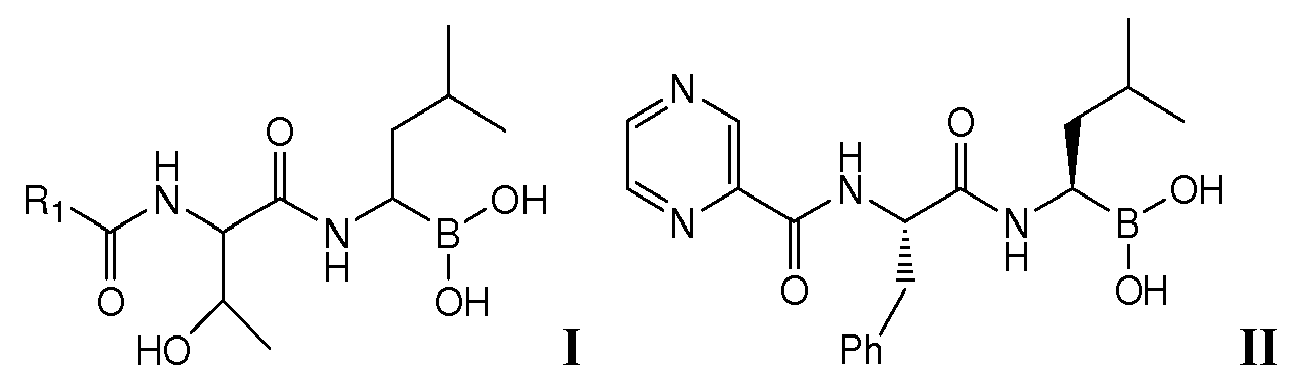
(b) a cyclodextrin; and (c) at least one member selected from the group consisting of bulking agents and surfactants. Methods of preparing and using the lyophilized preparations of the invention are also described. - It has now been discovered that the addition of a cyclodextrin to the lyophilized preparations of the described proteasome inhibitors results in preparations that are stable and readily and reproducibly reconstituted to form solutions suitable for injection into humans. Lyophilization processes suitable for use with the described proteasome inhibitors have also been discovered.
- Proteasome inhibitors such as those of Formula I:
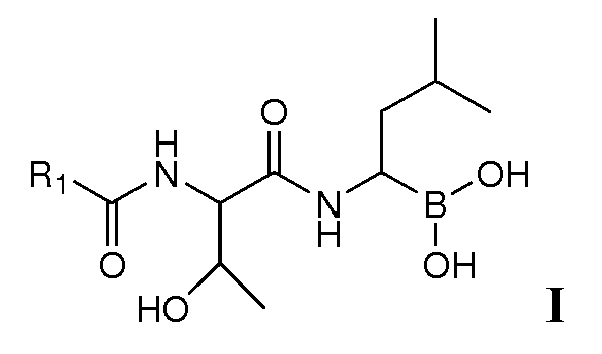
U.S. Application No. 11/351, 193, filed February 2, 2006 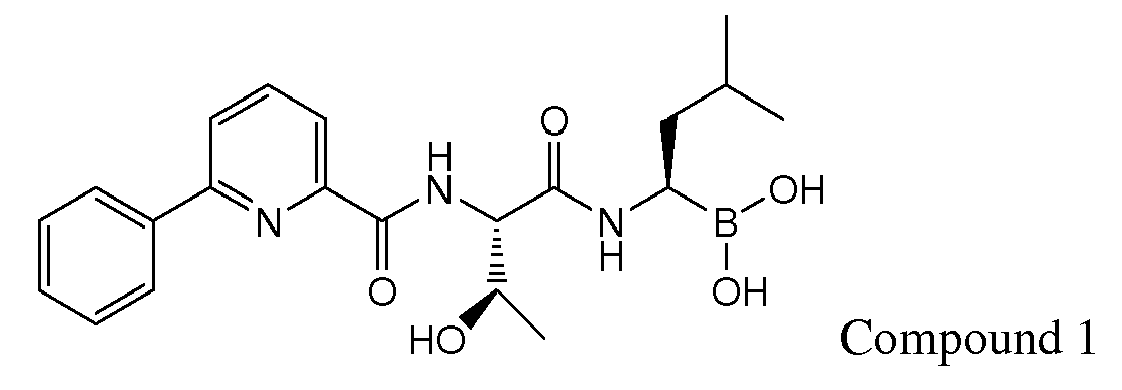
- Compound 1 is currently undergoing clinical trials. Due to the compound's sensitivity, it is presently provided to clinicians in a frozen formulation, which is inconvenient for distribution and use.
- Other compounds of Formula I, which are envisioned for use in the present invention, include, for example, compounds having the following stereochemistry:

- In preferred embodiments, R1 is optionally substituted pyrazinyl, pyridyl, phenyl, thiazolyl, naphthyl, or quinolinyl. Most preferably, R1 is substituted. In the most preferred embodiments, R1 is a 5-membered heteroaryl substituted with phenyl, a 6-membered heteroaryl substituted with phenyl, or phenyl substituted with phenyl.
- Examples of preferred compounds of Formula I include:
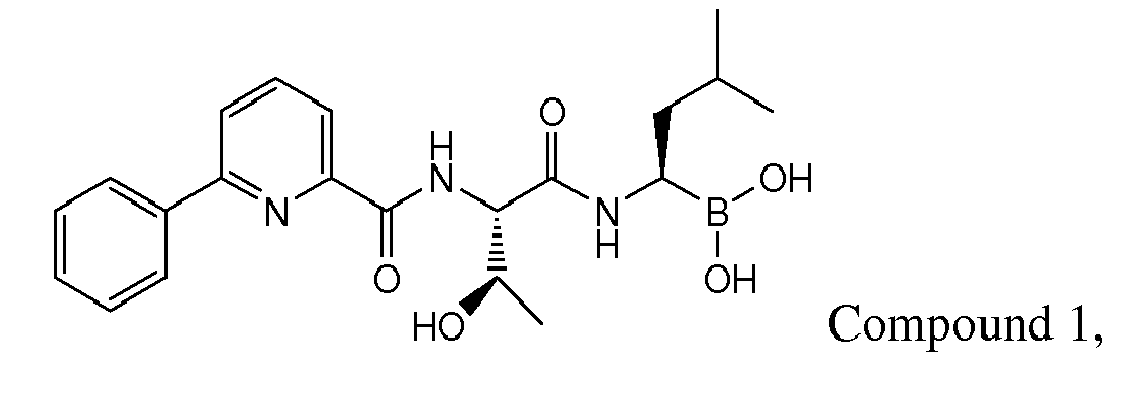
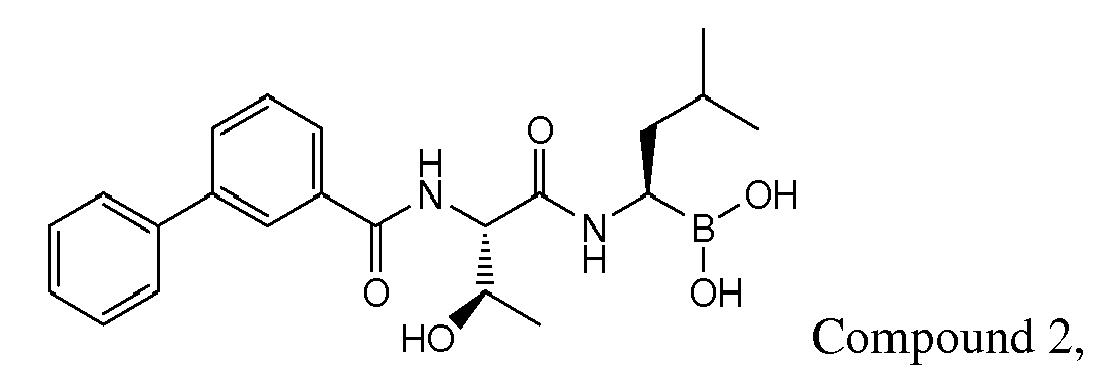
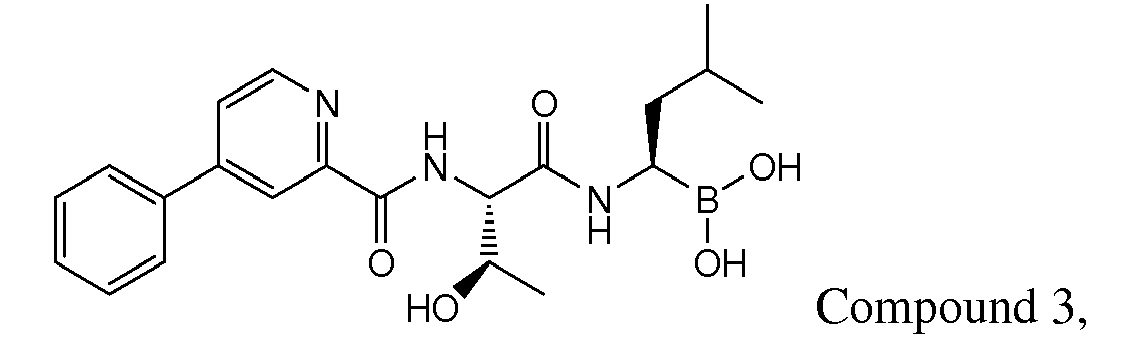
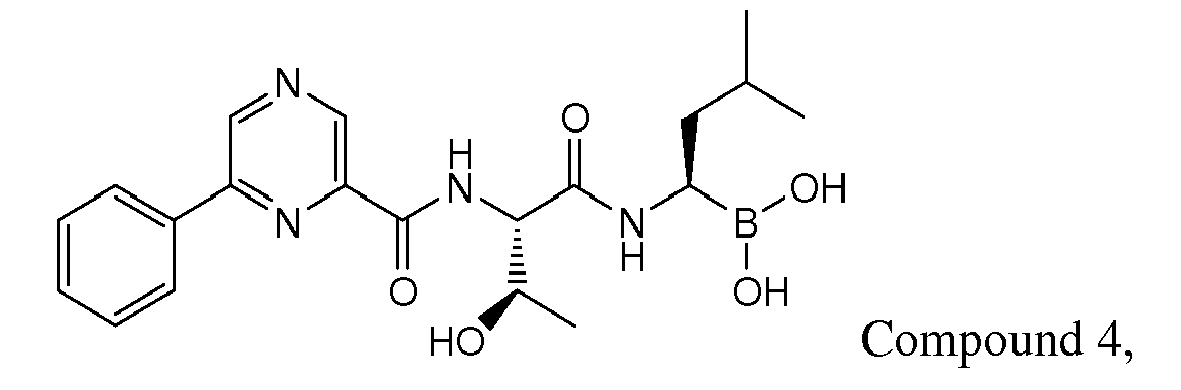
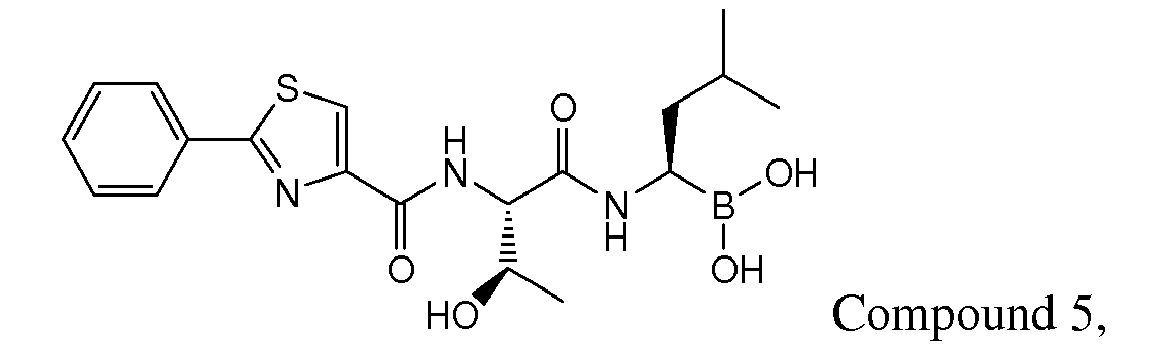
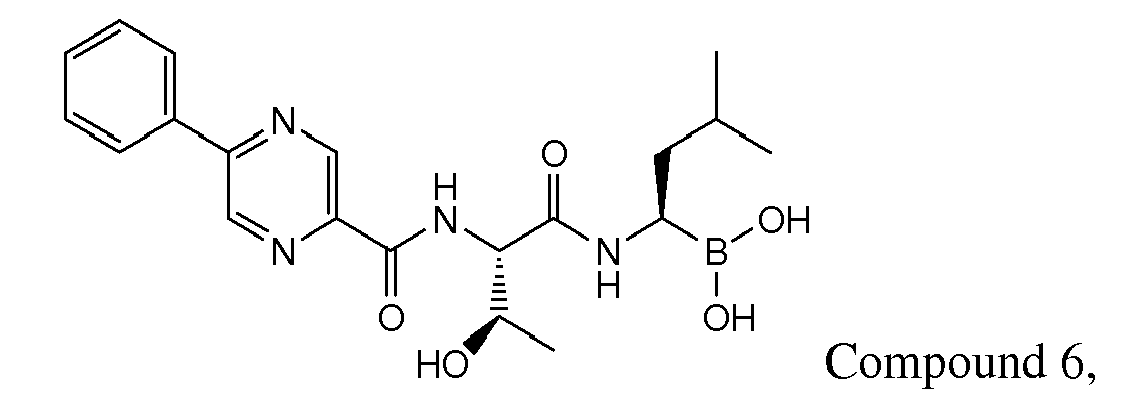
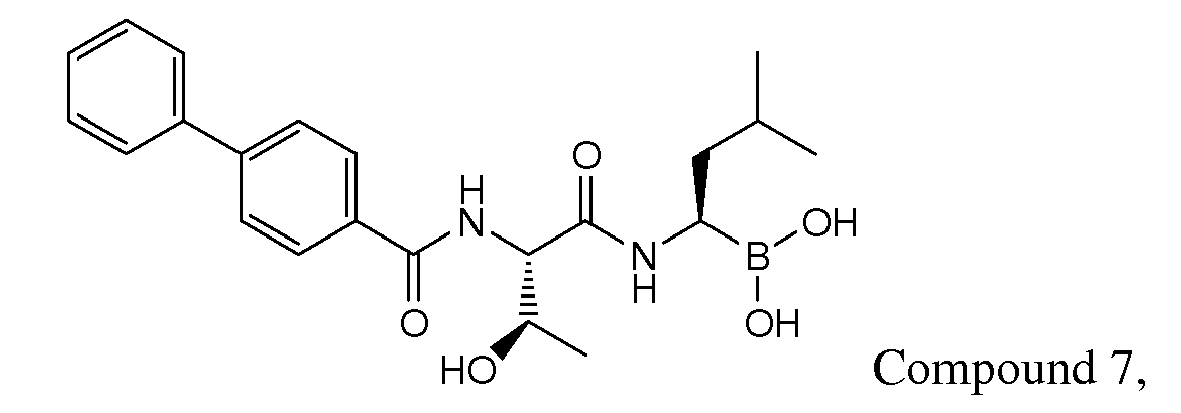
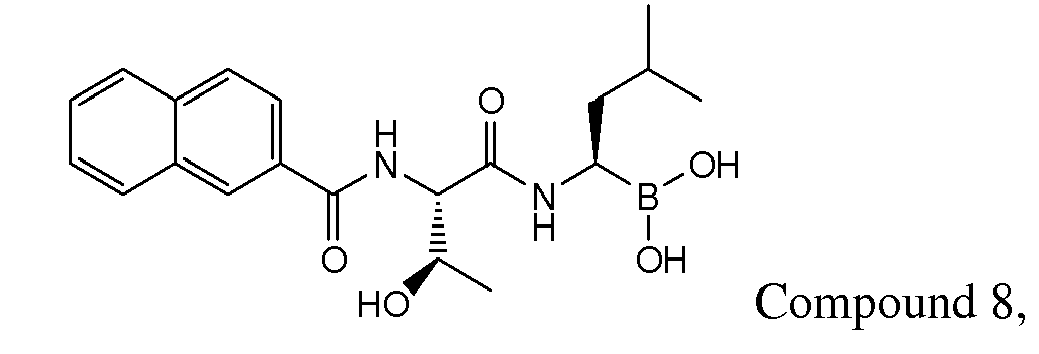

- The compound of Formula II:
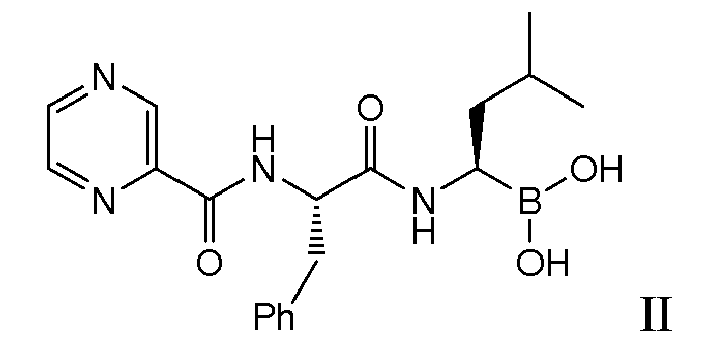
- As used herein, "aryl" refers to aromatic carbocyclyl groups including monocyclic or polycyclic aromatic hydrocarbons such as, for example, phenyl, naphthyl, anthracenyl, phenanthrenyl, and the like. In some embodiments, aryl groups have from 6 to about 18 carbon atoms.
- As used herein, "heteroaryl" groups are aromatic heterocarbocyclyl groups (i.e., cyclic hydrocarbon groups wherein one or more of the ring-forming carbon atoms of the cyclic hydrocarbon group is replaced by a heteroatom such as O, S, or N) and include monocyclic and polycyclic aromatic hydrocarbons that have at least one heteroatom ring member such as sulfur, oxygen, or nitrogen. Heteroaryl groups include, without limitation, pyridyl, pyrimidinyl, pyrazinyl, pyridazinyl, triazinyl, furyl, quinolyl, isoquinolyl, thienyl, imidazolyl, thiazolyl, indolyl, pyrrolyl, oxazolyl, benzofuryl, benzothienyl, benzthiazolyl, isoxazolyl, pyrazolyl, triazolyl, tetrazolyl indazolyl, 1,2,4-thiadiazolyl, isothiazolyl, benzothienyl, purinyl, carbazolyl, benzimidazolyl, and the like. In some embodiments, heteroaryl groups can have from 1 to about 20 carbon atoms, and in further embodiments from about 3 to about 20 carbon atoms. In some embodiments, heteroaryl groups have 1 to about 4, 1 to about 3, or 1 to 2 heteroatoms.
- As used herein, "substituted," indicates that at least one hydrogen atom of a chemical group is replaced by a non-hydrogen moiety. Example substituents include F, Cl, Br, I, C1-C6 alkyl, C1-C6 alkenyl, C1-C6, alkynyl, aryl, haloalkyl, NRERF, N3, NO2, CN, CNO, CNS, C(=O)ORE, RECO, REC(=O)O, RECONRE, RERFNCO, ureido, ORE, SRE, SO2-alkyl, SO2-aryl, and SO2-NRERF, wherein RE and RF are each, independently, H or C1-C6 alkyl. When a chemical group herein is "substituted" it may have up to the full valance of substitution, provided the resulting compound is a stable compound or stable structure; for example, a methyl group may be substituted by 1, 2, or 3 substituents, a methylene group may be substituted by 1 or 2 substituents, a phenyl group may be substituted by 1, 2, 3, 4, or 5 substituents, and the like.
- The present invention is also applicable to the pharmaceutically acceptable salts of the compounds of Formula I and Formula II. As used herein, "pharmaceutically acceptable salts" refers to derivatives of the disclosed compounds wherein the parent compound is modified by making acid or base salts thereof. Examples of pharmaceutically acceptable salts include, but are not limited to, mineral or organic acid salts of basic residues such as amines; alkali or organic salts of acidic residues such as carboxylic acids; and the like. The pharmaceutically acceptable salts include the conventional non-toxic salts or the quaternary ammonium salts of the parent compound formed, for example, from non-toxic inorganic or organic acids. For example, such conventional non-toxic salts include those derived from inorganic acids such as hydrochloric, hydrobromic, sulfuric, sulfamic, phosphoric, nitric and the like; and the salts prepared from organic acids such as acetic, propionic, succinic, glycolic, stearic, lactic, malic, tartaric, citric, ascorbic, pamoic, maleic, hydroxymaleic, phenylacetic, glutamic, benzoic, salicylic, sulfanilic, 2-acetoxybenzoic, fumaric, toluenesulfonic, methanesulfonic, ethane disulfonic, oxalic, isethionic, and the like.
- The pharmaceutically acceptable salts of the present invention can be prepared from the parent compound which contains a basic or acidic moiety by conventional chemical methods. Generally, such salts can be prepared by reacting the free acid or base forms of these compounds with a stoichiometric amount of the appropriate base or acid in water or in an organic solvent, or in a mixture of the two. Generally, nonaqueous media like ether, ethyl acetate, ethanol, isopropanol, or acetonitrile are preferred. Lists of suitable salts are found in Remington's Pharmaceutical Sciences, 17th ed., Mack Publishing Company, Easton, PA, 1985, p. 1418, the disclosure of which is hereby incorporated by reference.
- The present invention is also applicable to the pharmaceutically acceptable esters of the compounds of Formula I and Formula II. As used herein, "pharmaceutically acceptable ester" refers to derivatives of the disclosed compounds wherein the parent compound is modified by making an ester thereof. Examples of pharmaceutically acceptable esters include, for example, boronic esters, i.e., an ester derivative of a boronic acid compound, and cyclic boronic esters. Examples of cyclic boronic esters include, but are not limited to, pinanediol boronic ester, pinacol boronic ester, 1,2-ethanediol boronic ester, 1,3-propanediol boronic ester, 1,2-propanediol boronic ester, 2,3-butanediol boronic ester, 1,1,2,2-tetramethylethanediol boronic ester, 1,2-diisopropylethanediol boronic ester, 5,6-decanediol boronic ester, 1,2-dicyclohexylethanediol boronic ester, bicyclohexyl- 1,1 '-diol, and 1,2-diphenyl- 1,2-ethanediol boronic ester.
- The pharmaceutically acceptable esters of the invention can be prepared from the parent compound that contains an acid moiety, for example, a boronic acid moiety, by conventional chemical methods. Generally, such esters can be prepared by reacting the acid with a stoichiometric amount of an alcohol or diol in water, an organic solvent, or a mixture of the two.
- Embodiments of the present invention are directed to lyophilized preparations of a compound of Formula I or Formula II, in combination with a cyclodextrin. "Cyclodextrin" refers to a family of cyclic oligosaccharides containing five or more α-D-glucopyranoside units. The cyclodextrins of the present invention can include the natural occurring cyclodextrins and their derivatives. The natural cyclodextrins include α-cyclodextrin, β-cyclodextrin, and γ-cyclodextrin. Derivatives are typically prepared by modifying the hydroxyl groups located on the exterior, or hydrophilic side, of the cyclodextrin. The types and degree of modification, as well as their preparation, are well known in the art. See, for example, Szejtli, J., Cyclodextrins and Their Inclusion Complexes, Akadémiai Kiadó: Budapest, 1982;
U.S. Pat. No. 5,024,998 ;U.S. Pat. No. 5,874,418 andU.S. Pat. No. 5,660,845 , and references contained therein, all of which are incorporated herein in their entireties. - Any of the natural cyclodextrins can be derivatized. Cyclodextrin derivatives include alkylated cyclodextrins, preferably methyl-, dimethyl-, trimethyl- and ethyl-β-cyclodextrins; hydroxyalkylated cyclodextrins, including hydroxyethyl-, hydroxypropyl-, and dihydroxypropyl-β-cyclodextrin; ethylcarboxymethyl cyclodextrins; sulfate, sulfonate and sulfoalkyl cyclodextrins, preferably β-cyclodextrin sulfate, β-cyclodextrin sulfonate, and β-cyclodextrin sulfobutyl ether; as well as polymeric cyclodextrins. Other cyclodextrin derivatives can be made by substitution of the hydroxy groups with saccharides, such as glucosyl- and maltosyl-β-cyclodextrin.
- Preferred cyclodextrins include the naturally occurring cyclodextrins, methyl-β-cyclodextrin, dimethyl-β-cyclodextrin, trimethyl-β-cyclodextrin, 2-hydroxymethyl-β-cyclodextrin, hydroxyethyl-β-cyclodextrin, 2-hydroxypropyl-β-cyclodextrin, 3-hydroxypropyl-β-cyclodextrin, β-cyclodextrin sulfate, β-cyclodextrin sulfonate, or β-cyclodextrin sulfobutyl ether. Most of these are commercially available from such suppliers as Aldrich Chemical Company, Milwaukee Wisconsin and Wacker Chemicals, New Canaan, Connecticut. Preferred cyclodextrins include β-cyclodextrin, hydroxypropyl-β-cyclodextrin and β-cyclodextrin sulfobutyl ether. Preferably, the cyclodextrin is hydroxypropyl β cyclodextrin, hydroxypropyl γ cyclodextrin, sulfobutyl ether β-cyclodextrin, or a mixture thereof. In the most preferred embodiments, the cyclodextrin is hydroxypropyl β cyclodextrin. One particularly preferred cyclodextrin is KLEPTOSE® HPB, available from Roquette Frères, France.
- Preferably, the cyclodextrin is present in an amount effective to stabilize the compound of Formula I or Formula II during and/or after, lyophilization. The cyclodextrin will typically be present in an amount up to about 99% w/w of the lyophilized preparation. Preferably, the cyclodextrin will be present in an amount from about 20% to about 90% w/w of the lyophilized preparation. In preferred embodiments, the cyclodextrin is present in an amount from about 40% to about 70% w/w of the lyophilized preparation. Even more preferred are those embodiments wherein the cyclodextrin is present in an amount of from about 45% to about 65% w/w of the lyophilized preparation. Most preferred embodiments comprise 40%, 45%, or 55% w/w of cyclodextrin.
- The lyophilized preparations of the present invention also include one or more pharmaceutically acceptable excipients. For example, the lyophilized preparations of the invention may contain one or more bulking agents, one or more surfactants, or a combination of one or more bulking agents and one or more surfactants.
- Bulking agents that have "generally regarded as safe" (GRAS) status from the United States Food and Drug Administration (FDA) are well known in the art of pharmaceutical lyophilization and tend to strengthen the structure of the resulting lyophilized cake. Bulking agents include saccharides, preferably monosaccharides or oligosaccharides, sugar alcohols, and mixtures thereof. More specifically, bulking agents used in the present invention include sucrose, dextrose, maltose, lactose, sorbitol, glycine, and dextran. A most preferred bulking agent is mannitol.
- The bulking agent is typically present in an amount up to about 99% w/w of the lyophilized preparation. Preferably, the bulking agent comprises about 20% to about 90% w/w of the lyophilized preparation. In preferred embodiments, the bulking agent comprises about 30% to about 60% w/w of the lyophilized preparation. In other embodiments, the bulking agent comprises about 35% or about 45% w/w of the lyophilized preparation.
- Suitable surfactants include any pharmaceutically acceptable surfactant accorded GRAS status by the FDA. Examples include, but are not limited to, polyoxyethylene sorbitan fatty acid esters (polysorbates), sorbitan esters, polyethylene glycol ethers, saturated polyglycolized glycerides, fatty acid esters of polyethylene glycol, hydroxylated lecithins, medium chain monoglycerides, medium chain fatty acid esters, polyethylene/propylene glycol copolymers, polyethylene glycol stearate, and d-α-tocopheryl polyethylene glycol succinate.
- Examples of other useful surfactants are saturated polyglycolized glycerides consisting of mono-, di-, or triglycerides; di-fatty acid esters of polyethylene glycol, e.g., Gelucire® 44/14; hydroxylated lecithins, e.g., Centrolene® A; medium chain monoglycerides, e.g., glyceryl monocaprylate (Imwitor® 308, Capmul® MCM C-8); medium chain monoglycerides and diglycerides, e.g., glyceryl caprylate/caprate (Capmul® MCM); polyethylene/propylene glycol copolymers; block copolymers of ethylene oxide and propylene oxide (e.g., Poloxamer 188, Pluronic® F-68); ethoxylated castor oil (e.g., Cremophor® EL); and macrogol 15 hydroxy stearates (e.g., Solutol® HS 15). Some surfactants are solid or semisolid at room temperature, e.g., Poloxamer 188, glyceryl monocaprylate, and Gelucire® 44/14. Additional surfactants are those found in The Handbook of Pharmaceutical Excipients, 2nd Ed., published by The Pharmaceutical Press, London and American Pharmaceutical Association (1994), a common text in the field, which is hereby incorporated by reference in its entirety.
- Examples of preferred surfactants include polyoxypropylene polyoxyethylene block copolymers, polysorbates, macrogol 15 hydroxy stearates (e.g., Solutol®), polyoxyl 35 castor oils (e.g., Cremophor® EL), polyethoxylated castor oils, and the like, as well as mixtures thereof. Preferably, the surfactant is a polysorbate, i.e., polyoxyethylene sorbitan fatty acid esters, in particular polysorbate 20 (TWEEN 20) or polysorbate 80 (TWEEN 80).
- The addition of the surfactant assists in solubilizing of the compound of Formula I or Formula II during the preparation of the pre-lyophilization solution. Typically, in those embodiments where the surfactant is used, it has been found that at least 2% w/w of the surfactant is beneficial when preparing the pre-lyophilization solution. Ideally, the surfactant should be present in an amount of about 2% to about 10% w/w of the surfactant in the pre-lyophilization solution. Preferably, the pre-lyophilized solutions of the present invention contain about 2% to about 5% w/w, most preferably, about 2% to about 3% w/w of surfactant. After lyophilization, the lyophilized preparation will typical comprise about 10% to about 40% w/w of the surfactant. Preferred embodiments will comprise about 15% to about 20% w/w of the surfactant in the lyophilized preparation. Other preferred embodiments will comprise about 15% to about 30% w/w of the surfactant in the lyophilized preparation.
- Other excipients may also be added to the lyophilized preparations of the present inventions. Such excipients may include antioxidants, antimicrobials, cryostabilizers, and the like.
- In certain embodiments, the pre-lyophilization solution is prepared with a pharmaceutically acceptable organic solvent. The additional of the alcohol may assist in the solubilizing of the compound of Formula I or Formula II when preparing the pre-lyophilization solution. In certain embodiments, the pre-lyophilization solution will comprise up to about 90% v/v of organic solvent, such as up to about 75% v/v, up to about 60% v/v, or up to about 40% v/v. Preferably, the pre-lyophilization solution comprises about 5% to about 75% v/v of organic solvent, such as about 10% to about 70% v/v. In preferred embodiments, the pre-lyophilization solution comprises about 20% to about 60% v/v of organic solvent, such as about 30% to about 50% v/v. Preferably, the pre-lyophilization solution comprises about 40% v/v of organic solvent.
- Suitable organic solvents include solvents that are miscible with water and removable by lyophilization. Examples include alcohols, preferably C1-6alcohols such as ethanol, propanol, t-butanol, and propylene glycol, and polar aprotic solvents such as dimethylsulfoxide. A preferred organic solvent is tert-butanol. Typically, about 3% w/w, or less, of the organic solvent will be present in lyophilized preparations of the present invention. Preferably, the organic solvent will be present in an amount of from about 1% w/w, or less, of the lyophilized preparation.
- Preferred lyophilized preparations of the present invention include those comprising a compound of Formula I, Formula II, or a pharmaceutically acceptable salt or ester thereof, preferably Compound 1 or bortezomib, a cyclodextrin, preferably hydroxypropyl β cyclodextrin, and a surfactant, preferably polysorbate 20. Particularly preferred lyophilized preparations of the present invention include those comprising a compound of Formula I, Formula II, or a pharmaceutically acceptable salt or ester thereof, preferably Compound 1 or bortezomib, a cyclodextrin, preferably hydroxypropyl β cyclodextrin, and a bulking agent, preferably mannitol. Other preferred lyophilized preparations of the invention include those comprising a compound of Formula I, Formula II, or a pharmaceutically acceptable salt or ester thereof, preferably Compound 1 or bortezomib, a cyclodextrin, preferably hydroxypropyl β cyclodextrin, a bulking agent, preferably mannitol, and a surfactant, preferably polysorbate 20. Any of the lyophilized preparations of the invention may further comprise, an organic solvent, such as a C1-6alcohol, preferably tert-butanol, preferably in an amount less than about 3% w/w of the lyophilized preparation.
- A particular advantage of the lyophilized preparations of the present invention is that they are readily reconstituted to form clear, near-colorless to colorless solutions that are free of discoloration (i.e., are colorless or near colorless) and/or particulate matter, suitable for injection into humans in about 180 seconds or less. Preferably, the lyophilized preparations of the present invention are readily reconstituted to form clear, colorless solutions that are free of particulate matter, suitable for injection into humans in about 180 seconds or less. In certain preferred embodiments, the lyophilized preparations are reconstituted in about 120 seconds or less to form clear, colorless solutions that are free of particulate matter, suitable for injection into humans. Preferably, the lyophilized preparations are reconstituted in about 90 seconds or less to form clear, colorless solutions that are free of particulate matter, suitable for injection into humans. More preferably, the lyophilized preparations are reconstituted in about 60 seconds or less to form clear, colorless solutions that are free of particulate matter, suitable for injection into humans. More preferably, the lyophilized preparations are reconstituted in about 30 seconds or less to form clear, colorless solutions that are free of particulate matter, suitable for injection into humans. More preferably, the lyophilized preparations are reconstituted in about 10 seconds or less to form clear, colorless solutions that are free of particulate matter, suitable for injection into humans.
- Another advantage of the lyophilized preparations of the present invention is that they exhibit highly desirable storage stability profiles. Storage conditions can vary and can include variations in temperature, for example, from about 5°C to about 40°C, and variations in relative humidity (RH), for example from about 10% RH to about 75% RH. For the purposes of the present application, 5°C and ambient RH are referred to as "refrigerated conditions," 25°C and 60% RH are referred to as "room temperature conditions," and 40°C and 75% RH are referred to as "accelerated conditions." Storage conditions can also include variations in storage time. For example, lyophilized preparations of the present invention can be stored for about 1 month, about 2 months, about 3 months, about 6 months, about 1 year, or more. Analysis of the claimed preparations can be performed using any technique known in the art, for example, HPLC, GC, and the like.
- Preferably, the lyophilized preparations of the present invention contain less than about 10% w/w, more preferably, less than about 7% w/w, of degradation impurities after storage of the preparation for six months under refrigerated conditions. By "degradation impurities" are meant impurities in the preparation resulting from decomposition of the drug during storage. Preferably, the lyophilized preparations of the present invention contain less than about 5% w/w, more preferably, less than about 3% w/w, of degradation impurities after storage of the preparation for six months under refrigerated conditions. Preferably, the lyophilized preparations of the present invention contain less than about 2% w/w, more preferably, less than about 1% w/w, of degradation impurities after storage of the preparation for six months under refrigerated conditions. Preferably, the lyophilized preparations of the present invention contain less than about 10% w/w, more preferably, less than about 7% w/w, of degradation impurities after storage of the preparation for six months under room temperature conditions. Preferably, the lyophilized preparations of the present invention contain less than about 5% w/w, more preferably, less than about 3% w/w, of degradation impurities after storage of the preparation for six months under room temperature conditions. Preferably, the lyophilized preparations of the present invention contain less than about 2% w/w, more preferably, les than about 1% w/w, of degradation impurities after storage of the preparation for six months under room temperature conditions. Preferably, the lyophilized preparations of the present invention contain less than about 10% w/w, more preferably, less than about 7% w/w, of degradation impurities after storage of the preparation for three months under accelerated conditions. Preferably, the lyophilized preparations of the present invention contain less than about 5% w/w, more preferably, less than about 3% w/w, of degradation impurities after storage of the preparation for three months under accelerated conditions. Preferably, the lyophilized preparations of the present invention contain less than about 2% w/w, more preferably, less than about 1% w/w, of degradation impurities after storage of the preparation for three months under accelerated conditions. Preferably, the lyophilized preparations of the present invention contain less than about 10% w/w, more preferably, less than about 7% w/w, of degradation impurities after storage of the preparation for six months under accelerated conditions. Preferably, the lyophilized preparations of the present invention contain less than about 5% w/w, more preferably, less than about 3% w/w, of degradation impurities after storage of the preparation for six months under accelerated conditions. Preferably, the lyophilized preparations of the present invention contain less than about 2% w/w, more preferably, less than about 1% w/w, of degradation impurities after storage of the preparation for six months under accelerated conditions. Analysis of the claimed preparations can be performed using any technique known in the art, for example, HPLC, GC, and the like. The content of degradation impurities in a sample can be determined from the relative area of the degradation impurity peaks in the HPLC chromatogram of the sample as compared to the total area of all peaks in the chromatogram (e.g., [total peak area of degradation impurities]/[total peak area of sample] x 100%).
- Preferably, the lyophilized preparations of the present invention contain no more than about 1% w/w of any individual degradation impurity after storage of the preparation for six months under refrigerated conditions. Preferably, the lyophilized preparations of the present invention contain no more than about 1% w/w of any individual degradation impurity after storage of the preparation for six months under room temperature conditions. Preferably, the lyophilized preparations of the present invention contain no more than about 1% w/w of any individual degradation impurity after storage of the preparation for three months under accelerated conditions. Preferably, the lyophilized preparations of the present invention contain no more than about 1% w/w of any individual degradation impurity after storage of the preparation for six months under accelerated conditions. The content of any individual degradation impurity in a sample can be determined from the relative area of the degradation impurity peak in the HPLC chromatogram of the sample as compared to the total area of all peaks in the chromatogram (e.g., [peak area of individual degradation impurity]/[total peak area of sample] x 100%).
- Preferably, the lyophilized preparations of the present invention contain no more than about 0.5% w/w of any individual degradation impurity after storage of the preparation for six months under refrigerated conditions. Preferably, the lyophilized preparations of the present invention contain no more than about 0.5% w/w of any individual degradation impurity after storage of the preparation for six months under room temperature conditions. Preferably, the lyophilized preparations of the present invention contain no more than about 0.5% w/w of any individual degradation impurity after storage of the preparation for three months under accelerated conditions. Preferably, the lyophilized preparations of the present invention contain no more than about 0.5% w/w of any individual degradation impurity after storage of the preparation for six months under accelerated conditions.
- Preferably, the lyophilized preparations of the present invention exhibit a decrease in drug purity of no more than about 1% after storage of the preparation for six months under refrigerated conditions. Preferably, the lyophilized preparations of the present invention exhibit a decrease in drug purity of no more than about 1% after storage of the preparation for six months under room temperature conditions. Preferably, the lyophilized preparations of the present invention exhibit a decrease in drug purity of no more than about 1% after storage of the preparation for three months under accelerated conditions. Preferably, the lyophilized preparations of the present invention exhibit a decrease in drug purity of no more than about 1% after storage of the preparation for six months under accelerated conditions. The purity of the drug in a sample can be determined from the relative area of the drug peak in the HPLC chromatogram of the sample as compared to the total area of all peaks in the chromatogram (e.g., [peak area of drug]/[total peak area of sample] x 100%).
- Preferably, the lyophilized preparations of the present invention exhibit a decrease in drug purity of no more than about 0.5% after storage of the preparation for six months under refrigerated conditions. Preferably, the lyophilized preparations of the present invention exhibit a decrease in drug purity of no more than about 0.5% after storage of the preparation for six months under room temperature conditions. Preferably, the lyophilized preparations of the present invention exhibit a decrease in drug purity of no more than about 0.5% after storage of the preparation for three months under accelerated conditions. Preferably, the lyophilized preparations of the present invention exhibit a decrease in drug purity of no more than about 0.5% after storage of the preparation for six months under accelerated conditions.
- Lyophilized preparations of the invention may be prepared using any of the techniques known to those skilled in the art. In those embodiments of the invention comprising a compound of Formula I or II or a pharmaceutically acceptable salt or ester thereof, a cyclodextrin, a bulking agent, and a surfactant, one preferred method includes preparing a first solution comprising the cyclodextrin, the bulking agent, and water. Preferred first solutions include hydroxypropyl β cyclodextrin as the cyclodextrin and mannitol as the bulking agent. A portion of this first solution is mixed with the surfactant, preferably polysorbate 20, to form a second solution. The compound of Formula I or Formula II or a pharmaceutically acceptable salt or ester thereof, preferably Compound 1 or bortezomib, is combined with the second solution to form a compound solution. In some embodiments, an organic solvent, preferably tert-butanol, can be added to either the first solution or the compound solution, or both. The remainder of the first solution is then mixed with the compound solutions to form a pre-lyophilization solution. In some embodiments, the pre-lyophilization solution is sterilized using techniques known in the art, for example, sterile filtration. The pre-lyophilization solution is then lyophilized using lyophilization techniques known in the art.
- In another embodiment, the cyclodextrin, preferably hydroxypropyl β cyclodextrin is combined with water to form a first solution. The compound of Formula I or II or a pharmaceutically acceptable salt or ester thereof, preferably Compound 1 or bortezomib, is combined with the surfactant, and compound 1 to form a compound solution. In some embodiments, an organic solvent, preferably tert-butanol, is added to the first solution, the compound solution, or both. The first solution and the compound solution are combined to form a pre-lyophilization solution. In some embodiments, the pre-lyophilization solution is sterilized using techniques known in the art, for example, sterile filtration. The pre-lyophilization solution is then lyophilized using lyophilization techniques known in the art.
- In those embodiments of the invention comprising a compound of Formula I or II or a pharmaceutically acceptable salt or ester thereof, a cyclodextrin, and a bulking agent, one preferred method includes preparing a first solution containing the cyclodextrin, the bulking agent, and water. Preferred first solutions include hydroxypropyl β cyclodextrin as the cyclodextrin and mannitol as the bulking agent. A compound solution containing the compound of Formula I or Formula II or a pharmaceutically acceptable salt or ester thereof, preferably Compound 1 or bortezomib, and an organic solvent, preferably tert-butanol, is prepared. The first solution and the compound solution are combined to provide a pre-lyophilization solution. In some embodiments, the pre-lyophilization solution is sterilized using techniques known in the art, for example, sterile filtration. The pre-lyophilization solution is then lyophilized using lyophilization techniques known in the art.
- It is envisioned that in some embodiments of the present invention, the described lyophilized preparations can be administered, either serially or simultaneously, with another antineoplastic agent. There are large numbers of antineoplastic agents available in commercial use, in clinical evaluation and in pre-clinical development, which could be selected for treatment of neoplasia by combination drug chemotherapy. Such antineoplastic agents fall into several major categories, namely, antibiotic-type agents, covalent DNA-binding drugs, antimetabolite agents, hormonal agents, including glucocorticoids such as prednisone and dexamethasone, immunological agents, interferon-type agents, differentiating agents such as the retinoids, pro-apoptotic agents, and a category of miscellaneous agents, including compounds such as antisense, small interfering RNA, and the like. Alternatively, other anti-neoplastic agents, such as metallomatrix proteases (MMP) inhibitors, SOD mimics or alphavbeta3 inhibitors may be used.
- The following examples are offered for illustrative purposes, and are not intended to limit the invention in any manner. Those of skill in the art will readily recognize a variety of noncritical parameters which can be changed or modified to yield essentially the same results.
- HPLC analysis can be performed using, for example, a Thermo BetaBasic C18 (150mm x 4.6 mm ID, 5 µm) column or a Waters Symmetry C18 (150 mm x 4.6 mm, 3.5 µm) column at 35°C using 254 nm UV detection with a flow rate of 1 mL/min, an injection volume of 8 µL or 10 µL, and a total run time of 42 min (run time = 35 min, re-equilibrium time = 7 min). The following gradient mobile phase is a preferred gradient system:
Time (min) TFA 0.05 % in deionized
water (%)TFA 0.05 % in
Acetonitrile (%)0 75 25 2 75 25 17 65 35 30 10 90 35 10 90 35.1 75 25 42 75 25 - Percent purities can be calculated using methods known in the art. For example, the purity of Compound 1, as determined using HPLC, can be calculated as follows:
([Area of Compound 1] ÷ [total area of injected sample]) × 100% = Compound 1 purity % - Samples for HPLC analysis can be prepared by, for example, reconstituting the lyophilized preparation of the invention using about 4 mL of DI (deionized) water or SWFI (sterile water for injection). After adding the water, each vial is shaken or sonicated for about 10 seconds, or until all solids have dissolved. Approximately 1 mL of the reconstituted solution can be removed and placed in an HPLC vial for analysis.
- Table 1 depicts representative quantities of the ingredients used in this Example. A solution of mannitol and hydroxypropyl β cyclodextrin (KLEPTOSE® HP) in Sterile Water for Injection was prepared. Polysorbate 20, tert-butanol, and Compound 1 were stirred at ambient temperature until complete dissolution of the Compound 1 occurred (visual inspection). When a clear and colorless solution, without any visible particulate, was obtained, the mannitol/cyclodextrin solution was added. The resulting solution was stirred until homogenization was obtained and then filtered using a disposable sterile device with a 0.22 µm, PVDF filter (STERICUP®, Millipore, Billerica, MA). The filtered solution was filled into 10 mL clear glass type I vials for lyophilization. The solution was lyophilized according to the procedure set forth in Example 7.
- Table 1 depicts representative quantities of the ingredients used in this Example. A solution of hydroxypropyl β cyclodextrin (KLEPTOSE® HP) in Sterile Water for Injection was prepared. In a separate, closed container, tert-butanol and Compound 1 were stirred at ambient temperature until complete dissolution of the Compound 1 occurred (visual inspection). When a clear and colorless solution, without any visible particulate, was obtained, the cyclodextrin solution was added. The resulting solution was stirred until homogenization was obtained and then filtered using a disposable sterile device with a 0.22 µm, PVDF filter (STERICUP®, Millipore, Billerica, MA). The filtered solution was filled to 4 mL into 10 mL clear glass type I vials for lyophilization. The solution was lyophilized according to the procedure set forth in Example 7.
- Table 1 depicts representative quantities of the ingredients used in this Example. A solution of mannitol in Sterile Water for Injection was prepared. In a separate, closed container, tert-butanol and Compound 1 were stirred at ambient temperature until complete dissolution of the Compound 1 occurred (visual inspection). When a clear and colorless solution, without any visible particulate, was obtained, the mannitol solution was added. The resulting solution was stirred until homogenization was obtained and then filtered using a disposable sterile device with a 0.22 µm, PVDF filter (STERICUP®, Millipore, Billerica, MA). The filtered solution was filled to 4 mL into 10 mL clear glass type I vials for lyophilization. The solution was lyophilized according to the procedure set forth in Example 7.
- Table 1 depicts representative quantities of the ingredients used in this Example. A solution of mannitol and hydroxypropyl β cyclodextrin (KLEPTOSE® HP) in Sterile Water for Injection was prepared. In a separate, closed container, tert-butanol and Compound 1 were stirred at ambient temperature until complete dissolution of the Compound 1 occurred (visual inspection). When a clear and colorless solution, without any visible particulate, was obtained, the mannitol/cyclodextrin solution was added. The resulting solution was stirred until homogenization was obtained and then filtered using a disposable sterile device with a 0.22 µm, PVDF filter (STERICUP®, Millipore, Billerica, MA). The filtered solution was filled into 10 mL clear glass type I vials for lyophilization. The solution was lyophilized according to the procedure set forth in Example 7.
- Table 1 depicts representative quantities of the ingredients used in this Example. A solution of hydroxypropyl β cyclodextrin (KLEPTOSE® HP) in Sterile Water for Injection was prepared. In a separate, closed container, Polysorbate 20, tert-butanol, and Compound 1 were stirred at ambient temperature until complete dissolution of the Compound 1 occurred (visual inspection). When a clear and colorless solution, without any visible particulate, was obtained, the cyclodextrin solution was added. The resulting solution was stirred until homogenization was obtained and then filtered using a disposable sterile device with a 0.22 µm, PVDF filter (STERICUP®, Millipore, Billerica, MA). The filtered solution was filled to 4 mL into 10 mL clear glass type I vials for lyophilization. The solution was lyophilized according to the procedure set forth in Example 7.
- Table 1 depicts representative quantities of the ingredients used in this Example. A solution of mannitol and hydroxypropyl β cyclodextrin (KLEPTOSE® HP) in Sterile Water for Injection was prepared. Polysorbate 20, Compound 1, and about 1/10th of the mannitol/cyclodextrin solution were stirred at about 35°C until complete dissolution of the Compound 1 occurred (visual inspection). When a clear and colorless solution, without any visible particulate, was obtained, the remaining mannitol/cyclodextrin solution was added. The resulting solution was stirred until homogenization was obtained and then filtered using a disposable sterile device with a 0.22 µm, PVDF filter (STERICUP®, Millipore, Billerica, MA). The filtered solution was filled to 4 mL into 10 mL clear glass type I vials for lyophilization. The solution was lyophilized according to the procedure set forth in Example 7.
Table 1 Ingredient (mg/g) Formulation 1 Formulation 2 Formulation 3 Formulation 4 Formulation 5 Formulation6 Compound 1 1 1 1 1 1 1 Polysorbate 20 20 - - - 20 20 Kleptose® HP 49 50 - 49 49 49 Mannitol 39.2 - 50 39.2 - 39.2 Sterile water for injection 618 637 637 598.8 618 890.8 Tert-butanol 312* 312 312* 312* 312* - (Total dry mass) (mg) (109.2) (51) (51) (89.2) (70) (109.2) Total (mg) 1000 1000 1000 1000 1000 1000 * corresponding to 40% tert-butanol v/v in the formulation (density 0.78) - This Example sets forth one preferred lyophilization cycle suitable for use with the formulations described herein. Using a LABCONCO TRIAD® freeze dryer, the solution is loaded at a shelf temperature of about 0°C and then brought to a congealing temperature of about -40°C. In the first segment of the lyophilization procedure, the shelf temperature is ramped to -30°C (5 C/min) and the pressure brought to 100 µbar and held for 0.2 h. In the second segment of the lyophilization procedure, the shelf temperature is ramped to 20°C (2°C/min) and held for 4 h. In the third segment of the lyophilization procedure, the shelf temperature is ramped to 30°C (2°C/min) and held for 18 h. At the end of the freeze-drying process, the vials were closed under vacuum. After unloading from the freeze-dryer, aluminum seals were crimped over the rubber stoppers.
- For those formulations containing a surfactant, for example polysorbate, the following lyophilization procedure can be used. Freeze the solution to about -40°C and hold for about 5 h. Apply vacuum at about 80 µm and ramp to about 25°C for primary drying, holding for 18 h. Secondary drying is performed at about 25°C, holding for 10 h.
- For those formulations containing tert-butanol, the following lyophilization procedure can be used. Freeze the solution to about -40°C and hold for about 4 h. Ramp to about -11°C and hold for about 4 h and then ramp to about -40°C and hold for about 4 h. Apply vacuum at about 80 µm and ramp to about 25°C for primary drying, holding for about 18 h. Ramp to about 30°C for secondary drying, holding for about 20 h.
- Analysis of the pre-lyophilization solutions for Formulations 2, 3, and 4 were performed at to and after 48 hours storage at 25°C and 60% relative humidity. The results are shown in Table 2 below. Each of Formulations 2, 3, and 4 were clear colorless solutions. The change in purity over the storage period is within experimental error and is not considered significant.
Table 2 Time Attribute Formulation 2 Formulation 3 Formulation 4 Appearance Clear colorless solutions T0 Assay (mg/mL) 1.02 1.02 0.97 Compound 1 purity (%) 97.1 97.8 96.4 pH 7.7 6.0 5.8 Appearance Clear colorless solutions After 48 h at Assay (mg/mL) 0.94 0.96 0.97 25°C/60% RH Compound 1 purity (%) 96.6 97.8 96.2 pH ND ND 5.8 Compound 1 purity % calculated using the following equation:
(Area of Compound 1 ÷ total area of injected sample) x 100% = Compound 1 purity (%) - Formulation 2 was evaluated for its reconstitution profile and stability after storage at 15 days, 1 month, 2 months, and 3 months at 40°C and 75% relative humidity. Samples were reconstituted with 3.8 mL of deionized water. Formulation 2, after lyophilization, was a white powder that was very difficult to dissolve. Even with vigorous manual shaking, fine particles were observed to remain in solution. The solution was filtered through a 0.45 mm filter and analyzed by HPLC. The results are shown in Table 3A.
Table 3A: Evaluation of Formulation 2 Test Initial time 15 days 1 month 2 months 3 months* Appearance White powder, hard to dissolve (need vigorous manual shaking). Frothy and cloudy solution with fine particles in suspension pH (n=3) 7.5 7.2 7.5 6.8 6.8 Assay of Compound 1 by HPLC (n = 3) (mg/mL) 0.96 ± 0.7 % RSD NA Compound 1 purity by HPLC (%) 97.2 96.5 96.5 96.6 96.0 - Formulation 3 was evaluated for its reconstitution profile and stability after storage at 15 days, 1 month, 2 months, and 3 months at 40°C and 75% relative humidity. Samples were reconstituted with 3.8 mL of deionized water. Formulation 3, after lyophilization, was a white powder that was very difficult to dissolve. Even with vigorous manual shaking, fine particles were observed to remain in solution. The solution was filtered through a 0.45 mm filter and analyzed by HPLC. The results are shown in Table 3B.
Table 3B: Evaluation of Formulation 3 Test Initial time 15 days 1 months 2 months 3 months* Appearance White powder, hard to dissolve (need vigorous hand shaking). Frothy and cloudy solution with fine particles in suspension pH 5.7 6.0 5.9 5.4 5.4 Assay of Compound 1 HPLC (n = 3) (mg/mL) by 0.81 ± 1.1% RSD NA Compound 1 purity by HPLC (%) 98.0 97.0 97.0 96.5 96.2 - Formulation 4 was evaluated for its reconstitution profile and stability after storage at 15 days, 1 month, 2 months, and 3 months at 40°C and 75% relative humidity. Samples were reconstituted with 3.64 mL of deionized water. In contrast to Formulation 2, which contains only cyclodextrin, and Formulation 3, which only contains mannitol, Formulation 4, which includes both cyclodextrin and mannitol, was a white powder after lyophilization and was easily and rapidly dissolved in less than 30 seconds to form a clear and colorless, particulate free solution. In addition, although the drug purity in Formulations 2 and 3 decreased by greater than 1% after storage for 3 months under accelerated conditions, the drug purity in Formulation 4 was stable. The results are shown in Table 3C.
Table 3C: Evaluation of Formulation 4 Test Initial time 15 days 1 month 2 months 3 months Appearance White powder, easy and rapid dissolved (< 30s) Clear and colorless solution pH 5.8 5.5 5.4 5.5 5.6 Assay of Compound 1 by HPLC (n = 3) (mg/mL) 0.94 ± 0.3% RSD NA Compound 1 purity by HPLC (%) 96.1 96.4 96.4 96.4 96.5 RRT 1.61 0.06 0.05 0.05 - Formulations 1, 5, and 6 were evaluated for their reconstitution profile. Samples of each formulation were reconstituted with Sterile Water for Injection. Dissolution occurred in 90 seconds or less for each of Formulations 1 and 6 to produce clear, colorless, particulate-free solutions. Upon reconstitution, no solids were observed to have precipitated. Formulation 5 was dissolved in about 2 minutes to produce a clear, colorless solution, free of particulate.
- Tert-butanol levels were measured using a gas chromatography headspace method. It was determined that after lyophilization of Formulation 4, between about 2.73% w/w and about 2.85% w/w was detected.
- A six month stability study was carried out on freeze-dried Formulation 1. Three storage conditions were evaluated: about 5°C at ambient relative humidity, about 25°C at about 60% relative humidity, and about 40°C at about 75% relative humidity. Table 4 shows the results of this stability study. After 6 months of storage, the drug purity in Formulation 1 was unchanged under refrigerated conditions, decreased by 0.1% under room temperature conditions, and decreased by 1.0% under accelerated conditions.
Table 4: Six Month Stability Data for Formulation 1 Test Initial time 5°C/ambient RH 25°C/60% RH 40°C/75% RH Appearance White White White White pH 5.7 5.3 5.1 5.2 Residual humidity* (% H2O) 1 1.8 1.3 1.4 Compound 1 purity by HPLC (Area %) 98.1 98.1 98.0 97.1 * this test was performed on placebo due to toxicity of Compound 1. - A six month stability study was carried out on freeze-dried Formulation 4. Three storage conditions were evaluated: about 5°C at ambient relative humidity, about 25°C at about 60% relative humidity, and about 40°C at about 75% relative humidity. Table 5 shows the results of this stability study. After 6 months of storage, the drug purity in Formulation 4 was unchanged under refrigerated conditions and under room temperature conditions, and decreased by 0.5% under accelerated conditions.
Table 5: Six Month Stability Data for Formulation 4 Test Initial time 5°C/ambient RH 25°C/60% RH 40°C/75% RH Appearance White White White White pH Residual 5.5 5.6 5.3 5.2 humidity* (% H2O) Compound 1 1.8 2.0 1.2 1.7 purity by HPLC (Area %) 98.1 98.2 98.1 97.6 * this test was performed on placebo due to toxicity of Compound 1. - A six month stability study was carried out on freeze-dried Formulation 5. Three storage conditions were evaluated: about 5°C at ambient relative humidity, about 25°C at about 60% relative humidity, and about 40°C at about 75% relative humidity. Table 6 shows the results of this stability study. After 6 months of storage, the drug purity in Formulation 5 decreased by 0.2% under refrigerated conditions, decreased by 1% under room temperature conditions, and decreased by 8.7% under accelerated conditions.
Table 6: Six Month Stability Data for Formulation 5 Test Initial time 5°C/ambient RH 25°C/60% RH 40°C/75% RH Appearance White White White White pH 6.3 6.3 6.0 5.7 Residual humidity* (% H2O) ND 1.7 1.9 2.3 Compound 1 purity by HPLC (Area%) 98.0 97.8 97.0 89.3 (n=2) * this test was performed on placebo due to toxicity of Compound 1. - A six month stability study was carried out on freeze-dried Formulation 6. Three storage conditions were evaluated: about 5°C at ambient relative humidity, about 25°C at about 60% relative humidity, and about 40°C at about 75% relative humidity. Table 7 shows the results of this stability study. After 6 months of storage, the drug purity in Formulation 6 decreased by 0.2% under refrigerated conditions, decreased by 0.9% under room temperature conditions, and decreased by 8.1% under accelerated conditions.
Table 7: Six Month Stability Data for Formulation 6 Test Initial time 5°C/ambient RH 25°C/60% RH 40°C/75% RH Appearance White White White White pH 5.5 5.5 5.5 5.3 Residual humidity* (% H2O) ND 1.0 1.2 1.4 Compound 1 purity by HPLC (Area%) n=2 97.7 97.5 96.8 89.6 (n=2) * this test was performed on placebo due to toxicity of Compound 1. - As demonstrated by the preceding Examples, formulations including cyclodextrin and a surfactant (i.e., Formulations 1, 5, and 6) or cyclodextrin and a bulking agent (i.e., Formulation 4) were reconstituted within two minutes to provide clear, colorless, particulate-free solutions. Formulations with either cyclodextrin only (i.e., Formulation 2) or bulking agent only (i.e., Formulation 3) did not produce particulate-free solutions upon reconstitution, indicating that these formulations would be unsuitable for intravenous use.
- Additionally, the preceding Examples demonstrate that formulations prepared using an organic solvent and a bulking agent can be more stable than those prepared without one of these ingredients (compare Formulation 1 with Formulations 5 and 6). In addition, including a surfactant does not appear to increase stability (compare Formulations 1 and 4).
- Notably, Formulation 4 demonstrated excellent stability over the course of each study period tested and provided a clear, colorless, particulate-free solution within 30 seconds upon reconstitution . These qualities make Formulation 4 well suited for injection.
- A solution of mannitol and hydroxypropyl β cyclodextrin (KLEPTOSE® HP) in Sterile Water for Injection was prepared. In a separate, closed container, tert-butanol and Compound 1 were stirred at ambient temperature until complete dissolution of the Compound 1 occurred (visual inspection). About 1.5 h was needed for the dissolution of a total batch size of about 160 g. When a clear and colorless solution, without any visible particulate, was obtained, the mannitol/cyclodextrin solution was added. The resulting solution was stirred until homogenization was obtained and then filtered using a disposable sterile device with a 0.22 µm, PVDF filter (STERICUP®, Millipore, Billerica, MA). The filtered solution was filled into to 4 mL into 10 mL clear glass type I vials for lyophilization. The solution was lyophilized according to the procedure set forth in Example 7.
- Representative embodiments of the present invention include the following:
- Embodiment #1: A lyophilized preparation comprising (a) a drug, wherein the drug is a compound of Formula I, Formula II, or a pharmaceutically acceptable salt or ester thereof:

- (b) a cyclodextrin; and
- (c) at least one member selected from the group consisting of bulking agents and surfactants.
- Embodiment #2: The lyophilized preparation of Embodiment 1, wherein the cyclodextrin is present in an amount effective to stabilize the drug after lyophilization.
- Embodiment #3: The lyophilized preparation of Embodiment 1, wherein the drug is a compound of formula

- Embodiment #4: The lyophilized preparation of Embodiment 1, wherein the drug is a compound of formula
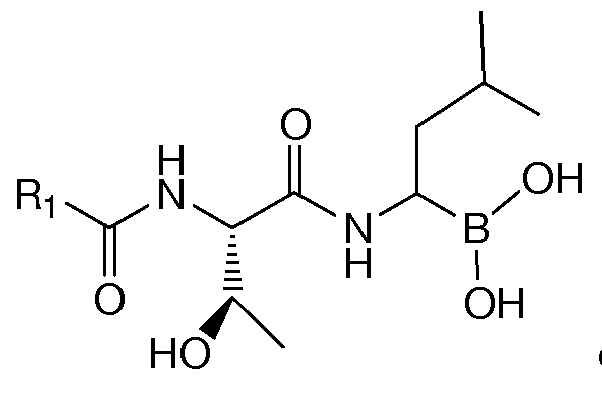
- Embodiment #5: The lyophilized preparation of Embodiment 1, wherein the drug is a compound of formula
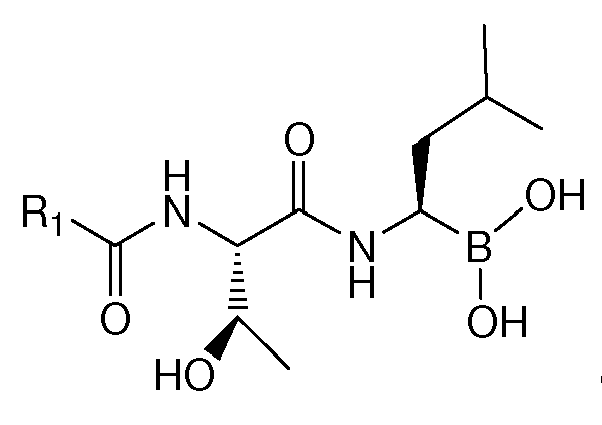
- Embodiment #6: The lyophilized preparation of any one of the preceding Embodiments, wherein R1 is optionally substituted pyrazinyl, pyridyl, phenyl, thiazolyl, naphthyl, or quinolinyl.
- Embodiment #7: The lyophilized preparation of any one of the preceding Embodiments, wherein R1 is substituted.
- Embodiment #8: The lyophilized preparation of any one of the preceding Embodiments, wherein R1 is a 5-membered heteroaryl substituted with phenyl, a 6-membered heteroaryl substituted with phenyl, or phenyl substituted with phenyl.
- Embodiment #9: The lyophilized preparation of Embodiment 1, wherein the drug is a compound of formula
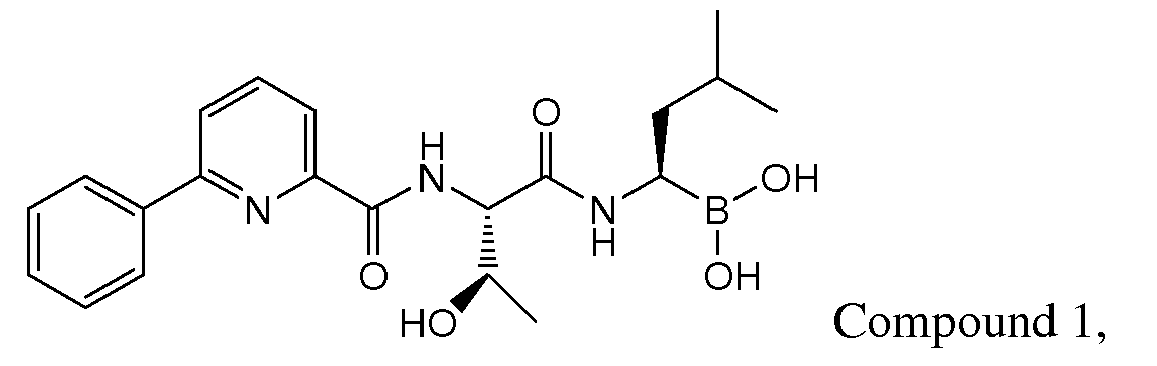
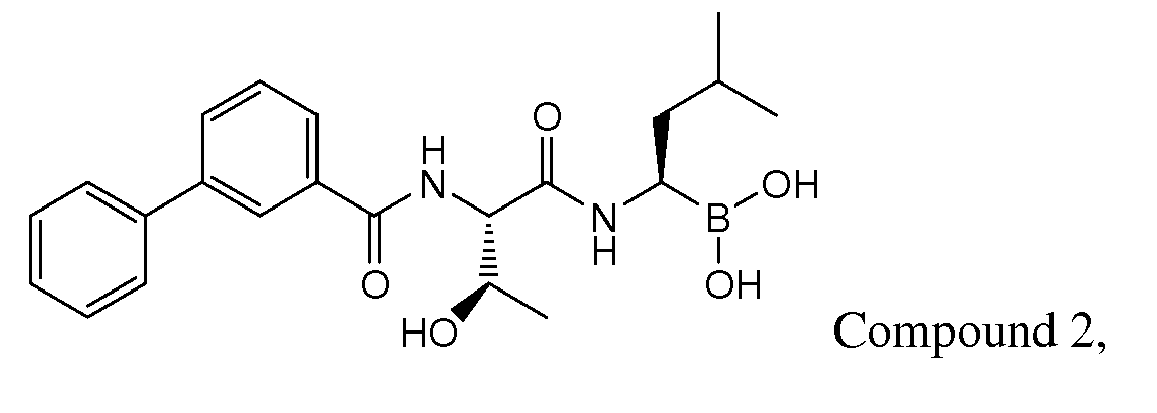
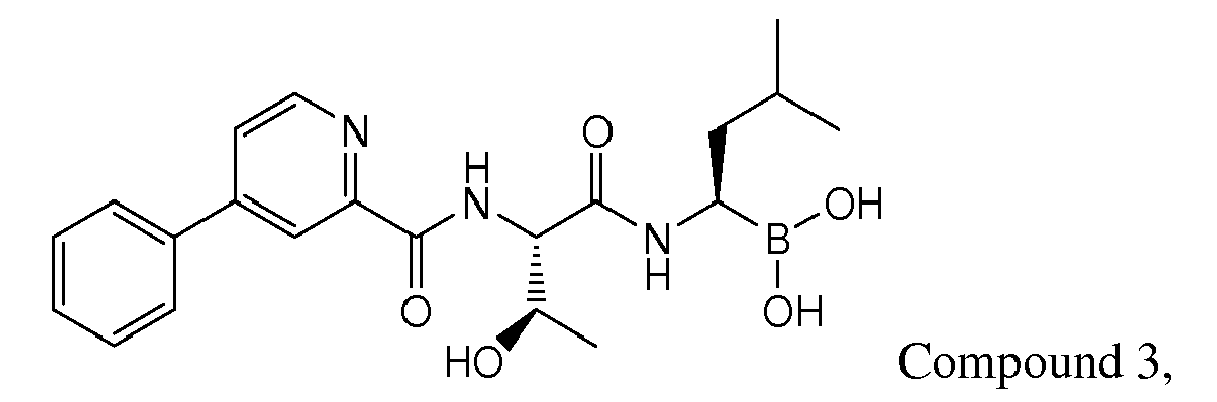
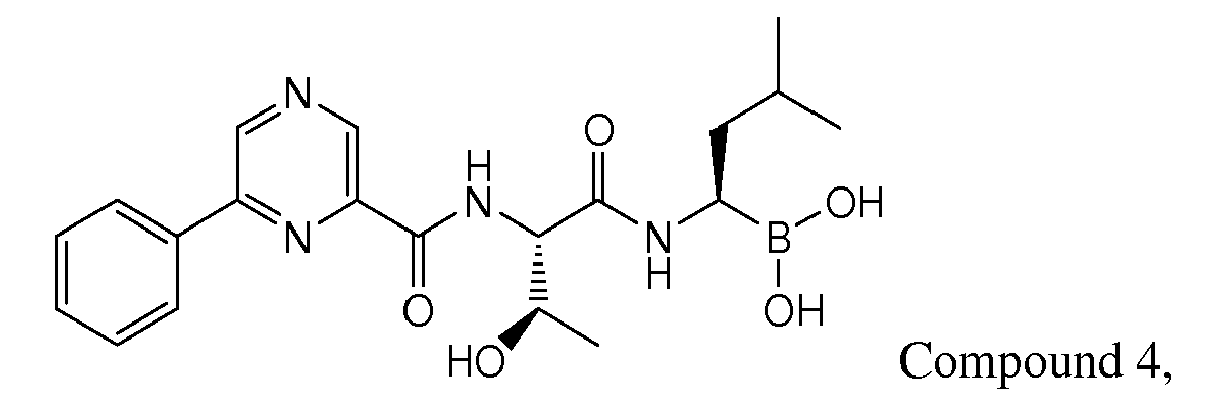
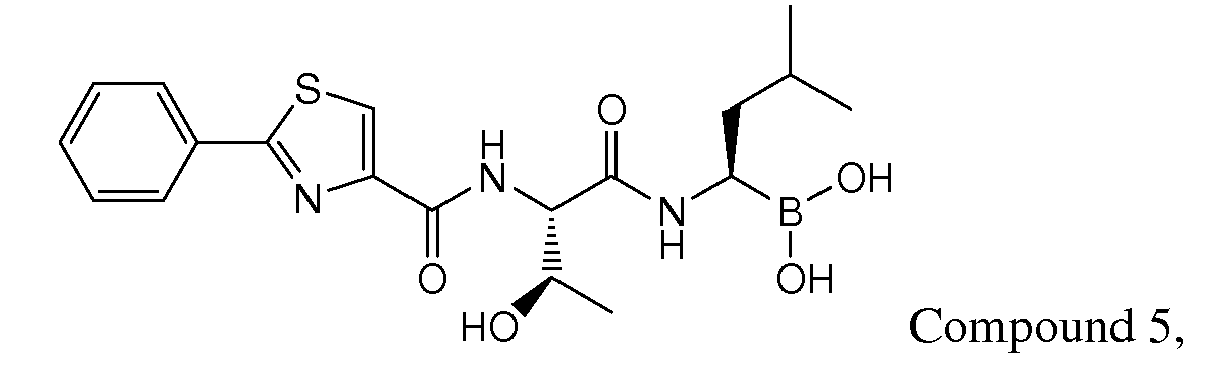


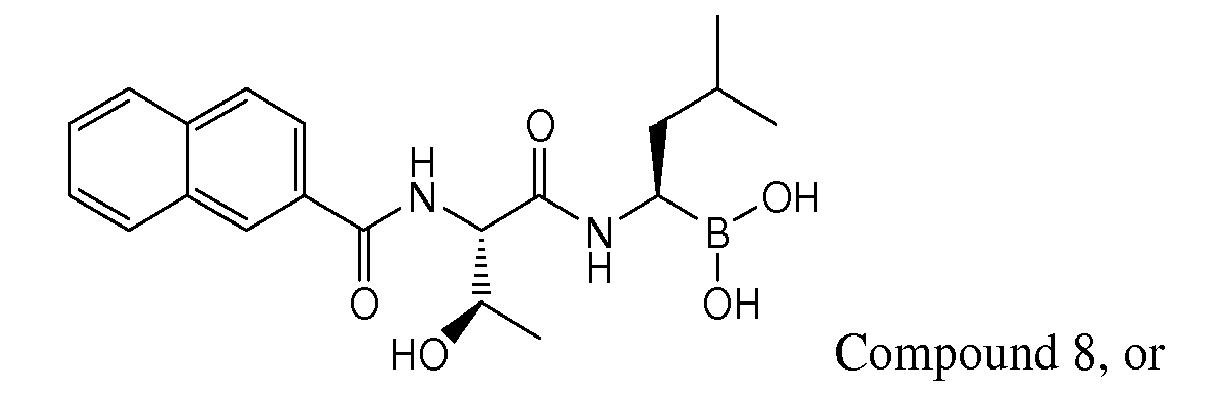
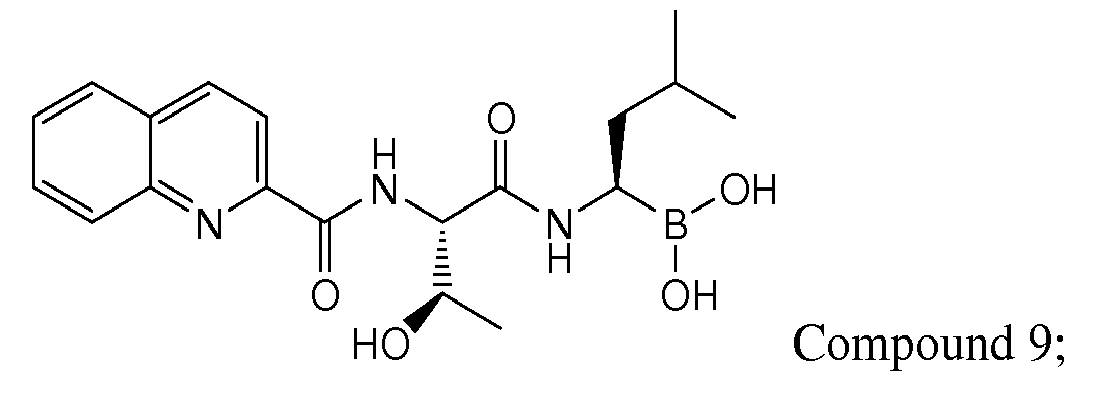
- Embodiment #10: The lyophilized preparation of Embodiment 1, wherein the drug is a compound of formula:
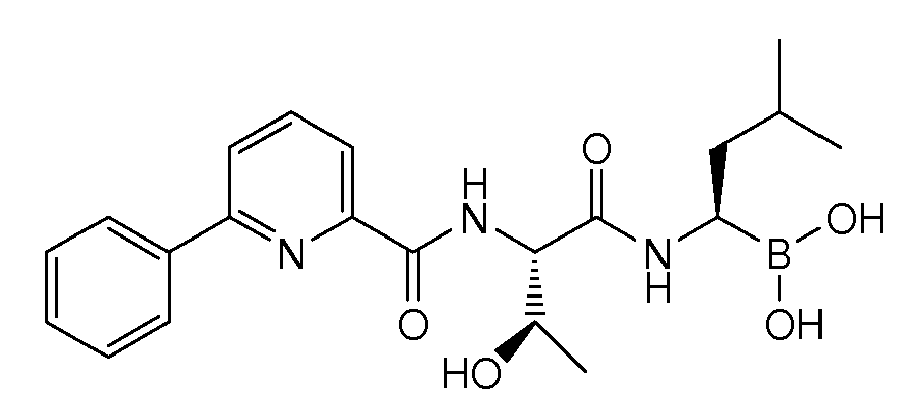
- Embodiment #11: The lyophilized preparation of Embodiment 1, wherein the drug is a compound of Formula II or a pharmaceutically acceptable salt or ester thereof.
- Embodiment #12: The lyophilized preparation of any one of the preceding Embodiments comprising at least one bulking agent.
- Embodiment #13: The lyophilized preparation of Embodiment 12, comprising up to about 99% w/w of the bulking agent.
- Embodiment #14: The lyophilized preparation of Embodiment 12, comprising about 20% to about 90% w/w of the bulking agent.
- Embodiment #15: The lyophilized preparation of Embodiment 12, comprising about 30% to about 60% w/w of the bulking agent.
- Embodiment #16: The lyophilized preparation of Embodiment 12, comprising about 35% of the bulking agent.
- Embodiment #17: The lyophilized preparation of Embodiment 12, comprising about 45% w/w of the bulking agent.
- Embodiment #18: The lyophilized preparation of any one of Embodiments 12-17, wherein the bulking agent is a monosaccharide, an oligosaccharide, a sugar alcohol, an amino acid, or a mixture thereof.
- Embodiment #19: The lyophilized preparation of Embodiment 18, wherein the bulking agent comprises sucrose, dextrose, maltose, a dextran, or a mixture thereof.
- Embodiment #20: The lyophilized preparation of Embodiment 18, wherein the bulking agent comprises mannitol.
- Embodiment #21: The lyophilized preparation of any one of the preceding Embodiments comprising at least one surfactant.
- Embodiment #22: The lyophilized preparation of Embodiment 21, comprising at least about 10% to about 40% w/w of the surfactant
- Embodiment #23: The lyophilized preparation of Embodiment 21, comprising at least about 15% to about 30% w/w of the surfactant.
- Embodiment #24: The lyophilized preparation of Embodiment 21, comprising at least about 15% to about 20% w/w of the surfactant.
- Embodiment #25: The lyophilized preparation of any one of Embodiments 21 to 24, wherein the surfactant is a polyoxyethylene stearate, polyoxyethylene castor oil derivatives, polyoxyethylene sorbitan fatty acid ester, sorbitan esters, polyethylene glycol ether, saturated polyglycolized glyceride, fatty acid ester of polyethylene glycol, hydroxylated lecithin, medium chain monoglyceride, medium chain fatty acid ester, polyethylene/propylene glycol copolymer, polyethylene glycol stearate, d-α-tocopheryl polyethylene glycol succinate, polyoxyl stearate, polyoxyl castor oil, saturated polyglycolized glyceride consisting of mono-, di-, or triglycerides; di-fatty acid esters of polyethylene glycol, hydroxylated lecithin; medium chain monoglyceride, medium chain monoglyceride and diglyceride; polyethylene/propylene glycol copolymer; block copolymer of ethylene oxide and propylene oxide, ethoxylated castor oil; ethoxylated hydroxystearic acid; or a mixture thereof.
- Embodiment #26: The lyophilized preparation of any one of Embodiments 21 to 24, wherein the surfactant is a polyoxypropylene polyoxyethylene block copolymer, a polysorbate, macrogol 15 hydroxy stearate, polyoxyl 35 castor oil, a polyoxyl castor oil, propylene glycol, or a mixture thereof.
- Embodiment #27: The lyophilized preparation of Embodiment 26, wherein the surfactant is a polysorbate.
- Embodiment #28: The lyophilized preparation of Embodiment 26, wherein the polysorbate is polysorbate 20.
- Embodiment #29: The lyophilized preparation of any one of the preceding Embodiments comprising at least one bulking agent and at least one surfactant.
- Embodiment #30: The lyophilized preparation of any one of the preceding Embodiments, wherein the cyclodextrin is an α-cyclodextrin, a β-cyclodextrin, a γ-cyclodextrin, or a mixture thereof.
- Embodiment #31: The lyophilized preparation of any one of the preceding Embodiments, wherein the cyclodextrin is an alkylated cyclodextrin, a hydroxylalkylated cyclodextrin, a sulfoalkyl cyclodextrin, a saccharide-substituted cyclodextrin, or a mixture thereof.
- Embodiment #32: The lyophilized preparation of any one of the preceding Embodiments, wherein the cyclodextrin is methyl-β-cyclodextrin, dimethyl-β-cyclodextrin, trimethyl-β-cyclodextrin, 2-hydroxymethyl-β-cyclodextrin, hydroxyethyl-β-cyclodextrin, 2-hydroxypropyl-β-cyclodextrin, 3-hydroxypropyl-β-cyclodextrin, β-cyclodextrin sulfate, β-cyclodextrin sulfonate, β-cyclodextrin sulfobutyl ether, or a mixture thereof.
- Embodiment #33: The lyophilized preparation of any one of the preceding Embodiments, wherein the cyclodextrin is hydroxypropyl β cyclodextrin, hydroxypropyl γ cyclodextrin, sulfobutyl ether β cyclodextrin, or a mixture thereof.
- Embodiment #34: The lyophilized preparation of any one of the preceding Embodiments, wherein the cyclodextrin is hydroxypropyl β cyclodextrin, sulfobutyl ether β cyclodextrin, or a mixture thereof.
- Embodiment #35: The lyophilized preparation of any one of the preceding Embodiments, wherein the cyclodextrin is hydroxypropyl β cyclodextrin.
- Embodiment #36: The lyophilized preparation of any one of the preceding Embodiments, wherein the cyclodextrin is present in an amount up to about 99% w/w of the lyophilized preparation.
- Embodiment #37: The lyophilized preparation of any one of the preceding Embodiments, wherein the cyclodextrin is present in an amount from about 20% to about 90% w/w of the lyophilized preparation.
- Embodiment #38: The lyophilized preparation of any one of the preceding Embodiments, wherein the cyclodextrin is present in an amount from about 40% to about 70% w/w of the lyophilized preparation.
- Embodiment #39: The lyophilized preparation of any one of the preceding Embodiments, wherein the cyclodextrin is present in an amount from about 45% to about 65% w/w of the lyophilized preparation.
- Embodiment #40: The lyophilized preparation of any one of the preceding Embodiments, wherein the cyclodextrin is present in an amount of about 40% w/w of the lyophilized preparation.
- Embodiment #41: The lyophilized preparation of any one of the preceding Embodiments, wherein the cyclodextrin is present in an amount of about 45% w/w of the lyophilized preparation
- Embodiment #42: The lyophilized preparation of any one of the preceding Embodiments, wherein the cyclodextrin is present in an amount of about 55% w/w of the lyophilized preparation.
- Embodiment #43: The lyophilized preparation of any one of the preceding Embodiments, further comprising a pharmaceutically acceptable organic solvent.
- Embodiment #44: The lyophilized preparation of Embodiment 43, wherein the organic solvent is dimethylsulfoxide, ethanol, propanol, tert-butanol, or a mixture thereof.
- Embodiment #45: The lyophilized preparation of Embodiment 43, wherein the organic solvent is tert-butanol.
- Embodiment #46: The lyophilized preparation of Embodiment 45, wherein the tert-butanol is present in an amount of about 3% w/w, or less.
- Embodiment #47: The lyophilized preparation of Embodiment 45, wherein the tert-butanol is present in an amount of about 1% w/w, or less.
- Embodiment #48: The lyophilized preparation of any one of the preceding Embodiments wherein the lyophilized preparation reconstitutes in about 180 seconds or less to provide a clear solution free of particulate matter.
- Embodiment #49: The lyophilized preparation of any one of the preceding Embodiments wherein the lyophilized preparation reconstitutes in about 90 seconds or less to provide a clear solution free of particulate matter.
- Embodiment #50: The lyophilized preparation of any one of the preceding Embodiments wherein the lyophilized preparation reconstitutes in about 30 seconds or less to provide a clear solution free of particulate matter.
- Embodiment #51: The lyophilized preparation of any one of Embodiments 48-50 wherein the reconstituted solution is colorless.
- Embodiment #52: The lyophilized preparation of any one of the preceding Embodiments wherein the preparation is stable for at least 6 months during storage under refrigerated conditions.
- Embodiment #53: The lyophilized preparation of any one of the preceding Embodiments wherein the preparation is stable for at least 6 months during storage under room temperature conditions.
- Embodiment #54: The lyophilized preparation of any one of the preceding Embodiments wherein the preparation is stable for at least 6 months during storage under accelerated conditions.
- Embodiment #55: The lyophilized preparation of any one of the preceding Embodiments, wherein the preparation exhibits a decrease in drug purity of no more than about 1% after storage for 6 months under refrigerated conditions.
- Embodiment #56: The lyophilized preparation of any one of the preceding Embodiments, wherein the preparation exhibits a decrease in drug purity of no more than about 1% after storage for 6 months under room temperature conditions.
- Embodiment #57: The lyophilized preparation of any one of the preceding Embodiments, wherein the preparation exhibits a decrease in drug purity of no more than about 1% after storage for 6 months under accelerated conditions.
- Embodiment #58: The lyophilized preparation of any one of the preceding Embodiments, wherein the preparation exhibits a decrease in drug purity of no more than about 0.5% after storage for 6 months under refrigerated conditions.
- Embodiment #59: The lyophilized preparation of any one of the preceding Embodiments, wherein the preparation exhibits a decrease in drug purity of no more than about 0.5% after storage for 6 months under room temperature conditions.
- Embodiment #60: The lyophilized preparation of any one of the preceding Embodiments, wherein the preparation exhibits a decrease in drug purity of no more than about 0.5% after storage for 6 months under accelerated conditions.
- Embodiment #61: The lyophilized preparation of any one of the preceding Embodiments, further comprising at least one additional antineoplastic agent.
- Embodiment #62: A method for manufacturing a lyophilized preparation comprising providing a first solution comprising a cyclodextrin, a bulking agent, and water;
- mixing a surfactant and a portion of the first solution to form a second solution;
- combining the compound of Formula I and the second solution to form a compound solution;
- mixing the remainder of the first solution with the compound solution to form a pre-lyophilization solution; and
lyophilizing the pre-lyophilization solution. - Embodiment #63: The method of Embodiment 62, wherein the cyclodextrin comprises hydroxypropyl β cyclodextrin and the bulking agent comprises mannitol.
- Embodiment #64: The method of Embodiment 62, wherein the surfactant is a polysorbate.
- Embodiment #65: The method of any one of Embodiments 62 to 64 further comprising sterilizing the pre-lyophilization solution.
- Embodiment #66: The method of Embodiment 65, wherein the sterilizing step comprises filtration.
- Embodiment #67: A method for manufacturing a lyophilized preparation comprising:
- providing a first solution containing a cyclodextrin, a bulking agent, and water;
- providing a compound solution containing the compound of Formula I and tert-butanol;
- combining the first solution and the compound solution to provide a pre-lyophilization solution; and
- lyophilizing the pre-lyophilization solution.
- Embodiment #68: The method of Embodiment 67, wherein the cyclodextrin is hydroxypropyl β cyclodextrin and the bulking agent comprises mannitol.
- Embodiment #69: The method of Embodiment 67 or 68 further comprising the step of sterilizing the pre-lyophilization solution.
- Embodiment #70: The method of Embodiment 69, wherein the sterilizing step comprises filtration.
- Embodiment #71: A method of treating chronic lymphocytic leukemia, Hodgkin's disease, non-Hodgkin's lymphoma, multiple myeloma or breast cancer comprising administering to a patient in need thereof a therapeutically effective amount of a preparation prepared from a composition according to any one of Embodiments 1 to 61.
Claims (15)
- A lyophilized preparation comprising:(a) a drug, wherein the drug is a compound of Formula I, Formula II, or a pharmaceutically acceptable salt or ester thereof:
 (b) a cyclodextrin; and(c) at least one member selected from the group consisting of bulking agents and surfactants.
 - The lyophilized preparation of claim 1, wherein the drug is a compound of formula:
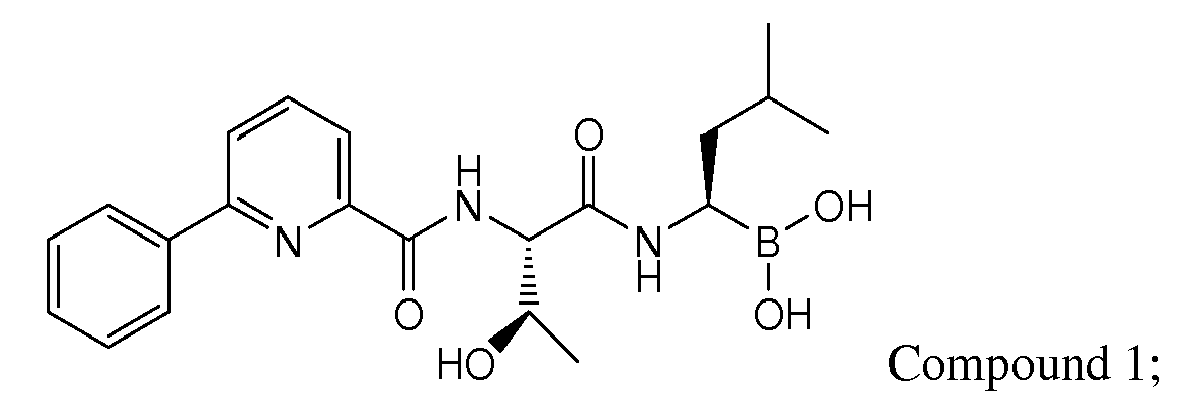
- The lyophilized preparation of claim 1, wherein the drug is a compound of Formula II or a pharmaceutically acceptable salt or ester thereof.
- The lyophilized preparation of any one of the preceding claims comprising at least one bulking agent.
- The lyophilized preparation of claim 4, wherein the bulking agent is a monosaccharide, an oligosaccharide, a sugar alcohol, an amino acid, or a mixture thereof.
- The lyophilized preparation of claim 4, comprising at least one surfactant.
- The lyophilized preparation of claim 4, wherein the cyclodextrin is methyl-β-cyclodextrin, dimethyl-β-cyclodextrin, trimethyl-β-cyclodextrin, 2-hydroxymethyl-β-cyclodextrin, hydroxyethyl-β-cyclodextrin, 2-hydroxypropyl-β-cyclodextrin, 3-hydroxypropyl-β-cyclodextrin, β-cyclodextrin sulfate, β-cyclodextrin sulfonate, β-cyclodextrin sulfobutyl ether, or a mixture thereof.
- The lyophilized preparation of claim 4, wherein the lyophilized preparation reconstitutes in about 180 seconds or less to provide a clear solution free of particulate matter.
- The lyophilized preparation of claim 4, wherein the lyophilized preparation reconstitutes in about 90 seconds or less to provide a clear solution free of particulate matter.
- The lyophilized preparation of claim 8, wherein the reconstituted solution is colorless.
- The lyophilized preparation of claim 10, wherein the preparation is stable for at least 6 months during storage under accelerated conditions.
- The lyophilized preparation of claim 10, wherein the preparation exhibits a decrease in drug purity of no more than about 1% after storage for 6 months under accelerated conditions.
- A method for manufacturing a lyophilized preparation comprising:providing a first solution comprising a cyclodextrin, a bulking agent, and water;mixing a surfactant and a portion of the first solution to form a second solution;combining the compound of Formula I and the second solution to form a compound solution;mixing the remainder of the first solution with the compound solution to form a pre-lyophilization solution; andlyophilizing the pre-lyophilization solution.
- A method for manufacturing a lyophilized preparation comprising:providing a first solution containing a cyclodextrin, a bulking agent, and water;providing a compound solution containing the compound of Formula I and tert-butanol;combining the first solution and the compound solution to provide a pre-lyophilization solution; andlyophilizing the pre-lyophilization solution.
- A method of treating chronic lymphocytic leukemia, Hodgkin's disease, non-Hodgkin's lymphoma, multiple myeloma or breast cancer comprising administering to a patient in need thereof a therapeutically effective amount of a preparation prepared from a composition according to claim 4.
Priority Applications (17)
| Application Number | Priority Date | Filing Date | Title |
|---|---|---|---|
| EP09305291A EP2238973A1 (en) | 2009-04-07 | 2009-04-07 | Lyophilized preparations of proteasome inhibitors |
| CA2757463A CA2757463A1 (en) | 2009-04-03 | 2010-04-01 | Lyophilization cakes of proteasome inhibitors |
| JP2012503695A JP5722871B2 (en) | 2009-04-03 | 2010-04-01 | Freeze-dried cake of proteasome inhibitors |
| CN201080015692.7A CN102387790B (en) | 2009-04-03 | 2010-04-01 | Lyophilization cakes of proteasome inhibitors |
| BRPI1006633A BRPI1006633A2 (en) | 2009-04-03 | 2010-04-01 | Freeze-dried cake, method for making a freeze-dried cake and use of freeze-dried cake |
| EP10712647A EP2413916A2 (en) | 2009-04-03 | 2010-04-01 | Lyophilization cakes of proteasome inhibitors |
| NZ596056A NZ596056A (en) | 2009-04-03 | 2010-04-01 | Lyophilization cakes of proteasome inhibitors |
| PCT/US2010/029597 WO2010114982A2 (en) | 2009-04-03 | 2010-04-01 | Lyophilization cakes of proteasome inhibitors |
| MX2011010422A MX2011010422A (en) | 2009-04-03 | 2010-04-01 | Lyophilization cakes of proteasome inhibitors. |
| AU2010232632A AU2010232632C1 (en) | 2009-04-03 | 2010-04-01 | Lyophilization cakes of proteasome inhibitors |
| KR1020117026086A KR20120016082A (en) | 2009-04-03 | 2010-04-01 | Lyophilized cake of proteasome inhibitor |
| TW099110311A TWI484981B (en) | 2009-04-03 | 2010-04-02 | Lyophilized preparations of proteasome inhibitors |
| ARP100101126A AR084663A1 (en) | 2009-04-03 | 2010-04-05 | LIOFILIZED PREPARATIONS OF PROTEASOME INHIBITORS |
| IL215325A IL215325A (en) | 2009-04-03 | 2011-09-22 | Lyophilized cakes of proteasome inhibitors |
| US13/248,398 US8785418B2 (en) | 2009-04-03 | 2011-09-29 | Lyophilization cakes of proteasome inhibitors |
| CL2011002460A CL2011002460A1 (en) | 2009-04-03 | 2011-10-03 | Freeze-dried cake comprising a proteasome inhibitor derived from protonic acid, a cyclodextrin, and at least one thickening agent and / or a surfactant; method for its manufacture; and its use in the treatment of multiple myeloma. |
| ZA2011/07852A ZA201107852B (en) | 2009-04-03 | 2011-10-26 | Lyophilization cakes of proteasome inhibitors |
Applications Claiming Priority (1)
| Application Number | Priority Date | Filing Date | Title |
|---|---|---|---|
| EP09305291A EP2238973A1 (en) | 2009-04-07 | 2009-04-07 | Lyophilized preparations of proteasome inhibitors |
Publications (1)
| Publication Number | Publication Date |
|---|---|
| EP2238973A1 true EP2238973A1 (en) | 2010-10-13 |
Family
ID=41130433
Family Applications (2)
| Application Number | Title | Priority Date | Filing Date |
|---|---|---|---|
| EP09305291A Withdrawn EP2238973A1 (en) | 2009-04-03 | 2009-04-07 | Lyophilized preparations of proteasome inhibitors |
| EP10712647A Withdrawn EP2413916A2 (en) | 2009-04-03 | 2010-04-01 | Lyophilization cakes of proteasome inhibitors |
Family Applications After (1)
| Application Number | Title | Priority Date | Filing Date |
|---|---|---|---|
| EP10712647A Withdrawn EP2413916A2 (en) | 2009-04-03 | 2010-04-01 | Lyophilization cakes of proteasome inhibitors |
Country Status (16)
| Country | Link |
|---|---|
| US (1) | US8785418B2 (en) |
| EP (2) | EP2238973A1 (en) |
| JP (1) | JP5722871B2 (en) |
| KR (1) | KR20120016082A (en) |
| CN (1) | CN102387790B (en) |
| AR (1) | AR084663A1 (en) |
| AU (1) | AU2010232632C1 (en) |
| BR (1) | BRPI1006633A2 (en) |
| CA (1) | CA2757463A1 (en) |
| CL (1) | CL2011002460A1 (en) |
| IL (1) | IL215325A (en) |
| MX (1) | MX2011010422A (en) |
| NZ (1) | NZ596056A (en) |
| TW (1) | TWI484981B (en) |
| WO (1) | WO2010114982A2 (en) |
| ZA (1) | ZA201107852B (en) |
Cited By (9)
| Publication number | Priority date | Publication date | Assignee | Title |
|---|---|---|---|---|
| CN103070835A (en) * | 2013-01-31 | 2013-05-01 | 江苏奥赛康药业股份有限公司 | Freeze-dried composition containing bortezomib and preparation method of freeze-dried composition |
| EP2644189A1 (en) * | 2012-03-27 | 2013-10-02 | Innopharma, Inc. | Stable bortezomib formulations |
| WO2014072985A1 (en) * | 2012-11-06 | 2014-05-15 | Natco Pharma Limited | Novel boronic acid derivatives as anti cancer agents |
| WO2014102755A1 (en) * | 2012-12-31 | 2014-07-03 | Shilpa Medicare Limited | Bortezomib formulations |
| EA021179B1 (en) * | 2012-06-15 | 2015-04-30 | Ощество С Ограниченной Ответственностью "Тева" | Lyophilisate of a compound of boronic acid |
| US9061037B2 (en) | 2010-03-18 | 2015-06-23 | Innopharma, Inc. | Stable bortezomib formulations |
| US9107821B2 (en) | 2010-03-18 | 2015-08-18 | Innopharma, Inc. | Stable bortezomib formulations |
| WO2018038687A1 (en) | 2016-08-22 | 2018-03-01 | Mustafa Nevzat Ilaç Sanayii A.Ş. | Pharmaceutical formulations comprising a bortezomib-cyclodextrin complex |
| RU2659160C1 (en) * | 2017-07-10 | 2018-06-28 | Акционерное Общество "Фарм-Синтез" | Bortezomib lyophilizate production method and the bortezomib containing pharmaceutical composition in the form of stable lyophilizated product produced by said method |
Families Citing this family (17)
| Publication number | Priority date | Publication date | Assignee | Title |
|---|---|---|---|---|
| EP2516449A1 (en) * | 2009-12-22 | 2012-10-31 | Cephalon, Inc. | Proteasome inhibitors and processes for their preparation, purification and use |
| AU2011312264B2 (en) | 2010-10-05 | 2015-07-02 | Fresenius Kabi Usa, Llc | Bortezomib formulations stabilised with boric acid |
| TW201309303A (en) * | 2011-03-03 | 2013-03-01 | Cephalon Inc | Proteasome inhibitor for the treatment of lupus |
| CN102784114B (en) * | 2011-05-14 | 2016-03-02 | 山东新时代药业有限公司 | A kind of bortezomib freeze-dried powder and preparation method thereof |
| MX2013015308A (en) * | 2011-06-22 | 2014-05-20 | Cephalon Inc | Proteasome inhibitors and processes for their preparation, purification and use. |
| CN103897026A (en) * | 2012-12-29 | 2014-07-02 | 朱继东 | Crystal form of bortezomib key intermediate, and preparation method and application of crystal form |
| CN103897027A (en) * | 2012-12-29 | 2014-07-02 | 曹亚英 | Key intermediate crystal form, preparation method and application of key intermediate crystal form in bortezomib synthesis |
| WO2014161072A1 (en) * | 2013-04-02 | 2014-10-09 | The Governing Council Of The University Of Toronto | Α-boryl isocyanides, boropeptides and boron heterocycles |
| CN103212055B (en) * | 2013-04-19 | 2014-11-05 | 海南锦瑞制药股份有限公司 | Drug composition of bortezomib and preparation method thereof |
| JP6173495B2 (en) * | 2013-05-29 | 2017-08-02 | ゲア・プロセス・エンジニアリング・アクティーゼルスカブ | Method for realizing serial sterilization lyophilization of products in trays contained in a trolley, system for carrying out the method and use of the method |
| CN103720666B (en) * | 2013-12-16 | 2015-11-25 | 亿腾药业(泰州)有限公司 | A kind of preparation method of injection bortezomib lyophilized formulations |
| CN108135916B (en) * | 2015-06-19 | 2022-01-28 | 北京科辉智药生物科技有限责任公司 | Chiral specific boron-containing compounds and their use in the treatment of cancer or amyloidosis |
| WO2016205790A2 (en) | 2015-06-19 | 2016-12-22 | Hanlin Scientific, Inc. | Chiral specific boron-containing compounds and their use in treating cancer or amyloidosis |
| CN106176637A (en) * | 2016-08-24 | 2016-12-07 | 江苏豪森药业集团有限公司 | Lyophilized formulations of bortezomib and preparation method thereof |
| AU2017382281B2 (en) * | 2016-12-22 | 2024-07-11 | Genentech, Inc. | Methods and formulations for reducing reconstitution time of lyophilized polypeptides |
| CN110540547A (en) * | 2018-05-28 | 2019-12-06 | 秦艳茹 | Synthesis and application of peptide borate compound |
| EP3824880A1 (en) * | 2019-11-25 | 2021-05-26 | Clevexel Pharma | Freeze-dried powder containing 2-[(3-aminopropyl)amino]ethanethiol and its use for preparing a thermogel |
Citations (6)
| Publication number | Priority date | Publication date | Assignee | Title |
|---|---|---|---|---|
| US5024998A (en) | 1987-12-30 | 1991-06-18 | University Of Florida | Pharmaceutical formulations for parenteral use |
| US5660845A (en) | 1990-03-06 | 1997-08-26 | The Procter & Gamble Company | Solid consumer product compositions containing small particle cyclodextrin complexes |
| US5874418A (en) | 1997-05-05 | 1999-02-23 | Cydex, Inc. | Sulfoalkyl ether cyclodextrin based solid pharmaceutical formulations and their use |
| US20020169114A1 (en) * | 2001-01-25 | 2002-11-14 | The United States Of America, Represented By The Secretary, Department Of Health And Human Services | Formulation of boronic acid compounds |
| WO2005021558A2 (en) * | 2003-08-14 | 2005-03-10 | Cephalon, Inc. | Proteasome inhibitors and methods of using the same |
| WO2006063154A1 (en) * | 2004-12-07 | 2006-06-15 | Proteolix, Inc. | Composition for proteasome inhibition |
Family Cites Families (25)
| Publication number | Priority date | Publication date | Assignee | Title |
|---|---|---|---|---|
| JPS5835968B2 (en) | 1974-02-25 | 1983-08-05 | 帝人株式会社 | Production method of cyclodextrin clathrate compound |
| GB1584462A (en) | 1977-03-31 | 1981-02-11 | Lafon Labor | N-diaryl-malonamide and diarylmethyl-sulphinyl-acetamide derivatives and pharmaceutical compositions containing them |
| JPS5920230A (en) | 1982-07-19 | 1984-02-01 | チバ−ガイギ−・アクチエンゲゼルシヤフト | Drug containing piruprophen |
| US4727064A (en) | 1984-04-25 | 1988-02-23 | The United States Of America As Represented By The Department Of Health And Human Services | Pharmaceutical preparations containing cyclodextrin derivatives |
| FR2593809B1 (en) | 1986-01-31 | 1988-07-22 | Lafon Labor | BENZHYDRYLSULFINYLACETAMIDE, PROCESS FOR PREPARATION AND THERAPEUTIC USE |
| JPS62281855A (en) | 1986-05-29 | 1987-12-07 | Daikin Ind Ltd | Inclusion compounds containing vitamins, vitamin derivatives, or hormones |
| GB8813682D0 (en) | 1988-06-09 | 1988-07-13 | Reckitt & Colmann Prod Ltd | Pharmaceutical compositions |
| JPH035438A (en) | 1989-05-31 | 1991-01-11 | Kaken Pharmaceut Co Ltd | Flurbiprofen clathrate and anti-inflammatory analgesics using this clathrate |
| FR2663225B1 (en) | 1990-06-14 | 1994-11-04 | Lafon Labor | NEW USE OF MODAFINIL. |
| US5024997A (en) | 1990-06-22 | 1991-06-18 | American Home Products Corporation | Palatable ibuprofen solutions |
| JP3176716B2 (en) * | 1991-06-21 | 2001-06-18 | 武田薬品工業株式会社 | Poorly water-soluble drug composition having improved solubility |
| FR2684875B1 (en) | 1991-12-13 | 1995-05-24 | Lafon Labor | USE OF MODAFINIL FOR THE MANUFACTURE OF A MEDICAMENT HAVING AN ANTI-ISCHEMIC EFFECT. |
| FR2702968B1 (en) | 1993-03-23 | 1995-06-23 | Lafon Labor | Process for the preparation of particles containing an active ingredient by extrusion and lyophilization. |
| US5843347A (en) | 1993-03-23 | 1998-12-01 | Laboratoire L. Lafon | Extrusion and freeze-drying method for preparing particles containing an active ingredient |
| US5866162A (en) | 1993-08-10 | 1999-02-02 | Smithkline Beecham P.L.C. | Pharmaceutical composition containing a drug/β-cyclodextrin complex in combination with an acid-base couple |
| US5618845A (en) | 1994-10-06 | 1997-04-08 | Cephalon, Inc. | Acetamide derivative having defined particle size |
| US6077871A (en) | 1997-11-26 | 2000-06-20 | Pfizer Inc. | Droloxifene pharmaceutical compositions |
| US6200968B1 (en) | 1998-08-06 | 2001-03-13 | Cephalon, Inc. | Particle-forming compositions containing fused pyrrolocarbazoles |
| US6346548B1 (en) | 1999-08-16 | 2002-02-12 | Cephalon, Inc. | Compositions including modafinil for treatment of attention deficit hyperactivity disorder and multiple sclerosis fatigue |
| US6455588B1 (en) | 1999-08-20 | 2002-09-24 | Cephalon, Inc. | Compositions including modafinil for treatment of eating disorders and for appetite stimulation |
| RS65253B1 (en) | 2004-03-30 | 2024-03-29 | Millennium Pharm Inc | Synthesis of boronic ester and acid compounds |
| US7468383B2 (en) | 2005-02-11 | 2008-12-23 | Cephalon, Inc. | Proteasome inhibitors and methods of using the same |
| DE602006015837D1 (en) * | 2005-10-14 | 2010-09-09 | Janssen Pharmaceutica Nv | FORMULATIONS OF TIPIFARNIB FOR INTRAVENOUS ADMINISTRATION |
| AU2007321977A1 (en) * | 2006-11-21 | 2008-05-29 | Novartis Ag | Stable parenteral formulation containing a RSV inhibitor of a benzodiazepine structure |
| US7442830B1 (en) | 2007-08-06 | 2008-10-28 | Millenium Pharmaceuticals, Inc. | Proteasome inhibitors |
-
2009
- 2009-04-07 EP EP09305291A patent/EP2238973A1/en not_active Withdrawn
-
2010
- 2010-04-01 CN CN201080015692.7A patent/CN102387790B/en not_active Expired - Fee Related
- 2010-04-01 NZ NZ596056A patent/NZ596056A/en not_active IP Right Cessation
- 2010-04-01 JP JP2012503695A patent/JP5722871B2/en not_active Expired - Fee Related
- 2010-04-01 MX MX2011010422A patent/MX2011010422A/en active IP Right Grant
- 2010-04-01 CA CA2757463A patent/CA2757463A1/en not_active Abandoned
- 2010-04-01 AU AU2010232632A patent/AU2010232632C1/en not_active Ceased
- 2010-04-01 BR BRPI1006633A patent/BRPI1006633A2/en not_active IP Right Cessation
- 2010-04-01 WO PCT/US2010/029597 patent/WO2010114982A2/en not_active Ceased
- 2010-04-01 KR KR1020117026086A patent/KR20120016082A/en not_active Abandoned
- 2010-04-01 EP EP10712647A patent/EP2413916A2/en not_active Withdrawn
- 2010-04-02 TW TW099110311A patent/TWI484981B/en not_active IP Right Cessation
- 2010-04-05 AR ARP100101126A patent/AR084663A1/en unknown
-
2011
- 2011-09-22 IL IL215325A patent/IL215325A/en not_active IP Right Cessation
- 2011-09-29 US US13/248,398 patent/US8785418B2/en not_active Expired - Fee Related
- 2011-10-03 CL CL2011002460A patent/CL2011002460A1/en unknown
- 2011-10-26 ZA ZA2011/07852A patent/ZA201107852B/en unknown
Patent Citations (6)
| Publication number | Priority date | Publication date | Assignee | Title |
|---|---|---|---|---|
| US5024998A (en) | 1987-12-30 | 1991-06-18 | University Of Florida | Pharmaceutical formulations for parenteral use |
| US5660845A (en) | 1990-03-06 | 1997-08-26 | The Procter & Gamble Company | Solid consumer product compositions containing small particle cyclodextrin complexes |
| US5874418A (en) | 1997-05-05 | 1999-02-23 | Cydex, Inc. | Sulfoalkyl ether cyclodextrin based solid pharmaceutical formulations and their use |
| US20020169114A1 (en) * | 2001-01-25 | 2002-11-14 | The United States Of America, Represented By The Secretary, Department Of Health And Human Services | Formulation of boronic acid compounds |
| WO2005021558A2 (en) * | 2003-08-14 | 2005-03-10 | Cephalon, Inc. | Proteasome inhibitors and methods of using the same |
| WO2006063154A1 (en) * | 2004-12-07 | 2006-06-15 | Proteolix, Inc. | Composition for proteasome inhibition |
Non-Patent Citations (6)
| Title |
|---|
| "Remington's Pharmaceutical Sciences", 1985, MACK PUBLISHING COMPANY, pages: 1418 |
| "The Handbook of Pharmaceutical Excipients", 1994, THE PHARMACEUTICAL PRESS |
| PIVA R ET AL: "CEP-18770: A novel, orally active proteasome inhibitor with a tumor-selective pharmacologic profile competitive with bortezomib", BLOOD 20080301 US, vol. 111, no. 5, 1 March 2008 (2008-03-01), pages 2765 - 2775, XP002549632, ISSN: 0006-4971 1528-0020 * |
| PIVA, R.R. ET AL., BLOOD, vol. 111, no. 5, 1 March 2008 (2008-03-01), pages 2765 - 2775 |
| STELLA ET AL: "Prodrug strategies to overcome poor water solubility", ADVANCED DRUG DELIVERY REVIEWS, ELSEVIER BV, AMSTERDAM, NL, vol. 59, no. 7, 24 August 2007 (2007-08-24), pages 677 - 694, XP022211987, ISSN: 0169-409X * |
| SZEJTLI, J.: "Cyclodextrins and Their Inclusion Complexes", 1982, AKADÉMIAI KIAD6 |
Cited By (10)
| Publication number | Priority date | Publication date | Assignee | Title |
|---|---|---|---|---|
| US9061037B2 (en) | 2010-03-18 | 2015-06-23 | Innopharma, Inc. | Stable bortezomib formulations |
| US9107821B2 (en) | 2010-03-18 | 2015-08-18 | Innopharma, Inc. | Stable bortezomib formulations |
| US9180093B2 (en) | 2010-03-18 | 2015-11-10 | Innopharma, Inc. | Stable bortezomib formulations |
| EP2644189A1 (en) * | 2012-03-27 | 2013-10-02 | Innopharma, Inc. | Stable bortezomib formulations |
| EA021179B1 (en) * | 2012-06-15 | 2015-04-30 | Ощество С Ограниченной Ответственностью "Тева" | Lyophilisate of a compound of boronic acid |
| WO2014072985A1 (en) * | 2012-11-06 | 2014-05-15 | Natco Pharma Limited | Novel boronic acid derivatives as anti cancer agents |
| WO2014102755A1 (en) * | 2012-12-31 | 2014-07-03 | Shilpa Medicare Limited | Bortezomib formulations |
| CN103070835A (en) * | 2013-01-31 | 2013-05-01 | 江苏奥赛康药业股份有限公司 | Freeze-dried composition containing bortezomib and preparation method of freeze-dried composition |
| WO2018038687A1 (en) | 2016-08-22 | 2018-03-01 | Mustafa Nevzat Ilaç Sanayii A.Ş. | Pharmaceutical formulations comprising a bortezomib-cyclodextrin complex |
| RU2659160C1 (en) * | 2017-07-10 | 2018-06-28 | Акционерное Общество "Фарм-Синтез" | Bortezomib lyophilizate production method and the bortezomib containing pharmaceutical composition in the form of stable lyophilizated product produced by said method |
Also Published As
| Publication number | Publication date |
|---|---|
| AU2010232632B2 (en) | 2016-04-21 |
| JP2012522795A (en) | 2012-09-27 |
| AU2010232632A1 (en) | 2011-11-24 |
| IL215325A0 (en) | 2011-12-29 |
| WO2010114982A2 (en) | 2010-10-07 |
| ZA201107852B (en) | 2012-07-25 |
| CA2757463A1 (en) | 2010-10-07 |
| CL2011002460A1 (en) | 2012-09-14 |
| AR084663A1 (en) | 2013-06-05 |
| EP2413916A2 (en) | 2012-02-08 |
| MX2011010422A (en) | 2011-10-17 |
| AU2010232632C1 (en) | 2016-09-22 |
| BRPI1006633A2 (en) | 2019-09-24 |
| CN102387790A (en) | 2012-03-21 |
| IL215325A (en) | 2016-06-30 |
| JP5722871B2 (en) | 2015-05-27 |
| KR20120016082A (en) | 2012-02-22 |
| TWI484981B (en) | 2015-05-21 |
| US8785418B2 (en) | 2014-07-22 |
| TW201039865A (en) | 2010-11-16 |
| US20120035133A1 (en) | 2012-02-09 |
| WO2010114982A3 (en) | 2011-09-01 |
| NZ596056A (en) | 2012-10-26 |
| CN102387790B (en) | 2014-12-10 |
Similar Documents
| Publication | Publication Date | Title |
|---|---|---|
| EP2238973A1 (en) | Lyophilized preparations of proteasome inhibitors | |
| WO2011103150A2 (en) | Lyophilized preparations of bendamustine | |
| EA013324B1 (en) | Bendamustine pharmaceutical compositions for lyophilization | |
| WO2010030598A2 (en) | Pharmaceutical formulations comprising pemetrexed | |
| US20110177161A1 (en) | Pharmaceutical compositions of [5(s)-(2'-hydroxyethoxy)-20(s)-camptothecin | |
| EP3370693B1 (en) | Improved formulations of levosimendan for intravenous administration as infusion or injection and of infusion concentrate | |
| US20190365720A1 (en) | Novel formulations of amidine substituted beta-lactam compounds on the basis of modified cyclodextrins and acidifying agents, their preparation and use as antimicrobial pharmaceutical compositions | |
| TWI696469B (en) | Formulation | |
| JP2019506377A (en) | Drug inclusion compound, preparation thereof, and production method therefor | |
| WO2021090183A1 (en) | Liquid melphalan composition | |
| WO2020019363A1 (en) | Docetaxel composition for injection and preparation method therefor | |
| US20220133757A1 (en) | Aqueous compositions of bortezomib | |
| CN115969781A (en) | A kind of edenafil citrate injection and its preparation method and application | |
| US20260000695A1 (en) | Solid and oral etoposide toniribate compositions | |
| US20140275122A1 (en) | Voriconazole Formulations | |
| TW202527913A (en) | Lyophilized hydroxyureamethyl acylfulvene | |
| JP2019504042A (en) | Oral preparation and production method thereof | |
| WO2018038687A1 (en) | Pharmaceutical formulations comprising a bortezomib-cyclodextrin complex |
Legal Events
| Date | Code | Title | Description |
|---|---|---|---|
| PUAI | Public reference made under article 153(3) epc to a published international application that has entered the european phase |
Free format text: ORIGINAL CODE: 0009012 |
|
| AK | Designated contracting states |
Kind code of ref document: A1 Designated state(s): AT BE BG CH CY CZ DE DK EE ES FI FR GB GR HR HU IE IS IT LI LT LU LV MC MK MT NL NO PL PT RO SE SI SK TR |
|
| AX | Request for extension of the european patent |
Extension state: AL BA RS |
|
| STAA | Information on the status of an ep patent application or granted ep patent |
Free format text: STATUS: THE APPLICATION IS DEEMED TO BE WITHDRAWN |
|
| 18D | Application deemed to be withdrawn |
Effective date: 20110414 |