EP2238802B1 - Method and apparatus for triggering radio link control packet discard and radio link control re-establishment - Google Patents
Method and apparatus for triggering radio link control packet discard and radio link control re-establishment Download PDFInfo
- Publication number
- EP2238802B1 EP2238802B1 EP08860494.7A EP08860494A EP2238802B1 EP 2238802 B1 EP2238802 B1 EP 2238802B1 EP 08860494 A EP08860494 A EP 08860494A EP 2238802 B1 EP2238802 B1 EP 2238802B1
- Authority
- EP
- European Patent Office
- Prior art keywords
- rlc
- pdu
- retransmission
- rlc pdu
- state variable
- Prior art date
- Legal status (The legal status is an assumption and is not a legal conclusion. Google has not performed a legal analysis and makes no representation as to the accuracy of the status listed.)
- Active
Links
Images



Classifications
-
- H—ELECTRICITY
- H04—ELECTRIC COMMUNICATION TECHNIQUE
- H04L—TRANSMISSION OF DIGITAL INFORMATION, e.g. TELEGRAPHIC COMMUNICATION
- H04L1/00—Arrangements for detecting or preventing errors in the information received
- H04L1/12—Arrangements for detecting or preventing errors in the information received by using return channel
- H04L1/16—Arrangements for detecting or preventing errors in the information received by using return channel in which the return channel carries supervisory signals, e.g. repetition request signals
- H04L1/18—Automatic repetition systems, e.g. Van Duuren systems
-
- H—ELECTRICITY
- H04—ELECTRIC COMMUNICATION TECHNIQUE
- H04W—WIRELESS COMMUNICATION NETWORKS
- H04W24/00—Supervisory, monitoring or testing arrangements
-
- H—ELECTRICITY
- H04—ELECTRIC COMMUNICATION TECHNIQUE
- H04L—TRANSMISSION OF DIGITAL INFORMATION, e.g. TELEGRAPHIC COMMUNICATION
- H04L1/00—Arrangements for detecting or preventing errors in the information received
- H04L1/12—Arrangements for detecting or preventing errors in the information received by using return channel
- H04L1/16—Arrangements for detecting or preventing errors in the information received by using return channel in which the return channel carries supervisory signals, e.g. repetition request signals
- H04L1/18—Automatic repetition systems, e.g. Van Duuren systems
- H04L1/1867—Arrangements specially adapted for the transmitter end
- H04L1/188—Time-out mechanisms
-
- H—ELECTRICITY
- H04—ELECTRIC COMMUNICATION TECHNIQUE
- H04W—WIRELESS COMMUNICATION NETWORKS
- H04W76/00—Connection management
- H04W76/10—Connection setup
- H04W76/19—Connection re-establishment
-
- H—ELECTRICITY
- H04—ELECTRIC COMMUNICATION TECHNIQUE
- H04W—WIRELESS COMMUNICATION NETWORKS
- H04W28/00—Network traffic management; Network resource management
- H04W28/02—Traffic management, e.g. flow control or congestion control
- H04W28/04—Error control
Definitions
- This application is related to wireless communications.
- Figure 1 shows a long term evolution (LTE) user-plane protocol stack.
- the user-plane includes a packet data convergence protocol (PDCP) entity, a radio link control (RLC) entity and a medium access control (MAC) entity.
- PDCP packet data convergence protocol
- RLC radio link control
- MAC medium access control
- the main functions of the RLC entity include transfer of upper layer protocol data units (PDUs) supporting acknowledged mode (AM), unacknowledged mode (UM), and transparent mode (TM) data transfer, error correction through automatic repeat request (ARQ), segmentation according to the size of the transport block (TB), re-segmentation of RLC PDUs that need to be retransmitted, concatenation of RLC service data units (SDUs) for the same radio bearer, in-sequence delivery of upper layer PDUs except at handover in the uplink, duplicate detection, protocol error detection and recovery, flow control between an evolved Node B (eNB) and a wireless transmit/receive unit (WTRU), SDU discard, RLC reset, or the like.
- PDUs protocol data units
- AM acknowledged mode
- UM unacknowledged mode
- TM transparent mode
- An RLC SDU may be segmented if the RLC SDU does not fit entirely into the TB.
- the RLC SDU may be segmented into variable sized RLC PDUs. If a retransmitted PDU does not fit entirely into the new TB used for retransmission, the RLC PDU may be re-segmented. The number of re-segmentation is not limited.
- the evolved universal terrestrial radio access network (E-UTRAN) RLC entity may perform SDU discard based on a notification from the PDCP entity above it, as opposed to having the RLC entity have its own SDU timer-based discard mechanism like in the Release 6 UTRAN RLC.
- E-UTRAN evolved universal terrestrial radio access network
- a new re-segmentation functionality will be supported in addition to supporting segmentation.
- segmentation and reassembly of RLC SDUs In addition to segmentation and reassembly of RLC SDUs, re-segmentation and reassembly of RLC PDUs will be supported (at least for AM data transfer).
- FIG. 2 shows segmentation and re-segmentation of an RLC PDU.
- An RLC SDU may be segmented into RLC PDUs.
- Each RLC PDU is identified by a sequence number (SN) that is assigned on a per-RLC PDU basis, (i.e., a PDU SN).
- the RLC PDU SN is included in the RLC header. Segmentation of the RLC SDU into RLC PDUs may be performed once and an RLC SDU may not be segmented again. Instead, re-segmentation may be performed on RLC PDUs.
- An RLC PDU may be segmented into PDU segments, (i.e., sub-segments).
- a sub-segment may be identified by two parameters: a segment offset (SO) and a segment length (SL).
- SO indicates the starting position of the segment within the original RLC PDU, (e.g., in bytes)
- SL indicates the length (size) of the segment, (e.g., in bytes).
- RLC PDU re-segmentation may be performed multiple times without a limit according to 3GPP TS 36.322.
- Figures 3(A) and 3(B) show two RLC PDU re-segmentations (i.e., two occurrences of re-segmentation).
- the second sub-segment is larger than the first sub-segment. This might occur when the TB size selected by the lower layer is larger than the size of the first sub-segment that needs to be retransmitted.
- the second sub-segment is smaller than the first sub-segment. This might occur when the TB size selected by the lower layer is smaller than the size of the first sub-segment that needs to be retransmitted.
- the RLC AM mode performs ARQ retransmissions.
- One of the parameters for the ARQ mechanism is the maximum number of transmissions, MaxDAT.
- MaxDAT represents the upper limit for state variable VT(DAT).
- the state variable VT(DAT) counts the number of times that an AMD PDU has been scheduled to be transmitted. There shall be one VT(DAT) for each RLC AMD PDU and each shall be incremented by one every time the corresponding AMD PDU is scheduled to be transmitted.
- the initial value of VT(DAT) is 0. When VT(DAT) equals MaxDAT, either an RLC reset procedure or an SDU discard procedure shall be initiated according to the configuration by the upper layer.
- the E-UTRAN it has been agreed to support the RLC SDU discard functionality in the PDCP entity, (e.g., timer-based discard).
- the PDCP entity notifies the RLC entity of a discarded SDU/PDU so that the RLC entity discards it from its buffers.
- RLC PDU and in turn RLC SDU
- RLC SDU discard criteria to be evaluated and implemented locally in the RLC entity itself.
- Such mechanism may be used to avoid protocol deadlock conditions, (e.g., indefinite retransmissions), and/or to trigger other procedures, such as RLC reset or re-establishment and RLC move receive window (MRW), and/or to support better quality of service (QoS).
- the UTRAN RLC provides an MRW procedure which is a signal sent by the sending RLC entity to request the receiving RLC entity to move its reception window, and optionally to indicate the set of discarded RLC SDUs as a result of an RLC SDU discard in the sending RLC entity.
- the MaxDAT parameter was used to discard RLC PDUs based on the number of PDU (re)transmissions, and in turn trigger either an RLC reset procedure or an RLC MRW procedure.
- the straightforward MaxDAT parameter based on the number of PDU (re)transmissions may not be used due to the introduction of the new functionality of re-segmentation in the E-UTRAN, which makes the straightforward counting of PDU (re)transmissions inappropriate as a discard criterion for RLC PDUs.
- a method and apparatus for triggering RLC packet discard and/or RLC re-establishment are disclosed.
- An RLC entity maintains a state variable for counting a total number of transmissions and/or retransmissions of an RLC PDU and its PDU segments.
- the RLC entity may discard the RLC PDU and segments of the RLC PDU and/or initiate RLC re-establishment.
- the state variable associated with the RLC PDU may be incremented each time a negative acknowledgement (NACK) is received for at least a portion of the RLC PDU or when a retransmission is considered for the RLC PDU or portion of the RLC PDU.
- NACK negative acknowledgement
- the state variable associated with the RLC PDU may not be incremented when the RLC PDU or portion of the RLC PDU considered for retransmission is already pending retransmission.
- the RLC entity may increase a state variable proportionate to a retransmitted data size of the RLC PDU or its PDU segments.
- the state variable counts a total data size of transmissions and/or retransmissions of the RLC PDU and its PDU segments, and if the state variable reaches or exceeds a predetermined threshold, the RLC entity may discard at least one of the RLC PDU and segments of the RLC PDU and/or initiate RLC re-establishment.
- wireless transmit/receive unit includes but is not limited to a user equipment (UE), a mobile station, a fixed or mobile subscriber unit, a pager, a cellular telephone, a personal digital assistant (PDA), a computer, or any other type of user device capable of operating in a wireless environment.
- UE user equipment
- PDA personal digital assistant
- eNB includes but is not limited to a base station, a Node-B, a site controller, an access point (AP), or any other type of interfacing device capable of operating in a wireless environment.
- the total number of transmissions or retransmissions is calculated for a given RLC PDU and its PDU segments to determine whether to discard such RLC PDU and/or to initiate an RLC re-establishment procedure.
- the total number of transmission failures, (e.g., the number of NACKs), for transmitted RLC PDUs or PDU segments may be calculated.
- MaxTotalTrans is a threshold for deciding whether an RLC PDU needs to be discarded and/or if RLC needs to be reestablished.
- VT(TotalTrans) is a state variable counting the number of times an RLC PDU and its PDU segment has been (re)transmitted or when it is considered for retransmission.
- One VT(TotalTrans) is generated for an associated RLC PDU and incremented every time the RLC PDU or its PDU segment is (re)transmitted or scheduled to be (re)transmitted.
- the initial value of VT(TotalTrans) is 0.
- the VT(TotalTrans) may be initialized when the first time the RLC PDU is considered for retransmission.
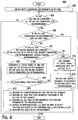
- FIG. 4 is a flow diagram of a process 400 for RLC re-establishment and/or packet discard in accordance with the first embodiment.
- An RLC entity generates and transmits an RLC PDU (step 402). Subsequently, it is determined whether the RLC PDU or a portion of the RLC PDU is considered for retransmission (step 404). If the RLC PDU or a portion of the RLC PDU is not considered for retransmission, (i.e., transmission of the RLC PDU is successful), the process 400 ends.
- step 406 it is further determined whether the RLC PDU is considered for retransmission for the first time. If the RLC PDU is considered for retransmission for the first time, the variable VT(TotalTrans) associated with the RLC PDU is set to '0' (step 414) and the RLC PDU is delivered to the MAC entity for retransmission (step 416).
- the RLC PDU or the PDU segment, or a portion of the RLC PDU or of the RLC PDU segment considered for retransmission already pending retransmission (e.g., the RLC PDU or a portion of the RLC PDU or PDU segment considered for transmission is already in the retransmission buffer), (step 407). If so, the process 400 ends.
- the associated variable VT(TotalTrans) is incremented by one for each of the RLC PDU or PDU segments, (i.e., the number of retransmissions is counted), or for each PDU or PDU segment that is considered for retransmission, (i.e., the number of retransmission failures is counted) (step 408).
- the state variable VT(TotalTrans) may not be incremented if the RLC PDU or a portion of the RLC PDU considered for retransmission is already pending retransmission or if a portion of the RLC PDU is already pending retransmission, (e.g., the RLC PDU or a portion of the RLC PDU considered for transmission is already in the retransmission buffer), to avoid double counting of retransmissions. It is then determined whether the variable VT(TotalTrans) is equal to the predetermined threshold (MaxTotalTrans) (step 410). If VT(TotalTrans) is not equal to MaxTotalTrans, the RLC PDU or a PDU segment is delivered to the MAC entity for retransmission (step 416).
- VT(TotalTrans) is equal to MaxTotalTrans, one or more of the following actions may be performed (step 412):
- the state variable VT(TotalTrans) may be initialized when the RLC PDU is transmitted or retransmitted for the first time.
- the total "size" of the transmitted and/or retransmitted data corresponding to a given RLC PDU is used to determine whether to discard the RLC PDU.
- the total number of bytes that are transmitted and retransmitted for a particular PLC PDU is calculated and used as a criterion for RLC PDU discard.
- MaxBytes is a threshold for deciding whether an RLC PDU needs to be discarded or not.
- VT(Bytes) is a state variable counting the number of bytes that are transmitted or scheduled to be transmitted in an RLC PDU or its PDU segments. There is one VT(Bytes) for each RLC PDU and VT(Bytes) is incremented by the size of the RLC PDU or its PDU segment every time the RLC PDU or its PDU segment(s) is (re)transmitted or scheduled to be (re)transmitted. The initial value of VT(Bytes) is zero.
- bytes are used as a unit of data size, other units may be used to represent the data size, (e.g., number of x bytes, number of slices or bits, or any other unit).
- FIG. 5 is a flow diagram of a process 500 for RLC re-establishment and/or packet discard in accordance with the second embodiment.
- An RLC entity generates an RLC PDU (step 502).
- An initial value of the variable VT(Bytes) for the RLC PDU is reset to '0' (step 504).
- the RLC entity increases the value of the corresponding VT(Bytes) by the size of the RLC PDU and the RLC PDU is transmitted (step 506). Creation and reset of the VT(Bytes) at the time of initial transmission of the RLC PDU at steps 504 and 506 are optional.
- the state variable VT(Bytes) may not be created at the time of initial transmission of the RLC PDU, but may be created later if retransmission of the RLC PDU occurs or is scheduled to occur.
- the state variable VT(Bytes) may be initialized to zero and incremented at the time of initial transmission (or at the time of first retransmission if VT(Bytes) is created at the time of first retransmission) and may be incremented at each subsequent transmission.
- the state variable VT(Bytes) may be initialized to zero at the time of initial transmission (or at the time of first retransmission if VT(Bytes) is created at the time of retransmission) and may be incremented at each subsequent transmission.
- the process 500 ends. If the RLC PDU needs to be retransmitted, (e.g., by receiving a NACK), the RLC PDU may be segmented.
- the variable VT(Bytes) is increased by the size of the retransmitted RLC PDU if the RLC PDU is retransmitted without segmentation or by the size of the transmitted PDU segments if the RLC PDU is segmented (step 510).
- variable VT(Bytes) is increased by the size of the RLC PDU. If a NACK is received for the RLC PDU and the RLC PDU is segmented into three PDU segments, the variable VT(Bytes) is increased by the size of the RLC PDU. After transmitting the three PDU segments, if one PDU segment is NACKed and retransmitted, the variable VT(Bytes) is increased by the size of the retransmitted PDU segment.
- VT(Bytes) is equal to or greater than MaxBytes (step 512). If VT(Bytes) is smaller than MaxBytes, the RLC PDU or its PDU segments are delivered to the MAC entity for retransmission at step 514 and the process 500 returns to step 508.
- VT(Bytes) equals to or greater than MaxBytes, one or more of the following is performed (step 516):
- variable VT(Bytes) may be increased when the RLC PDU (or PDU segments) is scheduled for transmission or retransmission, (e.g., after the RLC entity receives a NACK but before segmenting the RLC PDU). For example, after transmitting an RLC PDU, the variable VT(Bytes) is incremented by the size of the RLC PDU. If a NACK is received and the RLC PDU is scheduled for retransmission, the variable VT(Bytes) is increased by the size of the RLC PDU. Assuming that the RLC PDU is segmented into three PDU segments, the three PDU segments are transmitted. If one PDU segment is NACKed and scheduled for retransmission, the variable VT(Bytes) is increased by the size of the NACKed PDU segment.
- the initial RLC PDU size may not be included in the VT(Bytes) and only the size of retransmitted RLC PDU or PDU segment(s) may be accumulated in the VT(Bytes).
- the threshold MaxBytes may be a configurable parameter or may be derived from another parameter.
- the MaxBytesFactor may be an IE that is configurable by an RRC entity. Such factor or multiplier may have other plausible names, such as "Transmission Size Factor” or "Retransmission Size Factor”, etc.
- the advantage of this approach is that one may control the amount of times that the bytes of an RLC PDU can get (re)transmitted. For example, using a MaxBytesFactor of 3, one can ensure that the data contained in an RLC PDU will not be transmitted or (re)transmitted more than 3 times.
- the factor may be a real number or an integer.
- the number of transmissions or retransmissions is counted both on a per RLC PDU and on a per PDU segment basis.
- One state variable is generated for an initial RLC PDU and each PDU segment that results from the initial RLC PDU, respectively.
- VTO(Trans) is created for the initial RLC PDU.
- one state variable VTi(Trans) is created for each PDU segment i.
- MaxTrans is a threshold for deciding whether an RLC PDU or a PDU segment needs to be discarded or not. More than one threshold value may be specified, (i.e., MaxTrans_i), depending on the level of re-segmentation.
- VTi(Trans) is a state variable counting the number of times an RLC PDU or a PDU segment has been scheduled to be transmitted or retransmitted. There is one VTi(Trans) for each PDU or PDU segment, and each VTi(Trans) is incremented by one every time the corresponding RLC PDU or PDU segment is scheduled to be transmitted or retransmitted. The initial value of VTi(Trans) is 0.
- FIG. 6 is a flow diagram of a process 600 for RLC re-establishment and/or packet discard in accordance with the third embodiment.
- An RLC entity generates an RLC PDU (step 602).
- An initial value of the variable VTO(Trans) for the RLC PDU is reset to '0' (step 604).
- the RLC entity increments the value of the corresponding VTO(Trans) by one and the RLC PDU is transmitted (step 606).
- the RLC PDU After transmission of the RLC PDU, it is determined whether the RLC PDU needs to be retransmitted (step 608). If the RLC PDU does not need to be retransmitted, (e.g., by receiving an ACK), the process 600 ends. If the RLC PDU needs to be retransmitted, (e.g., by receiving a NACK), the RLC PDU may be segmented.
- the RLC entity increments VTO(Trans) by one, and if the RLC PDU is segmented for retransmission, (i.e., if an PDU segment i is transmitted), the RLC entity updates VTi(Trans) as follows (step 610):
- VTi(Trans) is equal to or greater than MaxTrans (step 612). If VTi(Trans) is smaller than MaxTrans, the RLC PDU (or PDU segment) is delivered to the MAC entity for retransmission at step 614 and the process 600 returns to step 608.
- VTi(Trans) equals to or greater than MaxTrans, one or more of the following actions is performed (step 616):
- VTO(Trans) of an RLC PDU may be counted, and the initial transmission may not be counted in VTO(Trans) of an RLC PDU.
- the variable VTi(Trans) may be created at the time of retransmission.
- more than one counter may be used for the initial RLC PDU.
- a timer (Discard_Timer) is started for an RLC PDU upon its first transmission.
- the timer is associated with the initial RLC PDU.
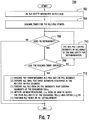
- FIG. 7 is a flow diagram of a process 700 for RLC re-establishment and/or packet discard in accordance with the fourth embodiment.
- An RLC entity generates an RLC PDU (step 702). Discard_Timer for the RLC PDU starts (step 704). After transmission of the RLC PDU, it is determined whether the RLC PDU needs to be retransmitted (step 706). If the RLC PDU does not need to be retransmitted, (e.g., by receiving an ACK), the process 700 ends. If the RLC PDU needs to be retransmitted, (e.g., by receiving a NACK), the RLC PDU may be segmented.
- step 708 it is determined whether the Discard_Timer has expired. If the Discard_Timer has not expired, the RLC PDU or PDU segment is delivered to an MAC entity for transmission at step 710 and the process 700 returns to step 706. If the Discard_Timer has expired, one or more of the following actions is performed (step 712):
- the initial value of the Discard_Timer may be a specified value, a value that is related to, (e.g., the remainder of), the RLC SDU discard timer, or a value that is related to, (e.g., the remainder of), the PDCP SDU/PDU discard timer.
- only one timer may be associated with the initial RLC PDU.
- a separate timer is associated with each PDU segment and initiated when a PDU segment is transmitted.
- every RLC PDU or PDU segment has its own timer that is started upon the first transmission (not the retransmission) of the PDU or PDU segment, respectively.
- the parameters described above may be configured via RRC signaling. Those parameters include MaxTotalTrans, MaxTotalTrans_i, “No_discard after MaxTotalTrans of transmissions", “SDU (or PDU) discard after MaxTotalTrans of transmissions", MaxBytes, MaxBytesFactor, “No_discard after MaxBytes of transmissions”, “SDU (or PDU) discard after MaxBytes of transmissions”, MaxTrans, MaxTrans_i, “No_discard after MaxTrans of transmissions”, “SDU (or PDU) discard after MaxTrans of transmissions", discard timer value, "No_discard after timer", and “SDU (or PDU) discard after timer”.
- VT(Bytes) or MaxBytes may be named differently such as VT(DAT) or MaxDAT.
- the above parameters may be specified as IEs that may be carried in any RRC message.
- the parameters may be carried in RRC connection reconfiguration message, RRC connection re-establishment message, or any other RRC messages.
- Those RRC messages may be exchanged at radio bearer (RB) setup, handover, radio link failure event, or any other events.
- the IEs may be included as part of a larger IE.
- the IEs may be applied on a per-Radio Bearer Basis.
- the packet discard condition for the threshold may be set differently. For example, instead of “equal to or greater than”, “greater than” may be used.
- the embodiments may be applied to an RLC SDU instead of an RLC PDU.
- the state variables disclosed herein may be associated with an RLC SDU instead of an RLC PDU.
- the embodiments are applicable to both RLC AM and UM.
- PDU segment is replaced by another term, or if the term "PDU” is defined to encompass any packet that is outputted from the RLC including "PDU segment”.
- the embodiments are still applicable even if there are future changes or modifications to the RLC sub-layer's functionality.
- the embodiments are still applicable if SDU re-segmentation is employed instead of PDU re-segmentation.
- the same embodiments for PDU re-segmentation may be applied in the case of SDU re-segmentation, (e.g., the SO will indicate the (starting) position of the segment within the original SDU, (e.g., in bytes), and the SL will indicate the length of the segment, (e.g., in bytes).
- the embodiments may still apply if a different mechanism is used for re-segmentation (other than the segment offset/length approach).
- ROM read only memory
- RAM random access memory
- register cache memory
- semiconductor memory devices magnetic media such as internal hard disks and removable disks, magneto-optical media, and optical media such as CD-ROM disks, and digital versatile disks (DVDs).
- Suitable processors include, by way of example, a general purpose processor, a special purpose processor, a conventional processor, a digital signal processor (DSP), a plurality of microprocessors, one or more microprocessors in association with a DSP core, a controller, a microcontroller, Application Specific Integrated Circuits (ASICs), Field Programmable Gate Arrays (FPGAs) circuits, any other type of integrated circuit (IC), and/or a state machine.
- DSP digital signal processor
- ASICs Application Specific Integrated Circuits
- FPGAs Field Programmable Gate Arrays
- a processor in association with software may be used to implement a radio frequency transceiver for use in a wireless transmit receive unit (WTRU), user equipment (UE), terminal, base station, radio network controller (RNC), or any host computer.
- the WTRU may be used in conjunction with modules, implemented in hardware and/or software, such as a camera, a video camera module, a videophone, a speakerphone, a vibration device, a speaker, a microphone, a television transceiver, a hands free headset, a keyboard, a Bluetooth® module, a frequency modulated (FM) radio unit, a liquid crystal display (LCD) display unit, an organic light-emitting diode (OLED) display unit, a digital music player, a media player, a video game player module, an Internet browser, and/or any wireless local area network (WLAN) or Ultra Wide Band (UWB) module.
- WLAN wireless local area network
- UWB Ultra Wide Band
Landscapes
- Engineering & Computer Science (AREA)
- Computer Networks & Wireless Communication (AREA)
- Signal Processing (AREA)
- Mobile Radio Communication Systems (AREA)
- Detection And Prevention Of Errors In Transmission (AREA)
Description
- This application is related to wireless communications.
-
Figure 1 shows a long term evolution (LTE) user-plane protocol stack. The user-plane includes a packet data convergence protocol (PDCP) entity, a radio link control (RLC) entity and a medium access control (MAC) entity. - The main functions of the RLC entity include transfer of upper layer protocol data units (PDUs) supporting acknowledged mode (AM), unacknowledged mode (UM), and transparent mode (TM) data transfer, error correction through automatic repeat request (ARQ), segmentation according to the size of the transport block (TB), re-segmentation of RLC PDUs that need to be retransmitted, concatenation of RLC service data units (SDUs) for the same radio bearer, in-sequence delivery of upper layer PDUs except at handover in the uplink, duplicate detection, protocol error detection and recovery, flow control between an evolved Node B (eNB) and a wireless transmit/receive unit (WTRU), SDU discard, RLC reset, or the like.
- An RLC SDU may be segmented if the RLC SDU does not fit entirely into the TB. The RLC SDU may be segmented into variable sized RLC PDUs. If a retransmitted PDU does not fit entirely into the new TB used for retransmission, the RLC PDU may be re-segmented. The number of re-segmentation is not limited.
- According to 3GPP TS 36.322 V1.2.0, the evolved universal terrestrial radio access network (E-UTRAN) RLC entity may perform SDU discard based on a notification from the PDCP entity above it, as opposed to having the RLC entity have its own SDU timer-based discard mechanism like in the Release 6 UTRAN RLC. According to 3GPP TS 36.322 V1.2.0, in E-UTRAN, a new re-segmentation functionality will be supported in addition to supporting segmentation. In addition to segmentation and reassembly of RLC SDUs, re-segmentation and reassembly of RLC PDUs will be supported (at least for AM data transfer).
-
Figure 2 shows segmentation and re-segmentation of an RLC PDU. An RLC SDU may be segmented into RLC PDUs. Each RLC PDU is identified by a sequence number (SN) that is assigned on a per-RLC PDU basis, (i.e., a PDU SN). The RLC PDU SN is included in the RLC header. Segmentation of the RLC SDU into RLC PDUs may be performed once and an RLC SDU may not be segmented again. Instead, re-segmentation may be performed on RLC PDUs. - An RLC PDU may be segmented into PDU segments, (i.e., sub-segments). As shown in
Figure 2 , a sub-segment may be identified by two parameters: a segment offset (SO) and a segment length (SL). The SO indicates the starting position of the segment within the original RLC PDU, (e.g., in bytes), and the SL indicates the length (size) of the segment, (e.g., in bytes). - RLC PDU re-segmentation may be performed multiple times without a limit according to 3GPP TS 36.322.
Figures 3(A) and 3(B) show two RLC PDU re-segmentations (i.e., two occurrences of re-segmentation). InFigure 3(A) , the second sub-segment is larger than the first sub-segment. This might occur when the TB size selected by the lower layer is larger than the size of the first sub-segment that needs to be retransmitted. InFigure 3(B) , the second sub-segment is smaller than the first sub-segment. This might occur when the TB size selected by the lower layer is smaller than the size of the first sub-segment that needs to be retransmitted. - In the UTRAN, the RLC AM mode performs ARQ retransmissions. One of the parameters for the ARQ mechanism is the maximum number of transmissions, MaxDAT. MaxDAT represents the upper limit for state variable VT(DAT). The state variable VT(DAT) counts the number of times that an AMD PDU has been scheduled to be transmitted. There shall be one VT(DAT) for each RLC AMD PDU and each shall be incremented by one every time the corresponding AMD PDU is scheduled to be transmitted. The initial value of VT(DAT) is 0. When VT(DAT) equals MaxDAT, either an RLC reset procedure or an SDU discard procedure shall be initiated according to the configuration by the upper layer.
- In the E-UTRAN, it has been agreed to support the RLC SDU discard functionality in the PDCP entity, (e.g., timer-based discard). The PDCP entity notifies the RLC entity of a discarded SDU/PDU so that the RLC entity discards it from its buffers.
- However, there is a need for an RLC PDU (and in turn RLC SDU) discard criteria to be evaluated and implemented locally in the RLC entity itself. Such mechanism may be used to avoid protocol deadlock conditions, (e.g., indefinite retransmissions), and/or to trigger other procedures, such as RLC reset or re-establishment and RLC move receive window (MRW), and/or to support better quality of service (QoS). The UTRAN RLC provides an MRW procedure which is a signal sent by the sending RLC entity to request the receiving RLC entity to move its reception window, and optionally to indicate the set of discarded RLC SDUs as a result of an RLC SDU discard in the sending RLC entity.
- In the UTRAN, the MaxDAT parameter was used to discard RLC PDUs based on the number of PDU (re)transmissions, and in turn trigger either an RLC reset procedure or an RLC MRW procedure. For the E-UTRAN, the straightforward MaxDAT parameter based on the number of PDU (re)transmissions may not be used due to the introduction of the new functionality of re-segmentation in the E-UTRAN, which makes the straightforward counting of PDU (re)transmissions inappropriate as a discard criterion for RLC PDUs.
Prior art methods and apparatuses are disclosed inUS 2003/007459 and in " 3rd Generation Partnership Project; Technical Specification Group Radio Access Network: Evolved Universal Terrestrial Radio Access (E-UTRA) Radio Link Control (RLC) protocol specification (Release 8)" (3GPP TS 36.322 no. V.2.0.0, 22 November 2007, pages 1-34 ). - Therefore, it would be desirable to provide methods and criteria to discard an RLC PDU, and/or in turn the corresponding RLC SDU(s), and/or to trigger other procedures, such as RLC reset or re-establishment.
- There is provided a method and an apparatus for triggering RLC re-establishment in acordance with the independent claims. Preferred embodiments are defined in the dependent claims. The embodiments and/or examples of the following description, which are not covered by the appended claims, are considered as not being part of the present invention. A method and apparatus for triggering RLC packet discard and/or RLC re-establishment are disclosed. An RLC entity maintains a state variable for counting a total number of transmissions and/or retransmissions of an RLC PDU and its PDU segments. If the state variable reaches, (i.e., equal to), a predetermined threshold, the RLC entity may discard the RLC PDU and segments of the RLC PDU and/or initiate RLC re-establishment. The state variable associated with the RLC PDU may be incremented each time a negative acknowledgement (NACK) is received for at least a portion of the RLC PDU or when a retransmission is considered for the RLC PDU or portion of the RLC PDU. The state variable associated with the RLC PDU may not be incremented when the RLC PDU or portion of the RLC PDU considered for retransmission is already pending retransmission.
- Alternatively, the RLC entity may increase a state variable proportionate to a retransmitted data size of the RLC PDU or its PDU segments. The state variable counts a total data size of transmissions and/or retransmissions of the RLC PDU and its PDU segments, and if the state variable reaches or exceeds a predetermined threshold, the RLC entity may discard at least one of the RLC PDU and segments of the RLC PDU and/or initiate RLC re-establishment.
- A more detailed understanding may be had from the following description, given by way of example in conjunction with the accompanying drawings wherein:
-
Figure 1 shows a long term evolution (LTE) user-plane protocol stack; -
Figure 2 shows segmentation and re-segmentation of an RLC PDU; -
Figures 3(A) and 3(B) show two RLC PDU re-segmentations, respectively; -
Figure 4 is a flow diagram of a process for packet discard and/or RLC re-establishment in accordance with a first embodiment; -
Figure 5 is a flow diagram of a process for packet discard and/or RLC re-establishment in accordance with a second embodiment; -
Figure 6 is a flow diagram of a process for packet discard and/or RLC re-establishment in accordance with a third embodiment; and -
Figure 7 is a flow diagram of a process for packet discard and/or RLC re-establishment in accordance with a fourth embodiment. - When referred to hereafter, the terminology "wireless transmit/receive unit (WTRU)" includes but is not limited to a user equipment (UE), a mobile station, a fixed or mobile subscriber unit, a pager, a cellular telephone, a personal digital assistant (PDA), a computer, or any other type of user device capable of operating in a wireless environment. When referred to hereafter, the terminology "eNB" includes but is not limited to a base station, a Node-B, a site controller, an access point (AP), or any other type of interfacing device capable of operating in a wireless environment.
- Hereinafter, both "segmented PDU" and "re-segmented PDU" refer to "PDU segment", and the terminology "segmented PDU", "re-segmented PDU", "PDU segment", and "sub-segment" will be used interchangeably. When referred to hereafter, the terminology "RLC re-establishment" is used interchangeably with the terminology "RLC reset". When referred to hereafter, the term "packet" refers to RLC SDU, RLC PDU, or PDU segment.
- In accordance with a first embodiment, the total number of transmissions or retransmissions is calculated for a given RLC PDU and its PDU segments to determine whether to discard such RLC PDU and/or to initiate an RLC re-establishment procedure. Alternatively, the total number of transmission failures, (e.g., the number of NACKs), for transmitted RLC PDUs or PDU segments may be calculated.
- Two parameters, MaxTotalTrans and VT(TotalTrans), are defined. MaxTotalTrans is a threshold for deciding whether an RLC PDU needs to be discarded and/or if RLC needs to be reestablished. VT(TotalTrans) is a state variable counting the number of times an RLC PDU and its PDU segment has been (re)transmitted or when it is considered for retransmission. One VT(TotalTrans) is generated for an associated RLC PDU and incremented every time the RLC PDU or its PDU segment is (re)transmitted or scheduled to be (re)transmitted. The initial value of VT(TotalTrans) is 0. The VT(TotalTrans) may be initialized when the first time the RLC PDU is considered for retransmission.
-
Figure 4 is a flow diagram of aprocess 400 for RLC re-establishment and/or packet discard in accordance with the first embodiment. An RLC entity generates and transmits an RLC PDU (step 402). Subsequently, it is determined whether the RLC PDU or a portion of the RLC PDU is considered for retransmission (step 404). If the RLC PDU or a portion of the RLC PDU is not considered for retransmission, (i.e., transmission of the RLC PDU is successful), theprocess 400 ends. - If the RLC PDU or a portion of the RLC PDU is considered for retransmission, it is further determined whether the RLC PDU is considered for retransmission for the first time (step 406). If the RLC PDU is considered for retransmission for the first time, the variable VT(TotalTrans) associated with the RLC PDU is set to '0' (step 414) and the RLC PDU is delivered to the MAC entity for retransmission (step 416).
- If it is not the first time that the RLC PDU or a portion of the RLC PDU is considered for retransmission, it is further determined whether the RLC PDU or the PDU segment, or a portion of the RLC PDU or of the RLC PDU segment considered for retransmission already pending retransmission, (e.g., the RLC PDU or a portion of the RLC PDU or PDU segment considered for transmission is already in the retransmission buffer), (step 407). If so, the
process 400 ends. If not, the associated variable VT(TotalTrans) is incremented by one for each of the RLC PDU or PDU segments, (i.e., the number of retransmissions is counted), or for each PDU or PDU segment that is considered for retransmission, (i.e., the number of retransmission failures is counted) (step 408). - The state variable VT(TotalTrans) may not be incremented if the RLC PDU or a portion of the RLC PDU considered for retransmission is already pending retransmission or if a portion of the RLC PDU is already pending retransmission, (e.g., the RLC PDU or a portion of the RLC PDU considered for transmission is already in the retransmission buffer), to avoid double counting of retransmissions. It is then determined whether the variable VT(TotalTrans) is equal to the predetermined threshold (MaxTotalTrans) (step 410). If VT(TotalTrans) is not equal to MaxTotalTrans, the RLC PDU or a PDU segment is delivered to the MAC entity for retransmission (step 416).
- If VT(TotalTrans) is equal to MaxTotalTrans, one or more of the following actions may be performed (step 412):
- (1) Discard the corresponding RLC PDU and/or PDU segment;
- (2) Discard all SDUs that have segments contained in the RLC PDU or PDU segment;
- (3) Discard all RLC PDUs or PDU segments that contain segments of the discarded SDUs;
- (4) Initiate an MRW procedure, (i.e., send an MRW to notify the peer RLC entity of the discarded PDU(s) and/or SDU(s)); and
- (5) Initiate RLC reset or re-establishment.
- Alternatively, the state variable VT(TotalTrans) may be initialized when the RLC PDU is transmitted or retransmitted for the first time.
- In accordance with a second embodiment, the total "size" of the transmitted and/or retransmitted data corresponding to a given RLC PDU is used to determine whether to discard the RLC PDU. The total number of bytes that are transmitted and retransmitted for a particular PLC PDU is calculated and used as a criterion for RLC PDU discard.
- Two parameters, MaxBytes and VT(Bytes), are defined. MaxBytes is a threshold for deciding whether an RLC PDU needs to be discarded or not. VT(Bytes) is a state variable counting the number of bytes that are transmitted or scheduled to be transmitted in an RLC PDU or its PDU segments. There is one VT(Bytes) for each RLC PDU and VT(Bytes) is incremented by the size of the RLC PDU or its PDU segment every time the RLC PDU or its PDU segment(s) is (re)transmitted or scheduled to be (re)transmitted. The initial value of VT(Bytes) is zero.
- It should be noted that although "bytes" are used as a unit of data size, other units may be used to represent the data size, (e.g., number of x bytes, number of slices or bits, or any other unit).
-
Figure 5 is a flow diagram of aprocess 500 for RLC re-establishment and/or packet discard in accordance with the second embodiment. An RLC entity generates an RLC PDU (step 502). An initial value of the variable VT(Bytes) for the RLC PDU is reset to '0' (step 504). The RLC entity increases the value of the corresponding VT(Bytes) by the size of the RLC PDU and the RLC PDU is transmitted (step 506). Creation and reset of the VT(Bytes) at the time of initial transmission of the RLC PDU atsteps - After transmission of the RLC PDU, it is determined whether the RLC PDU needs to be retransmitted (step 508). If the RLC PDU does not need to be retransmitted, (e.g., by receiving an ACK), the
process 500 ends. If the RLC PDU needs to be retransmitted, (e.g., by receiving a NACK), the RLC PDU may be segmented. The variable VT(Bytes) is increased by the size of the retransmitted RLC PDU if the RLC PDU is retransmitted without segmentation or by the size of the transmitted PDU segments if the RLC PDU is segmented (step 510). For example, after transmitting an RLC PDU, the variable VT(Bytes) is increased by the size of the RLC PDU. If a NACK is received for the RLC PDU and the RLC PDU is segmented into three PDU segments, the variable VT(Bytes) is increased by the size of the RLC PDU. After transmitting the three PDU segments, if one PDU segment is NACKed and retransmitted, the variable VT(Bytes) is increased by the size of the retransmitted PDU segment. - It is then determined whether VT(Bytes) is equal to or greater than MaxBytes (step 512). If VT(Bytes) is smaller than MaxBytes, the RLC PDU or its PDU segments are delivered to the MAC entity for retransmission at
step 514 and theprocess 500 returns to step 508. - If VT(Bytes) equals to or greater than MaxBytes, one or more of the following is performed (step 516):
- (1) Discard the RLC PDU and its PDU segments;
- (2) Discard all RLC SDUs that have segments contained in the RLC PDU or its PDU segments;
- (3) Discard all RLC PDUs or PDU segments that contain segments of the discarded RLC SDUs;
- (4) Initiate an MRW procedure, (i.e., send an MRW command to notify the peer RLC entity of the discarded PDU(s) and/or SDU(s)); and
- (5) Initiate RLC reset or re-establishment.
- Alternatively, the variable VT(Bytes) may be increased when the RLC PDU (or PDU segments) is scheduled for transmission or retransmission, (e.g., after the RLC entity receives a NACK but before segmenting the RLC PDU). For example, after transmitting an RLC PDU, the variable VT(Bytes) is incremented by the size of the RLC PDU. If a NACK is received and the RLC PDU is scheduled for retransmission, the variable VT(Bytes) is increased by the size of the RLC PDU. Assuming that the RLC PDU is segmented into three PDU segments, the three PDU segments are transmitted. If one PDU segment is NACKed and scheduled for retransmission, the variable VT(Bytes) is increased by the size of the NACKed PDU segment.
- Alternatively, the initial RLC PDU size may not be included in the VT(Bytes) and only the size of retransmitted RLC PDU or PDU segment(s) may be accumulated in the VT(Bytes).
- The threshold MaxBytes may be a configurable parameter or may be derived from another parameter. The threshold MaxBytes may be made flexible and be calculated for each RLC PDU based on the initial RLC PDU size. This provides better performance especially considering that the segmentation is performed in accordance with the TB size which implies a flexible PDU size. For example, MaxBytes may be calculated using a factor, (i.e. multiple), that is multiplied by the initial size of the PDU as follows:

- The MaxBytesFactor may be an IE that is configurable by an RRC entity. Such factor or multiplier may have other plausible names, such as "Transmission Size Factor" or "Retransmission Size Factor", etc. The advantage of this approach is that one may control the amount of times that the bytes of an RLC PDU can get (re)transmitted. For example, using a MaxBytesFactor of 3, one can ensure that the data contained in an RLC PDU will not be transmitted or (re)transmitted more than 3 times. The factor may be a real number or an integer.
- In accordance with a third embodiment, the number of transmissions or retransmissions is counted both on a per RLC PDU and on a per PDU segment basis. One state variable is generated for an initial RLC PDU and each PDU segment that results from the initial RLC PDU, respectively. When creating an RLC PDU, one corresponding state variable VTO(Trans) is created for the initial RLC PDU. When the RLC PDU is segmented for retransmission, one state variable VTi(Trans) is created for each PDU segment i.
- Two parameters, MaxTrans and VTi(Trans), are defined. MaxTrans is a threshold for deciding whether an RLC PDU or a PDU segment needs to be discarded or not. More than one threshold value may be specified, (i.e., MaxTrans_i), depending on the level of re-segmentation. VTi(Trans) is a state variable counting the number of times an RLC PDU or a PDU segment has been scheduled to be transmitted or retransmitted. There is one VTi(Trans) for each PDU or PDU segment, and each VTi(Trans) is incremented by one every time the corresponding RLC PDU or PDU segment is scheduled to be transmitted or retransmitted. The initial value of VTi(Trans) is 0.
-
Figure 6 is a flow diagram of aprocess 600 for RLC re-establishment and/or packet discard in accordance with the third embodiment. An RLC entity generates an RLC PDU (step 602). An initial value of the variable VTO(Trans) for the RLC PDU is reset to '0' (step 604). The index i=0 is used to refer to the initial RLC PDU. The RLC entity increments the value of the corresponding VTO(Trans) by one and the RLC PDU is transmitted (step 606). - After transmission of the RLC PDU, it is determined whether the RLC PDU needs to be retransmitted (step 608). If the RLC PDU does not need to be retransmitted, (e.g., by receiving an ACK), the
process 600 ends. If the RLC PDU needs to be retransmitted, (e.g., by receiving a NACK), the RLC PDU may be segmented. - If RLC PDU is retransmitted without segmentation, the RLC entity increments VTO(Trans) by one, and if the RLC PDU is segmented for retransmission, (i.e., if an PDU segment i is transmitted), the RLC entity updates VTi(Trans) as follows (step 610):
- If the PDU segment i is transmitted for the first time, the value of the corresponding VTi(Trans) is calculated as follows:

- If the PDU segment i is being retransmitted, the value of the VTi(Trans) is incremented by one.
- It is then determined whether, for any index i, VTi(Trans) is equal to or greater than MaxTrans (step 612). If VTi(Trans) is smaller than MaxTrans, the RLC PDU (or PDU segment) is delivered to the MAC entity for retransmission at
step 614 and theprocess 600 returns to step 608. - If VTi(Trans) equals to or greater than MaxTrans, one or more of the following actions is performed (step 616):
- (1) Discard the corresponding RLC PDU and/or PDU segment;
- (2) Discard all SDUs that have segments contained in the RLC PDU or PDU segment;
- (3) Discard all RLC PDUs or PDU segments that contain segments of the discarded SDUs;
- (4) Initiate an MRW procedure, (i.e., send an MRW to notify the peer RLC entity of the discarded RLC PDU(s) and/or RLC SDU(s)); and
- (5) Initiate RLC reset or re-establishment.
- Alternatively, only the number of retransmissions may be counted, and the initial transmission may not be counted in VTO(Trans) of an RLC PDU. The variable VTi(Trans) may be created at the time of retransmission.
- Alternatively, more than one counter (state variable) may be used for the initial RLC PDU. The counters may be allocated to calculate the number of (re)transmission for different data ranges within the RLC PDU, and updated whenever an RLC PDU or PDU segment that contains data that belongs to such data range is transmitted. For example, for each RLC PDU, (i.e., an RLC PDU that is transmitted for the first time), N VTn(Trans) variables, n=0...(N-1), are initialized to '0'. Each of the N VTn(Trans) variables corresponds to one of N data ranges within the RLC PDU. Each time an RLC PDU or PDU segment is scheduled for transmission or retransmission, if that RLC PDU or PDU segment contains data belonging to the range associated with a particular VTn(Trans), the RLC entity increments the value of the corresponding VTn(Trans) by 1. If the RLC PDU or PDU segment contains data associated with more than one data range, more than one corresponding VTn's are incremented.
- In accordance with a fourth embodiment, a timer, (Discard_Timer), is started for an RLC PDU upon its first transmission. The timer is associated with the initial RLC PDU.
-
Figure 7 is a flow diagram of aprocess 700 for RLC re-establishment and/or packet discard in accordance with the fourth embodiment. An RLC entity generates an RLC PDU (step 702). Discard_Timer for the RLC PDU starts (step 704). After transmission of the RLC PDU, it is determined whether the RLC PDU needs to be retransmitted (step 706). If the RLC PDU does not need to be retransmitted, (e.g., by receiving an ACK), theprocess 700 ends. If the RLC PDU needs to be retransmitted, (e.g., by receiving a NACK), the RLC PDU may be segmented. - At the time of retransmission of the RLC PDU or PDU segment, it is determined whether the Discard_Timer has expired (step 708). If the Discard_Timer has not expired, the RLC PDU or PDU segment is delivered to an MAC entity for transmission at
step 710 and theprocess 700 returns to step 706. If the Discard_Timer has expired, one or more of the following actions is performed (step 712): - (1) Discard the corresponding RLC PDU and/or PDU segment;
- (2) Discard all SDUs that have segments contained in the RLC PDU or PDU segment;
- (3) Discard all RLC PDUs or PDU segments that contain segments of the discarded SDUs;
- (4) Initiate an MRW procedure, (i.e., send an MRW to notify the peer RLC entity of the discarded PDU(s) and/or SDU(s)); and
- (5) Initiate RLC reset or re-establishment.
- The initial value of the Discard_Timer may be a specified value, a value that is related to, (e.g., the remainder of), the RLC SDU discard timer, or a value that is related to, (e.g., the remainder of), the PDCP SDU/PDU discard timer.
- In the fourth embodiment, only one timer (state variable) may be associated with the initial RLC PDU. Alternatively, a separate timer (state variable) is associated with each PDU segment and initiated when a PDU segment is transmitted. Hence, every RLC PDU or PDU segment has its own timer that is started upon the first transmission (not the retransmission) of the PDU or PDU segment, respectively.
- The parameters described above may be configured via RRC signaling. Those parameters include MaxTotalTrans, MaxTotalTrans_i, "No_discard after MaxTotalTrans of transmissions", "SDU (or PDU) discard after MaxTotalTrans of transmissions", MaxBytes, MaxBytesFactor, "No_discard after MaxBytes of transmissions", "SDU (or PDU) discard after MaxBytes of transmissions", MaxTrans, MaxTrans_i, "No_discard after MaxTrans of transmissions", "SDU (or PDU) discard after MaxTrans of transmissions", discard timer value, "No_discard after timer", and "SDU (or PDU) discard after timer".
- There may be different thresholds or timer values for different initial PDUs. The described configuration parameters are optional, and some of them may or may not exist. The names of the parameters may be different. For example, VT(Bytes) or MaxBytes may be named differently such as VT(DAT) or MaxDAT.
- The above parameters may be specified as IEs that may be carried in any RRC message. For example, the parameters may be carried in RRC connection reconfiguration message, RRC connection re-establishment message, or any other RRC messages. Those RRC messages may be exchanged at radio bearer (RB) setup, handover, radio link failure event, or any other events. The IEs may be included as part of a larger IE. The IEs may be applied on a per-Radio Bearer Basis.
- The packet discard condition for the threshold may be set differently. For example, instead of "equal to or greater than", "greater than" may be used.
- The embodiments may be applied to an RLC SDU instead of an RLC PDU. The state variables disclosed herein may be associated with an RLC SDU instead of an RLC PDU. The embodiments are applicable to both RLC AM and UM.
- The embodiments are applicable even if terminologies change. For example, if the term "PDU segment" is replaced by another term, or if the term "PDU" is defined to encompass any packet that is outputted from the RLC including "PDU segment".
- The embodiments are still applicable even if there are future changes or modifications to the RLC sub-layer's functionality. For example, the embodiments are still applicable if SDU re-segmentation is employed instead of PDU re-segmentation. The same embodiments for PDU re-segmentation may be applied in the case of SDU re-segmentation, (e.g., the SO will indicate the (starting) position of the segment within the original SDU, (e.g., in bytes), and the SL will indicate the length of the segment, (e.g., in bytes). The embodiments may still apply if a different mechanism is used for re-segmentation (other than the segment offset/length approach).
- Although features and elements are described above in particular combinations, each feature or element can be used alone without the other features and elements or in various combinations with or without other features and elements. The methods or flow charts provided herein may be implemented in a computer program, software, or firmware incorporated in a computer-readable storage medium for execution by a general purpose computer or a processor. Examples of computer-readable storage mediums include a read only memory (ROM), a random access memory (RAM), a register, cache memory, semiconductor memory devices, magnetic media such as internal hard disks and removable disks, magneto-optical media, and optical media such as CD-ROM disks, and digital versatile disks (DVDs).
- Suitable processors include, by way of example, a general purpose processor, a special purpose processor, a conventional processor, a digital signal processor (DSP), a plurality of microprocessors, one or more microprocessors in association with a DSP core, a controller, a microcontroller, Application Specific Integrated Circuits (ASICs), Field Programmable Gate Arrays (FPGAs) circuits, any other type of integrated circuit (IC), and/or a state machine.
- A processor in association with software may be used to implement a radio frequency transceiver for use in a wireless transmit receive unit (WTRU), user equipment (UE), terminal, base station, radio network controller (RNC), or any host computer. The WTRU may be used in conjunction with modules, implemented in hardware and/or software, such as a camera, a video camera module, a videophone, a speakerphone, a vibration device, a speaker, a microphone, a television transceiver, a hands free headset, a keyboard, a Bluetooth® module, a frequency modulated (FM) radio unit, a liquid crystal display (LCD) display unit, an organic light-emitting diode (OLED) display unit, a digital music player, a media player, a video game player module, an Internet browser, and/or any wireless local area network (WLAN) or Ultra Wide Band (UWB) module.
Claims (12)
- A method (400) for triggering radio link control, RLC, re-establishment performed by an RLC entity, the method comprising:generating an RLC protocol data unit, PDU;transmitting the RLC PDU for a first time as a first transmission (402);characterized in that the method further comprising:initializing a state variable to zero on a condition that the RLC PDU is considered for retransmission for a first time as a first retransmission following the first transmission (414);incrementing the state variable associated with the RLC PDU on a condition that at least a portion of the RLC PDU is considered for retransmission as a subsequent retransmission subsequent to the first retransmission (408); andperforming a threshold test by comparing the state variable associated with the RLC PDU with a predetermined threshold; andinitiating RLC re-establishment based on the threshold test of the state variable (412).
- The method of claim 1, wherein the state variable is not incremented on a condition that the at least a portion of the RLC PDU considered for retransmission is pending retransmission.
- The method of claim 1, wherein the state variable is not incremented on a condition that the at least a portion of the RLC PDU considered for retransmission is in a retransmission buffer.
- The method of claim 1, further comprising:discarding an RLC service data unit, SDU, at least a portion of which is contained in the RLC PDU based on the threshold test; anddiscarding an RLC PDU and a PDU segment that contain at least a portion of the discarded RLC SDU based on the threshold test.
- The method of claim 1, further comprising:
performing a move receive window, MRW, procedure. - The method of claim 1, further comprising:
discarding at least one of the RLC PDU and segments of the RLC PDU. - An apparatus for triggering radio link control, RLC, re-establishment, the apparatus comprising:an RLC entity configured to generate an RLC protocol data unit, PDU;a transmitter configured to transmit the RLC PDU for a first time as a first transmission;characterized in that the apparatus further comprises:an RLC entity configured to set a state variable to zero on a condition that the RLC PDU is considered for retransmission for a first time as a first retransmission following the first transmission;the RLC entity further configured to increment the state variable on a condition that at least a portion of the RLC PDU is considered for retransmission as a subsequent retransmission subsequent to the first retransmission; andthe RLC entity further configured to perform a threshold test by comparing the state variable associated with the RLC PDU with a predetermined threshold; andthe RLC entity further configured to initiate RLC re-establishment based on the threshold test of the state variable.
- The apparatus of claim 7, wherein the RLC entity is configured to not increment the state variable on a condition that the at least a portion of the RLC PDU considered for retransmission is pending retransmission.
- The apparatus of claim 7, wherein the RLC entity is configured to not increment the state variable on a condition that the at least a portion of the RLC PDU considered for retransmission is in a retransmission buffer.
- The apparatus of claim 7, wherein the RLC entity is configured to discard an RLC service data unit, SDU, at least a portion of which is contained in the RLC PDU, and discard an RLC PDU and a PDU segment that contain at least a portion of the discarded RLC SDU.
- The apparatus of claim 7, wherein the RLC entity is configured to perform a move receive window, MRW, procedure.
- The apparatus of claim 7, wherein the RLC entity is configured to discard at least one of the RLC PDU and segments of the RLC PDU.
Applications Claiming Priority (2)
| Application Number | Priority Date | Filing Date | Title |
|---|---|---|---|
| US1273107P | 2007-12-10 | 2007-12-10 | |
| PCT/US2008/086050 WO2009076348A1 (en) | 2007-12-10 | 2008-12-09 | Method and apparatus for triggering radio link control packet discard and radio link control re-establishment |
Publications (2)
| Publication Number | Publication Date |
|---|---|
| EP2238802A1 EP2238802A1 (en) | 2010-10-13 |
| EP2238802B1 true EP2238802B1 (en) | 2018-06-27 |
Family
ID=40404741
Family Applications (1)
| Application Number | Title | Priority Date | Filing Date |
|---|---|---|---|
| EP08860494.7A Active EP2238802B1 (en) | 2007-12-10 | 2008-12-09 | Method and apparatus for triggering radio link control packet discard and radio link control re-establishment |
Country Status (9)
| Country | Link |
|---|---|
| US (2) | US8605606B2 (en) |
| EP (1) | EP2238802B1 (en) |
| JP (3) | JP5754942B2 (en) |
| KR (4) | KR20140144306A (en) |
| CN (3) | CN105721120B (en) |
| AR (1) | AR069617A1 (en) |
| CA (1) | CA2708604C (en) |
| TW (4) | TWI543559B (en) |
| WO (1) | WO2009076348A1 (en) |
Families Citing this family (47)
| Publication number | Priority date | Publication date | Assignee | Title |
|---|---|---|---|---|
| JP2836213B2 (en) | 1990-07-17 | 1998-12-14 | ヤマハ株式会社 | Manufacturing method of golf club shaft |
| ES2377818T3 (en) | 2005-12-14 | 2012-04-02 | Research In Motion Limited | Method and apparatus for the control of radio resources directed to a user equipment in a UMTS network |
| US8644829B2 (en) | 2006-05-17 | 2014-02-04 | Blackberry Limited | Method and system for signaling release cause indication in a UMTS network |
| US20080049662A1 (en) * | 2006-08-25 | 2008-02-28 | Research In Motion Limited | Apparatus, and associated method, for releasing a data-service radio resource allocated to a data-service-capable mobile node |
| JP4447028B2 (en) * | 2007-08-10 | 2010-04-07 | 富士通株式会社 | Communication control method, transmission apparatus, and computer program |
| EP2061192B1 (en) | 2007-11-13 | 2012-04-11 | Research In Motion Limited | Method and apparatus for state/mode transitioning |
| EP2238802B1 (en) * | 2007-12-10 | 2018-06-27 | InterDigital Patent Holdings, Inc. | Method and apparatus for triggering radio link control packet discard and radio link control re-establishment |
| KR101577451B1 (en) * | 2008-01-30 | 2015-12-14 | 엘지전자 주식회사 | Method of detecting and handling an endless rlc retransmission |
| US8693384B2 (en) * | 2008-05-29 | 2014-04-08 | Htc Corporation | Method for dynamic packet retransmission for radio link control layer in a wireless communications system |
| EP3934336B1 (en) * | 2008-11-10 | 2024-01-03 | Malikie Innovations Limited | Method, apparatus and computer readable storage medium of transition to a battery efficient state |
| CN101594634B (en) * | 2009-06-24 | 2011-11-02 | 上海华为技术有限公司 | Data transmission method, related device and system thereof |
| US20110122818A1 (en) | 2009-11-23 | 2011-05-26 | Research In Motion Limited | Method and apparatus for state/mode transitioning |
| CA2781630C (en) * | 2009-11-23 | 2019-05-21 | Research In Motion Limited | Method and apparatus for state/mode transitioning |
| WO2011060998A1 (en) | 2009-11-23 | 2011-05-26 | Research In Motion Limited | State or mode transition triggering based on sri message transmission |
| AU2010323195A1 (en) * | 2009-11-24 | 2012-06-28 | Blackberry Limited | Method and apparatus for state/mode transitioning |
| US8983532B2 (en) * | 2009-12-30 | 2015-03-17 | Blackberry Limited | Method and system for a wireless communication device to adopt varied functionalities based on different communication systems by specific protocol messages |
| KR101691480B1 (en) * | 2010-04-06 | 2017-01-09 | 삼성전자주식회사 | Method and apparatus for retransmitting packet in mobile communication system |
| CN102377553A (en) * | 2010-08-26 | 2012-03-14 | 中兴通讯股份有限公司 | Data retransmission method and device |
| KR101708786B1 (en) * | 2010-09-03 | 2017-02-21 | 에스케이텔레콤 주식회사 | Apparatus and Method for transmitting data in Radio Link Control Layer |
| CN101944984B (en) * | 2010-09-14 | 2014-06-11 | 中兴通讯股份有限公司 | Transmission method of protocol data unit and system thereof |
| CN103314634A (en) | 2011-11-11 | 2013-09-18 | 捷讯研究有限公司 | Method and apparatus for user equipment state transition |
| US9119190B2 (en) * | 2012-08-06 | 2015-08-25 | Qualcomm Incorporated | Method and apparatus for enhancing data retransmission to improve call performance |
| US9674730B2 (en) * | 2012-08-31 | 2017-06-06 | Marvell World Trade Ltd. | Method and apparatus for detecting and processing a retransmitted data packet in a wireless network |
| US8867373B2 (en) * | 2012-09-05 | 2014-10-21 | Telefonaktiebolaget L M Ericsson (Publ) | Apparatus and method for declaring radio link failure (RLF) |
| US9019843B2 (en) * | 2012-09-13 | 2015-04-28 | International Business Machines Corporation | Utilizing stored data to reduce packet data loss in a mobile data network with data breakout at the edge |
| CN104756590B (en) * | 2012-11-01 | 2018-12-04 | Lg电子株式会社 | Method and apparatus for sending message in a wireless communication system |
| CN102984741B (en) * | 2012-11-06 | 2015-08-19 | 大唐移动通信设备有限公司 | Data processing method of testing and device |
| WO2015163593A1 (en) * | 2014-04-22 | 2015-10-29 | Lg Electronics Inc. | Method for processing received pdcp pdus for d2d communication system and device therefor |
| US10292192B2 (en) * | 2014-05-06 | 2019-05-14 | Lg Electronics Inc. | Method for processing received RLC PDUs for D2D communication system and device therefor |
| US20160066311A1 (en) * | 2014-08-26 | 2016-03-03 | Qualcomm Incorporated | Cell update procedure enhancements |
| US20160302100A1 (en) * | 2015-04-09 | 2016-10-13 | Qualcomm Incorporated | Techniques for retransmissions during bursty traffic |
| CN106549736A (en) * | 2015-09-17 | 2017-03-29 | 中国移动通信集团公司 | A kind of cross-carrier rlc layer data repeating method and device |
| US11201780B2 (en) * | 2016-01-29 | 2021-12-14 | Qualcomm Incorporated | Configurations associated with segmentation of one or more packets for wireless communication |
| CN108260210B (en) * | 2016-12-29 | 2022-02-11 | 华为技术有限公司 | A data transmission method, user equipment, and wireless access equipment |
| US11005606B2 (en) * | 2017-03-24 | 2021-05-11 | Telefonaktiebolaget Lm Ericsson (Publ) | Systems and methods for removal of duplicated packets for transmission |
| TWI664862B (en) | 2017-05-05 | 2019-07-01 | 華碩電腦股份有限公司 | Method and apparatus of transmitting data duplication in a wireless communication system |
| CN109547167B (en) * | 2017-08-02 | 2022-03-29 | 华为技术有限公司 | Counting method and communication device |
| US10355827B2 (en) * | 2017-08-08 | 2019-07-16 | Telefonaktiebolaget Lm Ericsson (Publ) | Status reporting in a wireless communication system |
| GB2566968B (en) * | 2017-09-28 | 2020-04-22 | Tcl Communication Ltd | Pre-processing in wireless uplink transmissions |
| CN109818719B (en) * | 2017-11-21 | 2022-03-25 | 展讯通信(上海)有限公司 | Uplink data retransmission processing method and device and user equipment |
| US11374692B2 (en) | 2018-01-10 | 2022-06-28 | Lg Electronics Inc. | Method and apparatus for managing retransmission counter in wireless communication system |
| WO2019153139A1 (en) * | 2018-02-07 | 2019-08-15 | Oppo广东移动通信有限公司 | Radio link failure handling method and related product |
| US20210127295A1 (en) * | 2018-05-09 | 2021-04-29 | Lg Electronics Inc. | Method and apparatus for transmitting packet based on type of packet by transmission end in wireless communication system |
| CN110875761B (en) * | 2018-08-31 | 2023-08-08 | 上海诺基亚贝尔股份有限公司 | Method and device for reducing file loss rate by cross-layer scheduling |
| CN110958090B (en) * | 2018-09-27 | 2021-09-14 | 维沃移动通信有限公司 | Configuration method of PDCP (packet data convergence protocol) duplicate and terminal equipment |
| CN117835296A (en) * | 2022-09-28 | 2024-04-05 | 上海朗帛通信技术有限公司 | Method and apparatus for use in wireless communication |
| WO2025033729A1 (en) * | 2023-08-07 | 2025-02-13 | Lg Electronics Inc. | Method and apparatus of performing transmissions based on remaining time of discard timer in wireless communication system |
Family Cites Families (18)
| Publication number | Priority date | Publication date | Assignee | Title |
|---|---|---|---|---|
| US6697331B1 (en) | 1999-11-17 | 2004-02-24 | Telefonaktiebolaget Lm Ericsson (Publ) | Link layer acknowledgement and retransmission for cellular telecommunications |
| US6546247B1 (en) * | 2000-09-08 | 2003-04-08 | Telefonaktiebolaget L M Ericsson (Publ) | Home location server and call processing method in a hybrid second/third generation radio telecommunications network |
| US7242670B2 (en) | 2001-07-07 | 2007-07-10 | Lg Electronics Inc. | Method for controlling retransmission of information using state variables in radio communication system |
| US20030147370A1 (en) | 2002-02-05 | 2003-08-07 | Chih-Hsiang Wu | Inter Node B serving HS-DSCH cell change mechanism in a high speed wireless communication system |
| US8432893B2 (en) | 2002-03-26 | 2013-04-30 | Interdigital Technology Corporation | RLAN wireless telecommunication system with RAN IP gateway and methods |
| US7388883B2 (en) * | 2002-05-06 | 2008-06-17 | Innovative Sonic Limited | Abnormal case handling for acknowledged mode transmission and unacknowledged mode transmission |
| US20040076182A1 (en) | 2002-10-17 | 2004-04-22 | Chih-Hsiang Wu | Method for handeling a triggered reset when an RLC is stopped in a wireless communications system |
| US20040160937A1 (en) | 2003-02-13 | 2004-08-19 | Jiang Sam Shiaw-Shiang | Enhanced SDU discard signaling procedure in wireless communication systems |
| US7209747B2 (en) * | 2003-09-10 | 2007-04-24 | Asustek Computer Inc. | Handling of an unrecoverable error on a dedicated channel |
| KR101000699B1 (en) * | 2004-04-19 | 2010-12-10 | 엘지전자 주식회사 | Data processing method in radio link control layer |
| ATE486430T1 (en) * | 2004-09-24 | 2010-11-15 | Research In Motion Ltd | CONTROL PROTOCOL FOR RADIO CONNECTIONS |
| GB2424547A (en) | 2005-03-24 | 2006-09-27 | Orange Personal Comm Serv Ltd | Mobile telecommunications system where a plurality of users can request a group multimedia session through token based authorisation |
| US20070258459A1 (en) | 2006-05-02 | 2007-11-08 | Harris Corporation | Method and system for QOS by proxy |
| CN101068372B (en) * | 2006-05-03 | 2010-06-02 | 创新音速有限公司 | Method and apparatus of handling a variable of a wireless link control reset procedure |
| JP4781939B2 (en) * | 2006-08-21 | 2011-09-28 | 富士通株式会社 | Wireless communication device |
| JP5087939B2 (en) * | 2007-02-02 | 2012-12-05 | 富士通株式会社 | Wireless communication apparatus and transmission method |
| US8299106B2 (en) * | 2007-09-06 | 2012-10-30 | Boston Biomedical, Inc. | Compositions of kinase inhibitors and their use for treatment of cancer and other diseases related to kinases |
| EP2238802B1 (en) * | 2007-12-10 | 2018-06-27 | InterDigital Patent Holdings, Inc. | Method and apparatus for triggering radio link control packet discard and radio link control re-establishment |
-
2008
- 2008-12-09 EP EP08860494.7A patent/EP2238802B1/en active Active
- 2008-12-09 TW TW097147910A patent/TWI543559B/en active
- 2008-12-09 KR KR1020147033064A patent/KR20140144306A/en not_active Abandoned
- 2008-12-09 JP JP2010538091A patent/JP5754942B2/en active Active
- 2008-12-09 WO PCT/US2008/086050 patent/WO2009076348A1/en not_active Ceased
- 2008-12-09 US US12/330,807 patent/US8605606B2/en active Active
- 2008-12-09 CN CN201610220626.2A patent/CN105721120B/en not_active Expired - Fee Related
- 2008-12-09 KR KR1020107016174A patent/KR101300916B1/en not_active Expired - Fee Related
- 2008-12-09 TW TW100144255A patent/TWI474659B/en active
- 2008-12-09 KR KR1020117021748A patent/KR101563392B1/en active Active
- 2008-12-09 KR KR1020107015224A patent/KR101300952B1/en not_active Expired - Fee Related
- 2008-12-09 TW TW097222103U patent/TWM354961U/en not_active IP Right Cessation
- 2008-12-09 CN CN200880120203.7A patent/CN101971690B/en active Active
- 2008-12-09 CA CA2708604A patent/CA2708604C/en active Active
- 2008-12-09 TW TW103139451A patent/TW201511499A/en unknown
- 2008-12-10 AR ARP080105343A patent/AR069617A1/en unknown
- 2008-12-10 CN CN2008201899147U patent/CN201398240Y/en not_active Expired - Fee Related
-
2013
- 2013-12-06 US US14/099,421 patent/US9433028B2/en not_active Expired - Fee Related
- 2013-12-16 JP JP2013259440A patent/JP5841989B2/en not_active Expired - Fee Related
-
2015
- 2015-11-16 JP JP2015223824A patent/JP6321607B2/en not_active Expired - Fee Related
Non-Patent Citations (1)
| Title |
|---|
| "3rd Generation Partnership Project; Technical Specification Group Radio Access Network; Evolved Universal Terrestrial Radio Access (E-UTRA) Radio Link Control (RLC) protocol specification (Release 8)", 3GPP STANDARD; 3GPP TS 36.322, 3RD GENERATION PARTNERSHIP PROJECT (3GPP), MOBILE COMPETENCE CENTRE ; 650, ROUTE DES LUCIOLES ; F-06921 SOPHIA-ANTIPOLIS CEDEX ; FRANCE, no. V2.0.0, 1 November 2007 (2007-11-01), pages 1 - 34, XP050377460 * |
Also Published As
| Publication number | Publication date |
|---|---|
| US20090161571A1 (en) | 2009-06-25 |
| JP5841989B2 (en) | 2016-01-13 |
| CN101971690B (en) | 2016-04-20 |
| TWI543559B (en) | 2016-07-21 |
| CN105721120B (en) | 2019-12-06 |
| JP6321607B2 (en) | 2018-05-09 |
| KR101563392B1 (en) | 2015-10-26 |
| KR20110111543A (en) | 2011-10-11 |
| KR20100092504A (en) | 2010-08-20 |
| TWM354961U (en) | 2009-04-11 |
| KR101300916B1 (en) | 2013-08-27 |
| JP2011507402A (en) | 2011-03-03 |
| US20140092770A1 (en) | 2014-04-03 |
| US8605606B2 (en) | 2013-12-10 |
| JP2014078996A (en) | 2014-05-01 |
| TW201244411A (en) | 2012-11-01 |
| US9433028B2 (en) | 2016-08-30 |
| WO2009076348A1 (en) | 2009-06-18 |
| KR101300952B1 (en) | 2013-08-27 |
| KR20100092522A (en) | 2010-08-20 |
| CA2708604C (en) | 2017-01-31 |
| CN101971690A (en) | 2011-02-09 |
| EP2238802A1 (en) | 2010-10-13 |
| KR20140144306A (en) | 2014-12-18 |
| TWI474659B (en) | 2015-02-21 |
| CA2708604A1 (en) | 2009-06-18 |
| JP5754942B2 (en) | 2015-07-29 |
| AR069617A1 (en) | 2010-02-03 |
| CN105721120A (en) | 2016-06-29 |
| JP2016026464A (en) | 2016-02-12 |
| TW201511499A (en) | 2015-03-16 |
| TW200935810A (en) | 2009-08-16 |
| CN201398240Y (en) | 2010-02-03 |
Similar Documents
| Publication | Publication Date | Title |
|---|---|---|
| EP2238802B1 (en) | Method and apparatus for triggering radio link control packet discard and radio link control re-establishment | |
| CN103281250B (en) | It is a kind of to be used to strengthen the method and network entity of RLC operation | |
| JP5885709B2 (en) | Method and apparatus for non-access layer retransmission delivery notification | |
| US20090190480A1 (en) | Methods and apparatus for detecting radio link control protocol errors and triggering radio link control re-establishment | |
| US20080170522A1 (en) | Method and apparatus for indicating a transmission status to a higher layer | |
| US20080285566A1 (en) | Method and apparatus for providing and utilizing radio link control and medium access control packet delivery notification | |
| HK1154149A (en) | Method and apparatus for triggering radio link control packet discard and radio link control re-establishment |
Legal Events
| Date | Code | Title | Description |
|---|---|---|---|
| PUAI | Public reference made under article 153(3) epc to a published international application that has entered the european phase |
Free format text: ORIGINAL CODE: 0009012 |
|
| 17P | Request for examination filed |
Effective date: 20100629 |
|
| AK | Designated contracting states |
Kind code of ref document: A1 Designated state(s): AT BE BG CH CY CZ DE DK EE ES FI FR GB GR HR HU IE IS IT LI LT LU LV MC MT NL NO PL PT RO SE SI SK TR |
|
| AX | Request for extension of the european patent |
Extension state: AL BA MK RS |
|
| DAX | Request for extension of the european patent (deleted) | ||
| RAP1 | Party data changed (applicant data changed or rights of an application transferred) |
Owner name: INTERDIGITAL PATENT HOLDINGS, INC. |
|
| 17Q | First examination report despatched |
Effective date: 20160715 |
|
| STAA | Information on the status of an ep patent application or granted ep patent |
Free format text: STATUS: EXAMINATION IS IN PROGRESS |
|
| REG | Reference to a national code |
Ref country code: DE Ref legal event code: R079 Ref document number: 602008055794 Country of ref document: DE Free format text: PREVIOUS MAIN CLASS: H04W0076000000 Ipc: H04L0001180000 |
|
| RIC1 | Information provided on ipc code assigned before grant |
Ipc: H04L 1/18 20060101AFI20171124BHEP |
|
| GRAP | Despatch of communication of intention to grant a patent |
Free format text: ORIGINAL CODE: EPIDOSNIGR1 |
|
| STAA | Information on the status of an ep patent application or granted ep patent |
Free format text: STATUS: GRANT OF PATENT IS INTENDED |
|
| INTG | Intention to grant announced |
Effective date: 20180117 |
|
| GRAS | Grant fee paid |
Free format text: ORIGINAL CODE: EPIDOSNIGR3 |
|
| GRAA | (expected) grant |
Free format text: ORIGINAL CODE: 0009210 |
|
| STAA | Information on the status of an ep patent application or granted ep patent |
Free format text: STATUS: THE PATENT HAS BEEN GRANTED |
|
| AK | Designated contracting states |
Kind code of ref document: B1 Designated state(s): AT BE BG CH CY CZ DE DK EE ES FI FR GB GR HR HU IE IS IT LI LT LU LV MC MT NL NO PL PT RO SE SI SK TR |
|
| REG | Reference to a national code |
Ref country code: GB Ref legal event code: FG4D |
|
| REG | Reference to a national code |
Ref country code: AT Ref legal event code: REF Ref document number: 1013249 Country of ref document: AT Kind code of ref document: T Effective date: 20180715 |
|
| REG | Reference to a national code |
Ref country code: IE Ref legal event code: FG4D |
|
| REG | Reference to a national code |
Ref country code: DE Ref legal event code: R096 Ref document number: 602008055794 Country of ref document: DE |
|
| REG | Reference to a national code |
Ref country code: NL Ref legal event code: FP |
|
| PG25 | Lapsed in a contracting state [announced via postgrant information from national office to epo] |
Ref country code: NO Free format text: LAPSE BECAUSE OF FAILURE TO SUBMIT A TRANSLATION OF THE DESCRIPTION OR TO PAY THE FEE WITHIN THE PRESCRIBED TIME-LIMIT Effective date: 20180927 Ref country code: FI Free format text: LAPSE BECAUSE OF FAILURE TO SUBMIT A TRANSLATION OF THE DESCRIPTION OR TO PAY THE FEE WITHIN THE PRESCRIBED TIME-LIMIT Effective date: 20180627 Ref country code: LT Free format text: LAPSE BECAUSE OF FAILURE TO SUBMIT A TRANSLATION OF THE DESCRIPTION OR TO PAY THE FEE WITHIN THE PRESCRIBED TIME-LIMIT Effective date: 20180627 Ref country code: BG Free format text: LAPSE BECAUSE OF FAILURE TO SUBMIT A TRANSLATION OF THE DESCRIPTION OR TO PAY THE FEE WITHIN THE PRESCRIBED TIME-LIMIT Effective date: 20180927 Ref country code: SE Free format text: LAPSE BECAUSE OF FAILURE TO SUBMIT A TRANSLATION OF THE DESCRIPTION OR TO PAY THE FEE WITHIN THE PRESCRIBED TIME-LIMIT Effective date: 20180627 |
|
| REG | Reference to a national code |
Ref country code: LT Ref legal event code: MG4D |
|
| PG25 | Lapsed in a contracting state [announced via postgrant information from national office to epo] |
Ref country code: GR Free format text: LAPSE BECAUSE OF FAILURE TO SUBMIT A TRANSLATION OF THE DESCRIPTION OR TO PAY THE FEE WITHIN THE PRESCRIBED TIME-LIMIT Effective date: 20180928 Ref country code: HR Free format text: LAPSE BECAUSE OF FAILURE TO SUBMIT A TRANSLATION OF THE DESCRIPTION OR TO PAY THE FEE WITHIN THE PRESCRIBED TIME-LIMIT Effective date: 20180627 Ref country code: LV Free format text: LAPSE BECAUSE OF FAILURE TO SUBMIT A TRANSLATION OF THE DESCRIPTION OR TO PAY THE FEE WITHIN THE PRESCRIBED TIME-LIMIT Effective date: 20180627 |
|
| REG | Reference to a national code |
Ref country code: AT Ref legal event code: MK05 Ref document number: 1013249 Country of ref document: AT Kind code of ref document: T Effective date: 20180627 |
|
| PG25 | Lapsed in a contracting state [announced via postgrant information from national office to epo] |
Ref country code: RO Free format text: LAPSE BECAUSE OF FAILURE TO SUBMIT A TRANSLATION OF THE DESCRIPTION OR TO PAY THE FEE WITHIN THE PRESCRIBED TIME-LIMIT Effective date: 20180627 Ref country code: SK Free format text: LAPSE BECAUSE OF FAILURE TO SUBMIT A TRANSLATION OF THE DESCRIPTION OR TO PAY THE FEE WITHIN THE PRESCRIBED TIME-LIMIT Effective date: 20180627 Ref country code: CZ Free format text: LAPSE BECAUSE OF FAILURE TO SUBMIT A TRANSLATION OF THE DESCRIPTION OR TO PAY THE FEE WITHIN THE PRESCRIBED TIME-LIMIT Effective date: 20180627 Ref country code: PL Free format text: LAPSE BECAUSE OF FAILURE TO SUBMIT A TRANSLATION OF THE DESCRIPTION OR TO PAY THE FEE WITHIN THE PRESCRIBED TIME-LIMIT Effective date: 20180627 Ref country code: AT Free format text: LAPSE BECAUSE OF FAILURE TO SUBMIT A TRANSLATION OF THE DESCRIPTION OR TO PAY THE FEE WITHIN THE PRESCRIBED TIME-LIMIT Effective date: 20180627 Ref country code: EE Free format text: LAPSE BECAUSE OF FAILURE TO SUBMIT A TRANSLATION OF THE DESCRIPTION OR TO PAY THE FEE WITHIN THE PRESCRIBED TIME-LIMIT Effective date: 20180627 Ref country code: IS Free format text: LAPSE BECAUSE OF FAILURE TO SUBMIT A TRANSLATION OF THE DESCRIPTION OR TO PAY THE FEE WITHIN THE PRESCRIBED TIME-LIMIT Effective date: 20181027 |
|
| PG25 | Lapsed in a contracting state [announced via postgrant information from national office to epo] |
Ref country code: IT Free format text: LAPSE BECAUSE OF FAILURE TO SUBMIT A TRANSLATION OF THE DESCRIPTION OR TO PAY THE FEE WITHIN THE PRESCRIBED TIME-LIMIT Effective date: 20180627 Ref country code: ES Free format text: LAPSE BECAUSE OF FAILURE TO SUBMIT A TRANSLATION OF THE DESCRIPTION OR TO PAY THE FEE WITHIN THE PRESCRIBED TIME-LIMIT Effective date: 20180627 |
|
| REG | Reference to a national code |
Ref country code: DE Ref legal event code: R097 Ref document number: 602008055794 Country of ref document: DE |
|
| PLBE | No opposition filed within time limit |
Free format text: ORIGINAL CODE: 0009261 |
|
| STAA | Information on the status of an ep patent application or granted ep patent |
Free format text: STATUS: NO OPPOSITION FILED WITHIN TIME LIMIT |
|
| PG25 | Lapsed in a contracting state [announced via postgrant information from national office to epo] |
Ref country code: DK Free format text: LAPSE BECAUSE OF FAILURE TO SUBMIT A TRANSLATION OF THE DESCRIPTION OR TO PAY THE FEE WITHIN THE PRESCRIBED TIME-LIMIT Effective date: 20180627 |
|
| 26N | No opposition filed |
Effective date: 20190328 |
|
| REG | Reference to a national code |
Ref country code: CH Ref legal event code: PL |
|
| PG25 | Lapsed in a contracting state [announced via postgrant information from national office to epo] |
Ref country code: SI Free format text: LAPSE BECAUSE OF FAILURE TO SUBMIT A TRANSLATION OF THE DESCRIPTION OR TO PAY THE FEE WITHIN THE PRESCRIBED TIME-LIMIT Effective date: 20180627 Ref country code: MC Free format text: LAPSE BECAUSE OF FAILURE TO SUBMIT A TRANSLATION OF THE DESCRIPTION OR TO PAY THE FEE WITHIN THE PRESCRIBED TIME-LIMIT Effective date: 20180627 Ref country code: LU Free format text: LAPSE BECAUSE OF NON-PAYMENT OF DUE FEES Effective date: 20181209 |
|
| REG | Reference to a national code |
Ref country code: IE Ref legal event code: MM4A |
|
| REG | Reference to a national code |
Ref country code: BE Ref legal event code: MM Effective date: 20181231 |
|
| PG25 | Lapsed in a contracting state [announced via postgrant information from national office to epo] |
Ref country code: IE Free format text: LAPSE BECAUSE OF NON-PAYMENT OF DUE FEES Effective date: 20181209 |
|
| PG25 | Lapsed in a contracting state [announced via postgrant information from national office to epo] |
Ref country code: BE Free format text: LAPSE BECAUSE OF NON-PAYMENT OF DUE FEES Effective date: 20181231 |
|
| PG25 | Lapsed in a contracting state [announced via postgrant information from national office to epo] |
Ref country code: LI Free format text: LAPSE BECAUSE OF NON-PAYMENT OF DUE FEES Effective date: 20181231 Ref country code: CH Free format text: LAPSE BECAUSE OF NON-PAYMENT OF DUE FEES Effective date: 20181231 |
|
| PG25 | Lapsed in a contracting state [announced via postgrant information from national office to epo] |
Ref country code: MT Free format text: LAPSE BECAUSE OF NON-PAYMENT OF DUE FEES Effective date: 20181209 |
|
| PG25 | Lapsed in a contracting state [announced via postgrant information from national office to epo] |
Ref country code: TR Free format text: LAPSE BECAUSE OF FAILURE TO SUBMIT A TRANSLATION OF THE DESCRIPTION OR TO PAY THE FEE WITHIN THE PRESCRIBED TIME-LIMIT Effective date: 20180627 |
|
| PG25 | Lapsed in a contracting state [announced via postgrant information from national office to epo] |
Ref country code: PT Free format text: LAPSE BECAUSE OF FAILURE TO SUBMIT A TRANSLATION OF THE DESCRIPTION OR TO PAY THE FEE WITHIN THE PRESCRIBED TIME-LIMIT Effective date: 20180627 |
|
| PG25 | Lapsed in a contracting state [announced via postgrant information from national office to epo] |
Ref country code: HU Free format text: LAPSE BECAUSE OF FAILURE TO SUBMIT A TRANSLATION OF THE DESCRIPTION OR TO PAY THE FEE WITHIN THE PRESCRIBED TIME-LIMIT; INVALID AB INITIO Effective date: 20081209 Ref country code: CY Free format text: LAPSE BECAUSE OF FAILURE TO SUBMIT A TRANSLATION OF THE DESCRIPTION OR TO PAY THE FEE WITHIN THE PRESCRIBED TIME-LIMIT Effective date: 20180627 |
|
| P01 | Opt-out of the competence of the unified patent court (upc) registered |
Effective date: 20230512 |
|
| PGFP | Annual fee paid to national office [announced via postgrant information from national office to epo] |
Ref country code: DE Payment date: 20241227 Year of fee payment: 17 |
|
| PGFP | Annual fee paid to national office [announced via postgrant information from national office to epo] |
Ref country code: GB Payment date: 20251223 Year of fee payment: 18 |
|
| PGFP | Annual fee paid to national office [announced via postgrant information from national office to epo] |
Ref country code: NL Payment date: 20251222 Year of fee payment: 18 Ref country code: FR Payment date: 20251223 Year of fee payment: 18 |