EP2234349B1 - System and method for detecting email content containment - Google Patents
System and method for detecting email content containment Download PDFInfo
- Publication number
- EP2234349B1 EP2234349B1 EP09156526.7A EP09156526A EP2234349B1 EP 2234349 B1 EP2234349 B1 EP 2234349B1 EP 09156526 A EP09156526 A EP 09156526A EP 2234349 B1 EP2234349 B1 EP 2234349B1
- Authority
- EP
- European Patent Office
- Prior art keywords
- hash values
- email document
- generating
- document
- Prior art date
- Legal status (The legal status is an assumption and is not a legal conclusion. Google has not performed a legal analysis and makes no representation as to the accuracy of the status listed.)
- Active
Links
- 238000000034 method Methods 0.000 title claims description 20
- 230000004044 response Effects 0.000 claims description 3
- 230000001419 dependent effect Effects 0.000 claims 6
- 238000001514 detection method Methods 0.000 description 17
- 239000013598 vector Substances 0.000 description 7
- 230000006870 function Effects 0.000 description 6
- 238000013459 approach Methods 0.000 description 4
- 238000010586 diagram Methods 0.000 description 4
- 238000001914 filtration Methods 0.000 description 4
- 241000700605 Viruses Species 0.000 description 1
- 230000005540 biological transmission Effects 0.000 description 1
- 238000013507 mapping Methods 0.000 description 1
- 238000012986 modification Methods 0.000 description 1
- 230000004048 modification Effects 0.000 description 1
- 230000002093 peripheral effect Effects 0.000 description 1
- 230000008569 process Effects 0.000 description 1
- 238000012545 processing Methods 0.000 description 1
- 239000004065 semiconductor Substances 0.000 description 1
- 238000012360 testing method Methods 0.000 description 1
Images



Classifications
-
- H—ELECTRICITY
- H04—ELECTRIC COMMUNICATION TECHNIQUE
- H04L—TRANSMISSION OF DIGITAL INFORMATION, e.g. TELEGRAPHIC COMMUNICATION
- H04L51/00—User-to-user messaging in packet-switching networks, transmitted according to store-and-forward or real-time protocols, e.g. e-mail
- H04L51/21—Monitoring or handling of messages
- H04L51/212—Monitoring or handling of messages using filtering or selective blocking
Definitions
- This invention relates to email systems, and more particularly, but not exclusively, to the detection of content containment within email documents.
- emails may be near duplicates because an email is forwarded or replied to without much added text.
- an initial email is repetitively replied to and/or forwarded, it may be desirable to find only the last email in the chain, since the last email often contains all of the content of the preceding emails.
- it may be more desirable to find a last email in a chain of responsive emails so that a minimum number of emails can be reviewed without missing any information.
- US 2004/0064737 discloses hash-based systems and methods for detecting and preventing transmission of polymorphic network worms and viruses.
- US 2008/0059590 discloses a method to filter electronic messages in a message processing system
- a method comprises generating a first set of hash values corresponding to a first email document, wherein the first set includes a respective hash value corresponding to each of a plurality of character sequences of the first email document.
- the method further comprises generating a second set of hash values corresponding to a second email document, wherein the second set include a respective hash value corresponding to each of a plurality of character sequences of the second email document.
- the method finally comprises determining whether the first set of hash values is a subset of the second set of hash values.
- the method further comprises generating a first bloom filter representing the first set of hash values corresponding to the first email document, generating a second bloom filter representing the second set of hash values corresponding to the second email document, and comparing the first bloom filter with the second bloom filter.
- the first and second bloom filters are compared by performing a bitwise OR operation.
- the method further comprises providing an indication of whether content of the first email document is contained within the second email document based on a result of the determining.
- one or more of the hash values of the first and second sets are generated using an MD5 or SHA-1 hashing algorithm.
- Computer system 100 includes a storage subsystem 110 coupled to a processor subsystem 150.
- Storage subsystem 110 is shown storing an email database 120 and containment detection code 130.
- Computer system 100 may be any of various types of devices, including, but not limited to, a personal computer system, desktop computer, laptop or notebook computer, mainframe computer system, handheld computer, workstation, network computer, a consumer device such as a mobile phone, pager, or personal data assistant (PDA).
- Computer system 100 may also be any type of networked peripheral device such as storage devices, switches, modems, routers, etc.
- FIG. 1 a single computer system 100 is shown in Figure 1 , system 100 may also be implemented as two or more computer systems operating together.
- Processor subsystem 150 is representative of one or more processors capable of executing containment detection code 130.
- processors capable of executing containment detection code 130.
- Various specific types of processors may be employed, such as, for example, an x86 processor, a Power PC processor, an IBM Cell processor, or an ARM processor.
- Storage subsystem 110 is representative of various types of storage media, also referred to as "computer readable storage media.” Storage subsystem 110 may be implemented using any suitable media type and/or storage architecture. For example, storage subsystem 110 may be implemented using storage media such as hard disk storage, floppy disk storage, removable disk storage, flash memory, semiconductor memory such as random access memory or read only memory, etc. It is noted that storage subsystem 110 may be implemented at a single location or may be distributed (e.g., in a SAN configuration).
- Email database 120 contains a plurality of email messages, each referred to herein as an email document, associated with one or more email system users. It is noted that various email documents within email database 120 may be duplicates of one another or may contain substantially similar content to that of other emails in the database (e.g., an initial email and a corresponding response email containing the initial email).
- containment detection code 130 includes instructions executable by processor subsystem 150 to identify whether content of one email document in database 120 is contained (or potentially contained) within another email document.
- email documents identified by containment detection code 130 as potentially being contained or containing the content of other emails may be reported to a user (e.g., a last email in a chain of responsive emails).
- identified emails may be further evaluated. For example, upon identification, email documents may be analyzed or compared by additional code to determine and/or verify the extent to which content of one email is contained within another, and/or to identify chains of emails. Execution of containment detection code 130 may allow efficient filtering of email documents that do not contain content within other email documents.
- FIG. 2 is a flow diagram illustrating operations that may be carried out in accordance with execution of one example of containment detection code 130. Operations illustrated in FIG. 2 will be discussed in conjunction with an example situation illustrated by FIG. 3 , which shows content of two possible email documents 301A and 301B.
- email document 301B is a response to email document 301A.
- the email documents 301 A and 301B contain different email headers (e.g., the From, To, and Subject portions).
- an ending portion of email document 301B contains the sequence "The fox was cunning", which is not included in email document 301A.
- step 210 extraneous email content in an email document being processed is removed or disregarded.
- This extraneous content may include common, reoccurring phrases found in typical email documents such as, "From [Name], To [Name], Subject
- step 210 An example of a result from this step is depicted in FIG. 4 , where the headers have been removed from email documents 301A and 301B.
- the extraneous email content removed/disregarded from each email document during step 210 may be predetermined or pre-selected words or phrases (e.g., phrases generally common to email documents).
- the extraneous email content that is removed/disregarded may be controlled or specified by input from a user. It is noted that in some examples step 210 may be omitted.
- a first set of hash values is then generated, in step 220, for each paragraph in the first email document being processed, and a second set of hash values is generated, in step 230, for each paragraph in the second email document being processed.
- FIG. 5 illustrates such an example in which the hash values 501A-E are generated for the paragraphs "The quick brown fox jumped over the lazy dog", "The dog was sleeping", and "The fox was cunning".
- the alphabetic positions of each character in a paragraph are summed to generate each hash value.
- the character "T” is the 20 th letter in the alphabet and the character "h” is the 8 th letter.
- a hash value of "464" is generated based on the sum of the alphabetic positions of the characters in the paragraph "The quick brown fox jumped over the lazy dog.”
- the hash values "189” and “203” are similarly calculated based on the respective paragraphs "The dog was sleeping” and "The fox was cunning”.
- a "hash function” is any function that has a mapping of an input to a number (i.e., hash value).
- specific hashing algorithms such as an MD5 hash, a SHA-1 hash, etc may be used.
- the input to the hash function may include the characters forming the paragraph or values representing the characters such as the ASCII ordinal values of the characters or the alphabetic character positions of the characters within each paragraph. Characters such as punctuation symbols, and/or numbers may or may not be included as input to the hash function, depending upon the selected implementation.
- hash values may be generated for each paragraph using different hash functions.
- hash values may be computed for character sequences other than paragraphs, such as, for example, sentences, portions of paragraphs, or any other variations for grouping characters.
- step 240 the first set of hash values generated in step 220 and the second set of hash values generated in step 230 are compared to determine whether the first set of hash values forms a subset of the second set of hash values. If the first set forms a subset of the second set, containment detection code 130 may provide an indication in step 250A that content of the first email is contained (or is possibly contained) within the second email. Conversely, if the first set is not a subset of the second set, containment detection code 130 may provide an indication in step 250B that the content of the first email is not contained (or possibly not contained) within the content of the second email. As shown in FIG.
- the hash values "464" and "189” are generated from the respective paragraphs "The quick brown fox jumped over the lazy dog” and "The dog was sleeping” in email document 301A. Because these paragraphs of email document 301A are also contained within the content of email documents 301B, the hash values "464" and "189” are also generated for email document 301B. On the other hand, “The fox was cunning” is only contained within the email document 301B, and thus, the hash value "203" is only generated for email document 301B.
- containment detection code 130 may provide an indication that the content of email document 301A is contained within email document 301B.
- the first set of hash values generated for the first email document forms a smaller subset of the second email document if the second set includes each hash value included in the first set as well as additional hash values generated from paragraphs not contained in the first email document.
- containment detection code 130 may also provide an indication of content containment in step 250A if the first set is the same as the second set (i.e., the sets include the same hash values).
- chains of responsive emails can be identified by determining emails that have content contained within other emails. When it is determined that one email contains the content of all others in the chain, it may be inferred that this email is a last in the chain. For example, in FIG. 5 , email documents 301A and 301 B are in the same chain of responsive emails, and email document 301B is the last email.
- containment detection code 130 may be configured to determine that a particular email contains the content of several others, and to provide an indication that the particular email may be the last in a chain.
- containment detection code 130 may be programmable to disregard certain hash values corresponding to content that appears in multiple unrelated emails.
- FIG. 6 is a flow diagram illustrating one particular implementation of step 240 for determining whether one set of hash values forms a smaller subset of another set. Accordingly, the following actions may be performed in conjunction with the techniques described above.
- the first set of hash values generated in step 220 are reflected in a bloom filter corresponding to the first email document.
- a bloom filter is a data structure in the form of a bit vector that represents a set of elements and is used to test if an element is a member of the set. Initially, an empty bloom filter may be characterized as a bit array of zeros. As elements are added to the bloom filter, corresponding, representative bits may be set.
- the computed hash values 501A of "464" and 501B of "189" corresponding to the paragraphs from email document 301A are reflected in bloom filter 701A by setting selected bits.
- bit positions 4 and 6 of bloom filter 601A are set based on the digits forming the computed hash value "464", and bits corresponding to positions 1, 8, and 9 are similarly set for hash value "189".
- step 620 as shown, the computed hash values generated in step 230, corresponding to the paragraphs from the second email document 301B, are reflected in bloom filter 701B by similarly setting selected bits.
- the size of the vector (i.e. number of bits) forming the bloom filter data structure may be significantly larger than that illustrated in FIG. 7 , and a given hash value may be represented in the bloom filter by setting other specific bit positions, as dictated by the algorithm.
- step 630 the bloom filters generated in steps 610 and 620 are compared to determine an extent of overlap.
- the computed hash values "464" and "189” are represented in both bloom filters 701A and 701B, and thus, bits at positions 1, 4, 6, 8 and 9 in bloom filters 701A and 701B are correspondingly set.
- hash value "203" is only represented in bloom filter 701B, and thus, bits at positions 2, 0, and 3 are not correspondingly set in bloom filter 701A.
- bitwise OR may be performed to compare the bloom filters of two email documents.
- bit vector 801 is generated from the bitwise OR between the bit vectors of bloom filters 701A and 701B, and is subsequently compared with each of the bloom filters 701A and 701B. If the resultant bit vector 801 of the bitwise OR matches either of the input bloom filters 701A or 701B, containment detection code 130 may provide an indication that the content of one email is contained (or potentially contained) within the content of the other email in step 250A.
- containment detection code 130 may provide an indication that the content of either email is not contained (or possibly not contained) within the other in step 250B.
- containment detection code 130 provides an indication that the content of email document 301A is contained within the content of email document 301B.
- a method comprises generating a first set of hash values corresponding to a first email document, wherein the first set includes a respective hash value corresponding to each of a plurality of character sequences of the first email document.
- the method further comprises generating a second set of hash values corresponding to a second email document, wherein the second set include a respective hash value corresponding to each of a plurality of character sequences of the second email document, and determining whether the first set of hash values is a subset of the second set of hash values.
Landscapes
- Engineering & Computer Science (AREA)
- Computer Networks & Wireless Communication (AREA)
- Signal Processing (AREA)
- Information Transfer Between Computers (AREA)
Description
- This invention relates to email systems, and more particularly, but not exclusively, to the detection of content containment within email documents.
- Frequently, it is desired to efficiently find similar emails located in a database. For example, in litigation e-discovery situations, extensive databases of emails must be searched to decide whether emails are important to a legal case. Searching through an extensive database and comparing emails to determine potentially similar ones can be a problematic and tedious process. One approach for comparing emails for similarity is to compute a hash value from the content of differing emails and then compare the hash values for equality. Unfortunately, such approaches would typically only identify emails that are exact duplicates, since any differences in the emails would typically result in the generation of different hash values. Another possible approach is to compare every word of an email against the words of another to determine similarity. However, such an approach is typically very computationally intensive.
- Often, emails may be near duplicates because an email is forwarded or replied to without much added text. When an initial email is repetitively replied to and/or forwarded, it may be desirable to find only the last email in the chain, since the last email often contains all of the content of the preceding emails. Thus, in e-discovery situations, it may be more desirable to find a last email in a chain of responsive emails so that a minimum number of emails can be reviewed without missing any information.
-
US 2004/0064737 discloses hash-based systems and methods for detecting and preventing transmission of polymorphic network worms and viruses. -
US 2008/0059590 discloses a method to filter electronic messages in a message processing system - Aspects of the invention are defined in the appended claims.
- Systems and methods for detecting email content containment are disclosed. In one embodiment, a method comprises generating a first set of hash values corresponding to a first email document, wherein the first set includes a respective hash value corresponding to each of a plurality of character sequences of the first email document. The method further comprises generating a second set of hash values corresponding to a second email document, wherein the second set include a respective hash value corresponding to each of a plurality of character sequences of the second email document. The method finally comprises determining whether the first set of hash values is a subset of the second set of hash values.
- The method further comprises generating a first bloom filter representing the first set of hash values corresponding to the first email document, generating a second bloom filter representing the second set of hash values corresponding to the second email document, and comparing the first bloom filter with the second bloom filter. The first and second bloom filters are compared by performing a bitwise OR operation. In various embodiments, the method further comprises providing an indication of whether content of the first email document is contained within the second email document based on a result of the determining.
- In some examples, one or more of the hash values of the first and second sets are generated using an MD5 or SHA-1 hashing algorithm.
- Specific examples will now be described by reference to the accompanying drawings, in which:
-
FIG. 1 is a block diagram of a computer system including an email database and containment detection code; -
FIG. 2 is a flowchart of one example of a method to detect content containment within email documents; -
FIG. 3 depicts content of two example emails; -
FIG. 4 depicts the two example emails with extraneous content removed; -
FIG. 5 depicts an example of a hash; -
FIG. 6 is a flowchart of one example of a method for comparing hash values using bloom-filtering techniques; -
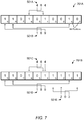
FIG. 7 depicts examples of bloom filters; and -
FIG. 8 depicts an example bitwise OR comparison of bloom filters. - While the invention is susceptible to various modifications and alternative forms, specific embodiments thereof are shown by way of example in the drawings and will herein be described in detail.
- Turning now to
FIG. 1 , a block diagram of an example of acomputer system 100 is shown.Computer system 100 includes astorage subsystem 110 coupled to aprocessor subsystem 150.Storage subsystem 110 is shown storing anemail database 120 andcontainment detection code 130.Computer system 100 may be any of various types of devices, including, but not limited to, a personal computer system, desktop computer, laptop or notebook computer, mainframe computer system, handheld computer, workstation, network computer, a consumer device such as a mobile phone, pager, or personal data assistant (PDA).Computer system 100 may also be any type of networked peripheral device such as storage devices, switches, modems, routers, etc. Although asingle computer system 100 is shown inFigure 1 ,system 100 may also be implemented as two or more computer systems operating together. -
Processor subsystem 150 is representative of one or more processors capable of executingcontainment detection code 130. Various specific types of processors may be employed, such as, for example, an x86 processor, a Power PC processor, an IBM Cell processor, or an ARM processor. -
Storage subsystem 110 is representative of various types of storage media, also referred to as "computer readable storage media."Storage subsystem 110 may be implemented using any suitable media type and/or storage architecture. For example,storage subsystem 110 may be implemented using storage media such as hard disk storage, floppy disk storage, removable disk storage, flash memory, semiconductor memory such as random access memory or read only memory, etc. It is noted thatstorage subsystem 110 may be implemented at a single location or may be distributed (e.g., in a SAN configuration). -
Email database 120 contains a plurality of email messages, each referred to herein as an email document, associated with one or more email system users. It is noted that various email documents withinemail database 120 may be duplicates of one another or may contain substantially similar content to that of other emails in the database (e.g., an initial email and a corresponding response email containing the initial email). - As will be described in further detail below,
containment detection code 130 includes instructions executable byprocessor subsystem 150 to identify whether content of one email document indatabase 120 is contained (or potentially contained) within another email document. In various examples, email documents identified bycontainment detection code 130 as potentially being contained or containing the content of other emails may be reported to a user (e.g., a last email in a chain of responsive emails). In some examples, identified emails may be further evaluated. For example, upon identification, email documents may be analyzed or compared by additional code to determine and/or verify the extent to which content of one email is contained within another, and/or to identify chains of emails. Execution ofcontainment detection code 130 may allow efficient filtering of email documents that do not contain content within other email documents. -
FIG. 2 is a flow diagram illustrating operations that may be carried out in accordance with execution of one example ofcontainment detection code 130. Operations illustrated inFIG. 2 will be discussed in conjunction with an example situation illustrated byFIG. 3 , which shows content of twopossible email documents email document 301B is a response toemail document 301A. In this example, it is noted that theemail documents email document 301B contains the sequence "The fox was cunning", which is not included inemail document 301A. - In step 210, extraneous email content in an email document being processed is removed or disregarded. This extraneous content may include common, reoccurring phrases found in typical email documents such as, "From [Name], To [Name], Subject
- [TITLE], On [DATE], at [TIME], [NAME] wrote:", "Begin forwarded message:", "-Original Message-----", etc. An example of a result from this step is depicted in
FIG. 4 , where the headers have been removed fromemail documents - A first set of hash values is then generated, in
step 220, for each paragraph in the first email document being processed, and a second set of hash values is generated, instep 230, for each paragraph in the second email document being processed.FIG. 5 illustrates such an example in which the hash values 501A-E are generated for the paragraphs "The quick brown fox jumped over the lazy dog", "The dog was sleeping", and "The fox was cunning". In this particular example, the alphabetic positions of each character in a paragraph are summed to generate each hash value. For example, the character "T" is the 20th letter in the alphabet and the character "h" is the 8th letter. Thus, a hash value of "464" is generated based on the sum of the alphabetic positions of the characters in the paragraph "The quick brown fox jumped over the lazy dog." The hash values "189" and "203" are similarly calculated based on the respective paragraphs "The dog was sleeping" and "The fox was cunning". - It is noted that any of a variety of other hash functions may be used to compute the hash value for a particular paragraph. Generally speaking, a "hash function" is any function that has a mapping of an input to a number (i.e., hash value). Thus, in various examples, specific hashing algorithms such as an MD5 hash, a SHA-1 hash, etc may be used. In the illustrated example, the input to the hash function may include the characters forming the paragraph or values representing the characters such as the ASCII ordinal values of the characters or the alphabetic character positions of the characters within each paragraph. Characters such as punctuation symbols, and/or numbers may or may not be included as input to the hash function, depending upon the selected implementation.
- It is also noted that in some examples, multiple hash values may be generated for each paragraph using different hash functions. In addition, it is noted that in some alternative examples, hash values may be computed for character sequences other than paragraphs, such as, for example, sentences, portions of paragraphs, or any other variations for grouping characters.
- In
step 240, the first set of hash values generated instep 220 and the second set of hash values generated instep 230 are compared to determine whether the first set of hash values forms a subset of the second set of hash values. If the first set forms a subset of the second set,containment detection code 130 may provide an indication instep 250A that content of the first email is contained (or is possibly contained) within the second email. Conversely, if the first set is not a subset of the second set,containment detection code 130 may provide an indication instep 250B that the content of the first email is not contained (or possibly not contained) within the content of the second email. As shown inFIG. 5 , the hash values "464" and "189" are generated from the respective paragraphs "The quick brown fox jumped over the lazy dog" and "The dog was sleeping" inemail document 301A. Because these paragraphs ofemail document 301A are also contained within the content ofemail documents 301B, the hash values "464" and "189" are also generated foremail document 301B. On the other hand, "The fox was cunning" is only contained within theemail document 301B, and thus, the hash value "203" is only generated foremail document 301B. Since the set of hash values "464" and "189" corresponding to emaildocument 301A forms a smaller subset of the set of hash values "464", "189" and "203" corresponding to emaildocument 301B,containment detection code 130 may provide an indication that the content ofemail document 301A is contained withinemail document 301B. As used herein, the first set of hash values generated for the first email document forms a smaller subset of the second email document if the second set includes each hash value included in the first set as well as additional hash values generated from paragraphs not contained in the first email document. In some embodiments,containment detection code 130 may also provide an indication of content containment instep 250A if the first set is the same as the second set (i.e., the sets include the same hash values). - By iteratively comparing different pairs of email documents, chains of responsive emails can be identified by determining emails that have content contained within other emails. When it is determined that one email contains the content of all others in the chain, it may be inferred that this email is a last in the chain. For example, in
FIG. 5 ,email documents email document 301B is the last email. In some examples,containment detection code 130 may be configured to determine that a particular email contains the content of several others, and to provide an indication that the particular email may be the last in a chain. - It is noted that multiple unrelated emails may, occasionally, contain content that results in a false indication that the content one email document is contained (or potentially) contained within another (e.g., commonly recurring paragraphs). Thus, in various embodiments, during
step 240,containment detection code 130 may be programmable to disregard certain hash values corresponding to content that appears in multiple unrelated emails. -
FIG. 6 is a flow diagram illustrating one particular implementation ofstep 240 for determining whether one set of hash values forms a smaller subset of another set. Accordingly, the following actions may be performed in conjunction with the techniques described above. - In the
step 610, the first set of hash values generated instep 220 are reflected in a bloom filter corresponding to the first email document. Generally speaking, a "bloom filter" is a data structure in the form of a bit vector that represents a set of elements and is used to test if an element is a member of the set. Initially, an empty bloom filter may be characterized as a bit array of zeros. As elements are added to the bloom filter, corresponding, representative bits may be set. - Thus, as illustrated in
FIG. 7 , the computedhash values 501A of "464" and 501B of "189" corresponding to the paragraphs fromemail document 301A are reflected inbloom filter 701A by setting selected bits. In particular, for the specific bloom-filtering algorithm illustrated in this example,bit positions positions step 620, as shown, the computed hash values generated instep 230, corresponding to the paragraphs from thesecond email document 301B, are reflected inbloom filter 701B by similarly setting selected bits. - It is noted that any variety of other bloom-filtering algorithms may be employed in other examples. For example, the size of the vector (i.e. number of bits) forming the bloom filter data structure may be significantly larger than that illustrated in
FIG. 7 , and a given hash value may be represented in the bloom filter by setting other specific bit positions, as dictated by the algorithm. - In
step 630, the bloom filters generated insteps FIG. 6 , the computed hash values "464" and "189" are represented in bothbloom filters positions bloom filters bloom filter 701B, and thus, bits atpositions bloom filter 701A. - In one particular example depicted in
FIG. 8 , a bitwise OR may be performed to compare the bloom filters of two email documents. In this example,bit vector 801 is generated from the bitwise OR between the bit vectors ofbloom filters resultant bit vector 801 of the bitwise OR matches either of theinput bloom filters containment detection code 130 may provide an indication that the content of one email is contained (or potentially contained) within the content of the other email instep 250A. Conversely, if theresultant bit vector 801 of the bitwise operation does not match either ofbloom filters containment detection code 130 may provide an indication that the content of either email is not contained (or possibly not contained) within the other instep 250B. In the particular example illustrated byFIG.8 , it is noted thatbit vector 801 does matchbloom filter 701B, and thus,containment detection code 130 provides an indication that the content ofemail document 301A is contained within the content ofemail document 301B. - Accordingly, viewed from one aspect, there have been described systems and methods for detecting email content containment are disclosed. A method comprises generating a first set of hash values corresponding to a first email document, wherein the first set includes a respective hash value corresponding to each of a plurality of character sequences of the first email document. The method further comprises generating a second set of hash values corresponding to a second email document, wherein the second set include a respective hash value corresponding to each of a plurality of character sequences of the second email document, and determining whether the first set of hash values is a subset of the second set of hash values.
- Although specific embodiments have been described above, these embodiments are not intended to limit the scope of the present disclosure, even where only a single embodiment is described with respect to a particular feature. Examples of features provided in the disclosure are intended to be illustrative rather than restrictive unless stated otherwise.
Claims (12)
- A method, comprising:receiving an input from a user, wherein the user identifies content common to a plurality of email documents and specifies that the common content is to be disregarded;generating a first set of hash values corresponding to a first email document, wherein the first set includes a respective hash value corresponding to each of a plurality of character sequences of the first email document, and wherein the generating of the first set of hash values disregards any of the common content present in the first email document;generating a first bloom filter representing the first set of hash values corresponding to the first email document, wherein generating the first bloom filter includes setting one or more bits corresponding to and dependent on each hash value in the first set of hash values;generating a second set of hash values corresponding to a second email document, wherein the second set includes a respective hash value corresponding to each of a plurality of character sequences of the second email document, and wherein the generating of the second set of hash values disregards any of the common content present in the second email document;generating a second bloom filter representing the second set of hash values corresponding to the second email document, wherein generating the second bloom filter includes setting one or more bits corresponding to and dependent on each hash value in the second set of hash values; anddetermining whether the first set of hash values forms a smaller subset of the second set of hash values, by performing a bitwise OR operation on the first and second bloom filters.
- The method of claim 1, wherein each of the plurality of character sequences of the first email document is a respective paragraph of the first email document, and wherein each of the plurality of character sequences of the second email document is a respective paragraph of the second email document.
- The method of any preceding claim, further comprising providing an indication of whether content of the first email document is contained within the second email document based on a result of said determining.
- A computer-readable memory medium storing program instructions that are computer-executable to:receive an input from a user, wherein the user identifies content common to a plurality of email documents and specifies that the common content is to be disregarded;generate a first set of hash values corresponding to a first email document, wherein the first set includes a respective hash value corresponding to each of a plurality of character sequences of the first email document, and wherein generating the first set of hash values disregards any of the common content present in the first email document;generate a first bloom filter representing the first set of hash values corresponding to the first email document, wherein generating the first bloom filter includes setting one or more bits corresponding to and dependent on each hash value in the first set of hash values;generate a second set of hash values corresponding to a second email document, wherein the second set includes a respective hash value corresponding to each of a plurality of character sequences of the second email document, and wherein generating the second set of hash values disregards any of the common content present in the second email document;generate a second bloom filter representing the second set of hash values corresponding to the second email document, wherein generating the second bloom filter includes setting one or more bits corresponding to and dependent on each hash value in the second set of hash values; anddetermine whether the first set of hash values forms a smaller subset of the second set of hash values, by performing a bitwise OR operation on the first and second bloom filters.
- The computer-readable memory medium of claim 4, wherein each of the plurality of character sequences of the first email document is a respective paragraph of the first email document, and wherein each of the plurality of character sequences of the second email document is a respective paragraph of the second email document.
- The computer-readable memory medium of claim 4 or 5, wherein the program instructions are further computer-executable to provide an indication of whether content of the first email document is contained within the second email document based on comparing the first and second bloom filters.
- The computer-readable memory medium of any of claims 4 to 6, wherein the program instructions are further computer-executable to disregard predetermined content of the first and second email documents.
- The computer-readable memory medium of claim 7, wherein the predetermined content includes email header information.
- A system (100), comprising:one or more processors (150); andmemory (110) storing program instructions that are computer-executable by the one or more processors to:receive an input from a user, wherein the user identifies content common to a plurality of email documents and specifies that the common content is to be disregarded;generate a first set of hash values corresponding to a first email document, wherein the first set includes a respective hash value corresponding to each of a plurality of character sequences of the first email document, and wherein generating the first set of hash values disregards any of the common content present in the first email document;generate a first bloom filter representing the first set of hash values corresponding to the first email document, wherein generating the first bloom filter includes setting one or more bits corresponding to and dependent on each hash value in the first set of hash values;generate a second set of hash values corresponding to a second email document, wherein the second set includes a respective hash value corresponding to each of a plurality of character sequences of the second email document, and wherein generating the second set of hash values disregards any of the common content present in the second email document;generate a second bloom filter representing the second set of hash values corresponding to the second email document, wherein generating the second bloom filter includes setting one or more bits corresponding to and dependent on each hash value in the second set of hash values; anddetermine whether the first set of hash values forms a smaller subset of the second set of hash values, by performing a bitwise OR operation on the first and second bloom filters.
- The system of claim 9, wherein each of the plurality of character sequences of the first email document is a respective paragraph of the first email document, and wherein each of the plurality of character sequences of the second email document is a respective paragraph of the second email document.
- The system of any of claims9 to 10, wherein the program instructions are further executable to disregard one or more hash values in the first or second sets when determining whether the first set of hash values forms a smaller subset of the second set of hash values.
- The system of any of claims 9 to 11, wherein the program instructions are further executable to identify the second email document as response to the first email document based on determining that the first set of hash values forms a smaller subset of the second set of hash values.
Priority Applications (1)
| Application Number | Priority Date | Filing Date | Title |
|---|---|---|---|
| EP09156526.7A EP2234349B8 (en) | 2009-03-27 | 2009-03-27 | System and method for detecting email content containment |
Applications Claiming Priority (1)
| Application Number | Priority Date | Filing Date | Title |
|---|---|---|---|
| EP09156526.7A EP2234349B8 (en) | 2009-03-27 | 2009-03-27 | System and method for detecting email content containment |
Publications (3)
| Publication Number | Publication Date |
|---|---|
| EP2234349A1 EP2234349A1 (en) | 2010-09-29 |
| EP2234349B1 true EP2234349B1 (en) | 2019-05-08 |
| EP2234349B8 EP2234349B8 (en) | 2019-06-26 |
Family
ID=40888296
Family Applications (1)
| Application Number | Title | Priority Date | Filing Date |
|---|---|---|---|
| EP09156526.7A Active EP2234349B8 (en) | 2009-03-27 | 2009-03-27 | System and method for detecting email content containment |
Country Status (1)
| Country | Link |
|---|---|
| EP (1) | EP2234349B8 (en) |
Citations (1)
| Publication number | Priority date | Publication date | Assignee | Title |
|---|---|---|---|---|
| US20060101014A1 (en) * | 2004-10-26 | 2006-05-11 | Forman George H | System and method for minimally predictive feature identification |
Family Cites Families (4)
| Publication number | Priority date | Publication date | Assignee | Title |
|---|---|---|---|---|
| US20040064737A1 (en) | 2000-06-19 | 2004-04-01 | Milliken Walter Clark | Hash-based systems and methods for detecting and preventing transmission of polymorphic network worms and viruses |
| GB2400933B (en) * | 2003-04-25 | 2006-11-22 | Messagelabs Ltd | A method of, and system for, heuristically detecting viruses in executable code by detecting files which have been maliciously altered |
| US7444515B2 (en) * | 2003-08-14 | 2008-10-28 | Washington University | Method and apparatus for detecting predefined signatures in packet payload using Bloom filters |
| US20080059590A1 (en) | 2006-09-05 | 2008-03-06 | Ecole Polytechnique Federale De Lausanne (Epfl) | Method to filter electronic messages in a message processing system |
-
2009
- 2009-03-27 EP EP09156526.7A patent/EP2234349B8/en active Active
Patent Citations (1)
| Publication number | Priority date | Publication date | Assignee | Title |
|---|---|---|---|---|
| US20060101014A1 (en) * | 2004-10-26 | 2006-05-11 | Forman George H | System and method for minimally predictive feature identification |
Also Published As
| Publication number | Publication date |
|---|---|
| EP2234349B8 (en) | 2019-06-26 |
| EP2234349A1 (en) | 2010-09-29 |
Similar Documents
| Publication | Publication Date | Title |
|---|---|---|
| US8037145B2 (en) | System and method for detecting email content containment | |
| US20090319506A1 (en) | System and method for efficiently finding email similarity in an email repository | |
| CN109359439B (en) | software detection method, device, equipment and storage medium | |
| US20210256127A1 (en) | System and method for automated machine-learning, zero-day malware detection | |
| US9565209B1 (en) | Detecting electronic messaging threats by using metric trees and similarity hashes | |
| US20090235357A1 (en) | Method and System for Generating a Malware Sequence File | |
| US11487876B1 (en) | Robust whitelisting of legitimate files using similarity score and suspiciousness score | |
| EP3899770A1 (en) | System and method for detecting data anomalies by analysing morphologies of known and/or unknown cybersecurity threats | |
| US11042659B2 (en) | System and method of determining text containing confidential data | |
| US20220004621A1 (en) | Data recovery through reversal of hash values using probabilistic data structures | |
| US8275842B2 (en) | System and method for detecting content similarity within email documents by sparse subset hashing | |
| CN113688240B (en) | Threat element extraction method, threat element extraction device, threat element extraction equipment and storage medium | |
| CN109359481B (en) | Anti-collision search reduction method based on BK tree | |
| US20220309077A1 (en) | Method and system for clustering executable files | |
| US11755550B2 (en) | System and method for fingerprinting-based conversation threading | |
| JP6523799B2 (en) | Information analysis system, information analysis method | |
| KR20180133726A (en) | Appratus and method for classifying data using feature vector | |
| US20090089383A1 (en) | System and method for detecting content similarity within emails documents employing selective truncation | |
| EP2234349B1 (en) | System and method for detecting email content containment | |
| US12386960B2 (en) | System and method for training of antimalware machine learning models | |
| Prilepok et al. | Spam detection using data compression and signatures | |
| WO2019167225A1 (en) | Information processing device, control method, and program | |
| EP4339817A1 (en) | Anomalous command line entry detection | |
| JP5731740B2 (en) | System and method for detecting e-mail content inclusion | |
| CN114398887B (en) | Text classification method, device and electronic equipment |
Legal Events
| Date | Code | Title | Description |
|---|---|---|---|
| PUAI | Public reference made under article 153(3) epc to a published international application that has entered the european phase |
Free format text: ORIGINAL CODE: 0009012 |
|
| AK | Designated contracting states |
Kind code of ref document: A1 Designated state(s): AT BE BG CH CY CZ DE DK EE ES FI FR GB GR HR HU IE IS IT LI LT LU LV MC MK MT NL NO PL PT RO SE SI SK TR |
|
| AX | Request for extension of the european patent |
Extension state: AL BA RS |
|
| 17P | Request for examination filed |
Effective date: 20110325 |
|
| 17Q | First examination report despatched |
Effective date: 20110411 |
|
| AKX | Designation fees paid |
Designated state(s): DE FR GB |
|
| STAA | Information on the status of an ep patent application or granted ep patent |
Free format text: STATUS: EXAMINATION IS IN PROGRESS |
|
| GRAP | Despatch of communication of intention to grant a patent |
Free format text: ORIGINAL CODE: EPIDOSNIGR1 |
|
| STAA | Information on the status of an ep patent application or granted ep patent |
Free format text: STATUS: GRANT OF PATENT IS INTENDED |
|
| INTG | Intention to grant announced |
Effective date: 20181025 |
|
| GRAS | Grant fee paid |
Free format text: ORIGINAL CODE: EPIDOSNIGR3 |
|
| GRAA | (expected) grant |
Free format text: ORIGINAL CODE: 0009210 |
|
| STAA | Information on the status of an ep patent application or granted ep patent |
Free format text: STATUS: THE PATENT HAS BEEN GRANTED |
|
| AK | Designated contracting states |
Kind code of ref document: B1 Designated state(s): DE FR GB |
|
| REG | Reference to a national code |
Ref country code: GB Ref legal event code: FG4D |
|
| REG | Reference to a national code |
Ref country code: DE Ref legal event code: R096 Ref document number: 602009058212 Country of ref document: DE |
|
| RAP2 | Party data changed (patent owner data changed or rights of a patent transferred) |
Owner name: SYMANTEC CORPORATION |
|
| REG | Reference to a national code |
Ref country code: DE Ref legal event code: R082 Ref document number: 602009058212 Country of ref document: DE Representative=s name: D YOUNG & CO LLP, DE |
|
| REG | Reference to a national code |
Ref country code: DE Ref legal event code: R097 Ref document number: 602009058212 Country of ref document: DE |
|
| PLBE | No opposition filed within time limit |
Free format text: ORIGINAL CODE: 0009261 |
|
| STAA | Information on the status of an ep patent application or granted ep patent |
Free format text: STATUS: NO OPPOSITION FILED WITHIN TIME LIMIT |
|
| 26N | No opposition filed |
Effective date: 20200211 |
|
| REG | Reference to a national code |
Ref country code: DE Ref legal event code: R079 Ref document number: 602009058212 Country of ref document: DE Free format text: PREVIOUS MAIN CLASS: H04L0012580000 Ipc: H04L0051000000 |
|
| P01 | Opt-out of the competence of the unified patent court (upc) registered |
Effective date: 20230523 |
|
| PGFP | Annual fee paid to national office [announced via postgrant information from national office to epo] |
Ref country code: DE Payment date: 20250327 Year of fee payment: 17 |
|
| PGFP | Annual fee paid to national office [announced via postgrant information from national office to epo] |
Ref country code: FR Payment date: 20250325 Year of fee payment: 17 |
|
| PGFP | Annual fee paid to national office [announced via postgrant information from national office to epo] |
Ref country code: GB Payment date: 20250327 Year of fee payment: 17 |