EP2208654A1 - Method and system for avoiding host vehicle collisions with a target - Google Patents
Method and system for avoiding host vehicle collisions with a target Download PDFInfo
- Publication number
- EP2208654A1 EP2208654A1 EP09150614A EP09150614A EP2208654A1 EP 2208654 A1 EP2208654 A1 EP 2208654A1 EP 09150614 A EP09150614 A EP 09150614A EP 09150614 A EP09150614 A EP 09150614A EP 2208654 A1 EP2208654 A1 EP 2208654A1
- Authority
- EP
- European Patent Office
- Prior art keywords
- host vehicle
- target
- avoid
- collision
- collision avoidance
- Prior art date
- Legal status (The legal status is an assumption and is not a legal conclusion. Google has not performed a legal analysis and makes no representation as to the accuracy of the status listed.)
- Granted
Links
Images


Classifications
-
- B—PERFORMING OPERATIONS; TRANSPORTING
- B60—VEHICLES IN GENERAL
- B60W—CONJOINT CONTROL OF VEHICLE SUB-UNITS OF DIFFERENT TYPE OR DIFFERENT FUNCTION; CONTROL SYSTEMS SPECIALLY ADAPTED FOR HYBRID VEHICLES; ROAD VEHICLE DRIVE CONTROL SYSTEMS FOR PURPOSES NOT RELATED TO THE CONTROL OF A PARTICULAR SUB-UNIT
- B60W30/00—Purposes of road vehicle drive control systems not related to the control of a particular sub-unit, e.g. of systems using conjoint control of vehicle sub-units
- B60W30/08—Active safety systems predicting or avoiding probable or impending collision or attempting to minimise its consequences
- B60W30/09—Taking automatic action to avoid collision, e.g. braking and steering
-
- B—PERFORMING OPERATIONS; TRANSPORTING
- B60—VEHICLES IN GENERAL
- B60W—CONJOINT CONTROL OF VEHICLE SUB-UNITS OF DIFFERENT TYPE OR DIFFERENT FUNCTION; CONTROL SYSTEMS SPECIALLY ADAPTED FOR HYBRID VEHICLES; ROAD VEHICLE DRIVE CONTROL SYSTEMS FOR PURPOSES NOT RELATED TO THE CONTROL OF A PARTICULAR SUB-UNIT
- B60W40/00—Estimation or calculation of non-directly measurable driving parameters for road vehicle drive control systems not related to the control of a particular sub unit, e.g. by using mathematical models
- B60W40/02—Estimation or calculation of non-directly measurable driving parameters for road vehicle drive control systems not related to the control of a particular sub unit, e.g. by using mathematical models related to ambient conditions
- B60W40/04—Traffic conditions
-
- B—PERFORMING OPERATIONS; TRANSPORTING
- B60—VEHICLES IN GENERAL
- B60W—CONJOINT CONTROL OF VEHICLE SUB-UNITS OF DIFFERENT TYPE OR DIFFERENT FUNCTION; CONTROL SYSTEMS SPECIALLY ADAPTED FOR HYBRID VEHICLES; ROAD VEHICLE DRIVE CONTROL SYSTEMS FOR PURPOSES NOT RELATED TO THE CONTROL OF A PARTICULAR SUB-UNIT
- B60W50/00—Details of control systems for road vehicle drive control not related to the control of a particular sub-unit, e.g. process diagnostic or vehicle driver interfaces
- B60W2050/0001—Details of the control system
- B60W2050/0019—Control system elements or transfer functions
- B60W2050/0028—Mathematical models, e.g. for simulation
- B60W2050/0031—Mathematical model of the vehicle
- B60W2050/0033—Single-track, 2D vehicle model, i.e. two-wheel bicycle model
-
- B—PERFORMING OPERATIONS; TRANSPORTING
- B60—VEHICLES IN GENERAL
- B60W—CONJOINT CONTROL OF VEHICLE SUB-UNITS OF DIFFERENT TYPE OR DIFFERENT FUNCTION; CONTROL SYSTEMS SPECIALLY ADAPTED FOR HYBRID VEHICLES; ROAD VEHICLE DRIVE CONTROL SYSTEMS FOR PURPOSES NOT RELATED TO THE CONTROL OF A PARTICULAR SUB-UNIT
- B60W50/00—Details of control systems for road vehicle drive control not related to the control of a particular sub-unit, e.g. process diagnostic or vehicle driver interfaces
- B60W2050/0001—Details of the control system
- B60W2050/0019—Control system elements or transfer functions
- B60W2050/0028—Mathematical models, e.g. for simulation
- B60W2050/0031—Mathematical model of the vehicle
- B60W2050/0034—Multiple-track, 2D vehicle model, e.g. four-wheel model
Definitions
- the present invention relates to a method in an automotive vehicle collision avoidance system for autonomous action for avoiding host vehicle collisions with a target in accordance with the preamble of claim 1.
- the present invention also relates to an automotive vehicle collision avoidance system for autonomous action for avoiding host vehicle collisions with a target in accordance with the preamble of claim 5.
- One way to reduce the number of accidents and their consequences is to assist road users in their driving task, e.g. by assisting in detecting and handling potential hazards. This is called active safety or in more general terms preventive safety, ranging from drowsiness detection to electronic stability control to night vision systems.
- State-of-the-art collision avoidance technology relies on in-vehicle sensors like radars and cameras that constantly monitor the area in front of the vehicle. If the vehicle approaches another vehicle and the driver needs to undertake an action to avoid an accident, an audible and/or visible warning is provided in order to increase the driver's attention in such a way that he or she can avoid or mitigate the accident. If the driver does not intervene in spite of the warning and the collision threat becomes imminent, intervention braking is automatically applied to slow down the vehicle. Imminent refers to the situation where it is judged that an accident cannot physically be avoided by the driver through braking, steering or accelerating. In this way it may not be possible for the collision avoidance/collision mitigation system to always avoid a collision, but the main purpose here is to reduce impact speed and the risk of consequences.
- collision avoidance systems may use sensors such as RADAR (RAdio Detection And Ranging), LIDAR (Light Detection And Ranging) and cameras to monitor the region in front of the host vehicle.
- a tracking algorithm may be used to estimate the state of the objects ahead (targets) and a decision algorithm may use the estimated states to determine any action, e.g. warning the driver, autonomous braking or steering.
- One object of the invention is to provide an improved method in an automotive vehicle collision avoidance system for autonomous action for avoiding or at least mitigating host vehicle collisions with a target.
- a method in an automotive vehicle collision avoidance system for autonomous action having improved abilities for avoiding or at least mitigating collisions with target objects is provided.
- a further object of the invention is to provide an improved automotive vehicle collision avoidance system for autonomous action for avoiding or at least mitigating host vehicle collisions with a target.
- an improved automotive vehicle collision avoidance system for autonomous action having improved abilities for avoiding or at least mitigating collisions with target objects is provided.
- the present invention relates to threat assessment for assisting a driver of a vehicle in avoiding collision with an object, especially a turning object, denoted as a target.
- Accidents with crossing vehicles account for approximately 26% of all police-reported accidents.
- One of the main challenges for collision avoidance technology is to predict the kinematics of the scenario and judge whether a collision is imminent. Compared to rear end collision there are two main differences, as will be exemplified in the following.
- the orientation of the target is changing over time.
- rear end collisions only the rearside of the target vehicle is of interest and this side is always approached at approximately 90 degrees angle.
- the front, rear and side of the target has to be taken into account, i.e. has to be avoided, and the part that is relevant depends on target velocity and orientation.
- Target vehicles that are hit from the rear have limited possibility to avoid, as the driver normally will have limited possibilities to detect the striking vehicle and limited possibilities to take evasive action, especially when the target vehicle is stationary.
- the driver of a target vehicle will have better possibilities to detect a striking vehicle and steering, braking and acceleration may be used for avoiding a collision.
- the host vehicle In the following the vehicle hosting the collision avoidance system will be denoted as the host vehicle. It is assumed that the there are no restrictions regarding the driveable area and that the host vehicle will need to avoid collision with a single road user, hereafter denoted as the target. Furthermore, it is assumed that the host vehicle has access to good estimates on the host vehicle state and the target state, e.g. its dimensions, velocity, acceleration, yaw rate and orientation. These estimates may be obtained through an in-vehicle sensor fusion system, possibly combined with vehicle to vehicle communication.
- threat assessment will be performed for both the host vehicle and a target vehicle, i.e. it will be estimated how difficult it is for the host vehicle to avoid a collision and how difficult it is for a target vehicle to avoid a collision. Both will be taken into account for decision making in the host vehicle.
- the threat assessment method estimates how steering, braking or acceleration may be used in order to avoid a collision during the prediction horizon.
- Arbitrary deterministic prediction models may be used. This ensures that the threat assessment method potentially can be applied to rear end collisions, collisions with turning objects, but also other collision scenarios.
- the vehicle dynamics of the host vehicle is described by a so-called bicycle model, such that the vehicle slip can be taken into account when judging the possibilities for collision avoidance by steering.
- Any vehicle model with two degrees of freedom can applied to the threat assessment method.
- One degree of freedom is used for assessing the possibility to avoid a collision by steering and one degree of freedom is used for assessing collision avoidance by braking/acceleration.
- a host vehicle motion model with two degrees of freedom if is possible to derive analytical solutions on how to execute a maneuver that avoids a two-dimensional object, e.g. represented with a polygon, at a discrete time step. There is only one way to travel a certain distance in a given time if the longitudinal motion only has one degree of freedom.
- steering there is only one way to steer to pass a corner if the steering maneuver only has one degree of freedom.
- brake system dynamics of the host vehicle are taken into account to be able to realistically judge the possibilities for collision avoidance by braking.
- Target objects may be represented by polygons with arbitrary shape. These can represent different road users such as passenger vehicles, trucks, truck-trailer combinations as well as pedestrians, bicyclists or stationary targets.
- the shape of the target is allowed to change over time. This is an important characteristic when e.g. a turning truck-trailer combination is to be represented.
- the traffic situation shall be assessed both from the host vehicle perspective and the target perspective.
- the set of host vehicle maneuvers that will avoid a collision is estimated, under the assumption that the future trajectory of the target is deterministic and given by the current state of the target.
- the set of target maneuvers that will avoid a collision is estimated, under the assumption that the future trajectory of the host vehicle is deterministic and given by the current state of the host vehicle.
- the host vehicle Due to the physical restrictions of the vehicles it is not hard to realize that it is generally easier for either the host vehicle or the target to avoid a collision. For example, assume that the host vehicle is approaching a stationary target in a rear end collision situation. Then, it is always easier for the host vehicle to perform an avoiding maneuver than the other way around. It is here proposed that the host vehicle shall intervene through autonomous braking if it is estimated that: the target cannot avoid a collision on its own, AND; the host vehicle cannot avoid a collision by steering or accelerating, AND; the host vehicle need to use full braking (or significant braking) to avoid a collision.
- This method assures that if both the target vehicle and the host vehicle are equipped with the proposed algorithm, potential interventions by the systems will not interfere with each other in e.g. crossing traffic situations.
- the host vehicle shall apply the brakes to mitigate a potential collision if the host vehicle needs to decelerate less than the target to avoid a collision.
- the threat assessment algorithms for estimating how a vehicle can steer, brake or accelerate to avoid a collision will be described from the host vehicle perspective.
- the algorithms may be modified such that the situation is assessed from the target perspective.
- a method is also proposed for estimating how the host vehicle can steer to avoid a collision with the target. It is assumed that the host vehicle speed v is constant during the steering maneuver and that the motion of the host vehicle can be described by a bicycle model, as illustrated in figure 1 .
- the origin of coordinates of a ground-fixed Cartesian coordinate system (x, y) is positioned at the initial position of the front center of the host vehicle. The coordinate system is directed along the center of the initial orientation of the vehicle.
- the method consists of the steps of:
- This method assumes that the steady-state cornering is instantly obtained, possibly after an initial time delay, t d .
- Steady-state cornering means that the turn center of the host vehicle, ( x r , y r ) does not change over time and the steering angle ⁇ is kept constant.
- the host vehicle acceleration, a and steering angle ⁇ are assumed to remain constant at their initial values.
- the time delay can also be used to represent the estimated reaction time of the driver. Time delays are easy to add and will thus be left out in the derivation of the threat assessment algorithm.
- the length and width of the host vehicle are given by L h and W h .
- the center of gravity is denoted as CoG and the distance from the rear axle to CoG is given by L r .
- the distance from the front axle to CoG is given by L f and L 0 is the distance from the front center to the rear axle.
- the rear and front slip angles are given by ⁇ r and ⁇ f respectively.
- Steps 1 - 3 should be straightforward to the person skilled in the art and no additional explanation is therefore given for these steps.
- step 4 finding which corners that are relevant to avoid at time t i . Only corners that can be reached at time t i are relevant to avoid. Since the host vehicle speed v is constant, the relevant corners are all corners where vt i - L ⁇ x i ⁇ vt i . Only corners with positive x i are considered when clearing with the front end, as illustrated in figure 3 . There is no actual need to sort the corners or deselect "hidden corners".
- step 5 The solution to step 5 is given geometrically.
- R sign y r ⁇ y r 2 + L r - L v 2 and the corresponding steering angle is given by (1).
- the host vehicle can use braking or acceleration to avoid a collision with a target. It is assumed that the host vehicle follows a curved, ground-fixed coordinate system, e.g. a clothoid or a turn with constant radius, as illustrated in figure 5 . Let the origin of the coordinate system ( x, y ) be positioned at the initial position of the front center of the vehicle. The coordinate system is directed along the center of the initial orientation of the host vehicle. Similarly to the steer to avoid method previously described, this method consists of the following steps:
- step 1 - 3 should be straightforward to the person skilled in the art and no additional explanation is therefore given for these steps.
- step 4 finding each edge of the target. Let the corners that form each edge be denoted as ( x 1 , y 1 ) and ( x 2 , y 2 ). The edge is relevant if min y 1 ⁇ y 2 ⁇ W h 2 and max y 1 ⁇ y 2 ⁇ - W h 2
- step 5 start with finding the x -interval, x h ⁇ x i - , x i + + L n , for the position of the host vehicle that will result in a collision at a time t i , as illustrated in figure 5 .
- y left min W h 2
- y right max ⁇ - W h 2
- a 0 is the initial host vehicle acceleration
- a r a 0 + j r t j is the acceleration request.
- the acceleration rate j r is a parameter which gives an acceleration profile one degree of freedom.
- a suitable selection of the time t j given by t j max ⁇ 0 ⁇ a min - a 0 j min where a min is the maximum deceleration that the brake system can accomplish and j min is maximum deceleration rate.
- the acceleration profile (24) is representative for many autonomous brake systems.
- a 0 is the initial host vehicle acceleration
- k is a constant
- a e is a parameter which gives the acceleration profile one degree of freedom.
- This profile is representative for brake response when the brakes are applied by the driver.
- Time delays representing delays in the brake system or driver reaction time may easily be added.
- the acceleration interval [ a - , a + ] that will result in a collision within the predicted horizon t ⁇ [0, T max ] is given by taking the minimum of the brake to avoid solution and the maximum of the accelerate to pass solution.
- a method in an automotive vehicle collision avoidance system for autonomous action for avoiding host vehicle collisions with a target is provided estimates on the host vehicle state and the target state, e.g. obtained from an in-vehicle sensor fusion system comprising sensors such as radars and cameras that constantly monitor the area in front of the vehicle, possibly combined with vehicle to vehicle communication.
- the motion of the target is predicted with an arbitrary motion model during a limited prediction horizon.
- the prediction horizon is divided into a series of discrete time steps.
- the target is represented as a polygon of arbitrary shape. Boundaries of the polygon that a host vehicle need to avoid for each time step are established.
- a collision avoidance maneuver is executed autonomously based on the result of said estimation for all discrete time steps.
- this may mean one of two things, either how a driver must act in order to avoid a collision, or how the vehicle must act autonomously in order to avoid a collision.
- the motion model for the host vehicle should have two degrees of freedom, one for steering and one for braking/acceleration.
- a motion model having two degrees of freedom, and as the areas, represented by polygons, that the host vehicle will have to avoid at discrete time instances has been made discrete it is possible to obtain analytical solutions how to steer, brake or accelerate in order to avoid a collision at each discrete time instance.
- One degree of freedom is used for steering, with the result that there is only one way to steer in order to get to a certain position.
- the remaining degree of freedom is used for braking/acceleration, with the result that there is only one way to brake/accelerate in order to move a certain distance in a certain time.
- the step of establishing boundaries comprises finding all corners of the polygon that the host vehicle has to avoid for all time steps.
- the step of estimating how the host vehicle need to execute a collision avoidance maneuver comprises estimating for each such corner how the host vehicle need to steer to clear this corner.
- the step of autonomously executing a collision avoidance maneuver comprises executing a steering maneuver that makes the host vehicle clear all polygon corners for all discrete time steps.
- the step of establishing boundaries comprises finding all edges of the polygon that the host vehicle has to avoid for each time step.
- the step of estimating how the host vehicle need to execute a collision avoidance maneuver comprises estimating for each such edge how the host vehicle need to accelerate to pass that edge or brake to avoid reaching that edge at that specific time step.
- the step of autonomously executing a collision avoidance maneuver comprising executing an acceleration or braking maneuver that makes the host vehicle clear all polygon edges for all discrete time steps.
- the method further should comprise: autonomously executing autonomous braking if it is estimated that: - the target cannot avoid a collision on its own, and; - the host vehicle cannot avoid a collision by steering or accelerating, and; - the host vehicle need to use significant braking to avoid a collision, then the host vehicle shall apply the brakes to mitigate a potential collision.
- Significant braking as used herein means braking utilizing the braking abilities of the host vehicle braking system to the fullest degree allowed by the current circumstances.
- the present invention also relates to an automotive vehicle collision avoidance system for autonomous action for avoiding host vehicle collisions with a target as described above and comprising means for performing the above described steps.
- the present invention also relates to an automotive vehicle comprising an automotive vehicle collision avoidance system including an implementation of the method for autonomous action for avoiding host vehicle collisions with a target as described above.
Landscapes
- Engineering & Computer Science (AREA)
- Automation & Control Theory (AREA)
- Transportation (AREA)
- Mechanical Engineering (AREA)
- Physics & Mathematics (AREA)
- Mathematical Physics (AREA)
- Traffic Control Systems (AREA)
- Control Of Driving Devices And Active Controlling Of Vehicle (AREA)
Abstract
Description
- The present invention relates to a method in an automotive vehicle collision avoidance system for autonomous action for avoiding host vehicle collisions with a target in accordance with the preamble of
claim 1. - The present invention also relates to an automotive vehicle collision avoidance system for autonomous action for avoiding host vehicle collisions with a target in accordance with the preamble of claim 5.
- The World Health Organization estimates that traffic accidents annually cause 1.2 million fatalities and as many as 50 million injuries. It is predicted that these figures will increase by 65% over the next 20 years unless there is new commitment to prevention. Despite these large numbers, traffic conflicts are rare events for individuals and thus, drivers can not solely rely on learning from experience to avoid accidents. Fortunately, most drivers are generally good at foreseeing and avoiding potential conflicts at an early stage. However, no human is perfect and a slight distraction or misjudgment may result in an accident. Even if a driver should be perfect, there is still a possibility that another road user makes a mistake that puts the driver in a situation where a collision can not be avoided. Accident research has shown that some accidents are caused by vehicle failure, but most accidents are caused by human errors. One way to reduce the number of accidents and their consequences is to assist road users in their driving task, e.g. by assisting in detecting and handling potential hazards. This is called active safety or in more general terms preventive safety, ranging from drowsiness detection to electronic stability control to night vision systems.
- An important subset of preventive safety is collision avoidance systems, aiming at assisting the driver in avoiding collisions with objects and other road users, e.g. vehicles, bicyclists or pedestrians. As automotive safety is gaining interest from the general public and governments, vehicle manufacturers are introducing an increasing amount of driver assistance features. Several manufactures now offer functionality that help the driver in avoiding collisions by providing warnings or even automatic intervention braking when a collision is imminent. This collision avoidance technology is often applied to rear end collisions with both stationary and moving vehicles. One reason behind this is that rear end collisions are common accident scenarios which are generally estimated to account for 29% of all police reported accidents and 5% of all fatalities. Another reason is that the kinematics of rear end collisions are relatively easy to predict, making threat assessment and decision making more straightforward. Threat assessment is commonly used denotation for algorithms that estimated how road users can maneuver to avoid a potential collision.
- State-of-the-art collision avoidance technology relies on in-vehicle sensors like radars and cameras that constantly monitor the area in front of the vehicle. If the vehicle approaches another vehicle and the driver needs to undertake an action to avoid an accident, an audible and/or visible warning is provided in order to increase the driver's attention in such a way that he or she can avoid or mitigate the accident. If the driver does not intervene in spite of the warning and the collision threat becomes imminent, intervention braking is automatically applied to slow down the vehicle. Imminent refers to the situation where it is judged that an accident cannot physically be avoided by the driver through braking, steering or accelerating. In this way it may not be possible for the collision avoidance/collision mitigation system to always avoid a collision, but the main purpose here is to reduce impact speed and the risk of consequences.
- Thus, collision avoidance systems may use sensors such as RADAR (RAdio Detection And Ranging), LIDAR (Light Detection And Ranging) and cameras to monitor the region in front of the host vehicle. A tracking algorithm may be used to estimate the state of the objects ahead (targets) and a decision algorithm may use the estimated states to determine any action, e.g. warning the driver, autonomous braking or steering.
- The decision algorithms in automotive collision avoidance systems continuously evaluate the risk for a collision. However, in such an evaluation, previous systems have been unable or have had limited abilities for assessing threats originating from turning objects and assisting the driver of a host vehicle in avoiding collisions with such turning objects.
- One object of the invention is to provide an improved method in an automotive vehicle collision avoidance system for autonomous action for avoiding or at least mitigating host vehicle collisions with a target.
- This object is achieved by the method as claimed in
claim 1. - Thanks to the provision of the steps of: providing estimates on the host vehicle state and the target state; and predicting the motion of the target with an arbitrary motion model during a limited prediction horizon; and dividing the prediction horizon into a series of discrete time steps; and representing the target as a polygon of arbitrary shape; and establishing boundaries of the polygon that a host vehicle need to avoid for each time step; and estimating, using analytical solutions and a motion model for the host vehicle having two degrees of freedom, for each such boundary how the host vehicle need to execute a collision avoidance maneuver in order to avoid reaching said boundary at that specific time step; and autonomously executing a collision avoidance maneuver based on the result of said estimation for all discrete time steps, a method in an automotive vehicle collision avoidance system for autonomous action having improved abilities for avoiding or at least mitigating collisions with target objects is provided.
- A further object of the invention is to provide an improved automotive vehicle collision avoidance system for autonomous action for avoiding or at least mitigating host vehicle collisions with a target.
- This object is achieved by the system as claimed in claim 5.
- Thanks to the provision of: means for providing estimates on the host vehicle state and the target state; and means for predicting the motion of the target with an arbitrary motion model during a limited prediction horizon; and means for dividing the prediction horizon into a series of discrete time steps; and means for representing the target as a polygon of arbitrary shape; and means for establishing boundaries of the polygon that a host vehicle need to avoid for each time step; and means for estimating, using analytical solutions and a motion model for the host vehicle having two degrees of freedom, for each such boundary how the host vehicle need to execute a collision avoidance maneuver in order to avoid reaching said boundary at that specific time step; and means for autonomously executing a collision avoidance maneuver based on the result of said estimation for all discrete time steps, an improved automotive vehicle collision avoidance system for autonomous action having improved abilities for avoiding or at least mitigating collisions with target objects is provided.
- Preferred embodiments are listed in the dependent claims.
- In the following, the invention will be described in greater detail by way of example only with reference to attached drawings, in which
-
Fig. 1 is a schematic illustration of a bicycle model for describing the motion of a host vehicle, -
Fig. 2 illustrates schematically the predicted future position of a turning target in discrete time steps, -
Fig. 3 illustrates avoiding the corners of a target with a front end of a host vehicle, -
Fig. 4 illustrates avoiding the corners of a target with a rear end of a host vehicle, -
Fig. 5 illustrates division of the target into edges and assessing how to avoid each edge through either braking or acceleration, -
Fig. 6 illustrates brake profiles with one degree of freedom. - Still other objects and features of the present invention will become apparent from the following detailed description considered in conjunction with the accompanying drawings. It is to be understood, however, that the drawings are designed solely for purposes of illustration and not as a definition of the limits of the invention, for which reference should be made to the appended claims. It should be further understood that the drawings are not necessarily drawn to scale and that, unless otherwise indicated, they are merely intended to conceptually illustrate the structures and procedures described herein.
- The present invention relates to threat assessment for assisting a driver of a vehicle in avoiding collision with an object, especially a turning object, denoted as a target. Accidents with crossing vehicles account for approximately 26% of all police-reported accidents. One of the main challenges for collision avoidance technology is to predict the kinematics of the scenario and judge whether a collision is imminent. Compared to rear end collision there are two main differences, as will be exemplified in the following.
- Firstly, the orientation of the target is changing over time. In rear end collisions only the rearside of the target vehicle is of interest and this side is always approached at approximately 90 degrees angle. For turning targets the front, rear and side of the target has to be taken into account, i.e. has to be avoided, and the part that is relevant depends on target velocity and orientation.
- Secondly, the possibility for a crossing target to avoid an accident is different. Target vehicles that are hit from the rear have limited possibility to avoid, as the driver normally will have limited possibilities to detect the striking vehicle and limited possibilities to take evasive action, especially when the target vehicle is stationary. In intersection scenarios the driver of a target vehicle will have better possibilities to detect a striking vehicle and steering, braking and acceleration may be used for avoiding a collision.
- In the following the vehicle hosting the collision avoidance system will be denoted as the host vehicle. It is assumed that the there are no restrictions regarding the driveable area and that the host vehicle will need to avoid collision with a single road user, hereafter denoted as the target. Furthermore, it is assumed that the host vehicle has access to good estimates on the host vehicle state and the target state, e.g. its dimensions, velocity, acceleration, yaw rate and orientation. These estimates may be obtained through an in-vehicle sensor fusion system, possibly combined with vehicle to vehicle communication.
- In accordance with the invention threat assessment will be performed for both the host vehicle and a target vehicle, i.e. it will be estimated how difficult it is for the host vehicle to avoid a collision and how difficult it is for a target vehicle to avoid a collision. Both will be taken into account for decision making in the host vehicle.
- When assessing how the host vehicle can maneuver to avoid collision with a target, it is assumed that the motion of the target can be described with a deterministic motion model during a limited prediction horizon t ∈ [0,T max], e.g. T max = 2s. When assessing how the target can maneuver to avoid a collision with the host vehicle, it is assumed that the motion of the host can be described with a deterministic motion model.
- The threat assessment method estimates how steering, braking or acceleration may be used in order to avoid a collision during the prediction horizon.
- Arbitrary deterministic prediction models may be used. This ensures that the threat assessment method potentially can be applied to rear end collisions, collisions with turning objects, but also other collision scenarios.
- The vehicle dynamics of the host vehicle is described by a so-called bicycle model, such that the vehicle slip can be taken into account when judging the possibilities for collision avoidance by steering.
- Any vehicle model with two degrees of freedom can applied to the threat assessment method. One degree of freedom is used for assessing the possibility to avoid a collision by steering and one degree of freedom is used for assessing collision avoidance by braking/acceleration. By selecting a host vehicle motion model with two degrees of freedom, if is possible to derive analytical solutions on how to execute a maneuver that avoids a two-dimensional object, e.g. represented with a polygon, at a discrete time step. There is only one way to travel a certain distance in a given time if the longitudinal motion only has one degree of freedom. When steering, there is only one way to steer to pass a corner if the steering maneuver only has one degree of freedom.
- Also brake system dynamics of the host vehicle are taken into account to be able to realistically judge the possibilities for collision avoidance by braking.
- Target objects may be represented by polygons with arbitrary shape. These can represent different road users such as passenger vehicles, trucks, truck-trailer combinations as well as pedestrians, bicyclists or stationary targets.
- The shape of the target is allowed to change over time. This is an important characteristic when e.g. a turning truck-trailer combination is to be represented.
- Initially will be described decision making for autonomous braking. Assume that the collision avoidance system is restricted to use of autonomous braking to avoid or mitigate potential collisions. In many prior-art decision-making systems, it is suggested that autonomous brake interventions shall be inhibited if the driver has the opportunity to avoid a collision by either steering or acceleration. This is a conservative approach which is commonly used to minimize the risk of false interventions. An even more conservative approach is proposed here, where interventions in the host vehicle also are inhibited if the target has the opportunity to avoid a collision by either steering, braking or acceleration. Decision making for collision avoidance through autonomous steering or braking/acceleration will be described later.
- Assume that the host vehicle or the target can try to avoid a collision by either braking, steering or acceleration. Potential coordinated avoidance maneuvers, where both the host vehicle and target performs a synchronized avoiding maneuver are not assessed. Nor are potential combined braking and steering maneuvers. Although these assumptions may appear to limiting to be useful in practice, they are quite reasonable when assessing critical traffic situations. If the prediction horizon is sufficiently small, e.g. T max = 2s, it is reasonable to neglect the possibility for the vehicles to initiate a coordinated avoidance maneuver. A short prediction horizon also motivates the use of deterministic motion models.
- Instead of considering coordinated avoidance maneuvers, it is here proposed that the traffic situation shall be assessed both from the host vehicle perspective and the target perspective. First, the set of host vehicle maneuvers that will avoid a collision is estimated, under the assumption that the future trajectory of the target is deterministic and given by the current state of the target. Secondly, the set of target maneuvers that will avoid a collision is estimated, under the assumption that the future trajectory of the host vehicle is deterministic and given by the current state of the host vehicle.
- Due to the physical restrictions of the vehicles it is not hard to realize that it is generally easier for either the host vehicle or the target to avoid a collision. For example, assume that the host vehicle is approaching a stationary target in a rear end collision situation. Then, it is always easier for the host vehicle to perform an avoiding maneuver than the other way around. It is here proposed that the host vehicle shall intervene through autonomous braking if it is estimated that: the target cannot avoid a collision on its own, AND; the host vehicle cannot avoid a collision by steering or accelerating, AND; the host vehicle need to use full braking (or significant braking) to avoid a collision.
- This method assures that if both the target vehicle and the host vehicle are equipped with the proposed algorithm, potential interventions by the systems will not interfere with each other in e.g. crossing traffic situations.
- If neither of the road users can avoid a collision on their own, it is proposed that the host vehicle shall apply the brakes to mitigate a potential collision if the host vehicle needs to decelerate less than the target to avoid a collision.
- For simplicity the threat assessment algorithms for estimating how a vehicle can steer, brake or accelerate to avoid a collision will be described from the host vehicle perspective. The algorithms may be modified such that the situation is assessed from the target perspective.
- A method is also proposed for estimating how the host vehicle can steer to avoid a collision with the target. It is assumed that the host vehicle speed v is constant during the steering maneuver and that the motion of the host vehicle can be described by a bicycle model, as illustrated in
figure 1 . The origin of coordinates of a ground-fixed Cartesian coordinate system (x, y) is positioned at the initial position of the front center of the host vehicle. The coordinate system is directed along the center of the initial orientation of the vehicle. The method consists of the steps of: - 1. Predicting the motion of the target with an arbitrary deterministic motion model during a limited prediction horizon t ∈ [0,T max].
- 2. Dividing the prediction horizon into a series of discrete time steps ti = its e.g. ts = 0.05s where i ∈ 1,2,.., N as illustrated in
figure 2 . - 3. Representing the target as a polygon of arbitrary shape, the corners of the polygon at each discrete time step given by (xi , yi ). The shape of the polygon can be changed at each time step.
- 4. For all time steps ti finding all corners (xi, yi ) that the host vehicle has to avoid. The relevant corners depend on the host vehicle speed and the length of the host vehicle Lh.
- 5. For each such corner (xi , yi ) estimate how the host vehicle need to steer to pass this point to the left or right, as illustrated in
figures 3 and4 . Both the front end and the rear end of the host vehicle shall clear the corners. - 6. The steering interval that will result in a collision with the target is now given by the smallest steering maneuver that makes the host vehicle clear all polygon corners to the left or the right for all discrete time steps. All steering maneuvers outside this interval may be used to avoid a collision with the target.
- This method assumes that the steady-state cornering is instantly obtained, possibly after an initial time delay, td . Steady-state cornering means that the turn center of the host vehicle, (xr, yr ) does not change over time and the steering angle δ is kept constant. The initial time delay can be used to compensate for the transient behavior until steady-state cornering is achieved, e.g. td = 0.2-0.3s. During this time delay the host vehicle acceleration, a and steering angle δ are assumed to remain constant at their initial values. For collision warning applications the time delay can also be used to represent the estimated reaction time of the driver. Time delays are easy to add and will thus be left out in the derivation of the threat assessment algorithm.
- The length and width of the host vehicle are given by Lh and Wh . The center of gravity is denoted as CoG and the distance from the rear axle to CoG is given by Lr. The distance from the front axle to CoG is given by Lf and L 0 is the distance from the front center to the rear axle. The rear and front slip angles are given by α r and α f respectively. The steering wheel angle can be approximated with

where R is the radius of the turn,
where typically α r ∈ [-0.01,0.01] rad, unless the car is skidding. The front slip angle is given by
where M is the host vehicle mass and Cr is the rear cornering stiffness. The x-coordinate of the turn center is given by
where the longitudinal distance from the rear axle to the turn center is given by


where k is a constant that depends on the vehicle weight distribution and rear cornering stiffness. This is a good approximation of Lv at all host vehicle velocities and radius of turn. For most cars, k ∈ [0,0.01], where k = 0 means that the car has neutral steering and k > 0 that the car is understeered. Note that (7) is independent of the radius of turn R . Thus, during constant cornering, xr can be approximated with (4) and (7). This property turns out to be very useful when assessing how to turn to avoid obstacles. - Steps 1 - 3 should be straightforward to the person skilled in the art and no additional explanation is therefore given for these steps. Thus, the following description will start with step 4: finding which corners that are relevant to avoid at time ti . Only corners that can be reached at time ti are relevant to avoid. Since the host vehicle speed v is constant, the relevant corners are all corners where vti - L < xi < vti. Only corners with positive xi are considered when clearing with the front end, as illustrated in
figure 3 . There is no actual need to sort the corners or deselect "hidden corners". - The solution to step 5 is given geometrically. A study of the
figures 1 ,3 and4 gives that

- Similarly, when passing the corner on the right hand side, the turn center is given by


- The radius of turn to pass is then given by


- Note that the absolute value of the lateral acceleration of the host vehicle


- In the following will be described how the host vehicle can use braking or acceleration to avoid a collision with a target. It is assumed that the host vehicle follows a curved, ground-fixed coordinate system, e.g. a clothoid or a turn with constant radius, as illustrated in
figure 5 . Let the origin of the coordinate system (x, y) be positioned at the initial position of the front center of the vehicle. The coordinate system is directed along the center of the initial orientation of the host vehicle. Similarly to the steer to avoid method previously described, this method consists of the following steps: - 1. Predicting the motion of the target with an arbitrary deterministic motion model during a limited prediction horizon t ∈ [0,T max].
- 2. Dividing the prediction horizon into a series of discrete time steps ti = its e.g. ts = 0.05s where i ∈ 1,2,.., N as illustrated in
figure 2 . - 3. Representing the target as a polygon of arbitrary shape, the corners of the polygon at each discrete time step given by (xi, yi ). The shape of the polygon can be changed at each time step.
- 4. For each time step, ti , find all edges of the polygon that the host vehicle has to avoid.
- 5. For each such edge estimate how the host vehicle need to accelerate to pass the edge or brake to avoid reaching the edge at that specific time step ti .
- 6. The longitudinal acceleration interval that will result in a collision with the target is now given by the minimum value of all brake to avoid solutions and the maximum value of all accelerate to pass solutions.
- Again, step 1 - 3 should be straightforward to the person skilled in the art and no additional explanation is therefore given for these steps. Thus, the following description will once again start with
step 4, finding each edge of the target. Let the corners that form each edge be denoted as (x 1, y 1) and (x 2, y 2). The edge is relevant if
- In step 5, start with finding the x-interval,

figure 5 . Let

- Then the interval xh ∈


- In order to avoid collisions where the host vehicle comes to a rest and then is hit from the side or front, let

- If min
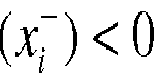

where v 0 is the initial velocity and
where the acceleration profile a(t) is monotonically decreasing/increasing and has one degree of freedom. Three such acceleration profiles are illustrated infigure 6 and given by (23), (24 and (26). - The first acceleration profile is a piecewise constant acceleration profile

where ac gives the acceleration profile one degree of freedom. - The second acceleration profile is given by

where a 0 is the initial host vehicle acceleration and ar = a 0 + jrtj is the acceleration request. - The acceleration rate jr is a parameter which gives an acceleration profile one degree of freedom. A suitable selection of the time tj given by

where a min is the maximum deceleration that the brake system can accomplish and j min is maximum deceleration rate. The acceleration profile (24) is representative for many autonomous brake systems. - The third acceleration profile is given by an exponential function

where a 0 is the initial host vehicle acceleration, k is a constant and ae is a parameter which gives the acceleration profile one degree of freedom. This profile is representative for brake response when the brakes are applied by the driver. - Select the type of acceleration profile that is representative of the brake system in the host vehicle. Since the profiles only has one degree of freedom, the solution is unique for covering a given distance


- Let t̃j = min(tj,ti ), then the solution to (24) is given by

- For the exponential acceleration profile (26), the distance travelled at time ti is given by


- Time delays representing delays in the brake system or driver reaction time may easily be added. The acceleration interval [a -,a +] that will result in a collision within the predicted horizon t ∈ [0,T max] is given by taking the minimum of the brake to avoid solution and the maximum of the accelerate to pass solution.
- Thus, in accordance with the present invention is suggested a method in an automotive vehicle collision avoidance system for autonomous action for avoiding host vehicle collisions with a target. In accordance with the method is provided estimates on the host vehicle state and the target state, e.g. obtained from an in-vehicle sensor fusion system comprising sensors such as radars and cameras that constantly monitor the area in front of the vehicle, possibly combined with vehicle to vehicle communication. The motion of the target is predicted with an arbitrary motion model during a limited prediction horizon. The prediction horizon is divided into a series of discrete time steps. The target is represented as a polygon of arbitrary shape. Boundaries of the polygon that a host vehicle need to avoid for each time step are established. For each such boundary is estimated, using analytical solutions and a motion model for the host vehicle having two degrees of freedom, how the host vehicle need to execute a collision avoidance maneuver in order to avoid reaching said boundary at that specific time step. Finally, a collision avoidance maneuver is executed autonomously based on the result of said estimation for all discrete time steps. When considering how the host vehicle needs to execute the collision avoidance maneuver, this may mean one of two things, either how a driver must act in order to avoid a collision, or how the vehicle must act autonomously in order to avoid a collision.
- As indicated above, the motion model for the host vehicle should have two degrees of freedom, one for steering and one for braking/acceleration. Through selecting a motion model having two degrees of freedom, and as the areas, represented by polygons, that the host vehicle will have to avoid at discrete time instances has been made discrete, it is possible to obtain analytical solutions how to steer, brake or accelerate in order to avoid a collision at each discrete time instance. One degree of freedom is used for steering, with the result that there is only one way to steer in order to get to a certain position. The remaining degree of freedom is used for braking/acceleration, with the result that there is only one way to brake/accelerate in order to move a certain distance in a certain time.
- In the embodiment providing a method how the host vehicle may steer to avoid a collision the step of establishing boundaries comprises finding all corners of the polygon that the host vehicle has to avoid for all time steps. The step of estimating how the host vehicle need to execute a collision avoidance maneuver comprises estimating for each such corner how the host vehicle need to steer to clear this corner. The step of autonomously executing a collision avoidance maneuver comprises executing a steering maneuver that makes the host vehicle clear all polygon corners for all discrete time steps.
- In the embodiment providing a method how the host vehicle may accelerate or brake to avoid a collision the step of establishing boundaries comprises finding all edges of the polygon that the host vehicle has to avoid for each time step. The step of estimating how the host vehicle need to execute a collision avoidance maneuver comprises estimating for each such edge how the host vehicle need to accelerate to pass that edge or brake to avoid reaching that edge at that specific time step. The step of autonomously executing a collision avoidance maneuver comprising executing an acceleration or braking maneuver that makes the host vehicle clear all polygon edges for all discrete time steps.
- If neither of the road users can avoid a collision on their own by steering or accelerating, it is proposed that the method further should comprise: autonomously executing autonomous braking if it is estimated that: - the target cannot avoid a collision on its own, and; - the host vehicle cannot avoid a collision by steering or accelerating, and; - the host vehicle need to use significant braking to avoid a collision, then the host vehicle shall apply the brakes to mitigate a potential collision. Significant braking as used herein means braking utilizing the braking abilities of the host vehicle braking system to the fullest degree allowed by the current circumstances.
- The present invention also relates to an automotive vehicle collision avoidance system for autonomous action for avoiding host vehicle collisions with a target as described above and comprising means for performing the above described steps.
- The present invention also relates to an automotive vehicle comprising an automotive vehicle collision avoidance system including an implementation of the method for autonomous action for avoiding host vehicle collisions with a target as described above.
- The invention is not limited to the above-described embodiments, but may be varied within the scope of the following claims.
- Thus, while there have been shown and described and pointed out fundamental novel features of the invention as applied to a preferred embodiment thereof, it will be understood that various omissions and substitutions and changes in the form and details of the devices illustrated, and in their operation, may be made by those skilled in the art. For example, it is expressly intended that all combinations of those elements and/or method steps which perform substantially the same function in substantially the same way to achieve the same results are within the scope of the invention. Moreover, it should be recognized that structures and/or elements and/or method steps shown and/or described in connection with any disclosed form or embodiment of the invention may be incorporated in any other disclosed or described or suggested form or embodiment as a general matter of design choice. It is the intention, therefore, to be limited only as indicated by the scope of the claims appended hereto.
Claims (9)
- A method in an automotive vehicle collision avoidance system for autonomous action for avoiding host vehicle collisions with a target, characterized in that it comprises the steps of:providing estimates on the host vehicle state and the target state; andpredicting the motion of the target with an arbitrary motion model during a limited prediction horizon; anddividing the prediction horizon into a series of discrete time steps; andrepresenting the target as a polygon of arbitrary shape; andestablishing boundaries of the polygon that a host vehicle need to avoid for each time step; andestimating, using analytical solutions and a motion model for the host vehicle having two degrees of freedom, for each such boundary how the host vehicle need to execute a collision avoidance maneuver in order to avoid reaching said boundary at that specific time step; andautonomously executing a collision avoidance maneuver based on the result of said estimation for all discrete time steps.
- A method according to claim 1,
characterized in that:the step of establishing boundaries comprises finding all corners of the polygon that the host vehicle has to avoid for all time steps; andthe step of estimating how the host vehicle need to execute a collision avoidance maneuver comprises estimating for each such corner how the host vehicle need to steer to clear this corner; andthe step of autonomously executing a collision avoidance maneuver comprising executing a steering maneuver that makes the host vehicle clear all polygon corners for all discrete time steps. - A method according to claim 1,
characterized in that:the step of establishing boundaries comprises finding all edges of the polygon that the host vehicle has to avoid for each time step; andthe step of estimating how the host vehicle need to execute a collision avoidance maneuver comprises estimating for each such edge how the host vehicle need to accelerate to pass that edge or brake to avoid reaching that edge at that specific time step; andthe step of autonomously executing a collision avoidance maneuver comprising executing an acceleration or braking maneuver that makes the host vehicle clear all polygon edges for all discrete time steps. - A method according to any one of claims 1 to 3,
characterized in that it further comprises:autonomously executing autonomous braking if it is estimated that:- the target cannot avoid a collision on its own, and;- the host vehicle cannot avoid a collision by steering or accelerating, and;- the host vehicle need to use significant braking to avoid a collision. - An automotive vehicle collision avoidance system for autonomous action for avoiding host vehicle collisions with a target,
characterized in that it comprises:means for providing estimates on the host vehicle state and the target state; andmeans for predicting the motion of the target with an arbitrary motion model during a limited prediction horizon; andmeans for dividing the prediction horizon into a series of discrete time steps; andmeans for representing the target as a polygon of arbitrary shape; andmeans for establishing boundaries of the target that a host vehicle need to avoid for each time step; andmeans for estimating, using analytical solutions and a motion model for the host vehicle having two degrees of freedom, for each such boundary how the host vehicle need to execute a collision avoidance maneuver in order to avoid reaching said boundary at that specific time step; andmeans for autonomously executing a collision avoidance maneuver based on the result of said estimation for all discrete time steps. - A system according to claims 5,
characterized in that:the means for establishing boundaries comprises means for finding all corners of the polygon that the host vehicle has to avoid for all time steps; andthe means for estimating how the host vehicle need to execute a collision avoidance maneuver comprises means for estimating for each such corner how the host vehicle need to steer to clear this corner; andthe means for autonomously executing a collision avoidance maneuver comprising means for executing a steering maneuver that makes the host vehicle clear all polygon corners for all discrete time steps. - A system according to claim 5,
characterized in that:the means for establishing boundaries comprises means for finding all edges of the target that the host vehicle has to avoid for each time step; andthe means for estimating how the host vehicle need to execute a collision avoidance maneuver comprises means for estimating for each such edge how the host vehicle need to accelerate to pass that edge or brake to avoid reaching that edge at that specific time step; andthe means for autonomously executing a collision avoidance maneuver comprising means for executing an acceleration or braking maneuver that makes the host vehicle clear all target edges for all discrete time steps. - A system according to any one of claims 5 to 7,
characterized in that it further comprises:means for autonomously executing autonomous braking if it is estimated that:- the target cannot avoid a collision on its own, and;- the host vehicle cannot avoid a collision by steering or accelerating, and;- the host vehicle need to use significant braking to avoid a collision. - An automotive vehicle, characterized in that it comprises an automotive vehicle collision avoidance system according to any one of claims 5 to 8.
Priority Applications (1)
| Application Number | Priority Date | Filing Date | Title |
|---|---|---|---|
| EP20090150614 EP2208654B1 (en) | 2009-01-15 | 2009-01-15 | Method and system for avoiding host vehicle collisions with a target |
Applications Claiming Priority (1)
| Application Number | Priority Date | Filing Date | Title |
|---|---|---|---|
| EP20090150614 EP2208654B1 (en) | 2009-01-15 | 2009-01-15 | Method and system for avoiding host vehicle collisions with a target |
Publications (2)
| Publication Number | Publication Date |
|---|---|
| EP2208654A1 true EP2208654A1 (en) | 2010-07-21 |
| EP2208654B1 EP2208654B1 (en) | 2013-06-19 |
Family
ID=40739994
Family Applications (1)
| Application Number | Title | Priority Date | Filing Date |
|---|---|---|---|
| EP20090150614 Not-in-force EP2208654B1 (en) | 2009-01-15 | 2009-01-15 | Method and system for avoiding host vehicle collisions with a target |
Country Status (1)
| Country | Link |
|---|---|
| EP (1) | EP2208654B1 (en) |
Cited By (9)
| Publication number | Priority date | Publication date | Assignee | Title |
|---|---|---|---|---|
| GB2490878A (en) * | 2011-05-12 | 2012-11-21 | Jaguar Cars | A monitoring apparatus for, and a method of, monitoring one or more target objects in an environment external to a host vehicle |
| EP2915716A1 (en) * | 2014-03-06 | 2015-09-09 | Fujitsu Limited | Locus estimation device, locus estimation method and program |
| US9168922B1 (en) | 2014-06-05 | 2015-10-27 | Jaybridge Robotics, Inc. | Computer-implemented methods and systems for predicting an area to be traversed by a moving vehicle |
| WO2017095614A1 (en) * | 2015-12-04 | 2017-06-08 | Waymo Llc | Collision mitigated braking for autonomous vehicles |
| US9827985B2 (en) | 2014-11-21 | 2017-11-28 | Hyundai Motor Company | System and method for autonomous navigation of vehicle |
| EP3456596A1 (en) * | 2017-09-14 | 2019-03-20 | Continental Automotive GmbH | Method and device of predicting a possible collision |
| CN113370973A (en) * | 2021-06-03 | 2021-09-10 | 中国太平洋财产保险股份有限公司 | Forward collision early warning algorithm considering driving intention prediction of front vehicle |
| US20230115857A1 (en) * | 2019-04-22 | 2023-04-13 | Intel Corporation | Computer-assisted driving method and apparatus including automatic mitigation of potential emergency |
| CN116822154A (en) * | 2023-06-01 | 2023-09-29 | 清华大学深圳国际研究生院 | Vehicle status estimation method, device, equipment and storage medium |
Families Citing this family (2)
| Publication number | Priority date | Publication date | Assignee | Title |
|---|---|---|---|---|
| US10829113B2 (en) | 2018-09-17 | 2020-11-10 | Ford Global Technologies, Llc | Vehicle collision avoidance |
| CN111634292B (en) * | 2020-05-18 | 2021-10-19 | 北京踏歌智行科技有限公司 | A Collision Prediction Method for Mining Areas |
Citations (6)
| Publication number | Priority date | Publication date | Assignee | Title |
|---|---|---|---|---|
| DE102005002760A1 (en) * | 2004-01-20 | 2005-08-11 | Volkswagen Ag | Vehicle accident avoidance method in which dynamic models of objects in the vehicle surroundings and of the vehicle itself are used to calculate a collision probability and determine a collision avoidance trajectory |
| US20080040040A1 (en) * | 2006-08-08 | 2008-02-14 | Takanori Goto | Obstacle avoidance method and obstacle-avoidable mobile apparatus |
| WO2008031662A1 (en) * | 2006-09-12 | 2008-03-20 | Robert Bosch Gmbh | Method for avoiding or reducing the consequences of a collision between a vehicle and at least one object |
| US20080071469A1 (en) * | 2006-09-14 | 2008-03-20 | Toyota Engineering & Manufacturing North America, Inc.. | Method and system for predicting a future position of a vehicle using numerical integration |
| EP1990250A2 (en) * | 2007-05-11 | 2008-11-12 | Nissan Motor Company, Ltd. | Vehicle running control method for avoiding that a vehicle collides with an obstacle |
| EP2006181A2 (en) * | 2006-03-22 | 2008-12-24 | Nissan Motor Co., Ltd. | Avoidance operation calculation device, avoidance control device, vehicle with each of the devices, avoidance operation calculation method, and avoidance control method |
-
2009
- 2009-01-15 EP EP20090150614 patent/EP2208654B1/en not_active Not-in-force
Patent Citations (6)
| Publication number | Priority date | Publication date | Assignee | Title |
|---|---|---|---|---|
| DE102005002760A1 (en) * | 2004-01-20 | 2005-08-11 | Volkswagen Ag | Vehicle accident avoidance method in which dynamic models of objects in the vehicle surroundings and of the vehicle itself are used to calculate a collision probability and determine a collision avoidance trajectory |
| EP2006181A2 (en) * | 2006-03-22 | 2008-12-24 | Nissan Motor Co., Ltd. | Avoidance operation calculation device, avoidance control device, vehicle with each of the devices, avoidance operation calculation method, and avoidance control method |
| US20080040040A1 (en) * | 2006-08-08 | 2008-02-14 | Takanori Goto | Obstacle avoidance method and obstacle-avoidable mobile apparatus |
| WO2008031662A1 (en) * | 2006-09-12 | 2008-03-20 | Robert Bosch Gmbh | Method for avoiding or reducing the consequences of a collision between a vehicle and at least one object |
| US20080071469A1 (en) * | 2006-09-14 | 2008-03-20 | Toyota Engineering & Manufacturing North America, Inc.. | Method and system for predicting a future position of a vehicle using numerical integration |
| EP1990250A2 (en) * | 2007-05-11 | 2008-11-12 | Nissan Motor Company, Ltd. | Vehicle running control method for avoiding that a vehicle collides with an obstacle |
Cited By (14)
| Publication number | Priority date | Publication date | Assignee | Title |
|---|---|---|---|---|
| GB2490878A (en) * | 2011-05-12 | 2012-11-21 | Jaguar Cars | A monitoring apparatus for, and a method of, monitoring one or more target objects in an environment external to a host vehicle |
| GB2490878B (en) * | 2011-05-12 | 2013-08-07 | Jaguar Cars | Monitoring apparatus and method |
| EP2915716A1 (en) * | 2014-03-06 | 2015-09-09 | Fujitsu Limited | Locus estimation device, locus estimation method and program |
| US9511776B2 (en) | 2014-03-06 | 2016-12-06 | Fujitsu Limited | Locus estimation device and locus estimating method |
| US9168922B1 (en) | 2014-06-05 | 2015-10-27 | Jaybridge Robotics, Inc. | Computer-implemented methods and systems for predicting an area to be traversed by a moving vehicle |
| US9827985B2 (en) | 2014-11-21 | 2017-11-28 | Hyundai Motor Company | System and method for autonomous navigation of vehicle |
| WO2017095614A1 (en) * | 2015-12-04 | 2017-06-08 | Waymo Llc | Collision mitigated braking for autonomous vehicles |
| US9862364B2 (en) | 2015-12-04 | 2018-01-09 | Waymo Llc | Collision mitigated braking for autonomous vehicles |
| EP3456596A1 (en) * | 2017-09-14 | 2019-03-20 | Continental Automotive GmbH | Method and device of predicting a possible collision |
| US20230115857A1 (en) * | 2019-04-22 | 2023-04-13 | Intel Corporation | Computer-assisted driving method and apparatus including automatic mitigation of potential emergency |
| US11952003B2 (en) * | 2019-04-22 | 2024-04-09 | Mobileye Vision Technologies Ltd. | Computer-assisted driving method and apparatus including automatic mitigation of potential emergency |
| CN113370973A (en) * | 2021-06-03 | 2021-09-10 | 中国太平洋财产保险股份有限公司 | Forward collision early warning algorithm considering driving intention prediction of front vehicle |
| CN113370973B (en) * | 2021-06-03 | 2023-07-21 | 中国太平洋财产保险股份有限公司 | A Forward Collision Warning Algorithm Considering the Prediction of the Driving Intention of the Front Vehicle |
| CN116822154A (en) * | 2023-06-01 | 2023-09-29 | 清华大学深圳国际研究生院 | Vehicle status estimation method, device, equipment and storage medium |
Also Published As
| Publication number | Publication date |
|---|---|
| EP2208654B1 (en) | 2013-06-19 |
Similar Documents
| Publication | Publication Date | Title |
|---|---|---|
| EP2208654B1 (en) | Method and system for avoiding host vehicle collisions with a target | |
| Isermann et al. | Collision-avoidance systems PRORETA: Situation analysis and intervention control | |
| Brännström et al. | Model-based threat assessment for avoiding arbitrary vehicle collisions | |
| EP2990290B1 (en) | Method and system for post-collision manoeuvre planning and vehicle equipped with such system | |
| US9159023B2 (en) | System for predicting a driver's intention to change lanes | |
| CN101497330B (en) | A system for collision course prediction | |
| US7515056B2 (en) | Method and apparatus for preventing collisions of vehicles | |
| EP3715204A1 (en) | Vehicle control device | |
| US20200238980A1 (en) | Vehicle control device | |
| US20200094829A1 (en) | Driving support control device | |
| US20110313665A1 (en) | Method for Automatically Detecting a Driving Maneuver of a Motor Vehicle and a Driver Assistance System Comprising Said Method | |
| US20200353918A1 (en) | Vehicle control device | |
| US20140350837A1 (en) | Method for an automatic intervention into an ego vehicle when traveling erroneously, in particular when traveling the wrong way | |
| EP2302412A1 (en) | System and method for evaluation of an automotive vehicle forward collision threat | |
| US20140303845A1 (en) | Limiting the activation of an emergency steer assistant | |
| EP3581452A1 (en) | Driving assist control device | |
| Brannstrom et al. | A situation and threat assessment algorithm for a rear-end collision avoidance system | |
| EP2211322B1 (en) | Method and system for forward collision avoidance in an automotive vehicle | |
| EP2595135A1 (en) | Method and arrangement for collision avoidance | |
| JP2019209910A (en) | Vehicle control system | |
| EP2172920B1 (en) | Threat assessment for unexpected events | |
| CN116853235A (en) | Collision early warning method, device, computer equipment and storage medium | |
| Soudbakhsh et al. | An emergency evasive maneuver algorithm for vehicles | |
| Silberling et al. | Development and application of a collision avoidance capability metric | |
| Brannstrom et al. | Threat assessment for avoiding collisions with turning vehicles |
Legal Events
| Date | Code | Title | Description |
|---|---|---|---|
| PUAI | Public reference made under article 153(3) epc to a published international application that has entered the european phase |
Free format text: ORIGINAL CODE: 0009012 |
|
| AK | Designated contracting states |
Kind code of ref document: A1 Designated state(s): AT BE BG CH CY CZ DE DK EE ES FI FR GB GR HR HU IE IS IT LI LT LU LV MC MK MT NL NO PL PT RO SE SI SK TR |
|
| AX | Request for extension of the european patent |
Extension state: AL BA RS |
|
| 17P | Request for examination filed |
Effective date: 20110121 |
|
| AKX | Designation fees paid |
Designated state(s): DE GB SE |
|
| 17Q | First examination report despatched |
Effective date: 20110314 |
|
| RAP1 | Party data changed (applicant data changed or rights of an application transferred) |
Owner name: VOLVO CAR CORPORATION |
|
| GRAP | Despatch of communication of intention to grant a patent |
Free format text: ORIGINAL CODE: EPIDOSNIGR1 |
|
| RIN1 | Information on inventor provided before grant (corrected) |
Inventor name: COELINGH, ERIK Inventor name: SJOEBERG, JONAS Inventor name: BRAENNSTROEM, MATTIAS |
|
| GRAP | Despatch of communication of intention to grant a patent |
Free format text: ORIGINAL CODE: EPIDOSNIGR1 |
|
| GRAS | Grant fee paid |
Free format text: ORIGINAL CODE: EPIDOSNIGR3 |
|
| GRAA | (expected) grant |
Free format text: ORIGINAL CODE: 0009210 |
|
| AK | Designated contracting states |
Kind code of ref document: B1 Designated state(s): DE GB SE |
|
| REG | Reference to a national code |
Ref country code: GB Ref legal event code: FG4D |
|
| REG | Reference to a national code |
Ref country code: DE Ref legal event code: R096 Ref document number: 602009016462 Country of ref document: DE Effective date: 20130814 |
|
| REG | Reference to a national code |
Ref country code: SE Ref legal event code: TRGR |
|
| PLBE | No opposition filed within time limit |
Free format text: ORIGINAL CODE: 0009261 |
|
| STAA | Information on the status of an ep patent application or granted ep patent |
Free format text: STATUS: NO OPPOSITION FILED WITHIN TIME LIMIT |
|
| 26N | No opposition filed |
Effective date: 20140320 |
|
| REG | Reference to a national code |
Ref country code: DE Ref legal event code: R097 Ref document number: 602009016462 Country of ref document: DE Effective date: 20140320 |
|
| PGFP | Annual fee paid to national office [announced via postgrant information from national office to epo] |
Ref country code: SE Payment date: 20201211 Year of fee payment: 13 |
|
| REG | Reference to a national code |
Ref country code: SE Ref legal event code: EUG |
|
| PG25 | Lapsed in a contracting state [announced via postgrant information from national office to epo] |
Ref country code: SE Free format text: LAPSE BECAUSE OF NON-PAYMENT OF DUE FEES Effective date: 20220116 |
|
| P01 | Opt-out of the competence of the unified patent court (upc) registered |
Effective date: 20231212 |
|
| PGFP | Annual fee paid to national office [announced via postgrant information from national office to epo] |
Ref country code: GB Payment date: 20231219 Year of fee payment: 16 |
|
| PGFP | Annual fee paid to national office [announced via postgrant information from national office to epo] |
Ref country code: DE Payment date: 20231219 Year of fee payment: 16 |
|
| REG | Reference to a national code |
Ref country code: DE Ref legal event code: R119 Ref document number: 602009016462 Country of ref document: DE |
|
| GBPC | Gb: european patent ceased through non-payment of renewal fee |
Effective date: 20250115 |
|
| PG25 | Lapsed in a contracting state [announced via postgrant information from national office to epo] |
Ref country code: DE Free format text: LAPSE BECAUSE OF NON-PAYMENT OF DUE FEES Effective date: 20250801 |
|
| PG25 | Lapsed in a contracting state [announced via postgrant information from national office to epo] |
Ref country code: GB Free format text: LAPSE BECAUSE OF NON-PAYMENT OF DUE FEES Effective date: 20250115 |