EP2132178B1 - Jnk inhibitors - Google Patents
Jnk inhibitors Download PDFInfo
- Publication number
- EP2132178B1 EP2132178B1 EP07863005.0A EP07863005A EP2132178B1 EP 2132178 B1 EP2132178 B1 EP 2132178B1 EP 07863005 A EP07863005 A EP 07863005A EP 2132178 B1 EP2132178 B1 EP 2132178B1
- Authority
- EP
- European Patent Office
- Prior art keywords
- alkyl
- compound
- group
- substituted
- mmol
- Prior art date
- Legal status (The legal status is an assumption and is not a legal conclusion. Google has not performed a legal analysis and makes no representation as to the accuracy of the status listed.)
- Active
Links
- 0 Nc1nc(ccc(C*(S)S)c2)c2[s]1 Chemical compound Nc1nc(ccc(C*(S)S)c2)c2[s]1 0.000 description 20
- SHULWGXWBNUUPJ-UHFFFAOYSA-N CC(C)NC(c1cccc(C(NCc(cc2)cc3c2[s]c(NC(N)=O)n3)=O)n1)=O Chemical compound CC(C)NC(c1cccc(C(NCc(cc2)cc3c2[s]c(NC(N)=O)n3)=O)n1)=O SHULWGXWBNUUPJ-UHFFFAOYSA-N 0.000 description 3
- UWMSAECDBLADTG-UHFFFAOYSA-N CC(C)(C)NC(c1cccc(C(NCc2ccc3nc(N)[s]c3c2)=O)n1)=O Chemical compound CC(C)(C)NC(c1cccc(C(NCc2ccc3nc(N)[s]c3c2)=O)n1)=O UWMSAECDBLADTG-UHFFFAOYSA-N 0.000 description 2
- KQANRVWXLSZHOC-UHFFFAOYSA-N CC(C)NC(c1nc(C(NCc2c[n](-c(cc3)ccc3S(N)(=O)=O)nc2)=O)ccc1)=O Chemical compound CC(C)NC(c1nc(C(NCc2c[n](-c(cc3)ccc3S(N)(=O)=O)nc2)=O)ccc1)=O KQANRVWXLSZHOC-UHFFFAOYSA-N 0.000 description 2
- ZBWXGFKMKHXRJG-UHFFFAOYSA-N CC(C)NC(c1nc(C(NCc2c[n](-c3cc(Cl)cc(Cl)c3)nc2)=O)ccc1)=O Chemical compound CC(C)NC(c1nc(C(NCc2c[n](-c3cc(Cl)cc(Cl)c3)nc2)=O)ccc1)=O ZBWXGFKMKHXRJG-UHFFFAOYSA-N 0.000 description 2
- RIRWMTQOUJAQOT-UHFFFAOYSA-N CC(C)NC(c1nc(C(NCc2cc(Cl)ccc2)=O)ccc1)=O Chemical compound CC(C)NC(c1nc(C(NCc2cc(Cl)ccc2)=O)ccc1)=O RIRWMTQOUJAQOT-UHFFFAOYSA-N 0.000 description 2
- YULVCGRXMCKEKW-UHFFFAOYSA-N CC(C)NC(c1nc(C(NCc2ccn[n]2-c(cc2)ccc2S(C)(=O)=O)=O)ccc1)=O Chemical compound CC(C)NC(c1nc(C(NCc2ccn[n]2-c(cc2)ccc2S(C)(=O)=O)=O)ccc1)=O YULVCGRXMCKEKW-UHFFFAOYSA-N 0.000 description 2
- RRFPLVBBNBSNPH-UHFFFAOYSA-N CC(NCc(cc1)cc2c1nc[s]2)=O Chemical compound CC(NCc(cc1)cc2c1nc[s]2)=O RRFPLVBBNBSNPH-UHFFFAOYSA-N 0.000 description 2
- XQMYIJXIOJNPBG-UHFFFAOYSA-N CCOC(N(CC1)CCC1NC(c1nc(NCc(cc2)cc3c2OCO3)ccc1)=O)=O Chemical compound CCOC(N(CC1)CCC1NC(c1nc(NCc(cc2)cc3c2OCO3)ccc1)=O)=O XQMYIJXIOJNPBG-UHFFFAOYSA-N 0.000 description 2
- LFHYTQLBCKSKEC-UHFFFAOYSA-N CS(c1ccc(CNC(c2cccc(-c(cc3)cc4c3OCO4)n2)=O)cc1)(=O)=O Chemical compound CS(c1ccc(CNC(c2cccc(-c(cc3)cc4c3OCO4)n2)=O)cc1)(=O)=O LFHYTQLBCKSKEC-UHFFFAOYSA-N 0.000 description 2
- KWYZKEKZYOTINI-UHFFFAOYSA-N CS(c1ccc(CNC(c2nc(-c3nc(cccc4)c4[nH]3)ccc2)=O)cc1)(=O)=O Chemical compound CS(c1ccc(CNC(c2nc(-c3nc(cccc4)c4[nH]3)ccc2)=O)cc1)(=O)=O KWYZKEKZYOTINI-UHFFFAOYSA-N 0.000 description 2
- XOZGCABRPOXZHV-UHFFFAOYSA-N Nc1nc(ccc(CNC(c2cccc(C(NC3CCCCC3)=O)n2)=O)c2)c2[s]1 Chemical compound Nc1nc(ccc(CNC(c2cccc(C(NC3CCCCC3)=O)n2)=O)c2)c2[s]1 XOZGCABRPOXZHV-UHFFFAOYSA-N 0.000 description 2
- XBLRDZXHKCHYDR-UHFFFAOYSA-N O=C(c1cccc(N2CCCC2)n1)NCc1c[n](-c2cc(C(F)(F)F)ccc2)nc1 Chemical compound O=C(c1cccc(N2CCCC2)n1)NCc1c[n](-c2cc(C(F)(F)F)ccc2)nc1 XBLRDZXHKCHYDR-UHFFFAOYSA-N 0.000 description 2
- JZLMHSMSFFNWSY-UHFFFAOYSA-N O=C(c1nc(-[n]2ncc(I)c2)ccc1)NCc1c[n](-c2ccccc2)nc1 Chemical compound O=C(c1nc(-[n]2ncc(I)c2)ccc1)NCc1c[n](-c2ccccc2)nc1 JZLMHSMSFFNWSY-UHFFFAOYSA-N 0.000 description 2
- KMMHZIBWCXYAAH-UHFFFAOYSA-N O=S(c(cc1)ccc1Br)(Cl)=O Chemical compound O=S(c(cc1)ccc1Br)(Cl)=O KMMHZIBWCXYAAH-UHFFFAOYSA-N 0.000 description 2
- DQTDPFYKQAQVJU-UHFFFAOYSA-N Brc1cc2ncccc2nc1 Chemical compound Brc1cc2ncccc2nc1 DQTDPFYKQAQVJU-UHFFFAOYSA-N 0.000 description 1
- PTVWISOJAANKAQ-UHFFFAOYSA-N CC(C)(C)OC(N(CC1)CCC1NC(c1cccc(C(O)=O)c1)=O)=O Chemical compound CC(C)(C)OC(N(CC1)CCC1NC(c1cccc(C(O)=O)c1)=O)=O PTVWISOJAANKAQ-UHFFFAOYSA-N 0.000 description 1
- MPRTYGKBNOQGOB-UHFFFAOYSA-N CC(C)(C)OC(N(CC1)CCC1NC(c1cccc(C(OC)=O)c1)=O)=O Chemical compound CC(C)(C)OC(N(CC1)CCC1NC(c1cccc(C(OC)=O)c1)=O)=O MPRTYGKBNOQGOB-UHFFFAOYSA-N 0.000 description 1
- LNHVAYWWGBULAM-UHFFFAOYSA-N CC(C)(C)OC(Nc1nc2ccc(CNC(c3nc(Cl)ccc3)=O)cc2[s]1)=O Chemical compound CC(C)(C)OC(Nc1nc2ccc(CNC(c3nc(Cl)ccc3)=O)cc2[s]1)=O LNHVAYWWGBULAM-UHFFFAOYSA-N 0.000 description 1
- KFHHSVRKTHRFFI-UHFFFAOYSA-N CC(C)C(N(C(C(C)C)=O)c1cccc(C(NCc2c[n](-c3cccc(C(F)(F)F)c3)nc2)=O)n1)=O Chemical compound CC(C)C(N(C(C(C)C)=O)c1cccc(C(NCc2c[n](-c3cccc(C(F)(F)F)c3)nc2)=O)n1)=O KFHHSVRKTHRFFI-UHFFFAOYSA-N 0.000 description 1
- QAKZCNMHZVAHSZ-UHFFFAOYSA-N CC(C)C(Nc1cccc(C(NCc2c[n](-c3cc(C(F)(F)F)ccc3)nc2)=O)n1)=O Chemical compound CC(C)C(Nc1cccc(C(NCc2c[n](-c3cc(C(F)(F)F)ccc3)nc2)=O)n1)=O QAKZCNMHZVAHSZ-UHFFFAOYSA-N 0.000 description 1
- HYHHADINYOTMMZ-UHFFFAOYSA-N CC(C)CCNC(c1nc(C(NCc2ccc3nc(N)[s]c3c2)=O)ccc1)=O Chemical compound CC(C)CCNC(c1nc(C(NCc2ccc3nc(N)[s]c3c2)=O)ccc1)=O HYHHADINYOTMMZ-UHFFFAOYSA-N 0.000 description 1
- RXUKTUKSRIMXPC-UHFFFAOYSA-N CC(C)CNc1cccc(C(NCc(cc2)ccc2S(C)(=O)=O)=O)n1 Chemical compound CC(C)CNc1cccc(C(NCc(cc2)ccc2S(C)(=O)=O)=O)n1 RXUKTUKSRIMXPC-UHFFFAOYSA-N 0.000 description 1
- BEFIREAVHGDDOA-AWEZNQCLSA-N CC(C)C[C@@H](CO)NC(c1nc(C(NCc2ccc3nc(N)[s]c3c2)=O)ccc1)=O Chemical compound CC(C)C[C@@H](CO)NC(c1nc(C(NCc2ccc3nc(N)[s]c3c2)=O)ccc1)=O BEFIREAVHGDDOA-AWEZNQCLSA-N 0.000 description 1
- GEHYWKYCCULXTC-UHFFFAOYSA-N CC(C)NC(c(nc1C(NCc2c[n](-c3cc(C)ccc3)nc2)=O)ccc1F)=O Chemical compound CC(C)NC(c(nc1C(NCc2c[n](-c3cc(C)ccc3)nc2)=O)ccc1F)=O GEHYWKYCCULXTC-UHFFFAOYSA-N 0.000 description 1
- WACUXMPPMCBUIX-KXBCXFCRSA-N CC(C)NC(c1cccc(C(NC/C(/C=N)=C/Nc2ccc3[nH]cnc3c2)=O)n1)=O Chemical compound CC(C)NC(c1cccc(C(NC/C(/C=N)=C/Nc2ccc3[nH]cnc3c2)=O)n1)=O WACUXMPPMCBUIX-KXBCXFCRSA-N 0.000 description 1
- UEVPXVWTLDUWLR-UHFFFAOYSA-N CC(C)NC(c1cccc(C(NCc(cc2)cc3c2nc(N)[s]3)=O)n1)=O Chemical compound CC(C)NC(c1cccc(C(NCc(cc2)cc3c2nc(N)[s]3)=O)n1)=O UEVPXVWTLDUWLR-UHFFFAOYSA-N 0.000 description 1
- GNIZFGVUNZVUNQ-UHFFFAOYSA-N CC(C)NC(c1cccc(C(NCc(cc2)ccc2-[n]2nccc2)=O)n1)=O Chemical compound CC(C)NC(c1cccc(C(NCc(cc2)ccc2-[n]2nccc2)=O)n1)=O GNIZFGVUNZVUNQ-UHFFFAOYSA-N 0.000 description 1
- HEUMONGPQOTMQH-UHFFFAOYSA-N CC(C)NC(c1cccc(C(NCc(cc2)ccc2-c2cc(S(C)(=O)=O)ccc2)=O)n1)=O Chemical compound CC(C)NC(c1cccc(C(NCc(cc2)ccc2-c2cc(S(C)(=O)=O)ccc2)=O)n1)=O HEUMONGPQOTMQH-UHFFFAOYSA-N 0.000 description 1
- YAMHPYDOAHVUPA-UHFFFAOYSA-N CC(C)NC(c1cccc(C(NCc(cc2)ccc2S(C)(=O)=O)=O)n1)=O Chemical compound CC(C)NC(c1cccc(C(NCc(cc2)ccc2S(C)(=O)=O)=O)n1)=O YAMHPYDOAHVUPA-UHFFFAOYSA-N 0.000 description 1
- LVLUXSIXZFHDRA-UHFFFAOYSA-N CC(C)NC(c1cccc(C(NCc2c[n](-c(cc3)c[n]4c3ncc4)nc2)=O)n1)=O Chemical compound CC(C)NC(c1cccc(C(NCc2c[n](-c(cc3)c[n]4c3ncc4)nc2)=O)n1)=O LVLUXSIXZFHDRA-UHFFFAOYSA-N 0.000 description 1
- PXQQHZFPMMSRRF-UHFFFAOYSA-N CC(C)NC(c1cccc(C(NCc2c[n](-c(cc3)ccc3S(C)=O)nc2)=O)n1)=O Chemical compound CC(C)NC(c1cccc(C(NCc2c[n](-c(cc3)ccc3S(C)=O)nc2)=O)n1)=O PXQQHZFPMMSRRF-UHFFFAOYSA-N 0.000 description 1
- WCKDNONTAGIDAQ-UHFFFAOYSA-N CC(C)NC(c1cccc(C(NCc2c[n](-c(cc3)ccc3S(N(C)C)(=O)=O)nc2)=O)n1)=O Chemical compound CC(C)NC(c1cccc(C(NCc2c[n](-c(cc3)ccc3S(N(C)C)(=O)=O)nc2)=O)n1)=O WCKDNONTAGIDAQ-UHFFFAOYSA-N 0.000 description 1
- IOWRYNADYLXYST-UHFFFAOYSA-N CC(C)NC(c1cccc(C(NCc2c[n](-c3cc(C#N)cc(Br)c3)nc2)=O)n1)=O Chemical compound CC(C)NC(c1cccc(C(NCc2c[n](-c3cc(C#N)cc(Br)c3)nc2)=O)n1)=O IOWRYNADYLXYST-UHFFFAOYSA-N 0.000 description 1
- UQTBUBKFDRBMQM-UHFFFAOYSA-N CC(C)NC(c1cccc(C(NCc2c[n](-c3cc(F)cnc3)nc2)=O)n1)=O Chemical compound CC(C)NC(c1cccc(C(NCc2c[n](-c3cc(F)cnc3)nc2)=O)n1)=O UQTBUBKFDRBMQM-UHFFFAOYSA-N 0.000 description 1
- TXKKZHVLFYPZMJ-UHFFFAOYSA-N CC(C)NC(c1cccc(C(NCc2c[n](-c3ccc4nc[n](C)c4c3)nc2)=O)n1)=O Chemical compound CC(C)NC(c1cccc(C(NCc2c[n](-c3ccc4nc[n](C)c4c3)nc2)=O)n1)=O TXKKZHVLFYPZMJ-UHFFFAOYSA-N 0.000 description 1
- LKJMJQAYSHKEBN-UHFFFAOYSA-N CC(C)NC(c1cccc(C(NCc2cc(-c(cc3)ccc3S(C)(=O)=O)ccc2)=O)n1)=O Chemical compound CC(C)NC(c1cccc(C(NCc2cc(-c(cc3)ccc3S(C)(=O)=O)ccc2)=O)n1)=O LKJMJQAYSHKEBN-UHFFFAOYSA-N 0.000 description 1
- RSXPFUNQQHAWDY-UHFFFAOYSA-N CC(C)NC(c1cccc(C(NCc2cccnc2)=O)n1)=O Chemical compound CC(C)NC(c1cccc(C(NCc2cccnc2)=O)n1)=O RSXPFUNQQHAWDY-UHFFFAOYSA-N 0.000 description 1
- MTKHKVCJCPNXMB-UHFFFAOYSA-N CC(C)NC(c1cccc(C(NCc2cncc(-c3cccc(C#N)c3)c2)=O)n1)=O Chemical compound CC(C)NC(c1cccc(C(NCc2cncc(-c3cccc(C#N)c3)c2)=O)n1)=O MTKHKVCJCPNXMB-UHFFFAOYSA-N 0.000 description 1
- TVAWGYHCQKIKBE-UHFFFAOYSA-N CC(C)NC(c1nc(-[n]2ncc(I)c2)ccc1)=O Chemical compound CC(C)NC(c1nc(-[n]2ncc(I)c2)ccc1)=O TVAWGYHCQKIKBE-UHFFFAOYSA-N 0.000 description 1
- OQYGDLAOZKXQDS-UHFFFAOYSA-N CC(C)NC(c1nc(C(NCC(C2)C=NN2c(cc2)cc3c2nccn3)=O)cc(OC(C)(C)C)c1)=O Chemical compound CC(C)NC(c1nc(C(NCC(C2)C=NN2c(cc2)cc3c2nccn3)=O)cc(OC(C)(C)C)c1)=O OQYGDLAOZKXQDS-UHFFFAOYSA-N 0.000 description 1
- BLDIBHXTUHNLDE-UHFFFAOYSA-N CC(C)NC(c1nc(C(NCC(CC2)CCN2c(cc2)ccc2S(C)=O)=O)ccc1)=O Chemical compound CC(C)NC(c1nc(C(NCC(CC2)CCN2c(cc2)ccc2S(C)=O)=O)ccc1)=O BLDIBHXTUHNLDE-UHFFFAOYSA-N 0.000 description 1
- FOORUZOHJRGGGH-UHFFFAOYSA-N CC(C)NC(c1nc(C(NCc(cc2)cnc2-c2cc(C#N)ccc2)=O)ccc1)=O Chemical compound CC(C)NC(c1nc(C(NCc(cc2)cnc2-c2cc(C#N)ccc2)=O)ccc1)=O FOORUZOHJRGGGH-UHFFFAOYSA-N 0.000 description 1
- RZXYOBKHGABOQH-UHFFFAOYSA-N CC(C)NC(c1nc(C(NCc(cc2)cnc2-c2cc(F)ccc2)=O)ccc1)=O Chemical compound CC(C)NC(c1nc(C(NCc(cc2)cnc2-c2cc(F)ccc2)=O)ccc1)=O RZXYOBKHGABOQH-UHFFFAOYSA-N 0.000 description 1
- NJHQDTWTZWTWSU-UHFFFAOYSA-N CC(C)NC(c1nc(C(NCc2c[n](-c(cc3)cc4c3nccn4)nc2)=O)cc(O)c1)=O Chemical compound CC(C)NC(c1nc(C(NCc2c[n](-c(cc3)cc4c3nccn4)nc2)=O)cc(O)c1)=O NJHQDTWTZWTWSU-UHFFFAOYSA-N 0.000 description 1
- NCZUJXRXSSCMHR-UHFFFAOYSA-N CC(C)NC(c1nc(C(NCc2c[n](-c(cc3C(F)(F)F)ccc3F)nc2)=O)ccc1)=O Chemical compound CC(C)NC(c1nc(C(NCc2c[n](-c(cc3C(F)(F)F)ccc3F)nc2)=O)ccc1)=O NCZUJXRXSSCMHR-UHFFFAOYSA-N 0.000 description 1
- MGAKKMRGTTWVHC-UHFFFAOYSA-N CC(C)NC(c1nc(C(NCc2c[n](-c3cc(C)ccc3)nc2)=O)ccc1)=O Chemical compound CC(C)NC(c1nc(C(NCc2c[n](-c3cc(C)ccc3)nc2)=O)ccc1)=O MGAKKMRGTTWVHC-UHFFFAOYSA-N 0.000 description 1
- UJPZPZYWJJLQSI-UHFFFAOYSA-N CC(C)NC(c1nc(C(NCc2c[n](-c3cc(S(C)(=O)=O)ccc3)nc2)=O)ccc1)=O Chemical compound CC(C)NC(c1nc(C(NCc2c[n](-c3cc(S(C)(=O)=O)ccc3)nc2)=O)ccc1)=O UJPZPZYWJJLQSI-UHFFFAOYSA-N 0.000 description 1
- MTPQERLTUJJAES-UHFFFAOYSA-N CC(C)NC(c1nc(C(NCc2c[n](-c3cc(nc[nH]4)c4nc3)nc2)=O)ccc1)=O Chemical compound CC(C)NC(c1nc(C(NCc2c[n](-c3cc(nc[nH]4)c4nc3)nc2)=O)ccc1)=O MTPQERLTUJJAES-UHFFFAOYSA-N 0.000 description 1
- KFDYHJRGYRKXLN-UHFFFAOYSA-N CC(C)NC(c1nc(C(NCc2c[n](-c3cc4ncccc4nc3)nc2)=O)ccc1)=O Chemical compound CC(C)NC(c1nc(C(NCc2c[n](-c3cc4ncccc4nc3)nc2)=O)ccc1)=O KFDYHJRGYRKXLN-UHFFFAOYSA-N 0.000 description 1
- XJLGLIPNXVPBHD-UHFFFAOYSA-N CC(C)NC(c1nc(C(NCc2cc(-c(cc3)ccc3C#N)cnc2)=O)ccc1)=O Chemical compound CC(C)NC(c1nc(C(NCc2cc(-c(cc3)ccc3C#N)cnc2)=O)ccc1)=O XJLGLIPNXVPBHD-UHFFFAOYSA-N 0.000 description 1
- XOYDCLRIMQQUSJ-UHFFFAOYSA-N CC(C)NC(c1nc(C(NCc2cc(-c3ccccc3)ccc2)=O)ccc1)=O Chemical compound CC(C)NC(c1nc(C(NCc2cc(-c3ccccc3)ccc2)=O)ccc1)=O XOYDCLRIMQQUSJ-UHFFFAOYSA-N 0.000 description 1
- LAHLQAQNRTUWDX-UHFFFAOYSA-N CC(C)NC(c1nc(C(NCc2cncc(-c(cc3)ccc3S(C)(=O)=O)c2)=O)ccc1)=O Chemical compound CC(C)NC(c1nc(C(NCc2cncc(-c(cc3)ccc3S(C)(=O)=O)c2)=O)ccc1)=O LAHLQAQNRTUWDX-UHFFFAOYSA-N 0.000 description 1
- IMFCCLNKZCNOKL-INIZCTEOSA-N CC(C)[C@H](CO)NC(c1cccc(C(NCc2ccc3nc(N)[s]c3c2)=O)n1)=O Chemical compound CC(C)[C@H](CO)NC(c1cccc(C(NCc2ccc3nc(N)[s]c3c2)=O)n1)=O IMFCCLNKZCNOKL-INIZCTEOSA-N 0.000 description 1
- TYQIVKMBXKORGC-UHFFFAOYSA-N CC(CCO)C/[O]=C(/c1cccc(C(NCC(CC2)=Cc3c2nc(N)[s]3)=O)n1)\N Chemical compound CC(CCO)C/[O]=C(/c1cccc(C(NCC(CC2)=Cc3c2nc(N)[s]3)=O)n1)\N TYQIVKMBXKORGC-UHFFFAOYSA-N 0.000 description 1
- OURBDEASHXHITG-UHFFFAOYSA-N CC(N(C)c1cccc(C(NCc2c[n](-c3cc(C(F)(F)F)ccc3)nc2)=O)n1)=O Chemical compound CC(N(C)c1cccc(C(NCc2c[n](-c3cc(C(F)(F)F)ccc3)nc2)=O)n1)=O OURBDEASHXHITG-UHFFFAOYSA-N 0.000 description 1
- YXKOXEBYUOZHJW-UHFFFAOYSA-N CC(N(CC1)CCC1NC(c1nc(C(NCc2ccc3nc(N)[s]c3c2)=O)ccc1)=O)=O Chemical compound CC(N(CC1)CCC1NC(c1nc(C(NCc2ccc3nc(N)[s]c3c2)=O)ccc1)=O)=O YXKOXEBYUOZHJW-UHFFFAOYSA-N 0.000 description 1
- VUACUNLKPNBUJJ-UHFFFAOYSA-N CC(NCCNC(c1cccc(C(NCc2ccc3nc(N)[s]c3c2)=O)n1)=O)=O Chemical compound CC(NCCNC(c1cccc(C(NCc2ccc3nc(N)[s]c3c2)=O)n1)=O)=O VUACUNLKPNBUJJ-UHFFFAOYSA-N 0.000 description 1
- MLMFEOLJABDAKO-UHFFFAOYSA-N CC(NCc1c[n](-c2cc3nccnc3cc2)nc1)=O Chemical compound CC(NCc1c[n](-c2cc3nccnc3cc2)nc1)=O MLMFEOLJABDAKO-UHFFFAOYSA-N 0.000 description 1
- ZKCMIWVHVFPJNY-UHFFFAOYSA-N CC(NCc1c[n](-c2ccc3nc(C)[n](C)c3c2)nc1)=O Chemical compound CC(NCc1c[n](-c2ccc3nc(C)[n](C)c3c2)nc1)=O ZKCMIWVHVFPJNY-UHFFFAOYSA-N 0.000 description 1
- FMPREYNUGMFIOE-UHFFFAOYSA-N CCC(C)NC(c1nc(C(NCc2ccc3nc(N)[s]c3c2)=O)ccc1)=O Chemical compound CCC(C)NC(c1nc(C(NCc2ccc3nc(N)[s]c3c2)=O)ccc1)=O FMPREYNUGMFIOE-UHFFFAOYSA-N 0.000 description 1
- CQNWWBWVJUAURH-IRKKSBDQSA-N CCC1=C([C@H]2C(CCNC(/C(/N=C(\C)/COCNCC(C)C)=[I]/C)=O)C2)NC(N)S1 Chemical compound CCC1=C([C@H]2C(CCNC(/C(/N=C(\C)/COCNCC(C)C)=[I]/C)=O)C2)NC(N)S1 CQNWWBWVJUAURH-IRKKSBDQSA-N 0.000 description 1
- FPPUBRQXMGHDAA-UTUGHZJWSA-N CCCC1=CC=C(CNC([C@H](CCC2)CC2C(NC(C)C)O)=O)[C@H]2N1C2 Chemical compound CCCC1=CC=C(CNC([C@H](CCC2)CC2C(NC(C)C)O)=O)[C@H]2N1C2 FPPUBRQXMGHDAA-UTUGHZJWSA-N 0.000 description 1
- FPORSZYYKGJUQQ-JFXOEICMSA-N CCC[C@@H](C(NCC[C@H](CCC1)C=C1S(C)(O)=O)O)N(C)C Chemical compound CCC[C@@H](C(NCC[C@H](CCC1)C=C1S(C)(O)=O)O)N(C)C FPORSZYYKGJUQQ-JFXOEICMSA-N 0.000 description 1
- NSCGTJSNKVOYLM-UHFFFAOYSA-N CCNC(c1nc(C(NCc(cc2)ccc2S(C)(=O)=O)=O)cc(-c2ccc[s]2)c1)=O Chemical compound CCNC(c1nc(C(NCc(cc2)ccc2S(C)(=O)=O)=O)cc(-c2ccc[s]2)c1)=O NSCGTJSNKVOYLM-UHFFFAOYSA-N 0.000 description 1
- UHSRMZKOOPRURN-UHFFFAOYSA-N CCNC(c1nc(C(NCc(cc2)ccc2S(C)(=O)=O)=O)cc(Cl)c1)=O Chemical compound CCNC(c1nc(C(NCc(cc2)ccc2S(C)(=O)=O)=O)cc(Cl)c1)=O UHSRMZKOOPRURN-UHFFFAOYSA-N 0.000 description 1
- XGHMWNLFEZQNCO-UHFFFAOYSA-N CCOC(N(CC1)CCC1NC(c1cc(C(NCc2ccc3OCOc3c2)=O)ccc1)=O)=O Chemical compound CCOC(N(CC1)CCC1NC(c1cc(C(NCc2ccc3OCOc3c2)=O)ccc1)=O)=O XGHMWNLFEZQNCO-UHFFFAOYSA-N 0.000 description 1
- ZDLLLNJHIRXDLS-UHFFFAOYSA-N CCOC(N(CC1)CCC1NC(c1cccc(NC(Cc(cc2)ccc2S(C)(=O)=O)=O)n1)=O)=O Chemical compound CCOC(N(CC1)CCC1NC(c1cccc(NC(Cc(cc2)ccc2S(C)(=O)=O)=O)n1)=O)=O ZDLLLNJHIRXDLS-UHFFFAOYSA-N 0.000 description 1
- FWKUWQYODSWREK-UHFFFAOYSA-N CCOC(N(CC1)CCC1NC(c1nc(N(C)CCc2ccncc2)ccc1)=O)=O Chemical compound CCOC(N(CC1)CCC1NC(c1nc(N(C)CCc2ccncc2)ccc1)=O)=O FWKUWQYODSWREK-UHFFFAOYSA-N 0.000 description 1
- BBSLUCUROOLDAF-UHFFFAOYSA-N CCOC(N(CC1)CCC1NC(c1nc(NCC2CCNCC2)ccc1)=O)=O Chemical compound CCOC(N(CC1)CCC1NC(c1nc(NCC2CCNCC2)ccc1)=O)=O BBSLUCUROOLDAF-UHFFFAOYSA-N 0.000 description 1
- ITQFMGQJVSKBQC-UHFFFAOYSA-N CCOC(N(CC1)CCC1NC(c1nc(NCCc2ccncc2)ccc1)=O)=O Chemical compound CCOC(N(CC1)CCC1NC(c1nc(NCCc2ccncc2)ccc1)=O)=O ITQFMGQJVSKBQC-UHFFFAOYSA-N 0.000 description 1
- OEJJISRRKNKNDG-UHFFFAOYSA-N CCOC(Nc1cccc(C(NC(CC2)CCN2C(OCC)=O)=O)n1)=O Chemical compound CCOC(Nc1cccc(C(NC(CC2)CCN2C(OCC)=O)=O)n1)=O OEJJISRRKNKNDG-UHFFFAOYSA-N 0.000 description 1
- WGZPVRPTZHVGPC-UHFFFAOYSA-N CCOCN(CC1)CCC1NC(C1=NC(NC(C)=O)=CC2=CC12)=O Chemical compound CCOCN(CC1)CCC1NC(C1=NC(NC(C)=O)=CC2=CC12)=O WGZPVRPTZHVGPC-UHFFFAOYSA-N 0.000 description 1
- BSLFOWZWFNAKBO-UHFFFAOYSA-N CNC(N(CC1)CCC1NC(c1nc(C(NCc(cc2)ccc2S(C)(=O)=O)=O)ccc1)=O)=S Chemical compound CNC(N(CC1)CCC1NC(c1nc(C(NCc(cc2)ccc2S(C)(=O)=O)=O)ccc1)=O)=S BSLFOWZWFNAKBO-UHFFFAOYSA-N 0.000 description 1
- INBVRXIRLUBICW-UHFFFAOYSA-N COc(ccc(F)c1)c1-c1nc(C(NCc(cc2)ccc2S(C)(=O)=O)=O)ccc1 Chemical compound COc(ccc(F)c1)c1-c1nc(C(NCc(cc2)ccc2S(C)(=O)=O)=O)ccc1 INBVRXIRLUBICW-UHFFFAOYSA-N 0.000 description 1
- FCAISMSREHFGLU-UHFFFAOYSA-N CS(c(cc1)ccc1-[n]1ncc(CNC(c2nc(-[n]3ncc(-c(cc4)ccc4F)c3)ccc2)=O)c1)(=O)=O Chemical compound CS(c(cc1)ccc1-[n]1ncc(CNC(c2nc(-[n]3ncc(-c(cc4)ccc4F)c3)ccc2)=O)c1)(=O)=O FCAISMSREHFGLU-UHFFFAOYSA-N 0.000 description 1
- WVNOCIYHQHJWJZ-UHFFFAOYSA-N CS(c(cc1)ccc1-[n]1ncc(CNC(c2nc(C(NC3CCC3)=O)ccc2)=O)c1)(=O)=O Chemical compound CS(c(cc1)ccc1-[n]1ncc(CNC(c2nc(C(NC3CCC3)=O)ccc2)=O)c1)(=O)=O WVNOCIYHQHJWJZ-UHFFFAOYSA-N 0.000 description 1
- VKNNEMLUCKYZPG-UHFFFAOYSA-N CS(c1ccc(CNC(C2=CCC(C=CC=C3O)C3=N2)=O)cc1)(=O)=O Chemical compound CS(c1ccc(CNC(C2=CCC(C=CC=C3O)C3=N2)=O)cc1)(=O)=O VKNNEMLUCKYZPG-UHFFFAOYSA-N 0.000 description 1
- UBPRJHWEPPRKKG-UHFFFAOYSA-O CS(c1ccc(CNC(c2[nH+]c(C(NC(CC3)CCN3S(Cc3ccccc3)(=O)=O)=O)ccc2)=O)cc1)(=O)=O Chemical compound CS(c1ccc(CNC(c2[nH+]c(C(NC(CC3)CCN3S(Cc3ccccc3)(=O)=O)=O)ccc2)=O)cc1)(=O)=O UBPRJHWEPPRKKG-UHFFFAOYSA-O 0.000 description 1
- SNWJUXYGAAOAAO-UHFFFAOYSA-N CS(c1ccc(CNC(c2cccc(-c(cccc3)c3F)n2)=O)cc1)(=O)=O Chemical compound CS(c1ccc(CNC(c2cccc(-c(cccc3)c3F)n2)=O)cc1)(=O)=O SNWJUXYGAAOAAO-UHFFFAOYSA-N 0.000 description 1
- OBZGJMQJEAELEM-UHFFFAOYSA-N CS(c1ccc(CNC(c2cccc(-c3cc(cccc4)c4[nH]3)n2)=O)cc1)(=O)=O Chemical compound CS(c1ccc(CNC(c2cccc(-c3cc(cccc4)c4[nH]3)n2)=O)cc1)(=O)=O OBZGJMQJEAELEM-UHFFFAOYSA-N 0.000 description 1
- DMDLSJFUHPKSFW-UHFFFAOYSA-N CS(c1ccc(CNC(c2nc(-[n]3ncc(-c4ncccc4)c3)ccc2)=O)cc1)(=O)=O Chemical compound CS(c1ccc(CNC(c2nc(-[n]3ncc(-c4ncccc4)c3)ccc2)=O)cc1)(=O)=O DMDLSJFUHPKSFW-UHFFFAOYSA-N 0.000 description 1
- XKBYOQAJZKNRCL-UHFFFAOYSA-N CS(c1ccc(CNC(c2nc(Br)ccc2)=O)cc1)(O)=O Chemical compound CS(c1ccc(CNC(c2nc(Br)ccc2)=O)cc1)(O)=O XKBYOQAJZKNRCL-UHFFFAOYSA-N 0.000 description 1
- AIGPALMOFKXGTL-UHFFFAOYSA-N CSC(NCc1cc([s]cc2)c2cc1)=O Chemical compound CSC(NCc1cc([s]cc2)c2cc1)=O AIGPALMOFKXGTL-UHFFFAOYSA-N 0.000 description 1
- GBPAKALUHCBJRG-INIZCTEOSA-N C[C@@H](CO)NC(c1cc(-c2ccccc2)cc(C(NCc(cc2)ccc2S(C)(=O)=O)=O)n1)=O Chemical compound C[C@@H](CO)NC(c1cc(-c2ccccc2)cc(C(NCc(cc2)ccc2S(C)(=O)=O)=O)n1)=O GBPAKALUHCBJRG-INIZCTEOSA-N 0.000 description 1
- CVCWPDTYXVPMDS-CQSZACIVSA-N C[C@H](CO)NC(c1cc(-c2ccc[s]2)cc(C(NCc(cc2)ccc2S(C)(=O)=O)=O)n1)=O Chemical compound C[C@H](CO)NC(c1cc(-c2ccc[s]2)cc(C(NCc(cc2)ccc2S(C)(=O)=O)=O)n1)=O CVCWPDTYXVPMDS-CQSZACIVSA-N 0.000 description 1
- PSBNSHNSZGHVNA-UHFFFAOYSA-P C[S+](c1ccc(CNC(c2nc(C(NC3CCNCC3)=O)ccc2)=O)cc1)(O)=O Chemical compound C[S+](c1ccc(CNC(c2nc(C(NC3CCNCC3)=O)ccc2)=O)cc1)(O)=O PSBNSHNSZGHVNA-UHFFFAOYSA-P 0.000 description 1
- HJLNESNUCOLCDN-UHFFFAOYSA-N Cc([n](C)c1c2)nc1ccc2-[n]1ncc(CNC(CSC)=O)c1 Chemical compound Cc([n](C)c1c2)nc1ccc2-[n]1ncc(CNC(CSC)=O)c1 HJLNESNUCOLCDN-UHFFFAOYSA-N 0.000 description 1
- PZWLGAQCJBGMJG-UHFFFAOYSA-N Cc1cc(NC(c2cccc(C(NCc3c[n](-c(cc4)ccc4S(C)(=O)=O)nc3)=O)n2)=O)n[o]1 Chemical compound Cc1cc(NC(c2cccc(C(NCc3c[n](-c(cc4)ccc4S(C)(=O)=O)nc3)=O)n2)=O)n[o]1 PZWLGAQCJBGMJG-UHFFFAOYSA-N 0.000 description 1
- STYQHICBPYRHQK-UHFFFAOYSA-N NS(c(cc1)ccc1Br)(=O)=O Chemical compound NS(c(cc1)ccc1Br)(=O)=O STYQHICBPYRHQK-UHFFFAOYSA-N 0.000 description 1
- HRCLAAUVWJCLHT-UHFFFAOYSA-N Nc1nc(ccc(CNC(c2cccc(C(NCCC[n]3cncc3)=O)n2)=O)c2)c2[s]1 Chemical compound Nc1nc(ccc(CNC(c2cccc(C(NCCC[n]3cncc3)=O)n2)=O)c2)c2[s]1 HRCLAAUVWJCLHT-UHFFFAOYSA-N 0.000 description 1
- YKVRLMBSLOGTRF-UHFFFAOYSA-N Nc1nc2ccc(CNC(c3nc(C(N(CC4)CCC4O)=O)ccc3)=O)cc2[s]1 Chemical compound Nc1nc2ccc(CNC(c3nc(C(N(CC4)CCC4O)=O)ccc3)=O)cc2[s]1 YKVRLMBSLOGTRF-UHFFFAOYSA-N 0.000 description 1
- MRCSYGBRPUVXRW-UHFFFAOYSA-N Nc1nc2ccc(CNC(c3nc(C(NC(Cc4ccccc4)CO)=O)ccc3)=O)cc2[s]1 Chemical compound Nc1nc2ccc(CNC(c3nc(C(NC(Cc4ccccc4)CO)=O)ccc3)=O)cc2[s]1 MRCSYGBRPUVXRW-UHFFFAOYSA-N 0.000 description 1
- NGFHNHXJBMCTEK-UHFFFAOYSA-N Nc1nc2ccc(CNC(c3nc(C(NC4CC4)=O)ccc3)=O)cc2[s]1 Chemical compound Nc1nc2ccc(CNC(c3nc(C(NC4CC4)=O)ccc3)=O)cc2[s]1 NGFHNHXJBMCTEK-UHFFFAOYSA-N 0.000 description 1
- FRJWLWXIEYBVMY-UHFFFAOYSA-N Nc1nc2ccc(CNC(c3nc(C(NCCc4ccccc4)=O)ccc3)=O)cc2[s]1 Chemical compound Nc1nc2ccc(CNC(c3nc(C(NCCc4ccccc4)=O)ccc3)=O)cc2[s]1 FRJWLWXIEYBVMY-UHFFFAOYSA-N 0.000 description 1
- OQWAFKDTUYOMHW-UHFFFAOYSA-N Nc1nc2ccc(CNC(c3nc(C(O)=O)ccc3)=O)cc2[s]1 Chemical compound Nc1nc2ccc(CNC(c3nc(C(O)=O)ccc3)=O)cc2[s]1 OQWAFKDTUYOMHW-UHFFFAOYSA-N 0.000 description 1
- VQEGWOMXAYDACG-UHFFFAOYSA-N Nc1nc2ccc(CNC(c3nc(CO)ccc3)=O)cc2[s]1 Chemical compound Nc1nc2ccc(CNC(c3nc(CO)ccc3)=O)cc2[s]1 VQEGWOMXAYDACG-UHFFFAOYSA-N 0.000 description 1
- WCKFQXAZABATHA-UHFFFAOYSA-N O=C(c1cccc(-c2cc(cccc3)c3[nH]2)n1)NCc1c[n](-c2cc(C(F)(F)F)ccc2)nc1 Chemical compound O=C(c1cccc(-c2cc(cccc3)c3[nH]2)n1)NCc1c[n](-c2cc(C(F)(F)F)ccc2)nc1 WCKFQXAZABATHA-UHFFFAOYSA-N 0.000 description 1
- AXDRXCAGOQAOLQ-UHFFFAOYSA-N O=C(c1cccc(C(NC(CC2)CCN2c2nc(cccc3)c3cc2)=O)n1)NCc(cc1)ccc1S=O Chemical compound O=C(c1cccc(C(NC(CC2)CCN2c2nc(cccc3)c3cc2)=O)n1)NCc(cc1)ccc1S=O AXDRXCAGOQAOLQ-UHFFFAOYSA-N 0.000 description 1
- MSTKZUFEYFKKMF-UHFFFAOYSA-N O=C(c1cccc(N2CCOCC2)n1)NCc1c[n](-c2cc(C(F)(F)F)ccc2)nc1 Chemical compound O=C(c1cccc(N2CCOCC2)n1)NCc1c[n](-c2cc(C(F)(F)F)ccc2)nc1 MSTKZUFEYFKKMF-UHFFFAOYSA-N 0.000 description 1
- MAYCQGYWOIUMGL-UHFFFAOYSA-N O=C(c1nc(-[n]2ncc(I)c2)ccc1)Nc1cnccc1 Chemical compound O=C(c1nc(-[n]2ncc(I)c2)ccc1)Nc1cnccc1 MAYCQGYWOIUMGL-UHFFFAOYSA-N 0.000 description 1
- XQDASPBOMURXGP-UHFFFAOYSA-N O=C(c1nc(Br)ccc1)NCc1c[n](-c2cccc(C(F)(F)F)c2)nc1 Chemical compound O=C(c1nc(Br)ccc1)NCc1c[n](-c2cccc(C(F)(F)F)c2)nc1 XQDASPBOMURXGP-UHFFFAOYSA-N 0.000 description 1
- YGDRQLYJJGEHCC-UHFFFAOYSA-N OC(c1nc(Cl)ccc1F)=O Chemical compound OC(c1nc(Cl)ccc1F)=O YGDRQLYJJGEHCC-UHFFFAOYSA-N 0.000 description 1
- VMLKTERJLVWEJJ-UHFFFAOYSA-N c1cc2ncccc2nc1 Chemical compound c1cc2ncccc2nc1 VMLKTERJLVWEJJ-UHFFFAOYSA-N 0.000 description 1
Classifications
-
- C—CHEMISTRY; METALLURGY
- C07—ORGANIC CHEMISTRY
- C07D—HETEROCYCLIC COMPOUNDS
- C07D417/00—Heterocyclic compounds containing two or more hetero rings, at least one ring having nitrogen and sulfur atoms as the only ring hetero atoms, not provided for by group C07D415/00
- C07D417/02—Heterocyclic compounds containing two or more hetero rings, at least one ring having nitrogen and sulfur atoms as the only ring hetero atoms, not provided for by group C07D415/00 containing two hetero rings
- C07D417/12—Heterocyclic compounds containing two or more hetero rings, at least one ring having nitrogen and sulfur atoms as the only ring hetero atoms, not provided for by group C07D415/00 containing two hetero rings linked by a chain containing hetero atoms as chain links
-
- A—HUMAN NECESSITIES
- A61—MEDICAL OR VETERINARY SCIENCE; HYGIENE
- A61P—SPECIFIC THERAPEUTIC ACTIVITY OF CHEMICAL COMPOUNDS OR MEDICINAL PREPARATIONS
- A61P1/00—Drugs for disorders of the alimentary tract or the digestive system
-
- A—HUMAN NECESSITIES
- A61—MEDICAL OR VETERINARY SCIENCE; HYGIENE
- A61P—SPECIFIC THERAPEUTIC ACTIVITY OF CHEMICAL COMPOUNDS OR MEDICINAL PREPARATIONS
- A61P1/00—Drugs for disorders of the alimentary tract or the digestive system
- A61P1/04—Drugs for disorders of the alimentary tract or the digestive system for ulcers, gastritis or reflux esophagitis, e.g. antacids, inhibitors of acid secretion, mucosal protectants
-
- A—HUMAN NECESSITIES
- A61—MEDICAL OR VETERINARY SCIENCE; HYGIENE
- A61P—SPECIFIC THERAPEUTIC ACTIVITY OF CHEMICAL COMPOUNDS OR MEDICINAL PREPARATIONS
- A61P11/00—Drugs for disorders of the respiratory system
- A61P11/06—Antiasthmatics
-
- A—HUMAN NECESSITIES
- A61—MEDICAL OR VETERINARY SCIENCE; HYGIENE
- A61P—SPECIFIC THERAPEUTIC ACTIVITY OF CHEMICAL COMPOUNDS OR MEDICINAL PREPARATIONS
- A61P17/00—Drugs for dermatological disorders
- A61P17/06—Antipsoriatics
-
- A—HUMAN NECESSITIES
- A61—MEDICAL OR VETERINARY SCIENCE; HYGIENE
- A61P—SPECIFIC THERAPEUTIC ACTIVITY OF CHEMICAL COMPOUNDS OR MEDICINAL PREPARATIONS
- A61P19/00—Drugs for skeletal disorders
- A61P19/02—Drugs for skeletal disorders for joint disorders, e.g. arthritis, arthrosis
-
- A—HUMAN NECESSITIES
- A61—MEDICAL OR VETERINARY SCIENCE; HYGIENE
- A61P—SPECIFIC THERAPEUTIC ACTIVITY OF CHEMICAL COMPOUNDS OR MEDICINAL PREPARATIONS
- A61P25/00—Drugs for disorders of the nervous system
-
- A—HUMAN NECESSITIES
- A61—MEDICAL OR VETERINARY SCIENCE; HYGIENE
- A61P—SPECIFIC THERAPEUTIC ACTIVITY OF CHEMICAL COMPOUNDS OR MEDICINAL PREPARATIONS
- A61P25/00—Drugs for disorders of the nervous system
- A61P25/04—Centrally acting analgesics, e.g. opioids
-
- A—HUMAN NECESSITIES
- A61—MEDICAL OR VETERINARY SCIENCE; HYGIENE
- A61P—SPECIFIC THERAPEUTIC ACTIVITY OF CHEMICAL COMPOUNDS OR MEDICINAL PREPARATIONS
- A61P25/00—Drugs for disorders of the nervous system
- A61P25/28—Drugs for disorders of the nervous system for treating neurodegenerative disorders of the central nervous system, e.g. nootropic agents, cognition enhancers, drugs for treating Alzheimer's disease or other forms of dementia
-
- A—HUMAN NECESSITIES
- A61—MEDICAL OR VETERINARY SCIENCE; HYGIENE
- A61P—SPECIFIC THERAPEUTIC ACTIVITY OF CHEMICAL COMPOUNDS OR MEDICINAL PREPARATIONS
- A61P29/00—Non-central analgesic, antipyretic or antiinflammatory agents, e.g. antirheumatic agents; Non-steroidal antiinflammatory drugs [NSAID]
-
- A—HUMAN NECESSITIES
- A61—MEDICAL OR VETERINARY SCIENCE; HYGIENE
- A61P—SPECIFIC THERAPEUTIC ACTIVITY OF CHEMICAL COMPOUNDS OR MEDICINAL PREPARATIONS
- A61P3/00—Drugs for disorders of the metabolism
-
- A—HUMAN NECESSITIES
- A61—MEDICAL OR VETERINARY SCIENCE; HYGIENE
- A61P—SPECIFIC THERAPEUTIC ACTIVITY OF CHEMICAL COMPOUNDS OR MEDICINAL PREPARATIONS
- A61P3/00—Drugs for disorders of the metabolism
- A61P3/08—Drugs for disorders of the metabolism for glucose homeostasis
- A61P3/10—Drugs for disorders of the metabolism for glucose homeostasis for hyperglycaemia, e.g. antidiabetics
-
- A—HUMAN NECESSITIES
- A61—MEDICAL OR VETERINARY SCIENCE; HYGIENE
- A61P—SPECIFIC THERAPEUTIC ACTIVITY OF CHEMICAL COMPOUNDS OR MEDICINAL PREPARATIONS
- A61P35/00—Antineoplastic agents
-
- A—HUMAN NECESSITIES
- A61—MEDICAL OR VETERINARY SCIENCE; HYGIENE
- A61P—SPECIFIC THERAPEUTIC ACTIVITY OF CHEMICAL COMPOUNDS OR MEDICINAL PREPARATIONS
- A61P37/00—Drugs for immunological or allergic disorders
- A61P37/02—Immunomodulators
- A61P37/06—Immunosuppressants, e.g. drugs for graft rejection
-
- A—HUMAN NECESSITIES
- A61—MEDICAL OR VETERINARY SCIENCE; HYGIENE
- A61P—SPECIFIC THERAPEUTIC ACTIVITY OF CHEMICAL COMPOUNDS OR MEDICINAL PREPARATIONS
- A61P43/00—Drugs for specific purposes, not provided for in groups A61P1/00-A61P41/00
-
- A—HUMAN NECESSITIES
- A61—MEDICAL OR VETERINARY SCIENCE; HYGIENE
- A61P—SPECIFIC THERAPEUTIC ACTIVITY OF CHEMICAL COMPOUNDS OR MEDICINAL PREPARATIONS
- A61P9/00—Drugs for disorders of the cardiovascular system
-
- C—CHEMISTRY; METALLURGY
- C07—ORGANIC CHEMISTRY
- C07D—HETEROCYCLIC COMPOUNDS
- C07D213/00—Heterocyclic compounds containing six-membered rings, not condensed with other rings, with one nitrogen atom as the only ring hetero atom and three or more double bonds between ring members or between ring members and non-ring members
- C07D213/02—Heterocyclic compounds containing six-membered rings, not condensed with other rings, with one nitrogen atom as the only ring hetero atom and three or more double bonds between ring members or between ring members and non-ring members having three double bonds between ring members or between ring members and non-ring members
- C07D213/04—Heterocyclic compounds containing six-membered rings, not condensed with other rings, with one nitrogen atom as the only ring hetero atom and three or more double bonds between ring members or between ring members and non-ring members having three double bonds between ring members or between ring members and non-ring members having no bond between the ring nitrogen atom and a non-ring member or having only hydrogen or carbon atoms directly attached to the ring nitrogen atom
- C07D213/60—Heterocyclic compounds containing six-membered rings, not condensed with other rings, with one nitrogen atom as the only ring hetero atom and three or more double bonds between ring members or between ring members and non-ring members having three double bonds between ring members or between ring members and non-ring members having no bond between the ring nitrogen atom and a non-ring member or having only hydrogen or carbon atoms directly attached to the ring nitrogen atom with hetero atoms or with carbon atoms having three bonds to hetero atoms with at the most one bond to halogen, e.g. ester or nitrile radicals, directly attached to ring carbon atoms
- C07D213/78—Carbon atoms having three bonds to hetero atoms, with at the most one bond to halogen, e.g. ester or nitrile radicals
- C07D213/81—Amides; Imides
-
- C—CHEMISTRY; METALLURGY
- C07—ORGANIC CHEMISTRY
- C07D—HETEROCYCLIC COMPOUNDS
- C07D401/00—Heterocyclic compounds containing two or more hetero rings, having nitrogen atoms as the only ring hetero atoms, at least one ring being a six-membered ring with only one nitrogen atom
- C07D401/02—Heterocyclic compounds containing two or more hetero rings, having nitrogen atoms as the only ring hetero atoms, at least one ring being a six-membered ring with only one nitrogen atom containing two hetero rings
- C07D401/04—Heterocyclic compounds containing two or more hetero rings, having nitrogen atoms as the only ring hetero atoms, at least one ring being a six-membered ring with only one nitrogen atom containing two hetero rings directly linked by a ring-member-to-ring-member bond
-
- C—CHEMISTRY; METALLURGY
- C07—ORGANIC CHEMISTRY
- C07D—HETEROCYCLIC COMPOUNDS
- C07D401/00—Heterocyclic compounds containing two or more hetero rings, having nitrogen atoms as the only ring hetero atoms, at least one ring being a six-membered ring with only one nitrogen atom
- C07D401/02—Heterocyclic compounds containing two or more hetero rings, having nitrogen atoms as the only ring hetero atoms, at least one ring being a six-membered ring with only one nitrogen atom containing two hetero rings
- C07D401/12—Heterocyclic compounds containing two or more hetero rings, having nitrogen atoms as the only ring hetero atoms, at least one ring being a six-membered ring with only one nitrogen atom containing two hetero rings linked by a chain containing hetero atoms as chain links
-
- C—CHEMISTRY; METALLURGY
- C07—ORGANIC CHEMISTRY
- C07D—HETEROCYCLIC COMPOUNDS
- C07D401/00—Heterocyclic compounds containing two or more hetero rings, having nitrogen atoms as the only ring hetero atoms, at least one ring being a six-membered ring with only one nitrogen atom
- C07D401/14—Heterocyclic compounds containing two or more hetero rings, having nitrogen atoms as the only ring hetero atoms, at least one ring being a six-membered ring with only one nitrogen atom containing three or more hetero rings
-
- C—CHEMISTRY; METALLURGY
- C07—ORGANIC CHEMISTRY
- C07D—HETEROCYCLIC COMPOUNDS
- C07D405/00—Heterocyclic compounds containing both one or more hetero rings having oxygen atoms as the only ring hetero atoms, and one or more rings having nitrogen as the only ring hetero atom
- C07D405/02—Heterocyclic compounds containing both one or more hetero rings having oxygen atoms as the only ring hetero atoms, and one or more rings having nitrogen as the only ring hetero atom containing two hetero rings
- C07D405/04—Heterocyclic compounds containing both one or more hetero rings having oxygen atoms as the only ring hetero atoms, and one or more rings having nitrogen as the only ring hetero atom containing two hetero rings directly linked by a ring-member-to-ring-member bond
-
- C—CHEMISTRY; METALLURGY
- C07—ORGANIC CHEMISTRY
- C07D—HETEROCYCLIC COMPOUNDS
- C07D405/00—Heterocyclic compounds containing both one or more hetero rings having oxygen atoms as the only ring hetero atoms, and one or more rings having nitrogen as the only ring hetero atom
- C07D405/02—Heterocyclic compounds containing both one or more hetero rings having oxygen atoms as the only ring hetero atoms, and one or more rings having nitrogen as the only ring hetero atom containing two hetero rings
- C07D405/12—Heterocyclic compounds containing both one or more hetero rings having oxygen atoms as the only ring hetero atoms, and one or more rings having nitrogen as the only ring hetero atom containing two hetero rings linked by a chain containing hetero atoms as chain links
-
- C—CHEMISTRY; METALLURGY
- C07—ORGANIC CHEMISTRY
- C07D—HETEROCYCLIC COMPOUNDS
- C07D409/00—Heterocyclic compounds containing two or more hetero rings, at least one ring having sulfur atoms as the only ring hetero atoms
- C07D409/02—Heterocyclic compounds containing two or more hetero rings, at least one ring having sulfur atoms as the only ring hetero atoms containing two hetero rings
- C07D409/04—Heterocyclic compounds containing two or more hetero rings, at least one ring having sulfur atoms as the only ring hetero atoms containing two hetero rings directly linked by a ring-member-to-ring-member bond
-
- C—CHEMISTRY; METALLURGY
- C07—ORGANIC CHEMISTRY
- C07D—HETEROCYCLIC COMPOUNDS
- C07D409/00—Heterocyclic compounds containing two or more hetero rings, at least one ring having sulfur atoms as the only ring hetero atoms
- C07D409/14—Heterocyclic compounds containing two or more hetero rings, at least one ring having sulfur atoms as the only ring hetero atoms containing three or more hetero rings
-
- C—CHEMISTRY; METALLURGY
- C07—ORGANIC CHEMISTRY
- C07D—HETEROCYCLIC COMPOUNDS
- C07D413/00—Heterocyclic compounds containing two or more hetero rings, at least one ring having nitrogen and oxygen atoms as the only ring hetero atoms
- C07D413/02—Heterocyclic compounds containing two or more hetero rings, at least one ring having nitrogen and oxygen atoms as the only ring hetero atoms containing two hetero rings
- C07D413/12—Heterocyclic compounds containing two or more hetero rings, at least one ring having nitrogen and oxygen atoms as the only ring hetero atoms containing two hetero rings linked by a chain containing hetero atoms as chain links
-
- C—CHEMISTRY; METALLURGY
- C07—ORGANIC CHEMISTRY
- C07D—HETEROCYCLIC COMPOUNDS
- C07D413/00—Heterocyclic compounds containing two or more hetero rings, at least one ring having nitrogen and oxygen atoms as the only ring hetero atoms
- C07D413/14—Heterocyclic compounds containing two or more hetero rings, at least one ring having nitrogen and oxygen atoms as the only ring hetero atoms containing three or more hetero rings
-
- C—CHEMISTRY; METALLURGY
- C07—ORGANIC CHEMISTRY
- C07D—HETEROCYCLIC COMPOUNDS
- C07D417/00—Heterocyclic compounds containing two or more hetero rings, at least one ring having nitrogen and sulfur atoms as the only ring hetero atoms, not provided for by group C07D415/00
- C07D417/14—Heterocyclic compounds containing two or more hetero rings, at least one ring having nitrogen and sulfur atoms as the only ring hetero atoms, not provided for by group C07D415/00 containing three or more hetero rings
-
- C—CHEMISTRY; METALLURGY
- C07—ORGANIC CHEMISTRY
- C07D—HETEROCYCLIC COMPOUNDS
- C07D471/00—Heterocyclic compounds containing nitrogen atoms as the only ring hetero atoms in the condensed system, at least one ring being a six-membered ring with one nitrogen atom, not provided for by groups C07D451/00 - C07D463/00
- C07D471/02—Heterocyclic compounds containing nitrogen atoms as the only ring hetero atoms in the condensed system, at least one ring being a six-membered ring with one nitrogen atom, not provided for by groups C07D451/00 - C07D463/00 in which the condensed system contains two hetero rings
- C07D471/04—Ortho-condensed systems
-
- C—CHEMISTRY; METALLURGY
- C07—ORGANIC CHEMISTRY
- C07D—HETEROCYCLIC COMPOUNDS
- C07D487/00—Heterocyclic compounds containing nitrogen atoms as the only ring hetero atoms in the condensed system, not provided for by groups C07D451/00 - C07D477/00
- C07D487/02—Heterocyclic compounds containing nitrogen atoms as the only ring hetero atoms in the condensed system, not provided for by groups C07D451/00 - C07D477/00 in which the condensed system contains two hetero rings
- C07D487/04—Ortho-condensed systems
Definitions
- the present invention relates to novel substituted pyridyl compounds, substituted pyrimidinyl compounds, and substituted phenyl compounds, pharmaceutical compositions comprising said compounds, and said compounds for use as a medicament for treating diseases or conditions, such as, for example, inflammation, autoimmune diseases, rheumatoid arthritis (RA), psoriasis, metabolic diseases, cardiovascular disease, and neurodegenerative diseases.
- the novel compounds of this invention are inhibitors of Kinases, and are therefore inhibitors of MAP kinases, and in turn are therefore inhibitors of JNK, ERK1 and ERK2.
- the novel compounds of this invention inhibit c-Jun-N-terminal kinase, and therefore the novel compounds of this invention are used to treat or inhibit diseases mediated by c-Jun-N-terminal kinase.
- Protein Kinases are divided into two families (1) tyrosine kinase family and (2) serine and threonine kinase family depending on their phosphorylation site (tyrosine, or serine and threonine. Protein kinse activity controls a wide variety of cell life such as growth, differentiation and proliferation.
- tyrosine kinase examples include ALK4, Azl, Brk, EphB4, Fer, Fgr, JAK family (JAK1 and JAK2), Ret, TrkA, Tec family BTK, IKK, ITK and examples for serine and threonine kinase are Ark5, Msk1, Nek2, Pim (Pim1 and Pim2), PLK, Rockl and II, SGK1,2 3, MEK, Erk, Chk, Aurrora and C-met kinases.
- JNKs C-Jun-N-terminal kinases
- cytokines i.e., IL-12
- mitogens i.e., IL-12
- JNK2 C-Jun-N-terminal kinases
- JNK3 major isoforms depending on their gene sequence.
- these JNKs are divided into 10 splicing isoforms in cells ( Gupta, S., T. Barret, A. J., Whitmarsh, J. Cavanagh, H.K. Sluss, B. Derijard, and R. J. Davis 1996, EMBO J. 15, 2760-2770 ).
- JNK1 and JNK2 are ubiquitously expressed ( Mohit, A.A., Martin, J.H., Miller, C.A Neuron 14, 67-70, 1995 ), where as JNK3 is expressed in brain and to a lesser extent in the heart and testes.
- JNKs are activated by dual phosphorylation of Thr 183 and Tyr 185 by MKK4 and MKK7 kinases ( Lin A., Minden A., Martinetto H., Claret F.-Z., Lange-Carter C., Mercurio F., Johnson G.L., and Karin M. Science 268: 286-289, 1995 ).
- MKK4 preferentially phosphorylates JNK on tyrosine whereas MKK7 phosphorylates JNK on threonine.
- Activated c-Jun-N-terminal kinase in turn activates by phosphorylating various transcription factors such as c-Jun, AP1, ATF2, IRS1, NFAT4 and Bcl-2, etc.
- the JNK3 knockout mouse exhibit resistance to kainic acid induced apoptosis in the hippocampus and to subsequent seizures ( Yang, D. D.; Kuan, C. Y.; Whitmarsh, A. J.; Rincon, M.; Zheng, T. S.; Davis, R. J.; Rakic, P.; Flavell, R. A., Nature 1997, 389, 865-870 ).
- JNK pathway is activated in several diseases, such as, for example, inflammatory, neurodegenerative and metabolic diseases.
- Those skilled in the art also know that JNK activation is required for the transformation induced by RAS, an oncogene activated in many human cancers.
- the processes involved in tumor growth, progression, and metastasis are mediated by signaling pathways that are activated in cancer cells.
- the ERK pathway plays a central role in regulating mammalian cell growth by relaying extracellular signals from ligand-bound cell surface tyrosine kinase receptors such as erbB family, PDGF, FGF, and VEGF receptor tyrosine kinase.
- ligand-bound cell surface tyrosine kinase receptors such as erbB family, PDGF, FGF, and VEGF receptor tyrosine kinase.
- Activation of the ERK pathway is via a cascade of phosphorylation events that begins with activation of Ras.
- Activation of Ras leads to the recruitment and activation of Raf, a serine-threonine kinase.
- Raf Activated Raf then phosphorylates and activates MEK1/2, which then phosphorylates and activates ERK1/2.
- ERK1/2 phosphorylates several downstream targets involved in a multitude of cellular events including cytoskeletal changes and transcriptional activation.
- the ERK/MAPK pathway is one of the most important for cell proliferation, and it is believed that the ERK/MAPK pathway is frequently activated in many tumors.
- Ras genes, which are upstream of ERK1/2, are mutated in several cancers including colorectal, melanoma, breast and pancreatic tumors. The high Ras activity is accompanied by elevated ERK activity in many human tumors.
- BRAF a serine-threonine kinase of the Raf family
- ERK1/2 signalling pathway is an attractive pathway for anticancer therapies in a broad spectrum of human tumours.
- small-molecules i.e., compounds that inhibit ERK activity (i.e., ERK1 and ERK2 activity), which small-molecules would be useful for treating a broad spectrum of cancers, such as, for example, melanoma, pancreatic cancer, thryroid cancer, colorectal cancer, lung cancer, breast cancer, and ovarian cancer.
- ERK activity i.e., ERK1 and ERK2 activity
- cancers such as, for example, melanoma, pancreatic cancer, thryroid cancer, colorectal cancer, lung cancer, breast cancer, and ovarian cancer.
- the present invention provides novel compounds useful for treating or preventing diseases (or conditions) associated with the Kinase pathway.
- the present invention provides novel compounds useful for treating or preventing diseases (or conditions) associated with MAP kinases, such as, for example, JNK1, ERK1 and ERK2.
- the present invention provides novel compounds of formula 1.0 useful for treating or preventing conditions associated with JNK activation or JNK pathway.
- This invention provides novel compounds that are inhibitors of Kinase, and therefore MAP kinases, such as, for example, inhibitors of JNK (e.g., JNK1).
- the novel compounds of this invention have the formula: or pharmaceutically acceptable salts, esters or solvates thereof, wherein X, Y, R 1A , R 2A , R 3 and R 4 are as defined below.
- This invention also provides the final compounds of Examples 1 to 21, 22.1 to 25, and 26.1 to 38.
- This invention also provides compounds of formula 1.0 (e.g., the final compounds of Examples 1 to 21, 22.1 to 25, and 26.1 to 38) in purified and isolated form.
- This invention also provides compounds of formula 1.0 (e.g., the final compounds of Examples 1 to 21, 22.1 to 25, and 26.1 to 38) in purified form.
- This invention also provides compounds of formula 1.0 (e.g., the final compounds of Examples 1 to 21, 22.1 to 25, and 26.1 to 38) in isolated form.
- This invention also provides pharmaceutically acceptable salts of the compounds of formula 1.0 (e.g., the final compounds of Examples 1 to 21, 22.1 to 25, and 26.1 to 38).
- This invention also provides pharmaceutically acceptable esters of the compounds of formula 1.0.
- This invention also provides solvates of the compounds of formula 1.0.
- This invention also provides compounds of formula (1.0) selected from the group consisting of compounds: 5-78, 85-128, 129-163, 171, 174-186, 189-196, 200-203, 205, 206, 207, 210, 213, 216, 219, 222, 228, 233-235, 238, 241, 244-248, 254-258, 261, 263, 264, 267, 273-276, 287-292, 293, 295-297, 302, 303, 309, 310, 314-339, 343-347, 353-356, 362-365, 371, 372, 376-378, 380-384, 388-396, 399-402, 407, 408, 414-417, 419-422, 428-429, and 436.
- compounds of formula (1.0) selected from the group consisting of compounds: 5-78, 85-128, 129-163, 171, 174-186, 189-196, 200-203, 205, 206, 207, 210, 213, 216, 219, 222,
- This invention also provides compounds of formula (1.0) selected from the group consisting of compounds: 5-78, 85-128, 129-163, 171, 174-186, 189-196, 200-203, 205, 206, 207, 210, 213, 216, 219, 222, 228, 233-235, 238, 241, 244-248, 254- .
- This invention also provides compounds of formula (1.0) selected from the group consisting of compounds: 5-78, 85-128, 129-163, 171, 174-186, 189-196, 200-203, 205, 206, 207, 210, 213, 216, 219, 222, 228, 233-235, 238, 241, 244-248, 254-258, 261, 263, 264, 267, 273-276, 287-292, 293, 295-297, 302, 303, 309, 310, 314-339, 343-347, 353-356, 362-365, 371, 372, 376-378, 380-384, 388-396, 399-402, 407, 408, 414-417, 419-422, 428-429, and 436, in pure form.
- compounds of formula (1.0) selected from the group consisting of compounds: 5-78, 85-128, 129-163, 171, 174-186, 189-196, 200-203, 205, 206, 207, 210, 213, 216, 219
- This invention also provides compounds of formula (1.0) selected from the group consisting of compounds: 5-78, 85-128, 129-163, 171, 174-186, 189-196, 200-203, 205, 206, 207, 210, 213, 216, 219, 222, 228, 233-235, 238, 241, 244-248, 254-258, 261, 263, 264, 267, 273-276, 287-292, 293, 295-297, 302, 303, 309, 310, 314-339, 343-347, 353-356, 362-365, 371, 372, 376-378, 380-384, 388-396, 399-402, 407, 408, 414-417, 419-422, 428-429, and 436, in isolated form.
- compounds of formula (1.0) selected from the group consisting of compounds: 5-78, 85-128, 129-163, 171, 174-186, 189-196, 200-203, 205, 206, 207, 210, 213, 216, 219
- This invention also provides pharmaceutically acceptable salts of compounds selected from the group consisting of compounds: 5-78, 85-128, 129-163, 171, 174-186, 189-196, 200-203, 205, 206, 207, 210, 213, 216, 219, 222, 228, 233-235, 238, 241, 244-248, 254-258, 261, 263, 264, 267, 273-276, 287-292, 293, 295-297, 302, 303, 309, 310, 314-339, 343-347, 353-356, 362-365, 371, 372, 376-378, 380-384, 388-396, 399-402, 407, 408, 414-417, 419-422, 428-429, and 436.
- This invention also provides pharmaceutically acceptable esters of compounds selected from the group consisting of compounds: 5-78, 85-128, 129-163, 171, 174-186, 189-196, 200-203, 205, 206, 207, 210, 213, 216, 219, 222, 228, 233-235, 238, 241, 244-248, 254-258, 261, 263, 264, 267, 273-276, 287-292, 293, 295-297, 302, 303, 309, 310, 314-339, 343-347, 353-356, 362-365, 371, 372, 376-378, 380-384, 388-396, 399-402, 407, 408, 414-417, 419-422, 428-429, and 436.
- This invention also provides solvates of compounds selected from the group consisting of compounds: 5-78, 85-128, 129-163, 171, 174-186, 189-196, 200-203, 205, 206, 207, 210, 213, 216, 219, 222, 228, 233-235, 238, 241, 244-248, 254-258, 261, 263, 264, 267, 273-276, 287-292, 293, 295-297, 302, 303, 309, 310, 314-339, 343-347, 353-356, 362-365, 371, 372, 376-378, 380-384, 388-396, 399-402, 407, 408, 414-417, 419-422, 428-429, and 436.
- This invention also provides a pharmaceutical composition
- a pharmaceutical composition comprising at least one (e.g., 1, 2 or 3, or 1 or 2, or 1, and usually 1) compound of formula 1.0, and a pharmaceutically acceptable carrier.
- This invention also provides a pharmaceutical composition
- a pharmaceutical composition comprising a compound of formula 1.0, and a pharmaceutically acceptable carrier.
- This invention also generally provides at least one (e.g., 1, 2 or 3, or 1 or 2, or 1, and usually 1) compound of formula 1.0 for use as a medicament for inhibiting JNK (e.g., JNK1) in a patient in need of such treatment.
- at least one e.g., 1, 2 or 3, or 1 or 2, or 1, and usually
- compound of formula 1.0 for use as a medicament for inhibiting JNK (e.g., JNK1) in a patient in need of such treatment.
- This invention also generally provides a compound of formula 1.0 for use as a medicament for inhibiting JNK (e.g., JNK1) in a patient in need of such treatment.
- JNK e.g., JNK1
- This invention also generally provides at least one (e.g., 1, 2 or 3, or 1 or 2, or 1, and usually 1) compound of formula 1.0 for use as a medicament for treating a JNK (e.g., JNK1) mediated disease in a patient in need of such treatment.
- a JNK e.g., JNK1
- This invention also generally provides a compound of formula 1.0 for use as a medicament for treating a JNK (e.g., JNK1) mediated disease in a patient in need of such treatment.
- a JNK e.g., JNK1
- This invention provides any one of the above uses as a medicament for treating a JNK mediated disease
- said JNK mediated disease is selected from the group consisting of: inflammation, autoimmune disorders (such as, for example, rheumatoid arthritis, multiple sclerosis, asthma, inflammatory bowel disease, psoriasis, pancreatitis, septic shock, transplant rejection and bronchitis), metabolic diseases (such as, for example, diabetes, insulin resistance, and obesity), neurological diseases (such as, for example, Alzeimer's, epilepsy, parkinson's disease, spinal card injury, memory and attention disorders), pain and related syndromes, cancer (such as, for example, breast, colorectal, pancreatic, ovarian, prostate and small cell lung cancer), cardiovascular diseases (such as, for example, hypertrophy and other types of left ventricular remodeling, ischemia/reperfusion injury, angiogenesis and atherogenesis), hepatic ischemia, reperfusion injury, lung fibrosism and liver fibros
- This invention also provides any one of the above uses as a medicament for treating a JNK mediated disease wherein inflammation is treated.
- This invention also provides any one of the above uses as a medicament for treating a JNK mediated disease wherein rheumatoid arthritis is treated.
- This invention also provides any one of the above uses as a medicament for treating a JNK mediated disease wherein asthma is treated.
- This invention also provides any one of the above uses as a medicament for treating a JNK mediated disease wherein multiple sclerosis is treated.
- This invention also provides any one of the above uses as a medicament for treating a JNK mediated disease wherein inflammatory bowel disease is treated.
- This invention also provides any one of the above uses as a medicament for treating a JNK mediated disease wherein psorisis is treated.
- This invention also provides any one of the above uses as a medicament for treating a JNK mediated disease wherein diabetes is treated.
- This invention also provides any one of the above uses as a medicament for treating a JNK mediated disease wherein autoimmune disorders are treated.
- This invention also provides any one of the above uses as a medicament for treating a JNK mediated disease wherein metabolic diseases are treated.
- This invention also provides any one of the above uses as a medicament for treating a JNK mediated disease wherein neurological diseases are treated.
- This invention also provides any one of the above uses as a medicament for treating a JNK mediated disease wherein pain is treated.
- This invention also provides any one of the above uses as a medicament for treating a JNK mediated disease wherein cancer is treated.
- This invention also provides any one of the above uses as a medicament for treating a JNK mediated disease wherein cardiovascular diseases are treated.
- This invention is provides any one of the above uses as a medicament for treating a JNK mediated disease wherein the compound of formula 1.0 is in a form for administration in combination with at least one other active ingredient know in the art for the treatment of said disease.
- the compound of formula 1.0 is administered in combination with at least one (e.g., 1, 2 or 3, or 1 or 2, or 1) chemotherapeutic agent.
- Administration "in combination with” means the drugs are administered during the same treatment protocol, for example, administration sequentially or consecutively during the treatment protocol.
- chemotherapeutic agents include, for example, antimetabolites, such as, for example, taxol.
- This invention also provides any one of the above uses as a medicament wherein said pharmaceutical composition comprising at least one (e.g., 1, 2 or 3, or 1 or 2, or 1, and usually 1) compound of formula 1.0 is in a form for administration in combination with a pharmaceutically acceptable carrier.
- said pharmaceutical composition comprising at least one (e.g., 1, 2 or 3, or 1 or 2, or 1, and usually 1) compound of formula 1.0 is in a form for administration in combination with a pharmaceutically acceptable carrier.
- This invention also provides any one of the above uses as a medicament wherein said pharmaceutical composition comprising a compound of formula 1.0 is in a form for administration in combination with a pharmaceutically acceptable carrier.
- This invention also generally provides at least one (e.g., 1, 2 or 3, 1 or 2, and usually 1) compound of formula 1.0 for use as a medicament for inhibiting ERK (i.e., inhibiting the activity of ERK) in a patient in need of such treatment.
- at least one e.g., 1, 2 or 3, 1 or 2, and usually 1 compound of formula 1.0 for use as a medicament for inhibiting ERK (i.e., inhibiting the activity of ERK) in a patient in need of such treatment.
- This invention also generally provides at least one (e.g., 1, 2 or 3, 1 or 2, and usually 1) compound of formula 1.0 for use as a medicament for inhibiting ERK1 (i.e., inhibiting the activity of ERK1) in a patient in need of such treatment.
- at least one e.g., 1, 2 or 3, 1 or 2, and usually 1 compound of formula 1.0 for use as a medicament for inhibiting ERK1 (i.e., inhibiting the activity of ERK1) in a patient in need of such treatment.
- This invention also generally provides at least one (e.g., 1, 2 or 3, 1 or 2, and usually 1) compound of formula 1.0 for use as a medicament for inhibiting ERK2 (i.e., inhibiting the activity of ERK2) in a patient in need of such treatment.
- at least one e.g., 1, 2 or 3, 1 or 2, and usually 1 compound of formula 1.0 for use as a medicament for inhibiting ERK2 (i.e., inhibiting the activity of ERK2) in a patient in need of such treatment.
- This invention also generally provides at least one (e.g., 1, 2 or 3, 1 or 2, and usually 1) compound of formula 1.0 for use as a medicament for inhibiting ERK1 and ERK2 (i.e., inhibiting the activity of ERK1 and ERK2) in a patient in need of such treatment.
- at least one e.g., 1, 2 or 3, 1 or 2, and usually 1 compound of formula 1.0 for use as a medicament for inhibiting ERK1 and ERK2 (i.e., inhibiting the activity of ERK1 and ERK2) in a patient in need of such treatment.
- This invention also provides at least one (e.g., 1, 2 or 3, 1 or 2, and usually 1) compound of formula 1.0 for use as a medicament for treating cancer in a patient in need of such treatment.
- at least one e.g., 1, 2 or 3, 1 or 2, and usually 1 compound of formula 1.0 for use as a medicament for treating cancer in a patient in need of such treatment.
- This invention also provides a pharmaceutical composition comprising an effective amount of at least one (e.g., 1, 2 or 3, 1 or 2, and usually 1) compound of formula 1.0 for use as a medicament for treating cancer in a patient in need of such treatment.
- at least one e.g., 1, 2 or 3, 1 or 2, and usually 1
- compound of formula 1.0 for use as a medicament for treating cancer in a patient in need of such treatment.
- This invention also provides a at least one (e.g., 1, 2 or 3, 1 or 2, and usually 1) compound of formula 1.0 for use as a medicament for treating cancer in a patient in need of such treatment, wherein said at least one compound of formula 1.0 is in a form for administration in combination with an effective amount of at least one (e.g., 1, 2 or 3, 1 or 2, or 1) chemotherapeutic agent.
- a at least one e.g., 1, 2 or 3, 1 or 2, and usually 1 compound of formula 1.0 for use as a medicament for treating cancer in a patient in need of such treatment
- said at least one compound of formula 1.0 is in a form for administration in combination with an effective amount of at least one (e.g., 1, 2 or 3, 1 or 2, or 1) chemotherapeutic agent.
- This invention also provides a pharmaceutical composition
- a pharmaceutical composition comprising an effective amount of at least one (e.g., 1, 2 or 3, 1 or 2, and usually 1) compound of formula 1.0 in combination with an effective amount of at least one (e.g., 1, 2 or 3, 1 or 2, or 1) chemotherapeutic agent for use as a medicament for treating cancer in a patient in need of such treatment.
- This invention also provides at least one (e.g., 1, 2 or 3, 1 or 2, and usually 1) compound of formula 1.0 for use as a medicament for treating cancer in a patient in need of such treatment, wherein said at least one compound of formula 1.0 is in a form for administration in combination with at least one (e.g., 1, 2 or 3, 1 or 2, and usually 1) signal transduction inhibitor.
- at least one e.g., 1, 2 or 3, 1 or 2, and usually 1
- This invention also provides a pharmaceutical composition
- a pharmaceutical composition comprising an effective amount of at least one (e.g., 1, 2 or 3, 1 or 2, and usually 1) compound of formula 1.0 in combination with at least one (e.g., 1, 2 or 3, 1 or 2, and usually 1) signal transduction inhibitor for use as a medicament for treating cancer in a patient in need of such treatment.
- This invention also provides at least one (e.g., 1, 2 or 3, 1 or 2, and usually 1) compound of formula 1.0 for use as a medicament for treating lung cancer, pancreatic cancer, colon cancer (e.g., colorectal cancer), myeloid leukemias (e.g., AML, CML, and CMML), thyroid cancer, myelodysplastic syndrome (MDS), bladder carcinoma, epidermal carcinoma, melanoma, breast cancer, prostate cancer, head and neck cancers (e.g., squamous cell cancer of the head and neck), ovarian cancer, brain cancers (e.g., gliomas, such as glioma blastoma multiforme), cancers of mesenchymal origin (e.g., fibrosarcomas and rhabdomyosarcomas), sarcomas, tetracarcinomas, nuroblastomas, kidney carcinomas, hepatomas, non-Hodgkin's lymphoma,
- This invention also provides at least one (e.g., 1, 2 or 3, 1 or 2, and usually 1) compound of formula 1.0 for use as a medicament for treating lung cancer, pancreatic cancer, colon cancer (e.g., colorectal cancer), myeloid leukemias (e.g., AML, CML, and CMML), thyroid cancer, myelodysplastic syndrome (MDS), bladder carcinoma, epidermal carcinoma, melanoma, breast cancer, prostate cancer, head and neck cancers (e.g., squamous cell cancer of the head and neck), ovarian cancer, brain cancers (e.g., gliomas, such as glioma blastoma multiforme), cancers of mesenchymal origin (e.g., fibrosarcomas and rhabdomyosarcomas), sarcomas, tetracarcinomas, nuroblastomas, kidney carcinomas, hepatomas, non-Hodgkin's lymphoma,
- This invention also provides a pharmaceutical composition
- a pharmaceutical composition comprising an effective amount of at least one (e.g., 1, 2 or 3, 1 or 2, and usually 1) compound of formula 1.0 for use as a medicament for treating lung cancer, pancreatic cancer, colon cancer (e.g., colorectal cancer), myeloid leukemias (e.g., AML, CML, and CMML), thyroid cancer, myelodysplastic syndrome (MDS), bladder carcinoma, epidermal carcinoma, melanoma, breast cancer, prostate cancer, head and neck cancers (e.g., squamous cell cancer of the head and neck), ovarian cancer, brain cancers (e.g., gliomas, such as glioma blastoma multiforme), cancers of mesenchymal origin (e.g., fibrosarcomas and rhabdomyosarcomas), sarcomas, tetracarcinomas, nuroblastomas, kidney carcinomas, hepatom
- This invention also provides a pharmaceutical composition
- a pharmaceutical composition comprising an effective amount of at least one (e.g., 1, 2 or 3, 1 or 2, and usually 1) compound of formula 1.0 in combination with an effective amount of at least one (e.g., 1, 2 or 3, 1 or 2, or 1) chemotherapeutic agent for use as a medicament for treating lung cancer, pancreatic cancer, colon cancer (e.g., colorectal cancer), myeloid leukemias (e.g., AML, CML, and CMML), thyroid cancer, myelodysplastic syndrome (MDS), bladder carcinoma, epidermal carcinoma, melanoma, breast cancer, prostate cancer, head and neck cancers (e.g., squamous cell cancer of the head and neck), ovarian cancer, brain cancers (e.g., gliomas, such as glioma blastoma multiforme), cancers of mesenchymal origin (e.g., fibrosarcomas and rhabdomyosarcoma
- This invention also provides at least one (e.g., 1, 2 or 3, 1 or 2, and usually 1) compound of formula 1.0 for use as a medicament for treating cancer in a patient in need of such treatment, wherein said cancer is selected from the group consisting of: melanoma, pancreatic cancer, thryroid cancer, colorectal cancer, lung cancer, breast cancer, and ovarian cancer.
- said cancer is selected from the group consisting of: melanoma, pancreatic cancer, thryroid cancer, colorectal cancer, lung cancer, breast cancer, and ovarian cancer.
- This invention also provides at least one (e.g., 1, 2 or 3, 1 or 2, and usually 1) compound of formula 1.0 for use as a medicament for treating cancer in a patient in need of such treatment, wherein said at least one compound of formula 1.0 is in a form for administration in combination with an effective amount of at least one (e.g., 1, 2 or 3, 1 or 2, or 1) chemotherapeutic agent and wherein said cancer is selected from the group consisting of: melanoma, pancreatic cancer, thryroid cancer, colorectal cancer, lung cancer, breast cancer, and ovarian cancer.
- This invention also provides a pharmaceutical composition
- a pharmaceutical composition comprising an effective amount of at least one (e.g., 1, 2 or 3, 1 or 2, and usually 1) compound of formula 1.0 for use as a medicament for treating cancer in a patient in need of such treatment, wherein said cancer is selected from the group consisting of: melanoma, pancreatic cancer, thryroid cancer, colorectal cancer, lung cancer, breast cancer, and ovarian cancer.
- This invention also provides a pharmaceutical composition
- a pharmaceutical composition comprising an effective amount of at least one (e.g., 1, 2 or 3, 1 or 2, and usually 1) compound of formula 1.0 in combination with an effective amount of at least one (e.g., 1, 2 or 3, 1 or 2, or 1) chemotherapeutic agent for use as a medicament for treating cancer in a patient in need of such treatment, wherein said cancer is selected from the group consisting of: melanoma, pancreatic cancer, thryroid cancer, colorectal cancer, lung cancer, breast cancer, and ovarian cancer.
- This invention also provides at least one (e.g., 1, 2 or 3, 1 or 2, and usually 1) compound of formula 1.0 for use as a medicament for treating melanoma in a patient in need of such treatment.
- at least one e.g., 1, 2 or 3, 1 or 2, and usually 1 compound of formula 1.0 for use as a medicament for treating melanoma in a patient in need of such treatment.
- This invention also provides at least one (e.g., 1, 2 or 3, 1 or 2, and usually 1) compound of formula 1.0 for use as a medicament for treating melanoma in a patient in need of such treatment, wherein said at least one compound of formula 1.0 is in a form for administration in combination with an effective amount of at least one (e.g., 1, 2 or 3, 1 or 2, or 1) chemotherapeutic agent.
- at least one compound of formula 1.0 for use as a medicament for treating melanoma in a patient in need of such treatment, wherein said at least one compound of formula 1.0 is in a form for administration in combination with an effective amount of at least one (e.g., 1, 2 or 3, 1 or 2, or 1) chemotherapeutic agent.
- This invention also provides a pharmaceutical composition comprising an effective amount of at least one (e.g., 1, 2 or 3, 1 or 2, and usually 1) compound of formula 1.0 for use as a medicament for treating melanoma in a patient in need of such treatment.
- at least one e.g., 1, 2 or 3, 1 or 2, and usually 1
- compound of formula 1.0 for use as a medicament for treating melanoma in a patient in need of such treatment.
- This invention also provides a pharmaceutical composition
- a pharmaceutical composition comprising an effective amount of at least one (e.g., 1, 2 or 3, 1 or 2, and usually 1) compound of formula 1.0 in combination with an effective amount of at least one (e.g., 1, 2 or 3, 1 or 2, or 1) chemotherapeutic agent for use as a medicament for treating melanoma in a patient in need of such treatment.
- This invention also provides at least one (e.g., 1, 2 or 3, 1 or 2, and usually 1) compound of formula 1.0 for use as a medicament for treating pancreatic cancer in a patient in need of such treatment.
- at least one e.g., 1, 2 or 3, 1 or 2, and usually 1 compound of formula 1.0 for use as a medicament for treating pancreatic cancer in a patient in need of such treatment.
- This invention also provides at least one (e.g., 1, 2 or 3, 1 or 2, and usually 1) compound of formula 1.0 for use as a medicament for treating pancreatic cancer in a patient in need of such treatment, wherein said at least one compound of formula 1.0 is in a form for administration in combination with an effective amount of at least one (e.g., 1, 2 or 3, 1 or 2, or 1) chemotherapeutic agent.
- at least one compound of formula 1.0 for use as a medicament for treating pancreatic cancer in a patient in need of such treatment, wherein said at least one compound of formula 1.0 is in a form for administration in combination with an effective amount of at least one (e.g., 1, 2 or 3, 1 or 2, or 1) chemotherapeutic agent.
- This invention also provides a pharmaceutical composition comprising an effective amount of at least one (e.g., 1, 2 or 3, 1 or 2, and usually 1) compound of formula 1.0 for use as a medicament for treating pancreatic cancer in a patient in need of such treatment.
- at least one e.g., 1, 2 or 3, 1 or 2, and usually 1
- compound of formula 1.0 for use as a medicament for treating pancreatic cancer in a patient in need of such treatment.
- This invention also provides a pharmaceutical composition
- a pharmaceutical composition comprising an effective amount of at least one (e.g., 1, 2 or 3, 1 or 2, and usually 1) compound of formula 1.0 in combination with an effective amount of at least one (e.g., 1, 2 or 3, 1 or 2, or 1) chemotherapeutic agent for use as a medicament for treating pancreatic cancer in a patient in need of such treatment.
- This invention also provides at least one (e.g., 1, 2 or 3, 1 or 2, and usually 1) compound of formula 1.0 for use as a medicament for treating thyroid cancer in a patient in need of such treatment.
- at least one e.g., 1, 2 or 3, 1 or 2, and usually 1 compound of formula 1.0 for use as a medicament for treating thyroid cancer in a patient in need of such treatment.
- This invention also provides at least one (e.g., 1, 2 or 3, 1 or 2, and usually 1) compound of formula 1.0 for use as a medicament for treating thyroid cancer in a patient in need of such treatment, wherein said at least one compound of formula 1.0 is in a form for administration in combination with an effective amount of at least one (e.g., 1, 2 or 3, 1 or 2, or 1) chemotherapeutic agent.
- at least one compound of formula 1.0 for use as a medicament for treating thyroid cancer in a patient in need of such treatment, wherein said at least one compound of formula 1.0 is in a form for administration in combination with an effective amount of at least one (e.g., 1, 2 or 3, 1 or 2, or 1) chemotherapeutic agent.
- This invention also provides a pharmaceutical composition comprising an effective amount of at least one (e.g., 1, 2 or 3, 1 or 2, and usually 1) compound of formula 1.0 for use as a medicament for treating thyroid cancer in a patient in need of such treatment.
- at least one e.g., 1, 2 or 3, 1 or 2, and usually 1
- compound of formula 1.0 for use as a medicament for treating thyroid cancer in a patient in need of such treatment.
- This invention also provides a pharmaceutical composition
- a pharmaceutical composition comprising an effective amount of at least one (e.g., 1, 2 or 3, 1 or 2, and usually 1) compound of formula 1.0 in combination with an effective amount of at least one (e.g., 1, 2 or 3, 1 or 2, or 1) chemotherapeutic agent for use as a medicament for treating thyroid cancer in a patient in need of such treatment.
- This invention also provides at least one (e.g., 1, 2 or 3, 1 or 2, and usually 1) compound of formula 1.0 for use as a medicament for treating colorectal cancer in a patient in need of such treatment.
- at least one e.g., 1, 2 or 3, 1 or 2, and usually 1 compound of formula 1.0 for use as a medicament for treating colorectal cancer in a patient in need of such treatment.
- This invention also provides at least one (e.g., 1, 2 or 3, 1 or 2, and usually 1) compound of formula 1.0 for use as a medicament for treating colorectal cancer in a patient in need of such treatment, wherein said at least one compound of formula 1.0 is in a form for administration in combination with an effective amount of at least one (e.g., 1, 2 or 3, 1 or 2, or 1) chemotherapeutic agent.
- at least one compound of formula 1.0 for use as a medicament for treating colorectal cancer in a patient in need of such treatment, wherein said at least one compound of formula 1.0 is in a form for administration in combination with an effective amount of at least one (e.g., 1, 2 or 3, 1 or 2, or 1) chemotherapeutic agent.
- This invention also provides a pharmaceutical composition comprising an effective amount of at least one (e.g., 1, 2 or 3, 1 or 2, and usually 1) compound of formula 1.0 for use as a medicament for treating colorectal cancer in a patient in need of such treatment.
- at least one e.g., 1, 2 or 3, 1 or 2, and usually 1
- compound of formula 1.0 for use as a medicament for treating colorectal cancer in a patient in need of such treatment.
- This invention also provides a pharmaceutical composition
- a pharmaceutical composition comprising an effective amount of at least one (e.g., 1, 2 or 3, 1 or 2, and usually 1) compound of formula 1.0 in combination with an effective amount of at least one (e.g., 1, 2 or 3, 1 or 2, or 1) chemotherapeutic agent for use as a medicament for treating colorectal cancer in a patient in need of such treatment.
- This invention also provides at least one (e.g., 1, 2 or 3, 1 or 2, and usually 1) compound of formula 1.0 for use as a medicament for treating lung cancer in a patient in need of such treatment.
- at least one e.g., 1, 2 or 3, 1 or 2, and usually 1 compound of formula 1.0 for use as a medicament for treating lung cancer in a patient in need of such treatment.
- This invention also provides at least one (e.g., 1, 2 or 3, 1 or 2, and usually 1) compound of formula 1.0 for use as a medicament for treating lung cancer in a patient in need of such treatment, wherein said at least one compound of formula 1.0 is in a form for administration in combination with an effective amount of at least one (e.g., 1, 2 or 3, 1 or 2, or 1) chemotherapeutic agent.
- at least one e.g., 1, 2 or 3, 1 or 2, and usually 1 compound of formula 1.0 for use as a medicament for treating lung cancer in a patient in need of such treatment
- said at least one compound of formula 1.0 is in a form for administration in combination with an effective amount of at least one (e.g., 1, 2 or 3, 1 or 2, or 1) chemotherapeutic agent.
- This invention also provides a pharmaceutical composition comprising an effective amount of at least one (e.g., 1, 2 or 3, 1 or 2, and usually 1) compound of formula 1.0 for use as a medicament for treating lung cancer in a patient in need of such treatment.
- at least one e.g., 1, 2 or 3, 1 or 2, and usually 1
- compound of formula 1.0 for use as a medicament for treating lung cancer in a patient in need of such treatment.
- This invention also provides a pharmaceutical composition
- a pharmaceutical composition comprising an effective amount of at least one (e.g., 1, 2 or 3, 1 or 2, and usually 1) compound of formula 1.0 in combination with an effective amount of at least one (e.g., 1, 2 or 3, 1 or 2, or 1) chemotherapeutic agent for use as a medicament for treating lung cancer in a patient in need of such treatment.
- This invention also provides at least one (e.g., 1, 2 or 3, 1 or 2, and usually 1) compound of formula 1.0 for use as a medicament for treating breast cancer in a patient in need of such treatment.
- at least one e.g., 1, 2 or 3, 1 or 2, and usually 1 compound of formula 1.0 for use as a medicament for treating breast cancer in a patient in need of such treatment.
- This invention also provides at least one (e.g., 1, 2 or 3, 1 or 2, and usually 1) compound of formula 1.0 for use as a medicament for treating breast cancer in a patient in need of such treatment, wherein said at least one compound of formula 1.0 is in a form for administration in combination with an effective amount of at least one (e.g., 1, 2 or 3, 1 or 2, or 1) chemotherapeutic agent.
- at least one compound of formula 1.0 for use as a medicament for treating breast cancer in a patient in need of such treatment, wherein said at least one compound of formula 1.0 is in a form for administration in combination with an effective amount of at least one (e.g., 1, 2 or 3, 1 or 2, or 1) chemotherapeutic agent.
- This invention also provides a pharmaceutical composition comprising an effective amount of at least one (e.g., 1, 2 or 3, 1 or 2, and usually 1) compound of formula 1.0 for use as a medicament for treating breast cancer in a patient in need of such treatment.
- at least one e.g., 1, 2 or 3, 1 or 2, and usually 1
- compound of formula 1.0 for use as a medicament for treating breast cancer in a patient in need of such treatment.
- This invention also provides a pharmaceutical composition
- a pharmaceutical composition comprising an effective amount of at least one (e.g., 1, 2 or 3, 1 or 2, and usually 1) compound of formula 1.0 in combination with an effective amount of at least one (e.g., 1, 2 or 3, 1 or 2, or 1) chemotherapeutic agent for use as a medicament for treating breast cancer in a patient in need of such treatment.
- This invention also provides at least one (e.g., 1, 2 or 3, 1 or 2, and usually 1) compound of formula 1.0 for use as a medicament for treating ovarian cancer in a patient in need of such treatment.
- at least one e.g., 1, 2 or 3, 1 or 2, and usually 1 compound of formula 1.0 for use as a medicament for treating ovarian cancer in a patient in need of such treatment.
- This invention also provides at least one (e.g., 1, 2 or 3, 1 or 2, and usually 1) compound of formula 1.0 for use as a medicament for treating ovarian cancer in a patient in need of such treatment, wherein said at least one compound of formula 1.0 is in a form for administration in combination with an effective amount of at least one (e.g., 1, 2 or 3, 1 or 2, or 1) chemotherapeutic agent.
- at least one compound of formula 1.0 for use as a medicament for treating ovarian cancer in a patient in need of such treatment, wherein said at least one compound of formula 1.0 is in a form for administration in combination with an effective amount of at least one (e.g., 1, 2 or 3, 1 or 2, or 1) chemotherapeutic agent.
- This invention also provides a pharmaceutical composition comprising an effective amount of at least one (e.g., 1, 2 or 3, 1 or 2, and usually 1) compound of formula 1.0 for use as a medicament for treating ovarian cancer in a patient in need of such treatment.
- at least one e.g., 1, 2 or 3, 1 or 2, and usually 1
- compound of formula 1.0 for use as a medicament for treating ovarian cancer in a patient in need of such treatment.
- This invention also provides a pharmaceutical composition
- a pharmaceutical composition comprising an effective amount of at least one (e.g., 1, 2 or 3, 1 or 2, and usually 1) compound of formula 1.0, in combination with an effective amount of at least one (e.g., 1, 2 or 3, 1 or 2, or 1) chemotherapeutic agent for use as a medicament for treating ovarian cancer in a patient in need of such treatment.
- This invention also provides at least one (e.g., 1, 2 or 3, 1 or 2, and usually 1) compound of formula 1.0 for use as a medicament for treating breast cancer (i.e., post-menopausal and premenopausal breast cancer, e.g., hormone-dependent breast cancer) in a patient in need of such treatment, wherein said at least one compound of formula 1.0 is in a form for administration in combination with hormonal therapies (i.e., antihormonal agents).
- breast cancer i.e., post-menopausal and premenopausal breast cancer, e.g., hormone-dependent breast cancer
- hormonal therapies i.e., antihormonal agents
- This invention also provides a pharmaceutical composition
- a pharmaceutical composition comprising an effective amount of at least one (e.g., 1, 2 or 3, 1 or 2, and usually 1) compound of formula 1.0 in combination with hormonal therapies (i.e., antihormonal agents) for use as a medicament for treating breast cancer (i.e., post-menopausal and premenopausal breast cancer, e.g., hormone-dependent breast cancer) in a patient in need of such treatment.
- hormonal therapies i.e., antihormonal agents
- breast cancer i.e., post-menopausal and premenopausal breast cancer, e.g., hormone-dependent breast cancer
- This invention also provides at least one (e.g., 1, 2 or 3, 1 or 2, and usually 1) compound of formula 1.0 for use as a medicament for treating breast cancer (i.e., post-menopausal and premenopausal breast cancer, e.g., hormone-dependent breast cancer) in a patient in need of such treatment, wherein said at least one compound of formula 1.0 is in a form for administration in combination with hormonal therapies (i.e., antihormonal agents) and in combination with an effective amount of at least one (e.g., 1, 2 or 3, 1 or 2, or 1) chemotherapeutic agent.
- hormonal therapies i.e., antihormonal agents
- This invention also provides a pharmaceutical composition
- a pharmaceutical composition comprising an effective amount of at least one (e.g., 1, 2 or 3, 1 or 2, and usually 1) compound of formula 1.0 in combination with hormonal therapies (i.e., antihormonal agents) and in combination with an effective amount of at least one (e.g., 1, 2 or 3, 1 or 2, or 1) chemotherapeutic agent for use as a medicament for treating breast cancer (i.e., post-menopausal and premenopausal breast cancer, e.g., hormone-dependent breast cancer) in a patient in need of such treatment.
- hormonal therapies i.e., antihormonal agents
- chemotherapeutic agent for use as a medicament for treating breast cancer (i.e., post-menopausal and premenopausal breast cancer, e.g., hormone-dependent breast cancer) in a patient in need of such treatment.
- the uses as medicaments for treating breast cancer described herein include the treatment of hormone-dependent metastatic and advanced breast cancer, adjuvant therapy for hormone-dependent primary and early breast cancer, the treatment of ductal carcinoma in situ, and the treatment of inflammatory breast cancer in situ.
- the uses as medicaments for treating hormone-dependent breast cancer can also be used to prevent breast cancer in patients having a high risk of developing breast cancer.
- this invention also provides at least one (e.g., 1, 2 or 3, 1 or 2, and usually 1) compound of formula 1.0 for use as a medicament for preventing breast cancer (i.e., post-menopausal and premenopausal breast cancer, e.g., hormone-dependent breast cancer) in a patient in need of such treatment, wherein said at least one compound of formula 1.0 is in a form for administration in combination with hormonal therapies (i.e., antihormonal agents).
- breast cancer i.e., post-menopausal and premenopausal breast cancer, e.g., hormone-dependent breast cancer
- hormonal therapies i.e., antihormonal agents
- This invention also provides a pharmaceutical composition
- a pharmaceutical composition comprising an effective amount of at least one (e.g., 1, 2 or 3, 1 or 2, and usually 1) compound of formula 1.0 in combination with hormonal therapies (i.e., antihormonal agents) for use as a medicament for preventing breast cancer (i.e., post-menopausal and premenopausal breast cancer, e.g., hormone-dependent breast cancer) in a patient in need of such treatment.
- hormonal therapies i.e., antihormonal agents
- breast cancer i.e., post-menopausal and premenopausal breast cancer, e.g., hormone-dependent breast cancer
- This invention also provides at least one (e.g., 1, 2 or 3, 1 or 2, and usually 1) compound of formula 1.0 for use as a medicament for preventing breast cancer (i.e., post-menopausal and premenopausal breast cancer, e.g., hormone-dependent breast cancer) in a patient in need of such treatment, wherein said at least one compound of formula 1.0 is in a form for administration in combination with hormonal therapies (i.e., antihormonal agents) and in combination with an effective amount of at least one (e.g., 1, 2 or 3, 1 or 2, or 1) chemotherapeutic agent.
- hormonal therapies i.e., antihormonal agents
- This invention also provides a pharmaceutical composition
- a pharmaceutical composition comprising an effective amount of at least one (e.g., 1, 2 or 3, 1 or 2, and usually 1) compound of formula 1.0 in combination with hormonal therapies (i.e., antihormonal agents) and in combination with an effective amount of at least one (e.g., 1, 2 or 3, 1 or 2, or 1) chemotherapeutic agent for use as a medicament for preventing breast cancer (i.e., post-menopausal and premenopausal breast cancer, e.g., hormone-dependent breast cancer) in a patient in need of such treatment.
- hormonal therapies i.e., antihormonal agents
- chemotherapeutic agent for use as a medicament for preventing breast cancer (i.e., post-menopausal and premenopausal breast cancer, e.g., hormone-dependent breast cancer) in a patient in need of such treatment.
- This invention also provides at least one (e.g., 1, 2 or 3, 1 or 2, and usually 1) compound of formula 1.0 for use as a medicament for treating brain cancer (e.g., glioma, such as glioma blastoma multiforme) in a patient in need of such treatment.
- brain cancer e.g., glioma, such as glioma blastoma multiforme
- This invention also provides at least one (e.g., 1, 2 or 3, 1 or 2, and usually 1) compound of formula 1.0 for use as a medicament for treating brain cancer (e.g., glioma, such as glioma blastoma multiforme) in a patient in need of such treatment, wherein said at least one compound of formula 1.0 is in a form for administration in combination with an effective amount of at least one (e.g., 1, 2 or 3, 1 or 2, or 1) chemotherapeutic agent.
- brain cancer e.g., glioma, such as glioma blastoma multiforme
- This invention also provides a pharmaceutical composition
- a pharmaceutical composition comprising an effective amount of at least one (e.g., 1, 2 or 3, 1 or 2, and usually 1) compound of formula 1.0 for use as a medicament for treating brain cancer (e.g., glioma, such as glioma blastoma multiforme) a in a patient in need of such treatment.
- brain cancer e.g., glioma, such as glioma blastoma multiforme
- This invention also provides a pharmaceutical composition
- a pharmaceutical composition comprising an effective amount of at least one (e.g., 1, 2 or 3, 1 or 2, and usually 1) compound of formula 1.0, in combination with an effective amount of at least one (e.g., 1, 2 or 3, 1 or 2, or 1) chemotherapeutic agent for use as a medicament for treating brain cancer (e.g., glioma, such as glioma blastoma multiforme) in a patient in need of such treatment.
- brain cancer e.g., glioma, such as glioma blastoma multiforme
- This invention also provides at least one (e.g., 1, 2 or 3, 1 or 2, and usually 1) compound of formula 1.0 for use as a medicament for treating brain cancer (e.g., glioma, such as glioma blastoma multiforme) in a patient in need of such treatment, wherein said at least one compound of formula 1.0 is in a form for administration in combination with an effective amount of a chemotherapeutic agent wherein said chemotherapeutic agent is temozolomide.
- brain cancer e.g., glioma, such as glioma blastoma multiforme
- This invention also provides a pharmaceutical composition
- a pharmaceutical composition comprising an effective amount of at least one (e.g., 1, 2 or 3, 1 or 2, and usually 1) compound of formula 1.0 in combination with an effective amount of a chemotherapeutic agent for use as a medicament for treating brain cancer (e.g., glioma, such as glioma blastoma multiforme) in a patient in need of such treatment, wherein said chemotherapeutic agent is temozolomide.
- a chemotherapeutic agent for use as a medicament for treating brain cancer e.g., glioma, such as glioma blastoma multiforme
- This invention also provides at least one (e.g., 1, 2 or 3, 1 or 2, and usually 1) compound of formula 1.0 for use as a medicament for treating prostate cancer in a patient in need of such treatment.
- at least one e.g., 1, 2 or 3, 1 or 2, and usually 1 compound of formula 1.0 for use as a medicament for treating prostate cancer in a patient in need of such treatment.
- This invention also provides at least one (e.g., 1, 2 or 3, 1 or 2, and usually 1) compound of formula 1.0 in combination with an effective amount of at least one (e.g., 1, 2 or 3, 1 or 2, or 1) chemotherapeutic agent for use as a medicament for treating prostate cancer in a patient in need of such treatment, wherein said at least one compound of formula 1.0 is in a form for administration in combination with an effective amount of at least one (e.g., 1, 2 or 3, 1 or 2, or 1) chemotherapeutic agent.
- at least one compound of formula 1.0 is in a form for administration in combination with an effective amount of at least one (e.g., 1, 2 or 3, 1 or 2, or 1) chemotherapeutic agent.
- This invention also provides a pharmaceutical composition comprising an effective amount of at least one (e.g., 1, 2 or 3, 1 or 2, and usually 1) compound of formula 1.0 for use as a medicament for treating prostate cancer in a patient in need of such treatment.
- at least one e.g., 1, 2 or 3, 1 or 2, and usually 1
- compound of formula 1.0 for use as a medicament for treating prostate cancer in a patient in need of such treatment.
- This invention also provides a pharmaceutical composition
- a pharmaceutical composition comprising an effective amount of at least one (e.g., 1, 2 or 3, 1 or 2, and usually 1) compound of formula 1.0 in combination with an effective amount of at least one (e.g., 1, 2 or 3, 1 or 2, or 1) chemotherapeutic agent for use as a medicament for treating prostate cancer in a patient in need of such treatment.
- This invention also provides at least one (e.g., 1, 2 or 3, 1 or 2, and usually 1) compound of formula 1.0 for use as a medicament for treating myelodysplastic syndrome in a patient in need of such treatment.
- at least one e.g., 1, 2 or 3, 1 or 2, and usually 1 compound of formula 1.0 for use as a medicament for treating myelodysplastic syndrome in a patient in need of such treatment.
- This invention also provides at least one (e.g., 1, 2 or 3, 1 or 2, and usually 1) compound of formula 1.0 for use as a medicament for treating myelodysplastic syndrome in a patient in need of such treatment, wherein said at least one compound of formula 1.0 is in a form for administration in combination with an effective amount of at least one (e.g., 1, 2 or 3, 1 or 2, or 1) chemotherapeutic agent.
- at least one compound of formula 1.0 for use as a medicament for treating myelodysplastic syndrome in a patient in need of such treatment, wherein said at least one compound of formula 1.0 is in a form for administration in combination with an effective amount of at least one (e.g., 1, 2 or 3, 1 or 2, or 1) chemotherapeutic agent.
- This invention also provides a pharmaceutical composition comprising an effective amount of at least one (e.g., 1, 2 or 3, 1 or 2, and usually 1) compound of formula 1.0 for use as a medicament for treating myelodysplastic syndrome in a patient in need of such treatment.
- at least one e.g., 1, 2 or 3, 1 or 2, and usually 1
- compound of formula 1.0 for use as a medicament for treating myelodysplastic syndrome in a patient in need of such treatment.
- This invention also provides a pharmaceutical composition
- a pharmaceutical composition comprising an effective amount of at least one (e.g., 1, 2 or 3, 1 or 2, and usually 1) compound of formula 1.0 in combination with an effective amount of at least one (e.g., 1, 2 or 3, 1 or 2, or 1) chemotherapeutic agent for use as a medicament for treating myelodysplastic syndrome in a patient in need of such treatment.
- This invention also provides at least one (e.g., 1, 2 or 3, 1 or 2, and usually 1) compound of formula 1.0 for use as a medicament for treating myeloid leukemias in a patient in need of such treatment.
- at least one e.g., 1, 2 or 3, 1 or 2, and usually 1 compound of formula 1.0 for use as a medicament for treating myeloid leukemias in a patient in need of such treatment.
- This invention also provides at least one (e.g., 1, 2 or 3, 1 or 2, and usually 1) compound of formula 1.0 for use as a medicament for treating myeloid leukemias in a patient in need of such treatment, wherein said at least one compound of formula 1.0 is in a form for administration in combination with an effective amount of at least one (e.g., 1, 2 or 3, 1 or 2, or 1) chemotherapeutic agent.
- at least one compound of formula 1.0 for use as a medicament for treating myeloid leukemias in a patient in need of such treatment, wherein said at least one compound of formula 1.0 is in a form for administration in combination with an effective amount of at least one (e.g., 1, 2 or 3, 1 or 2, or 1) chemotherapeutic agent.
- This invention also provides a pharmaceutical composition comprising an effective amount of at least one (e.g., 1, 2 or 3, 1 or 2, and usually 1) compound of formula 1.0 for use as a medicament for treating myeloid leukemias in a patient in need of such treatment.
- at least one e.g., 1, 2 or 3, 1 or 2, and usually 1
- compound of formula 1.0 for use as a medicament for treating myeloid leukemias in a patient in need of such treatment.
- This invention also provides a pharmaceutical composition
- a pharmaceutical composition comprising an effective amount of at least one (e.g., 1, 2 or 3, 1 or 2, and usually 1) compound of formula 1.0 in combination with an effective amount of at least one (e.g., 1, 2 or 3, 1 or 2, or 1) chemotherapeutic agent for use as a medicament for treating myeloid leukemias in a patient in need of such treatment.
- This invention also provides at least one (e.g., 1, 2 or 3, 1 or 2, and usually 1) compound of formula 1.0 for use as a medicament for treating acute myelogenous leukemia (AML) in a patient in need of such treatment.
- AML acute myelogenous leukemia
- This invention also provides at least one (e.g., 1, 2 or 3, 1 or 2, and usually 1) compound of formula 1.0 for use as a medicament for treating acute myelogenous leukemia (AML) in a patient in need of such treatment, wherein said at least one compound of formula 1.0 is in a form for administration in combination with an effective amount of at least one (e.g., 1, 2 or 3, 1 or 2, or 1) chemotherapeutic agent.
- at least one e.g., 1, 2 or 3, 1 or 2, and usually 1 compound of formula 1.0 for use as a medicament for treating acute myelogenous leukemia (AML) in a patient in need of such treatment
- AML acute myelogenous leukemia
- This invention also provides a pharmaceutical composition comprising an effective amount of at least one (e.g., 1, 2 or 3, 1 or 2, and usually 1) compound of formula 1.0 for use as a medicament for treating acute myelogenous leukemia (AML)in a patient in need of such treatment.
- at least one e.g., 1, 2 or 3, 1 or 2, and usually 1
- compound of formula 1.0 for use as a medicament for treating acute myelogenous leukemia (AML)in a patient in need of such treatment.
- This invention also provides a pharmaceutical composition
- a pharmaceutical composition comprising an effective amount of at least one (e.g., 1, 2 or 3, 1 or 2, and usually 1) compound of formula 1.0 in combination with an effective amount of at least one (e.g., 1, 2 or 3, 1 or 2, or 1) chemotherapeutic agent for use as a medicament for treating acute myelogenous leukemia (AML)in a patient in need of such treatment.
- at least one e.g., 1, 2 or 3, 1 or 2, and usually 1 compound of formula 1.0
- chemotherapeutic agent for use as a medicament for treating acute myelogenous leukemia (AML)in a patient in need of such treatment.
- This invention also provides at least one (e.g., 1, 2 or 3, 1 or 2, and usually 1) compound of formula 1.0 for use as a medicament for treating chronic myelomonocytic leukemia (CMML) in a patient in need of such treatment.
- CMML chronic myelomonocytic leukemia
- This invention also provides at least one (e.g., 1, 2 or 3, 1 or 2, and usually 1) compound of formula 1.0 for use as a medicament for treating chronic myelomonocytic leukemia (CMML) in a patient in need of such treatment, wherein said at least one compound of formula 1.0 is in a form for administration in combination with an effective amount of at least one (e.g., 1, 2 or 3, 1 or 2, or 1) chemotherapeutic agent.
- CMML chronic myelomonocytic leukemia
- This invention also provides a pharmaceutical composition comprising an effective amount of at least one (e.g., 1, 2 or 3, 1 or 2, and usually 1) compound of formula 1.0 for use as a medicament for treating chronic myelomonocytic leukemia (CMML) in a patient in need of such treatment.
- CMML chronic myelomonocytic leukemia
- This invention also provides a pharmaceutical composition
- a pharmaceutical composition comprising an effective amount of at least one (e.g., 1, 2 or 3, 1 or 2, and usually 1) compound of formula 1.0 in combination with an effective amount of at least one (e.g., 1, 2 or 3, 1 or 2, or 1) chemotherapeutic agent for use as a medicament for treating chronic myelomonocytic leukemia (CMML) in a patient in need of such treatment.
- CMML chronic myelomonocytic leukemia
- This invention also provides at least one (e.g., 1, 2 or 3, 1 or 2, and usually 1) compound of formula 1.0 for use as a medicament for treating chronic myelogenous leukemia (chronic myeloid leukemia, CML) in a patient in need of such treatment.
- at least one e.g., 1, 2 or 3, 1 or 2, and usually 1 compound of formula 1.0 for use as a medicament for treating chronic myelogenous leukemia (chronic myeloid leukemia, CML) in a patient in need of such treatment.
- CML chronic myelogenous leukemia
- This invention also provides at least one (e.g., 1, 2 or 3, 1 or 2, and usually 1) compound of formula 1.0 for use as a medicament for treating chronic myelogenous leukemia (chronic myeloid leukemia, CML) in a patient in need of such treatment, wherein said at least one compound of formula 1.0 is in a form for administration in combination with an effective amount of at least one (e.g., 1, 2 or 3, 1 or 2, or 1) chemotherapeutic agent.
- at least one e.g., 1, 2 or 3, 1 or 2, and usually 1 compound of formula 1.0 for use as a medicament for treating chronic myelogenous leukemia (chronic myeloid leukemia, CML) in a patient in need of such treatment
- CML chronic myelogenous leukemia
- This invention also provides a pharmaceutical composition
- a pharmaceutical composition comprising an effective amount of at least one (e.g., 1, 2 or 3, 1 or 2, and usually 1) compound of formula 1.0 for use as a medicament for treating chronic myelogenous leukemia (chronic myeloid leukemia, CML) in a patient in need of such treatment.
- at least one e.g., 1, 2 or 3, 1 or 2, and usually 1 compound of formula 1.0 for use as a medicament for treating chronic myelogenous leukemia (chronic myeloid leukemia, CML) in a patient in need of such treatment.
- CML chronic myelogenous leukemia
- This invention also provides a pharmaceutical composition
- a pharmaceutical composition comprising an effective amount of at least one (e.g., 1, 2 or 3, 1 or 2, and usually 1) compound of formula 1.0 in combination with an effective amount of at least one (e.g., 1, 2 or 3, 1 or 2, or 1) chemotherapeutic agent for use as a medicament for treating chronic myelogenous leukemia (chronic myeloid leukemia, CML) in a patient in need of such treatment.
- chemotherapeutic agent for use as a medicament for treating chronic myelogenous leukemia (chronic myeloid leukemia, CML) in a patient in need of such treatment.
- This invention also provides at least one (e.g., 1, 2 or 3, 1 or 2, and usually 1) compound of formula 1.0 for use as a medicament for treating myeloid leukemias in a patient in need of such treatment.
- at least one e.g., 1, 2 or 3, 1 or 2, and usually 1 compound of formula 1.0 for use as a medicament for treating myeloid leukemias in a patient in need of such treatment.
- This invention also provides at least one (e.g., 1, 2 or 3, 1 or 2, and usually 1) compound of formula 1.0 for use as a medicament for treating myeloid leukemias in a patient in need of such treatment, wherein said at least one compound of formula 1.0 is in a form for administration in combination with an effective amount of at least one (e.g., 1, 2 or 3, 1 or 2, or 1) chemotherapeutic agent.
- at least one compound of formula 1.0 for use as a medicament for treating myeloid leukemias in a patient in need of such treatment, wherein said at least one compound of formula 1.0 is in a form for administration in combination with an effective amount of at least one (e.g., 1, 2 or 3, 1 or 2, or 1) chemotherapeutic agent.
- This invention also provides a pharmaceutical composition comprising an effective amount of at least one (e.g., 1, 2 or 3, 1 or 2, and usually 1) compound of formula 1.0 for use as a medicament for treating myeloid leukemias in a patient in need of such treatment.
- at least one e.g., 1, 2 or 3, 1 or 2, and usually 1
- compound of formula 1.0 for use as a medicament for treating myeloid leukemias in a patient in need of such treatment.
- This invention also provides a pharmaceutical composition
- a pharmaceutical composition comprising an effective amount of at least one (e.g., 1, 2 or 3, 1 or 2, and usually 1) compound of formula 1.0 in combination with an effective amount of at least one (e.g., 1, 2 or 3, 1 or 2, or 1) chemotherapeutic agent for use as a medicament for treating myeloid leukemias in a patient in need of such treatment.
- This invention also provides at least one (e.g., 1, 2 or 3, 1 or 2, and usually 1) compound of formula 1.0 for use as a medicament for treating bladder cancer in a patient in need of such treatment.
- at least one e.g., 1, 2 or 3, 1 or 2, and usually 1 compound of formula 1.0 for use as a medicament for treating bladder cancer in a patient in need of such treatment.
- This invention also provides at least one (e.g., 1, 2 or 3, 1 or 2, and usually 1) compound of formula 1.0 for use as a medicament for treating bladder cancer in a patient in need of such treatment, wherein said at least one (e.g., 1, 2 or 3, 1 or 2, and usually 1) compound of formula 1.0 is in a form for administration in combination with an effective amount of at least one (e.g., 1, 2 or 3, 1 or 2, or 1) chemotherapeutic agent.
- at least one e.g., 1, 2 or 3, 1 or 2, and usually 1 compound of formula 1.0 for use as a medicament for treating bladder cancer in a patient in need of such treatment
- said at least one (e.g., 1, 2 or 3, 1 or 2, and usually 1) compound of formula 1.0 is in a form for administration in combination with an effective amount of at least one (e.g., 1, 2 or 3, 1 or 2, or 1) chemotherapeutic agent.
- This invention also provides a pharmaceutical composition comprising an effective amount of at least one (e.g., 1, 2 or 3, 1 or 2, and usually 1) compound of formula 1.0 for use as a medicament for treating bladder cancer in a patient in need of such treatment.
- at least one e.g., 1, 2 or 3, 1 or 2, and usually 1
- compound of formula 1.0 for use as a medicament for treating bladder cancer in a patient in need of such treatment.
- This invention also provides a pharmaceutical composition
- a pharmaceutical composition comprising an effective amount of at least one (e.g., 1, 2 or 3, 1 or 2, and usually 1) compound of formula 1.0 in combination with an effective amount of at least one (e.g., 1, 2 or 3, 1 or 2, or 1) chemotherapeutic agent for use as a medicament for treating bladder cancer in a patient in need of such treatment.
- This invention also provides at least one (e.g., 1, 2 or 3, 1 or 2, and usually 1) compound of formula 1.0 for use as a medicament for treating non-Hodgkin's lymphoma in a patient in need of such treatment.
- at least one e.g., 1, 2 or 3, 1 or 2, and usually 1 compound of formula 1.0 for use as a medicament for treating non-Hodgkin's lymphoma in a patient in need of such treatment.
- This invention also provides at least one (e.g., 1, 2 or 3, 1 or 2, and usually 1) compound of formula 1.0 for use as a medicament for treating non-Hodgkin's lymphoma in a patient in need of such treatment, wherein said at least one compound of formula 1.0 is in a form for administration in combination with an effective amount of at least one (e.g., 1, 2 or 3, 1 or 2, or 1) chemotherapeutic agent.
- at least one e.g., 1, 2 or 3, 1 or 2, and usually 1 compound of formula 1.0 for use as a medicament for treating non-Hodgkin's lymphoma in a patient in need of such treatment
- said at least one compound of formula 1.0 is in a form for administration in combination with an effective amount of at least one (e.g., 1, 2 or 3, 1 or 2, or 1) chemotherapeutic agent.
- This invention also provides a pharmaceutical composition comprising an effective amount of at least one (e.g., 1, 2 or 3, 1 or 2, and usually 1) compound of formula 1.0 for use as a medicament for treating non-Hodgkin's lymphoma in a patient in need of such treatment.
- at least one e.g., 1, 2 or 3, 1 or 2, and usually 1
- compound of formula 1.0 for use as a medicament for treating non-Hodgkin's lymphoma in a patient in need of such treatment.
- This invention also provides a pharmaceutical composition
- a pharmaceutical composition comprising an effective amount of at least one (e.g., 1, 2 or 3, 1 or 2, and usually 1) compound of formula 1.0 in combination with an effective amount of at least one (e.g., 1, 2 or 3, 1 or 2, or 1) chemotherapeutic agent for use as a medicament for treating non-Hodgkin's lymphoma in a patient in need of such treatment.
- This invention also provides at least one (e.g., 1, 2 or 3, 1 or 2, and usually 1) compound of formula 1.0 for use as a medicament for treating multiple myeloma in a patient in need of such treatment.
- at least one e.g., 1, 2 or 3, 1 or 2, and usually 1 compound of formula 1.0 for use as a medicament for treating multiple myeloma in a patient in need of such treatment.
- This invention also provides at least one (e.g., 1, 2 or 3, 1 or 2, and usually 1) compound of formula 1.0 for use as a medicament for treating multiple myeloma in a patient in need of such treatment, wherein said at least one compound of formula 1.0 is in a form for administration in combination with an effective amount of at least one (e.g., 1, 2 or 3, 1 or 2, or 1) chemotherapeutic agent.
- at least one e.g., 1, 2 or 3, 1 or 2, and usually 1 compound of formula 1.0 for use as a medicament for treating multiple myeloma in a patient in need of such treatment
- said at least one compound of formula 1.0 is in a form for administration in combination with an effective amount of at least one (e.g., 1, 2 or 3, 1 or 2, or 1) chemotherapeutic agent.
- This invention also provides a pharmaceutical composition comprising an effective amount of at least one (e.g., 1, 2 or 3, 1 or 2, and usually 1) compound of formula 1.0 for use as a medicament for treating multiple myeloma in a patient in need of such treatment.
- at least one e.g., 1, 2 or 3, 1 or 2, and usually 1
- compound of formula 1.0 for use as a medicament for treating multiple myeloma in a patient in need of such treatment.
- This invention also provides a pharmaceutical composition
- a pharmaceutical composition comprising an effective amount of at least one (e.g., 1, 2 or 3, 1 or 2, and usually 1) compound of formula 1.0, in combination with an effective amount of at least one (e.g., 1, 2 or 3, 1 or 2, or 1) chemotherapeutic agent for use as a medicament for treating multiple myeloma in a patient in need of such treatment.
- the compounds of this invention can be administered concurrently or sequentially (i.e., consecutively) with the chemotherapeutic agents or the signal transduction inhibitor.
- the uses as medicaments for treating cancers described herein can optionally include the administration of an effective amount of radiation (i.e., the uses as medicaments for treating cancers described herein optionally include the administration of radiation therapy).
- “Mammal” means humans and other mammalian animals.
- One or more includes, for example, 1, 2 or 3, or 1 or 2, or 1.
- At least one includes, for example, 1, 2 or 3, or 1 or 2, or 1.
- Alkyl means an aliphatic hydrocarbon group which may be straight or branched and comprising about 1 to about 20 carbon atoms in the chain. Preferred alkyl groups contain about 1 to about 12 carbon atoms in the chain. More preferred alkyl groups contain about 1 to about 6 carbon atoms in the chain. Branched means that one or more lower alkyl groups such as methyl, ethyl or propyl, are attached to a linear alkyl chain. "Lower alkyl” means a group having about 1 to about 6 carbon atoms in the chain which may be straight or branched.
- Alkyl may be unsubstituted or optionally substituted by one or more substituents which may be the same or different, each substituent being independently selected from the group consisting of halo, alkyl, aryl, cycloalkyl, cyano, hydroxy, alkoxy, alkylthio, amino, -NH(alkyl), - NH(cycloalkyl), -N(alkyl) 2 , carboxy and -C(O)O-alkyl.
- suitable alkyl groups include methyl, ethyl, n-propyl, isopropyl and t-butyl.
- Alkenyl means an aliphatic hydrocarbon group containing at least one carbon-carbon double bond and which may be straight or branched and comprising about 2 to about 15 carbon atoms in the chain.
- Preferred alkenyl groups have about 2 to about 12 carbon atoms in the chain; and more preferably about 2 to about 6 carbon atoms in the chain.
- Branched means that one or more lower alkyl groups such as methyl, ethyl or propyl, are attached to a linear alkenyl chain.
- “Lower alkenyl” means about 2 to about 6 carbon atoms in the chain which may be straight or branched.
- alkenyl may be unsubstituted or optionally substituted by one or more substituents which may be the same or different, each substituent being independently selected from the group consisting of halo, alkyl, aryl, cycloalkyl, cyano, alkoxy and -S(alkyl).
- substituents include ethenyl, propenyl, n-butenyl, 3-methylbut-2-enyl, n-pentenyl, octenyl and decenyl.
- Alkylene means a difunctional group obtained by removal of a hydrogen atom from an alkyl group that is defined above.
- alkylene include methylene, ethylene and propylene.
- Alkynyl means an aliphatic hydrocarbon group containing at least one carbon-carbon triple bond and which may be straight or branched and comprising about 2 to about 15 carbon atoms in the chain.
- Preferred alkynyl groups have about 2 to about 12 carbon atoms in the chain; and more preferably about 2 to about 4 carbon atoms in the chain.
- Branched means that one or more lower alkyl groups such as methyl, ethyl or propyl, are attached to a linear alkynyl chain.
- “Lower alkynyl” means about 2 to about 6 carbon atoms in the chain which may be straight or branched.
- alkynyl groups include ethynyl, propynyl, 2-butynyl and 3-methylbutynyl.
- Alkynyl may be unsubstituted or optionally substituted by one or more substituents which may be the same or different, each substituent being independently selected from the group consisting of alkyl, aryl and cycloalkyl.
- Aryl means an aromatic monocyclic or multicyclic ring system comprising about 6 to about 14 carbon atoms, preferably about 6 to about 10 carbon atoms.
- the aryl group can be optionally substituted with one or more "ring system substituents" which may be the same or different, and are as defined herein.
- suitable aryl groups include phenyl and naphthyl.
- Heteroaryl means an aromatic monocyclic or multicyclic ring system comprising about 5 to about 14 ring atoms, preferably about 5 to about 10 ring atoms, in which one or more of the ring atoms is an element other than carbon, for example nitrogen, oxygen or sulfur, alone or in combination. Preferred heteroaryls contain about 5 to about 6 ring atoms.
- the "heteroaryl” can be optionally substituted by one or more "ring system substituents" which may be the same or different, and are as defined herein.
- the prefix aza, oxa or thia before the heteroaryl root name means that at least a nitrogen, oxygen or sulfur atom respectively, is present as a ring atom.
- heteroaryl may also include a heteroaryl as defined above fused to an aryl as defined above.
- suitable heteroaryls include pyridyl, pyrazinyl, furanyl, thienyl, pyrimidinyl, pyridone (including N-substituted pyridones), isoxazolyl, isothiazolyl, oxazolyl, thiazolyl, pyrazolyl, furazanyl, pyrrolyl, pyrazolyl, triazolyl, 1,2,4-thiadiazolyl, pyrazinyl, pyridazinyl, quinoxalinyl, phthalazinyl, oxindolyl, imidazo[1,2-a]pyridinyl, imidazo[2,1-b]thiazolyl, benzofurazany
- Aralkyl or “arylalkyl” means an aryl-alkyl- group in which the aryl and alkyl are as previously described. Preferred aralkyls comprise a lower alkyl group. Non-limiting examples of suitable aralkyl groups include benzyl, 2-phenethyl and naphthalenylmethyl. The bond to the parent moiety is through the alkyl.
- Alkylaryl means an alkyl-aryl- group in which the alkyl and aryl are as previously described. Preferred alkylaryls comprise a lower alkyl group. Non-limiting example of a suitable alkylaryl group is tolyl. The bond to the parent moiety is through the aryl.
- Cycloalkyl means a non-aromatic mono- or multicyclic ring system comprising about 3 to about 10 carbon atoms, preferably about 5 to about 10 carbon atoms. Preferred cycloalkyl rings contain about 5 to about 7 ring atoms.
- the cycloalkyl can be optionally substituted with one or more "ring system substituents" which may be the same or different, and are as defined above.
- suitable monocyclic cycloalkyls include cyclopropyl, cyclopentyl, cyclohexyl, cycloheptyl and the like.
- suitable multicyclic cycloalkyls include 1-decalinyl, norbornyl, adamantyl and the like.
- Cycloalkylalkyl means a cycloalkyl moiety as defined above linked via an alkyl moiety (defined above) to a parent core.
- suitable cycloalkylalkyls include cyclohexylmethyl, adamantylmethyl and the like.
- Cycloalkenyl means a non-aromatic mono or multicyclic ring system comprising about 3 to about 10 carbon atoms, preferably about 5 to about 10 carbon atoms which contains at least one carbon-carbon double bond. Preferred cycloalkenyl rings contain about 5 to about 7 ring atoms.
- the cycloalkenyl can be optionally substituted with one or more "ring system substituents" which may be the same or different, and are as defined above.
- suitable monocyclic cycloalkenyls include cyclopentenyl, cyclohexenyl, cyclohepta-1,3-dienyl, and the like.
- Non-limiting example of a suitable multicyclic cycloalkenyl is norbornylenyl.
- Cycloalkenylalkyl means a cycloalkenyl moiety as defined above linked via an alkyl moiety (defined above) to a parent core.
- suitable cycloalkenylalkyls include cyclopentenylmethyl, cyclohexenylmethyl and the like.
- Halogen means fluorine, chlorine, bromine, or iodine. Preferred are fluorine, chlorine and bromine.
- Ring system substituent means a substituent attached to an aromatic or non-aromatic ring system which, for example, replaces an available hydrogen on the ring system.
- Ring system substituents may be the same or different, each being independently selected from the group consisting of alkyl, alkenyl, alkynyl, aryl, heteroaryl, aralkyl, alkylaryl, heteroaralkyl, heteroarylalkenyl, heteroarylalkynyl, alkylheteroaryl, hydroxy, hydroxyalkyl, alkoxy, aryloxy, aralkoxy, acyl, aroyl, halo, nitro, cyano, carboxy, alkoxycarbonyl, aryloxycarbonyl, aralkoxycarbonyl, alkylsulfonyl, arylsulfonyl, heteroarylsulfonyl, alkylthio, arylthio, heteroarylthio, aralkylthio
- Ring system substituent may also mean a single moiety which simultaneously replaces two available hydrogens on two adjacent carbon atoms (one H on each carbon) on a ring system.
- Examples of such moiety are methylene dioxy, ethylenedioxy, -C(CH 3 ) 2 - and the like which form moieties such as, for example:
- Heteroarylalkyl means a heteroaryl moiety as defined above linked via an alkyl moiety (defined above) to a parent core.
- suitable heteroaryls include 2-pyridinylmethyl, quinolinylmethyl and the like.
- Heterocyclyl (e.g., “heterocycloalkyl”) means a non-aromatic saturated monocyclic or multicyclic ring system comprising about 3 to about 10 ring atoms, preferably about 5 to about 10 ring atoms, in which one or more of the atoms in the ring system is an element other than carbon, for example nitrogen, oxygen or sulfur, alone or in combination. There are no adjacent oxygen and/or sulfur atoms present in the ring system.
- Preferred heterocyclyls contain about 5 to about 6 ring atoms.
- the prefix aza, oxa or thia before the heterocyclyl root name means that at least a nitrogen, oxygen or sulfur atom respectively is present as a ring atom.
- Any -NH in a heterocyclyl ring may exist protected such as, for example, as an -N(Boc), -N(CBz), - N(Tos) group and the like; such protections are also considered part of this invention.
- the heterocyclyl can be optionally substituted by one or more "ring system substituents" which may be the same or different, and are as defined herein.
- the nitrogen or sulfur atom of the heterocyclyl can be optionally oxidized to the corresponding N-oxide, S-oxide or S,S-dioxide.
- heterocyclyl rings include piperidyl, pyrrolidinyl, piperazinyl, morpholinyl, thiomorpholinyl, thiazolidinyl, 1,4-dioxanyl, tetrahydrofuranyl, tetrahydrothiophenyl, lactam, lactone, and the like.
- An example of such a heterocyclyl is pyrrolidone:
- Heterocyclylalkyl (e.g., “heterocycloalkylalkyl”) means a heterocyclyl moiety as defined above linked via an alkyl moiety (defined above) to a parent core.
- suitable heterocyclylalkyls include piperidinylmethyl, piperazinylmethyl and the like.
- Heterocyclenyl e.g., heterocycloalkenyl
- a non-aromatic monocyclic or multicyclic ring system comprising about 3 to about 10 ring atoms, preferably about 5 to about 10 ring atoms, in which one or more of the atoms in the ring system is an element other than carbon, for example nitrogen, oxygen or sulfur atom, alone or in combination, and which contains at least one carbon-carbon double bond or carbon-nitrogen double bond. There are no adjacent oxygen and/or sulfur atoms present in the ring system.
- Preferred heterocyclenyl rings contain about 5 to about 6 ring atoms.
- the prefix aza, oxa or thia before the heterocyclenyl root name means that at least a nitrogen, oxygen or sulfur atom respectively is present as a ring atom.
- the heterocyclenyl can be optionally substituted by one or more ring system substituents, wherein "ring system substituent" is as defined above.
- the nitrogen or sulfur atom of the heterocyclenyl can be optionally oxidized to the corresponding N-oxide, S-oxide or S,S-dioxide.
- suitable heterocyclenyl groups include 1,2,3,4-tetrahydropyridinyl, 1,2-dihydropyridinyl, 1,4-dihydropyridinyl, 1,2,3,6-tetrahydropyridinyl, 1,4,5,6-tetrahydropyrimidinyl, 2-pyrrolinyl, 3-pyrrolinyl, 2-imidazolinyl, 2-pyrazolinyl, dihydroimidazolyl, dihydrooxazolyl, dihydrooxadiazolyl, dihydrothiazolyl, 3,4-dihydro-2H-pyranyl, dihydrofuranyl, fluorodihydrofuranyl, 7-oxabicyclo[2.2.1]heptenyl, dihydrothiophenyl, dihydrothiopyranyl, and the like.
- a heterocyclenyl is pyrrolidinone:
- Heterocyclenylalkyl means a heterocyclenyl moiety as defined above linked via an alkyl moiety (defined above) to a parent core.
- hetero-atom containing ring systems of this invention there are no hydroxyl groups on carbon atoms adjacent to a N, O or S, as well as there are no N or S groups on carbon adjacent to another heteroatom.
- N, O or S there are no N or S groups on carbon adjacent to another heteroatom.
- Alkynylalkyl means an alkynyl-alkyl- group in which the alkynyl and alkyl are as previously described. Preferred alkynylalkyls contain a lower alkynyl and a lower alkyl group. The bond to the parent moiety is through the alkyl. Non-limiting examples of suitable alkynylalkyl groups include propargylmethyl.
- Heteroaralkyl means a heteroaryl-alkyl- group in which the heteroaryl and alkyl are as previously described. Preferred heteroaralkyls contain a lower alkyl group. Non-limiting examples of suitable aralkyl groups include pyridylmethyl, and quinolin-3-ylmethyl. The bond to the parent moiety is through the alkyl.
- Hydroxyalkyl means a HO-alkyl- group in which alkyl is as previously defined. Preferred hydroxyalkyls contain lower alkyl. Non-limiting examples of suitable hydroxyalkyl groups include hydroxymethyl and 2-hydroxyethyl.
- acyl means an H-C(O)-, alkyl-C(O)- or cycloalkyl-C(O)-, group in which the various groups are as previously described.
- the bond to the parent moiety is through the carbonyl.
- Preferred acyls contain a lower alkyl.
- suitable acyl groups include formyl, acetyl and propanoyl.
- Aroyl means an aryl-C(O)- group in which the aryl group is as previously described. The bond to the parent moiety is through the carbonyl.
- suitable groups include benzoyl and 1- naphthoyl.
- Alkoxy means an alkyl-O- group in which the alkyl group is as previously described.
- suitable alkoxy groups include methoxy, ethoxy, n-propoxy, isopropoxy and n-butoxy.
- the bond to the parent moiety is through the ether oxygen.
- Aryloxy means an aryl-O- group in which the aryl group is as previously described.
- suitable aryloxy groups include phenoxy and naphthoxy.
- the bond to the parent moiety is through the ether oxygen.
- Alkyloxy means an aralkyl-O- group in which the aralkyl group is as previously described.
- suitable aralkyloxy groups include benzyloxy and 1- or 2-naphthalenemethoxy.
- the bond to the parent moiety is through the ether oxygen.
- Alkylthio means an alkyl-S- group in which the alkyl group is as previously described.
- suitable alkylthio groups include methylthio and ethylthio.
- the bond to the parent moiety is through the sulfur.
- Arylthio means an aryl-S- group in which the aryl group is as previously described.
- suitable arylthio groups include phenylthio and naphthylthio.
- the bond to the parent moiety is through the sulfur.
- Alkylthio means an aralkyl-S- group in which the aralkyl group is as previously described.
- Non-limiting example of a suitable aralkylthio group is benzylthio.
- the bond to the parent moiety is through the sulfur.
- Alkoxycarbonyl means an alkyl-O-CO- group.
- suitable alkoxycarbonyl groups include methoxycarbonyl and ethoxycarbonyl.
- the bond to the parent moiety is through the carbonyl.
- Aryloxycarbonyl means an aryl-O-C(O)- group.
- suitable aryloxycarbonyl groups include phenoxycarbonyl and naphthoxycarbonyl.
- the bond to the parent moiety is through the carbonyl.
- Alkoxycarbonyl means an aralkyl-O-C(O)- group.
- a suitable aralkoxycarbonyl group is benzyloxycarbonyl.
- the bond to the parent moiety is through the carbonyl.
- Alkylsulfonyl means an alkyl-S(O 2 )- group. Preferred groups are those in which the alkyl group is lower alkyl. The bond to the parent moiety is through the sulfonyl.
- Arylsulfonyl means an aryl-S(O 2 )- group. The bond to the parent moiety is through the sulfonyl.
- substituted means that one or more hydrogens on the designated atom is replaced with a selection from the indicated group, provided that the designated atom's normal valency under the existing circumstances is not exceeded, and that the substitution results in a stable compound. Combinations of substituents and/or variables are permissible only if such combinations result in stable compounds.
- stable compound' or “stable structure” is meant a compound that is sufficiently robust to survive isolation to a useful degree of purity from a reaction mixture, and formulation into an efficacious therapeutic agent.
- purified refers to the physical state of said compound after being isolated from a synthetic process (e.g. from a reaction mixture), or natural source or combination thereof.
- purified refers to the physical state of said compound after being obtained from a purification process or processes described herein or well known to the skilled artisan (e.g., chromatography, recrystallization and the like), in sufficient purity to be characterizable by standard analytical techniques described herein or well known to the skilled artisan.
- protecting groups When a functional group in a compound is termed "protected", this means that the group is in modified form to preclude undesired side reactions at the protected site when the compound is subjected to a reaction. Suitable protecting groups will be recognized by those with ordinary skill in the art as well as by reference to standard textbooks such as, for example, T. W. Greene et al, Protective Groups in organic Synthesis (1991), Wiley, New York .
- any variable e.g., aryl, heterocycle, R 3 , etc.
- its definition on each occurrence is independent of its definition at every other occurrence.
- composition is intended to encompass a product comprising the specified ingredients in the specified amounts, as well as any product which results, directly or indirectly, from combination of the specified ingredients in the specified amounts.
- Prodrug represents compounds that are rapidly transformed, for example, by hydrolysis in blood, in vivo to the parent compound, i.e., to the compounds of formula 1.0 or to a salt and/or to a solvate thereof; A thorough discussion is provided in T.
- a prodrug can comprise an ester formed by the replacement of the hydrogen atom of the acid group with a group such as, for example, (C 1 -C 8 )alkyl, (C 2 -C 12 )alkanoyl-oxymethyl, 1-(alkanoyloxy)ethyl having from 4 to 9 carbon atoms, 1-methyl-1-(alkanoyloxy)-ethyl having from 5 to 10 carbon atoms, alkoxycarbonyloxymethyl having from 3 to 6 carbon atoms, 1-(alkoxycarbonyloxy)ethyl having from 4 to 7 carbon atoms, 1-methyl-1-(alkoxycarbonyloxy)ethyl having from 5 to 8 carbon atoms, N-(alkoxycarbonyl)aminomethyl having from 3 to 9 carbon atoms, 1-(N-(alkoxycarbon
- a prodrug can be formed by the replacement of the hydrogen atom of the alcohol group with a group such as, for example, (C 1 -C 6 )alkanoyloxymethyl, 1-((C 1 -C 6 )alkanoyloxy)-ethyl, 1-methyl-1-((C 1 -C 6 )alkanoyloxy)ethyl, (C 1 -C 6 )alkoxycarbonyloxymethyl, N-(C 1 -C 6 )alkoxycarbonylaminomethyl, succinoyl, (C 1 -C 6 )alkanoyl, ⁇ -amino(C 1 -C 4 )alkanyl, arylacyl and ⁇ -aminoacyl, or ⁇ -aminoacyl- ⁇ -aminoacyl, where each ⁇ -aminoacyl group is independently selected from the naturally occurring L-amino acids, P(O)
- a prodrug can be formed by the replacement of a hydrogen atom in the amine group with a group such as, for example, R-carbonyl, RO-carbonyl, NRR'-carbonyl where R and R' are each independently (C 1 -C 10 )alkyl, (C 3 -C 7 ) cycloalkyl, benzyl, or R-carbonyl is a natural ⁇ -aminoacyl or natural ⁇ -aminoacyl, -C(OH)C(O)OY 1 wherein Y 1 is H, (C 1 -C 6 )alkyl or benzyl, -C(OY 2 )Y 3 wherein Y 2 is (C 1 -C 4 ) alkyl and Y 3 is (C 1 -C 6 )alkyl, carboxy (C 1 -C 6 )alkyl, amino(C 1 -C 4 )alkyl or mono-
- R-carbonyl RO-carbonyl
- One or more compounds of the invention may exist in unsolvated as well as solvated forms with pharmaceutically acceptable solvents such as water, ethanol, and the like, and it is intended that the invention embrace both solvated and unsolvated forms.
- “Solvate” means a physical association of a compound of this invention with one or more solvent molecules. This physical association involves varying degrees of ionic and covalent bonding, including hydrogen bonding. In certain instances the solvate will be capable of isolation, for example when one or more solvent molecules are incorporated in the crystal lattice of the crystalline solid. "Solvate” encompasses both solution-phase and isolatable solvates. Non-limiting examples of suitable solvates include ethanolates, methanolates, and the like.
- “Hydrate” is a solvate wherein the solvent molecule is H 2 O.
- One or more compounds of the invention may optionally be converted to a solvate.
- Preparation of solvates is generally known.
- M. Caira et al, J. Pharmaceutical Sci., 93(3), 601-611 (2004 ) describe the preparation of the solvates of the antifungal fluconazole in ethyl acetate as well as from water.
- Similar preparations of solvates, hemisolvate, hydrates and the like are described by E. C. van Tonder et al, AAPS PharmSciTech., 5(1), article 12 (2004 ); and A. L. Bingham et al, Chem. Commun., 603-604 (2001 ).
- a typical, non-limiting, process involves dissolving the inventive compound in desired amounts of the desired solvent (organic or water or mixtures thereof) at a higher than ambient temperature, and cooling the solution at a rate sufficient to form crystals which are then isolated by standard methods.
- Analytical techniques such as, for example I. R. spectroscopy, show the presence of the solvent (or water) in the crystals as a solvate (or hydrate).
- This invention is also provides compounds of formula 1.0 in pure or isolated form.
- This invention also includes pharmaceutically esters of the compounds of formula 1.0.
- This invention also includes pharmaceutically acceptable solvates of the compounds of formula 1.0.
- Effective amount or “therapeutically effective amount” is meant to describe an amount of compound or a composition of the present invention effective in inhibiting
- the compounds of formula 1.0 can form salts which are also within the scope of this invention.
- Reference to a compound of formula 1.0 herein is understood to include reference to salts thereof, unless otherwise indicated.
- zwitterions inner salts may be formed and are included within the term "salt(s)" as used herein.
- Salts of the compounds of the formula 1.0 may be formed, for example, by reacting a compound of formula 1.0 with an amount of acid or base, such as an equivalent amount, in a medium such as one in which the salt precipitates or in an aqueous medium followed by lyophilization.
- Exemplary acid addition salts include acetates, ascorbates, benzoates, benzenesulfonates, bisulfates, borates, butyrates, citrates, camphorates, camphorsulfonates, fumarates, hydrochlorides, hydrobromides, hydroiodides, lactates, maleates, methanesulfonates, naphthalenesulfonates, nitrates, oxalates, phosphates, propionates, salicylates, succinates, sulfates, tartarates, thiocyanates, toluenesulfonates (also known as tosylates,) and the like.
- Exemplary basic salts include ammonium salts, alkali metal salts such as sodium, lithium, and potassium salts, alkaline earth metal salts such as calcium and magnesium salts, salts with organic bases (for example, organic amines) such as dicyclohexylamines, t-butyl amines, and salts with amino acids such as arginine, lysine and the like.
- Basic nitrogen-containing groups may be quarternized with agents such as lower alkyl halides (e.g. methyl, ethyl, and butyl chlorides, bromides and iodides), dialkyl sulfates (e.g.
- dimethyl, diethyl, and dibutyl sulfates dimethyl, diethyl, and dibutyl sulfates
- long chain halides e.g. decyl, lauryl, and stearyl chlorides, bromides and iodides
- aralkyl halides e.g. benzyl and phenethyl bromides
- esters of the present compounds include the following groups: (1) carboxylic acid esters obtained by esterification of the hydroxy groups, in which the non-carbonyl moiety of the carboxylic acid portion of the ester grouping is selected from straight or branched chain alkyl (for example, acetyl, n-propyl, t-butyl, or n-butyl), alkoxyalkyl (for example, methoxymethyl), aralkyl (for example, benzyl), aryloxyalkyl (for example, phenoxymethyl), aryl (for example, phenyl optionally substituted with, for example, halogen, C 1-4 alkyl, or C 1-4 alkoxy or amino); (2) sulfonate esters, such as alkyl- or aralkylsulfonyl (for example, methanesulfonyl); (3) amino acid esters (for example, L-valyl or L-isoleucyl); (4) phosphoric acid
- the compounds of formula 1.0 may contain asymmetric or chiral centers, and, therefore, exist in different stereoisomeric forms. It is intended that all stereoisomeric forms of the compounds of formula 1.0 as well as mixtures thereof, including racemic mixtures, form part of the present invention.
- the present invention embraces all geometric and positional isomers. For example, if a compound of formula 1.0 incorporates a double bond or a fused ring, both the cis- and trans-forms, as well as mixtures, are embraced within the scope of the invention.
- Diastereomeric mixtures can be separated into their individual diastereomers on the basis of their physical chemical differences by methods well known to those skilled in the art, such as, for example, by chromatography and/or fractional crystallization.
- Enantiomers can be separated by converting the enantiomeric mixture into a diastereomeric mixture by reaction with an appropriate optically active compound (e.g., chiral auxiliary such as a chiral alcohol or Mosher's acid chloride), separating the diastereomers and converting (e.g., hydrolyzing) the individual diastereomers to the corresponding pure enantiomers.
- an appropriate optically active compound e.g., chiral auxiliary such as a chiral alcohol or Mosher's acid chloride
- some of the compounds of formula 1.0 may be atropisomers (e.g., substituted biaryls) and are considered as part of this invention.
- Enantiomers can also be separated by use of chiral HPLC column.
- All stereoisomers for example, geometric isomers, optical isomers and the like
- of the present compounds including those of the salts, solvates, esters and prodrugs of the compounds as well as the salts, solvates and esters of the prodrugs
- those which may exist due to asymmetric carbons on various substituents including enantiomeric forms (which may exist even in the absence of asymmetric carbons), rotameric forms, atropisomers, and diastereomeric forms, are contemplated within the scope of this invention, as are positional isomers (such as, for example, 4-pyridyl and 3-pyridyl).
- salt is intended to equally apply to the salt, solvate, ester and prodrug of enantiomers, stereoisomers, rotamers, tautomers, positional isomers, racemates or prodrugs of the inventive compounds.
- the present invention also embraces isotopically-labelled compounds of the present invention which are identical to those recited herein, but for the fact that one or more atoms are replaced by an atom having an atomic mass or mass number different from the atomic mass or mass number usually found in nature.
- isotopes that can be incorporated into compounds of the invention include isotopes of hydrogen, carbon, nitrogen, oxygen, phosphorus, fluorine and chlorine, such as 2 H, 3 H, 13 C, 14 C, 15 N, 18 O, 17 O, 31 P, 32 P, 35 S, 18 F and 36 Cl, respectively.
- Certain isotopically-labelled compounds of Formula (I) are useful in compound and/or substrate tissue distribution assays. Tritiated (i.e., 3 H) and carbon-14 (i.e., 14 C) isotopes are particularly preferred for their ease of preparation and detectability. Further, substitution with heavier isotopes such as deuterium (i.e., 2 H) may afford certain therapeutic advantages resulting from greater metabolic stability (e.g., increased in vivo half-life or reduced dosage requirements) and hence may be preferred in some circumstances.
- Isotopically labelled compounds of Formula 1.0 can generally be prepared by following procedures analogous to those disclosed in the Schemes and/or in the Examples hereinbelow, by substituting an appropriate isotopically labelled reagent for a non-isotopically labelled reagent.
- the compounds according to the invention have pharmacological properties; in particular, the compounds of formula 1.0 are inhibitors of JNK (e.g., JNK1, 2 or 3).
- pharmaceutical composition is also intended to encompass both the bulk composition and individual dosage units comprised of more than one (e.g., two) pharmaceutically active agents such as, for example, a compound of the present invention and an additional agent selected from the lists of the additional agents described herein, along with any pharmaceutically inactive excipients.
- the bulk composition and each individual dosage unit can contain fixed amounts of the afore-said "more than one pharmaceutically active agents”.
- the bulk composition is material that has not yet been formed into individual dosage units.
- An illustrative dosage unit is an oral dosage unit such as tablets, pills and the like.
- the herein-described use of a pharmaceutical composition of the present invention as a medicament for treating a patient is also intended to encompass the administration of the afore-said bulk composition and individual dosage units.
- Anti-cancer agent "chemotherapeutic agent”, and “antineoplastic agent” have the same meaning, and these terms represent the drugs (medicaments) used to treat cancer.
- Antineoplastic agent represents a chemotherapeutic agent effective against cancer.
- Compound with reference to the antineoplastic agents, includes the agents that are antibodies.
- Consecutively represents (1) simultaneously in time (e.g., at the same time); or (2) at different times during the course of a common treatment schedule; "Consecutively” means one following the other;
- “Different”, as used in the phrase “different antineoplastic agents”, means that the agents are not the same compound or structure.
- “different” as used in the phrase “different antineoplastic agents” means not from the same class of antineoplastic agents.
- one antineoplastic agent is a taxane
- another antineoplastic agent is a platinum coordinator compound.
- Effective amount or “therapeutically effective amount” is meant to describe an amount of compound or a composition of the present invention effective in inhibiting or treating the diseases described herein, e.g., cancer, or effective in inhibiting JNK (e.g., JNK1). That is, an effective amount is that amount that produces the desired therapeutic, ameliorative, inhibitory or preventative effect.
- the amount of the compound or composition that results in: (a) the reduction, alleviation or disappearance of one or more symptoms caused by the disease (e.g., the cancer), (b) the reduction of tumor size, (c) the elimination of the tumor, and/or (d) long-term disease stabilization (growth arrest) of the tumor.
- “Sequentially” means (1) administration of one component of the use ((a) compound of the invention, or (b) chemotherapeutic agent and/or radiation therapy) followed by administration of the other component or components.
- the next component can be administered substantially immediately after the first component, or the next component can be administered after an effective time period after the first component.
- the effective time period is the amount of time given for realization of maximum benefit from the administration of the first component;
- Solvate means a physical association of a compound of this invention with one or more solvent molecules. This physical association involves varying degrees of ionic and covalent bonding, including hydrogen bonding. In certain instances the solvate will be capable of isolation, for example when one or more solvent molecules are incorporated in the crystal lattice of the crystalline solid.
- Solvate encompasses both solution-phase and isolatable solvates. Non-limiting examples of suitable solvates include ethanolates, methanolates, and the like.
- “Hydrate” is a solvate wherein the solvent molecule is H 2 O.
- pharmaceutical composition is also intended to encompass both the bulk composition and individual dosage units comprised of more than one (e.g., two) pharmaceutically active agents such as, for example, a compound of the present invention and an additional agent selected from the lists of the additional agents described herein, along with any pharmaceutically inactive excipients.
- the bulk composition and each individual dosage unit can contain fixed amounts of the afore-said "more than one pharmaceutically active agents”.
- the bulk composition is material that has not yet been formed into individual dosage units.
- An illustrative dosage unit is an oral dosage unit such as tablets, pills and the like.
- the herein-described use of a pharmaceutical composition of the present invention as a medicament for treating a patient is also intended to encompass the administration of the afore-said bulk composition and individual dosage units.
- Lines drawn into the ring systems indicate that the indicated bond may be attached to any of the substitutable ring carbon atoms of any ring when more than one ring is present.
- This invention provides compounds of formula 1.0: or pharmaceutically acceptable salts, esters or solvates thereof, wherein
- a benzo moiety comprising a hetero ring (e.g., a heteroaryl ring) fused to a benzene ring, such as benzothiazole or benzoimidazole, may be bound to the rest of the molecule through any available atom.
- the benzo moiety can be bound through a ring carbon of the benzo group, a carbon atom of the hetero ring, or a hetero atom (e.g., N) of the hetero ring.
- R 3 substituent for formula 1 examples include, for example, -C(O)NH(CH 2 -N-(m-methylphenyl)-pyrazolyl and -C(O)NHCH 2 -N-(quioxalinyl)-pyrazolyl.
- R 9 heteroarylalkyl substitutent examples include, for example, benzothiazolyl-(C 1 to C 6 )alkyl- (such as, for example, benzothiazolyl-CH 2 -), -(CH 2 ) 3 -imidazolyl (e.g, -(CH 2 ) 3 -imidazolyl wherein said imidazolyl is bound to the alkyl group by a ring nitrogen), pyridyl-CH 2 -, pyrazolyl-(C 1 to C 6 )alkyl- (wherein said pyrazolyl is bound through the ring nitrogen to said alkyl moiety), pyrazolyl-(C 1 to C 6 )alkyl-(wherein said pyrazolyl is bound through a ring carbon to said alkyl moiety), thiazolyl-(C 1 to C 6 )alkyl- (e.g., wherein said thiazolyl is bound through a ring carbon to said alky
- R 9 substituted heteroarylalkyl substitutent examples include, for example, substituted pyrazolylalkyl-, substituted isooxazolylalkyl-, substituted benzoimidazolylalkyl- (e.g., a substituted benzoimidazolyl ring that is bound through the benzo ring or the imidazoly ring to the alkyl moiety), substituted pyridylalkyl-, substituted thienylalkyl-, substituted benzothiazolylalkyl-, and substituted thiazolopyridinylalkyl- (e.g., substituted thiazolo[4,5-b]pyridinyl-alkyl-).
- substituted pyrazolylalkyl- substituted isooxazolylalkyl-
- substituted benzoimidazolylalkyl- e.g., a substituted benzoimidazolyl ring that is bound through the benzo ring
- R 9 substituted heteroarylalkyl substitutent also include, for example, amino-benzothiazolyl-alkyl- (e.g., amino-benzothiazolyl-CH 2 -), methyl-pyrazinyl-CH 2 -, Cl-pyridyl-CH 2 -, phenyl-pyrazolyl-CH 2 - (for example, wherein said pyrazolyl moiety is bound to said -CH 2 - moiety through a ring carbon, and said phenyl is bound to a N of said pyrazolyl moiety), NH 2 C(O)NHbenzothiazolylCH 2 -, N-methylbenzoimidazolylCH 2 -, methylimidazolylbenzoCH 2 -, N-(CH 3 )-(CH 3 ) 2 -pyrazolylCH 2 -, N-(CH 3 )-(CH 3 )-pyrazolylCH 2 -, thiazolylCH 2 -,
- R 9 heteroarylbenzoalkyl- substitutent examples include, for example,
- R 9 substituted heteroarylalkyl- substitutent examples include, for example,
- R 9 substituted heteroarylalkyl- substitutent examples include, for example,
- R 1A is selected from the group consisting of: alkyl, aryl, and heteroaryl.
- R 1A is selected from the group consisting of: hydrogen, hydroxy, -NH 2 , and -NH(C 1 to C 6 )alkyl.
- R 1A is selected from the group consisting of: hydrogen, hydroxy, and -NH 2 .
- R 2A is selected from the group consisting of: hydrogen, hydroxy, -NH 2 , and -NH(C 1 to C 6 )alkyl, F and Cl.
- R 2A is selected from the group consisting of: hydrogen, hydroxy, -NH 2 , and -NH(C 1 to C 6 )alkyl.
- R 2A is selected from the group consisting of: hydrogen, hydroxy, and -NH 2 .
- R 3 is selected from the group consisting of:
- R 3 is selected from the group consisting of:
- R 4 is -C(O)NH(i-propyl).
- X is nitrogen
- Y is CR 5
- R 3 is selected from the group consisting of: -C(O)NR 8 R 9 wherein R 8 is H, and R 9 is heteroarylalkyl or a substituted heteroarylalkyl
- R 4 is -C(O)NR 6 R 7
- R 6 is H
- R 7 is alkyl (e.g., isopropyl) or substituted alkyl.
- R 9 is
- X is nitrogen
- Y is CR 5
- R 1A is aryl or halo
- R 2A is F or Cl
- R 3 is selected from the group consisting of: -C(O)NR 8 R 9 wherein R 8 is H, and R 9 is heteroarylalkyl or a substituted heteroarylalkyl
- R 4 is -C(O)NR 6 R 7
- R 6 is H
- R 7 is alkyl (e.g., isopropyl) or substituted alkyl.
- R 9 is
- X is nitrogen
- Y is CR 5
- R 1A is OH or H
- R 2A is H, OH, or NH 2
- R 3 is selected from the group consisting of:-C(O)NR 8 R 9 wherein R 3 is H, and R 9 is heteroarylalkyl or a substituted heteroarylalkyl
- R 4 is -C(O)NR 6 R 7
- R 6 is H
- R 7 is alkyl (e.g., isopropyl) or substituted alkyl.
- R 9 is
- X is nitrogen
- Y is CR 5
- R 1A is OH or H
- R 2A is H
- R 3 is selected from the group consisting of: -C(O)NR 8 R 9 wherein R 8 is H, and R 9 is heteroarylalkyl or a substituted heteroarylalkyl
- R 4 is -C(O)NR 6 R 7
- R 6 is H
- R 7 is alkyl (e.g., isopropyl) or substituted alkyl.
- R 9 is
- X is nitrogen
- Y is CH
- R 1A is H
- R 2A is H
- R 3 is selected from the group consisting of:
- R 9 -C(O)NR 8 R 9 wherein R 8 is H, and R 9 is heteroarylalkyl or a substituted heteroarylalkyl, and R 4 is -C(O)NR 6 R 7 , R 6 is H, and R 7 is alkyl (e.g., isopropyl) or substituted alkyl.
- R 9 include:
- the compounds of the invention can be made according to the processes described below.
- the compounds of this invention are also exemplified in the examples below, which examples should not be construed as limiting the scope of the disclosure.
- Alternative mechanistic pathways and analogous structures within the scope of the invention may be apparent to those skilled in the art.
- EMW Exact Molecular Weght.
- the LC-MS data for the EMW was obtained using an Agilent 1100 Series LC/MSD (quadrupole, API-ES (Atmospheric Pressure Interface Electrospray)) with a capillary voltage set to 3500 V and running in positive mode.
- the retention time is for the purification via reverse phase chromatography which was accomplished using a C18 reverse phase column with a gradient of 0.1 % trifluoroacetic acid in water to 95:5 acetonitrile:water at a flow rate of 20 mL/min.
- Samples were collected using a UV (Gilson, 254 nm) or mass spectra (Agilent 1100 Series LC/MSD model SL) signal
- reaction mixture was diluted with ethyl acetate and washed with 0.1 N NaOH (x1), water (x2), 0.1 N HCl (x1) and brine, dried over sodium sulfate and concentrated. Purification by column chromatography (SiO 2 , ethyl acetate) afforded compound 172 as a white solid (0.62 g, 56%).
- reaction mixture was diluted with ethyl acetate and washed with 0.1 N NaOH (x1), water (x2), 0.1 N HCl (x1) and brine, dried over sodium sulfate and concentrated. Purification by column chromatography (SiO 2 , ethyl acetate) afforded compound 187 as a white solid (0.32 g, 89%).
- Compound 197 was synthesized via the synthetic method described in Example 2 (Part C). To a solution of compound 197 (0.030 g, 0.064mmol) in anhydrous THF (1 mL) was added the respective alcohol (ROH, 1 equivalent) to_make the compounds in Table 7, triphenylphosphine (1.5 equivalents) and DIAD (1.5 equivalents) at room temperature. The reaction mixture was stirred at room temperature for 5 hours at which time LC-MS analysis indicated the reaction was complete. The reaction mixture was concentrated and used in the next step without any purification.
- Compound 204 was synthesized via the synthetic method described in Example 5 (Part A). To a solution of compound 1 (0.03 g, 0.081 mmol) in acetonitrile (1 mL) and NMP (0.3 mL) was added pyridine (0.019 mL, 0.243 mmol). The reaction mixture was cooled to 0°C (ice-bath) and dimethylcarbamyl chloride (0.0145 mL, 0.162 mmol) and catalytic DMAP. The reaction mixture was heated to 60°C for 16 hours at which time LC-MS analysis indicated that the reaction was complete. The reaction mixture was concentrated under vacuum.
- Compound 224 was prepared via the synthetic method described in Example 13 (Part A).
- a solution of compound 1 (10.0 g, 35.8 mmol) and 40% aqueous methylamine (270 mL) in ethanol (270 mL) was stirred at reflux for 2 hours.
- the reaction mixture was cooled to room temperature, resulting in the formation of a precipitate, which was filtered and dried to afford compound 229 as a yellow solid 5.6 g (68%).
- 1 H NMR 400 MHz, DMSO-d 6 ) ⁇ 7.95 (d, 1 H), 7.14 (d, 1 H), 6.79 (dd, 1 H), 2.94 (d, 3H).
- Compound 230 was prepared via the synthetic method described in Example 14 (Part B). To a solution of nicotinic acid (0.23 g, 1.90 mmol) in DMF (10 mL) was added compound 230 (0.46 g, 2.28mmol) and diisopropylethylamine (1.00 mL, 5.70 mmol). The reaction mixture was stirred at room temperature for 10 minutes, cooled to 0°C (ice-bath) and then added HATU (0.87 g, 2.28 mmol) and catalytic DMAP. The reaction mixture was allowed to warm to room temperature, stirred at room temperature for 2 hours.
- 6-hydroxypicolinic 265 (0.14 g, 1.0 mmol, 1.00 equiv)
- 6-aminomethyl-benzothiazol-2-yl)-carbamic acid tert -butyl ester (0.28 g, 1.0 mmol, 1.0 equiv)
- N N -diisopropylethylamine (0.35 mL, 2.0 mmol, 2.0 equiv) in NMP (2.5 mL) at room temperature was added HATU (0.38 g, 1.0 mmol, 1.0 equiv) in one portion.
- ester 284 190 mg, 0.554, mmol, 1.00 equiv
- EtOH 3 mL
- KOH 33 mg, 0.58, 1.05 equiv
- EtOH was removed under reduced pressure affording the title compound as a colorless solid.
- the title compound was used without further purification.
- Table 30 The compounds in Table 30 are made using the above building blocks and the methods described in Example 2. Table 30 Cmpd No. Compound Ret. Time UV 254 (min) EMW MS (m/z) Observed 309 3.64 441.1 442.15 310 3.38 441.1 442.15
- Compounds 343-346 are made by Method 1 Part B.
- Compound 347 is made by Method 2 Part B. Cmpd No. Compound Ret. Time UV 254 (min) EMW MS (m/z) Observed 343 5.3 415.2 416.16 344 6.42 463.2 464.16 345 5.24 431.2 432.16 346 4.15 492.2 493.19 347 6.24 461.1 462.15
- Compound 380 was synthesized starting from 379 using method described in Example 1 (Part A).
- Table 38 The compounds in Table 38 were synthesized using this procedure: Table 38 Cmpd No. Compound Ret. Time UV 254 (min) EMW MS (m/z) Observ ed 388 2.80 369.2 370.1 389 3.13 419.2 420.1 390 3.44 453.2 454.1
- Table 39 The compounds in Table 39 were synthesized using this procedure: Table 39 Cmpd No. Compound Ret. Time UV 254 (min) EMW MS (m/z) Observed 391 2.71 383.2 384.1 392 4.27 426.2 427.1 393 2.66 397.2 398.1 394 3.14 411.2 412.1 395 2.44 389.2 390.1
- Compound 405 is separately reacted with ethylamine and 2-methylethanolamine to obtain compounds 406 and 406a using the method described in Example 34 (Part B).
- the pyridyl carboxylic acid 81 (0.020 g, 96.0 ⁇ mol) was mixed with Et 3 N (40 ⁇ L, 288 ⁇ mol), and 1.2 eq of the appropriate building block amine (to make the compounds in Table 44) in DMF (2 mL).
- HATU (0.055 g, 144 ⁇ mol) was added last. The reactions were warmed in a sand bath at 55°C overnight. The reactions were concentrated and purified via prep-LC.
- Table 44 The compounds in Table 44 were synthesized using this procedure: Table 44 Cmpd No. Compound Ret. Time UV 254 (min) EMW MS (m/z) Observed 419 4.51 405.22 406.1 420 4.27 405.22 406.1 421 3.83 458.20 459.1 422 3.64 458.20 459.1
- the pyridyl carboxylic acid 423 (0.969 g, 5.52 mmol) was mixed with isopropyl amine (517 ⁇ L, 6.07 mmol) and Et 3 N (923 ⁇ L, 6.62 mmol) in DMF (10 mL).
- the coupling reagent HATU (2.517 g, 6.62 mmol) was added last.
- the reaction stirred at room temperature overnight.
- the reaction was concentrated under vacuum and yellow residue was taken up in EtOAc (100 mL). This EtOAc solution was washed with NaOH (1 M aq., 50 mL), NaHCO 3 (sat. aq., 50 mL), and brine (sat. aq. 50 mL).
- the organic layer was separated, dried with Na 2 SO 4 , and concentrated under vacuum to give the crude product.
- the crude was carried on without further purification.
- the amide product 424 was mixed with Pd(dppf)Cl 2 ⁇ CH 2 Cl 2 (355 mg, 0.435 mmol) and vinyl tributyltin (1.66 g, 5.22 mmol) in THF (15 mL) in a 40 mL screw capped vial. The vial was flushed with Ar, capped, and heated in a sand bath at 80°C for 18 hours. The crude reaction was cooled to room temperature then filtered through celite. The filtrate was concentrated and purified via column chromatography using 5 % MeOH in CH 2 Cl 2 . A second column using 40 % EtOAc in Hexanes gave purified product in 62 % yield, 0.565 g.
- the olefin 425 was dissolved in acetone (10 mL) and H 2 O (10 mL). KMnO 4 (0.850 g, 5.38 mmol) was added as a solid. The reaction turned black and a black precipitate formed. The reaction was shaken for 1 hour at room temperature. The reaction was filtered through celite and the celite was washed with acetone (3x 20 mL). The clear filtrate was concentrated under vacuum and the residue was mixed with EtOH and concentrated again. The crude was dried overnight under vacuum. The dried crude material was take up in a 100 mL solution of 10 %'PrOH in CH 2 Cl 2 .This solution was washed with 50 mL of 0.1 M HCl. The aq.
- DELFIA Dissociation Enhanced Lanthanide Fluorescence Immuno-assay
- DELFIA Dissociation Enhanced Lanthanide Fluorescence Immuno-assay
- biotinylated GST-ATF2 was captured on streptavidin coated plates for 1 hour, washed twice, then incubated for 1 hour with a 1:1000 dilution of rabbit-anti-phospho-ATF2 antibody and a 1:3500 dilution of Europium-labeled anti-rabbit secondary antibody. Free antibody was removed with six washes, Europium was dissociated from the antibody, and Europium fluorescence was measured using an excitation wavelength of 340 nM and an emission wavelength of 615 nM. JNK2 and JNK3 kinase reactions were carried out similarly, with the exception that the final concentration of ATP was 4 uM and 2 uM, respectively.
- Compounds 76, 129, 130, 134, 137, 138, 140, 142, 144, 149, 151, 152, 222, 228, 233, 234, 235, 238, 241, 244, 245, 246, and 248 had a JNK1 IC 50 within the range of 4 to 19 nM.
- Compound 246 had a had a JNK1 IC 50 4 nM.
- Compounds 5, 12, 114, 129, 130, 132-138, 140, 142, 149, 152, 154, 161, 210, 222, and 233 had a JNK1 IC 50 within the range of 6 to 162 nM, a JNK2 IC 50 within the range of 8 to 163 nM, and a JNK3 IC 50 within the range of 9 to 150 nM.
- Compound 142 had a JNK1 IC 50 of 6 nM, a JNK2 IC 50 of 8 nM, and a JNK3 IC 50 of 9 nM.
- Compound 135 had a JNK1 IC 50 of 27 nM, a JNK2 IC 50 of 48 nM, and a JNK3 IC 50 of 16 nM.
- Compounds 140, 142 and 152 had a JNK1 IC 50 of 13, 6,and 11 (respectively) nM, a JNK2 IC 50 of 11, 8, and 8 nM (respectively), and a JNK3 IC 50 of 9, 9, and 9 nM (respectively).
- the compounds of this invention inhibit the activity of ERK1 and ERK2.
- this invention further generally provides an effective amount (e.g., a therapeutically effective amount) of one or more (e.g., one) compounds of this invention for use as a medicament for inhibiting ERK in mammals, especially humans.
- an effective amount e.g., a therapeutically effective amount
- the administration of the compounds of this invention to patients, to inhibit ERK1 and/or ERK2 is useful in the treatment of cancer.
- the uses can optionally include the administration of an effective amount of one or more (e.g., 1, 2 or 3, or 1 or 2, or 1) chemotherapeutic agents.
- the chemotherapeutic agents can be administered currently or sequentially with the compounds of this invention.
- the uses as a medicament for treating cancer described herein include uses wherein a combination of drugs (i.e., compounds, or pharmaceutically active ingredients, or pharmaceutical compositions) are used (i.e., the uses as a medicament for treating cancer of this invention include combination therapies).
- drugs i.e., compounds, or pharmaceutically active ingredients, or pharmaceutical compositions
- the uses as a medicament for treating cancer of this invention include combination therapies.
- the drugs are generally administered individually as a pharmaceutical composition.
- the use of a pharmaceutical composition comprising more than one drug is within the scope of this invention.
- the uses can optionally include the administration of an effective amount of radiation therapy.
- ⁇ -radiation is preferred.
- cancers which may be treated by the uses of this invention include, but are not limited to: (A) lung cancer (e.g., lung adenocarcinoma and non small cell lung cancer), (B) pancreatic cancers (e.g., pancreatic carcinoma such as, for example, exocrine pancreatic carcinoma), (C) colon cancers (e.g., colorectal carcinomas, such as, for example, colon adenocarcinoma and colon adenoma), (D) myeloid leukemias (for example, acute myelogenous leukemia (AML), CML, and CMML), (E) thyroid cancer, (F) myelodysplastic syndrome (MDS), (G) bladder carcinoma, (H) epidermal carcinoma, (I) melanoma, (J) breast cancer, (K) prostate cancer, (L) head and neck cancers (e.g., squamous cell cancer of the head and neck), (M) ovarian cancer, (N) brain cancers
- Chemotherapeutic agents include but are not limited to: microtubule affecting agents, alkylating agents, antimetabolites, natural products and their derivatives, hormones and steroids (including synthetic analogs), and synthetics.
- alkylating agents include nitrogen mustards, ethylenimine derivatives, alkyl sulfonates, nitrosoureas and triazenes
- alkylating agents include: Uracil mustard, Chlormethine, Cyclophosphamide (Cytoxan®), Ifosfamide, Melphalan, Chlorambucil, Pipobroman, Triethylene-melamine, Triethylenethiophosphoramine, Busulfan, Carmustine, Lomustine, Streptozocin, dacarbazine, and Temozolomide.
- antimetabolites include folic acid antagonists, pyrimidine analogs, purine analogs and adenosine deaminase inhibitors
- examples of antimetabolites include: Methotrexate, 5-Fluorouracil, Floxuridine, Cytarabine, 6-Mercaptopurine, 6-Thioguanine, Fludarabine phosphate, Pentostatine, and Gemcitabine.
- Examples of natural products and their derivatives include: Vinblastine, Vincristine, Vindesine, Bleomycin, Dactinomycin, Daunorubicin, Doxorubicin, Epirubicin, Idarubicin, Paclitaxel (paclitaxel is a microtubule affecting agent and is commercially available as Taxol®), Paclitaxel derivatives (e.g. taxotere), Mithramycin, Deoxyco-formycin, Mitomycin-C, L-Asparaginase, Interferons (especially IFN-a), Etoposide, and Teniposide.
- Vinblastine Vincristine
- Vindesine Bleomycin
- Dactinomycin Daunorubicin
- Doxorubicin Doxorubicin
- Epirubicin Idarubicin
- Paclitaxel Paclitaxel is a microtubule affecting agent and is commercially available as Taxol®
- Paclitaxel derivatives e.g. taxo
- hormones and steroids include: 17 ⁇ -Ethinylestradiol, Diethylstilbestrol, Testosterone, Prednisone, Fluoxymesterone, Dromostanolone propionate, Testolactone, Megestrolacetate, Tamoxifen, Methylprednisolone, Methyl-testosterone, Prednisolone, Triamcinolone, Chlorotrianisene, Hydroxyprogesterone, Aminoglutethimide, Estramustine, Medroxyprogesteroneacetate, Leuprolide, Flutamide, Toremifene, and Zoladex.
- Examples of synthetics including inorganic complexes such as platinum coordination complexes: Cisplatin, Carboplatin, Hydroxyurea, Amsacrine, Procarbazine, Mitotane, Mitoxantrone, Levamisole, and Hexamethylmelamine.
- chemotherapeutics examples include: Navelbene, CPT-11, Anastrazole, Letrazole, Capecitabinbe, Reloxafine, and Droloxafine.
- a microtubule affecting agent e.g., paclitaxel, a paclitaxel derivative or a paclitaxel-like compound
- paclitaxel e.g., paclitaxel, a paclitaxel derivative or a paclitaxel-like compound
- agents can be, for instance, microtubule stabilizing agents or agents which disrupt microtubule formation.
- Microtubule affecting agents useful in the uses of this invention, are well known to those skilled in the art and include, but are not limited to: Allocolchicine (NSC 406042), Halichondrin B (NSC 609395), Colchicine (NSC 757), Colchicine derivatives (e.g., NSC 33410), Dolastatin 10 (NSC 376128), Maytansine (NSC 153858), Rhizoxin (NSC 332598), Paclitaxel (Taxol®, NSC 125973), Paclitaxel derivatives (e.g., Taxotere, NSC 608832), Thiocolchicine (NSC 361792), Trityl Cysteine (NSC 83265), Vinblastine Sulfate (NSC 49842), Vincristine Sulfate (NSC 67574), Epothilone A, Epothilone, Discodermolide (see Service, (1996) Science, 274:2009 ), Estramustine, Nocodazole,
- Chemotherapeutic agents with paclitaxel-like activity include, but are not limited to, paclitaxel and paclitaxel derivatives (paclitaxel-like compounds) and analogues.
- Paclitaxel and its derivatives e.g. Taxol and Taxotere
- methods of making paclitaxel and paclitaxel derivatives and analogues are well known to those of skill in the art (see, e.g., U.S.
- paclitaxel refers to the drug commercially available as Taxol ® (NSC number: 125973). Taxol ® inhibits eukaryotic cell replication by enhancing polymerization of tubulin moieties into stabilized microtubule bundles that are unable to reorganize into the proper structures for mitosis.
- Taxol ® inhibits eukaryotic cell replication by enhancing polymerization of tubulin moieties into stabilized microtubule bundles that are unable to reorganize into the proper structures for mitosis.
- chemotherapeutic drugs paclitaxel has generated interest because of its efficacy in clinical trials against drug-refractory tumors, including ovarian and mammary gland tumors ( Hawkins (1992) Oncology, 6: 17-23 , Horwitz (1992) Trends Pharmacol. Sci. 13: 134-146 , Rowinsky (1990) J. Natl. Canc. Inst. 82: 1247-1259 ).
- microtubule affecting agents can be assessed using one of many such assays known in the art, e.g., a semiautomated assay which measures the tubulin-polymerizing activity of paclitaxel analogs in combination with a cellular assay to measure the potential of these compounds to block cells in mitosis (see Lopes (1997) Cancer Chemother. Pharmacol. 41:37-47 ).
- activity of a test compound is determined by contacting a cell with that compound and determining whether or not the cell cycle is disrupted, in particular, through the inhibition of a mitotic event.
- Such inhibition may be mediated by disruption of the mitotic apparatus, e.g., disruption of normal spindle formation.
- Cells in which mitosis is interrupted may be characterized by altered morphology (e.g., microtubule compaction, increased chromosome number, etc.).
- Compounds with possible tubulin polymerization activity can be screened in vitro.
- the compounds are screened against cultured WR21 cells (derived from line 69-2 wap-ras mice) for inhibition of proliferation and/or for altered cellular morphology, in particular for microtubule compaction.
- In vivo screening of positive-testing compounds can then be performed using nude mice bearing the WR21 tumor cells. Detailed protocols for this screening method are described by Porter (1995) Lab. Anim. Sci., 45(2):145-150 .
- chemotherapeutic agents include those selected from the group consisting of: microtubule affecting agents, alkylating agents, antimetabolites, natural products and their derivatives, hormones and steroids (including synthetic analogs), and synthetics.
- examples of said chemotherapeutic agents also include: (1) taxanes, (2) platinum coordinator compounds, (3) epidermal growth factor (EGF) inhibitors that are antibodies, (4) EGF inhibitors that are small molecules, (5) vascular endolithial growth factor (VEGF) inhibitors that are antibodies, (6) VEGF kinase inhibitors that are small molecules, (7) estrogen receptor antagonists or selective estrogen receptor modulators (SERMs), (8) anti-tumor nucleoside derivatives, (9) epothilones, (10) topoisomerase inhibitors, (11) vinca alkaloids, (12) antibodies that are inhibitors of ⁇ V ⁇ 3 integrins, (13) folate antagonists, (14) ribonucleotide reductase inhibitors, (15) anthracyclines, (16) biologics; (17) inhibitors of angiogenesis and/or suppressors of tumor necrosis factor alpha (TNF-alpha) such as thal
- chemotherapeutic agents include:
- chemotherapeutic agents include signal transduction inhibitors.
- Typical signal transduction inhibitors that are chemotherapeutic agents, include but are not limited to: (i) Bcr/abl kinase inhibitors such as, for example, STI 571 (Gleevec), (ii) Epidermal growth factor (EGF) receptor inhibitor such as, for example, Kinase inhibitors (Iressa, OSI-774) and antibodies (Imclone: C225 [ Goldstein et al. (1995), Clin Cancer Res. 1:1311-1318 ], and Abgenix: ABX-EGF) and (iii) HER-2/neu receptor inhibitors such as, for example, Herceptin® (trastuzumab).
- Bcr/abl kinase inhibitors such as, for example, STI 571 (Gleevec)
- EGF Epidermal growth factor
- HER-2/neu receptor inhibitors such as, for example, Herceptin® (trastuzumab).
- the compound of formula 1.0 e.g., a pharmaceutical composition comprising the compound of formula 1.0
- a pharmaceutical composition comprising more than one drug is within the scope of this invention.
- the compound of formula 1.0 and the chemotherapeutic agents are administered in therapeutically effective dosages to obtain clinically acceptable results, e.g., reduction or elimination of symptoms or of the tumor.
- the compound of formula 1.0 and chemotherapeutic agents can be administered concurrently or consecutively in a treatment protocol.
- the administration of the chemotherapeutic agents can be made according to treatment protocols already known in the art.
- the chemotherapeutic agents are administered on the same day either concurrently or consecutively in their standard dosage form.
- the chemotherapeutic agents are usually administered intravenously, preferably by an IV drip using IV solutions well known in the art (e.g., isotonic saline (0.9% NaCl) or dextrose solution (e.g., 5% dextrose)).
- the chemotherapeutic agents are generally administered on the same day; however, those skilled in the art will appreciate that the chemotherapeutic agents can be administered on different days and in different weeks.
- the skilled clinician can administer the chemotherapeutic agents according to their recommended dosage schedule from the manufacturer of the agent and can adjust the schedule according to the needs of the patient, e.g., based on the patient's response to the treatment.
- gemcitabine is used in combination with a platinum coordinator compound, such as, for example, cisplatin, to treat lung cancer
- a platinum coordinator compound such as, for example, cisplatin
- the compounds of this invention and chemotherapeutic agents can be administered in a treatment protocol that usually lasts one to seven weeks, and is repeated typically from 6 to 12 times. Generally the treatment protocol can last one to four weeks. Treatment protocols of one to three weeks can also be used. A treatment protocol of one to two weeks can also be used. During this treatment protocol or cycle the compounds of this invention can be administered daily while the chemotherapeutic agents can be administered one or more times a week. Generally, a compound of this invention can be administered daily (i.e., once per day), and in one embodiment twice per day, and the chemotherapeutic agent is administered once a week or once every three weeks. For example, the taxanes (e.g., Paclitaxel (e.g., Taxol ® ) or Docetaxel (e.g., Taxotere®)) can be administered once a week or once every three weeks.
- Paclitaxel e.g., Taxol ®
- Docetaxel e.g., Taxo
- treatment protocols can be varied according to the needs of the patient.
- the combination of compounds (drugs) used in the uses of this invention can be administered in variations of the protocols described above.
- the compounds of this invention can be administered discontinuously rather than continuously during the treatment cycle.
- the compounds of this invention can be administered daily for a week and then discontinued for a week, with this administration repeating during the treatment cycle.
- the compounds of this invention can be administered daily for two weeks and discontinued for a week, with this administration repeating during the treatment cycle.
- the compounds of this invention can be administered daily for one or more weeks during the cycle and discontinued for one or more weeks during the cycle, with this pattern of administration repeating during the treatment cycle.
- This discontinuous treatment can also be based upon numbers of days rather than a full week. For example, daily dosing for 1 to 6 days, no dosing for 1 to 6 days with this pattern repeating during the treatment protocol.
- the number of days (or weeks) wherein the compounds of this invention are not dosed do not have to equal the number of days (or weeks) wherein the compounds of this invention are dosed.
- the number of days or weeks that the compounds of this invention are dosed is at least equal or greater than the number of days or weeks that the compounds of this invention are not dosed.
- the chemotherapeutic agent could be given by bolus or continuous infusion.
- the chemotherapeutic agent could be given daily to once every week, or once every two weeks, or once every three weeks, or once every four weeks during the treatment cycle. If administered daily during a treatment cycle, this daily dosing can be discontinuous over the number of weeks of the treatment cycle. For example, dosed for a week (or a number of days), no dosing for a week (or a number of days, with the pattern repeating during the treatment cycle.
- the compounds of this invention can be administered orally, preferably as a solid dosage form, and in one embodiment as a capsule, and while the total therapeutically effective daily dose can be administered in one to four, or one to two divided doses per day, generally, the therapeutically effective dose is given once or twice a day, and in one embodiment twice a day.
- the compounds of this invention can be administered in an amount of about 50 to about 400 mg once per day, and can be administered in an amount of about 50 to about 300 mg once per day.
- the compounds of this invention are generally administered in an amount of about 50 to about 350 mg twice a day, usually 50 mg to about 200 mg twice a day, and in one embodiment about 75 mg to about 125 mg administered twice a day, and in another embodiment about 100 mg administered twice a day.
- the therapy cycle can be repeated according to the judgment of the skilled clinician.
- the patient can be continued on the compounds of this invention at the same dose that was administered in the treatment protocol, or, if the dose was less than 200mg twice a day, the dose can be raised to 200 mg twice a day.
- This maintenance dose can be continued until the patient progresses or can no longer tolerate the dose (in which case the dose can be reduced and the patient can be continued on the reduced dose).
- chemotherapeutic agents used with the compounds of this invention, are administered in their normally prescribed dosages during the treatment cycle (i.e., the chemotherapeutic agents are administered according to the standard of practice for the administration of these drugs).
- the chemotherapeutic agents are administered according to the standard of practice for the administration of these drugs.
- the chemotherapeutic agents are administered according to the standard of practice for the administration of these drugs.
- the chemotherapeutic agents are administered according to the standard of practice for the administration of these drugs.
- the chemotherapeutic agents are administered according to the standard of practice for the administration of these drugs.
- the chemotherapeutic agents are administered according to the standard of practice for the administration of these drugs.
- the chemotherapeutic agents are administered according to the standard of practice for the administration of these drugs.
- the chemotherapeutic agents are administered according to the standard of practice for the administration of these drugs.
- the chemotherapeutic agents are administered according to the standard of practice for the administration of these drugs.
- Gleevec can be used orally in an amount of about 200 to about 800 mg/day.
- Thalidomide and related imids can be used orally in amounts of about 200 to about 800 mg/day, and can be contiuously dosed or used until releapse or toxicity. See for example Mitsiades et al., "Apoptotic signaling induced by immunomodulatory thalidomide analogs in human multiple myeloma cells;therapeutic implications", Blood, 99(12):4525-30, June 15, 2002 , the disclosure of which is incorporated herein by reference thereto.
- the FPT inhibitor Sarasar® (brand of lonifarnib) can be administered orally (e.g., capsule) in amounts of about 50 to about 200 mg given twice a day, or in amounts of about 75 to about 125 mg given twice a day, or in amounts of about 100 to about 200 mg given twice a day, or in an amount of about 100 mg given twice a day.
- Paclitaxel e.g., Taxol®
- Paclitaxel can be administered once per week in an amount of about 50 to about 100 mg/m 2 and in another example about 60 to about 80 mg/m 2 .
- Paclitaxel e.g., Taxol®
- Paclitaxel can be administered once every three weeks in an amount of about 150 to about 250 mg/m 2 and in another example about 175 to about 225 mg/m 2 .
- Docetaxel e.g., Taxotere ®
- Docetaxel can be administered once per week in an amount of about 10 to about 45 mg/m 2 .
- Docetaxel e.g., Taxotere ®
- Docetaxel can be administered once every three weeks in an amount of about 50 to about 100 mg/m 2 .
- Cisplatin can be administered once per week in an amount of about 20 to about 40 mg/m 2 . In another example Cisplatin can be administered once every three weeks in an amount of about 60 to about 100 mg/m 2 .
- Carboplatin in another example can be administered once per week in an amount to provide an AUC of about 2 to about 3. In another example Carboplatin can be administered once every three weeks in an amount to provide an AUC of about 5 to about 8.
- this invention is directed to at least one (1, 2 or 3, or 1 or 2, or 1, and usually 1) compound of formula 1.0 for use as a medicament for treating cancer in a patient in need of such treatment.
- Another embodiment of this invention is directed to at least one (1, 2 or 3, or 1 or 2, or 1, and usually 1) compound of formula 1.0 for use as a medicament for treating cancer in a patient in need of such treatment, wherein said at least one compound of formula 1.0 is in a form for administration in combination with an effective amount of a chemotherapeutic agent.
- Another embodiment of this invention is directed to at least one (1, 2 or 3, or 1 or 2, or 1, and usually 1) compound of formula 1.0 for use as a medicament for treating cancer in a patient in need of such treatment, wherein said at least one compound of formula 1.0 is in a form for administration in combination with an effective amount of a chemotherapeutic agent, and wherein the chemotherapeutic agent is selected from the group consisting of: paclitaxel, docetaxel, carboplatin, cisplatin, gemcitabine, tamoxifen, Herceptin, Cetuximab, Tarceva, Iressa, bevacizumab, navelbine, IMC-1 C11, SU5416 and SU6688.
- the chemotherapeutic agent is selected from the group consisting of: paclitaxel, docetaxel, carboplatin, cisplatin, gemcitabine, tamoxifen, Herceptin, Cetuximab, Tarceva, Iressa, bevacizuma
- Another embodiment of this invention is directed to at least one (1, 2 or 3, or 1 or 2, or 1, and usually 1) compound of formula 1.0 for use as a medicament for treating cancer in a patient in need of such treatment, wherein said at least one compound of formula 1.0 is in a form for administration in combination with an effective amount of a chemotherapeutic agent, and wherein the chemotherapeutic agent is selected from the group consisting of: paclitaxel, docetaxel, carboplatin, cisplatin, navelbine, gemcitabine, and Herceptin.
- Another embodiment of this invention is directed to at least one (1, 2 or 3, or 1 or 2, or 1, and usually 1) compound of formula 1.0 for use as a medicament for treating cancer in a patient in need of such treatment, wherein said at least one compound of formula 1.0 is in a form for administration in combination with an effective amount of a chemotherapeutic agent, and wherein the chemotherapeutic agent is selected from the group consisting of: Cyclophasphamide, 5-Fluorouracil, Temozolomide, Vincristine, Cisplatin, Carboplatin, and Gemcitabine.
- Another embodiment of this invention is directed to at least one (1, 2 or 3, or 1 or 2, or 1, and usually 1) compound of formula 1.0 for use as a medicament for treating cancer in a patient in need of such treatment, wherein said at least one compound of formula 1.0 is in a form for administration in combination with an effective amount of a chemotherapeutic agent, wherein the chemotherapeutic agent is selected from the group consisting of: Gemcitabine, Cisplatin and Carboplatin.
- This invention also provides at least one (e.g., 1, 2 or 3, or 1 or 2, or 1, and usually 1) compound of formula 1.0 for use as a medicament for treating cancer in a patient in need of such treatment, wherein said at least one compound of formula 1.0 is in a form for administration in combination with therapeutically effective amounts of at least one (e.g., 1, 2 or 3, or 1 or 2, or 2, or 1) chemotherapeutic agent selected from the group consisting of: (1) taxanes, (2) platinum coordinator compounds, (3) epidermal growth factor (EGF) inhibitors that are antibodies, (4) EGF inhibitors that are small molecules, (5) vascular endolithial growth factor (VEGF) inhibitors that are antibodies, (6) VEGF kinase inhibitors that are small molecules, (7) estrogen receptor antagonists or selective estrogen receptor modulators (SERMs), (8) anti-tumor nucleoside derivatives, (9) epothilones, (10) topoisomerase inhibitors, (11) vinca alkaloids, (12) antibodies that are inhibitors of ⁇
- This invention also provides at least one (e.g., 1, 2 or 3, or 1 or 2, or 1, and usually 1) compound of formula 1.0 for use as a medicament for treating cancer in a patient in need of such treatment, wherein said at least one compound of formula 1.0 is in a form for administration in combination with therapeutically effective amounts of at least two (e.g., 2 or 3, or 2, and usually 2) different antineoplastic agents selected from the group consisting of: (1) taxanes, (2) platinum coordinator compounds, (3) epidermal growth factor (EGF) inhibitors that are antibodies, (4) EGF inhibitors that are small molecules, (5) vascular endolithial growth factor (VEGF) inhibitors that are antibodies, (6) VEGF kinase inhibitors that are small molecules, (7) estrogen receptor antagonists or selective estrogen receptor modulators (SERMs), (8) anti-tumor nucleoside derivatives, (9) epothilones, (10) topoisomerase inhibitors, (11) vinca alkaloids, (12) antibodies that are inhibitors of ⁇ V ⁇ 3
- This invention also provides at least one (e.g., 1, 2 or 3, or 1 or 2, or 1, and usually 1) compound of formula 1.0 for use as a medicament for treating cancer in a patient in need of such treatment, wherein said at least one compound of formula 1.0 is in a form for administration in combination with a therapeutically effective amount of an antineoplastic agent selected from the group consisting of: (1) EGF inhibitors that are antibodies, (2) EGF inhibitors that are small molecules, (3) VEGF inhibitors that are antibodies, and (4) VEGF inhibitors that are small molecules.
- Radiation therapy can also be used in conjunction with this above combination therapy, i.e., the above use of a combination of compounds of the invention and antineoplastic agent can also comprise the administration of a therapeutically effect amount of radiation.
- This invention also provides at least one (e.g., 1, 2 or 3, or 1 or 2, or 1, and usually 1) compound of formula 1.0 for use as a medicament for treating leukemias (e.g., acute myeloid leukemia (AML), and chronic myeloid leukemia (CML)) in a patient in need of such treatment, wherein said at least one compound of formula 1.0 is in a form for administration in combination with a therapeutically effective amount of: (1) Gleevec and interferon to treat CML; (2) Gleevec and pegylated interferon to treat CML; (3) Gleevec to treat CML; (4) an anti-tumor nucleoside derivative (e.g., Ara-C) to treat AML; or (5) an anti-tumor nucleoside derivative (e.g., Ara-C) in combination with an anthracycline to treat AML.
- leukemias e.g., acute myeloid leukemia (AML), and chronic mye
- This invention also provides at least one (e.g., 1, 2 or 3, or 1 or 2, or 1, and usually 1) compound of formula 1.0 for use as a medicament for treating non-Hodgkin's lymphoma in a patient in need of such treatment, wherein said at least one compound of formula 1.0 is in a form for administration in combination with a therapeutically effective amount of: (1) a biologic (e.g., Rituxan); (2) a biologic (e.g., Rituxan) and an anti-tumor nucleoside derivative (e.g., Fludarabine); or (3) Genasense (antisense to BCL-2).
- a biologic e.g., Rituxan
- an anti-tumor nucleoside derivative e.g., Fludarabine
- Genasense antisense to BCL-2
- This invention also provides at least one (e.g., 1, 2 or 3, or 1 or 2, or 1, and usually 1) compound of formula 1.0 for use as a medicament for treating multiple myeloma in a patient in need of such treatment, wherein said at least one compound of formula 1.0 is in a form for administration in combination with a therapeutically effective amount of: (1) a proteosome inhibitor (e.g., PS-341 from Millenium); or (2) Thalidomide (or related imid).
- a proteosome inhibitor e.g., PS-341 from Millenium
- Thalidomide or related imid
- This invention also provides at least one (e.g., 1, 2 or 3, or 1 or 2, or 1, and usually 1) compound of formula 1.0 for use as a medicament for treating cancer in a patient in need of such treatment, wherein said at least one compound of formula 1.0 is in a form for administration in combination with a therapeutically effective amount of at least one (e.g., 1, 2 or 3, or 1 or 2, or 2, or 1) antineoplastic agent selected from the group consisting of: (1) taxanes, (2) platinum coordinator compounds, (3) EGF inhibitors that are antibodies, (4) EGF inhibitors that are small molecules, (5) VEGF inhibitors that are antibodies, (6) VEGF kinase inhibitors that are small molecules, (7) estrogen receptor antagonists or selective estrogen receptor modulators, (8) anti-tumor nucleoside derivatives, (9) epothilones, (10) topoisomerase inhibitors, (11) vinca alkaloids, and (12) antibodies that are inhibitors of ⁇ V ⁇ 3 integrins.
- antineoplastic agent selected from the
- This invention also provides at least one (e.g., 1, 2 or 3, or 1 or 2, or 1, and usually 1) compound of formula 1.0 for use as a medicament for treating non small cell lung cancer in a patient in need of such treatment, wherein said at least one compound of formula 1.0 is in a form for administration in combination with a therapeutically effective amount of at least one (e.g., 1, 2 or 3, or 1 or 2, or 2, or 1) antineoplastic agent selected from the group consisting of: (1) taxanes, (2) platinum coordinator compounds, (3) EGF inhibitors that are antibodies, (4) EGF inhibitors that are small molecules, (5) VEGF inhibitors that are antibodies, (6) VEGF kinase inhibitors that are small molecules, (7) estrogen receptor antagonists or selective estrogen receptor modulators, (8) anti-tumor nucleoside derivatives, (9) epothilones, (10) topoisomerase inhibitors, (11) vinca alkaloids, and (12) antibodies that are inhibitors of ⁇ V ⁇ 3 integrins.
- This invention also provides at least one (e.g., 1, 2 or 3, or 1 or 2, or 1, and usually 1) compound of formula 1.0 for use as a medicament for treating non small cell lung cancer in a patient in need of such treatment, wherein said at least one compound of formula 1.0 is in a form for administration in combination with a therapeutically effective amount of at least one (e.g., 1, 2 or 3, or 1 or 2, or 2, or 1) antineoplastic agent selected from the group consisting of: (1) taxanes, (2) platinum coordinator compounds, (3) anti-tumor nucleoside derivatives, (4) topoisomerase inhibitors, and (5) vinca alkaloids.
- antineoplastic agent selected from the group consisting of: (1) taxanes, (2) platinum coordinator compounds, (3) anti-tumor nucleoside derivatives, (4) topoisomerase inhibitors, and (5) vinca alkaloids.
- This invention also provides at least one (e.g., 1, 2 or 3, or 1 or 2, or 1, and usually 1) compound of formula 1.0 for use as a medicament for treating non small cell lung cancer in a patient in need of such treatment, wherein said at least one compound of formula 1.0 is in a form for administration in combination with therapeutically effective amounts of: (a) carboplatin and (b) paclitaxel.
- at least one compound of formula 1.0 for use as a medicament for treating non small cell lung cancer in a patient in need of such treatment, wherein said at least one compound of formula 1.0 is in a form for administration in combination with therapeutically effective amounts of: (a) carboplatin and (b) paclitaxel.
- This invention also provides at least one (e.g., 1, 2 or 3, or 1 or 2, or 1, and usually 1) compound of formula 1.0 for use as a medicament for treating non small cell lung cancer in a patient in need of such treatment, wherein said at least one compound of formula 1.0 is in a form for administration in combination with therapeutically effective amounts of: (a) cisplatin and (b) gemcitabine.
- at least one compound of formula 1.0 for use as a medicament for treating non small cell lung cancer in a patient in need of such treatment, wherein said at least one compound of formula 1.0 is in a form for administration in combination with therapeutically effective amounts of: (a) cisplatin and (b) gemcitabine.
- This invention also provides at least one (e.g., 1, 2 or 3, or 1 or 2, or 1, and usually 1) compound of formula 1.0 for use as a medicament for treating non small cell lung cancer in a patient in need of such treatment, wherein said at least one compound of formula 1.0 is in a form for administration in combination with therapeutically effective amounts of: (a) carboplatin and (b) gemcitabine.
- at least one compound of formula 1.0 for use as a medicament for treating non small cell lung cancer in a patient in need of such treatment, wherein said at least one compound of formula 1.0 is in a form for administration in combination with therapeutically effective amounts of: (a) carboplatin and (b) gemcitabine.
- This invention also provides at least one (e.g., 1, 2 or 3, or 1 or 2, or 1, and usually 1) compound of formula 1.0 for use as a medicament for treating non small cell lung cancer in a patient in need of such treatment, wherein said at least one compound of formula 1.0 is in a form for administration in combination with therapeutically effective amounts of: (b) Carboplatin and (c) Docetaxel.
- at least one compound of formula 1.0 for use as a medicament for treating non small cell lung cancer in a patient in need of such treatment, wherein said at least one compound of formula 1.0 is in a form for administration in combination with therapeutically effective amounts of: (b) Carboplatin and (c) Docetaxel.
- This invention also provides at least one (e.g., 1, 2 or 3, or 1 or 2, or 1, and usually 1) compound of formula 1.0 for use as a medicament for treating cancer in a patient in need of such treatment, wherein said at least one compound of formula 1.0 is in a form for administration in combination with a therapeutically effective amount of an antineoplastic agent selected from the group consisting of: (1) EGF inhibitors that are antibodies, (2) EGF inhibitors that are small molecules, (3) VEGF inhibitors that are antibodies, (4) VEGF kinase inhibitors that are small molecules.
- an antineoplastic agent selected from the group consisting of: (1) EGF inhibitors that are antibodies, (2) EGF inhibitors that are small molecules, (3) VEGF inhibitors that are antibodies, (4) VEGF kinase inhibitors that are small molecules.
- This invention also provides at least one (e.g., 1, 2 or 3, or 1 or 2, or 1, and usually 1) compound of formula 1.0 for use as a medicament for treating squamous cell cancer of the head and neck, in a patient in need of such treatment, wherein said at least one compound of formula 1.0 is in a form for administration in combination with a therapeutically effective amount of at least one (e.g., 1, 2 or 3, or 1 or 2, or 2, or 1) antineoplastic agent selected from the group consisting of: (1) taxanes, and (2) platinum coordinator compounds.
- at least one e.g., 1, 2 or 3, or 1 or 2, or 1, and usually
- antineoplastic agent selected from the group consisting of: (1) taxanes, and (2) platinum coordinator compounds.
- This invention also provides at least one (e.g., 1, 2 or 3, or 1 or 2, or 1, and usually 1) compound of formula 1.0 for use as a medicament for treating squamous cell cancer of the head and neck, in a patient in need of such treatment, wherein said at least one compound of formula 1.0 is in a form for administration in combination with a therapeutically effective amount of at least one (e.g., 1, 2 or 3, or 1 or 2, or 2, or 1) antineoplastic agent selected from the group consisting of: (1) taxanes, (2) platinum coordinator compounds, and (3) anti-tumor nucleoside derivatives (e.g., 5-Fluorouracil).
- antineoplastic agent selected from the group consisting of: (1) taxanes, (2) platinum coordinator compounds, and (3) anti-tumor nucleoside derivatives (e.g., 5-Fluorouracil).
- This invention also provides at least one (e.g., 1, 2 or 3, or 1 or 2, or 1, and usually 1) compound of formula 1.0 for use as a medicament for treating CML in a patient in need of such treatment, wherein said at least one compound of formula 1.0 is in a form for administration in combination with therapeutically effective amounts of: (a) Gleevec and (b) interferon (e.g., Intron-A).
- at least one compound of formula 1.0 for use as a medicament for treating CML in a patient in need of such treatment, wherein said at least one compound of formula 1.0 is in a form for administration in combination with therapeutically effective amounts of: (a) Gleevec and (b) interferon (e.g., Intron-A).
- interferon e.g., Intron-A
- This invention also provides at least one (e.g., 1, 2 or 3, or 1 or 2, or 1, and usually 1) compound of formula 1.0 for use as a medicament for treating CML in a patient in need of such treatment, wherein said at least one compound of formula 1.0 is in a form for administration in combination with therapeutically effective amounts of: (a) Gleevec and (b) pegylated interferon (e.g., Peg-Intron, and Pegasys).
- a Gleevec
- pegylated interferon e.g., Peg-Intron, and Pegasys
- This invention also provides at least one (e.g., 1, 2 or 3, or 1 or 2, or 1, and usually 1) compound of formula 1.0 (for example, as described in any one of Embodiment Nos. 1 to 161) for use as a medicament for treating CML in a patient in need of such treatment, wherein said at least one compound of formula 1.0 is in a form for administration in combination with a therapeutically effective amount of Gleevec.
- at least one compound of formula 1.0 for example, as described in any one of Embodiment Nos. 1 to 161
- compound of formula 1.0 for example, as described in any one of Embodiment Nos. 1 to 161
- This invention also provides at least one (e.g., 1, 2 or 3, or 1 or 2, or 1, and usually 1) compound of formula 1.0 for use as a medicament for treating CMML in a patient in need of such treatment.
- at least one e.g., 1, 2 or 3, or 1 or 2, or 1, and usually 1 compound of formula 1.0 for use as a medicament for treating CMML in a patient in need of such treatment.
- This invention also provides at least one (e.g., 1, 2 or 3, or 1 or 2, or 1, and usually 1) compound of formula 1.0 for use as a medicament for treating AML in a patient in need of such treatment, wherein said at least one compound of formula 1.0 is in a form for administration in combination with a therapeutically effective amount of an anti-tumor nucleoside derivative (e.g., Cytarabine (i.e., Ara-C)).
- an anti-tumor nucleoside derivative e.g., Cytarabine (i.e., Ara-C)
- This invention also provides at least one (e.g., 1, 2 or 3, or 1 or 2, or 1, and usually 1) compound of formula 1.0 for use as a medicament for treating AML in a patient in need of such treatment, wherein said at least one compound of formula 1.0 is in a form for administration in combination with therapeutically effective amounts of: (a) an anti-tumor nucleoside derivative (e.g., Cytarabine (i.e., Ara-C)) and (b) an anthracycline.
- an anti-tumor nucleoside derivative e.g., Cytarabine (i.e., Ara-C)
- This invention also provides at least one (e.g., 1, 2 or 3, or 1 or 2, or 1, and usually 1) compound of formula 1.0 for use as a medicament for treating non-Hodgkin's lymphoma in a patient in need of such treatment, wherein said at least one compound of formula 1.0 is in a form for administration in combination with a therapeutically effective amount of Rituximab (Rituxan).
- at least one compound of formula 1.0 for use as a medicament for treating non-Hodgkin's lymphoma in a patient in need of such treatment, wherein said at least one compound of formula 1.0 is in a form for administration in combination with a therapeutically effective amount of Rituximab (Rituxan).
- This invention also provides at least one (e.g., 1, 2 or 3, or 1 or 2, or 1, and usually 1) compound of formula 1.0 for use as a medicament for treating non-Hodgkin's lymphoma in a patient in need of such treatment, wherein said at least one compound of formula 1.0 is in a form for administration in combination with therapeutically effective amounts of: (a) Rituximab (Rituxan) and (b) an anti-tumor nucleoside derivative (e.g., Fludarabine (i.e., F-ara-A).
- an anti-tumor nucleoside derivative e.g., Fludarabine (i.e., F-ara-A).
- This invention also provides at least one (e.g., 1, 2 or 3, or 1 or 2, or 1, and usually 1) compound of formula 1.0 for use as a medicament for treating non-Hodgkin's lymphoma in a patient in need of such treatment, wherein said at least one compound of formula 1.0 is in a form for administration in combination with a therapeutically effective amount of Genasense (antisense to BCL-2).
- at least one compound of formula 1.0 for use as a medicament for treating non-Hodgkin's lymphoma in a patient in need of such treatment, wherein said at least one compound of formula 1.0 is in a form for administration in combination with a therapeutically effective amount of Genasense (antisense to BCL-2).
- This invention also provides at least one (e.g., 1, 2 or 3, or 1 or 2, or 1, and usually 1) compound of formula 1.0 for use as a medicament for treating multiple myeloma in a patient in need of such treatment, wherein said at least one compound of formula 1.0 is in a form for administration in combination with a therapeutically effective amount of a proteosome inhibitor (e.g., PS-341 (Millenium)).
- a proteosome inhibitor e.g., PS-341 (Millenium)
- This invention also provides at least one (e.g., 1, 2 or 3, or 1 or 2, or 1, and usually 1) compound of formula 1.0 for use as a medicament for treating multiple myeloma in a patient in need of such treatment, wherein said at least one compound of formula 1.0 is in a form for administration in combination with a therapeutically effective amount of Thalidomide or related imid.
- at least one compound of formula 1.0 for use as a medicament for treating multiple myeloma in a patient in need of such treatment, wherein said at least one compound of formula 1.0 is in a form for administration in combination with a therapeutically effective amount of Thalidomide or related imid.
- This invention also provides at least one (e.g., 1, 2 or 3, or 1 or 2, or 1, and usually 1) compound of formula 1.0 for use as a medicament for treating multiple myeloma in a patient in need of such treatment, wherein said at least one compound of formula 1.0 is in a form for administration in combination with a therapeutically effective amount of Thalidomide.
- at least one compound of formula 1.0 for use as a medicament for treating multiple myeloma in a patient in need of such treatment, wherein said at least one compound of formula 1.0 is in a form for administration in combination with a therapeutically effective amount of Thalidomide.
- This invention is also directed to the uses as a medicament for treating cancer described herein, particularly those described above, wherein in addition to the administration of the compound of formula 1.0 and antineoplastic agents, radiation therapy is also administered prior to, during, or after the treatment cycle.
- This invention also provides at least one (e.g., 1, 2 or 3, or 1 or 2, or 1, and usually 1) compound of formula 1.0 for use as a medicament for treating cancer (e.g., lung cancer, prostate cancer and myeloid leukemias) in a patient in need of such treatment, wherein said at least one compound of formula 1.0 is in a form for administration in combination with at least one (e.g., 1, 2 or 3, or 1 or 2, or 2, or 1) antineoplastic agent, microtubule affecting agent and/or radiation therapy.
- cancer e.g., lung cancer, prostate cancer and myeloid leukemias
- This invention also provides at least one (e.g., 1, 2 or 3, or 1 or 2, or 1, and usually 1) compound of formula 1.0 for use as a medicament for treating cancer in a patient in need of such treatment, wherein said at least one compound of formula 1.0 is in a form for administration in combination with an effective amount of at least one (e.g., 1, 2 or 3, or 1 or 2, or 1, and usually 1) signal transduction inhibitor.
- at least one e.g., 1, 2 or 3, or 1 or 2, or 1, and usually 1
- the compound of formula 1.0 is administered in an amount of about 50 mg to about 200 mg twice a day, and in another example about 75 mg to about 125 mg administered twice a day, and in yet another example about 100 mg administered twice a day, (2) Paclitaxel (e.g., Taxol ® is administered once per week in an amount of about 50 to about 100 mg/m 2 , and in another example about 60 to about 80 mg/m 2 , and (3) Carboplatin is administered once per week in an amount to provide an AUC of about 2 to about 3.
- Paclitaxel e.g., Taxol ® is administered once per week in an amount of about 50 to about 100 mg/m 2 , and in another example about 60 to about 80 mg/m 2
- Carboplatin is administered once per week in an amount to provide an AUC of about 2 to about 3.
- the compound of formula 1.0 is administered in an amount of about 50 mg to about 200 mg twice a day, and in another example about 75 mg to about 125 mg administered twice a day, and yet in another example about 100 mg administered twice a day, (2) Paclitaxel (e.g., Taxol® is administered once per week in an amount of about 50 to about 100 mg/m 2 , and in another example about 60 to about 80 mg/m 2 , and (3) Cisplatin is administered once per week in an amount of about 20 to about 40 mg/m 2 .
- Paclitaxel e.g., Taxol® is administered once per week in an amount of about 50 to about 100 mg/m 2 , and in another example about 60 to about 80 mg/m 2
- Cisplatin is administered once per week in an amount of about 20 to about 40 mg/m 2 .
- the compound of formula 1.0 is administered in an amount of about 50 mg to about 200 mg twice a day, and in another example about 75 mg to about 125 mg administered twice a day, and in yet another example about 100 mg administered twice a day, (2) Docetaxel (e.g., Taxotere ® ) is administered once per week in an amount of about 10 to about 45 mg/m 2 , and (3) Carboplatin is administered once per week in an amount to provide an AUC of about 2 to about 3.
- Docetaxel e.g., Taxotere ®
- Carboplatin is administered once per week in an amount to provide an AUC of about 2 to about 3.
- the compound of formula 1.0 is administered in an amount of about 50 mg to about 200 mg twice a day, and in another example about 75 mg to about 125 mg administered twice a day, and in yet another example about 100 mg administered twice a day, (2) Docetaxel (e.g., Taxotere ® ) is administered once per week in an amount of about 10 to about 45 mg/m 2 , and (3) Cisplatin is administered once per week in an amount of about 20 to about 40 mg/m 2 .
- Docetaxel e.g., Taxotere ®
- Cisplatin is administered once per week in an amount of about 20 to about 40 mg/m 2 .
- the compound of formula 1.0 is administered in an amount of about 50 mg to about 200 mg twice a day, and in another example about 75 mg to about 125 mg administered twice a day, and in yet another example about 100 mg administered twice a day,
- Paclitaxel e.g., Taxol ® is administered once every three weeks in an amount of about 150 to about 250 mg/m 2 , and in another example about 175 to about 225 mg/m 2 , and in yet another example 175 mg/m 2
- Carboplatin is administered once every three weeks in an amount to provide an AUC of about 5 to about 8, and in another example 6.
- the compound of formula 1.0 is administered in an amount of 100 mg administered twice a day, (2) Paclitaxel (e.g., Taxol ® is administered once every three weeks in an amount of 175 mg/m 2 , and (3) Carboplatin is administered once every three weeks in an amount to provide an AUC of 6.
- Paclitaxel e.g., Taxol ® is administered once every three weeks in an amount of 175 mg/m 2
- Carboplatin is administered once every three weeks in an amount to provide an AUC of 6.
- the compound of formula 1.0 is administered in an amount of about 50 mg to about 200 mg twice a day, and in another example about 75 mg to about 125 mg administered twice a day, and in yet another example about 100 mg administered twice a day, (2) Paclitaxel (e.g., Taxol ® is administered once every three weeks in an amount of about 150 to about 250 mg/m 2 , and in another example about 175 to about 225 mg/m 2 , and (3) Cisplatin is administered once every three weeks in an amount of about 60 to about 100 mg/m 2 .
- Paclitaxel e.g., Taxol ® is administered once every three weeks in an amount of about 150 to about 250 mg/m 2 , and in another example about 175 to about 225 mg/m 2
- Cisplatin is administered once every three weeks in an amount of about 60 to about 100 mg/m 2 .
- the compound of formula 1.0 is administered in an amount of about 50 mg to about 200 mg twice a day, and in another example about 75 mg to about 125 mg administered twice a day, and in yet another example about 100 mg administered twice a day, (2) Docetaxel (e.g., Taxotere ® is administered once every three weeks in an amount of about 50 to about 100 mg/m 2 , and (3) Carboplatin is administered once every three weeks in an amount to provide an AUC of about 5 to about 8.
- Docetaxel e.g., Taxotere ® is administered once every three weeks in an amount of about 50 to about 100 mg/m 2
- Carboplatin is administered once every three weeks in an amount to provide an AUC of about 5 to about 8.
- the compound of formula 1.0 is administered in an amount of about 50 mg to about 200 mg twice a day, in another example about 75 mg to about 125 mg administered twice a day, and in yet another example about 100 mg administered twice a day, (2) Docetaxel (e.g., Taxotere ® is administered once every three weeks in an amount of about 50 to about 100 mg/m 2 , and (3) Cisplatin is administered once every three weeks in an amount of about 60 to about 100 mg/m 2 .
- Docetaxel e.g., Taxotere ® is administered once every three weeks in an amount of about 50 to about 100 mg/m 2
- Cisplatin is administered once every three weeks in an amount of about 60 to about 100 mg/m 2 .
- Docetaxel and Carboplatin In another example for treating non small cell lung cancer using the compounds of formula 1.0, Docetaxel and Carboplatin: (1) the compound of formula 1.0 is administered in an amount of about 50 mg to about 200 mg twice a day, and in another example about 75 mg to about 125 mg administered twice a day, and in yet another example about 100 mg administered twice a day, (2) Docetaxel (e.g., Taxotere ® is administered once every three weeks in an amount of about 75 mg/m 2 , and (3) Carboplatin is administered once every three weeks in an amount to provide an AUC of about 6.
- Docetaxel e.g., Taxotere ® is administered once every three weeks in an amount of about 75 mg/m 2
- Carboplatin is administered once every three weeks in an amount to provide an AUC of about 6.
- the Docetaxel e.g., Taxotere ® and Cisplatin
- the Docetaxel e.g., Taxotere® and Carboplatin
- the Paclitaxel e.g., Taxol ® and Carboplatin
- the Paclitaxel e.g., Taxol ® and Cisplatin
- the compound of formula 1.0 is administered in an amount of about 100 mg to about 200 mg administered twice a day, (2) Gleevec is administered in an amount of about 400 to about 800 mg/day orally, and (3) interferon (Intron-A) is administered in an amount of about 5 to about 20 million IU three times per week.
- the compound of formula 1.0 is administered in an amount of about 100 mg to about 200 mg administered twice a day, (2) Gleevec is administered in an amount of about 400 to about 800 mg/day orally, and (3) pegylated interferon (Peg-Intron or Pegasys) is administered in an amount of about 3 to about 6 micrograms/kg/day.
- pegylated interferon Peg-Intron or Pegasys
- non-Hodgkin's lymphoma (1) the compound of formula 1.0 is administered in an amount of about 50 mg to about 200 mg twice a day, and in another example about 75 mg to about 125 mg administered twice a day, and in yet another example about 100 mg administered twice a day, and (2) Genasense (antisense to BCL-2) is administered as a continuous IV infusion at a dose of about 2 to about 5 mg/kg/day (e.g., 3 mg/kg/day) for 5 to 7 days every 3 to 4 weeks.
- Genasense antisense to BCL-2
- the compound of formula 1.0 is administered in an amount of about 50 mg to about 200 mg twice a day, and in another example about 75 mg to about 125 mg administered twice a day, and in yet another example about 100 mg administered twice a day, and (2) the proteosome inhibitor (e.g., PS-341 - Millenium) is administered in an amount of about 1.5mg/m 2 twice weekly for two consecutive weeks with a one week rest period.
- the proteosome inhibitor e.g., PS-341 - Millenium
- the compound of formula 1.0 is administered in an amount of about 50 mg to about 200 mg twice a day, and in another example about 75 mg to about 125 mg administered twice a day, and in yet another example about 100 mg administered twice a day, and (2) the Thalidomide (or related imid) is administered orally in an amount of about 200 to about 800 mg/day, with dosing being continuous until relapse or toxicity.
- the chemotherapeutic agents are selected from the group consisting of: paclitaxel, docetaxel, carboplatin, cisplatin, gemcitabine, tamoxifen, Herceptin, Cetuximab, Tarceva, Iressa, bevacizumab, navelbine, IMC-1C11, SU5416 and SU6688.
- the chemotherapeutic agents are selected from the group consisting of: paclitaxel, docetaxel, carboplatin, cisplatin, navelbine, gemcitabine, and Herceptin.
- one embodiment of this invention is directed to a compound of formula 1.0 for use as a medicament for treating cancer in a patient in need of such treatment, wherein said compound of formula 1.0 is in a form for administration in combination with therapeutically effective amounts of a taxane and a platinum coordination compound.
- Another embodiment of this invention is directed to a compound of formula 1.0 for use as a medicament for treating cancer in a patient in need of such treatment, wherein said compound of formula 1.0 is in a form for administration in combination with therapeutically effective amounts of a taxane and a platinum coordination compound, and wherein said compound of formula 1.0 is in a form for administration every day, said taxane is administered once per week per cycle, and said platinum coordinator compound is administered once per week per cycle.
- the treatment is for one to four weeks per cycle.
- Another embodiment of this invention is directed to a compound of formula 1.0 for use as a medicament for treating cancer in a patient in need of such treatment, wherein said compound of formula 1.0 is in a form for administration in combination with therapeutically effective amounts of a taxane and a platinum coordination compound, and wherein said compound of formula 1.0 is in a form for administration every day, said taxane is administered once every three weeks per cycle, and said platinum coordinator compound is administered once every three weeks per cycle.
- the treatment is for one to three weeks per cycle.
- Another embodiment of this invention is directed to a compound of formula 1.0 for use as a medicament for treating cancer in a patient in need of such treatment, wherein said compound of formula 1.0 is in a form for administration in combination with therapeutically effective amounts of paclitaxel and carboplatin.
- said compound of formula 1.0 is in a form for administration every day, said paclitaxel is administered once per week per cycle, and said carboplatin is administered once per week per cycle.
- the treatment is for one to four weeks per cycle.
- Another embodiment of this invention is directed to a compound of formula 1.0 for use as a medicament for treating cancer in a patient in need of such treatment, wherein said compound of formula 1.0 is in a form for administration in combination with therapeutically effective amounts of paclitaxel and carboplatin.
- said compound of formula 1.0 is in a form for administration every day, said paclitaxel is administered once every three weeks per cycle, and said carboplatin is administered once every three weeks per cycle.
- the treatment is for one to three weeks per cycle.
- Another embodiment of this invention is directed to a compound of formula 1.0 for use as a medicament for treating non small cell lung cancer in a patient in need of such treatment, wherein said compound of formula 1.0 is in a form for administration daily and in combination with administering a therapeutically effective amount of carboplatin once a week per cycle, and administering a therapeutically effective amount of paclitaxel once a week per cycle, wherein the treatment is given for one to four weeks per cycle.
- said compound of formula 1.0 is in a form for administration twice per day.
- said carboplatin and said paclitaxel are administered on the same day, and in another embodiment said carboplatin and said paclitaxel are administered consecutively, and in another embodiment said carboplatin is administered after said paclitaxel.
- Another embodiment of this invention is directed to a compound of formula 1.0 for use as a medicament for treating non small cell lung cancer in a patient in need of such treatment, wherein said compound of formula 1.0 is in a form for administration daily and in combination with administering a therapeutically effective amount of carboplatin once every three weeks per cycle, and administering a therapeutically effective amount of paclitaxel once every three weeks per cycle, wherein the treatment is given for one to three weeks.
- compound of formula 1.0 is in a form for administration twice per day.
- said carboplatin and said paclitaxel are administered on the same day, and in another embodiment said carboplatin and said paclitaxel are administered consecutively, and in another embodiment said carboplatin is administered after said paclitaxel.
- Another embodiment of this invention is directed to a compound of formula 1.0 for use as a medicament for treating non small cell lung cancer in a patient in need of such treatment, wherein said compound of formula 1.0 is in a form for administration in an amount of about 50 to about 200 mg twice a day and in combination with administering carboplatin once per week per cycle in an amount to provide an AUC of about 2 to about 8 (and in another embodiment about 2 to about 3), and administering once per week per cycle about 60 to about 300 mg/m 2 (and in another embodiment about 50 to 100mg/m 2 , and in yet another embodiment about 60 to about 80 mg/m 2 ) of paclitaxel, wherein the treatment is given for one to four weeks per cycle.
- said compound of formula 1.0 is in a form for administration in amount of about 75 to about 125 mg twice a day, and in another embodiment about 100 mg twice a day.
- said carboplatin and said paclitaxel are administered on the same day, and in another embodiment said carboplatin and said paclitaxel are administered consecutively, and in another embodiment said carboplatin is administered after said paclitaxel.
- this invention is directed to a compound of formula 1.0 for use as a medicament for treating non small cell lung cancer in a patient in need of such treatment, wherein said compound of formula 1.0 is in a form for administration in an amount of about 50 to about 200 mg twice a day and in combination with administering carboplatin once every three weeks per cycle in an amount to provide an AUC of about 2 to about 8 (in another embodiment about 5 to about 8, and in another embodiment 6), and administering once every three weeks per cycle about 150 to about 250 mg/m 2 (and in another embodiment about 175 to about 225 mg/m 2 , and in another embodiment 175 mg/m 2 ) of paclitaxel, wherein the treatment is given for one to three weeks.
- said compound of formula 1.0 is in a form for administration in an amount of about 75 to about 125 mg twice a day, and in another embodiment about 100 mg twice a day.
- said carboplatin and said paclitaxel are administered on the same day, and in another embodiment said carboplatin and said paclitaxel are administered consecutively, and in another embodiment said carboplatin is administered after said paclitaxel.
- embodiments of this invention are directed to uses as a medicament for treating cancer as described in the above embodiments (i.e., the embodiments directed to treating cancer and to treating non small cell lung cancer with a taxane and platinum coordinator compound) except that in place of paclitaxel and carboplatin the taxanes and platinum coordinator compounds used together in the uses are: (1) docetaxel (Taxotere®) and cisplatin; (2) paclitaxel and cisplatin; and (3) docetaxel and carboplatin.
- cisplatin is used in amounts of about 30 to about 100 mg/m 2 .
- docetaxel is used in amounts of about 30 to about 100 mg/m 2 .
- this invention is directed to a compound of formula 1.0 for use as a medicament for treating cancer in a patient in need of such treatment, wherein said compound of formula 1.0 is in a form for administration in combination with therapeutically effective amounts of a taxane and an EGF inhibitor that is an antibody.
- the taxane used is paclitaxel
- the EGF inhibitor is a HER2 antibody (in one embodiment Herceptin) or Cetuximab, and in another embodiment Herceptin is used.
- the length of treatment, and the amounts and administration of said compound of formula 1.0 and the taxane are as described in the embodiments above.
- the EGF inhibitor that is an antibody is administered once a week per cycle, and in another embodiment is administered on the same day as the taxane, and in another embodiment is administered consecutively with the taxane.
- Herceptin is administered in a loading dose of about 3 to about 5 mg/m 2 (in another embodiment about 4 mg/m 2 ), and then is administered in a maintenance dose of about 2 mg/m 2 once per week per cycle for the remainder of the treatment cycle (usually the cycle is 1 to 4 weeks).
- the cancer treated is breast cancer.
- this invention is directed to a compound of formula 1.0 for use as a medicament for treating cancer in a patient in need of such treatment, wherein said compound of formula 1.0 is in a form for administration in combination with therapeutically effective amounts of: (1) a taxane and (2) an antineoplastic agent selected from the group consisting of: (a) an EGF inhibitor that is a small molecule, (b) a VEGF inhibitor that is an antibody, and (c) a VEGF kinase inhibitor that is a small molecule.
- the taxane paclitaxel or docetaxel is used.
- the antineoplastic agent is selected from the group consisting of: tarceva, Iressa, bevacizumab, SU5416, SU6688 and BAY 43-9006.
- the length of treatment, and the amounts and administration of said compound of formula 1.0 and the taxane are as described in the embodiments above.
- the VEGF kinase inhibitor that is an antibody is usually given once per week per cycle.
- the EGF and VEGF inhibitors that are small molecules are usually given daily per cycle.
- the VEGF inhibitor that is an antibody is given on the same day as the taxane, and in another embodiment is administered concurrently with the taxane.
- the administration is concurrently with the taxane.
- the EGF or VEGF kinase inhibitor is generally administered in an amount of about 10 to about 500 mg/m 2 .
- this invention is directed to a compound of formula 1.0 for use as a medicament for treating cancer in a patient in need of such treatment, wherein said compound of formula 1.0 is in a form for administration in combination with therapeutically effective amounts of an anti-tumor nucleoside derivative and a platinum coordination compound.
- Another embodiment of this invention is directed to a compound of formula 1.0 for use as a medicament for treating cancer in a patient in need of such treatment, wherein said compound of formula 1.0 is in a form for administration in combination with therapeutically effective amounts of an anti-tumor nucleoside derivative and a platinum coordination compound, wherein said compound of formula 1.0 is in a form for administration every day, said anti-tumor nucleoside derivative is administered once per week per cycle, and said platinum coordinator compound is administered once per week per cycle.
- the treatment can be for one to four weeks per cycle, in one embodiment the treatment is for one to seven weeks per cycle.
- Another embodiment of this invention is directed to a compound of formula 1.0 for use as a medicament for treating cancer in a patient in need of such treatment, wherein said compound of formula 1.0 is in a form for administration in combination with therapeutically effective amounts of an anti-tumor nucleoside derivative and a platinum coordination compound, wherein said compound of formula 1.0 is in a form for administration every day, said an anti-tumor nucleoside derivative is administered once per week per cycle, and said platinum coordinator compound is administered once every three weeks per cycle.
- the treatment can be for one to four weeks per cycle, in one embodiment the treatment is for one to seven weeks per cycle.
- Another embodiment of this invention is directed to a compound of formula 1.0 for use as a medicament for treating cancer in a patient in need of such treatment, wherein said compound of formula 1.0 is in a form for administration in combination with therapeutically effective amounts of gemcitabine and cisplatin.
- said compound of formula 1.0 is in a form for administration every day, said gemcitabine is administered once per week per cycle, and said cisplatin is administered once per week per cycle.
- the treatment is for one to seven weeks per cycle.
- Another embodiment of this invention is directed to a compound of formula 1.0 for use as a medicament for treating cancer in a patient in need of such treatment, wherein said compound of formula 1.0 is in a form for administration in combination with therapeutically effective amounts of gemcitabine and cisplatin.
- said compound of formula 1.0 is in a form for administration every day, said gemcitabine is administered once per week per cycle, and said cisplatin is administered once every three weeks per cycle.
- the treatment is for one to seven weeks.
- Another embodiment of this invention is directed to a compound of formula 1.0 for use as a medicament for treating cancer in a patient in need of such treatment, wherein said compound of formula 1.0 is in a form for administration in combination with therapeutically effective amounts of gemcitabine and carboplatin.
- said compound of formula 1.0 is in a form for administration every day, said gemcitabine is administered once per week per cycle, and said carboplatin is administered once per week per cycle.
- the treatment is for one to seven weeks per cycle.
- Another embodiment of this invention is directed to a compound of formula 1.0 for use as a medicament for treating cancer in a patient in need of such treatment, wherein said compound of formula 1.0 is in a form for administration in combination with therapeutically effective amounts of gemcitabine and carboplatin.
- said compound of formula 1.0 is in a form for administration every day, said gemcitabine is administered once per week per cycle, and said carboplatin is administered once every three weeks per cycle.
- the treatment is for one to seven weeks per cycle.
- the compound of formula 1.0 and the platinum coordinator compound are administered as described above for the embodiments using taxanes.
- Gemcitabine is administered in an amount of about 500 to about 1250 mg/m 2 .
- the gemcitabine is administered on the same day as the platinum coordinator compound, and in another embodiment consecutively with the platinum coordinator compound, and in another embodiment the gemcitabine is administered after the platinum coordinator compound.
- Another embodiment of this invention is directed to a compound of formula 1.0 for use as a medicament for treating cancer in a patient in need of such treatment, wherein said compound of formula 1.0 is in a form for administration in combination with an antineoplastic agent selected from: (1) EGF inhibitors that are antibodies, (2) EGF inhibitors that are small molecules, (3) VEGF inhibitors that are antibodies, and (4) VEGF kinase inhibitors that are small molecules all as described above.
- the treatment is for one to seven weeks per cycle, and generally for one to four weeks per cycle.
- the compound of formula 1.0 is administered in the same manner as described above for the other embodiments of this invention.
- the small molecule antineoplastic agents are usually administered daily, and the antibody antineoplastic agents are usually administered once per week per cycle.
- antineoplastic agents are selected from the group consisting of: Herceptin, Cetuximab, Tarceva, Iressa, bevacizumab, IMC-1C11, SU5416, SU6688 and BAY 43-9006.
- the platinum coordinator compound is generally administered after the other antineoplastic agents have been administered.
- inventions of this invention include the administration of a therapeutically effective amount of radiation to the patient in addition to the administration of a compound of formula 1.0 and antineoplastic agents in the embodiments described above. Radiation is administered according to techniques and protocols well know to those skilled in the art.
- Another embodiment of this invention is directed to a pharmaceutical composition
- a pharmaceutical composition comprising at least two different chemotherapeutic agents and a pharmaceutically acceptable carrier for intravenous administration.
- the pharmaceutically acceptable carrier is an isotonic saline solution (0.9% NaCl) or a dextrose solution (e.g., 5% dextrose).
- Another embodiment of this invention is directed to a pharmaceutical composition
- a pharmaceutical composition comprising a compound of formula 1.0 and at least two different antineoplastic agents and a pharmaceutically acceptable carrier for intravenous administration.
- the pharmaceutically acceptable carrier is an isotonic saline solution (0.9% NaCl) or a dextrose solution (e.g., 5% dextrose).
- Another embodiment of this invention is directed to a pharmaceutical composition
- a pharmaceutical composition comprising a compound of formula 1.0 and at least one antineoplastic agent and a pharmaceutically acceptable carrier for intravenous administration.
- the pharmaceutically acceptable carrier is an isotonic saline solution (0.9% NaCl) or a dextrose solution (e.g., 5% dextrose).
- inventions of this invention are directed to the use of a combination of at least one (e.g., one) compound of formula 1.0 and drugs for the treatment of breast cancer, i.e., this invention is directed to a combination therapy for the treatment of breast cancer.
- this invention is directed to a combination therapy for the treatment of breast cancer.
- the compounds of formula 1.0 and drugs are generally administered as individual pharmaceutical compositions.
- the use of a pharmaceutical composition comprising more than one drug is within the scope of this invention.
- another embodiment of this invention is directed to at least one (e.g., one) compound of formula 1.0 for use as a medicament for treating (or preventing) breast cancer (i.e., postmenopausal and premenopausal breast cancer, e.g., hormone-dependent breast cancer) in a patient in need of such treatment, wherein said at least one compound of formula 1.0 is in a form for administration in combination with a therapeutically effective amount of at least one antihormonal agent selected from the group consisting of: (a) aromatase inhibitors, (b) antiestrogens, and (c) LHRH analogues; and said treatment optionally including the administration of at least one chemotherapeutic agent.
- breast cancer i.e., postmenopausal and premenopausal breast cancer, e.g., hormone-dependent breast cancer
- at least one compound of formula 1.0 is in a form for administration in combination with a therapeutically effective amount of at least one antihormonal agent selected from the group consisting
- the compound of formula 1.0 is preferably administered orally, and in one embodiment is administered in capsule form.
- aromatase inhibitors include but are not limited to: Anastrozole (e.g., Arimidex), Letrozole (e.g., Femara), Exemestane (Aromasin), Fadrozole and Formestane (e.g., Lentaron).
- Anastrozole e.g., Arimidex
- Letrozole e.g., Femara
- Exemestane e.g., Fadrozole
- Formestane e.g., Lentaron
- antiestrogens include but are not limited to: Tamoxifen (e.g., Nolvadex), Fulvestrant (e.g., Faslodex), Raloxifene (e.g., Evista), and Acolbifene.
- LHRH analogues include but are not limited to: Goserelin (e.g., Zoladex) and Leuprolide (e.g., Leuprolide Acetate, such as Lupron or Lupron Depot).
- Goserelin e.g., Zoladex
- Leuprolide e.g., Leuprolide Acetate, such as Lupron or Lupron Depot.
- chemotherapeutic agents include but are not limited to: Trastuzumab (e.g., Herceptin), Gefitinib (e.g., Iressa), Erlotinib (e.g., Erlotinib HCl, such as Tarceva), Bevacizumab (e.g., Avastin), Cetuximab (e.g., Erbitux), and Bortezomib (e.g., Velcade).
- Trastuzumab e.g., Herceptin
- Gefitinib e.g., Iressa
- Erlotinib e.g., Erlotinib HCl, such as Tarceva
- Bevacizumab e.g., Avastin
- Cetuximab e.g., Erbitux
- Bortezomib e.g., Velcade
- each agent is selected from a different category of agent.
- one agent is an aromatase inhibitor (e.g., Anastrozole, Letrozole, or Exemestane) and one agent is an antiestrogen (e.g., Tamoxifen or Fulvestrant).
- Another embodiment of this invention is directed to at least one (e.g., one) compound of formula 1.0 for use as a medicament for treating or preventing breast cancer in a patient in need of such treatment, wherein said at least one compound of formula 1.0 is in a form for administration in combination with (1) at least one antihormonal agent selected from the group consisting of: (a) aromatase inhibitors, (b) antiestrogens, and (c) LHRH analogues; and (2) an effective amount of at least one chemotherapeutic agent.
- at least one antihormonal agent selected from the group consisting of: (a) aromatase inhibitors, (b) antiestrogens, and (c) LHRH analogues
- an effective amount of at least one chemotherapeutic agent selected from the group consisting of: (a) aromatase inhibitors, (b) antiestrogens, and (c) LHRH analogues.
- Another embodiment of this invention is directed to at least one (e.g., one) compound of formula 1.0 for use as a medicament for treating or preventing breast cancer in a patient in need of such treatment, wherein said at least one compound of formula 1.0 is in a form for administration in combination with at least one antihormonal agent selected from the group consisting of: (a) aromatase inhibitors, (b) antiestrogens, and (c) LHRH analogues.
- at least one antihormonal agent selected from the group consisting of: (a) aromatase inhibitors, (b) antiestrogens, and (c) LHRH analogues.
- Another embodiment of this invention is directed to at least one (e.g., one) compound of formula 1.0 for use as a medicament for treating or preventing breast cancer in a patient in need of such treatment, wherein said at least one compound of formula 1.0 is in a form for administration in combination with at least one antihormonal agent selected from the group consisting of: (a) aromatase inhibitors and (b) antiestrogens.
- at least one antihormonal agent selected from the group consisting of: (a) aromatase inhibitors and (b) antiestrogens.
- Another embodiment of this invention is directed to at least one (e.g., one) compound of formula 1.0 for use as a medicament for treating or preventing breast cancer in a patient in need of such treatment, wherein said at least one compound of formula 1.0 is in a form for administration in combination with at least one antihormonal agent selected from the group consisting of: (a) aromatase inhibitors and (b) antiestrogens; and at least one chemotherapeutic agent.
- at least one antihormonal agent selected from the group consisting of: (a) aromatase inhibitors and (b) antiestrogens; and at least one chemotherapeutic agent.
- Another embodiment of this invention is directed to at least one (e.g., one) compound of formula 1.0 for use as a medicament for treating or preventing breast cancer in a patient in need of such treatment, wherein said at least one compound of formula 1.0 is in a form for administration in combination with at least one aromatase inhibitor.
- at least one compound of formula 1.0 for use as a medicament for treating or preventing breast cancer in a patient in need of such treatment, wherein said at least one compound of formula 1.0 is in a form for administration in combination with at least one aromatase inhibitor.
- Another embodiment of this invention is directed to at least one (e.g., one) compound of formula 1.0 for use as a medicament for treating or preventing breast cancer in a patient in need of such treatment, wherein said at least one compound of formula 1.0 is in a form for administration in combination with at least one aromatase inhibitor and at least one chemotherapeutic agent.
- at least one compound of formula 1.0 for use as a medicament for treating or preventing breast cancer in a patient in need of such treatment, wherein said at least one compound of formula 1.0 is in a form for administration in combination with at least one aromatase inhibitor and at least one chemotherapeutic agent.
- Another embodiment of this invention is directed to at least one (e.g., one) compound of formula 1.0 for use as a medicament for treating or preventing breast cancer in a patient in need of such treatment, wherein said at least one compound of formula 1.0 is in a form for administration in combination with (1) at least one antihormonal agent selected from the group consisting of: (a) aromatase inhibitors that are selected from the group consisting of Anastrozole, Letrozole, Exemestane, Fadrozole and Formestane, (b) antiestrogens that are selected from the group consisting of: Tamoxifen, Fulvestrant, Raloxifene, and Acolbifene, and (c) LHRH analogues that are selected from the group consisting of: Goserelin and Leuprolide; and (2) an effective amount of at least one chemotherapeutic agent selected from the group consisting of: Trastuzumab, Gefitinib, Erlotinib, Bevacizumab, Cet
- Another embodiment of this invention is directed to at least one (e.g., one) compound of formula 1.0 for use as a medicament for treating or preventing breast cancer in a patient in need of such treatment, wherein said at least one compound of formula 1.0 is in a form for administration in combination with at least one antihormonal agent selected from the group consisting of: (a) aromatase inhibitors that are selected from the group consisting of Anastrozole, Letrozole, Exemestane, Fadrozole and Formestane, (b) antiestrogens that are selected from the group consisting of: Tamoxifen, Fulvestrant, Raloxifene, and Acolbifene, and (c) LHRH analogues that are selected from the group consisting of: Goserelin and Leuprolide.
- at least one antihormonal agent selected from the group consisting of: (a) aromatase inhibitors that are selected from the group consisting of Anastrozole, Letrozole, Exemestane,
- Another embodiment of this invention is directed to at least one (e.g., one) compound of formula 1.0 for use as a medicament for treating or preventing breast cancer in a patient in need of such treatment, wherein said at least one compound of formula 1.0 is in a form for administration in combination with at least one antihormonal agent selected from the group consisting of: (a) aromatase inhibitors that are selected from the group consisting of Anastrozole, Letrozole, Exemestane, Fadrozole and Formestane, and (b) antiestrogens that are selected from the group consisting of: Tamoxifen, Fulvestrant, Raloxifene, and Acolbifene.
- at least one antihormonal agent selected from the group consisting of: (a) aromatase inhibitors that are selected from the group consisting of Anastrozole, Letrozole, Exemestane, Fadrozole and Formestane
- antiestrogens that are selected from the group consisting of: Tamoxifen
- Another embodiment of this invention is directed to at least one (e.g., one) compound of formula 1.0 for use as a medicament for treating or preventing breast cancer in a patient in need of such treatment, wherein said at least one compound of formula 1.0 is in a form for administration in combination with (1) at least one antihormonal agent selected from the group consisting of: (a) aromatase inhibitors that are selected from the group consisting of Anastrozole, Letrozole, Exemestane, Fadrozole and Formestane, (b) antiestrogens that are selected from the group consisting of: Tamoxifen, Fulvestrant, Raloxifene, and Acolbifene; and (2) an effective amount of at least one chemotherapeutic agent selected from the group consisting of: Trastuzumab, Gefitinib, Erlotinib, Bevacizumab, Cetuximab, and Bortezomib.
- at least one antihormonal agent selected from the group consisting of: (
- Another embodiment of this invention is directed to at least one (e.g., one) compound of formula 1.0 for use as a medicament for treating or preventing breast cancer in a patient in need of such treatment, wherein said at least one compound of formula 1.0 is in a form for administration in combination with at least one aromatase inhibitor selected from the group consisting of Anastrozole, Letrozole, Exemestane, Fadrozole and Formestane.
- Another embodiment of this invention is directed to at least one (e.g., one) compound of formula 1.0 for use as a medicament for treating or preventing breast cancer in a patient in need of such treatment, wherein said at least one compound of formula 1.0 is in a form for administration in combination with (1) at least one aromatase inhibitor that is selected from the group consisting of Anastrozole, Letrozole, Exemestane, Fadrozole and Formestane; and (2) an effective amount of at least one chemotherapeutic agent selected from the group consisting of: Trastuzumab, Gefitinib, Erlotinib, Bevacizumab, Cetuximab, and Bortezomib.
- Another embodiment of this invention is directed to at least one (e.g., one) compound of formula 1.0 for use as a medicament for treating or preventing breast cancer in a patient in need of such treatment, wherein said at least one compound of formula 1.0 is in a form for administration in combination with (1) at least one aromatase inhibitor and (2) at least one LHRH analogue.
- at least one compound of formula 1.0 for use as a medicament for treating or preventing breast cancer in a patient in need of such treatment, wherein said at least one compound of formula 1.0 is in a form for administration in combination with (1) at least one aromatase inhibitor and (2) at least one LHRH analogue.
- Another embodiment of this invention is directed to at least one (e.g., one) compound of formula 1.0 for use as a medicament for treating or preventing breast cancer in a patient in need of such treatment, wherein said at least one compound of formula 1.0 is in a form for administration in combination with (1) at least one antiestrogen and (2) at least one LHRH analogue.
- at least one compound of formula 1.0 for use as a medicament for treating or preventing breast cancer in a patient in need of such treatment, wherein said at least one compound of formula 1.0 is in a form for administration in combination with (1) at least one antiestrogen and (2) at least one LHRH analogue.
- Another embodiment of this invention is directed to at least one (e.g., one) compound of formula 1.0 for use as a medicament for treating or preventing breast cancer in a patient in need of such treatment, wherein said at least one compound of formula 1.0 is in a form for administration in combination with (1) at least one aromatase inhibitor that is selected from the group consisting of Anastrozole, Letrozole, Exemestane, Fadrozole and Formestane; and (2) at least one LHRH analogue that is selected from the group consisting of: Goserelin and Leuprolide.
- at least one aromatase inhibitor that is selected from the group consisting of Anastrozole, Letrozole, Exemestane, Fadrozole and Formestane
- LHRH analogue that is selected from the group consisting of: Goserelin and Leuprolide.
- Another embodiment of this invention is directed to at least one (e.g., one) compound of formula 1.0 for use as a medicament for treating or preventing breast cancer in a patient in need of such treatment, wherein said at least one compound of formula 1.0 is in a form for administration in combination with (1) at least one antiestrogen that is selected from the group consisting of: Tamoxifen, Fulvestrant, Raloxifene, and Acolbifene; and (2) at least one LHRH analogue that is selected from the group consisting of: Goserelin and Leuprolide.
- at least one antiestrogen that is selected from the group consisting of: Tamoxifen, Fulvestrant, Raloxifene, and Acolbifene
- LHRH analogue that is selected from the group consisting of: Goserelin and Leuprolide.
- Another embodiment of this invention is directed to at least one (e.g., one) compound of formula 1.0 for use as a medicament for treating or preventing breast cancer in a patient in need of such treatment, wherein said at least one compound of formula 1.0 is in a form for administration in combination with Anastrozole.
- at least one compound of formula 1.0 for use as a medicament for treating or preventing breast cancer in a patient in need of such treatment, wherein said at least one compound of formula 1.0 is in a form for administration in combination with Anastrozole.
- Another embodiment of this invention is directed to at least one (e.g., one) compound of formula 1.0 for use as a medicament for treating or preventing breast cancer in a patient in need of such treatment, wherein said at least one compound of formula 1.0 is in a form for administration in combination with Letrazole.
- at least one compound of formula 1.0 for use as a medicament for treating or preventing breast cancer in a patient in need of such treatment, wherein said at least one compound of formula 1.0 is in a form for administration in combination with Letrazole.
- Another embodiment of this invention is directed to at least one (e.g., one) compound of formula 1.0 for use as a medicament for treating or preventing breast cancer in a patient in need of such treatment, wherein said at least one compound of formula 1.0 is in a form for administration in combination with Exemestane.
- at least one compound of formula 1.0 for use as a medicament for treating or preventing breast cancer in a patient in need of such treatment, wherein said at least one compound of formula 1.0 is in a form for administration in combination with Exemestane.
- Another embodiment of this invention is directed to at least one (e.g., one) compound of formula 1.0 for use as a medicament for treating or preventing breast cancer in a patient in need of such treatment, wherein said at least one compound of formula 1.0 is in a form for administration in combination with Fadrozole.
- at least one compound of formula 1.0 for use as a medicament for treating or preventing breast cancer in a patient in need of such treatment, wherein said at least one compound of formula 1.0 is in a form for administration in combination with Fadrozole.
- Another embodiment of this invention is directed to at least one (e.g., one) compound of formula 1.0 for use as a medicament for treating or preventing breast cancer in a patient in need of such treatment, wherein said at least one compound of formula 1.0 is in a form for administration in combination with Formestane.
- at least one compound of formula 1.0 for use as a medicament for treating or preventing breast cancer in a patient in need of such treatment, wherein said at least one compound of formula 1.0 is in a form for administration in combination with Formestane.
- Another embodiment of this invention is directed to at least one (e.g., one) compound of formula 1.0 for use as a medicament for treating or preventing breast cancer in a patient in need of such treatment, wherein said at least one compound of formula 1.0 is in a form for administration in combination with Tamoxifen.
- at least one compound of formula 1.0 for use as a medicament for treating or preventing breast cancer in a patient in need of such treatment, wherein said at least one compound of formula 1.0 is in a form for administration in combination with Tamoxifen.
- Another embodiment of this invention is directed to at least one (e.g., one) compound of formula 1.0 for use as a medicament for treating or preventing breast cancer in a patient in need of such treatment, wherein said at least one compound of formula 1.0 is in a form for administration in combination with Fulvestrant.
- at least one compound of formula 1.0 for use as a medicament for treating or preventing breast cancer in a patient in need of such treatment, wherein said at least one compound of formula 1.0 is in a form for administration in combination with Fulvestrant.
- Another embodiment of this invention is directed to at least one (e.g., one) compound of formula 1.0 for use as a medicament for treating or preventing breast cancer in a patient in need of such treatment, wherein said at least one compound of formula 1.0 is in a form for administration in combination with Raloxifene.
- at least one compound of formula 1.0 for use as a medicament for treating or preventing breast cancer in a patient in need of such treatment, wherein said at least one compound of formula 1.0 is in a form for administration in combination with Raloxifene.
- Another embodiment of this invention is directed to at least one (e.g., one) compound of formula 1.0 for use as a medicament for treating or preventing breast cancer in a patient in need of such treatment, wherein said at least one compound of formula 1.0 is in a form for administration in combination with Acolbifene.
- Another embodiment of this invention is directed to at least one (e.g., one) compound of formula 1.0 for use as a medicament for treating or preventing breast cancer in a patient in need of such treatment, wherein said at least one compound of formula 1.0 is in a form for administration in combination with Goserelin.
- at least one compound of formula 1.0 for use as a medicament for treating or preventing breast cancer in a patient in need of such treatment, wherein said at least one compound of formula 1.0 is in a form for administration in combination with Goserelin.
- Another embodiment of this invention is directed to at least one (e.g., one) compound of formula 1.0 for use as a medicament for treating or preventing breast cancer in a patient in need of such treatment, wherein said at least one compound of formula 1.0 is in a form for administration in combination with Leuprolide.
- at least one compound of formula 1.0 for use as a medicament for treating or preventing breast cancer in a patient in need of such treatment, wherein said at least one compound of formula 1.0 is in a form for administration in combination with Leuprolide.
- Another embodiment of this invention is directed to at least one (e.g., one) compound of formula 1.0 for use as a medicament for treating or preventing breast cancer in a patient in need of such treatment, wherein said at least one compound of formula 1.0 is in a form for administration in combination with Anastrozole and an antiestrogen selected from the group consisting of: Tamoxifen, Fulvestrant, Raloxifene, and Acolbifene.
- an antiestrogen selected from the group consisting of: Tamoxifen, Fulvestrant, Raloxifene, and Acolbifene.
- Another embodiment of this invention is directed to at least one (e.g., one) compound of formula 1.0 for use as a medicament for treating or preventing breast cancer in a patient in need of such treatment, wherein said at least one compound of formula 1.0 is in a form for administration in combination with Letrozole and an antiestrogen selected from the group consisting of: Tamoxifen, Fulvestrant, Raloxifene, and Acolbifene.
- an antiestrogen selected from the group consisting of: Tamoxifen, Fulvestrant, Raloxifene, and Acolbifene.
- Another embodiment of this invention is directed to at least one (e.g., one) compound of formula 1.0 for use as a medicament for treating or preventing breast cancer in a patient in need of such treatment, wherein said at least one compound of formula 1.0 is in a form for administration in combination with Exemestane and an antiestrogen selected from the group consisting of: Tamoxifen, Fulvestrant, Raloxifene, and Acolbifene.
- an antiestrogen selected from the group consisting of: Tamoxifen, Fulvestrant, Raloxifene, and Acolbifene.
- Another embodiment of this invention is directed to at least one (e.g., one) compound of formula 1.0 for use as a medicament for treating or preventing breast cancer in a patient in need of such treatment, wherein said at least one compound of formula 1.0 is in a form for administration in combination with Fadrozole and an antiestrogen selected from the group consisting of: Tamoxifen, Fulvestrant, Raloxifene, and Acolbifene.
- an antiestrogen selected from the group consisting of: Tamoxifen, Fulvestrant, Raloxifene, and Acolbifene.
- Another embodiment of this invention is directed to at least one (e.g., one) compound of formula 1.0 for use as a medicament for treating or preventing breast cancer in a patient in need of such treatment, wherein said at least one compound of formula 1.0 is in a form for administration in combination with Formestane and an antiestrogen selected from the group consisting of: Tamoxifen, Fulvestrant, Raloxifene, and Acolbifene.
- an antiestrogen selected from the group consisting of: Tamoxifen, Fulvestrant, Raloxifene, and Acolbifene.
- Another embodiment of this invention is directed to at least one (e.g., one) compound of formula 1.0 for use as a medicament for treating or preventing breast cancer in a patient in need of such treatment, wherein said at least one compound of formula 1.0 is in a form for administration in combination with Anastrozole and Tamoxifen.
- Another embodiment of this invention is directed to at least one (e.g., one) compound of formula 1.0 for use as a medicament for treating or preventing breast cancer in a patient in need of such treatment, wherein said at least one compound of formula 1.0 is in a form for administration in combination with Letrozole and Tamoxifen.
- Another embodiment of this invention is directed at least one (e.g., one) compound of formula 1.0 for use as a medicament for treating or preventing breast cancer in a patient in need of such treatment, wherein said at least one compound of formula 1.0 is in a form for administration in combination with Exemestane and Tamoxifen.
- Another embodiment of this invention is directed to at least one (e.g., one) compound of formula 1.0 for use as a medicament for treating or preventing breast cancer in a patient in need of such treatment, wherein said at least one compound of formula 1.0 is in a form for administration in combination with Fadrozole and Tamoxifen.
- at least one compound of formula 1.0 for use as a medicament for treating or preventing breast cancer in a patient in need of such treatment, wherein said at least one compound of formula 1.0 is in a form for administration in combination with Fadrozole and Tamoxifen.
- Another embodiment of this invention is directed to at least one (e.g., one) compound of formula 1.0 for use as a medicament for treating or preventing breast cancer in a patient in need of such treatment, wherein said at least one compound of formula 1.0 is in a form for administration in combination with Formestane and Tamoxifen.
- at least one compound of formula 1.0 for use as a medicament for treating or preventing breast cancer in a patient in need of such treatment, wherein said at least one compound of formula 1.0 is in a form for administration in combination with Formestane and Tamoxifen.
- Another embodiment of this invention is directed to at least one (e.g., one) compound of formula 1.0 for use as a medicament for treating or preventing breast cancer in a patient in need of such treatment, wherein said at least one compound of formula 1.0 is in a form for administration in combination with Anastrozole and Fulvestrant.
- at least one compound of formula 1.0 for use as a medicament for treating or preventing breast cancer in a patient in need of such treatment, wherein said at least one compound of formula 1.0 is in a form for administration in combination with Anastrozole and Fulvestrant.
- Another embodiment of this invention is directed to at least one (e.g., one) compound of formula 1.0 for use as a medicament for treating or preventing breast cancer in a patient in need of such treatment, wherein said at least one compound of formula 1.0 is in a form for administration in combination with Letrozole and Fulvestrant.
- at least one compound of formula 1.0 for use as a medicament for treating or preventing breast cancer in a patient in need of such treatment, wherein said at least one compound of formula 1.0 is in a form for administration in combination with Letrozole and Fulvestrant.
- Another embodiment of this invention is directed to at least one (e.g., one) compound of formula 1.0 for use as a medicament for treating or preventing breast cancer in a patient in need of such treatment, wherein said at least one compound of formula 1.0 is in a form for administration in combination with Exemestane and Fulvestrant.
- at least one compound of formula 1.0 for use as a medicament for treating or preventing breast cancer in a patient in need of such treatment, wherein said at least one compound of formula 1.0 is in a form for administration in combination with Exemestane and Fulvestrant.
- Another embodiment of this invention is directed to at least one (e.g., one) compound of formula 1.0 for use as a medicament for treating or preventing breast cancer in a patient in need of such treatment, wherein said at least one compound of formula 1.0 is in a form for administration in combination with Fadrozole and Fulvestrant.
- at least one compound of formula 1.0 for use as a medicament for treating or preventing breast cancer in a patient in need of such treatment, wherein said at least one compound of formula 1.0 is in a form for administration in combination with Fadrozole and Fulvestrant.
- Another embodiment of this invention is directed to at least one (e.g., one) compound of formula 1.0 for use as a medicament for treating or preventing breast cancer in a patient in need of such treatment, wherein said at least one compound of formula 1.0 is in a form for administration in combination with Formestane and Fulvestrant.
- at least one compound of formula 1.0 for use as a medicament for treating or preventing breast cancer in a patient in need of such treatment, wherein said at least one compound of formula 1.0 is in a form for administration in combination with Formestane and Fulvestrant.
- Another embodiment of this invention is directed to at least one (e.g., one) compound of formula 1.0 for use as a medicament for treating or preventing breast cancer in a patient in need of such treatment, wherein said at least one compound of formula 1.0 is in a form for administration in combination with Anastrozole and a chemotherapeutic agent selected from the group consisting of: Trastuzumab, Gefitinib, Erlotinib, Bevacizumab, Cetuximab, and Bortezomib.
- a chemotherapeutic agent selected from the group consisting of: Trastuzumab, Gefitinib, Erlotinib, Bevacizumab, Cetuximab, and Bortezomib.
- Another embodiment of this invention is directed to at least one (e.g., one) compound of formula 1.0 for use as a medicament for treating or preventing breast cancer in a patient in need of such treatment, wherein said at least one compound of formula 1.0 is in a form for administration in combination with Letrozole and a chemotherapeutic agent selected from the group consisting of: Trastuzumab, Gefitinib, Erlotinib, Bevacizumab, Cetuximab, and Bortezomib.
- a chemotherapeutic agent selected from the group consisting of: Trastuzumab, Gefitinib, Erlotinib, Bevacizumab, Cetuximab, and Bortezomib.
- Another embodiment of this invention is directed to at least one (e.g., one) compound of formula 1.0 for use as a medicament for treating or preventing breast cancer in a patient in need of such treatment, wherein said at least one compound of formula 1.0 is in a form for administration in combination with Exemestane and a chemotherapeutic agent selected from the group consisting of: Trastuzumab, Gefitinib, Erlotinib, Bevacizumab, Cetuximab, and Bortezomib.
- a chemotherapeutic agent selected from the group consisting of: Trastuzumab, Gefitinib, Erlotinib, Bevacizumab, Cetuximab, and Bortezomib.
- Another embodiment of this invention is directed to at least one (e.g., one) compound of formula 1.0 for use as a medicament for treating or preventing breast cancer in a patient in need of such treatment, wherein said at least one compound of formula 1.0 is in a form for administration in combination with Fadrozole and a chemotherapeutic agent selected from the group consisting of: Trastuzumab, Gefitinib, Erlotinib, Bevacizumab, Cetuximab, and Bortezomib.
- a chemotherapeutic agent selected from the group consisting of: Trastuzumab, Gefitinib, Erlotinib, Bevacizumab, Cetuximab, and Bortezomib.
- Another embodiment of this invention is directed to at least one (e.g., one) compound of formula 1.0 for use as a medicament for treating or preventing breast cancer in a patient in need of such treatment, wherein said at least one compound of formula 1.0 is in a form for administration in combination with Formestane and a chemotherapeutic agent selected from the group consisting of: Trastuzumab, Gefitinib, Erlotinib, Bevacizumab, Cetuximab, and Bortezomib.
- a chemotherapeutic agent selected from the group consisting of: Trastuzumab, Gefitinib, Erlotinib, Bevacizumab, Cetuximab, and Bortezomib.
- Another embodiment of this invention is directed to at least one (e.g., one) compound of formula 1.0 for use as a medicament for treating or preventing breast cancer in a patient in need of such treatment, wherein said at least one compound of formula 1.0 is in a form for administration in combination with Tamoxifen and a chemotherapeutic agent selected from the group consisting of: Trastuzumab, Gefitinib, Erlotinib, Bevacizumab, Cetuximab, and Bortezomib.
- a chemotherapeutic agent selected from the group consisting of: Trastuzumab, Gefitinib, Erlotinib, Bevacizumab, Cetuximab, and Bortezomib.
- Another embodiment of this invention is directed to at least one (e.g., one) compound of formula 1.0 for use as a medicament for treating or preventing breast cancer in a patient in need of such treatment, wherein said at least one compound of formula 1.0 is in a form for administration in combination with Fulvestrant and a chemotherapeutic agent selected from the group consisting of: Trastuzumab, Gefitinib, Erlotinib, Bevacizumab, Cetuximab, and Bortezomib.
- a chemotherapeutic agent selected from the group consisting of: Trastuzumab, Gefitinib, Erlotinib, Bevacizumab, Cetuximab, and Bortezomib.
- Another embodiment of this invention is directed to at least one (e.g., one) compound of formula 1.0 for use as a medicament for treating or preventing breast cancer in a patient in need of such treatment, wherein said at least one compound of formula 1.0 is in a form for administration in combination with Raloxifene and a chemotherapeutic agent selected from the group consisting of: Trastuzumab, Gefitinib, Erlotinib, Bevacizumab, Cetuximab, and Bortezomib.
- a chemotherapeutic agent selected from the group consisting of: Trastuzumab, Gefitinib, Erlotinib, Bevacizumab, Cetuximab, and Bortezomib.
- Another embodiment of this invention is directed to at least one (e.g., one) compound of formula 1.0 for use as a medicament for treating or preventing breast cancer in a patient in need of such treatment, wherein said at least one compound of formula 1.0 is in a form for administration in combination with Acolbifene and a chemotherapeutic agent selected from the group consisting of: Trastuzumab, Gefitinib, Erlotinib, Bevacizumab, Cetuximab, and Bortezomib.
- a chemotherapeutic agent selected from the group consisting of: Trastuzumab, Gefitinib, Erlotinib, Bevacizumab, Cetuximab, and Bortezomib.
- Another embodiment of this invention is directed to at least one (e.g., one) compound of formula 1.0 for use as a medicament for treating or preventing breast cancer in a patient in need of such treatment, wherein said at least one compound of formula 1.0 is in a form for administration in combination with Goserelin and a chemotherapeutic agent selected from the group consisting of: Trastuzumab, Gefitinib, Erlotinib, Bevacizumab, Cetuximab, and Bortezomib.
- a chemotherapeutic agent selected from the group consisting of: Trastuzumab, Gefitinib, Erlotinib, Bevacizumab, Cetuximab, and Bortezomib.
- Another embodiment of this invention is directed to at least one (e.g., one) compound of formula 1.0 for use as a medicament for treating or preventing breast cancer in a patient in need of such treatment, wherein said at least one compound of formula 1.0 is in a form for administration in combination with Leuprolein and a chemotherapeutic agent selected from the group consisting of: Trastuzumab, Gefitinib, Erlotinib, Bevacizumab, Cetuximab, and Bortezomib.
- a chemotherapeutic agent selected from the group consisting of: Trastuzumab, Gefitinib, Erlotinib, Bevacizumab, Cetuximab, and Bortezomib.
- Another embodiment of this invention is directed to at least one (e.g., one) compound of formula 1.0 for use as a medicament for treating or preventing breast cancer in a patient in need of such treatment, wherein said at least one compound of formula 1.0 is in a form for administration in combination with Anastrozole, an antiestrogen selected from the group consisting of: Tamoxifen, Fulvestrant, Raloxifene, and Acolbifene, and a chemotherapeutic agent selected from the group consisting of: Trastuzumab, Gefitinib, Erlotinib, Bevacizumab, Cetuximab, and Bortezomib.
- an antiestrogen selected from the group consisting of: Tamoxifen, Fulvestrant, Raloxifene, and Acolbifene
- a chemotherapeutic agent selected from the group consisting of: Trastuzumab, Gefitinib, Erlotinib, Bevacizumab, Cetuxima
- Another embodiment of this invention is directed to at least one (e.g., one) compound of formula 1.0 for use as a medicament for treating or preventing breast cancer in a patient in need of such treatment, wherein said at least one compound of formula 1.0 is in a form for administration in combination with Letrozole, an antiestrogen selected from the group consisting of: Tamoxifen, Fulvestrant, Raloxifene, and Acolbifene, and a chemotherapeutic agent selected from the group consisting of: Trastuzumab, Gefitinib, Erlotinib, Bevacizumab, Cetuximab, and Bortezomib.
- an antiestrogen selected from the group consisting of: Tamoxifen, Fulvestrant, Raloxifene, and Acolbifene
- a chemotherapeutic agent selected from the group consisting of: Trastuzumab, Gefitinib, Erlotinib, Bevacizumab, Cetuxima
- Another embodiment of this invention is directed to at least one (e.g., one) compound of formula 1.0 for use as a medicament for treating or preventing breast cancer in a patient in need of such treatment, wherein said at least one compound of formula 1.0 is in a form for administration in combination with Exemestane, an antiestrogen selected from the group consisting of: Tamoxifen, Fulvestrant, Raloxifene, and Acolbifene, and a chemotherapeutic agent selected from the group consisting of: Trastuzumab, Gefitinib, Erlotinib, Bevacizumab, Cetuximab, and Bortezomib.
- an antiestrogen selected from the group consisting of: Tamoxifen, Fulvestrant, Raloxifene, and Acolbifene
- a chemotherapeutic agent selected from the group consisting of: Trastuzumab, Gefitinib, Erlotinib, Bevacizumab, Cetuxim
- Another embodiment of this invention is directed to at least one (e.g., one) compound of formula 1.0 for use as a medicament for treating or preventing breast cancer in a patient in need of such treatment, wherein said at least one compound of formula 1.0 is in a form for administration in combination with Fadrozole, an antiestrogen selected from the group consisting of: Tamoxifen, Fulvestrant, Raloxifene, and Acolbifene, and a chemotherapeutic agent selected from the group consisting of: Trastuzumab, Gefitinib, Erlotinib, Bevacizumab, Cetuximab, and Bortezomib.
- an antiestrogen selected from the group consisting of: Tamoxifen, Fulvestrant, Raloxifene, and Acolbifene
- a chemotherapeutic agent selected from the group consisting of: Trastuzumab, Gefitinib, Erlotinib, Bevacizumab, Cetuxim
- Another embodiment of this invention is directed to at least one (e.g., one) compound of formula 1.0 for use as a medicament for treating or preventing breast cancer in a patient in need of such treatment, wherein said at least one compound of formula 1.0 is in a form for administration in combination with Formestane, an antiestrogen selected from the group consisting of: Tamoxifen, Fulvestrant, Raloxifene, and Acolbifene, and a chemotherapeutic agent selected from the group consisting of: Trastuzumab, Gefitinib, Erlotinib, Bevacizumab, Cetuximab, and Bortezomib.
- an antiestrogen selected from the group consisting of: Tamoxifen, Fulvestrant, Raloxifene, and Acolbifene
- a chemotherapeutic agent selected from the group consisting of: Trastuzumab, Gefitinib, Erlotinib, Bevacizumab, Cetuxima
- Another embodiment of this invention is directed to at least one (e.g., one) compound of formula 1.0 for use as a medicament for treating or preventing breast cancer in a patient in need of such treatment, wherein said at least one compound of formula 1.0 is in a form for administration in combination with Anastrozole, Tamoxifen, and a chemotherapeutic agent selected from the group consisting of: Trastuzumab, Gefitinib, Erlotinib, Bevacizumab, Cetuximab, and Bortezomib.
- Another embodiment of this invention is directed to a at least one (e.g., one) compound of formula 1.0 for use as a medicament for treating or preventing breast cancer in a patient in need of such treatment, wherein said at least one compound of formula 1.0 is in a form for administration in combination with Letrozole, Tamoxifen, and a chemotherapeutic agent selected from the group consisting of: Trastuzumab, Gefitinib, Erlotinib, Bevacizumab, Cetuximab, and Bortezomib.
- Another embodiment of this invention is directed to a at least one (e.g., one) compound of formula 1.0 for use as a medicament for treating or preventing breast cancer in a patient in need of such treatment, wherein said at least one compound of formula 1.0 is in a form for administration in combination with Exemestane, Tamoxifen, and a chemotherapeutic agent selected from the group consisting of: Trastuzumab, Gefitinib, Erlotinib, Bevacizumab, Cetuximab, and Bortezomib.
- Another embodiment of this invention is directed to a at least one (e.g., one) compound of formula 1.0 for use as a medicament for treating or preventing breast cancer in a patient in need of such treatment, wherein said at least one compound of formula 1.0 is in a form for administration in combination with Fadrozole, Tamoxifen, and a chemotherapeutic agent selected from the group consisting of: Trastuzumab, Gefitinib, Erlotinib, Bevacizumab, Cetuximab, and Bortezomib.
- Another embodiment of this invention is directed to a at least one (e.g., one) compound of formula 1.0 for use as a medicament for treating or preventing breast cancer in a patient in need of such treatment, wherein said at least one compound of formula 1.0 is in a form for administration in combination with Formestane, Tamoxifen, and a chemotherapeutic agent selected from the group consisting of: Trastuzumab, Gefitinib, Erlotinib, Bevacizumab, Cetuximab, and Bortezomib.
- Another embodiment of this invention is directed to a at least one (e.g., one) compound of formula 1.0 for use as a medicament for treating or preventing breast cancer in a patient in need of such treatment, wherein said at least one compound of formula 1.0 is in a form for administration in combination with Anastrozole, Fulvestrant, and a chemotherapeutic agent selected from the group consisting of: Trastuzumab, Gefitinib, Erlotinib, Bevacizumab, Cetuximab, and Bortezomib.
- a chemotherapeutic agent selected from the group consisting of: Trastuzumab, Gefitinib, Erlotinib, Bevacizumab, Cetuximab, and Bortezomib.
- Another embodiment of this invention is directed to a at least one (e.g., one) compound of formula 1.0 for use as a medicament for treating or preventing breast cancer in a patient in need of such treatment, wherein said at least one compound of formula 1.0 is in a form for administration in combination with Letrozole, Fulvestrant, and a chemotherapeutic agent selected from the group consisting of: Trastuzumab, Gefitinib, Erlotinib, Bevacizumab, Cetuximab, and Bortezomib.
- a chemotherapeutic agent selected from the group consisting of: Trastuzumab, Gefitinib, Erlotinib, Bevacizumab, Cetuximab, and Bortezomib.
- Another embodiment of this invention is directed to a at least one (e.g., one) compound of formula 1.0 for use as a medicament for treating or preventing breast cancer in a patient in need of such treatment, wherein said at least one compound of formula 1.0 is in a form for administration in combination with Exemestane, Fulvestrant, and a chemotherapeutic agent selected from the group consisting of: Trastuzumab, Gefitinib, Erlotinib, Bevacizumab, Cetuximab, and Bortezomib.
- a chemotherapeutic agent selected from the group consisting of: Trastuzumab, Gefitinib, Erlotinib, Bevacizumab, Cetuximab, and Bortezomib.
- Another embodiment of this invention is directed to a at least one (e.g., one) compound of formula 1.0 for use as a medicament for treating or preventing breast cancer in a patient in need of such treatment, wherein said at least one compound of formula 1.0 is in a form for administration in combination with Fadrozole, Fulvestrant, and a chemotherapeutic agent selected from the group consisting of: Trastuzumab, Gefitinib, Erlotinib, Bevacizumab, Cetuximab, and Bortezomib.
- a chemotherapeutic agent selected from the group consisting of: Trastuzumab, Gefitinib, Erlotinib, Bevacizumab, Cetuximab, and Bortezomib.
- Another embodiment of this invention is directed to a at least one (e.g., one) compound of formula 1.0 for use as a medicament for treating or preventing breast cancer in a patient in need of such treatment, wherein said at least one compound of formula 1.0 is in a form for administration in combination with Formestane, Fulvestrant, and a chemotherapeutic agent selected from the group consisting of: Trastuzumab, Gefitinib, Erlotinib, Bevacizumab, Cetuximab, and Bortezomib.
- a chemotherapeutic agent selected from the group consisting of: Trastuzumab, Gefitinib, Erlotinib, Bevacizumab, Cetuximab, and Bortezomib.
- Another embodiment of this invention is directed to a at least one (e.g., one) compound of formula 1.0 for use as a medicament for treating or preventing breast cancer in a patient in need of such treatment, wherein said at least one compound of formula 1.0 is in a form for administration in combination with Goserelin and Tamoxifen.
- Another embodiment of this invention is directed to a at least one (e.g., one) compound of formula 1.0 for use as a medicament for treating or preventing breast cancer in a patient in need of such treatment, wherein said at least one compound of formula 1.0 is in a form for administration in combination with Goserelin and Fulvestrant.
- Another embodiment of this invention is directed to a at least one (e.g., one) compound of formula 1.0 for use as a medicament for treating or preventing breast cancer in a patient in need of such treatment, wherein said at least one compound of formula 1.0 is in a form for administration in combination with Goserelin and Raloxifene.
- Another embodiment of this invention is directed to a at least one (e.g., one) compound of formula 1.0 for use as a medicament for treating or preventing breast cancer in a patient in need of such treatment, wherein said at least one compound of formula 1.0 is in a form for administration in combination with Goserelin and Acolbifene.
- Another embodiment of this invention is directed to a at least one (e.g., one) compound of formula 1.0 for use as a medicament for treating or preventing breast cancer in a patient in need of such treatment, wherein said at least one compound of formula 1.0 is in a form for administration in combination with Leuprolide and Tamoxifen.
- Another embodiment of this invention is directed to a at least one (e.g., one) compound of formula 1.0 for use as a medicament for treating or preventing breast cancer in a patient in need of such treatment, wherein said at least one compound of formula 1.0 is in a form for administration in combination with Leuprolide and Fulvestrant.
- Another embodiment of this invention is directed to a at least one (e.g., one) compound of formula 1.0 for use as a medicament for treating or preventing breast cancer in a patient in need of such treatment, wherein said at least one compound of formula 1.0 is in a form for administration in combination with Leuprolide and Raloxifene.
- Another embodiment of this invention is directed to a at least one (e.g., one) compound of formula 1.0 for use as a medicament for treating or preventing breast cancer in a patient in need of such treatment, wherein said at least one compound of formula 1.0 is in a form for administration in combination with Leuprolide and Acolbifene.
- Another embodiment of this invention is directed to a at least one (e.g., one) compound of formula 1.0 for use as a medicament for treating or preventing breast cancer in a patient in need of such treatment, wherein said at least one compound of formula 1.0 is in a form for administration in combination with Goserelin and Anastrozole.
- Another embodiment of this invention is directed to a at least one (e.g., one) compound of formula 1.0 for use as a medicament for treating or preventing breast cancer in a patient in need of such treatment, wherein said at least one compound of formula 1.0 is in a form for administration in combination with Goserelin and Letrozole.
- Another embodiment of this invention is directed to a at least one (e.g., one) compound of formula 1.0 for use as a medicament for treating or preventing breast cancer in a patient in need of such treatment, wherein said at least one compound of formula 1.0 is in a form for administration in combination with Goserelin and Exemestane.
- Another embodiment of this invention is directed to a f at least one (e.g., one) compound of formula 1.0 for use as a medicament for treating or preventing breast cancer in a patient in need of such treatment, wherein said at least one compound of formula 1.0 is in a form for administration in combination with Goserelin and Fadrozole.
- Another embodiment of this invention is directed to a at least one (e.g., one) compound of formula 1.0 for use as a medicament for treating or preventing breast cancer in a patient in need of such treatment, wherein said at least one compound of formula 1.0 is in a form for administration in combination with Goserelin and Formestane.
- Another embodiment of this invention is directed to a at least one (e.g., one) compound of formula 1.0 for use as a medicament for treating or preventing breast cancer in a patient in need of such treatment, wherein said at least one compound of formula 1.0 is in a form for administration in combination with Leuprolide and Anastrozole.
- Another embodiment of this invention is directed to a at least one (e.g., one) compound of formula 1.0 for use as a medicament for treating or preventing breast cancer in a patient in need of such treatment, wherein said at least one compound of formula 1.0 is in a form for administration in combination with Leuprolide and Letrozole.
- Another embodiment of this invention is directed to a at least one (e.g., one) compound of formula 1.0 for use as a medicament for treating or preventing breast cancer in a patient in need of such treatment, wherein said at least one compound of formula 1.0 is in a form for administration in combination with Leuprolide and Exemestane.
- Another embodiment of this invention is directed to a at least one (e.g., one) compound of formula 1.0 for use as a medicament for treating or preventing breast cancer in a patient in need of such treatment, wherein said at least one compound of formula 1.0 is in a form for administration in combination with Leuprolide and Fadrozole.
- Another embodiment of this invention is directed to a at least one (e.g., one) compound of formula 1.0 for use as a medicament for treating or preventing breast cancer in a patient in need of such treatment, wherein said at least one compound of formula 1.0 is in a form for administration in combination with Leuprolide and Formestane.
- Another embodiment of this invention is directed to at least one (e.g., one) compound of formula 1.0 for use as a medicament for the treatment or prevention of breast cancer in a patient in need of such treatment, wherein said at least one compound of formula 1.0 is in a form for administration in combination with Anastrozole.
- at least one compound of formula 1.0 for use as a medicament for the treatment or prevention of breast cancer in a patient in need of such treatment, wherein said at least one compound of formula 1.0 is in a form for administration in combination with Anastrozole.
- Another embodiment of this invention is directed to at least one (e.g., one) compound of formula 1.0 for use as a medicament for the treatment or prevention of breast cancer in a patient in need of such treatment, wherein said at least one compound of formula 1.0 is in a form for administration in combination with Letrozole.
- at least one compound of formula 1.0 for use as a medicament for the treatment or prevention of breast cancer in a patient in need of such treatment, wherein said at least one compound of formula 1.0 is in a form for administration in combination with Letrozole.
- Another embodiment of this invention is directed to at least one (e.g., one) compound of formula 1.0 for use as a medicament for the treatment or prevention of breast cancer in a patient in need of such treatment, wherein said at least one compound of formula 1.0 is in a form for administration in combination with Exemestane.
- at least one compound of formula 1.0 for use as a medicament for the treatment or prevention of breast cancer in a patient in need of such treatment, wherein said at least one compound of formula 1.0 is in a form for administration in combination with Exemestane.
- Another embodiment of this invention is directed to at least one (e.g., one) compound of formula 1.0 for use as a medicament for the treatment or prevention of breast cancer in a patient in need of such treatment, wherein said at least one compound of formula 1.0 is in a form for administration in combination with Tamoxifen.
- at least one compound of formula 1.0 for use as a medicament for the treatment or prevention of breast cancer in a patient in need of such treatment, wherein said at least one compound of formula 1.0 is in a form for administration in combination with Tamoxifen.
- Another embodiment of this invention is directed to at least one (e.g., one) compound of formula 1.0 for use as a medicament for the treatment or prevention of breast cancer in a patient in need of such treatment, wherein said at least one compound of formula 1.0 is in a form for administration in combination with Fulvestrant.
- at least one compound of formula 1.0 for use as a medicament for the treatment or prevention of breast cancer in a patient in need of such treatment, wherein said at least one compound of formula 1.0 is in a form for administration in combination with Fulvestrant.
- Another embodiment of this invention is directed to at least one (e.g., one) compound of formula 1.0 for use as a medicament for the treatment or prevention of breast cancer in a patient in need of such treatment, wherein said at least one compound of formula 1.0 is in a form for administration in combination with Anastrozole and Fulvestrant.
- at least one compound of formula 1.0 for use as a medicament for the treatment or prevention of breast cancer in a patient in need of such treatment, wherein said at least one compound of formula 1.0 is in a form for administration in combination with Anastrozole and Fulvestrant.
- Another embodiment of this invention is directed to at least one (e.g., one) compound of formula 1.0 for use as a medicament for the treatment or prevention of breast cancer in a patient in need of such treatment, wherein said at least one compound of formula 1.0 is in a form for administration in combination with Letrozole and Fulvestrant.
- at least one compound of formula 1.0 for use as a medicament for the treatment or prevention of breast cancer in a patient in need of such treatment, wherein said at least one compound of formula 1.0 is in a form for administration in combination with Letrozole and Fulvestrant.
- Another embodiment of this invention is directed to at least one (e.g., one) compound of formula 1.0 for use as a medicament for the treatment or prevention of breast cancer in a patient in need of such treatment, wherein said at least one compound of formula 1.0 is in a form for administration in combination with Exemestane and Fulvestrant.
- at least one compound of formula 1.0 for use as a medicament for the treatment or prevention of breast cancer in a patient in need of such treatment, wherein said at least one compound of formula 1.0 is in a form for administration in combination with Exemestane and Fulvestrant.
- Another embodiment of this invention is directed to at least one (e.g., one) compound of formula 1.0 for use as a medicament for the treatment or prevention of breast cancer in a patient in need of such treatment, wherein said at least one compound of formula 1.0 is in a form for administration in combination with Anastrozole and Tamoxifen.
- Another embodiment of this invention is directed to at least one (e.g., one) compound of formula 1.0 for use as a medicament for the treatment or prevention of breast cancer in a patient in need of such treatment, wherein said at least one compound of formula 1.0 is in a form for administration in combination with Letrozole and Tamoxifen.
- Another embodiment of this invention is directed to at least one (e.g., one) compound of formula 1.0 for use as a medicament for the treatment or prevention of breast cancer in a patient in need of such treatment, wherein said at least one compound of formula 1.0 is in a form for administration in combination with Exemestane and Tamoxifen.
- inventions of this invention are directed to any of the above described embodiments for the treatment of Breast Cancer wherein the chemotherapeutic agent is Trastuzumab.
- the compound of formula 1.0, antihormonal agents and chemotherapeutic agents can be administered concurrently or sequentially.
- the antihormonal agents and optional chemotherapeutic agents are administered according to their protocols, dosage amounts, and dosage forms that are well know to those skilled in the art (e.g., the Physician's Desk Reference or published literature ).
- the Physician's Desk Reference or published literature .
- Tamoxifen, Fulvestrant, Raloxifene, Anastrozole, Letrozole, Exemestane, Leuprolide and Goserelin see the Physician's Desk Reference, 57th Edition, 2003, published by Thomas PDR at Montvale, N.J. 07645-1742 , the disclosure of which is incorporated herein by reference thereto.
- the compound of formula 1.0 can be administered daily (e.g., once per day, and in one embodiment twice a day), (2) the aromatase inhibitors can be administered in accordance with the known protocol for the aromatase inhibitor used (e.g., once per day), (3) the antiestrogens can be administered in accordance with the known protocol for the antiestrogen used (e.g., from once a day to once a month), (4) the LHRH analogue can be administered in accordance with the known protocol for the LHRH analogue used (e.g., once a month to once every three months), and (5) the chemotherapeutic agent can be administered in accordance with the known protocol for the chemotherapeutic agent used (e.g., from once a day to once a week).
- Radiation therapy if administered in the above treatments for breast cancer, is generally administered according to known protocols before administration of the compound of formula 1.0, antihormonal agents and optional chemotherapeutic agents.
- Treatment according to the uses as a medicament for treating breast cancer is continuous (i.e., a continuous dosing schedule is followed). The treatment is continued until there is a complete response, or until the skilled clinician determines that the patient is not benefiting from the treatment (for example, when there is disease progression).
- the continuous treatment protocol for breast cancer can be changed to a discontinuous treatment schedule if, in the judgment of the skilled clinician, the patient would benefit from a discontinuous treatment schedule with one or more of the administered drugs.
- the compound of formula 1.0 can be given using a discontinous treatment schedule while the remaining drugs used in the treatment are given as described herein.
- An example of a discontinuous treatment protocol for the compound of formula 1.0 is a repeating cycle of three weeks with the compound of formula 1.0 followed by one week without the compound of formula 1.0.
- maintenance therapy with the compound of formula 1.0 can be continued using the dosing described in the uses of this invention.
- Maintenance therapy can also include administration of the antihormonal agents using the dosing described in the uses of this invention.
- Maintenance therapy can just be with the antihormonal agents.
- an aromatase inhibitor e.g., Anastrozole, Letrozole or Exemestane
- an antiestrogen e.g., Tamoxifen
- an antiestrogen e.g., Tamoxifen
- an aromatase inhibitor e.g., Anastrozole, Letrozole or Exemestane
- the compound of formula 1.0 is administered continuously in a total daily dose of about 100 mg to about 600 mg. Usually this amount is administered in divided doses, and in one embodiment this amount is administered twice a day. In one embodiment the compound of formula 1.0 is dosed twice a day in an amount of about 50 mg to about 300 mg per dose. In another embodiment the compound of formula 1.0 is dosed twice a day in an amount of about 100 mg to about 200 mg per dose. Examples include the compound of formula 1.0 being dosed twice a day at 100 mg per dose. Examples also include the compound of formula 1.0 being dosed twice a day at 200 mg per dose.
- Anastrozole is administered p.o. and is dosed once a day in amounts of about 0.5 to about 10 mg per dose, and in one embodiment in an amount of about 1.0 mg per dose.
- Letrozole is administered p.o. and is dosed once a day in amounts of about 1.0 to about 10 mg per dose, and in one embodiment in an amount of about 2.5 mg per dose.
- Exemestane is administered p.o. and is dosed once a day in amounts of about 10 to about 50 mg per dose, and in one embodiment in an amount of about 25 mg per dose.
- Fadrozole is administered p.o. and is dosed twice a day in amounts of about 0.5 to about 10 mg per dose, and in one embodiment in an amount of about 2.0 mg per dose.
- Formestane is administered i.m. and is dosed once every two weeks in amounts of about 100 to about 500 mg per dose, and in one embodiment in an amount of about 250 mg per dose.
- Tamoxifen is administered p.o. and is dosed once a day in amounts of about 10 to about 100 mg per dose, and in one embodiment in an amount of about 20 mg per dose.
- Fulvestrant is administered i.m. and is dosed once a month in amounts of about 100 to about 1000 mg per dose, and in one embodiment in an amount of about 250 mg per dose.
- Raloxifene is administered p.o. and is dosed once a day in amounts of about 10 to about 120 mg per dose, and in one embodiment in an amount of about 60 mg per dose.
- Acolbifene is administered p.o. and is dosed once a day in amounts of about 5 to about 20 mg per dose, and in one embodiment in an amount of about 20 mg per dose.
- Goserelin is administered s.c. and is dosed once a month, or once every three months, in amounts of about 2 to about 20 mg per dose, and in one embodiment in an amount of about 3.6 mg per dose when administered once a month, and in another embodiment in an amount of about 10.8 mg per dose when administered once every three months.
- Leuprolide is administered s.c. and is dosed once a month, or once every three months, in amounts of about 2 to about 20 mg per dose, and in one embodiment in an amount of about 3.75 mg per dose when administered once a month, and in another embodiment in an amount of about 11.25 mg per dose when administered once every three months.
- Trastuzumab is administered by i.v. and is dosed once a week in amounts of about 2 to about 20 mpk per dose, and in one embodiment in an amount of about 2 mpk per dose.
- Trastuzumab is generally initially administered in a loading dose that is generally twice the dose of the weekly dose. Thus, for example, a 4 mpk loading dose is administered and then dosing is 2 mpk per dose per week.
- Gefitinib is administered p.o. and is dosed once a day in amounts of about 100 to about 1000 mg per dose, and in one embodiment in an amount of about 250 mg per dose.
- Erlotinib is administered p.o. and is dosed once a day in amounts of about 100 to about 500 mg per dose, and in one embodiment in an amount of about 150 mg per dose.
- Bevacizumab is administered i.v. and is dosed once every two weeks in amounts of about 2.5 to about 15 mg per kilogram of body weight per dose, and in one embodiment in an amount of about 10 mg per kilogram per dose.
- Cetuximab is administered i.v. and is dosed once a week in amounts of about 200 to about 500 mg per meter squared dose, and in one embodiment in an amount of about 250 mg per meter squared per dose.
- Bortezomib is administered i.v. and is dosed twice a week for 2 weeks followed by a 10 day rest period (21 day treatment cycle) for a maximum of 8 treatment cycles in amounts of about 1.0 to about 2.5 mg per meter squared per dose, and in one embodiment in an amount of about 1.3 mg per meter squared per dose.
- breast cancer is treated (or prevented) in a patient in need of such treatment wherein said treatment comprises administering to said patient: (1) the compound of formula 1.0 orally in an amount of about 50 mg to about 300 mg per dose wherein each dose is administered twice a day, and (2) Anastrozole p.o. in an amount of about 0.5 to about 10 mg per dose wherein each dose is given once a day.
- breast cancer is treated (or prevented) in a patient in need of such treatment wherein said treatment comprises administering to said patient: (1) the compound of formula 1.0 orally in an amount of about 100 to 200 mg per dose, wherein each dose is administered twice a day, and (2) Anastrozole in an amount of about 1.0 mg per dose wherein each dose is given once a day.
- breast cancer is treated (or prevented) in a patient in need of such treatment wherein said treatment comprises administering to said patient: (1) the compound of formula 1.0 orally in an amount of about 50 mg to about 300 mg per dose wherein each dose is administered twice a day, and (2) Letrozole p.o. in an amount of about 1.0 to about 10 mg per dose wherein each dose is given once a day.
- breast cancer is treated (or prevented) in a patient in need of such treatment wherein said treatment comprises administering to said patient: (1) the compound of formula 1.0 orally in an amount of about 100 to 200 mg per dose, wherein each dose is administered twice a day, and (2) Letrozole p.o. in an amount of about 2.5 mg per dose wherein each dose is given once a day.
- breast cancer is treated (or prevented) in a patient in need of such treatment wherein said treatment comprises administering to said patient: (1) the compound of formula 1.0 orally in an amount of about 50 mg to about 300 mg per dose wherein each dose is administered twice a day, and (2) Exemestane p.o. in an amount of about 10 to about 50 mg per dose wherein each dose is given once a day.
- breast cancer is treated (or prevented) in a patient in need of such treatment wherein said treatment comprises administering to said patient: (1) the compound of formula 1.0 orally in an amount of about 100 to 200 mg per dose, wherein each dose is administered twice a day, and (2) Exemestane in an amount of about 25 mg per dose wherein each dose is given once a day.
- breast cancer is treated (or prevented) in a patient in need of such treatment wherein said treatment comprises administering to said patient: (1) the compound of formula 1.0 orally in an amount of about 50 mg to about 300 mg per dose wherein each dose is administered twice a day, and (2) Fulvestrant i.m. in an amount of about 100 to about 1000 mg per dose wherein each dose is given once a month.
- breast cancer is treated (or prevented) in a patient in need of such treatment wherein said treatment comprises administering to said patient: (1) the compound of formula 1.0 orally in an amount of about 100 to 200 mg per dose, wherein each dose is administered twice a day, and (2) Fulvestrant i.m. in an amount of about 250 mg per dose wherein each dose is given once a month.
- breast cancer is treated (or prevented) in a patient in need of such treatment wherein said treatment comprises administering to said patient: (1) the compound of formula 1.0 p.o. in an amount of about 50 mg to about 300 mg per dose wherein each dose is administered twice a day, and (2) Tamoxifen p.o. in an amount of about 10 to about 100 mg per dose wherein each dose is given once a day.
- breast cancer is treated (or prevented) in a patient in need of such treatment wherein said treatment comprises administering to said patient: (1) the compound of formula 1.0 p.o. in an amount of about 100 to 200 mg per dose, wherein each dose is administered twice a day, and (2) Tamoxifen p.o. in an amount of about 20 mg per dose wherein each dose is given once a day.
- breast cancer is treated in a patient in need of such treatment wherein said treatment comprises the administration of the compound of formula 1.0, one of the aromatase inhibitors (e.g., Anastrozole, Letrozole, or Exemestane, and in one embodiment Anastrozole), and one of the antiestrogens (e.g., Fulvestrant or Tamoxifen), wherein the compound of formula 1.0, aromatase inhibitor and antiestrogen are administered in the dosages described above.
- the aromatase inhibitors e.g., Anastrozole, Letrozole, or Exemestane, and in one embodiment Anastrozole
- the antiestrogens e.g., Fulvestrant or Tamoxifen
- breast cancer is treated (or prevented) in a patient in need of such treatment wherein said treatment comprises administering to said patient: (1) the compound of formula 1.0 p.o. in an amount of about 50 mg to about 300 mg per dose wherein each dose is administered twice a day, (2) Anastrozole p.o. in an amount of about 0.5 to about 10 mg per dose wherein each dose is given once a day, and (3) Fulvestrant i.m. in an amount of about 100 to about 1000 mg per dose wherein each dose is given once a month.
- breast cancer is treated (or prevented) in a patient in need of such treatment wherein said treatment comprises administering to said patient: (1) the compound of formula 1.0 p.o in an amount of about 100 to 200 mg per dose, wherein each dose is administered twice a day, (2) Anastrozole p.o. in an amount of about 1.0 mg per dose wherein each dose is given once a day, and (3) Fulvestrant i.m. in an amount of about 250 mg per dose wherein each dose is given once a month.
- breast cancer is treated (or prevented) in a patient in need of such treatment wherein said treatment comprises administering to said patient: (1) the compound of formula 1.0 p.o. in an amount of about 50 mg to about 300 mg per dose wherein each dose is administered twice a day, (2) Letrozole p.o in an amount of about 1.0 to about 10 mg per dose wherein each dose is given once a day, and (3) Fulvestrant in an amount of about 100 to about 1000 mg per dose wherein each dose is given once a month.
- breast cancer is treated (or prevented) in a patient in need of such treatment wherein said treatment comprises administering to said patient: (1) the compound of formula 1.0 p.o. in an amount of about 100 to 200 mg per dose, wherein each dose is administered twice a day, (2) Letrozole p.o. in an amount of about 2.5 mg per dose wherein each dose is given once a day, and (3) Fulvestrant i.m. in an amount of about 250 mg per dose wherein each dose is given once a month.
- breast cancer is treated (or prevented) in a patient in need of such treatment wherein said treatment comprises administering to said patient: (1) the compound of formula 1.0 p.o. in an amount of about 50 mg to about 300 mg per dose wherein each dose is administered twice a day, (2) Exemestane p.o. in an amount of about 10 to about 50 mg per dose wherein each dose is given once a day, and (3) Fulvestrant i.m. in an amount of about 100 to about 1000 mg per dose wherein each dose is given once a month.
- breast cancer is treated (or prevented) in a patient in need of such treatment wherein said treatment comprises administering to said patient: (1) the compound of formula 1.0 p.o. in an amount of about 100 to 200 mg per dose, wherein each dose is administered twice a day, (2) Exemestane p.o. in an amount of about 25 mg per dose wherein each dose is given once a day, and (3) Fulvestrant i.m. in an amount of about 250 mg per dose wherein each dose is given once a month.
- breast cancer is treated (or prevented) in a patient in need of such treatment wherein said treatment comprises administering to said patient: (1) the compound of formula 1.0 p.o. in an amount of about 50 mg to about 300 mg per dose wherein each dose is administered twice a day, (2) Anastrozole p.o. in an amount of about 0.5 to about 10 mg per dose wherein each dose is given once a day, and (3) Tamoxifen p.o.in an amount of about 10 to about 100 mg per dose wherein each dose is given once a day.
- breast cancer is treated (or prevented) in a patient in need of such treatment wherein said treatment comprises administering to said patient: (1) the compound of formula 1.0 p.o. in an amount of about 100 to 200 mg per dose, wherein each dose is administered twice a day, (2) Anastrozole p.o. in an amount of about 1.0 mg per dose wherein each dose is given once a day, and (3) Tamoxifen p.o. in an amount of about 20 mg per dose wherein each dose is given once a day.
- breast cancer is treated (or prevented) in a patient in need of such treatment wherein said treatment comprises administering to said patient: (1) the compound of formula 1.0 p.o. in an amount of about 50 mg to about 300 mg per dose wherein each dose is administered twice a day, (2) Letrozole p.o. in an amount of about 1.0 to about 10 mg per dose wherein each dose is given once a day, and (3) Tamoxifen p.o. in an amount of about 10 to about 100 mg per dose wherein each dose is given once a day.
- breast cancer is treated (or prevented) in a patient in need of such treatment wherein said treatment comprises administering to said patient: (1) the compound of formula 1.0 p.o. in an amount of about 100 to 200 mg per dose, wherein each dose is administered twice a day, (2) Letrozole p.o. in an amount of about 2.5 mg per dose wherein each dose is given once a day, and (3) Tamoxifen p.o. in an amount of about 20 mg per dose wherein each dose is given once a day.
- breast cancer is treated (or prevented) in a patient in need of such treatment wherein said treatment comprises administering to said patient: (1) the compound of formula 1.0 p.o. in an amount of about 50 mg to about 300 mg per dose wherein each dose is administered twice a day, (2) Exemestane p.o. in an amount of about 10 to about 50 mg per dose wherein each dose is given once a day, and (3) Tamoxifen p.o. in an amount of about 10 to about 100 mg per dose wherein each dose is given once a day.
- breast cancer is treated (or prevented) in a patient in need of such treatment wherein said treatment comprises administering to said patient: (1) the compound of formula 1.0 p.o. in an amount of about 100 to 200 mg per dose, wherein each dose is administered twice a day, (2) Exemestane p.o. in an amount of about 25 mg per dose wherein each dose is given once a day, and (3) Tamoxifen p.o. in an amount of about 20 mg per dose wherein each dose is given once a day.
- chemotherapeutic agents are administered in addition to the compound of formula 1.0 and antihormonal agent (or antihormonal agents).
- the dosage ranges of the compound of formula 1.0 and antihormonal agents are as those described above in the combination therapies, or those described above for the individual compound of formula I and antihormonal agents, and the dosages of the chemotherapeutic agents are those described above for the individual chemotherapeutic agent.
- the dosages for the chemotherapeutic agents are well known in the art.
- compositions comprising the compound of formula 1.0 and at least one antihormonal agent and a pharmaceutically acceptable carrier.
Landscapes
- Organic Chemistry (AREA)
- Chemical & Material Sciences (AREA)
- Health & Medical Sciences (AREA)
- Engineering & Computer Science (AREA)
- Bioinformatics & Cheminformatics (AREA)
- Veterinary Medicine (AREA)
- Chemical Kinetics & Catalysis (AREA)
- General Chemical & Material Sciences (AREA)
- Nuclear Medicine, Radiotherapy & Molecular Imaging (AREA)
- Medicinal Chemistry (AREA)
- Life Sciences & Earth Sciences (AREA)
- Pharmacology & Pharmacy (AREA)
- Public Health (AREA)
- Animal Behavior & Ethology (AREA)
- General Health & Medical Sciences (AREA)
- Neurosurgery (AREA)
- Diabetes (AREA)
- Immunology (AREA)
- Neurology (AREA)
- Biomedical Technology (AREA)
- Rheumatology (AREA)
- Hematology (AREA)
- Pulmonology (AREA)
- Pain & Pain Management (AREA)
- Obesity (AREA)
- Orthopedic Medicine & Surgery (AREA)
- Dermatology (AREA)
- Emergency Medicine (AREA)
- Endocrinology (AREA)
- Psychiatry (AREA)
- Heart & Thoracic Surgery (AREA)
- Transplantation (AREA)
- Physical Education & Sports Medicine (AREA)
- Hospice & Palliative Care (AREA)
- Cardiology (AREA)
- Pharmaceuticals Containing Other Organic And Inorganic Compounds (AREA)
- Nitrogen Condensed Heterocyclic Rings (AREA)
- Quinoline Compounds (AREA)
- Hydrogenated Pyridines (AREA)
- Pyridine Compounds (AREA)
Description
- The present invention relates to novel substituted pyridyl compounds, substituted pyrimidinyl compounds, and substituted phenyl compounds, pharmaceutical compositions comprising said compounds, and said compounds for use as a medicament for treating diseases or conditions, such as, for example, inflammation, autoimmune diseases, rheumatoid arthritis (RA), psoriasis, metabolic diseases, cardiovascular disease, and neurodegenerative diseases. The novel compounds of this invention are inhibitors of Kinases, and are therefore inhibitors of MAP kinases, and in turn are therefore inhibitors of JNK, ERK1 and ERK2. Thus, for example, the novel compounds of this invention inhibit c-Jun-N-terminal kinase, and therefore the novel compounds of this invention are used to treat or inhibit diseases mediated by c-Jun-N-terminal kinase.
- Protein Kinases are divided into two families (1) tyrosine kinase family and (2) serine and threonine kinase family depending on their phosphorylation site (tyrosine, or serine and threonine. Protein kinse activity controls a wide variety of cell life such as growth, differentiation and proliferation. Some of the examples for tyrosine kinase are ALK4, Azl, Brk, EphB4, Fer, Fgr, JAK family (JAK1 and JAK2), Ret, TrkA, Tec family BTK, IKK, ITK and examples for serine and threonine kinase are Ark5, Msk1, Nek2, Pim (Pim1 and Pim2), PLK, Rockl and II, SGK1,2 3, MEK, Erk, Chk, Aurrora and C-met kinases.
- C-Jun-N-terminal kinases (i.e., JNKs), which belong to the mitogen activated protein kinase family, are triggered in response to cytokines, mitogens, osmotic stress and ultraviolet readiation. JNKs are divided into three (JNK1, JNK2 and JNK3) major isoforms depending on their gene sequence. Further, these JNKs are divided into 10 splicing isoforms in cells (Gupta, S., T. Barret, A. J., Whitmarsh, J. Cavanagh, H.K. Sluss, B. Derijard, and R. J. Davis 1996, EMBO J. 15, 2760-2770). JNK1 and JNK2 are ubiquitously expressed (Mohit, A.A., Martin, J.H., Miller, C.A Neuron 14, 67-70, 1995), where as JNK3 is expressed in brain and to a lesser extent in the heart and testes.
- JNKs are activated by dual phosphorylation of Thr 183 and Tyr 185 by MKK4 and MKK7 kinases (Lin A., Minden A., Martinetto H., Claret F.-Z., Lange-Carter C., Mercurio F., Johnson G.L., and Karin M. Science 268: 286-289, 1995). MKK4 preferentially phosphorylates JNK on tyrosine whereas MKK7 phosphorylates JNK on threonine. Activated c-Jun-N-terminal kinase in turn activates by phosphorylating various transcription factors such as c-Jun, AP1, ATF2, IRS1, NFAT4 and Bcl-2, etc. (Karin M and Hunter T. Curr. Biol. 5,747-757, 1995 and Shaulian, E., and Karin, M., Nat. Cell Biol. 4, E131-136, 2002). Either JNK1 or JNK2 knockout studies in mice revealed a deficiency in T-helper cells (Dong, C.; Yang, D. D.; Wysk, M.; Whitmarsh, A. J.; Davis, R. J.; Flavell, R. A., Science 1998, 282, 2092-2095; Yang, D. D.; Conze, D.; Whitmarsh, A. J.; Barrett, T.; Davis, R. J.; Rincon, M.; Flavell, R. A. Immunity 1998, 9, 575-585.; Sabapathy, K.; Hu, Y.; Kallunki, T.; Schreiber, M.; David, J. P.; Jochum, W.; Wagner, E. F.; Karin, M., Curr. Biol. 1999, 9, 116-125), whereas double knockouts are embryonic lethal (Tournier, C.; Hess, P.; Yang, D. D.; Xu, J.; Turner, T. K.; Nimnual, A.; Bar-Sagi, D.; Jones, S. N.; Flavell, R. A.; Davis, R. J., Science 2000, 288, 870-874). The JNK3 knockout mouse exhibit resistance to kainic acid induced apoptosis in the hippocampus and to subsequent seizures (Yang, D. D.; Kuan, C. Y.; Whitmarsh, A. J.; Rincon, M.; Zheng, T. S.; Davis, R. J.; Rakic, P.; Flavell, R. A., Nature 1997, 389, 865-870).
- Those skilled in the art know that the JNK pathway is activated in several diseases, such as, for example, inflammatory, neurodegenerative and metabolic diseases. Those skilled in the art also know that JNK activation is required for the transformation induced by RAS, an oncogene activated in many human cancers.
- In view of the interest in treating diseases mediated by c-Jun-N-terminal kinase, compounds that inhibit c-Jun-N-terminal kinase would be a welcome contribution to the art. This invention provides that contribution.
- The processes involved in tumor growth, progression, and metastasis are mediated by signaling pathways that are activated in cancer cells. The ERK pathway plays a central role in regulating mammalian cell growth by relaying extracellular signals from ligand-bound cell surface tyrosine kinase receptors such as erbB family, PDGF, FGF, and VEGF receptor tyrosine kinase. Activation of the ERK pathway is via a cascade of phosphorylation events that begins with activation of Ras. Activation of Ras leads to the recruitment and activation of Raf, a serine-threonine kinase. Activated Raf then phosphorylates and activates MEK1/2, which then phosphorylates and activates ERK1/2. When activated, ERK1/2 phosphorylates several downstream targets involved in a multitude of cellular events including cytoskeletal changes and transcriptional activation. The ERK/MAPK pathway is one of the most important for cell proliferation, and it is believed that the ERK/MAPK pathway is frequently activated in many tumors. Ras genes, which are upstream of ERK1/2, are mutated in several cancers including colorectal, melanoma, breast and pancreatic tumors. The high Ras activity is accompanied by elevated ERK activity in many human tumors. In addition, mutations of BRAF, a serine-threonine kinase of the Raf family, are associated with increased kinase activity. Mutations in BRAF have been identified in melanomas (60%), thyroid cancers (greater than 40%) and colorectal cancers. These observations indicate that the ERK1/2 signalling pathway is an attractive pathway for anticancer therapies in a broad spectrum of human tumours.
- Therefore, a welcome contribution to the art would be small-molecules (i.e., compounds) that inhibit ERK activity (i.e., ERK1 and ERK2 activity), which small-molecules would be useful for treating a broad spectrum of cancers, such as, for example, melanoma, pancreatic cancer, thryroid cancer, colorectal cancer, lung cancer, breast cancer, and ovarian cancer. Such a contribution is provided by this invention.
- The present invention provides novel compounds useful for treating or preventing diseases (or conditions) associated with the Kinase pathway. Thus, the present invention provides novel compounds useful for treating or preventing diseases (or conditions) associated with MAP kinases, such as, for example, JNK1, ERK1 and ERK2.
- Thus, for example, the present invention provides novel compounds of formula 1.0 useful for treating or preventing conditions associated with JNK activation or JNK pathway.
- This invention provides novel compounds that are inhibitors of Kinase, and therefore MAP kinases, such as, for example, inhibitors of JNK (e.g., JNK1). The novel compounds of this invention have the formula:

- This invention also provides the final compounds of Examples 1 to 21, 22.1 to 25, and 26.1 to 38.
- This invention also provides compounds of formula 1.0 (e.g., the final compounds of Examples 1 to 21, 22.1 to 25, and 26.1 to 38) in purified and isolated form.
- This invention also provides compounds of formula 1.0 (e.g., the final compounds of Examples 1 to 21, 22.1 to 25, and 26.1 to 38) in purified form.
- This invention also provides compounds of formula 1.0 (e.g., the final compounds of Examples 1 to 21, 22.1 to 25, and 26.1 to 38) in isolated form.
- This invention also provides pharmaceutically acceptable salts of the compounds of formula 1.0 (e.g., the final compounds of Examples 1 to 21, 22.1 to 25, and 26.1 to 38).
- This invention also provides pharmaceutically acceptable esters of the compounds of formula 1.0.
- This invention also provides solvates of the compounds of formula 1.0.
- This invention also provides compounds of formula (1.0) selected from the group consisting of compounds: 5-78, 85-128, 129-163, 171, 174-186, 189-196, 200-203, 205, 206, 207, 210, 213, 216, 219, 222, 228, 233-235, 238, 241, 244-248, 254-258, 261, 263, 264, 267, 273-276, 287-292, 293, 295-297, 302, 303, 309, 310, 314-339, 343-347, 353-356, 362-365, 371, 372, 376-378, 380-384, 388-396, 399-402, 407, 408, 414-417, 419-422, 428-429, and 436.
- This invention also provides compounds of formula (1.0) selected from the group consisting of compounds: 5-78, 85-128, 129-163, 171, 174-186, 189-196, 200-203, 205, 206, 207, 210, 213, 216, 219, 222, 228, 233-235, 238, 241, 244-248, 254- . 258, 261, 263, 264, 267, 273-276, 287-292, 293, 295-297, 302, 303, 309, 310, 314-339, 343-347, 353-356, 362-365, 371, 372, 376-378, 380-384, 388-396, 399-402, 407, 408, 414-417, 419-422, 428-429, and 436, in pure and isolated form.
- This invention also provides compounds of formula (1.0) selected from the group consisting of compounds: 5-78, 85-128, 129-163, 171, 174-186, 189-196, 200-203, 205, 206, 207, 210, 213, 216, 219, 222, 228, 233-235, 238, 241, 244-248, 254-258, 261, 263, 264, 267, 273-276, 287-292, 293, 295-297, 302, 303, 309, 310, 314-339, 343-347, 353-356, 362-365, 371, 372, 376-378, 380-384, 388-396, 399-402, 407, 408, 414-417, 419-422, 428-429, and 436, in pure form.
- This invention also provides compounds of formula (1.0) selected from the group consisting of compounds: 5-78, 85-128, 129-163, 171, 174-186, 189-196, 200-203, 205, 206, 207, 210, 213, 216, 219, 222, 228, 233-235, 238, 241, 244-248, 254-258, 261, 263, 264, 267, 273-276, 287-292, 293, 295-297, 302, 303, 309, 310, 314-339, 343-347, 353-356, 362-365, 371, 372, 376-378, 380-384, 388-396, 399-402, 407, 408, 414-417, 419-422, 428-429, and 436, in isolated form.
- This invention also provides pharmaceutically acceptable salts of compounds selected from the group consisting of compounds: 5-78, 85-128, 129-163, 171, 174-186, 189-196, 200-203, 205, 206, 207, 210, 213, 216, 219, 222, 228, 233-235, 238, 241, 244-248, 254-258, 261, 263, 264, 267, 273-276, 287-292, 293, 295-297, 302, 303, 309, 310, 314-339, 343-347, 353-356, 362-365, 371, 372, 376-378, 380-384, 388-396, 399-402, 407, 408, 414-417, 419-422, 428-429, and 436.
- This invention also provides pharmaceutically acceptable esters of compounds selected from the group consisting of compounds: 5-78, 85-128, 129-163, 171, 174-186, 189-196, 200-203, 205, 206, 207, 210, 213, 216, 219, 222, 228, 233-235, 238, 241, 244-248, 254-258, 261, 263, 264, 267, 273-276, 287-292, 293, 295-297, 302, 303, 309, 310, 314-339, 343-347, 353-356, 362-365, 371, 372, 376-378, 380-384, 388-396, 399-402, 407, 408, 414-417, 419-422, 428-429, and 436.
- This invention also provides solvates of compounds selected from the group consisting of compounds: 5-78, 85-128, 129-163, 171, 174-186, 189-196, 200-203, 205, 206, 207, 210, 213, 216, 219, 222, 228, 233-235, 238, 241, 244-248, 254-258, 261, 263, 264, 267, 273-276, 287-292, 293, 295-297, 302, 303, 309, 310, 314-339, 343-347, 353-356, 362-365, 371, 372, 376-378, 380-384, 388-396, 399-402, 407, 408, 414-417, 419-422, 428-429, and 436.
- This invention also provides a pharmaceutical composition comprising at least one (e.g., 1, 2 or 3, or 1 or 2, or 1, and usually 1) compound of formula 1.0, and a pharmaceutically acceptable carrier.
- This invention also provides a pharmaceutical composition comprising a compound of formula 1.0, and a pharmaceutically acceptable carrier.
- This invention also generally provides at least one (e.g., 1, 2 or 3, or 1 or 2, or 1, and usually 1) compound of formula 1.0 for use as a medicament for inhibiting JNK (e.g., JNK1) in a patient in need of such treatment.
- This invention also generally provides a compound of formula 1.0 for use as a medicament for inhibiting JNK (e.g., JNK1) in a patient in need of such treatment.
- This invention also generally provides at least one (e.g., 1, 2 or 3, or 1 or 2, or 1, and usually 1) compound of formula 1.0 for use as a medicament for treating a JNK (e.g., JNK1) mediated disease in a patient in need of such treatment.
- This invention also generally provides a compound of formula 1.0 for use as a medicament for treating a JNK (e.g., JNK1) mediated disease in a patient in need of such treatment.
- This invention provides any one of the above uses as a medicament for treating a JNK mediated disease wherein said JNK mediated disease is selected from the group consisting of: inflammation, autoimmune disorders (such as, for example, rheumatoid arthritis, multiple sclerosis, asthma, inflammatory bowel disease, psoriasis, pancreatitis, septic shock, transplant rejection and bronchitis), metabolic diseases (such as, for example, diabetes, insulin resistance, and obesity), neurological diseases (such as, for example, Alzeimer's, epilepsy, parkinson's disease, spinal card injury, memory and attention disorders), pain and related syndromes, cancer (such as, for example, breast, colorectal, pancreatic, ovarian, prostate and small cell lung cancer), cardiovascular diseases (such as, for example, hypertrophy and other types of left ventricular remodeling, ischemia/reperfusion injury, angiogenesis and atherogenesis), hepatic ischemia, reperfusion injury, lung fibrosism and liver fibrosis.
- This invention also provides any one of the above uses as a medicament for treating a JNK mediated disease wherein inflammation is treated.
- This invention also provides any one of the above uses as a medicament for treating a JNK mediated disease wherein rheumatoid arthritis is treated.
- This invention also provides any one of the above uses as a medicament for treating a JNK mediated disease wherein asthma is treated.
- This invention also provides any one of the above uses as a medicament for treating a JNK mediated disease wherein multiple sclerosis is treated.
- This invention also provides any one of the above uses as a medicament for treating a JNK mediated disease wherein inflammatory bowel disease is treated.
- This invention also provides any one of the above uses as a medicament for treating a JNK mediated disease wherein psorisis is treated.
- This invention also provides any one of the above uses as a medicament for treating a JNK mediated disease wherein diabetes is treated.
- This invention also provides any one of the above uses as a medicament for treating a JNK mediated disease wherein autoimmune disorders are treated.
- This invention also provides any one of the above uses as a medicament for treating a JNK mediated disease wherein metabolic diseases are treated.
- This invention also provides any one of the above uses as a medicament for treating a JNK mediated disease wherein neurological diseases are treated.
- This invention also provides any one of the above uses as a medicament for treating a JNK mediated disease wherein pain is treated.
- This invention also provides any one of the above uses as a medicament for treating a JNK mediated disease wherein cancer is treated.
- This invention also provides any one of the above uses as a medicament for treating a JNK mediated disease wherein cardiovascular diseases are treated.
- This invention is provides any one of the above uses as a medicament for treating a JNK mediated disease wherein the compound of formula 1.0 is in a form for administration in combination with at least one other active ingredient know in the art for the treatment of said disease. For example, in the treatment of cancer, the compound of formula 1.0 is administered in combination with at least one (e.g., 1, 2 or 3, or 1 or 2, or 1) chemotherapeutic agent. Administration "in combination with" means the drugs are administered during the same treatment protocol, for example, administration sequentially or consecutively during the treatment protocol. Examples of chemotherapeutic agents include, for example, antimetabolites, such as, for example, taxol.
- This invention also provides any one of the above uses as a medicament wherein said pharmaceutical composition comprising at least one (e.g., 1, 2 or 3, or 1 or 2, or 1, and usually 1) compound of formula 1.0 is in a form for administration in combination with a pharmaceutically acceptable carrier.
- This invention also provides any one of the above uses as a medicament wherein said pharmaceutical composition comprising a compound of formula 1.0 is in a form for administration in combination with a pharmaceutically acceptable carrier.
- This invention also generally provides at least one (e.g., 1, 2 or 3, 1 or 2, and usually 1) compound of formula 1.0 for use as a medicament for inhibiting ERK (i.e., inhibiting the activity of ERK) in a patient in need of such treatment.
- This invention also generally provides at least one (e.g., 1, 2 or 3, 1 or 2, and usually 1) compound of formula 1.0 for use as a medicament for inhibiting ERK1 (i.e., inhibiting the activity of ERK1) in a patient in need of such treatment.
- This invention also generally provides at least one (e.g., 1, 2 or 3, 1 or 2, and usually 1) compound of formula 1.0 for use as a medicament for inhibiting ERK2 (i.e., inhibiting the activity of ERK2) in a patient in need of such treatment.
- This invention also generally provides at least one (e.g., 1, 2 or 3, 1 or 2, and usually 1) compound of formula 1.0 for use as a medicament for inhibiting ERK1 and ERK2 (i.e., inhibiting the activity of ERK1 and ERK2) in a patient in need of such treatment.
- This invention also provides at least one (e.g., 1, 2 or 3, 1 or 2, and usually 1) compound of formula 1.0 for use as a medicament for treating cancer in a patient in need of such treatment.
- This invention also provides a pharmaceutical composition comprising an effective amount of at least one (e.g., 1, 2 or 3, 1 or 2, and usually 1) compound of formula 1.0 for use as a medicament for treating cancer in a patient in need of such treatment.
- This invention also provides a at least one (e.g., 1, 2 or 3, 1 or 2, and usually 1) compound of formula 1.0 for use as a medicament for treating cancer in a patient in need of such treatment, wherein said at least one compound of formula 1.0 is in a form for administration in combination with an effective amount of at least one (e.g., 1, 2 or 3, 1 or 2, or 1) chemotherapeutic agent.
- This invention also provides a pharmaceutical composition comprising an effective amount of at least one (e.g., 1, 2 or 3, 1 or 2, and usually 1) compound of formula 1.0 in combination with an effective amount of at least one (e.g., 1, 2 or 3, 1 or 2, or 1) chemotherapeutic agent for use as a medicament for treating cancer in a patient in need of such treatment.
- This invention also provides at least one (e.g., 1, 2 or 3, 1 or 2, and usually 1) compound of formula 1.0 for use as a medicament for treating cancer in a patient in need of such treatment, wherein said at least one compound of formula 1.0 is in a form for administration in combination with at least one (e.g., 1, 2 or 3, 1 or 2, and usually 1) signal transduction inhibitor.
- This invention also provides a pharmaceutical composition comprising an effective amount of at least one (e.g., 1, 2 or 3, 1 or 2, and usually 1) compound of formula 1.0 in combination with at least one (e.g., 1, 2 or 3, 1 or 2, and usually 1) signal transduction inhibitor for use as a medicament for treating cancer in a patient in need of such treatment.
- This invention also provides at least one (e.g., 1, 2 or 3, 1 or 2, and usually 1) compound of formula 1.0 for use as a medicament for treating lung cancer, pancreatic cancer, colon cancer (e.g., colorectal cancer), myeloid leukemias (e.g., AML, CML, and CMML), thyroid cancer, myelodysplastic syndrome (MDS), bladder carcinoma, epidermal carcinoma, melanoma, breast cancer, prostate cancer, head and neck cancers (e.g., squamous cell cancer of the head and neck), ovarian cancer, brain cancers (e.g., gliomas, such as glioma blastoma multiforme), cancers of mesenchymal origin (e.g., fibrosarcomas and rhabdomyosarcomas), sarcomas, tetracarcinomas, nuroblastomas, kidney carcinomas, hepatomas, non-Hodgkin's lymphoma, multiple myeloma, or anaplastic thyroid carcinoma, in a patient in need of such treatment.
- This invention also provides at least one (e.g., 1, 2 or 3, 1 or 2, and usually 1) compound of formula 1.0 for use as a medicament for treating lung cancer, pancreatic cancer, colon cancer (e.g., colorectal cancer), myeloid leukemias (e.g., AML, CML, and CMML), thyroid cancer, myelodysplastic syndrome (MDS), bladder carcinoma, epidermal carcinoma, melanoma, breast cancer, prostate cancer, head and neck cancers (e.g., squamous cell cancer of the head and neck), ovarian cancer, brain cancers (e.g., gliomas, such as glioma blastoma multiforme), cancers of mesenchymal origin (e.g., fibrosarcomas and rhabdomyosarcomas), sarcomas, tetracarcinomas, nuroblastomas, kidney carcinomas, hepatomas, non-Hodgkin's lymphoma, multiple myeloma, or anaplastic thyroid carcinoma in a patient in need of such treatment, wherein said at least one compound of formula 1.0 is in a form for administration in combination with an effective amount of at least one (e.g., 1, 2 or 3, 1 or 2, or 1) chemotherapeutic agent.
- This invention also provides a pharmaceutical composition comprising an effective amount of at least one (e.g., 1, 2 or 3, 1 or 2, and usually 1) compound of formula 1.0 for use as a medicament for treating lung cancer, pancreatic cancer, colon cancer (e.g., colorectal cancer), myeloid leukemias (e.g., AML, CML, and CMML), thyroid cancer, myelodysplastic syndrome (MDS), bladder carcinoma, epidermal carcinoma, melanoma, breast cancer, prostate cancer, head and neck cancers (e.g., squamous cell cancer of the head and neck), ovarian cancer, brain cancers (e.g., gliomas, such as glioma blastoma multiforme), cancers of mesenchymal origin (e.g., fibrosarcomas and rhabdomyosarcomas), sarcomas, tetracarcinomas, nuroblastomas, kidney carcinomas, hepatomas, non-Hodgkin's lymphoma, multiple myeloma, or anaplastic thyroid carcinoma in a patient in need of such treatment.
- This invention also provides a pharmaceutical composition comprising an effective amount of at least one (e.g., 1, 2 or 3, 1 or 2, and usually 1) compound of formula 1.0 in combination with an effective amount of at least one (e.g., 1, 2 or 3, 1 or 2, or 1) chemotherapeutic agent for use as a medicament for treating lung cancer, pancreatic cancer, colon cancer (e.g., colorectal cancer), myeloid leukemias (e.g., AML, CML, and CMML), thyroid cancer, myelodysplastic syndrome (MDS), bladder carcinoma, epidermal carcinoma, melanoma, breast cancer, prostate cancer, head and neck cancers (e.g., squamous cell cancer of the head and neck), ovarian cancer, brain cancers (e.g., gliomas, such as glioma blastoma multiforme), cancers of mesenchymal origin (e.g., fibrosarcomas and rhabdomyosarcomas), sarcomas, tetracarcinomas, nuroblastomas, kidney carcinomas, hepatomas, non-Hodgkin's lymphoma, multiple myeloma, or anaplastic thyroid carcinoma in a patient in need of such treatment.
- This invention also provides at least one (e.g., 1, 2 or 3, 1 or 2, and usually 1) compound of formula 1.0 for use as a medicament for treating cancer in a patient in need of such treatment, wherein said cancer is selected from the group consisting of: melanoma, pancreatic cancer, thryroid cancer, colorectal cancer, lung cancer, breast cancer, and ovarian cancer.
- This invention also provides at least one (e.g., 1, 2 or 3, 1 or 2, and usually 1) compound of formula 1.0 for use as a medicament for treating cancer in a patient in need of such treatment, wherein said at least one compound of formula 1.0 is in a form for administration in combination with an effective amount of at least one (e.g., 1, 2 or 3, 1 or 2, or 1) chemotherapeutic agent and wherein said cancer is selected from the group consisting of: melanoma, pancreatic cancer, thryroid cancer, colorectal cancer, lung cancer, breast cancer, and ovarian cancer.
- This invention also provides a pharmaceutical composition comprising an effective amount of at least one (e.g., 1, 2 or 3, 1 or 2, and usually 1) compound of formula 1.0 for use as a medicament for treating cancer in a patient in need of such treatment, wherein said cancer is selected from the group consisting of: melanoma, pancreatic cancer, thryroid cancer, colorectal cancer, lung cancer, breast cancer, and ovarian cancer.
- This invention also provides a pharmaceutical composition comprising an effective amount of at least one (e.g., 1, 2 or 3, 1 or 2, and usually 1) compound of formula 1.0 in combination with an effective amount of at least one (e.g., 1, 2 or 3, 1 or 2, or 1) chemotherapeutic agent for use as a medicament for treating cancer in a patient in need of such treatment, wherein said cancer is selected from the group consisting of: melanoma, pancreatic cancer, thryroid cancer, colorectal cancer, lung cancer, breast cancer, and ovarian cancer.
- This invention also provides at least one (e.g., 1, 2 or 3, 1 or 2, and usually 1) compound of formula 1.0 for use as a medicament for treating melanoma in a patient in need of such treatment.
- This invention also provides at least one (e.g., 1, 2 or 3, 1 or 2, and usually 1) compound of formula 1.0 for use as a medicament for treating melanoma in a patient in need of such treatment, wherein said at least one compound of formula 1.0 is in a form for administration in combination with an effective amount of at least one (e.g., 1, 2 or 3, 1 or 2, or 1) chemotherapeutic agent.
- This invention also provides a pharmaceutical composition comprising an effective amount of at least one (e.g., 1, 2 or 3, 1 or 2, and usually 1) compound of formula 1.0 for use as a medicament for treating melanoma in a patient in need of such treatment.
- This invention also provides a pharmaceutical composition comprising an effective amount of at least one (e.g., 1, 2 or 3, 1 or 2, and usually 1) compound of formula 1.0 in combination with an effective amount of at least one (e.g., 1, 2 or 3, 1 or 2, or 1) chemotherapeutic agent for use as a medicament for treating melanoma in a patient in need of such treatment.
- This invention also provides at least one (e.g., 1, 2 or 3, 1 or 2, and usually 1) compound of formula 1.0 for use as a medicament for treating pancreatic cancer in a patient in need of such treatment.
- This invention also provides at least one (e.g., 1, 2 or 3, 1 or 2, and usually 1) compound of formula 1.0 for use as a medicament for treating pancreatic cancer in a patient in need of such treatment, wherein said at least one compound of formula 1.0 is in a form for administration in combination with an effective amount of at least one (e.g., 1, 2 or 3, 1 or 2, or 1) chemotherapeutic agent.
- This invention also provides a pharmaceutical composition comprising an effective amount of at least one (e.g., 1, 2 or 3, 1 or 2, and usually 1) compound of formula 1.0 for use as a medicament for treating pancreatic cancer in a patient in need of such treatment.
- This invention also provides a pharmaceutical composition comprising an effective amount of at least one (e.g., 1, 2 or 3, 1 or 2, and usually 1) compound of formula 1.0 in combination with an effective amount of at least one (e.g., 1, 2 or 3, 1 or 2, or 1) chemotherapeutic agent for use as a medicament for treating pancreatic cancer in a patient in need of such treatment.
- This invention also provides at least one (e.g., 1, 2 or 3, 1 or 2, and usually 1) compound of formula 1.0 for use as a medicament for treating thyroid cancer in a patient in need of such treatment.
- This invention also provides at least one (e.g., 1, 2 or 3, 1 or 2, and usually 1) compound of formula 1.0 for use as a medicament for treating thyroid cancer in a patient in need of such treatment, wherein said at least one compound of formula 1.0 is in a form for administration in combination with an effective amount of at least one (e.g., 1, 2 or 3, 1 or 2, or 1) chemotherapeutic agent.
- This invention also provides a pharmaceutical composition comprising an effective amount of at least one (e.g., 1, 2 or 3, 1 or 2, and usually 1) compound of formula 1.0 for use as a medicament for treating thyroid cancer in a patient in need of such treatment.
- This invention also provides a pharmaceutical composition comprising an effective amount of at least one (e.g., 1, 2 or 3, 1 or 2, and usually 1) compound of formula 1.0 in combination with an effective amount of at least one (e.g., 1, 2 or 3, 1 or 2, or 1) chemotherapeutic agent for use as a medicament for treating thyroid cancer in a patient in need of such treatment.
- This invention also provides at least one (e.g., 1, 2 or 3, 1 or 2, and usually 1) compound of formula 1.0 for use as a medicament for treating colorectal cancer in a patient in need of such treatment.
- This invention also provides at least one (e.g., 1, 2 or 3, 1 or 2, and usually 1) compound of formula 1.0 for use as a medicament for treating colorectal cancer in a patient in need of such treatment, wherein said at least one compound of formula 1.0 is in a form for administration in combination with an effective amount of at least one (e.g., 1, 2 or 3, 1 or 2, or 1) chemotherapeutic agent.
- This invention also provides a pharmaceutical composition comprising an effective amount of at least one (e.g., 1, 2 or 3, 1 or 2, and usually 1) compound of formula 1.0 for use as a medicament for treating colorectal cancer in a patient in need of such treatment.
- This invention also provides a pharmaceutical composition comprising an effective amount of at least one (e.g., 1, 2 or 3, 1 or 2, and usually 1) compound of formula 1.0 in combination with an effective amount of at least one (e.g., 1, 2 or 3, 1 or 2, or 1) chemotherapeutic agent for use as a medicament for treating colorectal cancer in a patient in need of such treatment.
- This invention also provides at least one (e.g., 1, 2 or 3, 1 or 2, and usually 1) compound of formula 1.0 for use as a medicament for treating lung cancer in a patient in need of such treatment.
- This invention also provides at least one (e.g., 1, 2 or 3, 1 or 2, and usually 1) compound of formula 1.0 for use as a medicament for treating lung cancer in a patient in need of such treatment, wherein said at least one compound of formula 1.0 is in a form for administration in combination with an effective amount of at least one (e.g., 1, 2 or 3, 1 or 2, or 1) chemotherapeutic agent.
- This invention also provides a pharmaceutical composition comprising an effective amount of at least one (e.g., 1, 2 or 3, 1 or 2, and usually 1) compound of formula 1.0 for use as a medicament for treating lung cancer in a patient in need of such treatment.
- This invention also provides a pharmaceutical composition comprising an effective amount of at least one (e.g., 1, 2 or 3, 1 or 2, and usually 1) compound of formula 1.0 in combination with an effective amount of at least one (e.g., 1, 2 or 3, 1 or 2, or 1) chemotherapeutic agent for use as a medicament for treating lung cancer in a patient in need of such treatment.
- This invention also provides at least one (e.g., 1, 2 or 3, 1 or 2, and usually 1) compound of formula 1.0 for use as a medicament for treating breast cancer in a patient in need of such treatment.
- This invention also provides at least one (e.g., 1, 2 or 3, 1 or 2, and usually 1) compound of formula 1.0 for use as a medicament for treating breast cancer in a patient in need of such treatment, wherein said at least one compound of formula 1.0 is in a form for administration in combination with an effective amount of at least one (e.g., 1, 2 or 3, 1 or 2, or 1) chemotherapeutic agent.
- This invention also provides a pharmaceutical composition comprising an effective amount of at least one (e.g., 1, 2 or 3, 1 or 2, and usually 1) compound of formula 1.0 for use as a medicament for treating breast cancer in a patient in need of such treatment.
- This invention also provides a pharmaceutical composition comprising an effective amount of at least one (e.g., 1, 2 or 3, 1 or 2, and usually 1) compound of formula 1.0 in combination with an effective amount of at least one (e.g., 1, 2 or 3, 1 or 2, or 1) chemotherapeutic agent for use as a medicament for treating breast cancer in a patient in need of such treatment.
- This invention also provides at least one (e.g., 1, 2 or 3, 1 or 2, and usually 1) compound of formula 1.0 for use as a medicament for treating ovarian cancer in a patient in need of such treatment.
- This invention also provides at least one (e.g., 1, 2 or 3, 1 or 2, and usually 1) compound of formula 1.0 for use as a medicament for treating ovarian cancer in a patient in need of such treatment, wherein said at least one compound of formula 1.0 is in a form for administration in combination with an effective amount of at least one (e.g., 1, 2 or 3, 1 or 2, or 1) chemotherapeutic agent.
- This invention also provides a pharmaceutical composition comprising an effective amount of at least one (e.g., 1, 2 or 3, 1 or 2, and usually 1) compound of formula 1.0 for use as a medicament for treating ovarian cancer in a patient in need of such treatment.
- This invention also provides a pharmaceutical composition comprising an effective amount of at least one (e.g., 1, 2 or 3, 1 or 2, and usually 1) compound of formula 1.0, in combination with an effective amount of at least one (e.g., 1, 2 or 3, 1 or 2, or 1) chemotherapeutic agent for use as a medicament for treating ovarian cancer in a patient in need of such treatment.
- This invention also provides at least one (e.g., 1, 2 or 3, 1 or 2, and usually 1) compound of formula 1.0 for use as a medicament for treating breast cancer (i.e., post-menopausal and premenopausal breast cancer, e.g., hormone-dependent breast cancer) in a patient in need of such treatment, wherein said at least one compound of formula 1.0 is in a form for administration in combination with hormonal therapies (i.e., antihormonal agents).
- This invention also provides a pharmaceutical composition comprising an effective amount of at least one (e.g., 1, 2 or 3, 1 or 2, and usually 1) compound of formula 1.0 in combination with hormonal therapies (i.e., antihormonal agents) for use as a medicament for treating breast cancer (i.e., post-menopausal and premenopausal breast cancer, e.g., hormone-dependent breast cancer) in a patient in need of such treatment.
- This invention also provides at least one (e.g., 1, 2 or 3, 1 or 2, and usually 1) compound of formula 1.0 for use as a medicament for treating breast cancer (i.e., post-menopausal and premenopausal breast cancer, e.g., hormone-dependent breast cancer) in a patient in need of such treatment, wherein said at least one compound of formula 1.0 is in a form for administration in combination with hormonal therapies (i.e., antihormonal agents) and in combination with an effective amount of at least one (e.g., 1, 2 or 3, 1 or 2, or 1) chemotherapeutic agent.
- This invention also provides a pharmaceutical composition comprising an effective amount of at least one (e.g., 1, 2 or 3, 1 or 2, and usually 1) compound of formula 1.0 in combination with hormonal therapies (i.e., antihormonal agents) and in combination with an effective amount of at least one (e.g., 1, 2 or 3, 1 or 2, or 1) chemotherapeutic agent for use as a medicament for treating breast cancer (i.e., post-menopausal and premenopausal breast cancer, e.g., hormone-dependent breast cancer) in a patient in need of such treatment.
- The uses as medicaments for treating breast cancer described herein include the treatment of hormone-dependent metastatic and advanced breast cancer, adjuvant therapy for hormone-dependent primary and early breast cancer, the treatment of ductal carcinoma in situ, and the treatment of inflammatory breast cancer in situ.
- The uses as medicaments for treating hormone-dependent breast cancer can also be used to prevent breast cancer in patients having a high risk of developing breast cancer.
- Thus, this invention also provides at least one (e.g., 1, 2 or 3, 1 or 2, and usually 1) compound of formula 1.0 for use as a medicament for preventing breast cancer (i.e., post-menopausal and premenopausal breast cancer, e.g., hormone-dependent breast cancer) in a patient in need of such treatment, wherein said at least one compound of formula 1.0 is in a form for administration in combination with hormonal therapies (i.e., antihormonal agents).
- This invention also provides a pharmaceutical composition comprising an effective amount of at least one (e.g., 1, 2 or 3, 1 or 2, and usually 1) compound of formula 1.0 in combination with hormonal therapies (i.e., antihormonal agents) for use as a medicament for preventing breast cancer (i.e., post-menopausal and premenopausal breast cancer, e.g., hormone-dependent breast cancer) in a patient in need of such treatment.
- This invention also provides at least one (e.g., 1, 2 or 3, 1 or 2, and usually 1) compound of formula 1.0 for use as a medicament for preventing breast cancer (i.e., post-menopausal and premenopausal breast cancer, e.g., hormone-dependent breast cancer) in a patient in need of such treatment, wherein said at least one compound of formula 1.0 is in a form for administration in combination with hormonal therapies (i.e., antihormonal agents) and in combination with an effective amount of at least one (e.g., 1, 2 or 3, 1 or 2, or 1) chemotherapeutic agent.
- This invention also provides a pharmaceutical composition comprising an effective amount of at least one (e.g., 1, 2 or 3, 1 or 2, and usually 1) compound of formula 1.0 in combination with hormonal therapies (i.e., antihormonal agents) and in combination with an effective amount of at least one (e.g., 1, 2 or 3, 1 or 2, or 1) chemotherapeutic agent for use as a medicament for preventing breast cancer (i.e., post-menopausal and premenopausal breast cancer, e.g., hormone-dependent breast cancer) in a patient in need of such treatment.
- This invention also provides at least one (e.g., 1, 2 or 3, 1 or 2, and usually 1) compound of formula 1.0 for use as a medicament for treating brain cancer (e.g., glioma, such as glioma blastoma multiforme) in a patient in need of such treatment.
- This invention also provides at least one (e.g., 1, 2 or 3, 1 or 2, and usually 1) compound of formula 1.0 for use as a medicament for treating brain cancer (e.g., glioma, such as glioma blastoma multiforme) in a patient in need of such treatment, wherein said at least one compound of formula 1.0 is in a form for administration in combination with an effective amount of at least one (e.g., 1, 2 or 3, 1 or 2, or 1) chemotherapeutic agent.
- This invention also provides a pharmaceutical composition comprising an effective amount of at least one (e.g., 1, 2 or 3, 1 or 2, and usually 1) compound of formula 1.0 for use as a medicament for treating brain cancer (e.g., glioma, such as glioma blastoma multiforme) a in a patient in need of such treatment.
- This invention also provides a pharmaceutical composition comprising an effective amount of at least one (e.g., 1, 2 or 3, 1 or 2, and usually 1) compound of formula 1.0, in combination with an effective amount of at least one (e.g., 1, 2 or 3, 1 or 2, or 1) chemotherapeutic agent for use as a medicament for treating brain cancer (e.g., glioma, such as glioma blastoma multiforme) in a patient in need of such treatment.
- This invention also provides at least one (e.g., 1, 2 or 3, 1 or 2, and usually 1) compound of formula 1.0 for use as a medicament for treating brain cancer (e.g., glioma, such as glioma blastoma multiforme) in a patient in need of such treatment, wherein said at least one compound of formula 1.0 is in a form for administration in combination with an effective amount of a chemotherapeutic agent wherein said chemotherapeutic agent is temozolomide.
- This invention also provides a pharmaceutical composition comprising an effective amount of at least one (e.g., 1, 2 or 3, 1 or 2, and usually 1) compound of formula 1.0 in combination with an effective amount of a chemotherapeutic agent for use as a medicament for treating brain cancer (e.g., glioma, such as glioma blastoma multiforme) in a patient in need of such treatment, wherein said chemotherapeutic agent is temozolomide.
- This invention also provides at least one (e.g., 1, 2 or 3, 1 or 2, and usually 1) compound of formula 1.0 for use as a medicament for treating prostate cancer in a patient in need of such treatment.
- This invention also provides at least one (e.g., 1, 2 or 3, 1 or 2, and usually 1) compound of formula 1.0 in combination with an effective amount of at least one (e.g., 1, 2 or 3, 1 or 2, or 1) chemotherapeutic agent for use as a medicament for treating prostate cancer in a patient in need of such treatment, wherein said at least one compound of formula 1.0 is in a form for administration in combination with an effective amount of at least one (e.g., 1, 2 or 3, 1 or 2, or 1) chemotherapeutic agent.
- This invention also provides a pharmaceutical composition comprising an effective amount of at least one (e.g., 1, 2 or 3, 1 or 2, and usually 1) compound of formula 1.0 for use as a medicament for treating prostate cancer in a patient in need of such treatment.
- This invention also provides a pharmaceutical composition comprising an effective amount of at least one (e.g., 1, 2 or 3, 1 or 2, and usually 1) compound of formula 1.0 in combination with an effective amount of at least one (e.g., 1, 2 or 3, 1 or 2, or 1) chemotherapeutic agent for use as a medicament for treating prostate cancer in a patient in need of such treatment.
- This invention also provides at least one (e.g., 1, 2 or 3, 1 or 2, and usually 1) compound of formula 1.0 for use as a medicament for treating myelodysplastic syndrome in a patient in need of such treatment.
- This invention also provides at least one (e.g., 1, 2 or 3, 1 or 2, and usually 1) compound of formula 1.0 for use as a medicament for treating myelodysplastic syndrome in a patient in need of such treatment, wherein said at least one compound of formula 1.0 is in a form for administration in combination with an effective amount of at least one (e.g., 1, 2 or 3, 1 or 2, or 1) chemotherapeutic agent.
- This invention also provides a pharmaceutical composition comprising an effective amount of at least one (e.g., 1, 2 or 3, 1 or 2, and usually 1) compound of formula 1.0 for use as a medicament for treating myelodysplastic syndrome in a patient in need of such treatment.
- This invention also provides a pharmaceutical composition comprising an effective amount of at least one (e.g., 1, 2 or 3, 1 or 2, and usually 1) compound of formula 1.0 in combination with an effective amount of at least one (e.g., 1, 2 or 3, 1 or 2, or 1) chemotherapeutic agent for use as a medicament for treating myelodysplastic syndrome in a patient in need of such treatment.
- This invention also provides at least one (e.g., 1, 2 or 3, 1 or 2, and usually 1) compound of formula 1.0 for use as a medicament for treating myeloid leukemias in a patient in need of such treatment.
- This invention also provides at least one (e.g., 1, 2 or 3, 1 or 2, and usually 1) compound of formula 1.0 for use as a medicament for treating myeloid leukemias in a patient in need of such treatment, wherein said at least one compound of formula 1.0 is in a form for administration in combination with an effective amount of at least one (e.g., 1, 2 or 3, 1 or 2, or 1) chemotherapeutic agent.
- This invention also provides a pharmaceutical composition comprising an effective amount of at least one (e.g., 1, 2 or 3, 1 or 2, and usually 1) compound of formula 1.0 for use as a medicament for treating myeloid leukemias in a patient in need of such treatment.
- This invention also provides a pharmaceutical composition comprising an effective amount of at least one (e.g., 1, 2 or 3, 1 or 2, and usually 1) compound of formula 1.0 in combination with an effective amount of at least one (e.g., 1, 2 or 3, 1 or 2, or 1) chemotherapeutic agent for use as a medicament for treating myeloid leukemias in a patient in need of such treatment.
- This invention also provides at least one (e.g., 1, 2 or 3, 1 or 2, and usually 1) compound of formula 1.0 for use as a medicament for treating acute myelogenous leukemia (AML) in a patient in need of such treatment.
- This invention also provides at least one (e.g., 1, 2 or 3, 1 or 2, and usually 1) compound of formula 1.0 for use as a medicament for treating acute myelogenous leukemia (AML) in a patient in need of such treatment, wherein said at least one compound of formula 1.0 is in a form for administration in combination with an effective amount of at least one (e.g., 1, 2 or 3, 1 or 2, or 1) chemotherapeutic agent.
- This invention also provides a pharmaceutical composition comprising an effective amount of at least one (e.g., 1, 2 or 3, 1 or 2, and usually 1) compound of formula 1.0 for use as a medicament for treating acute myelogenous leukemia (AML)in a patient in need of such treatment.
- This invention also provides a pharmaceutical composition comprising an effective amount of at least one (e.g., 1, 2 or 3, 1 or 2, and usually 1) compound of formula 1.0 in combination with an effective amount of at least one (e.g., 1, 2 or 3, 1 or 2, or 1) chemotherapeutic agent for use as a medicament for treating acute myelogenous leukemia (AML)in a patient in need of such treatment.
- This invention also provides at least one (e.g., 1, 2 or 3, 1 or 2, and usually 1) compound of formula 1.0 for use as a medicament for treating chronic myelomonocytic leukemia (CMML) in a patient in need of such treatment.
- This invention also provides at least one (e.g., 1, 2 or 3, 1 or 2, and usually 1) compound of formula 1.0 for use as a medicament for treating chronic myelomonocytic leukemia (CMML) in a patient in need of such treatment, wherein said at least one compound of formula 1.0 is in a form for administration in combination with an effective amount of at least one (e.g., 1, 2 or 3, 1 or 2, or 1) chemotherapeutic agent.
- This invention also provides a pharmaceutical composition comprising an effective amount of at least one (e.g., 1, 2 or 3, 1 or 2, and usually 1) compound of formula 1.0 for use as a medicament for treating chronic myelomonocytic leukemia (CMML) in a patient in need of such treatment.
- This invention also provides a pharmaceutical composition comprising an effective amount of at least one (e.g., 1, 2 or 3, 1 or 2, and usually 1) compound of formula 1.0 in combination with an effective amount of at least one (e.g., 1, 2 or 3, 1 or 2, or 1) chemotherapeutic agent for use as a medicament for treating chronic myelomonocytic leukemia (CMML) in a patient in need of such treatment.
- This invention also provides at least one (e.g., 1, 2 or 3, 1 or 2, and usually 1) compound of formula 1.0 for use as a medicament for treating chronic myelogenous leukemia (chronic myeloid leukemia, CML) in a patient in need of such treatment.
- This invention also provides at least one (e.g., 1, 2 or 3, 1 or 2, and usually 1) compound of formula 1.0 for use as a medicament for treating chronic myelogenous leukemia (chronic myeloid leukemia, CML) in a patient in need of such treatment, wherein said at least one compound of formula 1.0 is in a form for administration in combination with an effective amount of at least one (e.g., 1, 2 or 3, 1 or 2, or 1) chemotherapeutic agent.
- This invention also provides a pharmaceutical composition comprising an effective amount of at least one (e.g., 1, 2 or 3, 1 or 2, and usually 1) compound of formula 1.0 for use as a medicament for treating chronic myelogenous leukemia (chronic myeloid leukemia, CML) in a patient in need of such treatment.
- This invention also provides a pharmaceutical composition comprising an effective amount of at least one (e.g., 1, 2 or 3, 1 or 2, and usually 1) compound of formula 1.0 in combination with an effective amount of at least one (e.g., 1, 2 or 3, 1 or 2, or 1) chemotherapeutic agent for use as a medicament for treating chronic myelogenous leukemia (chronic myeloid leukemia, CML) in a patient in need of such treatment.
- This invention also provides at least one (e.g., 1, 2 or 3, 1 or 2, and usually 1) compound of formula 1.0 for use as a medicament for treating myeloid leukemias in a patient in need of such treatment.
- This invention also provides at least one (e.g., 1, 2 or 3, 1 or 2, and usually 1) compound of formula 1.0 for use as a medicament for treating myeloid leukemias in a patient in need of such treatment, wherein said at least one compound of formula 1.0 is in a form for administration in combination with an effective amount of at least one (e.g., 1, 2 or 3, 1 or 2, or 1) chemotherapeutic agent.
- This invention also provides a pharmaceutical composition comprising an effective amount of at least one (e.g., 1, 2 or 3, 1 or 2, and usually 1) compound of formula 1.0 for use as a medicament for treating myeloid leukemias in a patient in need of such treatment.
- This invention also provides a pharmaceutical composition comprising an effective amount of at least one (e.g., 1, 2 or 3, 1 or 2, and usually 1) compound of formula 1.0 in combination with an effective amount of at least one (e.g., 1, 2 or 3, 1 or 2, or 1) chemotherapeutic agent for use as a medicament for treating myeloid leukemias in a patient in need of such treatment.
- This invention also provides at least one (e.g., 1, 2 or 3, 1 or 2, and usually 1) compound of formula 1.0 for use as a medicament for treating bladder cancer in a patient in need of such treatment.
- This invention also provides at least one (e.g., 1, 2 or 3, 1 or 2, and usually 1) compound of formula 1.0 for use as a medicament for treating bladder cancer in a patient in need of such treatment, wherein said at least one (e.g., 1, 2 or 3, 1 or 2, and usually 1) compound of formula 1.0 is in a form for administration in combination with an effective amount of at least one (e.g., 1, 2 or 3, 1 or 2, or 1) chemotherapeutic agent.
- This invention also provides a pharmaceutical composition comprising an effective amount of at least one (e.g., 1, 2 or 3, 1 or 2, and usually 1) compound of formula 1.0 for use as a medicament for treating bladder cancer in a patient in need of such treatment.
- This invention also provides a pharmaceutical composition comprising an effective amount of at least one (e.g., 1, 2 or 3, 1 or 2, and usually 1) compound of formula 1.0 in combination with an effective amount of at least one (e.g., 1, 2 or 3, 1 or 2, or 1) chemotherapeutic agent for use as a medicament for treating bladder cancer in a patient in need of such treatment.
- This invention also provides at least one (e.g., 1, 2 or 3, 1 or 2, and usually 1) compound of formula 1.0 for use as a medicament for treating non-Hodgkin's lymphoma in a patient in need of such treatment.
- This invention also provides at least one (e.g., 1, 2 or 3, 1 or 2, and usually 1) compound of formula 1.0 for use as a medicament for treating non-Hodgkin's lymphoma in a patient in need of such treatment, wherein said at least one compound of formula 1.0 is in a form for administration in combination with an effective amount of at least one (e.g., 1, 2 or 3, 1 or 2, or 1) chemotherapeutic agent.
- This invention also provides a pharmaceutical composition comprising an effective amount of at least one (e.g., 1, 2 or 3, 1 or 2, and usually 1) compound of formula 1.0 for use as a medicament for treating non-Hodgkin's lymphoma in a patient in need of such treatment.
- This invention also provides a pharmaceutical composition comprising an effective amount of at least one (e.g., 1, 2 or 3, 1 or 2, and usually 1) compound of formula 1.0 in combination with an effective amount of at least one (e.g., 1, 2 or 3, 1 or 2, or 1) chemotherapeutic agent for use as a medicament for treating non-Hodgkin's lymphoma in a patient in need of such treatment.
- This invention also provides at least one (e.g., 1, 2 or 3, 1 or 2, and usually 1) compound of formula 1.0 for use as a medicament for treating multiple myeloma in a patient in need of such treatment.
- This invention also provides at least one (e.g., 1, 2 or 3, 1 or 2, and usually 1) compound of formula 1.0 for use as a medicament for treating multiple myeloma in a patient in need of such treatment, wherein said at least one compound of formula 1.0 is in a form for administration in combination with an effective amount of at least one (e.g., 1, 2 or 3, 1 or 2, or 1) chemotherapeutic agent.
- This invention also provides a pharmaceutical composition comprising an effective amount of at least one (e.g., 1, 2 or 3, 1 or 2, and usually 1) compound of formula 1.0 for use as a medicament for treating multiple myeloma in a patient in need of such treatment.
- This invention also provides a pharmaceutical composition comprising an effective amount of at least one (e.g., 1, 2 or 3, 1 or 2, and usually 1) compound of formula 1.0, in combination with an effective amount of at least one (e.g., 1, 2 or 3, 1 or 2, or 1) chemotherapeutic agent for use as a medicament for treating multiple myeloma in a patient in need of such treatment.
- In the uses as medicaments of this invention the compounds of this invention can be administered concurrently or sequentially (i.e., consecutively) with the chemotherapeutic agents or the signal transduction inhibitor.
- The uses as medicaments for treating cancers described herein can optionally include the administration of an effective amount of radiation (i.e., the uses as medicaments for treating cancers described herein optionally include the administration of radiation therapy).
- As used herein, unless indicated otherwise, the abbreviations below have the meanings indicated.
- ACN
- Acetonitrile
- AcOH
- Acetic acid
- DCC
- Dicyclohexylcarbodiimide
- DCU
- Dicyclohexylurea
- DCM
- Dichloromethane
- DIAD
- Diisopropylazodicarboxylate
- DIEA
- Diisopropylethylamine
- DMAP
- 4-Dimethylaminopyridine
- DME
- Dimethoxyethane
- DMF
- Dimethylformamide
- DMFDMA
- N,N-Dimethylformamide dimethylacetal
- DMSO
- Dimethyl sulfoxide
- EtOAc
- Ethyl acetate
- EtOH
- Ethanol
- HATU
- N,N,N',N'-Tetramethyl-O-(7-Azabenzotriazol-1-yl)Uronium hexafluorophosphate
- Hex
- hexanes
- HPLC
- High pressure liquid chromatography
- LCMS
- Liquid chromatography mass spectrometry
- mCPBA
- meta-Chloroperoxybenzoic acid
- MeOH
- Methanol
- NaH
- Sodium hydride
- NMR
- Nuclear magnetic resonance
- PFP
- Pentafluorophenol
- PMB
- p-methoxybenzyl
- Pyr
- Pyridine
- RT
- Room temperature
- TFA
- Trifluoroacetic acid
- THF
- Tetrahydrofuran
- TLC
- Thin layer chromatography
- TMS
- Trimethylsilyl
- As herein, the following terms, unless indicated otherwise, have the following meanings indicated:
- "Patient" includes both human and animals (and preferably a human being).
- "Mammal" means humans and other mammalian animals.
- "One or more" includes, for example, 1, 2 or 3, or 1 or 2, or 1.
- "At least one" includes, for example, 1, 2 or 3, or 1 or 2, or 1.
- "Alkyl" means an aliphatic hydrocarbon group which may be straight or branched and comprising about 1 to about 20 carbon atoms in the chain. Preferred alkyl groups contain about 1 to about 12 carbon atoms in the chain. More preferred alkyl groups contain about 1 to about 6 carbon atoms in the chain. Branched means that one or more lower alkyl groups such as methyl, ethyl or propyl, are attached to a linear alkyl chain. "Lower alkyl" means a group having about 1 to about 6 carbon atoms in the chain which may be straight or branched. "Alkyl" may be unsubstituted or optionally substituted by one or more substituents which may be the same or different, each substituent being independently selected from the group consisting of halo, alkyl, aryl, cycloalkyl, cyano, hydroxy, alkoxy, alkylthio, amino, -NH(alkyl), - NH(cycloalkyl), -N(alkyl)2, carboxy and -C(O)O-alkyl. Non-limiting examples of suitable alkyl groups include methyl, ethyl, n-propyl, isopropyl and t-butyl.
- "Alkenyl" means an aliphatic hydrocarbon group containing at least one carbon-carbon double bond and which may be straight or branched and comprising about 2 to about 15 carbon atoms in the chain. Preferred alkenyl groups have about 2 to about 12 carbon atoms in the chain; and more preferably about 2 to about 6 carbon atoms in the chain. Branched means that one or more lower alkyl groups such as methyl, ethyl or propyl, are attached to a linear alkenyl chain. "Lower alkenyl" means about 2 to about 6 carbon atoms in the chain which may be straight or branched. "Alkenyl" may be unsubstituted or optionally substituted by one or more substituents which may be the same or different, each substituent being independently selected from the group consisting of halo, alkyl, aryl, cycloalkyl, cyano, alkoxy and -S(alkyl). Non-limiting examples of suitable alkenyl groups include ethenyl, propenyl, n-butenyl, 3-methylbut-2-enyl, n-pentenyl, octenyl and decenyl.
- "Alkylene" means a difunctional group obtained by removal of a hydrogen atom from an alkyl group that is defined above. Non-limiting examples of alkylene include methylene, ethylene and propylene.
- "Alkynyl" means an aliphatic hydrocarbon group containing at least one carbon-carbon triple bond and which may be straight or branched and comprising about 2 to about 15 carbon atoms in the chain. Preferred alkynyl groups have about 2 to about 12 carbon atoms in the chain; and more preferably about 2 to about 4 carbon atoms in the chain. Branched means that one or more lower alkyl groups such as methyl, ethyl or propyl, are attached to a linear alkynyl chain. "Lower alkynyl" means about 2 to about 6 carbon atoms in the chain which may be straight or branched. Non-limiting examples of suitable alkynyl groups include ethynyl, propynyl, 2-butynyl and 3-methylbutynyl. "Alkynyl" may be unsubstituted or optionally substituted by one or more substituents which may be the same or different, each substituent being independently selected from the group consisting of alkyl, aryl and cycloalkyl.
- "Aryl" means an aromatic monocyclic or multicyclic ring system comprising about 6 to about 14 carbon atoms, preferably about 6 to about 10 carbon atoms. The aryl group can be optionally substituted with one or more "ring system substituents" which may be the same or different, and are as defined herein. Non-limiting examples of suitable aryl groups include phenyl and naphthyl.
- "Heteroaryl" means an aromatic monocyclic or multicyclic ring system comprising about 5 to about 14 ring atoms, preferably about 5 to about 10 ring atoms, in which one or more of the ring atoms is an element other than carbon, for example nitrogen, oxygen or sulfur, alone or in combination. Preferred heteroaryls contain about 5 to about 6 ring atoms. The "heteroaryl" can be optionally substituted by one or more "ring system substituents" which may be the same or different, and are as defined herein. The prefix aza, oxa or thia before the heteroaryl root name means that at least a nitrogen, oxygen or sulfur atom respectively, is present as a ring atom. A nitrogen atom of a heteroaryl can be optionally oxidized to the corresponding N-oxide. "Heteroaryl" may also include a heteroaryl as defined above fused to an aryl as defined above. Non-limiting examples of suitable heteroaryls include pyridyl, pyrazinyl, furanyl, thienyl, pyrimidinyl, pyridone (including N-substituted pyridones), isoxazolyl, isothiazolyl, oxazolyl, thiazolyl, pyrazolyl, furazanyl, pyrrolyl, pyrazolyl, triazolyl, 1,2,4-thiadiazolyl, pyrazinyl, pyridazinyl, quinoxalinyl, phthalazinyl, oxindolyl, imidazo[1,2-a]pyridinyl, imidazo[2,1-b]thiazolyl, benzofurazanyl, indolyl, azaindolyl, benzimidazolyl, benzothienyl, quinolinyl, imidazolyl, thienopyridyl, quinazolinyl, thienopyrimidyl, pyrrolopyridyl, imidazopyridyl, isoquinolinyl, benzoazaindolyl, 1,2,4-triazinyl, benzothiazolyl and the like. The term "heteroaryl" also refers to partially saturated heteroaryl moieties such as, for example, tetrahydroisoquinolyl, tetrahydroquinolyl and the like.
- "Aralkyl" or "arylalkyl" means an aryl-alkyl- group in which the aryl and alkyl are as previously described. Preferred aralkyls comprise a lower alkyl group. Non-limiting examples of suitable aralkyl groups include benzyl, 2-phenethyl and naphthalenylmethyl. The bond to the parent moiety is through the alkyl.
- "Alkylaryl" means an alkyl-aryl- group in which the alkyl and aryl are as previously described. Preferred alkylaryls comprise a lower alkyl group. Non-limiting example of a suitable alkylaryl group is tolyl. The bond to the parent moiety is through the aryl.
- "Cycloalkyl" means a non-aromatic mono- or multicyclic ring system comprising about 3 to about 10 carbon atoms, preferably about 5 to about 10 carbon atoms. Preferred cycloalkyl rings contain about 5 to about 7 ring atoms. The cycloalkyl can be optionally substituted with one or more "ring system substituents" which may be the same or different, and are as defined above. Non-limiting examples of suitable monocyclic cycloalkyls include cyclopropyl, cyclopentyl, cyclohexyl, cycloheptyl and the like. Non-limiting examples of suitable multicyclic cycloalkyls include 1-decalinyl, norbornyl, adamantyl and the like.
- "Cycloalkylalkyl" means a cycloalkyl moiety as defined above linked via an alkyl moiety (defined above) to a parent core. Non-limiting examples of suitable cycloalkylalkyls include cyclohexylmethyl, adamantylmethyl and the like.
- "Cycloalkenyl" means a non-aromatic mono or multicyclic ring system comprising about 3 to about 10 carbon atoms, preferably about 5 to about 10 carbon atoms which contains at least one carbon-carbon double bond. Preferred cycloalkenyl rings contain about 5 to about 7 ring atoms. The cycloalkenyl can be optionally substituted with one or more "ring system substituents" which may be the same or different, and are as defined above. Non-limiting examples of suitable monocyclic cycloalkenyls include cyclopentenyl, cyclohexenyl, cyclohepta-1,3-dienyl, and the like. Non-limiting example of a suitable multicyclic cycloalkenyl is norbornylenyl.
- "Cycloalkenylalkyl" means a cycloalkenyl moiety as defined above linked via an alkyl moiety (defined above) to a parent core. Non-limiting examples of suitable cycloalkenylalkyls include cyclopentenylmethyl, cyclohexenylmethyl and the like.
- "Halogen" means fluorine, chlorine, bromine, or iodine. Preferred are fluorine, chlorine and bromine.
- "Ring system substituent" means a substituent attached to an aromatic or non-aromatic ring system which, for example, replaces an available hydrogen on the ring system. Ring system substituents may be the same or different, each being independently selected from the group consisting of alkyl, alkenyl, alkynyl, aryl, heteroaryl, aralkyl, alkylaryl, heteroaralkyl, heteroarylalkenyl, heteroarylalkynyl, alkylheteroaryl, hydroxy, hydroxyalkyl, alkoxy, aryloxy, aralkoxy, acyl, aroyl, halo, nitro, cyano, carboxy, alkoxycarbonyl, aryloxycarbonyl, aralkoxycarbonyl, alkylsulfonyl, arylsulfonyl, heteroarylsulfonyl, alkylthio, arylthio, heteroarylthio, aralkylthio, heteroaralkylthio, cycloalkyl, heterocyclyl, -C(=N-CN)-NH2, -C(=NH)-NH2, -C(=NH)-NH(alkyl), Z1Z2N-, Z1Z2N-alkyl-, Z1Z2NC(O)-, Z1Z2NSO2- and -SO2NZ1Z2, wherein Z1 and Z2 can be the same or different and are independently selected from the group consisting of hydrogen, alkyl, aryl, cycloalkyl, and aralkyl. "Ring system substituent" may also mean a single moiety which simultaneously replaces two available hydrogens on two adjacent carbon atoms (one H on each carbon) on a ring system. Examples of such moiety are methylene dioxy, ethylenedioxy, -C(CH3)2- and the like which form moieties such as, for example:

- "Heteroarylalkyl" means a heteroaryl moiety as defined above linked via an alkyl moiety (defined above) to a parent core. Non-limiting examples of suitable heteroaryls include 2-pyridinylmethyl, quinolinylmethyl and the like.
- "Heterocyclyl" (e.g., "heterocycloalkyl") means a non-aromatic saturated monocyclic or multicyclic ring system comprising about 3 to about 10 ring atoms, preferably about 5 to about 10 ring atoms, in which one or more of the atoms in the ring system is an element other than carbon, for example nitrogen, oxygen or sulfur, alone or in combination. There are no adjacent oxygen and/or sulfur atoms present in the ring system. Preferred heterocyclyls contain about 5 to about 6 ring atoms. The prefix aza, oxa or thia before the heterocyclyl root name means that at least a nitrogen, oxygen or sulfur atom respectively is present as a ring atom. Any -NH in a heterocyclyl ring may exist protected such as, for example, as an -N(Boc), -N(CBz), - N(Tos) group and the like; such protections are also considered part of this invention. The heterocyclyl can be optionally substituted by one or more "ring system substituents" which may be the same or different, and are as defined herein. The nitrogen or sulfur atom of the heterocyclyl can be optionally oxidized to the corresponding N-oxide, S-oxide or S,S-dioxide. Non-limiting examples of suitable monocyclic heterocyclyl rings include piperidyl, pyrrolidinyl, piperazinyl, morpholinyl, thiomorpholinyl, thiazolidinyl, 1,4-dioxanyl, tetrahydrofuranyl, tetrahydrothiophenyl, lactam, lactone, and the like. "Heterocyclyl" may also mean a ring system (as described above) that is substituted with a single moiety (e.g., =O) which simultaneously replaces two available hydrogens on the same carbon atom on a ring system. An example of such a heterocyclyl is pyrrolidone:

- "Heterocyclylalkyl" (e.g., "heterocycloalkylalkyl") means a heterocyclyl moiety as defined above linked via an alkyl moiety (defined above) to a parent core. Non-limiting examples of suitable heterocyclylalkyls include piperidinylmethyl, piperazinylmethyl and the like.
- "Heterocyclenyl" ("e.g., heterocycloalkenyl") means a non-aromatic monocyclic or multicyclic ring system comprising about 3 to about 10 ring atoms, preferably about 5 to about 10 ring atoms, in which one or more of the atoms in the ring system is an element other than carbon, for example nitrogen, oxygen or sulfur atom, alone or in combination, and which contains at least one carbon-carbon double bond or carbon-nitrogen double bond. There are no adjacent oxygen and/or sulfur atoms present in the ring system. Preferred heterocyclenyl rings contain about 5 to about 6 ring atoms. The prefix aza, oxa or thia before the heterocyclenyl root name means that at least a nitrogen, oxygen or sulfur atom respectively is present as a ring atom. The heterocyclenyl can be optionally substituted by one or more ring system substituents, wherein "ring system substituent" is as defined above. The nitrogen or sulfur atom of the heterocyclenyl can be optionally oxidized to the corresponding N-oxide, S-oxide or S,S-dioxide. Non-limiting examples of suitable heterocyclenyl groups include 1,2,3,4-tetrahydropyridinyl, 1,2-dihydropyridinyl, 1,4-dihydropyridinyl, 1,2,3,6-tetrahydropyridinyl, 1,4,5,6-tetrahydropyrimidinyl, 2-pyrrolinyl, 3-pyrrolinyl, 2-imidazolinyl, 2-pyrazolinyl, dihydroimidazolyl, dihydrooxazolyl, dihydrooxadiazolyl, dihydrothiazolyl, 3,4-dihydro-2H-pyranyl, dihydrofuranyl, fluorodihydrofuranyl, 7-oxabicyclo[2.2.1]heptenyl, dihydrothiophenyl, dihydrothiopyranyl, and the like. "Heterocyclenyl" may also mean a ring systemt (as described above) that is substituted with a single moiety (e.g., =O) which simultaneously replaces two available hydrogens on the same carbon atom on a ring system. An example of such a heterocyclenyl is pyrrolidinone:

- "Heterocyclenylalkyl" means a heterocyclenyl moiety as defined above linked via an alkyl moiety (defined above) to a parent core.
- It should be noted that in hetero-atom containing ring systems of this invention, there are no hydroxyl groups on carbon atoms adjacent to a N, O or S, as well as there are no N or S groups on carbon adjacent to another heteroatom. Thus, for example, in the ring:

- It should also be noted that tautomeric forms such as, for example, the moieties:

- "Alkynylalkyl" means an alkynyl-alkyl- group in which the alkynyl and alkyl are as previously described. Preferred alkynylalkyls contain a lower alkynyl and a lower alkyl group. The bond to the parent moiety is through the alkyl. Non-limiting examples of suitable alkynylalkyl groups include propargylmethyl.
- "Heteroaralkyl" means a heteroaryl-alkyl- group in which the heteroaryl and alkyl are as previously described. Preferred heteroaralkyls contain a lower alkyl group. Non-limiting examples of suitable aralkyl groups include pyridylmethyl, and quinolin-3-ylmethyl. The bond to the parent moiety is through the alkyl.
- "Hydroxyalkyl" means a HO-alkyl- group in which alkyl is as previously defined. Preferred hydroxyalkyls contain lower alkyl. Non-limiting examples of suitable hydroxyalkyl groups include hydroxymethyl and 2-hydroxyethyl.
- "Acyl" means an H-C(O)-, alkyl-C(O)- or cycloalkyl-C(O)-, group in which the various groups are as previously described. The bond to the parent moiety is through the carbonyl. Preferred acyls contain a lower alkyl. Non-limiting examples of suitable acyl groups include formyl, acetyl and propanoyl.
- "Aroyl" means an aryl-C(O)- group in which the aryl group is as previously described. The bond to the parent moiety is through the carbonyl. Non-limiting examples of suitable groups include benzoyl and 1- naphthoyl.
- "Alkoxy" means an alkyl-O- group in which the alkyl group is as previously described. Non-limiting examples of suitable alkoxy groups include methoxy, ethoxy, n-propoxy, isopropoxy and n-butoxy. The bond to the parent moiety is through the ether oxygen.
- "Aryloxy" means an aryl-O- group in which the aryl group is as previously described. Non-limiting examples of suitable aryloxy groups include phenoxy and naphthoxy. The bond to the parent moiety is through the ether oxygen.
- "Aralkyloxy" means an aralkyl-O- group in which the aralkyl group is as previously described. Non-limiting examples of suitable aralkyloxy groups include benzyloxy and 1- or 2-naphthalenemethoxy. The bond to the parent moiety is through the ether oxygen.
- "Alkylthio" means an alkyl-S- group in which the alkyl group is as previously described. Non-limiting examples of suitable alkylthio groups include methylthio and ethylthio. The bond to the parent moiety is through the sulfur.
- "Arylthio" means an aryl-S- group in which the aryl group is as previously described. Non-limiting examples of suitable arylthio groups include phenylthio and naphthylthio. The bond to the parent moiety is through the sulfur.
- "Aralkylthio" means an aralkyl-S- group in which the aralkyl group is as previously described. Non-limiting example of a suitable aralkylthio group is benzylthio. The bond to the parent moiety is through the sulfur.
- "Alkoxycarbonyl" means an alkyl-O-CO- group. Non-limiting examples of suitable alkoxycarbonyl groups include methoxycarbonyl and ethoxycarbonyl. The bond to the parent moiety is through the carbonyl.
- "Aryloxycarbonyl" means an aryl-O-C(O)- group. Non-limiting examples of suitable aryloxycarbonyl groups include phenoxycarbonyl and naphthoxycarbonyl. The bond to the parent moiety is through the carbonyl.
- "Aralkoxycarbonyl" means an aralkyl-O-C(O)- group. Non-limiting example of a suitable aralkoxycarbonyl group is benzyloxycarbonyl. The bond to the parent moiety is through the carbonyl.
- "Alkylsulfonyl" means an alkyl-S(O2)- group. Preferred groups are those in which the alkyl group is lower alkyl. The bond to the parent moiety is through the sulfonyl.
- "Arylsulfonyl" means an aryl-S(O2)- group. The bond to the parent moiety is through the sulfonyl.
- The term "substituted" means that one or more hydrogens on the designated atom is replaced with a selection from the indicated group, provided that the designated atom's normal valency under the existing circumstances is not exceeded, and that the substitution results in a stable compound. Combinations of substituents and/or variables are permissible only if such combinations result in stable compounds. By "stable compound' or "stable structure" is meant a compound that is sufficiently robust to survive isolation to a useful degree of purity from a reaction mixture, and formulation into an efficacious therapeutic agent.
- The term "optionally substituted" means optional substitution with the specified groups, radicals or moieties.
- The term "purified", "in purified form" or "in isolated and purified form" for a compound refers to the physical state of said compound after being isolated from a synthetic process (e.g. from a reaction mixture), or natural source or combination thereof. Thus, the term "purified", "in purified form" or "in isolated and purified form" for a compound refers to the physical state of said compound after being obtained from a purification process or processes described herein or well known to the skilled artisan (e.g., chromatography, recrystallization and the like), in sufficient purity to be characterizable by standard analytical techniques described herein or well known to the skilled artisan.
- It should also be noted that any carbon as well as heteroatom with unsatisfied valences in the text, schemes, examples and Tables herein is assumed to have the sufficient number of hydrogen atom(s) to satisfy the valences.
- When a functional group in a compound is termed "protected", this means that the group is in modified form to preclude undesired side reactions at the protected site when the compound is subjected to a reaction. Suitable protecting groups will be recognized by those with ordinary skill in the art as well as by reference to standard textbooks such as, for example, T. W. Greene et al, Protective Groups in organic Synthesis (1991), Wiley, New York.
- When any variable (e.g., aryl, heterocycle, R3, etc.) occurs more than one time in any constituent or in Formula 1.0, its definition on each occurrence is independent of its definition at every other occurrence.
- As used herein, the term "composition" is intended to encompass a product comprising the specified ingredients in the specified amounts, as well as any product which results, directly or indirectly, from combination of the specified ingredients in the specified amounts.
- "Prodrug" represents compounds that are rapidly transformed, for example, by hydrolysis in blood, in vivo to the parent compound, i.e., to the compounds of formula 1.0 or to a salt and/or to a solvate thereof; A thorough discussion is provided in T.
- Higuchi and V. Stella, Pro-drugs as Novel Delivery Systems, Vol. 14 of the A.C.S. Symposium Series, and in Edward B. Roche, ed., Bioreversible Carriers in Drug Design, American Pharmaceutical Association and Pergamon Press, 1987, both of which are incorporated herein by reference. The scope of this invention includes Prodrugs of the novel compounds of this invention.
- For example, if a compound of Formula 1.0 or a pharmaceutically acceptable salt, hydrate or solvate of the compound contains a carboxylic acid functional group, a prodrug can comprise an ester formed by the replacement of the hydrogen atom of the acid group with a group such as, for example, (C1-C8)alkyl, (C2-C12)alkanoyl-oxymethyl, 1-(alkanoyloxy)ethyl having from 4 to 9 carbon atoms, 1-methyl-1-(alkanoyloxy)-ethyl having from 5 to 10 carbon atoms, alkoxycarbonyloxymethyl having from 3 to 6 carbon atoms, 1-(alkoxycarbonyloxy)ethyl having from 4 to 7 carbon atoms, 1-methyl-1-(alkoxycarbonyloxy)ethyl having from 5 to 8 carbon atoms, N-(alkoxycarbonyl)aminomethyl having from 3 to 9 carbon atoms, 1-(N-(alkoxycarbonyl)amino)ethyl having from 4 to 10 carbon atoms, 3-phthalidyl, 4-crotonolactonyl, gamma-butyrolacton-4-yl, di-N,N-(C1-C2)alkylamino(C2-C3)alkyl (such as β-dimethylaminoethyl), carbamoyl-(C1-C2)alkyl, N,N-di (C1-C2)alkyl-carbamoyl-(C1-C2)alkyl and piperidino-, pyrrolidino- or morpholino(C2-C3)alkyl, and the like.
- Similarly, if a compound of Formula 1.0 contains an alcohol functional group, a prodrug can be formed by the replacement of the hydrogen atom of the alcohol group with a group such as, for example, (C1-C6)alkanoyloxymethyl, 1-((C1-C6)alkanoyloxy)-ethyl, 1-methyl-1-((C1-C6)alkanoyloxy)ethyl, (C1-C6)alkoxycarbonyloxymethyl, N-(C1-C6)alkoxycarbonylaminomethyl, succinoyl, (C1-C6)alkanoyl, α-amino(C1-C4)alkanyl, arylacyl and α-aminoacyl, or α-aminoacyl-α-aminoacyl, where each α-aminoacyl group is independently selected from the naturally occurring L-amino acids, P(O)(OH)2,-P(O)(O(C1-C6)alkyl)2 or glycosyl (the radical resulting from the removal of a hydroxyl group of the hemiacetal form of a carbohydrate), and the like.
- If a compound of Formula 1.0 incorporates an amine functional group, a prodrug can be formed by the replacement of a hydrogen atom in the amine group with a group such as, for example, R-carbonyl, RO-carbonyl, NRR'-carbonyl where R and R' are each independently (C1-C10)alkyl, (C3-C7) cycloalkyl, benzyl, or R-carbonyl is a natural α-aminoacyl or natural α-aminoacyl, -C(OH)C(O)OY1 wherein Y1 is H, (C1-C6)alkyl or benzyl, -C(OY2)Y3 wherein Y2 is (C1-C4) alkyl and Y3 is (C1-C6)alkyl, carboxy (C1-C6)alkyl, amino(C1-C4)alkyl or mono-N-or di-N,N-(C1-C6)alkylaminoalkyl, -C(Y4)Y5 wherein Y4 is H or methyl and Y5 is mono-N- or di-N,N-(C1-C6)alkylamino morpholino, piperidin-1-yl or pyrrolidin-1-yl, and the like.
- One or more compounds of the invention may exist in unsolvated as well as solvated forms with pharmaceutically acceptable solvents such as water, ethanol, and the like, and it is intended that the invention embrace both solvated and unsolvated forms. "Solvate" means a physical association of a compound of this invention with one or more solvent molecules. This physical association involves varying degrees of ionic and covalent bonding, including hydrogen bonding. In certain instances the solvate will be capable of isolation, for example when one or more solvent molecules are incorporated in the crystal lattice of the crystalline solid. "Solvate" encompasses both solution-phase and isolatable solvates. Non-limiting examples of suitable solvates include ethanolates, methanolates, and the like. "Hydrate" is a solvate wherein the solvent molecule is H2O.
- One or more compounds of the invention may optionally be converted to a solvate. Preparation of solvates is generally known. Thus, for example, M. Caira et al, J. Pharmaceutical Sci., 93(3), 601-611 (2004) describe the preparation of the solvates of the antifungal fluconazole in ethyl acetate as well as from water. Similar preparations of solvates, hemisolvate, hydrates and the like are described by E. C. van Tonder et al, AAPS PharmSciTech., 5(1), article 12 (2004); and A. L. Bingham et al, Chem. Commun., 603-604 (2001). A typical, non-limiting, process involves dissolving the inventive compound in desired amounts of the desired solvent (organic or water or mixtures thereof) at a higher than ambient temperature, and cooling the solution at a rate sufficient to form crystals which are then isolated by standard methods. Analytical techniques such as, for example I. R. spectroscopy, show the presence of the solvent (or water) in the crystals as a solvate (or hydrate).
- This invention is also provides compounds of formula 1.0 in pure or isolated form.
- This invention also includes pharmaceutically esters of the compounds of formula 1.0.
- This invention also includes pharmaceutically acceptable solvates of the compounds of formula 1.0.
- "Effective amount" or "therapeutically effective amount" is meant to describe an amount of compound or a composition of the present invention effective in inhibiting
- the above-noted diseases and thus producing the desired therapeutic, ameliorative, inhibitory or preventative effect.
- The compounds of formula 1.0 can form salts which are also within the scope of this invention. Reference to a compound of formula 1.0 herein is understood to include reference to salts thereof, unless otherwise indicated. The term "salt(s)", as employed herein, denotes acidic salts formed with inorganic and/or organic acids, as well as basic salts formed with inorganic and/or organic bases. In addition, when a compound of formula 1.0 contains both a basic moiety, such as, but not limited to a pyridine or imidazole, and an acidic moiety, such as, but not limited to a carboxylic acid, zwitterions ("inner salts") may be formed and are included within the term "salt(s)" as used herein. Pharmaceutically acceptable (i.e., non-toxic, physiologically acceptable) salts are preferred, although other salts are also useful. Salts of the compounds of the formula 1.0 may be formed, for example, by reacting a compound of formula 1.0 with an amount of acid or base, such as an equivalent amount, in a medium such as one in which the salt precipitates or in an aqueous medium followed by lyophilization.
- Exemplary acid addition salts include acetates, ascorbates, benzoates, benzenesulfonates, bisulfates, borates, butyrates, citrates, camphorates, camphorsulfonates, fumarates, hydrochlorides, hydrobromides, hydroiodides, lactates, maleates, methanesulfonates, naphthalenesulfonates, nitrates, oxalates, phosphates, propionates, salicylates, succinates, sulfates, tartarates, thiocyanates, toluenesulfonates (also known as tosylates,) and the like. Additionally, acids which are generally considered suitable for the formation of pharmaceutically useful salts from basic pharmaceutical compounds are discussed, for example, by P. Stahl et al, Camille G. (eds.) Handbook of Pharmaceutical Salts. Properties, Selection and Use. (2002) Zurich: Wiley-VCH; S. Berge et al, Journal of Pharmaceutical Sciences (1977) 66(1) 1-19; P. Gould, International J. of Pharmaceutics (1986) 33 201-217; Anderson et al, The Practice of Medicinal Chemistry (1996), Academic Press, New York; and in The Orange Book (Food & Drug Administration, Washington, D.C. on their website). These disclosures are incorporated herein by reference thereto.
- Exemplary basic salts include ammonium salts, alkali metal salts such as sodium, lithium, and potassium salts, alkaline earth metal salts such as calcium and magnesium salts, salts with organic bases (for example, organic amines) such as dicyclohexylamines, t-butyl amines, and salts with amino acids such as arginine, lysine and the like. Basic nitrogen-containing groups may be quarternized with agents such as lower alkyl halides (e.g. methyl, ethyl, and butyl chlorides, bromides and iodides), dialkyl sulfates (e.g. dimethyl, diethyl, and dibutyl sulfates), long chain halides (e.g. decyl, lauryl, and stearyl chlorides, bromides and iodides), aralkyl halides (e.g. benzyl and phenethyl bromides), and others.
- All such acid salts and base salts are intended to be pharmaceutically acceptable salts within the scope of the invention and all acid and base salts are considered equivalent to the free forms of the corresponding compounds for purposes of the invention.
- Pharmaceutically acceptable esters of the present compounds include the following groups: (1) carboxylic acid esters obtained by esterification of the hydroxy groups, in which the non-carbonyl moiety of the carboxylic acid portion of the ester grouping is selected from straight or branched chain alkyl (for example, acetyl, n-propyl, t-butyl, or n-butyl), alkoxyalkyl (for example, methoxymethyl), aralkyl (for example, benzyl), aryloxyalkyl (for example, phenoxymethyl), aryl (for example, phenyl optionally substituted with, for example, halogen, C1-4alkyl, or C1-4alkoxy or amino); (2) sulfonate esters, such as alkyl- or aralkylsulfonyl (for example, methanesulfonyl); (3) amino acid esters (for example, L-valyl or L-isoleucyl); (4) phosphonate esters and (5) mono-, di- or triphosphate esters. The phosphate esters may be further esterified by, for example, a C1-20 alcohol or reactive derivative thereof, or by a 2,3-di (C6-24)acyl glycerol.
- Compounds of formula 1.0, and salts, solvates, esters and prodrugs thereof, may exist in their tautomeric form (for example, as an amide or imino ether). All such tautomeric forms are contemplated herein as part of the present invention.
- The compounds of formula 1.0 may contain asymmetric or chiral centers, and, therefore, exist in different stereoisomeric forms. It is intended that all stereoisomeric forms of the compounds of formula 1.0 as well as mixtures thereof, including racemic mixtures, form part of the present invention. In addition, the present invention embraces all geometric and positional isomers. For example, if a compound of formula 1.0 incorporates a double bond or a fused ring, both the cis- and trans-forms, as well as mixtures, are embraced within the scope of the invention.
- Diastereomeric mixtures can be separated into their individual diastereomers on the basis of their physical chemical differences by methods well known to those skilled in the art, such as, for example, by chromatography and/or fractional crystallization. Enantiomers can be separated by converting the enantiomeric mixture into a diastereomeric mixture by reaction with an appropriate optically active compound (e.g., chiral auxiliary such as a chiral alcohol or Mosher's acid chloride), separating the diastereomers and converting (e.g., hydrolyzing) the individual diastereomers to the corresponding pure enantiomers. Also, some of the compounds of formula 1.0 may be atropisomers (e.g., substituted biaryls) and are considered as part of this invention. Enantiomers can also be separated by use of chiral HPLC column.
- It is also possible that the compounds of formula 1.0 may exist in different tautomeric forms, and all such forms are embraced within the scope of the invention. Also, for example, all keto-enol and imine-enamine forms of the compounds are included in the invention.
- All stereoisomers (for example, geometric isomers, optical isomers and the like) of the present compounds (including those of the salts, solvates, esters and prodrugs of the compounds as well as the salts, solvates and esters of the prodrugs), such as those which may exist due to asymmetric carbons on various substituents, including enantiomeric forms (which may exist even in the absence of asymmetric carbons), rotameric forms, atropisomers, and diastereomeric forms, are contemplated within the scope of this invention, as are positional isomers (such as, for example, 4-pyridyl and 3-pyridyl). (For example, if a compound of Formula (I) incorporates a double bond or a fused ring, both the cis- and trans-forms, as well as mixtures, are embraced within the scope of the invention. Also, for example, all keto-enol and imine-enamine forms of the compounds are included in the invention.) Individual stereoisomers of the compounds of the invention may, for example, be substantially free of other isomers, or may be admixed, for example, as racemates or with all other, or other selected, stereoisomers. The chiral centers of the present invention can have the S or R configuration as defined by the IUPAC 1974 Recommendations. The use of the terms "salt", "solvate", "ester", "prodrug" and the like, is intended to equally apply to the salt, solvate, ester and prodrug of enantiomers, stereoisomers, rotamers, tautomers, positional isomers, racemates or prodrugs of the inventive compounds.
- The present invention also embraces isotopically-labelled compounds of the present invention which are identical to those recited herein, but for the fact that one or more atoms are replaced by an atom having an atomic mass or mass number different from the atomic mass or mass number usually found in nature. Examples of isotopes that can be incorporated into compounds of the invention include isotopes of hydrogen, carbon, nitrogen, oxygen, phosphorus, fluorine and chlorine, such as 2H, 3H, 13C, 14C, 15N, 18O, 17O, 31P, 32P, 35S, 18F and 36Cl, respectively.
- Certain isotopically-labelled compounds of Formula (I) (e.g., those labeled with 3H and 14C) are useful in compound and/or substrate tissue distribution assays. Tritiated (i.e., 3H) and carbon-14 (i.e., 14C) isotopes are particularly preferred for their ease of preparation and detectability. Further, substitution with heavier isotopes such as deuterium (i.e., 2H) may afford certain therapeutic advantages resulting from greater metabolic stability (e.g., increased in vivo half-life or reduced dosage requirements) and hence may be preferred in some circumstances. Isotopically labelled compounds of Formula 1.0 can generally be prepared by following procedures analogous to those disclosed in the Schemes and/or in the Examples hereinbelow, by substituting an appropriate isotopically labelled reagent for a non-isotopically labelled reagent.
- Polymorphic forms of the compounds of formula 1.0, and of the salts, solvates, esters and prodrugs of the compounds of formula 1.0, are intended to be included in the present invention.
- The compounds according to the invention have pharmacological properties; in particular, the compounds of formula 1.0 are inhibitors of JNK (e.g., JNK1, 2 or 3).
- The term "pharmaceutical composition" is also intended to encompass both the bulk composition and individual dosage units comprised of more than one (e.g., two) pharmaceutically active agents such as, for example, a compound of the present invention and an additional agent selected from the lists of the additional agents described herein, along with any pharmaceutically inactive excipients. The bulk composition and each individual dosage unit can contain fixed amounts of the afore-said "more than one pharmaceutically active agents". The bulk composition is material that has not yet been formed into individual dosage units. An illustrative dosage unit is an oral dosage unit such as tablets, pills and the like. Similarly, the herein-described use of a pharmaceutical composition of the present invention as a medicament for treating a patient is also intended to encompass the administration of the afore-said bulk composition and individual dosage units.
- "Anti-cancer agent", "chemotherapeutic agent", and "antineoplastic agent" have the same meaning, and these terms represent the drugs (medicaments) used to treat cancer.
- "Antineoplastic agent" represents a chemotherapeutic agent effective against cancer.
- "Compound", with reference to the antineoplastic agents, includes the agents that are antibodies.
- "Concurrently" represents (1) simultaneously in time (e.g., at the same time); or (2) at different times during the course of a common treatment schedule; "Consecutively" means one following the other;
- "Different", as used in the phrase "different antineoplastic agents", means that the agents are not the same compound or structure. Preferably, "different" as used in the phrase "different antineoplastic agents" means not from the same class of antineoplastic agents. For example, one antineoplastic agent is a taxane, and another antineoplastic agent is a platinum coordinator compound.
- "Effective amount" or "therapeutically effective amount" is meant to describe an amount of compound or a composition of the present invention effective in inhibiting or treating the diseases described herein, e.g., cancer, or effective in inhibiting JNK (e.g., JNK1). That is, an effective amount is that amount that produces the desired therapeutic, ameliorative, inhibitory or preventative effect. For example, the amount of the compound or composition that results in: (a) the reduction, alleviation or disappearance of one or more symptoms caused by the disease (e.g., the cancer), (b) the reduction of tumor size, (c) the elimination of the tumor, and/or (d) long-term disease stabilization (growth arrest) of the tumor.
- "Sequentially" means (1) administration of one component of the use ((a) compound of the invention, or (b) chemotherapeutic agent and/or radiation therapy) followed by administration of the other component or components. After adminsitration of one component, the next component can be administered substantially immediately after the first component, or the next component can be administered after an effective time period after the first component. The effective time period is the amount of time given for realization of maximum benefit from the administration of the first component; and
- "Solvate" means a physical association of a compound of this invention with one or more solvent molecules. This physical association involves varying degrees of ionic and covalent bonding, including hydrogen bonding. In certain instances the solvate will be capable of isolation, for example when one or more solvent molecules are incorporated in the crystal lattice of the crystalline solid. "Solvate" encompasses both solution-phase and isolatable solvates. Non-limiting examples of suitable solvates include ethanolates, methanolates, and the like. "Hydrate" is a solvate wherein the solvent molecule is H2O.
- The term "pharmaceutical composition" is also intended to encompass both the bulk composition and individual dosage units comprised of more than one (e.g., two) pharmaceutically active agents such as, for example, a compound of the present invention and an additional agent selected from the lists of the additional agents described herein, along with any pharmaceutically inactive excipients. The bulk composition and each individual dosage unit can contain fixed amounts of the afore-said "more than one pharmaceutically active agents". The bulk composition is material that has not yet been formed into individual dosage units. An illustrative dosage unit is an oral dosage unit such as tablets, pills and the like. Similarly, the herein-described use of a pharmaceutical composition of the present invention as a medicament for treating a patient is also intended to encompass the administration of the afore-said bulk composition and individual dosage units.
- Lines drawn into the ring systems indicate that the indicated bond may be attached to any of the substitutable ring carbon atoms of any ring when more than one ring is present.
- It should also be noted that any carbon or heteroatom with unsatisfied valences in the text, schemes, examples, structural formulae, and any Tables herein is assumed to have the hydrogen atom or atoms to satisfy the valences.
- This invention provides compounds of formula 1.0:

- X is N;
- Y is CR5;
- R1A is selected from the group consisting of:
- (1)H,
- (2) alkyl (e.g., C1 to C6 alkyl, such as, for example, methyl, ethyl and isopropyl),
- (3) aryl (e.g., phenyl),
- (4) substituted aryl (e.g., substituted phenyl), wherein said substituted aryl is substituted with 1 to 3 substitutents independently selected from the group consisting of: -NH2, -NH(C1 to C6)alkyl, -N((C1 to C6)alkyl)2 wherein each alkyl group is independently selected, -OH, -ORy, -C(O)OR, -C(O)NR, and halo (e.g., F, Cl and Br), and wherein Ry is selected from the group consisting of C1-C6 alkyl and C3 - C6 cycloalkyl, and wherein R is selected from the group consisting of C1-C6 alkyl and C3 - C6 cycloalkyl,
- (5) heteroaryl (e.g., pyridyl and thienyl),
- (6) substituted heteroaryl (e.g., substituted pyridyl and substituted thienyl) wherein said substituted heteroaryl is substituted with with 1 to 3 substituents independently selected from the group consisting of: -NH2, -NH(C1 to C6)alkyl, -N((C1 to C6)alkyl)2 wherein each alkyl group is independently selected, -OH, -ORy, -C(O)OR, -C(O)NR, and halo (e.g., F, Cl and Br) groups (and wherein Ry and R are as previously defined),
- (7) halo (e.g., Cl, F, or Br),
- (8) hydroxy,
- (9) -O(C1 to C6)alkyl,
- (10) -NH2,
- (11) -NH(C1 to C6)alkyl, and
- (12) -N((C1 to C6)alkyl)2 wherein each alkyl is independently selected;
- R2A is selected from the group consisting of:
- (1)H,
- (2) halo (e.g., F, Cl or Br),
- (3) alkyl (e.g., C1 to C6 alkyl),
- (4) -OH,
- (5) -O(C1 to C6)alkyl,
- (6) -NH2,
- (7) -NH(C1 to C6)alkyl, and
- (8) -N((C1 to C6)alkyl)2 wherein each alkyl is independently
- R3 is -C(O)NR8R9;
- R4 is -C(O)NR6R7;
- R5 is selected from the group consisting of: H, halo (e.g., F, Cl, and Br), -O(C1 to C6)alkyl, -NH2, NH(C1 to C6)alkyl, N((C1 to C6)alkyl)2 wherein each alkyl is independently selected, alkyl (e.g., C1 to C6 alkyl), and CN;
- R6 is H;
- R7 is selected from the group consisting of
- alkyl and substituted alkyl (e.g., substituted C1 to C6 alkyl, such as, for example, substituted methyl and substituted ethyl), wherein said substituted alkyl is substituted with 1 to 3 substituents independently selected from the group consisting of:
- (a) aryl (e.g., phenyl),
- (b) substituted aryl (e.g., substituted phenyl) wherein said substituted aryl is substituted with 1 to 3 substituents independently selected from the group consisting of: (i) -SO2R14, (ii) substituted heteroaryl, wherein said substituted heteroaryl is substituted with 1 to 3 substituents independently selected from the group consiting of: alkyl (e.g., C1 to C6 alkyl, such as, for example methyl), -NH2, -NH(C1 to C6)alkyl, and -N((C1 to C6)alkyl)2 wherein each alkyl is independently selected, (iii) alkyl (e.g., C1 to C6 alkyl, such as, for example methyl), (iv) halo (e.g., F, CI), (v) -OR19, (vi) heteroaryl (such as, for example, pyrazolyl), (vii) aryl (e.g., phenyl), (viii) substituted heterocycloalkyl (e.g., a substituted heterocycloalkyl ring wherein said ring is a five or six membered ring) substituted with 1 to 3 substituents independently selected from the group consisting of: =O CH2OH , OH, -O(C1 to C6)alkyl, -NH2, -NH(C1 to C6 )alkyl, and -N((C1 to C6)alkyl)2 (wherein each alkyl is independently selected), (ix) substituted aryl (e.g., substituted phenyl) substituted with 1 to 3 substituents independently selected from the group consisting of: -CN and -SO2R28 and (x) -SO2 N(R14)2 wherein each R14 is independently selected,
- (c) benzo(1,3)dioxo (e.g., wherein said benzodioxo is bound through a ring carbon of the benzo moiety),
- (d) -C(O)OR24, and
- (e) substituted heterocycloalkyl (for example, wherein the heterocycloalkyl moiety is a five or six membered heterocycloalkyl ring), said substituted heterocycloalkyl substituted with 1 to 3 groups independently selected from the group consisting of: -C(O)OR23, -C(O)N(Rx)2 wherein each RX is independently selected from the group consisting of: (C1 to C6) alkyl;
- alkyl and substituted alkyl (e.g., substituted C1 to C6 alkyl, such as, for example, substituted methyl and substituted ethyl), wherein said substituted alkyl is substituted with 1 to 3 substituents independently selected from the group consisting of:
- R8 is H;
- R9 is selected from the group consisting of
- heteroarylalkyl- (e.g., heteroaryl-(C1 to C6)alkyl-, such as, for example, heteroaryl-CH2-) such as, for example, -CH2-benzoimidazolyl and -CH2-benzothiazolyl, and
- substituted heteroarylalkyl (for example, wherein said heteroarylalkyl moiety is as defined above), wherein said substituted heteroarylalkyl is substituted with 1 to 3 substituents independently selected from the group consisting of:
- (a) -NH2,
- (b) -NH(C1 to C6)alkyl,
- (c) -N((C1 to C6)alkyl)2 wherein each alkyl is independently selected,
- (d) alkyl (e.g., C1 to C6 alkyl, such as, for example methyl),
- (e) halo (e.g., CI),
- (f) aryl (e.g., phenyl),
- (g) substituted aryl (e.g., substituted phenyl) wherein said substituted aryl is substituted with 1 to 3 substituentsindependently selected from the group consisting of: (i) -SO2R20, (ii) -OR21, (iii) -halo (e.g., Br, F and CI), (iv) -CN, (v) -CF3, (vi) aminoalkyl- (e.g., amino(C1 to C6 alkyl), such as, for example NH2CH2-), (vii)-S(O)R26, and (viii) alkyl (e.g., C1 to C6 alkyl, such as, for example methyl),
- (h) heterocycloalkyl (e.g., a 5 or six membered heterocycloalkyl ring), such as, for example, pyrazolidinyl (such as, a pyrazolidinyl ring bound through the ring nitrogen to the heteroaryl moiety), and morpholinyl,
- (i) heteroaryl (e.g., pyridyl, pyrimidinyl, benzoimidazolyl quinolinyl, quinoxalinyl, thiazolyl, imidazopyridinyl (e.g., imidazo[1,2-a]pyridinyl, 3H-imidazo[4,5-b]pyridinyl), imidazopyrimidinyl (e.g., imidazo[1,2-a]pyrimidinyl), quinazolinyl, and naphthyridinyl (e.g., [1,5]naphthyridinyl),
- (j) substituted heteroaryl (e.g., substituted benzoimidazolyl, substituted quinolinyl, substituted pyridyl, and substituted thiazolo[4,5-b]pyridinyl), substituted with 1 to 3 substituents selected from the group consisting of: (i) alkyl (e.g., C1 to C6 alkyl, such as, for example methyl and isopropyl), (ii) halo (e.g., F and Br), (iii) CN, (iv) NH2, (v) -NH(C1-C6alkyl), (vi) -N(C1-C6 alkyl)2 wherein each alkyl is independently selected, (vii) -CF3, (viii) substituted aryl (e.g., substituted phenyl) wherein said substituted aryl is substituted with 1 to 3 substitutents independently selected from the group consisting of: -S(O)2R42 and - CN, and (ix) -C(O)NR44R46 (e.g.,-C(O)NHCH(CH3)2)),
- (k) alkylamino- (e.g., C1 to C6 alkylamino-, such as, for example CH3NH-, and (CH3)2CHNH-),
- (l) heterocycloalkyl-alkyl-amino- (e.g., a hetero-cycloalkyl-(C1 to C6 alkyl)-amino-, such as, for example, morpholinyl-(CH2)2NH-),
- (m) alkylaminoalkylamino- (e.g., a -(C1 to C6 alkyl)-amino-(C1 to C6 alkyl)-amino-, such as, for example, CH3NH(CH2)2NH-),
- (n) -NHC(O)OR30,
- (o) -NHC(O)NR32R34 , examples of this moiety include, for example, -NHC(O)NHCH2CH3, -NHC(O)N(CH3)2, and-NHC(O)NH2;
- R14 is selected from the group consisting of: H and alkyl (e.g., C1 to C6 alkyl, such as, for example methyl, ethyl, and isopropyl);
- R19 is selected from the group consisting of H, alkyl (e.g., C1 to C6 alkyl, such as, for example methyl), and heteroaryl (e.g. pyridyl);
- R20 is selected from the group consisting of: (1) alkyl (e.g., C1 to C6 alkyl, such as, for example methyl), (2) dialkylamino (wherein each alkyl is independently selected) (e.g., wherein said dialkylamino is -N((C1 to C6)2alkyl wherein each alkyl is independently selected, such as, for example, wherein the alkyl is methyl and the dialkylamino is-N(CH3)2), (3) -NH2, (4) alkylamino (e.g., wherein said alkyl is C1 to C6 alkyl, such as, for example methyl, and said alkylamino is, for example, -NHCH3), (5) heterocycloalkyl (e.g., piperazinyl, pipiridyl and pyrrolidinyl), and (6) substituted heterocycloalkyl (e.g., substituted piperazinyl and substituted pipiridyl) wherein said substituted heterocycloalkyl is substituted with 1 to 2 substitutents independently selected from the group consisting of: -C(O)OR40;
- R21 is selected from the group consisting of: alkyl (e.g., C1 to C6 alkyl, such as, for example methyl, ethyl, and isopropyl);
- R23 is H, or alkyl (e.g., C1 to C6 alkyl, such as, for example, t-butyl);
- R24 is selected from the group consisting of: H and alkyl (e.g., C1 to C6 alkyl, such as, for example methyl);
- R26 is selected from the group consisting of: alkyl (e.g., C1 to C6 alkyl, such as, for example methyl and ethyl);
- R28 is selected from the group consisting of: alkyl (e.g., C1 to C6 alkyl, such as, for example methyl, ethyl, and isopropyl);
- R30 is selected from the group consisting of: alkyl (e.g., C1 to C6 alkyl), such as, for example, methyl);
- Each R32 and R34 is independently selected from the group consisting of: H, alkyl (e.g., C1 to C6 alkyl), aryl, aryl substituted with a -OH group (e.g., phenyl substituted with a -OH), and heteroaryl;
- R40 is selected from the group consisting of alkyl (e.g., C1 to C6 alkyl, such as, for example, methyl, ethyl, and t-butyl);
- R42 is selected from the group consisting of: alkyl (e.g., C1 to C6 alkyl, such as, for example, hydrogen, methyl, ethyl, and isopropyl), and cycloalkyl (e.g., cyclopropyl);
- Each R44 and R46 is independently selected from the group consisting of: H and alkyl (e.g., C1 to C6 alkyl, such as for example, methyl, ethyl, and isopropyl).
- In the compounds of this invention a benzo moiety comprising a hetero ring (e.g., a heteroaryl ring) fused to a benzene ring, such as benzothiazole or benzoimidazole, may be bound to the rest of the molecule through any available atom. Thus, the benzo moiety can be bound through a ring carbon of the benzo group, a carbon atom of the hetero ring, or a hetero atom (e.g., N) of the hetero ring.
- Examples of the R3 substituent for formula 1 include, for example, -C(O)NH(CH2-N-(m-methylphenyl)-pyrazolyl and -C(O)NHCH2-N-(quioxalinyl)-pyrazolyl.
- Examples of said R7 substituted alkyl substituent include, for example,-CH2CH(CH3)phenyl, -CH(CH3)C(O)OH, -CH(CH3)C(O)OCH3, -CH2C6H4SO2CH3, ClphenylCH2-, NH2SO2phenylCH2-, (m-CN-phenyl)-phenyl-CH2-, (p-CN-phenyl)-phenyl-CH2-, (m-SO2CH3-phenyl)-phenyl-CH2-, (p-SO2CH3-phenyl)-phenyl-CH2-,-CH2CH(OH)phenyl, o-F-p-methyl-phenyl-CH2-, o,p-di-CH3-phenylCH2-phenyl-phenyl-CH2-, (O=)pyrazolidinyl-phenyl-CH2-, -CH(CH3)-p-SO2CH3-phenyl, -CH(CH3)-p-OH-phenyl-CH2-, phenyl-phenyl-CH2-, pyridyl-O-phenyl-CH2-; N-substituted piperidyl-CH2-(such as N-C(CH3)3O(O)C-piperidyl-CH2-) N-substituted pyrazolidinyl-CH2- (such as N-C(CH3)3O(O)C-pyrazolidinyl-CH2-), and -CH2-phenyl-p-SO2CH3.
- Examples of said R9 heteroarylalkyl substitutent include, for example, benzothiazolyl-(C1 to C6)alkyl- (such as, for example, benzothiazolyl-CH2-), -(CH2)3-imidazolyl (e.g, -(CH2)3-imidazolyl wherein said imidazolyl is bound to the alkyl group by a ring nitrogen), pyridyl-CH2-, pyrazolyl-(C1 to C6)alkyl- (wherein said pyrazolyl is bound through the ring nitrogen to said alkyl moiety), pyrazolyl-(C1 to C6)alkyl-(wherein said pyrazolyl is bound through a ring carbon to said alkyl moiety), thiazolyl-(C1 to C6)alkyl- (e.g., wherein said thiazolyl is bound through a ring carbon to said alkyl moiety), benzoimidiazolyl-(C1 to C6)alkyl- (e.g., benzoimidazolylCH2-, also, for example, wherein said benzoimidazolyl is bound through a carbon of the imidazole ring to said alkyl moiety), and isooxazolyl-(C1 to C6)alkyl-.
- Examples of said R9 substituted heteroarylalkyl substitutent include, for example, substituted pyrazolylalkyl-, substituted isooxazolylalkyl-, substituted benzoimidazolylalkyl- (e.g., a substituted benzoimidazolyl ring that is bound through the benzo ring or the imidazoly ring to the alkyl moiety), substituted pyridylalkyl-, substituted thienylalkyl-, substituted benzothiazolylalkyl-, and substituted thiazolopyridinylalkyl- (e.g., substituted thiazolo[4,5-b]pyridinyl-alkyl-).
- Examples of said R9 substituted heteroarylalkyl substitutent also include, for example, amino-benzothiazolyl-alkyl- (e.g., amino-benzothiazolyl-CH2-), methyl-pyrazinyl-CH2-, Cl-pyridyl-CH2-, phenyl-pyrazolyl-CH2- (for example, wherein said pyrazolyl moiety is bound to said -CH2- moiety through a ring carbon, and said phenyl is bound to a N of said pyrazolyl moiety), NH2C(O)NHbenzothiazolylCH2-, N-methylbenzoimidazolylCH2-, methylimidazolylbenzoCH2-, N-(CH3)-(CH3)2-pyrazolylCH2-, N-(CH3)-(CH3)-pyrazolylCH2-, thiazolylCH2-, benzoimidazolylCH2-, N-methylbenzoimidazolylCH2-, methylimidazolylbenzoCH2-, o-NH2-pyridyl-CH2-, pyrazolidinyl-pyridyl-CH2-, morpholinyl-pyridyl-CH2-, N-methylpyrazolyl-CH2-, N-isopropylpyrazolyl-CH2-, pyridyl-thienyl-CH2-, N-methyl-methyl-imidazolylbenzo-CH2-, N-(m-methylphenyl)-pyrazolyl-CH2-, N-(p-methylphenyl)-pyrazolyl-CH2-, N-(m-Cl-p-F-phenyl)-pyrazolyl-CH2-, N-(m-Cl-phenyl)-pyrazolyl-CH2-, N-(m-CN-phenyl)-pyrazolyl-CH2-, N-(p-CN-phenyl)-pyrazolyl-CH2-, N-(m-SO2CH3-phenyl)-pyrazolyl-CH2-, N-(p-SO2CH3-phenyl)-pyrazolyl-CH2-, N-(m,m-di-Cl-phenyl)pyrazolyl-CH2-, N-(m-F-phenyl)-pyrazolyl-CH2-, N-(m-CF3-phenyl)-pyrazolyl-CH2-, N-(m-pyridyl)-pyrazolyl-CH2-, N-(quinolinyl)-pyrazolyl-CH2-(e.g., wherein said quinolinyl moiety is bound through a ring carbon of the benzo moiety to the pyrazolyl moiety), N-(p-NH2CH2)-pyrazolyl-CH2-, N-(quinolinyl)-pyrazolyl-CH2- (e.g., wherein said quinolinyl moiety is bound through a ring carbon of the pyridyl moiety to the pyrazolyl moiety), N-(pyrimidinyl)-pyrazolyl-CH2-, N-(methylimidazolylbenzo)-pyrazolyl-CH2- (e.g., wherein said benzoimidazolyl moiety is bound through a ring carbon of the benzo moiety to the pyrazolyl moiety), N-(N-methyl-imidazolylbenzo)-pyrazolyl-CH2- (e.g., wherein said benzoimidazolyl moiety is bound through a ring carbon of the benzo moiety to the pyrazolyl moiety), N-(methylquinolinyl)-pyrazolyl-CH2- (e.g., wherein said quinolinyl moiety is bound through a ring carbon of the benzo moiety to the pyrazolyl moiety and there is a methyl substituent bound to a carbon of the pyridyl moiety), N-(m-CF3-p-F-phenyl)pyrazolyl-CH2-, N-(quinoxalinyl)-pyrazolyl-CH2- (e.g., wherein said quinoxalinyl moiety is bound through a ring carbon of the benzo moiety to the pyrazolyl moiety), N-N-(p-(CH3)2SO2-phenyl)-pyrazolyl-CH2-, N-(m-F-pyridyl)pyrazolyl-CH2-, N-(p-(CH3)SO-phenyl)-pyrazolyl-CH2-, N-(m-Br-m-CN-phenyl)-pyrazolyl-CH2-, N-(o-pyridyl)-pyrazolyl-CH2-, N-(o-Cl-phenyl)pyrazolyl-CH2-, N-(o-CN-phenyl)-pyrazolyl-CH2-, N-(p-pyridyl)-pyrazolyl-CH2-, N-(pyrimidinyl)-pyrazolyl-CH2-, N-(CNpyridyl)-pyrazolyl-CH2-, N-(m-F-m-CN-phenyl)-pyrazolyl-CH2-, N-(thiazolyl)-pyrazolyl-CH2-, N-(aminothiazolo[4,5-b]pyridinyl)-pyrazolyl-CH2- (e.g., , N-(thiazolo[4,5-b]pyridine-2-ylamine)-pyrazolyl-CH2-), N-(imidazo[1,2-a]pyridinyl)-pyrazolyl-CH2-, N-(imidazo[1,2-a]pyrimidinyl)-pyrazolyl-CH2-, N-(quinazolinyl)-pyrazolyl-CH2-, N-(3H-imidazo[4,5-b]pyridinyl)-pyrazolyl-CH2-, N-([1,5]-naphthyridinyl)-pyrazolyl-CH2-, N-(1-isopropyl-2-methyl-1 H-benzoimidazolyl)-pyrazolyl-CH2- , N-(1,2-dimethyl-1H-benzoimidazolyl)-pyrazolyl-CH2-, N-(1-methyl-2-CF3-1H-benzoimidazolyl)-pyrazolyl-CH2-, N-(1-methyl-2-isopropyl-1H-benzoimidazolyl)-pyrazolyl-CH2-, N-(1-methyl-2-pyridin-3-yl-1H-benzoimidazolyl)-pyrazolyl-CH2-, N-(H2NSO2phenyl)-pyrazolyl-CH2 N-(CH3NHSO2phenyl)-pyrazolyl-CH2-, N-(piperazinylSO2phenyl)-pyrazolyl-CH2-, N-(p-(CH3)2NSO2)-m-Cl-phenyl)-pyrazolyl-CH2-, 4-[4-(4-Aminomethyl-pyrazol-1-yl)-2-Chloro-bezenesulfonyl]-piperazine-1-carboxylic acid tert-butylester, C-{1-[3-Chloro-4-(piperazine-1-sulfonyl)-phenyl]-1H-pyrazol-4-yl}methylamine, (m-methyl-phenyl)-pyridyl-CH2-, (m-F-phenyl)-pyridyl-CH2-, (m-Cl-phenyl)-pyridyl-CH2-, (p-methyl-phenyl)-pyridyl-CH2-, (m-CN-phenyl)-pyridyl-CH2-, (p-CN-phenyl)-pyridyl-CH2-, (m-SO2CH3-phenyl)-pyridyl-CH2- (p-SO2CH3-phenyl)-pyridyl-CH2- (p-Cl-phenyl)-pyridyl-CH2-, (m-CF3-phenyl)-pyridyl-CH2-, (m-Cl-p-F-phenyl)-pyridyl-CH2-, (m-Cl-m-Cl-phenyl)-pyridyl-CH2-, (m-methyl-phenyl)-pyridyl-CH2-, quinolinyl-pyridyl- CH2- (e.g., wherein the quinolinyl moiety is bound through a carbon of the benzo moiety to the pyridyl moiety), bromopyridylCH2-, (p-SO2CH3-phenyl)-pyridyl-CH2- (m-SO2CH3-phenyl)-pyridyl-CH2- (p-CN-phenyl)-pyridyl-CH2-, (o-(CH3)2NHC(O))-pyridyl-CH2-, (CH3NH-benzothiazolyl) -CH2- (for example, wherein said benzothiazolyl moiety is bound through a ring carbon of the benzo moiety to the -CH2- group, and said CH3NH- moiety is bound to the thiazolyl moiety), ((CH3)2CHNH-benzothiazolyl)-CH2- (for example, wherein said benzothiazolyl moiety is bound through a ring carbon of the benzo moiety to the -CH2- group, and said CH3)2CHNH- moiety is bound to the thiazolyl moiety), (morpholinyl-(CH2)2-NH-benzothiazolyl) -CH2- (for example, wherein said benzothiazolyl moiety is bound through a ring carbon of the benzo moiety to the -CH2- group, and said morpholinyl-(CH2)2-NH- moiety is bound to the thiazolyl moiety), (CH3NH(CH2)2NH-benzothiazolyl) -CH2- (for example, wherein said benzothiazolyl moiety is bound through a ring carbon of the benzo moiety to the -CH2- group, and said CH3NH(CH2)2NH- moiety is bound to the thiazolyl moiety), (CH3CH2O(O)C-NH-benzothiazolyl) -CH2- (for example, wherein said benzothiazolyl moiety is bound through a ring carbon of the benzo moiety to the -CH2- group, and said CH3CH2O(O)CNH- moiety is bound to the thiazolyl moiety), and (CH3CH2NH(O)C-NH-benzothiazolyl) -CH2- (for example, wherein said benzothiazolyl moiety is bound through a ring carbon of the benzo moiety to the -CH2- group, and said CH3CH2NH(O)C-NH- moiety is bound to the thiazolyl moiety).
- Examples of said R9 heteroarylbenzoalkyl- substitutent include, for example,

- Examples of said R9 substituted heteroarylalkyl- substitutent include, for example,

- Examples of said R9 substituted heteroarylalkyl- substitutent include, for example,

- Preferably, R1A is selected from the group consisting of: alkyl, aryl, and heteroaryl.
- More preferably, R1A is selected from the group consisting of: hydrogen, hydroxy, -NH2, and -NH(C1 to C6)alkyl.
- Most, R1A is selected from the group consisting of: hydrogen, hydroxy, and -NH2.
- Preferably, R2A is selected from the group consisting of: hydrogen, hydroxy, -NH2, and -NH(C1 to C6)alkyl, F and Cl.
- More preferably, R2A is selected from the group consisting of: hydrogen, hydroxy, -NH2, and -NH(C1 to C6)alkyl.
- Most preferably, R2A is selected from the group consisting of: hydrogen, hydroxy, and -NH2.
- More preferably, R3 is selected from the group consisting of:


- Most preferably, R3 is selected from the group consisting of:


- Most preferably, R4 is -C(O)NH(i-propyl).
- In an embodiment of this invention X is nitrogen, Y is CR5, R3 is selected from the group consisting of: -C(O)NR8R9 wherein R8 is H, and R9 is heteroarylalkyl or a substituted heteroarylalkyl, and R4 is -C(O)NR6R7, R6 is H, and R7 is alkyl (e.g., isopropyl) or substituted alkyl. An example of R9 is
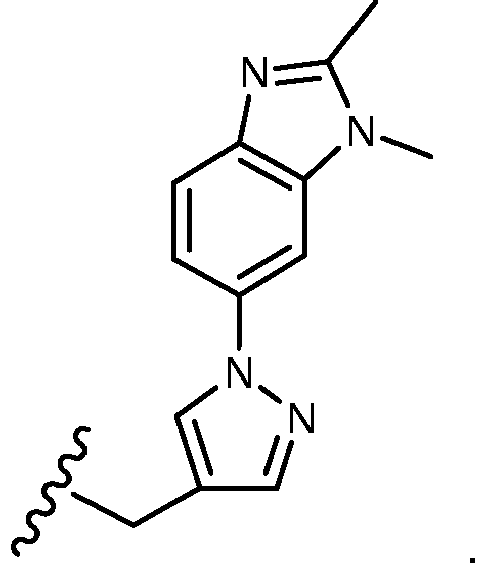
- In another embodiment of the compounds of this invention, X is nitrogen, Y is CR5, R1A is aryl or halo, R2A is F or Cl, R3 is selected from the group consisting of: -C(O)NR8R9 wherein R8 is H, and R9 is heteroarylalkyl or a substituted heteroarylalkyl, and R4 is -C(O)NR6R7, R6 is H, and R7 is alkyl (e.g., isopropyl) or substituted alkyl. An example of R9 is

- In another embodiment of the compounds of this invention, X is nitrogen, Y is CR5, R1A is OH or H, R2A is H, OH, or NH2, R3 is selected from the group consisting of:-C(O)NR8R9 wherein R3 is H, and R9 is heteroarylalkyl or a substituted heteroarylalkyl, and R4 is -C(O)NR6R7, R6 is H, and R7 is alkyl (e.g., isopropyl) or substituted alkyl. An example of R9 is

- In another embodiment of the compounds of this invention, X is nitrogen, Y is CR5, R1A is OH or H, R2A is H, R3 is selected from the group consisting of: -C(O)NR8R9 wherein R8 is H, and R9 is heteroarylalkyl or a substituted heteroarylalkyl, and R4 is -C(O)NR6R7, R6 is H, and R7 is alkyl (e.g., isopropyl) or substituted alkyl. An example of R9 is

- In another embodiment of the compounds of this invention, X is nitrogen, Y is CH, R1A is H, R2A is H, R3 is selected from the group consisting of:
- -C(O)NR8R9 wherein R8 is H, and R9 is heteroarylalkyl or a substituted heteroarylalkyl, and R4 is -C(O)NR6R7, R6 is H, and R7 is alkyl (e.g., isopropyl) or substituted alkyl. Examples of R9 include:

- The compounds of the invention can be made according to the processes described below. The compounds of this invention are also exemplified in the examples below, which examples should not be construed as limiting the scope of the disclosure. Alternative mechanistic pathways and analogous structures within the scope of the invention may be apparent to those skilled in the art.
- In the Examples below there are formulas shown with an R, R1 and/or R2 group. Those skilled in the art will appreciate that each particular Example with such R groups defines what those R groups are by reference to the final compounds prepared in that Example.

- In the tables below EMW stands for Exact Molecular Weght. The LC-MS data for the EMW was obtained using an Agilent 1100 Series LC/MSD (quadrupole, API-ES (Atmospheric Pressure Interface Electrospray)) with a capillary voltage set to 3500 V and running in positive mode.
- In the tables below, the retention time is for the purification via reverse phase chromatography which was accomplished using a C18 reverse phase column with a gradient of 0.1 % trifluoroacetic acid in water to 95:5 acetonitrile:water at a flow rate of 20 mL/min. Samples were collected using a UV (Gilson, 254 nm) or mass spectra (Agilent 1100 Series LC/MSD model SL) signal
-

- To a solution of compound 1 (0.050 g, 0.256 mmol) in DMF (2mL) was added the appropriate amine building block to make the compounds in Table 1 (1.2 equivalents) and diisopropylethylamine (3 equivalents). The reaction mixture was stirred at room temperature for 10 minutes, cooled to 0°C (ice-bath) and then added HATU (1.2 equivalents) and catalytic DMAP. The reaction mixture was allowed to warm to room temperature, stirred at room temperature for 2 hours. The reaction mixture was diluted with ethyl acetate and washed with 0.1 N NaOH (x1), water (x2), 0.1 N HCl (x1) and brine, dried over sodium sulfate and concentrated. Purification by column chromatography (SiO2, ethyl acetate) afforded compound 2 as a solid in varialble yields.
- To a solution of compound 2 (1 equivalent) in THF (3 mL) was added 1 M LiOH (2 equivalents) at room temperature. The reaction mixture was stirred at room temperature for 2 hours at which time. Thin layer chromatography indicated that the reaction was complete. The reaction mixture was concentrated. The residue was suspended in ethyl acetate and water, and acidified to pH 4 with 1 N HCl. The organic and aqueous layers were separated. The aqueous layer was extracted with ethyl acetate (x3). The combined organic layer was washed with brine, dried over sodium sulfate and concentrated to afford compound 3 as a solid.
- To a solution of compound 3 (1 equivalent) in DMF (2 mL) was added the appropriate amine building block (1.2 equivalents) to make the compounds in Table 1 and diisopropylethylamine (3 equivalents). The reaction mixture was stirred at room temperature for 10 minutes, cooled to 0°C (ice-bath) and then added HATU (1.2 equivalents) and catalytic DMAP. The reaction mixture was allowed to warm to room temperature, stirred at room temperature for 2 hours. The reaction mixture was diluted with ethyl acetate and washed with 0.1 N NaOH (x1), water (x2), 0.1 N HCl (x1) and brine, dried over sodium sulfate and concentrated. Purification by column chromatography (SiO2, ethyl acetate) afforded the compounds of formula 4 given in Table 1.
Table 1 Cmpd No. Compound Ret. Time UV254 (min) EMW MS (m/z) Observed 5 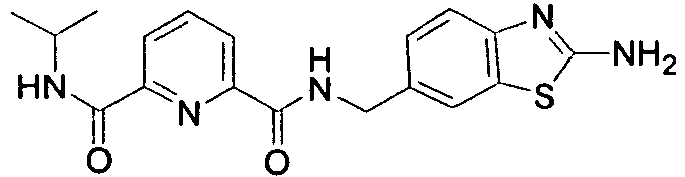
3.62 369.1 370.1 6 
2.17 385.1 386.0 7 
3.05 383.1 384.1 8 
3.09 383.1 384.1 9 
2.41 399.1 400.1 10 
3.74 511.2 512.0 11 
2.89 381.1 382.1 12 
3.37 409.2 410.2 13 
3.27 355.1 356.1 14 
3.65 355.1 356.1 15 
3.20 371.1 372.1 16 
3.31 412.1 413.1 17 
3.28 385.1 386.1 18 
3.34 385.1 386.1 19 
3.34 385.1 386.1 20 
3.98 427.2 428.1 21 
3.98 427.2 428.1 22 
3.97 461.2 462.1 23 
3.97 461.2 462.1 24 
3.91 447.1 448.1 25 
3.9 447.1 448.1 26 
3.08 440.2 441.1 27 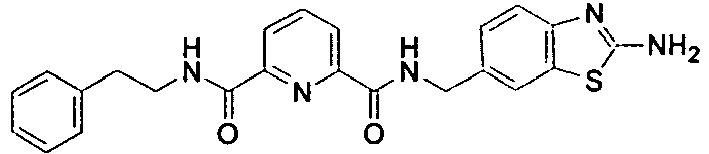
4.21 431.1 432.1 28 
3.48 452.2 453.1 29 
3.09 424.2 425.1 30 
3.53 500.2 501.2 31 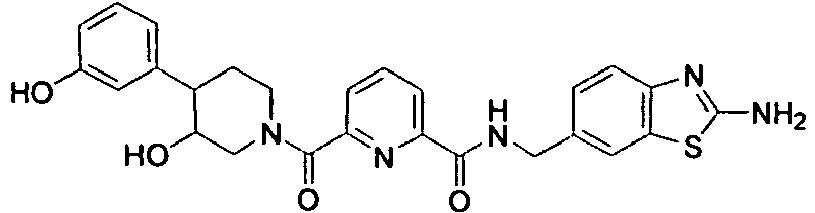
3.52 503.2 504.1 32 
3.92 545.2 546.2 33 
3.93 545.2 546.2 34 
3.29 411.1 412.1 35 
3.18 411.1 412.1 36 
3.27 425.2 426.1 37 
3.42 425.2 426.1 38 
4.18 348.2 349.1 39 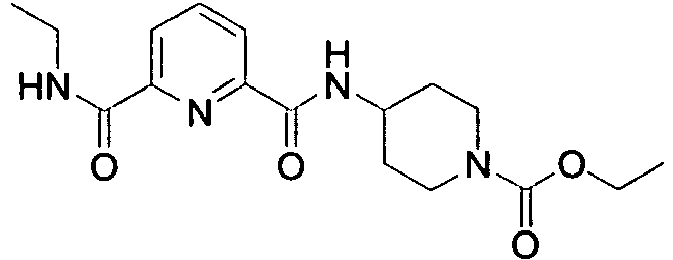
4.41 348.2 349.1 40 
3.99 364.2 365.1 41 
4.12 376.2 377.2 42 
3.74 411.2 412.1 43 
4.45 488.2 489.1 44 
4.30 454.2 455.1 45 
3.90 424.2 425.1 46 
2.93 328.1 329.1 47 
3.38 341.09 342.1 48 
3.45 367.1 368.1 49 
3.34 385.1 386.2 50 
3.78 413.2 414.1 51 
3.96 447.1 448.1 52 
2.98 327.1 328.1 53 
3.57 383.1 384.1 54 
3.96 447.1 448.1 55 
2.58 459.2 460.1 56 
3.03 487.2 488.1 57 
3.19 489.2 490.1 58 
3.13 494.1 495.1 59 
3.78 413.2 414.1 60 
3.41 508.1 509.1 61 
4.21 570.2 571.1 62 
2.87 356.1 357.1 63 
1.90 314.1 315.1 64 
3.04 383.1 384.1 65 
2.76 369.1 370.1 66 
2.25 399.1 400.1 67 
3.08 395.1 396.1 68 
2.33 425.2 426.1 69 
1.90 435.1 436.1 70 
3.55 445.2 446.2 71 
3.39 397.2 398.2 72 
4.34 476.2 477.2 73 
4.88 442.2 443.2 74 
4.12 470.2 471.2 75 
2.63 413.1 414.1 76 
3.53 453.2 454.15 77 
4.23 481.2 482.18 78 
3.90 480.1 481.12 -
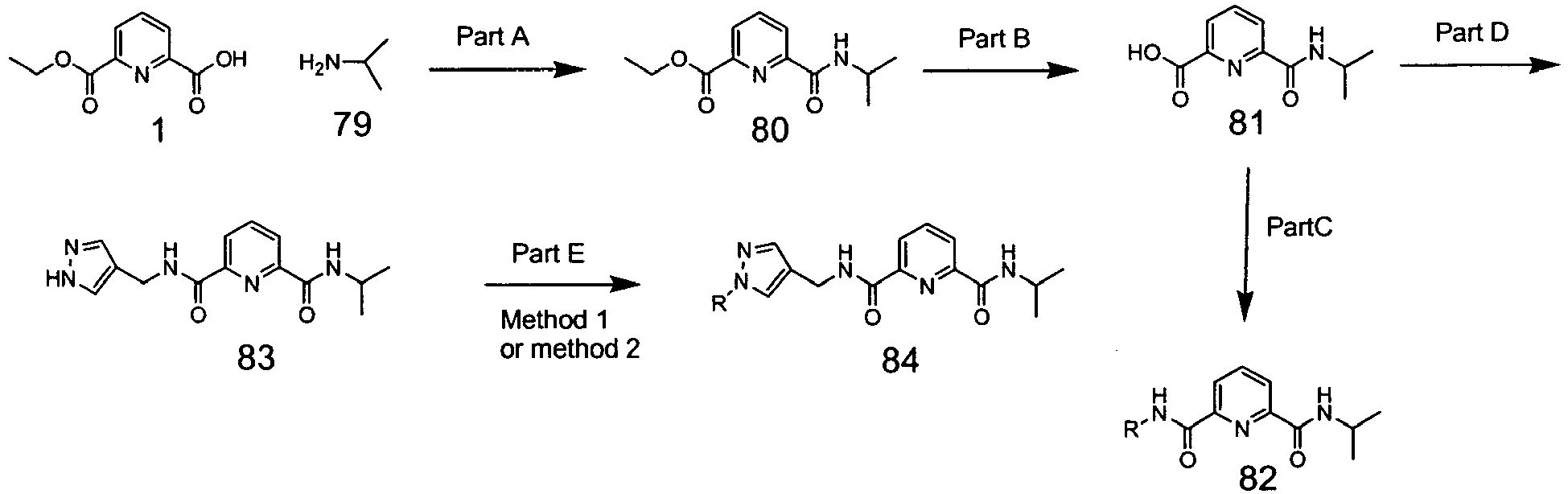
- To a solution of compound 1 (3.0 g, 15.4 mmol) in DMF (25 mL) was added isopropylamine (1.09 g, 18.5 mmol) and diisopropylethylamine (8.04 mL, 46.2 mmol). The reaction mixture was stirred at room temperature for 10 minutes, cooled to 0°C (ice-bath) and then added HATU (7.03 g, 18.5 mmol) and DMAP (0.094 g, 0.77 mmol). The reaction mixture was allowed to warm to room temperature, stirred at room temperature for 2hours. The reaction mixture was diluted with ethyl acetate and washed with 0.1 N NaOH (x1), water (x2), 0.1 N HCl (x1) and brine, dried over sodium sulfate and concentrated. Purification by column chromatography (SiO2, ethyl acetate) afforded compound 80 as a white solid (3.62 g, 99 % yield). 1H NMR (400 MHz, DMSO-d6) δ 8.17 (m, 3H), 4.4 (q, 2H, J = 7.2 Hz), 4.15 (m, 1H), 1.37 (t, 3H, J = 7.2 Hz), 1.23(d, 6H).
- To a solution of compound 80 (3.62 g, 15.3 mmol) in THF (80 mL) was added 1 M LiOH (30.6 mL, 30.6 mmol) at room temperature. The reaction mixture was stirred at room temperature for 2 hours at which time thin layer chromatography indicated that the reaction was complete. The reaction mixture was concentrated. The residue was suspended in ethyl acetate and water, and acidified to pH 4 with 1 N HCl. The organic and aqueous layers were separated. The aqueous layer was extracted with ethyl acetate (x3). The combined organic layer was washed with brine, dried over sodium sulfate and concentrated to afford compound 81 as a white solid (3.02 g, 95%). 1H NMR (400 MHz, DMSO-d6) δ 8.92 (br s, 1 H), 8.21 (m, 3H), 4.15 (m, 1 H), 1.23 (d, 6H).
- To a solution of compound 81 (1 equivalent) in DMF (2 mL) was added the appropriate amine building block (1.2 equivalent)) to make the compounds in Table 2 and diisopropylethylamine (3 equivalents). The reaction mixture was stirred at room temperature for 10 minutes, cooled to 0°C (ice-bath) and then added HATU (1.2 equivalents) and DMAP (catalytic). The reaction mixture was allowed to warm to room temperature, stirred at room temperature for 2 hours. The reaction mixture was diluted with ethyl acetate and washed with 0.1 N NaOH (x1), water (x2), 0.1 N HCl (x1) and brine, dried over sodium sulfate and concentrated. Purification by column chromatography (SiO2, 10% methanol/ dichloromethane) afforded the compounds of general structure 82 in Table 2.
Table 2 Cmpd No. Compound Ret. Time UV 254 (min) EMW MS (m/z) Observed 85 
4.36 354.1 355.1 86 
4.65 394.2 395.1 87 
3.21 412.1 413.1 88 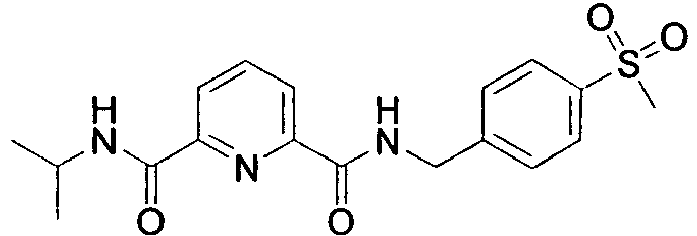
3.43 375.1 376.1 89 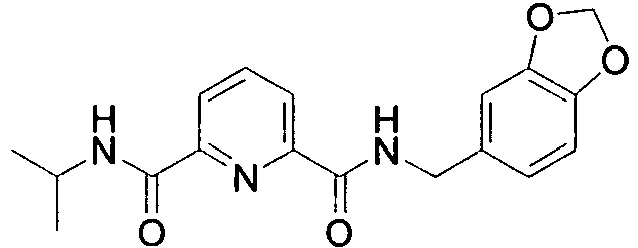
4.17 341.1 342.1 90 
2.31 284.1 285.1 91 
3.77 335.1 336.1 92 
3.14 313.2 314.1 93 
4.36 298.1 299.1 94 
2.14 404.2 405.1 95 
390.2 391.1 96 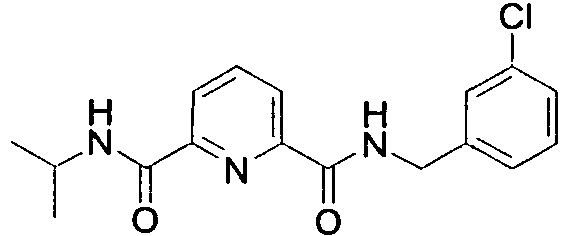
331.1 332.1 97 
4.81 331.1 332.1 98 
4.83 376.1 377.1 99 
3.1 332.1 333.1 100 
3.87 363.2 364.1 101 
4.32 298.1 299.1 102 
2.21 329.2 330.1 103 
2.67 315.2 316.1 104 
3.22 304.1 305.1 105 
4.25 391.2 392.1 106 
2.57 337.2 338.1 107 
2.67 351.2 352.1 108 
2.56 351.2 352.1 109 
4.15 363.2 364.1 110 
4.79 329.2 330.1 111 
3.9 357.2 358.1 112 
5.43 373.2 374.1 113 
2.27 313.2 314.1 114 
2.84 367.2 368.1 115 
2.5 383.2 384.1 116 
2.88 301.2 302.1 117 
3.51 329.2 330.2 118 
3.47 380.1 381.1 119 
2.2 287.1 288.1 120 
3.69 380.2 381.1 121 
3.62 389.1 390.1 122 
3.07 376.1 377.1 123 
3.57 327.2 328.1 124 
3.57 327.2 328.1 125 
5.35 373.2 374.18 126 
4.41 390.2 391.17 127 
0.957 365.18 366.1 128 
2.58 365.18 366.27 - To a solution of compound 81 (2.0 g, 9.6 mmol) in DMF (30 mL) was added C-(1 H-Pyrazol-4-yl)-methylamine (1.12 g, 11.52 mmol) and diisopropylethylamine (5.01 mL, 28.8 mmol). The reaction mixture was stirred at room temperature for 10 minutes, cooled to 0°C (ice-bath) and then added HATU (4.38 g, 11.52 mmol) and DMAP (0.0059 g, 0.48 mmol). The reaction mixture was allowed to warm to room temperature, stirred at room temperature for 2hours. The reaction mixture was diluted with ethyl acetate and washed with 0.1 N NaOH (x1), water (x2), 0.1 N HCl (x1) and brine, dried over sodium sulfate and concentrated. Purification by column chromatography (SiO2, 10% methanol/ dichlormethane) afforded compound 83 as a white solid (2.2 g, 80%). 1H NMR (400 MHz, DMSO-d6) δ 12.63 (br s, 1 H), 9.6 (t, 1 H), 8.8 (d, 1 H), 8.16 (m, 3H), 7.6 (d, 2H), 4.46 (d, 2H), 4.25 (m, 1 H), 1.25 (d, 6H). HPLC-MS tR = 1.05 Min (UV254nm); mass calculated for formula C14H17N5O2 287.14, observed LC/MS m/z 288.1 (M + H).
- A mixture of compound 83 (0.040 g, 0.139mmol), pyridine (0.0112 mL, 0.417mmol), copper(II) acetate (0.0505 g, 0.278 mmol) and the appropriate boronic acid to make the compounds in Table 3 (3 eq.) in THF were stirred at 50°C open to the air for 20 hours. LC-MS analysis of the reaction indicates that the reaction is complete. The crude reaction mixture was filtered to remove the solids, rinsed the solids with THF. The filtrate was concentrated. Purification by Prep-LC and conversion to a hydrochlorde salt afforded compounds 84 in Table 3 as a solid.
- A mixture of compound 83 (0.040 g, 0.139 mmol), cesium carbonate (0.091 g, 0.278 mmol), the appropriate bromide to make the compounds in Table 3 (2 equivalents) and anhydrous dimethylacetamide (1.5 mL) were added to the reaction vessel. The reaction vessel was flushed with Argon. Added copper (I) iodide (0.026 g, 0.278 mmol) and 1,10-phenanthroline (0.05 g, 0.278 mmol). Flushed the reaction vessel again with argon and the mixture was stirred in a sealed tube for 20 hours at 140°C. LC-MS analysis of the reaction indicates that the reaction is complete. The mixture was then cooled to room temperature and filtered. The filtrate was concentrated. Purification by Prep-LC and conversion to a hydrochloride salt afforded compounds 84 in Table 3.
Table 3 Cmpd No. Compound Ret. Time UV254 (min) EMW MS(m/z) Observed 129 
4.68 377.2 378.1 130 
4.67 377.2 378.1 131 
5.05 415.1 416.1 132 
4.97 397.1 398.1 133 
4.94 397.1 398.1 134 
4.23 388.2 389.1 135 
4.18 388.2 389.1 136 
3.7 441.1 442.1 137 
3.63 441.1 442.1 138 
5.64 431.1 432.1 139 
4.59 381.2 382.1 140 
5.16 431.2 432.1 141 
2.77 364.2 365.1 142 
2.92 414.2 415.1 143 
2.71 392.2 393.1 144 
3.93 414.2 415.1 145 
3.13 365.2 366.1 146 
2.77 417.2 418.1 147 
2.79 417.2 418.1 148 
2.72 403.2 404.1 149 
2.93 428.2 429.1 150 
3.69 449.1 390.1 151 
3.72 415.2 416.1 152 
4.17 470.2 471.1 153 
3.78 382.2 383.1 154 
3.34 425.2 426.1 155 
4.92 466.1 467.1 156 
4.02 364.2 365.1 157 
4.4 397.1 398.1 158 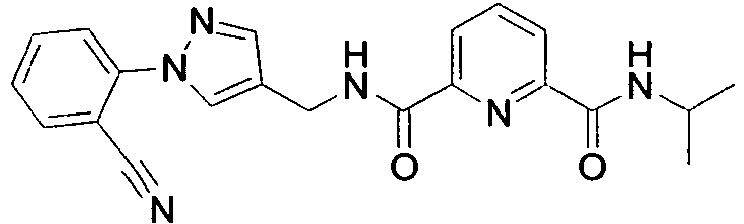
4.0 388.2 389.1 159 
2.54 364.2 365.1 160 
3.12 365.2 366.1 161 
3.67 389.2 390.1 162 
4.53 406.2 407.1 163 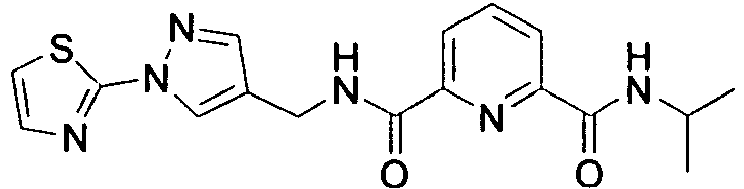
3.87 370.1 371.1 -

- The compound 164 (1.0 g, 4.5 mmol) was dissolved in DCM (20 mL) and TEA (1.36 mL, 10 mmol) was added. The mixture was cooled to 0°C with ice-water bath and benzoyl chloride (0.675 g, 4.8 mmol) was added. The resulting mixture was allowed to warm to room temperature and stirred for 3 h. The mixture was diluted with EtOAc (200 mL) and washed with H2O, NaHCO3, and brine and dried over Na2SO4. After concentration, the crude residue was purified with short column (silica gel, hexane/EtOAc = 70/30) gave the product 165 (1.31 g). HPLC-MS tR = 1.48 min (UV254 nm); mass calculated for formula C18H21N3O3 327.2, observed LCMS m/z 328.1 (M+H).
- The compound 165 (1.0 g, 3.0 mmol) was dissolved in MeOH (3 mL) and HCl (6N, 5 mL) was added. The mixture was stirred at room temperature for 1 hour and concentrated to remove MeOH. The aqueous was treated with NaHCO3 (sat. aq., 30 mL) and extracted with EtOAc. The organics was dried over Na2SO4 and concentrated to give the crude product 166. It was used in the next step without further purification. HPLC-MS tR = 0.61 min (UV254nm); mass calculated for formula C13H13N3O 227.1, observed LCMS m/z 228.1 (M+H).
- The 2-aminopyridine compound 166 (1.14 g, 5 mmol) was dissolved in HOAc (20 mL) and bromine (0.26 mL, 5.0 mmol) was added at room temperature. The mixture was stirred for 1 hour and concentrated. The resulting residue was diluted with Na2CO3 (aq.) and extracted with EtOAc. After concentration, the product was purified with column (silica gel, hexane/EtOAc = 40/60) gave the pure product 167 (1.28 g) as white solid. HPLC-MS tR = 0.91 min (UV254 nm); mass calculated for formula C13H12BrN3O 305.0, observed LCMS m/z 306.0 (M+H).
- A mixture of ammonium thiocyanate (0.35 g, 4.3 mmol) and acetone (1.5 mL) was warmed to 50°C until a clear solution was obtained. Benzoyl chloride (0.53 mL, 4.3 mmol) was then slowly dropped in and the resulting suspension refluxed 5 min. The 2-amino-3-bromopyridine 167 (1.28 g, 4.3 mmol) in acetone (1.5 mL) was added and the reaction mixture was refluxed for 1 hour. After cooling to room temperature, the solution was poured into water and the solid was collected by filtration, washed with water, ethyl ether and dried under vacuum. Gave the product 168 (1.15 g) as white solid. HPLC-MS tR = 1.32 min (UV254 nm); mass calculated for formula C21H17BrN4O2S 468.0, observed LCMS m/z 469.0 (M+H).
- The compound 168 (1.15 g, 2.5 mmol) was dissolved in NMP (10 mL) and NaOMe (810 mg, 15 mmol) was added. The mixture was heated up to 120°C under Ar for 4 hours. After cooling down to room temperature, the mixture was diluted with EtOAc and washed with NH4Cl (aq.) and brine. After drying over Na2SO4, the organic phase was concentrated and the residue was purified by column (silica gel, hexane/EtOAc = 20/80) gave the compound 169 (0.710 g) as yellowish solid. HPLC-MS tR = 1.53 min (UV254 nm); mass calculated for formula C21H16N4O2S 388.1, observed LCMS m/z 389.0 (M+H).
- Compound 169 (0.71 g, 1.8 mmol) was treated with HCl (6N, 5 mL) and heated at reflux overnight. After cooling to room temperature, the mixture was extracted with ethyl ether. The aqueous was concentrated and dried with lyophlization gave the product 170 which was used in the next step directly without further purification. HPLC-MS tR = 0.18 min (UV254 nm); mass calculated for formula C7H8N4S 180.0, observed LCMS m/z 181.1 (M+H).
- The compound 81 (0.021 g, 0.1 mmol) was dissolved in DMF (2 mL), DIEA (0.018 mL, 0.1 mmol) and HATU (0.038 g, 0.1 mmol) were added at room temperature followed by the addition of compound 170 (0.040 g, crude, ~0.4 mmol). The mixture was stirred over night and purified with HPLC. To yield Compound 171 (Table 4) HPLC-MS tR = 0.91 min (UV254 nm); mass calculated for formula C17H18N6O2S 370.1, observed LCMS m/z 371.0 (M+H).
Table 4 Cmpd No. Compound Ret. Time UV254 (min) EMW MS (m/z) Observed 171 
0.91 370.0 371.0 -

- Compound 82 was synthesized via the synthetic method described in Example 2 (Part B).
- To a solution of compound 81 (0.7 g, 3.36 mmol) in DMF (20 mL) was added 5-aminomethyl-2-chloropyridine (0.57 g, 4.04mmol) and diisopropylethylamine (1.75 mL, 10.1 mmol). The reaction mixture was stirred at room temperature for 10 minutes, cooled to 0°C (ice-bath) and then added HATU (1.54 g, 4.04 mmol) and DMAP (0.020 g, 0.16 mmol). The reaction mixture was allowed to warm to room temperature, stirred at room temperature for 2 hours. The reaction mixture was diluted with ethyl acetate and washed with 0.1 N NaOH (x1), water (x2), 0.1 N HCl (x1) and brine, dried over sodium sulfate and concentrated. Purification by column chromatography (SiO2, ethyl acetate) afforded compound 172 as a white solid (0.62 g, 56%). 1H NMR (400 MHz, DMSO-d6) δ 9.8 (t, 1H), 8.8 (d, 1H), 8.4 (d, 1H), 8.2 (m, 3H), 7.8 (dd, 1H),7.49 (d, 1 H), 4.65 (d, 2H), 4.2 (m, 1 H), 1.26 (d, 6H). HPLC-MS tR = 1.5 Min (UV254 nm); mass calculated for formula C16H17CIN4O2 332.1, observed LC/MS m/z 333.0 (M + H).
- To compound 172 (1 equivalent) in 1,4-dioxane (1 mL) was added the appropriate boronic acid (2 equivalents) to make the compounds in Table 5, dichloro[1,1'-bis(diphentylphosphino)ferrocene] palladium (II) dichloromethane adduct (10 mol %) and 2M K2CO3 (1 mL). The reaction vial was flushed with Argon and stirred at 80°C overnight. LC-MS analysis of the reaction indicates that the reaction is complete. The crude reaction mixture was filtered to remove the solids, rinsed the solids with THF. The filtrate was concentrated. Purification by Prep-LC and conversion to a hydrochlorde salt afforded compounds of formula 173, as a solid, as set forth in Table 5.
Table 5 Compd No. Compound Ret. Time UV254 (min) EMW MS (m/z) Observed 174 
3.47 388.2 389.1 175 
3.91 392.2 393.1 176 
4.37 408.1 409.1 177 
3.47 388.2 389.1 178 
3.92 399.2 400.1 179 
3.91 399.2 400.1 180 
3.37 452.2 453.1 181 
3.34 452.2 453.1 182 
4.15 408.1 409.1 183 
4.8 442.2 443.1 184 
4.66 426.1 427.1 185 
5.55 442.1 443.1 186 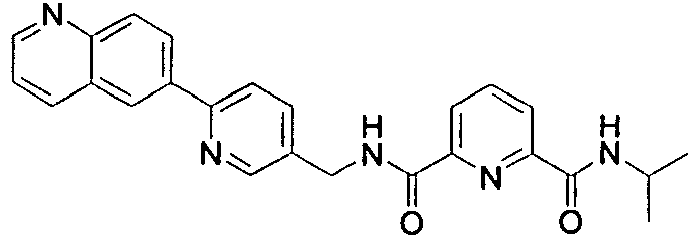
2.83 425.2 426.1 -

- Compound 81 was synthesized via the synthetic method described in Example 2 (Part B).
- To a solution of compound 82 (0.20 g, 0.96 mmol) in DMF (5 mL) was added 3-bromobenzylamine hydrochloride (0.26 g, 1.15 mmol) and diisopropylethylamine (0.67 mL, 3.84 mmol). The reaction mixture was stirred at room temperature for 10 minutes, cooled to 0°C (ice-bath) and then added HATU (0.44 g, 1.15 mmol) and DMAP (catalytic). The reaction mixture was allowed to warm to room temperature, stirred at room temperature for 2 hours. The reaction mixture was diluted with ethyl acetate and washed with 0.1 N NaOH (x1), water (x2), 0.1 N HCl (x1) and brine, dried over sodium sulfate and concentrated. Purification by column chromatography (SiO2, ethyl acetate) afforded compound 187 as a white solid (0.32 g, 89%). 1H NMR (400 MHz, DMSO-d6) δ 9.85 (t, 1 H), 8.8 (d, 1 H), 8.2 (m, 3H), 7.5 (dd, 1 H),7.45 (m, 1 H),7.3 (m, 2H) 4.65 (d, 2H), 4.2 (m, 1 H), 1.26 (d, 6H). HPLC-MS tR = 1.85 Min (UV254 nm); mass calculated for formula C17H18BrN3O2 375.06, observed LC/MS m/z 376.0 (M + H).
- To compound 187 (1 equivalent) in 1,4-dioxane (1 mL) was added the appropriate boronic acid (2 equivalents) to make the compounds in Table 6, dichloro[1,1'-bis(diphentylphosphino)ferrocene] palladium (II) dichloromethane adduct (10 mol %) and 2M K2CO3 (1 ml). The reaction vial was flushed with Argon and stirred at 80°C overnight. LC-MS analysis of the reaction indicates that the reaction is complete. The crude reaction mixture was filtered to remove the solids, rinsed the solids with THF. The filtrate was concentrated. Purification by Prep-LC and conversion to a hydrochloride salt afforded compounds of general formula 188 in Table 6 as a solid.
Table 6 Cmpd No. Compound Ret. Time (UV254 (min) EMW MS (m/z) Observed 189 
4.93 398.2 399.1 190 
4.91 398.2 399.1 191 
4.34 451.2 452.1 192 
4.29 451.2 452.1 193 
4.29 451.2 452.1 194 
4.92 398.2 399.1 195 
4.88 398.2 399.1 196 
4.23 451.2 452.1 -

- Compound 197 was synthesized via the synthetic method described in Example 2 (Part C). To a solution of compound 197 (0.030 g, 0.064mmol) in anhydrous THF (1 mL) was added the respective alcohol (ROH, 1 equivalent) to_make the compounds in Table 7, triphenylphosphine (1.5 equivalents) and DIAD (1.5 equivalents) at room temperature. The reaction mixture was stirred at room temperature for 5 hours at which time LC-MS analysis indicated the reaction was complete. The reaction mixture was concentrated and used in the next step without any purification.
- A solution of compound 198 was stirred in 6N HCl for 1 hour at room temperature. Thin layer chromatography indicated that the reaction was complete. The reaction mixture was concentrated under vacuum. Purification by Prep-LC and conversion to a hydrochloride salt afforded compounds of general formula 199, as a solid, as set forth in Table 7. 1H NMR (400 MHz, DMSO-d6) δ 10.0 (t, 1H), 9.3 (bs, 2H), 8.95 (d, 1 H), 8.19 (m, 3H), 7.8 (s, 1 H), 7.4 (m, 2H), 4.65 (d, 2H), 4.2 (m, 1 H), 1.26 (d, 6H).
Table 7 Cmpd No. Structure Ret. Time UV254 (min) EMW MS (m/z) Observed 200 
2.26 383.1 384.1 201 
3.29 411.2 412.1 202 
2.89 482.2 483.1 203 
2.75 426.2 427.1 -

- Compound 197 was synthesized via the synthetic method described in Example 2 (Part C). A solution of compound 197 (0.23 g, 4.90 mmol) was stirred in 6N HCl for 1 hour at room temperature. Thin layer chromatography indicated that the reaction was complete. The reaction mixture was concentrated under vacuum. The residue was diluted with acetonitrile, sonicated and concentrated to afford compound 204 as a white solid 0.19 g (97%).
- To a solution of compound 204 (0.030 g, 0.081 mmol) in acetonitrile (1.5 mL) and NMP (0.3 mL) was added pyridine (0.019 mL, 0.243 mmol) at room temperature. The reaction mixture was cooled to 0°C (ice-bath) and ethyl chloroformate (0.015 mL, 0.162 mmol) and catalytic DMAP. The reaction mixture was heated to 60°C for 16 hours at which time LC-MS analysis indicated that the reaction was complete. The reaction mixture was concentrated under vacuum. Purification by Prep-LC and conversion to a hydrochloride salt afforded compound 205 (see Table 8) as a white solid.
Table 8 Cmpd No. compound Ret. Time UV254 (min) EMW MS(m/z) Observed 205 
4.25 441.1 442.1 -

- Compound 204 was synthesized via the synthetic method described in Example 5 (Part A). To a solution of compound 204 (0.03 g, 0.081 mmol) in acetonitrile (1 mL)and NMP (0.3 mL) was added ethyl isocyanate (0.00632 g, 0.089 mmol) followed by triethylamine (0.012 mL, 0.089 mmol) at room temperature. The reaction mixture was heated to 80°C for 16 hours at which time LC-MS analysis indicated that the reaction was complete. The reaction mixture was concentrated under vacuum. Purification by PREP-LC and conversion to a hydrochloric salt afforded compound 206 (see Table 9) as a white solid.
Table 9 Cmpd No. Structure Ret. Time UV254 (min) EMW MS (m/z) Observed 206 
3.8 440.2 441.1 -

- Compound 204 was synthesized via the synthetic method described in Example 5 (Part A). To a solution of compound 1 (0.03 g, 0.081 mmol) in acetonitrile (1 mL) and NMP (0.3 mL) was added pyridine (0.019 mL, 0.243 mmol). The reaction mixture was cooled to 0°C (ice-bath) and dimethylcarbamyl chloride (0.0145 mL, 0.162 mmol) and catalytic DMAP. The reaction mixture was heated to 60°C for 16 hours at which time LC-MS analysis indicated that the reaction was complete. The reaction mixture was concentrated under vacuum. Purification by Prep-LC and conversion to a hydrochloric salt afforded compound 207 (see Table 10) as a white solid.
Table 10 Cmpd No. Compound Ret. Time UV (min) EMW MS(m/z) Observed 207 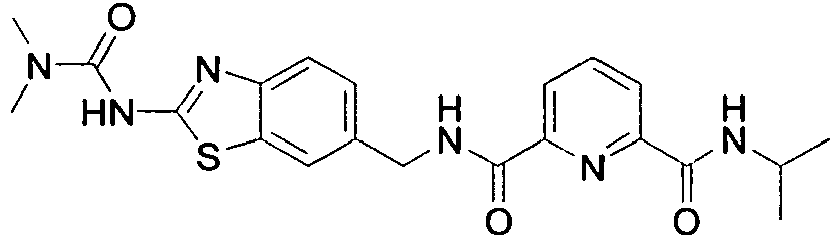
3.7 440.2 441.1 -

- To compound 208 (1.00 g, 5.77 mmol) in ethanol (100 mL) was added chloroacetaldehyde (50 wt% solution in water, 7.34 mL, 57.8 mmol) at room temperature. The reaction mixture was heated at reflux for 16 hours at which time LC-MS analysis indicated that the reaction was complete. The reaction mixture was concentrated under vacuum. The residue was taken back up in ethyl acetate and saturated sodium bicarbonate. The organic and aqueous layers were separated. The organic layer was washed with brine, dried over anh. sodium sulfate and concentrated to afford compound 209 as a dark brown oil. 1H NMR (400 MHz, DMSO-d6) δ 8.89 (d, 1 H), 7.9 (s, 1 H), 7.56 (m, 2H), 7.31 (dd, 1 H).
- Compound 210 (see Table 11) was synthesized via the synthetic method described in Example 2 (Part E, method 2).
Table 11 Cmpd No. Compound Ret. Time UV254 (min) EMW MS (m/z) Observed 210 
2.65 403.2 404.1 -

- To compound 211 (1.00 g, 5.74 mmol) in ethanol (100 mL) was added chloroacetaldehyde (50 wt% solution in water, 7.34 mL, 57.5 mmol) at room temperature. The reaction mixture was heated at reflux for 16 hours at which time LC-MS analysis indicated that the reaction was complete. The reaction mixture was concentrated under vacuum. The residue was taken back up in ethyl acetate and saturated sodium bicarbonate. The organic and aqueous layers were separated. The organic layer was washed with brine, dried over anh. sodium sulfate and concentrated to afford compound 212 as a beige solid. 1H NMR (400 MHz, DMSO-d6) δ 9.32 (d, 1 H), 8.56 (d, 1 H), 7.85 (d, 1 H), 7.74 (d, 1 H).
- Compound 213 (see Table 12) was synthesized via the synthetic method described in Example 2 (Part E, method 2).
Table 12 Cmpd No. Compound Ret. Time UV254 (min) EMW MS(m/z) Observed 213 
2.55 404.2 405.1 -

- To a solution of compound 214 (1.04 g, 7.99 mmol) in concentrated sulfuric acid at room temperature was added N-bromosuccinimide (2.13 g, 11.9 mmol). The reaction mixture was stirred at room temperature for 16 hours at which time thin layer chromatography (5% MeOH / DCM) indicated the reaction was complete. The reaction mixture was poured onto crushed ice (~50 mL) and the pH adjusted to 7 using ammonium hydroxide. The resulting slurry was stirred for 1 hour at 0°C, after which it was filtered and washed with ice-cold water (3x30 mL). Purification by column chromatography (SiO2, 5% MeOH/DCM) afforded compound 215 as a beige solid 0.53 g (32%). 1H NMR (400 MHz, DMSO-d6) δ 9.57 (s, 1 H), 9.32 (s, 1 H), 8.46 (d, 1H), 8.14 (dd, 1H), 7.96(d, 1 H).
- Compound 216 (see Table 13) was synthesized via the synthetic method described in Example 2 (Part E, method 2).
Table 13 Cmpd No. Compound Ret. Time UV254 (min) EMW MS (m/z) Observed 216 
2.91 415.2 416.1 -

- A solution of compound 217 (1.00 g, 5.32 mmol), formic acid (0.5 mL) and triethyl orthoformate (15 mL) were stirred at 100°C for 3 hours at which time LC-MS analysis indicated that the reaction was complete. The reaction mixture was concentrated under vacuum. Purification by column chromatography (10% MeOH/ DCM) afforded compound 218 as a beige solid 1.01g (96%). 1H NMR (400 MHz, DMSO-d6) δ 8.46 (s, 1 H), 8.41 (d, 1H), 8.27 (d, 1 H).
- Compound 219 (see Table 14) was synthesized via the synthetic method described in Example 2 (Part E, method 2).
Cmpd No. Structure Ret. Time UV254 (min) EMW MS (m/z) Observed 219 
2.67 404.2 405.1 -

- To a solution of compound 220 (1.00g, 6.02 mmol) in carbon tetrachloride (60 mL) was added dropwise, bromine (1.15 g, 7.20 mmol) as a carbon tetrachloride solution (6 mL.). The resulting solution was refluxed for 1 hour. Pyridine (0.5 mL, 6.0 mmol) as a carbon tetrachloride solution (10 mL) was added over a period of 1 hour to the refluxing reaction mixture. The reaction was stirred at reflux for 16 hours at which time LC-MS indicated that the reaction was complete. The reaction mixture was cooled to room temperature, resulting in the formation of a precipitate, which was filtered. The carbon tetrachloride filtrate was set aside. The collected brown solid was taken up in 10% NaOH (100 mL) and stirred at room temperature for 1 hour. This solution was extratcted with chloroform. The chloroform and carbon tetrachloride solutions were combined and concentrated in vacuum. Purification by column chromatography (SiO2, 20% EtOAc/DCM) afforded compound 221 as a white solid 0.17 g, (14%). 1H NMR (400 MHz, DMSO-d6) δ 9.07 (d, 1H), 9.02 (dd, 1 H), 8.74 (m, 1 H), 8.45 (m, 1 H), 7.83 (dd, 1 H).
- Compound 222 (Table 15) was synthesized via the synthetic method described in Example 2 (Part E, method 2).
Table 15 Cmpd No. Structure Ret. Time UV254 (min) EMW MS (m/z) Observed 222 
3.36 415.2 416.1 -

- To concentrated sulfuric acid (75 mL) at 0°C was added concentrated nitric acid (5.5 mLI) carefully. 1,3-Dibromobenzene 223 (25.0 g, 106 mmol) was added to the acid solution at 0°C. The resulting solution was slowly warmed to room temperature and continued to stir at room temperature for 5 hours. The reaction mixture was poured into water, neutralized with solid sodium carbonate and extracted with diethyl ether (x2). The ether solution was dried over anhydrous sodium sulfate and concentrated under vacuum. Purification by column chromatography (SiO2, 10% EtOAc/hexanes) afforded compound 224 as a yellow solid 17.7 g (60%). 1H NMR (400 MHz, DMSO-d6) δ 8.22 (d, 1 H), 7.97 (d, 1 H), 7.85 (dd, 1 H).
- To a solution of compound 224 (2.0 g, 7.17 mmol) in ethanol (50 mL) was added isopropylamine (43.0 mL, 502mmol). The resulting solution was stirred at reflux for 3 hours at which time LC-MS indicated that the reaction was complete. The reaction mixture was concentrated under vacuum to afford compound 225 as a waxy yellow solid as a mixture of regioisomers which was used without further purification. 1H NMR (400 MHz, DMSO-d6) δ 8.22 (d, 1 H), 7.97 (d, 1 H), 7.85 (dd, 1 H), 3.95 (m, 1H), 1.24(d, 6H).
- To compound 225 (2.18 g, 8.43 mmol) in ethanol (100 mL) was added tin (II) chloride (7.99 g, 42.2 mmol). The resulting solution was stirred at 70°C for 3 hours at which time LC-MS indicated that the reaction was complete. The reaction mixture was concentrated under vacuum. Ice-water was added to the residue, the pH adjusted to 10 with aqueous sodium carbonate and extracted with ethyl acetate. The organic layer was dried over sodium sulfate and concentrated under vacuum. Purification by column chromatography (SiO2, DCM) afforded compound 226 as a yellow oil 0.58 g (58%) as a mixture of regioisomers.
- A solution of compound 226 (0.56 g, 2.45 mmol) in acetic acid (20 mL) was stirred at reflux for 2 hours, at which time LC-MS analysis indicated that the reaction was complete. The reaction mixture was concentrated under vacuum. Purification by column chromatography (SiO2, 5% MeOH/DCM) afforded compound 227 as a red oil 0.55 g (90%). 1H NMR (400 MHz, DMSO-d6) δ 7.82 (d, 1 H), 7.44 (1 H), 7.24 (dd, 1 H), 4.75 (m, 1 H), 2.54 (s, 3H), 1.51 (d, 6H).
- Compound 228 (Table 16) was synthesized via the synthetic method described in Example 2 (Part E, method 2).
Table 16 Cmpd No. Compound Ret. Time UV254 (min) EMW MS (m/z) Observed 228 
3.1 459.2 460.1 -

- Compound 224 was prepared via the synthetic method described in Example 13 (Part A). A solution of compound 1 (10.0 g, 35.8 mmol) and 40% aqueous methylamine (270 mL) in ethanol (270 mL) was stirred at reflux for 2 hours. The reaction mixture was cooled to room temperature, resulting in the formation of a precipitate, which was filtered and dried to afford compound 229 as a yellow solid 5.6 g (68%). 1H NMR (400 MHz, DMSO-d6) δ 7.95 (d, 1 H), 7.14 (d, 1 H), 6.79 (dd, 1 H), 2.94 (d, 3H).
- To compound 229 (5.40 g, 23.4 mmol) in ethanol (200 mL) was added tin (II) chloride (22.2 g, 117 mmol). The resulting solution was stirred at 70°C for 3 hours at which time LC-MS indicated that the reaction was complete. The reaction mixture was concentrated under vacuum. Ice-water was added to the residue, the pH adjusted to 10 with aqueous sodium carbonate and extracted with ethyl acetate. The organic layer was dried over anh sodium sulfate and concentrated under vacuum. Purification by column chromatography (SiO2, 5% EtOAc/DCM) afforded compound 230 as a yellow oil 2.50 g (53%). 1H NMR (400 MHz, DMSO-d6) δ 6.50 (dd, 1 H), 6.43 (d, 1 H), 6.38 (d, 1H), 4.6 (bs, 2H), 2.68 (d, 3H).
- A solution of compound 230 (2.50 g, 12.4 mmol) in the corresponding acid (100 mL) for preparing the compounds in Table 17 was stirred at reflux for 2 hours, at which time LC-MS analysis indicated that the reaction was complete. The reaction mixture was concentrated under vacuum. Purification by column chromatography (SiO2, 5% MeOH / DCM) afforded compounds of general formula 231 as a solid
- Compounds of formula 232 (see Table 17) were synthesized via the synthetic method described in Example2 (Part E, method 2).
Table 17 Cmpd No. Structure Ret. Time UV254 (min) EMW MS (m/z) Observed 233 
2.83 431.2 432.1 234 
4.39 485.2 486.1 235 
3.01 459.2 460.2 -

- Compound 230 was prepared via the synthetic method described in Example 14 (Part B). To a solution of nicotinic acid (0.23 g, 1.90 mmol) in DMF (10 mL) was added compound 230 (0.46 g, 2.28mmol) and diisopropylethylamine (1.00 mL, 5.70 mmol). The reaction mixture was stirred at room temperature for 10 minutes, cooled to 0°C (ice-bath) and then added HATU (0.87 g, 2.28 mmol) and catalytic DMAP. The reaction mixture was allowed to warm to room temperature, stirred at room temperature for 2 hours. The reaction mixture was diluted with ethyl acetate and washed with 0.1 N NaOH (x1), water (x2), 0.1 N HCl (x1) and brine, dried over anh sodium sulfate and concentrated. Purification by column chromatography (SiO2, 10% MeOH / DCM) afforded compound 236 as a beige solid 0.60 g (100%). 1H NMR (400 MHz, DMSO-d6) δ 9.73 (s, 1 H), 9.15 (d, 1H), 8.73 (m, 1 H), 8.3 )m, 1 H), 7.55 (m, 1 H), 7.03 (d, 1H), 6.69 (m, 2H), 2.78 (s, 3H).
- Compound 237 was prepared via the synthetic method described in Example 14 (Part C). 1H NMR (400 MHz, DMSO-d6) δ 9.05 (m, 1H), 8.65 (dd, 1H), 8.27 (m, 1 H), 7.97 (d, 1 H), 7.65 (m, 2H), 7.39 (dd, 1 H), 3.89 (s, 3H)
- Compound 238 (Table 18) was prepared via the synthetic method described in Example 2 (Part E, method 2).
Table 18 Cmpd No. Structure Ret. Time UV254 (min) EMW MS (m/z) Observed 238 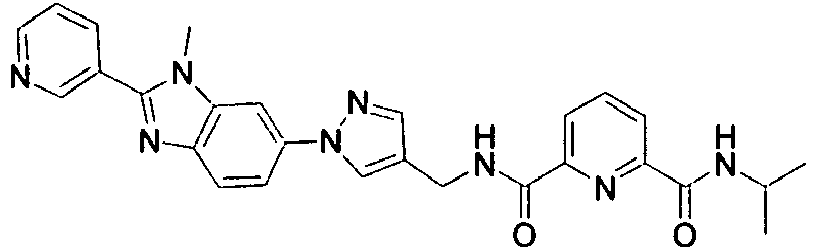
3.07 494.2 495.1 -

- Ammonia gas was bubbled into a solution of compound 239 (1.00 g, 3.91 mmol) in 1,4-dioxane (20 mL) at 0°C (ice-bath) until thin layer chromatography indicated the consumption of starting material. The reaction mixture was filtered to remove the solids, rinsed the solids with dichloromethane. The filtrate was concentrated under vacuum to a white solid. This white solid was recrystallized from ethyl actetate to afford compound 240 as a white solid 0.88 g (95%). 1H NMR (400 MHz, DMSO-d6) δ 7.77 (m, 2H), 7.72 (m, 2H), 7.45 (bs, 2H).
- Compound 241 (Table 19) was prepared via the synthetic method described in Example 2 (Part E, method 2).
Table 19 Cmpd No. Compound Ret. Time UV254 (min) EMW MS (m/z) Observed 241 
3.22 442.1 443.1 -

- To a solution of compound 239 (1.00 g, 3.91 mmol) in dichloromethane (20 mL) was added diisopropylethylamine (0.75 mL, 4.30 mmol) at room temperature. The reaction mixture was cooled to 0°C (ice-bath) and the corresponding amine (1.1 equivalents) to make a compound in Table 20 was added. The reaction mixture was allowed to warm to room temperature, stirred at ambient temperature for 16 hours, at which time LC-MS analysis indicated that the reaction was complete. The reaction mixture was concentrated under vacuum. Purification of by column chromatography ((SiO2, 2% ethyl acetate/dichloromethane) afforded compound of general formula 242 as a solid.
- Compounds of formula 243 (see Table 20) were prepared via the synthetic method described in Example 2 (Part E, method 2).
Table 20 Cmpd No. Compound Ret. Time UV254 (min) EMW MS (m/z) Observed 244 
3.57 456.2 457.1 245 
2.98 511.2 512.1 246 
4.44 504.1 505.0 247 
2.64 645.21 646.21 248 
5.01 545.16 546.16 -

- To a solution of (5-bromo-pyridin-3-yl)-methanol 249 (1.4 g, 7.5 mmol, 1.00 equiv) and diphenylphosphoryl azide (2.4 mL, 9.0 mmol, 1.2 equiv) in THF (15 mL) at rt was added 1,8-diazabicyclo[5.4.0]undec-7-ene (1.4 mL, 9.0 mmol, 1.2 equiv). The resulting solution was stirred overnight, concentrated and chromatographically purified (15% ethyl acetate in hexanes) to give 3-azidomethyl-5-bromo-pyridine 250 (1.49 g). LCMS(MH)+ = 212.9, rt = 1.50 min.
- To a solution of 3-azidomethyl-5-bromo-pyridine 250 (1.49 g, 7.00 mmol, 1.00 equiv) in 1,4-dioxane (12 mL) was added water (1 mL) and triphenylphosphine resin (2.08 g, 3 mol/g, 200-400 mesh, 1.2 equiv). The suspension was stirred overnight. Filtration and concentration afforded C-(5-bromo-pyridin-3-yl)-methylamine 251.
- To a solution of 6-isopropylcarbamoyl-pyridine-2-carboxylic acid 81 (0.17 g, 0.80 mmol, 1.00 equiv), C-(5-bromo-pyridin-3-yl)-methylamine 251 (0.16 g, 0.88 mmol, 1.2 equiv) and N,N-diisopropylethylamine (0.28 mL, 1.6 mmol, 2.0 equiv) in NMP (2 mL) at room temperature was added HATU (0.28 g, 0.88 mmol, 1.00 equiv) in one portion. The reaction mixture was stirred at room temperature for 2 hours, diluted with ethyl acetate and washed with water (three times) and brine, dried (sodium sulfate) and concentrated. Pyridine-2,6-dicarboxylic acid 2-[(5-bromo-pyridin-3-ylmethyl)-amide]6-isopropylamide 252 was used without further purification. LCMS: (MH)+ = 377.0 (1.51 min).
- A suspension of pyridine-2,6-dicarboxylic acid 2-[(5-bromo-pyridin-3-ylmethyl)-amide] 6-isopropylamide 252 (0.030 g, 0.0795 mmol, 1.00 equiv), potassium phosphate (0.051 g, 0.24 mmol, 3.0 equiv), [1,1'-bis(diphenylphosphino)ferrocene]-dichloro palladium(II) (0.003 g, 0.004 mmol, 5 mol%) and the appropriate_boronic acid (to make the compounds in Table 21) (1.5 equiv) in 1,4-dioxane (1 mL) was heated at 90°C for 2 hr. The suspension was allowed to cool, was filtered and concentrated. Purification by Prep-LC afforded the compounds in Table 21.
Table 21 Cmpd No. Compound Ret. Time UV254 (min) EMW MS(m/z) Observed 254 
3.66 376.1 377.05 255 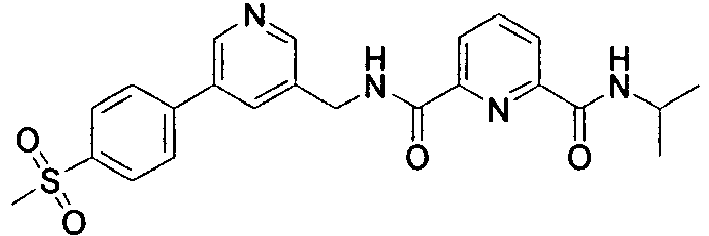
2.82 452.2 453.15 256 
2.87 452.2 453.15 257 
3.23 399.2 400.17 258 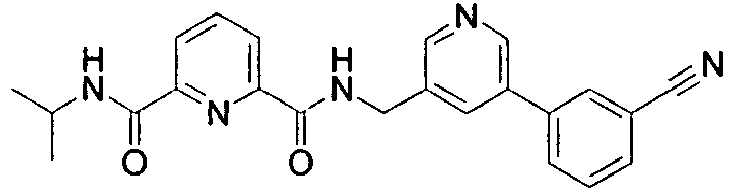
3.24 399.2 400.17 -

- To a solution of 6-chloropyridine-2-carboxylic acid 259 (0.16 g, 0.98 mmol, 1.00 equiv), N,N-diisopropylethylamine (0.5 mL, 1.0 mmol,, 2.0 equiv) and (6-aminomethyl-benzothiazol-2-yl)-carbamic acid tert-butyl ester (0.29 g, 1.03 mmol, 1.05 equiv) in NMP (2 mL) at room temperature was added HATU (0.41 g, 1.08 mmol, 1.1 equiv) in one portion. After 3 hr at rt, the solution was diluted with ethyl acetate and washed with water, brine, dried (sodium sulfate) and concentrated. LCMS: (MH)+ = 419.0 (2.09 min).
- The residue from 260 Part A was treated with TFA/water (95/5) for 2 hr, concentrated and purified by Prep-LC to afford the compound 261 (see Table 22).
Table 22 Cmpd No. Compound Ret. Time UV254 (min) EMW MS (m/z) Observed 261 
2.64 318.0 319.03 -

- A suspension of (6-{[(6-chloro-pyridine-2-carbonyl)-amino]-methyl}-benzothiazol-2-yl)-carbamic acid tert-butyl ester 260 (0.03 g, 1.0 equiv), palladium (II) acetate (0.0016 g, 0.1 equiv), sodium tert-butoxide (0.017 g, 2.5 equiv), benzyl amine (0.016 mL, 2.0 equiv) and 2-dicyclohexylphosphino-2'-(N,N-dimethylamino)biphenyl (0.003 g, 0.1 equiv) in toluene (1 mL) was heated under argon at 100°C for 15 hr. The crude residue was filtered through Celite, concentrated, treated with TFA, concentrated a purified by Prep-LC to afford the title compound.
Cmpd No. Compound Ret. Time UV254 (min) EMW MS (m/z) Observed 263 
3.28 389.1 390.13 264 
2.97 350.1 351.1 -

- To a solution of 6-hydroxypicolinic 265 (0.14 g, 1.0 mmol, 1.00 equiv), (6-aminomethyl-benzothiazol-2-yl)-carbamic acid tert-butyl ester (0.28 g, 1.0 mmol, 1.0 equiv) and N,N-diisopropylethylamine (0.35 mL, 2.0 mmol, 2.0 equiv) in NMP (2.5 mL) at room temperature was added HATU (0.38 g, 1.0 mmol, 1.0 equiv) in one portion. The reaction mixture was stirred at room temperature for 2 hours, diluted with ethyl acetate and washed with water, brine, dried (sodium sulfate) and concentrated affording 6-methoxy-pyridine-2-carboxylic acid (2-amino-benzothiazol-6-ylmethyl)-amide 266. LCMS: (MH-C4H8)+ = 345.0 (1.55 min). (See Table 24).
- The crude residue 266 from Part A (0.055 g, 0.2 mmol, 1.00 equiv) was treated with iodomethane (0.027 mL, 3.0 equiv) and potassium carbonate (0.038 g, 2.0 equiv) in DMF for 5 hr at 70°C. The resulting mixture was partitioned between ethyl acetate and water. The organic extract was washed with water, dried (sodium sulfate) and then concentrated. The Boc group was removed by treatment of the residue with TFA. The residue was purified by Prep-LC. LCMS (MH)+ = 415.1 (1.86 min).
Cmpd No. Compound Ret. Time UV254 (min) EMW MS (m/z) Observed 267 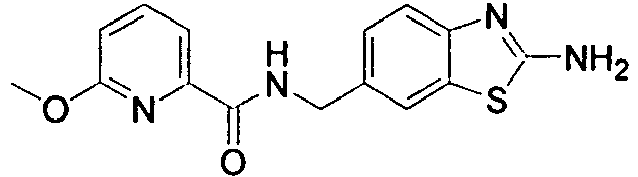
1.79 314.1 315.08 -

- To a solution of 2,6-pyridinedicarboxylate monoethyl ester 1 (1.0 g, 6.0 mmol, 1.0 equiv), N,N-diisopropylethylamine (2.1 mL, 12.0 mmol, 2.0 equiv), and 4-amino-1-boc-piperidine (1.3 g, 6.6 mmol, 1.1 equiv) in NMP at rt was added HATU (2.5 g, 6.6 mmol, 1.1 equiv) in one portion. The reaction mixture was stirred at room temperature for 2 hours, diluted with ethyl acetate and washed with water, brine, dried (sodium sulfate) and concentrated.
- The crude residue 268 from Part A was dissolved in THF (30 mL) and treated with 1 N LiOH (12 mL). The biphasic mixture was stirred at rt 2 hours, diluted with ethyl acetate and acidified to ca. pH 4 with 1 N HCl. The organic phase was washed with water, dried (sodium sulfate) and concentrated. 6-(1-Tert-butoxycarbonyl-piperidin-4-ylcarbamoyl)-pyridine-2-carboxylic acid 269 was obtained as a colorless solid (0.66 g). LCMS (MH- C4H8)+ = 294.1 (1.56 min).
- To a solution of 6-(1-tert-butoxycarbonyl-piperidin-4-ylcarbamoyl)-pyridine-2-carboxylic acid 269 (0.66 g, 1.9 mmol, 1.00 equiv), N,N-diisopropylethylamine (0.89 mL, 9.5 mmol, 5.0 equiv), and 4-methylsulfonylbenzylamine hydrochloride (0.44 g, 3.8 mmol, 2.0 equiv) in NMP (5 mL) at rt was added HATU (0.76 g, 2.0 mmol, 1.05 equiv) in one portion. The reaction mixture was stirred overnight at rt, diluted with ethyl acetate and washed with water, brine, dried (sodium sulfate) and concentrated. LCMS (MH- C4H8)+ = 461.1 (1.76 min).
- To a solution of the crude residue 270 from Part C in DCM (5 mL) was added trifluoroacetic acid (5 mL) at rt. The solution was stirred 2 hr and then was concentrated. The crude residue 271 was used without further purification.
- A solution of the residue 271 from Part D (0.03 g, 0.0565 mmol, 1.00 equiv), N,N-diisopropylethylamine (0.1 mL, 0.56 mmol, 10.0 equiv) and aryl chloride (5.0 equiv) in 2-methoxyethanol (0.25 mL) was heated at 120 °C for 24 hr. Concentration and purification by Prep-LC afforded the compounds in Table 25.
Table 25 Cmpd No. Structure Ret. Time UV254 (min) EMW MS (m/z) Observed 273 
2.66 493.2 494.18 274 
2.98 540.2 541.16 275 
2.66 493.2 494.18 276 
3.11 543.2 544.19 -

- To a solution of 4-(methylsulfonyl)phenylhydrazine (5.0 g, 26.8 mmol, 1.00 equiv) and 1,1,3,3-tetramethoxypropane (4.4 mL, 26.8, 1.0 equiv) in ethanol (37 mL) at rt was added concentrated HCl (2.8 mL). The resulting solution was heated at reflux for 1 hr, cooled to 0 °C and filtered to give 1-(4-methanesulfonyl-phenyl)-1H-pyrazole as a yellow solid (4.73 g, 79%). LCMS: (MH)+ = 223.1 (1.19 min).
- To DMF (5.1 mL, 66.8 mmol, 4.0 equiv) at -10 °C was added phosphorus oxychloride (1.68 mL, 16.7, 4.0 equiv). To the reaction vessel was added 1-(4-methanesulfonyl-phenyl)-1H-pyrazole (3.71 g, 16.7 mmol, 1.00 equiv) in one portion. The mixture was heated at 70°C for 27 hr. The reaction mixture was cooled to 0°C and water was carefully added. The title compound was collected by filtration. (3.83 g, 91%) LCMS: (MH)+ = 251.1 (1.08 min).
- To a solution of 1-(4-methanesulfonyl-phenyl)-1H-pyrazole-4-carbaldehyde (2.0 g, 8.0 mmol, 1.00 equiv) in methanol (10 mL) was added sodium borohydride (0.3 g, 8.0 mmol, 1.0 equiv) in one portion. After 30 min at rt, the reaction mixture was concentrated and the residue was partitioned between ethyl acetate and water. The organic phase was dried (sodium sulfate) and concentrated affording [1-(4-methanesulfonyl-phenyl)-1H-pyrazol-4-yl]-methanol (1.8 g). LCMS: (MH)+ = 253.1 (0.91 min).
- To a solution of [1-(4-methanesulfonyl-phenyl)-1H-pyrazol-4-yl]-methanol (1.80 g, 7.12 mmol, 1.00 equiv) and diphenylphosphoryl azide (2.35 g, 8.54 mmol, 1.2 equiv) in THF (15 mL) at rt was added 1,8-diazabicyclo[5.4.0]undec-7-ene (1.3 g, 8.54 mmol, 1.2 equiv). The resulting solution was stirred overnight, concentrated and chromatographically purified (15% ethyl acetate in hexanes) to give 4-azidomethyl-1-(4-methanesulfonyl-phenyl)-1H-pyrazole (1.90 g, 97%). LCMS: (MH)+ = 278.0 (1.45 min).
- To a solution of 4-azidomethyl-1-(4-methanesulfonyl-phenyl)-1H-pyrazole (1.90 g, 7.12 mmol, 1.00 equiv) in 1,4-dioxane (10 mL) was added water (1 mL) and triphenylphosphine resin (2.8 g, 3 mol/g, 200-400 mesh, 1.2 equiv). The suspension was stirred overnight. Filtration and concentration afforded C-[1-(4-methanesulfonylphenyl)-1H-pyrazol-4-yl]-methylamine as a colorless solid. LCMS: (MH)+ = 252.1 (0.55 min). This compound was utilized in the following Example 22.1.
-

- To a solution of 4-iodopyrazole (0.32 g, 1.6 mmol, 1.5 equiv) in NMP (5 mL) at rt was added NaH (60% in oil, 0.065 g, 1.6 mmol, 1.5 equiv) in one portion. After 15 min at rt, ethyl-6-bromo-2-pyridinecarboxylate 283 (0.250 g, 1.09 mmol, 1.00 equiv) was added in one portion and the resulting mixture was heated overnight at 80°C (20 h). The reaction was allowed to cool to room temperature, water was added and the resulting ppt was collected by vacuum filtration (190 mg, 51%). LCMS: (MH)+ = 343.9 (2.16 min).
- To a solution of ester 284 (190 mg, 0.554, mmol, 1.00 equiv) in EtOH (3 mL) was added KOH (33 mg, 0.58, 1.05 equiv). After heating at 50°C overnight, EtOH was removed under reduced pressure affording the title compound as a colorless solid. The title compound was used without further purification.
- To a solution of potassium salt 285 from Part B (0.020 g, 0.057 mmol, 1.00 equiv), N,N-diisopropylethylamine (0.029 mL, 0.17 mmol, 3.0 equiv), and amine (1.1 equiv) in NMP (5 mL) at rt was added HATU (0.86 g, 2.3 mmol, 1.1 equiv) in one portion. The reaction mixture was stirred for 2 hours at rt. The reaction mixture was stirred overnight at rt, diluted with ethyl acetate and washed with water, brine, dried (sodium sulfate) and concentrated. Purification by Prep-LC afforded the compounds in Table 26.
Table 26 Cmpd No. Compound Ret. Time UV254 (min) EMW MS (m/z) Observed 287 
5.38 356.0 357.01 288 
3.51 391.0 391.99 289 
3.26 405.0 406.01 290 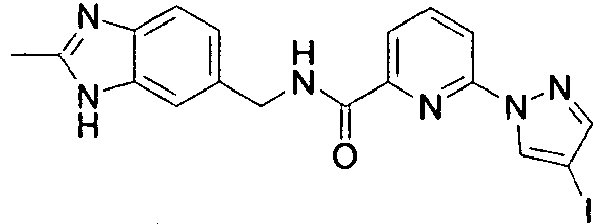
3.59 458.0 459.04 291 
5.68 470.0 471.04 292 
4.76 548.0 549.01 -

- To the stirred solution of compound 292 (0.05 mmol) in Ethanol (10 mL) was added catalytic amount of 5% Pd on carbon and the flask was sealed with the rubber septum. Reaction flask was evacuated under vacuum and the balloon filled with hydrogen gas is inserted into the flask. After overnight stirring the reaction mixture was filtered through celite pad and concentrated. The crude product was purified on prep-LC (see Table 27).
Table 27 Cmpd No. Compound Ret. Time UV254 (min) EMW MS (m/z) Observed 293 
1.469 422.1 423.1 -

- To compound 292 (1 equivalent) in 1,4-dioxane (1 mL) was added the boronic acid (needed to make the compounds in Table 28) (2 equivalents), dichloro[1,1'-bis(diphentylphosphino)ferrocene] palladium (II) dichloromethane adduct (10 mol %) and K3PO4 (2 equivalents). The reaction vial was flushed with argon and stirred at 80°C overnight. LC-MS analysis of the reaction indicates that the reaction is complete. The crude reaction mixture was filtered to remove the solids, rinsed the solids with THF. The filtrate was concentrated. Purification by Prep-LC and conversion to a hydrochloride salt afforded pure compounds in Table 28.
- To the stirred solution of compound 292 (0.055 mmol) in dioxane (1 mL) was added 2-pyridylzincbromide (0.5 M soln.; 1 mL) dropwise and heated to 50°C overnight. The reaction was quenched with brine soln. and extracted with ethylacetate, dried over anhydrous Na2SO4. Filtered and concentrated. The crude product was purified on prep. LC to yield pure product 297 which was later converted to HCl salt.
- The following compounds are made using procedure described in either method 1 or method 2.
Table 28 Cmpd No. Compound Ret. Time UV254 (min) EMW MS (m/z) Observed 295 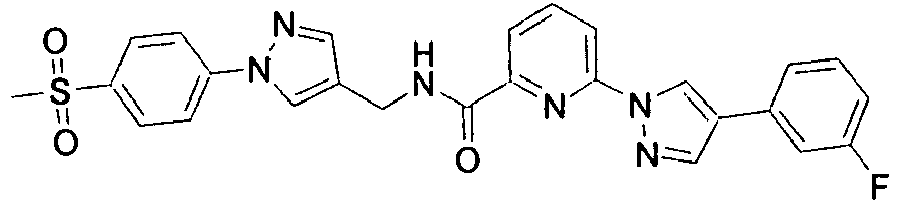
1.903 516.1 517.1 296 
1.852 516.1 517.1 297 
3.04 499.1 500.24 -

- To a solution of 2,6-pyridinedicarboxylate monoethyl ester 1 (0.500 g, 2.56 mmol, 1.00 equiv), N,N-diisopropylethylamine (0.9 mL, 5.1 mmol,, 2.0 equiv) and pivalic acid hydrazide (0.297 g, 2.56 mmol, 1.0 equiv) in NMP (6 mL) at rt was added HATU (0.97 g, 2.6 mmol, 1.00 equiv) in one portion. After 3 hr at rt, the solution was diluted with ethyl acetate and washed with water (three times) and brine, dried (sodium sulfate) and partially concentrated. Filtration afforded 0.314 g of 6-[N',N'-(2,2-dimethyl-propionyl)-hydrazinocarbonyl]-pyridine-2-carboxylic acid ethyl ester 298 as a colorless solid (42%).
- To a solution of 6-[N;N'-(2,2-dimethyl-propionyl)-hydrazinocarbonyl]-pyridine-2-carboxylic acid ethyl ester 298 (0.234 g, 0.789 mmol, 1.0 equiv) in pyridine (0.16 mL, 1.04 mmol, 1.3 equiv) at rt was added thionyl chloride (0.076 mL, 1.04 mmol, 1.3 equiv). The resulting suspension was aged 15 min, diluted with toluene (8 mL) and heated at 100 °C for 1 hr. The reaction mixture was partitioned between ethyl acetate and water, washed with sodium bicarbonate, brine and dried (sodium sulfate). Concentration afforded 0.11 g (49%) of 6-(5-tert-butyl-[1,3,4]oxadiazol-2-yl)-pyridine-2-carboxylic acid ethyl ester 299 as a brown oil. The crude material was used without further purification.
- To a solution of 6-(5-fert-butyl-[1,3,4]oxadiazol-2-yl)-pyridine-2-carboxylic acid ethyl ester 300 (0.22 g, 0.80 mmol, 1.0 equiv) in ethanol (4 mL) was added KOH (46.0 mg, 0.824 mmol, 1.03 equiv). The mixture was heated at 60 °C for 1 hr, cooled to rt and concentrated. LCMS: (MH)+ = 248.2 (1.31 min).
- To a solution of potassium carboxylate 300 from Part C (0.039 g, 0.14 mmol, 1.00 equiv), amine (1.2 equiv) and N,N-diisopropylethylamine (0.048 mL, 0.27 mmol, 2.0 equiv) in NMP (1 mL) at room temperature was added HATU (0.052 g, 0.14 mmol, 1.0 equiv) in one portion. The reaction mixture was stirred at room temperature for 2 hours, diluted with ethyl acetate and washed with water, brine, dried (sodium sulfate) and concentrated. Purification by Prep-LC afforded the products in Table 29.
Table 29 Cmpd No. Compound Ret. Time UV254 (min) EMW MS (m/z) Observed 302 
4.07 480.2 481.16 303 
3.91 414.1 415.14 -

- To a suspension of 4-(methylsulfonyl)phenylhydrazine hydrochloride (0.75 g, 4.02 mmol, 1.00 equiv) in ethanol (20 mL) was added 4-(dimethylamino)-1,1-dimethoxybut-3-en-2-one (0.7 g, 4.0 mmol, 1.0 equiv). The resulting mixture was heated at reflux (48 hr) then concentrated. To a solution of the crude residue in acetone (10 mL) was added 6N HCl (2 mL). The resulting solution was allowed to stir at room temperature for 30 min, then was partitioned between ethyl acetate and water. The organic extract was washed with water, saturated sodium bicarbonate, brine and dried (sodium sulfate). Concentration afforded 2-(4-methanesulfonylphenyl)-2H-pyrazole-3-carbaldehyde admixed with regioisomer 1-(4-methanesulfonylphenyl)-1H-pyrazole-3-carbaldehyde (ca. 10/1). The crude material was used without further purification.
- To a solution of crude 2-(4-methanesulfonyl-phenyl)-2H-pyrazole-3-carbaldehyde from Part A in methanol (10 mL) was added sodium borohydride (0.15 g, 4 mmol) in one portion. After 30 min at room temperature, the reaction mixture was concentrated and the residue was partitioned between ethyl acetate and water. The organic phase was dried (sodium sulfate) and concentrated affording [2-(4-methanesulfonyl-phenyl)-2H-pyrazol-3-yl]-methanol. The crude material was used without further purification.
- To a solution of [2-(4-methanesulfonyl-phenyl)-2H-pyrazol-3-yl]-methanol (4 mmol) and diphenylphosphoryl azide (0.95 mL, 4.4 mmol, 1.1 equiv) in THF (10 mL) at rt was added 1,8-diazabicyclo[5.4.0]undec-7-ene (0.6 mL, 4.4 mmol, 1.2 equiv). The resulting solution was stirred overnight, concentrated and chromatographically purified (15% ethyl acetate in hexanes) to give 5-azidomethyl-1-(4-methanesulfonylphenyl)-1H-pyrazole (0.344 g, 31% based on 4-(methylsulfonyl)phenylhydrazine hydrochloride, LCMS: (MH)+ = 278.0 (rt = 1.36 min) and 3-azidomethyl-1-(4-methanesulfonyl-phenyl)-1H-pyrazole (75 mg, 7% based on 4-(methylsulfonyl)phenylhydrazine hydrochloride, LCMS: (MH)+ = 278.0 (rt = 1.48 min)).
- To a solution of 5-azidomethyl-1-(4-methanesulfonyl-phenyl)-1H-pyrazole (0.344 g, 1.24 mmol, 1.00 equiv) in 1,4-dioxane (5 mL) was added water (0.5 mL) and triphenylphosphine resin (0.5 g, 3 mol/g, 200-400 mesh, 1.2 equiv). The suspension was stirred overnight. Filtration and concentration afforded C-[2-(4-methanesulfonylphenyl)-2H-pyrazol-3-yl]-methylamine as a colorless solid.
- To a solution of 3-azidomethyl-1-(4-methanesulfonyl-phenyl)-1H-pyrazole (75 mg, 0.27 mmol, 1.00 equiv) in 1,4-dioxane (5 mL) was added water (0.5 mL) and triphenylphosphine resin (0.11 g, 3 mol/g, 200-400 mesh, 1.2 equiv). The suspension was stirred overnight. Filtration and concentration afforded C-[1-(4-methanesulfonylphenyl)-1H-pyrazol-3-yl]-methylamine as a colorless solid.
- The compounds in Table 30 are made using the above building blocks and the methods described in Example 2.
Table 30 Cmpd No. Compound Ret. Time UV254 (min) EMW MS (m/z) Observed 309 
3.64 441.1 442.15 310 
3.38 441.1 442.15 -

- To a solution of 6-bromopyridine-2-carboxylic acid 311 (0.44 g, 2.2 mmol, 1.00 equiv), N,N-diisopropylethylamine (1.1 mL, 6.6 mmol, 3.0 equiv), and 4-methylsulfonylbenzylamine hydrochloride (0.48 g, 2.2 mmol, 1.0 equiv) in NMP (5 mL) at rt was added HATU (0.86 g, 2.3 mmol, 1.0 equiv) in one portion. The reaction mixture was stirred overnight at rt, diluted with ethyl acetate and washed with water, brine, dried (sodium sulfate) and concentrated. 1H NMR (400 MHz, DMSO- d6 ) δ 9.38 (t, 1H), 8.03 (dd, 1H), 7.93 (t, 1H), 7.88-7.83 (m, 3H), 7.55 (d, 2H), 4.56 (d, 2H), 3.17 (d, 2H).
- To a solution of the appropriate heterocycle (to make the compounds in Table 31) (0.065 mmol, 1.2 equiv) in NMP (0.5 mL) was added NaH (60% in oil, 0.0044 g, 0.11 mmol, 2.0 equiv). The resulting mixture was allowed to stir for 15 min, then 6-bromo-pyridine-2-carboxylic acid 4-methanesulfonyl-benzylamide (312 from Part A) (0.020 g, 0.054 mmol, 1.00 equiv) was added in one portion. The dark reaction mixture was heated at 90-100°C for 30 minutes. The crude mixture was allowed to cool and then was partitioned between ethyl acetate and water, dried (sodium sulfate), concentrated and purified by Prep-LC.
- A suspension of 6-bromo-pyridine-2-carboxylic acid 4-methanesulfonyl-benzylamide from 312 Part A (0.020 g, 0.054 mmol, 1.00 equiv), potassium phosphate (0.034 g, 0.16 mmol, 3.0 equiv), [1,1'-bis(diphenylphosphino)-ferrocene]dichloropalladium(II) (0.004 g, 0.005 mmol, 10 mol%) and the appropriate boronic acid (to make the compounds in Table 31) (2.0 equiv) in 1,4-dioxane (1 mL) was heated at 100°C for 17 hr. The suspension was allowed to cool, was filtered and concentrated. Purification by Prep-LC afforded the desired products.
- Compounds 314, 315, 318, 319, 320, 321, 322, 323, 324, 325, 326, 327, 328, 334, 335, 336, 337, and 338 are made using method 1 part B
- Compounds 316, 317, 329, 330, 331, 332, 333, and 339 are made using method 2 part B
Table 31 Cmpd No. Compound Ret. Time UV254 (min) EMW MS (m/z) Observed 314 
3.71 356.1 357.09 315 
4.94 424.1 425.08 316 
4.73 384.1 385.09 317 
2.44 367.1 368.10 318 
4.75 482.0 482.99 319 
4.47 428.1 429.12 320 
4.07 384.1 385.13 321 
5.22 450.1 451.12 322 
4.61 406.1 407.11 323 
4.18 370.1 371.11 324 
3.83 370.1 371.11 325 
4.08 370.1 371.11 326 
3.02 357.1 358.09 327 
3.65 434.0 435.0 328 
4.7 434.0 435.0 329 
4.86 414.1 415.11 330 
4.67 414.1 415.11 331 
4.7 414.1 415.11 332 
4.57 410.1 411.09 333 
3.29 370.1 371.11 334 
2.93 433.1 434.12 335 
3.86 434.1 435.12 336 
4.42 412.2 413.16 337 
2.01 361.1 362.15 338 
3.05 375.2 376.16 339 
5 405.1 406.11 -

- The title compound 340 was prepared by the methods described in Example 22. LCMS: (M++H)= 242.1 (rt = 0.96 min).
-

- To a solution of 6-bromopyridine-2-carboxylic acid 311 (0.0.82 g, 0.41 mmol, 1.00 equiv), N,N-diisopropylethylamine (0.14 mL, 0.82 mmol, 2.0 equiv), and C-[1-(4-trifluoromethyl-phenyl)-1H-pyrazol-4-yl]-methylamine 340 (0.103 g, 0.43 mmol, 1.05 equiv) in NMP (3 mL) at rt was added HATU (0.016 g, 0.43 mmol, 1.05 equiv) in one portion. The reaction mixture was stirred overnight at rt, diluted with ethyl acetate and washed with water, brine, dried (sodium sulfate) and concentrated. LCMS (MH)+= 424.9 (2.12 min).
- A solution of 6-bromo-pyridine-2-carboxylic acid [1-(3-trifluoromethyl-phenyl)-1H-pyrazol-4-ylmethyl]-amide 341 from Part A (0.025 g, 0.059 mmol, 1.00 equiv), N,N-diisopropylethylamine (2.0 equiv) and the appropriate amine (to make the compounds in Table 32) (5.0 equiv) in 2-methoxyethanol (1 mL) was heated at 80°C for 24 hr. Concentration and purification of the residue by Prep-LC afforded the desired compounds.
- A suspension of 6-bromo-pyridine-2-carboxylic acid [1-(3-trifluoromethylphenyl)-1H-pyrazol-4-ylmethyl]-amide 341 from Part A (0.035 g, 0.082 mmol, 1.00 equiv), potassium phosphate (0.055 g, 0.24 mmol, 3.0 equiv), [1,1'-bis(diphenylphosphino)ferrocene]dichloropalladium(II) (0.006 g, 0.008 mmol, 10 mol%) and the appropriate boronic acid (to make the compounds in Table 32) (2.0 equiv) in 1,4-dioxane (1 mL) was heated at 100°C for 17 hr. The suspension was allowed to cool, was filtered and concentrated. Purification by Prep-LC afforded the desired products.
- Compounds 343-346 are made by Method 1 Part B.
- Compound 347 is made by Method 2 Part B.
Cmpd No. Compound Ret. Time UV254 (min) EMW MS (m/z) Observed 343 
5.3 415.2 416.16 344 
6.42 463.2 464.16 345 
5.24 431.2 432.16 346 
4.15 492.2 493.19 347 
6.24 461.1 462.15 -

- To a solution of 2,6-pyridinedicarboxylate monoethyl ester 1 (1.25 g, 6.40 mmol, 1.00 equiv) and N,N-diisopropylethylamine (2.2 mL, 12.8 mmol, 2.00 equiv) in toluene (38 mL) and tert-butanol (3.8 mL) was added DPPA (1.9 mL, 8.8 mmol, 1.4 equiv). The resulting solution was heated at 100 °C for 5 hr, cooled and partitioned between ethyl acetate and water, washed with brine and dried (sodium sulfate). Purification by chromatography (15% ethyl acetate in hexanes) afforded 6-tert-butoxycarbonylamino-pyridine-2-carboxylic acid ethyl ester (0.88 g, 51%) as a yellow semisolid 348. LCMS: (MH)+ = 267.1 (rt = 1.95 min).
- To a solution of 6-tert-butoxycarbonylamino-pyridine-2-carboxylic acid ethyl ester 348 from Part A (0.496 g, 1.86 mmol, 1.00 equiv) in ethanol (4 mL) was added KOH (0.11 g, 1.96 mmol, 1.05 equiv). The resulting suspension was stirred for 3 hr at rt and then was concentrated. LCMS: (MH)+ = 267.1 (rt = 1.95 min).
- To a solution of crude material from 349 Part B (0.200 g, 0.72 mmol, 1.00 equiv), C-[1-(3-trifluoromethyl-phenyl)-1H-pyrazol-4-yl]-methylamine (0.18 g, 0.76 mmol, 1.05 equiv) and N,N-diisopropylethylamine (0.25 ml, 1.45 mmol, 2.0 equiv) in NMP (4 mL) at rt was added HATU (0.289 g, 0.76 mmol, 1.05 equiv) in one portion. The reaction mixture was stirred at room temperature for 0.5 hours, diluted with ethyl acetate and washed with water (3x) and brine, dried (sodium sulfate) and concentrated. LCMS: (MH)+ = 462.1 (rt = 2.24 min).
- To a solution of crude (6-{[1-(3-trifluoromethyl-phenyl)-1H-pyrazol-4-ylmethyl]-carbamoyl}-pyridin-2-yl)-carbamic acid tert-butyl ester 350 from Part C in DCM (3 mL) was added trifluoroacetic acid (3 mL). After 3 hr at rt, the solution was concentrated. The residue was partitioned between DCM and 1 N NaOH. The aqueous extract was washed with DCM and the combined organic extracts were washed with water, brine and dried (sodium sulfate). LCMS: (MH)+ 362.0 (rt = 1.51 min).
- To a solution of crude 6-amino-pyridine-2-carboxylic acid [1-(3-trifluoromethylphenyl)-1H-pyrazol-4-ylmethyl]-amide 351 from Part D (0.02 g, 0.55 mmol, 1.00 equiv) and N,N-diisopropylethylamine (2.0 equiv) in pyridine (1 mL) was added the appropriate acid chloride, isocyanate or carbamoyl chloride (to make the compounds in Table 33) (1-2 equiv). The reactions were allowed to stir at rt for 24 hr, then were concentrated. Purification by Prep-LC afforded the desired products.
Table 33 Cmpd No. Compound Ret. Time UV254 (min) EMW MS (m/z) Observed 353 
4.64 403.1 404.13 354 
5.37 431.2 432.16 355 
5.06 419.1 420.12 356 
4.1 404.1 405.12 -

- To a solution of 6-tert-butoxycarbonylamino-pyridine-2-carboxylic acid ethyl ester 348 (0.34 g, 1.5 mmol, 1.00 equiv) in NMP (4 mL) was added NaH (60% in oil, 0.090 g, 2.25 mmol, 1.5 equiv) in one portion. After stirring 15 min, iodomethane (0.1 mL, 1.65 mmol, 1.1 equiv) was added and the reaction mixture was allowed to stir 1 hr. The mixture was partitioned between ethyl acetate and water. The organic extract was washed with water, brine, dried (sodium sulfate) and concentrated. LCMS: (MH)+ 281.2 (rt = 2.05 min).
- To a solution of 6-(tert-butoxycarbonyl-methyl-amino)-pyridine-2-carboxylic acid ethyl ester 357 from Part A (0.28 g, 1.01 mmol, 1.00 equiv) in ethanol (4 mL) was added KOH (0.06 g, 1.06 mmol, 1.05 equiv). The resulting suspension was stirred for 3 hr at rt and then was concentrated. LCMS: (MH)+ = 253.1 (rt = 1.55 min).
- To a solution of crude material 358 from Part B (0.200 g, 0.69 mmol, 1.00 equiv), C-[1-(3-trifluoromethyl-phenyl)-1H-pyrazol-4-yl]-methylamine 340 (0.17 g, 0.72 mmol, 1.05 equiv) and N,N-diisopropylethylamine (0.24 ml, 1.4 mmol, 2.0 equiv) in NMP (4 mL) at rt was added HATU (0.27 g, 0.72 mmol, 1.05 equiv) in one portion. The reaction mixture was stirred at room temperature for 0.5 hours, diluted with ethyl acetate and washed with water (3x) and brine, dried (sodium sulfate) and concentrated. LCMS: (MH)+ = 476.2 (rt = 2.32 min).
- To a solution of crude methyl-(6-{[1-(3-trifluoromethyl-phenyl)-1H-pyrazol-4-ylmethyl]-carbamoyl}-pyridin-2-yl)-carbamic acid tert-butyl ester 359 from Part C in DCM (3 mL) was added trifluoroacetic acid (3 mL). After 3 hr at rt, the solution was concentrated. The residue was partitioned between DCM and 1 N NaOH. The aqueous extract was washed with DCM and the combined organic extracts were washed with water, brine and dried (sodium sulfate). LCMS: (MH)+ 376.1 (rt = 1.80 min).
- To a solution of crude 6-methylamino-pyridine-2-carboxylic acid [1-(3-trifluoromethyl-phenyl)-1H-pyrazol-4-ylmethyl]-amide 360 from Part D (0.02 g, 0.55 mmol, 1.00 equiv) and N,N-diisopropylethylamine (2.0 equiv) in pyridine (1 mL) was added the appropriate acid chlorides (to make the compounds in Table 34 (1-2 equiv). The reactions were allowed to stir at rt for 24 hr, then were concentrated. Purification by Prep-LC afforded the desired products.
Table 34 Cmpd No. Compound Ret. Time UV254 (min) EMW MS (m/z) Observed 362 
4.16 375.1 376.13 363 
4.71 417.1 418.14 364 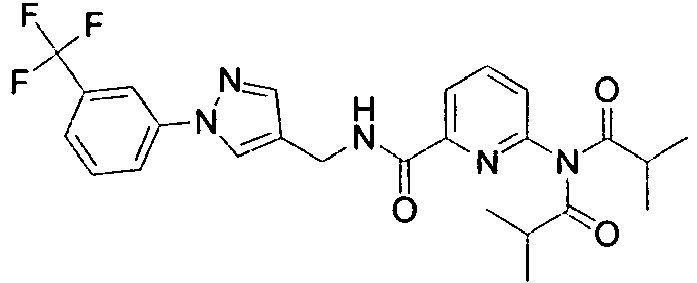
6.25 501.2 502.20 365 
5.33 445.2 446.17 -

- To a solution of monomethyl isophthalate 366 (1.00 g, 5.55 mmol, 1.00 equiv), 4-amino-1-boc-piperidine (1.33 g, 6.66 mmol, 1.20 equiv) and N,N-diisopropylethylamine (1.9 mL, 11.1 mmol, 2.0 equiv) in NMP (15 mL) at room temperature was added HATU (2.53 g, 6.66 mmol, 1.20 equiv) in one portion. The reaction mixture was stirred at room temperature for 2 hours, diluted with ethyl acetate and washed with water (3x) and brine, dried (sodium sulfate) and concentrated. The residue 367 was used without further purification.
- To a solution of the crude residue 367 from Part A in THF (36 mL) was added 1 N LiOH (12 mL). The biphasic mixture was stirred at rt 2 hours, diluted with ethyl acetate and acidified to ca. pH 4 with 1 N HCl. The organic phase was washed with water, dried (sodium sulfate) and concentrated. The residue 368 was used without further purification.
- To a solution of 4-(3-carboxy-benzoylamino)-piperidine-1-carboxylic acid tert-butyl ester 368 (0.25 g, 0.72 mmol, 1.00 equiv), appropriate benzylamine (to make the compounds in Table 35) (0.86 mmol, 1.20 equiv) and N,N-diisopropylethylamine (0.36 ml, 2.08 mmol, 2.9 equiv) in NMP (2 mL) at room temperature was added HATU (0.33 g, 0.86 mmol, 1.20 equiv) in one portion. The reaction mixture was stirred at room temperature for 2 hours, diluted with ethyl acetate and washed with water (3x) and brine, dried (sodium sulfate) and concentrated.
- The crude residue 369 from Part C was treated with 4N HCl in 1,4-dioxane for 1 hr and then concentrated. The residue was dissolved in DCM (1 mL), treated with N,N-diisopropylethylamine (0.15 mL) and ethyl chloroformate (0.011 mL, 0.12 mmol, 1.2 equiv). The crude residue was purified by Prep-LC.
Table 35 Cmpd No. Compound Ret. Time UV254 (min) EMW MS (m/z) Observed 371 
3.6 487.2 488.18 372 
4.16 453.2 454.19 -

- To a solution of 2,6-pyridinedicarboxylate monoethyl ester 1 (0.20 g, 1.02 mmol, 1.00 equiv), o-phenylenediamine (0.21 g, 1.07 mmol, 1.05 equiv) and N,N-diisopropylethylamine (0.34 mL, 2.0 equiv) in NMP (2.5 mL) at room temperature was added HATU (0.41 g, 1.05 equiv) in one portion. The reaction mixture was stirred at room temperature for 2 hours, diluted with ethyl acetate and washed with water (3x) and brine, dried (sodium sulfate) and concentrated. The residue 373 was used without further purification. LCMS: (MH)+ = 286.1 (rt = 1.49 min).
- The crude residue 373 from Part A (200 mg) was heated in acetic acid (10 mL) at 55 °C for 24 hr. Concentration afforded 6-(1H-benzoimidazol-2-yl)-pyridine-2-carboxylic acid methyl ester 374. LCMS: (MH)+ = 268.1 (rt = 1.46 min).
- A solution of ester 374 from Part A (25 mg, 0.091 mmol, 1.00 equiv), N,N-diisopropylethylamine (0.047 mL, 0.14 mmol, 1.5 equiv) and the appropriate amine (to make the compounds in Table 36) (1.5 equiv) in NMP (0.5 mL) were heated at 125°C for 24 hr. Concentration and purification afforded the compounds in Table 36.
Table 36 Cmpd No. Compound Ret. Time UV254 (min) EMW MS (m/z) Observed 376 
2.9 406.1 407.11 377 
2.89 280.1 281.13 378 
3.7 385.1 386.10 -

- Compound 380 was synthesized starting from 379 using method described in Example 1 (Part A).
- To a solution of 8-hydroxy-quinoline-2-carboxylic acid 4-methanesulfonyl-benzylamide 380 from Part A (0.05 mg, 1.00 equiv) in acetone (1 mL) was added potassium carbonate (0.052 g, 4.5 equiv) and iodomethane (0.008 mL, 1.05 equiv). The resulting solution was stirred overnight at rt, filtered and concentrated. Purification of the residue by Prep-LC afforded compound 383. LCMS: (MH)+ = 371.0 (rt = 1.59 min).
- To a solution of 8-hydroxy-quinoline-2-carboxylic acid 4-methanesulfonyl-benzylamide 380 from Part A (0.030 g, 0.084 mmol, 1.00 equiv) in DCM (1 mL) was added ethyl isocyanate (0.008 mL, 0.101 mmol, 1.2 equiv) at rt. The resulting solution was stirred overnight at room temperature, then concentrated. Purification of the residue by Prep-LC afforded compound 384. LCMS: (MH)+ = 428.0 (rt = 1.54 min).
Table 37 Cmpd No. Structure Ret. Time UV254 (min) EMW MS (m/z) Observed 380 
3.96 356.1 357.08 383 
4.52 370.1 371.10 384 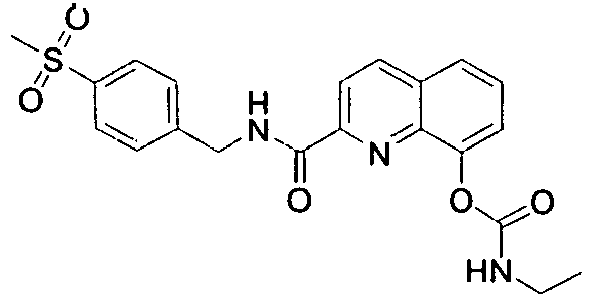
3.77 427.1 428.12 -

- Compound 259 (0.757 g, 4.80 mmol) and DMF (0.01 mL) were dissolved in CH2Cl2 (25 mL) then cooled to 0°C. Oxalyl chloride (0.46 mL, 5.28 mmol) was added drop wise to the reaction. The reaction was allowed to warm to room temperature and stir for 30 minutes. The reaction was concentrated in vacuo to give crude compound 385. This material was carried on without further purification.
- Compound 385 was dissolved in CH2Cl2 (25 mL) and cooled to 0°C. Ethyl 4-amino-1-piperidinecarboxylate (0.907 mL, 5.28 mmol) was added followed by triethyl amine (0.804 mL, 5.76 mmol). The reaction stirred for 10 minutes at 0°C and then allowed to warm to room temperature. The reaction was concentrated in vacuo to give crude compound 386. This crude material was dissolved in ethyl acetate (50 mL), washed with 0.1 M HCl (25 mL), NaHCO3 (aq., sat., 25 mL), H2O (25 mL), and brine (25 mL). The organic layer was dried over sodium sulfate and concentrated in vacuo to afford compound 389 in 92% yield.
- Compound 386 (1 equivalent) was weighed into a 4 mL vial with the amine building blocks (1.1 equivalents), Pd(dppf)Cl2 (0.1 equivalents), and sodium tert-butoxide (1.5 equivalents). Toluene was added, enough to produce a 0.2 M solution of compound 386. The vials were flushed quickly with N2 and then capped. The reactions were then heated for 18 hours in an oil bath at 90°C. The reactions were cooled and concentrated in vacuo to obtain crude product. Products were purified via prep-LC.
- The compounds in Table 38 were synthesized using this procedure:
Table 38 Cmpd No. Compound Ret. Time UV254 (min) EMW MS (m/z) Observ ed 388 
2.80 369.2 370.1 389 
3.13 419.2 420.1 390 
3.44 453.2 454.1 - Compound 386 (1 equivalent) was weighed into a 4 mL vial with the appropriate amine building blocks (to make the compounds in Table 39) (1.5 equivalents), Pd(OAc)2 (0.02 equivalents), 2-(di-tert-butylphosphino)biphenyl (0.03 equivalents) and sodium tert-butoxide (1.4 equivalents). Toluene was added, enough to produce a 0.2 M solution of compound 386. The vials were flushed quickly with N2 and then capped. The reactions were then heated for 18 hours in an oil bath at 90°C. The reactions were cooled and concentrated in vacuo to obtain crude product. Products were purified via prep-LC.
- The compounds in Table 39 were synthesized using this procedure:
Table 39 Cmpd No. Compound Ret. Time UV254 (min) EMW MS (m/z) Observed 391 
2.71 383.2 384.1 392 
4.27 426.2 427.1 393 
2.66 397.2 398.1 394 
3.14 411.2 412.1 395 
2.44 389.2 390.1 - Compound 386 (1 equivalent) was weighed into a 4 mL vial with the appropriate amine building block (to make the compound in Table 40 (1.5 equivalents), Pd(OAc)2 (0.05 equivalents), 2-dicyclohexylphosphino-2'-(N,N-dimethylamino)biphenyl (0.1 equivalents) and sodium tert-butoxide (1.4 equivalents). Toluene was added, enough to produce a 0.2 M solution of compound 386. The vial was flushed quickly with N2 and then capped. The reaction was heated for 18 hours in an oil bath at 90°C. The reaction was cooled and concentrated in vacuo to give a black mixture containing product. The product was purified via prep-LC.
Table 40 Cmpd No. Compound Ret. Time UV254 (min) EMW MS (m/z) Observed 396 
2.81 369.18 370.1 -

- Compound 397 (1 equivalent) was mixed with the appropriate acid chloride building blocks (to make the compounds in Table 41) (5 equivalents) in pyridine to give a 0.2 M solution of compound 1. The reactions were heated at 80 °C for 20 hours. The reactions were cooled and concentrated in vacuo. Products were purified via prep-LC.
Table 41 Cmpd No. Compound Ret. Time UV254 (min) EMW MS (m/z) Observed 399 
3.35 334.16 335.1 400 
4.28 364.17 365.1 401 
4.49 454.19 455.1 402 
3.82 488.17 489.1 -

- Chelidamic acid 403 (5.00 g, 27.3 mmol) was mixed with 30 mL of POCl3 and heated to reflux overnight. The reaction was then concentrated in vacuo. The residue was dissolved in 50 mL of THF. This solution was added slowly to 200 mL of EtOH at 0 °C. Et3N (25 mL) was carefully added to the EtOH solution. The reaction was allowed to warm to room temperature and stirred for 30 minutes. This mixture was concentrated in vacuo and the residue dissolved in 200 mL of EtOAc. The EtOAc solution was washed with H2O and brine. The organic layer was dried with Na2SO4 and concentrated in vacuo. Recrystallization from EtOH gave 6.08 g of compound 404 in 86 % yields.
- Compound 404 (1 equivalent) was mixed with LiOH (1.05 equivalents) in 20:5:1 THF:EtOH:H2O. The reaction was heated to reflux until the starting material disappeared, as judged by TLC. The reaction was concentrated in vacuo to give the crude lithium caboxylates. The carboxylates were then dissolved in DMF with the appropriate building block amine (1.1 equivalents) and HATU (1.5 equivalents). After 1 hour at room temperature the reaction was concentrated and residue taken up in EtOAc. This solution was washed with H2O followed brine. The organic layer was dried with Na2SO4 and concentrated in vacuo. to obtain compound 405.
- Compound 405 is separately reacted with ethylamine and 2-methylethanolamine to obtain compounds 406 and 406a using the method described in Example 34 (Part B).
- Compound 406a (1 equivalent) was weighed in to a 4 mL vial with an phenyl boronic acid (1.2 equivalents), Pd(OAc)2 (0.1 equivalents), ), 2-dicyclohexyl-phosphino-2'-(N,N-dimethylamino)biphenyl (0.2 equivalents) and K2CO3 (3 equivalents). Dioxane solvent was added last, the reaction was flushed with N2, capped, and heated in an oil bath at 80°C overnight. The reaction was concentrated and purified via prep-LC.
Table 42 Cmpd No. Compound Ret. Time UV254 (min) EMW MS (m/z) Observed 407 
3.96 467.15 468.1 408 
3.82 395.07 396.1 -

- To chelidamic acid monohydrate 403 (12.89 g, 64.1 mmol) in ethanol (100 ml) in an ice bath was added thionyl chloride (5 mL) slowly. The ice bath was removed and the reaction mixture was heated to reflux overnight. The ethanol was removed in vacuo and the residue was dissolved in ethyl acetate (50 mL). The mixture was washed with saturated sodium bicarbonate until the aqueous layer was no longer acidic. The organic layer was washed with saturated sodium chloride solution, dried over sodium sulfate and concentrated to afford a tacky white solid (11.64 g). Recrystallization of the white solid (9.25 g) from ethyl acetate/hexane/DCM afforded a crystalline white solid (7.44 g, 56%)1H NMR (300 MHz, CDCl3) δ 7.31 (bs, 2H), 4.43 (q, 4H, J = 7.1 Hz), 1.40 (t, 6H, J = 7.1 Hz).
- To 4-hydroxy-pyridine-2,6-dicarboxylic acid diethyl ester 409(4.76 g, 20 mmol) in DCM (40 mL) in an ice bath was added 2,6-lutidene (3.5 mL, 30 mmol). To this was added a solution of trifluoromethanesulfonyl anhydride (4.04 mL, 24 mmol) in DCM (25 mL) via an addition funnel over 15 minutes. The ice bath was removed and the reaction was stirred for 1 hour. The mixture was washed with saturated sodium bicarbonate solution, 1 N citric acid solution (2x), saturated sodium chloride solution, dried over sodium sulfate and concentrated. Purification by column chromatography (SiO2, 20% ethyl acetate/hexane) afforded a white solid (7.09 g, 95%). 1H NMR (300 MHz, CDCl3) δ 8.17 (s, 2H), 4.52 (q, 4H, J = 7.1 Hz), 1.47 (t, 6H, J = 7.1 Hz). MS calcd for C12H13F3NO7S [M+H]+ 372.04, found 372.
- A mixture of 4-trifluoromethanesulfonyloxy-pyridine-2,6-dicarboxylic acid diethyl ester (3.00 g, 8.07 mmol), 2-thiopheneboronic acid (1.14 g, 8.9 mmol), tetrakis triphenylphosphine palladium (466 mg, 0.4 mmol) and DIEA (3.1 mL, 17.8 mmol) in DMF (10 mL) were heated to 90 - 100 °C overnight. The reaction was concentrated in vacuo. The crude solid was dissolved in ethyl acetate, washed with water (2 xs), saturated sodium chloride solution, dried over sodium sulfate and concentrated. Purification by column chromatography (SiO2, 5% ethyl acetate/dichloromethane) afforded a pale yellow solid (2.38 g, 97%). 1H NMR (300 MHz, CDCl3) δ 8.43 (s, 2H), 7.68 (dd, 1 H, J = 1.0, 3.8 Hz), 7.51 (dd, 1 H, J = 1.0, 5.0 Hz), 7.19 (dd. 1 H, J = 3.7, 5.2 Hz), 4.51 (q, 4H, J = 7.1 Hz), 1.48 (t, 6H, J = 7.1 Hz). MS calcd for C15H16NO4S [M+H]+ 306.08, found 306.
- Compounds 411 (1 equivalent) were mixed with LiOH (1.05 equivalents) in 20:5:1 THF:EtOH:H2O. The reaction was heated to reflux until the starting material disappeared, as judged by TLC. The reaction was concentrated in vacuo to give the crude lithium caboxylates. The carboxylates were then dissolved in DMF with the appropriate building block amine (to obtain the compounds in Table 43) (1.1 equivalents) and HATU (1.5 equivalents). After 1 hour at room temperature the reactions were concentrated and residue taken up in EtOAc. These solutions were washed with H2O followed by brine. The organic layers were dried with Na2SO4 and concentrated in vacuo to yield compound 412.
- The Compounds 413 were synthesized with the appropriate amine using the method described in Example 34 (Part B) and purified on Prep LC. The compounds prepared are set forth in Table 43.
Table 43 Cmpd No. Compound Ret. Time UV254 (min) EMW MS (m/z) Observed 414 
4.77 570.16 571.1 415 
4.30 443.10 444.1 416 
3.82 473.11 474.1 417 
3.82 473.11 474.1 -

- The pyridyl carboxylic acid 81 (0.020 g, 96.0 µmol) was mixed with Et3N (40 µL, 288 µmol), and 1.2 eq of the appropriate building block amine (to make the compounds in Table 44) in DMF (2 mL). HATU (0.055 g, 144 µmol) was added last. The reactions were warmed in a sand bath at 55°C overnight. The reactions were concentrated and purified via prep-LC.
- The compounds in Table 44 were synthesized using this procedure:
Table 44 Cmpd No. Compound Ret. Time UV254 (min) EMW MS (m/z) Observed 419 
4.51 405.22 406.1 420 
4.27 405.22 406.1 421 
3.83 458.20 459.1 422 
3.64 458.20 459.1 -

- The pyridyl carboxylic acid 423 (0.969 g, 5.52 mmol) was mixed with isopropyl amine (517 µL, 6.07 mmol) and Et3N (923 µL, 6.62 mmol) in DMF (10 mL). The coupling reagent HATU (2.517 g, 6.62 mmol) was added last. The reaction stirred at room temperature overnight. The reaction was concentrated under vacuum and yellow residue was taken up in EtOAc (100 mL). This EtOAc solution was washed with NaOH (1 M aq., 50 mL), NaHCO3 (sat. aq., 50 mL), and brine (sat. aq. 50 mL). The organic layer was separated, dried with Na2SO4, and concentrated under vacuum to give the crude product. The crude was carried on without further purification.
- The amide product 424 was mixed with Pd(dppf)Cl2·CH2Cl2 (355 mg, 0.435 mmol) and vinyl tributyltin (1.66 g, 5.22 mmol) in THF (15 mL) in a 40 mL screw capped vial. The vial was flushed with Ar, capped, and heated in a sand bath at 80°C for 18 hours. The crude reaction was cooled to room temperature then filtered through celite. The filtrate was concentrated and purified via column chromatography using 5 % MeOH in CH2Cl2. A second column using 40 % EtOAc in Hexanes gave purified product in 62 % yield, 0.565 g.
- The olefin 425 was dissolved in acetone (10 mL) and H2O (10 mL). KMnO4 (0.850 g, 5.38 mmol) was added as a solid. The reaction turned black and a black precipitate formed. The reaction was shaken for 1 hour at room temperature. The reaction was filtered through celite and the celite was washed with acetone (3x 20 mL). The clear filtrate was concentrated under vacuum and the residue was mixed with EtOH and concentrated again. The crude was dried overnight under vacuum. The dried crude material was take up in a 100 mL solution of 10 %'PrOH in CH2Cl2.This solution was washed with 50 mL of 0.1 M HCl. The aq. layer was washed with 10 % isopropyl alcohol in CH2Cl2 (2x 50mL). The organic layers were combined and concentrated to give the crude product, as mixture of the desired product and the N-oxide of the product, in 92 % yield, 0.561 g. The material was used without further purification.
- The pyridyl carboxylic acid 426 (0.0166 g, 0.071 mmol) was mixed with 1 eq. of the appropriate building block amine (to make the compounds in Table 45) and Et3N (19.8 µL, 0.142 mmol) in DMF (0.5 mL). The coupling reagent HATU (0.0324 g, 0.085 mmol) was added last. The reactions stirred at room temperature overnight. The reactions were concentrated and purified via prep-LC to give the compounds in Table 45.
Table 45 Cmpd No. Compound Ret. Time UV254 (min) EMW MS (m/z) Observed 428 
4.65 395.18 396.1 429 
4.66 395.18 396.1 -

- To the stirred solution of chelidamic acid 403 (1.83 g, 10 mmol) in DMF (100 mL) was added HATU (3.8 g,10 mmol), isopropylamine (0.59 g, 10 mmol) and DIEA (20 mmol). Stirring was continued for overnight. DMF was removed under vacuum and the crude which contains mixture of products and unreacted chelidamic acid was used for the next reaction.
- The crude product obtained from the above reaction was suspended in ethanol (100 mL) in an ice bath was added thionyl chloride (1 mL) slowly. The ice bath was removed and the reaction mixture was heated to reflux overnight. The ethanol was removed in vacuo and the residue was dissolved in ethyl acetate. The mixture was washed with saturated sodium bicarbonate soln, brine solution, dried over sodium sulfate and concentrated to afford product. Desired product 431 was purified by column chromatography. HPLC-MS Mass calculated for formula C12H16N2O4 252.11, observed LC/MS m/z 253.1 (M+H).
- To the compound 431 (0.252 g, 1 mmol) in DCM (5 mL) and cyclohexane (1 mL) was added t-butyl-2,2,2-trichloroacetimidate (0.462 mL, 2.0 mmol) and boron trifluoride-etherate (100 µL, 6 mol%). The reaction was stirred for 4 hours and checked by TLC (2% MeOH/DCM). Added boron trifluoride-etherate (250 µL) and the reaction mixture became more cloudy. After the reaction was stirred for an additional 3 hours, sodium bicarbonate was added and the mixture was stirred for 15 minutes. The solids were removed by filtration and the organics were concentrated. The residue was redissolved in ethylacetate and the organic layer was washed with saturated sodium bicarbonate solution, water and brine. It was dried over sodium sulfate and concentrated. Purification by column chromatography (SiO2, 2% MeOH/DCM) afforded the product 432. HPLC-MS Mass calculated for formula C16H24N204 308.17, observed LC/MS m/z 309.1 (M+H)
- Compound 433 was prepared via the synthetic method described in Example 2 (Part B). HPLC-MS Mass calculated for formula C14H20N2O4 280.14, observed LC/MS m/z 281.1 (M+H)
- Compound 434 was prepared via the synthetic method described in Example 2 (Part D). HPLC-MS tR = 1.49 Min (UV 254nm)-Mass calculated for formula C18H25N5O3 359.20, observed LC/MS m/z 360.34 (M+H)
- Compound 435 was prepared via the synthetic method described in Example 2 (Part E, method 2). ). HPLC-MS tR = 1.768 Min (UV 254nm).Mass calculated for formula C26H29N7O3 487.23, observed LC/MS m/z 488.2 (M+H)
- Compound 436 (see Table 46) was prepared via the synthetic method described in Example 6 (Part B). HPLC-MS tR = 3.57 Min (UV 254nm).Mass calculated for formula C22H21N7O3 431.17, observed LC/MS m/z 432.24 (M+H)
Table 46 Cmpd No. Compound Ret. Time UV254 (min) EMW MS (m/z) Observed 436 
3.57 431.17 432.24 - Before initiation of kinase reactions, compounds were pre-incubated with the enzyme for 10 minutes. Pre-incubation reactions contained 50 mM HEPES pH 7.3, 10 mM MgCl2, 1 mM DTT, 75 mM NaCl, 1 mM EDTA, 1 mM EGTA, 0.01% CHAPS, 2 nM JNK1, 6 ug/mL biotinylated GST-ATF2, 0.1 mg/ml BSA, 5% DMSO and 0-100 µM compound in a total volume of 40 µL. After a 10 minute room temperature pre-incubation, 10 µL of 35 µM ATP was added to start the reaction (final concentration of ATP = 7 uM). Reactions were incubated at room temperature for 30 minutes. A small aliquot (10 uL) was taken and quenched by adding into 190 uL of DELFIA Assay buffer containing 100 mM EDTA. The amount of phosphate transferred to biotinylated GST-ATF2 was measured using the Dissociation Enhanced Lanthanide Fluorescence Immuno-assay (DELFIA) from Perkin Elmer according to manufacturers protocol. Briefly, biotinylated GST-ATF2 was captured on streptavidin coated plates for 1 hour, washed twice, then incubated for 1 hour with a 1:1000 dilution of rabbit-anti-phospho-ATF2 antibody and a 1:3500 dilution of Europium-labeled anti-rabbit secondary antibody. Free antibody was removed with six washes, Europium was dissociated from the antibody, and Europium fluorescence was measured using an excitation wavelength of 340 nM and an emission wavelength of 615 nM. JNK2 and JNK3 kinase reactions were carried out similarly, with the exception that the final concentration of ATP was 4 uM and 2 uM, respectively.
- Compounds 13, 14, 15, 16, 17, 19, 20, 22, 24, 26, 27, 29-39, 40-42, 45-47, 54, 56, 58-64, 66, 73, 90, 91, 92, 95, 101-105, 107, 116, 119, 122, 261, 263, 267, 274-276, 287, 288, 303, 310, 314, 315, 316, 317, 319, 320, 321, 323-327, 333, 337, 338, 339, 343-347, 363, 364, 365, 377, 382, 384, 388-396, 399-402, 371-372, 407, 408, 414-417, 419-421, and 422 had a JNK1 lC50 >1000 nM. For Example, Compounds 54, 63, 66, 73, 90-92, 95, 101-105, 107, 116, 119, 122, 275, 287, 288, 303, 310, 315-317, 319-321, 323-327, 333, 337-339, 343, 345-347, 363-365, 377, 382, 384, 399-402, 407, 408, 414-417, and 419-422 had a JNK1 IC50 within the range of 1029 to 10,000 nM.
- Compounds 18, 21, 23, 25, 28, 43, 44, 48-53, 55, 57, 65, 67-72, 74, 75, 88-89, 93, 94, 96-99, 106, 108-115, 117, 118, 120, 121, 123, 124, 126, 127, 128, 145, 156, 157, 159, 160, 162, 163, 174, 176-186, 190, 194, 195, 196, 213, 254, 264, 273, 289-291, 293, 295, 296, 302, 309, 318, 322, 328-332, 334-336, 353, 354, 355, 356, 362, 376, 378, 383, 429, had a JNK1 IC50 within the range of 102 to 959 nM.
- Compounds 5, 6, 7, 8, 9 -12, 76-78, 85, 86, 87, 100, 125, 129, 130-144, 146-155, 161, 175, 189, 191-193, 200-203, 205, 206, 207, 210, 216, 219, 222, 228, 233-235, 238, 241, 244-248, 255-258, 292, 297, 428, and 436 had a JNK1 IC50 within the range of 4 to 97 nM. Compounds 76, 129, 130, 134, 137, 138, 140, 142, 144, 149, 151, 152, 222, 228, 233, 234, 235, 238, 241, 244, 245, 246, and 248 had a JNK1 IC50 within the range of 4 to 19 nM. Compound 246 had a had a JNK1 IC50 4 nM.
- Compounds 5, 12, 114, 129, 130, 132-138, 140, 142, 149, 152, 154, 161, 210, 222, and 233 had a JNK1 IC50 within the range of 6 to 162 nM, a JNK2 IC50 within the range of 8 to 163 nM, and a JNK3 IC50 within the range of 9 to 150 nM. Compound 142 had a JNK1 IC50 of 6 nM, a JNK2 IC50 of 8 nM, and a JNK3 IC50 of 9 nM. Compound 135 had a JNK1 IC50 of 27 nM, a JNK2 IC50 of 48 nM, and a JNK3 IC50 of 16 nM. Compounds 140, 142 and 152 had a JNK1 IC50 of 13, 6,and 11 (respectively) nM, a JNK2 IC50 of 11, 8, and 8 nM (respectively), and a JNK3 IC50 of 9, 9, and 9 nM (respectively).
- Data for compounds 134, 137, 142, 149, 152, 222, 228, 233, 246, and 248 are given in the table below. In the table below "ND" means "not determined".
Cmpd No. Structure JNK1 IC50 nM JNK2 IC50 nM JNK3 IC50nM 134 
15 20 20 137 
13 3 12 142 
6 8 9 149 
14 ND ND 152 
11 8 9 222 
18 8 10 228 
8 ND ND 233 
17 11 12 246 
4 ND ND 248 
7 ND ND - Data for Compound Numbers 76, 144, 149, 151, 222, 228, 233, 241, 246 and 248 are given in the table below.
Compd # Structure JNK 1 IC50 nM 233 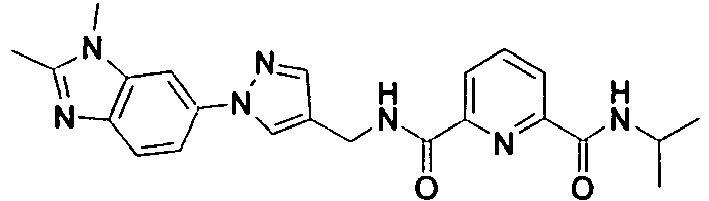
17 222 
18 149 
14 144 
7 151 
13 246 
4 241 
7 228 
8 76 
10 248 
7 - The compounds of this invention inhibit the activity of ERK1 and ERK2. Thus, this invention further generally provides an effective amount (e.g., a therapeutically effective amount) of one or more (e.g., one) compounds of this invention for use as a medicament for inhibiting ERK in mammals, especially humans. The administration of the compounds of this invention to patients, to inhibit ERK1 and/or ERK2, is useful in the treatment of cancer.
- In any of the uses as a medicament for treating cancer described herein, unless stated otherwise, the uses can optionally include the administration of an effective amount of one or more (e.g., 1, 2 or 3, or 1 or 2, or 1) chemotherapeutic agents. The chemotherapeutic agents can be administered currently or sequentially with the compounds of this invention.
- The uses as a medicament for treating cancer described herein include uses wherein a combination of drugs (i.e., compounds, or pharmaceutically active ingredients, or pharmaceutical compositions) are used (i.e., the uses as a medicament for treating cancer of this invention include combination therapies). Those skilled in the art will appreciate that the drugs are generally administered individually as a pharmaceutical composition. The use of a pharmaceutical composition comprising more than one drug is within the scope of this invention.
- In any of the uses as a medicament for treating cancer described herein, unless stated otherwise, the uses can optionally include the administration of an effective amount of radiation therapy. For radiation therapy, γ-radiation is preferred.
- Examples of cancers which may be treated by the uses of this invention include, but are not limited to: (A) lung cancer (e.g., lung adenocarcinoma and non small cell lung cancer), (B) pancreatic cancers (e.g., pancreatic carcinoma such as, for example, exocrine pancreatic carcinoma), (C) colon cancers (e.g., colorectal carcinomas, such as, for example, colon adenocarcinoma and colon adenoma), (D) myeloid leukemias (for example, acute myelogenous leukemia (AML), CML, and CMML), (E) thyroid cancer, (F) myelodysplastic syndrome (MDS), (G) bladder carcinoma, (H) epidermal carcinoma, (I) melanoma, (J) breast cancer, (K) prostate cancer, (L) head and neck cancers (e.g., squamous cell cancer of the head and neck), (M) ovarian cancer, (N) brain cancers (e.g., gliomas, such as glioma blastoma multiforme), (O) cancers of mesenchymal origin (e.g., fibrosarcomas and rhabdomyosarcomas), (P) sarcomas, (Q) tetracarcinomas, (R) nuroblastomas, (S) kidney carcinomas, (T) hepatomas, (U) non-Hodgkin's lymphoma, (V) multiple myeloma, and (W) anaplastic thyroid carcinoma.
- Chemotherapeutic agents (antineoplastic agent) include but are not limited to: microtubule affecting agents, alkylating agents, antimetabolites, natural products and their derivatives, hormones and steroids (including synthetic analogs), and synthetics.
- Examples of alkylating agents (including nitrogen mustards, ethylenimine derivatives, alkyl sulfonates, nitrosoureas and triazenes) include: Uracil mustard, Chlormethine, Cyclophosphamide (Cytoxan®), Ifosfamide, Melphalan, Chlorambucil, Pipobroman, Triethylene-melamine, Triethylenethiophosphoramine, Busulfan, Carmustine, Lomustine, Streptozocin, Dacarbazine, and Temozolomide.
- Examples of antimetabolites (including folic acid antagonists, pyrimidine analogs, purine analogs and adenosine deaminase inhibitors) include: Methotrexate, 5-Fluorouracil, Floxuridine, Cytarabine, 6-Mercaptopurine, 6-Thioguanine, Fludarabine phosphate, Pentostatine, and Gemcitabine.
- Examples of natural products and their derivatives (including vinca alkaloids, antitumor antibiotics, enzymes, lymphokines and epipodophyllotoxins) include: Vinblastine, Vincristine, Vindesine, Bleomycin, Dactinomycin, Daunorubicin, Doxorubicin, Epirubicin, Idarubicin, Paclitaxel (paclitaxel is a microtubule affecting agent and is commercially available as Taxol®), Paclitaxel derivatives (e.g. taxotere), Mithramycin, Deoxyco-formycin, Mitomycin-C, L-Asparaginase, Interferons (especially IFN-a), Etoposide, and Teniposide.
- Examples of hormones and steroids (including synthetic analogs) include: 17α-Ethinylestradiol, Diethylstilbestrol, Testosterone, Prednisone, Fluoxymesterone, Dromostanolone propionate, Testolactone, Megestrolacetate, Tamoxifen, Methylprednisolone, Methyl-testosterone, Prednisolone, Triamcinolone, Chlorotrianisene, Hydroxyprogesterone, Aminoglutethimide, Estramustine, Medroxyprogesteroneacetate, Leuprolide, Flutamide, Toremifene, and Zoladex.
- Examples of synthetics (including inorganic complexes such as platinum coordination complexes): Cisplatin, Carboplatin, Hydroxyurea, Amsacrine, Procarbazine, Mitotane, Mitoxantrone, Levamisole, and Hexamethylmelamine.
- Examples of other chemotherapeutics include: Navelbene, CPT-11, Anastrazole, Letrazole, Capecitabinbe, Reloxafine, and Droloxafine.
- A microtubule affecting agent (e.g., paclitaxel, a paclitaxel derivative or a paclitaxel-like compound), as used herein, is a compound that interferes with cellular mitosis, i.e., having an anti-mitotic effect, by affecting microtubule formation and/or action. Such agents can be, for instance, microtubule stabilizing agents or agents which disrupt microtubule formation.
- Microtubule affecting agents, useful in the uses of this invention, are well known to those skilled in the art and include, but are not limited to: Allocolchicine (NSC 406042), Halichondrin B (NSC 609395), Colchicine (NSC 757), Colchicine derivatives (e.g., NSC 33410), Dolastatin 10 (NSC 376128), Maytansine (NSC 153858), Rhizoxin (NSC 332598), Paclitaxel (Taxol®, NSC 125973), Paclitaxel derivatives (e.g., Taxotere, NSC 608832), Thiocolchicine (NSC 361792), Trityl Cysteine (NSC 83265), Vinblastine Sulfate (NSC 49842), Vincristine Sulfate (NSC 67574), Epothilone A, Epothilone, Discodermolide (see Service, (1996) Science, 274:2009), Estramustine, Nocodazole, MAP4, and the like. Examples of such agents are described in, for example, Bulinski (1997) J. Cell Sci. 110:3055-3064, Panda (1997) Proc. Natl. Acad. Sci. USA 94:10560-10564, Muhlradt (1997) Cancer Res. 57:3344-3346, Nicolaou (1997) Nature 387:268-272, Vasquez (1997) Mol. Biol. Cell. 8:973-985, and Panda (1996) J. Biol. Chem. 271:29807-29812.
- Chemotherapeutic agents with paclitaxel-like activity include, but are not limited to, paclitaxel and paclitaxel derivatives (paclitaxel-like compounds) and analogues. Paclitaxel and its derivatives (e.g. Taxol and Taxotere) are available commercially. In addition, methods of making paclitaxel and paclitaxel derivatives and analogues are well known to those of skill in the art (see, e.g.,
U.S. Patent Nos: 5,569,729 ;5,565,478 ;5,530,020 ;5,527,924 ;5,508,447 ;5,489,589 ;5,488,116 ;5,484,809 ;5,478,854 ;5,478,736 ;5,475,120 ;5,468,769 ;5,461,169 ;5,440,057 ;5,422,364 ;5,411,984 ;5,405,972 ; and5,296,506 ). - More specifically, the term "paclitaxel" as used herein refers to the drug commercially available as Taxol® (NSC number: 125973). Taxol® inhibits eukaryotic cell replication by enhancing polymerization of tubulin moieties into stabilized microtubule bundles that are unable to reorganize into the proper structures for mitosis. Of the many available chemotherapeutic drugs, paclitaxel has generated interest because of its efficacy in clinical trials against drug-refractory tumors, including ovarian and mammary gland tumors (Hawkins (1992) Oncology, 6: 17-23, Horwitz (1992) Trends Pharmacol. Sci. 13: 134-146, Rowinsky (1990) J. Natl. Canc. Inst. 82: 1247-1259).
- Additional microtubule affecting agents can be assessed using one of many such assays known in the art, e.g., a semiautomated assay which measures the tubulin-polymerizing activity of paclitaxel analogs in combination with a cellular assay to measure the potential of these compounds to block cells in mitosis (see Lopes (1997) Cancer Chemother. Pharmacol. 41:37-47).
- Generally, activity of a test compound is determined by contacting a cell with that compound and determining whether or not the cell cycle is disrupted, in particular, through the inhibition of a mitotic event. Such inhibition may be mediated by disruption of the mitotic apparatus, e.g., disruption of normal spindle formation. Cells in which mitosis is interrupted may be characterized by altered morphology (e.g., microtubule compaction, increased chromosome number, etc.).
- Compounds with possible tubulin polymerization activity can be screened in vitro. For example, the compounds are screened against cultured WR21 cells (derived from line 69-2 wap-ras mice) for inhibition of proliferation and/or for altered cellular morphology, in particular for microtubule compaction. In vivo screening of positive-testing compounds can then be performed using nude mice bearing the WR21 tumor cells. Detailed protocols for this screening method are described by Porter (1995) Lab. Anim. Sci., 45(2):145-150.
- Other methods of screening compounds for desired activity are well known to those of skill in the art. Typically such assays involve assays for inhibition of microtubule assembly and/or disassembly. Assays for microtubule assembly are described, for example, by Gaskin et al. (1974) J. Molec. Biol., 89: 737-758.
U.S. Patent No. 5,569,720 also provides in vitro and in vivo assays for compounds with paclitaxel-like activity. - Thus, in the uses of this invention wherein at least one chemotherapeutic agent is used, examples of said chemotherapeutic agents include those selected from the group consisting of: microtubule affecting agents, alkylating agents, antimetabolites, natural products and their derivatives, hormones and steroids (including synthetic analogs), and synthetics.
- In the uses of this invention wherein at least one chemotherapeutic agent is used, examples of said chemotherapeutic agents also include: (1) taxanes, (2) platinum coordinator compounds, (3) epidermal growth factor (EGF) inhibitors that are antibodies, (4) EGF inhibitors that are small molecules, (5) vascular endolithial growth factor (VEGF) inhibitors that are antibodies, (6) VEGF kinase inhibitors that are small molecules, (7) estrogen receptor antagonists or selective estrogen receptor modulators (SERMs), (8) anti-tumor nucleoside derivatives, (9) epothilones, (10) topoisomerase inhibitors, (11) vinca alkaloids, (12) antibodies that are inhibitors of αVβ3 integrins, (13) folate antagonists, (14) ribonucleotide reductase inhibitors, (15) anthracyclines, (16) biologics; (17) inhibitors of angiogenesis and/or suppressors of tumor necrosis factor alpha (TNF-alpha) such as thalidomide (or related imid), (18) Bcr/abl kinase inhibitors, (19) MEK1 and/or MEK 2 inhibitors that are small molecules, (20) IGF-1 and IGF-2 inhibitors that are small molecules, (21) small molecule inhibitors of RAF and BRAF kinases, (22) small molecule inhibitors of cell cycle dependent kinases such as CDK1, CDK2, CDK4 and CDK6, (23) alkylating agents, and (24) farnesyl protein transferase inhibitors (also know as FPT inhibitors or FTI (i.e., farnesyl transfer inhibitors)).
- In the uses of this invention wherein at least one chemotherapeutic agent is used, examples of such chemotherapeutic agents include:
- (1) taxanes such as paclitaxel (TAXOL®) and/or docetaxel (Taxotere®);
- (2) platinum coordinator compounds, such as, for example, carboplatin, cisplatin and oxaliplatin (e.g. Eloxatin);
- (3) EGF inhibitors that are antibodies, such as: HER2 antibodies (such as, for example trastuzumab (Herceptin®), Genentech, Inc.), Cetuximab (Erbitux, IMC-C225, ImClone Systems), EMD 72000 (Merck KGaA), anti-EFGR monoclonal antibody ABX (Abgenix), TheraCIM-h-R3 (Center of Molecular Immunology), monoclonal antibody 425 (Merck KGaA), monoclonal antibody ICR-62 (ICR, Sutton, England); Herzyme (Elan Pharmaceutical Technologies and Ribozyme Pharmaceuticals), PKI 166 (Novartis), EKB 569 (Wyeth-Ayerst), GW 572016 (GlaxoSmithKline), Cl 1033 (Pfizer Global Research and Development), trastuzmab-maytansinoid conjugate (Genentech, Inc.), mitumomab (Imclone Systems and Merck KGaA) and Melvax II (Imclone Systems and Merck KgaA);
- (4) EGF inhibitors that are small molecules, such as, Tarceva (TM) (OSI-774, OSI Pharmaceuticals, Inc.), and Iressa (ZD 1839, Astra Zeneca);
- (5) VEGF inhibitors that are antibodies such as: bevacizumab (Genentech, Inc.), and IMC-1C11 (ImClone Systems), DC 101 (a KDR VEGF Receptor 2 from ImClone Systems);
- (6) VEGF kinase inhibitors that are small molecules such as SU 5416 (from Sugen, Inc), SU 6688 (from Sugen, Inc.), Bay 43-9006 (a dual VEGF and bRAF inhibitor from Bayer Pharmaceuticals and Onyx Pharmaceuticals);
- (7) estrogen receptor antagonists or selective estrogen receptor modulators (SERMs), such as tamoxifen, idoxifene, raloxifene, trans-2,3-dihydroraloxifene, levormeloxifene, droloxifene, MDL 103,323, and acolbifene (Schering Corp.);
- (8) anti-tumor nucleoside derivatives such as 5-fluorouracil, gemcitabine, capecitabine, cytarabine (Ara-C), fludarabine (F-Ara-A), decitabine, and chlorodeoxyadenosine (Cda, 2-Cda);
- (9) epothilones such as BMS-247550 (Bristol-Myers Squibb), and EPO906 (Novartis Pharmaceuticals);
- (10) topoisomerase inhibitors such as topotecan (Glaxo SmithKline), and Camptosar (Pharmacia);
- (11) vinca alkaloids, such as, navelbine (Anvar and Fabre, France), vincristine and vinblastine;
- (12) antibodies that are inhibitors of αVβ3 integrins, such as, LM-609 (see, Clinical Cancer Research, Vol. 6, page 3056-3061, August 2000, the disclosure of which is incorporated herein by reference thereto);
- (13) folate antagonists, such as Methotrexate (MTX), and Premetrexed (Alimta);
- (14) ribonucleotide reductase inhibitors, such as Hydroxyurea (HU);
- (15) anthracyclines, such as Daunorubicin, Doxorubicin (Adriamycin), and Idarubicin;
- (16) biologics, such as interferon (e.g., Intron-A and Roferon), pegylated interferon (e.g., Peg-Intron and Pegasys), and Rituximab (Rituxan, antibody used for the treatment of non-Hodgkin's lymphoma);
- (17) thalidomide (or related imid);
- (18) Bcr/abl kinase inhibitors, such as, for example Gleevec (STI-571), AMN-17, ONO12380, SU11248 (Sunitinib) and BMS-354825
- (19) MEK1 and/or MEK2 inhibitors, such as PD0325901 and Arry-142886 (AZD6244);
- (20) IGF-1 and IGF-2 inhibitors that are small molecules, such as, for example, NVP-AEW541;
- (21) small molecule inhibitors of RAF and BRAF kinases, such as, for example, BAY 43-9006 (Sorafenib);
- (22) small molecule inhibitors of cell cycle dependent kinases such as CDK1, CDK2, CDK4 and CDK6, such as, for example, CYC202, BMS387032, and Flavopiridol;
- (23) alkylating agents, such as, for example, Temodar® brand of temozolomide;
- (24) farnesyl protein transferase inhibitors, such as, for example:
- (a) Sarasar® brand of lonifarnib (i.e., 4-[2-[4-(3,10-dibromo-8-chloro-6,11-dihydro-5H-benzo[5,6]cyclohepta[1,2-b]byridin-11-yl)-1-piperidinyl)-2-oxoethyl]-1-piperidinecarboxamide, see for example,
U.S. 5,874,442 issued February 23, 1999 , andU.S. 6,632,455 issued October 14, 2003 the disclosures of each being incorporated herein by reference thereto), - (b) Zarnestra® brand of tipifarnib (i.e., (R)-6-amino[(4-chlorophenyl)(1-methyl-1H-imidazol-5-yl)methyl]-4-(3-chlorophenyl)-1- methyl-2(1H)-quinolinone, see for example,
WO 97/16443 published May 9, 1997 U.S. 5,968,952 issued October 19, 1999 , the disclosures of each being incorporated herein by reference thereto), and - (c) Bristol-Myers Squibb 214662:

WO97/30992 published August 28, 1997 U.S. 6,011,029 issued January 4, 2000 , andU.S. 6,455,523 , the disclosures of each being incorporated herein by reference thereto).
- (a) Sarasar® brand of lonifarnib (i.e., 4-[2-[4-(3,10-dibromo-8-chloro-6,11-dihydro-5H-benzo[5,6]cyclohepta[1,2-b]byridin-11-yl)-1-piperidinyl)-2-oxoethyl]-1-piperidinecarboxamide, see for example,
- The Bcr/abl kinase inhibitors, EGF receptor inhibitors, and HER-2 antibodies (EGF receptor inhibitors that are antibodies) described above are also known as signal transduction inhibitors. Therefore, chemotherapeutic agents, as used herein, include signal transduction inhibitors.
- Typical signal transduction inhibitors, that are chemotherapeutic agents, include but are not limited to: (i) Bcr/abl kinase inhibitors such as, for example, STI 571 (Gleevec), (ii) Epidermal growth factor (EGF) receptor inhibitor such as, for example, Kinase inhibitors (Iressa, OSI-774) and antibodies (Imclone: C225 [Goldstein et al. (1995), Clin Cancer Res. 1:1311-1318], and Abgenix: ABX-EGF) and (iii) HER-2/neu receptor inhibitors such as, for example, Herceptin® (trastuzumab).
- Methods for the safe and effective administration of most of these chemotherapeutic agents are known to those skilled in the art. In addition, their administration is described in the standard literature. For example, the administration of many of the chemotherapeutic agents is described in the "Physicians' Desk Reference" (PDR), e.g., 1996 edition (Medical Economics Company, Montvale, NJ 07645-1742, USA), the Physician's Desk Reference, 56th Edition, 2002 (published by Medical Economics company, Inc. Montvale, NJ 07645-1742), and the Physician's Desk Reference, 57th Edition, 2003 (published by Thompson PDR, Montvale, NJ 07645-1742); the disclosures of which is incorporated herein by reference thereto.
- For example, the compound of formula 1.0 (e.g., a pharmaceutical composition comprising the compound of formula 1.0); can be administered orally (e.g., as a capsule), and the chemotherapeutic agents can be administered intravenously, usually as an IV solution. The use of a pharmaceutical composition comprising more than one drug is within the scope of this invention.
- The compound of formula 1.0 and the chemotherapeutic agents are administered in therapeutically effective dosages to obtain clinically acceptable results, e.g., reduction or elimination of symptoms or of the tumor. Thus, the compound of formula 1.0 and chemotherapeutic agents can be administered concurrently or consecutively in a treatment protocol. The administration of the chemotherapeutic agents can be made according to treatment protocols already known in the art.
- In general when more than one chemotherapeutic agent is used in the uses of this invention, the chemotherapeutic agents are administered on the same day either concurrently or consecutively in their standard dosage form. For example, the chemotherapeutic agents are usually administered intravenously, preferably by an IV drip using IV solutions well known in the art (e.g., isotonic saline (0.9% NaCl) or dextrose solution (e.g., 5% dextrose)).
- When two or more chemotherapeutic agents are used, the chemotherapeutic agents are generally administered on the same day; however, those skilled in the art will appreciate that the chemotherapeutic agents can be administered on different days and in different weeks. The skilled clinician can administer the chemotherapeutic agents according to their recommended dosage schedule from the manufacturer of the agent and can adjust the schedule according to the needs of the patient, e.g., based on the patient's response to the treatment. For example, when gemcitabine is used in combination with a platinum coordinator compound, such as, for example, cisplatin, to treat lung cancer, both the gemcitabine and the cisplatin are given on the same day on day one of the treatment cycle, and then gemcitabine is given alone on day 8 and given alone again on day 15
- The compounds of this invention and chemotherapeutic agents can be administered in a treatment protocol that usually lasts one to seven weeks, and is repeated typically from 6 to 12 times. Generally the treatment protocol can last one to four weeks. Treatment protocols of one to three weeks can also be used. A treatment protocol of one to two weeks can also be used. During this treatment protocol or cycle the compounds of this invention can be administered daily while the chemotherapeutic agents can be administered one or more times a week. Generally, a compound of this invention can be administered daily (i.e., once per day), and in one embodiment twice per day, and the chemotherapeutic agent is administered once a week or once every three weeks. For example, the taxanes (e.g., Paclitaxel (e.g., Taxol®) or Docetaxel (e.g., Taxotere®)) can be administered once a week or once every three weeks.
- However, those skilled in the art will appreciate that treatment protocols can be varied according to the needs of the patient. Thus, the combination of compounds (drugs) used in the uses of this invention can be administered in variations of the protocols described above. For example, the compounds of this invention can be administered discontinuously rather than continuously during the treatment cycle. Thus, for example, during the treatment cycle the compounds of this invention can be administered daily for a week and then discontinued for a week, with this administration repeating during the treatment cycle. Or the compounds of this invention can be administered daily for two weeks and discontinued for a week, with this administration repeating during the treatment cycle. Thus, the compounds of this invention can be administered daily for one or more weeks during the cycle and discontinued for one or more weeks during the cycle, with this pattern of administration repeating during the treatment cycle. This discontinuous treatment can also be based upon numbers of days rather than a full week. For example, daily dosing for 1 to 6 days, no dosing for 1 to 6 days with this pattern repeating during the treatment protocol. The number of days (or weeks) wherein the compounds of this invention are not dosed do not have to equal the number of days (or weeks) wherein the compounds of this invention are dosed. Usually, if a discontinuous dosing protocol is used, the number of days or weeks that the compounds of this invention are dosed is at least equal or greater than the number of days or weeks that the compounds of this invention are not dosed.
- The chemotherapeutic agent could be given by bolus or continuous infusion. The chemotherapeutic agent could be given daily to once every week, or once every two weeks, or once every three weeks, or once every four weeks during the treatment cycle. If administered daily during a treatment cycle, this daily dosing can be discontinuous over the number of weeks of the treatment cycle. For example, dosed for a week (or a number of days), no dosing for a week (or a number of days, with the pattern repeating during the treatment cycle.
- The compounds of this invention can be administered orally, preferably as a solid dosage form, and in one embodiment as a capsule, and while the total therapeutically effective daily dose can be administered in one to four, or one to two divided doses per day, generally, the therapeutically effective dose is given once or twice a day, and in one embodiment twice a day. The compounds of this invention can be administered in an amount of about 50 to about 400 mg once per day, and can be administered in an amount of about 50 to about 300 mg once per day. The compounds of this invention are generally administered in an amount of about 50 to about 350 mg twice a day, usually 50 mg to about 200 mg twice a day, and in one embodiment about 75 mg to about 125 mg administered twice a day, and in another embodiment about 100 mg administered twice a day.
- If the patient is responding, or is stable, after completion of the therapy cycle, the therapy cycle can be repeated according to the judgment of the skilled clinician. Upon completion of the therapy cycles, the patient can be continued on the compounds of this invention at the same dose that was administered in the treatment protocol, or, if the dose was less than 200mg twice a day, the dose can be raised to 200 mg twice a day. This maintenance dose can be continued until the patient progresses or can no longer tolerate the dose (in which case the dose can be reduced and the patient can be continued on the reduced dose).
- The chemotherapeutic agents, used with the compounds of this invention, are administered in their normally prescribed dosages during the treatment cycle (i.e., the chemotherapeutic agents are administered according to the standard of practice for the administration of these drugs). For example: (a) about 30 to about 300 mg/m2 for the taxanes; (b) about 30 to about 100 mg/m2 for Cisplatin; (c) AUC of about 2 to about 8 for Carboplatin; (d) about 2 to about 4 mg/m2 for EGF inhibitors that are antibodies; (e) about 50 to about 500 mg/m2 for EGF inhibitors that are small molecules; (f) about 1 to about 10 mg/m2 for VEGF kinase inhibitors that are antibodies; (g) about 50 to about 2400 mg/m2 for VEGF inhibitors that are small molecules; (h) about 1 to about 20 mg for SERMs; (i) about 500 to about 1250 mg/m2 for the anti-tumor nucleosides 5-Fluorouracil, Gemcitabine and Capecitabine; (j) for the anti-tumor nucleoside Cytarabine (Ara-C) 100-200mg/m2/day for 7 to 10 days every 3 to 4 weeks, and high doses for refractory leukemia and lymphoma, i.e., 1 to 3 gm/m2 for one hour every 12 hours for 4-8 doses every 3 to four weeks; (k) for the anti-tumor nucleoside Fludarabine (F-ara-A) 10-25mg/m2/day every 3 to 4 weeks; (I) for the anti-tumor nucleoside Decitabine 30 to 75 mg/m2 for three days every 6 weeks for a maximum of 8 cycles; (m) for the anti-tumor nucleoside Chlorodeoxyadenosine (CdA, 2-CdA) 0.05-0.1 mg/kg/day as continuous infusion for up to 7 days every 3 to 4 weeks; (n) about 1 to about 100 mg/m2 for epothilones; (o) about 1 to about 350 mg/m2 for topoisomerase inhibitors; (p) about 1 to about 50 mg/m2 for vinca alkaloids; (q) for the folate antagonist Methotrexate (MTX) 20-60 mg/m2 by oral, IV or IM every 3 to 4 weeks, the intermediate dose regimen is 80-250 mg/m2 IV over 60 minutes every 3 to 4 weeks, and the high dose regimen is 250-1000mg/m2 IV given with leucovorin every 3 to 4 weeks; (r) for the folate antagonist Premetrexed (Alimta) 300-600 mg/m2 (10 minutes IV infusion day 1) every 3 weeks; (s) for the ribonucleotide reductase inhibitor Hydroxyurea (HU) 20-50 mg/kg/day (as needed to bring blood cell counts down); (t) the platinum coordinator compound Oxaliplatin (Eloxatin) 50-100 mg/m2 every 3 to 4 weeks (preferably used for solid tumors such as non-small cell lung cancer, colorectal cancer and ovarian cancer); (u) for the anthracycline daunorubicin 10-50 mg/m2/day IV for 3-5 days every 3 to 4 weeks; (v) for the anthracycline Doxorubicin (Adriamycin) 50-100 mg/m2 IV continuous infusion over 1-4 days every 3 to 4 weeks, or 10-40 mg/m2 IV weekly; (w) for the anthracycline Idarubicin 10-30 mg/m2 daily for 1-3 days as a slow IV infusion over 10-20 minutes every 3 to 4 weeks; (x) for the biologic interferon (Intron-A, Roferon) 5 to 20 million IU three times per week; (y) for the biologic pegylated interferon (Peg-intron, Pegasys) 3 to 4 micrograms/kg/day chronic sub cutaneous (until relapse or loss of activity); (z) for the biologic Rituximab (Rituxan) (antibody used for non-Hodgkin's lymphoma) 200-400mg/m2 IV weekly over 4-8 weeks for 6 months; (aa) for the alkylating agent temozolomide 75 mg/m2 to 250mg/m2, for example, 150 mg/m2, or for example, 200 mg/m2, such as 200mg/m2 for 5 days; and (bb) for the MEK1 and/or MEK2 inhibitor PD0325901, 15 mg to 30 mg, for example, 15 mg daily for 21 days every 4 weeks.
- Gleevec can be used orally in an amount of about 200 to about 800 mg/day.
- Thalidomide (and related imids) can be used orally in amounts of about 200 to about 800 mg/day, and can be contiuously dosed or used until releapse or toxicity. See for example Mitsiades et al., "Apoptotic signaling induced by immunomodulatory thalidomide analogs in human multiple myeloma cells;therapeutic implications", Blood, 99(12):4525-30, June 15, 2002, the disclosure of which is incorporated herein by reference thereto.
- The FPT inhibitor Sarasar® (brand of lonifarnib) can be administered orally (e.g., capsule) in amounts of about 50 to about 200 mg given twice a day, or in amounts of about 75 to about 125 mg given twice a day, or in amounts of about 100 to about 200 mg given twice a day, or in an amount of about 100 mg given twice a day.
- Paclitaxel (e.g., Taxol®), for example, can be administered once per week in an amount of about 50 to about 100 mg/m2 and in another example about 60 to about 80 mg/m2. In another example Paclitaxel (e.g., Taxol®) can be administered once every three weeks in an amount of about 150 to about 250 mg/m2 and in another example about 175 to about 225 mg/m2.
- In another example, Docetaxel (e.g., Taxotere®) can be administered once per week in an amount of about 10 to about 45 mg/m2. In another example Docetaxel (e.g., Taxotere®) can be administered once every three weeks in an amount of about 50 to about 100 mg/m2.
- In another example Cisplatin can be administered once per week in an amount of about 20 to about 40 mg/m2. In another example Cisplatin can be administered once every three weeks in an amount of about 60 to about 100 mg/m2.
- In another example Carboplatin can be administered once per week in an amount to provide an AUC of about 2 to about 3. In another example Carboplatin can be administered once every three weeks in an amount to provide an AUC of about 5 to about 8.
- In another embodiment this invention is directed to at least one (1, 2 or 3, or 1 or 2, or 1, and usually 1) compound of formula 1.0 for use as a medicament for treating cancer in a patient in need of such treatment.
- Another embodiment of this invention is directed to at least one (1, 2 or 3, or 1 or 2, or 1, and usually 1) compound of formula 1.0 for use as a medicament for treating cancer in a patient in need of such treatment, wherein said at least one compound of formula 1.0 is in a form for administration in combination with an effective amount of a chemotherapeutic agent.
- Another embodiment of this invention is directed to at least one (1, 2 or 3, or 1 or 2, or 1, and usually 1) compound of formula 1.0 for use as a medicament for treating cancer in a patient in need of such treatment, wherein said at least one compound of formula 1.0 is in a form for administration in combination with an effective amount of a chemotherapeutic agent, and wherein the chemotherapeutic agent is selected from the group consisting of: paclitaxel, docetaxel, carboplatin, cisplatin, gemcitabine, tamoxifen, Herceptin, Cetuximab, Tarceva, Iressa, bevacizumab, navelbine, IMC-1 C11, SU5416 and SU6688.
- Another embodiment of this invention is directed to at least one (1, 2 or 3, or 1 or 2, or 1, and usually 1) compound of formula 1.0 for use as a medicament for treating cancer in a patient in need of such treatment, wherein said at least one compound of formula 1.0 is in a form for administration in combination with an effective amount of a chemotherapeutic agent, and wherein the chemotherapeutic agent is selected from the group consisting of: paclitaxel, docetaxel, carboplatin, cisplatin, navelbine, gemcitabine, and Herceptin.
- Another embodiment of this invention is directed to at least one (1, 2 or 3, or 1 or 2, or 1, and usually 1) compound of formula 1.0 for use as a medicament for treating cancer in a patient in need of such treatment, wherein said at least one compound of formula 1.0 is in a form for administration in combination with an effective amount of a chemotherapeutic agent, and wherein the chemotherapeutic agent is selected from the group consisting of: Cyclophasphamide, 5-Fluorouracil, Temozolomide, Vincristine, Cisplatin, Carboplatin, and Gemcitabine.
- Another embodiment of this invention is directed to at least one (1, 2 or 3, or 1 or 2, or 1, and usually 1) compound of formula 1.0 for use as a medicament for treating cancer in a patient in need of such treatment, wherein said at least one compound of formula 1.0 is in a form for administration in combination with an effective amount of a chemotherapeutic agent, wherein the chemotherapeutic agent is selected from the group consisting of: Gemcitabine, Cisplatin and Carboplatin.
- This invention also provides at least one (e.g., 1, 2 or 3, or 1 or 2, or 1, and usually 1) compound of formula 1.0 for use as a medicament for treating cancer in a patient in need of such treatment, wherein said at least one compound of formula 1.0 is in a form for administration in combination with therapeutically effective amounts of at least one (e.g., 1, 2 or 3, or 1 or 2, or 2, or 1) chemotherapeutic agent selected from the group consisting of: (1) taxanes, (2) platinum coordinator compounds, (3) epidermal growth factor (EGF) inhibitors that are antibodies, (4) EGF inhibitors that are small molecules, (5) vascular endolithial growth factor (VEGF) inhibitors that are antibodies, (6) VEGF kinase inhibitors that are small molecules, (7) estrogen receptor antagonists or selective estrogen receptor modulators (SERMs), (8) anti-tumor nucleoside derivatives, (9) epothilones, (10) topoisomerase inhibitors, (11) vinca alkaloids, (12) antibodies that are inhibitors of αVβ3 integrins, (13) folate antagonists, (14) ribonucleotide reductase inhibitors, (15) anthracyclines, (16) biologies; (17) inhibitors of angiogenesis and/or suppressors of tumor necrosis factor alpha (TNF-alpha) such as thalidomide (or related imid), (18) Bcr/abl kinase inhibitors, (19) MEK1 and/or MEK 2 inhibitors that are small molecules, (20) IGF-1 and IGF-2 inhibitors that are small molecules, (21) small molecule inhibitors of RAF and BRAF kinases, (22) small molecule inhibitors of cell cycle dependent kinases such as CDK1, CDK2, CDK4 and CDK6, (23) alkylating agents, and (24) farnesyl protein transferase inhibitors (also know as FPT inhibitors or FTI (i.e., farnesyl transfer inhibitors)).
- This invention also provides at least one (e.g., 1, 2 or 3, or 1 or 2, or 1, and usually 1) compound of formula 1.0 for use as a medicament for treating cancer in a patient in need of such treatment, wherein said at least one compound of formula 1.0 is in a form for administration in combination with therapeutically effective amounts of at least two (e.g., 2 or 3, or 2, and usually 2) different antineoplastic agents selected from the group consisting of: (1) taxanes, (2) platinum coordinator compounds, (3) epidermal growth factor (EGF) inhibitors that are antibodies, (4) EGF inhibitors that are small molecules, (5) vascular endolithial growth factor (VEGF) inhibitors that are antibodies, (6) VEGF kinase inhibitors that are small molecules, (7) estrogen receptor antagonists or selective estrogen receptor modulators (SERMs), (8) anti-tumor nucleoside derivatives, (9) epothilones, (10) topoisomerase inhibitors, (11) vinca alkaloids, (12) antibodies that are inhibitors of αVβ3 integrins, (13) folate antagonists, (14) ribonucleotide reductase inhibitors, (15) anthracyclines, (16) biologics; (17) inhibitors of angiogenesis and/or suppressors of tumor necrosis factor alpha (TNF-alpha) such as thalidomide (or related imid), (18) Bcr/abl kinase inhibitors, (19) MEK1 and/or MEK 2 inhibitors that are small molecules, (20) IGF-1 and IGF-2 inhibitors that are small molecules, (21) small molecule inhibitors of RAF and BRAF kinases, (22) small molecule inhibitors of cell cycle dependent kinases such as CDK1, CDK2, CDK4 and CDK6, (23) alkylating agents, and (24) farnesyl protein transferase inhibitors (also know as FPT inhibitors or FTI (i.e., farnesyl transfer inhibitors)).
- This invention also provides at least one (e.g., 1, 2 or 3, or 1 or 2, or 1, and usually 1) compound of formula 1.0 for use as a medicament for treating cancer in a patient in need of such treatment, wherein said at least one compound of formula 1.0 is in a form for administration in combination with a therapeutically effective amount of an antineoplastic agent selected from the group consisting of: (1) EGF inhibitors that are antibodies, (2) EGF inhibitors that are small molecules, (3) VEGF inhibitors that are antibodies, and (4) VEGF inhibitors that are small molecules. Radiation therapy can also be used in conjunction with this above combination therapy, i.e., the above use of a combination of compounds of the invention and antineoplastic agent can also comprise the administration of a therapeutically effect amount of radiation.
- This invention also provides at least one (e.g., 1, 2 or 3, or 1 or 2, or 1, and usually 1) compound of formula 1.0 for use as a medicament for treating leukemias (e.g., acute myeloid leukemia (AML), and chronic myeloid leukemia (CML)) in a patient in need of such treatment, wherein said at least one compound of formula 1.0 is in a form for administration in combination with a therapeutically effective amount of: (1) Gleevec and interferon to treat CML; (2) Gleevec and pegylated interferon to treat CML; (3) Gleevec to treat CML; (4) an anti-tumor nucleoside derivative (e.g., Ara-C) to treat AML; or (5) an anti-tumor nucleoside derivative (e.g., Ara-C) in combination with an anthracycline to treat AML.
- This invention also provides at least one (e.g., 1, 2 or 3, or 1 or 2, or 1, and usually 1) compound of formula 1.0 for use as a medicament for treating non-Hodgkin's lymphoma in a patient in need of such treatment, wherein said at least one compound of formula 1.0 is in a form for administration in combination with a therapeutically effective amount of: (1) a biologic (e.g., Rituxan); (2) a biologic (e.g., Rituxan) and an anti-tumor nucleoside derivative (e.g., Fludarabine); or (3) Genasense (antisense to BCL-2).
- This invention also provides at least one (e.g., 1, 2 or 3, or 1 or 2, or 1, and usually 1) compound of formula 1.0 for use as a medicament for treating multiple myeloma in a patient in need of such treatment, wherein said at least one compound of formula 1.0 is in a form for administration in combination with a therapeutically effective amount of: (1) a proteosome inhibitor (e.g., PS-341 from Millenium); or (2) Thalidomide (or related imid).
- This invention also provides at least one (e.g., 1, 2 or 3, or 1 or 2, or 1, and usually 1) compound of formula 1.0 for use as a medicament for treating cancer in a patient in need of such treatment, wherein said at least one compound of formula 1.0 is in a form for administration in combination with a therapeutically effective amount of at least one (e.g., 1, 2 or 3, or 1 or 2, or 2, or 1) antineoplastic agent selected from the group consisting of: (1) taxanes, (2) platinum coordinator compounds, (3) EGF inhibitors that are antibodies, (4) EGF inhibitors that are small molecules, (5) VEGF inhibitors that are antibodies, (6) VEGF kinase inhibitors that are small molecules, (7) estrogen receptor antagonists or selective estrogen receptor modulators, (8) anti-tumor nucleoside derivatives, (9) epothilones, (10) topoisomerase inhibitors, (11) vinca alkaloids, and (12) antibodies that are inhibitors of αVβ3 integrins.
- This invention also provides at least one (e.g., 1, 2 or 3, or 1 or 2, or 1, and usually 1) compound of formula 1.0 for use as a medicament for treating non small cell lung cancer in a patient in need of such treatment, wherein said at least one compound of formula 1.0 is in a form for administration in combination with a therapeutically effective amount of at least one (e.g., 1, 2 or 3, or 1 or 2, or 2, or 1) antineoplastic agent selected from the group consisting of: (1) taxanes, (2) platinum coordinator compounds, (3) EGF inhibitors that are antibodies, (4) EGF inhibitors that are small molecules, (5) VEGF inhibitors that are antibodies, (6) VEGF kinase inhibitors that are small molecules, (7) estrogen receptor antagonists or selective estrogen receptor modulators, (8) anti-tumor nucleoside derivatives, (9) epothilones, (10) topoisomerase inhibitors, (11) vinca alkaloids, and (12) antibodies that are inhibitors of αVβ3 integrins.
- This invention also provides at least one (e.g., 1, 2 or 3, or 1 or 2, or 1, and usually 1) compound of formula 1.0 for use as a medicament for treating non small cell lung cancer in a patient in need of such treatment, wherein said at least one compound of formula 1.0 is in a form for administration in combination with a therapeutically effective amount of at least one (e.g., 1, 2 or 3, or 1 or 2, or 2, or 1) antineoplastic agent selected from the group consisting of: (1) taxanes, (2) platinum coordinator compounds, (3) anti-tumor nucleoside derivatives, (4) topoisomerase inhibitors, and (5) vinca alkaloids.
- This invention also provides at least one (e.g., 1, 2 or 3, or 1 or 2, or 1, and usually 1) compound of formula 1.0 for use as a medicament for treating non small cell lung cancer in a patient in need of such treatment, wherein said at least one compound of formula 1.0 is in a form for administration in combination with therapeutically effective amounts of: (a) carboplatin and (b) paclitaxel.
- This invention also provides at least one (e.g., 1, 2 or 3, or 1 or 2, or 1, and usually 1) compound of formula 1.0 for use as a medicament for treating non small cell lung cancer in a patient in need of such treatment, wherein said at least one compound of formula 1.0 is in a form for administration in combination with therapeutically effective amounts of: (a) cisplatin and (b) gemcitabine.
- This invention also provides at least one (e.g., 1, 2 or 3, or 1 or 2, or 1, and usually 1) compound of formula 1.0 for use as a medicament for treating non small cell lung cancer in a patient in need of such treatment, wherein said at least one compound of formula 1.0 is in a form for administration in combination with therapeutically effective amounts of: (a) carboplatin and (b) gemcitabine.
- This invention also provides at least one (e.g., 1, 2 or 3, or 1 or 2, or 1, and usually 1) compound of formula 1.0 for use as a medicament for treating non small cell lung cancer in a patient in need of such treatment, wherein said at least one compound of formula 1.0 is in a form for administration in combination with therapeutically effective amounts of: (b) Carboplatin and (c) Docetaxel.
- This invention also provides at least one (e.g., 1, 2 or 3, or 1 or 2, or 1, and usually 1) compound of formula 1.0 for use as a medicament for treating cancer in a patient in need of such treatment, wherein said at least one compound of formula 1.0 is in a form for administration in combination with a therapeutically effective amount of an antineoplastic agent selected from the group consisting of: (1) EGF inhibitors that are antibodies, (2) EGF inhibitors that are small molecules, (3) VEGF inhibitors that are antibodies, (4) VEGF kinase inhibitors that are small molecules.
- This invention also provides at least one (e.g., 1, 2 or 3, or 1 or 2, or 1, and usually 1) compound of formula 1.0 for use as a medicament for treating squamous cell cancer of the head and neck, in a patient in need of such treatment, wherein said at least one compound of formula 1.0 is in a form for administration in combination with a therapeutically effective amount of at least one (e.g., 1, 2 or 3, or 1 or 2, or 2, or 1) antineoplastic agent selected from the group consisting of: (1) taxanes, and (2) platinum coordinator compounds.
- This invention also provides at least one (e.g., 1, 2 or 3, or 1 or 2, or 1, and usually 1) compound of formula 1.0 for use as a medicament for treating squamous cell cancer of the head and neck, in a patient in need of such treatment, wherein said at least one compound of formula 1.0 is in a form for administration in combination with a therapeutically effective amount of at least one (e.g., 1, 2 or 3, or 1 or 2, or 2, or 1) antineoplastic agent selected from the group consisting of: (1) taxanes, (2) platinum coordinator compounds, and (3) anti-tumor nucleoside derivatives (e.g., 5-Fluorouracil).
- This invention also provides at least one (e.g., 1, 2 or 3, or 1 or 2, or 1, and usually 1) compound of formula 1.0 for use as a medicament for treating CML in a patient in need of such treatment, wherein said at least one compound of formula 1.0 is in a form for administration in combination with therapeutically effective amounts of: (a) Gleevec and (b) interferon (e.g., Intron-A).
- This invention also provides at least one (e.g., 1, 2 or 3, or 1 or 2, or 1, and usually 1) compound of formula 1.0 for use as a medicament for treating CML in a patient in need of such treatment, wherein said at least one compound of formula 1.0 is in a form for administration in combination with therapeutically effective amounts of: (a) Gleevec and (b) pegylated interferon (e.g., Peg-Intron, and Pegasys).
- This invention also provides at least one (e.g., 1, 2 or 3, or 1 or 2, or 1, and usually 1) compound of formula 1.0 (for example, as described in any one of Embodiment Nos. 1 to 161) for use as a medicament for treating CML in a patient in need of such treatment, wherein said at least one compound of formula 1.0 is in a form for administration in combination with a therapeutically effective amount of Gleevec.
- This invention also provides at least one (e.g., 1, 2 or 3, or 1 or 2, or 1, and usually 1) compound of formula 1.0 for use as a medicament for treating CMML in a patient in need of such treatment.
- This invention also provides at least one (e.g., 1, 2 or 3, or 1 or 2, or 1, and usually 1) compound of formula 1.0 for use as a medicament for treating AML in a patient in need of such treatment, wherein said at least one compound of formula 1.0 is in a form for administration in combination with a therapeutically effective amount of an anti-tumor nucleoside derivative (e.g., Cytarabine (i.e., Ara-C)).
- This invention also provides at least one (e.g., 1, 2 or 3, or 1 or 2, or 1, and usually 1) compound of formula 1.0 for use as a medicament for treating AML in a patient in need of such treatment, wherein said at least one compound of formula 1.0 is in a form for administration in combination with therapeutically effective amounts of: (a) an anti-tumor nucleoside derivative (e.g., Cytarabine (i.e., Ara-C)) and (b) an anthracycline.
- This invention also provides at least one (e.g., 1, 2 or 3, or 1 or 2, or 1, and usually 1) compound of formula 1.0 for use as a medicament for treating non-Hodgkin's lymphoma in a patient in need of such treatment, wherein said at least one compound of formula 1.0 is in a form for administration in combination with a therapeutically effective amount of Rituximab (Rituxan).
- This invention also provides at least one (e.g., 1, 2 or 3, or 1 or 2, or 1, and usually 1) compound of formula 1.0 for use as a medicament for treating non-Hodgkin's lymphoma in a patient in need of such treatment, wherein said at least one compound of formula 1.0 is in a form for administration in combination with therapeutically effective amounts of: (a) Rituximab (Rituxan) and (b) an anti-tumor nucleoside derivative (e.g., Fludarabine (i.e., F-ara-A).
- This invention also provides at least one (e.g., 1, 2 or 3, or 1 or 2, or 1, and usually 1) compound of formula 1.0 for use as a medicament for treating non-Hodgkin's lymphoma in a patient in need of such treatment, wherein said at least one compound of formula 1.0 is in a form for administration in combination with a therapeutically effective amount of Genasense (antisense to BCL-2).
- This invention also provides at least one (e.g., 1, 2 or 3, or 1 or 2, or 1, and usually 1) compound of formula 1.0 for use as a medicament for treating multiple myeloma in a patient in need of such treatment, wherein said at least one compound of formula 1.0 is in a form for administration in combination with a therapeutically effective amount of a proteosome inhibitor (e.g., PS-341 (Millenium)).
- This invention also provides at least one (e.g., 1, 2 or 3, or 1 or 2, or 1, and usually 1) compound of formula 1.0 for use as a medicament for treating multiple myeloma in a patient in need of such treatment, wherein said at least one compound of formula 1.0 is in a form for administration in combination with a therapeutically effective amount of Thalidomide or related imid.
- This invention also provides at least one (e.g., 1, 2 or 3, or 1 or 2, or 1, and usually 1) compound of formula 1.0 for use as a medicament for treating multiple myeloma in a patient in need of such treatment, wherein said at least one compound of formula 1.0 is in a form for administration in combination with a therapeutically effective amount of Thalidomide.
- This invention is also directed to the uses as a medicament for treating cancer described herein, particularly those described above, wherein in addition to the administration of the compound of formula 1.0 and antineoplastic agents, radiation therapy is also administered prior to, during, or after the treatment cycle.
- This invention also provides at least one (e.g., 1, 2 or 3, or 1 or 2, or 1, and usually 1) compound of formula 1.0 for use as a medicament for treating cancer (e.g., lung cancer, prostate cancer and myeloid leukemias) in a patient in need of such treatment, wherein said at least one compound of formula 1.0 is in a form for administration in combination with at least one (e.g., 1, 2 or 3, or 1 or 2, or 2, or 1) antineoplastic agent, microtubule affecting agent and/or radiation therapy.
- This invention also provides at least one (e.g., 1, 2 or 3, or 1 or 2, or 1, and usually 1) compound of formula 1.0 for use as a medicament for treating cancer in a patient in need of such treatment, wherein said at least one compound of formula 1.0 is in a form for administration in combination with an effective amount of at least one (e.g., 1, 2 or 3, or 1 or 2, or 1, and usually 1) signal transduction inhibitor.
- Thus, in one example (e.g., treating non small cell lung cancer): (1) the compound of formula 1.0 is administered in an amount of about 50 mg to about 200 mg twice a day, and in another example about 75 mg to about 125 mg administered twice a day, and in yet another example about 100 mg administered twice a day, (2) Paclitaxel (e.g., Taxol® is administered once per week in an amount of about 50 to about 100 mg/m2, and in another example about 60 to about 80 mg/m2, and (3) Carboplatin is administered once per week in an amount to provide an AUC of about 2 to about 3.
- In another example (e.g., treating non small cell lung cancer): (1) the compound of formula 1.0 is administered in an amount of about 50 mg to about 200 mg twice a day, and in another example about 75 mg to about 125 mg administered twice a day, and yet in another example about 100 mg administered twice a day, (2) Paclitaxel (e.g., Taxol® is administered once per week in an amount of about 50 to about 100 mg/m2, and in another example about 60 to about 80 mg/m2, and (3) Cisplatin is administered once per week in an amount of about 20 to about 40 mg/m2.
- In another example (e.g., treating non small cell lung cancer): (1) the compound of formula 1.0 is administered in an amount of about 50 mg to about 200 mg twice a day, and in another example about 75 mg to about 125 mg administered twice a day, and in yet another example about 100 mg administered twice a day, (2) Docetaxel (e.g., Taxotere®) is administered once per week in an amount of about 10 to about 45 mg/m2, and (3) Carboplatin is administered once per week in an amount to provide an AUC of about 2 to about 3.
- In another example (e.g., treating non small cell lung cancer): (1) the compound of formula 1.0 is administered in an amount of about 50 mg to about 200 mg twice a day, and in another example about 75 mg to about 125 mg administered twice a day, and in yet another example about 100 mg administered twice a day, (2) Docetaxel (e.g., Taxotere®) is administered once per week in an amount of about 10 to about 45 mg/m2, and (3) Cisplatin is administered once per week in an amount of about 20 to about 40 mg/m2.
- In another example (e.g., treating non small cell lung cancer): (1) the compound of formula 1.0 is administered in an amount of about 50 mg to about 200 mg twice a day, and in another example about 75 mg to about 125 mg administered twice a day, and in yet another example about 100 mg administered twice a day, (2) Paclitaxel (e.g., Taxol® is administered once every three weeks in an amount of about 150 to about 250 mg/m2, and in another example about 175 to about 225 mg/m2, and in yet another example 175 mg/m2, and (3) Carboplatin is administered once every three weeks in an amount to provide an AUC of about 5 to about 8, and in another example 6.
- In another example of treating non small cell lung cancer: (1) the compound of formula 1.0 is administered in an amount of 100 mg administered twice a day, (2) Paclitaxel (e.g., Taxol® is administered once every three weeks in an amount of 175 mg/m2, and (3) Carboplatin is administered once every three weeks in an amount to provide an AUC of 6.
- In another example (e.g., treating non small cell lung cancer): (1) the compound of formula 1.0 is administered in an amount of about 50 mg to about 200 mg twice a day, and in another example about 75 mg to about 125 mg administered twice a day, and in yet another example about 100 mg administered twice a day, (2) Paclitaxel (e.g., Taxol® is administered once every three weeks in an amount of about 150 to about 250 mg/m2, and in another example about 175 to about 225 mg/m2, and (3) Cisplatin is administered once every three weeks in an amount of about 60 to about 100 mg/m2.
- In another example (e.g., treating non small cell lung cancer): (1) the compound of formula 1.0 is administered in an amount of about 50 mg to about 200 mg twice a day, and in another example about 75 mg to about 125 mg administered twice a day, and in yet another example about 100 mg administered twice a day, (2) Docetaxel (e.g., Taxotere® is administered once every three weeks in an amount of about 50 to about 100 mg/m2, and (3) Carboplatin is administered once every three weeks in an amount to provide an AUC of about 5 to about 8.
- In another example (e.g., treating non small cell lung cancer): (1) the compound of formula 1.0 is administered in an amount of about 50 mg to about 200 mg twice a day, in another example about 75 mg to about 125 mg administered twice a day, and in yet another example about 100 mg administered twice a day, (2) Docetaxel (e.g., Taxotere® is administered once every three weeks in an amount of about 50 to about 100 mg/m2, and (3) Cisplatin is administered once every three weeks in an amount of about 60 to about 100 mg/m2.
- In another example for treating non small cell lung cancer using the compounds of formula 1.0, Docetaxel and Carboplatin: (1) the compound of formula 1.0 is administered in an amount of about 50 mg to about 200 mg twice a day, and in another example about 75 mg to about 125 mg administered twice a day, and in yet another example about 100 mg administered twice a day, (2) Docetaxel (e.g., Taxotere® is administered once every three weeks in an amount of about 75 mg/m2, and (3) Carboplatin is administered once every three weeks in an amount to provide an AUC of about 6.
- In another example of the treatments of non-small cell lung cancer described above the Docetaxel (e.g., Taxotere® and Cisplatin, the Docetaxel (e.g., Taxotere® and Carboplatin, the Paclitaxel (e.g., Taxol® and Carboplatin, or the Paclitaxel (e.g., Taxol® and Cisplatin are administered on the same day.
- In another example (e.g., CML): (1) the compound of formula 1.0 is administered in an amount of about 100 mg to about 200 mg administered twice a day, (2) Gleevec is administered in an amount of about 400 to about 800 mg/day orally, and (3) interferon (Intron-A) is administered in an amount of about 5 to about 20 million IU three times per week.
- In another example (e.g., CML): (1) the compound of formula 1.0 is administered in an amount of about 100 mg to about 200 mg administered twice a day, (2) Gleevec is administered in an amount of about 400 to about 800 mg/day orally, and (3) pegylated interferon (Peg-Intron or Pegasys) is administered in an amount of about 3 to about 6 micrograms/kg/day.
- In another example (e.g., non-Hodgkin's lymphoma): (1) the compound of formula 1.0 is administered in an amount of about 50 mg to about 200 mg twice a day, and in another example about 75 mg to about 125 mg administered twice a day, and in yet another example about 100 mg administered twice a day, and (2) Genasense (antisense to BCL-2) is administered as a continuous IV infusion at a dose of about 2 to about 5 mg/kg/day (e.g., 3 mg/kg/day) for 5 to 7 days every 3 to 4 weeks.
- In another example (e.g., multiple myeloma): (1) the compound of formula 1.0 is administered in an amount of about 50 mg to about 200 mg twice a day, and in another example about 75 mg to about 125 mg administered twice a day, and in yet another example about 100 mg administered twice a day, and (2) the proteosome inhibitor (e.g., PS-341 - Millenium) is administered in an amount of about 1.5mg/m2 twice weekly for two consecutive weeks with a one week rest period.
- In another example (e.g., multiple myeloma): (1) the compound of formula 1.0 is administered in an amount of about 50 mg to about 200 mg twice a day, and in another example about 75 mg to about 125 mg administered twice a day, and in yet another example about 100 mg administered twice a day, and (2) the Thalidomide (or related imid) is administered orally in an amount of about 200 to about 800 mg/day, with dosing being continuous until relapse or toxicity.
- In one embodiment of the uses as a medicament for treating cancer of this invention, the chemotherapeutic agents are selected from the group consisting of: paclitaxel, docetaxel, carboplatin, cisplatin, gemcitabine, tamoxifen, Herceptin, Cetuximab, Tarceva, Iressa, bevacizumab, navelbine, IMC-1C11, SU5416 and SU6688.
- In another embodiment of the uses as a medicament for treating cancer of this invention, the chemotherapeutic agents are selected from the group consisting of: paclitaxel, docetaxel, carboplatin, cisplatin, navelbine, gemcitabine, and Herceptin.
- Thus, one embodiment of this invention is directed to a compound of formula 1.0 for use as a medicament for treating cancer in a patient in need of such treatment, wherein said compound of formula 1.0 is in a form for administration in combination with therapeutically effective amounts of a taxane and a platinum coordination compound.
- Another embodiment of this invention is directed to a compound of formula 1.0 for use as a medicament for treating cancer in a patient in need of such treatment, wherein said compound of formula 1.0 is in a form for administration in combination with therapeutically effective amounts of a taxane and a platinum coordination compound, and wherein said compound of formula 1.0 is in a form for administration every day, said taxane is administered once per week per cycle, and said platinum coordinator compound is administered once per week per cycle. In another embodiment the treatment is for one to four weeks per cycle.
- Another embodiment of this invention is directed to a compound of formula 1.0 for use as a medicament for treating cancer in a patient in need of such treatment, wherein said compound of formula 1.0 is in a form for administration in combination with therapeutically effective amounts of a taxane and a platinum coordination compound, and wherein said compound of formula 1.0 is in a form for administration every day, said taxane is administered once every three weeks per cycle, and said platinum coordinator compound is administered once every three weeks per cycle. In another embodiment the treatment is for one to three weeks per cycle.
- Another embodiment of this invention is directed to a compound of formula 1.0 for use as a medicament for treating cancer in a patient in need of such treatment, wherein said compound of formula 1.0 is in a form for administration in combination with therapeutically effective amounts of paclitaxel and carboplatin. In another embodiment, said compound of formula 1.0 is in a form for administration every day, said paclitaxel is administered once per week per cycle, and said carboplatin is administered once per week per cycle. In another embodiment the treatment is for one to four weeks per cycle.
- Another embodiment of this invention is directed to a compound of formula 1.0 for use as a medicament for treating cancer in a patient in need of such treatment, wherein said compound of formula 1.0 is in a form for administration in combination with therapeutically effective amounts of paclitaxel and carboplatin. In another embodiment, said compound of formula 1.0 is in a form for administration every day, said paclitaxel is administered once every three weeks per cycle, and said carboplatin is administered once every three weeks per cycle. In another embodiment the treatment is for one to three weeks per cycle.
- Another embodiment of this invention is directed to a compound of formula 1.0 for use as a medicament for treating non small cell lung cancer in a patient in need of such treatment, wherein said compound of formula 1.0 is in a form for administration daily and in combination with administering a therapeutically effective amount of carboplatin once a week per cycle, and administering a therapeutically effective amount of paclitaxel once a week per cycle, wherein the treatment is given for one to four weeks per cycle. In another embodiment said compound of formula 1.0 is in a form for administration twice per day. In another embodiment said carboplatin and said paclitaxel are administered on the same day, and in another embodiment said carboplatin and said paclitaxel are administered consecutively, and in another embodiment said carboplatin is administered after said paclitaxel.
- Another embodiment of this invention is directed to a compound of formula 1.0 for use as a medicament for treating non small cell lung cancer in a patient in need of such treatment, wherein said compound of formula 1.0 is in a form for administration daily and in combination with administering a therapeutically effective amount of carboplatin once every three weeks per cycle, and administering a therapeutically effective amount of paclitaxel once every three weeks per cycle, wherein the treatment is given for one to three weeks. In another embodiment compound of formula 1.0 is in a form for administration twice per day. In another embodiment said carboplatin and said paclitaxel are administered on the same day, and in another embodiment said carboplatin and said paclitaxel are administered consecutively, and in another embodiment said carboplatin is administered after said paclitaxel.
- Another embodiment of this invention is directed to a compound of formula 1.0 for use as a medicament for treating non small cell lung cancer in a patient in need of such treatment, wherein said compound of formula 1.0 is in a form for administration in an amount of about 50 to about 200 mg twice a day and in combination with administering carboplatin once per week per cycle in an amount to provide an AUC of about 2 to about 8 (and in another embodiment about 2 to about 3), and administering once per week per cycle about 60 to about 300 mg/m2 (and in another embodiment about 50 to 100mg/m2, and in yet another embodiment about 60 to about 80 mg/m2) of paclitaxel, wherein the treatment is given for one to four weeks per cycle. In another embodiment said compound of formula 1.0 is in a form for administration in amount of about 75 to about 125 mg twice a day, and in another embodiment about 100 mg twice a day. In another embodiment said carboplatin and said paclitaxel are administered on the same day, and in another embodiment said carboplatin and said paclitaxel are administered consecutively, and in another embodiment said carboplatin is administered after said paclitaxel.
- In another embodiment, this invention is directed to a compound of formula 1.0 for use as a medicament for treating non small cell lung cancer in a patient in need of such treatment, wherein said compound of formula 1.0 is in a form for administration in an amount of about 50 to about 200 mg twice a day and in combination with administering carboplatin once every three weeks per cycle in an amount to provide an AUC of about 2 to about 8 (in another embodiment about 5 to about 8, and in another embodiment 6), and administering once every three weeks per cycle about 150 to about 250 mg/m2 (and in another embodiment about 175 to about 225 mg/m2, and in another embodiment 175 mg/m2) of paclitaxel, wherein the treatment is given for one to three weeks. In another embodiment said compound of formula 1.0 is in a form for administration in an amount of about 75 to about 125 mg twice a day, and in another embodiment about 100 mg twice a day. In another embodiment said carboplatin and said paclitaxel are administered on the same day, and in another embodiment said carboplatin and said paclitaxel are administered consecutively, and in another embodiment said carboplatin is administered after said paclitaxel.
- Other embodiments of this invention are directed to uses as a medicament for treating cancer as described in the above embodiments (i.e., the embodiments directed to treating cancer and to treating non small cell lung cancer with a taxane and platinum coordinator compound) except that in place of paclitaxel and carboplatin the taxanes and platinum coordinator compounds used together in the uses are: (1) docetaxel (Taxotere®) and cisplatin; (2) paclitaxel and cisplatin; and (3) docetaxel and carboplatin. In another embodiment of the uses of this invention cisplatin is used in amounts of about 30 to about 100 mg/m2. In the another embodiment of the uses of this invention docetaxel is used in amounts of about 30 to about 100 mg/m2.
- In another embodiment this invention is directed to a compound of formula 1.0 for use as a medicament for treating cancer in a patient in need of such treatment, wherein said compound of formula 1.0 is in a form for administration in combination with therapeutically effective amounts of a taxane and an EGF inhibitor that is an antibody. In another embodiment the taxane used is paclitaxel, and the EGF inhibitor is a HER2 antibody (in one embodiment Herceptin) or Cetuximab, and in another embodiment Herceptin is used. The length of treatment, and the amounts and administration of said compound of formula 1.0 and the taxane are as described in the embodiments above. The EGF inhibitor that is an antibody is administered once a week per cycle, and in another embodiment is administered on the same day as the taxane, and in another embodiment is administered consecutively with the taxane. For example, Herceptin is administered in a loading dose of about 3 to about 5 mg/m2 (in another embodiment about 4 mg/m2), and then is administered in a maintenance dose of about 2 mg/m2 once per week per cycle for the remainder of the treatment cycle (usually the cycle is 1 to 4 weeks). In one embodiment the cancer treated is breast cancer.
- In another embodiment this invention is directed to a compound of formula 1.0 for use as a medicament for treating cancer in a patient in need of such treatment, wherein said compound of formula 1.0 is in a form for administration in combination with therapeutically effective amounts of: (1) a taxane and (2) an antineoplastic agent selected from the group consisting of: (a) an EGF inhibitor that is a small molecule, (b) a VEGF inhibitor that is an antibody, and (c) a VEGF kinase inhibitor that is a small molecule. In another embodiment, the taxane paclitaxel or docetaxel is used. In another embodiment the antineoplastic agent is selected from the group consisting of: tarceva, Iressa, bevacizumab, SU5416, SU6688 and BAY 43-9006. The length of treatment, and the amounts and administration of said compound of formula 1.0 and the taxane are as described in the embodiments above. The VEGF kinase inhibitor that is an antibody is usually given once per week per cycle. The EGF and VEGF inhibitors that are small molecules are usually given daily per cycle. In another embodiment, the VEGF inhibitor that is an antibody is given on the same day as the taxane, and in another embodiment is administered concurrently with the taxane. In another embodiment, when the EGF inhibitor that is a small molecule or the VEGF inhibitor that is a small molecule is administered on the same day as the taxane, the administration is concurrently with the taxane. The EGF or VEGF kinase inhibitor is generally administered in an amount of about 10 to about 500 mg/m2.
- In another embodiment this invention is directed to a compound of formula 1.0 for use as a medicament for treating cancer in a patient in need of such treatment, wherein said compound of formula 1.0 is in a form for administration in combination with therapeutically effective amounts of an anti-tumor nucleoside derivative and a platinum coordination compound.
- Another embodiment of this invention is directed to a compound of formula 1.0 for use as a medicament for treating cancer in a patient in need of such treatment, wherein said compound of formula 1.0 is in a form for administration in combination with therapeutically effective amounts of an anti-tumor nucleoside derivative and a platinum coordination compound, wherein said compound of formula 1.0 is in a form for administration every day, said anti-tumor nucleoside derivative is administered once per week per cycle, and said platinum coordinator compound is administered once per week per cycle. Although the treatment can be for one to four weeks per cycle, in one embodiment the treatment is for one to seven weeks per cycle.
- Another embodiment of this invention is directed to a compound of formula 1.0 for use as a medicament for treating cancer in a patient in need of such treatment, wherein said compound of formula 1.0 is in a form for administration in combination with therapeutically effective amounts of an anti-tumor nucleoside derivative and a platinum coordination compound, wherein said compound of formula 1.0 is in a form for administration every day, said an anti-tumor nucleoside derivative is administered once per week per cycle, and said platinum coordinator compound is administered once every three weeks per cycle. Although the treatment can be for one to four weeks per cycle, in one embodiment the treatment is for one to seven weeks per cycle.
- Another embodiment of this invention is directed to a compound of formula 1.0 for use as a medicament for treating cancer in a patient in need of such treatment, wherein said compound of formula 1.0 is in a form for administration in combination with therapeutically effective amounts of gemcitabine and cisplatin. In another embodiment, said compound of formula 1.0 is in a form for administration every day, said gemcitabine is administered once per week per cycle, and said cisplatin is administered once per week per cycle. In one embodiment the treatment is for one to seven weeks per cycle.
- Another embodiment of this invention is directed to a compound of formula 1.0 for use as a medicament for treating cancer in a patient in need of such treatment, wherein said compound of formula 1.0 is in a form for administration in combination with therapeutically effective amounts of gemcitabine and cisplatin. In another embodiment, said compound of formula 1.0 is in a form for administration every day, said gemcitabine is administered once per week per cycle, and said cisplatin is administered once every three weeks per cycle. In another embodiment the treatment is for one to seven weeks.
- Another embodiment of this invention is directed to a compound of formula 1.0 for use as a medicament for treating cancer in a patient in need of such treatment, wherein said compound of formula 1.0 is in a form for administration in combination with therapeutically effective amounts of gemcitabine and carboplatin. In another embodiment said compound of formula 1.0 is in a form for administration every day, said gemcitabine is administered once per week per cycle, and said carboplatin is administered once per week per cycle. In another embodiment the treatment is for one to seven weeks per cycle.
- Another embodiment of this invention is directed to a compound of formula 1.0 for use as a medicament for treating cancer in a patient in need of such treatment, wherein said compound of formula 1.0 is in a form for administration in combination with therapeutically effective amounts of gemcitabine and carboplatin. In another embodiment said compound of formula 1.0 is in a form for administration every day, said gemcitabine is administered once per week per cycle, and said carboplatin is administered once every three weeks per cycle. In another embodiment the treatment is for one to seven weeks per cycle.
- In the above embodiments using gemcitabine, the compound of formula 1.0 and the platinum coordinator compound are administered as described above for the embodiments using taxanes. Gemcitabine is administered in an amount of about 500 to about 1250 mg/m2. In one embodiment the gemcitabine is administered on the same day as the platinum coordinator compound, and in another embodiment consecutively with the platinum coordinator compound, and in another embodiment the gemcitabine is administered after the platinum coordinator compound.
- Another embodiment of this invention is directed to a compound of formula 1.0 for use as a medicament for treating cancer in a patient in need of such treatment, wherein said compound of formula 1.0 is in a form for administration in combination with an antineoplastic agent selected from: (1) EGF inhibitors that are antibodies, (2) EGF inhibitors that are small molecules, (3) VEGF inhibitors that are antibodies, and (4) VEGF kinase inhibitors that are small molecules all as described above. The treatment is for one to seven weeks per cycle, and generally for one to four weeks per cycle. The compound of formula 1.0 is administered in the same manner as described above for the other embodiments of this invention. The small molecule antineoplastic agents are usually administered daily, and the antibody antineoplastic agents are usually administered once per week per cycle. In one embodiment the antineoplastic agents are selected from the group consisting of: Herceptin, Cetuximab, Tarceva, Iressa, bevacizumab, IMC-1C11, SU5416, SU6688 and BAY 43-9006.
- In the embodiments of this invention wherein a platinum coordinator compound is used as well as at least one other antineoplastic agent, and these drugs are administered consecutively, the platinum coordinator compound is generally administered after the other antineoplastic agents have been administered.
- Other embodiments of this invention include the administration of a therapeutically effective amount of radiation to the patient in addition to the administration of a compound of formula 1.0 and antineoplastic agents in the embodiments described above. Radiation is administered according to techniques and protocols well know to those skilled in the art.
- Another embodiment of this invention is directed to a pharmaceutical composition comprising at least two different chemotherapeutic agents and a pharmaceutically acceptable carrier for intravenous administration. Preferably the pharmaceutically acceptable carrier is an isotonic saline solution (0.9% NaCl) or a dextrose solution (e.g., 5% dextrose).
- Another embodiment of this invention is directed to a pharmaceutical composition comprising a compound of formula 1.0 and at least two different antineoplastic agents and a pharmaceutically acceptable carrier for intravenous administration. Preferably the pharmaceutically acceptable carrier is an isotonic saline solution (0.9% NaCl) or a dextrose solution (e.g., 5% dextrose).
- Another embodiment of this invention is directed to a pharmaceutical composition comprising a compound of formula 1.0 and at least one antineoplastic agent and a pharmaceutically acceptable carrier for intravenous administration. Preferably the pharmaceutically acceptable carrier is an isotonic saline solution (0.9% NaCl) or a dextrose solution (e.g., 5% dextrose).
- Other embodiments of this invention are directed to the use of a combination of at least one (e.g., one) compound of formula 1.0 and drugs for the treatment of breast cancer, i.e., this invention is directed to a combination therapy for the treatment of breast cancer. Those skilled in the art will appreciate that the compounds of formula 1.0 and drugs are generally administered as individual pharmaceutical compositions. The use of a pharmaceutical composition comprising more than one drug is within the scope of this invention.
- Thus, another embodiment of this invention is directed to at least one (e.g., one) compound of formula 1.0 for use as a medicament for treating (or preventing) breast cancer (i.e., postmenopausal and premenopausal breast cancer, e.g., hormone-dependent breast cancer) in a patient in need of such treatment, wherein said at least one compound of formula 1.0 is in a form for administration in combination with a therapeutically effective amount of at least one antihormonal agent selected from the group consisting of: (a) aromatase inhibitors, (b) antiestrogens, and (c) LHRH analogues; and said treatment optionally including the administration of at least one chemotherapeutic agent.
- The compound of formula 1.0 is preferably administered orally, and in one embodiment is administered in capsule form.
- Examples of aromatase inhibitors include but are not limited to: Anastrozole (e.g., Arimidex), Letrozole (e.g., Femara), Exemestane (Aromasin), Fadrozole and Formestane (e.g., Lentaron).
- Examples of antiestrogens include but are not limited to: Tamoxifen (e.g., Nolvadex), Fulvestrant (e.g., Faslodex), Raloxifene (e.g., Evista), and Acolbifene.
- Examples of LHRH analogues include but are not limited to: Goserelin (e.g., Zoladex) and Leuprolide (e.g., Leuprolide Acetate, such as Lupron or Lupron Depot).
- Examples of chemotherapeutic agents include but are not limited to: Trastuzumab (e.g., Herceptin), Gefitinib (e.g., Iressa), Erlotinib (e.g., Erlotinib HCl, such as Tarceva), Bevacizumab (e.g., Avastin), Cetuximab (e.g., Erbitux), and Bortezomib (e.g., Velcade).
- Preferably, when more than one antihormonal agent is used, each agent is selected from a different category of agent. For example, one agent is an aromatase inhibitor (e.g., Anastrozole, Letrozole, or Exemestane) and one agent is an antiestrogen (e.g., Tamoxifen or Fulvestrant).
- Another embodiment of this invention is directed to at least one (e.g., one) compound of formula 1.0 for use as a medicament for treating or preventing breast cancer in a patient in need of such treatment, wherein said at least one compound of formula 1.0 is in a form for administration in combination with (1) at least one antihormonal agent selected from the group consisting of: (a) aromatase inhibitors, (b) antiestrogens, and (c) LHRH analogues; and (2) an effective amount of at least one chemotherapeutic agent.
- Another embodiment of this invention is directed to at least one (e.g., one) compound of formula 1.0 for use as a medicament for treating or preventing breast cancer in a patient in need of such treatment, wherein said at least one compound of formula 1.0 is in a form for administration in combination with at least one antihormonal agent selected from the group consisting of: (a) aromatase inhibitors, (b) antiestrogens, and (c) LHRH analogues.
- Another embodiment of this invention is directed to at least one (e.g., one) compound of formula 1.0 for use as a medicament for treating or preventing breast cancer in a patient in need of such treatment, wherein said at least one compound of formula 1.0 is in a form for administration in combination with at least one antihormonal agent selected from the group consisting of: (a) aromatase inhibitors and (b) antiestrogens.
- Another embodiment of this invention is directed to at least one (e.g., one) compound of formula 1.0 for use as a medicament for treating or preventing breast cancer in a patient in need of such treatment, wherein said at least one compound of formula 1.0 is in a form for administration in combination with at least one antihormonal agent selected from the group consisting of: (a) aromatase inhibitors and (b) antiestrogens; and at least one chemotherapeutic agent.
- Another embodiment of this invention is directed to at least one (e.g., one) compound of formula 1.0 for use as a medicament for treating or preventing breast cancer in a patient in need of such treatment, wherein said at least one compound of formula 1.0 is in a form for administration in combination with at least one aromatase inhibitor.
- Another embodiment of this invention is directed to at least one (e.g., one) compound of formula 1.0 for use as a medicament for treating or preventing breast cancer in a patient in need of such treatment, wherein said at least one compound of formula 1.0 is in a form for administration in combination with at least one aromatase inhibitor and at least one chemotherapeutic agent.
- Another embodiment of this invention is directed to at least one (e.g., one) compound of formula 1.0 for use as a medicament for treating or preventing breast cancer in a patient in need of such treatment, wherein said at least one compound of formula 1.0 is in a form for administration in combination with (1) at least one antihormonal agent selected from the group consisting of: (a) aromatase inhibitors that are selected from the group consisting of Anastrozole, Letrozole, Exemestane, Fadrozole and Formestane, (b) antiestrogens that are selected from the group consisting of: Tamoxifen, Fulvestrant, Raloxifene, and Acolbifene, and (c) LHRH analogues that are selected from the group consisting of: Goserelin and Leuprolide; and (2) an effective amount of at least one chemotherapeutic agent selected from the group consisting of: Trastuzumab, Gefitinib, Erlotinib, Bevacizumab, Cetuximab, and Bortezomib.
- Another embodiment of this invention is directed to at least one (e.g., one) compound of formula 1.0 for use as a medicament for treating or preventing breast cancer in a patient in need of such treatment, wherein said at least one compound of formula 1.0 is in a form for administration in combination with at least one antihormonal agent selected from the group consisting of: (a) aromatase inhibitors that are selected from the group consisting of Anastrozole, Letrozole, Exemestane, Fadrozole and Formestane, (b) antiestrogens that are selected from the group consisting of: Tamoxifen, Fulvestrant, Raloxifene, and Acolbifene, and (c) LHRH analogues that are selected from the group consisting of: Goserelin and Leuprolide.
- Another embodiment of this invention is directed to at least one (e.g., one) compound of formula 1.0 for use as a medicament for treating or preventing breast cancer in a patient in need of such treatment, wherein said at least one compound of formula 1.0 is in a form for administration in combination with at least one antihormonal agent selected from the group consisting of: (a) aromatase inhibitors that are selected from the group consisting of Anastrozole, Letrozole, Exemestane, Fadrozole and Formestane, and (b) antiestrogens that are selected from the group consisting of: Tamoxifen, Fulvestrant, Raloxifene, and Acolbifene.
- Another embodiment of this invention is directed to at least one (e.g., one) compound of formula 1.0 for use as a medicament for treating or preventing breast cancer in a patient in need of such treatment, wherein said at least one compound of formula 1.0 is in a form for administration in combination with (1) at least one antihormonal agent selected from the group consisting of: (a) aromatase inhibitors that are selected from the group consisting of Anastrozole, Letrozole, Exemestane, Fadrozole and Formestane, (b) antiestrogens that are selected from the group consisting of: Tamoxifen, Fulvestrant, Raloxifene, and Acolbifene; and (2) an effective amount of at least one chemotherapeutic agent selected from the group consisting of: Trastuzumab, Gefitinib, Erlotinib, Bevacizumab, Cetuximab, and Bortezomib.
- Another embodiment of this invention is directed to at least one (e.g., one) compound of formula 1.0 for use as a medicament for treating or preventing breast cancer in a patient in need of such treatment, wherein said at least one compound of formula 1.0 is in a form for administration in combination with at least one aromatase inhibitor selected from the group consisting of Anastrozole, Letrozole, Exemestane, Fadrozole and Formestane.
- Another embodiment of this invention is directed to at least one (e.g., one) compound of formula 1.0 for use as a medicament for treating or preventing breast cancer in a patient in need of such treatment, wherein said at least one compound of formula 1.0 is in a form for administration in combination with (1) at least one aromatase inhibitor that is selected from the group consisting of Anastrozole, Letrozole, Exemestane, Fadrozole and Formestane; and (2) an effective amount of at least one chemotherapeutic agent selected from the group consisting of: Trastuzumab, Gefitinib, Erlotinib, Bevacizumab, Cetuximab, and Bortezomib.
- Another embodiment of this invention is directed to at least one (e.g., one) compound of formula 1.0 for use as a medicament for treating or preventing breast cancer in a patient in need of such treatment, wherein said at least one compound of formula 1.0 is in a form for administration in combination with (1) at least one aromatase inhibitor and (2) at least one LHRH analogue.
- Another embodiment of this invention is directed to at least one (e.g., one) compound of formula 1.0 for use as a medicament for treating or preventing breast cancer in a patient in need of such treatment, wherein said at least one compound of formula 1.0 is in a form for administration in combination with (1) at least one antiestrogen and (2) at least one LHRH analogue.
- Another embodiment of this invention is directed to at least one (e.g., one) compound of formula 1.0 for use as a medicament for treating or preventing breast cancer in a patient in need of such treatment, wherein said at least one compound of formula 1.0 is in a form for administration in combination with (1) at least one aromatase inhibitor that is selected from the group consisting of Anastrozole, Letrozole, Exemestane, Fadrozole and Formestane; and (2) at least one LHRH analogue that is selected from the group consisting of: Goserelin and Leuprolide.
- Another embodiment of this invention is directed to at least one (e.g., one) compound of formula 1.0 for use as a medicament for treating or preventing breast cancer in a patient in need of such treatment, wherein said at least one compound of formula 1.0 is in a form for administration in combination with (1) at least one antiestrogen that is selected from the group consisting of: Tamoxifen, Fulvestrant, Raloxifene, and Acolbifene; and (2) at least one LHRH analogue that is selected from the group consisting of: Goserelin and Leuprolide.
- Another embodiment of this invention is directed to at least one (e.g., one) compound of formula 1.0 for use as a medicament for treating or preventing breast cancer in a patient in need of such treatment, wherein said at least one compound of formula 1.0 is in a form for administration in combination with Anastrozole.
- Another embodiment of this invention is directed to at least one (e.g., one) compound of formula 1.0 for use as a medicament for treating or preventing breast cancer in a patient in need of such treatment, wherein said at least one compound of formula 1.0 is in a form for administration in combination with Letrazole.
- Another embodiment of this invention is directed to at least one (e.g., one) compound of formula 1.0 for use as a medicament for treating or preventing breast cancer in a patient in need of such treatment, wherein said at least one compound of formula 1.0 is in a form for administration in combination with Exemestane.
- Another embodiment of this invention is directed to at least one (e.g., one) compound of formula 1.0 for use as a medicament for treating or preventing breast cancer in a patient in need of such treatment, wherein said at least one compound of formula 1.0 is in a form for administration in combination with Fadrozole.
- Another embodiment of this invention is directed to at least one (e.g., one) compound of formula 1.0 for use as a medicament for treating or preventing breast cancer in a patient in need of such treatment, wherein said at least one compound of formula 1.0 is in a form for administration in combination with Formestane.
- Another embodiment of this invention is directed to at least one (e.g., one) compound of formula 1.0 for use as a medicament for treating or preventing breast cancer in a patient in need of such treatment, wherein said at least one compound of formula 1.0 is in a form for administration in combination with Tamoxifen.
- Another embodiment of this invention is directed to at least one (e.g., one) compound of formula 1.0 for use as a medicament for treating or preventing breast cancer in a patient in need of such treatment, wherein said at least one compound of formula 1.0 is in a form for administration in combination with Fulvestrant.
- Another embodiment of this invention is directed to at least one (e.g., one) compound of formula 1.0 for use as a medicament for treating or preventing breast cancer in a patient in need of such treatment, wherein said at least one compound of formula 1.0 is in a form for administration in combination with Raloxifene.
- Another embodiment of this invention is directed to at least one (e.g., one) compound of formula 1.0 for use as a medicament for treating or preventing breast cancer in a patient in need of such treatment, wherein said at least one compound of formula 1.0 is in a form for administration in combination with Acolbifene.
- Another embodiment of this invention is directed to at least one (e.g., one) compound of formula 1.0 for use as a medicament for treating or preventing breast cancer in a patient in need of such treatment, wherein said at least one compound of formula 1.0 is in a form for administration in combination with Goserelin.
- Another embodiment of this invention is directed to at least one (e.g., one) compound of formula 1.0 for use as a medicament for treating or preventing breast cancer in a patient in need of such treatment, wherein said at least one compound of formula 1.0 is in a form for administration in combination with Leuprolide.
- Another embodiment of this invention is directed to at least one (e.g., one) compound of formula 1.0 for use as a medicament for treating or preventing breast cancer in a patient in need of such treatment, wherein said at least one compound of formula 1.0 is in a form for administration in combination with Anastrozole and an antiestrogen selected from the group consisting of: Tamoxifen, Fulvestrant, Raloxifene, and Acolbifene.
- Another embodiment of this invention is directed to at least one (e.g., one) compound of formula 1.0 for use as a medicament for treating or preventing breast cancer in a patient in need of such treatment, wherein said at least one compound of formula 1.0 is in a form for administration in combination with Letrozole and an antiestrogen selected from the group consisting of: Tamoxifen, Fulvestrant, Raloxifene, and Acolbifene.
- Another embodiment of this invention is directed to at least one (e.g., one) compound of formula 1.0 for use as a medicament for treating or preventing breast cancer in a patient in need of such treatment, wherein said at least one compound of formula 1.0 is in a form for administration in combination with Exemestane and an antiestrogen selected from the group consisting of: Tamoxifen, Fulvestrant, Raloxifene, and Acolbifene.
- Another embodiment of this invention is directed to at least one (e.g., one) compound of formula 1.0 for use as a medicament for treating or preventing breast cancer in a patient in need of such treatment, wherein said at least one compound of formula 1.0 is in a form for administration in combination with Fadrozole and an antiestrogen selected from the group consisting of: Tamoxifen, Fulvestrant, Raloxifene, and Acolbifene.
- Another embodiment of this invention is directed to at least one (e.g., one) compound of formula 1.0 for use as a medicament for treating or preventing breast cancer in a patient in need of such treatment, wherein said at least one compound of formula 1.0 is in a form for administration in combination with Formestane and an antiestrogen selected from the group consisting of: Tamoxifen, Fulvestrant, Raloxifene, and Acolbifene.
- Another embodiment of this invention is directed to at least one (e.g., one) compound of formula 1.0 for use as a medicament for treating or preventing breast cancer in a patient in need of such treatment, wherein said at least one compound of formula 1.0 is in a form for administration in combination with Anastrozole and Tamoxifen.
- Another embodiment of this invention is directed to at least one (e.g., one) compound of formula 1.0 for use as a medicament for treating or preventing breast cancer in a patient in need of such treatment, wherein said at least one compound of formula 1.0 is in a form for administration in combination with Letrozole and Tamoxifen.
- Another embodiment of this invention is directed at least one (e.g., one) compound of formula 1.0 for use as a medicament for treating or preventing breast cancer in a patient in need of such treatment, wherein said at least one compound of formula 1.0 is in a form for administration in combination with Exemestane and Tamoxifen.
- Another embodiment of this invention is directed to at least one (e.g., one) compound of formula 1.0 for use as a medicament for treating or preventing breast cancer in a patient in need of such treatment, wherein said at least one compound of formula 1.0 is in a form for administration in combination with Fadrozole and Tamoxifen.
- Another embodiment of this invention is directed to at least one (e.g., one) compound of formula 1.0 for use as a medicament for treating or preventing breast cancer in a patient in need of such treatment, wherein said at least one compound of formula 1.0 is in a form for administration in combination with Formestane and Tamoxifen.
- Another embodiment of this invention is directed to at least one (e.g., one) compound of formula 1.0 for use as a medicament for treating or preventing breast cancer in a patient in need of such treatment, wherein said at least one compound of formula 1.0 is in a form for administration in combination with Anastrozole and Fulvestrant.
- Another embodiment of this invention is directed to at least one (e.g., one) compound of formula 1.0 for use as a medicament for treating or preventing breast cancer in a patient in need of such treatment, wherein said at least one compound of formula 1.0 is in a form for administration in combination with Letrozole and Fulvestrant.
- Another embodiment of this invention is directed to at least one (e.g., one) compound of formula 1.0 for use as a medicament for treating or preventing breast cancer in a patient in need of such treatment, wherein said at least one compound of formula 1.0 is in a form for administration in combination with Exemestane and Fulvestrant.
- Another embodiment of this invention is directed to at least one (e.g., one) compound of formula 1.0 for use as a medicament for treating or preventing breast cancer in a patient in need of such treatment, wherein said at least one compound of formula 1.0 is in a form for administration in combination with Fadrozole and Fulvestrant.
- Another embodiment of this invention is directed to at least one (e.g., one) compound of formula 1.0 for use as a medicament for treating or preventing breast cancer in a patient in need of such treatment, wherein said at least one compound of formula 1.0 is in a form for administration in combination with Formestane and Fulvestrant.
- Another embodiment of this invention is directed to at least one (e.g., one) compound of formula 1.0 for use as a medicament for treating or preventing breast cancer in a patient in need of such treatment, wherein said at least one compound of formula 1.0 is in a form for administration in combination with Anastrozole and a chemotherapeutic agent selected from the group consisting of: Trastuzumab, Gefitinib, Erlotinib, Bevacizumab, Cetuximab, and Bortezomib.
- Another embodiment of this invention is directed to at least one (e.g., one) compound of formula 1.0 for use as a medicament for treating or preventing breast cancer in a patient in need of such treatment, wherein said at least one compound of formula 1.0 is in a form for administration in combination with Letrozole and a chemotherapeutic agent selected from the group consisting of: Trastuzumab, Gefitinib, Erlotinib, Bevacizumab, Cetuximab, and Bortezomib.
- Another embodiment of this invention is directed to at least one (e.g., one) compound of formula 1.0 for use as a medicament for treating or preventing breast cancer in a patient in need of such treatment, wherein said at least one compound of formula 1.0 is in a form for administration in combination with Exemestane and a chemotherapeutic agent selected from the group consisting of: Trastuzumab, Gefitinib, Erlotinib, Bevacizumab, Cetuximab, and Bortezomib.
- Another embodiment of this invention is directed to at least one (e.g., one) compound of formula 1.0 for use as a medicament for treating or preventing breast cancer in a patient in need of such treatment, wherein said at least one compound of formula 1.0 is in a form for administration in combination with Fadrozole and a chemotherapeutic agent selected from the group consisting of: Trastuzumab, Gefitinib, Erlotinib, Bevacizumab, Cetuximab, and Bortezomib.
- Another embodiment of this invention is directed to at least one (e.g., one) compound of formula 1.0 for use as a medicament for treating or preventing breast cancer in a patient in need of such treatment, wherein said at least one compound of formula 1.0 is in a form for administration in combination with Formestane and a chemotherapeutic agent selected from the group consisting of: Trastuzumab, Gefitinib, Erlotinib, Bevacizumab, Cetuximab, and Bortezomib.
- Another embodiment of this invention is directed to at least one (e.g., one) compound of formula 1.0 for use as a medicament for treating or preventing breast cancer in a patient in need of such treatment, wherein said at least one compound of formula 1.0 is in a form for administration in combination with Tamoxifen and a chemotherapeutic agent selected from the group consisting of: Trastuzumab, Gefitinib, Erlotinib, Bevacizumab, Cetuximab, and Bortezomib.
- Another embodiment of this invention is directed to at least one (e.g., one) compound of formula 1.0 for use as a medicament for treating or preventing breast cancer in a patient in need of such treatment, wherein said at least one compound of formula 1.0 is in a form for administration in combination with Fulvestrant and a chemotherapeutic agent selected from the group consisting of: Trastuzumab, Gefitinib, Erlotinib, Bevacizumab, Cetuximab, and Bortezomib.
- Another embodiment of this invention is directed to at least one (e.g., one) compound of formula 1.0 for use as a medicament for treating or preventing breast cancer in a patient in need of such treatment, wherein said at least one compound of formula 1.0 is in a form for administration in combination with Raloxifene and a chemotherapeutic agent selected from the group consisting of: Trastuzumab, Gefitinib, Erlotinib, Bevacizumab, Cetuximab, and Bortezomib.
- Another embodiment of this invention is directed to at least one (e.g., one) compound of formula 1.0 for use as a medicament for treating or preventing breast cancer in a patient in need of such treatment, wherein said at least one compound of formula 1.0 is in a form for administration in combination with Acolbifene and a chemotherapeutic agent selected from the group consisting of: Trastuzumab, Gefitinib, Erlotinib, Bevacizumab, Cetuximab, and Bortezomib.
- Another embodiment of this invention is directed to at least one (e.g., one) compound of formula 1.0 for use as a medicament for treating or preventing breast cancer in a patient in need of such treatment, wherein said at least one compound of formula 1.0 is in a form for administration in combination with Goserelin and a chemotherapeutic agent selected from the group consisting of: Trastuzumab, Gefitinib, Erlotinib, Bevacizumab, Cetuximab, and Bortezomib.
- Another embodiment of this invention is directed to at least one (e.g., one) compound of formula 1.0 for use as a medicament for treating or preventing breast cancer in a patient in need of such treatment, wherein said at least one compound of formula 1.0 is in a form for administration in combination with Leuprolein and a chemotherapeutic agent selected from the group consisting of: Trastuzumab, Gefitinib, Erlotinib, Bevacizumab, Cetuximab, and Bortezomib.
- Another embodiment of this invention is directed to at least one (e.g., one) compound of formula 1.0 for use as a medicament for treating or preventing breast cancer in a patient in need of such treatment, wherein said at least one compound of formula 1.0 is in a form for administration in combination with Anastrozole, an antiestrogen selected from the group consisting of: Tamoxifen, Fulvestrant, Raloxifene, and Acolbifene, and a chemotherapeutic agent selected from the group consisting of: Trastuzumab, Gefitinib, Erlotinib, Bevacizumab, Cetuximab, and Bortezomib.
- Another embodiment of this invention is directed to at least one (e.g., one) compound of formula 1.0 for use as a medicament for treating or preventing breast cancer in a patient in need of such treatment, wherein said at least one compound of formula 1.0 is in a form for administration in combination with Letrozole, an antiestrogen selected from the group consisting of: Tamoxifen, Fulvestrant, Raloxifene, and Acolbifene, and a chemotherapeutic agent selected from the group consisting of: Trastuzumab, Gefitinib, Erlotinib, Bevacizumab, Cetuximab, and Bortezomib.
- Another embodiment of this invention is directed to at least one (e.g., one) compound of formula 1.0 for use as a medicament for treating or preventing breast cancer in a patient in need of such treatment, wherein said at least one compound of formula 1.0 is in a form for administration in combination with Exemestane, an antiestrogen selected from the group consisting of: Tamoxifen, Fulvestrant, Raloxifene, and Acolbifene, and a chemotherapeutic agent selected from the group consisting of: Trastuzumab, Gefitinib, Erlotinib, Bevacizumab, Cetuximab, and Bortezomib.
- Another embodiment of this invention is directed to at least one (e.g., one) compound of formula 1.0 for use as a medicament for treating or preventing breast cancer in a patient in need of such treatment, wherein said at least one compound of formula 1.0 is in a form for administration in combination with Fadrozole, an antiestrogen selected from the group consisting of: Tamoxifen, Fulvestrant, Raloxifene, and Acolbifene, and a chemotherapeutic agent selected from the group consisting of: Trastuzumab, Gefitinib, Erlotinib, Bevacizumab, Cetuximab, and Bortezomib.
- Another embodiment of this invention is directed to at least one (e.g., one) compound of formula 1.0 for use as a medicament for treating or preventing breast cancer in a patient in need of such treatment, wherein said at least one compound of formula 1.0 is in a form for administration in combination with Formestane, an antiestrogen selected from the group consisting of: Tamoxifen, Fulvestrant, Raloxifene, and Acolbifene, and a chemotherapeutic agent selected from the group consisting of: Trastuzumab, Gefitinib, Erlotinib, Bevacizumab, Cetuximab, and Bortezomib.
- Another embodiment of this invention is directed to at least one (e.g., one) compound of formula 1.0 for use as a medicament for treating or preventing breast cancer in a patient in need of such treatment, wherein said at least one compound of formula 1.0 is in a form for administration in combination with Anastrozole, Tamoxifen, and a chemotherapeutic agent selected from the group consisting of: Trastuzumab, Gefitinib, Erlotinib, Bevacizumab, Cetuximab, and Bortezomib.
- Another embodiment of this invention is directed to a at least one (e.g., one) compound of formula 1.0 for use as a medicament for treating or preventing breast cancer in a patient in need of such treatment, wherein said at least one compound of formula 1.0 is in a form for administration in combination with Letrozole, Tamoxifen, and a chemotherapeutic agent selected from the group consisting of: Trastuzumab, Gefitinib, Erlotinib, Bevacizumab, Cetuximab, and Bortezomib.
- Another embodiment of this invention is directed to a at least one (e.g., one) compound of formula 1.0 for use as a medicament for treating or preventing breast cancer in a patient in need of such treatment, wherein said at least one compound of formula 1.0 is in a form for administration in combination with Exemestane, Tamoxifen, and a chemotherapeutic agent selected from the group consisting of: Trastuzumab, Gefitinib, Erlotinib, Bevacizumab, Cetuximab, and Bortezomib.
- Another embodiment of this invention is directed to a at least one (e.g., one) compound of formula 1.0 for use as a medicament for treating or preventing breast cancer in a patient in need of such treatment, wherein said at least one compound of formula 1.0 is in a form for administration in combination with Fadrozole, Tamoxifen, and a chemotherapeutic agent selected from the group consisting of: Trastuzumab, Gefitinib, Erlotinib, Bevacizumab, Cetuximab, and Bortezomib.
- Another embodiment of this invention is directed to a at least one (e.g., one) compound of formula 1.0 for use as a medicament for treating or preventing breast cancer in a patient in need of such treatment, wherein said at least one compound of formula 1.0 is in a form for administration in combination with Formestane, Tamoxifen, and a chemotherapeutic agent selected from the group consisting of: Trastuzumab, Gefitinib, Erlotinib, Bevacizumab, Cetuximab, and Bortezomib.
- Another embodiment of this invention is directed to a at least one (e.g., one) compound of formula 1.0 for use as a medicament for treating or preventing breast cancer in a patient in need of such treatment, wherein said at least one compound of formula 1.0 is in a form for administration in combination with Anastrozole, Fulvestrant, and a chemotherapeutic agent selected from the group consisting of: Trastuzumab, Gefitinib, Erlotinib, Bevacizumab, Cetuximab, and Bortezomib.
- Another embodiment of this invention is directed to a at least one (e.g., one) compound of formula 1.0 for use as a medicament for treating or preventing breast cancer in a patient in need of such treatment, wherein said at least one compound of formula 1.0 is in a form for administration in combination with Letrozole, Fulvestrant, and a chemotherapeutic agent selected from the group consisting of: Trastuzumab, Gefitinib, Erlotinib, Bevacizumab, Cetuximab, and Bortezomib.
- Another embodiment of this invention is directed to a at least one (e.g., one) compound of formula 1.0 for use as a medicament for treating or preventing breast cancer in a patient in need of such treatment, wherein said at least one compound of formula 1.0 is in a form for administration in combination with Exemestane, Fulvestrant, and a chemotherapeutic agent selected from the group consisting of: Trastuzumab, Gefitinib, Erlotinib, Bevacizumab, Cetuximab, and Bortezomib.
- Another embodiment of this invention is directed to a at least one (e.g., one) compound of formula 1.0 for use as a medicament for treating or preventing breast cancer in a patient in need of such treatment, wherein said at least one compound of formula 1.0 is in a form for administration in combination with Fadrozole, Fulvestrant, and a chemotherapeutic agent selected from the group consisting of: Trastuzumab, Gefitinib, Erlotinib, Bevacizumab, Cetuximab, and Bortezomib.
- Another embodiment of this invention is directed to a at least one (e.g., one) compound of formula 1.0 for use as a medicament for treating or preventing breast cancer in a patient in need of such treatment, wherein said at least one compound of formula 1.0 is in a form for administration in combination with Formestane, Fulvestrant, and a chemotherapeutic agent selected from the group consisting of: Trastuzumab, Gefitinib, Erlotinib, Bevacizumab, Cetuximab, and Bortezomib.
- Another embodiment of this invention is directed to a at least one (e.g., one) compound of formula 1.0 for use as a medicament for treating or preventing breast cancer in a patient in need of such treatment, wherein said at least one compound of formula 1.0 is in a form for administration in combination with Goserelin and Tamoxifen.
- Another embodiment of this invention is directed to a at least one (e.g., one) compound of formula 1.0 for use as a medicament for treating or preventing breast cancer in a patient in need of such treatment, wherein said at least one compound of formula 1.0 is in a form for administration in combination with Goserelin and Fulvestrant.
- Another embodiment of this invention is directed to a at least one (e.g., one) compound of formula 1.0 for use as a medicament for treating or preventing breast cancer in a patient in need of such treatment, wherein said at least one compound of formula 1.0 is in a form for administration in combination with Goserelin and Raloxifene.
- Another embodiment of this invention is directed to a at least one (e.g., one) compound of formula 1.0 for use as a medicament for treating or preventing breast cancer in a patient in need of such treatment, wherein said at least one compound of formula 1.0 is in a form for administration in combination with Goserelin and Acolbifene.
- Another embodiment of this invention is directed to a at least one (e.g., one) compound of formula 1.0 for use as a medicament for treating or preventing breast cancer in a patient in need of such treatment, wherein said at least one compound of formula 1.0 is in a form for administration in combination with Leuprolide and Tamoxifen.
- Another embodiment of this invention is directed to a at least one (e.g., one) compound of formula 1.0 for use as a medicament for treating or preventing breast cancer in a patient in need of such treatment, wherein said at least one compound of formula 1.0 is in a form for administration in combination with Leuprolide and Fulvestrant.
- Another embodiment of this invention is directed to a at least one (e.g., one) compound of formula 1.0 for use as a medicament for treating or preventing breast cancer in a patient in need of such treatment, wherein said at least one compound of formula 1.0 is in a form for administration in combination with Leuprolide and Raloxifene.
- Another embodiment of this invention is directed to a at least one (e.g., one) compound of formula 1.0 for use as a medicament for treating or preventing breast cancer in a patient in need of such treatment, wherein said at least one compound of formula 1.0 is in a form for administration in combination with Leuprolide and Acolbifene.
- Another embodiment of this invention is directed to a at least one (e.g., one) compound of formula 1.0 for use as a medicament for treating or preventing breast cancer in a patient in need of such treatment, wherein said at least one compound of formula 1.0 is in a form for administration in combination with Goserelin and Anastrozole.
- Another embodiment of this invention is directed to a at least one (e.g., one) compound of formula 1.0 for use as a medicament for treating or preventing breast cancer in a patient in need of such treatment, wherein said at least one compound of formula 1.0 is in a form for administration in combination with Goserelin and Letrozole.
- Another embodiment of this invention is directed to a at least one (e.g., one) compound of formula 1.0 for use as a medicament for treating or preventing breast cancer in a patient in need of such treatment, wherein said at least one compound of formula 1.0 is in a form for administration in combination with Goserelin and Exemestane.
- Another embodiment of this invention is directed to a f at least one (e.g., one) compound of formula 1.0 for use as a medicament for treating or preventing breast cancer in a patient in need of such treatment, wherein said at least one compound of formula 1.0 is in a form for administration in combination with Goserelin and Fadrozole.
- Another embodiment of this invention is directed to a at least one (e.g., one) compound of formula 1.0 for use as a medicament for treating or preventing breast cancer in a patient in need of such treatment, wherein said at least one compound of formula 1.0 is in a form for administration in combination with Goserelin and Formestane.
- Another embodiment of this invention is directed to a at least one (e.g., one) compound of formula 1.0 for use as a medicament for treating or preventing breast cancer in a patient in need of such treatment, wherein said at least one compound of formula 1.0 is in a form for administration in combination with Leuprolide and Anastrozole.
- Another embodiment of this invention is directed to a at least one (e.g., one) compound of formula 1.0 for use as a medicament for treating or preventing breast cancer in a patient in need of such treatment, wherein said at least one compound of formula 1.0 is in a form for administration in combination with Leuprolide and Letrozole.
- Another embodiment of this invention is directed to a at least one (e.g., one) compound of formula 1.0 for use as a medicament for treating or preventing breast cancer in a patient in need of such treatment, wherein said at least one compound of formula 1.0 is in a form for administration in combination with Leuprolide and Exemestane.
- Another embodiment of this invention is directed to a at least one (e.g., one) compound of formula 1.0 for use as a medicament for treating or preventing breast cancer in a patient in need of such treatment, wherein said at least one compound of formula 1.0 is in a form for administration in combination with Leuprolide and Fadrozole.
- Another embodiment of this invention is directed to a at least one (e.g., one) compound of formula 1.0 for use as a medicament for treating or preventing breast cancer in a patient in need of such treatment, wherein said at least one compound of formula 1.0 is in a form for administration in combination with Leuprolide and Formestane.
- Another embodiment of this invention is directed to at least one (e.g., one) compound of formula 1.0 for use as a medicament for the treatment or prevention of breast cancer in a patient in need of such treatment, wherein said at least one compound of formula 1.0 is in a form for administration in combination with Anastrozole.
- Another embodiment of this invention is directed to at least one (e.g., one) compound of formula 1.0 for use as a medicament for the treatment or prevention of breast cancer in a patient in need of such treatment, wherein said at least one compound of formula 1.0 is in a form for administration in combination with Letrozole.
- Another embodiment of this invention is directed to at least one (e.g., one) compound of formula 1.0 for use as a medicament for the treatment or prevention of breast cancer in a patient in need of such treatment, wherein said at least one compound of formula 1.0 is in a form for administration in combination with Exemestane.
- Another embodiment of this invention is directed to at least one (e.g., one) compound of formula 1.0 for use as a medicament for the treatment or prevention of breast cancer in a patient in need of such treatment, wherein said at least one compound of formula 1.0 is in a form for administration in combination with Tamoxifen.
- Another embodiment of this invention is directed to at least one (e.g., one) compound of formula 1.0 for use as a medicament for the treatment or prevention of breast cancer in a patient in need of such treatment, wherein said at least one compound of formula 1.0 is in a form for administration in combination with Fulvestrant.
- Another embodiment of this invention is directed to at least one (e.g., one) compound of formula 1.0 for use as a medicament for the treatment or prevention of breast cancer in a patient in need of such treatment, wherein said at least one compound of formula 1.0 is in a form for administration in combination with Anastrozole and Fulvestrant.
- Another embodiment of this invention is directed to at least one (e.g., one) compound of formula 1.0 for use as a medicament for the treatment or prevention of breast cancer in a patient in need of such treatment, wherein said at least one compound of formula 1.0 is in a form for administration in combination with Letrozole and Fulvestrant.
- Another embodiment of this invention is directed to at least one (e.g., one) compound of formula 1.0 for use as a medicament for the treatment or prevention of breast cancer in a patient in need of such treatment, wherein said at least one compound of formula 1.0 is in a form for administration in combination with Exemestane and Fulvestrant.
- Another embodiment of this invention is directed to at least one (e.g., one) compound of formula 1.0 for use as a medicament for the treatment or prevention of breast cancer in a patient in need of such treatment, wherein said at least one compound of formula 1.0 is in a form for administration in combination with Anastrozole and Tamoxifen.
- Another embodiment of this invention is directed to at least one (e.g., one) compound of formula 1.0 for use as a medicament for the treatment or prevention of breast cancer in a patient in need of such treatment, wherein said at least one compound of formula 1.0 is in a form for administration in combination with Letrozole and Tamoxifen.
- Another embodiment of this invention is directed to at least one (e.g., one) compound of formula 1.0 for use as a medicament for the treatment or prevention of breast cancer in a patient in need of such treatment, wherein said at least one compound of formula 1.0 is in a form for administration in combination with Exemestane and Tamoxifen.
- Other embodiments of this invention are directed to any of the above described embodiments for the treatment of Breast Cancer wherein the chemotherapeutic agent is Trastuzumab.
- Other embodiments of this invention are directed to any of the above described embodiments for the treatment or prevention of Breast Cancer wherein the use is for the treatment of breast cancer.
- The compound of formula 1.0, antihormonal agents and chemotherapeutic agents can be administered concurrently or sequentially.
- The antihormonal agents and optional chemotherapeutic agents are administered according to their protocols, dosage amounts, and dosage forms that are well know to those skilled in the art (e.g., the Physician's Desk Reference or published literature). For example, for Tamoxifen, Fulvestrant, Raloxifene, Anastrozole, Letrozole, Exemestane, Leuprolide and Goserelin, see the Physician's Desk Reference, 57th Edition, 2003, published by Thomas PDR at Montvale, N.J. 07645-1742, the disclosure of which is incorporated herein by reference thereto.
- In general, in the embodiments directed to the uses as a medicament for treating Breast Cancer: (1) the compound of formula 1.0 can be administered daily (e.g., once per day, and in one embodiment twice a day), (2) the aromatase inhibitors can be administered in accordance with the known protocol for the aromatase inhibitor used (e.g., once per day), (3) the antiestrogens can be administered in accordance with the known protocol for the antiestrogen used (e.g., from once a day to once a month), (4) the LHRH analogue can be administered in accordance with the known protocol for the LHRH analogue used (e.g., once a month to once every three months), and (5) the chemotherapeutic agent can be administered in accordance with the known protocol for the chemotherapeutic agent used (e.g., from once a day to once a week).
- Radiation therapy, if administered in the above treatments for breast cancer, is generally administered according to known protocols before administration of the compound of formula 1.0, antihormonal agents and optional chemotherapeutic agents.
- Treatment according to the uses as a medicament for treating breast cancer is continuous (i.e., a continuous dosing schedule is followed). The treatment is continued until there is a complete response, or until the skilled clinician determines that the patient is not benefiting from the treatment (for example, when there is disease progression).
- The continuous treatment protocol for breast cancer can be changed to a discontinuous treatment schedule if, in the judgment of the skilled clinician, the patient would benefit from a discontinuous treatment schedule with one or more of the administered drugs. For example, the compound of formula 1.0 can be given using a discontinous treatment schedule while the remaining drugs used in the treatment are given as described herein. An example of a discontinuous treatment protocol for the compound of formula 1.0 is a repeating cycle of three weeks with the compound of formula 1.0 followed by one week without the compound of formula 1.0.
- After a complete response is achieved with the breast cancer treatment, maintenance therapy with the compound of formula 1.0 can be continued using the dosing described in the uses of this invention. Maintenance therapy can also include administration of the antihormonal agents using the dosing described in the uses of this invention. Maintenance therapy can just be with the antihormonal agents. For example, after a complete response is achieved, an aromatase inhibitor (e.g., Anastrozole, Letrozole or Exemestane) can be continued for up to five years. Or, for example, an antiestrogen, e.g., Tamoxifen, may be used for up to five years after a complete response is achieved. Or, for example, an antiestrogen (e.g., Tamoxifen) can be used for up to five years after a complete response is achieved followed by the use of an aromatase inhibitor (e.g., Anastrozole, Letrozole or Exemestane) for up to five years.
- In the embodiments directed to the treatment of breast cancer described above, the compound of formula 1.0 is administered continuously in a total daily dose of about 100 mg to about 600 mg. Usually this amount is administered in divided doses, and in one embodiment this amount is administered twice a day. In one embodiment the compound of formula 1.0 is dosed twice a day in an amount of about 50 mg to about 300 mg per dose. In another embodiment the compound of formula 1.0 is dosed twice a day in an amount of about 100 mg to about 200 mg per dose. Examples include the compound of formula 1.0 being dosed twice a day at 100 mg per dose. Examples also include the compound of formula 1.0 being dosed twice a day at 200 mg per dose.
- Anastrozole is administered p.o. and is dosed once a day in amounts of about 0.5 to about 10 mg per dose, and in one embodiment in an amount of about 1.0 mg per dose.
- Letrozole is administered p.o. and is dosed once a day in amounts of about 1.0 to about 10 mg per dose, and in one embodiment in an amount of about 2.5 mg per dose.
- Exemestane is administered p.o. and is dosed once a day in amounts of about 10 to about 50 mg per dose, and in one embodiment in an amount of about 25 mg per dose.
- Fadrozole is administered p.o. and is dosed twice a day in amounts of about 0.5 to about 10 mg per dose, and in one embodiment in an amount of about 2.0 mg per dose.
- Formestane is administered i.m. and is dosed once every two weeks in amounts of about 100 to about 500 mg per dose, and in one embodiment in an amount of about 250 mg per dose.
- Tamoxifen is administered p.o. and is dosed once a day in amounts of about 10 to about 100 mg per dose, and in one embodiment in an amount of about 20 mg per dose.
- Fulvestrant is administered i.m. and is dosed once a month in amounts of about 100 to about 1000 mg per dose, and in one embodiment in an amount of about 250 mg per dose.
- Raloxifene is administered p.o. and is dosed once a day in amounts of about 10 to about 120 mg per dose, and in one embodiment in an amount of about 60 mg per dose.
- Acolbifene is administered p.o. and is dosed once a day in amounts of about 5 to about 20 mg per dose, and in one embodiment in an amount of about 20 mg per dose.
- Goserelin is administered s.c. and is dosed once a month, or once every three months, in amounts of about 2 to about 20 mg per dose, and in one embodiment in an amount of about 3.6 mg per dose when administered once a month, and in another embodiment in an amount of about 10.8 mg per dose when administered once every three months.
- Leuprolide is administered s.c. and is dosed once a month, or once every three months, in amounts of about 2 to about 20 mg per dose, and in one embodiment in an amount of about 3.75 mg per dose when administered once a month, and in another embodiment in an amount of about 11.25 mg per dose when administered once every three months.
- Trastuzumab is administered by i.v. and is dosed once a week in amounts of about 2 to about 20 mpk per dose, and in one embodiment in an amount of about 2 mpk per dose. Trastuzumab is generally initially administered in a loading dose that is generally twice the dose of the weekly dose. Thus, for example, a 4 mpk loading dose is administered and then dosing is 2 mpk per dose per week.
- Gefitinib is administered p.o. and is dosed once a day in amounts of about 100 to about 1000 mg per dose, and in one embodiment in an amount of about 250 mg per dose.
- Erlotinib is administered p.o. and is dosed once a day in amounts of about 100 to about 500 mg per dose, and in one embodiment in an amount of about 150 mg per dose.
- Bevacizumab is administered i.v. and is dosed once every two weeks in amounts of about 2.5 to about 15 mg per kilogram of body weight per dose, and in one embodiment in an amount of about 10 mg per kilogram per dose.
- Cetuximab is administered i.v. and is dosed once a week in amounts of about 200 to about 500 mg per meter squared dose, and in one embodiment in an amount of about 250 mg per meter squared per dose.
- Bortezomib is administered i.v. and is dosed twice a week for 2 weeks followed by a 10 day rest period (21 day treatment cycle) for a maximum of 8 treatment cycles in amounts of about 1.0 to about 2.5 mg per meter squared per dose, and in one embodiment in an amount of about 1.3 mg per meter squared per dose.
- Thus in one embodiment of this invention breast cancer is treated (or prevented) in a patient in need of such treatment wherein said treatment comprises administering to said patient: (1) the compound of formula 1.0 orally in an amount of about 50 mg to about 300 mg per dose wherein each dose is administered twice a day, and (2) Anastrozole p.o. in an amount of about 0.5 to about 10 mg per dose wherein each dose is given once a day.
- In another embodiment of this invention breast cancer is treated (or prevented) in a patient in need of such treatment wherein said treatment comprises administering to said patient: (1) the compound of formula 1.0 orally in an amount of about 100 to 200 mg per dose, wherein each dose is administered twice a day, and (2) Anastrozole in an amount of about 1.0 mg per dose wherein each dose is given once a day.
- In another embodiment of this invention breast cancer is treated (or prevented) in a patient in need of such treatment wherein said treatment comprises administering to said patient: (1) the compound of formula 1.0 orally in an amount of about 50 mg to about 300 mg per dose wherein each dose is administered twice a day, and (2) Letrozole p.o. in an amount of about 1.0 to about 10 mg per dose wherein each dose is given once a day.
- In another embodiment of this invention breast cancer is treated (or prevented) in a patient in need of such treatment wherein said treatment comprises administering to said patient: (1) the compound of formula 1.0 orally in an amount of about 100 to 200 mg per dose, wherein each dose is administered twice a day, and (2) Letrozole p.o. in an amount of about 2.5 mg per dose wherein each dose is given once a day.
- In another embodiment of this invention breast cancer is treated (or prevented) in a patient in need of such treatment wherein said treatment comprises administering to said patient: (1) the compound of formula 1.0 orally in an amount of about 50 mg to about 300 mg per dose wherein each dose is administered twice a day, and (2) Exemestane p.o. in an amount of about 10 to about 50 mg per dose wherein each dose is given once a day.
- In another embodiment of this invention breast cancer is treated (or prevented) in a patient in need of such treatment wherein said treatment comprises administering to said patient: (1) the compound of formula 1.0 orally in an amount of about 100 to 200 mg per dose, wherein each dose is administered twice a day, and (2) Exemestane in an amount of about 25 mg per dose wherein each dose is given once a day.
- In another embodiment of this invention breast cancer is treated (or prevented) in a patient in need of such treatment wherein said treatment comprises administering to said patient: (1) the compound of formula 1.0 orally in an amount of about 50 mg to about 300 mg per dose wherein each dose is administered twice a day, and (2) Fulvestrant i.m. in an amount of about 100 to about 1000 mg per dose wherein each dose is given once a month.
- In another embodiment of this invention breast cancer is treated (or prevented) in a patient in need of such treatment wherein said treatment comprises administering to said patient: (1) the compound of formula 1.0 orally in an amount of about 100 to 200 mg per dose, wherein each dose is administered twice a day, and (2) Fulvestrant i.m. in an amount of about 250 mg per dose wherein each dose is given once a month.
- In another embodiment of this invention breast cancer is treated (or prevented) in a patient in need of such treatment wherein said treatment comprises administering to said patient: (1) the compound of formula 1.0 p.o. in an amount of about 50 mg to about 300 mg per dose wherein each dose is administered twice a day, and (2) Tamoxifen p.o. in an amount of about 10 to about 100 mg per dose wherein each dose is given once a day.
- In another embodiment of this invention breast cancer is treated (or prevented) in a patient in need of such treatment wherein said treatment comprises administering to said patient: (1) the compound of formula 1.0 p.o. in an amount of about 100 to 200 mg per dose, wherein each dose is administered twice a day, and (2) Tamoxifen p.o. in an amount of about 20 mg per dose wherein each dose is given once a day.
- In other embodiments of the invention breast cancer is treated in a patient in need of such treatment wherein said treatment comprises the administration of the compound of formula 1.0, one of the aromatase inhibitors (e.g., Anastrozole, Letrozole, or Exemestane, and in one embodiment Anastrozole), and one of the antiestrogens (e.g., Fulvestrant or Tamoxifen), wherein the compound of formula 1.0, aromatase inhibitor and antiestrogen are administered in the dosages described above.
- Thus, for example in another embodiment of this invention breast cancer is treated (or prevented) in a patient in need of such treatment wherein said treatment comprises administering to said patient: (1) the compound of formula 1.0 p.o. in an amount of about 50 mg to about 300 mg per dose wherein each dose is administered twice a day, (2) Anastrozole p.o. in an amount of about 0.5 to about 10 mg per dose wherein each dose is given once a day, and (3) Fulvestrant i.m. in an amount of about 100 to about 1000 mg per dose wherein each dose is given once a month.
- In another embodiment of this invention breast cancer is treated (or prevented) in a patient in need of such treatment wherein said treatment comprises administering to said patient: (1) the compound of formula 1.0 p.o in an amount of about 100 to 200 mg per dose, wherein each dose is administered twice a day, (2) Anastrozole p.o. in an amount of about 1.0 mg per dose wherein each dose is given once a day, and (3) Fulvestrant i.m. in an amount of about 250 mg per dose wherein each dose is given once a month.
- In another embodiment of this invention breast cancer is treated (or prevented) in a patient in need of such treatment wherein said treatment comprises administering to said patient: (1) the compound of formula 1.0 p.o. in an amount of about 50 mg to about 300 mg per dose wherein each dose is administered twice a day, (2) Letrozole p.o in an amount of about 1.0 to about 10 mg per dose wherein each dose is given once a day, and (3) Fulvestrant in an amount of about 100 to about 1000 mg per dose wherein each dose is given once a month.
- In another embodiment of this invention breast cancer is treated (or prevented) in a patient in need of such treatment wherein said treatment comprises administering to said patient: (1) the compound of formula 1.0 p.o. in an amount of about 100 to 200 mg per dose, wherein each dose is administered twice a day, (2) Letrozole p.o. in an amount of about 2.5 mg per dose wherein each dose is given once a day, and (3) Fulvestrant i.m. in an amount of about 250 mg per dose wherein each dose is given once a month.
- In another embodiment of this invention breast cancer is treated (or prevented) in a patient in need of such treatment wherein said treatment comprises administering to said patient: (1) the compound of formula 1.0 p.o. in an amount of about 50 mg to about 300 mg per dose wherein each dose is administered twice a day, (2) Exemestane p.o. in an amount of about 10 to about 50 mg per dose wherein each dose is given once a day, and (3) Fulvestrant i.m. in an amount of about 100 to about 1000 mg per dose wherein each dose is given once a month.
- In another embodiment of this invention breast cancer is treated (or prevented) in a patient in need of such treatment wherein said treatment comprises administering to said patient: (1) the compound of formula 1.0 p.o. in an amount of about 100 to 200 mg per dose, wherein each dose is administered twice a day, (2) Exemestane p.o. in an amount of about 25 mg per dose wherein each dose is given once a day, and (3) Fulvestrant i.m. in an amount of about 250 mg per dose wherein each dose is given once a month.
- In another embodiment of this invention breast cancer is treated (or prevented) in a patient in need of such treatment wherein said treatment comprises administering to said patient: (1) the compound of formula 1.0 p.o. in an amount of about 50 mg to about 300 mg per dose wherein each dose is administered twice a day, (2) Anastrozole p.o. in an amount of about 0.5 to about 10 mg per dose wherein each dose is given once a day, and (3) Tamoxifen p.o.in an amount of about 10 to about 100 mg per dose wherein each dose is given once a day.
- In another embodiment of this invention breast cancer is treated (or prevented) in a patient in need of such treatment wherein said treatment comprises administering to said patient: (1) the compound of formula 1.0 p.o. in an amount of about 100 to 200 mg per dose, wherein each dose is administered twice a day, (2) Anastrozole p.o. in an amount of about 1.0 mg per dose wherein each dose is given once a day, and (3) Tamoxifen p.o. in an amount of about 20 mg per dose wherein each dose is given once a day.
- In another embodiment of this invention breast cancer is treated (or prevented) in a patient in need of such treatment wherein said treatment comprises administering to said patient: (1) the compound of formula 1.0 p.o. in an amount of about 50 mg to about 300 mg per dose wherein each dose is administered twice a day, (2) Letrozole p.o. in an amount of about 1.0 to about 10 mg per dose wherein each dose is given once a day, and (3) Tamoxifen p.o. in an amount of about 10 to about 100 mg per dose wherein each dose is given once a day.
- In another embodiment of this invention breast cancer is treated (or prevented) in a patient in need of such treatment wherein said treatment comprises administering to said patient: (1) the compound of formula 1.0 p.o. in an amount of about 100 to 200 mg per dose, wherein each dose is administered twice a day, (2) Letrozole p.o. in an amount of about 2.5 mg per dose wherein each dose is given once a day, and (3) Tamoxifen p.o. in an amount of about 20 mg per dose wherein each dose is given once a day.
- In another embodiment of this invention breast cancer is treated (or prevented) in a patient in need of such treatment wherein said treatment comprises administering to said patient: (1) the compound of formula 1.0 p.o. in an amount of about 50 mg to about 300 mg per dose wherein each dose is administered twice a day, (2) Exemestane p.o. in an amount of about 10 to about 50 mg per dose wherein each dose is given once a day, and (3) Tamoxifen p.o. in an amount of about 10 to about 100 mg per dose wherein each dose is given once a day.
- In another embodiment of this invention breast cancer is treated (or prevented) in a patient in need of such treatment wherein said treatment comprises administering to said patient: (1) the compound of formula 1.0 p.o. in an amount of about 100 to 200 mg per dose, wherein each dose is administered twice a day, (2) Exemestane p.o. in an amount of about 25 mg per dose wherein each dose is given once a day, and (3) Tamoxifen p.o. in an amount of about 20 mg per dose wherein each dose is given once a day.
- Those skilled in the art will appreciate that when other combinations of antihormonal agents are used, the individual antihormonal agent is used in the amounts specified above for that individual antihormonal agent.
- Other embodiments of the treatment of Breast Cancer are directed to the uses as a medicament for treating Breast Cancer described above wherein the compound of formula 1.0 is dosed twice a day in an amount of about 100 mg per dose.
- Other embodiments of the treatment of Breast Cancer are directed to the uses as a medicament for treating Breast Cancer described above wherein the compound of formula 1.0 is dosed twice a day in an amount of about 200 mg per dose.
- Other embodiments of the treatment of Breast Cancer are directed to the uses as a medicament for treating Breast Cancer described above wherein a chemotherapeutic agent is administered in addition to the compound of formula 1.0 and antihormonal agent (or antihormonal agents). In these embodiments the dosage ranges of the compound of formula 1.0 and antihormonal agents are as those described above in the combination therapies, or those described above for the individual compound of formula I and antihormonal agents, and the dosages of the chemotherapeutic agents are those described above for the individual chemotherapeutic agent. The dosages for the chemotherapeutic agents are well known in the art.
- Other embodiments of this invention are directed to pharmaceutical compositions comprising the compound of formula 1.0 and at least one antihormonal agent and a pharmaceutically acceptable carrier.
- Other embodiments of this invention are directed to pharmaceutical compositions comprising the compound of formula 1.0, at least one antihormonal agent, at least one chemotherapeutic agent, and a pharmaceutically acceptable carrier.
- Other embodiments of this invention are directed to pharmaceutical compositions comprising the compound of formula 1.0, at least one chemotherapeutic agent, and a pharmaceutically acceptable carrier.
- Those skilled in the art will appreciate that the compounds (drugs) used in the uses of this invention are available to the skilled clinician in pharmaceutical compositions (dosage forms) from the manufacturer and are used in those compositions. So, the recitation of the compound or class of compounds in the above described uses can be replaced with a recitation of a pharmaceutical composition comprising the particular compound or class of compounds. For example, the embodiment directed to a use as a medicament for treating cancer comprising administration to a patient in need of such treatment therapeutically effective amounts of the compound of formula 1.0, a taxane, and a platinum coordination compound, includes within its scope a use as a medicament for treating cancer comprising administration to a patient in need of such treatment therapeutically effective amounts of a pharmaceutical composition comprising the compound of formula 1.0, a pharmaceutical composition comprising a taxane, and a pharmaceutical composition comprising a platinum coordination compound.
- Those skilled in the art will recognize that the actual dosages and protocols for administration employed in the uses of this invention may be varied according to the judgment of the skilled clinician. The actual dosage employed may be varied depending upon the requirements of the patient and the severity of the condition being treated. Determination of the proper dosage for a particular situation is within the skill of the art. A determination to vary the dosages and protocols for administration may be made after the skilled clinician takes into account such factors as the patient's age, condition and size, as well as the severity of the disease (e.g.,cancer) being treated and the response of the patient to the treatment.
- The amount and frequency of administration of the compound of formula 1.0 and the chemotherapeutic agents (in the uses wherein cancer is treated) will be regulated according to the judgment of the attending clinician (physician) considering such factors as age, condition and size of the patient as well as severity of the disease (e.g., cancer) being treated.
- The chemotherapeutic agent can be administered according to therapeutic protocols well known in the art. It will be apparent to those skilled in the art that the administration of the chemotherapeutic agent can be varied depending on the cancer being treated and the known effects of the chemotherapeutic agent on that disease. Also, in accordance with the knowledge of the skilled clinician, the therapeutic protocols (e.g., dosage amounts and times of administration) can be varied in view of the observed effects of the administered therapeutic agents on the patient, and in view of the observed responses of the cancer to the administered therapeutic agents.
- The initial administration can be made according to established protocols known in the art, and then, based upon the observed effects, the dosage, modes of administration and times of administration can be modified by the skilled clinician.
- The particular choice of chemotherapeutic agent will depend upon the diagnosis of the attending physicians and their judgement of the condition of the patient and the appropriate treatment protocol.
- The determination of the order of administration, and the number of repetitions of administration of the chemotherapeutic agent during a treatment protocol, is well within the knowledge of the skilled physician after evaluation of the cancer being treated and the condition of the patient.
- Thus, in accordance with experience and knowledge, the practicing physician can modify each protocol for the administration of an chemotherapeutic agent according to the individual patient's needs, as the treatment proceeds. All such modifications are within the scope of the present invention.
- The particular choice of antihormonal agents, optional chemotherapeutic agents and optional radiation will depend upon the diagnosis of the attending physicians and their judgment of the condition of the patient and the appropriate treatment protocol.
- The determination of the order of administration, and the number of repetitions of administration of the antihormonal agents, optional chemotherapeutic agents and optional radiation during a treatment protocol, is well within the knowledge of the skilled physician after evaluation of the breast cancer being treated and the condition of the patient.
- Thus, in accordance with experience and knowledge, the practicing physician can modify each protocol for the administration of antihormonal agents, optional chemotherapeutic agents and optional radiation according to the individual patient's needs, as the treatment proceeds. All such modifications are within the scope of the present invention.
- The attending clinician, in judging whether treatment is effective at the dosage administered, will consider the general well-being of the patient as well as more definite signs such as relief of the disease (e.g. for cancer, the relief of cancer-related symptoms (e.g., pain, cough (for lung cancer), and shortness of breath (for lung cancer), inhibition of tumor growth, actual shrinkage of the tumor, or inhibition of metastasis). Size of the tumor can be measured by standard methods such as radiological studies, e.g., CAT or MRI scan, and successive measurements can be used to judge whether or not growth of the tumor has been retarded or even reversed. Relief of disease-related symptoms such as pain, and improvement in overall condition can also be used to help judge effectiveness of treatment.
- For preparing pharmaceutical compositions from the compounds described by this invention, inert, pharmaceutically acceptable carriers can be either solid or liquid. Solid form preparations include powders, tablets, dispersible granules, capsules, cachets and suppositories. The powders and tablets may be comprised of from about 5 to about 95 percent active ingredient. Suitable solid carriers are known in the art, e.g. magnesium carbonate, magnesium stearate, talc, sugar or lactose. Tablets, powders, cachets and capsules can be used as solid dosage forms suitable for oral administration. Examples of pharmaceutically acceptable carriers and methods of manufacture for various compositions may be found in A. Gennaro (ed.), Remington: The Science and Practice of Pharmacy, 20th Edition, (2000), Lippincott Williams & Wilkins, Baltimore, MD.
- Liquid form preparations include solutions, suspensions and emulsions. As an example may be mentioned water or water-propylene glycol solutions for parenteral injection or addition of sweeteners and opacifiers for oral solutions, suspensions and emulsions. Liquid form preparations may also include solutions for intranasal administration.
- Aerosol preparations suitable for inhalation may include solutions and solids in powder form, which may be in combination with a pharmaceutically acceptable carrier, such as an inert compressed gas, e.g. nitrogen.
- Also included are solid form preparations which are intended to be converted, shortly before use, to liquid form preparations for either oral or parenteral administration. Such liquid forms include solutions, suspensions and emulsions.
- The compounds of the invention may also be deliverable transdermally. The transdermal compositions can take the form of creams, lotions, aerosols and/or emulsions and can be included in a transdermal patch of the matrix or reservoir type as are conventional in the art for this purpose.
- Preferably the compound is administered orally.
- Preferably, the pharmaceutical preparation is in a unit dosage form. In such form, the preparations subdivided into suitably sized unit doses containing appropriate quantities of the active component, e.g., an effective amount to achieve the desired purpose.
- The quantity of active compound in a unit dose of preparation may be varied or adjusted from about 0.01 mg to about 1000 mg, preferably from about 0.01 mg to about 750 mg, more preferably from about 0.01 mg to about 500 mg, and most preferably from about 0.01 mg to about 250 mg according to the particular application.
- The actual dosage employed may be varied depending upon the requirements of the patient and the severity of the condition being treated. Determination of the proper dosage regimen for a particular situation is within the skill in the art. For convenience, the total daily dosage may be divided and administered in portions during the day as required.
- The amount and frequency of administration of the compounds of the invention and/or the pharmaceutically acceptable salts thereof will be regulated according to the judgment of the attending clinician considering such factors as age, condition and size of the patient as well as severity of the symptoms being treated. A typical recommended daily dosage regimen for oral administration can range from about 0.04 mg/day to about 4000 mg/day, in two to four divided doses.
Claims (27)
- A compound of the formula:
 X is N;Y is CR5;R1A is selected from the group consisting of:(1) H,(2) alkyl,(3) aryl,(4) substituted aryl, wherein said substituted aryl is substituted with 1 to 3 substitutents independently selected from the group consisting of: -NH2, -NH(C1 to C6)alkyl, -N((C1 to C6)alkyl)2 wherein each alkyl group is independently selected, -OH, -ORy, -C(O)OR, -C(O)NR, and halo, and wherein Ry is selected from the group consisting of C1-C6 alkyl and C3-C6 cycloalkyl, and wherein R is selected from the group consisting of C1-C6 alkyl and C3-C6 cycloalkyl,(5) heteroaryl,(6) substituted heteroaryl wherein said substituted heteroaryl is substituted with with 1 to 3 substituents independently selected from the group consisting of: -NH2, -NH(C1 to C6)alkyl, -N((C1 to C6)alkyl)2 wherein each alkyl group is independently selected, -OH, -ORy, -C(O)OR, -C(O)NR, and halo groups, and wherein Ry and R are as previously defined,(7) halo,(8) hydroxy,(9) -O(C1 to C6)alkyl,(10) -NH2,(11) -NH(C1 to C6)alkyl, and(12) -N((C1 to C6)alkyl)2 wherein each alkyl is independently selected;R2A is selected from the group consisting of:(1) H,(2) halo,(3) alkyl,(4) -OH,(5) -O(C1 to C6)alkyl,(6) -NH2,(7) -NH(C1 to C6)alkyl, and(8) -N((C1 to C6)alkyl)2 wherein each alkyl is independently selected;R3 is -C(O)NR8R9;R4 is -C(O)NR6R7;R5 is selected from the group consisting of: H, halo, -O(C1 to C6)alkyl, -NH2, NH(C1 to C6)alkyl, N((C1 to C6)alkyl)2 wherein each alkyl is independently selected, alkyl (e.g., C1 to C6 alkyl), and CN;R6 is H;R7 is selected from the group consisting of alkyl and substituted alkyl wherein said substituted alkyl is substituted with 1 to 3 substituents independently selected from the group consisting of:(a) aryl,(b) substituted aryl wherein said substituted aryl is substituted with 1 to 3 substituents independently selected from the group consisting of: (i) -SO2R14, (ii) substituted heteroaryl, wherein said substituted heteroaryl is substituted with 1 to 3 substituents independently selected from the group consiting of: alkyl, -NH2, -NH(C1 to C6)alkyl, and -N((C1 to C6)alkyl)2 wherein each alkyl is independently selected, (iii) alkyl, (iv) halo, (v) -OR19, (vi) heteroaryl, (vii) aryl, (viii) substituted heterocycloalkyl substituted with 1 to 3 substituents independently selected from the group consisting of: =O, CH2OH , OH, -O(C1 to C6)alkyl, -NH2, -NH(C1 to C6 )alkyl, and -N((C1 to C6)alkyl)2 (wherein each alkyl is independently selected), (ix) substituted aryl substituted with 1 to 3 substituents independently selected from the group consisting of: -CN and -SO2R28 and (x) -SO2 N(R14)2 wherein each R14 is independently selected,(c) benzo(1,3)dioxo,(d) -C(O)OR24, and(e) substituted heterocycloalkyl, said substituted heterocycloalkyl substituted with 1 to 3 groups independently selected from the group consisting of: -C(O)OR23, -C(O)N(Rx)2 wherein each Rx is independently selected from the group consisting of: (C1 to C6) alkyl;R8 is H;R9 is selected from the group consisting of heteroarylalkyl- and substituted heteroarylalkyl wherein said substituted heteroarylalkyl is substituted with 1 to 3 substituents independently selected from the group consisting of:(a) -NH2,(b) -NH(C1 to C6)alkyl,(c) -N((C1 to C6)alkyl)2 wherein each alkyl is independently selected,(d) alkyl,(e) halo,(f) aryl,(g) substituted aryl wherein said substituted aryl is substituted with 1 to 3 substituents independently selected from the group consisting of: (i) -SO2R20, (ii) -OR21, (iii) -halo, (iv) -CN, (v) -CF3, (vi) aminoalkyl-, (vii) -S(O)R26, and (viii) alkyl,(h) heterocycloalkyl,(i) heteroaryl,(j) substituted heteroaryl, substituted with 1 to 3 substituents selected from the group consisting of: (i) alkyl, (ii) halo, (iii) CN, (iv) NH2, (v) -NH(C1-C6alkyl), (vi) -N(C1-C6 alkyl)2 wherein each alkyl is independently selected, (vii) -CF3, (viii) substituted aryl wherein said substituted aryl is substituted with 1 to 3 substitutents independently selected from the group consisting of: -S(O)2R42 and -CN, and (ix)-C(O)NR44R46,(k) alkylamino-,(l) heterocycloalkyl-alkyl-amino-,(m) alkylaminoalkylamino-,(n) -NHC(O)OR30,(o) -NHC(O)NR32R34 ;R14 is selected from the group consisting of: H and alkyl;R19 is selected from the group consisting of H, alkyl, and heteroaryl;R20 is selected from the group consisting of: (1) alkyl, (2) dialkylamino (wherein each alkyl is independently selected), (3) -NH2, (4) alkylamino, (5) heterocycloalkyl, and (6) substituted heterocycloalkyl wherein said substituted heterocycloalkyl is substituted with 1 to 2 substitutents independently selected from the group consisting of: -C(O)OR40;R21 is selected from the group consisting of: alkyl;R23 is H, or alkyl;R24 is selected from the group consisting of: H and alkyl;R26 is selected from the group consisting of: alkyl;R28 is selected from the group consisting of: alkyl;R30 is selected from the group consisting of: alkyl;Each R32 and R34 is independently selected from the group consisting of: H, alkyl, aryl, aryl substituted with a -OH group, and heteroaryl;R40 is selected from the group consisting of alkyl;R42 is selected from the group consisting of: alkyl, and cycloalkyl; andEach R44 and R46 is independently selected from the group consisting of: H and alkyl.
 - The compound of Claim 1, or a pharmaceutically acceptable salt, ester or solvate thereof, wherein R1A is selected from the group consisting of: alkyl, aryl, and heteroaryl.
- The compound of Claim 1, or a pharmaceutically acceptable salt, ester or solvate thereof, wherein R1A is selected from the group consisting of: hydrogen, hydroxy, -NH2, and -NH(C1 to C6)alkyl.
- The compound of Claim 1, or a pharmaceutically acceptable salt, ester or solvate thereof, wherein R1A is selected from the group consisting of: hydrogen, hydroxy, and -NH2.
- The compound of Claim 1, or a pharmaceutically acceptable salt, ester or solvate thereof, wherein R2A is selected from the group consisting of: hydrogen, hydroxy, -NH2, and -NH(C1 to C6)alkyl, F and Cl.
- The compound of Claim 1, or a pharmaceutically acceptable salt, ester or solvate thereof, wherein R2A is selected from the group consisting of: hydrogen, hydroxy, -NH2, and -NH(C1 to C6)alkyl.
- The compound of Claim 1, or a pharmaceutically acceptable salt, ester or solvate thereof, wherein R2A is selected from the group consisting of: hydrogen, hydroxy, and -NH2.
- The compound of Claim 1, or a pharmaceutically acceptable salt, ester or solvate thereof, wherein R3 is selected from the group consisting of:


- The compound of Claim 1, or a pharmaceutically acceptable salt, ester or solvate thereof, wherein R3 is selected from the group consisting of:
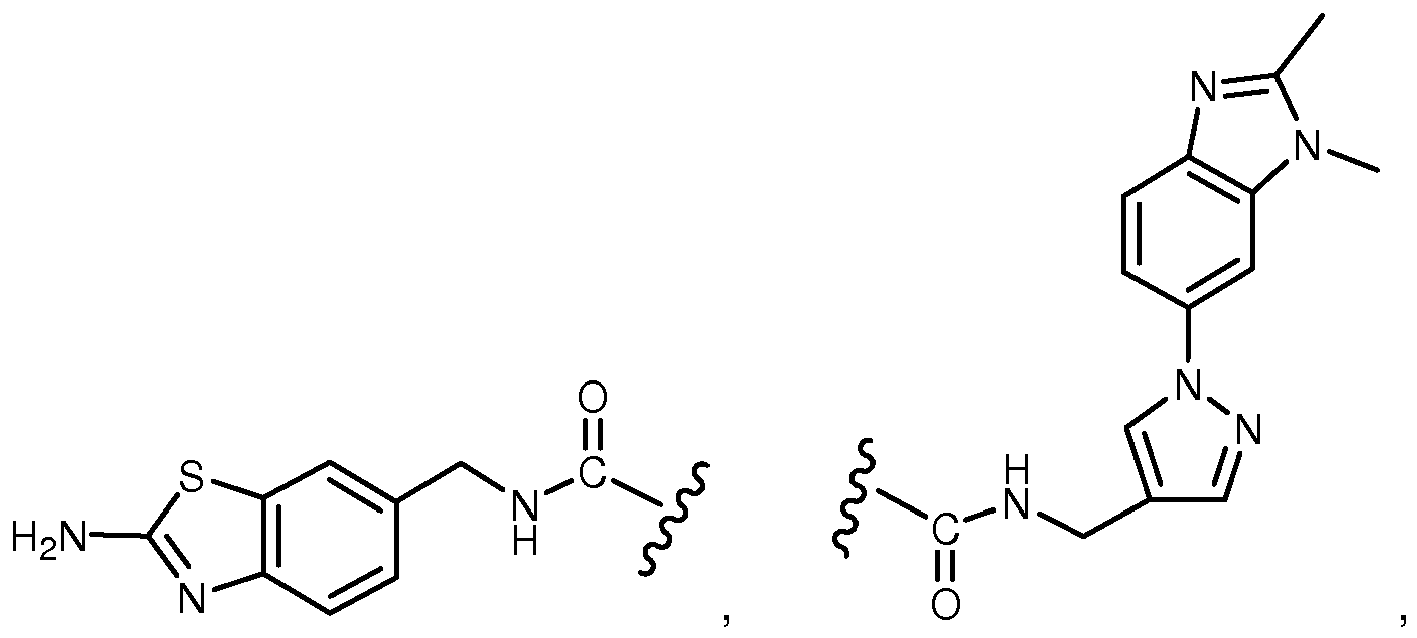

- The compound of Claim 1, or a pharmaceutically acceptable salt, ester or solvate thereof, wherein R1A is selected from the group consisting of: aryl and halo, and R2A is selected from the group consisting of: F and Cl.
- The compound of Claim 1, or a pharmaceutically acceptable salt, ester or solvate thereof, wherein R1A is selected from the group consisting of: -OH and H, and R2A is selected from the group consisting of: H, -OH, or -NH2.
- The compound of Claim 11, or a pharmaceutically acceptable salt, ester or solvate thereof, wherein R1A is selected from the group consisting of: -OH and H, and R2A is H.
- The compound of Claim 12, or a pharmaceutically acceptable salt, ester or solvate thereof, wherein Y is CH, R1A is H, and R2A is H.
- The compound of any one of claims 1 to 13, or a pharmaceutically acceptable salt, ester or solvate thereof, wherein R7 is isopropyl.
- The compound of any one of claims 1 to 14, or a pharmaceutically acceptable salt, ester or solvate thereof, wherein R9 is
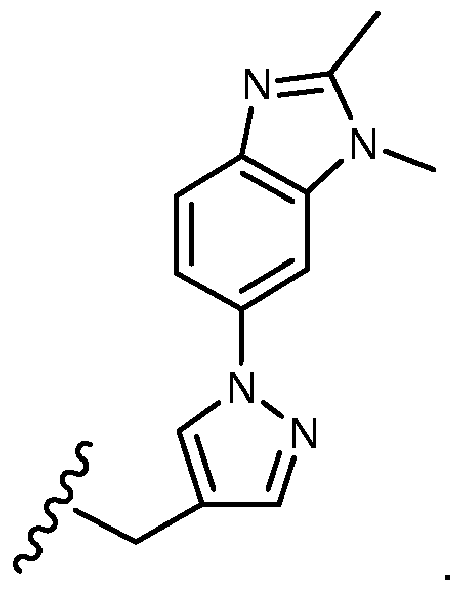
- A compound selected from the group consisting of compounds:








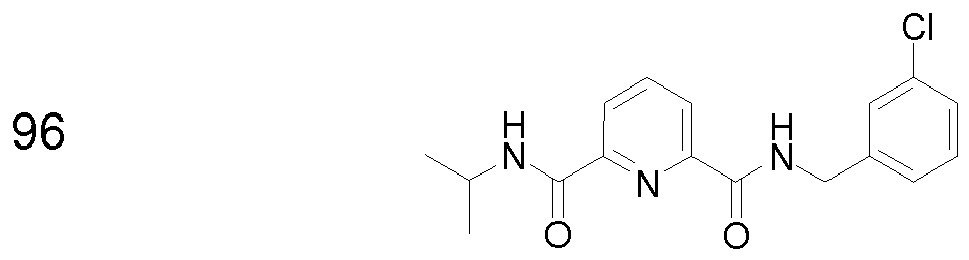
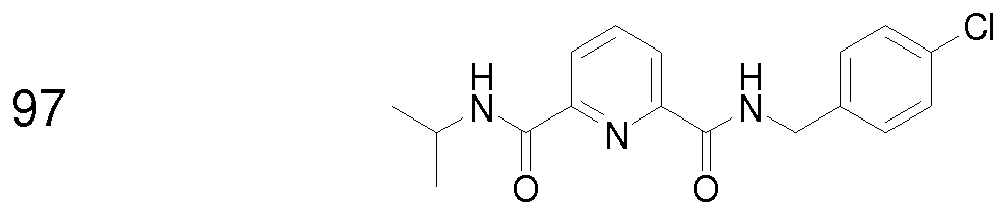


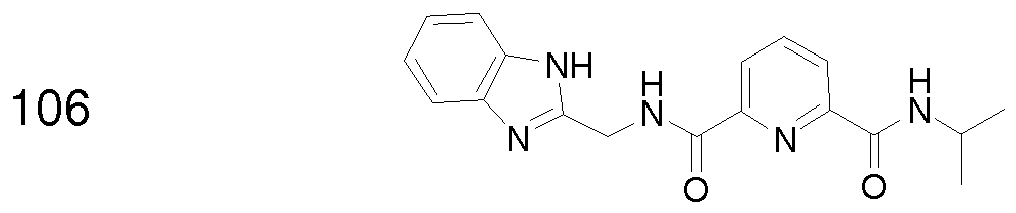





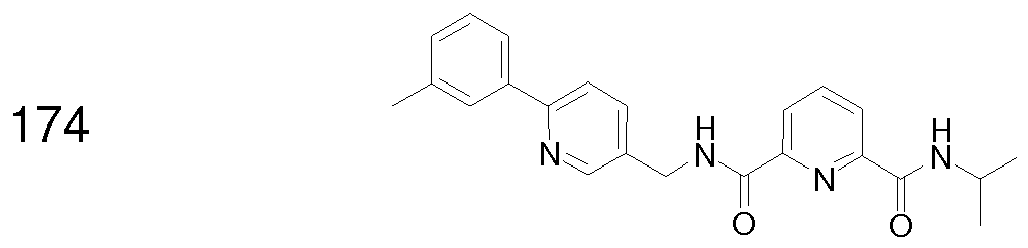


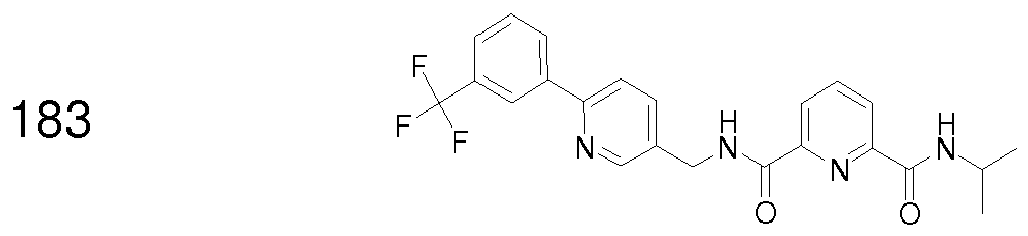











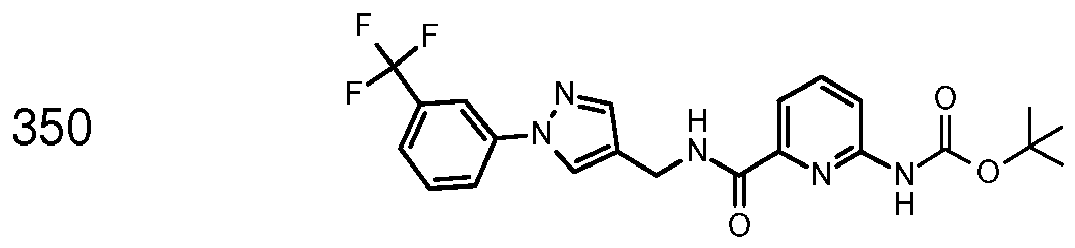


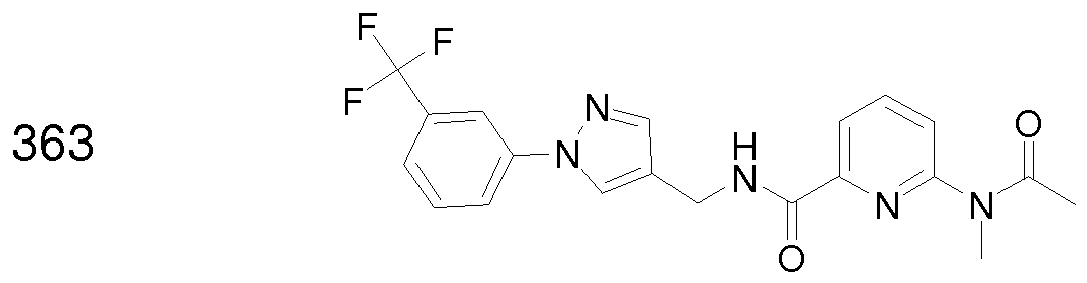


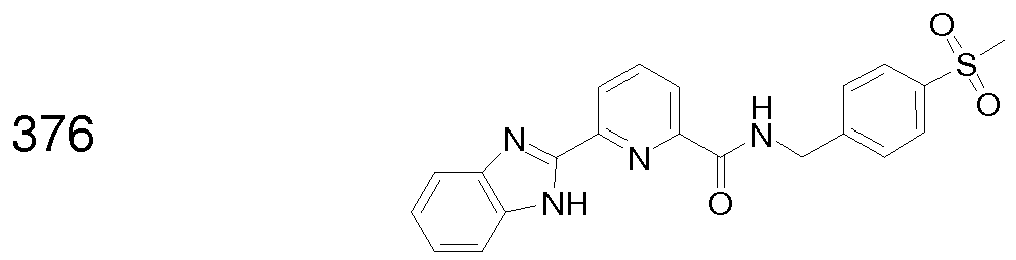


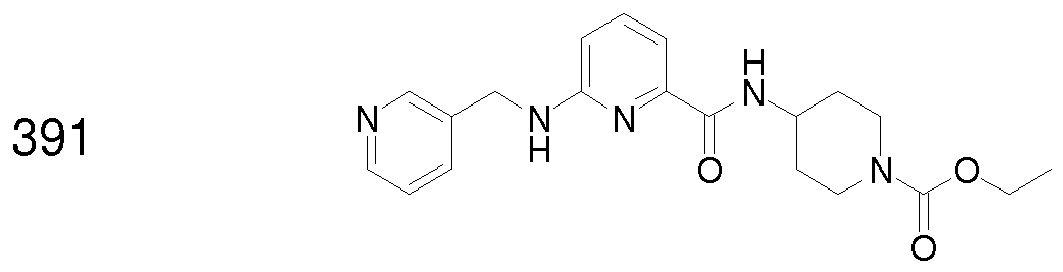
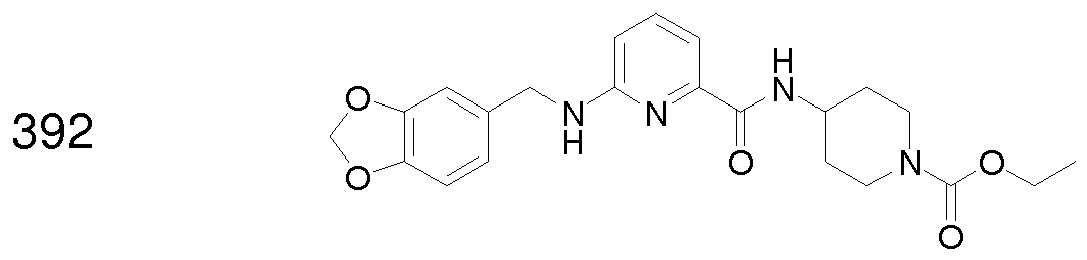


- The compound of claim 16, or a pharmaceutically acceptable salt, ester or solvate thereof, selected from the group consisting of compounds 5-78, 85-128, 129-163, 171, 174-186, 189-196, 200-203, 205, 206, 207, 210, 213, 216, 219, 222, 228, 233-235, 238, 241, 244-248, 254-258, 261, 263, 264, 267, 273-276, 287-292, 293, 295-297, 302, 303, 309, 310, 314-339, 343-347, 353-356, 362-365, 371, 372, 376-378, 380-384, 388-396, 399-402, 407, 408, 414-417, 419-422, 428-429, and 436.
- The compound of claim 16, or a pharmaceutically acceptable salt, ester or solvate thereof, selected from the group consisting of compounds 134, 137, 142, 149, 152, 222, 228, 233, 246 and 248.
- The compound of claim 16, or a pharmaceutically acceptable salt, ester or solvate thereof, selected from the group consisting of compounds 76, 144, 149, 151, 222, 228, 233, 241, 246 and 248.
- A pharmaceutical composition comprising at least one compound of any one of Claims 1 to 19, or a pharmaceutically acceptable salt, ester or solvate thereof, and a pharmaceutically acceptable carrier.
- A compound of any one of claims 1 to 19, or a pharmaceutically acceptable salt, ester or solvate thereof, for use as a medicament.
- A compound of any one of claims 1 to 19, or a pharmaceutically acceptable salt, ester or solvate thereof, for use as a medicament for treating a disease or condition selected from the group consisting of: inflammation, rheumatoid arthritis, asthma, multiple sclerosis, inflammatory bowel disease, psorisis, diabetes, autoimmune disorders, metabolic diseases, neurological diseases, pain, cancer, and cardiovascular diseases.
- The compound of claim 22, wherein the disease or condition is cancer.
- The compound of claim 23, wherein the cancer is selected from the group consisiting of lung cancer, pancreatic cancer, colon cancer, myeloid leukemias, thyroid cancer, myelodysplastic syndrome, bladder carcinoma, epidermal carcinoma, melanoma, breast cancer, prostate cancer, head and neck cancers, ovarian cancer, brain cancers, cancers of mesenchymal origin, sarcomas, tetracarcinomas, nuroblastomas, kidney carcinomas, hepatomas, non-Hodgkin's lymphoma, multiple myeloma, and anaplastic thyroid carcinoma.
- The compound of claim 23 or 24 which is in a form for administration in combination with at least one chemotherapeutic agent.
- The compound of claim 25, wherein the chemotherapeutic agent is selected from the group consisting of Uracil mustard, Chlormethine, Cyclophosphamide, Ifosfamide, Melphalan, Chlorambucil, Pipobroman, Triethylenemelamine, Triethylenethiophosphoramine, Busulfan, Carmustine, Lomustine, Streptozocin, Dacarbazine, Temozolomide, Methotrexate, 5-Fluorouracil, Floxuridine, Cytarabine, 6-Mercaptopurine, 6-Thioguanine, Fludarabine phosphate, Pentostatine, and Gemcitabine, Vinblastine, Vincristine, Vindesine, Bleomycin, Dactinomycin, Daunorubicin, Doxorubicin, Epirubicin, Idarubicin, Paclitaxel, Taxotere, Mithramycin, Deoxyco-formycin, Mitomycin-C, L-Asparaginase, Interferons, Etoposide, Teniposide, 17α-Ethinylestradiol, Diethylstilbestrol, Testosterone, Prednisone, Fluoxymesterone, Dromostanolone propionate, Testolactone, Megestrolacetate, Tamoxifen, Methylprednisolone, Methyl-testosterone, Prednisolone, Triamcinolone, Chlorotrianisene, Hydroxyprogesterone, Aminoglutethimide, Estramustine, Medroxyprogesteroneacetate, Leuprolide, Flutamide, Toremifene, Zoladex, Cisplatin, Carboplatin, Hydroxyurea, Amsacrine, Procarbazine, Mitotane, Mitoxantrone, Levamisole, Hexamethylmelamine, Navelbene, CPT-11, Anastrazole, Letrazole, Capecitabinbe, Reloxafine, Droloxafine, Allocolchicine, Halichondrin B, Colchicine, NSC 33410, Dolastatin 10, Maytansine, Rhizoxin, Paclitaxel, Taxotere, Thiocolchicine, Trityl Cysteine, Vinblastine Sulfate, Vincristine Sulfate, Epothilone A, Epothilone, Discodermolide, Estramustine, Nocodazole and MAP4
- The compound of any one of claims 23 to 26 which is in a form for administration in combination with radiation therapy.
Applications Claiming Priority (2)
| Application Number | Priority Date | Filing Date | Title |
|---|---|---|---|
| US87610406P | 2006-12-20 | 2006-12-20 | |
| PCT/US2007/025764 WO2008082487A2 (en) | 2006-12-20 | 2007-12-17 | Novel jnk inhibitors |
Publications (2)
| Publication Number | Publication Date |
|---|---|
| EP2132178A2 EP2132178A2 (en) | 2009-12-16 |
| EP2132178B1 true EP2132178B1 (en) | 2015-08-19 |
Family
ID=39523332
Family Applications (1)
| Application Number | Title | Priority Date | Filing Date |
|---|---|---|---|
| EP07863005.0A Active EP2132178B1 (en) | 2006-12-20 | 2007-12-17 | Jnk inhibitors |
Country Status (7)
| Country | Link |
|---|---|
| US (1) | US8278337B2 (en) |
| EP (1) | EP2132178B1 (en) |
| JP (1) | JP5178738B2 (en) |
| CN (1) | CN101611007A (en) |
| CA (1) | CA2672940A1 (en) |
| MX (1) | MX2009006864A (en) |
| WO (1) | WO2008082487A2 (en) |
Families Citing this family (71)
| Publication number | Priority date | Publication date | Assignee | Title |
|---|---|---|---|---|
| JP2008520744A (en) | 2004-11-19 | 2008-06-19 | ザ・レジェンツ・オブ・ザ・ユニバーシティ・オブ・カリフォルニア | Anti-inflammatory pyrazolopyrimidine |
| CA2909277A1 (en) | 2006-04-04 | 2007-10-11 | Kevan M. Shokat | Kinase antagonists |
| AU2008226947B2 (en) | 2007-03-08 | 2014-07-17 | The Board Of Trustees Of The Leland Stanford Junior University | Mitochondrial aldehyde dehydrogenase-2 modulators and methods of use thereof |
| GB2467670B (en) | 2007-10-04 | 2012-08-01 | Intellikine Inc | Chemical entities and therapeutic uses thereof |
| EP2240451B1 (en) | 2008-01-04 | 2017-08-09 | Intellikine, LLC | Isoquinolinone derivatives substituted with a purine useful as PI3K inhibitors |
| US8193182B2 (en) | 2008-01-04 | 2012-06-05 | Intellikine, Inc. | Substituted isoquinolin-1(2H)-ones, and methods of use thereof |
| WO2009114870A2 (en) | 2008-03-14 | 2009-09-17 | Intellikine, Inc. | Kinase inhibitors and methods of use |
| US8993580B2 (en) | 2008-03-14 | 2015-03-31 | Intellikine Llc | Benzothiazole kinase inhibitors and methods of use |
| CN105622580B (en) | 2008-04-28 | 2019-06-21 | 詹森药业有限公司 | Benzimidazole as prolyl hydroxylase inhibitors |
| AR072297A1 (en) | 2008-06-27 | 2010-08-18 | Novartis Ag | DERIVATIVES OF INDOL-2-IL-PIRIDIN-3-ILO, PHARMACEUTICAL COMPOSITION THAT INCLUDES THEM AND ITS USE IN MEDICINES FOR THE TREATMENT OF DISEASES MEDIATED BY THE SYNTHESIS ALDOSTERONE. |
| WO2010006086A2 (en) | 2008-07-08 | 2010-01-14 | Intellikine, Inc. | Kinase inhibitors and methods of use |
| US20110224223A1 (en) | 2008-07-08 | 2011-09-15 | The Regents Of The University Of California, A California Corporation | MTOR Modulators and Uses Thereof |
| CN102209541B (en) * | 2008-09-08 | 2016-05-18 | 小利兰·斯坦福大学托管委员会 | Modulators of aldehyde dehydrogenase activity and its using method |
| CA2738429C (en) | 2008-09-26 | 2016-10-25 | Intellikine, Inc. | Heterocyclic kinase inhibitors |
| DK2358720T3 (en) | 2008-10-16 | 2016-06-06 | Univ California | Heteroarylkinaseinhibitorer fused-ring |
| US8389522B2 (en) | 2008-10-28 | 2013-03-05 | The Board Of Trustees Of The Leland Stanford Junior University | Modulators of aldehyde dehydrogenase and methods of use thereof |
| CN102271682B (en) * | 2008-10-31 | 2015-12-16 | 默沙东公司 | Be used for the treatment of the P2X of pain 3receptor antagonist |
| US8476431B2 (en) | 2008-11-03 | 2013-07-02 | Itellikine LLC | Benzoxazole kinase inhibitors and methods of use |
| JP5789252B2 (en) | 2009-05-07 | 2015-10-07 | インテリカイン, エルエルシー | Heterocyclic compounds and uses thereof |
| WO2011047384A2 (en) | 2009-10-16 | 2011-04-21 | The Regents Of The University Of California | Methods of inhibiting ire1 |
| US8618305B2 (en) | 2010-01-29 | 2013-12-31 | Ranbaxy Laboratories Limited | Sorafenib dimethyl sulphoxide solvate |
| US8247436B2 (en) | 2010-03-19 | 2012-08-21 | Novartis Ag | Pyridine and pyrazine derivative for the treatment of CF |
| KR20130012072A (en) | 2010-03-31 | 2013-01-31 | 액테리온 파마슈티칼 리미티드 | Antibacterial isoquinolin-3-ylurea derivatives |
| AU2011255218B2 (en) | 2010-05-21 | 2015-03-12 | Infinity Pharmaceuticals, Inc. | Chemical compounds, compositions and methods for kinase modulation |
| AR082885A1 (en) | 2010-09-03 | 2013-01-16 | Genentech Inc | COMPOUNDS AND COMPOSITIONS FOR THE INHIBITION OF NAMPT |
| BR112013006272A2 (en) * | 2010-09-17 | 2019-09-24 | Purdue Pharma Lp | pyridine compounds and their uses |
| AU2011326427B2 (en) | 2010-11-10 | 2016-01-07 | Infinity Pharmaceuticals Inc. | Heterocyclic compounds and uses thereof |
| AR084824A1 (en) | 2011-01-10 | 2013-06-26 | Intellikine Inc | PROCESSES TO PREPARE ISOQUINOLINONES AND SOLID FORMS OF ISOQUINOLINONAS |
| TWI592411B (en) | 2011-02-23 | 2017-07-21 | 英特爾立秦有限責任公司 | Combination of kinase inhibitors and uses thereof |
| AR088729A1 (en) | 2011-03-29 | 2014-07-02 | Actelion Pharmaceuticals Ltd | DERIVATIVES OF 3-UREIDOISOQUINOLIN-8-ILO AND A PHARMACEUTICAL COMPOSITION |
| WO2012149106A1 (en) | 2011-04-29 | 2012-11-01 | The Board Of Trustees Of The Leland Stanford Junior University | Compositions and methods for increasing proliferation of adult salivary stem cells |
| ES2561298T3 (en) * | 2011-07-12 | 2016-02-25 | F. Hoffmann-La Roche Ag | Aminomethylquinolone Compounds |
| HK1198443A1 (en) | 2011-07-19 | 2015-04-24 | 无限药品股份有限公司 | Heterocyclic compounds and uses thereof |
| WO2013012918A1 (en) | 2011-07-19 | 2013-01-24 | Infinity Pharmaceuticals Inc. | Heterocyclic compounds and uses thereof |
| WO2013032591A1 (en) | 2011-08-29 | 2013-03-07 | Infinity Pharmaceuticals Inc. | Heterocyclic compounds and uses thereof |
| WO2013077921A2 (en) | 2011-09-02 | 2013-05-30 | The Regents Of The University Of California | Substituted pyrazolo[3,4-d]pyrimidines and uses thereof |
| EP3461820B1 (en) | 2011-10-25 | 2020-07-29 | Janssen Pharmaceutica NV | Method for obtaining crystals of meglumine salt of 1-(5,6-dichloro-1h-benzo[d]imidazol-2-yl)-1h-pyrazole-4-carboxylic acid |
| US8940742B2 (en) | 2012-04-10 | 2015-01-27 | Infinity Pharmaceuticals, Inc. | Heterocyclic compounds and uses thereof |
| US9013997B2 (en) | 2012-06-01 | 2015-04-21 | Broadcom Corporation | System for performing distributed data cut-through |
| US8828998B2 (en) | 2012-06-25 | 2014-09-09 | Infinity Pharmaceuticals, Inc. | Treatment of lupus, fibrotic conditions, and inflammatory myopathies and other disorders using PI3 kinase inhibitors |
| RU2015115631A (en) | 2012-09-26 | 2016-11-20 | Дзе Риджентс Оф Дзе Юниверсити Оф Калифорния | MODULATION IRE1 |
| RU2702908C2 (en) | 2012-11-01 | 2019-10-14 | Инфинити Фармасьютикалз, Инк. | Treating malignant tumours using modulators of pi3-kinase isoforms |
| US9604961B2 (en) | 2012-12-06 | 2017-03-28 | Celgene Quanticel Research, Inc. | Histone demethylase inhibitors |
| BR112015014855A2 (en) | 2012-12-20 | 2017-07-11 | Qing Bin Lu | radiosensitizing compounds for use in combination with radiation |
| WO2014160185A2 (en) | 2013-03-14 | 2014-10-02 | The Board Of Trustees Of The Leland Stanford Junior University | Mitochondrial aldehyde dehydrogenase-2 modulators and methods of use thereof |
| US9481667B2 (en) | 2013-03-15 | 2016-11-01 | Infinity Pharmaceuticals, Inc. | Salts and solid forms of isoquinolinones and composition comprising and methods of using the same |
| EA201690713A1 (en) | 2013-10-04 | 2016-08-31 | Инфинити Фармасьютикалз, Инк. | HETEROCYCLIC COMPOUNDS AND THEIR APPLICATIONS |
| WO2015051241A1 (en) | 2013-10-04 | 2015-04-09 | Infinity Pharmaceuticals, Inc. | Heterocyclic compounds and uses thereof |
| CN114380700A (en) * | 2013-10-08 | 2022-04-22 | 卢庆彬 | Non-platinum based anti-cancer compounds for targeted chemotherapy |
| CN103497149A (en) * | 2013-10-08 | 2014-01-08 | 南京复兴生物科技有限公司 | Preparation method of 5-aminomethyl pyridine derivative |
| KR102400755B1 (en) * | 2013-11-05 | 2022-05-20 | 바이엘 애니멀 헬스 게엠베하 | Substituted benzamides for treating arthropodes |
| WO2015084936A1 (en) * | 2013-12-04 | 2015-06-11 | The Scripps Research Institute | Novel compounds as jnk kinase inhibitors |
| SG11201607705XA (en) | 2014-03-19 | 2016-10-28 | Infinity Pharmaceuticals Inc | Heterocyclic compounds for use in the treatment of pi3k-gamma mediated disorders |
| US20150320755A1 (en) | 2014-04-16 | 2015-11-12 | Infinity Pharmaceuticals, Inc. | Combination therapies |
| WO2016019062A1 (en) * | 2014-07-29 | 2016-02-04 | Alliance Of Cardiovascular Researchers | Priming of pancreatic tumors cells and cancer stem cells to trail-induced apoptosis |
| US20170217889A1 (en) * | 2014-09-09 | 2017-08-03 | Okinawa Institute Of Science And Technology School Corporation | 4-substituted pyridine-2,6-dicarboxylic acid derivatives and method of preparing same |
| US9708348B2 (en) | 2014-10-03 | 2017-07-18 | Infinity Pharmaceuticals, Inc. | Trisubstituted bicyclic heterocyclic compounds with kinase activities and uses thereof |
| CN114230571B (en) | 2015-09-14 | 2025-07-08 | 无限药品股份有限公司 | Solid forms of isoquinolinones, methods of making, compositions comprising, and methods of using the same |
| CA3002418C (en) | 2015-10-23 | 2023-10-03 | Vifor (International) Ag | Novel ferroportin inhibitors |
| JP6877423B2 (en) * | 2015-11-09 | 2021-05-26 | アストラゼネカ・アクチエボラーグAstrazeneca Aktiebolag | Dihydroimidazolipyrazinone derivative useful in the treatment of cancer |
| WO2017161116A1 (en) | 2016-03-17 | 2017-09-21 | Infinity Pharmaceuticals, Inc. | Isotopologues of isoquinolinone and quinazolinone compounds and uses thereof as pi3k kinase inhibitors |
| US10919914B2 (en) | 2016-06-08 | 2021-02-16 | Infinity Pharmaceuticals, Inc. | Heterocyclic compounds and uses thereof |
| CN109640999A (en) | 2016-06-24 | 2019-04-16 | 无限药品股份有限公司 | Combination treatment |
| ES2846833T3 (en) | 2016-07-18 | 2021-07-29 | Janssen Pharmaceutica Nv | PET imaging ligands |
| IT201700028127A1 (en) | 2017-03-14 | 2018-09-14 | Fondazione St Italiano Tecnologia | COMPOUNDS AND COMPOSITIONS FOR THE TREATMENT OF CYSTIC FIBROSIS |
| JOP20180036A1 (en) | 2017-04-18 | 2019-01-30 | Vifor Int Ag | Salts for new fruortin inhibitors |
| EP3710001B1 (en) | 2017-10-27 | 2025-06-18 | University Of Virginia Patent Foundation | Compounds and methods for regulating, limiting, or inhibiting avil expression |
| CN108395436B (en) * | 2018-05-14 | 2021-01-12 | 鹤壁市人民医院 | Preparation method of imidazopyrazine pharmaceutical intermediate |
| CN108707150B (en) * | 2018-05-14 | 2021-04-16 | 江苏惠利生物科技有限公司 | Preparation method of imidazopyrazine pharmaceutical intermediate |
| US20220213055A1 (en) * | 2019-05-02 | 2022-07-07 | University Of Virginia Patent Foundation | Substituted (piperidin-1-yl)aryl analogues for modulating avil activity |
| JP7787893B2 (en) * | 2020-12-21 | 2025-12-17 | サイトキネティックス, インコーポレイテッド | Pyrazole Derivatives Useful as NAMPT Modulators |
Family Cites Families (32)
| Publication number | Priority date | Publication date | Assignee | Title |
|---|---|---|---|---|
| US5411947A (en) | 1989-06-28 | 1995-05-02 | Vestar, Inc. | Method of converting a drug to an orally available form by covalently bonding a lipid to the drug |
| US5475120A (en) | 1990-11-02 | 1995-12-12 | University Of Florida | Method for the isolation and purification of taxol and its natural analogues |
| US5194635A (en) | 1991-03-18 | 1993-03-16 | Virginia Tech Intellectual Properties, Inc. | Rearranged taxol compounds and method of using in testing of in vivo activity |
| US5416225A (en) | 1992-03-30 | 1995-05-16 | Sloan-Kettering Institute For Cancer Research | Total synthesis of taxol |
| US5488116A (en) | 1992-03-30 | 1996-01-30 | Sloan-Kettering Institute For Cancer Research | Total synthesis of taxol and analogues thereof |
| JPH07505887A (en) | 1992-04-17 | 1995-06-29 | アボツト・ラボラトリーズ | Taxol derivative |
| GB9213077D0 (en) | 1992-06-19 | 1992-08-05 | Erba Carlo Spa | Polymerbound taxol derivatives |
| US5440057A (en) | 1993-08-20 | 1995-08-08 | The Scripps Research Institute | Access to taxol analogs |
| US5461169A (en) | 1992-06-23 | 1995-10-24 | The Scripps Research Institute | Total synthesis of taxol and taxol analogs |
| WO1994005282A1 (en) | 1992-09-04 | 1994-03-17 | The Scripps Research Institute | Water soluble taxol derivatives |
| US5478854A (en) | 1992-10-01 | 1995-12-26 | Bristol-Myers Squibb Company | Deoxy taxols |
| US5411984A (en) | 1992-10-16 | 1995-05-02 | Virginia Tech Intellectual Properties, Inc. | Water soluble analogs and prodrugs of taxol |
| CA2126698A1 (en) | 1992-12-07 | 1994-06-23 | Muraleedharan G. Nair | Process for the isolation and purification of taxol and taxanes from taxus spp. |
| US5468769A (en) | 1993-07-15 | 1995-11-21 | Abbott Laboratories | Paclitaxel derivatives |
| FR2707642B1 (en) | 1993-07-16 | 1995-10-13 | Electricite De France | Derivatives of polyethers and pentacyclic heterocycles, their polymers and their applications, in particular to the complexing of metal ions. |
| US5405972A (en) | 1993-07-20 | 1995-04-11 | Florida State University | Synthetic process for the preparation of taxol and other tricyclic and tetracyclic taxanes |
| US5565478A (en) | 1994-03-14 | 1996-10-15 | The United States Of America As Represented By The Department Of Health & Human Services | Combination therapy using signal transduction inhibitors with paclitaxel and other taxane analogs |
| US5508447A (en) | 1994-05-24 | 1996-04-16 | Board Of Regents, The University Of Texas System | Short synthetic route to taxol and taxol derivatives |
| US5489589A (en) | 1994-12-07 | 1996-02-06 | Bristol-Myers Squibb Company | Amino acid derivatives of paclitaxel |
| HK1046276A1 (en) * | 2000-02-05 | 2003-01-03 | Vertex Pharmaceuticals Incorporated | Pyrazole compositions useful as inhibitors of erk |
| CA2440842A1 (en) | 2001-04-16 | 2002-10-24 | Eisai Co., Ltd. | Novel 1h-indazole compounds |
| GB0217783D0 (en) | 2002-07-31 | 2002-09-11 | Glaxo Group Ltd | Compounds |
| AU2003299082A1 (en) | 2002-09-26 | 2004-04-19 | 3M Innovative Properties Company | 1h-imidazo dimers |
| SE0203654D0 (en) | 2002-12-09 | 2002-12-09 | Astrazeneca Ab | New compounds |
| SE0301963D0 (en) * | 2003-07-02 | 2003-07-02 | Astrazeneca Ab | New compounds |
| WO2005074513A2 (en) * | 2004-01-30 | 2005-08-18 | Merck & Co., Inc. | N-benzyl-3,4-dihyroxypyridine-2-carboxamide and n-benzyl-2,3-dihydroxypyridine-4-carboxamide compounds useful as hiv integrase inhibitors |
| WO2005085252A1 (en) | 2004-03-04 | 2005-09-15 | Biofocus Discovery Limited | Imidazo ‘1,2-a’ pyrazine compounds which interact with protein kinases |
| WO2005100342A1 (en) * | 2004-03-26 | 2005-10-27 | Vertex Pharmaceuticals, Incorporated | Pyridine inhibitors of erk2 and uses thereof |
| US20060010251A1 (en) | 2004-06-16 | 2006-01-12 | Nokia Corporation | Global community naming authority |
| CA2580238A1 (en) * | 2004-09-17 | 2006-03-30 | Comentis, Inc. | Bicyclic compounds which inhibit beta-secretase activity and methods of use thereof |
| US7888374B2 (en) * | 2005-01-28 | 2011-02-15 | Abbott Laboratories | Inhibitors of c-jun N-terminal kinases |
| MX2009006863A (en) | 2006-12-20 | 2009-08-28 | Schering Corp | Novel jnk inhibitors. |
-
2007
- 2007-12-17 CA CA002672940A patent/CA2672940A1/en not_active Abandoned
- 2007-12-17 US US12/519,731 patent/US8278337B2/en active Active
- 2007-12-17 CN CNA2007800510835A patent/CN101611007A/en active Pending
- 2007-12-17 JP JP2009542840A patent/JP5178738B2/en not_active Expired - Fee Related
- 2007-12-17 EP EP07863005.0A patent/EP2132178B1/en active Active
- 2007-12-17 WO PCT/US2007/025764 patent/WO2008082487A2/en not_active Ceased
- 2007-12-17 MX MX2009006864A patent/MX2009006864A/en unknown
Non-Patent Citations (1)
| Title |
|---|
| NAPITUPULU: "Methyl 2-IN-(2'-Pyridylmethyl)carbamyllpyridine-6-carboxylate: A Precursor for Unsymmetrical Diamide Ligands", AUSTRALIAN JOURNAL OF CHEMISTRY, CSIRO, AU, vol. 59, 1 January 2006 (2006-01-01), pages 796 - 804, XP009157807, ISSN: 0004-9425 * |
Also Published As
| Publication number | Publication date |
|---|---|
| JP5178738B2 (en) | 2013-04-10 |
| US20100179141A1 (en) | 2010-07-15 |
| WO2008082487A2 (en) | 2008-07-10 |
| CN101611007A (en) | 2009-12-23 |
| CA2672940A1 (en) | 2008-07-10 |
| JP2010513493A (en) | 2010-04-30 |
| MX2009006864A (en) | 2009-08-28 |
| WO2008082487A3 (en) | 2008-12-31 |
| EP2132178A2 (en) | 2009-12-16 |
| US8278337B2 (en) | 2012-10-02 |
Similar Documents
| Publication | Publication Date | Title |
|---|---|---|
| EP2132178B1 (en) | Jnk inhibitors | |
| EP2483263B1 (en) | Heterocyclic compounds that are erk inhibitors | |
| US20100298314A1 (en) | Novel jnk inhibitors | |
| EP2260031B1 (en) | Compounds that are erk inhibitors | |
| AU2007314305B2 (en) | 2-aminothiazole-4-carboxylic amides as protein kinase inhibitors | |
| CA2627623C (en) | Methods for inhibiting protein kinases | |
| CA2665539C (en) | Pyrazolopyrimidines as cyclin dependent kinase inhibitors | |
| US7576085B2 (en) | Imidazopyrazines as cyclin dependent kinase inhibitors | |
| EP2212318B1 (en) | Thiazole derivatives as protein kinase inhibitors | |
| WO2008156614A2 (en) | Imidazopyrazines as protein kinase inhibitors | |
| CA2624822A1 (en) | Pyrazolopyrimidines as cyclin dependent kinase inhibitors for the treatment of cancer | |
| EP1931676A1 (en) | Pyrazolopyrimidines as protein kinase inhibitors | |
| CA2624902A1 (en) | Novel pyrazolopyrimidines as cyclin dependent kinase inhibitors | |
| CA2669465A1 (en) | Imidazopyrazines as protein kinase inhibitors | |
| AU2006302435B2 (en) | Use of pyrazolo [1 , 5 -a] pyrimidine derivatives for inhibiting protein kinases methods for inhibiting protein kinases |
Legal Events
| Date | Code | Title | Description |
|---|---|---|---|
| PUAI | Public reference made under article 153(3) epc to a published international application that has entered the european phase |
Free format text: ORIGINAL CODE: 0009012 |
|
| 17P | Request for examination filed |
Effective date: 20080328 |
|
| AK | Designated contracting states |
Kind code of ref document: A2 Designated state(s): AT BE BG CH CY CZ DE DK EE ES FI FR GB GR HU IE IS IT LI LT LU LV MC MT NL PL PT RO SE SI SK TR |
|
| AX | Request for extension of the european patent |
Extension state: AL BA HR MK RS |
|
| REG | Reference to a national code |
Ref country code: HK Ref legal event code: DE Ref document number: 1132736 Country of ref document: HK |
|
| 17Q | First examination report despatched |
Effective date: 20101027 |
|
| RAP1 | Party data changed (applicant data changed or rights of an application transferred) |
Owner name: MERCK SHARP & DOHME CORP. |
|
| GRAP | Despatch of communication of intention to grant a patent |
Free format text: ORIGINAL CODE: EPIDOSNIGR1 |
|
| INTG | Intention to grant announced |
Effective date: 20150325 |
|
| GRAS | Grant fee paid |
Free format text: ORIGINAL CODE: EPIDOSNIGR3 |
|
| GRAA | (expected) grant |
Free format text: ORIGINAL CODE: 0009210 |
|
| AK | Designated contracting states |
Kind code of ref document: B1 Designated state(s): AT BE BG CH CY CZ DE DK EE ES FI FR GB GR HU IE IS IT LI LT LU LV MC MT NL PL PT RO SE SI SK TR |
|
| AX | Request for extension of the european patent |
Extension state: AL BA HR MK RS |
|
| REG | Reference to a national code |
Ref country code: GB Ref legal event code: FG4D |
|
| REG | Reference to a national code |
Ref country code: CH Ref legal event code: EP |
|
| REG | Reference to a national code |
Ref country code: IE Ref legal event code: FG4D |
|
| REG | Reference to a national code |
Ref country code: AT Ref legal event code: REF Ref document number: 743691 Country of ref document: AT Kind code of ref document: T Effective date: 20150915 |
|
| REG | Reference to a national code |
Ref country code: DE Ref legal event code: R096 Ref document number: 602007042716 Country of ref document: DE |
|
| REG | Reference to a national code |
Ref country code: FR Ref legal event code: PLFP Year of fee payment: 9 |
|
| REG | Reference to a national code |
Ref country code: AT Ref legal event code: MK05 Ref document number: 743691 Country of ref document: AT Kind code of ref document: T Effective date: 20150819 |
|
| REG | Reference to a national code |
Ref country code: LT Ref legal event code: MG4D |
|
| REG | Reference to a national code |
Ref country code: NL Ref legal event code: MP Effective date: 20150819 |
|
| PG25 | Lapsed in a contracting state [announced via postgrant information from national office to epo] |
Ref country code: FI Free format text: LAPSE BECAUSE OF FAILURE TO SUBMIT A TRANSLATION OF THE DESCRIPTION OR TO PAY THE FEE WITHIN THE PRESCRIBED TIME-LIMIT Effective date: 20150819 Ref country code: LT Free format text: LAPSE BECAUSE OF FAILURE TO SUBMIT A TRANSLATION OF THE DESCRIPTION OR TO PAY THE FEE WITHIN THE PRESCRIBED TIME-LIMIT Effective date: 20150819 Ref country code: GR Free format text: LAPSE BECAUSE OF FAILURE TO SUBMIT A TRANSLATION OF THE DESCRIPTION OR TO PAY THE FEE WITHIN THE PRESCRIBED TIME-LIMIT Effective date: 20151120 Ref country code: LV Free format text: LAPSE BECAUSE OF FAILURE TO SUBMIT A TRANSLATION OF THE DESCRIPTION OR TO PAY THE FEE WITHIN THE PRESCRIBED TIME-LIMIT Effective date: 20150819 |
|
| PG25 | Lapsed in a contracting state [announced via postgrant information from national office to epo] |
Ref country code: ES Free format text: LAPSE BECAUSE OF FAILURE TO SUBMIT A TRANSLATION OF THE DESCRIPTION OR TO PAY THE FEE WITHIN THE PRESCRIBED TIME-LIMIT Effective date: 20150819 Ref country code: PT Free format text: LAPSE BECAUSE OF FAILURE TO SUBMIT A TRANSLATION OF THE DESCRIPTION OR TO PAY THE FEE WITHIN THE PRESCRIBED TIME-LIMIT Effective date: 20151221 Ref country code: AT Free format text: LAPSE BECAUSE OF FAILURE TO SUBMIT A TRANSLATION OF THE DESCRIPTION OR TO PAY THE FEE WITHIN THE PRESCRIBED TIME-LIMIT Effective date: 20150819 Ref country code: IS Free format text: LAPSE BECAUSE OF FAILURE TO SUBMIT A TRANSLATION OF THE DESCRIPTION OR TO PAY THE FEE WITHIN THE PRESCRIBED TIME-LIMIT Effective date: 20151219 Ref country code: PL Free format text: LAPSE BECAUSE OF FAILURE TO SUBMIT A TRANSLATION OF THE DESCRIPTION OR TO PAY THE FEE WITHIN THE PRESCRIBED TIME-LIMIT Effective date: 20150819 Ref country code: SE Free format text: LAPSE BECAUSE OF FAILURE TO SUBMIT A TRANSLATION OF THE DESCRIPTION OR TO PAY THE FEE WITHIN THE PRESCRIBED TIME-LIMIT Effective date: 20150819 |
|
| PG25 | Lapsed in a contracting state [announced via postgrant information from national office to epo] |
Ref country code: NL Free format text: LAPSE BECAUSE OF FAILURE TO SUBMIT A TRANSLATION OF THE DESCRIPTION OR TO PAY THE FEE WITHIN THE PRESCRIBED TIME-LIMIT Effective date: 20150819 |
|
| PG25 | Lapsed in a contracting state [announced via postgrant information from national office to epo] |
Ref country code: EE Free format text: LAPSE BECAUSE OF FAILURE TO SUBMIT A TRANSLATION OF THE DESCRIPTION OR TO PAY THE FEE WITHIN THE PRESCRIBED TIME-LIMIT Effective date: 20150819 Ref country code: IT Free format text: LAPSE BECAUSE OF FAILURE TO SUBMIT A TRANSLATION OF THE DESCRIPTION OR TO PAY THE FEE WITHIN THE PRESCRIBED TIME-LIMIT Effective date: 20150819 Ref country code: SK Free format text: LAPSE BECAUSE OF FAILURE TO SUBMIT A TRANSLATION OF THE DESCRIPTION OR TO PAY THE FEE WITHIN THE PRESCRIBED TIME-LIMIT Effective date: 20150819 Ref country code: DK Free format text: LAPSE BECAUSE OF FAILURE TO SUBMIT A TRANSLATION OF THE DESCRIPTION OR TO PAY THE FEE WITHIN THE PRESCRIBED TIME-LIMIT Effective date: 20150819 Ref country code: CZ Free format text: LAPSE BECAUSE OF FAILURE TO SUBMIT A TRANSLATION OF THE DESCRIPTION OR TO PAY THE FEE WITHIN THE PRESCRIBED TIME-LIMIT Effective date: 20150819 |
|
| REG | Reference to a national code |
Ref country code: DE Ref legal event code: R097 Ref document number: 602007042716 Country of ref document: DE |
|
| PG25 | Lapsed in a contracting state [announced via postgrant information from national office to epo] |
Ref country code: RO Free format text: LAPSE BECAUSE OF FAILURE TO SUBMIT A TRANSLATION OF THE DESCRIPTION OR TO PAY THE FEE WITHIN THE PRESCRIBED TIME-LIMIT Effective date: 20150819 Ref country code: BE Free format text: LAPSE BECAUSE OF NON-PAYMENT OF DUE FEES Effective date: 20151231 |
|
| PLBE | No opposition filed within time limit |
Free format text: ORIGINAL CODE: 0009261 |
|
| STAA | Information on the status of an ep patent application or granted ep patent |
Free format text: STATUS: NO OPPOSITION FILED WITHIN TIME LIMIT |
|
| REG | Reference to a national code |
Ref country code: HK Ref legal event code: WD Ref document number: 1132736 Country of ref document: HK |
|
| 26N | No opposition filed |
Effective date: 20160520 |
|
| PG25 | Lapsed in a contracting state [announced via postgrant information from national office to epo] |
Ref country code: LU Free format text: LAPSE BECAUSE OF FAILURE TO SUBMIT A TRANSLATION OF THE DESCRIPTION OR TO PAY THE FEE WITHIN THE PRESCRIBED TIME-LIMIT Effective date: 20151217 Ref country code: MC Free format text: LAPSE BECAUSE OF FAILURE TO SUBMIT A TRANSLATION OF THE DESCRIPTION OR TO PAY THE FEE WITHIN THE PRESCRIBED TIME-LIMIT Effective date: 20150819 |
|
| REG | Reference to a national code |
Ref country code: CH Ref legal event code: PL |
|
| PG25 | Lapsed in a contracting state [announced via postgrant information from national office to epo] |
Ref country code: SI Free format text: LAPSE BECAUSE OF FAILURE TO SUBMIT A TRANSLATION OF THE DESCRIPTION OR TO PAY THE FEE WITHIN THE PRESCRIBED TIME-LIMIT Effective date: 20150819 |
|
| REG | Reference to a national code |
Ref country code: IE Ref legal event code: MM4A |
|
| PG25 | Lapsed in a contracting state [announced via postgrant information from national office to epo] |
Ref country code: IE Free format text: LAPSE BECAUSE OF NON-PAYMENT OF DUE FEES Effective date: 20151217 Ref country code: CH Free format text: LAPSE BECAUSE OF NON-PAYMENT OF DUE FEES Effective date: 20151231 Ref country code: LI Free format text: LAPSE BECAUSE OF NON-PAYMENT OF DUE FEES Effective date: 20151231 |
|
| REG | Reference to a national code |
Ref country code: FR Ref legal event code: PLFP Year of fee payment: 10 |
|
| PG25 | Lapsed in a contracting state [announced via postgrant information from national office to epo] |
Ref country code: BE Free format text: LAPSE BECAUSE OF FAILURE TO SUBMIT A TRANSLATION OF THE DESCRIPTION OR TO PAY THE FEE WITHIN THE PRESCRIBED TIME-LIMIT Effective date: 20150819 |
|
| PG25 | Lapsed in a contracting state [announced via postgrant information from national office to epo] |
Ref country code: BG Free format text: LAPSE BECAUSE OF FAILURE TO SUBMIT A TRANSLATION OF THE DESCRIPTION OR TO PAY THE FEE WITHIN THE PRESCRIBED TIME-LIMIT Effective date: 20150819 Ref country code: HU Free format text: LAPSE BECAUSE OF FAILURE TO SUBMIT A TRANSLATION OF THE DESCRIPTION OR TO PAY THE FEE WITHIN THE PRESCRIBED TIME-LIMIT; INVALID AB INITIO Effective date: 20071217 |
|
| PG25 | Lapsed in a contracting state [announced via postgrant information from national office to epo] |
Ref country code: CY Free format text: LAPSE BECAUSE OF FAILURE TO SUBMIT A TRANSLATION OF THE DESCRIPTION OR TO PAY THE FEE WITHIN THE PRESCRIBED TIME-LIMIT Effective date: 20150819 |
|
| PG25 | Lapsed in a contracting state [announced via postgrant information from national office to epo] |
Ref country code: MT Free format text: LAPSE BECAUSE OF FAILURE TO SUBMIT A TRANSLATION OF THE DESCRIPTION OR TO PAY THE FEE WITHIN THE PRESCRIBED TIME-LIMIT Effective date: 20150819 Ref country code: TR Free format text: LAPSE BECAUSE OF FAILURE TO SUBMIT A TRANSLATION OF THE DESCRIPTION OR TO PAY THE FEE WITHIN THE PRESCRIBED TIME-LIMIT Effective date: 20150819 |
|
| REG | Reference to a national code |
Ref country code: FR Ref legal event code: PLFP Year of fee payment: 11 |
|
| REG | Reference to a national code |
Ref country code: DE Ref legal event code: R081 Ref document number: 602007042716 Country of ref document: DE Owner name: MERCK SHARP & DOHME LLC, RAHWAY, US Free format text: FORMER OWNER: MERCK SHARP & DOHME CORP., RAHWAY, N.J., US |
|
| REG | Reference to a national code |
Ref country code: GB Ref legal event code: 732E Free format text: REGISTERED BETWEEN 20220908 AND 20220914 |
|
| PGFP | Annual fee paid to national office [announced via postgrant information from national office to epo] |
Ref country code: DE Payment date: 20251118 Year of fee payment: 19 |
|
| PGFP | Annual fee paid to national office [announced via postgrant information from national office to epo] |
Ref country code: GB Payment date: 20251113 Year of fee payment: 19 |
|
| PGFP | Annual fee paid to national office [announced via postgrant information from national office to epo] |
Ref country code: FR Payment date: 20251111 Year of fee payment: 19 |