EP2057998A1 - Use of modified cells for the treatment of multiple sclerosis - Google Patents
Use of modified cells for the treatment of multiple sclerosis Download PDFInfo
- Publication number
- EP2057998A1 EP2057998A1 EP07075952A EP07075952A EP2057998A1 EP 2057998 A1 EP2057998 A1 EP 2057998A1 EP 07075952 A EP07075952 A EP 07075952A EP 07075952 A EP07075952 A EP 07075952A EP 2057998 A1 EP2057998 A1 EP 2057998A1
- Authority
- EP
- European Patent Office
- Prior art keywords
- mbp
- cells
- mog
- peptides
- blood
- Prior art date
- Legal status (The legal status is an assumption and is not a legal conclusion. Google has not performed a legal analysis and makes no representation as to the accuracy of the status listed.)
- Withdrawn
Links
- 238000011282 treatment Methods 0.000 title claims abstract description 17
- 201000006417 multiple sclerosis Diseases 0.000 title abstract description 40
- 108090000765 processed proteins & peptides Proteins 0.000 claims abstract description 75
- 102000004196 processed proteins & peptides Human genes 0.000 claims abstract description 52
- 102000006386 Myelin Proteins Human genes 0.000 claims abstract description 47
- 108010083674 Myelin Proteins Proteins 0.000 claims abstract description 47
- 210000005012 myelin Anatomy 0.000 claims abstract description 45
- 210000000601 blood cell Anatomy 0.000 claims abstract description 38
- 210000004027 cell Anatomy 0.000 claims description 55
- LMDZBCPBFSXMTL-UHFFFAOYSA-N 1-ethyl-3-(3-dimethylaminopropyl)carbodiimide Chemical compound CCN=C=NCCCN(C)C LMDZBCPBFSXMTL-UHFFFAOYSA-N 0.000 claims description 50
- 210000003819 peripheral blood mononuclear cell Anatomy 0.000 claims description 30
- 238000000034 method Methods 0.000 claims description 22
- 230000008569 process Effects 0.000 claims description 20
- 238000004519 manufacturing process Methods 0.000 claims description 18
- 230000000735 allogeneic effect Effects 0.000 claims description 10
- 239000003814 drug Substances 0.000 claims description 10
- 210000003743 erythrocyte Anatomy 0.000 claims description 10
- 239000007822 coupling agent Substances 0.000 claims description 9
- 238000007910 systemic administration Methods 0.000 claims description 9
- 238000001990 intravenous administration Methods 0.000 claims description 6
- 239000008194 pharmaceutical composition Substances 0.000 claims description 5
- 238000012412 chemical coupling Methods 0.000 claims description 3
- 229940127554 medical product Drugs 0.000 claims description 2
- NGVDGCNFYWLIFO-UHFFFAOYSA-N pyridoxal 5'-phosphate Chemical compound CC1=NC=C(COP(O)(O)=O)C(C=O)=C1O NGVDGCNFYWLIFO-UHFFFAOYSA-N 0.000 claims 3
- KISWVXRQTGLFGD-UHFFFAOYSA-N 2-[[2-[[6-amino-2-[[2-[[2-[[5-amino-2-[[2-[[1-[2-[[6-amino-2-[(2,5-diamino-5-oxopentanoyl)amino]hexanoyl]amino]-5-(diaminomethylideneamino)pentanoyl]pyrrolidine-2-carbonyl]amino]-3-hydroxypropanoyl]amino]-5-oxopentanoyl]amino]-5-(diaminomethylideneamino)p Chemical compound C1CCN(C(=O)C(CCCN=C(N)N)NC(=O)C(CCCCN)NC(=O)C(N)CCC(N)=O)C1C(=O)NC(CO)C(=O)NC(CCC(N)=O)C(=O)NC(CCCN=C(N)N)C(=O)NC(CO)C(=O)NC(CCCCN)C(=O)NC(C(=O)NC(CC(C)C)C(O)=O)CC1=CC=C(O)C=C1 KISWVXRQTGLFGD-UHFFFAOYSA-N 0.000 description 95
- 102000047918 Myelin Basic Human genes 0.000 description 94
- 101710107068 Myelin basic protein Proteins 0.000 description 94
- 108010000123 Myelin-Oligodendrocyte Glycoprotein Proteins 0.000 description 49
- 102000002233 Myelin-Oligodendrocyte Glycoprotein Human genes 0.000 description 49
- 210000001744 T-lymphocyte Anatomy 0.000 description 30
- 239000000427 antigen Substances 0.000 description 18
- 108091007433 antigens Proteins 0.000 description 18
- 102000036639 antigens Human genes 0.000 description 18
- 210000000612 antigen-presenting cell Anatomy 0.000 description 13
- 238000002560 therapeutic procedure Methods 0.000 description 13
- 201000010099 disease Diseases 0.000 description 11
- 208000037265 diseases, disorders, signs and symptoms Diseases 0.000 description 11
- 238000004458 analytical method Methods 0.000 description 10
- 238000012360 testing method Methods 0.000 description 10
- 108090000695 Cytokines Proteins 0.000 description 8
- 102000004127 Cytokines Human genes 0.000 description 8
- 238000000338 in vitro Methods 0.000 description 8
- 230000006698 induction Effects 0.000 description 8
- 230000005867 T cell response Effects 0.000 description 7
- 238000001802 infusion Methods 0.000 description 7
- 239000004971 Cross linker Substances 0.000 description 6
- 241001465754 Metazoa Species 0.000 description 6
- 238000001727 in vivo Methods 0.000 description 6
- 230000007246 mechanism Effects 0.000 description 6
- 241000699670 Mus sp. Species 0.000 description 5
- 238000010171 animal model Methods 0.000 description 5
- 230000006472 autoimmune response Effects 0.000 description 5
- 230000000694 effects Effects 0.000 description 5
- 201000002491 encephalomyelitis Diseases 0.000 description 5
- 210000004988 splenocyte Anatomy 0.000 description 5
- 208000023275 Autoimmune disease Diseases 0.000 description 4
- 230000004913 activation Effects 0.000 description 4
- 230000008901 benefit Effects 0.000 description 4
- 210000004369 blood Anatomy 0.000 description 4
- 239000008280 blood Substances 0.000 description 4
- 230000001900 immune effect Effects 0.000 description 4
- 230000001225 therapeutic effect Effects 0.000 description 4
- 238000005406 washing Methods 0.000 description 4
- 206010011968 Decreased immune responsiveness Diseases 0.000 description 3
- FAPWRFPIFSIZLT-UHFFFAOYSA-M Sodium chloride Chemical compound [Na+].[Cl-] FAPWRFPIFSIZLT-UHFFFAOYSA-M 0.000 description 3
- 230000006907 apoptotic process Effects 0.000 description 3
- 230000001363 autoimmune Effects 0.000 description 3
- 210000004556 brain Anatomy 0.000 description 3
- 210000003169 central nervous system Anatomy 0.000 description 3
- 230000001712 encephalitogenic effect Effects 0.000 description 3
- 239000002158 endotoxin Substances 0.000 description 3
- 238000002474 experimental method Methods 0.000 description 3
- 238000001943 fluorescence-activated cell sorting Methods 0.000 description 3
- 230000028993 immune response Effects 0.000 description 3
- 230000001506 immunosuppresive effect Effects 0.000 description 3
- 229940126601 medicinal product Drugs 0.000 description 3
- 239000000203 mixture Substances 0.000 description 3
- 210000003007 myelin sheath Anatomy 0.000 description 3
- 230000001717 pathogenic effect Effects 0.000 description 3
- 210000005259 peripheral blood Anatomy 0.000 description 3
- 239000011886 peripheral blood Substances 0.000 description 3
- 230000035755 proliferation Effects 0.000 description 3
- XJMOSONTPMZWPB-UHFFFAOYSA-M propidium iodide Chemical compound [I-].[I-].C12=CC(N)=CC=C2C2=CC=C(N)C=C2[N+](CCC[N+](C)(CC)CC)=C1C1=CC=CC=C1 XJMOSONTPMZWPB-UHFFFAOYSA-M 0.000 description 3
- 230000002829 reductive effect Effects 0.000 description 3
- 239000011780 sodium chloride Substances 0.000 description 3
- 230000007480 spreading Effects 0.000 description 3
- 238000003892 spreading Methods 0.000 description 3
- 210000000225 synapse Anatomy 0.000 description 3
- YBJHBAHKTGYVGT-ZKWXMUAHSA-N (+)-Biotin Chemical compound N1C(=O)N[C@@H]2[C@H](CCCCC(=O)O)SC[C@@H]21 YBJHBAHKTGYVGT-ZKWXMUAHSA-N 0.000 description 2
- 206010067484 Adverse reaction Diseases 0.000 description 2
- 108700028369 Alleles Proteins 0.000 description 2
- 206010071068 Clinically isolated syndrome Diseases 0.000 description 2
- 208000005189 Embolism Diseases 0.000 description 2
- 108010040476 FITC-annexin A5 Proteins 0.000 description 2
- 238000012413 Fluorescence activated cell sorting analysis Methods 0.000 description 2
- 108010002350 Interleukin-2 Proteins 0.000 description 2
- 241000699666 Mus <mouse, genus> Species 0.000 description 2
- -1 PLP Proteins 0.000 description 2
- 208000007400 Relapsing-Remitting Multiple Sclerosis Diseases 0.000 description 2
- 210000000447 Th1 cell Anatomy 0.000 description 2
- IQFYYKKMVGJFEH-XLPZGREQSA-N Thymidine Chemical compound O=C1NC(=O)C(C)=CN1[C@@H]1O[C@H](CO)[C@@H](O)C1 IQFYYKKMVGJFEH-XLPZGREQSA-N 0.000 description 2
- GLNADSQYFUSGOU-GPTZEZBUSA-J Trypan blue Chemical compound [Na+].[Na+].[Na+].[Na+].C1=C(S([O-])(=O)=O)C=C2C=C(S([O-])(=O)=O)C(/N=N/C3=CC=C(C=C3C)C=3C=C(C(=CC=3)\N=N\C=3C(=CC4=CC(=CC(N)=C4C=3O)S([O-])(=O)=O)S([O-])(=O)=O)C)=C(O)C2=C1N GLNADSQYFUSGOU-GPTZEZBUSA-J 0.000 description 2
- 230000009471 action Effects 0.000 description 2
- 230000006786 activation induced cell death Effects 0.000 description 2
- 230000006838 adverse reaction Effects 0.000 description 2
- 230000002776 aggregation Effects 0.000 description 2
- 238000004220 aggregation Methods 0.000 description 2
- 230000001640 apoptogenic effect Effects 0.000 description 2
- DDRJAANPRJIHGJ-UHFFFAOYSA-N creatinine Chemical compound CN1CC(=O)NC1=N DDRJAANPRJIHGJ-UHFFFAOYSA-N 0.000 description 2
- 238000011461 current therapy Methods 0.000 description 2
- 210000004443 dendritic cell Anatomy 0.000 description 2
- 229940079593 drug Drugs 0.000 description 2
- 238000000799 fluorescence microscopy Methods 0.000 description 2
- 210000002216 heart Anatomy 0.000 description 2
- 230000002519 immonomodulatory effect Effects 0.000 description 2
- 238000011534 incubation Methods 0.000 description 2
- 230000001939 inductive effect Effects 0.000 description 2
- 230000036512 infertility Effects 0.000 description 2
- 238000002347 injection Methods 0.000 description 2
- 239000007924 injection Substances 0.000 description 2
- 210000003734 kidney Anatomy 0.000 description 2
- 230000003902 lesion Effects 0.000 description 2
- 210000004185 liver Anatomy 0.000 description 2
- 210000004072 lung Anatomy 0.000 description 2
- 239000012139 lysis buffer Substances 0.000 description 2
- 230000001404 mediated effect Effects 0.000 description 2
- 210000003071 memory t lymphocyte Anatomy 0.000 description 2
- 238000010899 nucleation Methods 0.000 description 2
- 210000000056 organ Anatomy 0.000 description 2
- 230000001575 pathological effect Effects 0.000 description 2
- 230000002093 peripheral effect Effects 0.000 description 2
- 230000000750 progressive effect Effects 0.000 description 2
- 102000004169 proteins and genes Human genes 0.000 description 2
- 108090000623 proteins and genes Proteins 0.000 description 2
- 230000004044 response Effects 0.000 description 2
- NLJMYIDDQXHKNR-UHFFFAOYSA-K sodium citrate Chemical compound O.O.[Na+].[Na+].[Na+].[O-]C(=O)CC(O)(CC([O-])=O)C([O-])=O NLJMYIDDQXHKNR-UHFFFAOYSA-K 0.000 description 2
- 239000000243 solution Substances 0.000 description 2
- 210000000952 spleen Anatomy 0.000 description 2
- 238000010561 standard procedure Methods 0.000 description 2
- 231100000827 tissue damage Toxicity 0.000 description 2
- 230000000451 tissue damage Effects 0.000 description 2
- 238000010200 validation analysis Methods 0.000 description 2
- 230000002792 vascular Effects 0.000 description 2
- 230000035899 viability Effects 0.000 description 2
- 108010022794 2',3'-Cyclic-Nucleotide Phosphodiesterases Proteins 0.000 description 1
- 102000012438 2',3'-Cyclic-Nucleotide Phosphodiesterases Human genes 0.000 description 1
- 208000033399 Anaphylactic responses Diseases 0.000 description 1
- 108090000672 Annexin A5 Proteins 0.000 description 1
- 102000004121 Annexin A5 Human genes 0.000 description 1
- 208000032116 Autoimmune Experimental Encephalomyelitis Diseases 0.000 description 1
- DWRXFEITVBNRMK-UHFFFAOYSA-N Beta-D-1-Arabinofuranosylthymine Natural products O=C1NC(=O)C(C)=CN1C1C(O)C(O)C(CO)O1 DWRXFEITVBNRMK-UHFFFAOYSA-N 0.000 description 1
- 201000004569 Blindness Diseases 0.000 description 1
- 208000017667 Chronic Disease Diseases 0.000 description 1
- 238000011238 DNA vaccination Methods 0.000 description 1
- 208000016192 Demyelinating disease Diseases 0.000 description 1
- 206010012305 Demyelination Diseases 0.000 description 1
- 208000003164 Diplopia Diseases 0.000 description 1
- 238000002965 ELISA Methods 0.000 description 1
- VHTZLGUSJUMRPD-LOTBECKMSA-N ENPVVHFFKNIVTPRTP Chemical compound C([C@@H](C(=O)N[C@@H](CCCCN)C(=O)N[C@@H](CC(N)=O)C(=O)N[C@@H](C(C)CC)C(=O)N[C@@H](C(C)C)C(=O)N[C@@H](C(C)O)C(=O)N1[C@@H](CCC1)C(=O)N[C@@H](CCCNC(N)=N)C(=O)N[C@@H](C(C)O)C(=O)N1[C@@H](CCC1)C(O)=O)NC(=O)[C@H](CC=1C=CC=CC=1)NC(=O)[C@H](CC=1N=CNC=1)NC(=O)[C@@H](NC(=O)[C@@H](NC(=O)[C@H]1N(CCC1)C(=O)[C@H](CC(N)=O)NC(=O)[C@@H](N)CCC(N)=O)C(C)C)C(C)C)C1=CC=CC=C1 VHTZLGUSJUMRPD-LOTBECKMSA-N 0.000 description 1
- 229920001917 Ficoll Polymers 0.000 description 1
- 208000014540 Functional gastrointestinal disease Diseases 0.000 description 1
- 102000006354 HLA-DR Antigens Human genes 0.000 description 1
- 108010058597 HLA-DR Antigens Proteins 0.000 description 1
- 101001013648 Homo sapiens Methionine synthase Proteins 0.000 description 1
- 101000914514 Homo sapiens T-cell-specific surface glycoprotein CD28 Proteins 0.000 description 1
- 102000008100 Human Serum Albumin Human genes 0.000 description 1
- 108091006905 Human Serum Albumin Proteins 0.000 description 1
- 206010062016 Immunosuppression Diseases 0.000 description 1
- 206010061216 Infarction Diseases 0.000 description 1
- 108090000978 Interleukin-4 Proteins 0.000 description 1
- 108010052285 Membrane Proteins Proteins 0.000 description 1
- 241001529936 Murinae Species 0.000 description 1
- 208000012902 Nervous system disease Diseases 0.000 description 1
- 208000025966 Neurological disease Diseases 0.000 description 1
- 108010010974 Proteolipids Proteins 0.000 description 1
- 102000016202 Proteolipids Human genes 0.000 description 1
- 239000012980 RPMI-1640 medium Substances 0.000 description 1
- 239000008156 Ringer's lactate solution Substances 0.000 description 1
- 238000011579 SCID mouse model Methods 0.000 description 1
- 206010040030 Sensory loss Diseases 0.000 description 1
- 108010090804 Streptavidin Proteins 0.000 description 1
- 102100027213 T-cell-specific surface glycoprotein CD28 Human genes 0.000 description 1
- 210000000068 Th17 cell Anatomy 0.000 description 1
- 208000007536 Thrombosis Diseases 0.000 description 1
- 230000021736 acetylation Effects 0.000 description 1
- 238000006640 acetylation reaction Methods 0.000 description 1
- 230000009435 amidation Effects 0.000 description 1
- 238000007112 amidation reaction Methods 0.000 description 1
- 230000036783 anaphylactic response Effects 0.000 description 1
- 230000003466 anti-cipated effect Effects 0.000 description 1
- 230000003110 anti-inflammatory effect Effects 0.000 description 1
- 230000000890 antigenic effect Effects 0.000 description 1
- 238000003556 assay Methods 0.000 description 1
- 230000006470 autoimmune attack Effects 0.000 description 1
- 208000037979 autoimmune inflammatory disease Diseases 0.000 description 1
- 238000011888 autopsy Methods 0.000 description 1
- 210000003719 b-lymphocyte Anatomy 0.000 description 1
- 239000011324 bead Substances 0.000 description 1
- 230000009286 beneficial effect Effects 0.000 description 1
- IQFYYKKMVGJFEH-UHFFFAOYSA-N beta-L-thymidine Natural products O=C1NC(=O)C(C)=CN1C1OC(CO)C(O)C1 IQFYYKKMVGJFEH-UHFFFAOYSA-N 0.000 description 1
- 239000011230 binding agent Substances 0.000 description 1
- 230000015572 biosynthetic process Effects 0.000 description 1
- 229960002685 biotin Drugs 0.000 description 1
- 235000020958 biotin Nutrition 0.000 description 1
- 239000011616 biotin Substances 0.000 description 1
- 238000004820 blood count Methods 0.000 description 1
- 210000001185 bone marrow Anatomy 0.000 description 1
- 201000007637 bowel dysfunction Diseases 0.000 description 1
- 230000009460 calcium influx Effects 0.000 description 1
- ZEWYCNBZMPELPF-UHFFFAOYSA-J calcium;potassium;sodium;2-hydroxypropanoic acid;sodium;tetrachloride Chemical compound [Na].[Na+].[Cl-].[Cl-].[Cl-].[Cl-].[K+].[Ca+2].CC(O)C(O)=O ZEWYCNBZMPELPF-UHFFFAOYSA-J 0.000 description 1
- 150000001718 carbodiimides Chemical class 0.000 description 1
- 230000021523 carboxylation Effects 0.000 description 1
- 238000006473 carboxylation reaction Methods 0.000 description 1
- 238000001516 cell proliferation assay Methods 0.000 description 1
- 230000001413 cellular effect Effects 0.000 description 1
- 238000005119 centrifugation Methods 0.000 description 1
- 230000008859 change Effects 0.000 description 1
- 238000012512 characterization method Methods 0.000 description 1
- 238000006243 chemical reaction Methods 0.000 description 1
- 239000003153 chemical reaction reagent Substances 0.000 description 1
- 230000001684 chronic effect Effects 0.000 description 1
- 230000006999 cognitive decline Effects 0.000 description 1
- 208000010877 cognitive disease Diseases 0.000 description 1
- 239000000470 constituent Substances 0.000 description 1
- 230000004940 costimulation Effects 0.000 description 1
- 230000000139 costimulatory effect Effects 0.000 description 1
- 238000010168 coupling process Methods 0.000 description 1
- 238000005859 coupling reaction Methods 0.000 description 1
- 229940109239 creatinine Drugs 0.000 description 1
- 210000004748 cultured cell Anatomy 0.000 description 1
- 230000016396 cytokine production Effects 0.000 description 1
- 230000001086 cytosolic effect Effects 0.000 description 1
- 231100000433 cytotoxic Toxicity 0.000 description 1
- 230000007402 cytotoxic response Effects 0.000 description 1
- 230000006378 damage Effects 0.000 description 1
- 230000007423 decrease Effects 0.000 description 1
- 230000003247 decreasing effect Effects 0.000 description 1
- 230000002950 deficient Effects 0.000 description 1
- 230000006735 deficit Effects 0.000 description 1
- 230000006866 deterioration Effects 0.000 description 1
- 208000029444 double vision Diseases 0.000 description 1
- 239000012645 endogenous antigen Substances 0.000 description 1
- 208000012997 experimental autoimmune encephalomyelitis Diseases 0.000 description 1
- 238000001914 filtration Methods 0.000 description 1
- 230000006870 function Effects 0.000 description 1
- 239000001963 growth medium Substances 0.000 description 1
- 210000005260 human cell Anatomy 0.000 description 1
- 210000002865 immune cell Anatomy 0.000 description 1
- 210000000987 immune system Anatomy 0.000 description 1
- 230000006058 immune tolerance Effects 0.000 description 1
- 230000006872 improvement Effects 0.000 description 1
- 239000012535 impurity Substances 0.000 description 1
- 238000010348 incorporation Methods 0.000 description 1
- 230000007574 infarction Effects 0.000 description 1
- 230000002757 inflammatory effect Effects 0.000 description 1
- 230000002401 inhibitory effect Effects 0.000 description 1
- 208000014674 injury Diseases 0.000 description 1
- 230000003993 interaction Effects 0.000 description 1
- 210000000936 intestine Anatomy 0.000 description 1
- 238000007918 intramuscular administration Methods 0.000 description 1
- 238000007912 intraperitoneal administration Methods 0.000 description 1
- 238000010253 intravenous injection Methods 0.000 description 1
- 230000002427 irreversible effect Effects 0.000 description 1
- 238000002955 isolation Methods 0.000 description 1
- 230000000670 limiting effect Effects 0.000 description 1
- 230000007774 longterm Effects 0.000 description 1
- 208000018769 loss of vision Diseases 0.000 description 1
- 231100000864 loss of vision Toxicity 0.000 description 1
- 208000020442 loss of weight Diseases 0.000 description 1
- 238000012423 maintenance Methods 0.000 description 1
- 238000004949 mass spectrometry Methods 0.000 description 1
- 239000000463 material Substances 0.000 description 1
- 230000010534 mechanism of action Effects 0.000 description 1
- 239000002609 medium Substances 0.000 description 1
- 108020004999 messenger RNA Proteins 0.000 description 1
- 238000007799 mixed lymphocyte reaction assay Methods 0.000 description 1
- 230000004048 modification Effects 0.000 description 1
- 238000012986 modification Methods 0.000 description 1
- 230000001338 necrotic effect Effects 0.000 description 1
- 230000004987 nonapoptotic effect Effects 0.000 description 1
- 230000008506 pathogenesis Effects 0.000 description 1
- 238000005897 peptide coupling reaction Methods 0.000 description 1
- 210000001539 phagocyte Anatomy 0.000 description 1
- 239000013612 plasmid Substances 0.000 description 1
- 238000002360 preparation method Methods 0.000 description 1
- 238000011028 process validation Methods 0.000 description 1
- 230000000770 proinflammatory effect Effects 0.000 description 1
- 230000002062 proliferating effect Effects 0.000 description 1
- 238000012342 propidium iodide staining Methods 0.000 description 1
- 230000009993 protective function Effects 0.000 description 1
- 238000004451 qualitative analysis Methods 0.000 description 1
- 238000004445 quantitative analysis Methods 0.000 description 1
- 230000009257 reactivity Effects 0.000 description 1
- 230000001105 regulatory effect Effects 0.000 description 1
- 238000012429 release testing Methods 0.000 description 1
- 238000012958 reprocessing Methods 0.000 description 1
- 230000000284 resting effect Effects 0.000 description 1
- 230000000717 retained effect Effects 0.000 description 1
- 230000028327 secretion Effects 0.000 description 1
- 210000002966 serum Anatomy 0.000 description 1
- 230000001568 sexual effect Effects 0.000 description 1
- 231100000161 signs of toxicity Toxicity 0.000 description 1
- 210000000278 spinal cord Anatomy 0.000 description 1
- 238000012430 stability testing Methods 0.000 description 1
- 238000007920 subcutaneous administration Methods 0.000 description 1
- 208000024891 symptom Diseases 0.000 description 1
- 229940104230 thymidine Drugs 0.000 description 1
- 210000001541 thymus gland Anatomy 0.000 description 1
- 230000024664 tolerance induction Effects 0.000 description 1
- 230000003614 tolerogenic effect Effects 0.000 description 1
- 231100000331 toxic Toxicity 0.000 description 1
- 230000002588 toxic effect Effects 0.000 description 1
- 230000002110 toxicologic effect Effects 0.000 description 1
- 231100000027 toxicology Toxicity 0.000 description 1
- 231100000041 toxicology testing Toxicity 0.000 description 1
- 230000008733 trauma Effects 0.000 description 1
- 230000002485 urinary effect Effects 0.000 description 1
- 230000004393 visual impairment Effects 0.000 description 1
- 238000003466 welding Methods 0.000 description 1
Classifications
-
- A—HUMAN NECESSITIES
- A61—MEDICAL OR VETERINARY SCIENCE; HYGIENE
- A61K—PREPARATIONS FOR MEDICAL, DENTAL OR TOILETRY PURPOSES
- A61K39/00—Medicinal preparations containing antigens or antibodies
- A61K39/0005—Vertebrate antigens
- A61K39/0008—Antigens related to auto-immune diseases; Preparations to induce self-tolerance
-
- A—HUMAN NECESSITIES
- A61—MEDICAL OR VETERINARY SCIENCE; HYGIENE
- A61P—SPECIFIC THERAPEUTIC ACTIVITY OF CHEMICAL COMPOUNDS OR MEDICINAL PREPARATIONS
- A61P25/00—Drugs for disorders of the nervous system
-
- A—HUMAN NECESSITIES
- A61—MEDICAL OR VETERINARY SCIENCE; HYGIENE
- A61P—SPECIFIC THERAPEUTIC ACTIVITY OF CHEMICAL COMPOUNDS OR MEDICINAL PREPARATIONS
- A61P25/00—Drugs for disorders of the nervous system
- A61P25/28—Drugs for disorders of the nervous system for treating neurodegenerative disorders of the central nervous system, e.g. nootropic agents, cognition enhancers, drugs for treating Alzheimer's disease or other forms of dementia
-
- C—CHEMISTRY; METALLURGY
- C07—ORGANIC CHEMISTRY
- C07K—PEPTIDES
- C07K14/00—Peptides having more than 20 amino acids; Gastrins; Somatostatins; Melanotropins; Derivatives thereof
- C07K14/435—Peptides having more than 20 amino acids; Gastrins; Somatostatins; Melanotropins; Derivatives thereof from animals; from humans
- C07K14/46—Peptides having more than 20 amino acids; Gastrins; Somatostatins; Melanotropins; Derivatives thereof from animals; from humans from vertebrates
- C07K14/47—Peptides having more than 20 amino acids; Gastrins; Somatostatins; Melanotropins; Derivatives thereof from animals; from humans from vertebrates from mammals
- C07K14/4701—Peptides having more than 20 amino acids; Gastrins; Somatostatins; Melanotropins; Derivatives thereof from animals; from humans from vertebrates from mammals not used
- C07K14/4713—Autoimmune diseases, e.g. Insulin-dependent diabetes mellitus, multiple sclerosis, rheumathoid arthritis, systemic lupus erythematosus; Autoantigens
-
- C—CHEMISTRY; METALLURGY
- C07—ORGANIC CHEMISTRY
- C07K—PEPTIDES
- C07K14/00—Peptides having more than 20 amino acids; Gastrins; Somatostatins; Melanotropins; Derivatives thereof
- C07K14/435—Peptides having more than 20 amino acids; Gastrins; Somatostatins; Melanotropins; Derivatives thereof from animals; from humans
- C07K14/705—Receptors; Cell surface antigens; Cell surface determinants
- C07K14/70503—Immunoglobulin superfamily
Definitions
- MS Multiple sclerosis
- MS Multiple sclerosis
- RR-MS relapsing-remitting disease course
- SP-MS secondary progressive deterioration usually beginning about ten years after disease onset
- the mechanisms responsible for tissue damage in MS involve the activation of self-reactive T lymphocytes which attack proteins in the myelin sheath.
- Current therapies for MS inhibit the autoimmune response in a nonspecific manner, are only moderately effective and can have significant side effects.
- We have invented a new therapeutic strategy which will specifically target only the autoreactive CD4+ T lymphocytes. Tolerance will be induced by a single administration of blood cells, in particular red blood cells, more particularly peripheral blood mononuclear cells chemically coupled with a mixture of synthetic myelin antigens to which T cell responses are demonstrable in early MS patients.
- the therapy is extraordinarly antigen-specific and renders autoreactive T cells non-functional or anergic.
- the therapy is based on systemic administration of blood cells chemically coupled with a cocktail containing at least one of seven immunodominant myelin peptides (MBP 13-32, MBP 83-99, MBP 111-129, MBP 146-170, PLP 139-154, MOG 1-20 and MOG 35-55), to which T cell responses are demonstrable in early RR-MS patients.
- a cocktail containing at least one of seven immunodominant myelin peptides (MBP 13-32, MBP 83-99, MBP 111-129, MBP 146-170, PLP 139-154, MOG 1-20 and MOG 35-55), to which T cell responses are demonstrable in early RR-MS patients.
- MBP 13-32, MBP 83-99, MBP 111-129, MBP 146-170, PLP 139-154, MOG 1-20 and MOG 35-55 is preferred.
- the blood cells may be autologous blood cells or may be allogeneic blood cells.
- Preferred blood cells are red blood cells. More preferred are peripheral blood mononuclear cells.
- the preferred route for systemic administration is i.v. administration.
- a preferred aspect of the invention is therefore a therapy based on systemic administration of autologous peripheral blood mononuclear cells chemically coupled with a cocktail containing at least one of seven immunodominant myelin peptides (MBP 13-32, MBP 83-99, MBP 111-129, MBP 146-170, PLP 139-154, MOG 1-20 and MOG 35-55), to which T cell responses are demonstrable in early RR-MS patients.
- Preferred is the use of more than one of the named immunodominant myelin peptides (MBP 13-32, MBP 83-99, MBP 111-129, MBP 146-170, PLP 139-154, MOG 1-20 and MOG 35-55).
- Most preferred in this aspect of the invention is the use of all seven immunodominant myelin peptides.
- the preferred route for systemic administration is i.v. administration.
- Another preferred aspect of the invention is therefore a therapy based on systemic administration of allogeneic peripheral blood mononuclear cells chemically coupled with a cocktail containing at least one of seven immunodominant myelin peptides (MBP 13-32, MBP 83-99, MBP 111-129, MBP 146-170, PLP 139-154, MOG 1-20 and MOG 35-55), to which T cell responses are demonstrable in early RR-MS patients.
- Preferred is the use of more than one of the named immunodominant myelin peptides (MBP 13-32, MBP 83-99, MBP 111-129, MBP 146-170, PLP 139-154, MOG 1-20 and MOG 35-55).
- Most preferred in this aspect is the use of all seven immunodominant myelin peptides.
- the preferred route for systemic administration is i.v. administration.
- the blood cells may be autologous or allogeneic.
- EAE experimental autoimmune encephalomyelitis
- Tolerance is extremely antigen-specific and therefore will not alter the normal immune response as do current immunosuppressive regimens.
- Tolerance is inducible in both na ⁇ ve and activated Th1 cells. It is considered safer and more effective than tolerance induced by peripheral administration of soluble peptide or DNA vaccination with myelin peptide, which are both currently in phase II and - III clinical testing.
- MS and role of T cells Current evidence suggests CD4+ autoreactive T cells as a central factor for the autoimmune pathogenesis of MS probably relevant not only for the induction and maintenance of the autoimmune response, but also during tissue damage ( Sospedra and Martin 2005, Annu. Rev. Immunol. 23:683 ).
- the frequency of activated CD4+ T cells reactive to main constituents of the myelin sheath, such as myelin basic protein (MBP), proteolipid protein (PLP) and myelin oligodendrocyte glycoprotein (MOG) is increased in MS patients.
- a still further aspect of the invention is a peripheral blood mononuclear cell as described above in which the chemical coupling is achieved by 1-ethyl-3-(3-dimethylaminopropyl)-carbodiimide (ECDI).
- ECDI 1-ethyl-3-(3-dimethylaminopropyl)-carbodiimide
- Tolerization of human T cells by autologous antigen-coupled APCs treated with ECDI is effective in vitro as shown by failure of tolerized T cells to proliferate or to produce Th1 cytokines and a decreased expression of costimulatory molecules on these cells ( Vandenbark et al. 2000, Int. Immunol. 12:57 ). There is evidence that at least two distinct mechanisms are involved in the induction of antigen specific tolerance by this regime. 1) Direct tolerance where Th1 clones encountering nominal antigen/MHC complexes on chemically-fixed APCs were anergized as a result of failure to receive adequate CD28-mediated costimulation ( Jenkins and Schwartz.1987, J. Exp. Med.
- ETIMS is a cell-based tolerization therapy that involves autologous antigen-presenting cells pulsed with a specific set of myelin peptides in the presence of a chemical coupling agent.
- This therapy is in many aspects novel and unique. These include a) the use of a set of peptides that covers the immunodominant epitopes of those myelin proteins, which are targeted by the high-avidity autoimmune T cell response in MS, b) different from all other tolerization therapies, ETIMS was shown to prevent epitope spreading, i.e.
- ETIMS is expected to be safer and more effective than those tolerization therapies that are currently in clinical testing in MS, i.e. administration of a single soluble peptide intravenously by BioMS and intramuscular administration of a plasmid encoding a myelin peptide together with a Th2 cytokine by Bayhill Pharmaceuticals, d) we expect that only a single treatment is required, which represents a major advantage with respect to patient acceptance.
- peptide specific immune tolerance should be achieved early in the inflammatory phase of the disease, where blockade of the autoreactive immune response can inhibit dissemination and propagation of the disease and irreversible disability can be prevented. Therefore the targeted patient group are relapsing-remitting MS patients early in the disease course or even patients presenting with a first clinical event suggestive of MS, i.e. clinically isolated syndromes (CIS). At this time point MS patients generally have a low grade of neurologic disability, which allows them to participate in all activities of daily life and work without significant compromise.
- CIS clinically isolated syndromes
- One further aspect of the invention is a medicinal product for human use (ETIMS) containing blood cells that have been pulsed with at least one of seven immunodominant myelin peptides (MBP 13-32, MBP 83-99, MBP 111-129, MBP 146-170, PLP 139-154, MOG 1-20 and MOG 35-55) and fixed with the cross-linker ECDI.
- Preferred blood cells are red blood cells, more prefered blood cells are peripheral blood mononuclear cells (PBMC).
- PBMC peripheral blood mononuclear cells
- the blood cells may be autologous or allogeneic.
- a preferred aspect of the invention is a medicinal product for human use (ETIMS) containing blood cells that have been pulsed with more than one of seven immunodominant myelin peptides (MBP 13-32, MBP 83-99, MBP 111-129, MBP 146-170, PLP 139-154, MOG 1-20 and MOG 35-55) and fixed with the cross-linker ECDI.
- Preferred blood cells are red blood cells, more prefered blood cells are peripheral blood mononuclear cells (PBMC).
- PBMC peripheral blood mononuclear cells
- the blood cells may be autologous or allogeneic.
- An even more preferred aspect of the invention is a medicinal product for human use (ETIMS) containing blood cells that have been pulsed with seven immunodominant myelin peptides (MBP 13-32, MBP 83-99, MBP 111-129, MBP 146-170, PLP 139-154, MOG 1-20 and MOG 35-55) and fixed with the cross-linker ECDI.
- Preferred blood cells are red blood cells, more prefered blood cells are peripheral blood mononuclear cells (PBMC).
- PBMC peripheral blood mononuclear cells
- the blood cells may be autologous or allogeneic.
- the manufacturing process for the blood cells according to the invention is described below by way of example. It has to be understood that this description is not limiting in any way. An expert in the art is able to adapt the example to specific needs without any need to be inventive. The description below is in particular easily adaptable to other types of blood cells.
- peripheral blood mononuclear cells PBMC
- PBMC peripheral blood mononuclear cells
- the coupling reaction is initiated by the addition of freshly prepared water-soluble ECDI. Following 1 h incubation at 4°C, the cells are washed 3x with 0.03% Trisodium citrate dihydrate/saline and finally 5 x 10 8 cells re-suspended in lactated ringers solution with 2% human albumin (HSA) for injection. At this time sample is taken for release testing prior to infusion. Cells will be carefully checked for the absence of clumping to avoid thrombotic events by re-infusion of the peptide-coupled PBMC.
- HSA human albumin
- the whole manufacture process is performed within standard blood bags in a functionally closed system.
- lysis buffer and washing solutions are filled in standard blood bags under sterile and endotoxin free conditions in a licensed clean room laboratory (category A, ISO14644 certified)) following strict GMP standards at Department of Transfusion Medicine.
- the addition of these materials/reagents are carried out by welding the tubes of the respective blood bags with a sterile tubing welder (Terumo TSCD ® ).
- the most preferred coupling agent for the process described above is by 1-ethyl-3-(3-dimethylaminopropyl)-carbodiimide (ECDI).
- ECDI 1-ethyl-3-(3-dimethylaminopropyl)-carbodiimide
- other coupling agents e.g. based on different carbodiimides
- the blood cells may be autologous or allogeneic.
- Potency testing of the product is performed in vitro to model the potential of ETIMS to tolerize autoreactive T cells. Patients will be tested for their high avidity T cell responses against the seven peptides used in the trial. Fresh PBMC from these patients are isolated by standard procedures and at least 6x10 6 cells seeded with the above 5 peptides at 1 ⁇ M each as described by Bielekova et al. (16). The testing for positive response to at least one of the seven peptides will generate short term T cell lines (TCL) with specificity for the respective peptide. The induction of anergy in these short term myelin peptide-specific TCL by ETIMS is assessed as follows.
- TCL Resting or pre-activated short term TCL is seeded with the product at different cell concentrations in 96 well round bottom microtiter plates (37°C, humidified atmosphere, 5% CO2, serum free T cell medium) and incubated for 3 days. Expression of activation markers is examined 24 hours post seeding. Proliferation and cytokine release are measured by thymidine incorporation and ELISA at 72 and 48 hours post seeding respectively. In vitro efficiency in anergizing peptide specific short term TCL is defined as reduced frequencies of T cells specific for these antigens and reduced proliferative and cytokine production responses to antigen which are restored by the addition of IL2.
- the peptide coupling process may not bind 100% of the peptide introduced during process manufacture.
- the regimen of 3 washes after the coupling process is intended to remove free unbound peptide and ECDI.
- the presence of low residual amount of free peptide and ECDI is evaluated and included for informative purposes and safety analyses.
- Stability of the product For stability testing we check for appearance and aggregation at time points 30 min, 1 h, 2h and 4h at room temperature and 4°C after preparation of infusion bag with cells in Ringer lactate and 2% human albumine. pH is measured using a pH meter and is between 6.8 and 7.5. Viability of cells is analyzed by counting viable and nonviable cells under the microscope in a hemacytometer using Trypan blue and by FACS analysis as described above.
- Peptide binding To prove that peptides will be bound to the surface of the cells by the treatment with ECDI we analyse the process using biotin labeled peptides. Briefly 10x10 6 PBMC are resuspended in 1ml PBS containing 0.5 mg/ml of biotin-peptide at pH 7.0 in the presence of 10 mg ECDI and incubated for 1 h at 4°C.
- splenocytes Animal studies: Toxicity testing are done by injecting splenocytes that have been pulsed with the seven peptides used in the protocol and fixed with the cross-linker ECDI ino healthy syngeneic SJL mice.
- Splenocytes are prepared by standard procedures as described previously (74). Briefly erythrocyte free (Tris-NH 4 Cl-treated) splenocytes are incubated with peptides used in the study (0,5 mg/ml each) in the presence of freshly prepared ECDI for 1 h on ice. After washing three times with PBS 5x10 7 peptide coupled splenocytes are injected into syngeneic SJL mice.
- In-vitro analysis with human cells The treatment is only administered once to patients and is being administered by the tolerogenic iv. route with cells undergoing apoptosis. Thus there is little concern that a cytotoxic/anaphylactic response will be induced following administration of cells.
- TCL Proliferation assays against the antigen used in the trial will generate short term TCL.
- These antigen-specific T cells are co-cultured with autologous ECDI fixed antigen coupled APC in a 24 well culture plate at 37°C in 5% CO 2 at a ratio of 1:1 to 1:2 (T :APC) with total 2-4x10 6 total mixed cells.
- T :APC autologous ECDI fixed antigen coupled APC
- T :APC total 2-4x10 6 total mixed cells.
- T :APC total 2-4x10 6 total mixed cells.
- After 24h cultured cell mixtures are collected and applied to a Ficoll gradient to isolate viable cells.
- live cells are remixed with antigen in the presence of APC and evaluated for proliferation, activation status by FACS, cytokine secretion (IL-2, IL-4, IFN-g, IL-17) and cytokine mRNA expression.
- IL-2, IL-4, IFN-g, IL-17 cyto
- the immunologic synapse refers to the spatially organized motif of membrane proteins and cytosolic molecules that forms at the junction between T cell and an antigen presenting cell.
- sequences defined above include different end modifications of the peptides, e.g. acetylation, amidation, carboxylation.
Landscapes
- Health & Medical Sciences (AREA)
- Life Sciences & Earth Sciences (AREA)
- Chemical & Material Sciences (AREA)
- Organic Chemistry (AREA)
- Medicinal Chemistry (AREA)
- Immunology (AREA)
- General Health & Medical Sciences (AREA)
- Genetics & Genomics (AREA)
- Proteomics, Peptides & Aminoacids (AREA)
- Rheumatology (AREA)
- Molecular Biology (AREA)
- Biophysics (AREA)
- Pharmacology & Pharmacy (AREA)
- Biochemistry (AREA)
- Animal Behavior & Ethology (AREA)
- Gastroenterology & Hepatology (AREA)
- Public Health (AREA)
- Veterinary Medicine (AREA)
- Zoology (AREA)
- Toxicology (AREA)
- Neurology (AREA)
- Bioinformatics & Cheminformatics (AREA)
- Engineering & Computer Science (AREA)
- Neurosurgery (AREA)
- Biomedical Technology (AREA)
- Nuclear Medicine, Radiotherapy & Molecular Imaging (AREA)
- Rehabilitation Therapy (AREA)
- Epidemiology (AREA)
- Cell Biology (AREA)
- General Chemical & Material Sciences (AREA)
- Diabetes (AREA)
- Hematology (AREA)
- Mycology (AREA)
- Chemical Kinetics & Catalysis (AREA)
- Microbiology (AREA)
- Hospice & Palliative Care (AREA)
- Psychiatry (AREA)
- Medicines Containing Material From Animals Or Micro-Organisms (AREA)
- Micro-Organisms Or Cultivation Processes Thereof (AREA)
Abstract
The present invention describes blood cells chemically coupled with immunodominant myelin peptides and their use in the treatment of Multiple Sclerosis.
Description
- Multiple sclerosis (MS) is a devastating autoimmune inflammatory disease of the brain and spinal cord mainly affecting young adults.
- Multiple sclerosis (MS) is the most frequent debilitating neurological disease of young adults in Europe (prevalence 60-200/100,000, incidence 2-4/100,000), with half of patients needing a walking aid 10-15 years from onset of the disease. MS ranks second only to trauma in the age group of young adults with respect to socioeconomic costs. The symptoms of MS vary, depending on the location of lesions within the CNS, including focal weakness, sensory deficits, double vision, loss of vision, imbalance, fatigue, urinary and bowel dysfunction, sexual impairment and cognitive decline. In most patients the disease starts with a relapsing-remitting disease course (RR-MS), which is followed by a secondary progressive deterioration usually beginning about ten years after disease onset (SP-MS). The etiology is unknown, but it is well accepted that the damage in the central nervous system (CNS) results from an autoimmune attack against (auto)antigens within the myelin sheath. Currently approved therapies for MS involve various antigen-nonspecific immunomodulating or immunosuppressive strategies, which are only partially effective in that they prevent 30%-50% of relapses. Preventing progression of disability has not been consistently demonstrated for these therapies, yet. However all therapeutics need to be injected for long periods of time and are associated with considerable side effects. Particularly in a chronic disease as MS, therapy should aim to specifically delete or functionally inhibit pathogenic autoreactive cells without altering the "normal" immune system. This is of importance because global immunomodulation and/or immunosuppression come at the cost of inhibiting beneficial regulatory cells and immune cells that might serve protective functions. Thus the ideal treatment would be early intervention using an antigen-specific tolerance protocol that selectively targets both activated and naive autoreactive T cells specific for multiple potential encephalitogenic epitopes that perpetuate the disease.
- The mechanisms responsible for tissue damage in MS involve the activation of self-reactive T lymphocytes which attack proteins in the myelin sheath. Current therapies for MS inhibit the autoimmune response in a nonspecific manner, are only moderately effective and can have significant side effects. Based on success in pre-clinical experiments in animal models of MS, we have invented a new therapeutic strategy, which will specifically target only the autoreactive CD4+ T lymphocytes. Tolerance will be induced by a single administration of blood cells, in particular red blood cells, more particularly peripheral blood mononuclear cells chemically coupled with a mixture of synthetic myelin antigens to which T cell responses are demonstrable in early MS patients. The therapy is exquisitely antigen-specific and renders autoreactive T cells non-functional or anergic.
- The induction of tolerance to target autoantigens is a highly important therapeutic goal in autoimmune diseases. It offers the opportunity to attenuate specifically the pathogenic autoimmune response in an effective way with few side effects. To achieve this goal we adopt a very promising tolerization strategy that employs autologous peptide-pulsed, fixed, antigen presenting cells as tolerogen. This therapy has proven excellent efficacy in animal models of MS and different T cell-mediated autoimmune diseases.
- The therapy is based on systemic administration of blood cells chemically coupled with a cocktail containing at least one of seven immunodominant myelin peptides (MBP 13-32, MBP 83-99, MBP 111-129, MBP 146-170, PLP 139-154, MOG 1-20 and MOG 35-55), to which T cell responses are demonstrable in early RR-MS patients. Preferred is the use of more than one of the named immunodominant myelin peptides (MBP 13-32, MBP 83-99, MBP 111-129, MBP 146-170, PLP 139-154, MOG 1-20 and MOG 35-55).
- The blood cells may be autologous blood cells or may be allogeneic blood cells. Preferred blood cells are red blood cells. more preferred are peripheral blood mononuclear cells. The preferred route for systemic administration is i.v. administration.
- A preferred aspect of the invention is therefore a therapy based on systemic administration of autologous peripheral blood mononuclear cells chemically coupled with a cocktail containing at least one of seven immunodominant myelin peptides (MBP 13-32, MBP 83-99, MBP 111-129, MBP 146-170, PLP 139-154, MOG 1-20 and MOG 35-55), to which T cell responses are demonstrable in early RR-MS patients. Preferred is the use of more than one of the named immunodominant myelin peptides (MBP 13-32, MBP 83-99, MBP 111-129, MBP 146-170, PLP 139-154, MOG 1-20 and MOG 35-55). Most preferred in this aspect of the invention is the use of all seven immunodominant myelin peptides. The preferred route for systemic administration is i.v. administration.
- Another preferred aspect of the invention is therefore a therapy based on systemic administration of allogeneic peripheral blood mononuclear cells chemically coupled with a cocktail containing at least one of seven immunodominant myelin peptides (MBP 13-32, MBP 83-99, MBP 111-129, MBP 146-170, PLP 139-154, MOG 1-20 and MOG 35-55), to which T cell responses are demonstrable in early RR-MS patients. Preferred is the use of more than one of the named immunodominant myelin peptides (MBP 13-32, MBP 83-99, MBP 111-129, MBP 146-170, PLP 139-154, MOG 1-20 and MOG 35-55). Most preferred in this aspect is the use of all seven immunodominant myelin peptides.
The preferred route for systemic administration is i.v. administration. - Extensive immunological studies, including human in-vitro studies and animal in-vitro and in vivo studies do document the safety, efficacy and in vivo mechanisms of action of the regimens described above.
- Aspects of the invention are therefore (amongst others)
- 1.) A blood cell chemically coupled with at least one of the following seven immunodominant myelin peptides:
MBP 13-32, MBP 83-99, MBP 111-129, MBP 146-170, PLP 139-154, MOG 1-20 and MOG 35-55. - 2.) A blood cell chemically coupled with a cocktail containing more than one of the following seven immunodominant myelin peptides:
MBP 13-32, MBP 83-99, MBP 111-129, MBP 146-170, PLP 139-154, MOG 1-20 and MOG 35-55. - 3.) A blood cell chemically coupled with a cocktail containing the following seven immunodominant myelin peptides:
MBP 13-32, MBP 83-99, MBP 111-129, MBP 146-170, PLP 139-154, MOG 1-20 and MOG 35-55. - 4.) A red blood cell chemically coupled with at least one of the following seven immunodominant myelin peptides:
MBP 13-32, MBP 83-99, MBP 111-129, MBP 146-170, PLP 139-154, MOG 1-20 and MOG 35-55. - 5.) A red blood cell chemically coupled with a cocktail containing more than one of the following seven immunodominant myelin peptides:
MBP 13-32, MBP 83-99, MBP 111-129, MBP 146-170, PLP 139-154, MOG 1-20 and MOG 35-55. - 6.) A red blood cell chemically coupled with a cocktail containing the following seven immunodominant myelin peptides:
MBP 13-32, MBP 83-99, MBP 111-129, MBP 146-170, PLP 139-154, MOG 1-20 and MOG 35-55. - 7.) A peripheral blood mononuclear cell chemically coupled with at least one of the following seven immunodominant myelin peptides:
MBP 13-32, MBP 83-99, MBP 111-129, MBP 146-170, PLP 139-154, MOG 1-20 and MOG 35-55. - 8.) A peripheral blood mononuclear cell chemically coupled with a cocktail containing more than one of the following seven immunodominant myelin peptides:
MBP 13-32, MBP 83-99, MBP 111-129, MBP 146-170, PLP 139-154, MOG 1-20 and MOG 35-55. - 9.) A peripheral blood mononuclear cell chemically coupled with a cocktail containing the following seven immunodominant myelin peptides:
MBP 13-32, MBP 83-99, MBP 111-129, MBP 146-170, PLP 139-154, MOG 1-20 and MOG 35-55. - It has to be understood that in any of the aspects 1-9 described above the blood cells may be autologous or allogeneic.
- In an animal model of MS, experimental autoimmune encephalomyelitis (EAE), this protocol has shown dramatic therapeutic efficacy on clinical and pathological signs of disease. It not only silences the immune response against the major autoantigen, but also prevents epitope spreading to other myelin peptides within the same protein (intramolecularly) and also additional myelin proteins (intermolecularly), which represents an important advantage over other therapies. We expect that treatment will decrease the average number of monthly contrast-enhancing MRI lesions by 50% or greater and reduce the number, change the phenotype of myelin peptide-specific T cells from a pro-inflammatory Th1/Th17 to an anti-inflammatory Th2-like type and/or render autoreactive T cells anergic.
- Advantages of the protocol are: 1. Tolerance is exquisitely antigen-specific and therefore will not alter the normal immune response as do current immunosuppressive regimens. 2. From preclinical studies we expect that a single intravenous infusion of peptide-pulsed peripheral blood mononuclear cells (PBMC) will induce long-term amelioration, which would be a substantial improvement compared to all current therapies. If needed, patients may be treated more than once in their life-time (they may be re-treated as needed e.g. on a yearly basis). 3. Tolerance is inducible in both naïve and activated Th1 cells. It is considered safer and more effective than tolerance induced by peripheral administration of soluble peptide or DNA vaccination with myelin peptide, which are both currently in phase II and - III clinical testing.
- MS and role of T cells: Current evidence suggests CD4+ autoreactive T cells as a central factor for the autoimmune pathogenesis of MS probably relevant not only for the induction and maintenance of the autoimmune response, but also during tissue damage (Sospedra and Martin 2005, Annu. Rev. Immunol. 23:683). The frequency of activated CD4+ T cells reactive to main constituents of the myelin sheath, such as myelin basic protein (MBP), proteolipid protein (PLP) and myelin oligodendrocyte glycoprotein (MOG) is increased in MS patients. Recently we demonstrated that high avidity myelin-specific T cells, which derive from the memory T cell pool and preferentially express a Th1 cytokine phenotype, are clearly more frequent in MS patients than in controls (Bielekova et al. 2004, J. Immunol. 172:3893). Due to their pathogenetic involvement CD4+ T cells are one logical target for therapeutic interventions. Tolerization by peptide-pulsed, fixed APC in the animal model of MS: Many pathological characteristics of human MS are reflected in the situation of EAE, a paradigmatic model of Th1/Th17 cell-driven autoimmune disease. Studies in relapsing EAE (R-EAE) in the SJL mouse have clearly shown that chronic demyelination involves the activation of T cell responses to multiple endogenous antigens arising via epitope spreading (Vanderlugt and Miller 2002, Nat. Rev. Immunol 2:85). Unresponsiveness of T cells can be induced when antigen presenting cells (APC) pulsed with antigenic peptide are treated with the cross linker 1-ethyl-3-(3-dimethylaminopropyl)-carbodiimide (ECDI).
- A still further aspect of the invention is a peripheral blood mononuclear cell as described above in which the chemical coupling is achieved by 1-ethyl-3-(3-dimethylaminopropyl)-carbodiimide (ECDI).
- Preclinical experiments have proven that a single i.v. injection of naïve murine splenocytes pulsed with a mixture of encephalitogenic myelin peptides and fixed with the cross linker ECDI is highly efficient in inducing peptide-specific tolerance in vivo. In EAE this protocol not only prevented animals from disease but even effectively reduced the onset and severity of all subsequent relapses when given after disease induction, indicating that specific tolerance can down regulate an ongoing autoimmune response (Kohm and Miller 2005, Int. Rev. Immunol. 24:361). More relevant to the treatment of MS, studies in EAE have shown that tolerance can be simultaneously induced to multiple epitopes using a cocktail of encephalitogenic myelin peptides, thus providing the capacity to target autoreactive T cells with multiple specifities. This regimen of antigen-specific peripheral tolerance is superior to tolerance induction by oral, subcutaneous or intraperitoneal administration of antigen and has also proven to be safe and effective in other experimental models of different T cell driven autoimmune diseases and in allograft rejection. Tolerization of human T cells by autologous antigen-coupled APCs treated with ECDI is effective in vitro as shown by failure of tolerized T cells to proliferate or to produce Th1 cytokines and a decreased expression of costimulatory molecules on these cells (Vandenbark et al. 2000, Int. Immunol. 12:57). There is evidence that at least two distinct mechanisms are involved in the induction of antigen specific tolerance by this regime. 1) Direct tolerance where Th1 clones encountering nominal antigen/MHC complexes on chemically-fixed APCs were anergized as a result of failure to receive adequate CD28-mediated costimulation (Jenkins and Schwartz.1987, J. Exp. Med. 165:302) and 2) an indirect mechanism (cross tolerance) where tolerance is induced by reprocessing and re-presentation of antigens by host APCs (Turley and Miller, 2007, J. Immunol 178:2212). Treatment of cells with ECDI induces apoptosis in a substantial percentage of treated cells. Thus an indirect mechanism that involves fixed APC undergoing apoptosis, which are then processed and represented by host APC, is likely. This is further supported by effective induction of tolerance in MHC deficient and allogeneic mice. In-vitro bone marrow derived dendritic cells effectively phagocyte and process antigen pulsed, fixed APC. Choice of Peptides for Tolerization: Based on the rationale that T cells that recognize myelin peptides with high functional avidity might be most relevant for the autoimmune process in MS, we have recently focused on high avidity myelin-specific T cells and employed 15 myelin peptides derived from MBP, PLP, MOG and CNPase (Bielekova et al. 2004, J. Immunol. 172:3893). In summary these studies showed the following: (1) high avidity myelin-specific T cells are clearly more frequent in MS patients than in controls; (2) most of these T cells are derived from the memory T cell pool, and (3) express a Th1 cytokine phenotype; (4) only myelin epitopes MBP 13-32, MBP 111-129, MBP 146-170, PLP 139-154, MOG 1-20 and MOG 35-55 contributed to the increased reactivity observed in MS patients and (5) each those peptides against which high avidity T cells are mainly directed, is predicted as a poor binder to the main MS-associated HLA-DR alleles, which indicates that myelin peptides that bind poorly to MS-associated DR alleles are less likely to induce negative selection in the thymus. It should be noted that MBP peptide 83-99 will be included because this peptide has been shown to be immunodominant in MS patients by many prior studies and a phase III trial with i.v. MBP 82-96 is currently under way.
- Further aspects of the invention therefore include:
- 10) A pharmaceutical composition containing blood cells as described herein for systemic administration.
- 11) A pharmaceutical composition containing blood cells as described herein for i.v. administration.
- 12) A medical product containing at least one cell as described herein.
- 13) The use of cells as described herein for the manufacture of a medicament for the treatment of MS.
- 14.) The use of cells as described herein for the manufacture of a medicament for the treatment of MS, characterized in that the cells are allogeneic cells.
- 15) The use of cells as described herein for the manufacture of a medicament for the treatment of MS, characterized in that the cells are autologous cells.
- 16) A method of treating patients suffering from MS by systemic administration of a pharmaceutical composition containing blood cells as described herein.
- ETIMS is a cell-based tolerization therapy that involves autologous antigen-presenting cells pulsed with a specific set of myelin peptides in the presence of a chemical coupling agent. This therapy is in many aspects novel and unique. These include a) the use of a set of peptides that covers the immunodominant epitopes of those myelin proteins, which are targeted by the high-avidity autoimmune T cell response in MS, b) different from all other tolerization therapies, ETIMS was shown to prevent epitope spreading, i.e. the broadening of the autoimmune response to other target epitopes, c) based on extensive animal testing, ETIMS is expected to be safer and more effective than those tolerization therapies that are currently in clinical testing in MS, i.e. administration of a single soluble peptide intravenously by BioMS and intramuscular administration of a plasmid encoding a myelin peptide together with a Th2 cytokine by Bayhill Pharmaceuticals, d) we expect that only a single treatment is required, which represents a major advantage with respect to patient acceptance.
- The specificity, lack of side effects, and single time administration are considered major advantages of this treatment.
- The scientific strategy follows two major goals: 1. To establish the efficacy and safety of ETIMS as a tolerizing treatment in early MS, and 2. To establish the precise in vivo mechanism of action of ETIMS. These mechanistic studies will include the exploration of more selective cell populations for tolerization, e.g. immature dendritic cells, B cells, others, in order to improve both efficacy and our intellectual property position.
- Ideally peptide specific immune tolerance should be achieved early in the inflammatory phase of the disease, where blockade of the autoreactive immune response can inhibit dissemination and propagation of the disease and irreversible disability can be prevented. Therefore the targeted patient group are relapsing-remitting MS patients early in the disease course or even patients presenting with a first clinical event suggestive of MS, i.e. clinically isolated syndromes (CIS). At this time point MS patients generally have a low grade of neurologic disability, which allows them to participate in all activities of daily life and work without significant compromise.
- One further aspect of the invention is a medicinal product for human use (ETIMS) containing blood cells that have been pulsed with at least one of seven immunodominant myelin peptides (MBP 13-32, MBP 83-99, MBP 111-129, MBP 146-170, PLP 139-154, MOG 1-20 and MOG 35-55) and fixed with the cross-linker ECDI. Preferred blood cells are red blood cells, more prefered blood cells are peripheral blood mononuclear cells (PBMC). The blood cells may be autologous or allogeneic.
- A preferred aspect of the invention is a medicinal product for human use (ETIMS) containing blood cells that have been pulsed with more than one of seven immunodominant myelin peptides (MBP 13-32, MBP 83-99, MBP 111-129, MBP 146-170, PLP 139-154, MOG 1-20 and MOG 35-55) and fixed with the cross-linker ECDI. Preferred blood cells are red blood cells, more prefered blood cells are peripheral blood mononuclear cells (PBMC). The blood cells may be autologous or allogeneic.
- An even more preferred aspect of the invention is a medicinal product for human use (ETIMS) containing blood cells that have been pulsed with seven immunodominant myelin peptides (MBP 13-32, MBP 83-99, MBP 111-129, MBP 146-170, PLP 139-154, MOG 1-20 and MOG 35-55) and fixed with the cross-linker ECDI. Preferred blood cells are red blood cells, more prefered blood cells are peripheral blood mononuclear cells (PBMC). The blood cells may be autologous or allogeneic.
- The safety, preliminary efficacy and in vivo mechanisms of action of ETIMS in early relapsing remitting MS patients can be demonstrated in a clinical trial.
- The manufacturing process for the blood cells according to the invention is described below by way of example. It has to be understood that this description is not limiting in any way. An expert in the art is able to adapt the example to specific needs without any need to be inventive. The description below is in particular easily adaptable to other types of blood cells.
- At the day of blood collection 1.5-2 x 10⁹ peripheral blood mononuclear cells (PBMC) are be isolated from study-qualifying MS patients by standard leukapheresis, performed according to policies and procedures at the Department of Transfusion Medicine, University Medical Center Eppendorf. Red cells are lysed immediately by 15min incubation in ACK lysis buffer at room temperature (RT). Subsequently, PBMC are washed twice 0.03% Trisodium citrate dihydrate /saline with 15 min centrifugation at 200xg at 4°C. After cell counting, 1 x 10⁹ PBMC is be re-suspended in saline containing 0.5 mg/ml of each sterile GMP manufactured peptide. The coupling reaction is initiated by the addition of freshly prepared water-soluble ECDI. Following 1 h incubation at 4°C, the cells are washed 3x with 0.03% Trisodium citrate dihydrate/saline and finally 5 x 10⁸ cells re-suspended in lactated ringers solution with 2% human albumin (HSA) for injection. At this time sample is taken for release testing prior to infusion. Cells will be carefully checked for the absence of clumping to avoid thrombotic events by re-infusion of the peptide-coupled PBMC.
- The whole manufacture process is performed within standard blood bags in a functionally closed system. In practice peptides, lysis buffer and washing solutions are filled in standard blood bags under sterile and endotoxin free conditions in a licensed clean room laboratory (category A, ISO14644 certified)) following strict GMP standards at Department of Transfusion Medicine. In the manufacture process the addition of these materials/reagents are carried out by welding the tubes of the respective blood bags with a sterile tubing welder (Terumo TSCD®).
- The most preferred coupling agent for the process described above is by 1-ethyl-3-(3-dimethylaminopropyl)-carbodiimide (ECDI). However, other coupling agents (e.g. based on different carbodiimides) do qualify as well.
-
- 17) A process for the manufacture of a peripheral blood mononuclear coupled with at least one of the following seven immunodominant myelin peptides: MBP 13-32, MBP 83-99, MBP 111-129, MBP 146-170, PLP 139-154, MOG 1-20 and MOG 35-55,
containing the steps of isolating peripheral blood mononuclear cells, adding one or more of the named peptides and subsequent adding of the coupling agent. - 18) A process for the manufacture of a peripheral blood mononuclear coupled with more than one of the following seven immunodominant myelin peptides:
MBP 13-32, MBP 83-99, MBP 111-129, MBP 146-170, PLP 139-154, MOG 1-20 and MOG 35-55,
containing the steps of isolating peripheral blood mononuclear cells, adding at least two of the named peptides and subsequent adding of the coupling agent. - 19) A process for the manufacture of a peripheral blood mononuclear coupled with at least one of the following seven immunodominant myelin peptides: MBP 13-32, MBP 83-99, MBP 111-129, MBP 146-170, PLP 139-154, MOG 1-20 and MOG 35-55,
- It has to be understood that in any of the aspects 17-19 described above the blood cells may be autologous or allogeneic.
- Process validation: Several "dry runs" are performed to ensure feasibility of the manufacture process within the closed system. Analysis of this dry runs include tests for sterility and presence of endotoxins (Sterility: CFR compliant test (Bactec, Thio, TSB)-results should be negative at 24 hours; Endotoxin: Kinetic-QCL testing, <5 EU/ml).
- Characterisation of the product: Standard leukocytapheresis are performed in several donors and MS patients in order to fully characterize the identity and purity of the cellular components. The number, frequency and phenotype of cells in the product are tested using a coulter counter and FACS. As a result specific acceptance and release criteria for the product will be defined.
- Potency: Potency testing of the product is performed in vitro to model the potential of ETIMS to tolerize autoreactive T cells. Patients will be tested for their high avidity T cell responses against the seven peptides used in the trial. Fresh PBMC from these patients are isolated by standard procedures and at least 6x10⁶ cells seeded with the above 5 peptides at 1µM each as described by Bielekova et al. (16). The testing for positive response to at least one of the seven peptides will generate short term T cell lines (TCL) with specificity for the respective peptide. The induction of anergy in these short term myelin peptide-specific TCL by ETIMS is assessed as follows. Resting or pre-activated short term TCL is seeded with the product at different cell concentrations in 96 well round bottom microtiter plates (37°C, humidified atmosphere, 5% CO2, serum free T cell medium) and incubated for 3 days. Expression of activation markers is examined 24 hours post seeding. Proliferation and cytokine release are measured by thymidine incorporation and ELISA at 72 and 48 hours post seeding respectively. In vitro efficiency in anergizing peptide specific short term TCL is defined as reduced frequencies of T cells specific for these antigens and reduced proliferative and cytokine production responses to antigen which are restored by the addition of IL2.
- Validation of infusion protocol: It is possible that due to small aggregates/minor clumping cells could be lost in the filtration process prior to delivery, such that our anticipated "product dose" may differ from what is delivered to the patient. Experiments will be performed at the bench to model the infusion process from start to finish with the specific aim to determine and record the true number of cells in the product based on the cells retained by the filter as representative of cells lost as aggregates. Analysis of the infusion process includes the viability of those cells that pass the filter and would be infused to patients. Analysis is done by cell counting under the microscope in a hemacytometer using Trypan blue (nonviable cells will be labeled with the dye) and FACS analysis with Annexin V and Propidium iodide (PI) staining, which will allow to differentiate between non-apoptotic cells (Annexin V-FITC negative / PI negative), early apoptotic cells (Annexin V-FITC positive / PI negative), late apoptotic as well as necrotic cells (PI positive).
- Impurities: The peptide coupling process may not bind 100% of the peptide introduced during process manufacture. The regimen of 3 washes after the coupling process is intended to remove free unbound peptide and ECDI. The presence of low residual amount of free peptide and ECDI is evaluated and included for informative purposes and safety analyses. We will document the presence and relative concentration of free peptide and ECDI in the product at 30 min, 1 h, 2h and 4h post manufacturing. This analysis is performed using mass spectrometry and spetrophotometric analysis.
- Stability of the product: For stability testing we check for appearance and aggregation at time points 30 min, 1 h, 2h and 4h at room temperature and 4°C after preparation of infusion bag with cells in Ringer lactate and 2% human albumine. pH is measured using a pH meter and is between 6.8 and 7.5. Viability of cells is analyzed by counting viable and nonviable cells under the microscope in a hemacytometer using Trypan blue and by FACS analysis as described above.
- Peptide binding: To prove that peptides will be bound to the surface of the cells by the treatment with ECDI we analyse the process using biotin labeled peptides. Briefly 10x106 PBMC are resuspended in 1ml PBS containing 0.5 mg/ml of biotin-peptide at pH 7.0 in the presence of 10 mg ECDI and incubated for 1 h at 4°C.
- After washing, cells are labeled with labeled streptavidin and analyzed by FACS and fluorescence microscopy.
- Animal studies: Toxicity testing are done by injecting splenocytes that have been pulsed with the seven peptides used in the protocol and fixed with the cross-linker ECDI ino healthy syngeneic SJL mice. Splenocytes are prepared by standard procedures as described previously (74). Briefly erythrocyte free (Tris-NH4Cl-treated) splenocytes are incubated with peptides used in the study (0,5 mg/ml each) in the presence of freshly prepared ECDI for 1 h on ice. After washing three times with PBS 5x10⁷ peptide coupled splenocytes are injected into syngeneic SJL mice. Qualitative and quantitative analysis of toxic phenomena are performed according to the guidelines and standards set forth by the ICH and the EEC. After a single injection mice are observed for adverse reaction for at least 14 days but will continue as long as signs of toxicity are apparent; e.g. progressive loss of weight. The time of their first occurrence, their severity, duration and progression are recorded. All animals surviving to the end of the study and all animals dying during the period of observation are subjected to autopsy, where organs (brain, heart, lung, liver, spleen, kidney, vascular system, intestine) are subjected to histopathological examination. Routine parameters of organ function (AST, ALT, creatinine, complete blood count) will be analyzed. Plasma samples are preserved for additional toxicological analysis if later needed. As a requirement for pre-clinical safety the PEI claimed analysis of the human product in an immune-incompetent mouse to rule out aggregation and secondary embolism in vivo. We test the human product in a SCID mouse by injecting 5x10⁷ treated human PBMC iv. Mice are observed for adverse reaction 24 h and subsequently subjected to histopathological examination (brain, heart, lung, liver, spleen, kidney, vascular system) to rule out embolism and infarcts.
- In-vitro analysis with human cells: The treatment is only administered once to patients and is being administered by the tolerogenic iv. route with cells undergoing apoptosis. Thus there is little concern that a cytotoxic/anaphylactic response will be induced following administration of cells. We test a possible reaction between treated cells and T cells from recipient patient in-vitro by a mixed lymphocyte reaction prior to the study in healthy donors and MS patients. These assays document proliferation as well as cytokine release.
- Proliferation assays against the antigen used in the trial will generate short term TCL. These antigen-specific T cells are co-cultured with autologous ECDI fixed antigen coupled APC in a 24 well culture plate at 37°C in 5% CO2 at a ratio of 1:1 to 1:2 (T :APC) with total 2-4x10⁶ total mixed cells. After 24h cultured cell mixtures are collected and applied to a Ficoll gradient to isolate viable cells. After washing in culture medium (RPMI 1640) live cells are remixed with antigen in the presence of APC and evaluated for proliferation, activation status by FACS, cytokine secretion (IL-2, IL-4, IFN-g, IL-17) and cytokine mRNA expression. Depending on the timing of restimulation, one might expect anergy induction and/or induction of activation-induced cell death (AICD). Such cases should be properly documented.
- It has been suggested that by fixing peptide pulsed antigen presenting cells a immunologic synapse cannot be formed and anergy is induced in autoreactive T cells through presentation of the peptide through the MHC without co-stimulation. The immunologic synapse refers to the spatially organized motif of membrane proteins and cytosolic molecules that forms at the junction between T cell and an antigen presenting cell.
- To further explore the invention we analyze the formation of the immunologic synapse by fluorescence microscopy and by analysing the biophysical parameters (eg. calcium influx) characterizing TCR MHC interaction.
- Until now it is not clear from the literature, neither from the animal model, nor human studies, which subset of antigen presenting cells is most important in the tolerization process. We examine this question by analyzing the potency of the regimen as described above, after isolating specific cells from the PBMC population. Isolation of cells are performed using columns with labelled beads or a cell sorter.
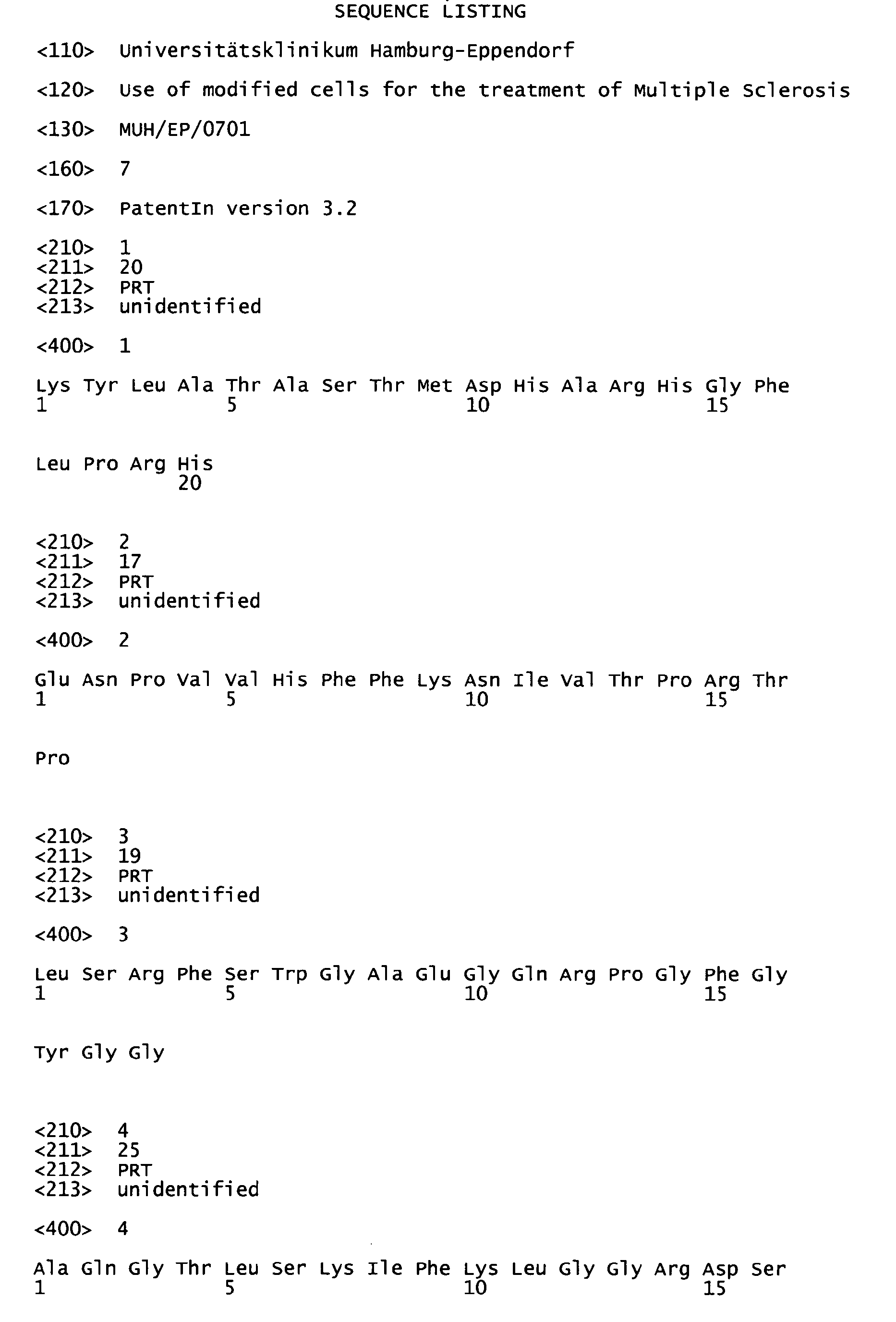
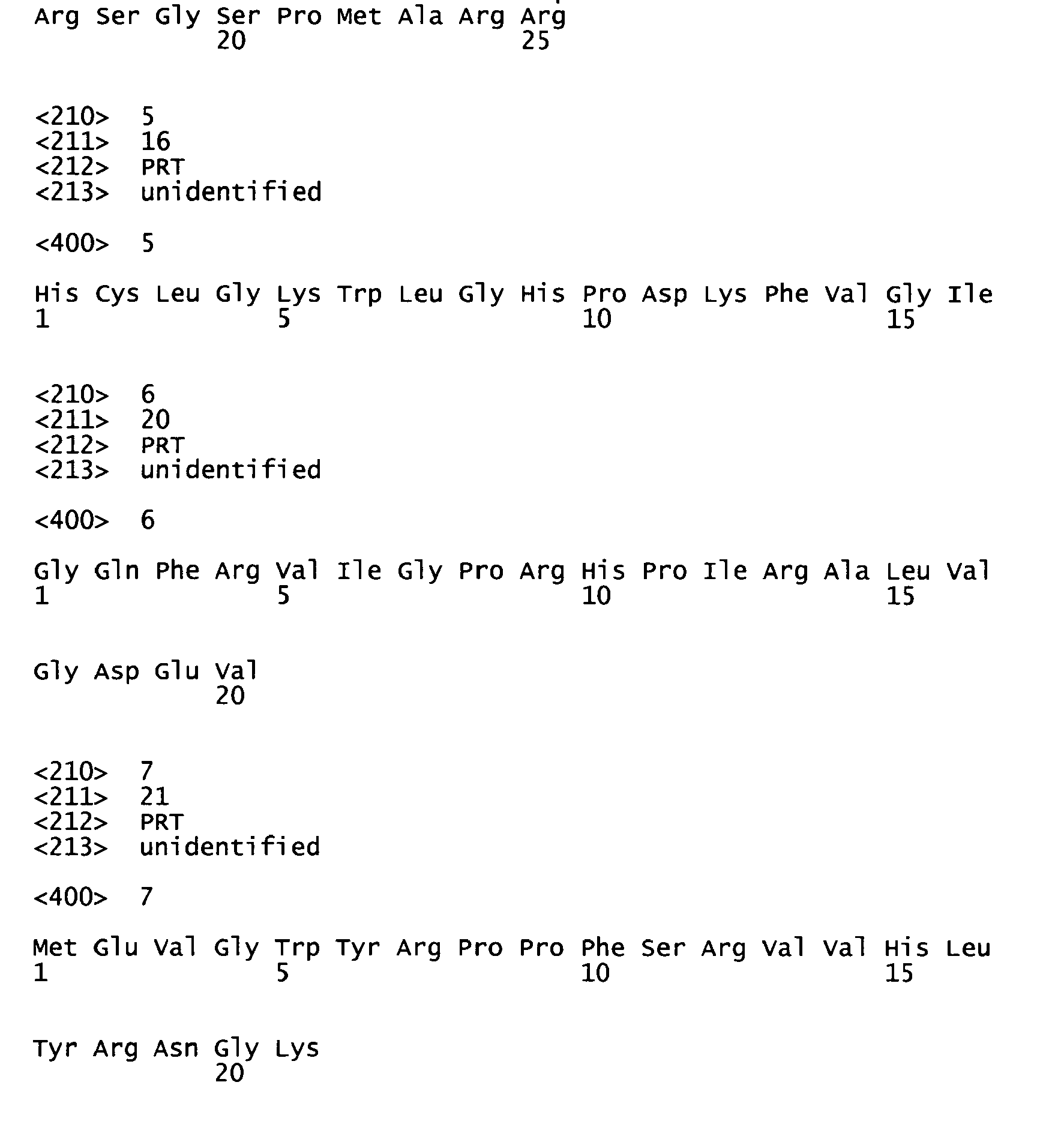
- The myelin peptides disclosed in this application are characterized by the following sequences:
- MBP 13-32 (Seq ID 01): KYLATASTMDHARHGFLPRH
- MBP 83-99 (Seq ID 02): ENPVVHFFKNIVTPRTP
- MBP 111-129 (Seq ID 03): LSRFSWGAEGQRPGFGYGG
- MBP 111-129 (Seq ID 04): AQGTLSKIFKLGGRDSRSGSPMARR
- GLP 139-154 (Seq ID 05): HCLGKWLGHPDKFVGI
- MOG 1-20 (Seq ID 06): GQFRVIGPRHPIRALVGDEV
- MOG 35-55 (Seq ID 07): MEVGWYRPPFSRVVHLYRNGK
- The sequences defined above include different end modifications of the peptides, e.g. acetylation, amidation, carboxylation.
Claims (15)
- A blood cell chemically coupled with at least one of the following seven immunodominant myelin peptides:
MBP 13-32, MBP 83-99, MBP 111-129, MBP 146-170, PLP 139-154, MOG 1-20 and MOG 35-55. - A blood cell chemically coupled with a cocktail containing more than one of the following seven immunodominant myelin peptides:
MBP 13-32, MBP 83-99, MBP 111-129, MBP 146-170, PLP 139-154, MOG 1-20 and MOG 35-55. - A blood cell chemically coupled with a cocktail containing the following seven immunodominant myelin peptides:
MBP 13-32, MBP 83-99, MBP 111-129, MBP 146-170, PLP 139-154, MOG 1-20 and MOG 35-55. - A blood cell according to claim 1, 2 or 3, which is a red blood cell.
- A blood cell according to claim 1, 2 or 3, which is a peripheral blood mononuclear cell.
- A blood cell according at least one of claims 1-3 in which the chemical coupling is achieved by 1-ethyl-3-(3-dimethylaminopropyl)-carbodiimide (ECDI).
- A process for the manufacture of a blood cell according to at least one of claims 1-3, containing the steps of
isolating peripheral blood mononuclear cells, adding of one or more of the named peptides and
subsequent adding of the coupling agent. - A process according to claim 3 containing the steps of
isolating peripheral blood mononuclear cells, adding at least two of the named peptides and
subsequent adding of the coupling agent. - A process according to claim 7 or 8 in which ECDI is used as the coupling agent.
- A pharmaceutical composition containing blood cells according to at least one of claims 1-3 for systemic administration.
- A pharmaceutical composition containing blood cells according to at least one of claims 1-3 for i.v. administration..
- A medical product containing at least one cell according to at least one of claims 1-5.
- The use of cells according to at least one of claims 1-5 for the manufacture of a medicament for the treatment of MS.
- The use of cells according to at least one of claims 1-5 for the manufacture of a medicament for the treatment of MS, characterized in that the cells are allogeneic cells.
- The use of cells according to at least one of claims 1-5 for the manufacture of a medicament for the treatment of MS, characterized in that the cells are autologous cells.
Priority Applications (10)
| Application Number | Priority Date | Filing Date | Title |
|---|---|---|---|
| EP07075952A EP2057998A1 (en) | 2007-10-31 | 2007-10-31 | Use of modified cells for the treatment of multiple sclerosis |
| EP08845159.6A EP2205273B1 (en) | 2007-10-31 | 2008-10-31 | Use of modified cells for the treatment of multiple sclerosis |
| DK08845159.6T DK2205273T3 (en) | 2007-10-31 | 2008-10-31 | Use of the modified cells for the treatment of ms |
| HUE08845159A HUE030745T2 (en) | 2007-10-31 | 2008-10-31 | Use of modified cells for the treatment of multiple sclerosis |
| ES08845159.6T ES2601329T3 (en) | 2007-10-31 | 2008-10-31 | Use of modified cells for the treatment of multiple sclerosis |
| PT88451596T PT2205273T (en) | 2007-10-31 | 2008-10-31 | Use of modified cells for the treatment of multiple sclerosis |
| US12/740,502 US8673293B2 (en) | 2007-10-31 | 2008-10-31 | Use of modified cells for the treatment of multiple sclerosis |
| PCT/EP2008/009204 WO2009056332A1 (en) | 2007-10-31 | 2008-10-31 | Use of modified cells for the treatment of multiple sclerosis |
| PL08845159T PL2205273T3 (en) | 2007-10-31 | 2008-10-31 | Use of modified cells for the treatment of multiple sclerosis |
| US14/218,378 US9260692B2 (en) | 2007-10-31 | 2014-03-18 | Use of modified cells for the treatment of multiple sclerosis |
Applications Claiming Priority (1)
| Application Number | Priority Date | Filing Date | Title |
|---|---|---|---|
| EP07075952A EP2057998A1 (en) | 2007-10-31 | 2007-10-31 | Use of modified cells for the treatment of multiple sclerosis |
Publications (1)
| Publication Number | Publication Date |
|---|---|
| EP2057998A1 true EP2057998A1 (en) | 2009-05-13 |
Family
ID=39167402
Family Applications (2)
| Application Number | Title | Priority Date | Filing Date |
|---|---|---|---|
| EP07075952A Withdrawn EP2057998A1 (en) | 2007-10-31 | 2007-10-31 | Use of modified cells for the treatment of multiple sclerosis |
| EP08845159.6A Active EP2205273B1 (en) | 2007-10-31 | 2008-10-31 | Use of modified cells for the treatment of multiple sclerosis |
Family Applications After (1)
| Application Number | Title | Priority Date | Filing Date |
|---|---|---|---|
| EP08845159.6A Active EP2205273B1 (en) | 2007-10-31 | 2008-10-31 | Use of modified cells for the treatment of multiple sclerosis |
Country Status (8)
| Country | Link |
|---|---|
| US (1) | US8673293B2 (en) |
| EP (2) | EP2057998A1 (en) |
| DK (1) | DK2205273T3 (en) |
| ES (1) | ES2601329T3 (en) |
| HU (1) | HUE030745T2 (en) |
| PL (1) | PL2205273T3 (en) |
| PT (1) | PT2205273T (en) |
| WO (1) | WO2009056332A1 (en) |
Cited By (7)
| Publication number | Priority date | Publication date | Assignee | Title |
|---|---|---|---|---|
| EP2389193A4 (en) * | 2009-01-20 | 2012-08-08 | Univ Northwestern | COMPOSITIONS AND METHODS FOR INDUCING ANTIGEN-SPECIFIC TOLERANCE |
| US9522180B2 (en) | 2013-08-13 | 2016-12-20 | Northwestern University | Peptide conjugated particles |
| US10201596B2 (en) | 2012-06-21 | 2019-02-12 | Northwestern University | Peptide conjugated particles for the treatment of allergy |
| US10471093B2 (en) | 2010-11-12 | 2019-11-12 | Cour Pharmaceuticals Development Company. | Modified immune-modulating particles |
| US11045492B2 (en) | 2013-03-13 | 2021-06-29 | Oncour Pharma, Inc. | Immune-modifying nanoparticles for the treatment of inflammatory diseases |
| US20210238277A1 (en) * | 2010-08-10 | 2021-08-05 | École Polytechnique Fédérale De Lausanne (Epfl) | Erythrocyte-binding therapeutics |
| US12060414B2 (en) | 2010-08-10 | 2024-08-13 | École Polytechnique Fédérale De Lausanne (Epfl) | Erythrocyte-binding therapeutics |
Families Citing this family (28)
| Publication number | Priority date | Publication date | Assignee | Title |
|---|---|---|---|---|
| US9260692B2 (en) | 2007-10-31 | 2016-02-16 | Universitat Zurich | Use of modified cells for the treatment of multiple sclerosis |
| EP2057998A1 (en) | 2007-10-31 | 2009-05-13 | Universitätsklinikum Hamburg-Eppendorf | Use of modified cells for the treatment of multiple sclerosis |
| US9517257B2 (en) | 2010-08-10 | 2016-12-13 | Ecole Polytechnique Federale De Lausanne (Epfl) | Erythrocyte-binding therapeutics |
| WO2012154215A1 (en) * | 2011-05-04 | 2012-11-15 | Cellular Technology, Ltd. | Cns antigen-specific b cell, t cell and antibody assays and their uses in diagnosis and treatment of multiple sclerosis |
| CA2852672C (en) | 2011-10-17 | 2021-07-20 | Massachusetts Institute Of Technology | A microfluidic system and method for delivering a payload into a cell by causing perturbations in a cell membrane of the cell |
| JP6502940B2 (en) | 2013-08-16 | 2019-04-17 | マサチューセッツ インスティテュート オブ テクノロジー | Selective delivery of substances to cells |
| US10953101B2 (en) | 2014-02-21 | 2021-03-23 | École Polytechnique Fédérale De Lausanne (Epfl) | Glycotargeting therapeutics |
| EP3107563B1 (en) | 2014-02-21 | 2021-04-07 | Ecole Polytechnique Fédérale de Lausanne (EPFL) EPFL-TTO | Glycotargeting therapeutics |
| US10946079B2 (en) | 2014-02-21 | 2021-03-16 | Ecole Polytechnique Federale De Lausanne | Glycotargeting therapeutics |
| US10046056B2 (en) | 2014-02-21 | 2018-08-14 | École Polytechnique Fédérale De Lausanne (Epfl) | Glycotargeting therapeutics |
| HUE054471T2 (en) | 2014-04-01 | 2021-09-28 | Rubius Therapeutics Inc | Methods and compositions for immunomodulation |
| RU2020139190A (en) | 2014-10-31 | 2021-01-26 | Массачусетс Инститьют Оф Текнолоджи | DELIVERY OF BIOMOLECULES INTO THE CELLS OF THE IMMUNE SYSTEM |
| CA2964138C (en) | 2014-11-14 | 2023-11-14 | Massachusetts Institute Of Technology | Disruption and field enabled delivery of compounds and compositions into cells |
| US11125739B2 (en) | 2015-01-12 | 2021-09-21 | Massachusetts Institute Of Technology | Gene editing through microfluidic delivery |
| EP3320082B1 (en) | 2015-07-09 | 2023-05-24 | Massachusetts Institute of Technology | Delivery of materials to anucleate cells |
| WO2017041051A1 (en) | 2015-09-04 | 2017-03-09 | Sqz Biotechnologies Company | Intracellular delivery of biomolecules to cells comprising a cell wall |
| AU2017259987B2 (en) | 2016-05-03 | 2023-10-19 | Sqz Biotechnologies Company | Intracellular delivery of biomolecules to induce tolerance |
| BR112019016951A2 (en) | 2017-02-17 | 2020-05-26 | Rubius Therapeutics, Inc. | FUNCTIONED ERYTHROID CELLS |
| CN110475568B (en) | 2017-03-29 | 2024-08-20 | Neogap治疗学公司 | Multiple sclerosis-associated autoantigens and their use in therapy and diagnosis |
| US11253579B2 (en) | 2017-06-16 | 2022-02-22 | The University Of Chicago | Compositions and methods for inducing immune tolerance |
| SG11202011078VA (en) | 2018-05-09 | 2020-12-30 | Univ Chicago | Compositions and methods concerning immune tolerance |
| EP3586866A1 (en) | 2018-06-28 | 2020-01-01 | Universität Zürich | Immunodominant proteins and fragments in multiple sclerosis |
| JP2024518277A (en) | 2021-04-16 | 2024-05-01 | クール ファーマシューティカルズ ディベロップメント カンパニー インコーポレイテッド | Methods for monitoring the maintenance of immune tolerance |
| EP4119948A1 (en) | 2021-07-16 | 2023-01-18 | Universität Zürich | Method for stratification and treatment of multiple sclerosis |
| US20240329043A1 (en) | 2021-07-16 | 2024-10-03 | Universität Zurich | Method for stratification and treatment of multiple sclerosis |
| WO2024094562A1 (en) | 2022-11-01 | 2024-05-10 | Universität Zürich | Novel mbp peptides and their use in the treatment of multiple sclerosis |
| EP4553083A1 (en) | 2023-11-10 | 2025-05-14 | Cellerys AG | Peptides and their use for the treatment and/or prevention of multiple sclerosis |
| AR134272A1 (en) | 2023-11-10 | 2025-12-17 | Univ Zuerich | PEPTIDES AND THEIR USE FOR THE TREATMENT AND/OR PREVENTION OF MULTIPLE SCLEROSIS |
Family Cites Families (2)
| Publication number | Priority date | Publication date | Assignee | Title |
|---|---|---|---|---|
| US5268454A (en) * | 1991-02-08 | 1993-12-07 | La Jolla Pharmaceutical Company | Composition for inducing humoral anergy to an immunogen comprising a t cell epitope-deficient analog of the immunogen conjugated to a nonimmunogenic carrier |
| EP2057998A1 (en) | 2007-10-31 | 2009-05-13 | Universitätsklinikum Hamburg-Eppendorf | Use of modified cells for the treatment of multiple sclerosis |
-
2007
- 2007-10-31 EP EP07075952A patent/EP2057998A1/en not_active Withdrawn
-
2008
- 2008-10-31 HU HUE08845159A patent/HUE030745T2/en unknown
- 2008-10-31 PL PL08845159T patent/PL2205273T3/en unknown
- 2008-10-31 EP EP08845159.6A patent/EP2205273B1/en active Active
- 2008-10-31 US US12/740,502 patent/US8673293B2/en active Active
- 2008-10-31 ES ES08845159.6T patent/ES2601329T3/en active Active
- 2008-10-31 WO PCT/EP2008/009204 patent/WO2009056332A1/en not_active Ceased
- 2008-10-31 PT PT88451596T patent/PT2205273T/en unknown
- 2008-10-31 DK DK08845159.6T patent/DK2205273T3/en active
Non-Patent Citations (14)
| Title |
|---|
| BIELEKOVA B ET AL: "Expansion and Functional Relevance of High-Avidity Myelin-Specific CD4 <+> T Cells in Multiple Sclerosis", JOURNAL OF IMMUNOLOGY, THE WILLIAMS AND WILKINS CO. BALTIMORE, US, vol. 172, no. 6, 15 March 2004 (2004-03-15), pages 3893 - 3904, XP002441864, ISSN: 0022-1767 * |
| BIELEKOVA ET AL., J. IMMUNOL, 2004, pages 172 - 3893 |
| BIELEKOVA ET AL., J. IMMUNOL, vol. 172, 2004, pages 3893 |
| JENKINS; SCHWARTZ, J. EXP. MED, 1987, pages 165 - 302 |
| KOHM ADAM P ET AL: "Targeting the TCR: T-cell receptor and peptide-specific tolerance-based strategies for restoring self-tolerance in CNS autoimmune disease", INTERNATIONAL REVIEWS OF IMMUNOLOGY, vol. 24, no. 5-6, September 2005 (2005-09-01), pages 361 - 392, XP009097506, ISSN: 0883-0185 * |
| KOHM; MILLER, INT. REV. IMMUNOL, vol. 24, 2005, pages 361 |
| MILLER STEPHEN D ET AL: "Antigen-specific tolerance strategies for the prevention and treatment of autoimmune disease", NATURE REVIEWS IMMUNOLOGY, vol. 7, no. 9, September 2007 (2007-09-01), pages 665 - 677, XP002473428, ISSN: 1474-1733(print) 1474-1741(ele * |
| SMITH ET AL: "Multi-peptide coupled-cell tolerance ameliorates ongoing relapsing EAE associated with multiple pathogenic autoreactivities", JOURNAL OF AUTOIMMUNITY, LONDON, GB, vol. 27, no. 4, 6 February 2007 (2007-02-06), pages 218 - 231, XP005899476, ISSN: 0896-8411 * |
| SOSPEDRA MIREIA ET AL: "Immunology of multiple sclerosis", ANNUAL REVIEW OF IMMUNOLOGY, ANNUAL REVIEWS INC, US, vol. 23, 2005, pages 683 - 747, XP002470436, ISSN: 0732-0582 * |
| TURLEY DANIELLE M ET AL: "Peripheral tolerance induction using ethylenecarbodiimide-fixed APCs uses both direct and indirect mechanisms of antigen presentation for prevention of experimental autoimmune encephalomyelitis", JOURNAL OF IMMUNOLOGY, vol. 178, no. 4, February 2007 (2007-02-01), pages 2212 - 2220, XP002473429, ISSN: 0022-1767 * |
| TURLEY; MILLER, J. IMMUNOL, 2007, pages 178 - 2212 |
| VANDENBARK ARTHUR A ET AL: "Differential susceptibility of human Th1 versus Th2 cells to induction of anergy and apoptosis by ECDI/antigen-coupled antigen-presenting cells", INTERNATIONAL IMMUNOLOGY, vol. 12, no. 1, January 2000 (2000-01-01), pages 57 - 66, XP002473310, ISSN: 0953-8178 * |
| VANDENBARK ET AL., INT. IMMUNOL, 2000, pages 1257 |
| VANDERLUGT; MILLER, NAT. REV. IMMUNOL, vol. 2, 2002, pages 85 |
Cited By (18)
| Publication number | Priority date | Publication date | Assignee | Title |
|---|---|---|---|---|
| EP2389193A4 (en) * | 2009-01-20 | 2012-08-08 | Univ Northwestern | COMPOSITIONS AND METHODS FOR INDUCING ANTIGEN-SPECIFIC TOLERANCE |
| US20210238277A1 (en) * | 2010-08-10 | 2021-08-05 | École Polytechnique Fédérale De Lausanne (Epfl) | Erythrocyte-binding therapeutics |
| US12060414B2 (en) | 2010-08-10 | 2024-08-13 | École Polytechnique Fédérale De Lausanne (Epfl) | Erythrocyte-binding therapeutics |
| US11884721B2 (en) * | 2010-08-10 | 2024-01-30 | École Polytechnique Fédérale De Lausanne (Epfl) | Erythrocyte-binding therapeutics |
| US10471093B2 (en) | 2010-11-12 | 2019-11-12 | Cour Pharmaceuticals Development Company. | Modified immune-modulating particles |
| US11020424B2 (en) | 2010-11-12 | 2021-06-01 | Oncour Pharma, Inc. | Modified immune-modulating particles |
| US11826407B2 (en) | 2012-06-21 | 2023-11-28 | Northwestern University | Peptide conjugated particles |
| US10201596B2 (en) | 2012-06-21 | 2019-02-12 | Northwestern University | Peptide conjugated particles for the treatment of allergy |
| US11413337B2 (en) | 2012-06-21 | 2022-08-16 | Northwestern University | Peptide conjugated particles for the treatment of inflammation |
| US11045492B2 (en) | 2013-03-13 | 2021-06-29 | Oncour Pharma, Inc. | Immune-modifying nanoparticles for the treatment of inflammatory diseases |
| US11129881B2 (en) | 2013-08-13 | 2021-09-28 | Northwestern University | Peptide conjugated particles |
| US11160851B2 (en) | 2013-08-13 | 2021-11-02 | Northwestern University | Peptide conjugated particles |
| US11389517B2 (en) | 2013-08-13 | 2022-07-19 | Northwestern University | Peptide conjugated particles |
| US10617747B2 (en) | 2013-08-13 | 2020-04-14 | Northwestern University | Peptide conjugated particles |
| US10188711B2 (en) | 2013-08-13 | 2019-01-29 | Northwestern University | Peptide conjugated particles |
| US9616113B2 (en) | 2013-08-13 | 2017-04-11 | Northwestern University | Peptide conjugated particles |
| US9522180B2 (en) | 2013-08-13 | 2016-12-20 | Northwestern University | Peptide conjugated particles |
| US12533403B2 (en) | 2013-08-13 | 2026-01-27 | Northwestern University | Peptide conjugated particles |
Also Published As
| Publication number | Publication date |
|---|---|
| US20110033426A1 (en) | 2011-02-10 |
| EP2205273B1 (en) | 2016-09-28 |
| HUE030745T2 (en) | 2017-05-29 |
| DK2205273T3 (en) | 2016-12-19 |
| PL2205273T3 (en) | 2017-09-29 |
| PT2205273T (en) | 2016-12-29 |
| EP2205273A1 (en) | 2010-07-14 |
| US8673293B2 (en) | 2014-03-18 |
| ES2601329T3 (en) | 2017-02-14 |
| WO2009056332A1 (en) | 2009-05-07 |
Similar Documents
| Publication | Publication Date | Title |
|---|---|---|
| EP2057998A1 (en) | Use of modified cells for the treatment of multiple sclerosis | |
| US9260692B2 (en) | Use of modified cells for the treatment of multiple sclerosis | |
| ES2215991T3 (en) | PROCEDURE FOR THE PROLIFERATION (IN VITRO) OF DENDRITIC CELL PRECURSORS AND THEIR USE TO PRODUCE IMMUNOGENS. | |
| Elyaman et al. | Distinct functions of autoreactive memory and effector CD4+ T cells in experimental autoimmune encephalomyelitis | |
| EP2405929B1 (en) | A sap polypeptide for use in the treatment of autoimmune disorders and graft vs host disease | |
| WO2017015320A1 (en) | Pd-l1 expressing hematopoietic stem cells and uses | |
| Buntinx et al. | Immune-mediated oligodendrocyte injury in multiple sclerosis: molecular mechanisms and therapeutic interventions | |
| Rathore et al. | Current State of Tolerance: The Holy Grail | |
| Phillips et al. | Current state of type 1 diabetes immunotherapy: incremental advances, huge leaps, or more of the same? | |
| AU2016315752B2 (en) | Novel blood cell biomarker for late onset Alzheimer's disease | |
| WO2010129770A1 (en) | Methods for expanding human t regulatory cells and uses of same | |
| WO2019195659A1 (en) | Cellular compositions derived from prior organ donors and methods of manufacture and use thereof | |
| WO2021236711A1 (en) | Calcineurin inhibitor to improve cd3+cell survival to thereby facilitate engraftment of donor cd34+ cells in a recipient | |
| Alawam | Investigating the kinetics of thymus recovery following acute damage and bone marrow transplantation | |
| White | Innate immunomodulation with MIS416: mechanism of action in experimental autoimmune encephalomyelitis | |
| Amar | Study of extracellular vesicles released by allogeneic transplants and secondary lymphoid organs in mice | |
| Martin | Activation and pathogenic potential of MOG-specific B cells in spontaneous experimental autoimmune encephalomyelitis | |
| Fuchs | Generation of a novel mouse model for the study of autoimmune liver disease overlap syndrome | |
| EP3660048A1 (en) | Treatment of acute gvhd using donor-specific anti-hla antibodies | |
| Milward | Investigation of the cell biology of human regulatory T cells in the context of transplantation | |
| Klionsky | The Role of Perforin Expressing Dendritic Cells in Induction of Transplant Tolerance and in The Maintenance of Physiological Integrity | |
| Wolak | Phenotypic and functional characterization of CD8+ memory phenotype T cells in an animal model of CD8+ T cell-mediated demyelinating disease | |
| Kinnear | Role of OX40-OX40L interactions in the immune response to solid organ allografts | |
| Mosley et al. | Parkinson's Disease and Amyotrophic Lateral Sclerosis |
Legal Events
| Date | Code | Title | Description |
|---|---|---|---|
| PUAI | Public reference made under article 153(3) epc to a published international application that has entered the european phase |
Free format text: ORIGINAL CODE: 0009012 |
|
| AK | Designated contracting states |
Kind code of ref document: A1 Designated state(s): AT BE BG CH CY CZ DE DK EE ES FI FR GB GR HU IE IS IT LI LT LU LV MC MT NL PL PT RO SE SI SK TR |
|
| AX | Request for extension of the european patent |
Extension state: AL BA HR MK RS |
|
| AKX | Designation fees paid | ||
| STAA | Information on the status of an ep patent application or granted ep patent |
Free format text: STATUS: THE APPLICATION IS DEEMED TO BE WITHDRAWN |
|
| 18D | Application deemed to be withdrawn |
Effective date: 20091114 |
|
| REG | Reference to a national code |
Ref country code: DE Ref legal event code: 8566 |