EP1958632A1 - Use of condensed pyrimidine derivatives for the treatment of autoimmune and inflammatory diseases - Google Patents
Use of condensed pyrimidine derivatives for the treatment of autoimmune and inflammatory diseases Download PDFInfo
- Publication number
- EP1958632A1 EP1958632A1 EP07102410A EP07102410A EP1958632A1 EP 1958632 A1 EP1958632 A1 EP 1958632A1 EP 07102410 A EP07102410 A EP 07102410A EP 07102410 A EP07102410 A EP 07102410A EP 1958632 A1 EP1958632 A1 EP 1958632A1
- Authority
- EP
- European Patent Office
- Prior art keywords
- medicament
- manufacture
- formula
- treatment
- prevention
- Prior art date
- Legal status (The legal status is an assumption and is not a legal conclusion. Google has not performed a legal analysis and makes no representation as to the accuracy of the status listed.)
- Withdrawn
Links
- 238000011282 treatment Methods 0.000 title claims description 19
- 208000023275 Autoimmune disease Diseases 0.000 title claims description 8
- 208000027866 inflammatory disease Diseases 0.000 title description 5
- 230000001363 autoimmune Effects 0.000 title description 4
- 229940083082 pyrimidine derivative acting on arteriolar smooth muscle Drugs 0.000 title 1
- 150000003230 pyrimidines Chemical class 0.000 title 1
- 150000001875 compounds Chemical class 0.000 claims abstract description 62
- 239000003814 drug Substances 0.000 claims abstract description 19
- 238000004519 manufacturing process Methods 0.000 claims abstract description 12
- 125000006273 (C1-C3) alkyl group Chemical group 0.000 claims abstract description 7
- 125000003545 alkoxy group Chemical group 0.000 claims abstract description 4
- 125000003118 aryl group Chemical group 0.000 claims abstract description 4
- 230000028993 immune response Effects 0.000 claims abstract description 4
- 230000028709 inflammatory response Effects 0.000 claims abstract description 4
- 229910052760 oxygen Inorganic materials 0.000 claims abstract description 4
- 125000003342 alkenyl group Chemical group 0.000 claims abstract description 3
- 125000000217 alkyl group Chemical group 0.000 claims abstract description 3
- 125000000304 alkynyl group Chemical group 0.000 claims abstract description 3
- 125000005842 heteroatom Chemical group 0.000 claims abstract description 3
- 125000006574 non-aromatic ring group Chemical group 0.000 claims abstract description 3
- 150000003839 salts Chemical class 0.000 claims abstract description 3
- 229910052717 sulfur Inorganic materials 0.000 claims abstract description 3
- 206010039073 rheumatoid arthritis Diseases 0.000 claims description 25
- 206010061218 Inflammation Diseases 0.000 claims description 7
- 230000004054 inflammatory process Effects 0.000 claims description 7
- 201000001263 Psoriatic Arthritis Diseases 0.000 claims description 6
- 208000036824 Psoriatic arthropathy Diseases 0.000 claims description 6
- 230000002265 prevention Effects 0.000 claims description 6
- 238000002650 immunosuppressive therapy Methods 0.000 claims description 5
- 206010002556 Ankylosing Spondylitis Diseases 0.000 claims description 4
- 206010003827 Autoimmune hepatitis Diseases 0.000 claims description 4
- 206010009900 Colitis ulcerative Diseases 0.000 claims description 4
- 208000011231 Crohn disease Diseases 0.000 claims description 4
- 201000004624 Dermatitis Diseases 0.000 claims description 4
- 208000035186 Hemolytic Autoimmune Anemia Diseases 0.000 claims description 4
- 208000003456 Juvenile Arthritis Diseases 0.000 claims description 4
- 206010059176 Juvenile idiopathic arthritis Diseases 0.000 claims description 4
- 201000004681 Psoriasis Diseases 0.000 claims description 4
- 201000006704 Ulcerative Colitis Diseases 0.000 claims description 4
- 208000010668 atopic eczema Diseases 0.000 claims description 4
- 201000000448 autoimmune hemolytic anemia Diseases 0.000 claims description 4
- 230000001684 chronic effect Effects 0.000 claims description 4
- 201000002215 juvenile rheumatoid arthritis Diseases 0.000 claims description 4
- 125000002496 methyl group Chemical group [H]C([H])([H])* 0.000 claims description 4
- 206010021245 Idiopathic thrombocytopenic purpura Diseases 0.000 claims description 3
- 201000011152 Pemphigus Diseases 0.000 claims description 3
- 208000031981 Thrombocytopenic Idiopathic Purpura Diseases 0.000 claims description 3
- 201000003710 autoimmune thrombocytopenic purpura Diseases 0.000 claims description 3
- 201000001981 dermatomyositis Diseases 0.000 claims description 3
- 125000001495 ethyl group Chemical group [H]C([H])([H])C([H])([H])* 0.000 claims description 3
- 230000001537 neural effect Effects 0.000 claims description 3
- 201000001976 pemphigus vulgaris Diseases 0.000 claims description 3
- 201000006292 polyarteritis nodosa Diseases 0.000 claims description 3
- 208000005987 polymyositis Diseases 0.000 claims description 3
- 125000000484 butyl group Chemical group [H]C([*])([H])C([H])([H])C([H])([H])C([H])([H])[H] 0.000 claims description 2
- 125000000959 isobutyl group Chemical group [H]C([H])([H])C([H])(C([H])([H])[H])C([H])([H])* 0.000 claims description 2
- 125000001449 isopropyl group Chemical group [H]C([H])([H])C([H])(*)C([H])([H])[H] 0.000 claims description 2
- 125000000956 methoxy group Chemical group [H]C([H])([H])O* 0.000 claims description 2
- 125000004108 n-butyl group Chemical group [H]C([H])([H])C([H])([H])C([H])([H])C([H])([H])* 0.000 claims description 2
- 125000004123 n-propyl group Chemical group [H]C([H])([H])C([H])([H])C([H])([H])* 0.000 claims description 2
- 230000007302 negative regulation of cytokine production Effects 0.000 claims description 2
- 208000037979 autoimmune inflammatory disease Diseases 0.000 claims 1
- OKKJLVBELUTLKV-UHFFFAOYSA-N Methanol Chemical compound OC OKKJLVBELUTLKV-UHFFFAOYSA-N 0.000 description 24
- HEMHJVSKTPXQMS-UHFFFAOYSA-M Sodium hydroxide Chemical compound [OH-].[Na+] HEMHJVSKTPXQMS-UHFFFAOYSA-M 0.000 description 18
- XLYOFNOQVPJJNP-UHFFFAOYSA-N water Substances O XLYOFNOQVPJJNP-UHFFFAOYSA-N 0.000 description 16
- 229960000485 methotrexate Drugs 0.000 description 15
- FBOZXECLQNJBKD-ZDUSSCGKSA-N L-methotrexate Chemical compound C=1N=C2N=C(N)N=C(N)C2=NC=1CN(C)C1=CC=C(C(=O)N[C@@H](CCC(O)=O)C(O)=O)C=C1 FBOZXECLQNJBKD-ZDUSSCGKSA-N 0.000 description 14
- QTBSBXVTEAMEQO-UHFFFAOYSA-N Acetic acid Chemical compound CC(O)=O QTBSBXVTEAMEQO-UHFFFAOYSA-N 0.000 description 13
- 201000010099 disease Diseases 0.000 description 13
- 208000037265 diseases, disorders, signs and symptoms Diseases 0.000 description 13
- 241000699670 Mus sp. Species 0.000 description 11
- 238000006243 chemical reaction Methods 0.000 description 11
- 230000008961 swelling Effects 0.000 description 11
- 238000004809 thin layer chromatography Methods 0.000 description 11
- LFQSCWFLJHTTHZ-UHFFFAOYSA-N Ethanol Chemical compound CCO LFQSCWFLJHTTHZ-UHFFFAOYSA-N 0.000 description 9
- ZMXDDKWLCZADIW-UHFFFAOYSA-N N,N-Dimethylformamide Chemical compound CN(C)C=O ZMXDDKWLCZADIW-UHFFFAOYSA-N 0.000 description 9
- 210000002683 foot Anatomy 0.000 description 9
- 239000002244 precipitate Substances 0.000 description 9
- RTZKZFJDLAIYFH-UHFFFAOYSA-N Diethyl ether Chemical compound CCOCC RTZKZFJDLAIYFH-UHFFFAOYSA-N 0.000 description 8
- 206010003246 arthritis Diseases 0.000 description 8
- 229940079593 drug Drugs 0.000 description 8
- 239000013642 negative control Substances 0.000 description 8
- 210000000548 hind-foot Anatomy 0.000 description 7
- 210000001503 joint Anatomy 0.000 description 7
- CSCPPACGZOOCGX-UHFFFAOYSA-N Acetone Chemical compound CC(C)=O CSCPPACGZOOCGX-UHFFFAOYSA-N 0.000 description 6
- 241000700159 Rattus Species 0.000 description 6
- WYURNTSHIVDZCO-UHFFFAOYSA-N Tetrahydrofuran Chemical compound C1CCOC1 WYURNTSHIVDZCO-UHFFFAOYSA-N 0.000 description 6
- 230000000694 effects Effects 0.000 description 6
- 238000012360 testing method Methods 0.000 description 6
- 229940123907 Disease modifying antirheumatic drug Drugs 0.000 description 5
- 239000002671 adjuvant Substances 0.000 description 5
- 239000002988 disease modifying antirheumatic drug Substances 0.000 description 5
- 239000007924 injection Substances 0.000 description 5
- 238000002347 injection Methods 0.000 description 5
- 239000007787 solid Substances 0.000 description 5
- 210000001519 tissue Anatomy 0.000 description 5
- 102000008186 Collagen Human genes 0.000 description 4
- 108010035532 Collagen Proteins 0.000 description 4
- UIIMBOGNXHQVGW-UHFFFAOYSA-M Sodium bicarbonate Chemical compound [Na+].OC([O-])=O UIIMBOGNXHQVGW-UHFFFAOYSA-M 0.000 description 4
- 239000002253 acid Substances 0.000 description 4
- LMEKQMALGUDUQG-UHFFFAOYSA-N azathioprine Chemical compound CN1C=NC([N+]([O-])=O)=C1SC1=NC=NC2=C1NC=N2 LMEKQMALGUDUQG-UHFFFAOYSA-N 0.000 description 4
- 230000015572 biosynthetic process Effects 0.000 description 4
- WORJEOGGNQDSOE-UHFFFAOYSA-N chloroform;methanol Chemical compound OC.ClC(Cl)Cl WORJEOGGNQDSOE-UHFFFAOYSA-N 0.000 description 4
- 229920001436 collagen Polymers 0.000 description 4
- 230000006378 damage Effects 0.000 description 4
- 238000004128 high performance liquid chromatography Methods 0.000 description 4
- 230000006698 induction Effects 0.000 description 4
- 238000000034 method Methods 0.000 description 4
- 230000036407 pain Effects 0.000 description 4
- 239000002953 phosphate buffered saline Substances 0.000 description 4
- 238000010561 standard procedure Methods 0.000 description 4
- 208000024891 symptom Diseases 0.000 description 4
- WKBOTKDWSSQWDR-UHFFFAOYSA-N Bromine atom Chemical compound [Br] WKBOTKDWSSQWDR-UHFFFAOYSA-N 0.000 description 3
- 0 CC(c1ccc(*)cc1)=* Chemical compound CC(c1ccc(*)cc1)=* 0.000 description 3
- PMATZTZNYRCHOR-CGLBZJNRSA-N Cyclosporin A Chemical compound CC[C@@H]1NC(=O)[C@H]([C@H](O)[C@H](C)C\C=C\C)N(C)C(=O)[C@H](C(C)C)N(C)C(=O)[C@H](CC(C)C)N(C)C(=O)[C@H](CC(C)C)N(C)C(=O)[C@@H](C)NC(=O)[C@H](C)NC(=O)[C@H](CC(C)C)N(C)C(=O)[C@H](C(C)C)NC(=O)[C@H](CC(C)C)N(C)C(=O)CN(C)C1=O PMATZTZNYRCHOR-CGLBZJNRSA-N 0.000 description 3
- 108010036949 Cyclosporine Proteins 0.000 description 3
- WSFSSNUMVMOOMR-UHFFFAOYSA-N Formaldehyde Chemical compound O=C WSFSSNUMVMOOMR-UHFFFAOYSA-N 0.000 description 3
- WHXSMMKQMYFTQS-UHFFFAOYSA-N Lithium Chemical compound [Li] WHXSMMKQMYFTQS-UHFFFAOYSA-N 0.000 description 3
- 241001465754 Metazoa Species 0.000 description 3
- VYPSYNLAJGMNEJ-UHFFFAOYSA-N Silicium dioxide Chemical compound O=[Si]=O VYPSYNLAJGMNEJ-UHFFFAOYSA-N 0.000 description 3
- 102000009270 Tumour necrosis factor alpha Human genes 0.000 description 3
- 108050000101 Tumour necrosis factor alpha Proteins 0.000 description 3
- 229960000583 acetic acid Drugs 0.000 description 3
- 229960002170 azathioprine Drugs 0.000 description 3
- 230000037396 body weight Effects 0.000 description 3
- GDTBXPJZTBHREO-UHFFFAOYSA-N bromine Substances BrBr GDTBXPJZTBHREO-UHFFFAOYSA-N 0.000 description 3
- 229910052794 bromium Inorganic materials 0.000 description 3
- 210000000845 cartilage Anatomy 0.000 description 3
- 239000003054 catalyst Substances 0.000 description 3
- 239000003153 chemical reaction reagent Substances 0.000 description 3
- 229960001265 ciclosporin Drugs 0.000 description 3
- ZIUSEGSNTOUIPT-UHFFFAOYSA-N ethyl 2-cyanoacetate Chemical compound CCOC(=O)CC#N ZIUSEGSNTOUIPT-UHFFFAOYSA-N 0.000 description 3
- 150000004795 grignard reagents Chemical class 0.000 description 3
- 239000003112 inhibitor Substances 0.000 description 3
- 239000000543 intermediate Substances 0.000 description 3
- 229910052744 lithium Inorganic materials 0.000 description 3
- 230000007246 mechanism Effects 0.000 description 3
- 239000000203 mixture Substances 0.000 description 3
- 235000015097 nutrients Nutrition 0.000 description 3
- 210000000056 organ Anatomy 0.000 description 3
- 235000010482 polyoxyethylene sorbitan monooleate Nutrition 0.000 description 3
- 229920000053 polysorbate 80 Polymers 0.000 description 3
- 239000000047 product Substances 0.000 description 3
- 125000006239 protecting group Chemical group 0.000 description 3
- 239000011541 reaction mixture Substances 0.000 description 3
- 239000000741 silica gel Substances 0.000 description 3
- 229910002027 silica gel Inorganic materials 0.000 description 3
- 239000000243 solution Substances 0.000 description 3
- 239000000126 substance Substances 0.000 description 3
- 210000001179 synovial fluid Anatomy 0.000 description 3
- 210000001258 synovial membrane Anatomy 0.000 description 3
- 238000003786 synthesis reaction Methods 0.000 description 3
- YLQBMQCUIZJEEH-UHFFFAOYSA-N tetrahydrofuran Natural products C=1C=COC=1 YLQBMQCUIZJEEH-UHFFFAOYSA-N 0.000 description 3
- 238000002211 ultraviolet spectrum Methods 0.000 description 3
- 210000000707 wrist Anatomy 0.000 description 3
- 238000005160 1H NMR spectroscopy Methods 0.000 description 2
- MBUPVGIGAMCMBT-UHFFFAOYSA-N 2-bromo-1-(4-nitrophenyl)ethanone Chemical compound [O-][N+](=O)C1=CC=C(C(=O)CBr)C=C1 MBUPVGIGAMCMBT-UHFFFAOYSA-N 0.000 description 2
- INUNLMUAPJVRME-UHFFFAOYSA-N 3-chloropropanoyl chloride Chemical compound ClCCC(Cl)=O INUNLMUAPJVRME-UHFFFAOYSA-N 0.000 description 2
- HBAQYPYDRFILMT-UHFFFAOYSA-N 8-[3-(1-cyclopropylpyrazol-4-yl)-1H-pyrazolo[4,3-d]pyrimidin-5-yl]-3-methyl-3,8-diazabicyclo[3.2.1]octan-2-one Chemical class C1(CC1)N1N=CC(=C1)C1=NNC2=C1N=C(N=C2)N1C2C(N(CC1CC2)C)=O HBAQYPYDRFILMT-UHFFFAOYSA-N 0.000 description 2
- 241000283690 Bos taurus Species 0.000 description 2
- 102000000503 Collagen Type II Human genes 0.000 description 2
- 108010041390 Collagen Type II Proteins 0.000 description 2
- 102000004127 Cytokines Human genes 0.000 description 2
- 108090000695 Cytokines Proteins 0.000 description 2
- 239000007818 Grignard reagent Substances 0.000 description 2
- 206010062016 Immunosuppression Diseases 0.000 description 2
- 102000000589 Interleukin-1 Human genes 0.000 description 2
- 108010002352 Interleukin-1 Proteins 0.000 description 2
- 241000699666 Mus <mouse, genus> Species 0.000 description 2
- 241000187479 Mycobacterium tuberculosis Species 0.000 description 2
- FXHOOIRPVKKKFG-UHFFFAOYSA-N N,N-Dimethylacetamide Chemical compound CN(C)C(C)=O FXHOOIRPVKKKFG-UHFFFAOYSA-N 0.000 description 2
- KDLHZDBZIXYQEI-UHFFFAOYSA-N Palladium Chemical compound [Pd] KDLHZDBZIXYQEI-UHFFFAOYSA-N 0.000 description 2
- 206010036030 Polyarthritis Diseases 0.000 description 2
- JUJWROOIHBZHMG-UHFFFAOYSA-N Pyridine Chemical compound C1=CC=NC=C1 JUJWROOIHBZHMG-UHFFFAOYSA-N 0.000 description 2
- FAPWRFPIFSIZLT-UHFFFAOYSA-M Sodium chloride Chemical compound [Na+].[Cl-] FAPWRFPIFSIZLT-UHFFFAOYSA-M 0.000 description 2
- 230000001154 acute effect Effects 0.000 description 2
- OIRDTQYFTABQOQ-KQYNXXCUSA-N adenosine Chemical compound C1=NC=2C(N)=NC=NC=2N1[C@@H]1O[C@H](CO)[C@@H](O)[C@H]1O OIRDTQYFTABQOQ-KQYNXXCUSA-N 0.000 description 2
- 210000003423 ankle Anatomy 0.000 description 2
- 230000002917 arthritic effect Effects 0.000 description 2
- 210000004204 blood vessel Anatomy 0.000 description 2
- 229910052799 carbon Inorganic materials 0.000 description 2
- 238000007796 conventional method Methods 0.000 description 2
- 230000008878 coupling Effects 0.000 description 2
- 238000010168 coupling process Methods 0.000 description 2
- 238000005859 coupling reaction Methods 0.000 description 2
- 238000011161 development Methods 0.000 description 2
- 238000006073 displacement reaction Methods 0.000 description 2
- 210000003027 ear inner Anatomy 0.000 description 2
- 210000001508 eye Anatomy 0.000 description 2
- 210000002950 fibroblast Anatomy 0.000 description 2
- 239000000706 filtrate Substances 0.000 description 2
- 238000001914 filtration Methods 0.000 description 2
- 239000012530 fluid Substances 0.000 description 2
- OVBPIULPVIDEAO-LBPRGKRZSA-N folic acid Chemical compound C=1N=C2NC(N)=NC(=O)C2=NC=1CNC1=CC=C(C(=O)N[C@@H](CCC(O)=O)C(O)=O)C=C1 OVBPIULPVIDEAO-LBPRGKRZSA-N 0.000 description 2
- 150000004820 halides Chemical class 0.000 description 2
- 230000007062 hydrolysis Effects 0.000 description 2
- 238000006460 hydrolysis reaction Methods 0.000 description 2
- 230000001506 immunosuppresive effect Effects 0.000 description 2
- 229960003444 immunosuppressant agent Drugs 0.000 description 2
- 230000001861 immunosuppressant effect Effects 0.000 description 2
- 239000003018 immunosuppressive agent Substances 0.000 description 2
- 238000001727 in vivo Methods 0.000 description 2
- 229960000598 infliximab Drugs 0.000 description 2
- 230000005764 inhibitory process Effects 0.000 description 2
- 239000007928 intraperitoneal injection Substances 0.000 description 2
- 201000004990 juvenile ankylosing spondylitis Diseases 0.000 description 2
- 229960000681 leflunomide Drugs 0.000 description 2
- VHOGYURTWQBHIL-UHFFFAOYSA-N leflunomide Chemical compound O1N=CC(C(=O)NC=2C=CC(=CC=2)C(F)(F)F)=C1C VHOGYURTWQBHIL-UHFFFAOYSA-N 0.000 description 2
- 210000000265 leukocyte Anatomy 0.000 description 2
- 210000002540 macrophage Anatomy 0.000 description 2
- 231100000682 maximum tolerated dose Toxicity 0.000 description 2
- OJURWUUOVGOHJZ-UHFFFAOYSA-N methyl 2-[(2-acetyloxyphenyl)methyl-[2-[(2-acetyloxyphenyl)methyl-(2-methoxy-2-oxoethyl)amino]ethyl]amino]acetate Chemical compound C=1C=CC=C(OC(C)=O)C=1CN(CC(=O)OC)CCN(CC(=O)OC)CC1=CC=CC=C1OC(C)=O OJURWUUOVGOHJZ-UHFFFAOYSA-N 0.000 description 2
- 229940021182 non-steroidal anti-inflammatory drug Drugs 0.000 description 2
- BASFCYQUMIYNBI-UHFFFAOYSA-N platinum Chemical compound [Pt] BASFCYQUMIYNBI-UHFFFAOYSA-N 0.000 description 2
- 208000030428 polyarticular arthritis Diseases 0.000 description 2
- 239000013641 positive control Substances 0.000 description 2
- NROKBHXJSPEDAR-UHFFFAOYSA-M potassium fluoride Chemical compound [F-].[K+] NROKBHXJSPEDAR-UHFFFAOYSA-M 0.000 description 2
- 239000011698 potassium fluoride Substances 0.000 description 2
- 238000010992 reflux Methods 0.000 description 2
- 230000004044 response Effects 0.000 description 2
- 210000003491 skin Anatomy 0.000 description 2
- 229910000030 sodium bicarbonate Inorganic materials 0.000 description 2
- 239000007858 starting material Substances 0.000 description 2
- 239000000725 suspension Substances 0.000 description 2
- 210000002437 synoviocyte Anatomy 0.000 description 2
- 201000000596 systemic lupus erythematosus Diseases 0.000 description 2
- 238000011287 therapeutic dose Methods 0.000 description 2
- 230000001225 therapeutic effect Effects 0.000 description 2
- 238000002560 therapeutic procedure Methods 0.000 description 2
- HMLGSIZOMSVISS-ONJSNURVSA-N (7r)-7-[[(2z)-2-(2-amino-1,3-thiazol-4-yl)-2-(2,2-dimethylpropanoyloxymethoxyimino)acetyl]amino]-3-ethenyl-8-oxo-5-thia-1-azabicyclo[4.2.0]oct-2-ene-2-carboxylic acid Chemical compound N([C@@H]1C(N2C(=C(C=C)CSC21)C(O)=O)=O)C(=O)\C(=N/OCOC(=O)C(C)(C)C)C1=CSC(N)=N1 HMLGSIZOMSVISS-ONJSNURVSA-N 0.000 description 1
- GHXNRYVDXNZXID-UHFFFAOYSA-N 2,2-diethylbutanoic acid Chemical compound CCC(CC)(CC)C(O)=O GHXNRYVDXNZXID-UHFFFAOYSA-N 0.000 description 1
- BWGRDBSNKQABCB-UHFFFAOYSA-N 4,4-difluoro-N-[3-[3-(3-methyl-5-propan-2-yl-1,2,4-triazol-4-yl)-8-azabicyclo[3.2.1]octan-8-yl]-1-thiophen-2-ylpropyl]cyclohexane-1-carboxamide Chemical compound CC(C)C1=NN=C(C)N1C1CC2CCC(C1)N2CCC(NC(=O)C1CCC(F)(F)CC1)C1=CC=CS1 BWGRDBSNKQABCB-UHFFFAOYSA-N 0.000 description 1
- BGNGWHSBYQYVRX-UHFFFAOYSA-N 4-(dimethylamino)benzaldehyde Chemical compound CN(C)C1=CC=C(C=O)C=C1 BGNGWHSBYQYVRX-UHFFFAOYSA-N 0.000 description 1
- YQYGPGKTNQNXMH-UHFFFAOYSA-N 4-nitroacetophenone Chemical compound CC(=O)C1=CC=C([N+]([O-])=O)C=C1 YQYGPGKTNQNXMH-UHFFFAOYSA-N 0.000 description 1
- MJRBZALCJHZGKR-UHFFFAOYSA-N 6-(bromomethyl)pteridine-2,4-diamine Chemical compound N1=C(CBr)C=NC2=NC(N)=NC(N)=C21 MJRBZALCJHZGKR-UHFFFAOYSA-N 0.000 description 1
- VVIAGPKUTFNRDU-UHFFFAOYSA-N 6S-folinic acid Natural products C1NC=2NC(N)=NC(=O)C=2N(C=O)C1CNC1=CC=C(C(=O)NC(CCC(O)=O)C(O)=O)C=C1 VVIAGPKUTFNRDU-UHFFFAOYSA-N 0.000 description 1
- ZCYVEMRRCGMTRW-UHFFFAOYSA-N 7553-56-2 Chemical compound [I] ZCYVEMRRCGMTRW-UHFFFAOYSA-N 0.000 description 1
- 208000030507 AIDS Diseases 0.000 description 1
- 206010000117 Abnormal behaviour Diseases 0.000 description 1
- 206010002091 Anaesthesia Diseases 0.000 description 1
- 206010003645 Atopy Diseases 0.000 description 1
- 239000002126 C01EB10 - Adenosine Substances 0.000 description 1
- DXYWBOORYBWPOB-UHFFFAOYSA-N CC(C)(C)c1c[nH]c2nc(N)nc(O)c12 Chemical compound CC(C)(C)c1c[nH]c2nc(N)nc(O)c12 DXYWBOORYBWPOB-UHFFFAOYSA-N 0.000 description 1
- HFXOCVZCFXLUOR-UHFFFAOYSA-N CC(C)(C)c1nc2c(N)nc(N)nc2nc1 Chemical compound CC(C)(C)c1nc2c(N)nc(N)nc2nc1 HFXOCVZCFXLUOR-UHFFFAOYSA-N 0.000 description 1
- OKTJSMMVPCPJKN-UHFFFAOYSA-N Carbon Chemical compound [C] OKTJSMMVPCPJKN-UHFFFAOYSA-N 0.000 description 1
- ZAMOUSCENKQFHK-UHFFFAOYSA-N Chlorine atom Chemical compound [Cl] ZAMOUSCENKQFHK-UHFFFAOYSA-N 0.000 description 1
- 206010010071 Coma Diseases 0.000 description 1
- 206010010904 Convulsion Diseases 0.000 description 1
- CMSMOCZEIVJLDB-UHFFFAOYSA-N Cyclophosphamide Chemical compound ClCCN(CCCl)P1(=O)NCCCO1 CMSMOCZEIVJLDB-UHFFFAOYSA-N 0.000 description 1
- 238000010485 C−C bond formation reaction Methods 0.000 description 1
- 206010012735 Diarrhoea Diseases 0.000 description 1
- 108010052167 Dihydroorotate Dehydrogenase Proteins 0.000 description 1
- 102100032823 Dihydroorotate dehydrogenase (quinone), mitochondrial Human genes 0.000 description 1
- 108090000790 Enzymes Proteins 0.000 description 1
- 102000004190 Enzymes Human genes 0.000 description 1
- 108010008165 Etanercept Proteins 0.000 description 1
- JIGUQPWFLRLWPJ-UHFFFAOYSA-N Ethyl acrylate Chemical compound CCOC(=O)C=C JIGUQPWFLRLWPJ-UHFFFAOYSA-N 0.000 description 1
- 208000009386 Experimental Arthritis Diseases 0.000 description 1
- 206010053172 Fatal outcomes Diseases 0.000 description 1
- MPJKWIXIYCLVCU-UHFFFAOYSA-N Folinic acid Natural products NC1=NC2=C(N(C=O)C(CNc3ccc(cc3)C(=O)NC(CCC(=O)O)CC(=O)O)CN2)C(=O)N1 MPJKWIXIYCLVCU-UHFFFAOYSA-N 0.000 description 1
- 206010060891 General symptom Diseases 0.000 description 1
- 208000032843 Hemorrhage Diseases 0.000 description 1
- UFHFLCQGNIYNRP-UHFFFAOYSA-N Hydrogen Chemical compound [H][H] UFHFLCQGNIYNRP-UHFFFAOYSA-N 0.000 description 1
- HEFNNWSXXWATRW-UHFFFAOYSA-N Ibuprofen Chemical compound CC(C)CC1=CC=C(C(C)C(O)=O)C=C1 HEFNNWSXXWATRW-UHFFFAOYSA-N 0.000 description 1
- 208000022559 Inflammatory bowel disease Diseases 0.000 description 1
- 102000008070 Interferon-gamma Human genes 0.000 description 1
- 108010074328 Interferon-gamma Proteins 0.000 description 1
- 102000051628 Interleukin-1 receptor antagonist Human genes 0.000 description 1
- 108700021006 Interleukin-1 receptor antagonist Proteins 0.000 description 1
- 102000003816 Interleukin-13 Human genes 0.000 description 1
- 108090000176 Interleukin-13 Proteins 0.000 description 1
- 102000004388 Interleukin-4 Human genes 0.000 description 1
- 108090000978 Interleukin-4 Proteins 0.000 description 1
- 206010023644 Lacrimation increased Diseases 0.000 description 1
- 206010067125 Liver injury Diseases 0.000 description 1
- 241000124008 Mammalia Species 0.000 description 1
- ZRVUJXDFFKFLMG-UHFFFAOYSA-N Meloxicam Chemical compound OC=1C2=CC=CC=C2S(=O)(=O)N(C)C=1C(=O)NC1=NC=C(C)S1 ZRVUJXDFFKFLMG-UHFFFAOYSA-N 0.000 description 1
- 201000002481 Myositis Diseases 0.000 description 1
- OVBPIULPVIDEAO-UHFFFAOYSA-N N-Pteroyl-L-glutaminsaeure Natural products C=1N=C2NC(N)=NC(=O)C2=NC=1CNC1=CC=C(C(=O)NC(CCC(O)=O)C(O)=O)C=C1 OVBPIULPVIDEAO-UHFFFAOYSA-N 0.000 description 1
- NUGPIZCTELGDOS-QHCPKHFHSA-N N-[(1S)-3-[4-(3-methyl-5-propan-2-yl-1,2,4-triazol-4-yl)piperidin-1-yl]-1-pyridin-3-ylpropyl]cyclopentanecarboxamide Chemical compound C(C)(C)C1=NN=C(N1C1CCN(CC1)CC[C@@H](C=1C=NC=CC=1)NC(=O)C1CCCC1)C NUGPIZCTELGDOS-QHCPKHFHSA-N 0.000 description 1
- 238000005481 NMR spectroscopy Methods 0.000 description 1
- 206010035039 Piloerection Diseases 0.000 description 1
- 208000025747 Rheumatic disease Diseases 0.000 description 1
- 206010039424 Salivary hypersecretion Diseases 0.000 description 1
- 206010039710 Scleroderma Diseases 0.000 description 1
- 210000001744 T-lymphocyte Anatomy 0.000 description 1
- 206010044565 Tremor Diseases 0.000 description 1
- 206010067584 Type 1 diabetes mellitus Diseases 0.000 description 1
- 206010046851 Uveitis Diseases 0.000 description 1
- 206010047115 Vasculitis Diseases 0.000 description 1
- UFMNTAVTSIJODG-UHFFFAOYSA-N [N+](=O)([O-])C1=CC(=CC=2C(N=C(SC=21)N1CCC(CC1)CN1CCC(CC1)C(F)(F)F)=O)C(F)(F)F Chemical compound [N+](=O)([O-])C1=CC(=CC=2C(N=C(SC=21)N1CCC(CC1)CN1CCC(CC1)C(F)(F)F)=O)C(F)(F)F UFMNTAVTSIJODG-UHFFFAOYSA-N 0.000 description 1
- 150000007513 acids Chemical class 0.000 description 1
- 230000009471 action Effects 0.000 description 1
- 229960005305 adenosine Drugs 0.000 description 1
- 230000002411 adverse Effects 0.000 description 1
- 238000005904 alkaline hydrolysis reaction Methods 0.000 description 1
- 239000012670 alkaline solution Substances 0.000 description 1
- 230000037005 anaesthesia Effects 0.000 description 1
- 229960004238 anakinra Drugs 0.000 description 1
- 238000004458 analytical method Methods 0.000 description 1
- 208000007502 anemia Diseases 0.000 description 1
- 238000010171 animal model Methods 0.000 description 1
- 230000002456 anti-arthritic effect Effects 0.000 description 1
- 230000003110 anti-inflammatory effect Effects 0.000 description 1
- 239000003435 antirheumatic agent Substances 0.000 description 1
- 230000006907 apoptotic process Effects 0.000 description 1
- 239000000010 aprotic solvent Substances 0.000 description 1
- 230000003286 arthritogenic effect Effects 0.000 description 1
- 230000001174 ascending effect Effects 0.000 description 1
- 208000006673 asthma Diseases 0.000 description 1
- AUJRCFUBUPVWSZ-XTZHGVARSA-M auranofin Chemical compound CCP(CC)(CC)=[Au]S[C@@H]1O[C@H](COC(C)=O)[C@@H](OC(C)=O)[C@H](OC(C)=O)[C@H]1OC(C)=O AUJRCFUBUPVWSZ-XTZHGVARSA-M 0.000 description 1
- 229960005207 auranofin Drugs 0.000 description 1
- 230000006472 autoimmune response Effects 0.000 description 1
- 230000002567 autonomic effect Effects 0.000 description 1
- GJTLGPQKFJBMFK-UHFFFAOYSA-N benzene;2-cyclohexylethanol Chemical compound C1=CC=CC=C1.OCCC1CCCCC1 GJTLGPQKFJBMFK-UHFFFAOYSA-N 0.000 description 1
- 125000003236 benzoyl group Chemical group [H]C1=C([H])C([H])=C(C([H])=C1[H])C(*)=O 0.000 description 1
- 239000003124 biologic agent Substances 0.000 description 1
- 230000000740 bleeding effect Effects 0.000 description 1
- 230000000903 blocking effect Effects 0.000 description 1
- 210000000988 bone and bone Anatomy 0.000 description 1
- 230000031709 bromination Effects 0.000 description 1
- 238000005893 bromination reaction Methods 0.000 description 1
- 210000000459 calcaneus Anatomy 0.000 description 1
- 125000006355 carbonyl methylene group Chemical group [H]C([H])([*:2])C([*:1])=O 0.000 description 1
- 210000003321 cartilage cell Anatomy 0.000 description 1
- 210000004027 cell Anatomy 0.000 description 1
- 230000007969 cellular immunity Effects 0.000 description 1
- 230000008859 change Effects 0.000 description 1
- 239000003610 charcoal Substances 0.000 description 1
- 229910052801 chlorine Inorganic materials 0.000 description 1
- 239000000460 chlorine Substances 0.000 description 1
- 238000004587 chromatography analysis Methods 0.000 description 1
- 229940125904 compound 1 Drugs 0.000 description 1
- 229940125773 compound 10 Drugs 0.000 description 1
- 239000000470 constituent Substances 0.000 description 1
- 230000036461 convulsion Effects 0.000 description 1
- 238000001816 cooling Methods 0.000 description 1
- OPHUWKNKFYBPDR-UHFFFAOYSA-N copper lithium Chemical class [Li].[Cu] OPHUWKNKFYBPDR-UHFFFAOYSA-N 0.000 description 1
- 239000012043 crude product Substances 0.000 description 1
- 239000013078 crystal Substances 0.000 description 1
- 238000002425 crystallisation Methods 0.000 description 1
- 230000001186 cumulative effect Effects 0.000 description 1
- 125000004093 cyano group Chemical group *C#N 0.000 description 1
- 229960004397 cyclophosphamide Drugs 0.000 description 1
- 230000034994 death Effects 0.000 description 1
- 238000006114 decarboxylation reaction Methods 0.000 description 1
- 230000003111 delayed effect Effects 0.000 description 1
- 238000010511 deprotection reaction Methods 0.000 description 1
- 230000001066 destructive effect Effects 0.000 description 1
- 125000004177 diethyl group Chemical group [H]C([H])([H])C([H])([H])* 0.000 description 1
- -1 diethyl α-cyanoglutarate Chemical compound 0.000 description 1
- 238000010790 dilution Methods 0.000 description 1
- 239000012895 dilution Substances 0.000 description 1
- LOKCTEFSRHRXRJ-UHFFFAOYSA-I dipotassium trisodium dihydrogen phosphate hydrogen phosphate dichloride Chemical compound P(=O)(O)(O)[O-].[K+].P(=O)(O)([O-])[O-].[Na+].[Na+].[Cl-].[K+].[Cl-].[Na+] LOKCTEFSRHRXRJ-UHFFFAOYSA-I 0.000 description 1
- 239000012153 distilled water Substances 0.000 description 1
- 238000001035 drying Methods 0.000 description 1
- 210000005069 ears Anatomy 0.000 description 1
- 230000008030 elimination Effects 0.000 description 1
- 238000003379 elimination reaction Methods 0.000 description 1
- 238000010828 elution Methods 0.000 description 1
- 239000000839 emulsion Substances 0.000 description 1
- 230000007613 environmental effect Effects 0.000 description 1
- 125000004185 ester group Chemical group 0.000 description 1
- 229960000403 etanercept Drugs 0.000 description 1
- ZCLGVXACCAZJOX-UHFFFAOYSA-N ethyl 3-chloropropanoate Chemical compound CCOC(=O)CCCl ZCLGVXACCAZJOX-UHFFFAOYSA-N 0.000 description 1
- 230000029142 excretion Effects 0.000 description 1
- 238000002474 experimental method Methods 0.000 description 1
- 210000003414 extremity Anatomy 0.000 description 1
- 235000019152 folic acid Nutrition 0.000 description 1
- 239000011724 folic acid Substances 0.000 description 1
- 229960000304 folic acid Drugs 0.000 description 1
- 150000002224 folic acids Chemical class 0.000 description 1
- 235000008191 folinic acid Nutrition 0.000 description 1
- 239000011672 folinic acid Substances 0.000 description 1
- VVIAGPKUTFNRDU-ABLWVSNPSA-N folinic acid Chemical compound C1NC=2NC(N)=NC(=O)C=2N(C=O)C1CNC1=CC=C(C(=O)N[C@@H](CCC(O)=O)C(O)=O)C=C1 VVIAGPKUTFNRDU-ABLWVSNPSA-N 0.000 description 1
- 238000004108 freeze drying Methods 0.000 description 1
- 230000005021 gait Effects 0.000 description 1
- 230000002068 genetic effect Effects 0.000 description 1
- 239000012362 glacial acetic acid Substances 0.000 description 1
- 229910052736 halogen Inorganic materials 0.000 description 1
- 150000002367 halogens Chemical class 0.000 description 1
- BCQZXOMGPXTTIC-UHFFFAOYSA-N halothane Chemical compound FC(F)(F)C(Cl)Br BCQZXOMGPXTTIC-UHFFFAOYSA-N 0.000 description 1
- 229960003132 halothane Drugs 0.000 description 1
- 210000004247 hand Anatomy 0.000 description 1
- 230000036541 health Effects 0.000 description 1
- 210000002216 heart Anatomy 0.000 description 1
- 231100000753 hepatic injury Toxicity 0.000 description 1
- 125000001072 heteroaryl group Chemical group 0.000 description 1
- 230000004727 humoral immunity Effects 0.000 description 1
- 235000003642 hunger Nutrition 0.000 description 1
- 150000003840 hydrochlorides Chemical class 0.000 description 1
- 229910052739 hydrogen Inorganic materials 0.000 description 1
- 239000001257 hydrogen Substances 0.000 description 1
- 238000005984 hydrogenation reaction Methods 0.000 description 1
- XXSMGPRMXLTPCZ-UHFFFAOYSA-N hydroxychloroquine Chemical compound ClC1=CC=C2C(NC(C)CCCN(CCO)CC)=CC=NC2=C1 XXSMGPRMXLTPCZ-UHFFFAOYSA-N 0.000 description 1
- 229960004171 hydroxychloroquine Drugs 0.000 description 1
- 229960001680 ibuprofen Drugs 0.000 description 1
- 239000002955 immunomodulating agent Substances 0.000 description 1
- 229940121354 immunomodulator Drugs 0.000 description 1
- 230000006872 improvement Effects 0.000 description 1
- 230000002779 inactivation Effects 0.000 description 1
- 230000002757 inflammatory effect Effects 0.000 description 1
- 238000002329 infrared spectrum Methods 0.000 description 1
- 208000030603 inherited susceptibility to asthma Diseases 0.000 description 1
- 229960003130 interferon gamma Drugs 0.000 description 1
- 229940028885 interleukin-4 Drugs 0.000 description 1
- PNDPGZBMCMUPRI-UHFFFAOYSA-N iodine Chemical compound II PNDPGZBMCMUPRI-UHFFFAOYSA-N 0.000 description 1
- 229910052740 iodine Inorganic materials 0.000 description 1
- 239000011630 iodine Substances 0.000 description 1
- 150000002500 ions Chemical group 0.000 description 1
- 230000002427 irreversible effect Effects 0.000 description 1
- ZLVXBBHTMQJRSX-VMGNSXQWSA-N jdtic Chemical compound C1([C@]2(C)CCN(C[C@@H]2C)C[C@H](C(C)C)NC(=O)[C@@H]2NCC3=CC(O)=CC=C3C2)=CC=CC(O)=C1 ZLVXBBHTMQJRSX-VMGNSXQWSA-N 0.000 description 1
- 210000000281 joint capsule Anatomy 0.000 description 1
- 230000004317 lacrimation Effects 0.000 description 1
- 229960001691 leucovorin Drugs 0.000 description 1
- 238000011694 lewis rat Methods 0.000 description 1
- 239000007788 liquid Substances 0.000 description 1
- 238000004895 liquid chromatography mass spectrometry Methods 0.000 description 1
- 230000007774 longterm Effects 0.000 description 1
- 210000004072 lung Anatomy 0.000 description 1
- 210000004698 lymphocyte Anatomy 0.000 description 1
- 230000014759 maintenance of location Effects 0.000 description 1
- 238000001819 mass spectrum Methods 0.000 description 1
- 238000005259 measurement Methods 0.000 description 1
- 230000001404 mediated effect Effects 0.000 description 1
- 238000002483 medication Methods 0.000 description 1
- 229960001929 meloxicam Drugs 0.000 description 1
- 125000004492 methyl ester group Chemical group 0.000 description 1
- 230000003990 molecular pathway Effects 0.000 description 1
- 210000004400 mucous membrane Anatomy 0.000 description 1
- 201000006417 multiple sclerosis Diseases 0.000 description 1
- 231100000417 nephrotoxicity Toxicity 0.000 description 1
- 230000000626 neurodegenerative effect Effects 0.000 description 1
- 239000002547 new drug Substances 0.000 description 1
- 238000003305 oral gavage Methods 0.000 description 1
- 125000002524 organometallic group Chemical group 0.000 description 1
- 210000002997 osteoclast Anatomy 0.000 description 1
- PNJWIWWMYCMZRO-UHFFFAOYSA-N pent‐4‐en‐2‐one Natural products CC(=O)CC=C PNJWIWWMYCMZRO-UHFFFAOYSA-N 0.000 description 1
- 208000008494 pericarditis Diseases 0.000 description 1
- 230000002093 peripheral effect Effects 0.000 description 1
- 239000003208 petroleum Substances 0.000 description 1
- 230000005371 pilomotor reflex Effects 0.000 description 1
- 239000004033 plastic Substances 0.000 description 1
- 229910052697 platinum Inorganic materials 0.000 description 1
- 230000036544 posture Effects 0.000 description 1
- 235000003270 potassium fluoride Nutrition 0.000 description 1
- 230000003389 potentiating effect Effects 0.000 description 1
- 238000001556 precipitation Methods 0.000 description 1
- 125000002924 primary amino group Chemical group [H]N([H])* 0.000 description 1
- 230000035755 proliferation Effects 0.000 description 1
- FKRCODPIKNYEAC-UHFFFAOYSA-N propionic acid ethyl ester Natural products CCOC(=O)CC FKRCODPIKNYEAC-UHFFFAOYSA-N 0.000 description 1
- 108090000623 proteins and genes Proteins 0.000 description 1
- 238000000425 proton nuclear magnetic resonance spectrum Methods 0.000 description 1
- 210000001747 pupil Anatomy 0.000 description 1
- 238000000746 purification Methods 0.000 description 1
- UMJSCPRVCHMLSP-UHFFFAOYSA-N pyridine Natural products COC1=CC=CN=C1 UMJSCPRVCHMLSP-UHFFFAOYSA-N 0.000 description 1
- 230000006824 pyrimidine synthesis Effects 0.000 description 1
- 238000001953 recrystallisation Methods 0.000 description 1
- 230000009467 reduction Effects 0.000 description 1
- 238000011160 research Methods 0.000 description 1
- 230000000241 respiratory effect Effects 0.000 description 1
- 208000026451 salivation Diseases 0.000 description 1
- 230000028327 secretion Effects 0.000 description 1
- 208000017520 skin disease Diseases 0.000 description 1
- 235000017557 sodium bicarbonate Nutrition 0.000 description 1
- 239000011780 sodium chloride Substances 0.000 description 1
- BEOOHQFXGBMRKU-UHFFFAOYSA-N sodium cyanoborohydride Chemical compound [Na+].[B-]C#N BEOOHQFXGBMRKU-UHFFFAOYSA-N 0.000 description 1
- 210000004872 soft tissue Anatomy 0.000 description 1
- 230000037351 starvation Effects 0.000 description 1
- 239000011550 stock solution Substances 0.000 description 1
- 210000002784 stomach Anatomy 0.000 description 1
- 125000001424 substituent group Chemical group 0.000 description 1
- 230000009885 systemic effect Effects 0.000 description 1
- 150000003512 tertiary amines Chemical class 0.000 description 1
- 229940124597 therapeutic agent Drugs 0.000 description 1
- 206010043778 thyroiditis Diseases 0.000 description 1
- 230000000699 topical effect Effects 0.000 description 1
- 238000006257 total synthesis reaction Methods 0.000 description 1
- 231100000440 toxicity profile Toxicity 0.000 description 1
- 238000005406 washing Methods 0.000 description 1
- 238000005303 weighing Methods 0.000 description 1
Images


Classifications
-
- A—HUMAN NECESSITIES
- A61—MEDICAL OR VETERINARY SCIENCE; HYGIENE
- A61K—PREPARATIONS FOR MEDICAL, DENTAL OR TOILETRY PURPOSES
- A61K31/00—Medicinal preparations containing organic active ingredients
- A61K31/33—Heterocyclic compounds
- A61K31/395—Heterocyclic compounds having nitrogen as a ring hetero atom, e.g. guanethidine or rifamycins
- A61K31/495—Heterocyclic compounds having nitrogen as a ring hetero atom, e.g. guanethidine or rifamycins having six-membered rings with two or more nitrogen atoms as the only ring heteroatoms, e.g. piperazine or tetrazines
- A61K31/505—Pyrimidines; Hydrogenated pyrimidines, e.g. trimethoprim
-
- A—HUMAN NECESSITIES
- A61—MEDICAL OR VETERINARY SCIENCE; HYGIENE
- A61P—SPECIFIC THERAPEUTIC ACTIVITY OF CHEMICAL COMPOUNDS OR MEDICINAL PREPARATIONS
- A61P1/00—Drugs for disorders of the alimentary tract or the digestive system
-
- A—HUMAN NECESSITIES
- A61—MEDICAL OR VETERINARY SCIENCE; HYGIENE
- A61P—SPECIFIC THERAPEUTIC ACTIVITY OF CHEMICAL COMPOUNDS OR MEDICINAL PREPARATIONS
- A61P1/00—Drugs for disorders of the alimentary tract or the digestive system
- A61P1/04—Drugs for disorders of the alimentary tract or the digestive system for ulcers, gastritis or reflux esophagitis, e.g. antacids, inhibitors of acid secretion, mucosal protectants
-
- A—HUMAN NECESSITIES
- A61—MEDICAL OR VETERINARY SCIENCE; HYGIENE
- A61P—SPECIFIC THERAPEUTIC ACTIVITY OF CHEMICAL COMPOUNDS OR MEDICINAL PREPARATIONS
- A61P1/00—Drugs for disorders of the alimentary tract or the digestive system
- A61P1/16—Drugs for disorders of the alimentary tract or the digestive system for liver or gallbladder disorders, e.g. hepatoprotective agents, cholagogues, litholytics
-
- A—HUMAN NECESSITIES
- A61—MEDICAL OR VETERINARY SCIENCE; HYGIENE
- A61P—SPECIFIC THERAPEUTIC ACTIVITY OF CHEMICAL COMPOUNDS OR MEDICINAL PREPARATIONS
- A61P17/00—Drugs for dermatological disorders
-
- A—HUMAN NECESSITIES
- A61—MEDICAL OR VETERINARY SCIENCE; HYGIENE
- A61P—SPECIFIC THERAPEUTIC ACTIVITY OF CHEMICAL COMPOUNDS OR MEDICINAL PREPARATIONS
- A61P17/00—Drugs for dermatological disorders
- A61P17/06—Antipsoriatics
-
- A—HUMAN NECESSITIES
- A61—MEDICAL OR VETERINARY SCIENCE; HYGIENE
- A61P—SPECIFIC THERAPEUTIC ACTIVITY OF CHEMICAL COMPOUNDS OR MEDICINAL PREPARATIONS
- A61P19/00—Drugs for skeletal disorders
-
- A—HUMAN NECESSITIES
- A61—MEDICAL OR VETERINARY SCIENCE; HYGIENE
- A61P—SPECIFIC THERAPEUTIC ACTIVITY OF CHEMICAL COMPOUNDS OR MEDICINAL PREPARATIONS
- A61P19/00—Drugs for skeletal disorders
- A61P19/02—Drugs for skeletal disorders for joint disorders, e.g. arthritis, arthrosis
-
- A—HUMAN NECESSITIES
- A61—MEDICAL OR VETERINARY SCIENCE; HYGIENE
- A61P—SPECIFIC THERAPEUTIC ACTIVITY OF CHEMICAL COMPOUNDS OR MEDICINAL PREPARATIONS
- A61P25/00—Drugs for disorders of the nervous system
-
- A—HUMAN NECESSITIES
- A61—MEDICAL OR VETERINARY SCIENCE; HYGIENE
- A61P—SPECIFIC THERAPEUTIC ACTIVITY OF CHEMICAL COMPOUNDS OR MEDICINAL PREPARATIONS
- A61P29/00—Non-central analgesic, antipyretic or antiinflammatory agents, e.g. antirheumatic agents; Non-steroidal antiinflammatory drugs [NSAID]
-
- A—HUMAN NECESSITIES
- A61—MEDICAL OR VETERINARY SCIENCE; HYGIENE
- A61P—SPECIFIC THERAPEUTIC ACTIVITY OF CHEMICAL COMPOUNDS OR MEDICINAL PREPARATIONS
- A61P37/00—Drugs for immunological or allergic disorders
-
- A—HUMAN NECESSITIES
- A61—MEDICAL OR VETERINARY SCIENCE; HYGIENE
- A61P—SPECIFIC THERAPEUTIC ACTIVITY OF CHEMICAL COMPOUNDS OR MEDICINAL PREPARATIONS
- A61P37/00—Drugs for immunological or allergic disorders
- A61P37/02—Immunomodulators
- A61P37/06—Immunosuppressants, e.g. drugs for graft rejection
-
- A—HUMAN NECESSITIES
- A61—MEDICAL OR VETERINARY SCIENCE; HYGIENE
- A61P—SPECIFIC THERAPEUTIC ACTIVITY OF CHEMICAL COMPOUNDS OR MEDICINAL PREPARATIONS
- A61P43/00—Drugs for specific purposes, not provided for in groups A61P1/00-A61P41/00
-
- A—HUMAN NECESSITIES
- A61—MEDICAL OR VETERINARY SCIENCE; HYGIENE
- A61P—SPECIFIC THERAPEUTIC ACTIVITY OF CHEMICAL COMPOUNDS OR MEDICINAL PREPARATIONS
- A61P7/00—Drugs for disorders of the blood or the extracellular fluid
- A61P7/04—Antihaemorrhagics; Procoagulants; Haemostatic agents; Antifibrinolytic agents
-
- A—HUMAN NECESSITIES
- A61—MEDICAL OR VETERINARY SCIENCE; HYGIENE
- A61P—SPECIFIC THERAPEUTIC ACTIVITY OF CHEMICAL COMPOUNDS OR MEDICINAL PREPARATIONS
- A61P7/00—Drugs for disorders of the blood or the extracellular fluid
- A61P7/06—Antianaemics
Definitions
- the present invention relates to immunosuppressive therapy and to new treatments for autoimmune and inflammatory diseases.
- the present invention relates to new drugs for the treatment of rheumatoid arthritis.
- RA Rheumatoid arthritis
- RA Rheumatoid arthritis
- the World Health Organisation reports that prevalence of RA varies between 0.3 and 1 %, being more common in women. Sufferers are more frequently over the age of 40 (although they can be diagnosed at any age), and at least 50 % of patients in developed countries are unable to maintain full-time employment within 10 years of onset of the disease.
- RA RA-associated rhetid arthritis
- the focus of attack is the synovium, the soft tissue lining of the joint that isolates synovial fluid from the adjacent tissue.
- the healthy synovium contains fibroblasts that secrete the main constituents of synovial fluid into the joint cavity, as well as macrophages responsible for eliminating unwanted substances from this fluid. It also has a small number of blood vessels for providing nutrients to the nearby avascular cartilage, but no white blood cells.
- the autoimmune response leads to inflammation of the synovium, becoming filled with white blood cells that have entered via new blood vessels. Consumption of nutrients by the synovial cells is increased and production of synovial fluid is heightened. The whole joint capsule becomes swollen, and access of the cartilage to nutrients is blocked, leading to starvation and death of the cartilage cells.
- fibroblasts and macrophages are activated to secrete cytokines such as tumour necrosis factor ⁇ , or differentiate into destructive cells such as osteoclasts. The cartilage surface is digested and the underlying bone begins to wear away.
- Non-steroidal anti-inflammatory drugs such as ibuprofen and meloxicam are used to reduce swelling and relieve minor pain and stiffness, but these do not slow the course of the disease and can cause stomach bleeding if taken over a long period of time.
- Corticosteriods may be injected into a joint to reduce pain and swelling in the case of a severe localised flare-up, but again these do not slow the progress of RA.
- DMARD disease modifying anti-rheumatic drug
- Methotrexate is one DMARD that is commonly prescribed.
- the precise mechanisms of action of methotrexate have not been fully elucidated, but are thought to include direct promotion of synovial cell apoptosis, blocking the proliferation of lymphocytes, reducing production of interleukin 1 and induction of adenosine release leading to immunosuppresion.
- its efficacy its toxicity profile is not optimal and its pharmokinetic properties are rather unsatisfactory: more than 80 % undergoes fast elimination unchanged after uptake. Further, around 35 % of patients do not respond sufficiently well to treatment with methotrexate alone.
- Leflunomide is a relatively new DMARD that inhibits dihydroorotate dehydrogenase, an enzyme involved in de novo pyrimidine synthesis. It works more quickly than methotrexate but is more likely to cause side effects. For instance, serious liver injuries have been reported in patients taking this drug, some with a fatal outcome.
- DMARDs are reserved for severe RA since they are very effective but cause serious side effects; such drugs include azathioprine, ciclosporin and cyclophosphamide.
- Cytokine inhibitors have also been used to some effect in the treatment of RA. For instance, inhibitors of tumour necrosis factor ⁇ such as etanercept and infliximab have been administered by injection or drip, whereas inhibitors of interleukin-1 such as anakinra are sometimes combined with methotrexate therapy when the latter is ineffective alone.
- tumour necrosis factor ⁇ such as etanercept and infliximab
- inhibitors of interleukin-1 such as anakinra are sometimes combined with methotrexate therapy when the latter is ineffective alone.
- Ciclosporin has been found useful in treating severe psoriasis or eczema, azathioprine relieves auto-immune haemolytic anaemia and auto-immune chronic active hepatitis, and infliximab can treat Crohn's disease, ulcerative colitis and ankylosing spondylitis.
- Azathioprine and ciclosporin are also immunosuppressant drugs that can be used to prevent the body's rejection of an organ transplant.
- Figure 1 is a schematic representation of the total synthesis of two compounds used in the present invention (compounds 3 and 4), as described in detail below in Examples 1 and 2;
- Figure 2 shows the mean arthritis scores of mice treated with compound I-A1 during a collagen-induced arthritis study.
- the carbon marked C* may be asymmetric (when R 4 is not H) and in this event it will be appreciated that compounds of the formula I may exist in racemic form, or may be separated into their (+) or (-) enantiomers by conventional methods.
- other chiral centres may be present in some compounds giving rise to one or more further pairs of enantiomers.
- Use of all such racemic or enantiomeric forms are intended to lie within the scope of the present invention.
- the compounds of formula I may exist in one or more tautomeric forms, and use of each of these forms are also intended to lie within the scope of the present invention.
- preferred compounds of the formula III, V or VII display one or more of the preferred designations of Z, n, R 2 , R 3 , R 4 and/or R 7 set out above.
- D is preferably a 5-membered heteroaromatic ring.
- A is
- C may be one of the following groups (points of attachment to the adjacent ring and to group B are shown): wherein X is CH or N, and either: Y is C and R 6 is H, Me, Et or HCO; or Y is N and R 6 is a lone pair of electrons. In preferred embodiments, X and Y are both N and R 6 is a lone pair of electrons.
- Especially preferred A groups are those of the following structures:
- This reaction is preferably performed in a dipolar aprotic solvent such as dimethyl formamide (DMF) or dimethylacetamide (DMAc).
- a basic catalyst such as potassium fluoride may be used, which affords a higher yield than tertiary amines or sodium bicarbonate.
- sensitive groups may be protected prior to the reaction using suitable protecting groups known in the art, and later deprotected via standard methods. For example, when R 3 is H and R 4 is CH 2 CH 2 CO 2 H, these acid groups may be protected for instance as methyl ester groups, with subsequent deprotection by known methods such as alkaline hydrolysis with sodium hydroxide in ethanol and precipitation by addition of acid, such as glacial acetic acid.
- the compounds of formula I may be prepared, for example, by coupling a compound of the formula IV A-CH 2 -X IV wherein A is as previously defined and X is a leaving group, with a compound of the formula V wherein Z, n, R 3 and R 4 are as previously defined, by a Williamson ether type reaction.
- the compound of formula V is generally converted into its aroxide ion form prior to reaction with the compound of formula IV, using a base such as NaH, for instance.
- X may be any suitable leaving group, in particular a halide.
- the compound of formula I may be prepared, for example, by coupling a compound of the formula VI with a compound of the formula VII A-CH 2 -Y VI wherein A, Z, n, R 3 , R 4 , and R 7 are as previously defined, and Y is, in each case independently, a halide, by any known carbon-carbon bond forming reaction, especially those involving the use or formation of organometallic reagents such as Grignard reagents and lithium or copper-lithium compounds.
- a compound of the formula VII may be converted into its corresponding Grignard reagent or lithium cuprate reagent and reacted with a compound of the formula VI.
- a compound of the formula VI may be converted into its corresponding Grignard reagent or lithium cuprate reagent and reacted with a compound of the formula VII.
- suitable protecting groups for any reactive substituent groups will be well-known to those skilled in the art.
- the intermediates II to VII may be prepared by conventional methods.
- compounds of the formula III, V or VII may be prepared by reacting a compound of the formula with a compound of the formula wherein B' is -NHR 2 , -OH or -CHYR 7 and X is a leaving group, in the presence of a base. This may be followed by removal of the cyano group by hydrolysis and decarboxylation, with the use of suitable protecting groups where necessary.
- the modified ketomethylenic or thioketomethylenic side chain of the compounds of formula I leads to a lower renal toxicity compared with methotrexate. Inactivation due to hydrolysis is minimal due to the lower lability of the ketomethylenic or thioketomethylenic group, allowing a longer half-life.
- compounds of the formula I exhibit improved physico-chemical characteristics compared with those of the prior art.
- Immunosuppression may be an adverse effect of certain diseases such as AIDS.
- immunosuppressive therapy refers to the deliberate induction of immunosuppression for a therapeutic purpose, such as for the treatment or prevention of an autoimmune disease or for preventing rejection of an organ transplant.
- Immunosuppressive therapy may involve, for instance, inhibition of cytokine production, especially tumour necrosis factor ⁇ , interleukin-4 or -13, or interferon- ⁇ .
- autoimmune and inflammatory diseases treatable in this invention are: arthritic diseases such as psoriatic arthritis, juvenile idiopathic arthritis and ankylosing spondylitis; inflammatory muscle diseases such as dermatomyositis and polymyositis; diseases involving inflammation of other tissues such as neuronal tissue and the inner ear; skin diseases such as psoriasis, eczema, pemphigus vulgaris and chronic refractory idiopathic thrombocytopenic purpura; inflammatory bowel diseases such as Crohn's disease and ulcerative colitis; vasculitis e.g.
- polyarteritis nodosa auto-immune haemolytic anaemia such as systemic lupus erythematosus; auto-immune hepatitis; neurodegenerative autoimmune diseases such as multiple sclerosis; pericarditis; bronchial asthma or atopy; type 1 diabetes; uveitis; thyroiditis; and scleroderma.
- the compounds of the formula I are used to treat any of the following diseases: psoriatic arthritis, juvenile idiopathic arthritis, ankylosing spondylitis, dermatomyositis, polymyositis, psoriasis, eczema, pemphigus vulgaris, chronic refractory idiopathic thrombocytopenic purpura, Crohn's disease, ulcerative colitis, polyarteritis nodosa, auto-immune haemolytic anaemia, auto-immune hepatitis, or inflammation of the neuronal tissue or inner ear.
- diseases psoriatic arthritis, juvenile idiopathic arthritis, ankylosing spondylitis, dermatomyositis, polymyositis, psoriasis, eczema, pemphigus vulgaris, chronic refractory idiopathic thrombocytopenic purpura, Crohn's disease, ulcer
- compounds of the formula I are used to prevent rejection of an organ transplant.
- a preferred use of the compounds of formula I is to treat rheumatic diseases, especially arthritic diseases, very preferably rheumatoid arthritis, psoriatic arthritis, juvenile idiopathic arthritis or ankylosing spondylitis.
- the compounds may be administered by any suitable mode of administration, preferably orally (in solid, e.g. tablet, or liquid form) or parenterally, or via topical applications. They may be given alone or in combination with other therapeutic agents, such as other biological agents, antirheumatic agents, other immunosuppresants or immunomodulators such as monoclonal antibodies, to a mammal, preferably a human. They may also be administered with adjuvants such as folate derivatives, folic acid or folinic acid.
- suitable mode of administration preferably orally (in solid, e.g. tablet, or liquid form) or parenterally, or via topical applications. They may be given alone or in combination with other therapeutic agents, such as other biological agents, antirheumatic agents, other immunosuppresants or immunomodulators such as monoclonal antibodies, to a mammal, preferably a human. They may also be administered with adjuvants such as folate derivatives, folic acid or folinic acid.
- 3-chloropropanoyl chloride and ethyl cyanoacetate were obtained commercially from Sigma-Aldrich Company Ltd., The Old Brickyard, New Road, Gillingham, Dorset SP8 4XT, United Kingdom, or synthesised by standard methods.
- ⁇ -bromo-p-nitro-acetophenone 7 was obtained by bromination of p-nitroacetophenone with bromine in tetrahydrofuran (THF).
- 2,4-diamino-6-bromomethylpteridine 2 was obtained by standard methods (see, for example, US 4,077,957 and US 4,224,446 ).
- 3-chloropropanoyl chloride was esterified with ethanol in the presence of pyridine or triethylacetate to produce ethyl 3-chloropropionate 5.
- the latter was condensed with ethyl cyanoacetate according to the procedure of L. Ruzicka et. al., Helv. Chim. Acta 17, 183 - 200 (1934 ), CA 28:2584, or Koelsch, C.F., J. Am. Chem. 65, 2458-9 (1943 ), to form diethyl ⁇ -cyanoglutaxate 6.
- 1 H-NMR confirmed the expected structure.
- GC 97 % purity.
- step E The mixture obtained was diluted with 1.51 methanol and the NaCl precipitate was removed by filtration. The filtrate was used in step E. A small amount of diacid 10 was isolated before dilution, by filtering the suspension and washing the precipitate successively with an excess of water, acetone and ether. TLC (4:1 chloroform-methanol) showed a single spot, Rf 0.26.
- UV spectra 242, 332 nm (0.1 N HCl); 232, 259, 325 nm (0.1 N NaOH); 229, 262, 318 (MeOH).
- 1 H NMR 1.6 (3H, m, C H -C H 2 ), 2.2 (2H, t, CH 2 C H 2 COOH), 2.9 (2H, m, COC H 2 ), 4.6 (2H, s, C H 2 NH), 6.8 - 7.8 (4H, m, C H arom.), 9 (1H, s, 7-C H ).
- HPLC 97 % purity.
- intermediate 1 and analogous compounds can be converted to their corresponding N-methyl derivatives by reaction with formaldehyde and sodium cyanoborohydride.
- Intermediate 6 can also be produced by reacting ethyl cyanoacetate with ethyl acrylate according to standard procedures.
- the ability of compounds of formula I to treat collagen-induced rheumatoid arthritis in mice was examined.
- the CIA model is one thought to involve both cellular and humoral immunity.
- mice DBA/1 male mice, 7-8 weeks old (Harlan, UK) were housed in groups of 10 with free access to food and water.
- One volume of bovine type II collagen (2 mg/ml solution in 0.05 M acetic acid) was emulsified with an equal volume of Complete Freund's Adjuvant (CFA; Mycobacterium tuberculosis 4 mg/ml). All the mice were immunised on day 0 by intradermal injection into their tails of 0.1 ml of this emulsion (100 ⁇ g collagen per mouse), under Halothane anesthesia, using a plastic syringe. Location of the injection was at an approximate caudal distance of 1 cm from the base of the tail. The mice were also presented with a collagen challenge by intraperitoneal injection (200 ⁇ g bovine type II collagen per mouse in phosphate buffered saline, PBS) on day 21.
- PBS phosphate buffered saline
- mice were examined for signs of arthritogenic responses in peripheral joints on day 17 and thereafter once daily until termination of the study. Arthritis reactions were reported for each paw according to a 0 - 4 scale in ascending order of severity as described below. Paw thickness was measured in mm in both hind paws (left & right, just below the foot pad and above the calcaneum) of each animal. Measurements were made on day 17 and thereafter once daily until termination of the study using a dial caliper (Kroeplin, Kunststoff, Germany).
- mice being treated with the negative (vehicle) control had significantly higher arthritis scores and greater hind paw thickness than did mice being treated with the test compounds (see Figure 2 ).
- the compounds were tolerated at higher absolute doses and were effective at a lower percentage of the maximum tolerated dose.
- the compound of formula I-A1 was effective at a therapeutic dose of 10% of maximum tolerated dose whereas methotrexate required a therapeutic dose twice as high.
- the groups treated with compounds of formula I showed a marked improvement over the corresponding methotrexate-treated groups. For instance, mice treated with methotrexate presented severe signs of anaemia at the end of the study, but this was completely absent from the groups treated with test compounds. No other side-effects were observed during the treatment, suggesting that the test compounds were well tolerated.
- AIA adjuvant-induced RA
- the ability of compounds of formula I to treat adjuvant-induced rheumatoid arthritis in rats was examined.
- the AIA model is one thought mainly to involve T cell-mediated mechanisms.
- CFA Mycobacterium tuberculosis 3 mg/ml
- Test substances were first dissolved in NaOH (if required) as explained above then suspended in 2 % Tween 80 to a range of concentrations. 10 ml/kg was administered by oral gavage for 21 consecutive days, beginning (on day 1) 1 hour before injection of CFA. 2 % Tween 80 was used as a negative control and methotrexate in 2 % Tween 80 as a positive control.
- Right hind paw volumes were measured by water displacement on day 0, 4 hours after the CFA injection on day 1, and on days 7, 14, and 21.
- Left hind paw volumes were measured by water displacement on days 0, 1, 7, 14, and 21. Cumulative increases in paw volume were calculated, and compared with that observed for the vehicle-treated control. 30 % or more reduction in paw volume relative to the negative control was considered significant anti-inflammatory activity.
- Body weight was also recorded on days 1, 7, 14, and 21. Symptoms of swelling in the front paws, tail, nose and ears were recorded on day 21.
- Acute phase swelling in CFA treated paw
Landscapes
- Health & Medical Sciences (AREA)
- Pharmacology & Pharmacy (AREA)
- Veterinary Medicine (AREA)
- Public Health (AREA)
- General Health & Medical Sciences (AREA)
- Animal Behavior & Ethology (AREA)
- Chemical & Material Sciences (AREA)
- Life Sciences & Earth Sciences (AREA)
- Medicinal Chemistry (AREA)
- General Chemical & Material Sciences (AREA)
- Engineering & Computer Science (AREA)
- Nuclear Medicine, Radiotherapy & Molecular Imaging (AREA)
- Chemical Kinetics & Catalysis (AREA)
- Organic Chemistry (AREA)
- Bioinformatics & Cheminformatics (AREA)
- Immunology (AREA)
- Rheumatology (AREA)
- Diabetes (AREA)
- Epidemiology (AREA)
- Dermatology (AREA)
- Hematology (AREA)
- Physical Education & Sports Medicine (AREA)
- Neurosurgery (AREA)
- Neurology (AREA)
- Orthopedic Medicine & Surgery (AREA)
- Biomedical Technology (AREA)
- Gastroenterology & Hepatology (AREA)
- Pain & Pain Management (AREA)
- Transplantation (AREA)
- Pharmaceuticals Containing Other Organic And Inorganic Compounds (AREA)
Abstract
The invention relates to the use of a compound of the formula I, or a pharmaceutically acceptable salt thereof, for the manufacture of a medicament for use in modulating an immune or inflammatory response:

wherein:
Z = O or S;
n = 1-3;
R3 = -CO2R8, -C(O)SR8, -C(O)NHR8, -C(S)OR8, -C(S)SR8, -C(S)NHR8, -C(NH)SR8 or -C(NH)NHR8,
wherein R8 is -H or alkyl;
R4 = -H, -CH2R5 or -CH2CH2R5,
wherein R5 independently has one of the meanings of R3;
B = -NR2-, -CH2NR2-, -CH2CH2NR2-, -CH2CHR7- or -CH2O-,
wherein R2 is H or a C1-3 alkyl, alkenyl or alkynyl group, and
R7 is H or a C1-3 alkyl or alkoxy group;
A = 
wherein R1 = -NH2 or -OH,
C and D are each, independently, a 5- or 6-membered, substituted or unsubstituted, aromatic or non-aromatic ring which may also contain one or more heteroatoms, and C is connected to group B in any available position.
Z = O or S;
n = 1-3;
R3 = -CO2R8, -C(O)SR8, -C(O)NHR8, -C(S)OR8, -C(S)SR8, -C(S)NHR8, -C(NH)SR8 or -C(NH)NHR8,
wherein R8 is -H or alkyl;
R4 = -H, -CH2R5 or -CH2CH2R5,
wherein R5 independently has one of the meanings of R3;
B = -NR2-, -CH2NR2-, -CH2CH2NR2-, -CH2CHR7- or -CH2O-,
wherein R2 is H or a C1-3 alkyl, alkenyl or alkynyl group, and
R7 is H or a C1-3 alkyl or alkoxy group;
A =
C and D are each, independently, a 5- or 6-membered, substituted or unsubstituted, aromatic or non-aromatic ring which may also contain one or more heteroatoms, and C is connected to group B in any available position.
Description
- The present invention relates to immunosuppressive therapy and to new treatments for autoimmune and inflammatory diseases. In a preferred embodiment, the present invention relates to new drugs for the treatment of rheumatoid arthritis.
- Rheumatoid arthritis (RA) is a chronic, inflammatory autoimmune disease. It is characterised by progressively more debilitating pain and destruction of the joints, starting especially with the hands, feet and wrists. However, being a systemic disease, inflammation can also occur in extra-articular tissues such as the skin, heart, lungs and eyes. The World Health Organisation reports that prevalence of RA varies between 0.3 and 1 %, being more common in women. Sufferers are more frequently over the age of 40 (although they can be diagnosed at any age), and at least 50 % of patients in developed countries are unable to maintain full-time employment within 10 years of onset of the disease.
- The precise cause of RA is not known. Genetic and a variety of environmental factors have been implicated, and it is believed that a complex combination of molecular pathways may be involved. In contrast, the mechanisms by which inflammation causes joint damage in RA are better understood. The focus of attack is the synovium, the soft tissue lining of the joint that isolates synovial fluid from the adjacent tissue. The healthy synovium contains fibroblasts that secrete the main constituents of synovial fluid into the joint cavity, as well as macrophages responsible for eliminating unwanted substances from this fluid. It also has a small number of blood vessels for providing nutrients to the nearby avascular cartilage, but no white blood cells.
- Once activated, the autoimmune response leads to inflammation of the synovium, becoming filled with white blood cells that have entered via new blood vessels. Consumption of nutrients by the synovial cells is increased and production of synovial fluid is heightened. The whole joint capsule becomes swollen, and access of the cartilage to nutrients is blocked, leading to starvation and death of the cartilage cells. In addition, fibroblasts and macrophages are activated to secrete cytokines such as tumour necrosis factor α, or differentiate into destructive cells such as osteoclasts. The cartilage surface is digested and the underlying bone begins to wear away.
- There is as yet no cure for RA, and existing treatments focus on the symptoms of the disease, which can vary widely between patients. General aims are to reduce pain and stiffness in the affected joints and to minimise joint damage, the latter being irreversible.
- Non-steroidal anti-inflammatory drugs (NSAIDs) such as ibuprofen and meloxicam are used to reduce swelling and relieve minor pain and stiffness, but these do not slow the course of the disease and can cause stomach bleeding if taken over a long period of time. Corticosteriods may be injected into a joint to reduce pain and swelling in the case of a severe localised flare-up, but again these do not slow the progress of RA.
- For the long term, patients are usually given a disease modifying anti-rheumatic drug (DMARD) to retard development of the disease and prevent joint damage. They can take weeks to months to start working, so the above medications giving short term relief are often also taken in these early stages. The DMARD class of drugs is chemically and pharmacologically very diverse; examples are shown below.


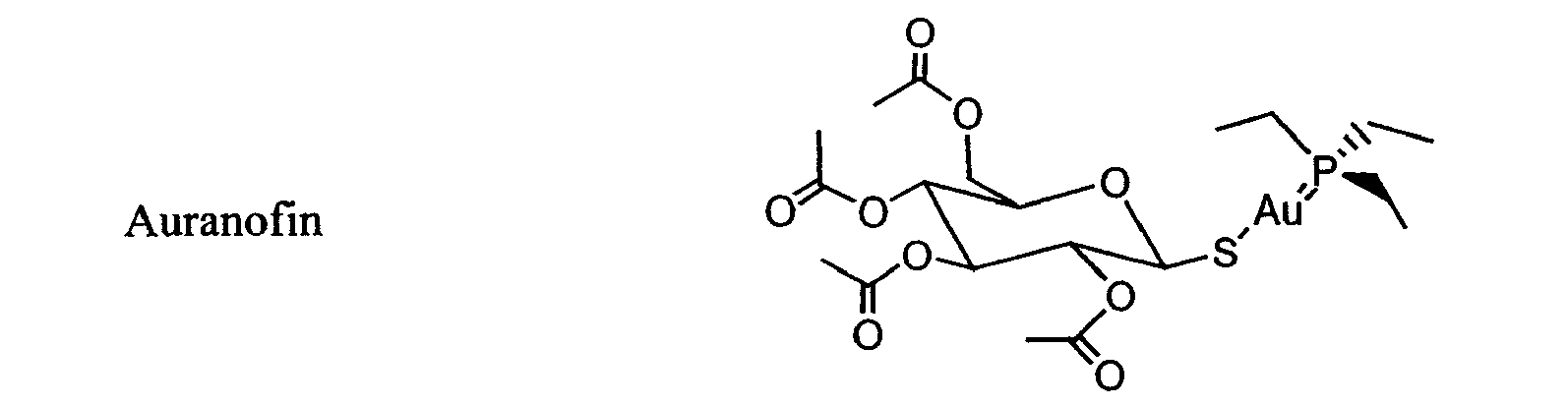

- Methotrexate is one DMARD that is commonly prescribed. The precise mechanisms of action of methotrexate have not been fully elucidated, but are thought to include direct promotion of synovial cell apoptosis, blocking the proliferation of lymphocytes, reducing production of
interleukin 1 and induction of adenosine release leading to immunosuppresion. Despite its efficacy, its toxicity profile is not optimal and its pharmokinetic properties are rather unsatisfactory: more than 80 % undergoes fast elimination unchanged after uptake. Further, around 35 % of patients do not respond sufficiently well to treatment with methotrexate alone. - Leflunomide is a relatively new DMARD that inhibits dihydroorotate dehydrogenase, an enzyme involved in de novo pyrimidine synthesis. It works more quickly than methotrexate but is more likely to cause side effects. For instance, serious liver injuries have been reported in patients taking this drug, some with a fatal outcome.
- There are other drugs that cause fewer side effects but are less potent, such as auranofin and hydroxychloroquine. Other DMARDs are reserved for severe RA since they are very effective but cause serious side effects; such drugs include azathioprine, ciclosporin and cyclophosphamide.
- Cytokine inhibitors have also been used to some effect in the treatment of RA. For instance, inhibitors of tumour necrosis factor α such as etanercept and infliximab have been administered by injection or drip, whereas inhibitors of interleukin-1 such as anakinra are sometimes combined with methotrexate therapy when the latter is ineffective alone.
- Research has identified genes that may contribute to rheumatoid arthritis and may also be implicated in several other autoimmune / inflammatory diseases (Kawahito et. al., Journal of Immunology, 1998, 161: 4411-4419). Indeed, some of the above drugs have additionally been found to be effective in the treatment of such diseases. For instance, hydroxychloroquinine can be used to treat systemic lupus erythematosus, whereas both methotrexate and leflunomide can be prescribed for psoriatic arthritis. Ciclosporin has been found useful in treating severe psoriasis or eczema, azathioprine relieves auto-immune haemolytic anaemia and auto-immune chronic active hepatitis, and infliximab can treat Crohn's disease, ulcerative colitis and ankylosing spondylitis. Azathioprine and ciclosporin are also immunosuppressant drugs that can be used to prevent the body's rejection of an organ transplant.
- In light of the foregoing, there remains a need for alternative immunosuppressant drugs and alternative therapies for rheumatoid arthritis and related diseases that may address one or more of the aforementioned problems.
- Accordingly, in a first aspect of the invention, there is provided the use of a compound of the formula I, or a pharmaceutically acceptable salt thereof, for the manufacture of a medicament for use in modulating an immune or inflammatory response:

- Z=O or S;
- n=1-3;
- R3 = -CO2R8, -C(O)SR8, -C(O)NHR8, -C(S)OR8, -C(S)SR8, -C(S)NHR8, -C(NH)SR8 or -C(NH)NHR8,
wherein R8 is -H or alkyl; - R4 = -H, -CH2R5 or -CH2CH2R5,
wherein R5 independently has one of the meanings of R3; - B = -NR2-, -CH2NR2-, -CH2CH2NR2-, -CH2CHR7- or -CH2O-,
wherein- R2 is H or a C1-3 alkyl, alkenyl or alkynyl group, and
- R7 is H or a C1-3 alkyl or alkoxy group;
- A=

C and D are each, independently, a 5- or 6-membered, substituted or unsubstituted, aromatic or non-aromatic ring which may also contain one or more heteroatoms, and C is connected to group B in any available position. - Preferred embodiments of the invention are as described below or as defined in the sub-claims.
-
Figure 1 is a schematic representation of the total synthesis of two compounds used in the present invention (compounds 3 and 4), as described in detail below in Examples 1 and 2; -
Figure 2 shows the mean arthritis scores of mice treated with compound I-A1 during a collagen-induced arthritis study. - In formula I, the carbon marked C* may be asymmetric (when R4 is not H) and in this event it will be appreciated that compounds of the formula I may exist in racemic form, or may be separated into their (+) or (-) enantiomers by conventional methods. In addition, other chiral centres may be present in some compounds giving rise to one or more further pairs of enantiomers. For example, a second chiral centre exists in those compounds wherein B = -CH2CHR7- wherein R7 is a C1-3 alkyl or alkoxy group. Use of all such racemic or enantiomeric forms are intended to lie within the scope of the present invention. Furthermore, it will be understood that the compounds of formula I may exist in one or more tautomeric forms, and use of each of these forms are also intended to lie within the scope of the present invention.
- It is preferred to use compounds of the formula I in which one or more of the following conditions are satisfied:
- Z is O;
- n is 1;
- R3 is -CO2R8 and R4 is -CH2CH2CO2R8;
- R8 is -H, methyl, ethyl, n-propyl, isopropyl, n-butyl, isobutyl or tertiary butyl, preferably -H, -Me or -Et, preferably -H;
- B is -CH2NR2-, -CH2CHR7- or -CH2O-, preferably -CH2NR2-;
- R2 is -H, -Me, -Et or -CH2-C≡CH, preferably H;
- R7 is -H, -Me, -Et or -OMe, preferably H.
- In addition, preferred compounds of the formula III, V or VII display one or more of the preferred designations of Z, n, R2, R3, R4 and/or R7 set out above.
- In group A in formulae I, II, IV or VI, D is preferably a 5-membered heteroaromatic ring. Preferably, A is

- In group A, C may be one of the following groups (points of attachment to the adjacent ring and to group B are shown):


- Especially preferred A groups are those of the following structures:

- Of particular interest are the following two A groups:

- Especially preferred are compounds of the formula I having the above two A groups, wherein B is -CH2NR2-,R2 is -H, -Me, -Et or -CH2C≡CH, Z is O, n is 1, and R3 is -CO2R8, preferably any hydrolysable ester group. Individual examples of this group of compounds are set out below.


- Compounds of the formula I can be synthesized by a variety of methods from readily available and inexpensive starting materials. For instance, in the case where B is -NR2-, -CH2NR2- or -CH2CH2NR2-, a compound of the formula II
A-(CH2)m-X II
wherein A is as previously defined, m is 0, 1 or 2 and X is a leaving group, can be reacted with a compound of the formula III
- In the case where B is -CH2O-, the compounds of formula I may be prepared, for example, by coupling a compound of the formula IV
A-CH2-X IV
wherein A is as previously defined and X is a leaving group, with a compound of the formula V
- In the case where B is -CH2CHR7-, the compound of formula I may be prepared, for example, by coupling a compound of the formula VI with a compound of the formula VII
A-CH2-Y VI

- The intermediates II to VII may be prepared by conventional methods. By way of illustration, compounds of the formula III, V or VII may be prepared by reacting a compound of the formula


- Although not wishing to be limited by theory, it is believed that the modified ketomethylenic or thioketomethylenic side chain of the compounds of formula I leads to a lower renal toxicity compared with methotrexate. Inactivation due to hydrolysis is minimal due to the lower lability of the ketomethylenic or thioketomethylenic group, allowing a longer half-life. In addition, compounds of the formula I exhibit improved physico-chemical characteristics compared with those of the prior art.
- As discussed above, primary interest is in the use of compounds of the formula I in the treatment of inflammatory diseases such as rheumatoid arthritis. The therapeutic utility of these compounds extends further, however, to the modulation of an immune and/or inflammatory response in general, such as in immunosuppressive therapy. Immunosuppression may be an adverse effect of certain diseases such as AIDS. However, immunosuppressive therapy refers to the deliberate induction of immunosuppression for a therapeutic purpose, such as for the treatment or prevention of an autoimmune disease or for preventing rejection of an organ transplant. Immunosuppressive therapy may involve, for instance, inhibition of cytokine production, especially tumour necrosis factor α, interleukin-4 or -13, or interferon-γ.
- Examples of other autoimmune and inflammatory diseases treatable in this invention are: arthritic diseases such as psoriatic arthritis, juvenile idiopathic arthritis and ankylosing spondylitis; inflammatory muscle diseases such as dermatomyositis and polymyositis; diseases involving inflammation of other tissues such as neuronal tissue and the inner ear; skin diseases such as psoriasis, eczema, pemphigus vulgaris and chronic refractory idiopathic thrombocytopenic purpura; inflammatory bowel diseases such as Crohn's disease and ulcerative colitis; vasculitis e.g. polyarteritis nodosa; auto-immune haemolytic anaemia such as systemic lupus erythematosus; auto-immune hepatitis; neurodegenerative autoimmune diseases such as multiple sclerosis; pericarditis; bronchial asthma or atopy;
type 1 diabetes; uveitis; thyroiditis; and scleroderma. - Preferably the compounds of the formula I are used to treat any of the following diseases: psoriatic arthritis, juvenile idiopathic arthritis, ankylosing spondylitis, dermatomyositis, polymyositis, psoriasis, eczema, pemphigus vulgaris, chronic refractory idiopathic thrombocytopenic purpura, Crohn's disease, ulcerative colitis, polyarteritis nodosa, auto-immune haemolytic anaemia, auto-immune hepatitis, or inflammation of the neuronal tissue or inner ear.
- In another embodiment, compounds of the formula I are used to prevent rejection of an organ transplant.
- A preferred use of the compounds of formula I is to treat rheumatic diseases, especially arthritic diseases, very preferably rheumatoid arthritis, psoriatic arthritis, juvenile idiopathic arthritis or ankylosing spondylitis.
- The compounds may be administered by any suitable mode of administration, preferably orally (in solid, e.g. tablet, or liquid form) or parenterally, or via topical applications. They may be given alone or in combination with other therapeutic agents, such as other biological agents, antirheumatic agents, other immunosuppresants or immunomodulators such as monoclonal antibodies, to a mammal, preferably a human. They may also be administered with adjuvants such as folate derivatives, folic acid or folinic acid.
- The following examples are intended to demonstrate the invention but are not intended to limit the invention in any manner.
- 3-chloropropanoyl chloride and ethyl cyanoacetate were obtained commercially from Sigma-Aldrich Company Ltd., The Old Brickyard, New Road, Gillingham, Dorset SP8 4XT, United Kingdom, or synthesised by standard methods. α-bromo-p-nitro-
acetophenone 7 was obtained by bromination of p-nitroacetophenone with bromine in tetrahydrofuran (THF). 2,4-diamino-6-bromomethylpteridine 2 was obtained by standard methods (see, for example,US 4,077,957 andUS 4,224,446 ). - 3-chloropropanoyl chloride was esterified with ethanol in the presence of pyridine or triethylacetate to produce ethyl 3-
chloropropionate 5. The latter was condensed with ethyl cyanoacetate according to the procedure of L. Ruzicka et. al., Helv. Chim. Acta 17, 183 - 200 (1934), CA 28:2584, or Koelsch, C.F., J. Am. Chem. 65, 2458-9 (1943), to form diethyl α-cyanoglutaxate 6. 1H-NMR confirmed the expected structure. GC: 97 % purity. - 175 g (0,71 mmol) α-bromo-p-nitro-
acetophenone 7 was added in portions at 0 - 5 °C to a suspension of 175 g (0.82 mmol) diethyl α-cyanoglutarate 6 and 175 g (3 mmol) KF in 500 ml DMF. The reaction was monitored by thin layer chromatography (TLC). After 4 hours, the reaction mixture was suspended in 2 1 of water containing 0.1 % acetic acid atpH 5. After decanting the water, the gummy precipitate was washed with water (2 x 750 ml) then triturated with 300 ml methanol. When crystallisation was complete, the precipitate was filtered and washed successively with an excess of methanol and ether, affording 210 g ofcompound 8, a yellow solid with m.p. 92.1 °C. (Yield 68 %) After chromatography on silica gel (50:50:5 benzene-cyclohexane-ethanol) the product had m.p. 99.7 °C. TLC on silica gel plates (5:1:3:10:0.1 benzene-ethanol-cyclohexane-petroleum ether-AcOH) showed a single spot with Rf (retention factor) 0.38. HPLC: 97 % purity. - 30 g (0.08 mmol)
compound 8 was dissolved in 400 ml methanol and hydrogenated in a hydrogenation flask at room temperature in the presence of 6g 20 % Pd/C catalyst. The theoretical volume of hydrogen (c. 6200 ml; 0.28 mmol) was absorbed in 1 hour (TLC control). The platinum catalyst was filtered and the methanol was evaporated. The crude product obtained solidified on drying in vacuo, resulting in 27.6 g compound 9, a yellow solid (yield 99 %) which was used without further purification in the conversion tocrude compound 10 described below. The purity was acceptable by TLC analysis. TLC (4:1 chloroform-methanol) showed a single spot, Rf 0.5 (characteristic reaction with 4-dimethylamino benzaldehyde). The HCl salt was isolated after reflux in HC1. LC-MS and '-H NMR confirmed the expected structure; HPLC: 99 % purity. - A solution of 52.2 g (0.15 mmol) intermediate 9 in 1000 ml methanol was prepared. 188 ml 6N NaOH was added dropwise at room temperature for 1 hour and the solution was allowed to stand for 12 hours. The reaction mixture was then diluted with 300 ml water and concentrated under high vacuum. 700 ml 37 % HCl was added to the residue and the resulting mixture was heated to reflux for 4 hours.
- The mixture obtained was diluted with 1.51 methanol and the NaCl precipitate was removed by filtration. The filtrate was used in step E. A small amount of
diacid 10 was isolated before dilution, by filtering the suspension and washing the precipitate successively with an excess of water, acetone and ether. TLC (4:1 chloroform-methanol) showed a single spot, Rf 0.26. - The methanolic solution of the
dicarboxylic acid 10 obtained in step D was cooled at 0 - 5 °C and 100 ml thionyl chloride was added dropwise. The reaction mixture was stirred under reflux for 3 hours, then cooled to room temperature and the solvent was evaporated off. The precipitate obtained was filtered and washed with ether, resulting in 27 g compound 1 (yield 63 %), a solid with m.p. 115-116°C. After recrystallisation from tetrahydrofuran, 17.5 g white crystals of 1 were obtained having m.p. 116 - 117°C. TLC (4:1 chloroform-methanol) showed a single spot, Rf 0.73. UV spectra: 234, 319 nm (MeOH). 1H NMR spectra: 2.0 (2H, m, CH 2 CH2COOCH3), 2.5 (2H, t, CH2 CH 2COOCH3), 3.1 (2H, m, COCH 2, 3.5 (1H, m, COCH2CH), 3.75 (6H, s, COOCH 3), 7.6 - 8.0 (4H, m, CH arom.). HPLC: 99 % purity. - A mixture of 7 g (27.4 mmol) 2,4-diamino-6-
bromomethylpteridine 2 and 7 g (23.4 mmol) dimethyl N-[4-methyl-amino)benzoyl]pseudogluamate 1 in 70 ml N,N-dimethylacetamide was stirred for 30 minutes at 70 °C then allowed to stand at room temperature overnight protected from light, then heated again for 10 minutes to 100°C. The reaction was controlled by TLC. After cooling, the reaction mixture was poured into water acidified with AcOH at pH 4 (1000 ml). The dark-yellow precipitate that formed was filtered and washed three times with water and allowed to air dry. 2.6 g orange-yellow product 3 was obtained, m.p. 200 - 210°C. The filtrate was treated with 10 % NaHCO3 and the precipitate formed was separated in the same manner, resulting in a second fraction of dimethyl ester 3 (2 g). Total yield: 36 %. TLC (4:1 chloroform-methanol) showed a single spot, Rf 0.48. UV Spectra: 210, 242, 332 (0.1 N HCl); 238, 335 (MeOH). - 1 g (2.1 mmol)
dimethyl ester 3 was added in portions to a solution of 10 ml 2N NaOH and 25 ml ethanol, and the mixture was stirred at room temperature for 4 hours. The precipitate formed was filtered and dissolved in distilled water. The alkaline solution was treated with charcoal, filtered and the pH was adjusted to 4.5 with 10 % AcOH. The precipitate was filtered and washed with water at pH 4.5, then with acetone, resulting in 0.8 g compound 4 (yield 85 %). The product, a brown solid, was purified by preparative HPTLC (High Performance Thin Layer Chromatography). After elution with 50:50:5 CH3CN-H2O-NH4OH, the diacid was extracted from silica gel with 100 ml NaOH solution atpH 8. The water was removed by freeze-drying. TLC (7:2:1 CH3CN-H2O-NH4OH) showed a single spot, Rf 0.80. Mass spectrum: m/z 120 (M+, 100%). IR spectra (KBr): 1651 (COCH2), 1594 (C=C), 1563, 1403 (C=O acid), 1176 (C-O), 823 (CH). UV spectra: 242, 332 nm (0.1 N HCl); 232, 259, 325 nm (0.1 N NaOH); 229, 262, 318 (MeOH). 1H NMR: 1.6 (3H, m, CH-CH 2), 2.2 (2H, t, CH2CH 2COOH), 2.9 (2H, m, COCH 2), 4.6 (2H, s, CH 2NH), 6.8 - 7.8 (4H, m, CH arom.), 9 (1H, s, 7-CH). HPLC: 97 % purity. - Other compounds of formula I can be produced by adapting the procedures set out above in an appropriate manner. For example, intermediate 1 and analogous compounds can be converted to their corresponding N-methyl derivatives by reaction with formaldehyde and sodium cyanoborohydride. Intermediate 6 can also be produced by reacting ethyl cyanoacetate with ethyl acrylate according to standard procedures.
- The ability of compounds of formula I to treat collagen-induced rheumatoid arthritis in mice was examined. The CIA model is one thought to involve both cellular and humoral immunity.
- DBA/1 male mice, 7-8 weeks old (Harlan, UK) were housed in groups of 10 with free access to food and water. One volume of bovine type II collagen (2 mg/ml solution in 0.05 M acetic acid) was emulsified with an equal volume of Complete Freund's Adjuvant (CFA; Mycobacterium tuberculosis 4 mg/ml). All the mice were immunised on
day 0 by intradermal injection into their tails of 0.1 ml of this emulsion (100 µg collagen per mouse), under Halothane anesthesia, using a plastic syringe. Location of the injection was at an approximate caudal distance of 1 cm from the base of the tail. The mice were also presented with a collagen challenge by intraperitoneal injection (200 µg bovine type II collagen per mouse in phosphate buffered saline, PBS) on day 21. - Vehicle alone was used as negative control, whereas methotrexate (MTX) in PBS was used as a positive control. The acidic compound of formula I-A1 was dissolved in 0.2 N NaOH to afford a 50 mg/ml stock solution and then diluted in PBS to give a range of concentrations. Other compounds of formula I were dissolved in a similar manner. Each of the groups of 10 mice were given 5 ml/kg of a test or control fluid by intraperitoneal injection, once daily from
day 0 for 6 weeks. - Mice were examined for signs of arthritogenic responses in peripheral joints on day 17 and thereafter once daily until termination of the study. Arthritis reactions were reported for each paw according to a 0 - 4 scale in ascending order of severity as described below. Paw thickness was measured in mm in both hind paws (left & right, just below the foot pad and above the calcaneum) of each animal. Measurements were made on day 17 and thereafter once daily until termination of the study using a dial caliper (Kroeplin, Munich, Germany).
Arthritis Score Grade No reaction, normal 0 Mild, but definite redness and swelling of the ankle / wrist or apparent redness and swelling limited to individual digits, regardless of the number of affected digits 1 Moderate to severe redness and swelling of the ankle wrist 2 Redness and swelling of the entire paw including digits 3 Maximally inflamed limb with involvement of multiple joints 4 - On
day 0, 17 and thereafter once daily, careful clinical examinations were carried out and recorded. Observations included changes in skin, fur, eyes, mucous membranes, occurrence of secretions and excretions (e.g. diarrhea) and autonomic activity (e.g. lacrimation, salivation, piloerection, pupil size, unusual respiratory pattern). Changes in gait, posture and response to handling, as well as the presence of bizarre behavior, tremors, convulsions, sleep and coma were also noted. - Individual body weights of animals were monitored during the experiment. The study was terminated on
day 42. - The results showed that compounds of formula I exerted significant anti-arthritic effects in this model. Mice being treated with the negative (vehicle) control had significantly higher arthritis scores and greater hind paw thickness than did mice being treated with the test compounds (see
Figure 2 ). In comparison with methotrexate, the compounds were tolerated at higher absolute doses and were effective at a lower percentage of the maximum tolerated dose. In particular, the compound of formula I-A1 was effective at a therapeutic dose of 10% of maximum tolerated dose whereas methotrexate required a therapeutic dose twice as high. With regard to other clinical symptoms examined at the end of the study, the groups treated with compounds of formula I showed a marked improvement over the corresponding methotrexate-treated groups. For instance, mice treated with methotrexate presented severe signs of anaemia at the end of the study, but this was completely absent from the groups treated with test compounds. No other side-effects were observed during the treatment, suggesting that the test compounds were well tolerated. - The ability of compounds of formula I to treat adjuvant-induced rheumatoid arthritis in rats was examined. The AIA model is one thought mainly to involve T cell-mediated mechanisms.
- Male Lewis rats weighing 200 ± 10 g were housed in groups of 6 with free access to food and water. 0.1 ml CFA (
Mycobacterium tuberculosis 3 mg/ml) was injected into the subplantar region of the right hind paw of each rat onday 1 of the study. - Test substances were first dissolved in NaOH (if required) as explained above then suspended in 2 % Tween 80 to a range of concentrations. 10 ml/kg was administered by oral gavage for 21 consecutive days, beginning (on day 1) 1 hour before injection of CFA. 2 % Tween 80 was used as a negative control and methotrexate in 2 % Tween 80 as a positive control.
- Right hind paw volumes were measured by water displacement on
day 0, 4 hours after the CFA injection onday 1, and ondays days days - General symptoms of polyarthritis: 100% of the negative control rats developed polyarthritis, whereas no treated animals developed these symptoms. No significant change in body weight was observed for the rats treated with the lower doses of test compounds versus the negative control-treated group. Mean hind paw volumes of representative groups tested are reported below.
- Group 1 - Negative control (vehicle alone); Group 2 - MTX control; Group 3- compound of formula I-A1 (low dose)
-
Group Mean right hind paw volume (ml water displaced) Day % Inhibition of swelling in each time interval relative to negative control 0 1 7 14 21 0-1 0-7 0-14 0-21 1 1.06 1.66 2.17 2.63 2.93 0 0 0 0 2 1.06 1.56 1.79 1.48 1.37 15 34 73 83 3 1.05 1.63 1.99 1.68 1.50 3 15 60 76 -
Group Mean left hind paw volume (ml water displaced) Day % Inhibition of swelling in each time interval relative to negative control 0 1 7 14 21 0-1 0-7 0-14 0-21 1 1.07 1.07 1.08 1.91 2.46 0 0 0 0 2 1.06 1.06 1.08 1.10 1.14 - - 95 94 3 1.05 1.05 1.06 1.09 1.11 - - 95 95 - It is concluded that compounds of formula I are highly active against both acute and late phase of the Complete Freund's Adjuvant (CFA)-induced arthritis in rats.
- Results from these two studies demonstrated that administration of compounds of formula I inhibits disease development and severity in animal models of arthritis using multiple clinical measures.
Claims (25)
- Use of a compound of the formula I, or a pharmaceutically acceptable salt thereof, for the manufacture of a medicament for use in modulating an immune or inflammatory response:
 Z=O or S;n=1-3;R3 = -CO2R8, -C(O)SR8, -C(O)NHR8, -C(S)OR8, -C(S)SR8, -C(S)NHR8, -C(NH)SR8 or -C(NH)NHR8,
wherein R8 is -H or alkyl;R4 =-H, -CH2R5 or -CH2CH2R5,
wherein R5 independently has one of the meanings of R3;B -NR2-, -CH2NR2-, -CH2CH2NR2-, -CH2CHR7- or -CH2O-,
whereinR2 is H or a C1-3 alkyl, alkenyl or alkynyl group, andR7 is H or a C1-3 alkyl or alkoxy group;A=
C and D are each, independently, a 5- or 6-membered, substituted or unsubstituted, aromatic or non-aromatic ring which may also contain one or more heteroatoms, and C is connected to group B in any available position. - Use as claimed in claim 1, for the manufacture of a medicament for use in immunosuppressive therapy.
- Use as claimed in claim 1 or 2, for the manufacture of a medicament for use in the treatment or prevention of an autoimmune disease.
- Use as claimed in any of the preceding claims, for reducing or preventing inflammation.
- Use as claimed in any of the preceding claims, for the manufacture of a medicament for the treatment or prevention of an autoimmune inflammatory disease.
- Use as claimed in any of the preceding claims, for the manufacture of a medicament for inhibition of cytokine production.
- Use as claimed in any of the preceding claims, for the manufacture of a medicament for the treatment or prevention of rheumatoid arthritis, psoriatic arthritis, juvenile idiopathic arthritis, ankylosing spondylitis, dermatomyositis, polymyositis, psoriasis, eczema, pemphigus vulgaris, chronic refractory idiopathic thrombocytopenic purpura, Crohn's disease, ulcerative colitis, polyarteritis nodosa, auto-immune haemolytic anaemia, auto-immune hepatitis, or inflammation of the neuronal tissue.
- Use as claimed in claim 7, for the manufacture of a medicament for the treatment or prevention of rheumatoid arthritis, psoriatic arthritis, or ankylosing spondylitis.
- Use as claimed in claim 8, for the manufacture of a medicament for the treatment or prevention of rheumatoid arthritis.
- Use as claimed in any of the preceding claims, wherein Z is O.
- Use as claimed in any of the preceding claims, wherein n is 1.
- Use as claimed in any of the preceding claims, wherein R8 is -H, methyl, ethyl, n-propyl, isopropyl, n-butyl, isobutyl or tertiary butyl.
- Use as claimed in any of the preceding claims, wherein R3 is -CO2R8 and R4 is -CH2CH2CO2R8.
- Use as claimed in claim 13, wherein R8 is H, methyl or ethyl.
- Use as claimed in any of the preceding claims, wherein B is -CH2NR2-, -CH2CHR7- or -CH2O-.
- Use as claimed in claim 15, wherein B is -CH2NR2-.
- Use as claimed in any of the preceding claims, wherein R2 is -H, -Me, -Et or -CH2C≡CH.
- Use as claimed in any of the preceding claims, wherein R7 is -H, -Me, -Et or -OMe.
- Use as claimed in any of the preceding claims, wherein D is a 5-membered aromatic ring.
- Use as claimed in claim 19, wherein A is

- Use as claimed in any of the preceding claims, wherein C is:
 X is CH or N, and either:Y is C and R6 is H, Me, Et or HCO; orY is N and R6 is a lone pair of electrons.
 - Use as claimed in claim 19, wherein A is of the formula A-i or A-ii:

- Use as claimed in claim 22, wherein A is of the formula A-i-1 or A-ii-1:

- Use as claimed in claim 23, wherein B is -CH2NR2-; R2 is -H, -Me, -Et or -CH2C≡CH; Z is O; n is 1; and R3 is -CO2R8.
- Use as claimed in claim 23, wherein B is -CH2NR2-, -CH2CH2-, -CH2CHCH3-or -CH2O-; R2 is -H, -Me, -Et or -CH2C≡CH; Z is O; n is 1; R3 is -CO2R8; R4 is -H or -CH2CH2CO2R8; R8 is independently -H, -Me or -Et; if A is A-i and Y is C, R6 is -H; and if A is A-ii, R1 is -OH.
Priority Applications (16)
| Application Number | Priority Date | Filing Date | Title |
|---|---|---|---|
| EP07102410A EP1958632A1 (en) | 2007-02-14 | 2007-02-14 | Use of condensed pyrimidine derivatives for the treatment of autoimmune and inflammatory diseases |
| CA2677588A CA2677588C (en) | 2007-02-14 | 2008-02-13 | Use of condensed pyrimidine derivatives for the treatment of autoimmune and inflammatory diseases |
| HR20110663T HRP20110663T1 (en) | 2007-02-14 | 2008-02-13 | USE OF CONDENSED PYRIMIDINE DERIVATIVES FOR THE TREATMENT OF AUTOIMMUNE AND INFLAMMATORY DISEASES |
| DK08716828.2T DK2117552T3 (en) | 2007-02-14 | 2008-02-13 | Use of condensed pyrimidine derivatives for the treatment of autoimmune and inflammatory diseases |
| NZ578897A NZ578897A (en) | 2007-02-14 | 2008-02-13 | Use of condensed pyrimidine derivatives for the treatment of autoimmune and inflammatory diseases |
| ES08716828T ES2369035T3 (en) | 2007-02-14 | 2008-02-13 | USE OF CONDENSED PYRIMIDINE DERIVATIVES FOR THE TREATMENT OF AUTOIMMUNE AND INFLAMMATORY DISEASES. |
| SI200830389T SI2117552T1 (en) | 2007-02-14 | 2008-02-13 | Use of condensed pyrimidine derivatives for the treatment of autoimmune and inflammatory diseases |
| AU2008214687A AU2008214687B2 (en) | 2007-02-14 | 2008-02-13 | Use of condensed pyrimidine derivatives for the treatment of autoimmune and inflammatory diseases |
| PCT/EP2008/051731 WO2008098957A1 (en) | 2007-02-14 | 2008-02-13 | Use of condensed pyrimidine derivatives for the treatment of autoimmune and inflammatory diseases |
| EP08716828A EP2117552B1 (en) | 2007-02-14 | 2008-02-13 | Use of condensed pyrimidine derivatives for the treatment of autoimmune and inflammatory diseases |
| PT08716828T PT2117552E (en) | 2007-02-14 | 2008-02-13 | Use of condensed pyrimidine derivatives for the treatment of autoimmune and inflammatory diseases |
| US12/449,448 US8247422B2 (en) | 2007-02-14 | 2008-02-13 | Use of condensed pyrimidine derivatives for the treatment of rheumatoid arthritis |
| PL08716828T PL2117552T3 (en) | 2007-02-14 | 2008-02-13 | Use of condensed pyrimidine derivatives for the treatment of autoimmune and inflammatory diseases |
| AT08716828T ATE518539T1 (en) | 2007-02-14 | 2008-02-13 | USE OF CONDENSED PYRIMIDINE DERIVATIVES FOR THE TREATMENT OF AUTOIMMUNE AND INFLAMMATORY DISEASES |
| JP2009549407A JP2010518143A (en) | 2007-02-14 | 2008-02-13 | Use of fused pyrimidine derivatives for the treatment of autoimmune and inflammatory diseases |
| CY20111100982T CY1112480T1 (en) | 2007-02-14 | 2011-10-14 | USE OF CONCENTRATED PYRIMIDINE PRODUCERS FOR THE TREATMENT OF AUTO-IMMUNITY AND INFLAMMATORY DISEASES |
Applications Claiming Priority (1)
| Application Number | Priority Date | Filing Date | Title |
|---|---|---|---|
| EP07102410A EP1958632A1 (en) | 2007-02-14 | 2007-02-14 | Use of condensed pyrimidine derivatives for the treatment of autoimmune and inflammatory diseases |
Publications (1)
| Publication Number | Publication Date |
|---|---|
| EP1958632A1 true EP1958632A1 (en) | 2008-08-20 |
Family
ID=38016693
Family Applications (2)
| Application Number | Title | Priority Date | Filing Date |
|---|---|---|---|
| EP07102410A Withdrawn EP1958632A1 (en) | 2007-02-14 | 2007-02-14 | Use of condensed pyrimidine derivatives for the treatment of autoimmune and inflammatory diseases |
| EP08716828A Not-in-force EP2117552B1 (en) | 2007-02-14 | 2008-02-13 | Use of condensed pyrimidine derivatives for the treatment of autoimmune and inflammatory diseases |
Family Applications After (1)
| Application Number | Title | Priority Date | Filing Date |
|---|---|---|---|
| EP08716828A Not-in-force EP2117552B1 (en) | 2007-02-14 | 2008-02-13 | Use of condensed pyrimidine derivatives for the treatment of autoimmune and inflammatory diseases |
Country Status (15)
| Country | Link |
|---|---|
| US (1) | US8247422B2 (en) |
| EP (2) | EP1958632A1 (en) |
| JP (1) | JP2010518143A (en) |
| AT (1) | ATE518539T1 (en) |
| AU (1) | AU2008214687B2 (en) |
| CA (1) | CA2677588C (en) |
| CY (1) | CY1112480T1 (en) |
| DK (1) | DK2117552T3 (en) |
| ES (1) | ES2369035T3 (en) |
| HR (1) | HRP20110663T1 (en) |
| NZ (1) | NZ578897A (en) |
| PL (1) | PL2117552T3 (en) |
| PT (1) | PT2117552E (en) |
| SI (1) | SI2117552T1 (en) |
| WO (1) | WO2008098957A1 (en) |
Families Citing this family (3)
| Publication number | Priority date | Publication date | Assignee | Title |
|---|---|---|---|---|
| EP1754484A1 (en) * | 2005-08-17 | 2007-02-21 | Dan Stoicescu | Condensed pyrimidine derivatives as inhibitors of foic acid-dependent enzymes |
| TWI513465B (en) * | 2009-06-25 | 2015-12-21 | Regeneron Pharma | Method of treating cancer with dll4 antagonist and chemotherapeutic agent |
| CN103656073A (en) * | 2013-12-12 | 2014-03-26 | 黄根强 | Traditional Chinese medicine for treating polyarteritis nodosa |
Citations (2)
| Publication number | Priority date | Publication date | Assignee | Title |
|---|---|---|---|---|
| WO2000034281A1 (en) * | 1998-12-04 | 2000-06-15 | Commonwealth Scientific And Industrial Research Organisation | Methotrexate derivatives |
| EP1754484A1 (en) * | 2005-08-17 | 2007-02-21 | Dan Stoicescu | Condensed pyrimidine derivatives as inhibitors of foic acid-dependent enzymes |
Family Cites Families (12)
| Publication number | Priority date | Publication date | Assignee | Title |
|---|---|---|---|---|
| US2512572A (en) | 1950-06-20 | Substituted pteridines and method | ||
| US4079056A (en) | 1975-03-31 | 1978-03-14 | The United States Of America As Represented By The Department Of Health, Education And Welfare | Method of making pteridine compounds |
| CH630380A5 (en) | 1977-08-12 | 1982-06-15 | Lonza Ag | METHOD FOR PRODUCING L-METHOTREXATE. |
| GB2070607A (en) | 1980-03-04 | 1981-09-09 | Sandoz Ltd | 1-(3,5- Ditrifluoromethylphenyl)-5- phenyl-1,2,3-triazole derivatives useful as plant growth regulating agents |
| US4684653A (en) | 1985-03-08 | 1987-08-04 | The Trustees Of Princeton University | Pyrido(2,3-d)pyrimidine derivatives |
| JPS63218666A (en) | 1987-03-09 | 1988-09-12 | Mitsubishi Kasei Corp | Pyridazinone derivatives or their salts |
| KR0162654B1 (en) | 1989-12-11 | 1998-11-16 | 알렌 제이. 시니스갤리 | N-[pyrrolo (2, 3-d) pyrimidin-3yl acryl]-glutamic acid derivatives |
| GB9013615D0 (en) | 1990-06-19 | 1990-08-08 | Wellcome Found | Pharmaceutical compounds |
| US5698556A (en) | 1995-06-07 | 1997-12-16 | Chan; Carcy L. | Methotrexate analogs and methods of using same |
| US20060083681A1 (en) | 2004-10-18 | 2006-04-20 | Ajay Purohit | Compounds for myocardial perfusion imaging |
| DE102004057594A1 (en) | 2004-11-29 | 2006-06-08 | Boehringer Ingelheim Pharma Gmbh & Co. Kg | Substitute pteridine for the treatment of inflammatory diseases |
| EP2032585B1 (en) | 2006-05-24 | 2014-07-23 | Boehringer Ingelheim International GmbH | Substituted pteridines as therapeutic agents |
-
2007
- 2007-02-14 EP EP07102410A patent/EP1958632A1/en not_active Withdrawn
-
2008
- 2008-02-13 EP EP08716828A patent/EP2117552B1/en not_active Not-in-force
- 2008-02-13 NZ NZ578897A patent/NZ578897A/en not_active IP Right Cessation
- 2008-02-13 US US12/449,448 patent/US8247422B2/en not_active Expired - Fee Related
- 2008-02-13 CA CA2677588A patent/CA2677588C/en not_active Expired - Fee Related
- 2008-02-13 HR HR20110663T patent/HRP20110663T1/en unknown
- 2008-02-13 PT PT08716828T patent/PT2117552E/en unknown
- 2008-02-13 SI SI200830389T patent/SI2117552T1/en unknown
- 2008-02-13 AT AT08716828T patent/ATE518539T1/en active
- 2008-02-13 ES ES08716828T patent/ES2369035T3/en active Active
- 2008-02-13 PL PL08716828T patent/PL2117552T3/en unknown
- 2008-02-13 DK DK08716828.2T patent/DK2117552T3/en active
- 2008-02-13 WO PCT/EP2008/051731 patent/WO2008098957A1/en not_active Ceased
- 2008-02-13 AU AU2008214687A patent/AU2008214687B2/en not_active Ceased
- 2008-02-13 JP JP2009549407A patent/JP2010518143A/en active Pending
-
2011
- 2011-10-14 CY CY20111100982T patent/CY1112480T1/en unknown
Patent Citations (2)
| Publication number | Priority date | Publication date | Assignee | Title |
|---|---|---|---|---|
| WO2000034281A1 (en) * | 1998-12-04 | 2000-06-15 | Commonwealth Scientific And Industrial Research Organisation | Methotrexate derivatives |
| EP1754484A1 (en) * | 2005-08-17 | 2007-02-21 | Dan Stoicescu | Condensed pyrimidine derivatives as inhibitors of foic acid-dependent enzymes |
Non-Patent Citations (1)
| Title |
|---|
| SWIERKOT JERZY ET AL: "Methotrexate in rheumatoid arthritis.", PHARMACOLOGICAL REPORTS : PR 2006 JUL-AUG, vol. 58, no. 4, July 2006 (2006-07-01), pages 473 - 492, XP002434137, ISSN: 1734-1140 * |
Also Published As
| Publication number | Publication date |
|---|---|
| JP2010518143A (en) | 2010-05-27 |
| NZ578897A (en) | 2011-03-31 |
| WO2008098957A1 (en) | 2008-08-21 |
| US8247422B2 (en) | 2012-08-21 |
| AU2008214687B2 (en) | 2012-11-08 |
| CA2677588A1 (en) | 2008-08-21 |
| PL2117552T3 (en) | 2012-02-29 |
| US20100160329A1 (en) | 2010-06-24 |
| CA2677588C (en) | 2013-11-19 |
| PT2117552E (en) | 2011-10-11 |
| ES2369035T3 (en) | 2011-11-24 |
| EP2117552A1 (en) | 2009-11-18 |
| ATE518539T1 (en) | 2011-08-15 |
| AU2008214687A1 (en) | 2008-08-21 |
| HRP20110663T1 (en) | 2011-10-31 |
| EP2117552B1 (en) | 2011-08-03 |
| CY1112480T1 (en) | 2015-12-09 |
| SI2117552T1 (en) | 2011-11-30 |
| DK2117552T3 (en) | 2011-11-21 |
Similar Documents
| Publication | Publication Date | Title |
|---|---|---|
| US6982286B2 (en) | Carbocyclic hydrazino inhibitors of copper-containing amine oxidases | |
| EP3458448B1 (en) | Fasn inhibitors for use in treating non-alcoholic steatohepatitis | |
| JP2004501962A (en) | Copper-containing amine oxidase inhibitors | |
| CZ286621B6 (en) | Tromethamine salt of (+)-(S)-2-(3-benzoylphenyl)propionic acid, process of its preparation and pharmaceutical preparation containing thereof | |
| EP2623495B1 (en) | Positively charged water-soluble prodrugs of n-arylanthranilic acids with very fast skin penetration rate | |
| EP0774257B1 (en) | Use of piperazine and homopiperazine compounds for the inhibition of cellular adhesion and infiltration | |
| KR20220081631A (en) | Novel use of pyrolo-pyridine derivatives for preventing or treating inflammatory diseases | |
| KR0151389B1 (en) | Renal disease treatment | |
| EP2117552B1 (en) | Use of condensed pyrimidine derivatives for the treatment of autoimmune and inflammatory diseases | |
| EP2139463B1 (en) | Anti-infective agents | |
| US8518954B2 (en) | Inhibitors of folic acid-dependent enzymes | |
| US5149688A (en) | Methods, compounds, and compositions for immunosuppression | |
| JPH0840893A (en) | Interleukin-1 production inhibitor | |
| AU774981B2 (en) | Thiazolopyrimidines useful as TNFalpha inhibitors | |
| CA3121726A1 (en) | Polymorphic form of meisoindigo and modified formulation of meisoindigo | |
| US20220296555A1 (en) | Acylated active agents and methods of their use for the treatment of metabolic disorders and nonalcoholic fatty liver disease | |
| US20220296563A1 (en) | Acylated active agents and methods of their use for the treatment of metabolic disorders and nonalcoholic fatty liver disease | |
| US20230357148A1 (en) | Indole derivative and application thereof | |
| US3655896A (en) | Pharmaceutical compositions containing a sympathomimetic amine and a triazolo-pyrimidine derivative and methods of preventing bronchospasms | |
| JP2009051731A (en) | New ascochlorin derivative compound and pharmaceutical composition comprising the same | |
| US9408852B2 (en) | Method of lowering serum uric acid levels with (S)-tofisopam | |
| JP2612417B2 (en) | Gastrointestinal symptom improver | |
| PT89981B (en) | METHOD FOR PREPARING QUINOLINE-2,5-DIONAS AND PHARMACEUTICAL COMPOSITIONS CONTAINING THEM | |
| JPH0827121A (en) | New uracil derivative and allergic disease treating agent containing the derivative as effective component | |
| CS209859B2 (en) | Method of making the new derivatives of the amino acids |
Legal Events
| Date | Code | Title | Description |
|---|---|---|---|
| PUAI | Public reference made under article 153(3) epc to a published international application that has entered the european phase |
Free format text: ORIGINAL CODE: 0009012 |
|
| AK | Designated contracting states |
Kind code of ref document: A1 Designated state(s): AT BE BG CH CY CZ DE DK EE ES FI FR GB GR HU IE IS IT LI LT LU LV MC NL PL PT RO SE SI SK TR |
|
| AX | Request for extension of the european patent |
Extension state: AL BA HR MK RS |
|
| AKX | Designation fees paid | ||
| REG | Reference to a national code |
Ref country code: DE Ref legal event code: 8566 |
|
| STAA | Information on the status of an ep patent application or granted ep patent |
Free format text: STATUS: THE APPLICATION IS DEEMED TO BE WITHDRAWN |
|
| 18D | Application deemed to be withdrawn |
Effective date: 20090221 |