EP1940373B1 - 1-fluoro-1-deoxy-scyllo-inositol for the treatment of alzheimer's disease - Google Patents
1-fluoro-1-deoxy-scyllo-inositol for the treatment of alzheimer's disease Download PDFInfo
- Publication number
- EP1940373B1 EP1940373B1 EP06850456.2A EP06850456A EP1940373B1 EP 1940373 B1 EP1940373 B1 EP 1940373B1 EP 06850456 A EP06850456 A EP 06850456A EP 1940373 B1 EP1940373 B1 EP 1940373B1
- Authority
- EP
- European Patent Office
- Prior art keywords
- disease
- compound
- alzheimer
- weeks
- treatment
- Prior art date
- Legal status (The legal status is an assumption and is not a legal conclusion. Google has not performed a legal analysis and makes no representation as to the accuracy of the status listed.)
- Not-in-force
Links
- 208000024827 Alzheimer disease Diseases 0.000 title claims description 38
- 238000011282 treatment Methods 0.000 title claims description 37
- 150000001875 compounds Chemical class 0.000 claims description 101
- 230000002265 prevention Effects 0.000 claims description 22
- 239000008194 pharmaceutical composition Substances 0.000 claims description 16
- 239000003814 drug Substances 0.000 claims description 10
- 208000010877 cognitive disease Diseases 0.000 claims description 6
- 125000002887 hydroxy group Chemical group [H]O* 0.000 claims description 6
- 238000004519 manufacturing process Methods 0.000 claims description 4
- 125000001153 fluoro group Chemical group F* 0.000 claims description 3
- 208000027061 mild cognitive impairment Diseases 0.000 claims 1
- 239000000203 mixture Substances 0.000 description 67
- 230000009467 reduction Effects 0.000 description 30
- 208000037265 diseases, disorders, signs and symptoms Diseases 0.000 description 29
- 230000009286 beneficial effect Effects 0.000 description 28
- 235000002639 sodium chloride Nutrition 0.000 description 26
- 201000010099 disease Diseases 0.000 description 25
- 150000003839 salts Chemical class 0.000 description 21
- 210000004556 brain Anatomy 0.000 description 20
- 229910052760 oxygen Inorganic materials 0.000 description 20
- 238000000034 method Methods 0.000 description 19
- 229910052799 carbon Inorganic materials 0.000 description 18
- 208000024891 symptom Diseases 0.000 description 18
- 230000000694 effects Effects 0.000 description 15
- 229910052739 hydrogen Inorganic materials 0.000 description 13
- 239000013589 supplement Substances 0.000 description 13
- DSCFFEYYQKSRSV-UHFFFAOYSA-N 1L-O1-methyl-muco-inositol Natural products COC1C(O)C(O)C(O)C(O)C1O DSCFFEYYQKSRSV-UHFFFAOYSA-N 0.000 description 12
- -1 an inositol compound Chemical class 0.000 description 12
- 230000002354 daily effect Effects 0.000 description 12
- 230000001225 therapeutic effect Effects 0.000 description 12
- 108010064539 amyloid beta-protein (1-42) Proteins 0.000 description 11
- 230000002490 cerebral effect Effects 0.000 description 11
- VJXUJFAZXQOXMJ-UHFFFAOYSA-N D-1-O-Methyl-muco-inositol Natural products CC12C(OC)(C)OC(C)(C)C2CC(=O)C(C23OC2C(=O)O2)(C)C1CCC3(C)C2C=1C=COC=1 VJXUJFAZXQOXMJ-UHFFFAOYSA-N 0.000 description 10
- 241000699670 Mus sp. Species 0.000 description 10
- FAPWRFPIFSIZLT-UHFFFAOYSA-M Sodium chloride Chemical compound [Na+].[Cl-] FAPWRFPIFSIZLT-UHFFFAOYSA-M 0.000 description 10
- 238000006243 chemical reaction Methods 0.000 description 10
- 238000009472 formulation Methods 0.000 description 10
- IAZDPXIOMUYVGZ-UHFFFAOYSA-N Dimethylsulphoxide Chemical compound CS(C)=O IAZDPXIOMUYVGZ-UHFFFAOYSA-N 0.000 description 9
- LFQSCWFLJHTTHZ-UHFFFAOYSA-N Ethanol Chemical compound CCO LFQSCWFLJHTTHZ-UHFFFAOYSA-N 0.000 description 9
- 230000002829 reductive effect Effects 0.000 description 9
- 230000002459 sustained effect Effects 0.000 description 9
- 208000037259 Amyloid Plaque Diseases 0.000 description 8
- PEDCQBHIVMGVHV-UHFFFAOYSA-N Glycerine Chemical compound OCC(O)CO PEDCQBHIVMGVHV-UHFFFAOYSA-N 0.000 description 8
- 239000003937 drug carrier Substances 0.000 description 8
- 239000000543 intermediate Substances 0.000 description 8
- 239000000243 solution Substances 0.000 description 8
- DSCFFEYYQKSRSV-KLJZZCKASA-N D-pinitol Chemical group CO[C@@H]1[C@@H](O)[C@@H](O)[C@H](O)[C@H](O)[C@H]1O DSCFFEYYQKSRSV-KLJZZCKASA-N 0.000 description 7
- 241000124008 Mammalia Species 0.000 description 7
- 238000009825 accumulation Methods 0.000 description 7
- 239000002775 capsule Substances 0.000 description 7
- 239000003795 chemical substances by application Substances 0.000 description 7
- 235000013305 food Nutrition 0.000 description 7
- CDAISMWEOUEBRE-UHFFFAOYSA-N scyllo-inosotol Natural products OC1C(O)C(O)C(O)C(O)C1O CDAISMWEOUEBRE-UHFFFAOYSA-N 0.000 description 7
- 239000000126 substance Substances 0.000 description 7
- QTBSBXVTEAMEQO-UHFFFAOYSA-N Acetic acid Chemical compound CC(O)=O QTBSBXVTEAMEQO-UHFFFAOYSA-N 0.000 description 6
- OKKJLVBELUTLKV-UHFFFAOYSA-N Methanol Chemical compound OC OKKJLVBELUTLKV-UHFFFAOYSA-N 0.000 description 6
- 108010064397 amyloid beta-protein (1-40) Proteins 0.000 description 6
- 235000015872 dietary supplement Nutrition 0.000 description 6
- 239000007788 liquid Substances 0.000 description 6
- HQKMJHAJHXVSDF-UHFFFAOYSA-L magnesium stearate Chemical compound [Mg+2].CCCCCCCCCCCCCCCCCC([O-])=O.CCCCCCCCCCCCCCCCCC([O-])=O HQKMJHAJHXVSDF-UHFFFAOYSA-L 0.000 description 6
- 235000012054 meals Nutrition 0.000 description 6
- 239000000178 monomer Substances 0.000 description 6
- 230000008569 process Effects 0.000 description 6
- 230000002035 prolonged effect Effects 0.000 description 6
- 230000003977 synaptic function Effects 0.000 description 6
- 241001465754 Metazoa Species 0.000 description 5
- 229920002472 Starch Polymers 0.000 description 5
- 230000035508 accumulation Effects 0.000 description 5
- 239000000654 additive Substances 0.000 description 5
- 230000003941 amyloidogenesis Effects 0.000 description 5
- 238000004458 analytical method Methods 0.000 description 5
- 239000000969 carrier Substances 0.000 description 5
- 239000003153 chemical reaction reagent Substances 0.000 description 5
- 230000006999 cognitive decline Effects 0.000 description 5
- 238000007796 conventional method Methods 0.000 description 5
- 239000008187 granular material Substances 0.000 description 5
- CDAISMWEOUEBRE-GPIVLXJGSA-N inositol Chemical compound O[C@H]1[C@H](O)[C@@H](O)[C@H](O)[C@H](O)[C@@H]1O CDAISMWEOUEBRE-GPIVLXJGSA-N 0.000 description 5
- 229960000367 inositol Drugs 0.000 description 5
- 239000000546 pharmaceutical excipient Substances 0.000 description 5
- 239000011780 sodium chloride Substances 0.000 description 5
- 235000019698 starch Nutrition 0.000 description 5
- 238000003786 synthesis reaction Methods 0.000 description 5
- 238000012360 testing method Methods 0.000 description 5
- XLYOFNOQVPJJNP-UHFFFAOYSA-N water Substances O XLYOFNOQVPJJNP-UHFFFAOYSA-N 0.000 description 5
- 238000005160 1H NMR spectroscopy Methods 0.000 description 4
- 108010090849 Amyloid beta-Peptides Proteins 0.000 description 4
- 102000013455 Amyloid beta-Peptides Human genes 0.000 description 4
- 108010010803 Gelatin Proteins 0.000 description 4
- WQZGKKKJIJFFOK-GASJEMHNSA-N Glucose Natural products OC[C@H]1OC(O)[C@H](O)[C@@H](O)[C@@H]1O WQZGKKKJIJFFOK-GASJEMHNSA-N 0.000 description 4
- 102000004874 Synaptophysin Human genes 0.000 description 4
- 108090001076 Synaptophysin Proteins 0.000 description 4
- 239000002253 acid Substances 0.000 description 4
- 230000002378 acidificating effect Effects 0.000 description 4
- 239000004480 active ingredient Substances 0.000 description 4
- 239000013543 active substance Substances 0.000 description 4
- 238000004220 aggregation Methods 0.000 description 4
- 239000002585 base Substances 0.000 description 4
- WQZGKKKJIJFFOK-VFUOTHLCSA-N beta-D-glucose Chemical compound OC[C@H]1O[C@@H](O)[C@H](O)[C@@H](O)[C@@H]1O WQZGKKKJIJFFOK-VFUOTHLCSA-N 0.000 description 4
- 239000011230 binding agent Substances 0.000 description 4
- 239000000872 buffer Substances 0.000 description 4
- 230000007278 cognition impairment Effects 0.000 description 4
- 230000007423 decrease Effects 0.000 description 4
- 230000008021 deposition Effects 0.000 description 4
- 208000035475 disorder Diseases 0.000 description 4
- 235000019441 ethanol Nutrition 0.000 description 4
- 239000008273 gelatin Substances 0.000 description 4
- 229920000159 gelatin Polymers 0.000 description 4
- 235000019322 gelatine Nutrition 0.000 description 4
- 235000011852 gelatine desserts Nutrition 0.000 description 4
- 230000002518 glial effect Effects 0.000 description 4
- BDAGIHXWWSANSR-UHFFFAOYSA-N methanoic acid Natural products OC=O BDAGIHXWWSANSR-UHFFFAOYSA-N 0.000 description 4
- 238000007911 parenteral administration Methods 0.000 description 4
- 239000000523 sample Substances 0.000 description 4
- 239000007787 solid Substances 0.000 description 4
- 239000002904 solvent Substances 0.000 description 4
- 239000008107 starch Substances 0.000 description 4
- 239000000829 suppository Substances 0.000 description 4
- 230000004083 survival effect Effects 0.000 description 4
- 238000013268 sustained release Methods 0.000 description 4
- 239000012730 sustained-release form Substances 0.000 description 4
- 239000003981 vehicle Substances 0.000 description 4
- USFZMSVCRYTOJT-UHFFFAOYSA-N Ammonium acetate Chemical compound N.CC(O)=O USFZMSVCRYTOJT-UHFFFAOYSA-N 0.000 description 3
- 206010061218 Inflammation Diseases 0.000 description 3
- 239000007987 MES buffer Substances 0.000 description 3
- 241000700159 Rattus Species 0.000 description 3
- CZMRCDWAGMRECN-UGDNZRGBSA-N Sucrose Chemical compound O[C@H]1[C@H](O)[C@@H](CO)O[C@@]1(CO)O[C@@H]1[C@H](O)[C@@H](O)[C@H](O)[C@@H](CO)O1 CZMRCDWAGMRECN-UGDNZRGBSA-N 0.000 description 3
- 229930006000 Sucrose Natural products 0.000 description 3
- 239000011324 bead Substances 0.000 description 3
- 230000003542 behavioural effect Effects 0.000 description 3
- KRKNYBCHXYNGOX-UHFFFAOYSA-N citric acid Chemical compound OC(=O)CC(O)(C(O)=O)CC(O)=O KRKNYBCHXYNGOX-UHFFFAOYSA-N 0.000 description 3
- 239000003086 colorant Substances 0.000 description 3
- HPNMFZURTQLUMO-UHFFFAOYSA-N diethylamine Chemical compound CCNCC HPNMFZURTQLUMO-UHFFFAOYSA-N 0.000 description 3
- 239000003085 diluting agent Substances 0.000 description 3
- 229940079593 drug Drugs 0.000 description 3
- 239000000839 emulsion Substances 0.000 description 3
- 238000001704 evaporation Methods 0.000 description 3
- 239000008103 glucose Substances 0.000 description 3
- 235000011187 glycerol Nutrition 0.000 description 3
- 230000004054 inflammatory process Effects 0.000 description 3
- 239000000314 lubricant Substances 0.000 description 3
- 235000019359 magnesium stearate Nutrition 0.000 description 3
- 238000012423 maintenance Methods 0.000 description 3
- 239000003550 marker Substances 0.000 description 3
- 239000000463 material Substances 0.000 description 3
- 229920000609 methyl cellulose Polymers 0.000 description 3
- 239000001923 methylcellulose Substances 0.000 description 3
- 235000010981 methylcellulose Nutrition 0.000 description 3
- 150000007522 mineralic acids Chemical class 0.000 description 3
- 150000007524 organic acids Chemical class 0.000 description 3
- 230000002688 persistence Effects 0.000 description 3
- 238000002360 preparation method Methods 0.000 description 3
- 239000003755 preservative agent Substances 0.000 description 3
- 238000003825 pressing Methods 0.000 description 3
- 239000000047 product Substances 0.000 description 3
- 230000012846 protein folding Effects 0.000 description 3
- 238000011160 research Methods 0.000 description 3
- 230000004044 response Effects 0.000 description 3
- 239000012146 running buffer Substances 0.000 description 3
- CDAISMWEOUEBRE-CDRYSYESSA-N scyllo-inositol Chemical compound O[C@H]1[C@H](O)[C@@H](O)[C@H](O)[C@@H](O)[C@@H]1O CDAISMWEOUEBRE-CDRYSYESSA-N 0.000 description 3
- 239000007858 starting material Substances 0.000 description 3
- 239000005720 sucrose Substances 0.000 description 3
- 230000001988 toxicity Effects 0.000 description 3
- 231100000419 toxicity Toxicity 0.000 description 3
- 238000012549 training Methods 0.000 description 3
- 239000011800 void material Substances 0.000 description 3
- LMDZBCPBFSXMTL-UHFFFAOYSA-N 1-ethyl-3-(3-dimethylaminopropyl)carbodiimide Chemical compound CCN=C=NCCCN(C)C LMDZBCPBFSXMTL-UHFFFAOYSA-N 0.000 description 2
- HZAXFHJVJLSVMW-UHFFFAOYSA-N 2-Aminoethan-1-ol Chemical compound NCCO HZAXFHJVJLSVMW-UHFFFAOYSA-N 0.000 description 2
- OSWFIVFLDKOXQC-UHFFFAOYSA-N 4-(3-methoxyphenyl)aniline Chemical compound COC1=CC=CC(C=2C=CC(N)=CC=2)=C1 OSWFIVFLDKOXQC-UHFFFAOYSA-N 0.000 description 2
- 206010059245 Angiopathy Diseases 0.000 description 2
- 230000007082 Aβ accumulation Effects 0.000 description 2
- FBPFZTCFMRRESA-KVTDHHQDSA-N D-Mannitol Chemical compound OC[C@@H](O)[C@@H](O)[C@H](O)[C@H](O)CO FBPFZTCFMRRESA-KVTDHHQDSA-N 0.000 description 2
- DHMQDGOQFOQNFH-UHFFFAOYSA-N Glycine Chemical compound NCC(O)=O DHMQDGOQFOQNFH-UHFFFAOYSA-N 0.000 description 2
- WZUVPPKBWHMQCE-UHFFFAOYSA-N Haematoxylin Chemical compound C12=CC(O)=C(O)C=C2CC2(O)C1C1=CC=C(O)C(O)=C1OC2 WZUVPPKBWHMQCE-UHFFFAOYSA-N 0.000 description 2
- GUBGYTABKSRVRQ-QKKXKWKRSA-N Lactose Natural products OC[C@H]1O[C@@H](O[C@H]2[C@H](O)[C@@H](O)C(O)O[C@@H]2CO)[C@H](O)[C@@H](O)[C@H]1O GUBGYTABKSRVRQ-QKKXKWKRSA-N 0.000 description 2
- 229930195725 Mannitol Natural products 0.000 description 2
- AFVFQIVMOAPDHO-UHFFFAOYSA-N Methanesulfonic acid Chemical compound CS(O)(=O)=O AFVFQIVMOAPDHO-UHFFFAOYSA-N 0.000 description 2
- 241000699666 Mus <mouse, genus> Species 0.000 description 2
- XSQUKJJJFZCRTK-UHFFFAOYSA-N Urea Chemical compound NC(N)=O XSQUKJJJFZCRTK-UHFFFAOYSA-N 0.000 description 2
- 230000002159 abnormal effect Effects 0.000 description 2
- 150000007513 acids Chemical class 0.000 description 2
- 230000002776 aggregation Effects 0.000 description 2
- 229910052783 alkali metal Inorganic materials 0.000 description 2
- 238000000540 analysis of variance Methods 0.000 description 2
- 239000012491 analyte Substances 0.000 description 2
- 239000007864 aqueous solution Substances 0.000 description 2
- 239000003125 aqueous solvent Substances 0.000 description 2
- 239000007900 aqueous suspension Substances 0.000 description 2
- 230000006399 behavior Effects 0.000 description 2
- 230000008901 benefit Effects 0.000 description 2
- 230000015572 biosynthetic process Effects 0.000 description 2
- 230000037396 body weight Effects 0.000 description 2
- OSGAYBCDTDRGGQ-UHFFFAOYSA-L calcium sulfate Chemical compound [Ca+2].[O-]S([O-])(=O)=O OSGAYBCDTDRGGQ-UHFFFAOYSA-L 0.000 description 2
- 150000001720 carbohydrates Chemical class 0.000 description 2
- 235000014633 carbohydrates Nutrition 0.000 description 2
- 150000001768 cations Chemical class 0.000 description 2
- 210000005056 cell body Anatomy 0.000 description 2
- 230000019771 cognition Effects 0.000 description 2
- 125000004122 cyclic group Chemical group 0.000 description 2
- 239000003995 emulsifying agent Substances 0.000 description 2
- 125000001495 ethyl group Chemical group [H]C([H])([H])C([H])([H])* 0.000 description 2
- 230000002349 favourable effect Effects 0.000 description 2
- 238000001914 filtration Methods 0.000 description 2
- 239000000796 flavoring agent Substances 0.000 description 2
- 235000013355 food flavoring agent Nutrition 0.000 description 2
- 235000019253 formic acid Nutrition 0.000 description 2
- 239000012458 free base Substances 0.000 description 2
- 210000005154 hemibrain Anatomy 0.000 description 2
- 235000006486 human diet Nutrition 0.000 description 2
- 238000001727 in vivo Methods 0.000 description 2
- 230000028709 inflammatory response Effects 0.000 description 2
- 239000004615 ingredient Substances 0.000 description 2
- 239000003112 inhibitor Substances 0.000 description 2
- 230000005764 inhibitory process Effects 0.000 description 2
- 238000002372 labelling Methods 0.000 description 2
- 239000008101 lactose Substances 0.000 description 2
- 239000003446 ligand Substances 0.000 description 2
- 150000002632 lipids Chemical class 0.000 description 2
- 230000027928 long-term synaptic potentiation Effects 0.000 description 2
- 239000000594 mannitol Substances 0.000 description 2
- 235000010355 mannitol Nutrition 0.000 description 2
- 238000002156 mixing Methods 0.000 description 2
- 230000004048 modification Effects 0.000 description 2
- 238000012986 modification Methods 0.000 description 2
- 230000030523 negative regulation of long-term synaptic potentiation Effects 0.000 description 2
- 230000007171 neuropathology Effects 0.000 description 2
- 231100000252 nontoxic Toxicity 0.000 description 2
- 230000003000 nontoxic effect Effects 0.000 description 2
- 235000005985 organic acids Nutrition 0.000 description 2
- 150000007530 organic bases Chemical class 0.000 description 2
- 239000006179 pH buffering agent Substances 0.000 description 2
- 239000008188 pellet Substances 0.000 description 2
- 230000000144 pharmacologic effect Effects 0.000 description 2
- 239000006187 pill Substances 0.000 description 2
- 239000000843 powder Substances 0.000 description 2
- 108090000765 processed proteins & peptides Proteins 0.000 description 2
- 125000006239 protecting group Chemical group 0.000 description 2
- 230000004845 protein aggregation Effects 0.000 description 2
- 241000894007 species Species 0.000 description 2
- 238000007619 statistical method Methods 0.000 description 2
- 235000000346 sugar Nutrition 0.000 description 2
- 150000008163 sugars Chemical class 0.000 description 2
- 239000006228 supernatant Substances 0.000 description 2
- 230000001502 supplementing effect Effects 0.000 description 2
- 239000000725 suspension Substances 0.000 description 2
- 239000006188 syrup Substances 0.000 description 2
- 235000020357 syrup Nutrition 0.000 description 2
- 229940124597 therapeutic agent Drugs 0.000 description 2
- 231100001274 therapeutic index Toxicity 0.000 description 2
- 238000002560 therapeutic procedure Methods 0.000 description 2
- 210000001519 tissue Anatomy 0.000 description 2
- 231100000331 toxic Toxicity 0.000 description 2
- 230000002588 toxic effect Effects 0.000 description 2
- 230000032258 transport Effects 0.000 description 2
- VPAYJEUHKVESSD-UHFFFAOYSA-N trifluoroiodomethane Chemical compound FC(F)(F)I VPAYJEUHKVESSD-UHFFFAOYSA-N 0.000 description 2
- LENZDBCJOHFCAS-UHFFFAOYSA-N tris Chemical compound OCC(N)(CO)CO LENZDBCJOHFCAS-UHFFFAOYSA-N 0.000 description 2
- 238000001262 western blot Methods 0.000 description 2
- 238000009736 wetting Methods 0.000 description 2
- 239000000080 wetting agent Substances 0.000 description 2
- DSCFFEYYQKSRSV-DQUUFWEPSA-N (1r,2s,4r,5r)-6-methoxycyclohexane-1,2,3,4,5-pentol Chemical compound COC1[C@H](O)[C@@H](O)C(O)[C@@H](O)[C@H]1O DSCFFEYYQKSRSV-DQUUFWEPSA-N 0.000 description 1
- IMPKVMRTXBRHRB-KFJBKXNJSA-N (1s,2r,4s,5r)-cyclohexane-1,2,3,4,5-pentol Chemical compound O[C@H]1C[C@@H](O)[C@H](O)C(O)[C@@H]1O IMPKVMRTXBRHRB-KFJBKXNJSA-N 0.000 description 1
- MTCFGRXMJLQNBG-REOHCLBHSA-N (2S)-2-Amino-3-hydroxypropansäure Chemical compound OC[C@H](N)C(O)=O MTCFGRXMJLQNBG-REOHCLBHSA-N 0.000 description 1
- LNAZSHAWQACDHT-XIYTZBAFSA-N (2r,3r,4s,5r,6s)-4,5-dimethoxy-2-(methoxymethyl)-3-[(2s,3r,4s,5r,6r)-3,4,5-trimethoxy-6-(methoxymethyl)oxan-2-yl]oxy-6-[(2r,3r,4s,5r,6r)-4,5,6-trimethoxy-2-(methoxymethyl)oxan-3-yl]oxyoxane Chemical compound CO[C@@H]1[C@@H](OC)[C@H](OC)[C@@H](COC)O[C@H]1O[C@H]1[C@H](OC)[C@@H](OC)[C@H](O[C@H]2[C@@H]([C@@H](OC)[C@H](OC)O[C@@H]2COC)OC)O[C@@H]1COC LNAZSHAWQACDHT-XIYTZBAFSA-N 0.000 description 1
- IIZPXYDJLKNOIY-JXPKJXOSSA-N 1-palmitoyl-2-arachidonoyl-sn-glycero-3-phosphocholine Chemical compound CCCCCCCCCCCCCCCC(=O)OC[C@H](COP([O-])(=O)OCC[N+](C)(C)C)OC(=O)CCC\C=C/C\C=C/C\C=C/C\C=C/CCCCC IIZPXYDJLKNOIY-JXPKJXOSSA-N 0.000 description 1
- CDAISMWEOUEBRE-LKPKBOIGSA-N 1D-chiro-inositol Chemical compound O[C@H]1[C@@H](O)[C@H](O)[C@H](O)[C@@H](O)[C@@H]1O CDAISMWEOUEBRE-LKPKBOIGSA-N 0.000 description 1
- VYEGBDHSGHXOGT-HYFGLKJPSA-N 2,4,6/3,5-pentahydroxycyclohexanone Chemical compound O[C@H]1[C@H](O)[C@@H](O)C(=O)[C@@H](O)[C@@H]1O VYEGBDHSGHXOGT-HYFGLKJPSA-N 0.000 description 1
- MIDXCONKKJTLDX-UHFFFAOYSA-N 3,5-dimethylcyclopentane-1,2-dione Chemical compound CC1CC(C)C(=O)C1=O MIDXCONKKJTLDX-UHFFFAOYSA-N 0.000 description 1
- FHVDTGUDJYJELY-UHFFFAOYSA-N 6-{[2-carboxy-4,5-dihydroxy-6-(phosphanyloxy)oxan-3-yl]oxy}-4,5-dihydroxy-3-phosphanyloxane-2-carboxylic acid Chemical compound O1C(C(O)=O)C(P)C(O)C(O)C1OC1C(C(O)=O)OC(OP)C(O)C1O FHVDTGUDJYJELY-UHFFFAOYSA-N 0.000 description 1
- 241000251468 Actinopterygii Species 0.000 description 1
- 229920001817 Agar Polymers 0.000 description 1
- GUBGYTABKSRVRQ-XLOQQCSPSA-N Alpha-Lactose Chemical compound O[C@@H]1[C@@H](O)[C@@H](O)[C@@H](CO)O[C@H]1O[C@@H]1[C@@H](CO)O[C@H](O)[C@H](O)[C@H]1O GUBGYTABKSRVRQ-XLOQQCSPSA-N 0.000 description 1
- 108010094108 Amyloid Proteins 0.000 description 1
- 102000001049 Amyloid Human genes 0.000 description 1
- 102000002659 Amyloid Precursor Protein Secretases Human genes 0.000 description 1
- 108010043324 Amyloid Precursor Protein Secretases Proteins 0.000 description 1
- 240000003291 Armoracia rusticana Species 0.000 description 1
- 235000011330 Armoracia rusticana Nutrition 0.000 description 1
- DCXYFEDJOCDNAF-UHFFFAOYSA-N Asparagine Natural products OC(=O)C(N)CC(N)=O DCXYFEDJOCDNAF-UHFFFAOYSA-N 0.000 description 1
- 241000416162 Astragalus gummifer Species 0.000 description 1
- 230000006974 Aβ toxicity Effects 0.000 description 1
- 241000894006 Bacteria Species 0.000 description 1
- 241000283690 Bos taurus Species 0.000 description 1
- 241000219475 Bougainvillea Species 0.000 description 1
- OYPRJOBELJOOCE-UHFFFAOYSA-N Calcium Chemical compound [Ca] OYPRJOBELJOOCE-UHFFFAOYSA-N 0.000 description 1
- 241000282472 Canis lupus familiaris Species 0.000 description 1
- 241000283707 Capra Species 0.000 description 1
- XDTMQSROBMDMFD-UHFFFAOYSA-N Cyclohexane Chemical compound C1CCCCC1 XDTMQSROBMDMFD-UHFFFAOYSA-N 0.000 description 1
- AJGYLNFUYLRZFR-UHFFFAOYSA-N D-laminitol Natural products CC1(O)C(O)C(O)C(O)C(O)C1O AJGYLNFUYLRZFR-UHFFFAOYSA-N 0.000 description 1
- 229920002307 Dextran Polymers 0.000 description 1
- 235000019739 Dicalciumphosphate Nutrition 0.000 description 1
- 206010061818 Disease progression Diseases 0.000 description 1
- KCXVZYZYPLLWCC-UHFFFAOYSA-N EDTA Chemical compound OC(=O)CN(CC(O)=O)CCN(CC(O)=O)CC(O)=O KCXVZYZYPLLWCC-UHFFFAOYSA-N 0.000 description 1
- 241000196324 Embryophyta Species 0.000 description 1
- 241000283086 Equidae Species 0.000 description 1
- 241000282326 Felis catus Species 0.000 description 1
- 208000034826 Genetic Predisposition to Disease Diseases 0.000 description 1
- 102100039289 Glial fibrillary acidic protein Human genes 0.000 description 1
- 101710193519 Glial fibrillary acidic protein Proteins 0.000 description 1
- 206010018341 Gliosis Diseases 0.000 description 1
- 239000004471 Glycine Substances 0.000 description 1
- 244000068988 Glycine max Species 0.000 description 1
- 235000010469 Glycine max Nutrition 0.000 description 1
- 241000282575 Gorilla Species 0.000 description 1
- 241001272567 Hominoidea Species 0.000 description 1
- 101000934372 Homo sapiens Macrosialin Proteins 0.000 description 1
- CPELXLSAUQHCOX-UHFFFAOYSA-N Hydrogen bromide Chemical class Br CPELXLSAUQHCOX-UHFFFAOYSA-N 0.000 description 1
- DGAQECJNVWCQMB-PUAWFVPOSA-M Ilexoside XXIX Chemical compound C[C@@H]1CC[C@@]2(CC[C@@]3(C(=CC[C@H]4[C@]3(CC[C@@H]5[C@@]4(CC[C@@H](C5(C)C)OS(=O)(=O)[O-])C)C)[C@@H]2[C@]1(C)O)C)C(=O)O[C@H]6[C@@H]([C@H]([C@@H]([C@H](O6)CO)O)O)O.[Na+] DGAQECJNVWCQMB-PUAWFVPOSA-M 0.000 description 1
- QNAYBMKLOCPYGJ-REOHCLBHSA-N L-alanine Chemical compound C[C@H](N)C(O)=O QNAYBMKLOCPYGJ-REOHCLBHSA-N 0.000 description 1
- DCXYFEDJOCDNAF-REOHCLBHSA-N L-asparagine Chemical compound OC(=O)[C@@H](N)CC(N)=O DCXYFEDJOCDNAF-REOHCLBHSA-N 0.000 description 1
- FFEARJCKVFRZRR-BYPYZUCNSA-N L-methionine Chemical compound CSCC[C@H](N)C(O)=O FFEARJCKVFRZRR-BYPYZUCNSA-N 0.000 description 1
- AYFVYJQAPQTCCC-GBXIJSLDSA-N L-threonine Chemical compound C[C@@H](O)[C@H](N)C(O)=O AYFVYJQAPQTCCC-GBXIJSLDSA-N 0.000 description 1
- 235000010643 Leucaena leucocephala Nutrition 0.000 description 1
- 240000007472 Leucaena leucocephala Species 0.000 description 1
- 102100025136 Macrosialin Human genes 0.000 description 1
- FYYHWMGAXLPEAU-UHFFFAOYSA-N Magnesium Chemical compound [Mg] FYYHWMGAXLPEAU-UHFFFAOYSA-N 0.000 description 1
- 240000004658 Medicago sativa Species 0.000 description 1
- 235000017587 Medicago sativa ssp. sativa Nutrition 0.000 description 1
- 238000012347 Morris Water Maze Methods 0.000 description 1
- MBBZMMPHUWSWHV-BDVNFPICSA-N N-methylglucamine Chemical compound CNC[C@H](O)[C@@H](O)[C@H](O)[C@H](O)CO MBBZMMPHUWSWHV-BDVNFPICSA-N 0.000 description 1
- 238000005481 NMR spectroscopy Methods 0.000 description 1
- 229910019142 PO4 Inorganic materials 0.000 description 1
- 241000282577 Pan troglodytes Species 0.000 description 1
- 229930040373 Paraformaldehyde Natural products 0.000 description 1
- 235000019483 Peanut oil Nutrition 0.000 description 1
- 241001494479 Pecora Species 0.000 description 1
- 206010034703 Perseveration Diseases 0.000 description 1
- 235000008331 Pinus X rigitaeda Nutrition 0.000 description 1
- 241000018646 Pinus brutia Species 0.000 description 1
- 235000011613 Pinus brutia Nutrition 0.000 description 1
- 240000004713 Pisum sativum Species 0.000 description 1
- 235000010582 Pisum sativum Nutrition 0.000 description 1
- ZLMJMSJWJFRBEC-UHFFFAOYSA-N Potassium Chemical compound [K] ZLMJMSJWJFRBEC-UHFFFAOYSA-N 0.000 description 1
- OFOBLEOULBTSOW-UHFFFAOYSA-N Propanedioic acid Natural products OC(=O)CC(O)=O OFOBLEOULBTSOW-UHFFFAOYSA-N 0.000 description 1
- 229940124158 Protease/peptidase inhibitor Drugs 0.000 description 1
- 241000283984 Rodentia Species 0.000 description 1
- MTCFGRXMJLQNBG-UHFFFAOYSA-N Serine Natural products OCC(N)C(O)=O MTCFGRXMJLQNBG-UHFFFAOYSA-N 0.000 description 1
- KEAYESYHFKHZAL-UHFFFAOYSA-N Sodium Chemical compound [Na] KEAYESYHFKHZAL-UHFFFAOYSA-N 0.000 description 1
- VMHLLURERBWHNL-UHFFFAOYSA-M Sodium acetate Chemical compound [Na+].CC([O-])=O VMHLLURERBWHNL-UHFFFAOYSA-M 0.000 description 1
- BCKXLBQYZLBQEK-KVVVOXFISA-M Sodium oleate Chemical compound [Na+].CCCCCCCC\C=C/CCCCCCCC([O-])=O BCKXLBQYZLBQEK-KVVVOXFISA-M 0.000 description 1
- 241000282887 Suidae Species 0.000 description 1
- QAOWNCQODCNURD-UHFFFAOYSA-L Sulfate Chemical compound [O-]S([O-])(=O)=O QAOWNCQODCNURD-UHFFFAOYSA-L 0.000 description 1
- AYFVYJQAPQTCCC-UHFFFAOYSA-N Threonine Natural products CC(O)C(N)C(O)=O AYFVYJQAPQTCCC-UHFFFAOYSA-N 0.000 description 1
- 239000004473 Threonine Substances 0.000 description 1
- 229920001615 Tragacanth Polymers 0.000 description 1
- GSEJCLTVZPLZKY-UHFFFAOYSA-N Triethanolamine Chemical compound OCCN(CCO)CCO GSEJCLTVZPLZKY-UHFFFAOYSA-N 0.000 description 1
- 239000007983 Tris buffer Substances 0.000 description 1
- 240000008042 Zea mays Species 0.000 description 1
- 235000005824 Zea mays ssp. parviglumis Nutrition 0.000 description 1
- 235000002017 Zea mays subsp mays Nutrition 0.000 description 1
- 230000001133 acceleration Effects 0.000 description 1
- DPXJVFZANSGRMM-UHFFFAOYSA-N acetic acid;2,3,4,5,6-pentahydroxyhexanal;sodium Chemical compound [Na].CC(O)=O.OCC(O)C(O)C(O)C(O)C=O DPXJVFZANSGRMM-UHFFFAOYSA-N 0.000 description 1
- 230000009471 action Effects 0.000 description 1
- 239000008186 active pharmaceutical agent Substances 0.000 description 1
- 230000009056 active transport Effects 0.000 description 1
- 230000001154 acute effect Effects 0.000 description 1
- 239000000853 adhesive Substances 0.000 description 1
- 230000001070 adhesive effect Effects 0.000 description 1
- 230000002411 adverse Effects 0.000 description 1
- 239000008272 agar Substances 0.000 description 1
- 235000010419 agar Nutrition 0.000 description 1
- 235000004279 alanine Nutrition 0.000 description 1
- 150000001298 alcohols Chemical class 0.000 description 1
- 229940072056 alginate Drugs 0.000 description 1
- 235000010443 alginic acid Nutrition 0.000 description 1
- 229920000615 alginic acid Polymers 0.000 description 1
- 150000001340 alkali metals Chemical class 0.000 description 1
- 125000000217 alkyl group Chemical group 0.000 description 1
- 230000029936 alkylation Effects 0.000 description 1
- 238000005804 alkylation reaction Methods 0.000 description 1
- 208000026935 allergic disease Diseases 0.000 description 1
- 229910052782 aluminium Inorganic materials 0.000 description 1
- XAGFODPZIPBFFR-UHFFFAOYSA-N aluminium Chemical compound [Al] XAGFODPZIPBFFR-UHFFFAOYSA-N 0.000 description 1
- 150000001412 amines Chemical class 0.000 description 1
- 235000001014 amino acid Nutrition 0.000 description 1
- 229940024606 amino acid Drugs 0.000 description 1
- 150000001413 amino acids Chemical group 0.000 description 1
- 238000010171 animal model Methods 0.000 description 1
- 239000000427 antigen Substances 0.000 description 1
- 102000036639 antigens Human genes 0.000 description 1
- 108091007433 antigens Proteins 0.000 description 1
- 239000003963 antioxidant agent Substances 0.000 description 1
- 230000001174 ascending effect Effects 0.000 description 1
- 229960001230 asparagine Drugs 0.000 description 1
- 235000009582 asparagine Nutrition 0.000 description 1
- 210000001130 astrocyte Anatomy 0.000 description 1
- 235000004251 balanced diet Nutrition 0.000 description 1
- 235000013871 bee wax Nutrition 0.000 description 1
- 239000012166 beeswax Substances 0.000 description 1
- 239000000440 bentonite Substances 0.000 description 1
- 229910000278 bentonite Inorganic materials 0.000 description 1
- 235000012216 bentonite Nutrition 0.000 description 1
- SVPXDRXYRYOSEX-UHFFFAOYSA-N bentoquatam Chemical compound O.O=[Si]=O.O=[Al]O[Al]=O SVPXDRXYRYOSEX-UHFFFAOYSA-N 0.000 description 1
- AGEZXYOZHKGVCM-UHFFFAOYSA-N benzyl bromide Chemical compound BrCC1=CC=CC=C1 AGEZXYOZHKGVCM-UHFFFAOYSA-N 0.000 description 1
- 125000001797 benzyl group Chemical group [H]C1=C([H])C([H])=C(C([H])=C1[H])C([H])([H])* 0.000 description 1
- 239000002439 beta secretase inhibitor Substances 0.000 description 1
- 230000004071 biological effect Effects 0.000 description 1
- 230000008512 biological response Effects 0.000 description 1
- 239000008280 blood Substances 0.000 description 1
- 210000004369 blood Anatomy 0.000 description 1
- 230000008499 blood brain barrier function Effects 0.000 description 1
- 210000001218 blood-brain barrier Anatomy 0.000 description 1
- 210000001124 body fluid Anatomy 0.000 description 1
- 239000010839 body fluid Substances 0.000 description 1
- 239000007853 buffer solution Substances 0.000 description 1
- 239000007975 buffered saline Substances 0.000 description 1
- 239000004067 bulking agent Substances 0.000 description 1
- 244000309464 bull Species 0.000 description 1
- 239000011575 calcium Substances 0.000 description 1
- 229910052791 calcium Inorganic materials 0.000 description 1
- 239000001506 calcium phosphate Substances 0.000 description 1
- 235000011132 calcium sulphate Nutrition 0.000 description 1
- 235000013736 caramel Nutrition 0.000 description 1
- 239000004202 carbamide Substances 0.000 description 1
- 150000001722 carbon compounds Chemical class 0.000 description 1
- 239000001768 carboxy methyl cellulose Substances 0.000 description 1
- 235000012730 carminic acid Nutrition 0.000 description 1
- 238000004113 cell culture Methods 0.000 description 1
- 239000001913 cellulose Substances 0.000 description 1
- 229920002678 cellulose Polymers 0.000 description 1
- 210000003169 central nervous system Anatomy 0.000 description 1
- 239000007795 chemical reaction product Substances 0.000 description 1
- 239000013626 chemical specie Substances 0.000 description 1
- 238000004587 chromatography analysis Methods 0.000 description 1
- 230000001684 chronic effect Effects 0.000 description 1
- 239000003240 coconut oil Substances 0.000 description 1
- 235000019864 coconut oil Nutrition 0.000 description 1
- 230000003920 cognitive function Effects 0.000 description 1
- 238000004440 column chromatography Methods 0.000 description 1
- 235000005822 corn Nutrition 0.000 description 1
- 239000002385 cottonseed oil Substances 0.000 description 1
- 235000012343 cottonseed oil Nutrition 0.000 description 1
- 238000002425 crystallisation Methods 0.000 description 1
- 230000008025 crystallization Effects 0.000 description 1
- 238000013480 data collection Methods 0.000 description 1
- 230000003412 degenerative effect Effects 0.000 description 1
- 239000007933 dermal patch Substances 0.000 description 1
- 230000006866 deterioration Effects 0.000 description 1
- 238000011161 development Methods 0.000 description 1
- 239000008121 dextrose Substances 0.000 description 1
- 238000003745 diagnosis Methods 0.000 description 1
- NEFBYIFKOOEVPA-UHFFFAOYSA-K dicalcium phosphate Chemical compound [Ca+2].[Ca+2].[O-]P([O-])([O-])=O NEFBYIFKOOEVPA-UHFFFAOYSA-K 0.000 description 1
- 229940038472 dicalcium phosphate Drugs 0.000 description 1
- 229910000390 dicalcium phosphate Inorganic materials 0.000 description 1
- ZBCBWPMODOFKDW-UHFFFAOYSA-N diethanolamine Chemical compound OCCNCCO ZBCBWPMODOFKDW-UHFFFAOYSA-N 0.000 description 1
- 230000005750 disease progression Effects 0.000 description 1
- 239000002270 dispersing agent Substances 0.000 description 1
- 238000004821 distillation Methods 0.000 description 1
- 239000002552 dosage form Substances 0.000 description 1
- 239000008157 edible vegetable oil Substances 0.000 description 1
- 238000005538 encapsulation Methods 0.000 description 1
- 150000002148 esters Chemical class 0.000 description 1
- DEFVIWRASFVYLL-UHFFFAOYSA-N ethylene glycol bis(2-aminoethyl)tetraacetic acid Chemical compound OC(=O)CN(CC(O)=O)CCOCCOCCN(CC(O)=O)CC(O)=O DEFVIWRASFVYLL-UHFFFAOYSA-N 0.000 description 1
- 230000008020 evaporation Effects 0.000 description 1
- 230000003203 everyday effect Effects 0.000 description 1
- 239000000945 filler Substances 0.000 description 1
- 235000003599 food sweetener Nutrition 0.000 description 1
- 125000000524 functional group Chemical group 0.000 description 1
- 239000000499 gel Substances 0.000 description 1
- 239000007903 gelatin capsule Substances 0.000 description 1
- 210000005046 glial fibrillary acidic protein Anatomy 0.000 description 1
- 230000007387 gliosis Effects 0.000 description 1
- 235000001727 glucose Nutrition 0.000 description 1
- 150000002334 glycols Chemical class 0.000 description 1
- 229930182470 glycoside Natural products 0.000 description 1
- 239000003979 granulating agent Substances 0.000 description 1
- 229910052736 halogen Inorganic materials 0.000 description 1
- 150000002367 halogens Chemical class 0.000 description 1
- 230000036541 health Effects 0.000 description 1
- 238000010438 heat treatment Methods 0.000 description 1
- 238000004128 high performance liquid chromatography Methods 0.000 description 1
- 150000004677 hydrates Chemical class 0.000 description 1
- 239000012535 impurity Substances 0.000 description 1
- 239000005414 inactive ingredient Substances 0.000 description 1
- 238000001802 infusion Methods 0.000 description 1
- 230000002401 inhibitory effect Effects 0.000 description 1
- 238000002347 injection Methods 0.000 description 1
- 239000007924 injection Substances 0.000 description 1
- 150000007529 inorganic bases Chemical class 0.000 description 1
- 229910052500 inorganic mineral Inorganic materials 0.000 description 1
- 230000003993 interaction Effects 0.000 description 1
- 238000007918 intramuscular administration Methods 0.000 description 1
- 238000007912 intraperitoneal administration Methods 0.000 description 1
- 238000001990 intravenous administration Methods 0.000 description 1
- 230000007794 irritation Effects 0.000 description 1
- 238000002955 isolation Methods 0.000 description 1
- 230000003907 kidney function Effects 0.000 description 1
- 239000000787 lecithin Substances 0.000 description 1
- 235000010445 lecithin Nutrition 0.000 description 1
- 229940067606 lecithin Drugs 0.000 description 1
- 231100000518 lethal Toxicity 0.000 description 1
- 230000001665 lethal effect Effects 0.000 description 1
- 239000002502 liposome Substances 0.000 description 1
- 239000006193 liquid solution Substances 0.000 description 1
- 230000003908 liver function Effects 0.000 description 1
- 238000011068 loading method Methods 0.000 description 1
- 239000008176 lyophilized powder Substances 0.000 description 1
- 239000011777 magnesium Substances 0.000 description 1
- 229910052749 magnesium Inorganic materials 0.000 description 1
- ZLNQQNXFFQJAID-UHFFFAOYSA-L magnesium carbonate Chemical compound [Mg+2].[O-]C([O-])=O ZLNQQNXFFQJAID-UHFFFAOYSA-L 0.000 description 1
- 239000001095 magnesium carbonate Substances 0.000 description 1
- 229910000021 magnesium carbonate Inorganic materials 0.000 description 1
- VZCYOOQTPOCHFL-UPHRSURJSA-N maleic acid Chemical compound OC(=O)\C=C/C(O)=O VZCYOOQTPOCHFL-UPHRSURJSA-N 0.000 description 1
- 239000011976 maleic acid Substances 0.000 description 1
- 238000007726 management method Methods 0.000 description 1
- 238000002483 medication Methods 0.000 description 1
- 230000015654 memory Effects 0.000 description 1
- 230000003340 mental effect Effects 0.000 description 1
- 239000002207 metabolite Substances 0.000 description 1
- 229940098779 methanesulfonic acid Drugs 0.000 description 1
- 229930182817 methionine Natural products 0.000 description 1
- 125000002496 methyl group Chemical group [H]C([H])([H])* 0.000 description 1
- 230000011987 methylation Effects 0.000 description 1
- 238000007069 methylation reaction Methods 0.000 description 1
- LXCFILQKKLGQFO-UHFFFAOYSA-N methylparaben Chemical compound COC(=O)C1=CC=C(O)C=C1 LXCFILQKKLGQFO-UHFFFAOYSA-N 0.000 description 1
- 239000003094 microcapsule Substances 0.000 description 1
- 210000000274 microglia Anatomy 0.000 description 1
- 239000011859 microparticle Substances 0.000 description 1
- 239000011707 mineral Substances 0.000 description 1
- 238000010172 mouse model Methods 0.000 description 1
- AJGYLNFUYLRZFR-VQPJZGIOSA-N mytilitol Chemical compound C[C@@]1(O)[C@@H](O)[C@H](O)[C@@H](O)[C@H](O)[C@H]1O AJGYLNFUYLRZFR-VQPJZGIOSA-N 0.000 description 1
- 229920001206 natural gum Polymers 0.000 description 1
- 238000006386 neutralization reaction Methods 0.000 description 1
- 125000000449 nitro group Chemical group [O-][N+](*)=O 0.000 description 1
- 229910052757 nitrogen Inorganic materials 0.000 description 1
- 235000016709 nutrition Nutrition 0.000 description 1
- 239000003921 oil Substances 0.000 description 1
- 239000012053 oil suspension Substances 0.000 description 1
- 235000019198 oils Nutrition 0.000 description 1
- 239000006186 oral dosage form Substances 0.000 description 1
- 210000000056 organ Anatomy 0.000 description 1
- 238000006053 organic reaction Methods 0.000 description 1
- 239000003960 organic solvent Substances 0.000 description 1
- 239000012188 paraffin wax Substances 0.000 description 1
- 229920002866 paraformaldehyde Polymers 0.000 description 1
- 230000009057 passive transport Effects 0.000 description 1
- 230000007170 pathology Effects 0.000 description 1
- 239000000312 peanut oil Substances 0.000 description 1
- 239000000137 peptide hydrolase inhibitor Substances 0.000 description 1
- 229940124531 pharmaceutical excipient Drugs 0.000 description 1
- 230000003285 pharmacodynamic effect Effects 0.000 description 1
- 235000021317 phosphate Nutrition 0.000 description 1
- 235000002949 phytic acid Nutrition 0.000 description 1
- 229920000642 polymer Polymers 0.000 description 1
- 239000001267 polyvinylpyrrolidone Substances 0.000 description 1
- 235000013855 polyvinylpyrrolidone Nutrition 0.000 description 1
- 229920000036 polyvinylpyrrolidone Polymers 0.000 description 1
- 229910052700 potassium Inorganic materials 0.000 description 1
- 239000011591 potassium Substances 0.000 description 1
- 244000144977 poultry Species 0.000 description 1
- 238000001556 precipitation Methods 0.000 description 1
- 239000002243 precursor Substances 0.000 description 1
- 125000002924 primary amino group Chemical group [H]N([H])* 0.000 description 1
- 239000000651 prodrug Substances 0.000 description 1
- 229940002612 prodrug Drugs 0.000 description 1
- 230000000750 progressive effect Effects 0.000 description 1
- 238000000746 purification Methods 0.000 description 1
- 238000012887 quadratic function Methods 0.000 description 1
- 238000011552 rat model Methods 0.000 description 1
- 239000011541 reaction mixture Substances 0.000 description 1
- 230000001105 regulatory effect Effects 0.000 description 1
- 230000002787 reinforcement Effects 0.000 description 1
- 230000000979 retarding effect Effects 0.000 description 1
- 230000002441 reversible effect Effects 0.000 description 1
- CVHZOJJKTDOEJC-UHFFFAOYSA-N saccharin Chemical compound C1=CC=C2C(=O)NS(=O)(=O)C2=C1 CVHZOJJKTDOEJC-UHFFFAOYSA-N 0.000 description 1
- 229920006395 saturated elastomer Polymers 0.000 description 1
- IMPKVMRTXBRHRB-UHFFFAOYSA-N scyllo-Quercitol Natural products OC1CC(O)C(O)C(O)C1O IMPKVMRTXBRHRB-UHFFFAOYSA-N 0.000 description 1
- 230000006403 short-term memory Effects 0.000 description 1
- 239000011734 sodium Substances 0.000 description 1
- 229910052708 sodium Inorganic materials 0.000 description 1
- 239000001632 sodium acetate Substances 0.000 description 1
- 235000017281 sodium acetate Nutrition 0.000 description 1
- WXMKPNITSTVMEF-UHFFFAOYSA-M sodium benzoate Chemical compound [Na+].[O-]C(=O)C1=CC=CC=C1 WXMKPNITSTVMEF-UHFFFAOYSA-M 0.000 description 1
- 239000004299 sodium benzoate Substances 0.000 description 1
- 235000010234 sodium benzoate Nutrition 0.000 description 1
- 235000019812 sodium carboxymethyl cellulose Nutrition 0.000 description 1
- 229920001027 sodium carboxymethylcellulose Polymers 0.000 description 1
- 229910000104 sodium hydride Inorganic materials 0.000 description 1
- 239000012312 sodium hydride Substances 0.000 description 1
- RYYKJJJTJZKILX-UHFFFAOYSA-M sodium octadecanoate Chemical compound [Na+].CCCCCCCCCCCCCCCCCC([O-])=O RYYKJJJTJZKILX-UHFFFAOYSA-M 0.000 description 1
- 238000004611 spectroscopical analysis Methods 0.000 description 1
- 239000003381 stabilizer Substances 0.000 description 1
- 239000003206 sterilizing agent Substances 0.000 description 1
- 238000007920 subcutaneous administration Methods 0.000 description 1
- 125000001424 substituent group Chemical group 0.000 description 1
- 125000004646 sulfenyl group Chemical group S(*)* 0.000 description 1
- 125000000475 sulfinyl group Chemical group [*:2]S([*:1])=O 0.000 description 1
- 125000000472 sulfonyl group Chemical group *S(*)(=O)=O 0.000 description 1
- 150000003462 sulfoxides Chemical class 0.000 description 1
- 239000000375 suspending agent Substances 0.000 description 1
- 239000003765 sweetening agent Substances 0.000 description 1
- 230000009897 systematic effect Effects 0.000 description 1
- 239000003826 tablet Substances 0.000 description 1
- LMBFAGIMSUYTBN-MPZNNTNKSA-N teixobactin Chemical compound C([C@H](C(=O)N[C@@H]([C@@H](C)CC)C(=O)N[C@@H](CO)C(=O)N[C@H](CCC(N)=O)C(=O)N[C@H]([C@@H](C)CC)C(=O)N[C@@H]([C@@H](C)CC)C(=O)N[C@@H](CO)C(=O)N[C@H]1C(N[C@@H](C)C(=O)N[C@@H](C[C@@H]2NC(=N)NC2)C(=O)N[C@H](C(=O)O[C@H]1C)[C@@H](C)CC)=O)NC)C1=CC=CC=C1 LMBFAGIMSUYTBN-MPZNNTNKSA-N 0.000 description 1
- 230000004797 therapeutic response Effects 0.000 description 1
- 125000004001 thioalkyl group Chemical group 0.000 description 1
- 150000003573 thiols Chemical class 0.000 description 1
- 230000000699 topical effect Effects 0.000 description 1
- 235000010487 tragacanth Nutrition 0.000 description 1
- 239000000196 tragacanth Substances 0.000 description 1
- 229940116362 tragacanth Drugs 0.000 description 1
- VZCYOOQTPOCHFL-UHFFFAOYSA-N trans-butenedioic acid Natural products OC(=O)C=CC(O)=O VZCYOOQTPOCHFL-UHFFFAOYSA-N 0.000 description 1
- 230000037317 transdermal delivery Effects 0.000 description 1
- 230000009466 transformation Effects 0.000 description 1
- 238000000844 transformation Methods 0.000 description 1
- 230000009261 transgenic effect Effects 0.000 description 1
- 150000003626 triacylglycerols Chemical class 0.000 description 1
- 125000002023 trifluoromethyl group Chemical group FC(F)(F)* 0.000 description 1
- 229960000281 trometamol Drugs 0.000 description 1
- 230000002792 vascular Effects 0.000 description 1
- 239000001993 wax Substances 0.000 description 1
- 239000000230 xanthan gum Substances 0.000 description 1
- 229920001285 xanthan gum Polymers 0.000 description 1
- 235000010493 xanthan gum Nutrition 0.000 description 1
- 229940082509 xanthan gum Drugs 0.000 description 1
Classifications
-
- C—CHEMISTRY; METALLURGY
- C07—ORGANIC CHEMISTRY
- C07C—ACYCLIC OR CARBOCYCLIC COMPOUNDS
- C07C55/00—Saturated compounds having more than one carboxyl group bound to acyclic carbon atoms
- C07C55/26—Saturated compounds having more than one carboxyl group bound to acyclic carbon atoms containing rings other than aromatic rings
- C07C55/28—Saturated compounds having more than one carboxyl group bound to acyclic carbon atoms containing rings other than aromatic rings monocyclic
-
- A—HUMAN NECESSITIES
- A61—MEDICAL OR VETERINARY SCIENCE; HYGIENE
- A61K—PREPARATIONS FOR MEDICAL, DENTAL OR TOILETRY PURPOSES
- A61K31/00—Medicinal preparations containing organic active ingredients
- A61K31/045—Hydroxy compounds, e.g. alcohols; Salts thereof, e.g. alcoholates
-
- A—HUMAN NECESSITIES
- A61—MEDICAL OR VETERINARY SCIENCE; HYGIENE
- A61K—PREPARATIONS FOR MEDICAL, DENTAL OR TOILETRY PURPOSES
- A61K31/00—Medicinal preparations containing organic active ingredients
- A61K31/045—Hydroxy compounds, e.g. alcohols; Salts thereof, e.g. alcoholates
- A61K31/047—Hydroxy compounds, e.g. alcohols; Salts thereof, e.g. alcoholates having two or more hydroxy groups, e.g. sorbitol
-
- A—HUMAN NECESSITIES
- A61—MEDICAL OR VETERINARY SCIENCE; HYGIENE
- A61K—PREPARATIONS FOR MEDICAL, DENTAL OR TOILETRY PURPOSES
- A61K31/00—Medicinal preparations containing organic active ingredients
- A61K31/075—Ethers or acetals
-
- A—HUMAN NECESSITIES
- A61—MEDICAL OR VETERINARY SCIENCE; HYGIENE
- A61K—PREPARATIONS FOR MEDICAL, DENTAL OR TOILETRY PURPOSES
- A61K31/00—Medicinal preparations containing organic active ingredients
- A61K31/16—Amides, e.g. hydroxamic acids
-
- A—HUMAN NECESSITIES
- A61—MEDICAL OR VETERINARY SCIENCE; HYGIENE
- A61K—PREPARATIONS FOR MEDICAL, DENTAL OR TOILETRY PURPOSES
- A61K31/00—Medicinal preparations containing organic active ingredients
- A61K31/66—Phosphorus compounds
-
- A—HUMAN NECESSITIES
- A61—MEDICAL OR VETERINARY SCIENCE; HYGIENE
- A61P—SPECIFIC THERAPEUTIC ACTIVITY OF CHEMICAL COMPOUNDS OR MEDICINAL PREPARATIONS
- A61P1/00—Drugs for disorders of the alimentary tract or the digestive system
- A61P1/04—Drugs for disorders of the alimentary tract or the digestive system for ulcers, gastritis or reflux esophagitis, e.g. antacids, inhibitors of acid secretion, mucosal protectants
-
- A—HUMAN NECESSITIES
- A61—MEDICAL OR VETERINARY SCIENCE; HYGIENE
- A61P—SPECIFIC THERAPEUTIC ACTIVITY OF CHEMICAL COMPOUNDS OR MEDICINAL PREPARATIONS
- A61P1/00—Drugs for disorders of the alimentary tract or the digestive system
- A61P1/14—Prodigestives, e.g. acids, enzymes, appetite stimulants, antidyspeptics, tonics, antiflatulents
-
- A—HUMAN NECESSITIES
- A61—MEDICAL OR VETERINARY SCIENCE; HYGIENE
- A61P—SPECIFIC THERAPEUTIC ACTIVITY OF CHEMICAL COMPOUNDS OR MEDICINAL PREPARATIONS
- A61P17/00—Drugs for dermatological disorders
- A61P17/06—Antipsoriatics
-
- A—HUMAN NECESSITIES
- A61—MEDICAL OR VETERINARY SCIENCE; HYGIENE
- A61P—SPECIFIC THERAPEUTIC ACTIVITY OF CHEMICAL COMPOUNDS OR MEDICINAL PREPARATIONS
- A61P19/00—Drugs for skeletal disorders
- A61P19/02—Drugs for skeletal disorders for joint disorders, e.g. arthritis, arthrosis
-
- A—HUMAN NECESSITIES
- A61—MEDICAL OR VETERINARY SCIENCE; HYGIENE
- A61P—SPECIFIC THERAPEUTIC ACTIVITY OF CHEMICAL COMPOUNDS OR MEDICINAL PREPARATIONS
- A61P21/00—Drugs for disorders of the muscular or neuromuscular system
-
- A—HUMAN NECESSITIES
- A61—MEDICAL OR VETERINARY SCIENCE; HYGIENE
- A61P—SPECIFIC THERAPEUTIC ACTIVITY OF CHEMICAL COMPOUNDS OR MEDICINAL PREPARATIONS
- A61P21/00—Drugs for disorders of the muscular or neuromuscular system
- A61P21/04—Drugs for disorders of the muscular or neuromuscular system for myasthenia gravis
-
- A—HUMAN NECESSITIES
- A61—MEDICAL OR VETERINARY SCIENCE; HYGIENE
- A61P—SPECIFIC THERAPEUTIC ACTIVITY OF CHEMICAL COMPOUNDS OR MEDICINAL PREPARATIONS
- A61P25/00—Drugs for disorders of the nervous system
-
- A—HUMAN NECESSITIES
- A61—MEDICAL OR VETERINARY SCIENCE; HYGIENE
- A61P—SPECIFIC THERAPEUTIC ACTIVITY OF CHEMICAL COMPOUNDS OR MEDICINAL PREPARATIONS
- A61P25/00—Drugs for disorders of the nervous system
- A61P25/02—Drugs for disorders of the nervous system for peripheral neuropathies
-
- A—HUMAN NECESSITIES
- A61—MEDICAL OR VETERINARY SCIENCE; HYGIENE
- A61P—SPECIFIC THERAPEUTIC ACTIVITY OF CHEMICAL COMPOUNDS OR MEDICINAL PREPARATIONS
- A61P25/00—Drugs for disorders of the nervous system
- A61P25/08—Antiepileptics; Anticonvulsants
-
- A—HUMAN NECESSITIES
- A61—MEDICAL OR VETERINARY SCIENCE; HYGIENE
- A61P—SPECIFIC THERAPEUTIC ACTIVITY OF CHEMICAL COMPOUNDS OR MEDICINAL PREPARATIONS
- A61P25/00—Drugs for disorders of the nervous system
- A61P25/14—Drugs for disorders of the nervous system for treating abnormal movements, e.g. chorea, dyskinesia
-
- A—HUMAN NECESSITIES
- A61—MEDICAL OR VETERINARY SCIENCE; HYGIENE
- A61P—SPECIFIC THERAPEUTIC ACTIVITY OF CHEMICAL COMPOUNDS OR MEDICINAL PREPARATIONS
- A61P25/00—Drugs for disorders of the nervous system
- A61P25/14—Drugs for disorders of the nervous system for treating abnormal movements, e.g. chorea, dyskinesia
- A61P25/16—Anti-Parkinson drugs
-
- A—HUMAN NECESSITIES
- A61—MEDICAL OR VETERINARY SCIENCE; HYGIENE
- A61P—SPECIFIC THERAPEUTIC ACTIVITY OF CHEMICAL COMPOUNDS OR MEDICINAL PREPARATIONS
- A61P25/00—Drugs for disorders of the nervous system
- A61P25/18—Antipsychotics, i.e. neuroleptics; Drugs for mania or schizophrenia
-
- A—HUMAN NECESSITIES
- A61—MEDICAL OR VETERINARY SCIENCE; HYGIENE
- A61P—SPECIFIC THERAPEUTIC ACTIVITY OF CHEMICAL COMPOUNDS OR MEDICINAL PREPARATIONS
- A61P25/00—Drugs for disorders of the nervous system
- A61P25/20—Hypnotics; Sedatives
-
- A—HUMAN NECESSITIES
- A61—MEDICAL OR VETERINARY SCIENCE; HYGIENE
- A61P—SPECIFIC THERAPEUTIC ACTIVITY OF CHEMICAL COMPOUNDS OR MEDICINAL PREPARATIONS
- A61P25/00—Drugs for disorders of the nervous system
- A61P25/22—Anxiolytics
-
- A—HUMAN NECESSITIES
- A61—MEDICAL OR VETERINARY SCIENCE; HYGIENE
- A61P—SPECIFIC THERAPEUTIC ACTIVITY OF CHEMICAL COMPOUNDS OR MEDICINAL PREPARATIONS
- A61P25/00—Drugs for disorders of the nervous system
- A61P25/24—Antidepressants
-
- A—HUMAN NECESSITIES
- A61—MEDICAL OR VETERINARY SCIENCE; HYGIENE
- A61P—SPECIFIC THERAPEUTIC ACTIVITY OF CHEMICAL COMPOUNDS OR MEDICINAL PREPARATIONS
- A61P25/00—Drugs for disorders of the nervous system
- A61P25/26—Psychostimulants, e.g. nicotine, cocaine
-
- A—HUMAN NECESSITIES
- A61—MEDICAL OR VETERINARY SCIENCE; HYGIENE
- A61P—SPECIFIC THERAPEUTIC ACTIVITY OF CHEMICAL COMPOUNDS OR MEDICINAL PREPARATIONS
- A61P25/00—Drugs for disorders of the nervous system
- A61P25/28—Drugs for disorders of the nervous system for treating neurodegenerative disorders of the central nervous system, e.g. nootropic agents, cognition enhancers, drugs for treating Alzheimer's disease or other forms of dementia
-
- A—HUMAN NECESSITIES
- A61—MEDICAL OR VETERINARY SCIENCE; HYGIENE
- A61P—SPECIFIC THERAPEUTIC ACTIVITY OF CHEMICAL COMPOUNDS OR MEDICINAL PREPARATIONS
- A61P25/00—Drugs for disorders of the nervous system
- A61P25/30—Drugs for disorders of the nervous system for treating abuse or dependence
- A61P25/32—Alcohol-abuse
-
- A—HUMAN NECESSITIES
- A61—MEDICAL OR VETERINARY SCIENCE; HYGIENE
- A61P—SPECIFIC THERAPEUTIC ACTIVITY OF CHEMICAL COMPOUNDS OR MEDICINAL PREPARATIONS
- A61P25/00—Drugs for disorders of the nervous system
- A61P25/30—Drugs for disorders of the nervous system for treating abuse or dependence
- A61P25/36—Opioid-abuse
-
- A—HUMAN NECESSITIES
- A61—MEDICAL OR VETERINARY SCIENCE; HYGIENE
- A61P—SPECIFIC THERAPEUTIC ACTIVITY OF CHEMICAL COMPOUNDS OR MEDICINAL PREPARATIONS
- A61P29/00—Non-central analgesic, antipyretic or antiinflammatory agents, e.g. antirheumatic agents; Non-steroidal antiinflammatory drugs [NSAID]
-
- A—HUMAN NECESSITIES
- A61—MEDICAL OR VETERINARY SCIENCE; HYGIENE
- A61P—SPECIFIC THERAPEUTIC ACTIVITY OF CHEMICAL COMPOUNDS OR MEDICINAL PREPARATIONS
- A61P29/00—Non-central analgesic, antipyretic or antiinflammatory agents, e.g. antirheumatic agents; Non-steroidal antiinflammatory drugs [NSAID]
- A61P29/02—Non-central analgesic, antipyretic or antiinflammatory agents, e.g. antirheumatic agents; Non-steroidal antiinflammatory drugs [NSAID] without antiinflammatory effect
-
- A—HUMAN NECESSITIES
- A61—MEDICAL OR VETERINARY SCIENCE; HYGIENE
- A61P—SPECIFIC THERAPEUTIC ACTIVITY OF CHEMICAL COMPOUNDS OR MEDICINAL PREPARATIONS
- A61P3/00—Drugs for disorders of the metabolism
- A61P3/02—Nutrients, e.g. vitamins, minerals
-
- A—HUMAN NECESSITIES
- A61—MEDICAL OR VETERINARY SCIENCE; HYGIENE
- A61P—SPECIFIC THERAPEUTIC ACTIVITY OF CHEMICAL COMPOUNDS OR MEDICINAL PREPARATIONS
- A61P3/00—Drugs for disorders of the metabolism
- A61P3/04—Anorexiants; Antiobesity agents
-
- A—HUMAN NECESSITIES
- A61—MEDICAL OR VETERINARY SCIENCE; HYGIENE
- A61P—SPECIFIC THERAPEUTIC ACTIVITY OF CHEMICAL COMPOUNDS OR MEDICINAL PREPARATIONS
- A61P3/00—Drugs for disorders of the metabolism
- A61P3/08—Drugs for disorders of the metabolism for glucose homeostasis
- A61P3/10—Drugs for disorders of the metabolism for glucose homeostasis for hyperglycaemia, e.g. antidiabetics
-
- A—HUMAN NECESSITIES
- A61—MEDICAL OR VETERINARY SCIENCE; HYGIENE
- A61P—SPECIFIC THERAPEUTIC ACTIVITY OF CHEMICAL COMPOUNDS OR MEDICINAL PREPARATIONS
- A61P31/00—Antiinfectives, i.e. antibiotics, antiseptics, chemotherapeutics
-
- A—HUMAN NECESSITIES
- A61—MEDICAL OR VETERINARY SCIENCE; HYGIENE
- A61P—SPECIFIC THERAPEUTIC ACTIVITY OF CHEMICAL COMPOUNDS OR MEDICINAL PREPARATIONS
- A61P31/00—Antiinfectives, i.e. antibiotics, antiseptics, chemotherapeutics
- A61P31/04—Antibacterial agents
-
- A—HUMAN NECESSITIES
- A61—MEDICAL OR VETERINARY SCIENCE; HYGIENE
- A61P—SPECIFIC THERAPEUTIC ACTIVITY OF CHEMICAL COMPOUNDS OR MEDICINAL PREPARATIONS
- A61P31/00—Antiinfectives, i.e. antibiotics, antiseptics, chemotherapeutics
- A61P31/04—Antibacterial agents
- A61P31/06—Antibacterial agents for tuberculosis
-
- A—HUMAN NECESSITIES
- A61—MEDICAL OR VETERINARY SCIENCE; HYGIENE
- A61P—SPECIFIC THERAPEUTIC ACTIVITY OF CHEMICAL COMPOUNDS OR MEDICINAL PREPARATIONS
- A61P31/00—Antiinfectives, i.e. antibiotics, antiseptics, chemotherapeutics
- A61P31/04—Antibacterial agents
- A61P31/08—Antibacterial agents for leprosy
-
- A—HUMAN NECESSITIES
- A61—MEDICAL OR VETERINARY SCIENCE; HYGIENE
- A61P—SPECIFIC THERAPEUTIC ACTIVITY OF CHEMICAL COMPOUNDS OR MEDICINAL PREPARATIONS
- A61P31/00—Antiinfectives, i.e. antibiotics, antiseptics, chemotherapeutics
- A61P31/10—Antimycotics
-
- A—HUMAN NECESSITIES
- A61—MEDICAL OR VETERINARY SCIENCE; HYGIENE
- A61P—SPECIFIC THERAPEUTIC ACTIVITY OF CHEMICAL COMPOUNDS OR MEDICINAL PREPARATIONS
- A61P31/00—Antiinfectives, i.e. antibiotics, antiseptics, chemotherapeutics
- A61P31/12—Antivirals
-
- A—HUMAN NECESSITIES
- A61—MEDICAL OR VETERINARY SCIENCE; HYGIENE
- A61P—SPECIFIC THERAPEUTIC ACTIVITY OF CHEMICAL COMPOUNDS OR MEDICINAL PREPARATIONS
- A61P31/00—Antiinfectives, i.e. antibiotics, antiseptics, chemotherapeutics
- A61P31/12—Antivirals
- A61P31/14—Antivirals for RNA viruses
- A61P31/18—Antivirals for RNA viruses for HIV
-
- A—HUMAN NECESSITIES
- A61—MEDICAL OR VETERINARY SCIENCE; HYGIENE
- A61P—SPECIFIC THERAPEUTIC ACTIVITY OF CHEMICAL COMPOUNDS OR MEDICINAL PREPARATIONS
- A61P31/00—Antiinfectives, i.e. antibiotics, antiseptics, chemotherapeutics
- A61P31/12—Antivirals
- A61P31/20—Antivirals for DNA viruses
- A61P31/22—Antivirals for DNA viruses for herpes viruses
-
- A—HUMAN NECESSITIES
- A61—MEDICAL OR VETERINARY SCIENCE; HYGIENE
- A61P—SPECIFIC THERAPEUTIC ACTIVITY OF CHEMICAL COMPOUNDS OR MEDICINAL PREPARATIONS
- A61P33/00—Antiparasitic agents
- A61P33/02—Antiprotozoals, e.g. for leishmaniasis, trichomoniasis, toxoplasmosis
-
- A—HUMAN NECESSITIES
- A61—MEDICAL OR VETERINARY SCIENCE; HYGIENE
- A61P—SPECIFIC THERAPEUTIC ACTIVITY OF CHEMICAL COMPOUNDS OR MEDICINAL PREPARATIONS
- A61P35/00—Antineoplastic agents
-
- A—HUMAN NECESSITIES
- A61—MEDICAL OR VETERINARY SCIENCE; HYGIENE
- A61P—SPECIFIC THERAPEUTIC ACTIVITY OF CHEMICAL COMPOUNDS OR MEDICINAL PREPARATIONS
- A61P43/00—Drugs for specific purposes, not provided for in groups A61P1/00-A61P41/00
-
- A—HUMAN NECESSITIES
- A61—MEDICAL OR VETERINARY SCIENCE; HYGIENE
- A61P—SPECIFIC THERAPEUTIC ACTIVITY OF CHEMICAL COMPOUNDS OR MEDICINAL PREPARATIONS
- A61P5/00—Drugs for disorders of the endocrine system
-
- A—HUMAN NECESSITIES
- A61—MEDICAL OR VETERINARY SCIENCE; HYGIENE
- A61P—SPECIFIC THERAPEUTIC ACTIVITY OF CHEMICAL COMPOUNDS OR MEDICINAL PREPARATIONS
- A61P7/00—Drugs for disorders of the blood or the extracellular fluid
-
- A—HUMAN NECESSITIES
- A61—MEDICAL OR VETERINARY SCIENCE; HYGIENE
- A61P—SPECIFIC THERAPEUTIC ACTIVITY OF CHEMICAL COMPOUNDS OR MEDICINAL PREPARATIONS
- A61P9/00—Drugs for disorders of the cardiovascular system
-
- A—HUMAN NECESSITIES
- A61—MEDICAL OR VETERINARY SCIENCE; HYGIENE
- A61P—SPECIFIC THERAPEUTIC ACTIVITY OF CHEMICAL COMPOUNDS OR MEDICINAL PREPARATIONS
- A61P9/00—Drugs for disorders of the cardiovascular system
- A61P9/10—Drugs for disorders of the cardiovascular system for treating ischaemic or atherosclerotic diseases, e.g. antianginal drugs, coronary vasodilators, drugs for myocardial infarction, retinopathy, cerebrovascula insufficiency, renal arteriosclerosis
-
- A—HUMAN NECESSITIES
- A61—MEDICAL OR VETERINARY SCIENCE; HYGIENE
- A61P—SPECIFIC THERAPEUTIC ACTIVITY OF CHEMICAL COMPOUNDS OR MEDICINAL PREPARATIONS
- A61P9/00—Drugs for disorders of the cardiovascular system
- A61P9/12—Antihypertensives
-
- A—HUMAN NECESSITIES
- A61—MEDICAL OR VETERINARY SCIENCE; HYGIENE
- A61P—SPECIFIC THERAPEUTIC ACTIVITY OF CHEMICAL COMPOUNDS OR MEDICINAL PREPARATIONS
- A61P9/00—Drugs for disorders of the cardiovascular system
- A61P9/14—Vasoprotectives; Antihaemorrhoidals; Drugs for varicose therapy; Capillary stabilisers
-
- C—CHEMISTRY; METALLURGY
- C07—ORGANIC CHEMISTRY
- C07C—ACYCLIC OR CARBOCYCLIC COMPOUNDS
- C07C43/00—Ethers; Compounds having groups, groups or groups
- C07C43/02—Ethers
- C07C43/18—Ethers having an ether-oxygen atom bound to a carbon atom of a ring other than a six-membered aromatic ring
- C07C43/196—Ethers having an ether-oxygen atom bound to a carbon atom of a ring other than a six-membered aromatic ring containing hydroxy or O-metal groups
-
- Y—GENERAL TAGGING OF NEW TECHNOLOGICAL DEVELOPMENTS; GENERAL TAGGING OF CROSS-SECTIONAL TECHNOLOGIES SPANNING OVER SEVERAL SECTIONS OF THE IPC; TECHNICAL SUBJECTS COVERED BY FORMER USPC CROSS-REFERENCE ART COLLECTIONS [XRACs] AND DIGESTS
- Y02—TECHNOLOGIES OR APPLICATIONS FOR MITIGATION OR ADAPTATION AGAINST CLIMATE CHANGE
- Y02A—TECHNOLOGIES FOR ADAPTATION TO CLIMATE CHANGE
- Y02A50/00—TECHNOLOGIES FOR ADAPTATION TO CLIMATE CHANGE in human health protection, e.g. against extreme weather
- Y02A50/30—Against vector-borne diseases, e.g. mosquito-borne, fly-borne, tick-borne or waterborne diseases whose impact is exacerbated by climate change
Definitions
- the invention relates to compounds and compositions for treating Alzheimer's disease, which characterized by abnormal protein folding or aggregation or amyloid formation, desposition, accumulation or persistence.
- Scyllo-inositol is one of the nine known stereoisomers of hexahydroxycyclohexane ( Bouveault L. Bull. La Societe Chimique Paris 1894: 11: 44-147 ). The compound is present in human brain in quantities estimated to from 5 to 12 % that of myo-inositol (5 mM) ( Michaelis T et al. NMR in Biomedicien 1993: 6: 105-109 ).
- WO 2004/075882 published September 10, 2004 discloses the use of scyllo-inosital in the prevention and treatment of disorders in protein folding or aggregation, or amyloid formation, deposition, accumulation, or persistence.
- the invention provides a pharmaceutical composition for use in the treatment or prevention of Alzheimer's disease comprising a therapeutically effective amount of a compound of the formula II wherein five of R 1 , R 2 , R 3 , R 4 , R 5 , and R 6 are hydroxyl and one of R 1 , R 2 , R 3 , R 4 , R 5 , and R 6 is fluoro.
- the invention relates to use of a pharmaceutical composition or a therapeutically effective amount of a compound of the formula II as defined above in the manufacture of a medicament for the treatment or prevention of Alzheimer's disease in a subject.
- administering and “administration” refer to the process by which a therapeutically effective amount of a compound or composition contemplated herein is delivered to a subject for prevention and/or treatment purposes.
- Compositions are administered in accordance with good medical practices taking into account the subject's clinical condition, the site and method of administration, dosage, patient age, sex, body weight, and other factors known to physicians.
- treating refers to reversing, alleviating, or inhibiting the progress of a disease, or one or more symptoms of such disease, to which such term applies. Treating includes the management and care of a subject at diagnosis or later. A treatment may be either performed in an acute or chronic way. Depending on the condition of the subject, the term also refers to preventing a disease, and includes preventing the onset of a disease, or preventing the symptoms associated with a disease. The term also refers to reducing the severity of a disease or symptoms associated with such disease prior to affliction with the disease.
- Such prevention or reduction of the severity of a disease prior to affliction refers to administration of a compound or composition of the present invention to a subject that is not at the time of administration afflicted with the disease.
- Preventing also refers to preventing the recurrence of a disease or of one or more symptoms associated with such disease.
- An objective of treatment is to combat the disease and includes administration of the active compounds to prevent or delay the onset of the symptoms or complications, or alleviating the symptoms or complications, or eliminating or partially eliminating the condition and/or disease.
- treatment and “therapeutically,” refer to the act of treating, as “treating” is defined above.
- subject refers to an animal including a warm-blooded animal such as a mammal.
- Mammal includes without limitation any members of the Mammalia. In general, the terms refer to a human.
- the terms also include domestic animals bred for food or as pets, including horses, cows, sheep, poultry, fish, pigs, cats, dogs, and zoo animals, goats, apes (e.g. gorilla or chimpanzee), and rodents such as rats and mice.
- Typical subjects for treatment include persons afflicted with or suspected of having or being pre-disposed to a disease disclosed herein, or persons susceptible to, suffering from or that have suffered a disease described herein.
- a subject may or may not have a genetic predisposition for a disease disclosed herein such as Alzheimer's disease.
- a subject shows signs of cognitive deficits and amyloid plaque neuropathology.
- the subjects are suspectible to, or suffer from Alzheimer's disease.
- the term "healthy subject” means a subject, in particular a mammal, having no diagnosed disease, disorder, infirmity, or ailment known to impair or otherwise diminish memory.
- a “beneficial effect” refers to an effect of a compound of the invention or composition thereof in certain aspects of the invention, including favorable pharmacological and/or therapeutic effects, and improved biological activity.
- the beneficial effects include without limitation prevention, reduction or inhibition of A fibril assembly or aggregation, A ⁇ toxicity, A ⁇ 42 levels, abnormal protein folding, aggregation, amyloid formation, deposition, accumulation or persistence, and/or amyloid lipid interactions, and/or acceleration of disassembly of preformed fibrils.
- the beneficial effects include but are not limited to the following: disruption of aggregated A ⁇ ; increased inhibition of long term potentiation induced by A ⁇ oligomers; maintenance of synaptic function; inhibition of A ⁇ -induced progressive cognitive decline and cerebral amyloid plaque pathology; improved cognition; increased lifespan; reduced cerebral accumulation of A ⁇ ; reduced deposition of cerebral amyloid plaques; reduced soluble A ⁇ oligomers (e.g. A ⁇ 42) in the brain; reduced glial activity; reduced inflammation; and/or cognitive decline.
- a beneficial effect is a favourable characteristic of a composition/formulation of the invention includes enhanced stability, a longer half life, and/or enhanced uptake and transport across the blood brain barrier.
- the beneficial effect may be a statistically significant effect in terms of statistical analysis of an effect of a compound of the invention versus the effects without the compound or an inositol compound that is not within the scope of the invention (e.g. myo-inositol or unmodified scyllo-inositol).
- "Statistically significant” or “significantly different” effects or levels may represent levels that are higher or lower than a standard. In embodiments of the invention, the difference may be 1.5, 2, 3, 4, 5, or 6 times higher or lower compared with the effect obtained without a compound of the invention.
- pharmaceutically acceptable carrier, excipient, or vehicle refers to a medium which does not interfere with the effectiveness or activity of an active ingredient and which is not toxic to the hosts to which it is administered.
- a carrier, excipient, or vehicle includes diluents, binders, adhesives, lubricants, disintegrates, bulking agents, wetting or emulsifying agents, pH buffering agents, and miscellaneous materials such as absorbants that may be needed in order to prepare a particular composition.
- carriers etc. include saline, buffered saline, dextrose, water, glycerol, ethanol, and combinations thereof. The use of such media and agents for an active substance is well known in the art.
- “Pharmaceutically acceptable salt(s),” means a salt that is pharmaceutically acceptable and has the desired pharmacological properties.
- pharmaceutically acceptable salts is meant those salts which are suitable for use in contact with the tissues of a subject or patient without undue toxicity, irritation and allergic response, and are commensurate with a reasonable benefit/risk ratio.
- Pharmaceutically acceptable salts are described for example, in S. M. Berge, et al., J. Pharmaceutical Sciences, 1977, 66:1 .
- Suitable salts include salts that may be formed where acidic protons in the compounds are capable of reacting with inorganic or organic bases.
- Suitable inorganic salts include those formed with alkali metals, e.g. sodium and potassium, magnesium, calcium, and aluminum.
- Suitable organic salts include those formed with organic bases such as the amine bases, e.g. ethanolamine, diethanolamine, triethanolamine, tromethamine and N-methylglucamine. Suitable salts also include acid addition salts formed with inorganic acids (e.g. hydrochloric and hydrobromic acids) and organic acids (e.g. acetic acid, citric acid, maleic acid, and the alkane- and arene-sulfonic acids such as methanesulfonic acid and benezenesulfonic acid). When there are two acidic groups present, a pharmaceutically acceptable salt may be a mono-acid-mono-salt or a disalt; and similarly where there are more than two acidic groups present, some or all of such groups can be salified.
- organic bases such as the amine bases, e.g. ethanolamine, diethanolamine, triethanolamine, tromethamine and N-methylglucamine.
- Suitable salts also include acid addition salts formed with inorganic acids
- “Therapeutically effective amount” relates to the amount or dose of an active compound or composition of the invention that will lead to one or more desired effects, in particular, one or more beneficial effects.
- a therapeutically effective amount of a substance can vary according to factors such as the disease state, age, sex, and weight of the subject, and the ability of the substance to elicit a desired response in the subject.
- a dosage regimen may be adjusted to provide the optimum therapeutic response (e.g. sustained beneficial effects). For example, several divided doses may be administered daily or the dose may be proportionally reduced as indicated by the exigencies of the therapeutic situation.
- substitutes refers to a derivative or substitute for the stated chemical species that operates in a similar manner to produce the intended effect, and is structurally similar and physiologically compatible.
- substitutes include salts, esters, hydrates, or complexes of the stated chemical.
- the substitute could also be a precursor or prodrug to the stated chemical, which subsequently undergoes a reaction in vivo to yield the stated chemical or a substitute thereof.
- pure in general means better than 90%, 92%, 93%, 94%, 95%, 96%, 97%, 98% or 99% pure, and "substantially pure” means a compound synthesized such that the compound, as made as available for consideration into a composition or therapeutic dosage of the invention, has only those impurities that can not readily nor reasonably be removed by conventional purification processes.
- hydroxyl or "hydroxy” refers to a single -OH group.
- the disease is Alzheimer's disease including familial and non-familial types.
- R 1 , R 2 , R 3 , R 4 , R 5 , or R 6 of the compound of formula II are hydroxyl and the other of R 1 , R 2 , R 3 , R 4 , R 5 , or R 6 is fluoro.
- a compound of the invention may additionally comprise a carrier, including with out limitation one or more of a polymer, carbohydrate, peptide or derivative thereof.
- a carrier may be substituted with substituents described herein including one or more alkyl, amino, nitro, halogen, thiol, thioalkyl, sulfate, sulfonyl, sulfenyl, sulfinyl, sulfoxide, hydroxyl groups.
- a carrier can be directly or indirectly covalently attached to a compound of the invention.
- the carrier is an amino acid including alanine, glycine, praline, methionine, serine, threonine, or asparagine.
- the carrier is a peptide including alanyl-alanyl, prolyl-methionyl, or glycyl-glycyl.
- a carrier also includes a molecule that targets a compound of the invention to a particular tissue or organ.
- a carrier may facilitate or enhance transport of a compound of the invention to the brain by either active or passive transport.
- the compounds of the formula II for use according to this invention may be prepared using reactions and methods generally known to the person of ordinary skill in the art, having regard to that knowledge and the disclosure of this application including the Examples.
- the reactions are performed in a solvent appropriate to the reagents and materials used and suitable for the reactions being effected.
- the functionality present on the compounds should be consistent with the proposed reaction steps. This will sometimes require modification of the order of the synthetic steps or selection of one particular process scheme over another in order to obtain a desired compound of the invention.
- Another major consideration in the development of a synthetic route is the selection of the protecting group used for protection of the reactive functional groups present in the compounds described in this invention.
- An authoritative account describing the many alternatives to the skilled artisan is Greene and Wuts (Protective Groups In Organic Synthesis, Wiley and Sons, 1991 ).
- the starting materials and reagents used in preparing compounds for use in the invention are either available from commercial suppliers such as the Aldrich Chemical Company (Milwaukee, Wis.), Bachem (Torrance, Calif.), Sigma (St. Louis, Mo.), or Lancaster Synthesis Inc. (Windham, N.H.) or are prepared by methods well known to a person of ordinary skill in the art, following procedures described in such references as Fieser and Fieser's Reagents for Organic Synthesis, vols. 1-17, John Wiley and Sons, New York, N.Y., 1991 ; Rodd's Chemistry of Carbon Compounds, vols. 1-5 and supps., Elsevier Science Publishers, 1989 ; Organic Reactions, vols.
- the starting materials, intermediates, and compounds for use in this invention may be isolated and purified using conventional techniques, such as precipitation, filtration, distillation, crystallization, chromatography, and the like.
- the compounds may be characterized using conventional methods, including physical constants and spectroscopic methods, in particular HPLC.
- the compounds of the formula II which are basic in nature can form a wide variety of different salts with various inorganic and organic acids.
- a compound of the formula I from the reaction mixture as a pharmaceutically unacceptable salt and then convert the latter to the free base compound by treatment with an alkaline reagent and subsequently convert the free base to a pharmaceutically acceptable acid addition salt.
- the acid addition salts of the base compounds of this invention are readily prepared by treating the base compound with a substantially equivalent amount of the chosen mineral or organic acid in an aqueous solvent medium or in a suitable organic solvent such as methanol or ethanol. Upon careful evaporation of the solvent, the desired solid salt is obtained.
- Compounds of the formula II which are acidic in nature are capable of forming base salts with various pharmacologically acceptable cations.
- These salts may be prepared by conventional techniques by treating the corresponding acidic compounds with an aqueous solution containing the desired pharmacologically acceptable cations and then evaporating the resulting solution to dryness, preferably under reduced pressure.
- they may be prepared by mixing lower alkanolic solutions of the acidic compounds and the desired alkali metal alkoxide together and then evaporating the resulting solution to dryness in the same manner as before. In either case, stoichiometric quantities of reagents are typically employed to ensure completeness of reaction and maximum product yields.
- a compound of the formula II for use in the invention may be formulated into a pharmaceutical composition or dietary supplement for administration to a subject.
- Pharmaceutical compositions for use in the present invention or fractions thereof comprise suitable pharmaceutically acceptable carriers, excipients, and vehicles selected based on the intended form of administration, and consistent with conventional pharmaceutical practices.
- Suitable pharmaceutical carriers, excipients, and vehicles are described in the standard text, Remington's Pharmaceutical Sciences, Mack Publishing Company.
- the active components can be combined with an oral, non-toxic pharmaceutically acceptable inert carrier such as lactose, starch, sucrose, methyl cellulose, magnesium stearate, glucose, calcium sulfate, dicalcium phosphate, mannitol and sorbital.
- an oral, non-toxic pharmaceutically acceptable inert carrier such as lactose, starch, sucrose, methyl cellulose, magnesium stearate, glucose, calcium sulfate, dicalcium phosphate, mannitol and sorbital.
- the drug components may be combined with any oral, non-toxic, pharmaceutically acceptable inert carrier such as ethanol, glycerol and water.
- Suitable binders e.g.
- compositions as described herein can further comprise wetting or emulsifying agents, or pH buffering agents.
- a composition of the invention can be a liquid solution, suspension, emulsion, tablet, pill, capsule, sustained release formulation, or powder.
- the compositions can be formulated as a suppository, with traditional binders and carriers such as triglycerides.
- Oral formulations can include standard carriers such as pharmaceutical grades of mannitol, lactose, starch, magnesium stearate, sodium saccharine, cellulose and magnesium carbonate.
- Various delivery systems are known and can be used to administer a composition of the invention, e.g. encapsulation in liposomes, microparticles and microcapsules.
- Formulations for parenteral administration may include aqueous solutions, syrups, aqueous or oil suspensions and emulsions with edible oil such as cottonseed oil, coconut oil or peanut oil.
- Dispersing or suspending agents that can be used for aqueous suspensions include synthetic or natural gums, such as tragacanth, alginate, acacia, dextran, sodium carboxymethylcellulose, gelatin, methylcellulose, and polyvinylpyrrolidone.
- compositions for parenteral administration may include sterile aqueous or non-aqueous solvents, such as water, isotonic saline, isotonic glucose solution, buffer solution, or other solvents conveniently used for parenteral administration of therapeutically active agents.
- a composition intended for parenteral administration may also include conventional additives such as stabilizers, buffers, or preservatives, e.g. antioxidants such as methylhydroxybenzoate or similar additives.
- compositions of the invention can be formulated as pharmaceutically acceptable salts as described herein.
- a composition of the invention may be sterilized by, for example, filtration through a bacteria retaining filter, addition of sterilizing agents to the composition, irradiation of the composition, or heating the composition.
- the compounds or compositions of the present invention may be provided as sterile solid preparations e.g. lyophilized powder, which are readily dissolved in sterile solvent immediately prior to use.
- compositions After pharmaceutical compositions have been prepared, they can be placed in an appropriate container and labeled for treatment of an indicated condition.
- labeling would include amount, frequency, and method of administration.
- a compound of the formula II may be in a form suitable for administration as a dietary supplement.
- a supplement may optionally include inactive ingredients such as diluents or fillers, viscosity-modifying agents, preservatives, flavorings, colorants, or other additives conventional in the art.
- inactive ingredients such as diluents or fillers, viscosity-modifying agents, preservatives, flavorings, colorants, or other additives conventional in the art.
- conventional ingredients such as beeswax, lecithin, gelatin, glycerin, caramel, and carmine may be included.
- a dietary supplement composition for use in the invention may optionally comprise a second active ingredient.
- the second active ingredient is pinitol or an active derivative or metabolite thereof.
- Pinitol can be produced from plant sources, including alfalfa, Bougainvillea leaves, chick peas, pine trees and soy beans. Pinitol is also commercially available, for example InzitolTM (Humanetics Corporation, Min).
- pinitol glycosides examples include pinitol glycosides, pinitol phospholipids, esterified pinitol, lipid-bound pinitol, pinitol phosphates, pinitol phytates, and hydrolyzed pinitol such as d-chiro-inositol.
- a dietary supplement may be provided as a liquid dietary supplement e.g., a dispensable liquid) or alternatively the compositions may be formulated as granules, capsules or suppositories.
- the liquid supplement may include a number of suitable carriers and additives including water, glycols, oils, alcohols, flavoring agents, preservatives and coloring agents.
- the compositions of the present invention are formulated in admixture with a pharmaceutically acceptable carrier.
- a supplement may be presented in the form of a softgel which is prepared using conventional methods.
- a softgel typically includes a layer of gelatin encapsulating a small quantity of the supplement.
- a supplement may also be in the form of a liquid-filled and sealed gelatin capsule, which may be made using conventional methods.
- compositions for use in the present invention may be intimately admixed with a pharmaceutically acceptable carrier according to conventional formulation techniques.
- suitable carriers and additives such as starches, sugars, diluents, granulating agents, lubricants, binders and disintegrating agents may be included.
- a pharmaceutical pack or kit comprising one or more containers filled with one or more of the ingredients of a pharmaceutical composition for use in the invention to provide a beneficial effect, in particular a sustained beneficial effect.
- Associated with such container(s) can be various written materials such as instructions for use, or a notice in the form prescribed by a governmental agency regulating the labeling, manufacture, use or sale of pharmaceuticals or biological products, which notice reflects approval by the agency of manufacture, use, or sale for human administration.
- kit may be provided whcih kit comprises a compound or a pharmaceutical composition ofr use in the invention.
- the kit can be a package which houses a container which contains a composition for use in the invention and also houses instructions for administering the composition to a subject.
- the present invention in embodiments may provide a composition comprising a compound that provides beneficial effects including greater solubility, stability, efficacy, potency, and/or utility, in particular greater solubility and stability.
- a compound of the formula II is for use in the treatment of Alzheimer's disease.
- Alzheimer's disease may be treated by administering a therapeutically effective amount of a compound of the formula II.
- Such treatment may be effective for retarding the degenerative effects of Alzheimer's disease, including specifically, but not exclusively, deterioration of the central nervous system, loss of mental facilities, loss of short term memory, and disorientation.
- beneficial effects of a composition for use in the invention can manifest as one, two, three, four, five, six, seven, eight, nine, or all of the following, in particular five or more, more particularly 8 or more of the following:
- beneficial effects of a composition or treatment of the invention can manifest as (a) and (b); (a), (b) and (c); (a), (b), (e), (f) and (g); (a), (b), (e), (f) through (h); (a), (b), (e), (f) through (i); (a), (b), (e), (f) through (j); (a), (b), (e), (f) through (k); (a), (b), (e), (f) through (l); (a), (b), (e), (f) through (m); (a), (b), (e), (f) through (n); (a), (b), (e), (f) through (o); (a), (b), (e), (f) through (p); (a), (b), (e), (f) through (q); (a), (b), (e), (f) through (r); (a), (b), (e), (f) through (s); (a), (b), (e), (f) through (s
- compositions for use in the invention can be selected that have sustained beneficial effects, preferably statistically significant sustained beneficial effects.
- Greater efficacy and potency of a treatment may improve the therapeutic ratio of treatment, reducing untoward side effects and toxicity.
- the treatment may also improve long-standing Alzheimer's disease even when treatment is begun long after the appearance of symptoms.
- Prolonged efficacious treatment can be achieved following administration of a compound or composition as defined herein.
- the treatment of Alzheimer's disease may comprise contacting A ⁇ or A ⁇ aggregates, in particular A ⁇ 40 or A ⁇ 40 aggregates and/or A ⁇ 42 or A ⁇ 42 aggregates, in a subject with a therapeutically effective amount of a compound or a composition as defined herein.
- the treatment of Alzheimer's disease may involve providing a composition comprising a compound as defined herein in an amount sufficient to disrupt aggregated A ⁇ for a prolonged period following administration.
- the treatment of Alzheimer's disease in a patient in need thereof which may include administering to the individual a composition that provides a compound as defined herein in a dose sufficient to increase inhibition of long term potentiation induced by A ⁇ oligomers and/or maintain synaptic function.
- the treatment of Alzheimer's disease may comprise administering, preferably orally or systemically, an amount of a compound as defined herein to a mammal, to reduce cerebral accumulation of A ⁇ , deposition of cerebral amyloid plaques, soluble A ⁇ oligomers in the brain, glial activity, and/or inflammation for a prolonged period following administration.
- the treatment of Alzheimer's disease may comprise administering to a mammal in need thereof a composition comprising a compound as defined herein in an amount sufficient to reduce cognitive decline for a prolonged period following administration, thereby treating the Alzheimer's disease.
- the treatment of Alzheimer's disease may comprise administering to a mammal in need thereof a composition comprising a compound as defined herein in an amount sufficient to disrupt aggregated A ⁇ for a prolonged period following administration; and determining the amount of aggregated A ⁇ , thereby treating the Alzheimer's disease.
- the amount of aggregated A ⁇ may be measured using an antibody specific for A ⁇ or a compound as defined herein labeled with a detectable substance.
- compositions as defined herein may be used in combination with one or more additional therapeutic agents including beta-secretase inhibitors, alpha-secretase inhibitors, and epsilon-secretase inhibitors, agents that are used for the treatment of complications resulting from or associated with a disease, or general medications that treat or prevent side effects.
- additional therapeutic agents including beta-secretase inhibitors, alpha-secretase inhibitors, and epsilon-secretase inhibitors, agents that are used for the treatment of complications resulting from or associated with a disease, or general medications that treat or prevent side effects.
- the invention also contemplates the use of a pharmaceutical composition or a therapeutically effective amount of at least one compound as defined herein for preparation of a medicament for providing therapeutic effects, in particular beneficial effects, preferably sustained beneficial effects, in treating Alzheimer's disease.
- Therapeutic efficacy and toxicity of compositions and methods of the invention may be determined by standard pharmaceutical procedures in cell cultures or with experimental animals such as by calculating a statistical parameter such as the ED 50 (the dose that is therapeutically effective in 50% of the population) or LD 50 (the dose lethal to 50% of the population) statistics.
- the therapeutic index is the dose ratio of therapeutic to toxic effects and it can be expressed as the ED 50 /LD 50 ratio.
- Pharmaceutical compositions which exhibit large therapeutic indices are preferred.
- one or more of the therapeutic effects, in particular beneficial effects disclosed herein can be demonstrated in a subject or disease model, for example, a TgCRND8 mouse with symptoms of Alzheimer's disease.
- Compounds and compositions for use in the present invention can be administered by any means that produce contact of the active agent(s) with the agent's sites of action in the body of a subject or patient to produce a therapeutic effect, in particular a beneficial effect, in particular a sustained beneficial effect.
- the active ingredients can be administered simultaneously or sequentially and in any order at different points in time to provide the desired beneficial effects.
- a compound and composition for use in the invention can be formulated for sustained release, for delivery locally or systemically. It lies within the capability of a skilled physician or veterinarian to select a form and route of administration that optimizes the effects of the compositions and treatments of the present invention to provide therapeutic effects, in particular beneficial effects, more particularly sustained beneficial effects.
- compositions may be administered in oral dosage forms such as tablets, capsules (each of which includes sustained release or timed release formulations), pills, powders, granules, elixirs, tinctures, suspensions, syrups, and emulsions. They may also be administered in intravenous (bolus or infusion), intraperitoneal, subcutaneous, or intramuscular forms, all utilizing dosage forms well known to those of ordinary skill in the pharmaceutical arts.
- the compositions of the invention may be administered by intranasal route via topical use of suitable intranasal vehicles, or via a transdermal route, for example using conventional transdermal skin patches.
- a dosage protocol for administration using a transdermal delivery system may be continuous rather than intermittent throughout the dosage regimen.
- a sustained release formulation can also be used for the therapeutic agents.
- the dosage regimen of the invention will vary depending upon known factors such as the pharmacodynamic characteristics of the agents and their mode and route of administration; the species, age, sex, health, medical condition, and weight of the patient, the nature and extent of the symptoms, the kind of concurrent treatment, the frequency of treatment, the route of administration, the renal and hepatic function of the patient, and the desired effect.
- An amount of a therapeutic of the invention which will be effective in the treatment of a particular disorder or disease to provide effects, in particular beneficial effects, more particularly sustained beneficial effects, will depend on the nature of the condition or disorder, and can be determined by standard clinical techniques.
- the precise dose to be employed in the formulation will also depend on the route of administration, and the seriousness of the disease, and should be decided according to the judgement of the practitioner and each patient's circumstances.
- Suitable dosage ranges for administration are particularly selected to provide therapeutic effects, in particular beneficial effects, more particularly sustained beneficial effects.
- a dosage range is generally effective for triggering the desired biological responses.
- the dosage ranges are generally about 0.1 mg to about 2 kg per kg per day, about 0.5 mg to about 2 g per kg per day, about 1 mg to about 1 g per kg per day, about 1 mg to about 200 mg per kg per day, about 1 mg to about 100 mg per kg per day, about 10 mg to about 100 mg per kg, 30 mg to 70 mg per kg per day, about 1 mg to about 50 mg per kg per day, about 2 to about 50 mg/kg/day, about 2 mg to about 40 mg per kg, or about 3 mg to 30 mg per kg per day.
- the dosage ranges are generally about .5 mg to about 2 g per kg, about 1 mg to about 1 g per kg, about 1 mg to about 200 mg per kg, about 1 mg to about 100 mg per kg, about 1 mg to about 50 mg per kg, about 10 mg to about 100 mg per kg, or about 30 mg to 70 mg per kg of the weight of a subject.
- the dosage ranges of a compound disclosed herein administered once twice, three times or more daily, especially once or twice daily are about 1 to 100 mg/kg, 1 to 90 mg/kg, 1 to 80 mg/kg, 1 to 75 mg/kg, 1 to 70 mg/kg, 1 to 60 mg/kg, 1 to 50 mg/kg, 1 to 40 mg/kg, 1 to 35 mg/kg, 2 to 35 mg/kg, 2.5 to 30 mg/kg, 3 to 30 mg/kg, 3 to 20 mg/kg, or 3 to 15 mg/kg.
- the required dose of a compound disclosed herein administered twice daily is about 1 to 50 mg/kg, 1 to 40 mg/kg, 2.5 to 40 mg/kg, 3 to 40 mg/kg, 3 to 35 mg/kg, most preferably 3 to 30 mg/kg.
- the required daily dose of the compound is about 1 to 80 mg/kg and within that range 1 to 70 mg/kg, 1 to 65 mg/kg, 2 to 70 mg/kg, 3 to 70 mg/kg, 4 to 65 mg/kg, 5 to 65 mg/kg, or 6 to 60 mg/kg.
- the required dose of a compound disclosed herein, administered twice daily is about 1 to 50 mg/kg, 1 to 40 mg/kg, 2.5 to 40 mg/kg, 3 to 40 mg/kg, 3 to 35 mg/kg, most preferably 3 to 30 mg/kg.
- the required daily dose of a compound disclosed herein is about 1 to 80 mg/kg and within that range 1 to 70 mg/kg, 1 to 65 mg/kg, 2 to 70 mg/kg, 3 to 70 mg/kg, 4 to 65 mg/kg, 5 to 65 mg/kg, or 6 to 60 mg/kg.
- a composition for use in treatment of the invention may comprise a unit dosage of at least one compound of the invention to provide beneficial effects.
- a "unit dosage” or “dosage unit” refers to a unitary i.e. a single dose which is capable of being administered to a patient, and which may be readily handled and packed, remaining as a physically and chemically stable unit dose comprising either the active agents as such or a mixture with one or more solid or liquid pharmaceutical excipients, carriers, or vehicles.
- a subject may be treated with a compound of the formula II or composition or formulation thereof on substantially any desired schedule.
- a composition for use in the invention may be administered one or more times per day, in particular 1 or 2 times per day, once per week, once a month or continuously. However, a subject may be treated less frequently, such as every other day or once a week, or more frequently.
- a compound, composition or formulation of the invention may be administered to a subject for about or at least about 1 week, 2 weeks to 4 weeks, 2 weeks to 6 weeks, 2 weeks to 8 weeks, 2 weeks to 10 weeks, 2 weeks to 12 weeks, 2 weeks to 14 weeks, 2 weeks to 16 weeks, 2 weeks to 6 months, 2 weeks to 12 months, 2 weeks to 18 months, or 2 weeks to 24 months, periodically or continuously.
- a regimen for supplementing a human's diet comprising administering to the human a supplement comprising a compound of the formula II, or nutraceutically acceptable derivatives thereof.
- a subject may be treated with a supplement at least about every day, or less frequently, such as every other day or once a week.
- a supplement of the invention may be taken daily but consumption at lower frequency, such as several times per week or even isolated doses, may be beneficial.
- the regimen for supplementing a human's diet may comprise administering to the human about 25 to about 200 milligrams of a compound disclosed herein, or nutraceutically acceptable derivatives thereof on a daily basis. In another aspect, about 50 milligrams of a compound of the formula II is administered to the human on a daily basis.
- a supplement may be ingested with or after a meal.
- a supplement may be taken at the time of a person's morning meal, and/or at the time of a person's noontime meal.
- a portion may be administered shortly before, during, or shortly after the meal.
- a portion of the supplement may be consumed shortly before, during, or shortly after the human's morning meal, and a second portion of the supplement may be consumed shortly before, during, or shortly after the human's noontime meal.
- the morning portion and the noontime portion can each provide approximately the same quantity of a compound of the formula II.
- a supplement and regimens described herein may be most effective when combined with a balanced diet according to generally accepted nutritional guidelines, and a program of modest to moderate exercise several times a week.
- TgCRND8 murine model of Alzheimer's disease
- the TgCRND8 mice and non-transgenic littermates will be assigned to sex- and age-matched cohorts that are then used to test the effectiveness of the compounds disclosed herein as therapeutics.
- the mice will be randomly assigned to receive active compound, mock therapy, or no therapy.
- the endpoints will be cognitive function, brain A ⁇ levels, and neuropathology.
- the data are expected to show that compounds disclosed herein can prevent and reverse the AD-like phenotype in TgCRND8 mice, reducing cognitive deficits, amyloid plaques, amyloid angiopathy, A ⁇ -induced inflammatory response, and/or accelerated mortality.
- the levels of soluble A ⁇ oligomers are expected to be significantly reduced in the brain of mice treated with compounds disclosed herein.
- the compounds disclosed herein can be tested in an Alternating Lever Cyclic Ratio rat model of Alzheimer's disease ( O'Hare, E. et al, Behavior Pharmacology, 7:742-753, (1996 ); Richardson, RL, et al., Brain Research, 54: 1-10, (2002 )).
- This model has been able to detect cognitive deficits due to direct injection of amyloid- ⁇ oligomers into rat brain.
- the compounds can be administered concurrent with A ⁇ oligomers known to adversely affect cognition and their ability to counteract the oligomer-induced cognitive decline can be assessed.
- ACR Alternativing Lever Cyclic Ratio test rats must first learn a complex sequence of lever-pressing requirements in order to earn food reinforcement in a two-lever experimental chamber. Subjects must alternate between two levers by switching to the other lever after pressing the first lever enough to get food rewards. The exact number of presses required for each food reward changes, first increasing from 2 responses per food pellet up to 56 based on the quadratic function, x 2 -x. One cycle is an entire ascending and descending sequence of these lever press requirements (e.g., 2, 6, 12, 20, 30, 42, 56, 56, 42, 30, 20, 12, 6, and 2 presses per food reward). Six such full cycles are presented during each daily session.
- Errors can be scored when the subject perseveres on a lever after pressing enough to get the food reward, i.e., does not alternate (a Perseveration Error), or when a subject switches levers before completing the response requirement on that lever (a Switching Error).
- Amyloid beta (A ⁇ ) fibrils were prepared by the methods disclosed in Kheterpal, I et al, Biochemistry, 2001 40(39):11757 and Cannon MJ et al, Anal Biochem. 2004 328(1):67 .
- the fibrils were immobilized on an affinity column and assayed by FAC-MS using the methods described in Leticia Toledo-Sherman, et al, J. Med. Chem. 2005, 48: 3221 or Slon-Usakiewicz J.J. et al, Clin. Proteom. J. 2004, 1:227-234 .
- a ⁇ fibrils were immobilized to CBX1000C (COOH-modified) beads (Millipore) as follows.
- CBX1000C (5 mg) activated by reaction with EDAC/NHS in 0.1M MES buffer containing 0.5 M NaCl, pH 6.4. After 45 min of mixing at room temperature the beads were centrifuged and supernatant was removed and washed with 1X MES. The beads were resuspended in 250 ⁇ L of MES buffer and 100 ⁇ g of A ⁇ fibrils (in 1X PBS) was added. The mixture was incubated for 2h at room temperature and then overnight at 4°C with 360° vertical rotation followed by 1X PBS.
- the FAC-MS capillary columns 250 ⁇ m id x 2.5 cm were washed with 50 ⁇ L (at 200 ⁇ L/h) of 1X PBS buffer followed by 50 ⁇ L of the running buffer (20 mM NH 4 OAc containing 1% DMSO).
- the activity of the immobilized amyloid fibrils was determined using A ⁇ monomer (1 ⁇ M) as the indicator and M3 (1 ⁇ M) as the void marker in 20 mM NH 4 OAc containing 1% DMSO.
- the makeup buffer was 90% methanol containing 0.1% acetic acid in water.
- Analyte solutions contained A ⁇ monomer (1 ⁇ M) as the indicator and M3 (1 ⁇ M) as the void marker and compounds (see Table 1) ranging from 1- 10 ⁇ M in 20 mM NH 4 OAc containing 1% DMSO.
- the flow rates used were 80 ⁇ L/h for the makeup buffer and 100 ⁇ L/h for the FAC-MS columns.
- the column was connected to an AB/Sciex API 3000 triple-quadrupole mass spectrometer (Concord, Ontario, Canada) and syringe pumps (Harvard Biosciences, Holliston, MA) and was allowed to equilibrate with the running buffer until the A ⁇ monomer (M+H) signal was stable, then data acquired.
- % Shift t l - t / t l - t NSB x 100 %
- t is the breakthrough time difference, measured at the inflection point, of the sigmoidal fronts between the indicator and void marker in the presence of any competing ligand(s)
- t NSB is the non-specific breakthrough time difference in the absence of immobilized target (and is a constant for the indicator used)
- t I is the breakthrough time difference in the absence of any competing ligands.
- Mono-substituted scyllo-inositols (methyl, ethyl, benzyl, and trifluoromethyl) were synthesized as follows.
- a mono-methyl scyllo-inositol (9) was synthesized starting from myo-inositol (1) as described in the literature and illustrated in Figure 1.
- the literature protocol for the methylation of the intermediate 6 on a 600 mg scale afforded ⁇ 230 mg of the pure 7 and ⁇ 300 mg of the recovered un-reacted starting material.
- the structure of 7 was confirmed by 1 H-NMR.
- ⁇ 45 mg of methyl-scyllo-inositol was synthesized and identified by 1 H-NMR and MS analysis.
- Trifluoromethyl-scyllo-inositol was synthesized from intermediate 6 similar to the mono-methyl-scyllo- inositol (see Figure 3).
- the fact, that trifluoroiodomethane is a gas required some modifications to the original protocol.
- the solution of intermediate 6 in DMF was saturated with CF 3 I at low temperature, then sodium hydride was added and the reaction vessel sealed. A vigorous evolution of a gas was observed, but no changes in the reaction progress were observed at low temperature.
- Di-substituted scyllo-inositols (1,3-dimethyl and 1,3-diacetyl) were synthesized using a process similar to the process for producing methyl-scyllo-inositol starting from intermediate 6.
- a five-step reaction scheme for the synthesis of di-substituted scyllo-inositols from intermediate 6 is illustrated in Figure 2. TABLE I Structure Structure Composition Molec.
Landscapes
- Health & Medical Sciences (AREA)
- Chemical & Material Sciences (AREA)
- Life Sciences & Earth Sciences (AREA)
- Veterinary Medicine (AREA)
- Public Health (AREA)
- General Health & Medical Sciences (AREA)
- Animal Behavior & Ethology (AREA)
- Medicinal Chemistry (AREA)
- Pharmacology & Pharmacy (AREA)
- Organic Chemistry (AREA)
- Chemical Kinetics & Catalysis (AREA)
- General Chemical & Material Sciences (AREA)
- Nuclear Medicine, Radiotherapy & Molecular Imaging (AREA)
- Engineering & Computer Science (AREA)
- Bioinformatics & Cheminformatics (AREA)
- Neurology (AREA)
- Biomedical Technology (AREA)
- Neurosurgery (AREA)
- Epidemiology (AREA)
- Oncology (AREA)
- Communicable Diseases (AREA)
- Diabetes (AREA)
- Virology (AREA)
- Psychiatry (AREA)
- Heart & Thoracic Surgery (AREA)
- Addiction (AREA)
- Cardiology (AREA)
- Hematology (AREA)
- Pain & Pain Management (AREA)
- Physical Education & Sports Medicine (AREA)
- Obesity (AREA)
- Orthopedic Medicine & Surgery (AREA)
- Rheumatology (AREA)
- Vascular Medicine (AREA)
- Endocrinology (AREA)
- Molecular Biology (AREA)
- Tropical Medicine & Parasitology (AREA)
- Psychology (AREA)
- Nutrition Science (AREA)
- Biotechnology (AREA)
Description
- The invention relates to compounds and compositions for treating Alzheimer's disease, which characterized by abnormal protein folding or aggregation or amyloid formation, desposition, accumulation or persistence.
- Scyllo-inositol is one of the nine known stereoisomers of hexahydroxycyclohexane (Bouveault L. Bull. La Societe Chimique Paris 1894: 11: 44-147). The compound is present in human brain in quantities estimated to from 5 to 12 % that of myo-inositol (5 mM) (Michaelis T et al. NMR in Biomedicien 1993: 6: 105-109).
WO 2004/075882 published September 10, 2004 discloses the use of scyllo-inosital in the prevention and treatment of disorders in protein folding or aggregation, or amyloid formation, deposition, accumulation, or persistence. - Broadly stated, the invention provides a pharmaceutical composition for use in the treatment or prevention of Alzheimer's disease comprising a therapeutically effective amount of a compound of the formula II
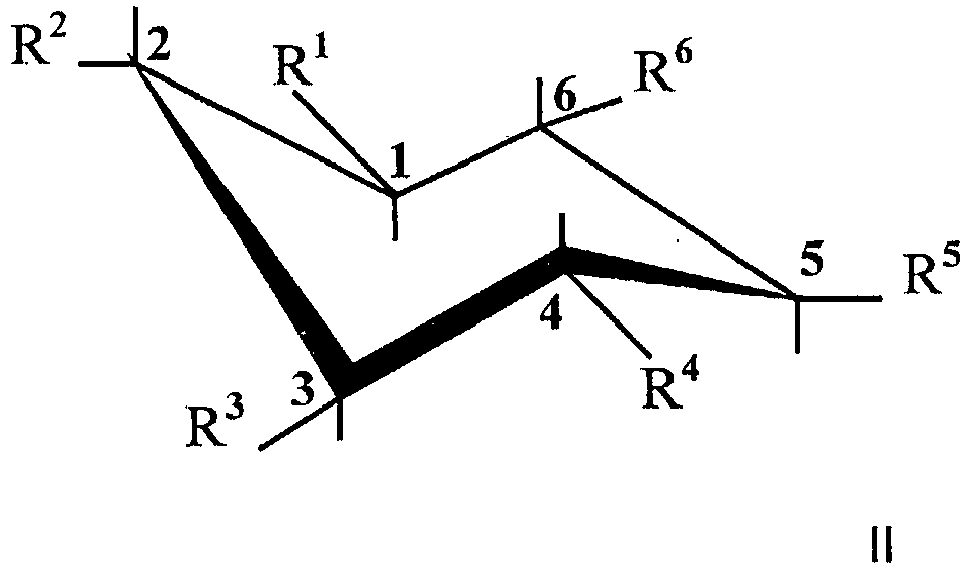
- In another aspect, the invention relates to use of a pharmaceutical composition or a therapeutically effective amount of a compound of the formula II as defined above in the manufacture of a medicament for the treatment or prevention of Alzheimer's disease in a subject.
- These and other aspects, features, and advantages of the present invention should be apparent to those skilled in the art from the following detailed description.
- For convenience, certain terms employed in the specification, examples, and appended claims are collected here.
- The recitation of numerical ranges by endpoints herein includes all numbers and fractions subsumed within that range (e.g. 1 to 5 includes 1, 1.5, 2, 2.75, 3, 3.90, 4, and 5). It is also to be understood that all numbers and fractions thereof are presumed to be modified by the term "about." The term "about" means plus or minus 0.1 to 50%, 5-50%, or 10-40%, preferably 10-20%, more preferably 10% or 15%, of the number to which reference is being made. Further, it is to be understood that "a," "an," and "the" include plural referents unless the content clearly dictates otherwise. Thus, for example, reference to a composition comprising "a compound" includes a mixture of two or more compounds.
- The terms "administering" and "administration" refer to the process by which a therapeutically effective amount of a compound or composition contemplated herein is delivered to a subject for prevention and/or treatment purposes. Compositions are administered in accordance with good medical practices taking into account the subject's clinical condition, the site and method of administration, dosage, patient age, sex, body weight, and other factors known to physicians.
- The term "treating" refers to reversing, alleviating, or inhibiting the progress of a disease, or one or more symptoms of such disease, to which such term applies. Treating includes the management and care of a subject at diagnosis or later. A treatment may be either performed in an acute or chronic way. Depending on the condition of the subject, the term also refers to preventing a disease, and includes preventing the onset of a disease, or preventing the symptoms associated with a disease. The term also refers to reducing the severity of a disease or symptoms associated with such disease prior to affliction with the disease. Such prevention or reduction of the severity of a disease prior to affliction refers to administration of a compound or composition of the present invention to a subject that is not at the time of administration afflicted with the disease. "Preventing" also refers to preventing the recurrence of a disease or of one or more symptoms associated with such disease. An objective of treatment is to combat the disease and includes administration of the active compounds to prevent or delay the onset of the symptoms or complications, or alleviating the symptoms or complications, or eliminating or partially eliminating the condition and/or disease. The terms "treatment" and "therapeutically," refer to the act of treating, as "treating" is defined above.
- The terms "subject", "individual", or "patient" are used interchangeably herein and refer to an animal including a warm-blooded animal such as a mammal. Mammal includes without limitation any members of the Mammalia. In general, the terms refer to a human. The terms also include domestic animals bred for food or as pets, including horses, cows, sheep, poultry, fish, pigs, cats, dogs, and zoo animals, goats, apes (e.g. gorilla or chimpanzee), and rodents such as rats and mice. Typical subjects for treatment include persons afflicted with or suspected of having or being pre-disposed to a disease disclosed herein, or persons susceptible to, suffering from or that have suffered a disease described herein. A subject may or may not have a genetic predisposition for a disease disclosed herein such as Alzheimer's disease. In particular aspects, a subject shows signs of cognitive deficits and amyloid plaque neuropathology. In embodiments of the invention the subjects are suspectible to, or suffer from Alzheimer's disease.
- As utilized herein, the term "healthy subject" means a subject, in particular a mammal, having no diagnosed disease, disorder, infirmity, or ailment known to impair or otherwise diminish memory.
- A "beneficial effect" refers to an effect of a compound of the invention or composition thereof in certain aspects of the invention, including favorable pharmacological and/or therapeutic effects, and improved biological activity. In aspects of the invention, the beneficial effects include without limitation prevention, reduction or inhibition of A fibril assembly or aggregation, Aβ toxicity, Aβ42 levels, abnormal protein folding, aggregation, amyloid formation, deposition, accumulation or persistence, and/or amyloid lipid interactions, and/or acceleration of disassembly of preformed fibrils. In particular embodiments of the invention, the beneficial effects include but are not limited to the following: disruption of aggregated Aβ; increased inhibition of long term potentiation induced by Aβ oligomers; maintenance of synaptic function; inhibition of Aβ-induced progressive cognitive decline and cerebral amyloid plaque pathology; improved cognition; increased lifespan; reduced cerebral accumulation of Aβ; reduced deposition of cerebral amyloid plaques; reduced soluble Aβ oligomers (e.g. Aβ42) in the brain; reduced glial activity; reduced inflammation; and/or cognitive decline. In some aspects, a beneficial effect is a favourable characteristic of a composition/formulation of the invention includes enhanced stability, a longer half life, and/or enhanced uptake and transport across the blood brain barrier.
- The beneficial effect may be a statistically significant effect in terms of statistical analysis of an effect of a compound of the invention versus the effects without the compound or an inositol compound that is not within the scope of the invention (e.g. myo-inositol or unmodified scyllo-inositol). "Statistically significant" or "significantly different" effects or levels may represent levels that are higher or lower than a standard. In embodiments of the invention, the difference may be 1.5, 2, 3, 4, 5, or 6 times higher or lower compared with the effect obtained without a compound of the invention.
- The term "pharmaceutically acceptable carrier, excipient, or vehicle" refers to a medium which does not interfere with the effectiveness or activity of an active ingredient and which is not toxic to the hosts to which it is administered. A carrier, excipient, or vehicle includes diluents, binders, adhesives, lubricants, disintegrates, bulking agents, wetting or emulsifying agents, pH buffering agents, and miscellaneous materials such as absorbants that may be needed in order to prepare a particular composition. Examples of carriers etc. include saline, buffered saline, dextrose, water, glycerol, ethanol, and combinations thereof. The use of such media and agents for an active substance is well known in the art.
- "Pharmaceutically acceptable salt(s)," means a salt that is pharmaceutically acceptable and has the desired pharmacological properties. By pharmaceutically acceptable salts is meant those salts which are suitable for use in contact with the tissues of a subject or patient without undue toxicity, irritation and allergic response, and are commensurate with a reasonable benefit/risk ratio. Pharmaceutically acceptable salts are described for example, in S. M. Berge, et al., J. Pharmaceutical Sciences, 1977, 66:1. Suitable salts include salts that may be formed where acidic protons in the compounds are capable of reacting with inorganic or organic bases. Suitable inorganic salts include those formed with alkali metals, e.g. sodium and potassium, magnesium, calcium, and aluminum. Suitable organic salts include those formed with organic bases such as the amine bases, e.g. ethanolamine, diethanolamine, triethanolamine, tromethamine and N-methylglucamine. Suitable salts also include acid addition salts formed with inorganic acids (e.g. hydrochloric and hydrobromic acids) and organic acids (e.g. acetic acid, citric acid, maleic acid, and the alkane- and arene-sulfonic acids such as methanesulfonic acid and benezenesulfonic acid). When there are two acidic groups present, a pharmaceutically acceptable salt may be a mono-acid-mono-salt or a disalt; and similarly where there are more than two acidic groups present, some or all of such groups can be salified.
- "Therapeutically effective amount" relates to the amount or dose of an active compound or composition of the invention that will lead to one or more desired effects, in particular, one or more beneficial effects. A therapeutically effective amount of a substance can vary according to factors such as the disease state, age, sex, and weight of the subject, and the ability of the substance to elicit a desired response in the subject. A dosage regimen may be adjusted to provide the optimum therapeutic response (e.g. sustained beneficial effects). For example, several divided doses may be administered daily or the dose may be proportionally reduced as indicated by the exigencies of the therapeutic situation.
- As used "nutraceutically acceptable derivative" refers to a derivative or substitute for the stated chemical species that operates in a similar manner to produce the intended effect, and is structurally similar and physiologically compatible. Examples of substitutes include salts, esters, hydrates, or complexes of the stated chemical. The substitute could also be a precursor or prodrug to the stated chemical, which subsequently undergoes a reaction in vivo to yield the stated chemical or a substitute thereof.
- The term "pure" in general means better than 90%, 92%, 93%, 94%, 95%, 96%, 97%, 98% or 99% pure, and "substantially pure" means a compound synthesized such that the compound, as made as available for consideration into a composition or therapeutic dosage of the invention, has only those impurities that can not readily nor reasonably be removed by conventional purification processes.
- The term "hydroxyl" or "hydroxy" refers to a single -OH group.
- In connection with the present invention, the disease is Alzheimer's disease including familial and non-familial types.
- In the pharmaceutical composition for use according to the invention, five of R1, R2, R3, R4, R5, or R6 of the compound of formula II are hydroxyl and the other of R1, R2, R3, R4, R5, or R6 is fluoro.
- A compound of the invention may additionally comprise a carrier, including with out limitation one or more of a polymer, carbohydrate, peptide or derivative thereof. A carrier may be substituted with substituents described herein including one or more alkyl, amino, nitro, halogen, thiol, thioalkyl, sulfate, sulfonyl, sulfenyl, sulfinyl, sulfoxide, hydroxyl groups. A carrier can be directly or indirectly covalently attached to a compound of the invention. In aspects of the invention the carrier is an amino acid including alanine, glycine, praline, methionine, serine, threonine, or asparagine. In other aspects the carrier is a peptide including alanyl-alanyl, prolyl-methionyl, or glycyl-glycyl.
- A carrier also includes a molecule that targets a compound of the invention to a particular tissue or organ. In particular, a carrier may facilitate or enhance transport of a compound of the invention to the brain by either active or passive transport.
- The compounds of the formula II for use according to this invention may be prepared using reactions and methods generally known to the person of ordinary skill in the art, having regard to that knowledge and the disclosure of this application including the Examples. The reactions are performed in a solvent appropriate to the reagents and materials used and suitable for the reactions being effected. It will be understood by those skilled in the art of organic synthesis that the functionality present on the compounds should be consistent with the proposed reaction steps. This will sometimes require modification of the order of the synthetic steps or selection of one particular process scheme over another in order to obtain a desired compound of the invention. It will also be recognized that another major consideration in the development of a synthetic route is the selection of the protecting group used for protection of the reactive functional groups present in the compounds described in this invention. An authoritative account describing the many alternatives to the skilled artisan is Greene and Wuts (Protective Groups In Organic Synthesis, Wiley and Sons, 1991).
- The starting materials and reagents used in preparing compounds for use in the invention are either available from commercial suppliers such as the Aldrich Chemical Company (Milwaukee, Wis.), Bachem (Torrance, Calif.), Sigma (St. Louis, Mo.), or Lancaster Synthesis Inc. (Windham, N.H.) or are prepared by methods well known to a person of ordinary skill in the art, following procedures described in such references as Fieser and Fieser's Reagents for Organic Synthesis, vols. 1-17, John Wiley and Sons, New York, N.Y., 1991; Rodd's Chemistry of Carbon Compounds, vols. 1-5 and supps., Elsevier Science Publishers, 1989; Organic Reactions, vols. 1-40, John Wiley and Sons, New York, N.Y., 1991; March J.: Advanced Organic Chemistry, 4th ed., John Wiley and Sons, New York, N.Y.; and Larock: Comprehensive Organic Transformations, VCH Publishers, New York, 1989. Publications disclosing particular processes for preparing scyllo-inositol include Husson, C., et al, Carbohyrate Research 307 (1998) 163-165) and Sarmah, M.P. and Shashidar, M.S., Carbohydrate Research 338 (2003) 999-1001.
- The starting materials, intermediates, and compounds for use in this invention may be isolated and purified using conventional techniques, such as precipitation, filtration, distillation, crystallization, chromatography, and the like. The compounds may be characterized using conventional methods, including physical constants and spectroscopic methods, in particular HPLC.
- The compounds of the formula II which are basic in nature can form a wide variety of different salts with various inorganic and organic acids. In practice is it desirable to first isolate a compound of the formula I from the reaction mixture as a pharmaceutically unacceptable salt and then convert the latter to the free base compound by treatment with an alkaline reagent and subsequently convert the free base to a pharmaceutically acceptable acid addition salt. The acid addition salts of the base compounds of this invention are readily prepared by treating the base compound with a substantially equivalent amount of the chosen mineral or organic acid in an aqueous solvent medium or in a suitable organic solvent such as methanol or ethanol. Upon careful evaporation of the solvent, the desired solid salt is obtained.
- Compounds of the formula II which are acidic in nature are capable of forming base salts with various pharmacologically acceptable cations. These salts may be prepared by conventional techniques by treating the corresponding acidic compounds with an aqueous solution containing the desired pharmacologically acceptable cations and then evaporating the resulting solution to dryness, preferably under reduced pressure. Alternatively, they may be prepared by mixing lower alkanolic solutions of the acidic compounds and the desired alkali metal alkoxide together and then evaporating the resulting solution to dryness in the same manner as before. In either case, stoichiometric quantities of reagents are typically employed to ensure completeness of reaction and maximum product yields.
- A compound of the formula II for use in the invention may be formulated into a pharmaceutical composition or dietary supplement for administration to a subject. Pharmaceutical compositions for use in the present invention or fractions thereof comprise suitable pharmaceutically acceptable carriers, excipients, and vehicles selected based on the intended form of administration, and consistent with conventional pharmaceutical practices.
- Suitable pharmaceutical carriers, excipients, and vehicles are described in the standard text, Remington's Pharmaceutical Sciences, Mack Publishing Company. By way of example for oral administration in the form of a capsule or tablet, the active components can be combined with an oral, non-toxic pharmaceutically acceptable inert carrier such as lactose, starch, sucrose, methyl cellulose, magnesium stearate, glucose, calcium sulfate, dicalcium phosphate, mannitol and sorbital. For oral administration in a liquid form, the drug components may be combined with any oral, non-toxic, pharmaceutically acceptable inert carrier such as ethanol, glycerol and water. Suitable binders (e.g. gelatin, starch, corn sweeteners, natural sugars including glucose; natural and synthetic gums, and waxes), lubricants (e.g. sodium oleate, sodium stearate, magnesium stearate, sodium benzoate, sodium acetate, and sodium chloride), disintegrating agents (e.g. starch, methyl cellulose, agar, bentonite, and xanthan gum), flavoring agents, and coloring agents may also be combined in the compositions or components thereof. Compositions as described herein can further comprise wetting or emulsifying agents, or pH buffering agents.
- A composition of the invention can be a liquid solution, suspension, emulsion, tablet, pill, capsule, sustained release formulation, or powder. The compositions can be formulated as a suppository, with traditional binders and carriers such as triglycerides. Oral formulations can include standard carriers such as pharmaceutical grades of mannitol, lactose, starch, magnesium stearate, sodium saccharine, cellulose and magnesium carbonate. Various delivery systems are known and can be used to administer a composition of the invention, e.g. encapsulation in liposomes, microparticles and microcapsules.
- Formulations for parenteral administration may include aqueous solutions, syrups, aqueous or oil suspensions and emulsions with edible oil such as cottonseed oil, coconut oil or peanut oil. Dispersing or suspending agents that can be used for aqueous suspensions include synthetic or natural gums, such as tragacanth, alginate, acacia, dextran, sodium carboxymethylcellulose, gelatin, methylcellulose, and polyvinylpyrrolidone.
- Compositions for parenteral administration may include sterile aqueous or non-aqueous solvents, such as water, isotonic saline, isotonic glucose solution, buffer solution, or other solvents conveniently used for parenteral administration of therapeutically active agents. A composition intended for parenteral administration may also include conventional additives such as stabilizers, buffers, or preservatives, e.g. antioxidants such as methylhydroxybenzoate or similar additives.
- Compositions of the invention can be formulated as pharmaceutically acceptable salts as described herein.
- A composition of the invention may be sterilized by, for example, filtration through a bacteria retaining filter, addition of sterilizing agents to the composition, irradiation of the composition, or heating the composition. Alternatively, the compounds or compositions of the present invention may be provided as sterile solid preparations e.g. lyophilized powder, which are readily dissolved in sterile solvent immediately prior to use.
- After pharmaceutical compositions have been prepared, they can be placed in an appropriate container and labeled for treatment of an indicated condition. For administration of a composition, such labeling would include amount, frequency, and method of administration.
- A compound of the formula II may be in a form suitable for administration as a dietary supplement. A supplement may optionally include inactive ingredients such as diluents or fillers, viscosity-modifying agents, preservatives, flavorings, colorants, or other additives conventional in the art. By way of example only, conventional ingredients such as beeswax, lecithin, gelatin, glycerin, caramel, and carmine may be included.
- A dietary supplement composition for use in the invention may optionally comprise a second active ingredient. In an embodiment, the second active ingredient is pinitol or an active derivative or metabolite thereof. Pinitol can be produced from plant sources, including alfalfa, Bougainvillea leaves, chick peas, pine trees and soy beans. Pinitol is also commercially available, for example Inzitol™ (Humanetics Corporation, Min). Examples of derivatives and metabolites of pinitol include pinitol glycosides, pinitol phospholipids, esterified pinitol, lipid-bound pinitol, pinitol phosphates, pinitol phytates, and hydrolyzed pinitol such as d-chiro-inositol.
- A dietary supplement may be provided as a liquid dietary supplement e.g., a dispensable liquid) or alternatively the compositions may be formulated as granules, capsules or suppositories. The liquid supplement may include a number of suitable carriers and additives including water, glycols, oils, alcohols, flavoring agents, preservatives and coloring agents. In capsule, granule or suppository form, the compositions of the present invention are formulated in admixture with a pharmaceutically acceptable carrier.
- A supplement may be presented in the form of a softgel which is prepared using conventional methods. A softgel typically includes a layer of gelatin encapsulating a small quantity of the supplement. A supplement may also be in the form of a liquid-filled and sealed gelatin capsule, which may be made using conventional methods.
- To prepare a dietary supplement composition in capsule, granule or suppository form, one or more compositions for use in the present invention may be intimately admixed with a pharmaceutically acceptable carrier according to conventional formulation techniques. For solid oral preparations such as capsules and granules, suitable carriers and additives such as starches, sugars, diluents, granulating agents, lubricants, binders and disintegrating agents may be included.
- For use in the invention, a pharmaceutical pack or kit may be provided comprising one or more containers filled with one or more of the ingredients of a pharmaceutical composition for use in the invention to provide a beneficial effect, in particular a sustained beneficial effect. Associated with such container(s) can be various written materials such as instructions for use, or a notice in the form prescribed by a governmental agency regulating the labeling, manufacture, use or sale of pharmaceuticals or biological products, which notice reflects approval by the agency of manufacture, use, or sale for human administration.
- A kit may be provided whcih kit comprises a compound or a pharmaceutical composition ofr use in the invention. The kit can be a package which houses a container which contains a composition for use in the invention and also houses instructions for administering the composition to a subject.
- The present invention in embodiments may provide a composition comprising a compound that provides beneficial effects including greater solubility, stability, efficacy, potency, and/or utility, in particular greater solubility and stability.
- In the invention a compound of the formula II is for use in the treatment of Alzheimer's disease. Thus, Alzheimer's disease may be treated by administering a therapeutically effective amount of a compound of the formula II. Such treatment may be effective for retarding the degenerative effects of Alzheimer's disease, including specifically, but not exclusively, deterioration of the central nervous system, loss of mental facilities, loss of short term memory, and disorientation.
- As the disease is Alzheimer's disease, beneficial effects of a composition for use in the invention can manifest as one, two, three, four, five, six, seven, eight, nine, or all of the following, in particular five or more, more particularly 8 or more of the following:
- a) An increase or restoration of long term potentiation relative to the level in the absence of a compound disclosed herein after administration to a subject with symptoms of Alzheimer's disease. In aspects of the invention a compound disclosed herein induces at least about a 0.05%, 0.1%, 0.5%, 1%, 2%, 5%, 10%, 15%, 20%, 30%, 33%, 35%, 40%, 45%, 50%, 60%, 70%, 80%, 90%, 95%, or 99% increase in long term potentiation in a subject.
- b) An increase or maintenance of synaptic function relative to the level of synaptic function in the absence of a compound disclosed herein after administration to a subject with symptoms of Alzheimer's disease. In aspects of the invention a compound disclosed herein induces at least about a 0.05%, 0.1%, 0.5%, 1%, 2%, 5%, 10%, 15%, 20%, 30%, 33%, 35%, 40%, 45%, 50%, 60%, 70%, 80%, 90%, 95%, 99%, 100%, 125%, 150%, 175% or 200% increase in synaptic function in a subject.
- c) An increase in synaptophysin. In aspects of the invention there is at least about a 2%, 5%, 10%, 15%, 20%, 30%, 40%, 50%, 60%, 70%, 80%, 90%, 95%, 99%, 100%, 125%, 150%, 175% or 200% increase in synaptophysin.
- d) An increase in synaptophysin reactive boutons and cell bodies. In aspects of the invention there is at least about a 2%, 5%, 10%, 15%, 20%, 30%, 40%, 50%, 60%, 70%, 80%, 90%, 95%, 99%, 100%, 125%, 150%, 175% or 200%, more particularly about a 100-150% or 140-150% increase in synaptophysin reactive boutons and cell bodies,.
- e) A reduction, slowing or prevention of an increase in, or an absence of symptoms of inflammation, in particular an Aβ-induced inflammatory response, after administration to a subject with symptoms of Alzheimer's disease.
- f) A reduction, slowing or prevention of an increase in cerebral accumulation of amyloid β relative to the levels measured in the absence of a compound disclosed herein in subjects with symptoms of Alzheimer's disease. In aspects of the invention, the compound induces at least about a 2%, 5%, 10%, 15%, 20%, 30%, 40%, 50%, 60%, 70%, 80%, or 90% decrease in cerebral accumulation of amyloid P.
- g) A reduction, slowing or prevention of an increase in deposition of cerebral amyloid plaques, relative to the levels measured in the absence of a compound disclosed herein in subjects with symptoms of Alzheimer's disease. In aspects of the invention, the compound induces at least about a 2%, 5%, 10%, 15%, 20%, 30%, 40%, 50%, 60%, 70%, 80%, or 90% decrease in deposition of cerebral amyloid plaques.
- h) A reduction, slowing or prevention of an increase in plaque number. In aspects of the invention, a compound disclosed herein induces at least about a 2%, 5%, 10%, 15%, 20%, 30%, 40%, 50%, 60%, 70%, 80%, or 90% reduction in plaque number. In particular aspects the compound induces a 5-15% or 10-15% reduction in plaque number.
- i) A reduction, slowing or prevention of an increase in plaque size. In aspects of the invention, a compound disclosed herein induces at least about a 2%, 5%, 10%, 15%, 20%, 30%, 40%, 50%, 60%, 70%, 80%, or 90% reduction in plaque size. In particular aspects the compound induces a 5-15% or 10-15% reduction in plaque size.
- j) A reduction, slowing or prevention of an increase in percent area of the brain covered in plaques. In aspects of the invention, a compound disclosed herein induces at least about a 2%, 5%, 10%, 15%, 20%, 30%, 40%, 50%, 60%, 70%, 80%, or 90% reduction in percent area of the brain covered in plaques. In particular aspects the compound induces a 5-15% or 10-15% reduction in percent area of the brain covered in plaques.
- k) A reduction, slowing or prevention of an increase in soluble Aβ oligomers in the brain, relative to the levels measured in the absence of a compound disclosed herein in subjects with symptoms of Alzheimer's disease. In aspects of the invention, the combination induces at least about a 2%, 5%, 10%, 15%, 20%, 30%, 40%, 50%, 60%, 70%, 80%, or 90% decrease in soluble Aβ oligomers.
- l) A reduction, slowing or prevention of an increase in brain levels of Aβ40. In aspects of the invention, a compound disclosed herein induces at least about a 2%, 5%, 10%, 15%, 20%, 30%, 40%, 50%, 60%, 70%, 80%, or 90% reduction in Aβ40. In particular aspects the compound induces a 10-50%, 20-45%, or 25-35% reduction in brain levels of Aβ40.
- m) A reduction, slowing or prevention of an increase in Aβ42 levels in a body fluid such as CSF or blood. In aspects of the invention, a compound disclosed herein induces at least about a 2%, 5%, 10%, 15%, 20%, 30%, 40%, 50%, 60%, 70%, 80%, or 90% reduction in Aβ42. In particular aspects the compound induces a 10-50%, 15-40%, or 20-25% reduction in brain levels of Aβ42.
- n) A reduction, slowing or prevention of an increase in brain levels of Aβ42. In aspects of the invention, a compound disclosed herein induces at least about a 2%, 5%, 10%, 15%, 20%, 30%, 40%, 50%, 60%, 70%, 80%, or 90% reduction in Aβ42. In particular aspects the compound induces a 10-50%, 15-40%, or 20-25% reduction in brain levels of Aβ42.
- o) A reduction, slowing or prevention of an increase in glial activity in the brain, relative to the levels measured in the absence of a compound disclosed herein in subjects with symptoms of Alzheimer's disease. Preferably, the compound induces at least about a 2%, 5%, 10%, 15%, 20%, 30%, 40%, 50%, 60%, 70%, 80%, or 90% decrease in glial activity
- p) Maintenance of synaptic function at about normal for a prolonged period of time, in particular for at least 5 weeks, 6 weeks, 8 weeks, 10 weeks, 12 weeks, 14 weeks, 16 weeks, 20 weeks, 24 weeks, 30 weeks, 40 weeks, 52 weeks, or 78 weeks, more particularly, 2 to 4 weeks, 2 to 5 weeks, 3 to 5 weeks, 2 to 6 weeks, 2 to 8 weeks, 2 to 10 weeks, 2 to 12 weeks, 2 to 16 weeks, 2 to 20 weeks, 2 to 24 weeks, 2 weeks to 12 months, or 2 weeks to 24 months following treatment.
- q) A reduction or slowing of the rate of disease progression in a subject with Alzheimer's disease. In particular a reduction or slowing of cognitive decline in a subject with Alzheimer's disease.
- r) A reduction, slowing or prevention of an increase in cognitive deficits.
- s) A reduction, slowing or prevention of an increase in amyloid angiopathy.
- t) A reduction in accelerated mortality.
- u) An increase in survival in a subject with symptoms of Alzheimer's disease.
- In aspects of the invention beneficial effects of a composition or treatment of the invention can manifest as (a) and (b); (a), (b) and (c); (a), (b), (e), (f) and (g); (a), (b), (e), (f) through (h); (a), (b), (e), (f) through (i); (a), (b), (e), (f) through (j); (a), (b), (e), (f) through (k); (a), (b), (e), (f) through (l); (a), (b), (e), (f) through (m); (a), (b), (e), (f) through (n); (a), (b), (e), (f) through (o); (a), (b), (e), (f) through (p); (a), (b), (e), (f) through (q); (a), (b), (e), (f) through (r); (a), (b), (e), (f) through (s); (a), (b), (e), (f) through (t); (a) through (d); (a) through (e); (a) through (f); (a) through (g); (a) through (h); (a) through (i); (a) through (j); (a) through (k); (a) through (l); (a) through (m); (a) through (n); (a) through (o); (a) through (p); (a) through (q); (a) through (r); (a) through (s); (a) through (t), or (a) through (u).
- Pharmaceutical compositions for use in the invention can be selected that have sustained beneficial effects, preferably statistically significant sustained beneficial effects.
- Greater efficacy and potency of a treatment may improve the therapeutic ratio of treatment, reducing untoward side effects and toxicity. The treatment may also improve long-standing Alzheimer's disease even when treatment is begun long after the appearance of symptoms. Prolonged efficacious treatment can be achieved following administration of a compound or composition as defined herein.
- The treatment of Alzheimer's disease may comprise contacting Aβ or Aβ aggregates, in particular Aβ40 or Aβ40 aggregates and/or Aβ42 or Aβ42 aggregates, in a subject with a therapeutically effective amount of a compound or a composition as defined herein.
- The treatment of Alzheimer's disease may involve providing a composition comprising a compound as defined herein in an amount sufficient to disrupt aggregated Aβ for a prolonged period following administration.
- The treatment of Alzheimer's disease in a patient in need thereof which may include administering to the individual a composition that provides a compound as defined herein in a dose sufficient to increase inhibition of long term potentiation induced by Aβ oligomers and/or maintain synaptic function. The treatment of Alzheimer's disease may comprise administering, preferably orally or systemically, an amount of a compound as defined herein to a mammal, to reduce cerebral accumulation of Aβ, deposition of cerebral amyloid plaques, soluble Aβ oligomers in the brain, glial activity, and/or inflammation for a prolonged period following administration.
- The treatment of Alzheimer's disease, may comprise administering to a mammal in need thereof a composition comprising a compound as defined herein in an amount sufficient to reduce cognitive decline for a prolonged period following administration, thereby treating the Alzheimer's disease.
- The treatment of Alzheimer's disease, may comprise administering to a mammal in need thereof a composition comprising a compound as defined herein in an amount sufficient to disrupt aggregated Aβ for a prolonged period following administration; and determining the amount of aggregated Aβ, thereby treating the Alzheimer's disease. The amount of aggregated Aβ may be measured using an antibody specific for Aβ or a compound as defined herein labeled with a detectable substance.
- The compositions as defined herein may be used in combination with one or more additional therapeutic agents including beta-secretase inhibitors, alpha-secretase inhibitors, and epsilon-secretase inhibitors, agents that are used for the treatment of complications resulting from or associated with a disease, or general medications that treat or prevent side effects.
- The invention also contemplates the use of a pharmaceutical composition or a therapeutically effective amount of at least one compound as defined herein for preparation of a medicament for providing therapeutic effects, in particular beneficial effects, preferably sustained beneficial effects, in treating Alzheimer's disease.
- Therapeutic efficacy and toxicity of compositions and methods of the invention may be determined by standard pharmaceutical procedures in cell cultures or with experimental animals such as by calculating a statistical parameter such as the ED50 (the dose that is therapeutically effective in 50% of the population) or LD50 (the dose lethal to 50% of the population) statistics. The therapeutic index is the dose ratio of therapeutic to toxic effects and it can be expressed as the ED50/LD50 ratio. Pharmaceutical compositions which exhibit large therapeutic indices are preferred. By way of example, one or more of the therapeutic effects, in particular beneficial effects disclosed herein, can be demonstrated in a subject or disease model, for example, a TgCRND8 mouse with symptoms of Alzheimer's disease.
- Compounds and compositions for use in the present invention can be administered by any means that produce contact of the active agent(s) with the agent's sites of action in the body of a subject or patient to produce a therapeutic effect, in particular a beneficial effect, in particular a sustained beneficial effect. The active ingredients can be administered simultaneously or sequentially and in any order at different points in time to provide the desired beneficial effects. A compound and composition for use in the invention can be formulated for sustained release, for delivery locally or systemically. It lies within the capability of a skilled physician or veterinarian to select a form and route of administration that optimizes the effects of the compositions and treatments of the present invention to provide therapeutic effects, in particular beneficial effects, more particularly sustained beneficial effects.
- The compositions may be administered in oral dosage forms such as tablets, capsules (each of which includes sustained release or timed release formulations), pills, powders, granules, elixirs, tinctures, suspensions, syrups, and emulsions. They may also be administered in intravenous (bolus or infusion), intraperitoneal, subcutaneous, or intramuscular forms, all utilizing dosage forms well known to those of ordinary skill in the pharmaceutical arts. The compositions of the invention may be administered by intranasal route via topical use of suitable intranasal vehicles, or via a transdermal route, for example using conventional transdermal skin patches. A dosage protocol for administration using a transdermal delivery system may be continuous rather than intermittent throughout the dosage regimen. A sustained release formulation can also be used for the therapeutic agents.
- The dosage regimen of the invention will vary depending upon known factors such as the pharmacodynamic characteristics of the agents and their mode and route of administration; the species, age, sex, health, medical condition, and weight of the patient, the nature and extent of the symptoms, the kind of concurrent treatment, the frequency of treatment, the route of administration, the renal and hepatic function of the patient, and the desired effect.
- An amount of a therapeutic of the invention which will be effective in the treatment of a particular disorder or disease to provide effects, in particular beneficial effects, more particularly sustained beneficial effects, will depend on the nature of the condition or disorder, and can be determined by standard clinical techniques. The precise dose to be employed in the formulation will also depend on the route of administration, and the seriousness of the disease, and should be decided according to the judgement of the practitioner and each patient's circumstances.
- Suitable dosage ranges for administration are particularly selected to provide therapeutic effects, in particular beneficial effects, more particularly sustained beneficial effects. A dosage range is generally effective for triggering the desired biological responses. The dosage ranges are generally about 0.1 mg to about 2 kg per kg per day, about 0.5 mg to about 2 g per kg per day, about 1 mg to about 1 g per kg per day, about 1 mg to about 200 mg per kg per day, about 1 mg to about 100 mg per kg per day, about 10 mg to about 100 mg per kg, 30 mg to 70 mg per kg per day, about 1 mg to about 50 mg per kg per day, about 2 to about 50 mg/kg/day, about 2 mg to about 40 mg per kg, or about 3 mg to 30 mg per kg per day. In aspects of the invention, the dosage ranges are generally about .5 mg to about 2 g per kg, about 1 mg to about 1 g per kg, about 1 mg to about 200 mg per kg, about 1 mg to about 100 mg per kg, about 1 mg to about 50 mg per kg, about 10 mg to about 100 mg per kg, or about 30 mg to 70 mg per kg of the weight of a subject.
- In some aspects of the invention, the dosage ranges of a compound disclosed herein administered once twice, three times or more daily, especially once or twice daily, are about 1 to 100 mg/kg, 1 to 90 mg/kg, 1 to 80 mg/kg, 1 to 75 mg/kg, 1 to 70 mg/kg, 1 to 60 mg/kg, 1 to 50 mg/kg, 1 to 40 mg/kg, 1 to 35 mg/kg, 2 to 35 mg/kg, 2.5 to 30 mg/kg, 3 to 30 mg/kg, 3 to 20 mg/kg, or 3 to 15 mg/kg. In embodiments of the invention, the required dose of a compound disclosed herein administered twice daily is about 1 to 50 mg/kg, 1 to 40 mg/kg, 2.5 to 40 mg/kg, 3 to 40 mg/kg, 3 to 35 mg/kg, most preferably 3 to 30 mg/kg. In embodiments of the invention, the required daily dose of the compound is about 1 to 80 mg/kg and within that range 1 to 70 mg/kg, 1 to 65 mg/kg, 2 to 70 mg/kg, 3 to 70 mg/kg, 4 to 65 mg/kg, 5 to 65 mg/kg, or 6 to 60 mg/kg.
- In embodiments of the invention, the required dose of a compound disclosed herein, administered twice daily is about 1 to 50 mg/kg, 1 to 40 mg/kg, 2.5 to 40 mg/kg, 3 to 40 mg/kg, 3 to 35 mg/kg, most preferably 3 to 30 mg/kg.
- In other embodiments of the invention, the required daily dose of a compound disclosed herein, is about 1 to 80 mg/kg and within that range 1 to 70 mg/kg, 1 to 65 mg/kg, 2 to 70 mg/kg, 3 to 70 mg/kg, 4 to 65 mg/kg, 5 to 65 mg/kg, or 6 to 60 mg/kg.
- A composition for use in treatment of the invention may comprise a unit dosage of at least one compound of the invention to provide beneficial effects. A "unit dosage" or "dosage unit" refers to a unitary i.e. a single dose which is capable of being administered to a patient, and which may be readily handled and packed, remaining as a physically and chemically stable unit dose comprising either the active agents as such or a mixture with one or more solid or liquid pharmaceutical excipients, carriers, or vehicles.
- A subject may be treated with a compound of the formula II or composition or formulation thereof on substantially any desired schedule. A composition for use in the invention may be administered one or more times per day, in particular 1 or 2 times per day, once per week, once a month or continuously. However, a subject may be treated less frequently, such as every other day or once a week, or more frequently. A compound, composition or formulation of the invention may be administered to a subject for about or at least about 1 week, 2 weeks to 4 weeks, 2 weeks to 6 weeks, 2 weeks to 8 weeks, 2 weeks to 10 weeks, 2 weeks to 12 weeks, 2 weeks to 14 weeks, 2 weeks to 16 weeks, 2 weeks to 6 months, 2 weeks to 12 months, 2 weeks to 18 months, or 2 weeks to 24 months, periodically or continuously.
- A regimen for supplementing a human's diet may be provided, comprising administering to the human a supplement comprising a compound of the formula II, or nutraceutically acceptable derivatives thereof. A subject may be treated with a supplement at least about every day, or less frequently, such as every other day or once a week. A supplement of the invention may be taken daily but consumption at lower frequency, such as several times per week or even isolated doses, may be beneficial.
- In a particular aspect, the regimen for supplementing a human's diet, may comprise administering to the human about 25 to about 200 milligrams of a compound disclosed herein, or nutraceutically acceptable derivatives thereof on a daily basis. In another aspect, about 50 milligrams of a compound of the formula II is administered to the human on a daily basis.
- A supplement may be ingested with or after a meal. Thus, a supplement may be taken at the time of a person's morning meal, and/or at the time of a person's noontime meal. A portion may be administered shortly before, during, or shortly after the meal. For daily consumption, a portion of the supplement may be consumed shortly before, during, or shortly after the human's morning meal, and a second portion of the supplement may be consumed shortly before, during, or shortly after the human's noontime meal. The morning portion and the noontime portion can each provide approximately the same quantity of a compound of the formula II. A supplement and regimens described herein may be most effective when combined with a balanced diet according to generally accepted nutritional guidelines, and a program of modest to moderate exercise several times a week.
- The invention will be described in greater detail by way of specific examples. The following examples are offered for illustrative purposes.
- The following methods described in
WO 2004/075882 (PCT/CA2004/000272 - Mice. Experimental groups of TgCRND8 mice [Chishti, M. A. et al., J.Biol Chem 276, 21562-21570 (2001); Janus,C. et al., Nature 408, 979-982 (2000)] will be initially treated with 5mg/Kg/day-300mg/Kg/day of a compound disclosed herein.
- Two cohorts of animals (n=10 mice per treatment arm) will be entered into the study at 6 weeks to five months of age, and outcomes will be analyzed at 4 to 6 months of age. The body weight, coat characteristics and in cage behaviour will be monitored.
- Behavioural tests: Morris Water Maze testing will be performed as described in Janus,C. et al., 2000. After non-spatial pre-training, mice will undergo discrimination training for 5 days with 4-trials per day. Behavioral data will be analyzed using a mixed model of factorial analysis of variance (ANOVA) with drug or genotype and training sessions as repeated measure factors.
- Cerebral amyloid burden. Brains will be removed and one hemisphere fixed in 4% paraformaldehyde and embedded in paraffin wax in the mid sagittal plane. To generate sets of systematic uniform random sections, 5 µm serial sections will be collected across the entire hemisphere. Sets of sections at 50 mm intervals will be used for analyses (10-14 sections/set). Plaques will be identified after antigen retrieval with formic acid, and incubated with primary anti-Aβ antibody (Dako M-0872), followed by secondary antibody (Dako StreptABCcomplex/horseradish kit). End products will be visualized with DAB and counter-stained with hematoxylin. Amyloid plaque burden will be assessed with Leco IA-3001 image analysis software interfaced with Leica microscope and Hitachi KP-M1U CCD video camera. Vascular amyloid burden will be similarly analyzed and a dissector will be used to measure the diameter of affected vessels.
- Plasma and Cerebral Aβ Content. Hemi-brain samples will be homogenized in a buffered sucrose solution, followed by either 0.4% diethylamine/100mM NaCl for soluble Aβ levels or cold formic acid for the isolation of total Aβ. After neutralization, the samples will be diluted and analyzed for Aβ40 and Aβ42 using commercially available kits (BIOSOURCE International). Each hemisphere will be analyzed in triplicate and the mean values ± SEM reported. Western blot analyses will be performed on all fractions using urea gels for Aβ species analyses (Wiltfang, J. et al., J Neurochem 81, 481-496 (2002)). Aβ will be detected using 6E10 (BIOSOURCE International) and Enhanced Chemiluminenscence (Amersham).
- Gliosis Quantitation. Five randomly selected, evenly spaced, sagittal sections will be collected from paraformaldehyde-fixed and frozen hemispheres of treated and control mice. Sections will be immunolabelled for astrocytes with anti-rat GFAP IgG2a (Dako; diluted 1:50) and for microglia with anti-rat CD68 IgG2b (Dako; 1:50). Digital images will be captured using a Coolsnap digital camera (Photometrics, Tuscon, Arizona) mounted to a Zeiss, Axioscope 2 Plus microscope. Images will be analysed using Openlab 3.08 imaging software (Improvision, Lexington MA).
- Survival Census: The probability of survival will be assessed by the Kaplan-Meier technique (Haccou, P., & Mellis, E., Statistical Analysis of Behavioural Data, pg 120-186, Oxford University Press, Oxford (1995)), computing the probability of survival at every occurrence of death, making it suitable for small sample sizes. The Tarone-Ware test will be used to compare the treatments.
- Analysis of APP in brain. Mouse hemi-brain samples will be homogenized and spun at 109,000 x g, in 20mM Tris pH 7.4, 0.25M sucrose, 1mM EDTA and 1mM EGTA, and a protease inhibitor cocktail, mixed with 0.4%DEA (diethylamine)/100mM NaCl. The supernatants will be analysed for APPs levels by Western blotting using mAb 22C11, while the pellets will be analysed for APP holoprotein with mAb C1/6.1 as described in Janus, 2000; Chishti, M, 2001.
- To assess their effectiveness in vivo, compounds disclosed herein will be administered to a murine model of Alzheimer's disease (TgCRND8) (Chishti, M. A. et al., J. Biol Chem 276, 21562-21570 (2001); Janus,C. et al., Nature 408, 979-982 (2000)). The TgCRND8 mice and non-transgenic littermates will be assigned to sex- and age-matched cohorts that are then used to test the effectiveness of the compounds disclosed herein as therapeutics. The mice will be randomly assigned to receive active compound, mock therapy, or no therapy. The endpoints will be cognitive function, brain Aβ levels, and neuropathology.
- The data are expected to show that compounds disclosed herein can prevent and reverse the AD-like phenotype in TgCRND8 mice, reducing cognitive deficits, amyloid plaques, amyloid angiopathy, Aβ-induced inflammatory response, and/or accelerated mortality. The levels of soluble Aβ oligomers are expected to be significantly reduced in the brain of mice treated with compounds disclosed herein.
- The compounds disclosed herein can be tested in an Alternating Lever Cyclic Ratio rat model of Alzheimer's disease (O'Hare, E. et al, Behavior Pharmacology, 7:742-753, (1996); Richardson, RL, et al., Brain Research, 54: 1-10, (2002)). This model has been able to detect cognitive deficits due to direct injection of amyloid-β oligomers into rat brain. The compounds can be administered concurrent with Aβ oligomers known to adversely affect cognition and their ability to counteract the oligomer-induced cognitive decline can be assessed.
- In the Alternativing Lever Cyclic Ratio (ALCR) test rats must first learn a complex sequence of lever-pressing requirements in order to earn food reinforcement in a two-lever experimental chamber. Subjects must alternate between two levers by switching to the other lever after pressing the first lever enough to get food rewards. The exact number of presses required for each food reward changes, first increasing from 2 responses per food pellet up to 56 based on the quadratic function, x2-x. One cycle is an entire ascending and descending sequence of these lever press requirements (e.g., 2, 6, 12, 20, 30, 42, 56, 56, 42, 30, 20, 12, 6, and 2 presses per food reward). Six such full cycles are presented during each daily session. Errors can be scored when the subject perseveres on a lever after pressing enough to get the food reward, i.e., does not alternate (a Perseveration Error), or when a subject switches levers before completing the response requirement on that lever (a Switching Error).
- Amyloid beta (Aβ) fibrils were prepared by the methods disclosed in Kheterpal, I et al, Biochemistry, 2001 40(39):11757 and Cannon MJ et al, Anal Biochem. 2004 328(1):67. The fibrils were immobilized on an affinity column and assayed by FAC-MS using the methods described in Leticia Toledo-Sherman, et al, J. Med. Chem. 2005, 48: 3221 or Slon-Usakiewicz J.J. et al, Clin. Proteom. J. 2004, 1:227-234. In particular, Aβ fibrils were immobilized to CBX1000C (COOH-modified) beads (Millipore) as follows. CBX1000C (5 mg) activated by reaction with EDAC/NHS in 0.1M MES buffer containing 0.5 M NaCl, pH 6.4. After 45 min of mixing at room temperature the beads were centrifuged and supernatant was removed and washed with 1X MES. The beads were resuspended in 250 µL of MES buffer and 100 µg of Aβ fibrils (in 1X PBS) was added. The mixture was incubated for 2h at room temperature and then overnight at 4°C with 360° vertical rotation followed by 1X PBS. After loading immobilized Aβ fibrils, the FAC-MS capillary columns (250 µm id x 2.5 cm) were washed with 50 µL (at 200 µL/h) of 1X PBS buffer followed by 50 µL of the running buffer (20 mM NH4OAc containing 1% DMSO). The activity of the immobilized amyloid fibrils was determined using Aβ monomer (1 µM) as the indicator and M3 (1 µM) as the void marker in 20 mM NH4OAc containing 1% DMSO. The makeup buffer was 90% methanol containing 0.1% acetic acid in water. Analyte solutions contained Aβ monomer (1 µM) as the indicator and M3 (1 µM) as the void marker and compounds (see Table 1) ranging from 1- 10 µM in 20 mM NH4OAc containing 1% DMSO. The flow rates used were 80 µL/h for the makeup buffer and 100 µL/h for the FAC-MS columns. The column was connected to an AB/Sciex API 3000 triple-quadrupole mass spectrometer (Concord, Ontario, Canada) and syringe pumps (Harvard Biosciences, Holliston, MA) and was allowed to equilibrate with the running buffer until the Aβ monomer (M+H) signal was stable, then data acquired. After 1 min, the system was switched to the analyte solution and data collection continued until the Aβ monomer signal had maximized for at least 10 min. The column was washed with running buffer until the Aβ monomer signal had reduced to its background level to regenerate the column. The data was analyzed using a customized Excel macro to determine the breakthrough times of amyloid beta and M3.
- The % shift is determined from the equation:

where t is the breakthrough time difference, measured at the inflection point, of the sigmoidal fronts between the indicator and void marker in the presence of any competing ligand(s), tNSB is the non-specific breakthrough time difference in the absence of immobilized target (and is a constant for the indicator used) and tI is the breakthrough time difference in the absence of any competing ligands. - The FAC-MS % shift results of the free Aβ monomer assayed with immobilied Aβ fibrils in the presence of various compounds at 1 and 10 µM is shown in Tables 1 and 2.
- Mono-substituted scyllo-inositols (methyl, ethyl, benzyl, and trifluoromethyl) were synthesized as follows. A mono-methyl scyllo-inositol (9) was synthesized starting from myo-inositol (1) as described in the literature and illustrated in Figure 1. The literature protocol for the methylation of the intermediate 6 on a 600 mg scale afforded ∼230 mg of the pure 7 and ∼300 mg of the recovered un-reacted starting material. The structure of 7 was confirmed by 1H-NMR. ∼45 mg of methyl-scyllo-inositol was synthesized and identified by 1H-NMR and MS analysis.
- Alkylation of the intermediate 6 with Etl and BnBr was done on a 600 mg scale starting with 6. The products were purified by column chromatography and identified by 1H-NMR. The intermediate 8 (Me and Bn) and the ethyl analog of 8 were also synthesized. ∼120 mg of benzyl-scyllo-inositol was synthesized and identified by 1H-NMR and MS analysis.
- Trifluoromethyl-scyllo-inositol was synthesized from intermediate 6 similar to the mono-methyl-scyllo- inositol (see Figure 3). The fact, that trifluoroiodomethane is a gas required some modifications to the original protocol. Thus the solution of intermediate 6 in DMF was saturated with CF3I at low temperature, then sodium hydride was added and the reaction vessel sealed. A vigorous evolution of a gas was observed, but no changes in the reaction progress were observed at low temperature.
- Di-substituted scyllo-inositols (1,3-dimethyl and 1,3-diacetyl) were synthesized using a process similar to the process for producing methyl-scyllo-inositol starting from intermediate 6. A five-step reaction scheme for the synthesis of di-substituted scyllo-inositols from intermediate 6 is illustrated in Figure 2.
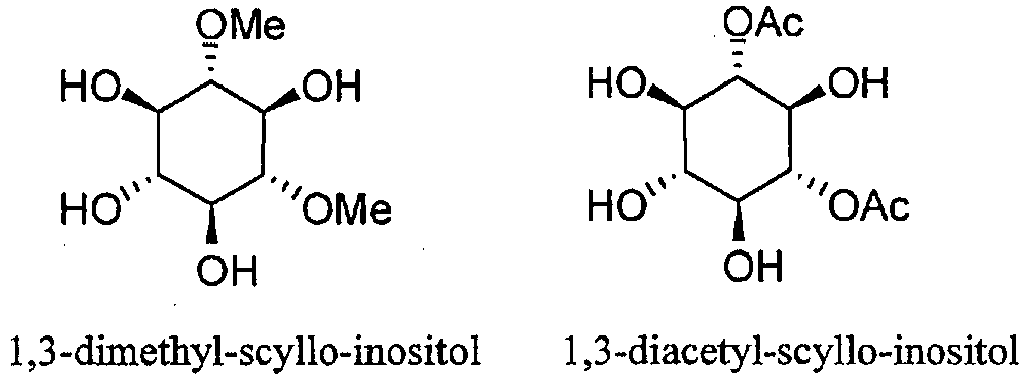
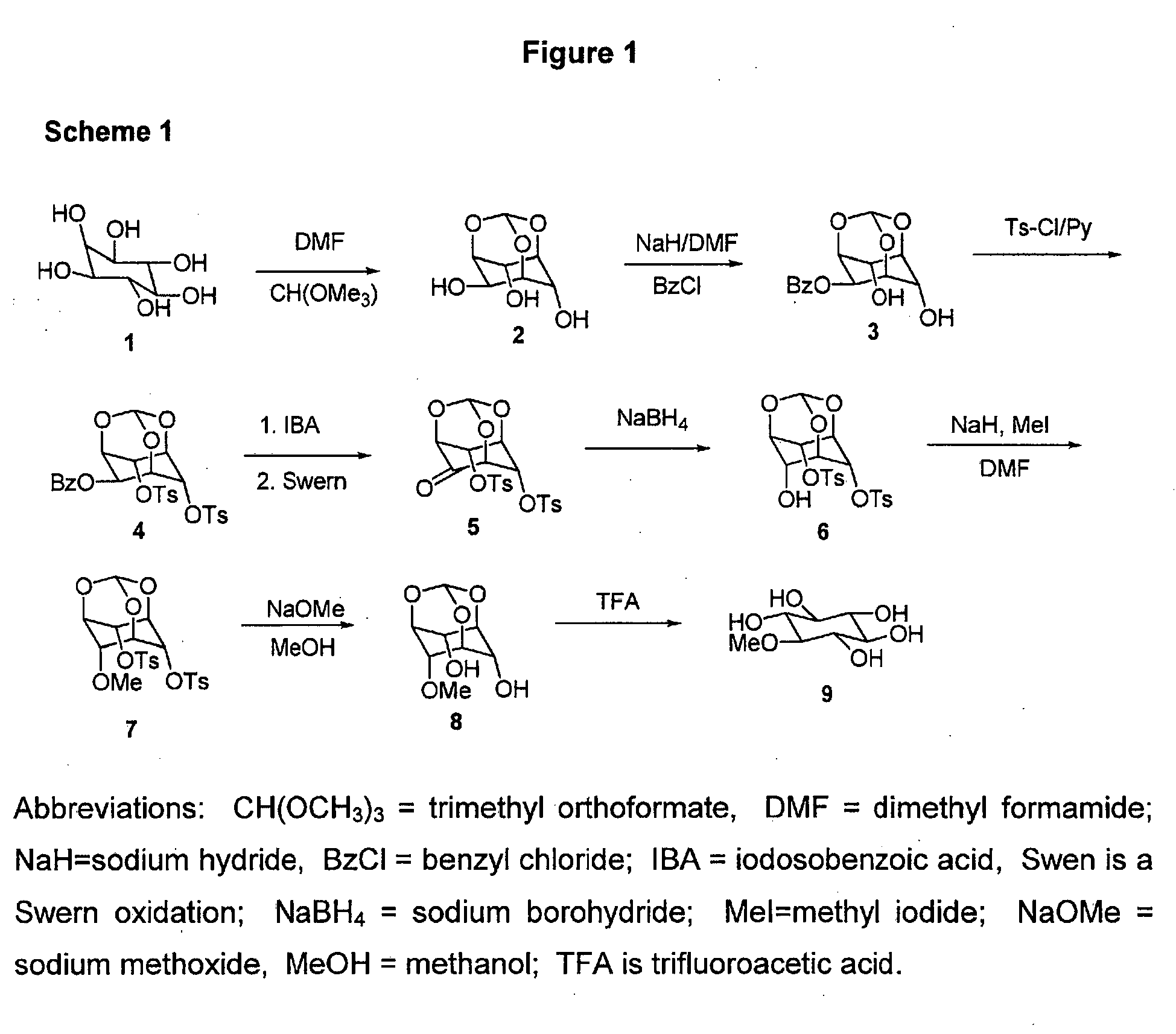


TABLE I Structure Structure Composition Molec. Formula Mol Weight Structure Name Source ABeta Shift 
C 43.30% 194.18603 Methyl-scyllo-inositol Dalton 48 H 7.27% O 49.44% 
C 46.15% C8H16O6 208.21312 Ethyl-scyllo-inositol Dalton 14 H 7.75% O 46.10% 
C 43.90% C6H12O5 164.15954 1,3,5/2,4-pentahydroxy cyclohexane (Scyllo-Quercitol) 15 H 7.37% O 48.73% 
C 43.30% C7H14O6 194.18603 1-<Methyl-1,3,5/2,4,6-Inositol (Mytilitol) 22 H 7.27% O 49.44% 
C 40.45% C6H10O6 178.143 2,4,5/3,5-Pentahydroxy cyclohexanon e (Scyllo-inosose) 11 H 5.66% O 53.89% 
C 43.25% C8H14O7 222.19658 1-acetyl-scyllo-inositol Dalton 31 H 6.35% O 50.40% 
C 36.29% C6H11Cl O5 198.60457 1-Chloro-1-deoxy-scyllo-inositol V-Labs 67 H 5.58% Cl 17.85% O 40.28% TABLE 2 Structure Structure Composition SOURCE ABeta SHIFT 
C 43.30% H SIGMA-ALDRICH 3 7.27% O 49.44% 
C 42.31 % H SIGMA-ALDRICH 3 6.46% O 51.23% 
C 42.32% H SIGMA-ALDRICH 2 6.85% N 10.57% O 40.26% 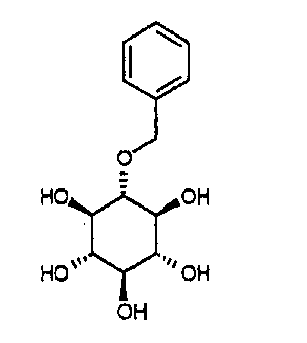
C 57.77% H DALTON 3 6.71% O 35.52% 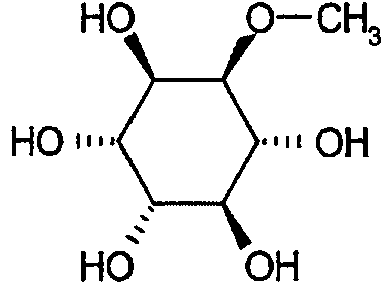
C 43.30% H 5 7.27% O 49.44% 
C 43.30% H 2 7.27% O 49.44% 
C 43.90% H 4 7.37% O 48.73% 
C 43.90% H 5 7.37% O 48.73% 
C 40.45% H 7 5.66% O 53.89% 
C 40.45% H 5 5.66% O 53.89% 
C 43.30% H IRL 4 7.27% O 49.44% 
C 43.90% H IRL 2 7.37% O 48.73% 
C 43.30% H IRL 3 7.27% O 49.44%
Claims (5)
- A pharmaceutical composition for use in the treatment or prevention of Alzheimer's disease comprising a therapeutically effective amount of a compound of the formula II

- A pharmaceutical composition for the use according to claim 1 wherein the Alzheimer's disease is a presenile form.
- A pharmaceutical composition for the use according to claim 1 wherein the Alzheimer's disease is a senile form.
- A pharmaceutical composition according to any preceding claim for use in the treatment or prevention of mild cognitive impairment.
- Use of a pharmaceutical composition or a therapeutically effective amount of a compound of the formula II as defined in claim 1 in the manufacture of a medicament for the treatment or prevention of Alzheimer's disease in a subject.
Applications Claiming Priority (2)
| Application Number | Priority Date | Filing Date | Title |
|---|---|---|---|
| US72563405P | 2005-10-13 | 2005-10-13 | |
| PCT/IB2006/004181 WO2007119108A2 (en) | 2005-10-13 | 2006-10-13 | Inositol derivatives and their uses in the treatment of diseases characterized by abnormal protein folding or aggregation or amyloid formation, deposition, accumulation or persistence |
Publications (4)
| Publication Number | Publication Date |
|---|---|
| EP1940373A2 EP1940373A2 (en) | 2008-07-09 |
| EP1940373A4 EP1940373A4 (en) | 2009-05-27 |
| EP1940373B1 true EP1940373B1 (en) | 2015-05-06 |
| EP1940373B8 EP1940373B8 (en) | 2015-06-24 |
Family
ID=37942269
Family Applications (1)
| Application Number | Title | Priority Date | Filing Date |
|---|---|---|---|
| EP06850456.2A Not-in-force EP1940373B8 (en) | 2005-10-13 | 2006-10-13 | 1-fluoro-1-deoxy-scyllo-inositol for the treatment of alzheimer's disease |
Country Status (5)
| Country | Link |
|---|---|
| US (4) | US20090170957A1 (en) |
| EP (1) | EP1940373B8 (en) |
| JP (2) | JP2009511568A (en) |
| CA (1) | CA2626005A1 (en) |
| WO (2) | WO2007119108A2 (en) |
Families Citing this family (26)
| Publication number | Priority date | Publication date | Assignee | Title |
|---|---|---|---|---|
| US7521481B2 (en) * | 2003-02-27 | 2009-04-21 | Mclaurin Joanne | Methods of preventing, treating and diagnosing disorders of protein aggregation |
| US8257680B1 (en) | 2004-02-24 | 2012-09-04 | The General Hospital Corporation | Catalytic radiofluorination |
| US9017724B2 (en) | 2004-02-24 | 2015-04-28 | The General Hospital Corporation | Catalytic radiofluorination |
| JP2009511568A (en) * | 2005-10-13 | 2009-03-19 | ワラタ ファーマシューティカルズ, インコーポレイテッド | Inositol derivatives and their use in the treatment of diseases characterized by abnormal protein folding or aggregation, or amyloid formation, deposition, accumulation or persistence |
| WO2008034244A1 (en) * | 2006-09-21 | 2008-03-27 | Waratah Pharmaceuticals Inc. | The combination of a cyclohexanehexol and a nsaid for the treatment of neurodegenerative diseases |
| WO2008061373A1 (en) * | 2006-11-24 | 2008-05-29 | Waratah Pharmaceuticals Inc. | Combination treatments for alzheimer's disease and similar diseases |
| AU2013248197B2 (en) * | 2008-03-21 | 2016-05-12 | The General Hospital Corporation | Compounds and compositions for the detection and treatment of Alzheimer's disease and related disorders |
| CN102046638B (en) * | 2008-03-21 | 2015-06-03 | 综合医院公司 | Compounds and compositions for detecting and treating Alzheimer's disease and related diseases |
| KR101021078B1 (en) | 2008-07-22 | 2011-03-14 | 포항공과대학교 산학협력단 | Inositol or trihalose derivative and pharmaceutical composition for treating neurodegenerative diseases containing the same |
| JP2011530539A (en) * | 2008-08-08 | 2011-12-22 | ユニバーシティ オブ フロリダ リサーチ ファウンデーション,インク. | Lipid compounds that inhibit tumor formation |
| US20100279997A1 (en) * | 2009-05-04 | 2010-11-04 | Lindsay Burns Barbier | Analgesic that binds filamin a |
| GB0920985D0 (en) * | 2009-11-30 | 2010-01-13 | Queen Mary & Westfield College | Novel inositol phosphate derivatives |
| US8394858B2 (en) | 2009-12-03 | 2013-03-12 | Novartis Ag | Cyclohexane derivatives and uses thereof |
| EP2545023A4 (en) * | 2010-02-15 | 2017-04-12 | Abbvie Inc. | Process for the preparation of scyllo-inositol |
| EP2390245A1 (en) * | 2010-05-26 | 2011-11-30 | Nabriva Therapeutics AG | Enantiomerically pure amines |
| US9320793B2 (en) * | 2010-07-14 | 2016-04-26 | Acumen Pharmaceuticals, Inc. | Method for treating a disease associated with soluble, oligomeric species of amyloid beta 1-42 |
| CN103402954A (en) | 2010-10-13 | 2013-11-20 | 依兰制药公司 | Methods of synthesis of scyllitol and related compounds |
| FR2989088B1 (en) * | 2012-04-04 | 2014-08-29 | Univ Lorraine | RADIOTRACER FOR ALZHEIMER'S DISEASE |
| WO2014012054A1 (en) | 2012-07-13 | 2014-01-16 | Pain Therapeutics, Inc. | Alzheimer's disease assay in a living patent |
| GB201312499D0 (en) * | 2013-07-12 | 2013-08-28 | Isis Innovation | Therapeutic compounds |
| GB201416017D0 (en) | 2014-09-10 | 2014-10-22 | New Royal Holloway & Bedford | An Anticonvulsant Compound |
| EP4035688B1 (en) | 2014-10-08 | 2025-03-26 | Texas Children's Hospital | Mri imaging of amyloid plaque using liposomes |
| US11247970B2 (en) | 2017-03-22 | 2022-02-15 | Dana-Farber Cancer Institute, Inc. | Selective inhibition of gluconeogenic activity |
| US12352719B2 (en) | 2019-09-20 | 2025-07-08 | KYCERA AVX Components Corporation | Somatic cell-based electrical biosensor |
| KR102816558B1 (en) * | 2019-11-05 | 2025-06-05 | 아주대학교산학협력단 | Tumor necrosis factor alpha(TNF-α) small-molecule inhibitor |
| JP7338918B1 (en) | 2022-10-21 | 2023-09-05 | 築野食品工業株式会社 | Inositol fatty acid ester |
Family Cites Families (46)
| Publication number | Priority date | Publication date | Assignee | Title |
|---|---|---|---|---|
| US4454151A (en) * | 1982-03-22 | 1984-06-12 | Syntex (U.S.A.) Inc. | Use of pyrrolo pyrroles in treatment of ophthalmic diseases |
| US4515722A (en) * | 1982-03-30 | 1985-05-07 | Merck & Co., Inc. | Phosphatidyl inositol analogs useful as anti-inflammatory/analgesic agents |
| US4474806A (en) * | 1982-05-10 | 1984-10-02 | Merck & Co., Inc. | Sulfonyl or carbonyl inositol derivatives useful as anti-inflammatory/analgesic agents |
| US4952396A (en) * | 1986-11-19 | 1990-08-28 | Linus Pauling Institute Of Science & Medicine | Method of using phytic acid for inhibiting tumor growth |
| US4847082A (en) * | 1987-01-21 | 1989-07-11 | Robert Sabin | Method of treatment of Alzheimer's disease using phytic acid |
| US4758430A (en) * | 1987-01-21 | 1988-07-19 | Robert Sabin | Method of treatment of Alzheimer's disease using phytic acid |
| SE8904355D0 (en) * | 1989-12-21 | 1989-12-21 | Perstorp Ab | medicament |
| US5217959A (en) * | 1990-09-06 | 1993-06-08 | Robert Sabin | Method of treating multiple sclerosis with phytic acid |
| US5112814A (en) * | 1990-10-24 | 1992-05-12 | Robert Sabin | Method of treatment of Parkinson's disease using phytic acid |
| KR0185215B1 (en) * | 1990-11-30 | 1999-05-01 | 요시다 쇼오지 | Sustained release eye drops |
| SE9102068L (en) * | 1991-07-03 | 1993-01-04 | Perstorp Ab | DERIVATIVES OF INOSITOL, COMPOSITIONS CONTAINING THESE AND USE THEREOF |
| SE469260B (en) * | 1992-02-25 | 1993-06-14 | Perstorp Ab | A PHARMACEUTICAL COMPOSITION WITH PREPARED BIO-ACCESSIBILITY FOR INOSITOL PHOSPHATE |
| NZ314111A (en) * | 1992-10-05 | 1997-08-22 | Virginia Tech Intell Prop | Preparation of d-chiro-inositol by reducing d-chiro-3-inosose |
| US5840294A (en) * | 1993-03-29 | 1998-11-24 | Queen's University At Kingston | Method for treating amyloidosis |
| US5643562A (en) * | 1993-03-29 | 1997-07-01 | Queen's University Of Kingston | Method for treating amyloidosis |
| US5972328A (en) * | 1993-03-29 | 1999-10-26 | Queen's University At Kingston | Method for treating amyloidosis |
| EP0619369B2 (en) * | 1993-04-05 | 2009-09-30 | Aveve N.V. | Phytate hydrolysis and enzyme composition for hydrolyzing phytate |
| CA2168953A1 (en) * | 1993-08-11 | 1995-02-16 | Kiyoshi Sato | Process for producing d-chiro-inositol |
| SE502574C2 (en) * | 1994-01-25 | 1995-11-13 | Perstorp Ab | A pharmaceutical composition with improved bioavailability of inositol phosphate |
| US5550166A (en) * | 1995-03-17 | 1996-08-27 | Ostlund; Richard E. | Pinitol and derivatives thereof for the treatment of metabolic disorders |
| US5858326A (en) * | 1995-06-06 | 1999-01-12 | Neurochem, Inc. | Methods of increasing amyloid deposition |
| US5756541A (en) * | 1996-03-11 | 1998-05-26 | Qlt Phototherapeutics Inc | Vision through photodynamic therapy of the eye |
| US6232486B1 (en) * | 1996-06-11 | 2001-05-15 | Nutrimed Biotech | Molecular probes and modulators for PI-PLC and PI 3-kinase |
| US5977078A (en) * | 1996-09-20 | 1999-11-02 | The Regents Of The Univesity Of California | Inositol polyphosphate derivatives and methods of using same |
| US5880099A (en) * | 1996-09-20 | 1999-03-09 | The Regents Of The University Of California | Inositol polyphosphates and methods of using same |
| US5998485A (en) * | 1997-06-16 | 1999-12-07 | Cedars-Sinai Medical Center | Method for modulating immune response with inositol |
| US6153603A (en) * | 1997-06-27 | 2000-11-28 | Perstorp Ab | Method of treating angiogenesis in tumor tissue |
| US6310073B1 (en) * | 1998-07-28 | 2001-10-30 | Queen's University At Kingston | Methods and compositions to treat glycosaminoglycan-associated molecular interactions |
| US6818430B1 (en) * | 1999-06-07 | 2004-11-16 | Hokko Chemical Industry Co., Ltd. | Process for producing L-epi-2-inosose and novel process for producing epi-inositol |
| US6329256B1 (en) * | 1999-09-24 | 2001-12-11 | Advanced Micro Devices, Inc. | Self-aligned damascene gate formation with low gate resistance |
| EP1221865B1 (en) * | 1999-10-18 | 2007-01-03 | Muscletech Research and Development Inc. | Food supplement for increasing lean mass and strength |
| US6331313B1 (en) * | 1999-10-22 | 2001-12-18 | Oculex Pharmaceticals, Inc. | Controlled-release biocompatible ocular drug delivery implant devices and methods |
| DE10031955A1 (en) * | 2000-06-30 | 2002-01-17 | Deutsches Krebsforsch | Curcumin derivatives with improved water solubility compared to curcumin and medicaments containing them |
| ES2386718T3 (en) * | 2001-02-06 | 2012-08-28 | Qlt Inc. | Photodynamic therapy for macular degeneration associated with hidden age |
| US7060695B2 (en) * | 2001-02-06 | 2006-06-13 | Qlt, Inc. | Method to prevent vision loss |
| US20030181531A1 (en) * | 2003-02-11 | 2003-09-25 | David Sherris | Compositions and methods of administering tubulin binding agents for the treatment of ocular diseases |
| US6599891B2 (en) * | 2001-07-20 | 2003-07-29 | Qlt Inc. | Treatment of macular edema |
| US20040058313A1 (en) * | 2002-04-24 | 2004-03-25 | Abreu Marcio Marc | Compositions, targets, methods and devices for the therapy of ocular and periocular disorders |
| US6723755B2 (en) * | 2002-06-12 | 2004-04-20 | Piotr Chomczynski | Method of treating rosacea |
| US20060135624A1 (en) * | 2002-10-17 | 2006-06-22 | Jingyu Liang Et Al | Natural compound useful for treating diabetes, its preparation and use |
| US7521481B2 (en) * | 2003-02-27 | 2009-04-21 | Mclaurin Joanne | Methods of preventing, treating and diagnosing disorders of protein aggregation |
| US7745671B2 (en) * | 2003-10-14 | 2010-06-29 | Hokko Chemical Industry Co., Ltd. | Method for producing scyllo-inositol |
| EP1824496A4 (en) * | 2004-11-17 | 2008-07-16 | Joanne Mclaurin | Compositions comprising scyllo-inositol derivatives and methods to treat disorders of protein aggregation |
| CA2488034C (en) * | 2004-11-19 | 2009-10-06 | Apotex Inc. | Process for the manufacture of 3-hydroxy-n-alkyl-1-cycloalkyl-6-alkyl-4-oxo-1,4-dihydropyridine-2-carboxamide and its related analogues |
| JP2009511568A (en) * | 2005-10-13 | 2009-03-19 | ワラタ ファーマシューティカルズ, インコーポレイテッド | Inositol derivatives and their use in the treatment of diseases characterized by abnormal protein folding or aggregation, or amyloid formation, deposition, accumulation or persistence |
| WO2007134449A1 (en) * | 2006-05-19 | 2007-11-29 | Waratah Pharmaceuticals Inc. | Screening methods for amyloid beta modulators |
-
2006
- 2006-10-13 JP JP2008535136A patent/JP2009511568A/en not_active Withdrawn
- 2006-10-13 CA CA002626005A patent/CA2626005A1/en not_active Abandoned
- 2006-10-13 US US12/090,130 patent/US20090170957A1/en not_active Abandoned
- 2006-10-13 US US11/580,026 patent/US20070111970A1/en not_active Abandoned
- 2006-10-13 WO PCT/IB2006/004181 patent/WO2007119108A2/en not_active Ceased
- 2006-10-13 WO PCT/CA2006/001679 patent/WO2007041855A1/en not_active Ceased
- 2006-10-13 EP EP06850456.2A patent/EP1940373B8/en not_active Not-in-force
-
2009
- 2009-11-11 US US12/616,496 patent/US20100105631A1/en not_active Abandoned
-
2012
- 2012-10-25 JP JP2012235331A patent/JP2013018791A/en active Pending
-
2014
- 2014-02-05 US US14/173,175 patent/US20140155480A1/en not_active Abandoned
Non-Patent Citations (1)
| Title |
|---|
| SUN Y ET AL: "Synthesis of scyllo-inositol derivatives and their effects on amyloid beta peptide aggregation", BIOORGANIC & MEDICINAL CHEMISTRY, PERGAMON, GB, vol. 16, no. 15, 1 August 2008 (2008-08-01), pages 7177 - 7184, XP023610694, ISSN: 0968-0896, [retrieved on 20080626], DOI: 10.1016/J.BMC.2008.06.045 * |
Also Published As
| Publication number | Publication date |
|---|---|
| US20140155480A1 (en) | 2014-06-05 |
| WO2007119108A3 (en) | 2008-03-13 |
| JP2009511568A (en) | 2009-03-19 |
| WO2007119108A2 (en) | 2007-10-25 |
| CA2626005A1 (en) | 2007-10-25 |
| EP1940373A4 (en) | 2009-05-27 |
| JP2013018791A (en) | 2013-01-31 |
| EP1940373A2 (en) | 2008-07-09 |
| US20070111970A1 (en) | 2007-05-17 |
| WO2007041855A1 (en) | 2007-04-19 |
| US20100105631A1 (en) | 2010-04-29 |
| US20090170957A1 (en) | 2009-07-02 |
| EP1940373B8 (en) | 2015-06-24 |
Similar Documents
| Publication | Publication Date | Title |
|---|---|---|
| EP1940373B1 (en) | 1-fluoro-1-deoxy-scyllo-inositol for the treatment of alzheimer's disease | |
| EP1608350B1 (en) | Methods of preventing, treating and diagnosing disorders of protein aggregation | |
| DE69815122T2 (en) | SACCHARID-CONTAINING PREPARATIONS FOR THE TREATMENT OF ALZHEIMER'S DISEASE AND OTHER AMYLOIDOSES | |
| US20100292157A1 (en) | Combination Treatments for Alzheimer's Disease and Similar Diseases | |
| TW201040193A (en) | Pharmaceutical composition, methods for treating and uses thereof | |
| EP2173340B1 (en) | Methods of enhancing cognitive function using non-peptidic compounds | |
| WO2019159176A1 (en) | Compositions and methods for treatment of neurodegenerative diseases | |
| EP1307262B1 (en) | Method for locating compounds which are suitable for the treatment and/or prophylaxis of obesity | |
| JP2022524847A (en) | Compounds that control diabetes in cats | |
| JP2011530543A (en) | Compositions and methods for treating sensory deficits | |
| CN111344016B (en) | Method for inhibiting the conversion of choline to trimethylamine (TMA) | |
| JP2007500230A (en) | Methods and materials for treating, detecting and reducing the risk of developing Alzheimer's disease | |
| GB2465796A (en) | Metformin for the therapeutic use of conditions with raised serum amyloid A levels | |
| RU2423981C2 (en) | Pharmaceutical composition for treating parkinson's disease | |
| US20180086817A1 (en) | Preventing, Treating or Arresting Alzheimer's, Stroke, Cardiovascular and other Amyloid Related Diseases | |
| RU2571268C2 (en) | Modulation of systemic effect of rifaximin | |
| CN108078984B (en) | Composition of serotonin and norepinephrine reuptake inhibitor and cannabidiol and application thereof | |
| TW202535357A (en) | Methods of treating menopause and perimenopause | |
| KR20250173974A (en) | Pharmaceutical Composition for Preventing or Treating Metabolic Dysfunction Associated Steatotic liver disease containing Empagliflozin and Telmisartan | |
| CN120392735A (en) | Application of Norathyriol in the preparation of drugs for treating inflammatory diseases | |
| KR20120092538A (en) | A pharmaceutical composition for preventing or treating transglutaminase-related disease comprising ethacrynic acid, and a method for preventing or treating transglutaminase-related disease by using thereof |
Legal Events
| Date | Code | Title | Description |
|---|---|---|---|
| PUAI | Public reference made under article 153(3) epc to a published international application that has entered the european phase |
Free format text: ORIGINAL CODE: 0009012 |
|
| 17P | Request for examination filed |
Effective date: 20080512 |
|
| AK | Designated contracting states |
Kind code of ref document: A2 Designated state(s): AT BE BG CH CY CZ DE DK EE ES FI FR GB GR HU IE IS IT LI LT LU LV MC NL PL PT RO SE SI SK TR |
|
| AX | Request for extension of the european patent |
Extension state: AL BA HR MK RS |
|
| A4 | Supplementary search report drawn up and despatched |
Effective date: 20090429 |
|
| RIC1 | Information provided on ipc code assigned before grant |
Ipc: A61K 31/075 20060101ALI20090423BHEP Ipc: A61P 25/28 20060101ALI20090423BHEP Ipc: A61K 31/045 20060101AFI20090423BHEP Ipc: A61K 31/047 20060101ALI20090423BHEP |
|
| 17Q | First examination report despatched |
Effective date: 20090729 |
|
| 17Q | First examination report despatched |
Effective date: 20120131 |
|
| DAX | Request for extension of the european patent (deleted) | ||
| GRAP | Despatch of communication of intention to grant a patent |
Free format text: ORIGINAL CODE: EPIDOSNIGR1 |
|
| INTG | Intention to grant announced |
Effective date: 20141126 |
|
| GRAS | Grant fee paid |
Free format text: ORIGINAL CODE: EPIDOSNIGR3 |
|
| GRAA | (expected) grant |
Free format text: ORIGINAL CODE: 0009210 |
|
| AK | Designated contracting states |
Kind code of ref document: B1 Designated state(s): AT BE BG CH CY CZ DE DK EE ES FI FR GB GR HU IE IS IT LI LT LU LV MC NL PL PT RO SE SI SK TR |
|
| REG | Reference to a national code |
Ref country code: GB Ref legal event code: FG4D |
|
| REG | Reference to a national code |
Ref country code: CH Ref legal event code: EP |
|
| REG | Reference to a national code |
Ref country code: IE Ref legal event code: FG4D |
|
| REG | Reference to a national code |
Ref country code: AT Ref legal event code: REF Ref document number: 725199 Country of ref document: AT Kind code of ref document: T Effective date: 20150615 |
|
| REG | Reference to a national code |
Ref country code: DE Ref legal event code: R096 Ref document number: 602006045402 Country of ref document: DE Effective date: 20150618 |
|
| REG | Reference to a national code |
Ref country code: AT Ref legal event code: MK05 Ref document number: 725199 Country of ref document: AT Kind code of ref document: T Effective date: 20150506 |
|
| REG | Reference to a national code |
Ref country code: NL Ref legal event code: MP Effective date: 20150506 |
|
| REG | Reference to a national code |
Ref country code: LT Ref legal event code: MG4D |
|
| PG25 | Lapsed in a contracting state [announced via postgrant information from national office to epo] |
Ref country code: FI Free format text: LAPSE BECAUSE OF FAILURE TO SUBMIT A TRANSLATION OF THE DESCRIPTION OR TO PAY THE FEE WITHIN THE PRESCRIBED TIME-LIMIT Effective date: 20150506 Ref country code: ES Free format text: LAPSE BECAUSE OF FAILURE TO SUBMIT A TRANSLATION OF THE DESCRIPTION OR TO PAY THE FEE WITHIN THE PRESCRIBED TIME-LIMIT Effective date: 20150506 Ref country code: LT Free format text: LAPSE BECAUSE OF FAILURE TO SUBMIT A TRANSLATION OF THE DESCRIPTION OR TO PAY THE FEE WITHIN THE PRESCRIBED TIME-LIMIT Effective date: 20150506 Ref country code: PT Free format text: LAPSE BECAUSE OF FAILURE TO SUBMIT A TRANSLATION OF THE DESCRIPTION OR TO PAY THE FEE WITHIN THE PRESCRIBED TIME-LIMIT Effective date: 20150907 |
|
| PG25 | Lapsed in a contracting state [announced via postgrant information from national office to epo] |
Ref country code: BG Free format text: LAPSE BECAUSE OF FAILURE TO SUBMIT A TRANSLATION OF THE DESCRIPTION OR TO PAY THE FEE WITHIN THE PRESCRIBED TIME-LIMIT Effective date: 20150806 Ref country code: AT Free format text: LAPSE BECAUSE OF FAILURE TO SUBMIT A TRANSLATION OF THE DESCRIPTION OR TO PAY THE FEE WITHIN THE PRESCRIBED TIME-LIMIT Effective date: 20150506 Ref country code: LV Free format text: LAPSE BECAUSE OF FAILURE TO SUBMIT A TRANSLATION OF THE DESCRIPTION OR TO PAY THE FEE WITHIN THE PRESCRIBED TIME-LIMIT Effective date: 20150506 Ref country code: IS Free format text: LAPSE BECAUSE OF FAILURE TO SUBMIT A TRANSLATION OF THE DESCRIPTION OR TO PAY THE FEE WITHIN THE PRESCRIBED TIME-LIMIT Effective date: 20150906 Ref country code: GR Free format text: LAPSE BECAUSE OF FAILURE TO SUBMIT A TRANSLATION OF THE DESCRIPTION OR TO PAY THE FEE WITHIN THE PRESCRIBED TIME-LIMIT Effective date: 20150807 |
|
| PG25 | Lapsed in a contracting state [announced via postgrant information from national office to epo] |
Ref country code: EE Free format text: LAPSE BECAUSE OF FAILURE TO SUBMIT A TRANSLATION OF THE DESCRIPTION OR TO PAY THE FEE WITHIN THE PRESCRIBED TIME-LIMIT Effective date: 20150506 Ref country code: DK Free format text: LAPSE BECAUSE OF FAILURE TO SUBMIT A TRANSLATION OF THE DESCRIPTION OR TO PAY THE FEE WITHIN THE PRESCRIBED TIME-LIMIT Effective date: 20150506 |
|
| REG | Reference to a national code |
Ref country code: DE Ref legal event code: R097 Ref document number: 602006045402 Country of ref document: DE |
|
| PG25 | Lapsed in a contracting state [announced via postgrant information from national office to epo] |
Ref country code: RO Free format text: LAPSE BECAUSE OF NON-PAYMENT OF DUE FEES Effective date: 20150506 Ref country code: PL Free format text: LAPSE BECAUSE OF FAILURE TO SUBMIT A TRANSLATION OF THE DESCRIPTION OR TO PAY THE FEE WITHIN THE PRESCRIBED TIME-LIMIT Effective date: 20150506 Ref country code: SK Free format text: LAPSE BECAUSE OF FAILURE TO SUBMIT A TRANSLATION OF THE DESCRIPTION OR TO PAY THE FEE WITHIN THE PRESCRIBED TIME-LIMIT Effective date: 20150506 Ref country code: CZ Free format text: LAPSE BECAUSE OF FAILURE TO SUBMIT A TRANSLATION OF THE DESCRIPTION OR TO PAY THE FEE WITHIN THE PRESCRIBED TIME-LIMIT Effective date: 20150506 |
|
| PLBE | No opposition filed within time limit |
Free format text: ORIGINAL CODE: 0009261 |
|
| STAA | Information on the status of an ep patent application or granted ep patent |
Free format text: STATUS: NO OPPOSITION FILED WITHIN TIME LIMIT |
|
| 26N | No opposition filed |
Effective date: 20160209 |
|
| PG25 | Lapsed in a contracting state [announced via postgrant information from national office to epo] |
Ref country code: IT Free format text: LAPSE BECAUSE OF FAILURE TO SUBMIT A TRANSLATION OF THE DESCRIPTION OR TO PAY THE FEE WITHIN THE PRESCRIBED TIME-LIMIT Effective date: 20150506 |
|
| REG | Reference to a national code |
Ref country code: DE Ref legal event code: R119 Ref document number: 602006045402 Country of ref document: DE |
|
| PG25 | Lapsed in a contracting state [announced via postgrant information from national office to epo] |
Ref country code: SI Free format text: LAPSE BECAUSE OF FAILURE TO SUBMIT A TRANSLATION OF THE DESCRIPTION OR TO PAY THE FEE WITHIN THE PRESCRIBED TIME-LIMIT Effective date: 20150506 Ref country code: LU Free format text: LAPSE BECAUSE OF FAILURE TO SUBMIT A TRANSLATION OF THE DESCRIPTION OR TO PAY THE FEE WITHIN THE PRESCRIBED TIME-LIMIT Effective date: 20151013 |
|
| REG | Reference to a national code |
Ref country code: CH Ref legal event code: PL |
|
| GBPC | Gb: european patent ceased through non-payment of renewal fee |
Effective date: 20151013 |
|
| PG25 | Lapsed in a contracting state [announced via postgrant information from national office to epo] |
Ref country code: MC Free format text: LAPSE BECAUSE OF FAILURE TO SUBMIT A TRANSLATION OF THE DESCRIPTION OR TO PAY THE FEE WITHIN THE PRESCRIBED TIME-LIMIT Effective date: 20150506 |
|
| PG25 | Lapsed in a contracting state [announced via postgrant information from national office to epo] |
Ref country code: DE Free format text: LAPSE BECAUSE OF NON-PAYMENT OF DUE FEES Effective date: 20160503 Ref country code: GB Free format text: LAPSE BECAUSE OF NON-PAYMENT OF DUE FEES Effective date: 20151013 Ref country code: LI Free format text: LAPSE BECAUSE OF NON-PAYMENT OF DUE FEES Effective date: 20151031 Ref country code: CH Free format text: LAPSE BECAUSE OF NON-PAYMENT OF DUE FEES Effective date: 20151031 |
|
| REG | Reference to a national code |
Ref country code: FR Ref legal event code: ST Effective date: 20160630 |
|
| PG25 | Lapsed in a contracting state [announced via postgrant information from national office to epo] |
Ref country code: BE Free format text: LAPSE BECAUSE OF FAILURE TO SUBMIT A TRANSLATION OF THE DESCRIPTION OR TO PAY THE FEE WITHIN THE PRESCRIBED TIME-LIMIT Effective date: 20150506 Ref country code: FR Free format text: LAPSE BECAUSE OF NON-PAYMENT OF DUE FEES Effective date: 20151102 |
|
| PG25 | Lapsed in a contracting state [announced via postgrant information from national office to epo] |
Ref country code: IE Free format text: LAPSE BECAUSE OF NON-PAYMENT OF DUE FEES Effective date: 20151013 |
|
| PG25 | Lapsed in a contracting state [announced via postgrant information from national office to epo] |
Ref country code: HU Free format text: LAPSE BECAUSE OF FAILURE TO SUBMIT A TRANSLATION OF THE DESCRIPTION OR TO PAY THE FEE WITHIN THE PRESCRIBED TIME-LIMIT; INVALID AB INITIO Effective date: 20061013 |
|
| PG25 | Lapsed in a contracting state [announced via postgrant information from national office to epo] |
Ref country code: SE Free format text: LAPSE BECAUSE OF FAILURE TO SUBMIT A TRANSLATION OF THE DESCRIPTION OR TO PAY THE FEE WITHIN THE PRESCRIBED TIME-LIMIT Effective date: 20150506 Ref country code: CY Free format text: LAPSE BECAUSE OF FAILURE TO SUBMIT A TRANSLATION OF THE DESCRIPTION OR TO PAY THE FEE WITHIN THE PRESCRIBED TIME-LIMIT Effective date: 20150506 Ref country code: NL Free format text: LAPSE BECAUSE OF FAILURE TO SUBMIT A TRANSLATION OF THE DESCRIPTION OR TO PAY THE FEE WITHIN THE PRESCRIBED TIME-LIMIT Effective date: 20150506 |
|
| PG25 | Lapsed in a contracting state [announced via postgrant information from national office to epo] |
Ref country code: TR Free format text: LAPSE BECAUSE OF FAILURE TO SUBMIT A TRANSLATION OF THE DESCRIPTION OR TO PAY THE FEE WITHIN THE PRESCRIBED TIME-LIMIT Effective date: 20150506 |